

Yunnan Mosques
The Legend of Najiaying Knives: Exploring Yunnan's Historic Muslim Craftsmanship & Halal Culture
Articles • Hasan09 posted the article • 0 comments • 12 views • 4 days ago
What’s the real deal with the knives from Najiaying, Yunnan?
Summary:
Hey everyone, I'm Chituanjun. July was absolute chaos and I was so swamped I didn't have the time or energy to push out new posts. If you've found any awesome spots to eat or hang out in Kunming or the surrounding areas lately, drop a comment or DM me—I'm totally down to check them out once I'm back in action.
Click the card above to follow me
Hey everyone, I'm Chituanjun, and July had me running around so crazy I barely had a second to breathe.
Found any killer food or fun spots around Kunming lately? Hit me up in the comments or shoot me a DM—I'm dying to go explore once I'm free.
As a local, free-roaming Halal food blogger, I suppose this day was bound to come: I received a few dozen kitchen knives sent over by a PR brand. My inner monologue was running so wild I actually started worrying about my personal safety (kidding... sort of).
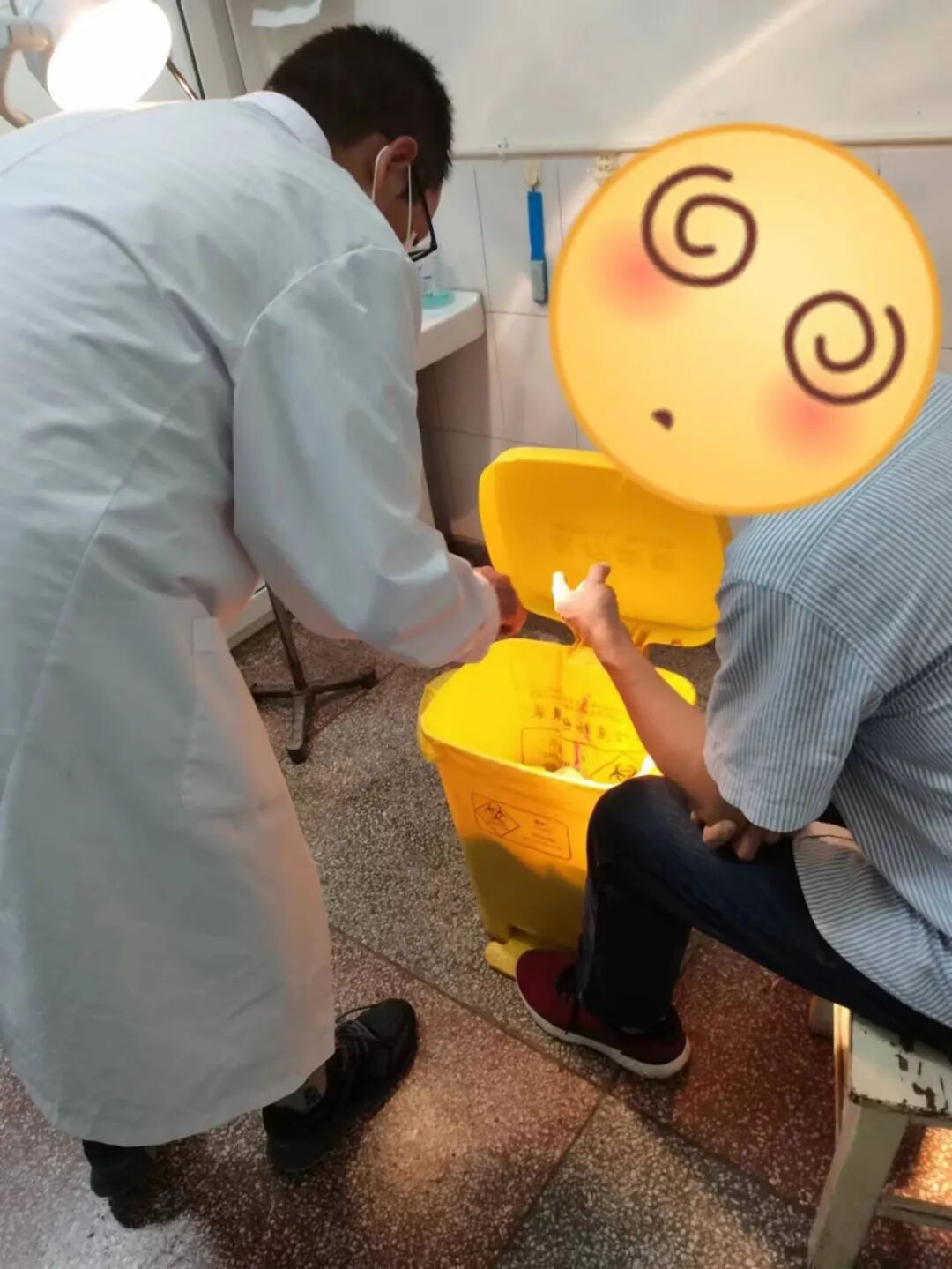
True to our professional standards, as soon as we got our hands on them, the foodie squad launched into full-on crazy testing mode. One of our team members even paid for it in blood...
Seriously folks, always be super careful when handling knives, and store them safely when you're not using them!
Besides, being the perfectionists we are, we made a personal trip out to the source—Najiaying, Tonghai County, Yuxi City, Yunnan Province—to bring you this heavy-hitting feature.
Surrounded by "Flash and Gleam of Blades"
1.
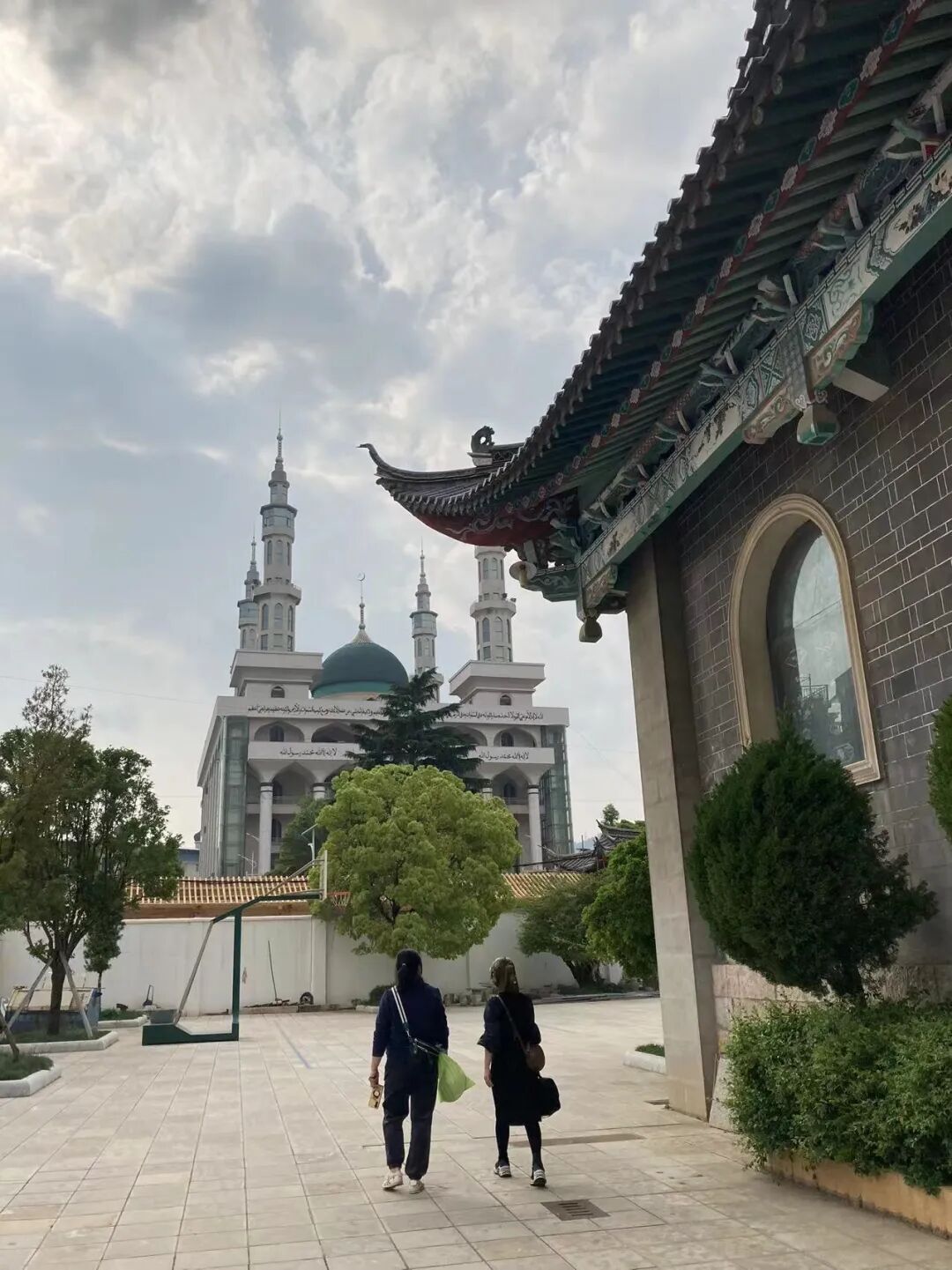
Nagu Town sits in the northwest of Tonghai County, a place famously known as a "land of rites and music." It's a renowned "hometown of handicrafts," where the local residents are primarily Hui Muslims and Han Chinese.
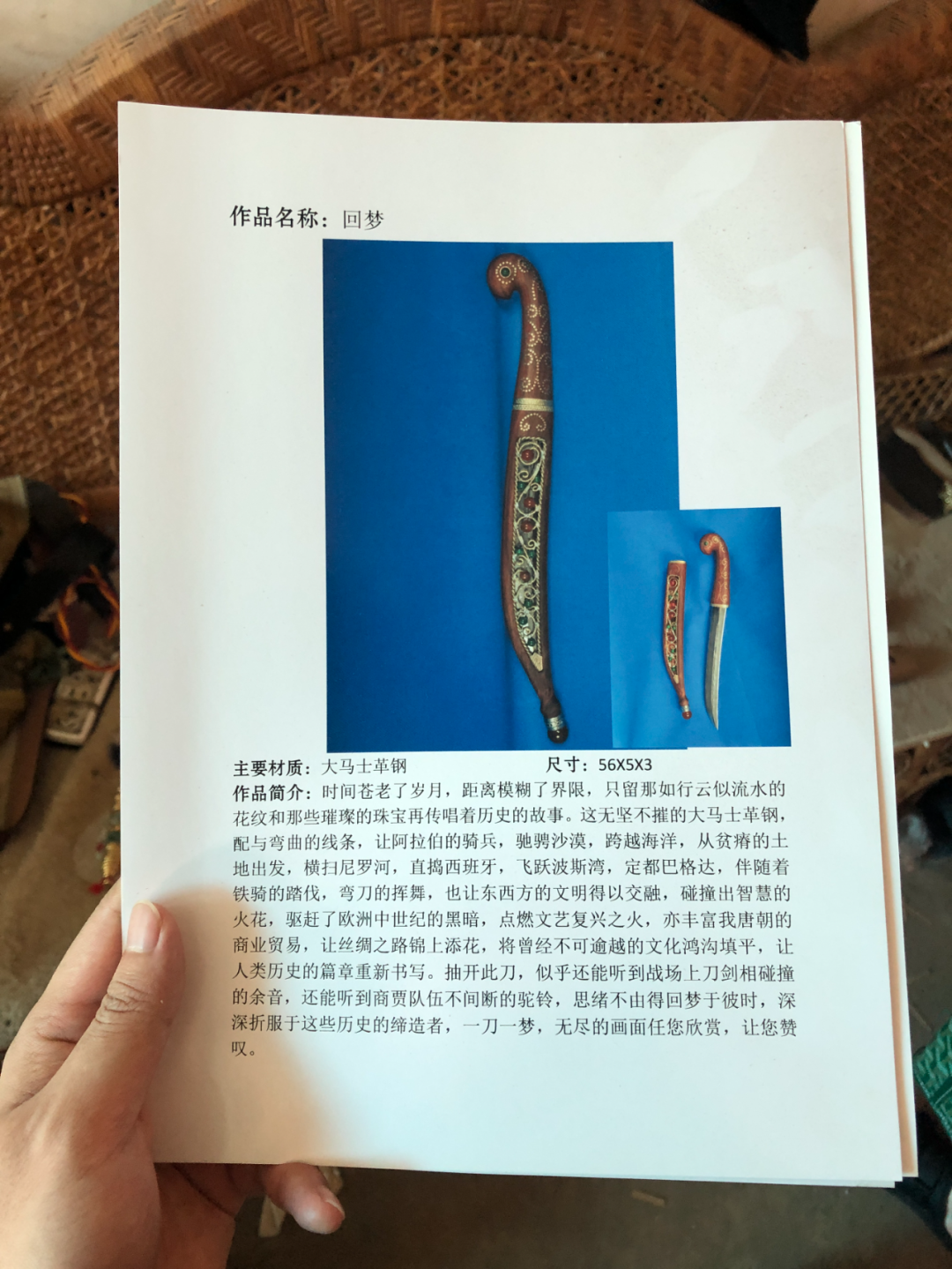
According to historical records, the knife-forging craft in Nagu Town dates all the way back to the Yuan Dynasty.
"As part of the 'Tamma' vanguard troops and accompanying military craftsmen, the ancestors of Nagu applied their exquisite skills and unique techniques to forge top-tier creations in military blades, civilian knives, horse gear, and more."
More than 700 years later, local artisans and businesses are still writing their handicraft history today by building on these fine traditions while blending in modern tech and practical everyday needs.
2.
Another little-known and fascinating story is that knives from Najiaying were once shortlisted as national contenders for the Chinese Tri-Service Honor Guard ceremonial swords.
In early 1992, the Central Military Commission issued an order deciding to revamp the ceremonial uniforms for the Honor Guard. Along with the new threads, the executive and platoon commanders of the Honor Guard were switching out their sidearms for ceremonial swords, shifting from a standard unarmed salute to a much more formidable and solemn saber salute. (Note: Paragraph content is excerpted from the China Archives News, total issue No. 3251, titled "Vowing Loyalty to Forge the 'National Saber'").
The task of researching and designing this ceremonial sword was handed over to the Quartermaster Equipment Research Institute of the General Logistics Department of the Chinese People's Liberation Army.
They first headed to the Military Museum of the Chinese People's Revolution to gather reference materials on ceremonial swords from countries like France, Japan, the US, Sweden, and Italy. Based on China's actual national and military conditions as well as ethnic characteristics, they drafted 3 different sword designs and commissioned over 10 military enterprises and knife manufacturers to make sample blades.
Among them were artisans from Najiaying who took part in the production at the time.
It's a real pity that although we tracked down the person involved and visited their home, we couldn't find the key to the display room. So we missed out on seeing more physical evidence related to it—which honestly just gives us a great excuse for another trip.
3.
Walking down the streets of Najiaying today, you see specialty shops for civilian knives of all shapes and sizes everywhere: scissors, tea knives, nail clippers, unsharpened decorative blades...
Rows upon rows of uniquely shaped knives inside the glass counters reflect that chilling metallic gleam, looking totally badass and giving you a serious martial arts-style adrenaline rush.
Drivers and tourists cruising by can't help but pull over and wander into the shops to check things out. When they spot one they like, they pick up a reliable "kitchen weapon" for themselves, family, or friends.
Honestly, once you've got pro-grade gear and that atmosphere, your inner potential just naturally kicks in.
Take me for example: ever since I got my hands on a reliable knife, the frequency of me heading into the kitchen to prep ingredients has seriously shot up.
Looking forward to even more cool stuff ahead
Forged through over 600 years of accumulation and refinement, Najiaying's knives boast battle-tested craftsmanship that is passed down through generations. It's a priceless asset, but one that constantly faces the challenges of a fast-changing market.
After visiting more than a dozen workshops and specialty stores on the ground, my takeaway is this:
When it comes to tapping into their own cultural resources, telling a compelling brand story, proactively innovating, and connecting with contemporary young consumers, Najiaying's civilian cutlery still has a long road ahead for growth.
Finally, let me shout out an outstanding local Halal restaurant in Najiaying—Jieya Restaurant.
According to a good friend, this spot has been open locally for over 20 years. The quality is solid and the prices are super affordable, making it a great pick whether you're grabbing a casual bite, hanging out with family and friends, or hosting a business dinner.
Our foodie squad tried it out, and everyone was licking their chops.
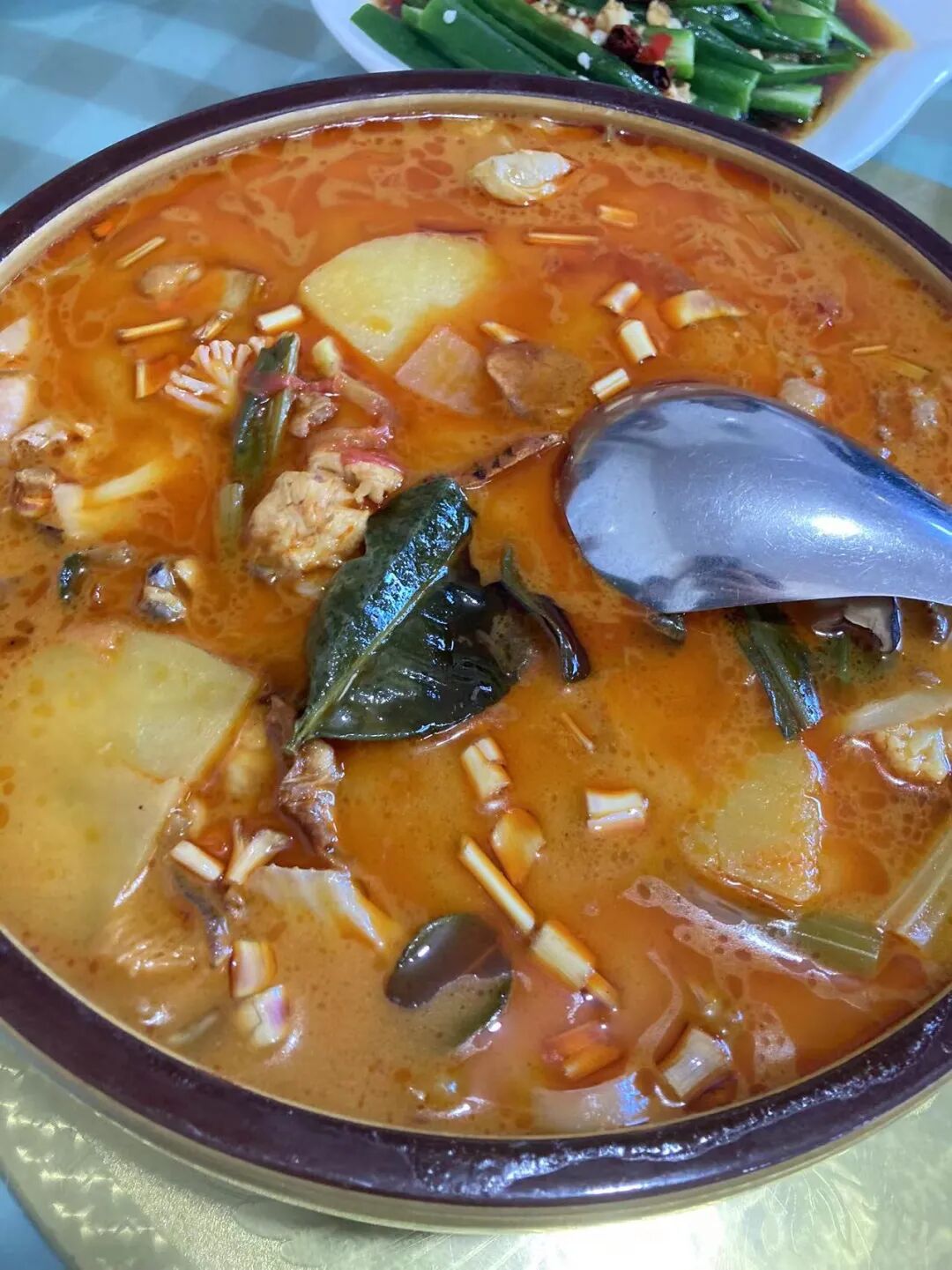
My personal recommendations: Tom Yum chicken, sliced cold beef, and stir-fried wild mushrooms.
The dipping sauce for the cold beef has a sour and spicy kick—super complex and bursting with authentic Yuxi local flavor.
Until next time, Najiaying~
- Restaurant Info -
Name: Jieya Restaurant
Phone: 13887793491; 13887793492
Average cost: 60 RMB (spend as you like)
- Foodie Squad Perks -
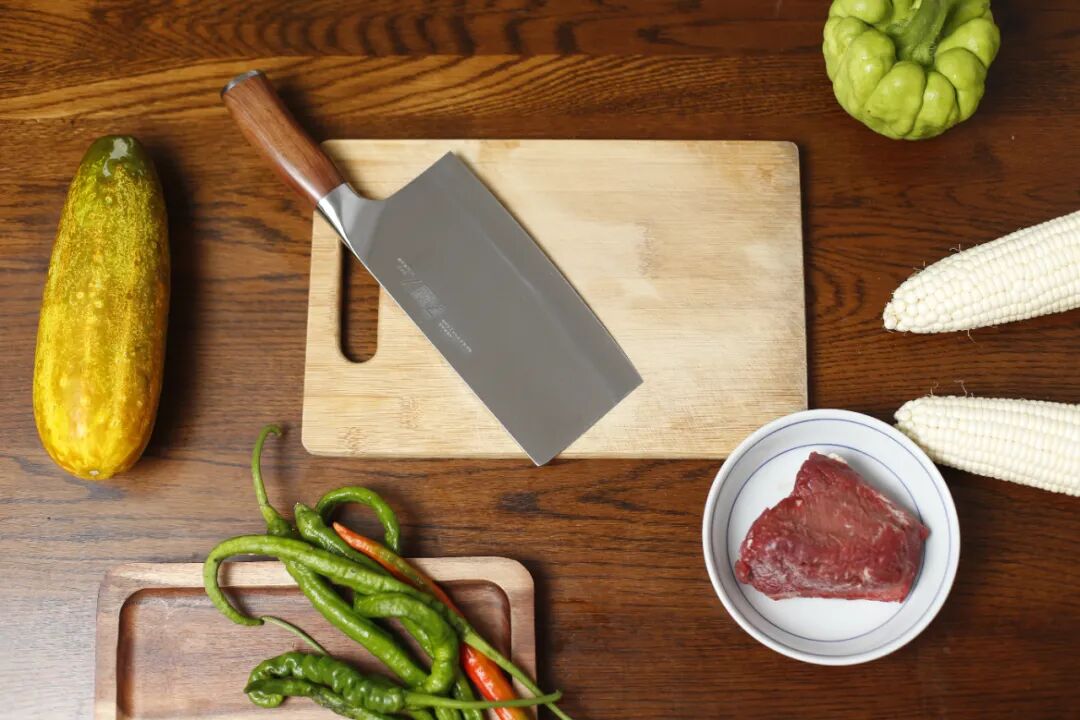
For this issue, our foodie squad handpicked the most frequently used home-style kitchen slicer out of hundreds of knives in Najiaying to recommend to you all.
It has a substantial heft, a razor-sharp blade, and serious performance, totally handling all your daily needs for shredding, slicing, cutting strips, and dicing, while fitting right in with the habits of a Chinese kitchen.
If you want to experience the 600-year knife-making magic of Najiaying, why not start with this one?
Any quality issues under non-violent use within 2 years get a free trade-in for a brand new one.
- More Great Stuff -
Don't rush, 30 is just another beginning
I've been gatekeeping a Halal leisure resort in Xishan District, and I really hate to share it
Without our Zhaotong folks leading the charge, Kunming wouldn't have the Halal food scene it has today view all
What’s the real deal with the knives from Najiaying, Yunnan?
Summary:
Hey everyone, I'm Chituanjun. July was absolute chaos and I was so swamped I didn't have the time or energy to push out new posts. If you've found any awesome spots to eat or hang out in Kunming or the surrounding areas lately, drop a comment or DM me—I'm totally down to check them out once I'm back in action.
Click the card above to follow me
Hey everyone, I'm Chituanjun, and July had me running around so crazy I barely had a second to breathe.
Found any killer food or fun spots around Kunming lately? Hit me up in the comments or shoot me a DM—I'm dying to go explore once I'm free.
As a local, free-roaming Halal food blogger, I suppose this day was bound to come: I received a few dozen kitchen knives sent over by a PR brand. My inner monologue was running so wild I actually started worrying about my personal safety (kidding... sort of).
True to our professional standards, as soon as we got our hands on them, the foodie squad launched into full-on crazy testing mode. One of our team members even paid for it in blood...
Seriously folks, always be super careful when handling knives, and store them safely when you're not using them!
Besides, being the perfectionists we are, we made a personal trip out to the source—Najiaying, Tonghai County, Yuxi City, Yunnan Province—to bring you this heavy-hitting feature.
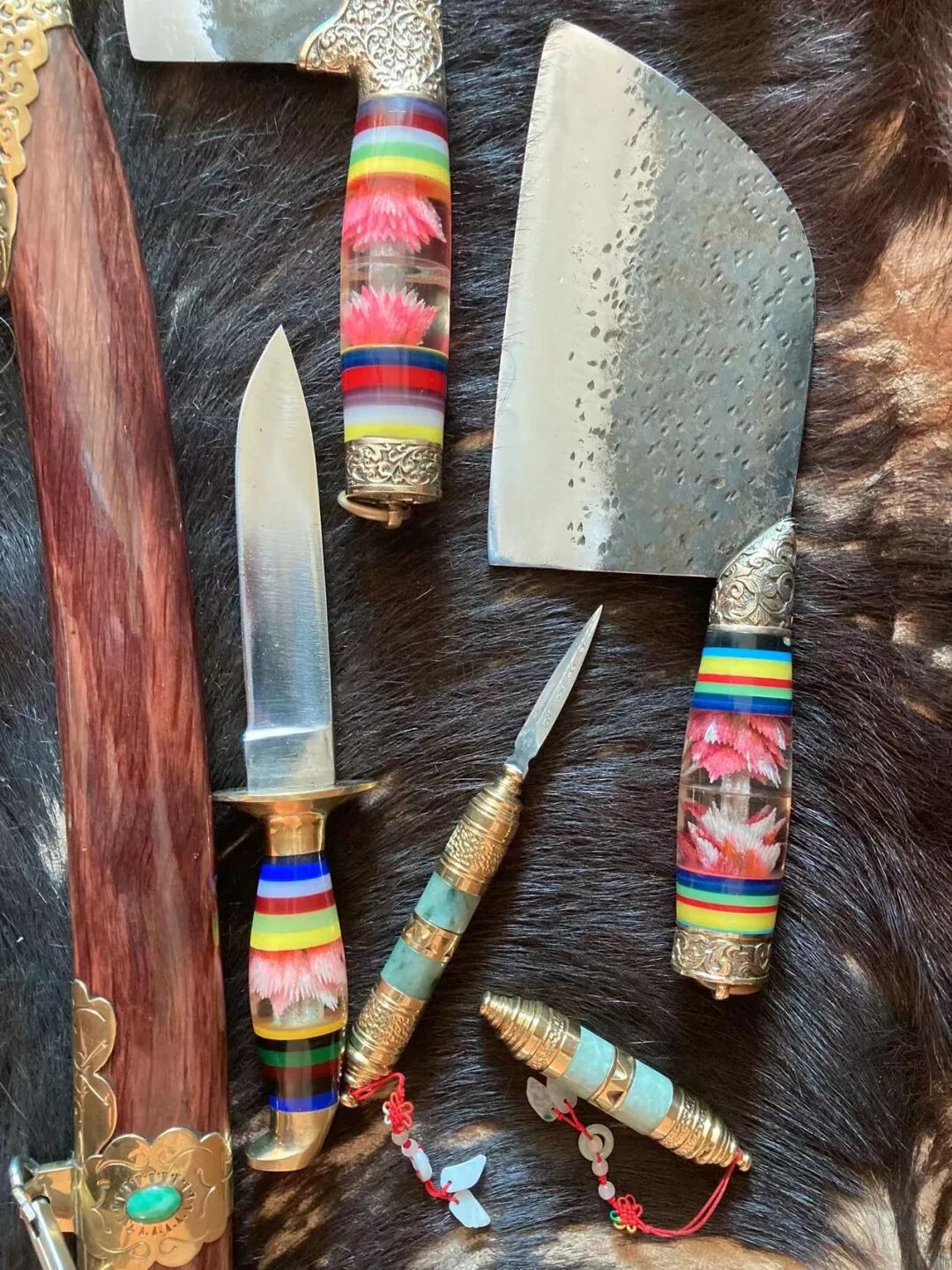
Surrounded by "Flash and Gleam of Blades"
1.
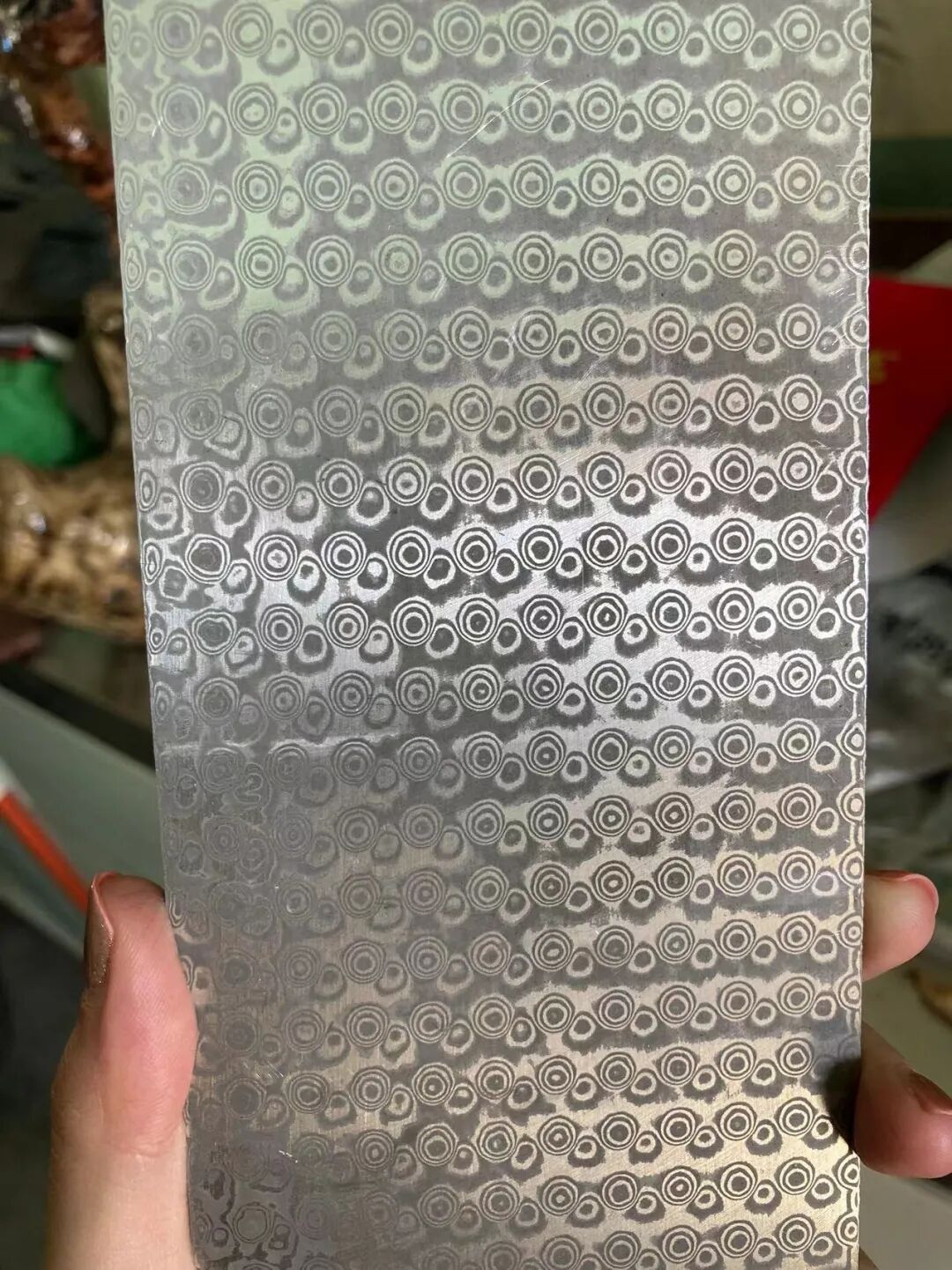
Nagu Town sits in the northwest of Tonghai County, a place famously known as a "land of rites and music." It's a renowned "hometown of handicrafts," where the local residents are primarily Hui Muslims and Han Chinese.
According to historical records, the knife-forging craft in Nagu Town dates all the way back to the Yuan Dynasty.
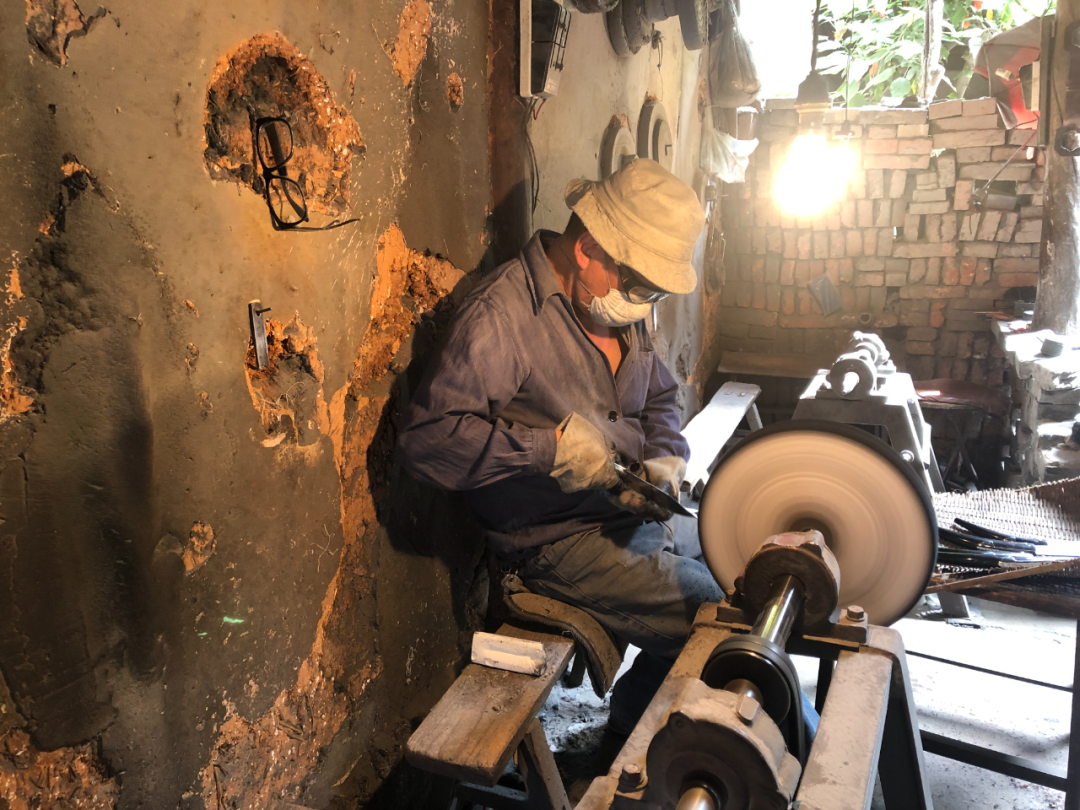
"As part of the 'Tamma' vanguard troops and accompanying military craftsmen, the ancestors of Nagu applied their exquisite skills and unique techniques to forge top-tier creations in military blades, civilian knives, horse gear, and more."
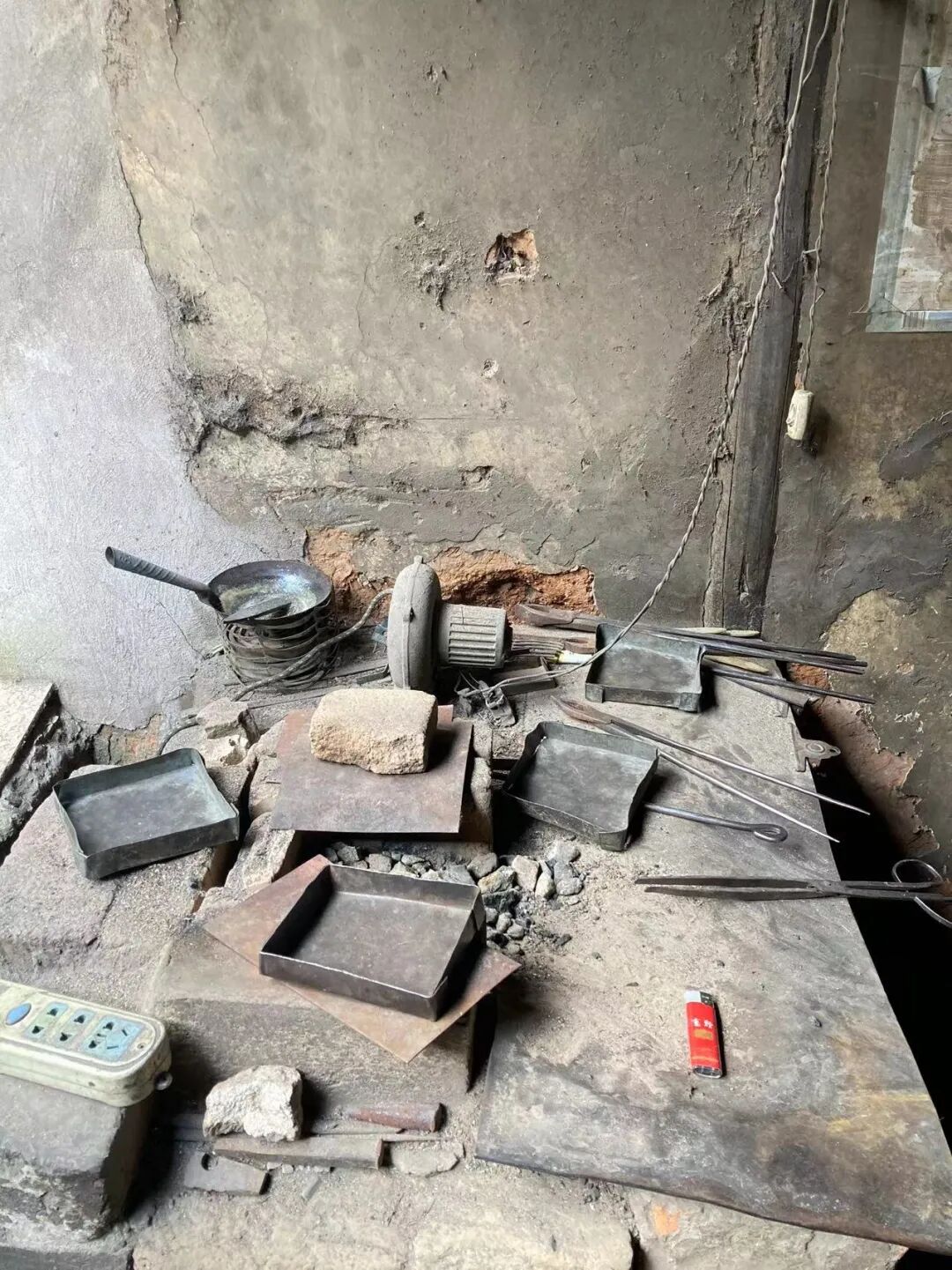
More than 700 years later, local artisans and businesses are still writing their handicraft history today by building on these fine traditions while blending in modern tech and practical everyday needs.
2.
Another little-known and fascinating story is that knives from Najiaying were once shortlisted as national contenders for the Chinese Tri-Service Honor Guard ceremonial swords.
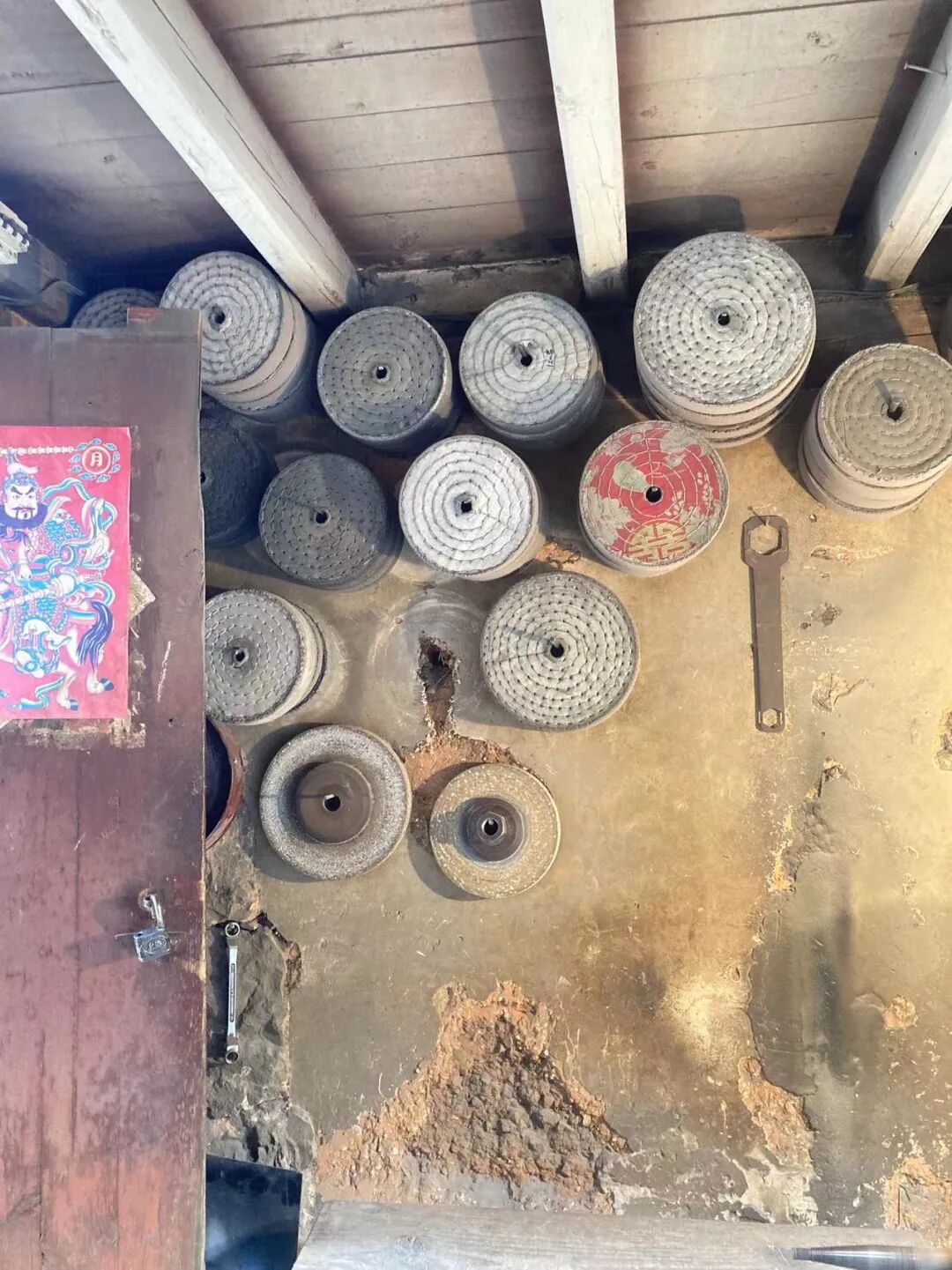
In early 1992, the Central Military Commission issued an order deciding to revamp the ceremonial uniforms for the Honor Guard. Along with the new threads, the executive and platoon commanders of the Honor Guard were switching out their sidearms for ceremonial swords, shifting from a standard unarmed salute to a much more formidable and solemn saber salute. (Note: Paragraph content is excerpted from the China Archives News, total issue No. 3251, titled "Vowing Loyalty to Forge the 'National Saber'").
The task of researching and designing this ceremonial sword was handed over to the Quartermaster Equipment Research Institute of the General Logistics Department of the Chinese People's Liberation Army.
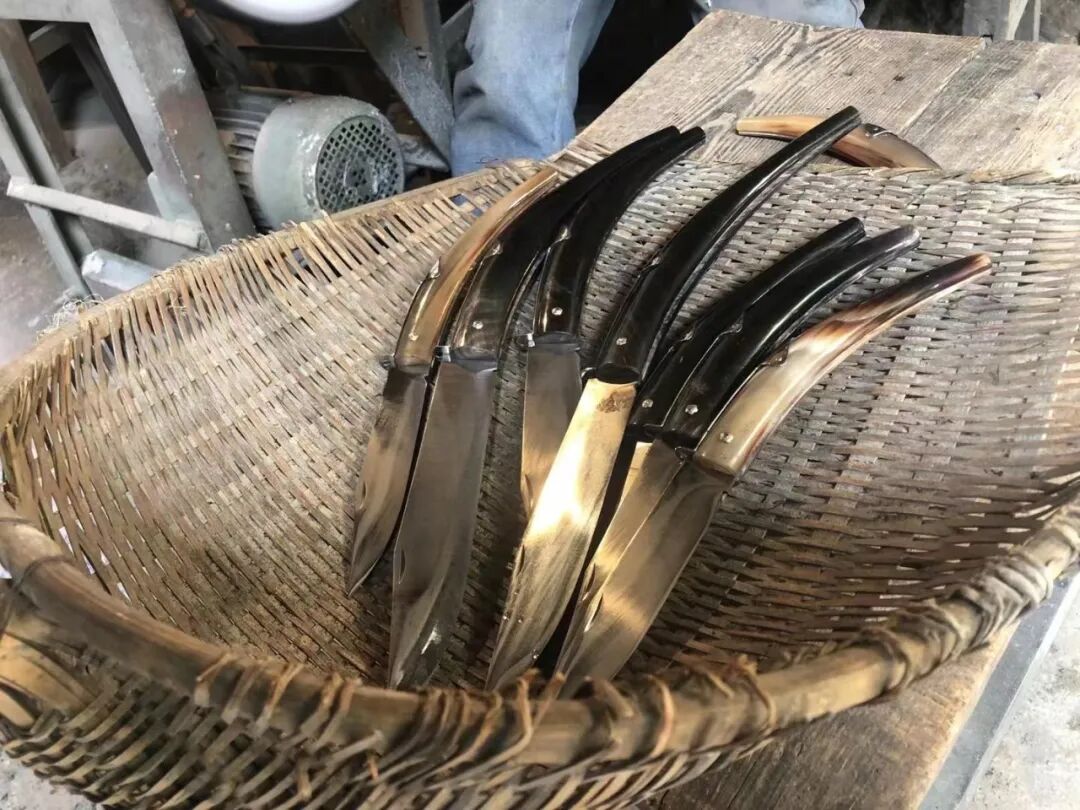
They first headed to the Military Museum of the Chinese People's Revolution to gather reference materials on ceremonial swords from countries like France, Japan, the US, Sweden, and Italy. Based on China's actual national and military conditions as well as ethnic characteristics, they drafted 3 different sword designs and commissioned over 10 military enterprises and knife manufacturers to make sample blades.
Among them were artisans from Najiaying who took part in the production at the time.
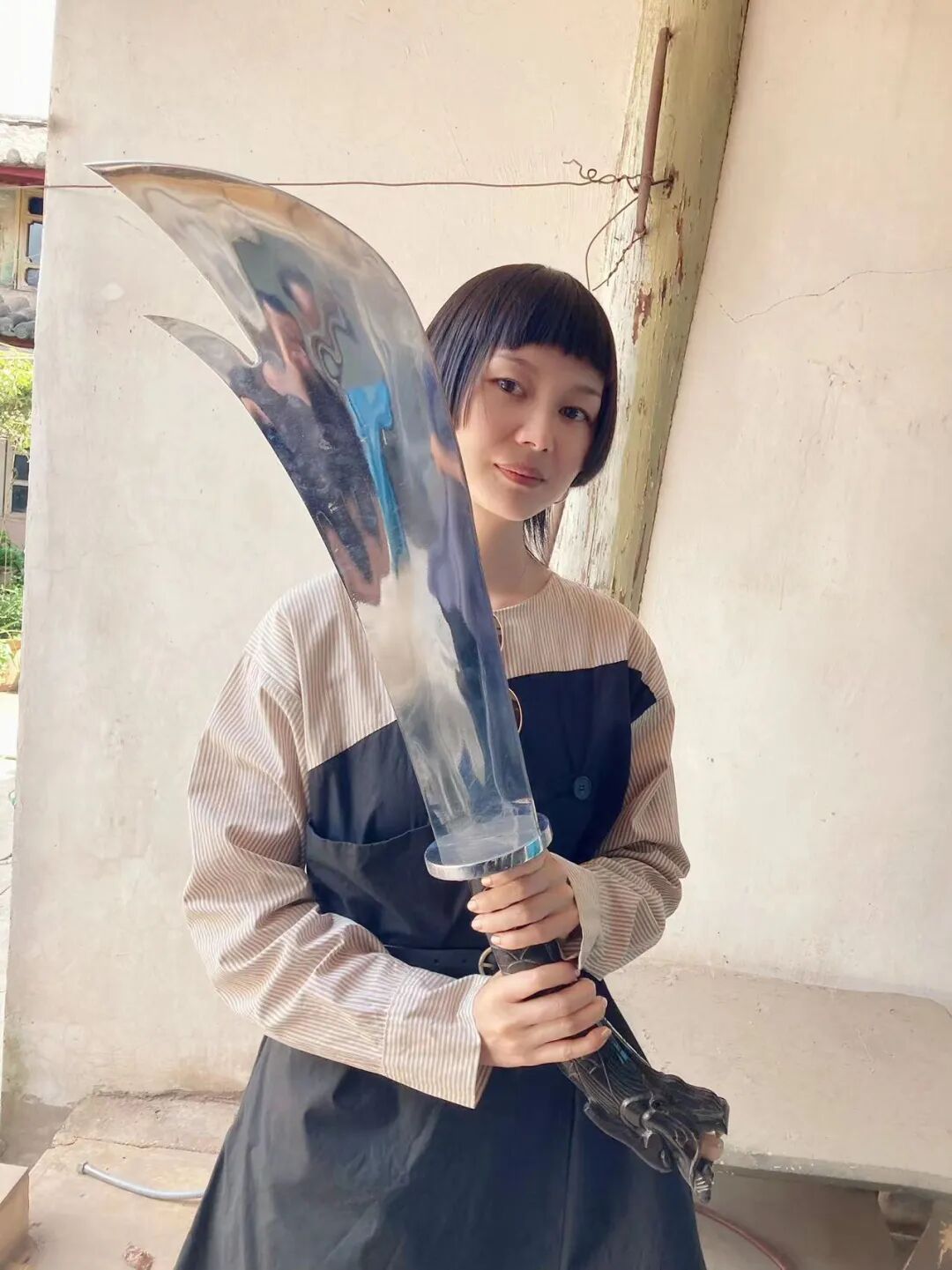
It's a real pity that although we tracked down the person involved and visited their home, we couldn't find the key to the display room. So we missed out on seeing more physical evidence related to it—which honestly just gives us a great excuse for another trip.
3.
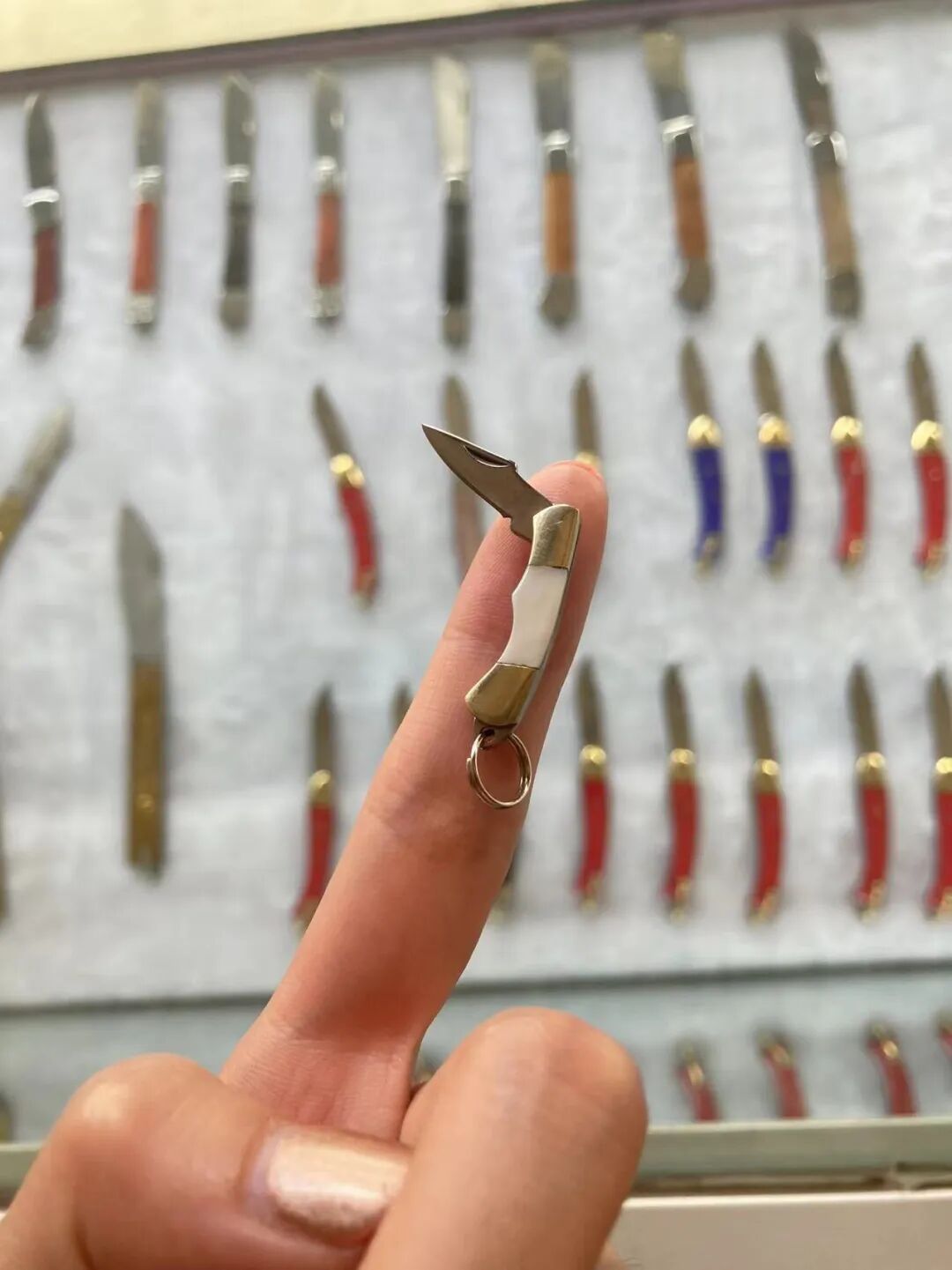
Walking down the streets of Najiaying today, you see specialty shops for civilian knives of all shapes and sizes everywhere: scissors, tea knives, nail clippers, unsharpened decorative blades...
Rows upon rows of uniquely shaped knives inside the glass counters reflect that chilling metallic gleam, looking totally badass and giving you a serious martial arts-style adrenaline rush.
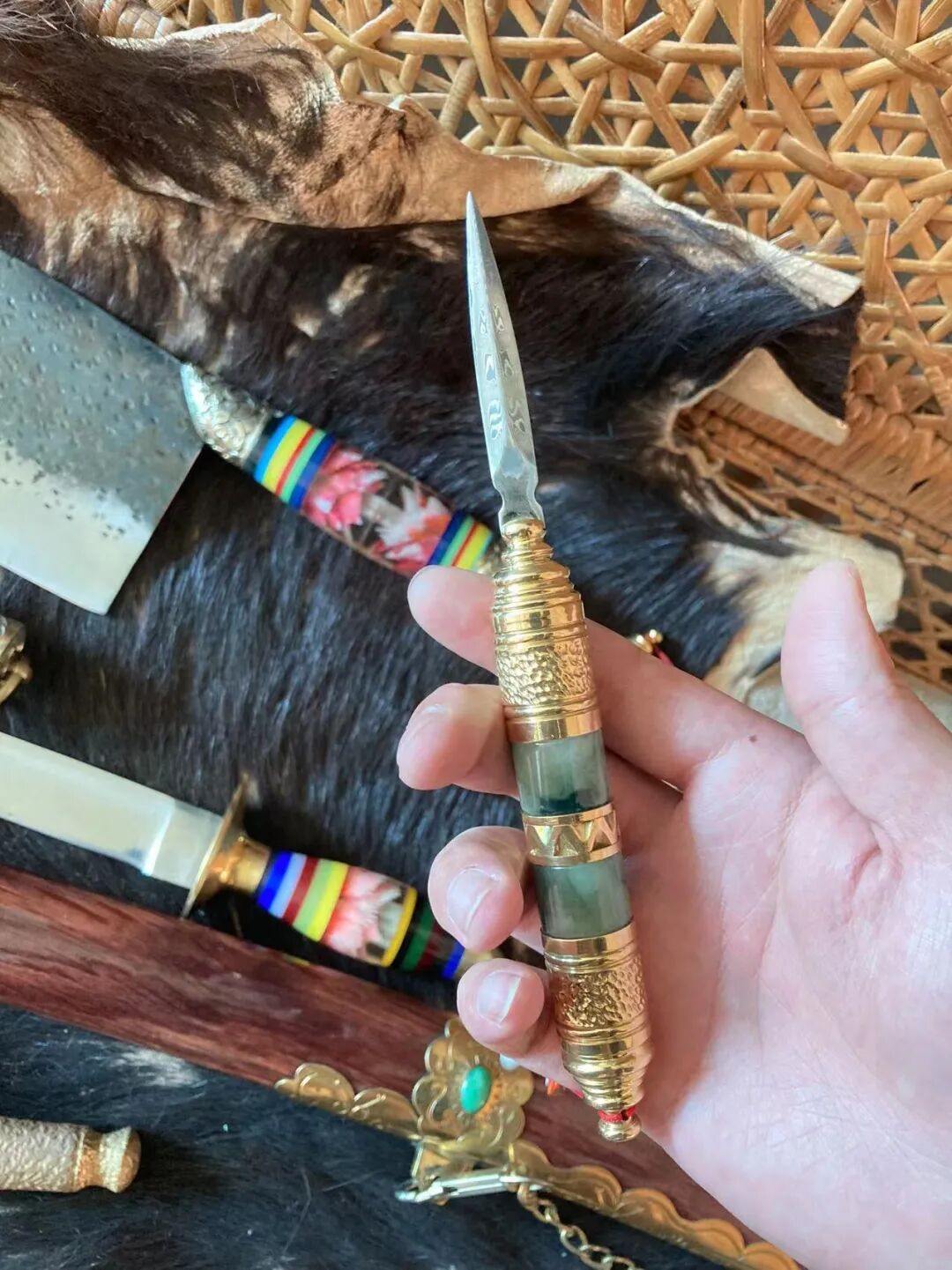
Drivers and tourists cruising by can't help but pull over and wander into the shops to check things out. When they spot one they like, they pick up a reliable "kitchen weapon" for themselves, family, or friends.
Honestly, once you've got pro-grade gear and that atmosphere, your inner potential just naturally kicks in.
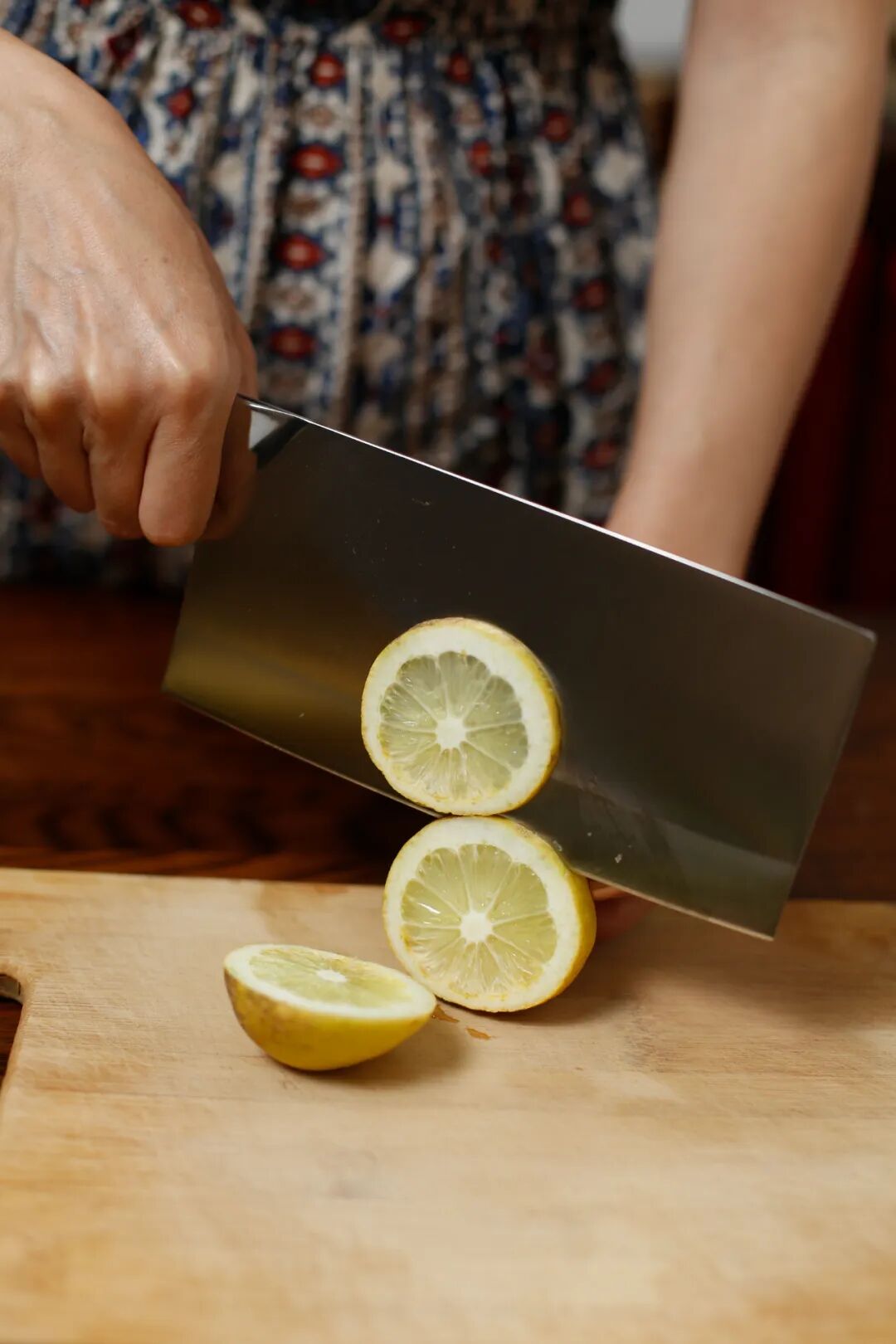
Take me for example: ever since I got my hands on a reliable knife, the frequency of me heading into the kitchen to prep ingredients has seriously shot up.
Looking forward to even more cool stuff ahead
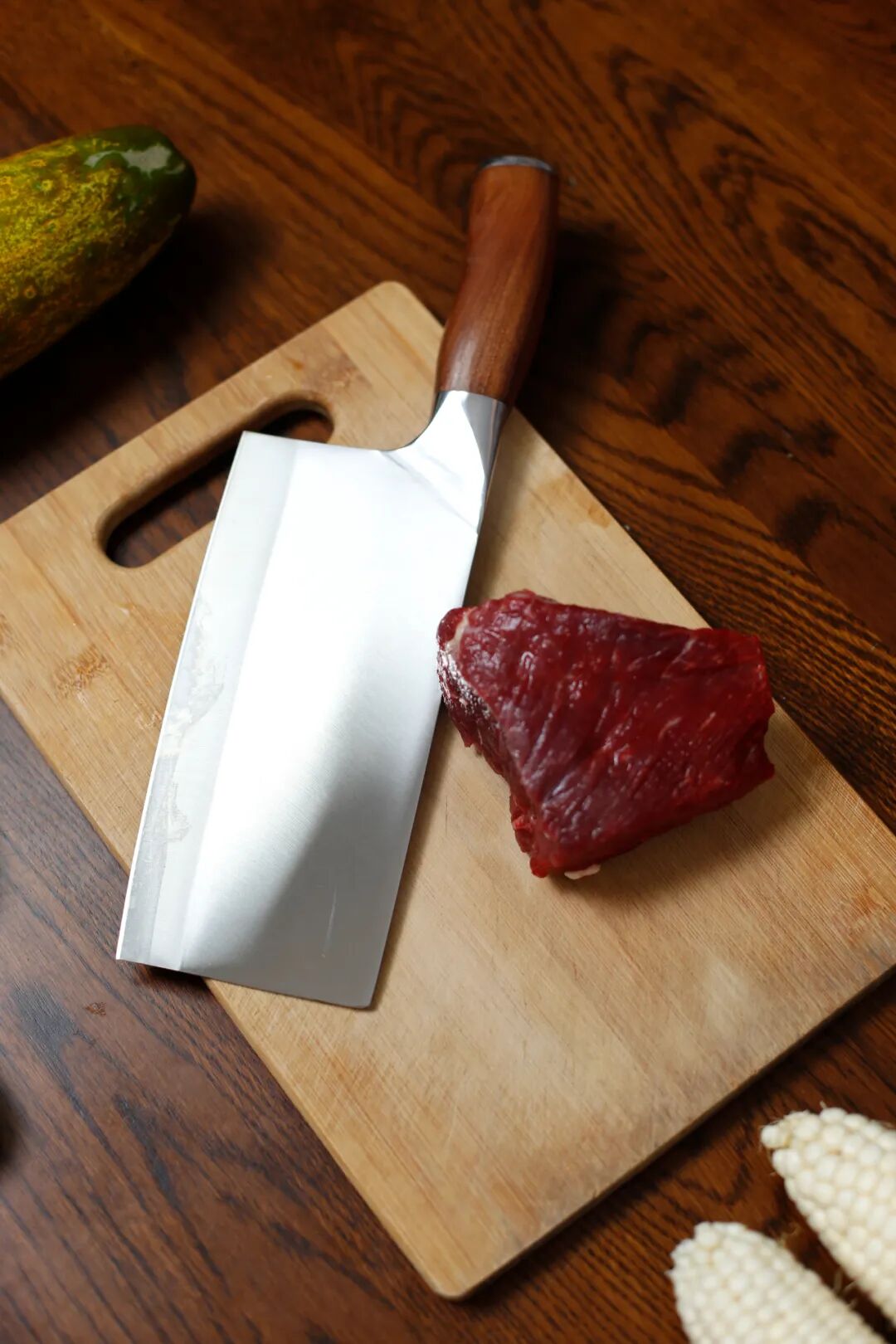
Forged through over 600 years of accumulation and refinement, Najiaying's knives boast battle-tested craftsmanship that is passed down through generations. It's a priceless asset, but one that constantly faces the challenges of a fast-changing market.
After visiting more than a dozen workshops and specialty stores on the ground, my takeaway is this:
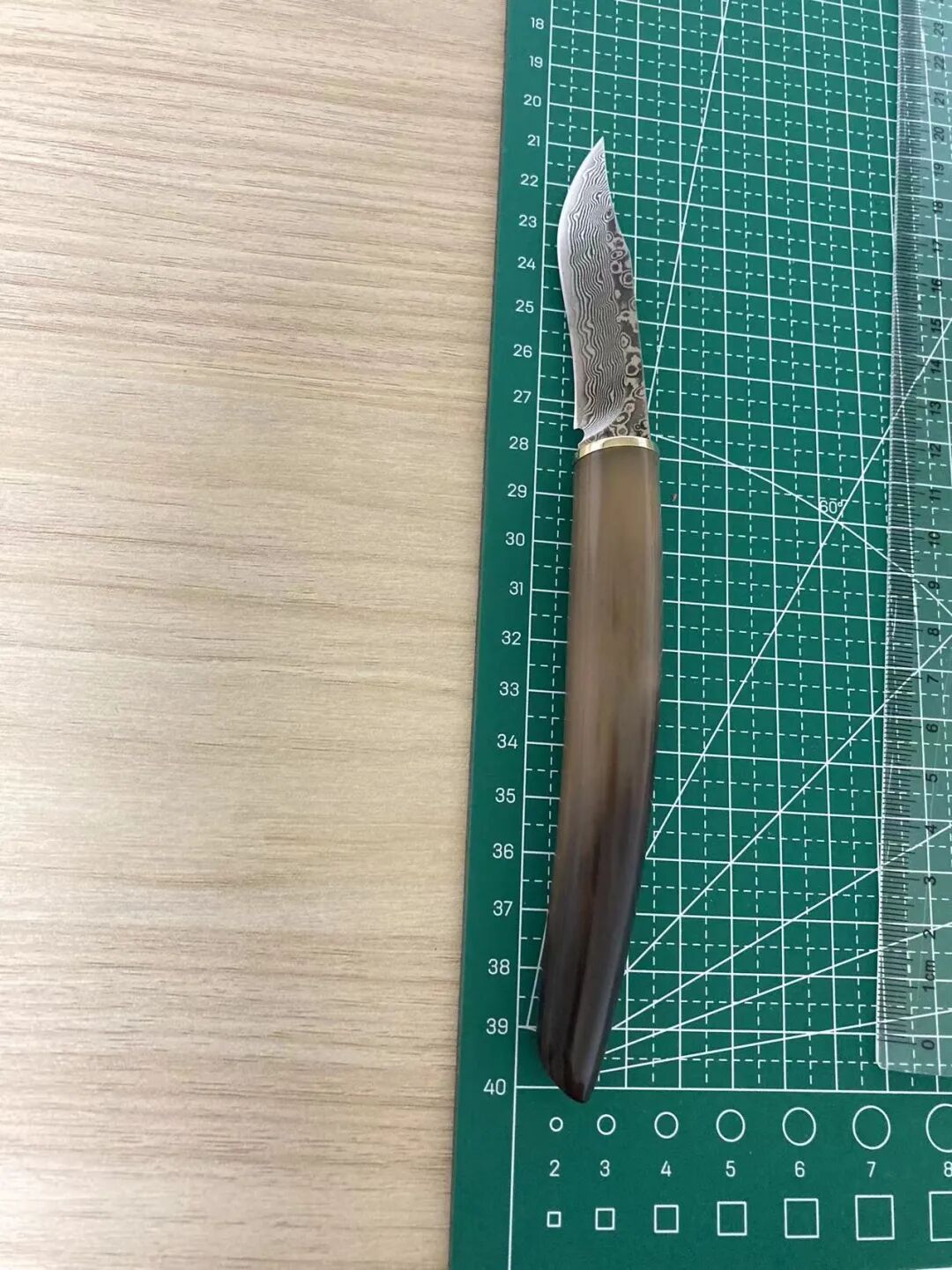
When it comes to tapping into their own cultural resources, telling a compelling brand story, proactively innovating, and connecting with contemporary young consumers, Najiaying's civilian cutlery still has a long road ahead for growth.
Finally, let me shout out an outstanding local Halal restaurant in Najiaying—Jieya Restaurant.
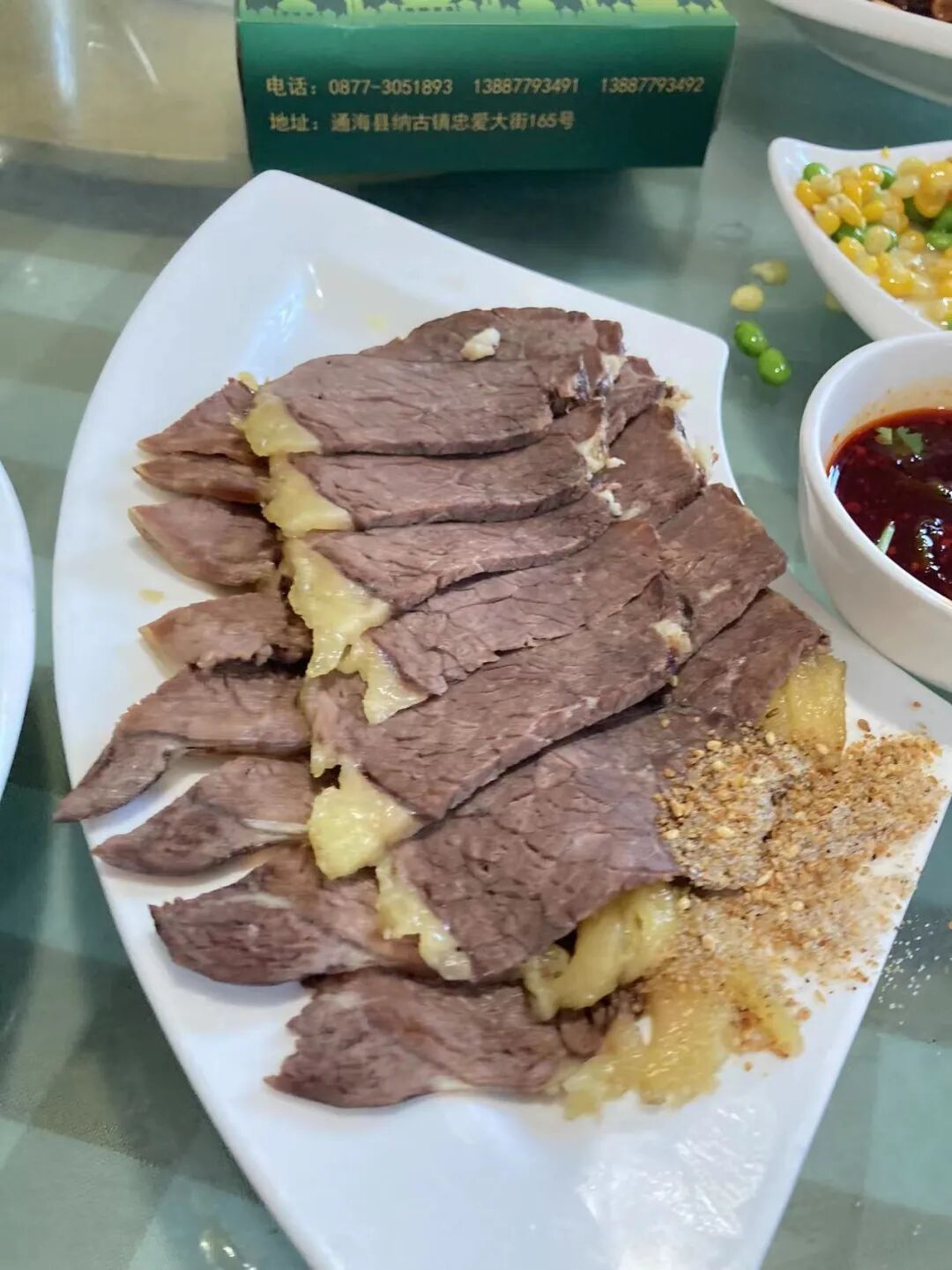
According to a good friend, this spot has been open locally for over 20 years. The quality is solid and the prices are super affordable, making it a great pick whether you're grabbing a casual bite, hanging out with family and friends, or hosting a business dinner.
Our foodie squad tried it out, and everyone was licking their chops.
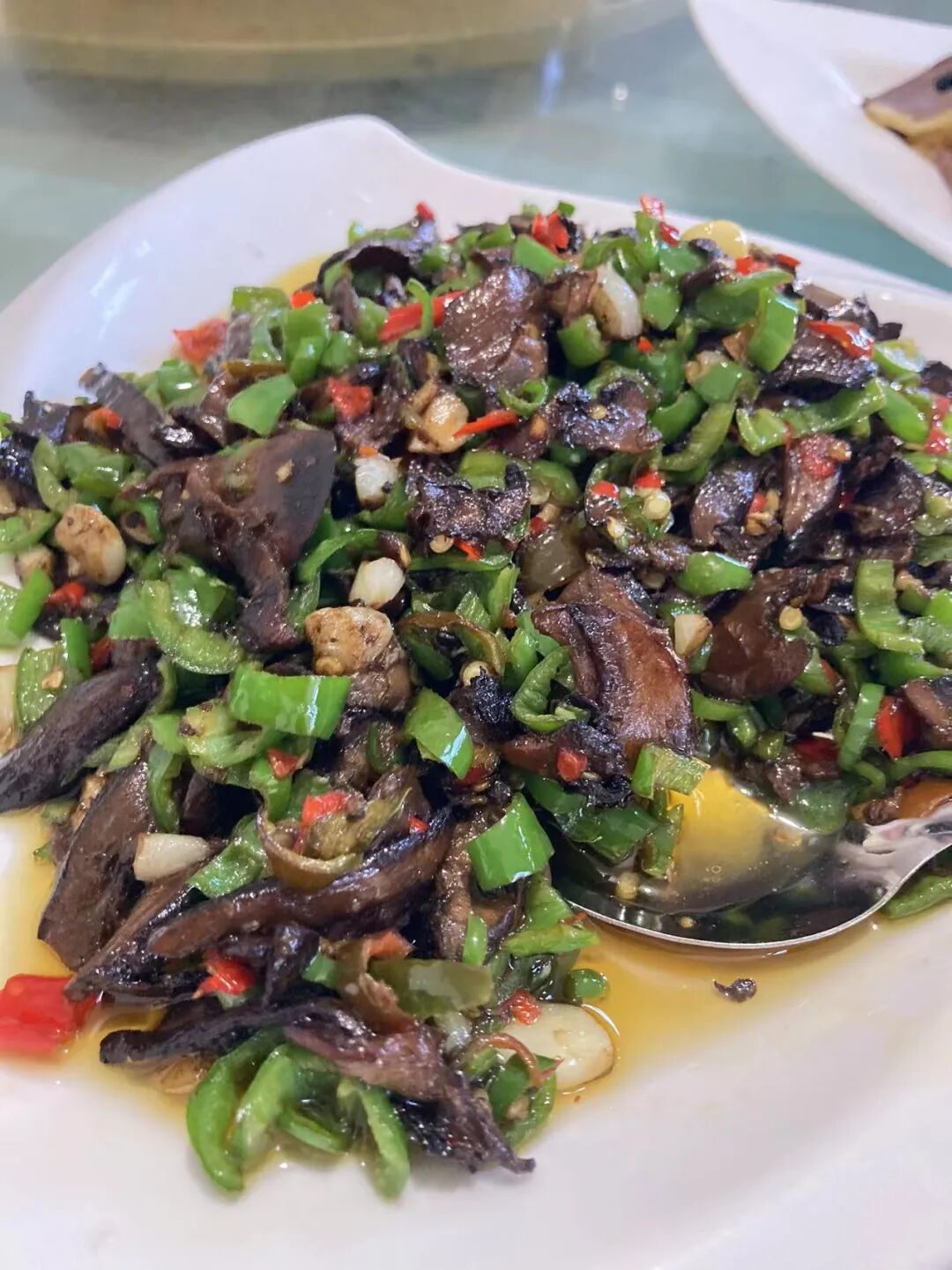
My personal recommendations: Tom Yum chicken, sliced cold beef, and stir-fried wild mushrooms.
The dipping sauce for the cold beef has a sour and spicy kick—super complex and bursting with authentic Yuxi local flavor.
Until next time, Najiaying~
- Restaurant Info -

Name: Jieya Restaurant
Phone: 13887793491; 13887793492
Average cost: 60 RMB (spend as you like)
- Foodie Squad Perks -
For this issue, our foodie squad handpicked the most frequently used home-style kitchen slicer out of hundreds of knives in Najiaying to recommend to you all.
It has a substantial heft, a razor-sharp blade, and serious performance, totally handling all your daily needs for shredding, slicing, cutting strips, and dicing, while fitting right in with the habits of a Chinese kitchen.
If you want to experience the 600-year knife-making magic of Najiaying, why not start with this one?
Any quality issues under non-violent use within 2 years get a free trade-in for a brand new one.
- More Great Stuff -
Don't rush, 30 is just another beginning
I've been gatekeeping a Halal leisure resort in Xishan District, and I really hate to share it
Without our Zhaotong folks leading the charge, Kunming wouldn't have the Halal food scene it has today
The Ultimate Guide to Yunnan Muslim Culture, Halal Food & Historic Mosques (Part 1)
Articles • Hasan09 posted the article • 0 comments • 14 views • 4 days ago
Overview of Yunnan-Origin Muslims in Taiwan, Thailand, and Myanmar (1): Overview of Homelands and Diaspora
Abstract:
Overview of Yunnan-Origin Muslims in Taiwan, Thailand, and Myanmar. Author: Yu Jiaming. Nestled in China's southwestern corner, Yunnan borders Myanmar, Thailand, Laos, and Vietnam, serving as a historic gateway to Southeast Asia. While the terrain is rugged, the region enjoys year-round spring weather and abundant resources. Home to multiple ethnic minority groups, Yunnan has spent millennia cultivating a rich, diverse cultural tapestry, which naturally includes the historical evolution and developmental journey of its Muslim communities. Section 1: Overview of Homelands and Diaspora. Nestled in China's southwestern corner, Yunnan borders Myanmar, Thailand, Laos, and Vietnam, serving as a historic gateway to Southeast Asia.
Overview of Yunnan-Origin Muslims in Taiwan, Thailand, and Myanmar
Author: Yu Jiaming
Nestled in China's southwestern corner, Yunnan borders Myanmar, Thailand, Laos, and Vietnam, serving as a historic gateway to Southeast Asia. While the terrain is rugged, the region enjoys year-round spring weather and abundant resources. Home to multiple ethnic minority groups, Yunnan has spent millennia cultivating a rich, diverse cultural tapestry, which naturally includes the historical evolution and developmental journey of its Muslim communities.
Section 1: Overview of Homelands and Diaspora
Nestled in China's southwestern corner, Yunnan borders Myanmar, Thailand, Laos, and Vietnam, serving as a historic gateway to Southeast Asia. While the terrain is rugged, the region enjoys year-round spring weather and abundant resources. Home to multiple ethnic minority groups, Yunnan has spent millennia cultivating a rich, diverse cultural tapestry, which naturally includes the historical evolution and developmental journey of its Muslim communities.
Beginning in the 7th century CE, merchants from the Arabian Peninsula and Persia began traveling to China for trade, eventually settling across various regions. Over centuries of development, they became one of the foundational roots of today's Hui Muslim minority in China. Of course, the composition of the Hui Muslims also includes Central Asian Muslim ethnic groups who moved eastward after Genghis Khan's western campaigns, alongside Arabs and Persians. In Yuan Dynasty official records, they were collectively referred to as "Huihui". After arriving in China, these individuals worked as soldiers, artisans, farmers, and merchants, while others entered government service or pursued religious and academic careers. Through intermarriage with locals and their deep integration into the socio-economic fabric, the concept and ethnic structure of the Hui Muslims gradually took shape.
As for the development of Islam in Yunnan, one theory suggests that during the Tang Dynasty, Tang forces allied with the Kingdom of Nanzhao to defeat the Tibetan Empire and the Abbasid army (referred to historically as the "Black-robed Da Shi"). The captured Abbasid soldiers were Muslims, marking the earliest presence of Muslims in Yunnan. Another widely circulated theory attributes their arrival to the Central Asian Huihui who migrated westward following the Mongol conquests, as well as Huihui soldiers in the Mongol army who stayed behind after conquering the "Southwestern Yi" tribes, thereby forming the earliest Muslim communities in Yunnan. [1]
According historical records, from Genghis Khan's western campaigns in 1219 to Hulagu's capture of Baghdad in 1258, the Mongols successively conquered numerous Islamicized nations spanning from Central to West Asia. Large numbers of these Muslims were subsequently relocated eastward, with some military units organized into the "Tamma troops" (frontier garrison forces) as part of Kublai Khan's unified army. In 1253 (the second year of Emperor Mengke's reign), Mengke ordered Kublai Khan and Uriankhadai to lead a 100,000-strong army to attack the Southwest, eventually conquering the Kingdom of Dali. Numerous Huihui generals and soldiers arrived in Yunnan wave after wave to garrison the borderlands and establish military agricultural colonies (tuntian) across various regions. Later, Uyghurs (ancestors of today's Uyghur ethnic group) also established the Wumeng military garrison around Zhaotong, laying a major foundation for today's Zhaotong Hui Muslim population. [2]
In 1274 (the 11th year of the Zhiyuan era under Kublai Khan), the Yuan Emperor appointed Sayyid Ajjal Shams al-Din Omar as the first Pingzhangmingshi (Administrator) of the Yunnan Branch Secretariat. Sayyid Ajjal Shams al-Din was originally from Bukhara in modern-day Central Asia. During his six years in office, he made remarkable achievements in local agriculture, transportation, and education. He introduced knowledge of Islam, the Arabic and Persian languages, artillery manufacturing, and medicine into Yunnan, and commissioned two mosques in Kunming that still stand today. His descendants also achieved prominence in politics and military affairs, continuing to contribute to the governance of Yunnan. His lineage eventually dispersed across China, becoming ancestral roots for many Chinese Muslims. [3]
The Ming Dynasty and early Qing Dynasty also marked critical phases for the development of Yunnan's Muslims. Many Muslim generals served among the founding figures of the Ming Dynasty; most notably, Mu Ying and his descendants were enfeoffed as the "Prince of Qianning" and the "Duke of Qian," governing Yunnan across generations. Additionally, a large contingent of Hui Muslim generals and soldiers from the Central Plains and the Jianghuai region followed Mu Ying to Yunnan. It is said that the Mu family in modern-day Baoshan, Yunnan, are descendants of Mu Ying. [4] Subsequently, even more Muslims arrived with military forces to garrison and reclaim land, forming numerous settlements in places such as modern-day Kunming, Chuxiong, Dali, Weishan, Baoshan, Tengchong, Kaiyuan, Mengzi, Xun甸, and Qujing. As they gradually integrated with various ethnic groups, Yunnan transformed into a major stronghold for Muslims in China, embodying the early spatial pattern of "widely dispersed, closely concentrated." [5]
Because Muslim village communities maintained distinct cultural and religious boundaries with outsiders, we frequently encounter villages bearing names explicitly tied to the Hui Muslims, such as "Huihuiying" (Hui Muslim Camp) or "Huizi Village" (Hui Village). These names immediately reveal that the local residents are Yunnan-origin Muslims. However, not all Muslims lived in exclusively Hui villages; many resided in urban areas. Though they were not the local majority, their homes and businesses clustered within specific Muslim quarters, allowing them to preserve their religious beliefs and ways of life with minimal outside interference. Because they inevitably interacted with Han Chinese in the cities, lifestyle and cultural differences occasionally sparked friction, with Han residents sometimes resorting to verbal insults or physical aggression against Muslims. [6]
Following the dawn of the Qing Dynasty, the development of Muslim communities began to face severe setbacks. For one, many Muslims still held loyalty to the fallen Ming Dynasty; moreover, the Qing court's ethnic policies were deeply inequitable, imposing heavy restrictions and discrimination against Hui Muslims while frequently instigating ethnic conflicts between Hui and Han populations. This fueled resistance among Muslim communities everywhere—not least in Yunnan, which boasted the second-largest Muslim population concentration in China, second only to the Northwest. In 1797 (the second year of the Jiaqing era), a salt-tax dispute erupted in the Dali and Chuxiong regions, serving as the spark for widespread uprisings. Participants spanned the Bai, Han, Yi, and Hui ethnic groups, uniting against corrupt salt administration officials who schemed for personal gain and extorted ordinary citizens. Soon, various conflicts and disputes flared up across regions. Officials routinely stoked divisions and refused to deliver fair judgments, causing public resentment to boil over. By the Daoguang era, the Qing court initiated violent crackdowns, ultimately triggering the major anti-Qing uprisings led by Du Wenxiu, Ma Long, and others. [7]
In 1856, Du Wenxiu established a regime in Dali, vigorously developing local agricultural and mineral economies, encouraging commerce, and fostering trade ties with neighboring Sichuan and Myanmar. By uniting various ethnic minorities, he won widespread popular support. Militarily, Du Wenxiu rallied the populace under slogans such as "Save the people, strike down tyranny," "Unite Hui and Han as one, raise the righteous banner, drive out the Tartars, and restore China..." His insurgent forces fought over two hundred battles against Qing troops, unifying the entire western half of Yunnan within five years. In 1867, they even mobilized a massive army to besiege Kunming. However, after failing to break the city and facing fresh Qing reinforcements mobilized from multiple provinces—combined with the Qing court's divide-and-conquer strategy of using Muslims to fight Muslims—the Dali regime suffered a series of defeats. In 1872, Du Wenxiu was executed, and two years later, Dali fell to Qing forces, bringing the 18-year Yunnan Hui uprising to a tragic end. [8]
By the mid-19th century, Yunnan's local Muslims accounted for one-tenth of the province's total population. Bound by shared historical and cultural symbols as well as common professions, they gradually forged a distinct ethnic identity. This very identity—compounded by their non-Yunnan and non-Han ancestral origins and their Islamic faith—created friction in regional, cultural, and religious spheres, ultimately leading to the tragic outcomes of the Hui uprisings. [9] In the wake of the Qing court's high-handed rule and massacres, the Muslim population inside Yunnan plummeted sharply. Fearing persecution, some Hui residents were forced to flee across the borders into neighboring countries, planting the seeds for the migration of Yunnan-origin Muslims into Southeast Asia. [10]
Yunnan and its surrounding regions feature towering mountain ranges soaring 6,000 meters high, forming the Yunnan-Guizhou Plateau. South of the plateau lie the Shan Plateau of Myanmar, northern Thailand, Laos, and the rugged highlands of Vietnam. Major rivers like the Lancang (Mekong) and Nujiang (Salween) carve deep gorges through the plateau while sculpting numerous mountain basins known locally as *bazi*. Different ethnic minorities settled across these basins. Given this challenging terrain, the most reliable transport for long-distance journeys was the Yunnan pony, giving rise to organized caravans known as *mabang* (horse caravans) that shuttled between mountain basins to handle cargo transport and trade. [11] These horse caravans not only traded goods from market to market but also bartered with highland farmers along the way, injecting vibrant economic life into diverse inter-ethnic regions. [12]
The Muslims of Yunnan province largely concentrated along major transportation arteries and the flat basin lands (bazi) in their immediate suburbs, with very few living deep in the mountainous interior. This settlement pattern was shaped by their long-term historical engagement in military agricultural colonies, commerce, and handicrafts. [13] Because these flat basins and semi-mountainous regions offered limited per capita arable land, relying solely on farming made survival difficult. Consequently, running long-distance transport via horse caravans became an essential avenue for Hui Muslims to make a living in commerce. Ever since the Yuan Dynasty, Hui horse caravans remained a cornerstone of Yunnan's transport network. In Muslim-heavy regions such as Baoshan, Weishan, Tonghai, and Yuxi, countless horse caravans specialized in transport and goods trading, constantly plying the routes between Yunnan, Thailand, and Myanmar. [14] Furthermore, the Qing court's massacres of Yunnan's Hui population plunged many areas into economic depression, which in turn spawned rampant banditry. The devastation of their home villages forced people to venture outward to find a livelihood—proving to be yet another reason why Yunnan Muslims took up the life of caravan traders. [15]
Wealthy Yunnan merchants had long-standing commercial ties extending through Laos, Thailand, Myanmar, and India, while local peddlers transporting goods between prefectures and counties routinely hired Hui-dominated horse caravans. Among all postal and courier routes, the western Yunnan Hui horse caravan route stretching from Dali all the way to Myanmar was the most convenient. Many Hui people sustained their livelihoods through caravanning: some purchased their own mules and horses to organize independent caravans, while others hired themselves out to wealthy merchants who already owned large caravans. This gave rise to the classic description of Yunnan Hui Muslims: "Their livelihood relies on the profits of mules and horses," and "They universally make their living by driving caravans, peddling oil, salt, and rice." [16]
Western Yunnan, bordering Myanmar, served as a crucial stretch of the Yunnan Silk Road and maintained close ties with the outside world since ancient times. Borderland grassroots trade had always been exceptionally active; following the social stability and economic development of the Ming Dynasty, waves of interior merchants flocked to the region seeking fortunes. Northern Myanmar still bears the footprints of these active Chinese merchants. Myanmar's native products like gemstones and cotton were imported into Yunnan, while Myanmar's demand for tea, silk, copper and ironware, ceramics, and salt was supplied outward from Yunnan. This dynamic southwestern corridor stimulated ongoing development and commercial prosperity across numerous regions. [17] Such booming trade also minted many wealthy merchant magnates—such as Ma Mingkui, a prominent Yunnan tycoon during the Xianfeng and Tongshi eras of the Qing Dynasty. Engaged in textiles, trade, and transport, Ma owned over a dozen horse caravans, traveling year-round between Yunnan and Myanmar to handle cross-border commodity trade, while operating multiple storefronts across Sichuan, Yunnan, and Myanmar. When Du Wenxiu established the Dali regime, Ma Mingkui provided robust financial backing as well. [18]
Driven by the thriving trade between Yunnan and Myanmar, numerous Yunnan-origin Muslims opened shops across various parts of Myanmar and eventually settled there. According to Kumiko Kishima's research, between the mid-19th century and the early 20th century, Yunnan Muslims primarily utilized five distinct routes to travel to Myanmar for trade and permanent settlement. [19] They gradually formed clustered communities along these trade arteries leading from Yunnan into Myanmar. Initially, they settled at the various terminal stations along the trade routes or in safe-haven towns near the border. After the onset of the British colonial period, settlements organically emerged along the trade routes, terminal stops, and transit hubs. However, terminal stations located too close to their homeland in Yunnan did not develop distinct ethnic enclaves. [20]
Although caravan trade was dominated primarily by Hui Muslims, a massive influx of Han Chinese began joining the trade in the 19th century. Hui and Han populations clashed not only over commerce but also over mining rights and land use. This inter-ethnic friction, combined with the late 19th-century Muslim anti-Qing uprisings crushed by the Qing government—culminating in the fall of Du Wenxiu's Dali regime in 1872 and the capture of the final insurgent stronghold of Tengyue (modern-day Tengchong) by Qing troops the following year—forced many Muslims to flee into Myanmar under severe political oppression. Shortly thereafter, the Konbaung dynasty of Myanmar collapsed, and Britain established colonial rule there in 1886, providing yet another catalyst for their migration to Myanmar. [21]
The Republican era in China was far from peaceful, marked by multiple brutal military conflicts. Although Yunnan sat in the remote borderlands, it was inevitably swept into the turmoil. In 1937, when Japanese forces invaded China and captured all of the nation's eastern sea ports, the government mobilized immense human labor to construct the 960-kilometer-long Burma Road stretching from Kunming, Yunnan, to Wanting, Myanmar, taking just one year to complete. It became China's sole external lifeline and supply route, channeling vital supplies from the outside world into the southwestern rear base. [22] Throughout the War of Resistance Against Japanese Aggression, Yunnan Hui Muslims enthusiastically enlisted in the military, fighting Japanese invaders across China, fiercely resisting the enemy along the Yunnan border, and reclaiming numerous occupied cities. Members of the Chinese Expeditionary Force that entered Myanmar in 1944 also included many Yunnan-origin Muslims. [23]
In the realm of education and culture, Yunnan's Muslims achieved remarkable development since ancient times, producing a steady stream of renowned scholars and imams. [24] Their translations and religious treatises profoundly influenced Chinese Muslims nationwide. Furthermore, *jingtang jiaoyu* (mosque-based scriptural education) served as a traditional educational format unique to Yunnan's Islamic heritage. Developed during the Ming Dynasty, this system utilized mosque study halls as classrooms where imams taught students using classical religious texts. This wielded widespread influence among local Muslim communities, and the so-called "Yunnan School of Islamic Thought" emerged as one of the three major scriptural educational traditions in China. [25]
With the turning tides of the era, several new organizations, educational institutions, and periodicals were successively established during the Republican period, including the Yunnan Branch of the China Islamic Progressive Association and the Yunnan Branch of the China Islamic National Salvation Association. Both actively responded to and participated in movements to build a democratic nation and resist the Japanese invasion. Additionally, the founding of the "Yunnan Mingde School" in 1929 symbolized the rise of modern Islamic education in Yunnan, which combined general academic subjects with religious knowledge. Periodicals such as the *Yunnan Muslim Monthly* and the *Yunnan Muslim Bell Magazine* were among the earliest regular Islamic publications issued nationwide. Scholars like Ma Jian and Na Zhong traveled to Egypt around 1931 for advanced studies, becoming preeminent experts in religious studies and Arabic linguistics who shaped 20th-century Chinese Islamic scholarship. [26]
As the War of Resistance drew to a close, the Chinese Civil War immediately erupted. In 1949, the Kuomintang (Nationalist) government retreated to the Southwest. At the time, the KMT forces stationed in Kunming consisted of the 8th and 26th Armies, led respectively by Li Mi and Lu Han (note: text says Lu Han / Qiu Qingquan / Yu Chenwan depending on historical context). Later, these armies withdrew toward western Yunnan. After being overtaken by the People's Liberation Army, just over a thousand surviving soldiers from both armies retreated across the border into Myanmar, becoming stranded in a foreign land as the "Lost Army" [27]—immortalized by author Pai Hsien-yung (or Bo Yang) in his book *Alien Land* (Yi Yu). After entering Myanmar, the Lost Army faced relentless combat, repeatedly clashing with the PLA. Ultimately, a portion of the soldiers, civilians, and their families were evacuated to Taiwan through arrangements made by the KMT government, while others entered Thailand, settling in places like Chiang Mai, Chiang Rai, Mae Salong, and Mae Sai.
The Yunnan-origin Muslims who migrated to Myanmar dispersed across the country. Major concentrations formed in Mandalay (formerly known as Wucheng / Mandalay), Yangon, Lashio, Tangyan, Myitkyina, Mogok, Maymyo, and Taunggyi, with most communities taking shape around the mid-19th century onward and establishing local mosques. Today, Mandalay still preserves a mosque ordered and funded by Du Wenxiu, completed in 1868, alongside the surrounding Muslim community settlements. Yunnan-origin Muslims generally refer to themselves as *Huihui* or *Huimin* (Hui people), but the local Burmese people use the term "Panthay"—a distinct ethnonym originally used as a blanket term for Muslims. [28]
When discussing the history of Yunnan-origin Muslims migrating to Myanmar, one cannot overlook "Panlong" (also known as Panglong), located in the Wa State region along the Yunnan-Myanmar border. To this day, Panlong holds a deep, vivid place in the memories of many Yunnan-origin Muslims as the homeland of their forebears. The site originally began as a refugee stronghold established by Ma Lingji, a subordinate commander under Du Wenxiu. Subsequently, numerous Muslims fleeing persecution by the Qing court fled to this location. Because people banded closely together to live there, the place was dubbed *Banlong* ("gathering together"), which eventually evolved into *Panlong* (Banglong). By the early 20th century, the local population grew rapidly and thrived, eventually becoming a dominant force in the Wa State. The people of Panlong proudly referred to their home as Panglong, a name preserved as they later migrated to various parts of Southeast Asia, including Myanmar and Thailand. Thus, the place name "Panglong" is an endonym used by the Panlong people themselves, whereas "Banlong" is the exonym used by surrounding ethnic groups and mainland Chinese Hui Muslims. However, due to the Japanese occupation of Myanmar and raids by other local armed groups, the local Muslim community in Panlong suffered severe devastation, prompting many residents to relocate onward to other Myanmar cities and northern Thailand. [29]
According to the author's field investigations, there are still roughly 1,200 households of Yunnan-origin Muslims living across heavy Muslim concentration areas such as Mandalay, Tangyan, Lashio, Mogok, and Taunggyi today. They continue to preserve their traditional religious culture and place great emphasis on passing down their faith within family life. Alongside family transmission and traditional mosque-based education, there are also well-established schools teaching Arabic and Islamic studies. For instance, the "Zhenguang School" in Maymyo has cultivated multiple imams specializing in Arabic language and religious knowledge, two of whom currently serve religious communities in Taiwan.
As for the Yunnan Muslims living in Thailand, their roots are largely the same as those who migrated to Myanmar. Some settled down along ancient caravan trade routes, but the more massive migrations were driven by the need to escape the Qing dynasty's crackdowns following the failure of the Panthay Rebellion. Traveling south along trade routes, they reached Myanmar as well as Thailand's northern provinces of Chiang Mai and Chiang Rai.
Locally in Thailand, these Yunnan-origin Muslims are called "Chin-Haw" (or Chin-Ho). While this is just a blanket term used by Thai locals for all Chinese people, these Muslims still proudly refer to themselves as Chinese or Hui Muslims. By the late 19th century, several major urban centers in northern Thailand, like Chiang Mai, had already established vibrant Chinese communities anchored by Yunnan Muslims. Keeping ties with long-distance caravan traders and leaning into their mercantile traditions, they carved out new economic niches and even acted as vital middlemen between the Chin-Haw and the ethnic Thai population. [28]
Throughout the 20th century, waves of Yunnan Muslims continued trickling across the border into Thailand—mostly escaping massive upheavals like the Japanese invasion of China and the Chinese Civil War, while others trickled down from Myanmar. Some were commercial travelers caught stranded in Thailand due to the founding of the People's Republic of China, unable to make their way back home, while others fled their homelands following the Nationalist (KMT) forces as mentioned earlier.
In the early 1960s, after two troop withdrawals, a faction of Yunnan-based KMT soldiers still remained in northern Myanmar. In 1961, led by Li Wenxuan and Duan Xiwen, about 2,600 troops split into two columns and headed to northern Thailand, setting up base in Chiang Mai and Chiang Rai provinces. The Thai government was sympathetic to their plight, but also needed their muscle to navigate regional tensions with Burmese and Thai communist forces. At the urging of Li and Duan, the Thai authorities agreed to grant legal residency to these troops and their families. In return, they helped the Thai government crush local communist insurgents. This paved the way for even more Yunnan refugees to stream out of Myanmar and settle down in Chiang Mai and Chiang Rai, creating "refugee villages"—often dubbed "KMT villages" by outsiders. This allowed them to keep their traditional lifestyles and culture alive far from home. By the 1980s, the military units slowly disbanded, and these Yunnan families built permanent roots in northern Thailand, raising generations that preserved their cultural identity while gradually adapting to mainstream Thai society. [29]
Much like Taiwan's iconic military dependents' villages (juancun), early Chinese settlers in northern Thailand lived in these refugee communities. Although the Thai government didn't strip away their right to survive, it essentially left them to fend for themselves. Learning Chinese was heavily restricted; they couldn't buy property or own land, and most lacked official legal status. While those Nationalist soldiers and their families who retreated into Thailand from Myanmar eventually earned Thai citizenship for their service in anti-communist campaigns, everyone else was stuck with mere refugee cards. They only had the right to live within designated refugee villages, and stepping outside those village boundaries was treated as a crime. [30] Through sheer grit and hustle, however, the economic standing of these Yunnan Muslims gradually rose, their access to education improved, and today, the vast majority have finally secured official Thai citizenship. [31]
No matter why they packed up and moved to Thailand, these Yunnan Muslims ended up primarily scattered across the northern provinces of Chiang Mai and Chiang Rai. Some brought their families along, while others married local non-Muslim Chinese or ethnic Thai women, raising all their kids as devoted Muslims. As early as 1917, a mosque primarily serving the Yunnan Muslim community was completed in Chiang Mai's Wiang Phing neighborhood. Over time, more mosques, Islamic schools, and the Chiang Mai chapter of the Thai Muslim Association popped up all over the city, effectively putting Yunnan Muslims at the helm of local Islamic affairs. [32] To this day, the community fiercely holds onto its distinct Yunnan Hui Muslim religious practices, customs, cultural traditions, and even the Yunnan Chinese dialects.
The total Muslim population across northern Thailand tops 20,000, spanning diverse backgrounds including Yunnanese, Burmese, Bengali, and Malay. Out of the 20 local mosques, 13 belong to the Yunnan Muslims, meaning they make up over 70 percent of the total Muslim population in northern Thailand. At the same time, Yunnan Muslims are rooted in 13 tight-knit communities across the region, including Wang He Street in Chiang Mai city, Wanyang Village in Chiang Mai's Fang District, Chiang Rai city, and the village of Mae Salong in Chiang Rai Province. [33] Institutions like the Chiang Mai Islamic Ching Chen School and the Wanyang Islamic Virtue School, founded by Yunnan Muslims for religious education, have equipped younger generations of Chinese Muslims with fluent Arabic and Islamic knowledge, while also giving local Chinese youth a place to learn Mandarin.
For these northern Thai Yunnan Muslims, active participation in religious affairs, mutual aid, and community networking serve as powerful anchors for ethnic cohesion and identity. Even though the community has internal divisions—stemming from different regional dialects, early versus late migration waves, or commercial versus political backgrounds—the strong unifying bonds of their faith, coupled with the external pressures of navigating a majority Buddhist and ethnic Thai society, help them brush aside petty differences and pull together for communal public affairs. [34]
Mainland Chinese scholar Li Xu studied the Ma family, a prominent clan that grew fabulously wealthy through caravan trade and maintained business ties with Thailand and Myanmar well into the 20th century. One family member noted that the overseas Chinese they met in Thailand were relentless, hardworking, and far more industrious than the locals, which is why so many managed to strike it rich. [35] Based on my own field interviews, my informants echoed this exact sentiment. Whether in Thailand or Myanmar, Chinese people—especially Muslims—truly out-hustle the locals. Since their starting line is a lot rougher than those born with local privileges, they have no choice but to grind twice as hard to carve out space for themselves under heavy restrictions.
All in all, ever since Islam was introduced to China during the Tang dynasty, it has ridden the waves of various dynasties. Leaning on the strengths of its culture and social lifestyle, local Muslims have managed to resist total assimilation despite living in heavily multi-ethnic environments. And even when population pressures forced them to migrate elsewhere, they never stopped practicing their faith or maintaining their distinct community structures. [36] Through continuous development, religious education, and the passing down of their heritage, Yunnan remains one of the major heartlands for concentrated Muslim populations in mainland China.
Straddling China's southwestern frontier, northern mainland Southeast Asia, and the northern part of the South Asian subcontinent lies an ancient trade route: the Southwestern Silk Road, historically known as the Shandu Road (Southern Silk Road). Early visits by Persian and Arab Muslims to Yunnan, as well as the later migrations of Yunnan Muslims into Southeast Asia, are deeply tied to this historic trade route. During the Yuan dynasty when Sayyid Ajjal Shams al-Din Omar governed Yunnan, he heavily upgraded and expanded this ancient route, setting up postal relay stations everywhere to encourage merchant travel. This prompted Yunnan Muslims to dive headfirst into caravan trade, doing business all the way down into Southeast Asia and South Asia, which ultimately sparked the earliest migrations into Myanmar and Thailand.
Because the bloody crackdowns of the late Qing dynasty's Panthay Rebellion forced massive numbers of Yunnan Muslims to flee through trade routes to seek refuge in Thailand and Myanmar, many ended up putting down permanent roots there. Later on, from World War II right up to the founding of the PRC, wave after wave of Yunnan Muslims fled China or found themselves stranded because they couldn't return home. Add in Nationalist army troops and their dependents, and even more people poured into Myanmar and Thailand. Over four or five decades, these communities blossomed into third- and even fourth-generation Yunnan Chinese Muslims. Combined with the early merchant migrants, this created a thriving diaspora society of ethnic Yunnan Chinese Muslims living across Thailand and Myanmar. [37]
Whether you call them the "Panthays" in Myanmar or the "Chin-Haw" in northern Thailand, these are two branches of the same Yunnan Hui diaspora tree, sharing identical roots but bearing different local names given by outsiders. [38] They share a common historical memory, religious lifestyle, and ethnic culture. Facing unfamiliar cultures and environments in their adopted homes, they manage to preserve a deep sense of communal kinship, anchoring their settlements around local mosques. At the same time, they keep alive the traditional lifestyle, cultural hallmarks, and tight ethnic solidarity of the Yunnan Hui people. Not only have they resisted assimilation by the mainstream local cultures, but they have also kept their community spirit and heritage thriving and evolving dynamically. [39]
Footnotes:
[1] Yunnan Provincial Editorial Team, eds., Social and Historical Investigation of Yunnan Hui Muslims (Vol. 3), Kunming: Yunnan People's Publishing House, 1986, pp. 4-5.
[2] Ma Weiliang, Research on the History and Culture of Yunnan Hui Muslims, Kunming: Yunnan University Press, November 2007 (3rd printing), pp. 27-28.
[3] Yunnan Provincial Editorial Team, eds., Social and Historical Investigation of Yunnan Hui Muslims (Vol. 3), pp. 5-8.
[4] Ma Weiliang, Research on the History and Culture of Yunnan Hui Muslims, p. 28.
[5] Yunnan Provincial Editorial Team, eds., Social and Historical Investigation of Yunnan Hui Muslims (Vol. 3), pp. 9-10.
[6] David G. Atwill, The Chinese Sultanate: Islam, Ethnicity, and the Panthay Rebellion in Southwest China, 1856-1873. Stanford: Stanford University Press, 2005, pp. 41-42.
[7] Yunnan Provincial Editorial Team, eds., Social and Historical Investigation of Yunnan Hui Muslims (Vol. 3), pp. 11-15.
[8] David G. Atwill, The Chinese Sultanate, pp. 46-47.
[9] Ma bang (caravan): Historically and currently the primary transport method across the rugged mountains of southwest China. Because mountain paths are too treacherous for carts, only packhorses can get through without being blocked. Yunnan merchants organized these horses into caravans to conduct trade all over the southwest, with trade routes extending as far as modern-day Laos, Thailand, and Myanmar.
[10] Yoshimatsu Kumiko, trans. Tu Huazhong, rev. Yao Jide, "A Study on the Yunnan Muslim Trade Routes to Myanmar and Their Settlement Sites: Focusing on the Late 19th to Early 20th Centuries," in Huizu Yanjiu (Journal of Hui Muslim Studies), 2008, No. 2 (Total Issue 70), Ningxia: Editorial Office of Huizu Yanjiu, 2008, p. 11.
[11] Yang Zhaojun, ed., History of Yunnan Hui Muslims, Kunming: Yunnan Nationalities Publishing House, 1989, p. 5.
[12] Wang Mingda and Zhang Xilu, Caravan Culture, Kunming: Yunnan People's Publishing House, 2008, p. 80.
[13] Narrated by Ma Zhishang et al.; Written and photographed by Li Xu, Legendary Families on the Ancient Tea Horse Road, Beijing: Zhonghua Book Company, 2009, p. 33.
[14] Wang Mingda and Zhang Xilu, Caravan Culture, pp. 107-110.
[15] Gu Yongji, "The Impact of Inland Immigrants in Western Yunnan During the Ming Dynasty on China-Myanmar Relations," in China Borderland History and Geography Studies, 2008, No. 3 (Total Issue 69), Beijing: Editorial Office of China Borderland History and Geography Studies, 2008, pp. 13-14.
[16] Ma Yingsheng, "Ma Mingkui: The Wealthy Dali Hui Muslim Merchant During the Xianfeng and Tongzhi Reigns," in Huizu Yanjiu (Journal of Hui Muslim Studies), 2008, No. 2 (Total Issue 70), Ningxia: Editorial Office of Huizu Yanjiu, 2008, pp. 26-28.
[17] According to Kumiko Yoshimatsu's research, the five trade routes passed through Mogaung, Bhamo, Wanting, Panglong, and Kengtung, respectively. These five locations are situated in today's northern Myanmar, commonly referred to as Upper Myanmar, while their starting points included Tengchong, Baoshan, Dali, and Kunming in Yunnan. These five places later became transit hubs for Yunnan-origin Muslims migrating to other regions, or where they settled to form communities.
[18] Written by Kumiko Yoshimatsu, translated by Huazhong Tu, reviewed by Jide Yao, "A Study on the Trade Routes and Settlement Points of Yunnan Hui Muslims Entering Burma: Focusing on the Late 19th to Early 20th Century," p. 15.
[19] Same as above, p. 11.
[20] Authored by Zhenxiao Zhai, "Experience and Identity: Ethnic Composition of Chinese and Burmese Overseas Immigrants," Taipei: Haihua Cultural and Educational Foundation, 2001, p. 25.
[21] Authored by Ruihai Zhou et al., "Draft History of the Chinese Hui People's Anti-Japanese War of Salvation," Beijing: Social Sciences Academic Press, 2006, pp. 318-320.
[22] Imam: A transliteration of the Persian word *akhond*, meaning teacher or scholar. An imam's qualifications require classical Islamic education, possessing religious knowledge related to Islamic doctrine and jurisprudence. Their main duties are leading Muslims in prayer at the mosque, handling various religious affairs, and educating and explaining doctrines to everyday Muslims. Reference: Edited by the Editorial Committee, "Encyclopedia of Islam in China," p. 13.
[23] Authored by Kaineng Ma and Rongkun Li, "Islam in Yunnan," Beijing: Religious Culture Publishing House, 2004, p. 88.
[24] Same as above, pp. 25-27.
[25] Dictated by Xuezhen Gong et al., primary interviewer Shiying Zhang, "The Orphans No Longer Wandering: Interviews of Zhongzhen New Village," Taipei: Academia Historica, 2002, pp. 4-6.
[26] Authored by Chaoqun Ma, "An Analysis of Exonyms for Yunnan Hui People: 'Panse,' 'Panxi,' and 'Paxi,'" included in *Journal of Hui Muslim Studies*, 2003, Issue 3 (Total Issue 51), Ningxia: *Journal of Hui Muslim Studies* Editorial Department, 2003, p. 30.
[27] Authored by Jide Yao, "The Migration of Yunnan Hui Muslims to Southeast Asia," included in *Journal of Hui Muslim Studies*, 2003, Issue 2 (Total Issue 50), Ningxia: *Journal of Hui Muslim Studies* Editorial Department, 2003, pp. 39-40. As stated in the text, Panglong was indeed a preliminary dwelling place for Yunnan-origin Muslims before advancing further to other cities in Myanmar and northern Thailand. According to many interviewees, their ancestors all had experiences living in Panglong. The author has also heard that some Yunnan-origin Muslims regarded Panglong as holding the concept of a state, a "Panglong Country," which seems to coincide with the background of the so-called "Panglong" naming.
[28] Authored by Andrew D. W. Forbes, excerpted and translated by Jide Yao, "Yunnan Muslims in Northern Thailand: The Chin Haw," included in *Journal of Yunnan Ethnology*, 1991, Issue 2 (Total Issue 31), Kunming: Editorial Department of the Journal of Yunnan Nationalities Institute, 1991, pp. 85-55.
[29] Authored by Wenqin Zhang, "The Leap from Refugees to Immigrants: Re-examining the Transformation of Migration Patterns of Former Kuomintang Yunnanese in Northern Thailand," included in *Haihua and Southeast Asia Studies*, Vol. 2, No. 1, Taipei: Haihua and Southeast Asia Studies Journal Agency, 2002, pp. 58-66.
[30] Authored by Shih-chung Hsieh, "The Construction, Categories, and Qualitative Change of the Nation-State: Half a Century of the Republic of China Army 93rd Division in Yunnan, Myanmar, Thailand, and Taiwan," included in his book *Nationalist Discourses: Fields of China and North-Southeast Asia*, Taipei: National Taiwan University Press, 2004, p. 65.
[31] Interview content with Mr. W1, interviewed at the Taipei Mosque on February 8, 2008.
[32] Authored by Andrew D. W. Forbes, excerpted and translated by Jide Yao, "Yunnan Muslims in Northern Thailand: The Chin Haw," p. 90.
[33] Authored by Jide Yao, Rongkun Li, and Zuo Zhang, "History of Islam in Yunnan," Kunming: Yunnan University Press, 2005, p. 199.
[34] Authored by Jide Yao, "Society and Culture of Yunnan-Origin Muslims in Northern Thailand," included in Zongbao Ma (ed.), *Collected Papers on Chinese Hui Muslim Studies (Vol. 1)*, Beijing: Ethnic Publishing House, 2005, pp. 414-416.
[35] Narrated by Zishang Ma et al.; written and photographed by Xu Li, "Legendary Families on the Ancient Tea Horse Road," pp. 79-81. view all
Overview of Yunnan-Origin Muslims in Taiwan, Thailand, and Myanmar (1): Overview of Homelands and Diaspora
Abstract:
Overview of Yunnan-Origin Muslims in Taiwan, Thailand, and Myanmar. Author: Yu Jiaming. Nestled in China's southwestern corner, Yunnan borders Myanmar, Thailand, Laos, and Vietnam, serving as a historic gateway to Southeast Asia. While the terrain is rugged, the region enjoys year-round spring weather and abundant resources. Home to multiple ethnic minority groups, Yunnan has spent millennia cultivating a rich, diverse cultural tapestry, which naturally includes the historical evolution and developmental journey of its Muslim communities. Section 1: Overview of Homelands and Diaspora. Nestled in China's southwestern corner, Yunnan borders Myanmar, Thailand, Laos, and Vietnam, serving as a historic gateway to Southeast Asia.
Overview of Yunnan-Origin Muslims in Taiwan, Thailand, and Myanmar
Author: Yu Jiaming
Nestled in China's southwestern corner, Yunnan borders Myanmar, Thailand, Laos, and Vietnam, serving as a historic gateway to Southeast Asia. While the terrain is rugged, the region enjoys year-round spring weather and abundant resources. Home to multiple ethnic minority groups, Yunnan has spent millennia cultivating a rich, diverse cultural tapestry, which naturally includes the historical evolution and developmental journey of its Muslim communities.
Section 1: Overview of Homelands and Diaspora
Nestled in China's southwestern corner, Yunnan borders Myanmar, Thailand, Laos, and Vietnam, serving as a historic gateway to Southeast Asia. While the terrain is rugged, the region enjoys year-round spring weather and abundant resources. Home to multiple ethnic minority groups, Yunnan has spent millennia cultivating a rich, diverse cultural tapestry, which naturally includes the historical evolution and developmental journey of its Muslim communities.
Beginning in the 7th century CE, merchants from the Arabian Peninsula and Persia began traveling to China for trade, eventually settling across various regions. Over centuries of development, they became one of the foundational roots of today's Hui Muslim minority in China. Of course, the composition of the Hui Muslims also includes Central Asian Muslim ethnic groups who moved eastward after Genghis Khan's western campaigns, alongside Arabs and Persians. In Yuan Dynasty official records, they were collectively referred to as "Huihui". After arriving in China, these individuals worked as soldiers, artisans, farmers, and merchants, while others entered government service or pursued religious and academic careers. Through intermarriage with locals and their deep integration into the socio-economic fabric, the concept and ethnic structure of the Hui Muslims gradually took shape.
As for the development of Islam in Yunnan, one theory suggests that during the Tang Dynasty, Tang forces allied with the Kingdom of Nanzhao to defeat the Tibetan Empire and the Abbasid army (referred to historically as the "Black-robed Da Shi"). The captured Abbasid soldiers were Muslims, marking the earliest presence of Muslims in Yunnan. Another widely circulated theory attributes their arrival to the Central Asian Huihui who migrated westward following the Mongol conquests, as well as Huihui soldiers in the Mongol army who stayed behind after conquering the "Southwestern Yi" tribes, thereby forming the earliest Muslim communities in Yunnan. [1]
According historical records, from Genghis Khan's western campaigns in 1219 to Hulagu's capture of Baghdad in 1258, the Mongols successively conquered numerous Islamicized nations spanning from Central to West Asia. Large numbers of these Muslims were subsequently relocated eastward, with some military units organized into the "Tamma troops" (frontier garrison forces) as part of Kublai Khan's unified army. In 1253 (the second year of Emperor Mengke's reign), Mengke ordered Kublai Khan and Uriankhadai to lead a 100,000-strong army to attack the Southwest, eventually conquering the Kingdom of Dali. Numerous Huihui generals and soldiers arrived in Yunnan wave after wave to garrison the borderlands and establish military agricultural colonies (tuntian) across various regions. Later, Uyghurs (ancestors of today's Uyghur ethnic group) also established the Wumeng military garrison around Zhaotong, laying a major foundation for today's Zhaotong Hui Muslim population. [2]
In 1274 (the 11th year of the Zhiyuan era under Kublai Khan), the Yuan Emperor appointed Sayyid Ajjal Shams al-Din Omar as the first Pingzhangmingshi (Administrator) of the Yunnan Branch Secretariat. Sayyid Ajjal Shams al-Din was originally from Bukhara in modern-day Central Asia. During his six years in office, he made remarkable achievements in local agriculture, transportation, and education. He introduced knowledge of Islam, the Arabic and Persian languages, artillery manufacturing, and medicine into Yunnan, and commissioned two mosques in Kunming that still stand today. His descendants also achieved prominence in politics and military affairs, continuing to contribute to the governance of Yunnan. His lineage eventually dispersed across China, becoming ancestral roots for many Chinese Muslims. [3]
The Ming Dynasty and early Qing Dynasty also marked critical phases for the development of Yunnan's Muslims. Many Muslim generals served among the founding figures of the Ming Dynasty; most notably, Mu Ying and his descendants were enfeoffed as the "Prince of Qianning" and the "Duke of Qian," governing Yunnan across generations. Additionally, a large contingent of Hui Muslim generals and soldiers from the Central Plains and the Jianghuai region followed Mu Ying to Yunnan. It is said that the Mu family in modern-day Baoshan, Yunnan, are descendants of Mu Ying. [4] Subsequently, even more Muslims arrived with military forces to garrison and reclaim land, forming numerous settlements in places such as modern-day Kunming, Chuxiong, Dali, Weishan, Baoshan, Tengchong, Kaiyuan, Mengzi, Xun甸, and Qujing. As they gradually integrated with various ethnic groups, Yunnan transformed into a major stronghold for Muslims in China, embodying the early spatial pattern of "widely dispersed, closely concentrated." [5]
Because Muslim village communities maintained distinct cultural and religious boundaries with outsiders, we frequently encounter villages bearing names explicitly tied to the Hui Muslims, such as "Huihuiying" (Hui Muslim Camp) or "Huizi Village" (Hui Village). These names immediately reveal that the local residents are Yunnan-origin Muslims. However, not all Muslims lived in exclusively Hui villages; many resided in urban areas. Though they were not the local majority, their homes and businesses clustered within specific Muslim quarters, allowing them to preserve their religious beliefs and ways of life with minimal outside interference. Because they inevitably interacted with Han Chinese in the cities, lifestyle and cultural differences occasionally sparked friction, with Han residents sometimes resorting to verbal insults or physical aggression against Muslims. [6]
Following the dawn of the Qing Dynasty, the development of Muslim communities began to face severe setbacks. For one, many Muslims still held loyalty to the fallen Ming Dynasty; moreover, the Qing court's ethnic policies were deeply inequitable, imposing heavy restrictions and discrimination against Hui Muslims while frequently instigating ethnic conflicts between Hui and Han populations. This fueled resistance among Muslim communities everywhere—not least in Yunnan, which boasted the second-largest Muslim population concentration in China, second only to the Northwest. In 1797 (the second year of the Jiaqing era), a salt-tax dispute erupted in the Dali and Chuxiong regions, serving as the spark for widespread uprisings. Participants spanned the Bai, Han, Yi, and Hui ethnic groups, uniting against corrupt salt administration officials who schemed for personal gain and extorted ordinary citizens. Soon, various conflicts and disputes flared up across regions. Officials routinely stoked divisions and refused to deliver fair judgments, causing public resentment to boil over. By the Daoguang era, the Qing court initiated violent crackdowns, ultimately triggering the major anti-Qing uprisings led by Du Wenxiu, Ma Long, and others. [7]
In 1856, Du Wenxiu established a regime in Dali, vigorously developing local agricultural and mineral economies, encouraging commerce, and fostering trade ties with neighboring Sichuan and Myanmar. By uniting various ethnic minorities, he won widespread popular support. Militarily, Du Wenxiu rallied the populace under slogans such as "Save the people, strike down tyranny," "Unite Hui and Han as one, raise the righteous banner, drive out the Tartars, and restore China..." His insurgent forces fought over two hundred battles against Qing troops, unifying the entire western half of Yunnan within five years. In 1867, they even mobilized a massive army to besiege Kunming. However, after failing to break the city and facing fresh Qing reinforcements mobilized from multiple provinces—combined with the Qing court's divide-and-conquer strategy of using Muslims to fight Muslims—the Dali regime suffered a series of defeats. In 1872, Du Wenxiu was executed, and two years later, Dali fell to Qing forces, bringing the 18-year Yunnan Hui uprising to a tragic end. [8]
By the mid-19th century, Yunnan's local Muslims accounted for one-tenth of the province's total population. Bound by shared historical and cultural symbols as well as common professions, they gradually forged a distinct ethnic identity. This very identity—compounded by their non-Yunnan and non-Han ancestral origins and their Islamic faith—created friction in regional, cultural, and religious spheres, ultimately leading to the tragic outcomes of the Hui uprisings. [9] In the wake of the Qing court's high-handed rule and massacres, the Muslim population inside Yunnan plummeted sharply. Fearing persecution, some Hui residents were forced to flee across the borders into neighboring countries, planting the seeds for the migration of Yunnan-origin Muslims into Southeast Asia. [10]
Yunnan and its surrounding regions feature towering mountain ranges soaring 6,000 meters high, forming the Yunnan-Guizhou Plateau. South of the plateau lie the Shan Plateau of Myanmar, northern Thailand, Laos, and the rugged highlands of Vietnam. Major rivers like the Lancang (Mekong) and Nujiang (Salween) carve deep gorges through the plateau while sculpting numerous mountain basins known locally as *bazi*. Different ethnic minorities settled across these basins. Given this challenging terrain, the most reliable transport for long-distance journeys was the Yunnan pony, giving rise to organized caravans known as *mabang* (horse caravans) that shuttled between mountain basins to handle cargo transport and trade. [11] These horse caravans not only traded goods from market to market but also bartered with highland farmers along the way, injecting vibrant economic life into diverse inter-ethnic regions. [12]
The Muslims of Yunnan province largely concentrated along major transportation arteries and the flat basin lands (bazi) in their immediate suburbs, with very few living deep in the mountainous interior. This settlement pattern was shaped by their long-term historical engagement in military agricultural colonies, commerce, and handicrafts. [13] Because these flat basins and semi-mountainous regions offered limited per capita arable land, relying solely on farming made survival difficult. Consequently, running long-distance transport via horse caravans became an essential avenue for Hui Muslims to make a living in commerce. Ever since the Yuan Dynasty, Hui horse caravans remained a cornerstone of Yunnan's transport network. In Muslim-heavy regions such as Baoshan, Weishan, Tonghai, and Yuxi, countless horse caravans specialized in transport and goods trading, constantly plying the routes between Yunnan, Thailand, and Myanmar. [14] Furthermore, the Qing court's massacres of Yunnan's Hui population plunged many areas into economic depression, which in turn spawned rampant banditry. The devastation of their home villages forced people to venture outward to find a livelihood—proving to be yet another reason why Yunnan Muslims took up the life of caravan traders. [15]
Wealthy Yunnan merchants had long-standing commercial ties extending through Laos, Thailand, Myanmar, and India, while local peddlers transporting goods between prefectures and counties routinely hired Hui-dominated horse caravans. Among all postal and courier routes, the western Yunnan Hui horse caravan route stretching from Dali all the way to Myanmar was the most convenient. Many Hui people sustained their livelihoods through caravanning: some purchased their own mules and horses to organize independent caravans, while others hired themselves out to wealthy merchants who already owned large caravans. This gave rise to the classic description of Yunnan Hui Muslims: "Their livelihood relies on the profits of mules and horses," and "They universally make their living by driving caravans, peddling oil, salt, and rice." [16]
Western Yunnan, bordering Myanmar, served as a crucial stretch of the Yunnan Silk Road and maintained close ties with the outside world since ancient times. Borderland grassroots trade had always been exceptionally active; following the social stability and economic development of the Ming Dynasty, waves of interior merchants flocked to the region seeking fortunes. Northern Myanmar still bears the footprints of these active Chinese merchants. Myanmar's native products like gemstones and cotton were imported into Yunnan, while Myanmar's demand for tea, silk, copper and ironware, ceramics, and salt was supplied outward from Yunnan. This dynamic southwestern corridor stimulated ongoing development and commercial prosperity across numerous regions. [17] Such booming trade also minted many wealthy merchant magnates—such as Ma Mingkui, a prominent Yunnan tycoon during the Xianfeng and Tongshi eras of the Qing Dynasty. Engaged in textiles, trade, and transport, Ma owned over a dozen horse caravans, traveling year-round between Yunnan and Myanmar to handle cross-border commodity trade, while operating multiple storefronts across Sichuan, Yunnan, and Myanmar. When Du Wenxiu established the Dali regime, Ma Mingkui provided robust financial backing as well. [18]
Driven by the thriving trade between Yunnan and Myanmar, numerous Yunnan-origin Muslims opened shops across various parts of Myanmar and eventually settled there. According to Kumiko Kishima's research, between the mid-19th century and the early 20th century, Yunnan Muslims primarily utilized five distinct routes to travel to Myanmar for trade and permanent settlement. [19] They gradually formed clustered communities along these trade arteries leading from Yunnan into Myanmar. Initially, they settled at the various terminal stations along the trade routes or in safe-haven towns near the border. After the onset of the British colonial period, settlements organically emerged along the trade routes, terminal stops, and transit hubs. However, terminal stations located too close to their homeland in Yunnan did not develop distinct ethnic enclaves. [20]
Although caravan trade was dominated primarily by Hui Muslims, a massive influx of Han Chinese began joining the trade in the 19th century. Hui and Han populations clashed not only over commerce but also over mining rights and land use. This inter-ethnic friction, combined with the late 19th-century Muslim anti-Qing uprisings crushed by the Qing government—culminating in the fall of Du Wenxiu's Dali regime in 1872 and the capture of the final insurgent stronghold of Tengyue (modern-day Tengchong) by Qing troops the following year—forced many Muslims to flee into Myanmar under severe political oppression. Shortly thereafter, the Konbaung dynasty of Myanmar collapsed, and Britain established colonial rule there in 1886, providing yet another catalyst for their migration to Myanmar. [21]
The Republican era in China was far from peaceful, marked by multiple brutal military conflicts. Although Yunnan sat in the remote borderlands, it was inevitably swept into the turmoil. In 1937, when Japanese forces invaded China and captured all of the nation's eastern sea ports, the government mobilized immense human labor to construct the 960-kilometer-long Burma Road stretching from Kunming, Yunnan, to Wanting, Myanmar, taking just one year to complete. It became China's sole external lifeline and supply route, channeling vital supplies from the outside world into the southwestern rear base. [22] Throughout the War of Resistance Against Japanese Aggression, Yunnan Hui Muslims enthusiastically enlisted in the military, fighting Japanese invaders across China, fiercely resisting the enemy along the Yunnan border, and reclaiming numerous occupied cities. Members of the Chinese Expeditionary Force that entered Myanmar in 1944 also included many Yunnan-origin Muslims. [23]
In the realm of education and culture, Yunnan's Muslims achieved remarkable development since ancient times, producing a steady stream of renowned scholars and imams. [24] Their translations and religious treatises profoundly influenced Chinese Muslims nationwide. Furthermore, *jingtang jiaoyu* (mosque-based scriptural education) served as a traditional educational format unique to Yunnan's Islamic heritage. Developed during the Ming Dynasty, this system utilized mosque study halls as classrooms where imams taught students using classical religious texts. This wielded widespread influence among local Muslim communities, and the so-called "Yunnan School of Islamic Thought" emerged as one of the three major scriptural educational traditions in China. [25]
With the turning tides of the era, several new organizations, educational institutions, and periodicals were successively established during the Republican period, including the Yunnan Branch of the China Islamic Progressive Association and the Yunnan Branch of the China Islamic National Salvation Association. Both actively responded to and participated in movements to build a democratic nation and resist the Japanese invasion. Additionally, the founding of the "Yunnan Mingde School" in 1929 symbolized the rise of modern Islamic education in Yunnan, which combined general academic subjects with religious knowledge. Periodicals such as the *Yunnan Muslim Monthly* and the *Yunnan Muslim Bell Magazine* were among the earliest regular Islamic publications issued nationwide. Scholars like Ma Jian and Na Zhong traveled to Egypt around 1931 for advanced studies, becoming preeminent experts in religious studies and Arabic linguistics who shaped 20th-century Chinese Islamic scholarship. [26]
As the War of Resistance drew to a close, the Chinese Civil War immediately erupted. In 1949, the Kuomintang (Nationalist) government retreated to the Southwest. At the time, the KMT forces stationed in Kunming consisted of the 8th and 26th Armies, led respectively by Li Mi and Lu Han (note: text says Lu Han / Qiu Qingquan / Yu Chenwan depending on historical context). Later, these armies withdrew toward western Yunnan. After being overtaken by the People's Liberation Army, just over a thousand surviving soldiers from both armies retreated across the border into Myanmar, becoming stranded in a foreign land as the "Lost Army" [27]—immortalized by author Pai Hsien-yung (or Bo Yang) in his book *Alien Land* (Yi Yu). After entering Myanmar, the Lost Army faced relentless combat, repeatedly clashing with the PLA. Ultimately, a portion of the soldiers, civilians, and their families were evacuated to Taiwan through arrangements made by the KMT government, while others entered Thailand, settling in places like Chiang Mai, Chiang Rai, Mae Salong, and Mae Sai.
The Yunnan-origin Muslims who migrated to Myanmar dispersed across the country. Major concentrations formed in Mandalay (formerly known as Wucheng / Mandalay), Yangon, Lashio, Tangyan, Myitkyina, Mogok, Maymyo, and Taunggyi, with most communities taking shape around the mid-19th century onward and establishing local mosques. Today, Mandalay still preserves a mosque ordered and funded by Du Wenxiu, completed in 1868, alongside the surrounding Muslim community settlements. Yunnan-origin Muslims generally refer to themselves as *Huihui* or *Huimin* (Hui people), but the local Burmese people use the term "Panthay"—a distinct ethnonym originally used as a blanket term for Muslims. [28]
When discussing the history of Yunnan-origin Muslims migrating to Myanmar, one cannot overlook "Panlong" (also known as Panglong), located in the Wa State region along the Yunnan-Myanmar border. To this day, Panlong holds a deep, vivid place in the memories of many Yunnan-origin Muslims as the homeland of their forebears. The site originally began as a refugee stronghold established by Ma Lingji, a subordinate commander under Du Wenxiu. Subsequently, numerous Muslims fleeing persecution by the Qing court fled to this location. Because people banded closely together to live there, the place was dubbed *Banlong* ("gathering together"), which eventually evolved into *Panlong* (Banglong). By the early 20th century, the local population grew rapidly and thrived, eventually becoming a dominant force in the Wa State. The people of Panlong proudly referred to their home as Panglong, a name preserved as they later migrated to various parts of Southeast Asia, including Myanmar and Thailand. Thus, the place name "Panglong" is an endonym used by the Panlong people themselves, whereas "Banlong" is the exonym used by surrounding ethnic groups and mainland Chinese Hui Muslims. However, due to the Japanese occupation of Myanmar and raids by other local armed groups, the local Muslim community in Panlong suffered severe devastation, prompting many residents to relocate onward to other Myanmar cities and northern Thailand. [29]
According to the author's field investigations, there are still roughly 1,200 households of Yunnan-origin Muslims living across heavy Muslim concentration areas such as Mandalay, Tangyan, Lashio, Mogok, and Taunggyi today. They continue to preserve their traditional religious culture and place great emphasis on passing down their faith within family life. Alongside family transmission and traditional mosque-based education, there are also well-established schools teaching Arabic and Islamic studies. For instance, the "Zhenguang School" in Maymyo has cultivated multiple imams specializing in Arabic language and religious knowledge, two of whom currently serve religious communities in Taiwan.
As for the Yunnan Muslims living in Thailand, their roots are largely the same as those who migrated to Myanmar. Some settled down along ancient caravan trade routes, but the more massive migrations were driven by the need to escape the Qing dynasty's crackdowns following the failure of the Panthay Rebellion. Traveling south along trade routes, they reached Myanmar as well as Thailand's northern provinces of Chiang Mai and Chiang Rai.
Locally in Thailand, these Yunnan-origin Muslims are called "Chin-Haw" (or Chin-Ho). While this is just a blanket term used by Thai locals for all Chinese people, these Muslims still proudly refer to themselves as Chinese or Hui Muslims. By the late 19th century, several major urban centers in northern Thailand, like Chiang Mai, had already established vibrant Chinese communities anchored by Yunnan Muslims. Keeping ties with long-distance caravan traders and leaning into their mercantile traditions, they carved out new economic niches and even acted as vital middlemen between the Chin-Haw and the ethnic Thai population. [28]
Throughout the 20th century, waves of Yunnan Muslims continued trickling across the border into Thailand—mostly escaping massive upheavals like the Japanese invasion of China and the Chinese Civil War, while others trickled down from Myanmar. Some were commercial travelers caught stranded in Thailand due to the founding of the People's Republic of China, unable to make their way back home, while others fled their homelands following the Nationalist (KMT) forces as mentioned earlier.
In the early 1960s, after two troop withdrawals, a faction of Yunnan-based KMT soldiers still remained in northern Myanmar. In 1961, led by Li Wenxuan and Duan Xiwen, about 2,600 troops split into two columns and headed to northern Thailand, setting up base in Chiang Mai and Chiang Rai provinces. The Thai government was sympathetic to their plight, but also needed their muscle to navigate regional tensions with Burmese and Thai communist forces. At the urging of Li and Duan, the Thai authorities agreed to grant legal residency to these troops and their families. In return, they helped the Thai government crush local communist insurgents. This paved the way for even more Yunnan refugees to stream out of Myanmar and settle down in Chiang Mai and Chiang Rai, creating "refugee villages"—often dubbed "KMT villages" by outsiders. This allowed them to keep their traditional lifestyles and culture alive far from home. By the 1980s, the military units slowly disbanded, and these Yunnan families built permanent roots in northern Thailand, raising generations that preserved their cultural identity while gradually adapting to mainstream Thai society. [29]
Much like Taiwan's iconic military dependents' villages (juancun), early Chinese settlers in northern Thailand lived in these refugee communities. Although the Thai government didn't strip away their right to survive, it essentially left them to fend for themselves. Learning Chinese was heavily restricted; they couldn't buy property or own land, and most lacked official legal status. While those Nationalist soldiers and their families who retreated into Thailand from Myanmar eventually earned Thai citizenship for their service in anti-communist campaigns, everyone else was stuck with mere refugee cards. They only had the right to live within designated refugee villages, and stepping outside those village boundaries was treated as a crime. [30] Through sheer grit and hustle, however, the economic standing of these Yunnan Muslims gradually rose, their access to education improved, and today, the vast majority have finally secured official Thai citizenship. [31]
No matter why they packed up and moved to Thailand, these Yunnan Muslims ended up primarily scattered across the northern provinces of Chiang Mai and Chiang Rai. Some brought their families along, while others married local non-Muslim Chinese or ethnic Thai women, raising all their kids as devoted Muslims. As early as 1917, a mosque primarily serving the Yunnan Muslim community was completed in Chiang Mai's Wiang Phing neighborhood. Over time, more mosques, Islamic schools, and the Chiang Mai chapter of the Thai Muslim Association popped up all over the city, effectively putting Yunnan Muslims at the helm of local Islamic affairs. [32] To this day, the community fiercely holds onto its distinct Yunnan Hui Muslim religious practices, customs, cultural traditions, and even the Yunnan Chinese dialects.
The total Muslim population across northern Thailand tops 20,000, spanning diverse backgrounds including Yunnanese, Burmese, Bengali, and Malay. Out of the 20 local mosques, 13 belong to the Yunnan Muslims, meaning they make up over 70 percent of the total Muslim population in northern Thailand. At the same time, Yunnan Muslims are rooted in 13 tight-knit communities across the region, including Wang He Street in Chiang Mai city, Wanyang Village in Chiang Mai's Fang District, Chiang Rai city, and the village of Mae Salong in Chiang Rai Province. [33] Institutions like the Chiang Mai Islamic Ching Chen School and the Wanyang Islamic Virtue School, founded by Yunnan Muslims for religious education, have equipped younger generations of Chinese Muslims with fluent Arabic and Islamic knowledge, while also giving local Chinese youth a place to learn Mandarin.
For these northern Thai Yunnan Muslims, active participation in religious affairs, mutual aid, and community networking serve as powerful anchors for ethnic cohesion and identity. Even though the community has internal divisions—stemming from different regional dialects, early versus late migration waves, or commercial versus political backgrounds—the strong unifying bonds of their faith, coupled with the external pressures of navigating a majority Buddhist and ethnic Thai society, help them brush aside petty differences and pull together for communal public affairs. [34]
Mainland Chinese scholar Li Xu studied the Ma family, a prominent clan that grew fabulously wealthy through caravan trade and maintained business ties with Thailand and Myanmar well into the 20th century. One family member noted that the overseas Chinese they met in Thailand were relentless, hardworking, and far more industrious than the locals, which is why so many managed to strike it rich. [35] Based on my own field interviews, my informants echoed this exact sentiment. Whether in Thailand or Myanmar, Chinese people—especially Muslims—truly out-hustle the locals. Since their starting line is a lot rougher than those born with local privileges, they have no choice but to grind twice as hard to carve out space for themselves under heavy restrictions.
All in all, ever since Islam was introduced to China during the Tang dynasty, it has ridden the waves of various dynasties. Leaning on the strengths of its culture and social lifestyle, local Muslims have managed to resist total assimilation despite living in heavily multi-ethnic environments. And even when population pressures forced them to migrate elsewhere, they never stopped practicing their faith or maintaining their distinct community structures. [36] Through continuous development, religious education, and the passing down of their heritage, Yunnan remains one of the major heartlands for concentrated Muslim populations in mainland China.
Straddling China's southwestern frontier, northern mainland Southeast Asia, and the northern part of the South Asian subcontinent lies an ancient trade route: the Southwestern Silk Road, historically known as the Shandu Road (Southern Silk Road). Early visits by Persian and Arab Muslims to Yunnan, as well as the later migrations of Yunnan Muslims into Southeast Asia, are deeply tied to this historic trade route. During the Yuan dynasty when Sayyid Ajjal Shams al-Din Omar governed Yunnan, he heavily upgraded and expanded this ancient route, setting up postal relay stations everywhere to encourage merchant travel. This prompted Yunnan Muslims to dive headfirst into caravan trade, doing business all the way down into Southeast Asia and South Asia, which ultimately sparked the earliest migrations into Myanmar and Thailand.
Because the bloody crackdowns of the late Qing dynasty's Panthay Rebellion forced massive numbers of Yunnan Muslims to flee through trade routes to seek refuge in Thailand and Myanmar, many ended up putting down permanent roots there. Later on, from World War II right up to the founding of the PRC, wave after wave of Yunnan Muslims fled China or found themselves stranded because they couldn't return home. Add in Nationalist army troops and their dependents, and even more people poured into Myanmar and Thailand. Over four or five decades, these communities blossomed into third- and even fourth-generation Yunnan Chinese Muslims. Combined with the early merchant migrants, this created a thriving diaspora society of ethnic Yunnan Chinese Muslims living across Thailand and Myanmar. [37]
Whether you call them the "Panthays" in Myanmar or the "Chin-Haw" in northern Thailand, these are two branches of the same Yunnan Hui diaspora tree, sharing identical roots but bearing different local names given by outsiders. [38] They share a common historical memory, religious lifestyle, and ethnic culture. Facing unfamiliar cultures and environments in their adopted homes, they manage to preserve a deep sense of communal kinship, anchoring their settlements around local mosques. At the same time, they keep alive the traditional lifestyle, cultural hallmarks, and tight ethnic solidarity of the Yunnan Hui people. Not only have they resisted assimilation by the mainstream local cultures, but they have also kept their community spirit and heritage thriving and evolving dynamically. [39]
Footnotes:
[1] Yunnan Provincial Editorial Team, eds., Social and Historical Investigation of Yunnan Hui Muslims (Vol. 3), Kunming: Yunnan People's Publishing House, 1986, pp. 4-5.
[2] Ma Weiliang, Research on the History and Culture of Yunnan Hui Muslims, Kunming: Yunnan University Press, November 2007 (3rd printing), pp. 27-28.
[3] Yunnan Provincial Editorial Team, eds., Social and Historical Investigation of Yunnan Hui Muslims (Vol. 3), pp. 5-8.
[4] Ma Weiliang, Research on the History and Culture of Yunnan Hui Muslims, p. 28.
[5] Yunnan Provincial Editorial Team, eds., Social and Historical Investigation of Yunnan Hui Muslims (Vol. 3), pp. 9-10.
[6] David G. Atwill, The Chinese Sultanate: Islam, Ethnicity, and the Panthay Rebellion in Southwest China, 1856-1873. Stanford: Stanford University Press, 2005, pp. 41-42.
[7] Yunnan Provincial Editorial Team, eds., Social and Historical Investigation of Yunnan Hui Muslims (Vol. 3), pp. 11-15.
[8] David G. Atwill, The Chinese Sultanate, pp. 46-47.
[9] Ma bang (caravan): Historically and currently the primary transport method across the rugged mountains of southwest China. Because mountain paths are too treacherous for carts, only packhorses can get through without being blocked. Yunnan merchants organized these horses into caravans to conduct trade all over the southwest, with trade routes extending as far as modern-day Laos, Thailand, and Myanmar.
[10] Yoshimatsu Kumiko, trans. Tu Huazhong, rev. Yao Jide, "A Study on the Yunnan Muslim Trade Routes to Myanmar and Their Settlement Sites: Focusing on the Late 19th to Early 20th Centuries," in Huizu Yanjiu (Journal of Hui Muslim Studies), 2008, No. 2 (Total Issue 70), Ningxia: Editorial Office of Huizu Yanjiu, 2008, p. 11.
[11] Yang Zhaojun, ed., History of Yunnan Hui Muslims, Kunming: Yunnan Nationalities Publishing House, 1989, p. 5.
[12] Wang Mingda and Zhang Xilu, Caravan Culture, Kunming: Yunnan People's Publishing House, 2008, p. 80.
[13] Narrated by Ma Zhishang et al.; Written and photographed by Li Xu, Legendary Families on the Ancient Tea Horse Road, Beijing: Zhonghua Book Company, 2009, p. 33.
[14] Wang Mingda and Zhang Xilu, Caravan Culture, pp. 107-110.
[15] Gu Yongji, "The Impact of Inland Immigrants in Western Yunnan During the Ming Dynasty on China-Myanmar Relations," in China Borderland History and Geography Studies, 2008, No. 3 (Total Issue 69), Beijing: Editorial Office of China Borderland History and Geography Studies, 2008, pp. 13-14.
[16] Ma Yingsheng, "Ma Mingkui: The Wealthy Dali Hui Muslim Merchant During the Xianfeng and Tongzhi Reigns," in Huizu Yanjiu (Journal of Hui Muslim Studies), 2008, No. 2 (Total Issue 70), Ningxia: Editorial Office of Huizu Yanjiu, 2008, pp. 26-28.
[17] According to Kumiko Yoshimatsu's research, the five trade routes passed through Mogaung, Bhamo, Wanting, Panglong, and Kengtung, respectively. These five locations are situated in today's northern Myanmar, commonly referred to as Upper Myanmar, while their starting points included Tengchong, Baoshan, Dali, and Kunming in Yunnan. These five places later became transit hubs for Yunnan-origin Muslims migrating to other regions, or where they settled to form communities.
[18] Written by Kumiko Yoshimatsu, translated by Huazhong Tu, reviewed by Jide Yao, "A Study on the Trade Routes and Settlement Points of Yunnan Hui Muslims Entering Burma: Focusing on the Late 19th to Early 20th Century," p. 15.
[19] Same as above, p. 11.
[20] Authored by Zhenxiao Zhai, "Experience and Identity: Ethnic Composition of Chinese and Burmese Overseas Immigrants," Taipei: Haihua Cultural and Educational Foundation, 2001, p. 25.
[21] Authored by Ruihai Zhou et al., "Draft History of the Chinese Hui People's Anti-Japanese War of Salvation," Beijing: Social Sciences Academic Press, 2006, pp. 318-320.
[22] Imam: A transliteration of the Persian word *akhond*, meaning teacher or scholar. An imam's qualifications require classical Islamic education, possessing religious knowledge related to Islamic doctrine and jurisprudence. Their main duties are leading Muslims in prayer at the mosque, handling various religious affairs, and educating and explaining doctrines to everyday Muslims. Reference: Edited by the Editorial Committee, "Encyclopedia of Islam in China," p. 13.
[23] Authored by Kaineng Ma and Rongkun Li, "Islam in Yunnan," Beijing: Religious Culture Publishing House, 2004, p. 88.
[24] Same as above, pp. 25-27.
[25] Dictated by Xuezhen Gong et al., primary interviewer Shiying Zhang, "The Orphans No Longer Wandering: Interviews of Zhongzhen New Village," Taipei: Academia Historica, 2002, pp. 4-6.
[26] Authored by Chaoqun Ma, "An Analysis of Exonyms for Yunnan Hui People: 'Panse,' 'Panxi,' and 'Paxi,'" included in *Journal of Hui Muslim Studies*, 2003, Issue 3 (Total Issue 51), Ningxia: *Journal of Hui Muslim Studies* Editorial Department, 2003, p. 30.
[27] Authored by Jide Yao, "The Migration of Yunnan Hui Muslims to Southeast Asia," included in *Journal of Hui Muslim Studies*, 2003, Issue 2 (Total Issue 50), Ningxia: *Journal of Hui Muslim Studies* Editorial Department, 2003, pp. 39-40. As stated in the text, Panglong was indeed a preliminary dwelling place for Yunnan-origin Muslims before advancing further to other cities in Myanmar and northern Thailand. According to many interviewees, their ancestors all had experiences living in Panglong. The author has also heard that some Yunnan-origin Muslims regarded Panglong as holding the concept of a state, a "Panglong Country," which seems to coincide with the background of the so-called "Panglong" naming.
[28] Authored by Andrew D. W. Forbes, excerpted and translated by Jide Yao, "Yunnan Muslims in Northern Thailand: The Chin Haw," included in *Journal of Yunnan Ethnology*, 1991, Issue 2 (Total Issue 31), Kunming: Editorial Department of the Journal of Yunnan Nationalities Institute, 1991, pp. 85-55.
[29] Authored by Wenqin Zhang, "The Leap from Refugees to Immigrants: Re-examining the Transformation of Migration Patterns of Former Kuomintang Yunnanese in Northern Thailand," included in *Haihua and Southeast Asia Studies*, Vol. 2, No. 1, Taipei: Haihua and Southeast Asia Studies Journal Agency, 2002, pp. 58-66.
[30] Authored by Shih-chung Hsieh, "The Construction, Categories, and Qualitative Change of the Nation-State: Half a Century of the Republic of China Army 93rd Division in Yunnan, Myanmar, Thailand, and Taiwan," included in his book *Nationalist Discourses: Fields of China and North-Southeast Asia*, Taipei: National Taiwan University Press, 2004, p. 65.
[31] Interview content with Mr. W1, interviewed at the Taipei Mosque on February 8, 2008.
[32] Authored by Andrew D. W. Forbes, excerpted and translated by Jide Yao, "Yunnan Muslims in Northern Thailand: The Chin Haw," p. 90.
[33] Authored by Jide Yao, Rongkun Li, and Zuo Zhang, "History of Islam in Yunnan," Kunming: Yunnan University Press, 2005, p. 199.
[34] Authored by Jide Yao, "Society and Culture of Yunnan-Origin Muslims in Northern Thailand," included in Zongbao Ma (ed.), *Collected Papers on Chinese Hui Muslim Studies (Vol. 1)*, Beijing: Ethnic Publishing House, 2005, pp. 414-416.
[35] Narrated by Zishang Ma et al.; written and photographed by Xu Li, "Legendary Families on the Ancient Tea Horse Road," pp. 79-81.
Discover Yunnan's Deep Muslim Culture, Historic Mosques & Halal Food
Articles • Hasan09 posted the article • 0 comments • 10 views • 4 days ago
Mosques and the Ancient Tea Horse Road: How Islamic Culture Took Root and Wove Itself into Southwest China's Diverse Society
Abstract:
A deep dive into how Islamic culture took root and evolved on the Yunnan plateau. Using landmarks like the Najiaying Mosque and Shadian Mosque, and exploring Sayyid Ajjal Shams al-Din Omar's governance in Yunnan during the Yuan dynasty, the Hui Muslim caravan commercial networks along the Ancient Tea Horse Road, and their fusion with Confucian culture, this article examines the 600-plus-year-old roots of Yunnan's Muslim society.
As Friday approaches noon, the streets surrounding Najiaying Mosque start shifting into a different gear. Shopkeepers briefly put their businesses on hold, and Muslims from the village and nearby communities trickle in. Before stepping into the prayer hall, everyone performs wudu (ablution/ritual purification). Inside, there are no idols; the mihrab (prayer niche) right up front points the way to Mecca. People line up shoulder to shoulder in neat rows, standing, bowing, and prostrating under the guidance of an ahong (imam/Islamic teacher) or imam. Folks of all ages, jobs, and family backgrounds are turned toward the exact same direction at the exact same time. Once dua (personal prayer / supplication) and the prayer wrap up, the crowd flows back out onto the street. Some head back to their shops and factories, others jump back into house chores, and some hang out chatting inside and outside the courtyard. Kids study scripture and etiquette, while major milestones like weddings, funerals, Ramadan, holidays, and community charity work are almost always tied right back to the mosque.
That’s how a mosque connects faith to everyday life. If you drop pins on a map of Yunnan for every mosque and Hui Muslim community, you'll realize they're scattered practically all over the province. Kunming and its surrounding areas feature tons of sifang (mosque-centered community units); heading northeast, Xundian, Huize, Zhaotong, and Ludian connect the roads to Sichuan, Guizhou, and Yunnan; traveling south, Yuxi, Tonghai, Nagu, Shadian, Kaiyuan, Jianshui, Shiping, Yanshan, and Pingjie spread out along the basin valleys, mining zones, and the Yunnan-Vietnam railway corridor; and heading west, Dali, Weishan, Yongping, Baoshan, and Tengchong link up with the Ancient Yunnan-Burma Road. Yunnan's Hui Muslims show a classic pattern of being "widely dispersed yet closely clustered": they're spread across a huge area, but they usually form tight-knit communities centered around villages, alleyways, and local mosque districts.
This map brings up a whole string of questions. When exactly did Islam find its way into Yunnan? Were the earliest Muslims soldiers, officials, or merchants? Why do Hui settlements so often pop up near cities, basin valleys, mines, post roads, and markets? How does a single mosque hold scattered families together? Why did massive, grand mosques get built in places like Najiaying and Shadian? What did halal food, caravan trading, traditional mosque education, and cross-border networks leave behind in Yunnan?
In this section, let's face another side of history. Yunnan's Hui Muslims have weathered wars, ethnic clashes, mass migrations, and destroyed homes. The Du Wenxiu Rebellion during the Qing dynasty and the Hui-Han conflicts surrounding it led to heavy casualties across different ethnic groups; meanwhile, the Shadian Incident in the 1970s left deep, lasting trauma on the local community. If we only talk about booming trade and amazing food, history starts to sound way too rosy; but if we only focus on conflict and suffering, we end up boiling centuries of lived life down to a simple disaster movie.
What we really need to talk about is how a group of people arriving in Yunnan from all different directions managed to make a home for themselves amidst these mountains and rivers. They kept their faith alive through mosques, preserved their community through marriage and family, built their livelihoods through military farming, agriculture, craftsmanship, and trade, and—through long-term coexistence with the Han, Yi, Bai, Dai, Hani, and other ethnic groups—forged a unique local culture that stays deeply connected to the global Islamic world while remaining quintessentially Yunnan.
Part 1: When Did Islam Actually Arrive in Yunnan?—Separating Legend from History
Plenty of local stories float around about how Islam first reached Yunnan. Out in western Yunnan, there's the legend of the "three thousand exchanging for eight hundred": back when Tang dynasty troops were campaigning against the Nanchang kingdom, a bunch of soldiers known as "Huihui" came to Yunnan, stayed behind after losing the battle, and married local women. Old stone steles and local gazetteers in some Kunming mosques even trace their founding back to the Tang dynasty. Other legends claim that Arab or Persian elders traveled through Yunnan, with some passing away and getting buried in Kunming.
These stories get passed down generation after generation in Hui communities, expressing a heartfelt wish: that their ancestors arrived here ages ago, and that Islam has deep historical roots in Yunnan. They're worth recording, but we can't just pass them off as verified historical facts without taking a closer look. The reason is simple. The Tang dynasty concept of "Huihui" isn't the exact same thing as the Hui ethnic group that took shape much later, these legends were written down fairly late in history, and matching contemporary historical and archaeological records are super scarce. People definitely traveled back and forth between Yunnan and Tibet, South Asia, and Central Asia during the Tang dynasty, so it's not totally impossible that individual Muslims reached Yunnan; however, we still don't have enough solid evidence to prove that stable Muslim communities, mosques, and continuous generational traditions were already established back then.
The history we can actually trace with some clarity starts around the mid-13th century. In 1253, Mongol armies rolled into Yunnan. Aside from Mongols, the troops included "Huihui" soldiers, artisans, officials, and camp followers hailing from Central Asia, West Asia, and Northwest China. Once the fighting wrapped up, some of these folks stayed behind to garrison troops, farm the land, trade, and start families. For Yunnan, this wasn't just a simple shift in political regime; it brought brand-new ethnic groups and beliefs into the mix.
In 1274, Sayyid Ajjal Shams al-Din Omar stepped up as the Administrator of the Yunnan Branch Secretariat. He was a major Hui political figure during the Yuan dynasty, and his family and entourage left a massive footprint across Yunnan. Most of the specific records about how many mosques he built in Kunming come from later local historical accounts, meaning the founding dates of individual mosques still need to be verified using stone steles and architectural records; that said, there is clear historical backing that Muslims were already active in Kunming during the Yuan dynasty, and that Hui officials, soldiers, and merchants had broken into Yunnan's urban centers and transportation networks.
The Ming dynasty marked the second major chapter. After Ming troops marched into Yunnan, garrisons, military farming colonies (weisuo and tuntian), and post roads spread across the entire province. Hui soldiers, artisans, merchants, and their families from the Northwest, Central China, and the Jiangnan region followed the military into Yunnan, joined later by civilian farming colonies, merchant settlements, and ongoing waves of migration. Retired soldiers settled down as farmers, merchants set up shop near markets and transport hubs, artisans moved into towns and cities, and families clustered around local mosques. By the mid-to-late Ming dynasty, decent-sized Hui communities had popped up all over Kunming, Yuxi, Tonghai, Kaiyuan, Jianshui, Shiping, Xundian, Qujing, Dali, Weishan, Baoshan, and Tengchong.
So, Islam arriving in Yunnan wasn't just a story of a single caravan rolling in with a copy of the Quran and calling it a day. The first wave likely rolled in alongside warfare and imperial governance, while later groups trickled in through military garrisons, immigration, and trade networks. It started with a handful of outsider soldiers, officials, and artisans who, through decades of hanging out, intermarrying, and living side-by-side with local society, slowly shaped the Yunnan Hui people into an ethnic group with shared beliefs, customs, and historical memories.
Part 2: Why Hui Communities Are Always on the Move
At first glance, the distribution of Yunnan's Hui population looks scattered, but it's far from random. You'll usually spot them in four main types of places: military garrison and farming outposts, densely populated cities and basin valleys, buzzing mining and handicraft hubs, and trade routes and border ports connecting the province to the outside world. This ties right back into the history of how they got to Yunnan in the first place. Families who rolled in with the army needed to grab land near their bases, grow food, and build mosques; folks in trade needed to set up close to markets, ferry crossings, post stations, and city gates; people working in transport needed caravan inns (madian), water sources, fodder, and mutual-aid networks with others in the same line of work; and folks heading into the mining districts clustered around copper, silver, tin, salt, and other resources to form communities.
That's why a Hui village often plays a few different roles at the same time. It might have started out as a military farming colony before turning into an agricultural village; it could have popped up as a market town because horse caravans needed a place to rest, only to grow handicrafts as trade picked up; or it might have drawn a crowd during a mining boom, shifting over to transport, food service, and other industries once the mines slowed down. The whole idea of a "prosperous Hui enclave" didn't just happen automatically because of religion—it's the end result of roads, resources, family teamwork, business trust, and long-term hustle.
Faith built an essential social network right into the mix. Muleteers away from home for months at a time needed to know where they could grab halal food, crash for the night, and find backup from fellow travelers on the next leg of the journey; merchants crossing unfamiliar territory had to build up trust and information channels; and families packing up and moving far away needed folks who could handle weddings and funerals, teach scripture, and keep local traditions alive. Mosques and sifang communities gave all these needs a steady, reliable home base.
Along any trade route, as soon as a few spots popped up that could host Muslim travelers, it got way easier for the next wave of folks to keep pushing forward along that exact same trail. Merchants hauled in goods and news, but they also brought kin, scholars, ahongs, and new marriage ties straight to the next stop. In this way, roads didn't just move products—they reproduced the community itself.
Yunnan Hui Muslims are "widely dispersed yet closely clustered" precisely because of this constant movement. They aren't packed into one continuous stretch of land; instead, they've built countless mosque communities across city alleys, basin villages, mining outskirts, and ancient trail pit-stops. These spots are separated by distance—sometimes dozens of miles, sometimes hundreds—yet they're all stitched together into an invisible web powered by religion, family ties, marriage, education, and commerce.
Part 3: How Muslims Pray—Why Everyone Faces the Same Direction
Stepping inside a mosque, you first need to clear up a few concepts that people easily mix up. Islam is all about faith in the one and only Allah. Muslims deeply respect the Prophet Muhammad, but they don't turn the Prophet or anyone else into statues or idols to worship. Because of that, prayer halls in Yunnan mosques usually skip the Buddha statues, deities, and ancestral tablets. The core of the space isn't a visible idol at all—it's the mihrab, pointing the way to Mecca, which locals usually call the "kiln hall" (yaodian).
Before prayer, Muslims purify their bodies. Wudu (ablution) mainly involves washing the hands, mouth, nose, face, arms, head, and feet; under specific conditions, ghusl (full-body ritual bath) is performed. This cleansing isn't just about physical prep—it's the boundary line where you leave daily chores behind and step into a prayer state.
Daily prayers happen at set times. Facing Mecca, the worshiper goes through standing, reciting verses, bowing, prostrating, and sitting in sequence. Individuals can pray wherever it's appropriate, but group prayers are a huge deal. Friday congregational prayers bring nearby Muslims together at the mosque, where an ahong or imam leads the prayer and breaks down religious teachings and ethics.
Why do lines of people stand so straight and neat together? Because prayer stresses facing the exact same direction and moving to the exact same rhythm. Once you step into prayer, your wealth, job, and social status don't get to decide what row you stand in. Everyone stands shoulder to shoulder facing the same direction, symbolizing that every single person shares the exact same responsibility before Allah. Different mosques might set up their men's and women's prayer spaces a bit differently. Some have completely separate areas, while others make special arrangements during massive holidays and Friday gatherings. You definitely can't take how one specific spot does things and call it the universal rule for all Yunnan Muslims.
Prayer is just one piece of Islamic practice. The Five Pillars—commonly known as the confession of faith (Shahada), daily prayers (Salah), fasting during Ramadan (Sawm), charity (Zakah), and making the pilgrimage to Mecca (Hajj) if able—aren't just five separate chores for everyday people. Instead, they form a rhythm that shapes your day, your year, and your whole life.
During Ramadan, folks fast from dawn to sunset, skipping food and water while turning up the dial on self-discipline, charity, and reading scripture; when it's time to break the fast, families and communities gather right back together. Major holidays like Eid al-Fitr (Festival of Breaking the Fast) and Eid al-Adha (Festival of the Sacrifice) turn individual spiritual acts back into shared community life. Weddings, giving kids traditional Arabic names, animal sacrifices, funerals, and memorializing the departed are also handled with backup from local ahongs and mosque communities.
That's how a faith truly takes root: it gets woven right into time itself, with daily prayers, a yearly cycle of Ramadan and holidays, and life-stage rituals covering everything from marriage and duty to death and burial.
Part 4: Why a Mosque is Never Just a Prayer Hall
In traditional Yunnan Hui Muslim culture, communities naturally formed around the local mosque, known as a *sifang* (mosque parish) or *jiaofang* (religious parish). While the mosque represents the spiritual space, the *fang* refers to the surrounding families, homes, and streets.
A mosque isn't just a place for dua (personal prayer / supplication) and congregational worship; it's also the hub for education, ethics, and community organizing. An imam leads religious activities, teaches scripture and moral codes, and officiates at weddings, funerals, and other life events. Meanwhile, mosque administrators and community members pitch in to maintain the building, organize charity work, welcome visitors, and handle everyday public affairs.
Jingtang jiaoyu (traditional mosque education) is especially crucial. Muslims need to study the Quran and basic religious knowledge, but Yunnan Hui Muslims have long spoken Chinese in their daily lives. There's a linguistic gap between the Arabic used in scriptures—along with Persian in certain scholarly traditions—and everyday spoken Chinese. Mosque education serves as the vital bridge connecting these different linguistic worlds.
Students at the mosque learn the Arabic alphabet, scripture recitation, Islamic law (fiqh), ethics, and etiquette. Those who dive deeper receive rigorous training to become *manla* (mullah-in-training), imams, or scholars. Over time, teaching methods birthed a unique style of Chinese mixed with Arabic and Persian loanwords, helping Chinese Muslims truly grasp the scriptures. Ever since the Ming and Qing dynasties, Chinese Islamic mosque education and classical translations have continued to flourish, establishing an important academic tradition right here in Yunnan.
The mosque also functions as a safety net of mutual aid. If someone is traveling far from home, the *sifang* can help pass along news and connections; when a family faces a funeral, neighbors pitch in to help; the poor, the elderly without family, and disaster victims might receive charity and support; and travelers arriving in an unfamiliar place can easily find halal food and familiar cultural norms near the mosque. Still, it’s a mistake to romanticize the traditional parish as some kind of conflict-free utopia. Debates inevitably flare up over how mosque property is managed, how imams are hired, how different sects and educational philosophies get along, and how much financial weight rich families versus ordinary households should pull. A community isn’t harmoniously locked in place by default—it’s constantly sustained through worship, open negotiation, and long-term mutual aid.
Architecture also tells the story of this evolution. Early mosques in Yunnan often featured traditional Chinese courtyards, wooden beam structures, sloped tile roofs, and decorative archway gates (*pailou*). While the orientation for prayer always stayed true to Islamic requirements, the outer aesthetic was shaped entirely by local artisans and building materials. As modern transportation opened up, increasing numbers of people went on the Hajj (pilgrimage), studied abroad, and engaged in international exchanges, introducing domes, minarets, and Arabic-style decor into newly built or expanded mosques. In recent years, some of these mosques have undergone exterior redesigns to lean back into traditional Chinese architectural styles.
So, you can't just look for a dome to decide whether a building is a mosque. What truly defines it is its prayer direction (qibla), spatial function, religious life, and the community that uses it.
Section 5: Nagu and Najiaying—How a Surname Preserves 700 Years of Migration Memory
Nagu in Tonghai, Yuxi, is a key entry point for understanding the localization of Islam in Yunnan. Locals usually treat Najiaying and Gucheng—two neighboring Muslim settlements—as a single entity, known collectively as "Nagu." Many families here trace their lineage straight back to Sayyid Ajjal Shams al-Din Omar and his son Nasr al-Din. Historians have found that after the late Yuan and early Ming dynasties, various branches of the Sayyid family gradually adopted single Han Chinese-style surnames. Among Nasr al-Din’s descendants, some took the surname "Na," while others used La, Ding, and more.
Surnames thus act like a compressed archive of migration. On one hand, they record Central and West Asian Hui families from the Yuan dynasty; on the other, they show that these families had already adopted Chinese surnames and integrated into local Yunnan society. When descendants talk about their ancestors, it’s not just to flex some noble bloodline—it’s to answer the most fundamental questions of any community: Where did we come from, why are we here, and how did our mosque and faith get passed down to today?
The Najiaying Mosque (Najiaying Mosque) has been destroyed, rebuilt, and restored many times over the centuries. It’s not just a space for Friday congregational prayers; it’s also a major hub for mosque education and Islamic scholarship. The educational tradition built around the mosque made Nagu famous not just for trade, but also for producing scholars like Na Zhong and Na Xun, who dedicated themselves to researching Arabic history, language, and culture.
This goes to show that a wealthy community leaves behind much more than just grand architecture. Commerce could financially back the mosque and schools, and in turn, education plugged the community back into a wider world of knowledge. Some people built trade routes along horse caravan trails and modern highways, while others stepped out into the wider world through Arabic and academic research; whenever they returned home, they brought back fresh knowledge, architectural ideas, and social experience.
Nagu’s history also reminds us that ethnic identity isn't an either/or choice between "foreign" and "local." The remote ancestors of these families may have hailed from the distant Western Regions, but for seven centuries, every birth, marriage, day of labor, local accent, and cherished memory has taken place right here in Yunnan. They live in Chinese, practice their rituals through Islam, and are deeply tied to the agriculture, markets, and local culture of the Tonghai basin. The Yunnan Hui ethnic group was forged precisely through this long accumulation of history.
Section 6: From Northeast to Southwest Yunnan—How to Read the Map of Yunnan Hui Settlements
Yunnan’s major Hui Muslim communities each have distinct origins and can't be lumped into one single story.
The Zhaotong and Ludian areas sit right at the border of Yunnan, Sichuan, and Guizhou, connecting the Sichuan Basin, the Wumeng Mountains, and the heart of Yunnan. Military farming colonies (*juntun*), population migrations, mountainous agriculture, and regional trade all worked together to shape Hui settlements here. The local Hui didn't just farm and raise livestock; they also jumped into cattle and sheep trading, transport, and local markets. Places like the Tugu Mosque and settlements in Ludian bear witness to the long-standing ties between the Hui cultures of Northeast Yunnan and Northwest China.
Xundian, Songming, and northeastern Kunming sit squarely along the historic trade route running from Kunming toward Qujing, Zhaotong, and Guizhou. Today, Xundian is an autonomous county for the Hui and Yi peoples, proving that the local Hui population has deep historical roots and a large-scale presence. Mosques, markets, farming villages, and urban jobs all work together to keep these modern communities thriving.
The Yuxi, Tonghai, Huaning, and Eshan regions boast fertile basin lands and sit right on the crossroads from central Yunnan to the south. Nagu, Najiaying, and other Hui villages farm the land while running thriving businesses in trade, logistics, food processing, and modern enterprises. Some villages forged close ties with Myanmar and Thailand back in the era of horse caravan "walking the border lands" (*zou yifang*), eventually evolving into major hometowns of overseas Chinese (*qiaoxiang*).
The Shadian, Kaiyuan, Gejiu, and Mengzi areas are deeply tied to the mining, metallurgy, railway, and market networks of southern Yunnan. The Gejiu tin mines and surrounding operations drew massive populations and capital, with Hui merchants, laborers, and transport workers diving right into the regional economy. Shadian grew from a farming settlement into a bustling hub of commerce, halal dining, food processing, and industry, turning into a standout Hui community in southern Yunnan.
The Pingyuan Street area in Yanshan and the wider Wenshan prefecture sit along the roadways linking Yunnan to Guangxi and Vietnam. Markets, post roads, agriculture, and cross-border trade brought different ethnic groups together for centuries. The local Hui keep up their traditional parish life while sharing street markets and the regional economy with the Zhuang, Miao, Yi, Han, and other groups.
The Dali, Weishan, Yongping, Pengchong, and Tengchong corridor links the ancient western Yunnan trails with Myanmar. Hui villages like Donglianhua in Weishan once boomed thanks to horse caravan trade, and their historic courtyard homes, caravan inns (*madian*), mosques, and village layouts still preserve the memories of those old travelers. Hui merchants in Quodong (Yongping), Baoshan, and Tengchong hauled Yunnan goods over to Myanmar, bringing back cotton, jade, gemstones, and foreign goods.
Whether these communities struck it rich depended heavily on the era and the local industry. You can't just brush off "Hui people are good at business" as some sort of innate ethnic trait. A much more accurate explanation is this: many early Hui ancestors scattered across the region due to military colonies and migrations, facing totally different land conditions and social environments. Halal dietary rules, endogamous marriage, mosque mutual aid networks, and cross-regional kinship ties naturally helped build high-trust business networks. Back when Yunnan's transportation was brutal and markets were scattered far and wide, these networks made it much easier for certain families to break into long-distance transport, cattle trading, the restaurant business, mining, and cross-border trade.
Business savvy isn't some genetic superpower—it’s a survival toolkit forged generation after generation within specific historical environments.
Section 7: When Horse Caravans Crossed the Border—How Faith Followed the Trail
The trade routes of Yunnan's Hui merchants didn't just stop at today's provincial or national borders. From the Ming and Qing dynasties all the way through the Republic era, Hui horse caravans pushed deep into Myanmar, Thailand, Laos, and Vietnam along the Yunnan-Myanmar, Yunnan-Vietnam, and southern Yunnan routes. They hauled tea, salt, fabrics, herbal medicines, and daily goods, while importing raw cotton, jade, and gemstones back from Myanmar. These caravans ran both short local routes and grueling cross-border journeys that lasted months or even longer.
On these grueling trips, religious life had to travel right along with them. Caravaners had to figure out the qibla (prayer direction) and knock out their daily prayers whenever conditions allowed; their food had to strictly follow halal guidelines; and travel companions had to look out for each other when sickness, death, or burial happened on the road. Once a caravan rolled into a permanent market town, they’d hunt down the local Muslim community. If the number of staying traders slowly grew, they’d set up a makeshift place for worship, eventually building a full mosque and establishing a brand-new settlement.
Descendants of these Yunnan Muslims are still living in northern Myanmar and Thailand today. In parts of Myanmar, they're called the "Panthay," while in northern Thailand, terms like "Chin Haw" are used. While these names have a few different origin stories, they all document the history of Yunnan Hui merchants, soldiers, and migrants trekking into Southeast Asia along ancient trade roads.
They didn't just pick up an identical Yunnan village and drop it overseas. Many intermarried with local ethnic groups, picking up Burmese, Thai, Tai, or other local languages. While their homes, clothing, and food absorbed local styles, their mosques kept their faith and memories of their ancestral hometowns alive. Some took on citizenship in their new home countries, yet still traced their spiritual roots right back to Yunnan.
And that is how Yunnan’s Hui Muslims brought much more than just halal food and trading know-how to the table—they built a sprawling social network facing straight toward Southeast Asia. Long before modern ports and expressways ever existed, horse caravans, extended families, and local mosques had already successfully linked Kunming, Dali, Baoshan, Tengchong, Yuxi, and Wenshan with northern Myanmar, Thailand, and beyond.
Because of this, Yunnan didn't just welcome Islam as it poured in from the Northwest and the Central Plains; it also empowered its own homegrown Hui culture to keep spreading further down south.
Section 8: Conflict and Trauma—Why Yunnan's Hui Muslim History Can't Be Reduced to Just a Prosperous Trade Route
Roads bring trade, but they also bring competition. When minerals, land, market access, and local political power aren't distributed fairly, ethnic differences can quickly get blown out of proportion. In the mid-19th century, a massive Hui Muslim uprising broke out in Yunnan. You can't just chalk its background up to a simple "religious conflict." Fights over mining rights and commercial profits, clashes among local strongmen, bungled handling by government officials, decades of accumulated discrimination and retaliation, and the compounding crisis of the Qing Dynasty all combined to escalate localized friction into a province-wide war.
Around 1856, Du Wenxiu revolted in Menghua and subsequently established a regime centered in Dali. The participants weren't just Hui Muslims; they also included Han, Bai, Yi, and other ethnic groups. On the flip side, the Qing imperial forces similarly included diverse ethnic groups alongside Hui military commanders. Du Wenxiu's regime attempted to unite various ethnic groups, overhaul local administration, and revive production, but a protracted war inevitably brought heavy grain levies, military control, retaliation, and social devastation.
The war dragged on for over a decade before ultimately failing. Towns and villages along the way were battered, countless people from all ethnic groups perished, and the demographic and settlement patterns of Yunnan's Hui Muslims underwent drastic shifts. Some people were killed, others changed their surnames and went into hiding, some migrated to the borderlands, and others followed the horse caravan trails into Myanmar and Thailand.
This history can't be neatly framed as proof of an inherent, natural hostility between Hui and Han Chinese. Long before the conflicts erupted, the two groups had lived side by side for centuries; during the war, battle lines weren't drawn strictly along ethnic lines; and after the dust settled, the various ethnic groups still had to rebuild their markets, neighborhoods, and daily lives together. What we really need to examine is how resource competition and unfair governance pushed ordinary differences toward violence—and how we can keep future generations from inheriting that hatred.
In the 1970s, Shadian suffered another profound trauma. During the Cultural Revolution, religious activities took a direct hit, and mosques were shut down or repurposed. When local residents in Shadian demanded the right to resume religious practices, tensions continually escalated amid a toxic mix of political movements, armed factional fighting, and widespread loose weaponry. After the launch of the Reform and Opening-up policy, this tragic incident was thoroughly re-investigated and officially exonerated, with the government stepping in to help locals revive production and rebuild their homes.
Residents rebuilt their homes, mosques, and schools, got business and production back on track, and mended their relationships with the surrounding society. Shadian eventually developed large-scale mosques, Islamic scriptural education, and new industries, while its food scene and bustling markets drew people in from all over. Reconstruction didn't mean forgetting the past; rather, it meant people picking up the pieces of their memories to reorganize their lives.
Section 9: Shadian's Grand Mosque and Food Culture—How a Community Transformed Trauma into a New Chapter
The Shadian Grand Mosque (Shadian Mosque) stands out today as one of the most striking Islamic architectural landmarks in Yunnan. It has experienced numerous cycles of destruction and restoration—having been severely damaged in the 1970s before being rebuilt and later expanded. Public records typically cite it as one of the largest mosques in China's southwestern region, capable of hosting massive congregations for communal prayer.
Grand architecture stems first and foremost from community needs. On ordinary days, people fulfill their religious lives across various neighborhood mosques and prayer spots; but when major occasions roll around—like Friday congregational prayers, Eid al-Fitr, and Eid al-Adha—large crowds need a shared space. The grand mosque doesn't just reflect the sheer size of the local population; it also embodies pooled donations, hard labor, and the enduring memory of post-disaster recovery. Yet Shadian's public identity today extends far beyond just a single mosque. Markets, Halal eateries, beef and mutton processing plants, trading businesses, and other industries now form the backbone of the local economy. Food crawls centered around the tagline "Eating in Shadian" bring together traditional home-cooked dishes, Yunnan local street eats, and outside culinary styles all along a single bustling strip. Roasted beef and mutton, youxiang (crisp fried unleavened flatbreads), pastries, mianxian (rice noodles), juancan (rolled rice noodle sheets), and local drinks no longer serve just the immediate community; they draw in visitors from all surrounding ethnic groups and travelers from afar.
Why can Halal cuisine become such a powerful cultural bridge? Because food has boundaries, yet it's also something that can be shared. Islam has clear, strict guidelines regarding food sources, slaughter methods, and dietary taboos, which help Hui Muslims maintain their communal lifestyle; at the same time, Halal-compliant beef, mutton, wheat-based pastries, and Yunnan regional dishes can be happily enjoyed by people of all different faiths (or no faith at all). People might not step foot inside the prayer hall, but they can sit down at the exact same table to experience for the first time what Halal actually means, why dietary restrictions exist, and how these rules connect to family ethics and commercial trust.
Of course, food festivals aren't the sum total of Islam itself. If you reduce Hui culture down to just beef, barbecue, and youxiang, you completely obscure the scriptural texts, daily prayers, education, history, and spiritual life of the people. To put it more accurately: food opens up an accessible, welcoming front door for outsiders, but once you step inside, there's a vibrant community vastly more complex than mere taste buds. Modernization is also actively reshaping the lives of Yunnan's Hui Muslims.
Horse caravans have faded from the roads, replaced by cars, trains, airplanes, and digital commerce; younger generations are heading off to universities, corporate jobs, and big cities, meaning traditional villages are no longer the only spaces where life unfolds; traditional scriptural schooling and modern formal education must constantly coordinate with one another; the Hajj pilgrimage and international exchanges allow people to plug directly into global Islamic culture; and mosque architecture keeps evolving, constantly recalibrating itself somewhere between local traditions, global aesthetics, and contemporary regulations.
Change doesn't mean faith is inevitably fading away, nor does it mean every single old tradition will be preserved in amber. Some families place a higher priority on religious studies, while the prayer frequency and lifestyles of some young people are shifting; some villages are thriving and growing through industrial development, while other communities face the crunch of youth out-migration. Mosques still pull crowds together, but the community now exists simultaneously across villages, cities, schools, corporations, and the digital web.
Section 10: What Islam Ultimately Left Behind in Yunnan
Islam first made its way into Yunnan alongside armies, officials, artisans, and merchants, but over time it outgrew the label of a purely foreign import. It brought a brand-new sense of rhythm to Yunnan. Daily prayers, weekly Friday services, the annual fasting month of Ramadan, and major holidays folded personal lives into a shared communal beat. It introduced a completely new spatial landscape. Mosques, local temple districts, Halal markets, and cemeteries bound faith, family, education, and community organization tightly together. It also carved out new roads. Hui horse caravans helped link up mountain basins, mines, cities, borderlands, and Southeast Asia, carrying goods and information to the very ends of the earth; human settlements sprouted up along these very routes, enriching Yunnan's commercial map and cross-border relations. On top of all that, it completely transformed Yunnan's food culture. Halal standards established stable traditions in beef and mutton processing, dining, and holiday feasts, while youxiang, niuganba (cured and dried beef jerky), pastries, rice noodles, and local dishes developed distinct regional flavors across different communities. Food preserves distinct cultural boundaries, yet it also serves as the most everyday, natural way different ethnic groups cross paths.
More importantly, it shaped a population blessed with dual or even multiple cultural fluencies. They speak and write in Chinese while also studying Arabic scriptures; they live out their lives in Yunnan's villages and cities while keeping their spiritual compass pointed toward Mecca; and they actively participate in local Chinese society while simultaneously understanding the wider world through pilgrimage, academia, and trade.
Yunnan, in turn, reshaped the local face of Islam. Mosques adopted traditional Yunnan timber framing, courtyard layouts, wood carvings, and local craftsmanship; scriptural education began interpreting religious texts in the Chinese language; Hui cuisine started utilizing Yunnan's rice, teas, spices, and cooking techniques; and local settlements carved out their own harmonious social codes of interaction among Yi, Bai, Dai, Hani, and other neighboring ethnic groups. A faith that journeyed from afar ultimately took root with Yunnan's local accents, architectural styles, and flavors. That's why Yunnan's Hui Muslims are far from being some rootless group of eternal wanderers.
Their ancestors arrived here via military routes, post roads, and trade highways, and through more than 700 years of daily life, they turned those very roads into their homeland. The family surnames of Nagu, the horse-caravan inns of Weishan, the ancient trails leading toward Tengchong, the crowds of worshippers in Shadian, the villages of Zhaotong and Ludian, the bustling markets of Xundian, the bustling traders of Pingyuan Street, and the Halal restaurants scattered across the entire province all bear witness to one undeniable truth: Islam is no longer just an alien symbol on Yunnan's map—it is an inseparable part of Yunnan's history and living reality.
Yet, the story of global world religions entering Yunnan doesn't stop here. While Islam primarily took root since the Yuan and Ming dynasties via military garrisons, population migrations, and trade routes, in more modern times, Catholic missionaries carved out a completely different path into Yunnan. They crossed over the Sichuan-Yunnan border, the Lancang River gorges, and the Hengduan Mountains, establishing churches in villages like Cizhong. This brand-new faith would face fresh linguistic, ethnic, and political landscapes—and once again go through the trials of cultural translation, friction, and localization. view all
Mosques and the Ancient Tea Horse Road: How Islamic Culture Took Root and Wove Itself into Southwest China's Diverse Society
Abstract:
A deep dive into how Islamic culture took root and evolved on the Yunnan plateau. Using landmarks like the Najiaying Mosque and Shadian Mosque, and exploring Sayyid Ajjal Shams al-Din Omar's governance in Yunnan during the Yuan dynasty, the Hui Muslim caravan commercial networks along the Ancient Tea Horse Road, and their fusion with Confucian culture, this article examines the 600-plus-year-old roots of Yunnan's Muslim society.
As Friday approaches noon, the streets surrounding Najiaying Mosque start shifting into a different gear. Shopkeepers briefly put their businesses on hold, and Muslims from the village and nearby communities trickle in. Before stepping into the prayer hall, everyone performs wudu (ablution/ritual purification). Inside, there are no idols; the mihrab (prayer niche) right up front points the way to Mecca. People line up shoulder to shoulder in neat rows, standing, bowing, and prostrating under the guidance of an ahong (imam/Islamic teacher) or imam. Folks of all ages, jobs, and family backgrounds are turned toward the exact same direction at the exact same time. Once dua (personal prayer / supplication) and the prayer wrap up, the crowd flows back out onto the street. Some head back to their shops and factories, others jump back into house chores, and some hang out chatting inside and outside the courtyard. Kids study scripture and etiquette, while major milestones like weddings, funerals, Ramadan, holidays, and community charity work are almost always tied right back to the mosque.
That’s how a mosque connects faith to everyday life. If you drop pins on a map of Yunnan for every mosque and Hui Muslim community, you'll realize they're scattered practically all over the province. Kunming and its surrounding areas feature tons of sifang (mosque-centered community units); heading northeast, Xundian, Huize, Zhaotong, and Ludian connect the roads to Sichuan, Guizhou, and Yunnan; traveling south, Yuxi, Tonghai, Nagu, Shadian, Kaiyuan, Jianshui, Shiping, Yanshan, and Pingjie spread out along the basin valleys, mining zones, and the Yunnan-Vietnam railway corridor; and heading west, Dali, Weishan, Yongping, Baoshan, and Tengchong link up with the Ancient Yunnan-Burma Road. Yunnan's Hui Muslims show a classic pattern of being "widely dispersed yet closely clustered": they're spread across a huge area, but they usually form tight-knit communities centered around villages, alleyways, and local mosque districts.
This map brings up a whole string of questions. When exactly did Islam find its way into Yunnan? Were the earliest Muslims soldiers, officials, or merchants? Why do Hui settlements so often pop up near cities, basin valleys, mines, post roads, and markets? How does a single mosque hold scattered families together? Why did massive, grand mosques get built in places like Najiaying and Shadian? What did halal food, caravan trading, traditional mosque education, and cross-border networks leave behind in Yunnan?
In this section, let's face another side of history. Yunnan's Hui Muslims have weathered wars, ethnic clashes, mass migrations, and destroyed homes. The Du Wenxiu Rebellion during the Qing dynasty and the Hui-Han conflicts surrounding it led to heavy casualties across different ethnic groups; meanwhile, the Shadian Incident in the 1970s left deep, lasting trauma on the local community. If we only talk about booming trade and amazing food, history starts to sound way too rosy; but if we only focus on conflict and suffering, we end up boiling centuries of lived life down to a simple disaster movie.
What we really need to talk about is how a group of people arriving in Yunnan from all different directions managed to make a home for themselves amidst these mountains and rivers. They kept their faith alive through mosques, preserved their community through marriage and family, built their livelihoods through military farming, agriculture, craftsmanship, and trade, and—through long-term coexistence with the Han, Yi, Bai, Dai, Hani, and other ethnic groups—forged a unique local culture that stays deeply connected to the global Islamic world while remaining quintessentially Yunnan.
Part 1: When Did Islam Actually Arrive in Yunnan?—Separating Legend from History
Plenty of local stories float around about how Islam first reached Yunnan. Out in western Yunnan, there's the legend of the "three thousand exchanging for eight hundred": back when Tang dynasty troops were campaigning against the Nanchang kingdom, a bunch of soldiers known as "Huihui" came to Yunnan, stayed behind after losing the battle, and married local women. Old stone steles and local gazetteers in some Kunming mosques even trace their founding back to the Tang dynasty. Other legends claim that Arab or Persian elders traveled through Yunnan, with some passing away and getting buried in Kunming.
These stories get passed down generation after generation in Hui communities, expressing a heartfelt wish: that their ancestors arrived here ages ago, and that Islam has deep historical roots in Yunnan. They're worth recording, but we can't just pass them off as verified historical facts without taking a closer look. The reason is simple. The Tang dynasty concept of "Huihui" isn't the exact same thing as the Hui ethnic group that took shape much later, these legends were written down fairly late in history, and matching contemporary historical and archaeological records are super scarce. People definitely traveled back and forth between Yunnan and Tibet, South Asia, and Central Asia during the Tang dynasty, so it's not totally impossible that individual Muslims reached Yunnan; however, we still don't have enough solid evidence to prove that stable Muslim communities, mosques, and continuous generational traditions were already established back then.
The history we can actually trace with some clarity starts around the mid-13th century. In 1253, Mongol armies rolled into Yunnan. Aside from Mongols, the troops included "Huihui" soldiers, artisans, officials, and camp followers hailing from Central Asia, West Asia, and Northwest China. Once the fighting wrapped up, some of these folks stayed behind to garrison troops, farm the land, trade, and start families. For Yunnan, this wasn't just a simple shift in political regime; it brought brand-new ethnic groups and beliefs into the mix.
In 1274, Sayyid Ajjal Shams al-Din Omar stepped up as the Administrator of the Yunnan Branch Secretariat. He was a major Hui political figure during the Yuan dynasty, and his family and entourage left a massive footprint across Yunnan. Most of the specific records about how many mosques he built in Kunming come from later local historical accounts, meaning the founding dates of individual mosques still need to be verified using stone steles and architectural records; that said, there is clear historical backing that Muslims were already active in Kunming during the Yuan dynasty, and that Hui officials, soldiers, and merchants had broken into Yunnan's urban centers and transportation networks.
The Ming dynasty marked the second major chapter. After Ming troops marched into Yunnan, garrisons, military farming colonies (weisuo and tuntian), and post roads spread across the entire province. Hui soldiers, artisans, merchants, and their families from the Northwest, Central China, and the Jiangnan region followed the military into Yunnan, joined later by civilian farming colonies, merchant settlements, and ongoing waves of migration. Retired soldiers settled down as farmers, merchants set up shop near markets and transport hubs, artisans moved into towns and cities, and families clustered around local mosques. By the mid-to-late Ming dynasty, decent-sized Hui communities had popped up all over Kunming, Yuxi, Tonghai, Kaiyuan, Jianshui, Shiping, Xundian, Qujing, Dali, Weishan, Baoshan, and Tengchong.
So, Islam arriving in Yunnan wasn't just a story of a single caravan rolling in with a copy of the Quran and calling it a day. The first wave likely rolled in alongside warfare and imperial governance, while later groups trickled in through military garrisons, immigration, and trade networks. It started with a handful of outsider soldiers, officials, and artisans who, through decades of hanging out, intermarrying, and living side-by-side with local society, slowly shaped the Yunnan Hui people into an ethnic group with shared beliefs, customs, and historical memories.
Part 2: Why Hui Communities Are Always on the Move
At first glance, the distribution of Yunnan's Hui population looks scattered, but it's far from random. You'll usually spot them in four main types of places: military garrison and farming outposts, densely populated cities and basin valleys, buzzing mining and handicraft hubs, and trade routes and border ports connecting the province to the outside world. This ties right back into the history of how they got to Yunnan in the first place. Families who rolled in with the army needed to grab land near their bases, grow food, and build mosques; folks in trade needed to set up close to markets, ferry crossings, post stations, and city gates; people working in transport needed caravan inns (madian), water sources, fodder, and mutual-aid networks with others in the same line of work; and folks heading into the mining districts clustered around copper, silver, tin, salt, and other resources to form communities.
That's why a Hui village often plays a few different roles at the same time. It might have started out as a military farming colony before turning into an agricultural village; it could have popped up as a market town because horse caravans needed a place to rest, only to grow handicrafts as trade picked up; or it might have drawn a crowd during a mining boom, shifting over to transport, food service, and other industries once the mines slowed down. The whole idea of a "prosperous Hui enclave" didn't just happen automatically because of religion—it's the end result of roads, resources, family teamwork, business trust, and long-term hustle.
Faith built an essential social network right into the mix. Muleteers away from home for months at a time needed to know where they could grab halal food, crash for the night, and find backup from fellow travelers on the next leg of the journey; merchants crossing unfamiliar territory had to build up trust and information channels; and families packing up and moving far away needed folks who could handle weddings and funerals, teach scripture, and keep local traditions alive. Mosques and sifang communities gave all these needs a steady, reliable home base.
Along any trade route, as soon as a few spots popped up that could host Muslim travelers, it got way easier for the next wave of folks to keep pushing forward along that exact same trail. Merchants hauled in goods and news, but they also brought kin, scholars, ahongs, and new marriage ties straight to the next stop. In this way, roads didn't just move products—they reproduced the community itself.
Yunnan Hui Muslims are "widely dispersed yet closely clustered" precisely because of this constant movement. They aren't packed into one continuous stretch of land; instead, they've built countless mosque communities across city alleys, basin villages, mining outskirts, and ancient trail pit-stops. These spots are separated by distance—sometimes dozens of miles, sometimes hundreds—yet they're all stitched together into an invisible web powered by religion, family ties, marriage, education, and commerce.
Part 3: How Muslims Pray—Why Everyone Faces the Same Direction
Stepping inside a mosque, you first need to clear up a few concepts that people easily mix up. Islam is all about faith in the one and only Allah. Muslims deeply respect the Prophet Muhammad, but they don't turn the Prophet or anyone else into statues or idols to worship. Because of that, prayer halls in Yunnan mosques usually skip the Buddha statues, deities, and ancestral tablets. The core of the space isn't a visible idol at all—it's the mihrab, pointing the way to Mecca, which locals usually call the "kiln hall" (yaodian).
Before prayer, Muslims purify their bodies. Wudu (ablution) mainly involves washing the hands, mouth, nose, face, arms, head, and feet; under specific conditions, ghusl (full-body ritual bath) is performed. This cleansing isn't just about physical prep—it's the boundary line where you leave daily chores behind and step into a prayer state.
Daily prayers happen at set times. Facing Mecca, the worshiper goes through standing, reciting verses, bowing, prostrating, and sitting in sequence. Individuals can pray wherever it's appropriate, but group prayers are a huge deal. Friday congregational prayers bring nearby Muslims together at the mosque, where an ahong or imam leads the prayer and breaks down religious teachings and ethics.
Why do lines of people stand so straight and neat together? Because prayer stresses facing the exact same direction and moving to the exact same rhythm. Once you step into prayer, your wealth, job, and social status don't get to decide what row you stand in. Everyone stands shoulder to shoulder facing the same direction, symbolizing that every single person shares the exact same responsibility before Allah. Different mosques might set up their men's and women's prayer spaces a bit differently. Some have completely separate areas, while others make special arrangements during massive holidays and Friday gatherings. You definitely can't take how one specific spot does things and call it the universal rule for all Yunnan Muslims.
Prayer is just one piece of Islamic practice. The Five Pillars—commonly known as the confession of faith (Shahada), daily prayers (Salah), fasting during Ramadan (Sawm), charity (Zakah), and making the pilgrimage to Mecca (Hajj) if able—aren't just five separate chores for everyday people. Instead, they form a rhythm that shapes your day, your year, and your whole life.
During Ramadan, folks fast from dawn to sunset, skipping food and water while turning up the dial on self-discipline, charity, and reading scripture; when it's time to break the fast, families and communities gather right back together. Major holidays like Eid al-Fitr (Festival of Breaking the Fast) and Eid al-Adha (Festival of the Sacrifice) turn individual spiritual acts back into shared community life. Weddings, giving kids traditional Arabic names, animal sacrifices, funerals, and memorializing the departed are also handled with backup from local ahongs and mosque communities.
That's how a faith truly takes root: it gets woven right into time itself, with daily prayers, a yearly cycle of Ramadan and holidays, and life-stage rituals covering everything from marriage and duty to death and burial.
Part 4: Why a Mosque is Never Just a Prayer Hall
In traditional Yunnan Hui Muslim culture, communities naturally formed around the local mosque, known as a *sifang* (mosque parish) or *jiaofang* (religious parish). While the mosque represents the spiritual space, the *fang* refers to the surrounding families, homes, and streets.
A mosque isn't just a place for dua (personal prayer / supplication) and congregational worship; it's also the hub for education, ethics, and community organizing. An imam leads religious activities, teaches scripture and moral codes, and officiates at weddings, funerals, and other life events. Meanwhile, mosque administrators and community members pitch in to maintain the building, organize charity work, welcome visitors, and handle everyday public affairs.
Jingtang jiaoyu (traditional mosque education) is especially crucial. Muslims need to study the Quran and basic religious knowledge, but Yunnan Hui Muslims have long spoken Chinese in their daily lives. There's a linguistic gap between the Arabic used in scriptures—along with Persian in certain scholarly traditions—and everyday spoken Chinese. Mosque education serves as the vital bridge connecting these different linguistic worlds.
Students at the mosque learn the Arabic alphabet, scripture recitation, Islamic law (fiqh), ethics, and etiquette. Those who dive deeper receive rigorous training to become *manla* (mullah-in-training), imams, or scholars. Over time, teaching methods birthed a unique style of Chinese mixed with Arabic and Persian loanwords, helping Chinese Muslims truly grasp the scriptures. Ever since the Ming and Qing dynasties, Chinese Islamic mosque education and classical translations have continued to flourish, establishing an important academic tradition right here in Yunnan.
The mosque also functions as a safety net of mutual aid. If someone is traveling far from home, the *sifang* can help pass along news and connections; when a family faces a funeral, neighbors pitch in to help; the poor, the elderly without family, and disaster victims might receive charity and support; and travelers arriving in an unfamiliar place can easily find halal food and familiar cultural norms near the mosque. Still, it’s a mistake to romanticize the traditional parish as some kind of conflict-free utopia. Debates inevitably flare up over how mosque property is managed, how imams are hired, how different sects and educational philosophies get along, and how much financial weight rich families versus ordinary households should pull. A community isn’t harmoniously locked in place by default—it’s constantly sustained through worship, open negotiation, and long-term mutual aid.
Architecture also tells the story of this evolution. Early mosques in Yunnan often featured traditional Chinese courtyards, wooden beam structures, sloped tile roofs, and decorative archway gates (*pailou*). While the orientation for prayer always stayed true to Islamic requirements, the outer aesthetic was shaped entirely by local artisans and building materials. As modern transportation opened up, increasing numbers of people went on the Hajj (pilgrimage), studied abroad, and engaged in international exchanges, introducing domes, minarets, and Arabic-style decor into newly built or expanded mosques. In recent years, some of these mosques have undergone exterior redesigns to lean back into traditional Chinese architectural styles.
So, you can't just look for a dome to decide whether a building is a mosque. What truly defines it is its prayer direction (qibla), spatial function, religious life, and the community that uses it.
Section 5: Nagu and Najiaying—How a Surname Preserves 700 Years of Migration Memory
Nagu in Tonghai, Yuxi, is a key entry point for understanding the localization of Islam in Yunnan. Locals usually treat Najiaying and Gucheng—two neighboring Muslim settlements—as a single entity, known collectively as "Nagu." Many families here trace their lineage straight back to Sayyid Ajjal Shams al-Din Omar and his son Nasr al-Din. Historians have found that after the late Yuan and early Ming dynasties, various branches of the Sayyid family gradually adopted single Han Chinese-style surnames. Among Nasr al-Din’s descendants, some took the surname "Na," while others used La, Ding, and more.
Surnames thus act like a compressed archive of migration. On one hand, they record Central and West Asian Hui families from the Yuan dynasty; on the other, they show that these families had already adopted Chinese surnames and integrated into local Yunnan society. When descendants talk about their ancestors, it’s not just to flex some noble bloodline—it’s to answer the most fundamental questions of any community: Where did we come from, why are we here, and how did our mosque and faith get passed down to today?

The Najiaying Mosque (Najiaying Mosque) has been destroyed, rebuilt, and restored many times over the centuries. It’s not just a space for Friday congregational prayers; it’s also a major hub for mosque education and Islamic scholarship. The educational tradition built around the mosque made Nagu famous not just for trade, but also for producing scholars like Na Zhong and Na Xun, who dedicated themselves to researching Arabic history, language, and culture.
This goes to show that a wealthy community leaves behind much more than just grand architecture. Commerce could financially back the mosque and schools, and in turn, education plugged the community back into a wider world of knowledge. Some people built trade routes along horse caravan trails and modern highways, while others stepped out into the wider world through Arabic and academic research; whenever they returned home, they brought back fresh knowledge, architectural ideas, and social experience.
Nagu’s history also reminds us that ethnic identity isn't an either/or choice between "foreign" and "local." The remote ancestors of these families may have hailed from the distant Western Regions, but for seven centuries, every birth, marriage, day of labor, local accent, and cherished memory has taken place right here in Yunnan. They live in Chinese, practice their rituals through Islam, and are deeply tied to the agriculture, markets, and local culture of the Tonghai basin. The Yunnan Hui ethnic group was forged precisely through this long accumulation of history.
Section 6: From Northeast to Southwest Yunnan—How to Read the Map of Yunnan Hui Settlements
Yunnan’s major Hui Muslim communities each have distinct origins and can't be lumped into one single story.
The Zhaotong and Ludian areas sit right at the border of Yunnan, Sichuan, and Guizhou, connecting the Sichuan Basin, the Wumeng Mountains, and the heart of Yunnan. Military farming colonies (*juntun*), population migrations, mountainous agriculture, and regional trade all worked together to shape Hui settlements here. The local Hui didn't just farm and raise livestock; they also jumped into cattle and sheep trading, transport, and local markets. Places like the Tugu Mosque and settlements in Ludian bear witness to the long-standing ties between the Hui cultures of Northeast Yunnan and Northwest China.
Xundian, Songming, and northeastern Kunming sit squarely along the historic trade route running from Kunming toward Qujing, Zhaotong, and Guizhou. Today, Xundian is an autonomous county for the Hui and Yi peoples, proving that the local Hui population has deep historical roots and a large-scale presence. Mosques, markets, farming villages, and urban jobs all work together to keep these modern communities thriving.
The Yuxi, Tonghai, Huaning, and Eshan regions boast fertile basin lands and sit right on the crossroads from central Yunnan to the south. Nagu, Najiaying, and other Hui villages farm the land while running thriving businesses in trade, logistics, food processing, and modern enterprises. Some villages forged close ties with Myanmar and Thailand back in the era of horse caravan "walking the border lands" (*zou yifang*), eventually evolving into major hometowns of overseas Chinese (*qiaoxiang*).
The Shadian, Kaiyuan, Gejiu, and Mengzi areas are deeply tied to the mining, metallurgy, railway, and market networks of southern Yunnan. The Gejiu tin mines and surrounding operations drew massive populations and capital, with Hui merchants, laborers, and transport workers diving right into the regional economy. Shadian grew from a farming settlement into a bustling hub of commerce, halal dining, food processing, and industry, turning into a standout Hui community in southern Yunnan.
The Pingyuan Street area in Yanshan and the wider Wenshan prefecture sit along the roadways linking Yunnan to Guangxi and Vietnam. Markets, post roads, agriculture, and cross-border trade brought different ethnic groups together for centuries. The local Hui keep up their traditional parish life while sharing street markets and the regional economy with the Zhuang, Miao, Yi, Han, and other groups.
The Dali, Weishan, Yongping, Pengchong, and Tengchong corridor links the ancient western Yunnan trails with Myanmar. Hui villages like Donglianhua in Weishan once boomed thanks to horse caravan trade, and their historic courtyard homes, caravan inns (*madian*), mosques, and village layouts still preserve the memories of those old travelers. Hui merchants in Quodong (Yongping), Baoshan, and Tengchong hauled Yunnan goods over to Myanmar, bringing back cotton, jade, gemstones, and foreign goods.
Whether these communities struck it rich depended heavily on the era and the local industry. You can't just brush off "Hui people are good at business" as some sort of innate ethnic trait. A much more accurate explanation is this: many early Hui ancestors scattered across the region due to military colonies and migrations, facing totally different land conditions and social environments. Halal dietary rules, endogamous marriage, mosque mutual aid networks, and cross-regional kinship ties naturally helped build high-trust business networks. Back when Yunnan's transportation was brutal and markets were scattered far and wide, these networks made it much easier for certain families to break into long-distance transport, cattle trading, the restaurant business, mining, and cross-border trade.
Business savvy isn't some genetic superpower—it’s a survival toolkit forged generation after generation within specific historical environments.
Section 7: When Horse Caravans Crossed the Border—How Faith Followed the Trail
The trade routes of Yunnan's Hui merchants didn't just stop at today's provincial or national borders. From the Ming and Qing dynasties all the way through the Republic era, Hui horse caravans pushed deep into Myanmar, Thailand, Laos, and Vietnam along the Yunnan-Myanmar, Yunnan-Vietnam, and southern Yunnan routes. They hauled tea, salt, fabrics, herbal medicines, and daily goods, while importing raw cotton, jade, and gemstones back from Myanmar. These caravans ran both short local routes and grueling cross-border journeys that lasted months or even longer.
On these grueling trips, religious life had to travel right along with them. Caravaners had to figure out the qibla (prayer direction) and knock out their daily prayers whenever conditions allowed; their food had to strictly follow halal guidelines; and travel companions had to look out for each other when sickness, death, or burial happened on the road. Once a caravan rolled into a permanent market town, they’d hunt down the local Muslim community. If the number of staying traders slowly grew, they’d set up a makeshift place for worship, eventually building a full mosque and establishing a brand-new settlement.
Descendants of these Yunnan Muslims are still living in northern Myanmar and Thailand today. In parts of Myanmar, they're called the "Panthay," while in northern Thailand, terms like "Chin Haw" are used. While these names have a few different origin stories, they all document the history of Yunnan Hui merchants, soldiers, and migrants trekking into Southeast Asia along ancient trade roads.
They didn't just pick up an identical Yunnan village and drop it overseas. Many intermarried with local ethnic groups, picking up Burmese, Thai, Tai, or other local languages. While their homes, clothing, and food absorbed local styles, their mosques kept their faith and memories of their ancestral hometowns alive. Some took on citizenship in their new home countries, yet still traced their spiritual roots right back to Yunnan.
And that is how Yunnan’s Hui Muslims brought much more than just halal food and trading know-how to the table—they built a sprawling social network facing straight toward Southeast Asia. Long before modern ports and expressways ever existed, horse caravans, extended families, and local mosques had already successfully linked Kunming, Dali, Baoshan, Tengchong, Yuxi, and Wenshan with northern Myanmar, Thailand, and beyond.
Because of this, Yunnan didn't just welcome Islam as it poured in from the Northwest and the Central Plains; it also empowered its own homegrown Hui culture to keep spreading further down south.
Section 8: Conflict and Trauma—Why Yunnan's Hui Muslim History Can't Be Reduced to Just a Prosperous Trade Route
Roads bring trade, but they also bring competition. When minerals, land, market access, and local political power aren't distributed fairly, ethnic differences can quickly get blown out of proportion. In the mid-19th century, a massive Hui Muslim uprising broke out in Yunnan. You can't just chalk its background up to a simple "religious conflict." Fights over mining rights and commercial profits, clashes among local strongmen, bungled handling by government officials, decades of accumulated discrimination and retaliation, and the compounding crisis of the Qing Dynasty all combined to escalate localized friction into a province-wide war.
Around 1856, Du Wenxiu revolted in Menghua and subsequently established a regime centered in Dali. The participants weren't just Hui Muslims; they also included Han, Bai, Yi, and other ethnic groups. On the flip side, the Qing imperial forces similarly included diverse ethnic groups alongside Hui military commanders. Du Wenxiu's regime attempted to unite various ethnic groups, overhaul local administration, and revive production, but a protracted war inevitably brought heavy grain levies, military control, retaliation, and social devastation.
The war dragged on for over a decade before ultimately failing. Towns and villages along the way were battered, countless people from all ethnic groups perished, and the demographic and settlement patterns of Yunnan's Hui Muslims underwent drastic shifts. Some people were killed, others changed their surnames and went into hiding, some migrated to the borderlands, and others followed the horse caravan trails into Myanmar and Thailand.
This history can't be neatly framed as proof of an inherent, natural hostility between Hui and Han Chinese. Long before the conflicts erupted, the two groups had lived side by side for centuries; during the war, battle lines weren't drawn strictly along ethnic lines; and after the dust settled, the various ethnic groups still had to rebuild their markets, neighborhoods, and daily lives together. What we really need to examine is how resource competition and unfair governance pushed ordinary differences toward violence—and how we can keep future generations from inheriting that hatred.
In the 1970s, Shadian suffered another profound trauma. During the Cultural Revolution, religious activities took a direct hit, and mosques were shut down or repurposed. When local residents in Shadian demanded the right to resume religious practices, tensions continually escalated amid a toxic mix of political movements, armed factional fighting, and widespread loose weaponry. After the launch of the Reform and Opening-up policy, this tragic incident was thoroughly re-investigated and officially exonerated, with the government stepping in to help locals revive production and rebuild their homes.
Residents rebuilt their homes, mosques, and schools, got business and production back on track, and mended their relationships with the surrounding society. Shadian eventually developed large-scale mosques, Islamic scriptural education, and new industries, while its food scene and bustling markets drew people in from all over. Reconstruction didn't mean forgetting the past; rather, it meant people picking up the pieces of their memories to reorganize their lives.
Section 9: Shadian's Grand Mosque and Food Culture—How a Community Transformed Trauma into a New Chapter
The Shadian Grand Mosque (Shadian Mosque) stands out today as one of the most striking Islamic architectural landmarks in Yunnan. It has experienced numerous cycles of destruction and restoration—having been severely damaged in the 1970s before being rebuilt and later expanded. Public records typically cite it as one of the largest mosques in China's southwestern region, capable of hosting massive congregations for communal prayer.
Grand architecture stems first and foremost from community needs. On ordinary days, people fulfill their religious lives across various neighborhood mosques and prayer spots; but when major occasions roll around—like Friday congregational prayers, Eid al-Fitr, and Eid al-Adha—large crowds need a shared space. The grand mosque doesn't just reflect the sheer size of the local population; it also embodies pooled donations, hard labor, and the enduring memory of post-disaster recovery. Yet Shadian's public identity today extends far beyond just a single mosque. Markets, Halal eateries, beef and mutton processing plants, trading businesses, and other industries now form the backbone of the local economy. Food crawls centered around the tagline "Eating in Shadian" bring together traditional home-cooked dishes, Yunnan local street eats, and outside culinary styles all along a single bustling strip. Roasted beef and mutton, youxiang (crisp fried unleavened flatbreads), pastries, mianxian (rice noodles), juancan (rolled rice noodle sheets), and local drinks no longer serve just the immediate community; they draw in visitors from all surrounding ethnic groups and travelers from afar.
Why can Halal cuisine become such a powerful cultural bridge? Because food has boundaries, yet it's also something that can be shared. Islam has clear, strict guidelines regarding food sources, slaughter methods, and dietary taboos, which help Hui Muslims maintain their communal lifestyle; at the same time, Halal-compliant beef, mutton, wheat-based pastries, and Yunnan regional dishes can be happily enjoyed by people of all different faiths (or no faith at all). People might not step foot inside the prayer hall, but they can sit down at the exact same table to experience for the first time what Halal actually means, why dietary restrictions exist, and how these rules connect to family ethics and commercial trust.
Of course, food festivals aren't the sum total of Islam itself. If you reduce Hui culture down to just beef, barbecue, and youxiang, you completely obscure the scriptural texts, daily prayers, education, history, and spiritual life of the people. To put it more accurately: food opens up an accessible, welcoming front door for outsiders, but once you step inside, there's a vibrant community vastly more complex than mere taste buds. Modernization is also actively reshaping the lives of Yunnan's Hui Muslims.
Horse caravans have faded from the roads, replaced by cars, trains, airplanes, and digital commerce; younger generations are heading off to universities, corporate jobs, and big cities, meaning traditional villages are no longer the only spaces where life unfolds; traditional scriptural schooling and modern formal education must constantly coordinate with one another; the Hajj pilgrimage and international exchanges allow people to plug directly into global Islamic culture; and mosque architecture keeps evolving, constantly recalibrating itself somewhere between local traditions, global aesthetics, and contemporary regulations.
Change doesn't mean faith is inevitably fading away, nor does it mean every single old tradition will be preserved in amber. Some families place a higher priority on religious studies, while the prayer frequency and lifestyles of some young people are shifting; some villages are thriving and growing through industrial development, while other communities face the crunch of youth out-migration. Mosques still pull crowds together, but the community now exists simultaneously across villages, cities, schools, corporations, and the digital web.
Section 10: What Islam Ultimately Left Behind in Yunnan
Islam first made its way into Yunnan alongside armies, officials, artisans, and merchants, but over time it outgrew the label of a purely foreign import. It brought a brand-new sense of rhythm to Yunnan. Daily prayers, weekly Friday services, the annual fasting month of Ramadan, and major holidays folded personal lives into a shared communal beat. It introduced a completely new spatial landscape. Mosques, local temple districts, Halal markets, and cemeteries bound faith, family, education, and community organization tightly together. It also carved out new roads. Hui horse caravans helped link up mountain basins, mines, cities, borderlands, and Southeast Asia, carrying goods and information to the very ends of the earth; human settlements sprouted up along these very routes, enriching Yunnan's commercial map and cross-border relations. On top of all that, it completely transformed Yunnan's food culture. Halal standards established stable traditions in beef and mutton processing, dining, and holiday feasts, while youxiang, niuganba (cured and dried beef jerky), pastries, rice noodles, and local dishes developed distinct regional flavors across different communities. Food preserves distinct cultural boundaries, yet it also serves as the most everyday, natural way different ethnic groups cross paths.
More importantly, it shaped a population blessed with dual or even multiple cultural fluencies. They speak and write in Chinese while also studying Arabic scriptures; they live out their lives in Yunnan's villages and cities while keeping their spiritual compass pointed toward Mecca; and they actively participate in local Chinese society while simultaneously understanding the wider world through pilgrimage, academia, and trade.
Yunnan, in turn, reshaped the local face of Islam. Mosques adopted traditional Yunnan timber framing, courtyard layouts, wood carvings, and local craftsmanship; scriptural education began interpreting religious texts in the Chinese language; Hui cuisine started utilizing Yunnan's rice, teas, spices, and cooking techniques; and local settlements carved out their own harmonious social codes of interaction among Yi, Bai, Dai, Hani, and other neighboring ethnic groups. A faith that journeyed from afar ultimately took root with Yunnan's local accents, architectural styles, and flavors. That's why Yunnan's Hui Muslims are far from being some rootless group of eternal wanderers.
Their ancestors arrived here via military routes, post roads, and trade highways, and through more than 700 years of daily life, they turned those very roads into their homeland. The family surnames of Nagu, the horse-caravan inns of Weishan, the ancient trails leading toward Tengchong, the crowds of worshippers in Shadian, the villages of Zhaotong and Ludian, the bustling markets of Xundian, the bustling traders of Pingyuan Street, and the Halal restaurants scattered across the entire province all bear witness to one undeniable truth: Islam is no longer just an alien symbol on Yunnan's map—it is an inseparable part of Yunnan's history and living reality.
Yet, the story of global world religions entering Yunnan doesn't stop here. While Islam primarily took root since the Yuan and Ming dynasties via military garrisons, population migrations, and trade routes, in more modern times, Catholic missionaries carved out a completely different path into Yunnan. They crossed over the Sichuan-Yunnan border, the Lancang River gorges, and the Hengduan Mountains, establishing churches in villages like Cizhong. This brand-new faith would face fresh linguistic, ethnic, and political landscapes—and once again go through the trials of cultural translation, friction, and localization.
When Edgar Snow Stayed at QuDong Mosque: Yunnan Hui Muslim History & Red Footprints
Articles • Hasan09 posted the article • 0 comments • 34 views • 5 days ago
When Edgar Snow Stayed at Qudong Mosque: Yunnan's Hui Muslim History, Red Footprints, and Memories of Dali's Mosques
Abstract: This article compiles the main points of "When Edgar Snow Stayed at Qudong Mosque: Yunnan's Hui Muslim History, Red Footprints, and Memories of Dali's Mosques," preserving the original paragraph and image sequence. It is designed for readers searching for long-tail keywords related to the Qudong Mosque, Yunnan Hui Muslims, and Edgar Snow's footprints.
Edgar Snow (1905–1972) was one of the 20th century's most famous and influential American journalists and writers. Mao Zedong once remarked, "Mr. Snow was the first person to pave the way for establishing friendly relations." Party and state leaders like Zhou Enlai maintained close ties with Snow, utilizing him to broadcast the true conditions of the Red Army in Northern Shaanxi and the New China to the entire world, which played a monumental role in winning over people globally. His book Red Star Over China depicted the deeds of the Workers' and Red Army along with major historical events, opening a window for the entire world to truly understand the Chinese revolution. Under the White Terror, it was renamed Red Dust (published in Chinese as Xixing Miji) and widely circulated to every corner, inspiring a powerful chorus cheering for the Chinese revolution.
Prior to this, in 1931, Snow formed a small caravan consisting of six mules and horses along with three attendants in Dali. In his autobiography, he wrote, "I hoped to walk from China to Burma and then enter India." The copy of Caravan Travel I have on hand is a brilliant essay chronicling this journey, marking an important trajectory in his life. Writer Zhou Liangpei noted in the book's foreword that "it can be said to be a book unknown to many readers."
Perhaps because I am a Muslim, when I read one particular chapter, it sparked my immense interest and excitement. The title was: "The Reason Why I Was Able to Spend the Night in a Mosque Was Largely Due to a Nearly Forgotten Persian Idiom."
On February 22, 1931, following his small caravan into Yongping County, he stayed overnight at the Qudong Mosque (Qudong Mosque). In this article, from a unique perspective and with deep affection, he painted a captivating picture of the solemn, serene, and tranquil Qudong Mosque of that era. With down-to-earth and concise strokes, he sketched the scenery of the Qudong Mosque: "The minaret looked like a Chinese pagoda, except that the top was rectangular, gradually tapering to a point, crowned with a golden globe at the very top." Inside the mosque, it was "very clean, and poppies with pale purple and milky white flowers were planted in the courtyard."
With a reverent and deep affection, Snow vividly described the pious, solemn, and serene Asr prayer of the Qudong Muslims: fifty or sixty people gathered in the hall behind the minaret, "suddenly everyone fell silent, raising their eyes to look upward." A man in a white robe "stood on what should be called the balcony of the minaret," facing the sky dyed fiery red by the setting sun and the direction of Mecca, "raising both hands high and calling out the dua to Allah in a loud, rhythmic voice, repeating it three times." "Everyone followed the Imam in making dua inside the hall, which was fragrant with blooming flowers."
This article meticulously chronicled the dialogue, communication, and mutual understanding between him and the local Muslims—from initial rejection to a warm welcome—and vividly and philosophically described his boundless gratitude for being able to comfortably stay at the Qudong Mosque. The article transports us back to that vivid scene 79 years ago, where every sound and face felt palpable.
"I had just arrived and was already very tired. The inn had no empty rooms, and I wanted to stay here tonight." Yet, "upon seeing a foreigner, they were already shocked, and hearing this unusual request made them even more astonished." The responses he received were "No," "That's impossible," "There is no charcoal for you to make a fire," "This isn't an inn," and "No foreigner has ever stayed here before"... "Right at that critical moment," "I suddenly remembered a sentence I had memorized when I was studying Persian," and so he quickly said: "La ilaha illa Allah, Muhammad rasul Allah!" Obviously, this was a very inaccurate and awkward "Shahada" (Islamic declaration of faith). Yet, it was precisely this noble Shahada—the creed of Islamic faith—that instantly opened up the open-minded mentality of the Qudong Muslims. "They were greatly surprised and overjoyed," and "their attitude changed," becoming extremely friendly. Immediately, "they called a gatekeeper," "immediately brought water and charcoal," and "cleaned up a small attic" to accommodate him. Snow shouted with ecstatic joy, "No pork for dinner tonight!" "Several Imams laughed." Viewed through today's perspective, this was a positive, civilized dialogue of mutual respect, communication, and harmony achieved among people of different countries, ethnicities, faiths, and values. It could also be said to be the practical embodiment of the philosophy of "harmony in diversity" within Hui Muslim culture, while vividly demonstrating that one does not abandon their own faith for the sake of "harmony."
Snow's overnight stay was a culturally significant event in the history of the Qudong Mosque—ordinary yet extraordinary, extraordinary yet ordinary. After experiencing the unique charm and eternal humanistic spirit of an exotic mosque, he passionately wrote this article, which was published in the New York Sun on September 1, 1931. It forever anchors the scene in the space-time of history, becoming an unalterable and un-re-creatable piece of history, leaving us with an understanding and artistic inspiration that will endure forever. view all
When Edgar Snow Stayed at Qudong Mosque: Yunnan's Hui Muslim History, Red Footprints, and Memories of Dali's Mosques
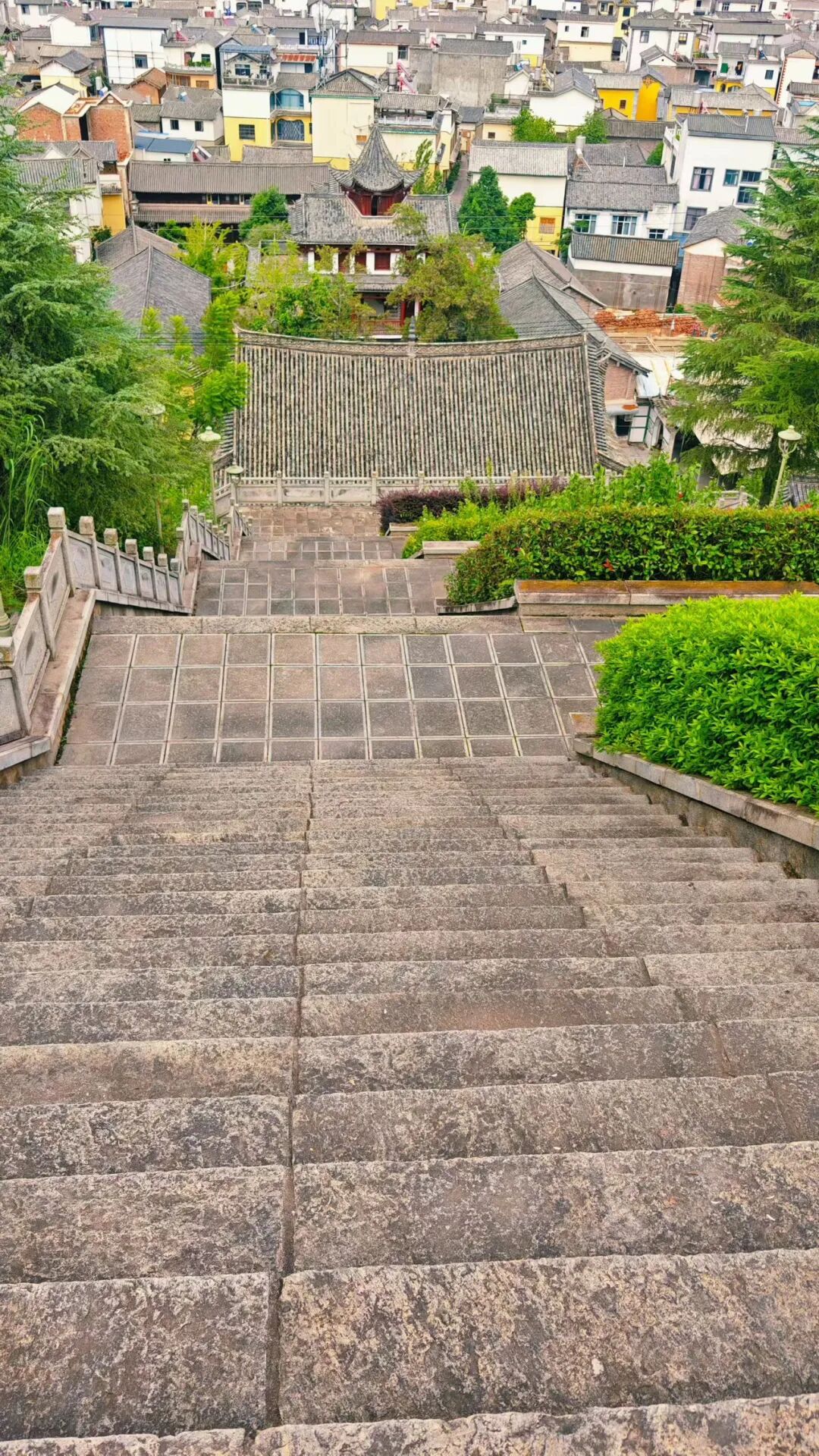
Abstract: This article compiles the main points of "When Edgar Snow Stayed at Qudong Mosque: Yunnan's Hui Muslim History, Red Footprints, and Memories of Dali's Mosques," preserving the original paragraph and image sequence. It is designed for readers searching for long-tail keywords related to the Qudong Mosque, Yunnan Hui Muslims, and Edgar Snow's footprints.
Edgar Snow (1905–1972) was one of the 20th century's most famous and influential American journalists and writers. Mao Zedong once remarked, "Mr. Snow was the first person to pave the way for establishing friendly relations." Party and state leaders like Zhou Enlai maintained close ties with Snow, utilizing him to broadcast the true conditions of the Red Army in Northern Shaanxi and the New China to the entire world, which played a monumental role in winning over people globally. His book Red Star Over China depicted the deeds of the Workers' and Red Army along with major historical events, opening a window for the entire world to truly understand the Chinese revolution. Under the White Terror, it was renamed Red Dust (published in Chinese as Xixing Miji) and widely circulated to every corner, inspiring a powerful chorus cheering for the Chinese revolution.
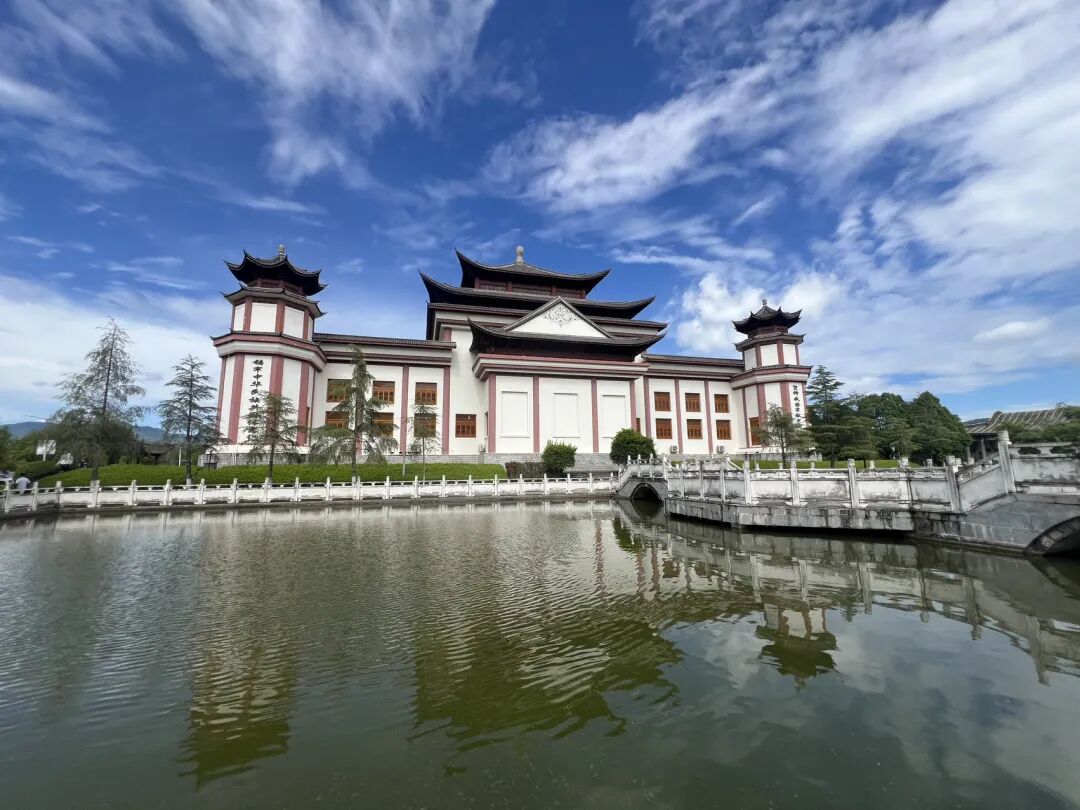
Prior to this, in 1931, Snow formed a small caravan consisting of six mules and horses along with three attendants in Dali. In his autobiography, he wrote, "I hoped to walk from China to Burma and then enter India." The copy of Caravan Travel I have on hand is a brilliant essay chronicling this journey, marking an important trajectory in his life. Writer Zhou Liangpei noted in the book's foreword that "it can be said to be a book unknown to many readers."
Perhaps because I am a Muslim, when I read one particular chapter, it sparked my immense interest and excitement. The title was: "The Reason Why I Was Able to Spend the Night in a Mosque Was Largely Due to a Nearly Forgotten Persian Idiom."
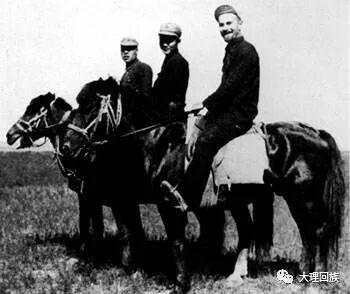
On February 22, 1931, following his small caravan into Yongping County, he stayed overnight at the Qudong Mosque (Qudong Mosque). In this article, from a unique perspective and with deep affection, he painted a captivating picture of the solemn, serene, and tranquil Qudong Mosque of that era. With down-to-earth and concise strokes, he sketched the scenery of the Qudong Mosque: "The minaret looked like a Chinese pagoda, except that the top was rectangular, gradually tapering to a point, crowned with a golden globe at the very top." Inside the mosque, it was "very clean, and poppies with pale purple and milky white flowers were planted in the courtyard."
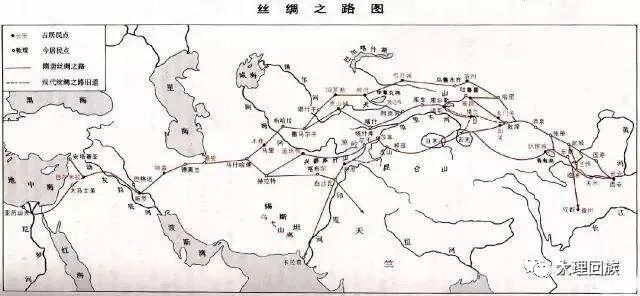
With a reverent and deep affection, Snow vividly described the pious, solemn, and serene Asr prayer of the Qudong Muslims: fifty or sixty people gathered in the hall behind the minaret, "suddenly everyone fell silent, raising their eyes to look upward." A man in a white robe "stood on what should be called the balcony of the minaret," facing the sky dyed fiery red by the setting sun and the direction of Mecca, "raising both hands high and calling out the dua to Allah in a loud, rhythmic voice, repeating it three times." "Everyone followed the Imam in making dua inside the hall, which was fragrant with blooming flowers."
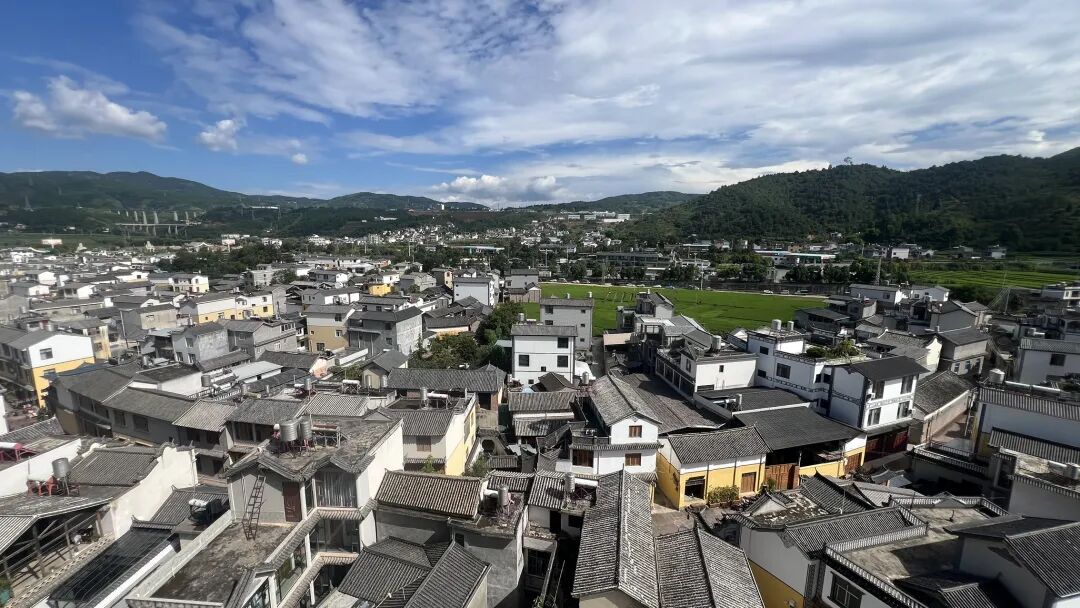
This article meticulously chronicled the dialogue, communication, and mutual understanding between him and the local Muslims—from initial rejection to a warm welcome—and vividly and philosophically described his boundless gratitude for being able to comfortably stay at the Qudong Mosque. The article transports us back to that vivid scene 79 years ago, where every sound and face felt palpable.
"I had just arrived and was already very tired. The inn had no empty rooms, and I wanted to stay here tonight." Yet, "upon seeing a foreigner, they were already shocked, and hearing this unusual request made them even more astonished." The responses he received were "No," "That's impossible," "There is no charcoal for you to make a fire," "This isn't an inn," and "No foreigner has ever stayed here before"... "Right at that critical moment," "I suddenly remembered a sentence I had memorized when I was studying Persian," and so he quickly said: "La ilaha illa Allah, Muhammad rasul Allah!" Obviously, this was a very inaccurate and awkward "Shahada" (Islamic declaration of faith). Yet, it was precisely this noble Shahada—the creed of Islamic faith—that instantly opened up the open-minded mentality of the Qudong Muslims. "They were greatly surprised and overjoyed," and "their attitude changed," becoming extremely friendly. Immediately, "they called a gatekeeper," "immediately brought water and charcoal," and "cleaned up a small attic" to accommodate him. Snow shouted with ecstatic joy, "No pork for dinner tonight!" "Several Imams laughed." Viewed through today's perspective, this was a positive, civilized dialogue of mutual respect, communication, and harmony achieved among people of different countries, ethnicities, faiths, and values. It could also be said to be the practical embodiment of the philosophy of "harmony in diversity" within Hui Muslim culture, while vividly demonstrating that one does not abandon their own faith for the sake of "harmony."
Snow's overnight stay was a culturally significant event in the history of the Qudong Mosque—ordinary yet extraordinary, extraordinary yet ordinary. After experiencing the unique charm and eternal humanistic spirit of an exotic mosque, he passionately wrote this article, which was published in the New York Sun on September 1, 1931. It forever anchors the scene in the space-time of history, becoming an unalterable and un-re-creatable piece of history, leaving us with an understanding and artistic inspiration that will endure forever.
Dali Hui Muslim Stone Inscriptions: The Sanxiang Guildhall and Yunnan Islamic Heritage
Articles • Hasan09 posted the article • 0 comments • 23 views • 5 days ago
Selected Stone Inscriptions of the Dali Hui Muslims: Record of the Newly Built Sanxiang Guildhall and the Traditions of Yunnan Hui Guildhalls, Commerce, and Philanthropy
Abstract: This article compiles the key points from "Selected Stone Inscriptions of the Dali Hui Muslims: Record of the Newly Built Sanxiang Guildhall and the Traditions of Yunnan Hui Guildhalls, Commerce, and Philanthropy," maintaining the original paragraph and image order. It is ideal for readers and researchers looking up long-tail keywords related to Dali Hui stone inscriptions, the Sanxiang Guildhall, and Yunnan Hui Muslims.
Record of the Newly Built Sanxiang Guildhall - Erected jointly by the gentry of Sanxiang on an auspicious day in July, the 2nd Year of the Republic of China
The origin of the Sanxiang Guildhall dates back over thirty years. Shortly after the Hui uprisings were pacified, our elders noted that because the three townships (Sanxiang) were scattered about, coming into the walled city for official business left us with nowhere to host guests or gather. This caused all kinds of inconveniences and bottlenecks. Therefore, a public office was established at Xiangshui Pass in Yucheng, which lasted for over thirty years. Everyone from Sanxiang coming into the city on official business stayed there. In February of the first year of the Republic (1912), Commander Yinquan was stationed in Yu and ordered the Sanxiang gentry to hand over the public office located at Xiangshui Pass to the Hui Muslims to use as a mosque, while reallocating the abandoned office of the county school to serve as the Sanxiang administrative base. In addition, Wang Tingzhi from the Islamic community contributed 300 silver taels for renovation costs. At the time, gentlemen Yang Shangpei, Zhao Panyuan, Yan Zhenggui, Zhang Ximing, Du Hua, Duan Lingyun, Zhao Zhonghe, Yang Zhou, Li Zhifa, Zhang Liangheng, and Yang Xin held discussions and decided to build a brand-new guildhall on the abandoned county school grounds that had been allocated to Sanxiang. Construction was voted on and started, but the renovation funds fell short. Worried that the project would grind to a halt, everyone racked their brains to raise funds. We managed to secure 900-odd taels in cash, allowing the front section—four-sided with a single corner—to finally be completed. Afterward, Mr. Yang Yucang and I were elected as guildhall managers, and we went on to add a second-story meeting room, a kitchen, and stables, while also stocking all necessary daily utensils. Using the rental income from the guildhall's public farmland and the rent from the front rooms to cover Sanxiang's operating expenses, and using the back rooms as our office, we finally had a place with proper hospitality and a place to stay. Those who come after us will continue to maintain and expand this place, ensuring the scale of the guildhall grows grander day by day, with no end in sight.
Carefully written by Wang Yingyuan, manager of the Sanxiang Guildhall, on the first day of the lunar month.
Front Section Renovation Expenses
Income: 550 silver taels for the land purchase of the old public office. Expenses: 671 silver taels and 6 mian for lumber, stone, tiles, lime, nails, and straw. Income: 259 silver taels in donations. Expenses: 162 silver taels and 75 wen for mason, carpenter, and laborer wages. Income: 6 silver taels and 44 wen in old Sanxiang savings. Expenses: 46 silver taels and 95 wen for paint, painting labor, pigments, and miscellaneous items.
Total income came to 815 silver taels and 44 wen, while total expenses came to 880 silver taels and 94 wen, leaving a deficit of 65.5 silver taels.
Rear Section Renovation Expenses
Income: 61 silver taels and 5 wen from farmland sales. Expenses: 75 silver taels and 18 wen for labor, materials, equipment making, and public affairs meetings. Income: 4 silver taels, 38 qian, and 7 li from grain sales. Expenses: 65.5 silver taels to cover the previous section's deficit. Income: 10 silver taels, 27 qian, and 8 li from donation deposits and room rent.
Total income came to 75 silver taels, 71 qian, and 5 li, while total expenses came to 140 silver taels, 68 qian, and 5 li, leaving a deficit of 64 silver taels, 96 qian, and 5 li.
Property deeds: One old holding of lower-grade farmland at Chai Zi No. 225, measuring 2 mu and 5 fen; one plot of 2 mu and 8 li contributed by Wang Shuosheng. These fields are located in Xiadengdian, Fengyangyi.
Notes:
This stele is currently located inside the West Gate Mosque in Dali Old Town. It stands 120 centimeters tall and 68 centimeters wide.
The Dali West Gate Mosque was called the "Changqingli Mosque" during the Qing Dynasty, and is commonly known as the West Gate Mosque. It is one of the oldest mosques in Dali. During the Xianfeng and Tongzhi eras of the Qing Dynasty, Du Wenxiu's "Grand Teaching Academy" was established here, and China's first woodblock-printed Quran was also completed here. After the uprising failed, it was confiscated by the local Qing authorities and later converted into the "Sanxiang Guildhall." Sanxiang refers to the historical townships of "Guilou Township," "Fengyang Township," and "Qingbi Township." For many years, the Hui Muslims of the old town continuously fought to reclaim the mosque. In the first year of the Republic, Commander Li Genren (style name Yinquan) was stationed in Dali to garrison the area. He agreed to let the Hui Muslims take back the mosque that rightfully belonged to them. Although the stele inscription frames this as being "given to the Hui people," Mr. Wang Tingzhi of the Yunnan Islamic Progressive Association actually donated 300 silver taels as compensation, making it a disguised buyback. The gentry of the three townships then selected a new site to build the new Sanxiang Guildhall. This stele records this historical legal case and details the itemized expenses for rebuilding the Sanxiang Guildhall.
This stele also serves as an important reference for studying the administrative changes of the three townships in Dali County and the history of its guildhalls.
Regarding this history, the Dali County Branch of the Islamic Association's official dispatch (1941, Document No. 65) also records: "In the first year of the Republic, Commander Li Yinquan, the commander of the 2nd Division and current supervisory commissioner of Yunnan and Guizhou, traveled west on an inspection tour and stationed his headquarters in Dali. The Hui Muslims petitioned outside his headquarters, pleading for the return of their original mosque. Commander Li already agreed, but it was subsequently blocked by local reactionary gentry and failed to materialize, resulting only in the return of the single Changqingli Mosque." (See *Collected Works of Mr. Ma Yuan of Dali*, page 20)
Wang Tingzhi, style name Xiangchen, was a native of Kunming, Yunnan, a Hui Muslim, and an army lieutenant general born in 1882 (the 8th year of the Guangxu reign under the Qing Dynasty). He graduated from the 6th infantry and engineering class of the Imperial Japanese Army Academy. Upon returning to China, he served as a Yunnan engineering battalion commander, regiment commander, commander of the 6th Infantry Regiment, head of the engineering department at the Yunnan Military Academy, and commander of the 1st Brigade of the 1st Yunnan Division. In 1915, during the Yunnan National Protection Uprising, he served as a military counselor for the National Protection Army. After the establishment of the 5th Army of the National Protection Army, he served as commander of its 1st Regiment, and later as an advisor to the Yunnan Military Governor's Office. At the time, he also served as the vice president of the Yunnan Islamic Progressive Association.
(Recorded by Ma Zhihong) view all
Selected Stone Inscriptions of the Dali Hui Muslims: Record of the Newly Built Sanxiang Guildhall and the Traditions of Yunnan Hui Guildhalls, Commerce, and Philanthropy
Abstract: This article compiles the key points from "Selected Stone Inscriptions of the Dali Hui Muslims: Record of the Newly Built Sanxiang Guildhall and the Traditions of Yunnan Hui Guildhalls, Commerce, and Philanthropy," maintaining the original paragraph and image order. It is ideal for readers and researchers looking up long-tail keywords related to Dali Hui stone inscriptions, the Sanxiang Guildhall, and Yunnan Hui Muslims.
Record of the Newly Built Sanxiang Guildhall - Erected jointly by the gentry of Sanxiang on an auspicious day in July, the 2nd Year of the Republic of China
The origin of the Sanxiang Guildhall dates back over thirty years. Shortly after the Hui uprisings were pacified, our elders noted that because the three townships (Sanxiang) were scattered about, coming into the walled city for official business left us with nowhere to host guests or gather. This caused all kinds of inconveniences and bottlenecks. Therefore, a public office was established at Xiangshui Pass in Yucheng, which lasted for over thirty years. Everyone from Sanxiang coming into the city on official business stayed there. In February of the first year of the Republic (1912), Commander Yinquan was stationed in Yu and ordered the Sanxiang gentry to hand over the public office located at Xiangshui Pass to the Hui Muslims to use as a mosque, while reallocating the abandoned office of the county school to serve as the Sanxiang administrative base. In addition, Wang Tingzhi from the Islamic community contributed 300 silver taels for renovation costs. At the time, gentlemen Yang Shangpei, Zhao Panyuan, Yan Zhenggui, Zhang Ximing, Du Hua, Duan Lingyun, Zhao Zhonghe, Yang Zhou, Li Zhifa, Zhang Liangheng, and Yang Xin held discussions and decided to build a brand-new guildhall on the abandoned county school grounds that had been allocated to Sanxiang. Construction was voted on and started, but the renovation funds fell short. Worried that the project would grind to a halt, everyone racked their brains to raise funds. We managed to secure 900-odd taels in cash, allowing the front section—four-sided with a single corner—to finally be completed. Afterward, Mr. Yang Yucang and I were elected as guildhall managers, and we went on to add a second-story meeting room, a kitchen, and stables, while also stocking all necessary daily utensils. Using the rental income from the guildhall's public farmland and the rent from the front rooms to cover Sanxiang's operating expenses, and using the back rooms as our office, we finally had a place with proper hospitality and a place to stay. Those who come after us will continue to maintain and expand this place, ensuring the scale of the guildhall grows grander day by day, with no end in sight.
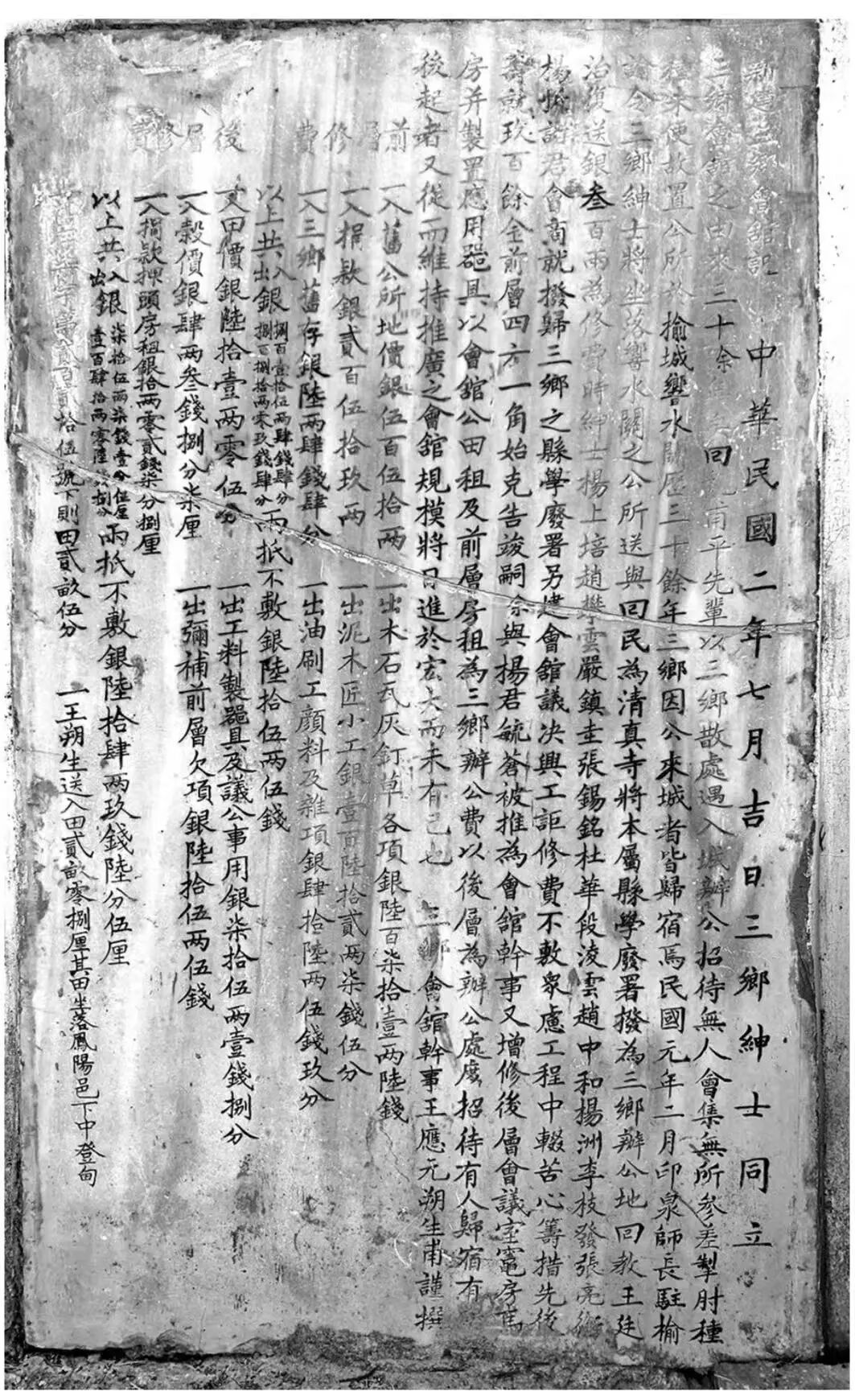
Carefully written by Wang Yingyuan, manager of the Sanxiang Guildhall, on the first day of the lunar month.
Front Section Renovation Expenses
Income: 550 silver taels for the land purchase of the old public office. Expenses: 671 silver taels and 6 mian for lumber, stone, tiles, lime, nails, and straw. Income: 259 silver taels in donations. Expenses: 162 silver taels and 75 wen for mason, carpenter, and laborer wages. Income: 6 silver taels and 44 wen in old Sanxiang savings. Expenses: 46 silver taels and 95 wen for paint, painting labor, pigments, and miscellaneous items.
Total income came to 815 silver taels and 44 wen, while total expenses came to 880 silver taels and 94 wen, leaving a deficit of 65.5 silver taels.
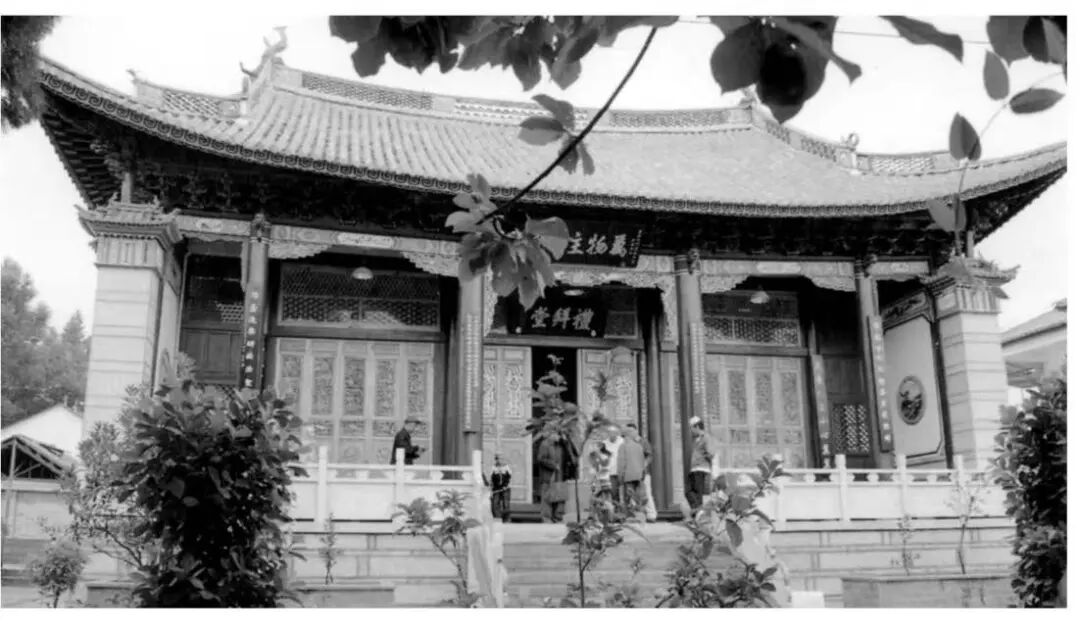
Rear Section Renovation Expenses
Income: 61 silver taels and 5 wen from farmland sales. Expenses: 75 silver taels and 18 wen for labor, materials, equipment making, and public affairs meetings. Income: 4 silver taels, 38 qian, and 7 li from grain sales. Expenses: 65.5 silver taels to cover the previous section's deficit. Income: 10 silver taels, 27 qian, and 8 li from donation deposits and room rent.
Total income came to 75 silver taels, 71 qian, and 5 li, while total expenses came to 140 silver taels, 68 qian, and 5 li, leaving a deficit of 64 silver taels, 96 qian, and 5 li.
Property deeds: One old holding of lower-grade farmland at Chai Zi No. 225, measuring 2 mu and 5 fen; one plot of 2 mu and 8 li contributed by Wang Shuosheng. These fields are located in Xiadengdian, Fengyangyi.
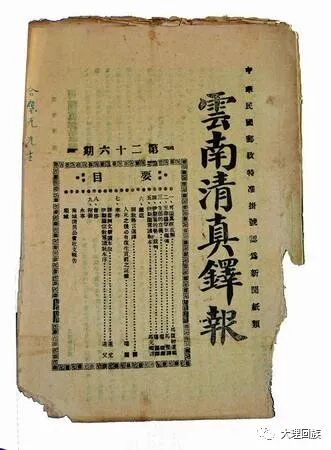
Notes:
This stele is currently located inside the West Gate Mosque in Dali Old Town. It stands 120 centimeters tall and 68 centimeters wide.
The Dali West Gate Mosque was called the "Changqingli Mosque" during the Qing Dynasty, and is commonly known as the West Gate Mosque. It is one of the oldest mosques in Dali. During the Xianfeng and Tongzhi eras of the Qing Dynasty, Du Wenxiu's "Grand Teaching Academy" was established here, and China's first woodblock-printed Quran was also completed here. After the uprising failed, it was confiscated by the local Qing authorities and later converted into the "Sanxiang Guildhall." Sanxiang refers to the historical townships of "Guilou Township," "Fengyang Township," and "Qingbi Township." For many years, the Hui Muslims of the old town continuously fought to reclaim the mosque. In the first year of the Republic, Commander Li Genren (style name Yinquan) was stationed in Dali to garrison the area. He agreed to let the Hui Muslims take back the mosque that rightfully belonged to them. Although the stele inscription frames this as being "given to the Hui people," Mr. Wang Tingzhi of the Yunnan Islamic Progressive Association actually donated 300 silver taels as compensation, making it a disguised buyback. The gentry of the three townships then selected a new site to build the new Sanxiang Guildhall. This stele records this historical legal case and details the itemized expenses for rebuilding the Sanxiang Guildhall.
This stele also serves as an important reference for studying the administrative changes of the three townships in Dali County and the history of its guildhalls.
Regarding this history, the Dali County Branch of the Islamic Association's official dispatch (1941, Document No. 65) also records: "In the first year of the Republic, Commander Li Yinquan, the commander of the 2nd Division and current supervisory commissioner of Yunnan and Guizhou, traveled west on an inspection tour and stationed his headquarters in Dali. The Hui Muslims petitioned outside his headquarters, pleading for the return of their original mosque. Commander Li already agreed, but it was subsequently blocked by local reactionary gentry and failed to materialize, resulting only in the return of the single Changqingli Mosque." (See *Collected Works of Mr. Ma Yuan of Dali*, page 20)
Wang Tingzhi, style name Xiangchen, was a native of Kunming, Yunnan, a Hui Muslim, and an army lieutenant general born in 1882 (the 8th year of the Guangxu reign under the Qing Dynasty). He graduated from the 6th infantry and engineering class of the Imperial Japanese Army Academy. Upon returning to China, he served as a Yunnan engineering battalion commander, regiment commander, commander of the 6th Infantry Regiment, head of the engineering department at the Yunnan Military Academy, and commander of the 1st Brigade of the 1st Yunnan Division. In 1915, during the Yunnan National Protection Uprising, he served as a military counselor for the National Protection Army. After the establishment of the 5th Army of the National Protection Army, he served as commander of its 1st Regiment, and later as an advisor to the Yunnan Military Governor's Office. At the time, he also served as the vice president of the Yunnan Islamic Progressive Association.
(Recorded by Ma Zhihong)
Wandering the Red River: Real Yunnan Hui Muslims, Shadian Mosque & Halal Food
Articles • Hasan09 posted the article • 0 comments • 27 views • 5 days ago
Wandering the Red River Diary: Real Muslims Are Not What the Internet Claims (A Visit to Shadian and the Spirit of Zakat)
Abstract:
Venture deep into Gejiu's Jijie Town and the Shadian Grand Mosque in Yunnan's Red River Prefecture, where the author experiences a reality of Hui Muslims that shatters online stereotypes. From the warm hospitality at halal eateries and an unlatched-door level of safety to devout prayers and a bakery offering free near-expiration bread inspired by Quranic zakat teachings, this journey reveals the everyday peace, kindness, and compassion of the faith.
The Gejiu railway station isn't actually in downtown—it's in Jijie Town. Many people only stop here to visit Shadian and check out the Shadian Grand Mosque (Shadian Mosque). As Brother Chen put it, this massive Southeast Asian mosque pulls in travelers from all over.
Walking from the train station to Shadian, you'll pass gated compounds with deep yards and massive villas. Some rock an American-suburb vibe, making you feel like you've landed in the US, while others go full Thai with double rows of palm trees. It's totally mind-blowing. Word is, people here made a fortune running tin mining businesses and came back to build these mega-villas.
Once you reach Shadian Grand Mosque, the town feels super quiet. On one hand, it's got a slightly sleepy vibe with a lot of shops shuttered; on the other, it's peaceful, completely devoid of noisy entertainment spots.
Since it wasn't prayer time yet, we grabbed some grub at a halal restaurant staffed entirely by women in headscarves. The owner was a young woman, and after we explained what we were up to, she had the kitchen whip up two dishes for us: ants climbing a tree (glass noodles with minced pork in spicy sauce), stir-fried cabbage, and a gorgeously plated dish of pickled radishes. When we finished up and said goodbye, she asked with genuine concern how we got here and where we were crashing. When we told her we were hitchhiking and sleeping in tents, she said it was way too rough and suggested we could crash at a spot right next to the grand mosque. She added that Shadian is so safe that locals never even pull the keys out of their e-bikes. As we were leaving, the owner—who was hanging out nearby with a kid—handed us a bag of Zhadian milk. We were deeply moved and thanked them over and over.
After wandering off, we headed back to the grand mosque just as call to prayer time was kicking off. The loudspeaker broadcasted the recitation—staticky and cutting in and out—while waves of guys wearing white caps, black caps, and full beards streamed toward the mosque. They hit the steps, stripped off their shoes with their backs to the main hall, and headed inside. The security guards told us the prayer had already started, so we had to watch from the outside. Twenty minutes later, folks started trickling out after finishing their prayers, though a few stragglers were still prostrated inside, and others sat chatting by the doorway pillars. It was pure peace and tranquility.
The screens inside the main hall were broadcasting Quranic verses. It reminded me of a social work class I audited back at Fudan called 'Social Welfare Systems and Theories,' where the professor talked about the Islamic view of welfare. According to the Quran, a Muslim's wealth doesn't actually belong to them—it belongs to Allah. That's why zakat (obligatory charity) is a must: it's a routine of giving where, once your wealth hits a certain threshold, you fork over 2.5% of your income to help the poor and fund charitable causes as a form of spiritual devotion.
"It is not righteousness that you turn your faces towards the east and the west, but righteous is the one who believes in Allah, the Last Day, the angels, the Book, and the prophets, and gives of his wealth, in spite of love for it, to the kinsfolk, to the orphans, to the poor, who is stranded, to the beggars, and to the freeing of captives, and who establishes prayer and gives zakat, and those who fulfill their covenant when they make it, and who are patient in poverty, hardship, and times of danger. Such are the ones who are true, and such are the ones who are God-fearing." (Quran 2:177)
"They ask you what they should spend. Say, 'Whatever wealth you spend is for parents, relatives, orphans, the poor, and travelers.'" (Quran 2:215)
Yunnan is packed with Hui Muslims. Later, while strolling around Mengzi, I stumbled upon a halal bakery with a sign right on the counter blaring: 'Near-expiration products, take for free!' It was my first time ever seeing a business do that—most bakeries just toss out expired bread. I asked a clerk, and they said the owner is a Hui Muslim. Since the owner wasn't around, I couldn't confirm whether this move was driven by business strategy or religious faith, but I'm guessing faith played a huge part. Otherwise, it's pretty hard to explain why other shops don't copy them.
"And give the relative his due, and the poor, and the traveler, and do not squander your wealth wastefully. Indeed, the wasteful are brothers of the devils, and ever has Satan been ungrateful to his Lord."
— Quran 17:26-27
"And He it is who produces gardens... Eat of their fruit when they yield it, and pay their due on the day of harvest, and do not be excessive. Indeed, He does not like those who commit excess."
— Quran 6:141
Before this, browsing the internet, you'd think everyone harbors total disgust and hatred toward Islam. I never expected Hui Muslims, who practice Islam, to be so warm, friendly, and grounded.
Yesterday, my Couchsurfing host in Chuxiong, Huangfeng, shared a real-life story with me. During the most turbulent period in Xinjiang, he traveled to Southern Xinjiang just to see if the locals were really as extreme as the internet claimed. Turns out, once he got there, the local Uygur Muslims were super welcoming to visiting Han Chinese. Any hostility was strictly directed at the authorities, primarily as a protest against local policies. Amid economic development, the locals lost a ton of resources without getting much in return, breeding a sense of unfairness. Toss in completely different linguistic and cultural traditions, and you've got the roots of separatist sentiments. Over the next year, he went back to Xinjiang three more times, getting touched by the warmth and hospitality of the locals every single trip and walking away with incredible memories.
I guess in this supposedly hyper-connected information age, real truths still manage to stay hidden. Hitting the road and walking them out yourself matters more than ever. view all
Wandering the Red River Diary: Real Muslims Are Not What the Internet Claims (A Visit to Shadian and the Spirit of Zakat)
Abstract:
Venture deep into Gejiu's Jijie Town and the Shadian Grand Mosque in Yunnan's Red River Prefecture, where the author experiences a reality of Hui Muslims that shatters online stereotypes. From the warm hospitality at halal eateries and an unlatched-door level of safety to devout prayers and a bakery offering free near-expiration bread inspired by Quranic zakat teachings, this journey reveals the everyday peace, kindness, and compassion of the faith.
The Gejiu railway station isn't actually in downtown—it's in Jijie Town. Many people only stop here to visit Shadian and check out the Shadian Grand Mosque (Shadian Mosque). As Brother Chen put it, this massive Southeast Asian mosque pulls in travelers from all over.
Walking from the train station to Shadian, you'll pass gated compounds with deep yards and massive villas. Some rock an American-suburb vibe, making you feel like you've landed in the US, while others go full Thai with double rows of palm trees. It's totally mind-blowing. Word is, people here made a fortune running tin mining businesses and came back to build these mega-villas.
Once you reach Shadian Grand Mosque, the town feels super quiet. On one hand, it's got a slightly sleepy vibe with a lot of shops shuttered; on the other, it's peaceful, completely devoid of noisy entertainment spots.
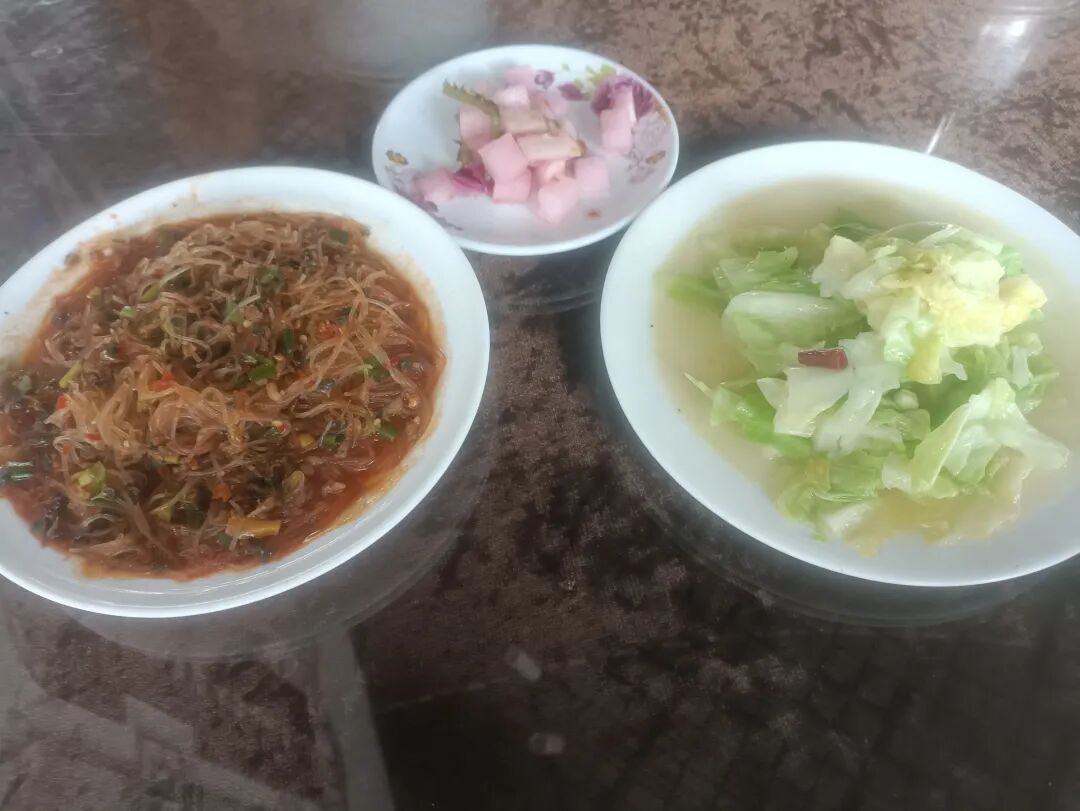
Since it wasn't prayer time yet, we grabbed some grub at a halal restaurant staffed entirely by women in headscarves. The owner was a young woman, and after we explained what we were up to, she had the kitchen whip up two dishes for us: ants climbing a tree (glass noodles with minced pork in spicy sauce), stir-fried cabbage, and a gorgeously plated dish of pickled radishes. When we finished up and said goodbye, she asked with genuine concern how we got here and where we were crashing. When we told her we were hitchhiking and sleeping in tents, she said it was way too rough and suggested we could crash at a spot right next to the grand mosque. She added that Shadian is so safe that locals never even pull the keys out of their e-bikes. As we were leaving, the owner—who was hanging out nearby with a kid—handed us a bag of Zhadian milk. We were deeply moved and thanked them over and over.
After wandering off, we headed back to the grand mosque just as call to prayer time was kicking off. The loudspeaker broadcasted the recitation—staticky and cutting in and out—while waves of guys wearing white caps, black caps, and full beards streamed toward the mosque. They hit the steps, stripped off their shoes with their backs to the main hall, and headed inside. The security guards told us the prayer had already started, so we had to watch from the outside. Twenty minutes later, folks started trickling out after finishing their prayers, though a few stragglers were still prostrated inside, and others sat chatting by the doorway pillars. It was pure peace and tranquility.
The screens inside the main hall were broadcasting Quranic verses. It reminded me of a social work class I audited back at Fudan called 'Social Welfare Systems and Theories,' where the professor talked about the Islamic view of welfare. According to the Quran, a Muslim's wealth doesn't actually belong to them—it belongs to Allah. That's why zakat (obligatory charity) is a must: it's a routine of giving where, once your wealth hits a certain threshold, you fork over 2.5% of your income to help the poor and fund charitable causes as a form of spiritual devotion.
"It is not righteousness that you turn your faces towards the east and the west, but righteous is the one who believes in Allah, the Last Day, the angels, the Book, and the prophets, and gives of his wealth, in spite of love for it, to the kinsfolk, to the orphans, to the poor, who is stranded, to the beggars, and to the freeing of captives, and who establishes prayer and gives zakat, and those who fulfill their covenant when they make it, and who are patient in poverty, hardship, and times of danger. Such are the ones who are true, and such are the ones who are God-fearing." (Quran 2:177)
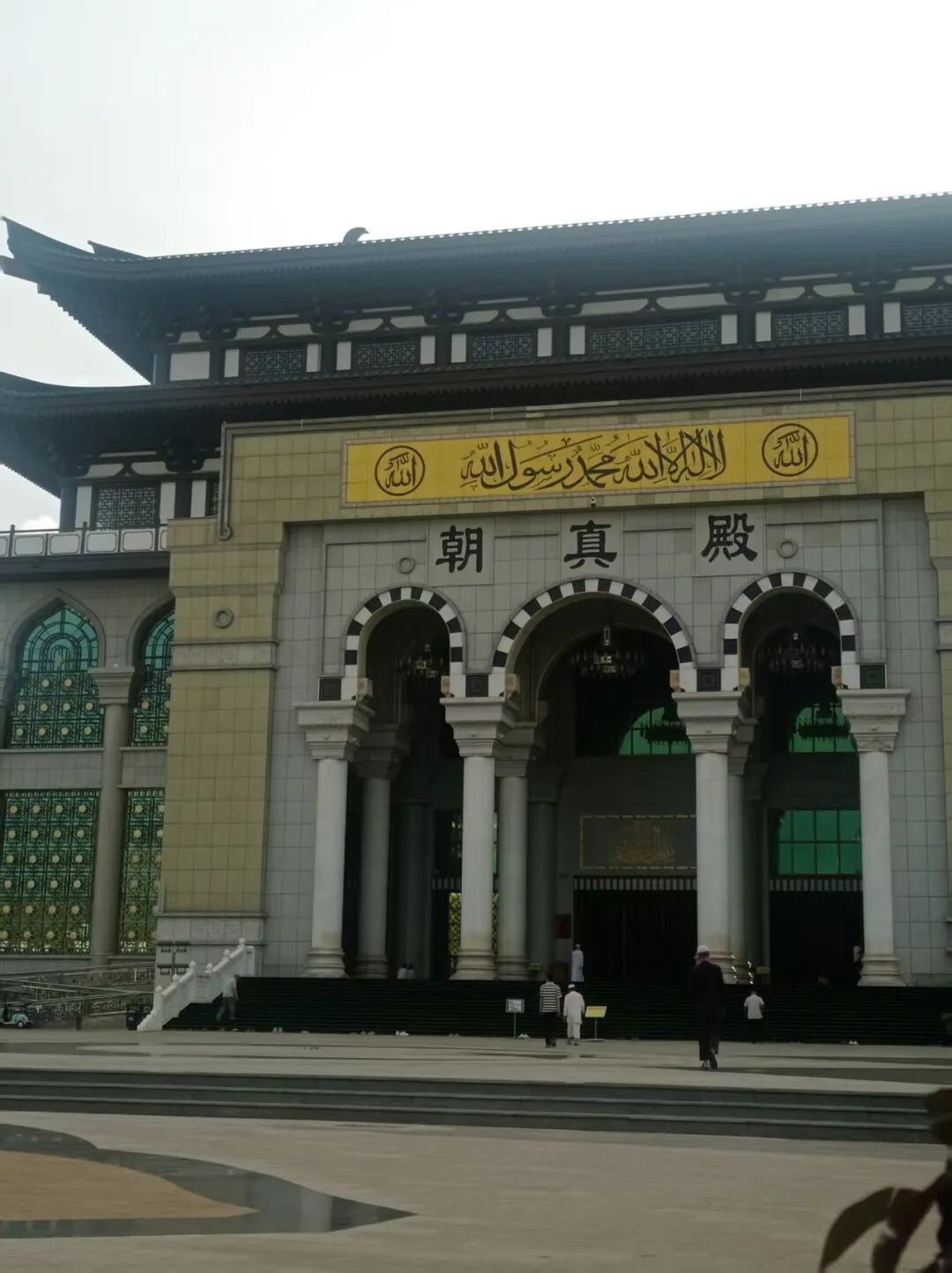
"They ask you what they should spend. Say, 'Whatever wealth you spend is for parents, relatives, orphans, the poor, and travelers.'" (Quran 2:215)
Yunnan is packed with Hui Muslims. Later, while strolling around Mengzi, I stumbled upon a halal bakery with a sign right on the counter blaring: 'Near-expiration products, take for free!' It was my first time ever seeing a business do that—most bakeries just toss out expired bread. I asked a clerk, and they said the owner is a Hui Muslim. Since the owner wasn't around, I couldn't confirm whether this move was driven by business strategy or religious faith, but I'm guessing faith played a huge part. Otherwise, it's pretty hard to explain why other shops don't copy them.
"And give the relative his due, and the poor, and the traveler, and do not squander your wealth wastefully. Indeed, the wasteful are brothers of the devils, and ever has Satan been ungrateful to his Lord."
— Quran 17:26-27
"And He it is who produces gardens... Eat of their fruit when they yield it, and pay their due on the day of harvest, and do not be excessive. Indeed, He does not like those who commit excess."
— Quran 6:141
Before this, browsing the internet, you'd think everyone harbors total disgust and hatred toward Islam. I never expected Hui Muslims, who practice Islam, to be so warm, friendly, and grounded.
Yesterday, my Couchsurfing host in Chuxiong, Huangfeng, shared a real-life story with me. During the most turbulent period in Xinjiang, he traveled to Southern Xinjiang just to see if the locals were really as extreme as the internet claimed. Turns out, once he got there, the local Uygur Muslims were super welcoming to visiting Han Chinese. Any hostility was strictly directed at the authorities, primarily as a protest against local policies. Amid economic development, the locals lost a ton of resources without getting much in return, breeding a sense of unfairness. Toss in completely different linguistic and cultural traditions, and you've got the roots of separatist sentiments. Over the next year, he went back to Xinjiang three more times, getting touched by the warmth and hospitality of the locals every single trip and walking away with incredible memories.
I guess in this supposedly hyper-connected information age, real truths still manage to stay hidden. Hitting the road and walking them out yourself matters more than ever.
Exploring Jianshui's Historic Mosque: Yunnan's Hidden Islamic Heritage & Halal Food Guide
Articles • Hasan09 posted the article • 0 comments • 30 views • 5 days ago
Where Southern Yunnan's Historic Charm Meets Islamic Faith: Exploring the Ancient Mosque of Jianshui Ancient City, Honghe, Yunnan
Abstract:
Originally built during the Yanyou era of the Yuan Dynasty and surviving centuries of wind and rain through the Ming and Qing dynasties, the Ancient Mosque of Jianshui Ancient City is a municipal-level cultural heritage site in the Honghe Hani and Yi Autonomous Prefecture. This article takes you inside this serene, free-admission historic sanctuary to explore the rustic architectural artistry and cultural heritage of the local Hui Muslim community, where traditional Chinese hip-and-gable wooden architecture blends seamlessly with Islamic traditions.
Photography by Weng Sanlang
Location: Ancient Mosque of Jianshui Ancient City, Honghe Prefecture, Yunnan Province
The Ancient Mosque is a Honghe Prefecture (municipal-level) cultural heritage site. Originally built between 1312 and 1313 during the Yuan Dynasty, the structures standing today were rebuilt during the Guangxu reign in the late Qing Dynasty.
Admission is free, and you won't find crowds of out-of-town tourists here. Just a quick heads-up: Jianshui Ancient City actually has two mosques—one called the Ancient Mosque (Qingzhen Gusi) and another simply called the Mosque (Qingzhensi). Make sure you're heading to the Ancient Mosque, which is the actual historical landmark, whereas the newly built mosque is not a heritage site.
Time speaks of crisp, translucent days within the span of a single page. Passing years dream a fleeting illusion inside the ancient mosque.
As the summer breeze brushes your face, there are always grand floral blooms that fall right between your eyebrows. Flowers drift down the stone steps; a light drizzle knocks the blossoms to the ground. Unspooling the past, May unfolds in a tapestry of red and green. Boil a pot of tea, and you've brewed the heart of midsummer.
Time puts pen to paper, turning the page on the glorious early summer days, sealing away the past, and writing a wonderful chapter for May. Within a delicate poem, we pen our destiny's ending, opening up the beauty of summer in the promise of a long future ahead.
Moonlight falling on the left hand holds secrets kept tightly guarded; the season resting on the right hand captures lotus leaves swaying in the early summer wind. Toward the past, there is three parts sorrow and seven parts nostalgia. I walk all my yesterdays into a wisp of kitchen smoke in my eyes.
I once sat and watched the wind and clouds rise, the clear spring flowing over the stones. The moon opens half a window of flowers, the breeze scatters a touch of cool. Through the crack in the door of the past sits a cup of quiet, fragrant tea, writing our history stroke by stroke. Summer gallops in, and the early summer that has already arrived is brimming with poetic charm.
Without walking through the past, one cannot know the toll of the years. Quietly guarding this earthly hustle and bustle, may the days ahead always be filled with poetry, tea, and dreams. view all
Where Southern Yunnan's Historic Charm Meets Islamic Faith: Exploring the Ancient Mosque of Jianshui Ancient City, Honghe, Yunnan
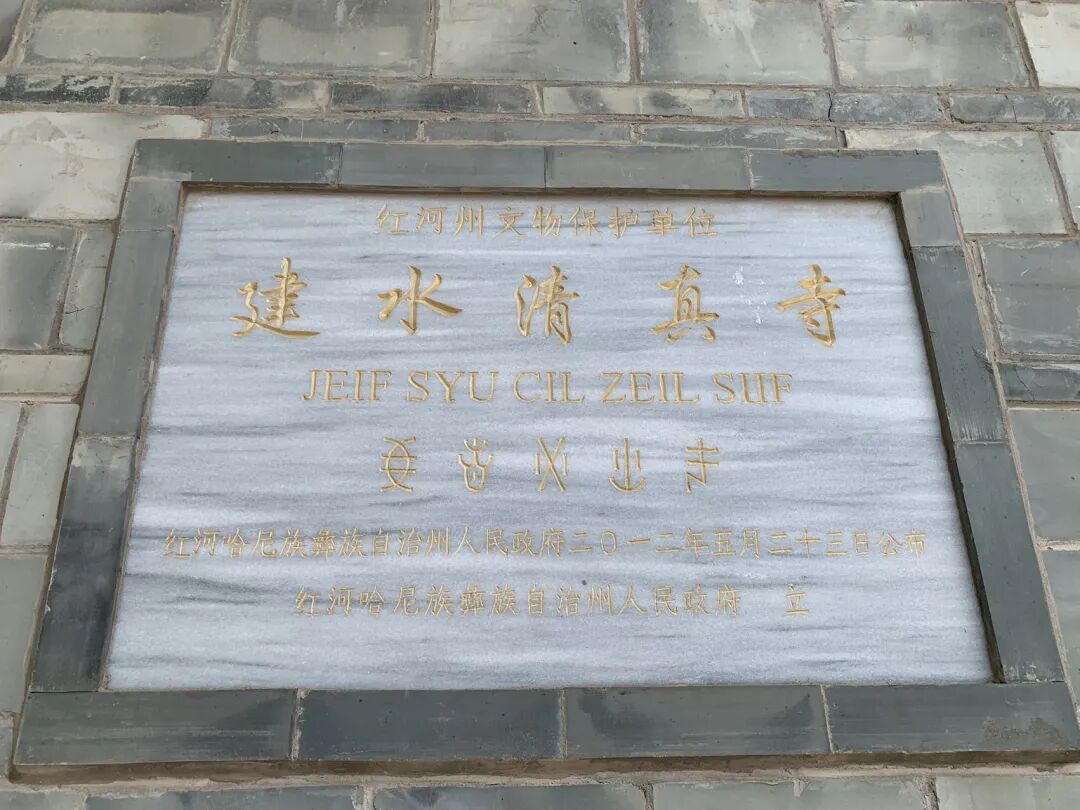
Abstract:
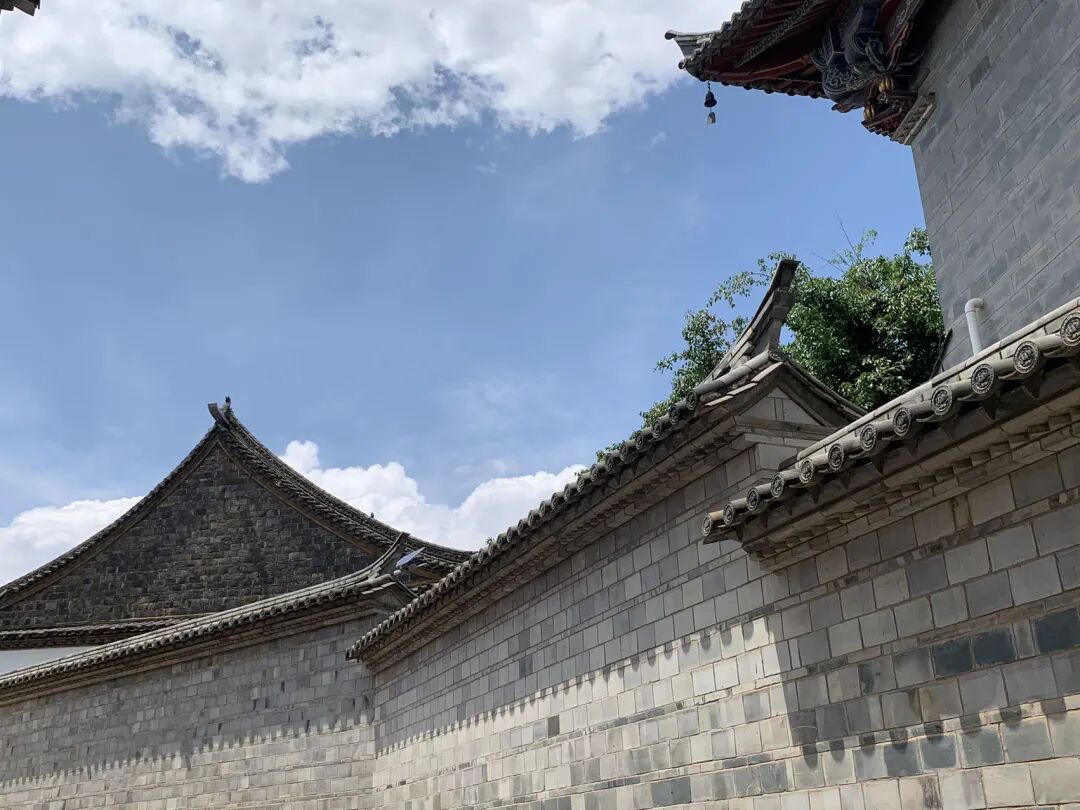
Originally built during the Yanyou era of the Yuan Dynasty and surviving centuries of wind and rain through the Ming and Qing dynasties, the Ancient Mosque of Jianshui Ancient City is a municipal-level cultural heritage site in the Honghe Hani and Yi Autonomous Prefecture. This article takes you inside this serene, free-admission historic sanctuary to explore the rustic architectural artistry and cultural heritage of the local Hui Muslim community, where traditional Chinese hip-and-gable wooden architecture blends seamlessly with Islamic traditions.
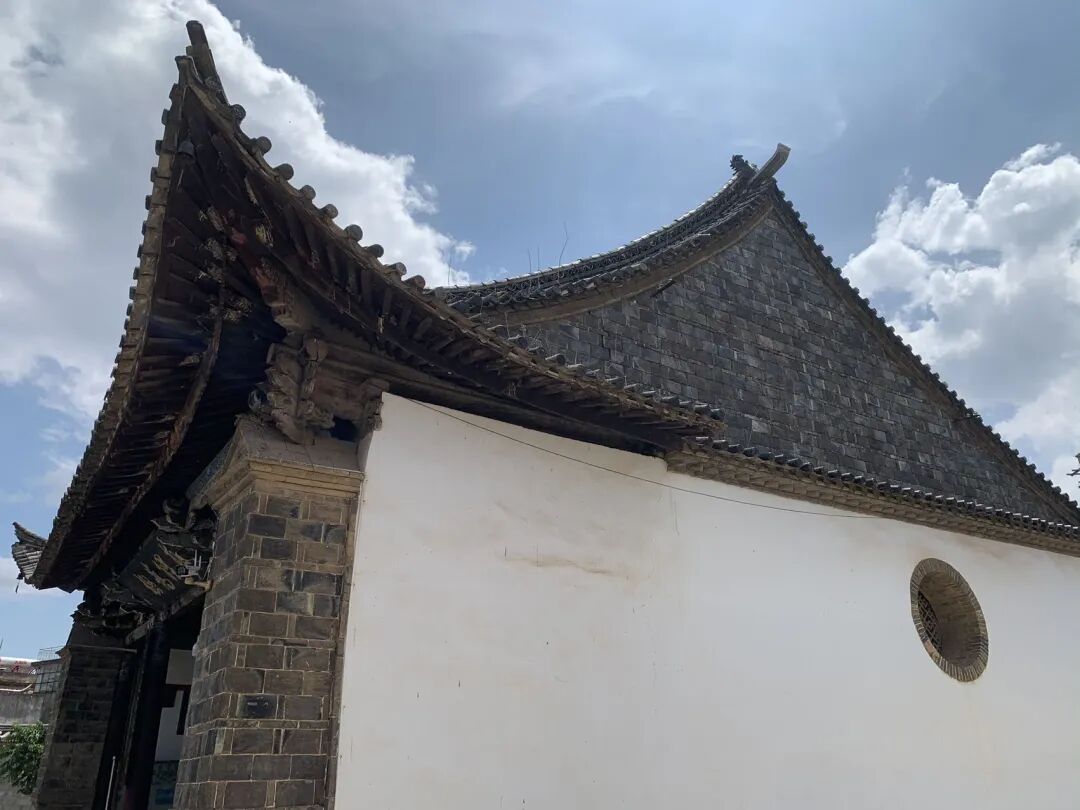
Photography by Weng Sanlang
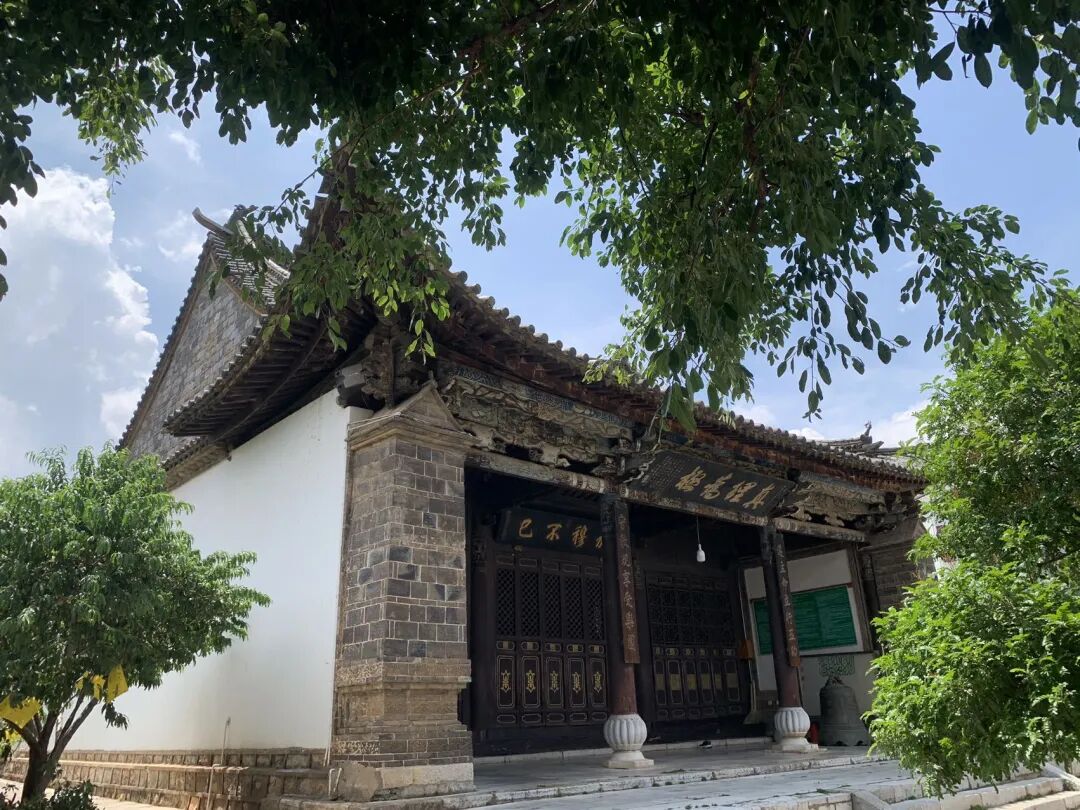
Location: Ancient Mosque of Jianshui Ancient City, Honghe Prefecture, Yunnan Province
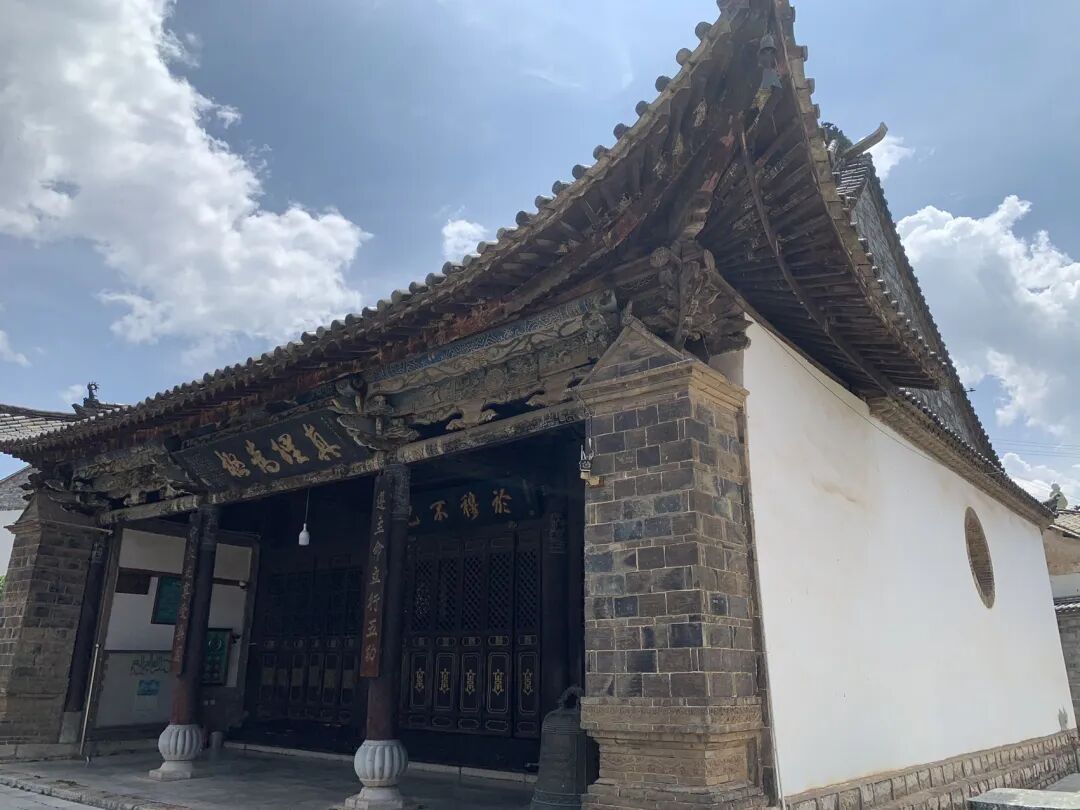
The Ancient Mosque is a Honghe Prefecture (municipal-level) cultural heritage site. Originally built between 1312 and 1313 during the Yuan Dynasty, the structures standing today were rebuilt during the Guangxu reign in the late Qing Dynasty.
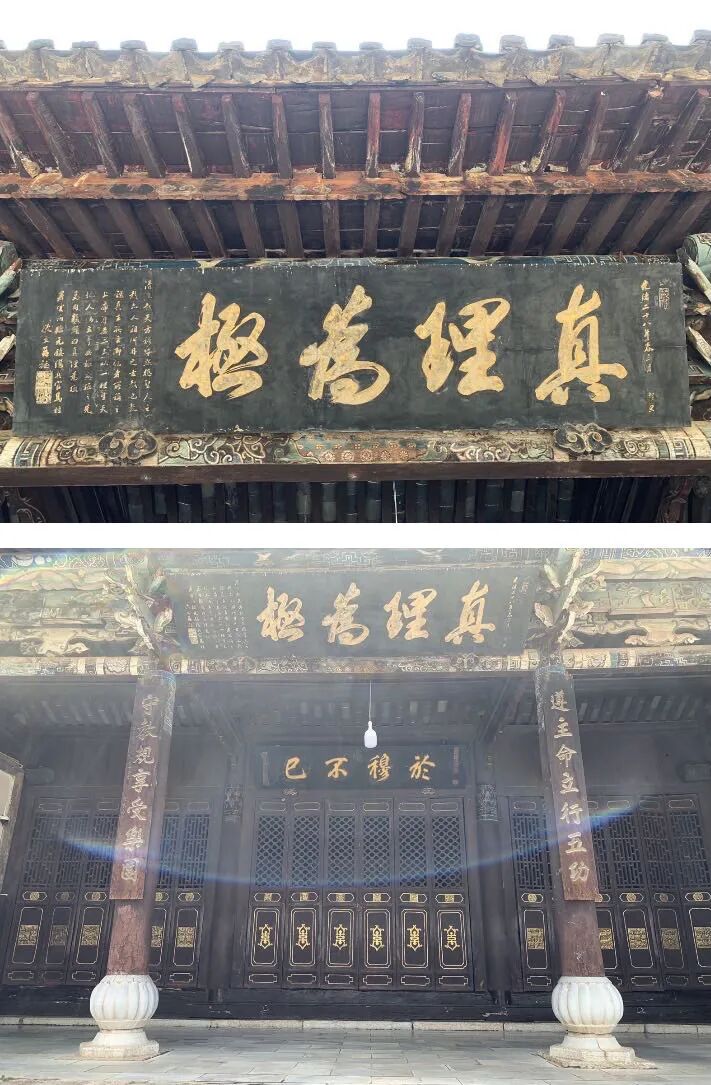
Admission is free, and you won't find crowds of out-of-town tourists here. Just a quick heads-up: Jianshui Ancient City actually has two mosques—one called the Ancient Mosque (Qingzhen Gusi) and another simply called the Mosque (Qingzhensi). Make sure you're heading to the Ancient Mosque, which is the actual historical landmark, whereas the newly built mosque is not a heritage site.
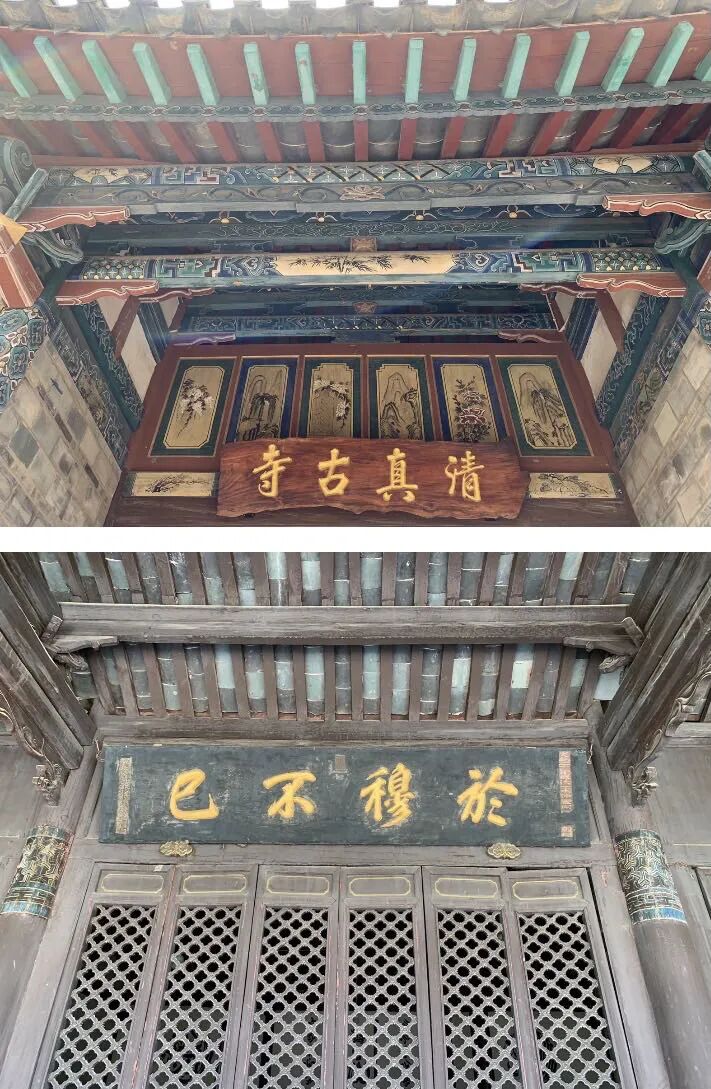
Time speaks of crisp, translucent days within the span of a single page. Passing years dream a fleeting illusion inside the ancient mosque.
As the summer breeze brushes your face, there are always grand floral blooms that fall right between your eyebrows. Flowers drift down the stone steps; a light drizzle knocks the blossoms to the ground. Unspooling the past, May unfolds in a tapestry of red and green. Boil a pot of tea, and you've brewed the heart of midsummer.
Time puts pen to paper, turning the page on the glorious early summer days, sealing away the past, and writing a wonderful chapter for May. Within a delicate poem, we pen our destiny's ending, opening up the beauty of summer in the promise of a long future ahead.
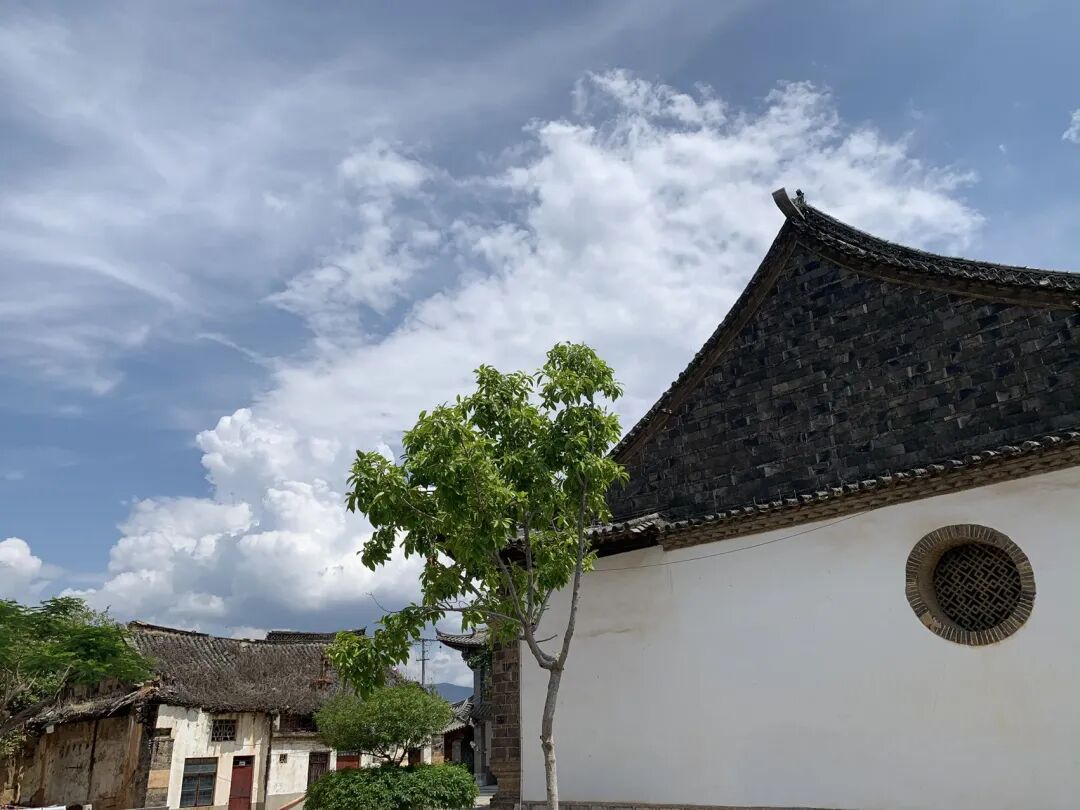
Moonlight falling on the left hand holds secrets kept tightly guarded; the season resting on the right hand captures lotus leaves swaying in the early summer wind. Toward the past, there is three parts sorrow and seven parts nostalgia. I walk all my yesterdays into a wisp of kitchen smoke in my eyes.
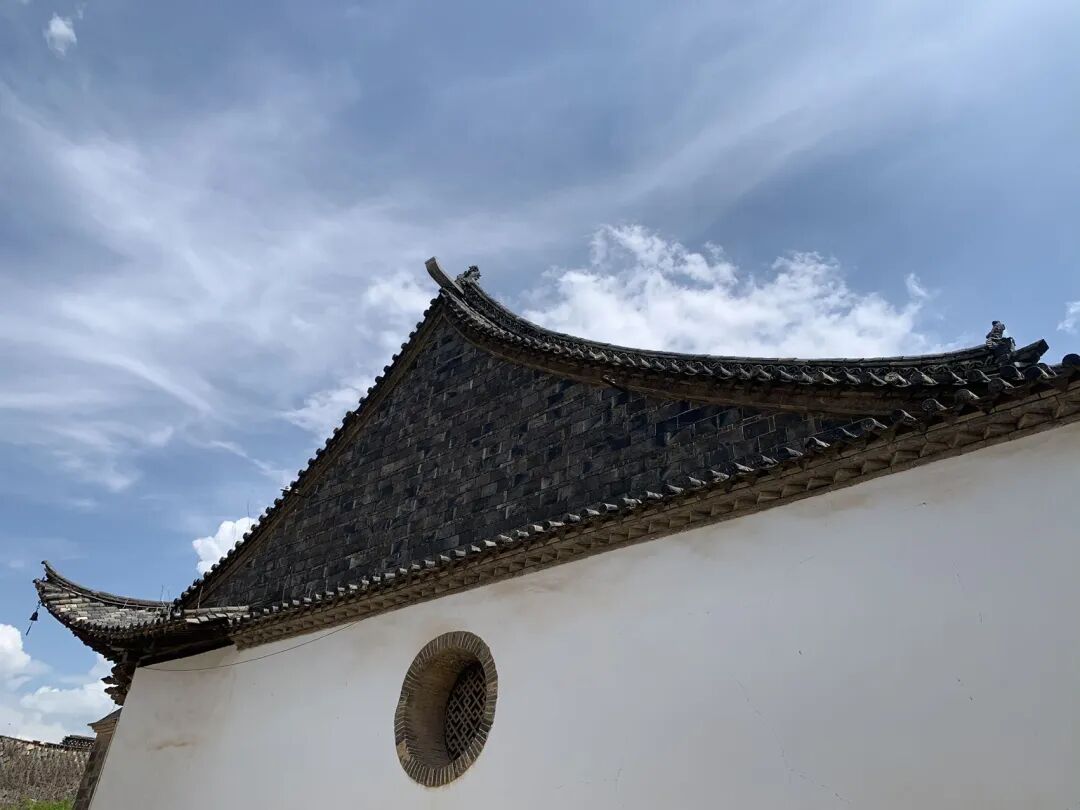
I once sat and watched the wind and clouds rise, the clear spring flowing over the stones. The moon opens half a window of flowers, the breeze scatters a touch of cool. Through the crack in the door of the past sits a cup of quiet, fragrant tea, writing our history stroke by stroke. Summer gallops in, and the early summer that has already arrived is brimming with poetic charm.
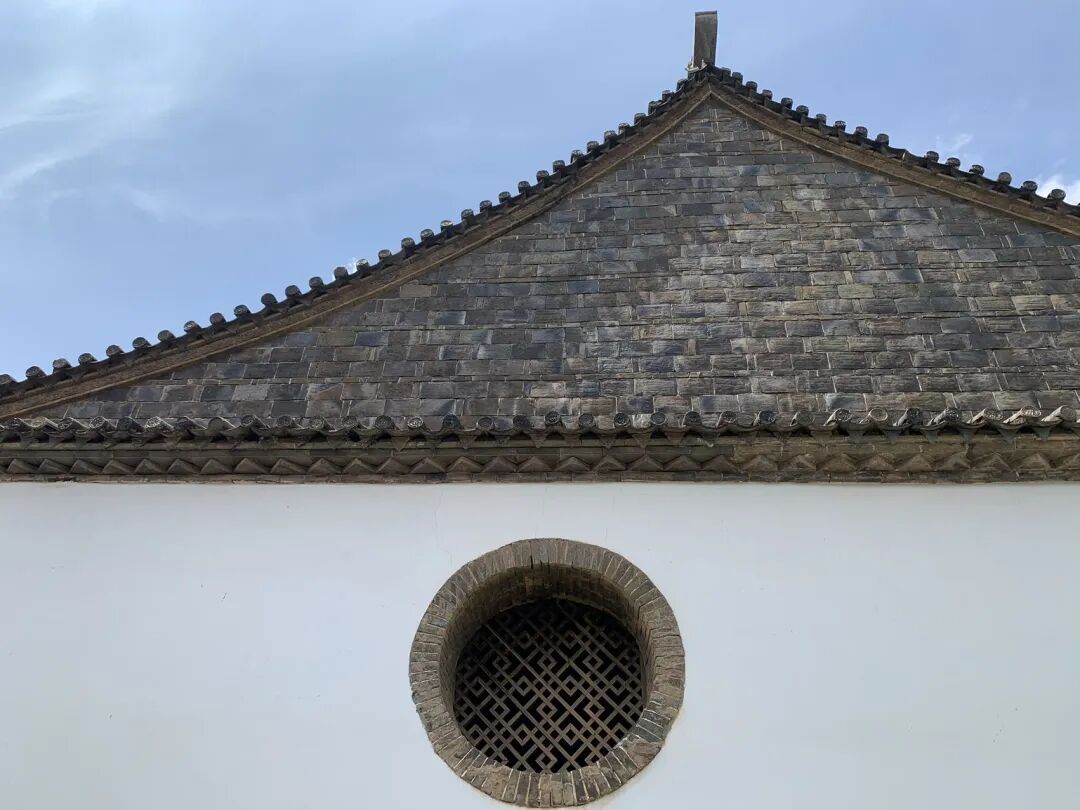
Without walking through the past, one cannot know the toll of the years. Quietly guarding this earthly hustle and bustle, may the days ahead always be filled with poetry, tea, and dreams.
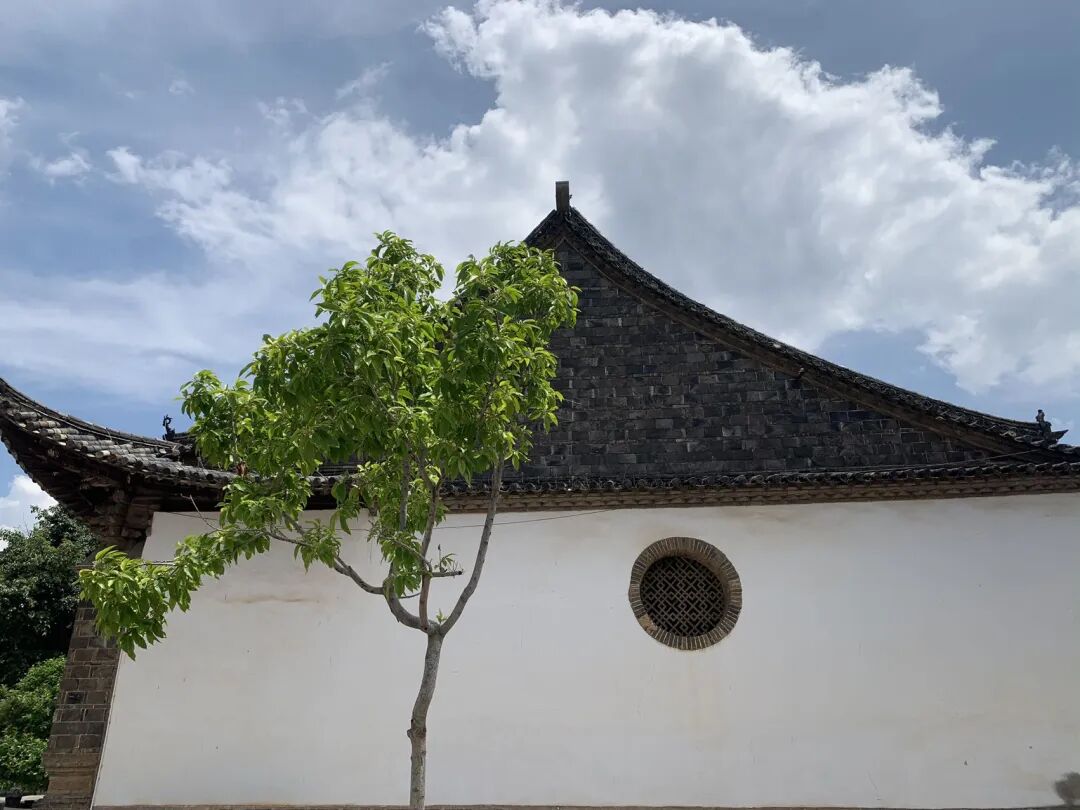
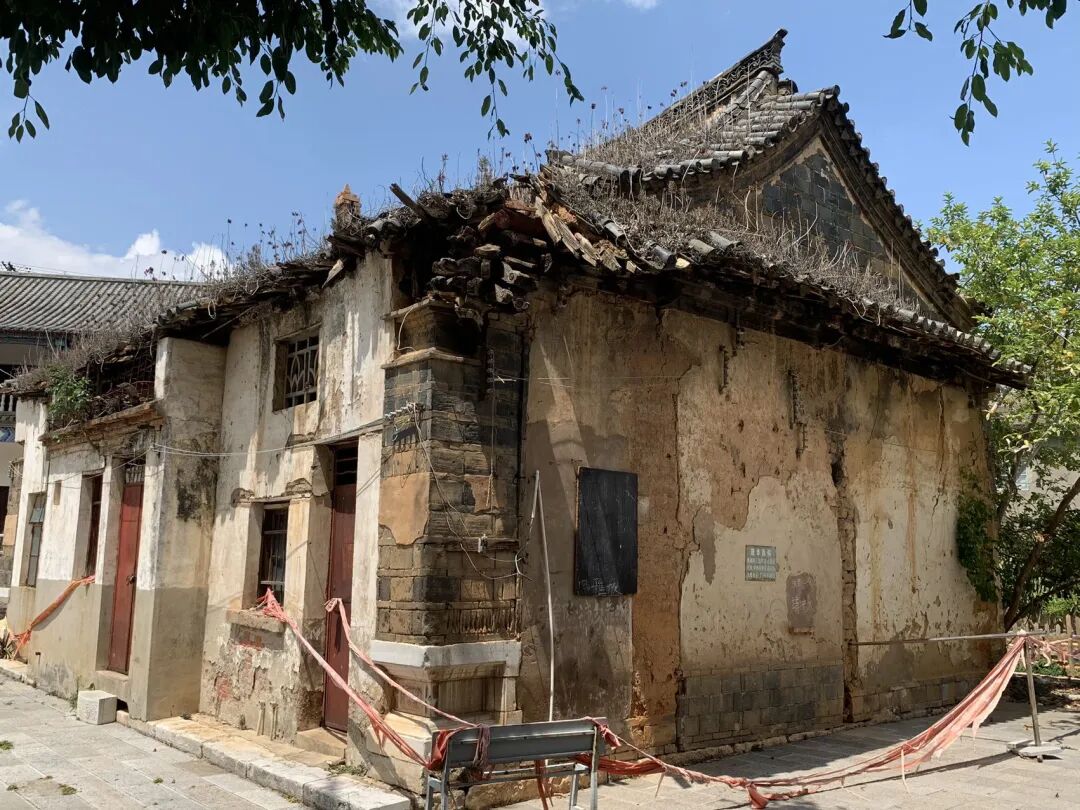
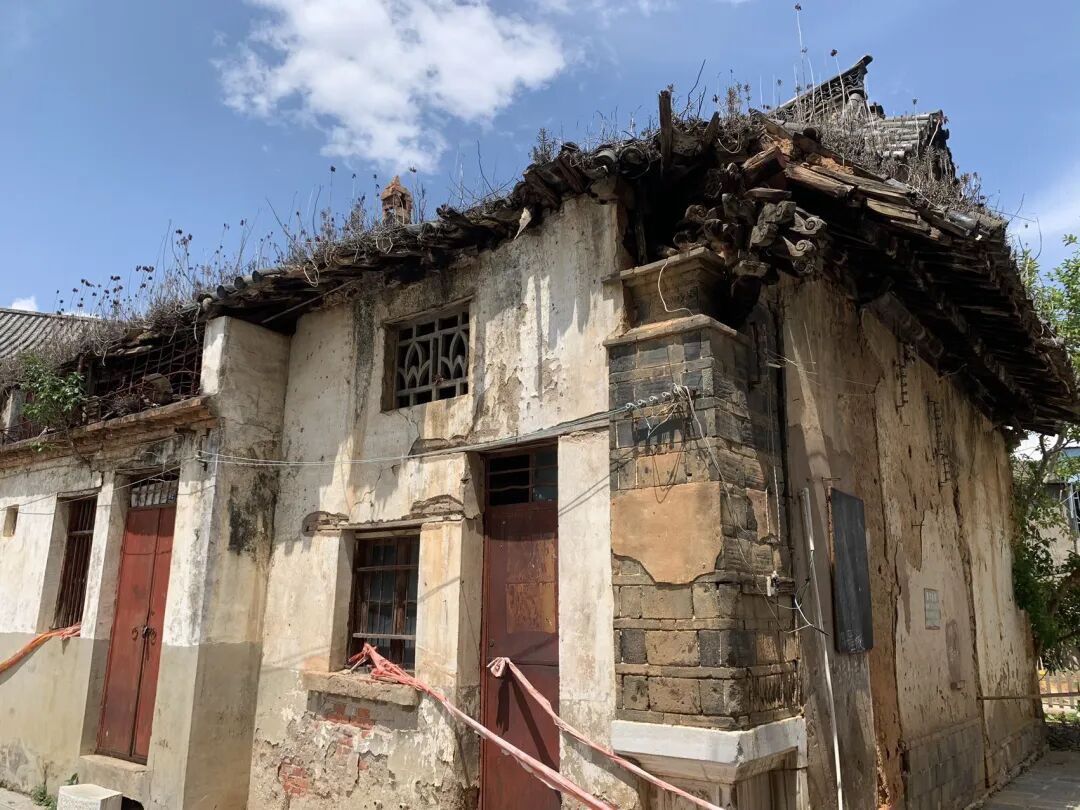
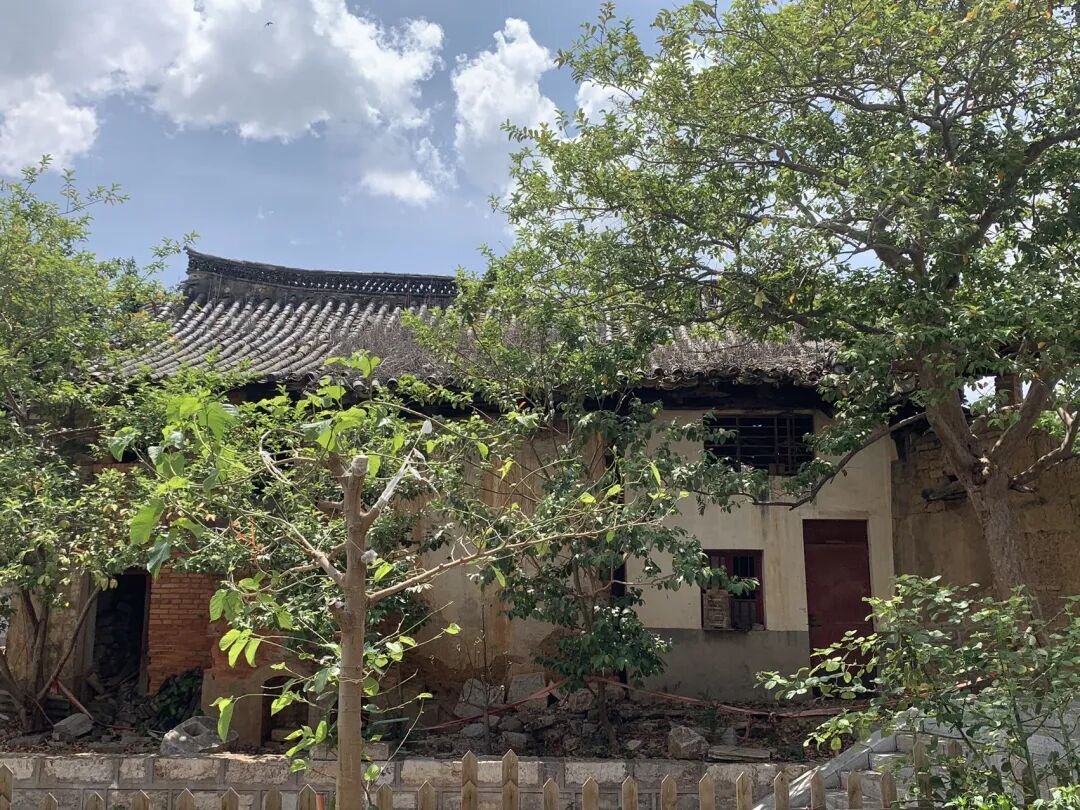
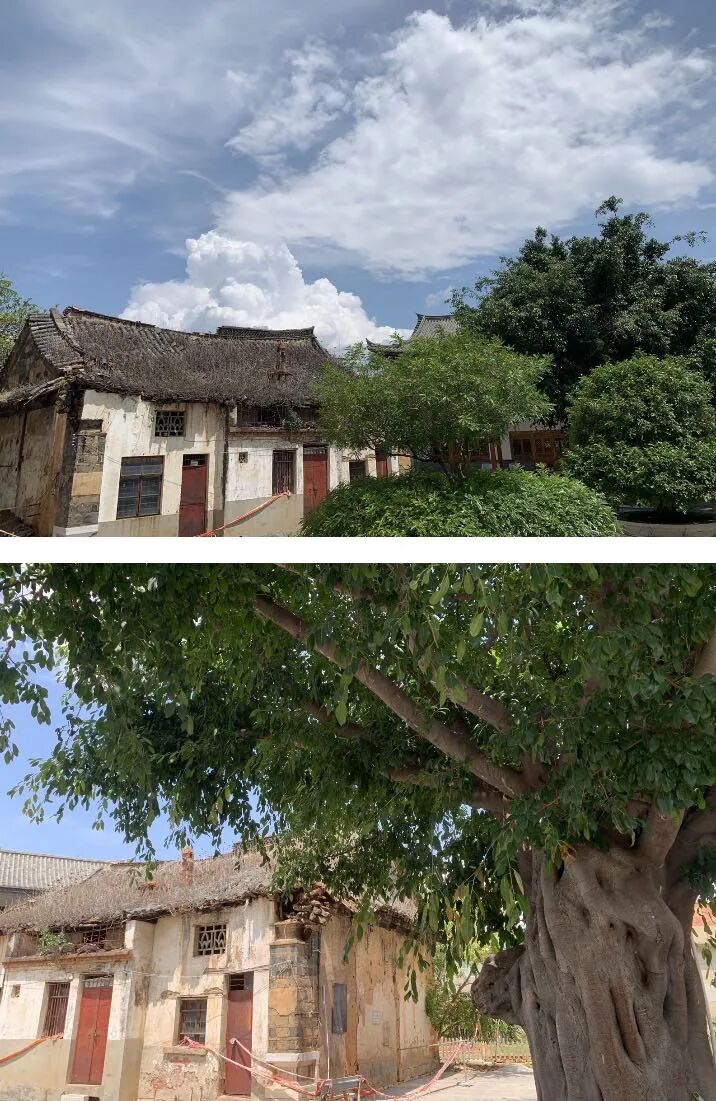
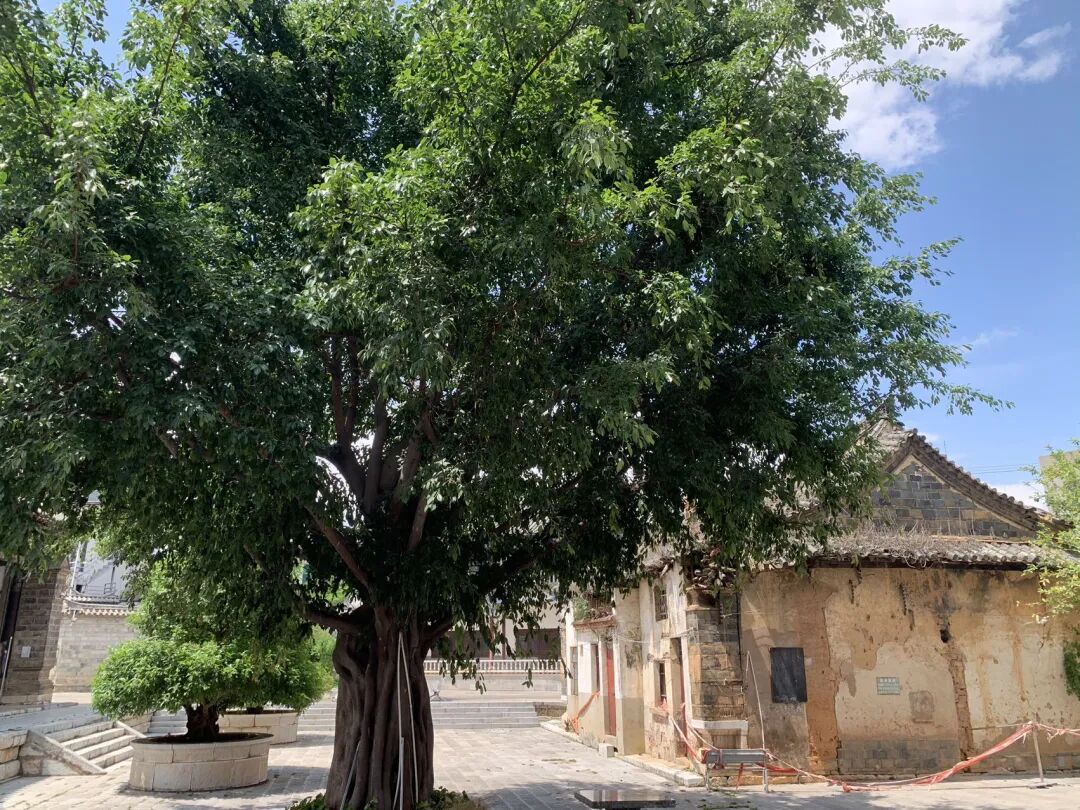
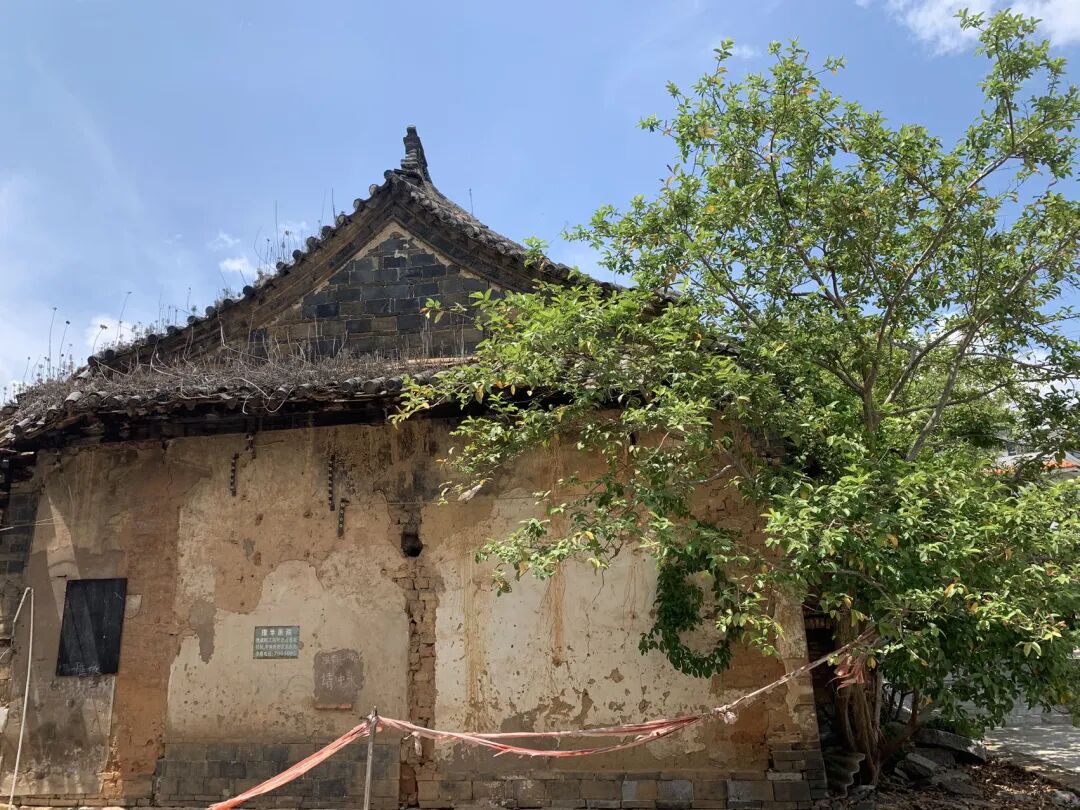
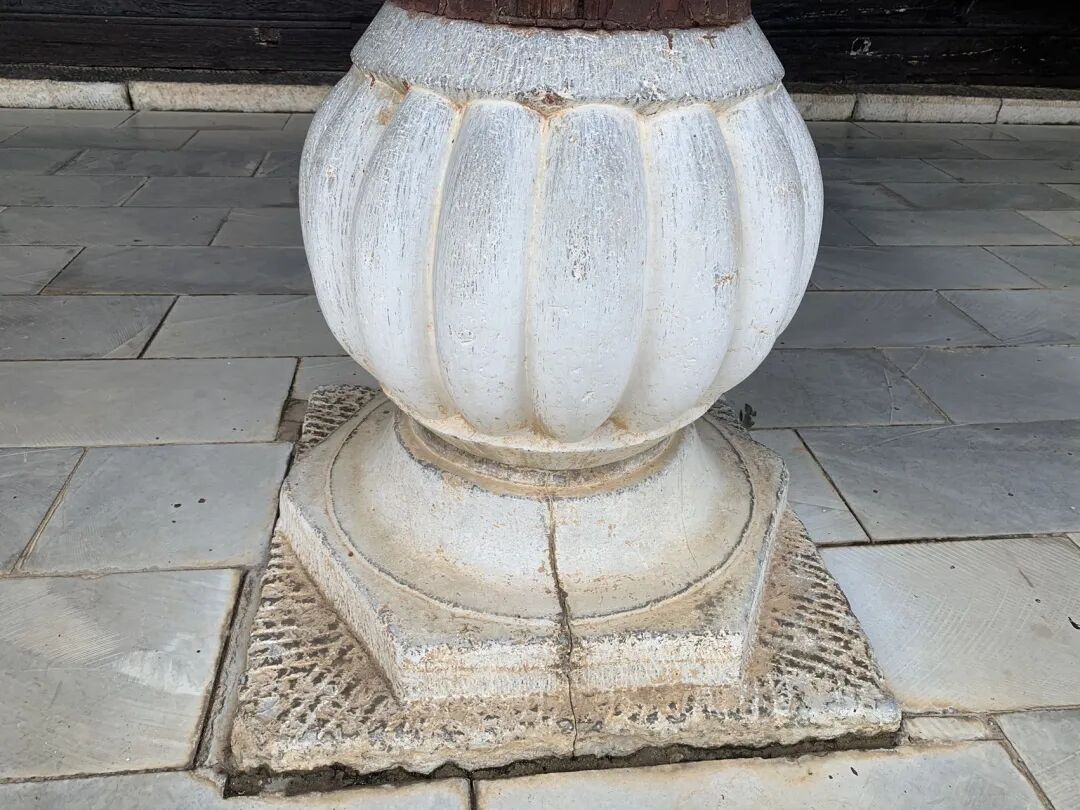
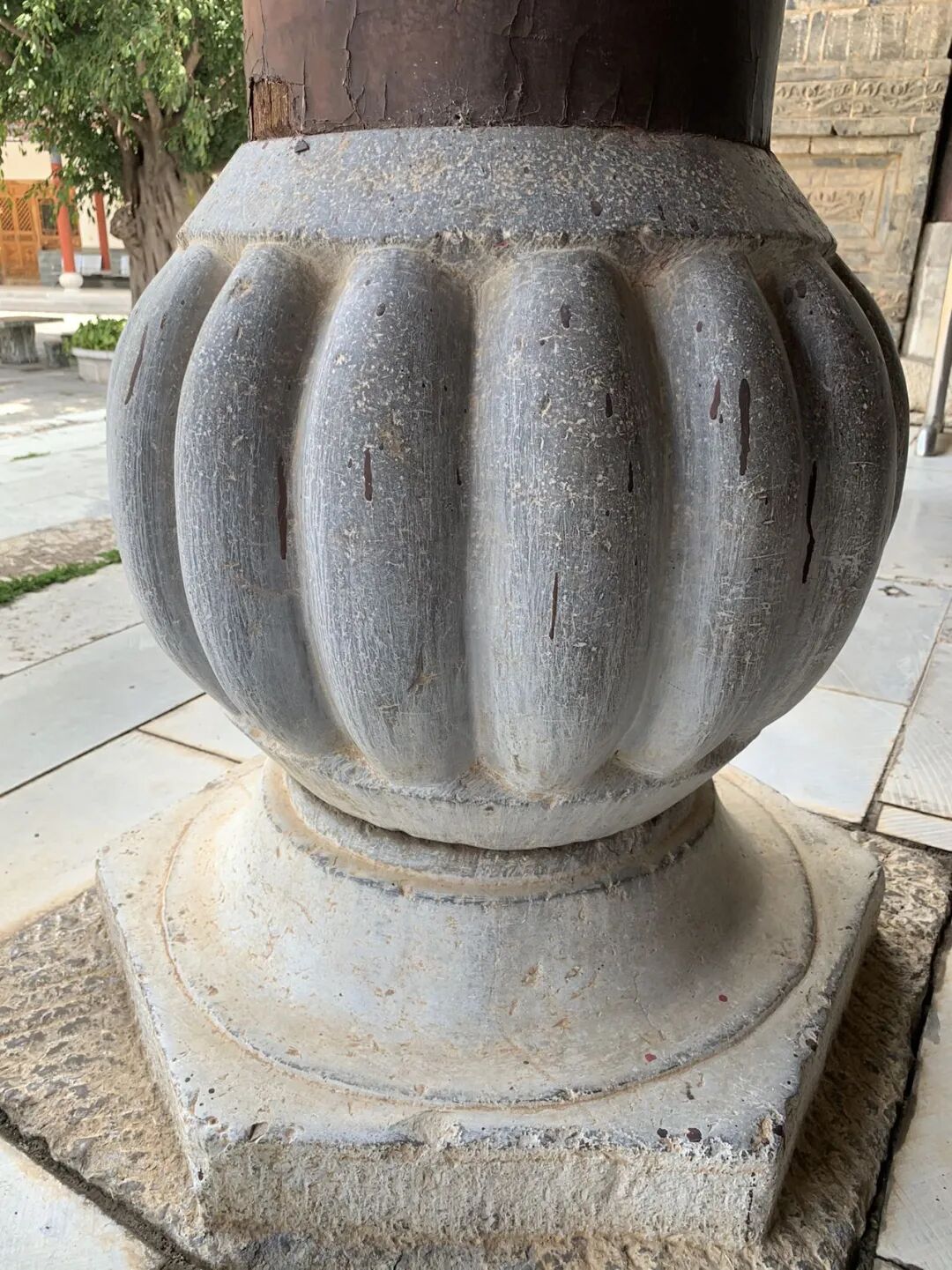
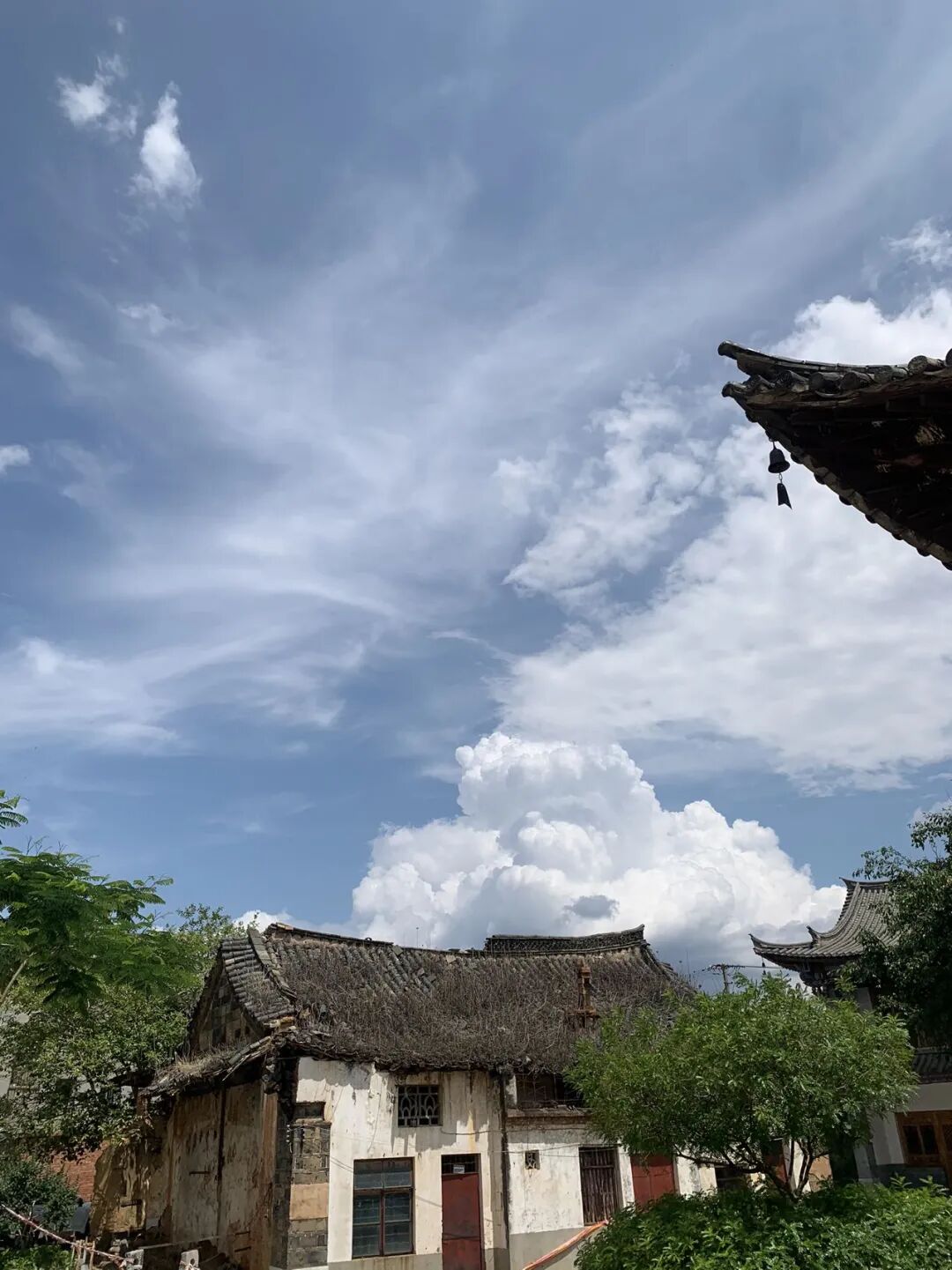
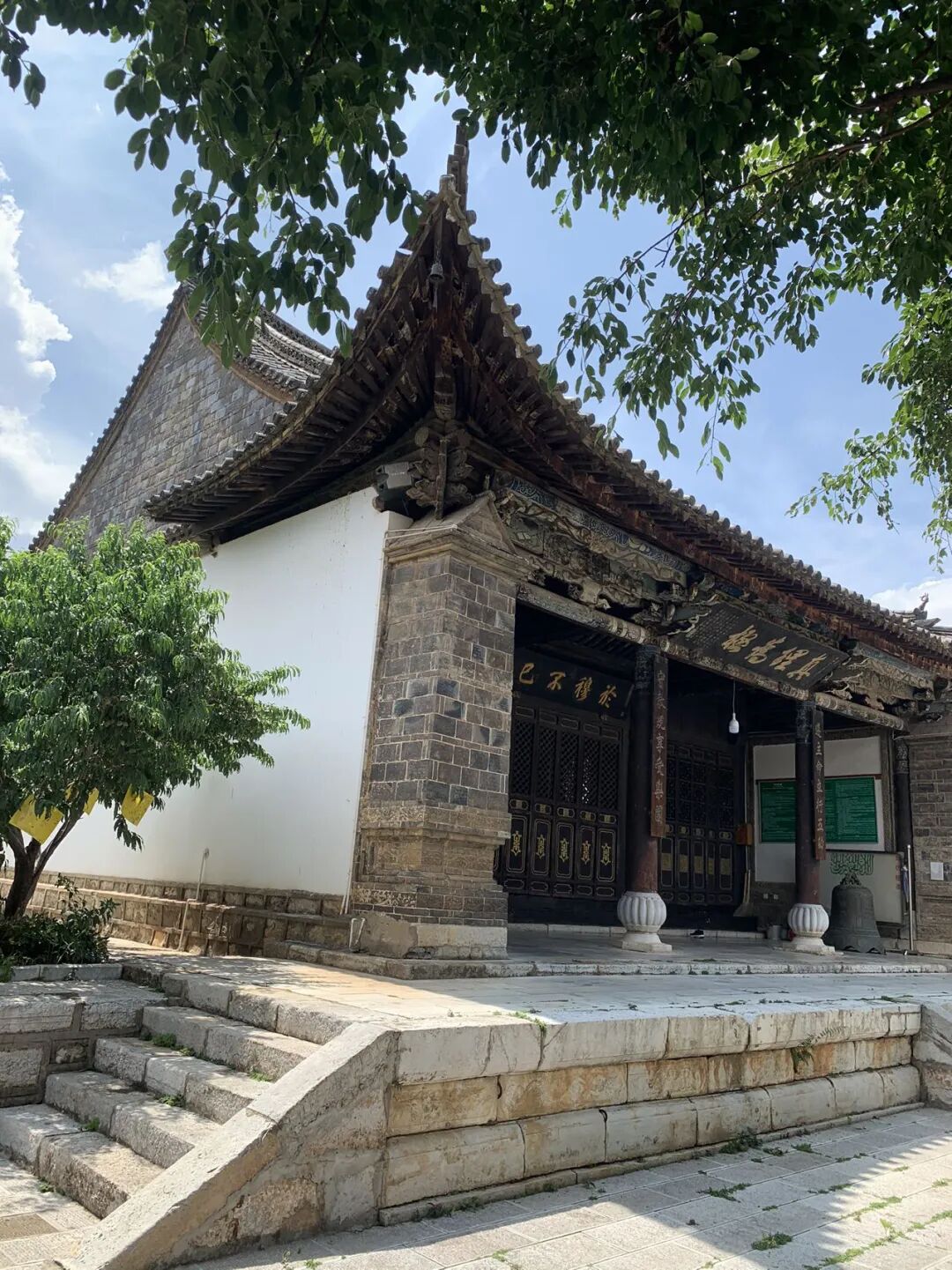
Exploring Guanyi Village, Yunnan: A Vibrant Hui Muslim Village & Halal Food Haven
Articles • Hasan09 posted the article • 0 comments • 29 views • 5 days ago
Exploring Guanyi Village in Jianshui, Yunnan: A Happy Hui Muslim Village Packed with Southern Yunnan Halal Flavors and Rustic Vibes
Abstract:
Located in Jianshui County, Honghe Prefecture, Yunnan, Guanyi Village is a well-known Hui Muslim community. It brings together the most authentic traditional Hui culinary delights of southern Yunnan—niu ganba (cured and dried beef), liang mixian (cold rice noodles), roast meat, signature youxiang (fried dough snacks), and homestyle halal stir-fries. This article takes a field trip to Guanyi Village to capture the daily lives of our down-to-earth Hui neighbors and their mouthwatering rural halal flavors.
Today's article comes from a submission by our friend Guanyi from Qujiang Town, Jianshui County, Honghe Prefecture, Yunnan, who details the Ramadan food street in their hometown.
Even though Ramadan is coming to an end, the halal food is here to stay~
Yunnan — Jianshui — Guanyi Village
"A military and civilian post station in ancient times, a moderately prosperous home today" is the best way to describe the history and current status of Guanyi Village. Guanyi Village has a long history; according to records, it was established during the Tang Dynasty, flourished in the Yuan and Ming dynasties, and boasts a history of over 1,500 years.
More than a thousand years of historical accumulation have left behind countless historical stories and traces waiting for future generations to uncover and verify. The Bell and Drum Tower built during the Ming Dynasty echoes the big bell on Yunlong Mountain in Lihaozhai, serving to transmit military intelligence in ancient times. The moat and three earthen dam ponds formed by digging earth to build city walls during the Yuan Dynasty still play an important role in production today. Traces of the dragon kiln built in the Ming Dynasty for the exclusive use of the imperial court can still be found. The Xingmeng Tower, built during the Ming Dynasty, still stands proudly at the old Guanyi Mosque, serving as a testament to the village's long history. During the Chongzhen reign of the Ming Dynasty, Guanyi's population reached nearly 30,000. Today, Guanyi retains its former glory, with Hui, Han, Yi, and other ethnic groups living in harmony and jointly building ethnic unity.
The people of Guanyi are hardworking, which is clearly evident from the wide variety of food on the food street. The delicacies on the Ramadan food street—rich in variety, fresh in ingredients, unique in flavor, and highlighting Guanyi's characteristics—have already become a shining business card for Guanyi Village, attracting people of all ethnic groups from the village and nearby towns to come and taste them.
The 2019 Ramadan arrived in May, and the Ramadan food street in Guanyi Village arrived right on schedule. The food street is a unique memory for the people of Guanyi during Ramadan. Here, there is not only food, but also the warmth and affection between villagers. This street formed during the Muslim month of Ramadan to provide people with the convenience of buying ingredients. This street flourished under the people's demand for high-quality, hygienic, and delicious food.
The food street runs from May 7 to June 4, daily between 3:00 PM and 6:00 PM. Why not take a spontaneous food trip and experience this ordinary village's annual culinary feast?
The video was filmed and produced by college student volunteers from Guanyi Village.
Who knows how many generations of Guanyi residents this old tree in the village has accompanied? The elderly villagers always love to chat and laugh under the big tree to the sound of birdsong after dinner in the evening. As gusts of breeze blow by, the leaves rustle, sounding so much like the hearty laughter of the elders. Walking further down the street, trailing behind the big banyan tree, are a few smaller banyan trees. The Guanyi Village Ramadan food street takes place right along this row of trees.
During Ramadan, the big tree is accompanied by plenty of food, friends from all over, and the breeze of May.
Guanyi Village Food
Some say hometown is for nostalgia, youth is for memories, and the taste of home is engraved in your bones. No matter how long or how far you leave your hometown, a bowl of hometown food will definitely be the best cure for your homesickness.
Making food is like conducting yourself: you must use genuine ingredients, weed out the impurities, and cook with care to create a delicacy. Looking out across the Guanyi Village Ramadan food street, every single dish that catches the eye is carefully crafted by the villagers. Halal food must feature genuine ingredients. Most of the delicacies on the Guanyi Village food street carry distinct Guanyi characteristics.
Signature Delicacies
01
Fenzheng Lianou (Steamed Lotus Root with Rice Flour)
This must be a flavor the people of Guanyi will never forget! In the past, perhaps you could only eat steamed lotus root with rice flour at the mosque during the annual Mawlid (Prophet's Birthday), but now at the Ramadan food street, there are always hardworking people willing to serve everyone by making it, and people rush to buy it.
Steamed lotus root with rice flour is a specialty food of Guanyi Village. I've eaten it in other places, but it never has that joyful taste again. When hometown folks away from home are asked about "the taste of home," they probably all answer in unison: steamed lotus root with rice flour!
02
Qujiang Roast Duck
Qujiang Roast Duck is famous far and wide for its unique flavor, and it is said to have a history of over 100 years. Unlike other places across the country, Qujiang Roast Duck is roasted in earthen ovens. These ovens are narrow at the top and wide at the bottom, circular in shape, and built entirely with adobe bricks used for rural housing construction. An opening is made at the top and bottom of the earthen oven. When roasting, pine needles are first used to burn the oven until it is glowing red, and then the ducks are hung inside to roast.
Qujiang Roast Duck features a ruddily rosy color, a crispy skin with tender meat inside, and richness without being greasy. When eating, it is paired with a dipping sauce made of fine salt, MSG, chicken bouillon, chili powder, Sichuan peppercorn powder, white pepper powder, sesame seeds, bean paste, chopped scallions, cilantro, and the oil drippings from roasting the duck. The flavor is rich, long-lasting, numbing, spicy, and savory, making it a wonderful dish to go with rice.
Qujiang Roast Duck is not only wildly popular locally, but also loved by out-of-town visitors coming to Qujiang. Many tourists visiting Qujiang take away one or two roast ducks as gifts to bring back to friends and family.
Ma Feng's family from Guanyi Village has been running a restaurant in Qujiang (Qujiang Halal Xinyayuan Restaurant) for many years, and their roast duck has become a calling card for Qujiang Halal roast duck. The roast duck they bring to the village food street is deeply loved by their hometown folks.
[Qujiang Halal Xinyayuan Restaurant: 15094135539]
03
Guanyi Halal Pastries
When people talk about Guanyi Village, you just have to know that delicious halal pastries have practically become its calling card. Lindong's buckwheat cakes, Maliu's signature shagao (traditional sweet rice cakes), Maisuer's sachima (sweet fried dough pastry) and specialty red bean paste pastries—these are all the absolute must-haves when it comes to Guanyi halal treats.
Guanyi Village boasts a thriving halal pastry scene with several bakeries, each bringing its own unique style and strengths to the table, winning over tons of loyal customers. Huge shoutout to all the hardworking bakers who hustle every day to bring us these incredible, distinct flavors.
Lindong Halal Pastries
Lindong Halal Pastry Factory has been leading the charge in Guanyi Village for years. Founded way back in 1983, it's been around for over 36 years. Lindong's wide range of pastries features gorgeous packaging, and their buckwheat cakes, in particular, are basically the quintessential Guanyi specialty, shipped all over and loved by folks from every background.
Guanyi Maisuer Halal Pastries
Formerly known as Guanyi Shaohong Pastries, the shop has officially rebranded as Guanyi Maisuer Halal Pastries. As one of the village's newer bakeries, they bring a ton of variety and unique flavors to the table, with standout hits like sachima, specialty red bean paste pastries, hand-torn bread, fruit pizzas, and crepe cakes.
Guanyi Maliu Halal Pastries
Guanyi Maliu Halal Pastries has won over the hearts and taste buds of the locals with its signature shagao. Every batch is crafted with serious care, resulting in deeply satisfying, delicious treats.
04
Malaosan Traditional Beef Ganba
Malaosan Traditional Beef Ganba (cured spiced beef jerky) in Guanyi Village has been around for years. Sticking to their roots, they source and slaughter strong yellow cattle themselves and cure the ganba in-house. Their beef ganba and fresh beef have earned total trust from customers. You can find their stalls at the Ramadan food street and during Guanyi's regular local market days, where they sell fresh beef and beef ganba year-round. Phone number: 15925307899
Final Thoughts
All kinds of culinary creations might look simple on the surface, but they're actually packed with food science and culinary wisdom. Only when you truly grasp the control of heat, the nature of the ingredients, the principles of seasoning, and the hard work behind every dish can you truly appreciate the maker's heartfelt attention to the little details.
No matter what fancy gourmet feasts or top-shelf drinks you're having, if you don't finish with a solid carb, your stomach just won't feel settled. No matter how successful, carefree, or powerful you are, if you can't calmly settle into a peaceful old age, your life story isn't quite complete.
Our love for food usually comes straight from the heart. No matter where or when, long after a feast has spoiled our taste buds, we still find ourselves daydreaming about those amazing flavors, because that's just how food magic works. May your love for food be just like your love for life—full of flavor and excitement. And may our love for our hometown be as earnest, passionate, and deeply felt as the way we live our lives.
We dedicate this article to expressing our deep love for our hometown! view all
Exploring Guanyi Village in Jianshui, Yunnan: A Happy Hui Muslim Village Packed with Southern Yunnan Halal Flavors and Rustic Vibes
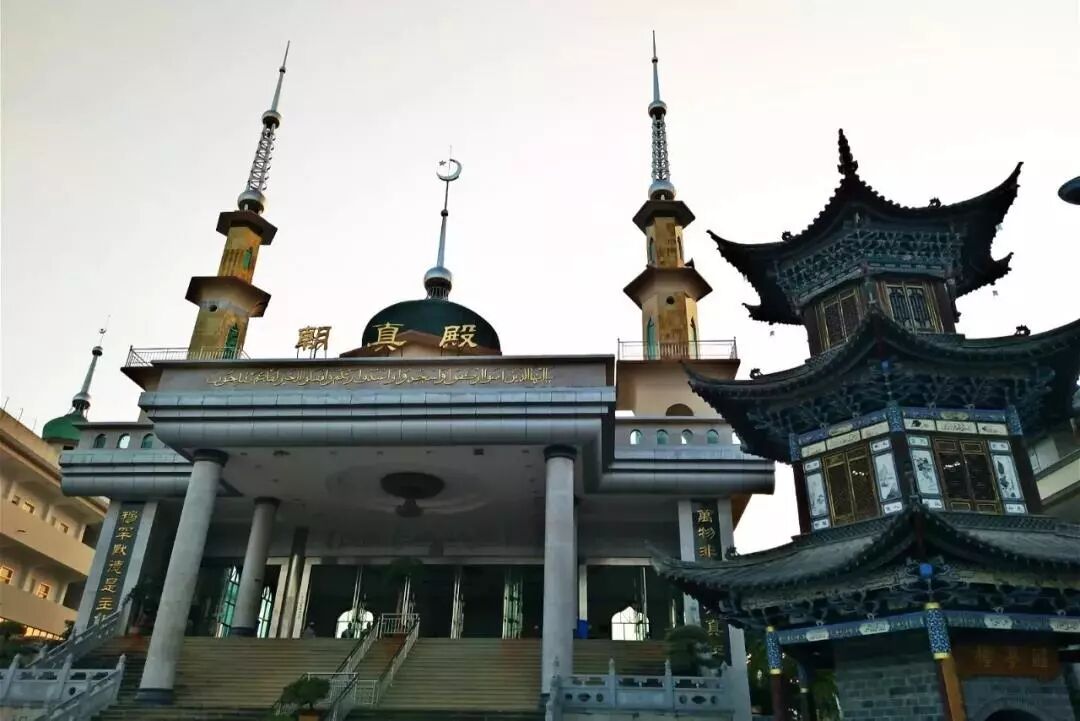
Abstract:

Located in Jianshui County, Honghe Prefecture, Yunnan, Guanyi Village is a well-known Hui Muslim community. It brings together the most authentic traditional Hui culinary delights of southern Yunnan—niu ganba (cured and dried beef), liang mixian (cold rice noodles), roast meat, signature youxiang (fried dough snacks), and homestyle halal stir-fries. This article takes a field trip to Guanyi Village to capture the daily lives of our down-to-earth Hui neighbors and their mouthwatering rural halal flavors.
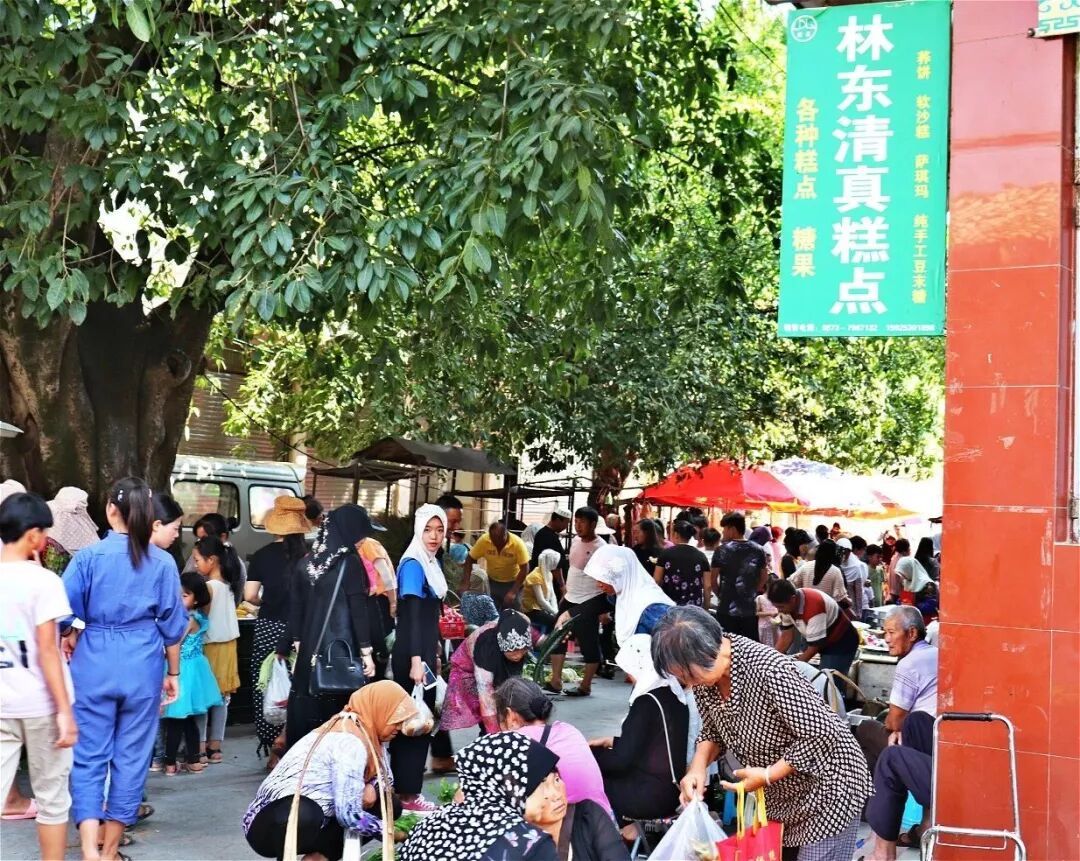
Today's article comes from a submission by our friend Guanyi from Qujiang Town, Jianshui County, Honghe Prefecture, Yunnan, who details the Ramadan food street in their hometown.
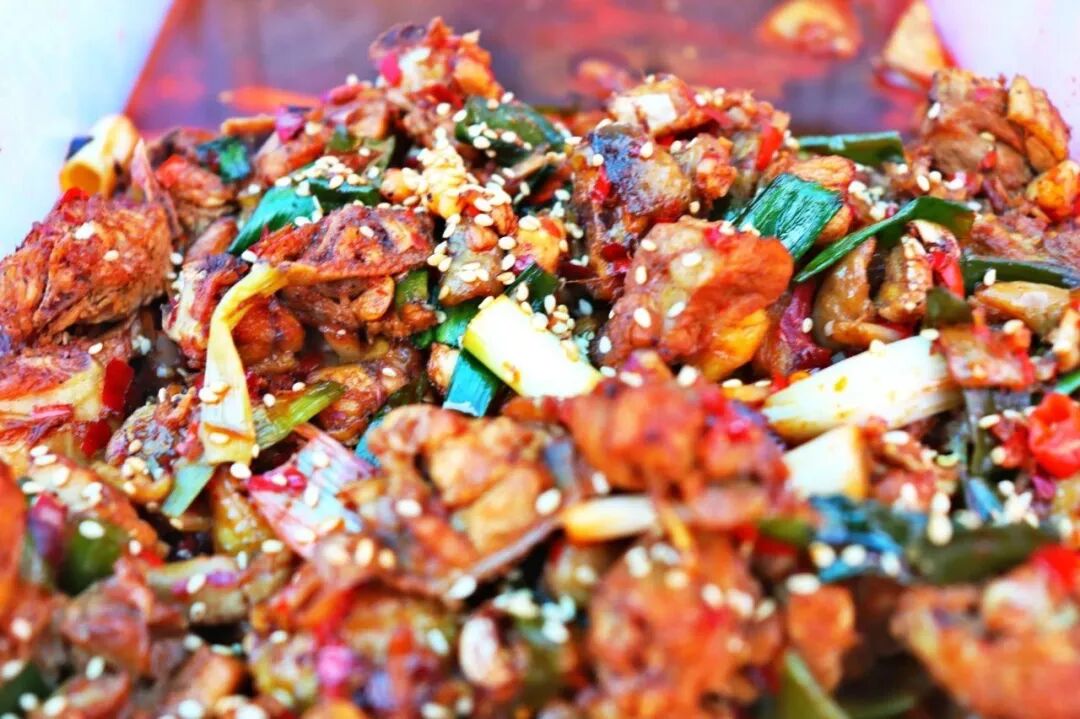
Even though Ramadan is coming to an end, the halal food is here to stay~
Yunnan — Jianshui — Guanyi Village
"A military and civilian post station in ancient times, a moderately prosperous home today" is the best way to describe the history and current status of Guanyi Village. Guanyi Village has a long history; according to records, it was established during the Tang Dynasty, flourished in the Yuan and Ming dynasties, and boasts a history of over 1,500 years.
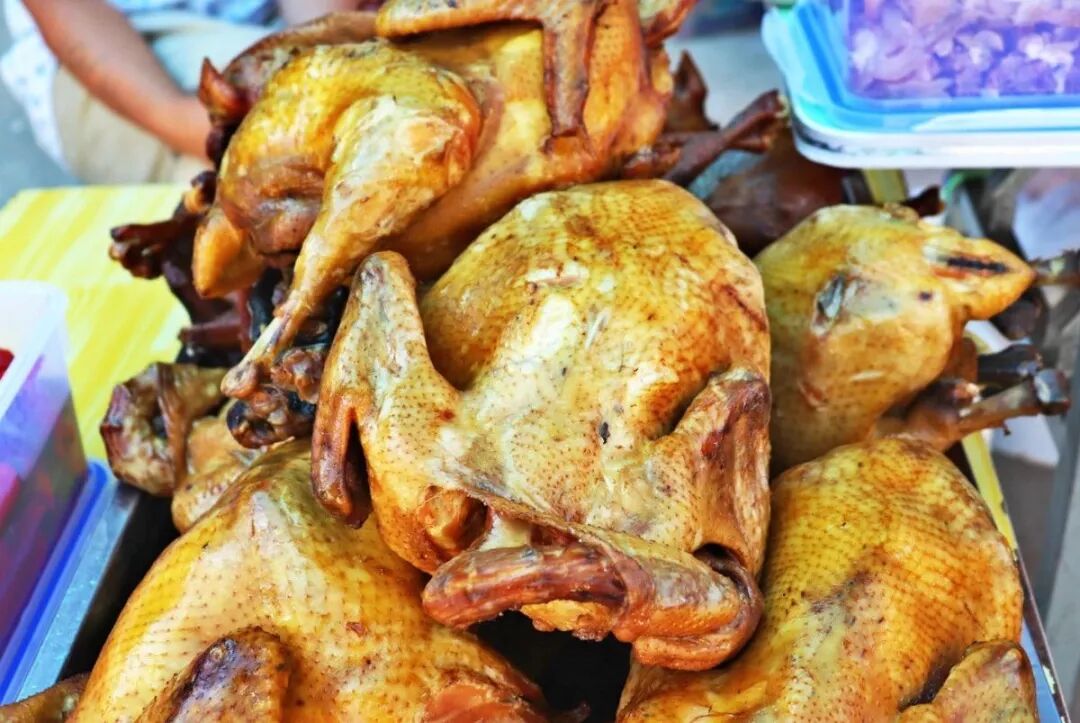
More than a thousand years of historical accumulation have left behind countless historical stories and traces waiting for future generations to uncover and verify. The Bell and Drum Tower built during the Ming Dynasty echoes the big bell on Yunlong Mountain in Lihaozhai, serving to transmit military intelligence in ancient times. The moat and three earthen dam ponds formed by digging earth to build city walls during the Yuan Dynasty still play an important role in production today. Traces of the dragon kiln built in the Ming Dynasty for the exclusive use of the imperial court can still be found. The Xingmeng Tower, built during the Ming Dynasty, still stands proudly at the old Guanyi Mosque, serving as a testament to the village's long history. During the Chongzhen reign of the Ming Dynasty, Guanyi's population reached nearly 30,000. Today, Guanyi retains its former glory, with Hui, Han, Yi, and other ethnic groups living in harmony and jointly building ethnic unity.
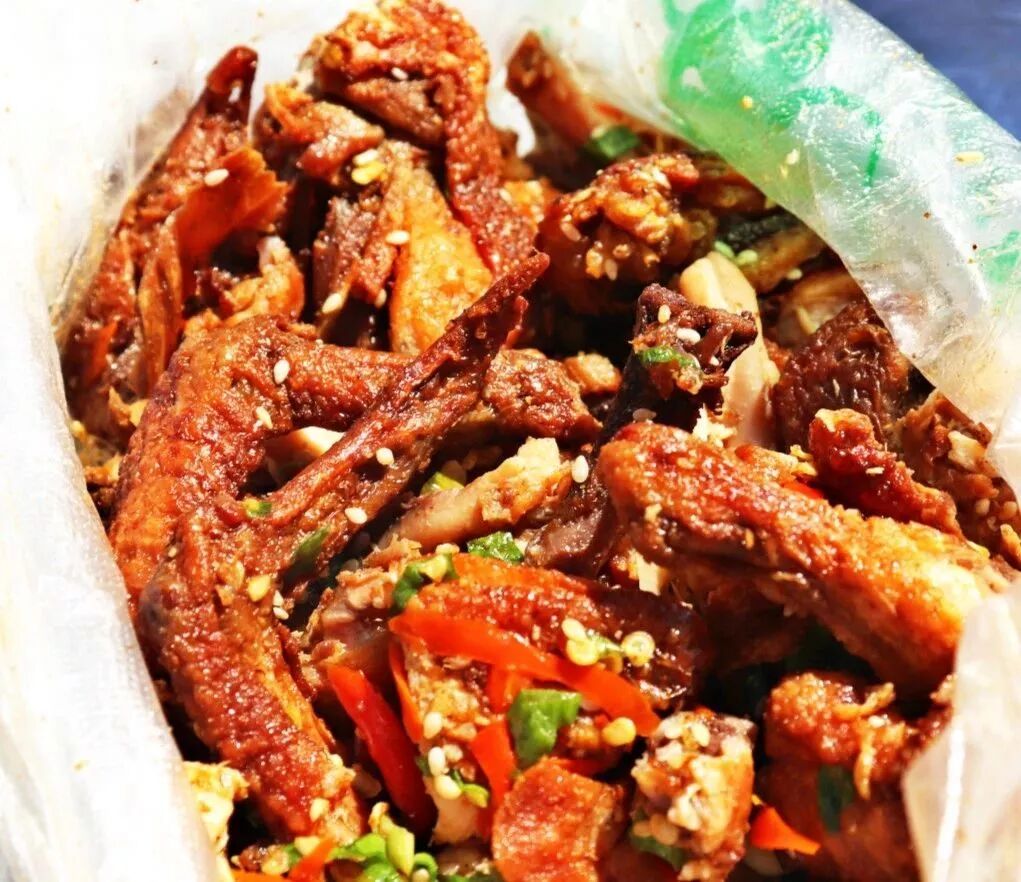
The people of Guanyi are hardworking, which is clearly evident from the wide variety of food on the food street. The delicacies on the Ramadan food street—rich in variety, fresh in ingredients, unique in flavor, and highlighting Guanyi's characteristics—have already become a shining business card for Guanyi Village, attracting people of all ethnic groups from the village and nearby towns to come and taste them.
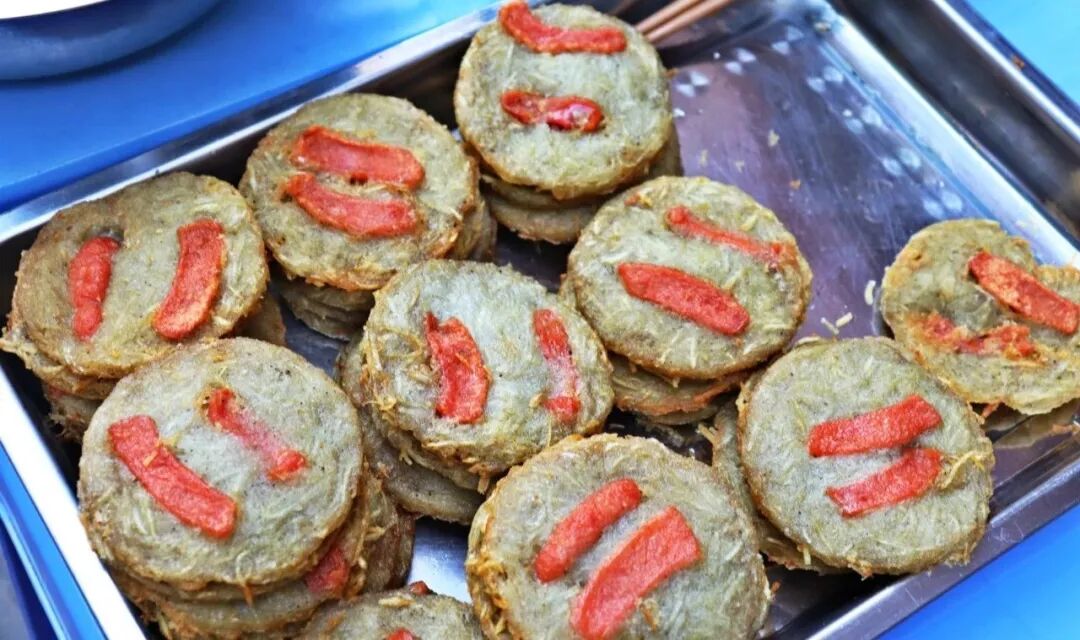
The 2019 Ramadan arrived in May, and the Ramadan food street in Guanyi Village arrived right on schedule. The food street is a unique memory for the people of Guanyi during Ramadan. Here, there is not only food, but also the warmth and affection between villagers. This street formed during the Muslim month of Ramadan to provide people with the convenience of buying ingredients. This street flourished under the people's demand for high-quality, hygienic, and delicious food.
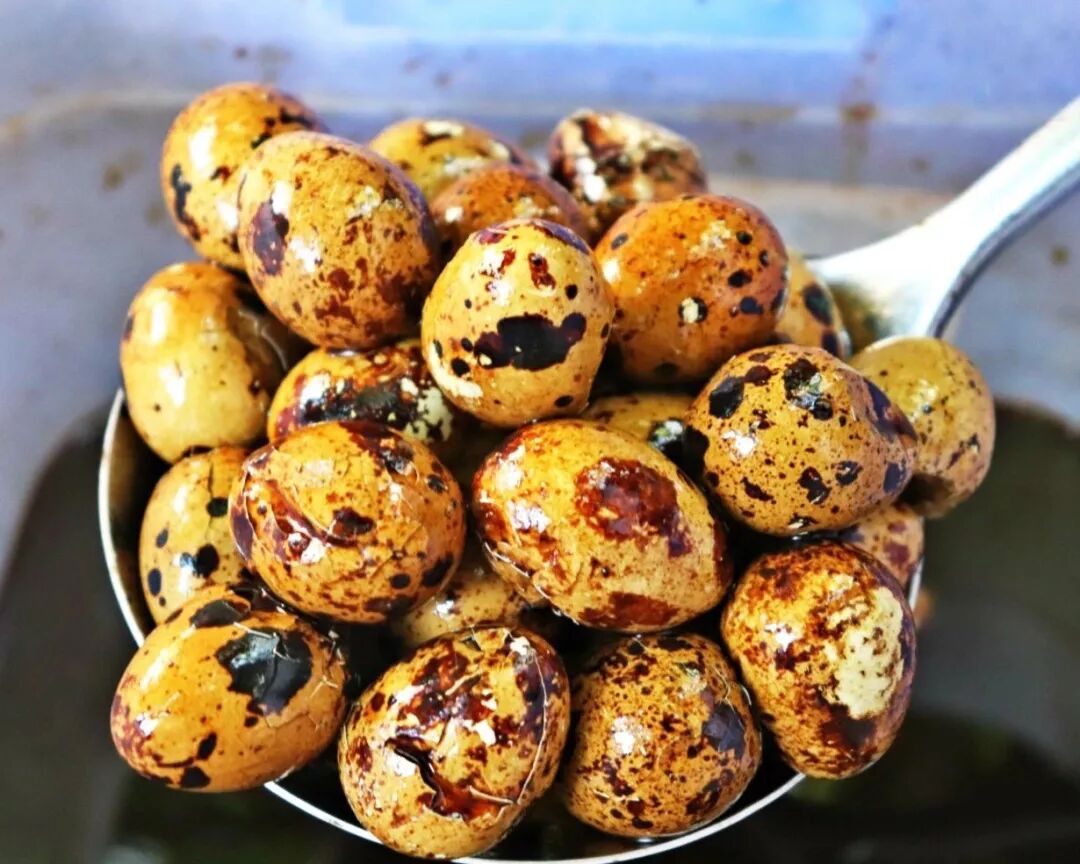
The food street runs from May 7 to June 4, daily between 3:00 PM and 6:00 PM. Why not take a spontaneous food trip and experience this ordinary village's annual culinary feast?
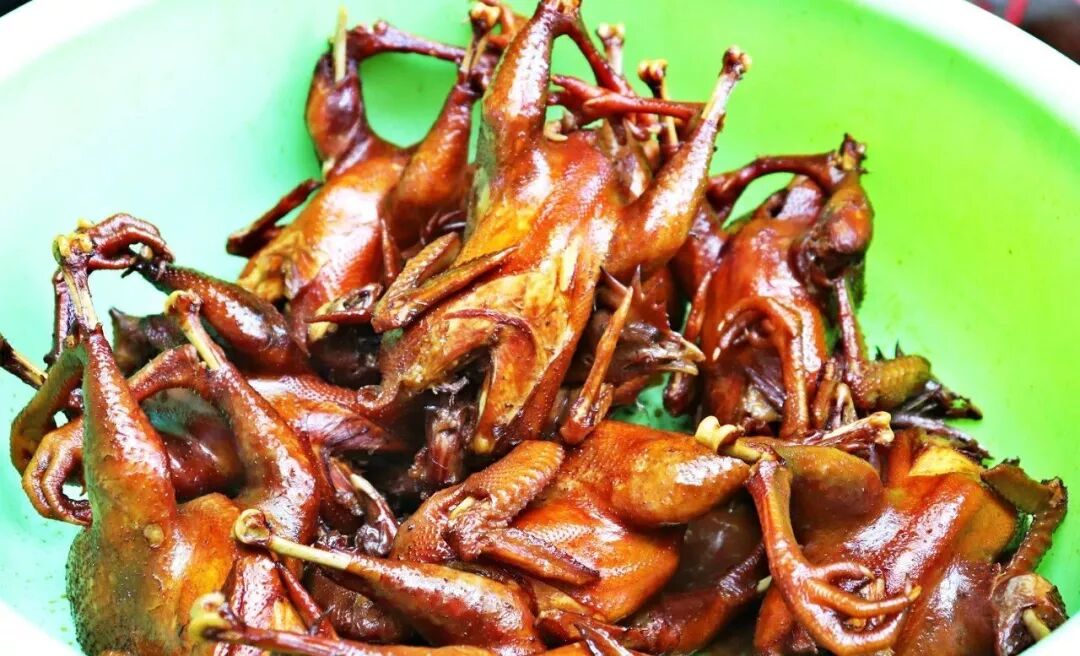
The video was filmed and produced by college student volunteers from Guanyi Village.
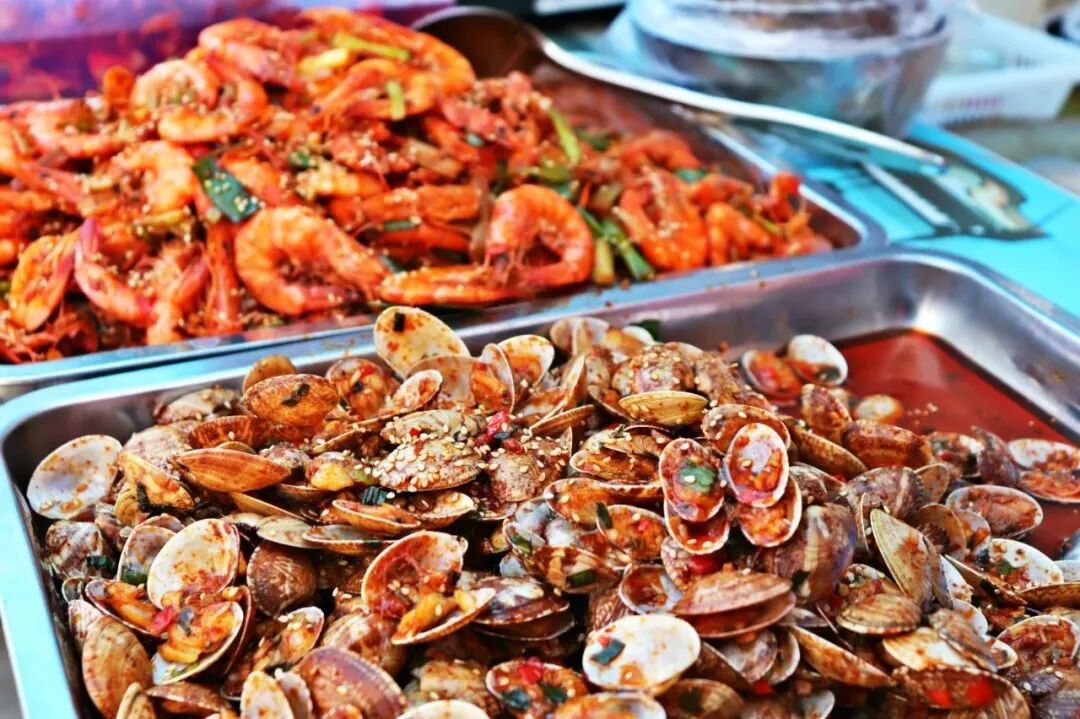
Who knows how many generations of Guanyi residents this old tree in the village has accompanied? The elderly villagers always love to chat and laugh under the big tree to the sound of birdsong after dinner in the evening. As gusts of breeze blow by, the leaves rustle, sounding so much like the hearty laughter of the elders. Walking further down the street, trailing behind the big banyan tree, are a few smaller banyan trees. The Guanyi Village Ramadan food street takes place right along this row of trees.
During Ramadan, the big tree is accompanied by plenty of food, friends from all over, and the breeze of May.
Guanyi Village Food
Some say hometown is for nostalgia, youth is for memories, and the taste of home is engraved in your bones. No matter how long or how far you leave your hometown, a bowl of hometown food will definitely be the best cure for your homesickness.
Making food is like conducting yourself: you must use genuine ingredients, weed out the impurities, and cook with care to create a delicacy. Looking out across the Guanyi Village Ramadan food street, every single dish that catches the eye is carefully crafted by the villagers. Halal food must feature genuine ingredients. Most of the delicacies on the Guanyi Village food street carry distinct Guanyi characteristics.
Signature Delicacies
01
Fenzheng Lianou (Steamed Lotus Root with Rice Flour)
This must be a flavor the people of Guanyi will never forget! In the past, perhaps you could only eat steamed lotus root with rice flour at the mosque during the annual Mawlid (Prophet's Birthday), but now at the Ramadan food street, there are always hardworking people willing to serve everyone by making it, and people rush to buy it.
Steamed lotus root with rice flour is a specialty food of Guanyi Village. I've eaten it in other places, but it never has that joyful taste again. When hometown folks away from home are asked about "the taste of home," they probably all answer in unison: steamed lotus root with rice flour!
02
Qujiang Roast Duck
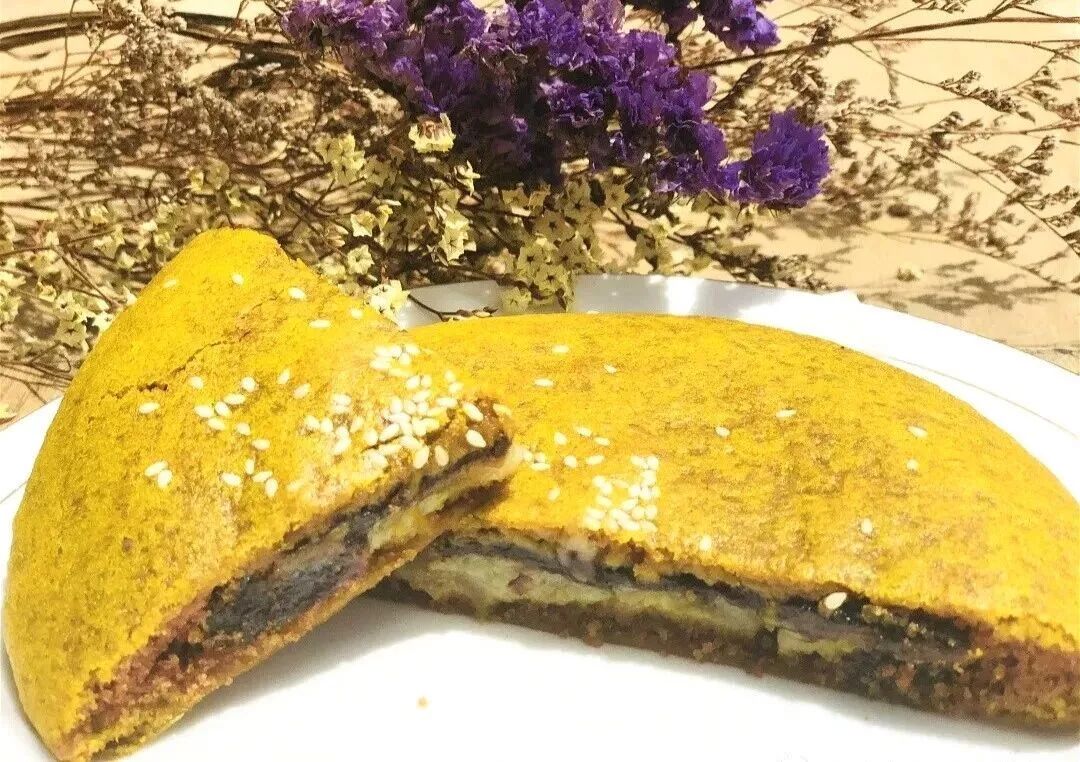
Qujiang Roast Duck is famous far and wide for its unique flavor, and it is said to have a history of over 100 years. Unlike other places across the country, Qujiang Roast Duck is roasted in earthen ovens. These ovens are narrow at the top and wide at the bottom, circular in shape, and built entirely with adobe bricks used for rural housing construction. An opening is made at the top and bottom of the earthen oven. When roasting, pine needles are first used to burn the oven until it is glowing red, and then the ducks are hung inside to roast.
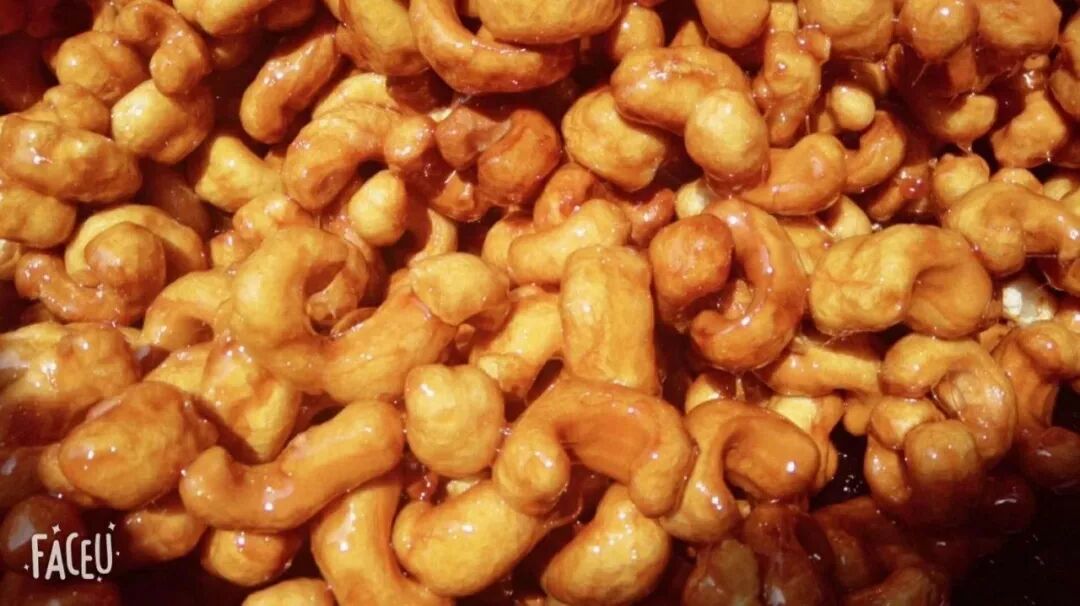
Qujiang Roast Duck features a ruddily rosy color, a crispy skin with tender meat inside, and richness without being greasy. When eating, it is paired with a dipping sauce made of fine salt, MSG, chicken bouillon, chili powder, Sichuan peppercorn powder, white pepper powder, sesame seeds, bean paste, chopped scallions, cilantro, and the oil drippings from roasting the duck. The flavor is rich, long-lasting, numbing, spicy, and savory, making it a wonderful dish to go with rice.
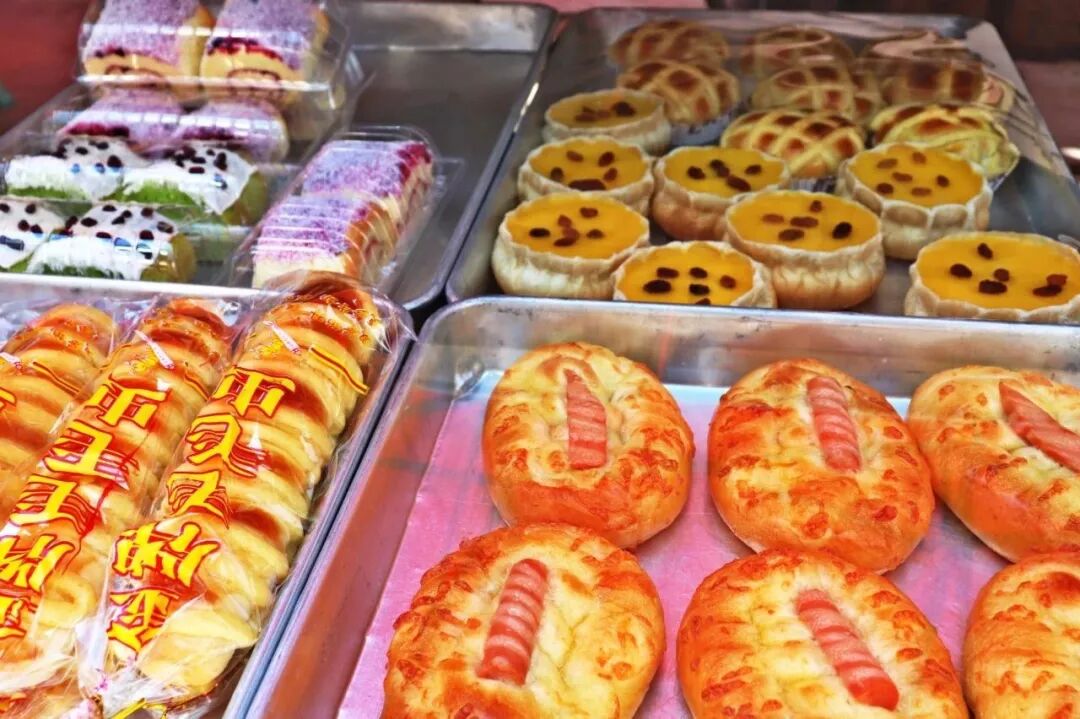
Qujiang Roast Duck is not only wildly popular locally, but also loved by out-of-town visitors coming to Qujiang. Many tourists visiting Qujiang take away one or two roast ducks as gifts to bring back to friends and family.
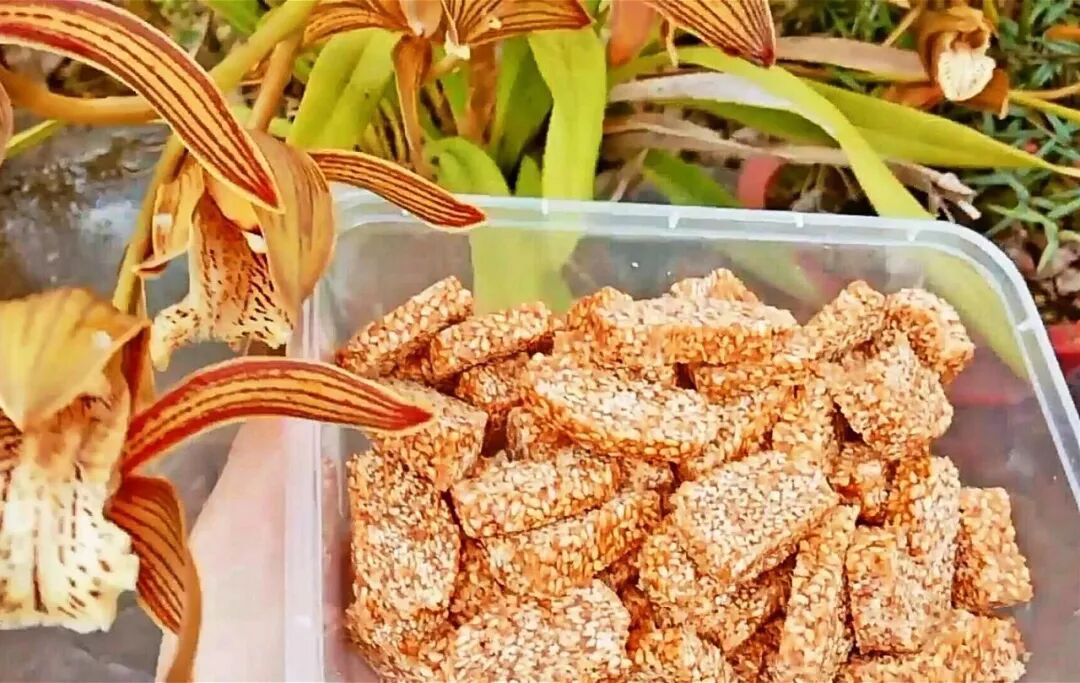
Ma Feng's family from Guanyi Village has been running a restaurant in Qujiang (Qujiang Halal Xinyayuan Restaurant) for many years, and their roast duck has become a calling card for Qujiang Halal roast duck. The roast duck they bring to the village food street is deeply loved by their hometown folks.
[Qujiang Halal Xinyayuan Restaurant: 15094135539]
03
Guanyi Halal Pastries
When people talk about Guanyi Village, you just have to know that delicious halal pastries have practically become its calling card. Lindong's buckwheat cakes, Maliu's signature shagao (traditional sweet rice cakes), Maisuer's sachima (sweet fried dough pastry) and specialty red bean paste pastries—these are all the absolute must-haves when it comes to Guanyi halal treats.
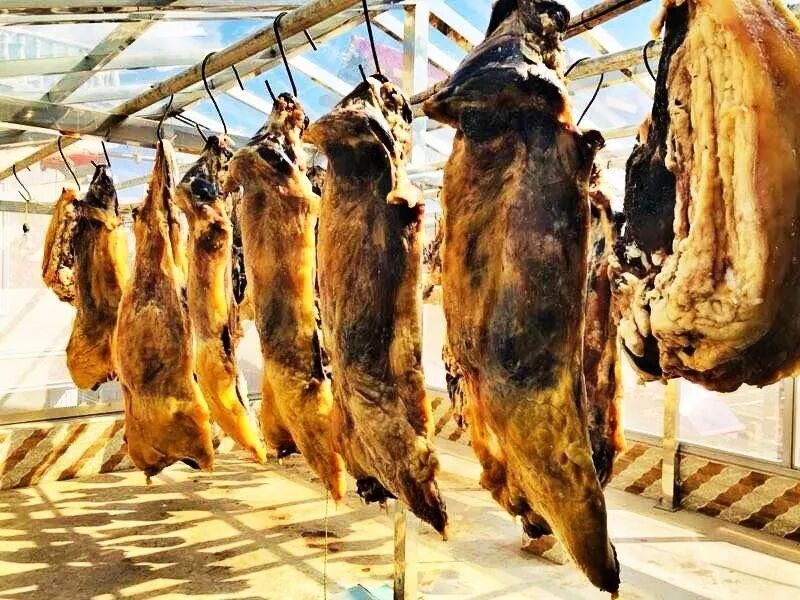
Guanyi Village boasts a thriving halal pastry scene with several bakeries, each bringing its own unique style and strengths to the table, winning over tons of loyal customers. Huge shoutout to all the hardworking bakers who hustle every day to bring us these incredible, distinct flavors.
Lindong Halal Pastries
Lindong Halal Pastry Factory has been leading the charge in Guanyi Village for years. Founded way back in 1983, it's been around for over 36 years. Lindong's wide range of pastries features gorgeous packaging, and their buckwheat cakes, in particular, are basically the quintessential Guanyi specialty, shipped all over and loved by folks from every background.
Guanyi Maisuer Halal Pastries

Formerly known as Guanyi Shaohong Pastries, the shop has officially rebranded as Guanyi Maisuer Halal Pastries. As one of the village's newer bakeries, they bring a ton of variety and unique flavors to the table, with standout hits like sachima, specialty red bean paste pastries, hand-torn bread, fruit pizzas, and crepe cakes.
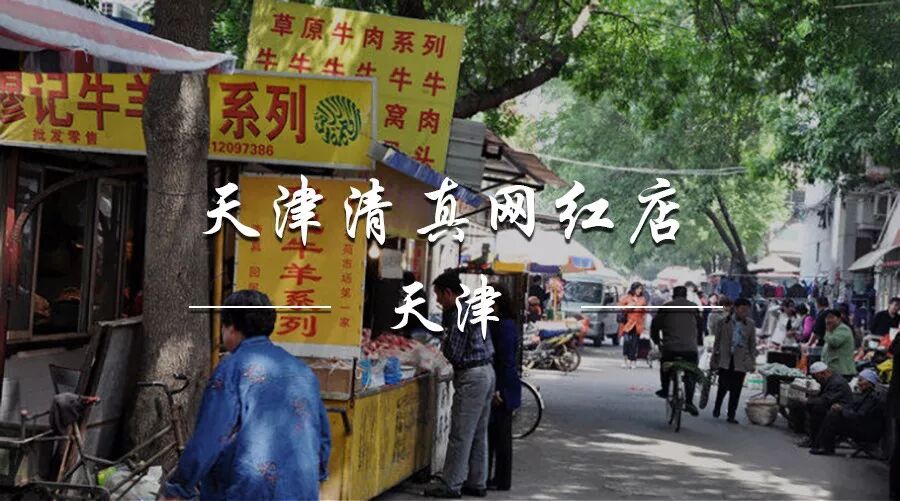
Guanyi Maliu Halal Pastries
Guanyi Maliu Halal Pastries has won over the hearts and taste buds of the locals with its signature shagao. Every batch is crafted with serious care, resulting in deeply satisfying, delicious treats.
04
Malaosan Traditional Beef Ganba
Malaosan Traditional Beef Ganba (cured spiced beef jerky) in Guanyi Village has been around for years. Sticking to their roots, they source and slaughter strong yellow cattle themselves and cure the ganba in-house. Their beef ganba and fresh beef have earned total trust from customers. You can find their stalls at the Ramadan food street and during Guanyi's regular local market days, where they sell fresh beef and beef ganba year-round. Phone number: 15925307899
Final Thoughts
All kinds of culinary creations might look simple on the surface, but they're actually packed with food science and culinary wisdom. Only when you truly grasp the control of heat, the nature of the ingredients, the principles of seasoning, and the hard work behind every dish can you truly appreciate the maker's heartfelt attention to the little details.
No matter what fancy gourmet feasts or top-shelf drinks you're having, if you don't finish with a solid carb, your stomach just won't feel settled. No matter how successful, carefree, or powerful you are, if you can't calmly settle into a peaceful old age, your life story isn't quite complete.
Our love for food usually comes straight from the heart. No matter where or when, long after a feast has spoiled our taste buds, we still find ourselves daydreaming about those amazing flavors, because that's just how food magic works. May your love for food be just like your love for life—full of flavor and excitement. And may our love for our hometown be as earnest, passionate, and deeply felt as the way we live our lives.
We dedicate this article to expressing our deep love for our hometown!
The Ultimate Guide to Yunnan Muslim Culture, Halal Food & Historic Mosques (Part 2)
Articles • Hasan09 posted the article • 0 comments • 28 views • 5 days ago
[37] Authored by Jide Yao, Rongkun Li, and Zuo Zhang, "History of Islam in Yunnan," p. 189.
[38] Authored by Jide Yao, "The Migration of Yunnan Hui Muslims to Southeast Asia," p. 37.
[39] Authored by Zuo Zhang, "A Study of Yunnan Hui Muslims Cross-Border into Southeast Asia," included in *Journal of Hui Muslim Studies*, 1998, Issue 3 (Total Issue 31), Ningxia: *Journal of Hui Muslim Studies* Editorial Department, 1998, p. 17.
++++++++++++++++++++++++++++++++++++++++++++++++++++++++++++++++++ view all
[37] Authored by Jide Yao, Rongkun Li, and Zuo Zhang, "History of Islam in Yunnan," p. 189.
[38] Authored by Jide Yao, "The Migration of Yunnan Hui Muslims to Southeast Asia," p. 37.
[39] Authored by Zuo Zhang, "A Study of Yunnan Hui Muslims Cross-Border into Southeast Asia," included in *Journal of Hui Muslim Studies*, 1998, Issue 3 (Total Issue 31), Ningxia: *Journal of Hui Muslim Studies* Editorial Department, 1998, p. 17.
++++++++++++++++++++++++++++++++++++++++++++++++++++++++++++++++++
Exploring Shadian Grand Mosque & Halal Night Market in Yunnan: A Food & Culture Guide
Articles • Hasan09 posted the article • 0 comments • 31 views • 5 days ago
Southern Yunnan Vibe Check: Exploring the Shadian Grand Mosque in Gejiu, Honghe, and the Hui Muslim Night Market
Abstract:
An in-depth travel diary of southeastern Yunnan: stepping into the Hui Muslim community of Shadian in Gejiu, Honghe Prefecture. Witnessing the magnificent halls of the renowned Shadian Grand Mosque in Southwest China, wandering through Islamic-styled Hui neighborhoods, and savoring authentic Shadian halal BBQ and traditional Hui street food.
July 19
Today's game plan is to head straight into Yunnan, driving toward Gejiu. During the summer break of 2023, on my first road trip to Yunnan, I pulled up to the Shadian Grand Mosque only to find it undergoing renovations, having closed just a few days before we arrived. Missing out on one of the largest mosques in China's southwest region was a total bummer, so I came straight back this time to check it off the bucket list. The photo below shows what it looked like when I visited back in July 2023.
The drive from Chongzuo to Gejiu is about 600 kilometers. We hit the road around 9:00 AM and expected to roll in around 4:00 PM—two days on the road to reach Yunnan.
Summer in Yunnan means rainy season. Once you hit the expressway into Yunnan, you'll constantly run into heavy fog and torrential rain, so you definitely need to drive extra carefully.
Around 4:00 PM, we finally arrived at the Shadian Grand Mosque, making up for the visit we missed last time. Compared to before, post-renovation it blends traditional Chinese palatial architecture with Arabic Islamic styles. The main prayer hall covers roughly 17,700 square meters, giving off an epic, majestic vibe that makes you feel so humbled standing right in front of it.
The mosque doesn't charge an admission fee, and outside of prayer times, you can snap photos along the outer corridors. As one of the most influential mosques in the country, the architectural details are totally worth taking your time to appreciate.
I looked up some stats: the main dome has an inner diameter of 20 meters, with an interior clearance height of about 42 meters. This massive, pillarless space can easily accommodate tens of thousands of people for group prayer at the same time, delivering a mind-blowing sense of space.
Photos might not fully do it justice, so here's a picture of a staff member prepping inside to give y'all a sense of just how jaw-dropping that ceiling height is.
Exotic stained glass windows let the sunlight stream through, casting interwoven blue and golden geometric patterns across the terrazzo floors, keeping the entire interior of the prayer hall bathed in a soft, ethereal glow.
Even though we couldn't step inside to tour, as an open public spot, I personally think it's 100% worth the trip. It also let the kids experience this kind of solemn, sacred atmosphere firsthand.
After finishing up our tour in Gejiu, we headed straight to Shiping. I've been to this chill little town before—it's not super famous, which honestly makes it a really comfortable place to hang out. Yilong Lake is one of the nine major plateau lakes in Yunnan; today we just caught some distant glimpses of it, with plans to do a full lake lap tomorrow.
Since this is my second time here, I know my way around. We passed the tracks of the narrow-gauge sightseeing train (it only runs two fixed daily schedules, and with no trains outside those hours, I felt safe letting the kids snap a few photos). The kids were totally fascinated by the tracks, so we pulled over right away to let them play to their hearts' content.
You can't talk about a Yunnan night market without mentioning BBQ. Down here in Honghe Prefecture, even a simple rice noodle joint will have a grill going and Shiping stinky tofu on deck. The stinky tofu here is bomb too—it doesn't have an overpowering funk, and it's prepared by grilling or boiling rather than deep-frying, so it's not greasy at all. Especially the grilled tofu: crispy on the outside, tender on the inside, and dipped in a bit of chili sauce. The kids ate a ton of it. That whole plate of tofu in the pic was only 8 RMB—the cost of living here is heartwarming.
Then there are the smashed potatoes you can find all over Yunnan, tossed with various seasonings, which the kids also love. A mix of different street skewers and clay-pot stinky tofu rice noodles made up our dinner tonight, and everyone ate with huge smiles.
After grabbing food and hanging out at the night market, we headed back to our hotel to crash. A 600-kilometer drive is definitely exhausting, but getting to witness such epic architecture and enjoying everyday Yunnan comfort food as a feast made us genuinely happy!
That wraps up this post. See y'all next time, and thanks for keeping up with the journey! view all
Southern Yunnan Vibe Check: Exploring the Shadian Grand Mosque in Gejiu, Honghe, and the Hui Muslim Night Market

Abstract:

An in-depth travel diary of southeastern Yunnan: stepping into the Hui Muslim community of Shadian in Gejiu, Honghe Prefecture. Witnessing the magnificent halls of the renowned Shadian Grand Mosque in Southwest China, wandering through Islamic-styled Hui neighborhoods, and savoring authentic Shadian halal BBQ and traditional Hui street food.

July 19

Today's game plan is to head straight into Yunnan, driving toward Gejiu. During the summer break of 2023, on my first road trip to Yunnan, I pulled up to the Shadian Grand Mosque only to find it undergoing renovations, having closed just a few days before we arrived. Missing out on one of the largest mosques in China's southwest region was a total bummer, so I came straight back this time to check it off the bucket list. The photo below shows what it looked like when I visited back in July 2023.

The drive from Chongzuo to Gejiu is about 600 kilometers. We hit the road around 9:00 AM and expected to roll in around 4:00 PM—two days on the road to reach Yunnan.

Summer in Yunnan means rainy season. Once you hit the expressway into Yunnan, you'll constantly run into heavy fog and torrential rain, so you definitely need to drive extra carefully.

Around 4:00 PM, we finally arrived at the Shadian Grand Mosque, making up for the visit we missed last time. Compared to before, post-renovation it blends traditional Chinese palatial architecture with Arabic Islamic styles. The main prayer hall covers roughly 17,700 square meters, giving off an epic, majestic vibe that makes you feel so humbled standing right in front of it.

The mosque doesn't charge an admission fee, and outside of prayer times, you can snap photos along the outer corridors. As one of the most influential mosques in the country, the architectural details are totally worth taking your time to appreciate.

I looked up some stats: the main dome has an inner diameter of 20 meters, with an interior clearance height of about 42 meters. This massive, pillarless space can easily accommodate tens of thousands of people for group prayer at the same time, delivering a mind-blowing sense of space.

Photos might not fully do it justice, so here's a picture of a staff member prepping inside to give y'all a sense of just how jaw-dropping that ceiling height is.

Exotic stained glass windows let the sunlight stream through, casting interwoven blue and golden geometric patterns across the terrazzo floors, keeping the entire interior of the prayer hall bathed in a soft, ethereal glow.

Even though we couldn't step inside to tour, as an open public spot, I personally think it's 100% worth the trip. It also let the kids experience this kind of solemn, sacred atmosphere firsthand.

After finishing up our tour in Gejiu, we headed straight to Shiping. I've been to this chill little town before—it's not super famous, which honestly makes it a really comfortable place to hang out. Yilong Lake is one of the nine major plateau lakes in Yunnan; today we just caught some distant glimpses of it, with plans to do a full lake lap tomorrow.
Since this is my second time here, I know my way around. We passed the tracks of the narrow-gauge sightseeing train (it only runs two fixed daily schedules, and with no trains outside those hours, I felt safe letting the kids snap a few photos). The kids were totally fascinated by the tracks, so we pulled over right away to let them play to their hearts' content.
You can't talk about a Yunnan night market without mentioning BBQ. Down here in Honghe Prefecture, even a simple rice noodle joint will have a grill going and Shiping stinky tofu on deck. The stinky tofu here is bomb too—it doesn't have an overpowering funk, and it's prepared by grilling or boiling rather than deep-frying, so it's not greasy at all. Especially the grilled tofu: crispy on the outside, tender on the inside, and dipped in a bit of chili sauce. The kids ate a ton of it. That whole plate of tofu in the pic was only 8 RMB—the cost of living here is heartwarming.
Then there are the smashed potatoes you can find all over Yunnan, tossed with various seasonings, which the kids also love. A mix of different street skewers and clay-pot stinky tofu rice noodles made up our dinner tonight, and everyone ate with huge smiles.
After grabbing food and hanging out at the night market, we headed back to our hotel to crash. A 600-kilometer drive is definitely exhausting, but getting to witness such epic architecture and enjoying everyday Yunnan comfort food as a feast made us genuinely happy!
That wraps up this post. See y'all next time, and thanks for keeping up with the journey!
Visiting Shadian Grand Mosque in Yunnan: Southwest China's Stunning Islamic Landmark
Articles • Hasan09 posted the article • 0 comments • 26 views • 5 days ago
A Pilgrimage to Southwest China's Largest Mosque: A Deep-Dive Visual Tour of the Architectural Layout and Ten-Thousand-Person Prayer Hall at the Shadian Grand Mosque in Gejiu, Honghe
Abstract:
A detailed exploration of the Shadian Grand Mosque, nestled right at the crossroads of Gejiu, Kaiyuan, and Mengzi in Yunnan. This piece offers a comprehensive look at one of China's top one hundred famous mosques, featuring its massive main prayer hall, pristine white marble courtyard, elegant domes, and colorful carved details, allowing you to soak in the majestic spiritual epicenter of southern Yunnan's Muslim community.
Let's jump straight to the essential travel tips first:
If you're driving from Jianshuai to Gejiu, plug Gejiu city into your navigation app, set your route preference to "Expressways First," check the route preview carefully, and look for the [Jian-Ge-Yuan Expressway] signs. This will keep you off the old mountain roads down by Jijie. If you want to check out the Jijie Railway Station and the Shadian Grand Mosque along the way, taking the Jijie route lines up perfectly. We stumbled upon Shadian completely by accident without any advance planning, and it turned out to be an amazing bonus! (Detailed travel tips are attached at the end of the article if you want to screenshot them.)
After staying in Jianshui for a cozy seven days, there were still plenty of sights left to unlock. But when you're out on the road, you always find yourself craving a brand-new city. Bidding farewell to Jianshui's ancient town and pottery culture, we sped toward Gejiu to kick off the next leg of our southern Yunnan journey. At 9:00 AM, after packing our bags, we hit the road toward Gejiu!
Today's drive was under eighty kilometers, but thanks to a few wrong turns and detours, we ended up hopping onto the expressway heading north out of Jianshui, only to loop right back out via the southern exit. We had to turn around and get back on the expressway, and then our GPS directed us to exit early at Jijie. Jijie is a town under Gejiu's jurisdiction, sitting about twenty kilometers away from Gejiu proper. At the time, we were super confused—our destination was Gejiu, so why get off the expressway early at Jijie? It wasn't until we drove it ourselves that we finally understood the difference between the new and old routes. We later figured out the deal: heading to the Tin Capital of Gejiu splits into two routes. One is the newly opened Jian-Ge-Yuan direct expressway, which takes you straight into the downtown area via high-speed roads. The other is the long-used Jijie-Shishi Expressway, which requires you to exit at Jijie and switch to a provincial highway winding through the mountains. Most navigation apps still default to the old route, which can easily leave first-time drivers totally baffled. Weaving back and forth through the mountains actually turned out to be a pretty fun plot twist on the trip.
At first, I felt super annoyed. It was only a few dozen kilometers, and after making a wrong turn, the GPS sent us off the exit at Jijie anyway, making a straightforward drive feel way more complicated than it needed to be. Who would've guessed that this laughable, frustrating detour would turn into such an unexpected blessing?
Our GPS guided us off the Jijie expressway exit. We pulled over temporarily to check our map and accidentally discovered the Shadian Grand Mosque. An off-the-itinerary destination and a totally chance encounter turned into the rarest highlight of this trip.
As we rolled out of the Jijie expressway exit and followed the navigation toward Shadian, the roadside houses looked old and scattered. Rolling past buildings that looked a bit run-down and shabby, I secretly wondered what kind of scenery could possibly be hidden down this road. But the moment our car pulled into the Shadian town area, the view instantly opened up. The streets were spotless, and the cute little deer-shaped street sculptures were delicate and lively. The entire neighborhood was impeccably clean, forming a sharp contrast with the Jijie area.
Once we parked the car and stepped step by step onto the mosque's expansive plaza, the cramped and bumpy feeling from the mountain roads instantly vanished. The sheer, overwhelming majesty hitting us right in the face genuinely took our breath away.
Before heading into the mosque, the two of us stood outside for quite a while looking up info. According to the records, the Shadian Grand Mosque is located in Shadian, Gejiu, sitting right at the intersection of Gejiu, Mengzi, and Kaiyuan. It's the largest mosque in the entire Southwest region. Historical archives trace the mosque's earliest origins back to the Hongzhi reign of the Ming dynasty. After being destroyed and rebuilt several times, the current main structure was finished and expanded in 2005. Four 93-meter-tall minarets stand at the four corners, and the prayer hall spans a massive 17,700 square meters, holding up to ten thousand people praying simultaneously. The architecture brilliantly blends two distinct aesthetics: it follows a traditional Chinese palatial symmetrical central axis layout, while the arches and domes are classic Islamic shapes. It stands as a physical testament to how an imported faith and culture took root in southern Yunnan and blended harmoniously with local aesthetics.
Shadian is a core Hui Muslim community in southern Yunnan. It's not just a place for religious activities, but also the spiritual homeland where locals have lived for generations. The wide open plaza with no walls and the continuous snowy-white arcades exude a grand, solemn vibe. Many travelers passing through here are deeply struck by this breathtaking piece of architecture hidden away in the mountains.
Visitor Quick Tips:
Free admission to the public! Visitors are only allowed to explore the plaza and outdoor arcades; you cannot enter the main prayer hall. Dress respectfully—no shorts or bare shoulders. Keep quiet during prayer times, and please do not take photos of people praying.
Following the rules, the two of us took off our shoes to enter the mosque, and we were so careful we didn't even dare talk out loud!!
Amidst the mountains, we crossed paths with the Shadian Grand Mosque. A single sanctuary blending Eastern and Western architectural aesthetics, featuring white walls, towering minarets, and a serene, solemn aura.
The entire complex emphasizes symmetrical arrangement, with four towering minarets standing at the four corners and long arcades wrapping around the courtyard. On one side, you have Islamic-style domes and interlocking arches; on the other, it keeps the orderly layout of a traditional Chinese courtyard. The white jade pillars and stone-carved scriptures feature exquisite details, with the grand prayer hall sitting at the very end of the central axis. Imported architectural aesthetics merge with local tastes right here. Standing in the courtyard, you can feel the solemnity of faith while reading the layers of history shaped by the coexistence of diverse cultures.
After walking out of the mosque and returning to the car, we dug deeper into the background of Shadian. Shadian has a permanent population of around 13,000 people, with Hui Muslims making up over 90% of the total population, while the rest belong to the Han, Yi, and other ethnic groups. Over a long history, they've formed a tight-knit Hui community where local folk customs, cuisine, and religious culture are completely preserved. It's also a textbook example of a concentrated Hui ethnic enclave in Yunnan.
The Shadian Grand Mosque is top-tier in scale across Southwest China and ranks among the top one hundred famous mosques nationwide. Its prayer hall can hold ten thousand people praying together, and its four 93-meter minarets boast an awe-inspiring presence.
Shadian is the most important Islamic cultural center in southern Yunnan. Historically, traditional mosque-based education (jingtang jiaoyu) flourished here, and in modern times, many students traveled far overseas to study abroad, leaving a profound impact on the development of Yunnan's Hui culture.
The image above is sourced from the internet:
The Shadian Grand Mosque isn't just the spiritual landmark of the Shadian people; it's also a leading, nationally renowned mosque in the Southwest. The architecture blends Chinese and Western aesthetics, looking stunningly grand. Standing under the corridors, I truly felt how this Hui village nestled in the southern Yunnan mountains has long carried a unique ethnic culture and heritage of faith.
Leaving the mosque and wandering around the neighborhood, you run into local Hui folks everywhere. When we popped into a local supermarket to buy some regional specialty niuganba (cured beef jerky), all the clerks were wearing traditional ethnic attire, giving it an intensely rich cultural vibe.
Near the mosque, courtyards styled just like this are everywhere. Word has it that the Hui folks in Shadian are relatively well-off.
After finishing the tour, the lingering impression stayed with me for a long time. The Shadian Grand Mosque is mind-blowing, with layer upon layer of staggered arcades and a breathtakingly grand structure. You don't need to dive deep into complicated architectural theory—just standing beneath the long colonnade is enough to be deeply moved by its unique solemnity and beauty.
The core grand mosque is massive in scale and architecturally stunning. It's not just a tourist check-in spot; it's the daily spiritual homeland for the local community. Getting to cross paths with such a unique Hui village tucked away in the mountains of southeast Yunnan—this accidental encounter was truly rare and special.
Looking at it this way, a lot of the best scenery is never on your preset itinerary list. If GPS hadn't led us astray and made us take a wrong turn halfway, I probably would have driven straight through to Gejiu and completely missed Shadian. This unexpected encounter, seeing the magnificent grand mosque with our own eyes and soaking in the unique vibe of the Hui hometown, made us realize once again: the best rewards on a trip are often the surprises you never saw coming.
My in-depth travel guide for Jianshui isn't even finished yet, but amidst all this awe, I'm dropping a Shadian intermission first! I'll be back in the next post with my check-in experience at the Jijie Railway Station.
Travel Guide Attached:
One-Day Itinerary (Recommended Order)
Depart from Jianshuai → Exit the expressway at Jijie Toll Booth → Jijie Railway Station (30 minutes, century-old narrow-gauge railway hub) → 10-minute drive to Shadian Grand Mosque (Shadian Mosque) (1 to 1.5 hours visit) → Shop for youlin ganba (crispy oil-drenched cured beef jerky) and dig into Halal eats in Shadian → Continue on to Gejiu.
Shadian Grand Mosque (Shadian Mosque) Essential Info
✅ Admission: Free and open to the public
⏰ Visiting hours: 9:00 AM – 6:00 PM, entry stops at 6:00 PM; Fridays are for Jummah prayer, please keep it quiet during midday prayers and don't disturb the worshippers. view all
A Pilgrimage to Southwest China's Largest Mosque: A Deep-Dive Visual Tour of the Architectural Layout and Ten-Thousand-Person Prayer Hall at the Shadian Grand Mosque in Gejiu, Honghe
Abstract:

A detailed exploration of the Shadian Grand Mosque, nestled right at the crossroads of Gejiu, Kaiyuan, and Mengzi in Yunnan. This piece offers a comprehensive look at one of China's top one hundred famous mosques, featuring its massive main prayer hall, pristine white marble courtyard, elegant domes, and colorful carved details, allowing you to soak in the majestic spiritual epicenter of southern Yunnan's Muslim community.
Let's jump straight to the essential travel tips first:

If you're driving from Jianshuai to Gejiu, plug Gejiu city into your navigation app, set your route preference to "Expressways First," check the route preview carefully, and look for the [Jian-Ge-Yuan Expressway] signs. This will keep you off the old mountain roads down by Jijie. If you want to check out the Jijie Railway Station and the Shadian Grand Mosque along the way, taking the Jijie route lines up perfectly. We stumbled upon Shadian completely by accident without any advance planning, and it turned out to be an amazing bonus! (Detailed travel tips are attached at the end of the article if you want to screenshot them.)
After staying in Jianshui for a cozy seven days, there were still plenty of sights left to unlock. But when you're out on the road, you always find yourself craving a brand-new city. Bidding farewell to Jianshui's ancient town and pottery culture, we sped toward Gejiu to kick off the next leg of our southern Yunnan journey. At 9:00 AM, after packing our bags, we hit the road toward Gejiu!

Today's drive was under eighty kilometers, but thanks to a few wrong turns and detours, we ended up hopping onto the expressway heading north out of Jianshui, only to loop right back out via the southern exit. We had to turn around and get back on the expressway, and then our GPS directed us to exit early at Jijie. Jijie is a town under Gejiu's jurisdiction, sitting about twenty kilometers away from Gejiu proper. At the time, we were super confused—our destination was Gejiu, so why get off the expressway early at Jijie? It wasn't until we drove it ourselves that we finally understood the difference between the new and old routes. We later figured out the deal: heading to the Tin Capital of Gejiu splits into two routes. One is the newly opened Jian-Ge-Yuan direct expressway, which takes you straight into the downtown area via high-speed roads. The other is the long-used Jijie-Shishi Expressway, which requires you to exit at Jijie and switch to a provincial highway winding through the mountains. Most navigation apps still default to the old route, which can easily leave first-time drivers totally baffled. Weaving back and forth through the mountains actually turned out to be a pretty fun plot twist on the trip.
At first, I felt super annoyed. It was only a few dozen kilometers, and after making a wrong turn, the GPS sent us off the exit at Jijie anyway, making a straightforward drive feel way more complicated than it needed to be. Who would've guessed that this laughable, frustrating detour would turn into such an unexpected blessing?

Our GPS guided us off the Jijie expressway exit. We pulled over temporarily to check our map and accidentally discovered the Shadian Grand Mosque. An off-the-itinerary destination and a totally chance encounter turned into the rarest highlight of this trip.
As we rolled out of the Jijie expressway exit and followed the navigation toward Shadian, the roadside houses looked old and scattered. Rolling past buildings that looked a bit run-down and shabby, I secretly wondered what kind of scenery could possibly be hidden down this road. But the moment our car pulled into the Shadian town area, the view instantly opened up. The streets were spotless, and the cute little deer-shaped street sculptures were delicate and lively. The entire neighborhood was impeccably clean, forming a sharp contrast with the Jijie area.

Once we parked the car and stepped step by step onto the mosque's expansive plaza, the cramped and bumpy feeling from the mountain roads instantly vanished. The sheer, overwhelming majesty hitting us right in the face genuinely took our breath away.
Before heading into the mosque, the two of us stood outside for quite a while looking up info. According to the records, the Shadian Grand Mosque is located in Shadian, Gejiu, sitting right at the intersection of Gejiu, Mengzi, and Kaiyuan. It's the largest mosque in the entire Southwest region. Historical archives trace the mosque's earliest origins back to the Hongzhi reign of the Ming dynasty. After being destroyed and rebuilt several times, the current main structure was finished and expanded in 2005. Four 93-meter-tall minarets stand at the four corners, and the prayer hall spans a massive 17,700 square meters, holding up to ten thousand people praying simultaneously. The architecture brilliantly blends two distinct aesthetics: it follows a traditional Chinese palatial symmetrical central axis layout, while the arches and domes are classic Islamic shapes. It stands as a physical testament to how an imported faith and culture took root in southern Yunnan and blended harmoniously with local aesthetics.

Shadian is a core Hui Muslim community in southern Yunnan. It's not just a place for religious activities, but also the spiritual homeland where locals have lived for generations. The wide open plaza with no walls and the continuous snowy-white arcades exude a grand, solemn vibe. Many travelers passing through here are deeply struck by this breathtaking piece of architecture hidden away in the mountains.
Visitor Quick Tips:

Free admission to the public! Visitors are only allowed to explore the plaza and outdoor arcades; you cannot enter the main prayer hall. Dress respectfully—no shorts or bare shoulders. Keep quiet during prayer times, and please do not take photos of people praying.
Following the rules, the two of us took off our shoes to enter the mosque, and we were so careful we didn't even dare talk out loud!!

Amidst the mountains, we crossed paths with the Shadian Grand Mosque. A single sanctuary blending Eastern and Western architectural aesthetics, featuring white walls, towering minarets, and a serene, solemn aura.
The entire complex emphasizes symmetrical arrangement, with four towering minarets standing at the four corners and long arcades wrapping around the courtyard. On one side, you have Islamic-style domes and interlocking arches; on the other, it keeps the orderly layout of a traditional Chinese courtyard. The white jade pillars and stone-carved scriptures feature exquisite details, with the grand prayer hall sitting at the very end of the central axis. Imported architectural aesthetics merge with local tastes right here. Standing in the courtyard, you can feel the solemnity of faith while reading the layers of history shaped by the coexistence of diverse cultures.

After walking out of the mosque and returning to the car, we dug deeper into the background of Shadian. Shadian has a permanent population of around 13,000 people, with Hui Muslims making up over 90% of the total population, while the rest belong to the Han, Yi, and other ethnic groups. Over a long history, they've formed a tight-knit Hui community where local folk customs, cuisine, and religious culture are completely preserved. It's also a textbook example of a concentrated Hui ethnic enclave in Yunnan.
The Shadian Grand Mosque is top-tier in scale across Southwest China and ranks among the top one hundred famous mosques nationwide. Its prayer hall can hold ten thousand people praying together, and its four 93-meter minarets boast an awe-inspiring presence.

Shadian is the most important Islamic cultural center in southern Yunnan. Historically, traditional mosque-based education (jingtang jiaoyu) flourished here, and in modern times, many students traveled far overseas to study abroad, leaving a profound impact on the development of Yunnan's Hui culture.
The image above is sourced from the internet:

The Shadian Grand Mosque isn't just the spiritual landmark of the Shadian people; it's also a leading, nationally renowned mosque in the Southwest. The architecture blends Chinese and Western aesthetics, looking stunningly grand. Standing under the corridors, I truly felt how this Hui village nestled in the southern Yunnan mountains has long carried a unique ethnic culture and heritage of faith.
Leaving the mosque and wandering around the neighborhood, you run into local Hui folks everywhere. When we popped into a local supermarket to buy some regional specialty niuganba (cured beef jerky), all the clerks were wearing traditional ethnic attire, giving it an intensely rich cultural vibe.

Near the mosque, courtyards styled just like this are everywhere. Word has it that the Hui folks in Shadian are relatively well-off.
After finishing the tour, the lingering impression stayed with me for a long time. The Shadian Grand Mosque is mind-blowing, with layer upon layer of staggered arcades and a breathtakingly grand structure. You don't need to dive deep into complicated architectural theory—just standing beneath the long colonnade is enough to be deeply moved by its unique solemnity and beauty.

The core grand mosque is massive in scale and architecturally stunning. It's not just a tourist check-in spot; it's the daily spiritual homeland for the local community. Getting to cross paths with such a unique Hui village tucked away in the mountains of southeast Yunnan—this accidental encounter was truly rare and special.
Looking at it this way, a lot of the best scenery is never on your preset itinerary list. If GPS hadn't led us astray and made us take a wrong turn halfway, I probably would have driven straight through to Gejiu and completely missed Shadian. This unexpected encounter, seeing the magnificent grand mosque with our own eyes and soaking in the unique vibe of the Hui hometown, made us realize once again: the best rewards on a trip are often the surprises you never saw coming.

My in-depth travel guide for Jianshui isn't even finished yet, but amidst all this awe, I'm dropping a Shadian intermission first! I'll be back in the next post with my check-in experience at the Jijie Railway Station.
Travel Guide Attached:

One-Day Itinerary (Recommended Order)
Depart from Jianshuai → Exit the expressway at Jijie Toll Booth → Jijie Railway Station (30 minutes, century-old narrow-gauge railway hub) → 10-minute drive to Shadian Grand Mosque (Shadian Mosque) (1 to 1.5 hours visit) → Shop for youlin ganba (crispy oil-drenched cured beef jerky) and dig into Halal eats in Shadian → Continue on to Gejiu.

Shadian Grand Mosque (Shadian Mosque) Essential Info
✅ Admission: Free and open to the public

⏰ Visiting hours: 9:00 AM – 6:00 PM, entry stops at 6:00 PM; Fridays are for Jummah prayer, please keep it quiet during midday prayers and don't disturb the worshippers.
Exploring Western Yunnan's Largest Mosque: Qu硐 Mosque's Traditional Chinese Hui Architecture in Dali Weishan
Articles • Hasan09 posted the article • 0 comments • 26 views • 5 days ago
Exploring Western Yunnan's Largest Mosque: A Visual Guide to Dali Weishan's Traditional Chinese Hui Ancient Mosque with Bai-style Flying Eaves and Dougong Architecture
Abstract:
A field exploration of the largest mosque complex in western Yunnan, located in Weishan Yi and Hui Autonomous County, Dali. We break down the exquisite Chinese architectural style of the main prayer hall—a seamless blend of Bai-style colorful wood carvings, Han-style Xieshan flying eaves, and traditional Islamic patterns—showcasing an architectural masterpiece born from the symbiosis of ancient western Yunnan's Hui, Han, and Bai multi-ethnic cultures.
Whenever I used to visit Yongping, right after getting off the highway, I’d spot a towering, exotic castle-like building on the mountain with glowing green onion domes, looking super majestic and mysterious. My travel companions told me it was a mosque.
Years later, during a season when white michelia flowers were blooming, I finally stepped foot onto this sacred and solemn land of Muslim faith—Qutong Mosque (曲硐清真寺).
This is the biggest masjid in western Yunnan. Tucked away on the eastern foothills of Little Lion Mountain and commonly known as the 'libaisi' (prayer temple), it’s the main spot where the Hui Muslims of Qutong Village gather for prayers and communal life. Nowadays, the mosque has shifted to a traditional Chinese architectural style, with dark grey tile roofs replacing the Arabic-style onion domes. Feeling a bit curious, I noticed a line on the wall: 'Uphold the Sinicization of religion in our country,' and the reason suddenly clicked. Giving mosques a local Chinese look helps strengthen national identity, promotes ethnic integration, and builds a stronger sense of community for the Chinese nation.
Climbing the steps and crossing the plaza, right ahead stands a solemn and striking minaret (xuanshilou). With its grey colonnades, white exterior walls, and cinnabar-red doors and windows, the whole structure looks seriously grand and impressive.
The main prayer hall (chaozhendian) is where teachings are shared, the Quran is recited, and Muslims gather for their daily prayers. Visitors aren't allowed inside, so you have to peek and admire it from the doorway.
The crescent-moon-shaped dome is surrounded by wooden lattice windows, with patterned carpets laid out on the floor, making the interior feel super open and spacious. Natural light streams right through the wooden lattice glass, casting dappled, dreamy shadows on the wooden floorboards between the rugs.
There was nobody inside the hall, and it was so peaceful. Standing at the entrance, I just took a quiet moment to admire the sacred sanctuary, super careful not to break the serene vibe.
Right out in the plaza stands an Ethnic Unity and Progress stele—a living testament to the harmony, solidarity, and shared progress of China's various ethnic groups.
A michelia tree in the courtyard was in full bloom, its little white flowers nestled among lush green leaves looking super elegant, fresh, and fragrant in the rain.
Standing on the viewing platform, looking out at the retro street lamps, the mist-shrouded distant mountains, the village, and the fields felt like stepping right into a warm, cozy dream.
Qutong Village is laid out with the mosque right at its center. It’s an essential historic station along the ancient Boan Tea Horse Road of the Southwestern Silk Road, and also the largest Hui Muslim community in western Yunnan. Deep-rooted ethnic customs and unique caravan (mabang) culture come together and blend seamlessly right here.
Circling around to the back of the minaret, a crystal-clear pool suddenly opens up before your eyes. Surrounded by intricately carved stone railings with a stone arch bridge spanning across it, the tranquil water mirrors the corner eaves of the roof and the lush green trees along the bank.
Right by the water's edge, a bauhinia tree was blooming in full, stunning color, its rain-kissed petals looking extra vibrant and fresh.
Up on the mountain sits the newly built mosque from 2000, looking grand and majestic; down below is the century-old ancient mosque, carrying the heavy weight of history. The new and old mosques connect seamlessly along the timeline, standing in total harmony.
According to historical records, the earliest mosque in Qutong was built at the foot of Qutong South Mountain, commissioned by the famous Yuan dynasty Hui statesman Sayyid Ajjal Shams al-Din Omar (1211–1279) and his son while they were governing Dali. In 1913, it was relocated and rebuilt into the ancient mosque we see today, adopting the traditional Chinese upturned-eave Xieshan style. The whole complex is divided into an inner and outer courtyard: the inner courtyard features the main prayer hall, the minaret, and northern and southern side halls; the outer courtyard has side rooms and a grand gatehouse. The minaret was damaged during the Cultural Revolution, but in 1982, the main hall got a major renovation, and in 1990, the minaret and gatehouse were rebuilt, giving us the exact look we see today.
Having weathered the storms of history, Qutong Mosque stands like a weathered elder, quietly guarding the devout faith of the Muslims.
When we arrived, it wasn't prayer time, so the hall was whisper-quiet and the doors were left slightly ajar. Inside the courtyard, ancient cypress trees stood tall and lush, an old stone well bubbled with fresh spring water, and the whole place was overflowing with timeless charm.
A mosque isn't just a standalone building—it’s the lighthouse of faith for the people of Qutong, and a capsule of time that gently holds ethnic beliefs, caravan legends, and cultural blending all wrapped up in a treasure box of memories.
Stepping out of the mosque, the gentle echoes of Quranic recitation seemed to linger in the air. Generation after generation of Muslims have faithfully guarded their spiritual heritage and traditions. That unwavering dedication is as solid as a rock, staying completely unchanged as the years roll by.
Travel Tips:
When visiting the mosque, please respect local customs and religious etiquette, and follow all guidelines within the grounds. view all
Exploring Western Yunnan's Largest Mosque: A Visual Guide to Dali Weishan's Traditional Chinese Hui Ancient Mosque with Bai-style Flying Eaves and Dougong Architecture

Abstract:

A field exploration of the largest mosque complex in western Yunnan, located in Weishan Yi and Hui Autonomous County, Dali. We break down the exquisite Chinese architectural style of the main prayer hall—a seamless blend of Bai-style colorful wood carvings, Han-style Xieshan flying eaves, and traditional Islamic patterns—showcasing an architectural masterpiece born from the symbiosis of ancient western Yunnan's Hui, Han, and Bai multi-ethnic cultures.

Whenever I used to visit Yongping, right after getting off the highway, I’d spot a towering, exotic castle-like building on the mountain with glowing green onion domes, looking super majestic and mysterious. My travel companions told me it was a mosque.

Years later, during a season when white michelia flowers were blooming, I finally stepped foot onto this sacred and solemn land of Muslim faith—Qutong Mosque (曲硐清真寺).

This is the biggest masjid in western Yunnan. Tucked away on the eastern foothills of Little Lion Mountain and commonly known as the 'libaisi' (prayer temple), it’s the main spot where the Hui Muslims of Qutong Village gather for prayers and communal life. Nowadays, the mosque has shifted to a traditional Chinese architectural style, with dark grey tile roofs replacing the Arabic-style onion domes. Feeling a bit curious, I noticed a line on the wall: 'Uphold the Sinicization of religion in our country,' and the reason suddenly clicked. Giving mosques a local Chinese look helps strengthen national identity, promotes ethnic integration, and builds a stronger sense of community for the Chinese nation.

Climbing the steps and crossing the plaza, right ahead stands a solemn and striking minaret (xuanshilou). With its grey colonnades, white exterior walls, and cinnabar-red doors and windows, the whole structure looks seriously grand and impressive.

The main prayer hall (chaozhendian) is where teachings are shared, the Quran is recited, and Muslims gather for their daily prayers. Visitors aren't allowed inside, so you have to peek and admire it from the doorway.

The crescent-moon-shaped dome is surrounded by wooden lattice windows, with patterned carpets laid out on the floor, making the interior feel super open and spacious. Natural light streams right through the wooden lattice glass, casting dappled, dreamy shadows on the wooden floorboards between the rugs.

There was nobody inside the hall, and it was so peaceful. Standing at the entrance, I just took a quiet moment to admire the sacred sanctuary, super careful not to break the serene vibe.

Right out in the plaza stands an Ethnic Unity and Progress stele—a living testament to the harmony, solidarity, and shared progress of China's various ethnic groups.

A michelia tree in the courtyard was in full bloom, its little white flowers nestled among lush green leaves looking super elegant, fresh, and fragrant in the rain.

Standing on the viewing platform, looking out at the retro street lamps, the mist-shrouded distant mountains, the village, and the fields felt like stepping right into a warm, cozy dream.

Qutong Village is laid out with the mosque right at its center. It’s an essential historic station along the ancient Boan Tea Horse Road of the Southwestern Silk Road, and also the largest Hui Muslim community in western Yunnan. Deep-rooted ethnic customs and unique caravan (mabang) culture come together and blend seamlessly right here.

Circling around to the back of the minaret, a crystal-clear pool suddenly opens up before your eyes. Surrounded by intricately carved stone railings with a stone arch bridge spanning across it, the tranquil water mirrors the corner eaves of the roof and the lush green trees along the bank.

Right by the water's edge, a bauhinia tree was blooming in full, stunning color, its rain-kissed petals looking extra vibrant and fresh.

Up on the mountain sits the newly built mosque from 2000, looking grand and majestic; down below is the century-old ancient mosque, carrying the heavy weight of history. The new and old mosques connect seamlessly along the timeline, standing in total harmony.

According to historical records, the earliest mosque in Qutong was built at the foot of Qutong South Mountain, commissioned by the famous Yuan dynasty Hui statesman Sayyid Ajjal Shams al-Din Omar (1211–1279) and his son while they were governing Dali. In 1913, it was relocated and rebuilt into the ancient mosque we see today, adopting the traditional Chinese upturned-eave Xieshan style. The whole complex is divided into an inner and outer courtyard: the inner courtyard features the main prayer hall, the minaret, and northern and southern side halls; the outer courtyard has side rooms and a grand gatehouse. The minaret was damaged during the Cultural Revolution, but in 1982, the main hall got a major renovation, and in 1990, the minaret and gatehouse were rebuilt, giving us the exact look we see today.

Having weathered the storms of history, Qutong Mosque stands like a weathered elder, quietly guarding the devout faith of the Muslims.

When we arrived, it wasn't prayer time, so the hall was whisper-quiet and the doors were left slightly ajar. Inside the courtyard, ancient cypress trees stood tall and lush, an old stone well bubbled with fresh spring water, and the whole place was overflowing with timeless charm.

A mosque isn't just a standalone building—it’s the lighthouse of faith for the people of Qutong, and a capsule of time that gently holds ethnic beliefs, caravan legends, and cultural blending all wrapped up in a treasure box of memories.

Stepping out of the mosque, the gentle echoes of Quranic recitation seemed to linger in the air. Generation after generation of Muslims have faithfully guarded their spiritual heritage and traditions. That unwavering dedication is as solid as a rock, staying completely unchanged as the years roll by.

Travel Tips:

When visiting the mosque, please respect local customs and religious etiquette, and follow all guidelines within the grounds.


Visiting Shadian Grand Mosque in Yunnan: Exploring the Heart of Hui Muslim Culture & History
Articles • Hasan09 posted the article • 0 comments • 28 views • 5 days ago
Living in Yunnan: Stepping into the Shadian Grand Mosque in Gejiu to Feel the Peace and Devotion of Hui Muslim Life in Southern Yunnan Valleys
Abstract:
A real-life travel log from living in Honghe Prefecture, Yunnan. Setting out from the 'Tin Capital' of Gejiu to visit the famous Shadian Grand Mosque, the author uses vivid prose to capture the front plaza, the grand silhouette of the main prayer hall, and the simple, serene daily rhythms of the surrounding Hui Muslim community, showcasing the cultural diversity of colorful Yunnan.
February 7, 2026, Sunny. The view right outside my window totally gives off that 'Mini Chongqing' vibe that Gejiu is known for.
Today, I'm heading out to the last spot on my Gejiu itinerary, the Shadian Grand Mosque (Shadian Mosque), before traveling to Mile tomorrow for the Lunar New Year.
The mosque is located in Shadian Subdistrict, Gejiu City. Sitting right at the intersection of Gejiu, Kaiyuan, and Mengzi, it's the heartland of the Hui Muslim community in southern Yunnan. It's the largest mosque in Southwest China and one of the country's top 100 famous mosques.
Flanking the Prayer Hall are four striking minarets. The entire structure has a strong traditional Chinese architectural style.
The Prayer Hall
The roof features a traditional Chinese double-eaves Xieshan (歇山 - resting hill) design, while the center incorporates Arabic-style arches and colonnades. The base blends elements of a traditional Chinese Xumizuo (须弥座 - Sumeru throne pedestal), perfectly fusing Islamic culture with traditional Chinese architecture. The golden plaque overhead displays the Islamic Shahada: 'There is no god but Allah, and Muhammad is His messenger,' which is the most fundamental declaration of faith in Islam.
Arabic scriptures are inscribed on both sides of the archways. The top features the 'Basmala' (In the name of Allah), and the main section contains Chapter 112 of the Quran, Al-Ikhlas (Sincerity), one of the core passages Muslims must recite during daily prayers.
Non-worshippers aren't allowed inside the main hall, so I just snapped some photos from the doorway. Since Islam strictly prohibits idol worship, the interior is completely empty and minimal.
A devoted worshiper was deeply engrossed in his personal prayer (dua)—what was he reflecting on?
The doorway to the hall is drop-dead gorgeous and super artistic. The circular reliefs showcase Arabic calligraphy, featuring the 'Basmala' from the Quran which means 'In the name of Allah.' It's one of the most classic decorative elements in Islamic architecture, symbolizing praise and awe for Allah.
The layered arches of the colonnade stretch out, creating a solemn, deep, and majestic vibe. view all
Living in Yunnan: Stepping into the Shadian Grand Mosque in Gejiu to Feel the Peace and Devotion of Hui Muslim Life in Southern Yunnan Valleys

Abstract:

A real-life travel log from living in Honghe Prefecture, Yunnan. Setting out from the 'Tin Capital' of Gejiu to visit the famous Shadian Grand Mosque, the author uses vivid prose to capture the front plaza, the grand silhouette of the main prayer hall, and the simple, serene daily rhythms of the surrounding Hui Muslim community, showcasing the cultural diversity of colorful Yunnan.

February 7, 2026, Sunny. The view right outside my window totally gives off that 'Mini Chongqing' vibe that Gejiu is known for.

Today, I'm heading out to the last spot on my Gejiu itinerary, the Shadian Grand Mosque (Shadian Mosque), before traveling to Mile tomorrow for the Lunar New Year.

The mosque is located in Shadian Subdistrict, Gejiu City. Sitting right at the intersection of Gejiu, Kaiyuan, and Mengzi, it's the heartland of the Hui Muslim community in southern Yunnan. It's the largest mosque in Southwest China and one of the country's top 100 famous mosques.

Flanking the Prayer Hall are four striking minarets. The entire structure has a strong traditional Chinese architectural style.

The Prayer Hall

The roof features a traditional Chinese double-eaves Xieshan (歇山 - resting hill) design, while the center incorporates Arabic-style arches and colonnades. The base blends elements of a traditional Chinese Xumizuo (须弥座 - Sumeru throne pedestal), perfectly fusing Islamic culture with traditional Chinese architecture. The golden plaque overhead displays the Islamic Shahada: 'There is no god but Allah, and Muhammad is His messenger,' which is the most fundamental declaration of faith in Islam.

Arabic scriptures are inscribed on both sides of the archways. The top features the 'Basmala' (In the name of Allah), and the main section contains Chapter 112 of the Quran, Al-Ikhlas (Sincerity), one of the core passages Muslims must recite during daily prayers.

Non-worshippers aren't allowed inside the main hall, so I just snapped some photos from the doorway. Since Islam strictly prohibits idol worship, the interior is completely empty and minimal.

A devoted worshiper was deeply engrossed in his personal prayer (dua)—what was he reflecting on?
The doorway to the hall is drop-dead gorgeous and super artistic. The circular reliefs showcase Arabic calligraphy, featuring the 'Basmala' from the Quran which means 'In the name of Allah.' It's one of the most classic decorative elements in Islamic architecture, symbolizing praise and awe for Allah.
The layered arches of the colonnade stretch out, creating a solemn, deep, and majestic vibe.
Exploring 6 Historic Qing-Dynasty Mosques in Zhaotong, Yunnan: A Halal Travel Guide
Articles • Hasan09 posted the article • 0 comments • 27 views • 5 days ago
A Study of Six Traditional Historic Mosques in Zhaotong, Yunnan: Historical Origins of 'Gaituguiqiu' and a Complete Photo Collection of Ming and Qing Chinese-Style Palace Mosques
Abstract:
A detailed investigation of six precious traditional Ming and Qing-style historic mosques in Zhaotong, Yunnan. Combining the historical context of 'gaituguiqiu' (replacing native chieftains with imperial officials) during the reign of Emperor Yongzheng with the ancestral origins of General Ha Yuansheng's soldiers who settled in the region, this guide features nearly 80 precious real-life shots documenting the Sino-Arabic blended artistry of double-eave Xieshan roofs, exquisite carved water-milled bricks, wooden beams and rafters, and Arabic scripture plaques.
In August 2020, during our honeymoon trip, Zainab and I went to Zhaotong to hang out, and sister Azi showed us around Zhaotong's gorgeous traditional mosques.
During the Ming Dynasty, Zhaotong belonged to the Wumeng Native Prefecture and was governed by Yi ethnic chieftains. In 1726 (the fourth year of Emperor Yongzheng's reign), Yun-Gui Governor-General Ortai began implementing 'gaituguiqiu' (replacing native chieftains with imperial officials) in Wumeng. The Wumeng Native Prefecture raised troops to resist, and Weining Central Division Major Ha Yuansheng, alongside Central Division commander Liu Qiyuan, crushed the Wumeng Native Prefecture and local chieftains everywhere, finally completing the 'gaituguiqiu' and renaming Wumeng to Zhaotong. Ha Yuansheng was a Hui Muslim originally from Hejian, Hebei. During the 'gaituguiqiu' campaign, some Hui soldiers followed Ha Yuansheng into Zhaotong, and after the war ended, they 'registered their land and settled down.'
After Wumeng was pacified in 1732 (the tenth year of Emperor Yongzheng's reign), because the war had caused a sharp drop in the population, the newly appointed Yun-Gui Governor-General Gao Qizhuo ordered the reclamation of wasteland for garrison farming. Hui Muslim families and entire villages from the neighboring Weining area in Guizhou moved into Zhaotong to claim land, causing the Hui population in Zhaotong to surge. Most of the traditional mosques still standing today were built during this period.
1. Tuogu Grand Mosque: 1730
2. Longtouxiang Mosque: 1746
3. Chachong Mosque: 1734
4. Tiejiawan Mosque: 1738
5. Baxian Grand Mosque: 1779
6. Songjiashan Mosque: 1730
1. Tuogu Grand Mosque: 1730
On the morning of August 10, sister Azi drove us from Zhaotong to Ludian to kick off our tour of traditional mosques. Our first stop was Ludian's most famous Tuogu Grand Mosque.
We received a super warm welcome from Imam Hai at Tuogu Mosque, and he walked us through the history and various legends of Tuogu Mosque in great detail.
According to the stone inscriptions, Tuogu Mosque was built in 1730 when Anlong Town Central Division Imperial Guard Ma Xiangqian and conquering imperial examination graduates, the brothers Ma Lincan and Ma Linchi, donated funds to build the main prayer hall. In 1755, at the suggestion of Imam Sai Huanzhang, local fellow Muslims pooled funds to build the minaret (唤醒楼, huanxinglou), side halls, and other structures.
Before stepping into the masjid, the first thing that catches your eye is the hexagonal, triple-eaved, pyramidal-roofed minaret, with the three-bay wooden 'Wujuan Hall' (Hall of Indefatigable Study) right below it. Hanging on the minaret is a plaque reading 'Universal Mercy Over All Creation' (普慈万有), which was gifted in 1746 by Ye Daxiong, the Imperial Garrison General of Eastern Zhaotong, Yunnan and hereditary Cavalry Captain. This plaque originally hung in the main prayer hall and was later moved to the minaret.
Imam Hai pointed out that some of the stone pillars of the minaret actually feature ancient fossils—something you probably won't find in any other mosque anywhere else.
Passing through the Wujuan Hall brings you to the courtyard, where four ancient cypress trees are planted, and right across from them sits the main prayer hall. The center of the main hall reads 'Happy Paradise' (快乐天堂), and around it are eight Arabic calligraphy panels which, according to Imam Hai, were penned by the mosque's second imam, the senior elder Sai Huanzhang Sai Lao Baba.
Inside the main hall is the Mihrab (窑殿, yaodian—the prayer niche), and its roof is also a pyramidal-pavilion style structure, echoing the minaret in the distance.
An ancient Qing Dynasty tabu box (wooden box used for religious items), which Imam Hai said they don't use anymore because it's just way too heavy.
A stone stele dating back to the Qianlong Emperor's reign.
2. Longtouxiang Mosque: 1746
After checking out Tuogu Grand Mosque, we headed over to another famous historic mosque in Ludian, Longtouxiang Mosque, where we were warmly welcomed by Imam Ma Liming.
Built in 1746, Longtouxiang Mosque follows traditional Yunnan mosque architectural style, featuring a courtyard enclosed by a minaret, north and south side halls, and the main prayer hall. Unlike Tuogu Grand Mosque, Longtouxiang Mosque's Mihrab doesn't have a pyramidal pavilion on top, and its minaret only has four corners and two eaves, making its grandeur slightly milder than Tuogu's.
Longtouxiang's newly built prayer hall is entirely wooden and super majestic—you can spot it from way down the road. I’m totally down with this approach of building a new hall nearby without destroying historic cultural relics. Over the last few years, I’ve seen way too many places ruthlessly tear down centuries-old heritage architecture just to build a new hall.
3. Chachong Mosque: 1734
After leaving Longtouxiang Mosque, we hit up another historic mosque in Ludian, Chachong Mosque. Built in 1734, Chachong Mosque's minaret is a three-story, hexagonal, pyramidal-roofed structure just like the one at Tuogu Grand Mosque, only slightly smaller in scale. Hanging at the entrance of the main hall is a plaque reading 'Profound Mystery and Great Might' (玄奇大能) erected in reverence by Sa Depin in 1906.
Chachong Mosque is also gorgeous, though it's not quite as famous as nearby Tuogu Mosque and Longtouxiang Mosque. When we dropped by for a visit, the imam happened to be away attending a religious gathering at Longtouxiang Mosque, but the imam’s daughter was an old friend of sister Azi, so we all had a great time chatting together.
4. Tiejiawan Mosque: 1738
From Chachong Mosque, we headed over to Tiejiawan Mosque. Back in 1731, the Tie family settled down in the northeastern part of the Taoyuan basin in Ludian. In 1738, Tie Wanxuan, along with Tie Wanjin and Tie Zhongxuan, talked things over and decided to build Tiejiawan Mosque right on top of a little hill sitting between the villages of Tiejiawan and Tie Jiamen, with Tie Wanxuan stepping up as the imam.
Above the main hall's entrance hangs a plaque reading 'Great Virtue Transforms All' (Dade Dunhua), gifted in 1810 by Da Xiong, the hereditary commander-in-chief and military governor of Zhaotong Dongxiong and surrounding areas, alongside another plaque reading 'Pure and Elegant Transformation' (Qingzhen Yahua), erected in 1844 by Tie Chengjin from the Zhaotong Left Garrison.
5. Baxian Grand Mosque: 1779
Heading back to Zhaotong from Ludian as the evening rolled in, we made our way to Baxian Grand Mosque, easily the most famous masjid in Zhaotong.
Baxian Grand Mosque was first built in 1731 and rebuilt in 1779. After the Wumeng region was pacified in 1730, Zhaotong's old city was pretty much in ruins, so the military headquarters was temporarily set up at Baxian Grand Mosque. The very next year, the mosque launched Zhaoyang Academy right here—the first academy established in Zhaotong after the imperial court replaced local chieftains with appointed officials (gaitu guiliu). In 1898, Baxian Grand Mosque brought on Grand Imam Ma Minglun to lead the community, and the masjid was chosen by the thirty-six mosques across Zhaotong, Weining, and Ludian to serve as the head administrative masjid.
Flanking the entrance of the main hall are stone-carved couplets reading, 'Conquering one's own ego is the true path; returning to the divine law allows one to stand before Allah in prayer.' Up above in the main hall hangs a super unique Arabic wooden plaque inscribed with verses from Surah Az-Zukhruf (Chapter 43, Verse 44) of the Qur'an. Right behind the main hall sits the yaodian (dome-like rear prayer tower) featuring a triple-eaved, four-sided pyramidal roof.
6. Songjiashan Mosque: 1730
That evening, we caught the Maghrib prayer at Songjiashan Mosque. It was still dusk when we walked into the hall, but by the time we finished praying and stepped outside, night had completely fallen.
Songjiashan Mosque isn't far from Baxian Grand Mosque, and it's another seriously gorgeous historic masjid. In the early Yongzheng years, when the imperial government reformed the administrative system in Zhaotong, a branch of the Ma family from Xiaba in Weining followed General Hasenyuan—who had led troops to pacify Wumeng—straight to Zhaotong. They ended up settling by Baxian Lake and built Songjiashan Mosque in 1730. Songjiashan Mosque shares the exact same historical background as Baxian Grand Mosque, though because the local Muslim population was smaller, it's not quite as massive.
Songjiashan Mosque started painting the gorgeous ceiling murals inside its main hall in 1762, and the whole interior renovation was finally wrapped up in 1832, making it an insanely precious artistic treasure tucked inside the masjid. view all
A Study of Six Traditional Historic Mosques in Zhaotong, Yunnan: Historical Origins of 'Gaituguiqiu' and a Complete Photo Collection of Ming and Qing Chinese-Style Palace Mosques

Abstract:

A detailed investigation of six precious traditional Ming and Qing-style historic mosques in Zhaotong, Yunnan. Combining the historical context of 'gaituguiqiu' (replacing native chieftains with imperial officials) during the reign of Emperor Yongzheng with the ancestral origins of General Ha Yuansheng's soldiers who settled in the region, this guide features nearly 80 precious real-life shots documenting the Sino-Arabic blended artistry of double-eave Xieshan roofs, exquisite carved water-milled bricks, wooden beams and rafters, and Arabic scripture plaques.

In August 2020, during our honeymoon trip, Zainab and I went to Zhaotong to hang out, and sister Azi showed us around Zhaotong's gorgeous traditional mosques.

During the Ming Dynasty, Zhaotong belonged to the Wumeng Native Prefecture and was governed by Yi ethnic chieftains. In 1726 (the fourth year of Emperor Yongzheng's reign), Yun-Gui Governor-General Ortai began implementing 'gaituguiqiu' (replacing native chieftains with imperial officials) in Wumeng. The Wumeng Native Prefecture raised troops to resist, and Weining Central Division Major Ha Yuansheng, alongside Central Division commander Liu Qiyuan, crushed the Wumeng Native Prefecture and local chieftains everywhere, finally completing the 'gaituguiqiu' and renaming Wumeng to Zhaotong. Ha Yuansheng was a Hui Muslim originally from Hejian, Hebei. During the 'gaituguiqiu' campaign, some Hui soldiers followed Ha Yuansheng into Zhaotong, and after the war ended, they 'registered their land and settled down.'

After Wumeng was pacified in 1732 (the tenth year of Emperor Yongzheng's reign), because the war had caused a sharp drop in the population, the newly appointed Yun-Gui Governor-General Gao Qizhuo ordered the reclamation of wasteland for garrison farming. Hui Muslim families and entire villages from the neighboring Weining area in Guizhou moved into Zhaotong to claim land, causing the Hui population in Zhaotong to surge. Most of the traditional mosques still standing today were built during this period.

1. Tuogu Grand Mosque: 1730

2. Longtouxiang Mosque: 1746

3. Chachong Mosque: 1734

4. Tiejiawan Mosque: 1738

5. Baxian Grand Mosque: 1779

6. Songjiashan Mosque: 1730

1. Tuogu Grand Mosque: 1730

On the morning of August 10, sister Azi drove us from Zhaotong to Ludian to kick off our tour of traditional mosques. Our first stop was Ludian's most famous Tuogu Grand Mosque.

We received a super warm welcome from Imam Hai at Tuogu Mosque, and he walked us through the history and various legends of Tuogu Mosque in great detail.

According to the stone inscriptions, Tuogu Mosque was built in 1730 when Anlong Town Central Division Imperial Guard Ma Xiangqian and conquering imperial examination graduates, the brothers Ma Lincan and Ma Linchi, donated funds to build the main prayer hall. In 1755, at the suggestion of Imam Sai Huanzhang, local fellow Muslims pooled funds to build the minaret (唤醒楼, huanxinglou), side halls, and other structures.

Before stepping into the masjid, the first thing that catches your eye is the hexagonal, triple-eaved, pyramidal-roofed minaret, with the three-bay wooden 'Wujuan Hall' (Hall of Indefatigable Study) right below it. Hanging on the minaret is a plaque reading 'Universal Mercy Over All Creation' (普慈万有), which was gifted in 1746 by Ye Daxiong, the Imperial Garrison General of Eastern Zhaotong, Yunnan and hereditary Cavalry Captain. This plaque originally hung in the main prayer hall and was later moved to the minaret.

Imam Hai pointed out that some of the stone pillars of the minaret actually feature ancient fossils—something you probably won't find in any other mosque anywhere else.

Passing through the Wujuan Hall brings you to the courtyard, where four ancient cypress trees are planted, and right across from them sits the main prayer hall. The center of the main hall reads 'Happy Paradise' (快乐天堂), and around it are eight Arabic calligraphy panels which, according to Imam Hai, were penned by the mosque's second imam, the senior elder Sai Huanzhang Sai Lao Baba.

Inside the main hall is the Mihrab (窑殿, yaodian—the prayer niche), and its roof is also a pyramidal-pavilion style structure, echoing the minaret in the distance.

An ancient Qing Dynasty tabu box (wooden box used for religious items), which Imam Hai said they don't use anymore because it's just way too heavy.

A stone stele dating back to the Qianlong Emperor's reign.

2. Longtouxiang Mosque: 1746

After checking out Tuogu Grand Mosque, we headed over to another famous historic mosque in Ludian, Longtouxiang Mosque, where we were warmly welcomed by Imam Ma Liming.

Built in 1746, Longtouxiang Mosque follows traditional Yunnan mosque architectural style, featuring a courtyard enclosed by a minaret, north and south side halls, and the main prayer hall. Unlike Tuogu Grand Mosque, Longtouxiang Mosque's Mihrab doesn't have a pyramidal pavilion on top, and its minaret only has four corners and two eaves, making its grandeur slightly milder than Tuogu's.

Longtouxiang's newly built prayer hall is entirely wooden and super majestic—you can spot it from way down the road. I’m totally down with this approach of building a new hall nearby without destroying historic cultural relics. Over the last few years, I’ve seen way too many places ruthlessly tear down centuries-old heritage architecture just to build a new hall.

3. Chachong Mosque: 1734

After leaving Longtouxiang Mosque, we hit up another historic mosque in Ludian, Chachong Mosque. Built in 1734, Chachong Mosque's minaret is a three-story, hexagonal, pyramidal-roofed structure just like the one at Tuogu Grand Mosque, only slightly smaller in scale. Hanging at the entrance of the main hall is a plaque reading 'Profound Mystery and Great Might' (玄奇大能) erected in reverence by Sa Depin in 1906.

Chachong Mosque is also gorgeous, though it's not quite as famous as nearby Tuogu Mosque and Longtouxiang Mosque. When we dropped by for a visit, the imam happened to be away attending a religious gathering at Longtouxiang Mosque, but the imam’s daughter was an old friend of sister Azi, so we all had a great time chatting together.

4. Tiejiawan Mosque: 1738

From Chachong Mosque, we headed over to Tiejiawan Mosque. Back in 1731, the Tie family settled down in the northeastern part of the Taoyuan basin in Ludian. In 1738, Tie Wanxuan, along with Tie Wanjin and Tie Zhongxuan, talked things over and decided to build Tiejiawan Mosque right on top of a little hill sitting between the villages of Tiejiawan and Tie Jiamen, with Tie Wanxuan stepping up as the imam.

Above the main hall's entrance hangs a plaque reading 'Great Virtue Transforms All' (Dade Dunhua), gifted in 1810 by Da Xiong, the hereditary commander-in-chief and military governor of Zhaotong Dongxiong and surrounding areas, alongside another plaque reading 'Pure and Elegant Transformation' (Qingzhen Yahua), erected in 1844 by Tie Chengjin from the Zhaotong Left Garrison.

5. Baxian Grand Mosque: 1779

Heading back to Zhaotong from Ludian as the evening rolled in, we made our way to Baxian Grand Mosque, easily the most famous masjid in Zhaotong.

Baxian Grand Mosque was first built in 1731 and rebuilt in 1779. After the Wumeng region was pacified in 1730, Zhaotong's old city was pretty much in ruins, so the military headquarters was temporarily set up at Baxian Grand Mosque. The very next year, the mosque launched Zhaoyang Academy right here—the first academy established in Zhaotong after the imperial court replaced local chieftains with appointed officials (gaitu guiliu). In 1898, Baxian Grand Mosque brought on Grand Imam Ma Minglun to lead the community, and the masjid was chosen by the thirty-six mosques across Zhaotong, Weining, and Ludian to serve as the head administrative masjid.

Flanking the entrance of the main hall are stone-carved couplets reading, 'Conquering one's own ego is the true path; returning to the divine law allows one to stand before Allah in prayer.' Up above in the main hall hangs a super unique Arabic wooden plaque inscribed with verses from Surah Az-Zukhruf (Chapter 43, Verse 44) of the Qur'an. Right behind the main hall sits the yaodian (dome-like rear prayer tower) featuring a triple-eaved, four-sided pyramidal roof.

6. Songjiashan Mosque: 1730

That evening, we caught the Maghrib prayer at Songjiashan Mosque. It was still dusk when we walked into the hall, but by the time we finished praying and stepped outside, night had completely fallen.

Songjiashan Mosque isn't far from Baxian Grand Mosque, and it's another seriously gorgeous historic masjid. In the early Yongzheng years, when the imperial government reformed the administrative system in Zhaotong, a branch of the Ma family from Xiaba in Weining followed General Hasenyuan—who had led troops to pacify Wumeng—straight to Zhaotong. They ended up settling by Baxian Lake and built Songjiashan Mosque in 1730. Songjiashan Mosque shares the exact same historical background as Baxian Grand Mosque, though because the local Muslim population was smaller, it's not quite as massive.

Songjiashan Mosque started painting the gorgeous ceiling murals inside its main hall in 1762, and the whole interior renovation was finally wrapped up in 1832, making it an insanely precious artistic treasure tucked inside the masjid.


Exploring Najiaying Mosque & Halal Beef in Yunnan's Historic Nagu Town
Articles • Hasan09 posted the article • 0 comments • 30 views • 5 days ago
Exploring Nagu Town by Qilu Lake in Tonghai, Yuxi: The Majestic Najiaying Mosque and Authentic Halal Yellow Beef
Summary:
Explore Nagu Town, a centuries-old, purely Hui Muslim historic town nestled by Qilu Lake in Yuxi, Yunnan. Marvel at the grand and historic Najiaying Mosque (Najiaying Mosque), take in the winter views of seagulls fluttering gracefully by the lakeside, and savor the town's renowned, authentic fresh halal beef alongside traditional local crafts.
Built right along the shores of Qilu Lake, the predominantly Hui Muslim town of Nagu sits about 25 kilometers from my resort near Fuxian Lake. After accidentally stumbling across some insanely fragrant beef there on a past trip, I've made it a rule: whenever the beef craving hits, I’m heading straight to Nagu.
The vendors in Nagu always leave a super warm impression—they're genuinely honest and keep their word. Aside from the beef, the town boasts some seriously delicious halal eateries, top-quality steel knives, and the most chill walking paths along the lake. Every winter, massive flocks of seagulls gather to winter by Qilu Lake, making it an absolute hotspot for hanging out with and feeding the gulls.
The absolute standout of Nagu Town is the Najiaying Mosque (Najiaying Mosque). Majestic and steeped in history, it's a classic Chinese Islamic masjid. Legend has it that its construction was commissioned in the late 13th century by Nasr al-Din, who served as the governor of the Yunnan Branch Secretariat, with further expansions taking place during the Kangxi reign of the Qing Dynasty.
Walking up the steps lined with various potted plants, you'll see gorgeous marble tiles gleaming brilliantly under the blue sky. Inside, the spacious hall laid with pink carpets is spotless and bright—definitely worth checking out. view all
Exploring Nagu Town by Qilu Lake in Tonghai, Yuxi: The Majestic Najiaying Mosque and Authentic Halal Yellow Beef

Summary:

Explore Nagu Town, a centuries-old, purely Hui Muslim historic town nestled by Qilu Lake in Yuxi, Yunnan. Marvel at the grand and historic Najiaying Mosque (Najiaying Mosque), take in the winter views of seagulls fluttering gracefully by the lakeside, and savor the town's renowned, authentic fresh halal beef alongside traditional local crafts.

Built right along the shores of Qilu Lake, the predominantly Hui Muslim town of Nagu sits about 25 kilometers from my resort near Fuxian Lake. After accidentally stumbling across some insanely fragrant beef there on a past trip, I've made it a rule: whenever the beef craving hits, I’m heading straight to Nagu.

The vendors in Nagu always leave a super warm impression—they're genuinely honest and keep their word. Aside from the beef, the town boasts some seriously delicious halal eateries, top-quality steel knives, and the most chill walking paths along the lake. Every winter, massive flocks of seagulls gather to winter by Qilu Lake, making it an absolute hotspot for hanging out with and feeding the gulls.

The absolute standout of Nagu Town is the Najiaying Mosque (Najiaying Mosque). Majestic and steeped in history, it's a classic Chinese Islamic masjid. Legend has it that its construction was commissioned in the late 13th century by Nasr al-Din, who served as the governor of the Yunnan Branch Secretariat, with further expansions taking place during the Kangxi reign of the Qing Dynasty.
Walking up the steps lined with various potted plants, you'll see gorgeous marble tiles gleaming brilliantly under the blue sky. Inside, the spacious hall laid with pink carpets is spotless and bright—definitely worth checking out.
Halal Food Guide Dali: Authentic Yunnan Hui Muslim Food, Xizhou Mosque and Erhai Travel
Articles • yusuf908 posted the article • 0 comments • 299 views • 2026-05-22 22:09
Summary: This Dali halal food guide follows a family road trip around Erhai Lake, Dali Ancient City, Xizhou, local mosques, halal rice noodles, flower cakes, Bai-Hui Muslim culture, and practical food notes for Muslim travelers in Yunnan.
A Guide to Halal Food in Dali is presented here as a firsthand travel account in clear English, beginning with this scene: I have been to Dali twice. The first time was in the winter of 2016. I was single then and took a train from Beijing to Lhasa by myself. The account keeps its focus on Dali Mosques, Chinese Muslims, Muslim Travel while preserving the names, places, food, and historical details from the Chinese source.
I have been to Dali twice. The first time was in the winter of 2016. I was single then and took a train from Beijing to Lhasa by myself. After spending eight days in Tibet, I could not stand the dry winter air or the lack of good food. I took a long-distance bus from Lhasa for three days and two nights to Shangri-La in Yunnan, then traveled to Dali. I stayed at an inn in the Dali Ancient City and spent two days visiting seven mosques.
Dali is actually very large. Besides the Dali Ancient City, there are several other ancient towns nearby. Since I felt transportation was inconvenient during my first visit, my family of three drove from Beijing all the way to the southwest this time. We visited Xizhou, Eryuan, Yangbi, and Weishan in Dali. All these places have very traditional and beautiful ancient towns and old mosques.
When I traveled alone before, I could make do with anything, and a cheap inn for a few dozen yuan was enough. Now that I travel with Fahim, I have higher standards for accommodation. The room needs to be as large as possible with a big bed, and it is best to have a bathtub and a swimming pool because my son loves playing in the water. We chose to stay one night at the Dali Yuewan Villa Half-Mountain Sea View Hotel on the east side of Erhai Lake. From the hotel terrace, you can overlook the full view of Erhai Lake. It also has an infinity pool and offers free photography services.
It is worth noting that the east side is more than ten kilometers away from the Dali Ancient City. There are only two or three halal restaurants around the east side, so it is not as convenient as the area near the ancient city on the west side. If you do not have a car, I suggest staying near the ancient city. However, the scenery on the east side is more beautiful, the hotel environments are better, and there are many trendy cafes.
After finishing our family time taking photos at the popular tourist spots on the east side, we moved into the ancient city on the second day. We stayed at The One Courtyard (THE ONE Gu Cheng Yi Hao Yuan). The hotel is located right at the entrance of the ancient city, making it very convenient. If you are driving, be aware that the ancient city has traffic restrictions during the day. Cars inside can only leave and cannot enter. You must wait until after 8:00 PM to drive into the hotel parking lot in the ancient city.
The big bathtub in the room kept Fahim busy playing all night, and the pebbles in the courtyard kept him busy playing all morning.
While riding a three-person bicycle in the ancient city, we passed the South Gate Mosque and saw this shop called Yixian Workshop. We bought some flower cakes (xianhuabing), which were surprisingly delicious—better than the ones we bought elsewhere later. They were 4 yuan each, with just the right amount of sweetness, and were both flaky and soft.
We bought maltose rice (maiyatangfan) from a Hui Muslim stall on the side of the road in the ancient city. It is a Yunnan specialty that is cold, refreshing, and sweet.
Dali Ancient City South Gate Mosque.
The South Gate Mosque in Dali was first built during the Yuan Dynasty and is one of the one hundred ancient mosques in the country. Before the failure of the Du Wenxiu Uprising, the mosque was located on Cangping Street, which was recorded in The Travel Diaries of Xu Xiake. After the Du Wenxiu Uprising failed, the mosque and its 120 mu of mosque land were confiscated as rebel property by the Qing government's liquidation committee. The mosque was converted into a City God Mosque, and in 1944, it was changed into a local court. The current South Gate Mosque is located inside the Dali Ancient City.
Salam Rice Noodle Shop
This small shop near the south gate of Dali Ancient City sells rice noodles (mixian), rice cakes (ersi), and rice soup. They do not sell alcohol, and their cold chicken rice noodles are excellent.
Dried beef (niuganba) hangs from the ceiling beams, which is a specialty meat for Hui Muslims in Yunnan.
Youfeng Courtyard
Youfeng Courtyard is a filming location for the TV show Meet Yourself starring Liu Yifei. I have not seen it, but my wife told me all about it.
We happened upon a teahouse next to the courtyard and sat there for the afternoon. While Fahim took a nap, we enjoyed tea in the courtyard.
Dali City has eighteen mosques, not counting the rest of Dali Prefecture. Contact information is in the table below.
Dali City Fengyi Mosque
Fengyi Mosque was built during the Qing Dynasty, and the current building was renovated in 2001.
Xiaguan Mosque
Xiaguan Mosque was built in 1915, and the current building was renovated in 2004.
Nanwuliqiao Mosque
Nanwuliqiao is a Hui Muslim village less than three kilometers from Dali Ancient City. The village has a street dedicated to halal food (Nanwuliqiao Qingzhen Meishi Yitiaojie). The Nanwuliqiao mosque is also the largest mosque in Dali, first built in the tenth year of the reign of Mongke Khan of the Yuan Dynasty (1233).
In Yunnan, there is a custom where locals invite guests from afar to stand in the first row near the imam during namaz, as they want to offer the best spot to their guests.
Nanwuliqiao Halal Food Street
I took these photos in 2016. The signs have changed now, but it is still a halal food street. There is much more halal food here than in Dali Ancient City, and there are fewer tourists and more locals.
I recommend trying the Dai-style barbecue, because it is hard to find halal versions once you leave Dali.
Dali Zhihua Mosque
Zhihua Mosque was first built during the Hongwu period of the Ming Dynasty, and the current building was completed in 2000.
Dali Ximen Mosque
The history of Ximen Mosque dates back to the Yuan Dynasty. It was first built in the 15th year of the Zhiyuan reign (1278), making it over 700 years old. It was built by Qilie Zuocheng, a general under the Yunnan King Sayyid Ajjal Shams al-Din Omar, and is considered one of the oldest mosques in Yunnan.
Du Wenxiu, a leader of the ethnic uprisings in Yunnan during the late Qing Dynasty, once founded the Duzhangjiao School at Ximen Mosque.
Xiadui Mosque
Xiadui Village is also a Hui Muslim village. The mosque was first built during the Qianlong period of the Qing Dynasty, and this is the place where Du Wenxiu died as a martyr.
As a late Qing dynasty ethnic leader who fought against the Qing, Du Wenxiu was slandered by his enemies for colluding with foreign powers, setting up his own base, and establishing an independent state, all based on a flyer that once circulated in Yunnan. I once found foreign language documents to research this issue.
Regarding several issues of Du Wenxiu's foreign relations: in foreign documents, two issues concerning the Hui Muslim uprising were long debated. One was why Yunnan Hui Muslims were called Pan-thay, and the other was the issue of the Dali Islamic State. The content of a flyer and the nature of a regime are two different things. A regime's nature might be reflected in a flyer, but judging a regime solely based on one flyer is still problematic. Baber and Gill both asked the Dali Hui Muslims about the Islamic State and the title of Sultan. They reached the same conclusion: the title of Sultan was completely foreign to everyone. Except for two or three imams, the locals never used it to address their leader, and no one even knew the name Suleiman.
Therefore, the issue of the Dali Islamic State actually stemmed from this flyer. Clearly, the purpose of distributing this flyer was to incite Hui Muslims in other regions to join the resistance against Qing rule. Its content represented the views and tendencies of a very small number of imams. Du Wenxiu's views on religion were not that narrow, and the flyer did not represent the nature of the Dali Hui Muslim regime.
Du Wenxiu advocated that the three religions should be of one heart and united as one. This meant Islam, Buddhism, and the Yi people's religion.
Yitianyuan Halal Cuisine, Dali Branch.
The main restaurant is in Kunming, and the Dali branch has been operating for 11 years. It is a relatively large Yunnan restaurant.
This is a photo of a napkin taken in 2016; it certainly wouldn't be designed like this today.
I had stir-fried beef (xiaochao huangniurou) and fried milk fan (zha rushan). This was my first time trying fried milk fan, a deep-fried dairy snack invented by Hui Muslims.
Xizhou Ancient Town
There are not many Islamic elements left in Xizhou Ancient Town. Only one old mosque remains, along with a few halal snack shops. Most Hui Muslims in Xizhou live outside the ancient town.
Xizhou has a local snack called Xizhou flaky flatbread (xizhou posu baba). It is a large, deep-fried bun made by both Hui and Han people.
In the morning, we ate rice noodles (mixian) at Shajia Shop inside Xizhou Ancient Town. They serve local-style rice noodles with original broth cooked in a copper pot. You can add your own toppings, which works well for us since we can choose non-spicy options. Their chicken soup is delicious, and the owner kindly gave us a small bowl of noodles for Fahim.
Fahim really loves slurping noodles, and he enjoyed this meal.
After finishing our noodles, we wandered around the Windy Courtyard (youfeng xiaoyuan) in the ancient town.
Fahim really liked the blue Xizhou fridge magnets in the ancient town and played in front of a shop for half an hour.
I also tried grilled milk fan (kao rushan) in Xizhou for the first time, and I think it tastes better than the fried version.
Xizhou Mosque
Xizhou originally had two mosques, the Ma Family Mosque and the Zhang Family Mosque. After the Dali regime failed, they were confiscated as rebel property. By the end of the Qing Dynasty and the beginning of the Republic of China, Hui Muslims chose representatives to ask local gentry to return Zhangjia Mosque. Since Zhangjia Mosque had been expanded and turned into a God of Wealth Hall (Caishendian), the local government gave the Hui Muslims a different plot of land to build a mosque. After several years of fundraising, the mosque was completed in 1922, and the prayer hall was expanded in 2004.
I attended Jumu'ah prayer in Xizhou. There are not many Hui Muslims here, and as usual, everyone sat in a circle to recite the Suole before the prayer.
The prayer plaques (dua pai) are still on the doorways of the houses in the old town.
Shipang Village
Shipang Village is a settlement where Bai and Hui Muslims live together. These Bai-Hui Muslims are Hui Muslims who have adopted Bai culture. They wear Bai clothing and practice Islam, but their ID cards list them as Hui Muslims. We arrived just as the rice was turning yellow, creating a vast golden field. It had just rained, and the distant mountains were wrapped in mist. It is a great place for photos, and since there are almost no tourists, you can enjoy the beautiful scenery in peace.
Many Hui Muslims have lived here since the Qing Dynasty. After intermarrying with the Bai people, they started speaking the Bai language, so I found I could not understand the locals. The Bai-style clothing is mostly seen in the small square headscarves, but now only a few elderly people wear them, and you rarely see them on the street.
Shipang Mosque
Shipang Mosque was first built in 1896. It was destroyed in a massacre in the past, which left the area without a mosque for a long time. view all
Summary: This Dali halal food guide follows a family road trip around Erhai Lake, Dali Ancient City, Xizhou, local mosques, halal rice noodles, flower cakes, Bai-Hui Muslim culture, and practical food notes for Muslim travelers in Yunnan.
A Guide to Halal Food in Dali is presented here as a firsthand travel account in clear English, beginning with this scene: I have been to Dali twice. The first time was in the winter of 2016. I was single then and took a train from Beijing to Lhasa by myself. The account keeps its focus on Dali Mosques, Chinese Muslims, Muslim Travel while preserving the names, places, food, and historical details from the Chinese source.

I have been to Dali twice. The first time was in the winter of 2016. I was single then and took a train from Beijing to Lhasa by myself. After spending eight days in Tibet, I could not stand the dry winter air or the lack of good food. I took a long-distance bus from Lhasa for three days and two nights to Shangri-La in Yunnan, then traveled to Dali. I stayed at an inn in the Dali Ancient City and spent two days visiting seven mosques.
Dali is actually very large. Besides the Dali Ancient City, there are several other ancient towns nearby. Since I felt transportation was inconvenient during my first visit, my family of three drove from Beijing all the way to the southwest this time. We visited Xizhou, Eryuan, Yangbi, and Weishan in Dali. All these places have very traditional and beautiful ancient towns and old mosques.
When I traveled alone before, I could make do with anything, and a cheap inn for a few dozen yuan was enough. Now that I travel with Fahim, I have higher standards for accommodation. The room needs to be as large as possible with a big bed, and it is best to have a bathtub and a swimming pool because my son loves playing in the water. We chose to stay one night at the Dali Yuewan Villa Half-Mountain Sea View Hotel on the east side of Erhai Lake. From the hotel terrace, you can overlook the full view of Erhai Lake. It also has an infinity pool and offers free photography services.
It is worth noting that the east side is more than ten kilometers away from the Dali Ancient City. There are only two or three halal restaurants around the east side, so it is not as convenient as the area near the ancient city on the west side. If you do not have a car, I suggest staying near the ancient city. However, the scenery on the east side is more beautiful, the hotel environments are better, and there are many trendy cafes.
After finishing our family time taking photos at the popular tourist spots on the east side, we moved into the ancient city on the second day. We stayed at The One Courtyard (THE ONE Gu Cheng Yi Hao Yuan). The hotel is located right at the entrance of the ancient city, making it very convenient. If you are driving, be aware that the ancient city has traffic restrictions during the day. Cars inside can only leave and cannot enter. You must wait until after 8:00 PM to drive into the hotel parking lot in the ancient city.
The big bathtub in the room kept Fahim busy playing all night, and the pebbles in the courtyard kept him busy playing all morning.
While riding a three-person bicycle in the ancient city, we passed the South Gate Mosque and saw this shop called Yixian Workshop. We bought some flower cakes (xianhuabing), which were surprisingly delicious—better than the ones we bought elsewhere later. They were 4 yuan each, with just the right amount of sweetness, and were both flaky and soft.
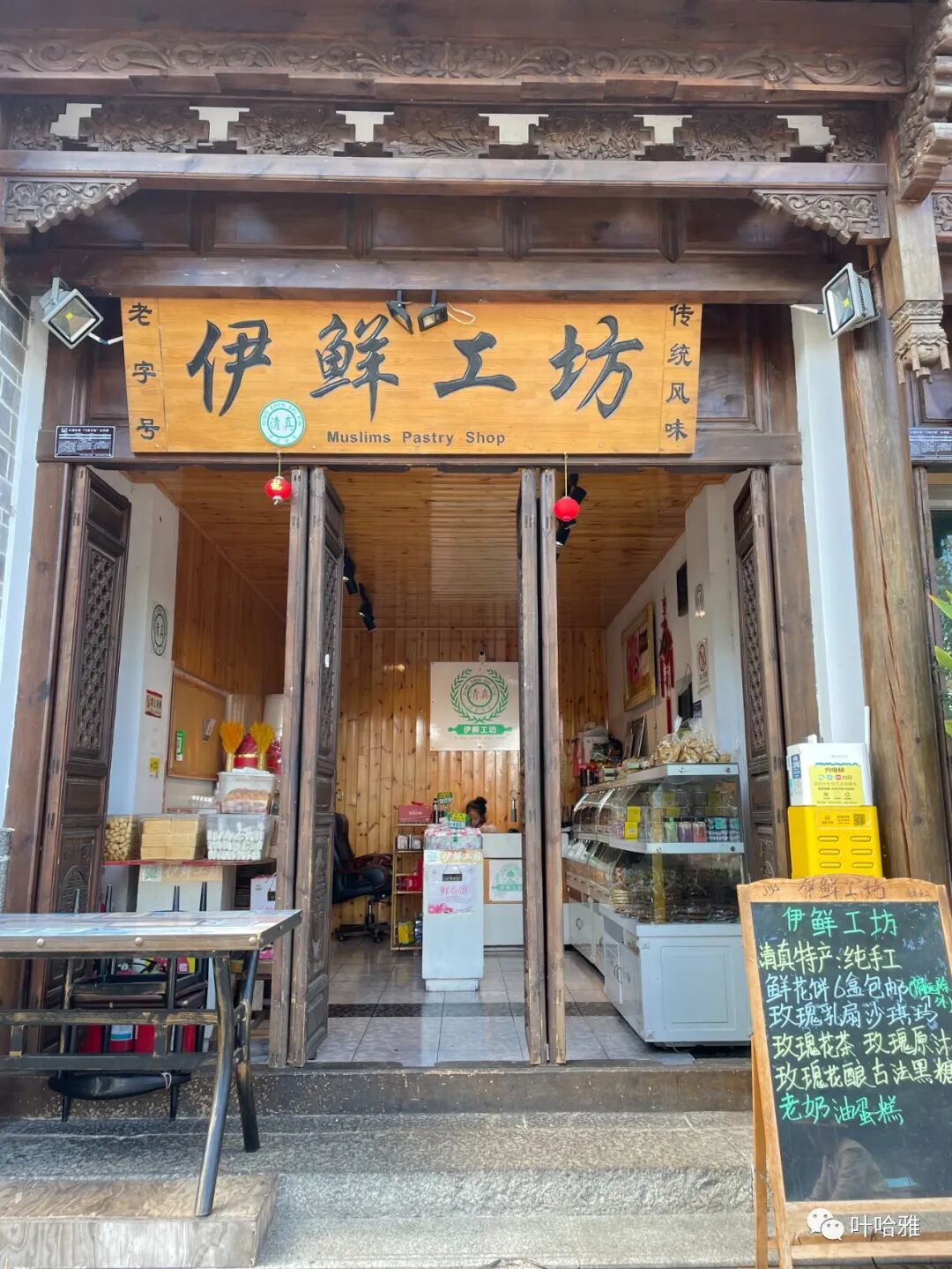
We bought maltose rice (maiyatangfan) from a Hui Muslim stall on the side of the road in the ancient city. It is a Yunnan specialty that is cold, refreshing, and sweet.
Dali Ancient City South Gate Mosque.
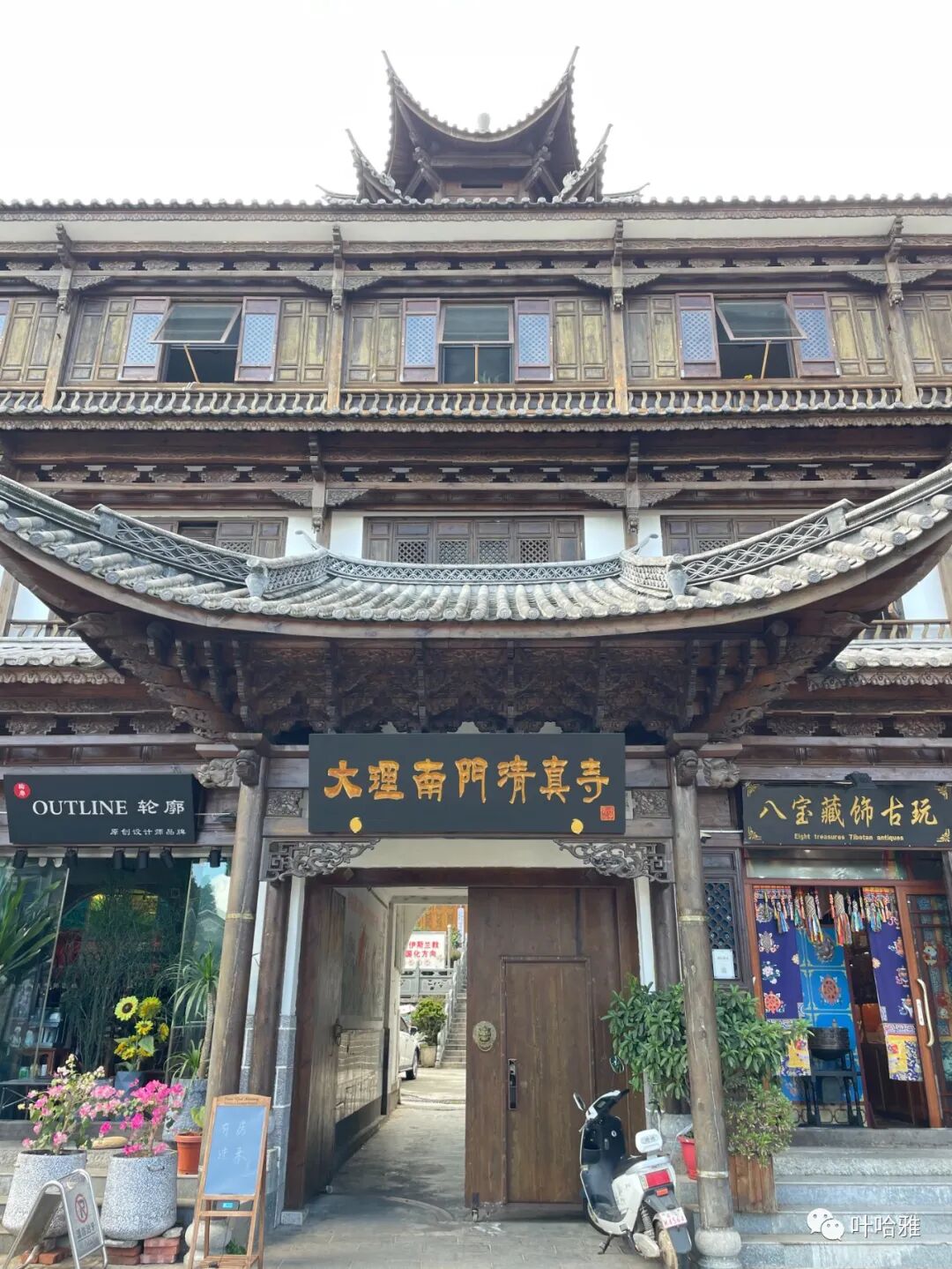
The South Gate Mosque in Dali was first built during the Yuan Dynasty and is one of the one hundred ancient mosques in the country. Before the failure of the Du Wenxiu Uprising, the mosque was located on Cangping Street, which was recorded in The Travel Diaries of Xu Xiake. After the Du Wenxiu Uprising failed, the mosque and its 120 mu of mosque land were confiscated as rebel property by the Qing government's liquidation committee. The mosque was converted into a City God Mosque, and in 1944, it was changed into a local court. The current South Gate Mosque is located inside the Dali Ancient City.
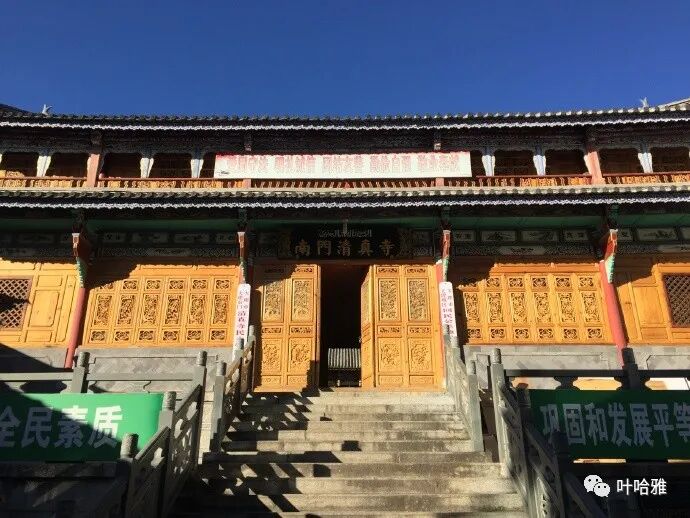
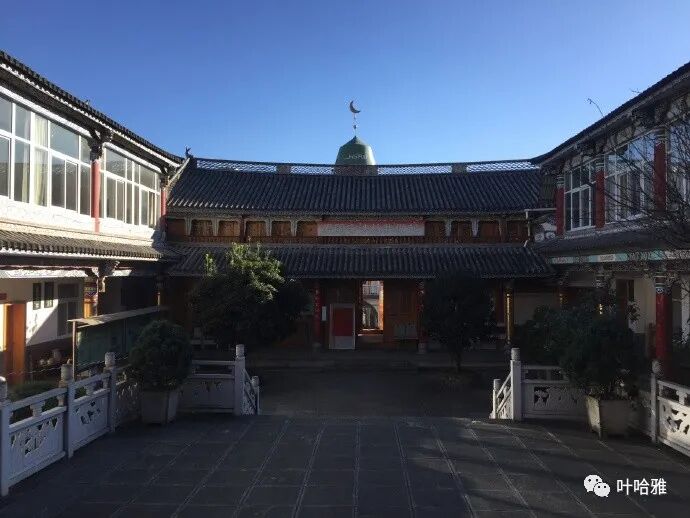
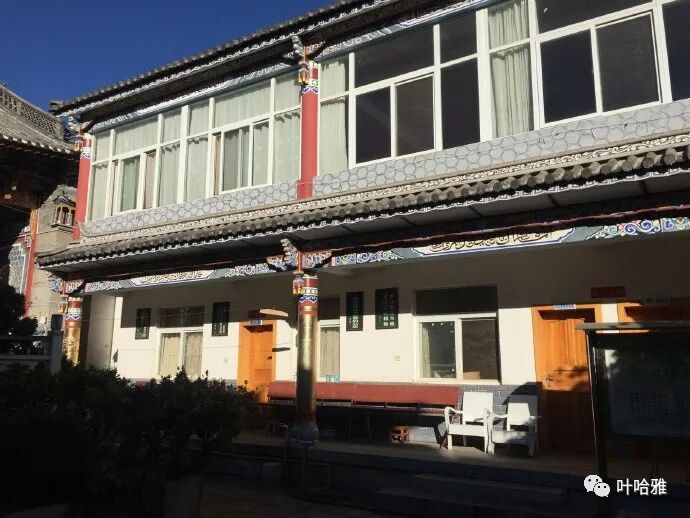
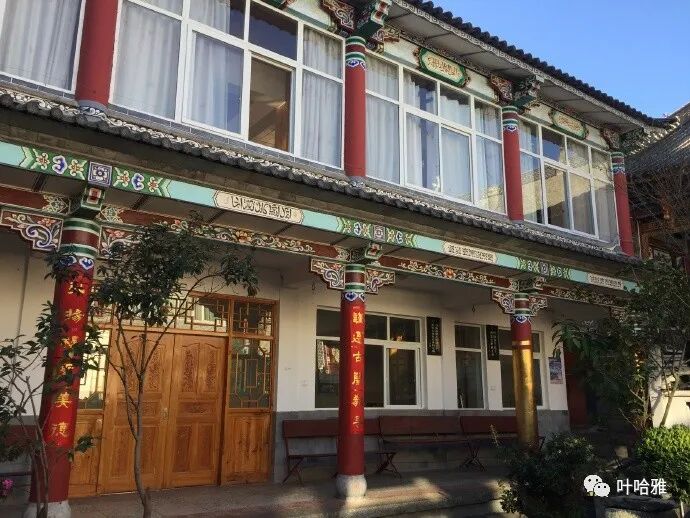
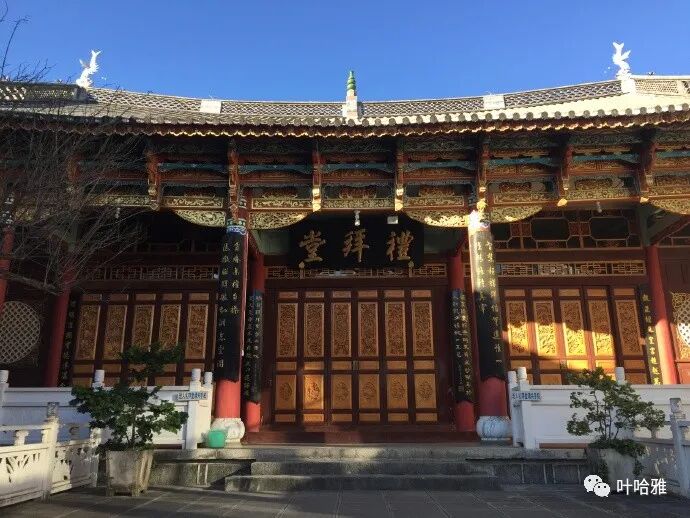
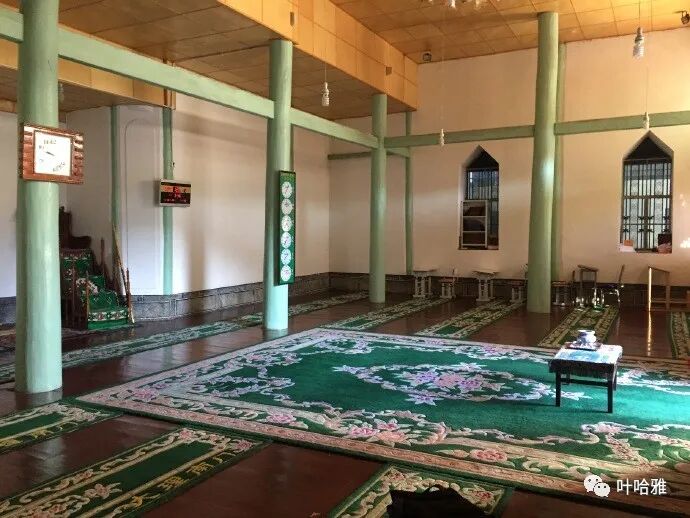
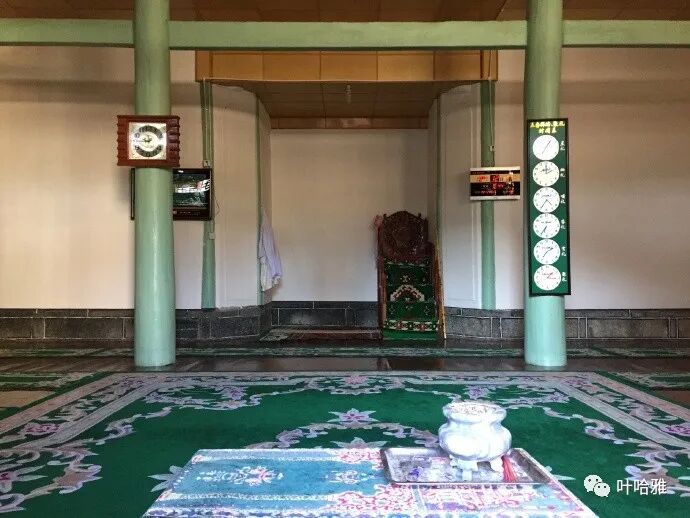
Salam Rice Noodle Shop
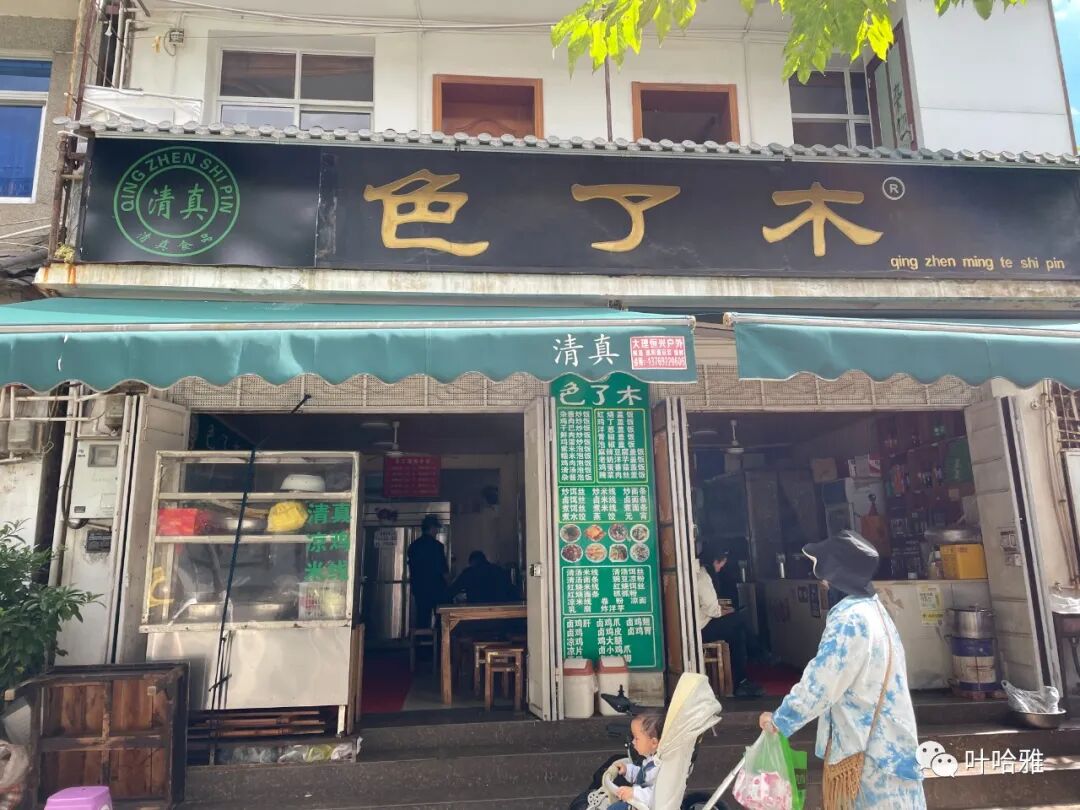
This small shop near the south gate of Dali Ancient City sells rice noodles (mixian), rice cakes (ersi), and rice soup. They do not sell alcohol, and their cold chicken rice noodles are excellent.
Dried beef (niuganba) hangs from the ceiling beams, which is a specialty meat for Hui Muslims in Yunnan.
Youfeng Courtyard
Youfeng Courtyard is a filming location for the TV show Meet Yourself starring Liu Yifei. I have not seen it, but my wife told me all about it.
We happened upon a teahouse next to the courtyard and sat there for the afternoon. While Fahim took a nap, we enjoyed tea in the courtyard.
Dali City has eighteen mosques, not counting the rest of Dali Prefecture. Contact information is in the table below.
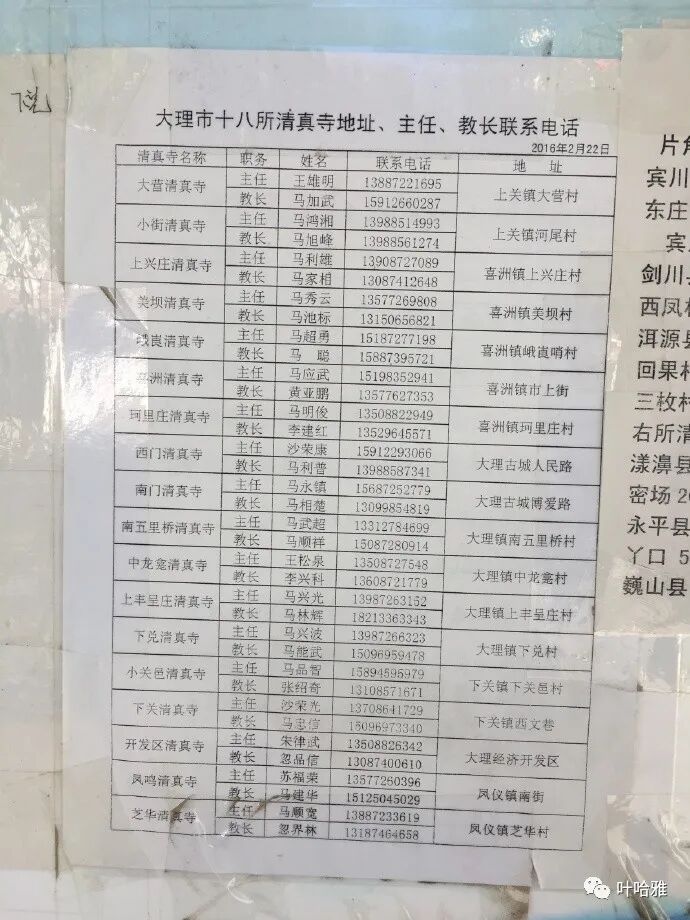
Dali City Fengyi Mosque
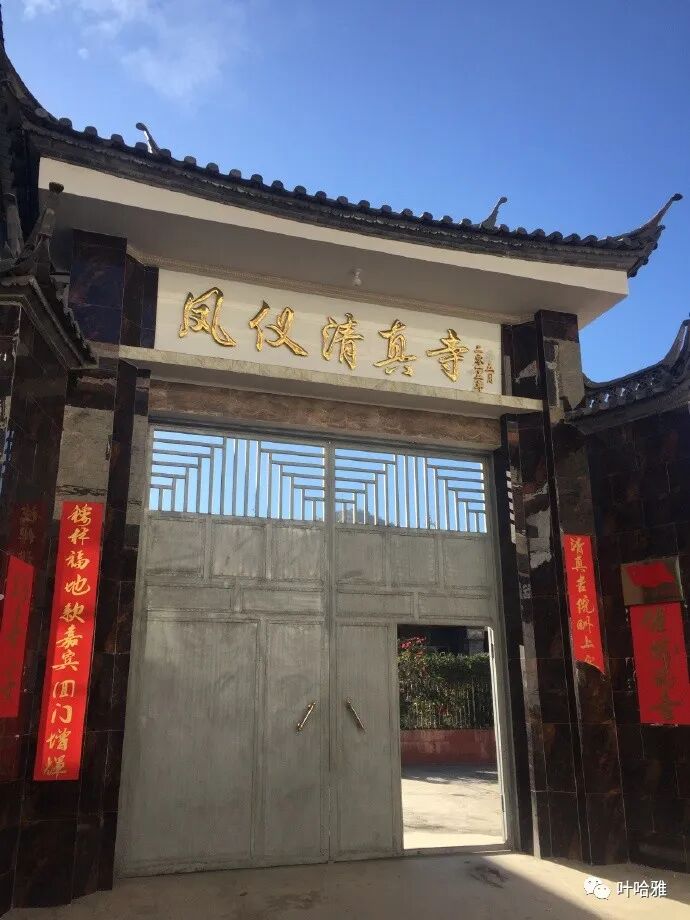
Fengyi Mosque was built during the Qing Dynasty, and the current building was renovated in 2001.
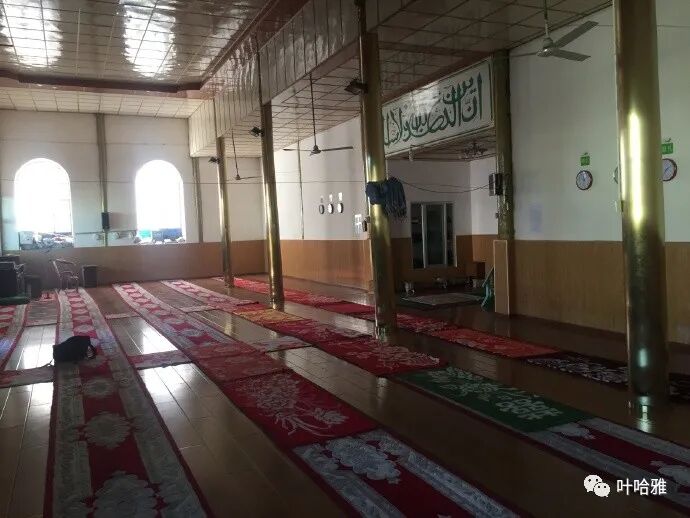
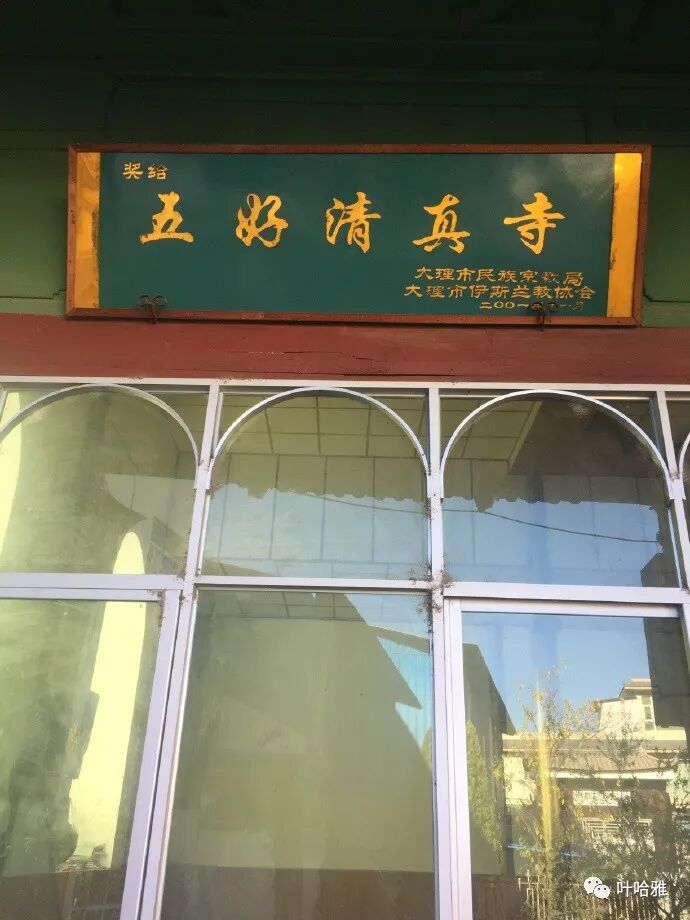
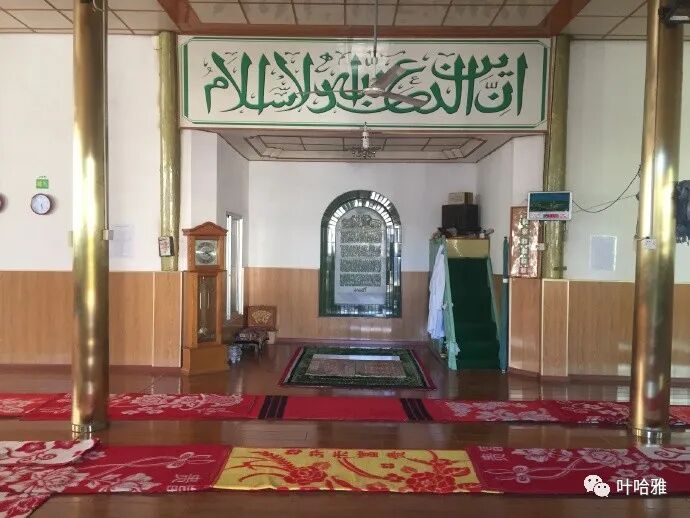
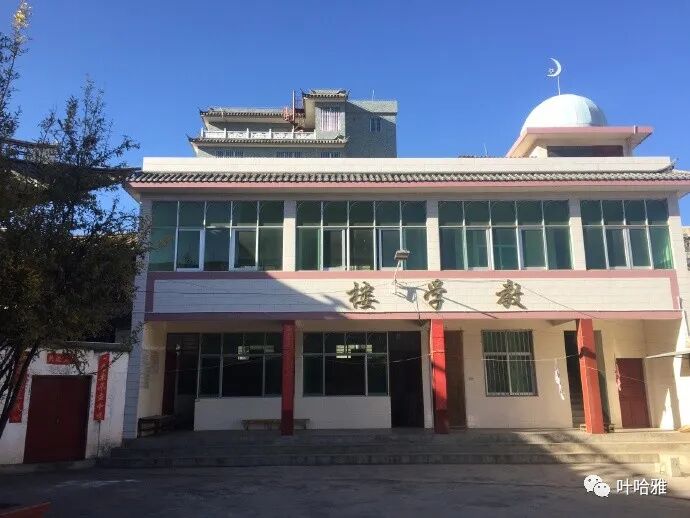
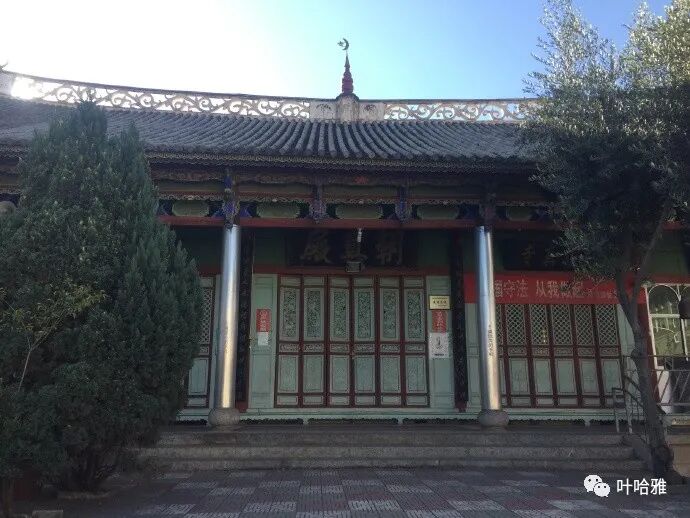
Xiaguan Mosque
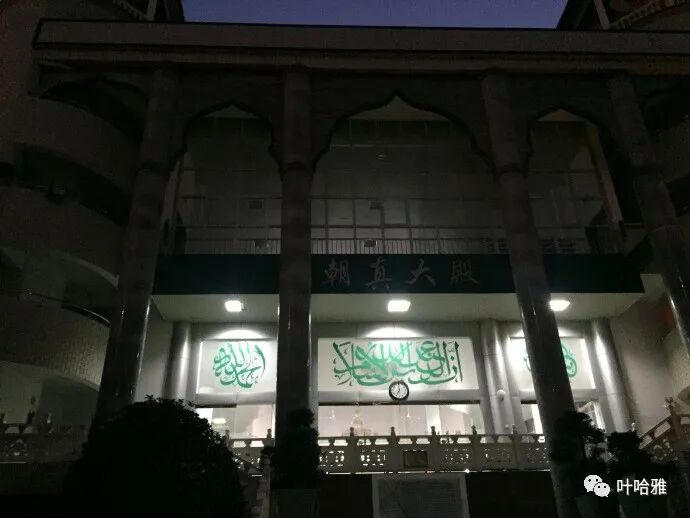
Xiaguan Mosque was built in 1915, and the current building was renovated in 2004.
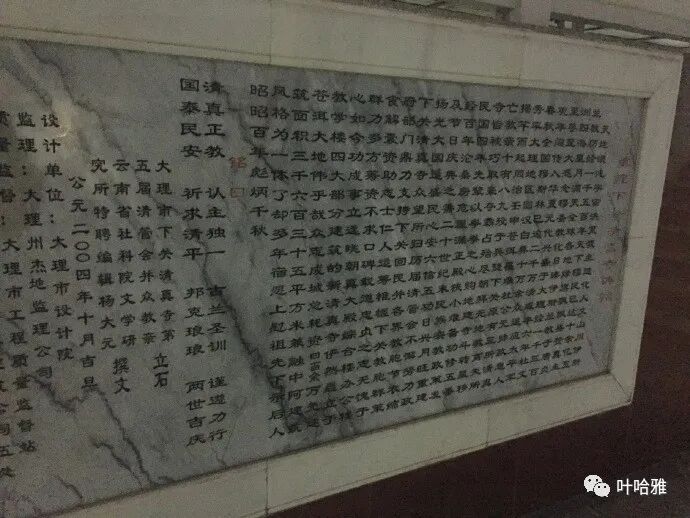
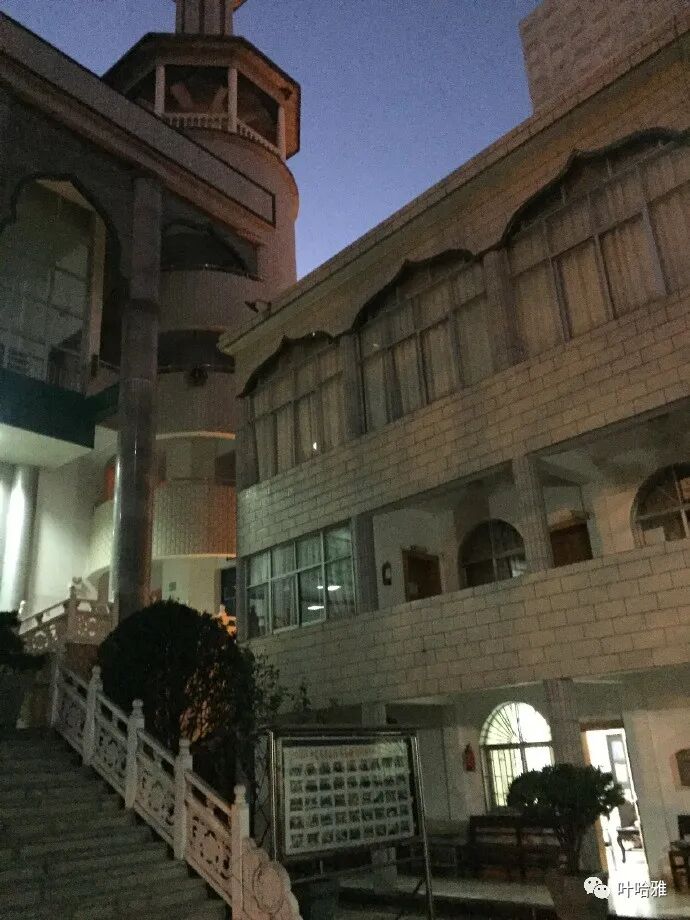
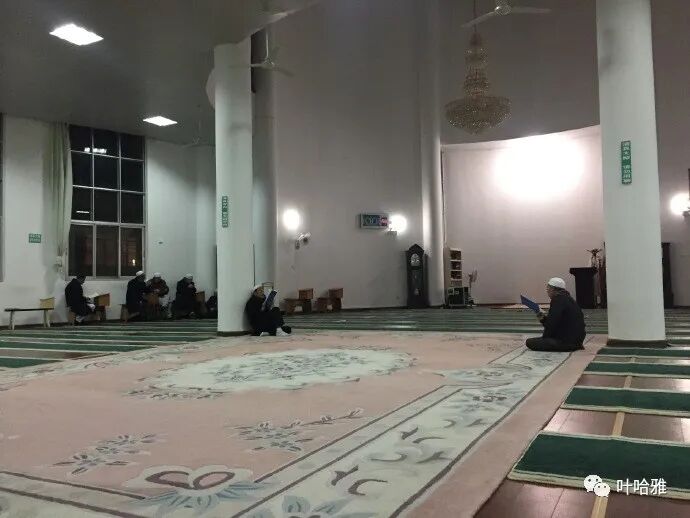
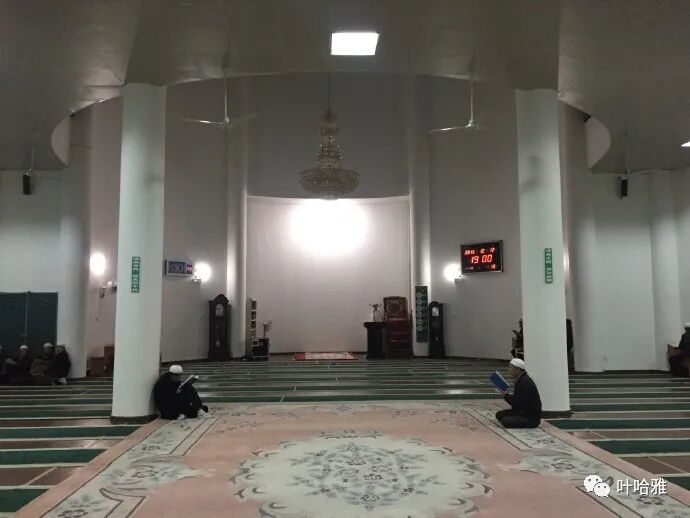
Nanwuliqiao Mosque
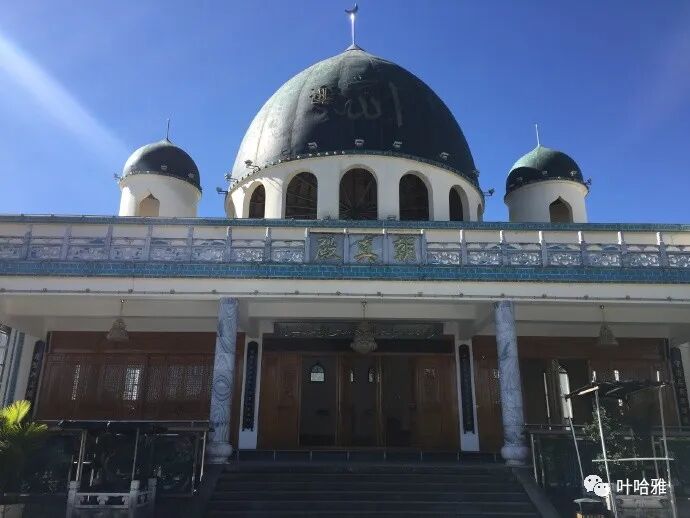
Nanwuliqiao is a Hui Muslim village less than three kilometers from Dali Ancient City. The village has a street dedicated to halal food (Nanwuliqiao Qingzhen Meishi Yitiaojie). The Nanwuliqiao mosque is also the largest mosque in Dali, first built in the tenth year of the reign of Mongke Khan of the Yuan Dynasty (1233).
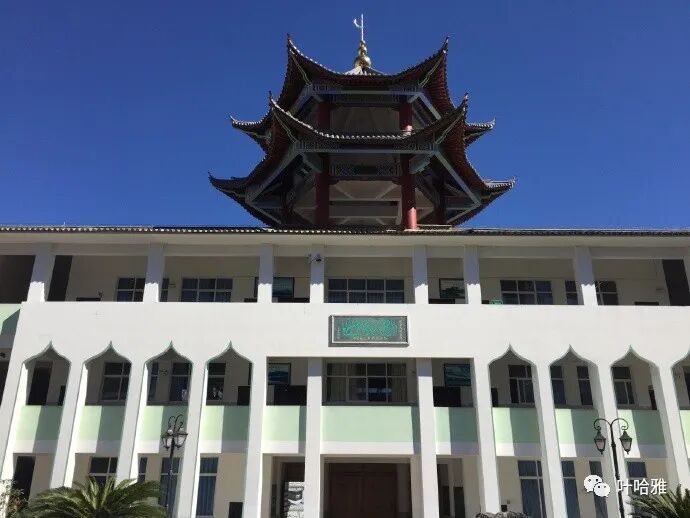
In Yunnan, there is a custom where locals invite guests from afar to stand in the first row near the imam during namaz, as they want to offer the best spot to their guests.
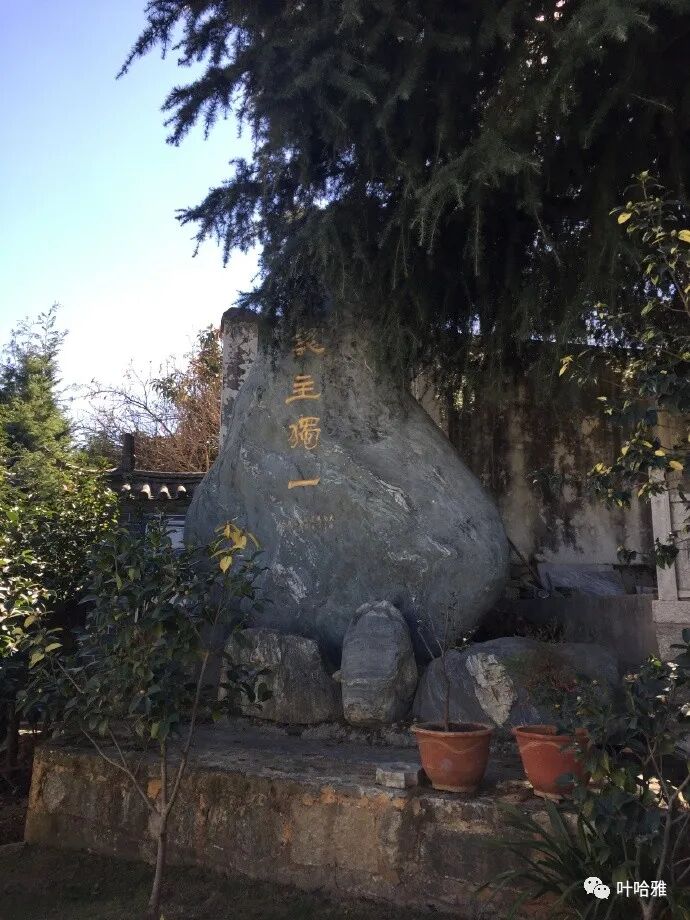
Nanwuliqiao Halal Food Street
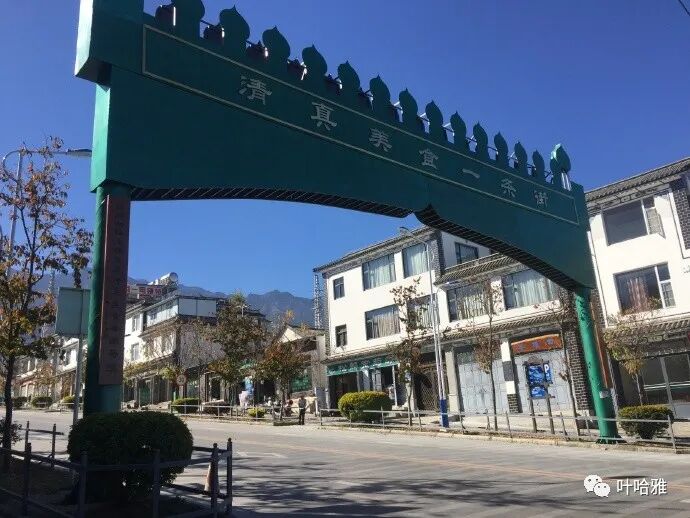
I took these photos in 2016. The signs have changed now, but it is still a halal food street. There is much more halal food here than in Dali Ancient City, and there are fewer tourists and more locals.
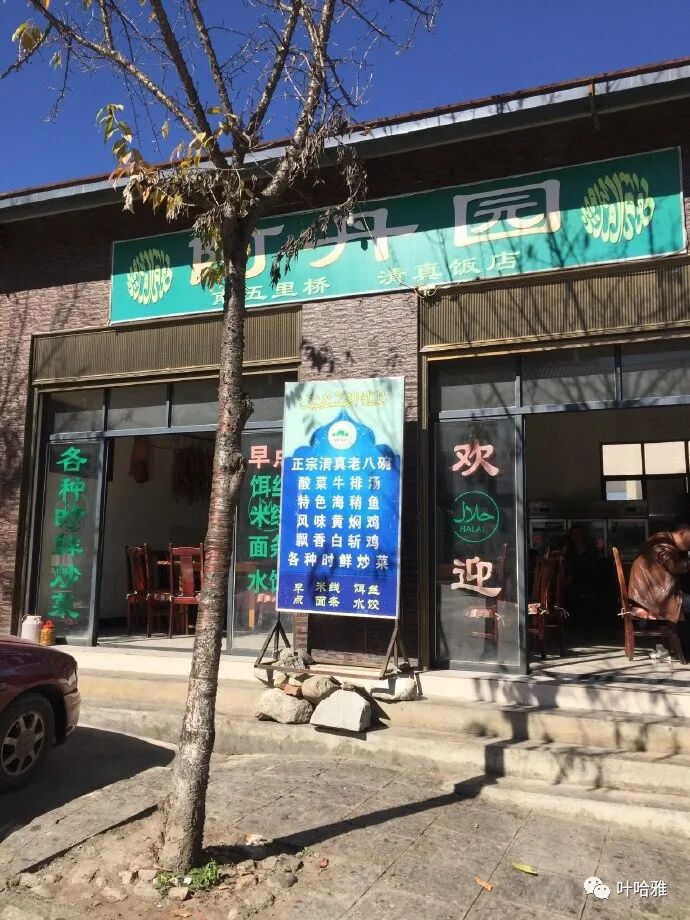
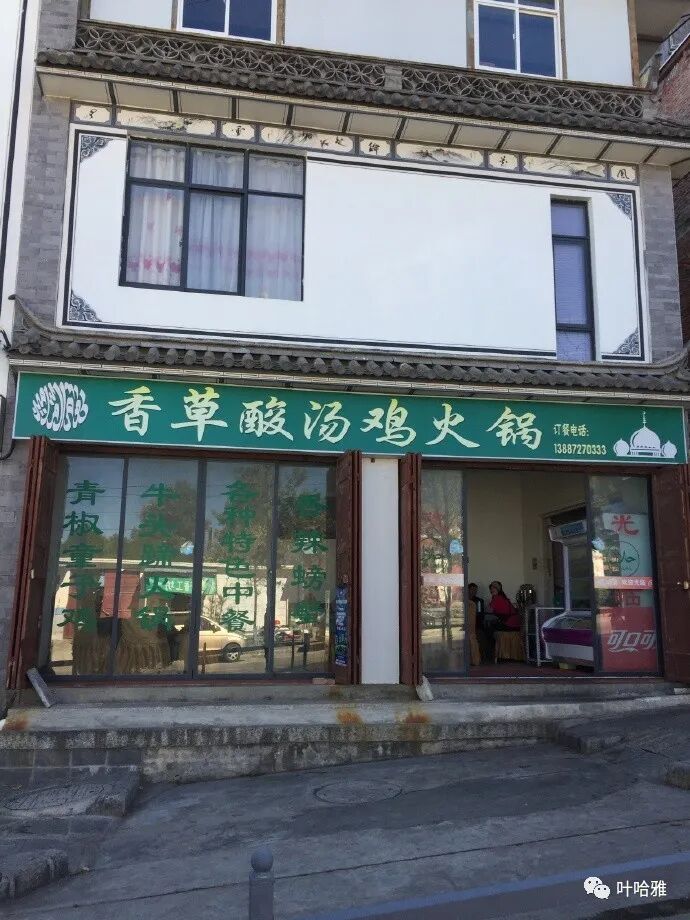
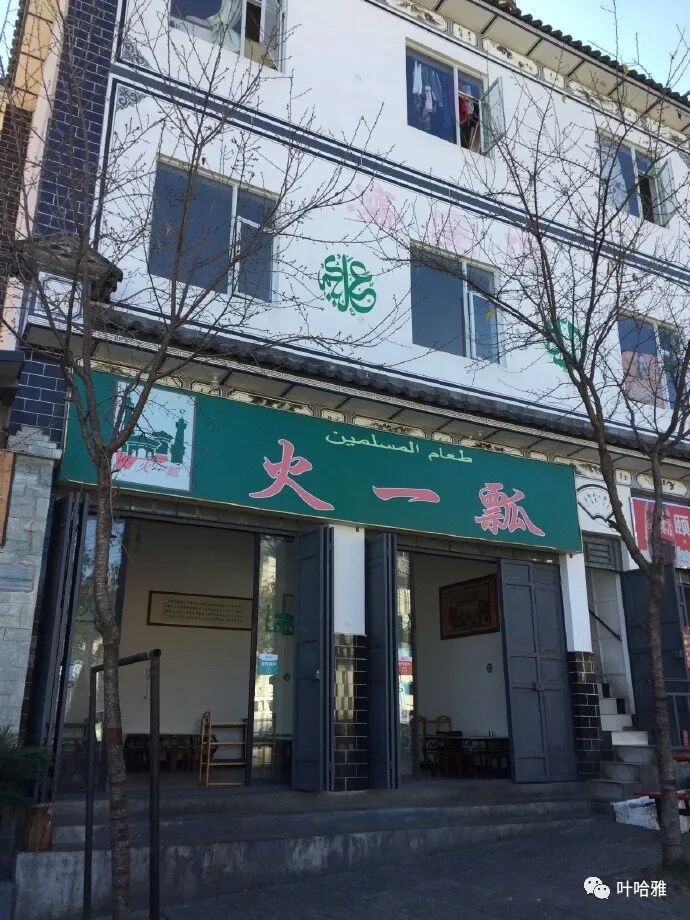
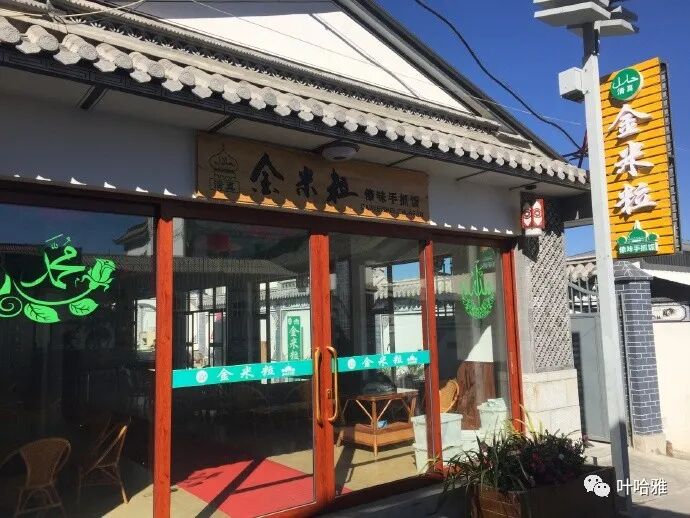
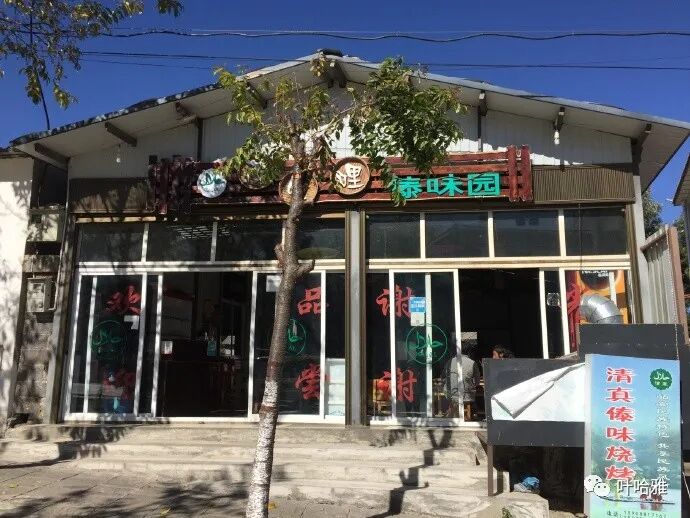
I recommend trying the Dai-style barbecue, because it is hard to find halal versions once you leave Dali.
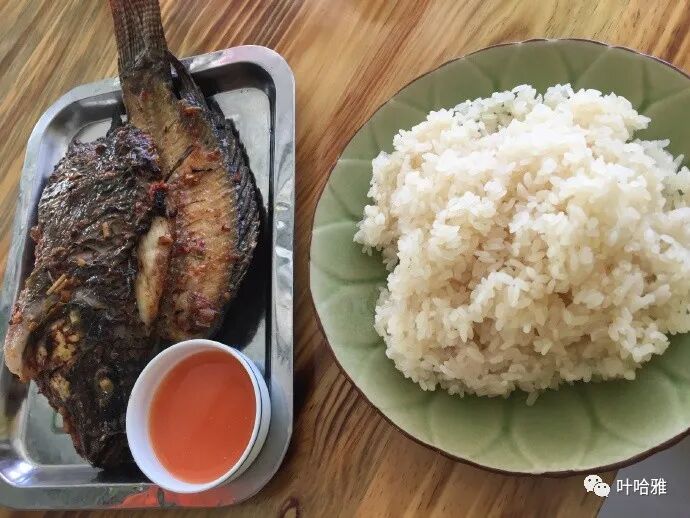
Dali Zhihua Mosque
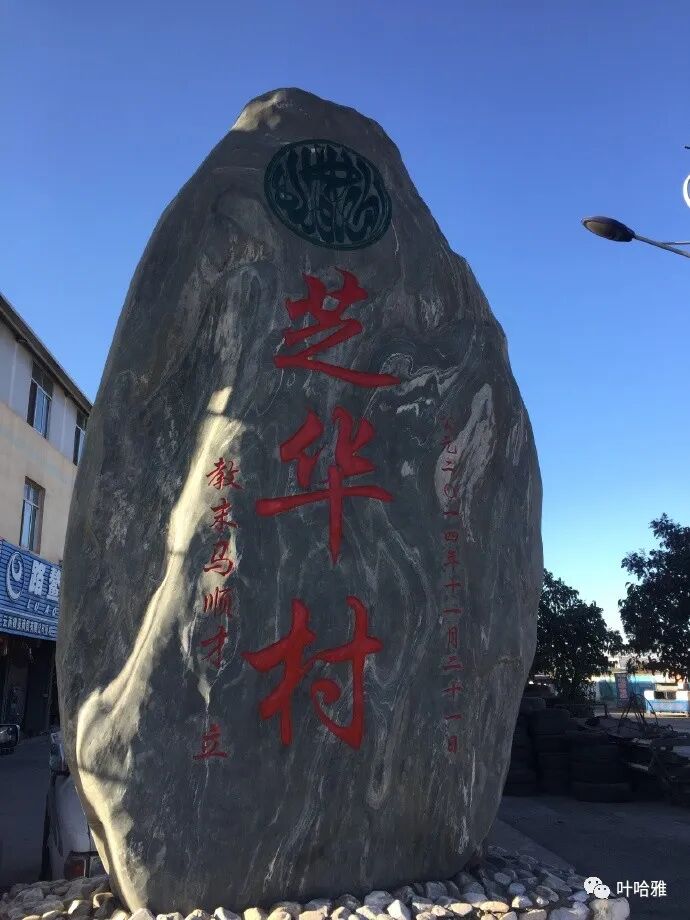
Zhihua Mosque was first built during the Hongwu period of the Ming Dynasty, and the current building was completed in 2000.
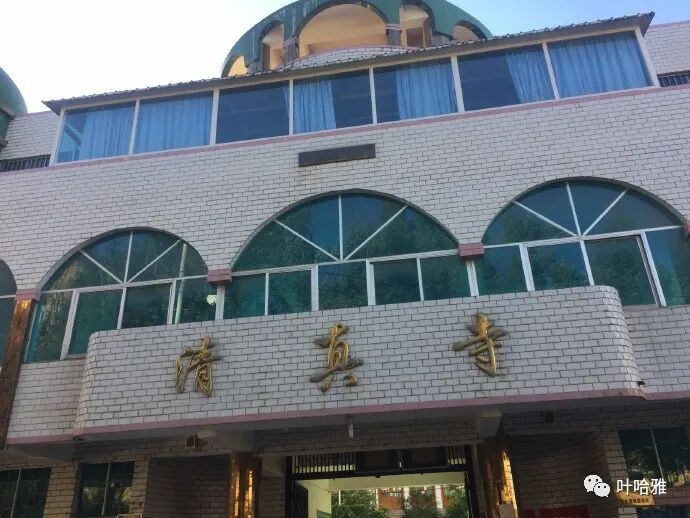
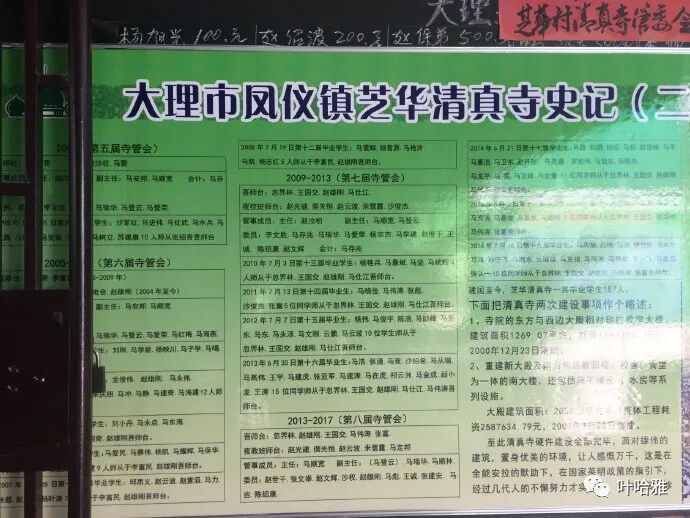
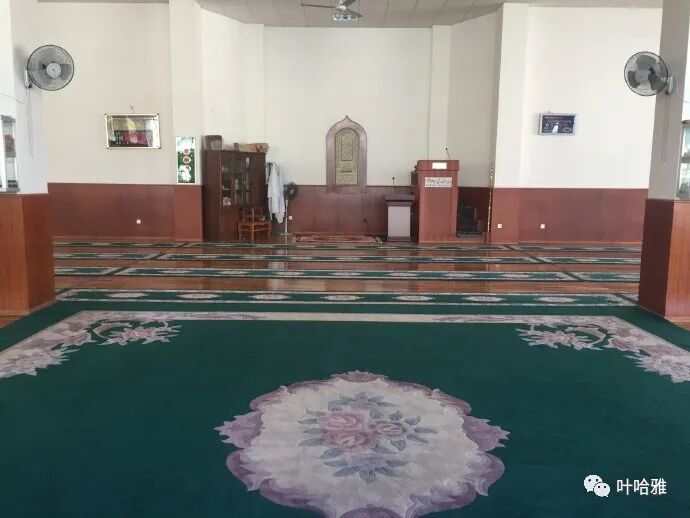
Dali Ximen Mosque
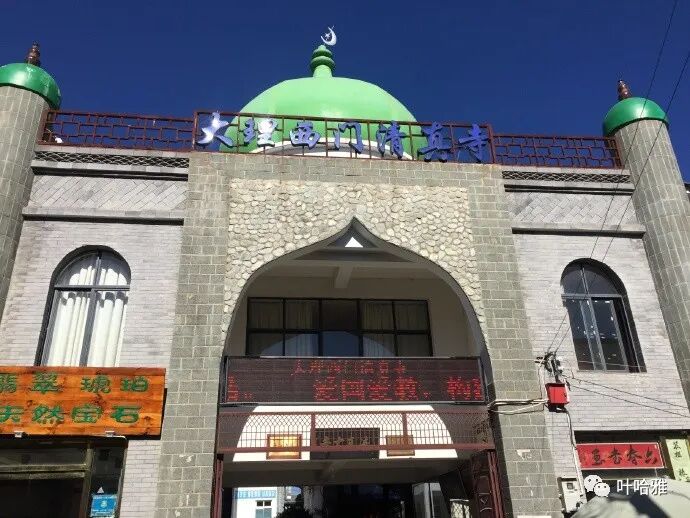
The history of Ximen Mosque dates back to the Yuan Dynasty. It was first built in the 15th year of the Zhiyuan reign (1278), making it over 700 years old. It was built by Qilie Zuocheng, a general under the Yunnan King Sayyid Ajjal Shams al-Din Omar, and is considered one of the oldest mosques in Yunnan.
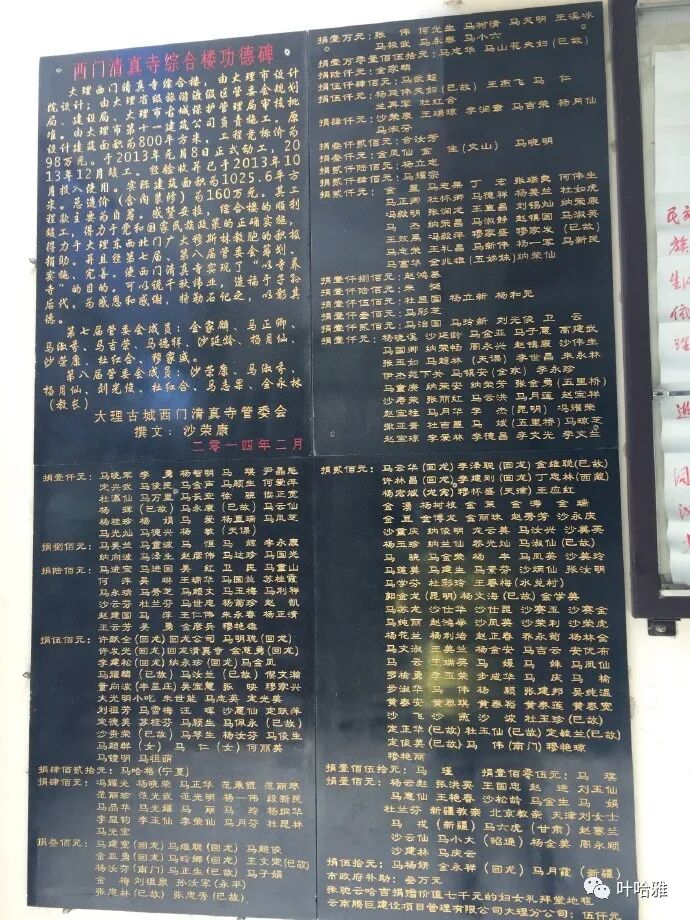
Du Wenxiu, a leader of the ethnic uprisings in Yunnan during the late Qing Dynasty, once founded the Duzhangjiao School at Ximen Mosque.
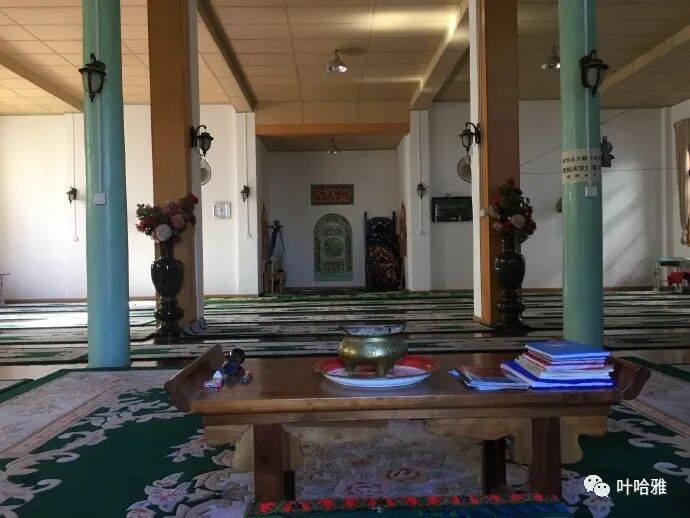
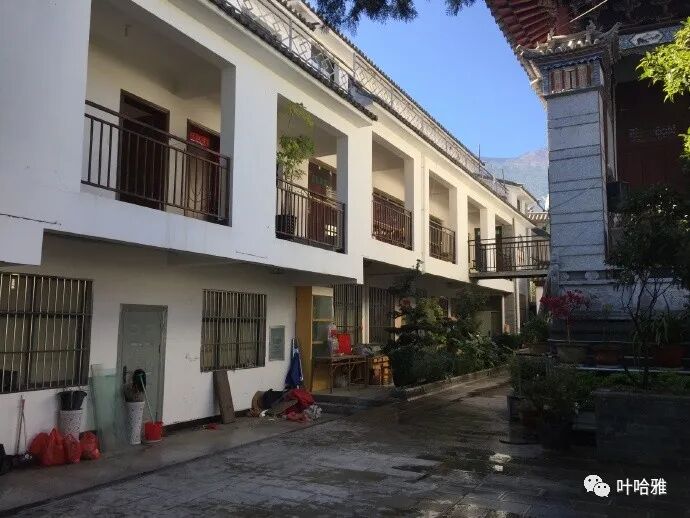
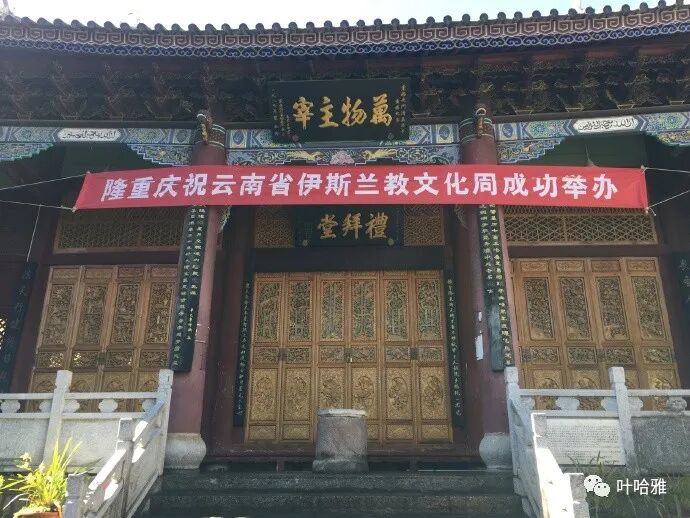
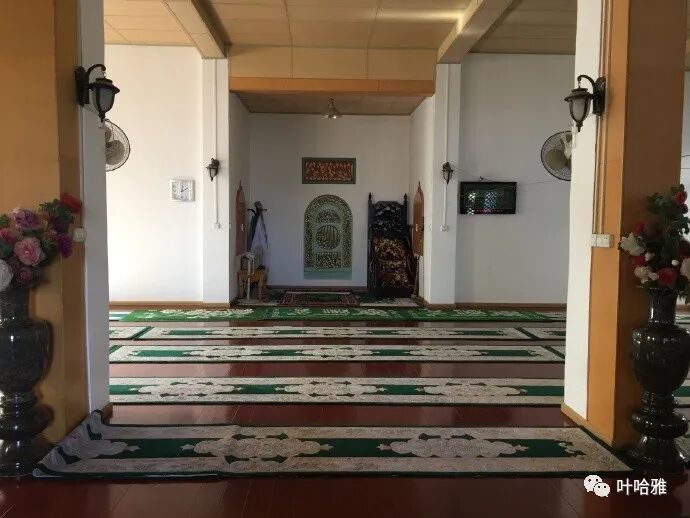
Xiadui Mosque
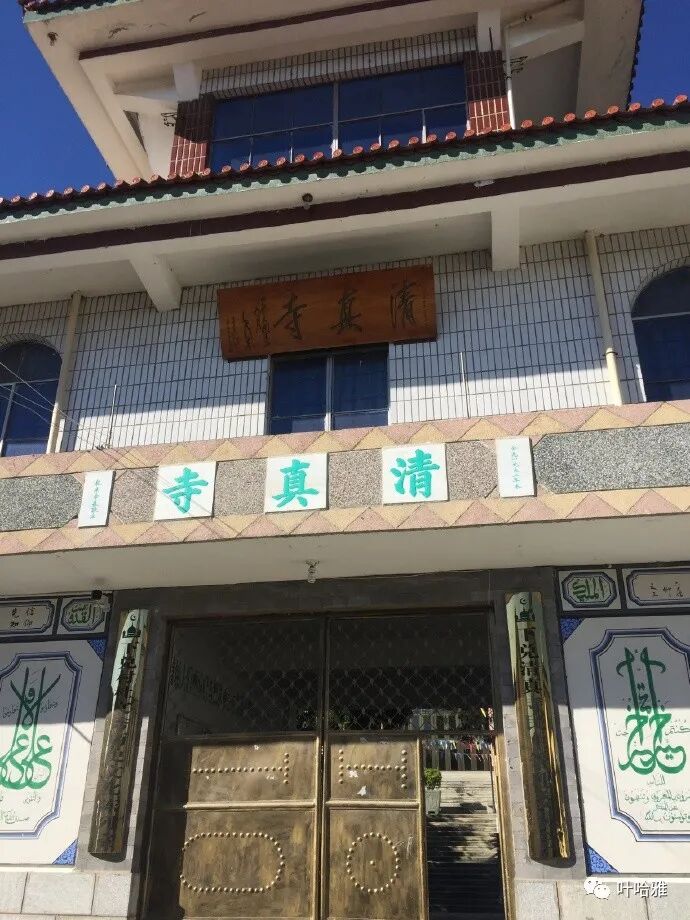
Xiadui Village is also a Hui Muslim village. The mosque was first built during the Qianlong period of the Qing Dynasty, and this is the place where Du Wenxiu died as a martyr.
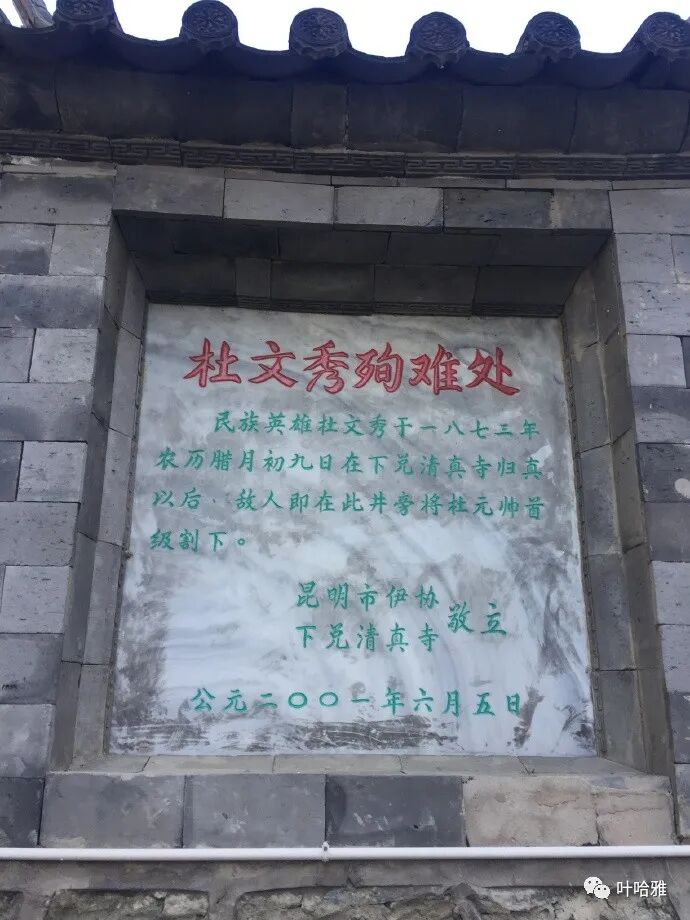
As a late Qing dynasty ethnic leader who fought against the Qing, Du Wenxiu was slandered by his enemies for colluding with foreign powers, setting up his own base, and establishing an independent state, all based on a flyer that once circulated in Yunnan. I once found foreign language documents to research this issue.
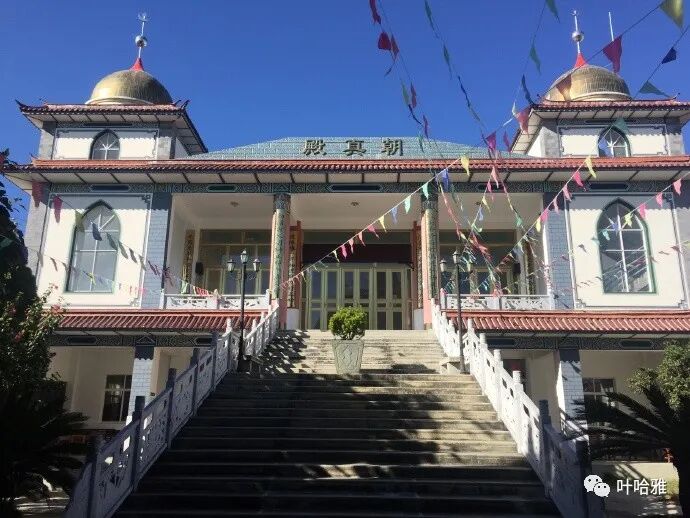
Regarding several issues of Du Wenxiu's foreign relations: in foreign documents, two issues concerning the Hui Muslim uprising were long debated. One was why Yunnan Hui Muslims were called Pan-thay, and the other was the issue of the Dali Islamic State. The content of a flyer and the nature of a regime are two different things. A regime's nature might be reflected in a flyer, but judging a regime solely based on one flyer is still problematic. Baber and Gill both asked the Dali Hui Muslims about the Islamic State and the title of Sultan. They reached the same conclusion: the title of Sultan was completely foreign to everyone. Except for two or three imams, the locals never used it to address their leader, and no one even knew the name Suleiman.
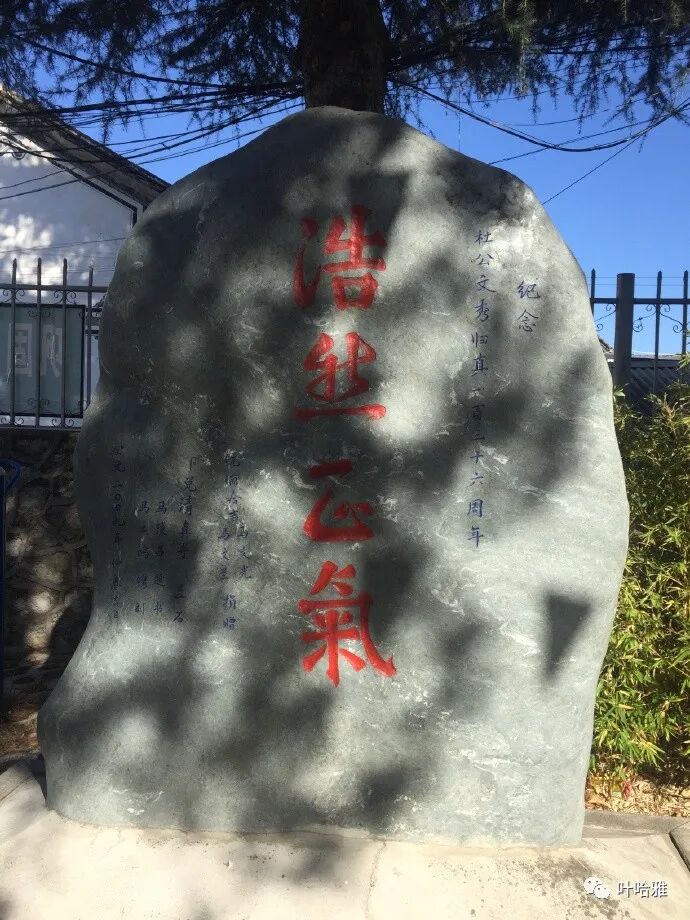
Therefore, the issue of the Dali Islamic State actually stemmed from this flyer. Clearly, the purpose of distributing this flyer was to incite Hui Muslims in other regions to join the resistance against Qing rule. Its content represented the views and tendencies of a very small number of imams. Du Wenxiu's views on religion were not that narrow, and the flyer did not represent the nature of the Dali Hui Muslim regime.
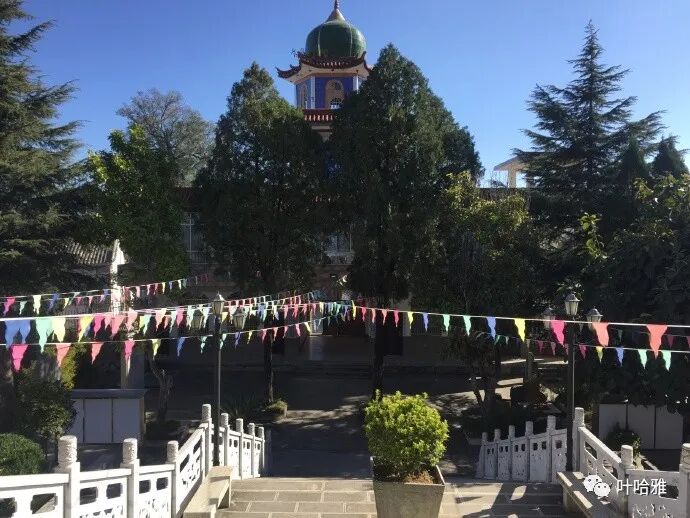
Du Wenxiu advocated that the three religions should be of one heart and united as one. This meant Islam, Buddhism, and the Yi people's religion.
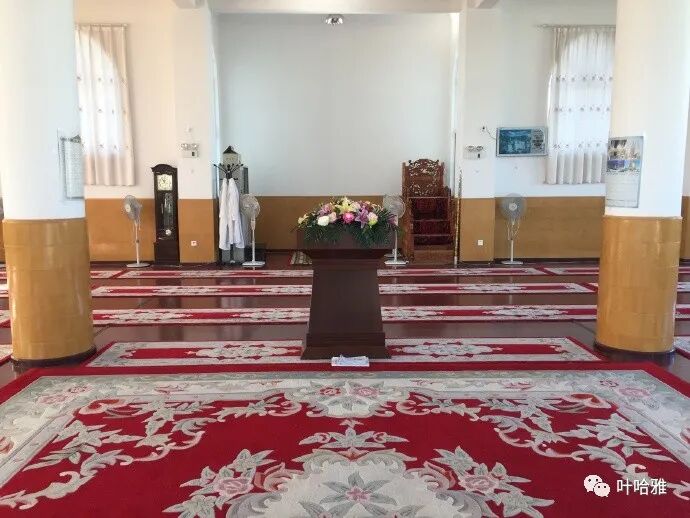
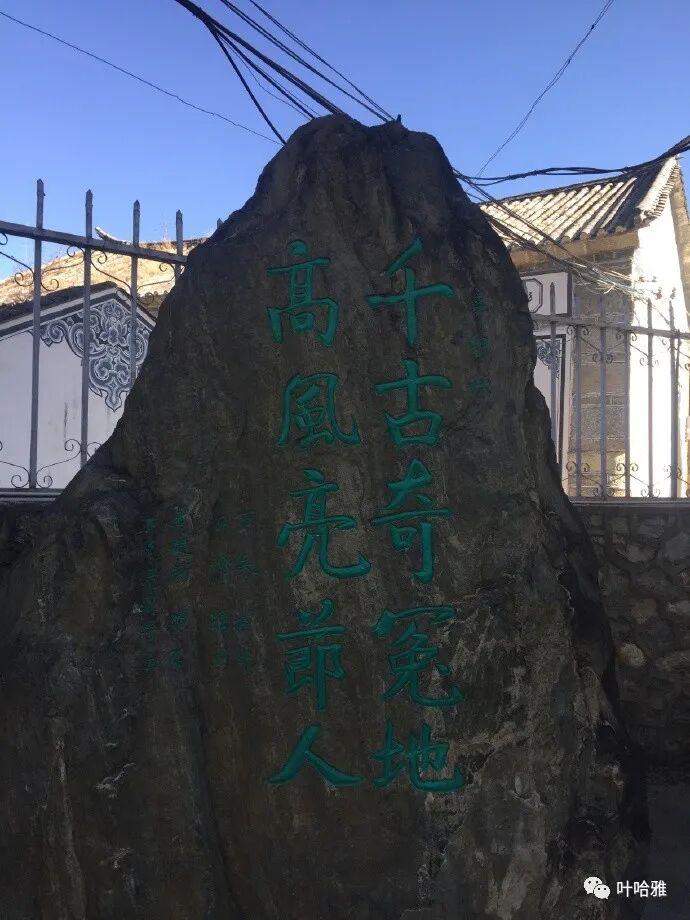
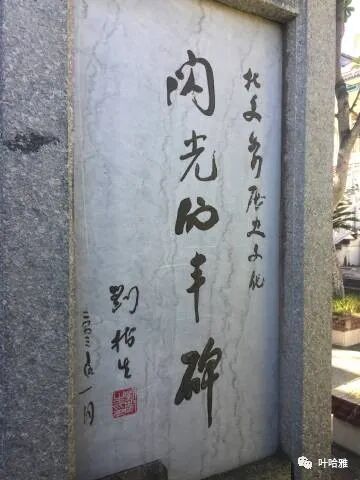
Yitianyuan Halal Cuisine, Dali Branch.
The main restaurant is in Kunming, and the Dali branch has been operating for 11 years. It is a relatively large Yunnan restaurant.
This is a photo of a napkin taken in 2016; it certainly wouldn't be designed like this today.
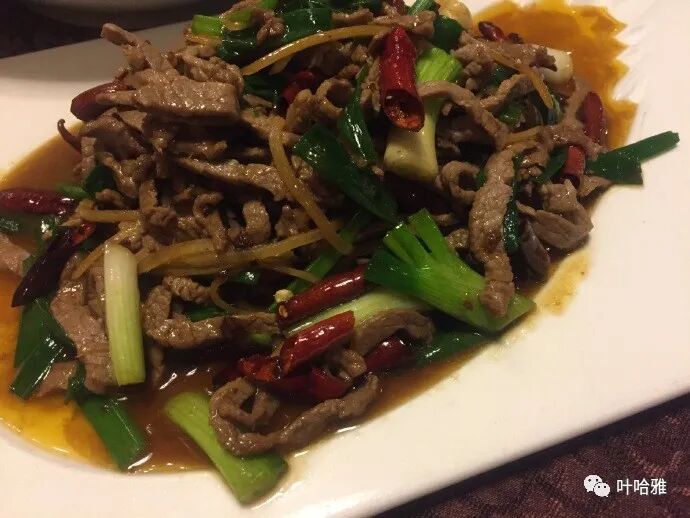
I had stir-fried beef (xiaochao huangniurou) and fried milk fan (zha rushan). This was my first time trying fried milk fan, a deep-fried dairy snack invented by Hui Muslims.
Xizhou Ancient Town
There are not many Islamic elements left in Xizhou Ancient Town. Only one old mosque remains, along with a few halal snack shops. Most Hui Muslims in Xizhou live outside the ancient town.
Xizhou has a local snack called Xizhou flaky flatbread (xizhou posu baba). It is a large, deep-fried bun made by both Hui and Han people.
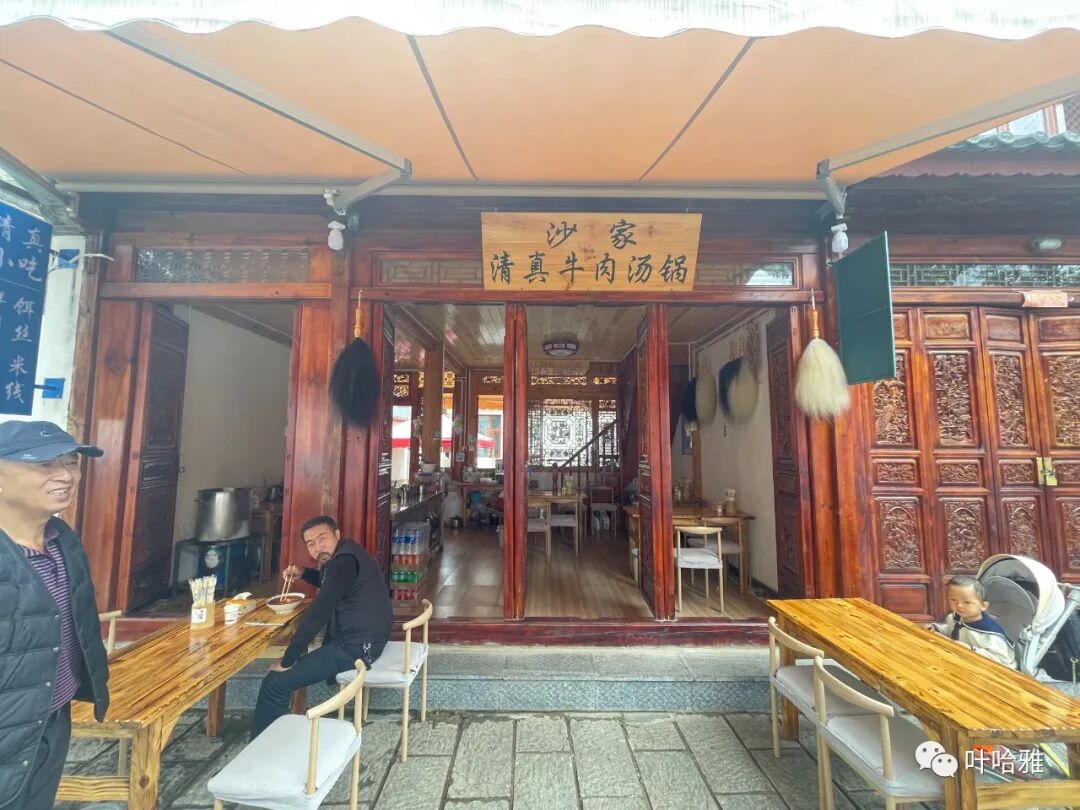
In the morning, we ate rice noodles (mixian) at Shajia Shop inside Xizhou Ancient Town. They serve local-style rice noodles with original broth cooked in a copper pot. You can add your own toppings, which works well for us since we can choose non-spicy options. Their chicken soup is delicious, and the owner kindly gave us a small bowl of noodles for Fahim.
Fahim really loves slurping noodles, and he enjoyed this meal.
After finishing our noodles, we wandered around the Windy Courtyard (youfeng xiaoyuan) in the ancient town.
Fahim really liked the blue Xizhou fridge magnets in the ancient town and played in front of a shop for half an hour.
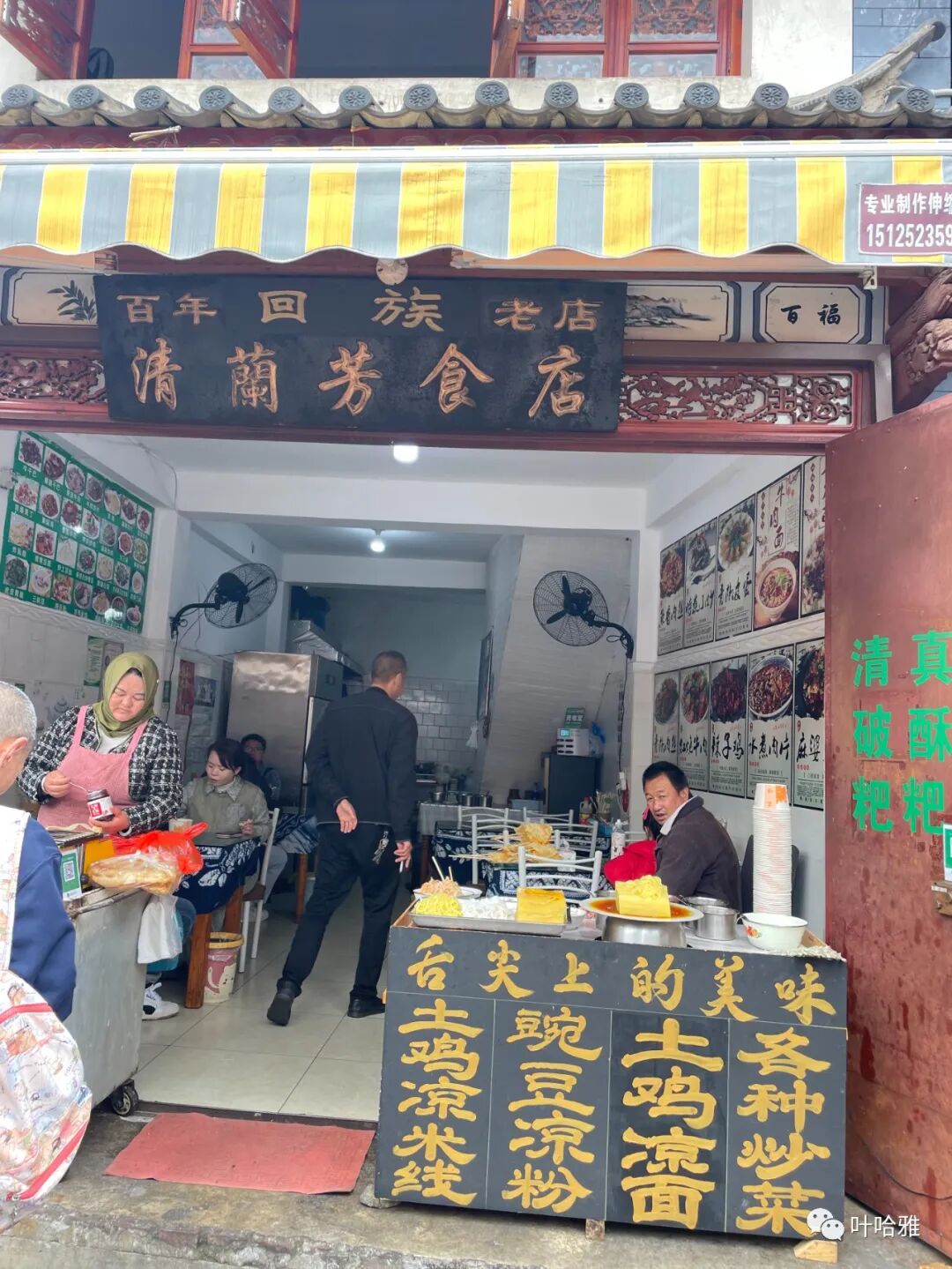
I also tried grilled milk fan (kao rushan) in Xizhou for the first time, and I think it tastes better than the fried version.
Xizhou Mosque
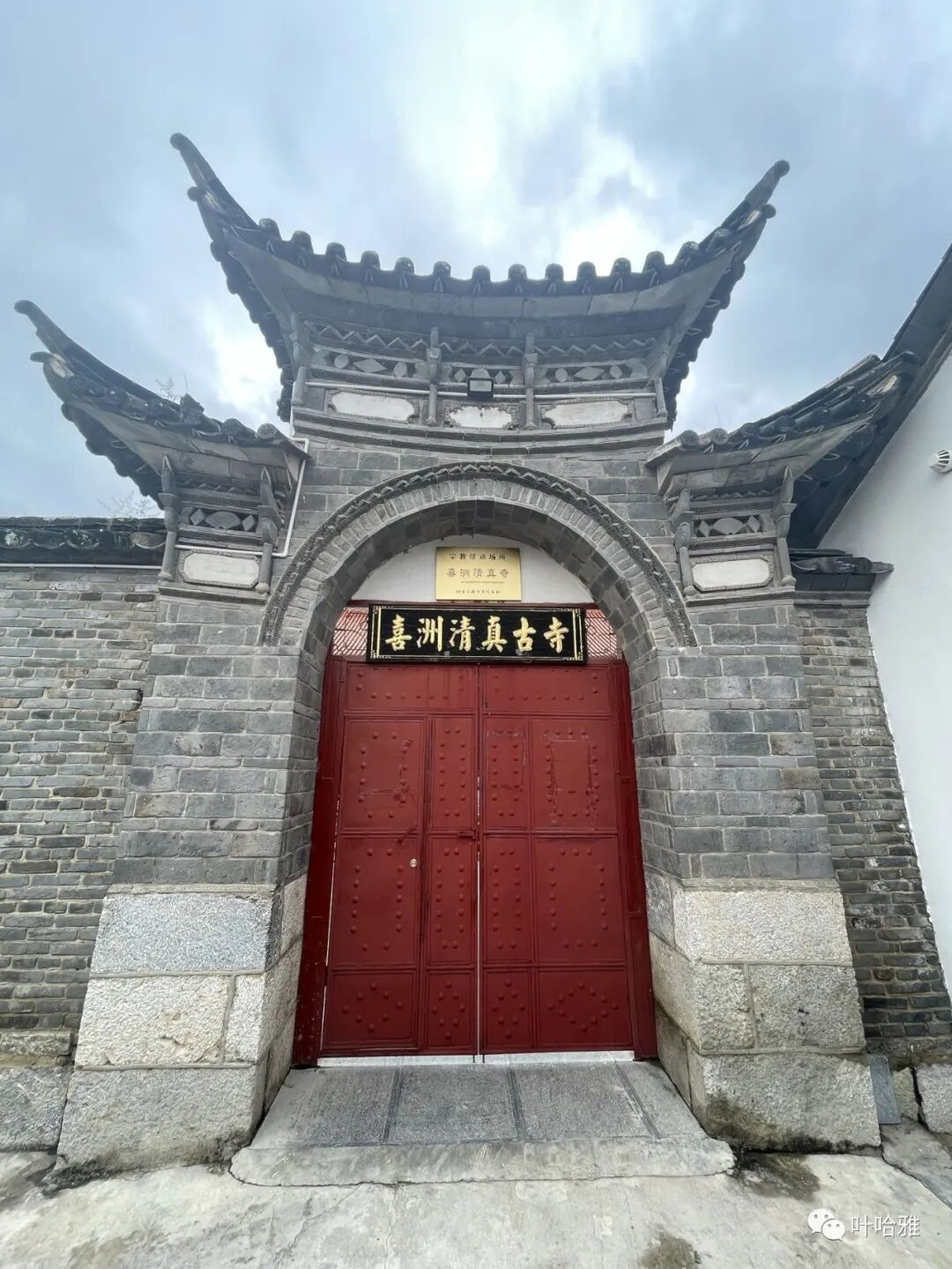
Xizhou originally had two mosques, the Ma Family Mosque and the Zhang Family Mosque. After the Dali regime failed, they were confiscated as rebel property. By the end of the Qing Dynasty and the beginning of the Republic of China, Hui Muslims chose representatives to ask local gentry to return Zhangjia Mosque. Since Zhangjia Mosque had been expanded and turned into a God of Wealth Hall (Caishendian), the local government gave the Hui Muslims a different plot of land to build a mosque. After several years of fundraising, the mosque was completed in 1922, and the prayer hall was expanded in 2004.
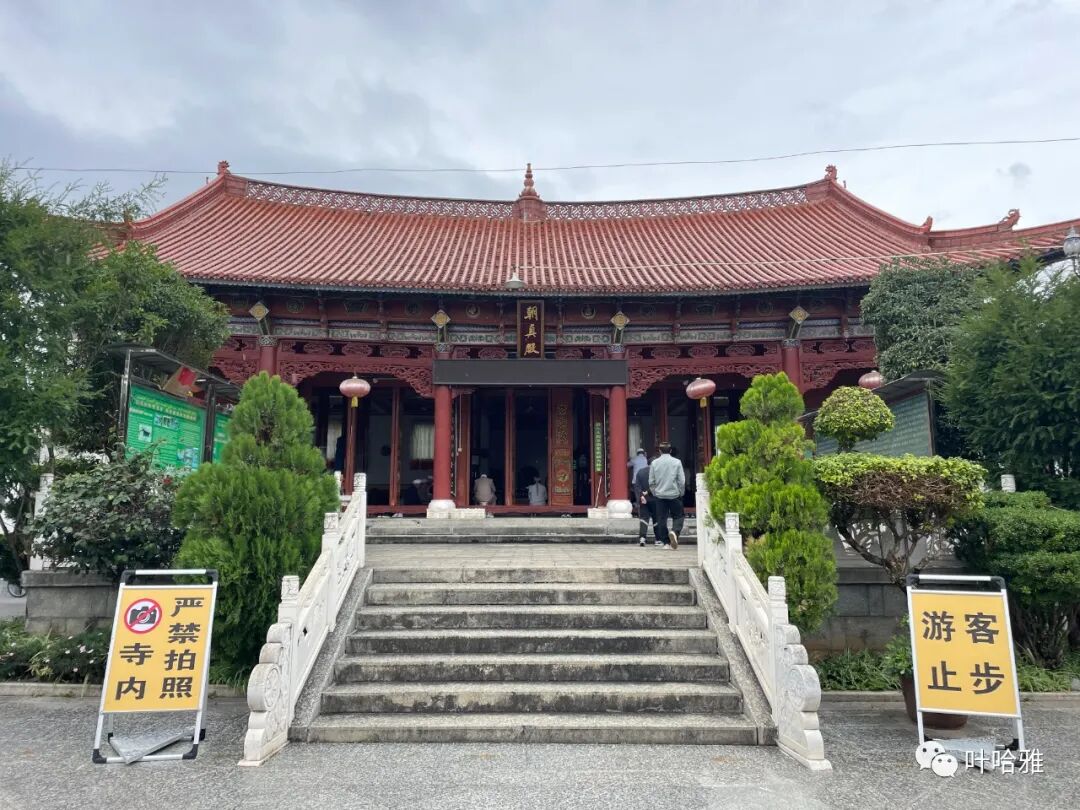
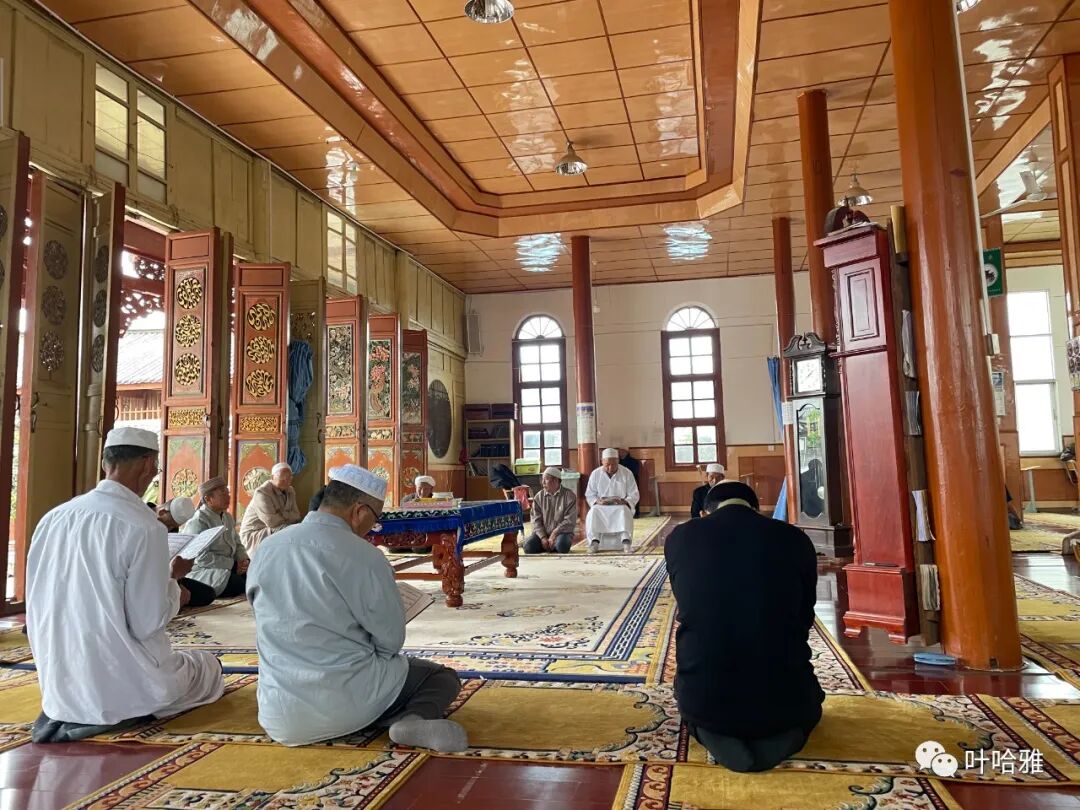
I attended Jumu'ah prayer in Xizhou. There are not many Hui Muslims here, and as usual, everyone sat in a circle to recite the Suole before the prayer.
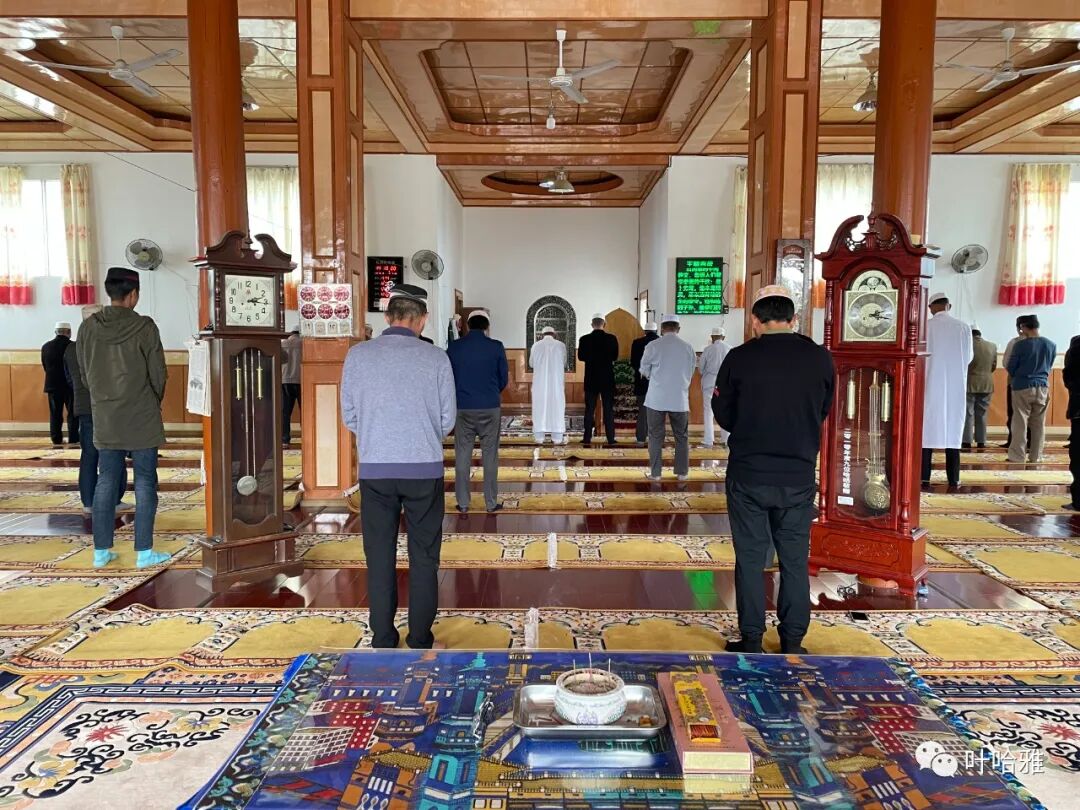
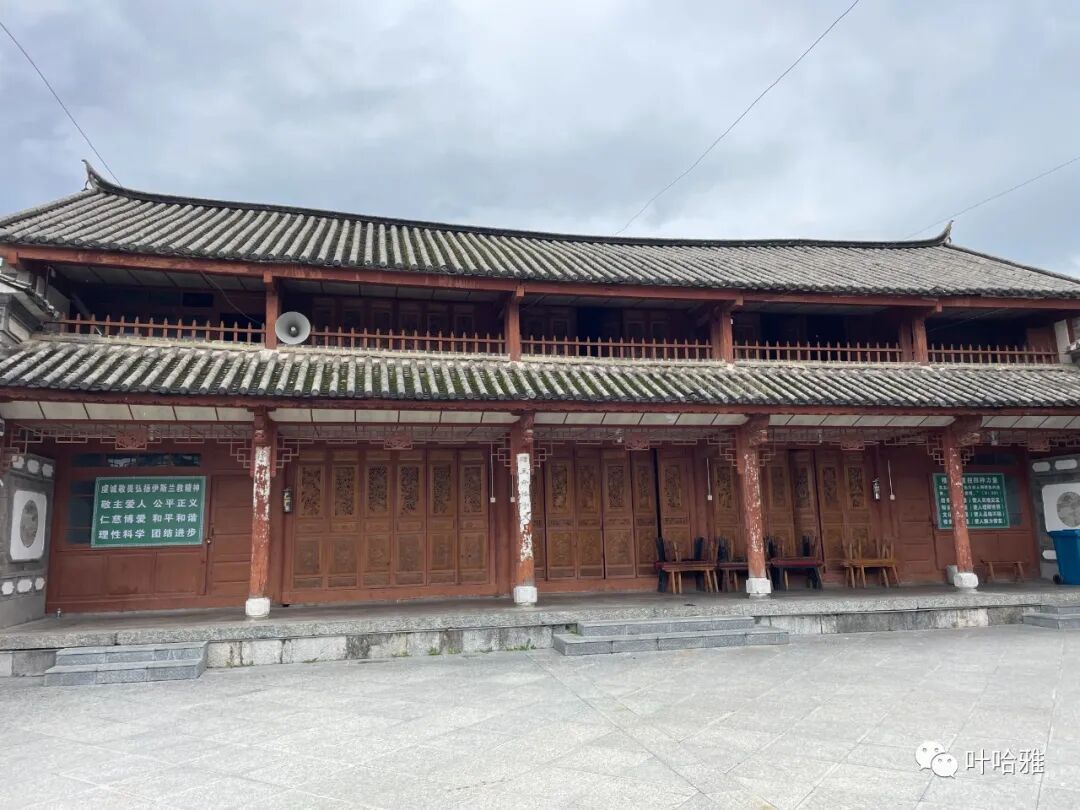
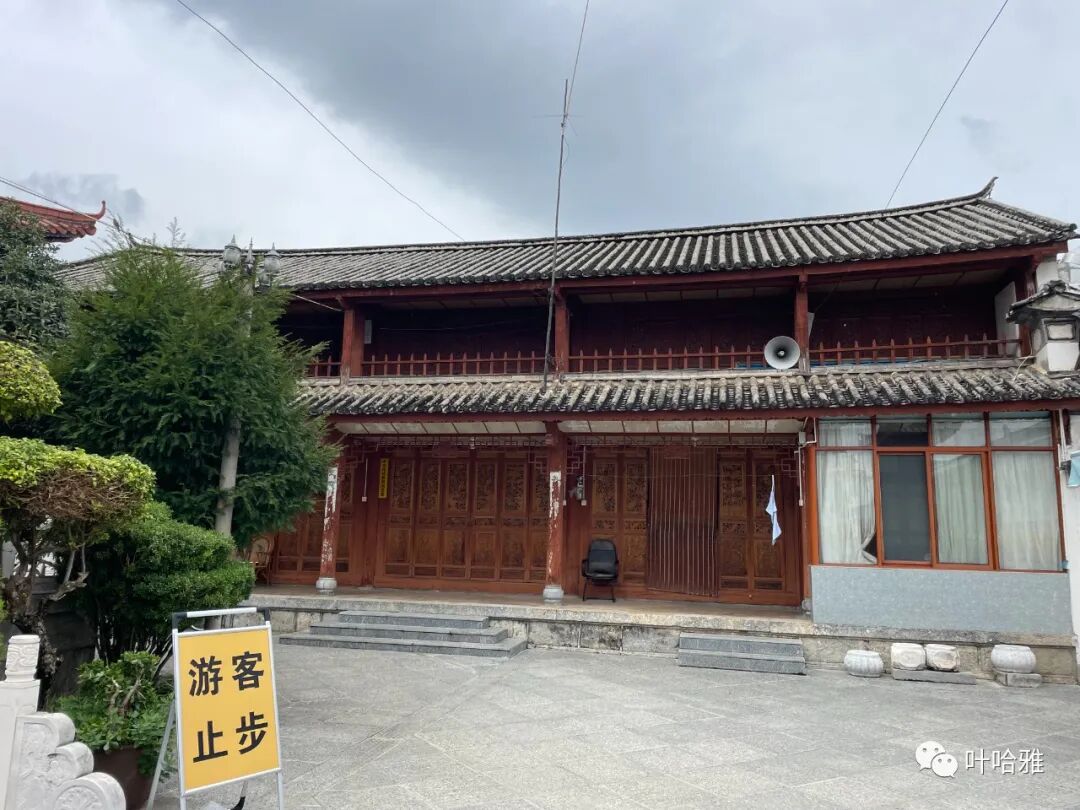
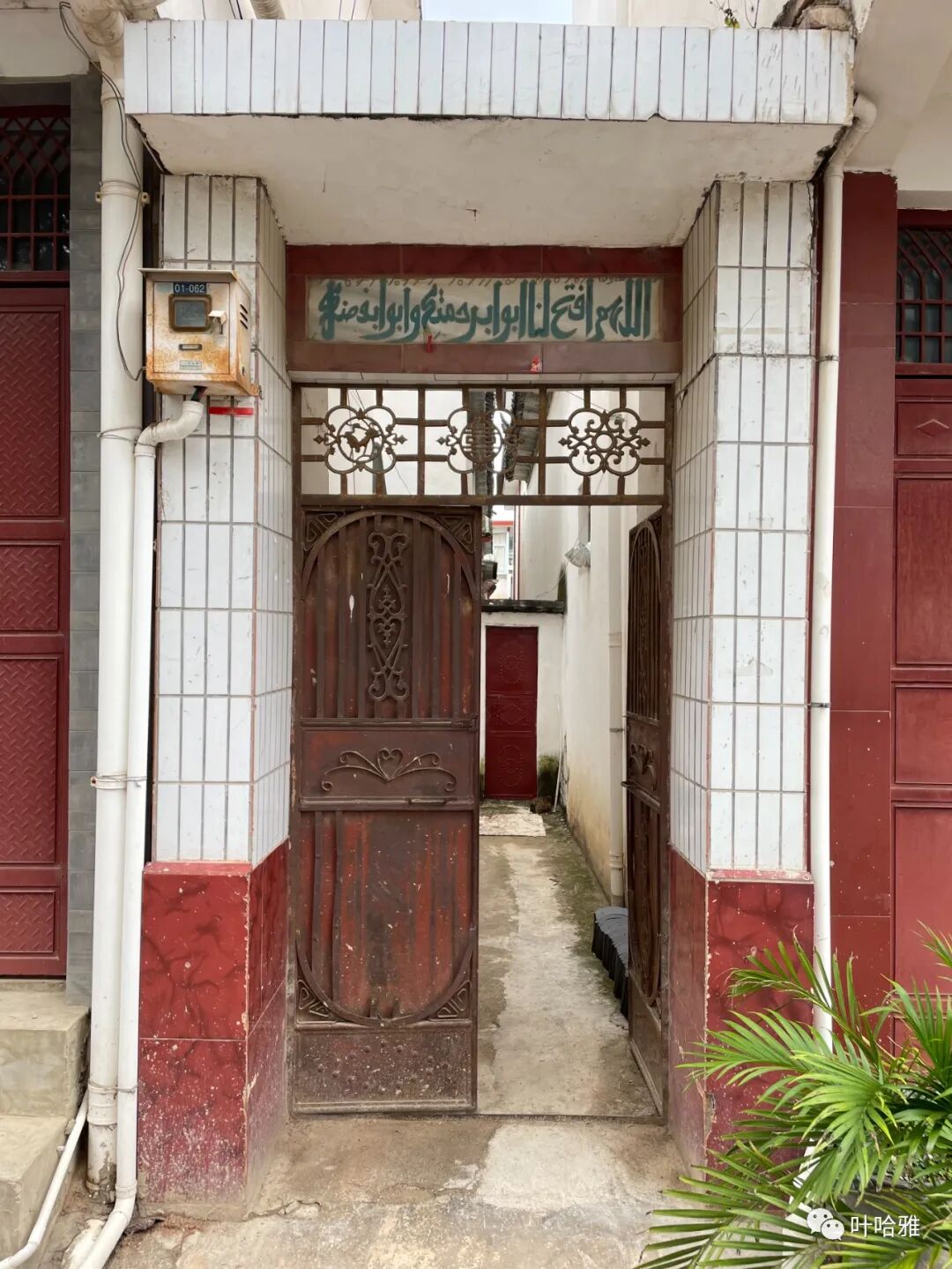
The prayer plaques (dua pai) are still on the doorways of the houses in the old town.
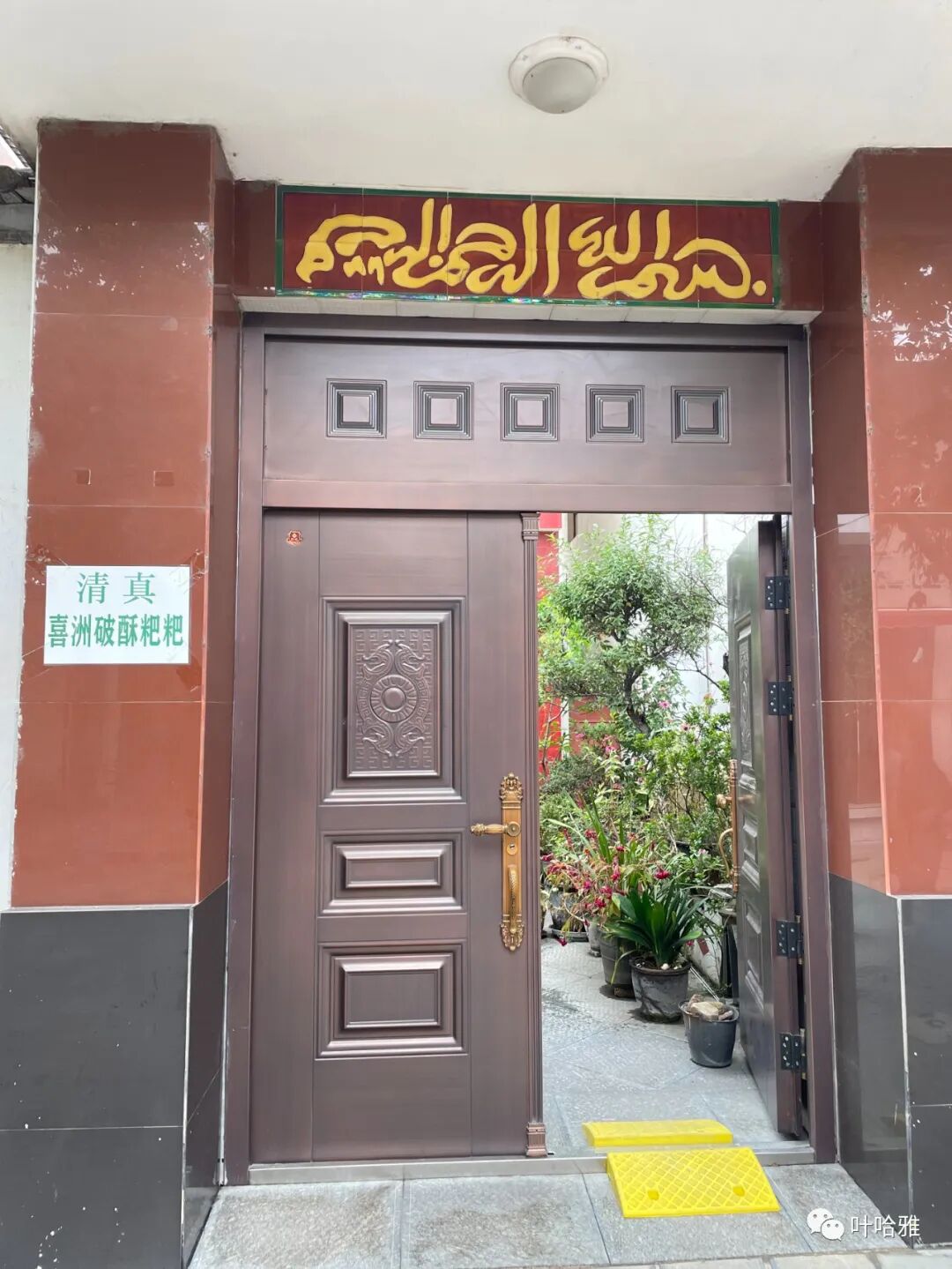
Shipang Village
Shipang Village is a settlement where Bai and Hui Muslims live together. These Bai-Hui Muslims are Hui Muslims who have adopted Bai culture. They wear Bai clothing and practice Islam, but their ID cards list them as Hui Muslims. We arrived just as the rice was turning yellow, creating a vast golden field. It had just rained, and the distant mountains were wrapped in mist. It is a great place for photos, and since there are almost no tourists, you can enjoy the beautiful scenery in peace.
Many Hui Muslims have lived here since the Qing Dynasty. After intermarrying with the Bai people, they started speaking the Bai language, so I found I could not understand the locals. The Bai-style clothing is mostly seen in the small square headscarves, but now only a few elderly people wear them, and you rarely see them on the street.
Shipang Mosque
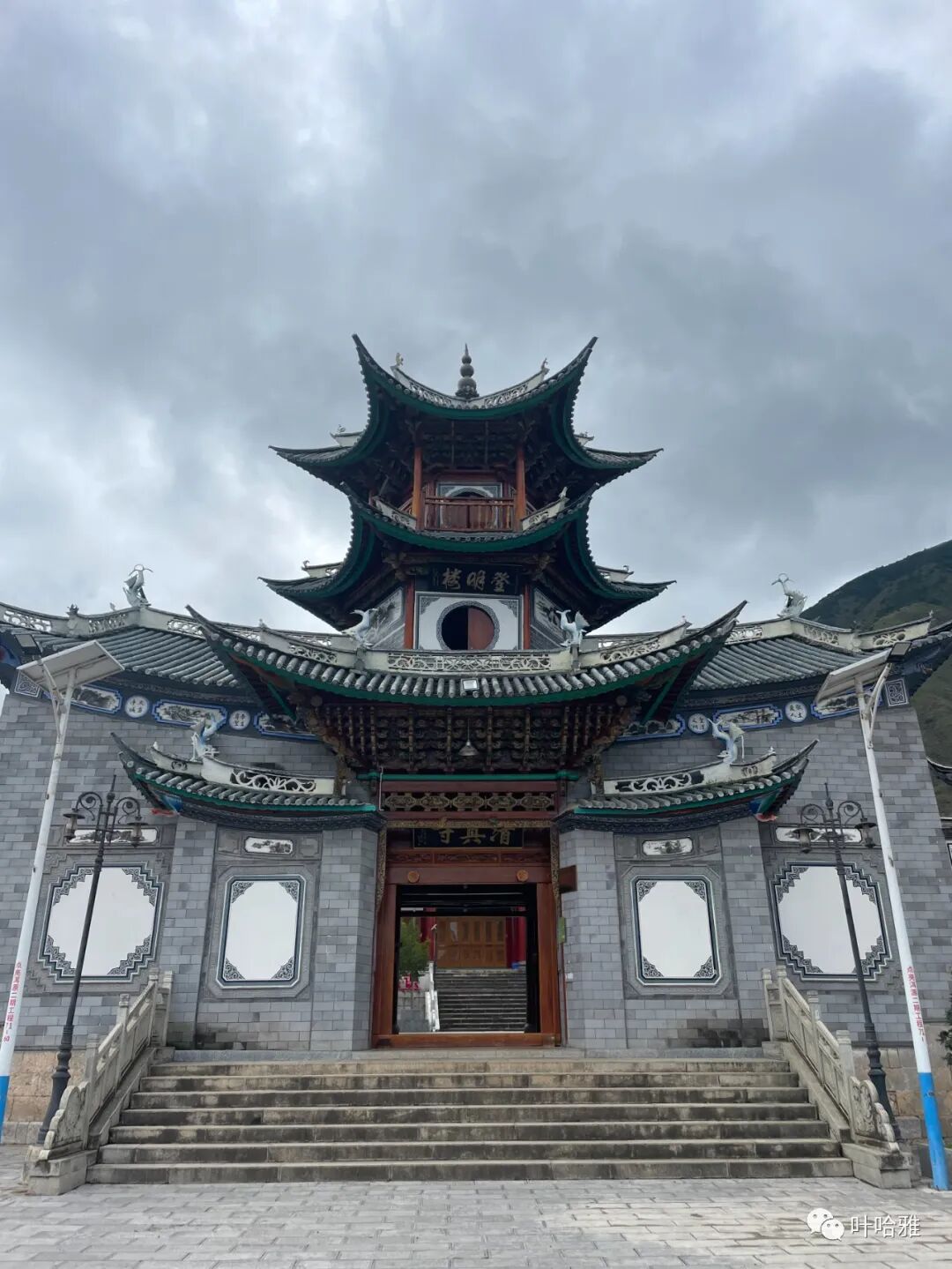
Shipang Mosque was first built in 1896. It was destroyed in a massacre in the past, which left the area without a mosque for a long time.
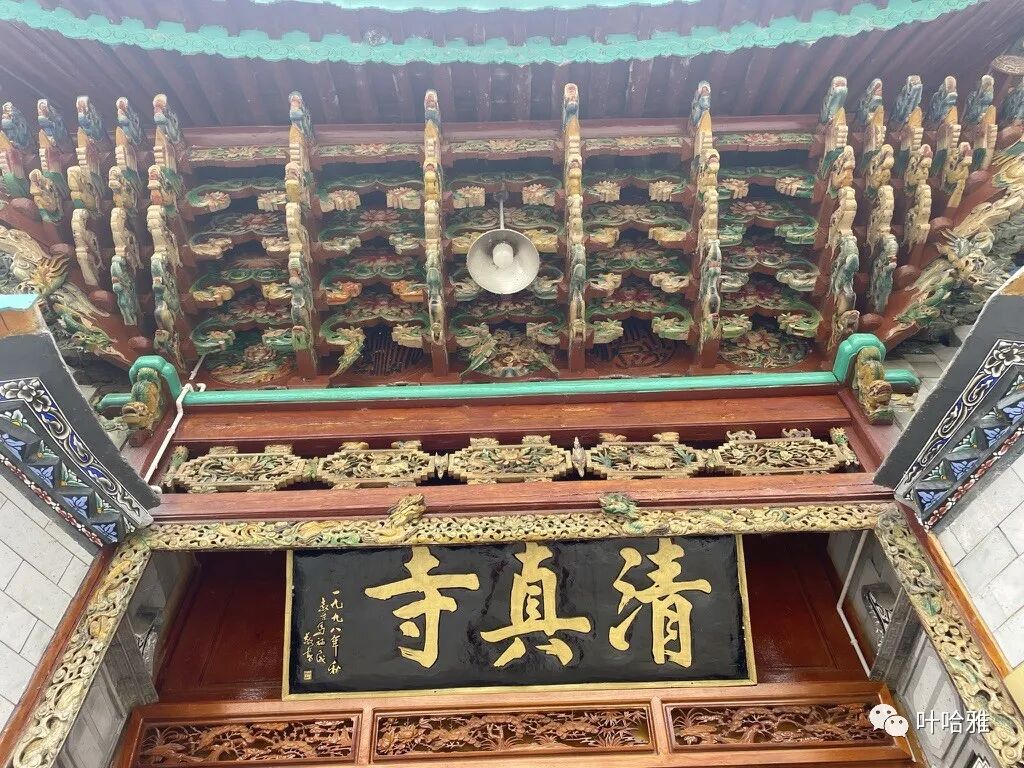
Halal Food Guide Dali: Weishan Hui Muslim Villages and Yunnan Mosque Food Map
Articles • yusuf908 posted the article • 0 comments • 153 views • 2026-05-22 21:34
Summary: This Dali halal food guide closes the Weishan section with halal sign notes, Hui Muslim village context, remaining food-map leads, and the onward road trip toward Jianshui in Yunnan.
Dali Halal Food Map is presented here as a firsthand travel account in clear English, beginning with this scene: The halal signs in Weishan County look just like the ones in Ningxia. The account keeps its focus on Dali Mosques, Chinese Muslims, Muslim Travel while preserving the names, places, food, and historical details from the Chinese source.
The halal signs in Weishan County look just like the ones in Ningxia.
Our halal trip to Dali has come to an end for now. Even though this was my second visit, there are still many halal spots I haven't seen, so I will definitely come back again. After leaving Dali, we headed south toward our next stop, Jianshui. view all
Summary: This Dali halal food guide closes the Weishan section with halal sign notes, Hui Muslim village context, remaining food-map leads, and the onward road trip toward Jianshui in Yunnan.
Dali Halal Food Map is presented here as a firsthand travel account in clear English, beginning with this scene: The halal signs in Weishan County look just like the ones in Ningxia. The account keeps its focus on Dali Mosques, Chinese Muslims, Muslim Travel while preserving the names, places, food, and historical details from the Chinese source.
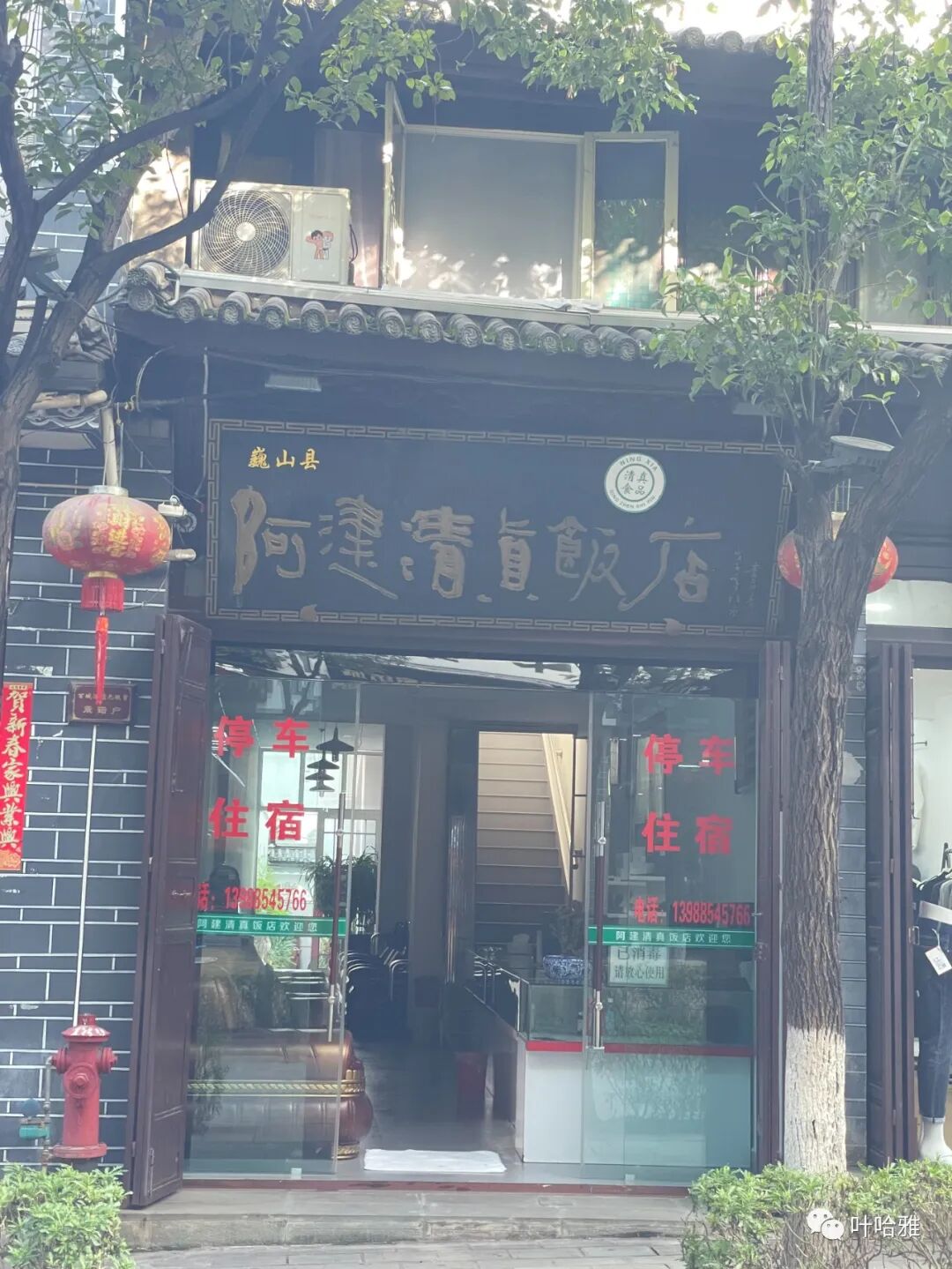
The halal signs in Weishan County look just like the ones in Ningxia.
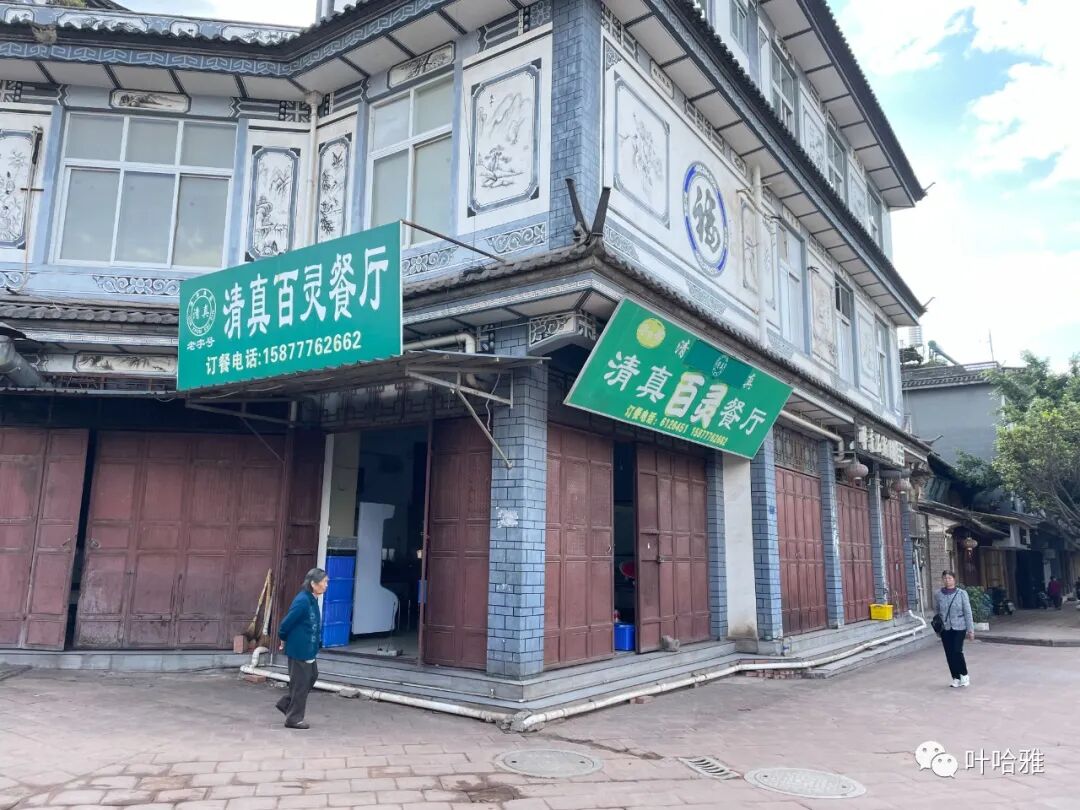
Our halal trip to Dali has come to an end for now. Even though this was my second visit, there are still many halal spots I haven't seen, so I will definitely come back again. After leaving Dali, we headed south toward our next stop, Jianshui.
Halal Travel Guide: Northern Thailand — Yunnan Mosques and Hui Communities (Part 1)
Articles • ali2007fr posted the article • 0 comments • 173 views • 2026-05-19 02:59
Summary: Northern Thailand has Yunnanese Hui Muslim communities whose mosque neighborhoods still show the memory of migration, trade, and borderland life. This first part of Day 3 records the mosques, settlements, and local community details in clear English while keeping the source facts and images.
During the May Day holiday in 2023, I visited the mosque communities (fang) of the Yunnan Hui Muslims in Northern Thailand. On the first day, led by Master Ma Ruqi, a third-generation Thai Yunnan Hui Muslim, we visited four mosque communities in the Chiang Mai city area: Chang Khlan, Wang He, Jing Zhen, and Nurul. I posted about this in 'A Pilgrimage to Northern Thai Yunnan Mosque Communities (Day 1)'. On the second day, Master Ma drove us north to visit several mosque communities in the refugee villages of the former Northern Thai isolated army. We went to Mae Salong, the main base of the isolated army, and finally reached Mae Sai, the second-largest settlement of Yunnan Hui Muslims in Northern Thailand. I posted about this in 'A Pilgrimage to Northern Thai Yunnan Mosque Communities (Day 2)'. On the third day, we left Mae Sai and headed south back to Chiang Mai, visiting several mosque communities in Chiang Rai to wrap up this pilgrimage to the Yunnan mosque communities of Northern Thailand.
Mae Sai
The third day of our journey began in Mae Sai, the northernmost town in Thailand. Early in the morning, we went to see the Mae Sai border crossing to Myanmar. It was closed for over two years and only reopened this February, so it is busy again now. Not far to the west of the border, you can see the Myanmar town of Tachileik across the Mae Sai River. Development there is clearly a bit behind Thailand. Many Yunnan Hui Muslims also live in Tachileik, and there is a Yunnan mosque there. I hope to have the chance to visit it in the future.
Next, we went to visit the Mae Sai Yunnan Mosque. Although Mae Sai has been a necessary stop for Yunnan horse caravans heading south to Chiang Mai since the late Qing Dynasty, it was not until 1952 that Yunnan Hui Muslims Ma Xianglin and Ma Enshou initiated the construction of a mosque. The original mosque was just a thatched hut. Later, with donations from Qian Yizhai and fellow Muslims in Chiang Mai, Ma Zixing oversaw its reconstruction into a wooden building. In 1975, because the number of Yunnan Hui Muslims in Mae Sai was growing, the old mosque could not hold everyone. Mu Chengfang, a Hui Muslim from Dazhuang, Kaiyuan, Yunnan, initiated a move to the current location next to the main road. Ma Weijing and Na Caikui oversaw the construction of the current steel and concrete building.
The prayer hall of the Mae Sai Yunnan Mosque, with shops selling dried beef jerky (la niuganba) and dried duck (la ya) at the entrance.
We had breakfast in an alley where Yunnan Hui Muslims live in Mae Sai. We could order in Mandarin, as the Yunnan Hui Muslims here speak both the Yunnan dialect and Mandarin fluently. We ate thick pea porridge (xi doufen) with rice noodles (migan) and braised beef noodles, which used minced meat (rou saozi) instead of chunks of meat. The owner's son is young but has already graduated as a hafiz. Hui Muslims here start systematic religious studies from a young age, which helps pass their faith down from generation to generation.
Then we went to the old site of the Yunnan Mosque in Mae Sai to eat sweet buns (tangbao). After the Yunnan Mosque moved to its new location in 1975, the old site remained mosque property, and the storefronts along the street still sell snacks. We ate brown sugar and perilla seed-filled sweet buns (tangbao) at a Hui Muslim shop in the middle of the street, and we drank tea and chatted with everyone for a while. Also, the shop next door run by a South Asian friend (dosti) selling roti flatbread is doing very well.
After breakfast, we arrived at Zhenguang School on the outskirts of Mae Sai. This is a school founded by Hui Muslims specifically to train hafiz. The students here include not only local Muslims but also many from other parts of Thailand and even China. It was summer break when we visited, so the students were away. Only the cows being prepared for Eid al-Adha and the chickens the students usually eat were wandering leisurely around the courtyard. The environment here is truly wonderful. Surrounded by endless rice fields and far from the noise of the city, it is a perfect place to focus on studies.
Golden Triangle
Leaving Zhenguang School, we went to the border where Thailand, Laos, and Myanmar meet, which is the famous Golden Triangle. Standing on the banks of the Mekong River, you can see casinos in Myanmar and Laos on the opposite side. Since gambling is banned in Thailand, there is only a Golden Triangle Park here, where many tourists stop to take photos.
Chiang Rai
Leaving the Golden Triangle, we headed toward Chiang Rai city. We first visited a South Asian Fatima Pakuk mosque near the Chiang Rai airport. Although it looks like a residential courtyard from the outside, it is decorated very beautifully once you step inside. It is very interesting that there is a large treehouse at the mosque entrance. This is my first time seeing a treehouse inside a mosque, a sight you only find in tropical regions.
I visited two other South Asian mosques in Chiang Rai city; one is black and one is white, both clean and tidy. The black one was built by Pakistani descendants, and it is really rare to see a black mosque around here. Both mosques have lounge chairs on the front porch of the main hall. It feels so comfortable to lie there and catch the breeze.
There are mango trees everywhere in Chiang Rai. Inside the Pakistani mosque, you can look up and see green mangoes filling the trees. We bought a bag of sliced green mangoes on the street. Dipping them in dry seasoning is delicious, crisp, and tasty.
We arrived in downtown Chiang Rai and found a halal stall specializing in various spicy sauces. The variety of spicy sauces in Thai food is amazing. They are mostly sweet and spicy, which I quite enjoy.
At noon, we had lunch at the largest Yunnan Hui Muslim restaurant in Chiang Rai city. The restaurant is called Yunnan Restaurant. The owner's surname is Na, and his ancestral home is Guanyi in Jianshui. The founder of the restaurant was surnamed Ma, who was owner Na's father-in-law. He spent 50 years preparing Yunnan halal banquets in Northern Thailand. Most Yunnan Hui Muslims in Northern Thailand, including our chartered driver Master Ma, have eaten at owner Ma's banquets and helped out in the kitchen. Owner Ma had two daughters who both married two brothers. Both sons-in-law inherited owner Ma's business, running two Yunnan restaurants in Chiang Mai and Chiang Rai respectively. The one we ate at in Chiang Rai is run by the younger brother.
The restaurant menu has Chinese, which makes ordering very convenient. We ordered stir-fried squid with red curry paste, stir-fried morning glory, fried fish with three kinds of sauces, and stir-fried beef with ginger strips. Hui Muslims here have kept traditional Yunnan halal food but added many Thai spices and cooking methods. They have developed a unique style of Northern Thai Yunnan halal cuisine that tastes different from the halal food we ate in Yunnan.
We arrived at the Yunnan mosque (lishen) in Chiang Rai city, and the elders at the mosque greeted us warmly.
Although the total number of Hui Muslims in Chiang Rai city is much smaller than in Chiang Mai or Mae Sai, this was an important hub for the Yunnan Hui Muslim horse caravans trading in Northern Thailand. It is the oldest existing Yunnan mosque in Northern Thailand.
The Chiang Rai Yunnan mosque was built in 1910, seven years earlier than the Chiang Mai Wang He mosque built in 1917. The current building was rebuilt in 2009 and is the largest of all the Yunnan mosques in Northern Thailand. The dome in the center of the mosque is in Mughal style, and the tops of the minarets on both sides are Chinese-style pavilions. This represents the harmony between South Asian Muslims and Chinese Muslims in Northern Thailand. The entrance to the main hall has the words 'Gate of Ritual' and 'Path of Etiquette' written on it, along with a couplet that reads: 'Quiet mosque, quiet place, quiet thoughts, silently praise Allah; pure heart, pure origin, pure worship, purely follow the scriptures.' In front of the main hall door is a grandfather clock donated to the mosque by Mr. Mu Yufu, inscribed with the words 'Promote the Righteous Path'.
The first floor of the mosque is engraved with the names of those who donated to the reconstruction. Among them, 196 people are from Yunnan, many of whom are from Najiaying, Tonghai, and Menghai.
The alley and snack stalls at the entrance of the Chiang Rai Yunnan mosque.
On the way from Chiang Rai to Chiang Mai, you will pass the Chiang Rai hot springs, where many people stop to take a break. The hot springs here are right by the side of the road, and you do not need to buy a ticket. There are springs of various temperatures. The hottest ones gush out like boiling water, and you can boil chicken eggs and quail eggs in them, which children really enjoy. You can soak your feet in the cooler springs. The water temperature drops as it flows from the source, so it is very comfortable to find a spot with the perfect temperature and soak for a while.
Back to Chiang Mai.
At noon, we returned to the Chiang Mai Wang He mosque (lishen) and then walked around the shops at the entrance. This shop is run by the daughter of Mustafa, the grand imam of the Nurul mosque in Chiang Mai. I bought CDs and hats here back in 2017. This time, Zainab bought a beautiful long dress made from local fabric that is very high quality. We took some lovely photos in it in Bangkok. view all
Summary: Northern Thailand has Yunnanese Hui Muslim communities whose mosque neighborhoods still show the memory of migration, trade, and borderland life. This first part of Day 3 records the mosques, settlements, and local community details in clear English while keeping the source facts and images.
During the May Day holiday in 2023, I visited the mosque communities (fang) of the Yunnan Hui Muslims in Northern Thailand. On the first day, led by Master Ma Ruqi, a third-generation Thai Yunnan Hui Muslim, we visited four mosque communities in the Chiang Mai city area: Chang Khlan, Wang He, Jing Zhen, and Nurul. I posted about this in 'A Pilgrimage to Northern Thai Yunnan Mosque Communities (Day 1)'. On the second day, Master Ma drove us north to visit several mosque communities in the refugee villages of the former Northern Thai isolated army. We went to Mae Salong, the main base of the isolated army, and finally reached Mae Sai, the second-largest settlement of Yunnan Hui Muslims in Northern Thailand. I posted about this in 'A Pilgrimage to Northern Thai Yunnan Mosque Communities (Day 2)'. On the third day, we left Mae Sai and headed south back to Chiang Mai, visiting several mosque communities in Chiang Rai to wrap up this pilgrimage to the Yunnan mosque communities of Northern Thailand.
Mae Sai
The third day of our journey began in Mae Sai, the northernmost town in Thailand. Early in the morning, we went to see the Mae Sai border crossing to Myanmar. It was closed for over two years and only reopened this February, so it is busy again now. Not far to the west of the border, you can see the Myanmar town of Tachileik across the Mae Sai River. Development there is clearly a bit behind Thailand. Many Yunnan Hui Muslims also live in Tachileik, and there is a Yunnan mosque there. I hope to have the chance to visit it in the future.
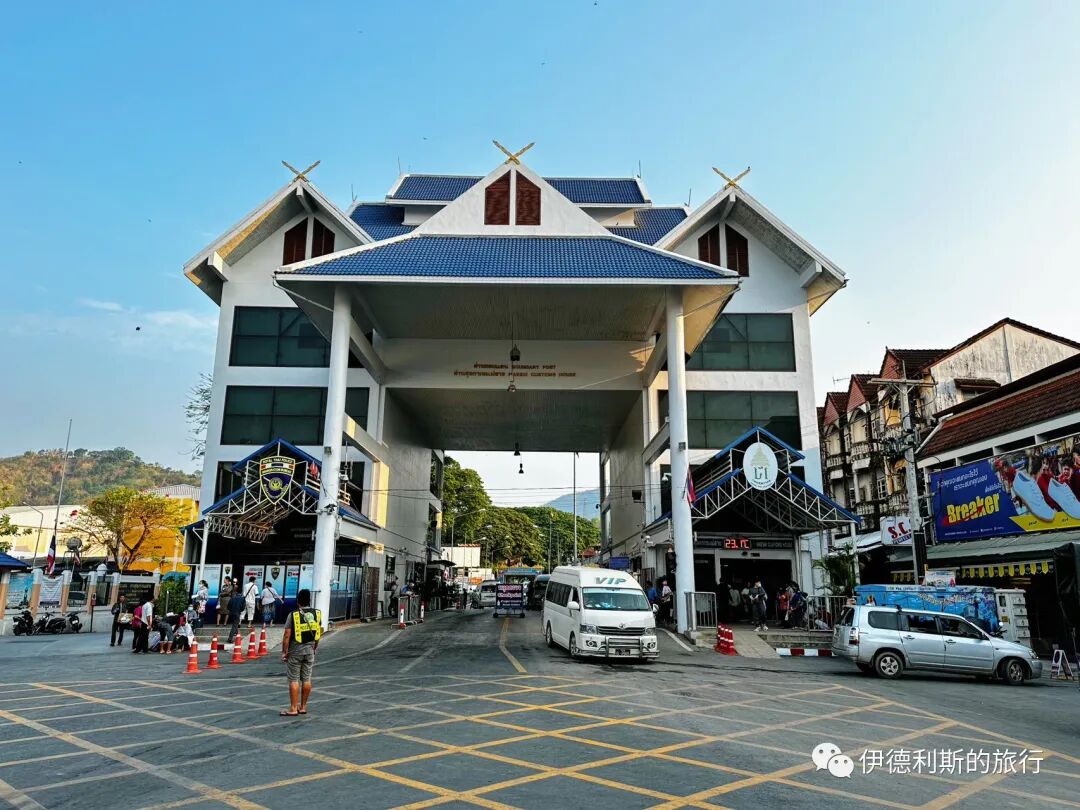
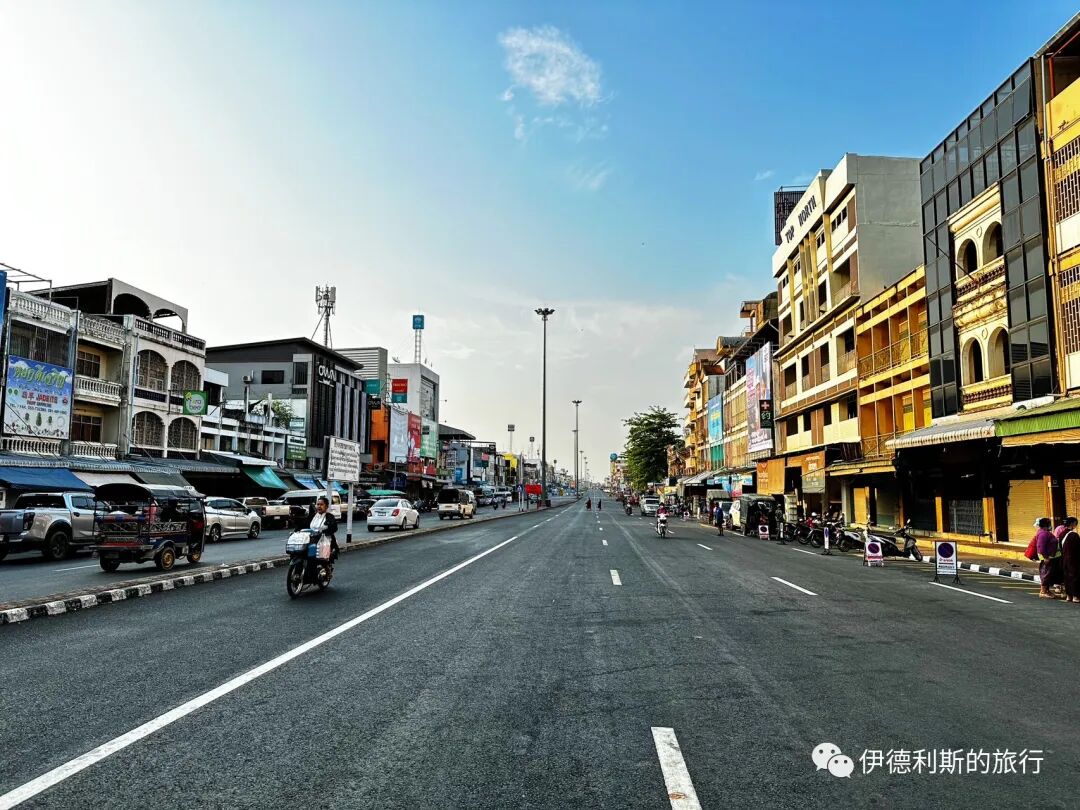
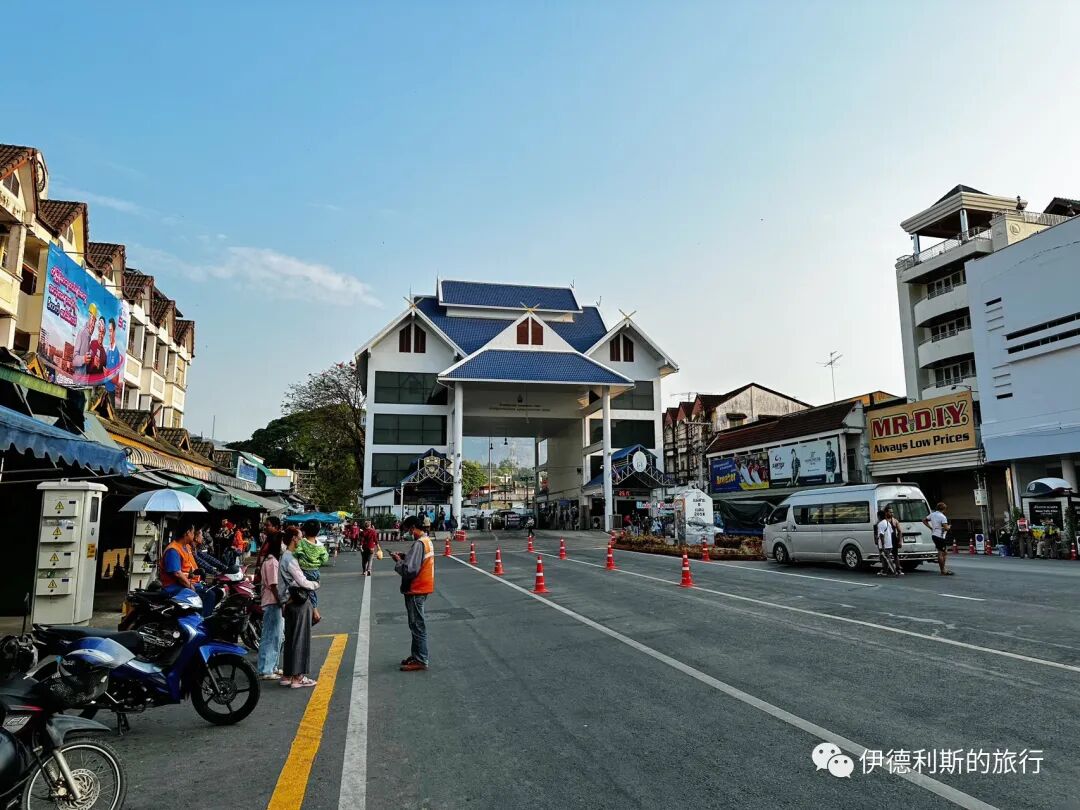
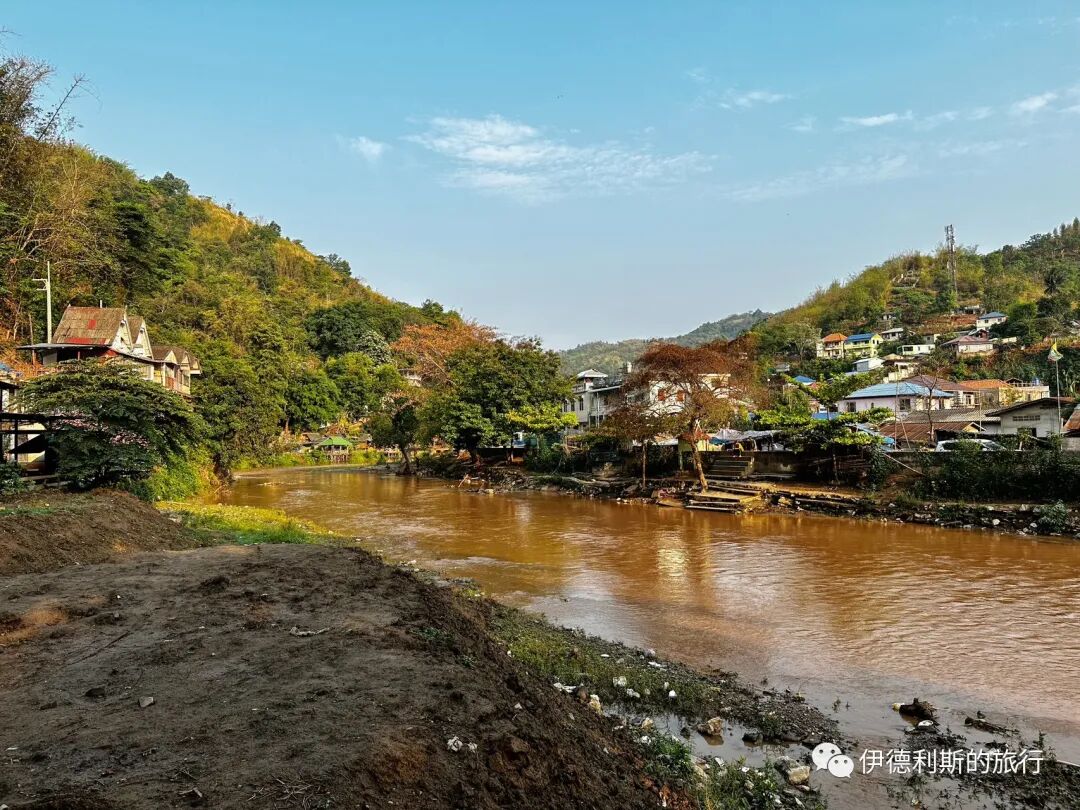
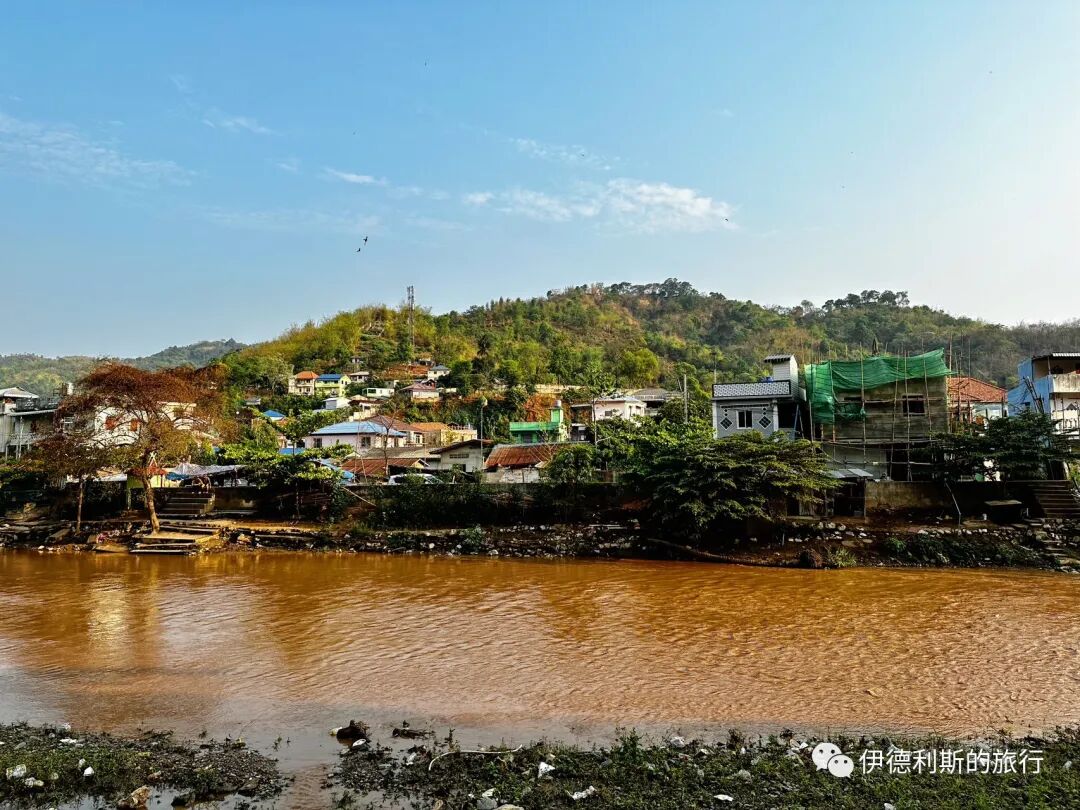
Next, we went to visit the Mae Sai Yunnan Mosque. Although Mae Sai has been a necessary stop for Yunnan horse caravans heading south to Chiang Mai since the late Qing Dynasty, it was not until 1952 that Yunnan Hui Muslims Ma Xianglin and Ma Enshou initiated the construction of a mosque. The original mosque was just a thatched hut. Later, with donations from Qian Yizhai and fellow Muslims in Chiang Mai, Ma Zixing oversaw its reconstruction into a wooden building. In 1975, because the number of Yunnan Hui Muslims in Mae Sai was growing, the old mosque could not hold everyone. Mu Chengfang, a Hui Muslim from Dazhuang, Kaiyuan, Yunnan, initiated a move to the current location next to the main road. Ma Weijing and Na Caikui oversaw the construction of the current steel and concrete building.
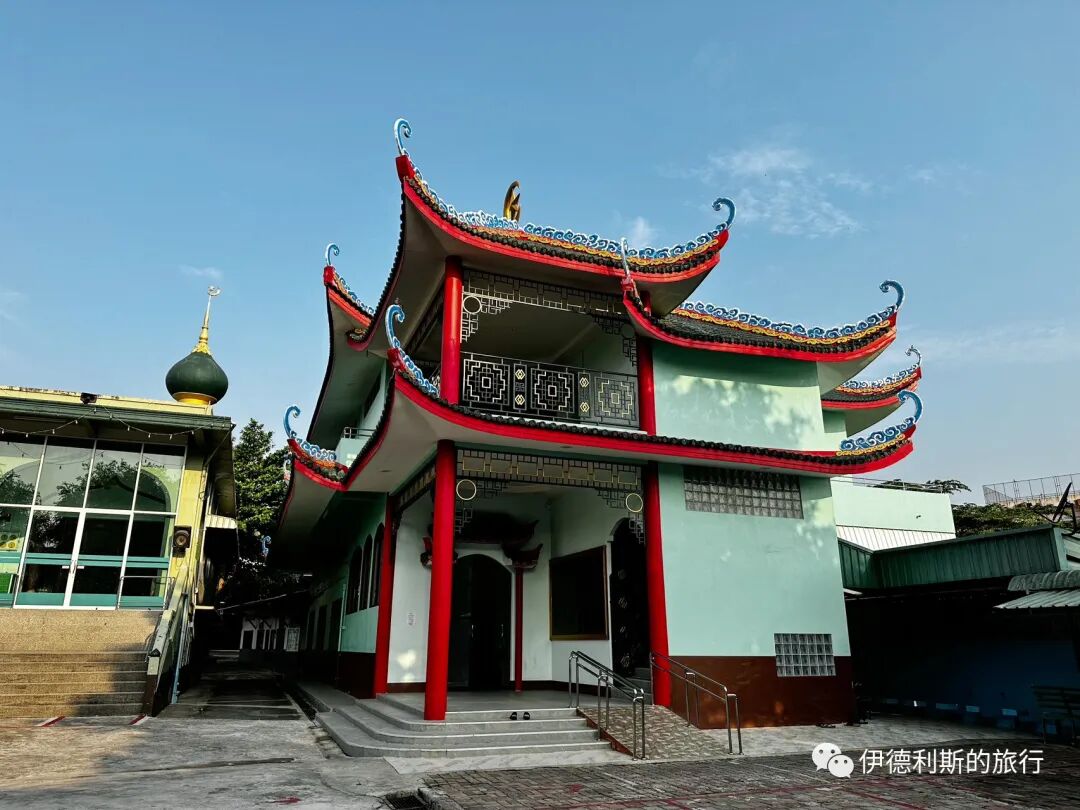
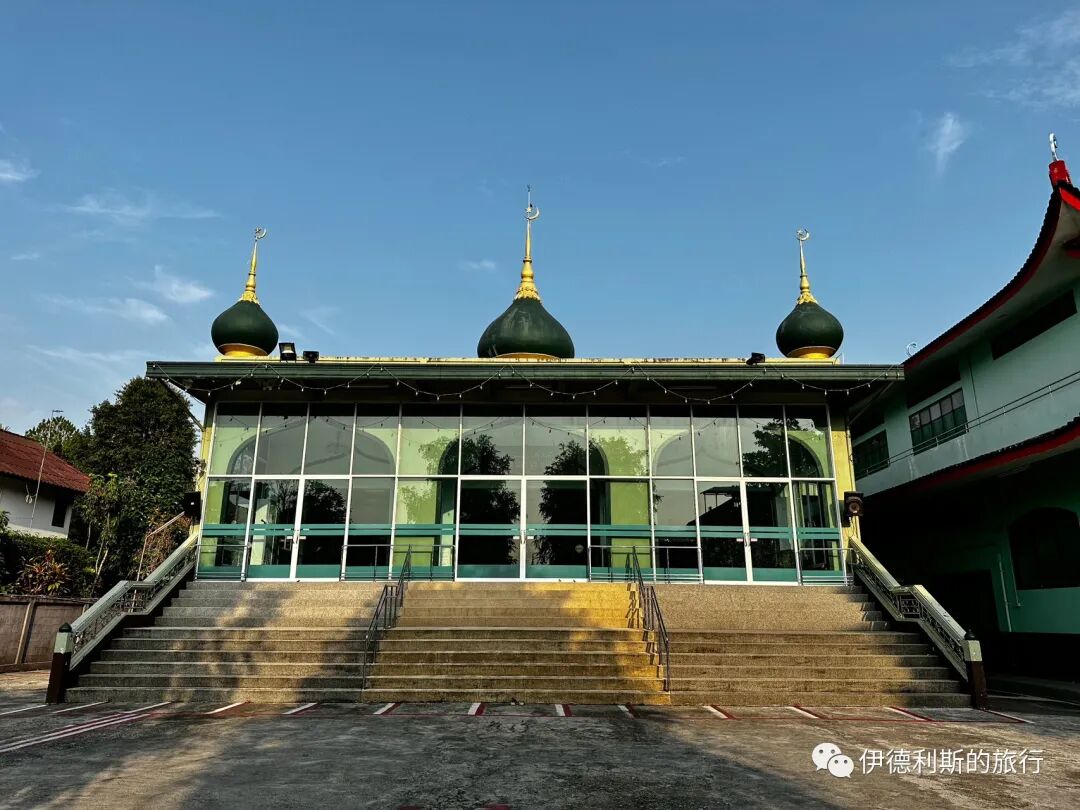
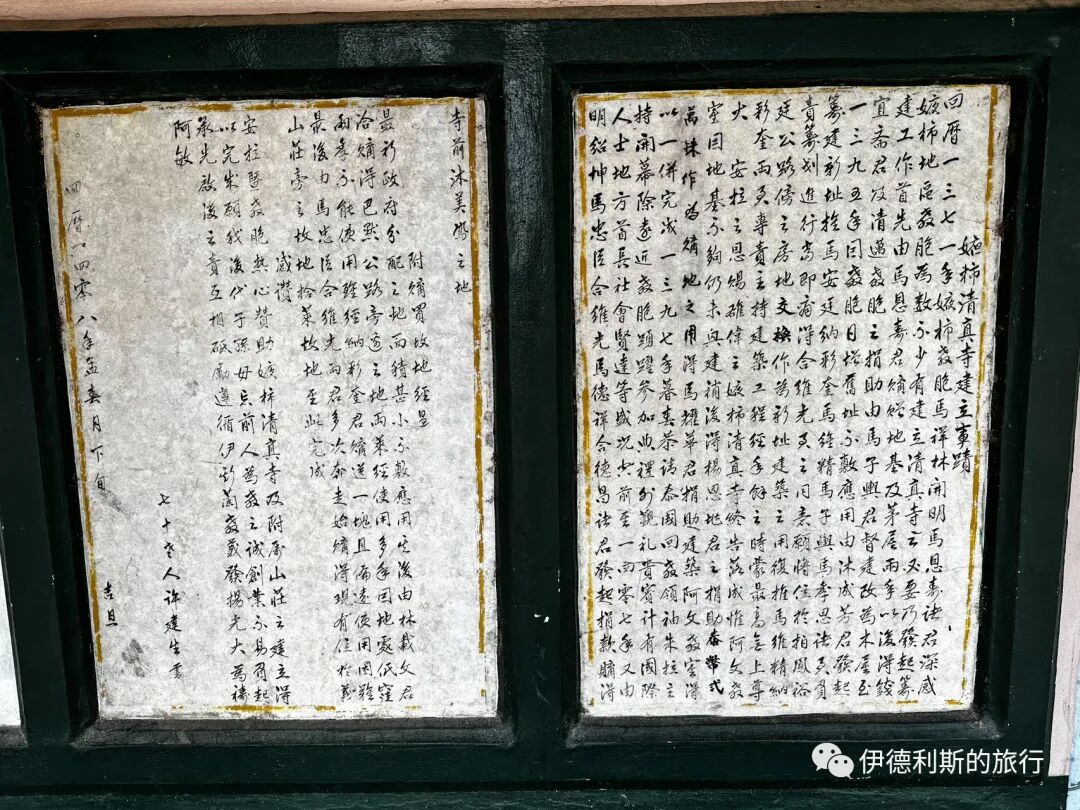
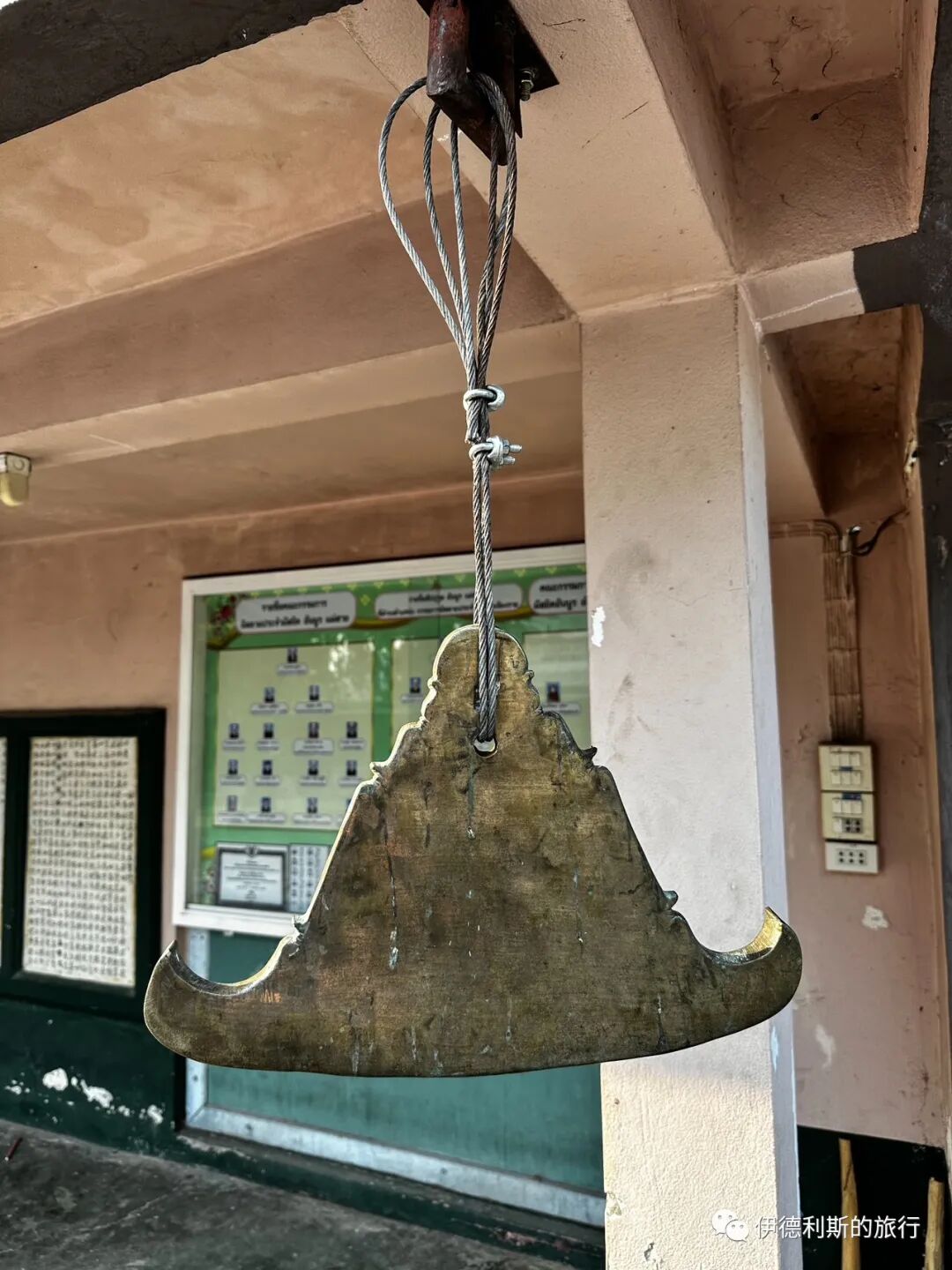
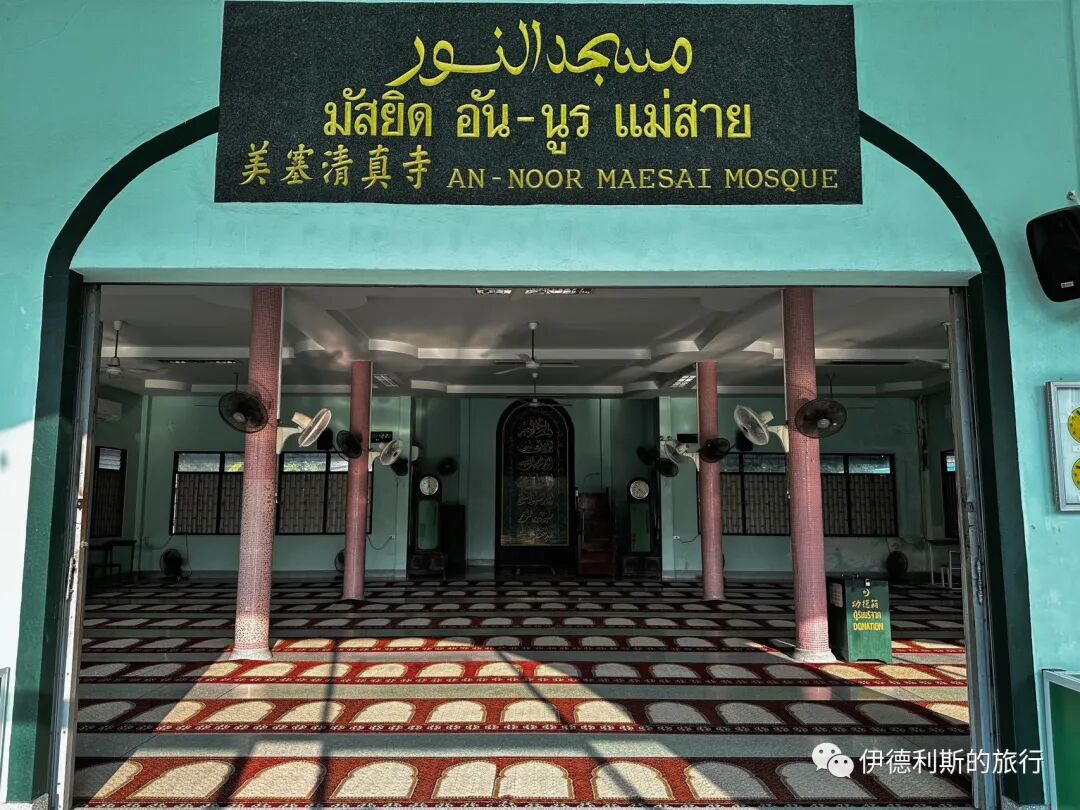
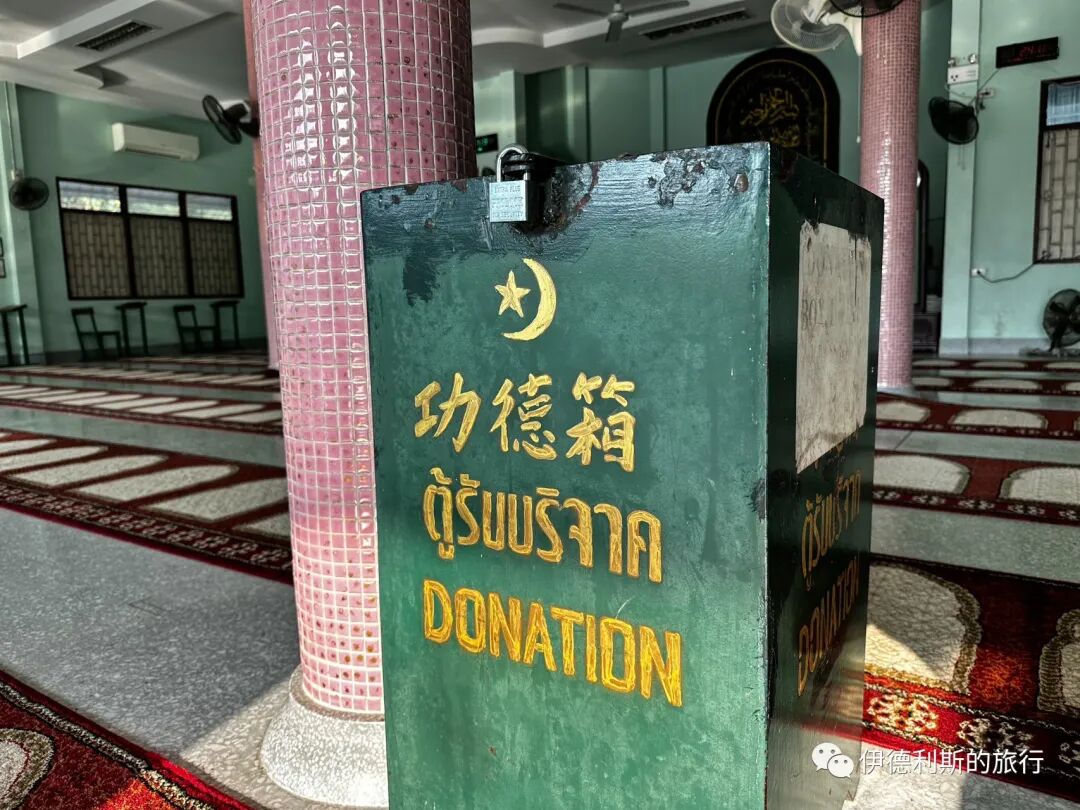
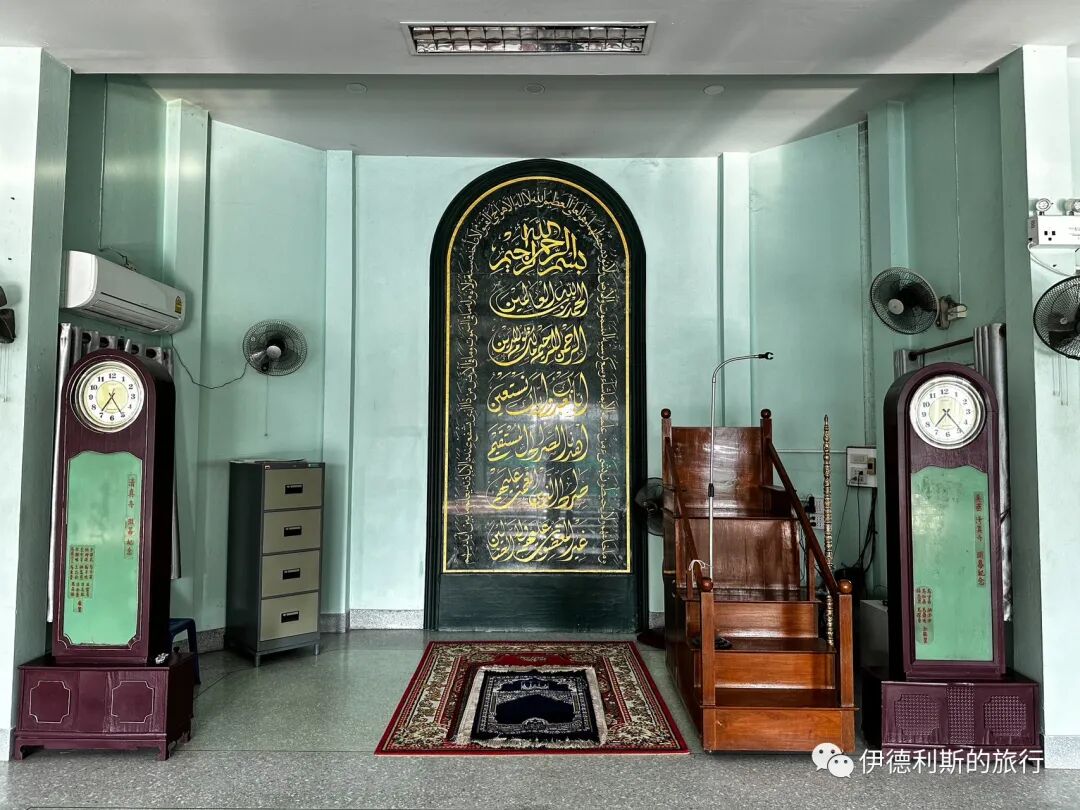
The prayer hall of the Mae Sai Yunnan Mosque, with shops selling dried beef jerky (la niuganba) and dried duck (la ya) at the entrance.
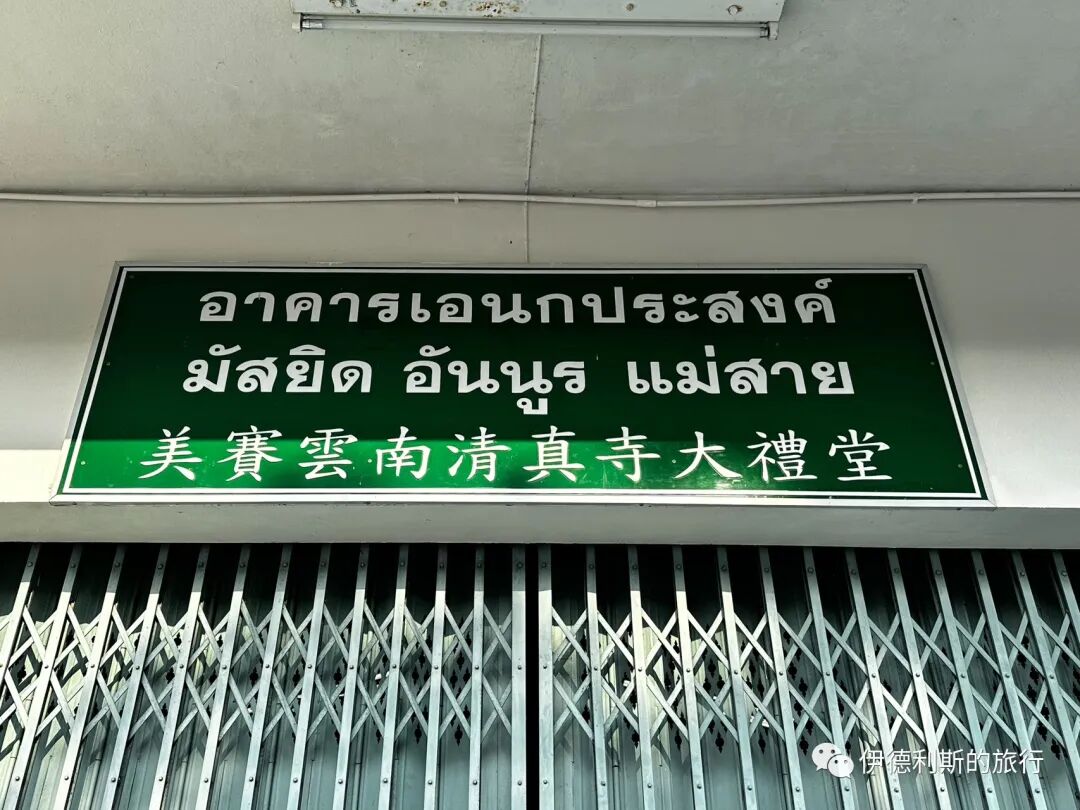
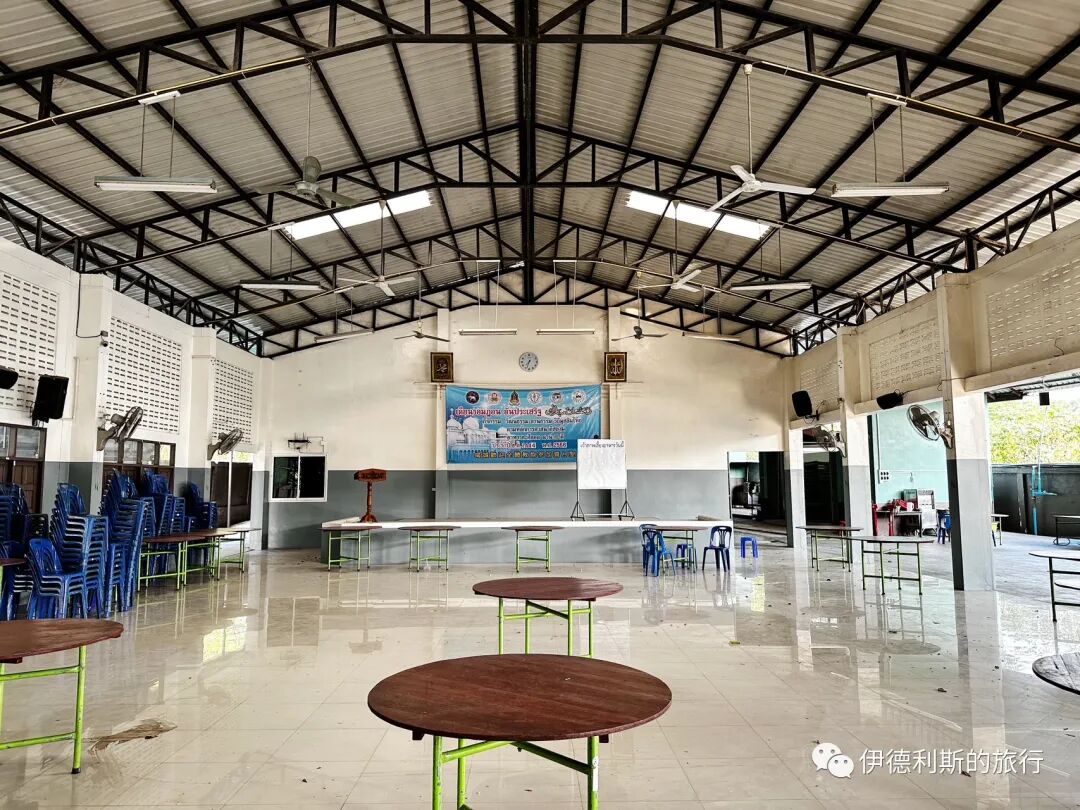
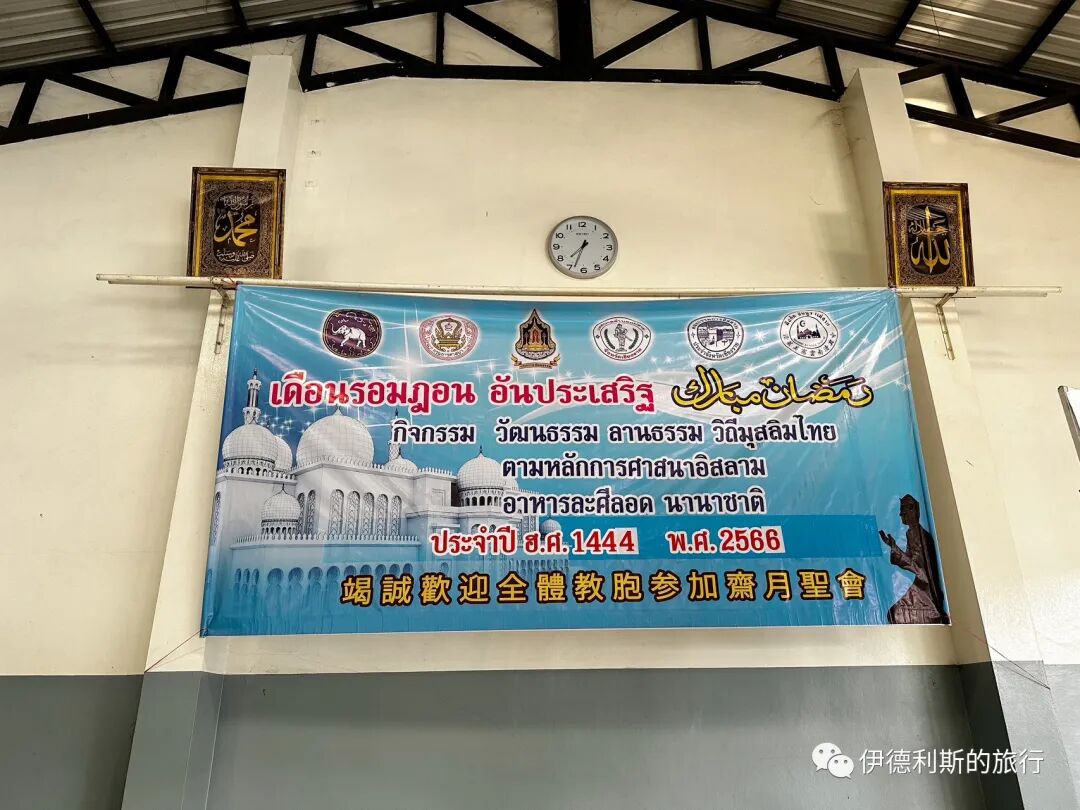
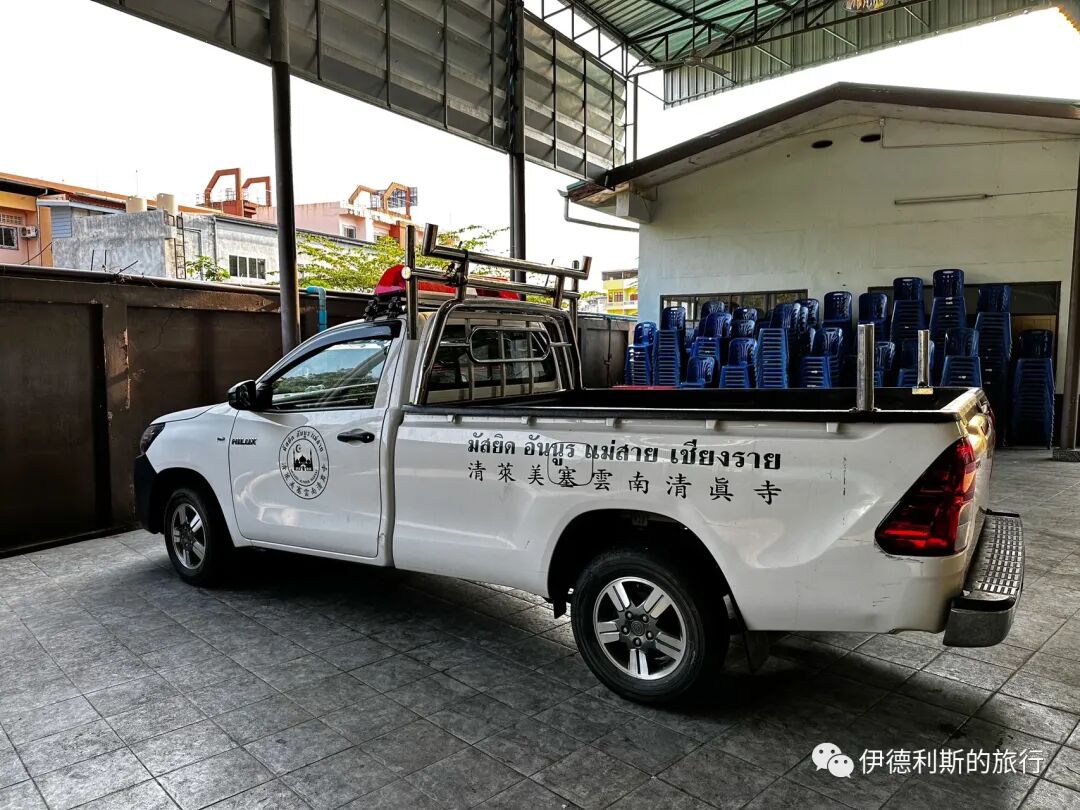
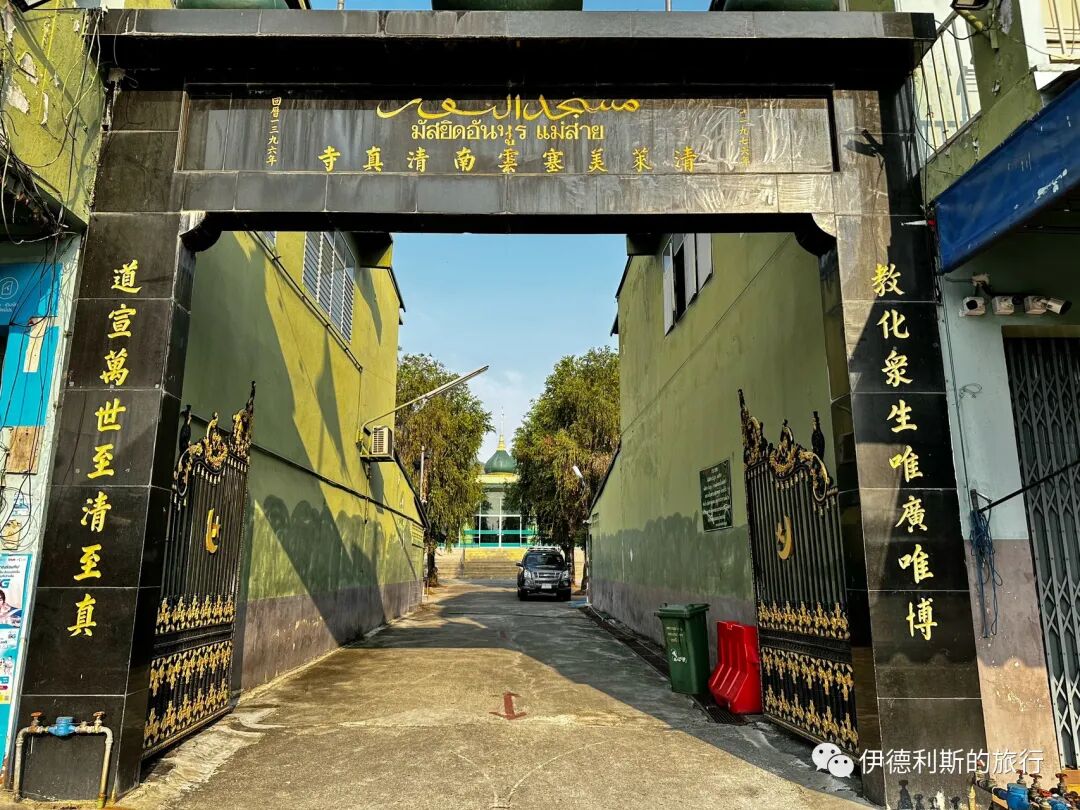
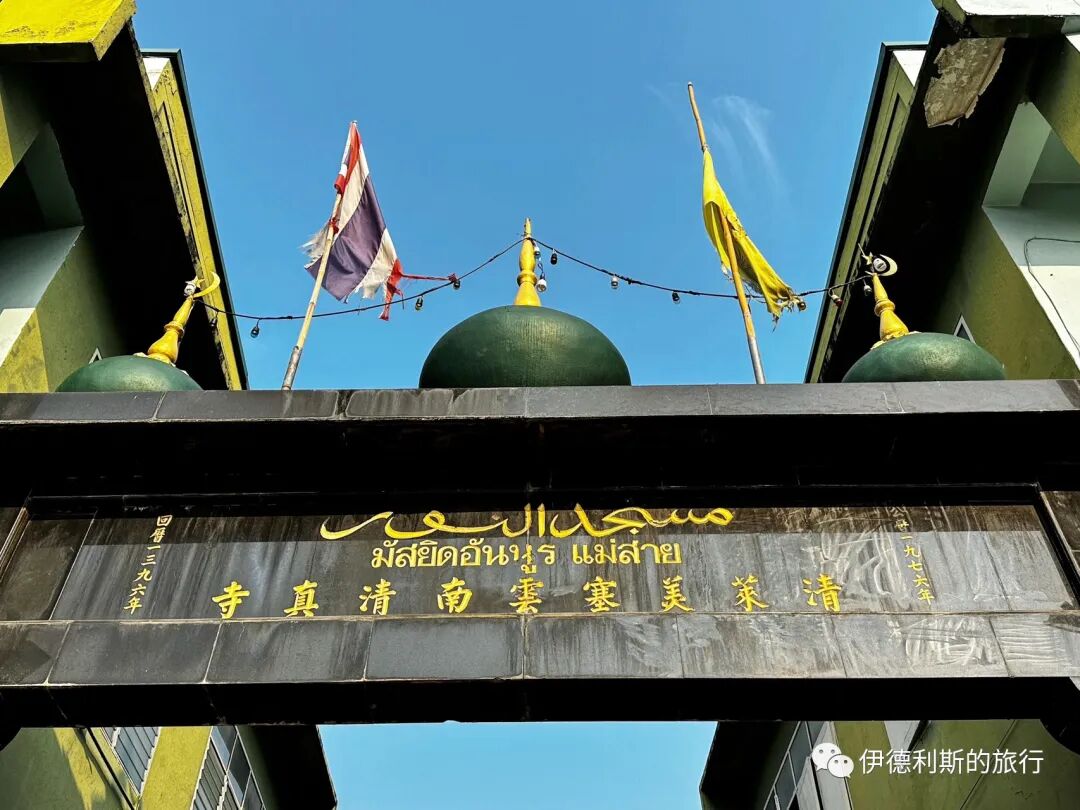
We had breakfast in an alley where Yunnan Hui Muslims live in Mae Sai. We could order in Mandarin, as the Yunnan Hui Muslims here speak both the Yunnan dialect and Mandarin fluently. We ate thick pea porridge (xi doufen) with rice noodles (migan) and braised beef noodles, which used minced meat (rou saozi) instead of chunks of meat. The owner's son is young but has already graduated as a hafiz. Hui Muslims here start systematic religious studies from a young age, which helps pass their faith down from generation to generation.
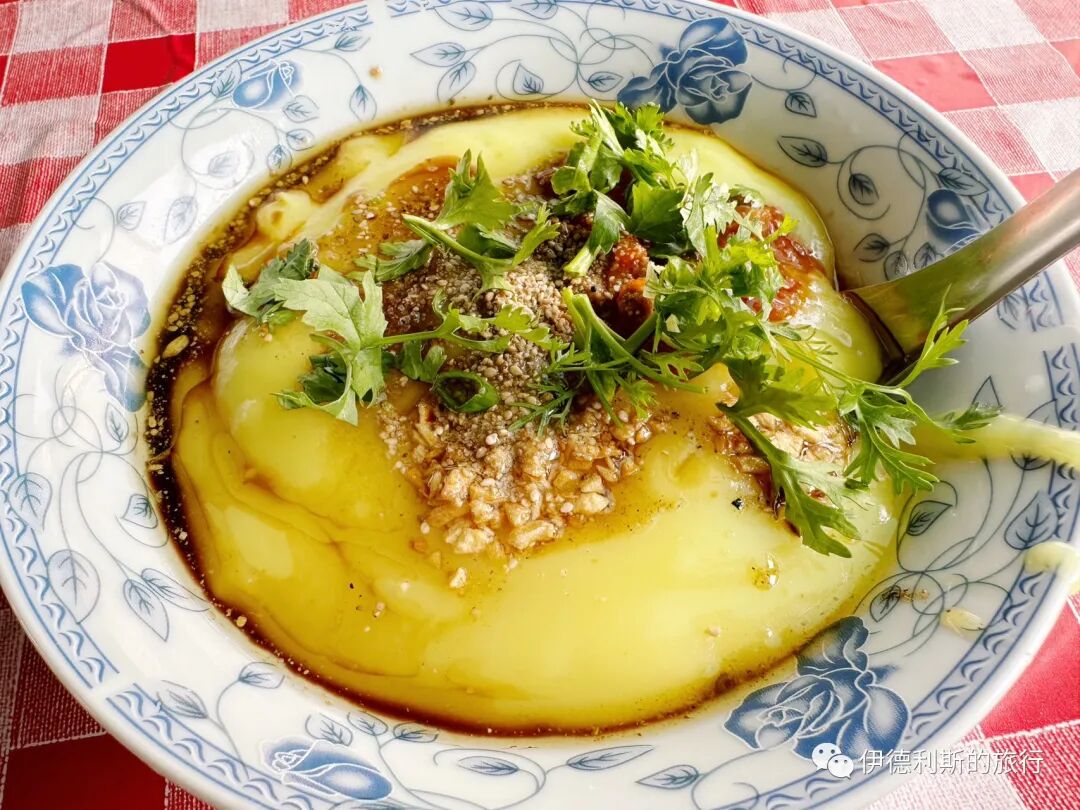
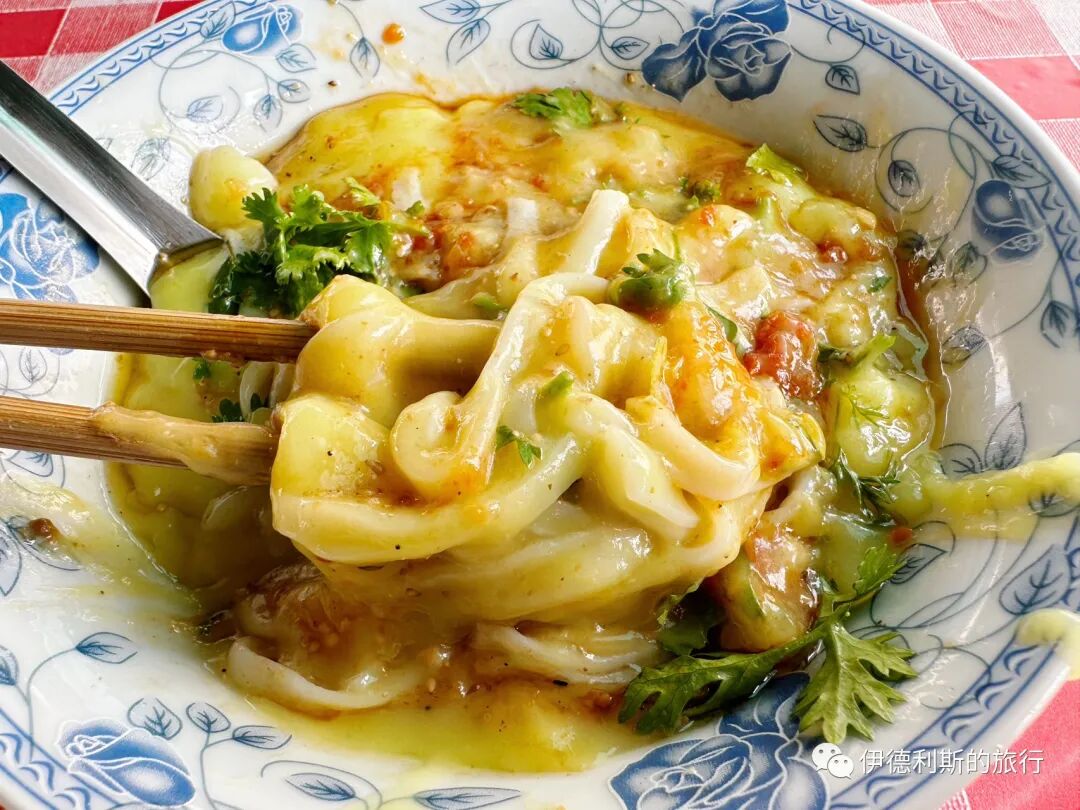
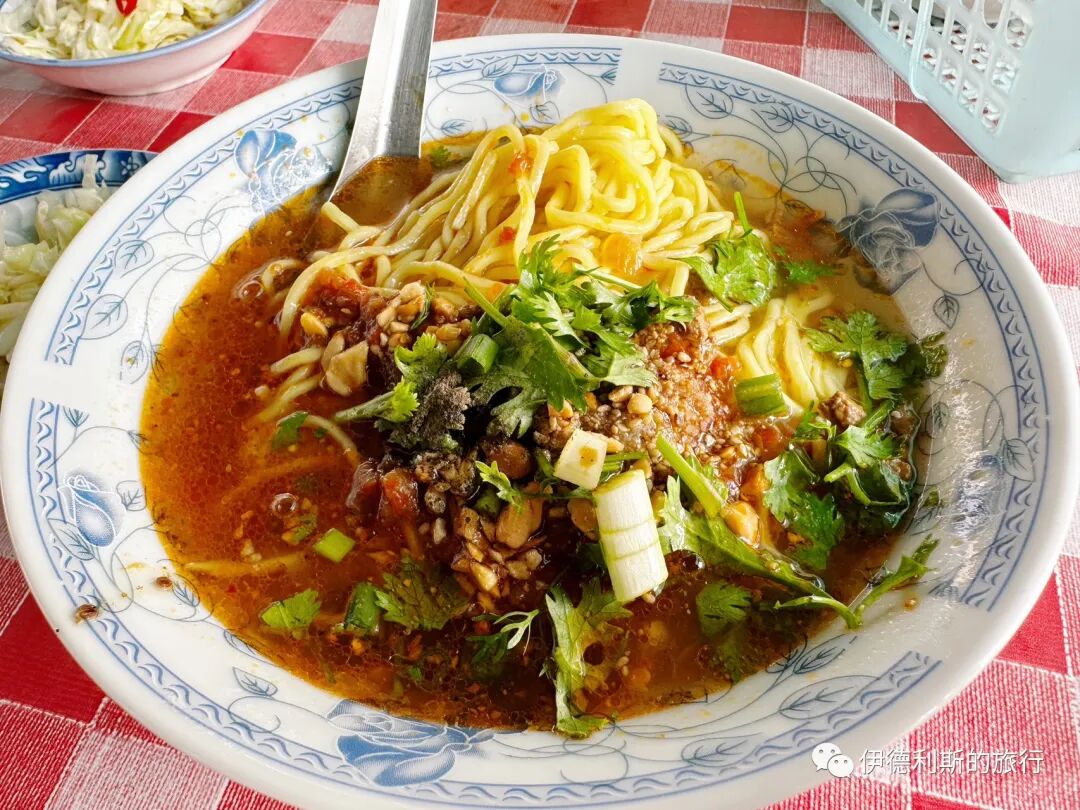
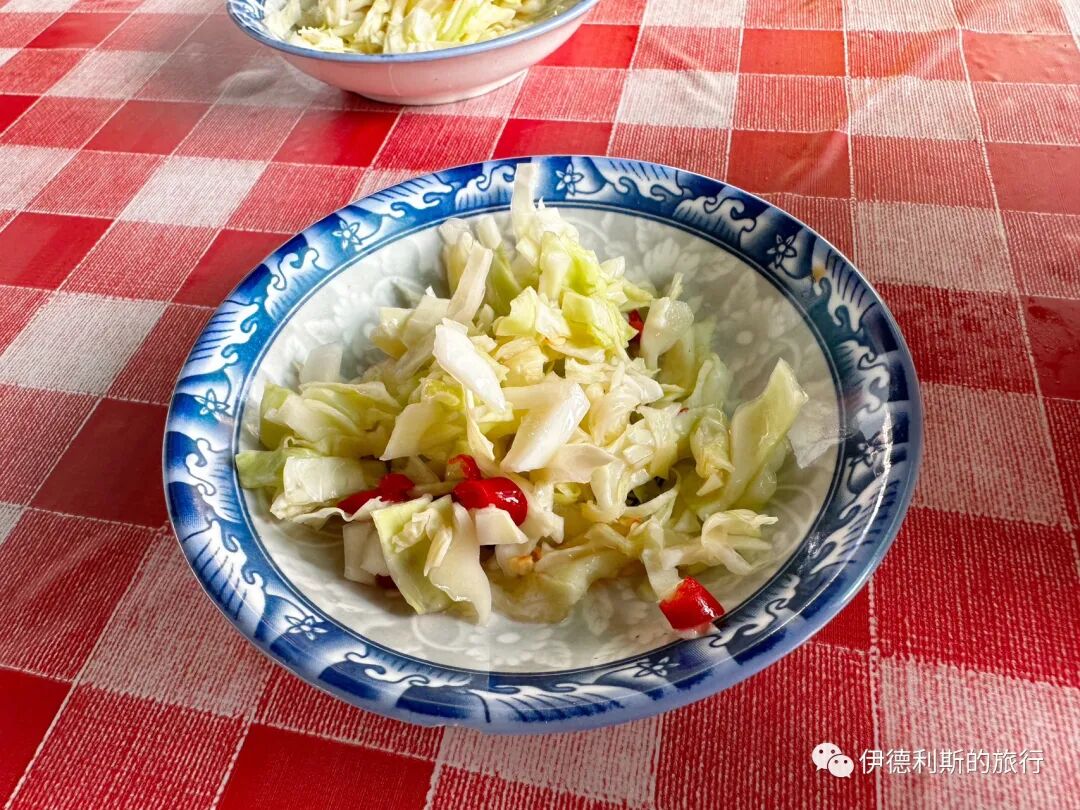
Then we went to the old site of the Yunnan Mosque in Mae Sai to eat sweet buns (tangbao). After the Yunnan Mosque moved to its new location in 1975, the old site remained mosque property, and the storefronts along the street still sell snacks. We ate brown sugar and perilla seed-filled sweet buns (tangbao) at a Hui Muslim shop in the middle of the street, and we drank tea and chatted with everyone for a while. Also, the shop next door run by a South Asian friend (dosti) selling roti flatbread is doing very well.
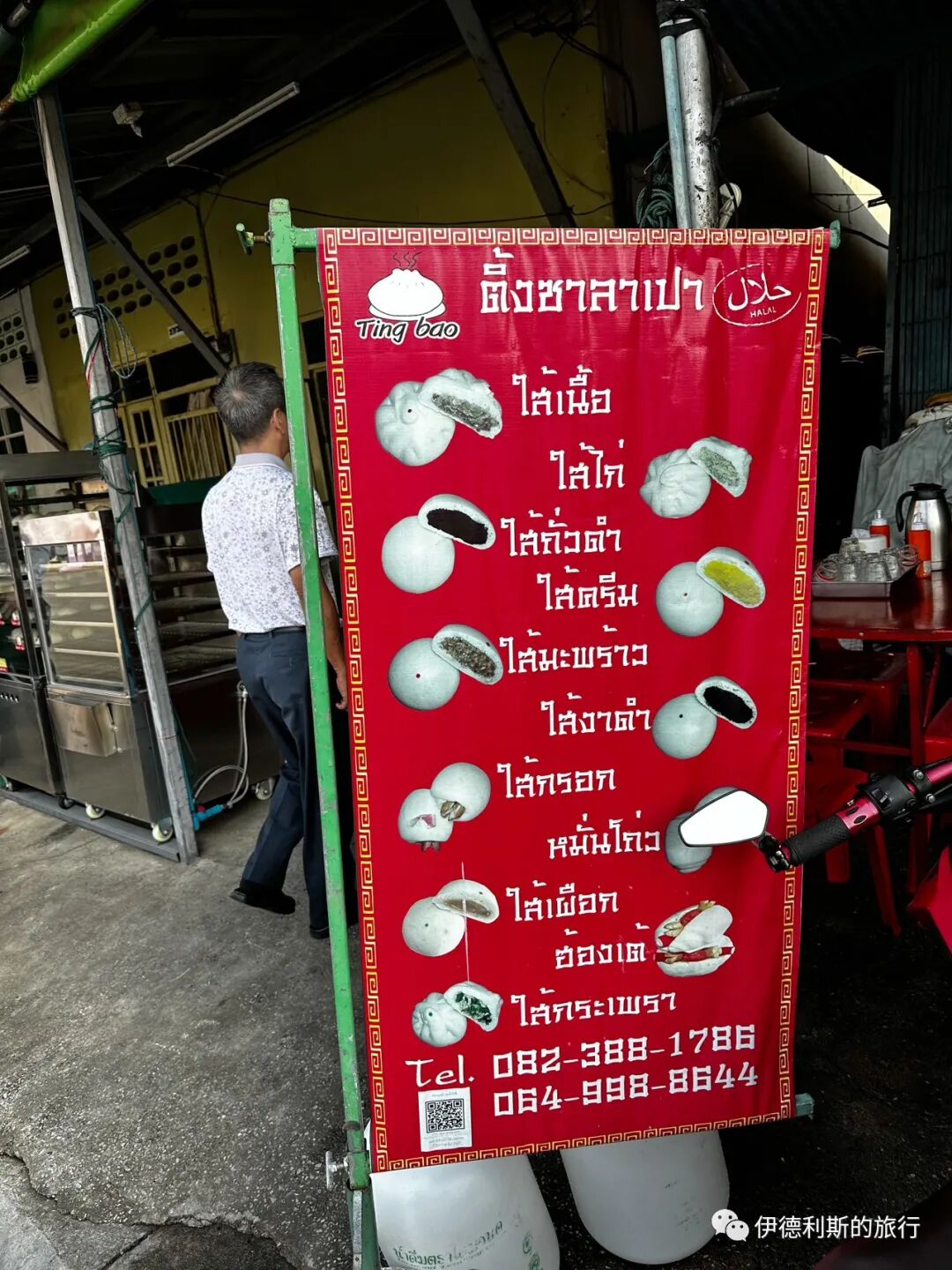
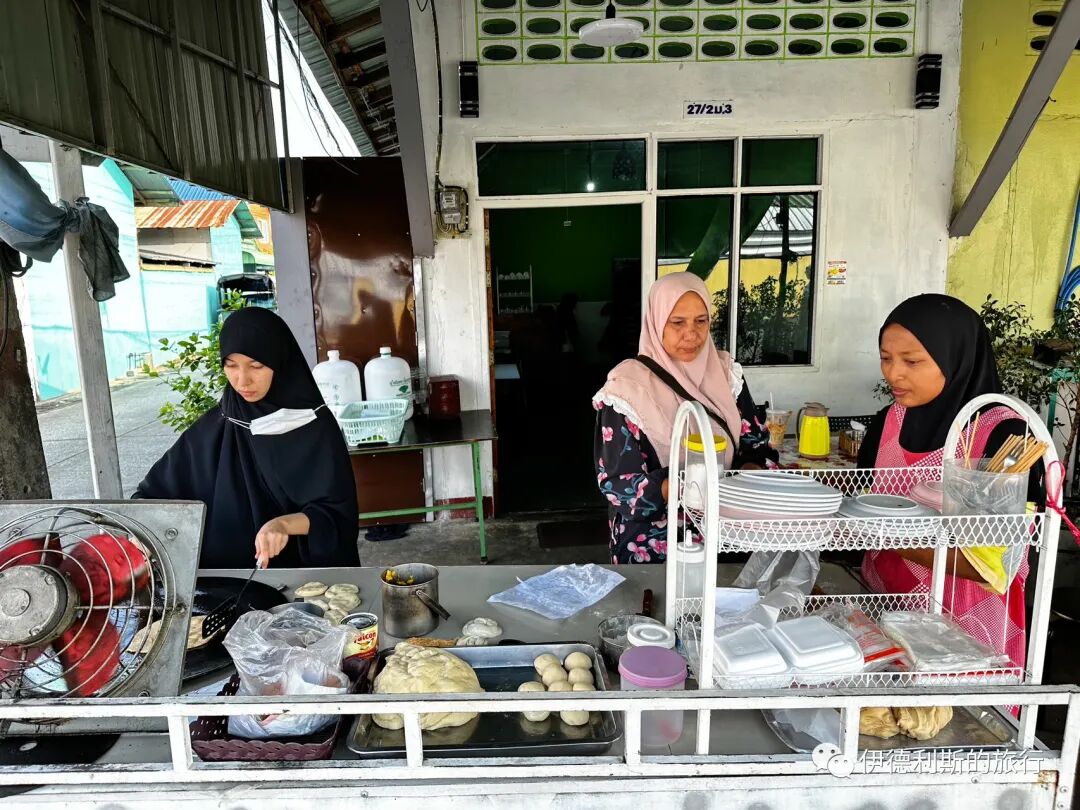
After breakfast, we arrived at Zhenguang School on the outskirts of Mae Sai. This is a school founded by Hui Muslims specifically to train hafiz. The students here include not only local Muslims but also many from other parts of Thailand and even China. It was summer break when we visited, so the students were away. Only the cows being prepared for Eid al-Adha and the chickens the students usually eat were wandering leisurely around the courtyard. The environment here is truly wonderful. Surrounded by endless rice fields and far from the noise of the city, it is a perfect place to focus on studies.
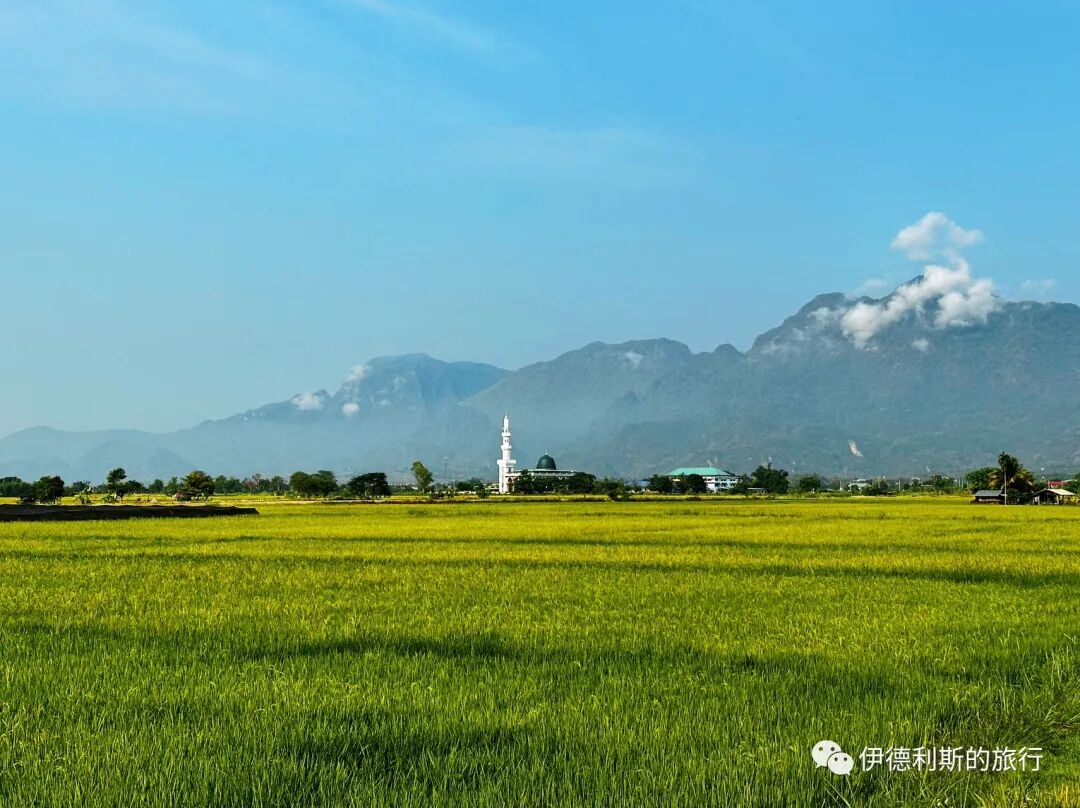
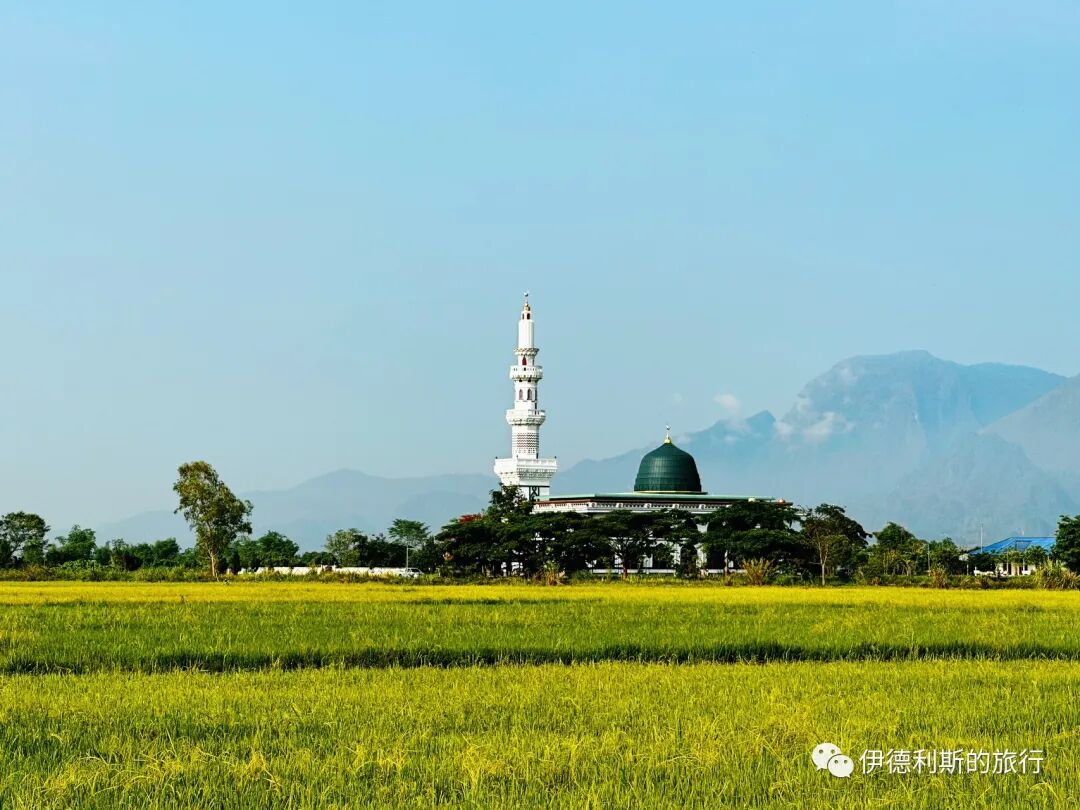
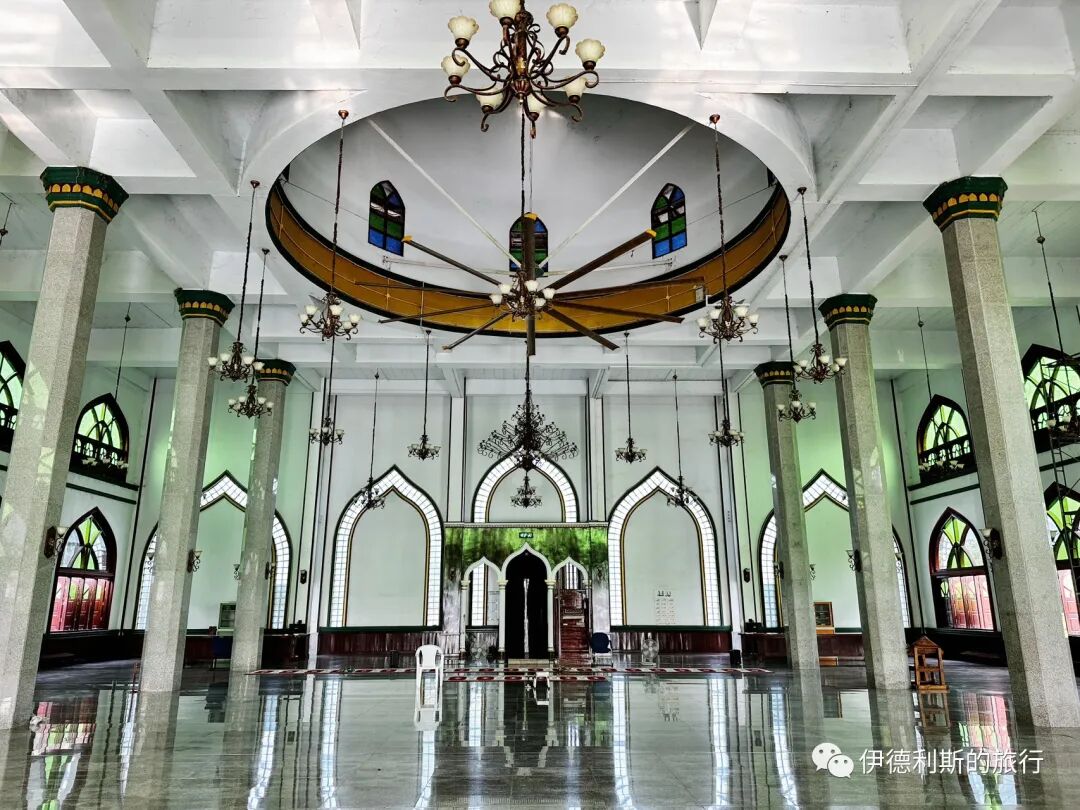
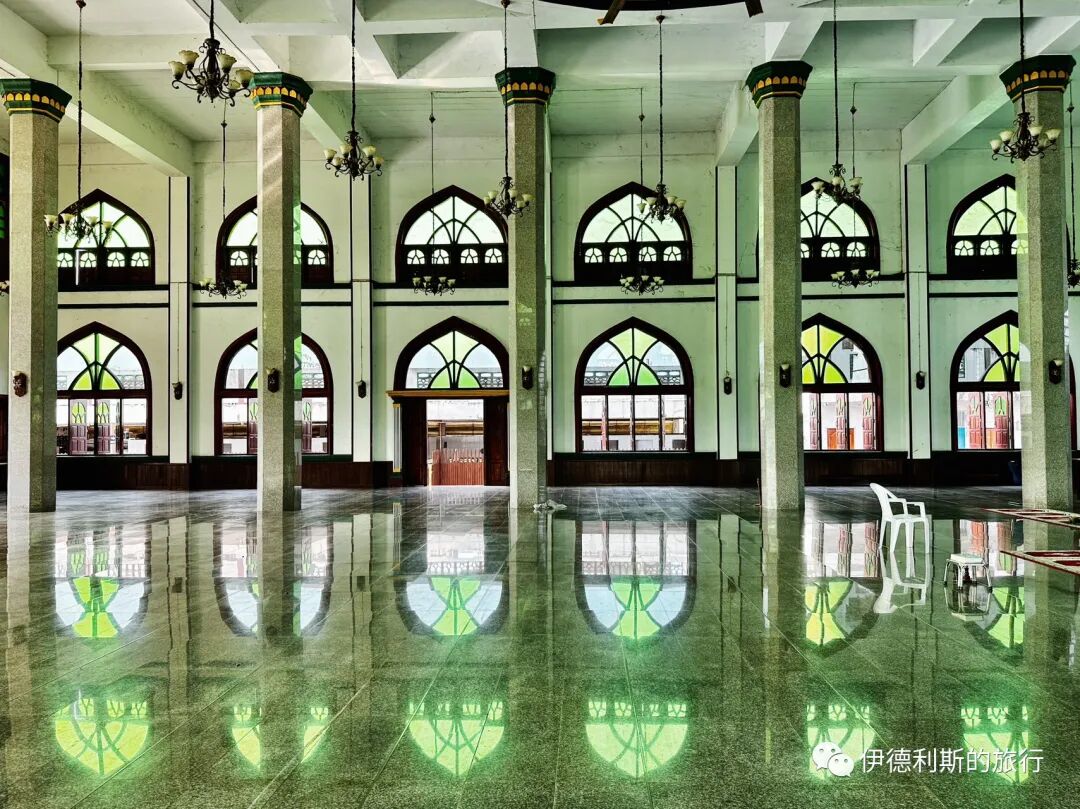
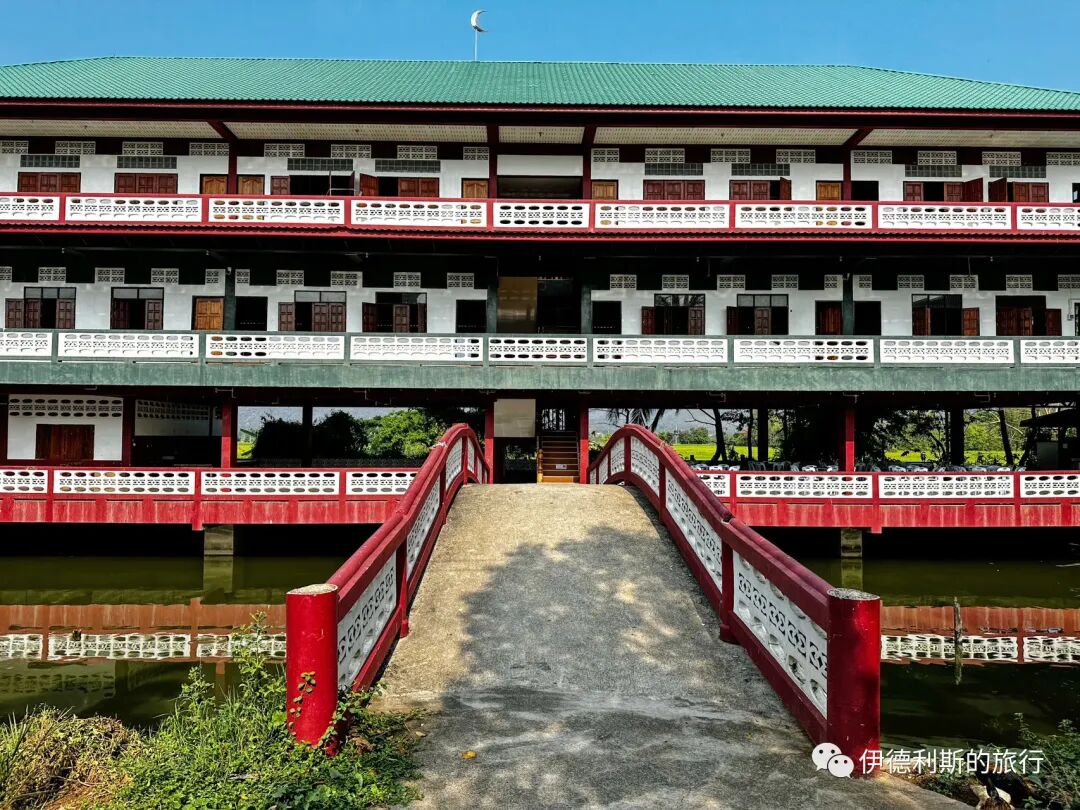
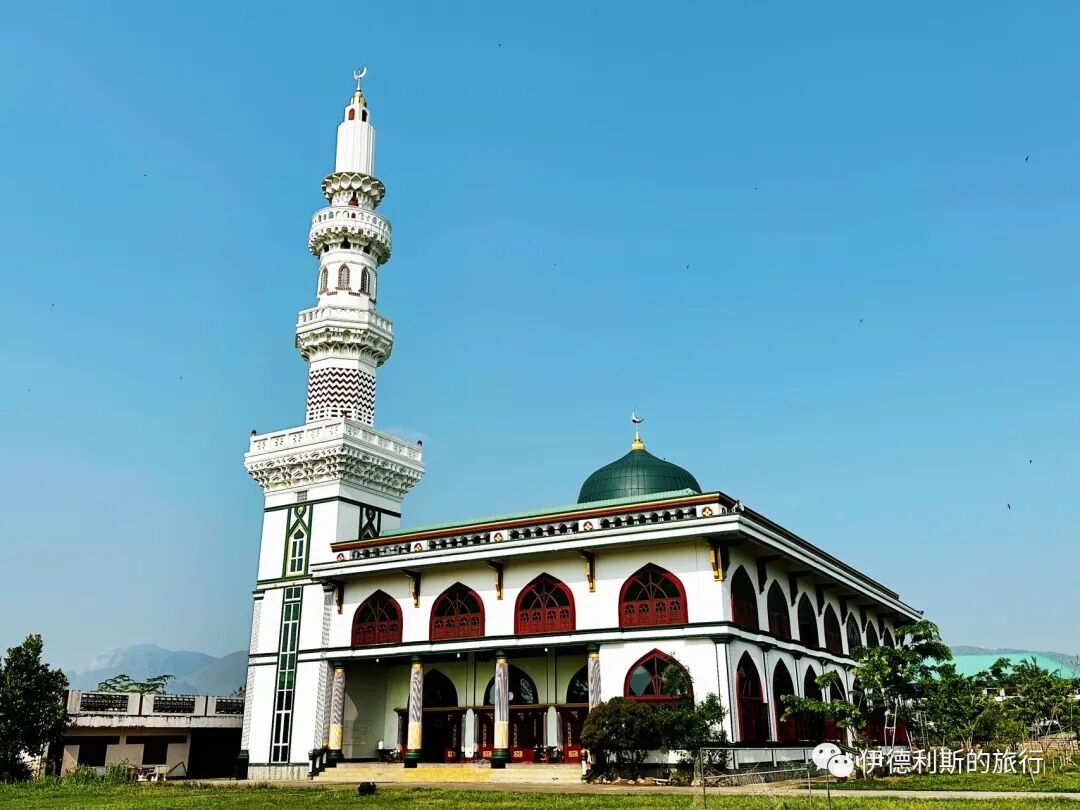
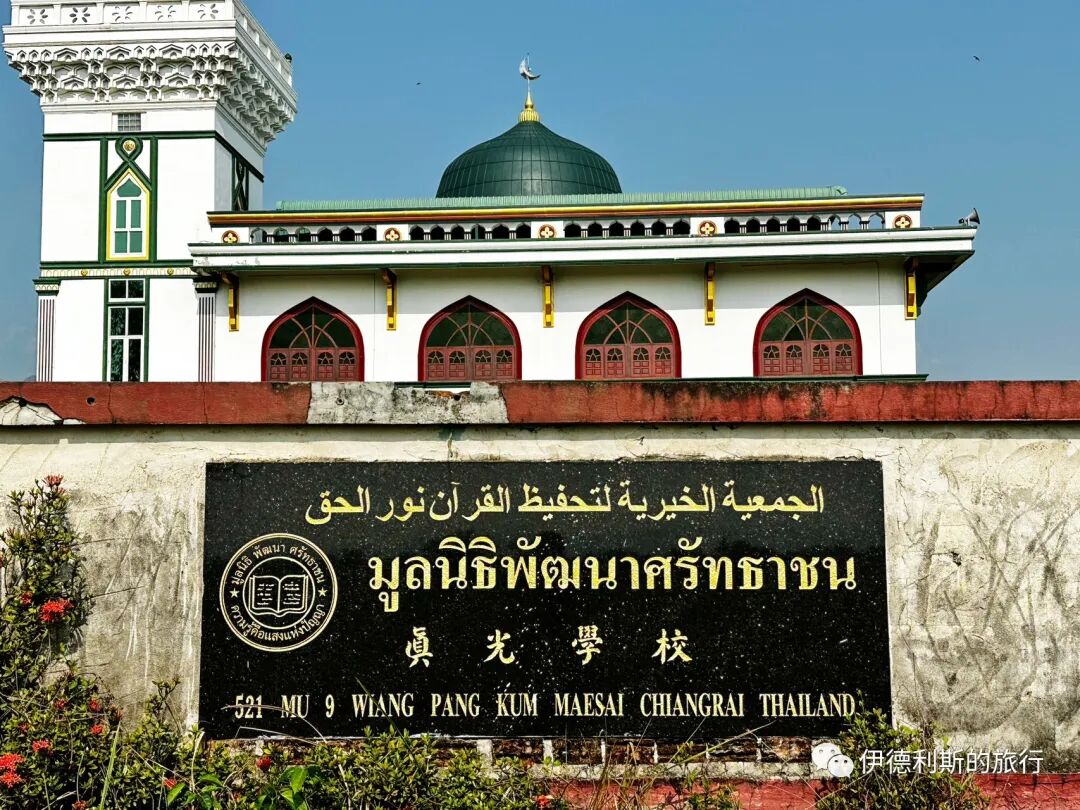
Golden Triangle
Leaving Zhenguang School, we went to the border where Thailand, Laos, and Myanmar meet, which is the famous Golden Triangle. Standing on the banks of the Mekong River, you can see casinos in Myanmar and Laos on the opposite side. Since gambling is banned in Thailand, there is only a Golden Triangle Park here, where many tourists stop to take photos.
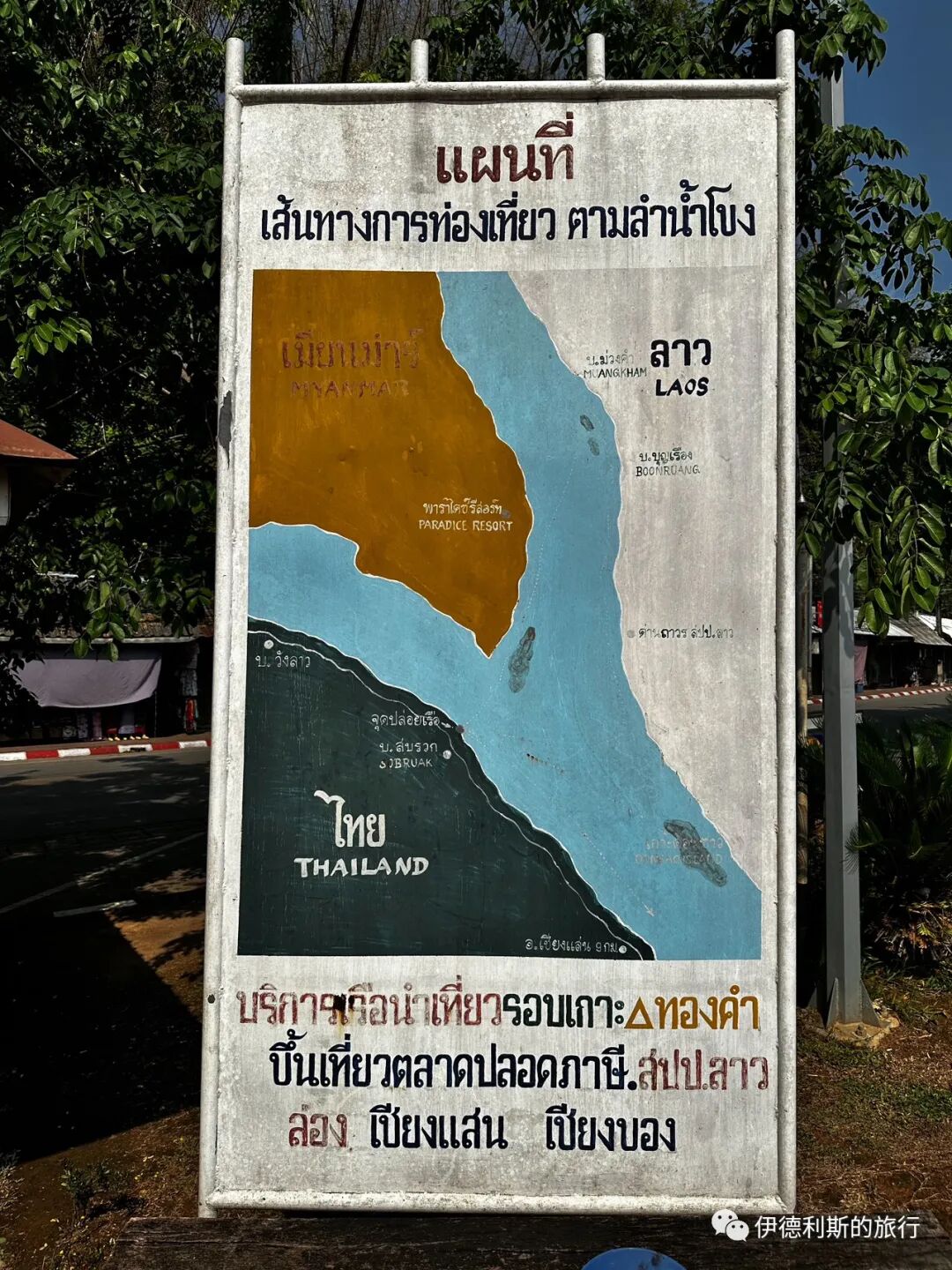
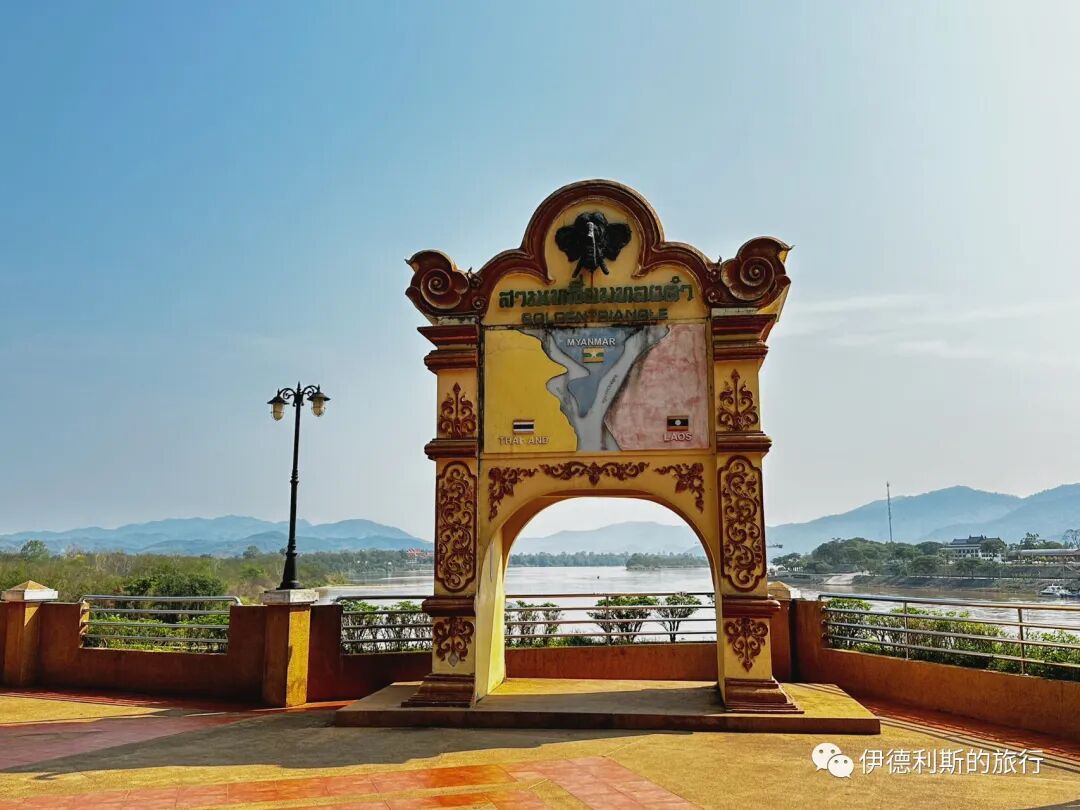
Chiang Rai
Leaving the Golden Triangle, we headed toward Chiang Rai city. We first visited a South Asian Fatima Pakuk mosque near the Chiang Rai airport. Although it looks like a residential courtyard from the outside, it is decorated very beautifully once you step inside. It is very interesting that there is a large treehouse at the mosque entrance. This is my first time seeing a treehouse inside a mosque, a sight you only find in tropical regions.
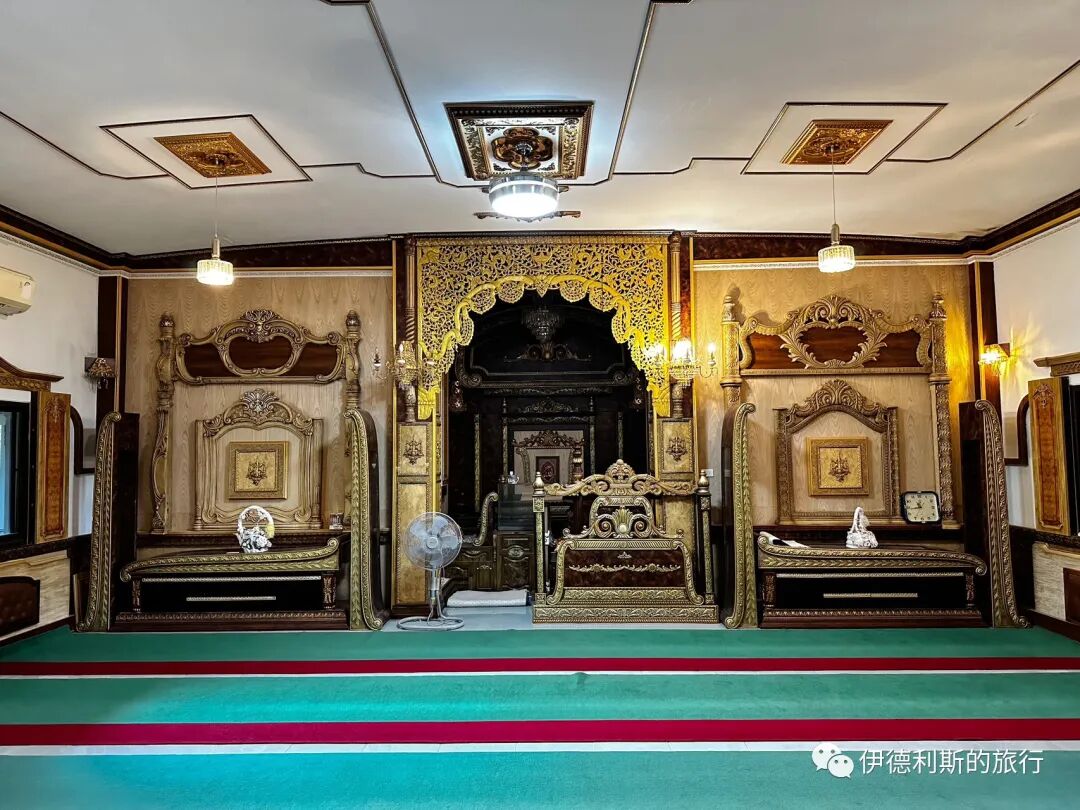
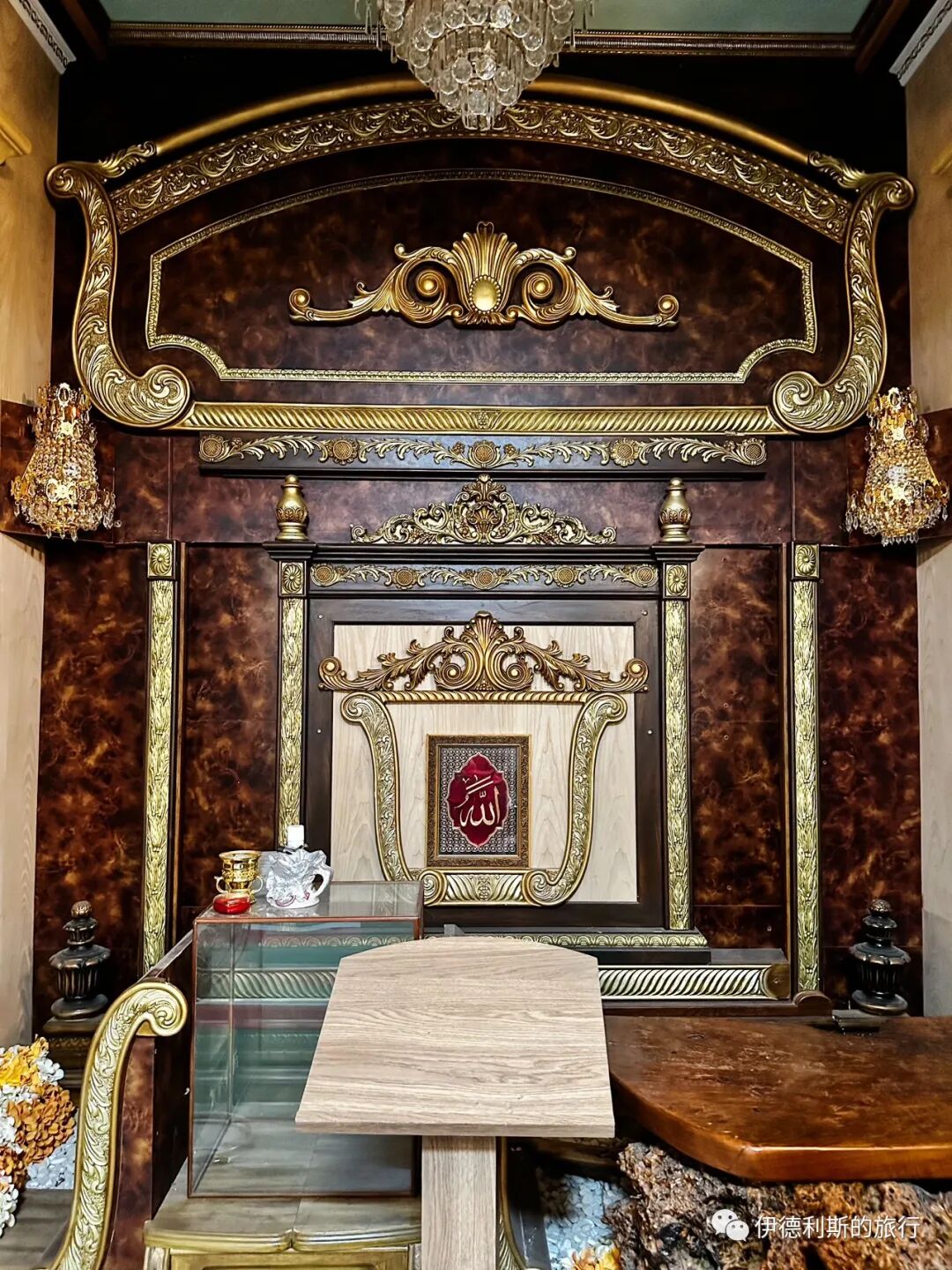
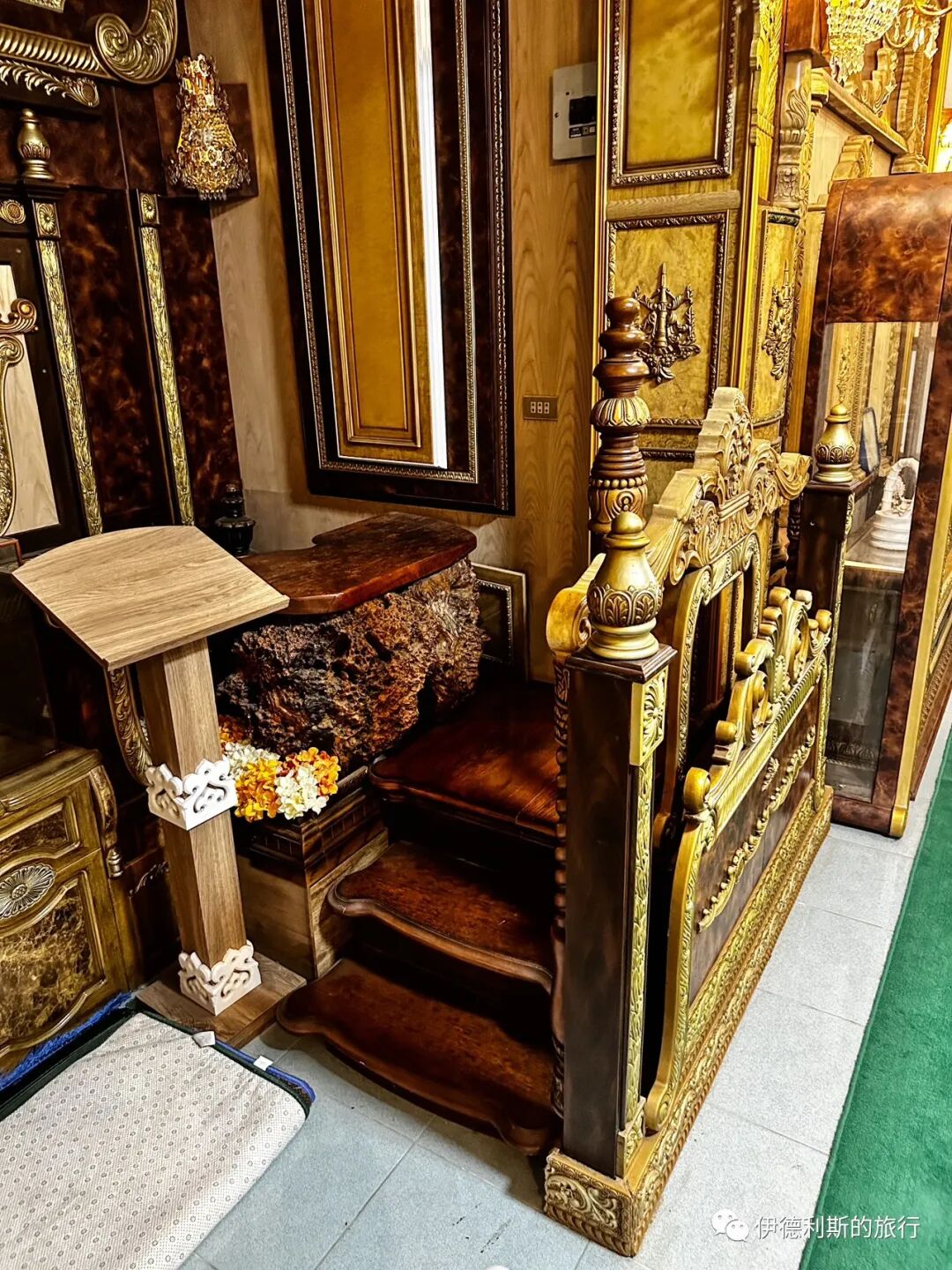
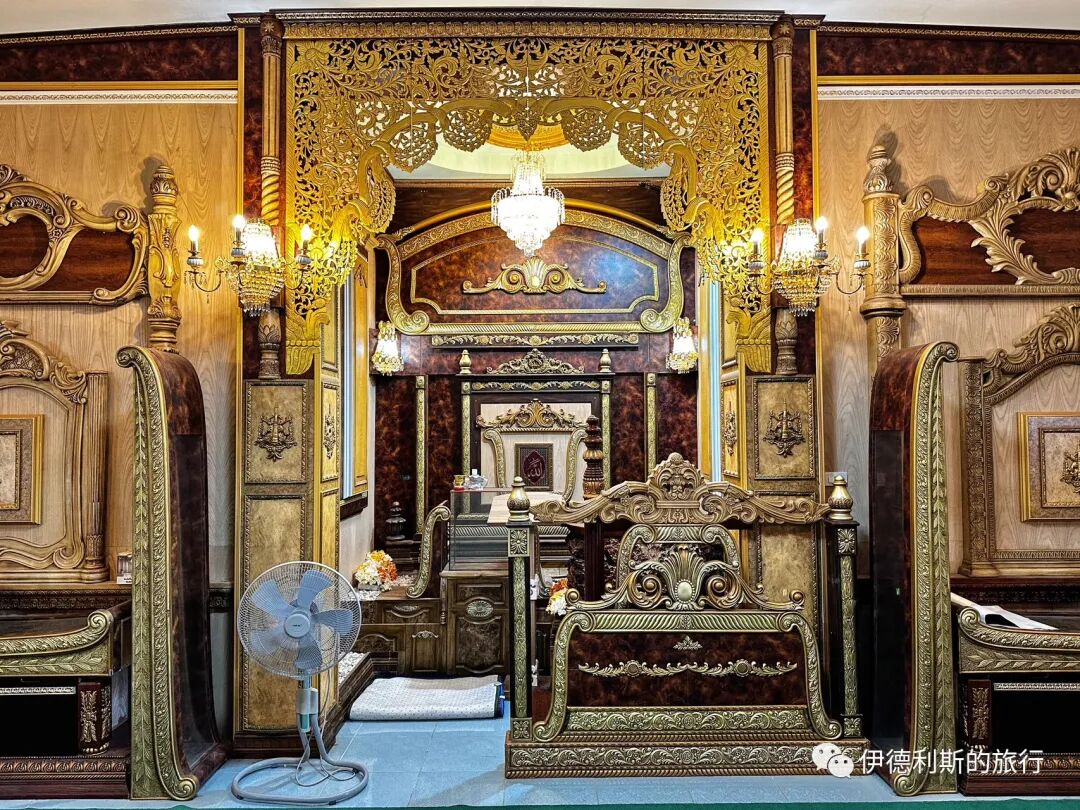
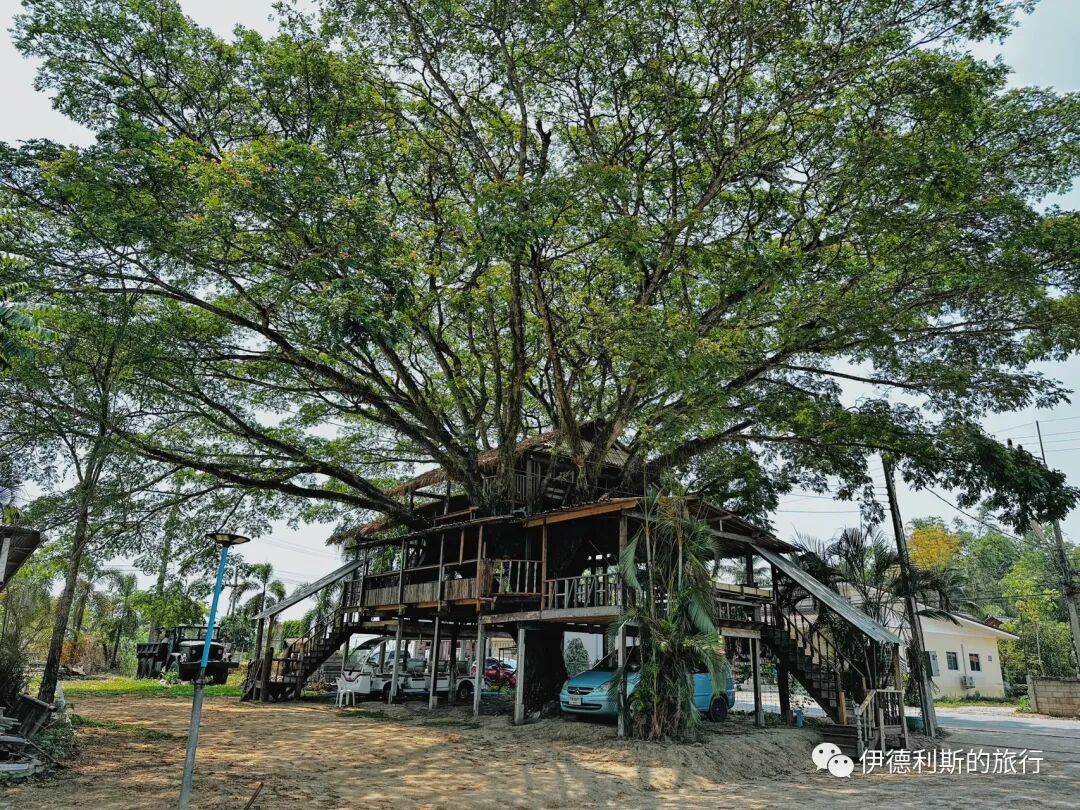
I visited two other South Asian mosques in Chiang Rai city; one is black and one is white, both clean and tidy. The black one was built by Pakistani descendants, and it is really rare to see a black mosque around here. Both mosques have lounge chairs on the front porch of the main hall. It feels so comfortable to lie there and catch the breeze.
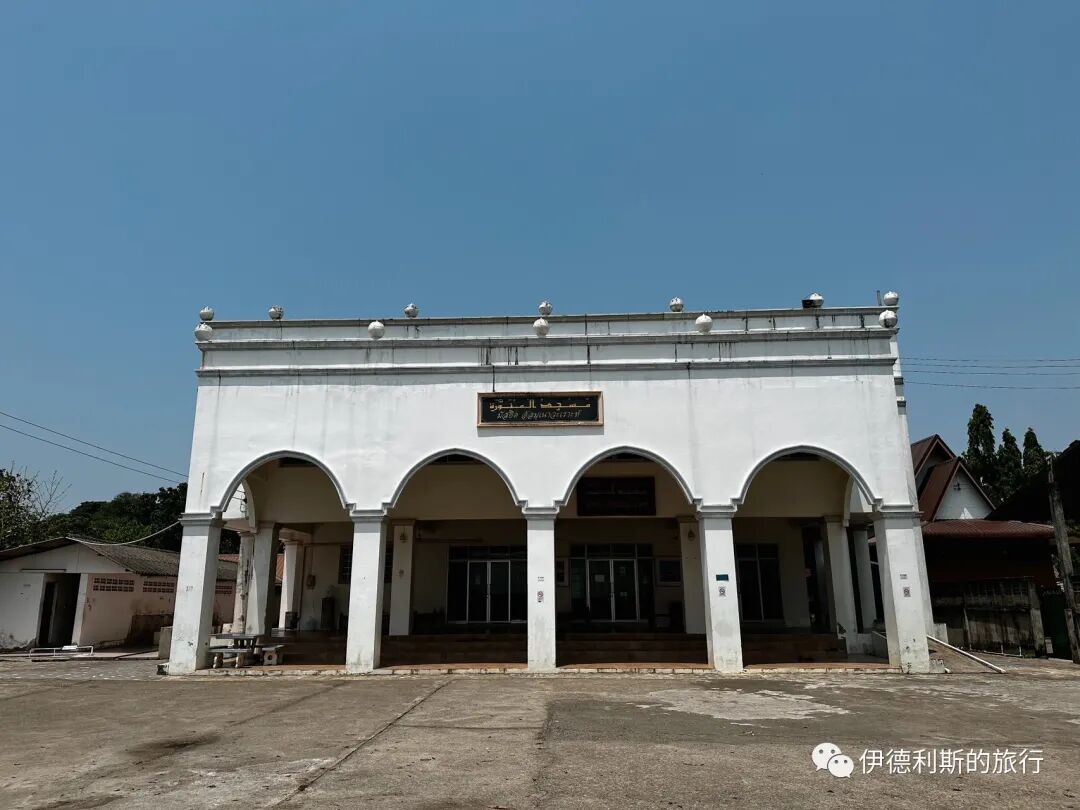
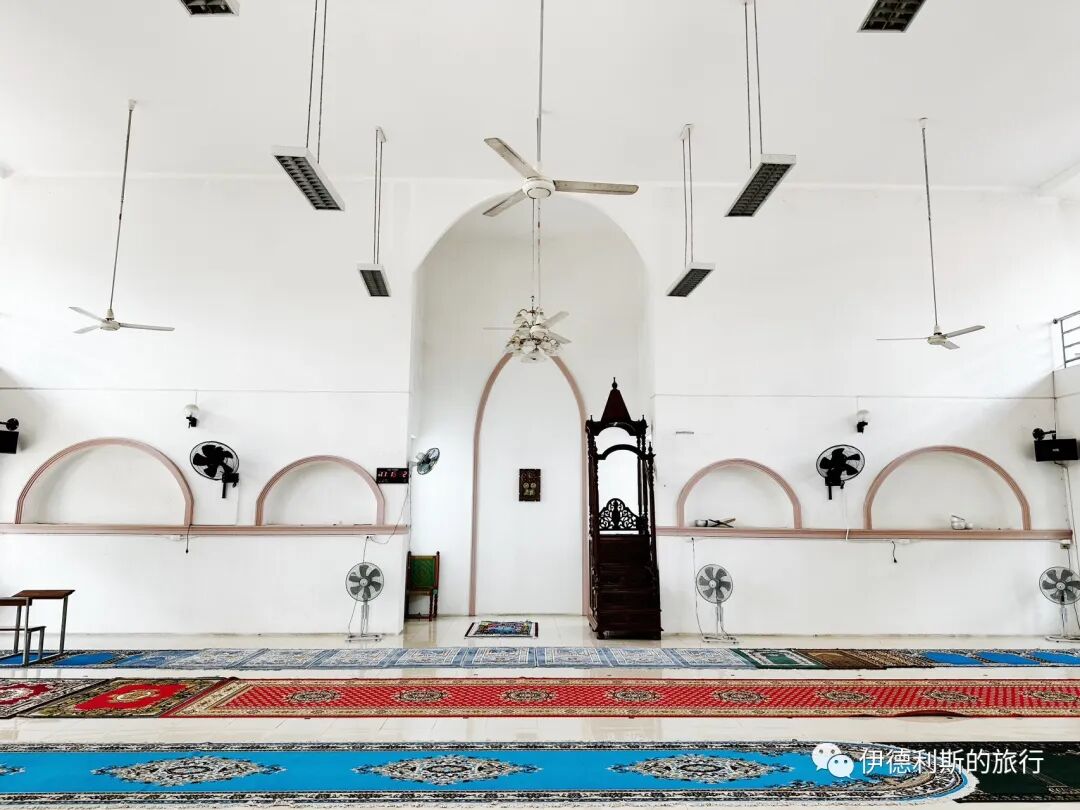
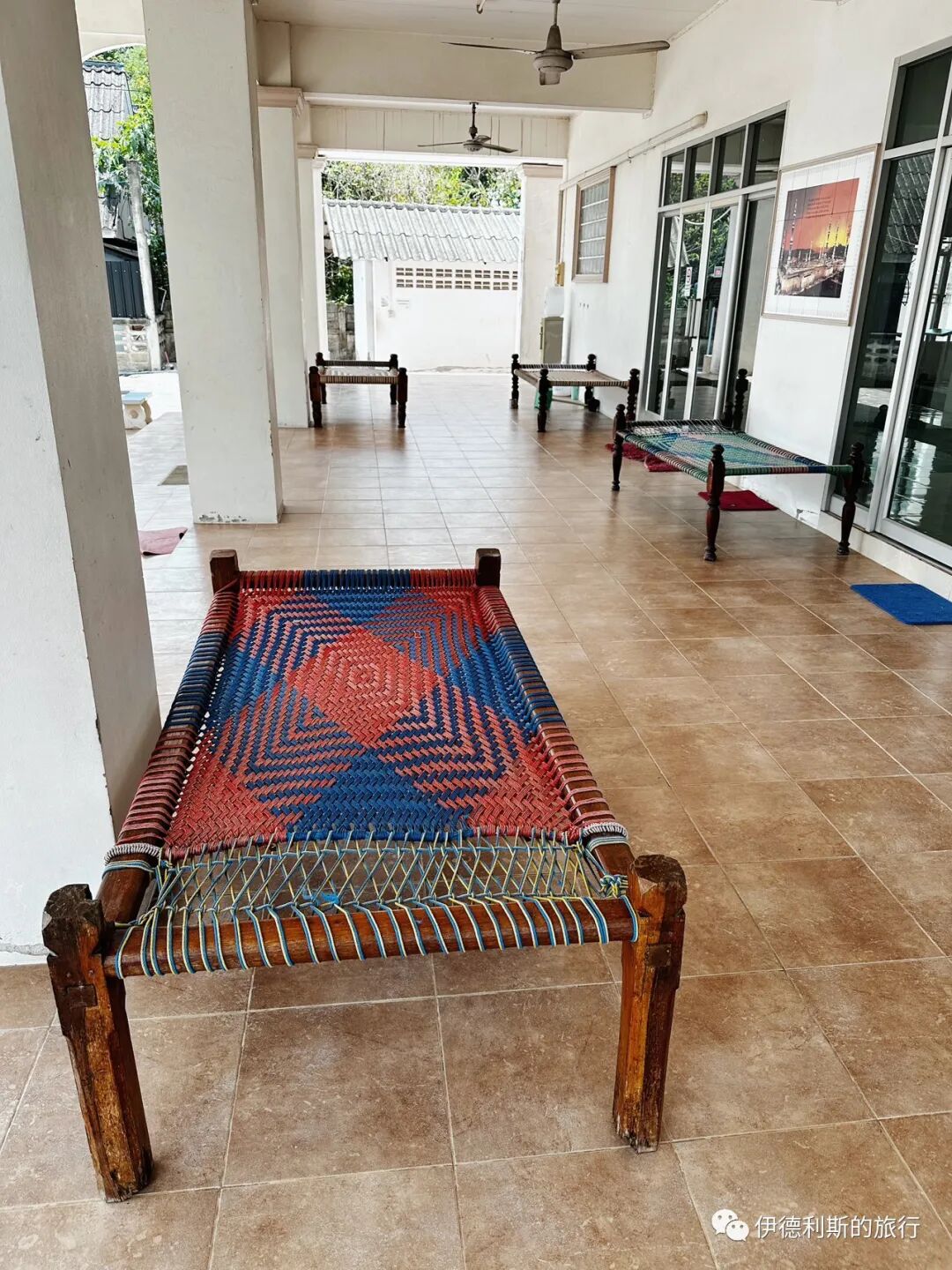
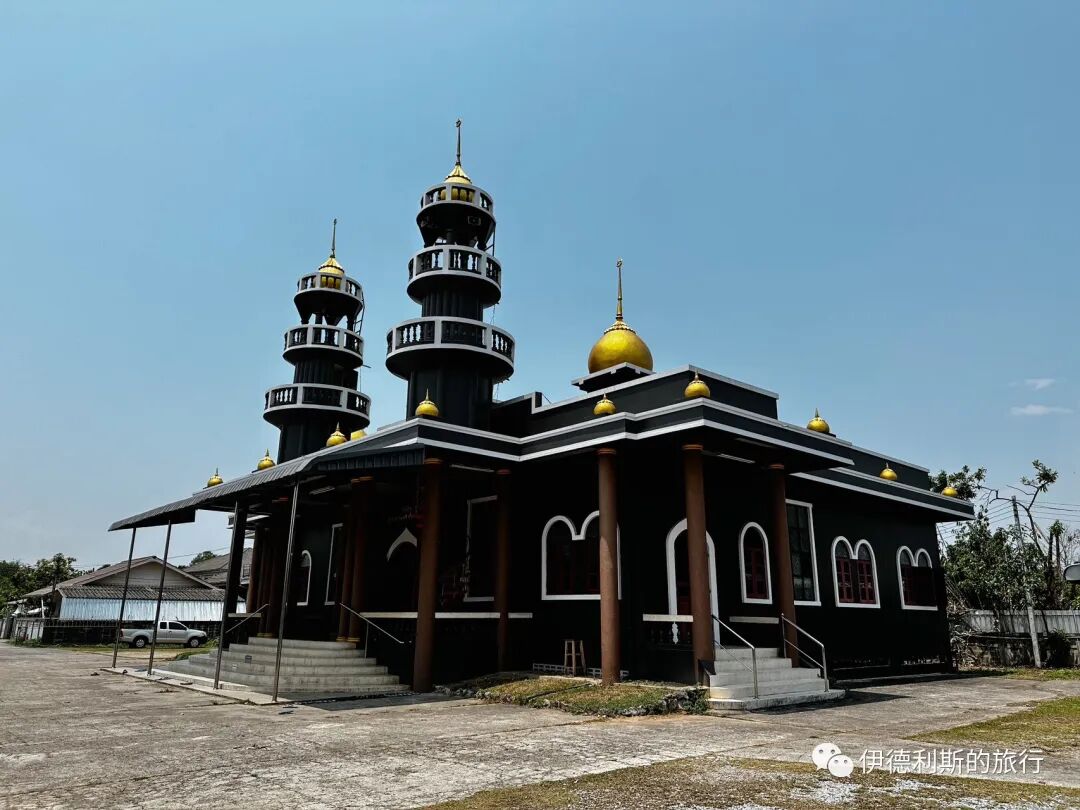
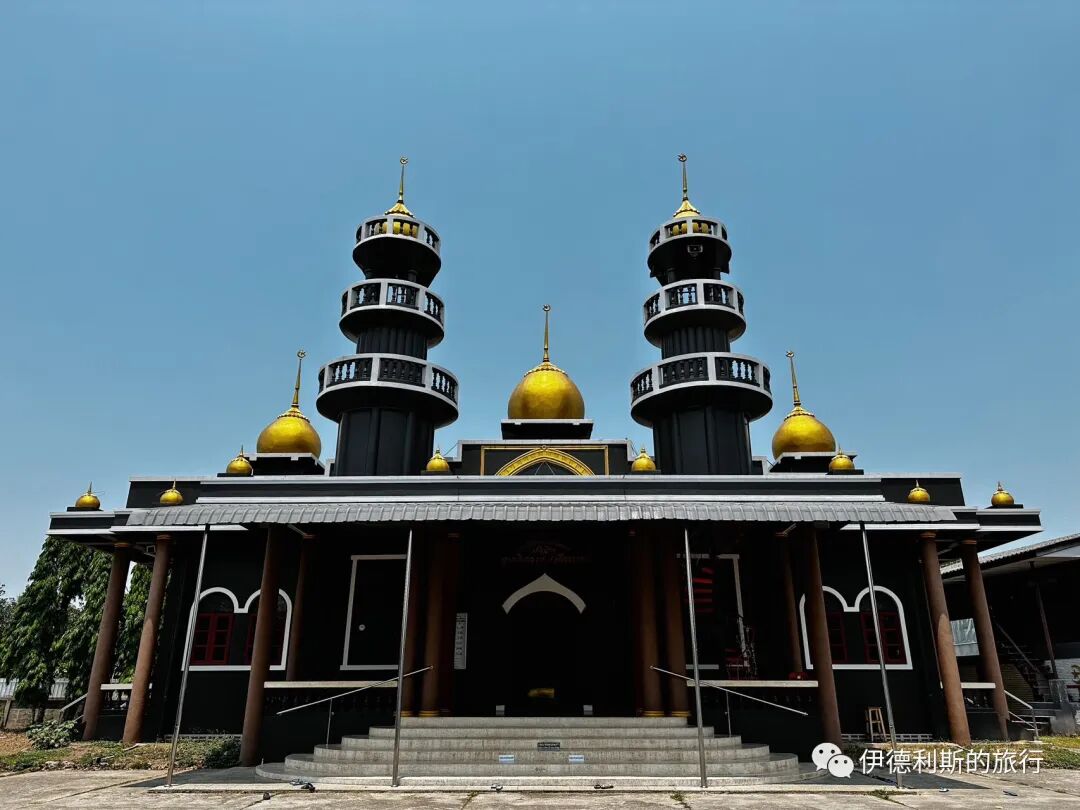
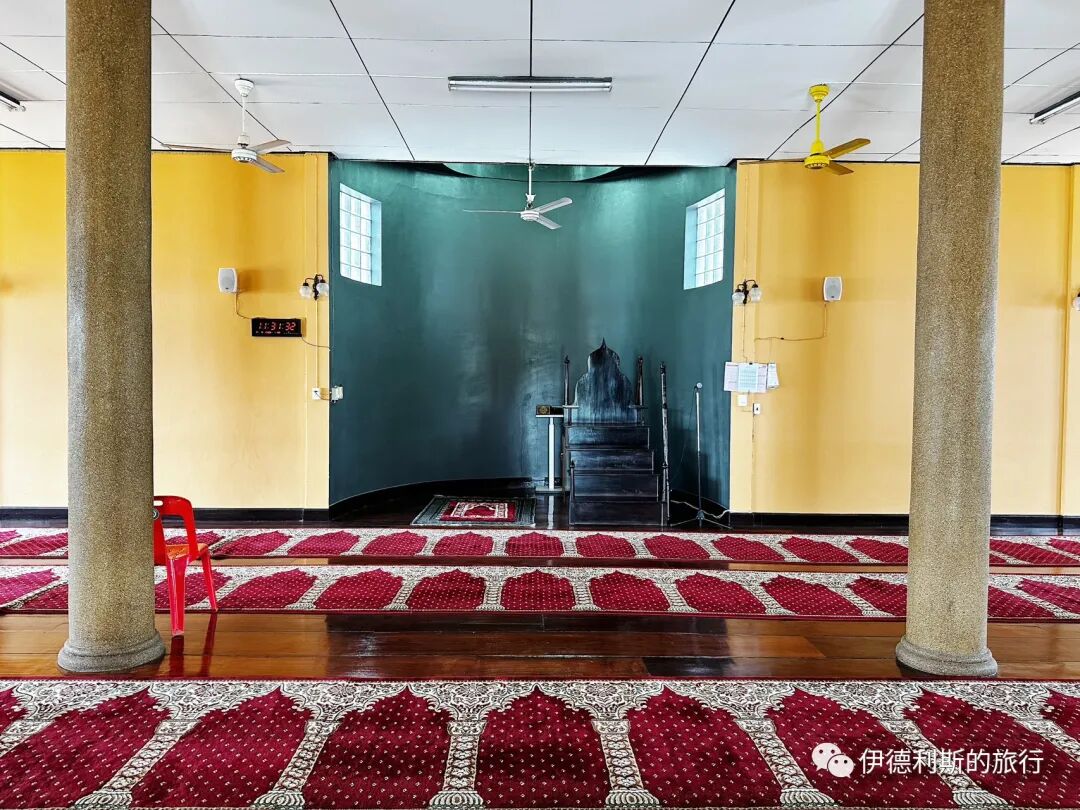
There are mango trees everywhere in Chiang Rai. Inside the Pakistani mosque, you can look up and see green mangoes filling the trees. We bought a bag of sliced green mangoes on the street. Dipping them in dry seasoning is delicious, crisp, and tasty.
We arrived in downtown Chiang Rai and found a halal stall specializing in various spicy sauces. The variety of spicy sauces in Thai food is amazing. They are mostly sweet and spicy, which I quite enjoy.
At noon, we had lunch at the largest Yunnan Hui Muslim restaurant in Chiang Rai city. The restaurant is called Yunnan Restaurant. The owner's surname is Na, and his ancestral home is Guanyi in Jianshui. The founder of the restaurant was surnamed Ma, who was owner Na's father-in-law. He spent 50 years preparing Yunnan halal banquets in Northern Thailand. Most Yunnan Hui Muslims in Northern Thailand, including our chartered driver Master Ma, have eaten at owner Ma's banquets and helped out in the kitchen. Owner Ma had two daughters who both married two brothers. Both sons-in-law inherited owner Ma's business, running two Yunnan restaurants in Chiang Mai and Chiang Rai respectively. The one we ate at in Chiang Rai is run by the younger brother.
The restaurant menu has Chinese, which makes ordering very convenient. We ordered stir-fried squid with red curry paste, stir-fried morning glory, fried fish with three kinds of sauces, and stir-fried beef with ginger strips. Hui Muslims here have kept traditional Yunnan halal food but added many Thai spices and cooking methods. They have developed a unique style of Northern Thai Yunnan halal cuisine that tastes different from the halal food we ate in Yunnan.
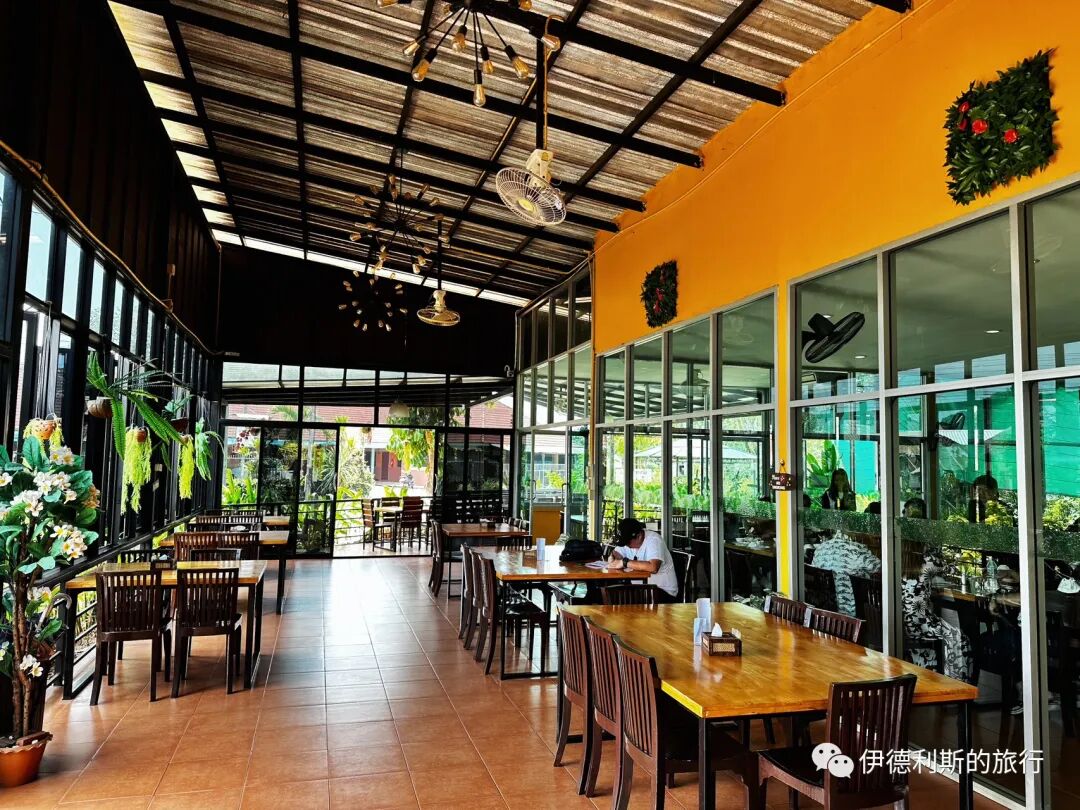
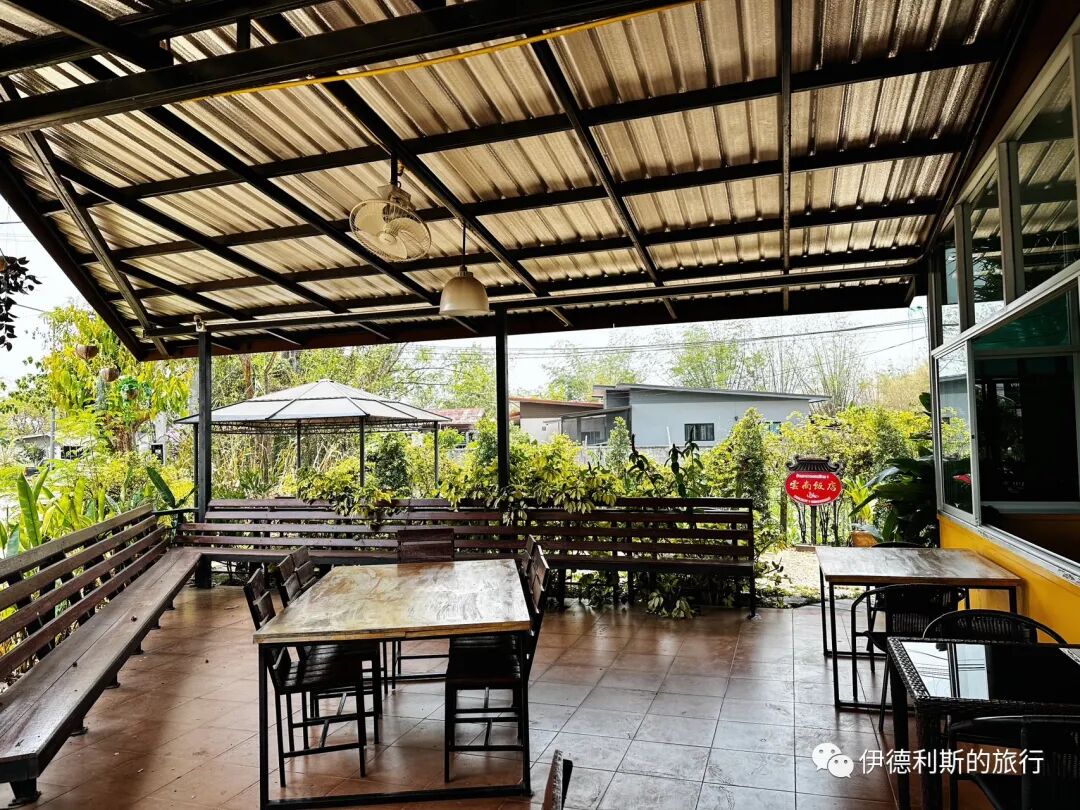
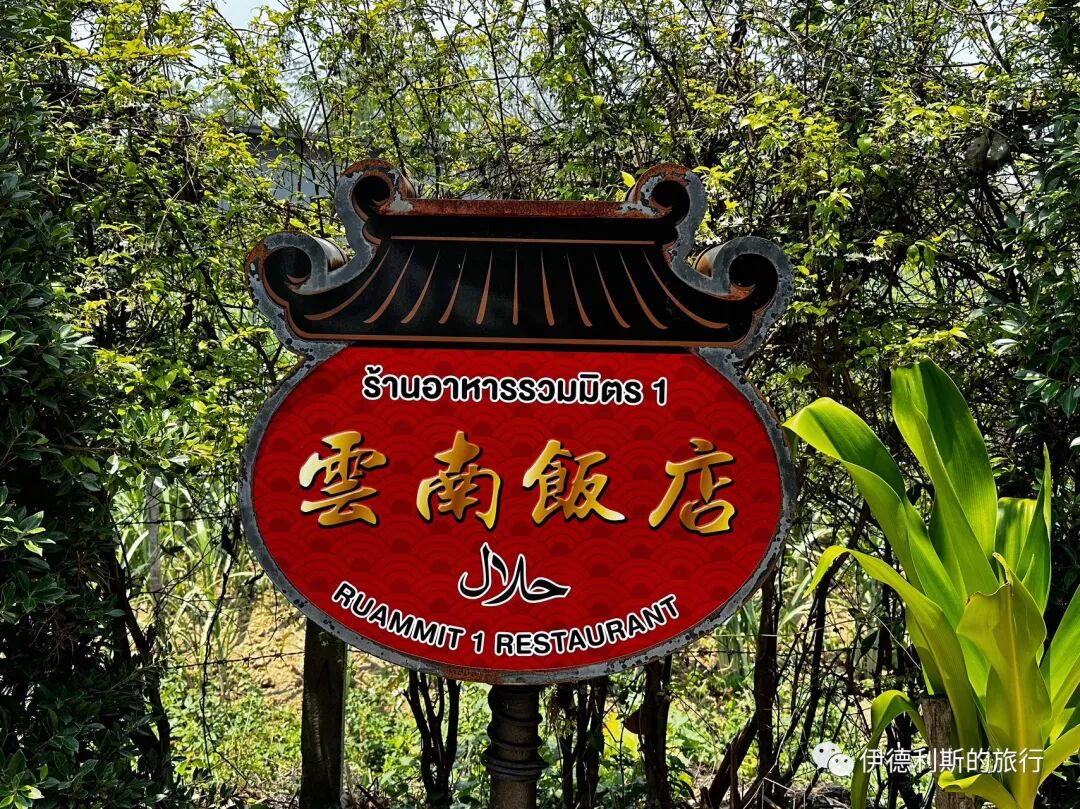
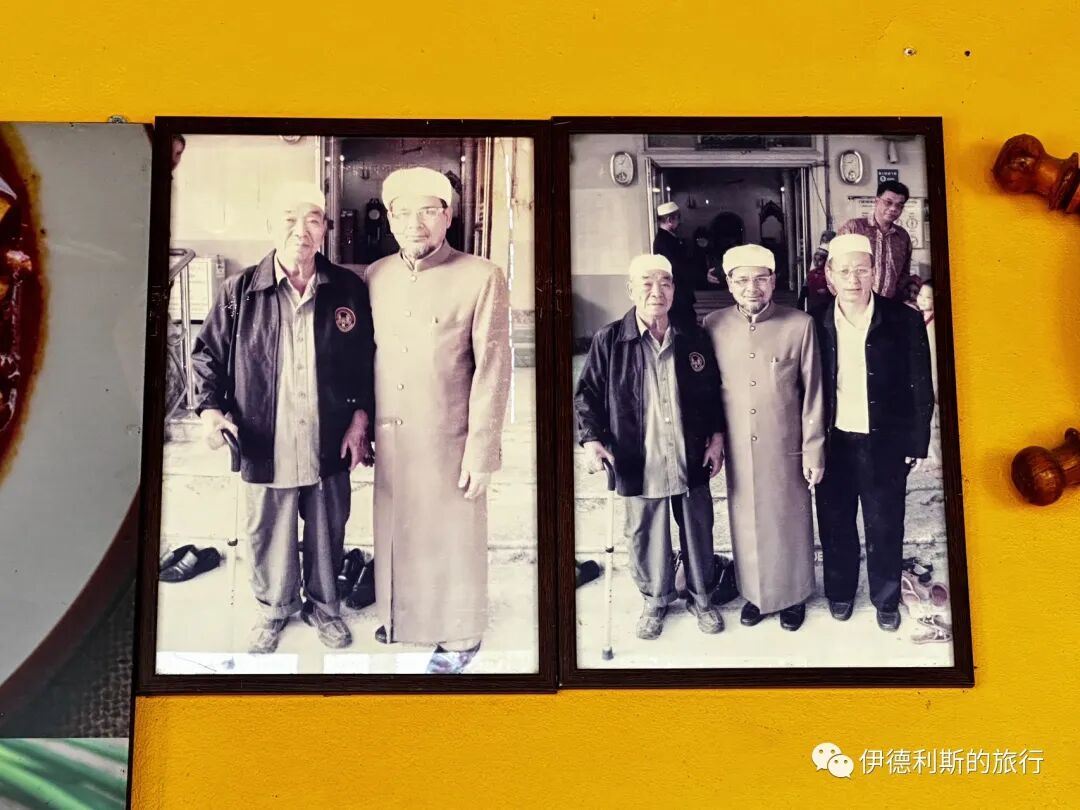
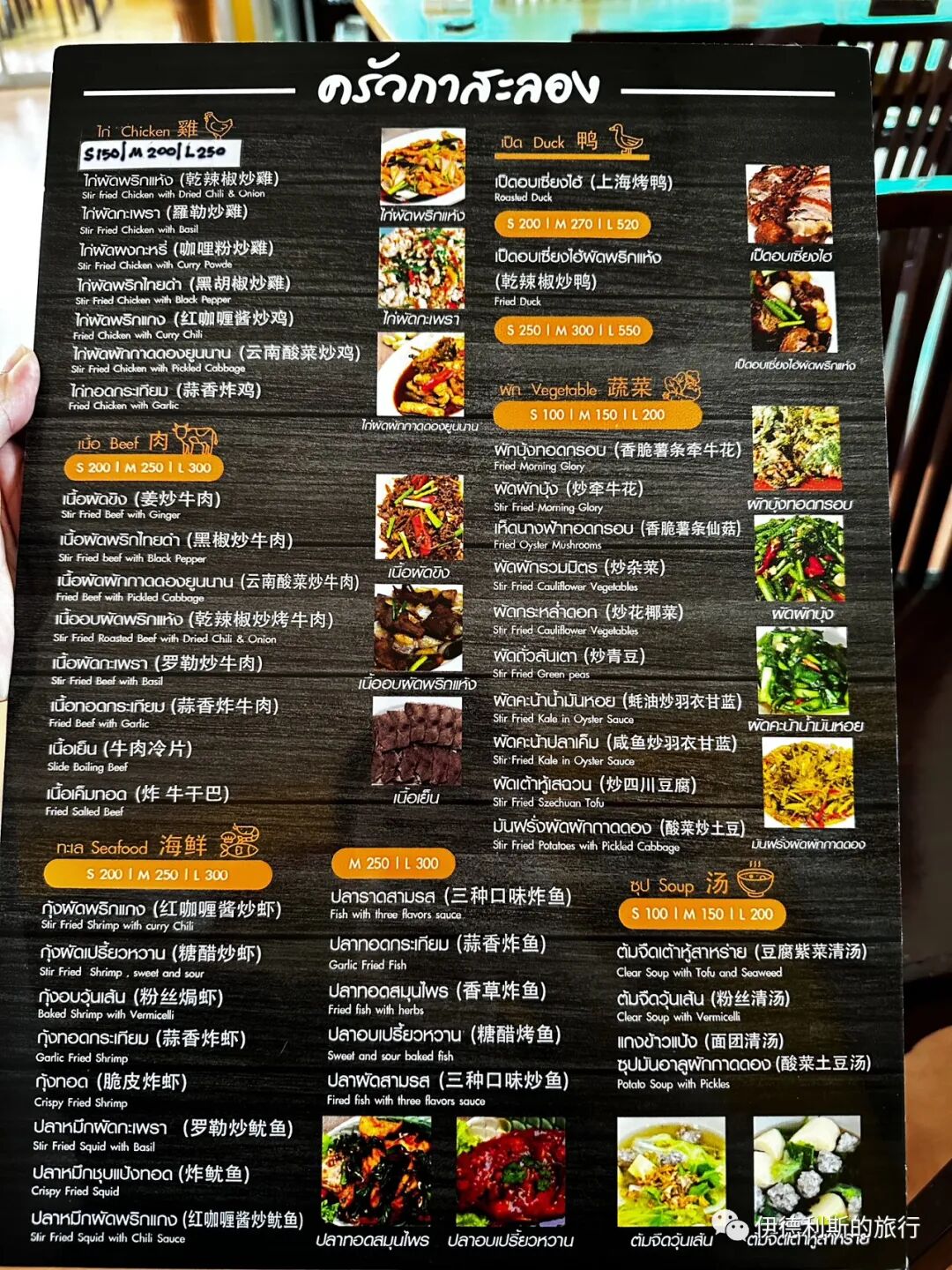
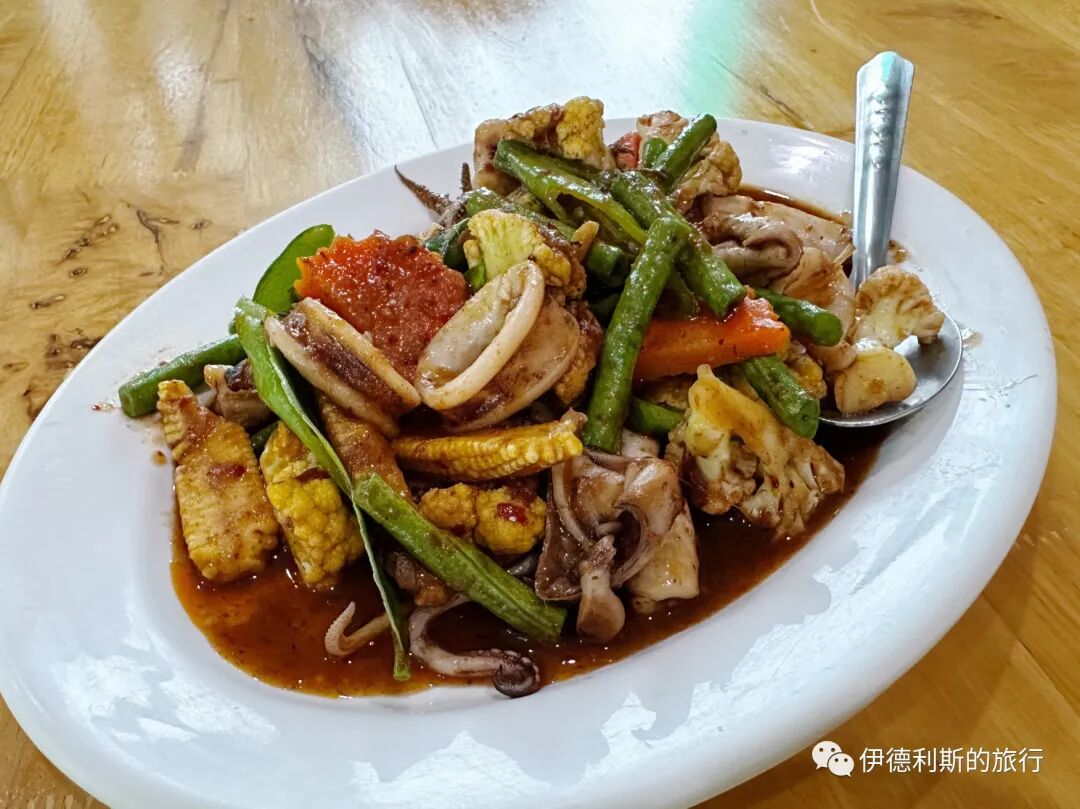
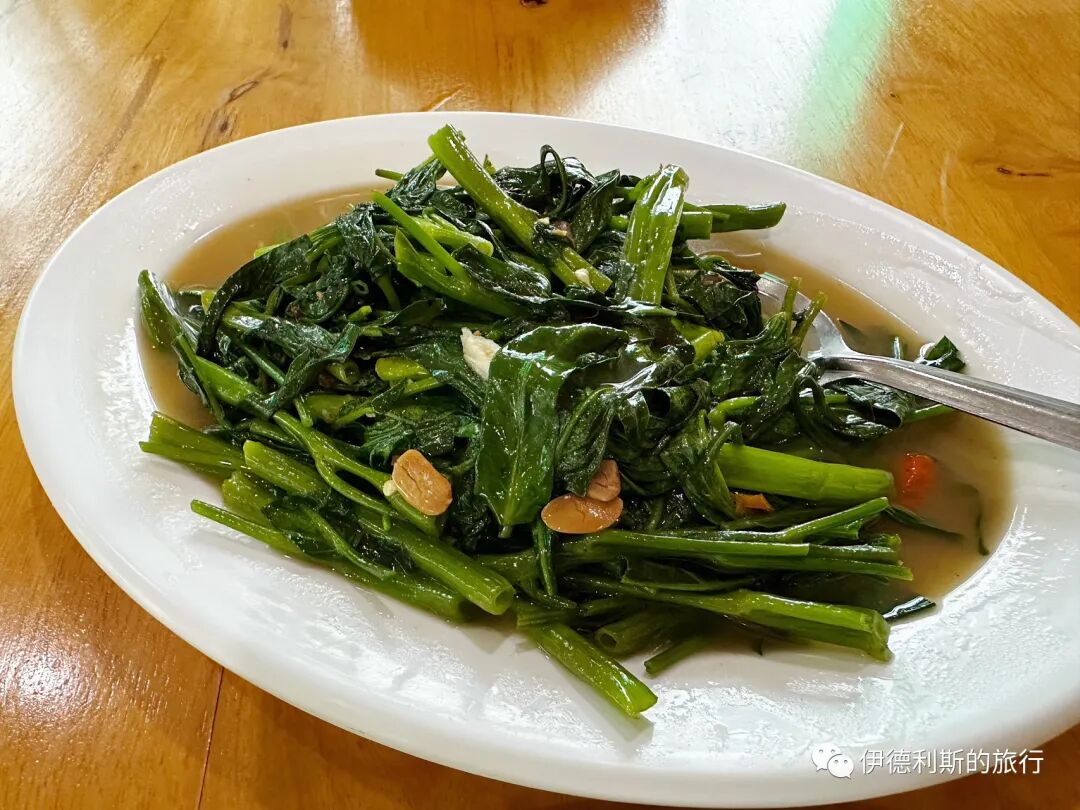
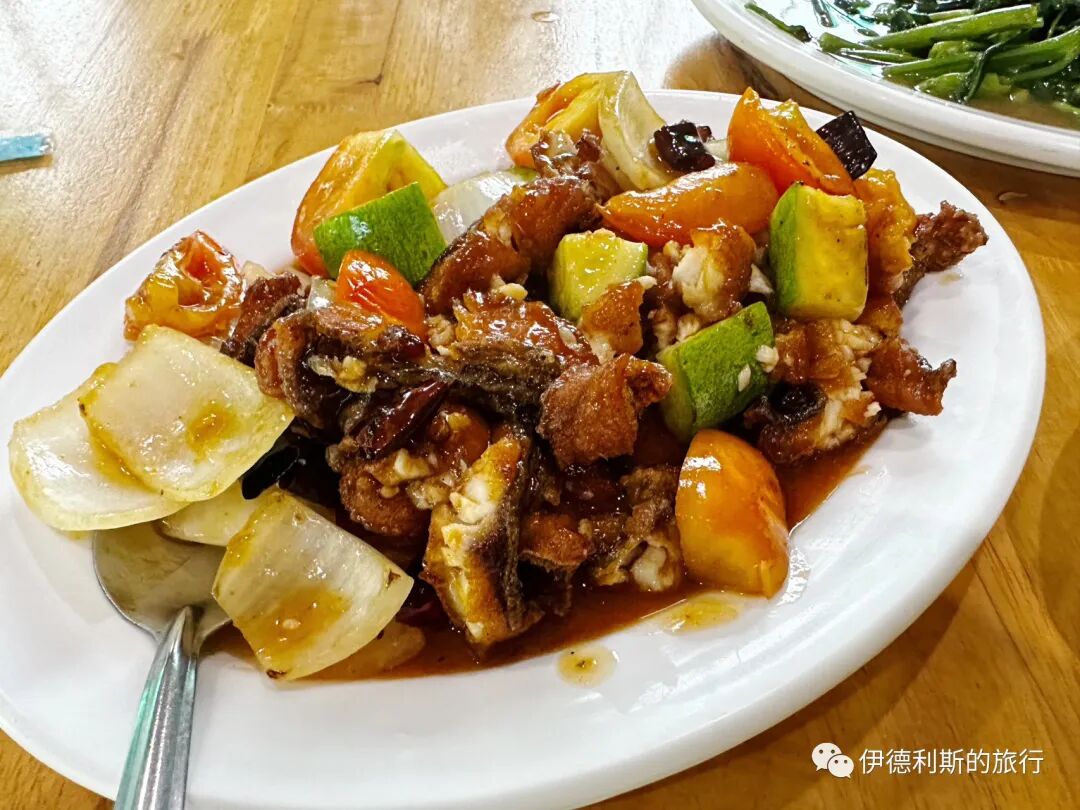
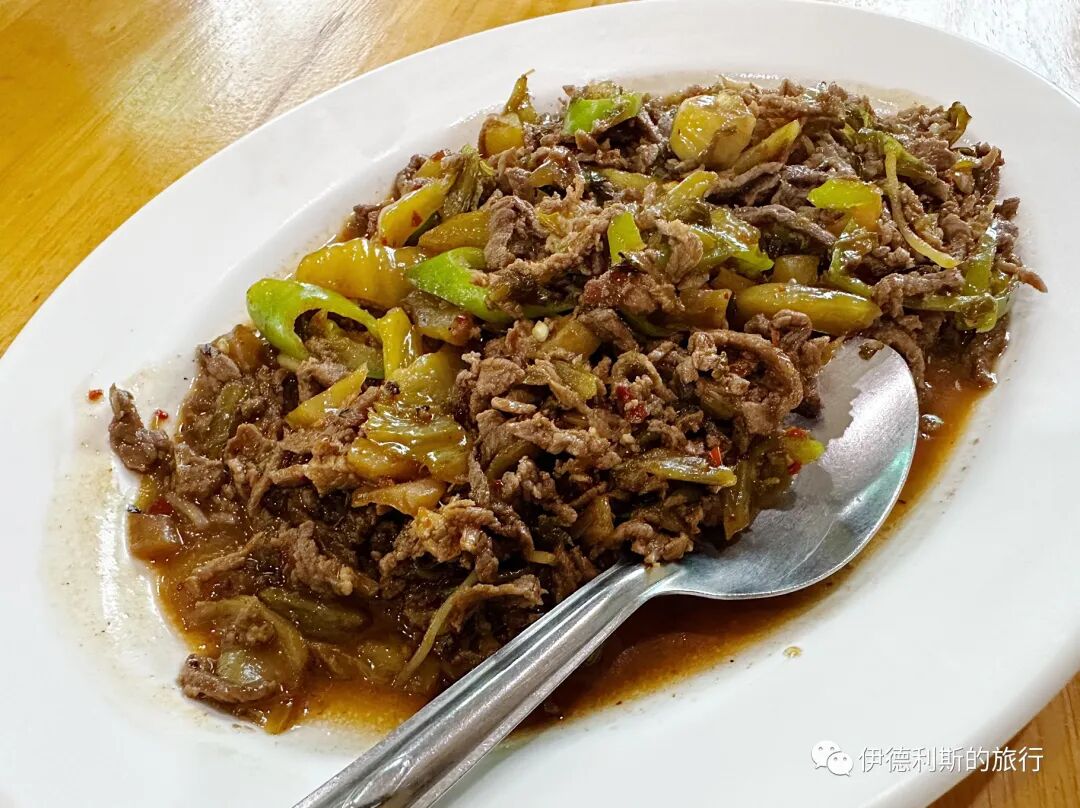
We arrived at the Yunnan mosque (lishen) in Chiang Rai city, and the elders at the mosque greeted us warmly.
Although the total number of Hui Muslims in Chiang Rai city is much smaller than in Chiang Mai or Mae Sai, this was an important hub for the Yunnan Hui Muslim horse caravans trading in Northern Thailand. It is the oldest existing Yunnan mosque in Northern Thailand.
The Chiang Rai Yunnan mosque was built in 1910, seven years earlier than the Chiang Mai Wang He mosque built in 1917. The current building was rebuilt in 2009 and is the largest of all the Yunnan mosques in Northern Thailand. The dome in the center of the mosque is in Mughal style, and the tops of the minarets on both sides are Chinese-style pavilions. This represents the harmony between South Asian Muslims and Chinese Muslims in Northern Thailand. The entrance to the main hall has the words 'Gate of Ritual' and 'Path of Etiquette' written on it, along with a couplet that reads: 'Quiet mosque, quiet place, quiet thoughts, silently praise Allah; pure heart, pure origin, pure worship, purely follow the scriptures.' In front of the main hall door is a grandfather clock donated to the mosque by Mr. Mu Yufu, inscribed with the words 'Promote the Righteous Path'.
The first floor of the mosque is engraved with the names of those who donated to the reconstruction. Among them, 196 people are from Yunnan, many of whom are from Najiaying, Tonghai, and Menghai.
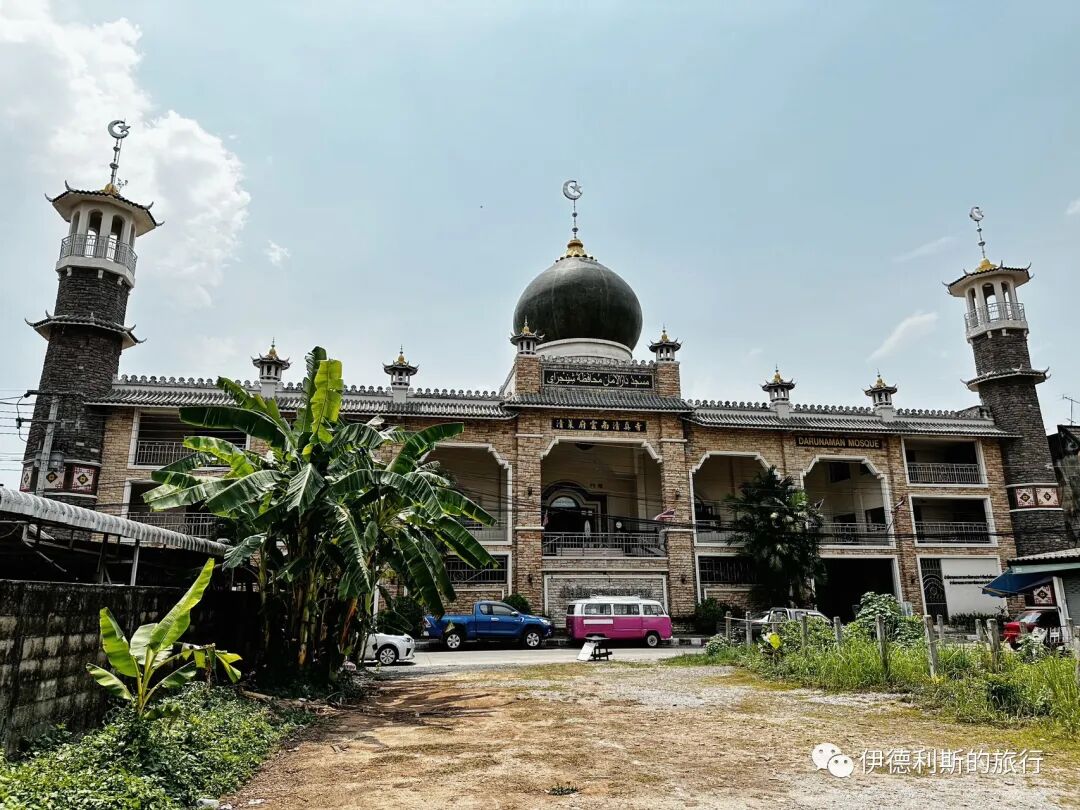
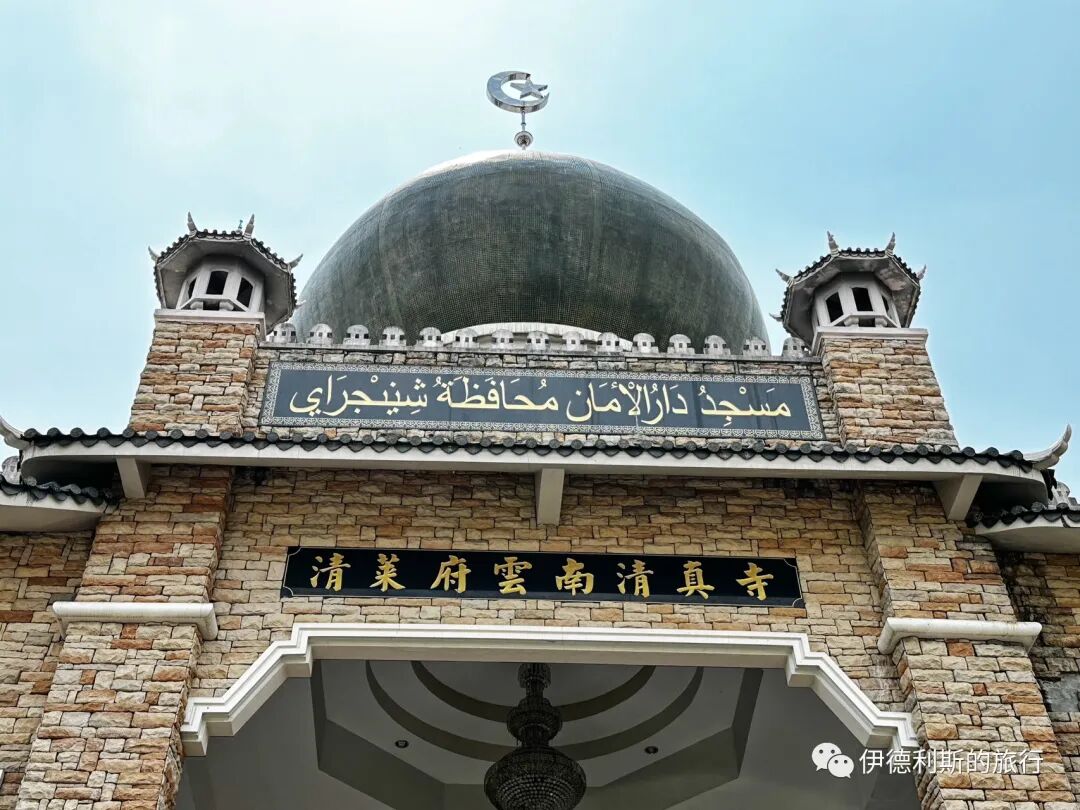
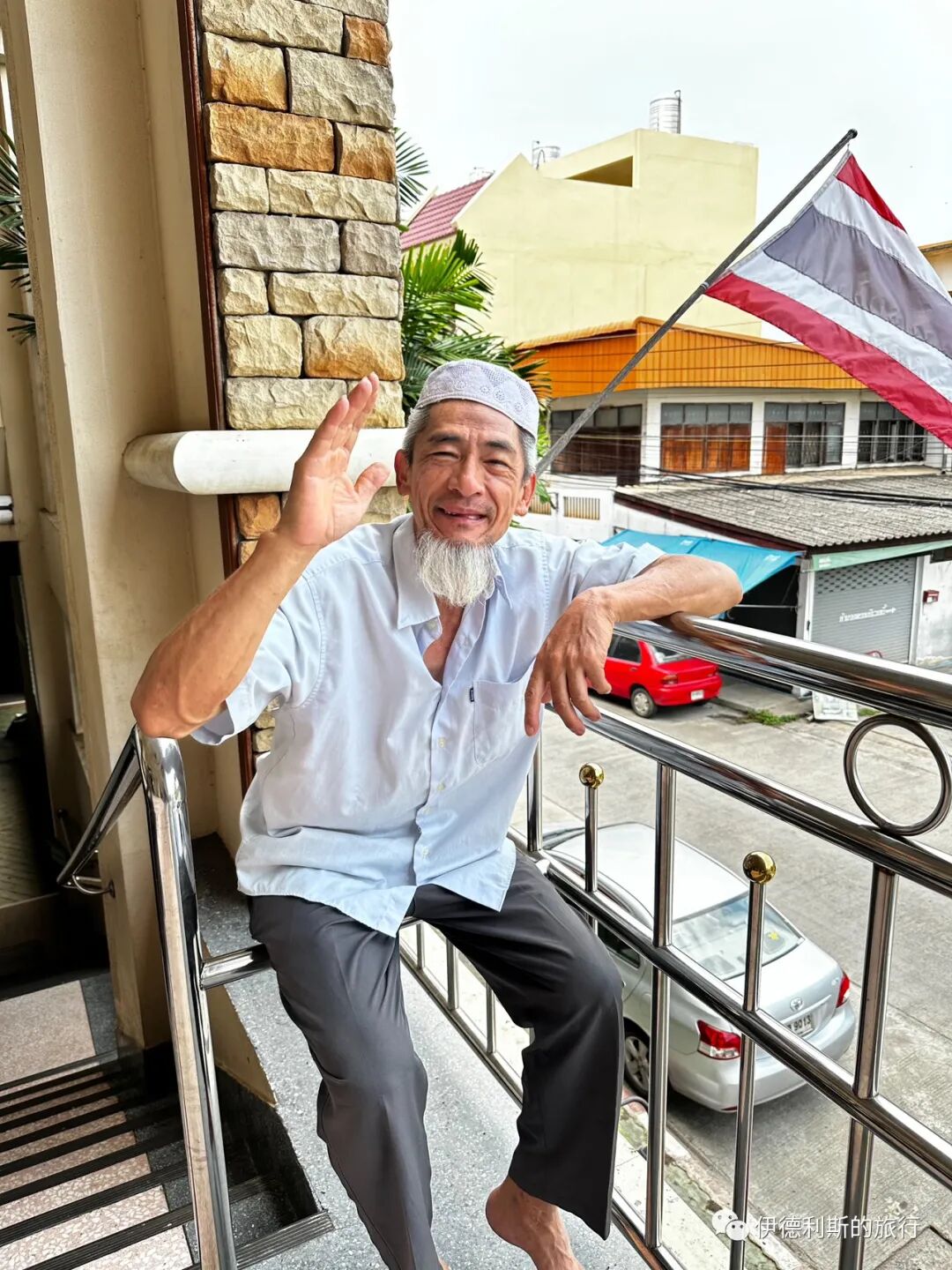
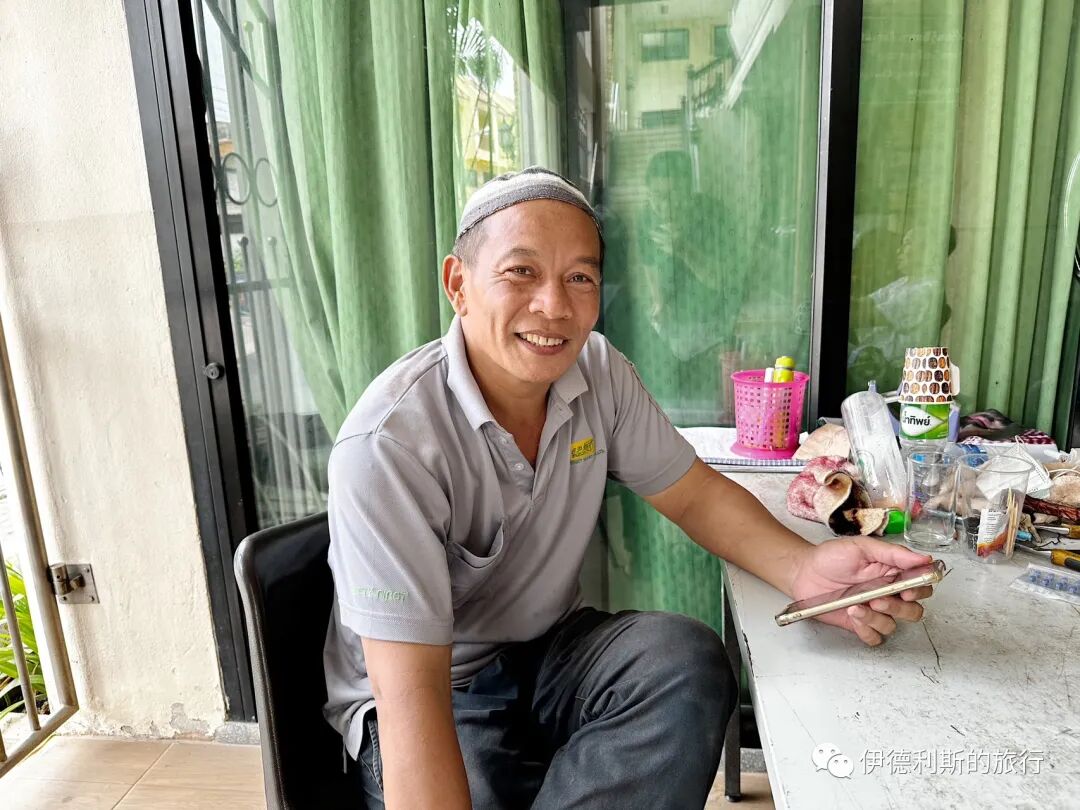
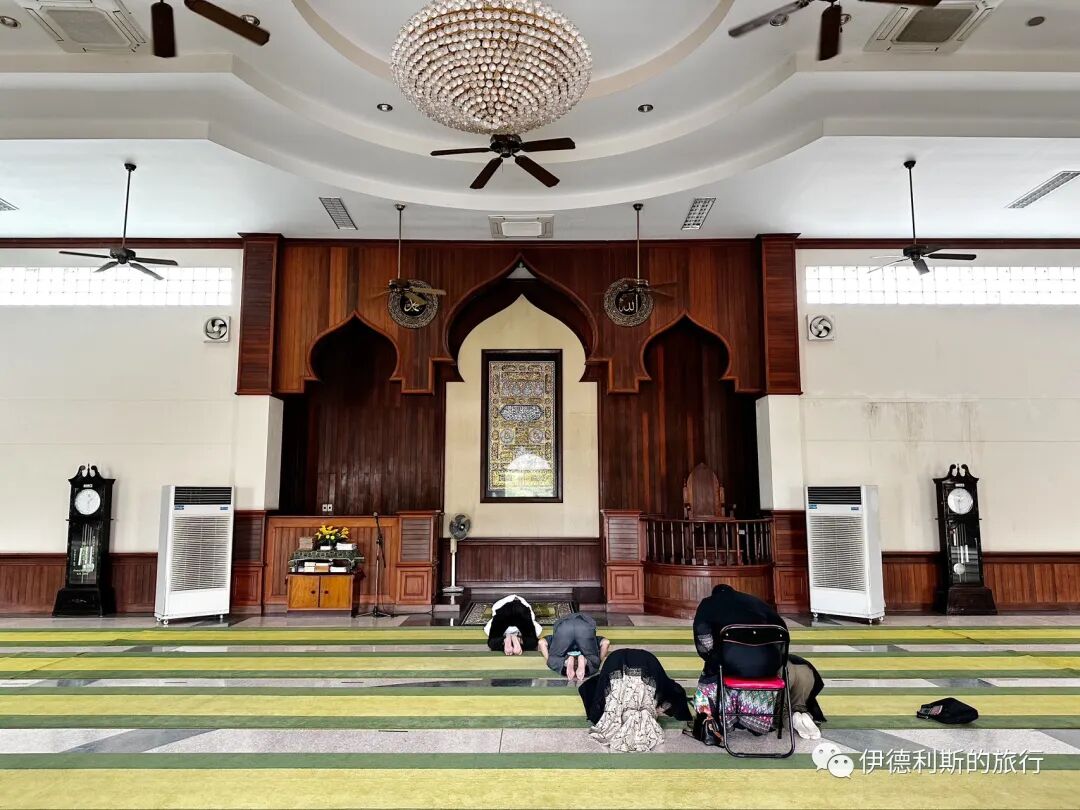
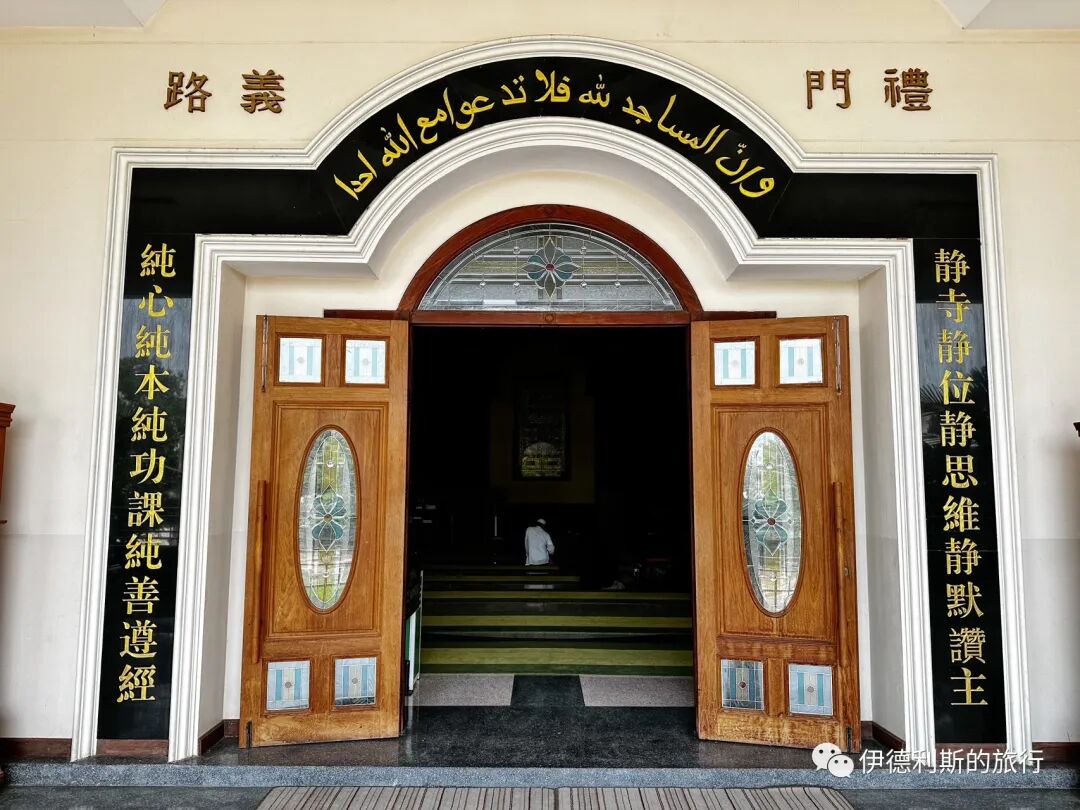
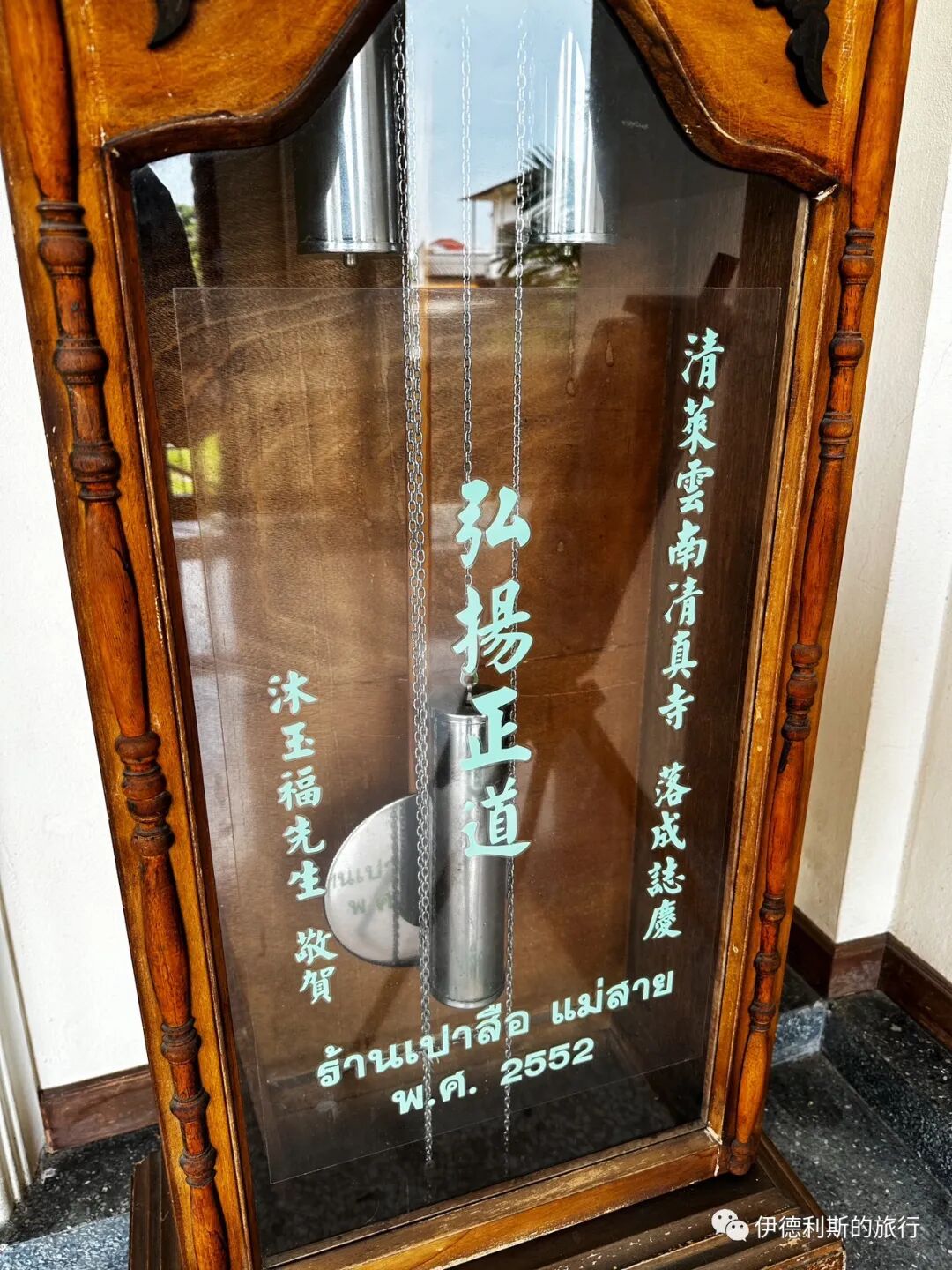
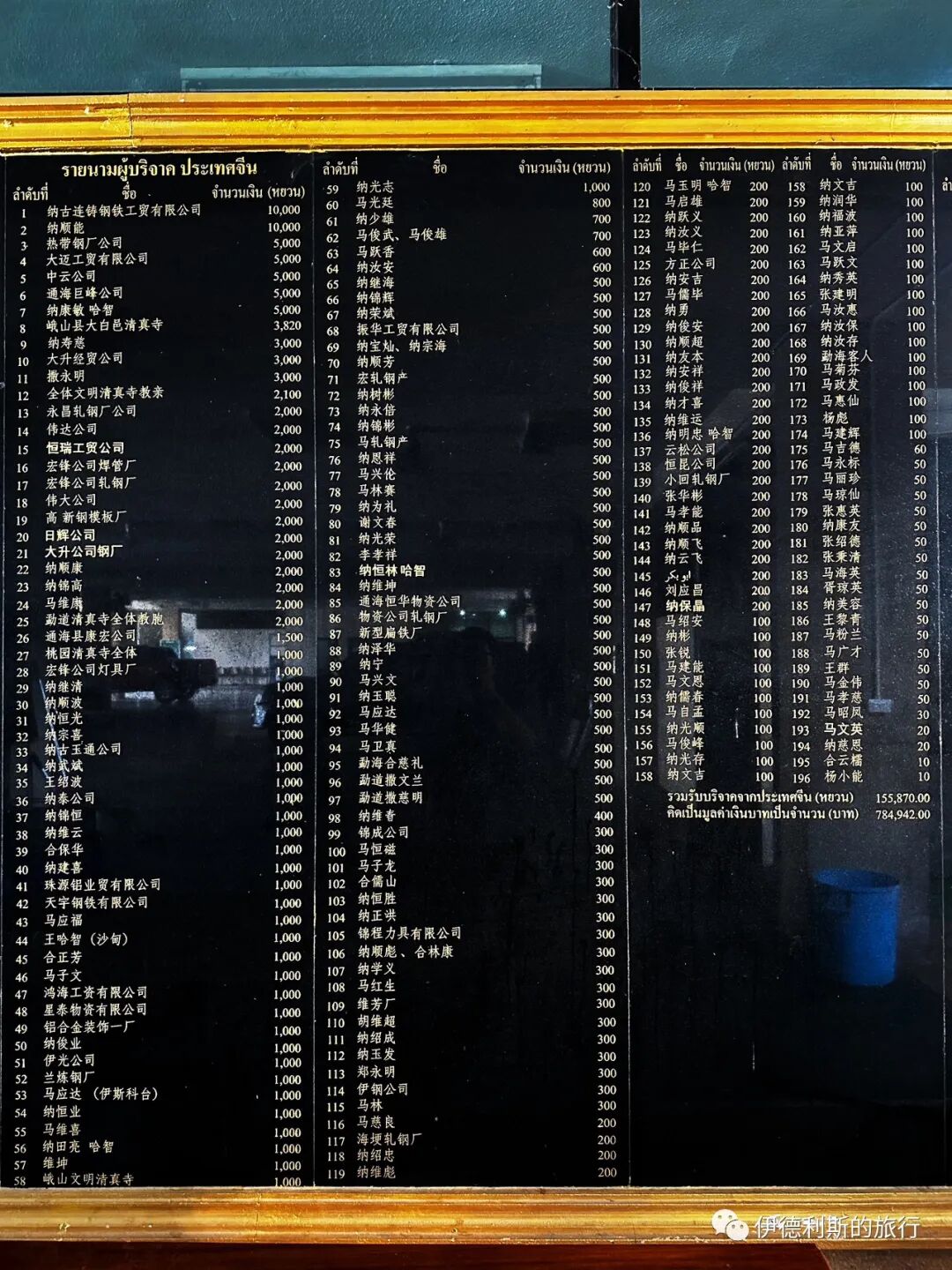
The alley and snack stalls at the entrance of the Chiang Rai Yunnan mosque.
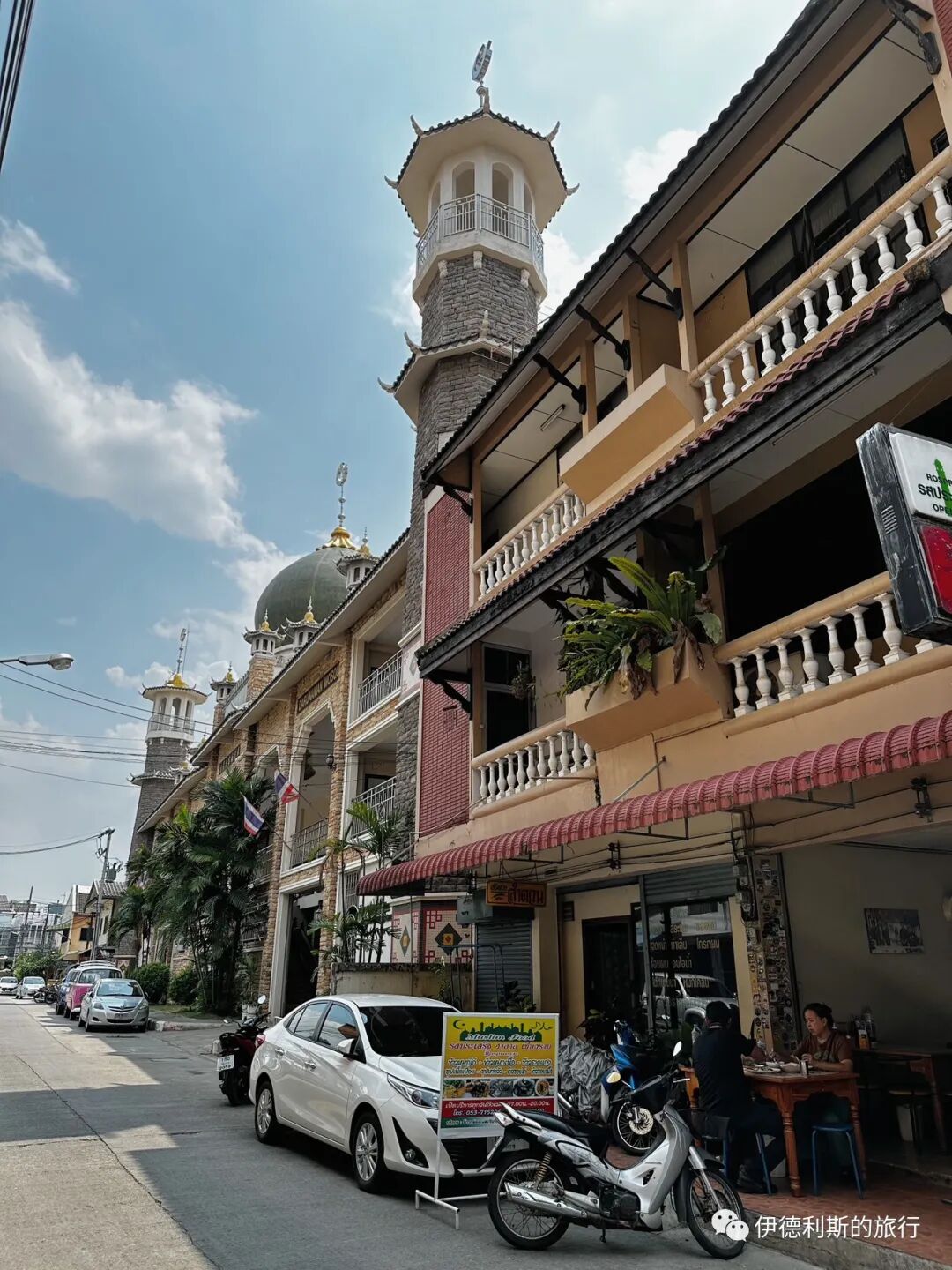
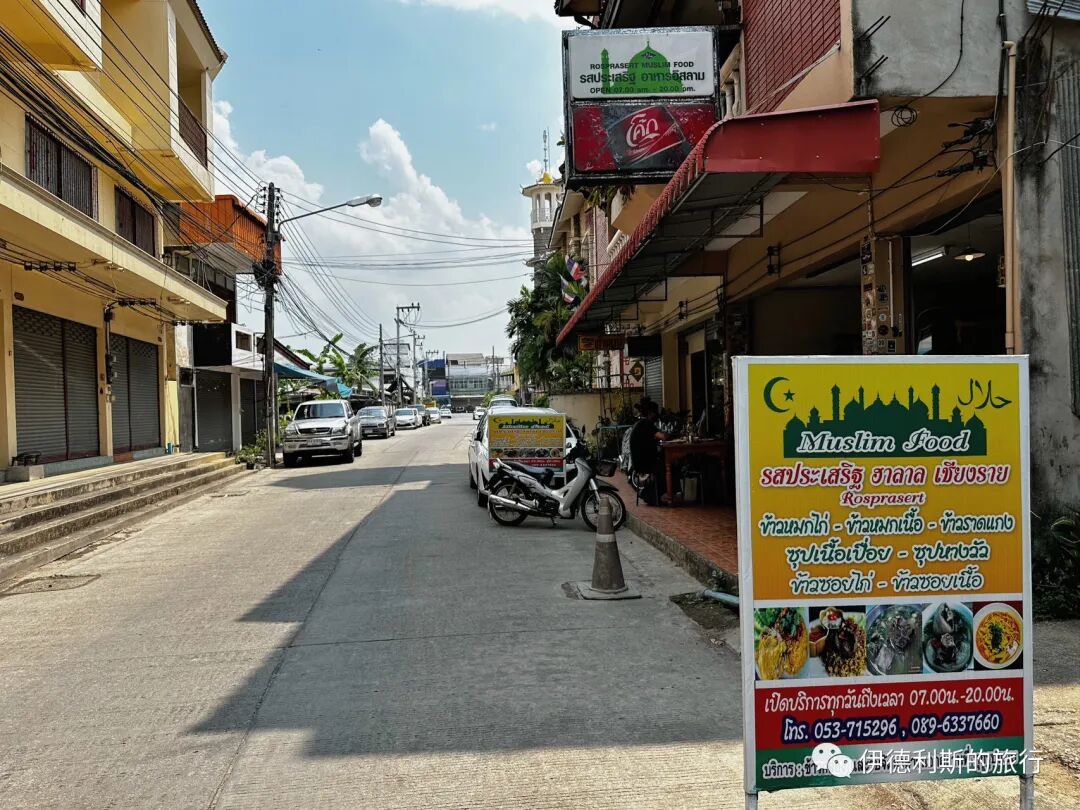
On the way from Chiang Rai to Chiang Mai, you will pass the Chiang Rai hot springs, where many people stop to take a break. The hot springs here are right by the side of the road, and you do not need to buy a ticket. There are springs of various temperatures. The hottest ones gush out like boiling water, and you can boil chicken eggs and quail eggs in them, which children really enjoy. You can soak your feet in the cooler springs. The water temperature drops as it flows from the source, so it is very comfortable to find a spot with the perfect temperature and soak for a while.
Back to Chiang Mai.
At noon, we returned to the Chiang Mai Wang He mosque (lishen) and then walked around the shops at the entrance. This shop is run by the daughter of Mustafa, the grand imam of the Nurul mosque in Chiang Mai. I bought CDs and hats here back in 2017. This time, Zainab bought a beautiful long dress made from local fabric that is very high quality. We took some lovely photos in it in Bangkok.
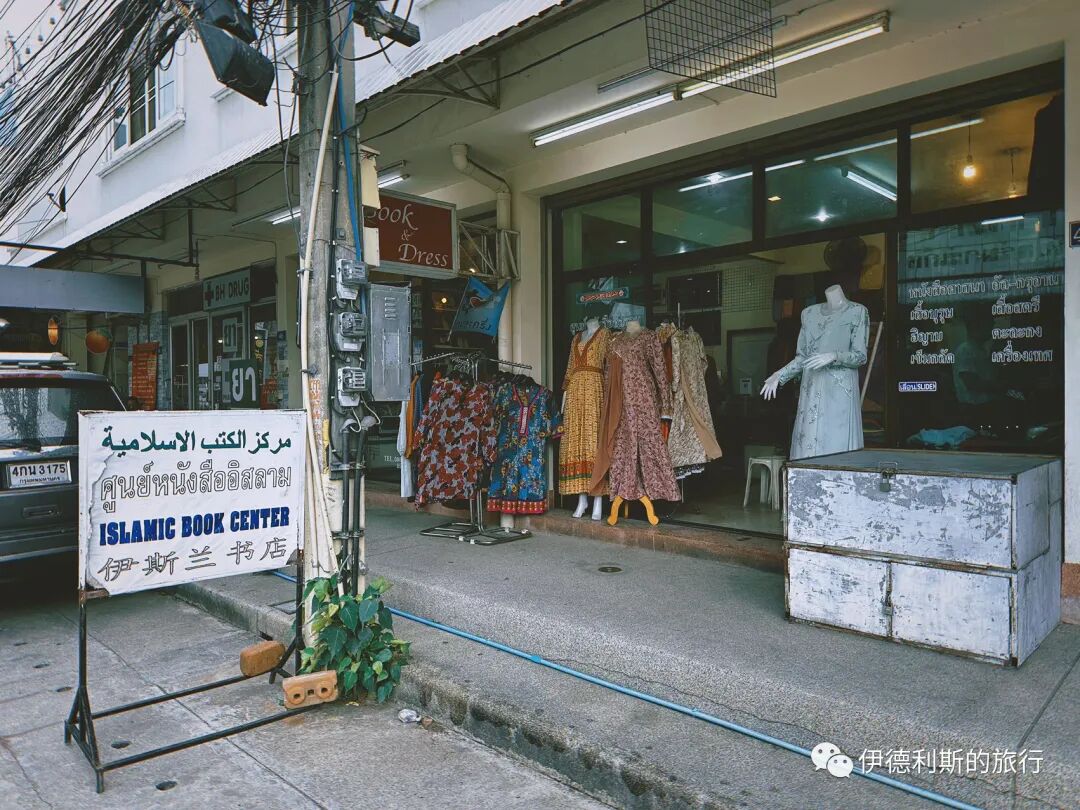
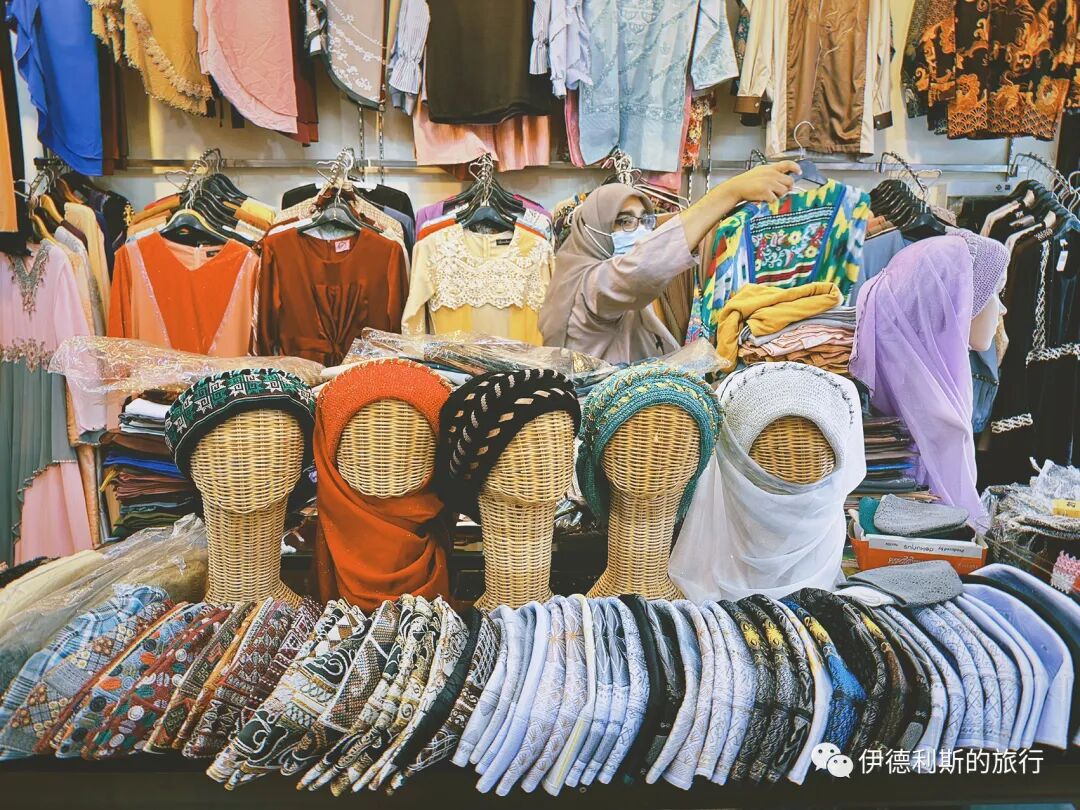
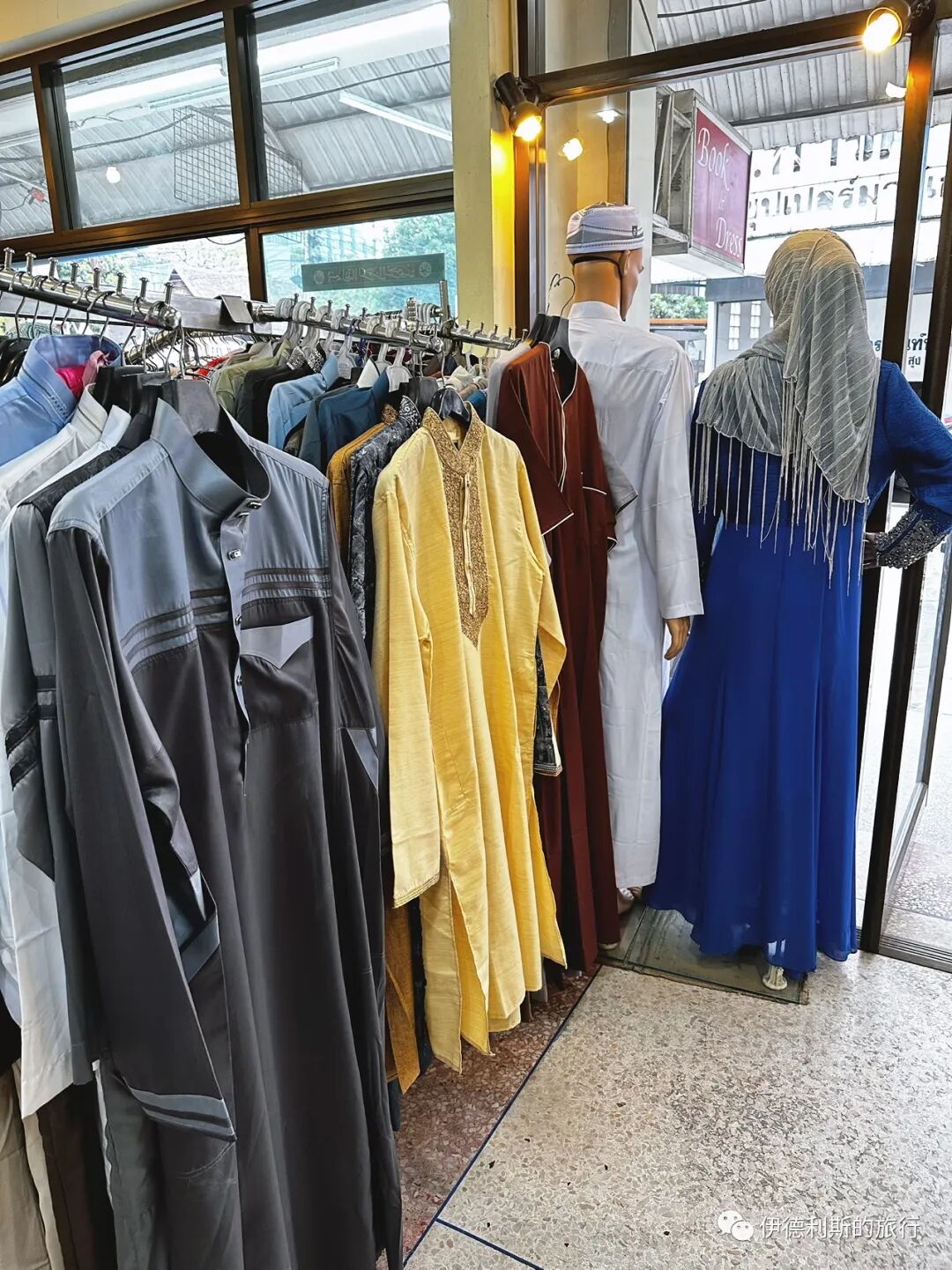
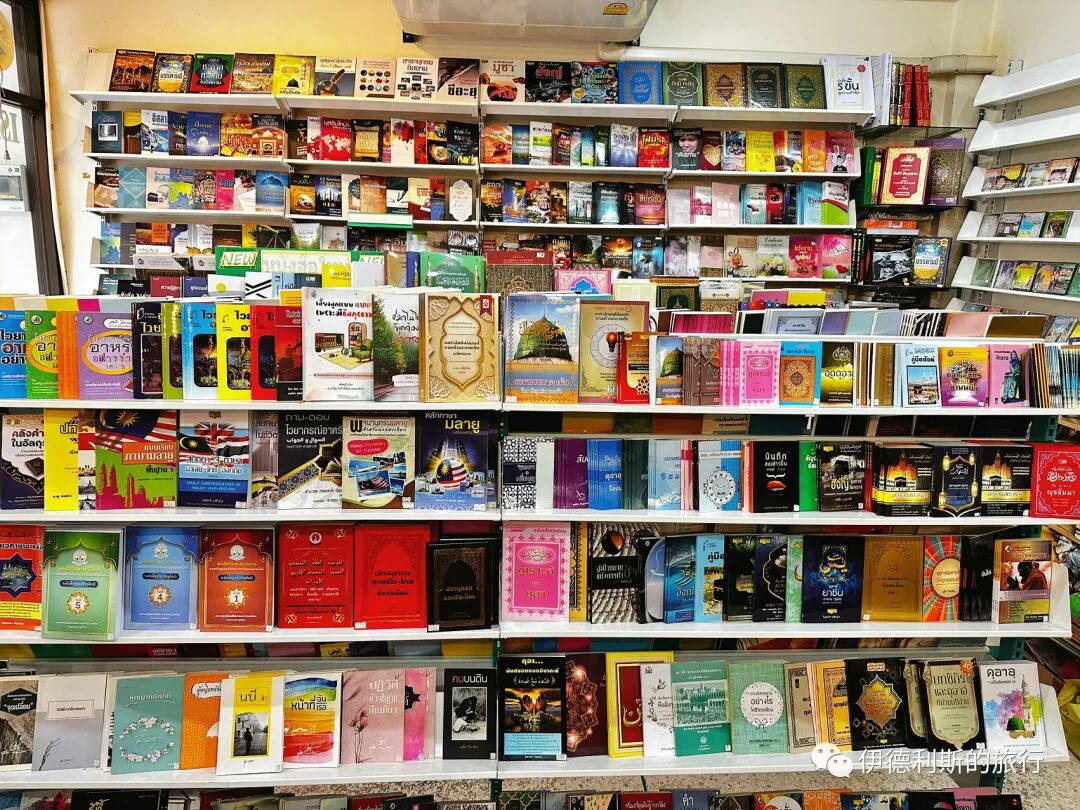
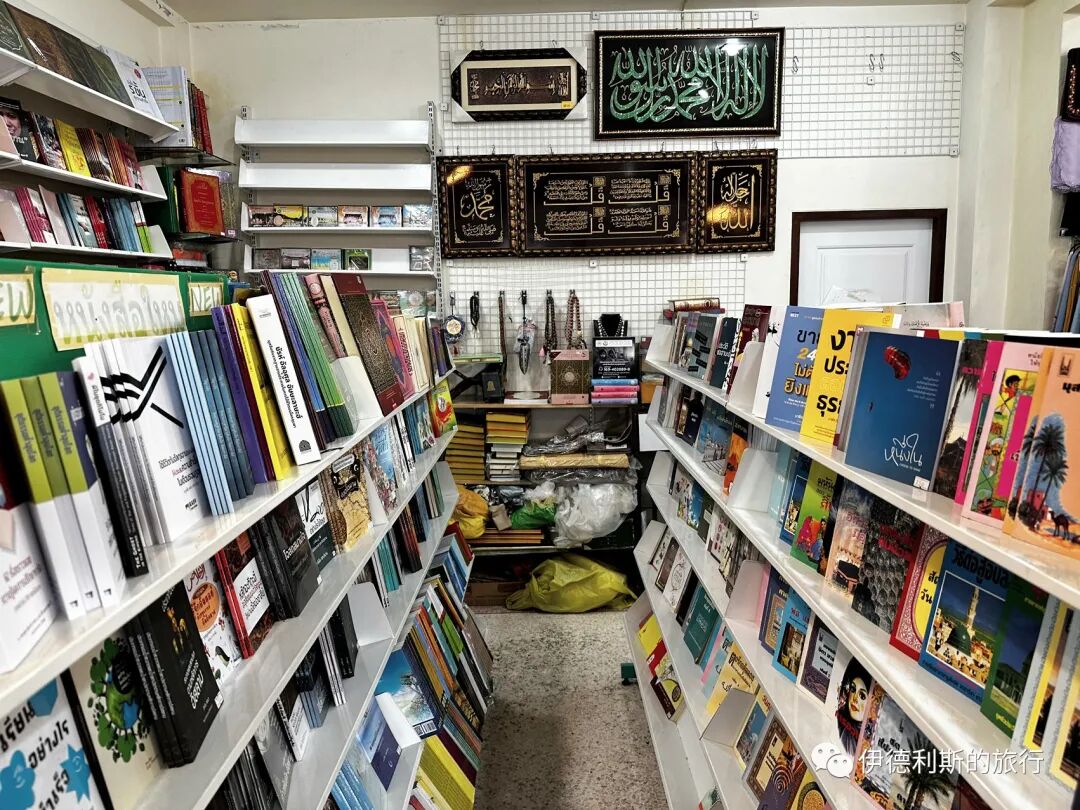
Halal Travel Guide: Northern Thailand — Yunnan Mosques and Hui Communities (Part 2)
Articles • ali2007fr posted the article • 0 comments • 170 views • 2026-05-19 02:59
Summary: Northern Thailand has Yunnanese Hui Muslim communities whose mosque neighborhoods still show the memory of migration, trade, and borderland life. This second part of Day 3 follows the route through local mosques and village scenes with the original photos and sequence kept intact.
We went for a late lunch in Chiang Mai. We wanted to try the Yunnan-style food recommended by our driver, Mr. Ma, but the kitchen was closed for maintenance. Mr. Ma said the owner is from Shadian and runs the most authentic Yunnan Hui Muslim restaurant in Chiang Mai, with very little fusion with Thai food. I recommend that fellow Muslims (dost) visiting Chiang Mai give it a try.
We ended up at another Yunnan restaurant in Chiang Mai run by the brother of the owner of the place we ate at in Chiang Rai. We chatted with Mr. Na for a while, and his Mandarin was very fluent. They specialize in organic vegetables and pesticide-free wild greens. Their style is the unique blend of Yunnan halal food and Thai cuisine created by Hui Muslims in Northern Thailand. We ordered stir-fried chicken with basil (buhe chaoji), stir-fried tofu, spicy green papaya salad, and shrimp stir-fried with Thai red chili paste. Many restaurants we visited in Northern Thailand let you choose between small, medium, and large portions. Ordering four small dishes is perfect for two travelers. view all
Summary: Northern Thailand has Yunnanese Hui Muslim communities whose mosque neighborhoods still show the memory of migration, trade, and borderland life. This second part of Day 3 follows the route through local mosques and village scenes with the original photos and sequence kept intact.
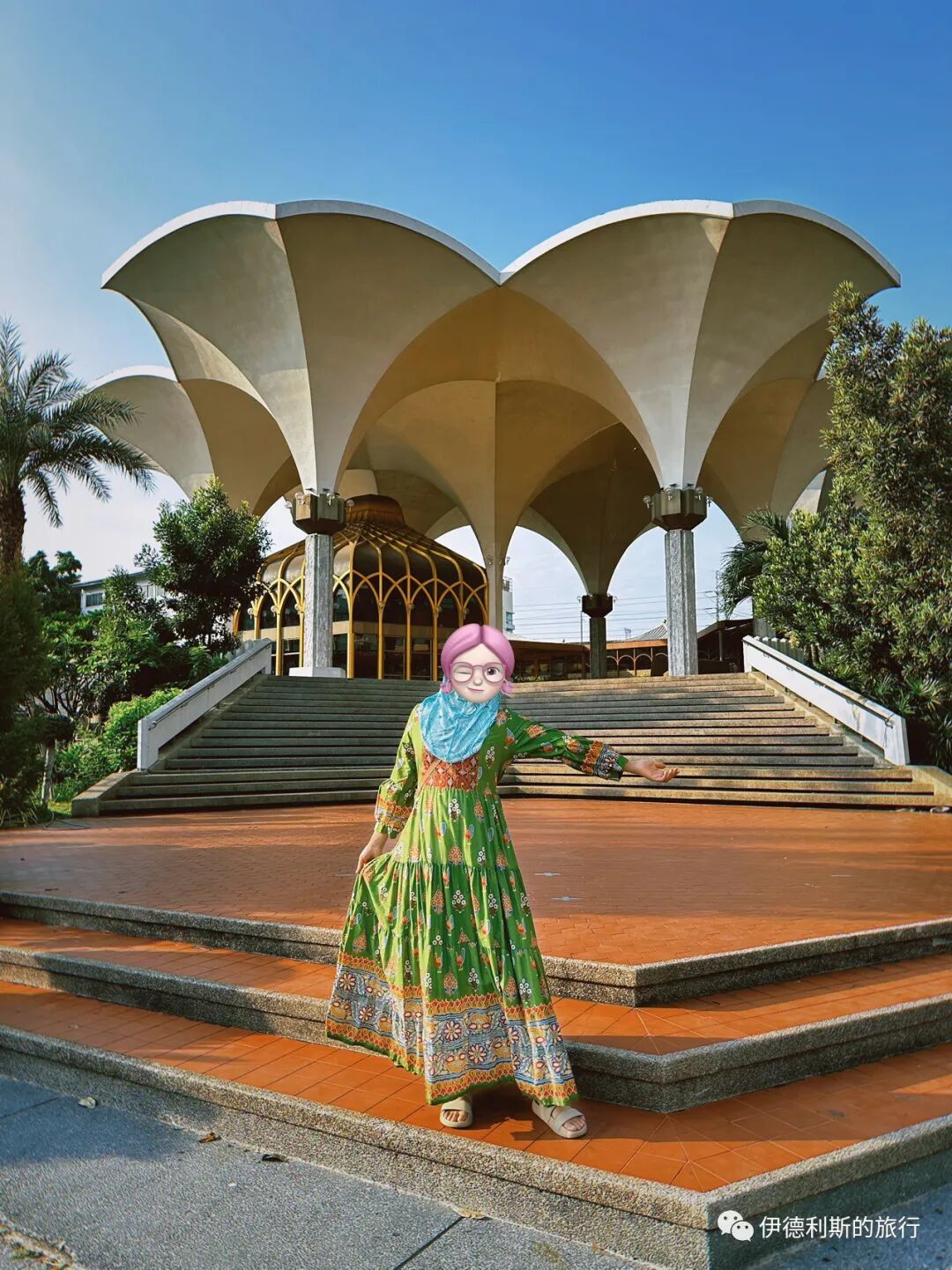
We went for a late lunch in Chiang Mai. We wanted to try the Yunnan-style food recommended by our driver, Mr. Ma, but the kitchen was closed for maintenance. Mr. Ma said the owner is from Shadian and runs the most authentic Yunnan Hui Muslim restaurant in Chiang Mai, with very little fusion with Thai food. I recommend that fellow Muslims (dost) visiting Chiang Mai give it a try.
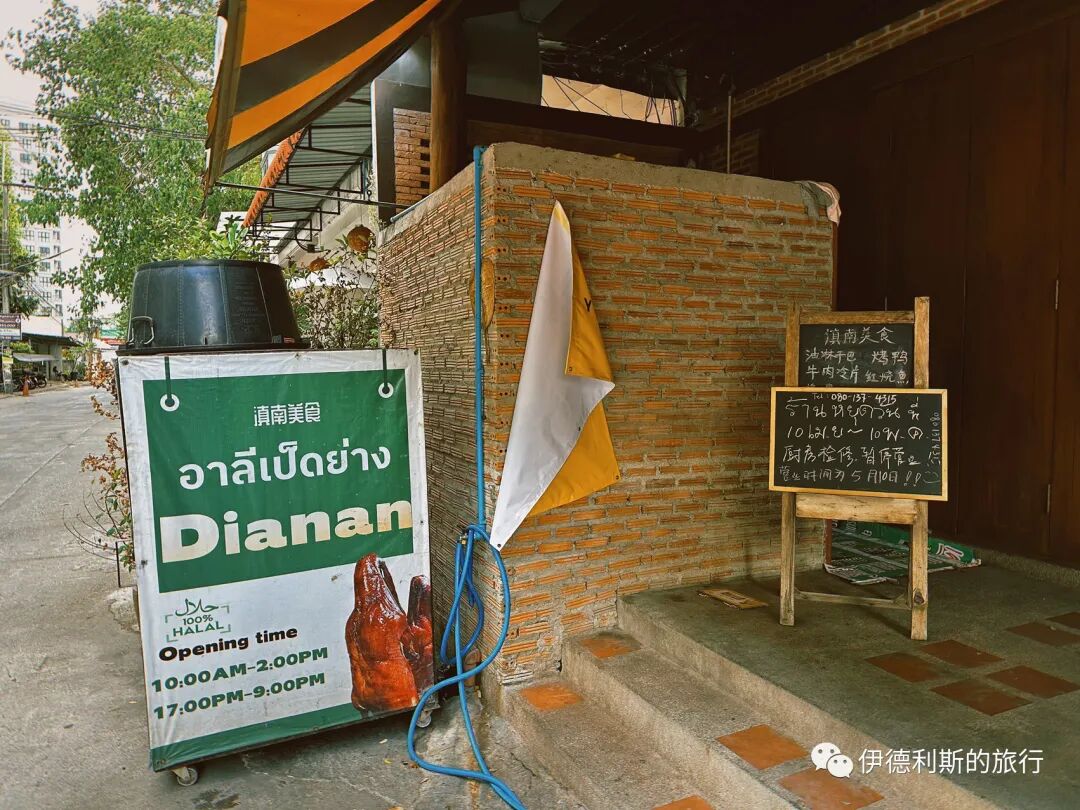
We ended up at another Yunnan restaurant in Chiang Mai run by the brother of the owner of the place we ate at in Chiang Rai. We chatted with Mr. Na for a while, and his Mandarin was very fluent. They specialize in organic vegetables and pesticide-free wild greens. Their style is the unique blend of Yunnan halal food and Thai cuisine created by Hui Muslims in Northern Thailand. We ordered stir-fried chicken with basil (buhe chaoji), stir-fried tofu, spicy green papaya salad, and shrimp stir-fried with Thai red chili paste. Many restaurants we visited in Northern Thailand let you choose between small, medium, and large portions. Ordering four small dishes is perfect for two travelers.
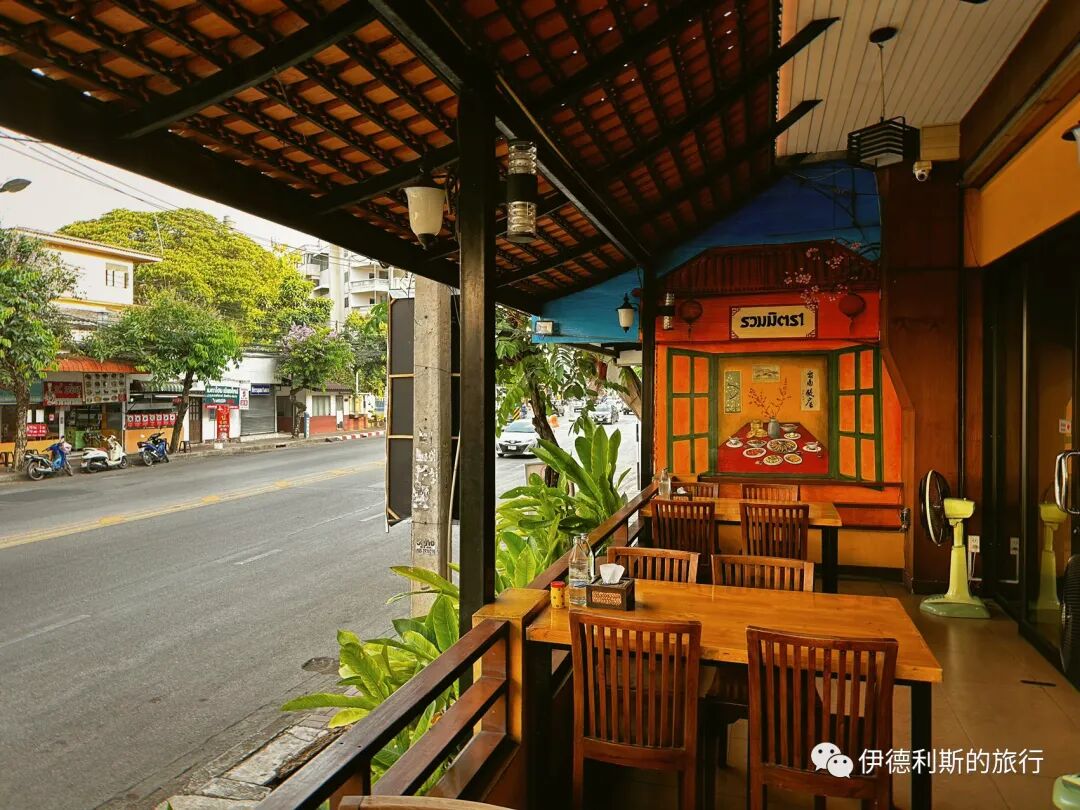
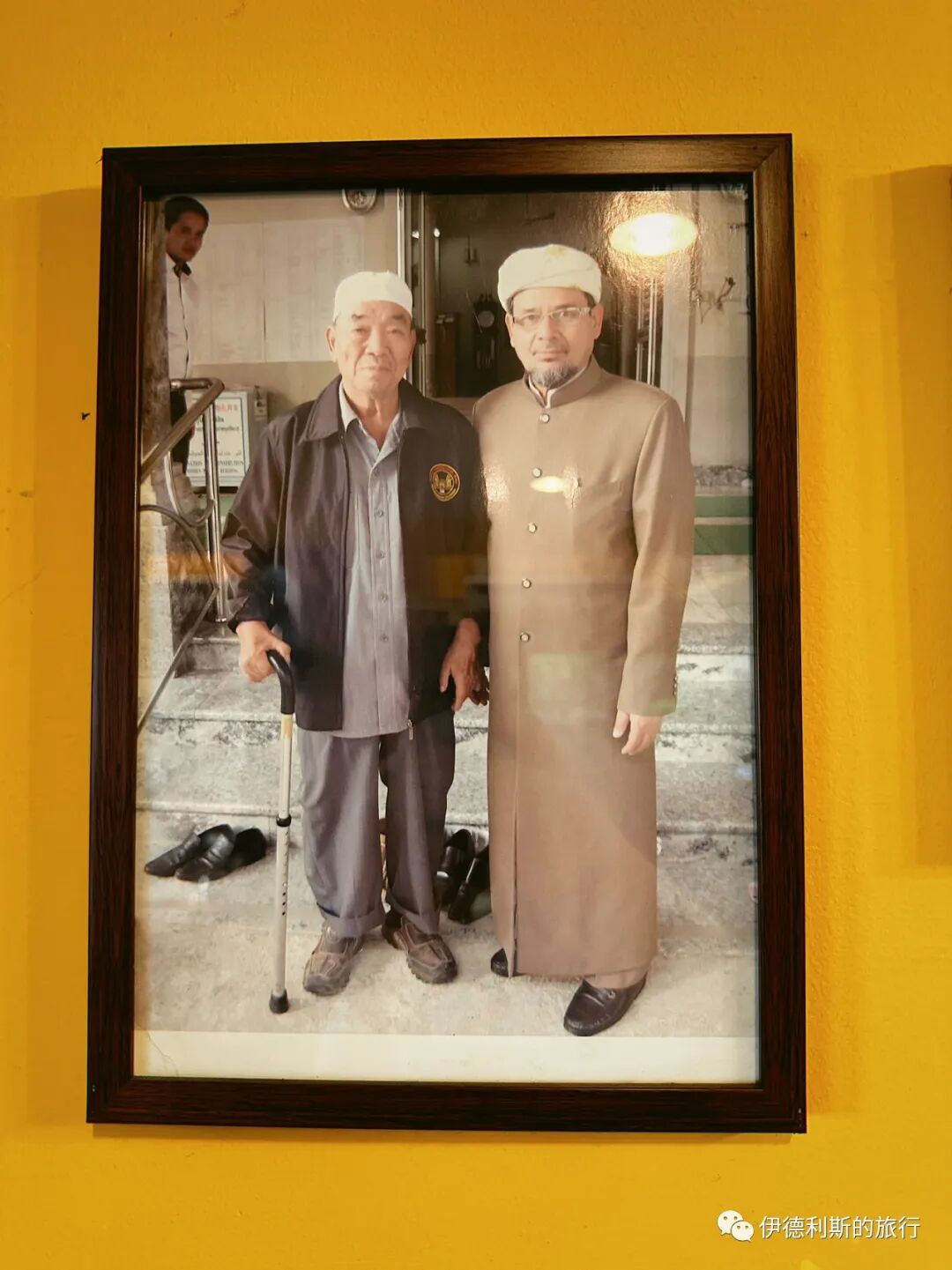
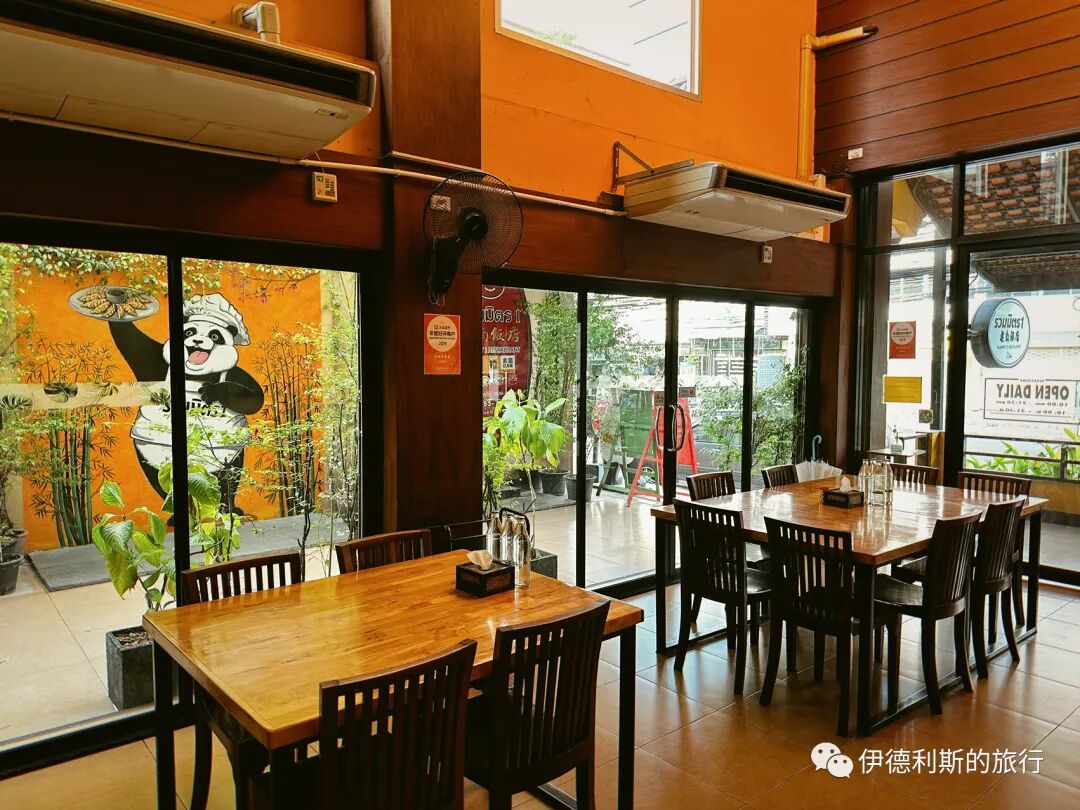
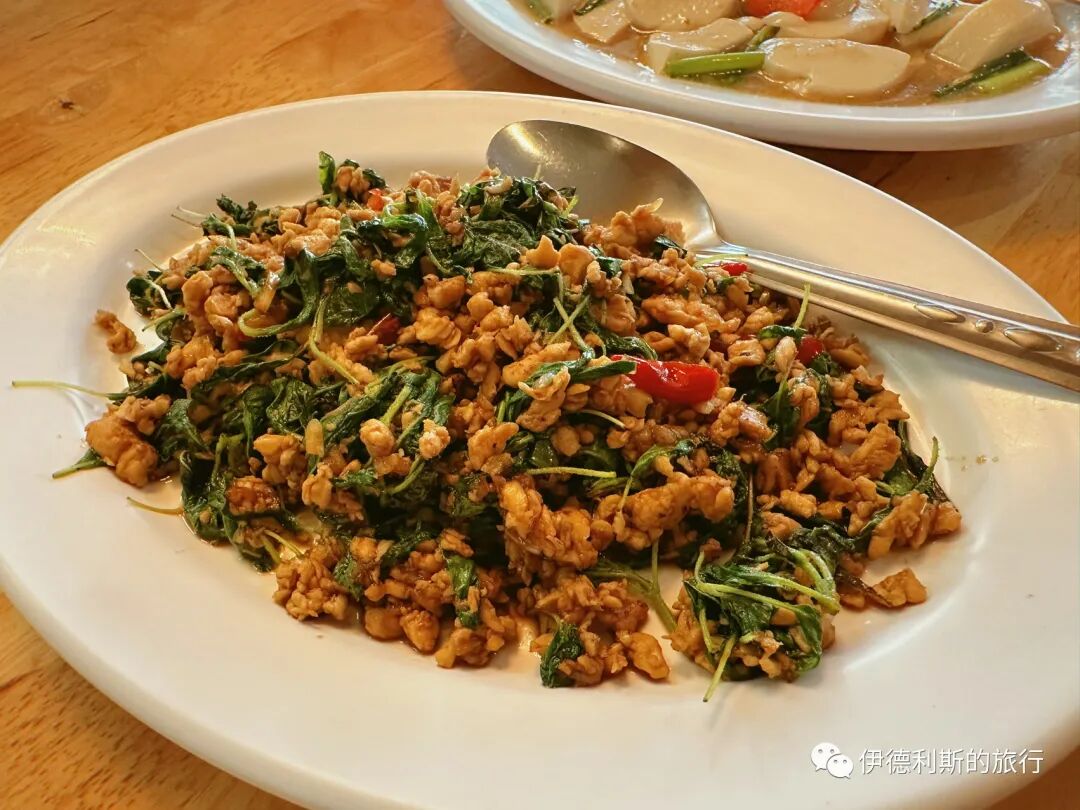
Halal Travel Guide: Northern Thailand — Yunnan Mosques and Hui Communities (Part 1)
Articles • ali2007fr posted the article • 0 comments • 195 views • 2026-05-19 02:47
Summary: Northern Thailand has old Yunnanese Hui Muslim communities whose mosque neighborhoods still carry the memory of migration, trade, and borderland life. This firsthand account follows the first half of the second day through mosques, settlements, and local Muslim community scenes while preserving the original photos and sequence.
During the May Day holiday in 2023, I visited the mosque communities (sifang) of Hui Muslims from Yunnan in Northern Thailand. On the first day, led by Master Ma Ruqi, a third-generation Thai Hui Muslim from Yunnan, we visited four mosque communities in the Chiang Mai city area: Chang Khlan, Wat Ket, Jingzhen, and Nurul. I posted about this in 'A Pilgrimage to Northern Thai Yunnan Mosque Communities (Day 1)'. On the second day, Master Ma drove us north to visit several mosque communities in the refugee villages of the former isolated army. We went to Mae Salong, the main base of the isolated army, and finally reached Mae Sai, the northernmost border crossing between Thailand and Myanmar, which is also the second-largest settlement for Hui Muslims from Yunnan in Northern Thailand.
Breakfast in Chiang Mai
On the second morning, we first had breakfast at a halal restaurant run by Hui Muslims from Yunnan in the southeast of Chiang Mai's old city. The owner's Yunnan dialect sounded very familiar, and we had no trouble ordering in Mandarin. I ate their chicken fat rice (ji you fan) back in 2017. This time, I had rice cakes (erkua), wontons (huntun), and steamed buns (baozi). The rice cakes were topped with braised beef, the wontons were in chicken soup, and the steamed buns were filled with pickled vegetables and meat. The standard side dishes here are limes, small shallots, and pickled vegetables. I found them very refreshing and appetizing.
Date Palm Plantation
Driving north from Chiang Mai through a mountainous area, you will see a date palm plantation by the side of the road, not far from the Wang Pha National Park. Praise be to Allah, after constant efforts and attempts, Thai people have successfully grown date palms in Chiang Mai. Now Thai Muslims can eat locally grown dates. This was also my first time seeing a date palm orchard up close.
Although the dates in Chiang Mai do not ripen until July or August and I could not eat fresh ones this time, the orchard had a wide variety of date products. There were dried dates, date juice, date ice cream, canned dates, and more. We tried the date juice and date ice cream, and both were quite delicious! The dates in the canned dates were crunchy and had a light fragrance, which was a bit of a surprise.
Wanyang Village
Heading north, I reached the first Hui mosque community on the Thai-Myanmar border: Wanyang Village in Fang District, founded by the descendants of refugees who followed the 93rd Division of the Lost Army in Northern Thailand. The Lost Army in Northern Thailand began in 1950 with the 237th and 93rd Divisions of the Nationalist Army, who retreated from Yunnan into Myanmar along with their families and many refugees.
After 1951, the number of families, merchants, horse caravans, and civilians arriving from Yunnan grew, but constant attacks by the Myanmar military forced them to retreat into the mountains along the Thai border, which is when Wanyang was established. These refugees first lived in bamboo and thatch huts, relying on primitive slash-and-burn farming to grow corn and rice. They were not allowed to enter or leave towns freely, making it very difficult to earn a living.
Some Yunnan Hui Muslim mosques in Northern Thailand like to use pleasant two-character religious terms for their names, such as Jingzhen Mosque in Chiang Mai, Meide Mosque in Wanyang, Jiqing Mosque in Hefei, Chengxin Mosque in Fang District, and Ciai Mosque in Daduan, all of which sound very auspicious. Among these Yunnan mosques, I think Wanyang's Meide Mosque is the most beautiful; the environment is excellent, with lush greenery that makes it feel like a garden.
At Wanyang Meide Mosque, I saw the Arabic school, the women's prayer hall, the funeral room (meiti fang), and the event hall; it was my first time seeing the word for funeral (maiti) written as meiti, and I think this translation is quite good.
At noon, I went to a Yunnan Hui Muslim restaurant in Wanyang Village called Jianping Beef Noodle Shop and ate pan-fried dumplings (jianjiao), rice noodles (babasi), and beef noodles, served with the standard Northern Thai sides of pickled vegetables, onions, and lime. The rice noodles (babasi) are a type of flat rice noodle topped with traditional beef sauce, and you can choose between the traditional Yunnan Hui Muslim clear broth or the Northern Thai coconut milk broth. The pan-fried dumplings (jianjiao) were filled with chicken and chives, and I feel that pan-fried dumplings are also very common in Yunnan communities in Northern Thailand.
The shop displays family photos of the owner.
Hefei Village
After leaving Wanyang Village, we arrived at the second Yunnan Hui mosque community on the Thai-Myanmar border, Hefei Village, to pray at the village's Jiqing Mosque. Like Wanyang Village, Hefei Village was established after the 1950s by refugees who fled here from Yunnan through Myanmar.
Hefei Jiqing Mosque features Chinese calligraphy and traditional Chinese-style Arabic calligraphy, including a plaque that reads 'The Way Spans Past and Present' (Dao Guan Gu Jin), which was respectfully erected by Ma Junguo when the mosque was rebuilt in 1965.
I met a group of young Hafiz reciting the Quran in the mosque. Life has been hard in northern Myanmar recently, so some Burmese Muslims send their children to study at Jiqing Mosque. These children spend several years practicing constantly to become qualified Hafiz.
The back door of Hefei Jiqing Mosque leads to a cemetery. You can see that the ancestors of the local community came from places like Shadian, Jianshui, and Fengqing County in Lancang, Yunnan. The mosque's donation record book (nietiebu) shows that the main family names in this community are Ma, Na, Li, and Yang.
Fang District town
After leaving Hefei, we went to the third Yunnan-style mosque on the Thai-Myanmar border, Chengxin Mosque in the town of Fang District, Chiang Mai Province. Chengxin Mosque was built in 1975 by Yunnan Hui Muslims living in Fang District town. It makes it easier for Yunnan Hui Muslims from nearby villages to attend to business in town. Chengxin Mosque has fewer ancestral records (gaomu) than the surrounding villages, and the mosque itself is quite small. It is currently led by an imam who moved from Myanmar, and his family lives right in the mosque. The imam's daughter speaks Mandarin. We chatted with her about daily life, which was very interesting.
Similar to Thailand, the origins of Muslims in Myanmar vary from north to south. In the far north live the Panthay people, descendants of Yunnan Hui Muslim caravans. In the far south live the Pashu people, who are of Malay descent. The central region is mainly home to Burmese Muslims, formed by intermarriage between South Asians and local Burmese people. In 1660, some Mughal soldiers followed the son of Emperor Shah Jahan to Arakan. They later became royal archers for the Mrauk U Kingdom of Arakan and ruled the area for decades between the late 17th and early 18th centuries. The descendants of these Mughal troops are known as the Kaman people, one of the ethnic groups officially recognized by Myanmar.
Daduan Village
Leaving Fang District town, we arrived at the northernmost Yunnan-style mosque in Chiang Mai, Ciai Mosque in Daduan. We are now just a stone's throw from Myanmar. The newly built women's hall at Ciai Mosque is beautiful. The first floor is a prayer hall, and the second floor is a classroom.
Inside the main hall of Daduan Ciai Mosque, there is a traditional Weishan-style Arabic calligraphy scroll gifted in 2017 by Donglianhua Village in Weishan, Dali. Thanks to the internet, many Hui Muslims from Yunnan living in Northern Thailand have reconnected with their relatives back home, and the two sides are now in closer contact. Among the Hui Muslims from Yunnan living along the Thai-Myanmar border, Weishan in Dali, Tonghai in Yuxi, and Shadian in Honghe are the main ancestral homes.
The mosque also has copies of scriptures translated into Chinese that were donated by Taiwan. In 1984, Thailand ordered the isolated army in Northern Thailand to disarm and placed them under military control. They banned Chinese-language education and replaced Chinese schools with Thai-language schools. However, the refugees insisted on learning Chinese. They sent their children to Thai schools during the day, but still had them secretly study Chinese in the early morning and at night. Over time, Thailand stopped strictly enforcing these restrictions.
Inside the mosque hangs a photo of Panghsang Mosque, which was gifted by the Panghsang Hui Muslim Association in Myanmar in 2014. Master Ma told me that in 2014, various Yunnan-style mosques in Northern Thailand were invited by Panghsang Mosque to attend their mosque renovation celebration. Panghsang is the capital of the Wa State in Myanmar. It connects to the Meng'a border crossing in Yunnan and is one of the places where Myanmar-based Hui Muslims from Yunnan live.
At the Thai-Myanmar border, the mountain on the other side is in Myanmar.
Mae Salong
Continuing north, we left Chiang Mai Province and entered Chiang Rai Province.
We drove deep into the jungle along the steep, winding roads of the Thai-Myanmar border. Along the way, I bought a huge bunch of super sweet bananas from a local grandmother for one yuan. We finally arrived at Mae Salong, the base camp of the isolated army in Northern Thailand. Master Ma said he has been driving this mountain road for 30 years. At first, it was all dirt, and you had to use tire chains in the winter. It is much easier to drive now that the road has been paved, but it still requires extreme caution if you are not used to it.
After the isolated army withdrew to Taiwan for the second time in 1961, the remaining 3rd and 5th Armies gave up their status as Nationalist soldiers and retreated from Myanmar into the border area of Northern Thailand near Myanmar. From then on, they were known as the isolated army in Northern Thailand.
At that time, the 3rd and 5th Armies did not command each other. Their supplies were cut off, and each had to find a place to live in the jungles of Northern Thailand. Unlike the 3rd Army commander Li Wenhuan, who had a background as a businessman, the 5th Army commander Duan Xiwen was a graduate of the Yunnan Military Academy and did not know how to do business. This caused the 5th Army to fall into a desperate situation for a time. In 1963, Myanmar confiscated the property of overseas Chinese. The Tachileik Special Goods Company at the Thai-Myanmar border crossing had a large amount of stock that they asked the 5th Army to transport. The 5th Army used this to collect escort fees and also bought and sold goods for profit, which temporarily solved their supply problem. After this, the 5th Army headquarters moved into Mae Salong, which guards the mountain pass. They built bamboo and grass huts there for the soldiers and their families to live in.
Because the soil in Mae Salong was not fertile, the terraced fields they cleared could not provide enough food for the soldiers, so life was very difficult in the early days. By the 1980s, most houses were built with bamboo and mud walls and topped with tin roofs. In 1981, the isolated army defeated the Thai Communist Party at Doi Khao Ya. They finally gained legal status, with the soldiers becoming Thai citizens and their families becoming legal resident immigrants. After that, the isolated army laid down their weapons, and Mae Salong changed from a military camp into a northern Thai Chinese village.
The people of Mae Salong put down their guns and started tea plantation businesses. The climate in the northern Thai mountains is perfect for growing tea, and there were already many wild Assam black tea trees there. Since some of the soldiers had been tea merchants back home in Yunnan and knew how to grow tea, they quickly started many tea plantations in Mae Salong. Besides the local wild tea trees, they introduced many varieties like Pu'er and Oolong. Today, Mae Salong has become a tourist destination filled with tea plantations. Every year between the Mid-Autumn Festival and the Spring Festival, many Thai people enjoy coming here to escape the heat and go on vacation. view all
Summary: Northern Thailand has old Yunnanese Hui Muslim communities whose mosque neighborhoods still carry the memory of migration, trade, and borderland life. This firsthand account follows the first half of the second day through mosques, settlements, and local Muslim community scenes while preserving the original photos and sequence.
During the May Day holiday in 2023, I visited the mosque communities (sifang) of Hui Muslims from Yunnan in Northern Thailand. On the first day, led by Master Ma Ruqi, a third-generation Thai Hui Muslim from Yunnan, we visited four mosque communities in the Chiang Mai city area: Chang Khlan, Wat Ket, Jingzhen, and Nurul. I posted about this in 'A Pilgrimage to Northern Thai Yunnan Mosque Communities (Day 1)'. On the second day, Master Ma drove us north to visit several mosque communities in the refugee villages of the former isolated army. We went to Mae Salong, the main base of the isolated army, and finally reached Mae Sai, the northernmost border crossing between Thailand and Myanmar, which is also the second-largest settlement for Hui Muslims from Yunnan in Northern Thailand.
Breakfast in Chiang Mai
On the second morning, we first had breakfast at a halal restaurant run by Hui Muslims from Yunnan in the southeast of Chiang Mai's old city. The owner's Yunnan dialect sounded very familiar, and we had no trouble ordering in Mandarin. I ate their chicken fat rice (ji you fan) back in 2017. This time, I had rice cakes (erkua), wontons (huntun), and steamed buns (baozi). The rice cakes were topped with braised beef, the wontons were in chicken soup, and the steamed buns were filled with pickled vegetables and meat. The standard side dishes here are limes, small shallots, and pickled vegetables. I found them very refreshing and appetizing.
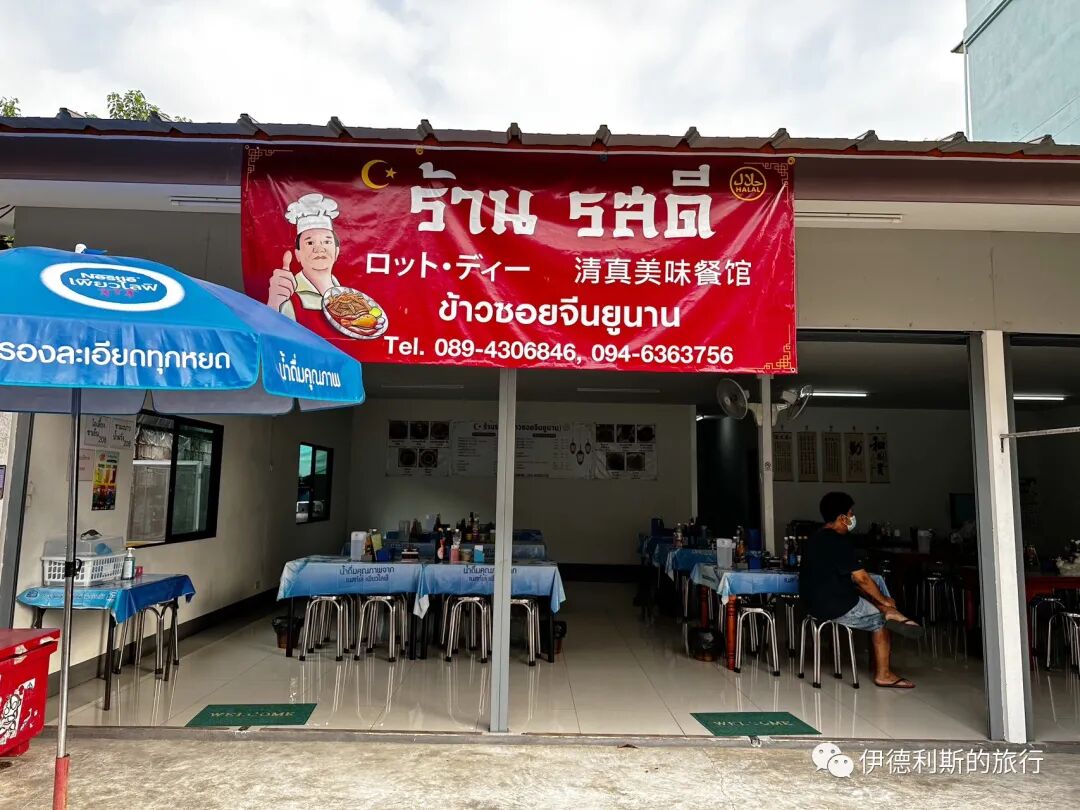
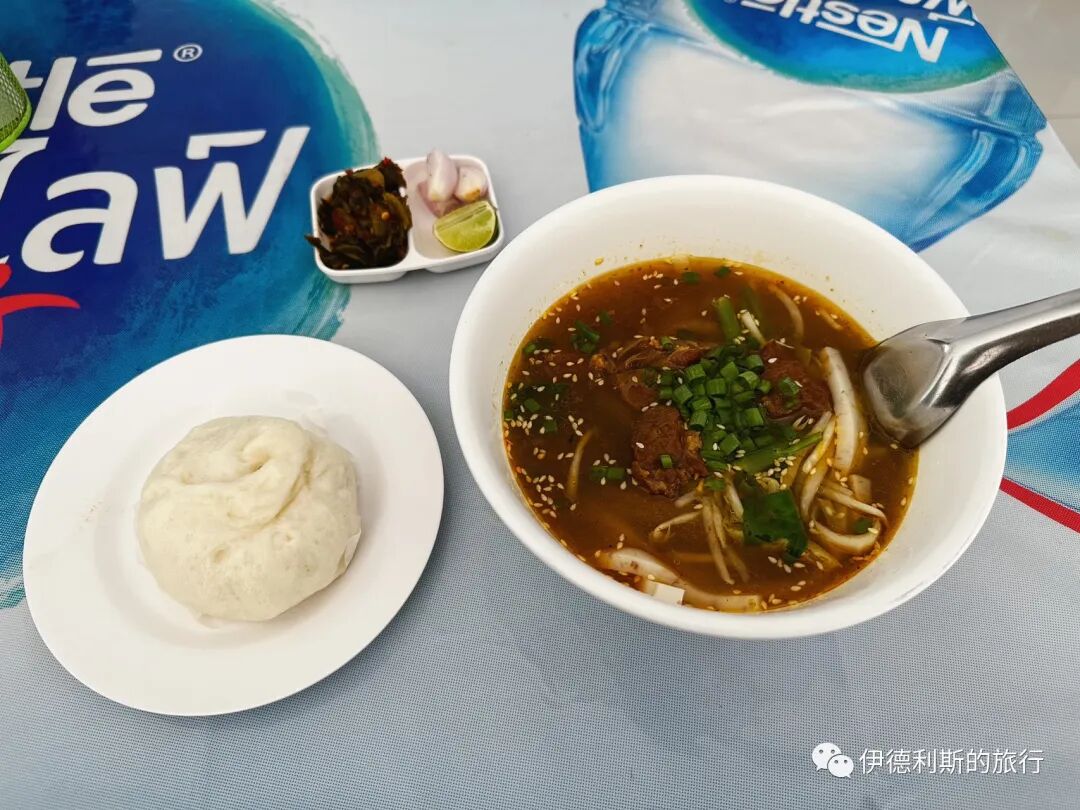
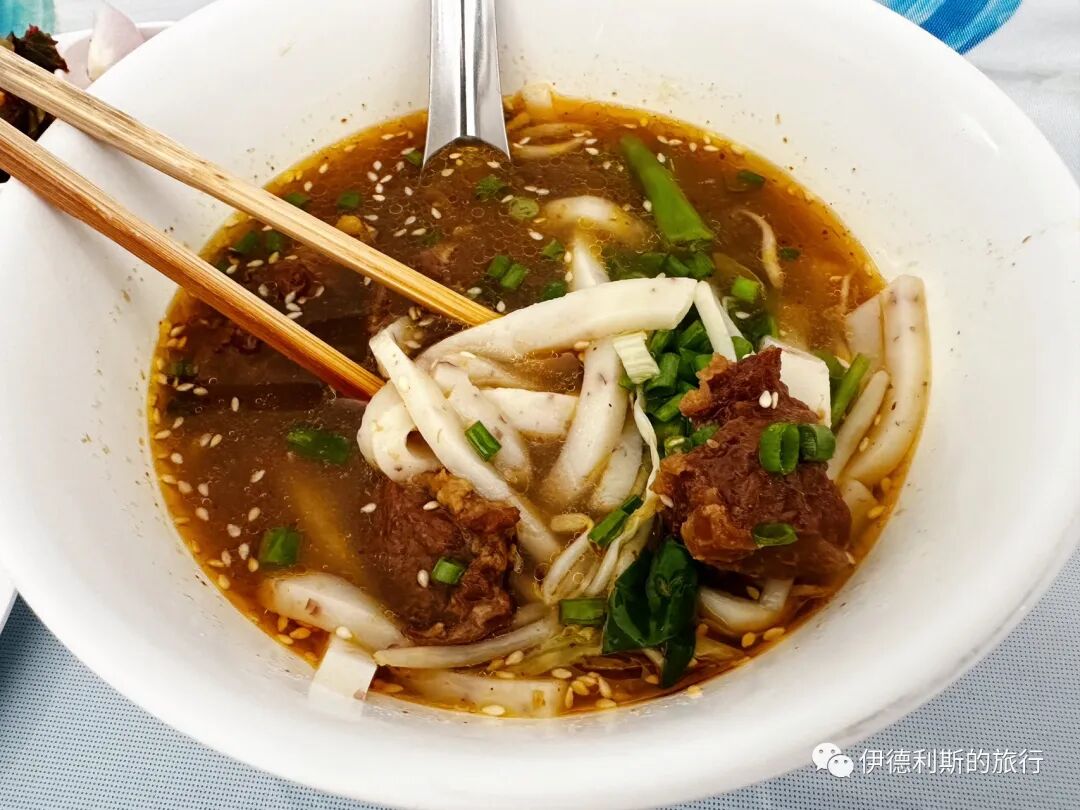
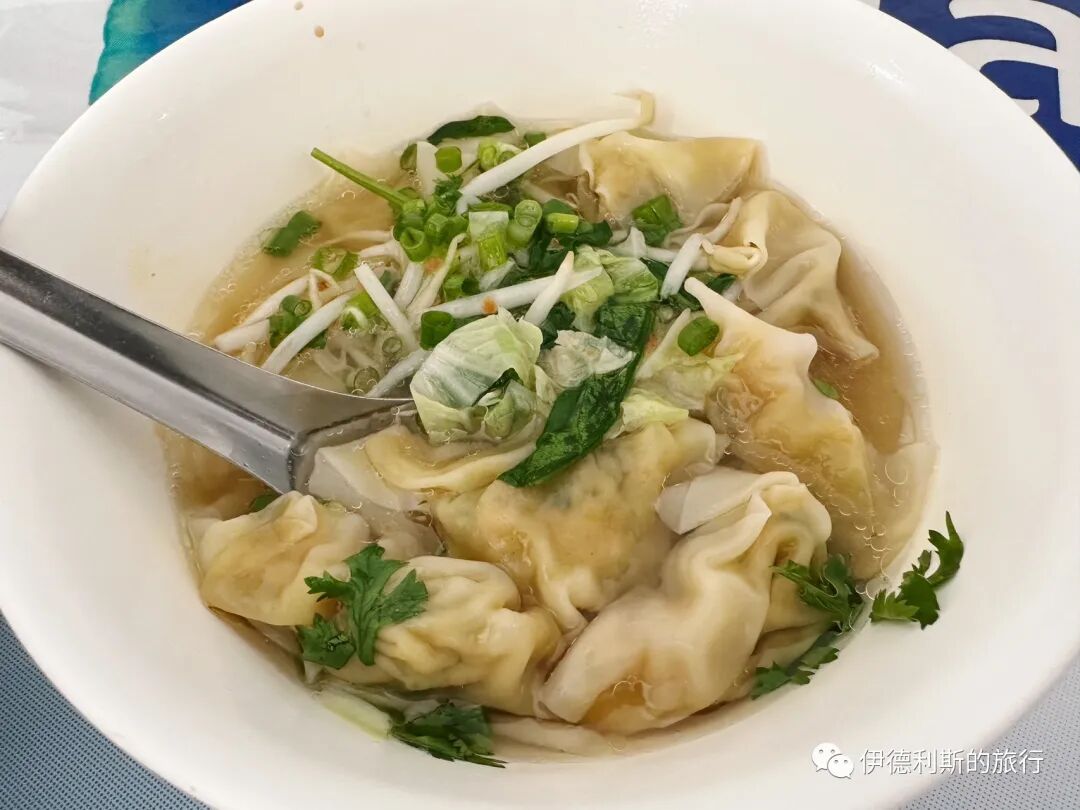
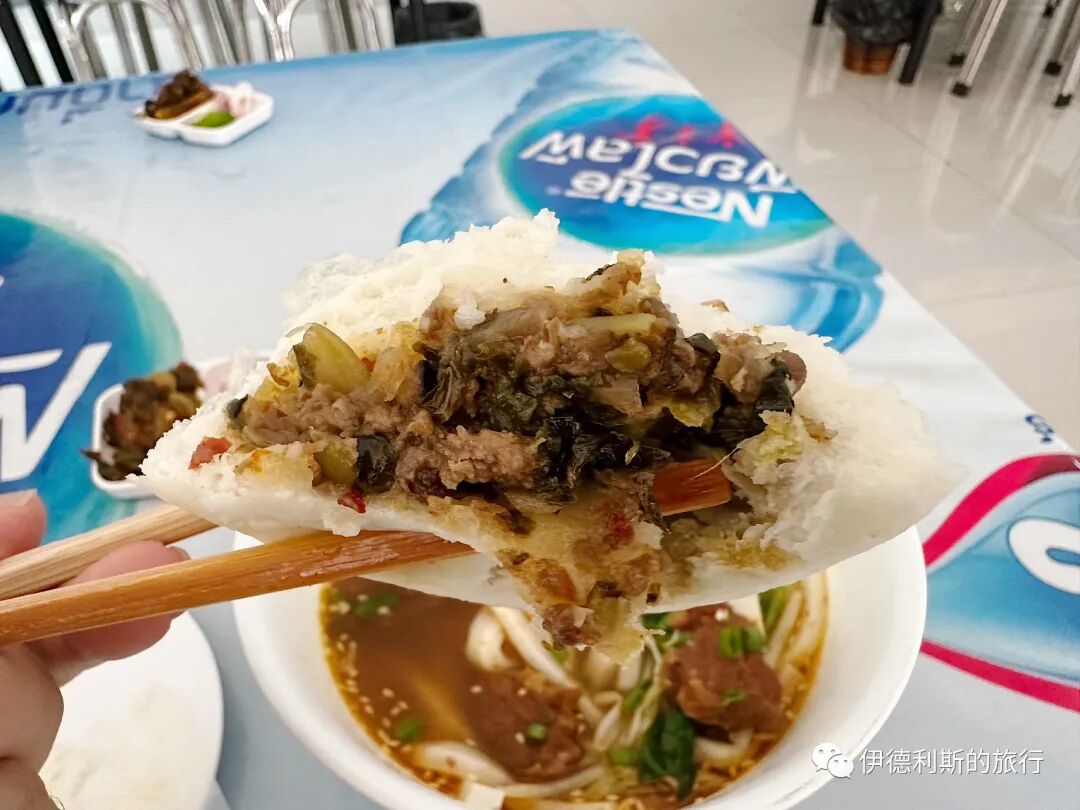
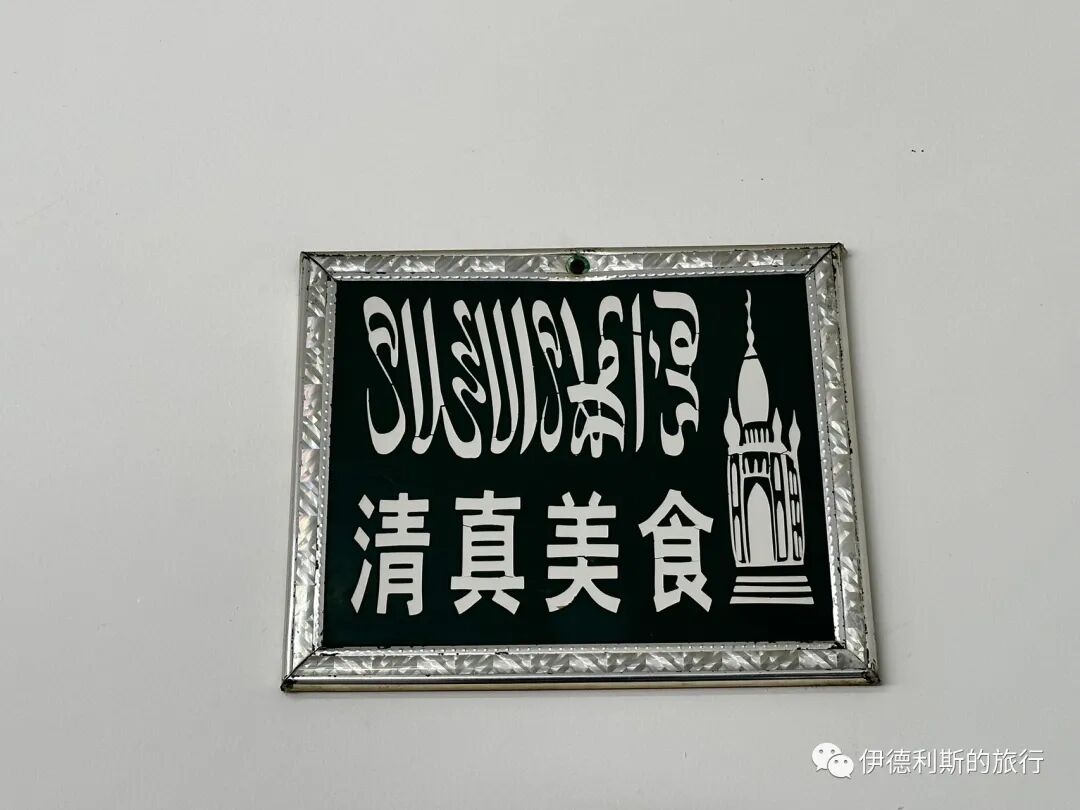
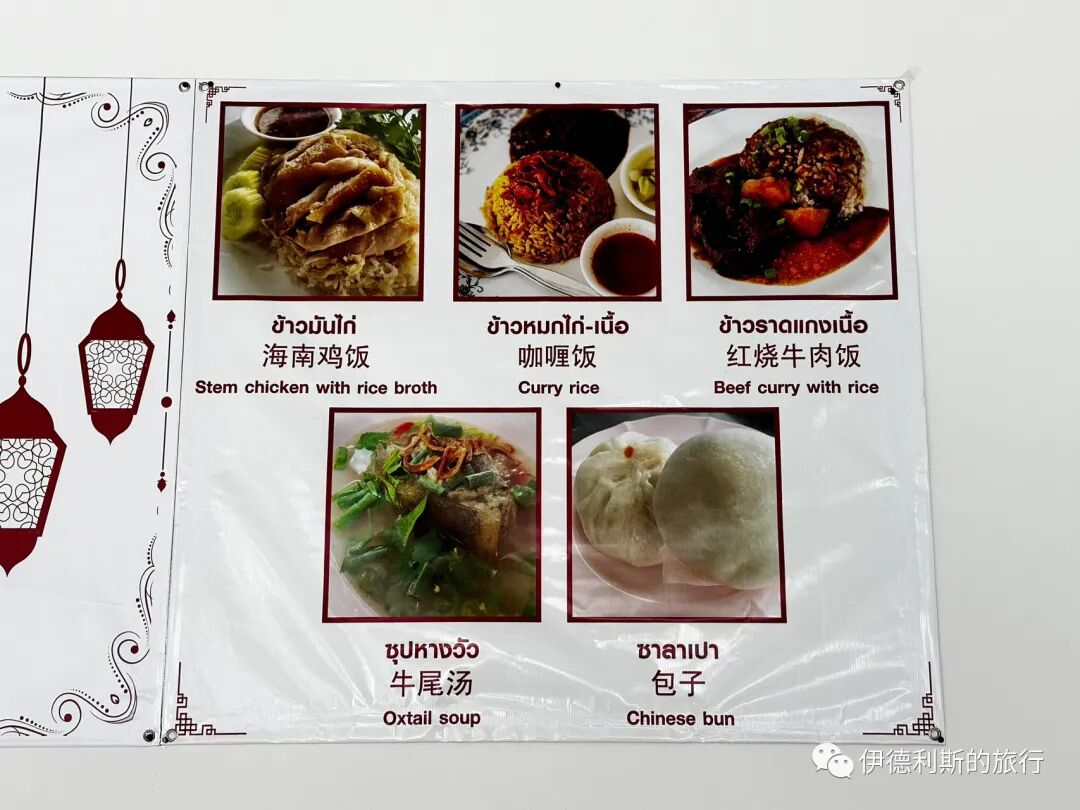
Date Palm Plantation
Driving north from Chiang Mai through a mountainous area, you will see a date palm plantation by the side of the road, not far from the Wang Pha National Park. Praise be to Allah, after constant efforts and attempts, Thai people have successfully grown date palms in Chiang Mai. Now Thai Muslims can eat locally grown dates. This was also my first time seeing a date palm orchard up close.
Although the dates in Chiang Mai do not ripen until July or August and I could not eat fresh ones this time, the orchard had a wide variety of date products. There were dried dates, date juice, date ice cream, canned dates, and more. We tried the date juice and date ice cream, and both were quite delicious! The dates in the canned dates were crunchy and had a light fragrance, which was a bit of a surprise.

Wanyang Village
Heading north, I reached the first Hui mosque community on the Thai-Myanmar border: Wanyang Village in Fang District, founded by the descendants of refugees who followed the 93rd Division of the Lost Army in Northern Thailand. The Lost Army in Northern Thailand began in 1950 with the 237th and 93rd Divisions of the Nationalist Army, who retreated from Yunnan into Myanmar along with their families and many refugees.
After 1951, the number of families, merchants, horse caravans, and civilians arriving from Yunnan grew, but constant attacks by the Myanmar military forced them to retreat into the mountains along the Thai border, which is when Wanyang was established. These refugees first lived in bamboo and thatch huts, relying on primitive slash-and-burn farming to grow corn and rice. They were not allowed to enter or leave towns freely, making it very difficult to earn a living.
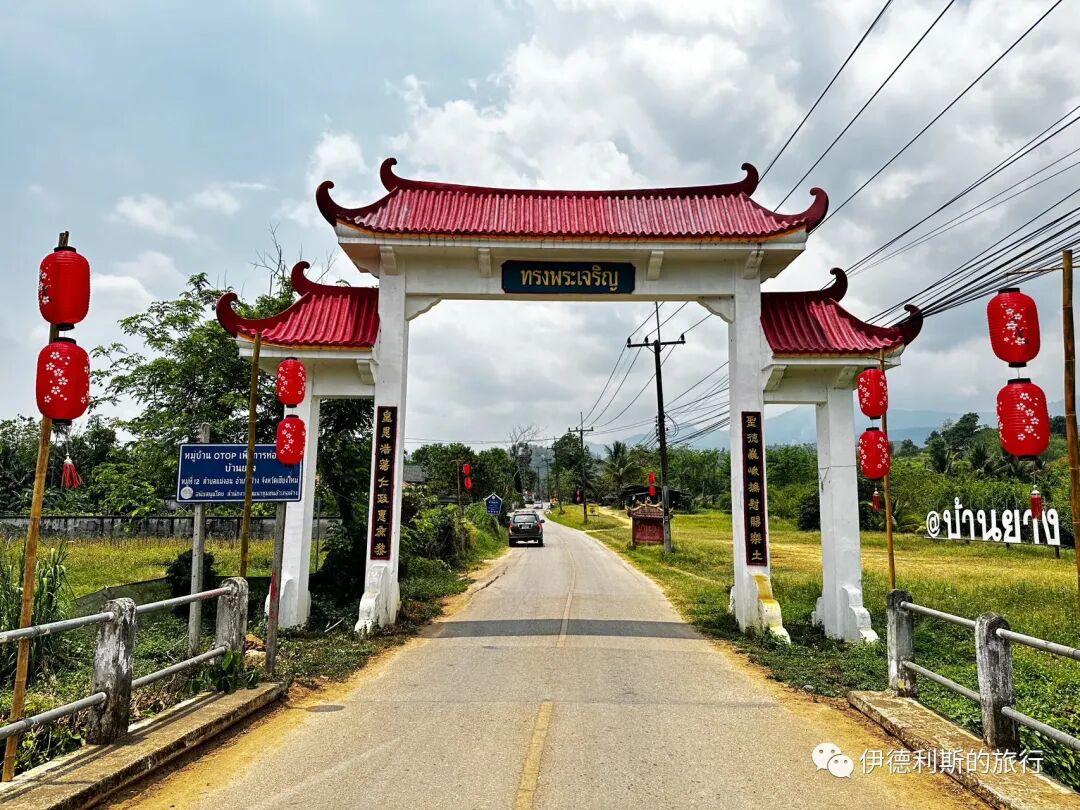
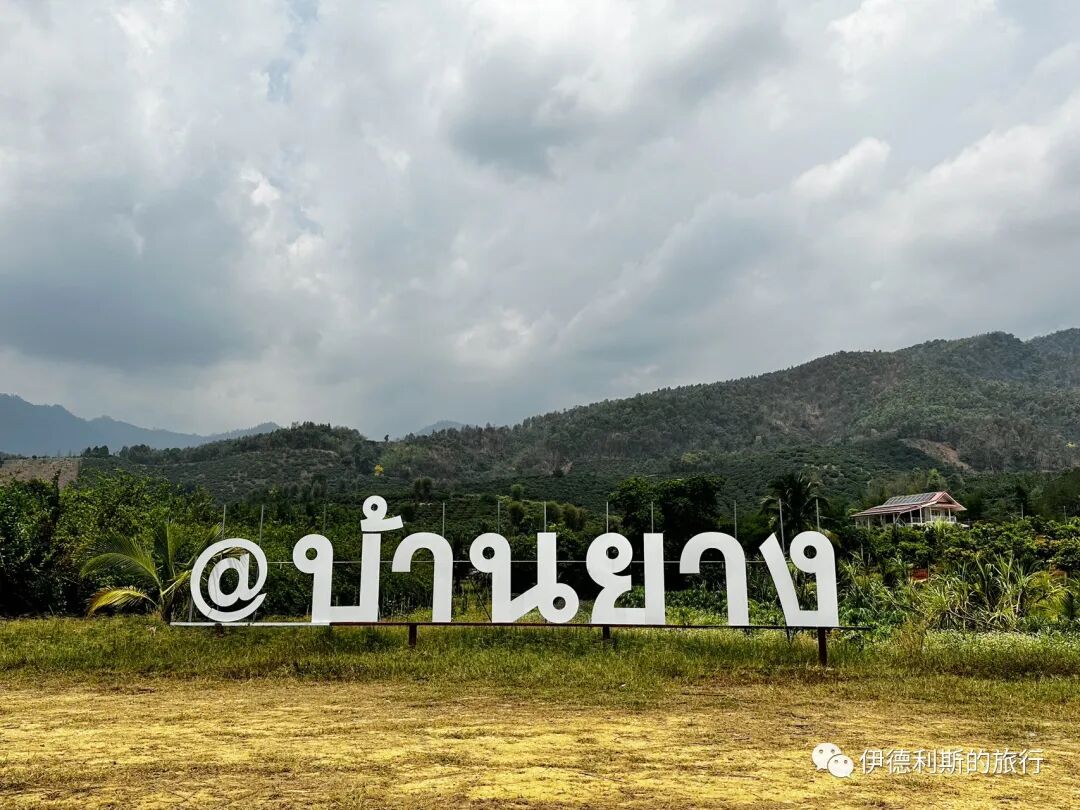
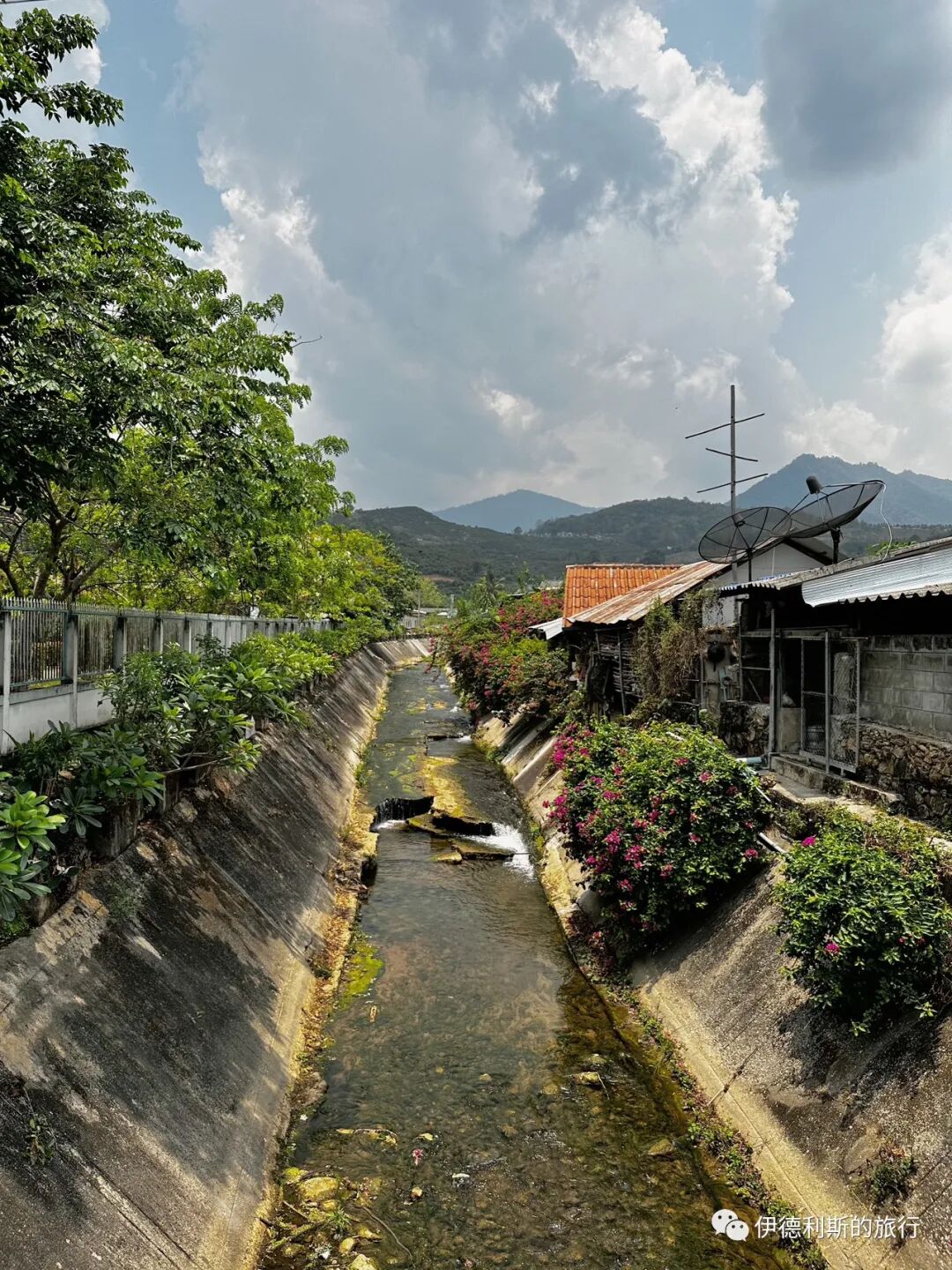
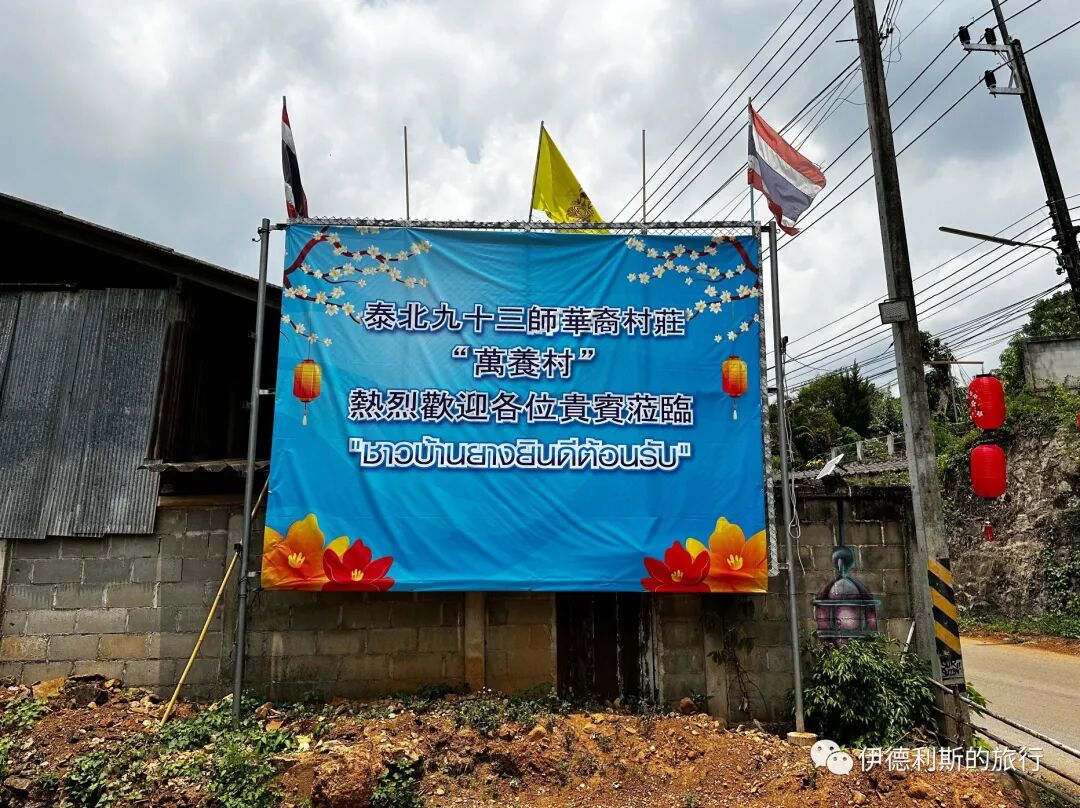
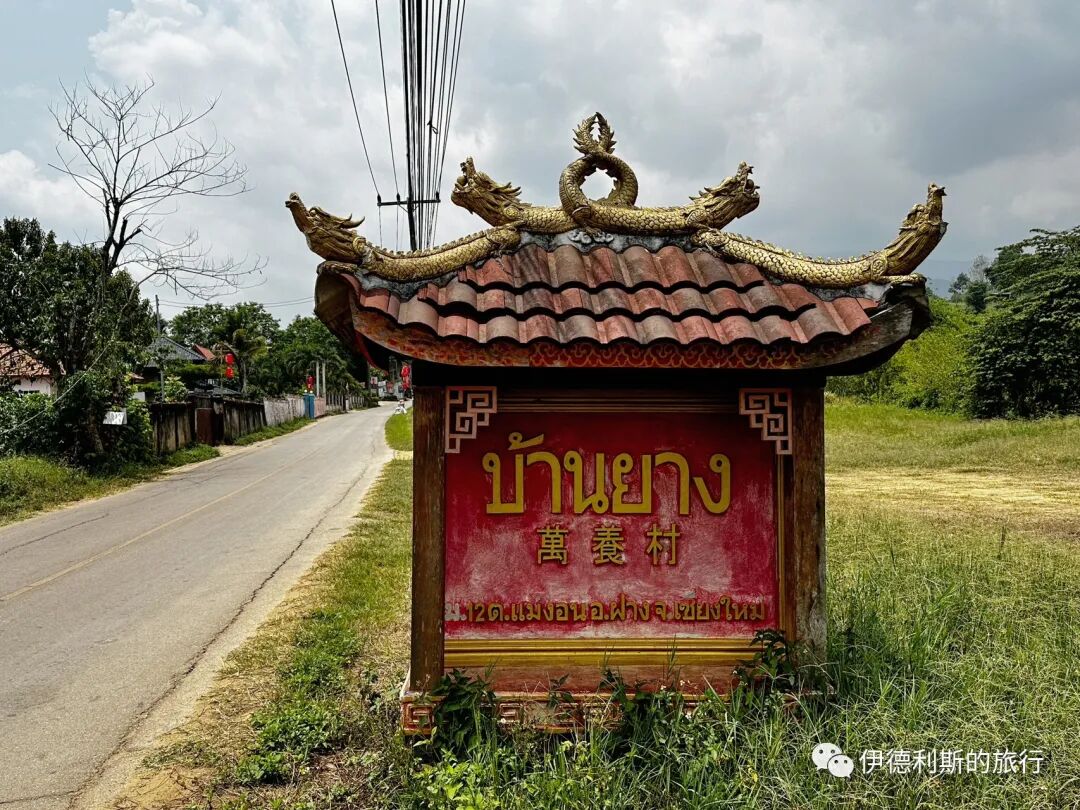
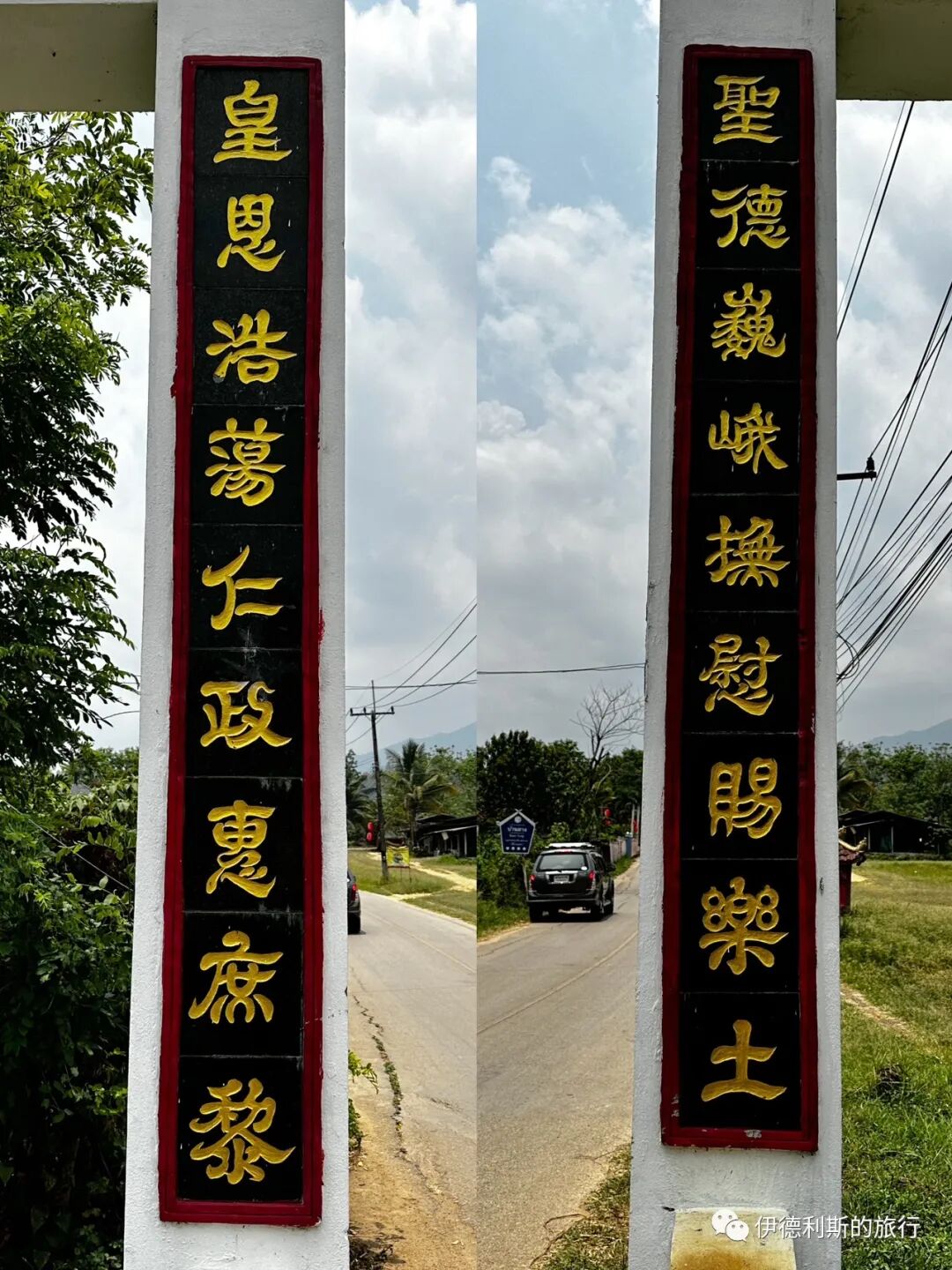
Some Yunnan Hui Muslim mosques in Northern Thailand like to use pleasant two-character religious terms for their names, such as Jingzhen Mosque in Chiang Mai, Meide Mosque in Wanyang, Jiqing Mosque in Hefei, Chengxin Mosque in Fang District, and Ciai Mosque in Daduan, all of which sound very auspicious. Among these Yunnan mosques, I think Wanyang's Meide Mosque is the most beautiful; the environment is excellent, with lush greenery that makes it feel like a garden.
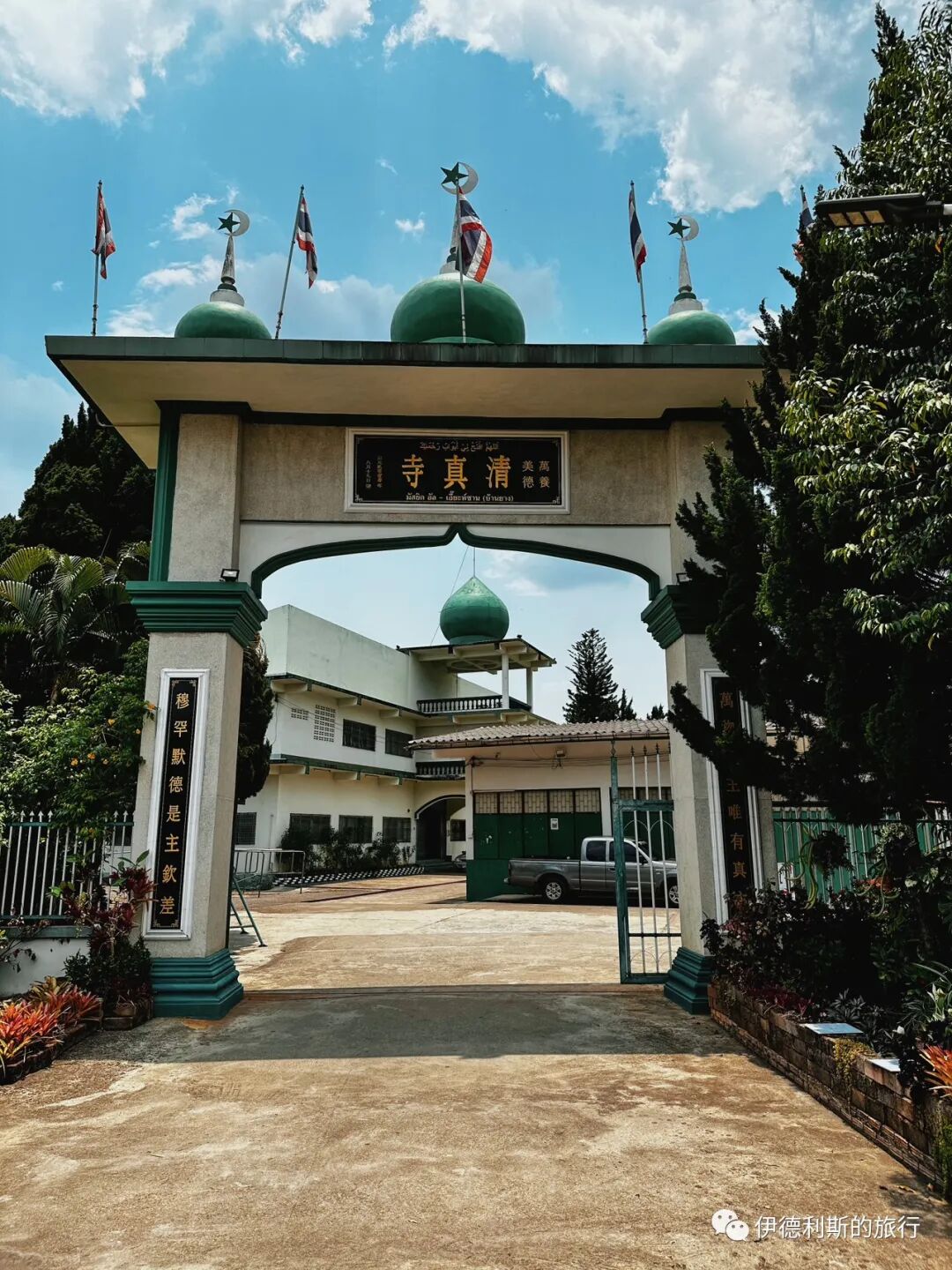
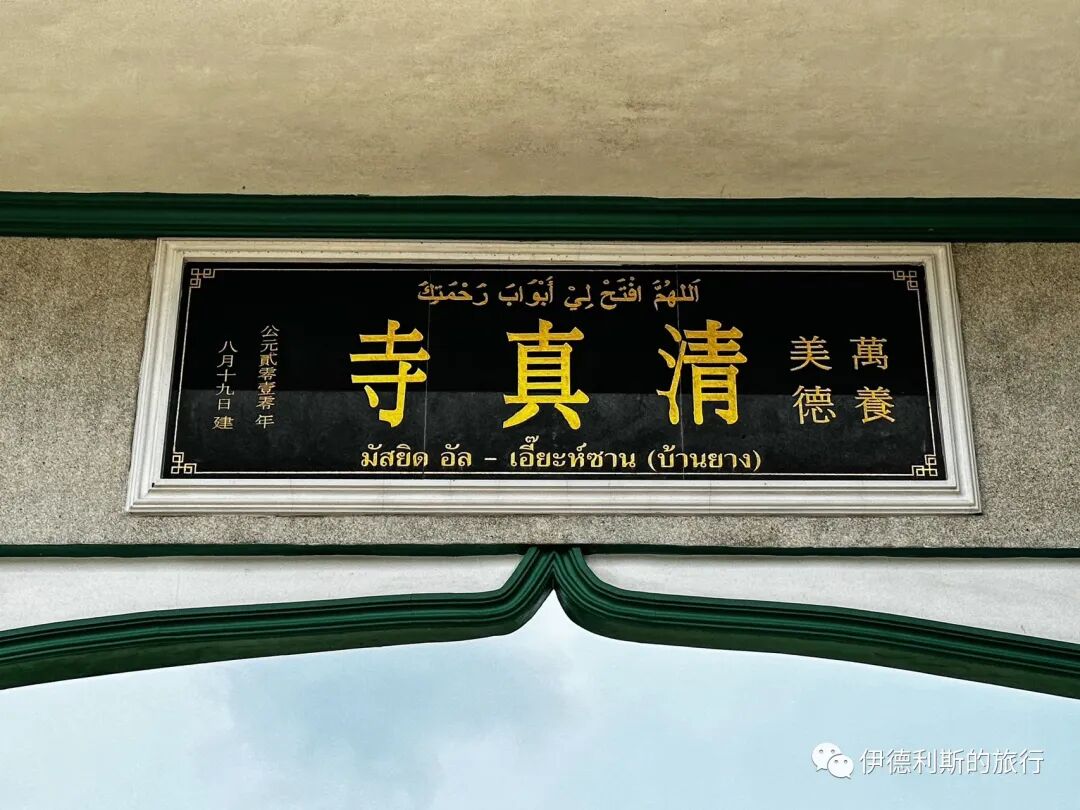
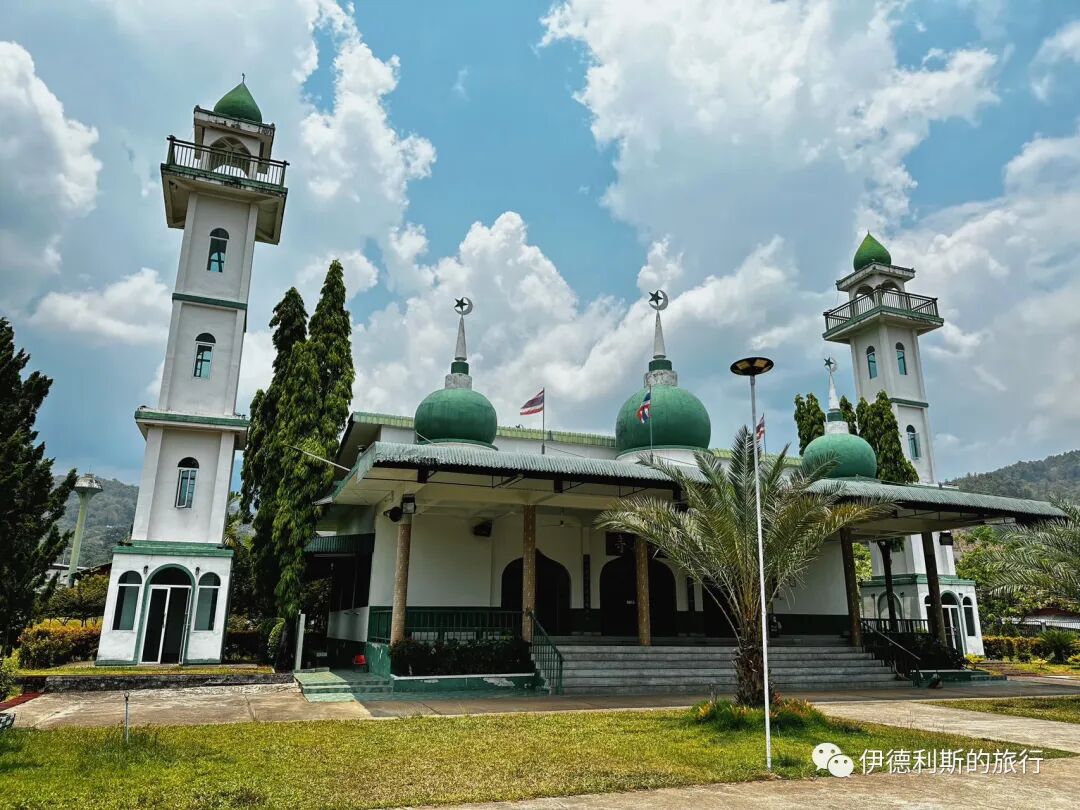
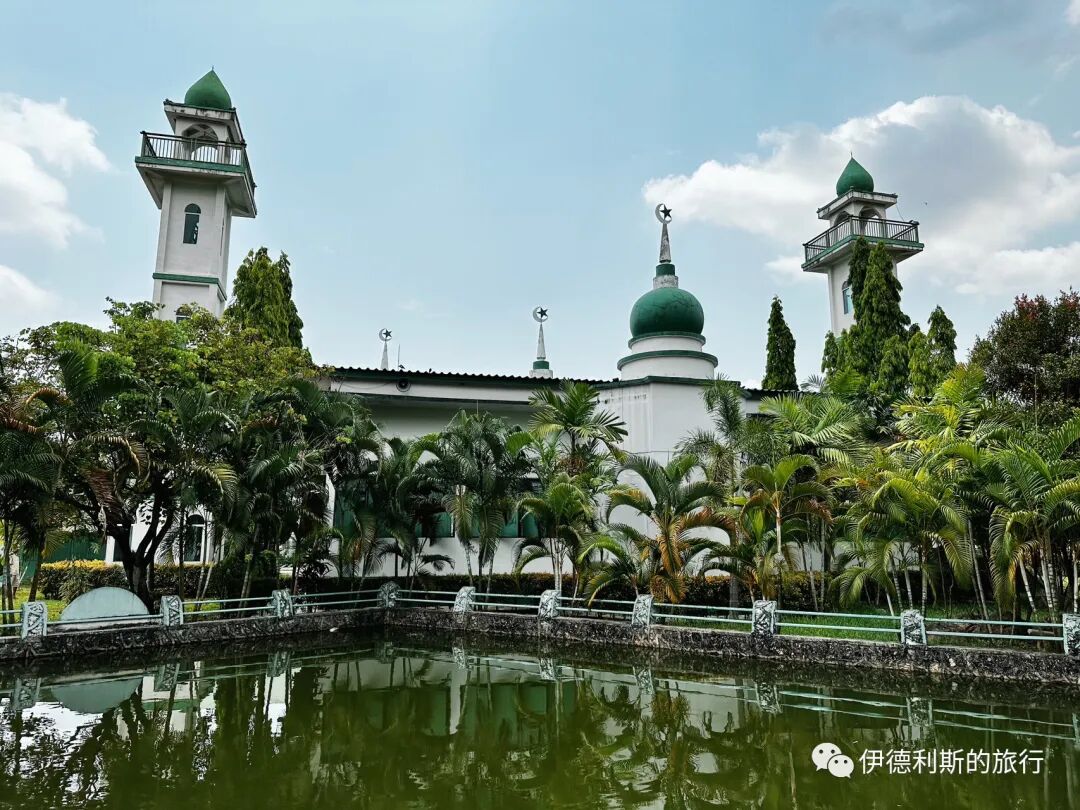
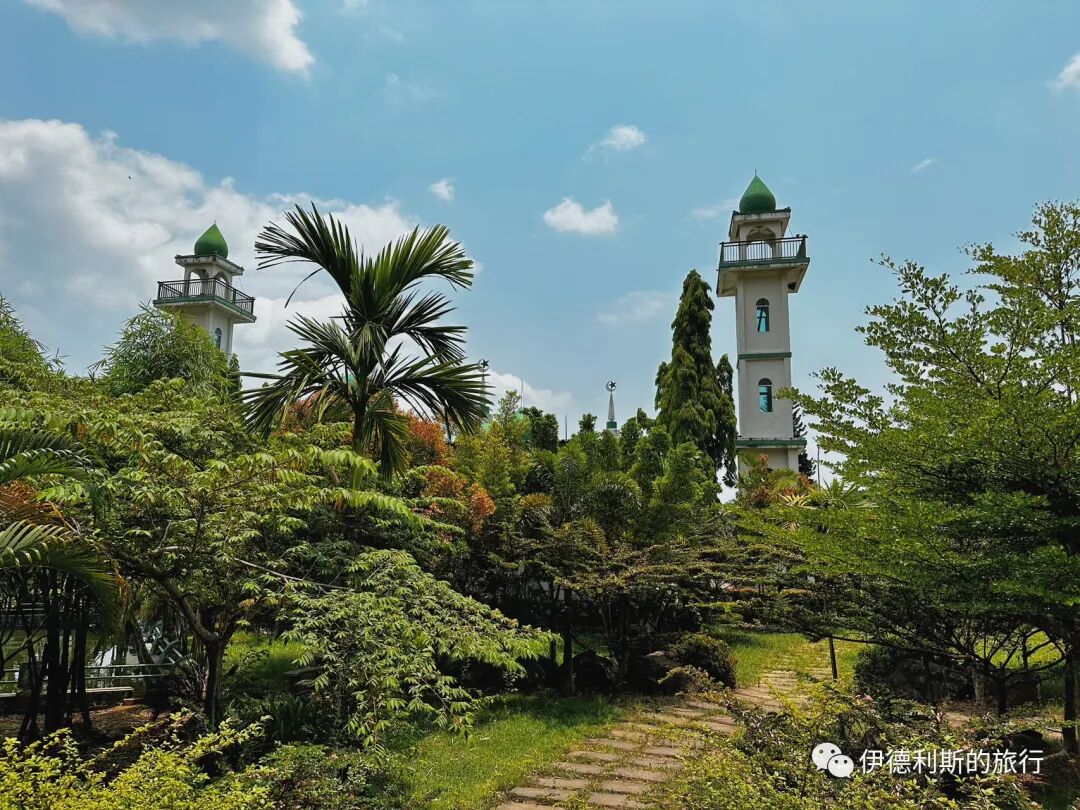
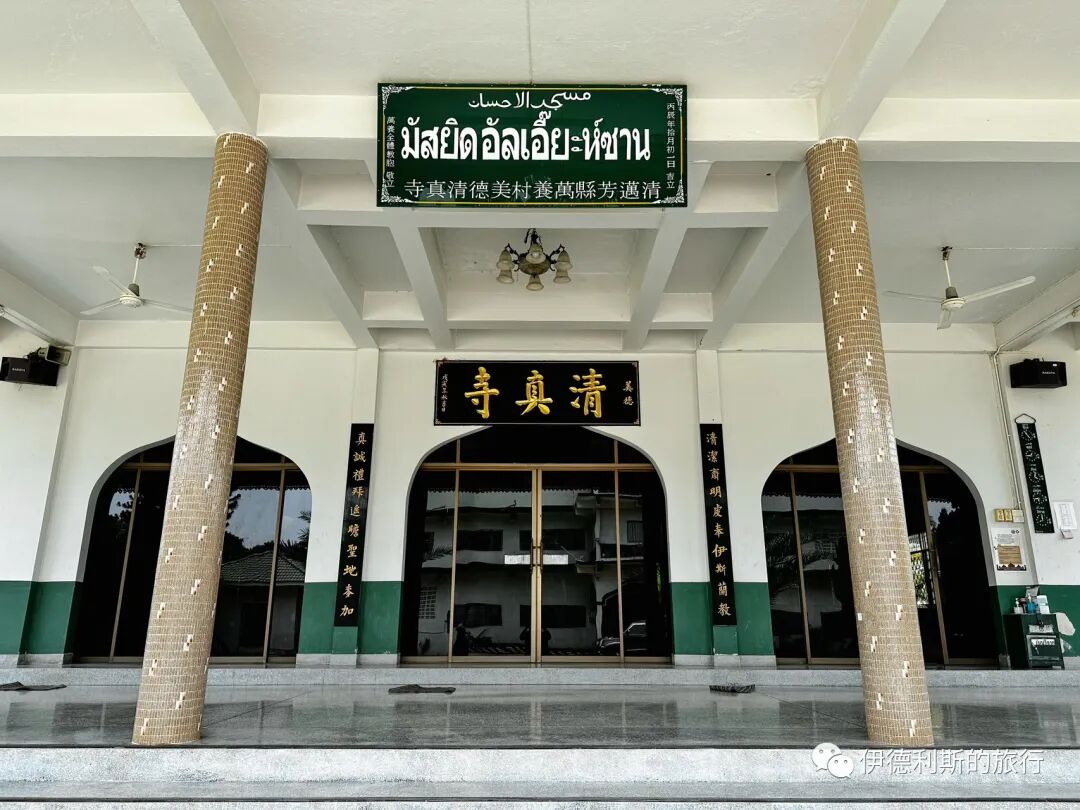
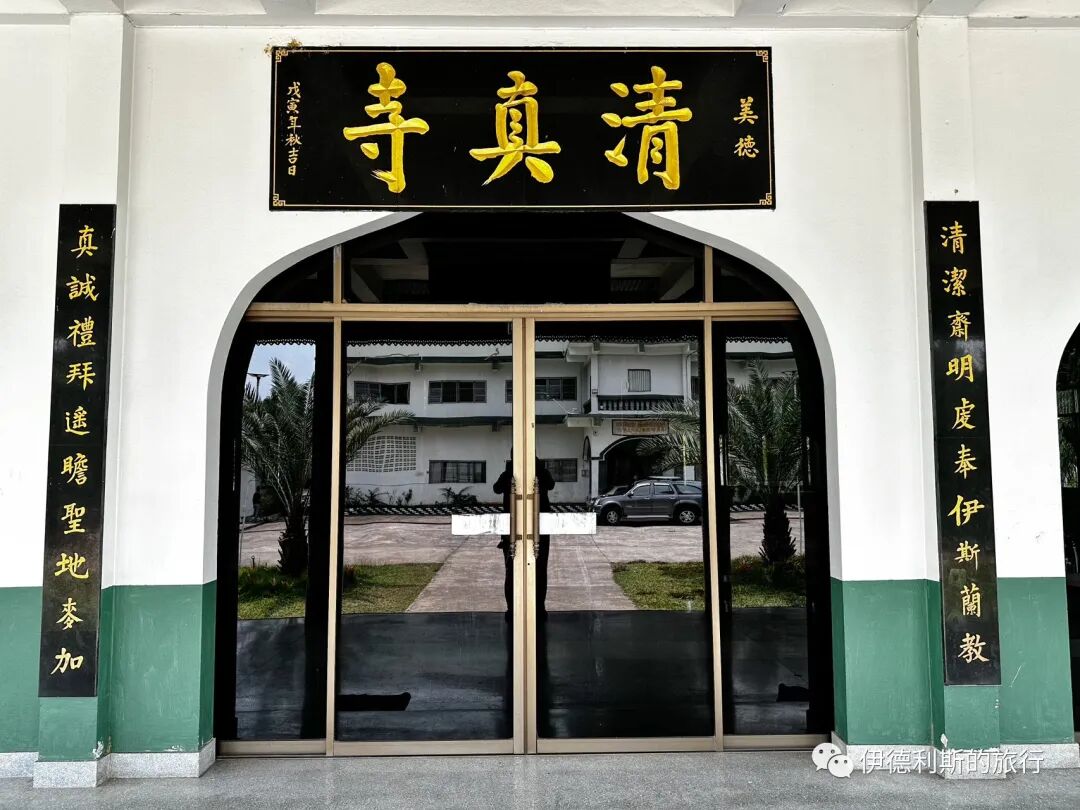
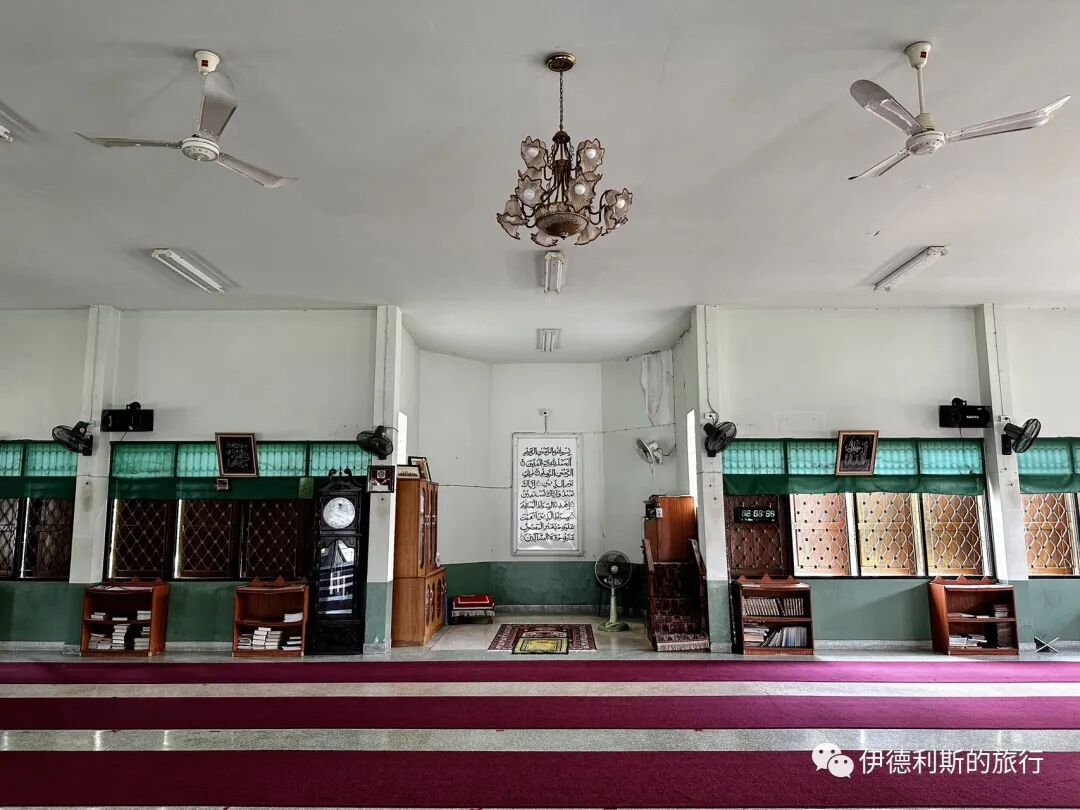
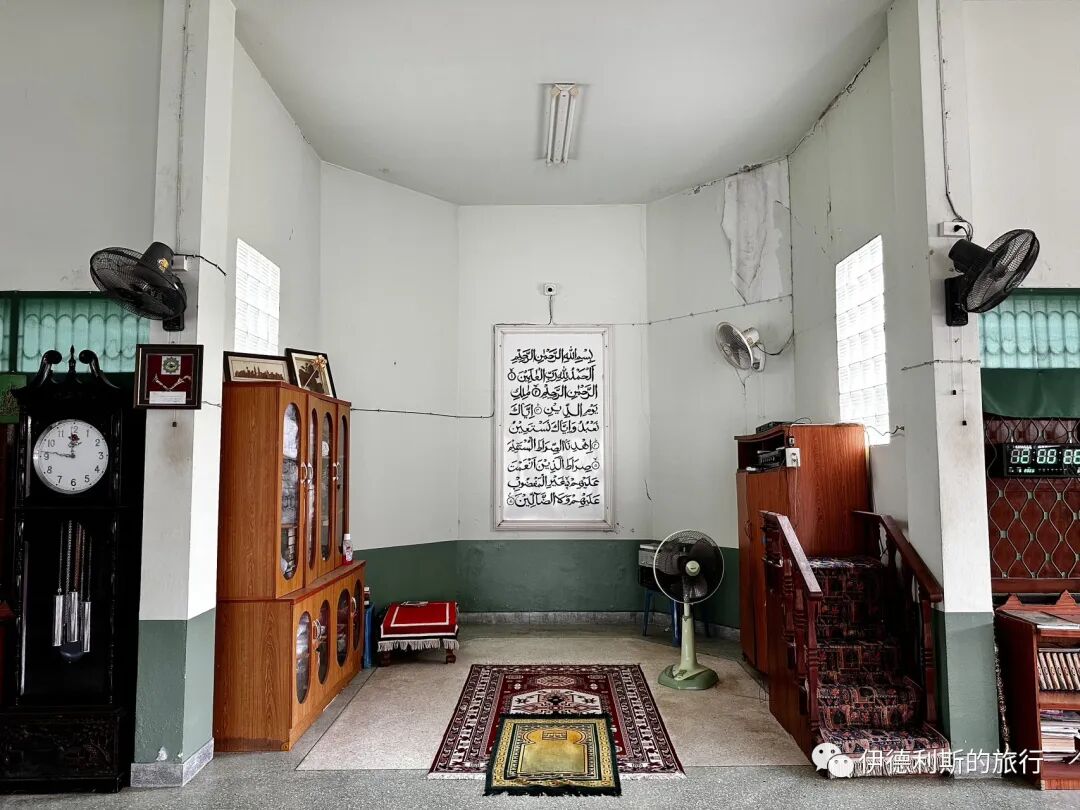
At Wanyang Meide Mosque, I saw the Arabic school, the women's prayer hall, the funeral room (meiti fang), and the event hall; it was my first time seeing the word for funeral (maiti) written as meiti, and I think this translation is quite good.
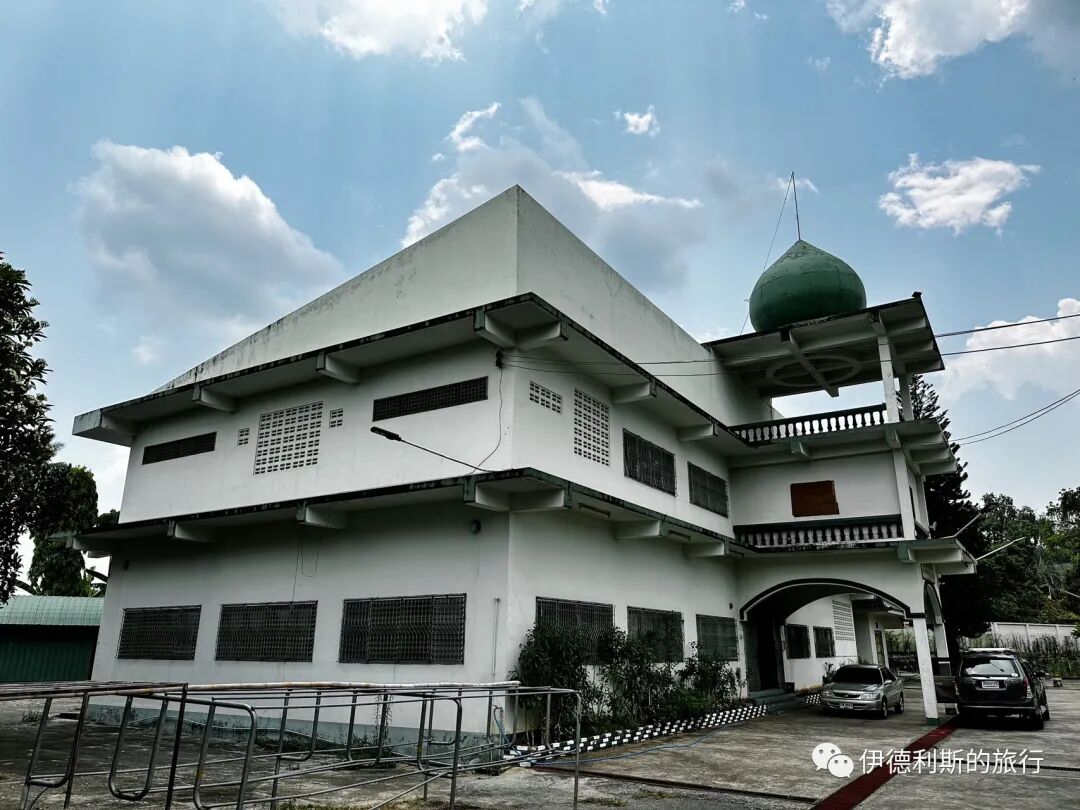
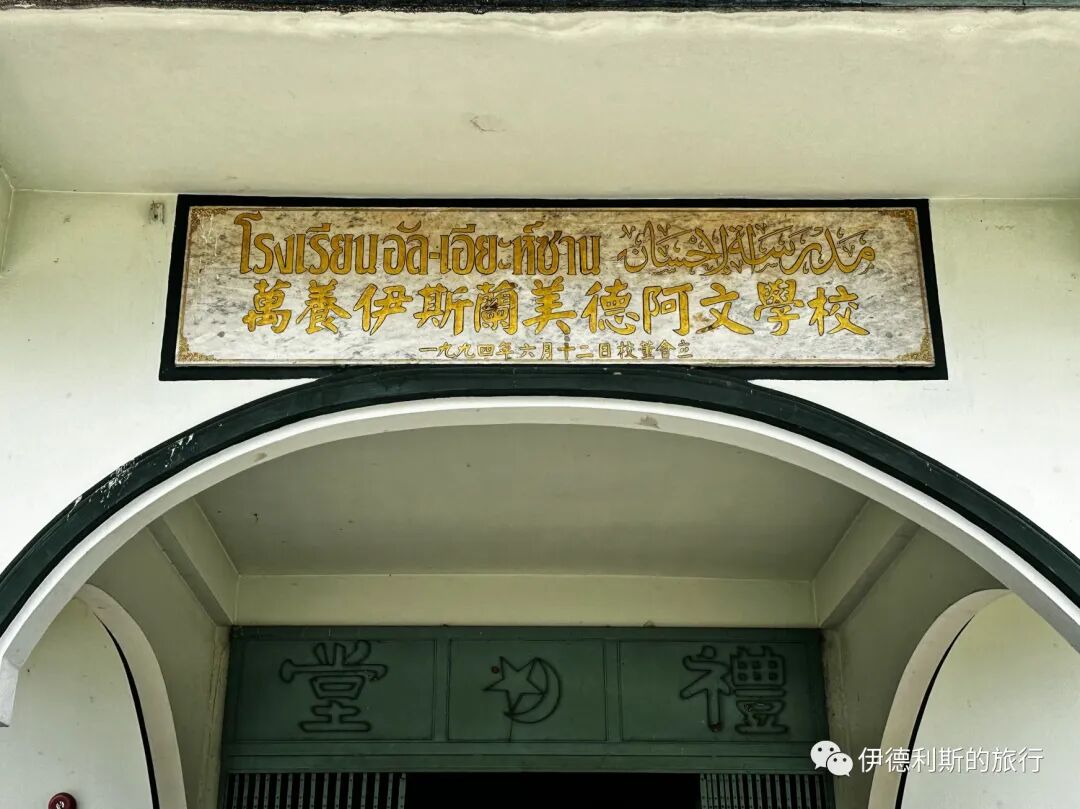
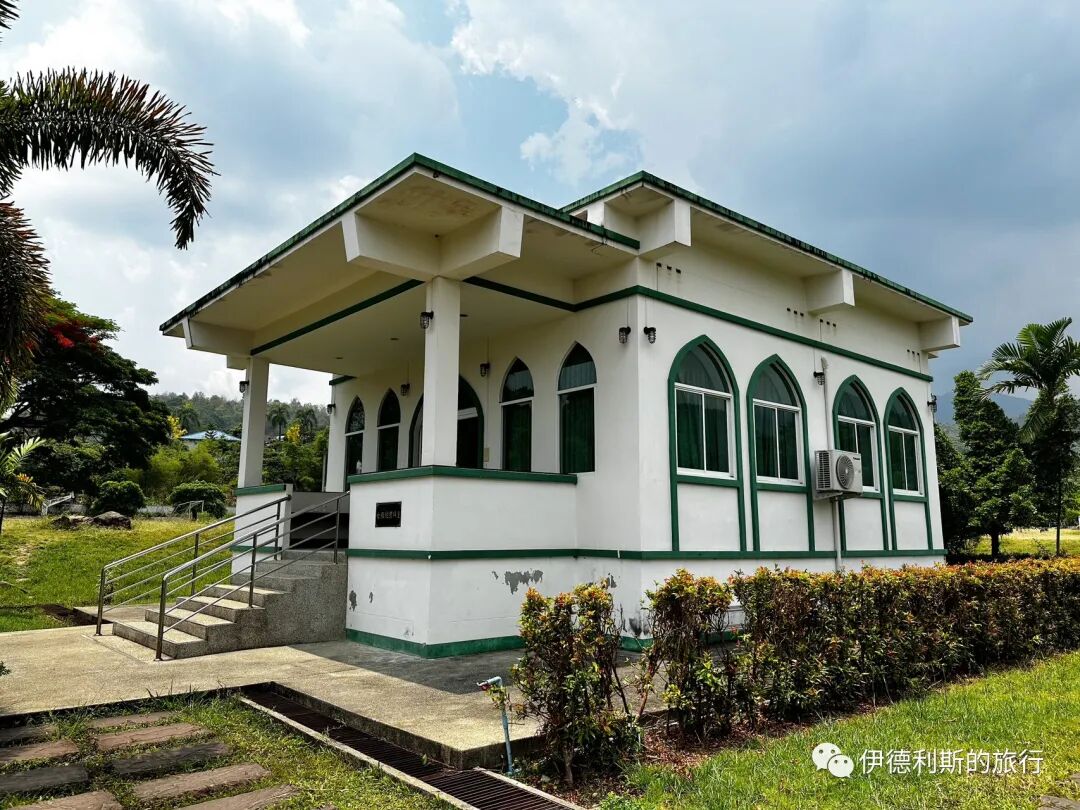
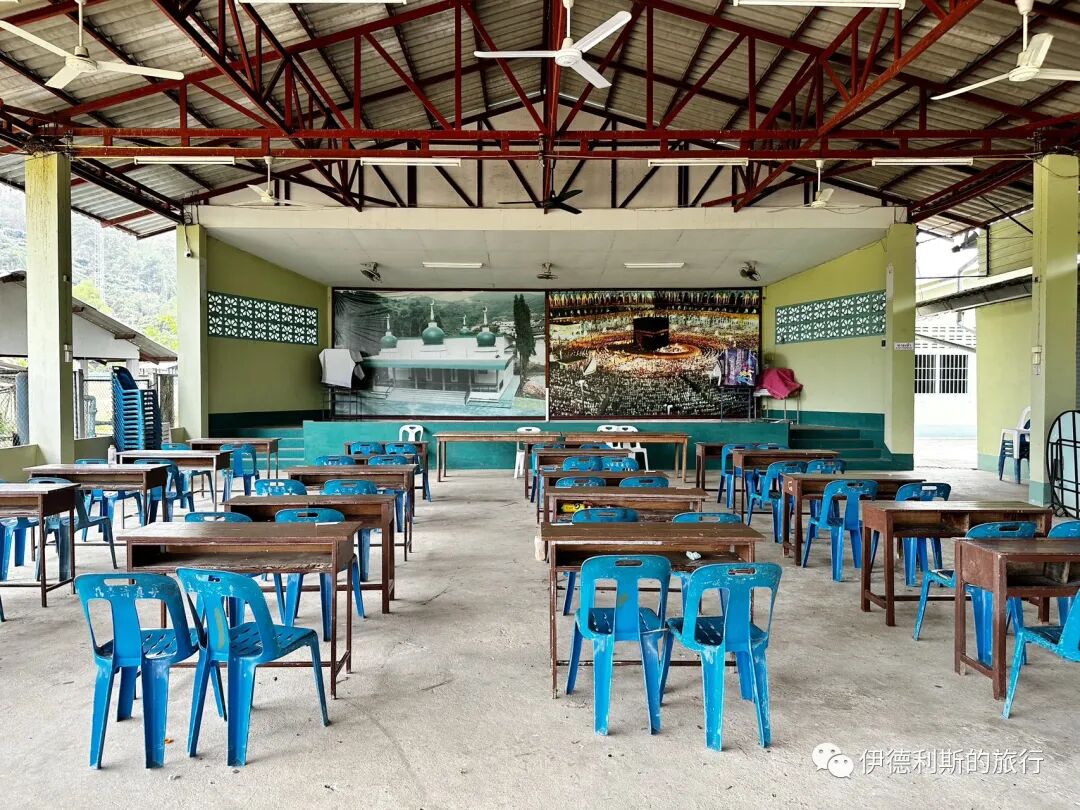
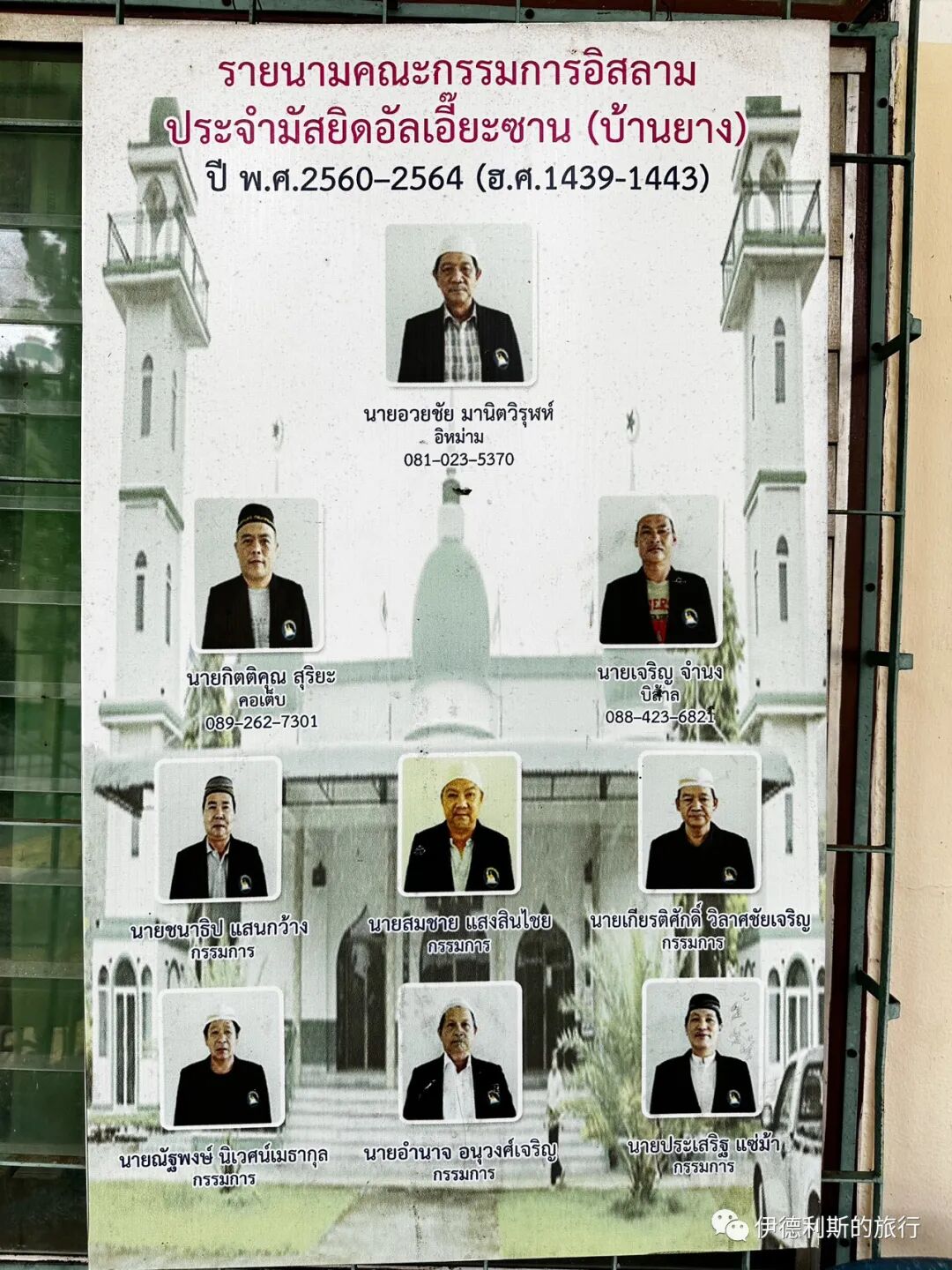
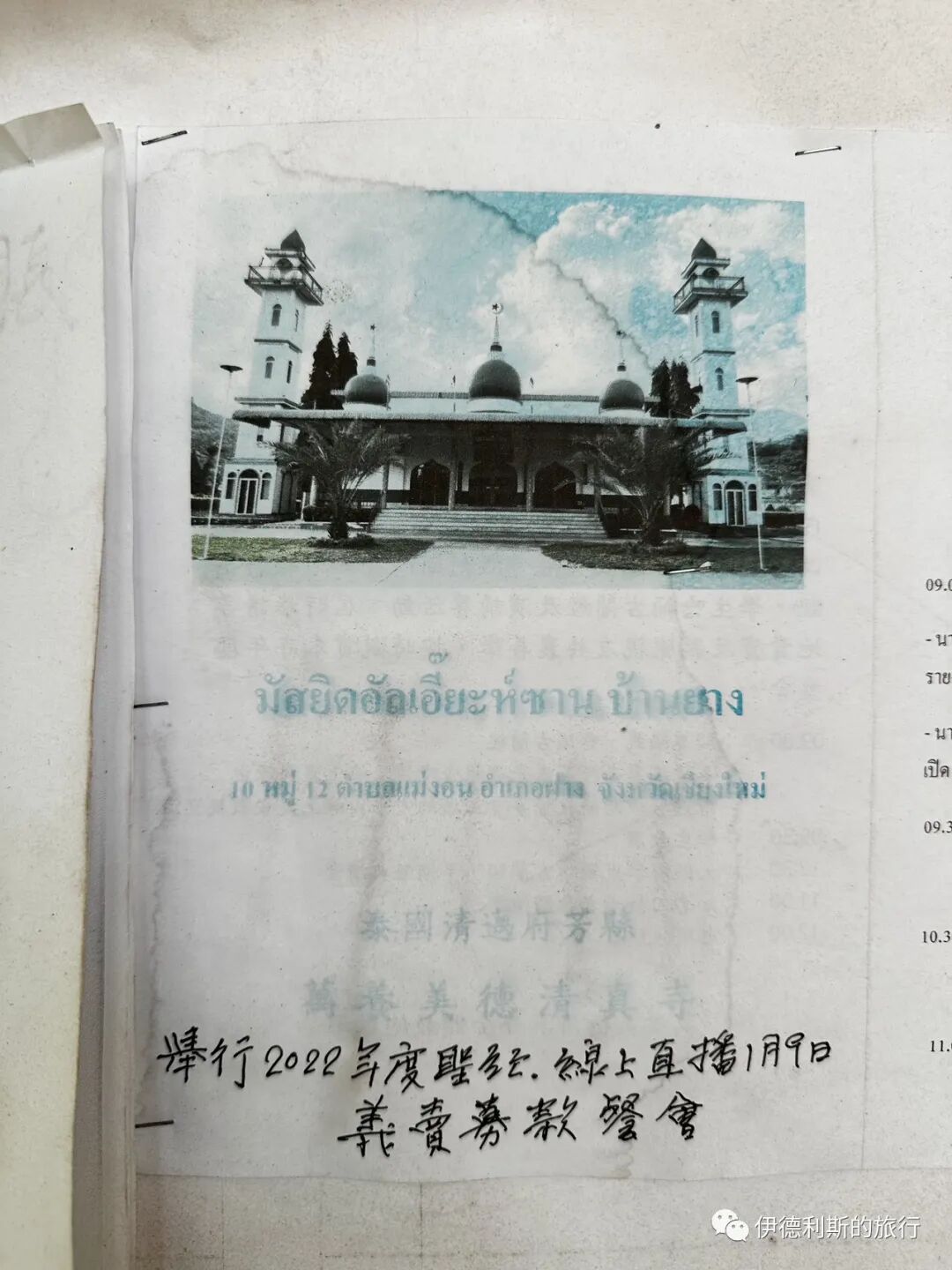
At noon, I went to a Yunnan Hui Muslim restaurant in Wanyang Village called Jianping Beef Noodle Shop and ate pan-fried dumplings (jianjiao), rice noodles (babasi), and beef noodles, served with the standard Northern Thai sides of pickled vegetables, onions, and lime. The rice noodles (babasi) are a type of flat rice noodle topped with traditional beef sauce, and you can choose between the traditional Yunnan Hui Muslim clear broth or the Northern Thai coconut milk broth. The pan-fried dumplings (jianjiao) were filled with chicken and chives, and I feel that pan-fried dumplings are also very common in Yunnan communities in Northern Thailand.
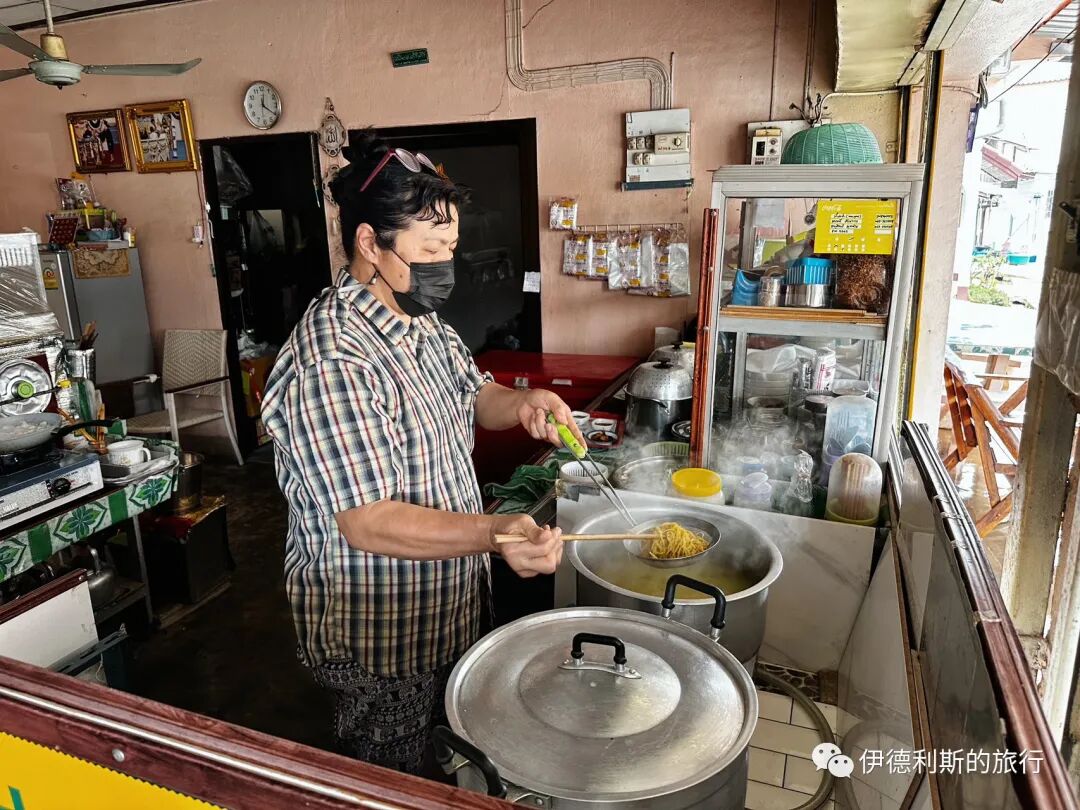
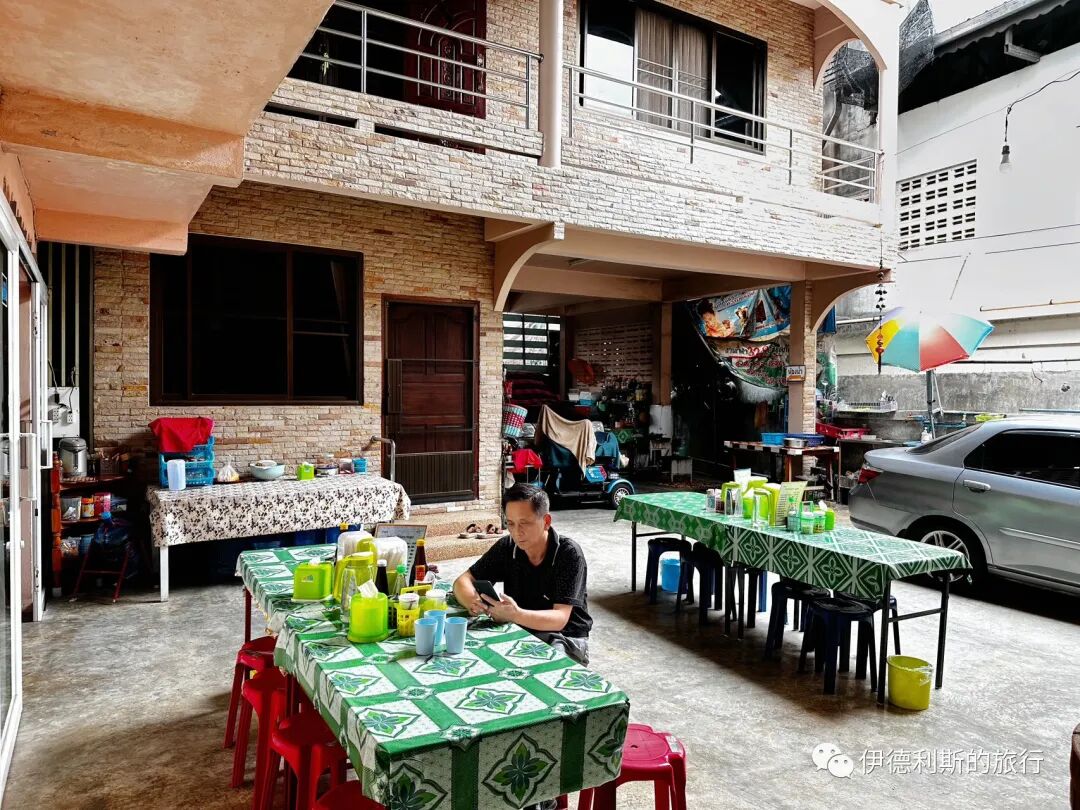
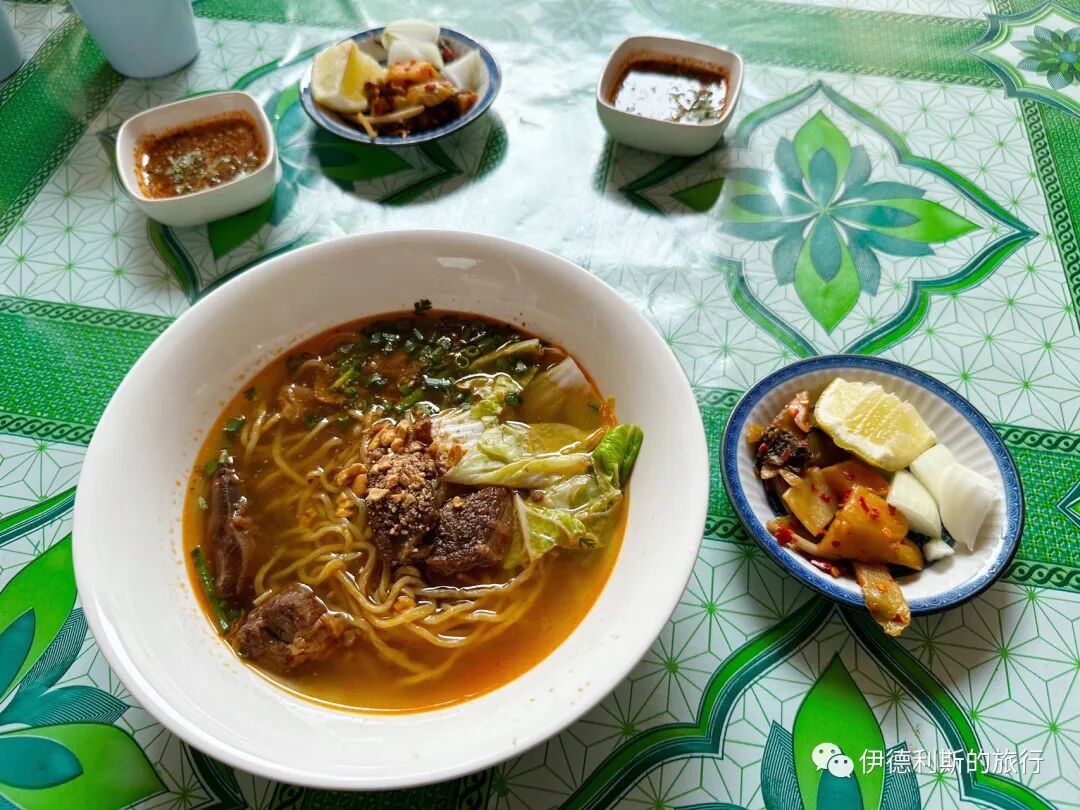
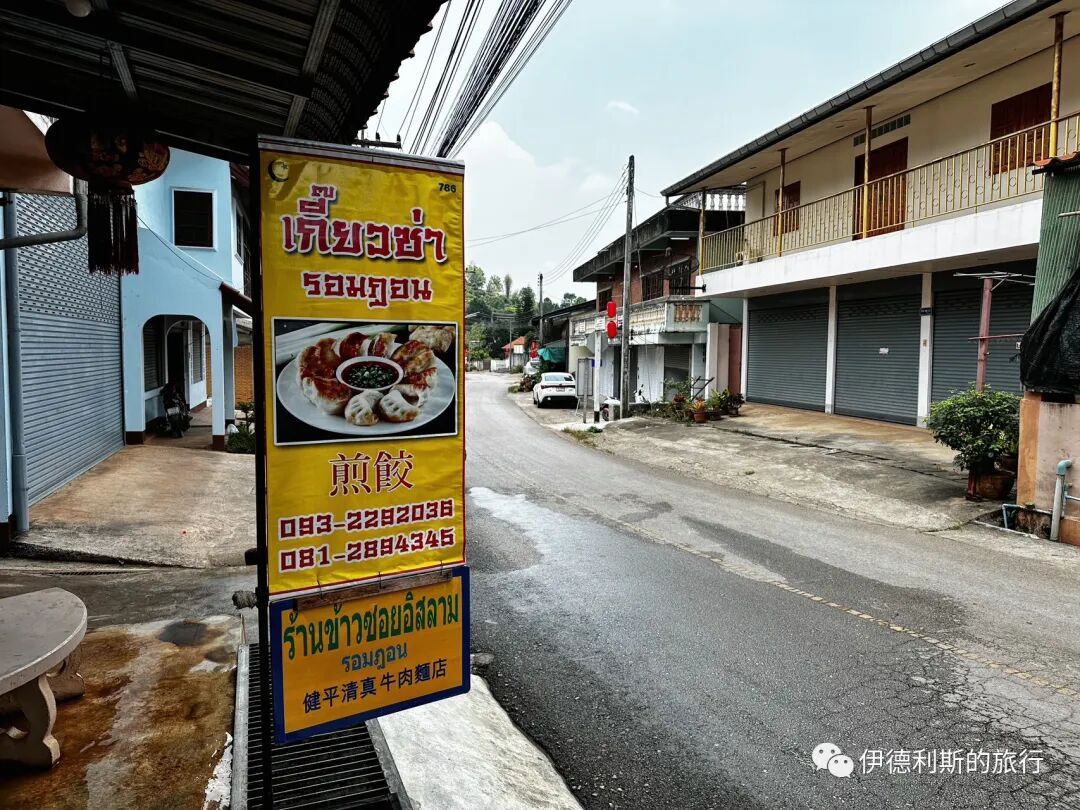
The shop displays family photos of the owner.
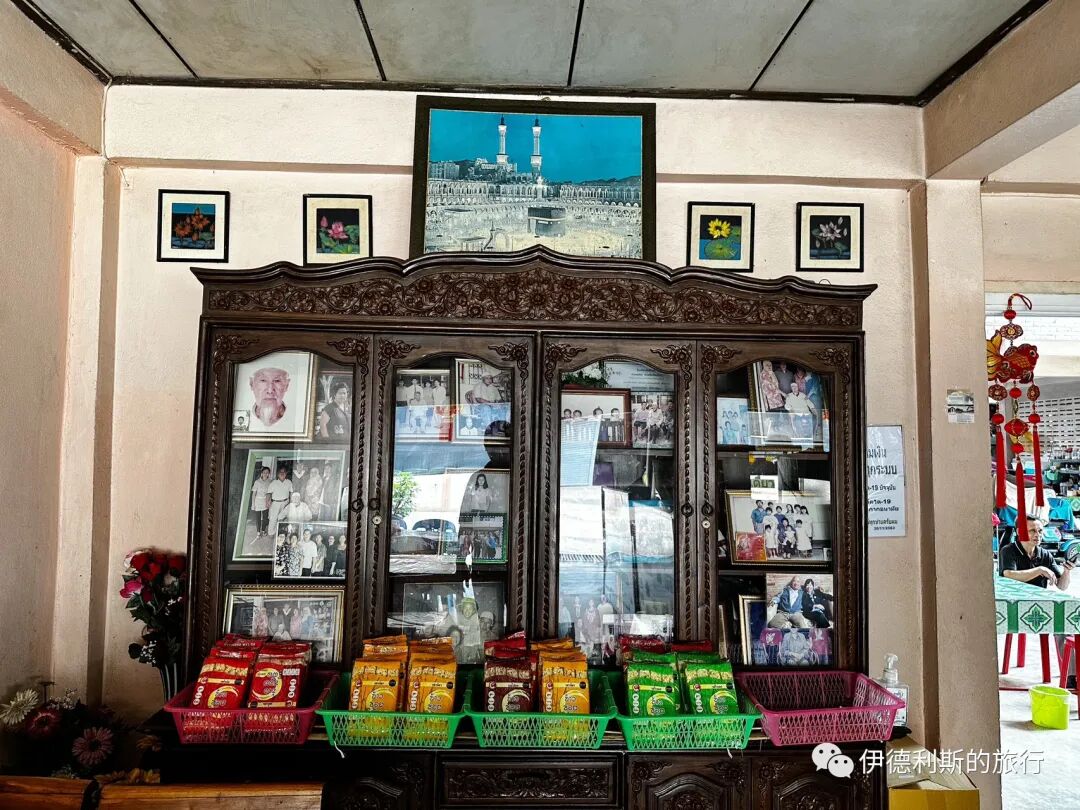
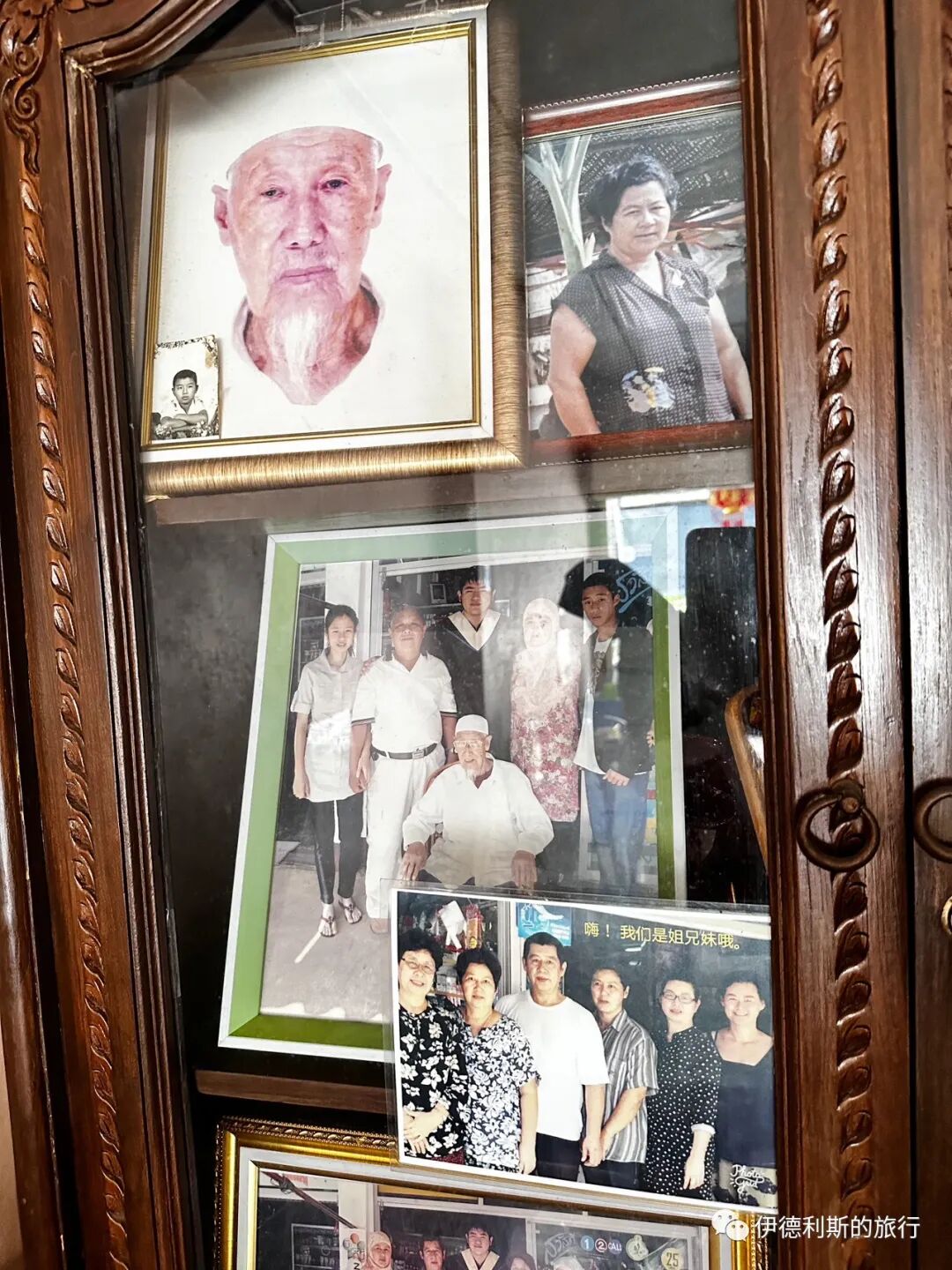
Hefei Village
After leaving Wanyang Village, we arrived at the second Yunnan Hui mosque community on the Thai-Myanmar border, Hefei Village, to pray at the village's Jiqing Mosque. Like Wanyang Village, Hefei Village was established after the 1950s by refugees who fled here from Yunnan through Myanmar.
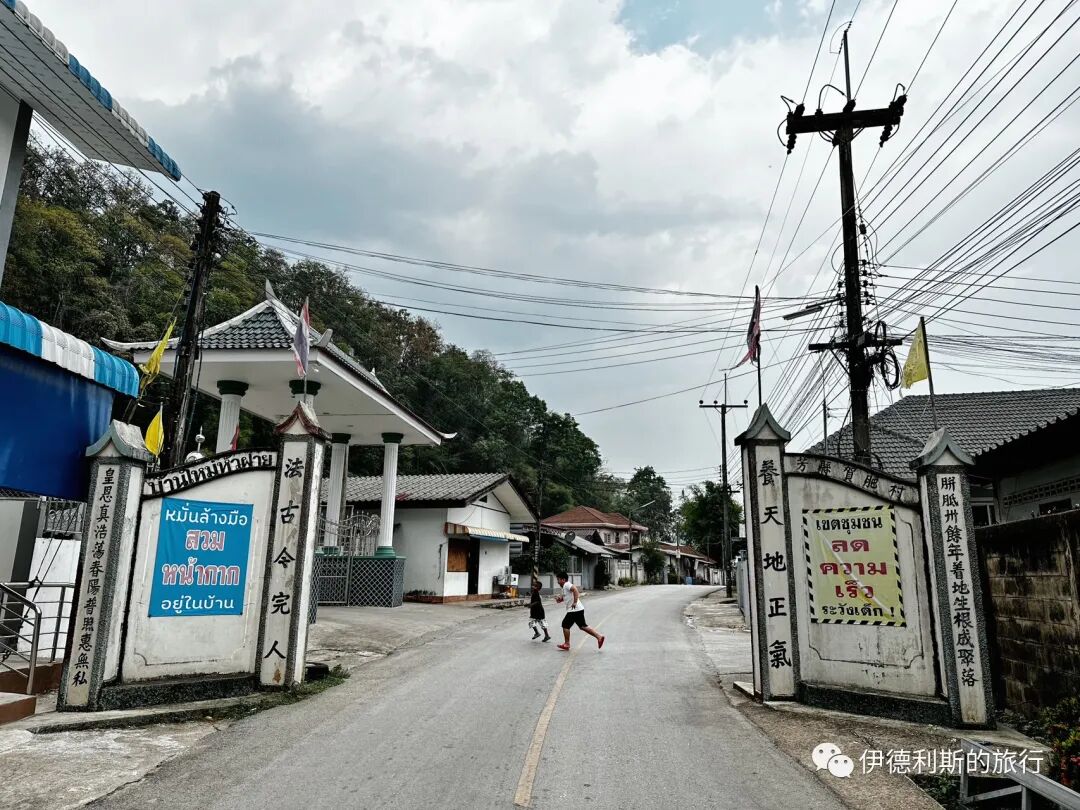
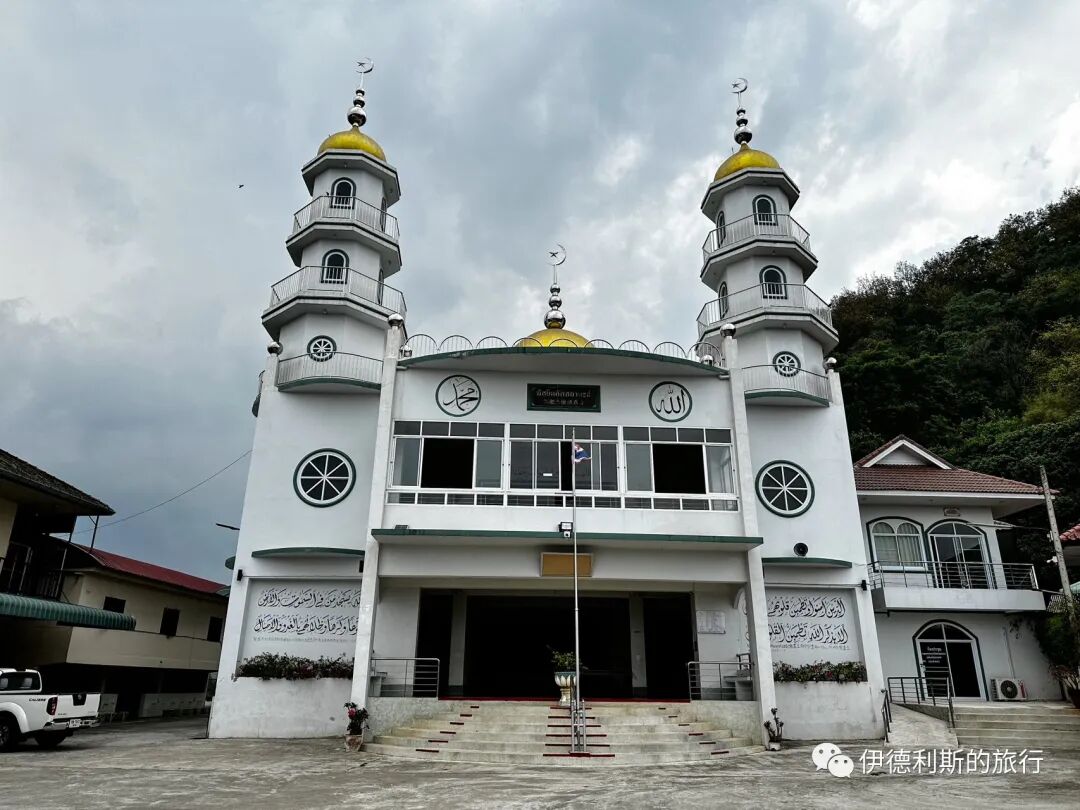
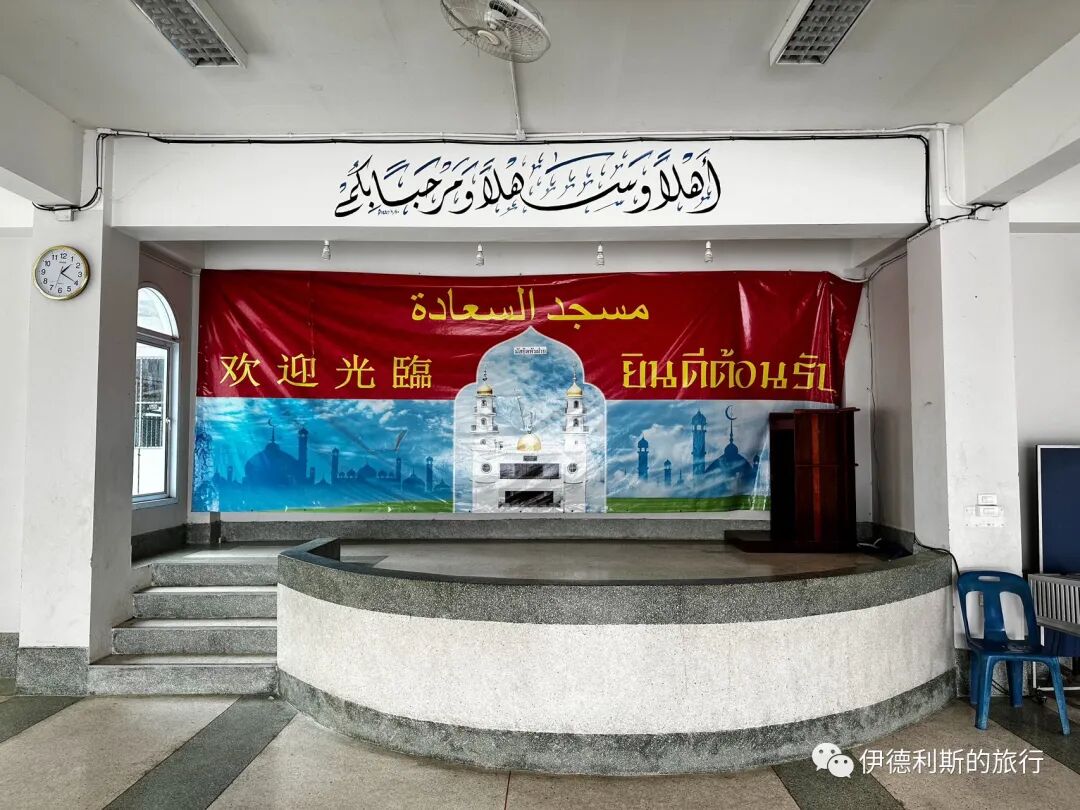
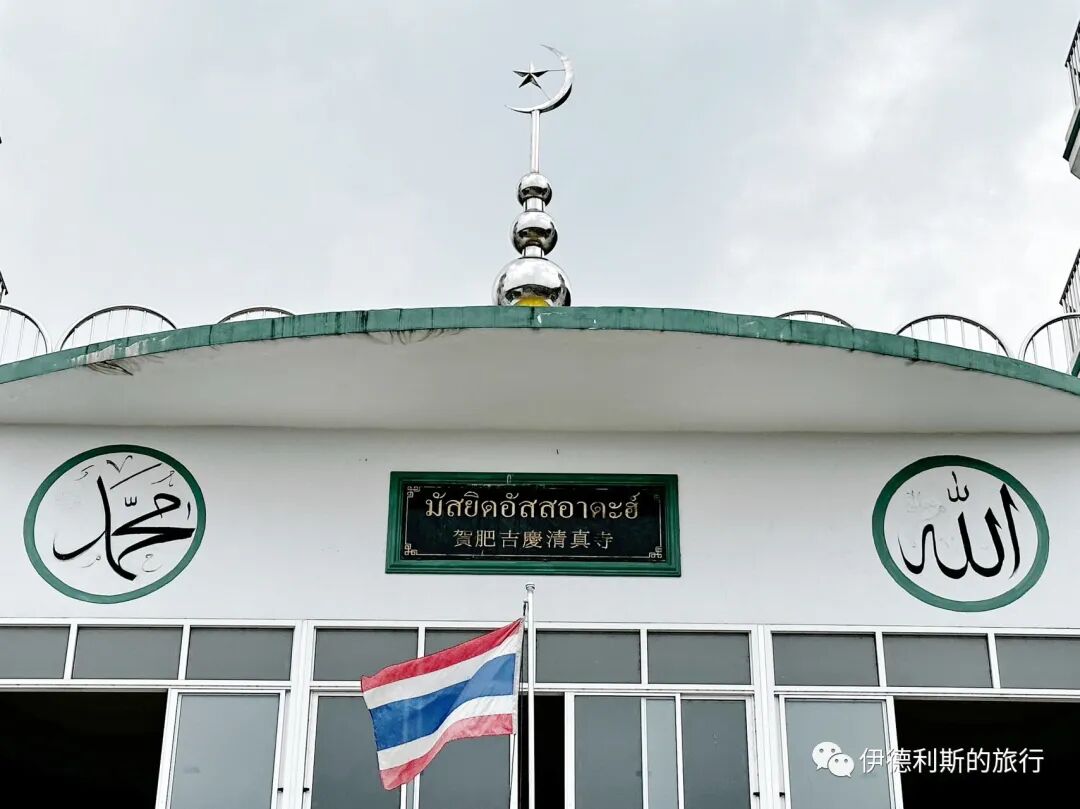
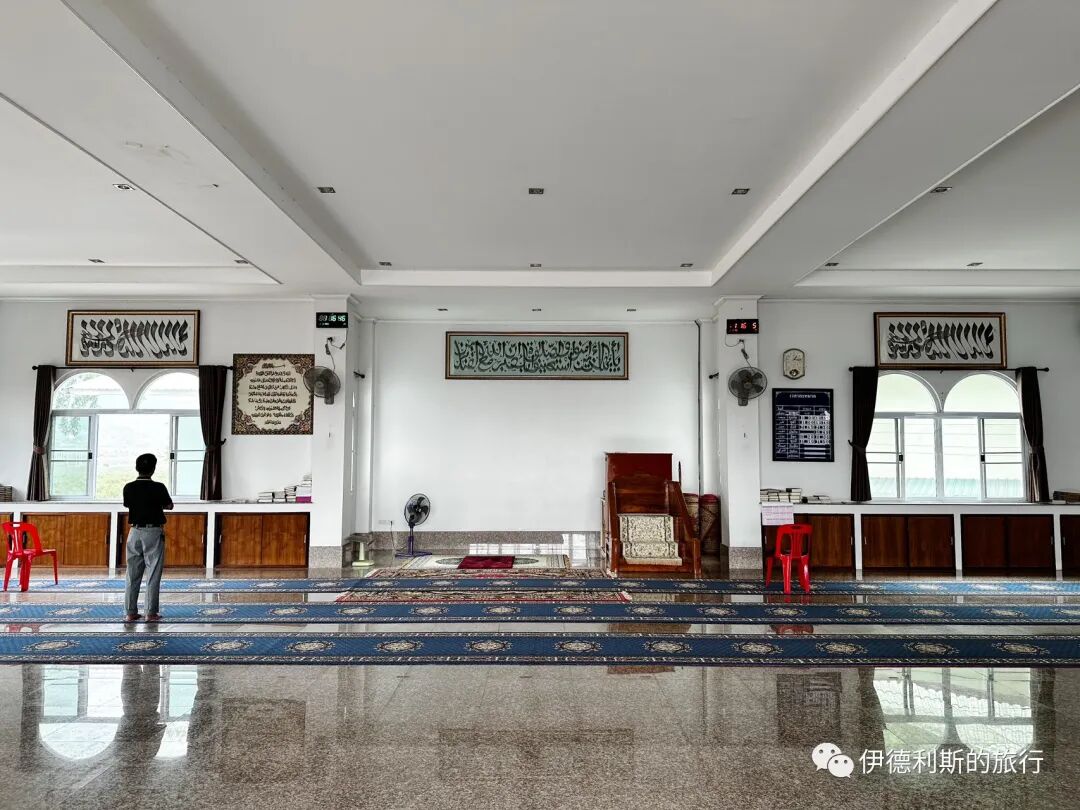
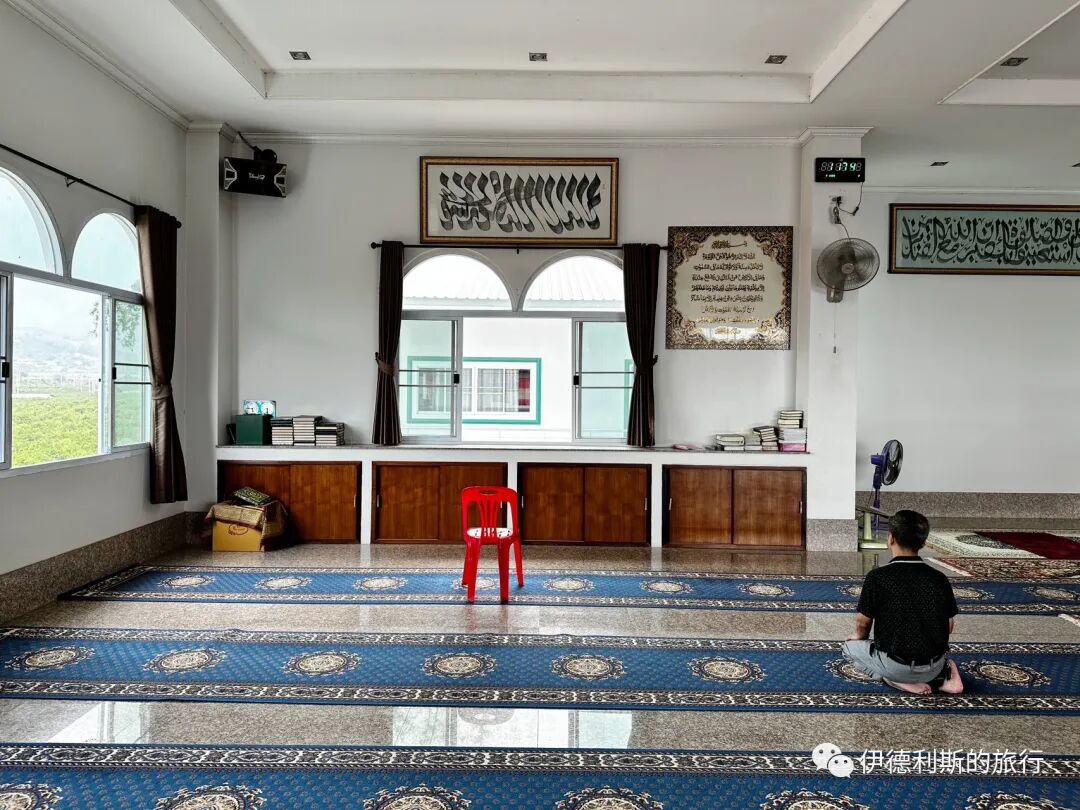
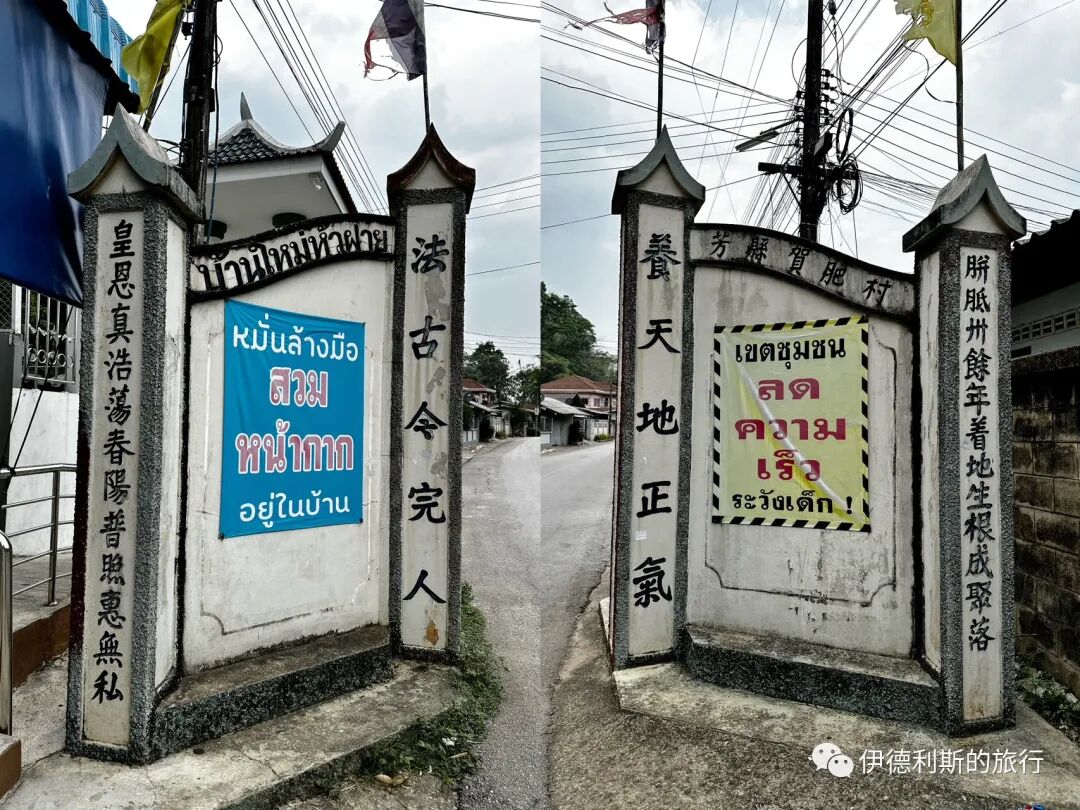
Hefei Jiqing Mosque features Chinese calligraphy and traditional Chinese-style Arabic calligraphy, including a plaque that reads 'The Way Spans Past and Present' (Dao Guan Gu Jin), which was respectfully erected by Ma Junguo when the mosque was rebuilt in 1965.
I met a group of young Hafiz reciting the Quran in the mosque. Life has been hard in northern Myanmar recently, so some Burmese Muslims send their children to study at Jiqing Mosque. These children spend several years practicing constantly to become qualified Hafiz.
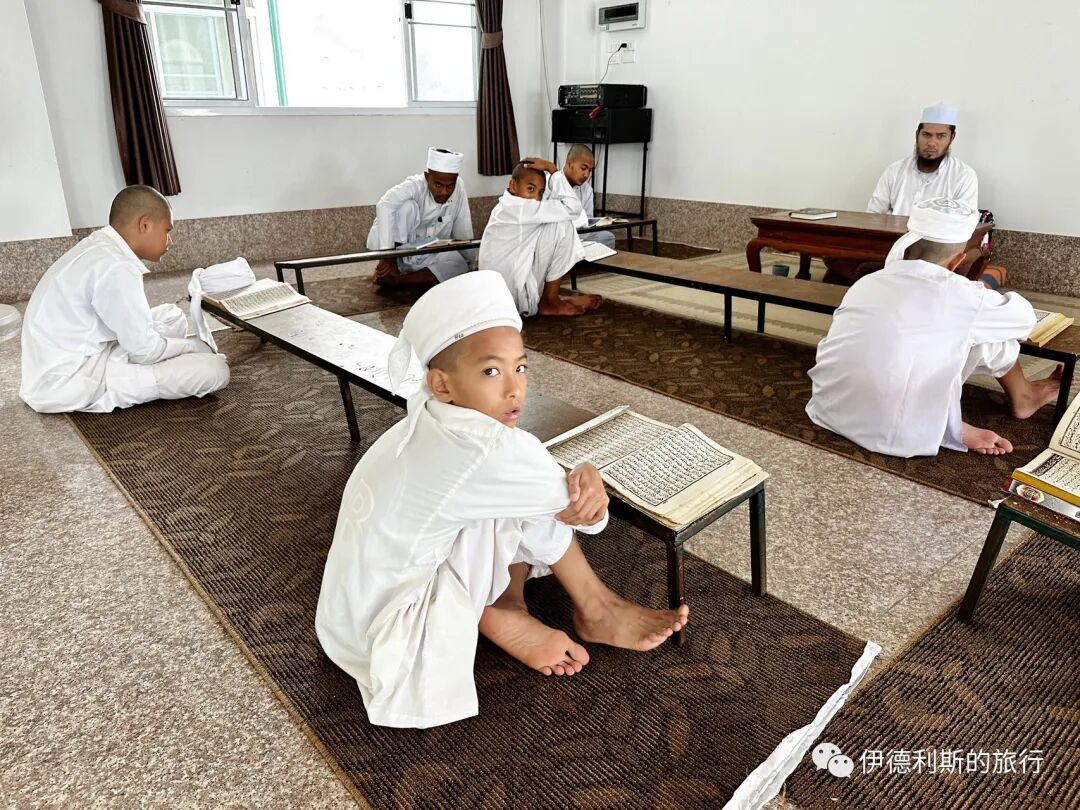
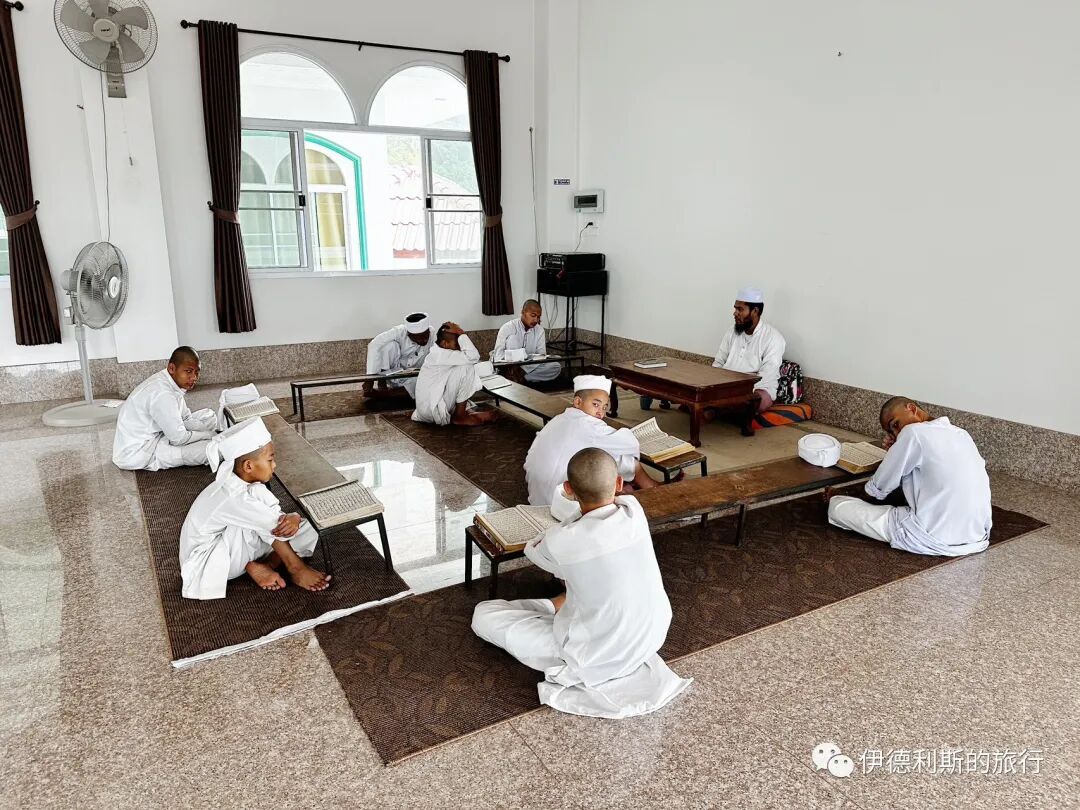
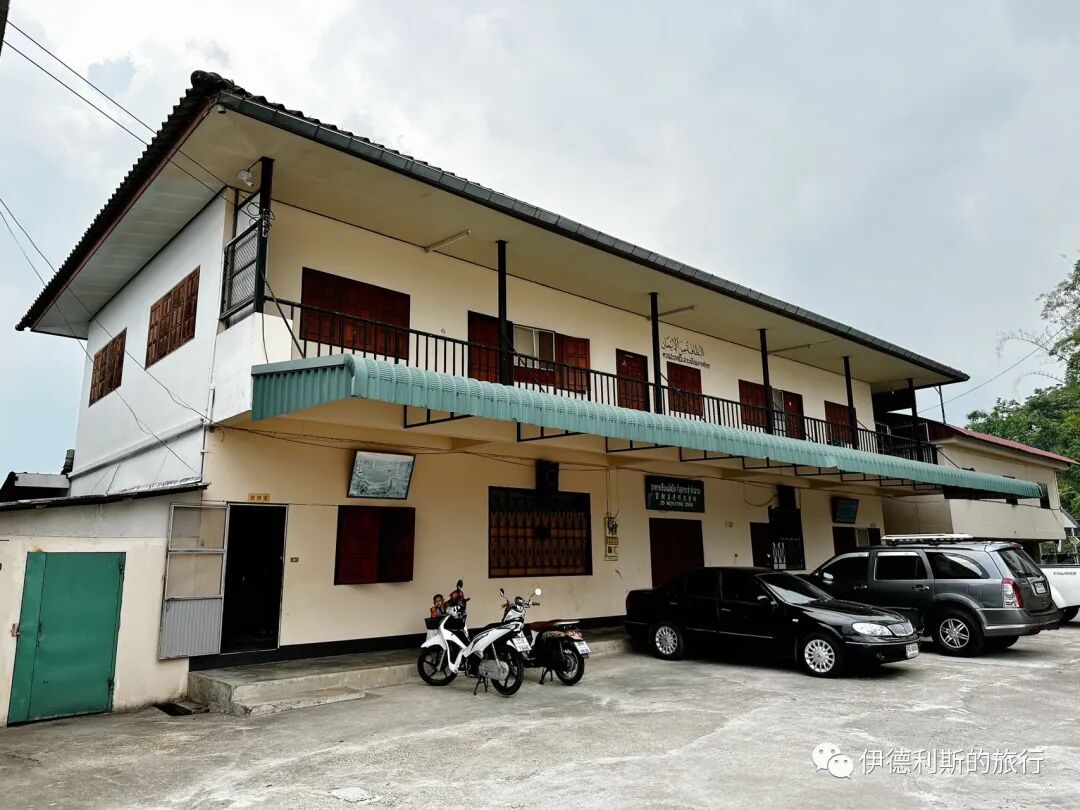
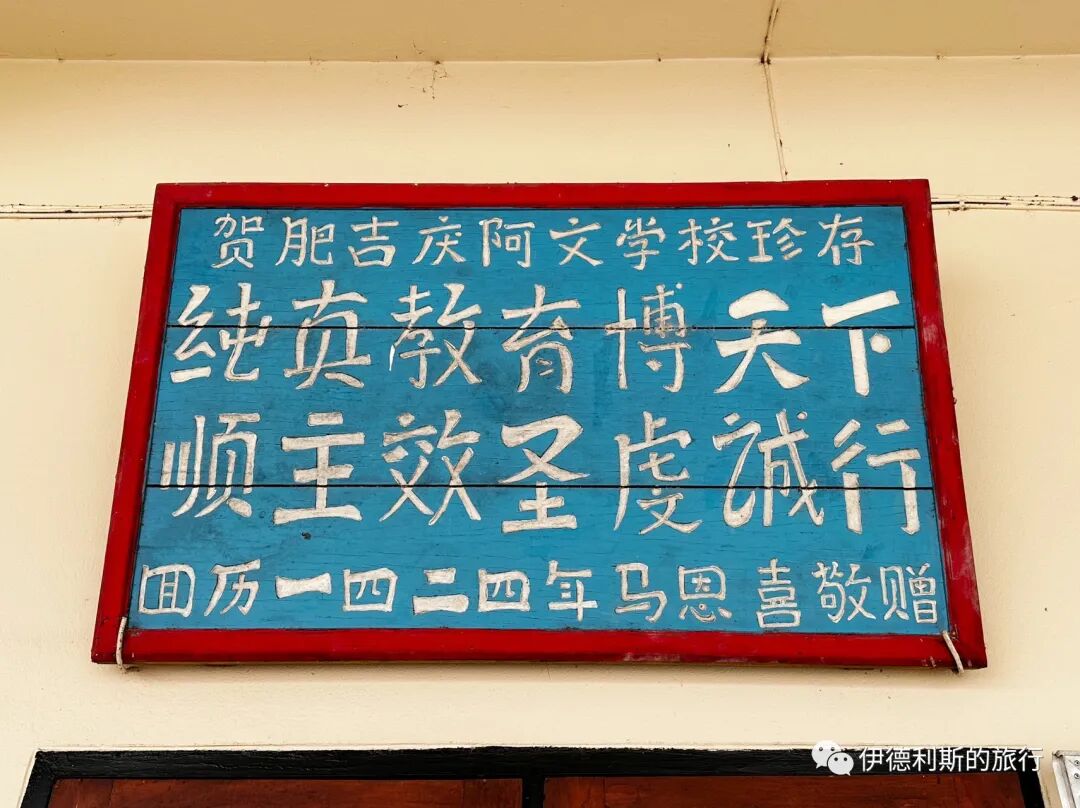
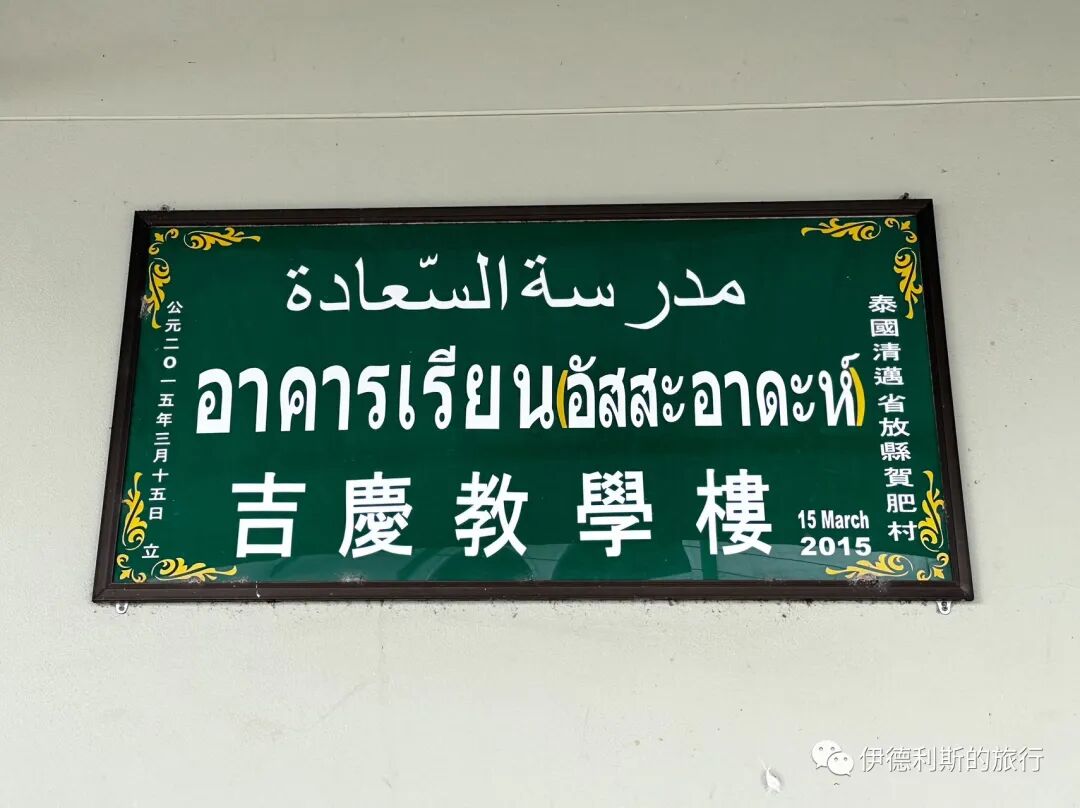
The back door of Hefei Jiqing Mosque leads to a cemetery. You can see that the ancestors of the local community came from places like Shadian, Jianshui, and Fengqing County in Lancang, Yunnan. The mosque's donation record book (nietiebu) shows that the main family names in this community are Ma, Na, Li, and Yang.
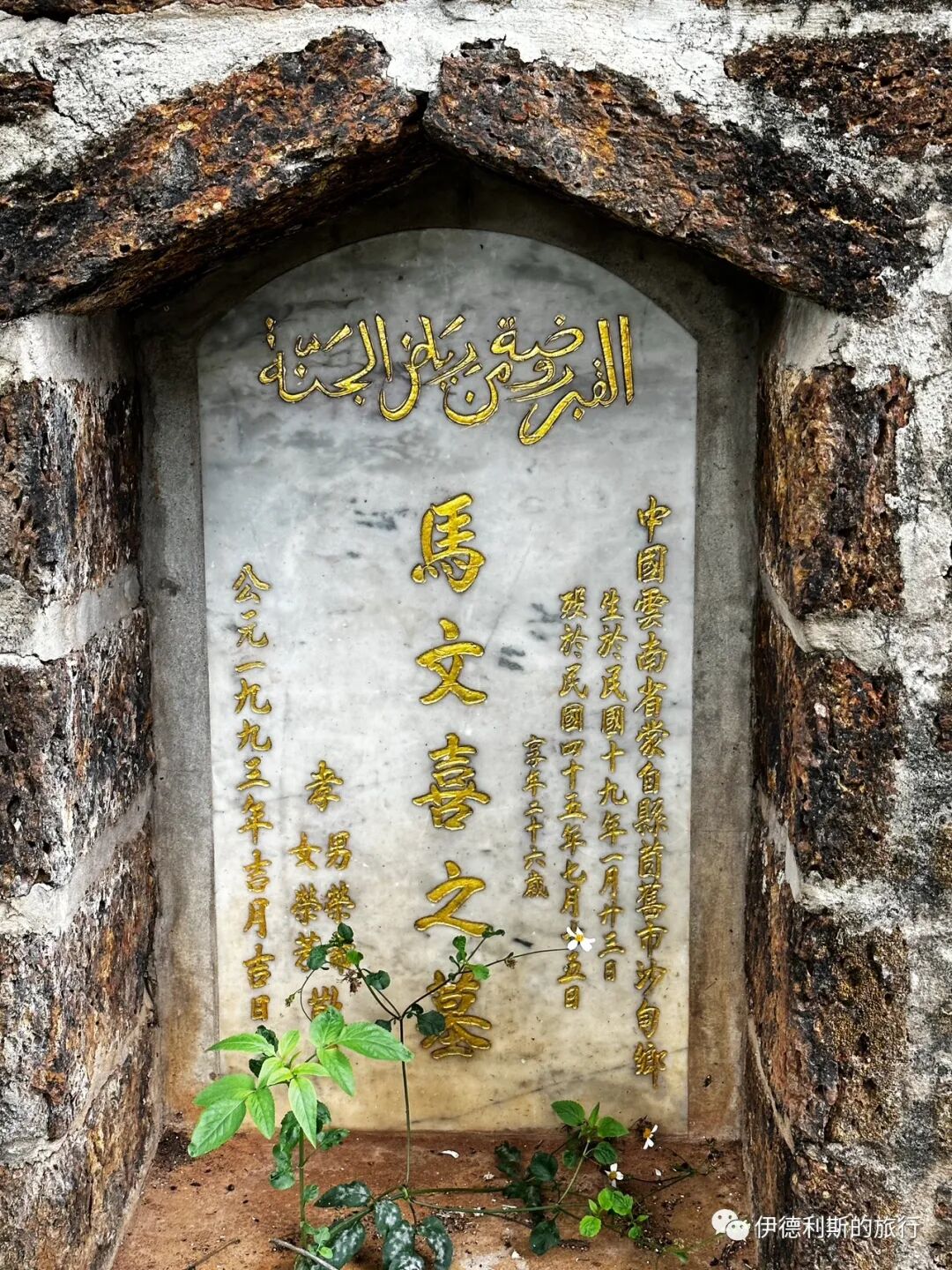
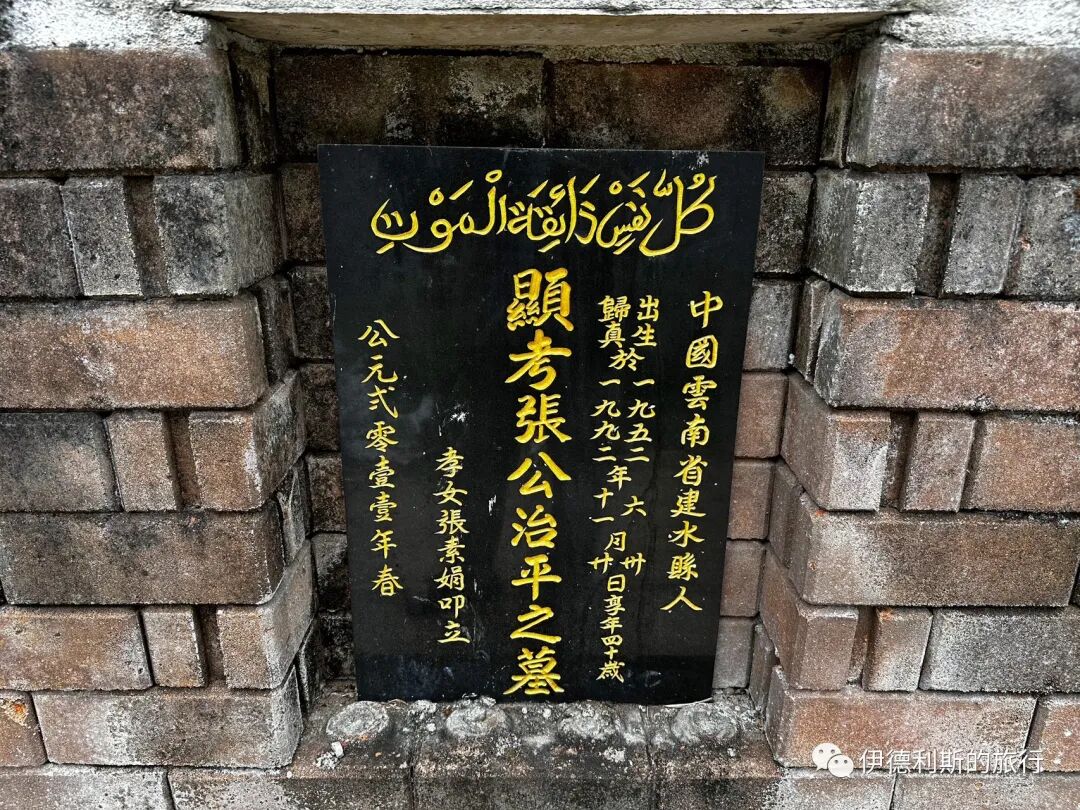
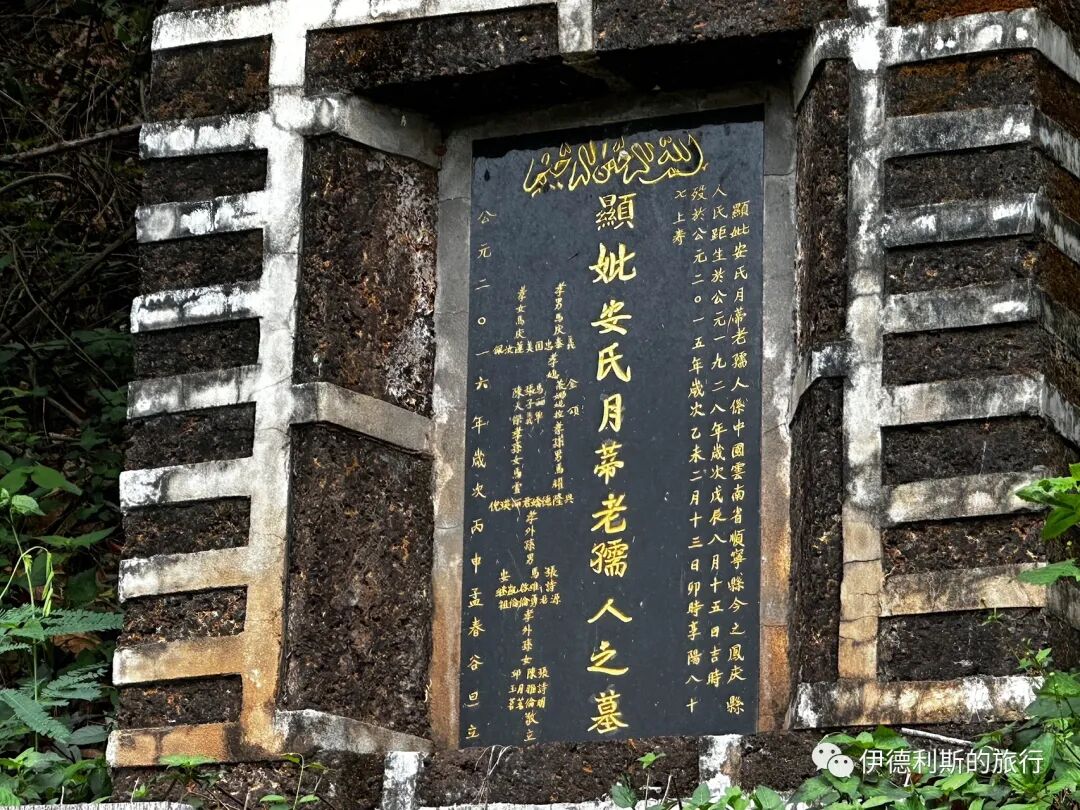
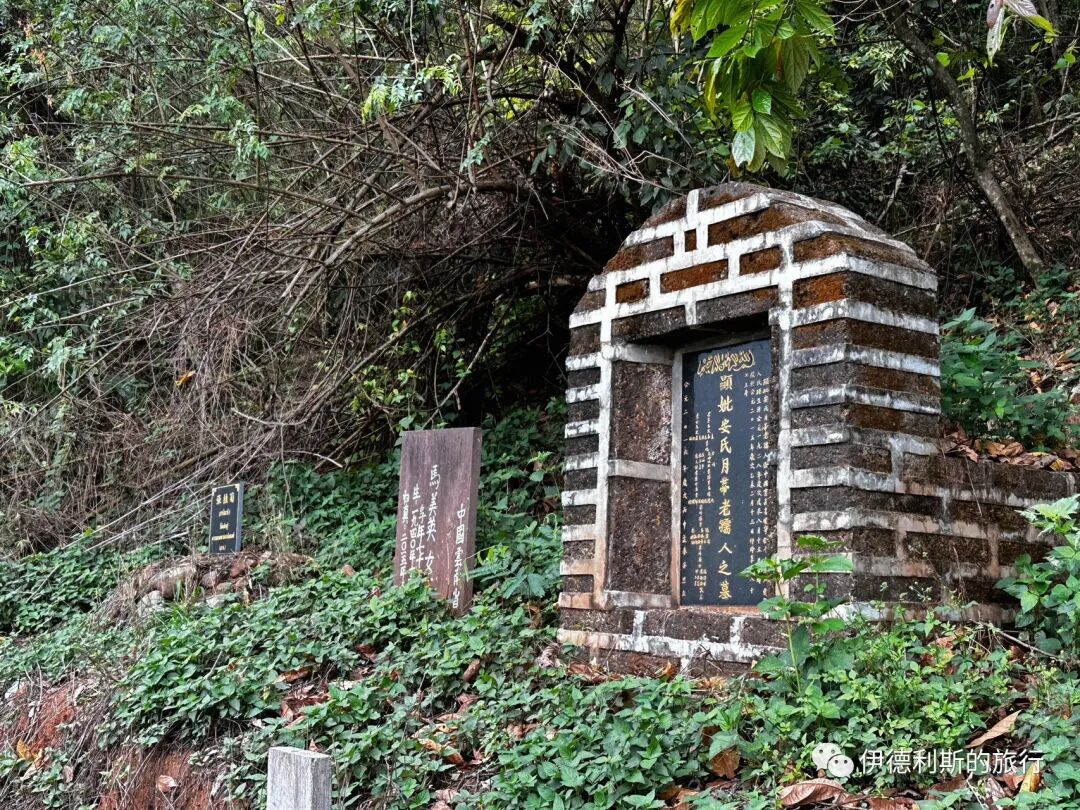
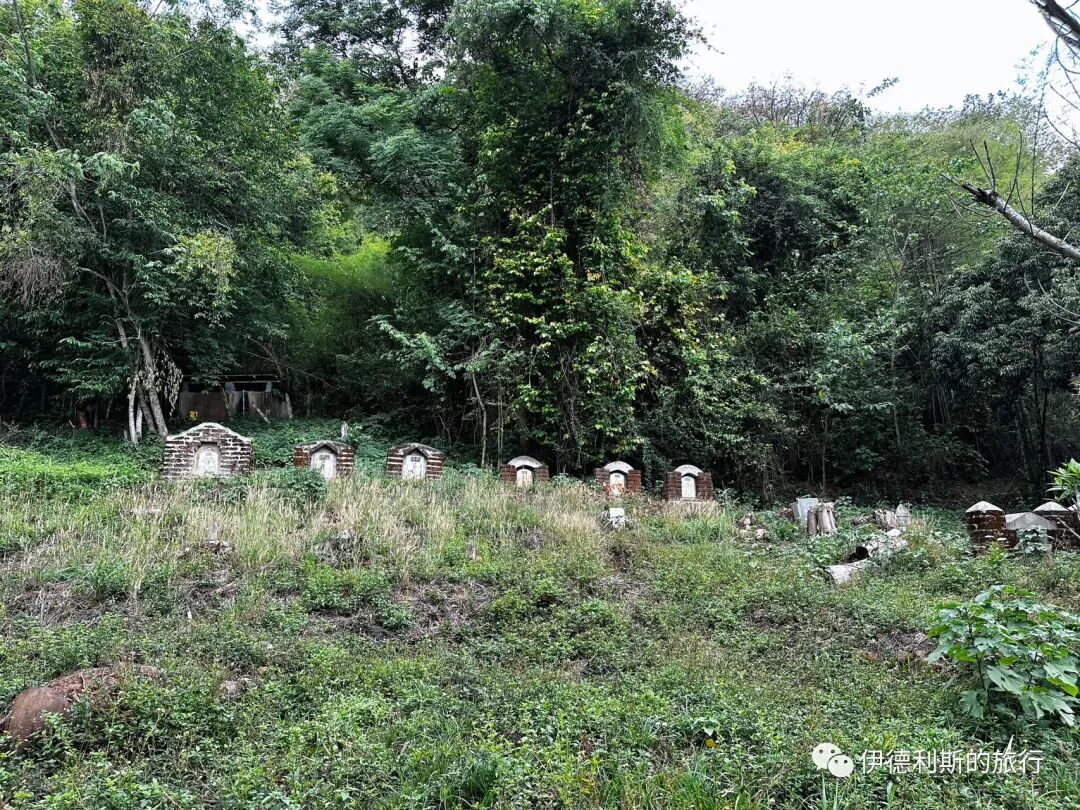
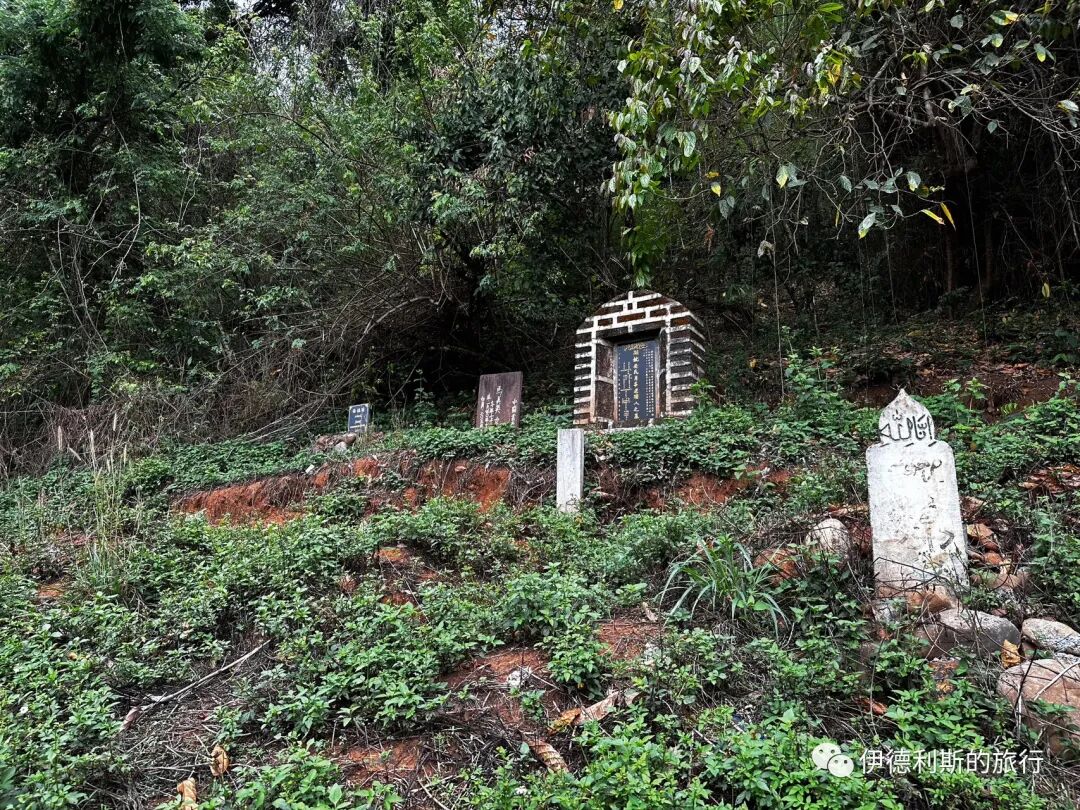
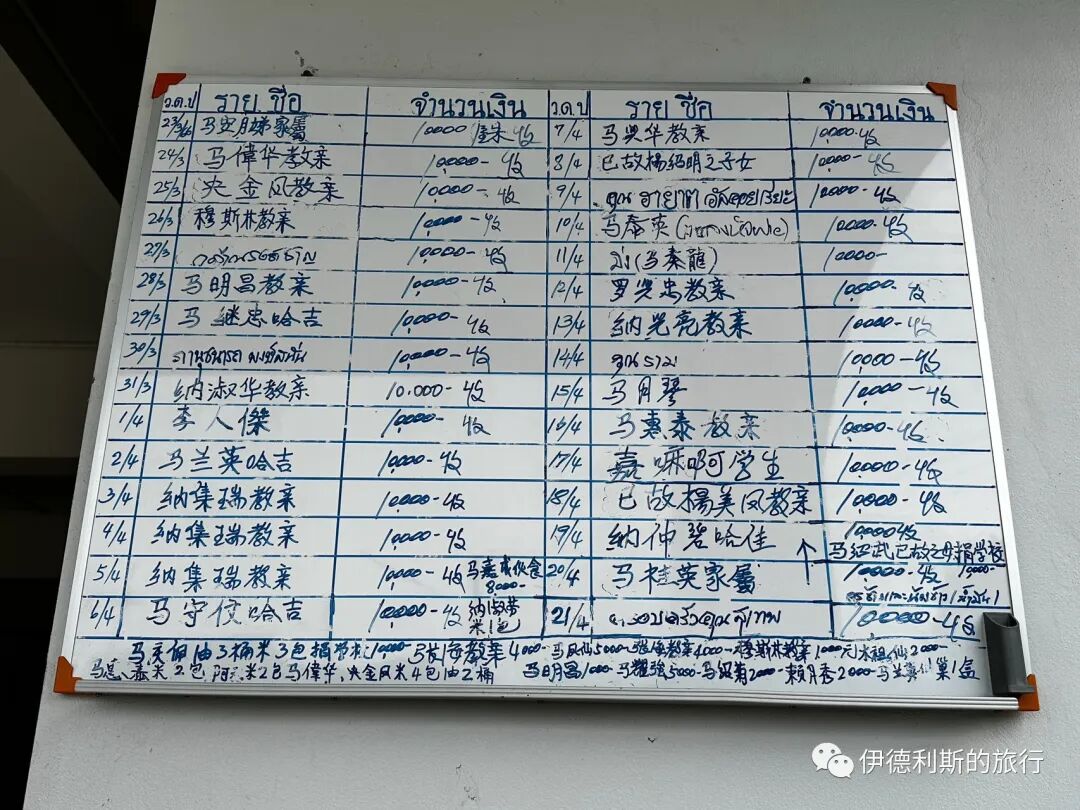
Fang District town
After leaving Hefei, we went to the third Yunnan-style mosque on the Thai-Myanmar border, Chengxin Mosque in the town of Fang District, Chiang Mai Province. Chengxin Mosque was built in 1975 by Yunnan Hui Muslims living in Fang District town. It makes it easier for Yunnan Hui Muslims from nearby villages to attend to business in town. Chengxin Mosque has fewer ancestral records (gaomu) than the surrounding villages, and the mosque itself is quite small. It is currently led by an imam who moved from Myanmar, and his family lives right in the mosque. The imam's daughter speaks Mandarin. We chatted with her about daily life, which was very interesting.
Similar to Thailand, the origins of Muslims in Myanmar vary from north to south. In the far north live the Panthay people, descendants of Yunnan Hui Muslim caravans. In the far south live the Pashu people, who are of Malay descent. The central region is mainly home to Burmese Muslims, formed by intermarriage between South Asians and local Burmese people. In 1660, some Mughal soldiers followed the son of Emperor Shah Jahan to Arakan. They later became royal archers for the Mrauk U Kingdom of Arakan and ruled the area for decades between the late 17th and early 18th centuries. The descendants of these Mughal troops are known as the Kaman people, one of the ethnic groups officially recognized by Myanmar.
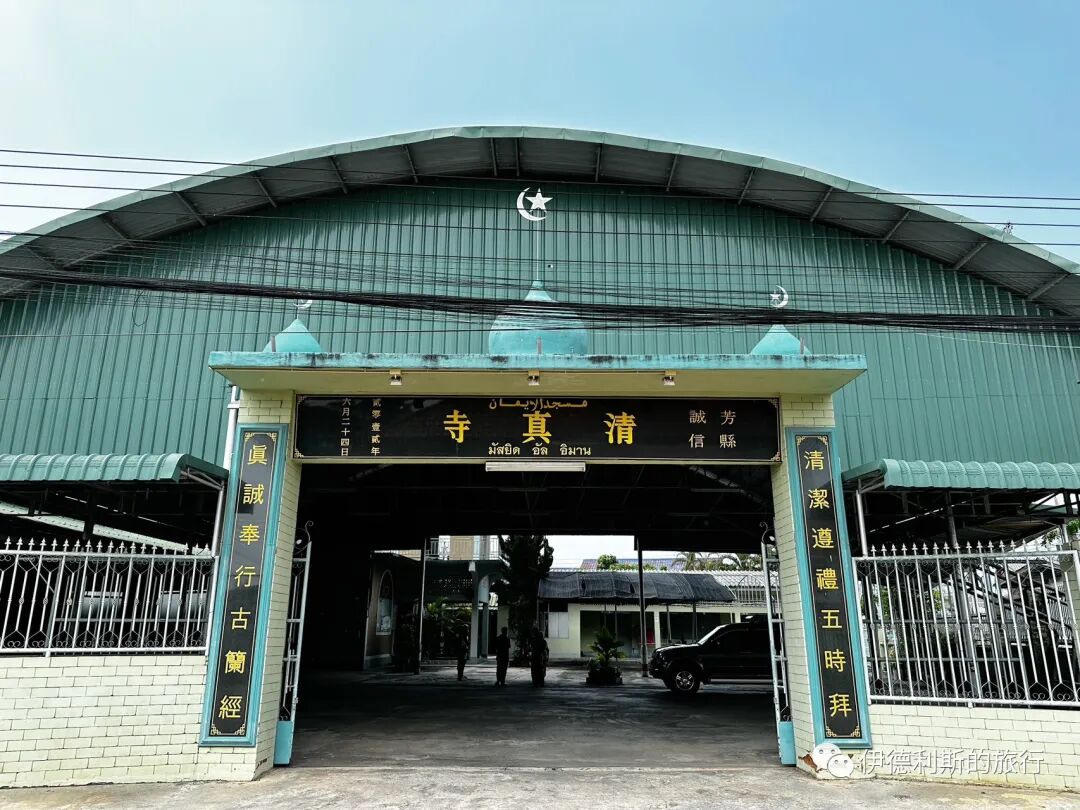
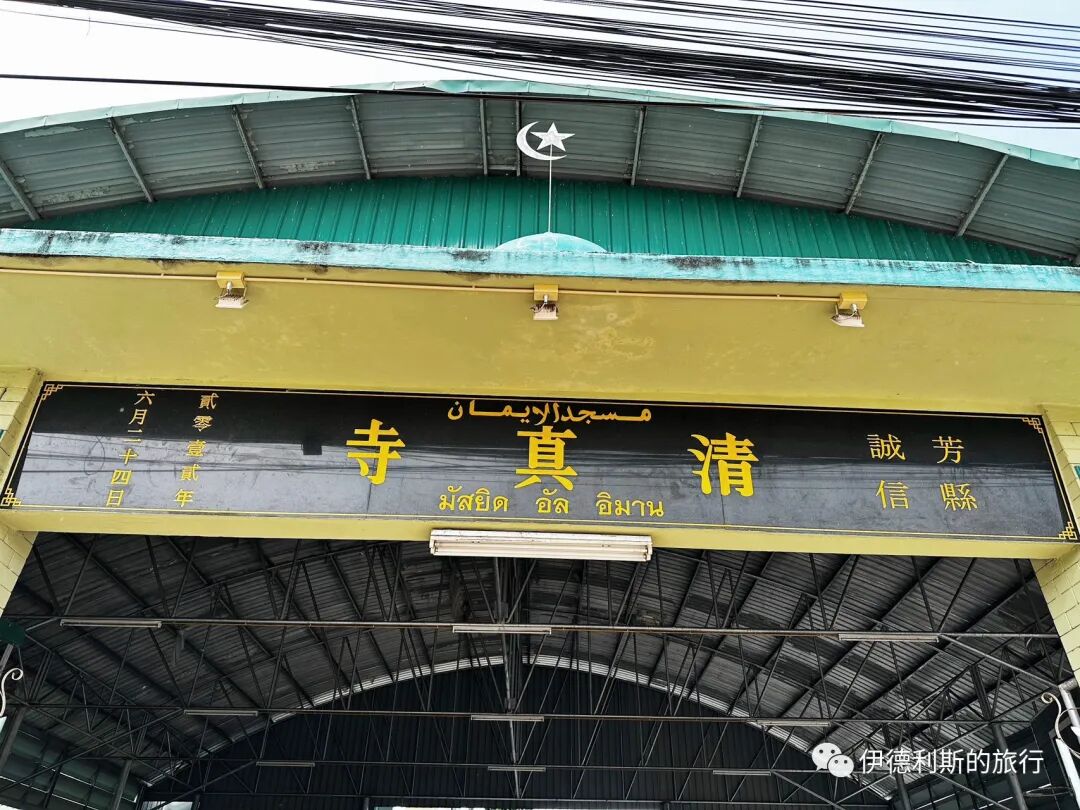
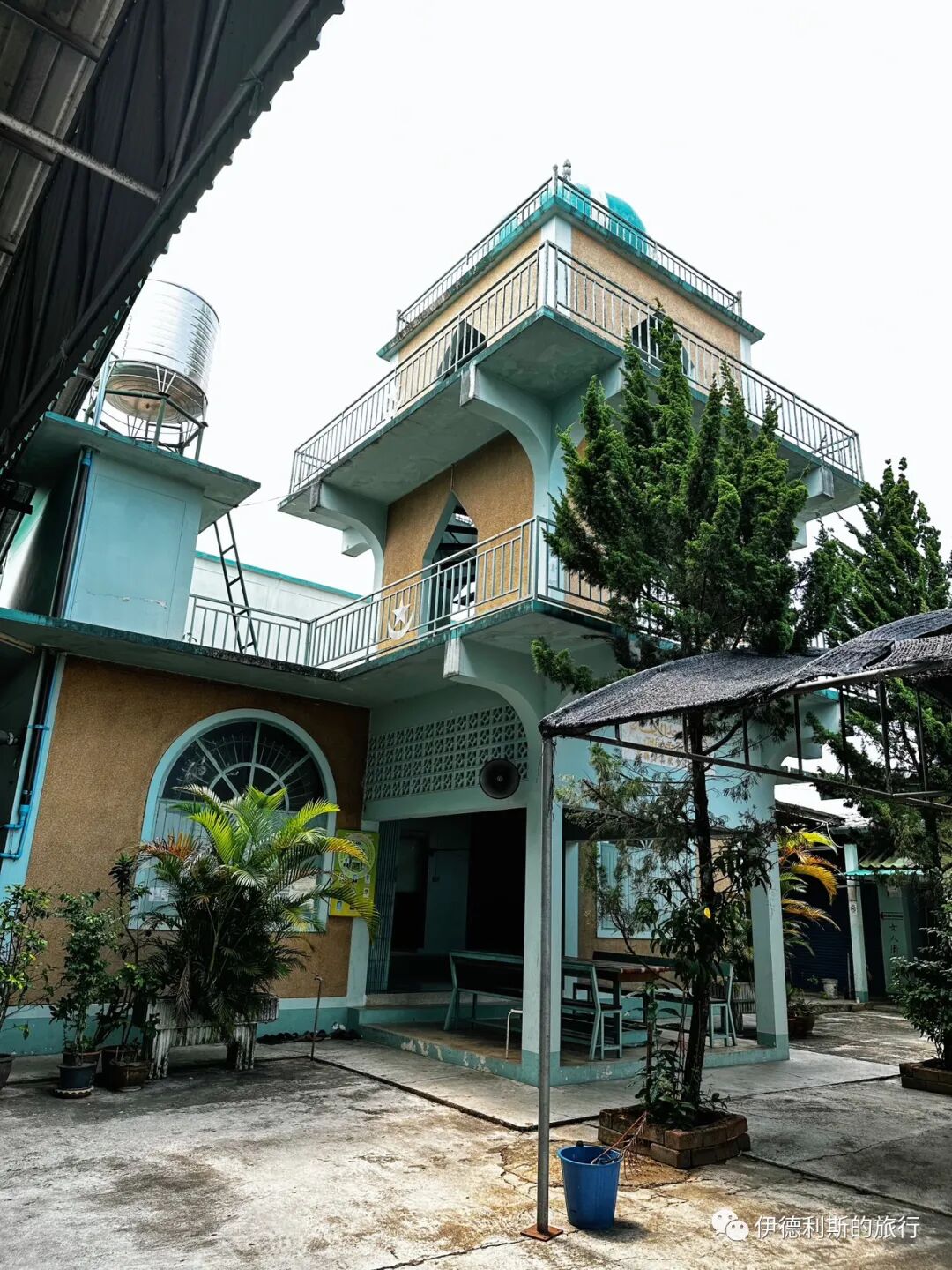
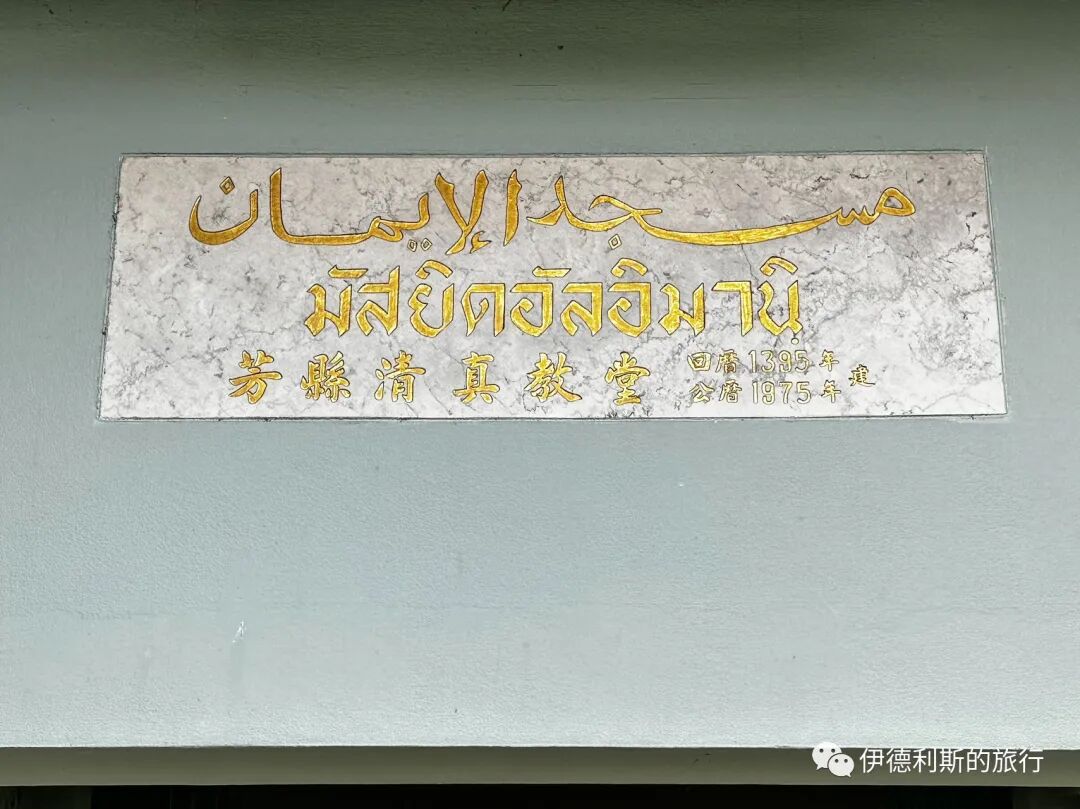
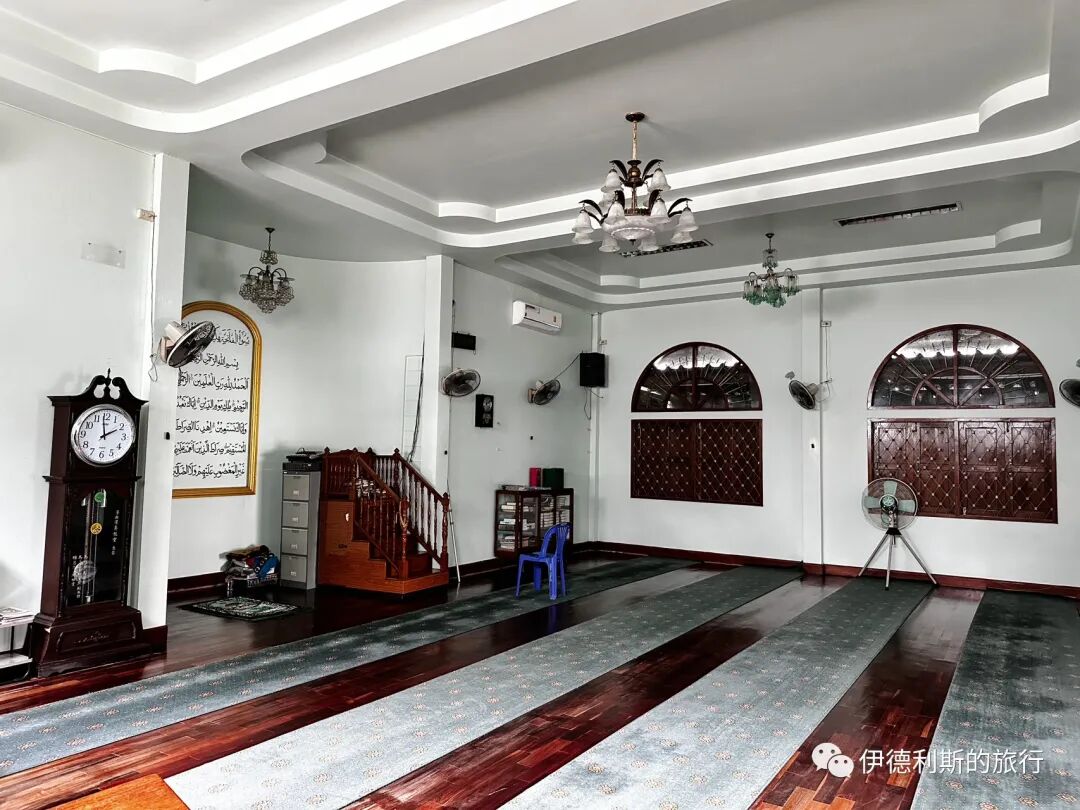
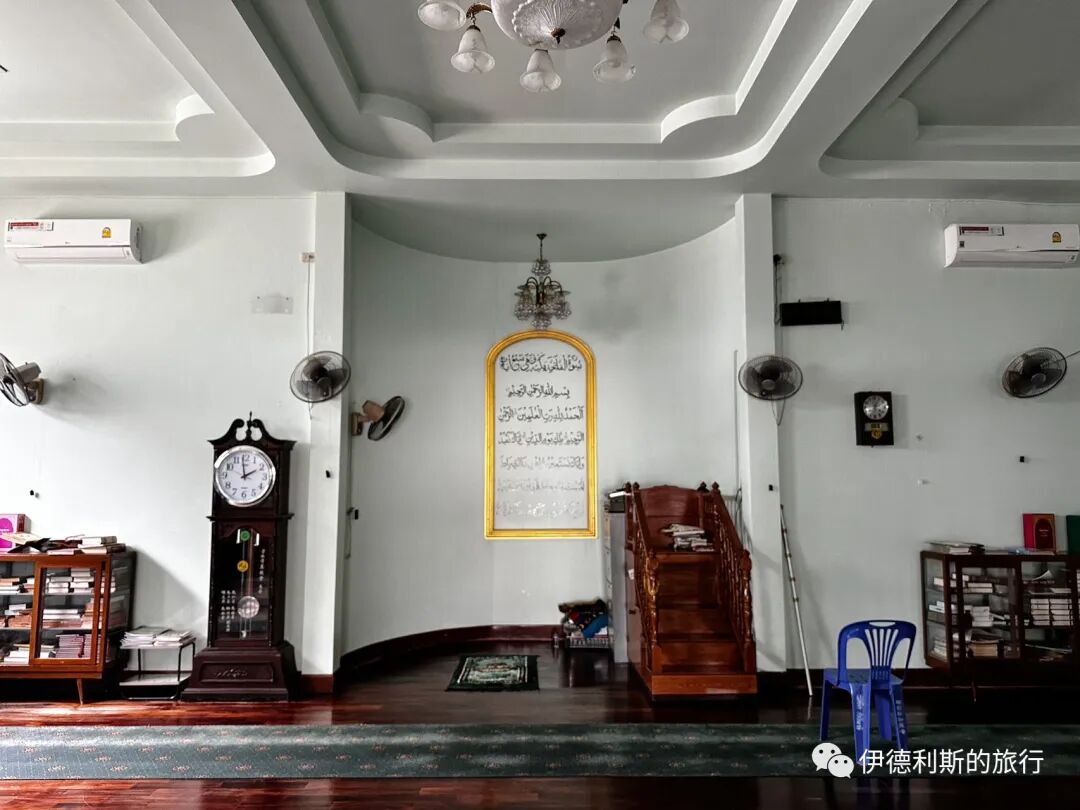
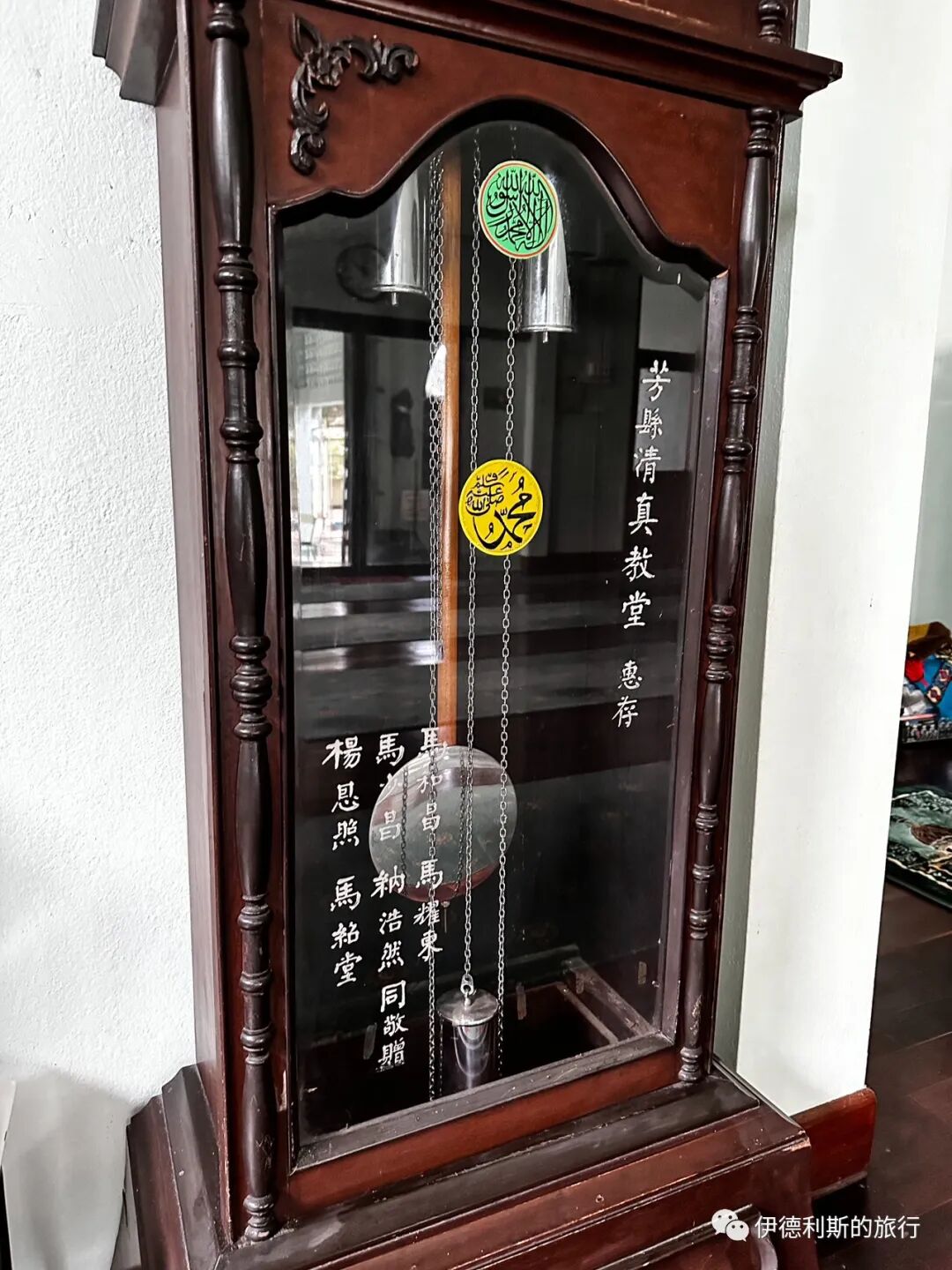
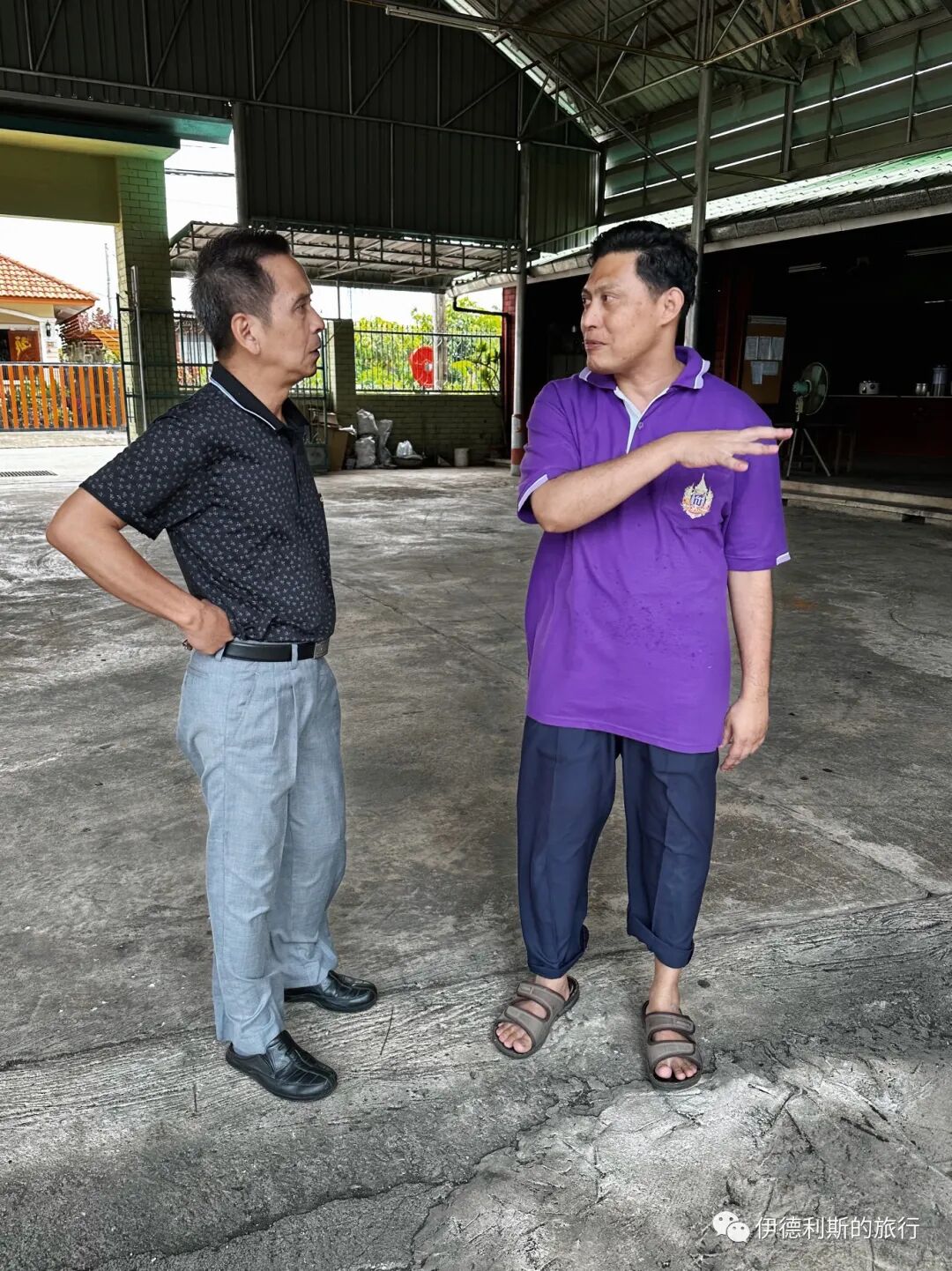
Daduan Village
Leaving Fang District town, we arrived at the northernmost Yunnan-style mosque in Chiang Mai, Ciai Mosque in Daduan. We are now just a stone's throw from Myanmar. The newly built women's hall at Ciai Mosque is beautiful. The first floor is a prayer hall, and the second floor is a classroom.
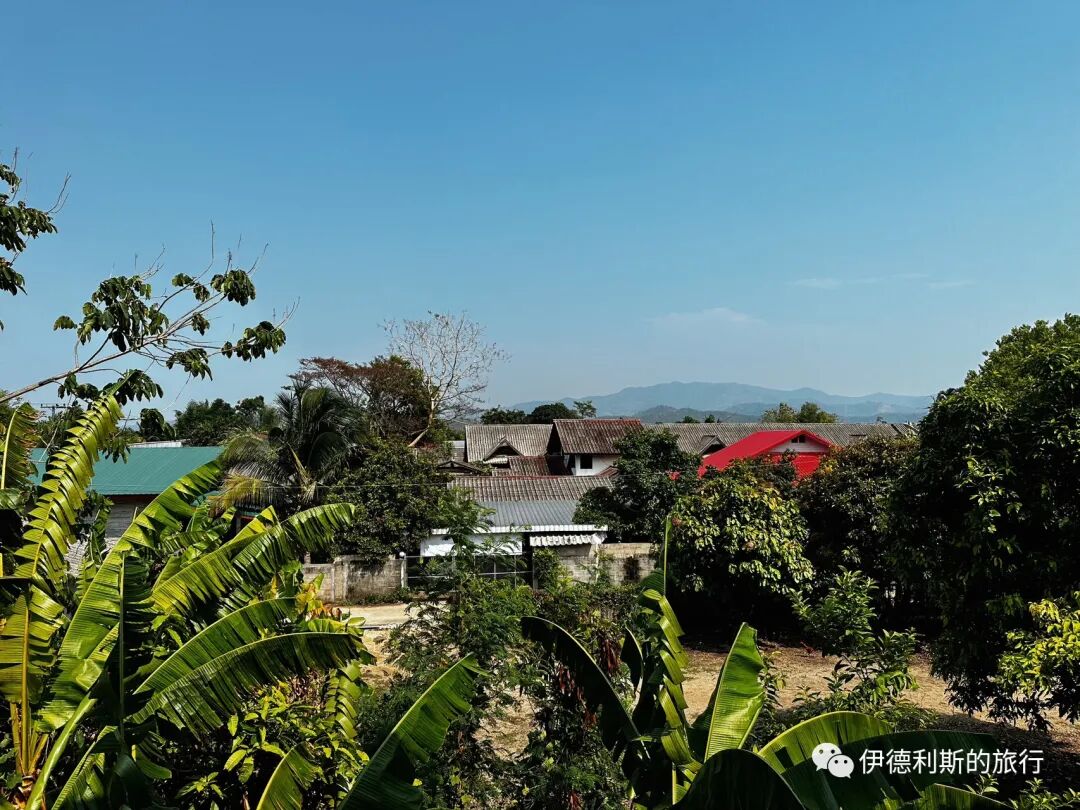
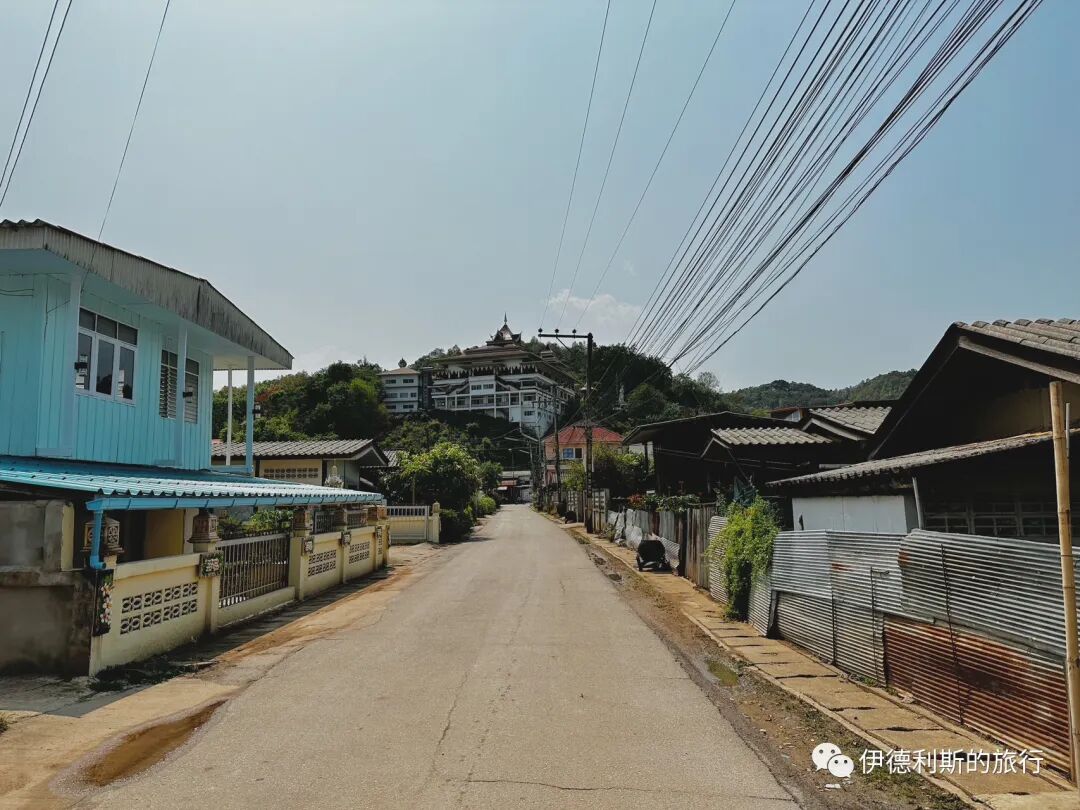
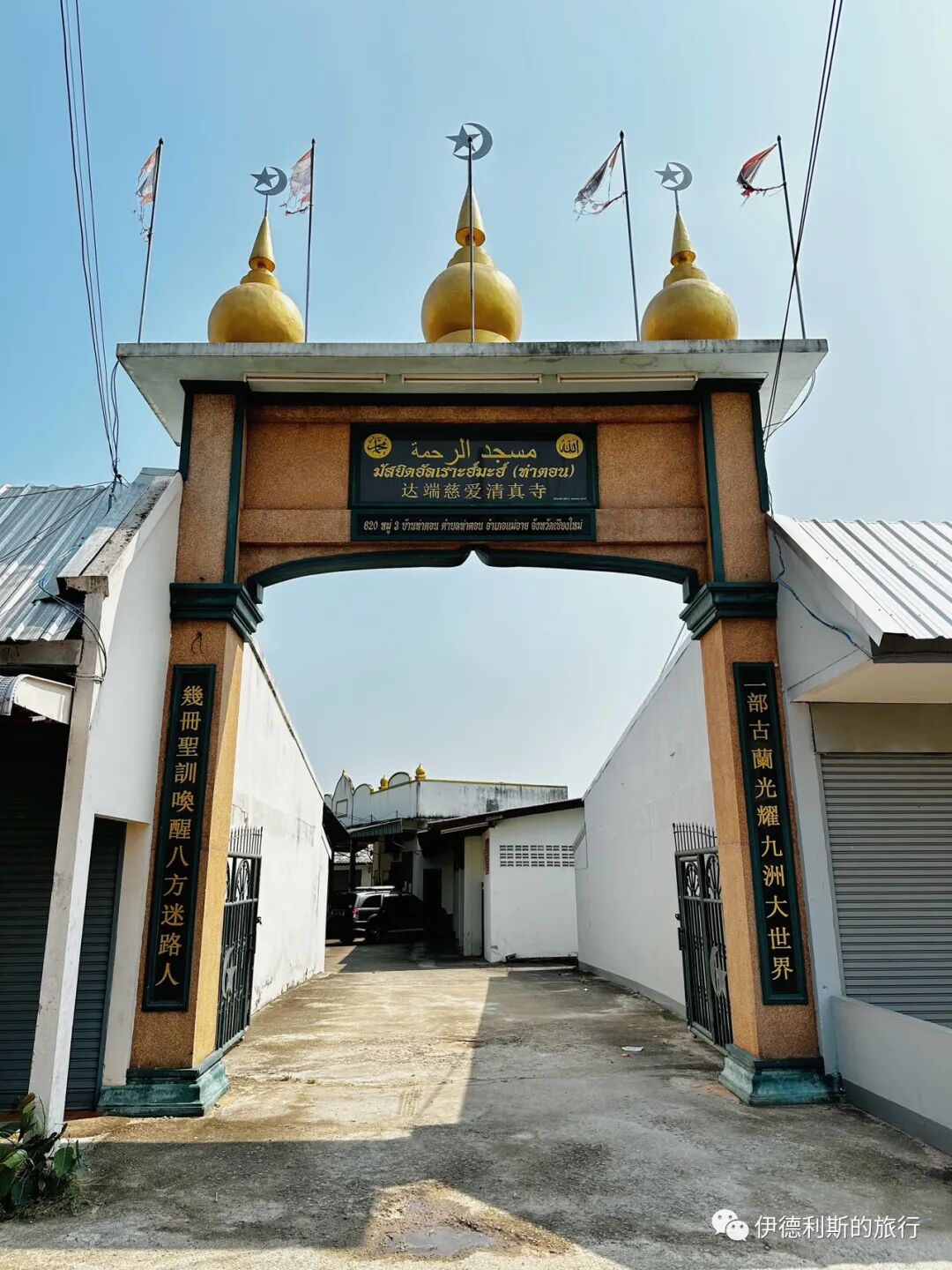
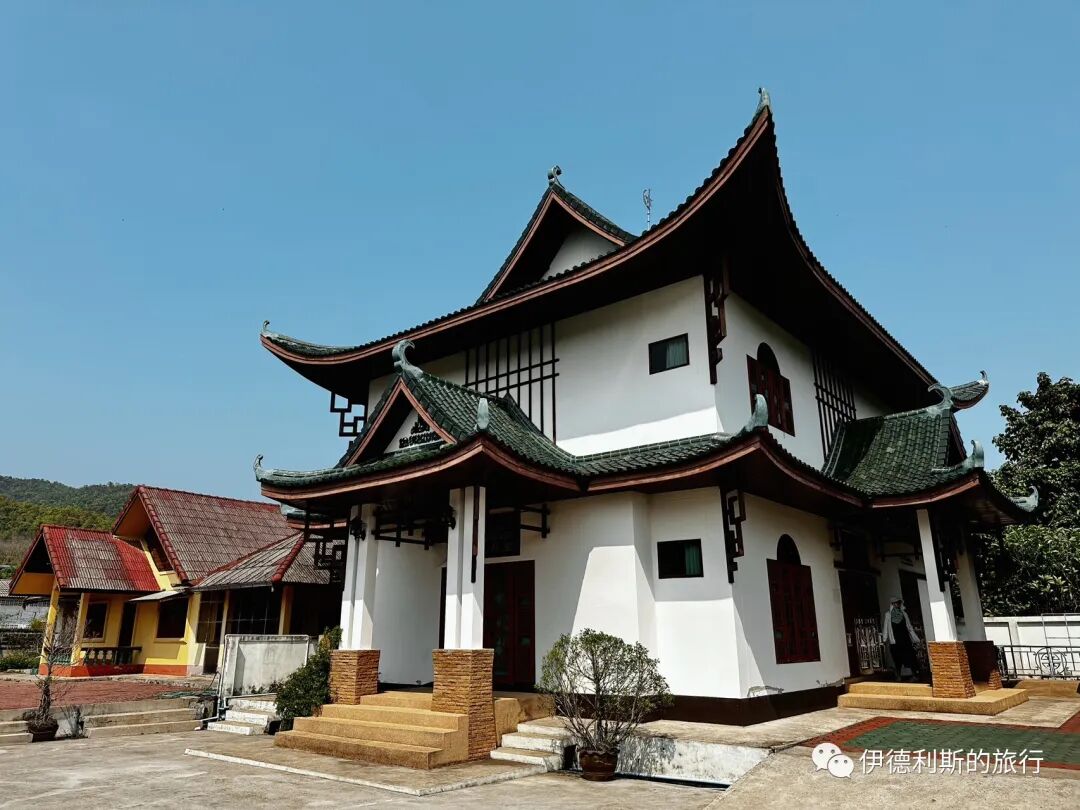
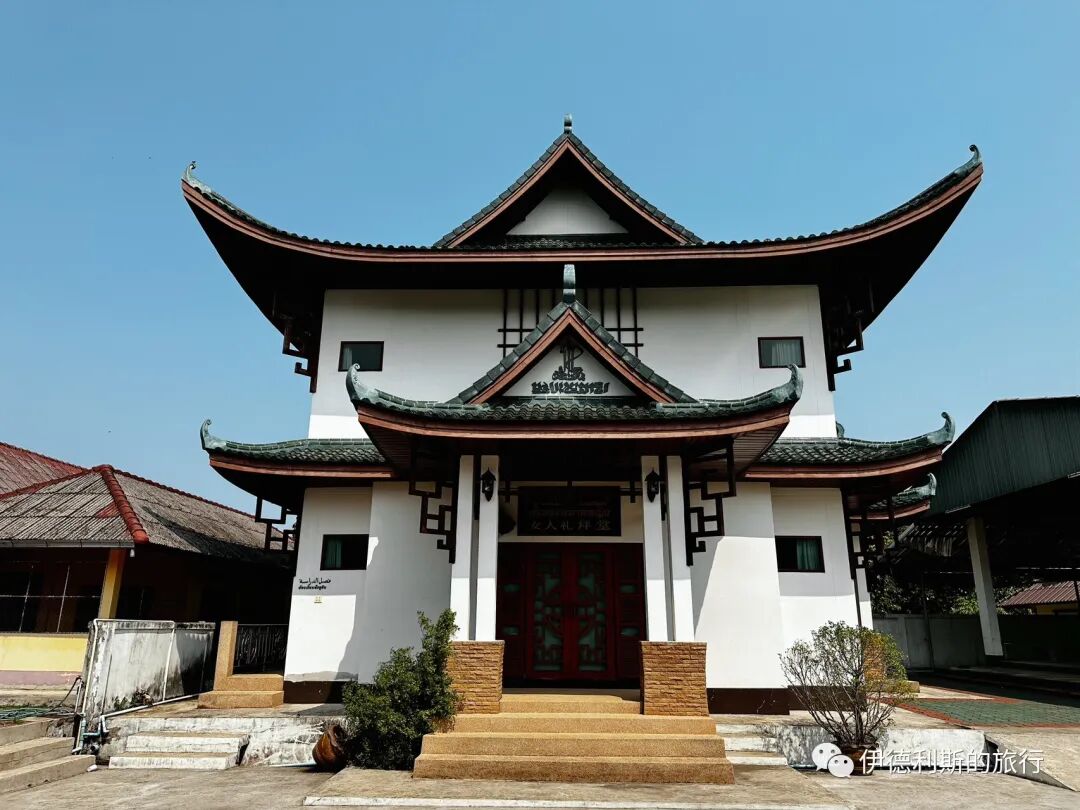
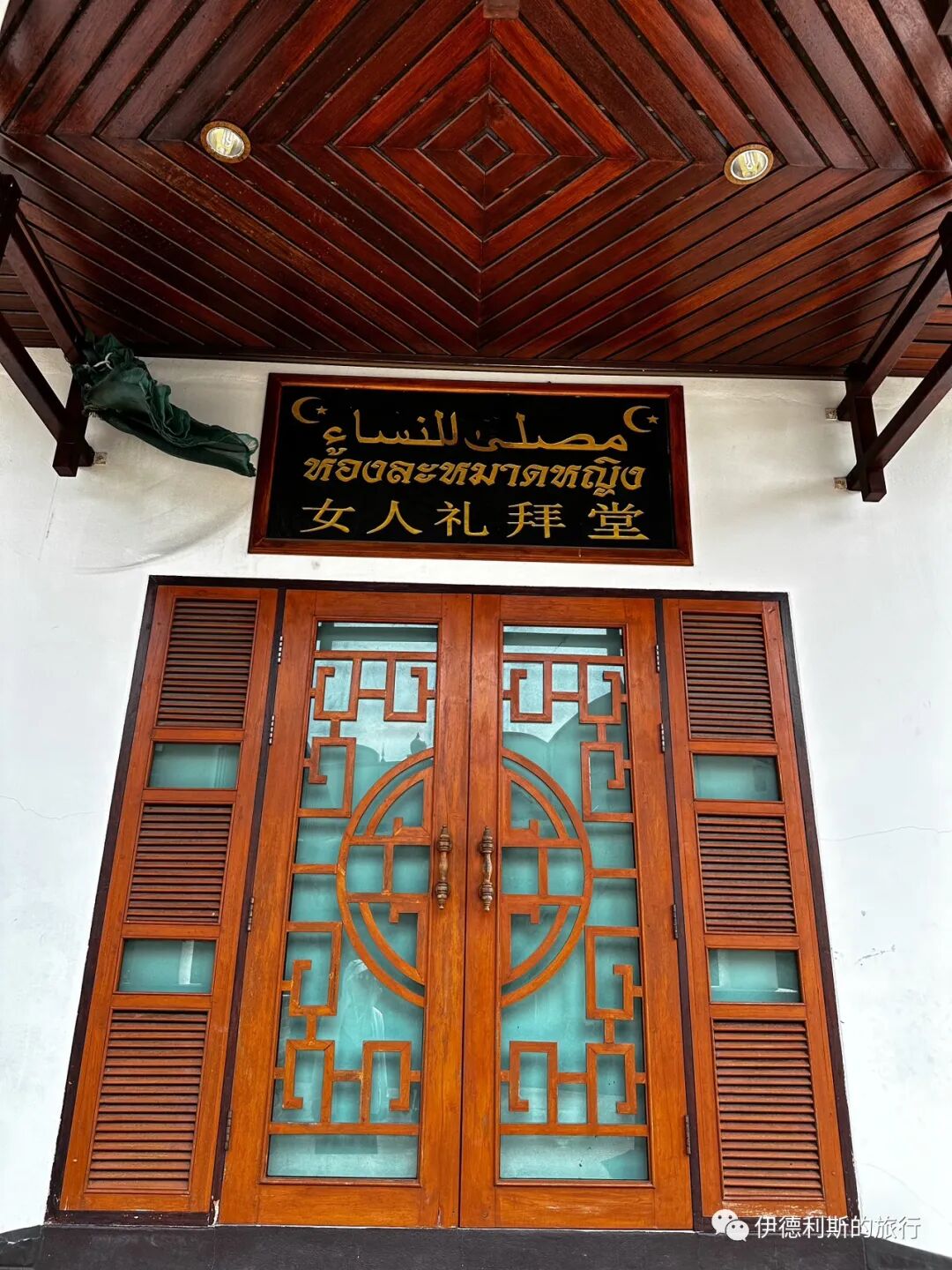
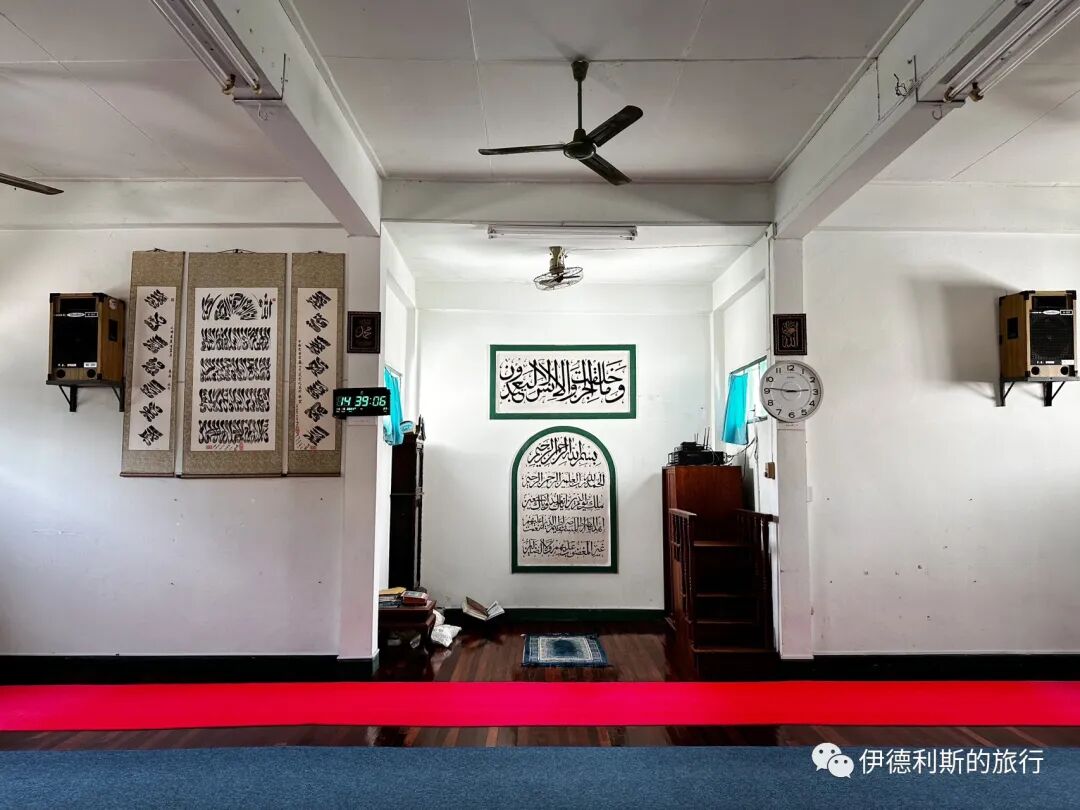
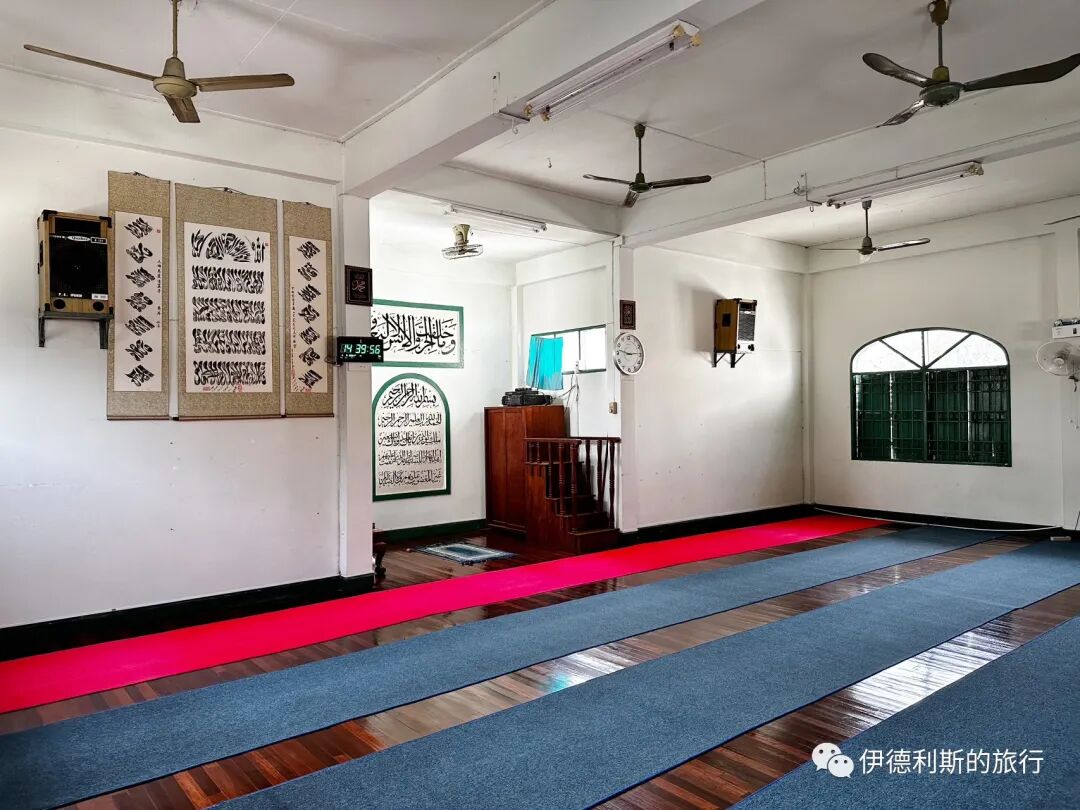
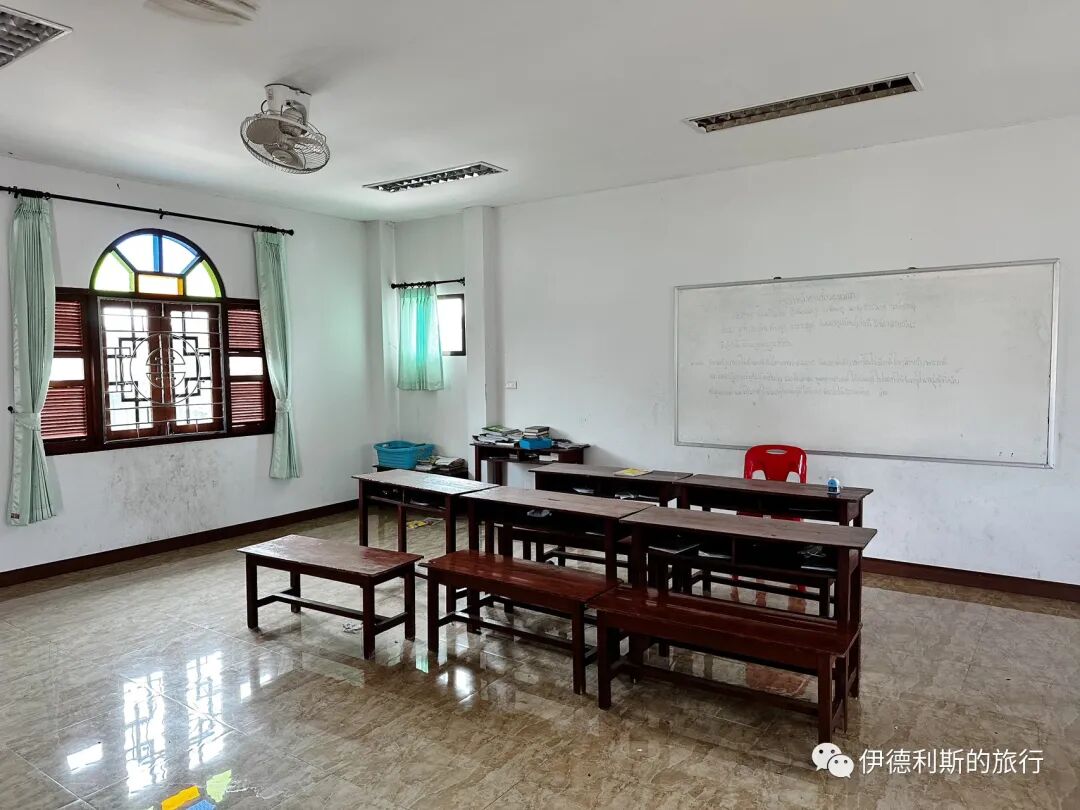
Inside the main hall of Daduan Ciai Mosque, there is a traditional Weishan-style Arabic calligraphy scroll gifted in 2017 by Donglianhua Village in Weishan, Dali. Thanks to the internet, many Hui Muslims from Yunnan living in Northern Thailand have reconnected with their relatives back home, and the two sides are now in closer contact. Among the Hui Muslims from Yunnan living along the Thai-Myanmar border, Weishan in Dali, Tonghai in Yuxi, and Shadian in Honghe are the main ancestral homes.
The mosque also has copies of scriptures translated into Chinese that were donated by Taiwan. In 1984, Thailand ordered the isolated army in Northern Thailand to disarm and placed them under military control. They banned Chinese-language education and replaced Chinese schools with Thai-language schools. However, the refugees insisted on learning Chinese. They sent their children to Thai schools during the day, but still had them secretly study Chinese in the early morning and at night. Over time, Thailand stopped strictly enforcing these restrictions.
Inside the mosque hangs a photo of Panghsang Mosque, which was gifted by the Panghsang Hui Muslim Association in Myanmar in 2014. Master Ma told me that in 2014, various Yunnan-style mosques in Northern Thailand were invited by Panghsang Mosque to attend their mosque renovation celebration. Panghsang is the capital of the Wa State in Myanmar. It connects to the Meng'a border crossing in Yunnan and is one of the places where Myanmar-based Hui Muslims from Yunnan live.
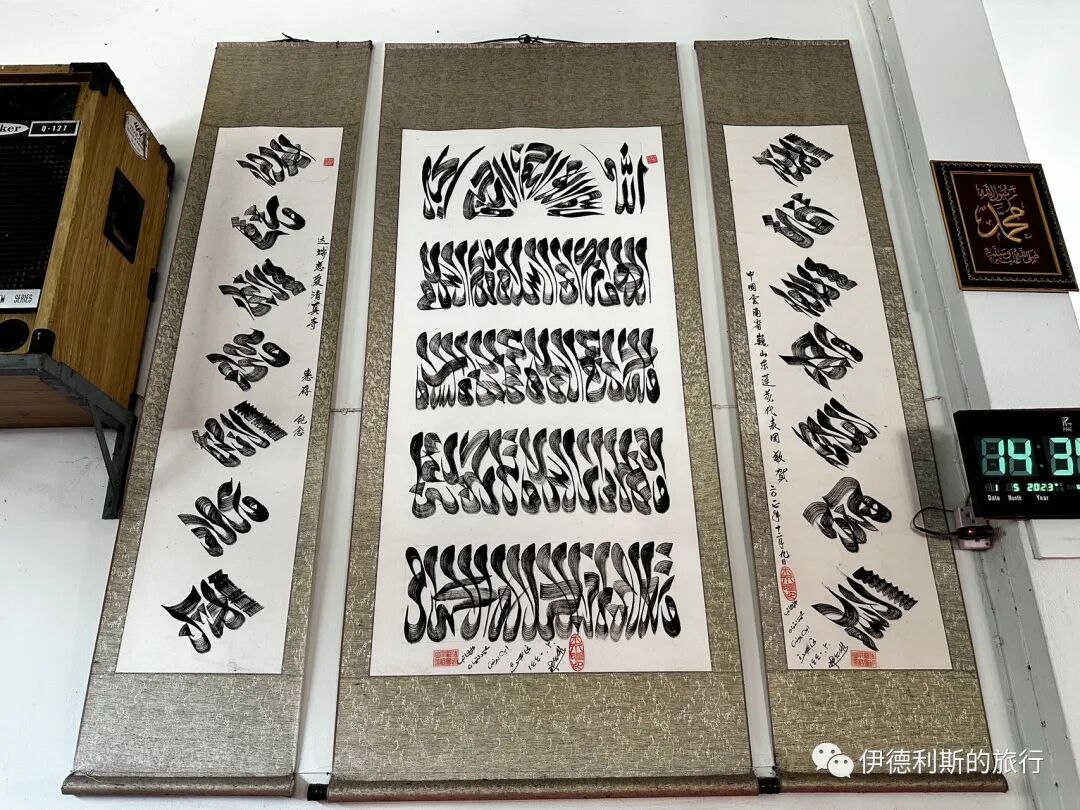
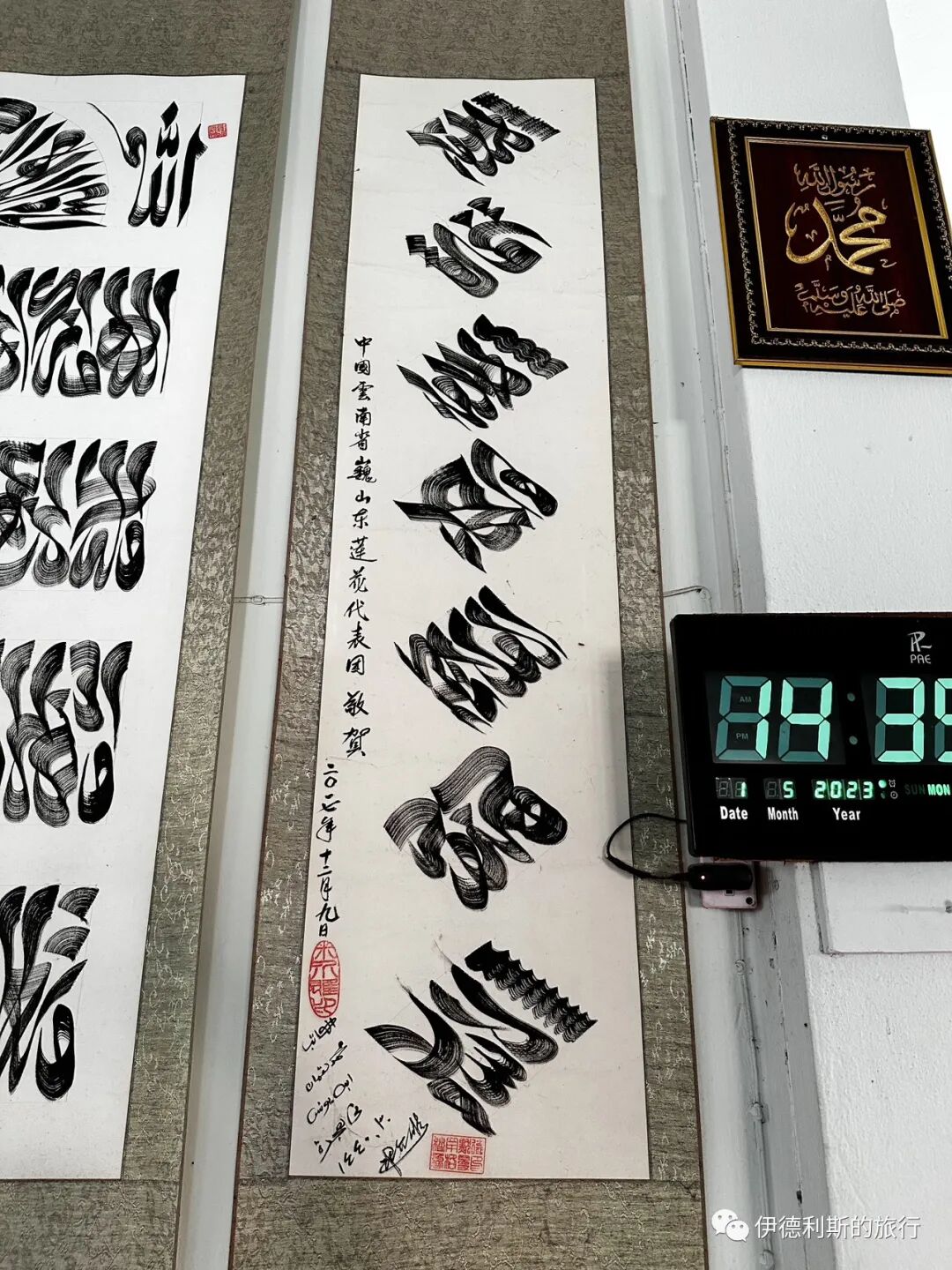
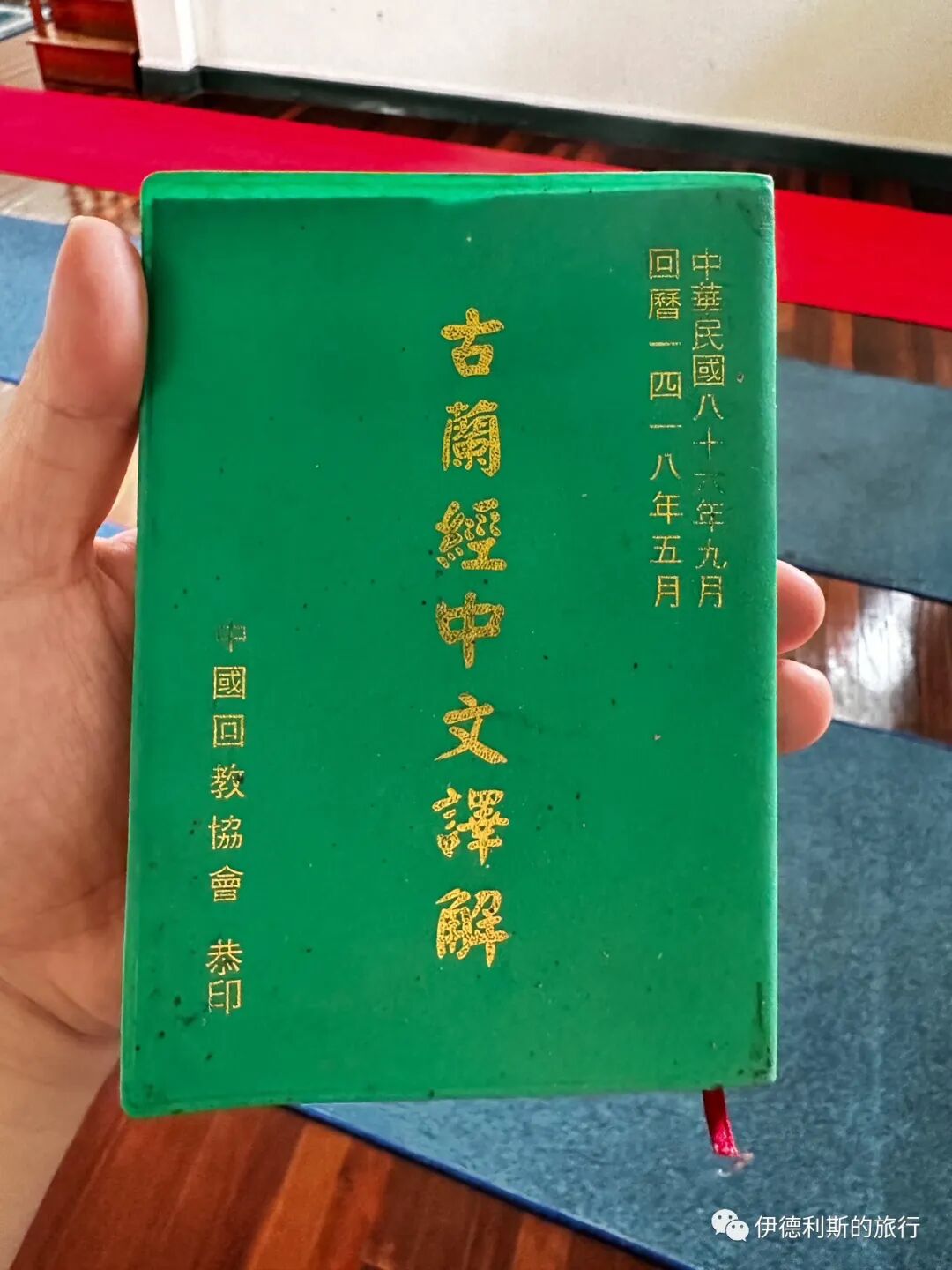
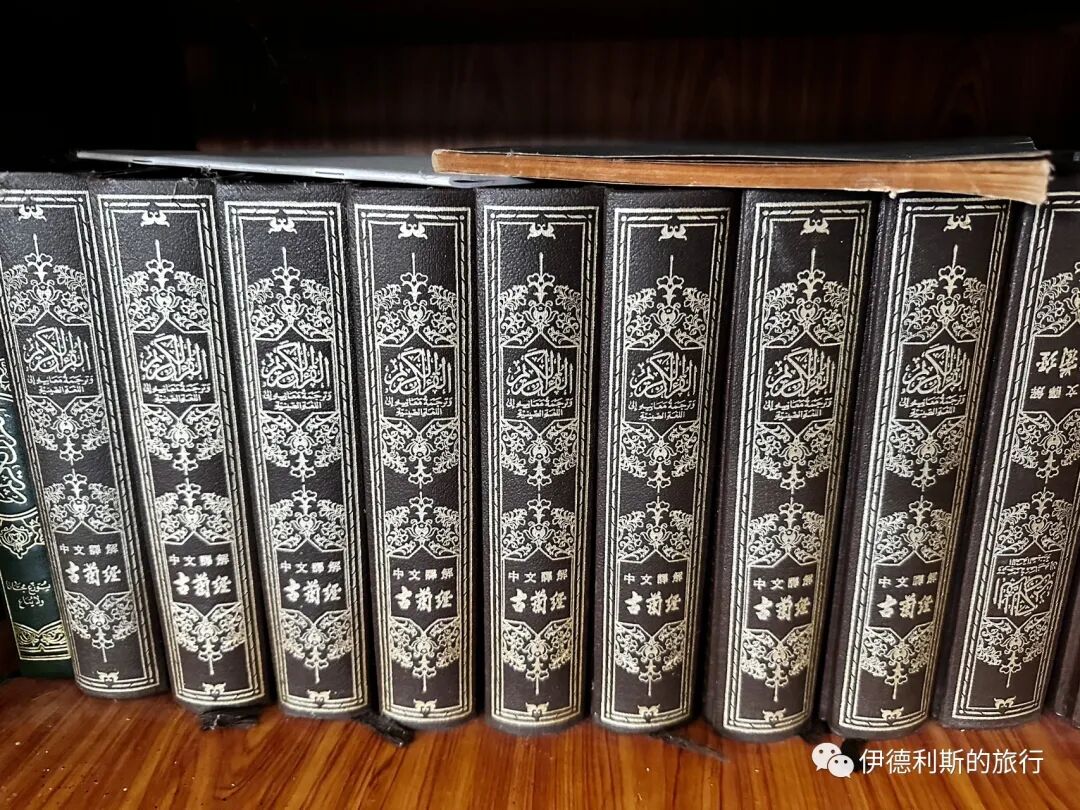
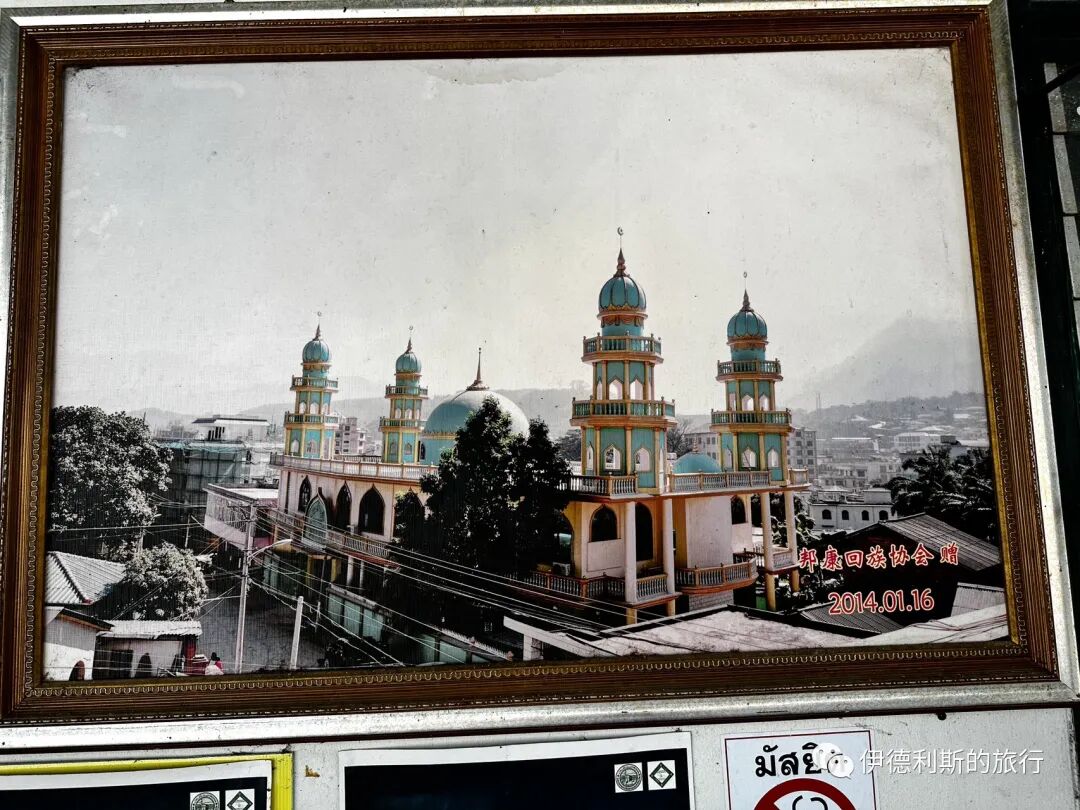
At the Thai-Myanmar border, the mountain on the other side is in Myanmar.
Mae Salong
Continuing north, we left Chiang Mai Province and entered Chiang Rai Province.
We drove deep into the jungle along the steep, winding roads of the Thai-Myanmar border. Along the way, I bought a huge bunch of super sweet bananas from a local grandmother for one yuan. We finally arrived at Mae Salong, the base camp of the isolated army in Northern Thailand. Master Ma said he has been driving this mountain road for 30 years. At first, it was all dirt, and you had to use tire chains in the winter. It is much easier to drive now that the road has been paved, but it still requires extreme caution if you are not used to it.
After the isolated army withdrew to Taiwan for the second time in 1961, the remaining 3rd and 5th Armies gave up their status as Nationalist soldiers and retreated from Myanmar into the border area of Northern Thailand near Myanmar. From then on, they were known as the isolated army in Northern Thailand.
At that time, the 3rd and 5th Armies did not command each other. Their supplies were cut off, and each had to find a place to live in the jungles of Northern Thailand. Unlike the 3rd Army commander Li Wenhuan, who had a background as a businessman, the 5th Army commander Duan Xiwen was a graduate of the Yunnan Military Academy and did not know how to do business. This caused the 5th Army to fall into a desperate situation for a time. In 1963, Myanmar confiscated the property of overseas Chinese. The Tachileik Special Goods Company at the Thai-Myanmar border crossing had a large amount of stock that they asked the 5th Army to transport. The 5th Army used this to collect escort fees and also bought and sold goods for profit, which temporarily solved their supply problem. After this, the 5th Army headquarters moved into Mae Salong, which guards the mountain pass. They built bamboo and grass huts there for the soldiers and their families to live in.
Because the soil in Mae Salong was not fertile, the terraced fields they cleared could not provide enough food for the soldiers, so life was very difficult in the early days. By the 1980s, most houses were built with bamboo and mud walls and topped with tin roofs. In 1981, the isolated army defeated the Thai Communist Party at Doi Khao Ya. They finally gained legal status, with the soldiers becoming Thai citizens and their families becoming legal resident immigrants. After that, the isolated army laid down their weapons, and Mae Salong changed from a military camp into a northern Thai Chinese village.
The people of Mae Salong put down their guns and started tea plantation businesses. The climate in the northern Thai mountains is perfect for growing tea, and there were already many wild Assam black tea trees there. Since some of the soldiers had been tea merchants back home in Yunnan and knew how to grow tea, they quickly started many tea plantations in Mae Salong. Besides the local wild tea trees, they introduced many varieties like Pu'er and Oolong. Today, Mae Salong has become a tourist destination filled with tea plantations. Every year between the Mid-Autumn Festival and the Spring Festival, many Thai people enjoy coming here to escape the heat and go on vacation.
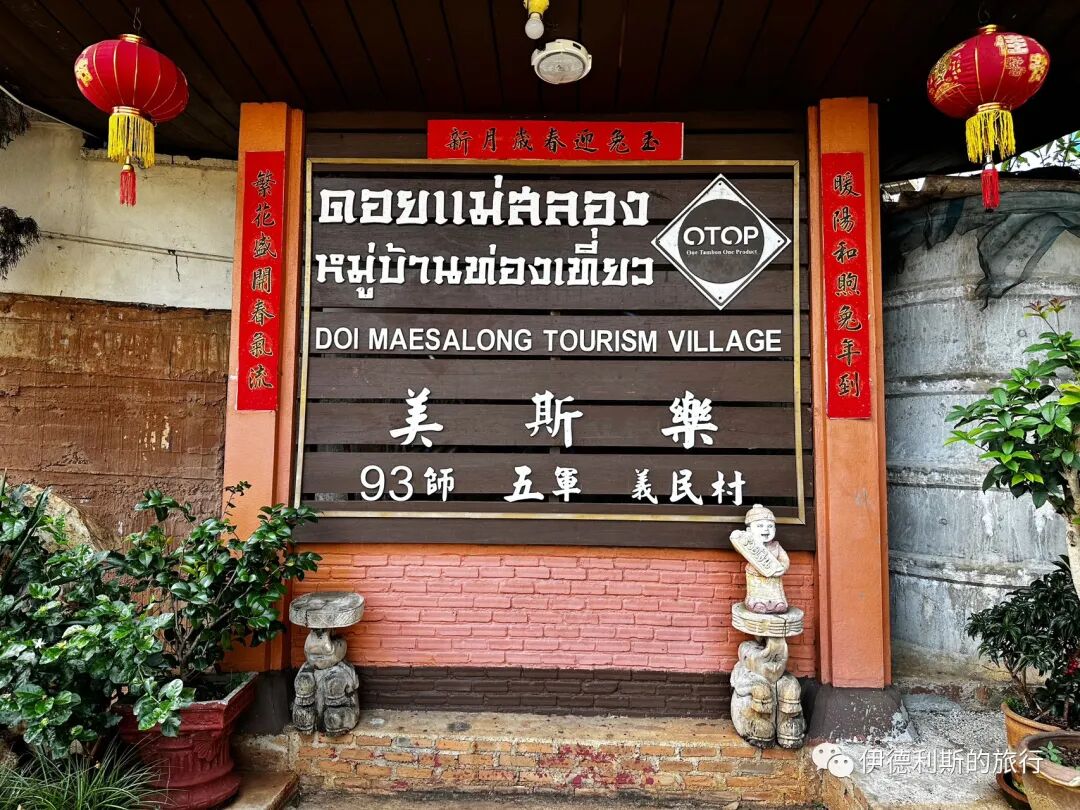
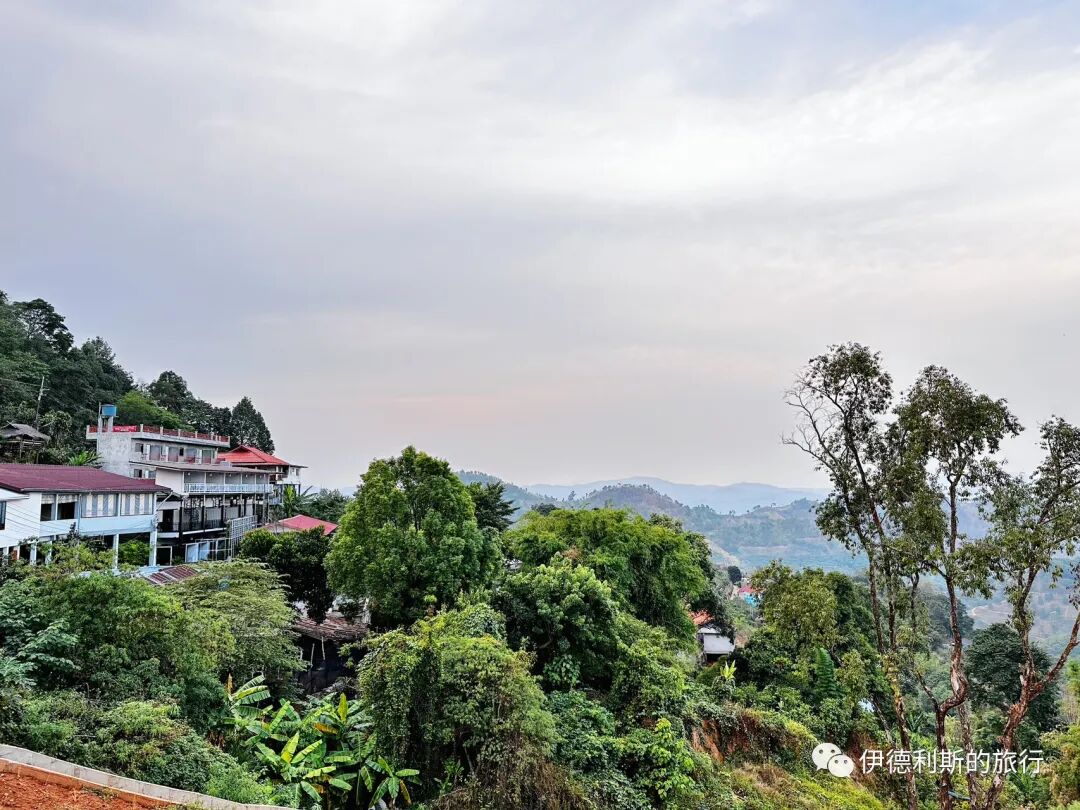
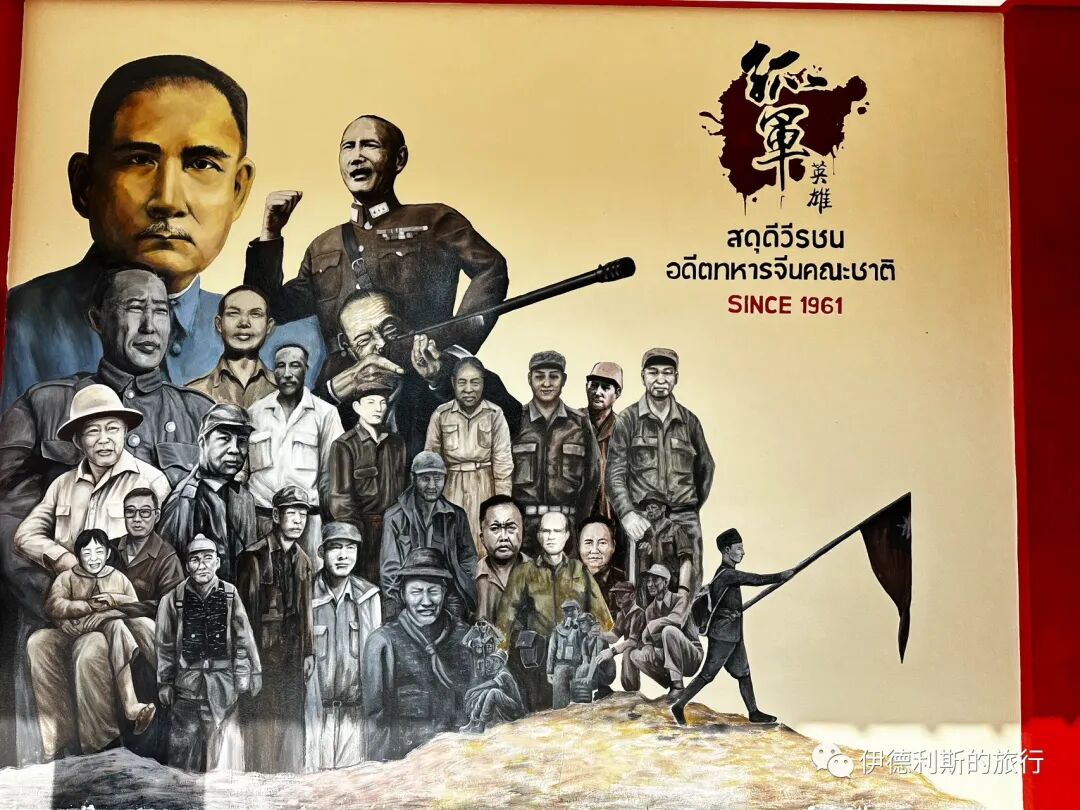
Halal Travel Guide: Northern Thailand — Yunnan Mosques and Hui Communities (Part 2)
Articles • ali2007fr posted the article • 0 comments • 167 views • 2026-05-19 02:47
Summary: Northern Thailand has old Yunnanese Hui Muslim communities whose mosque neighborhoods still carry the memory of migration, trade, and borderland life. This firsthand account follows the second day of the route through local mosques, village streets, and community history while preserving the original photos and sequence.
The Mae Salong Mosque was built in the 1960s by Hui Muslims from Yunnan who were part of the 5th Division of the Lost Army in Northern Thailand. The first imam, Yang Guoqing, worked in the 5th Division's intelligence department. He led the community through the toughest years from the 1960s to the 1980s, seeing the mosque evolve from a bamboo hut to a tin-roofed wooden structure, and finally to the current reinforced concrete building. Haji Majisi, who held the rank of Major General in the army, was one of the three founding elders of the Mae Salong Mosque. He worked tirelessly to raise funds for the mosque's reconstruction, contributing both his own money and effort selflessly. The first imam to lead prayers at the mosque was Haji Wang Zhenliang, who was originally a merchant from Yunnan.
Today, there are still over a dozen households of the mosque's community (gaomu) in Mae Salong, though many live in Taiwan during the tourism off-season. The current imam is a Hmong convert to Islam. He is very grateful that fellow believers (dost) have come to preach in the deep mountains of Northern Thailand, which has led some local Hmong people to return to the faith.
Inside the mosque, there is a Ramadan donation record (nieti bu) posted on the wall. It shows that the community is primarily made up of people with the surname Ma, along with others named Yang, Dong, Yao, Mu, Wang, He, Jiang, and Zhang. The mosque also displays the wedding stage from earlier this year, where local community member Ma Zhenqiang married Ani, a Thai convert to Islam. It must have been a very lively event, and if Allah wills, I hope to attend a wedding of the Yunnanese Hui Muslims in Thailand one day.
Inside the main prayer hall of the Mae Salong Mosque, there is Arabic calligraphy gifted by a folk culture delegation of Yunnan Hui Muslims.
There is also a group photo of local youth taken in the old wooden prayer hall during a past Eid al-Fitr.
There are two Yunnanese Hui Muslim restaurants in Mae Salong, and we had dinner at one of them, the Shanlima Restaurant. Our driver, Mr. Ma, and the owner's son were classmates at the Jingzhen School in Chiang Mai. The owner was away when we visited, so we only met his wife and son-in-law, both of whom are Thai converts to Islam. The owner's wife can speak a little Yunnanese, so at first, we thought she was a Yunnanese Hui Muslim.
Dining in Mae Salong, deep in the mountains, is all about fresh ingredients. We ordered stir-fried black-bone chicken with ginger strips, braised beef offal (niuzapa hu), a cold salad of fresh tea leaves, and luffa tips. Many families in Mae Salong village raise black-bone chickens. You can usually only find this type of chicken in the mountains; the meat is very firm and tastes delicious. The cold salad of fresh tea leaves is a specialty of Mae Salong, and it was my first time trying it. The fresh tea leaves are crisp, and the light tea fragrance is very refreshing.
We also didn't expect to find fried milk curd (rushan) in Thailand. It was fried thin and crispy, not greasy at all, and even better than what I had eaten in Weishan, Dali before! Master Ma said this was likely brought over by Yunnan Hui Muslims from Myanmar, who still keep the craft of frying milk curd.
Sharing the menu from Shanlima Restaurant in Mae Salong; wild bitter melon is also one of their specialties.
Besides Shanlima, Mae Salong has another Yunnan Hui Muslim restaurant called Mina Halal Restaurant. Since it is the off-season, the owner went to Taiwan. She will likely return after the Mid-Autumn Festival when the peak tourist season begins, so only the staff are running it now. If I have the chance to visit Mae Salong again, I will go and try their food.
Mae Sai
In the evening, we traveled from Mae Salong to Mae Sai, a border port city on the Thai-Myanmar border at the northernmost tip of Thailand. Mae Sai now has over 200 households of Yunnan Hui Muslims, making it the second-largest settlement of Yunnan Hui Muslims in Northern Thailand outside of Chiang Mai.
We drank tea and chatted with the elders at the Yunnan Mosque in Mae Sai, and we had no trouble communicating in Mandarin. Although Mae Sai has been a necessary stop for Yunnan horse caravans heading south to Chiang Mai since the late Qing Dynasty, the mosque was not initiated and built until 1952 by Yunnan Hui Muslims Ma Xianglin and Ma Enshou. The original mosque was just a thatched hut, but it was later rebuilt into a wooden structure under the supervision of Ma Zixing, thanks to donations from Qian Yizhai and fellow believers in Chiang Mai. In 1975, as the number of Yunnan Hui Muslims in Mae Sai grew, the old mosque could no longer accommodate everyone. Mu Chengfang initiated a move to the current location next to the main road, and Ma Weijing and Na Caikui oversaw the construction of the current steel and concrete building.
In the evening, we visited the South Asian Mosque in Mae Sai for namaz. According to Master Ma, there are currently 70 to 80 local South Asian Muslim households in Mae Sai, plus over 200 households of Myanmar-born Muslims who moved here from Myanmar to make a living due to poverty. There are about 50 poor students from Myanmar in this mosque. The mosque provides them with free food, housing, and education, which is very moving.
After coming down from Hufu Beach, we had spicy barbecue (shaokao) from a Yunnan Hui Muslim shop in Mae Sai for a late-night snack. We had no trouble communicating in Mandarin. They run the shop right at their own front door. You have to make several turns off the main road to find it, and we never would have spotted it without Master Ma leading the way. The barbecue doesn't have beef or lamb. It is mostly chicken gizzards, chicken hearts, and various types of sausages. They brush on plenty of Sichuan peppercorn water and chili sauce. We chose the mild spice level, and it was still very satisfying.
While walking around the streets of Mae Sai at night, we saw a Thai Muslim roast duck shop across from the Yunnan mosque. It was still busy at midnight. It turns out Thai people really love eating roast duck too. The Chinese community in Mae Sai is mainly made up of three groups: Yunnan Han people, Yunnan Hui Muslims, and Chaoshan people. Both the Yunnan and Chaoshan groups have their own Chinese-language schools. The Yunnan Hui Muslims here attend three types of schools: Thai schools, Chinese schools, and religious schools (jingxue). Because of this, they grow up knowing Thai, Chinese, and Arabic. view all
Summary: Northern Thailand has old Yunnanese Hui Muslim communities whose mosque neighborhoods still carry the memory of migration, trade, and borderland life. This firsthand account follows the second day of the route through local mosques, village streets, and community history while preserving the original photos and sequence.
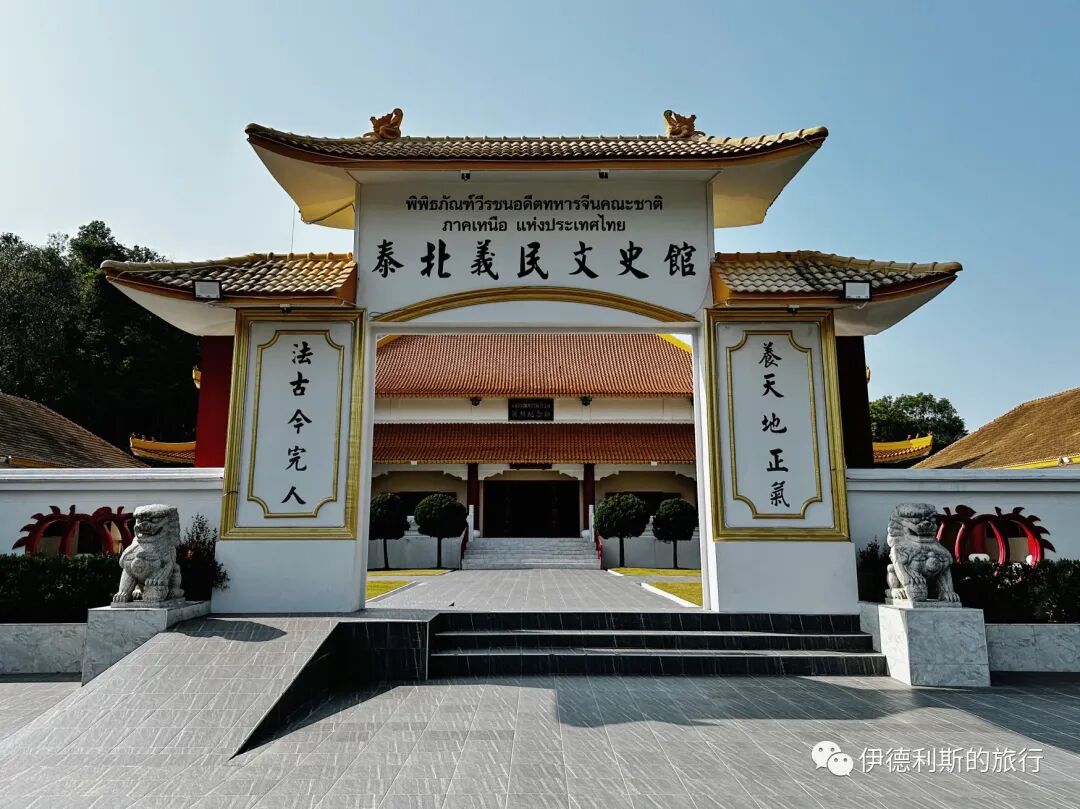
The Mae Salong Mosque was built in the 1960s by Hui Muslims from Yunnan who were part of the 5th Division of the Lost Army in Northern Thailand. The first imam, Yang Guoqing, worked in the 5th Division's intelligence department. He led the community through the toughest years from the 1960s to the 1980s, seeing the mosque evolve from a bamboo hut to a tin-roofed wooden structure, and finally to the current reinforced concrete building. Haji Majisi, who held the rank of Major General in the army, was one of the three founding elders of the Mae Salong Mosque. He worked tirelessly to raise funds for the mosque's reconstruction, contributing both his own money and effort selflessly. The first imam to lead prayers at the mosque was Haji Wang Zhenliang, who was originally a merchant from Yunnan.
Today, there are still over a dozen households of the mosque's community (gaomu) in Mae Salong, though many live in Taiwan during the tourism off-season. The current imam is a Hmong convert to Islam. He is very grateful that fellow believers (dost) have come to preach in the deep mountains of Northern Thailand, which has led some local Hmong people to return to the faith.
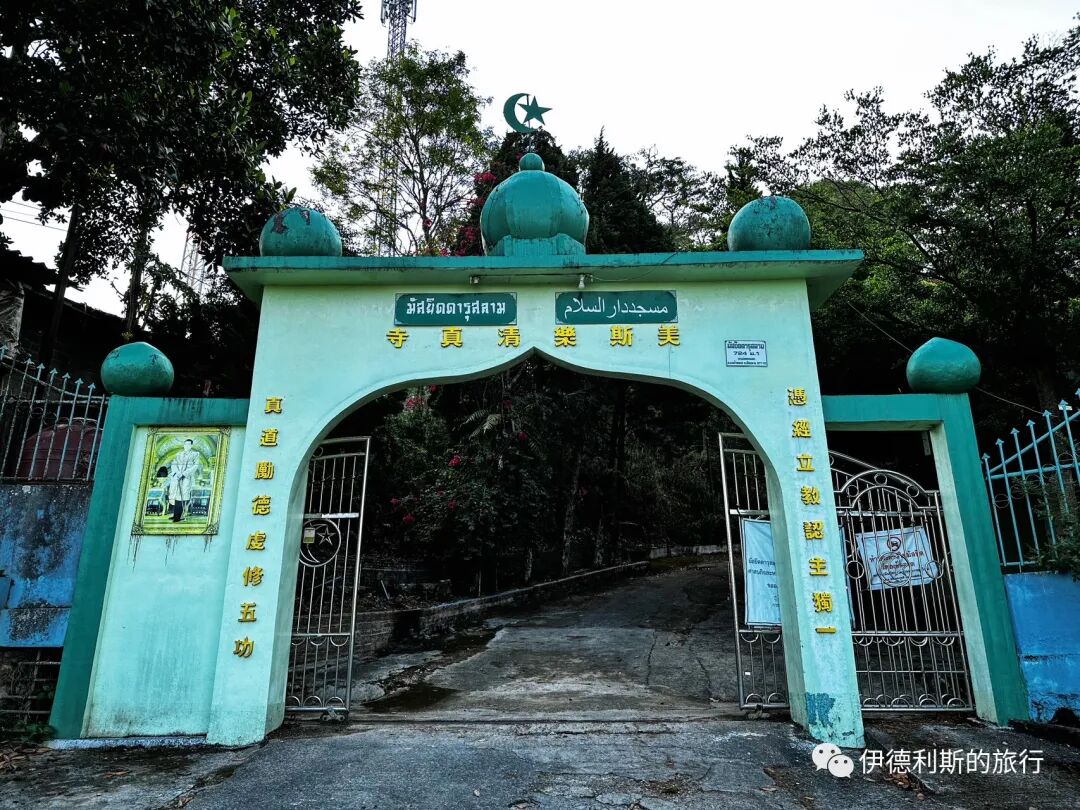
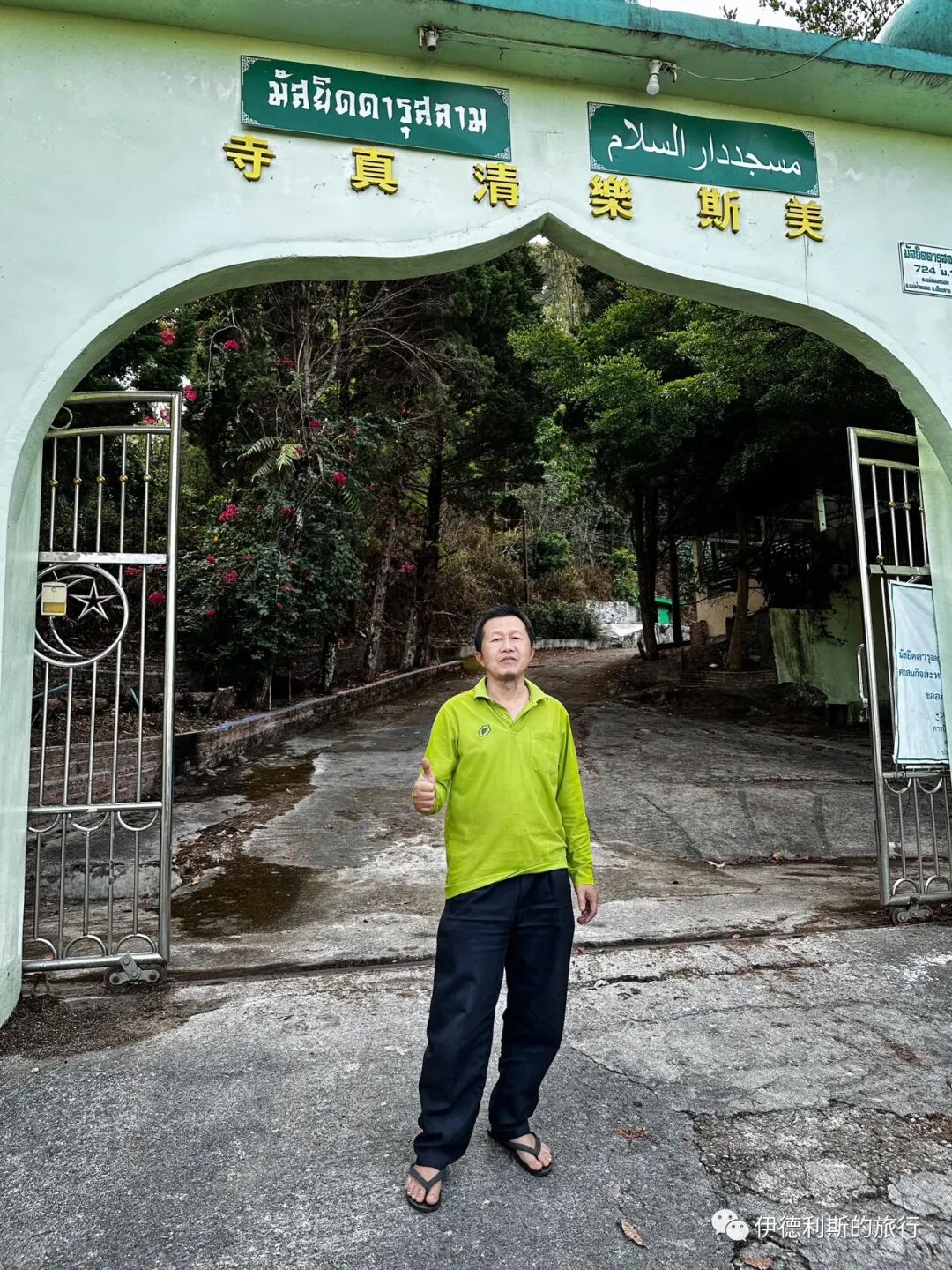
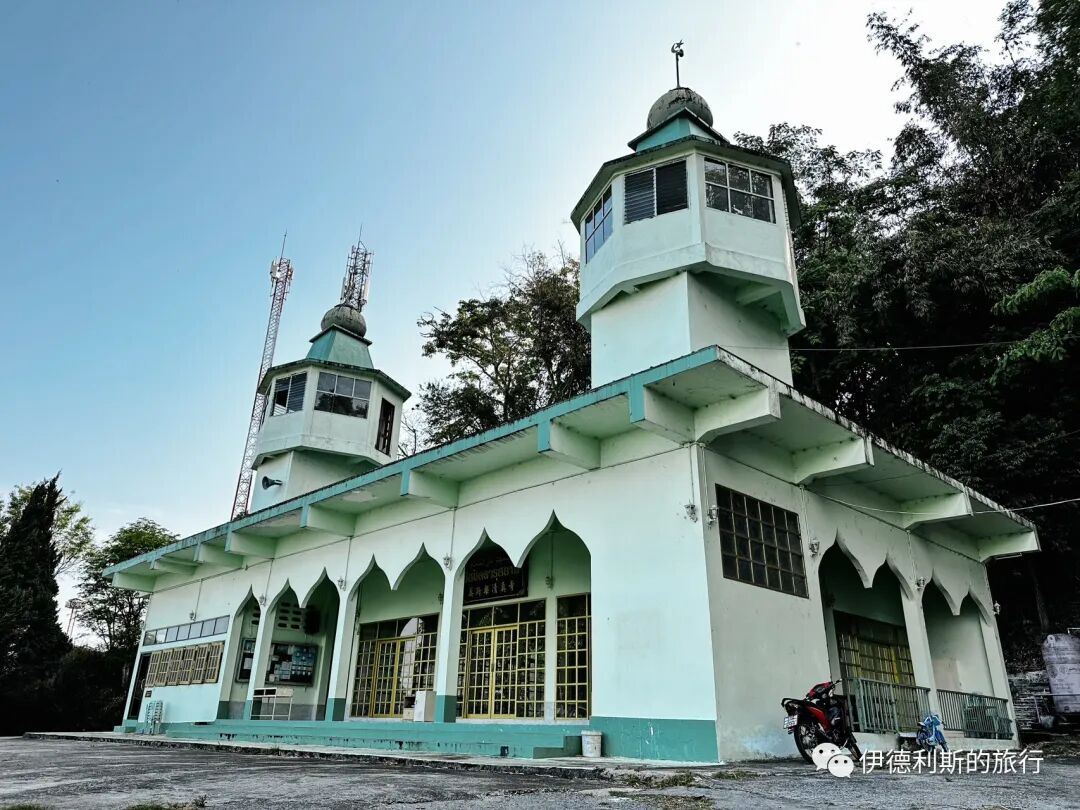
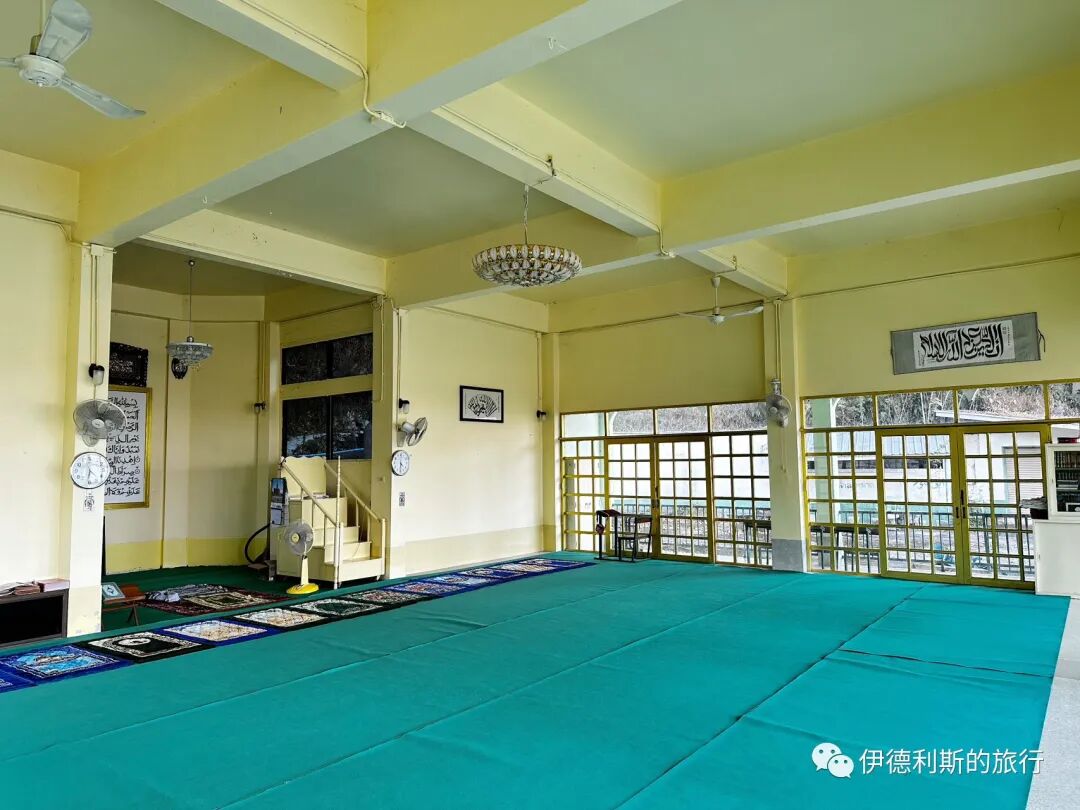
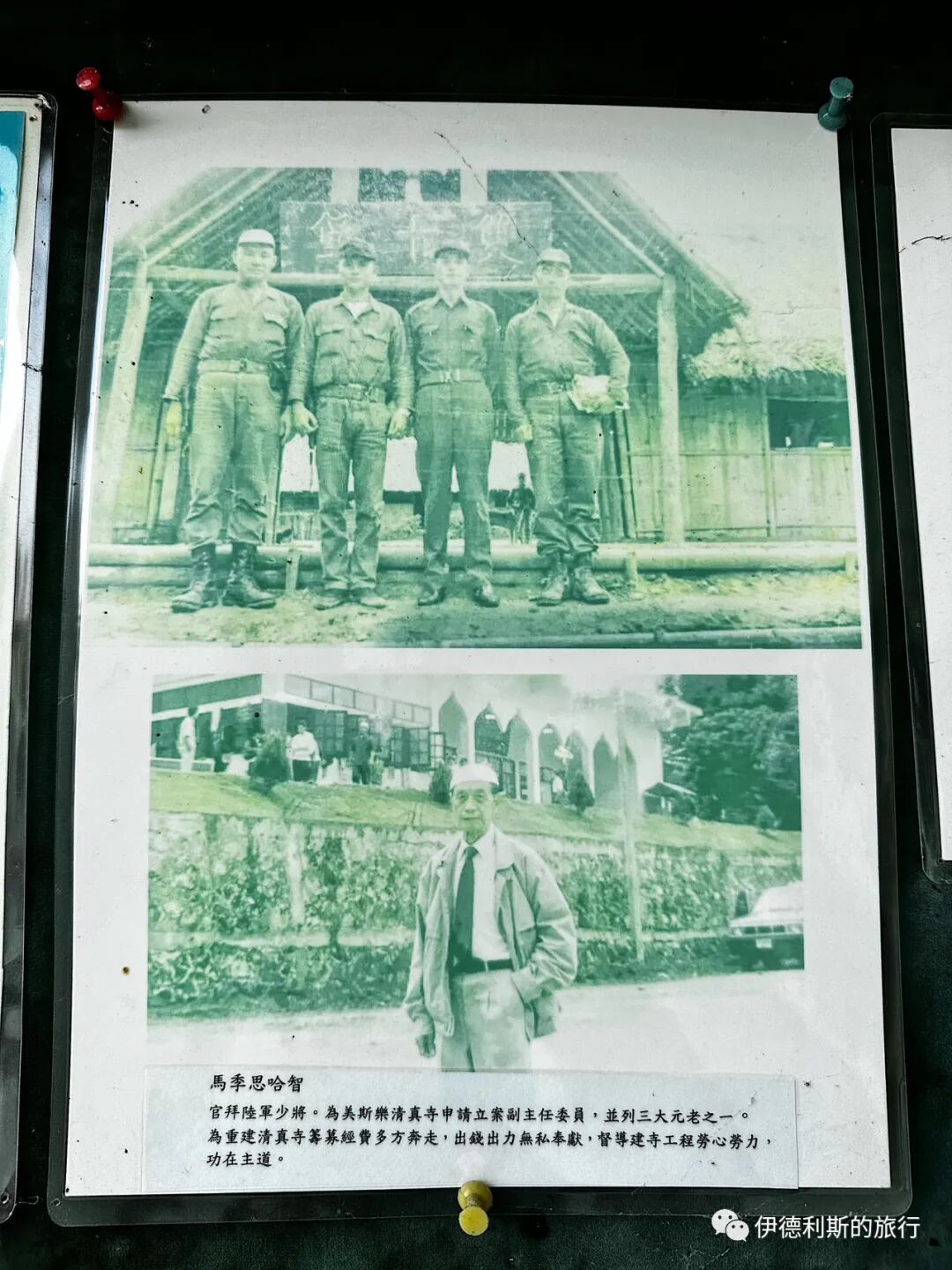
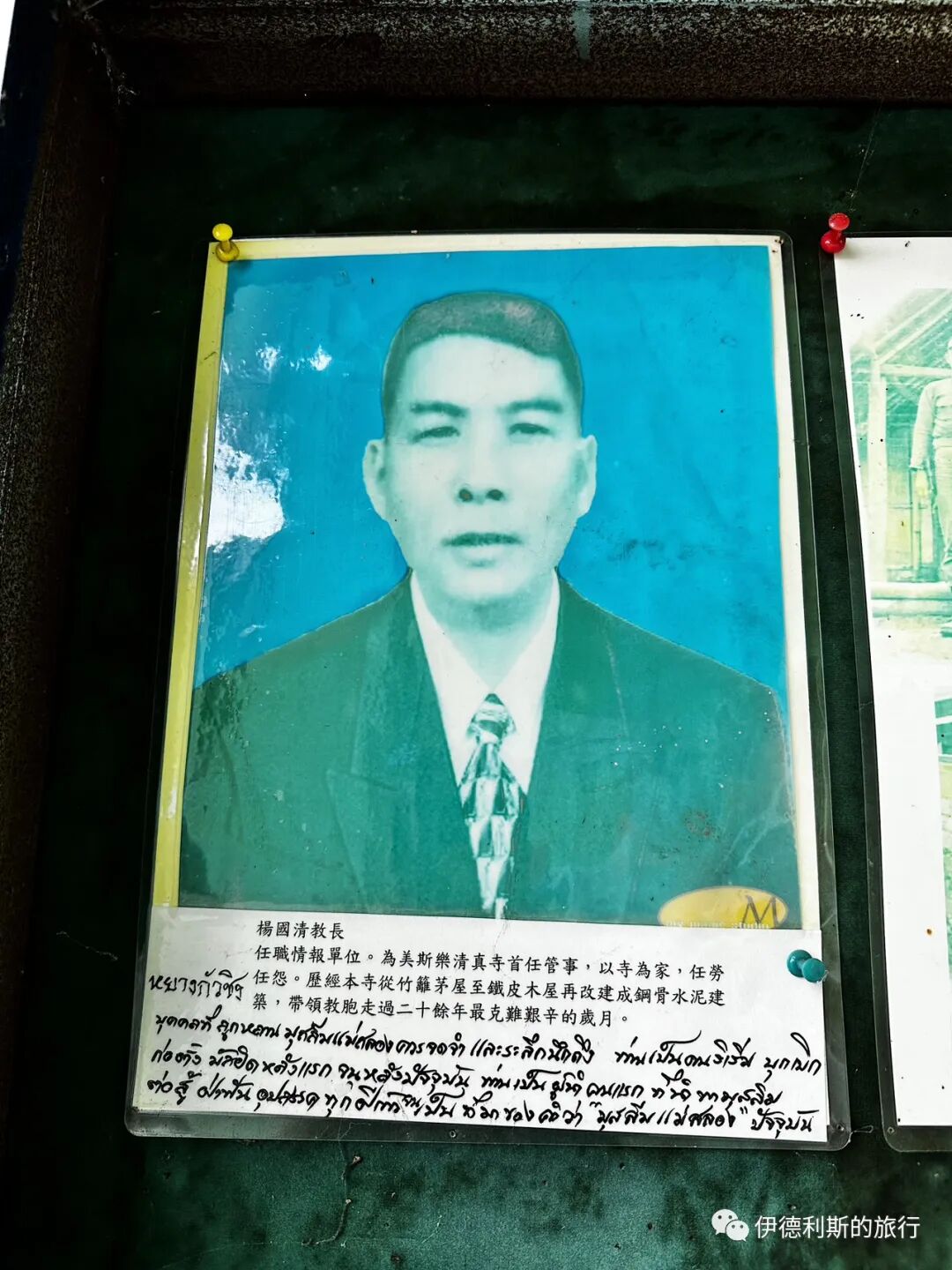
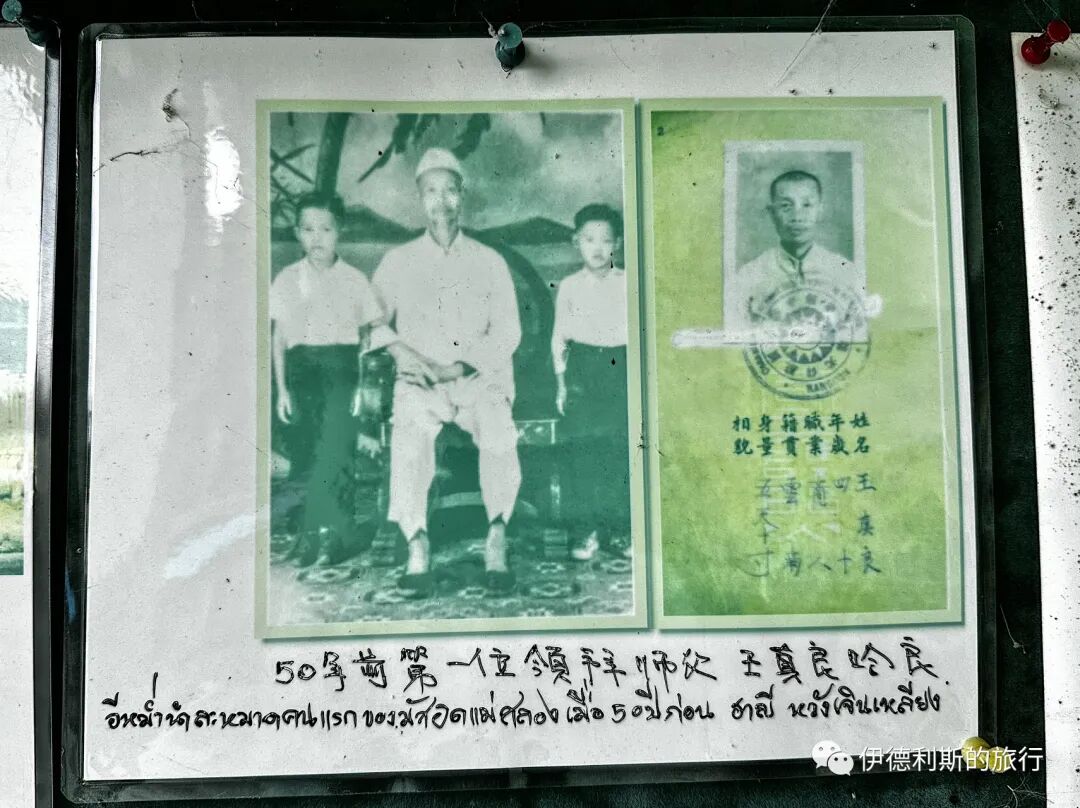
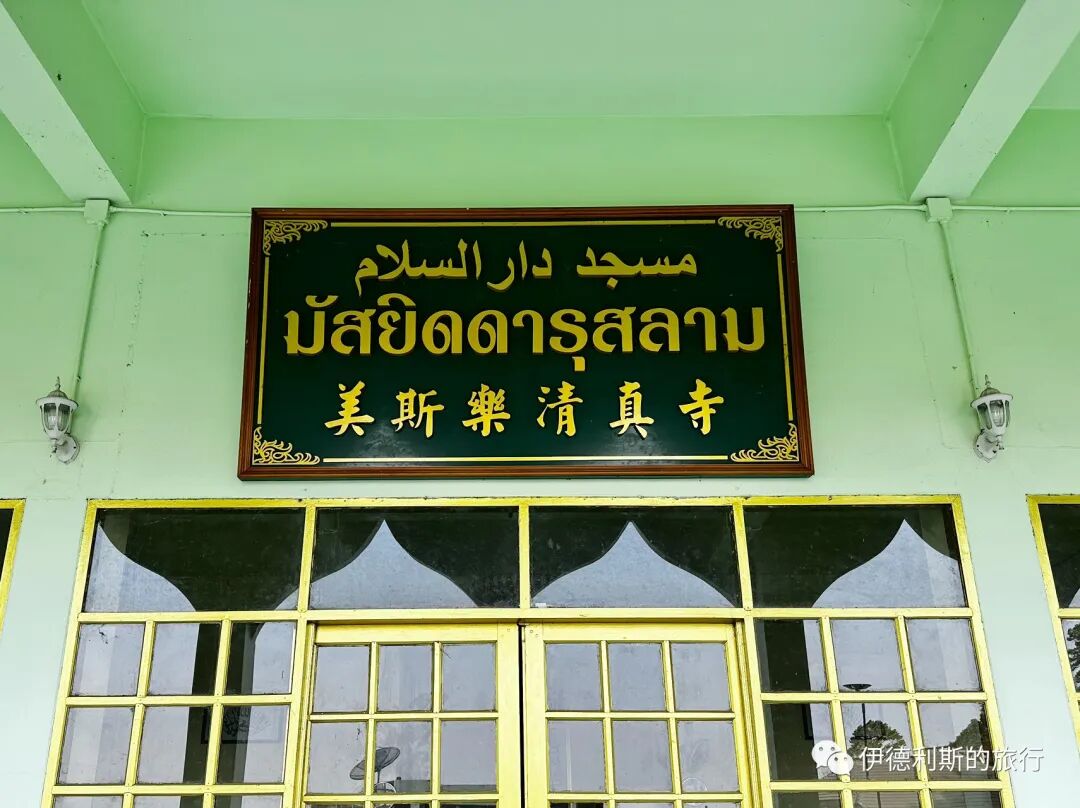
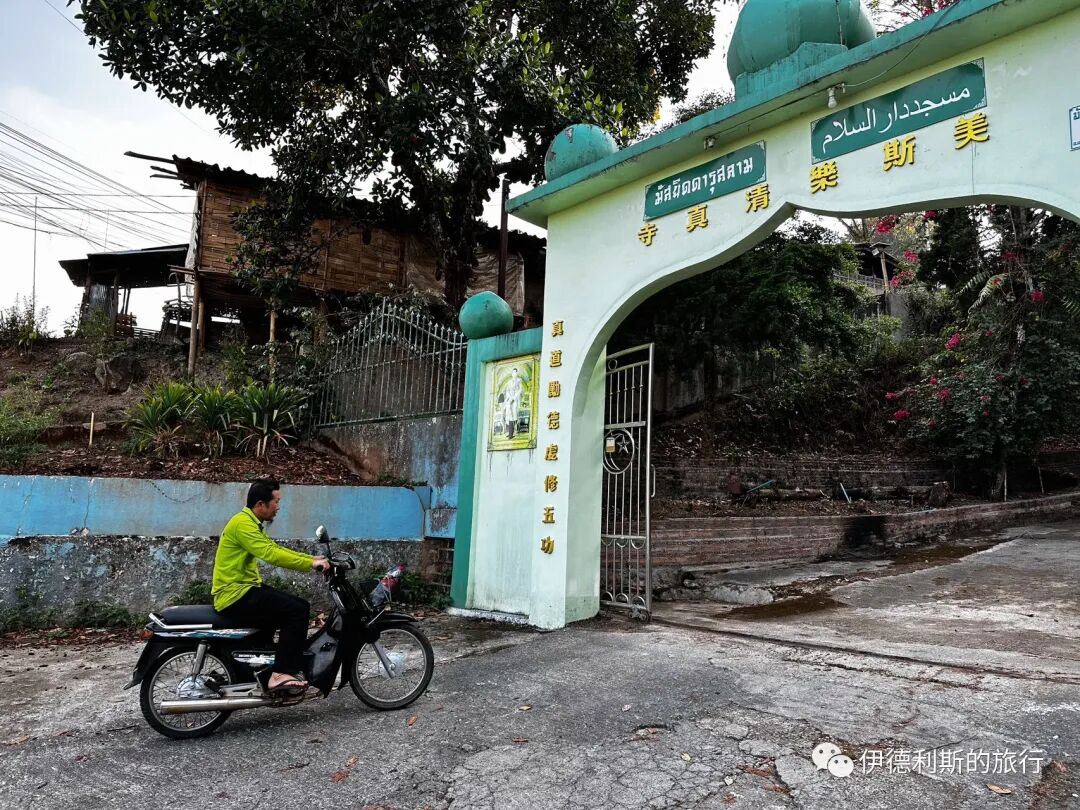
Inside the mosque, there is a Ramadan donation record (nieti bu) posted on the wall. It shows that the community is primarily made up of people with the surname Ma, along with others named Yang, Dong, Yao, Mu, Wang, He, Jiang, and Zhang. The mosque also displays the wedding stage from earlier this year, where local community member Ma Zhenqiang married Ani, a Thai convert to Islam. It must have been a very lively event, and if Allah wills, I hope to attend a wedding of the Yunnanese Hui Muslims in Thailand one day.
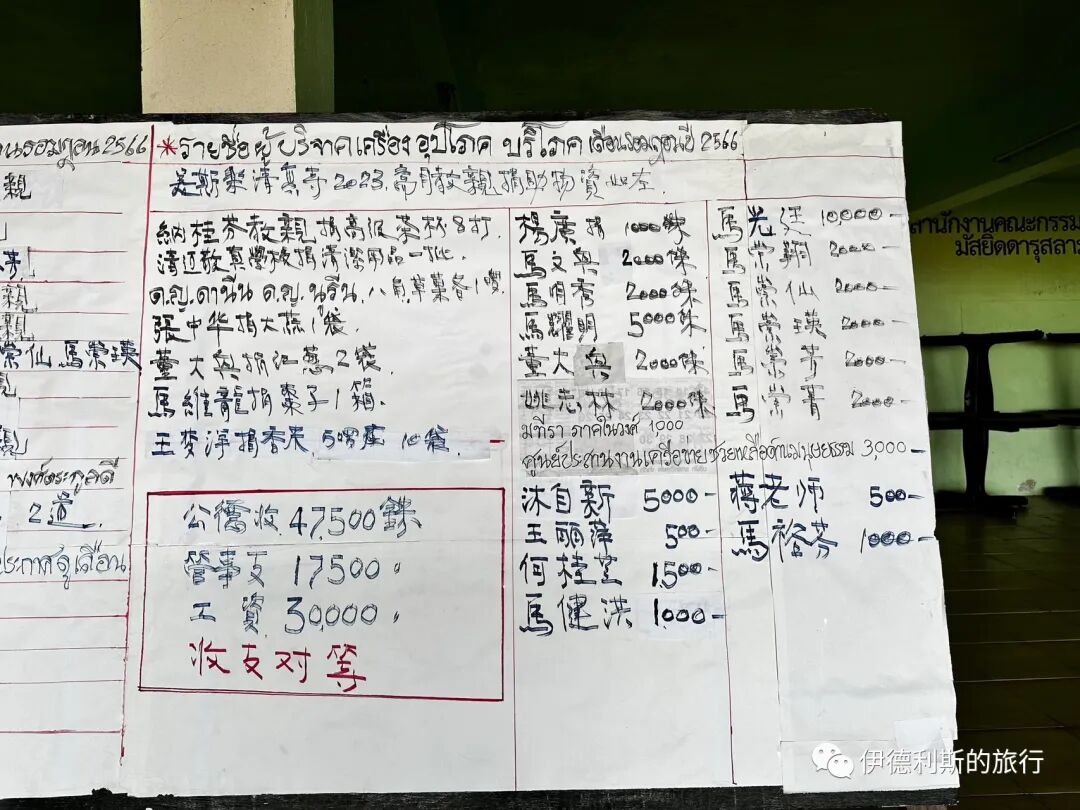
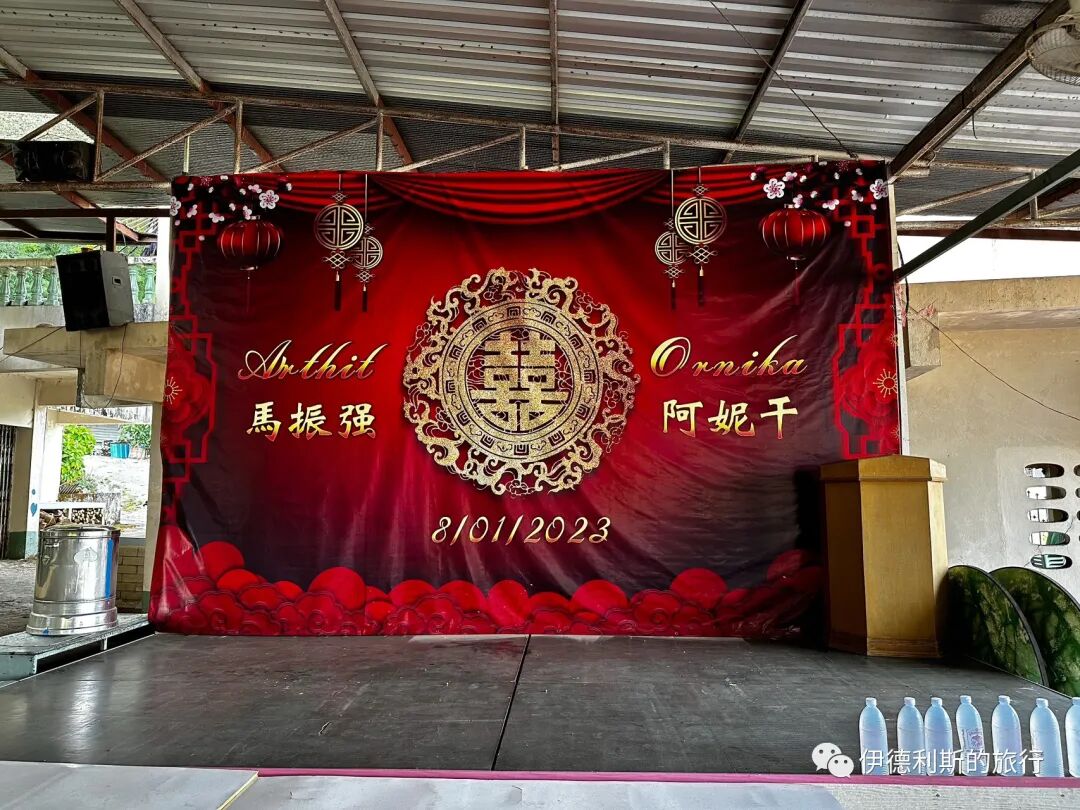
Inside the main prayer hall of the Mae Salong Mosque, there is Arabic calligraphy gifted by a folk culture delegation of Yunnan Hui Muslims.
There is also a group photo of local youth taken in the old wooden prayer hall during a past Eid al-Fitr.
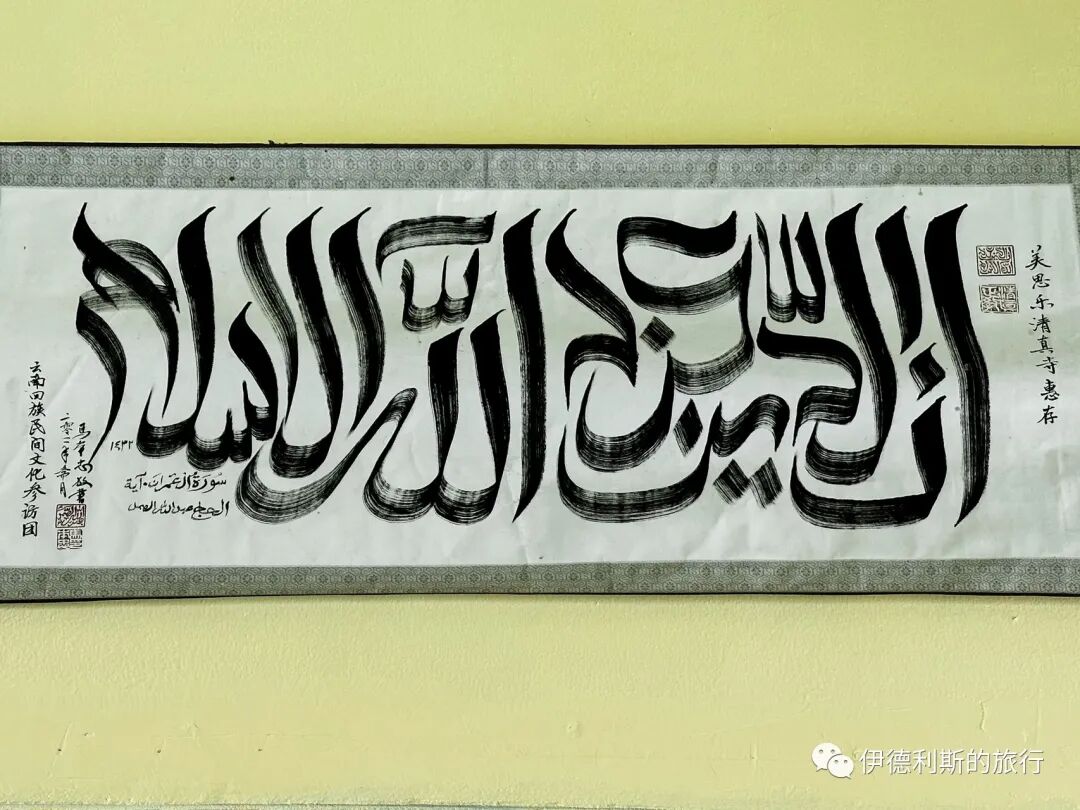
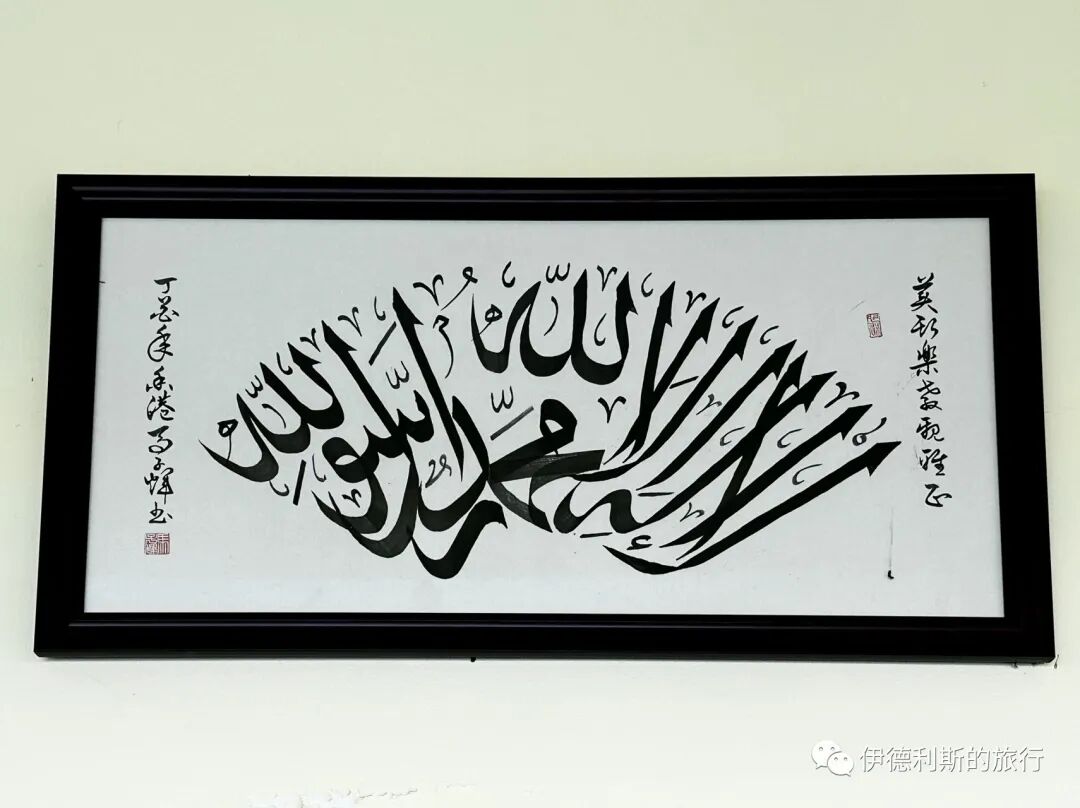
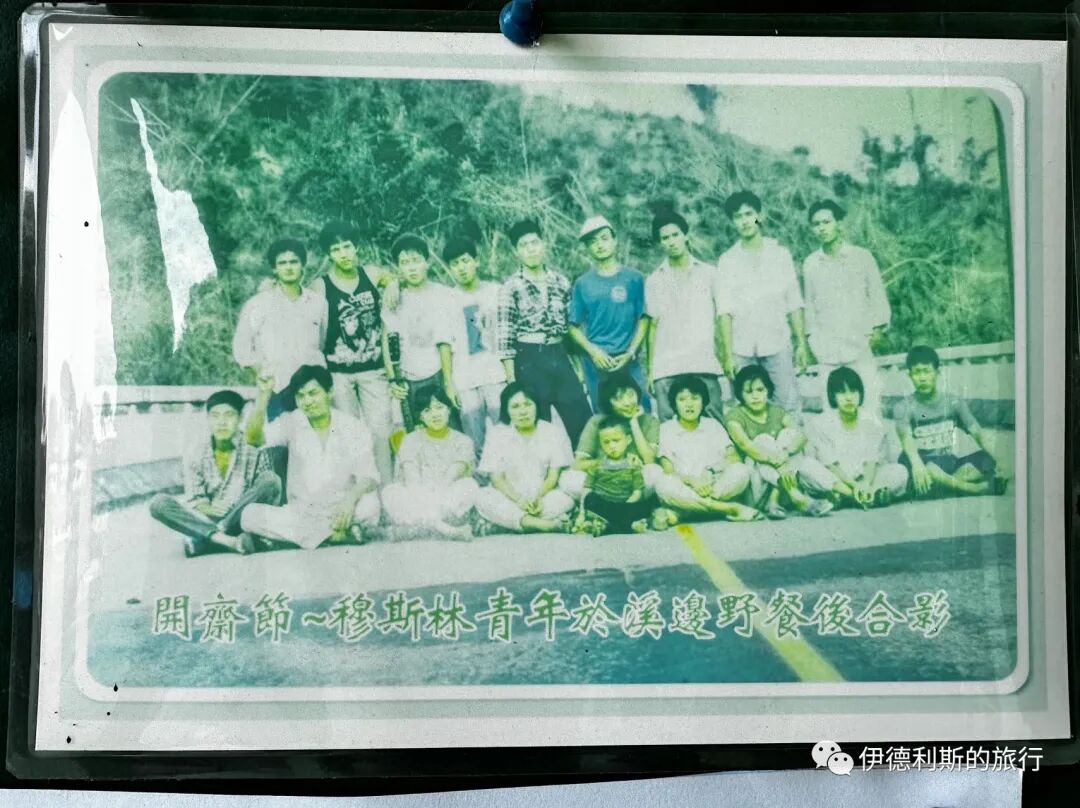
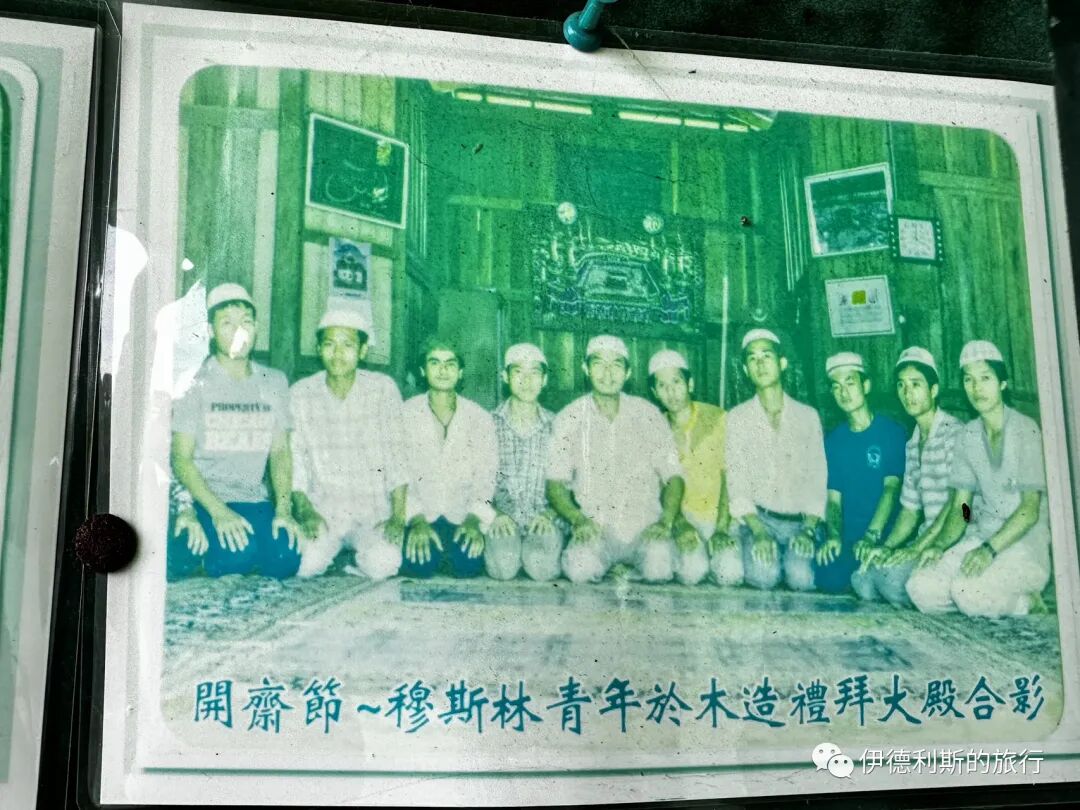
There are two Yunnanese Hui Muslim restaurants in Mae Salong, and we had dinner at one of them, the Shanlima Restaurant. Our driver, Mr. Ma, and the owner's son were classmates at the Jingzhen School in Chiang Mai. The owner was away when we visited, so we only met his wife and son-in-law, both of whom are Thai converts to Islam. The owner's wife can speak a little Yunnanese, so at first, we thought she was a Yunnanese Hui Muslim.
Dining in Mae Salong, deep in the mountains, is all about fresh ingredients. We ordered stir-fried black-bone chicken with ginger strips, braised beef offal (niuzapa hu), a cold salad of fresh tea leaves, and luffa tips. Many families in Mae Salong village raise black-bone chickens. You can usually only find this type of chicken in the mountains; the meat is very firm and tastes delicious. The cold salad of fresh tea leaves is a specialty of Mae Salong, and it was my first time trying it. The fresh tea leaves are crisp, and the light tea fragrance is very refreshing.
We also didn't expect to find fried milk curd (rushan) in Thailand. It was fried thin and crispy, not greasy at all, and even better than what I had eaten in Weishan, Dali before! Master Ma said this was likely brought over by Yunnan Hui Muslims from Myanmar, who still keep the craft of frying milk curd.
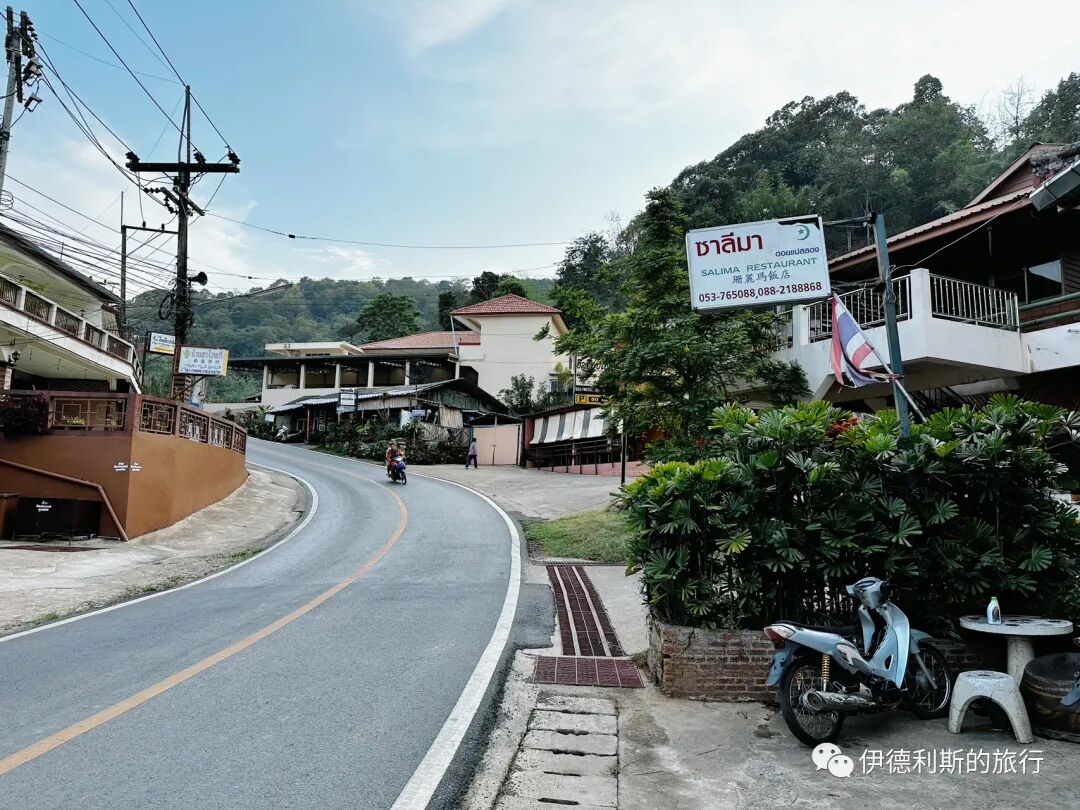
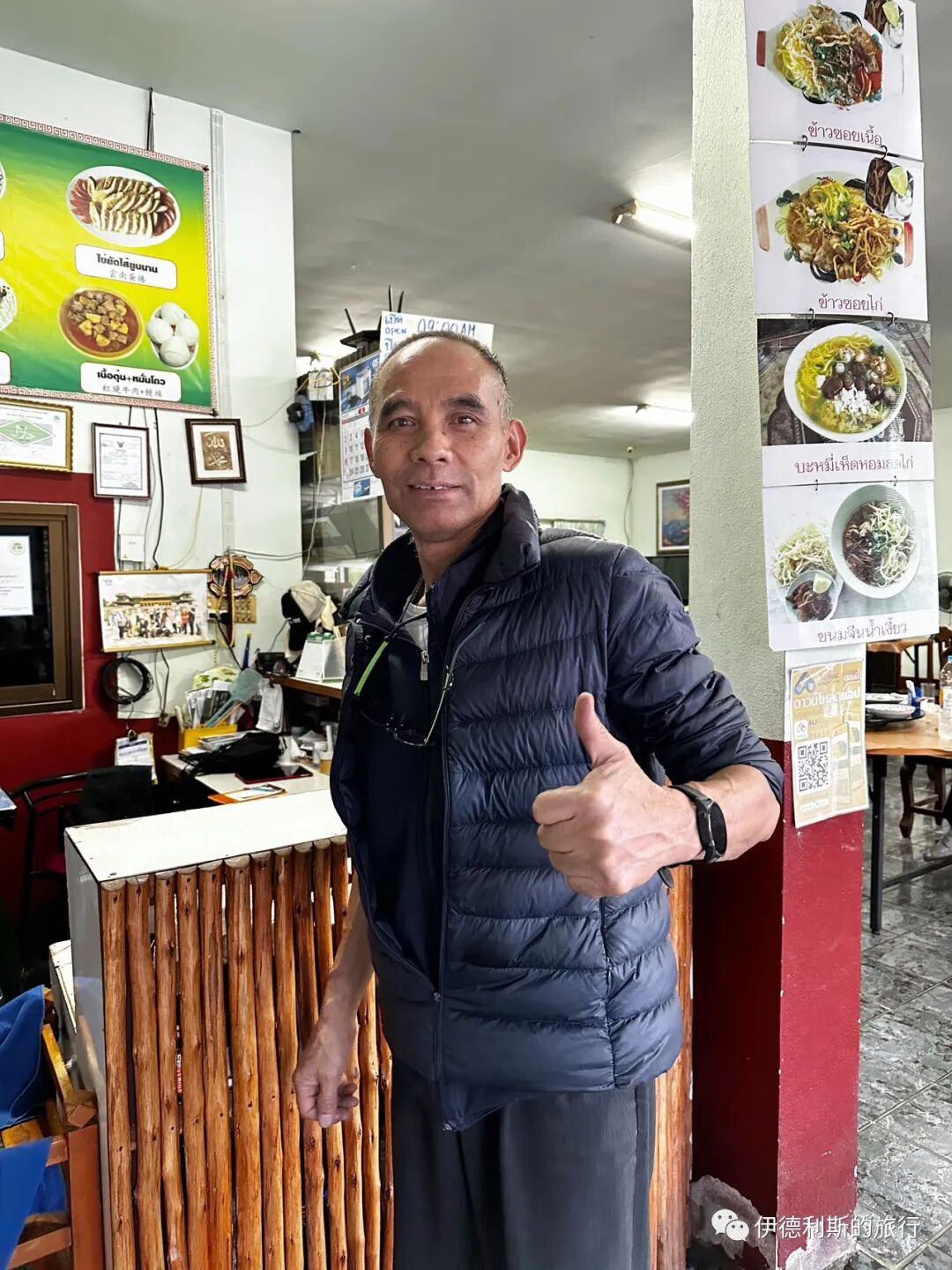
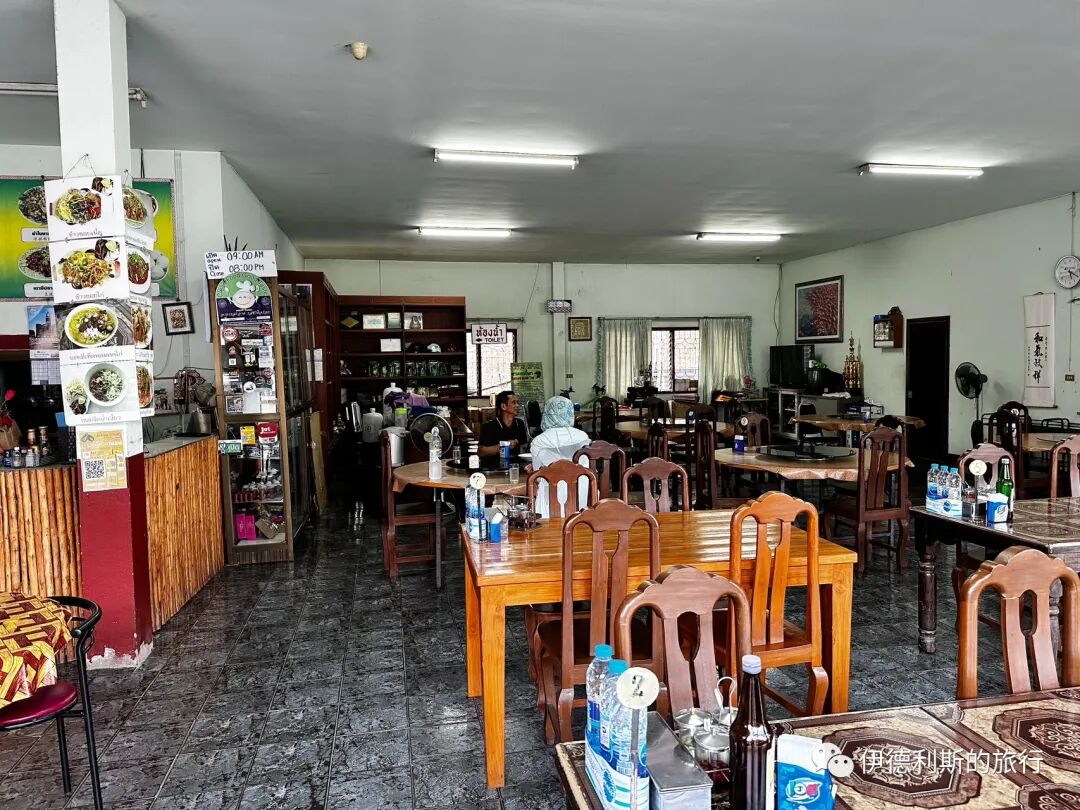
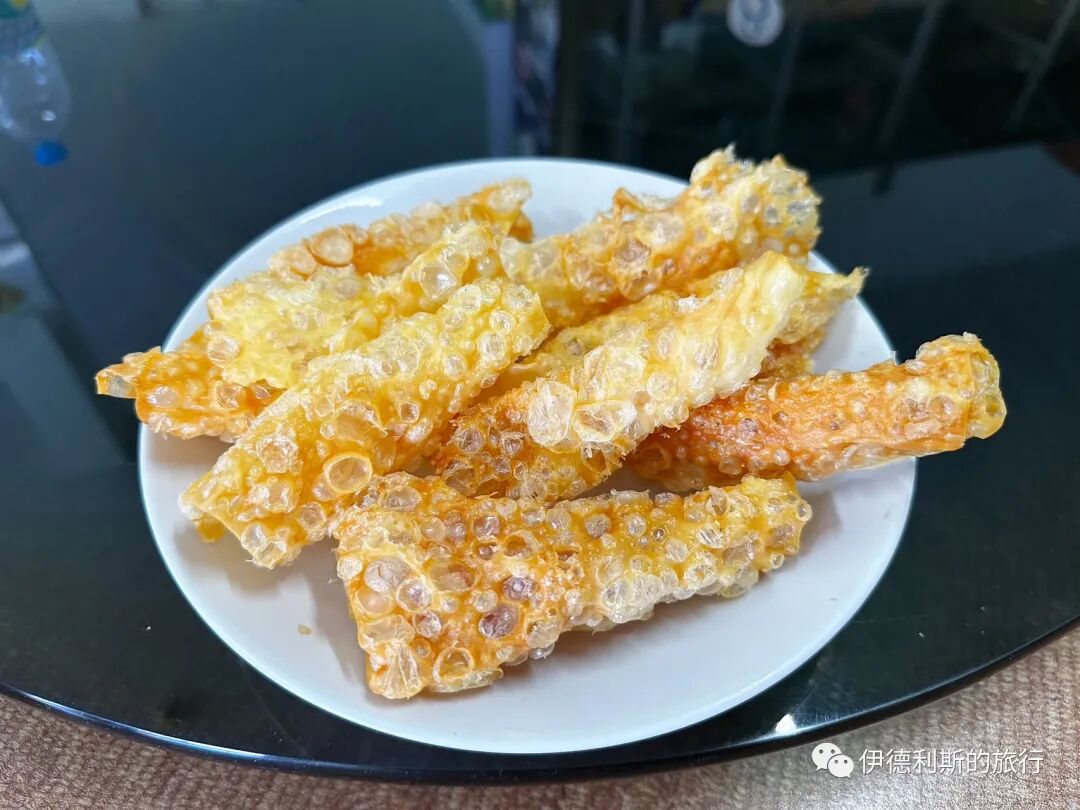
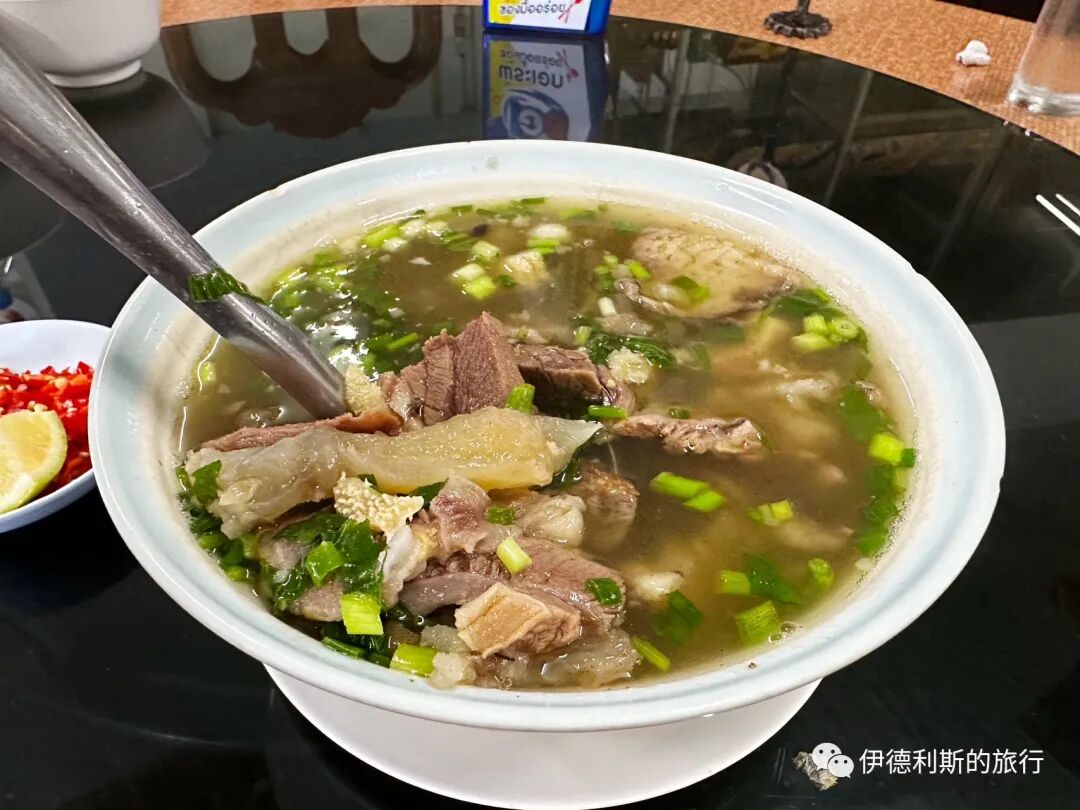
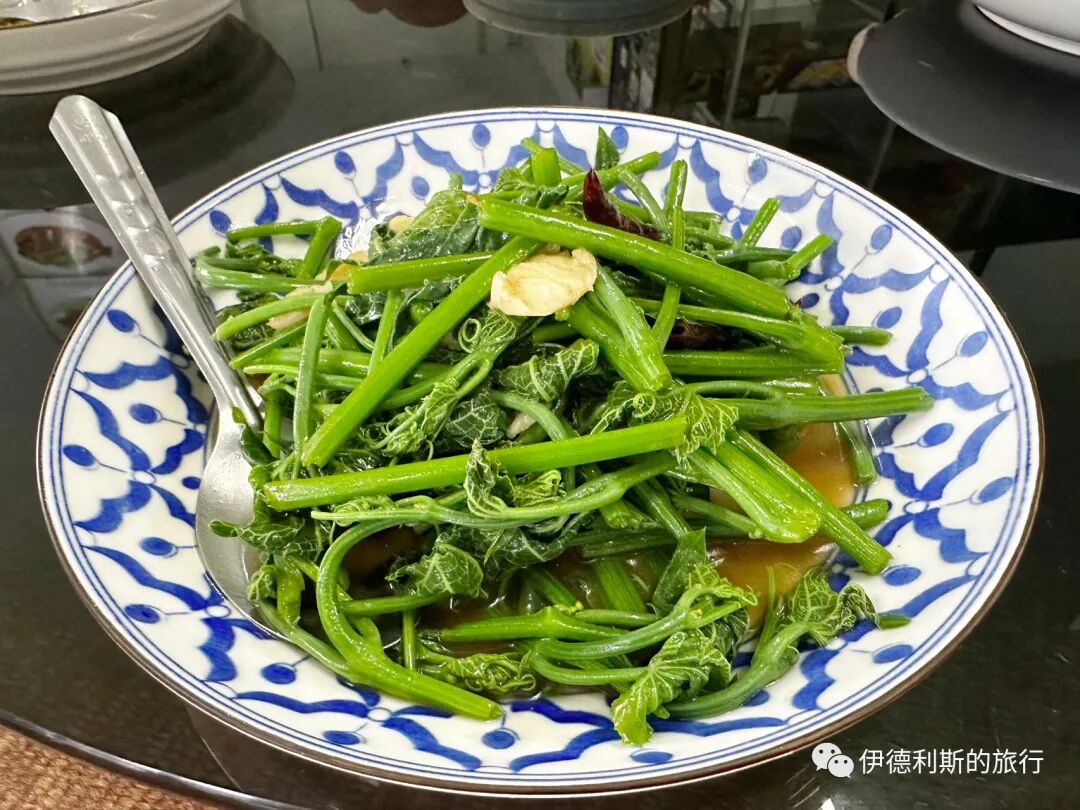
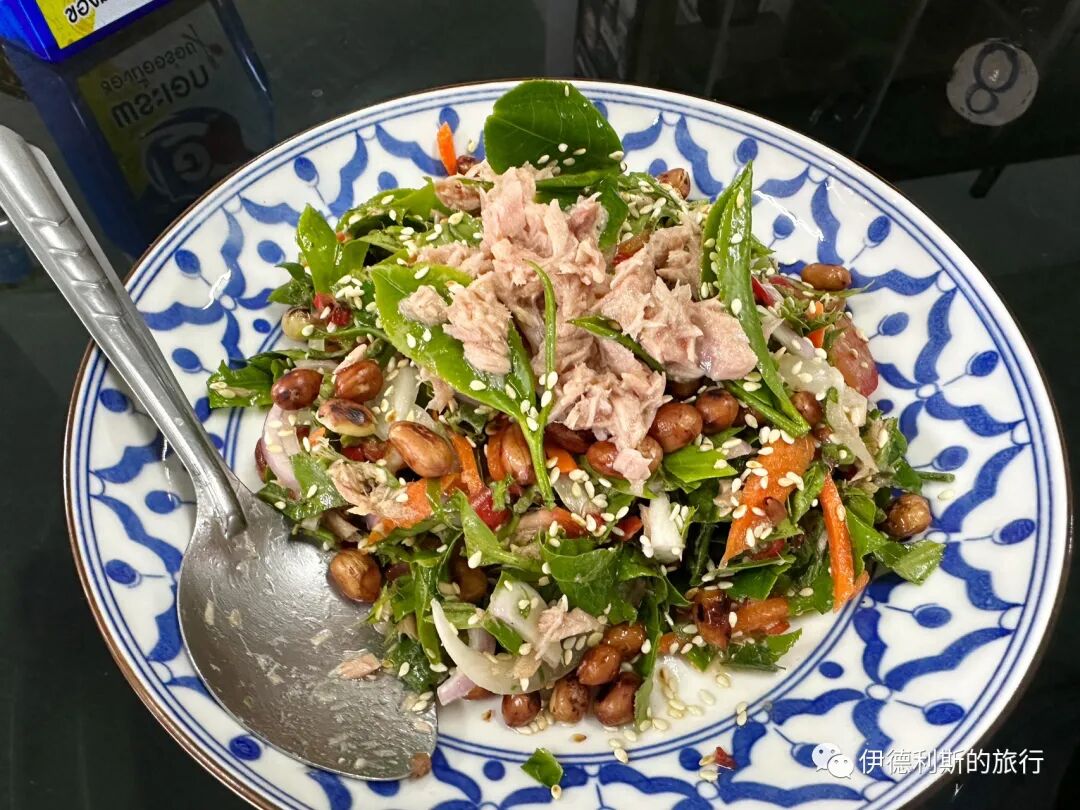
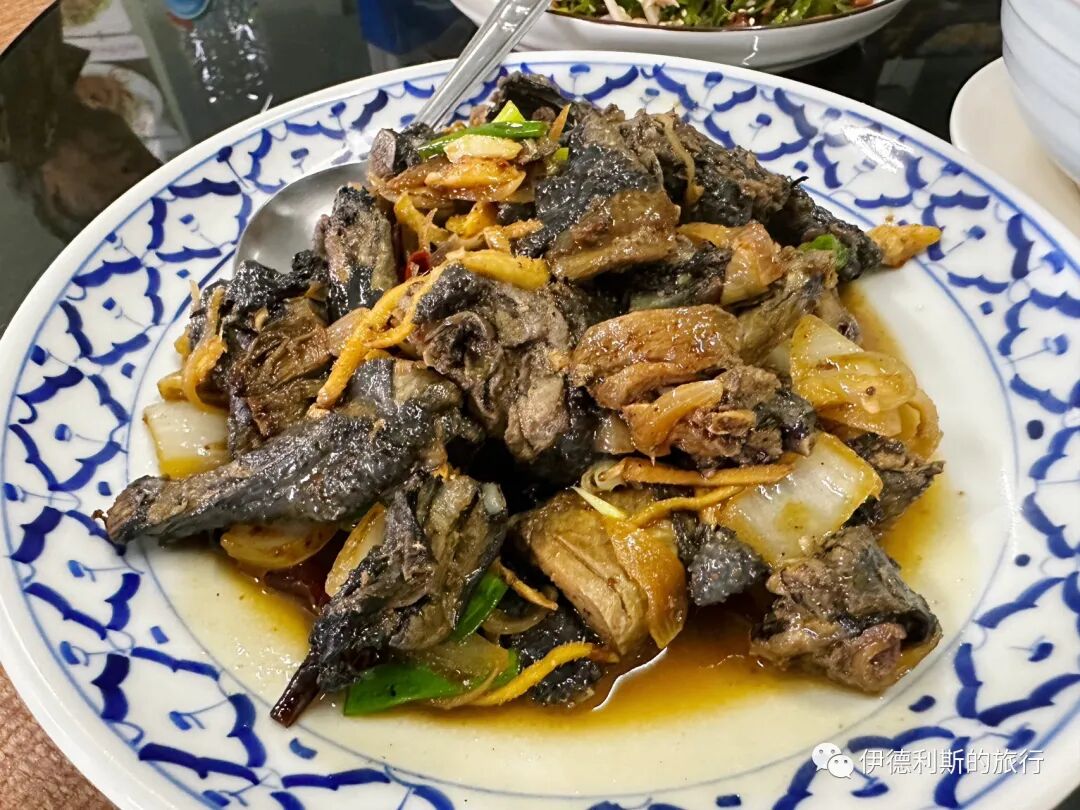
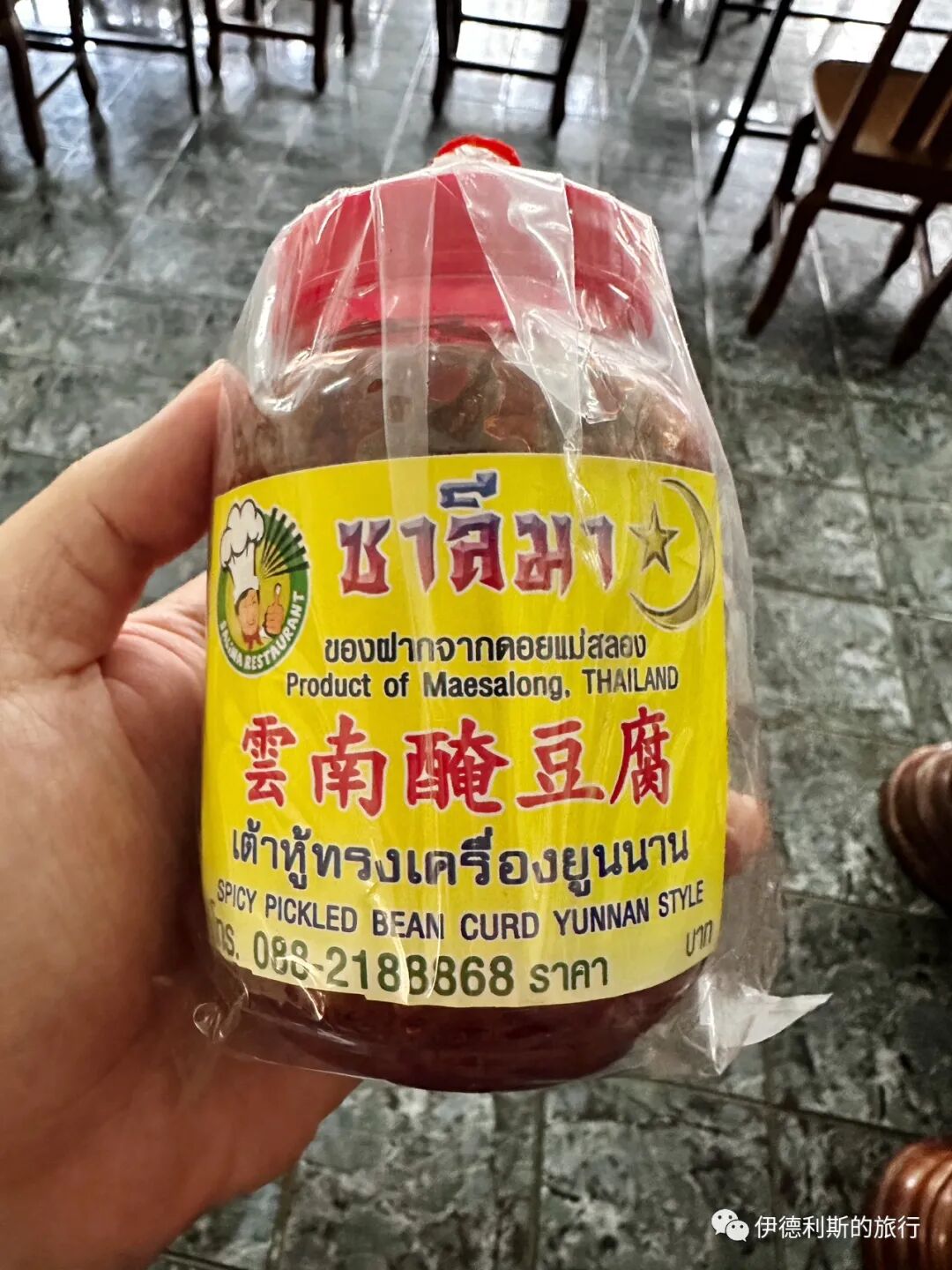
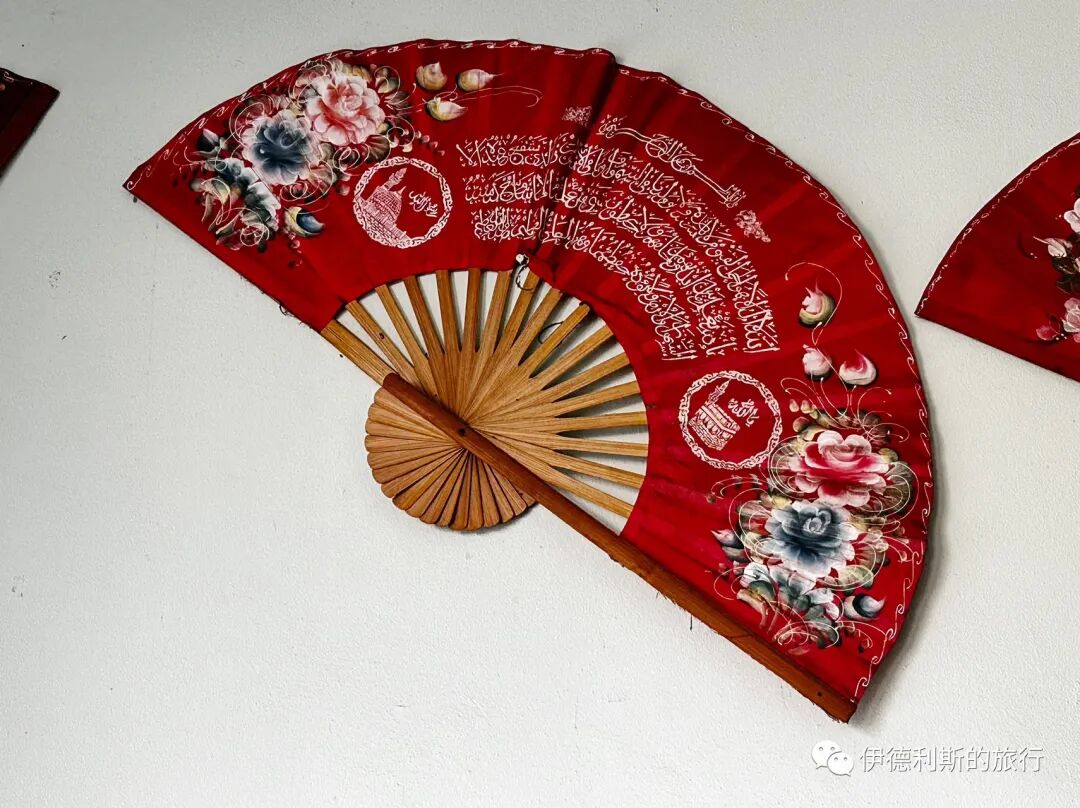
Sharing the menu from Shanlima Restaurant in Mae Salong; wild bitter melon is also one of their specialties.
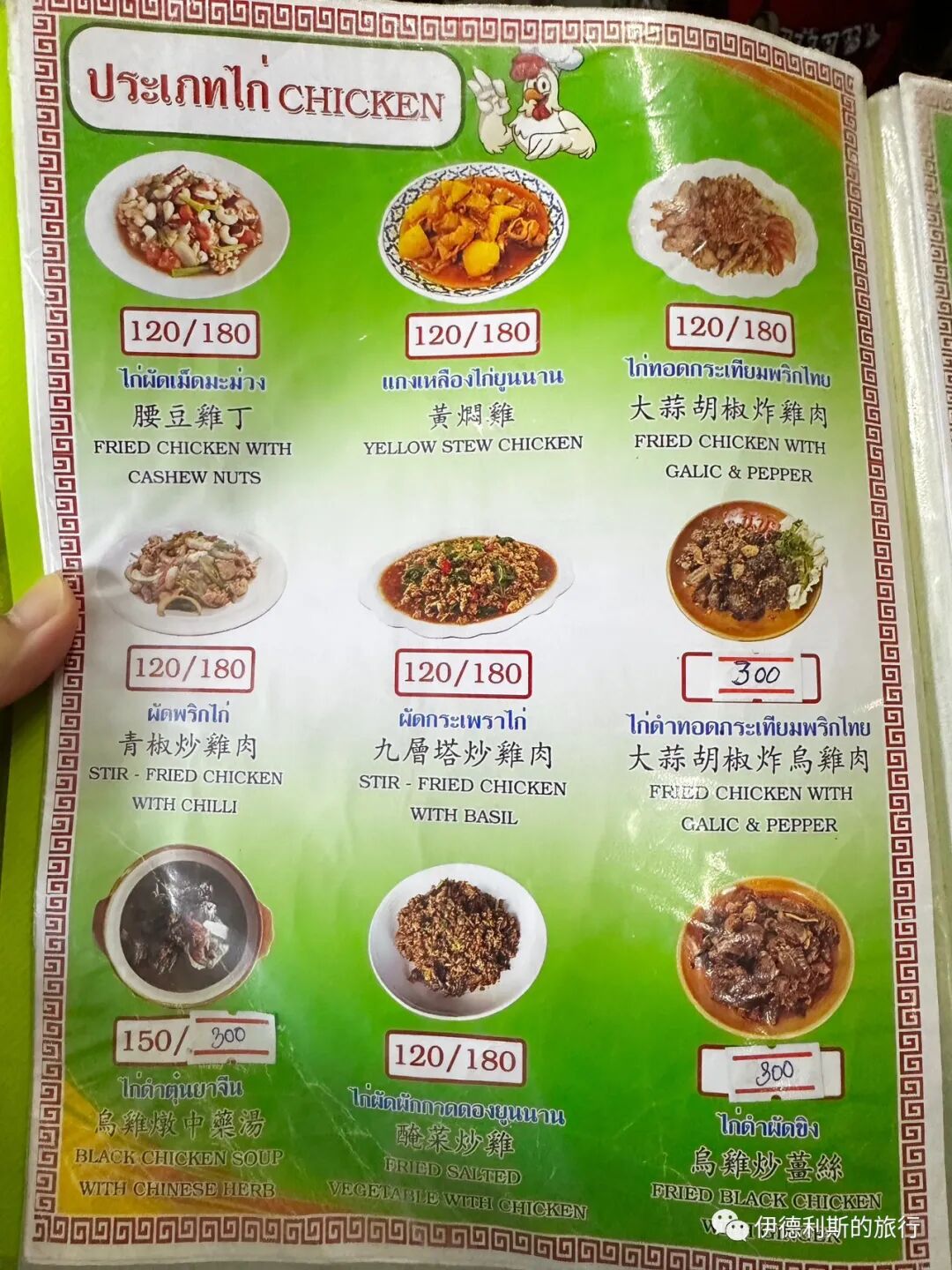
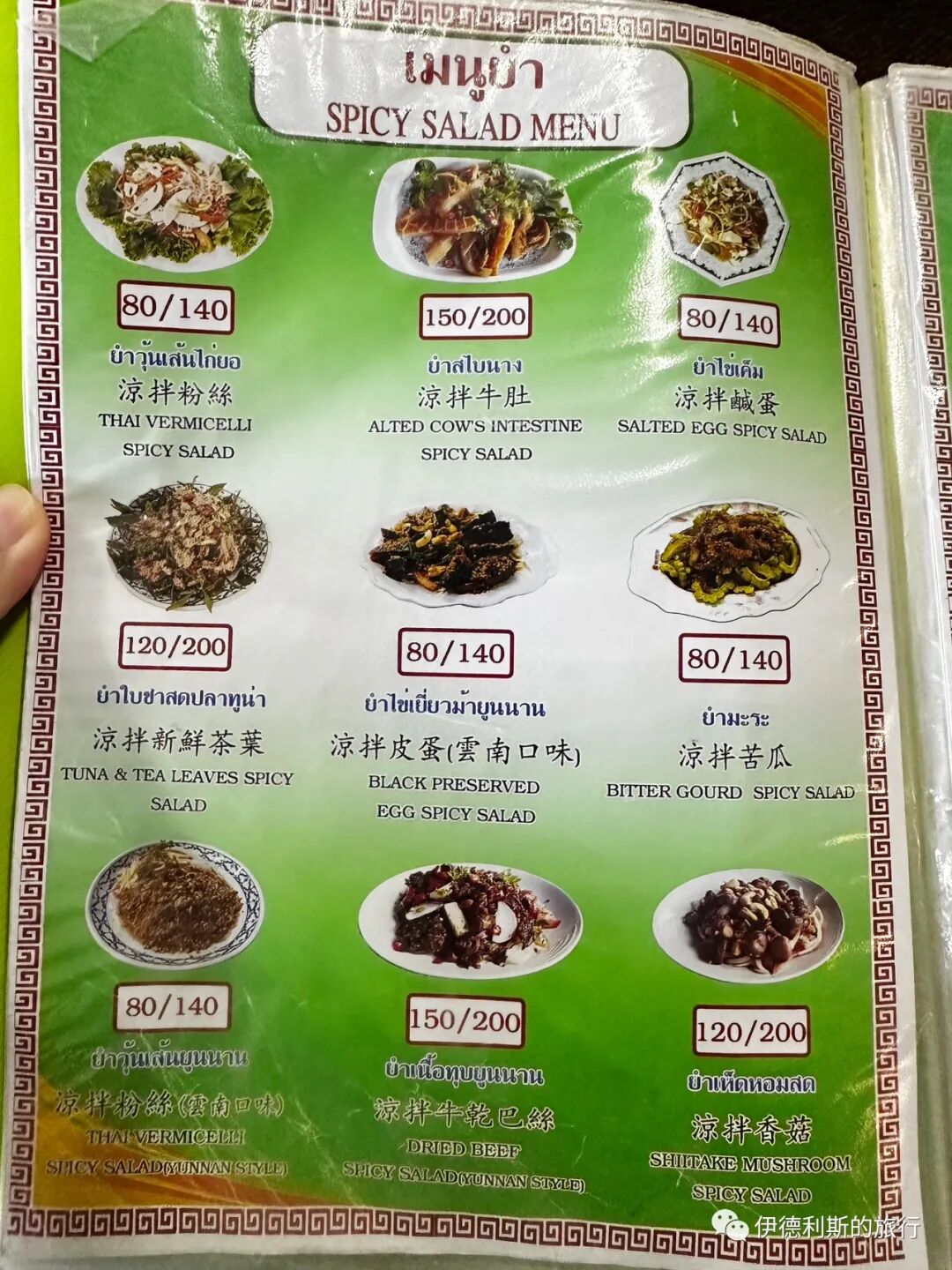
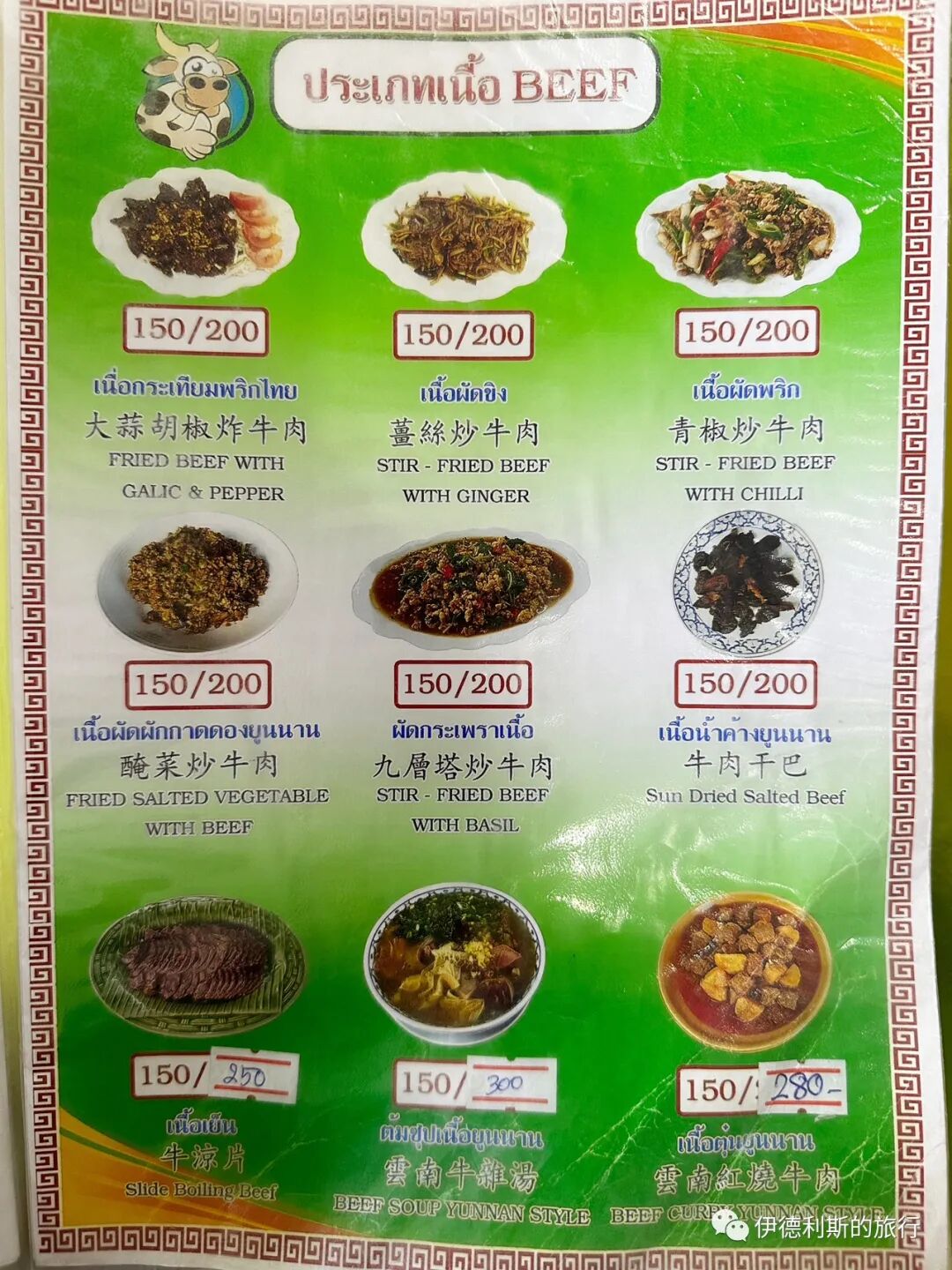
Besides Shanlima, Mae Salong has another Yunnan Hui Muslim restaurant called Mina Halal Restaurant. Since it is the off-season, the owner went to Taiwan. She will likely return after the Mid-Autumn Festival when the peak tourist season begins, so only the staff are running it now. If I have the chance to visit Mae Salong again, I will go and try their food.
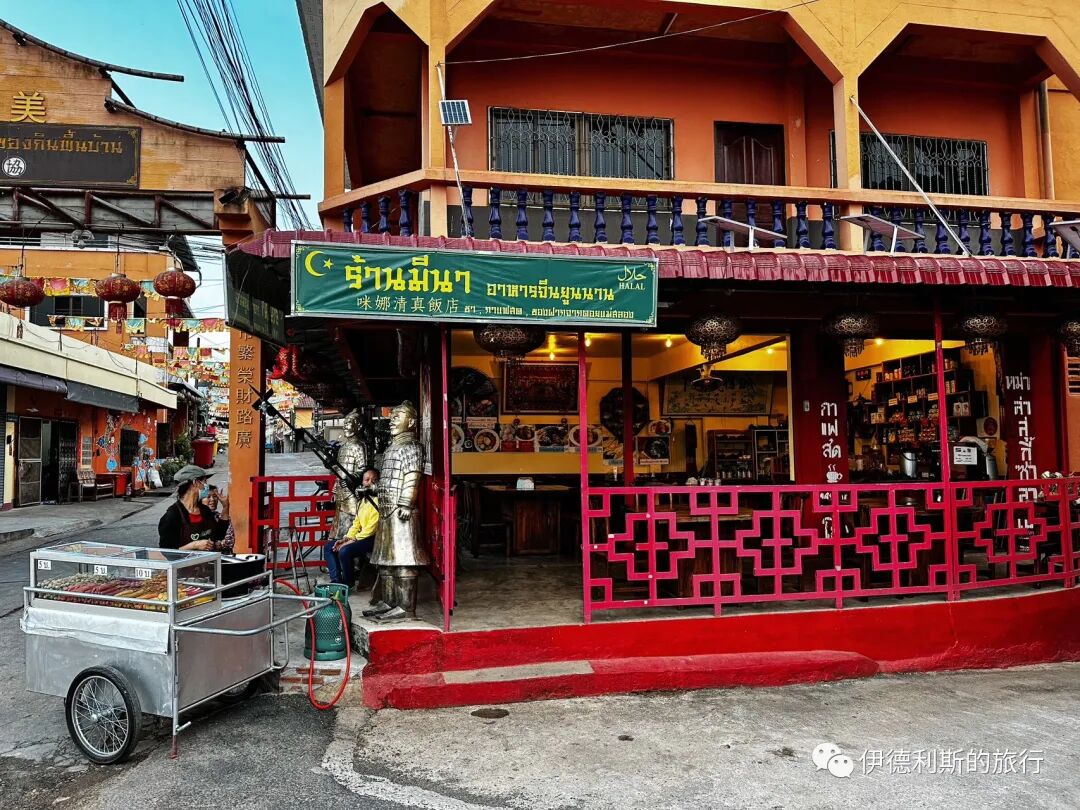
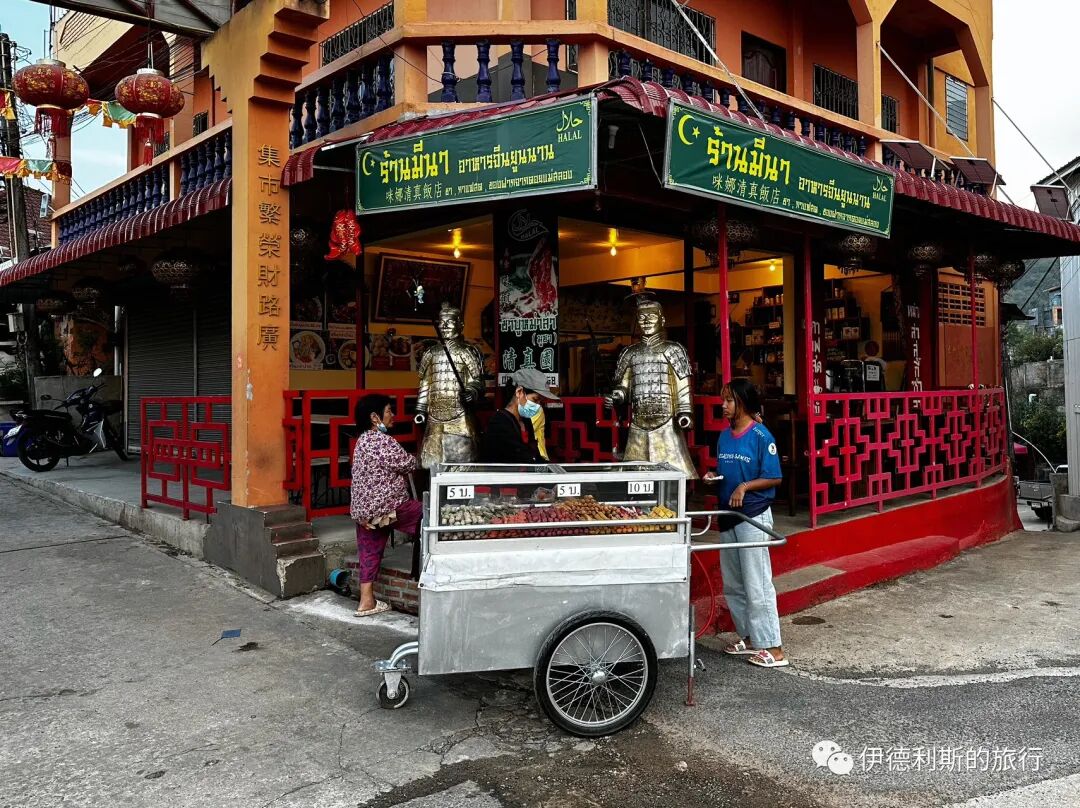
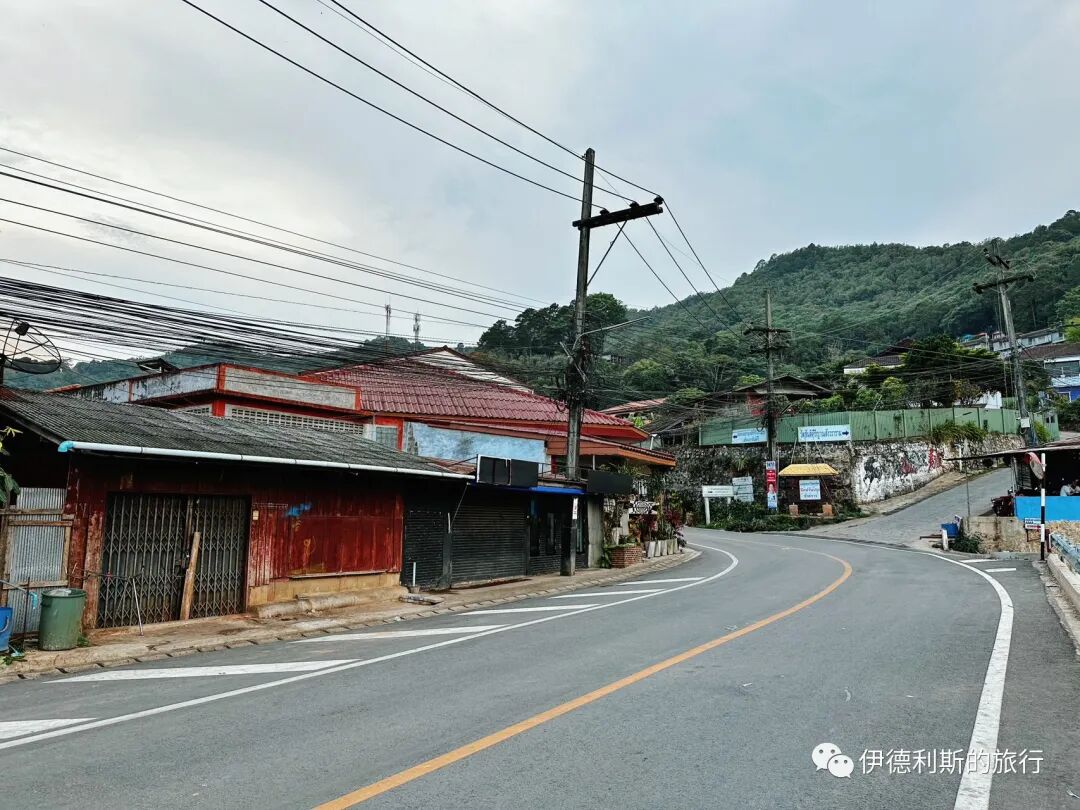
Mae Sai
In the evening, we traveled from Mae Salong to Mae Sai, a border port city on the Thai-Myanmar border at the northernmost tip of Thailand. Mae Sai now has over 200 households of Yunnan Hui Muslims, making it the second-largest settlement of Yunnan Hui Muslims in Northern Thailand outside of Chiang Mai.
We drank tea and chatted with the elders at the Yunnan Mosque in Mae Sai, and we had no trouble communicating in Mandarin. Although Mae Sai has been a necessary stop for Yunnan horse caravans heading south to Chiang Mai since the late Qing Dynasty, the mosque was not initiated and built until 1952 by Yunnan Hui Muslims Ma Xianglin and Ma Enshou. The original mosque was just a thatched hut, but it was later rebuilt into a wooden structure under the supervision of Ma Zixing, thanks to donations from Qian Yizhai and fellow believers in Chiang Mai. In 1975, as the number of Yunnan Hui Muslims in Mae Sai grew, the old mosque could no longer accommodate everyone. Mu Chengfang initiated a move to the current location next to the main road, and Ma Weijing and Na Caikui oversaw the construction of the current steel and concrete building.
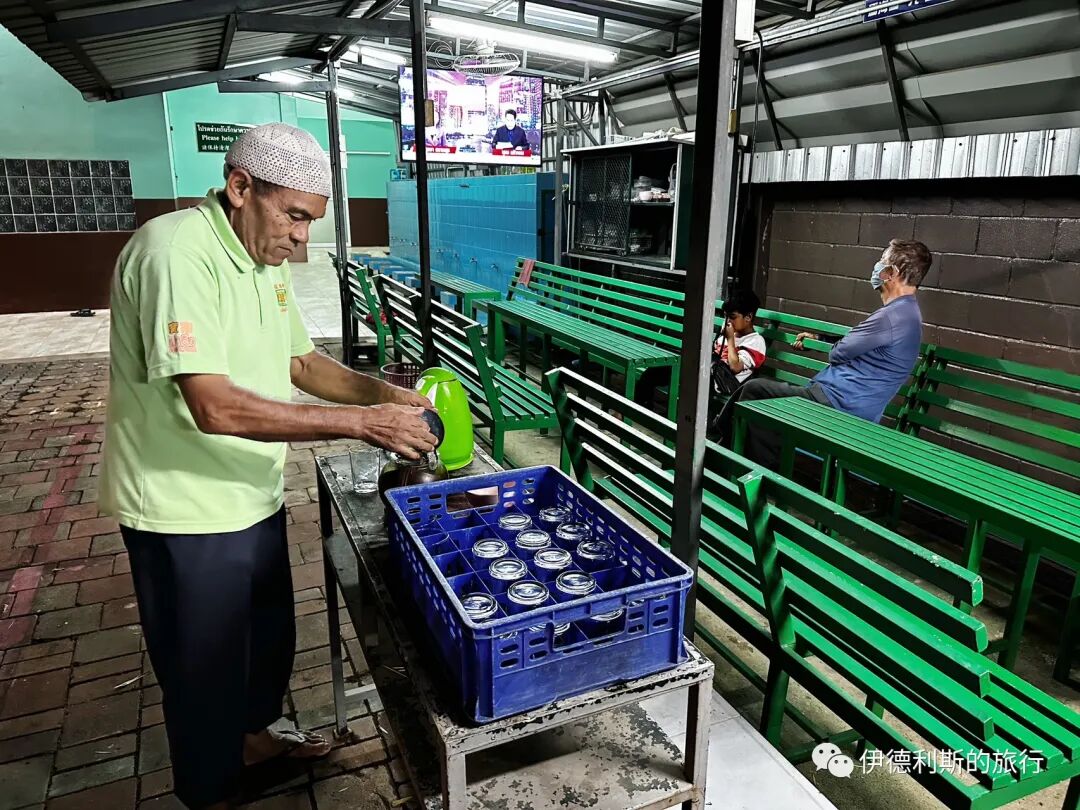
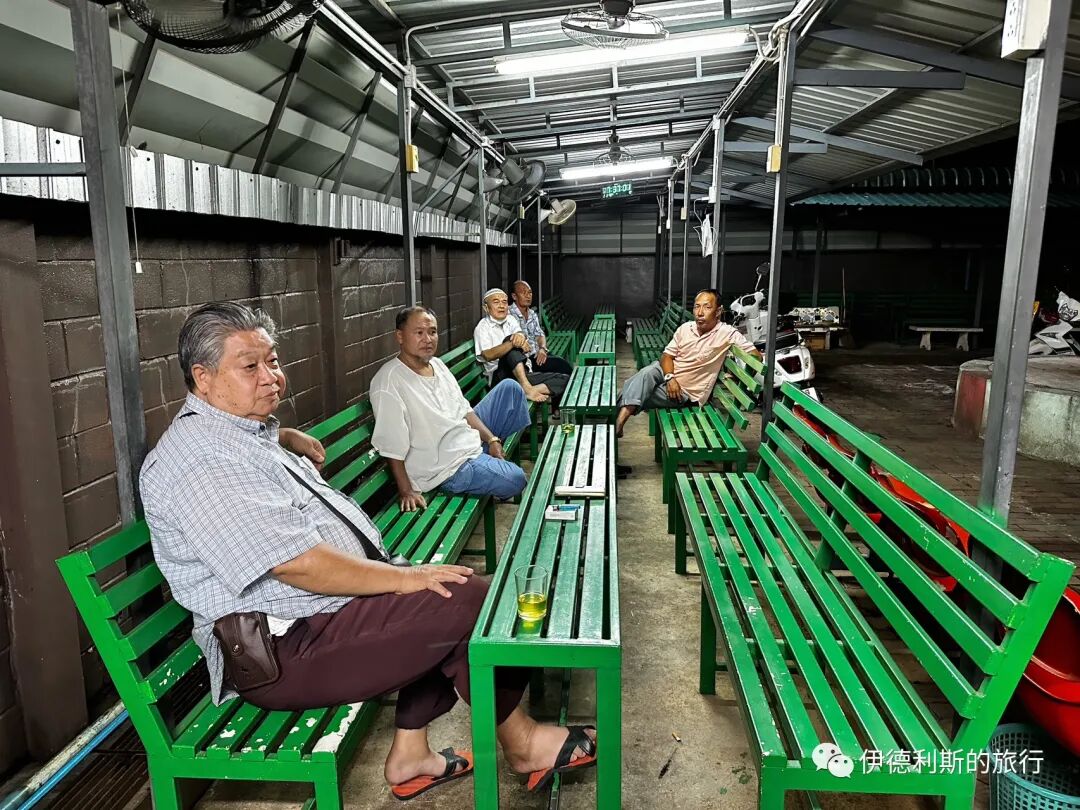
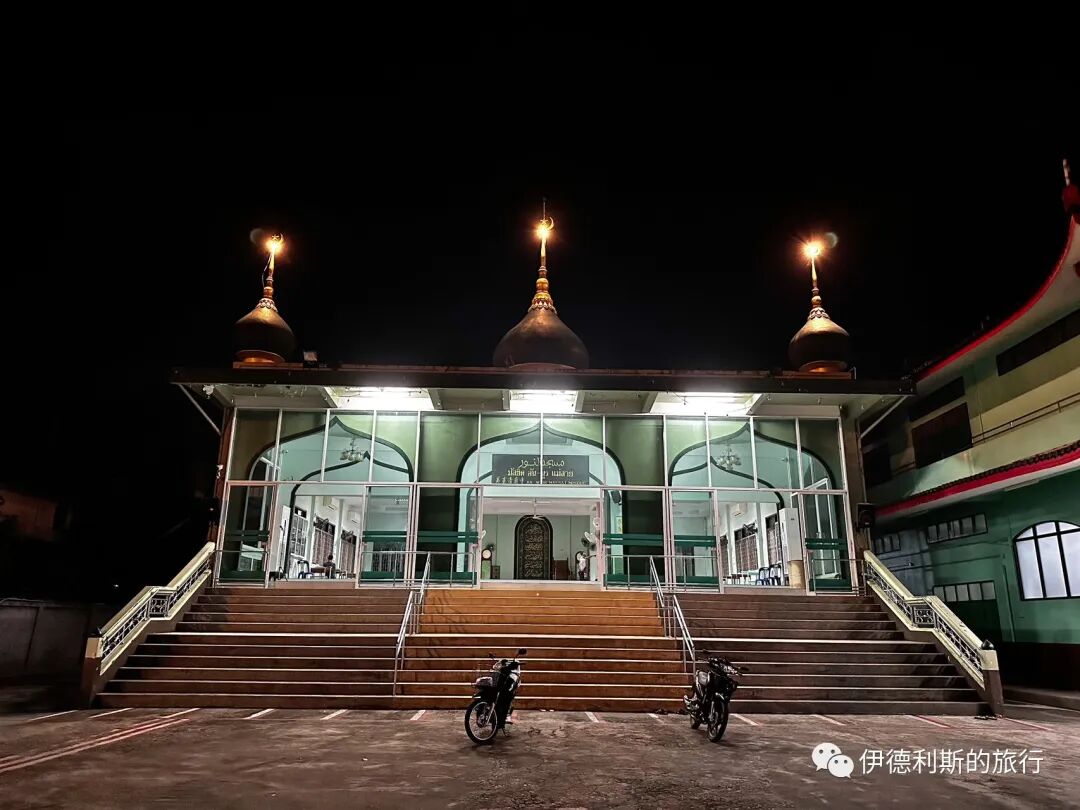
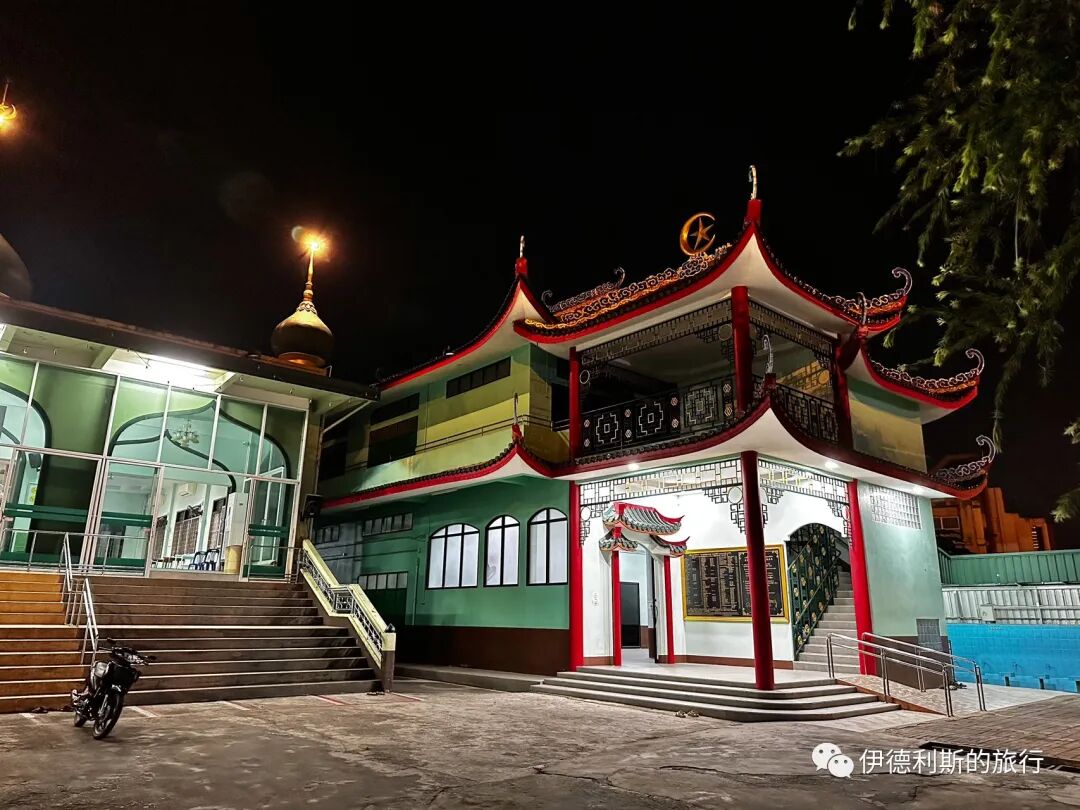
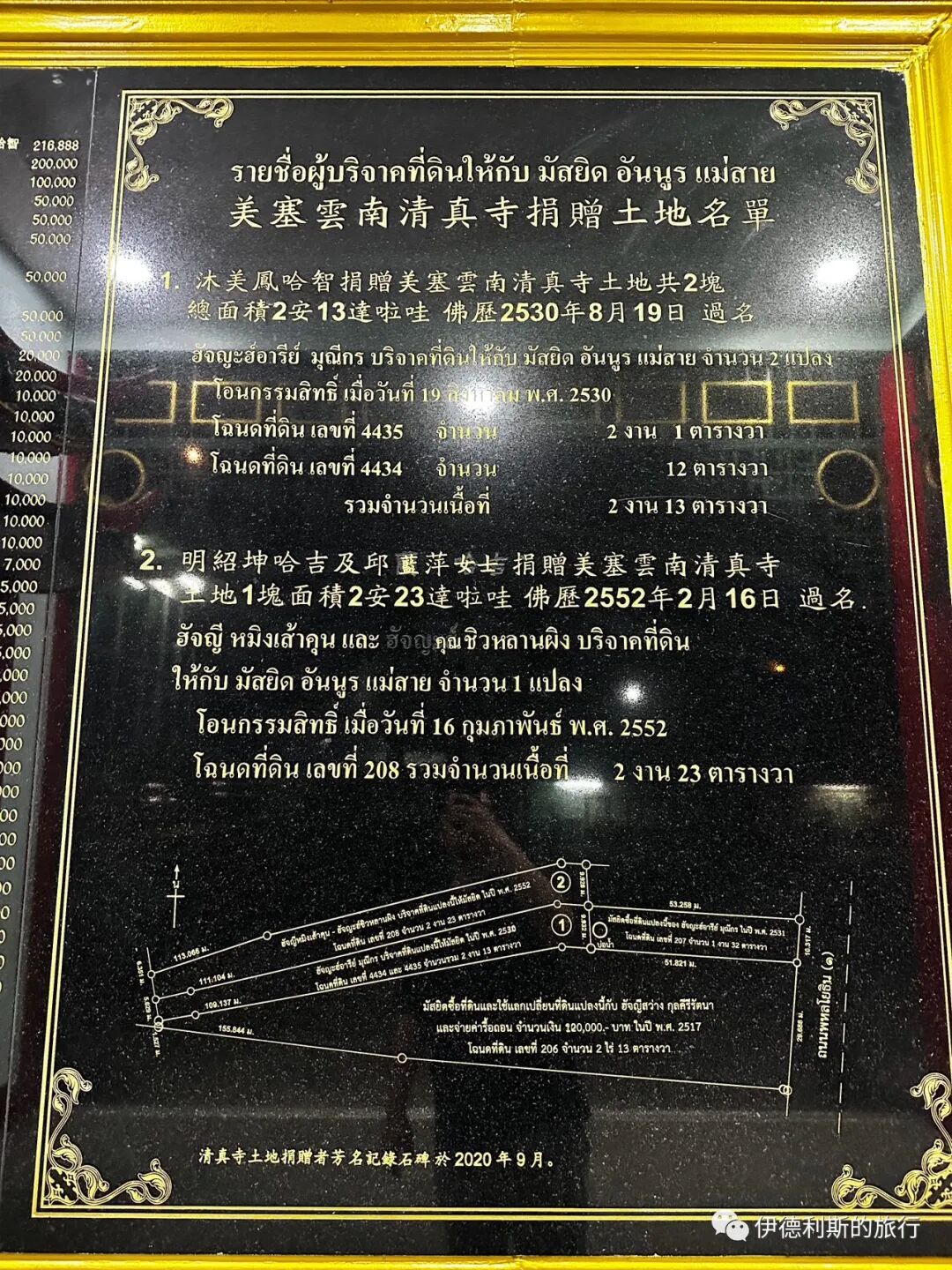
In the evening, we visited the South Asian Mosque in Mae Sai for namaz. According to Master Ma, there are currently 70 to 80 local South Asian Muslim households in Mae Sai, plus over 200 households of Myanmar-born Muslims who moved here from Myanmar to make a living due to poverty. There are about 50 poor students from Myanmar in this mosque. The mosque provides them with free food, housing, and education, which is very moving.
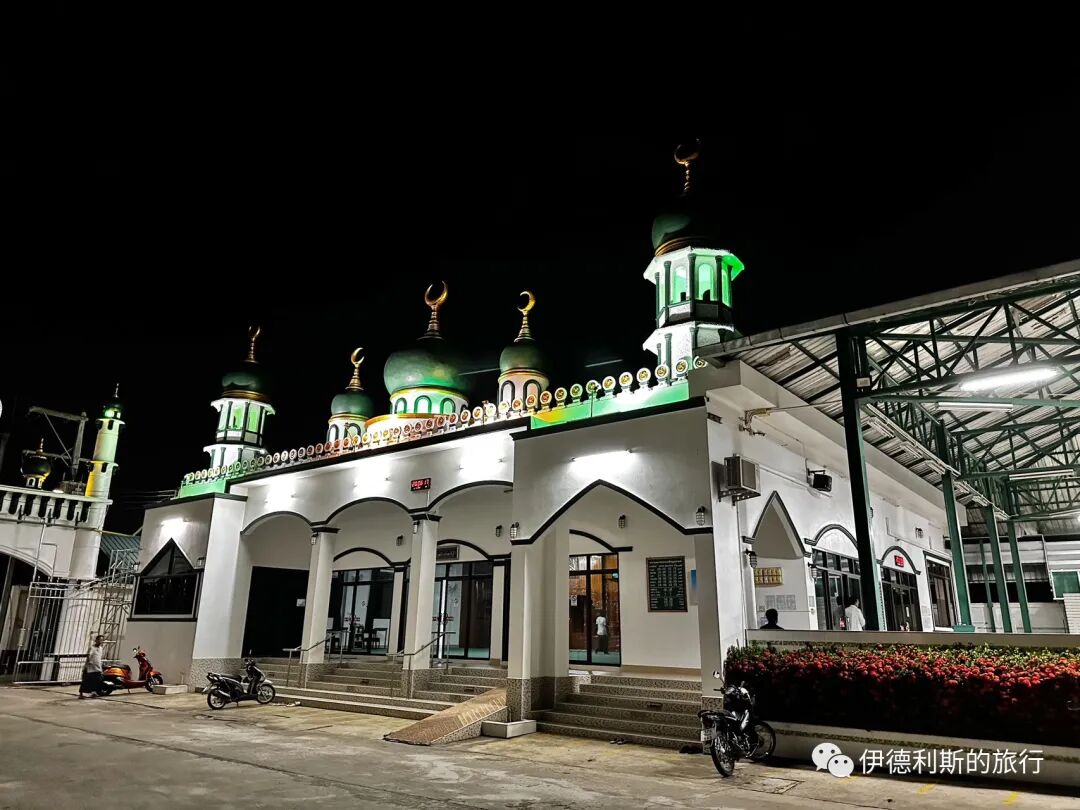
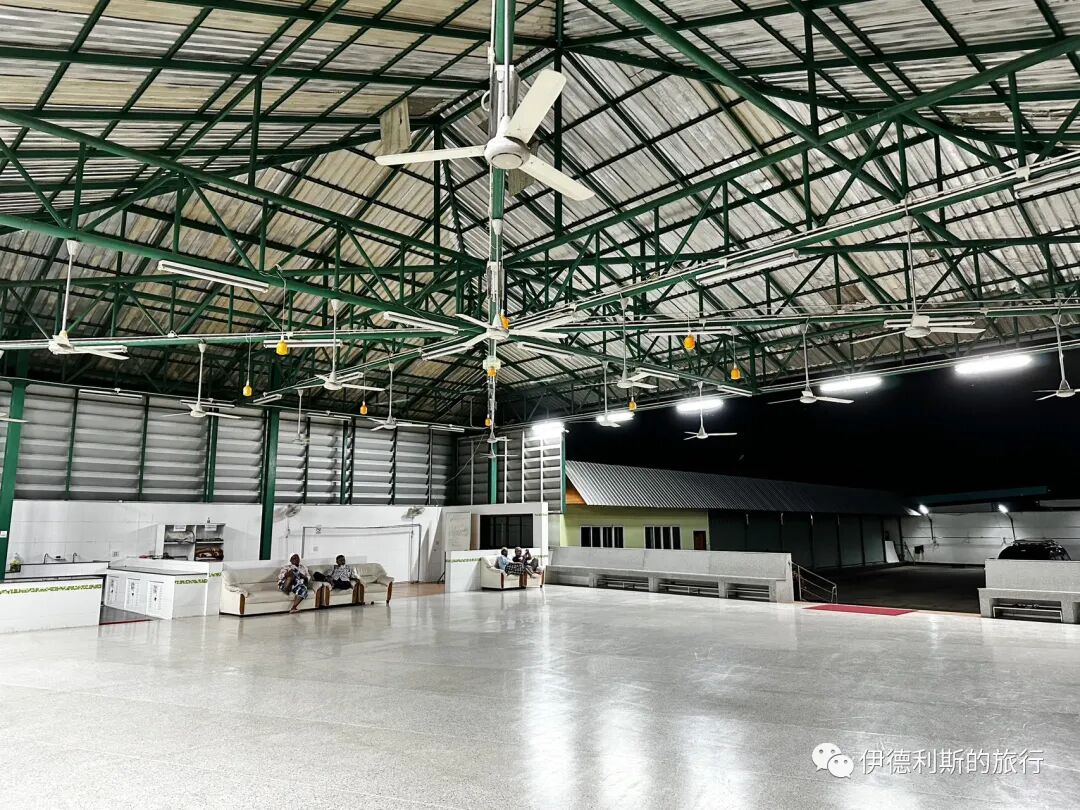
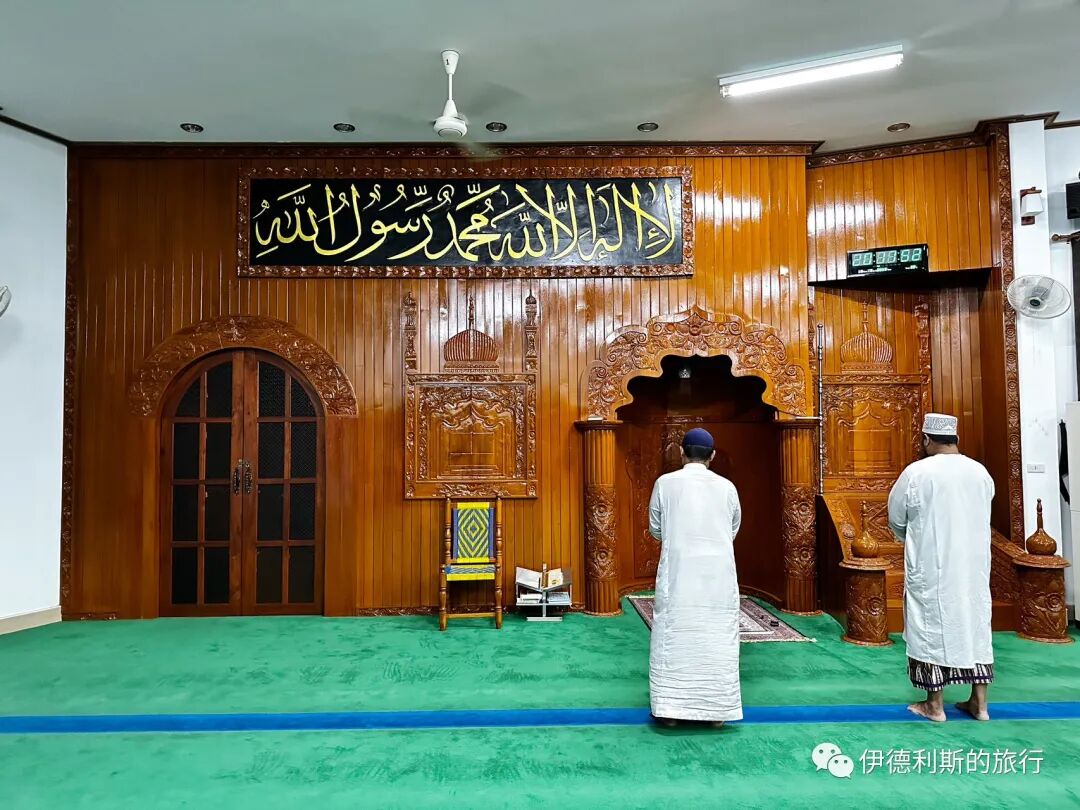
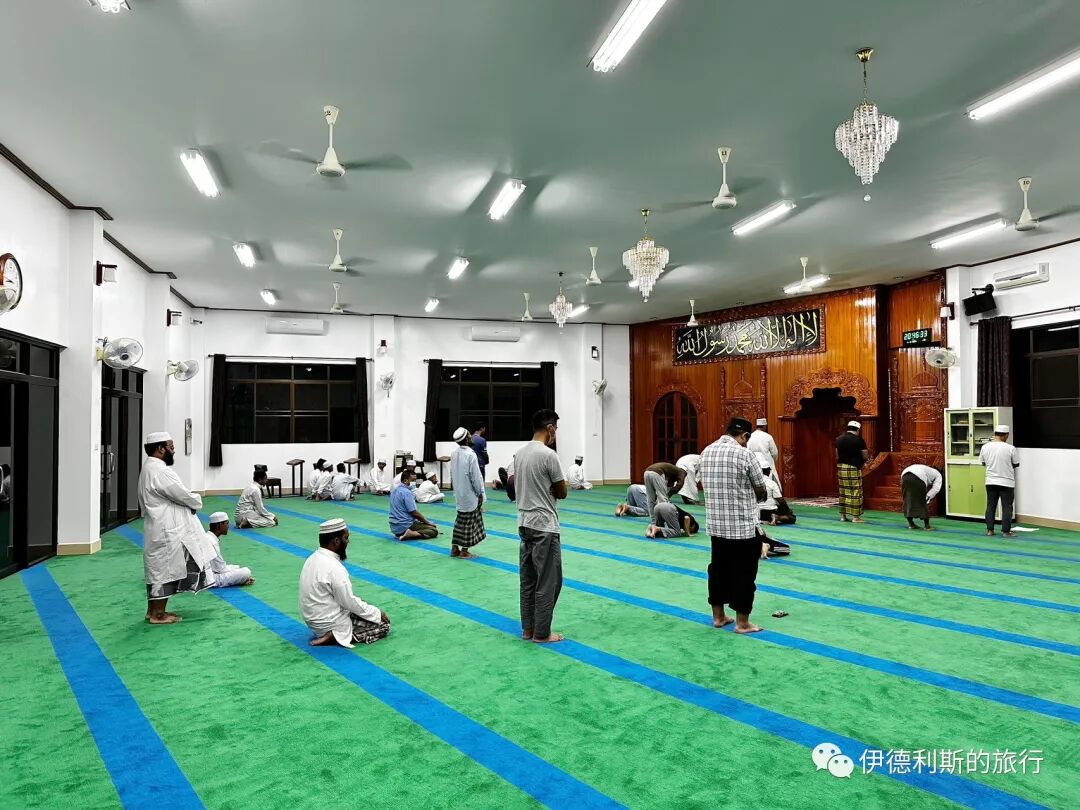
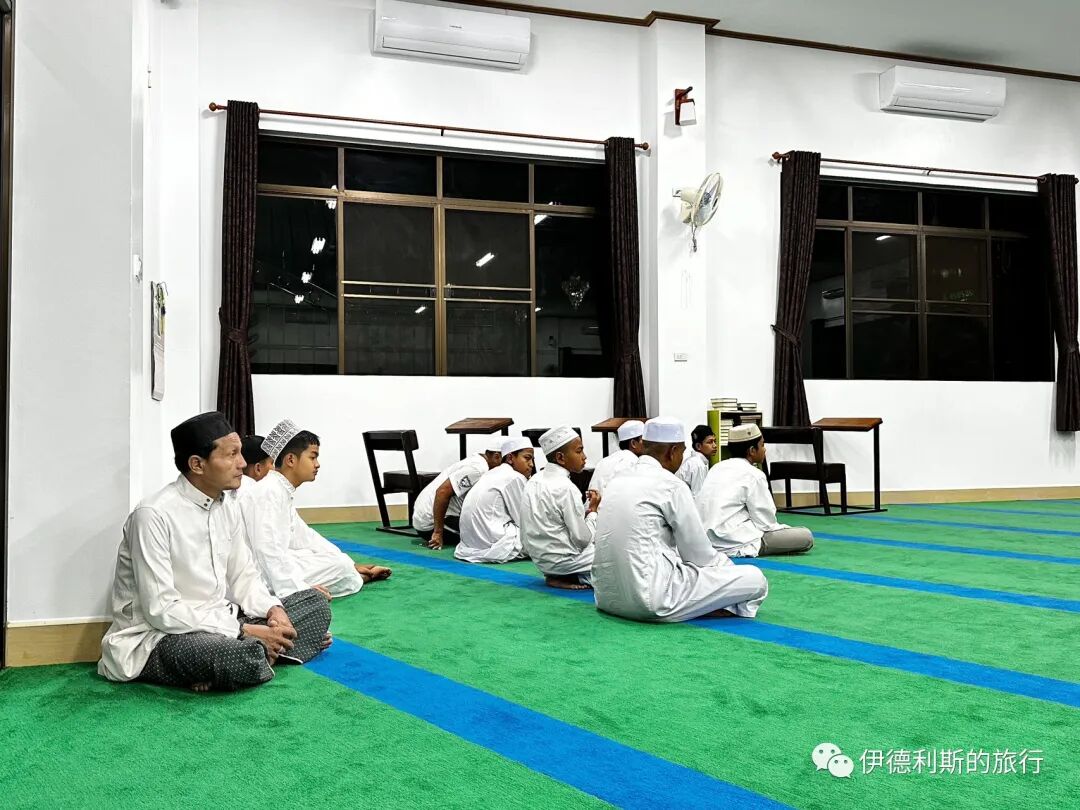
After coming down from Hufu Beach, we had spicy barbecue (shaokao) from a Yunnan Hui Muslim shop in Mae Sai for a late-night snack. We had no trouble communicating in Mandarin. They run the shop right at their own front door. You have to make several turns off the main road to find it, and we never would have spotted it without Master Ma leading the way. The barbecue doesn't have beef or lamb. It is mostly chicken gizzards, chicken hearts, and various types of sausages. They brush on plenty of Sichuan peppercorn water and chili sauce. We chose the mild spice level, and it was still very satisfying.
While walking around the streets of Mae Sai at night, we saw a Thai Muslim roast duck shop across from the Yunnan mosque. It was still busy at midnight. It turns out Thai people really love eating roast duck too. The Chinese community in Mae Sai is mainly made up of three groups: Yunnan Han people, Yunnan Hui Muslims, and Chaoshan people. Both the Yunnan and Chaoshan groups have their own Chinese-language schools. The Yunnan Hui Muslims here attend three types of schools: Thai schools, Chinese schools, and religious schools (jingxue). Because of this, they grow up knowing Thai, Chinese, and Arabic.
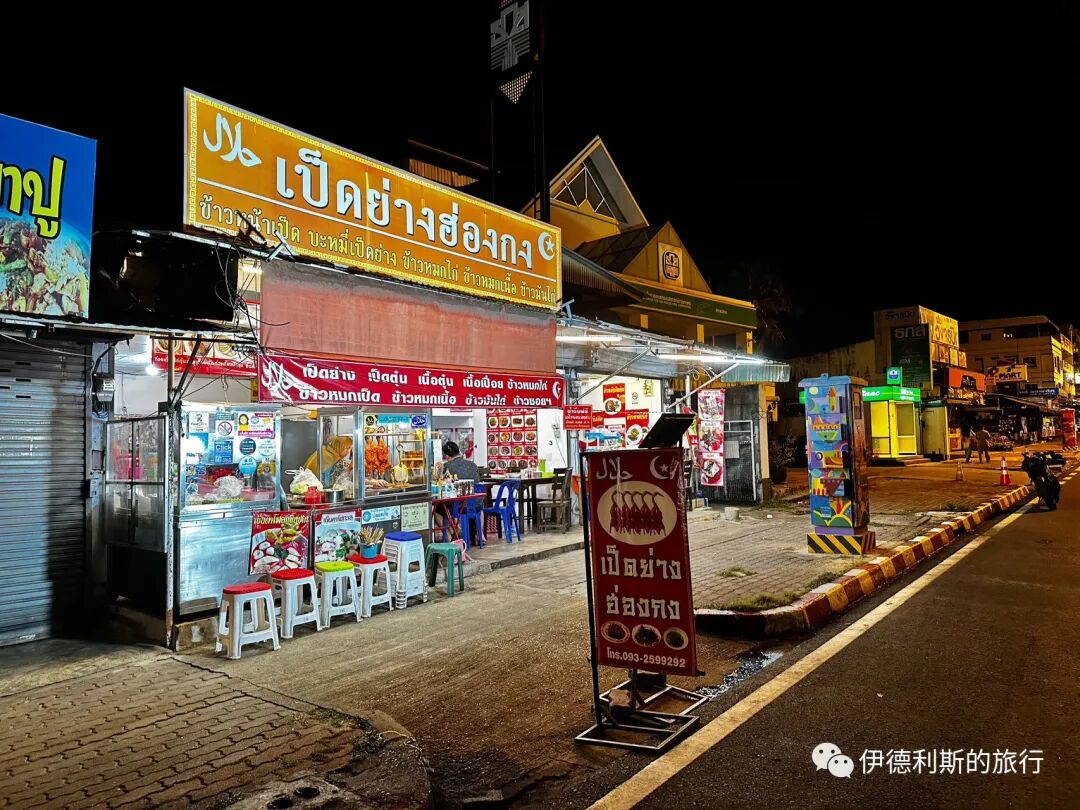
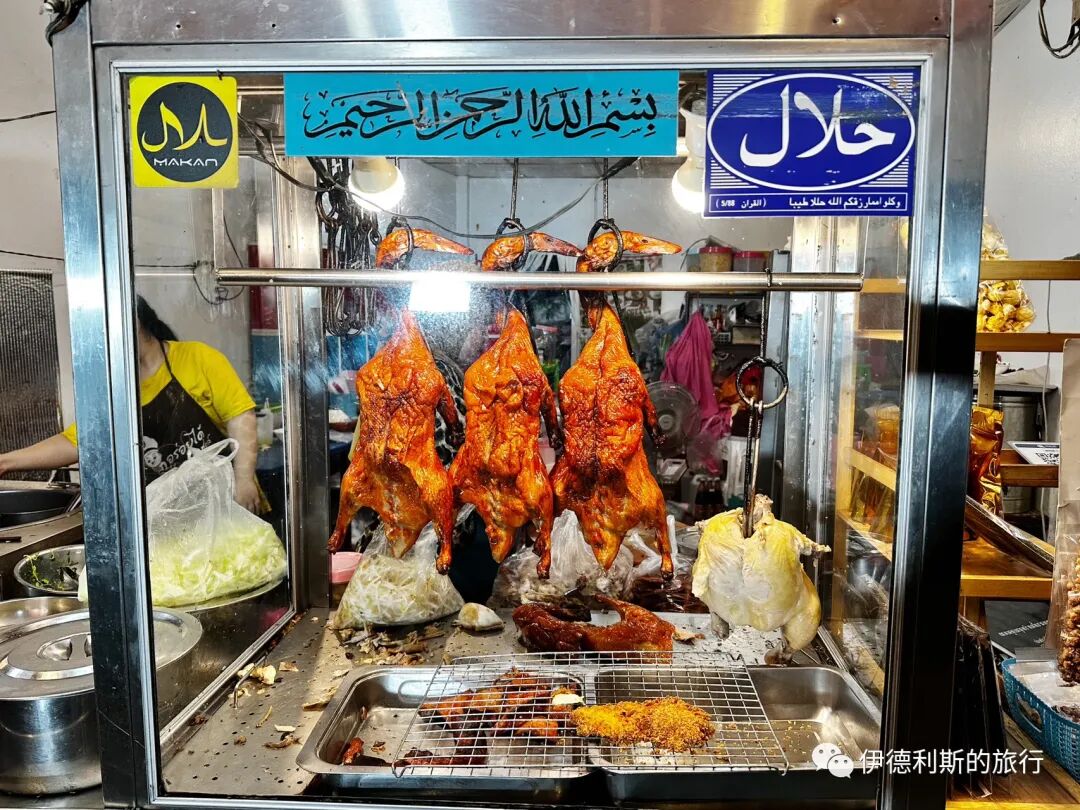
Halal Travel Guide: Northern Thailand — Yunnan-Style Mosques and Hui Muslims
Articles • ali2007fr posted the article • 0 comments • 183 views • 2026-05-18 22:07
Summary: Northern Thailand — Yunnan-Style Mosques and Hui Muslims is presented here as a firsthand travel account in clear English, beginning with this scene: During the May Day holiday in 2023, I traveled to Thailand. A key part of my trip was visiting the mosques (si-fang) of the Yunnanese Hui Muslims in Northern Thailand. The account keeps its focus on Northern Thailand, Yunnan Mosques, Hui Muslims while preserving the names, places, food, and historical details from the Chinese source.
During the May Day holiday in 2023, I traveled to Thailand. A key part of my trip was visiting the mosques (si-fang) of the Yunnanese Hui Muslims in Northern Thailand. I visited Chiang Mai in 2017 and went to four mosques in the city, where I also caught the lively Friday market (Jumu'ah bazaar). I am very grateful that this time we connected with Ma Ruqi, a local Yunnanese Hui Muslim driver in Northern Thailand. He will drive us on a tour of the Yunnanese mosques in the region.
Master Ma is a third-generation Yunnanese Hui Muslim immigrant. His grandparents came from Yunnan to Northern Myanmar for business in the early 20th century and later settled there. After the military government took power in Myanmar in 1962, they closed the borders and the economy stalled. Master Ma's parents then moved from Northern Myanmar to settle in Santikhiri (Manxingdie) in Northern Thailand. Santikhiri is located on a transport route along the Thai-Myanmar border and was once the base for the drug lord Khun Sa. Master Ma was born there. Master Ma's family lived in Santikhiri until 1996, when they moved to the Thai-Myanmar border city of Mae Sai at the foot of the mountain. Master Ma lived in Taiwan for nearly twenty years, where he married and had children. However, he felt that life in Taiwan did not suit his habits as well as Thailand, so he eventually returned.
We arrived in Chiang Mai on the afternoon of April 30. Master Ma took us to a restaurant in the Chang Khlan mosque neighborhood to eat Northern Thai curry noodles (khao soi) and Thai-style chicken rice (khao mok gai). They also served tamarind juice and roselle juice.
Master Ma explained that the owner of this shop is of Pakistani descent and has lived in Chiang Mai for five generations. The grandmother in the picture is from the third generation. Her descendants have married local Thai people and are fully integrated into Thai society.
Northern Thai curry noodles are the most famous yellow egg noodles in Chiang Mai. Research suggests they were created when the Shan people from Northern Myanmar migrated to Chiang Mai and combined their food culture with that of the Yunnanese Hui Muslims. The dish contains both fried egg noodles and boiled egg noodles; the fried ones are sprinkled on top, while the boiled ones are in the soup. The soup is like a mild yellow curry. It uses turmeric, ginger, coconut milk, soy sauce, and palm sugar. When eating, you add pickled mustard greens, lime, and shallots.
Thai-style chicken rice (khao mok gai) was formed when South Asian Muslims brought the method of making South Asian biryani rice to Thailand and blended it with local spices, resulting in a lighter flavor. To make it, you marinate the chicken overnight in yogurt, turmeric, and various spices. Then, you fry the chicken until golden brown, add stewing spices, and cook it with the rice. It is served with cucumber, Thai sweet chili sauce, and a bowl of chicken soup.
Besides South Asian and Malay residents, a few Hui Muslim families from Yunnan also live in the Chang Khlan mosque neighborhood. The owner of the grocery store across from the mosque is a relative of Master Ma. It is fascinating to hear them chat, switching seamlessly between Thai, Yunnan dialect, and Mandarin.
Due to the unstable situation in Myanmar in recent years, some Burmese Muslims have also moved to the Chang Khlan mosque neighborhood to live. We happened to run into some young Burmese Muslim men buying drinks at the grocery store. On Chang Khlan Road next to the mosque, there is a row of halal snack shops mostly run by Burmese Muslims. They love to chew betel nut, and the women apply a paste made from ground yellow wood branches and water called thanaka to their faces to prevent mosquito bites and cool down.
We visited the center of the Chang Khlan mosque neighborhood in Chiang Mai, Thailand—the Chang Khlan Mosque. The Chang Khlan mosque neighborhood is mainly made up of South Asian and Malay Muslims. Between 1826 and 1885, Britain gradually incorporated Myanmar into British India. During this period, South Asian Muslims under British Indian rule continuously traveled to Myanmar to make a living, and they arrived in Chiang Mai to settle in the mid-19th century. From 1891 to 1895, the Pahang Uprising occurred on the Malay Peninsula. The rebel army eventually failed and retreated into Siam, and some Malay Muslims were exiled to Chiang Mai. They intermarried with the local South Asian Muslims, and their descendants speak Thai and have integrated into Thai society. After the 20th century, the Thai people's name for these Thai-speaking Muslims gradually changed from Khaek (foreigner) to Thai-Islam (Thai Muslim).
In the afternoon, we went from Chang Khlan Mosque to Ban Ho Mosque. We first looked at the old house of Haji Zheng Chonglin across from Ban Ho Mosque, which is the most important historical site for Hui Muslims in Chiang Mai. Every Friday morning, a lively Jumu'ah bazaar is held in the courtyard of the old house, but it is quite quiet at other times.
During this visit, I discovered a new information board in the courtyard that introduces people of Yunnan descent and the Ho (Hò) people in Thai and English. People say when Yunnan horse caravans first communicated with locals in Northern Thailand, they often answered with 'hao, hao' (good, good). The locals used 'Ho' to refer to these Yunnan horse caravan merchants, and it later became the name for all people of Yunnan descent in Northern Thailand.
In the 19th century, Yunnan horse caravans controlled the trade route from Yunnan through Northern Myanmar to Northern Thailand. They transported tea, silk, hardware, and copperware to Northern Thailand and brought cotton and tobacco back to Yunnan. In the late 19th and early 20th centuries, King Rama V of Thailand vigorously developed the economy, which led many Hui Muslim horse caravans to come to Chiang Mai. In 1904, Zheng Chonglin, a caravan merchant from Yuxi, Yunnan, and a descendant of Zheng He, established the Da Ma Dian (Big Horse Inn) east of Chiang Mai city, which became the main base for Yunnanese caravans in Chiang Mai. Many Yunnanese Hui Muslims from the caravans came to live near the inn, and the Wang He community began to form.
Zheng Chonglin was born in 1884 in Daying, Yuxi, Yunnan, and followed his elders in the caravan trade between Yunnan, Thailand, and Myanmar from a young age. He was once commissioned by King Rama VI of Thailand to organize a caravan team in northern Thailand, taking on the transport of all supplies for the railway construction from Bangkok to Lampang. In 1910, when the site for Chiang Mai Airport was chosen, it was the horse farm that the Yunnanese caravans had jointly purchased and used for many years. Zheng Chonglin donated the land on behalf of the Yunnanese caravans, and it is now Thailand's second-largest international airport. Because of his great contributions to Thailand, King Rama VI bestowed the first-rank title of Khun (Tang Kun) upon Zheng Chonglin in 1914, making him the leader of the Yunnanese community in northern Thailand. He married Nu, the daughter of a local chieftain in Tak Province, and they had five sons and five daughters. In 1967, Zheng Chonglin went on the Hajj and passed away peacefully in Mecca at the age of 83.
At the Wang He Mosque (Wang He Si) in Chiang Mai, many of the elders here can speak Mandarin and the Yunnan dialect, and the mihrab features traditional Yunnan-style Arabic calligraphy.
In the early 20th century, Zheng Chonglin was rewarded by the Chiang Mai chieftain with a piece of land east of Chiang Mai city, where he built his residence, the Zheng Mansion (Zheng Fu). In 1907, Zheng Chonglin built a prayer room at the Zheng Mansion, and many Yunnanese Hui Muslims in Chiang Mai would come to the mansion for their worship. In 1917, led by Zheng Chonglin, everyone pooled their money to buy the land opposite the Zheng Mansion and built the Wang He Mosque.
During the 1950s and 1960s, many Yunnanese Hui Muslims arrived in Chiang Mai to settle, and the number of congregants at the Wang He Mosque increased significantly. In 1966, three Hajjis—Hu Ranmao, Ma Ruqi, and Ma Wanzhang—led the effort to rebuild the Wang He Mosque into the current reinforced concrete structure.
Ma Ruqi was the owner of the Ma Ruqi Courtyard in Donglianhua Village, Weishan, Dali. He settled in Chiang Mai after 1954, worked in the local specialty trade, was passionate about public welfare, and was appointed president of the Thai-Chinese Chamber of Commerce in 1974. Today, Ma Ruqi's descendants in Dali still live in the Ma Ruqi Courtyard and have opened a restaurant and guesthouse. I highly recommend visiting to experience it; you can refer to my record from earlier this year, 'The Three Hui Muslim Caravan Courtyards in Donglianhua Village, Weishan, Dali'.
Hu Ranmao was an important leader of the Wang He Mosque community after Zheng Chonglin. He was born in 1914 in Xiaoweigeng Village, Weishan, Dali, and served as the principal of his hometown's Muguang School in 1934. He worked in the horse caravan trade between Thailand and Myanmar in the 1940s and settled in Chiang Mai in 1953. In the 1970s, he helped found the Chiang Mai Islamic Committee and served two consecutive terms as its chairman. During his lifetime, Hu Ranmao was received by the King of Thailand many times and was honored with the royal title of Yong Fooanant.
In the afternoon, I went to the night market at Tha Phae Gate in Chiang Mai. A cultural event was happening in front of Tha Phae Gate, where I saw a performance of the local Chiang Mai victory drum (desheng gu).
Then I went to Chiang Mai's second Yunnan-style mosque, Masjid Attaqwa, located in the San Pa Khoi area east of the Ping River. Many Yunnan Hui Muslims came to Chiang Mai via northern Myanmar in the 1950s and 1960s. As the original Wang He Mosque became crowded, Haji Hu Ranmao led the construction of Masjid Attaqwa to the east of Wang He in 1970. The mihrab inside Masjid Attaqwa features traditional Yunnan-style Arabic calligraphy, and the cartoons drawn by the children in the weekend class are very cute.
There are several Yunnan snack shops at the mosque entrance. In 2017, I ate authentic Yunnan pea jelly (wandoufen) here. This time, I saw a new restaurant that says 'Yunnan Banlong Wanyang Muslim Home Cooking'. Banlong is located in the Wa Mountains of the Kokang region in northern Myanmar. It is a community formed in the 1870s after General Ma Linyu of Du Wenxiu's army led his troops there and were taken in by the Wa tribe. It was later renamed 'Bannong'. Wanyang is a village established in the 1950s after the 93rd Division of the Nationalist Army moved to northern Thailand.
Opposite Masjid Attaqwa is Attaqwa School, the most important Islamic school in Chiang Mai and northern Thailand. Our driver, Mr. Ma, is a graduate of this school. It was summer vacation in May, so most teachers and students were away. We met a teacher who stayed at the school and gave a donation (nietie) to the school. According to Mr. Ma, this teacher is a Malay from southern Thailand and a graduate of the Islamic University of Madinah, and he is a very skilled teacher.
Attaqwa School was initiated by Haji Hu Ranmao in the 1960s and opened in 1970. It teaches Arabic, the Quran and Hadith, and religious knowledge, while providing free food and housing. When Attaqwa School was first established, most students were local Yunnan Hui Muslims from Chiang Mai. Later, because of its high teaching standards and free food and housing, it attracted Muslims from all over northern Thailand, southern Thailand, and Myanmar to study there. For half a century, Jingzhen School has played a vital role in the development of the faith in Thailand. It is a major reason why young and middle-aged Hui Muslims in northern Thailand can still hold fast to their faith today.
In the evening, we performed the evening prayer (namaz) at Nurul Mosque, located outside the White Elephant Gate (Chang Phuak Gate) in northern Chiang Mai. When I visited Chiang Mai in 2017, the mosque was being rebuilt, and now the new building is just finished. We met Grand Imam Mustafa here. He was the teacher of Master Ma when he attended Jingzhen School 30 years ago. He is highly respected throughout the entire Muslim community in Chiang Mai. Grand Imam Mustafa's daughter runs an Islamic bookstore at the entrance of Wang He Mosque. We visited it before we left, and I will share more about it later.
Like the Chang Khlan Mosque community, the Nurul Mosque community is a South Asian one. Many ancestors of the Haw Muslims (gaomu) came from Bangladesh. They arrived in Chiang Mai via Myanmar to trade during the British India period in the 19th century and later made a living by raising cattle. During the Partition of India and Pakistan in 1947, more Bengali Muslims moved here to escape the chaos. After the 1960s, Chiang Mai banned cattle from entering the city. Some Haw Muslims moved to the Chang Khlan Mosque community, which is further from the old city. Because of this, the number of Haw Muslims at Nurul Mosque is now the smallest among the four mosque communities in downtown Chiang Mai.
We had dinner at a Yunnan-style restaurant next to Wang He Mosque. The restaurant is owned by Na Zhongwei, a board member of Wang He Mosque, and the building itself is property of the mosque. Although the Yunnan restaurant has been open for many years, it only moved to its current location recently. It is very convenient to eat there after visiting Wang He Mosque.
We ordered stir-fried holy basil beef (dapao niurou), steamed sea bass, pumpkin tips, and stir-fried tofu puffs. You can choose the portion size for dishes here, and some even come in small, medium, or large sizes, which is perfect for tourists. Hui Muslims from Yunnan have lived in Chiang Mai for over a hundred years, and their tastes have changed. For example, the sour and spicy levels are much stronger than what you would find in Yunnan. In Yunnan, a purely vegetarian dish like pumpkin tips usually wouldn't have chili, but in Thailand, they definitely add chili to it.
Besides being a bit spicy, I really love the food of the Yunnan Hui Muslims in Thailand. I especially love the stir-fried holy basil beef; it goes so well with rice. Holy basil (dapao) is also known as sacred basil. It is native to South Asia and widely grown in the tropical regions of Southeast Asia. Stir-frying meat with holy basil leaves is a famous Thai dish. This tofu stir-fried in a sour and spicy sauce is also delicious. The balance of sour, sweet, and spicy is just right.
Then, on Chang Khlan Road, we found an Emirati restaurant. It had a sign in Chinese that read 'Arabic food, Indian food, Chinese food, Italian food.' It is the most 'Maritime Silk Road' restaurant I have ever seen, haha. view all
Summary: Northern Thailand — Yunnan-Style Mosques and Hui Muslims is presented here as a firsthand travel account in clear English, beginning with this scene: During the May Day holiday in 2023, I traveled to Thailand. A key part of my trip was visiting the mosques (si-fang) of the Yunnanese Hui Muslims in Northern Thailand. The account keeps its focus on Northern Thailand, Yunnan Mosques, Hui Muslims while preserving the names, places, food, and historical details from the Chinese source.
During the May Day holiday in 2023, I traveled to Thailand. A key part of my trip was visiting the mosques (si-fang) of the Yunnanese Hui Muslims in Northern Thailand. I visited Chiang Mai in 2017 and went to four mosques in the city, where I also caught the lively Friday market (Jumu'ah bazaar). I am very grateful that this time we connected with Ma Ruqi, a local Yunnanese Hui Muslim driver in Northern Thailand. He will drive us on a tour of the Yunnanese mosques in the region.
Master Ma is a third-generation Yunnanese Hui Muslim immigrant. His grandparents came from Yunnan to Northern Myanmar for business in the early 20th century and later settled there. After the military government took power in Myanmar in 1962, they closed the borders and the economy stalled. Master Ma's parents then moved from Northern Myanmar to settle in Santikhiri (Manxingdie) in Northern Thailand. Santikhiri is located on a transport route along the Thai-Myanmar border and was once the base for the drug lord Khun Sa. Master Ma was born there. Master Ma's family lived in Santikhiri until 1996, when they moved to the Thai-Myanmar border city of Mae Sai at the foot of the mountain. Master Ma lived in Taiwan for nearly twenty years, where he married and had children. However, he felt that life in Taiwan did not suit his habits as well as Thailand, so he eventually returned.
We arrived in Chiang Mai on the afternoon of April 30. Master Ma took us to a restaurant in the Chang Khlan mosque neighborhood to eat Northern Thai curry noodles (khao soi) and Thai-style chicken rice (khao mok gai). They also served tamarind juice and roselle juice.
Master Ma explained that the owner of this shop is of Pakistani descent and has lived in Chiang Mai for five generations. The grandmother in the picture is from the third generation. Her descendants have married local Thai people and are fully integrated into Thai society.
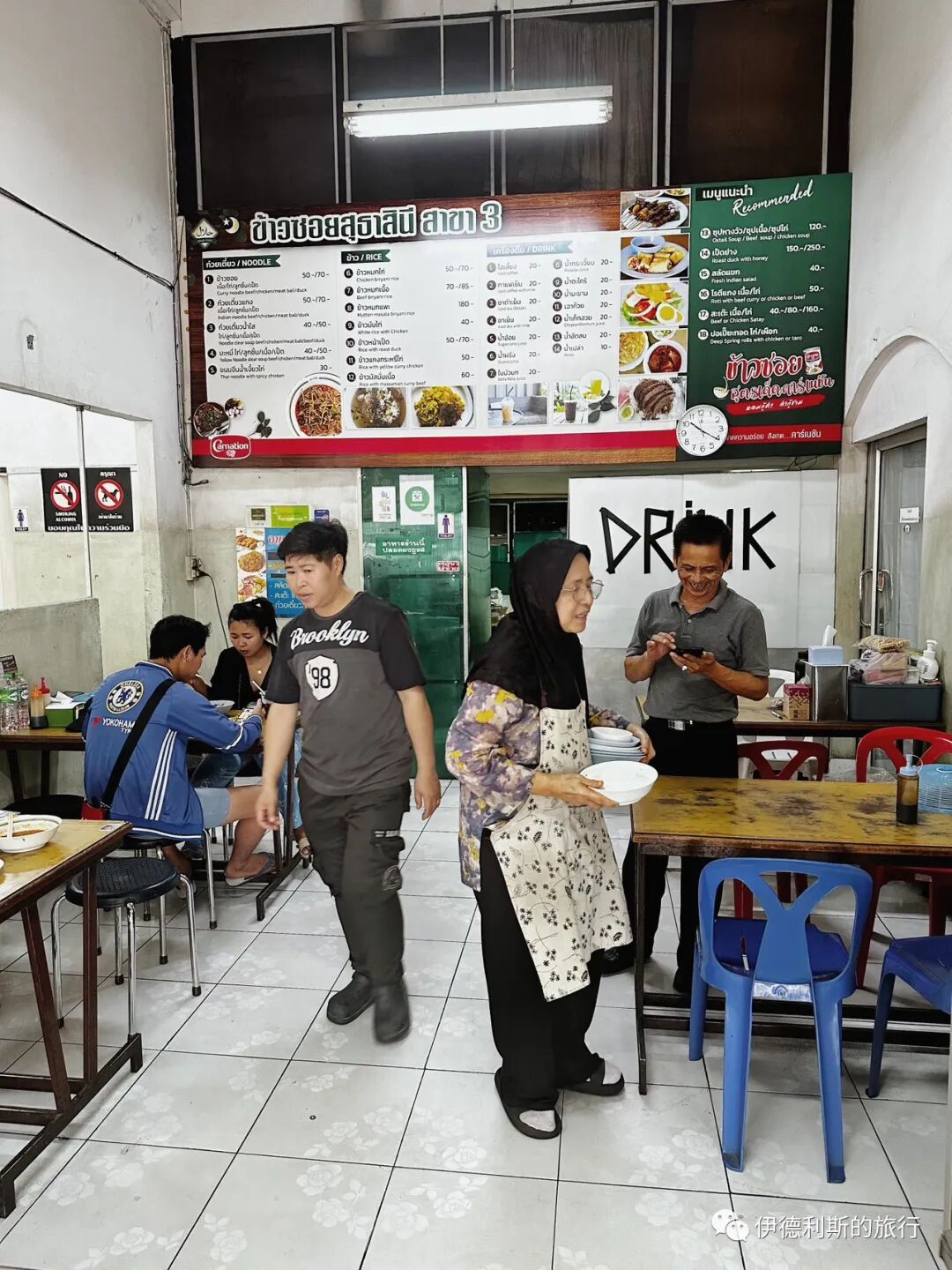
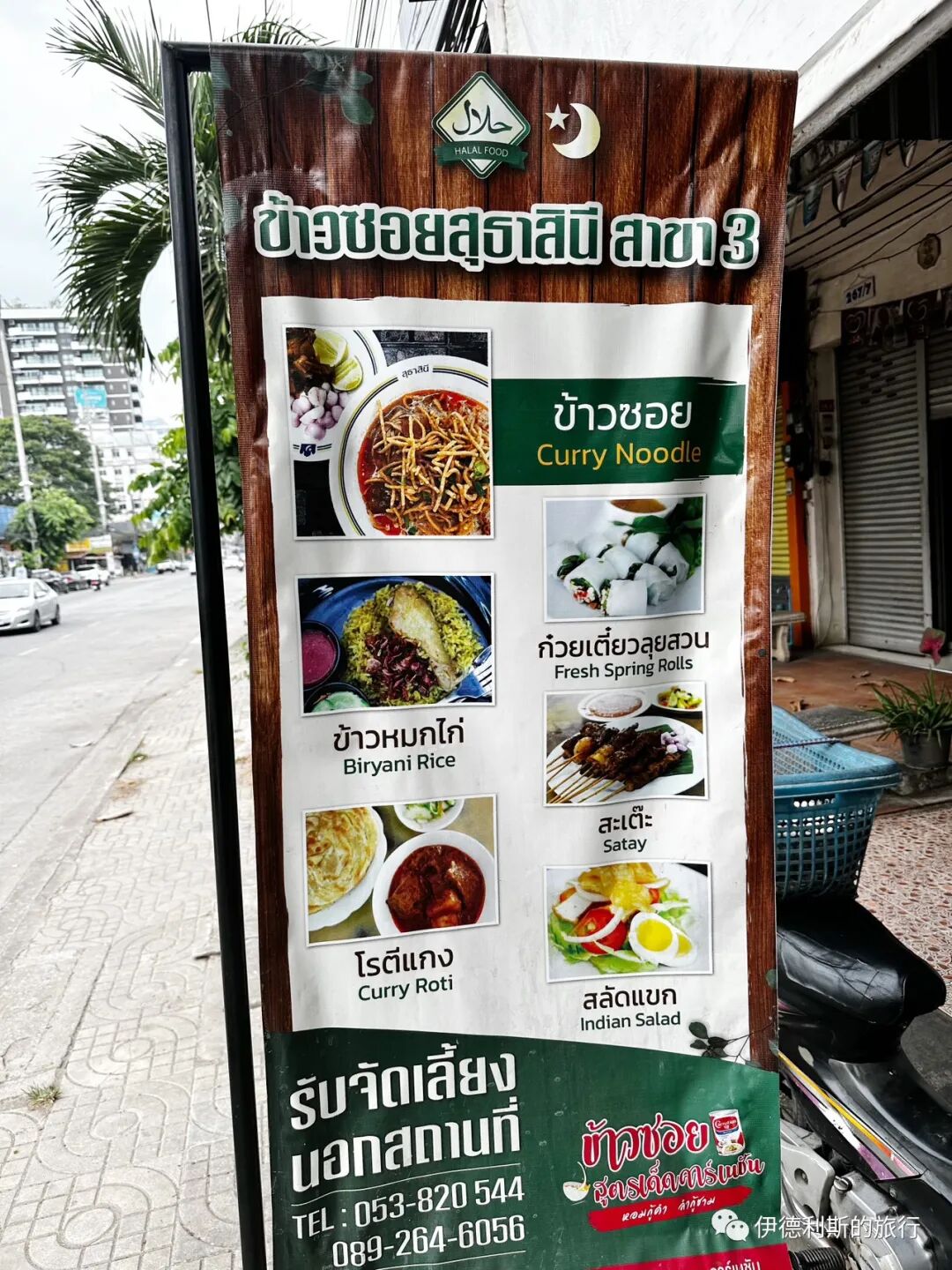
Northern Thai curry noodles are the most famous yellow egg noodles in Chiang Mai. Research suggests they were created when the Shan people from Northern Myanmar migrated to Chiang Mai and combined their food culture with that of the Yunnanese Hui Muslims. The dish contains both fried egg noodles and boiled egg noodles; the fried ones are sprinkled on top, while the boiled ones are in the soup. The soup is like a mild yellow curry. It uses turmeric, ginger, coconut milk, soy sauce, and palm sugar. When eating, you add pickled mustard greens, lime, and shallots.
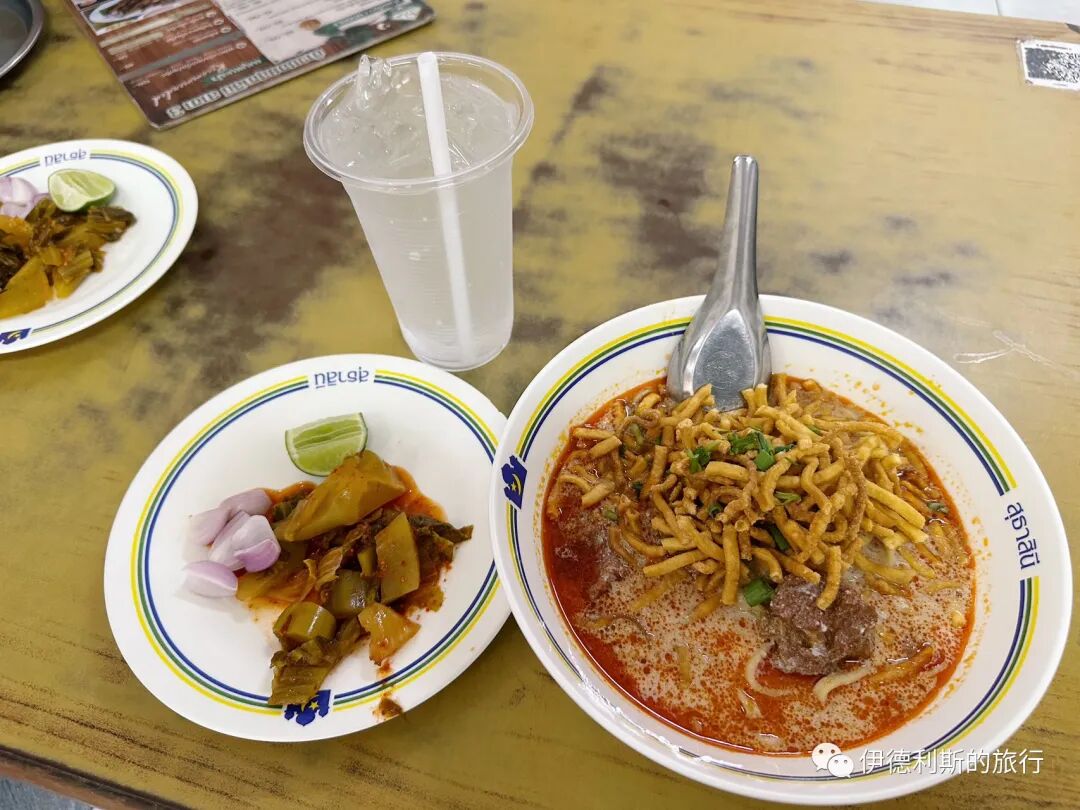
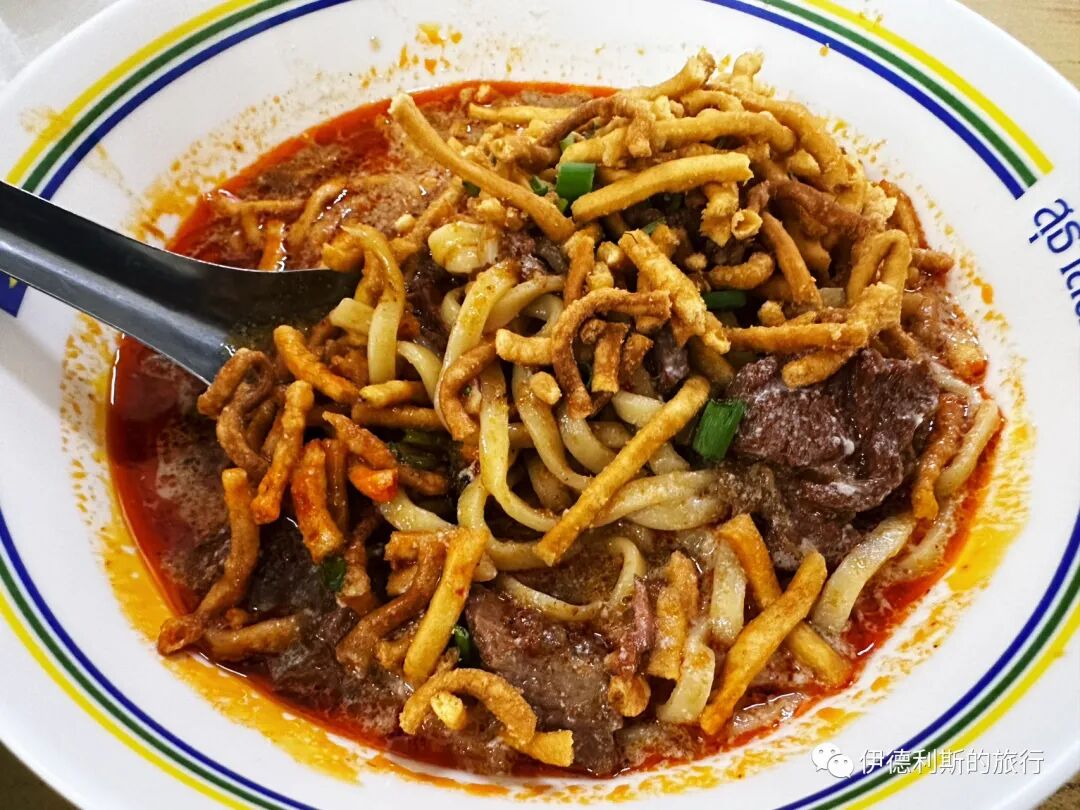
Thai-style chicken rice (khao mok gai) was formed when South Asian Muslims brought the method of making South Asian biryani rice to Thailand and blended it with local spices, resulting in a lighter flavor. To make it, you marinate the chicken overnight in yogurt, turmeric, and various spices. Then, you fry the chicken until golden brown, add stewing spices, and cook it with the rice. It is served with cucumber, Thai sweet chili sauce, and a bowl of chicken soup.
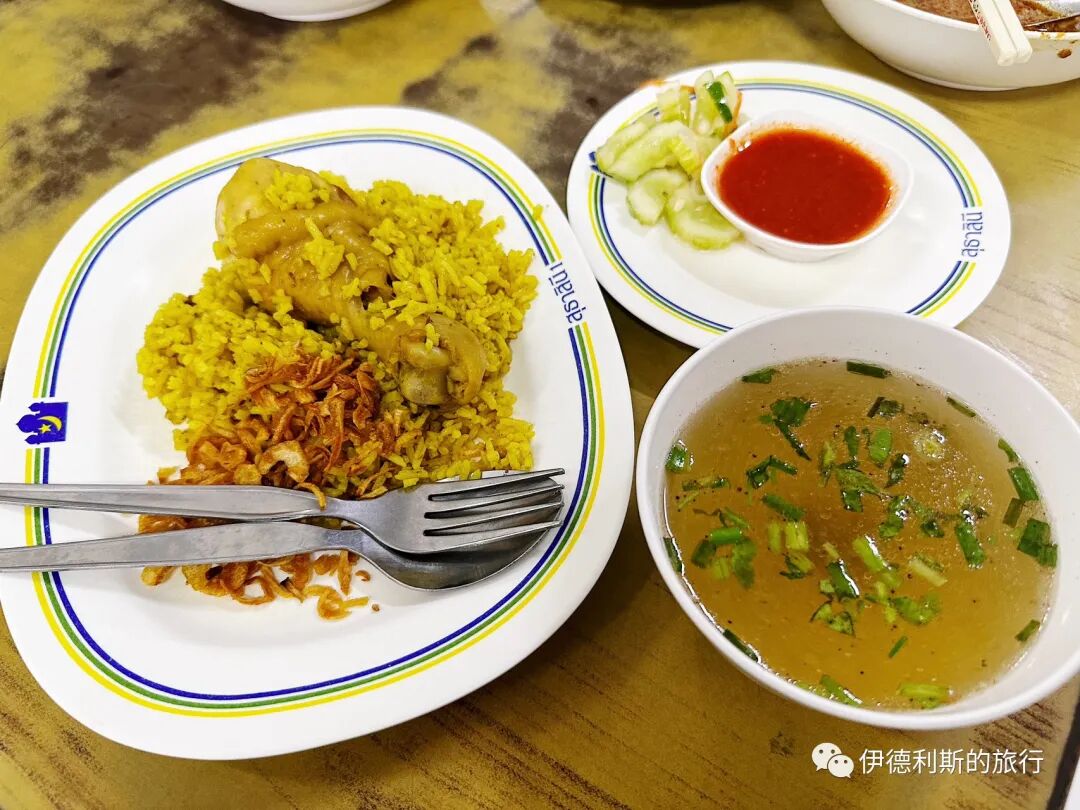
Besides South Asian and Malay residents, a few Hui Muslim families from Yunnan also live in the Chang Khlan mosque neighborhood. The owner of the grocery store across from the mosque is a relative of Master Ma. It is fascinating to hear them chat, switching seamlessly between Thai, Yunnan dialect, and Mandarin.
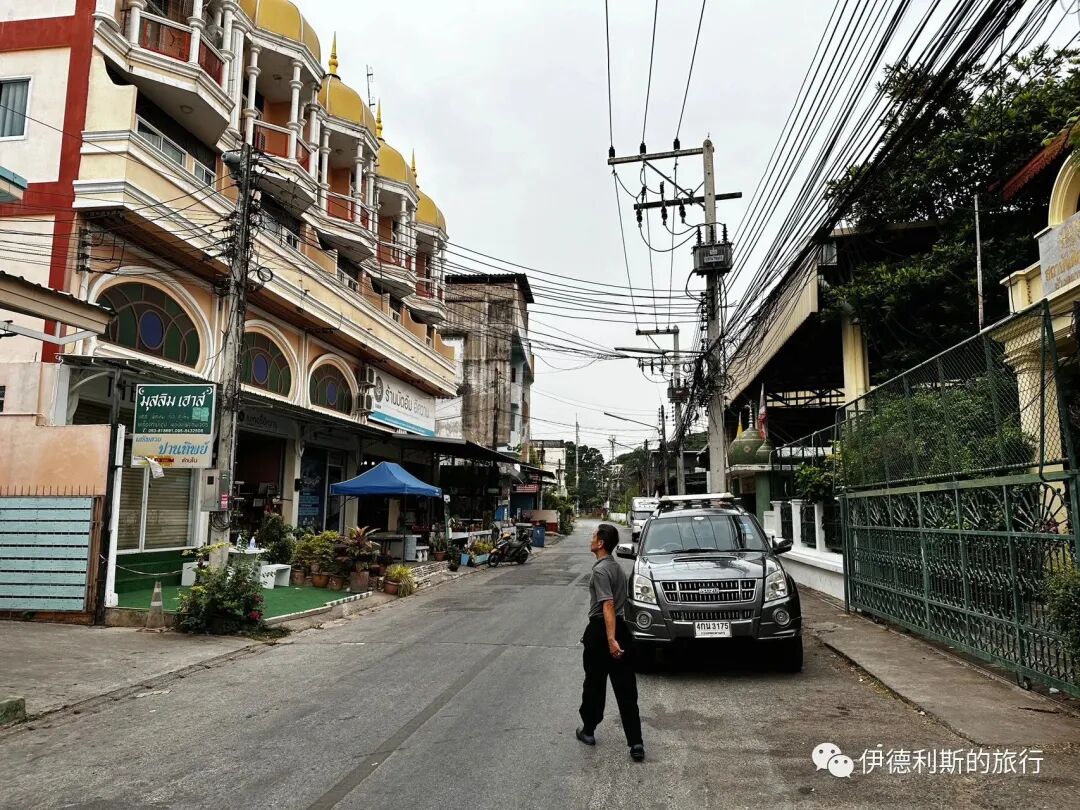
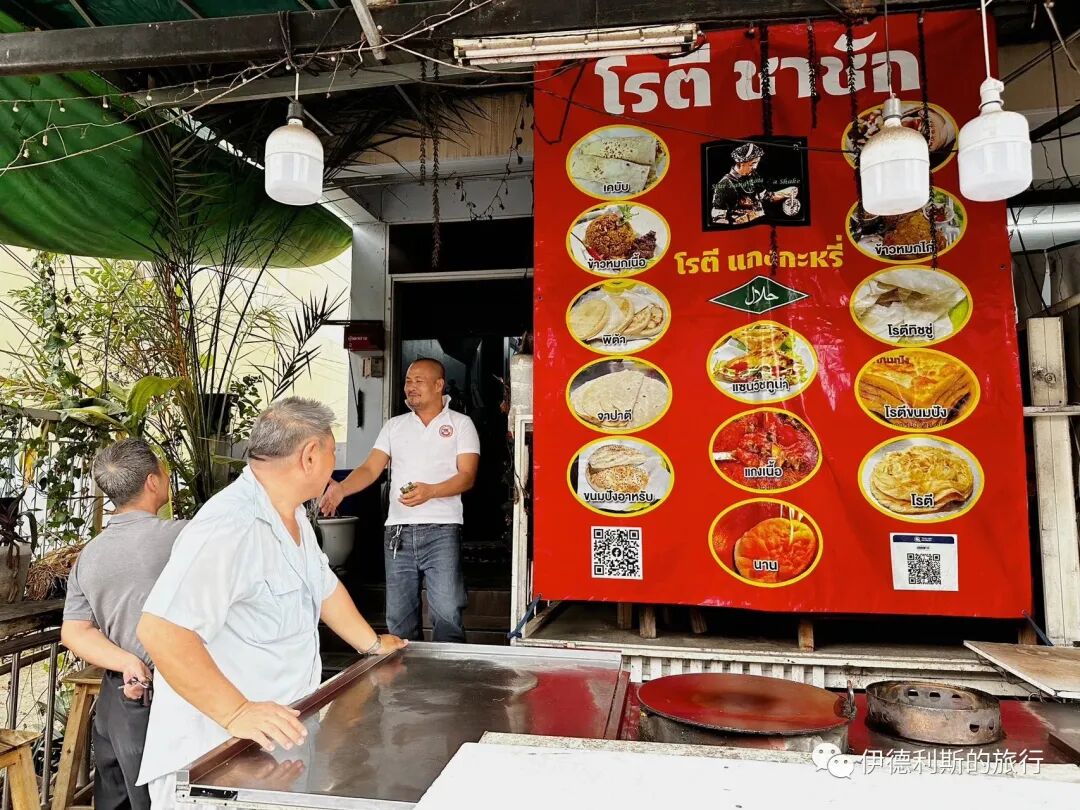
Due to the unstable situation in Myanmar in recent years, some Burmese Muslims have also moved to the Chang Khlan mosque neighborhood to live. We happened to run into some young Burmese Muslim men buying drinks at the grocery store. On Chang Khlan Road next to the mosque, there is a row of halal snack shops mostly run by Burmese Muslims. They love to chew betel nut, and the women apply a paste made from ground yellow wood branches and water called thanaka to their faces to prevent mosquito bites and cool down.
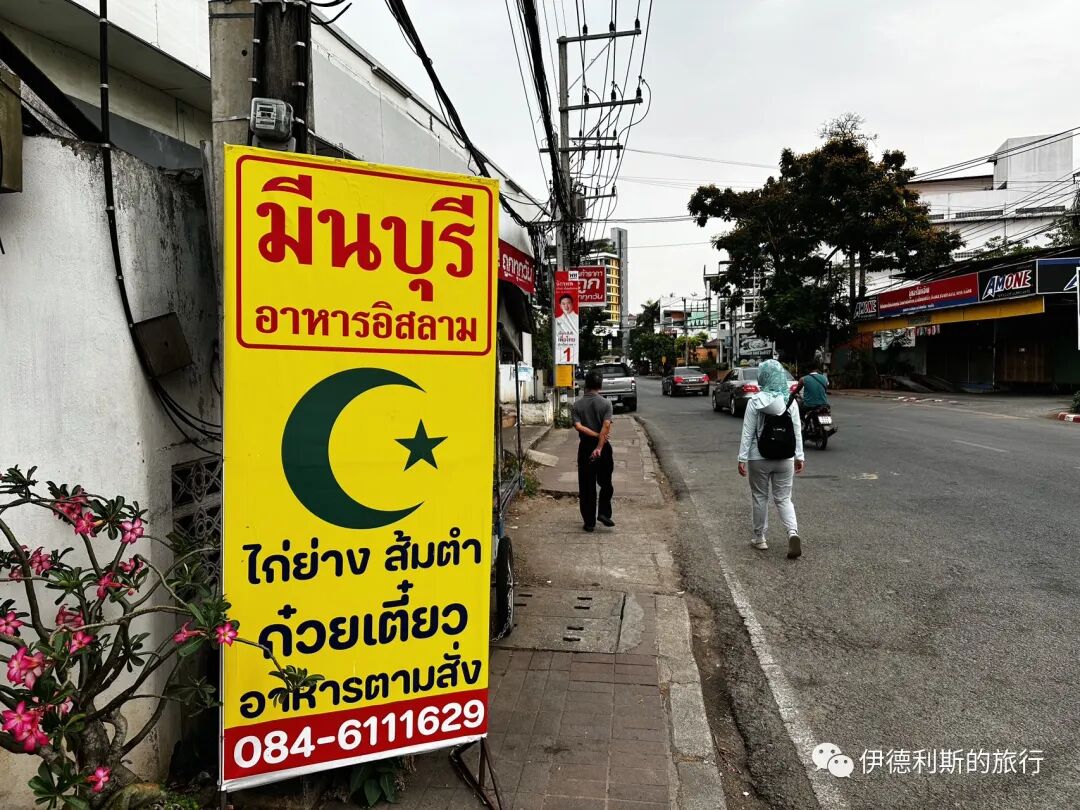
We visited the center of the Chang Khlan mosque neighborhood in Chiang Mai, Thailand—the Chang Khlan Mosque. The Chang Khlan mosque neighborhood is mainly made up of South Asian and Malay Muslims. Between 1826 and 1885, Britain gradually incorporated Myanmar into British India. During this period, South Asian Muslims under British Indian rule continuously traveled to Myanmar to make a living, and they arrived in Chiang Mai to settle in the mid-19th century. From 1891 to 1895, the Pahang Uprising occurred on the Malay Peninsula. The rebel army eventually failed and retreated into Siam, and some Malay Muslims were exiled to Chiang Mai. They intermarried with the local South Asian Muslims, and their descendants speak Thai and have integrated into Thai society. After the 20th century, the Thai people's name for these Thai-speaking Muslims gradually changed from Khaek (foreigner) to Thai-Islam (Thai Muslim).
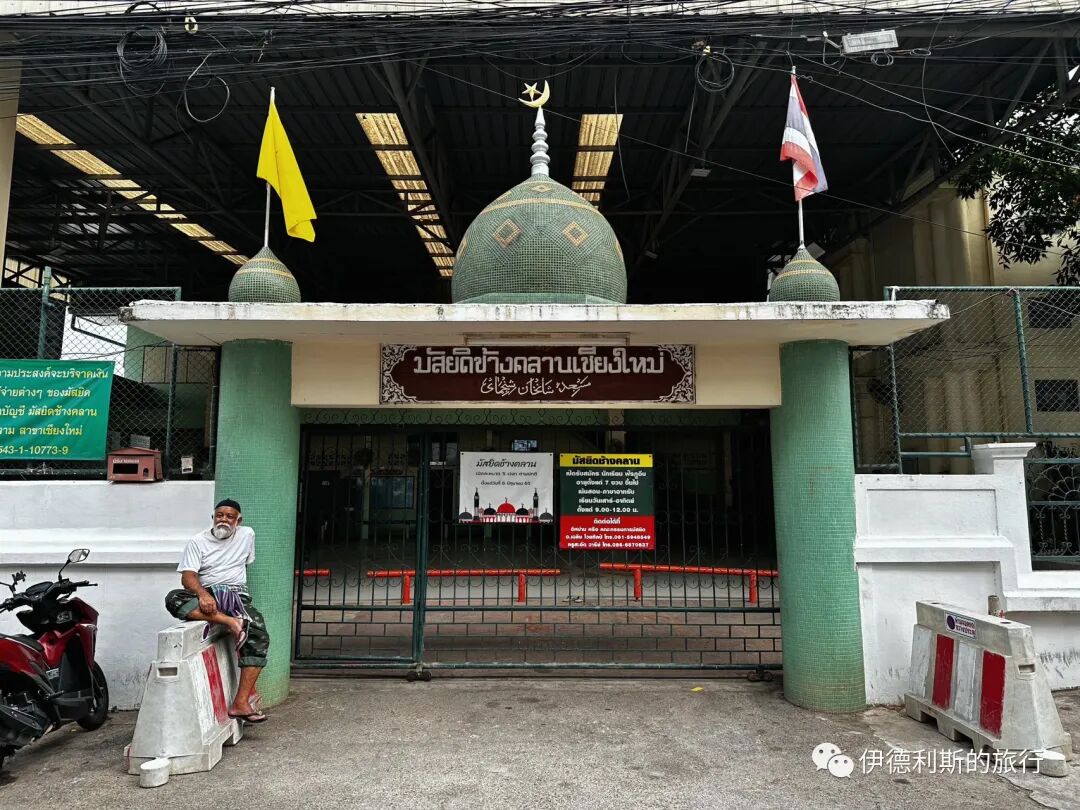
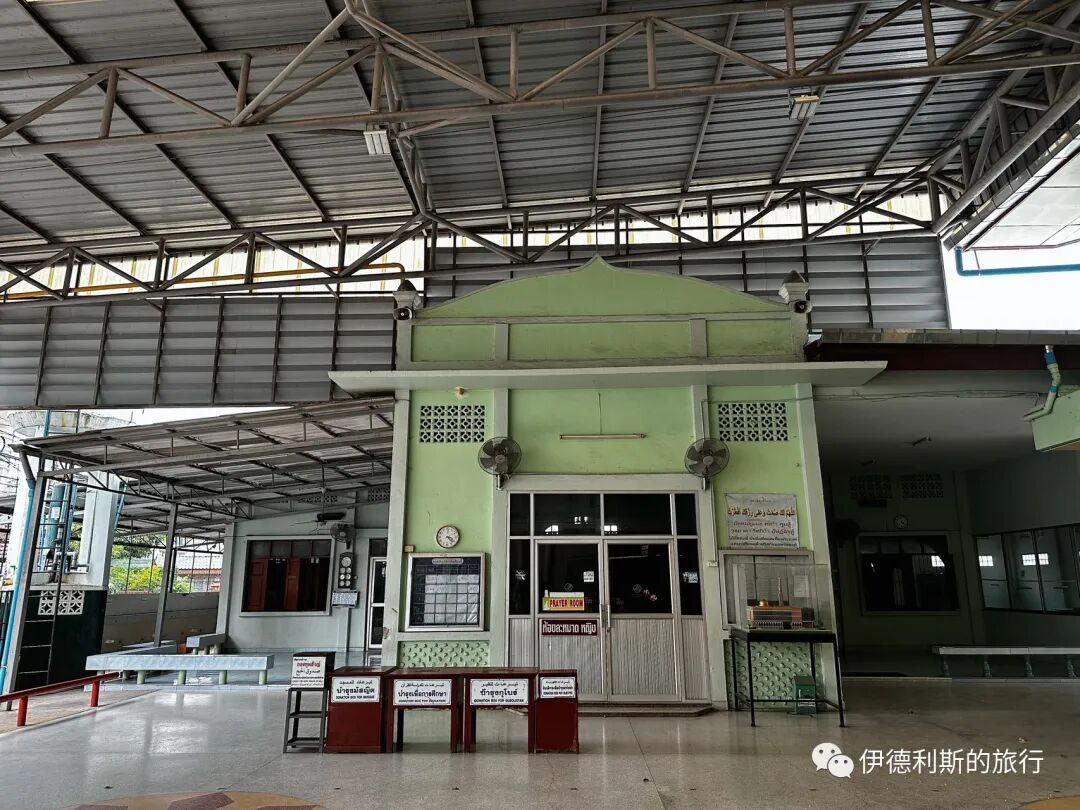
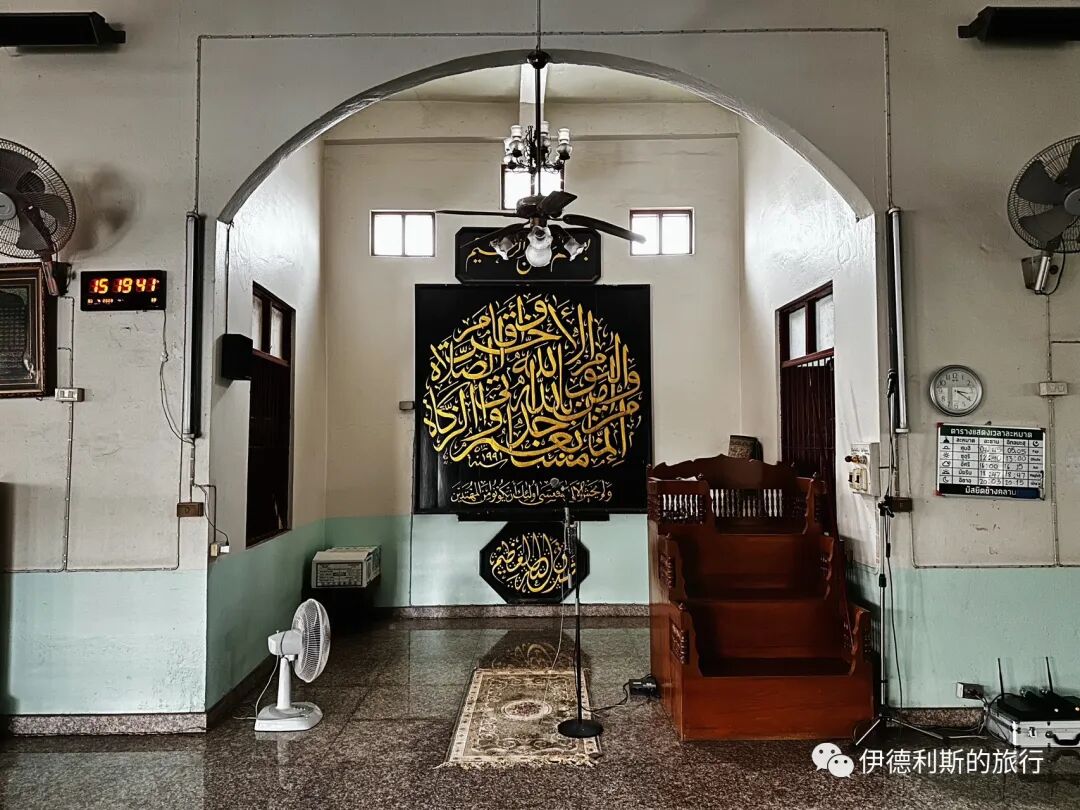
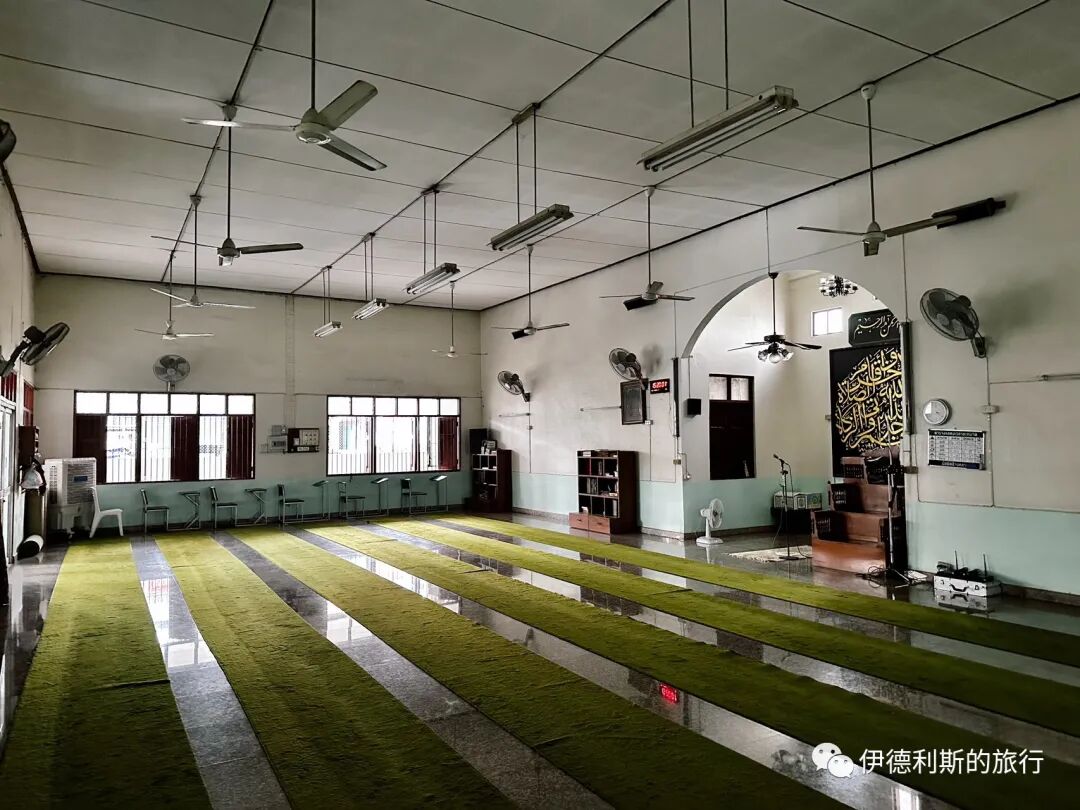
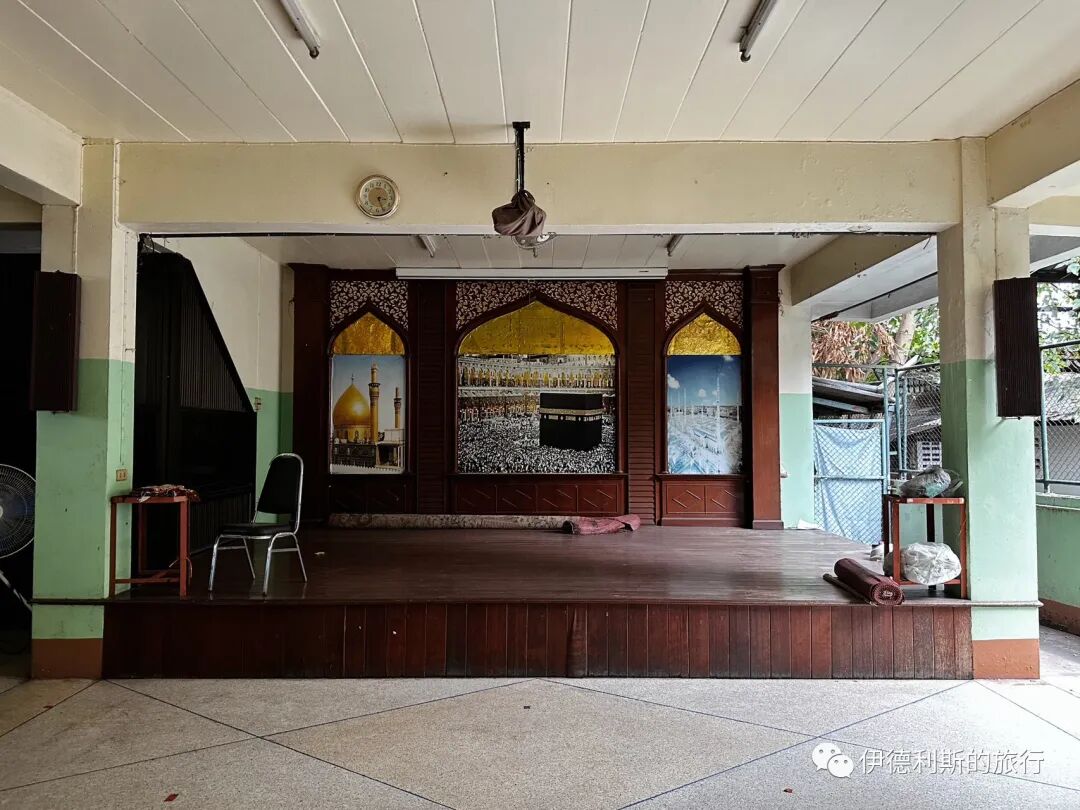
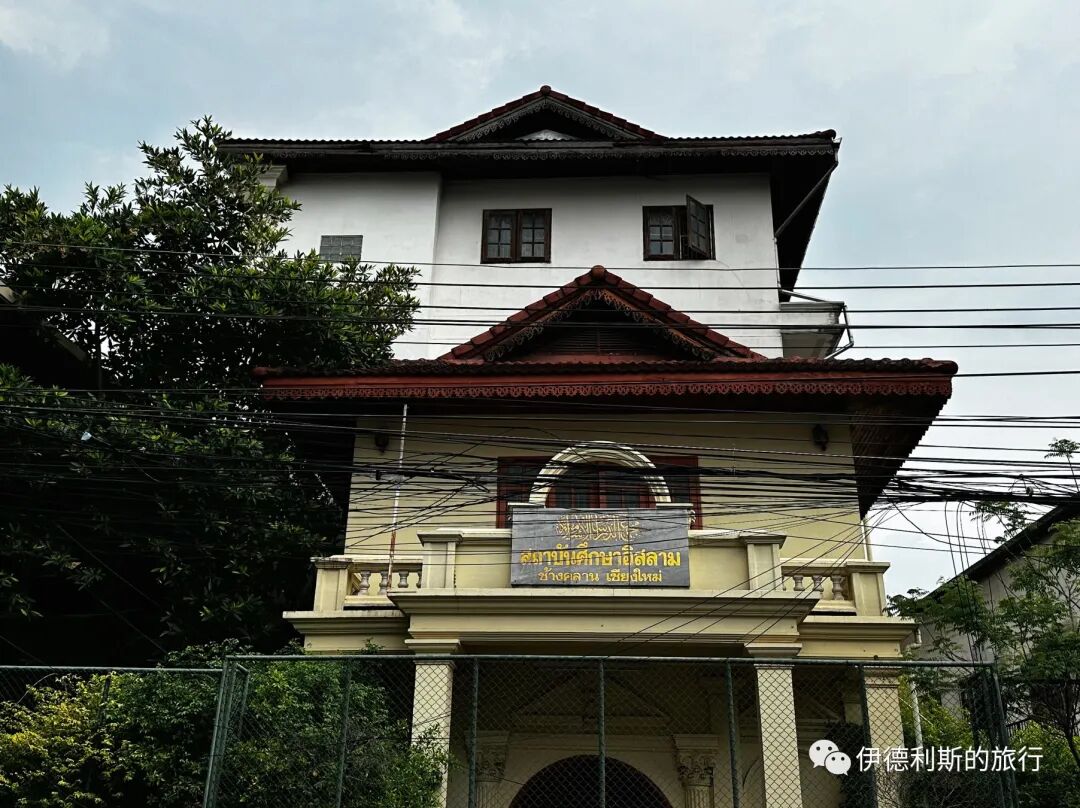
In the afternoon, we went from Chang Khlan Mosque to Ban Ho Mosque. We first looked at the old house of Haji Zheng Chonglin across from Ban Ho Mosque, which is the most important historical site for Hui Muslims in Chiang Mai. Every Friday morning, a lively Jumu'ah bazaar is held in the courtyard of the old house, but it is quite quiet at other times.
During this visit, I discovered a new information board in the courtyard that introduces people of Yunnan descent and the Ho (Hò) people in Thai and English. People say when Yunnan horse caravans first communicated with locals in Northern Thailand, they often answered with 'hao, hao' (good, good). The locals used 'Ho' to refer to these Yunnan horse caravan merchants, and it later became the name for all people of Yunnan descent in Northern Thailand.
In the 19th century, Yunnan horse caravans controlled the trade route from Yunnan through Northern Myanmar to Northern Thailand. They transported tea, silk, hardware, and copperware to Northern Thailand and brought cotton and tobacco back to Yunnan. In the late 19th and early 20th centuries, King Rama V of Thailand vigorously developed the economy, which led many Hui Muslim horse caravans to come to Chiang Mai. In 1904, Zheng Chonglin, a caravan merchant from Yuxi, Yunnan, and a descendant of Zheng He, established the Da Ma Dian (Big Horse Inn) east of Chiang Mai city, which became the main base for Yunnanese caravans in Chiang Mai. Many Yunnanese Hui Muslims from the caravans came to live near the inn, and the Wang He community began to form.
Zheng Chonglin was born in 1884 in Daying, Yuxi, Yunnan, and followed his elders in the caravan trade between Yunnan, Thailand, and Myanmar from a young age. He was once commissioned by King Rama VI of Thailand to organize a caravan team in northern Thailand, taking on the transport of all supplies for the railway construction from Bangkok to Lampang. In 1910, when the site for Chiang Mai Airport was chosen, it was the horse farm that the Yunnanese caravans had jointly purchased and used for many years. Zheng Chonglin donated the land on behalf of the Yunnanese caravans, and it is now Thailand's second-largest international airport. Because of his great contributions to Thailand, King Rama VI bestowed the first-rank title of Khun (Tang Kun) upon Zheng Chonglin in 1914, making him the leader of the Yunnanese community in northern Thailand. He married Nu, the daughter of a local chieftain in Tak Province, and they had five sons and five daughters. In 1967, Zheng Chonglin went on the Hajj and passed away peacefully in Mecca at the age of 83.
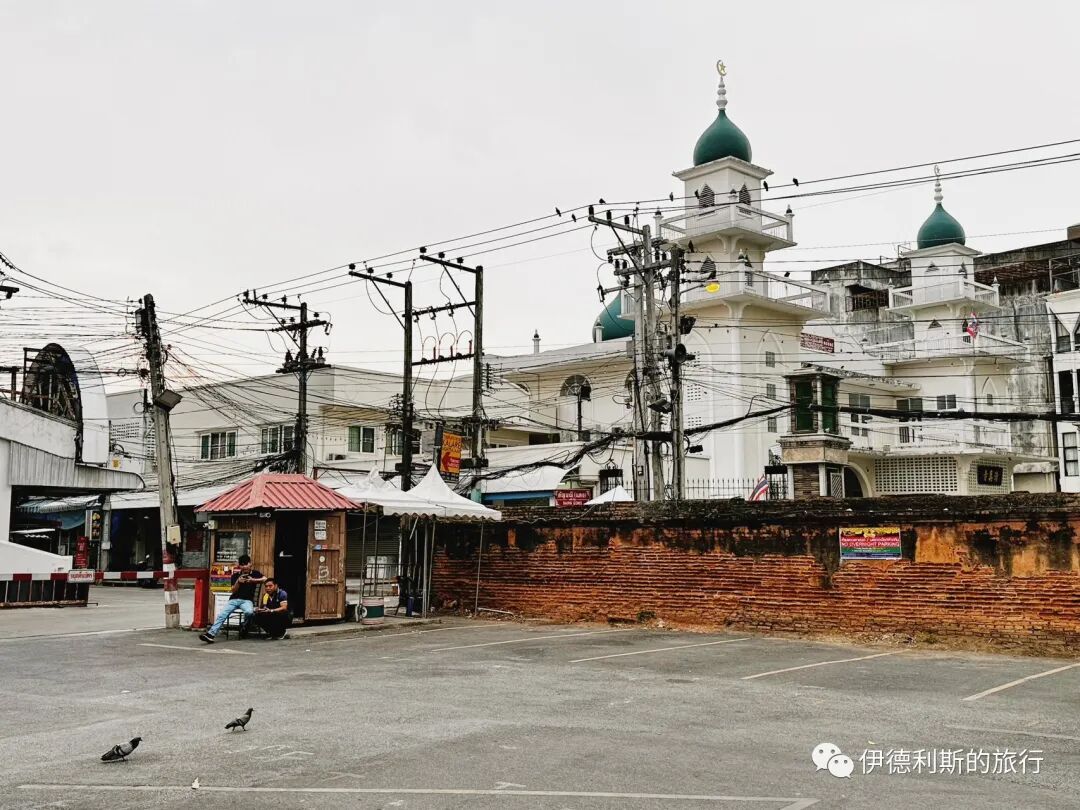
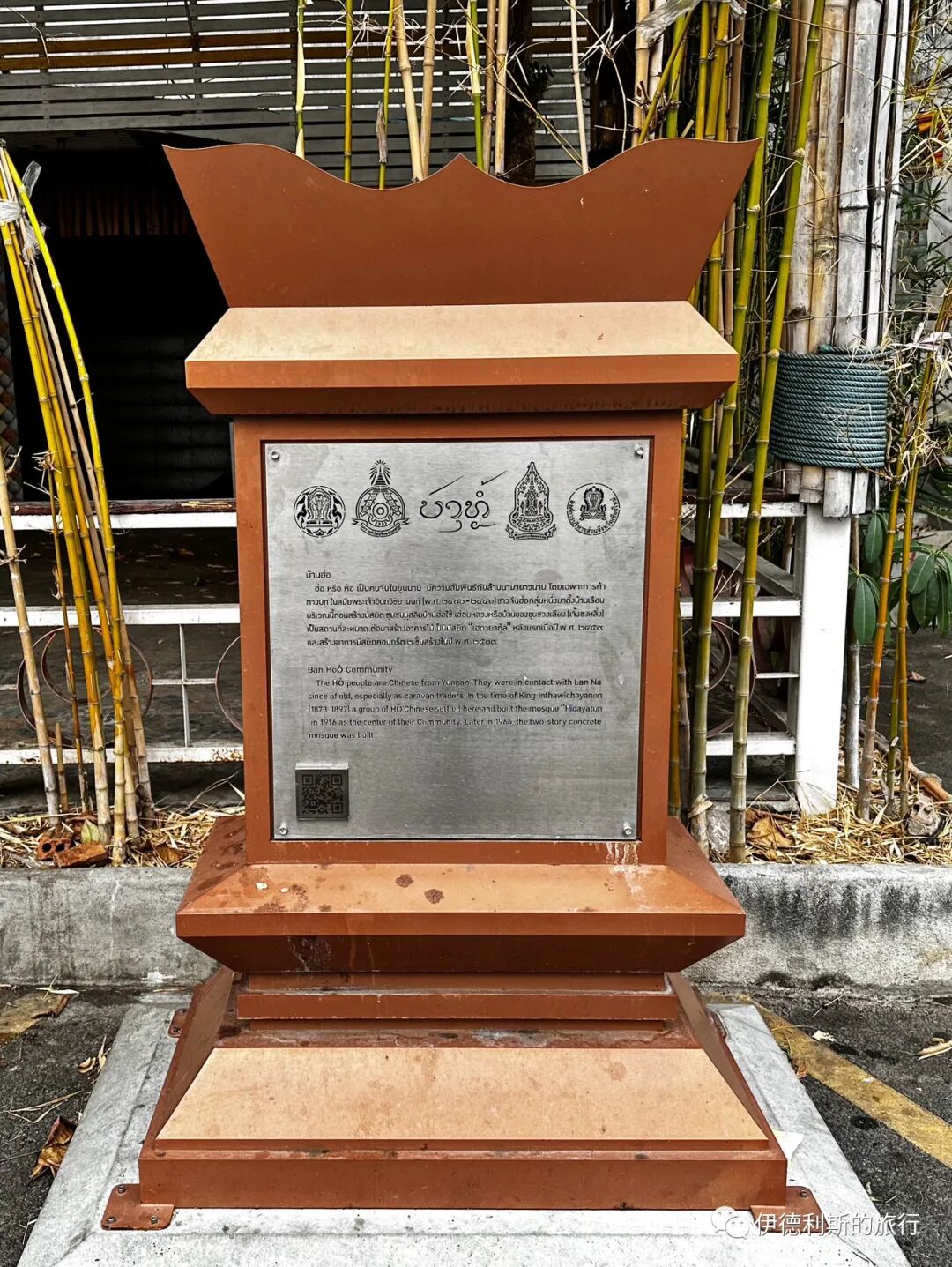
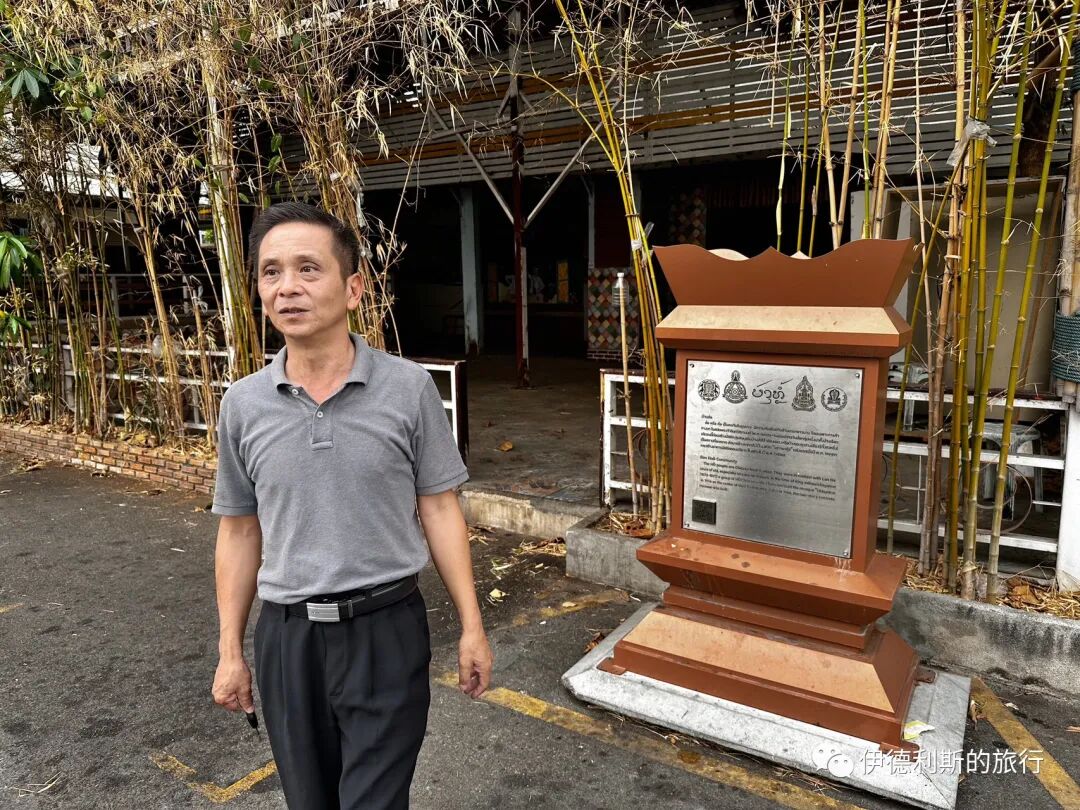
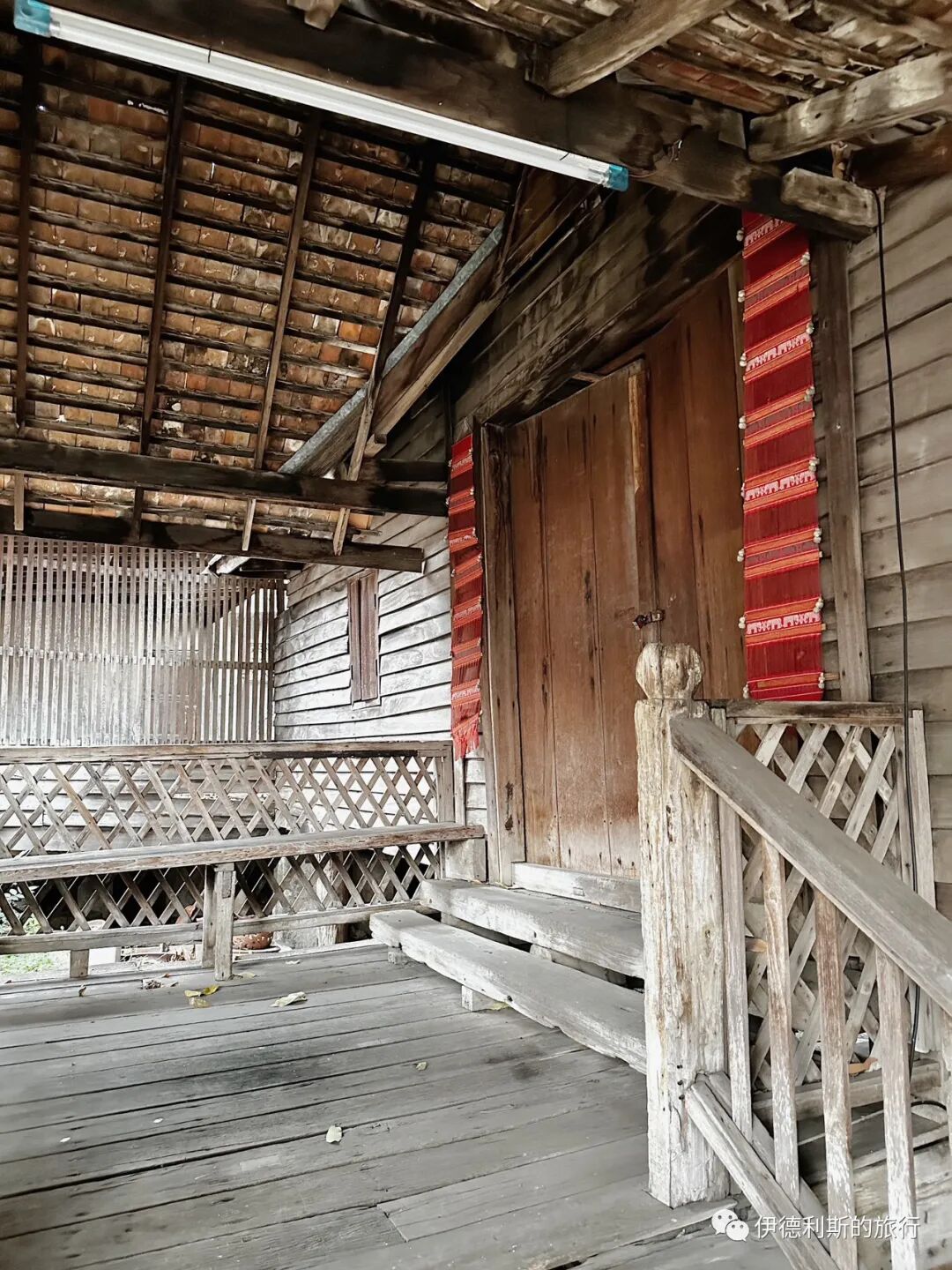
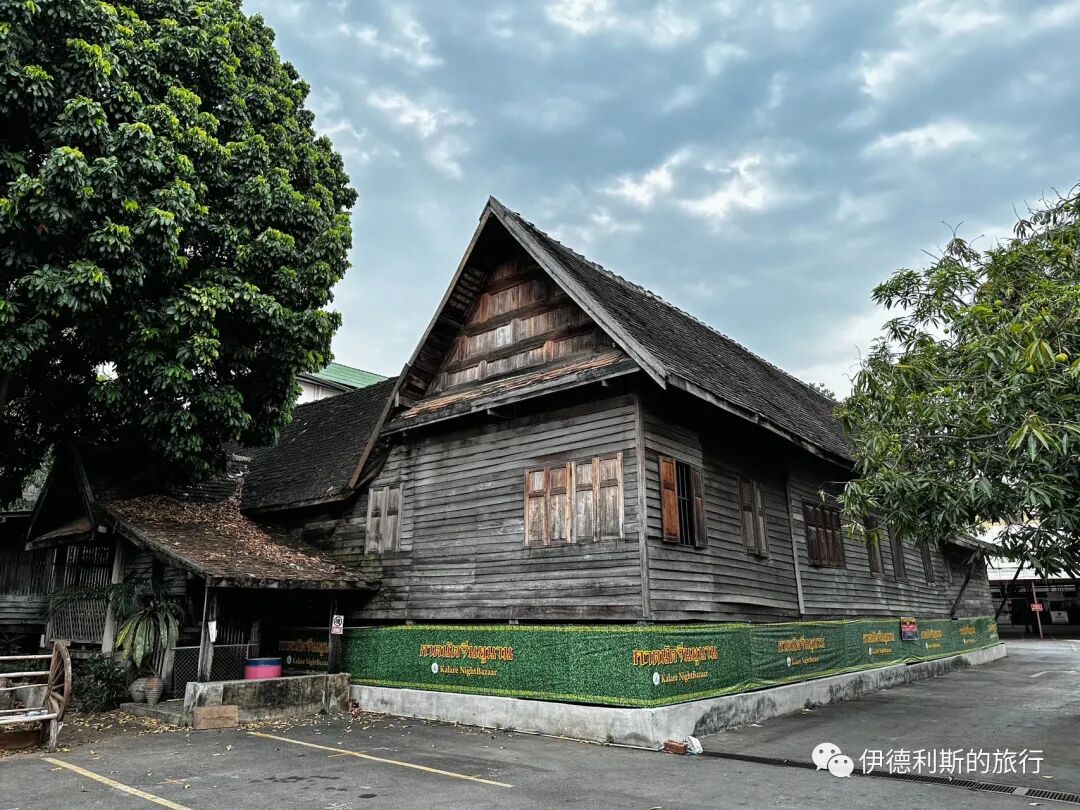
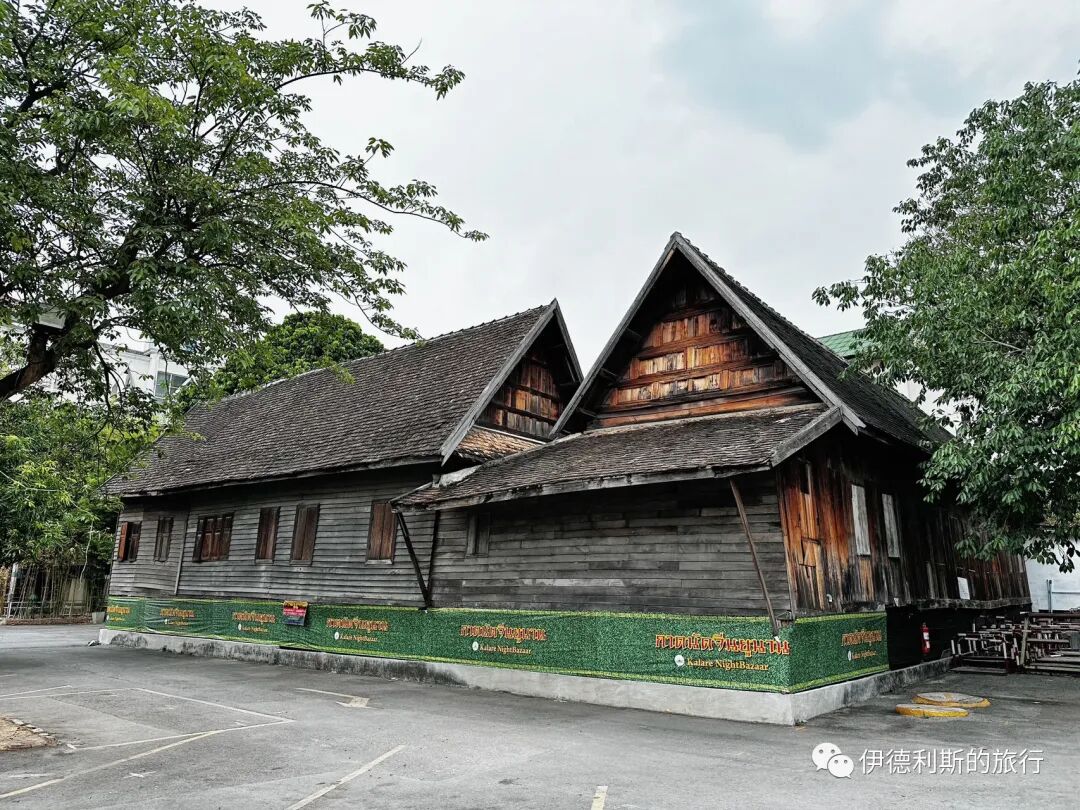
At the Wang He Mosque (Wang He Si) in Chiang Mai, many of the elders here can speak Mandarin and the Yunnan dialect, and the mihrab features traditional Yunnan-style Arabic calligraphy.
In the early 20th century, Zheng Chonglin was rewarded by the Chiang Mai chieftain with a piece of land east of Chiang Mai city, where he built his residence, the Zheng Mansion (Zheng Fu). In 1907, Zheng Chonglin built a prayer room at the Zheng Mansion, and many Yunnanese Hui Muslims in Chiang Mai would come to the mansion for their worship. In 1917, led by Zheng Chonglin, everyone pooled their money to buy the land opposite the Zheng Mansion and built the Wang He Mosque.
During the 1950s and 1960s, many Yunnanese Hui Muslims arrived in Chiang Mai to settle, and the number of congregants at the Wang He Mosque increased significantly. In 1966, three Hajjis—Hu Ranmao, Ma Ruqi, and Ma Wanzhang—led the effort to rebuild the Wang He Mosque into the current reinforced concrete structure.
Ma Ruqi was the owner of the Ma Ruqi Courtyard in Donglianhua Village, Weishan, Dali. He settled in Chiang Mai after 1954, worked in the local specialty trade, was passionate about public welfare, and was appointed president of the Thai-Chinese Chamber of Commerce in 1974. Today, Ma Ruqi's descendants in Dali still live in the Ma Ruqi Courtyard and have opened a restaurant and guesthouse. I highly recommend visiting to experience it; you can refer to my record from earlier this year, 'The Three Hui Muslim Caravan Courtyards in Donglianhua Village, Weishan, Dali'.
Hu Ranmao was an important leader of the Wang He Mosque community after Zheng Chonglin. He was born in 1914 in Xiaoweigeng Village, Weishan, Dali, and served as the principal of his hometown's Muguang School in 1934. He worked in the horse caravan trade between Thailand and Myanmar in the 1940s and settled in Chiang Mai in 1953. In the 1970s, he helped found the Chiang Mai Islamic Committee and served two consecutive terms as its chairman. During his lifetime, Hu Ranmao was received by the King of Thailand many times and was honored with the royal title of Yong Fooanant.
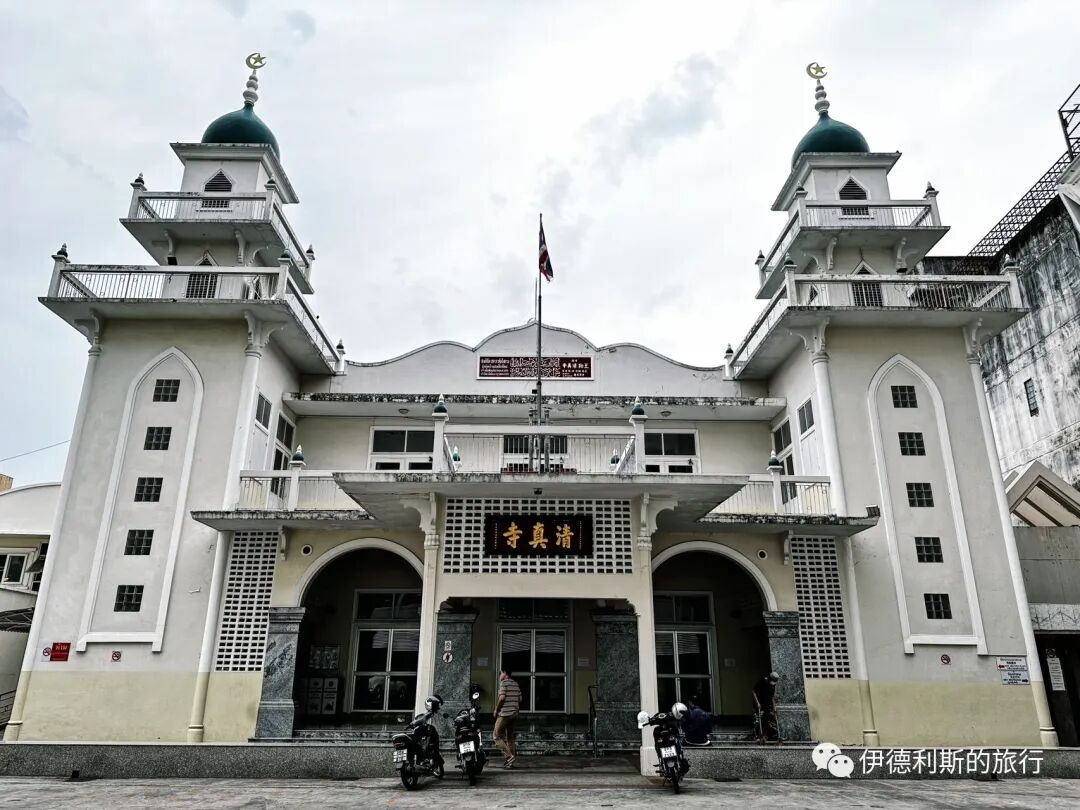
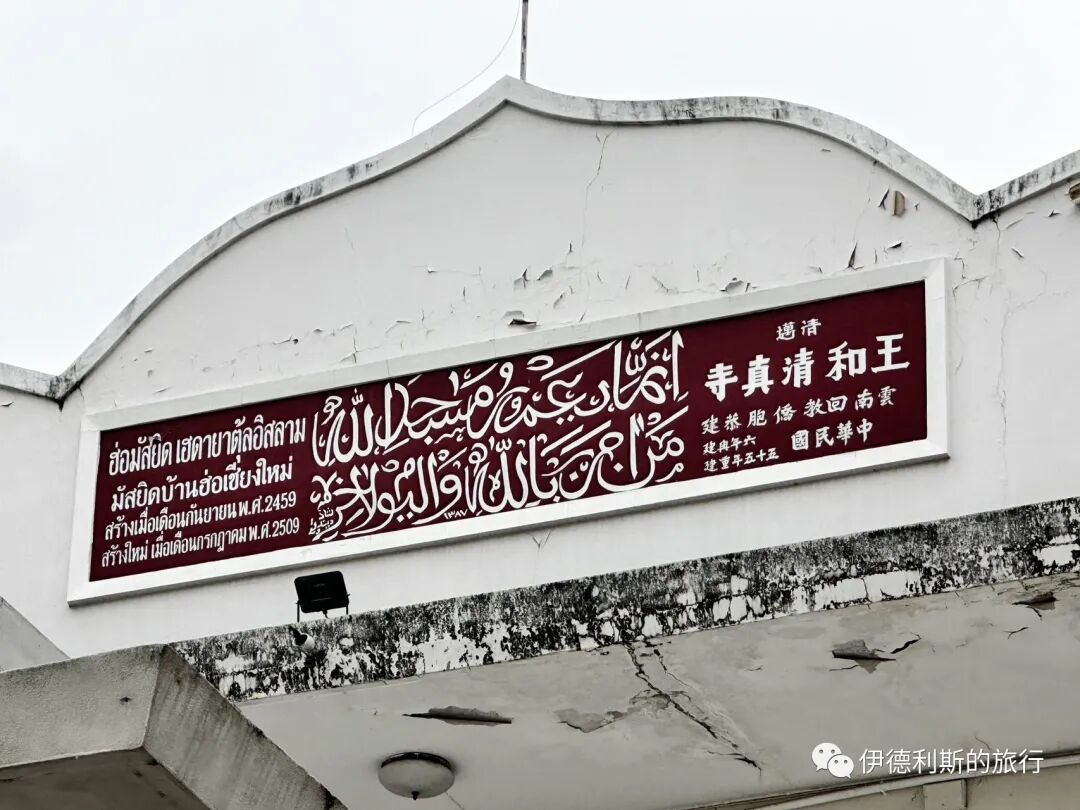
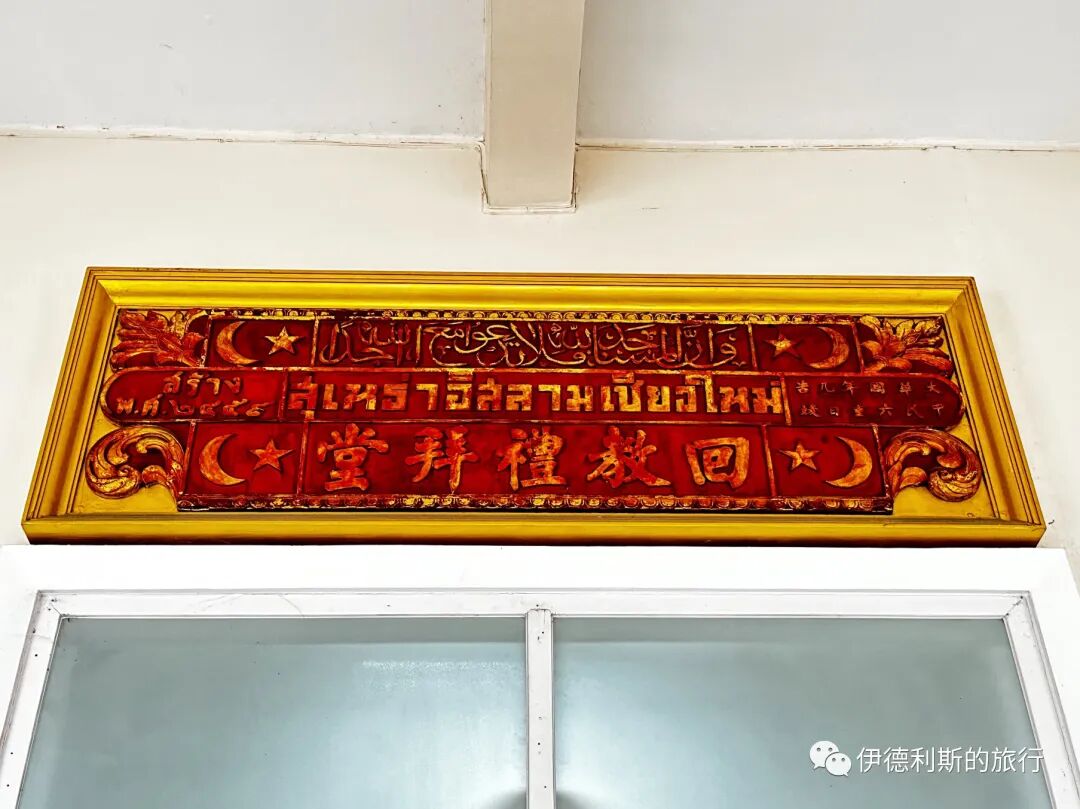
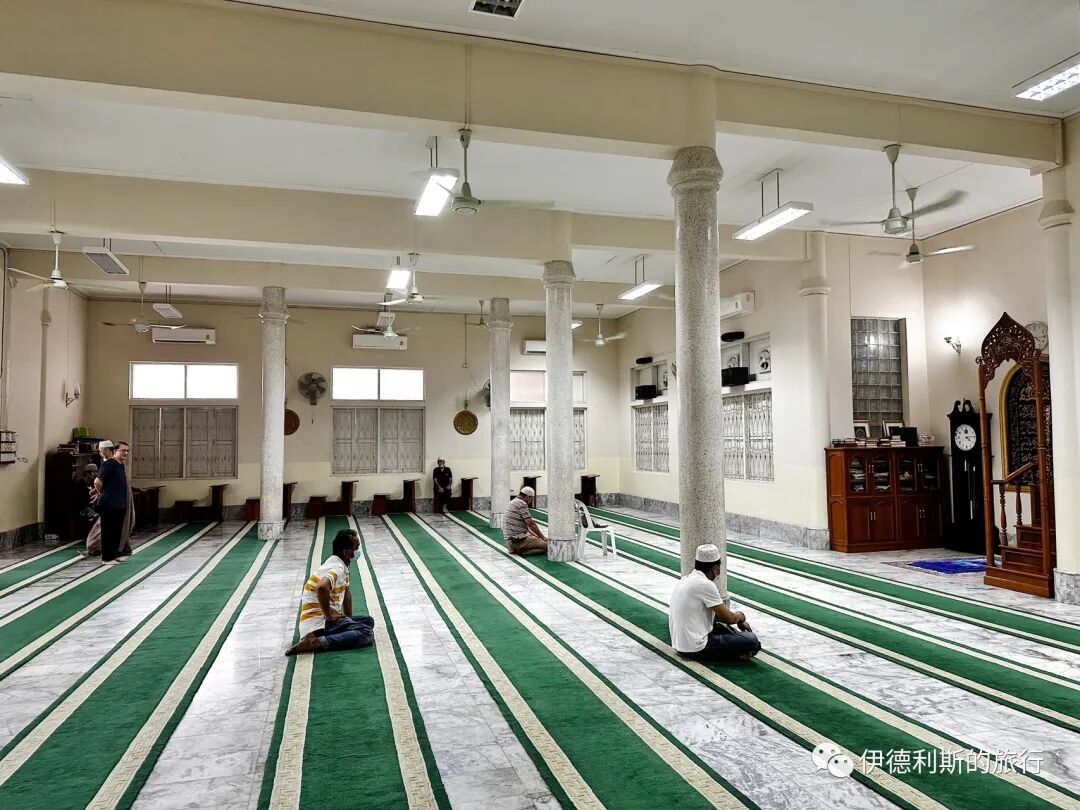
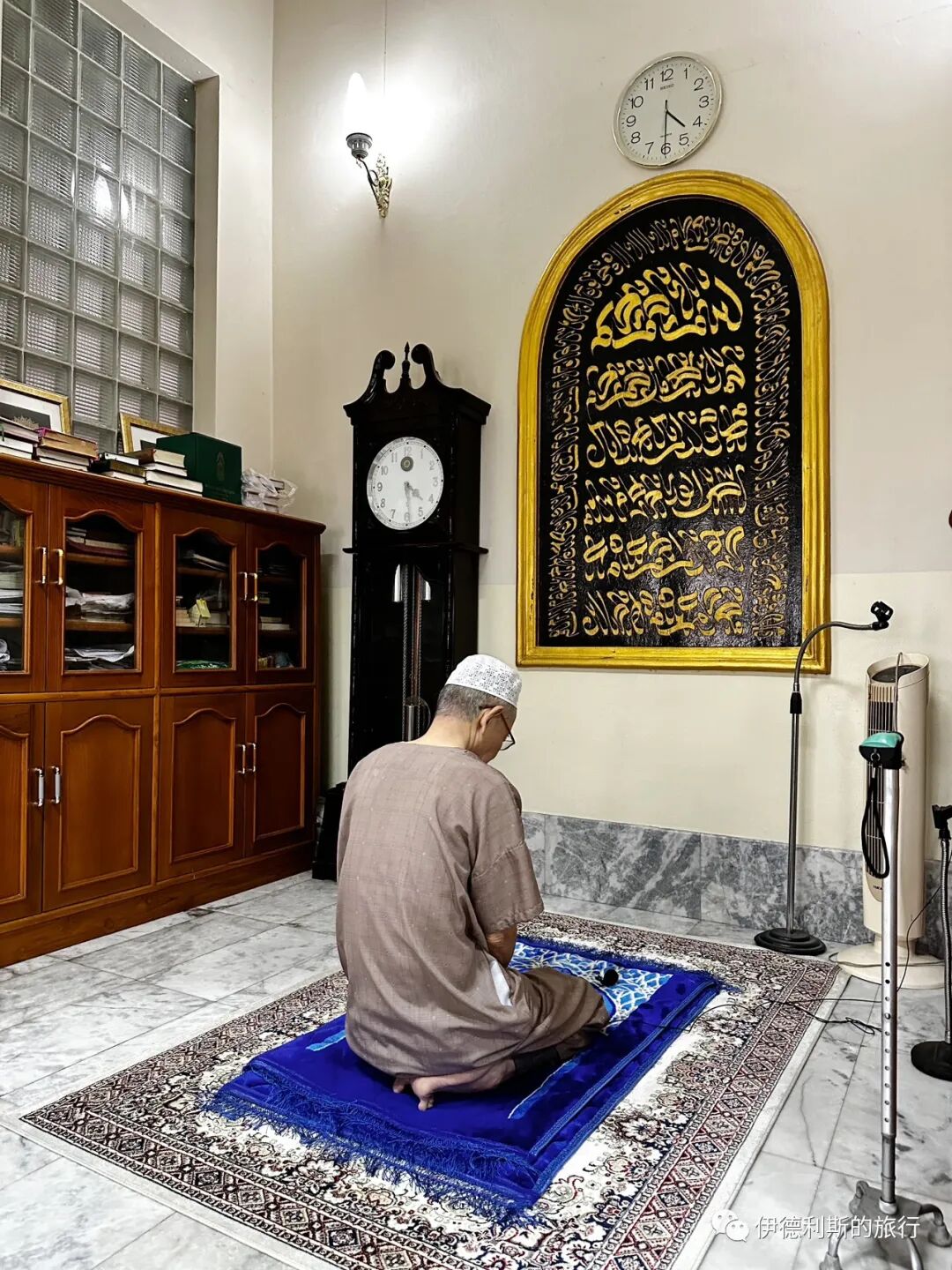
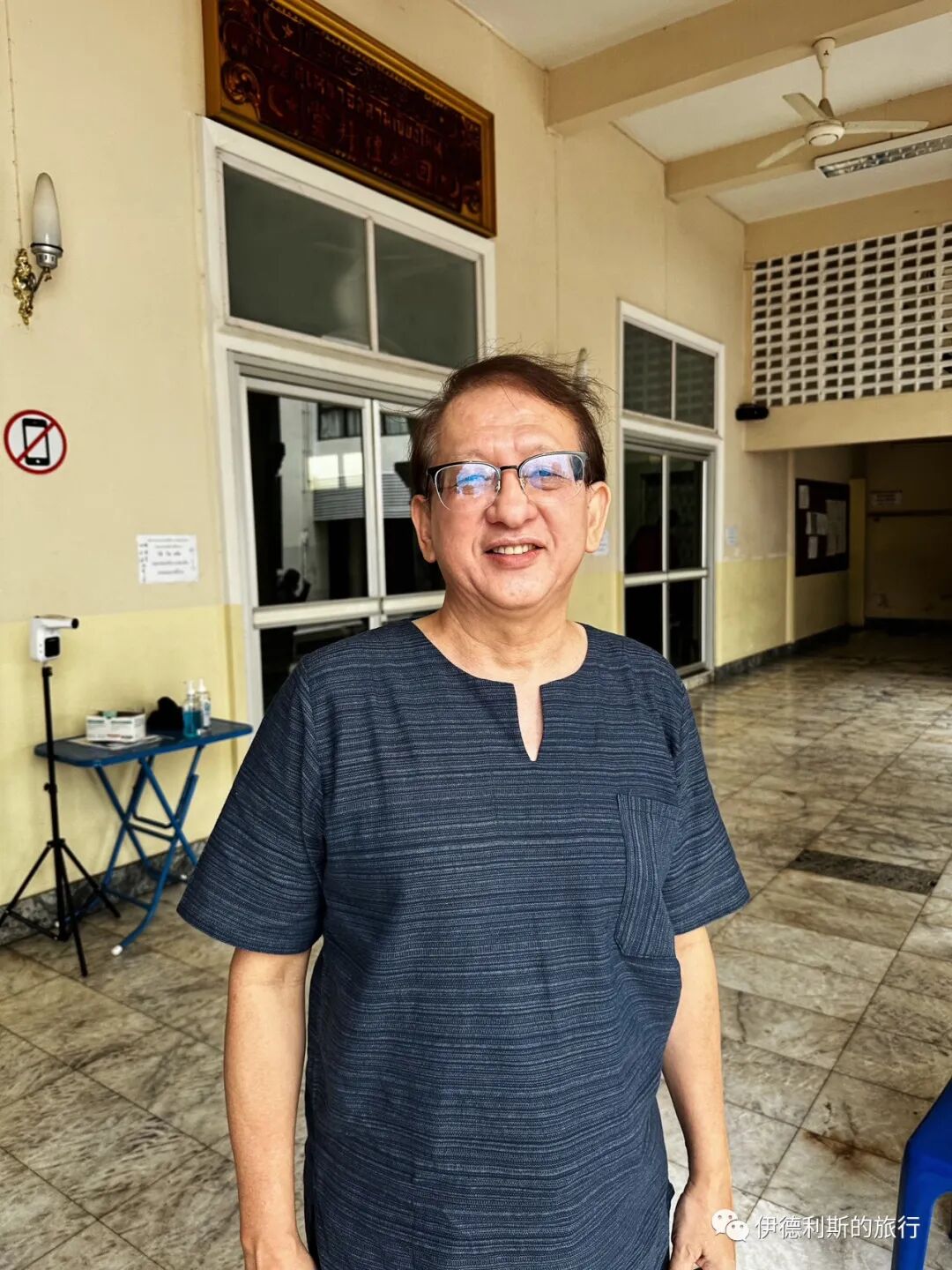
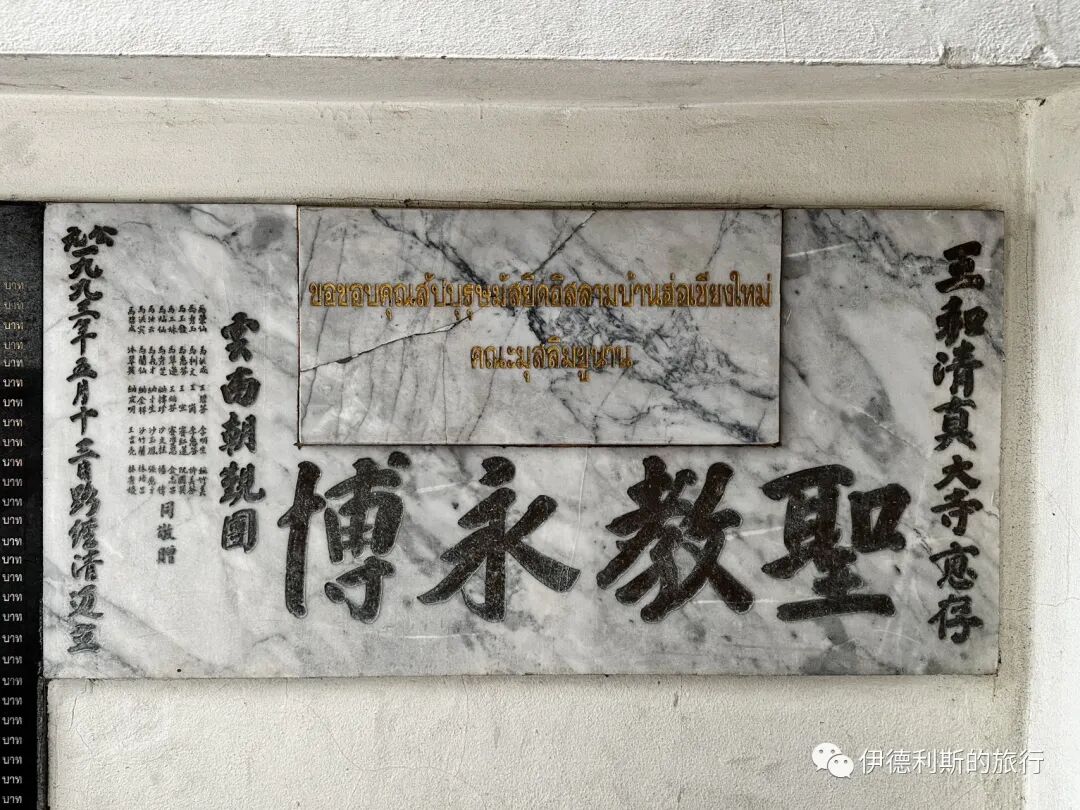
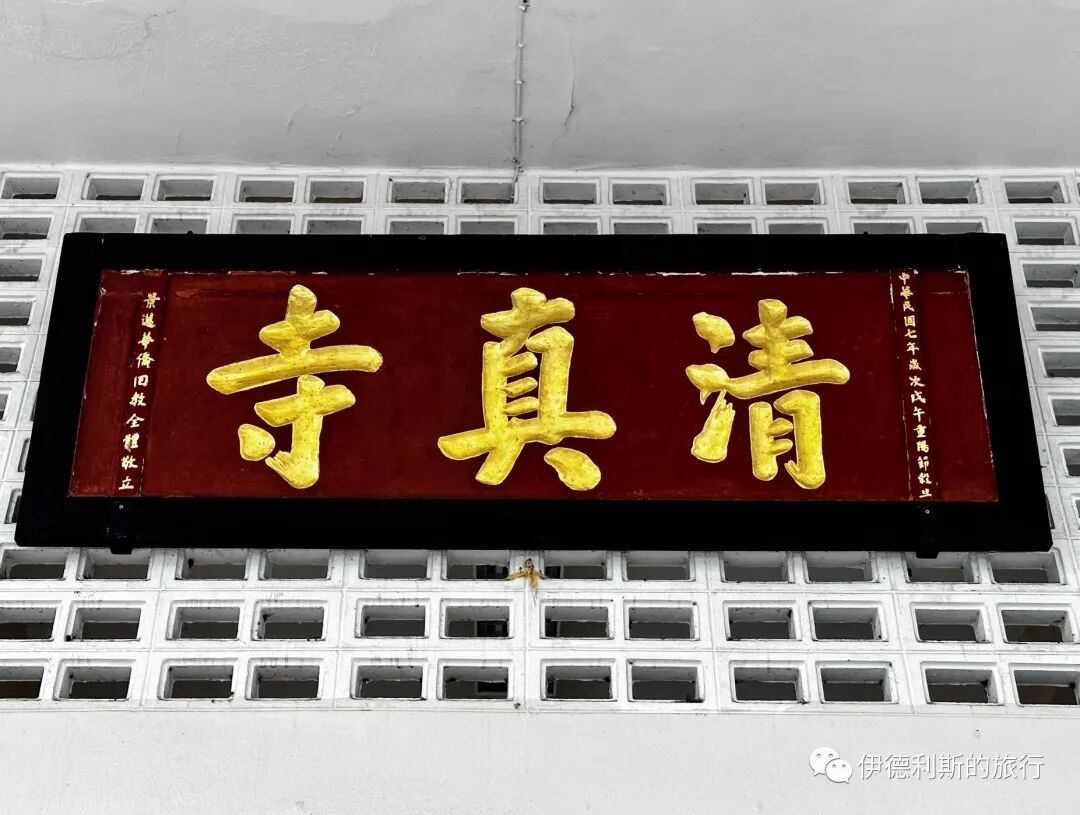
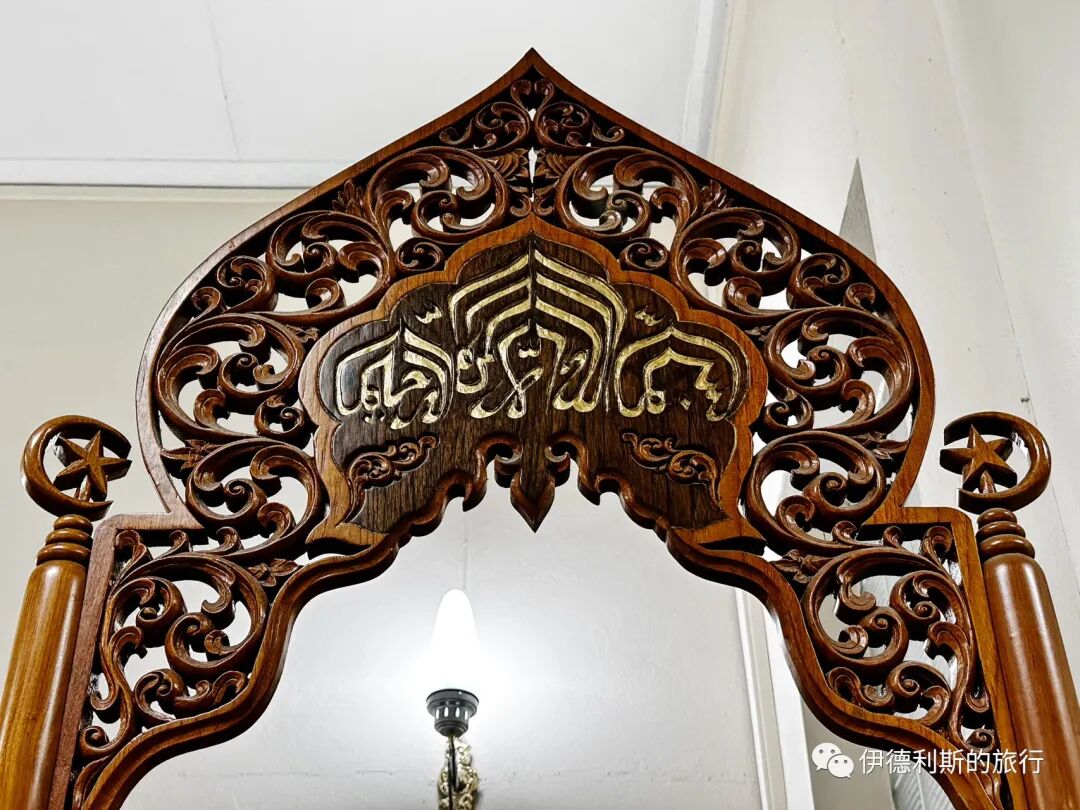
In the afternoon, I went to the night market at Tha Phae Gate in Chiang Mai. A cultural event was happening in front of Tha Phae Gate, where I saw a performance of the local Chiang Mai victory drum (desheng gu).
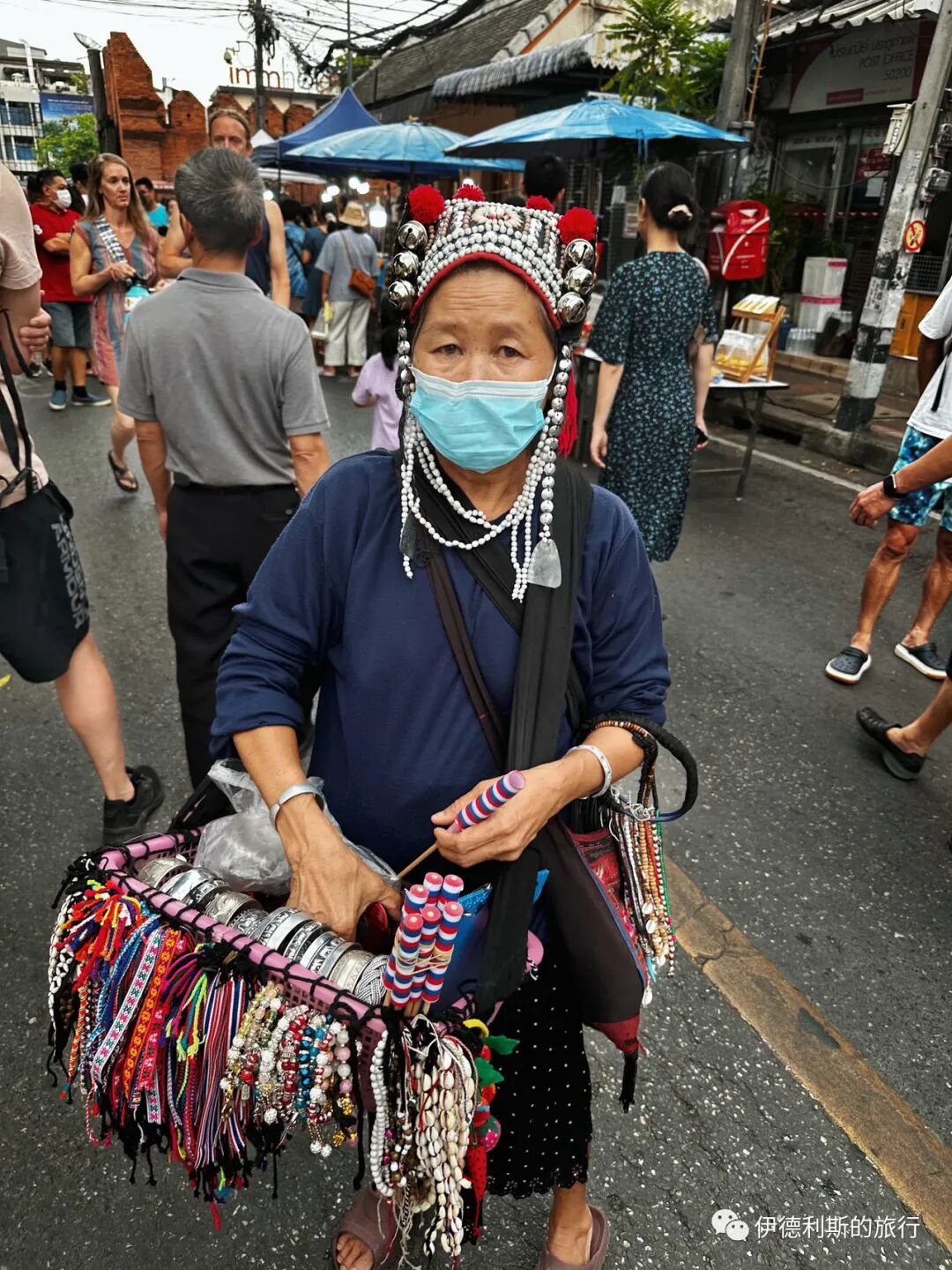
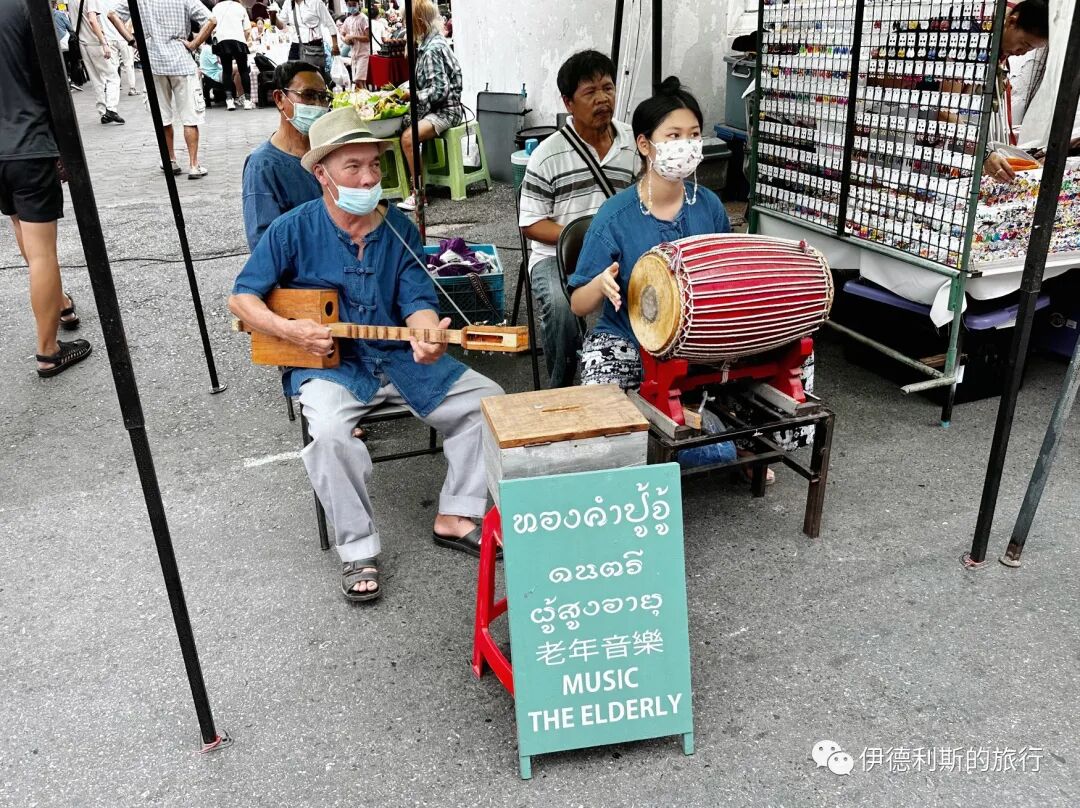
Then I went to Chiang Mai's second Yunnan-style mosque, Masjid Attaqwa, located in the San Pa Khoi area east of the Ping River. Many Yunnan Hui Muslims came to Chiang Mai via northern Myanmar in the 1950s and 1960s. As the original Wang He Mosque became crowded, Haji Hu Ranmao led the construction of Masjid Attaqwa to the east of Wang He in 1970. The mihrab inside Masjid Attaqwa features traditional Yunnan-style Arabic calligraphy, and the cartoons drawn by the children in the weekend class are very cute.
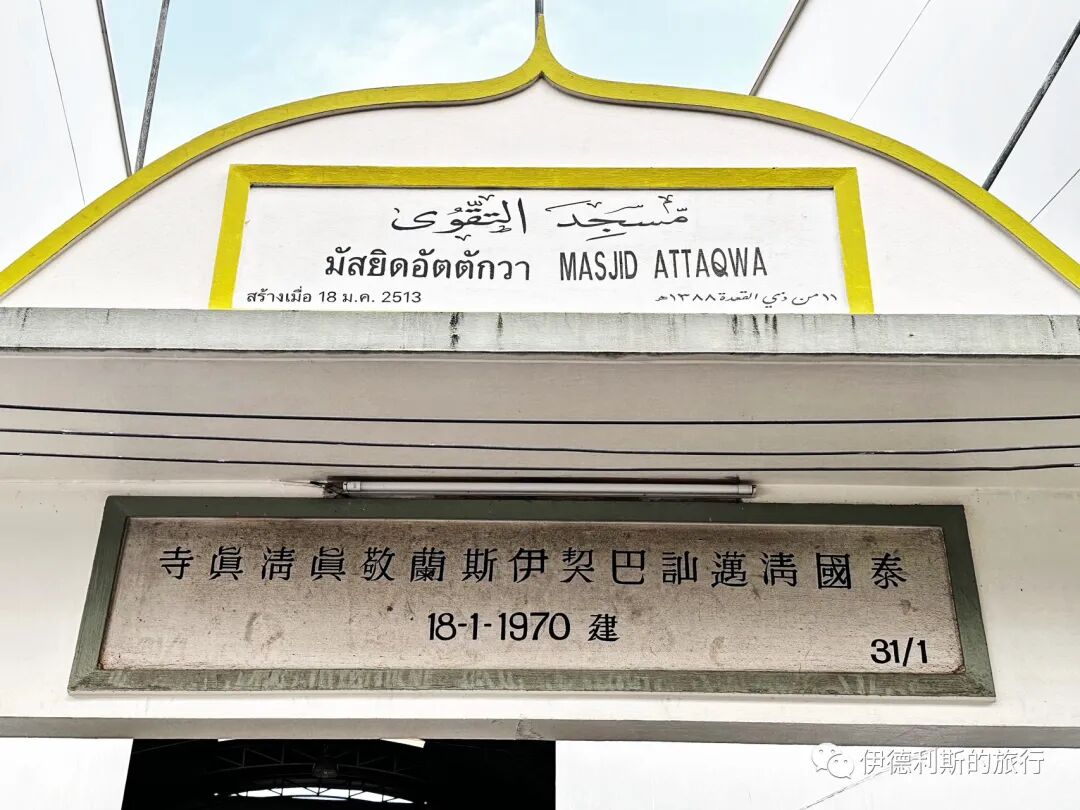
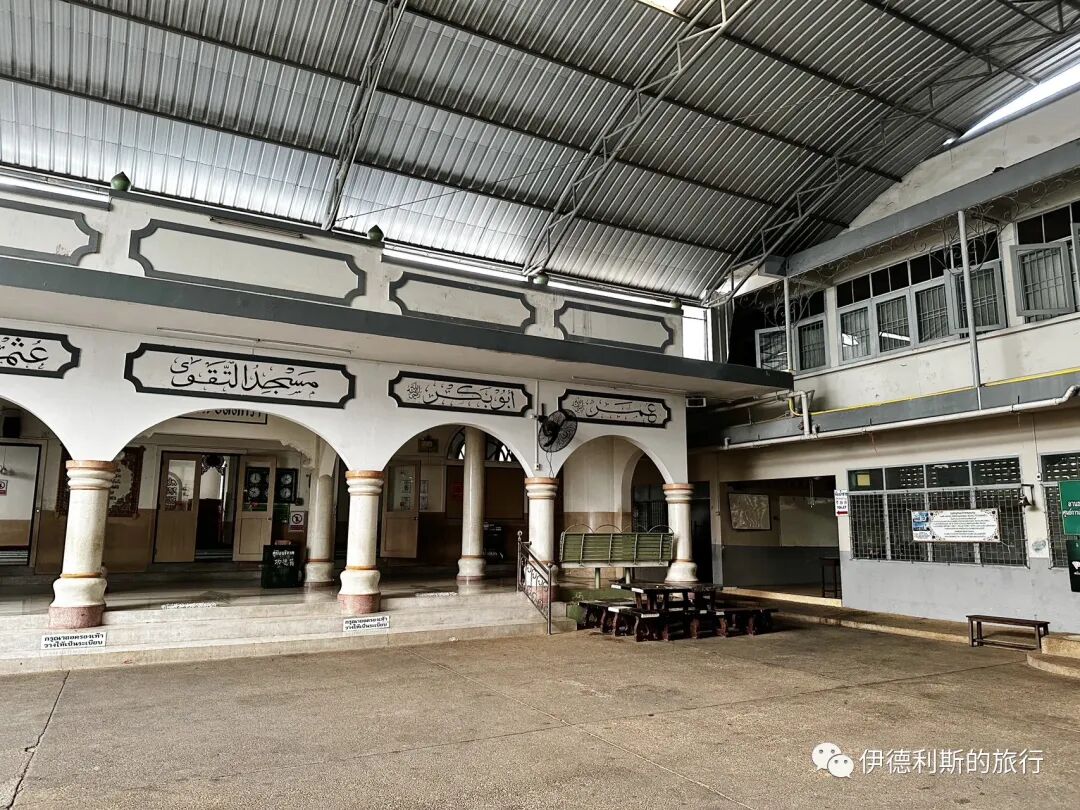
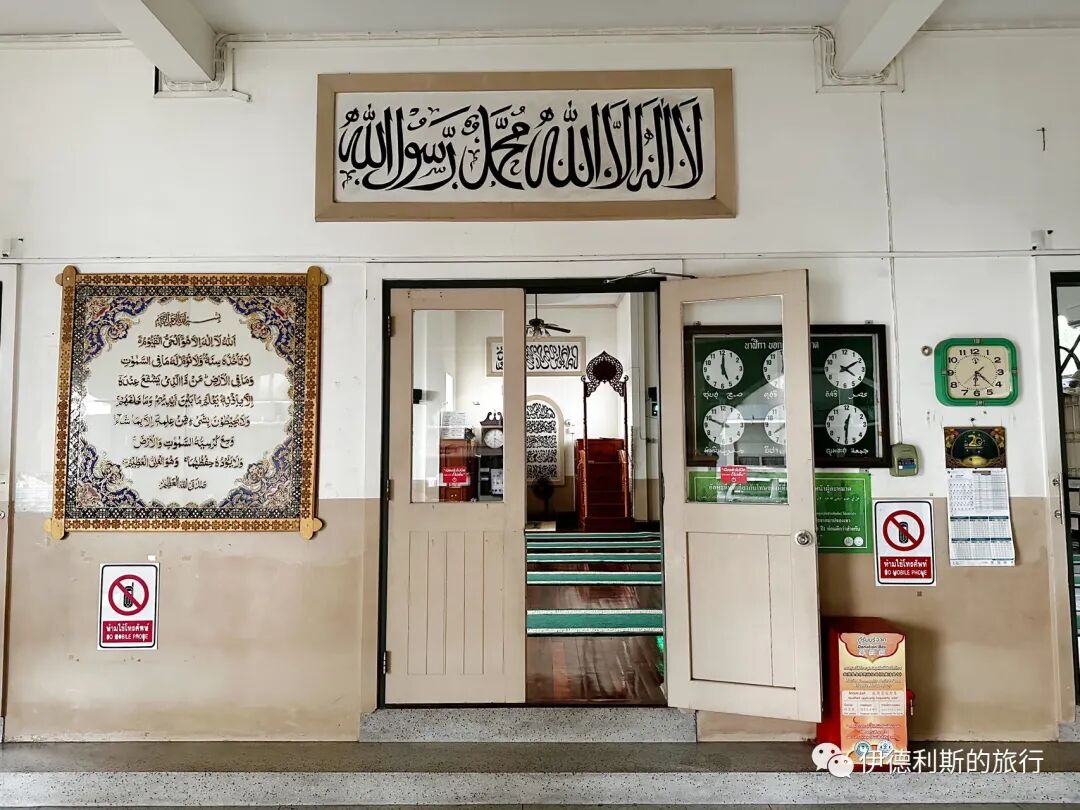
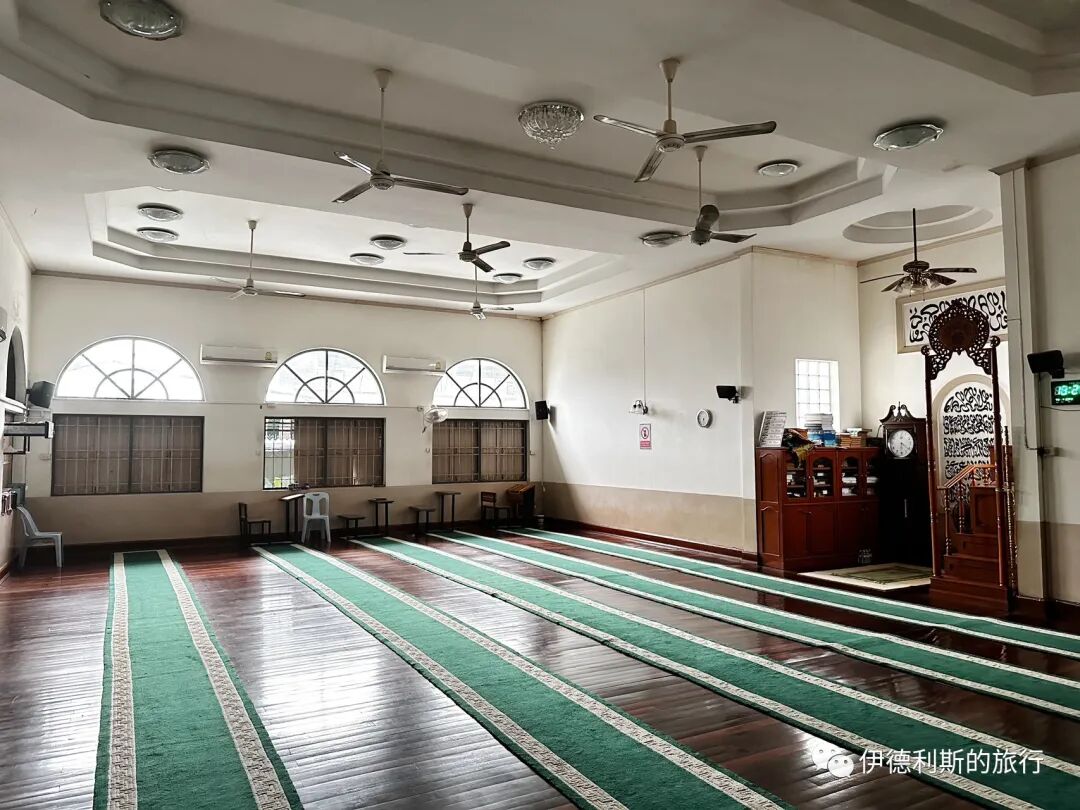
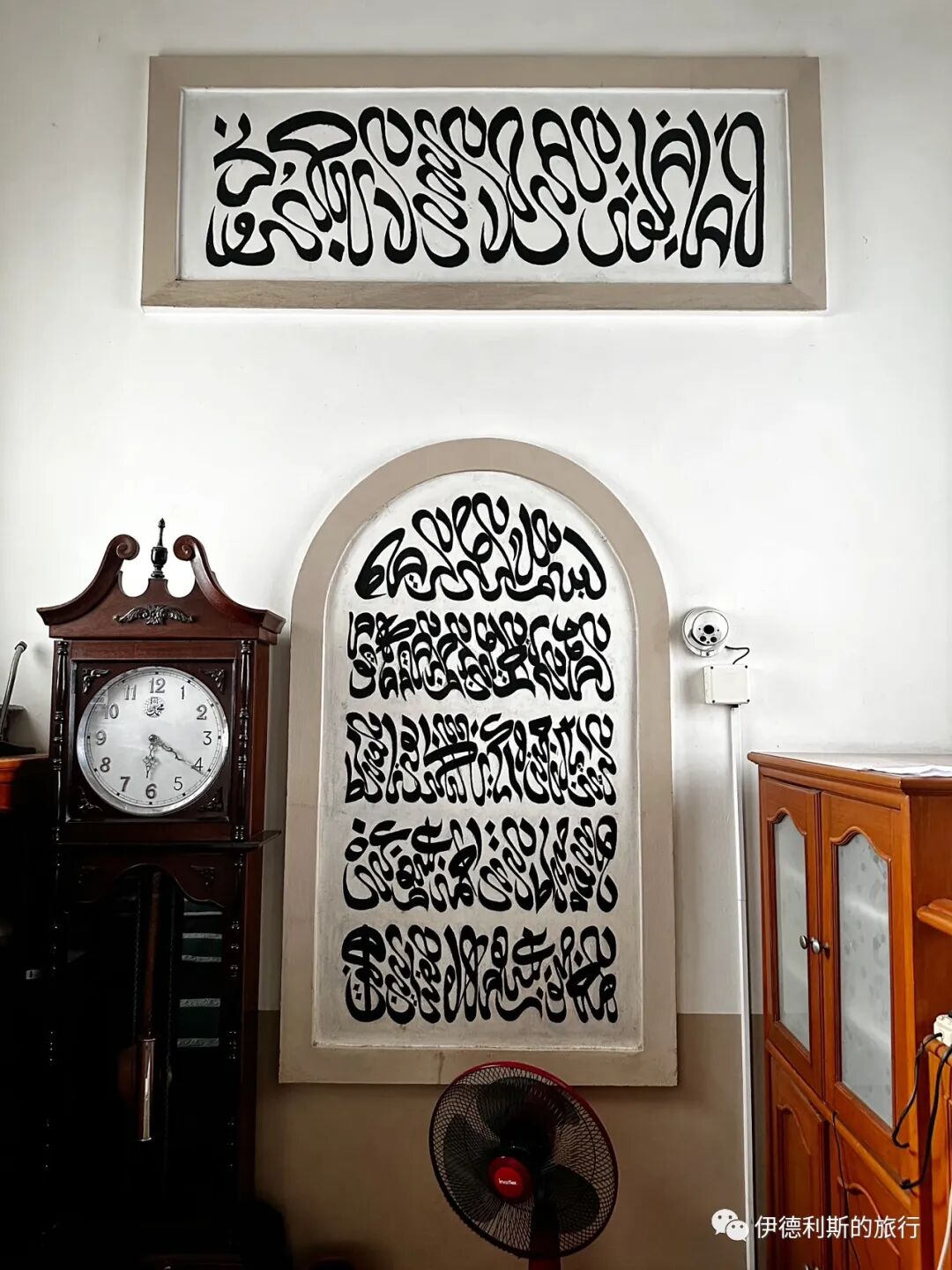
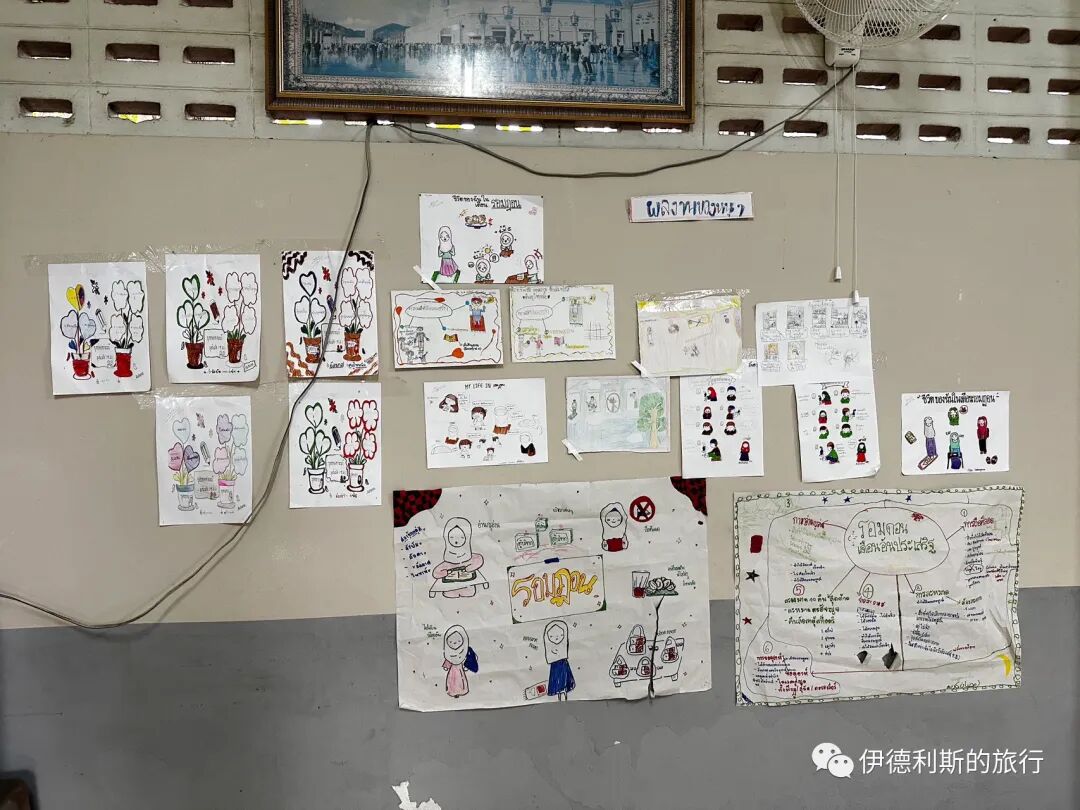
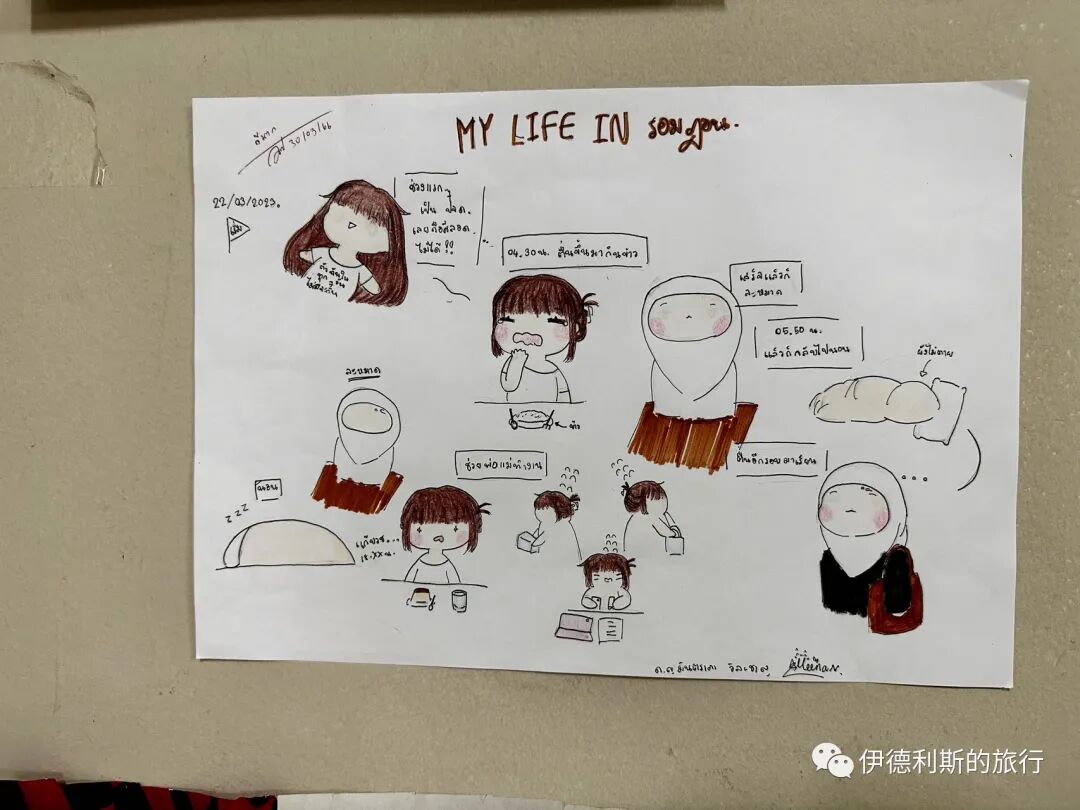
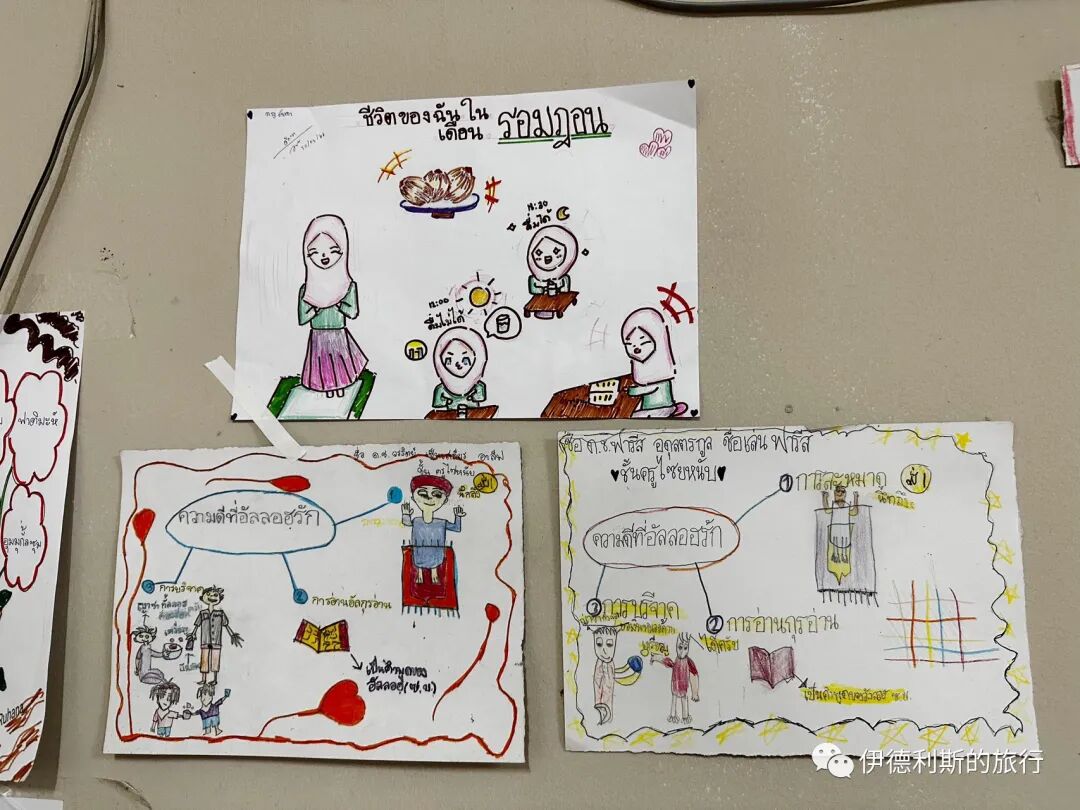
There are several Yunnan snack shops at the mosque entrance. In 2017, I ate authentic Yunnan pea jelly (wandoufen) here. This time, I saw a new restaurant that says 'Yunnan Banlong Wanyang Muslim Home Cooking'. Banlong is located in the Wa Mountains of the Kokang region in northern Myanmar. It is a community formed in the 1870s after General Ma Linyu of Du Wenxiu's army led his troops there and were taken in by the Wa tribe. It was later renamed 'Bannong'. Wanyang is a village established in the 1950s after the 93rd Division of the Nationalist Army moved to northern Thailand.
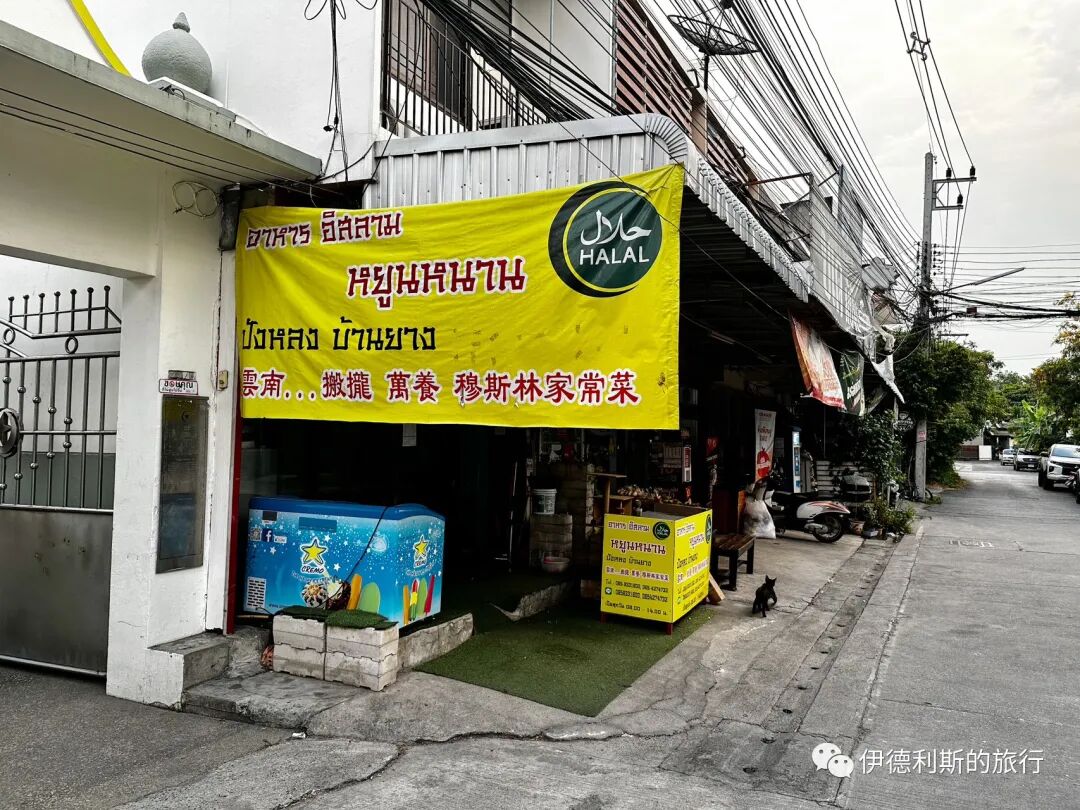
Opposite Masjid Attaqwa is Attaqwa School, the most important Islamic school in Chiang Mai and northern Thailand. Our driver, Mr. Ma, is a graduate of this school. It was summer vacation in May, so most teachers and students were away. We met a teacher who stayed at the school and gave a donation (nietie) to the school. According to Mr. Ma, this teacher is a Malay from southern Thailand and a graduate of the Islamic University of Madinah, and he is a very skilled teacher.
Attaqwa School was initiated by Haji Hu Ranmao in the 1960s and opened in 1970. It teaches Arabic, the Quran and Hadith, and religious knowledge, while providing free food and housing. When Attaqwa School was first established, most students were local Yunnan Hui Muslims from Chiang Mai. Later, because of its high teaching standards and free food and housing, it attracted Muslims from all over northern Thailand, southern Thailand, and Myanmar to study there. For half a century, Jingzhen School has played a vital role in the development of the faith in Thailand. It is a major reason why young and middle-aged Hui Muslims in northern Thailand can still hold fast to their faith today.
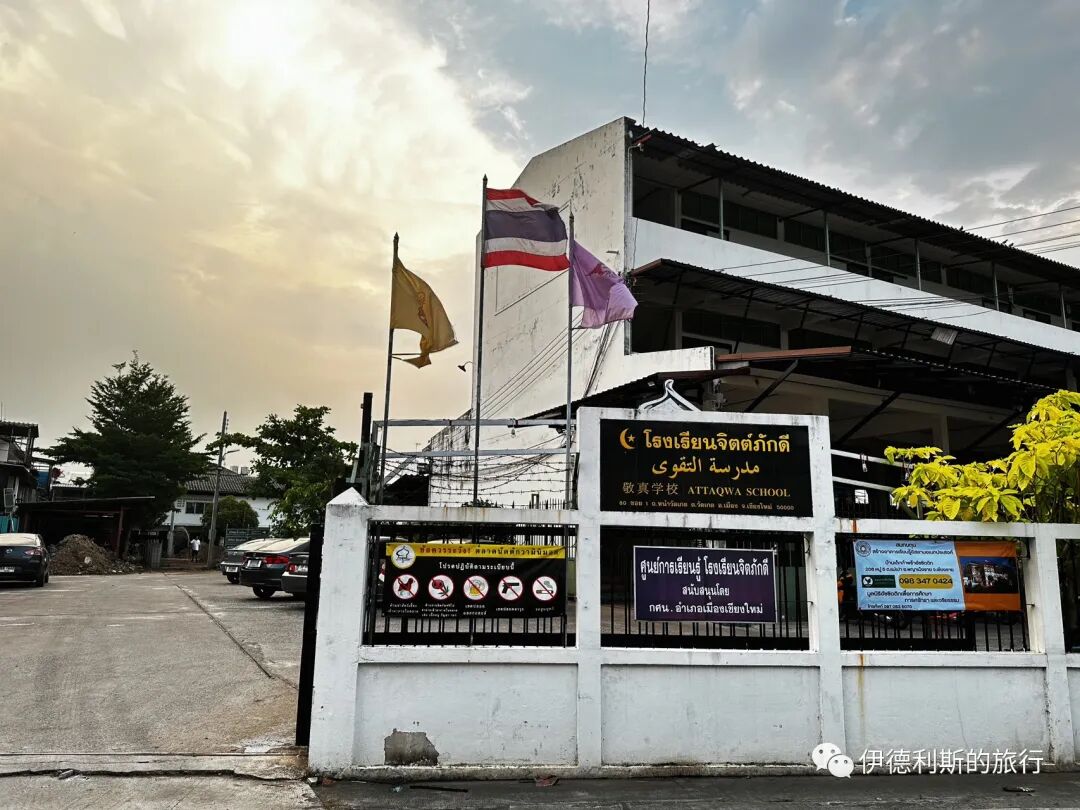
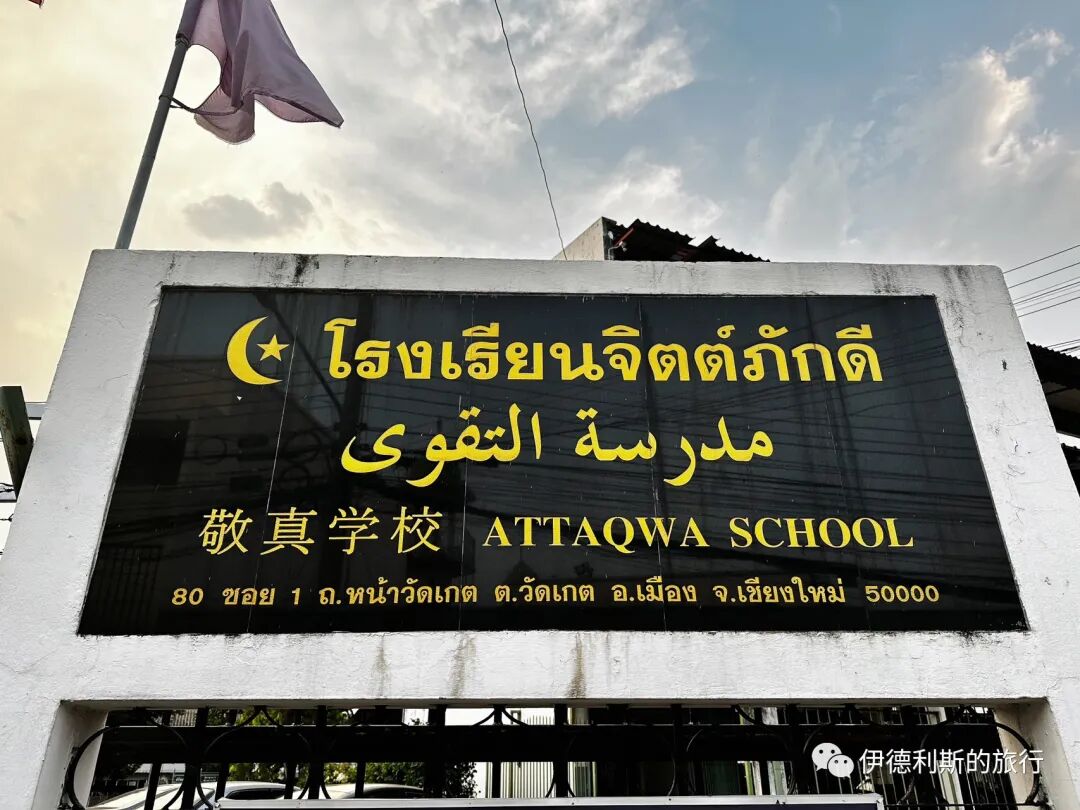
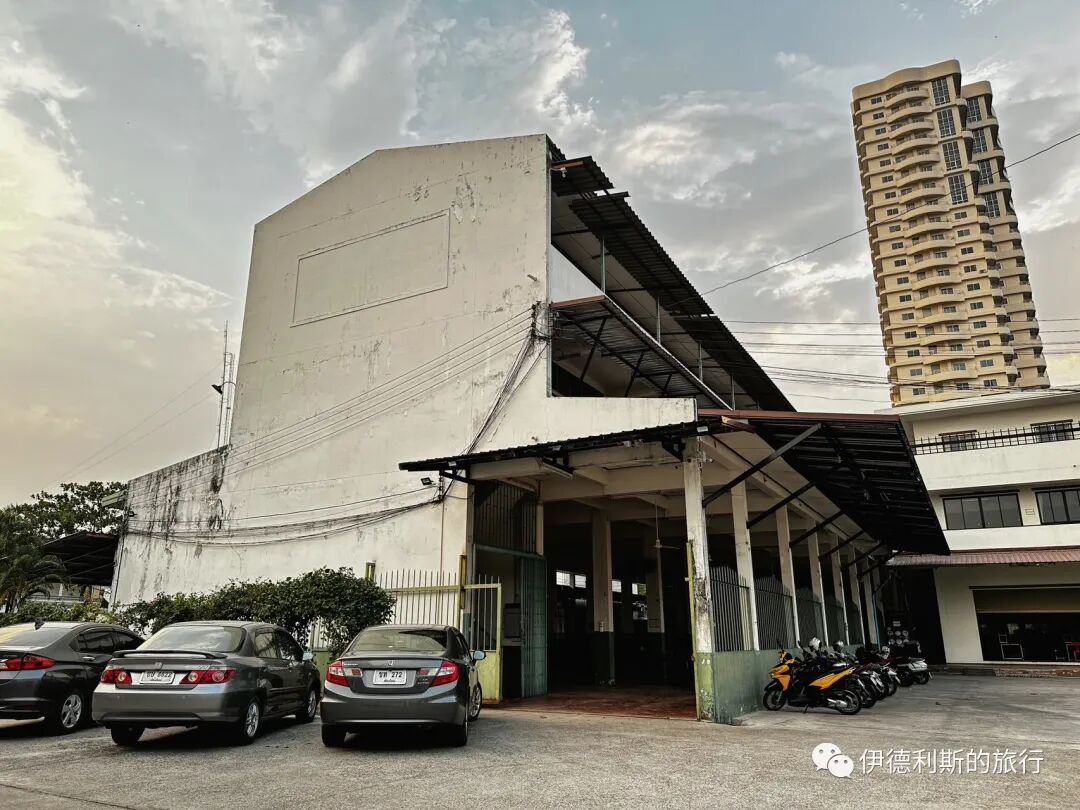
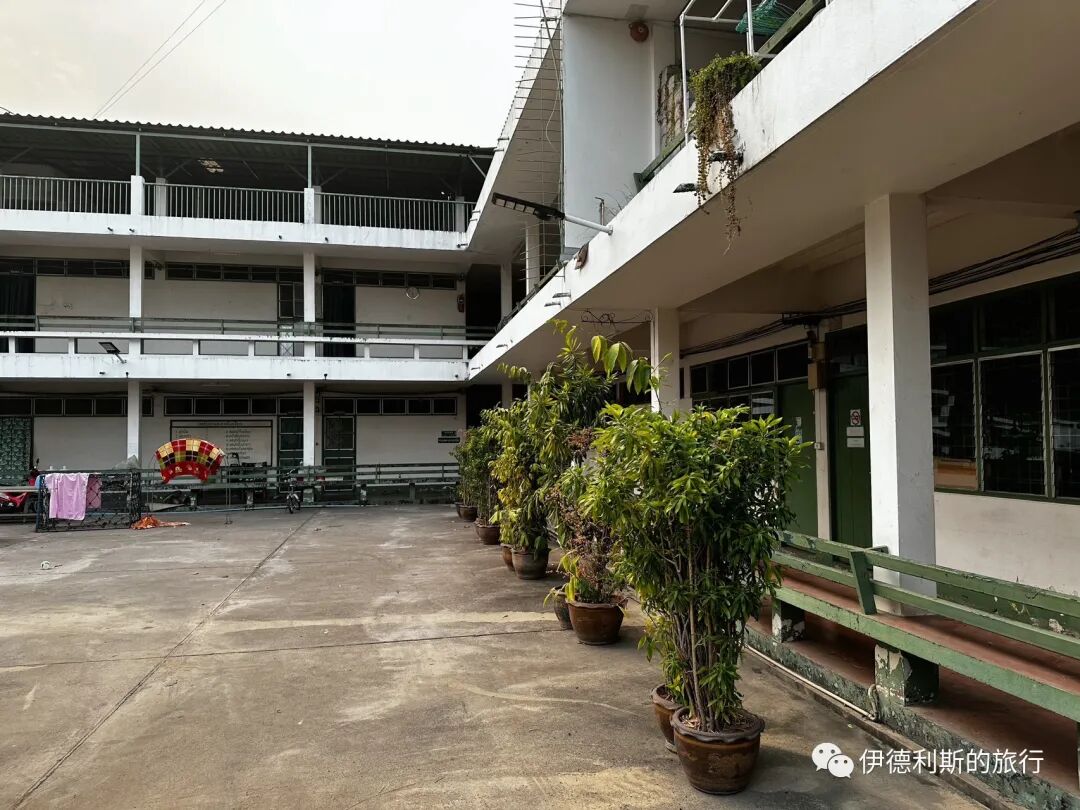
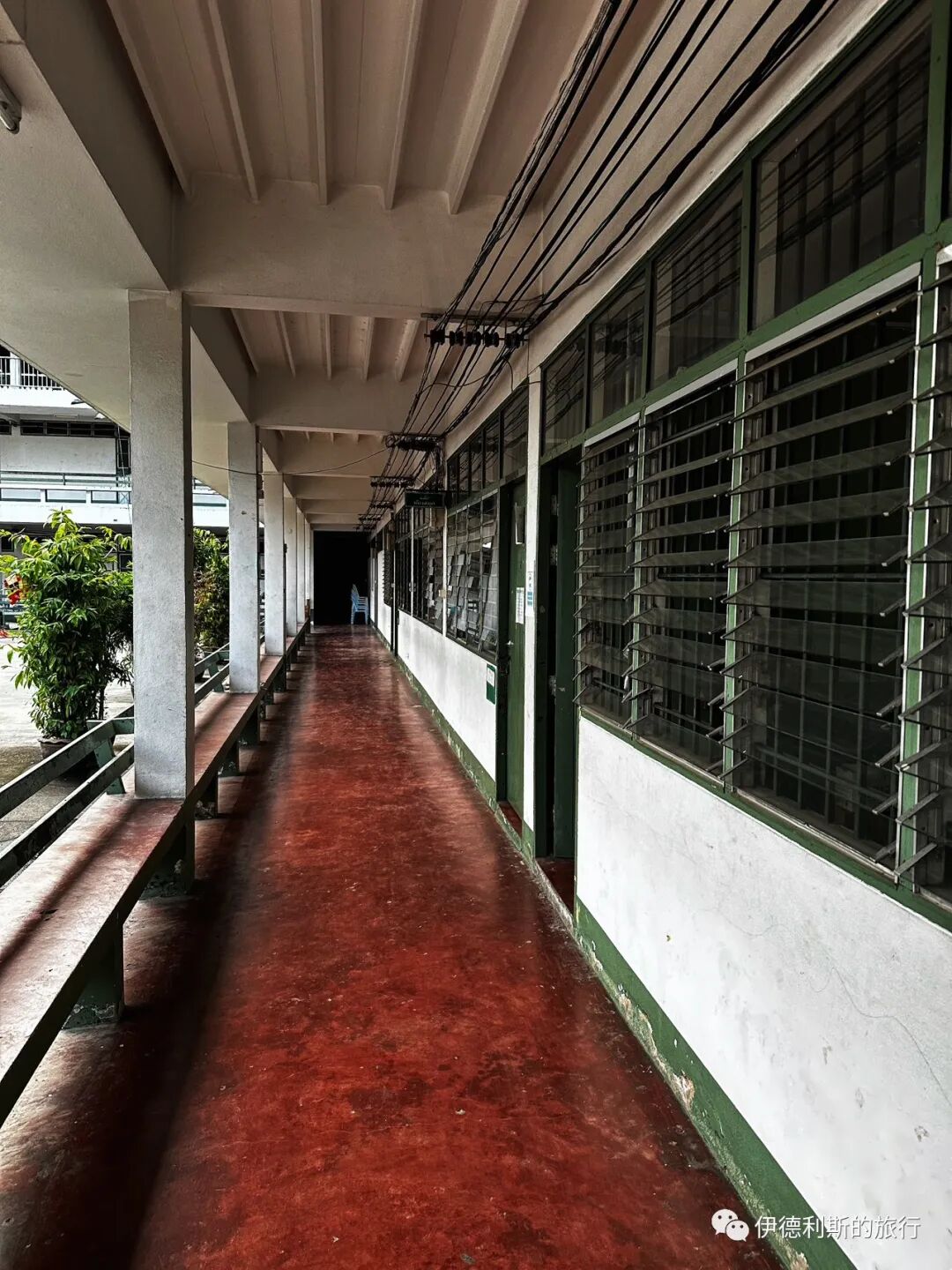
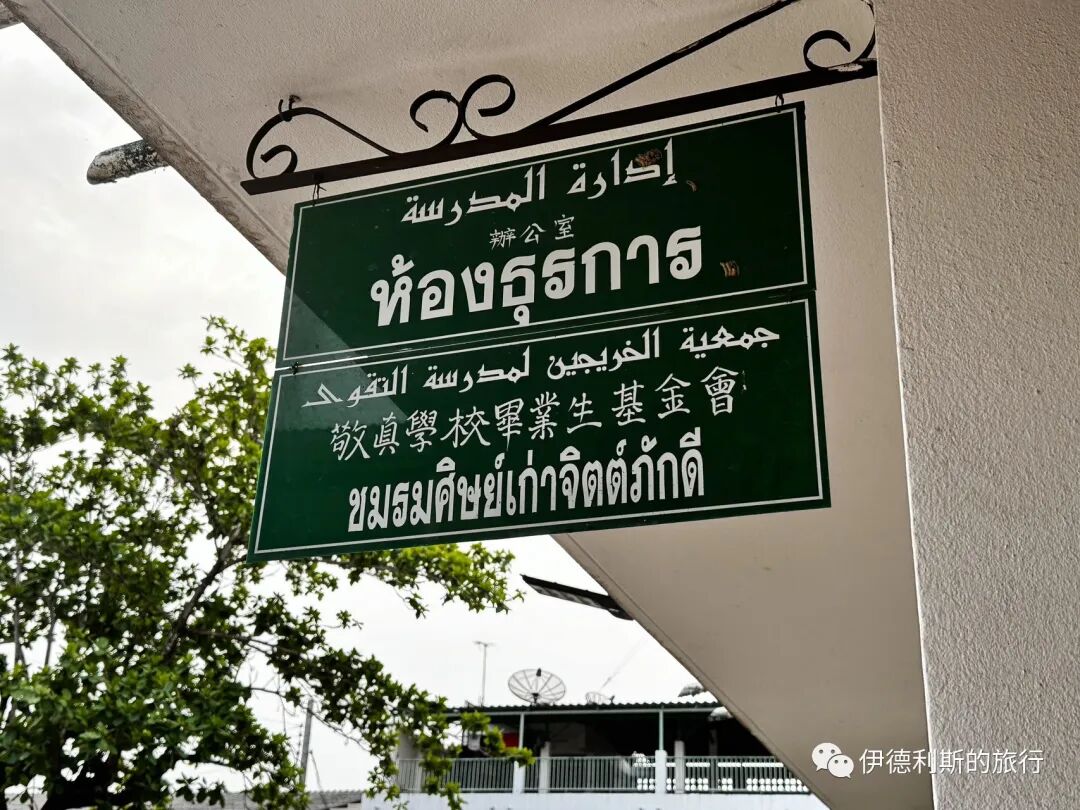
In the evening, we performed the evening prayer (namaz) at Nurul Mosque, located outside the White Elephant Gate (Chang Phuak Gate) in northern Chiang Mai. When I visited Chiang Mai in 2017, the mosque was being rebuilt, and now the new building is just finished. We met Grand Imam Mustafa here. He was the teacher of Master Ma when he attended Jingzhen School 30 years ago. He is highly respected throughout the entire Muslim community in Chiang Mai. Grand Imam Mustafa's daughter runs an Islamic bookstore at the entrance of Wang He Mosque. We visited it before we left, and I will share more about it later.
Like the Chang Khlan Mosque community, the Nurul Mosque community is a South Asian one. Many ancestors of the Haw Muslims (gaomu) came from Bangladesh. They arrived in Chiang Mai via Myanmar to trade during the British India period in the 19th century and later made a living by raising cattle. During the Partition of India and Pakistan in 1947, more Bengali Muslims moved here to escape the chaos. After the 1960s, Chiang Mai banned cattle from entering the city. Some Haw Muslims moved to the Chang Khlan Mosque community, which is further from the old city. Because of this, the number of Haw Muslims at Nurul Mosque is now the smallest among the four mosque communities in downtown Chiang Mai.
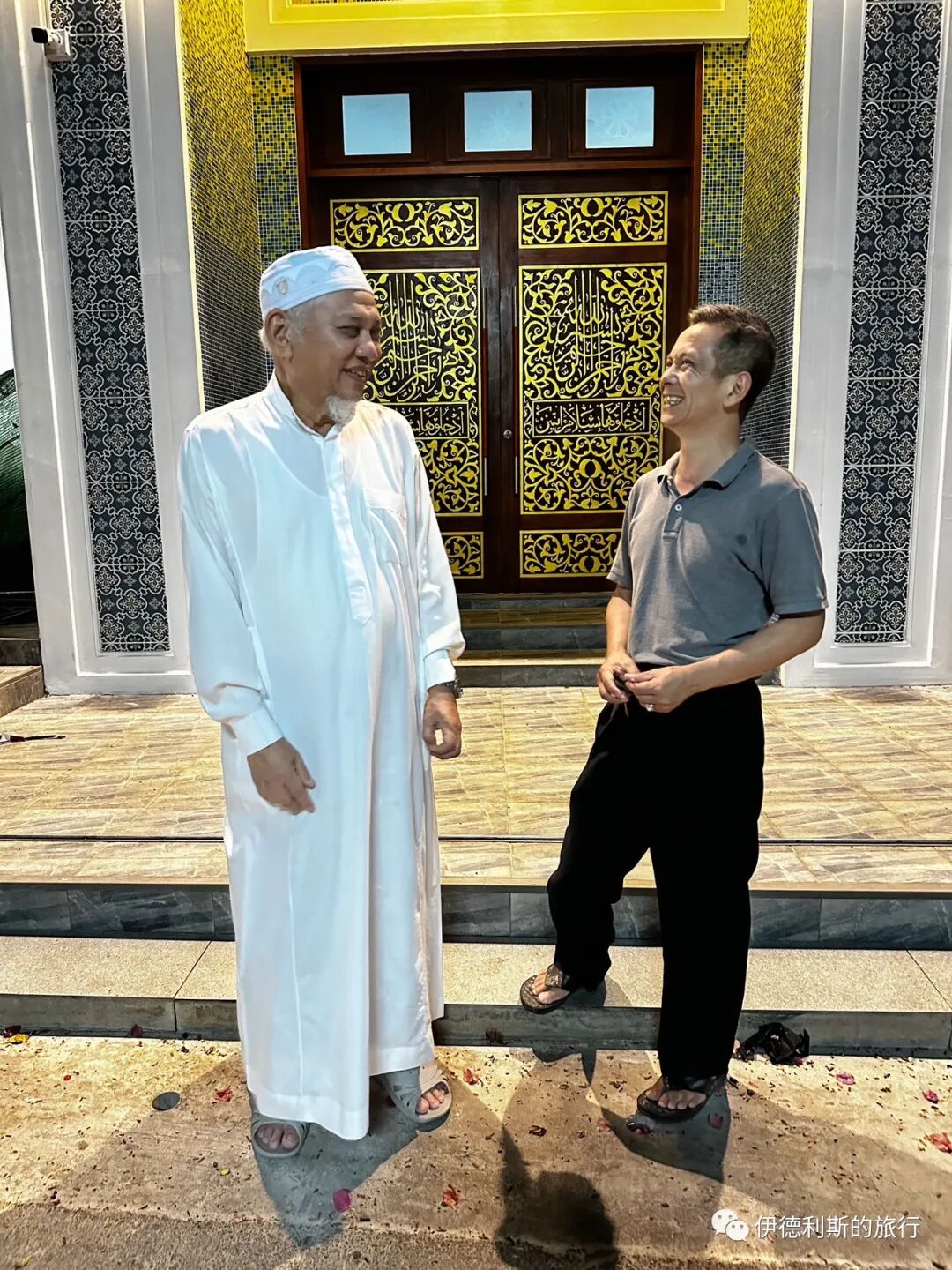
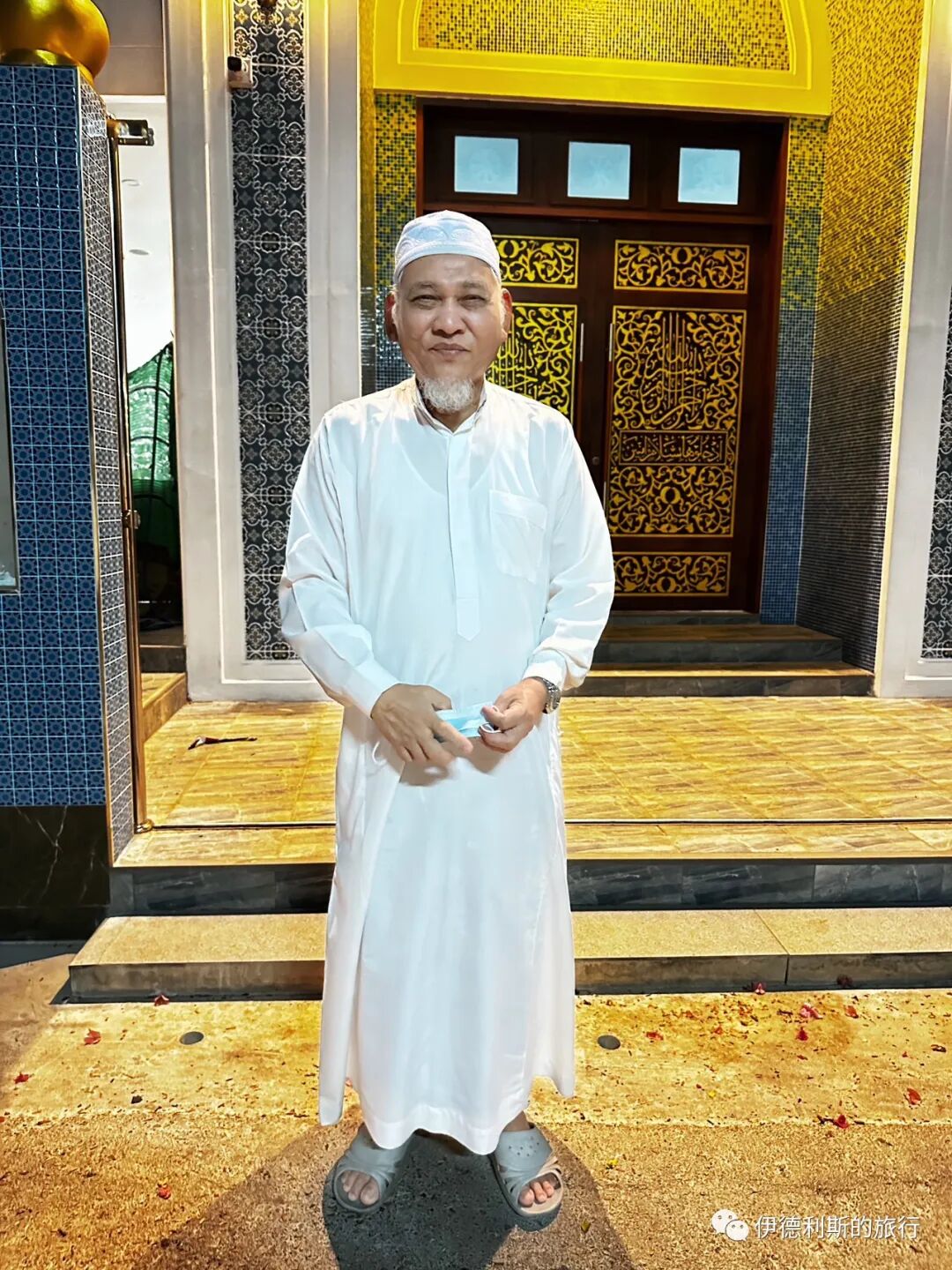
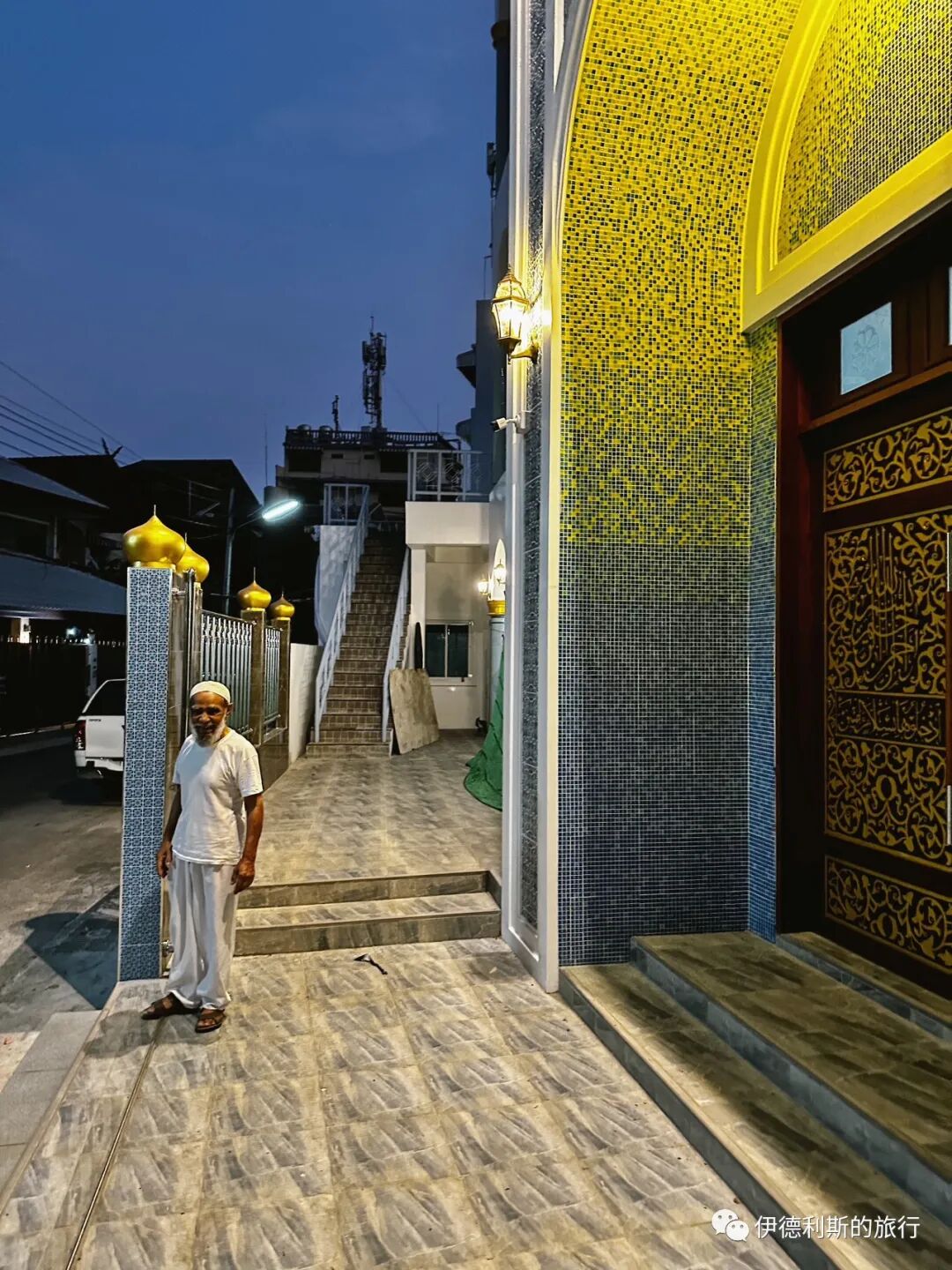
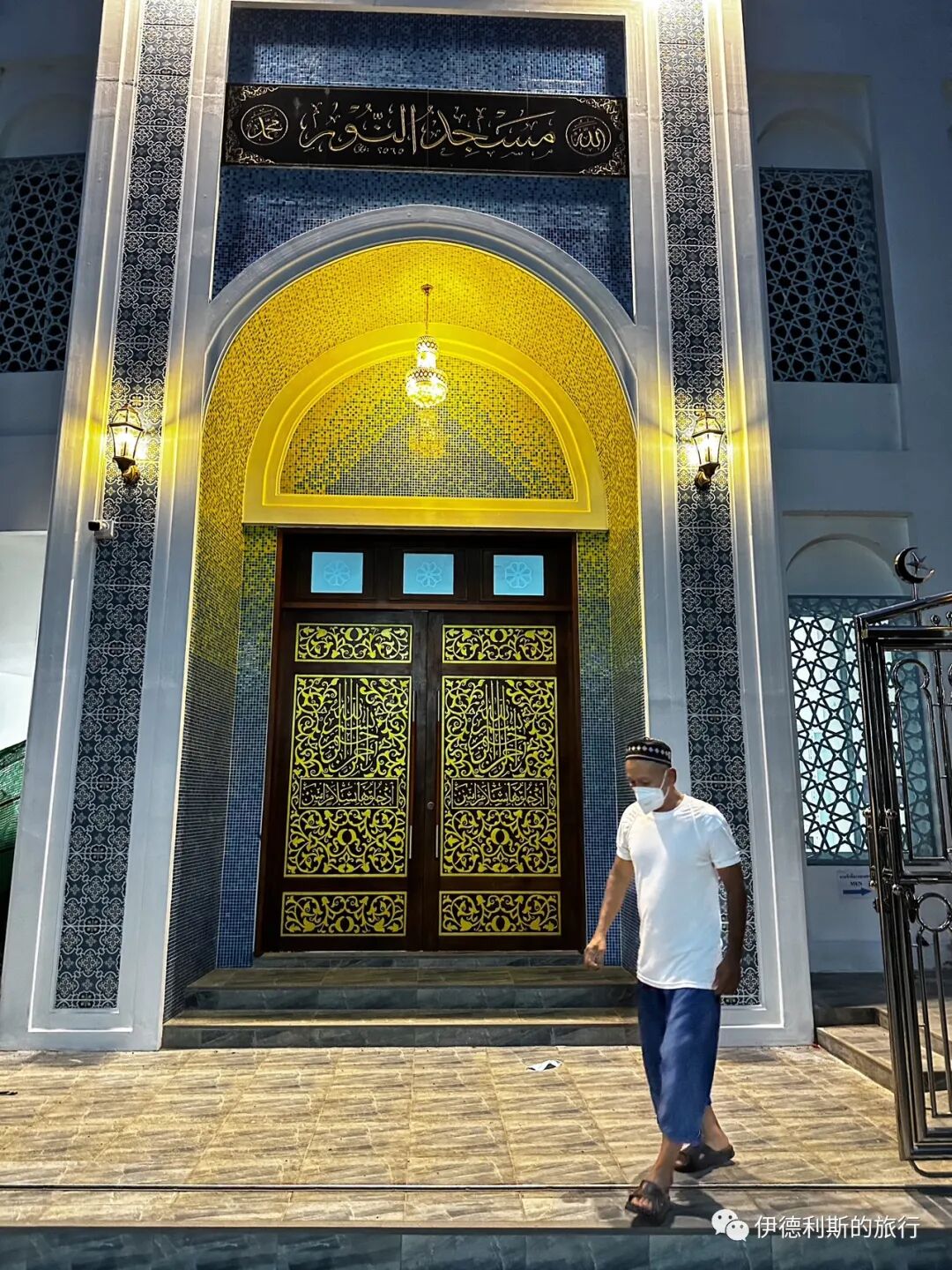
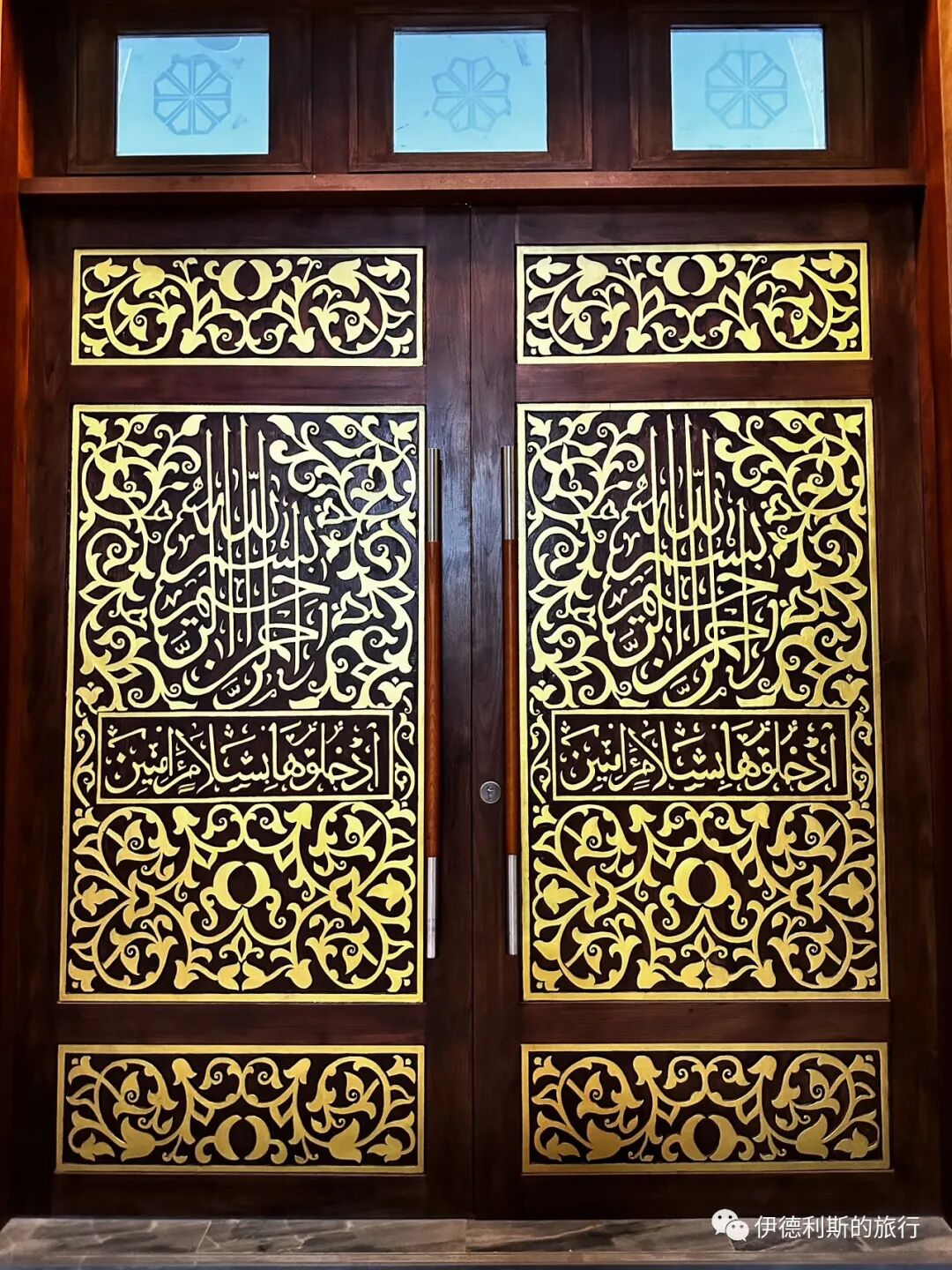
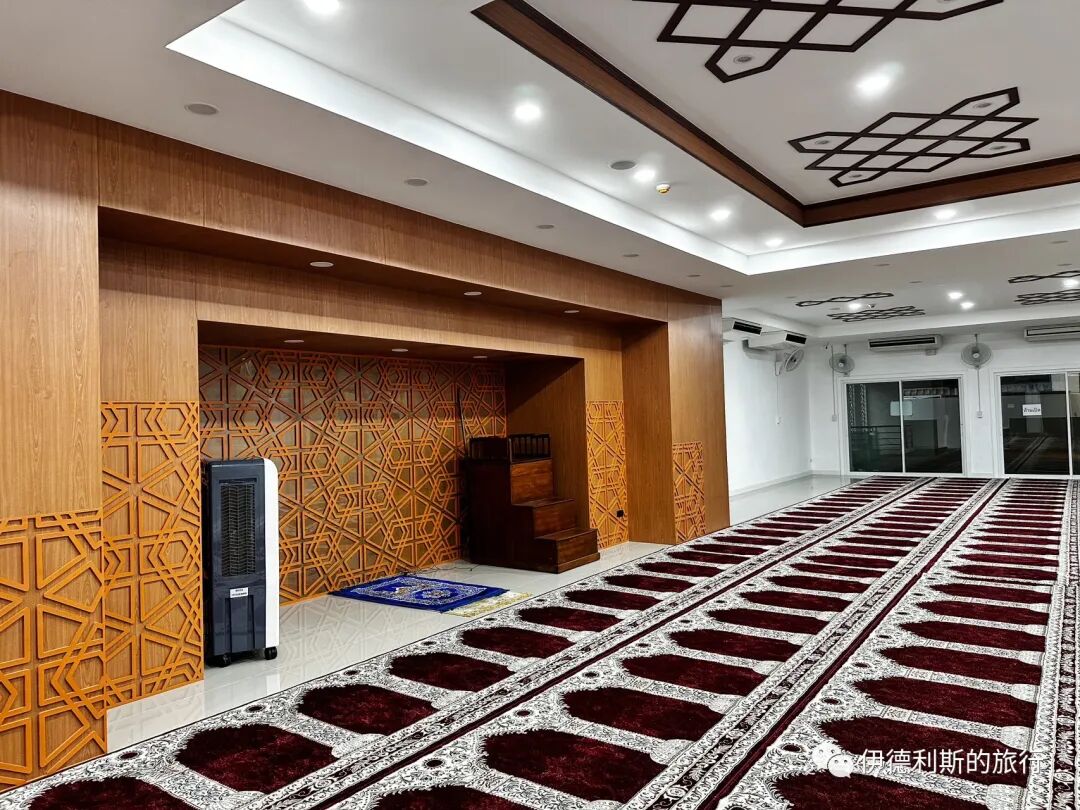
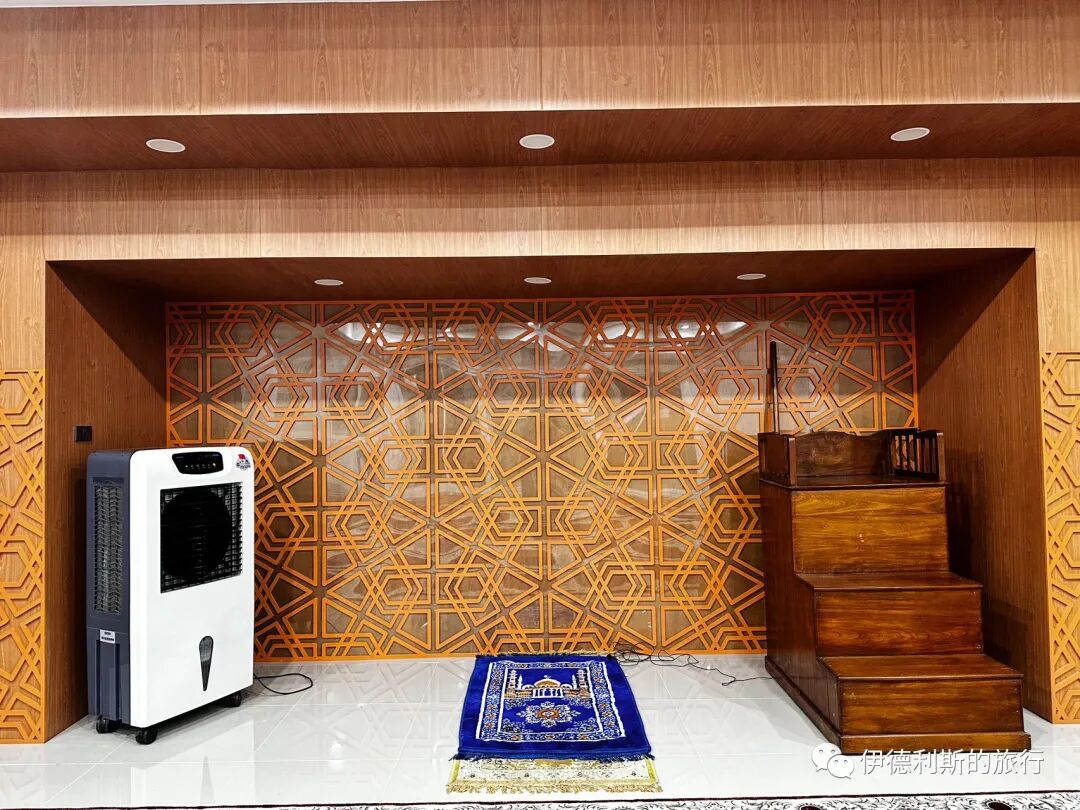
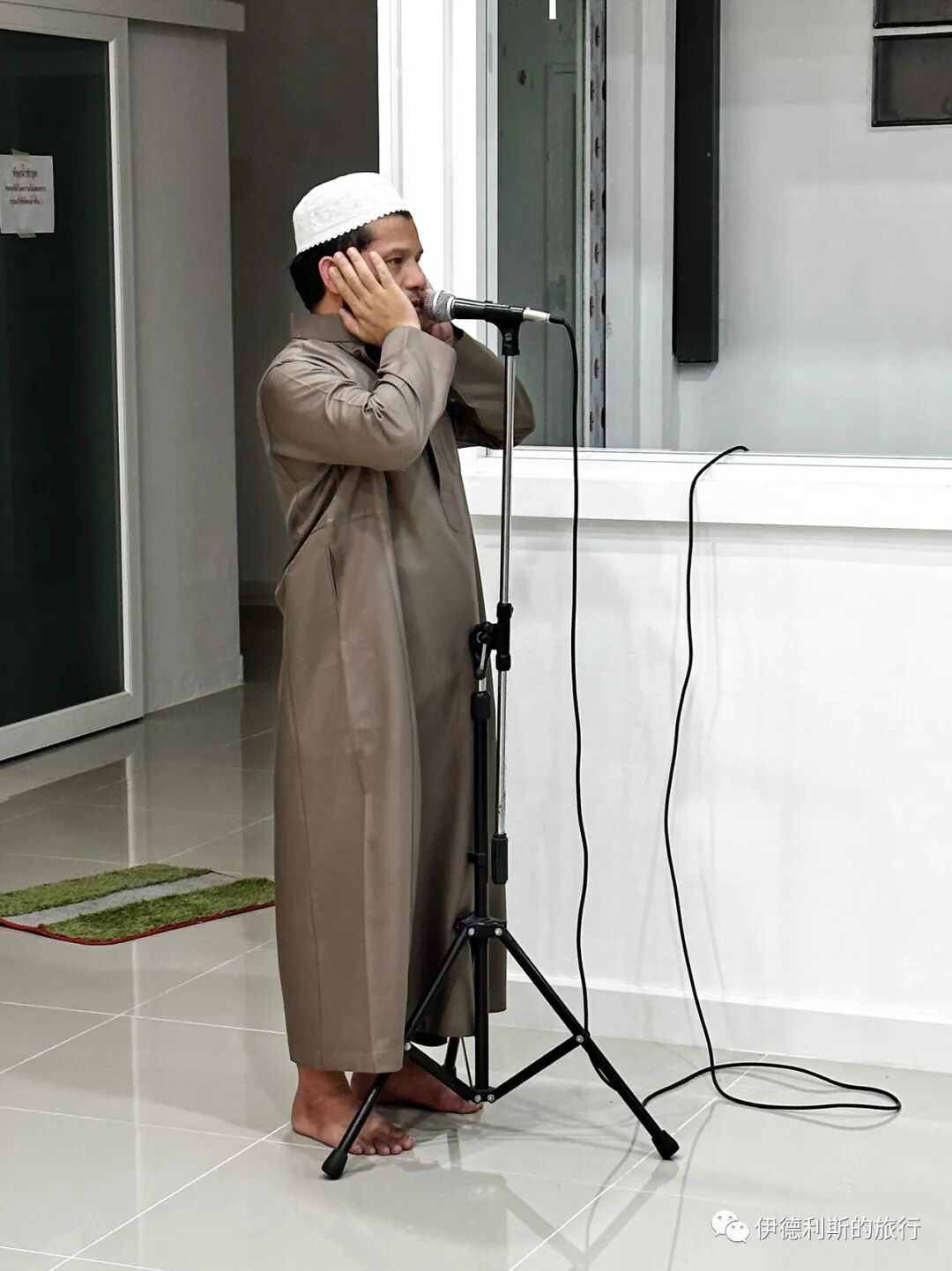
We had dinner at a Yunnan-style restaurant next to Wang He Mosque. The restaurant is owned by Na Zhongwei, a board member of Wang He Mosque, and the building itself is property of the mosque. Although the Yunnan restaurant has been open for many years, it only moved to its current location recently. It is very convenient to eat there after visiting Wang He Mosque.
We ordered stir-fried holy basil beef (dapao niurou), steamed sea bass, pumpkin tips, and stir-fried tofu puffs. You can choose the portion size for dishes here, and some even come in small, medium, or large sizes, which is perfect for tourists. Hui Muslims from Yunnan have lived in Chiang Mai for over a hundred years, and their tastes have changed. For example, the sour and spicy levels are much stronger than what you would find in Yunnan. In Yunnan, a purely vegetarian dish like pumpkin tips usually wouldn't have chili, but in Thailand, they definitely add chili to it.
Besides being a bit spicy, I really love the food of the Yunnan Hui Muslims in Thailand. I especially love the stir-fried holy basil beef; it goes so well with rice. Holy basil (dapao) is also known as sacred basil. It is native to South Asia and widely grown in the tropical regions of Southeast Asia. Stir-frying meat with holy basil leaves is a famous Thai dish. This tofu stir-fried in a sour and spicy sauce is also delicious. The balance of sour, sweet, and spicy is just right.
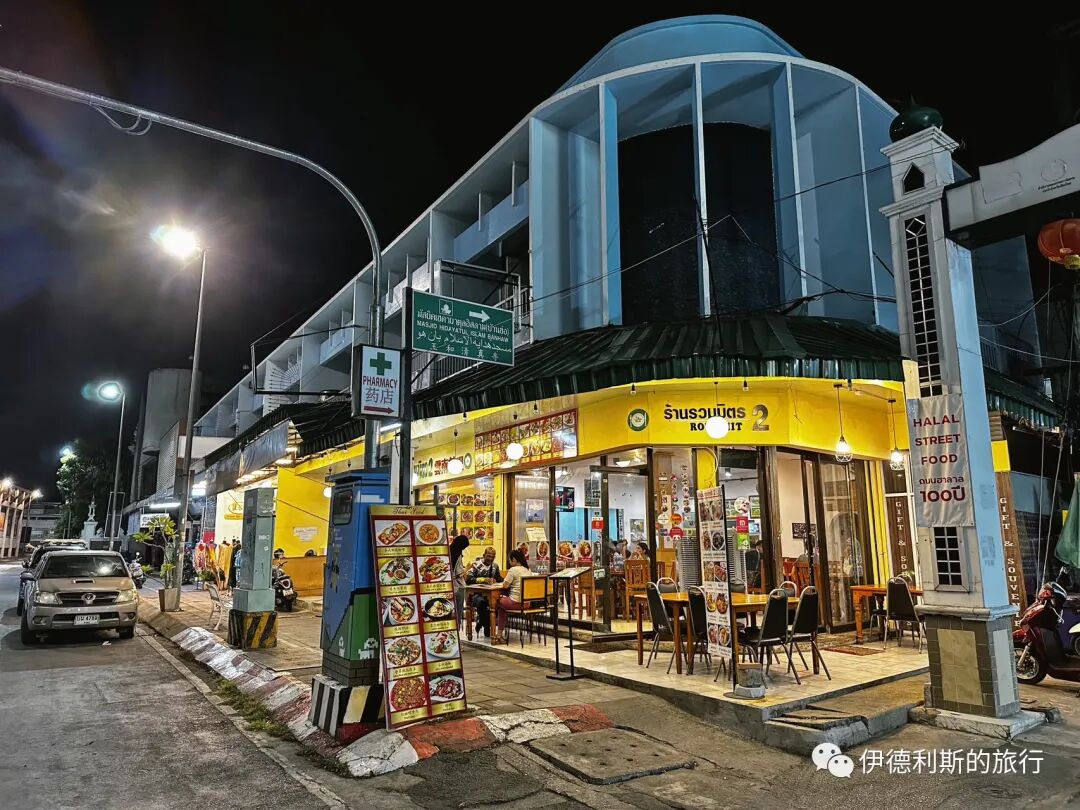
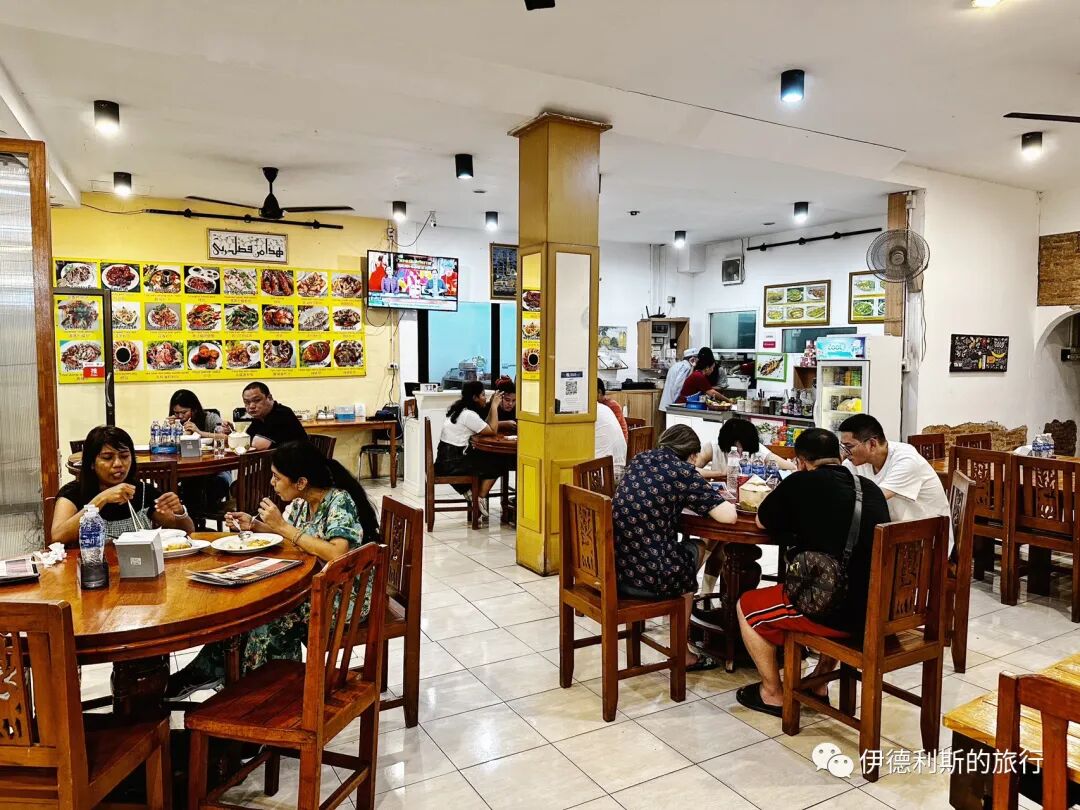
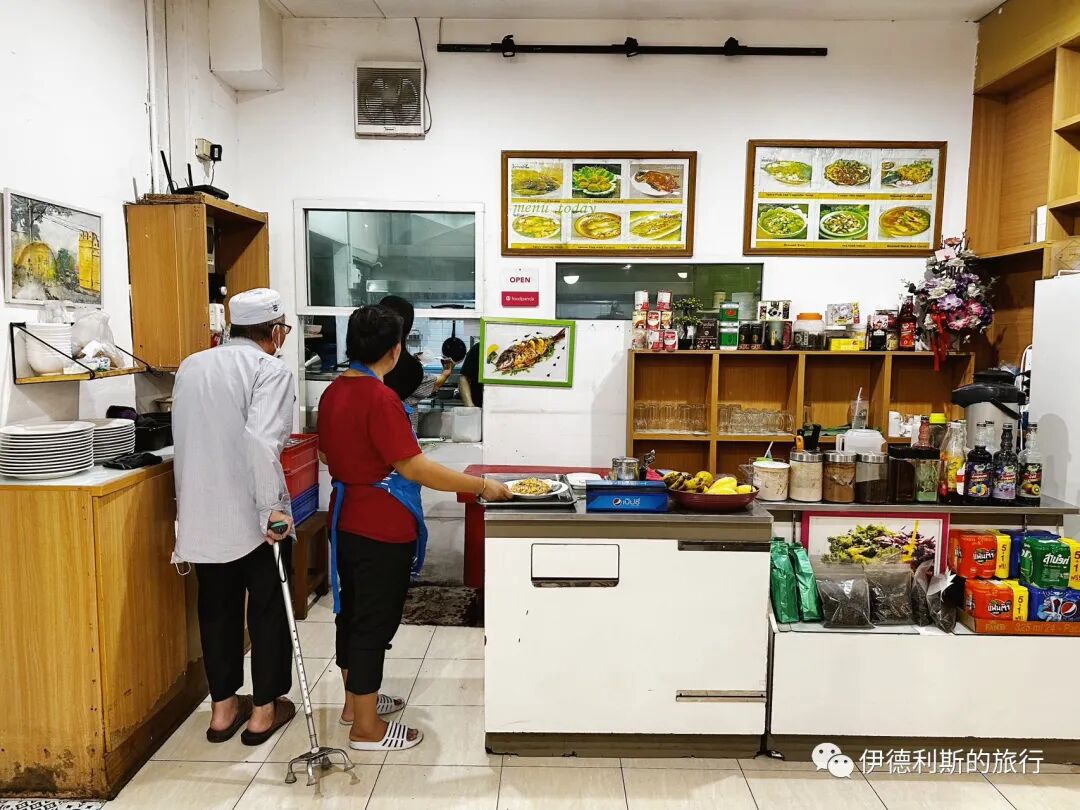
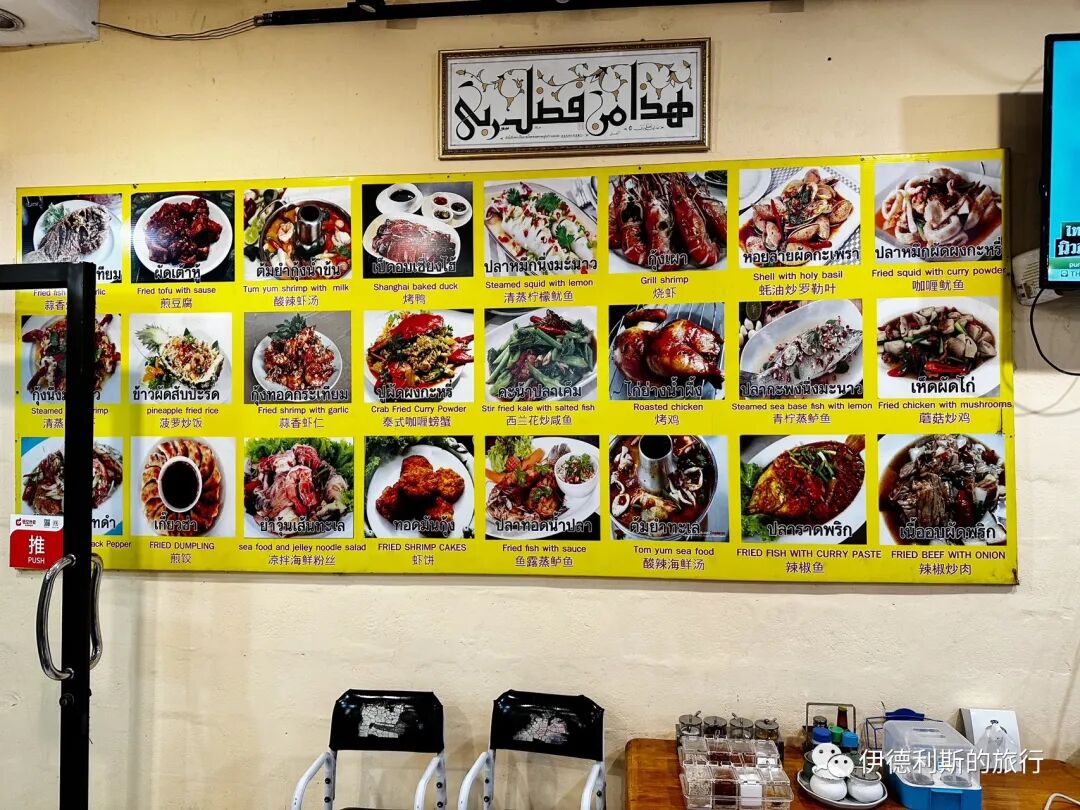
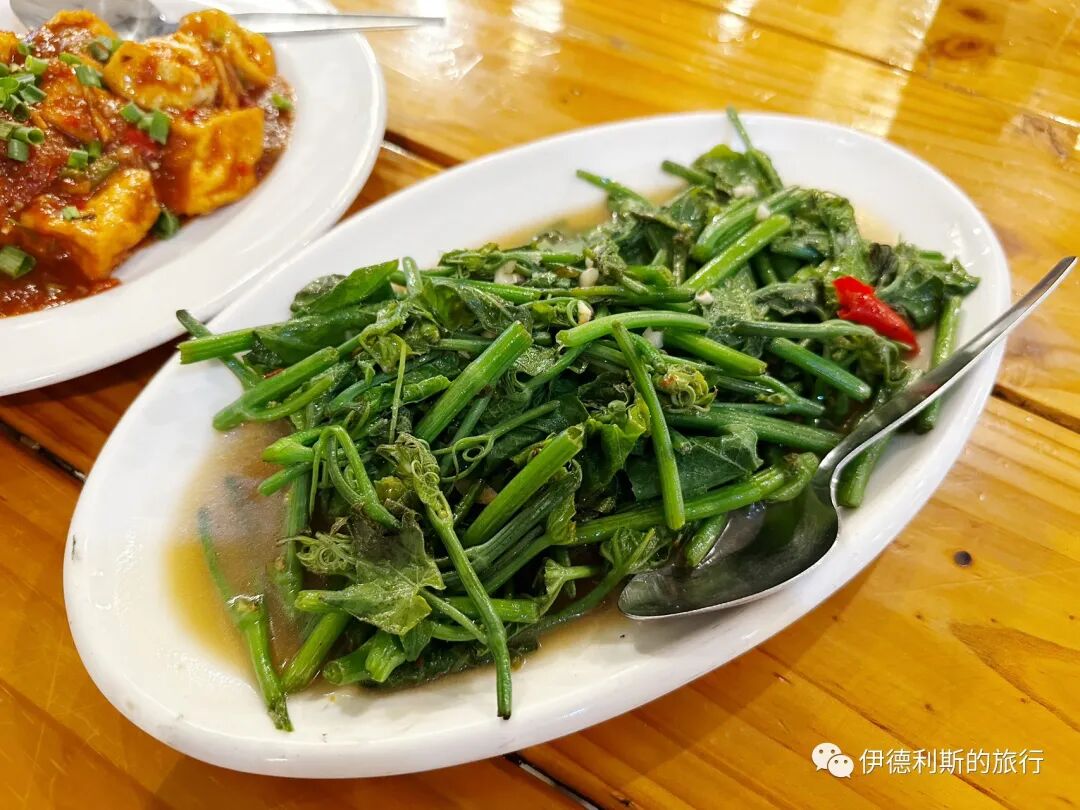
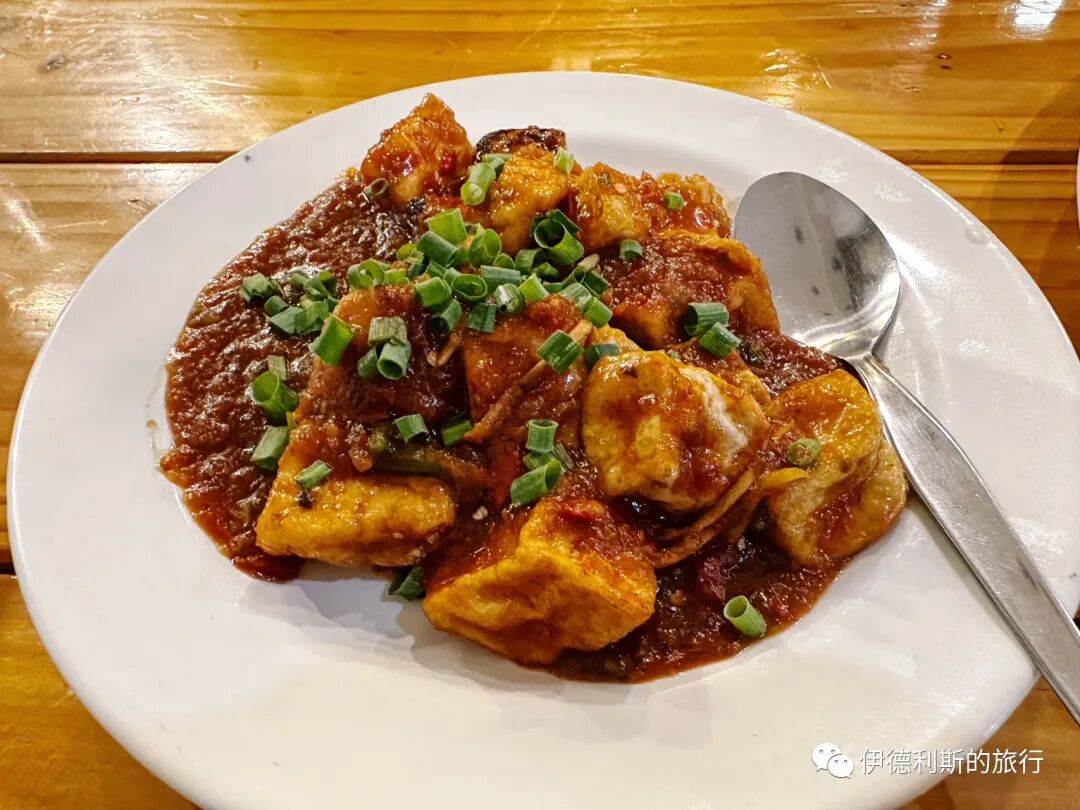
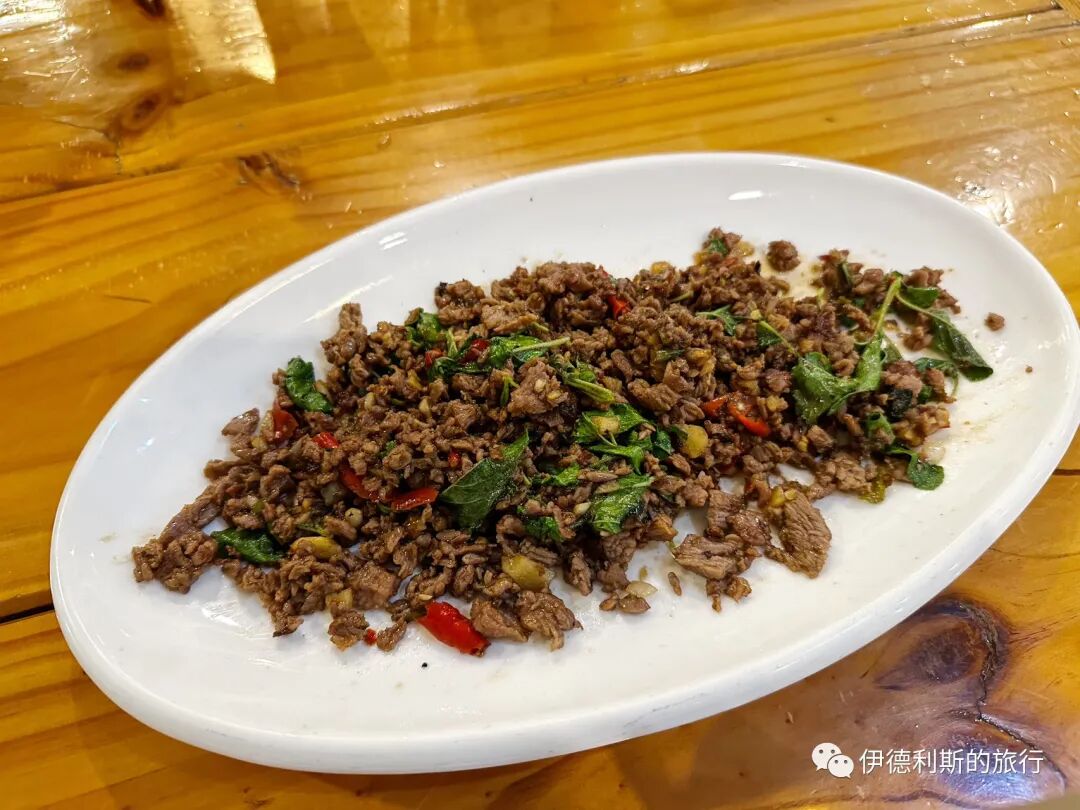
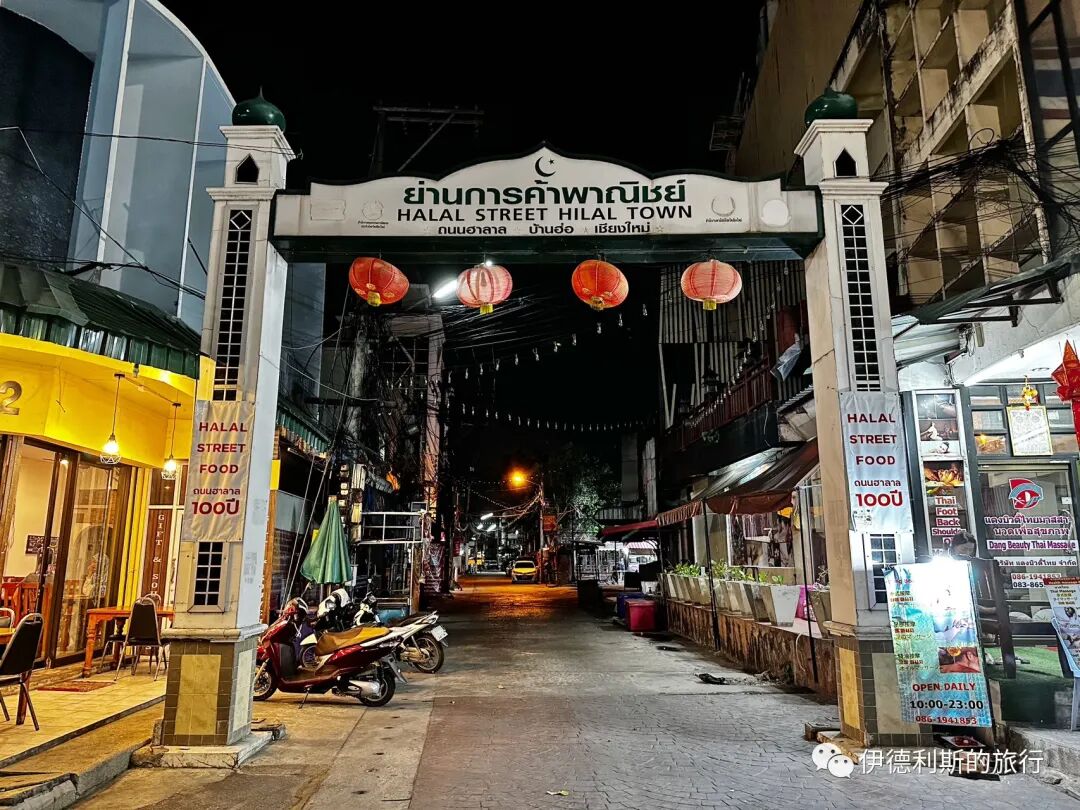
Then, on Chang Khlan Road, we found an Emirati restaurant. It had a sign in Chinese that read 'Arabic food, Indian food, Chinese food, Italian food.' It is the most 'Maritime Silk Road' restaurant I have ever seen, haha.
Halal Travel Guide: Shadian, Yunnan — Hui Muslims, Mosques and Local History
Articles • ali2007fr posted the article • 0 comments • 275 views • 2026-05-17 12:23
Summary: Shadian, Yunnan — Hui Muslims, Mosques and Local History is presented here as a firsthand travel account in clear English, beginning with this scene: Author: Zainab. The account keeps its focus on Shadian Travel, Hui Muslims, Yunnan Mosques while preserving the names, places, food, and historical details from the Chinese source.
Author: Zainab
We traveled from Jianshui Ancient City to Shadian and ate at Shadian Shihui in front of the Great Mosque. We had stir-fried chayote tips (fengshou guajian), five-spice chicken, sweet and sour pork tenderloin, cold tossed cattail shoots with wood ear mushrooms, and steamed lotus root with rice flour (fenzheng ou). The food options here are quite rich! Since a banquet had just finished when we arrived, our food came out very quickly.
The Shadian Great Mosque has a very tropical feel.
Yufeng School
In the mid-Guangxu period of the Qing Dynasty, responding to the imperial decree to stop the imperial examinations and start schools, the famous late Qing general and Yunnan Kaihua Town commander Bai Jinzhu led the Shadian villagers to donate funds and establish their own school in 1892. Because the school was located at the foot of Jinyu Mountain, it was named Yufeng Academy. Bai Jinzhu was a famous anti-French general who led from the front during the 1884 Sino-French War and was awarded the title of Shengyong Baturu.
In 1905, following the Qing Dynasty's order to establish primary schools in every township, Yufeng Academy was renamed Shadian Primary School. It was divided into classes A, B, C, and D, with over 60 students. In 1914, Bai Jinzhu's son, Bai Liangcheng, returned to Shadian after graduating from the Yunnan School of Law and Political Science and was hired as the principal of Yufeng Academy. Bai Liangcheng strongly advocated for modern education and added subjects like Chinese, arithmetic, physical education, and music to the school.
Due to the increasing number of students, Bai Liangcheng and Commander Bai Qicheng led the villagers to rebuild the academy in 1921, and it was completed in 1923. The new academy had four classrooms, an office, and a library. Bai Liangcheng wrote the plaque for Yufeng School and the couplet on the stone pillars on both sides, which reads: 'The elegant spirit of Jinyu Mountain brings prosperity to generations of scholars, the clear stream circling the jade belt sets a model for students for a thousand years.' Afterward, Bai Liangcheng hired Arabic scholar Ma Jian, who had returned home after graduating in Kunming, along with Wang Liangbi, Wang Shupu, Ma Ayuanqing, and others as teachers, and changed the school into a primary and junior high school.
In 1943, Bai Liangcheng also founded Yufeng Middle School. At that time, many professors from the National Southwestern Associated University had a good relationship with Bai Liangcheng. He hired Professor Xia Kangnong, Dean of the School of Science at the university, as the principal of Yufeng Middle School, and invited experts and scholars like Tongji University professor Cao Wuli, philosopher Zheng Xin, and historian Bai Shouyi to teach there until the victory of the War of Resistance in 1945.
After Yufeng Primary School moved to a new campus in 1987, the old site of Yufeng Academy was left vacant. It was renovated in 2012 and opened as the Shadian branch of the Honghe Prefecture Library and the Shadian Village History Museum.
Old houses in Shadian
There is a well at the entrance of Yufeng Academy called Xiying Longtan, which was reportedly built by Bai Shouyou and his followers during the Wanli period of the Ming Dynasty. The well is 20 meters deep, and folklore says there is a dragon inside, which is why it is called Dragon Pool (Longtan).
During the Qianlong period of the Qing Dynasty, Shadian village built walls for defense and constructed seven gatehouses in areas like Xiying, Dongying, and Chuanying. Only the Xiying gatehouse remains today, which is a structure rebuilt during the Xianfeng period of the Qing Dynasty. The gatehouse is a two-story brick and wood building. The first floor is for passage, and the second floor is for guards, featuring exquisite carvings and paintings.
There is a stone arch bridge over the Yudai River in Shadian, which was built with funds donated by Bai Shouyou during the Wanli period of the Ming Dynasty. view all
Summary: Shadian, Yunnan — Hui Muslims, Mosques and Local History is presented here as a firsthand travel account in clear English, beginning with this scene: Author: Zainab. The account keeps its focus on Shadian Travel, Hui Muslims, Yunnan Mosques while preserving the names, places, food, and historical details from the Chinese source.
Author: Zainab
We traveled from Jianshui Ancient City to Shadian and ate at Shadian Shihui in front of the Great Mosque. We had stir-fried chayote tips (fengshou guajian), five-spice chicken, sweet and sour pork tenderloin, cold tossed cattail shoots with wood ear mushrooms, and steamed lotus root with rice flour (fenzheng ou). The food options here are quite rich! Since a banquet had just finished when we arrived, our food came out very quickly.
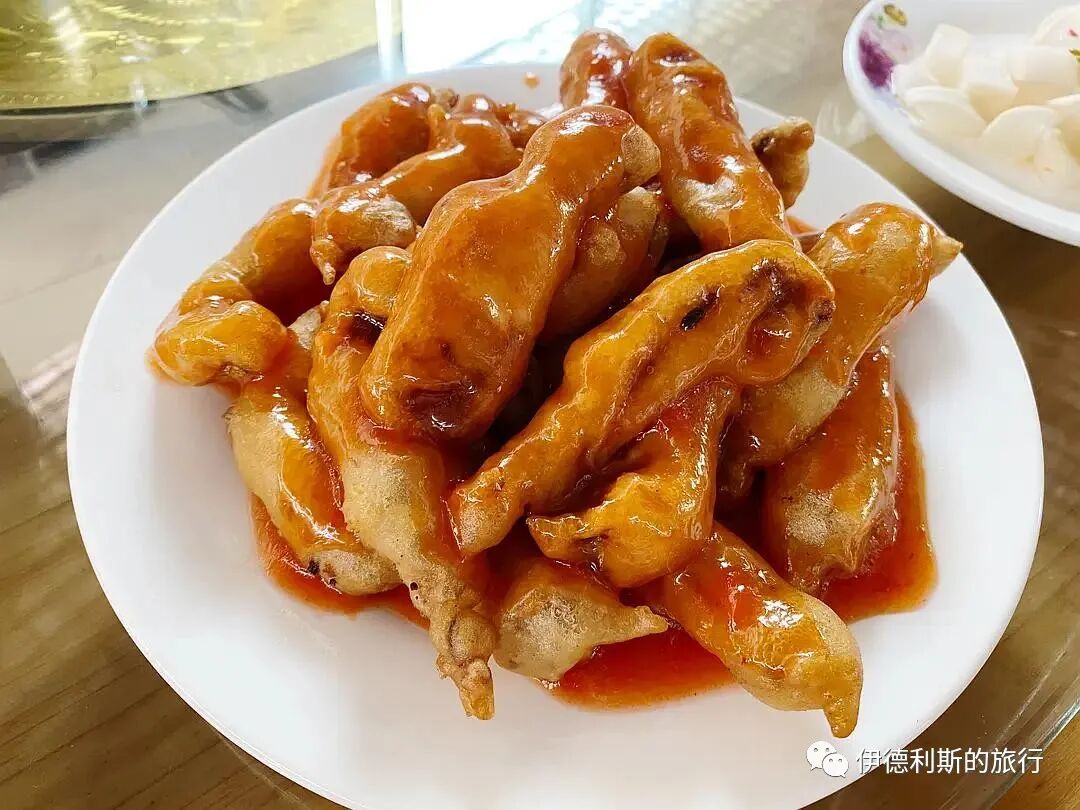
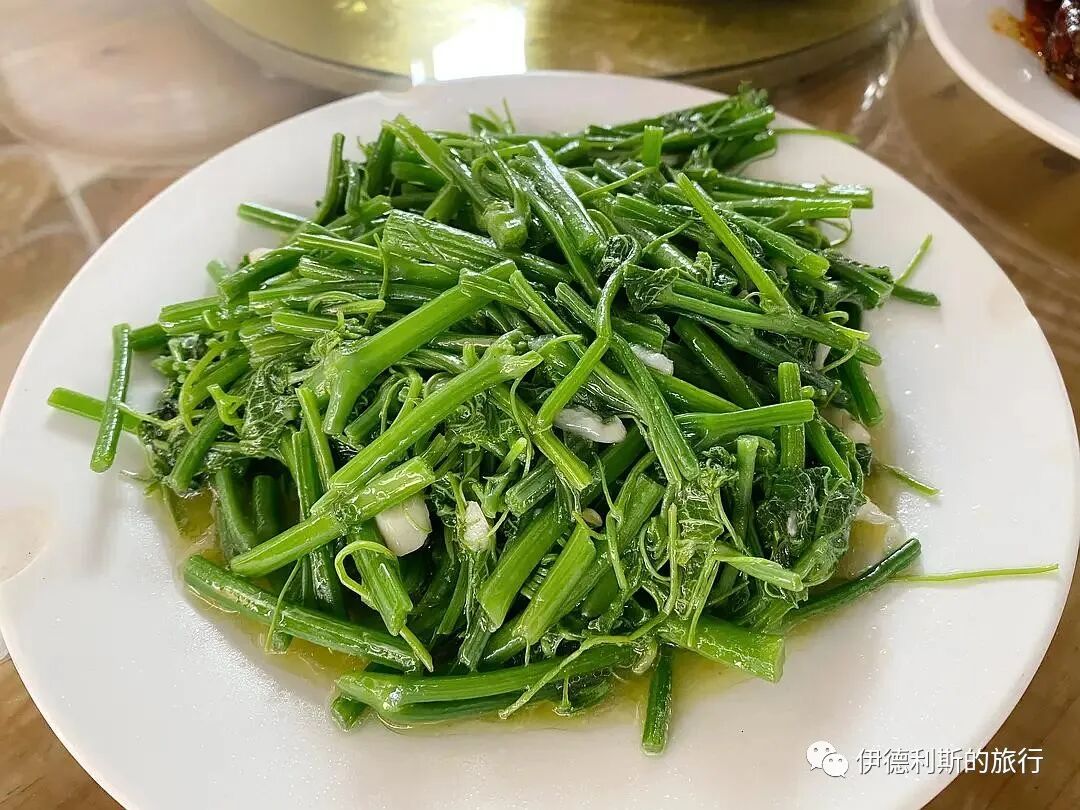
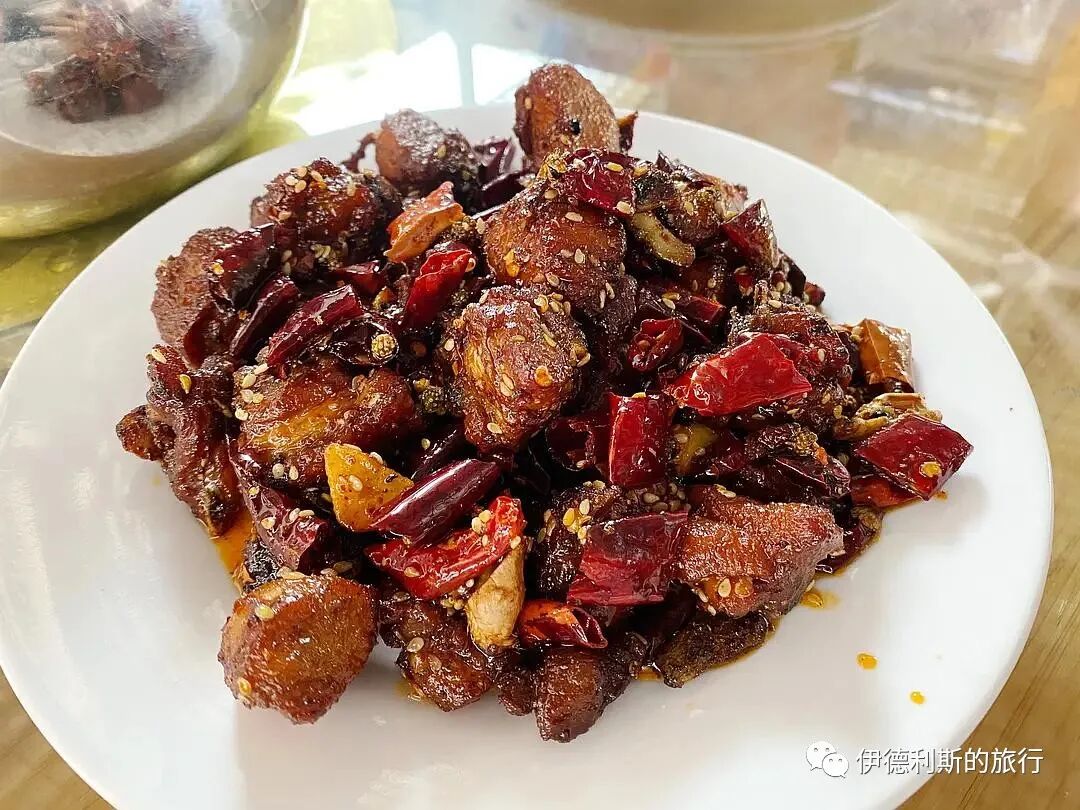
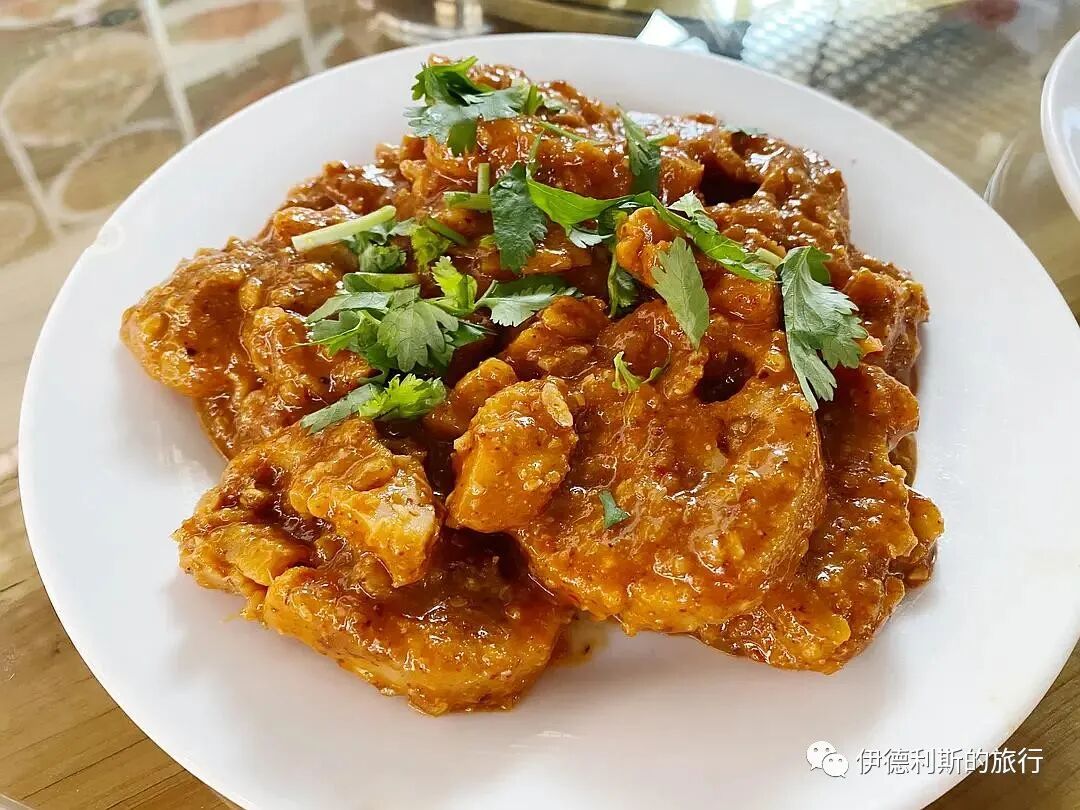
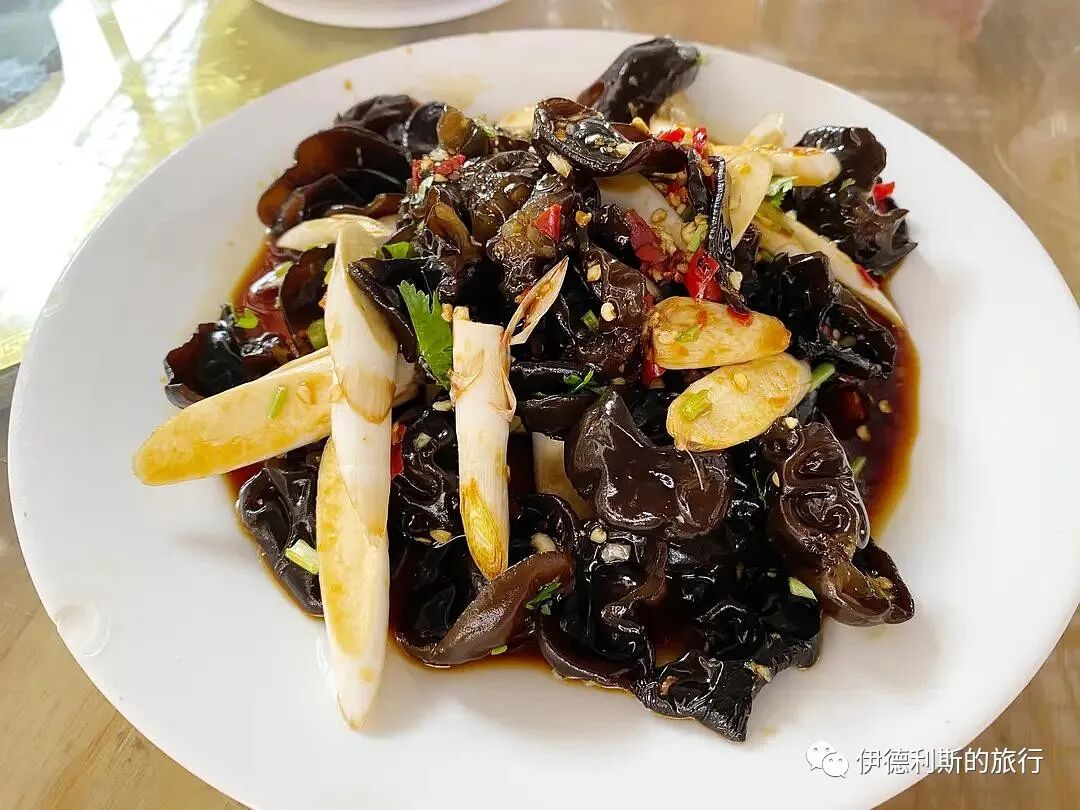
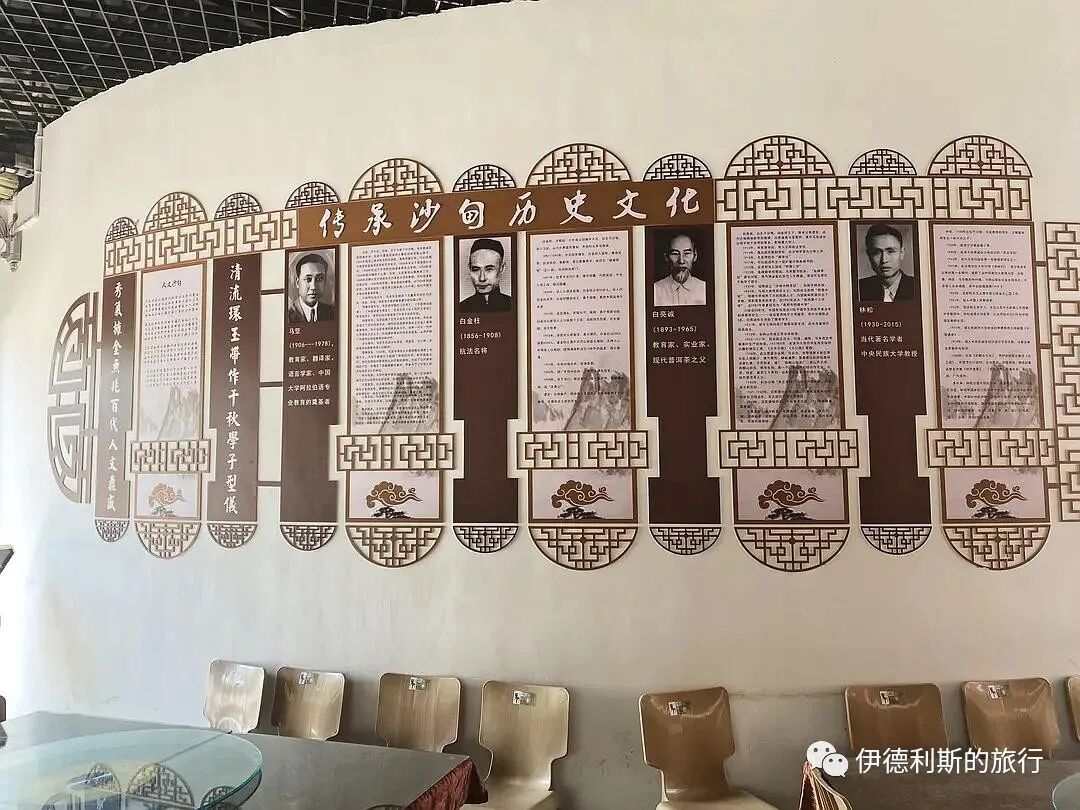
The Shadian Great Mosque has a very tropical feel.
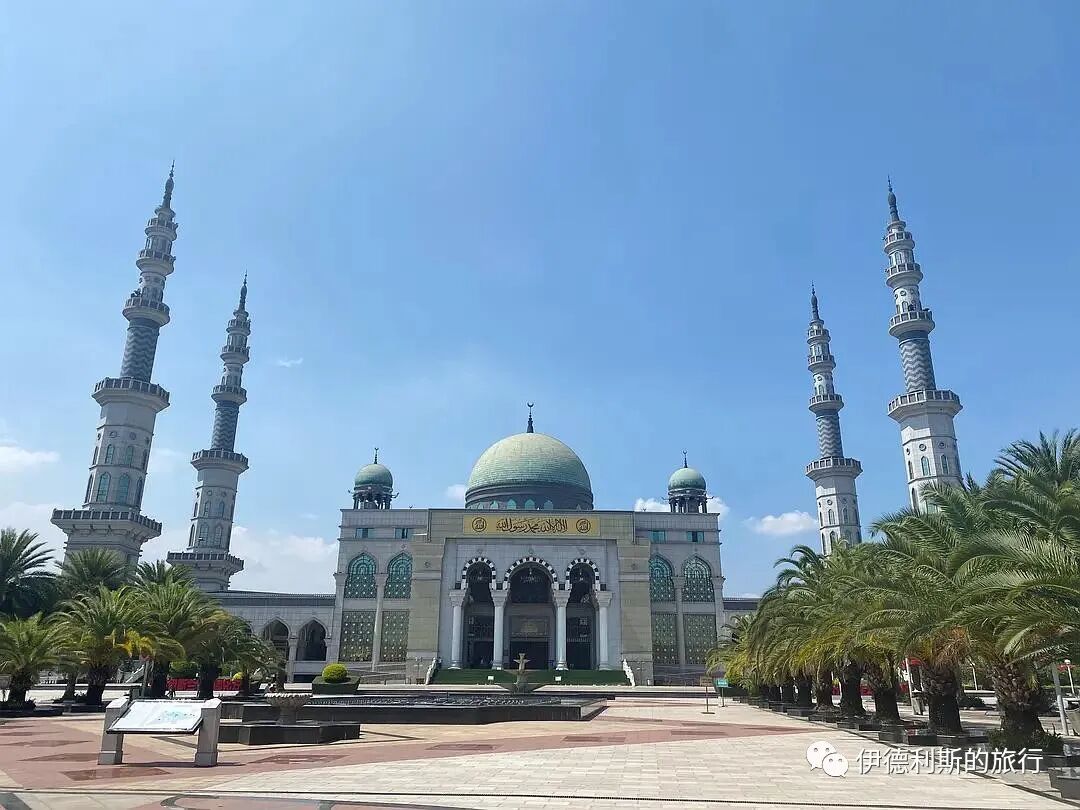
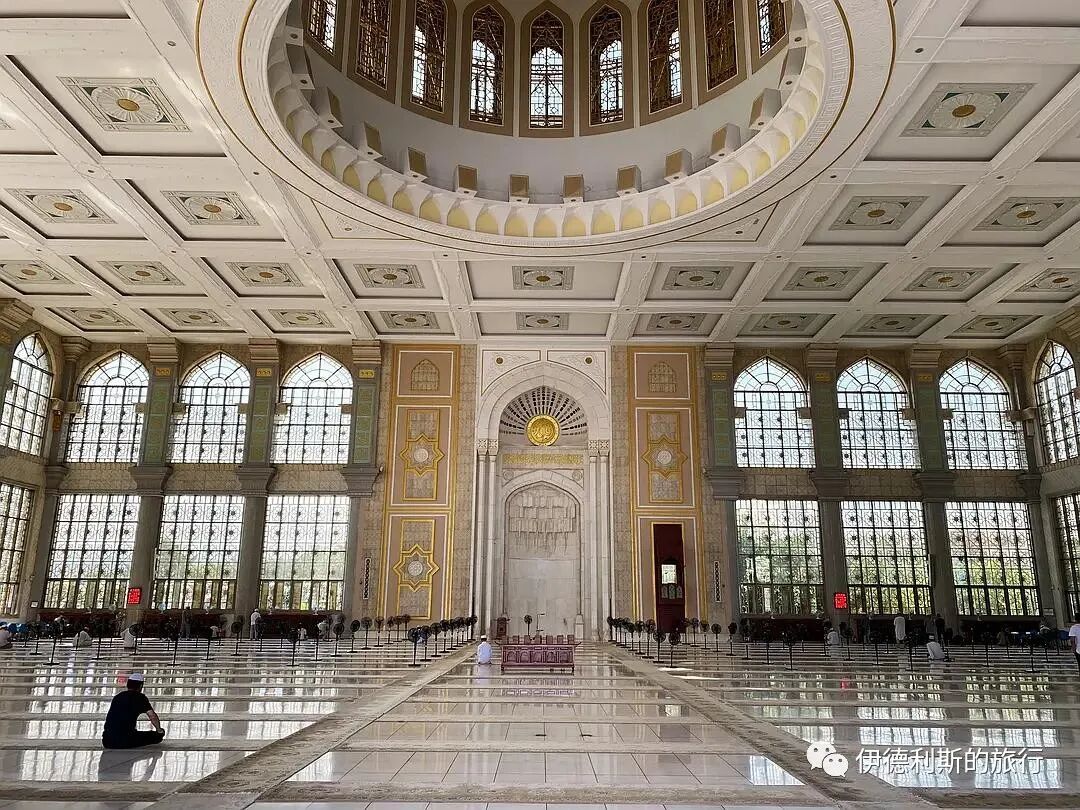
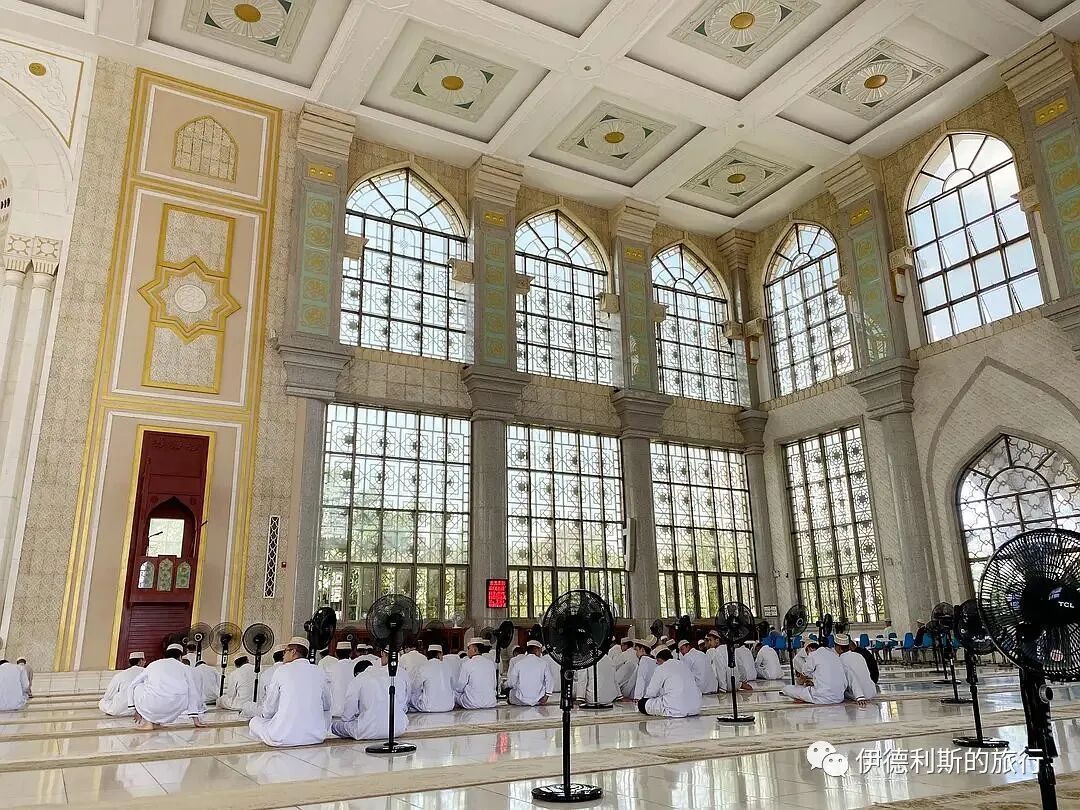
Yufeng School
In the mid-Guangxu period of the Qing Dynasty, responding to the imperial decree to stop the imperial examinations and start schools, the famous late Qing general and Yunnan Kaihua Town commander Bai Jinzhu led the Shadian villagers to donate funds and establish their own school in 1892. Because the school was located at the foot of Jinyu Mountain, it was named Yufeng Academy. Bai Jinzhu was a famous anti-French general who led from the front during the 1884 Sino-French War and was awarded the title of Shengyong Baturu.
In 1905, following the Qing Dynasty's order to establish primary schools in every township, Yufeng Academy was renamed Shadian Primary School. It was divided into classes A, B, C, and D, with over 60 students. In 1914, Bai Jinzhu's son, Bai Liangcheng, returned to Shadian after graduating from the Yunnan School of Law and Political Science and was hired as the principal of Yufeng Academy. Bai Liangcheng strongly advocated for modern education and added subjects like Chinese, arithmetic, physical education, and music to the school.
Due to the increasing number of students, Bai Liangcheng and Commander Bai Qicheng led the villagers to rebuild the academy in 1921, and it was completed in 1923. The new academy had four classrooms, an office, and a library. Bai Liangcheng wrote the plaque for Yufeng School and the couplet on the stone pillars on both sides, which reads: 'The elegant spirit of Jinyu Mountain brings prosperity to generations of scholars, the clear stream circling the jade belt sets a model for students for a thousand years.' Afterward, Bai Liangcheng hired Arabic scholar Ma Jian, who had returned home after graduating in Kunming, along with Wang Liangbi, Wang Shupu, Ma Ayuanqing, and others as teachers, and changed the school into a primary and junior high school.
In 1943, Bai Liangcheng also founded Yufeng Middle School. At that time, many professors from the National Southwestern Associated University had a good relationship with Bai Liangcheng. He hired Professor Xia Kangnong, Dean of the School of Science at the university, as the principal of Yufeng Middle School, and invited experts and scholars like Tongji University professor Cao Wuli, philosopher Zheng Xin, and historian Bai Shouyi to teach there until the victory of the War of Resistance in 1945.
After Yufeng Primary School moved to a new campus in 1987, the old site of Yufeng Academy was left vacant. It was renovated in 2012 and opened as the Shadian branch of the Honghe Prefecture Library and the Shadian Village History Museum.
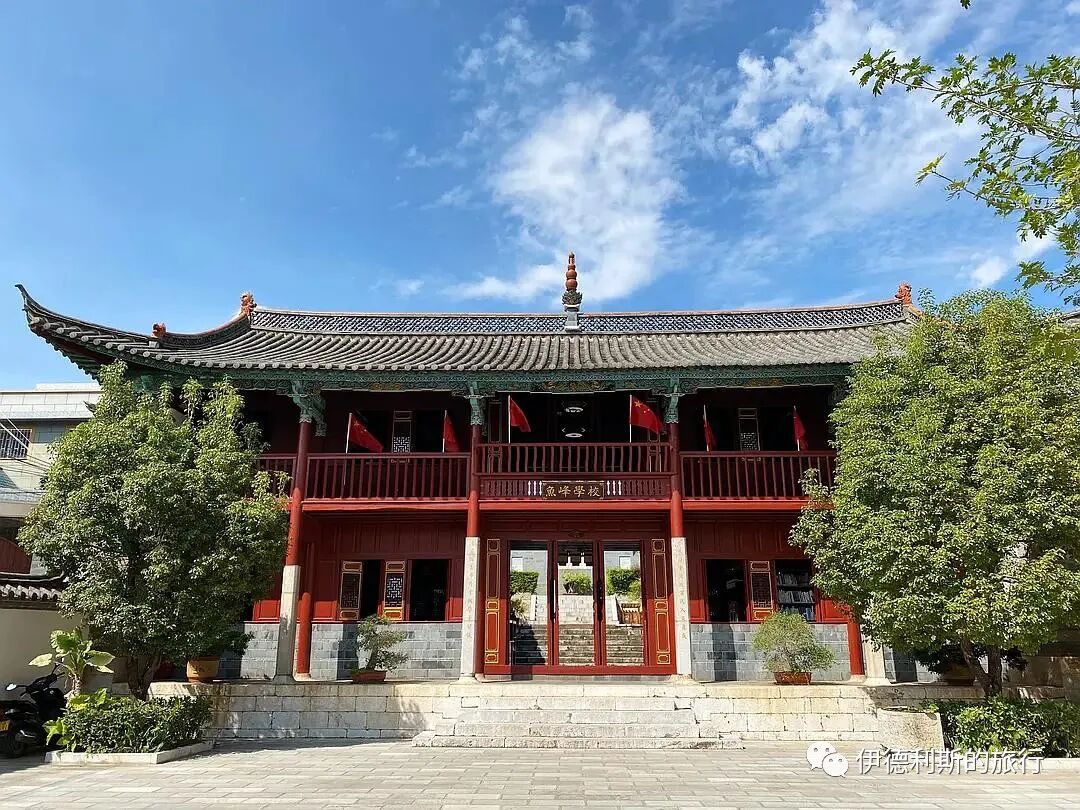
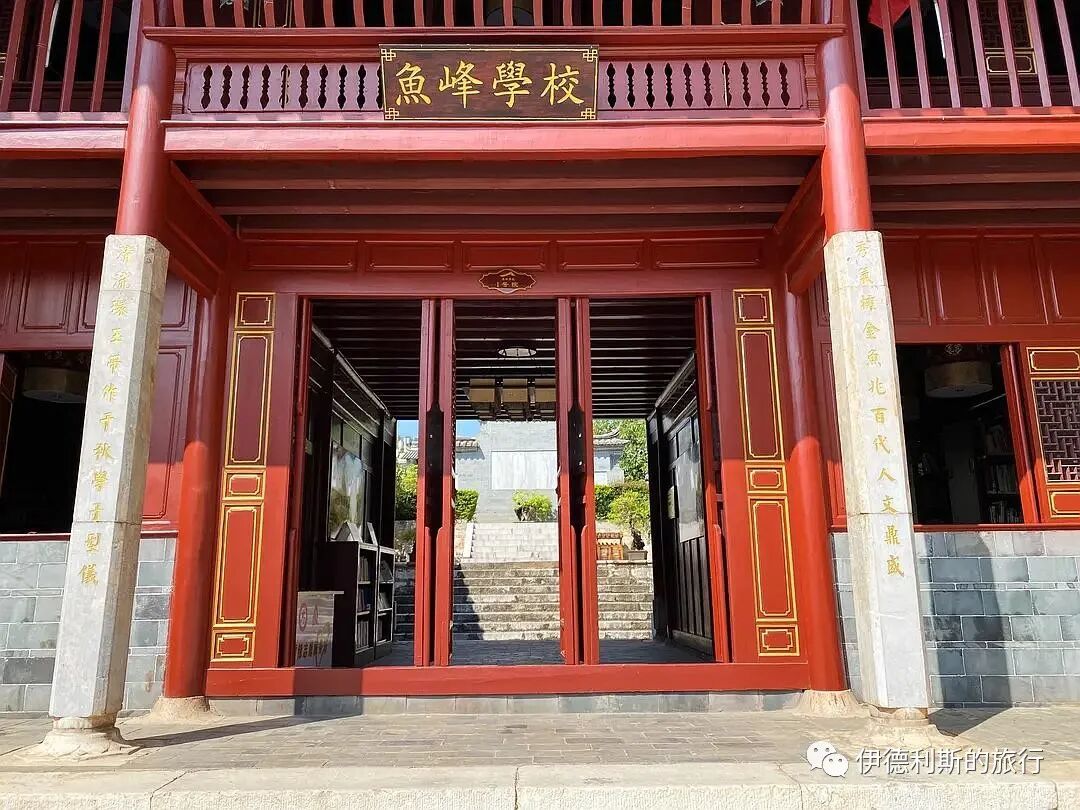
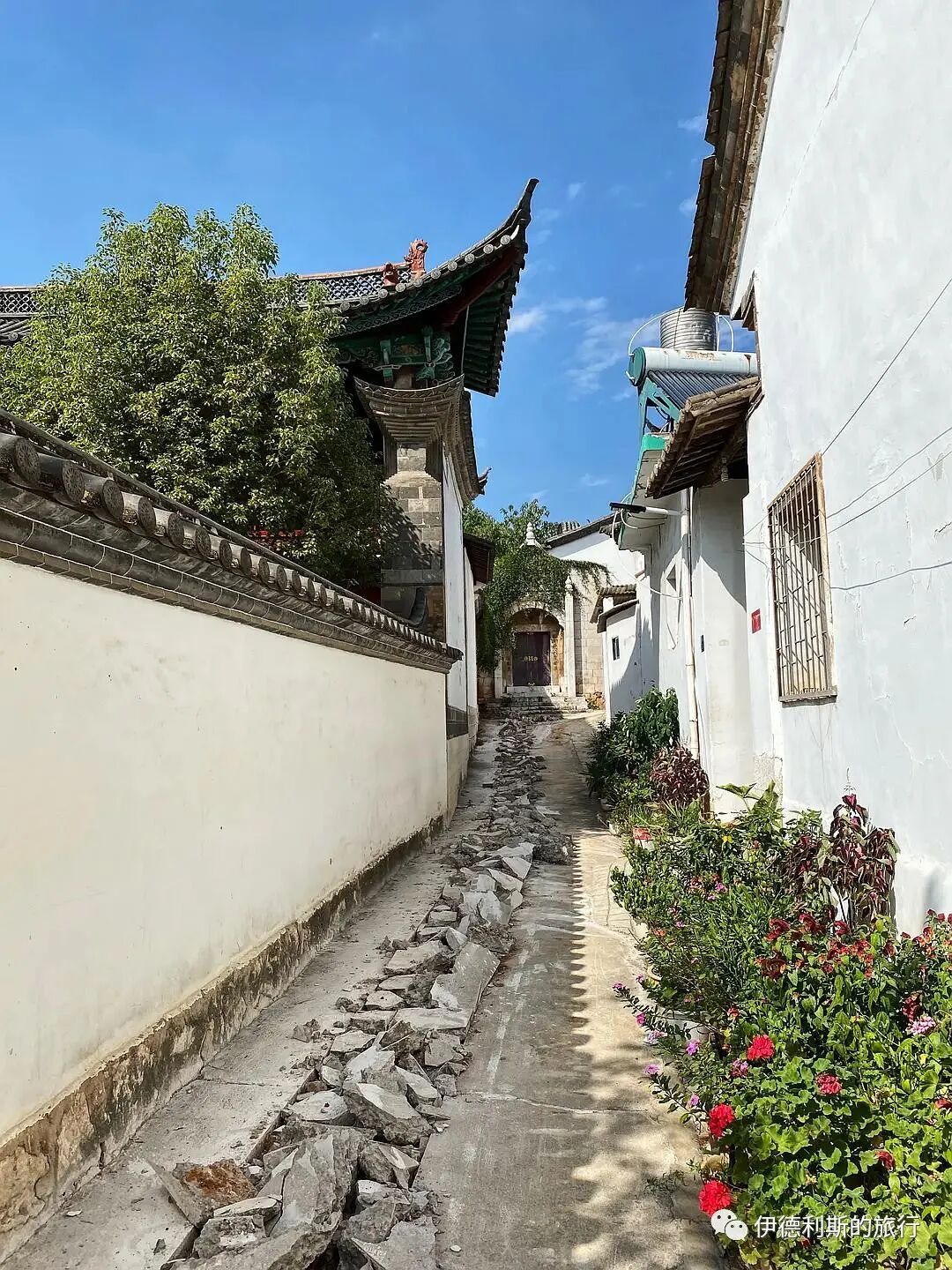
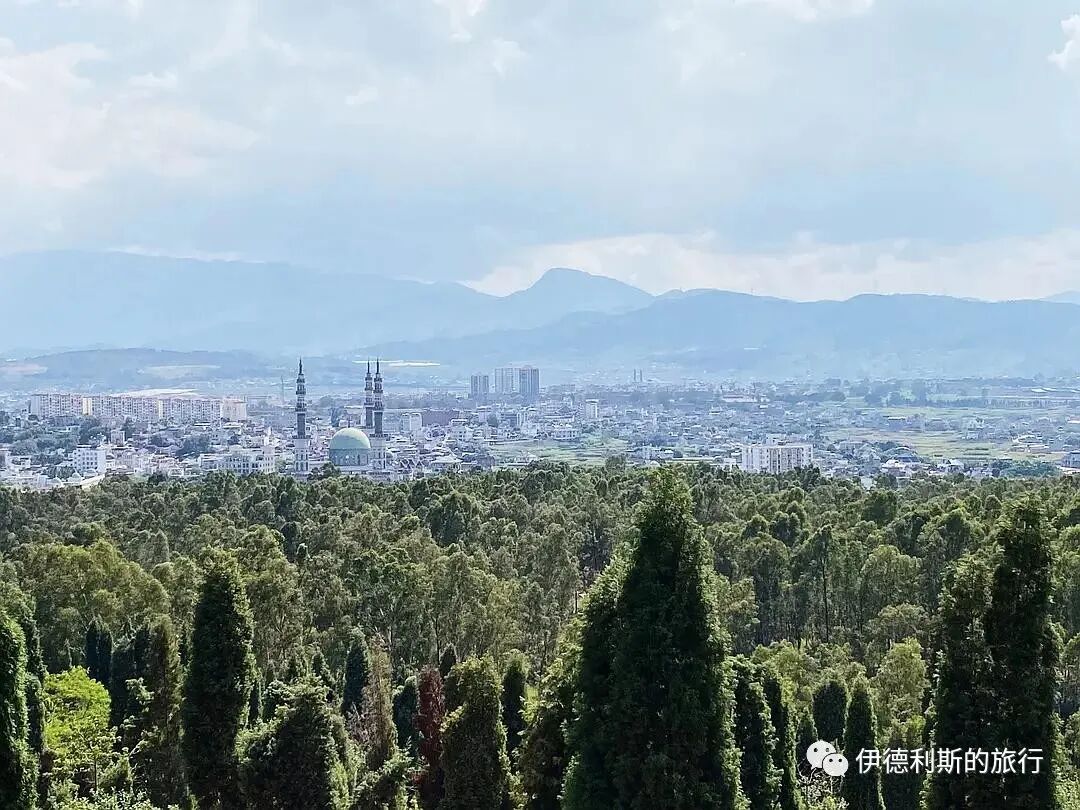
Old houses in Shadian
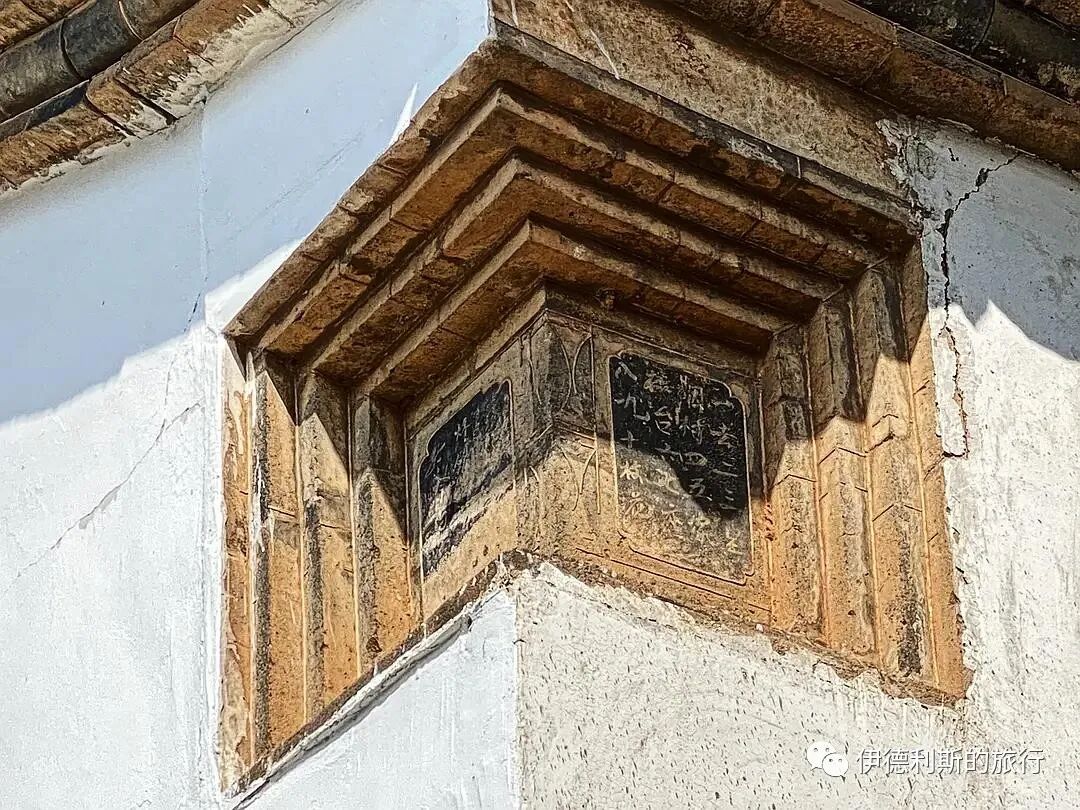
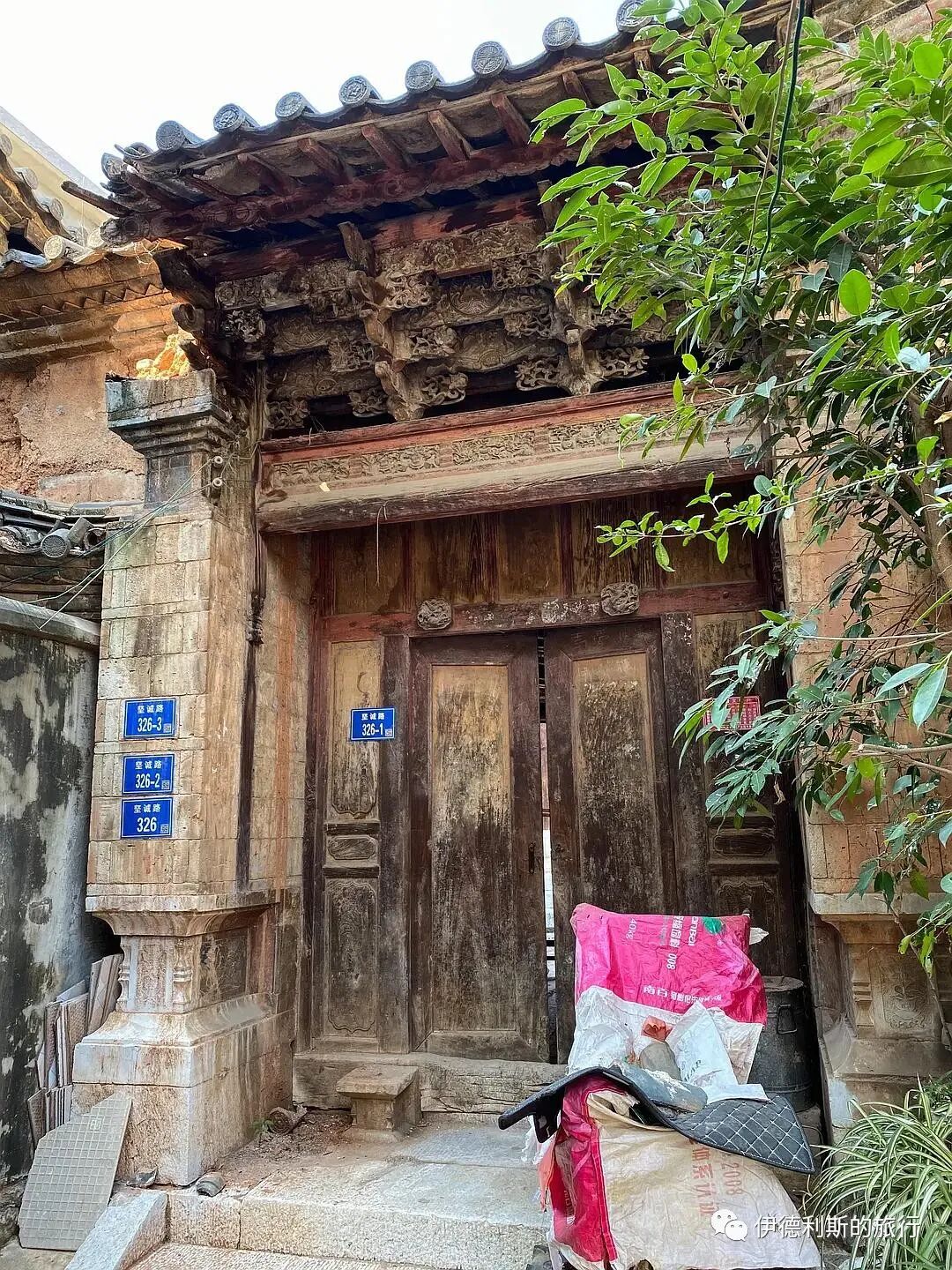
There is a well at the entrance of Yufeng Academy called Xiying Longtan, which was reportedly built by Bai Shouyou and his followers during the Wanli period of the Ming Dynasty. The well is 20 meters deep, and folklore says there is a dragon inside, which is why it is called Dragon Pool (Longtan).
During the Qianlong period of the Qing Dynasty, Shadian village built walls for defense and constructed seven gatehouses in areas like Xiying, Dongying, and Chuanying. Only the Xiying gatehouse remains today, which is a structure rebuilt during the Xianfeng period of the Qing Dynasty. The gatehouse is a two-story brick and wood building. The first floor is for passage, and the second floor is for guards, featuring exquisite carvings and paintings.
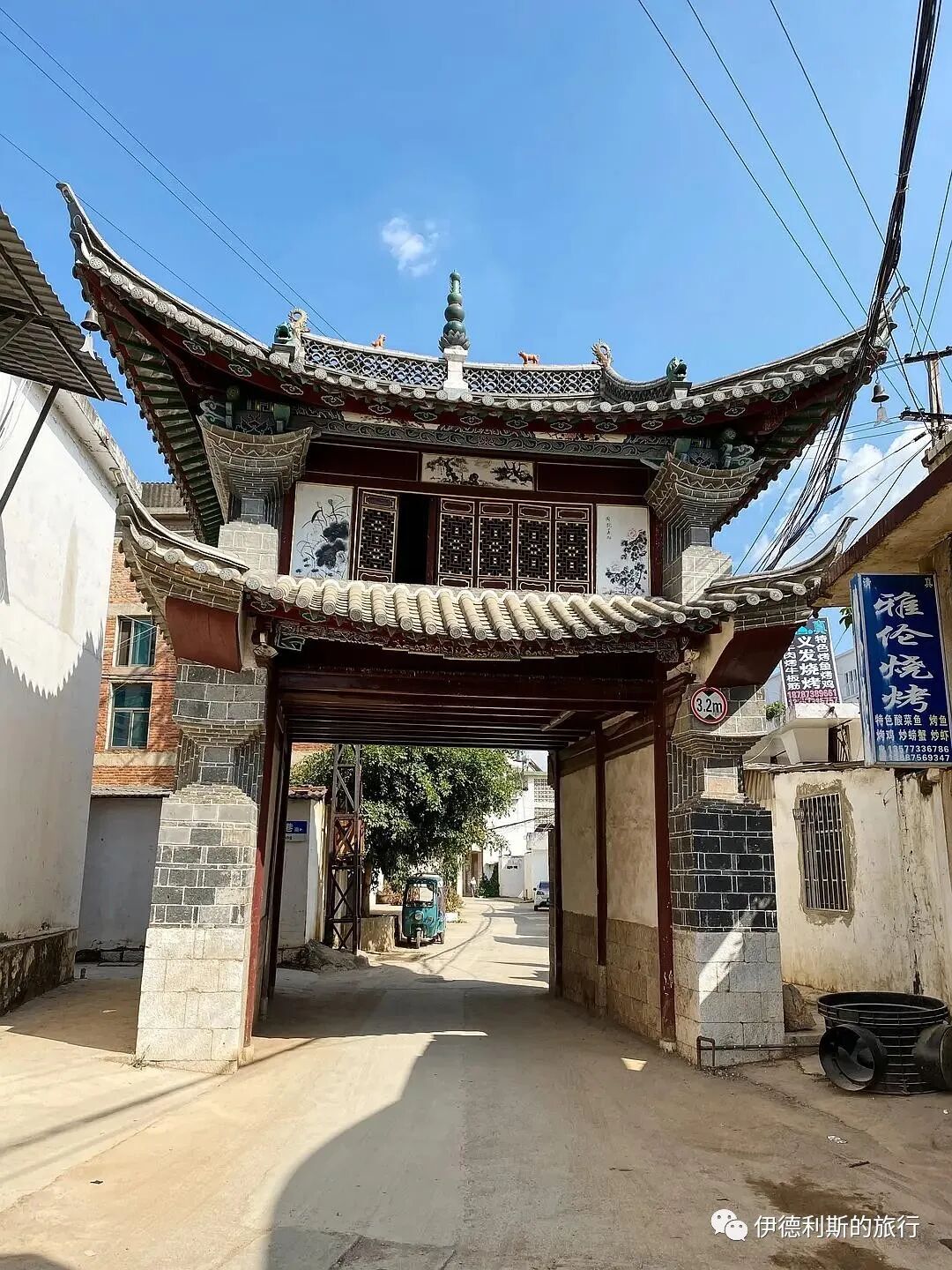
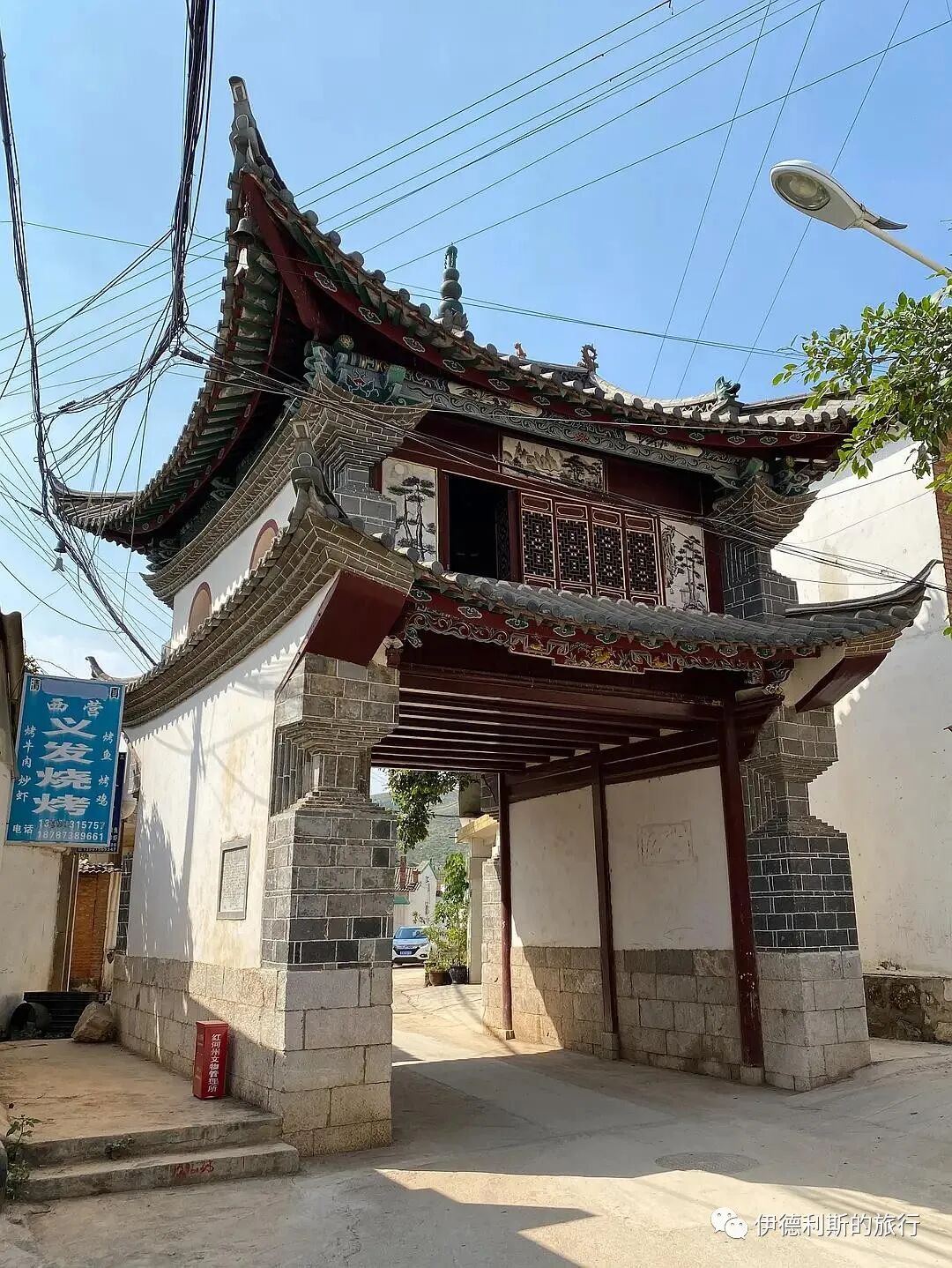
There is a stone arch bridge over the Yudai River in Shadian, which was built with funds donated by Bai Shouyou during the Wanli period of the Ming Dynasty.
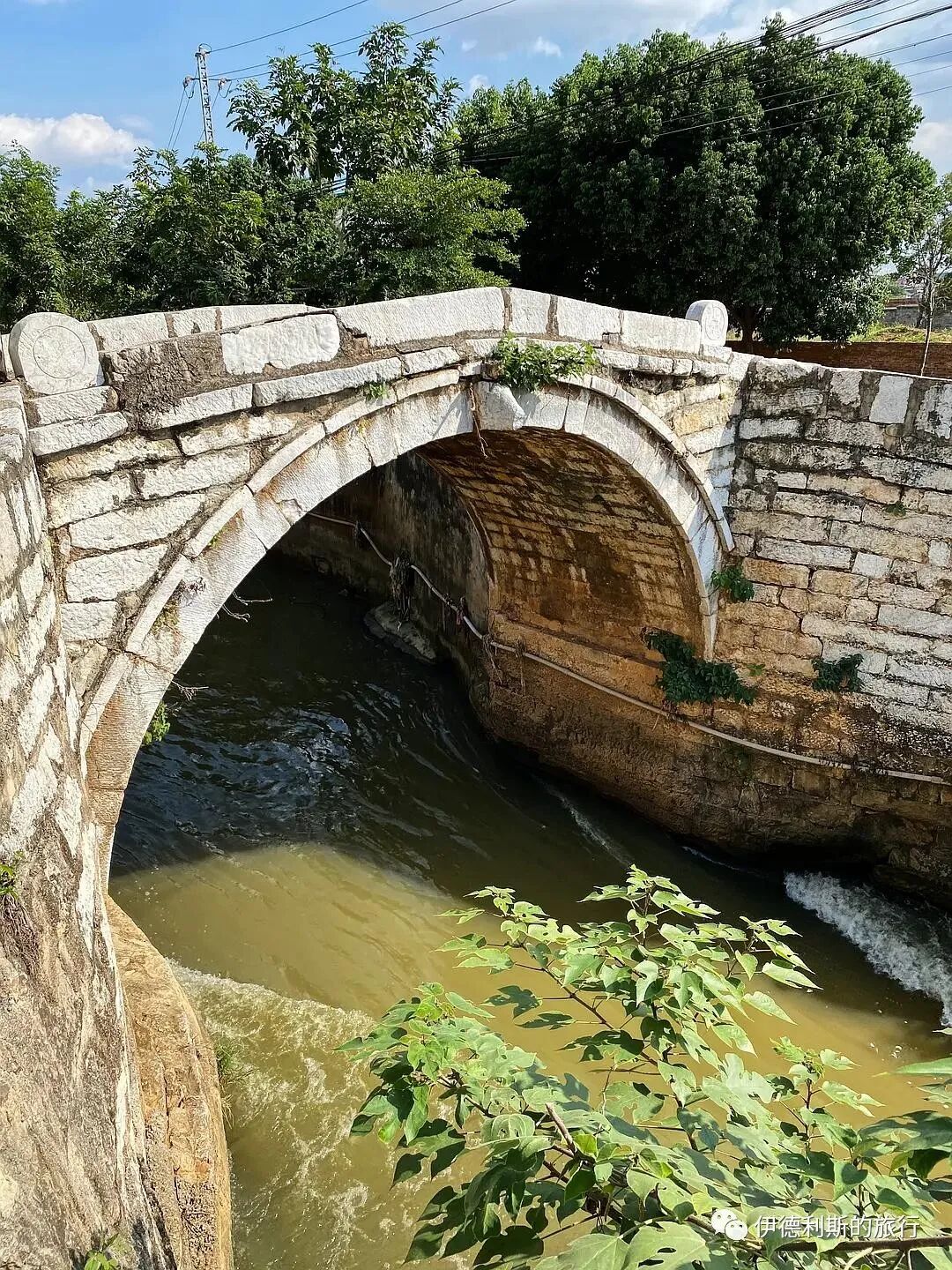
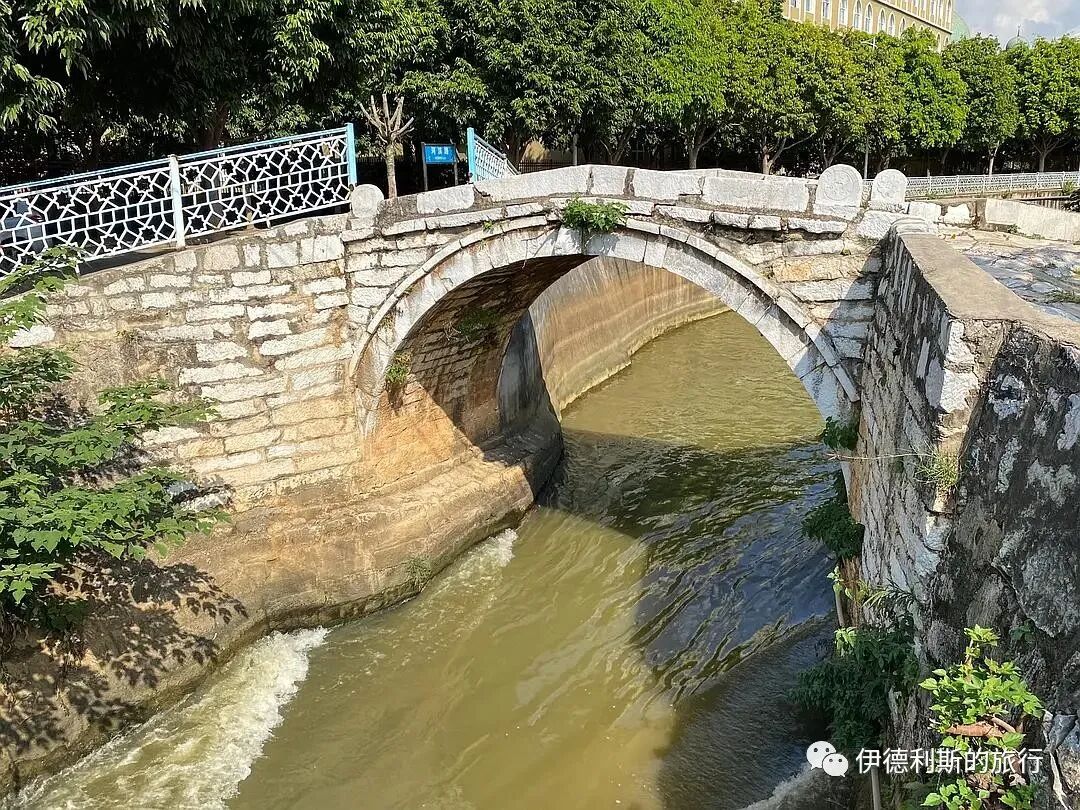
Halal Travel Guide: Yuxi Najia Ying — Hui Muslims, Mosques and Yunnan Travel
Articles • ali2007fr posted the article • 0 comments • 264 views • 2026-05-17 12:22
Summary: Yuxi Najia Ying — Hui Muslims, Mosques and Yunnan Travel is presented here as a firsthand travel account in clear English, beginning with this scene: Author: Zainab. The account keeps its focus on Yuxi Travel, Hui Muslims, Yunnan Mosques while preserving the names, places, food, and historical details from the Chinese source.
Author: Zainab
On October 4, I traveled 23 kilometers east from Da Hui Village in Tonghai, Yuxi, to reach the famous Najiaying. The Na family of Najiaying are descendants of Nasr al-Din, the eldest son of the famous Yuan Dynasty official Sayyid Ajjal Shams al-Din. Nasr al-Din served as the administrator of Yunnan Province and continued his father's work in governing the region. After the Ming Dynasty was established, Nasr al-Din's descendant, Na Shulu, moved around for a while before settling on the north shore of Qilu Lake in central Yunnan in 1370, where he founded Najiaying.
That evening, I ate dry-pot beef at Zhiweiyuan Restaurant on Zhong'ai Street, the main road in Najiaying. It came in a huge copper pot filled with mint and arrowhead (cigu). I also had some lighter dishes: a mix of green beans and corn (liangmu di) and stir-fried cabbage with tofu.
On October 5, I had breakfast in Najiaying, Yuxi, eating potato pancakes (yangyu baba) and beef rice rolls (niurou juanfen).
At the Najiaying market, I ate buckwheat cake (qiaogao), which was delicious.
I visited the former residence of Na Xun, the famous Arabic translator who translated One Thousand and One Nights. The house is still occupied by Na Xun's grandnephew, an elderly man named Na Zhaoxiang. He warmly invited us in for tea and told us stories about Na Xun.
Na Xun's great-uncle, Na Fengchun, held a high-ranking position as a third-rank official, but his grandfather and father were both farmers.
Na Xun was born in 1911 and began attending the primary school inside the Najiaying mosque at age seven. The school used a modern curriculum that taught both Chinese and Arabic. They hired a teacher named Qian for Chinese and a teacher named Dai for math, while the Arabic classes were taught by Imam Ma Defu from the Najiaying mosque. Imam Ma Defu was an early student of the Yunnan Islamic scholar Ma Lianyuan and had a very strong foundation in religious studies.
Na Xun's home was just a few dozen steps south of the mosque. Every day when the adhan (bangke) sounded, he would get up and get ready. By the time his father returned from namaz, Na Xun was already prepared to go to school to review his lessons. According to Na Xun's cousin Na Guangxian, Na Xun never missed a class or arrived late, and he always ranked at the top of his exams.
In 1921, after Na Xun finished third grade, his cousin Na Guangwen returned from studying in Kunming. Seeing how bright Na Xun was, he asked Na Xun's father for permission to take him to Kunming for further education. His father agreed, and Na Xun left home to pursue his studies.
In 1926, bandits caused trouble in Najiaying. When the Yunnan provincial government troops came to suppress them, they burned down Najiaying, and Na Xun's home was reduced to ashes. Because Na Xun's eldest brother, Na Guangcheng, had been working in trade (zou yifang) and running a horse inn by the Lancang River in Simao, he had some savings, which allowed the family to rebuild their home on the original site.
I continued on to visit the former residence of Professor Na Zhong, an expert in Arabic education and a leading figure in Arabic culture. Na Zhong wrote A General History of the Arabs and compiled the first Arabic language textbook for Chinese universities. The property is now rented out by Na Zhong's descendants.
Na Zhong's grandfather, Na Hai, had been a soldier for several years. He was not only skilled in martial arts but also a master of masonry, metalwork, and carpentry. While working in Kunming, he fell in love with a young lady named Cai. Miss Cai came from a prominent military family in Kunming, but she chose this poor young man who had no house and no money. To get married as soon as possible, Na Hai returned to his hometown of Najiaying and spent six months building his own house. The house was a traditional two-story Yunnan dwelling with three main rooms and four side rooms. It was built very neatly with exquisite wooden doors and windows. The pillars of the outer courtyard gate were carved from solid bluestone, featuring patterns of dragons playing with a pearl, magpies in plum blossoms, qilin and eagles, and golden bulls and horses. Na Hai and Miss Cai were married there and had their first son, Na Dechang.
In 1856, the Bingchen Incident occurred in Yunnan. Najiaying appointed Na Hai, Na Fengchun, and Na Taishou as representatives to negotiate with the Han scholar Gongsun Shuo from Dongxiang, reaching a mutual protection agreement between Hui Muslims and Han people in Hedong. In 1857, the mutual protection agreement in Hexi was broken by a local tyrant named Zhan Zhanchun, who gathered soldiers to attack the Great and Small Donggou (now known as Da Hui Village and Xiao Hui Village). Na Hai ignored the advice of his friends and family and went to try to stop the fighting, but he was killed by the enemy. After that, Miss Cai, who was seven months pregnant, took her eldest son Na Dechang back to her parents' home in Kunming. Shortly after, she gave birth to a posthumous child, Na Zhong's father, Na Degui. After the birth, Miss Cai suffered from illness and passed away shortly after.
After Miss Cai died, Na Hai's first wife, He, brought the brothers Na Dechang and Na Degui back to Najiaying to raise them. When Na Degui was 13, He became too ill to work, so she asked a relative to take Na Degui to Kunming to find work. Na Degui worked at a fur shop on Zhuji Street in Kunming. He was an apprentice for eight years, receiving only food and lodging with no wages. After finishing his apprenticeship, Na Degui married He Yufeng, the niece of his foster mother He, and they returned to Kunming to work after the wedding. In 1909, He Yufeng gave birth to Na Shou'en, who would later be known as Na Zhong.
When Na Zhong was one year old, his cousins saw that He Yufeng was struggling, so they carried Na Zhong and his family to Kunming to join Na Degui. That was how Na Zhong left Najiaying and began his life in Kunming. After that, Na Zhong rarely returned to his hometown, except for a two-month stay in 1940 to escape air raids in Kunming after he graduated from Al-Azhar University in Egypt.
There is a water well at the entrance of Najiaying Mosque. It is said to have been built by Nasuluding, the great-grandson of the King of Xianyang, Sayyid Ajjal Shams al-Din, after he settled in Najiaying in the early Ming Dynasty. The wall of the well platform is carved with a dragon head, and the well water flows out from the dragon's mouth. People wash vegetables in the upper pool under the dragon's mouth, wash clothes in the lower pool, and finally, the water flows south to irrigate the farmland.
I bought a Nagu knife for cutting meat, and when I tried it at home, it was really sharp! It cuts through in one go without needing a second stroke. Historically, Najiaying and Gucheng were most famous for horse caravan transport, hunting rifle making, and knife making, but these trades declined as times changed. After the 1980s, Nagu Town began to vigorously develop the Nagu knife industry, and now there are many shops.
Also, on Zhenxing Road, there is a shop making traditional copperware, including copper pots and copper ladles. If you are interested, you can buy one to take home for a copper ladle hot pot.
To the north of Najiaying is Gucheng Village. The Xinzhai Mosque in the village was built by Ma Xuecheng, a disciple of Ma Mingxin, the founder of the Jahriyya menhuan. Ma Xuecheng was known as 'Yunnan Ma,' and followers of his sect respectfully called him the Third Master of Gucheng or Imam Ma Sanye. Ma Xuecheng was a local from Gucheng Village. He once went to study under Ma Mingxin, and the two were as close as father and son. After returning to Yunnan, Ma Xuecheng operated mining businesses, became a wealthy merchant, and was the first to spread the Jahriyya sect in Yunnan. In 1781, when Ma Mingxin's eldest son, Ma Shunqing, was exiled to Talang, Yunnan, Ma Xuecheng did his best to rescue and assist him, allowing the Jahriyya sect to continue developing in Yunnan.
It is a great pity that the mosque is currently being renovated. The courtyard layout is gone, the north and south wing rooms have been demolished, and only the main hall remains as the original building. When we went, the main hall was locked. We saw no one in the mosque except for workers, so we could not enter. It was a great regret not to see the Jahriyya-style Arabic calligraphy mihrab inside.
The main hall has a double-eave hanging mountain roof, with beautiful painted wood carvings on the brackets and beams, and openwork carvings between the eave pillars.
This last indoor photo was taken by a fellow Muslim (dost) a while ago. The bluestone under the mihrab was transported from Mojiang and has a history of over a hundred years.
At noon, we ate at Jingshanzhai in Najiaying, having herb sour soup chicken, goat milk cheese (yangrubing), stir-fried pumpkin seedlings, stir-fried celery with lily bulbs, and oil-drizzled beef jerky (niuganba). The restaurant has a nice, antique atmosphere.
The decor at Jingshanzhai.
I bought a flatbread (balada) at the entrance of Najiaying Mosque, took it to Qilu Lake Xiaohai Park next to Najiaying, and bought a cup of papaya water at the entrance. Although the park is not big, the environment is very good, and there is a boardwalk by the lake, which is very pleasant for relaxing and catching a breeze. view all
Summary: Yuxi Najia Ying — Hui Muslims, Mosques and Yunnan Travel is presented here as a firsthand travel account in clear English, beginning with this scene: Author: Zainab. The account keeps its focus on Yuxi Travel, Hui Muslims, Yunnan Mosques while preserving the names, places, food, and historical details from the Chinese source.
Author: Zainab
On October 4, I traveled 23 kilometers east from Da Hui Village in Tonghai, Yuxi, to reach the famous Najiaying. The Na family of Najiaying are descendants of Nasr al-Din, the eldest son of the famous Yuan Dynasty official Sayyid Ajjal Shams al-Din. Nasr al-Din served as the administrator of Yunnan Province and continued his father's work in governing the region. After the Ming Dynasty was established, Nasr al-Din's descendant, Na Shulu, moved around for a while before settling on the north shore of Qilu Lake in central Yunnan in 1370, where he founded Najiaying.
That evening, I ate dry-pot beef at Zhiweiyuan Restaurant on Zhong'ai Street, the main road in Najiaying. It came in a huge copper pot filled with mint and arrowhead (cigu). I also had some lighter dishes: a mix of green beans and corn (liangmu di) and stir-fried cabbage with tofu.
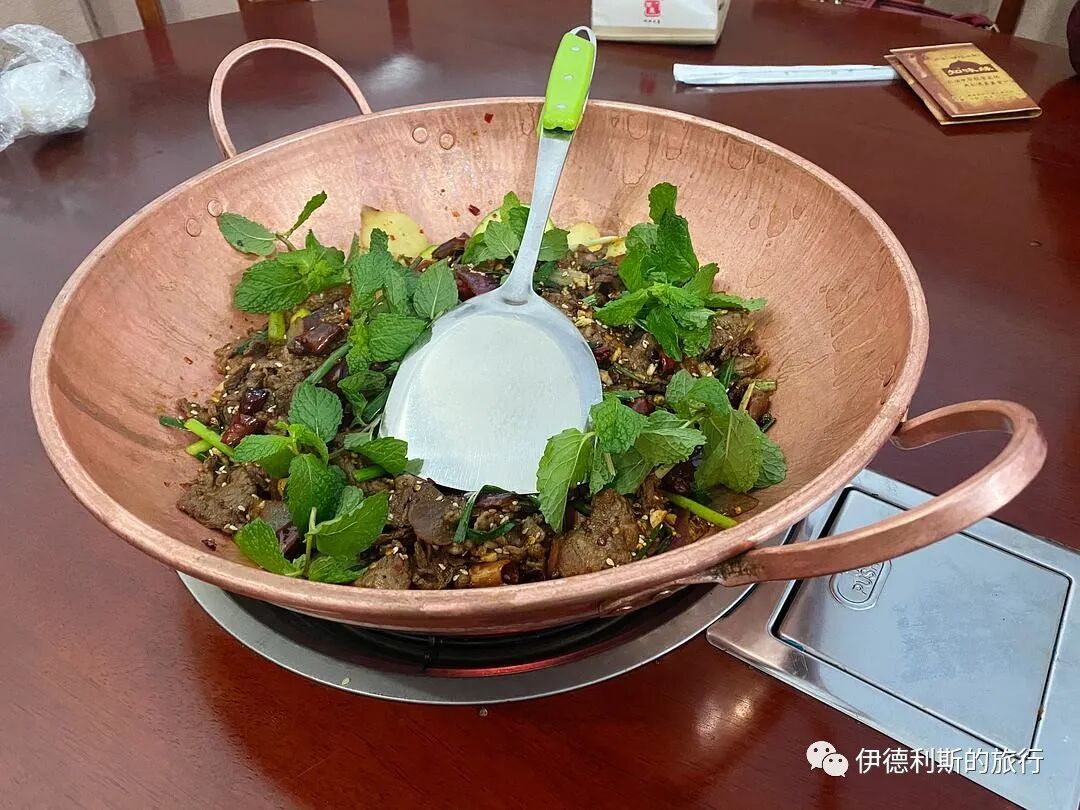
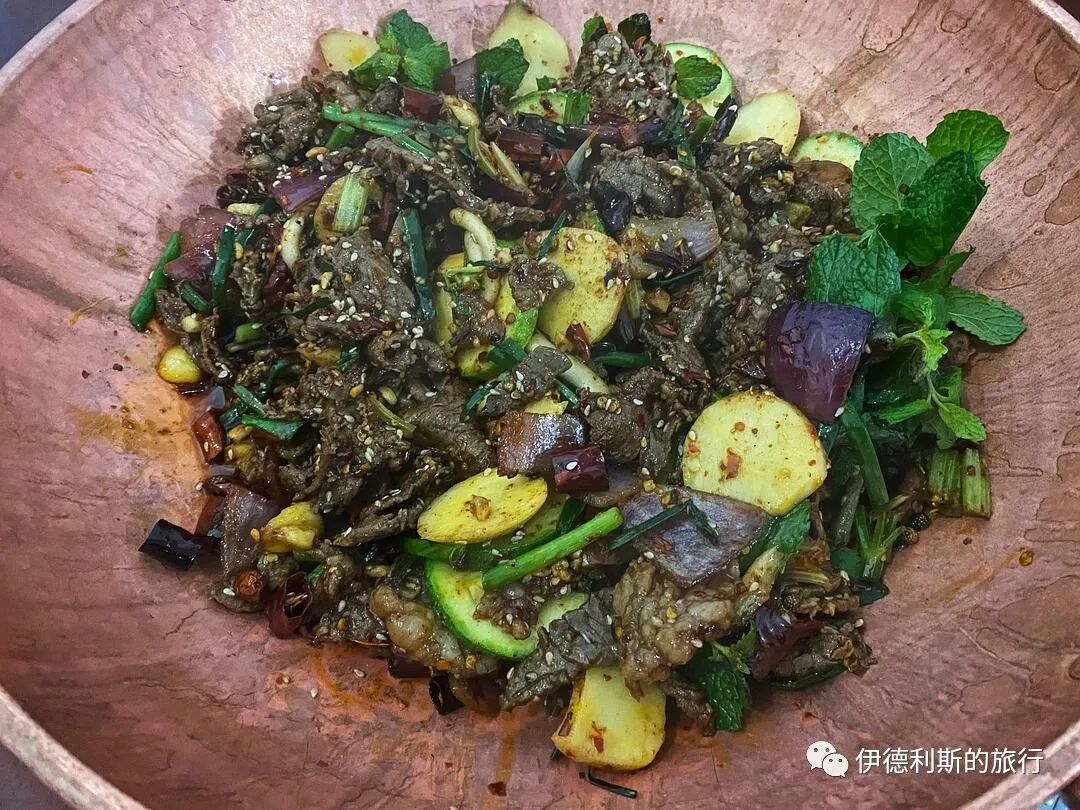
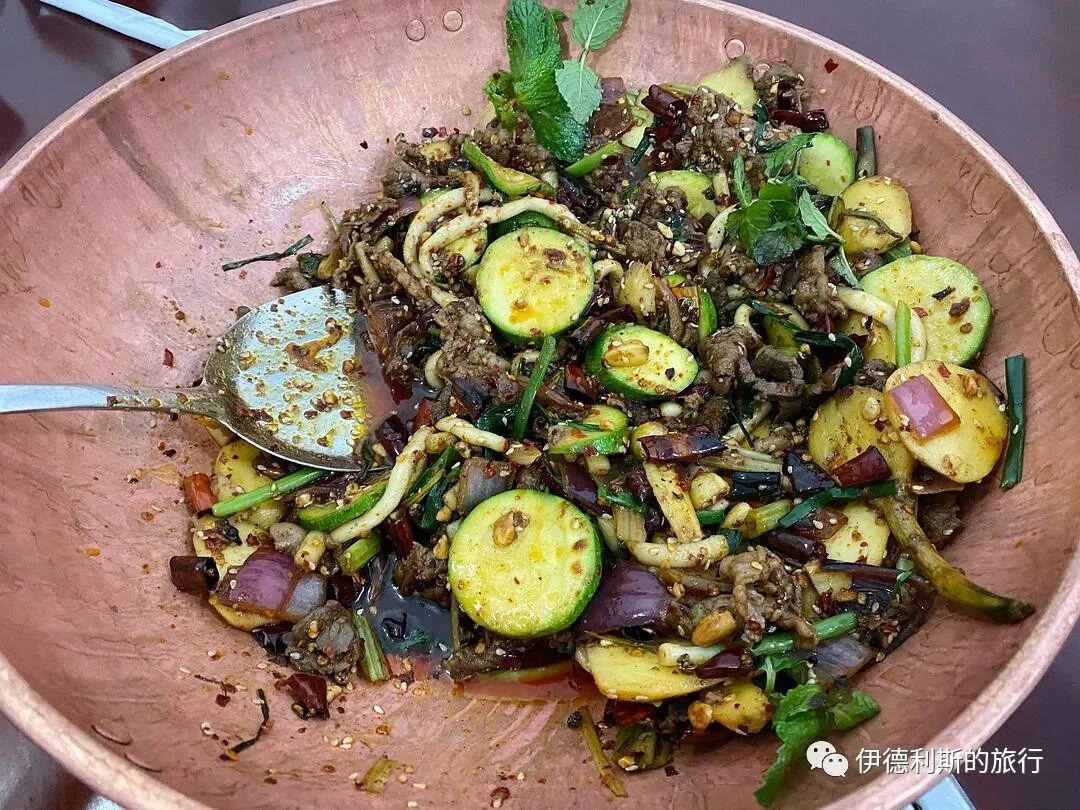
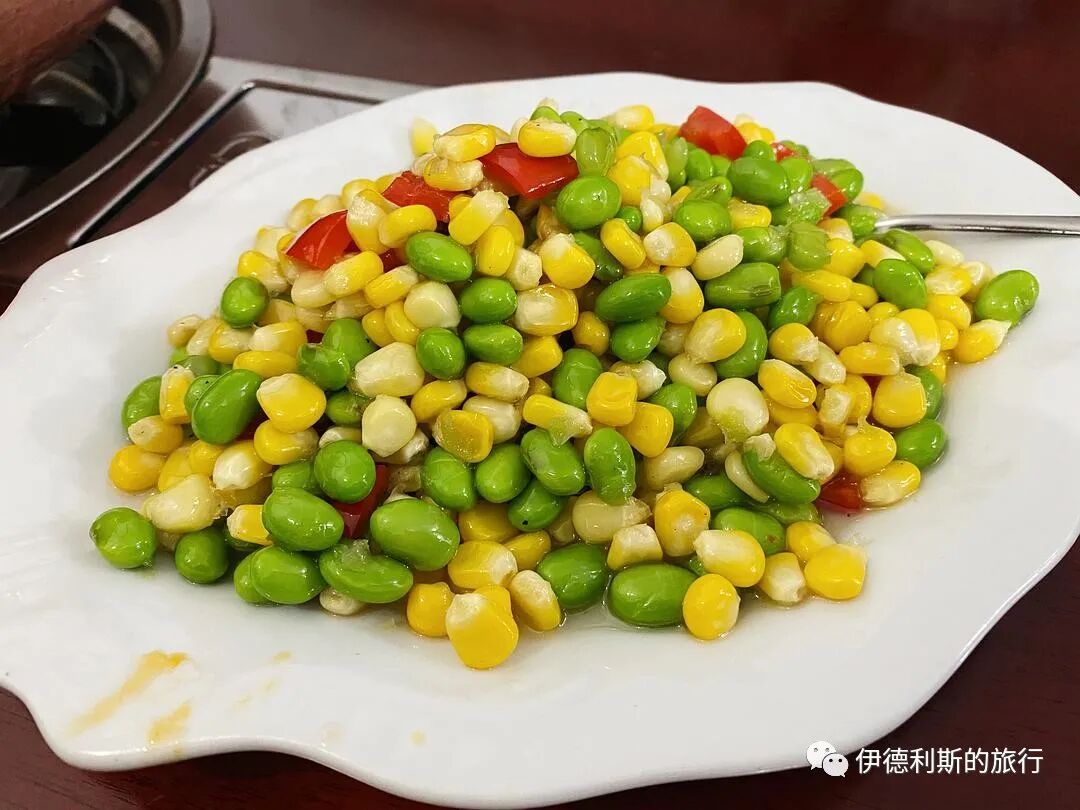
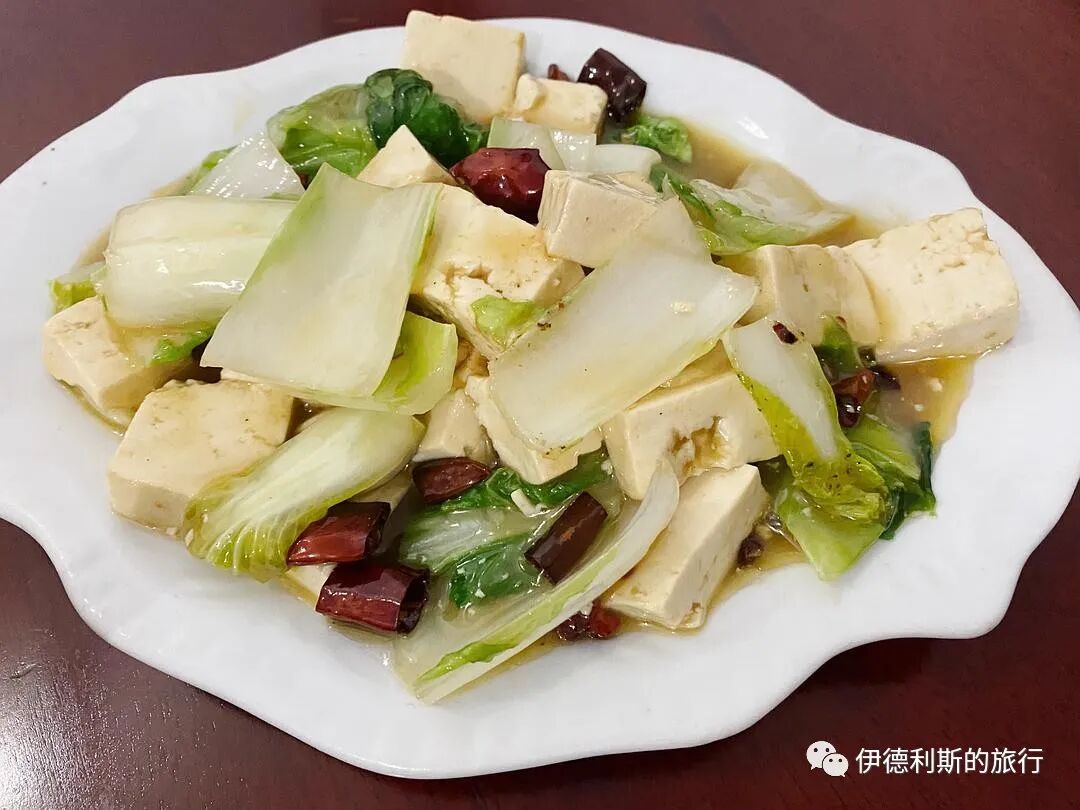
On October 5, I had breakfast in Najiaying, Yuxi, eating potato pancakes (yangyu baba) and beef rice rolls (niurou juanfen).
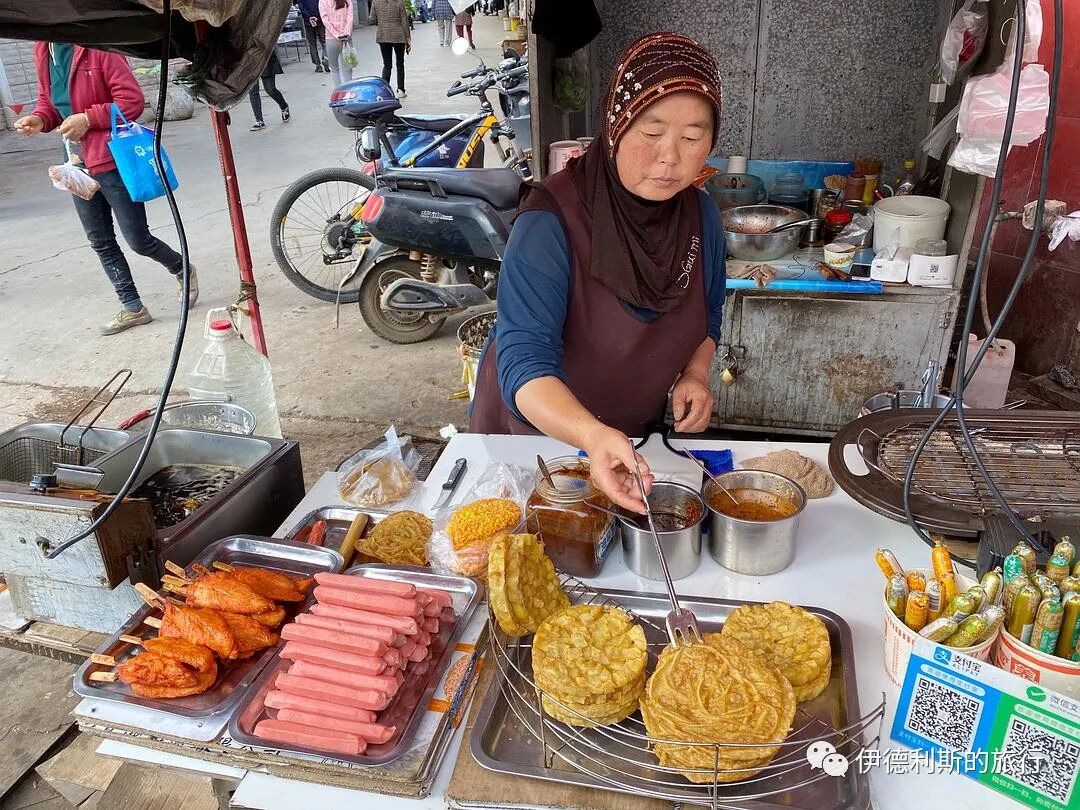
At the Najiaying market, I ate buckwheat cake (qiaogao), which was delicious.
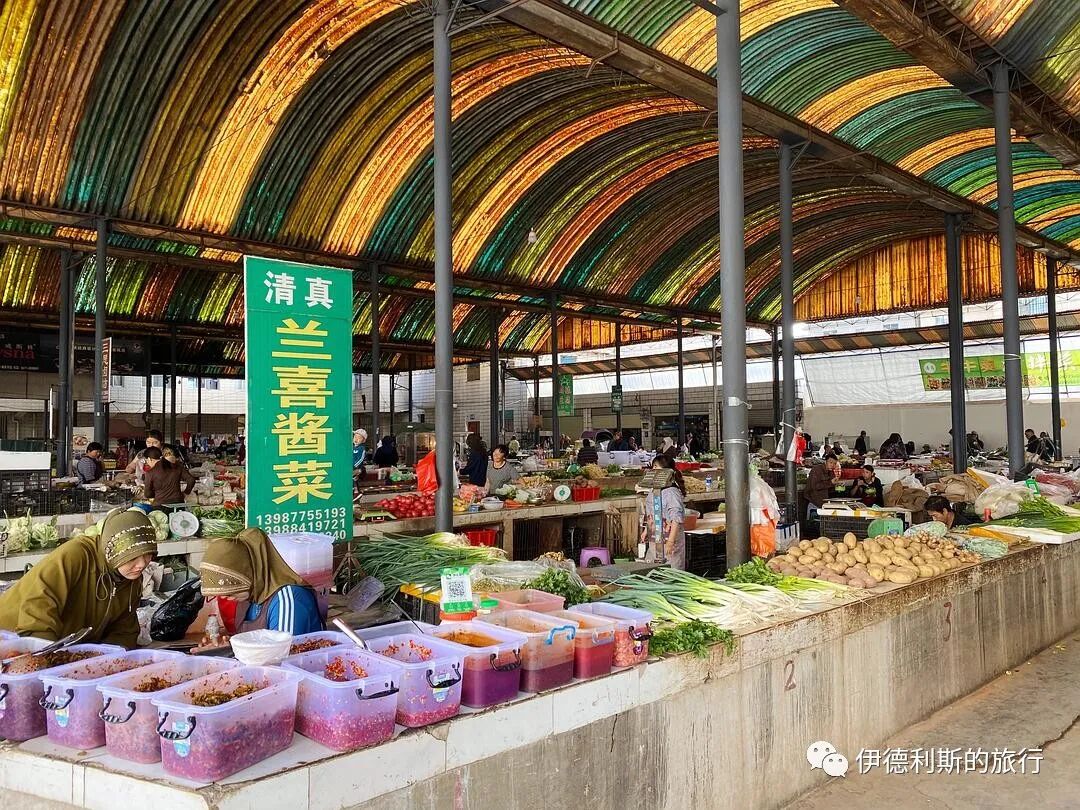
I visited the former residence of Na Xun, the famous Arabic translator who translated One Thousand and One Nights. The house is still occupied by Na Xun's grandnephew, an elderly man named Na Zhaoxiang. He warmly invited us in for tea and told us stories about Na Xun.
Na Xun's great-uncle, Na Fengchun, held a high-ranking position as a third-rank official, but his grandfather and father were both farmers.
Na Xun was born in 1911 and began attending the primary school inside the Najiaying mosque at age seven. The school used a modern curriculum that taught both Chinese and Arabic. They hired a teacher named Qian for Chinese and a teacher named Dai for math, while the Arabic classes were taught by Imam Ma Defu from the Najiaying mosque. Imam Ma Defu was an early student of the Yunnan Islamic scholar Ma Lianyuan and had a very strong foundation in religious studies.
Na Xun's home was just a few dozen steps south of the mosque. Every day when the adhan (bangke) sounded, he would get up and get ready. By the time his father returned from namaz, Na Xun was already prepared to go to school to review his lessons. According to Na Xun's cousin Na Guangxian, Na Xun never missed a class or arrived late, and he always ranked at the top of his exams.
In 1921, after Na Xun finished third grade, his cousin Na Guangwen returned from studying in Kunming. Seeing how bright Na Xun was, he asked Na Xun's father for permission to take him to Kunming for further education. His father agreed, and Na Xun left home to pursue his studies.
In 1926, bandits caused trouble in Najiaying. When the Yunnan provincial government troops came to suppress them, they burned down Najiaying, and Na Xun's home was reduced to ashes. Because Na Xun's eldest brother, Na Guangcheng, had been working in trade (zou yifang) and running a horse inn by the Lancang River in Simao, he had some savings, which allowed the family to rebuild their home on the original site.
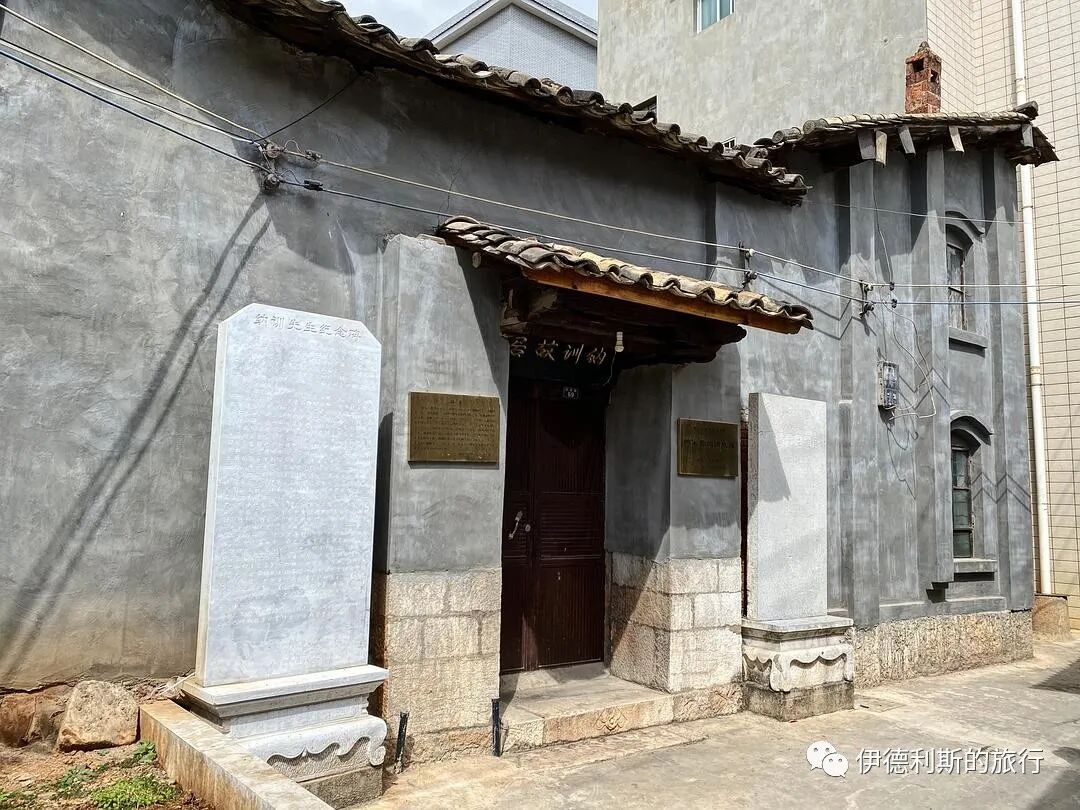
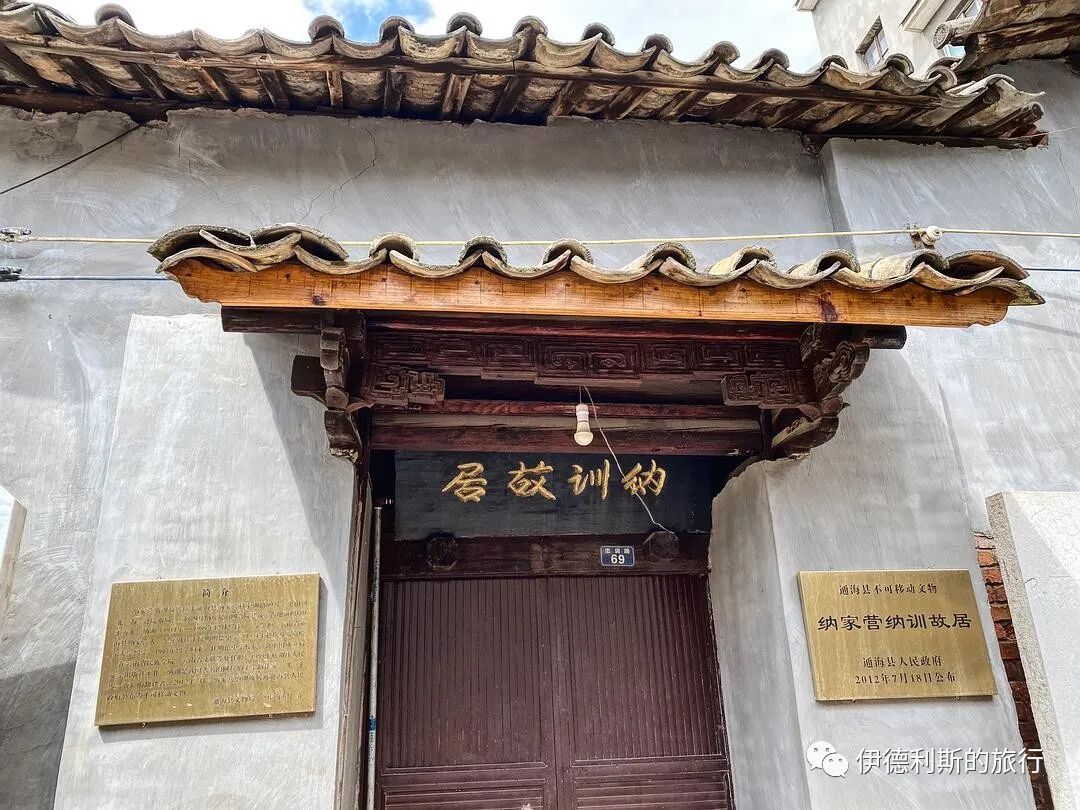
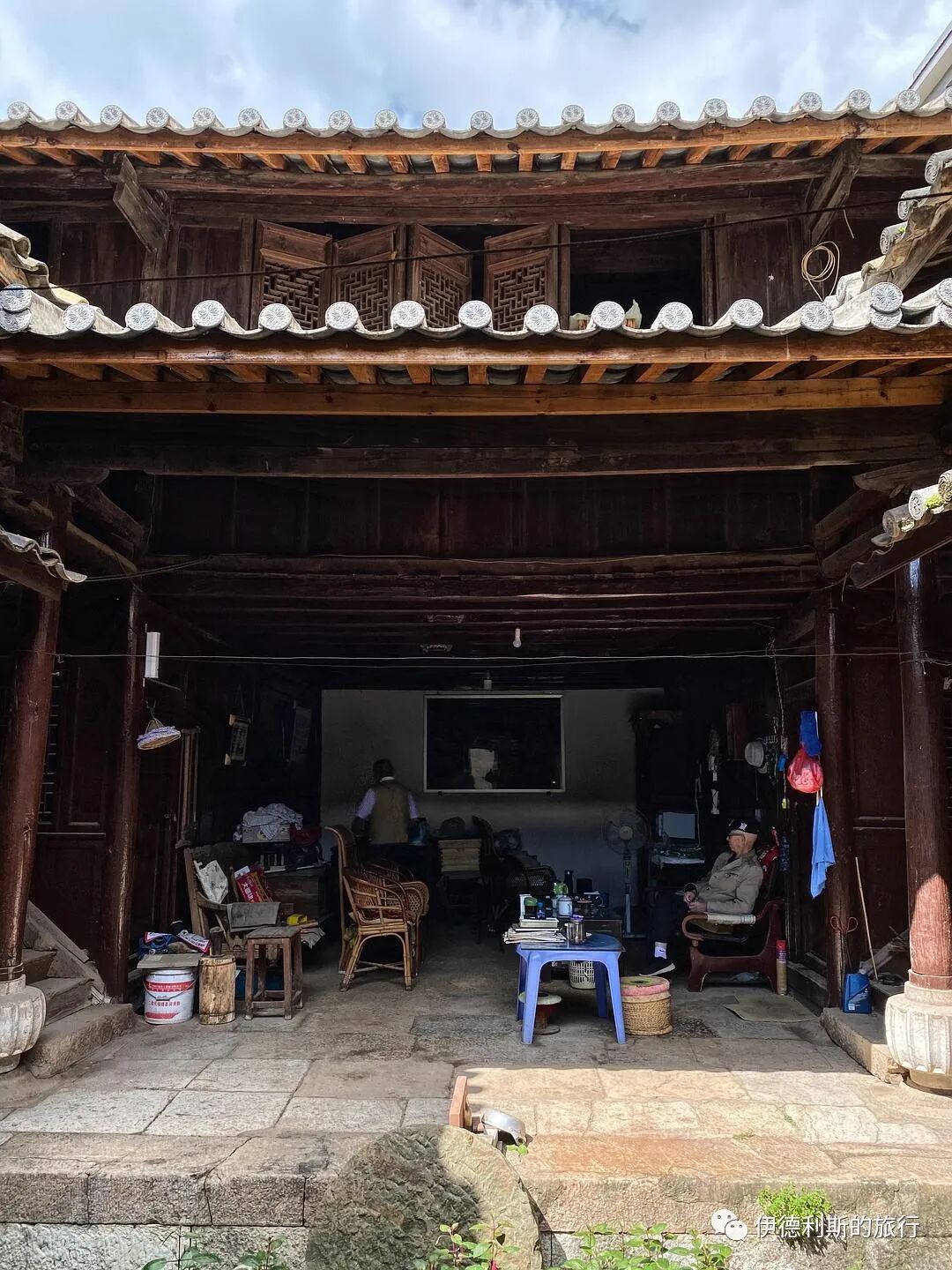
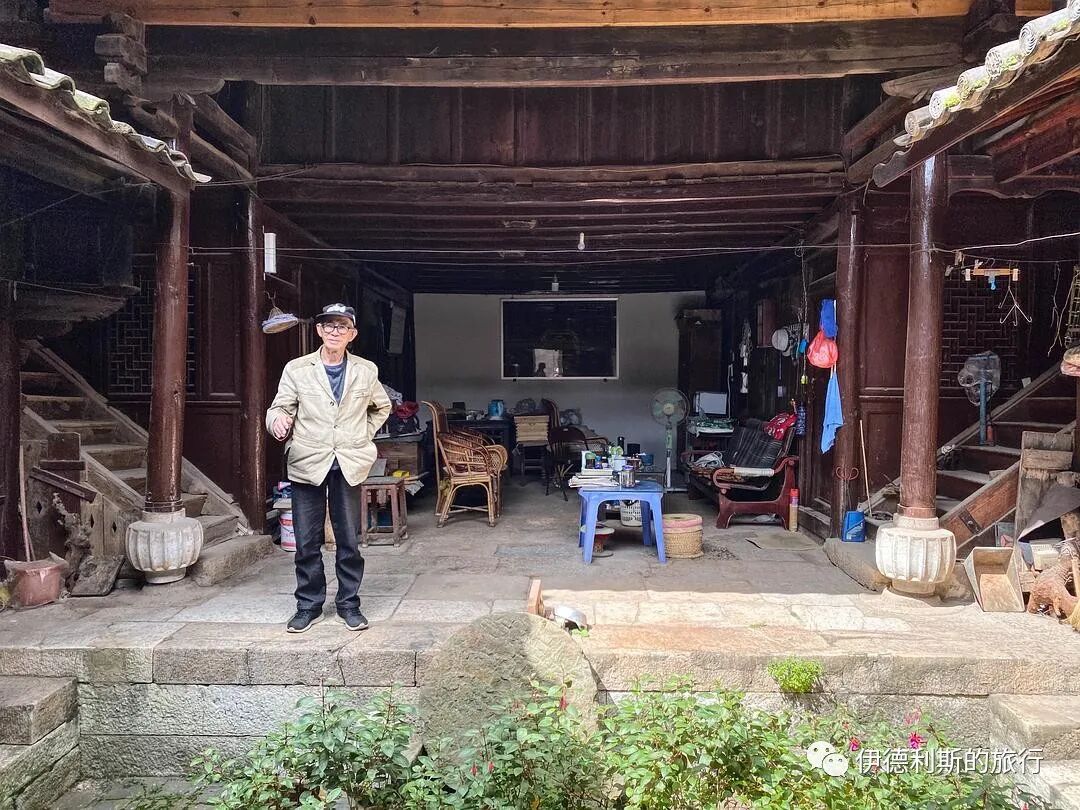
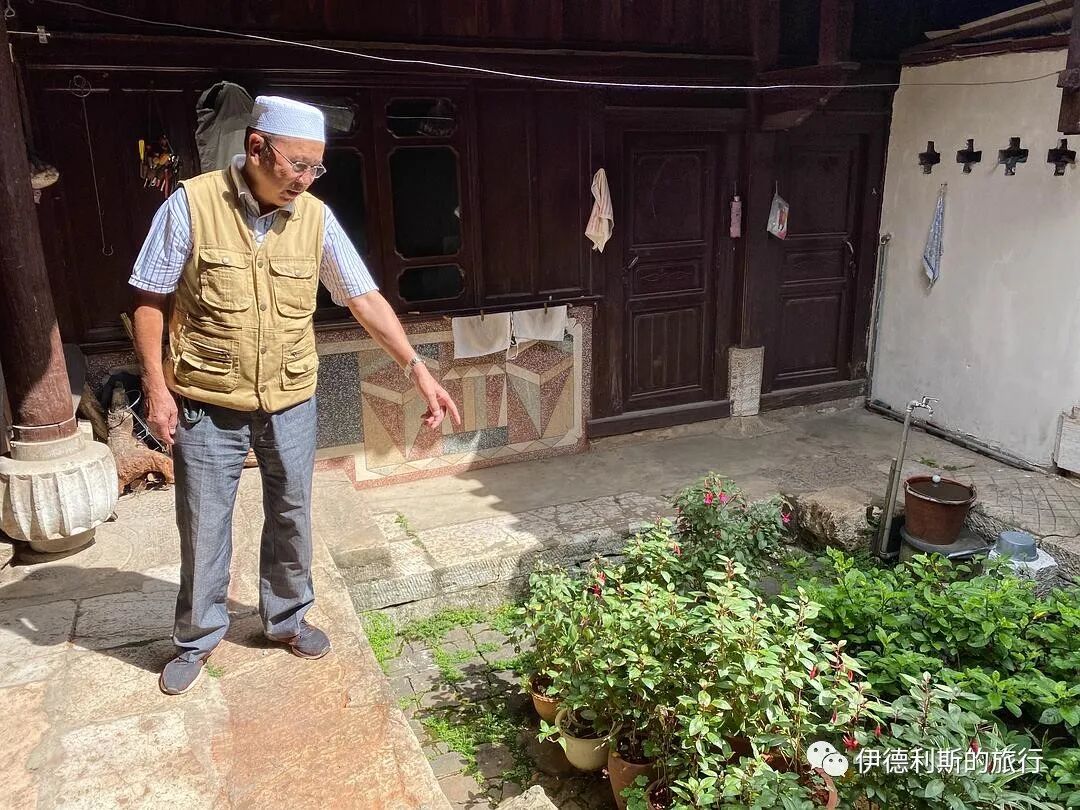
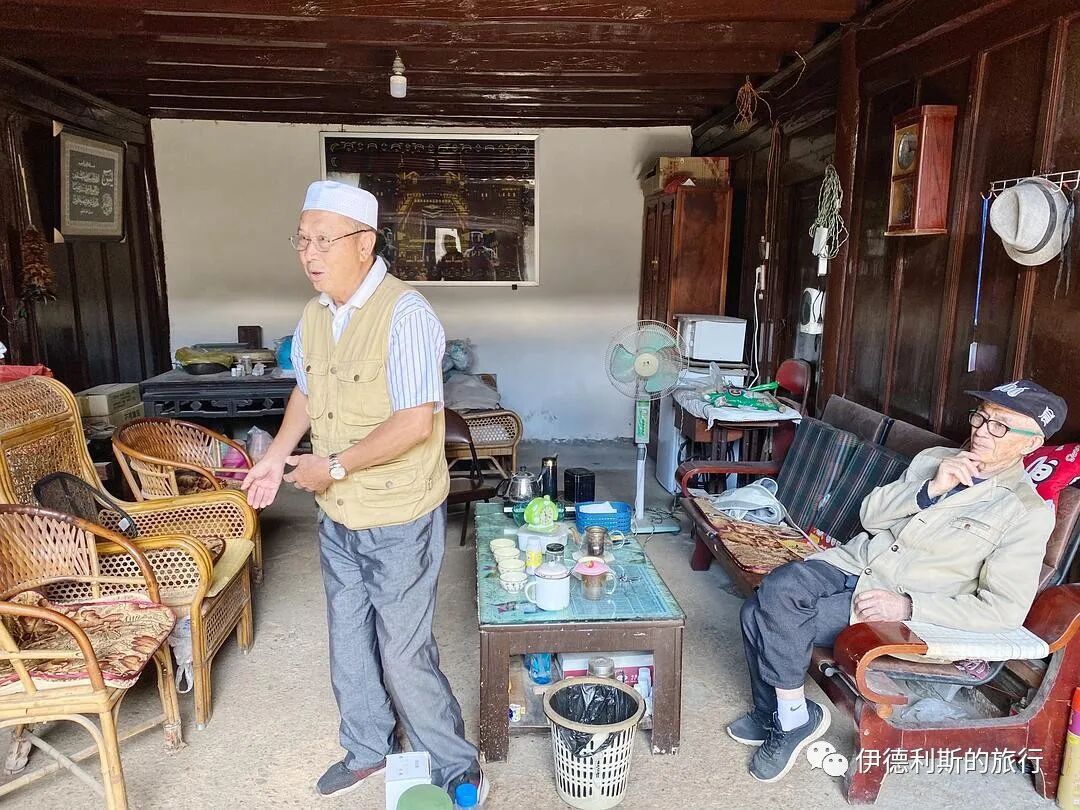
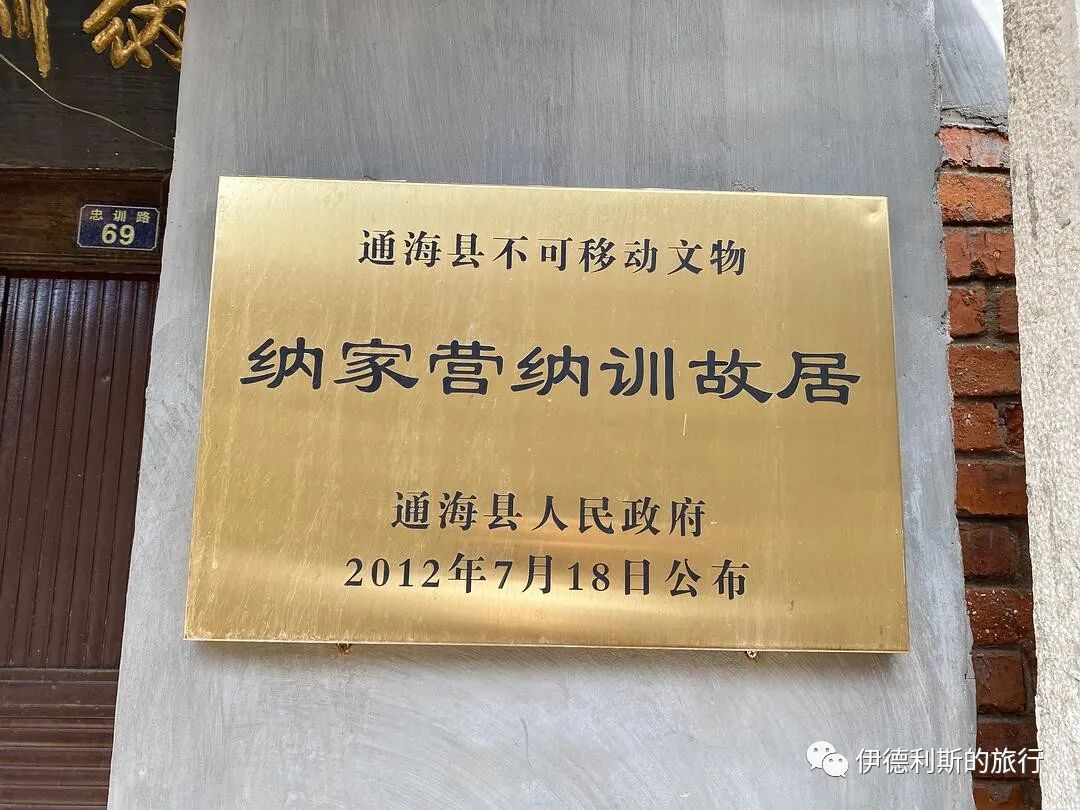
I continued on to visit the former residence of Professor Na Zhong, an expert in Arabic education and a leading figure in Arabic culture. Na Zhong wrote A General History of the Arabs and compiled the first Arabic language textbook for Chinese universities. The property is now rented out by Na Zhong's descendants.
Na Zhong's grandfather, Na Hai, had been a soldier for several years. He was not only skilled in martial arts but also a master of masonry, metalwork, and carpentry. While working in Kunming, he fell in love with a young lady named Cai. Miss Cai came from a prominent military family in Kunming, but she chose this poor young man who had no house and no money. To get married as soon as possible, Na Hai returned to his hometown of Najiaying and spent six months building his own house. The house was a traditional two-story Yunnan dwelling with three main rooms and four side rooms. It was built very neatly with exquisite wooden doors and windows. The pillars of the outer courtyard gate were carved from solid bluestone, featuring patterns of dragons playing with a pearl, magpies in plum blossoms, qilin and eagles, and golden bulls and horses. Na Hai and Miss Cai were married there and had their first son, Na Dechang.
In 1856, the Bingchen Incident occurred in Yunnan. Najiaying appointed Na Hai, Na Fengchun, and Na Taishou as representatives to negotiate with the Han scholar Gongsun Shuo from Dongxiang, reaching a mutual protection agreement between Hui Muslims and Han people in Hedong. In 1857, the mutual protection agreement in Hexi was broken by a local tyrant named Zhan Zhanchun, who gathered soldiers to attack the Great and Small Donggou (now known as Da Hui Village and Xiao Hui Village). Na Hai ignored the advice of his friends and family and went to try to stop the fighting, but he was killed by the enemy. After that, Miss Cai, who was seven months pregnant, took her eldest son Na Dechang back to her parents' home in Kunming. Shortly after, she gave birth to a posthumous child, Na Zhong's father, Na Degui. After the birth, Miss Cai suffered from illness and passed away shortly after.
After Miss Cai died, Na Hai's first wife, He, brought the brothers Na Dechang and Na Degui back to Najiaying to raise them. When Na Degui was 13, He became too ill to work, so she asked a relative to take Na Degui to Kunming to find work. Na Degui worked at a fur shop on Zhuji Street in Kunming. He was an apprentice for eight years, receiving only food and lodging with no wages. After finishing his apprenticeship, Na Degui married He Yufeng, the niece of his foster mother He, and they returned to Kunming to work after the wedding. In 1909, He Yufeng gave birth to Na Shou'en, who would later be known as Na Zhong.
When Na Zhong was one year old, his cousins saw that He Yufeng was struggling, so they carried Na Zhong and his family to Kunming to join Na Degui. That was how Na Zhong left Najiaying and began his life in Kunming. After that, Na Zhong rarely returned to his hometown, except for a two-month stay in 1940 to escape air raids in Kunming after he graduated from Al-Azhar University in Egypt.
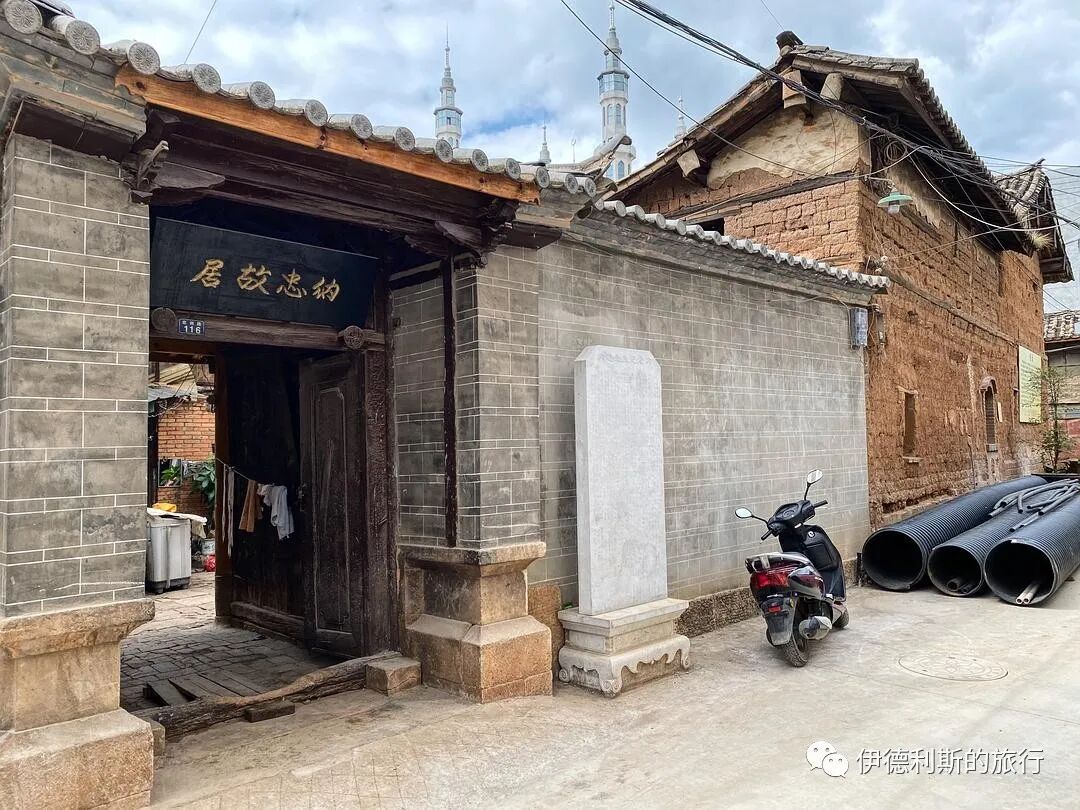
There is a water well at the entrance of Najiaying Mosque. It is said to have been built by Nasuluding, the great-grandson of the King of Xianyang, Sayyid Ajjal Shams al-Din, after he settled in Najiaying in the early Ming Dynasty. The wall of the well platform is carved with a dragon head, and the well water flows out from the dragon's mouth. People wash vegetables in the upper pool under the dragon's mouth, wash clothes in the lower pool, and finally, the water flows south to irrigate the farmland.
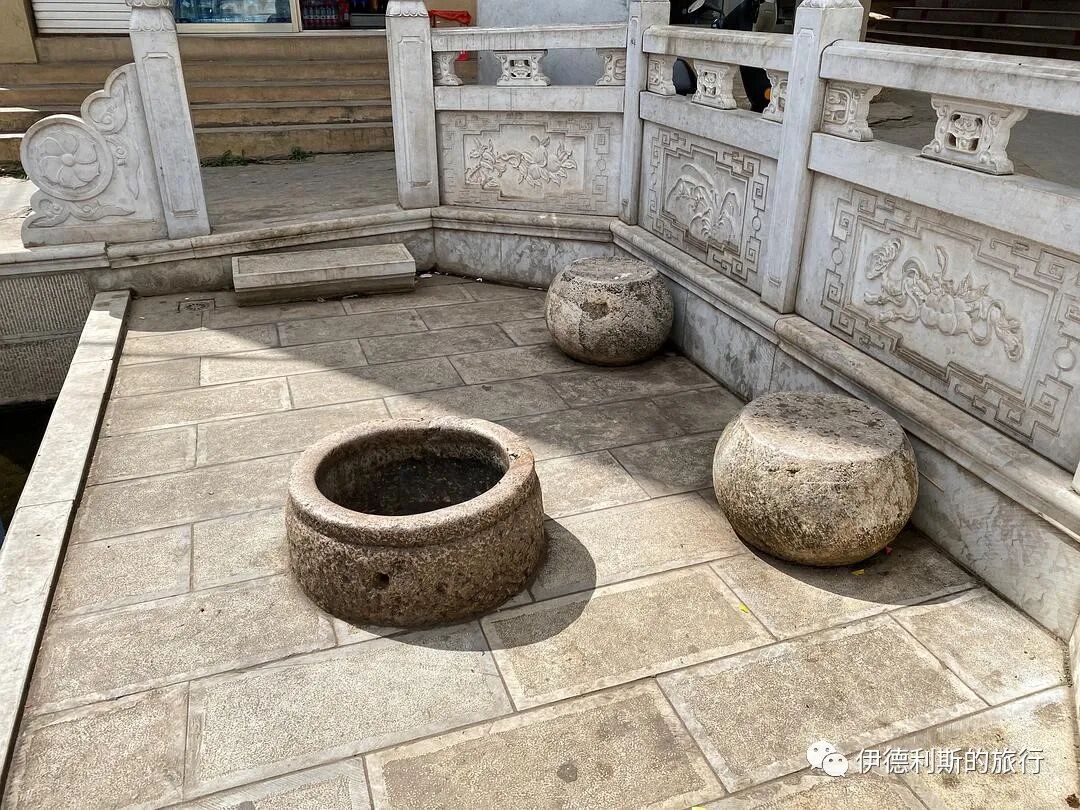
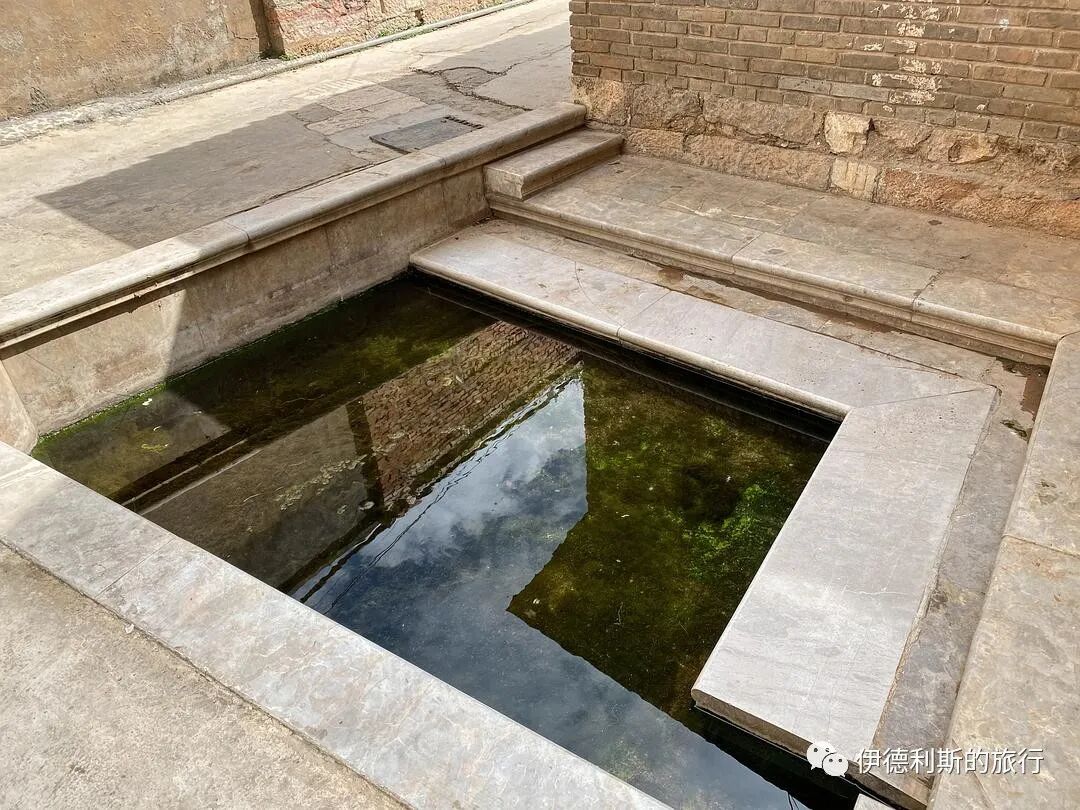
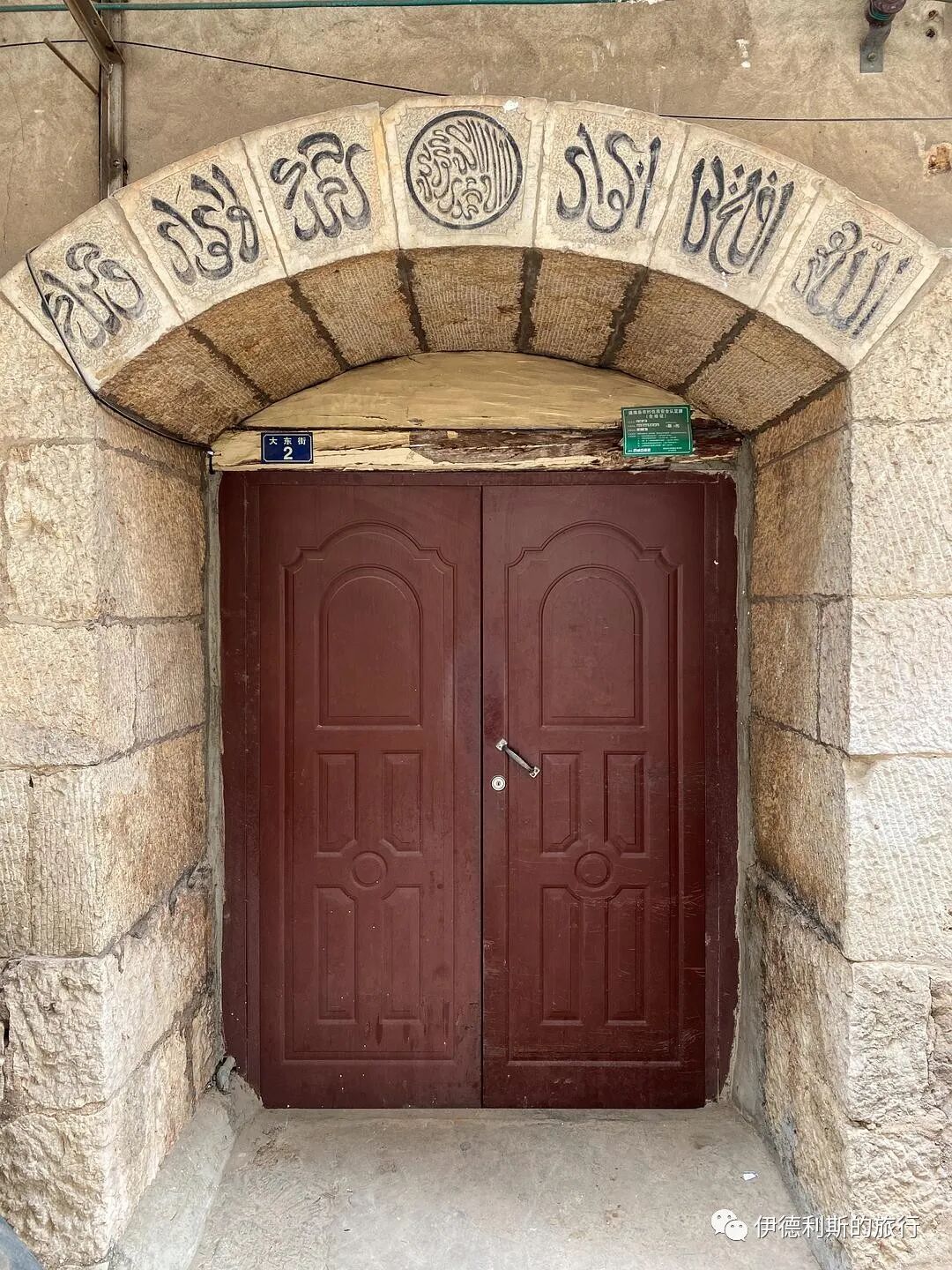
I bought a Nagu knife for cutting meat, and when I tried it at home, it was really sharp! It cuts through in one go without needing a second stroke. Historically, Najiaying and Gucheng were most famous for horse caravan transport, hunting rifle making, and knife making, but these trades declined as times changed. After the 1980s, Nagu Town began to vigorously develop the Nagu knife industry, and now there are many shops.
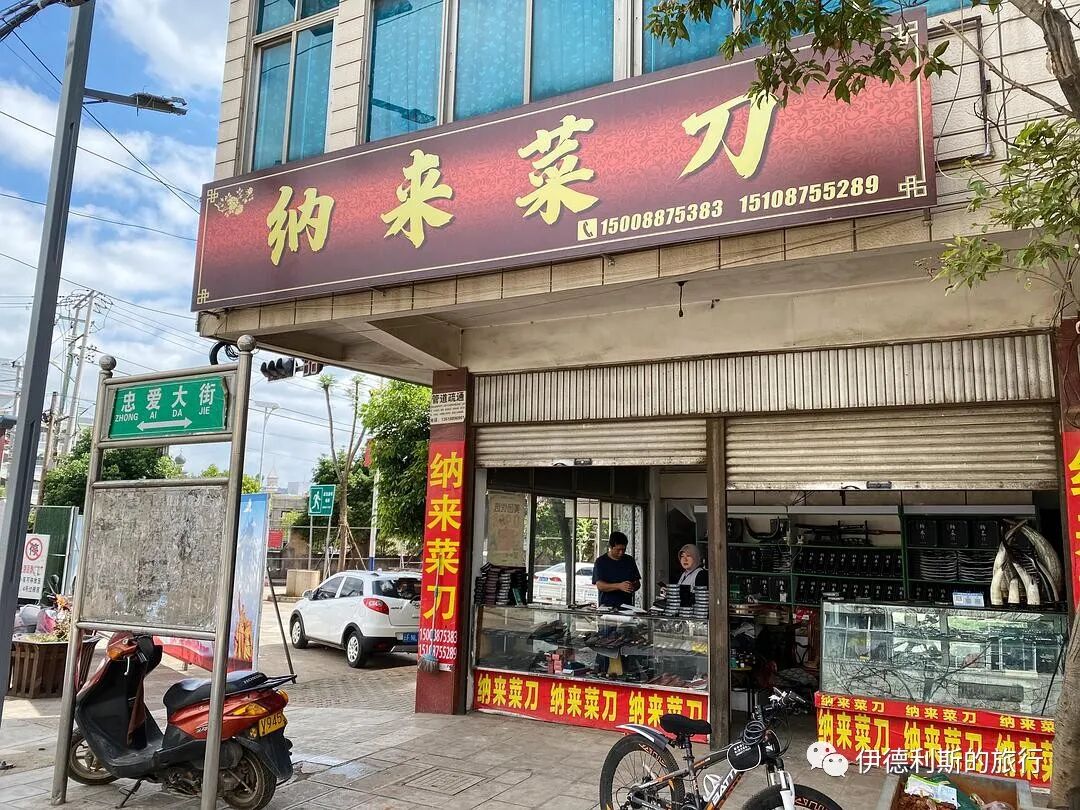
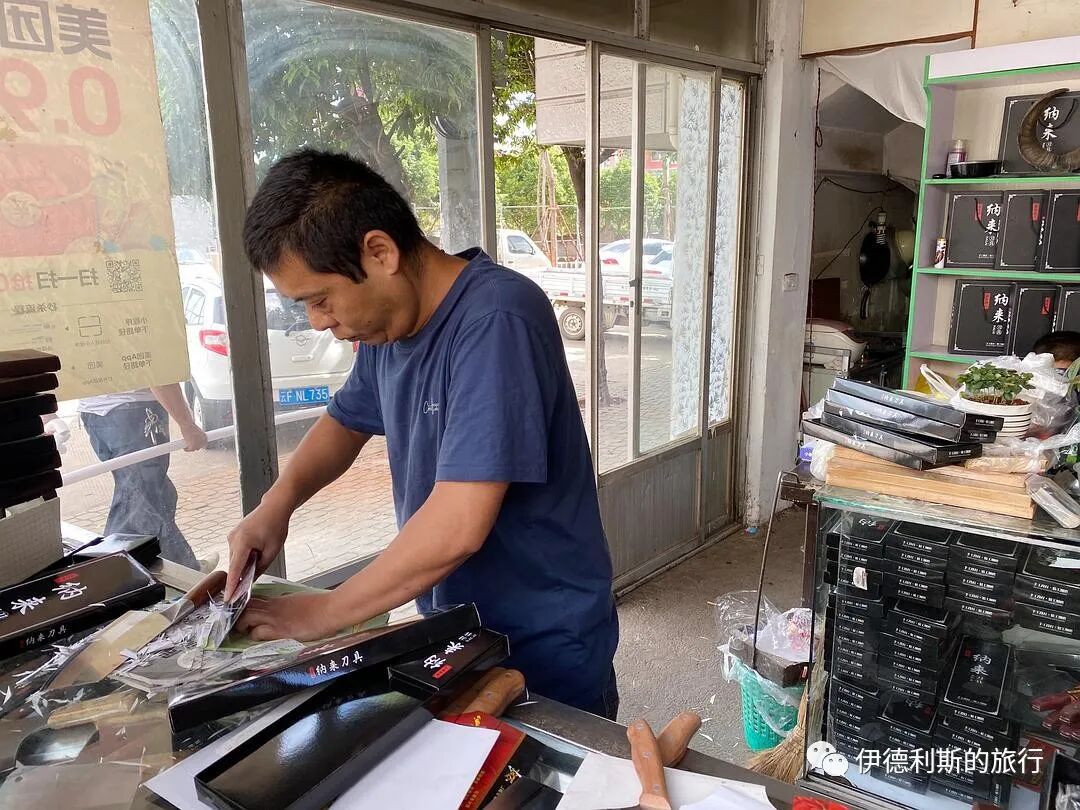
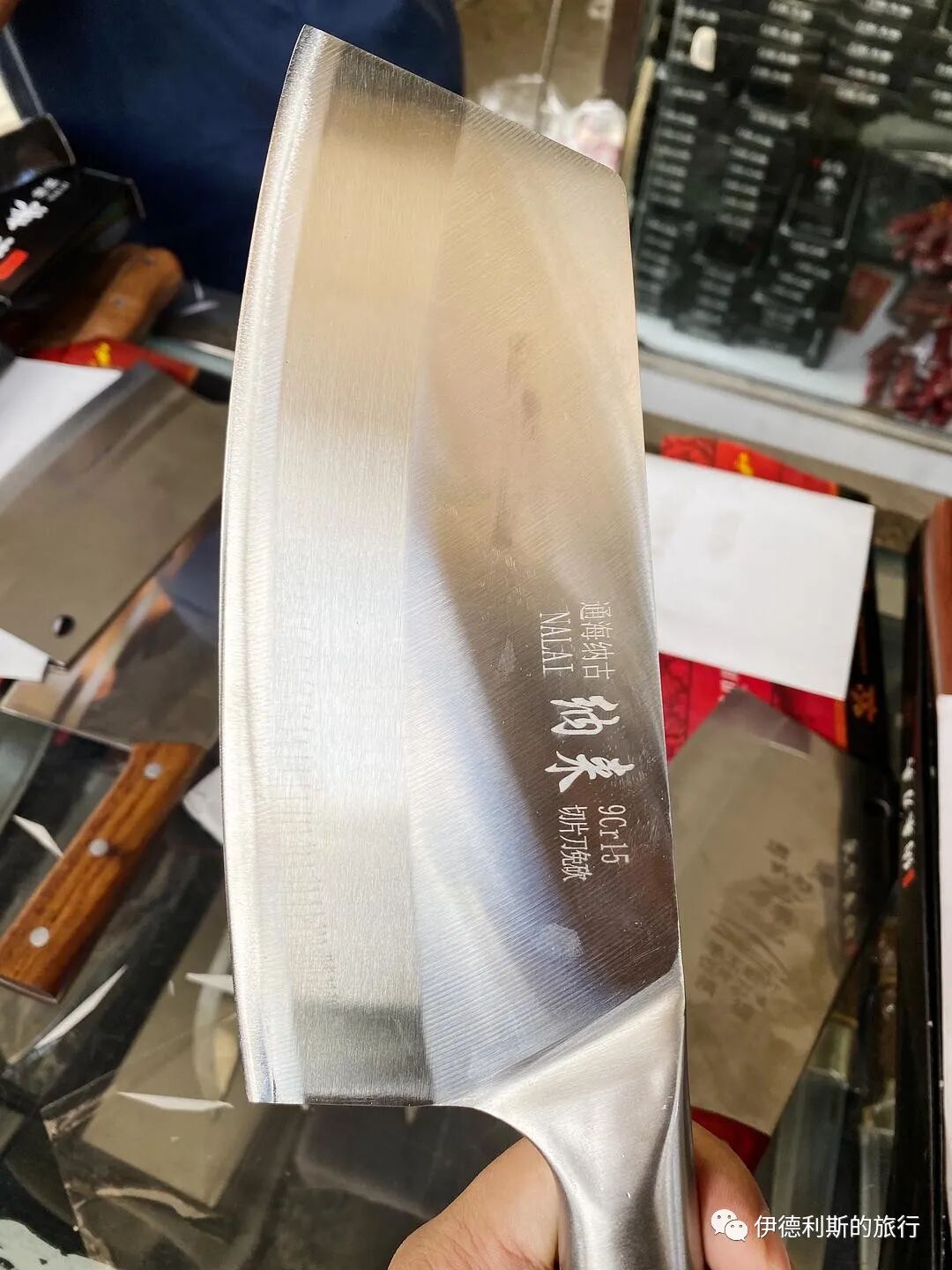
Also, on Zhenxing Road, there is a shop making traditional copperware, including copper pots and copper ladles. If you are interested, you can buy one to take home for a copper ladle hot pot.
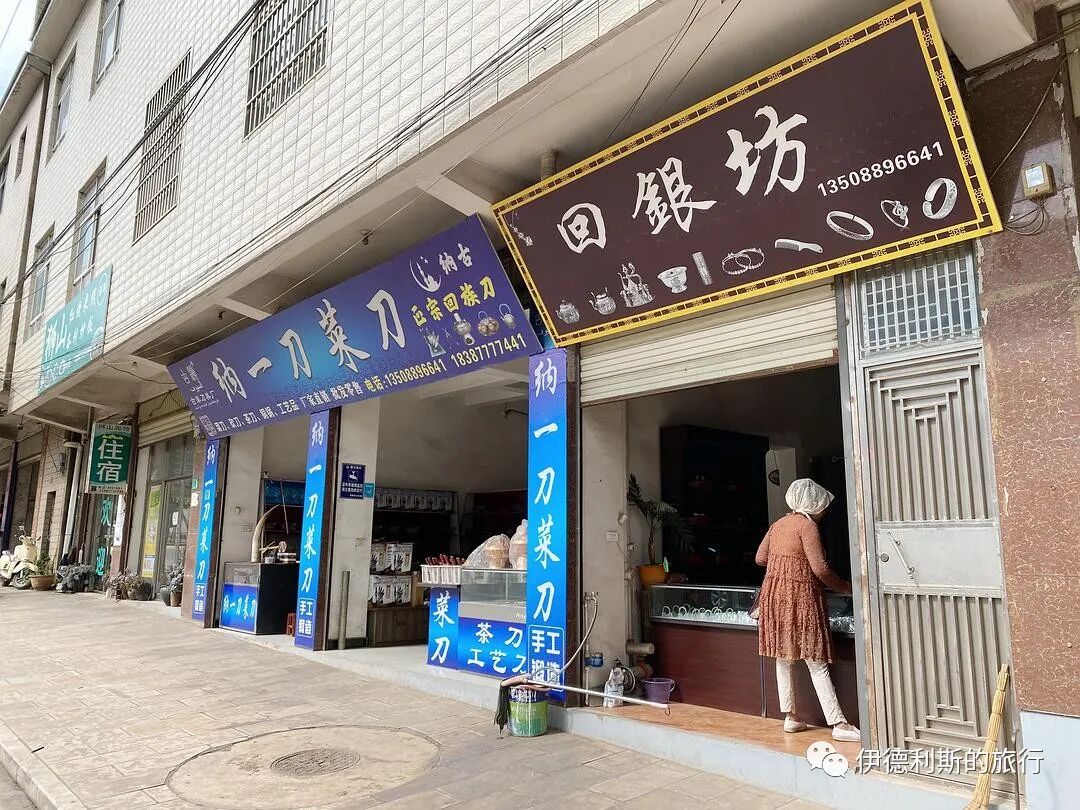
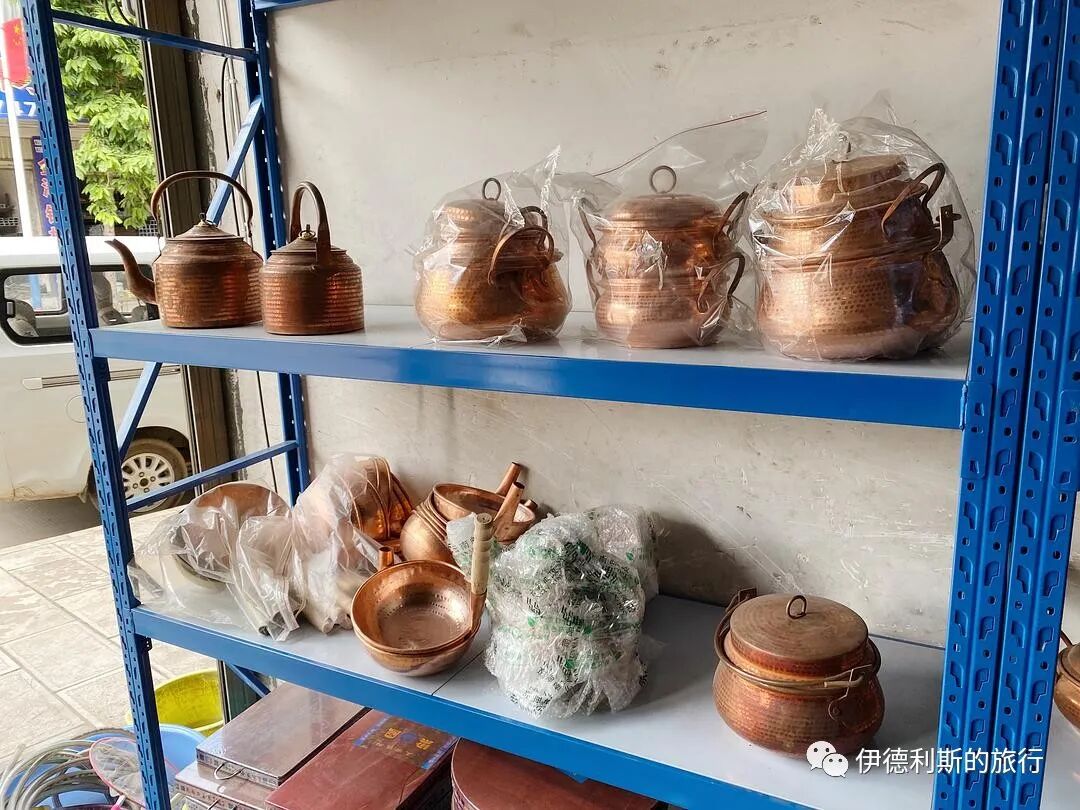
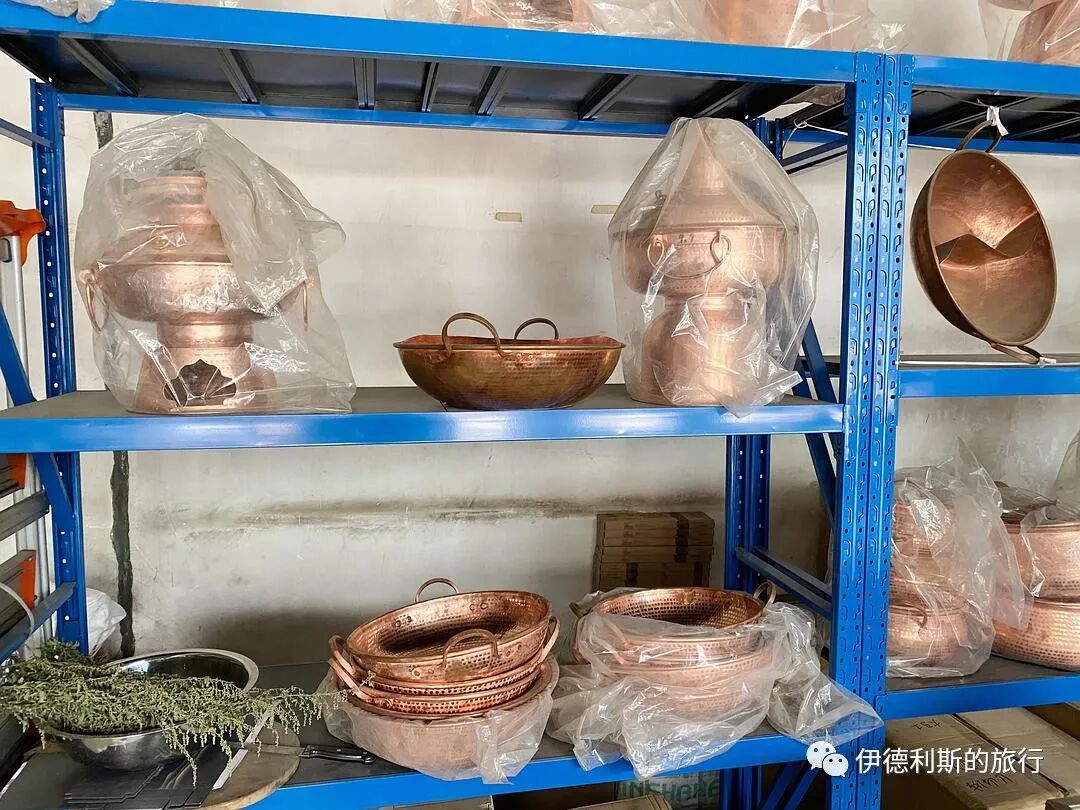
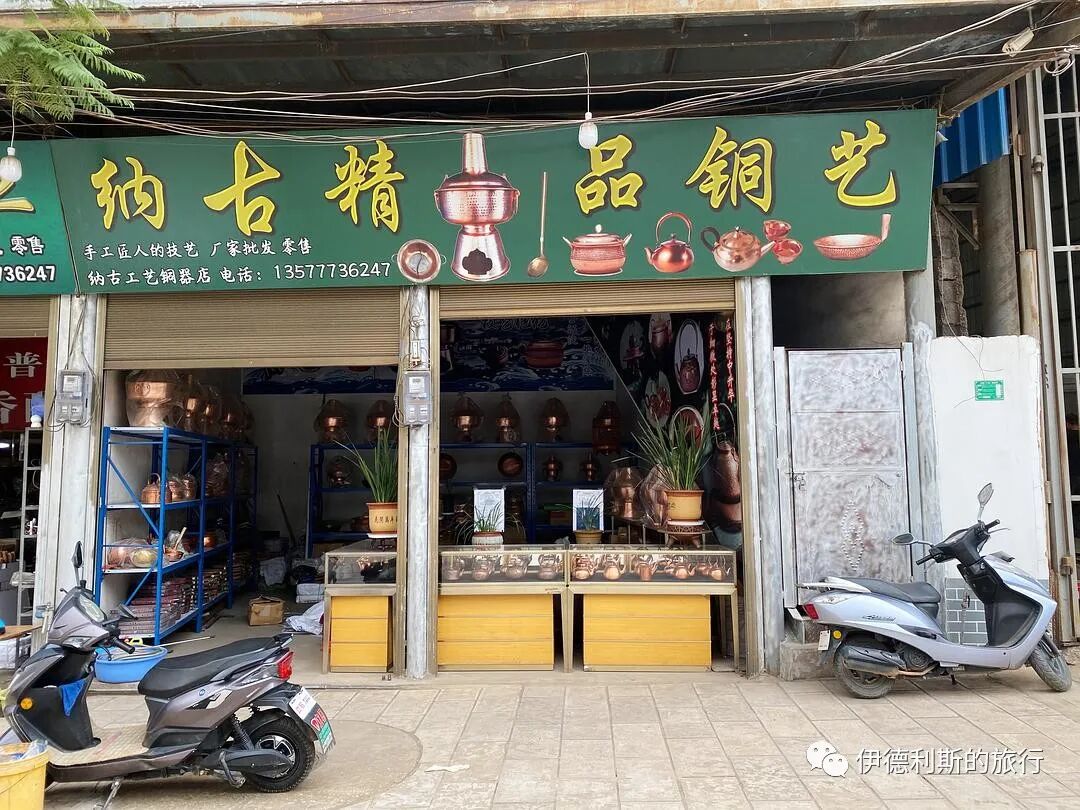
To the north of Najiaying is Gucheng Village. The Xinzhai Mosque in the village was built by Ma Xuecheng, a disciple of Ma Mingxin, the founder of the Jahriyya menhuan. Ma Xuecheng was known as 'Yunnan Ma,' and followers of his sect respectfully called him the Third Master of Gucheng or Imam Ma Sanye. Ma Xuecheng was a local from Gucheng Village. He once went to study under Ma Mingxin, and the two were as close as father and son. After returning to Yunnan, Ma Xuecheng operated mining businesses, became a wealthy merchant, and was the first to spread the Jahriyya sect in Yunnan. In 1781, when Ma Mingxin's eldest son, Ma Shunqing, was exiled to Talang, Yunnan, Ma Xuecheng did his best to rescue and assist him, allowing the Jahriyya sect to continue developing in Yunnan.
It is a great pity that the mosque is currently being renovated. The courtyard layout is gone, the north and south wing rooms have been demolished, and only the main hall remains as the original building. When we went, the main hall was locked. We saw no one in the mosque except for workers, so we could not enter. It was a great regret not to see the Jahriyya-style Arabic calligraphy mihrab inside.
The main hall has a double-eave hanging mountain roof, with beautiful painted wood carvings on the brackets and beams, and openwork carvings between the eave pillars.
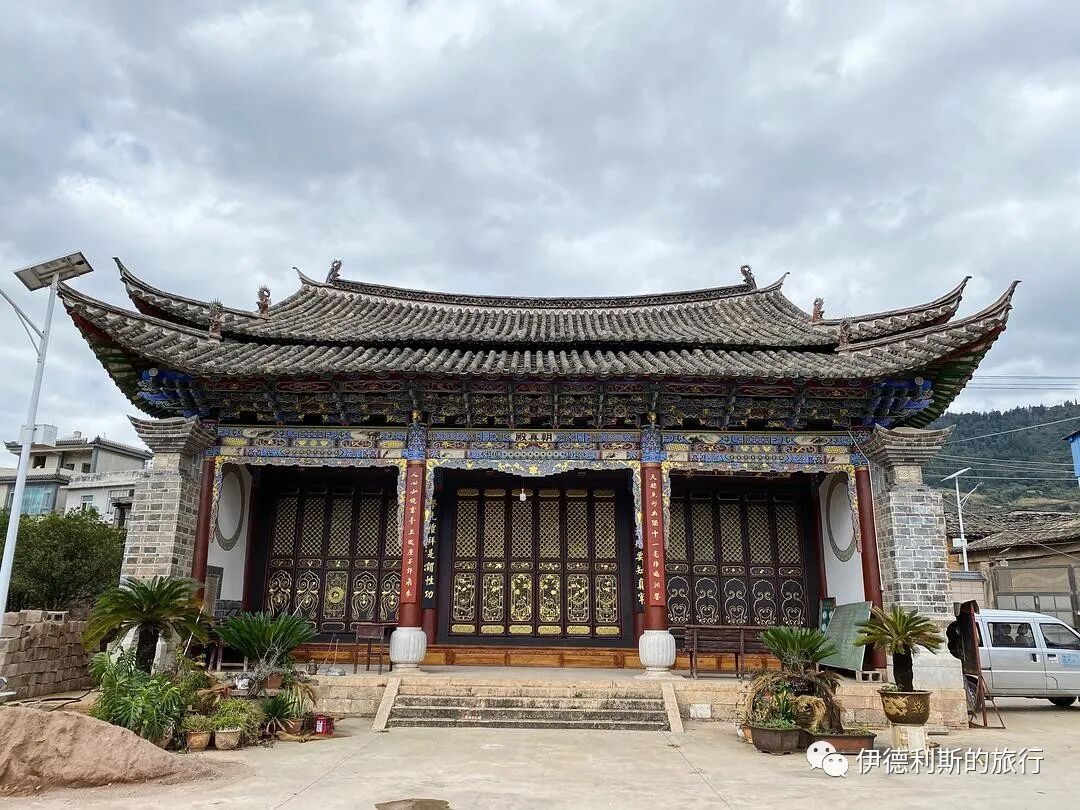
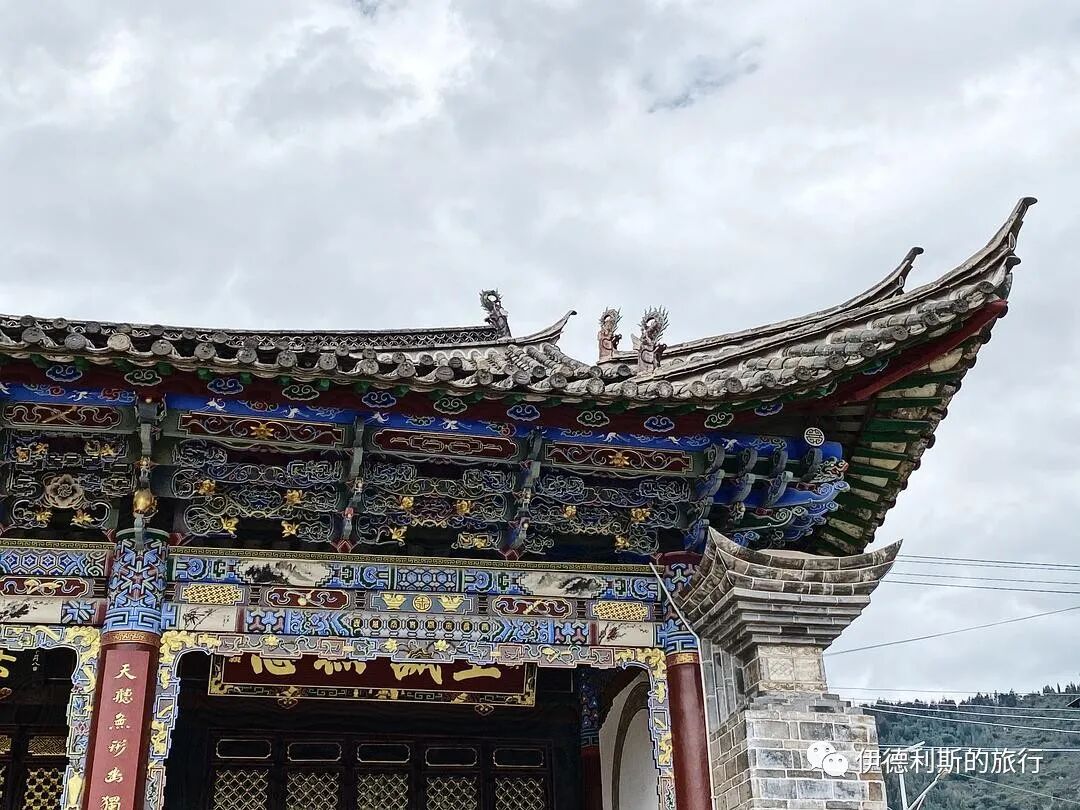
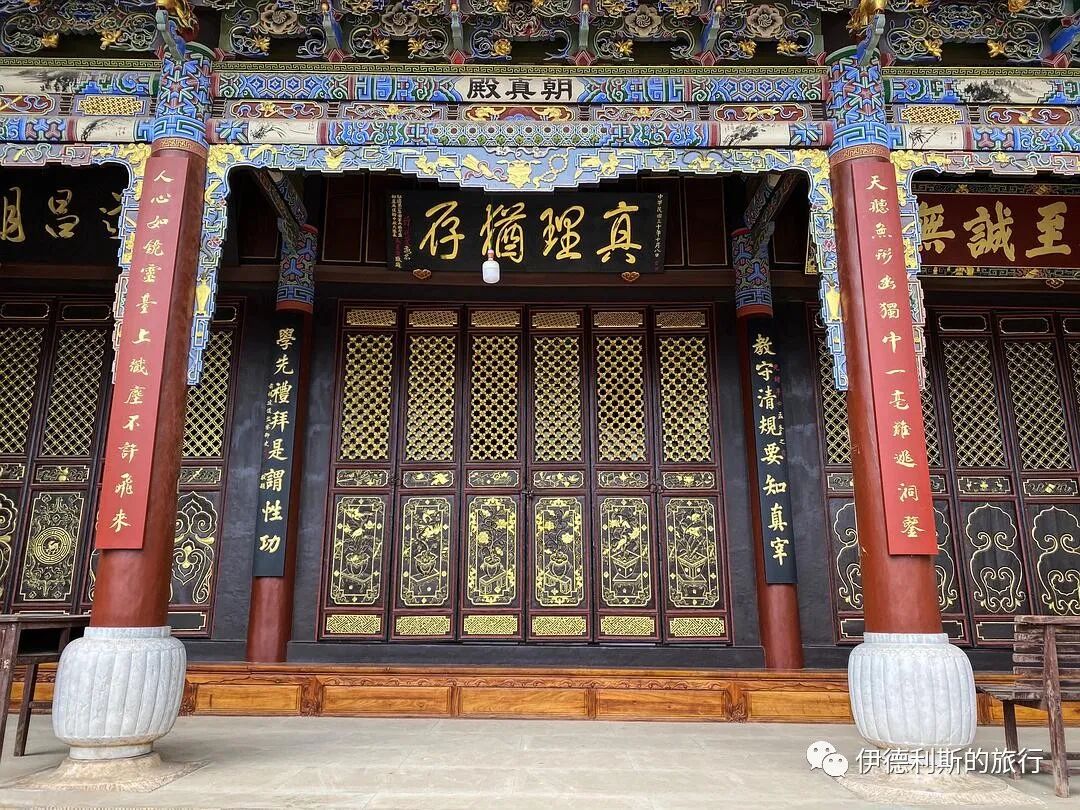
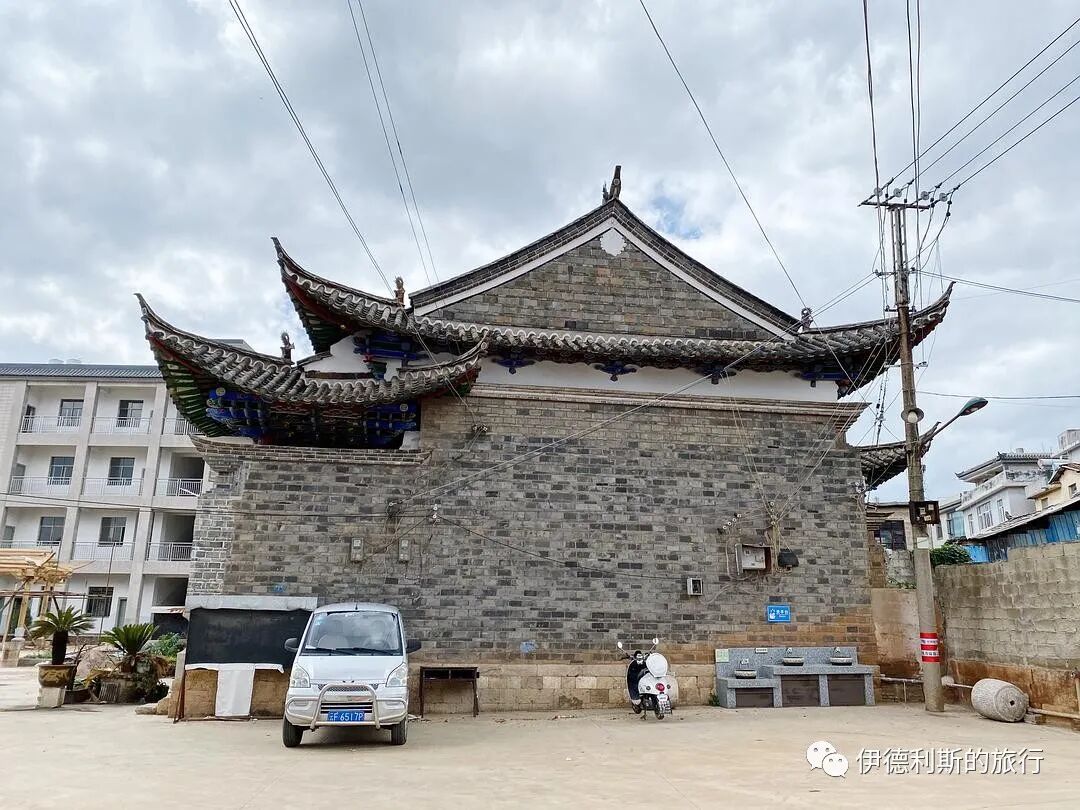
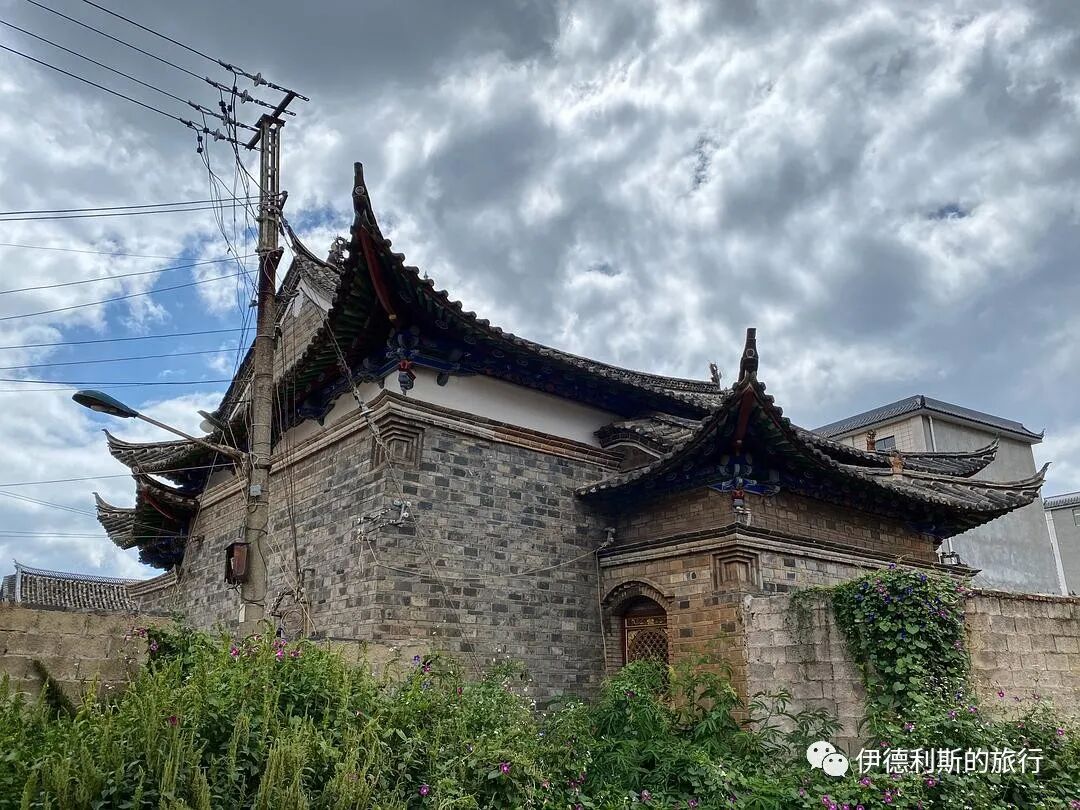
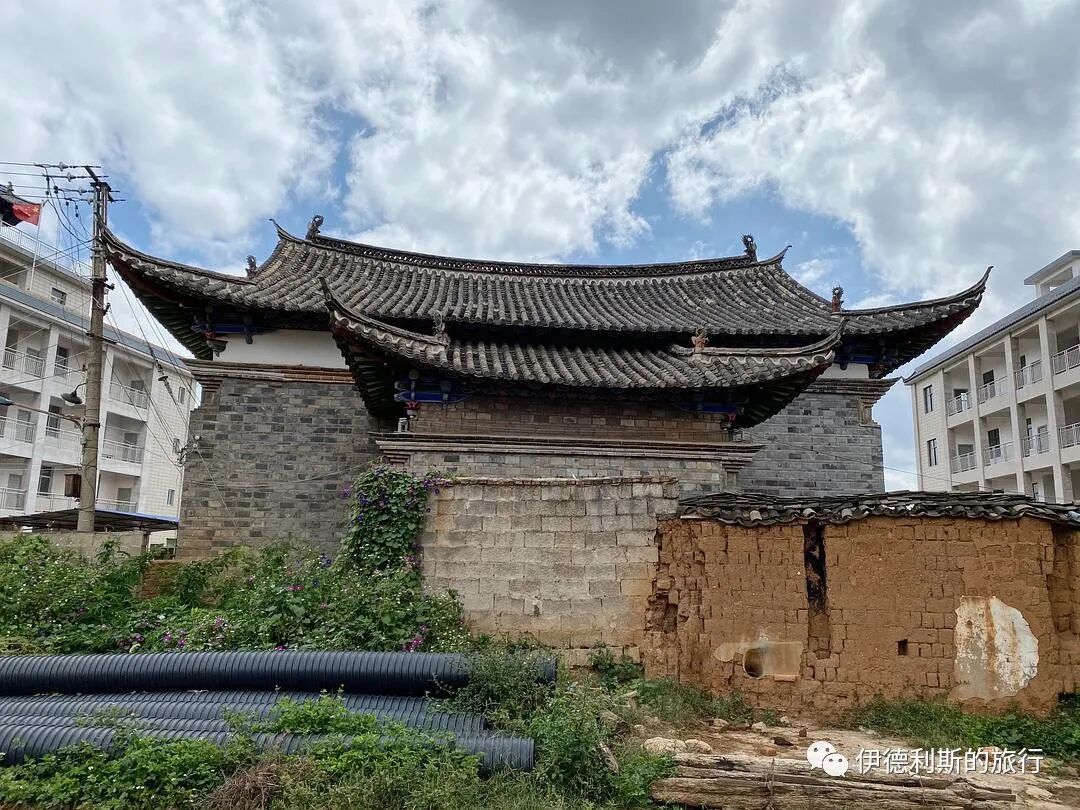
This last indoor photo was taken by a fellow Muslim (dost) a while ago. The bluestone under the mihrab was transported from Mojiang and has a history of over a hundred years.
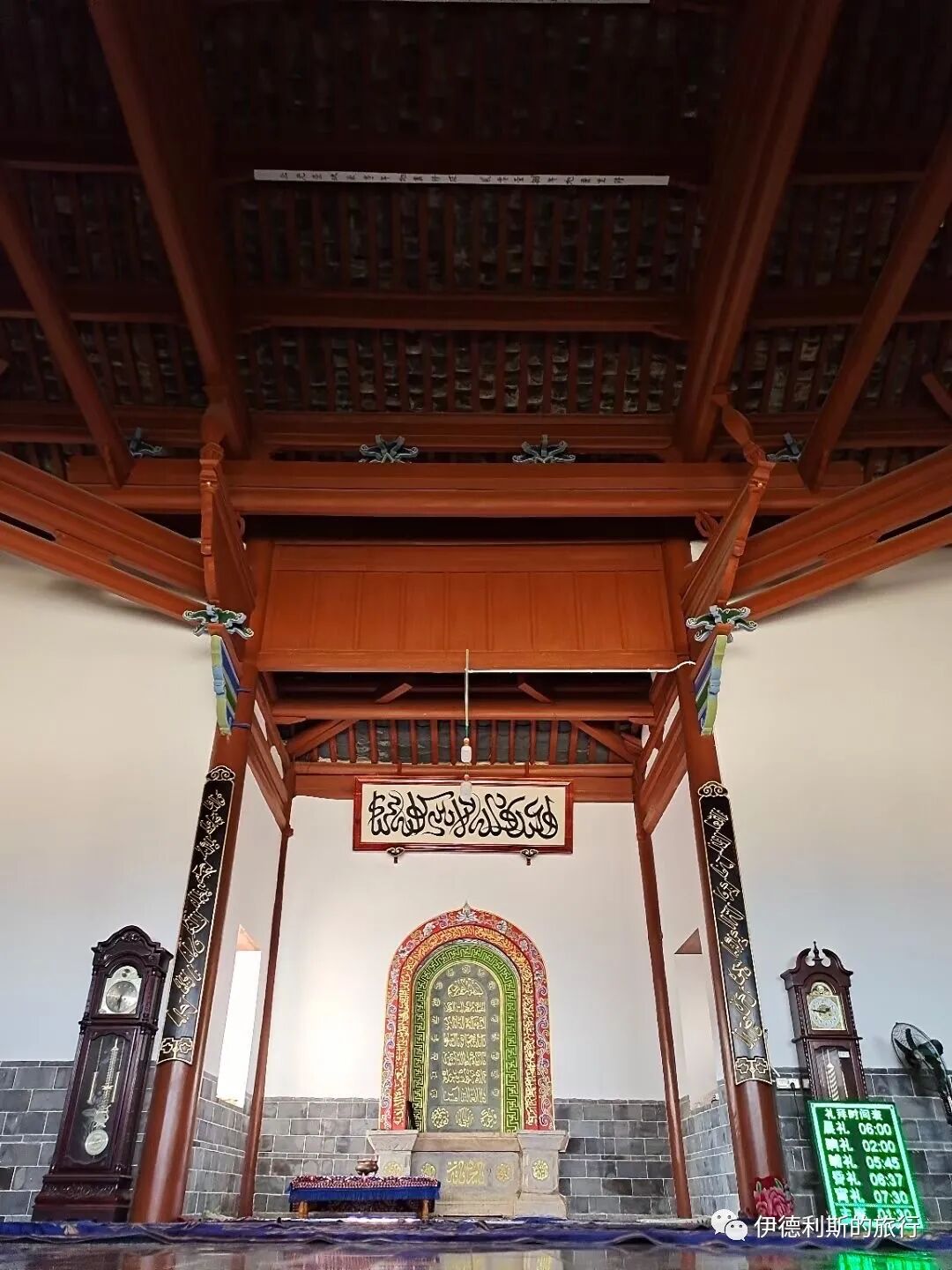
At noon, we ate at Jingshanzhai in Najiaying, having herb sour soup chicken, goat milk cheese (yangrubing), stir-fried pumpkin seedlings, stir-fried celery with lily bulbs, and oil-drizzled beef jerky (niuganba). The restaurant has a nice, antique atmosphere.
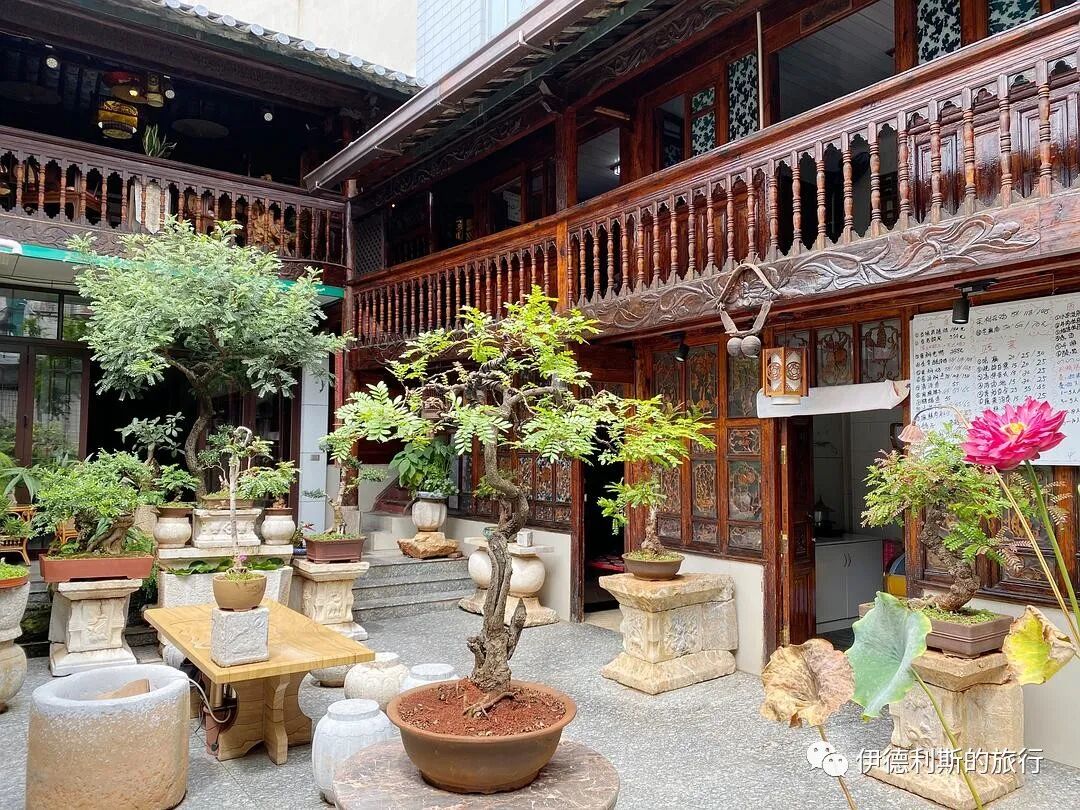
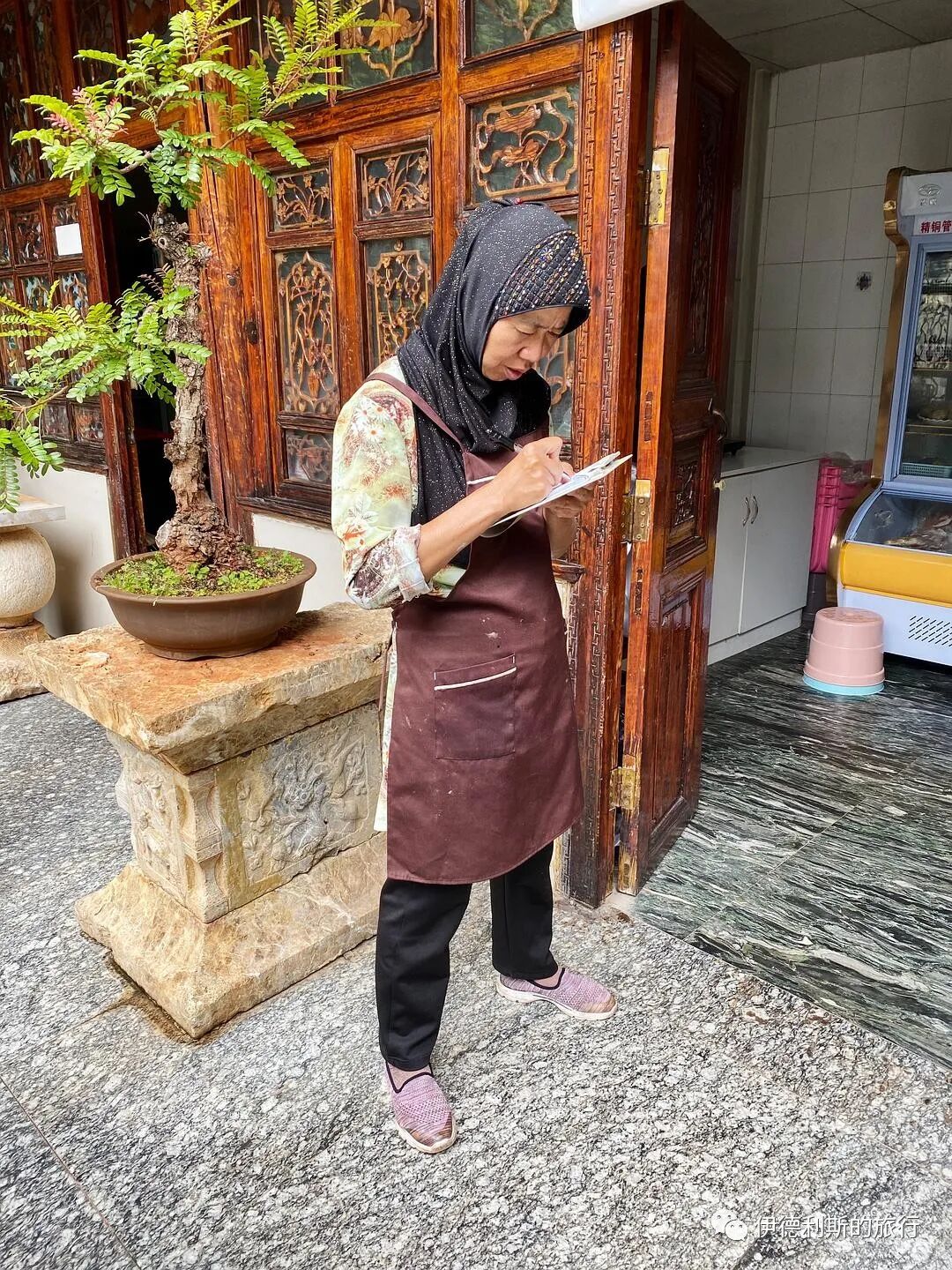
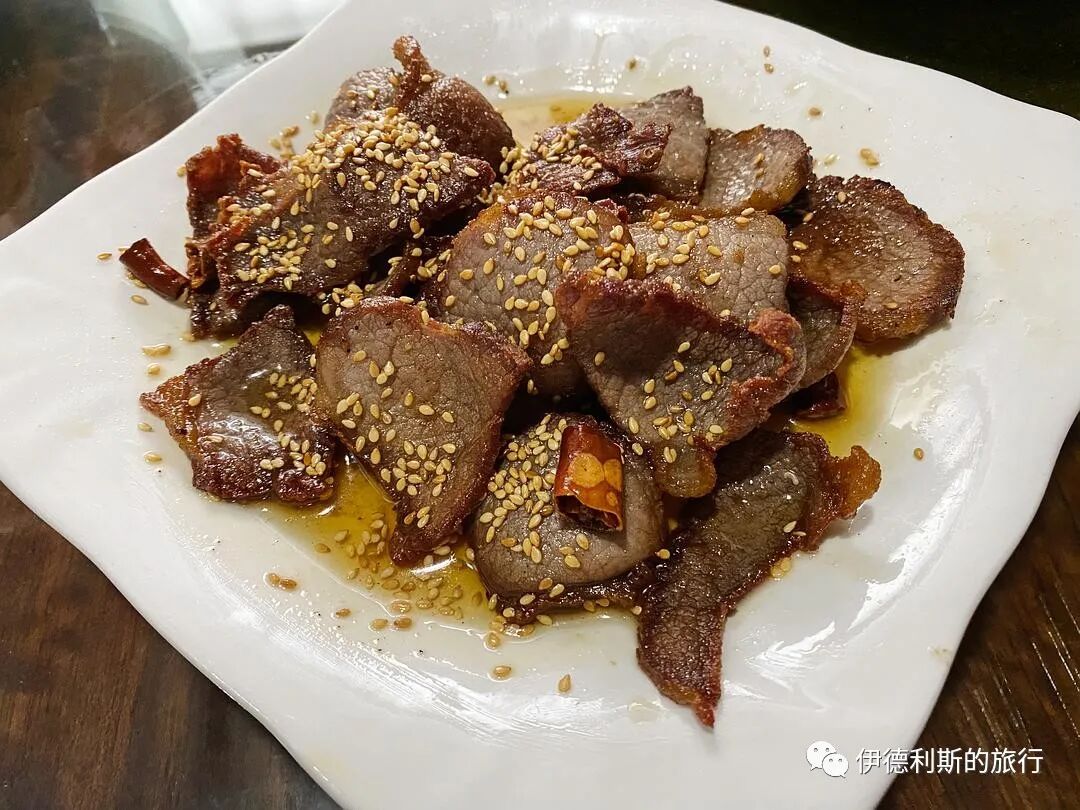
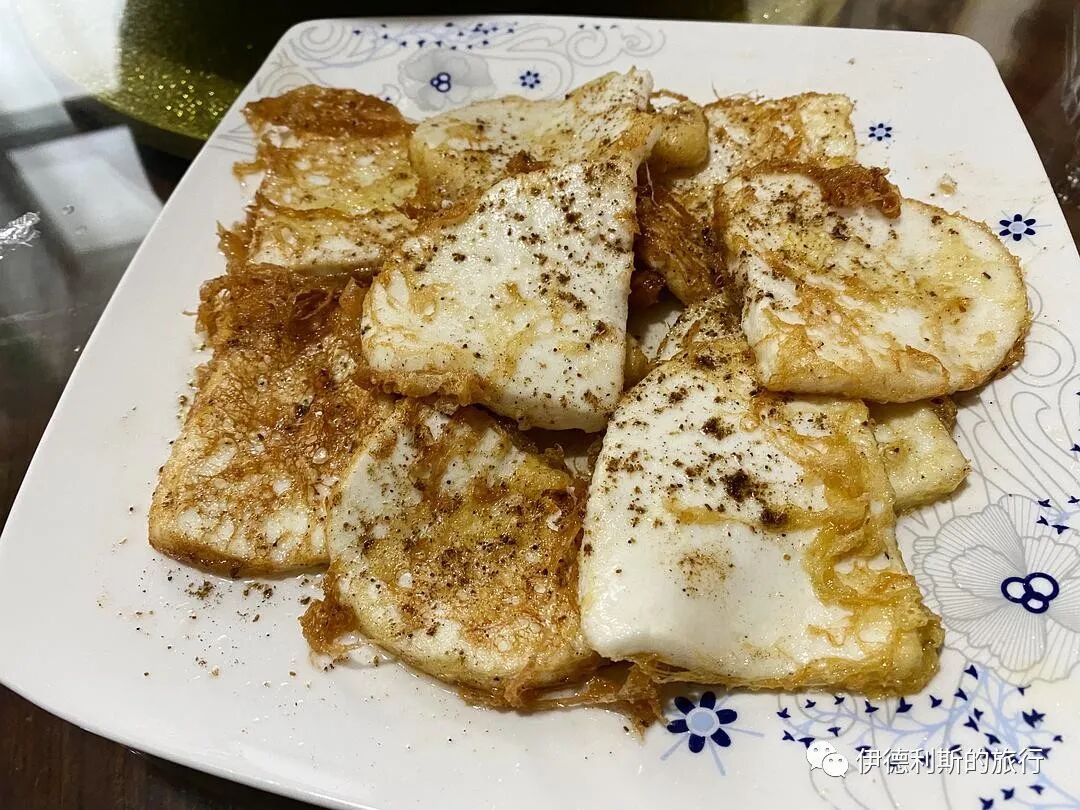
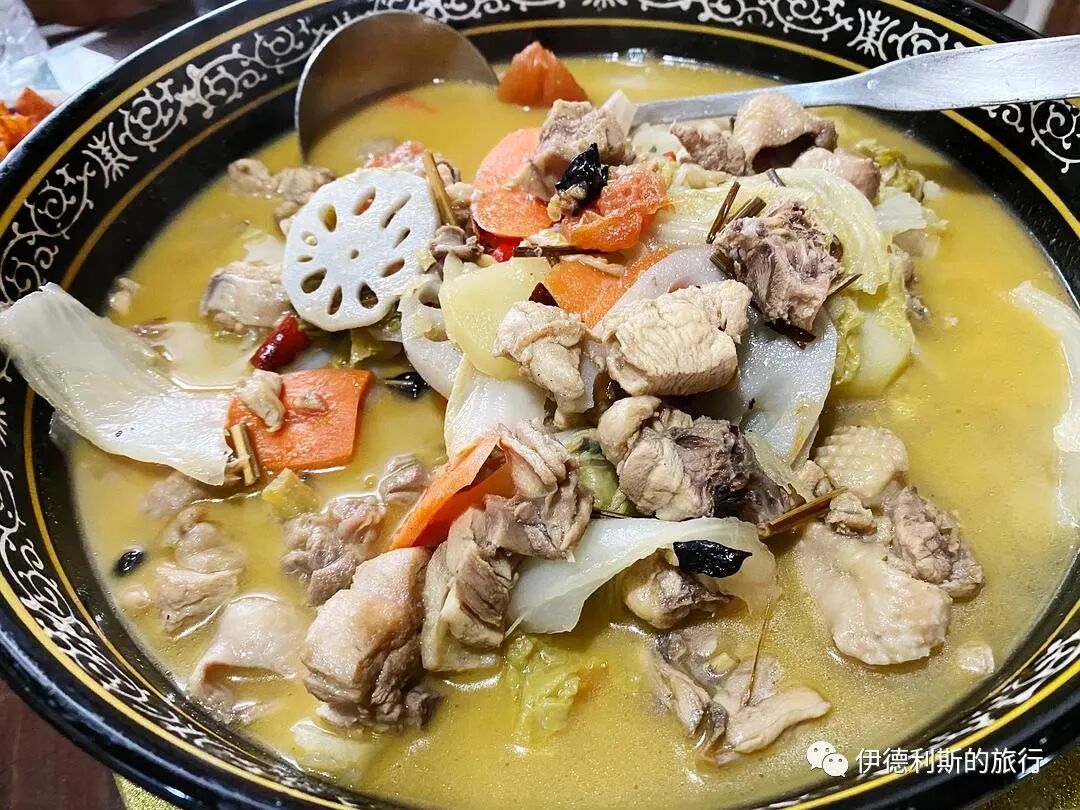
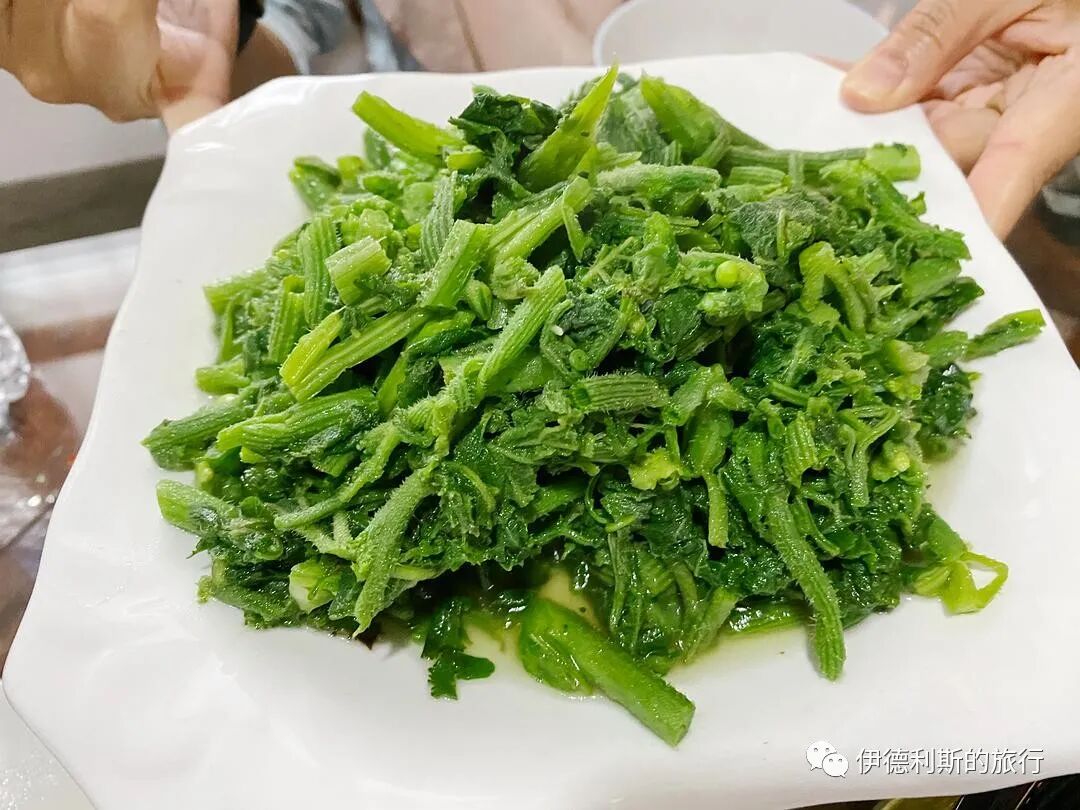
The decor at Jingshanzhai.
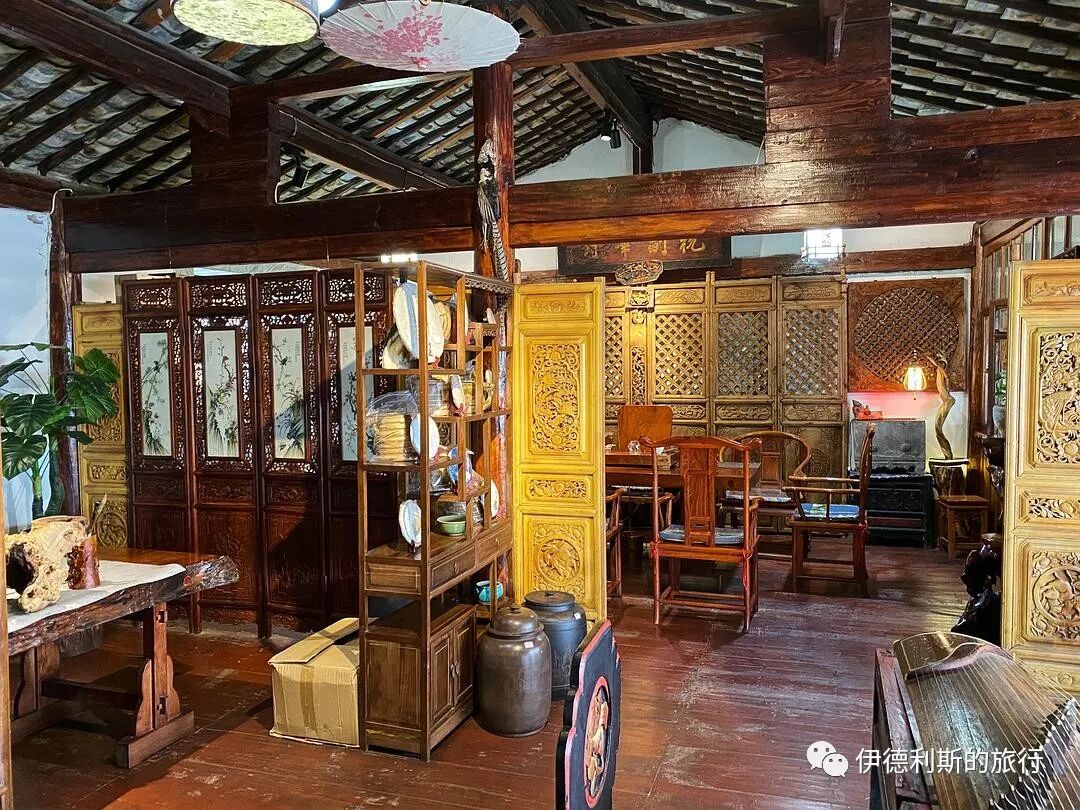
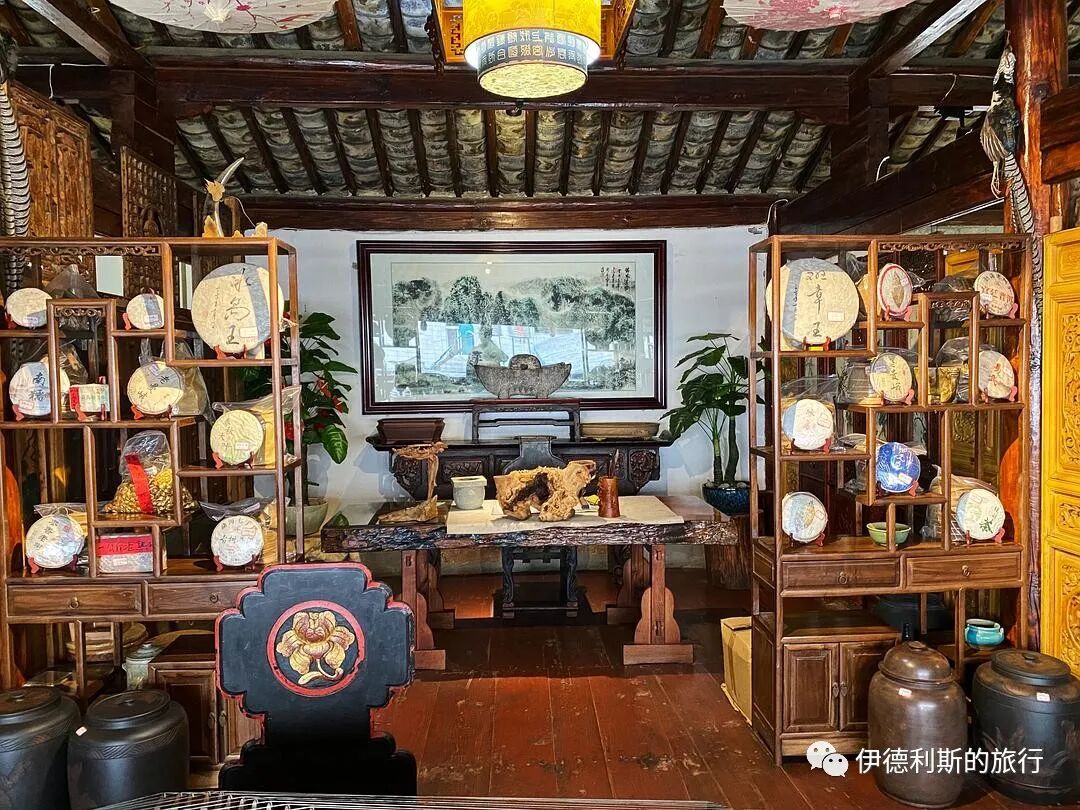
I bought a flatbread (balada) at the entrance of Najiaying Mosque, took it to Qilu Lake Xiaohai Park next to Najiaying, and bought a cup of papaya water at the entrance. Although the park is not big, the environment is very good, and there is a boardwalk by the lake, which is very pleasant for relaxing and catching a breeze.
Halal Travel Guide to Zhaotong, Yunnan: Six Traditional Mosques
Articles • ali2007fr posted the article • 0 comments • 156 views • 2026-05-17 05:43
Summary: This travel note introduces Halal Travel Guide to Zhaotong, Yunnan: Six Traditional Mosques. During my marriage leave in August 2020, Zainab and I went to Zhaotong to travel, and Sister Azi took us to visit Zhaotong's beautiful traditional mosques. It is useful for readers interested in Yunnan Mosques, Hui Muslims, Islamic Heritage.
During my marriage leave in August 2020, Zainab and I went to Zhaotong to travel, and Sister Azi took us to visit Zhaotong's beautiful traditional mosques.
During the Ming Dynasty, Zhaotong belonged to the Wumeng Tufu (a local administrative office), which was managed by Yi ethnic chieftains. In 1726 (the fourth year of the Yongzheng reign), Ortai, the Viceroy of Yun-Gui, began to implement the 'Gaitu Guiliu' (replacing hereditary local chieftains with government-appointed officials) policy in Wumeng. The Wumeng Tufu raised an army to resist. Ha Yuansheng, the Zhongjun Youji (a military rank), along with Zhongjun Liu Qiyuan, broke through the Wumeng Tufu and the local chieftain leaders, finally completing the Gaitu Guiliu and renaming Wumeng to Zhaotong. Ha Yuansheng was a Hui Muslim whose ancestral home was Hejian, Hebei. During the Gaitu Guiliu period, some Hui Muslim soldiers followed Ha Yuansheng into Zhaotong, and after the war ended, they settled down by 'claiming land and registering their households'.
After Wumeng was pacified in 1732 (the tenth year of the Yongzheng reign), the population decreased sharply due to the war. The new Viceroy of Yun-Gui, Gao Qizhuo, ordered the reclamation of wasteland for farming. Hui Muslims from the nearby Weining area in Guizhou moved their families and villages into Zhaotong to claim land. The Hui Muslim population in Zhaotong increased significantly, and most of the existing traditional mosques were built during this period.
1. Tuogu Great Mosque: 1730
2. Longtoushan Mosque: 1746
3. Chachong Mosque: 1734
4. Tiejiawan Mosque: 1738
5. Baxian Great Mosque: 1779
6. Songjiashan Mosque: 1730
1. Tuogu Great Mosque: 1730
On the morning of August 10, Sister Azi drove us from Zhaotong to Ludian to start visiting traditional mosques. The first stop was the most famous Tuogu Great Mosque in Ludian.
We were warmly received by Imam Hai at the Tuogu Mosque, and Imam Hai told us in detail about the history and various legends of the Tuogu Mosque.
According to the inscriptions, the Tuogu Mosque's main hall was built in 1730 with funds donated by Ma Xiangqian, a Zhongjun Shiwei (a military guard rank) of Anlong Town, and his brothers, the Juren (a successful candidate in the imperial examinations) Ma Lincan and Ma Linchi. In 1755, at the suggestion of Imam Sai Huanzhang, local fellow believers raised funds to build the Huanxing Lou (Awakening Tower) and other buildings such as the side rooms.
Before entering the mosque, the first thing you see is the hexagonal, three-tiered, pointed-roof style Huanxing Lou, with the three-room wooden 'Wujuan Tang' (Hall of No Fatigue) underneath. Hanging on the Huanxing Lou is a plaque inscribed with 'Pu Ci Wan You' (Universal Mercy for All Things), gifted in 1746 by Ye Daxiong, the Zongbing Guan (a military commander) guarding Zhaotong, Yunnan, and a hereditary Qiduwei (a military title). This plaque was originally hung in the main hall and later moved to the Huanxing Lou.
Imam Hai pointed out to us that there are some ancient fossils on the stone pillars of the Huanxing Lou, which should be unique among mosques in various places.
Passing through the Wujuan Tang is the courtyard, where four ancient cypress trees are planted, and directly opposite is the prayer hall. In the center of the main hall is written 'Happy Paradise', and according to Imam Hai, the eight Arabic calligraphy works around it were written by the second Imam of the mosque, Sai Huanzhang, also known as Sai Lao Baba.
The Mihrab (niche indicating the direction of Mecca) inside the main hall is a kiln-style hall, and the top of the kiln hall is also a pointed-roof pavilion-style structure, echoing the Huanxing Lou from a distance.
A Tabu Xiazi (a box for religious items) from the Qing Dynasty; Imam Hai said it is no longer used because it is too heavy.
A stele inscription from the Qianlong reign.
2. Longtoushan Mosque: 1746
After seeing the Tuogu Great Mosque, we went to another famous ancient mosque building in Ludian, the Longtoushan Mosque, and were warmly received by Imam Ma Liming.
The Longtoushan Mosque was built in 1746, following the traditional Yunnan mosque architectural style, with a courtyard enclosed by the Huanxing Lou, north and south side rooms, and the prayer hall. Unlike the Tuogu Great Mosque, the Mihrab of the Longtoushan Mosque does not have a pointed pavilion on top, and the Huanxing Lou only has four corners and two tiers, making its momentum slightly inferior to the Tuogu Great Mosque.
The newly built main hall of Longtoushan is a full wooden structure, very spectacular, and can be seen from a very long distance. I very much approve of this practice of building a new main hall not far away without destroying historical architectural relics. In recent years, I have seen too many behaviors of tearing down centuries-old protected cultural relics just to build new main halls.
3. Chachong Mosque: 1734
After leaving the Longtoushan Mosque, we went to another ancient mosque in Ludian, the Chachong Mosque. The Chachong Mosque was built in 1734. Like the Tuogu Great Mosque, the Huanxing Lou is a three-story, hexagonal, pointed-roof pavilion-style building, but it is slightly smaller in size. Hanging at the entrance of the main hall is a plaque inscribed with 'Xuan Qi Da Neng' (Mysterious and Great Power), respectfully erected in 1906 by Sa Depin.
The Chachong Mosque is also very beautiful, but its popularity is not as high as the surrounding Tuogu Mosque and Longtoushan Mosque. When we visited, the Imam happened to have gone to the Longtoushan Mosque for a Ziyarah (a visit to a holy site), and the Imam's daughter was an acquaintance of Sister Azi, so we chatted very happily.
4. Tiejiawan Mosque: 1738
From the Chachong Mosque, we continued to the Tiejiawan Mosque. In 1731, the Tie family came to settle in the northeast area of Taoyuan Bazi in Ludian. In 1738, Tie Wanxuan discussed with Tie Wanjin and Tie Zhongxuan to build the Tiejiawan Mosque on the top of a small hill between the two villages of Tiejiawan and Tiejiamen, and Tie Wanxuan served as the Imam.
Hanging at the entrance of the main hall is a plaque inscribed with 'Da De Dun Hua' (Great Virtue and Honest Transformation), gifted in 1810 by Ye Daxiong, the hereditary Qiduwei and local military commander of Zhaotong, Yunnan, as well as a plaque inscribed with 'Qing Zhen Ya Hua' (Pure and True Elegant Transformation) respectfully erected in 1844 by Tie Chengjin, the head of the Zhaotong Left Guard.
5. Baxian Great Mosque: 1779
In the evening, we returned to Zhaotong from Ludian and went to the most famous Baxian Great Mosque in Zhaotong.
The Baxian Great Mosque was first built in 1731 and rebuilt in 1779. In 1730, when Wumeng was first pacified, the old city of Zhaotong was desolate. The main camp was temporarily set up at the Baxian Great Mosque, and the first academy after Zhaotong's Gaitu Guiliu—Zhaoyang Academy—was founded at the Baxian Great Mosque the following year. In 1898, the Baxian Great Mosque hired the great Imam Ma Minglun as the Imam, and he was elected as the General Imam by the thirty-six mosques in Zhaoweilu (Zhaotong, Weining, and Ludian).
On both sides of the mosque's main hall, there are stone-carved couplets: 'Only by overcoming one's own selfishness can one be on the path, and only by returning to the heavenly principles can one worship the Truth.' Above the main hall, there is a very distinctive Arabic wooden plaque inscribed with verses 43-44 of Chapter 43 of the Quran. Behind the main hall is a three-tiered, four-cornered, pointed-roof kiln hall.
6. Songjiashan Mosque: 1730
In the evening, we performed the Maghrib (evening prayer) at the Songjiashan Mosque. It was still evening when we entered the hall, and it was dark when we came out.
The Songjiashan Mosque is not far from the Baxian Great Mosque and is also a very beautiful ancient mosque. During the Gaitu Guiliu in Zhaotong in the early years of the Yongzheng reign, a branch of the Ma family from Xiaba, Weining, followed General Ha Yuansheng, who led the army to pacify Wumeng, to Zhaotong. They eventually settled in Baxianhai and built the Songjiashan Mosque in 1730. The construction background of the Songjiashan Mosque is the same as that of the Baxian Great Mosque, but because there were fewer people, the scale is not as large as the Baxian Great Mosque.
The Songjiashan Mosque began painting the ceiling of the main hall in 1762 and finished the decoration in 1832. It is a very precious artistic treasure inside the mosque. view all
Summary: This travel note introduces Halal Travel Guide to Zhaotong, Yunnan: Six Traditional Mosques. During my marriage leave in August 2020, Zainab and I went to Zhaotong to travel, and Sister Azi took us to visit Zhaotong's beautiful traditional mosques. It is useful for readers interested in Yunnan Mosques, Hui Muslims, Islamic Heritage.
During my marriage leave in August 2020, Zainab and I went to Zhaotong to travel, and Sister Azi took us to visit Zhaotong's beautiful traditional mosques.
During the Ming Dynasty, Zhaotong belonged to the Wumeng Tufu (a local administrative office), which was managed by Yi ethnic chieftains. In 1726 (the fourth year of the Yongzheng reign), Ortai, the Viceroy of Yun-Gui, began to implement the 'Gaitu Guiliu' (replacing hereditary local chieftains with government-appointed officials) policy in Wumeng. The Wumeng Tufu raised an army to resist. Ha Yuansheng, the Zhongjun Youji (a military rank), along with Zhongjun Liu Qiyuan, broke through the Wumeng Tufu and the local chieftain leaders, finally completing the Gaitu Guiliu and renaming Wumeng to Zhaotong. Ha Yuansheng was a Hui Muslim whose ancestral home was Hejian, Hebei. During the Gaitu Guiliu period, some Hui Muslim soldiers followed Ha Yuansheng into Zhaotong, and after the war ended, they settled down by 'claiming land and registering their households'.
After Wumeng was pacified in 1732 (the tenth year of the Yongzheng reign), the population decreased sharply due to the war. The new Viceroy of Yun-Gui, Gao Qizhuo, ordered the reclamation of wasteland for farming. Hui Muslims from the nearby Weining area in Guizhou moved their families and villages into Zhaotong to claim land. The Hui Muslim population in Zhaotong increased significantly, and most of the existing traditional mosques were built during this period.
1. Tuogu Great Mosque: 1730
2. Longtoushan Mosque: 1746
3. Chachong Mosque: 1734
4. Tiejiawan Mosque: 1738
5. Baxian Great Mosque: 1779
6. Songjiashan Mosque: 1730
1. Tuogu Great Mosque: 1730
On the morning of August 10, Sister Azi drove us from Zhaotong to Ludian to start visiting traditional mosques. The first stop was the most famous Tuogu Great Mosque in Ludian.
We were warmly received by Imam Hai at the Tuogu Mosque, and Imam Hai told us in detail about the history and various legends of the Tuogu Mosque.
According to the inscriptions, the Tuogu Mosque's main hall was built in 1730 with funds donated by Ma Xiangqian, a Zhongjun Shiwei (a military guard rank) of Anlong Town, and his brothers, the Juren (a successful candidate in the imperial examinations) Ma Lincan and Ma Linchi. In 1755, at the suggestion of Imam Sai Huanzhang, local fellow believers raised funds to build the Huanxing Lou (Awakening Tower) and other buildings such as the side rooms.
Before entering the mosque, the first thing you see is the hexagonal, three-tiered, pointed-roof style Huanxing Lou, with the three-room wooden 'Wujuan Tang' (Hall of No Fatigue) underneath. Hanging on the Huanxing Lou is a plaque inscribed with 'Pu Ci Wan You' (Universal Mercy for All Things), gifted in 1746 by Ye Daxiong, the Zongbing Guan (a military commander) guarding Zhaotong, Yunnan, and a hereditary Qiduwei (a military title). This plaque was originally hung in the main hall and later moved to the Huanxing Lou.
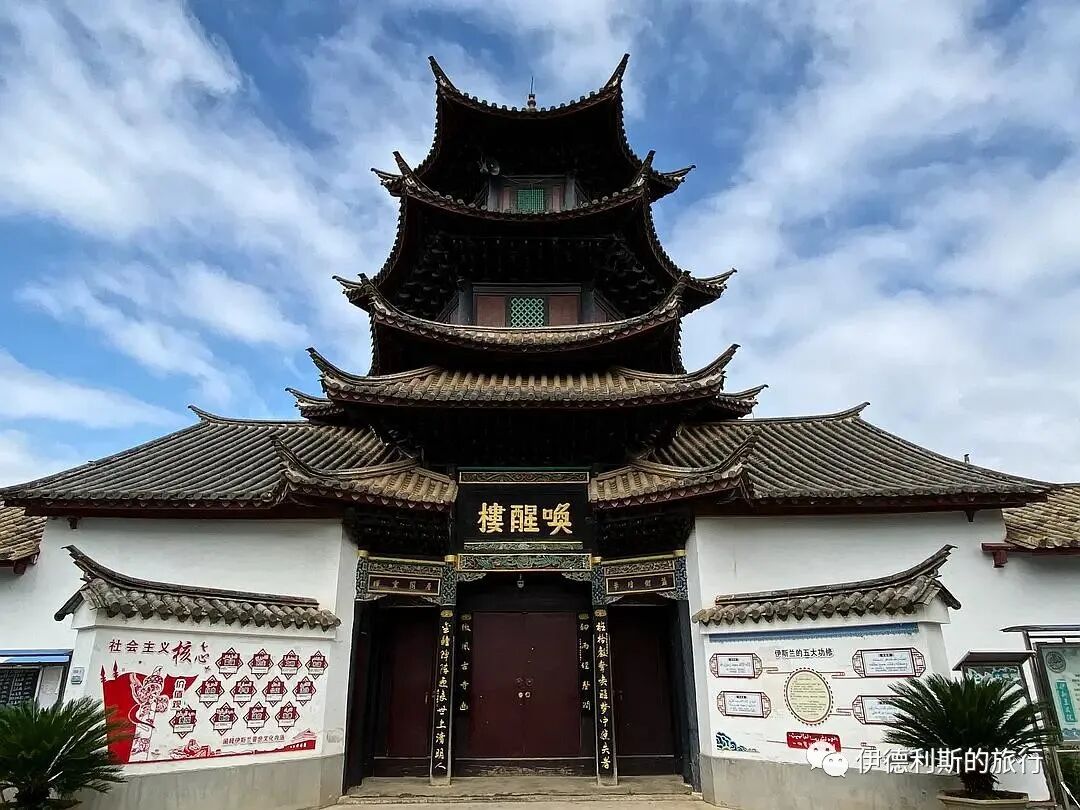
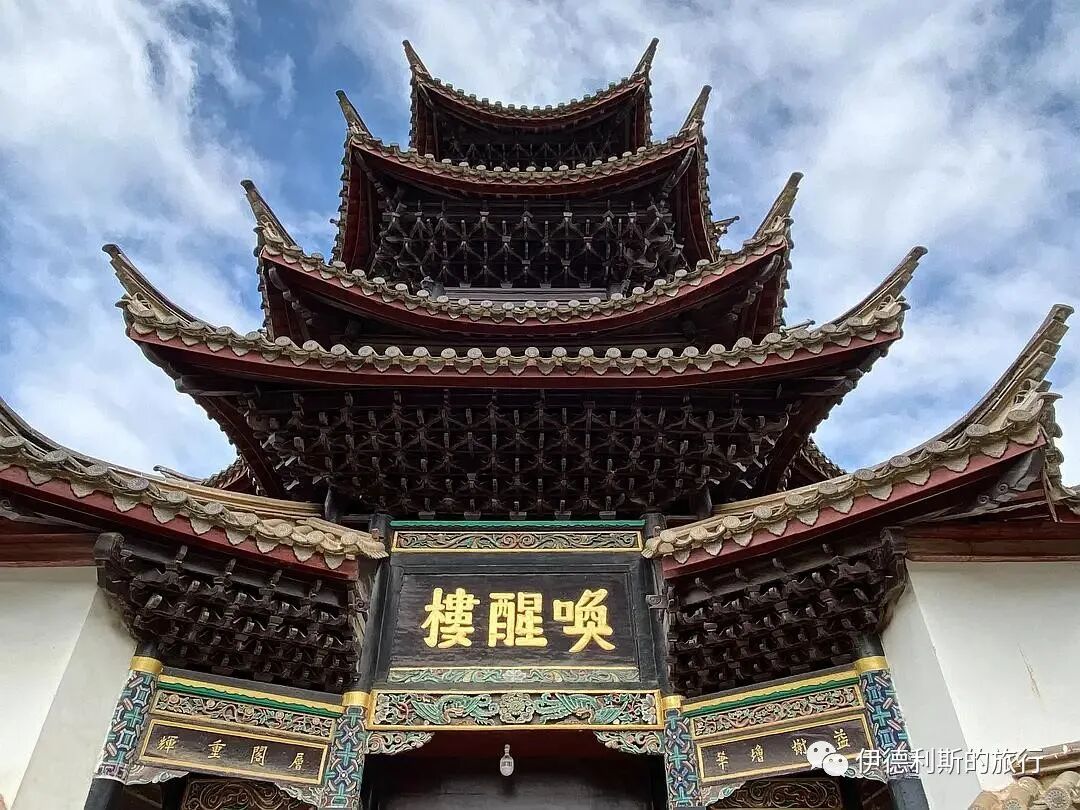
Imam Hai pointed out to us that there are some ancient fossils on the stone pillars of the Huanxing Lou, which should be unique among mosques in various places.
Passing through the Wujuan Tang is the courtyard, where four ancient cypress trees are planted, and directly opposite is the prayer hall. In the center of the main hall is written 'Happy Paradise', and according to Imam Hai, the eight Arabic calligraphy works around it were written by the second Imam of the mosque, Sai Huanzhang, also known as Sai Lao Baba.
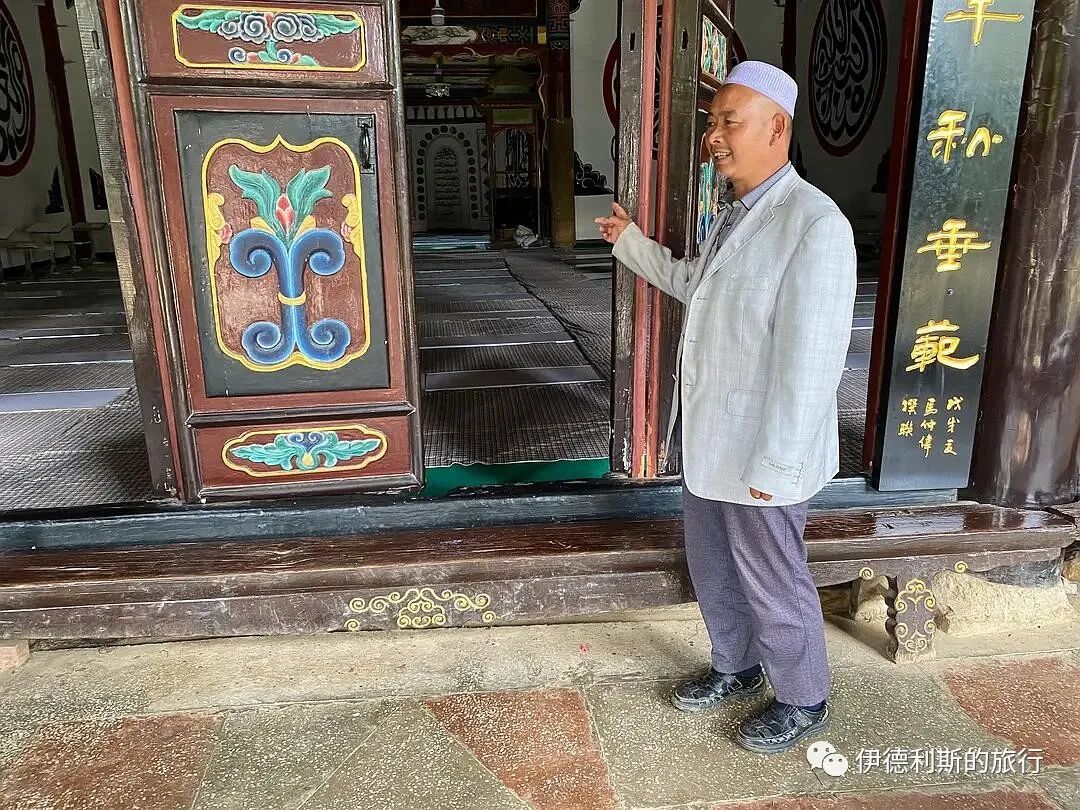
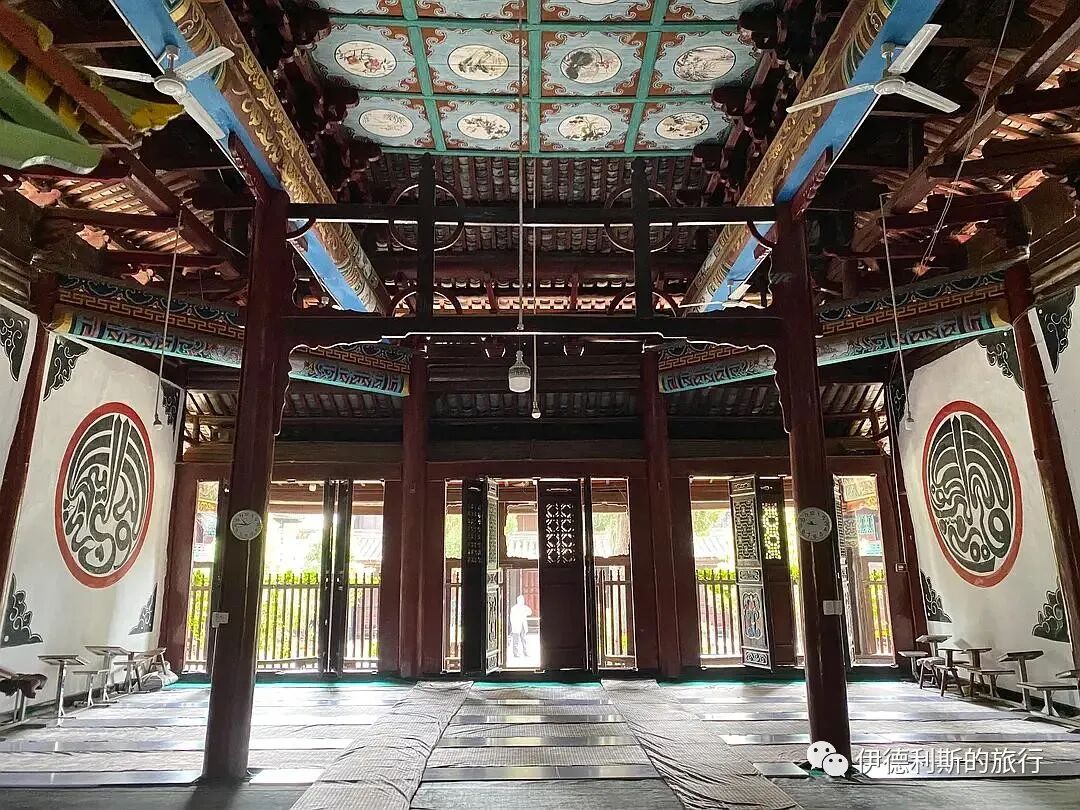
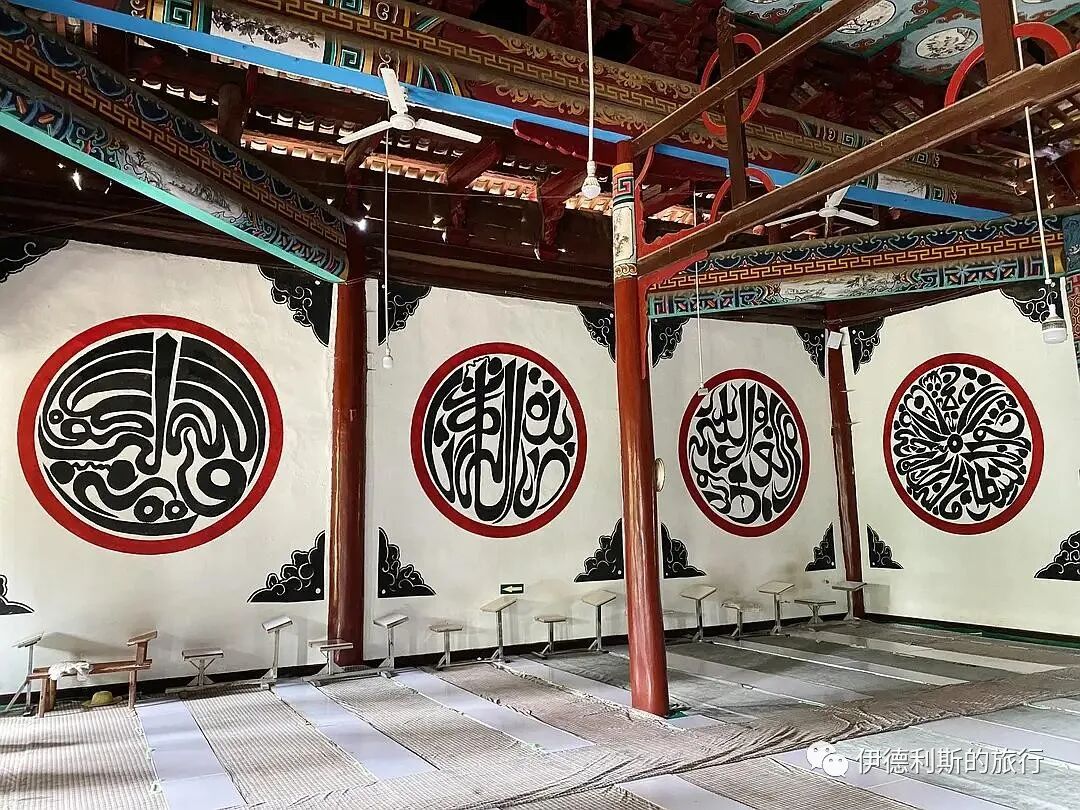
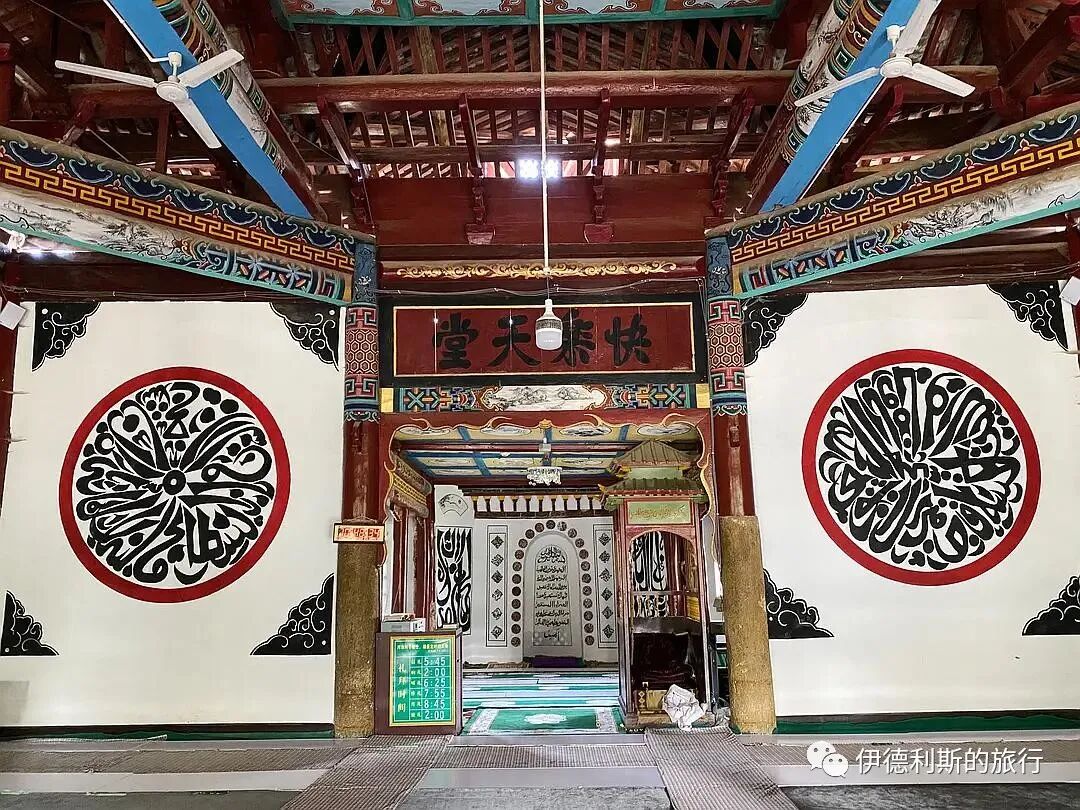
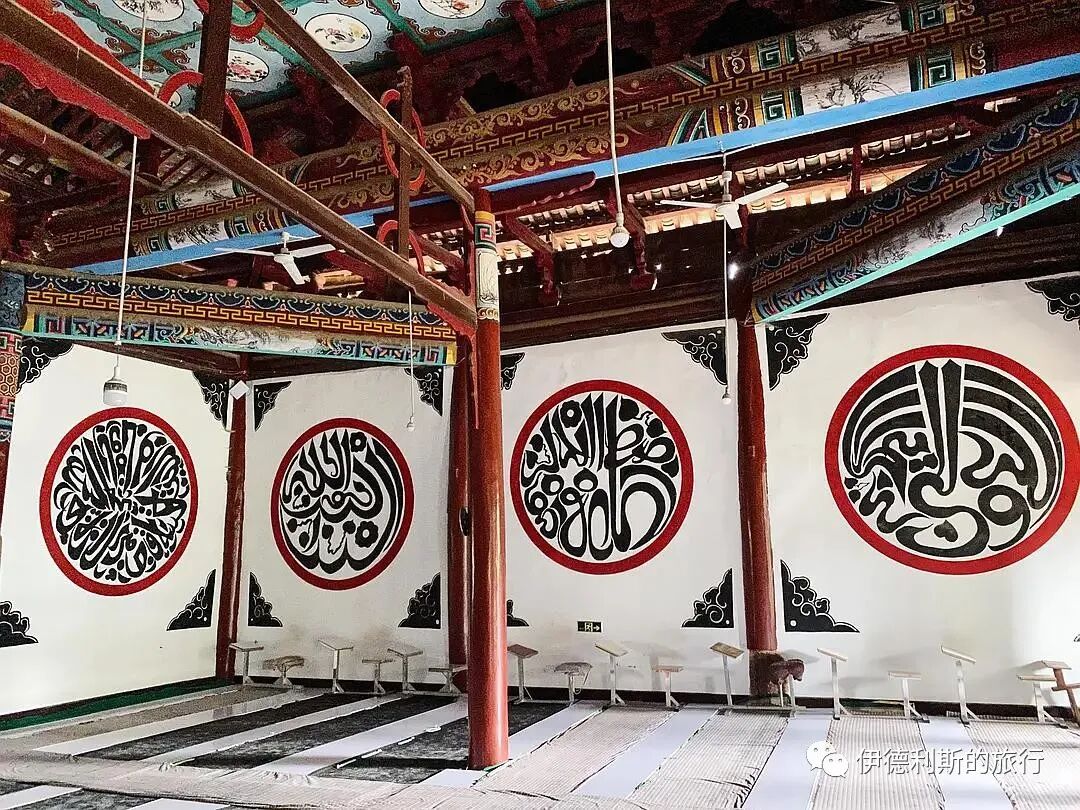
The Mihrab (niche indicating the direction of Mecca) inside the main hall is a kiln-style hall, and the top of the kiln hall is also a pointed-roof pavilion-style structure, echoing the Huanxing Lou from a distance.
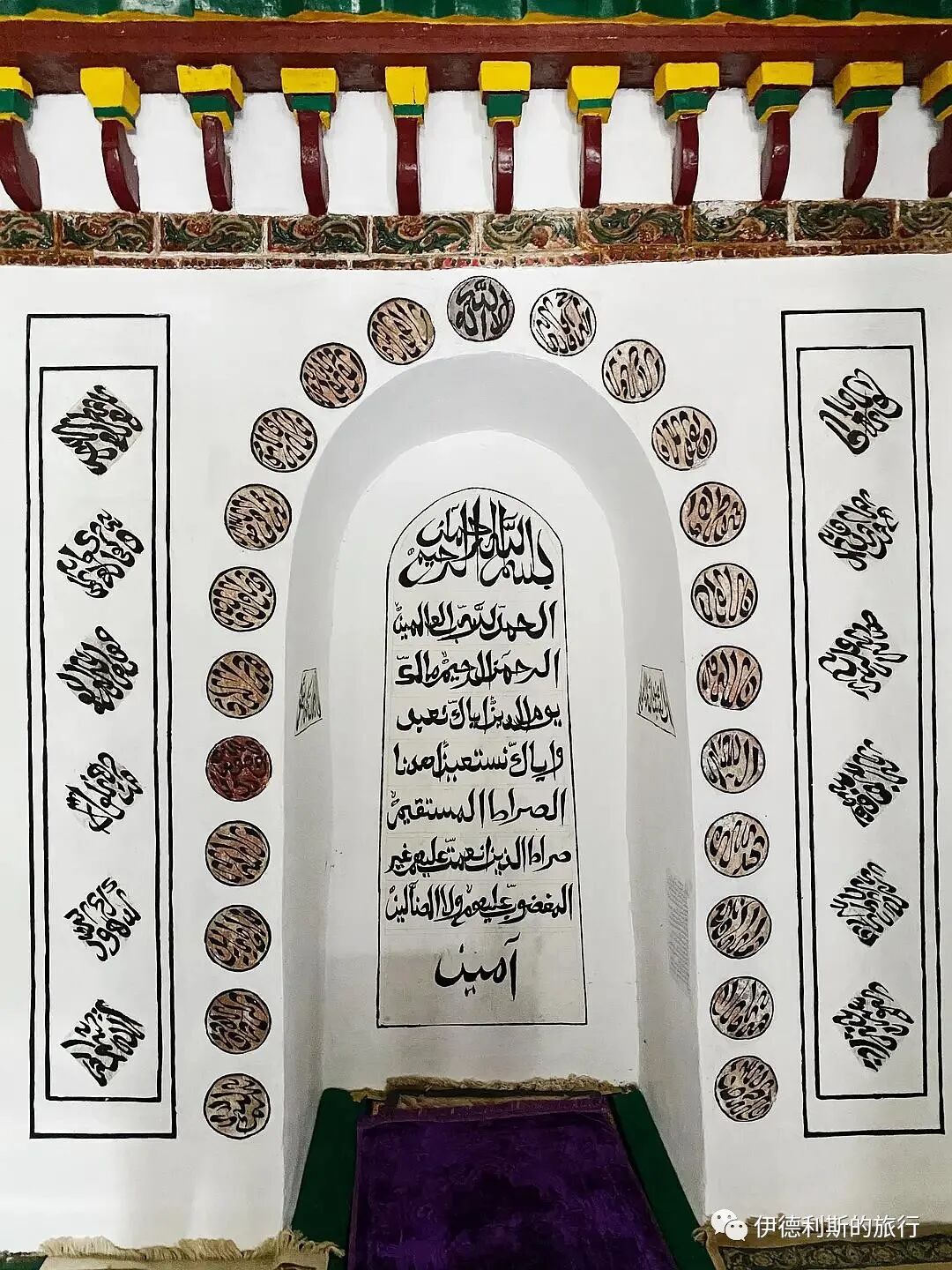
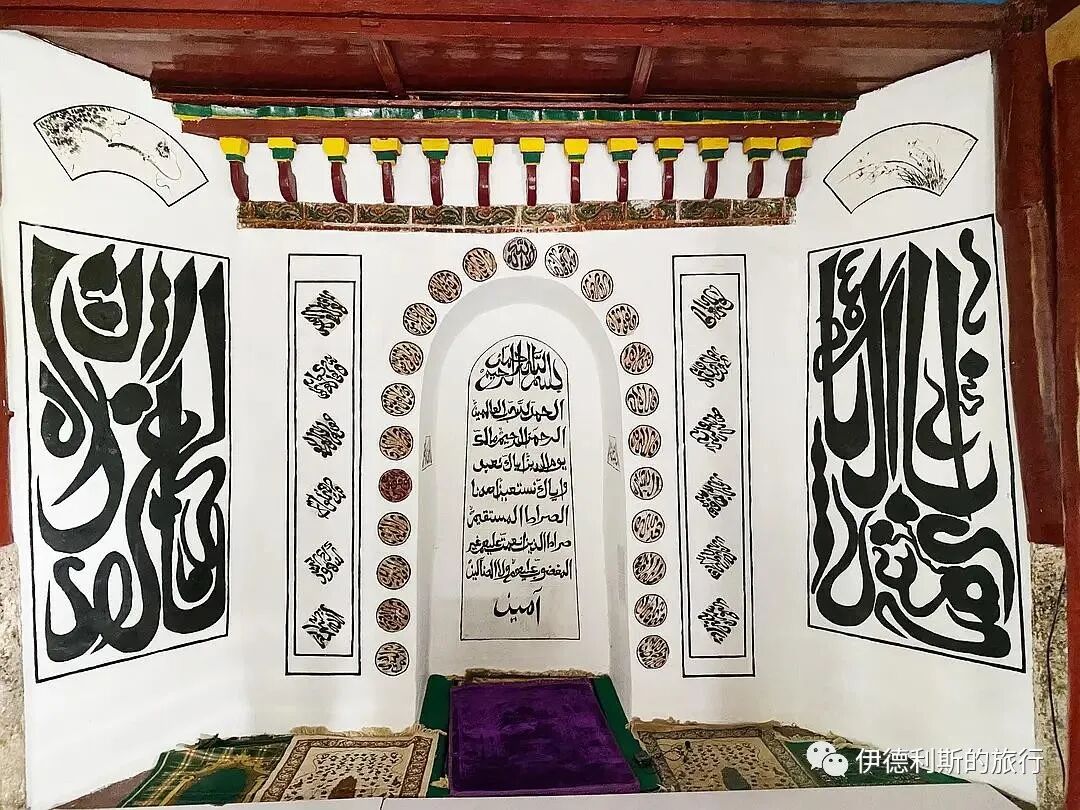
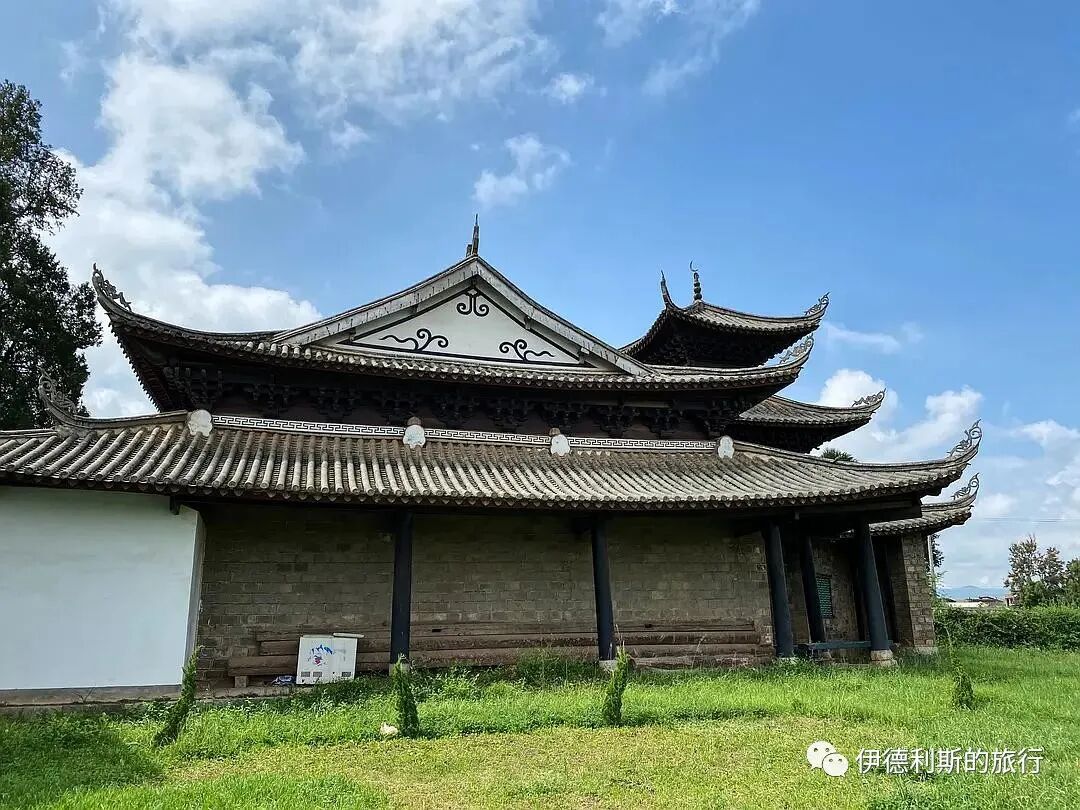
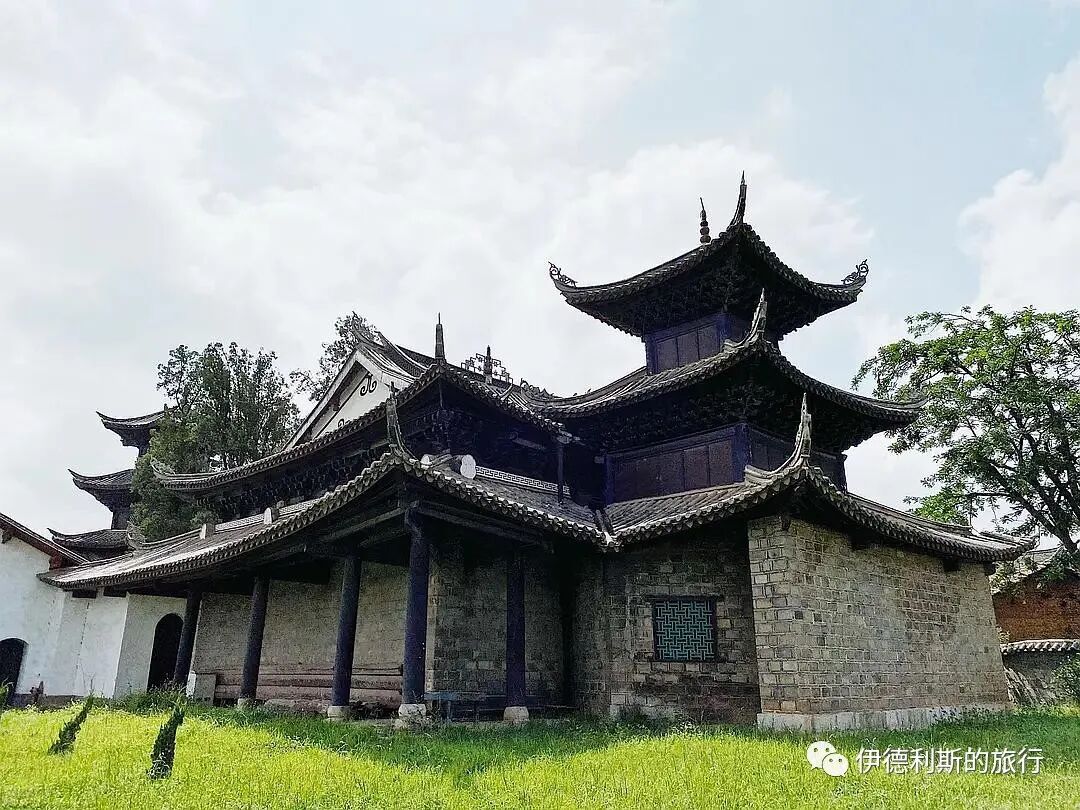
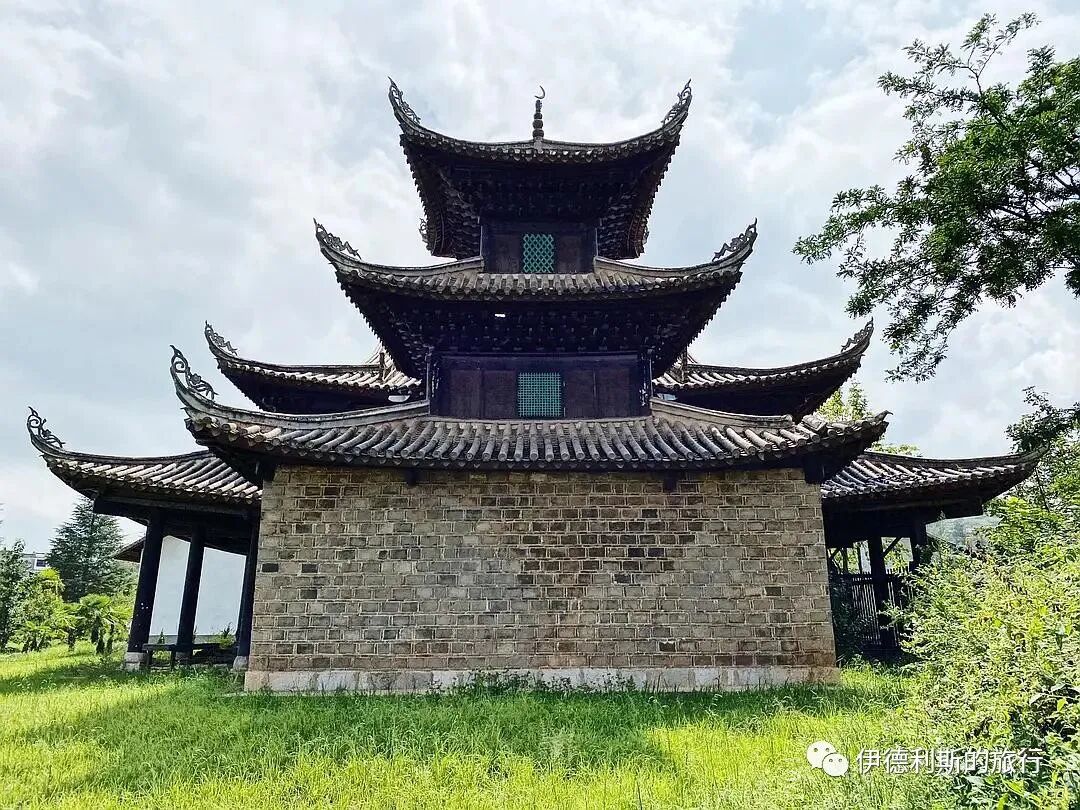
A Tabu Xiazi (a box for religious items) from the Qing Dynasty; Imam Hai said it is no longer used because it is too heavy.
A stele inscription from the Qianlong reign.
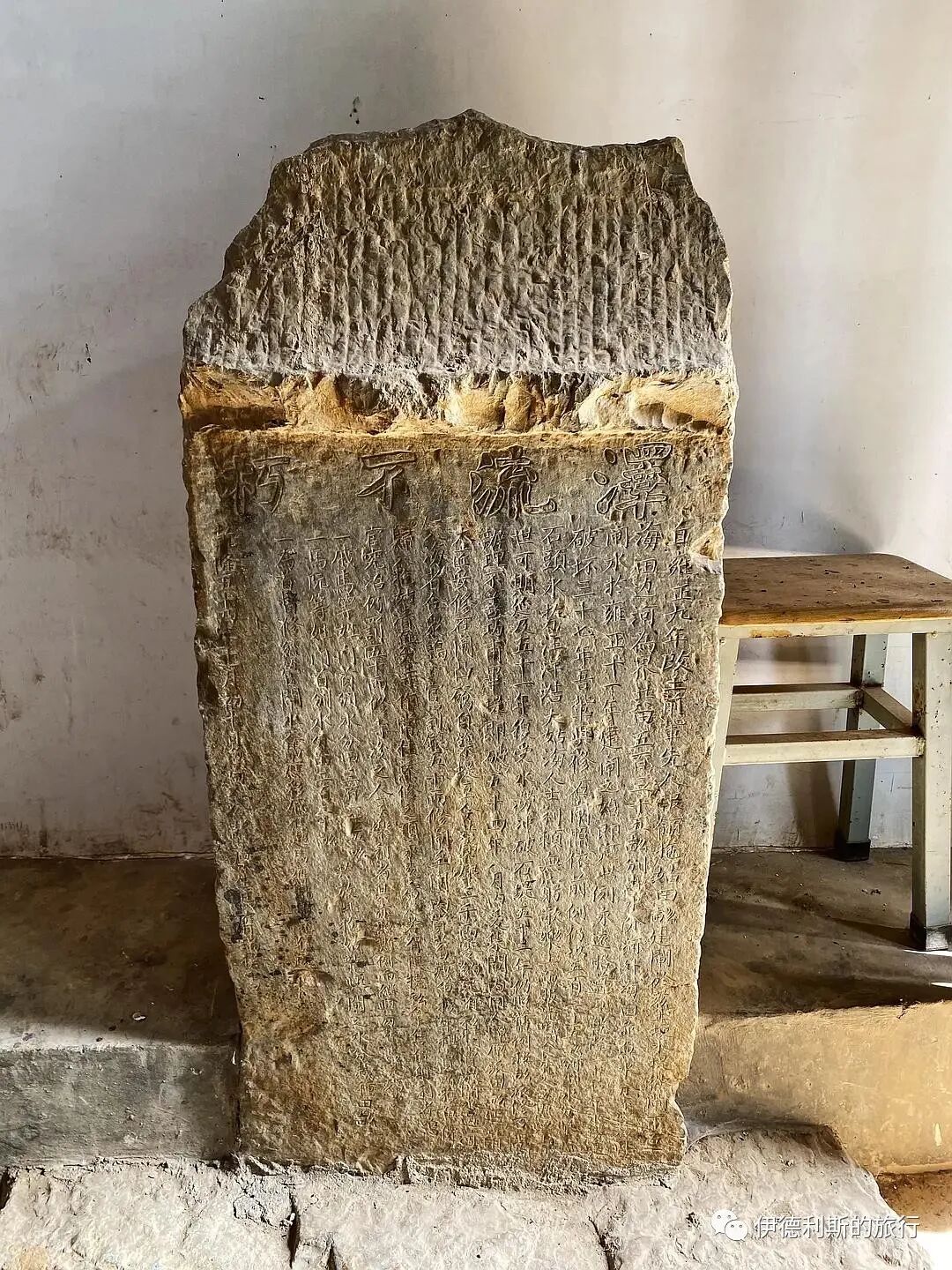
2. Longtoushan Mosque: 1746
After seeing the Tuogu Great Mosque, we went to another famous ancient mosque building in Ludian, the Longtoushan Mosque, and were warmly received by Imam Ma Liming.
The Longtoushan Mosque was built in 1746, following the traditional Yunnan mosque architectural style, with a courtyard enclosed by the Huanxing Lou, north and south side rooms, and the prayer hall. Unlike the Tuogu Great Mosque, the Mihrab of the Longtoushan Mosque does not have a pointed pavilion on top, and the Huanxing Lou only has four corners and two tiers, making its momentum slightly inferior to the Tuogu Great Mosque.
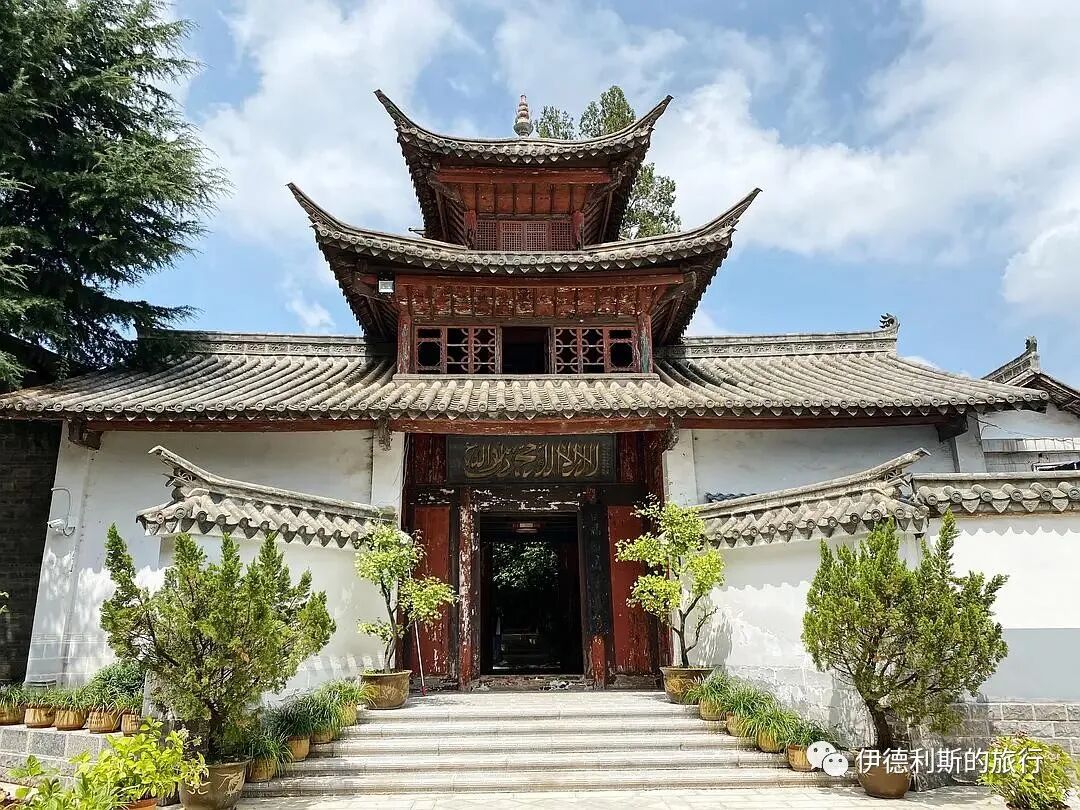
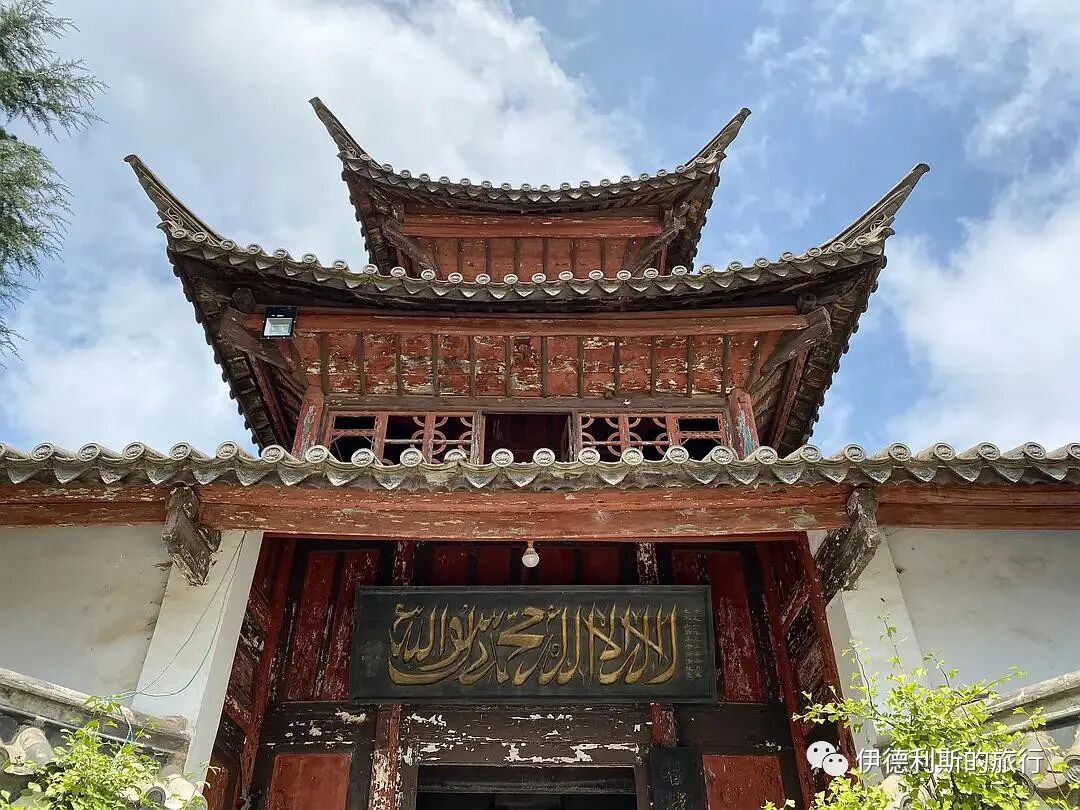
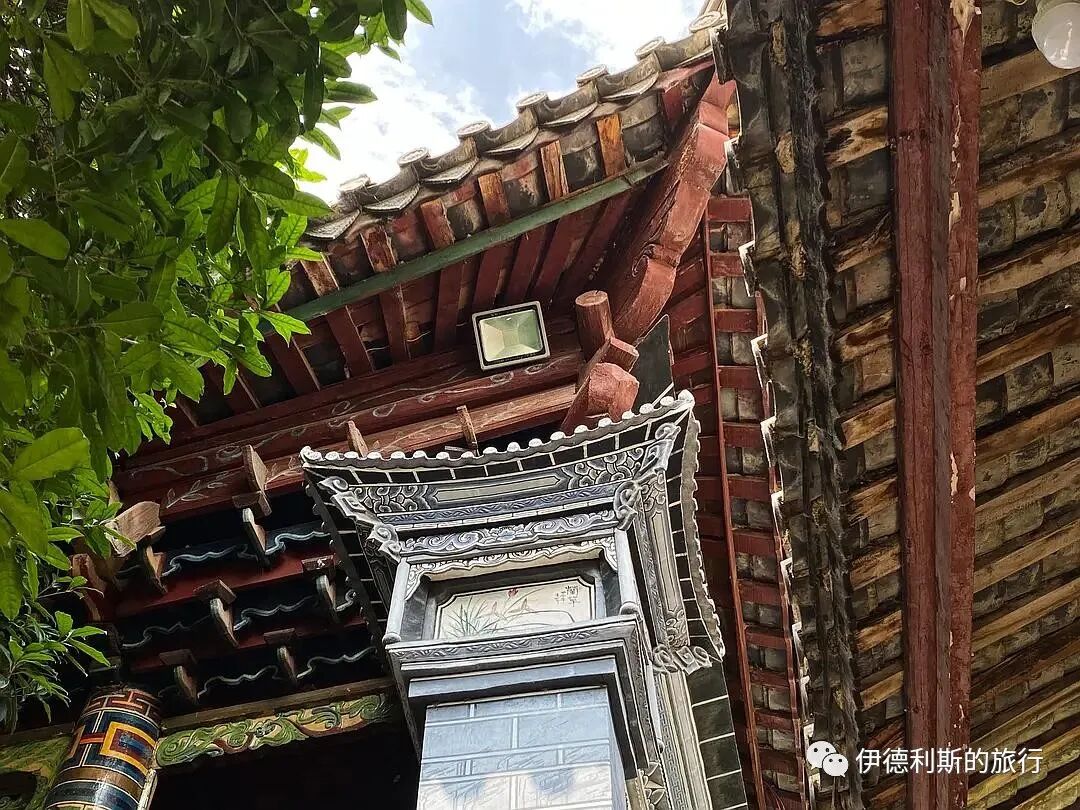
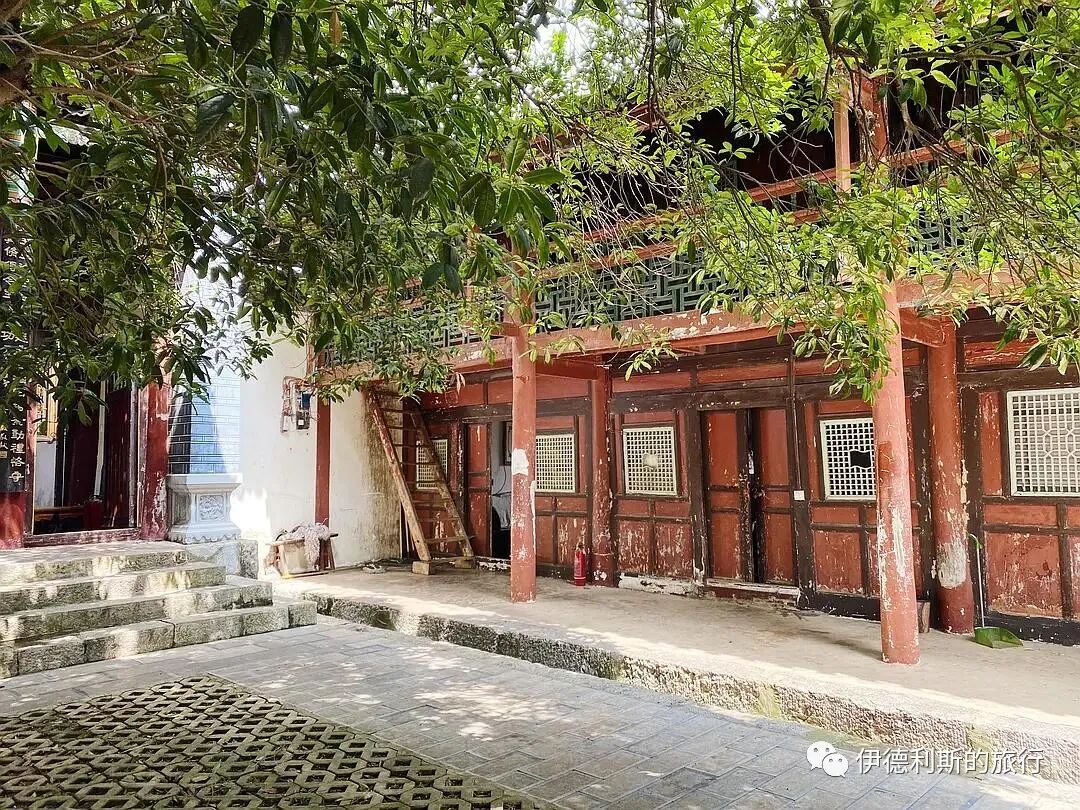
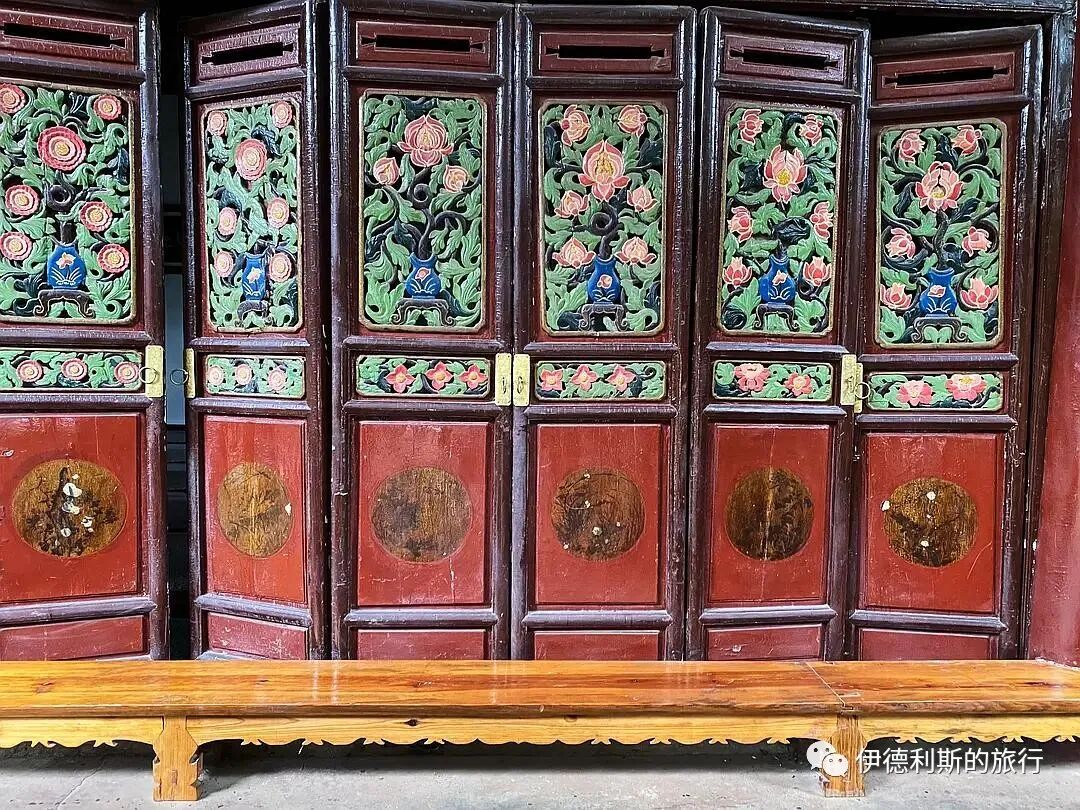
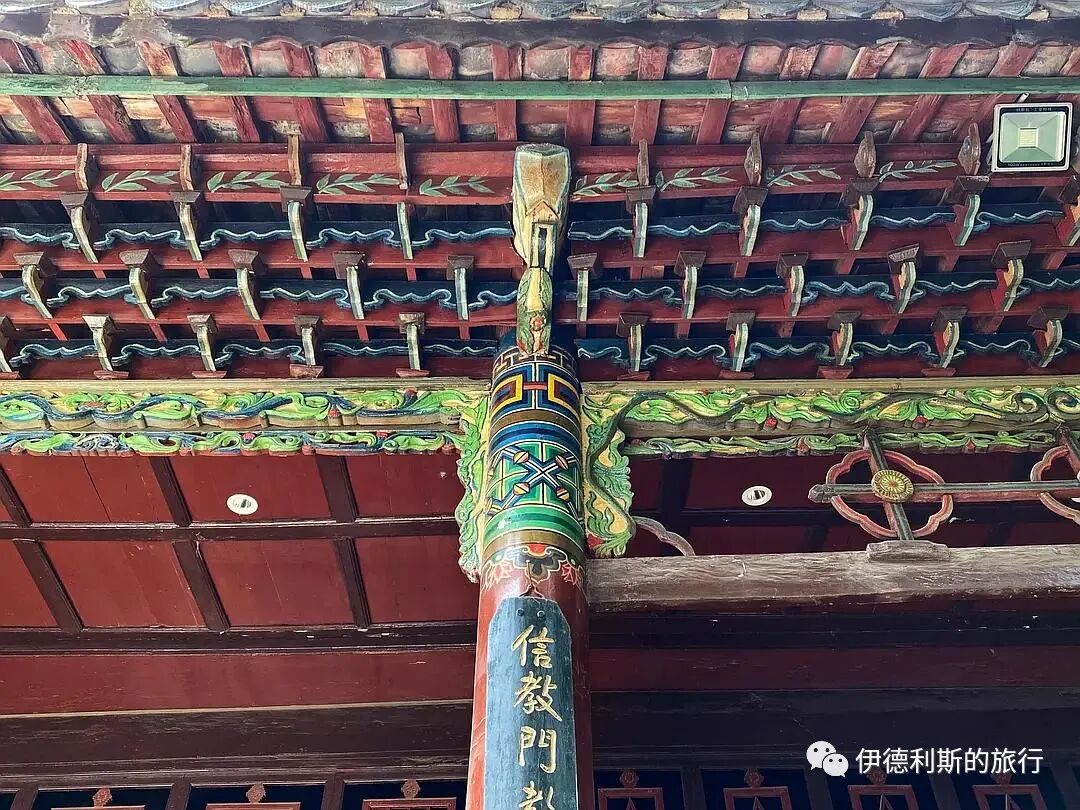
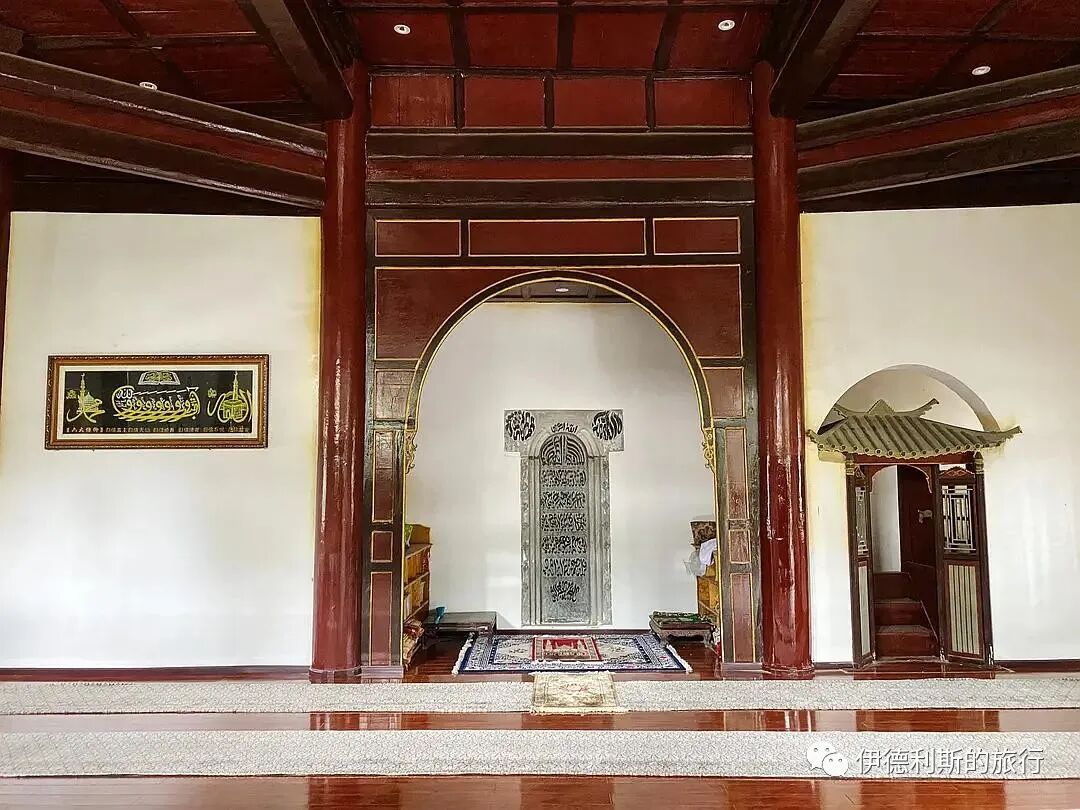
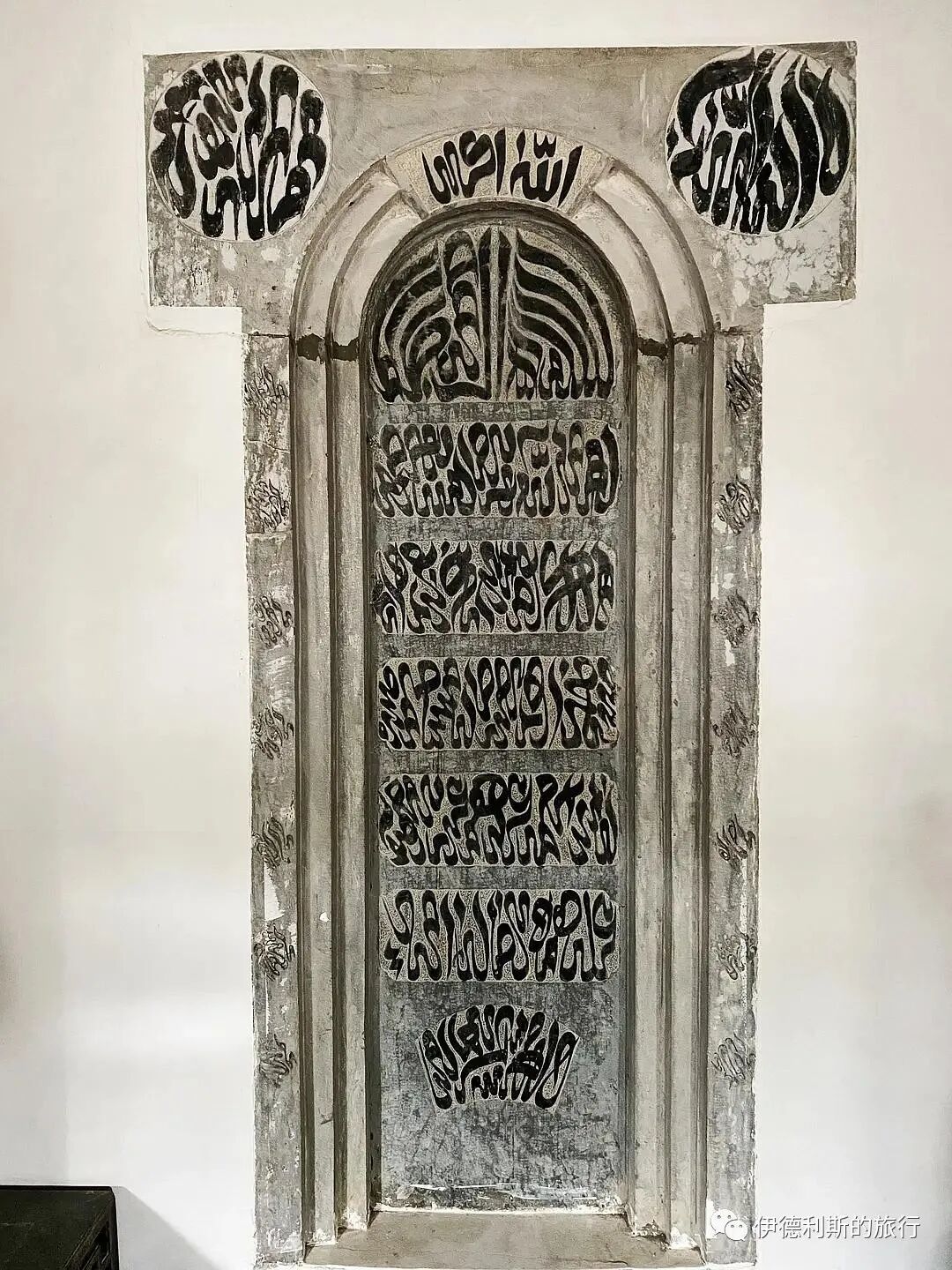
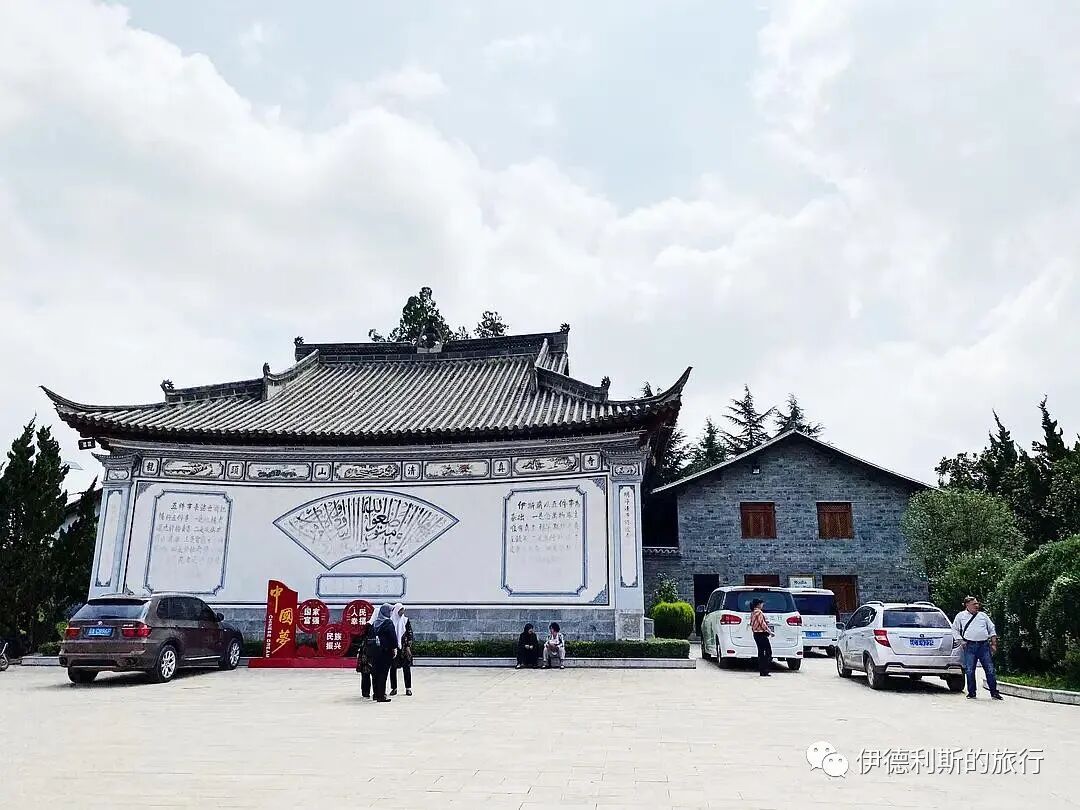
The newly built main hall of Longtoushan is a full wooden structure, very spectacular, and can be seen from a very long distance. I very much approve of this practice of building a new main hall not far away without destroying historical architectural relics. In recent years, I have seen too many behaviors of tearing down centuries-old protected cultural relics just to build new main halls.
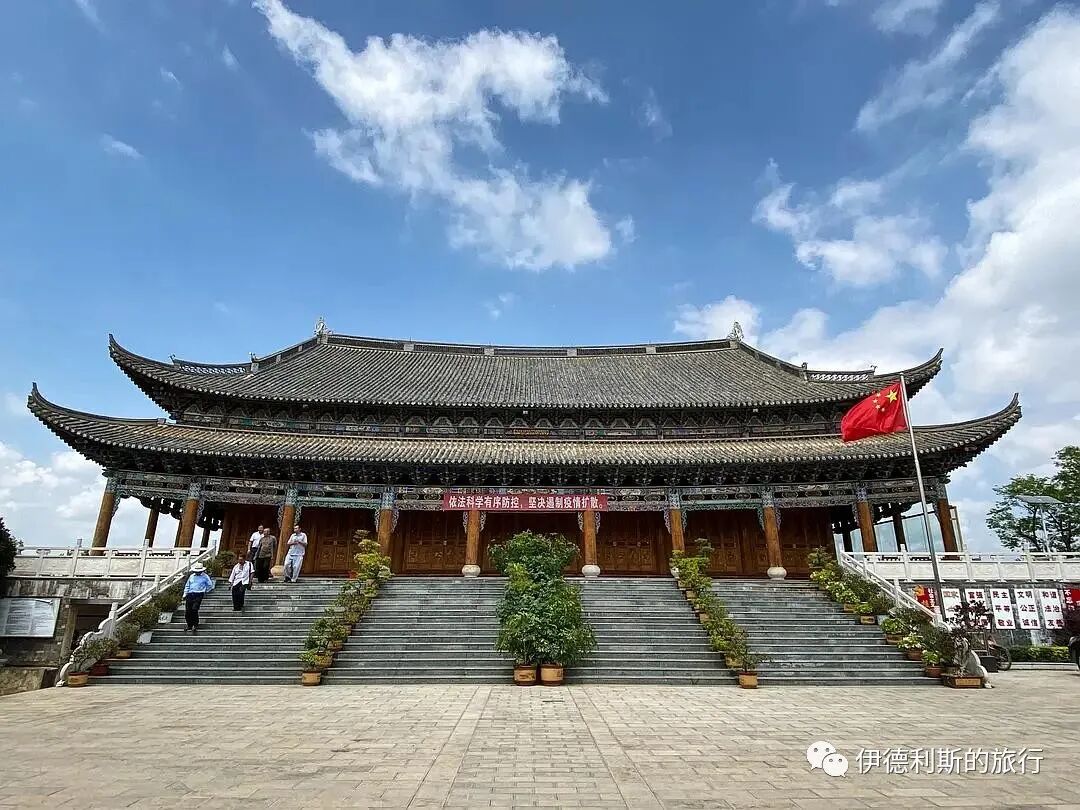
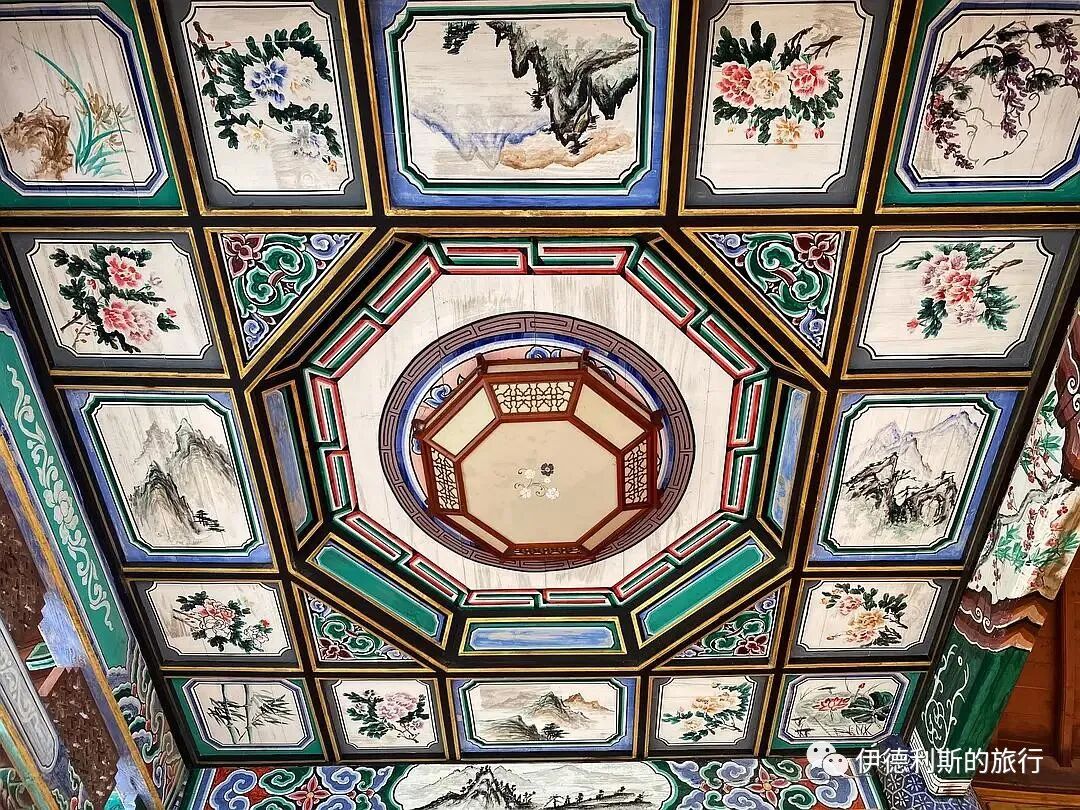
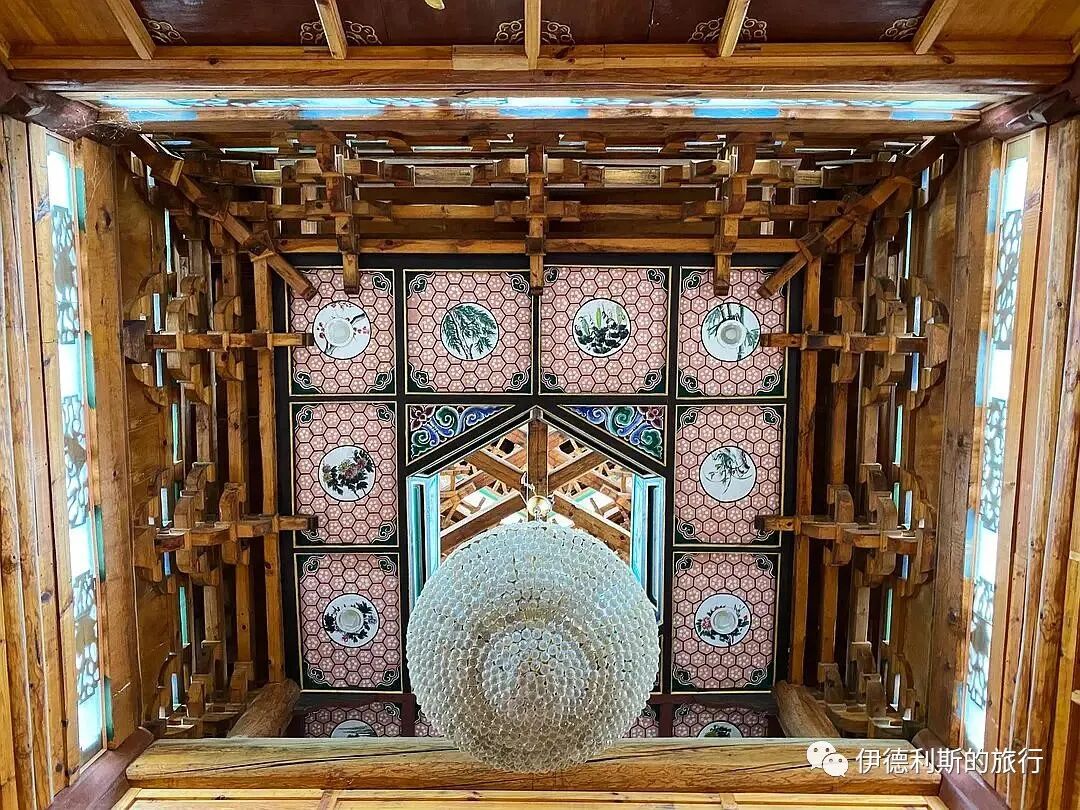
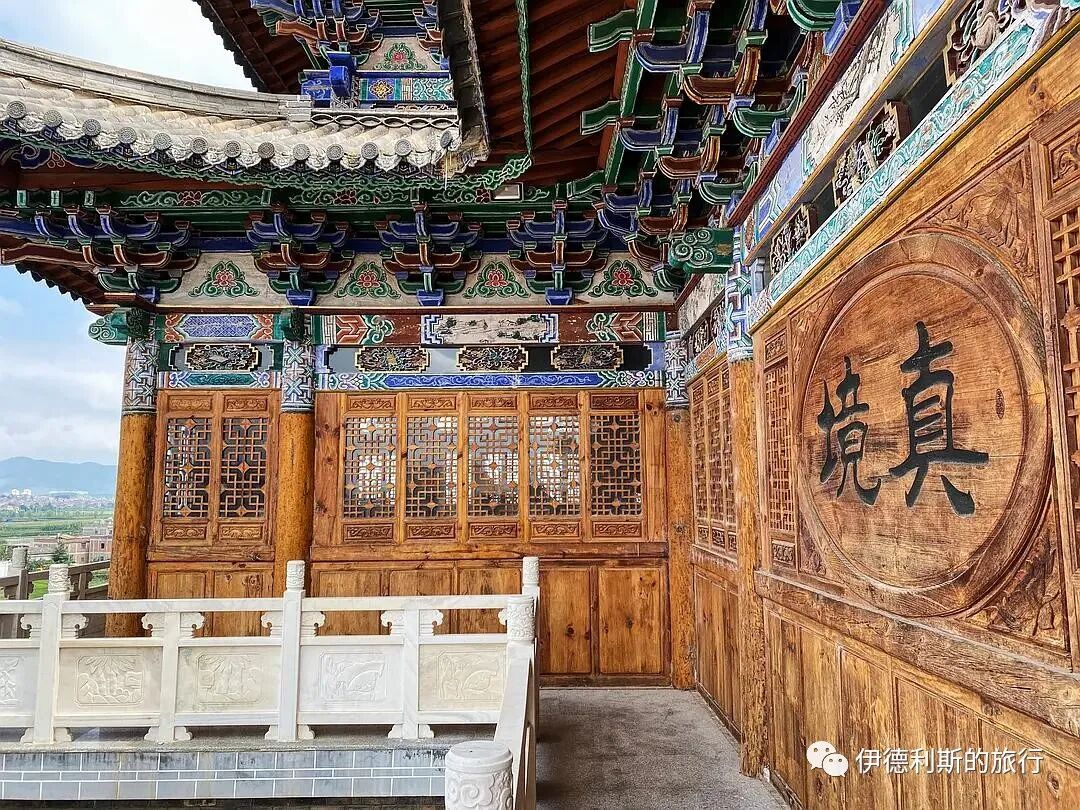
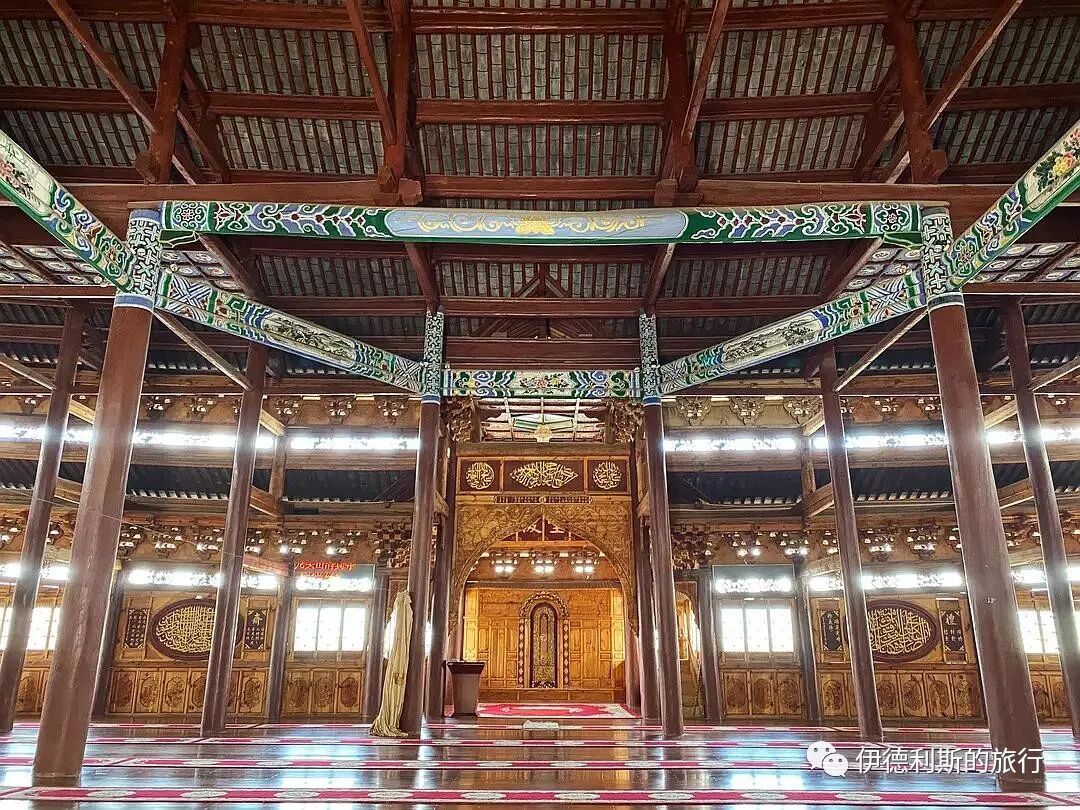
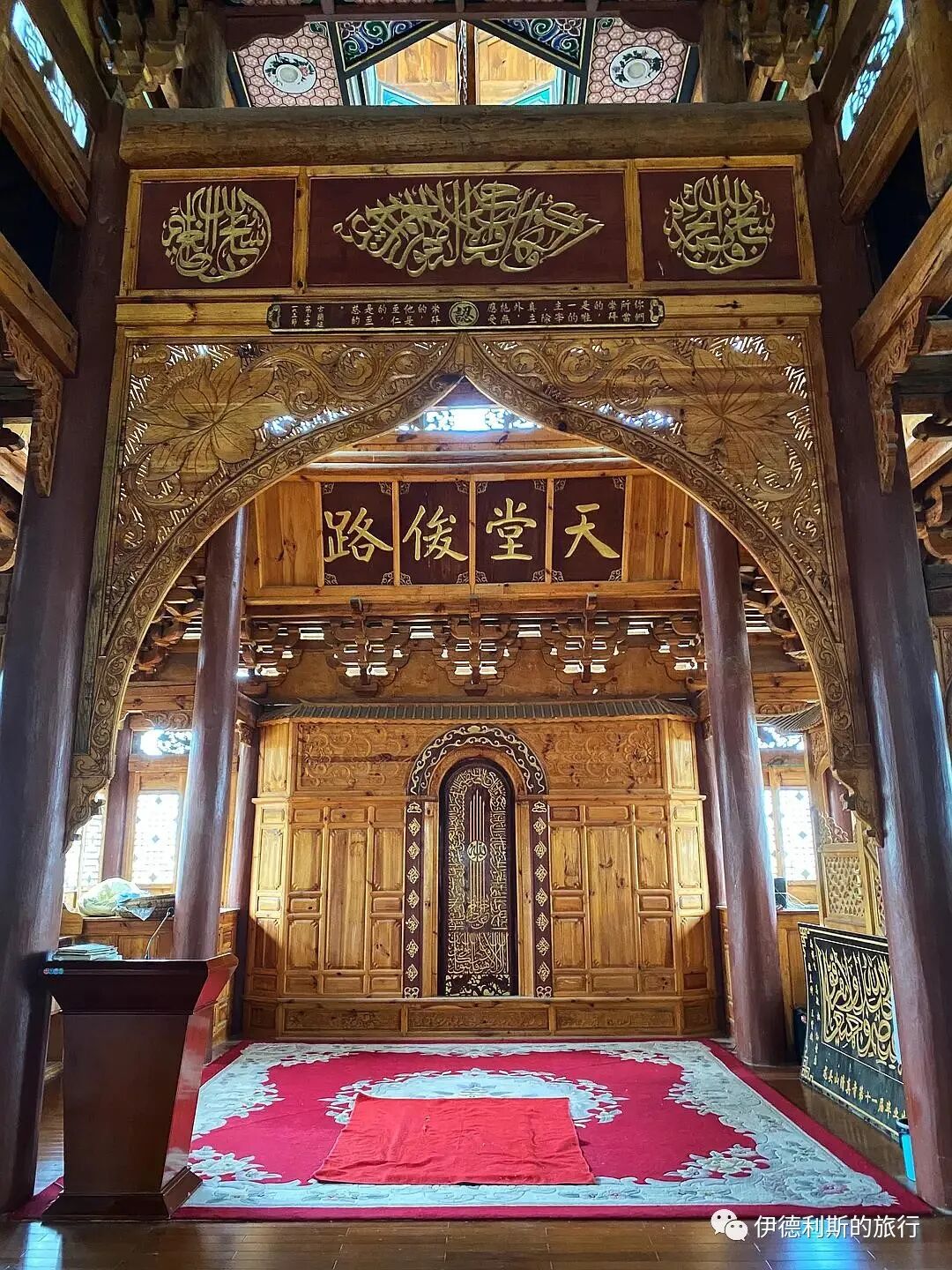
3. Chachong Mosque: 1734
After leaving the Longtoushan Mosque, we went to another ancient mosque in Ludian, the Chachong Mosque. The Chachong Mosque was built in 1734. Like the Tuogu Great Mosque, the Huanxing Lou is a three-story, hexagonal, pointed-roof pavilion-style building, but it is slightly smaller in size. Hanging at the entrance of the main hall is a plaque inscribed with 'Xuan Qi Da Neng' (Mysterious and Great Power), respectfully erected in 1906 by Sa Depin.
The Chachong Mosque is also very beautiful, but its popularity is not as high as the surrounding Tuogu Mosque and Longtoushan Mosque. When we visited, the Imam happened to have gone to the Longtoushan Mosque for a Ziyarah (a visit to a holy site), and the Imam's daughter was an acquaintance of Sister Azi, so we chatted very happily.
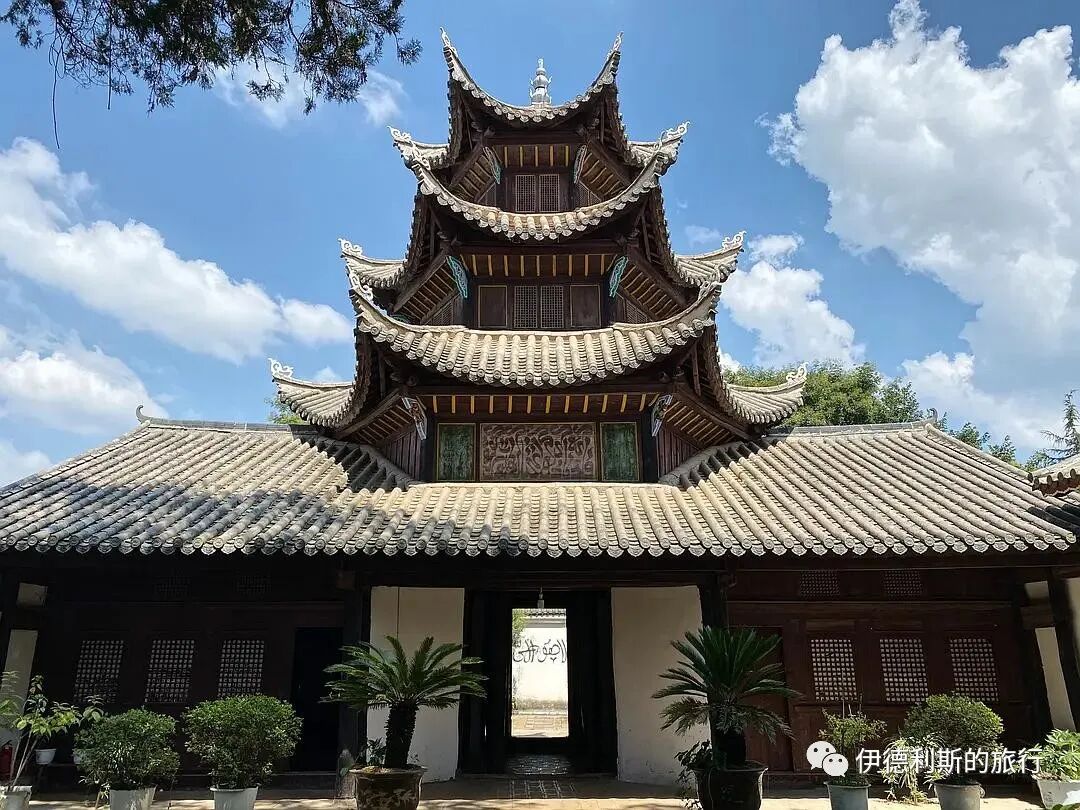
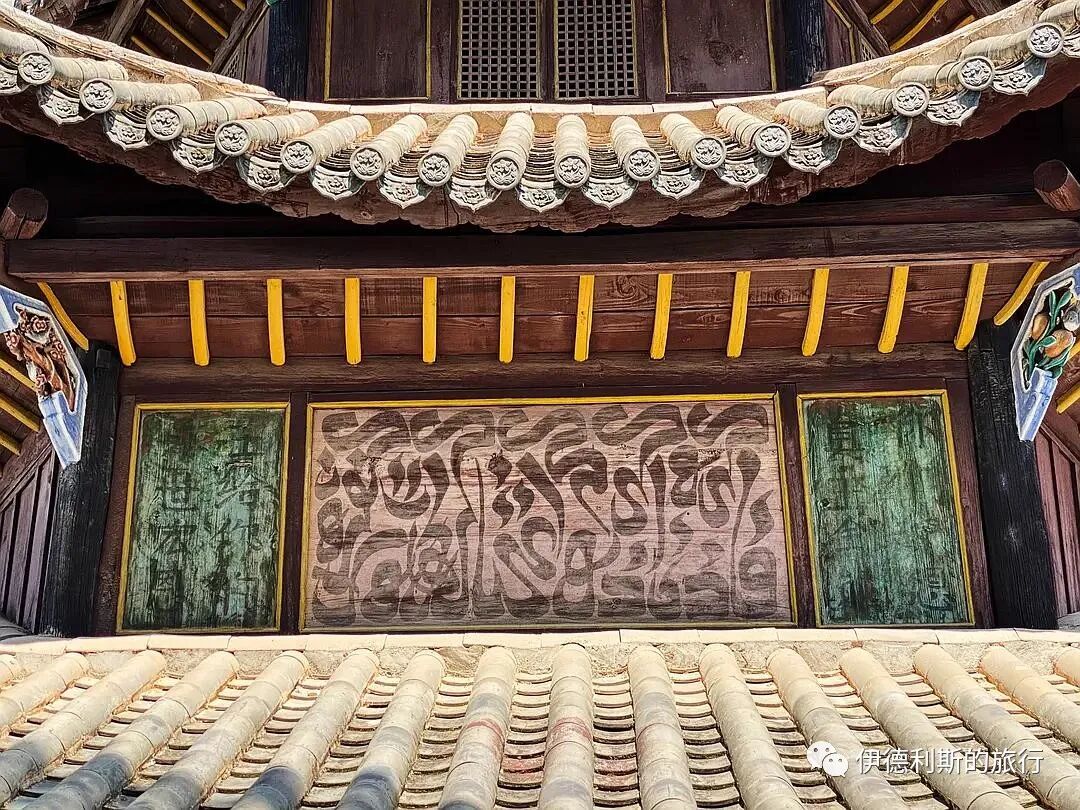
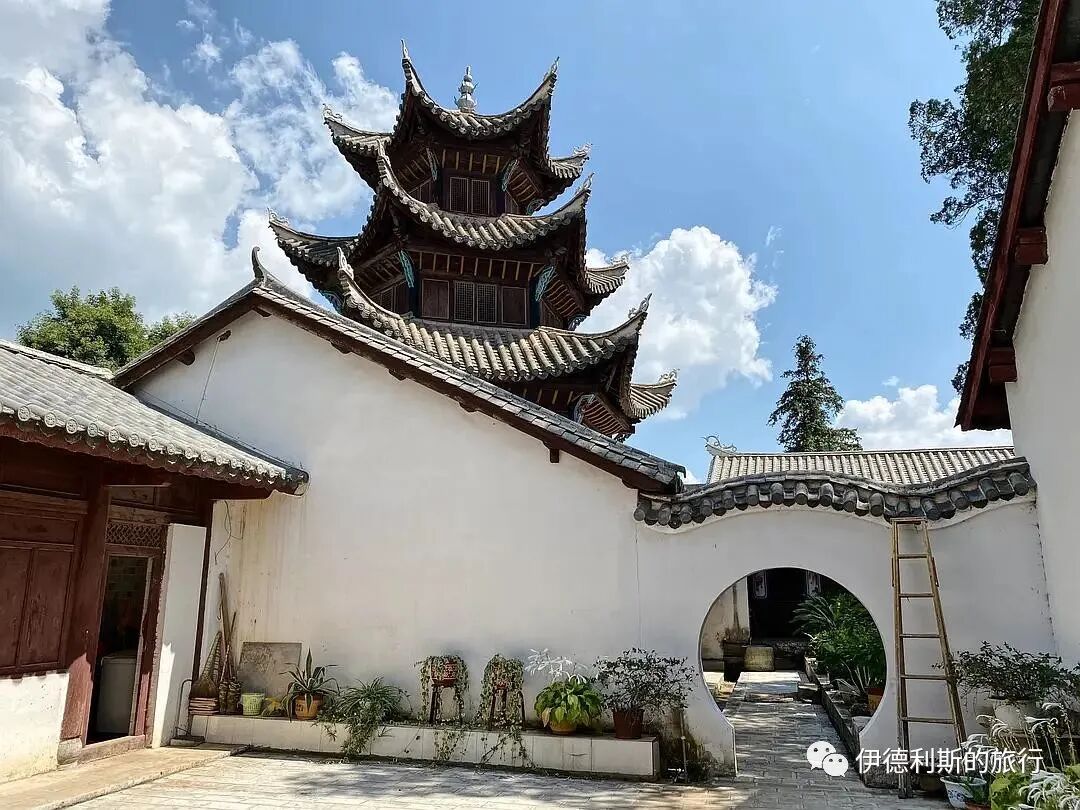
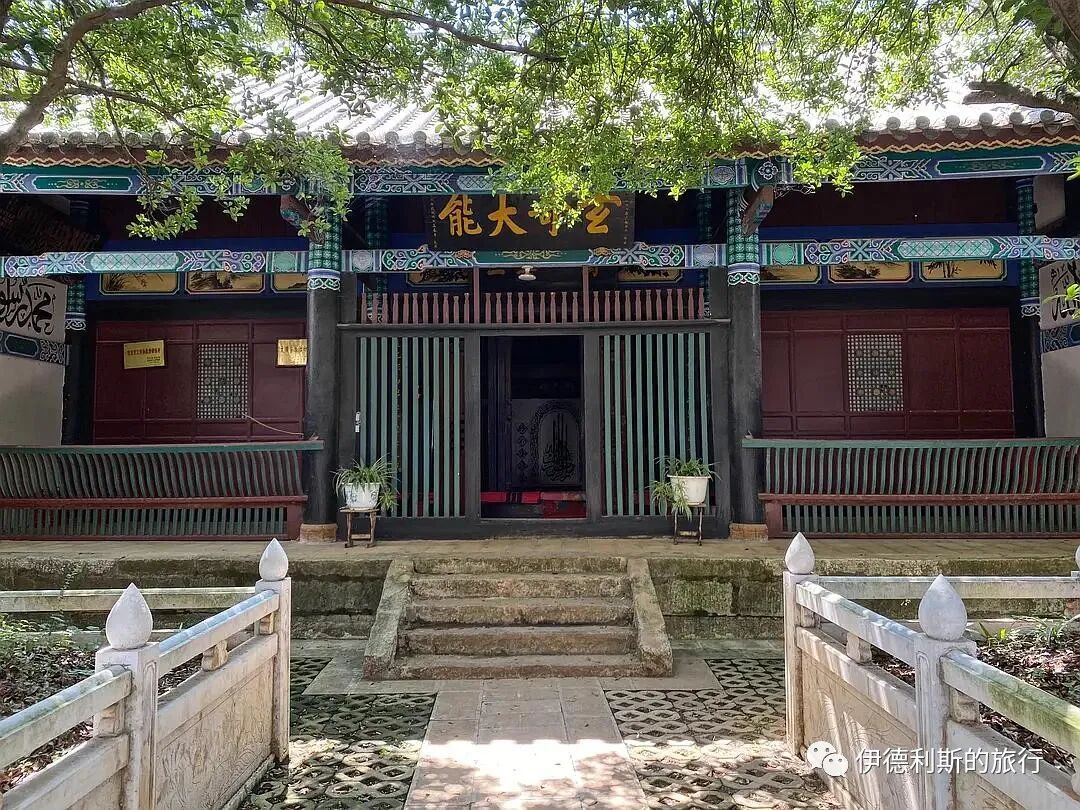
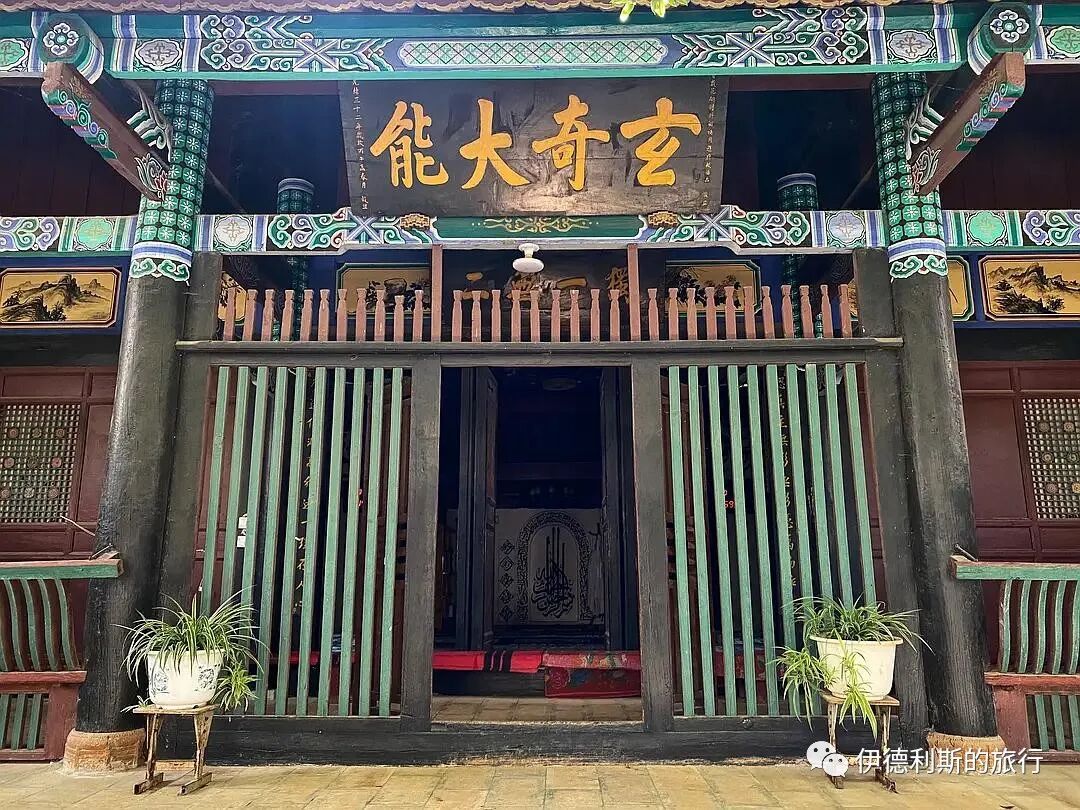
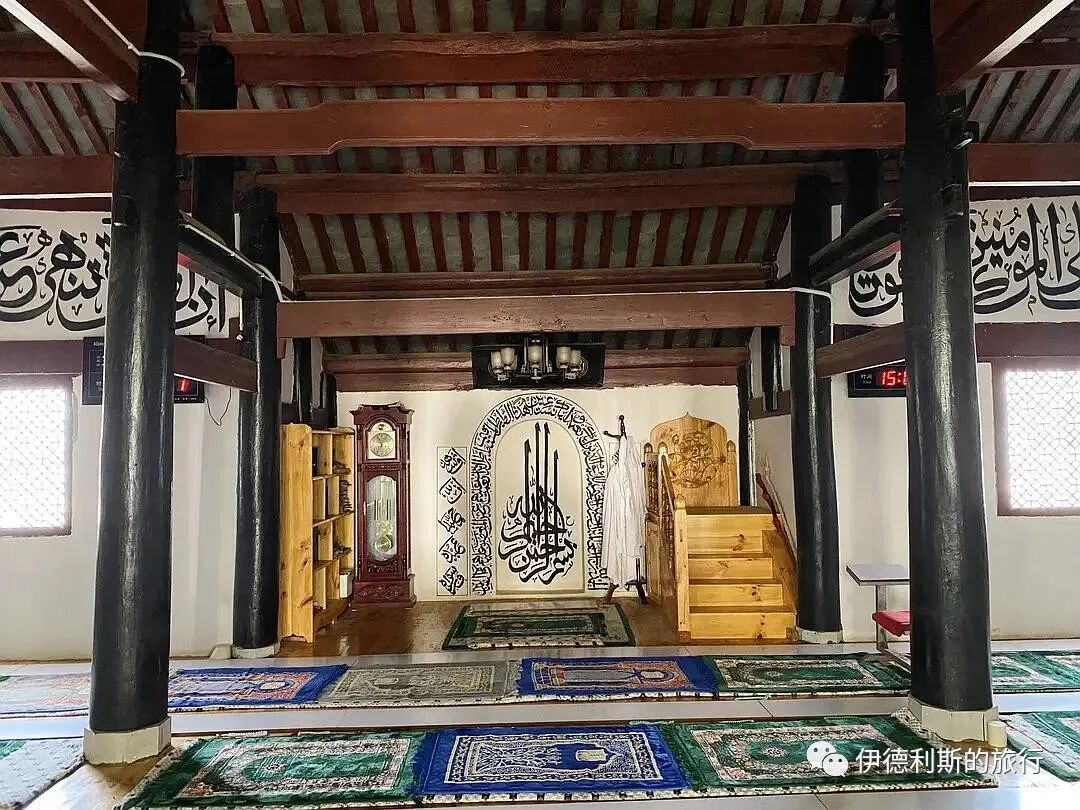
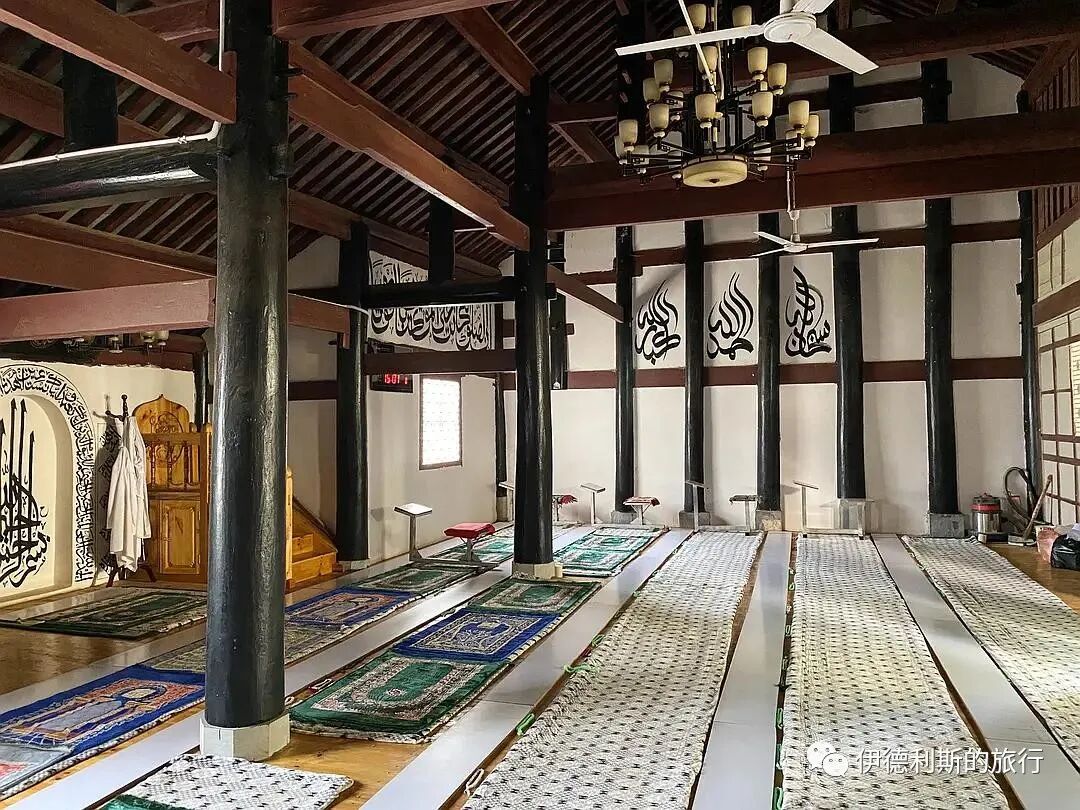
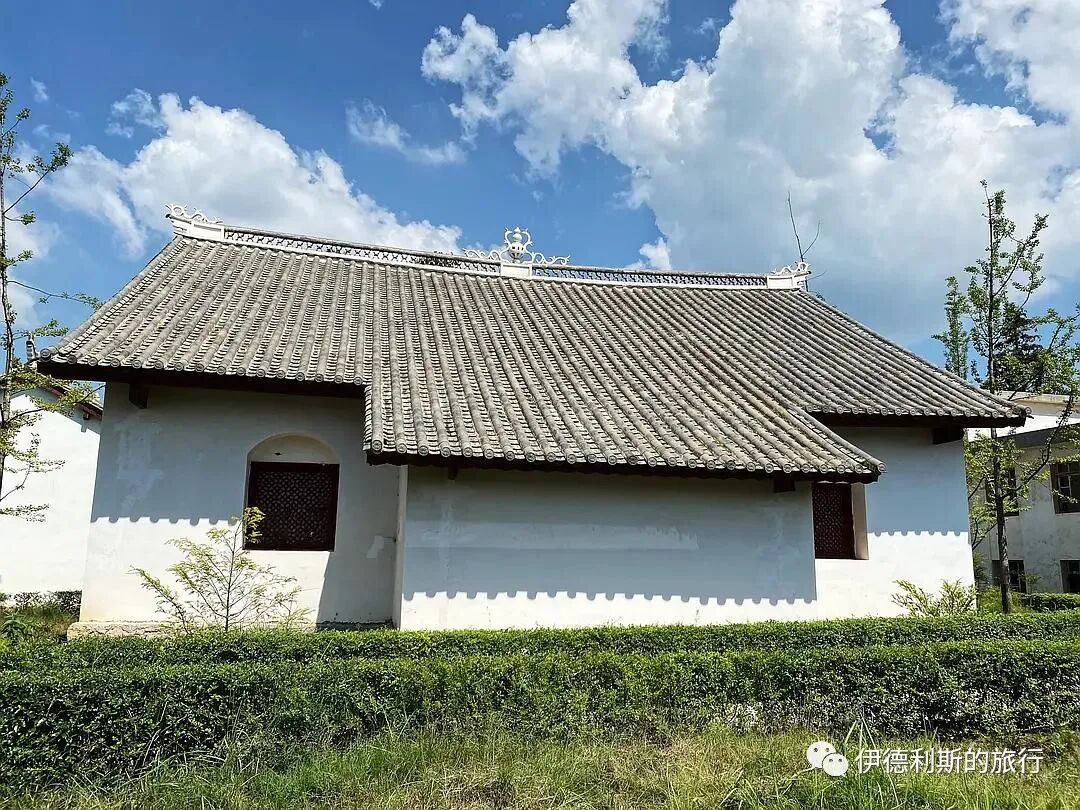
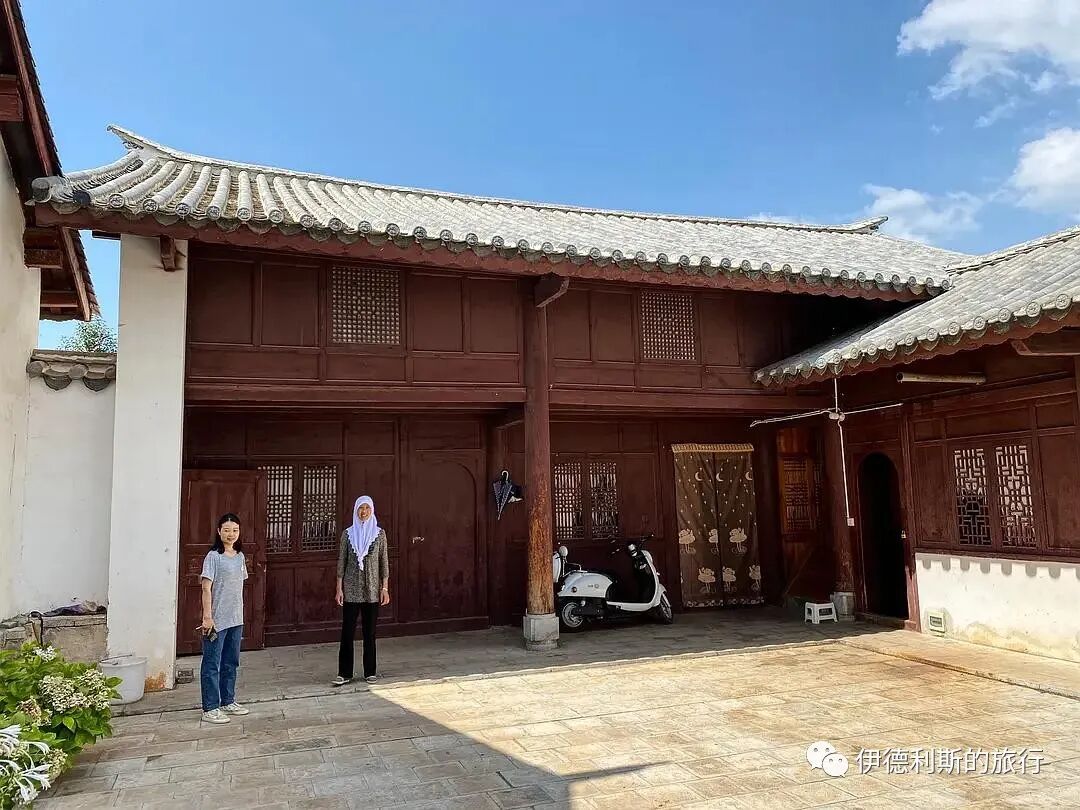
4. Tiejiawan Mosque: 1738
From the Chachong Mosque, we continued to the Tiejiawan Mosque. In 1731, the Tie family came to settle in the northeast area of Taoyuan Bazi in Ludian. In 1738, Tie Wanxuan discussed with Tie Wanjin and Tie Zhongxuan to build the Tiejiawan Mosque on the top of a small hill between the two villages of Tiejiawan and Tiejiamen, and Tie Wanxuan served as the Imam.
Hanging at the entrance of the main hall is a plaque inscribed with 'Da De Dun Hua' (Great Virtue and Honest Transformation), gifted in 1810 by Ye Daxiong, the hereditary Qiduwei and local military commander of Zhaotong, Yunnan, as well as a plaque inscribed with 'Qing Zhen Ya Hua' (Pure and True Elegant Transformation) respectfully erected in 1844 by Tie Chengjin, the head of the Zhaotong Left Guard.
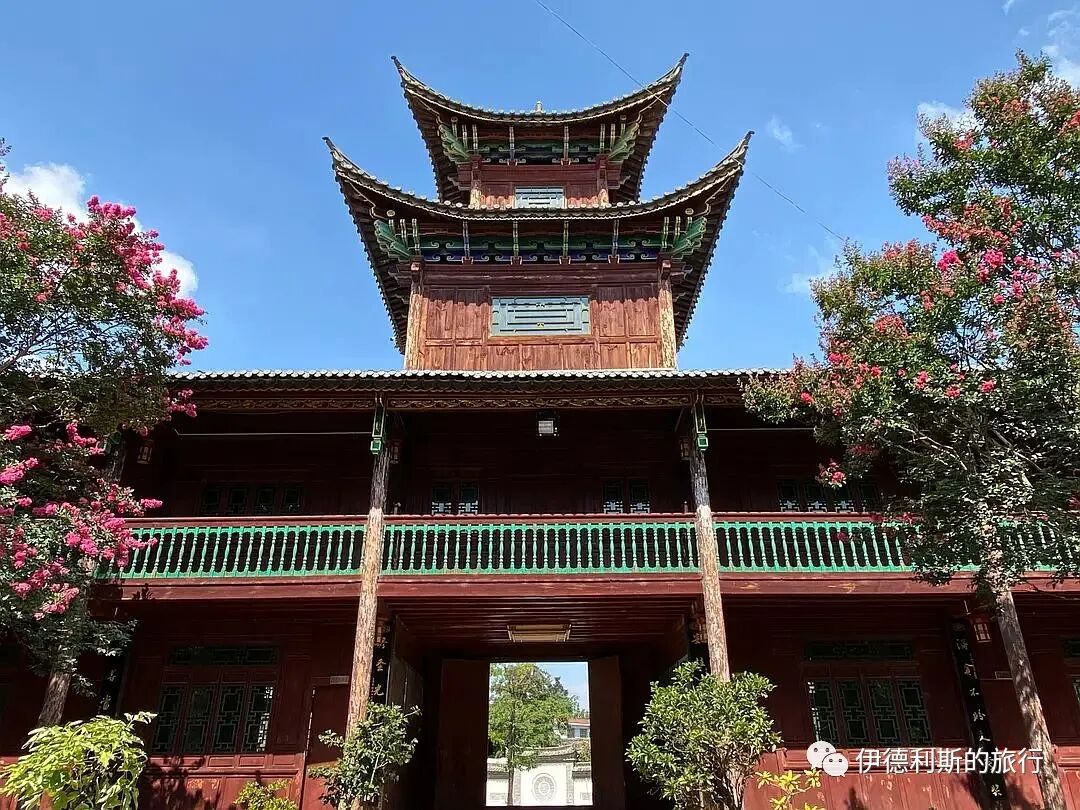
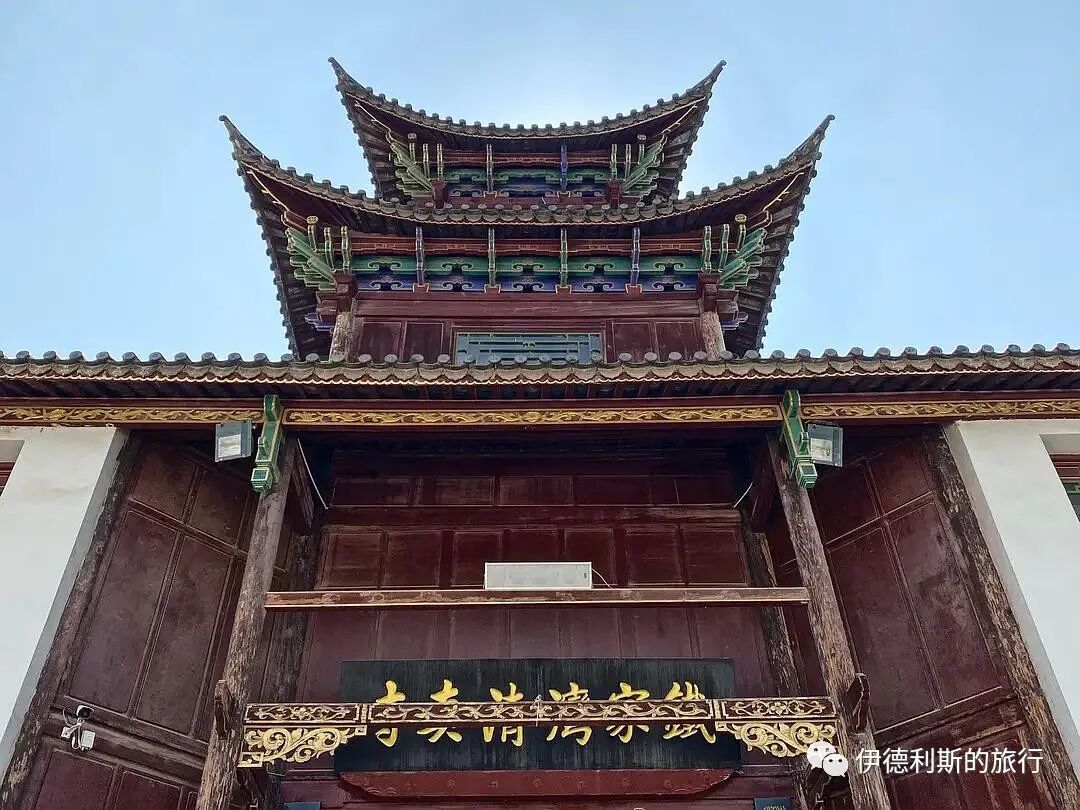
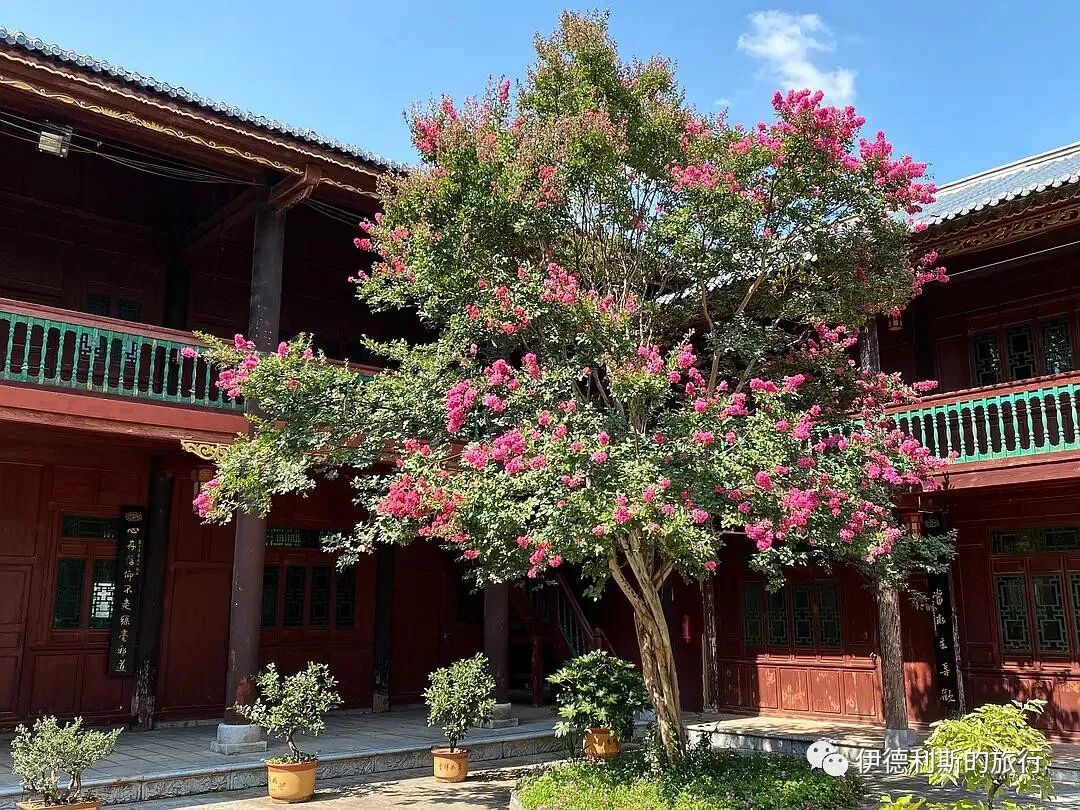
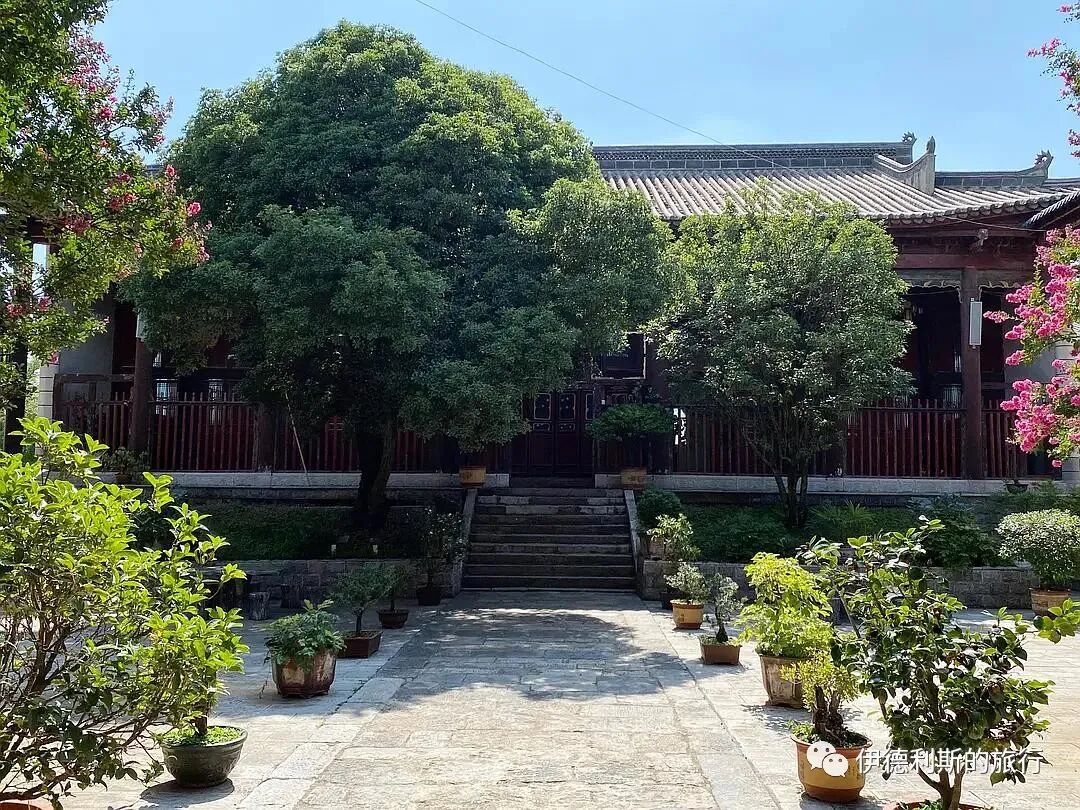
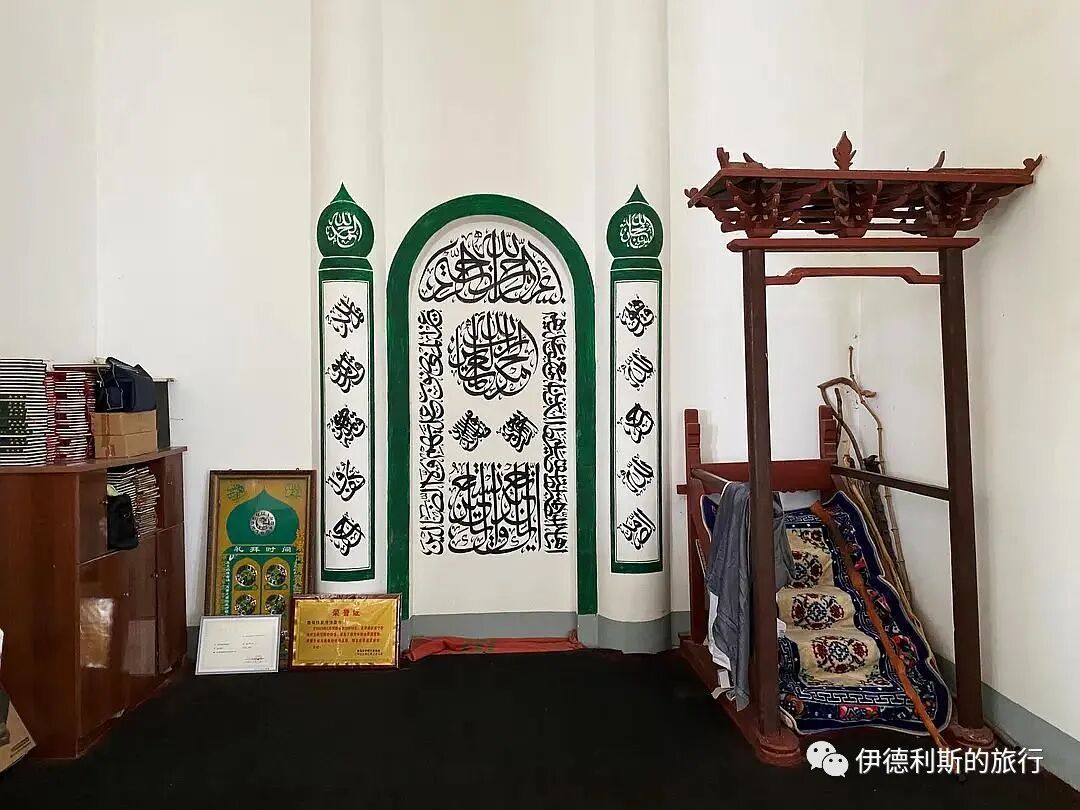
5. Baxian Great Mosque: 1779
In the evening, we returned to Zhaotong from Ludian and went to the most famous Baxian Great Mosque in Zhaotong.
The Baxian Great Mosque was first built in 1731 and rebuilt in 1779. In 1730, when Wumeng was first pacified, the old city of Zhaotong was desolate. The main camp was temporarily set up at the Baxian Great Mosque, and the first academy after Zhaotong's Gaitu Guiliu—Zhaoyang Academy—was founded at the Baxian Great Mosque the following year. In 1898, the Baxian Great Mosque hired the great Imam Ma Minglun as the Imam, and he was elected as the General Imam by the thirty-six mosques in Zhaoweilu (Zhaotong, Weining, and Ludian).
On both sides of the mosque's main hall, there are stone-carved couplets: 'Only by overcoming one's own selfishness can one be on the path, and only by returning to the heavenly principles can one worship the Truth.' Above the main hall, there is a very distinctive Arabic wooden plaque inscribed with verses 43-44 of Chapter 43 of the Quran. Behind the main hall is a three-tiered, four-cornered, pointed-roof kiln hall.
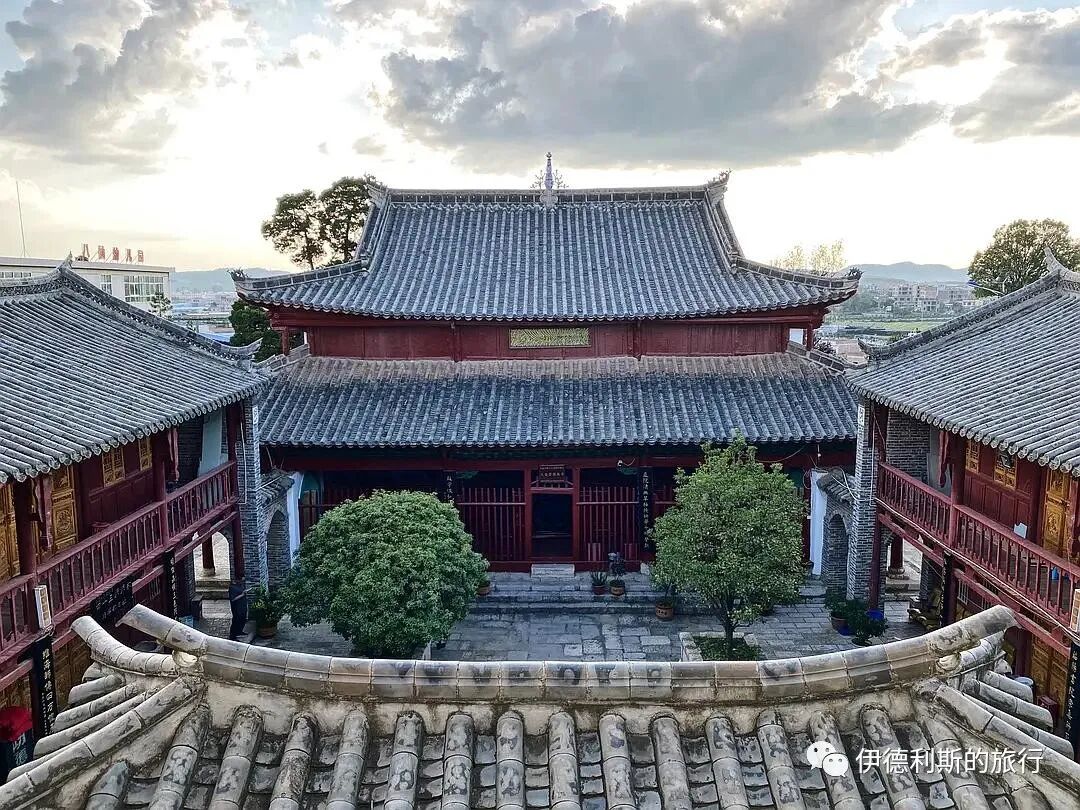
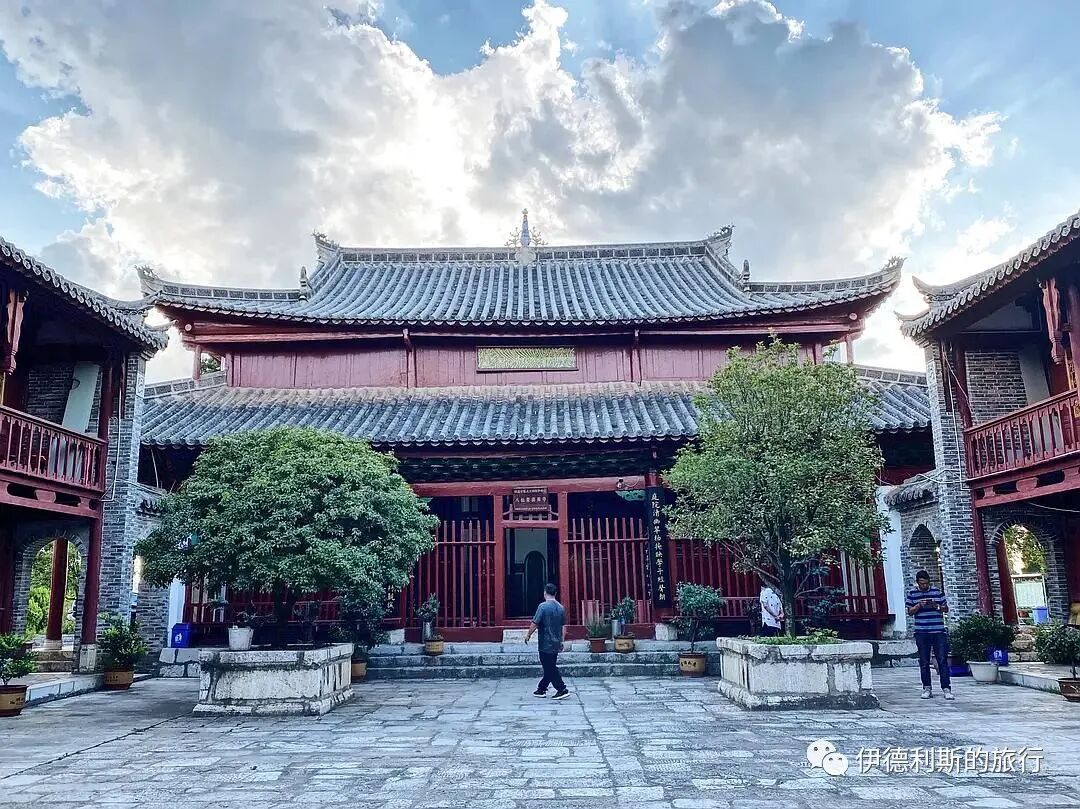
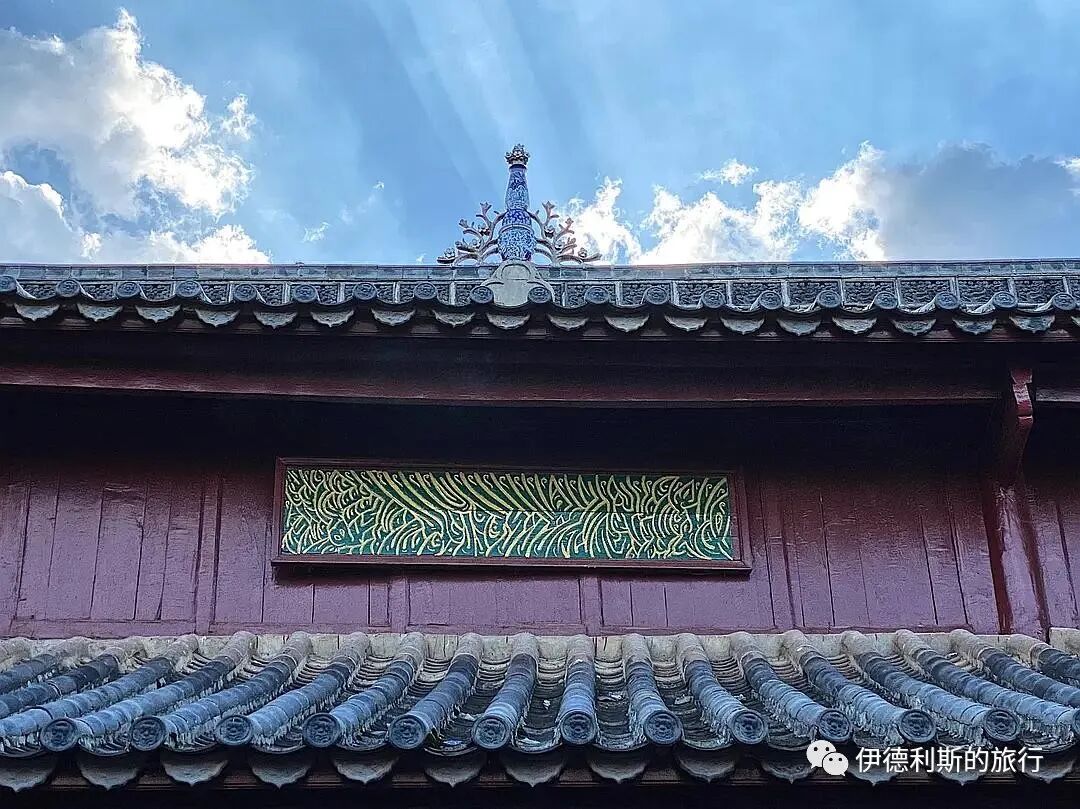
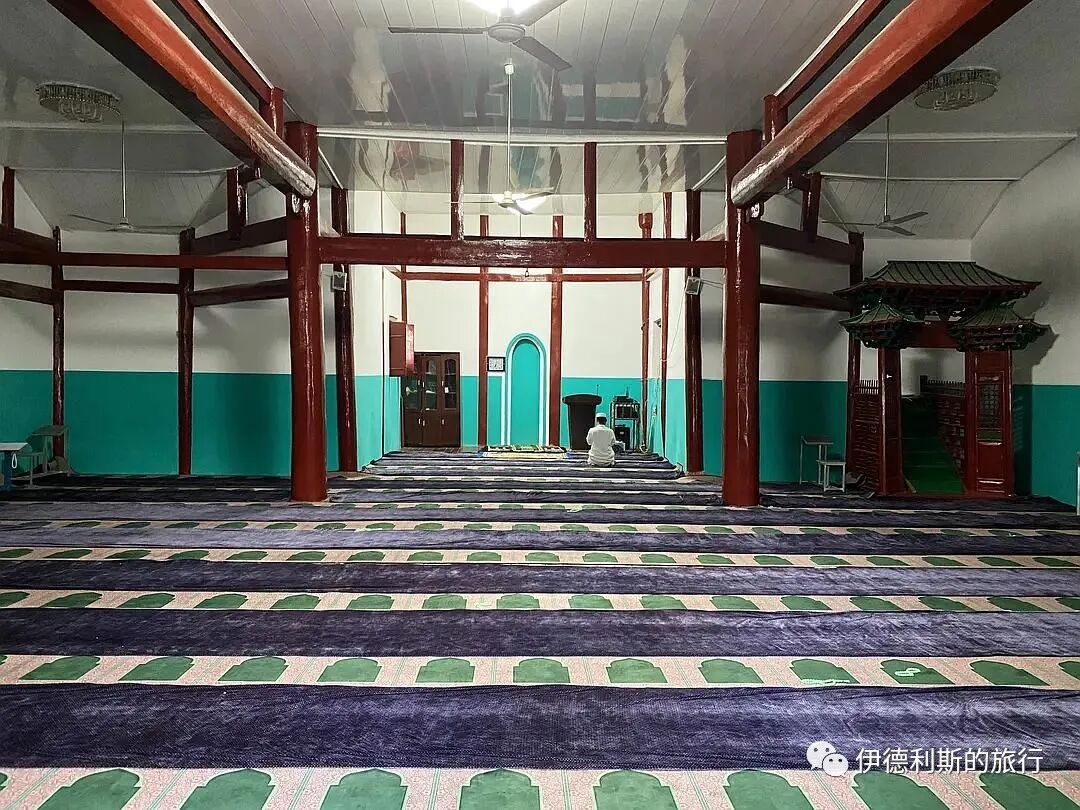
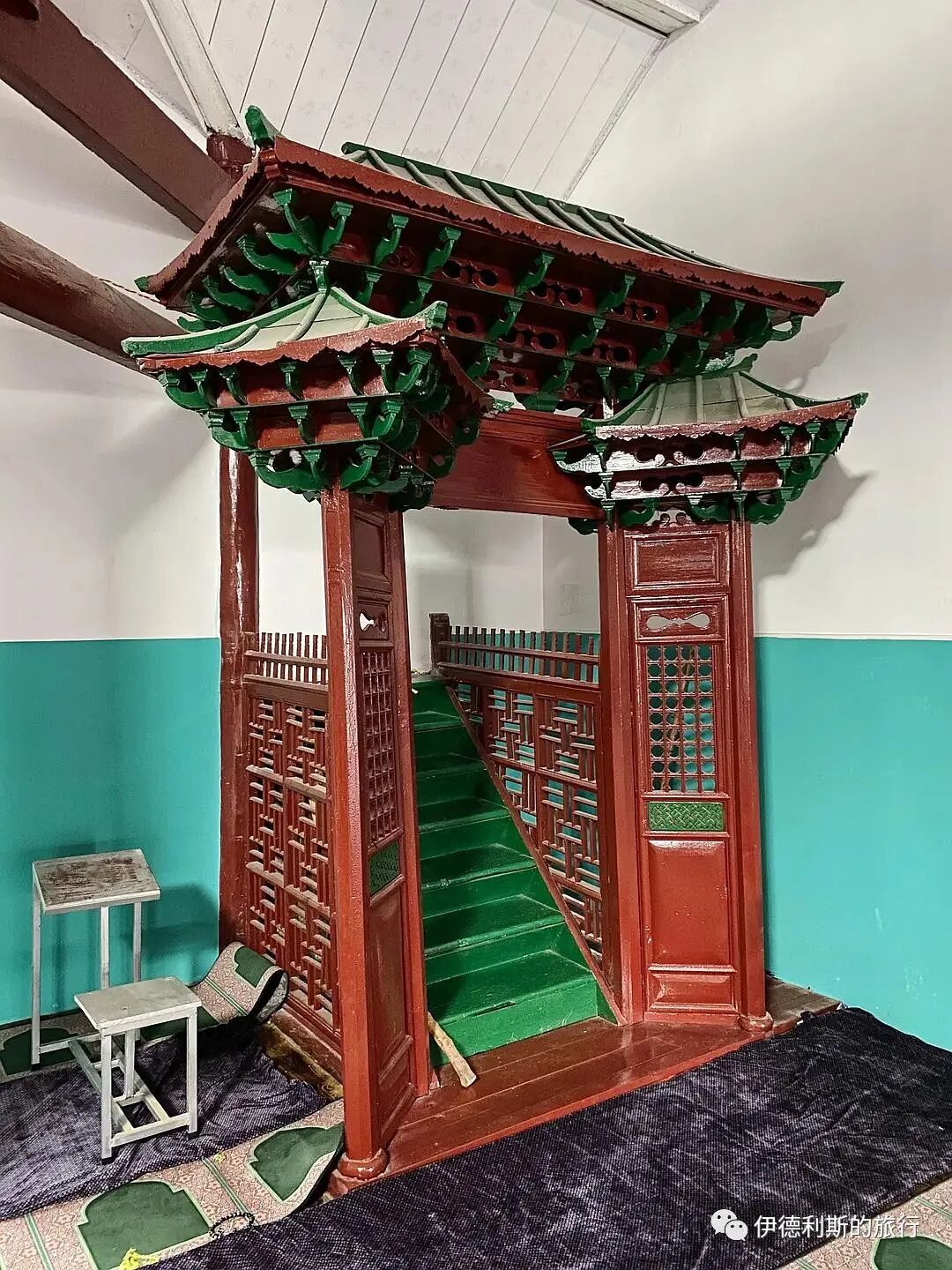
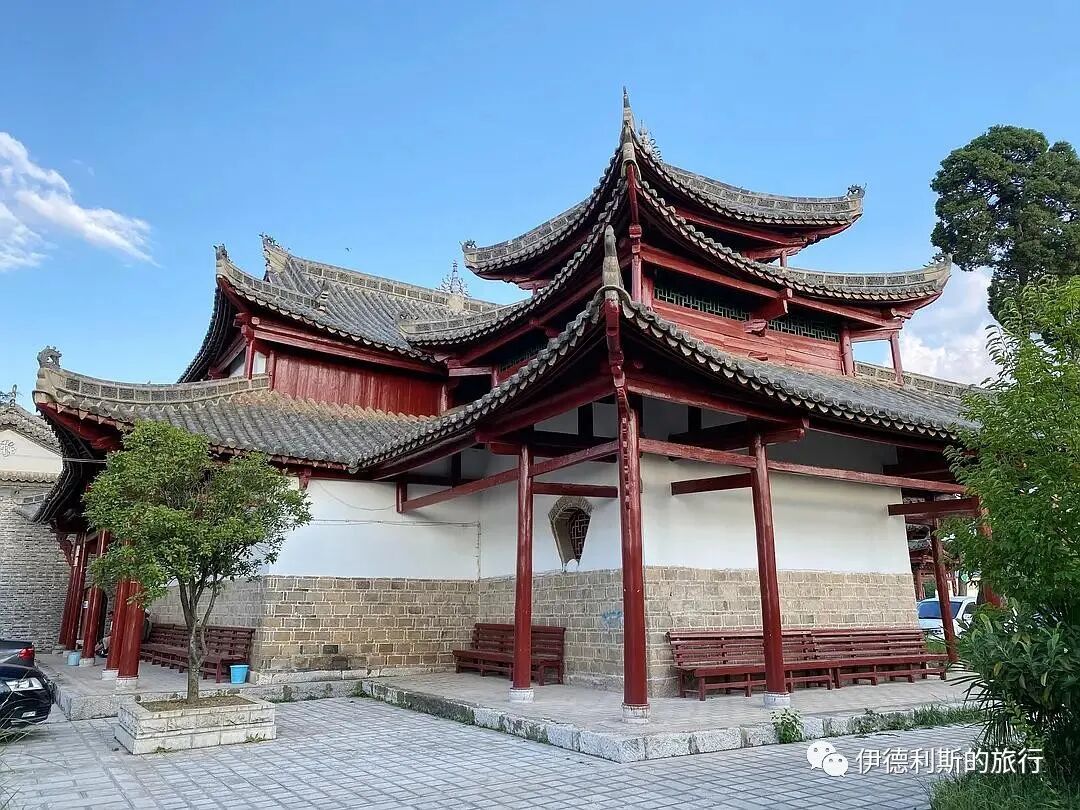
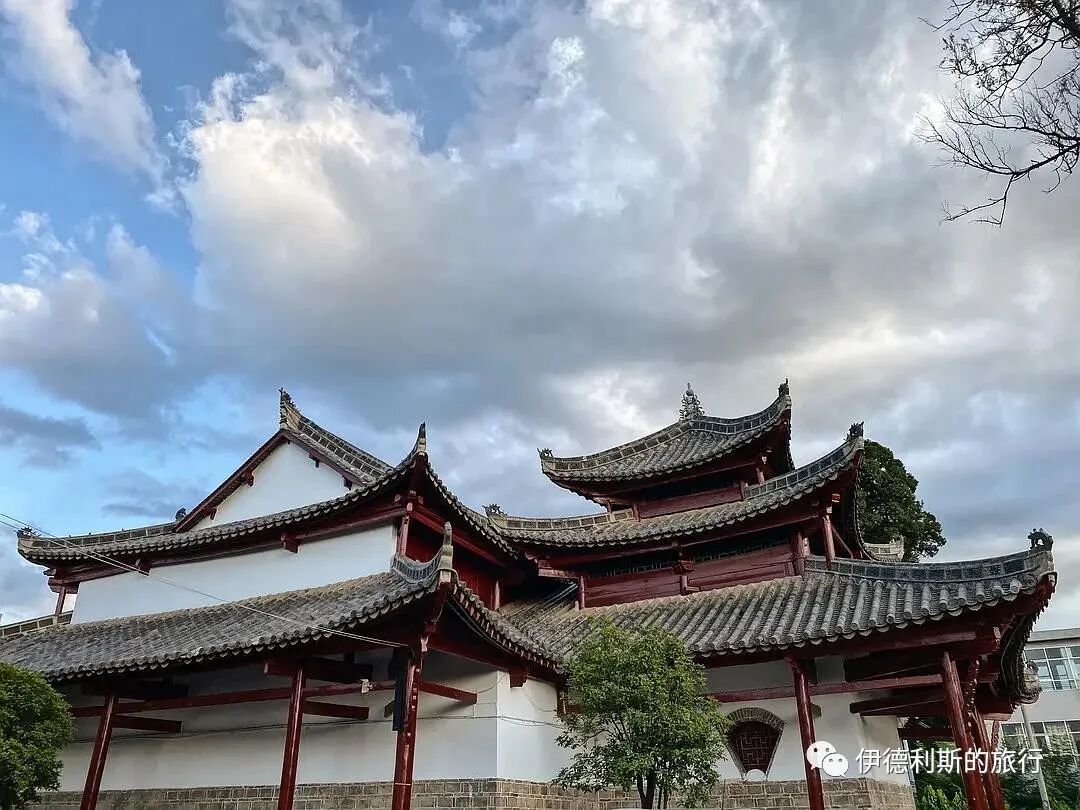
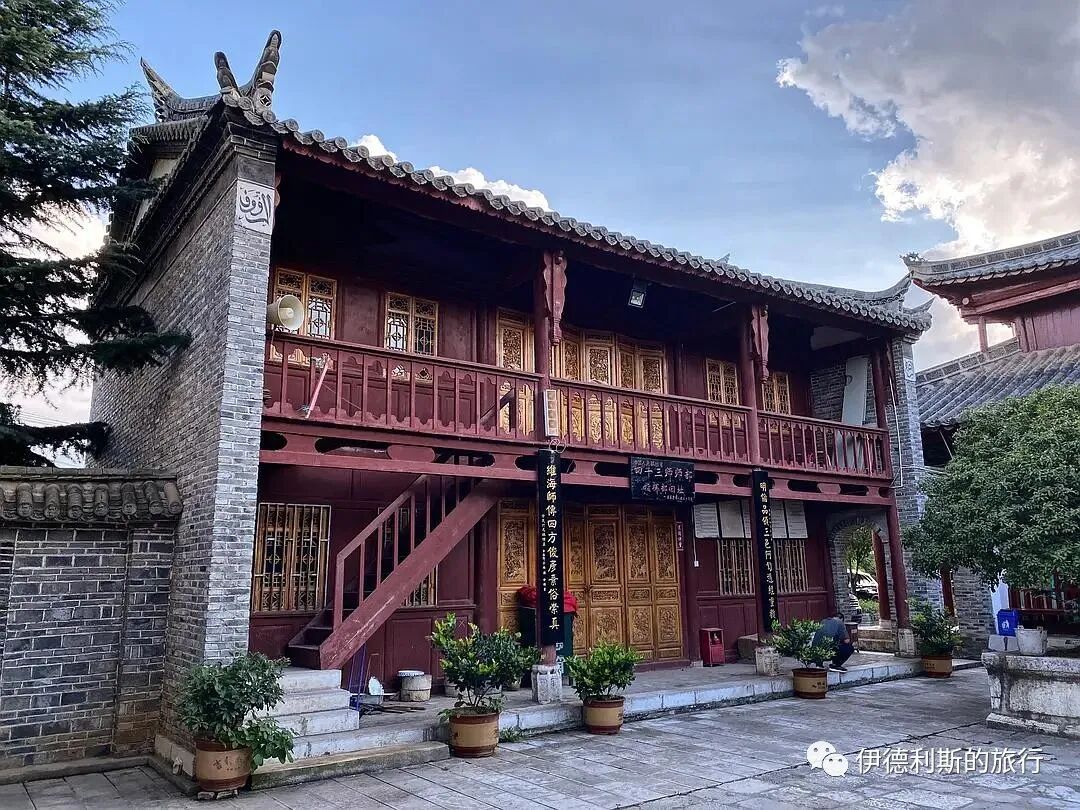
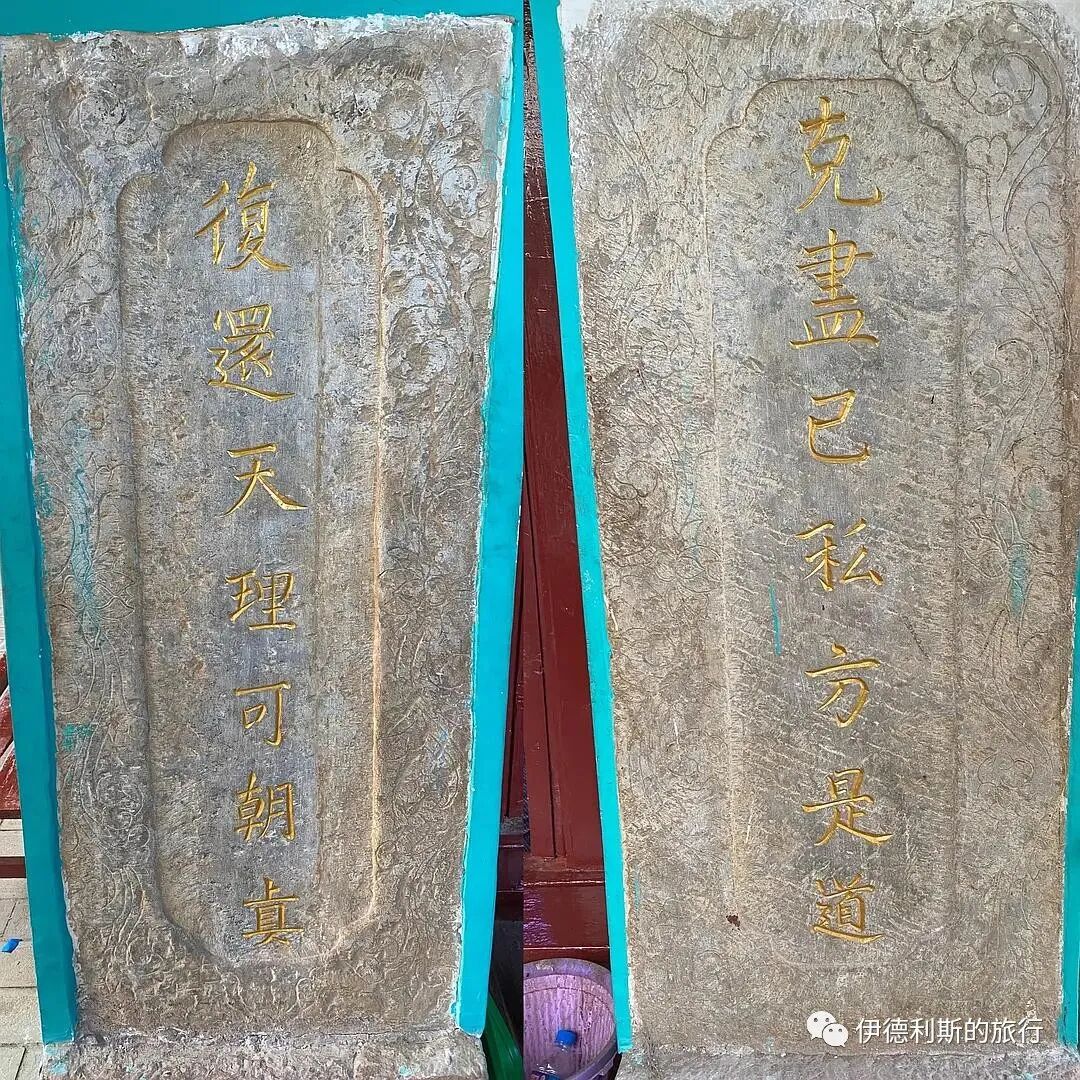
6. Songjiashan Mosque: 1730
In the evening, we performed the Maghrib (evening prayer) at the Songjiashan Mosque. It was still evening when we entered the hall, and it was dark when we came out.
The Songjiashan Mosque is not far from the Baxian Great Mosque and is also a very beautiful ancient mosque. During the Gaitu Guiliu in Zhaotong in the early years of the Yongzheng reign, a branch of the Ma family from Xiaba, Weining, followed General Ha Yuansheng, who led the army to pacify Wumeng, to Zhaotong. They eventually settled in Baxianhai and built the Songjiashan Mosque in 1730. The construction background of the Songjiashan Mosque is the same as that of the Baxian Great Mosque, but because there were fewer people, the scale is not as large as the Baxian Great Mosque.
The Songjiashan Mosque began painting the ceiling of the main hall in 1762 and finished the decoration in 1832. It is a very precious artistic treasure inside the mosque.
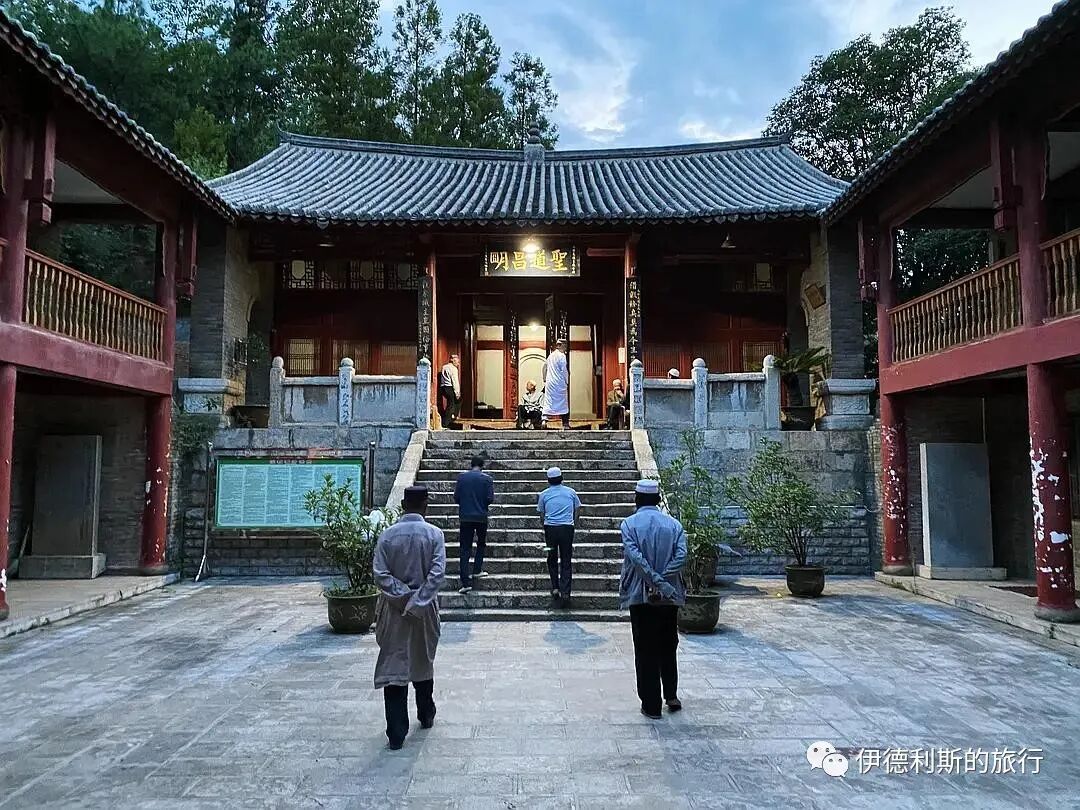
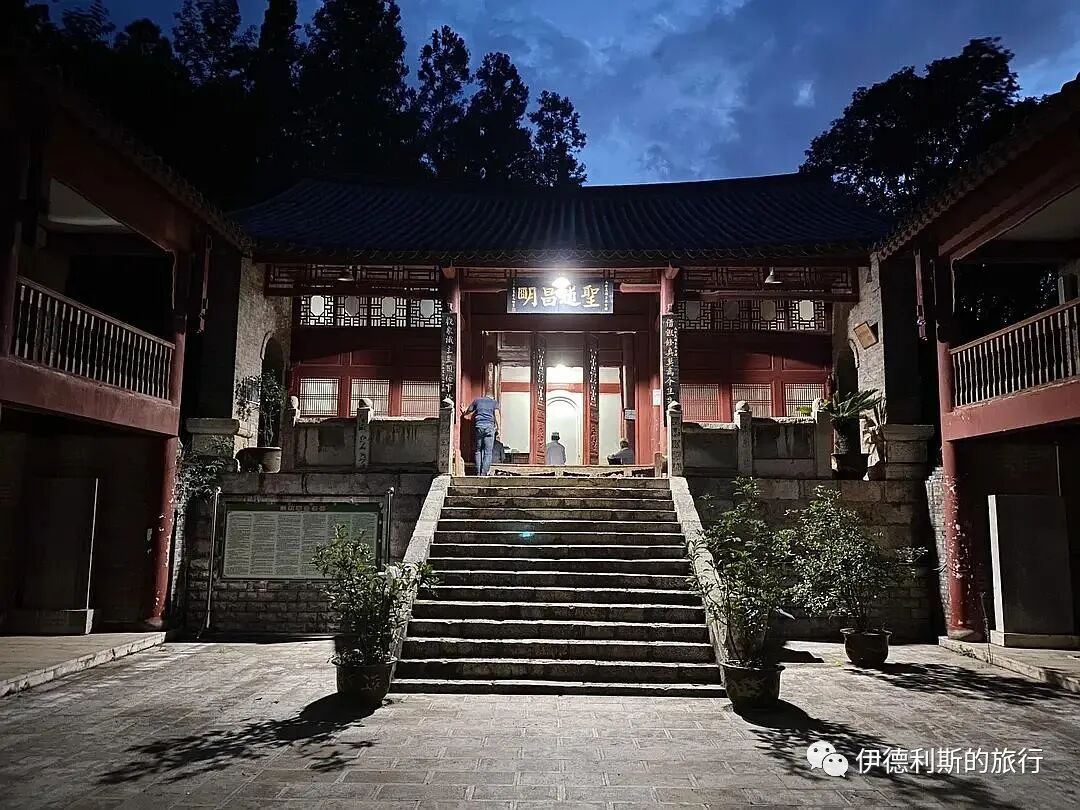
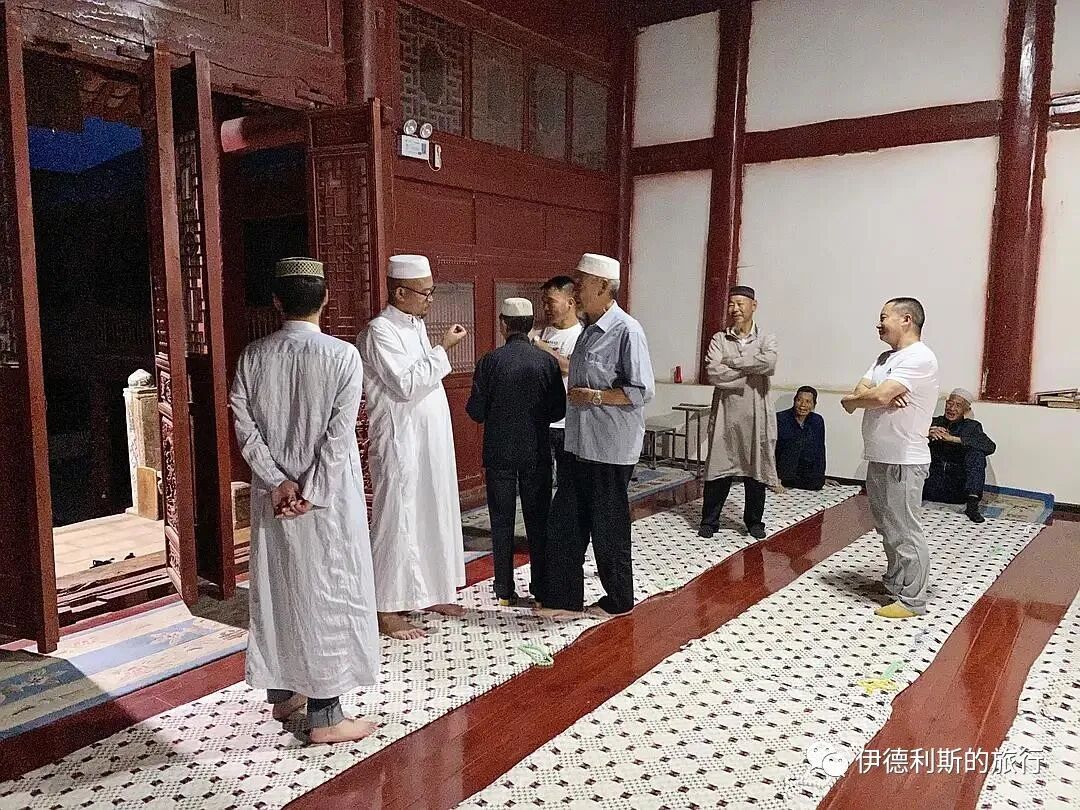
The Legend of Najiaying Knives: Exploring Yunnan's Historic Muslim Craftsmanship & Halal Culture
Articles • Hasan09 posted the article • 0 comments • 12 views • 4 days ago
What’s the real deal with the knives from Najiaying, Yunnan?
Summary:
Hey everyone, I'm Chituanjun. July was absolute chaos and I was so swamped I didn't have the time or energy to push out new posts. If you've found any awesome spots to eat or hang out in Kunming or the surrounding areas lately, drop a comment or DM me—I'm totally down to check them out once I'm back in action.
Click the card above to follow me
Hey everyone, I'm Chituanjun, and July had me running around so crazy I barely had a second to breathe.
Found any killer food or fun spots around Kunming lately? Hit me up in the comments or shoot me a DM—I'm dying to go explore once I'm free.
As a local, free-roaming Halal food blogger, I suppose this day was bound to come: I received a few dozen kitchen knives sent over by a PR brand. My inner monologue was running so wild I actually started worrying about my personal safety (kidding... sort of).
True to our professional standards, as soon as we got our hands on them, the foodie squad launched into full-on crazy testing mode. One of our team members even paid for it in blood...
Seriously folks, always be super careful when handling knives, and store them safely when you're not using them!
Besides, being the perfectionists we are, we made a personal trip out to the source—Najiaying, Tonghai County, Yuxi City, Yunnan Province—to bring you this heavy-hitting feature.
Surrounded by "Flash and Gleam of Blades"
1.
Nagu Town sits in the northwest of Tonghai County, a place famously known as a "land of rites and music." It's a renowned "hometown of handicrafts," where the local residents are primarily Hui Muslims and Han Chinese.
According to historical records, the knife-forging craft in Nagu Town dates all the way back to the Yuan Dynasty.
"As part of the 'Tamma' vanguard troops and accompanying military craftsmen, the ancestors of Nagu applied their exquisite skills and unique techniques to forge top-tier creations in military blades, civilian knives, horse gear, and more."
More than 700 years later, local artisans and businesses are still writing their handicraft history today by building on these fine traditions while blending in modern tech and practical everyday needs.
2.
Another little-known and fascinating story is that knives from Najiaying were once shortlisted as national contenders for the Chinese Tri-Service Honor Guard ceremonial swords.
In early 1992, the Central Military Commission issued an order deciding to revamp the ceremonial uniforms for the Honor Guard. Along with the new threads, the executive and platoon commanders of the Honor Guard were switching out their sidearms for ceremonial swords, shifting from a standard unarmed salute to a much more formidable and solemn saber salute. (Note: Paragraph content is excerpted from the China Archives News, total issue No. 3251, titled "Vowing Loyalty to Forge the 'National Saber'").
The task of researching and designing this ceremonial sword was handed over to the Quartermaster Equipment Research Institute of the General Logistics Department of the Chinese People's Liberation Army.
They first headed to the Military Museum of the Chinese People's Revolution to gather reference materials on ceremonial swords from countries like France, Japan, the US, Sweden, and Italy. Based on China's actual national and military conditions as well as ethnic characteristics, they drafted 3 different sword designs and commissioned over 10 military enterprises and knife manufacturers to make sample blades.
Among them were artisans from Najiaying who took part in the production at the time.
It's a real pity that although we tracked down the person involved and visited their home, we couldn't find the key to the display room. So we missed out on seeing more physical evidence related to it—which honestly just gives us a great excuse for another trip.
3.
Walking down the streets of Najiaying today, you see specialty shops for civilian knives of all shapes and sizes everywhere: scissors, tea knives, nail clippers, unsharpened decorative blades...
Rows upon rows of uniquely shaped knives inside the glass counters reflect that chilling metallic gleam, looking totally badass and giving you a serious martial arts-style adrenaline rush.
Drivers and tourists cruising by can't help but pull over and wander into the shops to check things out. When they spot one they like, they pick up a reliable "kitchen weapon" for themselves, family, or friends.
Honestly, once you've got pro-grade gear and that atmosphere, your inner potential just naturally kicks in.
Take me for example: ever since I got my hands on a reliable knife, the frequency of me heading into the kitchen to prep ingredients has seriously shot up.
Looking forward to even more cool stuff ahead
Forged through over 600 years of accumulation and refinement, Najiaying's knives boast battle-tested craftsmanship that is passed down through generations. It's a priceless asset, but one that constantly faces the challenges of a fast-changing market.
After visiting more than a dozen workshops and specialty stores on the ground, my takeaway is this:
When it comes to tapping into their own cultural resources, telling a compelling brand story, proactively innovating, and connecting with contemporary young consumers, Najiaying's civilian cutlery still has a long road ahead for growth.
Finally, let me shout out an outstanding local Halal restaurant in Najiaying—Jieya Restaurant.
According to a good friend, this spot has been open locally for over 20 years. The quality is solid and the prices are super affordable, making it a great pick whether you're grabbing a casual bite, hanging out with family and friends, or hosting a business dinner.
Our foodie squad tried it out, and everyone was licking their chops.
My personal recommendations: Tom Yum chicken, sliced cold beef, and stir-fried wild mushrooms.
The dipping sauce for the cold beef has a sour and spicy kick—super complex and bursting with authentic Yuxi local flavor.
Until next time, Najiaying~
- Restaurant Info -
Name: Jieya Restaurant
Phone: 13887793491; 13887793492
Average cost: 60 RMB (spend as you like)
- Foodie Squad Perks -
For this issue, our foodie squad handpicked the most frequently used home-style kitchen slicer out of hundreds of knives in Najiaying to recommend to you all.
It has a substantial heft, a razor-sharp blade, and serious performance, totally handling all your daily needs for shredding, slicing, cutting strips, and dicing, while fitting right in with the habits of a Chinese kitchen.
If you want to experience the 600-year knife-making magic of Najiaying, why not start with this one?
Any quality issues under non-violent use within 2 years get a free trade-in for a brand new one.
- More Great Stuff -
Don't rush, 30 is just another beginning
I've been gatekeeping a Halal leisure resort in Xishan District, and I really hate to share it
Without our Zhaotong folks leading the charge, Kunming wouldn't have the Halal food scene it has today view all
What’s the real deal with the knives from Najiaying, Yunnan?
Summary:
Hey everyone, I'm Chituanjun. July was absolute chaos and I was so swamped I didn't have the time or energy to push out new posts. If you've found any awesome spots to eat or hang out in Kunming or the surrounding areas lately, drop a comment or DM me—I'm totally down to check them out once I'm back in action.
Click the card above to follow me
Hey everyone, I'm Chituanjun, and July had me running around so crazy I barely had a second to breathe.
Found any killer food or fun spots around Kunming lately? Hit me up in the comments or shoot me a DM—I'm dying to go explore once I'm free.
As a local, free-roaming Halal food blogger, I suppose this day was bound to come: I received a few dozen kitchen knives sent over by a PR brand. My inner monologue was running so wild I actually started worrying about my personal safety (kidding... sort of).
True to our professional standards, as soon as we got our hands on them, the foodie squad launched into full-on crazy testing mode. One of our team members even paid for it in blood...
Seriously folks, always be super careful when handling knives, and store them safely when you're not using them!
Besides, being the perfectionists we are, we made a personal trip out to the source—Najiaying, Tonghai County, Yuxi City, Yunnan Province—to bring you this heavy-hitting feature.
Surrounded by "Flash and Gleam of Blades"
1.
Nagu Town sits in the northwest of Tonghai County, a place famously known as a "land of rites and music." It's a renowned "hometown of handicrafts," where the local residents are primarily Hui Muslims and Han Chinese.
According to historical records, the knife-forging craft in Nagu Town dates all the way back to the Yuan Dynasty.
"As part of the 'Tamma' vanguard troops and accompanying military craftsmen, the ancestors of Nagu applied their exquisite skills and unique techniques to forge top-tier creations in military blades, civilian knives, horse gear, and more."
More than 700 years later, local artisans and businesses are still writing their handicraft history today by building on these fine traditions while blending in modern tech and practical everyday needs.
2.
Another little-known and fascinating story is that knives from Najiaying were once shortlisted as national contenders for the Chinese Tri-Service Honor Guard ceremonial swords.
In early 1992, the Central Military Commission issued an order deciding to revamp the ceremonial uniforms for the Honor Guard. Along with the new threads, the executive and platoon commanders of the Honor Guard were switching out their sidearms for ceremonial swords, shifting from a standard unarmed salute to a much more formidable and solemn saber salute. (Note: Paragraph content is excerpted from the China Archives News, total issue No. 3251, titled "Vowing Loyalty to Forge the 'National Saber'").
The task of researching and designing this ceremonial sword was handed over to the Quartermaster Equipment Research Institute of the General Logistics Department of the Chinese People's Liberation Army.
They first headed to the Military Museum of the Chinese People's Revolution to gather reference materials on ceremonial swords from countries like France, Japan, the US, Sweden, and Italy. Based on China's actual national and military conditions as well as ethnic characteristics, they drafted 3 different sword designs and commissioned over 10 military enterprises and knife manufacturers to make sample blades.
Among them were artisans from Najiaying who took part in the production at the time.
It's a real pity that although we tracked down the person involved and visited their home, we couldn't find the key to the display room. So we missed out on seeing more physical evidence related to it—which honestly just gives us a great excuse for another trip.
3.
Walking down the streets of Najiaying today, you see specialty shops for civilian knives of all shapes and sizes everywhere: scissors, tea knives, nail clippers, unsharpened decorative blades...
Rows upon rows of uniquely shaped knives inside the glass counters reflect that chilling metallic gleam, looking totally badass and giving you a serious martial arts-style adrenaline rush.
Drivers and tourists cruising by can't help but pull over and wander into the shops to check things out. When they spot one they like, they pick up a reliable "kitchen weapon" for themselves, family, or friends.
Honestly, once you've got pro-grade gear and that atmosphere, your inner potential just naturally kicks in.
Take me for example: ever since I got my hands on a reliable knife, the frequency of me heading into the kitchen to prep ingredients has seriously shot up.
Looking forward to even more cool stuff ahead
Forged through over 600 years of accumulation and refinement, Najiaying's knives boast battle-tested craftsmanship that is passed down through generations. It's a priceless asset, but one that constantly faces the challenges of a fast-changing market.
After visiting more than a dozen workshops and specialty stores on the ground, my takeaway is this:
When it comes to tapping into their own cultural resources, telling a compelling brand story, proactively innovating, and connecting with contemporary young consumers, Najiaying's civilian cutlery still has a long road ahead for growth.
Finally, let me shout out an outstanding local Halal restaurant in Najiaying—Jieya Restaurant.
According to a good friend, this spot has been open locally for over 20 years. The quality is solid and the prices are super affordable, making it a great pick whether you're grabbing a casual bite, hanging out with family and friends, or hosting a business dinner.
Our foodie squad tried it out, and everyone was licking their chops.
My personal recommendations: Tom Yum chicken, sliced cold beef, and stir-fried wild mushrooms.
The dipping sauce for the cold beef has a sour and spicy kick—super complex and bursting with authentic Yuxi local flavor.
Until next time, Najiaying~
- Restaurant Info -
Name: Jieya Restaurant
Phone: 13887793491; 13887793492
Average cost: 60 RMB (spend as you like)
- Foodie Squad Perks -
For this issue, our foodie squad handpicked the most frequently used home-style kitchen slicer out of hundreds of knives in Najiaying to recommend to you all.
It has a substantial heft, a razor-sharp blade, and serious performance, totally handling all your daily needs for shredding, slicing, cutting strips, and dicing, while fitting right in with the habits of a Chinese kitchen.
If you want to experience the 600-year knife-making magic of Najiaying, why not start with this one?
Any quality issues under non-violent use within 2 years get a free trade-in for a brand new one.
- More Great Stuff -
Don't rush, 30 is just another beginning
I've been gatekeeping a Halal leisure resort in Xishan District, and I really hate to share it
Without our Zhaotong folks leading the charge, Kunming wouldn't have the Halal food scene it has today
The Ultimate Guide to Yunnan Muslim Culture, Halal Food & Historic Mosques (Part 1)
Articles • Hasan09 posted the article • 0 comments • 14 views • 4 days ago
Overview of Yunnan-Origin Muslims in Taiwan, Thailand, and Myanmar (1): Overview of Homelands and Diaspora
Abstract:
Overview of Yunnan-Origin Muslims in Taiwan, Thailand, and Myanmar. Author: Yu Jiaming. Nestled in China's southwestern corner, Yunnan borders Myanmar, Thailand, Laos, and Vietnam, serving as a historic gateway to Southeast Asia. While the terrain is rugged, the region enjoys year-round spring weather and abundant resources. Home to multiple ethnic minority groups, Yunnan has spent millennia cultivating a rich, diverse cultural tapestry, which naturally includes the historical evolution and developmental journey of its Muslim communities. Section 1: Overview of Homelands and Diaspora. Nestled in China's southwestern corner, Yunnan borders Myanmar, Thailand, Laos, and Vietnam, serving as a historic gateway to Southeast Asia.
Overview of Yunnan-Origin Muslims in Taiwan, Thailand, and Myanmar
Author: Yu Jiaming
Nestled in China's southwestern corner, Yunnan borders Myanmar, Thailand, Laos, and Vietnam, serving as a historic gateway to Southeast Asia. While the terrain is rugged, the region enjoys year-round spring weather and abundant resources. Home to multiple ethnic minority groups, Yunnan has spent millennia cultivating a rich, diverse cultural tapestry, which naturally includes the historical evolution and developmental journey of its Muslim communities.
Section 1: Overview of Homelands and Diaspora
Nestled in China's southwestern corner, Yunnan borders Myanmar, Thailand, Laos, and Vietnam, serving as a historic gateway to Southeast Asia. While the terrain is rugged, the region enjoys year-round spring weather and abundant resources. Home to multiple ethnic minority groups, Yunnan has spent millennia cultivating a rich, diverse cultural tapestry, which naturally includes the historical evolution and developmental journey of its Muslim communities.
Beginning in the 7th century CE, merchants from the Arabian Peninsula and Persia began traveling to China for trade, eventually settling across various regions. Over centuries of development, they became one of the foundational roots of today's Hui Muslim minority in China. Of course, the composition of the Hui Muslims also includes Central Asian Muslim ethnic groups who moved eastward after Genghis Khan's western campaigns, alongside Arabs and Persians. In Yuan Dynasty official records, they were collectively referred to as "Huihui". After arriving in China, these individuals worked as soldiers, artisans, farmers, and merchants, while others entered government service or pursued religious and academic careers. Through intermarriage with locals and their deep integration into the socio-economic fabric, the concept and ethnic structure of the Hui Muslims gradually took shape.
As for the development of Islam in Yunnan, one theory suggests that during the Tang Dynasty, Tang forces allied with the Kingdom of Nanzhao to defeat the Tibetan Empire and the Abbasid army (referred to historically as the "Black-robed Da Shi"). The captured Abbasid soldiers were Muslims, marking the earliest presence of Muslims in Yunnan. Another widely circulated theory attributes their arrival to the Central Asian Huihui who migrated westward following the Mongol conquests, as well as Huihui soldiers in the Mongol army who stayed behind after conquering the "Southwestern Yi" tribes, thereby forming the earliest Muslim communities in Yunnan. [1]
According historical records, from Genghis Khan's western campaigns in 1219 to Hulagu's capture of Baghdad in 1258, the Mongols successively conquered numerous Islamicized nations spanning from Central to West Asia. Large numbers of these Muslims were subsequently relocated eastward, with some military units organized into the "Tamma troops" (frontier garrison forces) as part of Kublai Khan's unified army. In 1253 (the second year of Emperor Mengke's reign), Mengke ordered Kublai Khan and Uriankhadai to lead a 100,000-strong army to attack the Southwest, eventually conquering the Kingdom of Dali. Numerous Huihui generals and soldiers arrived in Yunnan wave after wave to garrison the borderlands and establish military agricultural colonies (tuntian) across various regions. Later, Uyghurs (ancestors of today's Uyghur ethnic group) also established the Wumeng military garrison around Zhaotong, laying a major foundation for today's Zhaotong Hui Muslim population. [2]
In 1274 (the 11th year of the Zhiyuan era under Kublai Khan), the Yuan Emperor appointed Sayyid Ajjal Shams al-Din Omar as the first Pingzhangmingshi (Administrator) of the Yunnan Branch Secretariat. Sayyid Ajjal Shams al-Din was originally from Bukhara in modern-day Central Asia. During his six years in office, he made remarkable achievements in local agriculture, transportation, and education. He introduced knowledge of Islam, the Arabic and Persian languages, artillery manufacturing, and medicine into Yunnan, and commissioned two mosques in Kunming that still stand today. His descendants also achieved prominence in politics and military affairs, continuing to contribute to the governance of Yunnan. His lineage eventually dispersed across China, becoming ancestral roots for many Chinese Muslims. [3]
The Ming Dynasty and early Qing Dynasty also marked critical phases for the development of Yunnan's Muslims. Many Muslim generals served among the founding figures of the Ming Dynasty; most notably, Mu Ying and his descendants were enfeoffed as the "Prince of Qianning" and the "Duke of Qian," governing Yunnan across generations. Additionally, a large contingent of Hui Muslim generals and soldiers from the Central Plains and the Jianghuai region followed Mu Ying to Yunnan. It is said that the Mu family in modern-day Baoshan, Yunnan, are descendants of Mu Ying. [4] Subsequently, even more Muslims arrived with military forces to garrison and reclaim land, forming numerous settlements in places such as modern-day Kunming, Chuxiong, Dali, Weishan, Baoshan, Tengchong, Kaiyuan, Mengzi, Xun甸, and Qujing. As they gradually integrated with various ethnic groups, Yunnan transformed into a major stronghold for Muslims in China, embodying the early spatial pattern of "widely dispersed, closely concentrated." [5]
Because Muslim village communities maintained distinct cultural and religious boundaries with outsiders, we frequently encounter villages bearing names explicitly tied to the Hui Muslims, such as "Huihuiying" (Hui Muslim Camp) or "Huizi Village" (Hui Village). These names immediately reveal that the local residents are Yunnan-origin Muslims. However, not all Muslims lived in exclusively Hui villages; many resided in urban areas. Though they were not the local majority, their homes and businesses clustered within specific Muslim quarters, allowing them to preserve their religious beliefs and ways of life with minimal outside interference. Because they inevitably interacted with Han Chinese in the cities, lifestyle and cultural differences occasionally sparked friction, with Han residents sometimes resorting to verbal insults or physical aggression against Muslims. [6]
Following the dawn of the Qing Dynasty, the development of Muslim communities began to face severe setbacks. For one, many Muslims still held loyalty to the fallen Ming Dynasty; moreover, the Qing court's ethnic policies were deeply inequitable, imposing heavy restrictions and discrimination against Hui Muslims while frequently instigating ethnic conflicts between Hui and Han populations. This fueled resistance among Muslim communities everywhere—not least in Yunnan, which boasted the second-largest Muslim population concentration in China, second only to the Northwest. In 1797 (the second year of the Jiaqing era), a salt-tax dispute erupted in the Dali and Chuxiong regions, serving as the spark for widespread uprisings. Participants spanned the Bai, Han, Yi, and Hui ethnic groups, uniting against corrupt salt administration officials who schemed for personal gain and extorted ordinary citizens. Soon, various conflicts and disputes flared up across regions. Officials routinely stoked divisions and refused to deliver fair judgments, causing public resentment to boil over. By the Daoguang era, the Qing court initiated violent crackdowns, ultimately triggering the major anti-Qing uprisings led by Du Wenxiu, Ma Long, and others. [7]
In 1856, Du Wenxiu established a regime in Dali, vigorously developing local agricultural and mineral economies, encouraging commerce, and fostering trade ties with neighboring Sichuan and Myanmar. By uniting various ethnic minorities, he won widespread popular support. Militarily, Du Wenxiu rallied the populace under slogans such as "Save the people, strike down tyranny," "Unite Hui and Han as one, raise the righteous banner, drive out the Tartars, and restore China..." His insurgent forces fought over two hundred battles against Qing troops, unifying the entire western half of Yunnan within five years. In 1867, they even mobilized a massive army to besiege Kunming. However, after failing to break the city and facing fresh Qing reinforcements mobilized from multiple provinces—combined with the Qing court's divide-and-conquer strategy of using Muslims to fight Muslims—the Dali regime suffered a series of defeats. In 1872, Du Wenxiu was executed, and two years later, Dali fell to Qing forces, bringing the 18-year Yunnan Hui uprising to a tragic end. [8]
By the mid-19th century, Yunnan's local Muslims accounted for one-tenth of the province's total population. Bound by shared historical and cultural symbols as well as common professions, they gradually forged a distinct ethnic identity. This very identity—compounded by their non-Yunnan and non-Han ancestral origins and their Islamic faith—created friction in regional, cultural, and religious spheres, ultimately leading to the tragic outcomes of the Hui uprisings. [9] In the wake of the Qing court's high-handed rule and massacres, the Muslim population inside Yunnan plummeted sharply. Fearing persecution, some Hui residents were forced to flee across the borders into neighboring countries, planting the seeds for the migration of Yunnan-origin Muslims into Southeast Asia. [10]
Yunnan and its surrounding regions feature towering mountain ranges soaring 6,000 meters high, forming the Yunnan-Guizhou Plateau. South of the plateau lie the Shan Plateau of Myanmar, northern Thailand, Laos, and the rugged highlands of Vietnam. Major rivers like the Lancang (Mekong) and Nujiang (Salween) carve deep gorges through the plateau while sculpting numerous mountain basins known locally as *bazi*. Different ethnic minorities settled across these basins. Given this challenging terrain, the most reliable transport for long-distance journeys was the Yunnan pony, giving rise to organized caravans known as *mabang* (horse caravans) that shuttled between mountain basins to handle cargo transport and trade. [11] These horse caravans not only traded goods from market to market but also bartered with highland farmers along the way, injecting vibrant economic life into diverse inter-ethnic regions. [12]
The Muslims of Yunnan province largely concentrated along major transportation arteries and the flat basin lands (bazi) in their immediate suburbs, with very few living deep in the mountainous interior. This settlement pattern was shaped by their long-term historical engagement in military agricultural colonies, commerce, and handicrafts. [13] Because these flat basins and semi-mountainous regions offered limited per capita arable land, relying solely on farming made survival difficult. Consequently, running long-distance transport via horse caravans became an essential avenue for Hui Muslims to make a living in commerce. Ever since the Yuan Dynasty, Hui horse caravans remained a cornerstone of Yunnan's transport network. In Muslim-heavy regions such as Baoshan, Weishan, Tonghai, and Yuxi, countless horse caravans specialized in transport and goods trading, constantly plying the routes between Yunnan, Thailand, and Myanmar. [14] Furthermore, the Qing court's massacres of Yunnan's Hui population plunged many areas into economic depression, which in turn spawned rampant banditry. The devastation of their home villages forced people to venture outward to find a livelihood—proving to be yet another reason why Yunnan Muslims took up the life of caravan traders. [15]
Wealthy Yunnan merchants had long-standing commercial ties extending through Laos, Thailand, Myanmar, and India, while local peddlers transporting goods between prefectures and counties routinely hired Hui-dominated horse caravans. Among all postal and courier routes, the western Yunnan Hui horse caravan route stretching from Dali all the way to Myanmar was the most convenient. Many Hui people sustained their livelihoods through caravanning: some purchased their own mules and horses to organize independent caravans, while others hired themselves out to wealthy merchants who already owned large caravans. This gave rise to the classic description of Yunnan Hui Muslims: "Their livelihood relies on the profits of mules and horses," and "They universally make their living by driving caravans, peddling oil, salt, and rice." [16]
Western Yunnan, bordering Myanmar, served as a crucial stretch of the Yunnan Silk Road and maintained close ties with the outside world since ancient times. Borderland grassroots trade had always been exceptionally active; following the social stability and economic development of the Ming Dynasty, waves of interior merchants flocked to the region seeking fortunes. Northern Myanmar still bears the footprints of these active Chinese merchants. Myanmar's native products like gemstones and cotton were imported into Yunnan, while Myanmar's demand for tea, silk, copper and ironware, ceramics, and salt was supplied outward from Yunnan. This dynamic southwestern corridor stimulated ongoing development and commercial prosperity across numerous regions. [17] Such booming trade also minted many wealthy merchant magnates—such as Ma Mingkui, a prominent Yunnan tycoon during the Xianfeng and Tongshi eras of the Qing Dynasty. Engaged in textiles, trade, and transport, Ma owned over a dozen horse caravans, traveling year-round between Yunnan and Myanmar to handle cross-border commodity trade, while operating multiple storefronts across Sichuan, Yunnan, and Myanmar. When Du Wenxiu established the Dali regime, Ma Mingkui provided robust financial backing as well. [18]
Driven by the thriving trade between Yunnan and Myanmar, numerous Yunnan-origin Muslims opened shops across various parts of Myanmar and eventually settled there. According to Kumiko Kishima's research, between the mid-19th century and the early 20th century, Yunnan Muslims primarily utilized five distinct routes to travel to Myanmar for trade and permanent settlement. [19] They gradually formed clustered communities along these trade arteries leading from Yunnan into Myanmar. Initially, they settled at the various terminal stations along the trade routes or in safe-haven towns near the border. After the onset of the British colonial period, settlements organically emerged along the trade routes, terminal stops, and transit hubs. However, terminal stations located too close to their homeland in Yunnan did not develop distinct ethnic enclaves. [20]
Although caravan trade was dominated primarily by Hui Muslims, a massive influx of Han Chinese began joining the trade in the 19th century. Hui and Han populations clashed not only over commerce but also over mining rights and land use. This inter-ethnic friction, combined with the late 19th-century Muslim anti-Qing uprisings crushed by the Qing government—culminating in the fall of Du Wenxiu's Dali regime in 1872 and the capture of the final insurgent stronghold of Tengyue (modern-day Tengchong) by Qing troops the following year—forced many Muslims to flee into Myanmar under severe political oppression. Shortly thereafter, the Konbaung dynasty of Myanmar collapsed, and Britain established colonial rule there in 1886, providing yet another catalyst for their migration to Myanmar. [21]
The Republican era in China was far from peaceful, marked by multiple brutal military conflicts. Although Yunnan sat in the remote borderlands, it was inevitably swept into the turmoil. In 1937, when Japanese forces invaded China and captured all of the nation's eastern sea ports, the government mobilized immense human labor to construct the 960-kilometer-long Burma Road stretching from Kunming, Yunnan, to Wanting, Myanmar, taking just one year to complete. It became China's sole external lifeline and supply route, channeling vital supplies from the outside world into the southwestern rear base. [22] Throughout the War of Resistance Against Japanese Aggression, Yunnan Hui Muslims enthusiastically enlisted in the military, fighting Japanese invaders across China, fiercely resisting the enemy along the Yunnan border, and reclaiming numerous occupied cities. Members of the Chinese Expeditionary Force that entered Myanmar in 1944 also included many Yunnan-origin Muslims. [23]
In the realm of education and culture, Yunnan's Muslims achieved remarkable development since ancient times, producing a steady stream of renowned scholars and imams. [24] Their translations and religious treatises profoundly influenced Chinese Muslims nationwide. Furthermore, *jingtang jiaoyu* (mosque-based scriptural education) served as a traditional educational format unique to Yunnan's Islamic heritage. Developed during the Ming Dynasty, this system utilized mosque study halls as classrooms where imams taught students using classical religious texts. This wielded widespread influence among local Muslim communities, and the so-called "Yunnan School of Islamic Thought" emerged as one of the three major scriptural educational traditions in China. [25]
With the turning tides of the era, several new organizations, educational institutions, and periodicals were successively established during the Republican period, including the Yunnan Branch of the China Islamic Progressive Association and the Yunnan Branch of the China Islamic National Salvation Association. Both actively responded to and participated in movements to build a democratic nation and resist the Japanese invasion. Additionally, the founding of the "Yunnan Mingde School" in 1929 symbolized the rise of modern Islamic education in Yunnan, which combined general academic subjects with religious knowledge. Periodicals such as the *Yunnan Muslim Monthly* and the *Yunnan Muslim Bell Magazine* were among the earliest regular Islamic publications issued nationwide. Scholars like Ma Jian and Na Zhong traveled to Egypt around 1931 for advanced studies, becoming preeminent experts in religious studies and Arabic linguistics who shaped 20th-century Chinese Islamic scholarship. [26]
As the War of Resistance drew to a close, the Chinese Civil War immediately erupted. In 1949, the Kuomintang (Nationalist) government retreated to the Southwest. At the time, the KMT forces stationed in Kunming consisted of the 8th and 26th Armies, led respectively by Li Mi and Lu Han (note: text says Lu Han / Qiu Qingquan / Yu Chenwan depending on historical context). Later, these armies withdrew toward western Yunnan. After being overtaken by the People's Liberation Army, just over a thousand surviving soldiers from both armies retreated across the border into Myanmar, becoming stranded in a foreign land as the "Lost Army" [27]—immortalized by author Pai Hsien-yung (or Bo Yang) in his book *Alien Land* (Yi Yu). After entering Myanmar, the Lost Army faced relentless combat, repeatedly clashing with the PLA. Ultimately, a portion of the soldiers, civilians, and their families were evacuated to Taiwan through arrangements made by the KMT government, while others entered Thailand, settling in places like Chiang Mai, Chiang Rai, Mae Salong, and Mae Sai.
The Yunnan-origin Muslims who migrated to Myanmar dispersed across the country. Major concentrations formed in Mandalay (formerly known as Wucheng / Mandalay), Yangon, Lashio, Tangyan, Myitkyina, Mogok, Maymyo, and Taunggyi, with most communities taking shape around the mid-19th century onward and establishing local mosques. Today, Mandalay still preserves a mosque ordered and funded by Du Wenxiu, completed in 1868, alongside the surrounding Muslim community settlements. Yunnan-origin Muslims generally refer to themselves as *Huihui* or *Huimin* (Hui people), but the local Burmese people use the term "Panthay"—a distinct ethnonym originally used as a blanket term for Muslims. [28]
When discussing the history of Yunnan-origin Muslims migrating to Myanmar, one cannot overlook "Panlong" (also known as Panglong), located in the Wa State region along the Yunnan-Myanmar border. To this day, Panlong holds a deep, vivid place in the memories of many Yunnan-origin Muslims as the homeland of their forebears. The site originally began as a refugee stronghold established by Ma Lingji, a subordinate commander under Du Wenxiu. Subsequently, numerous Muslims fleeing persecution by the Qing court fled to this location. Because people banded closely together to live there, the place was dubbed *Banlong* ("gathering together"), which eventually evolved into *Panlong* (Banglong). By the early 20th century, the local population grew rapidly and thrived, eventually becoming a dominant force in the Wa State. The people of Panlong proudly referred to their home as Panglong, a name preserved as they later migrated to various parts of Southeast Asia, including Myanmar and Thailand. Thus, the place name "Panglong" is an endonym used by the Panlong people themselves, whereas "Banlong" is the exonym used by surrounding ethnic groups and mainland Chinese Hui Muslims. However, due to the Japanese occupation of Myanmar and raids by other local armed groups, the local Muslim community in Panlong suffered severe devastation, prompting many residents to relocate onward to other Myanmar cities and northern Thailand. [29]
According to the author's field investigations, there are still roughly 1,200 households of Yunnan-origin Muslims living across heavy Muslim concentration areas such as Mandalay, Tangyan, Lashio, Mogok, and Taunggyi today. They continue to preserve their traditional religious culture and place great emphasis on passing down their faith within family life. Alongside family transmission and traditional mosque-based education, there are also well-established schools teaching Arabic and Islamic studies. For instance, the "Zhenguang School" in Maymyo has cultivated multiple imams specializing in Arabic language and religious knowledge, two of whom currently serve religious communities in Taiwan.
As for the Yunnan Muslims living in Thailand, their roots are largely the same as those who migrated to Myanmar. Some settled down along ancient caravan trade routes, but the more massive migrations were driven by the need to escape the Qing dynasty's crackdowns following the failure of the Panthay Rebellion. Traveling south along trade routes, they reached Myanmar as well as Thailand's northern provinces of Chiang Mai and Chiang Rai.
Locally in Thailand, these Yunnan-origin Muslims are called "Chin-Haw" (or Chin-Ho). While this is just a blanket term used by Thai locals for all Chinese people, these Muslims still proudly refer to themselves as Chinese or Hui Muslims. By the late 19th century, several major urban centers in northern Thailand, like Chiang Mai, had already established vibrant Chinese communities anchored by Yunnan Muslims. Keeping ties with long-distance caravan traders and leaning into their mercantile traditions, they carved out new economic niches and even acted as vital middlemen between the Chin-Haw and the ethnic Thai population. [28]
Throughout the 20th century, waves of Yunnan Muslims continued trickling across the border into Thailand—mostly escaping massive upheavals like the Japanese invasion of China and the Chinese Civil War, while others trickled down from Myanmar. Some were commercial travelers caught stranded in Thailand due to the founding of the People's Republic of China, unable to make their way back home, while others fled their homelands following the Nationalist (KMT) forces as mentioned earlier.
In the early 1960s, after two troop withdrawals, a faction of Yunnan-based KMT soldiers still remained in northern Myanmar. In 1961, led by Li Wenxuan and Duan Xiwen, about 2,600 troops split into two columns and headed to northern Thailand, setting up base in Chiang Mai and Chiang Rai provinces. The Thai government was sympathetic to their plight, but also needed their muscle to navigate regional tensions with Burmese and Thai communist forces. At the urging of Li and Duan, the Thai authorities agreed to grant legal residency to these troops and their families. In return, they helped the Thai government crush local communist insurgents. This paved the way for even more Yunnan refugees to stream out of Myanmar and settle down in Chiang Mai and Chiang Rai, creating "refugee villages"—often dubbed "KMT villages" by outsiders. This allowed them to keep their traditional lifestyles and culture alive far from home. By the 1980s, the military units slowly disbanded, and these Yunnan families built permanent roots in northern Thailand, raising generations that preserved their cultural identity while gradually adapting to mainstream Thai society. [29]
Much like Taiwan's iconic military dependents' villages (juancun), early Chinese settlers in northern Thailand lived in these refugee communities. Although the Thai government didn't strip away their right to survive, it essentially left them to fend for themselves. Learning Chinese was heavily restricted; they couldn't buy property or own land, and most lacked official legal status. While those Nationalist soldiers and their families who retreated into Thailand from Myanmar eventually earned Thai citizenship for their service in anti-communist campaigns, everyone else was stuck with mere refugee cards. They only had the right to live within designated refugee villages, and stepping outside those village boundaries was treated as a crime. [30] Through sheer grit and hustle, however, the economic standing of these Yunnan Muslims gradually rose, their access to education improved, and today, the vast majority have finally secured official Thai citizenship. [31]
No matter why they packed up and moved to Thailand, these Yunnan Muslims ended up primarily scattered across the northern provinces of Chiang Mai and Chiang Rai. Some brought their families along, while others married local non-Muslim Chinese or ethnic Thai women, raising all their kids as devoted Muslims. As early as 1917, a mosque primarily serving the Yunnan Muslim community was completed in Chiang Mai's Wiang Phing neighborhood. Over time, more mosques, Islamic schools, and the Chiang Mai chapter of the Thai Muslim Association popped up all over the city, effectively putting Yunnan Muslims at the helm of local Islamic affairs. [32] To this day, the community fiercely holds onto its distinct Yunnan Hui Muslim religious practices, customs, cultural traditions, and even the Yunnan Chinese dialects.
The total Muslim population across northern Thailand tops 20,000, spanning diverse backgrounds including Yunnanese, Burmese, Bengali, and Malay. Out of the 20 local mosques, 13 belong to the Yunnan Muslims, meaning they make up over 70 percent of the total Muslim population in northern Thailand. At the same time, Yunnan Muslims are rooted in 13 tight-knit communities across the region, including Wang He Street in Chiang Mai city, Wanyang Village in Chiang Mai's Fang District, Chiang Rai city, and the village of Mae Salong in Chiang Rai Province. [33] Institutions like the Chiang Mai Islamic Ching Chen School and the Wanyang Islamic Virtue School, founded by Yunnan Muslims for religious education, have equipped younger generations of Chinese Muslims with fluent Arabic and Islamic knowledge, while also giving local Chinese youth a place to learn Mandarin.
For these northern Thai Yunnan Muslims, active participation in religious affairs, mutual aid, and community networking serve as powerful anchors for ethnic cohesion and identity. Even though the community has internal divisions—stemming from different regional dialects, early versus late migration waves, or commercial versus political backgrounds—the strong unifying bonds of their faith, coupled with the external pressures of navigating a majority Buddhist and ethnic Thai society, help them brush aside petty differences and pull together for communal public affairs. [34]
Mainland Chinese scholar Li Xu studied the Ma family, a prominent clan that grew fabulously wealthy through caravan trade and maintained business ties with Thailand and Myanmar well into the 20th century. One family member noted that the overseas Chinese they met in Thailand were relentless, hardworking, and far more industrious than the locals, which is why so many managed to strike it rich. [35] Based on my own field interviews, my informants echoed this exact sentiment. Whether in Thailand or Myanmar, Chinese people—especially Muslims—truly out-hustle the locals. Since their starting line is a lot rougher than those born with local privileges, they have no choice but to grind twice as hard to carve out space for themselves under heavy restrictions.
All in all, ever since Islam was introduced to China during the Tang dynasty, it has ridden the waves of various dynasties. Leaning on the strengths of its culture and social lifestyle, local Muslims have managed to resist total assimilation despite living in heavily multi-ethnic environments. And even when population pressures forced them to migrate elsewhere, they never stopped practicing their faith or maintaining their distinct community structures. [36] Through continuous development, religious education, and the passing down of their heritage, Yunnan remains one of the major heartlands for concentrated Muslim populations in mainland China.
Straddling China's southwestern frontier, northern mainland Southeast Asia, and the northern part of the South Asian subcontinent lies an ancient trade route: the Southwestern Silk Road, historically known as the Shandu Road (Southern Silk Road). Early visits by Persian and Arab Muslims to Yunnan, as well as the later migrations of Yunnan Muslims into Southeast Asia, are deeply tied to this historic trade route. During the Yuan dynasty when Sayyid Ajjal Shams al-Din Omar governed Yunnan, he heavily upgraded and expanded this ancient route, setting up postal relay stations everywhere to encourage merchant travel. This prompted Yunnan Muslims to dive headfirst into caravan trade, doing business all the way down into Southeast Asia and South Asia, which ultimately sparked the earliest migrations into Myanmar and Thailand.
Because the bloody crackdowns of the late Qing dynasty's Panthay Rebellion forced massive numbers of Yunnan Muslims to flee through trade routes to seek refuge in Thailand and Myanmar, many ended up putting down permanent roots there. Later on, from World War II right up to the founding of the PRC, wave after wave of Yunnan Muslims fled China or found themselves stranded because they couldn't return home. Add in Nationalist army troops and their dependents, and even more people poured into Myanmar and Thailand. Over four or five decades, these communities blossomed into third- and even fourth-generation Yunnan Chinese Muslims. Combined with the early merchant migrants, this created a thriving diaspora society of ethnic Yunnan Chinese Muslims living across Thailand and Myanmar. [37]
Whether you call them the "Panthays" in Myanmar or the "Chin-Haw" in northern Thailand, these are two branches of the same Yunnan Hui diaspora tree, sharing identical roots but bearing different local names given by outsiders. [38] They share a common historical memory, religious lifestyle, and ethnic culture. Facing unfamiliar cultures and environments in their adopted homes, they manage to preserve a deep sense of communal kinship, anchoring their settlements around local mosques. At the same time, they keep alive the traditional lifestyle, cultural hallmarks, and tight ethnic solidarity of the Yunnan Hui people. Not only have they resisted assimilation by the mainstream local cultures, but they have also kept their community spirit and heritage thriving and evolving dynamically. [39]
Footnotes:
[1] Yunnan Provincial Editorial Team, eds., Social and Historical Investigation of Yunnan Hui Muslims (Vol. 3), Kunming: Yunnan People's Publishing House, 1986, pp. 4-5.
[2] Ma Weiliang, Research on the History and Culture of Yunnan Hui Muslims, Kunming: Yunnan University Press, November 2007 (3rd printing), pp. 27-28.
[3] Yunnan Provincial Editorial Team, eds., Social and Historical Investigation of Yunnan Hui Muslims (Vol. 3), pp. 5-8.
[4] Ma Weiliang, Research on the History and Culture of Yunnan Hui Muslims, p. 28.
[5] Yunnan Provincial Editorial Team, eds., Social and Historical Investigation of Yunnan Hui Muslims (Vol. 3), pp. 9-10.
[6] David G. Atwill, The Chinese Sultanate: Islam, Ethnicity, and the Panthay Rebellion in Southwest China, 1856-1873. Stanford: Stanford University Press, 2005, pp. 41-42.
[7] Yunnan Provincial Editorial Team, eds., Social and Historical Investigation of Yunnan Hui Muslims (Vol. 3), pp. 11-15.
[8] David G. Atwill, The Chinese Sultanate, pp. 46-47.
[9] Ma bang (caravan): Historically and currently the primary transport method across the rugged mountains of southwest China. Because mountain paths are too treacherous for carts, only packhorses can get through without being blocked. Yunnan merchants organized these horses into caravans to conduct trade all over the southwest, with trade routes extending as far as modern-day Laos, Thailand, and Myanmar.
[10] Yoshimatsu Kumiko, trans. Tu Huazhong, rev. Yao Jide, "A Study on the Yunnan Muslim Trade Routes to Myanmar and Their Settlement Sites: Focusing on the Late 19th to Early 20th Centuries," in Huizu Yanjiu (Journal of Hui Muslim Studies), 2008, No. 2 (Total Issue 70), Ningxia: Editorial Office of Huizu Yanjiu, 2008, p. 11.
[11] Yang Zhaojun, ed., History of Yunnan Hui Muslims, Kunming: Yunnan Nationalities Publishing House, 1989, p. 5.
[12] Wang Mingda and Zhang Xilu, Caravan Culture, Kunming: Yunnan People's Publishing House, 2008, p. 80.
[13] Narrated by Ma Zhishang et al.; Written and photographed by Li Xu, Legendary Families on the Ancient Tea Horse Road, Beijing: Zhonghua Book Company, 2009, p. 33.
[14] Wang Mingda and Zhang Xilu, Caravan Culture, pp. 107-110.
[15] Gu Yongji, "The Impact of Inland Immigrants in Western Yunnan During the Ming Dynasty on China-Myanmar Relations," in China Borderland History and Geography Studies, 2008, No. 3 (Total Issue 69), Beijing: Editorial Office of China Borderland History and Geography Studies, 2008, pp. 13-14.
[16] Ma Yingsheng, "Ma Mingkui: The Wealthy Dali Hui Muslim Merchant During the Xianfeng and Tongzhi Reigns," in Huizu Yanjiu (Journal of Hui Muslim Studies), 2008, No. 2 (Total Issue 70), Ningxia: Editorial Office of Huizu Yanjiu, 2008, pp. 26-28.
[17] According to Kumiko Yoshimatsu's research, the five trade routes passed through Mogaung, Bhamo, Wanting, Panglong, and Kengtung, respectively. These five locations are situated in today's northern Myanmar, commonly referred to as Upper Myanmar, while their starting points included Tengchong, Baoshan, Dali, and Kunming in Yunnan. These five places later became transit hubs for Yunnan-origin Muslims migrating to other regions, or where they settled to form communities.
[18] Written by Kumiko Yoshimatsu, translated by Huazhong Tu, reviewed by Jide Yao, "A Study on the Trade Routes and Settlement Points of Yunnan Hui Muslims Entering Burma: Focusing on the Late 19th to Early 20th Century," p. 15.
[19] Same as above, p. 11.
[20] Authored by Zhenxiao Zhai, "Experience and Identity: Ethnic Composition of Chinese and Burmese Overseas Immigrants," Taipei: Haihua Cultural and Educational Foundation, 2001, p. 25.
[21] Authored by Ruihai Zhou et al., "Draft History of the Chinese Hui People's Anti-Japanese War of Salvation," Beijing: Social Sciences Academic Press, 2006, pp. 318-320.
[22] Imam: A transliteration of the Persian word *akhond*, meaning teacher or scholar. An imam's qualifications require classical Islamic education, possessing religious knowledge related to Islamic doctrine and jurisprudence. Their main duties are leading Muslims in prayer at the mosque, handling various religious affairs, and educating and explaining doctrines to everyday Muslims. Reference: Edited by the Editorial Committee, "Encyclopedia of Islam in China," p. 13.
[23] Authored by Kaineng Ma and Rongkun Li, "Islam in Yunnan," Beijing: Religious Culture Publishing House, 2004, p. 88.
[24] Same as above, pp. 25-27.
[25] Dictated by Xuezhen Gong et al., primary interviewer Shiying Zhang, "The Orphans No Longer Wandering: Interviews of Zhongzhen New Village," Taipei: Academia Historica, 2002, pp. 4-6.
[26] Authored by Chaoqun Ma, "An Analysis of Exonyms for Yunnan Hui People: 'Panse,' 'Panxi,' and 'Paxi,'" included in *Journal of Hui Muslim Studies*, 2003, Issue 3 (Total Issue 51), Ningxia: *Journal of Hui Muslim Studies* Editorial Department, 2003, p. 30.
[27] Authored by Jide Yao, "The Migration of Yunnan Hui Muslims to Southeast Asia," included in *Journal of Hui Muslim Studies*, 2003, Issue 2 (Total Issue 50), Ningxia: *Journal of Hui Muslim Studies* Editorial Department, 2003, pp. 39-40. As stated in the text, Panglong was indeed a preliminary dwelling place for Yunnan-origin Muslims before advancing further to other cities in Myanmar and northern Thailand. According to many interviewees, their ancestors all had experiences living in Panglong. The author has also heard that some Yunnan-origin Muslims regarded Panglong as holding the concept of a state, a "Panglong Country," which seems to coincide with the background of the so-called "Panglong" naming.
[28] Authored by Andrew D. W. Forbes, excerpted and translated by Jide Yao, "Yunnan Muslims in Northern Thailand: The Chin Haw," included in *Journal of Yunnan Ethnology*, 1991, Issue 2 (Total Issue 31), Kunming: Editorial Department of the Journal of Yunnan Nationalities Institute, 1991, pp. 85-55.
[29] Authored by Wenqin Zhang, "The Leap from Refugees to Immigrants: Re-examining the Transformation of Migration Patterns of Former Kuomintang Yunnanese in Northern Thailand," included in *Haihua and Southeast Asia Studies*, Vol. 2, No. 1, Taipei: Haihua and Southeast Asia Studies Journal Agency, 2002, pp. 58-66.
[30] Authored by Shih-chung Hsieh, "The Construction, Categories, and Qualitative Change of the Nation-State: Half a Century of the Republic of China Army 93rd Division in Yunnan, Myanmar, Thailand, and Taiwan," included in his book *Nationalist Discourses: Fields of China and North-Southeast Asia*, Taipei: National Taiwan University Press, 2004, p. 65.
[31] Interview content with Mr. W1, interviewed at the Taipei Mosque on February 8, 2008.
[32] Authored by Andrew D. W. Forbes, excerpted and translated by Jide Yao, "Yunnan Muslims in Northern Thailand: The Chin Haw," p. 90.
[33] Authored by Jide Yao, Rongkun Li, and Zuo Zhang, "History of Islam in Yunnan," Kunming: Yunnan University Press, 2005, p. 199.
[34] Authored by Jide Yao, "Society and Culture of Yunnan-Origin Muslims in Northern Thailand," included in Zongbao Ma (ed.), *Collected Papers on Chinese Hui Muslim Studies (Vol. 1)*, Beijing: Ethnic Publishing House, 2005, pp. 414-416.
[35] Narrated by Zishang Ma et al.; written and photographed by Xu Li, "Legendary Families on the Ancient Tea Horse Road," pp. 79-81. view all
Overview of Yunnan-Origin Muslims in Taiwan, Thailand, and Myanmar (1): Overview of Homelands and Diaspora
Abstract:
Overview of Yunnan-Origin Muslims in Taiwan, Thailand, and Myanmar. Author: Yu Jiaming. Nestled in China's southwestern corner, Yunnan borders Myanmar, Thailand, Laos, and Vietnam, serving as a historic gateway to Southeast Asia. While the terrain is rugged, the region enjoys year-round spring weather and abundant resources. Home to multiple ethnic minority groups, Yunnan has spent millennia cultivating a rich, diverse cultural tapestry, which naturally includes the historical evolution and developmental journey of its Muslim communities. Section 1: Overview of Homelands and Diaspora. Nestled in China's southwestern corner, Yunnan borders Myanmar, Thailand, Laos, and Vietnam, serving as a historic gateway to Southeast Asia.
Overview of Yunnan-Origin Muslims in Taiwan, Thailand, and Myanmar
Author: Yu Jiaming
Nestled in China's southwestern corner, Yunnan borders Myanmar, Thailand, Laos, and Vietnam, serving as a historic gateway to Southeast Asia. While the terrain is rugged, the region enjoys year-round spring weather and abundant resources. Home to multiple ethnic minority groups, Yunnan has spent millennia cultivating a rich, diverse cultural tapestry, which naturally includes the historical evolution and developmental journey of its Muslim communities.
Section 1: Overview of Homelands and Diaspora
Nestled in China's southwestern corner, Yunnan borders Myanmar, Thailand, Laos, and Vietnam, serving as a historic gateway to Southeast Asia. While the terrain is rugged, the region enjoys year-round spring weather and abundant resources. Home to multiple ethnic minority groups, Yunnan has spent millennia cultivating a rich, diverse cultural tapestry, which naturally includes the historical evolution and developmental journey of its Muslim communities.
Beginning in the 7th century CE, merchants from the Arabian Peninsula and Persia began traveling to China for trade, eventually settling across various regions. Over centuries of development, they became one of the foundational roots of today's Hui Muslim minority in China. Of course, the composition of the Hui Muslims also includes Central Asian Muslim ethnic groups who moved eastward after Genghis Khan's western campaigns, alongside Arabs and Persians. In Yuan Dynasty official records, they were collectively referred to as "Huihui". After arriving in China, these individuals worked as soldiers, artisans, farmers, and merchants, while others entered government service or pursued religious and academic careers. Through intermarriage with locals and their deep integration into the socio-economic fabric, the concept and ethnic structure of the Hui Muslims gradually took shape.
As for the development of Islam in Yunnan, one theory suggests that during the Tang Dynasty, Tang forces allied with the Kingdom of Nanzhao to defeat the Tibetan Empire and the Abbasid army (referred to historically as the "Black-robed Da Shi"). The captured Abbasid soldiers were Muslims, marking the earliest presence of Muslims in Yunnan. Another widely circulated theory attributes their arrival to the Central Asian Huihui who migrated westward following the Mongol conquests, as well as Huihui soldiers in the Mongol army who stayed behind after conquering the "Southwestern Yi" tribes, thereby forming the earliest Muslim communities in Yunnan. [1]
According historical records, from Genghis Khan's western campaigns in 1219 to Hulagu's capture of Baghdad in 1258, the Mongols successively conquered numerous Islamicized nations spanning from Central to West Asia. Large numbers of these Muslims were subsequently relocated eastward, with some military units organized into the "Tamma troops" (frontier garrison forces) as part of Kublai Khan's unified army. In 1253 (the second year of Emperor Mengke's reign), Mengke ordered Kublai Khan and Uriankhadai to lead a 100,000-strong army to attack the Southwest, eventually conquering the Kingdom of Dali. Numerous Huihui generals and soldiers arrived in Yunnan wave after wave to garrison the borderlands and establish military agricultural colonies (tuntian) across various regions. Later, Uyghurs (ancestors of today's Uyghur ethnic group) also established the Wumeng military garrison around Zhaotong, laying a major foundation for today's Zhaotong Hui Muslim population. [2]
In 1274 (the 11th year of the Zhiyuan era under Kublai Khan), the Yuan Emperor appointed Sayyid Ajjal Shams al-Din Omar as the first Pingzhangmingshi (Administrator) of the Yunnan Branch Secretariat. Sayyid Ajjal Shams al-Din was originally from Bukhara in modern-day Central Asia. During his six years in office, he made remarkable achievements in local agriculture, transportation, and education. He introduced knowledge of Islam, the Arabic and Persian languages, artillery manufacturing, and medicine into Yunnan, and commissioned two mosques in Kunming that still stand today. His descendants also achieved prominence in politics and military affairs, continuing to contribute to the governance of Yunnan. His lineage eventually dispersed across China, becoming ancestral roots for many Chinese Muslims. [3]
The Ming Dynasty and early Qing Dynasty also marked critical phases for the development of Yunnan's Muslims. Many Muslim generals served among the founding figures of the Ming Dynasty; most notably, Mu Ying and his descendants were enfeoffed as the "Prince of Qianning" and the "Duke of Qian," governing Yunnan across generations. Additionally, a large contingent of Hui Muslim generals and soldiers from the Central Plains and the Jianghuai region followed Mu Ying to Yunnan. It is said that the Mu family in modern-day Baoshan, Yunnan, are descendants of Mu Ying. [4] Subsequently, even more Muslims arrived with military forces to garrison and reclaim land, forming numerous settlements in places such as modern-day Kunming, Chuxiong, Dali, Weishan, Baoshan, Tengchong, Kaiyuan, Mengzi, Xun甸, and Qujing. As they gradually integrated with various ethnic groups, Yunnan transformed into a major stronghold for Muslims in China, embodying the early spatial pattern of "widely dispersed, closely concentrated." [5]
Because Muslim village communities maintained distinct cultural and religious boundaries with outsiders, we frequently encounter villages bearing names explicitly tied to the Hui Muslims, such as "Huihuiying" (Hui Muslim Camp) or "Huizi Village" (Hui Village). These names immediately reveal that the local residents are Yunnan-origin Muslims. However, not all Muslims lived in exclusively Hui villages; many resided in urban areas. Though they were not the local majority, their homes and businesses clustered within specific Muslim quarters, allowing them to preserve their religious beliefs and ways of life with minimal outside interference. Because they inevitably interacted with Han Chinese in the cities, lifestyle and cultural differences occasionally sparked friction, with Han residents sometimes resorting to verbal insults or physical aggression against Muslims. [6]
Following the dawn of the Qing Dynasty, the development of Muslim communities began to face severe setbacks. For one, many Muslims still held loyalty to the fallen Ming Dynasty; moreover, the Qing court's ethnic policies were deeply inequitable, imposing heavy restrictions and discrimination against Hui Muslims while frequently instigating ethnic conflicts between Hui and Han populations. This fueled resistance among Muslim communities everywhere—not least in Yunnan, which boasted the second-largest Muslim population concentration in China, second only to the Northwest. In 1797 (the second year of the Jiaqing era), a salt-tax dispute erupted in the Dali and Chuxiong regions, serving as the spark for widespread uprisings. Participants spanned the Bai, Han, Yi, and Hui ethnic groups, uniting against corrupt salt administration officials who schemed for personal gain and extorted ordinary citizens. Soon, various conflicts and disputes flared up across regions. Officials routinely stoked divisions and refused to deliver fair judgments, causing public resentment to boil over. By the Daoguang era, the Qing court initiated violent crackdowns, ultimately triggering the major anti-Qing uprisings led by Du Wenxiu, Ma Long, and others. [7]
In 1856, Du Wenxiu established a regime in Dali, vigorously developing local agricultural and mineral economies, encouraging commerce, and fostering trade ties with neighboring Sichuan and Myanmar. By uniting various ethnic minorities, he won widespread popular support. Militarily, Du Wenxiu rallied the populace under slogans such as "Save the people, strike down tyranny," "Unite Hui and Han as one, raise the righteous banner, drive out the Tartars, and restore China..." His insurgent forces fought over two hundred battles against Qing troops, unifying the entire western half of Yunnan within five years. In 1867, they even mobilized a massive army to besiege Kunming. However, after failing to break the city and facing fresh Qing reinforcements mobilized from multiple provinces—combined with the Qing court's divide-and-conquer strategy of using Muslims to fight Muslims—the Dali regime suffered a series of defeats. In 1872, Du Wenxiu was executed, and two years later, Dali fell to Qing forces, bringing the 18-year Yunnan Hui uprising to a tragic end. [8]
By the mid-19th century, Yunnan's local Muslims accounted for one-tenth of the province's total population. Bound by shared historical and cultural symbols as well as common professions, they gradually forged a distinct ethnic identity. This very identity—compounded by their non-Yunnan and non-Han ancestral origins and their Islamic faith—created friction in regional, cultural, and religious spheres, ultimately leading to the tragic outcomes of the Hui uprisings. [9] In the wake of the Qing court's high-handed rule and massacres, the Muslim population inside Yunnan plummeted sharply. Fearing persecution, some Hui residents were forced to flee across the borders into neighboring countries, planting the seeds for the migration of Yunnan-origin Muslims into Southeast Asia. [10]
Yunnan and its surrounding regions feature towering mountain ranges soaring 6,000 meters high, forming the Yunnan-Guizhou Plateau. South of the plateau lie the Shan Plateau of Myanmar, northern Thailand, Laos, and the rugged highlands of Vietnam. Major rivers like the Lancang (Mekong) and Nujiang (Salween) carve deep gorges through the plateau while sculpting numerous mountain basins known locally as *bazi*. Different ethnic minorities settled across these basins. Given this challenging terrain, the most reliable transport for long-distance journeys was the Yunnan pony, giving rise to organized caravans known as *mabang* (horse caravans) that shuttled between mountain basins to handle cargo transport and trade. [11] These horse caravans not only traded goods from market to market but also bartered with highland farmers along the way, injecting vibrant economic life into diverse inter-ethnic regions. [12]
The Muslims of Yunnan province largely concentrated along major transportation arteries and the flat basin lands (bazi) in their immediate suburbs, with very few living deep in the mountainous interior. This settlement pattern was shaped by their long-term historical engagement in military agricultural colonies, commerce, and handicrafts. [13] Because these flat basins and semi-mountainous regions offered limited per capita arable land, relying solely on farming made survival difficult. Consequently, running long-distance transport via horse caravans became an essential avenue for Hui Muslims to make a living in commerce. Ever since the Yuan Dynasty, Hui horse caravans remained a cornerstone of Yunnan's transport network. In Muslim-heavy regions such as Baoshan, Weishan, Tonghai, and Yuxi, countless horse caravans specialized in transport and goods trading, constantly plying the routes between Yunnan, Thailand, and Myanmar. [14] Furthermore, the Qing court's massacres of Yunnan's Hui population plunged many areas into economic depression, which in turn spawned rampant banditry. The devastation of their home villages forced people to venture outward to find a livelihood—proving to be yet another reason why Yunnan Muslims took up the life of caravan traders. [15]
Wealthy Yunnan merchants had long-standing commercial ties extending through Laos, Thailand, Myanmar, and India, while local peddlers transporting goods between prefectures and counties routinely hired Hui-dominated horse caravans. Among all postal and courier routes, the western Yunnan Hui horse caravan route stretching from Dali all the way to Myanmar was the most convenient. Many Hui people sustained their livelihoods through caravanning: some purchased their own mules and horses to organize independent caravans, while others hired themselves out to wealthy merchants who already owned large caravans. This gave rise to the classic description of Yunnan Hui Muslims: "Their livelihood relies on the profits of mules and horses," and "They universally make their living by driving caravans, peddling oil, salt, and rice." [16]
Western Yunnan, bordering Myanmar, served as a crucial stretch of the Yunnan Silk Road and maintained close ties with the outside world since ancient times. Borderland grassroots trade had always been exceptionally active; following the social stability and economic development of the Ming Dynasty, waves of interior merchants flocked to the region seeking fortunes. Northern Myanmar still bears the footprints of these active Chinese merchants. Myanmar's native products like gemstones and cotton were imported into Yunnan, while Myanmar's demand for tea, silk, copper and ironware, ceramics, and salt was supplied outward from Yunnan. This dynamic southwestern corridor stimulated ongoing development and commercial prosperity across numerous regions. [17] Such booming trade also minted many wealthy merchant magnates—such as Ma Mingkui, a prominent Yunnan tycoon during the Xianfeng and Tongshi eras of the Qing Dynasty. Engaged in textiles, trade, and transport, Ma owned over a dozen horse caravans, traveling year-round between Yunnan and Myanmar to handle cross-border commodity trade, while operating multiple storefronts across Sichuan, Yunnan, and Myanmar. When Du Wenxiu established the Dali regime, Ma Mingkui provided robust financial backing as well. [18]
Driven by the thriving trade between Yunnan and Myanmar, numerous Yunnan-origin Muslims opened shops across various parts of Myanmar and eventually settled there. According to Kumiko Kishima's research, between the mid-19th century and the early 20th century, Yunnan Muslims primarily utilized five distinct routes to travel to Myanmar for trade and permanent settlement. [19] They gradually formed clustered communities along these trade arteries leading from Yunnan into Myanmar. Initially, they settled at the various terminal stations along the trade routes or in safe-haven towns near the border. After the onset of the British colonial period, settlements organically emerged along the trade routes, terminal stops, and transit hubs. However, terminal stations located too close to their homeland in Yunnan did not develop distinct ethnic enclaves. [20]
Although caravan trade was dominated primarily by Hui Muslims, a massive influx of Han Chinese began joining the trade in the 19th century. Hui and Han populations clashed not only over commerce but also over mining rights and land use. This inter-ethnic friction, combined with the late 19th-century Muslim anti-Qing uprisings crushed by the Qing government—culminating in the fall of Du Wenxiu's Dali regime in 1872 and the capture of the final insurgent stronghold of Tengyue (modern-day Tengchong) by Qing troops the following year—forced many Muslims to flee into Myanmar under severe political oppression. Shortly thereafter, the Konbaung dynasty of Myanmar collapsed, and Britain established colonial rule there in 1886, providing yet another catalyst for their migration to Myanmar. [21]
The Republican era in China was far from peaceful, marked by multiple brutal military conflicts. Although Yunnan sat in the remote borderlands, it was inevitably swept into the turmoil. In 1937, when Japanese forces invaded China and captured all of the nation's eastern sea ports, the government mobilized immense human labor to construct the 960-kilometer-long Burma Road stretching from Kunming, Yunnan, to Wanting, Myanmar, taking just one year to complete. It became China's sole external lifeline and supply route, channeling vital supplies from the outside world into the southwestern rear base. [22] Throughout the War of Resistance Against Japanese Aggression, Yunnan Hui Muslims enthusiastically enlisted in the military, fighting Japanese invaders across China, fiercely resisting the enemy along the Yunnan border, and reclaiming numerous occupied cities. Members of the Chinese Expeditionary Force that entered Myanmar in 1944 also included many Yunnan-origin Muslims. [23]
In the realm of education and culture, Yunnan's Muslims achieved remarkable development since ancient times, producing a steady stream of renowned scholars and imams. [24] Their translations and religious treatises profoundly influenced Chinese Muslims nationwide. Furthermore, *jingtang jiaoyu* (mosque-based scriptural education) served as a traditional educational format unique to Yunnan's Islamic heritage. Developed during the Ming Dynasty, this system utilized mosque study halls as classrooms where imams taught students using classical religious texts. This wielded widespread influence among local Muslim communities, and the so-called "Yunnan School of Islamic Thought" emerged as one of the three major scriptural educational traditions in China. [25]
With the turning tides of the era, several new organizations, educational institutions, and periodicals were successively established during the Republican period, including the Yunnan Branch of the China Islamic Progressive Association and the Yunnan Branch of the China Islamic National Salvation Association. Both actively responded to and participated in movements to build a democratic nation and resist the Japanese invasion. Additionally, the founding of the "Yunnan Mingde School" in 1929 symbolized the rise of modern Islamic education in Yunnan, which combined general academic subjects with religious knowledge. Periodicals such as the *Yunnan Muslim Monthly* and the *Yunnan Muslim Bell Magazine* were among the earliest regular Islamic publications issued nationwide. Scholars like Ma Jian and Na Zhong traveled to Egypt around 1931 for advanced studies, becoming preeminent experts in religious studies and Arabic linguistics who shaped 20th-century Chinese Islamic scholarship. [26]
As the War of Resistance drew to a close, the Chinese Civil War immediately erupted. In 1949, the Kuomintang (Nationalist) government retreated to the Southwest. At the time, the KMT forces stationed in Kunming consisted of the 8th and 26th Armies, led respectively by Li Mi and Lu Han (note: text says Lu Han / Qiu Qingquan / Yu Chenwan depending on historical context). Later, these armies withdrew toward western Yunnan. After being overtaken by the People's Liberation Army, just over a thousand surviving soldiers from both armies retreated across the border into Myanmar, becoming stranded in a foreign land as the "Lost Army" [27]—immortalized by author Pai Hsien-yung (or Bo Yang) in his book *Alien Land* (Yi Yu). After entering Myanmar, the Lost Army faced relentless combat, repeatedly clashing with the PLA. Ultimately, a portion of the soldiers, civilians, and their families were evacuated to Taiwan through arrangements made by the KMT government, while others entered Thailand, settling in places like Chiang Mai, Chiang Rai, Mae Salong, and Mae Sai.
The Yunnan-origin Muslims who migrated to Myanmar dispersed across the country. Major concentrations formed in Mandalay (formerly known as Wucheng / Mandalay), Yangon, Lashio, Tangyan, Myitkyina, Mogok, Maymyo, and Taunggyi, with most communities taking shape around the mid-19th century onward and establishing local mosques. Today, Mandalay still preserves a mosque ordered and funded by Du Wenxiu, completed in 1868, alongside the surrounding Muslim community settlements. Yunnan-origin Muslims generally refer to themselves as *Huihui* or *Huimin* (Hui people), but the local Burmese people use the term "Panthay"—a distinct ethnonym originally used as a blanket term for Muslims. [28]
When discussing the history of Yunnan-origin Muslims migrating to Myanmar, one cannot overlook "Panlong" (also known as Panglong), located in the Wa State region along the Yunnan-Myanmar border. To this day, Panlong holds a deep, vivid place in the memories of many Yunnan-origin Muslims as the homeland of their forebears. The site originally began as a refugee stronghold established by Ma Lingji, a subordinate commander under Du Wenxiu. Subsequently, numerous Muslims fleeing persecution by the Qing court fled to this location. Because people banded closely together to live there, the place was dubbed *Banlong* ("gathering together"), which eventually evolved into *Panlong* (Banglong). By the early 20th century, the local population grew rapidly and thrived, eventually becoming a dominant force in the Wa State. The people of Panlong proudly referred to their home as Panglong, a name preserved as they later migrated to various parts of Southeast Asia, including Myanmar and Thailand. Thus, the place name "Panglong" is an endonym used by the Panlong people themselves, whereas "Banlong" is the exonym used by surrounding ethnic groups and mainland Chinese Hui Muslims. However, due to the Japanese occupation of Myanmar and raids by other local armed groups, the local Muslim community in Panlong suffered severe devastation, prompting many residents to relocate onward to other Myanmar cities and northern Thailand. [29]
According to the author's field investigations, there are still roughly 1,200 households of Yunnan-origin Muslims living across heavy Muslim concentration areas such as Mandalay, Tangyan, Lashio, Mogok, and Taunggyi today. They continue to preserve their traditional religious culture and place great emphasis on passing down their faith within family life. Alongside family transmission and traditional mosque-based education, there are also well-established schools teaching Arabic and Islamic studies. For instance, the "Zhenguang School" in Maymyo has cultivated multiple imams specializing in Arabic language and religious knowledge, two of whom currently serve religious communities in Taiwan.
As for the Yunnan Muslims living in Thailand, their roots are largely the same as those who migrated to Myanmar. Some settled down along ancient caravan trade routes, but the more massive migrations were driven by the need to escape the Qing dynasty's crackdowns following the failure of the Panthay Rebellion. Traveling south along trade routes, they reached Myanmar as well as Thailand's northern provinces of Chiang Mai and Chiang Rai.
Locally in Thailand, these Yunnan-origin Muslims are called "Chin-Haw" (or Chin-Ho). While this is just a blanket term used by Thai locals for all Chinese people, these Muslims still proudly refer to themselves as Chinese or Hui Muslims. By the late 19th century, several major urban centers in northern Thailand, like Chiang Mai, had already established vibrant Chinese communities anchored by Yunnan Muslims. Keeping ties with long-distance caravan traders and leaning into their mercantile traditions, they carved out new economic niches and even acted as vital middlemen between the Chin-Haw and the ethnic Thai population. [28]
Throughout the 20th century, waves of Yunnan Muslims continued trickling across the border into Thailand—mostly escaping massive upheavals like the Japanese invasion of China and the Chinese Civil War, while others trickled down from Myanmar. Some were commercial travelers caught stranded in Thailand due to the founding of the People's Republic of China, unable to make their way back home, while others fled their homelands following the Nationalist (KMT) forces as mentioned earlier.
In the early 1960s, after two troop withdrawals, a faction of Yunnan-based KMT soldiers still remained in northern Myanmar. In 1961, led by Li Wenxuan and Duan Xiwen, about 2,600 troops split into two columns and headed to northern Thailand, setting up base in Chiang Mai and Chiang Rai provinces. The Thai government was sympathetic to their plight, but also needed their muscle to navigate regional tensions with Burmese and Thai communist forces. At the urging of Li and Duan, the Thai authorities agreed to grant legal residency to these troops and their families. In return, they helped the Thai government crush local communist insurgents. This paved the way for even more Yunnan refugees to stream out of Myanmar and settle down in Chiang Mai and Chiang Rai, creating "refugee villages"—often dubbed "KMT villages" by outsiders. This allowed them to keep their traditional lifestyles and culture alive far from home. By the 1980s, the military units slowly disbanded, and these Yunnan families built permanent roots in northern Thailand, raising generations that preserved their cultural identity while gradually adapting to mainstream Thai society. [29]
Much like Taiwan's iconic military dependents' villages (juancun), early Chinese settlers in northern Thailand lived in these refugee communities. Although the Thai government didn't strip away their right to survive, it essentially left them to fend for themselves. Learning Chinese was heavily restricted; they couldn't buy property or own land, and most lacked official legal status. While those Nationalist soldiers and their families who retreated into Thailand from Myanmar eventually earned Thai citizenship for their service in anti-communist campaigns, everyone else was stuck with mere refugee cards. They only had the right to live within designated refugee villages, and stepping outside those village boundaries was treated as a crime. [30] Through sheer grit and hustle, however, the economic standing of these Yunnan Muslims gradually rose, their access to education improved, and today, the vast majority have finally secured official Thai citizenship. [31]
No matter why they packed up and moved to Thailand, these Yunnan Muslims ended up primarily scattered across the northern provinces of Chiang Mai and Chiang Rai. Some brought their families along, while others married local non-Muslim Chinese or ethnic Thai women, raising all their kids as devoted Muslims. As early as 1917, a mosque primarily serving the Yunnan Muslim community was completed in Chiang Mai's Wiang Phing neighborhood. Over time, more mosques, Islamic schools, and the Chiang Mai chapter of the Thai Muslim Association popped up all over the city, effectively putting Yunnan Muslims at the helm of local Islamic affairs. [32] To this day, the community fiercely holds onto its distinct Yunnan Hui Muslim religious practices, customs, cultural traditions, and even the Yunnan Chinese dialects.
The total Muslim population across northern Thailand tops 20,000, spanning diverse backgrounds including Yunnanese, Burmese, Bengali, and Malay. Out of the 20 local mosques, 13 belong to the Yunnan Muslims, meaning they make up over 70 percent of the total Muslim population in northern Thailand. At the same time, Yunnan Muslims are rooted in 13 tight-knit communities across the region, including Wang He Street in Chiang Mai city, Wanyang Village in Chiang Mai's Fang District, Chiang Rai city, and the village of Mae Salong in Chiang Rai Province. [33] Institutions like the Chiang Mai Islamic Ching Chen School and the Wanyang Islamic Virtue School, founded by Yunnan Muslims for religious education, have equipped younger generations of Chinese Muslims with fluent Arabic and Islamic knowledge, while also giving local Chinese youth a place to learn Mandarin.
For these northern Thai Yunnan Muslims, active participation in religious affairs, mutual aid, and community networking serve as powerful anchors for ethnic cohesion and identity. Even though the community has internal divisions—stemming from different regional dialects, early versus late migration waves, or commercial versus political backgrounds—the strong unifying bonds of their faith, coupled with the external pressures of navigating a majority Buddhist and ethnic Thai society, help them brush aside petty differences and pull together for communal public affairs. [34]
Mainland Chinese scholar Li Xu studied the Ma family, a prominent clan that grew fabulously wealthy through caravan trade and maintained business ties with Thailand and Myanmar well into the 20th century. One family member noted that the overseas Chinese they met in Thailand were relentless, hardworking, and far more industrious than the locals, which is why so many managed to strike it rich. [35] Based on my own field interviews, my informants echoed this exact sentiment. Whether in Thailand or Myanmar, Chinese people—especially Muslims—truly out-hustle the locals. Since their starting line is a lot rougher than those born with local privileges, they have no choice but to grind twice as hard to carve out space for themselves under heavy restrictions.
All in all, ever since Islam was introduced to China during the Tang dynasty, it has ridden the waves of various dynasties. Leaning on the strengths of its culture and social lifestyle, local Muslims have managed to resist total assimilation despite living in heavily multi-ethnic environments. And even when population pressures forced them to migrate elsewhere, they never stopped practicing their faith or maintaining their distinct community structures. [36] Through continuous development, religious education, and the passing down of their heritage, Yunnan remains one of the major heartlands for concentrated Muslim populations in mainland China.
Straddling China's southwestern frontier, northern mainland Southeast Asia, and the northern part of the South Asian subcontinent lies an ancient trade route: the Southwestern Silk Road, historically known as the Shandu Road (Southern Silk Road). Early visits by Persian and Arab Muslims to Yunnan, as well as the later migrations of Yunnan Muslims into Southeast Asia, are deeply tied to this historic trade route. During the Yuan dynasty when Sayyid Ajjal Shams al-Din Omar governed Yunnan, he heavily upgraded and expanded this ancient route, setting up postal relay stations everywhere to encourage merchant travel. This prompted Yunnan Muslims to dive headfirst into caravan trade, doing business all the way down into Southeast Asia and South Asia, which ultimately sparked the earliest migrations into Myanmar and Thailand.
Because the bloody crackdowns of the late Qing dynasty's Panthay Rebellion forced massive numbers of Yunnan Muslims to flee through trade routes to seek refuge in Thailand and Myanmar, many ended up putting down permanent roots there. Later on, from World War II right up to the founding of the PRC, wave after wave of Yunnan Muslims fled China or found themselves stranded because they couldn't return home. Add in Nationalist army troops and their dependents, and even more people poured into Myanmar and Thailand. Over four or five decades, these communities blossomed into third- and even fourth-generation Yunnan Chinese Muslims. Combined with the early merchant migrants, this created a thriving diaspora society of ethnic Yunnan Chinese Muslims living across Thailand and Myanmar. [37]
Whether you call them the "Panthays" in Myanmar or the "Chin-Haw" in northern Thailand, these are two branches of the same Yunnan Hui diaspora tree, sharing identical roots but bearing different local names given by outsiders. [38] They share a common historical memory, religious lifestyle, and ethnic culture. Facing unfamiliar cultures and environments in their adopted homes, they manage to preserve a deep sense of communal kinship, anchoring their settlements around local mosques. At the same time, they keep alive the traditional lifestyle, cultural hallmarks, and tight ethnic solidarity of the Yunnan Hui people. Not only have they resisted assimilation by the mainstream local cultures, but they have also kept their community spirit and heritage thriving and evolving dynamically. [39]
Footnotes:
[1] Yunnan Provincial Editorial Team, eds., Social and Historical Investigation of Yunnan Hui Muslims (Vol. 3), Kunming: Yunnan People's Publishing House, 1986, pp. 4-5.
[2] Ma Weiliang, Research on the History and Culture of Yunnan Hui Muslims, Kunming: Yunnan University Press, November 2007 (3rd printing), pp. 27-28.
[3] Yunnan Provincial Editorial Team, eds., Social and Historical Investigation of Yunnan Hui Muslims (Vol. 3), pp. 5-8.
[4] Ma Weiliang, Research on the History and Culture of Yunnan Hui Muslims, p. 28.
[5] Yunnan Provincial Editorial Team, eds., Social and Historical Investigation of Yunnan Hui Muslims (Vol. 3), pp. 9-10.
[6] David G. Atwill, The Chinese Sultanate: Islam, Ethnicity, and the Panthay Rebellion in Southwest China, 1856-1873. Stanford: Stanford University Press, 2005, pp. 41-42.
[7] Yunnan Provincial Editorial Team, eds., Social and Historical Investigation of Yunnan Hui Muslims (Vol. 3), pp. 11-15.
[8] David G. Atwill, The Chinese Sultanate, pp. 46-47.
[9] Ma bang (caravan): Historically and currently the primary transport method across the rugged mountains of southwest China. Because mountain paths are too treacherous for carts, only packhorses can get through without being blocked. Yunnan merchants organized these horses into caravans to conduct trade all over the southwest, with trade routes extending as far as modern-day Laos, Thailand, and Myanmar.
[10] Yoshimatsu Kumiko, trans. Tu Huazhong, rev. Yao Jide, "A Study on the Yunnan Muslim Trade Routes to Myanmar and Their Settlement Sites: Focusing on the Late 19th to Early 20th Centuries," in Huizu Yanjiu (Journal of Hui Muslim Studies), 2008, No. 2 (Total Issue 70), Ningxia: Editorial Office of Huizu Yanjiu, 2008, p. 11.
[11] Yang Zhaojun, ed., History of Yunnan Hui Muslims, Kunming: Yunnan Nationalities Publishing House, 1989, p. 5.
[12] Wang Mingda and Zhang Xilu, Caravan Culture, Kunming: Yunnan People's Publishing House, 2008, p. 80.
[13] Narrated by Ma Zhishang et al.; Written and photographed by Li Xu, Legendary Families on the Ancient Tea Horse Road, Beijing: Zhonghua Book Company, 2009, p. 33.
[14] Wang Mingda and Zhang Xilu, Caravan Culture, pp. 107-110.
[15] Gu Yongji, "The Impact of Inland Immigrants in Western Yunnan During the Ming Dynasty on China-Myanmar Relations," in China Borderland History and Geography Studies, 2008, No. 3 (Total Issue 69), Beijing: Editorial Office of China Borderland History and Geography Studies, 2008, pp. 13-14.
[16] Ma Yingsheng, "Ma Mingkui: The Wealthy Dali Hui Muslim Merchant During the Xianfeng and Tongzhi Reigns," in Huizu Yanjiu (Journal of Hui Muslim Studies), 2008, No. 2 (Total Issue 70), Ningxia: Editorial Office of Huizu Yanjiu, 2008, pp. 26-28.
[17] According to Kumiko Yoshimatsu's research, the five trade routes passed through Mogaung, Bhamo, Wanting, Panglong, and Kengtung, respectively. These five locations are situated in today's northern Myanmar, commonly referred to as Upper Myanmar, while their starting points included Tengchong, Baoshan, Dali, and Kunming in Yunnan. These five places later became transit hubs for Yunnan-origin Muslims migrating to other regions, or where they settled to form communities.
[18] Written by Kumiko Yoshimatsu, translated by Huazhong Tu, reviewed by Jide Yao, "A Study on the Trade Routes and Settlement Points of Yunnan Hui Muslims Entering Burma: Focusing on the Late 19th to Early 20th Century," p. 15.
[19] Same as above, p. 11.
[20] Authored by Zhenxiao Zhai, "Experience and Identity: Ethnic Composition of Chinese and Burmese Overseas Immigrants," Taipei: Haihua Cultural and Educational Foundation, 2001, p. 25.
[21] Authored by Ruihai Zhou et al., "Draft History of the Chinese Hui People's Anti-Japanese War of Salvation," Beijing: Social Sciences Academic Press, 2006, pp. 318-320.
[22] Imam: A transliteration of the Persian word *akhond*, meaning teacher or scholar. An imam's qualifications require classical Islamic education, possessing religious knowledge related to Islamic doctrine and jurisprudence. Their main duties are leading Muslims in prayer at the mosque, handling various religious affairs, and educating and explaining doctrines to everyday Muslims. Reference: Edited by the Editorial Committee, "Encyclopedia of Islam in China," p. 13.
[23] Authored by Kaineng Ma and Rongkun Li, "Islam in Yunnan," Beijing: Religious Culture Publishing House, 2004, p. 88.
[24] Same as above, pp. 25-27.
[25] Dictated by Xuezhen Gong et al., primary interviewer Shiying Zhang, "The Orphans No Longer Wandering: Interviews of Zhongzhen New Village," Taipei: Academia Historica, 2002, pp. 4-6.
[26] Authored by Chaoqun Ma, "An Analysis of Exonyms for Yunnan Hui People: 'Panse,' 'Panxi,' and 'Paxi,'" included in *Journal of Hui Muslim Studies*, 2003, Issue 3 (Total Issue 51), Ningxia: *Journal of Hui Muslim Studies* Editorial Department, 2003, p. 30.
[27] Authored by Jide Yao, "The Migration of Yunnan Hui Muslims to Southeast Asia," included in *Journal of Hui Muslim Studies*, 2003, Issue 2 (Total Issue 50), Ningxia: *Journal of Hui Muslim Studies* Editorial Department, 2003, pp. 39-40. As stated in the text, Panglong was indeed a preliminary dwelling place for Yunnan-origin Muslims before advancing further to other cities in Myanmar and northern Thailand. According to many interviewees, their ancestors all had experiences living in Panglong. The author has also heard that some Yunnan-origin Muslims regarded Panglong as holding the concept of a state, a "Panglong Country," which seems to coincide with the background of the so-called "Panglong" naming.
[28] Authored by Andrew D. W. Forbes, excerpted and translated by Jide Yao, "Yunnan Muslims in Northern Thailand: The Chin Haw," included in *Journal of Yunnan Ethnology*, 1991, Issue 2 (Total Issue 31), Kunming: Editorial Department of the Journal of Yunnan Nationalities Institute, 1991, pp. 85-55.
[29] Authored by Wenqin Zhang, "The Leap from Refugees to Immigrants: Re-examining the Transformation of Migration Patterns of Former Kuomintang Yunnanese in Northern Thailand," included in *Haihua and Southeast Asia Studies*, Vol. 2, No. 1, Taipei: Haihua and Southeast Asia Studies Journal Agency, 2002, pp. 58-66.
[30] Authored by Shih-chung Hsieh, "The Construction, Categories, and Qualitative Change of the Nation-State: Half a Century of the Republic of China Army 93rd Division in Yunnan, Myanmar, Thailand, and Taiwan," included in his book *Nationalist Discourses: Fields of China and North-Southeast Asia*, Taipei: National Taiwan University Press, 2004, p. 65.
[31] Interview content with Mr. W1, interviewed at the Taipei Mosque on February 8, 2008.
[32] Authored by Andrew D. W. Forbes, excerpted and translated by Jide Yao, "Yunnan Muslims in Northern Thailand: The Chin Haw," p. 90.
[33] Authored by Jide Yao, Rongkun Li, and Zuo Zhang, "History of Islam in Yunnan," Kunming: Yunnan University Press, 2005, p. 199.
[34] Authored by Jide Yao, "Society and Culture of Yunnan-Origin Muslims in Northern Thailand," included in Zongbao Ma (ed.), *Collected Papers on Chinese Hui Muslim Studies (Vol. 1)*, Beijing: Ethnic Publishing House, 2005, pp. 414-416.
[35] Narrated by Zishang Ma et al.; written and photographed by Xu Li, "Legendary Families on the Ancient Tea Horse Road," pp. 79-81.
Discover Yunnan's Deep Muslim Culture, Historic Mosques & Halal Food
Articles • Hasan09 posted the article • 0 comments • 10 views • 4 days ago
Mosques and the Ancient Tea Horse Road: How Islamic Culture Took Root and Wove Itself into Southwest China's Diverse Society
Abstract:
A deep dive into how Islamic culture took root and evolved on the Yunnan plateau. Using landmarks like the Najiaying Mosque and Shadian Mosque, and exploring Sayyid Ajjal Shams al-Din Omar's governance in Yunnan during the Yuan dynasty, the Hui Muslim caravan commercial networks along the Ancient Tea Horse Road, and their fusion with Confucian culture, this article examines the 600-plus-year-old roots of Yunnan's Muslim society.
As Friday approaches noon, the streets surrounding Najiaying Mosque start shifting into a different gear. Shopkeepers briefly put their businesses on hold, and Muslims from the village and nearby communities trickle in. Before stepping into the prayer hall, everyone performs wudu (ablution/ritual purification). Inside, there are no idols; the mihrab (prayer niche) right up front points the way to Mecca. People line up shoulder to shoulder in neat rows, standing, bowing, and prostrating under the guidance of an ahong (imam/Islamic teacher) or imam. Folks of all ages, jobs, and family backgrounds are turned toward the exact same direction at the exact same time. Once dua (personal prayer / supplication) and the prayer wrap up, the crowd flows back out onto the street. Some head back to their shops and factories, others jump back into house chores, and some hang out chatting inside and outside the courtyard. Kids study scripture and etiquette, while major milestones like weddings, funerals, Ramadan, holidays, and community charity work are almost always tied right back to the mosque.
That’s how a mosque connects faith to everyday life. If you drop pins on a map of Yunnan for every mosque and Hui Muslim community, you'll realize they're scattered practically all over the province. Kunming and its surrounding areas feature tons of sifang (mosque-centered community units); heading northeast, Xundian, Huize, Zhaotong, and Ludian connect the roads to Sichuan, Guizhou, and Yunnan; traveling south, Yuxi, Tonghai, Nagu, Shadian, Kaiyuan, Jianshui, Shiping, Yanshan, and Pingjie spread out along the basin valleys, mining zones, and the Yunnan-Vietnam railway corridor; and heading west, Dali, Weishan, Yongping, Baoshan, and Tengchong link up with the Ancient Yunnan-Burma Road. Yunnan's Hui Muslims show a classic pattern of being "widely dispersed yet closely clustered": they're spread across a huge area, but they usually form tight-knit communities centered around villages, alleyways, and local mosque districts.
This map brings up a whole string of questions. When exactly did Islam find its way into Yunnan? Were the earliest Muslims soldiers, officials, or merchants? Why do Hui settlements so often pop up near cities, basin valleys, mines, post roads, and markets? How does a single mosque hold scattered families together? Why did massive, grand mosques get built in places like Najiaying and Shadian? What did halal food, caravan trading, traditional mosque education, and cross-border networks leave behind in Yunnan?
In this section, let's face another side of history. Yunnan's Hui Muslims have weathered wars, ethnic clashes, mass migrations, and destroyed homes. The Du Wenxiu Rebellion during the Qing dynasty and the Hui-Han conflicts surrounding it led to heavy casualties across different ethnic groups; meanwhile, the Shadian Incident in the 1970s left deep, lasting trauma on the local community. If we only talk about booming trade and amazing food, history starts to sound way too rosy; but if we only focus on conflict and suffering, we end up boiling centuries of lived life down to a simple disaster movie.
What we really need to talk about is how a group of people arriving in Yunnan from all different directions managed to make a home for themselves amidst these mountains and rivers. They kept their faith alive through mosques, preserved their community through marriage and family, built their livelihoods through military farming, agriculture, craftsmanship, and trade, and—through long-term coexistence with the Han, Yi, Bai, Dai, Hani, and other ethnic groups—forged a unique local culture that stays deeply connected to the global Islamic world while remaining quintessentially Yunnan.
Part 1: When Did Islam Actually Arrive in Yunnan?—Separating Legend from History
Plenty of local stories float around about how Islam first reached Yunnan. Out in western Yunnan, there's the legend of the "three thousand exchanging for eight hundred": back when Tang dynasty troops were campaigning against the Nanchang kingdom, a bunch of soldiers known as "Huihui" came to Yunnan, stayed behind after losing the battle, and married local women. Old stone steles and local gazetteers in some Kunming mosques even trace their founding back to the Tang dynasty. Other legends claim that Arab or Persian elders traveled through Yunnan, with some passing away and getting buried in Kunming.
These stories get passed down generation after generation in Hui communities, expressing a heartfelt wish: that their ancestors arrived here ages ago, and that Islam has deep historical roots in Yunnan. They're worth recording, but we can't just pass them off as verified historical facts without taking a closer look. The reason is simple. The Tang dynasty concept of "Huihui" isn't the exact same thing as the Hui ethnic group that took shape much later, these legends were written down fairly late in history, and matching contemporary historical and archaeological records are super scarce. People definitely traveled back and forth between Yunnan and Tibet, South Asia, and Central Asia during the Tang dynasty, so it's not totally impossible that individual Muslims reached Yunnan; however, we still don't have enough solid evidence to prove that stable Muslim communities, mosques, and continuous generational traditions were already established back then.
The history we can actually trace with some clarity starts around the mid-13th century. In 1253, Mongol armies rolled into Yunnan. Aside from Mongols, the troops included "Huihui" soldiers, artisans, officials, and camp followers hailing from Central Asia, West Asia, and Northwest China. Once the fighting wrapped up, some of these folks stayed behind to garrison troops, farm the land, trade, and start families. For Yunnan, this wasn't just a simple shift in political regime; it brought brand-new ethnic groups and beliefs into the mix.
In 1274, Sayyid Ajjal Shams al-Din Omar stepped up as the Administrator of the Yunnan Branch Secretariat. He was a major Hui political figure during the Yuan dynasty, and his family and entourage left a massive footprint across Yunnan. Most of the specific records about how many mosques he built in Kunming come from later local historical accounts, meaning the founding dates of individual mosques still need to be verified using stone steles and architectural records; that said, there is clear historical backing that Muslims were already active in Kunming during the Yuan dynasty, and that Hui officials, soldiers, and merchants had broken into Yunnan's urban centers and transportation networks.
The Ming dynasty marked the second major chapter. After Ming troops marched into Yunnan, garrisons, military farming colonies (weisuo and tuntian), and post roads spread across the entire province. Hui soldiers, artisans, merchants, and their families from the Northwest, Central China, and the Jiangnan region followed the military into Yunnan, joined later by civilian farming colonies, merchant settlements, and ongoing waves of migration. Retired soldiers settled down as farmers, merchants set up shop near markets and transport hubs, artisans moved into towns and cities, and families clustered around local mosques. By the mid-to-late Ming dynasty, decent-sized Hui communities had popped up all over Kunming, Yuxi, Tonghai, Kaiyuan, Jianshui, Shiping, Xundian, Qujing, Dali, Weishan, Baoshan, and Tengchong.
So, Islam arriving in Yunnan wasn't just a story of a single caravan rolling in with a copy of the Quran and calling it a day. The first wave likely rolled in alongside warfare and imperial governance, while later groups trickled in through military garrisons, immigration, and trade networks. It started with a handful of outsider soldiers, officials, and artisans who, through decades of hanging out, intermarrying, and living side-by-side with local society, slowly shaped the Yunnan Hui people into an ethnic group with shared beliefs, customs, and historical memories.
Part 2: Why Hui Communities Are Always on the Move
At first glance, the distribution of Yunnan's Hui population looks scattered, but it's far from random. You'll usually spot them in four main types of places: military garrison and farming outposts, densely populated cities and basin valleys, buzzing mining and handicraft hubs, and trade routes and border ports connecting the province to the outside world. This ties right back into the history of how they got to Yunnan in the first place. Families who rolled in with the army needed to grab land near their bases, grow food, and build mosques; folks in trade needed to set up close to markets, ferry crossings, post stations, and city gates; people working in transport needed caravan inns (madian), water sources, fodder, and mutual-aid networks with others in the same line of work; and folks heading into the mining districts clustered around copper, silver, tin, salt, and other resources to form communities.
That's why a Hui village often plays a few different roles at the same time. It might have started out as a military farming colony before turning into an agricultural village; it could have popped up as a market town because horse caravans needed a place to rest, only to grow handicrafts as trade picked up; or it might have drawn a crowd during a mining boom, shifting over to transport, food service, and other industries once the mines slowed down. The whole idea of a "prosperous Hui enclave" didn't just happen automatically because of religion—it's the end result of roads, resources, family teamwork, business trust, and long-term hustle.
Faith built an essential social network right into the mix. Muleteers away from home for months at a time needed to know where they could grab halal food, crash for the night, and find backup from fellow travelers on the next leg of the journey; merchants crossing unfamiliar territory had to build up trust and information channels; and families packing up and moving far away needed folks who could handle weddings and funerals, teach scripture, and keep local traditions alive. Mosques and sifang communities gave all these needs a steady, reliable home base.
Along any trade route, as soon as a few spots popped up that could host Muslim travelers, it got way easier for the next wave of folks to keep pushing forward along that exact same trail. Merchants hauled in goods and news, but they also brought kin, scholars, ahongs, and new marriage ties straight to the next stop. In this way, roads didn't just move products—they reproduced the community itself.
Yunnan Hui Muslims are "widely dispersed yet closely clustered" precisely because of this constant movement. They aren't packed into one continuous stretch of land; instead, they've built countless mosque communities across city alleys, basin villages, mining outskirts, and ancient trail pit-stops. These spots are separated by distance—sometimes dozens of miles, sometimes hundreds—yet they're all stitched together into an invisible web powered by religion, family ties, marriage, education, and commerce.
Part 3: How Muslims Pray—Why Everyone Faces the Same Direction
Stepping inside a mosque, you first need to clear up a few concepts that people easily mix up. Islam is all about faith in the one and only Allah. Muslims deeply respect the Prophet Muhammad, but they don't turn the Prophet or anyone else into statues or idols to worship. Because of that, prayer halls in Yunnan mosques usually skip the Buddha statues, deities, and ancestral tablets. The core of the space isn't a visible idol at all—it's the mihrab, pointing the way to Mecca, which locals usually call the "kiln hall" (yaodian).
Before prayer, Muslims purify their bodies. Wudu (ablution) mainly involves washing the hands, mouth, nose, face, arms, head, and feet; under specific conditions, ghusl (full-body ritual bath) is performed. This cleansing isn't just about physical prep—it's the boundary line where you leave daily chores behind and step into a prayer state.
Daily prayers happen at set times. Facing Mecca, the worshiper goes through standing, reciting verses, bowing, prostrating, and sitting in sequence. Individuals can pray wherever it's appropriate, but group prayers are a huge deal. Friday congregational prayers bring nearby Muslims together at the mosque, where an ahong or imam leads the prayer and breaks down religious teachings and ethics.
Why do lines of people stand so straight and neat together? Because prayer stresses facing the exact same direction and moving to the exact same rhythm. Once you step into prayer, your wealth, job, and social status don't get to decide what row you stand in. Everyone stands shoulder to shoulder facing the same direction, symbolizing that every single person shares the exact same responsibility before Allah. Different mosques might set up their men's and women's prayer spaces a bit differently. Some have completely separate areas, while others make special arrangements during massive holidays and Friday gatherings. You definitely can't take how one specific spot does things and call it the universal rule for all Yunnan Muslims.
Prayer is just one piece of Islamic practice. The Five Pillars—commonly known as the confession of faith (Shahada), daily prayers (Salah), fasting during Ramadan (Sawm), charity (Zakah), and making the pilgrimage to Mecca (Hajj) if able—aren't just five separate chores for everyday people. Instead, they form a rhythm that shapes your day, your year, and your whole life.
During Ramadan, folks fast from dawn to sunset, skipping food and water while turning up the dial on self-discipline, charity, and reading scripture; when it's time to break the fast, families and communities gather right back together. Major holidays like Eid al-Fitr (Festival of Breaking the Fast) and Eid al-Adha (Festival of the Sacrifice) turn individual spiritual acts back into shared community life. Weddings, giving kids traditional Arabic names, animal sacrifices, funerals, and memorializing the departed are also handled with backup from local ahongs and mosque communities.
That's how a faith truly takes root: it gets woven right into time itself, with daily prayers, a yearly cycle of Ramadan and holidays, and life-stage rituals covering everything from marriage and duty to death and burial.
Part 4: Why a Mosque is Never Just a Prayer Hall
In traditional Yunnan Hui Muslim culture, communities naturally formed around the local mosque, known as a *sifang* (mosque parish) or *jiaofang* (religious parish). While the mosque represents the spiritual space, the *fang* refers to the surrounding families, homes, and streets.
A mosque isn't just a place for dua (personal prayer / supplication) and congregational worship; it's also the hub for education, ethics, and community organizing. An imam leads religious activities, teaches scripture and moral codes, and officiates at weddings, funerals, and other life events. Meanwhile, mosque administrators and community members pitch in to maintain the building, organize charity work, welcome visitors, and handle everyday public affairs.
Jingtang jiaoyu (traditional mosque education) is especially crucial. Muslims need to study the Quran and basic religious knowledge, but Yunnan Hui Muslims have long spoken Chinese in their daily lives. There's a linguistic gap between the Arabic used in scriptures—along with Persian in certain scholarly traditions—and everyday spoken Chinese. Mosque education serves as the vital bridge connecting these different linguistic worlds.
Students at the mosque learn the Arabic alphabet, scripture recitation, Islamic law (fiqh), ethics, and etiquette. Those who dive deeper receive rigorous training to become *manla* (mullah-in-training), imams, or scholars. Over time, teaching methods birthed a unique style of Chinese mixed with Arabic and Persian loanwords, helping Chinese Muslims truly grasp the scriptures. Ever since the Ming and Qing dynasties, Chinese Islamic mosque education and classical translations have continued to flourish, establishing an important academic tradition right here in Yunnan.
The mosque also functions as a safety net of mutual aid. If someone is traveling far from home, the *sifang* can help pass along news and connections; when a family faces a funeral, neighbors pitch in to help; the poor, the elderly without family, and disaster victims might receive charity and support; and travelers arriving in an unfamiliar place can easily find halal food and familiar cultural norms near the mosque. Still, it’s a mistake to romanticize the traditional parish as some kind of conflict-free utopia. Debates inevitably flare up over how mosque property is managed, how imams are hired, how different sects and educational philosophies get along, and how much financial weight rich families versus ordinary households should pull. A community isn’t harmoniously locked in place by default—it’s constantly sustained through worship, open negotiation, and long-term mutual aid.
Architecture also tells the story of this evolution. Early mosques in Yunnan often featured traditional Chinese courtyards, wooden beam structures, sloped tile roofs, and decorative archway gates (*pailou*). While the orientation for prayer always stayed true to Islamic requirements, the outer aesthetic was shaped entirely by local artisans and building materials. As modern transportation opened up, increasing numbers of people went on the Hajj (pilgrimage), studied abroad, and engaged in international exchanges, introducing domes, minarets, and Arabic-style decor into newly built or expanded mosques. In recent years, some of these mosques have undergone exterior redesigns to lean back into traditional Chinese architectural styles.
So, you can't just look for a dome to decide whether a building is a mosque. What truly defines it is its prayer direction (qibla), spatial function, religious life, and the community that uses it.
Section 5: Nagu and Najiaying—How a Surname Preserves 700 Years of Migration Memory
Nagu in Tonghai, Yuxi, is a key entry point for understanding the localization of Islam in Yunnan. Locals usually treat Najiaying and Gucheng—two neighboring Muslim settlements—as a single entity, known collectively as "Nagu." Many families here trace their lineage straight back to Sayyid Ajjal Shams al-Din Omar and his son Nasr al-Din. Historians have found that after the late Yuan and early Ming dynasties, various branches of the Sayyid family gradually adopted single Han Chinese-style surnames. Among Nasr al-Din’s descendants, some took the surname "Na," while others used La, Ding, and more.
Surnames thus act like a compressed archive of migration. On one hand, they record Central and West Asian Hui families from the Yuan dynasty; on the other, they show that these families had already adopted Chinese surnames and integrated into local Yunnan society. When descendants talk about their ancestors, it’s not just to flex some noble bloodline—it’s to answer the most fundamental questions of any community: Where did we come from, why are we here, and how did our mosque and faith get passed down to today?
The Najiaying Mosque (Najiaying Mosque) has been destroyed, rebuilt, and restored many times over the centuries. It’s not just a space for Friday congregational prayers; it’s also a major hub for mosque education and Islamic scholarship. The educational tradition built around the mosque made Nagu famous not just for trade, but also for producing scholars like Na Zhong and Na Xun, who dedicated themselves to researching Arabic history, language, and culture.
This goes to show that a wealthy community leaves behind much more than just grand architecture. Commerce could financially back the mosque and schools, and in turn, education plugged the community back into a wider world of knowledge. Some people built trade routes along horse caravan trails and modern highways, while others stepped out into the wider world through Arabic and academic research; whenever they returned home, they brought back fresh knowledge, architectural ideas, and social experience.
Nagu’s history also reminds us that ethnic identity isn't an either/or choice between "foreign" and "local." The remote ancestors of these families may have hailed from the distant Western Regions, but for seven centuries, every birth, marriage, day of labor, local accent, and cherished memory has taken place right here in Yunnan. They live in Chinese, practice their rituals through Islam, and are deeply tied to the agriculture, markets, and local culture of the Tonghai basin. The Yunnan Hui ethnic group was forged precisely through this long accumulation of history.
Section 6: From Northeast to Southwest Yunnan—How to Read the Map of Yunnan Hui Settlements
Yunnan’s major Hui Muslim communities each have distinct origins and can't be lumped into one single story.
The Zhaotong and Ludian areas sit right at the border of Yunnan, Sichuan, and Guizhou, connecting the Sichuan Basin, the Wumeng Mountains, and the heart of Yunnan. Military farming colonies (*juntun*), population migrations, mountainous agriculture, and regional trade all worked together to shape Hui settlements here. The local Hui didn't just farm and raise livestock; they also jumped into cattle and sheep trading, transport, and local markets. Places like the Tugu Mosque and settlements in Ludian bear witness to the long-standing ties between the Hui cultures of Northeast Yunnan and Northwest China.
Xundian, Songming, and northeastern Kunming sit squarely along the historic trade route running from Kunming toward Qujing, Zhaotong, and Guizhou. Today, Xundian is an autonomous county for the Hui and Yi peoples, proving that the local Hui population has deep historical roots and a large-scale presence. Mosques, markets, farming villages, and urban jobs all work together to keep these modern communities thriving.
The Yuxi, Tonghai, Huaning, and Eshan regions boast fertile basin lands and sit right on the crossroads from central Yunnan to the south. Nagu, Najiaying, and other Hui villages farm the land while running thriving businesses in trade, logistics, food processing, and modern enterprises. Some villages forged close ties with Myanmar and Thailand back in the era of horse caravan "walking the border lands" (*zou yifang*), eventually evolving into major hometowns of overseas Chinese (*qiaoxiang*).
The Shadian, Kaiyuan, Gejiu, and Mengzi areas are deeply tied to the mining, metallurgy, railway, and market networks of southern Yunnan. The Gejiu tin mines and surrounding operations drew massive populations and capital, with Hui merchants, laborers, and transport workers diving right into the regional economy. Shadian grew from a farming settlement into a bustling hub of commerce, halal dining, food processing, and industry, turning into a standout Hui community in southern Yunnan.
The Pingyuan Street area in Yanshan and the wider Wenshan prefecture sit along the roadways linking Yunnan to Guangxi and Vietnam. Markets, post roads, agriculture, and cross-border trade brought different ethnic groups together for centuries. The local Hui keep up their traditional parish life while sharing street markets and the regional economy with the Zhuang, Miao, Yi, Han, and other groups.
The Dali, Weishan, Yongping, Pengchong, and Tengchong corridor links the ancient western Yunnan trails with Myanmar. Hui villages like Donglianhua in Weishan once boomed thanks to horse caravan trade, and their historic courtyard homes, caravan inns (*madian*), mosques, and village layouts still preserve the memories of those old travelers. Hui merchants in Quodong (Yongping), Baoshan, and Tengchong hauled Yunnan goods over to Myanmar, bringing back cotton, jade, gemstones, and foreign goods.
Whether these communities struck it rich depended heavily on the era and the local industry. You can't just brush off "Hui people are good at business" as some sort of innate ethnic trait. A much more accurate explanation is this: many early Hui ancestors scattered across the region due to military colonies and migrations, facing totally different land conditions and social environments. Halal dietary rules, endogamous marriage, mosque mutual aid networks, and cross-regional kinship ties naturally helped build high-trust business networks. Back when Yunnan's transportation was brutal and markets were scattered far and wide, these networks made it much easier for certain families to break into long-distance transport, cattle trading, the restaurant business, mining, and cross-border trade.
Business savvy isn't some genetic superpower—it’s a survival toolkit forged generation after generation within specific historical environments.
Section 7: When Horse Caravans Crossed the Border—How Faith Followed the Trail
The trade routes of Yunnan's Hui merchants didn't just stop at today's provincial or national borders. From the Ming and Qing dynasties all the way through the Republic era, Hui horse caravans pushed deep into Myanmar, Thailand, Laos, and Vietnam along the Yunnan-Myanmar, Yunnan-Vietnam, and southern Yunnan routes. They hauled tea, salt, fabrics, herbal medicines, and daily goods, while importing raw cotton, jade, and gemstones back from Myanmar. These caravans ran both short local routes and grueling cross-border journeys that lasted months or even longer.
On these grueling trips, religious life had to travel right along with them. Caravaners had to figure out the qibla (prayer direction) and knock out their daily prayers whenever conditions allowed; their food had to strictly follow halal guidelines; and travel companions had to look out for each other when sickness, death, or burial happened on the road. Once a caravan rolled into a permanent market town, they’d hunt down the local Muslim community. If the number of staying traders slowly grew, they’d set up a makeshift place for worship, eventually building a full mosque and establishing a brand-new settlement.
Descendants of these Yunnan Muslims are still living in northern Myanmar and Thailand today. In parts of Myanmar, they're called the "Panthay," while in northern Thailand, terms like "Chin Haw" are used. While these names have a few different origin stories, they all document the history of Yunnan Hui merchants, soldiers, and migrants trekking into Southeast Asia along ancient trade roads.
They didn't just pick up an identical Yunnan village and drop it overseas. Many intermarried with local ethnic groups, picking up Burmese, Thai, Tai, or other local languages. While their homes, clothing, and food absorbed local styles, their mosques kept their faith and memories of their ancestral hometowns alive. Some took on citizenship in their new home countries, yet still traced their spiritual roots right back to Yunnan.
And that is how Yunnan’s Hui Muslims brought much more than just halal food and trading know-how to the table—they built a sprawling social network facing straight toward Southeast Asia. Long before modern ports and expressways ever existed, horse caravans, extended families, and local mosques had already successfully linked Kunming, Dali, Baoshan, Tengchong, Yuxi, and Wenshan with northern Myanmar, Thailand, and beyond.
Because of this, Yunnan didn't just welcome Islam as it poured in from the Northwest and the Central Plains; it also empowered its own homegrown Hui culture to keep spreading further down south.
Section 8: Conflict and Trauma—Why Yunnan's Hui Muslim History Can't Be Reduced to Just a Prosperous Trade Route
Roads bring trade, but they also bring competition. When minerals, land, market access, and local political power aren't distributed fairly, ethnic differences can quickly get blown out of proportion. In the mid-19th century, a massive Hui Muslim uprising broke out in Yunnan. You can't just chalk its background up to a simple "religious conflict." Fights over mining rights and commercial profits, clashes among local strongmen, bungled handling by government officials, decades of accumulated discrimination and retaliation, and the compounding crisis of the Qing Dynasty all combined to escalate localized friction into a province-wide war.
Around 1856, Du Wenxiu revolted in Menghua and subsequently established a regime centered in Dali. The participants weren't just Hui Muslims; they also included Han, Bai, Yi, and other ethnic groups. On the flip side, the Qing imperial forces similarly included diverse ethnic groups alongside Hui military commanders. Du Wenxiu's regime attempted to unite various ethnic groups, overhaul local administration, and revive production, but a protracted war inevitably brought heavy grain levies, military control, retaliation, and social devastation.
The war dragged on for over a decade before ultimately failing. Towns and villages along the way were battered, countless people from all ethnic groups perished, and the demographic and settlement patterns of Yunnan's Hui Muslims underwent drastic shifts. Some people were killed, others changed their surnames and went into hiding, some migrated to the borderlands, and others followed the horse caravan trails into Myanmar and Thailand.
This history can't be neatly framed as proof of an inherent, natural hostility between Hui and Han Chinese. Long before the conflicts erupted, the two groups had lived side by side for centuries; during the war, battle lines weren't drawn strictly along ethnic lines; and after the dust settled, the various ethnic groups still had to rebuild their markets, neighborhoods, and daily lives together. What we really need to examine is how resource competition and unfair governance pushed ordinary differences toward violence—and how we can keep future generations from inheriting that hatred.
In the 1970s, Shadian suffered another profound trauma. During the Cultural Revolution, religious activities took a direct hit, and mosques were shut down or repurposed. When local residents in Shadian demanded the right to resume religious practices, tensions continually escalated amid a toxic mix of political movements, armed factional fighting, and widespread loose weaponry. After the launch of the Reform and Opening-up policy, this tragic incident was thoroughly re-investigated and officially exonerated, with the government stepping in to help locals revive production and rebuild their homes.
Residents rebuilt their homes, mosques, and schools, got business and production back on track, and mended their relationships with the surrounding society. Shadian eventually developed large-scale mosques, Islamic scriptural education, and new industries, while its food scene and bustling markets drew people in from all over. Reconstruction didn't mean forgetting the past; rather, it meant people picking up the pieces of their memories to reorganize their lives.
Section 9: Shadian's Grand Mosque and Food Culture—How a Community Transformed Trauma into a New Chapter
The Shadian Grand Mosque (Shadian Mosque) stands out today as one of the most striking Islamic architectural landmarks in Yunnan. It has experienced numerous cycles of destruction and restoration—having been severely damaged in the 1970s before being rebuilt and later expanded. Public records typically cite it as one of the largest mosques in China's southwestern region, capable of hosting massive congregations for communal prayer.
Grand architecture stems first and foremost from community needs. On ordinary days, people fulfill their religious lives across various neighborhood mosques and prayer spots; but when major occasions roll around—like Friday congregational prayers, Eid al-Fitr, and Eid al-Adha—large crowds need a shared space. The grand mosque doesn't just reflect the sheer size of the local population; it also embodies pooled donations, hard labor, and the enduring memory of post-disaster recovery. Yet Shadian's public identity today extends far beyond just a single mosque. Markets, Halal eateries, beef and mutton processing plants, trading businesses, and other industries now form the backbone of the local economy. Food crawls centered around the tagline "Eating in Shadian" bring together traditional home-cooked dishes, Yunnan local street eats, and outside culinary styles all along a single bustling strip. Roasted beef and mutton, youxiang (crisp fried unleavened flatbreads), pastries, mianxian (rice noodles), juancan (rolled rice noodle sheets), and local drinks no longer serve just the immediate community; they draw in visitors from all surrounding ethnic groups and travelers from afar.
Why can Halal cuisine become such a powerful cultural bridge? Because food has boundaries, yet it's also something that can be shared. Islam has clear, strict guidelines regarding food sources, slaughter methods, and dietary taboos, which help Hui Muslims maintain their communal lifestyle; at the same time, Halal-compliant beef, mutton, wheat-based pastries, and Yunnan regional dishes can be happily enjoyed by people of all different faiths (or no faith at all). People might not step foot inside the prayer hall, but they can sit down at the exact same table to experience for the first time what Halal actually means, why dietary restrictions exist, and how these rules connect to family ethics and commercial trust.
Of course, food festivals aren't the sum total of Islam itself. If you reduce Hui culture down to just beef, barbecue, and youxiang, you completely obscure the scriptural texts, daily prayers, education, history, and spiritual life of the people. To put it more accurately: food opens up an accessible, welcoming front door for outsiders, but once you step inside, there's a vibrant community vastly more complex than mere taste buds. Modernization is also actively reshaping the lives of Yunnan's Hui Muslims.
Horse caravans have faded from the roads, replaced by cars, trains, airplanes, and digital commerce; younger generations are heading off to universities, corporate jobs, and big cities, meaning traditional villages are no longer the only spaces where life unfolds; traditional scriptural schooling and modern formal education must constantly coordinate with one another; the Hajj pilgrimage and international exchanges allow people to plug directly into global Islamic culture; and mosque architecture keeps evolving, constantly recalibrating itself somewhere between local traditions, global aesthetics, and contemporary regulations.
Change doesn't mean faith is inevitably fading away, nor does it mean every single old tradition will be preserved in amber. Some families place a higher priority on religious studies, while the prayer frequency and lifestyles of some young people are shifting; some villages are thriving and growing through industrial development, while other communities face the crunch of youth out-migration. Mosques still pull crowds together, but the community now exists simultaneously across villages, cities, schools, corporations, and the digital web.
Section 10: What Islam Ultimately Left Behind in Yunnan
Islam first made its way into Yunnan alongside armies, officials, artisans, and merchants, but over time it outgrew the label of a purely foreign import. It brought a brand-new sense of rhythm to Yunnan. Daily prayers, weekly Friday services, the annual fasting month of Ramadan, and major holidays folded personal lives into a shared communal beat. It introduced a completely new spatial landscape. Mosques, local temple districts, Halal markets, and cemeteries bound faith, family, education, and community organization tightly together. It also carved out new roads. Hui horse caravans helped link up mountain basins, mines, cities, borderlands, and Southeast Asia, carrying goods and information to the very ends of the earth; human settlements sprouted up along these very routes, enriching Yunnan's commercial map and cross-border relations. On top of all that, it completely transformed Yunnan's food culture. Halal standards established stable traditions in beef and mutton processing, dining, and holiday feasts, while youxiang, niuganba (cured and dried beef jerky), pastries, rice noodles, and local dishes developed distinct regional flavors across different communities. Food preserves distinct cultural boundaries, yet it also serves as the most everyday, natural way different ethnic groups cross paths.
More importantly, it shaped a population blessed with dual or even multiple cultural fluencies. They speak and write in Chinese while also studying Arabic scriptures; they live out their lives in Yunnan's villages and cities while keeping their spiritual compass pointed toward Mecca; and they actively participate in local Chinese society while simultaneously understanding the wider world through pilgrimage, academia, and trade.
Yunnan, in turn, reshaped the local face of Islam. Mosques adopted traditional Yunnan timber framing, courtyard layouts, wood carvings, and local craftsmanship; scriptural education began interpreting religious texts in the Chinese language; Hui cuisine started utilizing Yunnan's rice, teas, spices, and cooking techniques; and local settlements carved out their own harmonious social codes of interaction among Yi, Bai, Dai, Hani, and other neighboring ethnic groups. A faith that journeyed from afar ultimately took root with Yunnan's local accents, architectural styles, and flavors. That's why Yunnan's Hui Muslims are far from being some rootless group of eternal wanderers.
Their ancestors arrived here via military routes, post roads, and trade highways, and through more than 700 years of daily life, they turned those very roads into their homeland. The family surnames of Nagu, the horse-caravan inns of Weishan, the ancient trails leading toward Tengchong, the crowds of worshippers in Shadian, the villages of Zhaotong and Ludian, the bustling markets of Xundian, the bustling traders of Pingyuan Street, and the Halal restaurants scattered across the entire province all bear witness to one undeniable truth: Islam is no longer just an alien symbol on Yunnan's map—it is an inseparable part of Yunnan's history and living reality.
Yet, the story of global world religions entering Yunnan doesn't stop here. While Islam primarily took root since the Yuan and Ming dynasties via military garrisons, population migrations, and trade routes, in more modern times, Catholic missionaries carved out a completely different path into Yunnan. They crossed over the Sichuan-Yunnan border, the Lancang River gorges, and the Hengduan Mountains, establishing churches in villages like Cizhong. This brand-new faith would face fresh linguistic, ethnic, and political landscapes—and once again go through the trials of cultural translation, friction, and localization. view all
Mosques and the Ancient Tea Horse Road: How Islamic Culture Took Root and Wove Itself into Southwest China's Diverse Society
Abstract:
A deep dive into how Islamic culture took root and evolved on the Yunnan plateau. Using landmarks like the Najiaying Mosque and Shadian Mosque, and exploring Sayyid Ajjal Shams al-Din Omar's governance in Yunnan during the Yuan dynasty, the Hui Muslim caravan commercial networks along the Ancient Tea Horse Road, and their fusion with Confucian culture, this article examines the 600-plus-year-old roots of Yunnan's Muslim society.
As Friday approaches noon, the streets surrounding Najiaying Mosque start shifting into a different gear. Shopkeepers briefly put their businesses on hold, and Muslims from the village and nearby communities trickle in. Before stepping into the prayer hall, everyone performs wudu (ablution/ritual purification). Inside, there are no idols; the mihrab (prayer niche) right up front points the way to Mecca. People line up shoulder to shoulder in neat rows, standing, bowing, and prostrating under the guidance of an ahong (imam/Islamic teacher) or imam. Folks of all ages, jobs, and family backgrounds are turned toward the exact same direction at the exact same time. Once dua (personal prayer / supplication) and the prayer wrap up, the crowd flows back out onto the street. Some head back to their shops and factories, others jump back into house chores, and some hang out chatting inside and outside the courtyard. Kids study scripture and etiquette, while major milestones like weddings, funerals, Ramadan, holidays, and community charity work are almost always tied right back to the mosque.
That’s how a mosque connects faith to everyday life. If you drop pins on a map of Yunnan for every mosque and Hui Muslim community, you'll realize they're scattered practically all over the province. Kunming and its surrounding areas feature tons of sifang (mosque-centered community units); heading northeast, Xundian, Huize, Zhaotong, and Ludian connect the roads to Sichuan, Guizhou, and Yunnan; traveling south, Yuxi, Tonghai, Nagu, Shadian, Kaiyuan, Jianshui, Shiping, Yanshan, and Pingjie spread out along the basin valleys, mining zones, and the Yunnan-Vietnam railway corridor; and heading west, Dali, Weishan, Yongping, Baoshan, and Tengchong link up with the Ancient Yunnan-Burma Road. Yunnan's Hui Muslims show a classic pattern of being "widely dispersed yet closely clustered": they're spread across a huge area, but they usually form tight-knit communities centered around villages, alleyways, and local mosque districts.
This map brings up a whole string of questions. When exactly did Islam find its way into Yunnan? Were the earliest Muslims soldiers, officials, or merchants? Why do Hui settlements so often pop up near cities, basin valleys, mines, post roads, and markets? How does a single mosque hold scattered families together? Why did massive, grand mosques get built in places like Najiaying and Shadian? What did halal food, caravan trading, traditional mosque education, and cross-border networks leave behind in Yunnan?
In this section, let's face another side of history. Yunnan's Hui Muslims have weathered wars, ethnic clashes, mass migrations, and destroyed homes. The Du Wenxiu Rebellion during the Qing dynasty and the Hui-Han conflicts surrounding it led to heavy casualties across different ethnic groups; meanwhile, the Shadian Incident in the 1970s left deep, lasting trauma on the local community. If we only talk about booming trade and amazing food, history starts to sound way too rosy; but if we only focus on conflict and suffering, we end up boiling centuries of lived life down to a simple disaster movie.
What we really need to talk about is how a group of people arriving in Yunnan from all different directions managed to make a home for themselves amidst these mountains and rivers. They kept their faith alive through mosques, preserved their community through marriage and family, built their livelihoods through military farming, agriculture, craftsmanship, and trade, and—through long-term coexistence with the Han, Yi, Bai, Dai, Hani, and other ethnic groups—forged a unique local culture that stays deeply connected to the global Islamic world while remaining quintessentially Yunnan.
Part 1: When Did Islam Actually Arrive in Yunnan?—Separating Legend from History
Plenty of local stories float around about how Islam first reached Yunnan. Out in western Yunnan, there's the legend of the "three thousand exchanging for eight hundred": back when Tang dynasty troops were campaigning against the Nanchang kingdom, a bunch of soldiers known as "Huihui" came to Yunnan, stayed behind after losing the battle, and married local women. Old stone steles and local gazetteers in some Kunming mosques even trace their founding back to the Tang dynasty. Other legends claim that Arab or Persian elders traveled through Yunnan, with some passing away and getting buried in Kunming.
These stories get passed down generation after generation in Hui communities, expressing a heartfelt wish: that their ancestors arrived here ages ago, and that Islam has deep historical roots in Yunnan. They're worth recording, but we can't just pass them off as verified historical facts without taking a closer look. The reason is simple. The Tang dynasty concept of "Huihui" isn't the exact same thing as the Hui ethnic group that took shape much later, these legends were written down fairly late in history, and matching contemporary historical and archaeological records are super scarce. People definitely traveled back and forth between Yunnan and Tibet, South Asia, and Central Asia during the Tang dynasty, so it's not totally impossible that individual Muslims reached Yunnan; however, we still don't have enough solid evidence to prove that stable Muslim communities, mosques, and continuous generational traditions were already established back then.
The history we can actually trace with some clarity starts around the mid-13th century. In 1253, Mongol armies rolled into Yunnan. Aside from Mongols, the troops included "Huihui" soldiers, artisans, officials, and camp followers hailing from Central Asia, West Asia, and Northwest China. Once the fighting wrapped up, some of these folks stayed behind to garrison troops, farm the land, trade, and start families. For Yunnan, this wasn't just a simple shift in political regime; it brought brand-new ethnic groups and beliefs into the mix.
In 1274, Sayyid Ajjal Shams al-Din Omar stepped up as the Administrator of the Yunnan Branch Secretariat. He was a major Hui political figure during the Yuan dynasty, and his family and entourage left a massive footprint across Yunnan. Most of the specific records about how many mosques he built in Kunming come from later local historical accounts, meaning the founding dates of individual mosques still need to be verified using stone steles and architectural records; that said, there is clear historical backing that Muslims were already active in Kunming during the Yuan dynasty, and that Hui officials, soldiers, and merchants had broken into Yunnan's urban centers and transportation networks.
The Ming dynasty marked the second major chapter. After Ming troops marched into Yunnan, garrisons, military farming colonies (weisuo and tuntian), and post roads spread across the entire province. Hui soldiers, artisans, merchants, and their families from the Northwest, Central China, and the Jiangnan region followed the military into Yunnan, joined later by civilian farming colonies, merchant settlements, and ongoing waves of migration. Retired soldiers settled down as farmers, merchants set up shop near markets and transport hubs, artisans moved into towns and cities, and families clustered around local mosques. By the mid-to-late Ming dynasty, decent-sized Hui communities had popped up all over Kunming, Yuxi, Tonghai, Kaiyuan, Jianshui, Shiping, Xundian, Qujing, Dali, Weishan, Baoshan, and Tengchong.
So, Islam arriving in Yunnan wasn't just a story of a single caravan rolling in with a copy of the Quran and calling it a day. The first wave likely rolled in alongside warfare and imperial governance, while later groups trickled in through military garrisons, immigration, and trade networks. It started with a handful of outsider soldiers, officials, and artisans who, through decades of hanging out, intermarrying, and living side-by-side with local society, slowly shaped the Yunnan Hui people into an ethnic group with shared beliefs, customs, and historical memories.
Part 2: Why Hui Communities Are Always on the Move
At first glance, the distribution of Yunnan's Hui population looks scattered, but it's far from random. You'll usually spot them in four main types of places: military garrison and farming outposts, densely populated cities and basin valleys, buzzing mining and handicraft hubs, and trade routes and border ports connecting the province to the outside world. This ties right back into the history of how they got to Yunnan in the first place. Families who rolled in with the army needed to grab land near their bases, grow food, and build mosques; folks in trade needed to set up close to markets, ferry crossings, post stations, and city gates; people working in transport needed caravan inns (madian), water sources, fodder, and mutual-aid networks with others in the same line of work; and folks heading into the mining districts clustered around copper, silver, tin, salt, and other resources to form communities.
That's why a Hui village often plays a few different roles at the same time. It might have started out as a military farming colony before turning into an agricultural village; it could have popped up as a market town because horse caravans needed a place to rest, only to grow handicrafts as trade picked up; or it might have drawn a crowd during a mining boom, shifting over to transport, food service, and other industries once the mines slowed down. The whole idea of a "prosperous Hui enclave" didn't just happen automatically because of religion—it's the end result of roads, resources, family teamwork, business trust, and long-term hustle.
Faith built an essential social network right into the mix. Muleteers away from home for months at a time needed to know where they could grab halal food, crash for the night, and find backup from fellow travelers on the next leg of the journey; merchants crossing unfamiliar territory had to build up trust and information channels; and families packing up and moving far away needed folks who could handle weddings and funerals, teach scripture, and keep local traditions alive. Mosques and sifang communities gave all these needs a steady, reliable home base.
Along any trade route, as soon as a few spots popped up that could host Muslim travelers, it got way easier for the next wave of folks to keep pushing forward along that exact same trail. Merchants hauled in goods and news, but they also brought kin, scholars, ahongs, and new marriage ties straight to the next stop. In this way, roads didn't just move products—they reproduced the community itself.
Yunnan Hui Muslims are "widely dispersed yet closely clustered" precisely because of this constant movement. They aren't packed into one continuous stretch of land; instead, they've built countless mosque communities across city alleys, basin villages, mining outskirts, and ancient trail pit-stops. These spots are separated by distance—sometimes dozens of miles, sometimes hundreds—yet they're all stitched together into an invisible web powered by religion, family ties, marriage, education, and commerce.
Part 3: How Muslims Pray—Why Everyone Faces the Same Direction
Stepping inside a mosque, you first need to clear up a few concepts that people easily mix up. Islam is all about faith in the one and only Allah. Muslims deeply respect the Prophet Muhammad, but they don't turn the Prophet or anyone else into statues or idols to worship. Because of that, prayer halls in Yunnan mosques usually skip the Buddha statues, deities, and ancestral tablets. The core of the space isn't a visible idol at all—it's the mihrab, pointing the way to Mecca, which locals usually call the "kiln hall" (yaodian).
Before prayer, Muslims purify their bodies. Wudu (ablution) mainly involves washing the hands, mouth, nose, face, arms, head, and feet; under specific conditions, ghusl (full-body ritual bath) is performed. This cleansing isn't just about physical prep—it's the boundary line where you leave daily chores behind and step into a prayer state.
Daily prayers happen at set times. Facing Mecca, the worshiper goes through standing, reciting verses, bowing, prostrating, and sitting in sequence. Individuals can pray wherever it's appropriate, but group prayers are a huge deal. Friday congregational prayers bring nearby Muslims together at the mosque, where an ahong or imam leads the prayer and breaks down religious teachings and ethics.
Why do lines of people stand so straight and neat together? Because prayer stresses facing the exact same direction and moving to the exact same rhythm. Once you step into prayer, your wealth, job, and social status don't get to decide what row you stand in. Everyone stands shoulder to shoulder facing the same direction, symbolizing that every single person shares the exact same responsibility before Allah. Different mosques might set up their men's and women's prayer spaces a bit differently. Some have completely separate areas, while others make special arrangements during massive holidays and Friday gatherings. You definitely can't take how one specific spot does things and call it the universal rule for all Yunnan Muslims.
Prayer is just one piece of Islamic practice. The Five Pillars—commonly known as the confession of faith (Shahada), daily prayers (Salah), fasting during Ramadan (Sawm), charity (Zakah), and making the pilgrimage to Mecca (Hajj) if able—aren't just five separate chores for everyday people. Instead, they form a rhythm that shapes your day, your year, and your whole life.
During Ramadan, folks fast from dawn to sunset, skipping food and water while turning up the dial on self-discipline, charity, and reading scripture; when it's time to break the fast, families and communities gather right back together. Major holidays like Eid al-Fitr (Festival of Breaking the Fast) and Eid al-Adha (Festival of the Sacrifice) turn individual spiritual acts back into shared community life. Weddings, giving kids traditional Arabic names, animal sacrifices, funerals, and memorializing the departed are also handled with backup from local ahongs and mosque communities.
That's how a faith truly takes root: it gets woven right into time itself, with daily prayers, a yearly cycle of Ramadan and holidays, and life-stage rituals covering everything from marriage and duty to death and burial.
Part 4: Why a Mosque is Never Just a Prayer Hall
In traditional Yunnan Hui Muslim culture, communities naturally formed around the local mosque, known as a *sifang* (mosque parish) or *jiaofang* (religious parish). While the mosque represents the spiritual space, the *fang* refers to the surrounding families, homes, and streets.
A mosque isn't just a place for dua (personal prayer / supplication) and congregational worship; it's also the hub for education, ethics, and community organizing. An imam leads religious activities, teaches scripture and moral codes, and officiates at weddings, funerals, and other life events. Meanwhile, mosque administrators and community members pitch in to maintain the building, organize charity work, welcome visitors, and handle everyday public affairs.
Jingtang jiaoyu (traditional mosque education) is especially crucial. Muslims need to study the Quran and basic religious knowledge, but Yunnan Hui Muslims have long spoken Chinese in their daily lives. There's a linguistic gap between the Arabic used in scriptures—along with Persian in certain scholarly traditions—and everyday spoken Chinese. Mosque education serves as the vital bridge connecting these different linguistic worlds.
Students at the mosque learn the Arabic alphabet, scripture recitation, Islamic law (fiqh), ethics, and etiquette. Those who dive deeper receive rigorous training to become *manla* (mullah-in-training), imams, or scholars. Over time, teaching methods birthed a unique style of Chinese mixed with Arabic and Persian loanwords, helping Chinese Muslims truly grasp the scriptures. Ever since the Ming and Qing dynasties, Chinese Islamic mosque education and classical translations have continued to flourish, establishing an important academic tradition right here in Yunnan.
The mosque also functions as a safety net of mutual aid. If someone is traveling far from home, the *sifang* can help pass along news and connections; when a family faces a funeral, neighbors pitch in to help; the poor, the elderly without family, and disaster victims might receive charity and support; and travelers arriving in an unfamiliar place can easily find halal food and familiar cultural norms near the mosque. Still, it’s a mistake to romanticize the traditional parish as some kind of conflict-free utopia. Debates inevitably flare up over how mosque property is managed, how imams are hired, how different sects and educational philosophies get along, and how much financial weight rich families versus ordinary households should pull. A community isn’t harmoniously locked in place by default—it’s constantly sustained through worship, open negotiation, and long-term mutual aid.
Architecture also tells the story of this evolution. Early mosques in Yunnan often featured traditional Chinese courtyards, wooden beam structures, sloped tile roofs, and decorative archway gates (*pailou*). While the orientation for prayer always stayed true to Islamic requirements, the outer aesthetic was shaped entirely by local artisans and building materials. As modern transportation opened up, increasing numbers of people went on the Hajj (pilgrimage), studied abroad, and engaged in international exchanges, introducing domes, minarets, and Arabic-style decor into newly built or expanded mosques. In recent years, some of these mosques have undergone exterior redesigns to lean back into traditional Chinese architectural styles.
So, you can't just look for a dome to decide whether a building is a mosque. What truly defines it is its prayer direction (qibla), spatial function, religious life, and the community that uses it.
Section 5: Nagu and Najiaying—How a Surname Preserves 700 Years of Migration Memory
Nagu in Tonghai, Yuxi, is a key entry point for understanding the localization of Islam in Yunnan. Locals usually treat Najiaying and Gucheng—two neighboring Muslim settlements—as a single entity, known collectively as "Nagu." Many families here trace their lineage straight back to Sayyid Ajjal Shams al-Din Omar and his son Nasr al-Din. Historians have found that after the late Yuan and early Ming dynasties, various branches of the Sayyid family gradually adopted single Han Chinese-style surnames. Among Nasr al-Din’s descendants, some took the surname "Na," while others used La, Ding, and more.
Surnames thus act like a compressed archive of migration. On one hand, they record Central and West Asian Hui families from the Yuan dynasty; on the other, they show that these families had already adopted Chinese surnames and integrated into local Yunnan society. When descendants talk about their ancestors, it’s not just to flex some noble bloodline—it’s to answer the most fundamental questions of any community: Where did we come from, why are we here, and how did our mosque and faith get passed down to today?
The Najiaying Mosque (Najiaying Mosque) has been destroyed, rebuilt, and restored many times over the centuries. It’s not just a space for Friday congregational prayers; it’s also a major hub for mosque education and Islamic scholarship. The educational tradition built around the mosque made Nagu famous not just for trade, but also for producing scholars like Na Zhong and Na Xun, who dedicated themselves to researching Arabic history, language, and culture.
This goes to show that a wealthy community leaves behind much more than just grand architecture. Commerce could financially back the mosque and schools, and in turn, education plugged the community back into a wider world of knowledge. Some people built trade routes along horse caravan trails and modern highways, while others stepped out into the wider world through Arabic and academic research; whenever they returned home, they brought back fresh knowledge, architectural ideas, and social experience.
Nagu’s history also reminds us that ethnic identity isn't an either/or choice between "foreign" and "local." The remote ancestors of these families may have hailed from the distant Western Regions, but for seven centuries, every birth, marriage, day of labor, local accent, and cherished memory has taken place right here in Yunnan. They live in Chinese, practice their rituals through Islam, and are deeply tied to the agriculture, markets, and local culture of the Tonghai basin. The Yunnan Hui ethnic group was forged precisely through this long accumulation of history.
Section 6: From Northeast to Southwest Yunnan—How to Read the Map of Yunnan Hui Settlements
Yunnan’s major Hui Muslim communities each have distinct origins and can't be lumped into one single story.
The Zhaotong and Ludian areas sit right at the border of Yunnan, Sichuan, and Guizhou, connecting the Sichuan Basin, the Wumeng Mountains, and the heart of Yunnan. Military farming colonies (*juntun*), population migrations, mountainous agriculture, and regional trade all worked together to shape Hui settlements here. The local Hui didn't just farm and raise livestock; they also jumped into cattle and sheep trading, transport, and local markets. Places like the Tugu Mosque and settlements in Ludian bear witness to the long-standing ties between the Hui cultures of Northeast Yunnan and Northwest China.
Xundian, Songming, and northeastern Kunming sit squarely along the historic trade route running from Kunming toward Qujing, Zhaotong, and Guizhou. Today, Xundian is an autonomous county for the Hui and Yi peoples, proving that the local Hui population has deep historical roots and a large-scale presence. Mosques, markets, farming villages, and urban jobs all work together to keep these modern communities thriving.
The Yuxi, Tonghai, Huaning, and Eshan regions boast fertile basin lands and sit right on the crossroads from central Yunnan to the south. Nagu, Najiaying, and other Hui villages farm the land while running thriving businesses in trade, logistics, food processing, and modern enterprises. Some villages forged close ties with Myanmar and Thailand back in the era of horse caravan "walking the border lands" (*zou yifang*), eventually evolving into major hometowns of overseas Chinese (*qiaoxiang*).
The Shadian, Kaiyuan, Gejiu, and Mengzi areas are deeply tied to the mining, metallurgy, railway, and market networks of southern Yunnan. The Gejiu tin mines and surrounding operations drew massive populations and capital, with Hui merchants, laborers, and transport workers diving right into the regional economy. Shadian grew from a farming settlement into a bustling hub of commerce, halal dining, food processing, and industry, turning into a standout Hui community in southern Yunnan.
The Pingyuan Street area in Yanshan and the wider Wenshan prefecture sit along the roadways linking Yunnan to Guangxi and Vietnam. Markets, post roads, agriculture, and cross-border trade brought different ethnic groups together for centuries. The local Hui keep up their traditional parish life while sharing street markets and the regional economy with the Zhuang, Miao, Yi, Han, and other groups.
The Dali, Weishan, Yongping, Pengchong, and Tengchong corridor links the ancient western Yunnan trails with Myanmar. Hui villages like Donglianhua in Weishan once boomed thanks to horse caravan trade, and their historic courtyard homes, caravan inns (*madian*), mosques, and village layouts still preserve the memories of those old travelers. Hui merchants in Quodong (Yongping), Baoshan, and Tengchong hauled Yunnan goods over to Myanmar, bringing back cotton, jade, gemstones, and foreign goods.
Whether these communities struck it rich depended heavily on the era and the local industry. You can't just brush off "Hui people are good at business" as some sort of innate ethnic trait. A much more accurate explanation is this: many early Hui ancestors scattered across the region due to military colonies and migrations, facing totally different land conditions and social environments. Halal dietary rules, endogamous marriage, mosque mutual aid networks, and cross-regional kinship ties naturally helped build high-trust business networks. Back when Yunnan's transportation was brutal and markets were scattered far and wide, these networks made it much easier for certain families to break into long-distance transport, cattle trading, the restaurant business, mining, and cross-border trade.
Business savvy isn't some genetic superpower—it’s a survival toolkit forged generation after generation within specific historical environments.
Section 7: When Horse Caravans Crossed the Border—How Faith Followed the Trail
The trade routes of Yunnan's Hui merchants didn't just stop at today's provincial or national borders. From the Ming and Qing dynasties all the way through the Republic era, Hui horse caravans pushed deep into Myanmar, Thailand, Laos, and Vietnam along the Yunnan-Myanmar, Yunnan-Vietnam, and southern Yunnan routes. They hauled tea, salt, fabrics, herbal medicines, and daily goods, while importing raw cotton, jade, and gemstones back from Myanmar. These caravans ran both short local routes and grueling cross-border journeys that lasted months or even longer.
On these grueling trips, religious life had to travel right along with them. Caravaners had to figure out the qibla (prayer direction) and knock out their daily prayers whenever conditions allowed; their food had to strictly follow halal guidelines; and travel companions had to look out for each other when sickness, death, or burial happened on the road. Once a caravan rolled into a permanent market town, they’d hunt down the local Muslim community. If the number of staying traders slowly grew, they’d set up a makeshift place for worship, eventually building a full mosque and establishing a brand-new settlement.
Descendants of these Yunnan Muslims are still living in northern Myanmar and Thailand today. In parts of Myanmar, they're called the "Panthay," while in northern Thailand, terms like "Chin Haw" are used. While these names have a few different origin stories, they all document the history of Yunnan Hui merchants, soldiers, and migrants trekking into Southeast Asia along ancient trade roads.
They didn't just pick up an identical Yunnan village and drop it overseas. Many intermarried with local ethnic groups, picking up Burmese, Thai, Tai, or other local languages. While their homes, clothing, and food absorbed local styles, their mosques kept their faith and memories of their ancestral hometowns alive. Some took on citizenship in their new home countries, yet still traced their spiritual roots right back to Yunnan.
And that is how Yunnan’s Hui Muslims brought much more than just halal food and trading know-how to the table—they built a sprawling social network facing straight toward Southeast Asia. Long before modern ports and expressways ever existed, horse caravans, extended families, and local mosques had already successfully linked Kunming, Dali, Baoshan, Tengchong, Yuxi, and Wenshan with northern Myanmar, Thailand, and beyond.
Because of this, Yunnan didn't just welcome Islam as it poured in from the Northwest and the Central Plains; it also empowered its own homegrown Hui culture to keep spreading further down south.
Section 8: Conflict and Trauma—Why Yunnan's Hui Muslim History Can't Be Reduced to Just a Prosperous Trade Route
Roads bring trade, but they also bring competition. When minerals, land, market access, and local political power aren't distributed fairly, ethnic differences can quickly get blown out of proportion. In the mid-19th century, a massive Hui Muslim uprising broke out in Yunnan. You can't just chalk its background up to a simple "religious conflict." Fights over mining rights and commercial profits, clashes among local strongmen, bungled handling by government officials, decades of accumulated discrimination and retaliation, and the compounding crisis of the Qing Dynasty all combined to escalate localized friction into a province-wide war.
Around 1856, Du Wenxiu revolted in Menghua and subsequently established a regime centered in Dali. The participants weren't just Hui Muslims; they also included Han, Bai, Yi, and other ethnic groups. On the flip side, the Qing imperial forces similarly included diverse ethnic groups alongside Hui military commanders. Du Wenxiu's regime attempted to unite various ethnic groups, overhaul local administration, and revive production, but a protracted war inevitably brought heavy grain levies, military control, retaliation, and social devastation.
The war dragged on for over a decade before ultimately failing. Towns and villages along the way were battered, countless people from all ethnic groups perished, and the demographic and settlement patterns of Yunnan's Hui Muslims underwent drastic shifts. Some people were killed, others changed their surnames and went into hiding, some migrated to the borderlands, and others followed the horse caravan trails into Myanmar and Thailand.
This history can't be neatly framed as proof of an inherent, natural hostility between Hui and Han Chinese. Long before the conflicts erupted, the two groups had lived side by side for centuries; during the war, battle lines weren't drawn strictly along ethnic lines; and after the dust settled, the various ethnic groups still had to rebuild their markets, neighborhoods, and daily lives together. What we really need to examine is how resource competition and unfair governance pushed ordinary differences toward violence—and how we can keep future generations from inheriting that hatred.
In the 1970s, Shadian suffered another profound trauma. During the Cultural Revolution, religious activities took a direct hit, and mosques were shut down or repurposed. When local residents in Shadian demanded the right to resume religious practices, tensions continually escalated amid a toxic mix of political movements, armed factional fighting, and widespread loose weaponry. After the launch of the Reform and Opening-up policy, this tragic incident was thoroughly re-investigated and officially exonerated, with the government stepping in to help locals revive production and rebuild their homes.
Residents rebuilt their homes, mosques, and schools, got business and production back on track, and mended their relationships with the surrounding society. Shadian eventually developed large-scale mosques, Islamic scriptural education, and new industries, while its food scene and bustling markets drew people in from all over. Reconstruction didn't mean forgetting the past; rather, it meant people picking up the pieces of their memories to reorganize their lives.
Section 9: Shadian's Grand Mosque and Food Culture—How a Community Transformed Trauma into a New Chapter
The Shadian Grand Mosque (Shadian Mosque) stands out today as one of the most striking Islamic architectural landmarks in Yunnan. It has experienced numerous cycles of destruction and restoration—having been severely damaged in the 1970s before being rebuilt and later expanded. Public records typically cite it as one of the largest mosques in China's southwestern region, capable of hosting massive congregations for communal prayer.
Grand architecture stems first and foremost from community needs. On ordinary days, people fulfill their religious lives across various neighborhood mosques and prayer spots; but when major occasions roll around—like Friday congregational prayers, Eid al-Fitr, and Eid al-Adha—large crowds need a shared space. The grand mosque doesn't just reflect the sheer size of the local population; it also embodies pooled donations, hard labor, and the enduring memory of post-disaster recovery. Yet Shadian's public identity today extends far beyond just a single mosque. Markets, Halal eateries, beef and mutton processing plants, trading businesses, and other industries now form the backbone of the local economy. Food crawls centered around the tagline "Eating in Shadian" bring together traditional home-cooked dishes, Yunnan local street eats, and outside culinary styles all along a single bustling strip. Roasted beef and mutton, youxiang (crisp fried unleavened flatbreads), pastries, mianxian (rice noodles), juancan (rolled rice noodle sheets), and local drinks no longer serve just the immediate community; they draw in visitors from all surrounding ethnic groups and travelers from afar.
Why can Halal cuisine become such a powerful cultural bridge? Because food has boundaries, yet it's also something that can be shared. Islam has clear, strict guidelines regarding food sources, slaughter methods, and dietary taboos, which help Hui Muslims maintain their communal lifestyle; at the same time, Halal-compliant beef, mutton, wheat-based pastries, and Yunnan regional dishes can be happily enjoyed by people of all different faiths (or no faith at all). People might not step foot inside the prayer hall, but they can sit down at the exact same table to experience for the first time what Halal actually means, why dietary restrictions exist, and how these rules connect to family ethics and commercial trust.
Of course, food festivals aren't the sum total of Islam itself. If you reduce Hui culture down to just beef, barbecue, and youxiang, you completely obscure the scriptural texts, daily prayers, education, history, and spiritual life of the people. To put it more accurately: food opens up an accessible, welcoming front door for outsiders, but once you step inside, there's a vibrant community vastly more complex than mere taste buds. Modernization is also actively reshaping the lives of Yunnan's Hui Muslims.
Horse caravans have faded from the roads, replaced by cars, trains, airplanes, and digital commerce; younger generations are heading off to universities, corporate jobs, and big cities, meaning traditional villages are no longer the only spaces where life unfolds; traditional scriptural schooling and modern formal education must constantly coordinate with one another; the Hajj pilgrimage and international exchanges allow people to plug directly into global Islamic culture; and mosque architecture keeps evolving, constantly recalibrating itself somewhere between local traditions, global aesthetics, and contemporary regulations.
Change doesn't mean faith is inevitably fading away, nor does it mean every single old tradition will be preserved in amber. Some families place a higher priority on religious studies, while the prayer frequency and lifestyles of some young people are shifting; some villages are thriving and growing through industrial development, while other communities face the crunch of youth out-migration. Mosques still pull crowds together, but the community now exists simultaneously across villages, cities, schools, corporations, and the digital web.
Section 10: What Islam Ultimately Left Behind in Yunnan
Islam first made its way into Yunnan alongside armies, officials, artisans, and merchants, but over time it outgrew the label of a purely foreign import. It brought a brand-new sense of rhythm to Yunnan. Daily prayers, weekly Friday services, the annual fasting month of Ramadan, and major holidays folded personal lives into a shared communal beat. It introduced a completely new spatial landscape. Mosques, local temple districts, Halal markets, and cemeteries bound faith, family, education, and community organization tightly together. It also carved out new roads. Hui horse caravans helped link up mountain basins, mines, cities, borderlands, and Southeast Asia, carrying goods and information to the very ends of the earth; human settlements sprouted up along these very routes, enriching Yunnan's commercial map and cross-border relations. On top of all that, it completely transformed Yunnan's food culture. Halal standards established stable traditions in beef and mutton processing, dining, and holiday feasts, while youxiang, niuganba (cured and dried beef jerky), pastries, rice noodles, and local dishes developed distinct regional flavors across different communities. Food preserves distinct cultural boundaries, yet it also serves as the most everyday, natural way different ethnic groups cross paths.
More importantly, it shaped a population blessed with dual or even multiple cultural fluencies. They speak and write in Chinese while also studying Arabic scriptures; they live out their lives in Yunnan's villages and cities while keeping their spiritual compass pointed toward Mecca; and they actively participate in local Chinese society while simultaneously understanding the wider world through pilgrimage, academia, and trade.
Yunnan, in turn, reshaped the local face of Islam. Mosques adopted traditional Yunnan timber framing, courtyard layouts, wood carvings, and local craftsmanship; scriptural education began interpreting religious texts in the Chinese language; Hui cuisine started utilizing Yunnan's rice, teas, spices, and cooking techniques; and local settlements carved out their own harmonious social codes of interaction among Yi, Bai, Dai, Hani, and other neighboring ethnic groups. A faith that journeyed from afar ultimately took root with Yunnan's local accents, architectural styles, and flavors. That's why Yunnan's Hui Muslims are far from being some rootless group of eternal wanderers.
Their ancestors arrived here via military routes, post roads, and trade highways, and through more than 700 years of daily life, they turned those very roads into their homeland. The family surnames of Nagu, the horse-caravan inns of Weishan, the ancient trails leading toward Tengchong, the crowds of worshippers in Shadian, the villages of Zhaotong and Ludian, the bustling markets of Xundian, the bustling traders of Pingyuan Street, and the Halal restaurants scattered across the entire province all bear witness to one undeniable truth: Islam is no longer just an alien symbol on Yunnan's map—it is an inseparable part of Yunnan's history and living reality.
Yet, the story of global world religions entering Yunnan doesn't stop here. While Islam primarily took root since the Yuan and Ming dynasties via military garrisons, population migrations, and trade routes, in more modern times, Catholic missionaries carved out a completely different path into Yunnan. They crossed over the Sichuan-Yunnan border, the Lancang River gorges, and the Hengduan Mountains, establishing churches in villages like Cizhong. This brand-new faith would face fresh linguistic, ethnic, and political landscapes—and once again go through the trials of cultural translation, friction, and localization.
When Edgar Snow Stayed at QuDong Mosque: Yunnan Hui Muslim History & Red Footprints
Articles • Hasan09 posted the article • 0 comments • 34 views • 5 days ago
When Edgar Snow Stayed at Qudong Mosque: Yunnan's Hui Muslim History, Red Footprints, and Memories of Dali's Mosques
Abstract: This article compiles the main points of "When Edgar Snow Stayed at Qudong Mosque: Yunnan's Hui Muslim History, Red Footprints, and Memories of Dali's Mosques," preserving the original paragraph and image sequence. It is designed for readers searching for long-tail keywords related to the Qudong Mosque, Yunnan Hui Muslims, and Edgar Snow's footprints.
Edgar Snow (1905–1972) was one of the 20th century's most famous and influential American journalists and writers. Mao Zedong once remarked, "Mr. Snow was the first person to pave the way for establishing friendly relations." Party and state leaders like Zhou Enlai maintained close ties with Snow, utilizing him to broadcast the true conditions of the Red Army in Northern Shaanxi and the New China to the entire world, which played a monumental role in winning over people globally. His book Red Star Over China depicted the deeds of the Workers' and Red Army along with major historical events, opening a window for the entire world to truly understand the Chinese revolution. Under the White Terror, it was renamed Red Dust (published in Chinese as Xixing Miji) and widely circulated to every corner, inspiring a powerful chorus cheering for the Chinese revolution.
Prior to this, in 1931, Snow formed a small caravan consisting of six mules and horses along with three attendants in Dali. In his autobiography, he wrote, "I hoped to walk from China to Burma and then enter India." The copy of Caravan Travel I have on hand is a brilliant essay chronicling this journey, marking an important trajectory in his life. Writer Zhou Liangpei noted in the book's foreword that "it can be said to be a book unknown to many readers."
Perhaps because I am a Muslim, when I read one particular chapter, it sparked my immense interest and excitement. The title was: "The Reason Why I Was Able to Spend the Night in a Mosque Was Largely Due to a Nearly Forgotten Persian Idiom."
On February 22, 1931, following his small caravan into Yongping County, he stayed overnight at the Qudong Mosque (Qudong Mosque). In this article, from a unique perspective and with deep affection, he painted a captivating picture of the solemn, serene, and tranquil Qudong Mosque of that era. With down-to-earth and concise strokes, he sketched the scenery of the Qudong Mosque: "The minaret looked like a Chinese pagoda, except that the top was rectangular, gradually tapering to a point, crowned with a golden globe at the very top." Inside the mosque, it was "very clean, and poppies with pale purple and milky white flowers were planted in the courtyard."
With a reverent and deep affection, Snow vividly described the pious, solemn, and serene Asr prayer of the Qudong Muslims: fifty or sixty people gathered in the hall behind the minaret, "suddenly everyone fell silent, raising their eyes to look upward." A man in a white robe "stood on what should be called the balcony of the minaret," facing the sky dyed fiery red by the setting sun and the direction of Mecca, "raising both hands high and calling out the dua to Allah in a loud, rhythmic voice, repeating it three times." "Everyone followed the Imam in making dua inside the hall, which was fragrant with blooming flowers."
This article meticulously chronicled the dialogue, communication, and mutual understanding between him and the local Muslims—from initial rejection to a warm welcome—and vividly and philosophically described his boundless gratitude for being able to comfortably stay at the Qudong Mosque. The article transports us back to that vivid scene 79 years ago, where every sound and face felt palpable.
"I had just arrived and was already very tired. The inn had no empty rooms, and I wanted to stay here tonight." Yet, "upon seeing a foreigner, they were already shocked, and hearing this unusual request made them even more astonished." The responses he received were "No," "That's impossible," "There is no charcoal for you to make a fire," "This isn't an inn," and "No foreigner has ever stayed here before"... "Right at that critical moment," "I suddenly remembered a sentence I had memorized when I was studying Persian," and so he quickly said: "La ilaha illa Allah, Muhammad rasul Allah!" Obviously, this was a very inaccurate and awkward "Shahada" (Islamic declaration of faith). Yet, it was precisely this noble Shahada—the creed of Islamic faith—that instantly opened up the open-minded mentality of the Qudong Muslims. "They were greatly surprised and overjoyed," and "their attitude changed," becoming extremely friendly. Immediately, "they called a gatekeeper," "immediately brought water and charcoal," and "cleaned up a small attic" to accommodate him. Snow shouted with ecstatic joy, "No pork for dinner tonight!" "Several Imams laughed." Viewed through today's perspective, this was a positive, civilized dialogue of mutual respect, communication, and harmony achieved among people of different countries, ethnicities, faiths, and values. It could also be said to be the practical embodiment of the philosophy of "harmony in diversity" within Hui Muslim culture, while vividly demonstrating that one does not abandon their own faith for the sake of "harmony."
Snow's overnight stay was a culturally significant event in the history of the Qudong Mosque—ordinary yet extraordinary, extraordinary yet ordinary. After experiencing the unique charm and eternal humanistic spirit of an exotic mosque, he passionately wrote this article, which was published in the New York Sun on September 1, 1931. It forever anchors the scene in the space-time of history, becoming an unalterable and un-re-creatable piece of history, leaving us with an understanding and artistic inspiration that will endure forever. view all
When Edgar Snow Stayed at Qudong Mosque: Yunnan's Hui Muslim History, Red Footprints, and Memories of Dali's Mosques
Abstract: This article compiles the main points of "When Edgar Snow Stayed at Qudong Mosque: Yunnan's Hui Muslim History, Red Footprints, and Memories of Dali's Mosques," preserving the original paragraph and image sequence. It is designed for readers searching for long-tail keywords related to the Qudong Mosque, Yunnan Hui Muslims, and Edgar Snow's footprints.
Edgar Snow (1905–1972) was one of the 20th century's most famous and influential American journalists and writers. Mao Zedong once remarked, "Mr. Snow was the first person to pave the way for establishing friendly relations." Party and state leaders like Zhou Enlai maintained close ties with Snow, utilizing him to broadcast the true conditions of the Red Army in Northern Shaanxi and the New China to the entire world, which played a monumental role in winning over people globally. His book Red Star Over China depicted the deeds of the Workers' and Red Army along with major historical events, opening a window for the entire world to truly understand the Chinese revolution. Under the White Terror, it was renamed Red Dust (published in Chinese as Xixing Miji) and widely circulated to every corner, inspiring a powerful chorus cheering for the Chinese revolution.
Prior to this, in 1931, Snow formed a small caravan consisting of six mules and horses along with three attendants in Dali. In his autobiography, he wrote, "I hoped to walk from China to Burma and then enter India." The copy of Caravan Travel I have on hand is a brilliant essay chronicling this journey, marking an important trajectory in his life. Writer Zhou Liangpei noted in the book's foreword that "it can be said to be a book unknown to many readers."
Perhaps because I am a Muslim, when I read one particular chapter, it sparked my immense interest and excitement. The title was: "The Reason Why I Was Able to Spend the Night in a Mosque Was Largely Due to a Nearly Forgotten Persian Idiom."
On February 22, 1931, following his small caravan into Yongping County, he stayed overnight at the Qudong Mosque (Qudong Mosque). In this article, from a unique perspective and with deep affection, he painted a captivating picture of the solemn, serene, and tranquil Qudong Mosque of that era. With down-to-earth and concise strokes, he sketched the scenery of the Qudong Mosque: "The minaret looked like a Chinese pagoda, except that the top was rectangular, gradually tapering to a point, crowned with a golden globe at the very top." Inside the mosque, it was "very clean, and poppies with pale purple and milky white flowers were planted in the courtyard."
With a reverent and deep affection, Snow vividly described the pious, solemn, and serene Asr prayer of the Qudong Muslims: fifty or sixty people gathered in the hall behind the minaret, "suddenly everyone fell silent, raising their eyes to look upward." A man in a white robe "stood on what should be called the balcony of the minaret," facing the sky dyed fiery red by the setting sun and the direction of Mecca, "raising both hands high and calling out the dua to Allah in a loud, rhythmic voice, repeating it three times." "Everyone followed the Imam in making dua inside the hall, which was fragrant with blooming flowers."
This article meticulously chronicled the dialogue, communication, and mutual understanding between him and the local Muslims—from initial rejection to a warm welcome—and vividly and philosophically described his boundless gratitude for being able to comfortably stay at the Qudong Mosque. The article transports us back to that vivid scene 79 years ago, where every sound and face felt palpable.
"I had just arrived and was already very tired. The inn had no empty rooms, and I wanted to stay here tonight." Yet, "upon seeing a foreigner, they were already shocked, and hearing this unusual request made them even more astonished." The responses he received were "No," "That's impossible," "There is no charcoal for you to make a fire," "This isn't an inn," and "No foreigner has ever stayed here before"... "Right at that critical moment," "I suddenly remembered a sentence I had memorized when I was studying Persian," and so he quickly said: "La ilaha illa Allah, Muhammad rasul Allah!" Obviously, this was a very inaccurate and awkward "Shahada" (Islamic declaration of faith). Yet, it was precisely this noble Shahada—the creed of Islamic faith—that instantly opened up the open-minded mentality of the Qudong Muslims. "They were greatly surprised and overjoyed," and "their attitude changed," becoming extremely friendly. Immediately, "they called a gatekeeper," "immediately brought water and charcoal," and "cleaned up a small attic" to accommodate him. Snow shouted with ecstatic joy, "No pork for dinner tonight!" "Several Imams laughed." Viewed through today's perspective, this was a positive, civilized dialogue of mutual respect, communication, and harmony achieved among people of different countries, ethnicities, faiths, and values. It could also be said to be the practical embodiment of the philosophy of "harmony in diversity" within Hui Muslim culture, while vividly demonstrating that one does not abandon their own faith for the sake of "harmony."
Snow's overnight stay was a culturally significant event in the history of the Qudong Mosque—ordinary yet extraordinary, extraordinary yet ordinary. After experiencing the unique charm and eternal humanistic spirit of an exotic mosque, he passionately wrote this article, which was published in the New York Sun on September 1, 1931. It forever anchors the scene in the space-time of history, becoming an unalterable and un-re-creatable piece of history, leaving us with an understanding and artistic inspiration that will endure forever.
Dali Hui Muslim Stone Inscriptions: The Sanxiang Guildhall and Yunnan Islamic Heritage
Articles • Hasan09 posted the article • 0 comments • 23 views • 5 days ago
Selected Stone Inscriptions of the Dali Hui Muslims: Record of the Newly Built Sanxiang Guildhall and the Traditions of Yunnan Hui Guildhalls, Commerce, and Philanthropy
Abstract: This article compiles the key points from "Selected Stone Inscriptions of the Dali Hui Muslims: Record of the Newly Built Sanxiang Guildhall and the Traditions of Yunnan Hui Guildhalls, Commerce, and Philanthropy," maintaining the original paragraph and image order. It is ideal for readers and researchers looking up long-tail keywords related to Dali Hui stone inscriptions, the Sanxiang Guildhall, and Yunnan Hui Muslims.
Record of the Newly Built Sanxiang Guildhall - Erected jointly by the gentry of Sanxiang on an auspicious day in July, the 2nd Year of the Republic of China
The origin of the Sanxiang Guildhall dates back over thirty years. Shortly after the Hui uprisings were pacified, our elders noted that because the three townships (Sanxiang) were scattered about, coming into the walled city for official business left us with nowhere to host guests or gather. This caused all kinds of inconveniences and bottlenecks. Therefore, a public office was established at Xiangshui Pass in Yucheng, which lasted for over thirty years. Everyone from Sanxiang coming into the city on official business stayed there. In February of the first year of the Republic (1912), Commander Yinquan was stationed in Yu and ordered the Sanxiang gentry to hand over the public office located at Xiangshui Pass to the Hui Muslims to use as a mosque, while reallocating the abandoned office of the county school to serve as the Sanxiang administrative base. In addition, Wang Tingzhi from the Islamic community contributed 300 silver taels for renovation costs. At the time, gentlemen Yang Shangpei, Zhao Panyuan, Yan Zhenggui, Zhang Ximing, Du Hua, Duan Lingyun, Zhao Zhonghe, Yang Zhou, Li Zhifa, Zhang Liangheng, and Yang Xin held discussions and decided to build a brand-new guildhall on the abandoned county school grounds that had been allocated to Sanxiang. Construction was voted on and started, but the renovation funds fell short. Worried that the project would grind to a halt, everyone racked their brains to raise funds. We managed to secure 900-odd taels in cash, allowing the front section—four-sided with a single corner—to finally be completed. Afterward, Mr. Yang Yucang and I were elected as guildhall managers, and we went on to add a second-story meeting room, a kitchen, and stables, while also stocking all necessary daily utensils. Using the rental income from the guildhall's public farmland and the rent from the front rooms to cover Sanxiang's operating expenses, and using the back rooms as our office, we finally had a place with proper hospitality and a place to stay. Those who come after us will continue to maintain and expand this place, ensuring the scale of the guildhall grows grander day by day, with no end in sight.
Carefully written by Wang Yingyuan, manager of the Sanxiang Guildhall, on the first day of the lunar month.
Front Section Renovation Expenses
Income: 550 silver taels for the land purchase of the old public office. Expenses: 671 silver taels and 6 mian for lumber, stone, tiles, lime, nails, and straw. Income: 259 silver taels in donations. Expenses: 162 silver taels and 75 wen for mason, carpenter, and laborer wages. Income: 6 silver taels and 44 wen in old Sanxiang savings. Expenses: 46 silver taels and 95 wen for paint, painting labor, pigments, and miscellaneous items.
Total income came to 815 silver taels and 44 wen, while total expenses came to 880 silver taels and 94 wen, leaving a deficit of 65.5 silver taels.
Rear Section Renovation Expenses
Income: 61 silver taels and 5 wen from farmland sales. Expenses: 75 silver taels and 18 wen for labor, materials, equipment making, and public affairs meetings. Income: 4 silver taels, 38 qian, and 7 li from grain sales. Expenses: 65.5 silver taels to cover the previous section's deficit. Income: 10 silver taels, 27 qian, and 8 li from donation deposits and room rent.
Total income came to 75 silver taels, 71 qian, and 5 li, while total expenses came to 140 silver taels, 68 qian, and 5 li, leaving a deficit of 64 silver taels, 96 qian, and 5 li.
Property deeds: One old holding of lower-grade farmland at Chai Zi No. 225, measuring 2 mu and 5 fen; one plot of 2 mu and 8 li contributed by Wang Shuosheng. These fields are located in Xiadengdian, Fengyangyi.
Notes:
This stele is currently located inside the West Gate Mosque in Dali Old Town. It stands 120 centimeters tall and 68 centimeters wide.
The Dali West Gate Mosque was called the "Changqingli Mosque" during the Qing Dynasty, and is commonly known as the West Gate Mosque. It is one of the oldest mosques in Dali. During the Xianfeng and Tongzhi eras of the Qing Dynasty, Du Wenxiu's "Grand Teaching Academy" was established here, and China's first woodblock-printed Quran was also completed here. After the uprising failed, it was confiscated by the local Qing authorities and later converted into the "Sanxiang Guildhall." Sanxiang refers to the historical townships of "Guilou Township," "Fengyang Township," and "Qingbi Township." For many years, the Hui Muslims of the old town continuously fought to reclaim the mosque. In the first year of the Republic, Commander Li Genren (style name Yinquan) was stationed in Dali to garrison the area. He agreed to let the Hui Muslims take back the mosque that rightfully belonged to them. Although the stele inscription frames this as being "given to the Hui people," Mr. Wang Tingzhi of the Yunnan Islamic Progressive Association actually donated 300 silver taels as compensation, making it a disguised buyback. The gentry of the three townships then selected a new site to build the new Sanxiang Guildhall. This stele records this historical legal case and details the itemized expenses for rebuilding the Sanxiang Guildhall.
This stele also serves as an important reference for studying the administrative changes of the three townships in Dali County and the history of its guildhalls.
Regarding this history, the Dali County Branch of the Islamic Association's official dispatch (1941, Document No. 65) also records: "In the first year of the Republic, Commander Li Yinquan, the commander of the 2nd Division and current supervisory commissioner of Yunnan and Guizhou, traveled west on an inspection tour and stationed his headquarters in Dali. The Hui Muslims petitioned outside his headquarters, pleading for the return of their original mosque. Commander Li already agreed, but it was subsequently blocked by local reactionary gentry and failed to materialize, resulting only in the return of the single Changqingli Mosque." (See *Collected Works of Mr. Ma Yuan of Dali*, page 20)
Wang Tingzhi, style name Xiangchen, was a native of Kunming, Yunnan, a Hui Muslim, and an army lieutenant general born in 1882 (the 8th year of the Guangxu reign under the Qing Dynasty). He graduated from the 6th infantry and engineering class of the Imperial Japanese Army Academy. Upon returning to China, he served as a Yunnan engineering battalion commander, regiment commander, commander of the 6th Infantry Regiment, head of the engineering department at the Yunnan Military Academy, and commander of the 1st Brigade of the 1st Yunnan Division. In 1915, during the Yunnan National Protection Uprising, he served as a military counselor for the National Protection Army. After the establishment of the 5th Army of the National Protection Army, he served as commander of its 1st Regiment, and later as an advisor to the Yunnan Military Governor's Office. At the time, he also served as the vice president of the Yunnan Islamic Progressive Association.
(Recorded by Ma Zhihong) view all
Selected Stone Inscriptions of the Dali Hui Muslims: Record of the Newly Built Sanxiang Guildhall and the Traditions of Yunnan Hui Guildhalls, Commerce, and Philanthropy
Abstract: This article compiles the key points from "Selected Stone Inscriptions of the Dali Hui Muslims: Record of the Newly Built Sanxiang Guildhall and the Traditions of Yunnan Hui Guildhalls, Commerce, and Philanthropy," maintaining the original paragraph and image order. It is ideal for readers and researchers looking up long-tail keywords related to Dali Hui stone inscriptions, the Sanxiang Guildhall, and Yunnan Hui Muslims.
Record of the Newly Built Sanxiang Guildhall - Erected jointly by the gentry of Sanxiang on an auspicious day in July, the 2nd Year of the Republic of China
The origin of the Sanxiang Guildhall dates back over thirty years. Shortly after the Hui uprisings were pacified, our elders noted that because the three townships (Sanxiang) were scattered about, coming into the walled city for official business left us with nowhere to host guests or gather. This caused all kinds of inconveniences and bottlenecks. Therefore, a public office was established at Xiangshui Pass in Yucheng, which lasted for over thirty years. Everyone from Sanxiang coming into the city on official business stayed there. In February of the first year of the Republic (1912), Commander Yinquan was stationed in Yu and ordered the Sanxiang gentry to hand over the public office located at Xiangshui Pass to the Hui Muslims to use as a mosque, while reallocating the abandoned office of the county school to serve as the Sanxiang administrative base. In addition, Wang Tingzhi from the Islamic community contributed 300 silver taels for renovation costs. At the time, gentlemen Yang Shangpei, Zhao Panyuan, Yan Zhenggui, Zhang Ximing, Du Hua, Duan Lingyun, Zhao Zhonghe, Yang Zhou, Li Zhifa, Zhang Liangheng, and Yang Xin held discussions and decided to build a brand-new guildhall on the abandoned county school grounds that had been allocated to Sanxiang. Construction was voted on and started, but the renovation funds fell short. Worried that the project would grind to a halt, everyone racked their brains to raise funds. We managed to secure 900-odd taels in cash, allowing the front section—four-sided with a single corner—to finally be completed. Afterward, Mr. Yang Yucang and I were elected as guildhall managers, and we went on to add a second-story meeting room, a kitchen, and stables, while also stocking all necessary daily utensils. Using the rental income from the guildhall's public farmland and the rent from the front rooms to cover Sanxiang's operating expenses, and using the back rooms as our office, we finally had a place with proper hospitality and a place to stay. Those who come after us will continue to maintain and expand this place, ensuring the scale of the guildhall grows grander day by day, with no end in sight.
Carefully written by Wang Yingyuan, manager of the Sanxiang Guildhall, on the first day of the lunar month.
Front Section Renovation Expenses
Income: 550 silver taels for the land purchase of the old public office. Expenses: 671 silver taels and 6 mian for lumber, stone, tiles, lime, nails, and straw. Income: 259 silver taels in donations. Expenses: 162 silver taels and 75 wen for mason, carpenter, and laborer wages. Income: 6 silver taels and 44 wen in old Sanxiang savings. Expenses: 46 silver taels and 95 wen for paint, painting labor, pigments, and miscellaneous items.
Total income came to 815 silver taels and 44 wen, while total expenses came to 880 silver taels and 94 wen, leaving a deficit of 65.5 silver taels.
Rear Section Renovation Expenses
Income: 61 silver taels and 5 wen from farmland sales. Expenses: 75 silver taels and 18 wen for labor, materials, equipment making, and public affairs meetings. Income: 4 silver taels, 38 qian, and 7 li from grain sales. Expenses: 65.5 silver taels to cover the previous section's deficit. Income: 10 silver taels, 27 qian, and 8 li from donation deposits and room rent.
Total income came to 75 silver taels, 71 qian, and 5 li, while total expenses came to 140 silver taels, 68 qian, and 5 li, leaving a deficit of 64 silver taels, 96 qian, and 5 li.
Property deeds: One old holding of lower-grade farmland at Chai Zi No. 225, measuring 2 mu and 5 fen; one plot of 2 mu and 8 li contributed by Wang Shuosheng. These fields are located in Xiadengdian, Fengyangyi.
Notes:
This stele is currently located inside the West Gate Mosque in Dali Old Town. It stands 120 centimeters tall and 68 centimeters wide.
The Dali West Gate Mosque was called the "Changqingli Mosque" during the Qing Dynasty, and is commonly known as the West Gate Mosque. It is one of the oldest mosques in Dali. During the Xianfeng and Tongzhi eras of the Qing Dynasty, Du Wenxiu's "Grand Teaching Academy" was established here, and China's first woodblock-printed Quran was also completed here. After the uprising failed, it was confiscated by the local Qing authorities and later converted into the "Sanxiang Guildhall." Sanxiang refers to the historical townships of "Guilou Township," "Fengyang Township," and "Qingbi Township." For many years, the Hui Muslims of the old town continuously fought to reclaim the mosque. In the first year of the Republic, Commander Li Genren (style name Yinquan) was stationed in Dali to garrison the area. He agreed to let the Hui Muslims take back the mosque that rightfully belonged to them. Although the stele inscription frames this as being "given to the Hui people," Mr. Wang Tingzhi of the Yunnan Islamic Progressive Association actually donated 300 silver taels as compensation, making it a disguised buyback. The gentry of the three townships then selected a new site to build the new Sanxiang Guildhall. This stele records this historical legal case and details the itemized expenses for rebuilding the Sanxiang Guildhall.
This stele also serves as an important reference for studying the administrative changes of the three townships in Dali County and the history of its guildhalls.
Regarding this history, the Dali County Branch of the Islamic Association's official dispatch (1941, Document No. 65) also records: "In the first year of the Republic, Commander Li Yinquan, the commander of the 2nd Division and current supervisory commissioner of Yunnan and Guizhou, traveled west on an inspection tour and stationed his headquarters in Dali. The Hui Muslims petitioned outside his headquarters, pleading for the return of their original mosque. Commander Li already agreed, but it was subsequently blocked by local reactionary gentry and failed to materialize, resulting only in the return of the single Changqingli Mosque." (See *Collected Works of Mr. Ma Yuan of Dali*, page 20)
Wang Tingzhi, style name Xiangchen, was a native of Kunming, Yunnan, a Hui Muslim, and an army lieutenant general born in 1882 (the 8th year of the Guangxu reign under the Qing Dynasty). He graduated from the 6th infantry and engineering class of the Imperial Japanese Army Academy. Upon returning to China, he served as a Yunnan engineering battalion commander, regiment commander, commander of the 6th Infantry Regiment, head of the engineering department at the Yunnan Military Academy, and commander of the 1st Brigade of the 1st Yunnan Division. In 1915, during the Yunnan National Protection Uprising, he served as a military counselor for the National Protection Army. After the establishment of the 5th Army of the National Protection Army, he served as commander of its 1st Regiment, and later as an advisor to the Yunnan Military Governor's Office. At the time, he also served as the vice president of the Yunnan Islamic Progressive Association.
(Recorded by Ma Zhihong)
Wandering the Red River: Real Yunnan Hui Muslims, Shadian Mosque & Halal Food
Articles • Hasan09 posted the article • 0 comments • 27 views • 5 days ago
Wandering the Red River Diary: Real Muslims Are Not What the Internet Claims (A Visit to Shadian and the Spirit of Zakat)
Abstract:
Venture deep into Gejiu's Jijie Town and the Shadian Grand Mosque in Yunnan's Red River Prefecture, where the author experiences a reality of Hui Muslims that shatters online stereotypes. From the warm hospitality at halal eateries and an unlatched-door level of safety to devout prayers and a bakery offering free near-expiration bread inspired by Quranic zakat teachings, this journey reveals the everyday peace, kindness, and compassion of the faith.
The Gejiu railway station isn't actually in downtown—it's in Jijie Town. Many people only stop here to visit Shadian and check out the Shadian Grand Mosque (Shadian Mosque). As Brother Chen put it, this massive Southeast Asian mosque pulls in travelers from all over.
Walking from the train station to Shadian, you'll pass gated compounds with deep yards and massive villas. Some rock an American-suburb vibe, making you feel like you've landed in the US, while others go full Thai with double rows of palm trees. It's totally mind-blowing. Word is, people here made a fortune running tin mining businesses and came back to build these mega-villas.
Once you reach Shadian Grand Mosque, the town feels super quiet. On one hand, it's got a slightly sleepy vibe with a lot of shops shuttered; on the other, it's peaceful, completely devoid of noisy entertainment spots.
Since it wasn't prayer time yet, we grabbed some grub at a halal restaurant staffed entirely by women in headscarves. The owner was a young woman, and after we explained what we were up to, she had the kitchen whip up two dishes for us: ants climbing a tree (glass noodles with minced pork in spicy sauce), stir-fried cabbage, and a gorgeously plated dish of pickled radishes. When we finished up and said goodbye, she asked with genuine concern how we got here and where we were crashing. When we told her we were hitchhiking and sleeping in tents, she said it was way too rough and suggested we could crash at a spot right next to the grand mosque. She added that Shadian is so safe that locals never even pull the keys out of their e-bikes. As we were leaving, the owner—who was hanging out nearby with a kid—handed us a bag of Zhadian milk. We were deeply moved and thanked them over and over.
After wandering off, we headed back to the grand mosque just as call to prayer time was kicking off. The loudspeaker broadcasted the recitation—staticky and cutting in and out—while waves of guys wearing white caps, black caps, and full beards streamed toward the mosque. They hit the steps, stripped off their shoes with their backs to the main hall, and headed inside. The security guards told us the prayer had already started, so we had to watch from the outside. Twenty minutes later, folks started trickling out after finishing their prayers, though a few stragglers were still prostrated inside, and others sat chatting by the doorway pillars. It was pure peace and tranquility.
The screens inside the main hall were broadcasting Quranic verses. It reminded me of a social work class I audited back at Fudan called 'Social Welfare Systems and Theories,' where the professor talked about the Islamic view of welfare. According to the Quran, a Muslim's wealth doesn't actually belong to them—it belongs to Allah. That's why zakat (obligatory charity) is a must: it's a routine of giving where, once your wealth hits a certain threshold, you fork over 2.5% of your income to help the poor and fund charitable causes as a form of spiritual devotion.
"It is not righteousness that you turn your faces towards the east and the west, but righteous is the one who believes in Allah, the Last Day, the angels, the Book, and the prophets, and gives of his wealth, in spite of love for it, to the kinsfolk, to the orphans, to the poor, who is stranded, to the beggars, and to the freeing of captives, and who establishes prayer and gives zakat, and those who fulfill their covenant when they make it, and who are patient in poverty, hardship, and times of danger. Such are the ones who are true, and such are the ones who are God-fearing." (Quran 2:177)
"They ask you what they should spend. Say, 'Whatever wealth you spend is for parents, relatives, orphans, the poor, and travelers.'" (Quran 2:215)
Yunnan is packed with Hui Muslims. Later, while strolling around Mengzi, I stumbled upon a halal bakery with a sign right on the counter blaring: 'Near-expiration products, take for free!' It was my first time ever seeing a business do that—most bakeries just toss out expired bread. I asked a clerk, and they said the owner is a Hui Muslim. Since the owner wasn't around, I couldn't confirm whether this move was driven by business strategy or religious faith, but I'm guessing faith played a huge part. Otherwise, it's pretty hard to explain why other shops don't copy them.
"And give the relative his due, and the poor, and the traveler, and do not squander your wealth wastefully. Indeed, the wasteful are brothers of the devils, and ever has Satan been ungrateful to his Lord."
— Quran 17:26-27
"And He it is who produces gardens... Eat of their fruit when they yield it, and pay their due on the day of harvest, and do not be excessive. Indeed, He does not like those who commit excess."
— Quran 6:141
Before this, browsing the internet, you'd think everyone harbors total disgust and hatred toward Islam. I never expected Hui Muslims, who practice Islam, to be so warm, friendly, and grounded.
Yesterday, my Couchsurfing host in Chuxiong, Huangfeng, shared a real-life story with me. During the most turbulent period in Xinjiang, he traveled to Southern Xinjiang just to see if the locals were really as extreme as the internet claimed. Turns out, once he got there, the local Uygur Muslims were super welcoming to visiting Han Chinese. Any hostility was strictly directed at the authorities, primarily as a protest against local policies. Amid economic development, the locals lost a ton of resources without getting much in return, breeding a sense of unfairness. Toss in completely different linguistic and cultural traditions, and you've got the roots of separatist sentiments. Over the next year, he went back to Xinjiang three more times, getting touched by the warmth and hospitality of the locals every single trip and walking away with incredible memories.
I guess in this supposedly hyper-connected information age, real truths still manage to stay hidden. Hitting the road and walking them out yourself matters more than ever. view all
Wandering the Red River Diary: Real Muslims Are Not What the Internet Claims (A Visit to Shadian and the Spirit of Zakat)
Abstract:
Venture deep into Gejiu's Jijie Town and the Shadian Grand Mosque in Yunnan's Red River Prefecture, where the author experiences a reality of Hui Muslims that shatters online stereotypes. From the warm hospitality at halal eateries and an unlatched-door level of safety to devout prayers and a bakery offering free near-expiration bread inspired by Quranic zakat teachings, this journey reveals the everyday peace, kindness, and compassion of the faith.
The Gejiu railway station isn't actually in downtown—it's in Jijie Town. Many people only stop here to visit Shadian and check out the Shadian Grand Mosque (Shadian Mosque). As Brother Chen put it, this massive Southeast Asian mosque pulls in travelers from all over.
Walking from the train station to Shadian, you'll pass gated compounds with deep yards and massive villas. Some rock an American-suburb vibe, making you feel like you've landed in the US, while others go full Thai with double rows of palm trees. It's totally mind-blowing. Word is, people here made a fortune running tin mining businesses and came back to build these mega-villas.
Once you reach Shadian Grand Mosque, the town feels super quiet. On one hand, it's got a slightly sleepy vibe with a lot of shops shuttered; on the other, it's peaceful, completely devoid of noisy entertainment spots.
Since it wasn't prayer time yet, we grabbed some grub at a halal restaurant staffed entirely by women in headscarves. The owner was a young woman, and after we explained what we were up to, she had the kitchen whip up two dishes for us: ants climbing a tree (glass noodles with minced pork in spicy sauce), stir-fried cabbage, and a gorgeously plated dish of pickled radishes. When we finished up and said goodbye, she asked with genuine concern how we got here and where we were crashing. When we told her we were hitchhiking and sleeping in tents, she said it was way too rough and suggested we could crash at a spot right next to the grand mosque. She added that Shadian is so safe that locals never even pull the keys out of their e-bikes. As we were leaving, the owner—who was hanging out nearby with a kid—handed us a bag of Zhadian milk. We were deeply moved and thanked them over and over.
After wandering off, we headed back to the grand mosque just as call to prayer time was kicking off. The loudspeaker broadcasted the recitation—staticky and cutting in and out—while waves of guys wearing white caps, black caps, and full beards streamed toward the mosque. They hit the steps, stripped off their shoes with their backs to the main hall, and headed inside. The security guards told us the prayer had already started, so we had to watch from the outside. Twenty minutes later, folks started trickling out after finishing their prayers, though a few stragglers were still prostrated inside, and others sat chatting by the doorway pillars. It was pure peace and tranquility.
The screens inside the main hall were broadcasting Quranic verses. It reminded me of a social work class I audited back at Fudan called 'Social Welfare Systems and Theories,' where the professor talked about the Islamic view of welfare. According to the Quran, a Muslim's wealth doesn't actually belong to them—it belongs to Allah. That's why zakat (obligatory charity) is a must: it's a routine of giving where, once your wealth hits a certain threshold, you fork over 2.5% of your income to help the poor and fund charitable causes as a form of spiritual devotion.
"It is not righteousness that you turn your faces towards the east and the west, but righteous is the one who believes in Allah, the Last Day, the angels, the Book, and the prophets, and gives of his wealth, in spite of love for it, to the kinsfolk, to the orphans, to the poor, who is stranded, to the beggars, and to the freeing of captives, and who establishes prayer and gives zakat, and those who fulfill their covenant when they make it, and who are patient in poverty, hardship, and times of danger. Such are the ones who are true, and such are the ones who are God-fearing." (Quran 2:177)
"They ask you what they should spend. Say, 'Whatever wealth you spend is for parents, relatives, orphans, the poor, and travelers.'" (Quran 2:215)
Yunnan is packed with Hui Muslims. Later, while strolling around Mengzi, I stumbled upon a halal bakery with a sign right on the counter blaring: 'Near-expiration products, take for free!' It was my first time ever seeing a business do that—most bakeries just toss out expired bread. I asked a clerk, and they said the owner is a Hui Muslim. Since the owner wasn't around, I couldn't confirm whether this move was driven by business strategy or religious faith, but I'm guessing faith played a huge part. Otherwise, it's pretty hard to explain why other shops don't copy them.
"And give the relative his due, and the poor, and the traveler, and do not squander your wealth wastefully. Indeed, the wasteful are brothers of the devils, and ever has Satan been ungrateful to his Lord."
— Quran 17:26-27
"And He it is who produces gardens... Eat of their fruit when they yield it, and pay their due on the day of harvest, and do not be excessive. Indeed, He does not like those who commit excess."
— Quran 6:141
Before this, browsing the internet, you'd think everyone harbors total disgust and hatred toward Islam. I never expected Hui Muslims, who practice Islam, to be so warm, friendly, and grounded.
Yesterday, my Couchsurfing host in Chuxiong, Huangfeng, shared a real-life story with me. During the most turbulent period in Xinjiang, he traveled to Southern Xinjiang just to see if the locals were really as extreme as the internet claimed. Turns out, once he got there, the local Uygur Muslims were super welcoming to visiting Han Chinese. Any hostility was strictly directed at the authorities, primarily as a protest against local policies. Amid economic development, the locals lost a ton of resources without getting much in return, breeding a sense of unfairness. Toss in completely different linguistic and cultural traditions, and you've got the roots of separatist sentiments. Over the next year, he went back to Xinjiang three more times, getting touched by the warmth and hospitality of the locals every single trip and walking away with incredible memories.
I guess in this supposedly hyper-connected information age, real truths still manage to stay hidden. Hitting the road and walking them out yourself matters more than ever.
Exploring Jianshui's Historic Mosque: Yunnan's Hidden Islamic Heritage & Halal Food Guide
Articles • Hasan09 posted the article • 0 comments • 30 views • 5 days ago
Where Southern Yunnan's Historic Charm Meets Islamic Faith: Exploring the Ancient Mosque of Jianshui Ancient City, Honghe, Yunnan
Abstract:
Originally built during the Yanyou era of the Yuan Dynasty and surviving centuries of wind and rain through the Ming and Qing dynasties, the Ancient Mosque of Jianshui Ancient City is a municipal-level cultural heritage site in the Honghe Hani and Yi Autonomous Prefecture. This article takes you inside this serene, free-admission historic sanctuary to explore the rustic architectural artistry and cultural heritage of the local Hui Muslim community, where traditional Chinese hip-and-gable wooden architecture blends seamlessly with Islamic traditions.
Photography by Weng Sanlang
Location: Ancient Mosque of Jianshui Ancient City, Honghe Prefecture, Yunnan Province
The Ancient Mosque is a Honghe Prefecture (municipal-level) cultural heritage site. Originally built between 1312 and 1313 during the Yuan Dynasty, the structures standing today were rebuilt during the Guangxu reign in the late Qing Dynasty.
Admission is free, and you won't find crowds of out-of-town tourists here. Just a quick heads-up: Jianshui Ancient City actually has two mosques—one called the Ancient Mosque (Qingzhen Gusi) and another simply called the Mosque (Qingzhensi). Make sure you're heading to the Ancient Mosque, which is the actual historical landmark, whereas the newly built mosque is not a heritage site.
Time speaks of crisp, translucent days within the span of a single page. Passing years dream a fleeting illusion inside the ancient mosque.
As the summer breeze brushes your face, there are always grand floral blooms that fall right between your eyebrows. Flowers drift down the stone steps; a light drizzle knocks the blossoms to the ground. Unspooling the past, May unfolds in a tapestry of red and green. Boil a pot of tea, and you've brewed the heart of midsummer.
Time puts pen to paper, turning the page on the glorious early summer days, sealing away the past, and writing a wonderful chapter for May. Within a delicate poem, we pen our destiny's ending, opening up the beauty of summer in the promise of a long future ahead.
Moonlight falling on the left hand holds secrets kept tightly guarded; the season resting on the right hand captures lotus leaves swaying in the early summer wind. Toward the past, there is three parts sorrow and seven parts nostalgia. I walk all my yesterdays into a wisp of kitchen smoke in my eyes.
I once sat and watched the wind and clouds rise, the clear spring flowing over the stones. The moon opens half a window of flowers, the breeze scatters a touch of cool. Through the crack in the door of the past sits a cup of quiet, fragrant tea, writing our history stroke by stroke. Summer gallops in, and the early summer that has already arrived is brimming with poetic charm.
Without walking through the past, one cannot know the toll of the years. Quietly guarding this earthly hustle and bustle, may the days ahead always be filled with poetry, tea, and dreams. view all
Where Southern Yunnan's Historic Charm Meets Islamic Faith: Exploring the Ancient Mosque of Jianshui Ancient City, Honghe, Yunnan
Abstract:
Originally built during the Yanyou era of the Yuan Dynasty and surviving centuries of wind and rain through the Ming and Qing dynasties, the Ancient Mosque of Jianshui Ancient City is a municipal-level cultural heritage site in the Honghe Hani and Yi Autonomous Prefecture. This article takes you inside this serene, free-admission historic sanctuary to explore the rustic architectural artistry and cultural heritage of the local Hui Muslim community, where traditional Chinese hip-and-gable wooden architecture blends seamlessly with Islamic traditions.
Photography by Weng Sanlang
Location: Ancient Mosque of Jianshui Ancient City, Honghe Prefecture, Yunnan Province
The Ancient Mosque is a Honghe Prefecture (municipal-level) cultural heritage site. Originally built between 1312 and 1313 during the Yuan Dynasty, the structures standing today were rebuilt during the Guangxu reign in the late Qing Dynasty.
Admission is free, and you won't find crowds of out-of-town tourists here. Just a quick heads-up: Jianshui Ancient City actually has two mosques—one called the Ancient Mosque (Qingzhen Gusi) and another simply called the Mosque (Qingzhensi). Make sure you're heading to the Ancient Mosque, which is the actual historical landmark, whereas the newly built mosque is not a heritage site.
Time speaks of crisp, translucent days within the span of a single page. Passing years dream a fleeting illusion inside the ancient mosque.
As the summer breeze brushes your face, there are always grand floral blooms that fall right between your eyebrows. Flowers drift down the stone steps; a light drizzle knocks the blossoms to the ground. Unspooling the past, May unfolds in a tapestry of red and green. Boil a pot of tea, and you've brewed the heart of midsummer.
Time puts pen to paper, turning the page on the glorious early summer days, sealing away the past, and writing a wonderful chapter for May. Within a delicate poem, we pen our destiny's ending, opening up the beauty of summer in the promise of a long future ahead.
Moonlight falling on the left hand holds secrets kept tightly guarded; the season resting on the right hand captures lotus leaves swaying in the early summer wind. Toward the past, there is three parts sorrow and seven parts nostalgia. I walk all my yesterdays into a wisp of kitchen smoke in my eyes.
I once sat and watched the wind and clouds rise, the clear spring flowing over the stones. The moon opens half a window of flowers, the breeze scatters a touch of cool. Through the crack in the door of the past sits a cup of quiet, fragrant tea, writing our history stroke by stroke. Summer gallops in, and the early summer that has already arrived is brimming with poetic charm.
Without walking through the past, one cannot know the toll of the years. Quietly guarding this earthly hustle and bustle, may the days ahead always be filled with poetry, tea, and dreams.
Exploring Guanyi Village, Yunnan: A Vibrant Hui Muslim Village & Halal Food Haven
Articles • Hasan09 posted the article • 0 comments • 29 views • 5 days ago
Exploring Guanyi Village in Jianshui, Yunnan: A Happy Hui Muslim Village Packed with Southern Yunnan Halal Flavors and Rustic Vibes
Abstract:
Located in Jianshui County, Honghe Prefecture, Yunnan, Guanyi Village is a well-known Hui Muslim community. It brings together the most authentic traditional Hui culinary delights of southern Yunnan—niu ganba (cured and dried beef), liang mixian (cold rice noodles), roast meat, signature youxiang (fried dough snacks), and homestyle halal stir-fries. This article takes a field trip to Guanyi Village to capture the daily lives of our down-to-earth Hui neighbors and their mouthwatering rural halal flavors.
Today's article comes from a submission by our friend Guanyi from Qujiang Town, Jianshui County, Honghe Prefecture, Yunnan, who details the Ramadan food street in their hometown.
Even though Ramadan is coming to an end, the halal food is here to stay~
Yunnan — Jianshui — Guanyi Village
"A military and civilian post station in ancient times, a moderately prosperous home today" is the best way to describe the history and current status of Guanyi Village. Guanyi Village has a long history; according to records, it was established during the Tang Dynasty, flourished in the Yuan and Ming dynasties, and boasts a history of over 1,500 years.
More than a thousand years of historical accumulation have left behind countless historical stories and traces waiting for future generations to uncover and verify. The Bell and Drum Tower built during the Ming Dynasty echoes the big bell on Yunlong Mountain in Lihaozhai, serving to transmit military intelligence in ancient times. The moat and three earthen dam ponds formed by digging earth to build city walls during the Yuan Dynasty still play an important role in production today. Traces of the dragon kiln built in the Ming Dynasty for the exclusive use of the imperial court can still be found. The Xingmeng Tower, built during the Ming Dynasty, still stands proudly at the old Guanyi Mosque, serving as a testament to the village's long history. During the Chongzhen reign of the Ming Dynasty, Guanyi's population reached nearly 30,000. Today, Guanyi retains its former glory, with Hui, Han, Yi, and other ethnic groups living in harmony and jointly building ethnic unity.
The people of Guanyi are hardworking, which is clearly evident from the wide variety of food on the food street. The delicacies on the Ramadan food street—rich in variety, fresh in ingredients, unique in flavor, and highlighting Guanyi's characteristics—have already become a shining business card for Guanyi Village, attracting people of all ethnic groups from the village and nearby towns to come and taste them.
The 2019 Ramadan arrived in May, and the Ramadan food street in Guanyi Village arrived right on schedule. The food street is a unique memory for the people of Guanyi during Ramadan. Here, there is not only food, but also the warmth and affection between villagers. This street formed during the Muslim month of Ramadan to provide people with the convenience of buying ingredients. This street flourished under the people's demand for high-quality, hygienic, and delicious food.
The food street runs from May 7 to June 4, daily between 3:00 PM and 6:00 PM. Why not take a spontaneous food trip and experience this ordinary village's annual culinary feast?
The video was filmed and produced by college student volunteers from Guanyi Village.
Who knows how many generations of Guanyi residents this old tree in the village has accompanied? The elderly villagers always love to chat and laugh under the big tree to the sound of birdsong after dinner in the evening. As gusts of breeze blow by, the leaves rustle, sounding so much like the hearty laughter of the elders. Walking further down the street, trailing behind the big banyan tree, are a few smaller banyan trees. The Guanyi Village Ramadan food street takes place right along this row of trees.
During Ramadan, the big tree is accompanied by plenty of food, friends from all over, and the breeze of May.
Guanyi Village Food
Some say hometown is for nostalgia, youth is for memories, and the taste of home is engraved in your bones. No matter how long or how far you leave your hometown, a bowl of hometown food will definitely be the best cure for your homesickness.
Making food is like conducting yourself: you must use genuine ingredients, weed out the impurities, and cook with care to create a delicacy. Looking out across the Guanyi Village Ramadan food street, every single dish that catches the eye is carefully crafted by the villagers. Halal food must feature genuine ingredients. Most of the delicacies on the Guanyi Village food street carry distinct Guanyi characteristics.
Signature Delicacies
01
Fenzheng Lianou (Steamed Lotus Root with Rice Flour)
This must be a flavor the people of Guanyi will never forget! In the past, perhaps you could only eat steamed lotus root with rice flour at the mosque during the annual Mawlid (Prophet's Birthday), but now at the Ramadan food street, there are always hardworking people willing to serve everyone by making it, and people rush to buy it.
Steamed lotus root with rice flour is a specialty food of Guanyi Village. I've eaten it in other places, but it never has that joyful taste again. When hometown folks away from home are asked about "the taste of home," they probably all answer in unison: steamed lotus root with rice flour!
02
Qujiang Roast Duck
Qujiang Roast Duck is famous far and wide for its unique flavor, and it is said to have a history of over 100 years. Unlike other places across the country, Qujiang Roast Duck is roasted in earthen ovens. These ovens are narrow at the top and wide at the bottom, circular in shape, and built entirely with adobe bricks used for rural housing construction. An opening is made at the top and bottom of the earthen oven. When roasting, pine needles are first used to burn the oven until it is glowing red, and then the ducks are hung inside to roast.
Qujiang Roast Duck features a ruddily rosy color, a crispy skin with tender meat inside, and richness without being greasy. When eating, it is paired with a dipping sauce made of fine salt, MSG, chicken bouillon, chili powder, Sichuan peppercorn powder, white pepper powder, sesame seeds, bean paste, chopped scallions, cilantro, and the oil drippings from roasting the duck. The flavor is rich, long-lasting, numbing, spicy, and savory, making it a wonderful dish to go with rice.
Qujiang Roast Duck is not only wildly popular locally, but also loved by out-of-town visitors coming to Qujiang. Many tourists visiting Qujiang take away one or two roast ducks as gifts to bring back to friends and family.
Ma Feng's family from Guanyi Village has been running a restaurant in Qujiang (Qujiang Halal Xinyayuan Restaurant) for many years, and their roast duck has become a calling card for Qujiang Halal roast duck. The roast duck they bring to the village food street is deeply loved by their hometown folks.
[Qujiang Halal Xinyayuan Restaurant: 15094135539]
03
Guanyi Halal Pastries
When people talk about Guanyi Village, you just have to know that delicious halal pastries have practically become its calling card. Lindong's buckwheat cakes, Maliu's signature shagao (traditional sweet rice cakes), Maisuer's sachima (sweet fried dough pastry) and specialty red bean paste pastries—these are all the absolute must-haves when it comes to Guanyi halal treats.
Guanyi Village boasts a thriving halal pastry scene with several bakeries, each bringing its own unique style and strengths to the table, winning over tons of loyal customers. Huge shoutout to all the hardworking bakers who hustle every day to bring us these incredible, distinct flavors.
Lindong Halal Pastries
Lindong Halal Pastry Factory has been leading the charge in Guanyi Village for years. Founded way back in 1983, it's been around for over 36 years. Lindong's wide range of pastries features gorgeous packaging, and their buckwheat cakes, in particular, are basically the quintessential Guanyi specialty, shipped all over and loved by folks from every background.
Guanyi Maisuer Halal Pastries
Formerly known as Guanyi Shaohong Pastries, the shop has officially rebranded as Guanyi Maisuer Halal Pastries. As one of the village's newer bakeries, they bring a ton of variety and unique flavors to the table, with standout hits like sachima, specialty red bean paste pastries, hand-torn bread, fruit pizzas, and crepe cakes.
Guanyi Maliu Halal Pastries
Guanyi Maliu Halal Pastries has won over the hearts and taste buds of the locals with its signature shagao. Every batch is crafted with serious care, resulting in deeply satisfying, delicious treats.
04
Malaosan Traditional Beef Ganba
Malaosan Traditional Beef Ganba (cured spiced beef jerky) in Guanyi Village has been around for years. Sticking to their roots, they source and slaughter strong yellow cattle themselves and cure the ganba in-house. Their beef ganba and fresh beef have earned total trust from customers. You can find their stalls at the Ramadan food street and during Guanyi's regular local market days, where they sell fresh beef and beef ganba year-round. Phone number: 15925307899
Final Thoughts
All kinds of culinary creations might look simple on the surface, but they're actually packed with food science and culinary wisdom. Only when you truly grasp the control of heat, the nature of the ingredients, the principles of seasoning, and the hard work behind every dish can you truly appreciate the maker's heartfelt attention to the little details.
No matter what fancy gourmet feasts or top-shelf drinks you're having, if you don't finish with a solid carb, your stomach just won't feel settled. No matter how successful, carefree, or powerful you are, if you can't calmly settle into a peaceful old age, your life story isn't quite complete.
Our love for food usually comes straight from the heart. No matter where or when, long after a feast has spoiled our taste buds, we still find ourselves daydreaming about those amazing flavors, because that's just how food magic works. May your love for food be just like your love for life—full of flavor and excitement. And may our love for our hometown be as earnest, passionate, and deeply felt as the way we live our lives.
We dedicate this article to expressing our deep love for our hometown! view all
Exploring Guanyi Village in Jianshui, Yunnan: A Happy Hui Muslim Village Packed with Southern Yunnan Halal Flavors and Rustic Vibes
Abstract:
Located in Jianshui County, Honghe Prefecture, Yunnan, Guanyi Village is a well-known Hui Muslim community. It brings together the most authentic traditional Hui culinary delights of southern Yunnan—niu ganba (cured and dried beef), liang mixian (cold rice noodles), roast meat, signature youxiang (fried dough snacks), and homestyle halal stir-fries. This article takes a field trip to Guanyi Village to capture the daily lives of our down-to-earth Hui neighbors and their mouthwatering rural halal flavors.
Today's article comes from a submission by our friend Guanyi from Qujiang Town, Jianshui County, Honghe Prefecture, Yunnan, who details the Ramadan food street in their hometown.
Even though Ramadan is coming to an end, the halal food is here to stay~
Yunnan — Jianshui — Guanyi Village
"A military and civilian post station in ancient times, a moderately prosperous home today" is the best way to describe the history and current status of Guanyi Village. Guanyi Village has a long history; according to records, it was established during the Tang Dynasty, flourished in the Yuan and Ming dynasties, and boasts a history of over 1,500 years.
More than a thousand years of historical accumulation have left behind countless historical stories and traces waiting for future generations to uncover and verify. The Bell and Drum Tower built during the Ming Dynasty echoes the big bell on Yunlong Mountain in Lihaozhai, serving to transmit military intelligence in ancient times. The moat and three earthen dam ponds formed by digging earth to build city walls during the Yuan Dynasty still play an important role in production today. Traces of the dragon kiln built in the Ming Dynasty for the exclusive use of the imperial court can still be found. The Xingmeng Tower, built during the Ming Dynasty, still stands proudly at the old Guanyi Mosque, serving as a testament to the village's long history. During the Chongzhen reign of the Ming Dynasty, Guanyi's population reached nearly 30,000. Today, Guanyi retains its former glory, with Hui, Han, Yi, and other ethnic groups living in harmony and jointly building ethnic unity.
The people of Guanyi are hardworking, which is clearly evident from the wide variety of food on the food street. The delicacies on the Ramadan food street—rich in variety, fresh in ingredients, unique in flavor, and highlighting Guanyi's characteristics—have already become a shining business card for Guanyi Village, attracting people of all ethnic groups from the village and nearby towns to come and taste them.
The 2019 Ramadan arrived in May, and the Ramadan food street in Guanyi Village arrived right on schedule. The food street is a unique memory for the people of Guanyi during Ramadan. Here, there is not only food, but also the warmth and affection between villagers. This street formed during the Muslim month of Ramadan to provide people with the convenience of buying ingredients. This street flourished under the people's demand for high-quality, hygienic, and delicious food.
The food street runs from May 7 to June 4, daily between 3:00 PM and 6:00 PM. Why not take a spontaneous food trip and experience this ordinary village's annual culinary feast?
The video was filmed and produced by college student volunteers from Guanyi Village.
Who knows how many generations of Guanyi residents this old tree in the village has accompanied? The elderly villagers always love to chat and laugh under the big tree to the sound of birdsong after dinner in the evening. As gusts of breeze blow by, the leaves rustle, sounding so much like the hearty laughter of the elders. Walking further down the street, trailing behind the big banyan tree, are a few smaller banyan trees. The Guanyi Village Ramadan food street takes place right along this row of trees.
During Ramadan, the big tree is accompanied by plenty of food, friends from all over, and the breeze of May.
Guanyi Village Food
Some say hometown is for nostalgia, youth is for memories, and the taste of home is engraved in your bones. No matter how long or how far you leave your hometown, a bowl of hometown food will definitely be the best cure for your homesickness.
Making food is like conducting yourself: you must use genuine ingredients, weed out the impurities, and cook with care to create a delicacy. Looking out across the Guanyi Village Ramadan food street, every single dish that catches the eye is carefully crafted by the villagers. Halal food must feature genuine ingredients. Most of the delicacies on the Guanyi Village food street carry distinct Guanyi characteristics.
Signature Delicacies
01
Fenzheng Lianou (Steamed Lotus Root with Rice Flour)
This must be a flavor the people of Guanyi will never forget! In the past, perhaps you could only eat steamed lotus root with rice flour at the mosque during the annual Mawlid (Prophet's Birthday), but now at the Ramadan food street, there are always hardworking people willing to serve everyone by making it, and people rush to buy it.
Steamed lotus root with rice flour is a specialty food of Guanyi Village. I've eaten it in other places, but it never has that joyful taste again. When hometown folks away from home are asked about "the taste of home," they probably all answer in unison: steamed lotus root with rice flour!
02
Qujiang Roast Duck
Qujiang Roast Duck is famous far and wide for its unique flavor, and it is said to have a history of over 100 years. Unlike other places across the country, Qujiang Roast Duck is roasted in earthen ovens. These ovens are narrow at the top and wide at the bottom, circular in shape, and built entirely with adobe bricks used for rural housing construction. An opening is made at the top and bottom of the earthen oven. When roasting, pine needles are first used to burn the oven until it is glowing red, and then the ducks are hung inside to roast.
Qujiang Roast Duck features a ruddily rosy color, a crispy skin with tender meat inside, and richness without being greasy. When eating, it is paired with a dipping sauce made of fine salt, MSG, chicken bouillon, chili powder, Sichuan peppercorn powder, white pepper powder, sesame seeds, bean paste, chopped scallions, cilantro, and the oil drippings from roasting the duck. The flavor is rich, long-lasting, numbing, spicy, and savory, making it a wonderful dish to go with rice.
Qujiang Roast Duck is not only wildly popular locally, but also loved by out-of-town visitors coming to Qujiang. Many tourists visiting Qujiang take away one or two roast ducks as gifts to bring back to friends and family.
Ma Feng's family from Guanyi Village has been running a restaurant in Qujiang (Qujiang Halal Xinyayuan Restaurant) for many years, and their roast duck has become a calling card for Qujiang Halal roast duck. The roast duck they bring to the village food street is deeply loved by their hometown folks.
[Qujiang Halal Xinyayuan Restaurant: 15094135539]
03
Guanyi Halal Pastries
When people talk about Guanyi Village, you just have to know that delicious halal pastries have practically become its calling card. Lindong's buckwheat cakes, Maliu's signature shagao (traditional sweet rice cakes), Maisuer's sachima (sweet fried dough pastry) and specialty red bean paste pastries—these are all the absolute must-haves when it comes to Guanyi halal treats.
Guanyi Village boasts a thriving halal pastry scene with several bakeries, each bringing its own unique style and strengths to the table, winning over tons of loyal customers. Huge shoutout to all the hardworking bakers who hustle every day to bring us these incredible, distinct flavors.
Lindong Halal Pastries
Lindong Halal Pastry Factory has been leading the charge in Guanyi Village for years. Founded way back in 1983, it's been around for over 36 years. Lindong's wide range of pastries features gorgeous packaging, and their buckwheat cakes, in particular, are basically the quintessential Guanyi specialty, shipped all over and loved by folks from every background.
Guanyi Maisuer Halal Pastries
Formerly known as Guanyi Shaohong Pastries, the shop has officially rebranded as Guanyi Maisuer Halal Pastries. As one of the village's newer bakeries, they bring a ton of variety and unique flavors to the table, with standout hits like sachima, specialty red bean paste pastries, hand-torn bread, fruit pizzas, and crepe cakes.
Guanyi Maliu Halal Pastries
Guanyi Maliu Halal Pastries has won over the hearts and taste buds of the locals with its signature shagao. Every batch is crafted with serious care, resulting in deeply satisfying, delicious treats.
04
Malaosan Traditional Beef Ganba
Malaosan Traditional Beef Ganba (cured spiced beef jerky) in Guanyi Village has been around for years. Sticking to their roots, they source and slaughter strong yellow cattle themselves and cure the ganba in-house. Their beef ganba and fresh beef have earned total trust from customers. You can find their stalls at the Ramadan food street and during Guanyi's regular local market days, where they sell fresh beef and beef ganba year-round. Phone number: 15925307899
Final Thoughts
All kinds of culinary creations might look simple on the surface, but they're actually packed with food science and culinary wisdom. Only when you truly grasp the control of heat, the nature of the ingredients, the principles of seasoning, and the hard work behind every dish can you truly appreciate the maker's heartfelt attention to the little details.
No matter what fancy gourmet feasts or top-shelf drinks you're having, if you don't finish with a solid carb, your stomach just won't feel settled. No matter how successful, carefree, or powerful you are, if you can't calmly settle into a peaceful old age, your life story isn't quite complete.
Our love for food usually comes straight from the heart. No matter where or when, long after a feast has spoiled our taste buds, we still find ourselves daydreaming about those amazing flavors, because that's just how food magic works. May your love for food be just like your love for life—full of flavor and excitement. And may our love for our hometown be as earnest, passionate, and deeply felt as the way we live our lives.
We dedicate this article to expressing our deep love for our hometown!
The Ultimate Guide to Yunnan Muslim Culture, Halal Food & Historic Mosques (Part 2)
Articles • Hasan09 posted the article • 0 comments • 28 views • 5 days ago
[37] Authored by Jide Yao, Rongkun Li, and Zuo Zhang, "History of Islam in Yunnan," p. 189.
[38] Authored by Jide Yao, "The Migration of Yunnan Hui Muslims to Southeast Asia," p. 37.
[39] Authored by Zuo Zhang, "A Study of Yunnan Hui Muslims Cross-Border into Southeast Asia," included in *Journal of Hui Muslim Studies*, 1998, Issue 3 (Total Issue 31), Ningxia: *Journal of Hui Muslim Studies* Editorial Department, 1998, p. 17.
++++++++++++++++++++++++++++++++++++++++++++++++++++++++++++++++++ view all
[37] Authored by Jide Yao, Rongkun Li, and Zuo Zhang, "History of Islam in Yunnan," p. 189.
[38] Authored by Jide Yao, "The Migration of Yunnan Hui Muslims to Southeast Asia," p. 37.
[39] Authored by Zuo Zhang, "A Study of Yunnan Hui Muslims Cross-Border into Southeast Asia," included in *Journal of Hui Muslim Studies*, 1998, Issue 3 (Total Issue 31), Ningxia: *Journal of Hui Muslim Studies* Editorial Department, 1998, p. 17.
++++++++++++++++++++++++++++++++++++++++++++++++++++++++++++++++++
Exploring Shadian Grand Mosque & Halal Night Market in Yunnan: A Food & Culture Guide
Articles • Hasan09 posted the article • 0 comments • 31 views • 5 days ago
Southern Yunnan Vibe Check: Exploring the Shadian Grand Mosque in Gejiu, Honghe, and the Hui Muslim Night Market
Abstract:
An in-depth travel diary of southeastern Yunnan: stepping into the Hui Muslim community of Shadian in Gejiu, Honghe Prefecture. Witnessing the magnificent halls of the renowned Shadian Grand Mosque in Southwest China, wandering through Islamic-styled Hui neighborhoods, and savoring authentic Shadian halal BBQ and traditional Hui street food.
July 19
Today's game plan is to head straight into Yunnan, driving toward Gejiu. During the summer break of 2023, on my first road trip to Yunnan, I pulled up to the Shadian Grand Mosque only to find it undergoing renovations, having closed just a few days before we arrived. Missing out on one of the largest mosques in China's southwest region was a total bummer, so I came straight back this time to check it off the bucket list. The photo below shows what it looked like when I visited back in July 2023.
The drive from Chongzuo to Gejiu is about 600 kilometers. We hit the road around 9:00 AM and expected to roll in around 4:00 PM—two days on the road to reach Yunnan.
Summer in Yunnan means rainy season. Once you hit the expressway into Yunnan, you'll constantly run into heavy fog and torrential rain, so you definitely need to drive extra carefully.
Around 4:00 PM, we finally arrived at the Shadian Grand Mosque, making up for the visit we missed last time. Compared to before, post-renovation it blends traditional Chinese palatial architecture with Arabic Islamic styles. The main prayer hall covers roughly 17,700 square meters, giving off an epic, majestic vibe that makes you feel so humbled standing right in front of it.
The mosque doesn't charge an admission fee, and outside of prayer times, you can snap photos along the outer corridors. As one of the most influential mosques in the country, the architectural details are totally worth taking your time to appreciate.
I looked up some stats: the main dome has an inner diameter of 20 meters, with an interior clearance height of about 42 meters. This massive, pillarless space can easily accommodate tens of thousands of people for group prayer at the same time, delivering a mind-blowing sense of space.
Photos might not fully do it justice, so here's a picture of a staff member prepping inside to give y'all a sense of just how jaw-dropping that ceiling height is.
Exotic stained glass windows let the sunlight stream through, casting interwoven blue and golden geometric patterns across the terrazzo floors, keeping the entire interior of the prayer hall bathed in a soft, ethereal glow.
Even though we couldn't step inside to tour, as an open public spot, I personally think it's 100% worth the trip. It also let the kids experience this kind of solemn, sacred atmosphere firsthand.
After finishing up our tour in Gejiu, we headed straight to Shiping. I've been to this chill little town before—it's not super famous, which honestly makes it a really comfortable place to hang out. Yilong Lake is one of the nine major plateau lakes in Yunnan; today we just caught some distant glimpses of it, with plans to do a full lake lap tomorrow.
Since this is my second time here, I know my way around. We passed the tracks of the narrow-gauge sightseeing train (it only runs two fixed daily schedules, and with no trains outside those hours, I felt safe letting the kids snap a few photos). The kids were totally fascinated by the tracks, so we pulled over right away to let them play to their hearts' content.
You can't talk about a Yunnan night market without mentioning BBQ. Down here in Honghe Prefecture, even a simple rice noodle joint will have a grill going and Shiping stinky tofu on deck. The stinky tofu here is bomb too—it doesn't have an overpowering funk, and it's prepared by grilling or boiling rather than deep-frying, so it's not greasy at all. Especially the grilled tofu: crispy on the outside, tender on the inside, and dipped in a bit of chili sauce. The kids ate a ton of it. That whole plate of tofu in the pic was only 8 RMB—the cost of living here is heartwarming.
Then there are the smashed potatoes you can find all over Yunnan, tossed with various seasonings, which the kids also love. A mix of different street skewers and clay-pot stinky tofu rice noodles made up our dinner tonight, and everyone ate with huge smiles.
After grabbing food and hanging out at the night market, we headed back to our hotel to crash. A 600-kilometer drive is definitely exhausting, but getting to witness such epic architecture and enjoying everyday Yunnan comfort food as a feast made us genuinely happy!
That wraps up this post. See y'all next time, and thanks for keeping up with the journey! view all
Southern Yunnan Vibe Check: Exploring the Shadian Grand Mosque in Gejiu, Honghe, and the Hui Muslim Night Market
Abstract:
An in-depth travel diary of southeastern Yunnan: stepping into the Hui Muslim community of Shadian in Gejiu, Honghe Prefecture. Witnessing the magnificent halls of the renowned Shadian Grand Mosque in Southwest China, wandering through Islamic-styled Hui neighborhoods, and savoring authentic Shadian halal BBQ and traditional Hui street food.
July 19
Today's game plan is to head straight into Yunnan, driving toward Gejiu. During the summer break of 2023, on my first road trip to Yunnan, I pulled up to the Shadian Grand Mosque only to find it undergoing renovations, having closed just a few days before we arrived. Missing out on one of the largest mosques in China's southwest region was a total bummer, so I came straight back this time to check it off the bucket list. The photo below shows what it looked like when I visited back in July 2023.
The drive from Chongzuo to Gejiu is about 600 kilometers. We hit the road around 9:00 AM and expected to roll in around 4:00 PM—two days on the road to reach Yunnan.
Summer in Yunnan means rainy season. Once you hit the expressway into Yunnan, you'll constantly run into heavy fog and torrential rain, so you definitely need to drive extra carefully.
Around 4:00 PM, we finally arrived at the Shadian Grand Mosque, making up for the visit we missed last time. Compared to before, post-renovation it blends traditional Chinese palatial architecture with Arabic Islamic styles. The main prayer hall covers roughly 17,700 square meters, giving off an epic, majestic vibe that makes you feel so humbled standing right in front of it.
The mosque doesn't charge an admission fee, and outside of prayer times, you can snap photos along the outer corridors. As one of the most influential mosques in the country, the architectural details are totally worth taking your time to appreciate.
I looked up some stats: the main dome has an inner diameter of 20 meters, with an interior clearance height of about 42 meters. This massive, pillarless space can easily accommodate tens of thousands of people for group prayer at the same time, delivering a mind-blowing sense of space.
Photos might not fully do it justice, so here's a picture of a staff member prepping inside to give y'all a sense of just how jaw-dropping that ceiling height is.
Exotic stained glass windows let the sunlight stream through, casting interwoven blue and golden geometric patterns across the terrazzo floors, keeping the entire interior of the prayer hall bathed in a soft, ethereal glow.
Even though we couldn't step inside to tour, as an open public spot, I personally think it's 100% worth the trip. It also let the kids experience this kind of solemn, sacred atmosphere firsthand.
After finishing up our tour in Gejiu, we headed straight to Shiping. I've been to this chill little town before—it's not super famous, which honestly makes it a really comfortable place to hang out. Yilong Lake is one of the nine major plateau lakes in Yunnan; today we just caught some distant glimpses of it, with plans to do a full lake lap tomorrow.
Since this is my second time here, I know my way around. We passed the tracks of the narrow-gauge sightseeing train (it only runs two fixed daily schedules, and with no trains outside those hours, I felt safe letting the kids snap a few photos). The kids were totally fascinated by the tracks, so we pulled over right away to let them play to their hearts' content.
You can't talk about a Yunnan night market without mentioning BBQ. Down here in Honghe Prefecture, even a simple rice noodle joint will have a grill going and Shiping stinky tofu on deck. The stinky tofu here is bomb too—it doesn't have an overpowering funk, and it's prepared by grilling or boiling rather than deep-frying, so it's not greasy at all. Especially the grilled tofu: crispy on the outside, tender on the inside, and dipped in a bit of chili sauce. The kids ate a ton of it. That whole plate of tofu in the pic was only 8 RMB—the cost of living here is heartwarming.
Then there are the smashed potatoes you can find all over Yunnan, tossed with various seasonings, which the kids also love. A mix of different street skewers and clay-pot stinky tofu rice noodles made up our dinner tonight, and everyone ate with huge smiles.
After grabbing food and hanging out at the night market, we headed back to our hotel to crash. A 600-kilometer drive is definitely exhausting, but getting to witness such epic architecture and enjoying everyday Yunnan comfort food as a feast made us genuinely happy!
That wraps up this post. See y'all next time, and thanks for keeping up with the journey!
Visiting Shadian Grand Mosque in Yunnan: Southwest China's Stunning Islamic Landmark
Articles • Hasan09 posted the article • 0 comments • 26 views • 5 days ago
A Pilgrimage to Southwest China's Largest Mosque: A Deep-Dive Visual Tour of the Architectural Layout and Ten-Thousand-Person Prayer Hall at the Shadian Grand Mosque in Gejiu, Honghe
Abstract:
A detailed exploration of the Shadian Grand Mosque, nestled right at the crossroads of Gejiu, Kaiyuan, and Mengzi in Yunnan. This piece offers a comprehensive look at one of China's top one hundred famous mosques, featuring its massive main prayer hall, pristine white marble courtyard, elegant domes, and colorful carved details, allowing you to soak in the majestic spiritual epicenter of southern Yunnan's Muslim community.
Let's jump straight to the essential travel tips first:
If you're driving from Jianshuai to Gejiu, plug Gejiu city into your navigation app, set your route preference to "Expressways First," check the route preview carefully, and look for the [Jian-Ge-Yuan Expressway] signs. This will keep you off the old mountain roads down by Jijie. If you want to check out the Jijie Railway Station and the Shadian Grand Mosque along the way, taking the Jijie route lines up perfectly. We stumbled upon Shadian completely by accident without any advance planning, and it turned out to be an amazing bonus! (Detailed travel tips are attached at the end of the article if you want to screenshot them.)
After staying in Jianshui for a cozy seven days, there were still plenty of sights left to unlock. But when you're out on the road, you always find yourself craving a brand-new city. Bidding farewell to Jianshui's ancient town and pottery culture, we sped toward Gejiu to kick off the next leg of our southern Yunnan journey. At 9:00 AM, after packing our bags, we hit the road toward Gejiu!
Today's drive was under eighty kilometers, but thanks to a few wrong turns and detours, we ended up hopping onto the expressway heading north out of Jianshui, only to loop right back out via the southern exit. We had to turn around and get back on the expressway, and then our GPS directed us to exit early at Jijie. Jijie is a town under Gejiu's jurisdiction, sitting about twenty kilometers away from Gejiu proper. At the time, we were super confused—our destination was Gejiu, so why get off the expressway early at Jijie? It wasn't until we drove it ourselves that we finally understood the difference between the new and old routes. We later figured out the deal: heading to the Tin Capital of Gejiu splits into two routes. One is the newly opened Jian-Ge-Yuan direct expressway, which takes you straight into the downtown area via high-speed roads. The other is the long-used Jijie-Shishi Expressway, which requires you to exit at Jijie and switch to a provincial highway winding through the mountains. Most navigation apps still default to the old route, which can easily leave first-time drivers totally baffled. Weaving back and forth through the mountains actually turned out to be a pretty fun plot twist on the trip.
At first, I felt super annoyed. It was only a few dozen kilometers, and after making a wrong turn, the GPS sent us off the exit at Jijie anyway, making a straightforward drive feel way more complicated than it needed to be. Who would've guessed that this laughable, frustrating detour would turn into such an unexpected blessing?
Our GPS guided us off the Jijie expressway exit. We pulled over temporarily to check our map and accidentally discovered the Shadian Grand Mosque. An off-the-itinerary destination and a totally chance encounter turned into the rarest highlight of this trip.
As we rolled out of the Jijie expressway exit and followed the navigation toward Shadian, the roadside houses looked old and scattered. Rolling past buildings that looked a bit run-down and shabby, I secretly wondered what kind of scenery could possibly be hidden down this road. But the moment our car pulled into the Shadian town area, the view instantly opened up. The streets were spotless, and the cute little deer-shaped street sculptures were delicate and lively. The entire neighborhood was impeccably clean, forming a sharp contrast with the Jijie area.
Once we parked the car and stepped step by step onto the mosque's expansive plaza, the cramped and bumpy feeling from the mountain roads instantly vanished. The sheer, overwhelming majesty hitting us right in the face genuinely took our breath away.
Before heading into the mosque, the two of us stood outside for quite a while looking up info. According to the records, the Shadian Grand Mosque is located in Shadian, Gejiu, sitting right at the intersection of Gejiu, Mengzi, and Kaiyuan. It's the largest mosque in the entire Southwest region. Historical archives trace the mosque's earliest origins back to the Hongzhi reign of the Ming dynasty. After being destroyed and rebuilt several times, the current main structure was finished and expanded in 2005. Four 93-meter-tall minarets stand at the four corners, and the prayer hall spans a massive 17,700 square meters, holding up to ten thousand people praying simultaneously. The architecture brilliantly blends two distinct aesthetics: it follows a traditional Chinese palatial symmetrical central axis layout, while the arches and domes are classic Islamic shapes. It stands as a physical testament to how an imported faith and culture took root in southern Yunnan and blended harmoniously with local aesthetics.
Shadian is a core Hui Muslim community in southern Yunnan. It's not just a place for religious activities, but also the spiritual homeland where locals have lived for generations. The wide open plaza with no walls and the continuous snowy-white arcades exude a grand, solemn vibe. Many travelers passing through here are deeply struck by this breathtaking piece of architecture hidden away in the mountains.
Visitor Quick Tips:
Free admission to the public! Visitors are only allowed to explore the plaza and outdoor arcades; you cannot enter the main prayer hall. Dress respectfully—no shorts or bare shoulders. Keep quiet during prayer times, and please do not take photos of people praying.
Following the rules, the two of us took off our shoes to enter the mosque, and we were so careful we didn't even dare talk out loud!!
Amidst the mountains, we crossed paths with the Shadian Grand Mosque. A single sanctuary blending Eastern and Western architectural aesthetics, featuring white walls, towering minarets, and a serene, solemn aura.
The entire complex emphasizes symmetrical arrangement, with four towering minarets standing at the four corners and long arcades wrapping around the courtyard. On one side, you have Islamic-style domes and interlocking arches; on the other, it keeps the orderly layout of a traditional Chinese courtyard. The white jade pillars and stone-carved scriptures feature exquisite details, with the grand prayer hall sitting at the very end of the central axis. Imported architectural aesthetics merge with local tastes right here. Standing in the courtyard, you can feel the solemnity of faith while reading the layers of history shaped by the coexistence of diverse cultures.
After walking out of the mosque and returning to the car, we dug deeper into the background of Shadian. Shadian has a permanent population of around 13,000 people, with Hui Muslims making up over 90% of the total population, while the rest belong to the Han, Yi, and other ethnic groups. Over a long history, they've formed a tight-knit Hui community where local folk customs, cuisine, and religious culture are completely preserved. It's also a textbook example of a concentrated Hui ethnic enclave in Yunnan.
The Shadian Grand Mosque is top-tier in scale across Southwest China and ranks among the top one hundred famous mosques nationwide. Its prayer hall can hold ten thousand people praying together, and its four 93-meter minarets boast an awe-inspiring presence.
Shadian is the most important Islamic cultural center in southern Yunnan. Historically, traditional mosque-based education (jingtang jiaoyu) flourished here, and in modern times, many students traveled far overseas to study abroad, leaving a profound impact on the development of Yunnan's Hui culture.
The image above is sourced from the internet:
The Shadian Grand Mosque isn't just the spiritual landmark of the Shadian people; it's also a leading, nationally renowned mosque in the Southwest. The architecture blends Chinese and Western aesthetics, looking stunningly grand. Standing under the corridors, I truly felt how this Hui village nestled in the southern Yunnan mountains has long carried a unique ethnic culture and heritage of faith.
Leaving the mosque and wandering around the neighborhood, you run into local Hui folks everywhere. When we popped into a local supermarket to buy some regional specialty niuganba (cured beef jerky), all the clerks were wearing traditional ethnic attire, giving it an intensely rich cultural vibe.
Near the mosque, courtyards styled just like this are everywhere. Word has it that the Hui folks in Shadian are relatively well-off.
After finishing the tour, the lingering impression stayed with me for a long time. The Shadian Grand Mosque is mind-blowing, with layer upon layer of staggered arcades and a breathtakingly grand structure. You don't need to dive deep into complicated architectural theory—just standing beneath the long colonnade is enough to be deeply moved by its unique solemnity and beauty.
The core grand mosque is massive in scale and architecturally stunning. It's not just a tourist check-in spot; it's the daily spiritual homeland for the local community. Getting to cross paths with such a unique Hui village tucked away in the mountains of southeast Yunnan—this accidental encounter was truly rare and special.
Looking at it this way, a lot of the best scenery is never on your preset itinerary list. If GPS hadn't led us astray and made us take a wrong turn halfway, I probably would have driven straight through to Gejiu and completely missed Shadian. This unexpected encounter, seeing the magnificent grand mosque with our own eyes and soaking in the unique vibe of the Hui hometown, made us realize once again: the best rewards on a trip are often the surprises you never saw coming.
My in-depth travel guide for Jianshui isn't even finished yet, but amidst all this awe, I'm dropping a Shadian intermission first! I'll be back in the next post with my check-in experience at the Jijie Railway Station.
Travel Guide Attached:
One-Day Itinerary (Recommended Order)
Depart from Jianshuai → Exit the expressway at Jijie Toll Booth → Jijie Railway Station (30 minutes, century-old narrow-gauge railway hub) → 10-minute drive to Shadian Grand Mosque (Shadian Mosque) (1 to 1.5 hours visit) → Shop for youlin ganba (crispy oil-drenched cured beef jerky) and dig into Halal eats in Shadian → Continue on to Gejiu.
Shadian Grand Mosque (Shadian Mosque) Essential Info
✅ Admission: Free and open to the public
⏰ Visiting hours: 9:00 AM – 6:00 PM, entry stops at 6:00 PM; Fridays are for Jummah prayer, please keep it quiet during midday prayers and don't disturb the worshippers. view all
A Pilgrimage to Southwest China's Largest Mosque: A Deep-Dive Visual Tour of the Architectural Layout and Ten-Thousand-Person Prayer Hall at the Shadian Grand Mosque in Gejiu, Honghe
Abstract:
A detailed exploration of the Shadian Grand Mosque, nestled right at the crossroads of Gejiu, Kaiyuan, and Mengzi in Yunnan. This piece offers a comprehensive look at one of China's top one hundred famous mosques, featuring its massive main prayer hall, pristine white marble courtyard, elegant domes, and colorful carved details, allowing you to soak in the majestic spiritual epicenter of southern Yunnan's Muslim community.
Let's jump straight to the essential travel tips first:
If you're driving from Jianshuai to Gejiu, plug Gejiu city into your navigation app, set your route preference to "Expressways First," check the route preview carefully, and look for the [Jian-Ge-Yuan Expressway] signs. This will keep you off the old mountain roads down by Jijie. If you want to check out the Jijie Railway Station and the Shadian Grand Mosque along the way, taking the Jijie route lines up perfectly. We stumbled upon Shadian completely by accident without any advance planning, and it turned out to be an amazing bonus! (Detailed travel tips are attached at the end of the article if you want to screenshot them.)
After staying in Jianshui for a cozy seven days, there were still plenty of sights left to unlock. But when you're out on the road, you always find yourself craving a brand-new city. Bidding farewell to Jianshui's ancient town and pottery culture, we sped toward Gejiu to kick off the next leg of our southern Yunnan journey. At 9:00 AM, after packing our bags, we hit the road toward Gejiu!
Today's drive was under eighty kilometers, but thanks to a few wrong turns and detours, we ended up hopping onto the expressway heading north out of Jianshui, only to loop right back out via the southern exit. We had to turn around and get back on the expressway, and then our GPS directed us to exit early at Jijie. Jijie is a town under Gejiu's jurisdiction, sitting about twenty kilometers away from Gejiu proper. At the time, we were super confused—our destination was Gejiu, so why get off the expressway early at Jijie? It wasn't until we drove it ourselves that we finally understood the difference between the new and old routes. We later figured out the deal: heading to the Tin Capital of Gejiu splits into two routes. One is the newly opened Jian-Ge-Yuan direct expressway, which takes you straight into the downtown area via high-speed roads. The other is the long-used Jijie-Shishi Expressway, which requires you to exit at Jijie and switch to a provincial highway winding through the mountains. Most navigation apps still default to the old route, which can easily leave first-time drivers totally baffled. Weaving back and forth through the mountains actually turned out to be a pretty fun plot twist on the trip.
At first, I felt super annoyed. It was only a few dozen kilometers, and after making a wrong turn, the GPS sent us off the exit at Jijie anyway, making a straightforward drive feel way more complicated than it needed to be. Who would've guessed that this laughable, frustrating detour would turn into such an unexpected blessing?
Our GPS guided us off the Jijie expressway exit. We pulled over temporarily to check our map and accidentally discovered the Shadian Grand Mosque. An off-the-itinerary destination and a totally chance encounter turned into the rarest highlight of this trip.
As we rolled out of the Jijie expressway exit and followed the navigation toward Shadian, the roadside houses looked old and scattered. Rolling past buildings that looked a bit run-down and shabby, I secretly wondered what kind of scenery could possibly be hidden down this road. But the moment our car pulled into the Shadian town area, the view instantly opened up. The streets were spotless, and the cute little deer-shaped street sculptures were delicate and lively. The entire neighborhood was impeccably clean, forming a sharp contrast with the Jijie area.
Once we parked the car and stepped step by step onto the mosque's expansive plaza, the cramped and bumpy feeling from the mountain roads instantly vanished. The sheer, overwhelming majesty hitting us right in the face genuinely took our breath away.
Before heading into the mosque, the two of us stood outside for quite a while looking up info. According to the records, the Shadian Grand Mosque is located in Shadian, Gejiu, sitting right at the intersection of Gejiu, Mengzi, and Kaiyuan. It's the largest mosque in the entire Southwest region. Historical archives trace the mosque's earliest origins back to the Hongzhi reign of the Ming dynasty. After being destroyed and rebuilt several times, the current main structure was finished and expanded in 2005. Four 93-meter-tall minarets stand at the four corners, and the prayer hall spans a massive 17,700 square meters, holding up to ten thousand people praying simultaneously. The architecture brilliantly blends two distinct aesthetics: it follows a traditional Chinese palatial symmetrical central axis layout, while the arches and domes are classic Islamic shapes. It stands as a physical testament to how an imported faith and culture took root in southern Yunnan and blended harmoniously with local aesthetics.
Shadian is a core Hui Muslim community in southern Yunnan. It's not just a place for religious activities, but also the spiritual homeland where locals have lived for generations. The wide open plaza with no walls and the continuous snowy-white arcades exude a grand, solemn vibe. Many travelers passing through here are deeply struck by this breathtaking piece of architecture hidden away in the mountains.
Visitor Quick Tips:
Free admission to the public! Visitors are only allowed to explore the plaza and outdoor arcades; you cannot enter the main prayer hall. Dress respectfully—no shorts or bare shoulders. Keep quiet during prayer times, and please do not take photos of people praying.
Following the rules, the two of us took off our shoes to enter the mosque, and we were so careful we didn't even dare talk out loud!!
Amidst the mountains, we crossed paths with the Shadian Grand Mosque. A single sanctuary blending Eastern and Western architectural aesthetics, featuring white walls, towering minarets, and a serene, solemn aura.
The entire complex emphasizes symmetrical arrangement, with four towering minarets standing at the four corners and long arcades wrapping around the courtyard. On one side, you have Islamic-style domes and interlocking arches; on the other, it keeps the orderly layout of a traditional Chinese courtyard. The white jade pillars and stone-carved scriptures feature exquisite details, with the grand prayer hall sitting at the very end of the central axis. Imported architectural aesthetics merge with local tastes right here. Standing in the courtyard, you can feel the solemnity of faith while reading the layers of history shaped by the coexistence of diverse cultures.
After walking out of the mosque and returning to the car, we dug deeper into the background of Shadian. Shadian has a permanent population of around 13,000 people, with Hui Muslims making up over 90% of the total population, while the rest belong to the Han, Yi, and other ethnic groups. Over a long history, they've formed a tight-knit Hui community where local folk customs, cuisine, and religious culture are completely preserved. It's also a textbook example of a concentrated Hui ethnic enclave in Yunnan.
The Shadian Grand Mosque is top-tier in scale across Southwest China and ranks among the top one hundred famous mosques nationwide. Its prayer hall can hold ten thousand people praying together, and its four 93-meter minarets boast an awe-inspiring presence.
Shadian is the most important Islamic cultural center in southern Yunnan. Historically, traditional mosque-based education (jingtang jiaoyu) flourished here, and in modern times, many students traveled far overseas to study abroad, leaving a profound impact on the development of Yunnan's Hui culture.
The image above is sourced from the internet:
The Shadian Grand Mosque isn't just the spiritual landmark of the Shadian people; it's also a leading, nationally renowned mosque in the Southwest. The architecture blends Chinese and Western aesthetics, looking stunningly grand. Standing under the corridors, I truly felt how this Hui village nestled in the southern Yunnan mountains has long carried a unique ethnic culture and heritage of faith.
Leaving the mosque and wandering around the neighborhood, you run into local Hui folks everywhere. When we popped into a local supermarket to buy some regional specialty niuganba (cured beef jerky), all the clerks were wearing traditional ethnic attire, giving it an intensely rich cultural vibe.
Near the mosque, courtyards styled just like this are everywhere. Word has it that the Hui folks in Shadian are relatively well-off.
After finishing the tour, the lingering impression stayed with me for a long time. The Shadian Grand Mosque is mind-blowing, with layer upon layer of staggered arcades and a breathtakingly grand structure. You don't need to dive deep into complicated architectural theory—just standing beneath the long colonnade is enough to be deeply moved by its unique solemnity and beauty.
The core grand mosque is massive in scale and architecturally stunning. It's not just a tourist check-in spot; it's the daily spiritual homeland for the local community. Getting to cross paths with such a unique Hui village tucked away in the mountains of southeast Yunnan—this accidental encounter was truly rare and special.
Looking at it this way, a lot of the best scenery is never on your preset itinerary list. If GPS hadn't led us astray and made us take a wrong turn halfway, I probably would have driven straight through to Gejiu and completely missed Shadian. This unexpected encounter, seeing the magnificent grand mosque with our own eyes and soaking in the unique vibe of the Hui hometown, made us realize once again: the best rewards on a trip are often the surprises you never saw coming.
My in-depth travel guide for Jianshui isn't even finished yet, but amidst all this awe, I'm dropping a Shadian intermission first! I'll be back in the next post with my check-in experience at the Jijie Railway Station.
Travel Guide Attached:
One-Day Itinerary (Recommended Order)
Depart from Jianshuai → Exit the expressway at Jijie Toll Booth → Jijie Railway Station (30 minutes, century-old narrow-gauge railway hub) → 10-minute drive to Shadian Grand Mosque (Shadian Mosque) (1 to 1.5 hours visit) → Shop for youlin ganba (crispy oil-drenched cured beef jerky) and dig into Halal eats in Shadian → Continue on to Gejiu.
Shadian Grand Mosque (Shadian Mosque) Essential Info
✅ Admission: Free and open to the public
⏰ Visiting hours: 9:00 AM – 6:00 PM, entry stops at 6:00 PM; Fridays are for Jummah prayer, please keep it quiet during midday prayers and don't disturb the worshippers.
Exploring Western Yunnan's Largest Mosque: Qu硐 Mosque's Traditional Chinese Hui Architecture in Dali Weishan
Articles • Hasan09 posted the article • 0 comments • 26 views • 5 days ago
Exploring Western Yunnan's Largest Mosque: A Visual Guide to Dali Weishan's Traditional Chinese Hui Ancient Mosque with Bai-style Flying Eaves and Dougong Architecture
Abstract:
A field exploration of the largest mosque complex in western Yunnan, located in Weishan Yi and Hui Autonomous County, Dali. We break down the exquisite Chinese architectural style of the main prayer hall—a seamless blend of Bai-style colorful wood carvings, Han-style Xieshan flying eaves, and traditional Islamic patterns—showcasing an architectural masterpiece born from the symbiosis of ancient western Yunnan's Hui, Han, and Bai multi-ethnic cultures.
Whenever I used to visit Yongping, right after getting off the highway, I’d spot a towering, exotic castle-like building on the mountain with glowing green onion domes, looking super majestic and mysterious. My travel companions told me it was a mosque.
Years later, during a season when white michelia flowers were blooming, I finally stepped foot onto this sacred and solemn land of Muslim faith—Qutong Mosque (曲硐清真寺).
This is the biggest masjid in western Yunnan. Tucked away on the eastern foothills of Little Lion Mountain and commonly known as the 'libaisi' (prayer temple), it’s the main spot where the Hui Muslims of Qutong Village gather for prayers and communal life. Nowadays, the mosque has shifted to a traditional Chinese architectural style, with dark grey tile roofs replacing the Arabic-style onion domes. Feeling a bit curious, I noticed a line on the wall: 'Uphold the Sinicization of religion in our country,' and the reason suddenly clicked. Giving mosques a local Chinese look helps strengthen national identity, promotes ethnic integration, and builds a stronger sense of community for the Chinese nation.
Climbing the steps and crossing the plaza, right ahead stands a solemn and striking minaret (xuanshilou). With its grey colonnades, white exterior walls, and cinnabar-red doors and windows, the whole structure looks seriously grand and impressive.
The main prayer hall (chaozhendian) is where teachings are shared, the Quran is recited, and Muslims gather for their daily prayers. Visitors aren't allowed inside, so you have to peek and admire it from the doorway.
The crescent-moon-shaped dome is surrounded by wooden lattice windows, with patterned carpets laid out on the floor, making the interior feel super open and spacious. Natural light streams right through the wooden lattice glass, casting dappled, dreamy shadows on the wooden floorboards between the rugs.
There was nobody inside the hall, and it was so peaceful. Standing at the entrance, I just took a quiet moment to admire the sacred sanctuary, super careful not to break the serene vibe.
Right out in the plaza stands an Ethnic Unity and Progress stele—a living testament to the harmony, solidarity, and shared progress of China's various ethnic groups.
A michelia tree in the courtyard was in full bloom, its little white flowers nestled among lush green leaves looking super elegant, fresh, and fragrant in the rain.
Standing on the viewing platform, looking out at the retro street lamps, the mist-shrouded distant mountains, the village, and the fields felt like stepping right into a warm, cozy dream.
Qutong Village is laid out with the mosque right at its center. It’s an essential historic station along the ancient Boan Tea Horse Road of the Southwestern Silk Road, and also the largest Hui Muslim community in western Yunnan. Deep-rooted ethnic customs and unique caravan (mabang) culture come together and blend seamlessly right here.
Circling around to the back of the minaret, a crystal-clear pool suddenly opens up before your eyes. Surrounded by intricately carved stone railings with a stone arch bridge spanning across it, the tranquil water mirrors the corner eaves of the roof and the lush green trees along the bank.
Right by the water's edge, a bauhinia tree was blooming in full, stunning color, its rain-kissed petals looking extra vibrant and fresh.
Up on the mountain sits the newly built mosque from 2000, looking grand and majestic; down below is the century-old ancient mosque, carrying the heavy weight of history. The new and old mosques connect seamlessly along the timeline, standing in total harmony.
According to historical records, the earliest mosque in Qutong was built at the foot of Qutong South Mountain, commissioned by the famous Yuan dynasty Hui statesman Sayyid Ajjal Shams al-Din Omar (1211–1279) and his son while they were governing Dali. In 1913, it was relocated and rebuilt into the ancient mosque we see today, adopting the traditional Chinese upturned-eave Xieshan style. The whole complex is divided into an inner and outer courtyard: the inner courtyard features the main prayer hall, the minaret, and northern and southern side halls; the outer courtyard has side rooms and a grand gatehouse. The minaret was damaged during the Cultural Revolution, but in 1982, the main hall got a major renovation, and in 1990, the minaret and gatehouse were rebuilt, giving us the exact look we see today.
Having weathered the storms of history, Qutong Mosque stands like a weathered elder, quietly guarding the devout faith of the Muslims.
When we arrived, it wasn't prayer time, so the hall was whisper-quiet and the doors were left slightly ajar. Inside the courtyard, ancient cypress trees stood tall and lush, an old stone well bubbled with fresh spring water, and the whole place was overflowing with timeless charm.
A mosque isn't just a standalone building—it’s the lighthouse of faith for the people of Qutong, and a capsule of time that gently holds ethnic beliefs, caravan legends, and cultural blending all wrapped up in a treasure box of memories.
Stepping out of the mosque, the gentle echoes of Quranic recitation seemed to linger in the air. Generation after generation of Muslims have faithfully guarded their spiritual heritage and traditions. That unwavering dedication is as solid as a rock, staying completely unchanged as the years roll by.
Travel Tips:
When visiting the mosque, please respect local customs and religious etiquette, and follow all guidelines within the grounds. view all
Exploring Western Yunnan's Largest Mosque: A Visual Guide to Dali Weishan's Traditional Chinese Hui Ancient Mosque with Bai-style Flying Eaves and Dougong Architecture
Abstract:
A field exploration of the largest mosque complex in western Yunnan, located in Weishan Yi and Hui Autonomous County, Dali. We break down the exquisite Chinese architectural style of the main prayer hall—a seamless blend of Bai-style colorful wood carvings, Han-style Xieshan flying eaves, and traditional Islamic patterns—showcasing an architectural masterpiece born from the symbiosis of ancient western Yunnan's Hui, Han, and Bai multi-ethnic cultures.
Whenever I used to visit Yongping, right after getting off the highway, I’d spot a towering, exotic castle-like building on the mountain with glowing green onion domes, looking super majestic and mysterious. My travel companions told me it was a mosque.
Years later, during a season when white michelia flowers were blooming, I finally stepped foot onto this sacred and solemn land of Muslim faith—Qutong Mosque (曲硐清真寺).
This is the biggest masjid in western Yunnan. Tucked away on the eastern foothills of Little Lion Mountain and commonly known as the 'libaisi' (prayer temple), it’s the main spot where the Hui Muslims of Qutong Village gather for prayers and communal life. Nowadays, the mosque has shifted to a traditional Chinese architectural style, with dark grey tile roofs replacing the Arabic-style onion domes. Feeling a bit curious, I noticed a line on the wall: 'Uphold the Sinicization of religion in our country,' and the reason suddenly clicked. Giving mosques a local Chinese look helps strengthen national identity, promotes ethnic integration, and builds a stronger sense of community for the Chinese nation.
Climbing the steps and crossing the plaza, right ahead stands a solemn and striking minaret (xuanshilou). With its grey colonnades, white exterior walls, and cinnabar-red doors and windows, the whole structure looks seriously grand and impressive.
The main prayer hall (chaozhendian) is where teachings are shared, the Quran is recited, and Muslims gather for their daily prayers. Visitors aren't allowed inside, so you have to peek and admire it from the doorway.
The crescent-moon-shaped dome is surrounded by wooden lattice windows, with patterned carpets laid out on the floor, making the interior feel super open and spacious. Natural light streams right through the wooden lattice glass, casting dappled, dreamy shadows on the wooden floorboards between the rugs.
There was nobody inside the hall, and it was so peaceful. Standing at the entrance, I just took a quiet moment to admire the sacred sanctuary, super careful not to break the serene vibe.
Right out in the plaza stands an Ethnic Unity and Progress stele—a living testament to the harmony, solidarity, and shared progress of China's various ethnic groups.
A michelia tree in the courtyard was in full bloom, its little white flowers nestled among lush green leaves looking super elegant, fresh, and fragrant in the rain.
Standing on the viewing platform, looking out at the retro street lamps, the mist-shrouded distant mountains, the village, and the fields felt like stepping right into a warm, cozy dream.
Qutong Village is laid out with the mosque right at its center. It’s an essential historic station along the ancient Boan Tea Horse Road of the Southwestern Silk Road, and also the largest Hui Muslim community in western Yunnan. Deep-rooted ethnic customs and unique caravan (mabang) culture come together and blend seamlessly right here.
Circling around to the back of the minaret, a crystal-clear pool suddenly opens up before your eyes. Surrounded by intricately carved stone railings with a stone arch bridge spanning across it, the tranquil water mirrors the corner eaves of the roof and the lush green trees along the bank.
Right by the water's edge, a bauhinia tree was blooming in full, stunning color, its rain-kissed petals looking extra vibrant and fresh.
Up on the mountain sits the newly built mosque from 2000, looking grand and majestic; down below is the century-old ancient mosque, carrying the heavy weight of history. The new and old mosques connect seamlessly along the timeline, standing in total harmony.
According to historical records, the earliest mosque in Qutong was built at the foot of Qutong South Mountain, commissioned by the famous Yuan dynasty Hui statesman Sayyid Ajjal Shams al-Din Omar (1211–1279) and his son while they were governing Dali. In 1913, it was relocated and rebuilt into the ancient mosque we see today, adopting the traditional Chinese upturned-eave Xieshan style. The whole complex is divided into an inner and outer courtyard: the inner courtyard features the main prayer hall, the minaret, and northern and southern side halls; the outer courtyard has side rooms and a grand gatehouse. The minaret was damaged during the Cultural Revolution, but in 1982, the main hall got a major renovation, and in 1990, the minaret and gatehouse were rebuilt, giving us the exact look we see today.
Having weathered the storms of history, Qutong Mosque stands like a weathered elder, quietly guarding the devout faith of the Muslims.
When we arrived, it wasn't prayer time, so the hall was whisper-quiet and the doors were left slightly ajar. Inside the courtyard, ancient cypress trees stood tall and lush, an old stone well bubbled with fresh spring water, and the whole place was overflowing with timeless charm.
A mosque isn't just a standalone building—it’s the lighthouse of faith for the people of Qutong, and a capsule of time that gently holds ethnic beliefs, caravan legends, and cultural blending all wrapped up in a treasure box of memories.
Stepping out of the mosque, the gentle echoes of Quranic recitation seemed to linger in the air. Generation after generation of Muslims have faithfully guarded their spiritual heritage and traditions. That unwavering dedication is as solid as a rock, staying completely unchanged as the years roll by.
Travel Tips:
When visiting the mosque, please respect local customs and religious etiquette, and follow all guidelines within the grounds.
Visiting Shadian Grand Mosque in Yunnan: Exploring the Heart of Hui Muslim Culture & History
Articles • Hasan09 posted the article • 0 comments • 28 views • 5 days ago
Living in Yunnan: Stepping into the Shadian Grand Mosque in Gejiu to Feel the Peace and Devotion of Hui Muslim Life in Southern Yunnan Valleys
Abstract:
A real-life travel log from living in Honghe Prefecture, Yunnan. Setting out from the 'Tin Capital' of Gejiu to visit the famous Shadian Grand Mosque, the author uses vivid prose to capture the front plaza, the grand silhouette of the main prayer hall, and the simple, serene daily rhythms of the surrounding Hui Muslim community, showcasing the cultural diversity of colorful Yunnan.
February 7, 2026, Sunny. The view right outside my window totally gives off that 'Mini Chongqing' vibe that Gejiu is known for.
Today, I'm heading out to the last spot on my Gejiu itinerary, the Shadian Grand Mosque (Shadian Mosque), before traveling to Mile tomorrow for the Lunar New Year.
The mosque is located in Shadian Subdistrict, Gejiu City. Sitting right at the intersection of Gejiu, Kaiyuan, and Mengzi, it's the heartland of the Hui Muslim community in southern Yunnan. It's the largest mosque in Southwest China and one of the country's top 100 famous mosques.
Flanking the Prayer Hall are four striking minarets. The entire structure has a strong traditional Chinese architectural style.
The Prayer Hall
The roof features a traditional Chinese double-eaves Xieshan (歇山 - resting hill) design, while the center incorporates Arabic-style arches and colonnades. The base blends elements of a traditional Chinese Xumizuo (须弥座 - Sumeru throne pedestal), perfectly fusing Islamic culture with traditional Chinese architecture. The golden plaque overhead displays the Islamic Shahada: 'There is no god but Allah, and Muhammad is His messenger,' which is the most fundamental declaration of faith in Islam.
Arabic scriptures are inscribed on both sides of the archways. The top features the 'Basmala' (In the name of Allah), and the main section contains Chapter 112 of the Quran, Al-Ikhlas (Sincerity), one of the core passages Muslims must recite during daily prayers.
Non-worshippers aren't allowed inside the main hall, so I just snapped some photos from the doorway. Since Islam strictly prohibits idol worship, the interior is completely empty and minimal.
A devoted worshiper was deeply engrossed in his personal prayer (dua)—what was he reflecting on?
The doorway to the hall is drop-dead gorgeous and super artistic. The circular reliefs showcase Arabic calligraphy, featuring the 'Basmala' from the Quran which means 'In the name of Allah.' It's one of the most classic decorative elements in Islamic architecture, symbolizing praise and awe for Allah.
The layered arches of the colonnade stretch out, creating a solemn, deep, and majestic vibe. view all
Living in Yunnan: Stepping into the Shadian Grand Mosque in Gejiu to Feel the Peace and Devotion of Hui Muslim Life in Southern Yunnan Valleys
Abstract:
A real-life travel log from living in Honghe Prefecture, Yunnan. Setting out from the 'Tin Capital' of Gejiu to visit the famous Shadian Grand Mosque, the author uses vivid prose to capture the front plaza, the grand silhouette of the main prayer hall, and the simple, serene daily rhythms of the surrounding Hui Muslim community, showcasing the cultural diversity of colorful Yunnan.
February 7, 2026, Sunny. The view right outside my window totally gives off that 'Mini Chongqing' vibe that Gejiu is known for.
Today, I'm heading out to the last spot on my Gejiu itinerary, the Shadian Grand Mosque (Shadian Mosque), before traveling to Mile tomorrow for the Lunar New Year.
The mosque is located in Shadian Subdistrict, Gejiu City. Sitting right at the intersection of Gejiu, Kaiyuan, and Mengzi, it's the heartland of the Hui Muslim community in southern Yunnan. It's the largest mosque in Southwest China and one of the country's top 100 famous mosques.
Flanking the Prayer Hall are four striking minarets. The entire structure has a strong traditional Chinese architectural style.
The Prayer Hall
The roof features a traditional Chinese double-eaves Xieshan (歇山 - resting hill) design, while the center incorporates Arabic-style arches and colonnades. The base blends elements of a traditional Chinese Xumizuo (须弥座 - Sumeru throne pedestal), perfectly fusing Islamic culture with traditional Chinese architecture. The golden plaque overhead displays the Islamic Shahada: 'There is no god but Allah, and Muhammad is His messenger,' which is the most fundamental declaration of faith in Islam.
Arabic scriptures are inscribed on both sides of the archways. The top features the 'Basmala' (In the name of Allah), and the main section contains Chapter 112 of the Quran, Al-Ikhlas (Sincerity), one of the core passages Muslims must recite during daily prayers.
Non-worshippers aren't allowed inside the main hall, so I just snapped some photos from the doorway. Since Islam strictly prohibits idol worship, the interior is completely empty and minimal.
A devoted worshiper was deeply engrossed in his personal prayer (dua)—what was he reflecting on?
The doorway to the hall is drop-dead gorgeous and super artistic. The circular reliefs showcase Arabic calligraphy, featuring the 'Basmala' from the Quran which means 'In the name of Allah.' It's one of the most classic decorative elements in Islamic architecture, symbolizing praise and awe for Allah.
The layered arches of the colonnade stretch out, creating a solemn, deep, and majestic vibe.
Exploring 6 Historic Qing-Dynasty Mosques in Zhaotong, Yunnan: A Halal Travel Guide
Articles • Hasan09 posted the article • 0 comments • 27 views • 5 days ago
A Study of Six Traditional Historic Mosques in Zhaotong, Yunnan: Historical Origins of 'Gaituguiqiu' and a Complete Photo Collection of Ming and Qing Chinese-Style Palace Mosques
Abstract:
A detailed investigation of six precious traditional Ming and Qing-style historic mosques in Zhaotong, Yunnan. Combining the historical context of 'gaituguiqiu' (replacing native chieftains with imperial officials) during the reign of Emperor Yongzheng with the ancestral origins of General Ha Yuansheng's soldiers who settled in the region, this guide features nearly 80 precious real-life shots documenting the Sino-Arabic blended artistry of double-eave Xieshan roofs, exquisite carved water-milled bricks, wooden beams and rafters, and Arabic scripture plaques.
In August 2020, during our honeymoon trip, Zainab and I went to Zhaotong to hang out, and sister Azi showed us around Zhaotong's gorgeous traditional mosques.
During the Ming Dynasty, Zhaotong belonged to the Wumeng Native Prefecture and was governed by Yi ethnic chieftains. In 1726 (the fourth year of Emperor Yongzheng's reign), Yun-Gui Governor-General Ortai began implementing 'gaituguiqiu' (replacing native chieftains with imperial officials) in Wumeng. The Wumeng Native Prefecture raised troops to resist, and Weining Central Division Major Ha Yuansheng, alongside Central Division commander Liu Qiyuan, crushed the Wumeng Native Prefecture and local chieftains everywhere, finally completing the 'gaituguiqiu' and renaming Wumeng to Zhaotong. Ha Yuansheng was a Hui Muslim originally from Hejian, Hebei. During the 'gaituguiqiu' campaign, some Hui soldiers followed Ha Yuansheng into Zhaotong, and after the war ended, they 'registered their land and settled down.'
After Wumeng was pacified in 1732 (the tenth year of Emperor Yongzheng's reign), because the war had caused a sharp drop in the population, the newly appointed Yun-Gui Governor-General Gao Qizhuo ordered the reclamation of wasteland for garrison farming. Hui Muslim families and entire villages from the neighboring Weining area in Guizhou moved into Zhaotong to claim land, causing the Hui population in Zhaotong to surge. Most of the traditional mosques still standing today were built during this period.
1. Tuogu Grand Mosque: 1730
2. Longtouxiang Mosque: 1746
3. Chachong Mosque: 1734
4. Tiejiawan Mosque: 1738
5. Baxian Grand Mosque: 1779
6. Songjiashan Mosque: 1730
1. Tuogu Grand Mosque: 1730
On the morning of August 10, sister Azi drove us from Zhaotong to Ludian to kick off our tour of traditional mosques. Our first stop was Ludian's most famous Tuogu Grand Mosque.
We received a super warm welcome from Imam Hai at Tuogu Mosque, and he walked us through the history and various legends of Tuogu Mosque in great detail.
According to the stone inscriptions, Tuogu Mosque was built in 1730 when Anlong Town Central Division Imperial Guard Ma Xiangqian and conquering imperial examination graduates, the brothers Ma Lincan and Ma Linchi, donated funds to build the main prayer hall. In 1755, at the suggestion of Imam Sai Huanzhang, local fellow Muslims pooled funds to build the minaret (唤醒楼, huanxinglou), side halls, and other structures.
Before stepping into the masjid, the first thing that catches your eye is the hexagonal, triple-eaved, pyramidal-roofed minaret, with the three-bay wooden 'Wujuan Hall' (Hall of Indefatigable Study) right below it. Hanging on the minaret is a plaque reading 'Universal Mercy Over All Creation' (普慈万有), which was gifted in 1746 by Ye Daxiong, the Imperial Garrison General of Eastern Zhaotong, Yunnan and hereditary Cavalry Captain. This plaque originally hung in the main prayer hall and was later moved to the minaret.
Imam Hai pointed out that some of the stone pillars of the minaret actually feature ancient fossils—something you probably won't find in any other mosque anywhere else.
Passing through the Wujuan Hall brings you to the courtyard, where four ancient cypress trees are planted, and right across from them sits the main prayer hall. The center of the main hall reads 'Happy Paradise' (快乐天堂), and around it are eight Arabic calligraphy panels which, according to Imam Hai, were penned by the mosque's second imam, the senior elder Sai Huanzhang Sai Lao Baba.
Inside the main hall is the Mihrab (窑殿, yaodian—the prayer niche), and its roof is also a pyramidal-pavilion style structure, echoing the minaret in the distance.
An ancient Qing Dynasty tabu box (wooden box used for religious items), which Imam Hai said they don't use anymore because it's just way too heavy.
A stone stele dating back to the Qianlong Emperor's reign.
2. Longtouxiang Mosque: 1746
After checking out Tuogu Grand Mosque, we headed over to another famous historic mosque in Ludian, Longtouxiang Mosque, where we were warmly welcomed by Imam Ma Liming.
Built in 1746, Longtouxiang Mosque follows traditional Yunnan mosque architectural style, featuring a courtyard enclosed by a minaret, north and south side halls, and the main prayer hall. Unlike Tuogu Grand Mosque, Longtouxiang Mosque's Mihrab doesn't have a pyramidal pavilion on top, and its minaret only has four corners and two eaves, making its grandeur slightly milder than Tuogu's.
Longtouxiang's newly built prayer hall is entirely wooden and super majestic—you can spot it from way down the road. I’m totally down with this approach of building a new hall nearby without destroying historic cultural relics. Over the last few years, I’ve seen way too many places ruthlessly tear down centuries-old heritage architecture just to build a new hall.
3. Chachong Mosque: 1734
After leaving Longtouxiang Mosque, we hit up another historic mosque in Ludian, Chachong Mosque. Built in 1734, Chachong Mosque's minaret is a three-story, hexagonal, pyramidal-roofed structure just like the one at Tuogu Grand Mosque, only slightly smaller in scale. Hanging at the entrance of the main hall is a plaque reading 'Profound Mystery and Great Might' (玄奇大能) erected in reverence by Sa Depin in 1906.
Chachong Mosque is also gorgeous, though it's not quite as famous as nearby Tuogu Mosque and Longtouxiang Mosque. When we dropped by for a visit, the imam happened to be away attending a religious gathering at Longtouxiang Mosque, but the imam’s daughter was an old friend of sister Azi, so we all had a great time chatting together.
4. Tiejiawan Mosque: 1738
From Chachong Mosque, we headed over to Tiejiawan Mosque. Back in 1731, the Tie family settled down in the northeastern part of the Taoyuan basin in Ludian. In 1738, Tie Wanxuan, along with Tie Wanjin and Tie Zhongxuan, talked things over and decided to build Tiejiawan Mosque right on top of a little hill sitting between the villages of Tiejiawan and Tie Jiamen, with Tie Wanxuan stepping up as the imam.
Above the main hall's entrance hangs a plaque reading 'Great Virtue Transforms All' (Dade Dunhua), gifted in 1810 by Da Xiong, the hereditary commander-in-chief and military governor of Zhaotong Dongxiong and surrounding areas, alongside another plaque reading 'Pure and Elegant Transformation' (Qingzhen Yahua), erected in 1844 by Tie Chengjin from the Zhaotong Left Garrison.
5. Baxian Grand Mosque: 1779
Heading back to Zhaotong from Ludian as the evening rolled in, we made our way to Baxian Grand Mosque, easily the most famous masjid in Zhaotong.
Baxian Grand Mosque was first built in 1731 and rebuilt in 1779. After the Wumeng region was pacified in 1730, Zhaotong's old city was pretty much in ruins, so the military headquarters was temporarily set up at Baxian Grand Mosque. The very next year, the mosque launched Zhaoyang Academy right here—the first academy established in Zhaotong after the imperial court replaced local chieftains with appointed officials (gaitu guiliu). In 1898, Baxian Grand Mosque brought on Grand Imam Ma Minglun to lead the community, and the masjid was chosen by the thirty-six mosques across Zhaotong, Weining, and Ludian to serve as the head administrative masjid.
Flanking the entrance of the main hall are stone-carved couplets reading, 'Conquering one's own ego is the true path; returning to the divine law allows one to stand before Allah in prayer.' Up above in the main hall hangs a super unique Arabic wooden plaque inscribed with verses from Surah Az-Zukhruf (Chapter 43, Verse 44) of the Qur'an. Right behind the main hall sits the yaodian (dome-like rear prayer tower) featuring a triple-eaved, four-sided pyramidal roof.
6. Songjiashan Mosque: 1730
That evening, we caught the Maghrib prayer at Songjiashan Mosque. It was still dusk when we walked into the hall, but by the time we finished praying and stepped outside, night had completely fallen.
Songjiashan Mosque isn't far from Baxian Grand Mosque, and it's another seriously gorgeous historic masjid. In the early Yongzheng years, when the imperial government reformed the administrative system in Zhaotong, a branch of the Ma family from Xiaba in Weining followed General Hasenyuan—who had led troops to pacify Wumeng—straight to Zhaotong. They ended up settling by Baxian Lake and built Songjiashan Mosque in 1730. Songjiashan Mosque shares the exact same historical background as Baxian Grand Mosque, though because the local Muslim population was smaller, it's not quite as massive.
Songjiashan Mosque started painting the gorgeous ceiling murals inside its main hall in 1762, and the whole interior renovation was finally wrapped up in 1832, making it an insanely precious artistic treasure tucked inside the masjid. view all
A Study of Six Traditional Historic Mosques in Zhaotong, Yunnan: Historical Origins of 'Gaituguiqiu' and a Complete Photo Collection of Ming and Qing Chinese-Style Palace Mosques
Abstract:
A detailed investigation of six precious traditional Ming and Qing-style historic mosques in Zhaotong, Yunnan. Combining the historical context of 'gaituguiqiu' (replacing native chieftains with imperial officials) during the reign of Emperor Yongzheng with the ancestral origins of General Ha Yuansheng's soldiers who settled in the region, this guide features nearly 80 precious real-life shots documenting the Sino-Arabic blended artistry of double-eave Xieshan roofs, exquisite carved water-milled bricks, wooden beams and rafters, and Arabic scripture plaques.
In August 2020, during our honeymoon trip, Zainab and I went to Zhaotong to hang out, and sister Azi showed us around Zhaotong's gorgeous traditional mosques.
During the Ming Dynasty, Zhaotong belonged to the Wumeng Native Prefecture and was governed by Yi ethnic chieftains. In 1726 (the fourth year of Emperor Yongzheng's reign), Yun-Gui Governor-General Ortai began implementing 'gaituguiqiu' (replacing native chieftains with imperial officials) in Wumeng. The Wumeng Native Prefecture raised troops to resist, and Weining Central Division Major Ha Yuansheng, alongside Central Division commander Liu Qiyuan, crushed the Wumeng Native Prefecture and local chieftains everywhere, finally completing the 'gaituguiqiu' and renaming Wumeng to Zhaotong. Ha Yuansheng was a Hui Muslim originally from Hejian, Hebei. During the 'gaituguiqiu' campaign, some Hui soldiers followed Ha Yuansheng into Zhaotong, and after the war ended, they 'registered their land and settled down.'
After Wumeng was pacified in 1732 (the tenth year of Emperor Yongzheng's reign), because the war had caused a sharp drop in the population, the newly appointed Yun-Gui Governor-General Gao Qizhuo ordered the reclamation of wasteland for garrison farming. Hui Muslim families and entire villages from the neighboring Weining area in Guizhou moved into Zhaotong to claim land, causing the Hui population in Zhaotong to surge. Most of the traditional mosques still standing today were built during this period.
1. Tuogu Grand Mosque: 1730
2. Longtouxiang Mosque: 1746
3. Chachong Mosque: 1734
4. Tiejiawan Mosque: 1738
5. Baxian Grand Mosque: 1779
6. Songjiashan Mosque: 1730
1. Tuogu Grand Mosque: 1730
On the morning of August 10, sister Azi drove us from Zhaotong to Ludian to kick off our tour of traditional mosques. Our first stop was Ludian's most famous Tuogu Grand Mosque.
We received a super warm welcome from Imam Hai at Tuogu Mosque, and he walked us through the history and various legends of Tuogu Mosque in great detail.
According to the stone inscriptions, Tuogu Mosque was built in 1730 when Anlong Town Central Division Imperial Guard Ma Xiangqian and conquering imperial examination graduates, the brothers Ma Lincan and Ma Linchi, donated funds to build the main prayer hall. In 1755, at the suggestion of Imam Sai Huanzhang, local fellow Muslims pooled funds to build the minaret (唤醒楼, huanxinglou), side halls, and other structures.
Before stepping into the masjid, the first thing that catches your eye is the hexagonal, triple-eaved, pyramidal-roofed minaret, with the three-bay wooden 'Wujuan Hall' (Hall of Indefatigable Study) right below it. Hanging on the minaret is a plaque reading 'Universal Mercy Over All Creation' (普慈万有), which was gifted in 1746 by Ye Daxiong, the Imperial Garrison General of Eastern Zhaotong, Yunnan and hereditary Cavalry Captain. This plaque originally hung in the main prayer hall and was later moved to the minaret.
Imam Hai pointed out that some of the stone pillars of the minaret actually feature ancient fossils—something you probably won't find in any other mosque anywhere else.
Passing through the Wujuan Hall brings you to the courtyard, where four ancient cypress trees are planted, and right across from them sits the main prayer hall. The center of the main hall reads 'Happy Paradise' (快乐天堂), and around it are eight Arabic calligraphy panels which, according to Imam Hai, were penned by the mosque's second imam, the senior elder Sai Huanzhang Sai Lao Baba.
Inside the main hall is the Mihrab (窑殿, yaodian—the prayer niche), and its roof is also a pyramidal-pavilion style structure, echoing the minaret in the distance.
An ancient Qing Dynasty tabu box (wooden box used for religious items), which Imam Hai said they don't use anymore because it's just way too heavy.
A stone stele dating back to the Qianlong Emperor's reign.
2. Longtouxiang Mosque: 1746
After checking out Tuogu Grand Mosque, we headed over to another famous historic mosque in Ludian, Longtouxiang Mosque, where we were warmly welcomed by Imam Ma Liming.
Built in 1746, Longtouxiang Mosque follows traditional Yunnan mosque architectural style, featuring a courtyard enclosed by a minaret, north and south side halls, and the main prayer hall. Unlike Tuogu Grand Mosque, Longtouxiang Mosque's Mihrab doesn't have a pyramidal pavilion on top, and its minaret only has four corners and two eaves, making its grandeur slightly milder than Tuogu's.
Longtouxiang's newly built prayer hall is entirely wooden and super majestic—you can spot it from way down the road. I’m totally down with this approach of building a new hall nearby without destroying historic cultural relics. Over the last few years, I’ve seen way too many places ruthlessly tear down centuries-old heritage architecture just to build a new hall.
3. Chachong Mosque: 1734
After leaving Longtouxiang Mosque, we hit up another historic mosque in Ludian, Chachong Mosque. Built in 1734, Chachong Mosque's minaret is a three-story, hexagonal, pyramidal-roofed structure just like the one at Tuogu Grand Mosque, only slightly smaller in scale. Hanging at the entrance of the main hall is a plaque reading 'Profound Mystery and Great Might' (玄奇大能) erected in reverence by Sa Depin in 1906.
Chachong Mosque is also gorgeous, though it's not quite as famous as nearby Tuogu Mosque and Longtouxiang Mosque. When we dropped by for a visit, the imam happened to be away attending a religious gathering at Longtouxiang Mosque, but the imam’s daughter was an old friend of sister Azi, so we all had a great time chatting together.
4. Tiejiawan Mosque: 1738
From Chachong Mosque, we headed over to Tiejiawan Mosque. Back in 1731, the Tie family settled down in the northeastern part of the Taoyuan basin in Ludian. In 1738, Tie Wanxuan, along with Tie Wanjin and Tie Zhongxuan, talked things over and decided to build Tiejiawan Mosque right on top of a little hill sitting between the villages of Tiejiawan and Tie Jiamen, with Tie Wanxuan stepping up as the imam.
Above the main hall's entrance hangs a plaque reading 'Great Virtue Transforms All' (Dade Dunhua), gifted in 1810 by Da Xiong, the hereditary commander-in-chief and military governor of Zhaotong Dongxiong and surrounding areas, alongside another plaque reading 'Pure and Elegant Transformation' (Qingzhen Yahua), erected in 1844 by Tie Chengjin from the Zhaotong Left Garrison.
5. Baxian Grand Mosque: 1779
Heading back to Zhaotong from Ludian as the evening rolled in, we made our way to Baxian Grand Mosque, easily the most famous masjid in Zhaotong.
Baxian Grand Mosque was first built in 1731 and rebuilt in 1779. After the Wumeng region was pacified in 1730, Zhaotong's old city was pretty much in ruins, so the military headquarters was temporarily set up at Baxian Grand Mosque. The very next year, the mosque launched Zhaoyang Academy right here—the first academy established in Zhaotong after the imperial court replaced local chieftains with appointed officials (gaitu guiliu). In 1898, Baxian Grand Mosque brought on Grand Imam Ma Minglun to lead the community, and the masjid was chosen by the thirty-six mosques across Zhaotong, Weining, and Ludian to serve as the head administrative masjid.
Flanking the entrance of the main hall are stone-carved couplets reading, 'Conquering one's own ego is the true path; returning to the divine law allows one to stand before Allah in prayer.' Up above in the main hall hangs a super unique Arabic wooden plaque inscribed with verses from Surah Az-Zukhruf (Chapter 43, Verse 44) of the Qur'an. Right behind the main hall sits the yaodian (dome-like rear prayer tower) featuring a triple-eaved, four-sided pyramidal roof.
6. Songjiashan Mosque: 1730
That evening, we caught the Maghrib prayer at Songjiashan Mosque. It was still dusk when we walked into the hall, but by the time we finished praying and stepped outside, night had completely fallen.
Songjiashan Mosque isn't far from Baxian Grand Mosque, and it's another seriously gorgeous historic masjid. In the early Yongzheng years, when the imperial government reformed the administrative system in Zhaotong, a branch of the Ma family from Xiaba in Weining followed General Hasenyuan—who had led troops to pacify Wumeng—straight to Zhaotong. They ended up settling by Baxian Lake and built Songjiashan Mosque in 1730. Songjiashan Mosque shares the exact same historical background as Baxian Grand Mosque, though because the local Muslim population was smaller, it's not quite as massive.
Songjiashan Mosque started painting the gorgeous ceiling murals inside its main hall in 1762, and the whole interior renovation was finally wrapped up in 1832, making it an insanely precious artistic treasure tucked inside the masjid.
Exploring Najiaying Mosque & Halal Beef in Yunnan's Historic Nagu Town
Articles • Hasan09 posted the article • 0 comments • 30 views • 5 days ago
Exploring Nagu Town by Qilu Lake in Tonghai, Yuxi: The Majestic Najiaying Mosque and Authentic Halal Yellow Beef
Summary:
Explore Nagu Town, a centuries-old, purely Hui Muslim historic town nestled by Qilu Lake in Yuxi, Yunnan. Marvel at the grand and historic Najiaying Mosque (Najiaying Mosque), take in the winter views of seagulls fluttering gracefully by the lakeside, and savor the town's renowned, authentic fresh halal beef alongside traditional local crafts.
Built right along the shores of Qilu Lake, the predominantly Hui Muslim town of Nagu sits about 25 kilometers from my resort near Fuxian Lake. After accidentally stumbling across some insanely fragrant beef there on a past trip, I've made it a rule: whenever the beef craving hits, I’m heading straight to Nagu.
The vendors in Nagu always leave a super warm impression—they're genuinely honest and keep their word. Aside from the beef, the town boasts some seriously delicious halal eateries, top-quality steel knives, and the most chill walking paths along the lake. Every winter, massive flocks of seagulls gather to winter by Qilu Lake, making it an absolute hotspot for hanging out with and feeding the gulls.
The absolute standout of Nagu Town is the Najiaying Mosque (Najiaying Mosque). Majestic and steeped in history, it's a classic Chinese Islamic masjid. Legend has it that its construction was commissioned in the late 13th century by Nasr al-Din, who served as the governor of the Yunnan Branch Secretariat, with further expansions taking place during the Kangxi reign of the Qing Dynasty.
Walking up the steps lined with various potted plants, you'll see gorgeous marble tiles gleaming brilliantly under the blue sky. Inside, the spacious hall laid with pink carpets is spotless and bright—definitely worth checking out. view all
Exploring Nagu Town by Qilu Lake in Tonghai, Yuxi: The Majestic Najiaying Mosque and Authentic Halal Yellow Beef
Summary:
Explore Nagu Town, a centuries-old, purely Hui Muslim historic town nestled by Qilu Lake in Yuxi, Yunnan. Marvel at the grand and historic Najiaying Mosque (Najiaying Mosque), take in the winter views of seagulls fluttering gracefully by the lakeside, and savor the town's renowned, authentic fresh halal beef alongside traditional local crafts.
Built right along the shores of Qilu Lake, the predominantly Hui Muslim town of Nagu sits about 25 kilometers from my resort near Fuxian Lake. After accidentally stumbling across some insanely fragrant beef there on a past trip, I've made it a rule: whenever the beef craving hits, I’m heading straight to Nagu.
The vendors in Nagu always leave a super warm impression—they're genuinely honest and keep their word. Aside from the beef, the town boasts some seriously delicious halal eateries, top-quality steel knives, and the most chill walking paths along the lake. Every winter, massive flocks of seagulls gather to winter by Qilu Lake, making it an absolute hotspot for hanging out with and feeding the gulls.
The absolute standout of Nagu Town is the Najiaying Mosque (Najiaying Mosque). Majestic and steeped in history, it's a classic Chinese Islamic masjid. Legend has it that its construction was commissioned in the late 13th century by Nasr al-Din, who served as the governor of the Yunnan Branch Secretariat, with further expansions taking place during the Kangxi reign of the Qing Dynasty.
Walking up the steps lined with various potted plants, you'll see gorgeous marble tiles gleaming brilliantly under the blue sky. Inside, the spacious hall laid with pink carpets is spotless and bright—definitely worth checking out.
Halal Food Guide Dali: Authentic Yunnan Hui Muslim Food, Xizhou Mosque and Erhai Travel
Articles • yusuf908 posted the article • 0 comments • 299 views • 2026-05-22 22:09
Summary: This Dali halal food guide follows a family road trip around Erhai Lake, Dali Ancient City, Xizhou, local mosques, halal rice noodles, flower cakes, Bai-Hui Muslim culture, and practical food notes for Muslim travelers in Yunnan.
A Guide to Halal Food in Dali is presented here as a firsthand travel account in clear English, beginning with this scene: I have been to Dali twice. The first time was in the winter of 2016. I was single then and took a train from Beijing to Lhasa by myself. The account keeps its focus on Dali Mosques, Chinese Muslims, Muslim Travel while preserving the names, places, food, and historical details from the Chinese source.
I have been to Dali twice. The first time was in the winter of 2016. I was single then and took a train from Beijing to Lhasa by myself. After spending eight days in Tibet, I could not stand the dry winter air or the lack of good food. I took a long-distance bus from Lhasa for three days and two nights to Shangri-La in Yunnan, then traveled to Dali. I stayed at an inn in the Dali Ancient City and spent two days visiting seven mosques.
Dali is actually very large. Besides the Dali Ancient City, there are several other ancient towns nearby. Since I felt transportation was inconvenient during my first visit, my family of three drove from Beijing all the way to the southwest this time. We visited Xizhou, Eryuan, Yangbi, and Weishan in Dali. All these places have very traditional and beautiful ancient towns and old mosques.
When I traveled alone before, I could make do with anything, and a cheap inn for a few dozen yuan was enough. Now that I travel with Fahim, I have higher standards for accommodation. The room needs to be as large as possible with a big bed, and it is best to have a bathtub and a swimming pool because my son loves playing in the water. We chose to stay one night at the Dali Yuewan Villa Half-Mountain Sea View Hotel on the east side of Erhai Lake. From the hotel terrace, you can overlook the full view of Erhai Lake. It also has an infinity pool and offers free photography services.
It is worth noting that the east side is more than ten kilometers away from the Dali Ancient City. There are only two or three halal restaurants around the east side, so it is not as convenient as the area near the ancient city on the west side. If you do not have a car, I suggest staying near the ancient city. However, the scenery on the east side is more beautiful, the hotel environments are better, and there are many trendy cafes.
After finishing our family time taking photos at the popular tourist spots on the east side, we moved into the ancient city on the second day. We stayed at The One Courtyard (THE ONE Gu Cheng Yi Hao Yuan). The hotel is located right at the entrance of the ancient city, making it very convenient. If you are driving, be aware that the ancient city has traffic restrictions during the day. Cars inside can only leave and cannot enter. You must wait until after 8:00 PM to drive into the hotel parking lot in the ancient city.
The big bathtub in the room kept Fahim busy playing all night, and the pebbles in the courtyard kept him busy playing all morning.
While riding a three-person bicycle in the ancient city, we passed the South Gate Mosque and saw this shop called Yixian Workshop. We bought some flower cakes (xianhuabing), which were surprisingly delicious—better than the ones we bought elsewhere later. They were 4 yuan each, with just the right amount of sweetness, and were both flaky and soft.
We bought maltose rice (maiyatangfan) from a Hui Muslim stall on the side of the road in the ancient city. It is a Yunnan specialty that is cold, refreshing, and sweet.
Dali Ancient City South Gate Mosque.
The South Gate Mosque in Dali was first built during the Yuan Dynasty and is one of the one hundred ancient mosques in the country. Before the failure of the Du Wenxiu Uprising, the mosque was located on Cangping Street, which was recorded in The Travel Diaries of Xu Xiake. After the Du Wenxiu Uprising failed, the mosque and its 120 mu of mosque land were confiscated as rebel property by the Qing government's liquidation committee. The mosque was converted into a City God Mosque, and in 1944, it was changed into a local court. The current South Gate Mosque is located inside the Dali Ancient City.
Salam Rice Noodle Shop
This small shop near the south gate of Dali Ancient City sells rice noodles (mixian), rice cakes (ersi), and rice soup. They do not sell alcohol, and their cold chicken rice noodles are excellent.
Dried beef (niuganba) hangs from the ceiling beams, which is a specialty meat for Hui Muslims in Yunnan.
Youfeng Courtyard
Youfeng Courtyard is a filming location for the TV show Meet Yourself starring Liu Yifei. I have not seen it, but my wife told me all about it.
We happened upon a teahouse next to the courtyard and sat there for the afternoon. While Fahim took a nap, we enjoyed tea in the courtyard.
Dali City has eighteen mosques, not counting the rest of Dali Prefecture. Contact information is in the table below.
Dali City Fengyi Mosque
Fengyi Mosque was built during the Qing Dynasty, and the current building was renovated in 2001.
Xiaguan Mosque
Xiaguan Mosque was built in 1915, and the current building was renovated in 2004.
Nanwuliqiao Mosque
Nanwuliqiao is a Hui Muslim village less than three kilometers from Dali Ancient City. The village has a street dedicated to halal food (Nanwuliqiao Qingzhen Meishi Yitiaojie). The Nanwuliqiao mosque is also the largest mosque in Dali, first built in the tenth year of the reign of Mongke Khan of the Yuan Dynasty (1233).
In Yunnan, there is a custom where locals invite guests from afar to stand in the first row near the imam during namaz, as they want to offer the best spot to their guests.
Nanwuliqiao Halal Food Street
I took these photos in 2016. The signs have changed now, but it is still a halal food street. There is much more halal food here than in Dali Ancient City, and there are fewer tourists and more locals.
I recommend trying the Dai-style barbecue, because it is hard to find halal versions once you leave Dali.
Dali Zhihua Mosque
Zhihua Mosque was first built during the Hongwu period of the Ming Dynasty, and the current building was completed in 2000.
Dali Ximen Mosque
The history of Ximen Mosque dates back to the Yuan Dynasty. It was first built in the 15th year of the Zhiyuan reign (1278), making it over 700 years old. It was built by Qilie Zuocheng, a general under the Yunnan King Sayyid Ajjal Shams al-Din Omar, and is considered one of the oldest mosques in Yunnan.
Du Wenxiu, a leader of the ethnic uprisings in Yunnan during the late Qing Dynasty, once founded the Duzhangjiao School at Ximen Mosque.
Xiadui Mosque
Xiadui Village is also a Hui Muslim village. The mosque was first built during the Qianlong period of the Qing Dynasty, and this is the place where Du Wenxiu died as a martyr.
As a late Qing dynasty ethnic leader who fought against the Qing, Du Wenxiu was slandered by his enemies for colluding with foreign powers, setting up his own base, and establishing an independent state, all based on a flyer that once circulated in Yunnan. I once found foreign language documents to research this issue.
Regarding several issues of Du Wenxiu's foreign relations: in foreign documents, two issues concerning the Hui Muslim uprising were long debated. One was why Yunnan Hui Muslims were called Pan-thay, and the other was the issue of the Dali Islamic State. The content of a flyer and the nature of a regime are two different things. A regime's nature might be reflected in a flyer, but judging a regime solely based on one flyer is still problematic. Baber and Gill both asked the Dali Hui Muslims about the Islamic State and the title of Sultan. They reached the same conclusion: the title of Sultan was completely foreign to everyone. Except for two or three imams, the locals never used it to address their leader, and no one even knew the name Suleiman.
Therefore, the issue of the Dali Islamic State actually stemmed from this flyer. Clearly, the purpose of distributing this flyer was to incite Hui Muslims in other regions to join the resistance against Qing rule. Its content represented the views and tendencies of a very small number of imams. Du Wenxiu's views on religion were not that narrow, and the flyer did not represent the nature of the Dali Hui Muslim regime.
Du Wenxiu advocated that the three religions should be of one heart and united as one. This meant Islam, Buddhism, and the Yi people's religion.
Yitianyuan Halal Cuisine, Dali Branch.
The main restaurant is in Kunming, and the Dali branch has been operating for 11 years. It is a relatively large Yunnan restaurant.
This is a photo of a napkin taken in 2016; it certainly wouldn't be designed like this today.
I had stir-fried beef (xiaochao huangniurou) and fried milk fan (zha rushan). This was my first time trying fried milk fan, a deep-fried dairy snack invented by Hui Muslims.
Xizhou Ancient Town
There are not many Islamic elements left in Xizhou Ancient Town. Only one old mosque remains, along with a few halal snack shops. Most Hui Muslims in Xizhou live outside the ancient town.
Xizhou has a local snack called Xizhou flaky flatbread (xizhou posu baba). It is a large, deep-fried bun made by both Hui and Han people.
In the morning, we ate rice noodles (mixian) at Shajia Shop inside Xizhou Ancient Town. They serve local-style rice noodles with original broth cooked in a copper pot. You can add your own toppings, which works well for us since we can choose non-spicy options. Their chicken soup is delicious, and the owner kindly gave us a small bowl of noodles for Fahim.
Fahim really loves slurping noodles, and he enjoyed this meal.
After finishing our noodles, we wandered around the Windy Courtyard (youfeng xiaoyuan) in the ancient town.
Fahim really liked the blue Xizhou fridge magnets in the ancient town and played in front of a shop for half an hour.
I also tried grilled milk fan (kao rushan) in Xizhou for the first time, and I think it tastes better than the fried version.
Xizhou Mosque
Xizhou originally had two mosques, the Ma Family Mosque and the Zhang Family Mosque. After the Dali regime failed, they were confiscated as rebel property. By the end of the Qing Dynasty and the beginning of the Republic of China, Hui Muslims chose representatives to ask local gentry to return Zhangjia Mosque. Since Zhangjia Mosque had been expanded and turned into a God of Wealth Hall (Caishendian), the local government gave the Hui Muslims a different plot of land to build a mosque. After several years of fundraising, the mosque was completed in 1922, and the prayer hall was expanded in 2004.
I attended Jumu'ah prayer in Xizhou. There are not many Hui Muslims here, and as usual, everyone sat in a circle to recite the Suole before the prayer.
The prayer plaques (dua pai) are still on the doorways of the houses in the old town.
Shipang Village
Shipang Village is a settlement where Bai and Hui Muslims live together. These Bai-Hui Muslims are Hui Muslims who have adopted Bai culture. They wear Bai clothing and practice Islam, but their ID cards list them as Hui Muslims. We arrived just as the rice was turning yellow, creating a vast golden field. It had just rained, and the distant mountains were wrapped in mist. It is a great place for photos, and since there are almost no tourists, you can enjoy the beautiful scenery in peace.
Many Hui Muslims have lived here since the Qing Dynasty. After intermarrying with the Bai people, they started speaking the Bai language, so I found I could not understand the locals. The Bai-style clothing is mostly seen in the small square headscarves, but now only a few elderly people wear them, and you rarely see them on the street.
Shipang Mosque
Shipang Mosque was first built in 1896. It was destroyed in a massacre in the past, which left the area without a mosque for a long time. view all
Summary: This Dali halal food guide follows a family road trip around Erhai Lake, Dali Ancient City, Xizhou, local mosques, halal rice noodles, flower cakes, Bai-Hui Muslim culture, and practical food notes for Muslim travelers in Yunnan.
A Guide to Halal Food in Dali is presented here as a firsthand travel account in clear English, beginning with this scene: I have been to Dali twice. The first time was in the winter of 2016. I was single then and took a train from Beijing to Lhasa by myself. The account keeps its focus on Dali Mosques, Chinese Muslims, Muslim Travel while preserving the names, places, food, and historical details from the Chinese source.
I have been to Dali twice. The first time was in the winter of 2016. I was single then and took a train from Beijing to Lhasa by myself. After spending eight days in Tibet, I could not stand the dry winter air or the lack of good food. I took a long-distance bus from Lhasa for three days and two nights to Shangri-La in Yunnan, then traveled to Dali. I stayed at an inn in the Dali Ancient City and spent two days visiting seven mosques.
Dali is actually very large. Besides the Dali Ancient City, there are several other ancient towns nearby. Since I felt transportation was inconvenient during my first visit, my family of three drove from Beijing all the way to the southwest this time. We visited Xizhou, Eryuan, Yangbi, and Weishan in Dali. All these places have very traditional and beautiful ancient towns and old mosques.
When I traveled alone before, I could make do with anything, and a cheap inn for a few dozen yuan was enough. Now that I travel with Fahim, I have higher standards for accommodation. The room needs to be as large as possible with a big bed, and it is best to have a bathtub and a swimming pool because my son loves playing in the water. We chose to stay one night at the Dali Yuewan Villa Half-Mountain Sea View Hotel on the east side of Erhai Lake. From the hotel terrace, you can overlook the full view of Erhai Lake. It also has an infinity pool and offers free photography services.
It is worth noting that the east side is more than ten kilometers away from the Dali Ancient City. There are only two or three halal restaurants around the east side, so it is not as convenient as the area near the ancient city on the west side. If you do not have a car, I suggest staying near the ancient city. However, the scenery on the east side is more beautiful, the hotel environments are better, and there are many trendy cafes.
After finishing our family time taking photos at the popular tourist spots on the east side, we moved into the ancient city on the second day. We stayed at The One Courtyard (THE ONE Gu Cheng Yi Hao Yuan). The hotel is located right at the entrance of the ancient city, making it very convenient. If you are driving, be aware that the ancient city has traffic restrictions during the day. Cars inside can only leave and cannot enter. You must wait until after 8:00 PM to drive into the hotel parking lot in the ancient city.
The big bathtub in the room kept Fahim busy playing all night, and the pebbles in the courtyard kept him busy playing all morning.
While riding a three-person bicycle in the ancient city, we passed the South Gate Mosque and saw this shop called Yixian Workshop. We bought some flower cakes (xianhuabing), which were surprisingly delicious—better than the ones we bought elsewhere later. They were 4 yuan each, with just the right amount of sweetness, and were both flaky and soft.
We bought maltose rice (maiyatangfan) from a Hui Muslim stall on the side of the road in the ancient city. It is a Yunnan specialty that is cold, refreshing, and sweet.
Dali Ancient City South Gate Mosque.
The South Gate Mosque in Dali was first built during the Yuan Dynasty and is one of the one hundred ancient mosques in the country. Before the failure of the Du Wenxiu Uprising, the mosque was located on Cangping Street, which was recorded in The Travel Diaries of Xu Xiake. After the Du Wenxiu Uprising failed, the mosque and its 120 mu of mosque land were confiscated as rebel property by the Qing government's liquidation committee. The mosque was converted into a City God Mosque, and in 1944, it was changed into a local court. The current South Gate Mosque is located inside the Dali Ancient City.
Salam Rice Noodle Shop
This small shop near the south gate of Dali Ancient City sells rice noodles (mixian), rice cakes (ersi), and rice soup. They do not sell alcohol, and their cold chicken rice noodles are excellent.
Dried beef (niuganba) hangs from the ceiling beams, which is a specialty meat for Hui Muslims in Yunnan.
Youfeng Courtyard
Youfeng Courtyard is a filming location for the TV show Meet Yourself starring Liu Yifei. I have not seen it, but my wife told me all about it.
We happened upon a teahouse next to the courtyard and sat there for the afternoon. While Fahim took a nap, we enjoyed tea in the courtyard.
Dali City has eighteen mosques, not counting the rest of Dali Prefecture. Contact information is in the table below.
Dali City Fengyi Mosque
Fengyi Mosque was built during the Qing Dynasty, and the current building was renovated in 2001.
Xiaguan Mosque
Xiaguan Mosque was built in 1915, and the current building was renovated in 2004.
Nanwuliqiao Mosque
Nanwuliqiao is a Hui Muslim village less than three kilometers from Dali Ancient City. The village has a street dedicated to halal food (Nanwuliqiao Qingzhen Meishi Yitiaojie). The Nanwuliqiao mosque is also the largest mosque in Dali, first built in the tenth year of the reign of Mongke Khan of the Yuan Dynasty (1233).
In Yunnan, there is a custom where locals invite guests from afar to stand in the first row near the imam during namaz, as they want to offer the best spot to their guests.
Nanwuliqiao Halal Food Street
I took these photos in 2016. The signs have changed now, but it is still a halal food street. There is much more halal food here than in Dali Ancient City, and there are fewer tourists and more locals.
I recommend trying the Dai-style barbecue, because it is hard to find halal versions once you leave Dali.
Dali Zhihua Mosque
Zhihua Mosque was first built during the Hongwu period of the Ming Dynasty, and the current building was completed in 2000.
Dali Ximen Mosque
The history of Ximen Mosque dates back to the Yuan Dynasty. It was first built in the 15th year of the Zhiyuan reign (1278), making it over 700 years old. It was built by Qilie Zuocheng, a general under the Yunnan King Sayyid Ajjal Shams al-Din Omar, and is considered one of the oldest mosques in Yunnan.
Du Wenxiu, a leader of the ethnic uprisings in Yunnan during the late Qing Dynasty, once founded the Duzhangjiao School at Ximen Mosque.
Xiadui Mosque
Xiadui Village is also a Hui Muslim village. The mosque was first built during the Qianlong period of the Qing Dynasty, and this is the place where Du Wenxiu died as a martyr.
As a late Qing dynasty ethnic leader who fought against the Qing, Du Wenxiu was slandered by his enemies for colluding with foreign powers, setting up his own base, and establishing an independent state, all based on a flyer that once circulated in Yunnan. I once found foreign language documents to research this issue.
Regarding several issues of Du Wenxiu's foreign relations: in foreign documents, two issues concerning the Hui Muslim uprising were long debated. One was why Yunnan Hui Muslims were called Pan-thay, and the other was the issue of the Dali Islamic State. The content of a flyer and the nature of a regime are two different things. A regime's nature might be reflected in a flyer, but judging a regime solely based on one flyer is still problematic. Baber and Gill both asked the Dali Hui Muslims about the Islamic State and the title of Sultan. They reached the same conclusion: the title of Sultan was completely foreign to everyone. Except for two or three imams, the locals never used it to address their leader, and no one even knew the name Suleiman.
Therefore, the issue of the Dali Islamic State actually stemmed from this flyer. Clearly, the purpose of distributing this flyer was to incite Hui Muslims in other regions to join the resistance against Qing rule. Its content represented the views and tendencies of a very small number of imams. Du Wenxiu's views on religion were not that narrow, and the flyer did not represent the nature of the Dali Hui Muslim regime.
Du Wenxiu advocated that the three religions should be of one heart and united as one. This meant Islam, Buddhism, and the Yi people's religion.
Yitianyuan Halal Cuisine, Dali Branch.
The main restaurant is in Kunming, and the Dali branch has been operating for 11 years. It is a relatively large Yunnan restaurant.
This is a photo of a napkin taken in 2016; it certainly wouldn't be designed like this today.
I had stir-fried beef (xiaochao huangniurou) and fried milk fan (zha rushan). This was my first time trying fried milk fan, a deep-fried dairy snack invented by Hui Muslims.
Xizhou Ancient Town
There are not many Islamic elements left in Xizhou Ancient Town. Only one old mosque remains, along with a few halal snack shops. Most Hui Muslims in Xizhou live outside the ancient town.
Xizhou has a local snack called Xizhou flaky flatbread (xizhou posu baba). It is a large, deep-fried bun made by both Hui and Han people.
In the morning, we ate rice noodles (mixian) at Shajia Shop inside Xizhou Ancient Town. They serve local-style rice noodles with original broth cooked in a copper pot. You can add your own toppings, which works well for us since we can choose non-spicy options. Their chicken soup is delicious, and the owner kindly gave us a small bowl of noodles for Fahim.
Fahim really loves slurping noodles, and he enjoyed this meal.
After finishing our noodles, we wandered around the Windy Courtyard (youfeng xiaoyuan) in the ancient town.
Fahim really liked the blue Xizhou fridge magnets in the ancient town and played in front of a shop for half an hour.
I also tried grilled milk fan (kao rushan) in Xizhou for the first time, and I think it tastes better than the fried version.
Xizhou Mosque
Xizhou originally had two mosques, the Ma Family Mosque and the Zhang Family Mosque. After the Dali regime failed, they were confiscated as rebel property. By the end of the Qing Dynasty and the beginning of the Republic of China, Hui Muslims chose representatives to ask local gentry to return Zhangjia Mosque. Since Zhangjia Mosque had been expanded and turned into a God of Wealth Hall (Caishendian), the local government gave the Hui Muslims a different plot of land to build a mosque. After several years of fundraising, the mosque was completed in 1922, and the prayer hall was expanded in 2004.
I attended Jumu'ah prayer in Xizhou. There are not many Hui Muslims here, and as usual, everyone sat in a circle to recite the Suole before the prayer.
The prayer plaques (dua pai) are still on the doorways of the houses in the old town.
Shipang Village
Shipang Village is a settlement where Bai and Hui Muslims live together. These Bai-Hui Muslims are Hui Muslims who have adopted Bai culture. They wear Bai clothing and practice Islam, but their ID cards list them as Hui Muslims. We arrived just as the rice was turning yellow, creating a vast golden field. It had just rained, and the distant mountains were wrapped in mist. It is a great place for photos, and since there are almost no tourists, you can enjoy the beautiful scenery in peace.
Many Hui Muslims have lived here since the Qing Dynasty. After intermarrying with the Bai people, they started speaking the Bai language, so I found I could not understand the locals. The Bai-style clothing is mostly seen in the small square headscarves, but now only a few elderly people wear them, and you rarely see them on the street.
Shipang Mosque
Shipang Mosque was first built in 1896. It was destroyed in a massacre in the past, which left the area without a mosque for a long time.
Halal Food Guide Dali: Weishan Hui Muslim Villages and Yunnan Mosque Food Map
Articles • yusuf908 posted the article • 0 comments • 153 views • 2026-05-22 21:34
Summary: This Dali halal food guide closes the Weishan section with halal sign notes, Hui Muslim village context, remaining food-map leads, and the onward road trip toward Jianshui in Yunnan.
Dali Halal Food Map is presented here as a firsthand travel account in clear English, beginning with this scene: The halal signs in Weishan County look just like the ones in Ningxia. The account keeps its focus on Dali Mosques, Chinese Muslims, Muslim Travel while preserving the names, places, food, and historical details from the Chinese source.
The halal signs in Weishan County look just like the ones in Ningxia.
Our halal trip to Dali has come to an end for now. Even though this was my second visit, there are still many halal spots I haven't seen, so I will definitely come back again. After leaving Dali, we headed south toward our next stop, Jianshui. view all
Summary: This Dali halal food guide closes the Weishan section with halal sign notes, Hui Muslim village context, remaining food-map leads, and the onward road trip toward Jianshui in Yunnan.
Dali Halal Food Map is presented here as a firsthand travel account in clear English, beginning with this scene: The halal signs in Weishan County look just like the ones in Ningxia. The account keeps its focus on Dali Mosques, Chinese Muslims, Muslim Travel while preserving the names, places, food, and historical details from the Chinese source.
The halal signs in Weishan County look just like the ones in Ningxia.
Our halal trip to Dali has come to an end for now. Even though this was my second visit, there are still many halal spots I haven't seen, so I will definitely come back again. After leaving Dali, we headed south toward our next stop, Jianshui.
Halal Travel Guide: Northern Thailand — Yunnan Mosques and Hui Communities (Part 1)
Articles • ali2007fr posted the article • 0 comments • 173 views • 2026-05-19 02:59
Summary: Northern Thailand has Yunnanese Hui Muslim communities whose mosque neighborhoods still show the memory of migration, trade, and borderland life. This first part of Day 3 records the mosques, settlements, and local community details in clear English while keeping the source facts and images.
During the May Day holiday in 2023, I visited the mosque communities (fang) of the Yunnan Hui Muslims in Northern Thailand. On the first day, led by Master Ma Ruqi, a third-generation Thai Yunnan Hui Muslim, we visited four mosque communities in the Chiang Mai city area: Chang Khlan, Wang He, Jing Zhen, and Nurul. I posted about this in 'A Pilgrimage to Northern Thai Yunnan Mosque Communities (Day 1)'. On the second day, Master Ma drove us north to visit several mosque communities in the refugee villages of the former Northern Thai isolated army. We went to Mae Salong, the main base of the isolated army, and finally reached Mae Sai, the second-largest settlement of Yunnan Hui Muslims in Northern Thailand. I posted about this in 'A Pilgrimage to Northern Thai Yunnan Mosque Communities (Day 2)'. On the third day, we left Mae Sai and headed south back to Chiang Mai, visiting several mosque communities in Chiang Rai to wrap up this pilgrimage to the Yunnan mosque communities of Northern Thailand.
Mae Sai
The third day of our journey began in Mae Sai, the northernmost town in Thailand. Early in the morning, we went to see the Mae Sai border crossing to Myanmar. It was closed for over two years and only reopened this February, so it is busy again now. Not far to the west of the border, you can see the Myanmar town of Tachileik across the Mae Sai River. Development there is clearly a bit behind Thailand. Many Yunnan Hui Muslims also live in Tachileik, and there is a Yunnan mosque there. I hope to have the chance to visit it in the future.
Next, we went to visit the Mae Sai Yunnan Mosque. Although Mae Sai has been a necessary stop for Yunnan horse caravans heading south to Chiang Mai since the late Qing Dynasty, it was not until 1952 that Yunnan Hui Muslims Ma Xianglin and Ma Enshou initiated the construction of a mosque. The original mosque was just a thatched hut. Later, with donations from Qian Yizhai and fellow Muslims in Chiang Mai, Ma Zixing oversaw its reconstruction into a wooden building. In 1975, because the number of Yunnan Hui Muslims in Mae Sai was growing, the old mosque could not hold everyone. Mu Chengfang, a Hui Muslim from Dazhuang, Kaiyuan, Yunnan, initiated a move to the current location next to the main road. Ma Weijing and Na Caikui oversaw the construction of the current steel and concrete building.
The prayer hall of the Mae Sai Yunnan Mosque, with shops selling dried beef jerky (la niuganba) and dried duck (la ya) at the entrance.
We had breakfast in an alley where Yunnan Hui Muslims live in Mae Sai. We could order in Mandarin, as the Yunnan Hui Muslims here speak both the Yunnan dialect and Mandarin fluently. We ate thick pea porridge (xi doufen) with rice noodles (migan) and braised beef noodles, which used minced meat (rou saozi) instead of chunks of meat. The owner's son is young but has already graduated as a hafiz. Hui Muslims here start systematic religious studies from a young age, which helps pass their faith down from generation to generation.
Then we went to the old site of the Yunnan Mosque in Mae Sai to eat sweet buns (tangbao). After the Yunnan Mosque moved to its new location in 1975, the old site remained mosque property, and the storefronts along the street still sell snacks. We ate brown sugar and perilla seed-filled sweet buns (tangbao) at a Hui Muslim shop in the middle of the street, and we drank tea and chatted with everyone for a while. Also, the shop next door run by a South Asian friend (dosti) selling roti flatbread is doing very well.
After breakfast, we arrived at Zhenguang School on the outskirts of Mae Sai. This is a school founded by Hui Muslims specifically to train hafiz. The students here include not only local Muslims but also many from other parts of Thailand and even China. It was summer break when we visited, so the students were away. Only the cows being prepared for Eid al-Adha and the chickens the students usually eat were wandering leisurely around the courtyard. The environment here is truly wonderful. Surrounded by endless rice fields and far from the noise of the city, it is a perfect place to focus on studies.
Golden Triangle
Leaving Zhenguang School, we went to the border where Thailand, Laos, and Myanmar meet, which is the famous Golden Triangle. Standing on the banks of the Mekong River, you can see casinos in Myanmar and Laos on the opposite side. Since gambling is banned in Thailand, there is only a Golden Triangle Park here, where many tourists stop to take photos.
Chiang Rai
Leaving the Golden Triangle, we headed toward Chiang Rai city. We first visited a South Asian Fatima Pakuk mosque near the Chiang Rai airport. Although it looks like a residential courtyard from the outside, it is decorated very beautifully once you step inside. It is very interesting that there is a large treehouse at the mosque entrance. This is my first time seeing a treehouse inside a mosque, a sight you only find in tropical regions.
I visited two other South Asian mosques in Chiang Rai city; one is black and one is white, both clean and tidy. The black one was built by Pakistani descendants, and it is really rare to see a black mosque around here. Both mosques have lounge chairs on the front porch of the main hall. It feels so comfortable to lie there and catch the breeze.
There are mango trees everywhere in Chiang Rai. Inside the Pakistani mosque, you can look up and see green mangoes filling the trees. We bought a bag of sliced green mangoes on the street. Dipping them in dry seasoning is delicious, crisp, and tasty.
We arrived in downtown Chiang Rai and found a halal stall specializing in various spicy sauces. The variety of spicy sauces in Thai food is amazing. They are mostly sweet and spicy, which I quite enjoy.
At noon, we had lunch at the largest Yunnan Hui Muslim restaurant in Chiang Rai city. The restaurant is called Yunnan Restaurant. The owner's surname is Na, and his ancestral home is Guanyi in Jianshui. The founder of the restaurant was surnamed Ma, who was owner Na's father-in-law. He spent 50 years preparing Yunnan halal banquets in Northern Thailand. Most Yunnan Hui Muslims in Northern Thailand, including our chartered driver Master Ma, have eaten at owner Ma's banquets and helped out in the kitchen. Owner Ma had two daughters who both married two brothers. Both sons-in-law inherited owner Ma's business, running two Yunnan restaurants in Chiang Mai and Chiang Rai respectively. The one we ate at in Chiang Rai is run by the younger brother.
The restaurant menu has Chinese, which makes ordering very convenient. We ordered stir-fried squid with red curry paste, stir-fried morning glory, fried fish with three kinds of sauces, and stir-fried beef with ginger strips. Hui Muslims here have kept traditional Yunnan halal food but added many Thai spices and cooking methods. They have developed a unique style of Northern Thai Yunnan halal cuisine that tastes different from the halal food we ate in Yunnan.
We arrived at the Yunnan mosque (lishen) in Chiang Rai city, and the elders at the mosque greeted us warmly.
Although the total number of Hui Muslims in Chiang Rai city is much smaller than in Chiang Mai or Mae Sai, this was an important hub for the Yunnan Hui Muslim horse caravans trading in Northern Thailand. It is the oldest existing Yunnan mosque in Northern Thailand.
The Chiang Rai Yunnan mosque was built in 1910, seven years earlier than the Chiang Mai Wang He mosque built in 1917. The current building was rebuilt in 2009 and is the largest of all the Yunnan mosques in Northern Thailand. The dome in the center of the mosque is in Mughal style, and the tops of the minarets on both sides are Chinese-style pavilions. This represents the harmony between South Asian Muslims and Chinese Muslims in Northern Thailand. The entrance to the main hall has the words 'Gate of Ritual' and 'Path of Etiquette' written on it, along with a couplet that reads: 'Quiet mosque, quiet place, quiet thoughts, silently praise Allah; pure heart, pure origin, pure worship, purely follow the scriptures.' In front of the main hall door is a grandfather clock donated to the mosque by Mr. Mu Yufu, inscribed with the words 'Promote the Righteous Path'.
The first floor of the mosque is engraved with the names of those who donated to the reconstruction. Among them, 196 people are from Yunnan, many of whom are from Najiaying, Tonghai, and Menghai.
The alley and snack stalls at the entrance of the Chiang Rai Yunnan mosque.
On the way from Chiang Rai to Chiang Mai, you will pass the Chiang Rai hot springs, where many people stop to take a break. The hot springs here are right by the side of the road, and you do not need to buy a ticket. There are springs of various temperatures. The hottest ones gush out like boiling water, and you can boil chicken eggs and quail eggs in them, which children really enjoy. You can soak your feet in the cooler springs. The water temperature drops as it flows from the source, so it is very comfortable to find a spot with the perfect temperature and soak for a while.
Back to Chiang Mai.
At noon, we returned to the Chiang Mai Wang He mosque (lishen) and then walked around the shops at the entrance. This shop is run by the daughter of Mustafa, the grand imam of the Nurul mosque in Chiang Mai. I bought CDs and hats here back in 2017. This time, Zainab bought a beautiful long dress made from local fabric that is very high quality. We took some lovely photos in it in Bangkok. view all
Summary: Northern Thailand has Yunnanese Hui Muslim communities whose mosque neighborhoods still show the memory of migration, trade, and borderland life. This first part of Day 3 records the mosques, settlements, and local community details in clear English while keeping the source facts and images.
During the May Day holiday in 2023, I visited the mosque communities (fang) of the Yunnan Hui Muslims in Northern Thailand. On the first day, led by Master Ma Ruqi, a third-generation Thai Yunnan Hui Muslim, we visited four mosque communities in the Chiang Mai city area: Chang Khlan, Wang He, Jing Zhen, and Nurul. I posted about this in 'A Pilgrimage to Northern Thai Yunnan Mosque Communities (Day 1)'. On the second day, Master Ma drove us north to visit several mosque communities in the refugee villages of the former Northern Thai isolated army. We went to Mae Salong, the main base of the isolated army, and finally reached Mae Sai, the second-largest settlement of Yunnan Hui Muslims in Northern Thailand. I posted about this in 'A Pilgrimage to Northern Thai Yunnan Mosque Communities (Day 2)'. On the third day, we left Mae Sai and headed south back to Chiang Mai, visiting several mosque communities in Chiang Rai to wrap up this pilgrimage to the Yunnan mosque communities of Northern Thailand.
Mae Sai
The third day of our journey began in Mae Sai, the northernmost town in Thailand. Early in the morning, we went to see the Mae Sai border crossing to Myanmar. It was closed for over two years and only reopened this February, so it is busy again now. Not far to the west of the border, you can see the Myanmar town of Tachileik across the Mae Sai River. Development there is clearly a bit behind Thailand. Many Yunnan Hui Muslims also live in Tachileik, and there is a Yunnan mosque there. I hope to have the chance to visit it in the future.
Next, we went to visit the Mae Sai Yunnan Mosque. Although Mae Sai has been a necessary stop for Yunnan horse caravans heading south to Chiang Mai since the late Qing Dynasty, it was not until 1952 that Yunnan Hui Muslims Ma Xianglin and Ma Enshou initiated the construction of a mosque. The original mosque was just a thatched hut. Later, with donations from Qian Yizhai and fellow Muslims in Chiang Mai, Ma Zixing oversaw its reconstruction into a wooden building. In 1975, because the number of Yunnan Hui Muslims in Mae Sai was growing, the old mosque could not hold everyone. Mu Chengfang, a Hui Muslim from Dazhuang, Kaiyuan, Yunnan, initiated a move to the current location next to the main road. Ma Weijing and Na Caikui oversaw the construction of the current steel and concrete building.
The prayer hall of the Mae Sai Yunnan Mosque, with shops selling dried beef jerky (la niuganba) and dried duck (la ya) at the entrance.
We had breakfast in an alley where Yunnan Hui Muslims live in Mae Sai. We could order in Mandarin, as the Yunnan Hui Muslims here speak both the Yunnan dialect and Mandarin fluently. We ate thick pea porridge (xi doufen) with rice noodles (migan) and braised beef noodles, which used minced meat (rou saozi) instead of chunks of meat. The owner's son is young but has already graduated as a hafiz. Hui Muslims here start systematic religious studies from a young age, which helps pass their faith down from generation to generation.
Then we went to the old site of the Yunnan Mosque in Mae Sai to eat sweet buns (tangbao). After the Yunnan Mosque moved to its new location in 1975, the old site remained mosque property, and the storefronts along the street still sell snacks. We ate brown sugar and perilla seed-filled sweet buns (tangbao) at a Hui Muslim shop in the middle of the street, and we drank tea and chatted with everyone for a while. Also, the shop next door run by a South Asian friend (dosti) selling roti flatbread is doing very well.
After breakfast, we arrived at Zhenguang School on the outskirts of Mae Sai. This is a school founded by Hui Muslims specifically to train hafiz. The students here include not only local Muslims but also many from other parts of Thailand and even China. It was summer break when we visited, so the students were away. Only the cows being prepared for Eid al-Adha and the chickens the students usually eat were wandering leisurely around the courtyard. The environment here is truly wonderful. Surrounded by endless rice fields and far from the noise of the city, it is a perfect place to focus on studies.
Golden Triangle
Leaving Zhenguang School, we went to the border where Thailand, Laos, and Myanmar meet, which is the famous Golden Triangle. Standing on the banks of the Mekong River, you can see casinos in Myanmar and Laos on the opposite side. Since gambling is banned in Thailand, there is only a Golden Triangle Park here, where many tourists stop to take photos.
Chiang Rai
Leaving the Golden Triangle, we headed toward Chiang Rai city. We first visited a South Asian Fatima Pakuk mosque near the Chiang Rai airport. Although it looks like a residential courtyard from the outside, it is decorated very beautifully once you step inside. It is very interesting that there is a large treehouse at the mosque entrance. This is my first time seeing a treehouse inside a mosque, a sight you only find in tropical regions.
I visited two other South Asian mosques in Chiang Rai city; one is black and one is white, both clean and tidy. The black one was built by Pakistani descendants, and it is really rare to see a black mosque around here. Both mosques have lounge chairs on the front porch of the main hall. It feels so comfortable to lie there and catch the breeze.
There are mango trees everywhere in Chiang Rai. Inside the Pakistani mosque, you can look up and see green mangoes filling the trees. We bought a bag of sliced green mangoes on the street. Dipping them in dry seasoning is delicious, crisp, and tasty.
We arrived in downtown Chiang Rai and found a halal stall specializing in various spicy sauces. The variety of spicy sauces in Thai food is amazing. They are mostly sweet and spicy, which I quite enjoy.
At noon, we had lunch at the largest Yunnan Hui Muslim restaurant in Chiang Rai city. The restaurant is called Yunnan Restaurant. The owner's surname is Na, and his ancestral home is Guanyi in Jianshui. The founder of the restaurant was surnamed Ma, who was owner Na's father-in-law. He spent 50 years preparing Yunnan halal banquets in Northern Thailand. Most Yunnan Hui Muslims in Northern Thailand, including our chartered driver Master Ma, have eaten at owner Ma's banquets and helped out in the kitchen. Owner Ma had two daughters who both married two brothers. Both sons-in-law inherited owner Ma's business, running two Yunnan restaurants in Chiang Mai and Chiang Rai respectively. The one we ate at in Chiang Rai is run by the younger brother.
The restaurant menu has Chinese, which makes ordering very convenient. We ordered stir-fried squid with red curry paste, stir-fried morning glory, fried fish with three kinds of sauces, and stir-fried beef with ginger strips. Hui Muslims here have kept traditional Yunnan halal food but added many Thai spices and cooking methods. They have developed a unique style of Northern Thai Yunnan halal cuisine that tastes different from the halal food we ate in Yunnan.
We arrived at the Yunnan mosque (lishen) in Chiang Rai city, and the elders at the mosque greeted us warmly.
Although the total number of Hui Muslims in Chiang Rai city is much smaller than in Chiang Mai or Mae Sai, this was an important hub for the Yunnan Hui Muslim horse caravans trading in Northern Thailand. It is the oldest existing Yunnan mosque in Northern Thailand.
The Chiang Rai Yunnan mosque was built in 1910, seven years earlier than the Chiang Mai Wang He mosque built in 1917. The current building was rebuilt in 2009 and is the largest of all the Yunnan mosques in Northern Thailand. The dome in the center of the mosque is in Mughal style, and the tops of the minarets on both sides are Chinese-style pavilions. This represents the harmony between South Asian Muslims and Chinese Muslims in Northern Thailand. The entrance to the main hall has the words 'Gate of Ritual' and 'Path of Etiquette' written on it, along with a couplet that reads: 'Quiet mosque, quiet place, quiet thoughts, silently praise Allah; pure heart, pure origin, pure worship, purely follow the scriptures.' In front of the main hall door is a grandfather clock donated to the mosque by Mr. Mu Yufu, inscribed with the words 'Promote the Righteous Path'.
The first floor of the mosque is engraved with the names of those who donated to the reconstruction. Among them, 196 people are from Yunnan, many of whom are from Najiaying, Tonghai, and Menghai.
The alley and snack stalls at the entrance of the Chiang Rai Yunnan mosque.
On the way from Chiang Rai to Chiang Mai, you will pass the Chiang Rai hot springs, where many people stop to take a break. The hot springs here are right by the side of the road, and you do not need to buy a ticket. There are springs of various temperatures. The hottest ones gush out like boiling water, and you can boil chicken eggs and quail eggs in them, which children really enjoy. You can soak your feet in the cooler springs. The water temperature drops as it flows from the source, so it is very comfortable to find a spot with the perfect temperature and soak for a while.
Back to Chiang Mai.
At noon, we returned to the Chiang Mai Wang He mosque (lishen) and then walked around the shops at the entrance. This shop is run by the daughter of Mustafa, the grand imam of the Nurul mosque in Chiang Mai. I bought CDs and hats here back in 2017. This time, Zainab bought a beautiful long dress made from local fabric that is very high quality. We took some lovely photos in it in Bangkok.
Halal Travel Guide: Northern Thailand — Yunnan Mosques and Hui Communities (Part 2)
Articles • ali2007fr posted the article • 0 comments • 170 views • 2026-05-19 02:59
Summary: Northern Thailand has Yunnanese Hui Muslim communities whose mosque neighborhoods still show the memory of migration, trade, and borderland life. This second part of Day 3 follows the route through local mosques and village scenes with the original photos and sequence kept intact.
We went for a late lunch in Chiang Mai. We wanted to try the Yunnan-style food recommended by our driver, Mr. Ma, but the kitchen was closed for maintenance. Mr. Ma said the owner is from Shadian and runs the most authentic Yunnan Hui Muslim restaurant in Chiang Mai, with very little fusion with Thai food. I recommend that fellow Muslims (dost) visiting Chiang Mai give it a try.
We ended up at another Yunnan restaurant in Chiang Mai run by the brother of the owner of the place we ate at in Chiang Rai. We chatted with Mr. Na for a while, and his Mandarin was very fluent. They specialize in organic vegetables and pesticide-free wild greens. Their style is the unique blend of Yunnan halal food and Thai cuisine created by Hui Muslims in Northern Thailand. We ordered stir-fried chicken with basil (buhe chaoji), stir-fried tofu, spicy green papaya salad, and shrimp stir-fried with Thai red chili paste. Many restaurants we visited in Northern Thailand let you choose between small, medium, and large portions. Ordering four small dishes is perfect for two travelers. view all
Summary: Northern Thailand has Yunnanese Hui Muslim communities whose mosque neighborhoods still show the memory of migration, trade, and borderland life. This second part of Day 3 follows the route through local mosques and village scenes with the original photos and sequence kept intact.
We went for a late lunch in Chiang Mai. We wanted to try the Yunnan-style food recommended by our driver, Mr. Ma, but the kitchen was closed for maintenance. Mr. Ma said the owner is from Shadian and runs the most authentic Yunnan Hui Muslim restaurant in Chiang Mai, with very little fusion with Thai food. I recommend that fellow Muslims (dost) visiting Chiang Mai give it a try.
We ended up at another Yunnan restaurant in Chiang Mai run by the brother of the owner of the place we ate at in Chiang Rai. We chatted with Mr. Na for a while, and his Mandarin was very fluent. They specialize in organic vegetables and pesticide-free wild greens. Their style is the unique blend of Yunnan halal food and Thai cuisine created by Hui Muslims in Northern Thailand. We ordered stir-fried chicken with basil (buhe chaoji), stir-fried tofu, spicy green papaya salad, and shrimp stir-fried with Thai red chili paste. Many restaurants we visited in Northern Thailand let you choose between small, medium, and large portions. Ordering four small dishes is perfect for two travelers.
Halal Travel Guide: Northern Thailand — Yunnan Mosques and Hui Communities (Part 1)
Articles • ali2007fr posted the article • 0 comments • 195 views • 2026-05-19 02:47
Summary: Northern Thailand has old Yunnanese Hui Muslim communities whose mosque neighborhoods still carry the memory of migration, trade, and borderland life. This firsthand account follows the first half of the second day through mosques, settlements, and local Muslim community scenes while preserving the original photos and sequence.
During the May Day holiday in 2023, I visited the mosque communities (sifang) of Hui Muslims from Yunnan in Northern Thailand. On the first day, led by Master Ma Ruqi, a third-generation Thai Hui Muslim from Yunnan, we visited four mosque communities in the Chiang Mai city area: Chang Khlan, Wat Ket, Jingzhen, and Nurul. I posted about this in 'A Pilgrimage to Northern Thai Yunnan Mosque Communities (Day 1)'. On the second day, Master Ma drove us north to visit several mosque communities in the refugee villages of the former isolated army. We went to Mae Salong, the main base of the isolated army, and finally reached Mae Sai, the northernmost border crossing between Thailand and Myanmar, which is also the second-largest settlement for Hui Muslims from Yunnan in Northern Thailand.
Breakfast in Chiang Mai
On the second morning, we first had breakfast at a halal restaurant run by Hui Muslims from Yunnan in the southeast of Chiang Mai's old city. The owner's Yunnan dialect sounded very familiar, and we had no trouble ordering in Mandarin. I ate their chicken fat rice (ji you fan) back in 2017. This time, I had rice cakes (erkua), wontons (huntun), and steamed buns (baozi). The rice cakes were topped with braised beef, the wontons were in chicken soup, and the steamed buns were filled with pickled vegetables and meat. The standard side dishes here are limes, small shallots, and pickled vegetables. I found them very refreshing and appetizing.
Date Palm Plantation
Driving north from Chiang Mai through a mountainous area, you will see a date palm plantation by the side of the road, not far from the Wang Pha National Park. Praise be to Allah, after constant efforts and attempts, Thai people have successfully grown date palms in Chiang Mai. Now Thai Muslims can eat locally grown dates. This was also my first time seeing a date palm orchard up close.
Although the dates in Chiang Mai do not ripen until July or August and I could not eat fresh ones this time, the orchard had a wide variety of date products. There were dried dates, date juice, date ice cream, canned dates, and more. We tried the date juice and date ice cream, and both were quite delicious! The dates in the canned dates were crunchy and had a light fragrance, which was a bit of a surprise.
Wanyang Village
Heading north, I reached the first Hui mosque community on the Thai-Myanmar border: Wanyang Village in Fang District, founded by the descendants of refugees who followed the 93rd Division of the Lost Army in Northern Thailand. The Lost Army in Northern Thailand began in 1950 with the 237th and 93rd Divisions of the Nationalist Army, who retreated from Yunnan into Myanmar along with their families and many refugees.
After 1951, the number of families, merchants, horse caravans, and civilians arriving from Yunnan grew, but constant attacks by the Myanmar military forced them to retreat into the mountains along the Thai border, which is when Wanyang was established. These refugees first lived in bamboo and thatch huts, relying on primitive slash-and-burn farming to grow corn and rice. They were not allowed to enter or leave towns freely, making it very difficult to earn a living.
Some Yunnan Hui Muslim mosques in Northern Thailand like to use pleasant two-character religious terms for their names, such as Jingzhen Mosque in Chiang Mai, Meide Mosque in Wanyang, Jiqing Mosque in Hefei, Chengxin Mosque in Fang District, and Ciai Mosque in Daduan, all of which sound very auspicious. Among these Yunnan mosques, I think Wanyang's Meide Mosque is the most beautiful; the environment is excellent, with lush greenery that makes it feel like a garden.
At Wanyang Meide Mosque, I saw the Arabic school, the women's prayer hall, the funeral room (meiti fang), and the event hall; it was my first time seeing the word for funeral (maiti) written as meiti, and I think this translation is quite good.
At noon, I went to a Yunnan Hui Muslim restaurant in Wanyang Village called Jianping Beef Noodle Shop and ate pan-fried dumplings (jianjiao), rice noodles (babasi), and beef noodles, served with the standard Northern Thai sides of pickled vegetables, onions, and lime. The rice noodles (babasi) are a type of flat rice noodle topped with traditional beef sauce, and you can choose between the traditional Yunnan Hui Muslim clear broth or the Northern Thai coconut milk broth. The pan-fried dumplings (jianjiao) were filled with chicken and chives, and I feel that pan-fried dumplings are also very common in Yunnan communities in Northern Thailand.
The shop displays family photos of the owner.
Hefei Village
After leaving Wanyang Village, we arrived at the second Yunnan Hui mosque community on the Thai-Myanmar border, Hefei Village, to pray at the village's Jiqing Mosque. Like Wanyang Village, Hefei Village was established after the 1950s by refugees who fled here from Yunnan through Myanmar.
Hefei Jiqing Mosque features Chinese calligraphy and traditional Chinese-style Arabic calligraphy, including a plaque that reads 'The Way Spans Past and Present' (Dao Guan Gu Jin), which was respectfully erected by Ma Junguo when the mosque was rebuilt in 1965.
I met a group of young Hafiz reciting the Quran in the mosque. Life has been hard in northern Myanmar recently, so some Burmese Muslims send their children to study at Jiqing Mosque. These children spend several years practicing constantly to become qualified Hafiz.
The back door of Hefei Jiqing Mosque leads to a cemetery. You can see that the ancestors of the local community came from places like Shadian, Jianshui, and Fengqing County in Lancang, Yunnan. The mosque's donation record book (nietiebu) shows that the main family names in this community are Ma, Na, Li, and Yang.
Fang District town
After leaving Hefei, we went to the third Yunnan-style mosque on the Thai-Myanmar border, Chengxin Mosque in the town of Fang District, Chiang Mai Province. Chengxin Mosque was built in 1975 by Yunnan Hui Muslims living in Fang District town. It makes it easier for Yunnan Hui Muslims from nearby villages to attend to business in town. Chengxin Mosque has fewer ancestral records (gaomu) than the surrounding villages, and the mosque itself is quite small. It is currently led by an imam who moved from Myanmar, and his family lives right in the mosque. The imam's daughter speaks Mandarin. We chatted with her about daily life, which was very interesting.
Similar to Thailand, the origins of Muslims in Myanmar vary from north to south. In the far north live the Panthay people, descendants of Yunnan Hui Muslim caravans. In the far south live the Pashu people, who are of Malay descent. The central region is mainly home to Burmese Muslims, formed by intermarriage between South Asians and local Burmese people. In 1660, some Mughal soldiers followed the son of Emperor Shah Jahan to Arakan. They later became royal archers for the Mrauk U Kingdom of Arakan and ruled the area for decades between the late 17th and early 18th centuries. The descendants of these Mughal troops are known as the Kaman people, one of the ethnic groups officially recognized by Myanmar.
Daduan Village
Leaving Fang District town, we arrived at the northernmost Yunnan-style mosque in Chiang Mai, Ciai Mosque in Daduan. We are now just a stone's throw from Myanmar. The newly built women's hall at Ciai Mosque is beautiful. The first floor is a prayer hall, and the second floor is a classroom.
Inside the main hall of Daduan Ciai Mosque, there is a traditional Weishan-style Arabic calligraphy scroll gifted in 2017 by Donglianhua Village in Weishan, Dali. Thanks to the internet, many Hui Muslims from Yunnan living in Northern Thailand have reconnected with their relatives back home, and the two sides are now in closer contact. Among the Hui Muslims from Yunnan living along the Thai-Myanmar border, Weishan in Dali, Tonghai in Yuxi, and Shadian in Honghe are the main ancestral homes.
The mosque also has copies of scriptures translated into Chinese that were donated by Taiwan. In 1984, Thailand ordered the isolated army in Northern Thailand to disarm and placed them under military control. They banned Chinese-language education and replaced Chinese schools with Thai-language schools. However, the refugees insisted on learning Chinese. They sent their children to Thai schools during the day, but still had them secretly study Chinese in the early morning and at night. Over time, Thailand stopped strictly enforcing these restrictions.
Inside the mosque hangs a photo of Panghsang Mosque, which was gifted by the Panghsang Hui Muslim Association in Myanmar in 2014. Master Ma told me that in 2014, various Yunnan-style mosques in Northern Thailand were invited by Panghsang Mosque to attend their mosque renovation celebration. Panghsang is the capital of the Wa State in Myanmar. It connects to the Meng'a border crossing in Yunnan and is one of the places where Myanmar-based Hui Muslims from Yunnan live.
At the Thai-Myanmar border, the mountain on the other side is in Myanmar.
Mae Salong
Continuing north, we left Chiang Mai Province and entered Chiang Rai Province.
We drove deep into the jungle along the steep, winding roads of the Thai-Myanmar border. Along the way, I bought a huge bunch of super sweet bananas from a local grandmother for one yuan. We finally arrived at Mae Salong, the base camp of the isolated army in Northern Thailand. Master Ma said he has been driving this mountain road for 30 years. At first, it was all dirt, and you had to use tire chains in the winter. It is much easier to drive now that the road has been paved, but it still requires extreme caution if you are not used to it.
After the isolated army withdrew to Taiwan for the second time in 1961, the remaining 3rd and 5th Armies gave up their status as Nationalist soldiers and retreated from Myanmar into the border area of Northern Thailand near Myanmar. From then on, they were known as the isolated army in Northern Thailand.
At that time, the 3rd and 5th Armies did not command each other. Their supplies were cut off, and each had to find a place to live in the jungles of Northern Thailand. Unlike the 3rd Army commander Li Wenhuan, who had a background as a businessman, the 5th Army commander Duan Xiwen was a graduate of the Yunnan Military Academy and did not know how to do business. This caused the 5th Army to fall into a desperate situation for a time. In 1963, Myanmar confiscated the property of overseas Chinese. The Tachileik Special Goods Company at the Thai-Myanmar border crossing had a large amount of stock that they asked the 5th Army to transport. The 5th Army used this to collect escort fees and also bought and sold goods for profit, which temporarily solved their supply problem. After this, the 5th Army headquarters moved into Mae Salong, which guards the mountain pass. They built bamboo and grass huts there for the soldiers and their families to live in.
Because the soil in Mae Salong was not fertile, the terraced fields they cleared could not provide enough food for the soldiers, so life was very difficult in the early days. By the 1980s, most houses were built with bamboo and mud walls and topped with tin roofs. In 1981, the isolated army defeated the Thai Communist Party at Doi Khao Ya. They finally gained legal status, with the soldiers becoming Thai citizens and their families becoming legal resident immigrants. After that, the isolated army laid down their weapons, and Mae Salong changed from a military camp into a northern Thai Chinese village.
The people of Mae Salong put down their guns and started tea plantation businesses. The climate in the northern Thai mountains is perfect for growing tea, and there were already many wild Assam black tea trees there. Since some of the soldiers had been tea merchants back home in Yunnan and knew how to grow tea, they quickly started many tea plantations in Mae Salong. Besides the local wild tea trees, they introduced many varieties like Pu'er and Oolong. Today, Mae Salong has become a tourist destination filled with tea plantations. Every year between the Mid-Autumn Festival and the Spring Festival, many Thai people enjoy coming here to escape the heat and go on vacation. view all
Summary: Northern Thailand has old Yunnanese Hui Muslim communities whose mosque neighborhoods still carry the memory of migration, trade, and borderland life. This firsthand account follows the first half of the second day through mosques, settlements, and local Muslim community scenes while preserving the original photos and sequence.
During the May Day holiday in 2023, I visited the mosque communities (sifang) of Hui Muslims from Yunnan in Northern Thailand. On the first day, led by Master Ma Ruqi, a third-generation Thai Hui Muslim from Yunnan, we visited four mosque communities in the Chiang Mai city area: Chang Khlan, Wat Ket, Jingzhen, and Nurul. I posted about this in 'A Pilgrimage to Northern Thai Yunnan Mosque Communities (Day 1)'. On the second day, Master Ma drove us north to visit several mosque communities in the refugee villages of the former isolated army. We went to Mae Salong, the main base of the isolated army, and finally reached Mae Sai, the northernmost border crossing between Thailand and Myanmar, which is also the second-largest settlement for Hui Muslims from Yunnan in Northern Thailand.
Breakfast in Chiang Mai
On the second morning, we first had breakfast at a halal restaurant run by Hui Muslims from Yunnan in the southeast of Chiang Mai's old city. The owner's Yunnan dialect sounded very familiar, and we had no trouble ordering in Mandarin. I ate their chicken fat rice (ji you fan) back in 2017. This time, I had rice cakes (erkua), wontons (huntun), and steamed buns (baozi). The rice cakes were topped with braised beef, the wontons were in chicken soup, and the steamed buns were filled with pickled vegetables and meat. The standard side dishes here are limes, small shallots, and pickled vegetables. I found them very refreshing and appetizing.
Date Palm Plantation
Driving north from Chiang Mai through a mountainous area, you will see a date palm plantation by the side of the road, not far from the Wang Pha National Park. Praise be to Allah, after constant efforts and attempts, Thai people have successfully grown date palms in Chiang Mai. Now Thai Muslims can eat locally grown dates. This was also my first time seeing a date palm orchard up close.
Although the dates in Chiang Mai do not ripen until July or August and I could not eat fresh ones this time, the orchard had a wide variety of date products. There were dried dates, date juice, date ice cream, canned dates, and more. We tried the date juice and date ice cream, and both were quite delicious! The dates in the canned dates were crunchy and had a light fragrance, which was a bit of a surprise.
Wanyang Village
Heading north, I reached the first Hui mosque community on the Thai-Myanmar border: Wanyang Village in Fang District, founded by the descendants of refugees who followed the 93rd Division of the Lost Army in Northern Thailand. The Lost Army in Northern Thailand began in 1950 with the 237th and 93rd Divisions of the Nationalist Army, who retreated from Yunnan into Myanmar along with their families and many refugees.
After 1951, the number of families, merchants, horse caravans, and civilians arriving from Yunnan grew, but constant attacks by the Myanmar military forced them to retreat into the mountains along the Thai border, which is when Wanyang was established. These refugees first lived in bamboo and thatch huts, relying on primitive slash-and-burn farming to grow corn and rice. They were not allowed to enter or leave towns freely, making it very difficult to earn a living.
Some Yunnan Hui Muslim mosques in Northern Thailand like to use pleasant two-character religious terms for their names, such as Jingzhen Mosque in Chiang Mai, Meide Mosque in Wanyang, Jiqing Mosque in Hefei, Chengxin Mosque in Fang District, and Ciai Mosque in Daduan, all of which sound very auspicious. Among these Yunnan mosques, I think Wanyang's Meide Mosque is the most beautiful; the environment is excellent, with lush greenery that makes it feel like a garden.
At Wanyang Meide Mosque, I saw the Arabic school, the women's prayer hall, the funeral room (meiti fang), and the event hall; it was my first time seeing the word for funeral (maiti) written as meiti, and I think this translation is quite good.
At noon, I went to a Yunnan Hui Muslim restaurant in Wanyang Village called Jianping Beef Noodle Shop and ate pan-fried dumplings (jianjiao), rice noodles (babasi), and beef noodles, served with the standard Northern Thai sides of pickled vegetables, onions, and lime. The rice noodles (babasi) are a type of flat rice noodle topped with traditional beef sauce, and you can choose between the traditional Yunnan Hui Muslim clear broth or the Northern Thai coconut milk broth. The pan-fried dumplings (jianjiao) were filled with chicken and chives, and I feel that pan-fried dumplings are also very common in Yunnan communities in Northern Thailand.
The shop displays family photos of the owner.
Hefei Village
After leaving Wanyang Village, we arrived at the second Yunnan Hui mosque community on the Thai-Myanmar border, Hefei Village, to pray at the village's Jiqing Mosque. Like Wanyang Village, Hefei Village was established after the 1950s by refugees who fled here from Yunnan through Myanmar.
Hefei Jiqing Mosque features Chinese calligraphy and traditional Chinese-style Arabic calligraphy, including a plaque that reads 'The Way Spans Past and Present' (Dao Guan Gu Jin), which was respectfully erected by Ma Junguo when the mosque was rebuilt in 1965.
I met a group of young Hafiz reciting the Quran in the mosque. Life has been hard in northern Myanmar recently, so some Burmese Muslims send their children to study at Jiqing Mosque. These children spend several years practicing constantly to become qualified Hafiz.
The back door of Hefei Jiqing Mosque leads to a cemetery. You can see that the ancestors of the local community came from places like Shadian, Jianshui, and Fengqing County in Lancang, Yunnan. The mosque's donation record book (nietiebu) shows that the main family names in this community are Ma, Na, Li, and Yang.
Fang District town
After leaving Hefei, we went to the third Yunnan-style mosque on the Thai-Myanmar border, Chengxin Mosque in the town of Fang District, Chiang Mai Province. Chengxin Mosque was built in 1975 by Yunnan Hui Muslims living in Fang District town. It makes it easier for Yunnan Hui Muslims from nearby villages to attend to business in town. Chengxin Mosque has fewer ancestral records (gaomu) than the surrounding villages, and the mosque itself is quite small. It is currently led by an imam who moved from Myanmar, and his family lives right in the mosque. The imam's daughter speaks Mandarin. We chatted with her about daily life, which was very interesting.
Similar to Thailand, the origins of Muslims in Myanmar vary from north to south. In the far north live the Panthay people, descendants of Yunnan Hui Muslim caravans. In the far south live the Pashu people, who are of Malay descent. The central region is mainly home to Burmese Muslims, formed by intermarriage between South Asians and local Burmese people. In 1660, some Mughal soldiers followed the son of Emperor Shah Jahan to Arakan. They later became royal archers for the Mrauk U Kingdom of Arakan and ruled the area for decades between the late 17th and early 18th centuries. The descendants of these Mughal troops are known as the Kaman people, one of the ethnic groups officially recognized by Myanmar.
Daduan Village
Leaving Fang District town, we arrived at the northernmost Yunnan-style mosque in Chiang Mai, Ciai Mosque in Daduan. We are now just a stone's throw from Myanmar. The newly built women's hall at Ciai Mosque is beautiful. The first floor is a prayer hall, and the second floor is a classroom.
Inside the main hall of Daduan Ciai Mosque, there is a traditional Weishan-style Arabic calligraphy scroll gifted in 2017 by Donglianhua Village in Weishan, Dali. Thanks to the internet, many Hui Muslims from Yunnan living in Northern Thailand have reconnected with their relatives back home, and the two sides are now in closer contact. Among the Hui Muslims from Yunnan living along the Thai-Myanmar border, Weishan in Dali, Tonghai in Yuxi, and Shadian in Honghe are the main ancestral homes.
The mosque also has copies of scriptures translated into Chinese that were donated by Taiwan. In 1984, Thailand ordered the isolated army in Northern Thailand to disarm and placed them under military control. They banned Chinese-language education and replaced Chinese schools with Thai-language schools. However, the refugees insisted on learning Chinese. They sent their children to Thai schools during the day, but still had them secretly study Chinese in the early morning and at night. Over time, Thailand stopped strictly enforcing these restrictions.
Inside the mosque hangs a photo of Panghsang Mosque, which was gifted by the Panghsang Hui Muslim Association in Myanmar in 2014. Master Ma told me that in 2014, various Yunnan-style mosques in Northern Thailand were invited by Panghsang Mosque to attend their mosque renovation celebration. Panghsang is the capital of the Wa State in Myanmar. It connects to the Meng'a border crossing in Yunnan and is one of the places where Myanmar-based Hui Muslims from Yunnan live.
At the Thai-Myanmar border, the mountain on the other side is in Myanmar.
Mae Salong
Continuing north, we left Chiang Mai Province and entered Chiang Rai Province.
We drove deep into the jungle along the steep, winding roads of the Thai-Myanmar border. Along the way, I bought a huge bunch of super sweet bananas from a local grandmother for one yuan. We finally arrived at Mae Salong, the base camp of the isolated army in Northern Thailand. Master Ma said he has been driving this mountain road for 30 years. At first, it was all dirt, and you had to use tire chains in the winter. It is much easier to drive now that the road has been paved, but it still requires extreme caution if you are not used to it.
After the isolated army withdrew to Taiwan for the second time in 1961, the remaining 3rd and 5th Armies gave up their status as Nationalist soldiers and retreated from Myanmar into the border area of Northern Thailand near Myanmar. From then on, they were known as the isolated army in Northern Thailand.
At that time, the 3rd and 5th Armies did not command each other. Their supplies were cut off, and each had to find a place to live in the jungles of Northern Thailand. Unlike the 3rd Army commander Li Wenhuan, who had a background as a businessman, the 5th Army commander Duan Xiwen was a graduate of the Yunnan Military Academy and did not know how to do business. This caused the 5th Army to fall into a desperate situation for a time. In 1963, Myanmar confiscated the property of overseas Chinese. The Tachileik Special Goods Company at the Thai-Myanmar border crossing had a large amount of stock that they asked the 5th Army to transport. The 5th Army used this to collect escort fees and also bought and sold goods for profit, which temporarily solved their supply problem. After this, the 5th Army headquarters moved into Mae Salong, which guards the mountain pass. They built bamboo and grass huts there for the soldiers and their families to live in.
Because the soil in Mae Salong was not fertile, the terraced fields they cleared could not provide enough food for the soldiers, so life was very difficult in the early days. By the 1980s, most houses were built with bamboo and mud walls and topped with tin roofs. In 1981, the isolated army defeated the Thai Communist Party at Doi Khao Ya. They finally gained legal status, with the soldiers becoming Thai citizens and their families becoming legal resident immigrants. After that, the isolated army laid down their weapons, and Mae Salong changed from a military camp into a northern Thai Chinese village.
The people of Mae Salong put down their guns and started tea plantation businesses. The climate in the northern Thai mountains is perfect for growing tea, and there were already many wild Assam black tea trees there. Since some of the soldiers had been tea merchants back home in Yunnan and knew how to grow tea, they quickly started many tea plantations in Mae Salong. Besides the local wild tea trees, they introduced many varieties like Pu'er and Oolong. Today, Mae Salong has become a tourist destination filled with tea plantations. Every year between the Mid-Autumn Festival and the Spring Festival, many Thai people enjoy coming here to escape the heat and go on vacation.
Halal Travel Guide: Northern Thailand — Yunnan Mosques and Hui Communities (Part 2)
Articles • ali2007fr posted the article • 0 comments • 167 views • 2026-05-19 02:47
Summary: Northern Thailand has old Yunnanese Hui Muslim communities whose mosque neighborhoods still carry the memory of migration, trade, and borderland life. This firsthand account follows the second day of the route through local mosques, village streets, and community history while preserving the original photos and sequence.
The Mae Salong Mosque was built in the 1960s by Hui Muslims from Yunnan who were part of the 5th Division of the Lost Army in Northern Thailand. The first imam, Yang Guoqing, worked in the 5th Division's intelligence department. He led the community through the toughest years from the 1960s to the 1980s, seeing the mosque evolve from a bamboo hut to a tin-roofed wooden structure, and finally to the current reinforced concrete building. Haji Majisi, who held the rank of Major General in the army, was one of the three founding elders of the Mae Salong Mosque. He worked tirelessly to raise funds for the mosque's reconstruction, contributing both his own money and effort selflessly. The first imam to lead prayers at the mosque was Haji Wang Zhenliang, who was originally a merchant from Yunnan.
Today, there are still over a dozen households of the mosque's community (gaomu) in Mae Salong, though many live in Taiwan during the tourism off-season. The current imam is a Hmong convert to Islam. He is very grateful that fellow believers (dost) have come to preach in the deep mountains of Northern Thailand, which has led some local Hmong people to return to the faith.
Inside the mosque, there is a Ramadan donation record (nieti bu) posted on the wall. It shows that the community is primarily made up of people with the surname Ma, along with others named Yang, Dong, Yao, Mu, Wang, He, Jiang, and Zhang. The mosque also displays the wedding stage from earlier this year, where local community member Ma Zhenqiang married Ani, a Thai convert to Islam. It must have been a very lively event, and if Allah wills, I hope to attend a wedding of the Yunnanese Hui Muslims in Thailand one day.
Inside the main prayer hall of the Mae Salong Mosque, there is Arabic calligraphy gifted by a folk culture delegation of Yunnan Hui Muslims.
There is also a group photo of local youth taken in the old wooden prayer hall during a past Eid al-Fitr.
There are two Yunnanese Hui Muslim restaurants in Mae Salong, and we had dinner at one of them, the Shanlima Restaurant. Our driver, Mr. Ma, and the owner's son were classmates at the Jingzhen School in Chiang Mai. The owner was away when we visited, so we only met his wife and son-in-law, both of whom are Thai converts to Islam. The owner's wife can speak a little Yunnanese, so at first, we thought she was a Yunnanese Hui Muslim.
Dining in Mae Salong, deep in the mountains, is all about fresh ingredients. We ordered stir-fried black-bone chicken with ginger strips, braised beef offal (niuzapa hu), a cold salad of fresh tea leaves, and luffa tips. Many families in Mae Salong village raise black-bone chickens. You can usually only find this type of chicken in the mountains; the meat is very firm and tastes delicious. The cold salad of fresh tea leaves is a specialty of Mae Salong, and it was my first time trying it. The fresh tea leaves are crisp, and the light tea fragrance is very refreshing.
We also didn't expect to find fried milk curd (rushan) in Thailand. It was fried thin and crispy, not greasy at all, and even better than what I had eaten in Weishan, Dali before! Master Ma said this was likely brought over by Yunnan Hui Muslims from Myanmar, who still keep the craft of frying milk curd.
Sharing the menu from Shanlima Restaurant in Mae Salong; wild bitter melon is also one of their specialties.
Besides Shanlima, Mae Salong has another Yunnan Hui Muslim restaurant called Mina Halal Restaurant. Since it is the off-season, the owner went to Taiwan. She will likely return after the Mid-Autumn Festival when the peak tourist season begins, so only the staff are running it now. If I have the chance to visit Mae Salong again, I will go and try their food.
Mae Sai
In the evening, we traveled from Mae Salong to Mae Sai, a border port city on the Thai-Myanmar border at the northernmost tip of Thailand. Mae Sai now has over 200 households of Yunnan Hui Muslims, making it the second-largest settlement of Yunnan Hui Muslims in Northern Thailand outside of Chiang Mai.
We drank tea and chatted with the elders at the Yunnan Mosque in Mae Sai, and we had no trouble communicating in Mandarin. Although Mae Sai has been a necessary stop for Yunnan horse caravans heading south to Chiang Mai since the late Qing Dynasty, the mosque was not initiated and built until 1952 by Yunnan Hui Muslims Ma Xianglin and Ma Enshou. The original mosque was just a thatched hut, but it was later rebuilt into a wooden structure under the supervision of Ma Zixing, thanks to donations from Qian Yizhai and fellow believers in Chiang Mai. In 1975, as the number of Yunnan Hui Muslims in Mae Sai grew, the old mosque could no longer accommodate everyone. Mu Chengfang initiated a move to the current location next to the main road, and Ma Weijing and Na Caikui oversaw the construction of the current steel and concrete building.
In the evening, we visited the South Asian Mosque in Mae Sai for namaz. According to Master Ma, there are currently 70 to 80 local South Asian Muslim households in Mae Sai, plus over 200 households of Myanmar-born Muslims who moved here from Myanmar to make a living due to poverty. There are about 50 poor students from Myanmar in this mosque. The mosque provides them with free food, housing, and education, which is very moving.
After coming down from Hufu Beach, we had spicy barbecue (shaokao) from a Yunnan Hui Muslim shop in Mae Sai for a late-night snack. We had no trouble communicating in Mandarin. They run the shop right at their own front door. You have to make several turns off the main road to find it, and we never would have spotted it without Master Ma leading the way. The barbecue doesn't have beef or lamb. It is mostly chicken gizzards, chicken hearts, and various types of sausages. They brush on plenty of Sichuan peppercorn water and chili sauce. We chose the mild spice level, and it was still very satisfying.
While walking around the streets of Mae Sai at night, we saw a Thai Muslim roast duck shop across from the Yunnan mosque. It was still busy at midnight. It turns out Thai people really love eating roast duck too. The Chinese community in Mae Sai is mainly made up of three groups: Yunnan Han people, Yunnan Hui Muslims, and Chaoshan people. Both the Yunnan and Chaoshan groups have their own Chinese-language schools. The Yunnan Hui Muslims here attend three types of schools: Thai schools, Chinese schools, and religious schools (jingxue). Because of this, they grow up knowing Thai, Chinese, and Arabic. view all
Summary: Northern Thailand has old Yunnanese Hui Muslim communities whose mosque neighborhoods still carry the memory of migration, trade, and borderland life. This firsthand account follows the second day of the route through local mosques, village streets, and community history while preserving the original photos and sequence.
The Mae Salong Mosque was built in the 1960s by Hui Muslims from Yunnan who were part of the 5th Division of the Lost Army in Northern Thailand. The first imam, Yang Guoqing, worked in the 5th Division's intelligence department. He led the community through the toughest years from the 1960s to the 1980s, seeing the mosque evolve from a bamboo hut to a tin-roofed wooden structure, and finally to the current reinforced concrete building. Haji Majisi, who held the rank of Major General in the army, was one of the three founding elders of the Mae Salong Mosque. He worked tirelessly to raise funds for the mosque's reconstruction, contributing both his own money and effort selflessly. The first imam to lead prayers at the mosque was Haji Wang Zhenliang, who was originally a merchant from Yunnan.
Today, there are still over a dozen households of the mosque's community (gaomu) in Mae Salong, though many live in Taiwan during the tourism off-season. The current imam is a Hmong convert to Islam. He is very grateful that fellow believers (dost) have come to preach in the deep mountains of Northern Thailand, which has led some local Hmong people to return to the faith.
Inside the mosque, there is a Ramadan donation record (nieti bu) posted on the wall. It shows that the community is primarily made up of people with the surname Ma, along with others named Yang, Dong, Yao, Mu, Wang, He, Jiang, and Zhang. The mosque also displays the wedding stage from earlier this year, where local community member Ma Zhenqiang married Ani, a Thai convert to Islam. It must have been a very lively event, and if Allah wills, I hope to attend a wedding of the Yunnanese Hui Muslims in Thailand one day.
Inside the main prayer hall of the Mae Salong Mosque, there is Arabic calligraphy gifted by a folk culture delegation of Yunnan Hui Muslims.
There is also a group photo of local youth taken in the old wooden prayer hall during a past Eid al-Fitr.
There are two Yunnanese Hui Muslim restaurants in Mae Salong, and we had dinner at one of them, the Shanlima Restaurant. Our driver, Mr. Ma, and the owner's son were classmates at the Jingzhen School in Chiang Mai. The owner was away when we visited, so we only met his wife and son-in-law, both of whom are Thai converts to Islam. The owner's wife can speak a little Yunnanese, so at first, we thought she was a Yunnanese Hui Muslim.
Dining in Mae Salong, deep in the mountains, is all about fresh ingredients. We ordered stir-fried black-bone chicken with ginger strips, braised beef offal (niuzapa hu), a cold salad of fresh tea leaves, and luffa tips. Many families in Mae Salong village raise black-bone chickens. You can usually only find this type of chicken in the mountains; the meat is very firm and tastes delicious. The cold salad of fresh tea leaves is a specialty of Mae Salong, and it was my first time trying it. The fresh tea leaves are crisp, and the light tea fragrance is very refreshing.
We also didn't expect to find fried milk curd (rushan) in Thailand. It was fried thin and crispy, not greasy at all, and even better than what I had eaten in Weishan, Dali before! Master Ma said this was likely brought over by Yunnan Hui Muslims from Myanmar, who still keep the craft of frying milk curd.
Sharing the menu from Shanlima Restaurant in Mae Salong; wild bitter melon is also one of their specialties.
Besides Shanlima, Mae Salong has another Yunnan Hui Muslim restaurant called Mina Halal Restaurant. Since it is the off-season, the owner went to Taiwan. She will likely return after the Mid-Autumn Festival when the peak tourist season begins, so only the staff are running it now. If I have the chance to visit Mae Salong again, I will go and try their food.
Mae Sai
In the evening, we traveled from Mae Salong to Mae Sai, a border port city on the Thai-Myanmar border at the northernmost tip of Thailand. Mae Sai now has over 200 households of Yunnan Hui Muslims, making it the second-largest settlement of Yunnan Hui Muslims in Northern Thailand outside of Chiang Mai.
We drank tea and chatted with the elders at the Yunnan Mosque in Mae Sai, and we had no trouble communicating in Mandarin. Although Mae Sai has been a necessary stop for Yunnan horse caravans heading south to Chiang Mai since the late Qing Dynasty, the mosque was not initiated and built until 1952 by Yunnan Hui Muslims Ma Xianglin and Ma Enshou. The original mosque was just a thatched hut, but it was later rebuilt into a wooden structure under the supervision of Ma Zixing, thanks to donations from Qian Yizhai and fellow believers in Chiang Mai. In 1975, as the number of Yunnan Hui Muslims in Mae Sai grew, the old mosque could no longer accommodate everyone. Mu Chengfang initiated a move to the current location next to the main road, and Ma Weijing and Na Caikui oversaw the construction of the current steel and concrete building.
In the evening, we visited the South Asian Mosque in Mae Sai for namaz. According to Master Ma, there are currently 70 to 80 local South Asian Muslim households in Mae Sai, plus over 200 households of Myanmar-born Muslims who moved here from Myanmar to make a living due to poverty. There are about 50 poor students from Myanmar in this mosque. The mosque provides them with free food, housing, and education, which is very moving.
After coming down from Hufu Beach, we had spicy barbecue (shaokao) from a Yunnan Hui Muslim shop in Mae Sai for a late-night snack. We had no trouble communicating in Mandarin. They run the shop right at their own front door. You have to make several turns off the main road to find it, and we never would have spotted it without Master Ma leading the way. The barbecue doesn't have beef or lamb. It is mostly chicken gizzards, chicken hearts, and various types of sausages. They brush on plenty of Sichuan peppercorn water and chili sauce. We chose the mild spice level, and it was still very satisfying.
While walking around the streets of Mae Sai at night, we saw a Thai Muslim roast duck shop across from the Yunnan mosque. It was still busy at midnight. It turns out Thai people really love eating roast duck too. The Chinese community in Mae Sai is mainly made up of three groups: Yunnan Han people, Yunnan Hui Muslims, and Chaoshan people. Both the Yunnan and Chaoshan groups have their own Chinese-language schools. The Yunnan Hui Muslims here attend three types of schools: Thai schools, Chinese schools, and religious schools (jingxue). Because of this, they grow up knowing Thai, Chinese, and Arabic.
Halal Travel Guide: Northern Thailand — Yunnan-Style Mosques and Hui Muslims
Articles • ali2007fr posted the article • 0 comments • 183 views • 2026-05-18 22:07
Summary: Northern Thailand — Yunnan-Style Mosques and Hui Muslims is presented here as a firsthand travel account in clear English, beginning with this scene: During the May Day holiday in 2023, I traveled to Thailand. A key part of my trip was visiting the mosques (si-fang) of the Yunnanese Hui Muslims in Northern Thailand. The account keeps its focus on Northern Thailand, Yunnan Mosques, Hui Muslims while preserving the names, places, food, and historical details from the Chinese source.
During the May Day holiday in 2023, I traveled to Thailand. A key part of my trip was visiting the mosques (si-fang) of the Yunnanese Hui Muslims in Northern Thailand. I visited Chiang Mai in 2017 and went to four mosques in the city, where I also caught the lively Friday market (Jumu'ah bazaar). I am very grateful that this time we connected with Ma Ruqi, a local Yunnanese Hui Muslim driver in Northern Thailand. He will drive us on a tour of the Yunnanese mosques in the region.
Master Ma is a third-generation Yunnanese Hui Muslim immigrant. His grandparents came from Yunnan to Northern Myanmar for business in the early 20th century and later settled there. After the military government took power in Myanmar in 1962, they closed the borders and the economy stalled. Master Ma's parents then moved from Northern Myanmar to settle in Santikhiri (Manxingdie) in Northern Thailand. Santikhiri is located on a transport route along the Thai-Myanmar border and was once the base for the drug lord Khun Sa. Master Ma was born there. Master Ma's family lived in Santikhiri until 1996, when they moved to the Thai-Myanmar border city of Mae Sai at the foot of the mountain. Master Ma lived in Taiwan for nearly twenty years, where he married and had children. However, he felt that life in Taiwan did not suit his habits as well as Thailand, so he eventually returned.
We arrived in Chiang Mai on the afternoon of April 30. Master Ma took us to a restaurant in the Chang Khlan mosque neighborhood to eat Northern Thai curry noodles (khao soi) and Thai-style chicken rice (khao mok gai). They also served tamarind juice and roselle juice.
Master Ma explained that the owner of this shop is of Pakistani descent and has lived in Chiang Mai for five generations. The grandmother in the picture is from the third generation. Her descendants have married local Thai people and are fully integrated into Thai society.
Northern Thai curry noodles are the most famous yellow egg noodles in Chiang Mai. Research suggests they were created when the Shan people from Northern Myanmar migrated to Chiang Mai and combined their food culture with that of the Yunnanese Hui Muslims. The dish contains both fried egg noodles and boiled egg noodles; the fried ones are sprinkled on top, while the boiled ones are in the soup. The soup is like a mild yellow curry. It uses turmeric, ginger, coconut milk, soy sauce, and palm sugar. When eating, you add pickled mustard greens, lime, and shallots.
Thai-style chicken rice (khao mok gai) was formed when South Asian Muslims brought the method of making South Asian biryani rice to Thailand and blended it with local spices, resulting in a lighter flavor. To make it, you marinate the chicken overnight in yogurt, turmeric, and various spices. Then, you fry the chicken until golden brown, add stewing spices, and cook it with the rice. It is served with cucumber, Thai sweet chili sauce, and a bowl of chicken soup.
Besides South Asian and Malay residents, a few Hui Muslim families from Yunnan also live in the Chang Khlan mosque neighborhood. The owner of the grocery store across from the mosque is a relative of Master Ma. It is fascinating to hear them chat, switching seamlessly between Thai, Yunnan dialect, and Mandarin.
Due to the unstable situation in Myanmar in recent years, some Burmese Muslims have also moved to the Chang Khlan mosque neighborhood to live. We happened to run into some young Burmese Muslim men buying drinks at the grocery store. On Chang Khlan Road next to the mosque, there is a row of halal snack shops mostly run by Burmese Muslims. They love to chew betel nut, and the women apply a paste made from ground yellow wood branches and water called thanaka to their faces to prevent mosquito bites and cool down.
We visited the center of the Chang Khlan mosque neighborhood in Chiang Mai, Thailand—the Chang Khlan Mosque. The Chang Khlan mosque neighborhood is mainly made up of South Asian and Malay Muslims. Between 1826 and 1885, Britain gradually incorporated Myanmar into British India. During this period, South Asian Muslims under British Indian rule continuously traveled to Myanmar to make a living, and they arrived in Chiang Mai to settle in the mid-19th century. From 1891 to 1895, the Pahang Uprising occurred on the Malay Peninsula. The rebel army eventually failed and retreated into Siam, and some Malay Muslims were exiled to Chiang Mai. They intermarried with the local South Asian Muslims, and their descendants speak Thai and have integrated into Thai society. After the 20th century, the Thai people's name for these Thai-speaking Muslims gradually changed from Khaek (foreigner) to Thai-Islam (Thai Muslim).
In the afternoon, we went from Chang Khlan Mosque to Ban Ho Mosque. We first looked at the old house of Haji Zheng Chonglin across from Ban Ho Mosque, which is the most important historical site for Hui Muslims in Chiang Mai. Every Friday morning, a lively Jumu'ah bazaar is held in the courtyard of the old house, but it is quite quiet at other times.
During this visit, I discovered a new information board in the courtyard that introduces people of Yunnan descent and the Ho (Hò) people in Thai and English. People say when Yunnan horse caravans first communicated with locals in Northern Thailand, they often answered with 'hao, hao' (good, good). The locals used 'Ho' to refer to these Yunnan horse caravan merchants, and it later became the name for all people of Yunnan descent in Northern Thailand.
In the 19th century, Yunnan horse caravans controlled the trade route from Yunnan through Northern Myanmar to Northern Thailand. They transported tea, silk, hardware, and copperware to Northern Thailand and brought cotton and tobacco back to Yunnan. In the late 19th and early 20th centuries, King Rama V of Thailand vigorously developed the economy, which led many Hui Muslim horse caravans to come to Chiang Mai. In 1904, Zheng Chonglin, a caravan merchant from Yuxi, Yunnan, and a descendant of Zheng He, established the Da Ma Dian (Big Horse Inn) east of Chiang Mai city, which became the main base for Yunnanese caravans in Chiang Mai. Many Yunnanese Hui Muslims from the caravans came to live near the inn, and the Wang He community began to form.
Zheng Chonglin was born in 1884 in Daying, Yuxi, Yunnan, and followed his elders in the caravan trade between Yunnan, Thailand, and Myanmar from a young age. He was once commissioned by King Rama VI of Thailand to organize a caravan team in northern Thailand, taking on the transport of all supplies for the railway construction from Bangkok to Lampang. In 1910, when the site for Chiang Mai Airport was chosen, it was the horse farm that the Yunnanese caravans had jointly purchased and used for many years. Zheng Chonglin donated the land on behalf of the Yunnanese caravans, and it is now Thailand's second-largest international airport. Because of his great contributions to Thailand, King Rama VI bestowed the first-rank title of Khun (Tang Kun) upon Zheng Chonglin in 1914, making him the leader of the Yunnanese community in northern Thailand. He married Nu, the daughter of a local chieftain in Tak Province, and they had five sons and five daughters. In 1967, Zheng Chonglin went on the Hajj and passed away peacefully in Mecca at the age of 83.
At the Wang He Mosque (Wang He Si) in Chiang Mai, many of the elders here can speak Mandarin and the Yunnan dialect, and the mihrab features traditional Yunnan-style Arabic calligraphy.
In the early 20th century, Zheng Chonglin was rewarded by the Chiang Mai chieftain with a piece of land east of Chiang Mai city, where he built his residence, the Zheng Mansion (Zheng Fu). In 1907, Zheng Chonglin built a prayer room at the Zheng Mansion, and many Yunnanese Hui Muslims in Chiang Mai would come to the mansion for their worship. In 1917, led by Zheng Chonglin, everyone pooled their money to buy the land opposite the Zheng Mansion and built the Wang He Mosque.
During the 1950s and 1960s, many Yunnanese Hui Muslims arrived in Chiang Mai to settle, and the number of congregants at the Wang He Mosque increased significantly. In 1966, three Hajjis—Hu Ranmao, Ma Ruqi, and Ma Wanzhang—led the effort to rebuild the Wang He Mosque into the current reinforced concrete structure.
Ma Ruqi was the owner of the Ma Ruqi Courtyard in Donglianhua Village, Weishan, Dali. He settled in Chiang Mai after 1954, worked in the local specialty trade, was passionate about public welfare, and was appointed president of the Thai-Chinese Chamber of Commerce in 1974. Today, Ma Ruqi's descendants in Dali still live in the Ma Ruqi Courtyard and have opened a restaurant and guesthouse. I highly recommend visiting to experience it; you can refer to my record from earlier this year, 'The Three Hui Muslim Caravan Courtyards in Donglianhua Village, Weishan, Dali'.
Hu Ranmao was an important leader of the Wang He Mosque community after Zheng Chonglin. He was born in 1914 in Xiaoweigeng Village, Weishan, Dali, and served as the principal of his hometown's Muguang School in 1934. He worked in the horse caravan trade between Thailand and Myanmar in the 1940s and settled in Chiang Mai in 1953. In the 1970s, he helped found the Chiang Mai Islamic Committee and served two consecutive terms as its chairman. During his lifetime, Hu Ranmao was received by the King of Thailand many times and was honored with the royal title of Yong Fooanant.
In the afternoon, I went to the night market at Tha Phae Gate in Chiang Mai. A cultural event was happening in front of Tha Phae Gate, where I saw a performance of the local Chiang Mai victory drum (desheng gu).
Then I went to Chiang Mai's second Yunnan-style mosque, Masjid Attaqwa, located in the San Pa Khoi area east of the Ping River. Many Yunnan Hui Muslims came to Chiang Mai via northern Myanmar in the 1950s and 1960s. As the original Wang He Mosque became crowded, Haji Hu Ranmao led the construction of Masjid Attaqwa to the east of Wang He in 1970. The mihrab inside Masjid Attaqwa features traditional Yunnan-style Arabic calligraphy, and the cartoons drawn by the children in the weekend class are very cute.
There are several Yunnan snack shops at the mosque entrance. In 2017, I ate authentic Yunnan pea jelly (wandoufen) here. This time, I saw a new restaurant that says 'Yunnan Banlong Wanyang Muslim Home Cooking'. Banlong is located in the Wa Mountains of the Kokang region in northern Myanmar. It is a community formed in the 1870s after General Ma Linyu of Du Wenxiu's army led his troops there and were taken in by the Wa tribe. It was later renamed 'Bannong'. Wanyang is a village established in the 1950s after the 93rd Division of the Nationalist Army moved to northern Thailand.
Opposite Masjid Attaqwa is Attaqwa School, the most important Islamic school in Chiang Mai and northern Thailand. Our driver, Mr. Ma, is a graduate of this school. It was summer vacation in May, so most teachers and students were away. We met a teacher who stayed at the school and gave a donation (nietie) to the school. According to Mr. Ma, this teacher is a Malay from southern Thailand and a graduate of the Islamic University of Madinah, and he is a very skilled teacher.
Attaqwa School was initiated by Haji Hu Ranmao in the 1960s and opened in 1970. It teaches Arabic, the Quran and Hadith, and religious knowledge, while providing free food and housing. When Attaqwa School was first established, most students were local Yunnan Hui Muslims from Chiang Mai. Later, because of its high teaching standards and free food and housing, it attracted Muslims from all over northern Thailand, southern Thailand, and Myanmar to study there. For half a century, Jingzhen School has played a vital role in the development of the faith in Thailand. It is a major reason why young and middle-aged Hui Muslims in northern Thailand can still hold fast to their faith today.
In the evening, we performed the evening prayer (namaz) at Nurul Mosque, located outside the White Elephant Gate (Chang Phuak Gate) in northern Chiang Mai. When I visited Chiang Mai in 2017, the mosque was being rebuilt, and now the new building is just finished. We met Grand Imam Mustafa here. He was the teacher of Master Ma when he attended Jingzhen School 30 years ago. He is highly respected throughout the entire Muslim community in Chiang Mai. Grand Imam Mustafa's daughter runs an Islamic bookstore at the entrance of Wang He Mosque. We visited it before we left, and I will share more about it later.
Like the Chang Khlan Mosque community, the Nurul Mosque community is a South Asian one. Many ancestors of the Haw Muslims (gaomu) came from Bangladesh. They arrived in Chiang Mai via Myanmar to trade during the British India period in the 19th century and later made a living by raising cattle. During the Partition of India and Pakistan in 1947, more Bengali Muslims moved here to escape the chaos. After the 1960s, Chiang Mai banned cattle from entering the city. Some Haw Muslims moved to the Chang Khlan Mosque community, which is further from the old city. Because of this, the number of Haw Muslims at Nurul Mosque is now the smallest among the four mosque communities in downtown Chiang Mai.
We had dinner at a Yunnan-style restaurant next to Wang He Mosque. The restaurant is owned by Na Zhongwei, a board member of Wang He Mosque, and the building itself is property of the mosque. Although the Yunnan restaurant has been open for many years, it only moved to its current location recently. It is very convenient to eat there after visiting Wang He Mosque.
We ordered stir-fried holy basil beef (dapao niurou), steamed sea bass, pumpkin tips, and stir-fried tofu puffs. You can choose the portion size for dishes here, and some even come in small, medium, or large sizes, which is perfect for tourists. Hui Muslims from Yunnan have lived in Chiang Mai for over a hundred years, and their tastes have changed. For example, the sour and spicy levels are much stronger than what you would find in Yunnan. In Yunnan, a purely vegetarian dish like pumpkin tips usually wouldn't have chili, but in Thailand, they definitely add chili to it.
Besides being a bit spicy, I really love the food of the Yunnan Hui Muslims in Thailand. I especially love the stir-fried holy basil beef; it goes so well with rice. Holy basil (dapao) is also known as sacred basil. It is native to South Asia and widely grown in the tropical regions of Southeast Asia. Stir-frying meat with holy basil leaves is a famous Thai dish. This tofu stir-fried in a sour and spicy sauce is also delicious. The balance of sour, sweet, and spicy is just right.
Then, on Chang Khlan Road, we found an Emirati restaurant. It had a sign in Chinese that read 'Arabic food, Indian food, Chinese food, Italian food.' It is the most 'Maritime Silk Road' restaurant I have ever seen, haha. view all
Summary: Northern Thailand — Yunnan-Style Mosques and Hui Muslims is presented here as a firsthand travel account in clear English, beginning with this scene: During the May Day holiday in 2023, I traveled to Thailand. A key part of my trip was visiting the mosques (si-fang) of the Yunnanese Hui Muslims in Northern Thailand. The account keeps its focus on Northern Thailand, Yunnan Mosques, Hui Muslims while preserving the names, places, food, and historical details from the Chinese source.
During the May Day holiday in 2023, I traveled to Thailand. A key part of my trip was visiting the mosques (si-fang) of the Yunnanese Hui Muslims in Northern Thailand. I visited Chiang Mai in 2017 and went to four mosques in the city, where I also caught the lively Friday market (Jumu'ah bazaar). I am very grateful that this time we connected with Ma Ruqi, a local Yunnanese Hui Muslim driver in Northern Thailand. He will drive us on a tour of the Yunnanese mosques in the region.
Master Ma is a third-generation Yunnanese Hui Muslim immigrant. His grandparents came from Yunnan to Northern Myanmar for business in the early 20th century and later settled there. After the military government took power in Myanmar in 1962, they closed the borders and the economy stalled. Master Ma's parents then moved from Northern Myanmar to settle in Santikhiri (Manxingdie) in Northern Thailand. Santikhiri is located on a transport route along the Thai-Myanmar border and was once the base for the drug lord Khun Sa. Master Ma was born there. Master Ma's family lived in Santikhiri until 1996, when they moved to the Thai-Myanmar border city of Mae Sai at the foot of the mountain. Master Ma lived in Taiwan for nearly twenty years, where he married and had children. However, he felt that life in Taiwan did not suit his habits as well as Thailand, so he eventually returned.
We arrived in Chiang Mai on the afternoon of April 30. Master Ma took us to a restaurant in the Chang Khlan mosque neighborhood to eat Northern Thai curry noodles (khao soi) and Thai-style chicken rice (khao mok gai). They also served tamarind juice and roselle juice.
Master Ma explained that the owner of this shop is of Pakistani descent and has lived in Chiang Mai for five generations. The grandmother in the picture is from the third generation. Her descendants have married local Thai people and are fully integrated into Thai society.
Northern Thai curry noodles are the most famous yellow egg noodles in Chiang Mai. Research suggests they were created when the Shan people from Northern Myanmar migrated to Chiang Mai and combined their food culture with that of the Yunnanese Hui Muslims. The dish contains both fried egg noodles and boiled egg noodles; the fried ones are sprinkled on top, while the boiled ones are in the soup. The soup is like a mild yellow curry. It uses turmeric, ginger, coconut milk, soy sauce, and palm sugar. When eating, you add pickled mustard greens, lime, and shallots.
Thai-style chicken rice (khao mok gai) was formed when South Asian Muslims brought the method of making South Asian biryani rice to Thailand and blended it with local spices, resulting in a lighter flavor. To make it, you marinate the chicken overnight in yogurt, turmeric, and various spices. Then, you fry the chicken until golden brown, add stewing spices, and cook it with the rice. It is served with cucumber, Thai sweet chili sauce, and a bowl of chicken soup.
Besides South Asian and Malay residents, a few Hui Muslim families from Yunnan also live in the Chang Khlan mosque neighborhood. The owner of the grocery store across from the mosque is a relative of Master Ma. It is fascinating to hear them chat, switching seamlessly between Thai, Yunnan dialect, and Mandarin.
Due to the unstable situation in Myanmar in recent years, some Burmese Muslims have also moved to the Chang Khlan mosque neighborhood to live. We happened to run into some young Burmese Muslim men buying drinks at the grocery store. On Chang Khlan Road next to the mosque, there is a row of halal snack shops mostly run by Burmese Muslims. They love to chew betel nut, and the women apply a paste made from ground yellow wood branches and water called thanaka to their faces to prevent mosquito bites and cool down.
We visited the center of the Chang Khlan mosque neighborhood in Chiang Mai, Thailand—the Chang Khlan Mosque. The Chang Khlan mosque neighborhood is mainly made up of South Asian and Malay Muslims. Between 1826 and 1885, Britain gradually incorporated Myanmar into British India. During this period, South Asian Muslims under British Indian rule continuously traveled to Myanmar to make a living, and they arrived in Chiang Mai to settle in the mid-19th century. From 1891 to 1895, the Pahang Uprising occurred on the Malay Peninsula. The rebel army eventually failed and retreated into Siam, and some Malay Muslims were exiled to Chiang Mai. They intermarried with the local South Asian Muslims, and their descendants speak Thai and have integrated into Thai society. After the 20th century, the Thai people's name for these Thai-speaking Muslims gradually changed from Khaek (foreigner) to Thai-Islam (Thai Muslim).
In the afternoon, we went from Chang Khlan Mosque to Ban Ho Mosque. We first looked at the old house of Haji Zheng Chonglin across from Ban Ho Mosque, which is the most important historical site for Hui Muslims in Chiang Mai. Every Friday morning, a lively Jumu'ah bazaar is held in the courtyard of the old house, but it is quite quiet at other times.
During this visit, I discovered a new information board in the courtyard that introduces people of Yunnan descent and the Ho (Hò) people in Thai and English. People say when Yunnan horse caravans first communicated with locals in Northern Thailand, they often answered with 'hao, hao' (good, good). The locals used 'Ho' to refer to these Yunnan horse caravan merchants, and it later became the name for all people of Yunnan descent in Northern Thailand.
In the 19th century, Yunnan horse caravans controlled the trade route from Yunnan through Northern Myanmar to Northern Thailand. They transported tea, silk, hardware, and copperware to Northern Thailand and brought cotton and tobacco back to Yunnan. In the late 19th and early 20th centuries, King Rama V of Thailand vigorously developed the economy, which led many Hui Muslim horse caravans to come to Chiang Mai. In 1904, Zheng Chonglin, a caravan merchant from Yuxi, Yunnan, and a descendant of Zheng He, established the Da Ma Dian (Big Horse Inn) east of Chiang Mai city, which became the main base for Yunnanese caravans in Chiang Mai. Many Yunnanese Hui Muslims from the caravans came to live near the inn, and the Wang He community began to form.
Zheng Chonglin was born in 1884 in Daying, Yuxi, Yunnan, and followed his elders in the caravan trade between Yunnan, Thailand, and Myanmar from a young age. He was once commissioned by King Rama VI of Thailand to organize a caravan team in northern Thailand, taking on the transport of all supplies for the railway construction from Bangkok to Lampang. In 1910, when the site for Chiang Mai Airport was chosen, it was the horse farm that the Yunnanese caravans had jointly purchased and used for many years. Zheng Chonglin donated the land on behalf of the Yunnanese caravans, and it is now Thailand's second-largest international airport. Because of his great contributions to Thailand, King Rama VI bestowed the first-rank title of Khun (Tang Kun) upon Zheng Chonglin in 1914, making him the leader of the Yunnanese community in northern Thailand. He married Nu, the daughter of a local chieftain in Tak Province, and they had five sons and five daughters. In 1967, Zheng Chonglin went on the Hajj and passed away peacefully in Mecca at the age of 83.
At the Wang He Mosque (Wang He Si) in Chiang Mai, many of the elders here can speak Mandarin and the Yunnan dialect, and the mihrab features traditional Yunnan-style Arabic calligraphy.
In the early 20th century, Zheng Chonglin was rewarded by the Chiang Mai chieftain with a piece of land east of Chiang Mai city, where he built his residence, the Zheng Mansion (Zheng Fu). In 1907, Zheng Chonglin built a prayer room at the Zheng Mansion, and many Yunnanese Hui Muslims in Chiang Mai would come to the mansion for their worship. In 1917, led by Zheng Chonglin, everyone pooled their money to buy the land opposite the Zheng Mansion and built the Wang He Mosque.
During the 1950s and 1960s, many Yunnanese Hui Muslims arrived in Chiang Mai to settle, and the number of congregants at the Wang He Mosque increased significantly. In 1966, three Hajjis—Hu Ranmao, Ma Ruqi, and Ma Wanzhang—led the effort to rebuild the Wang He Mosque into the current reinforced concrete structure.
Ma Ruqi was the owner of the Ma Ruqi Courtyard in Donglianhua Village, Weishan, Dali. He settled in Chiang Mai after 1954, worked in the local specialty trade, was passionate about public welfare, and was appointed president of the Thai-Chinese Chamber of Commerce in 1974. Today, Ma Ruqi's descendants in Dali still live in the Ma Ruqi Courtyard and have opened a restaurant and guesthouse. I highly recommend visiting to experience it; you can refer to my record from earlier this year, 'The Three Hui Muslim Caravan Courtyards in Donglianhua Village, Weishan, Dali'.
Hu Ranmao was an important leader of the Wang He Mosque community after Zheng Chonglin. He was born in 1914 in Xiaoweigeng Village, Weishan, Dali, and served as the principal of his hometown's Muguang School in 1934. He worked in the horse caravan trade between Thailand and Myanmar in the 1940s and settled in Chiang Mai in 1953. In the 1970s, he helped found the Chiang Mai Islamic Committee and served two consecutive terms as its chairman. During his lifetime, Hu Ranmao was received by the King of Thailand many times and was honored with the royal title of Yong Fooanant.
In the afternoon, I went to the night market at Tha Phae Gate in Chiang Mai. A cultural event was happening in front of Tha Phae Gate, where I saw a performance of the local Chiang Mai victory drum (desheng gu).
Then I went to Chiang Mai's second Yunnan-style mosque, Masjid Attaqwa, located in the San Pa Khoi area east of the Ping River. Many Yunnan Hui Muslims came to Chiang Mai via northern Myanmar in the 1950s and 1960s. As the original Wang He Mosque became crowded, Haji Hu Ranmao led the construction of Masjid Attaqwa to the east of Wang He in 1970. The mihrab inside Masjid Attaqwa features traditional Yunnan-style Arabic calligraphy, and the cartoons drawn by the children in the weekend class are very cute.
There are several Yunnan snack shops at the mosque entrance. In 2017, I ate authentic Yunnan pea jelly (wandoufen) here. This time, I saw a new restaurant that says 'Yunnan Banlong Wanyang Muslim Home Cooking'. Banlong is located in the Wa Mountains of the Kokang region in northern Myanmar. It is a community formed in the 1870s after General Ma Linyu of Du Wenxiu's army led his troops there and were taken in by the Wa tribe. It was later renamed 'Bannong'. Wanyang is a village established in the 1950s after the 93rd Division of the Nationalist Army moved to northern Thailand.
Opposite Masjid Attaqwa is Attaqwa School, the most important Islamic school in Chiang Mai and northern Thailand. Our driver, Mr. Ma, is a graduate of this school. It was summer vacation in May, so most teachers and students were away. We met a teacher who stayed at the school and gave a donation (nietie) to the school. According to Mr. Ma, this teacher is a Malay from southern Thailand and a graduate of the Islamic University of Madinah, and he is a very skilled teacher.
Attaqwa School was initiated by Haji Hu Ranmao in the 1960s and opened in 1970. It teaches Arabic, the Quran and Hadith, and religious knowledge, while providing free food and housing. When Attaqwa School was first established, most students were local Yunnan Hui Muslims from Chiang Mai. Later, because of its high teaching standards and free food and housing, it attracted Muslims from all over northern Thailand, southern Thailand, and Myanmar to study there. For half a century, Jingzhen School has played a vital role in the development of the faith in Thailand. It is a major reason why young and middle-aged Hui Muslims in northern Thailand can still hold fast to their faith today.
In the evening, we performed the evening prayer (namaz) at Nurul Mosque, located outside the White Elephant Gate (Chang Phuak Gate) in northern Chiang Mai. When I visited Chiang Mai in 2017, the mosque was being rebuilt, and now the new building is just finished. We met Grand Imam Mustafa here. He was the teacher of Master Ma when he attended Jingzhen School 30 years ago. He is highly respected throughout the entire Muslim community in Chiang Mai. Grand Imam Mustafa's daughter runs an Islamic bookstore at the entrance of Wang He Mosque. We visited it before we left, and I will share more about it later.
Like the Chang Khlan Mosque community, the Nurul Mosque community is a South Asian one. Many ancestors of the Haw Muslims (gaomu) came from Bangladesh. They arrived in Chiang Mai via Myanmar to trade during the British India period in the 19th century and later made a living by raising cattle. During the Partition of India and Pakistan in 1947, more Bengali Muslims moved here to escape the chaos. After the 1960s, Chiang Mai banned cattle from entering the city. Some Haw Muslims moved to the Chang Khlan Mosque community, which is further from the old city. Because of this, the number of Haw Muslims at Nurul Mosque is now the smallest among the four mosque communities in downtown Chiang Mai.
We had dinner at a Yunnan-style restaurant next to Wang He Mosque. The restaurant is owned by Na Zhongwei, a board member of Wang He Mosque, and the building itself is property of the mosque. Although the Yunnan restaurant has been open for many years, it only moved to its current location recently. It is very convenient to eat there after visiting Wang He Mosque.
We ordered stir-fried holy basil beef (dapao niurou), steamed sea bass, pumpkin tips, and stir-fried tofu puffs. You can choose the portion size for dishes here, and some even come in small, medium, or large sizes, which is perfect for tourists. Hui Muslims from Yunnan have lived in Chiang Mai for over a hundred years, and their tastes have changed. For example, the sour and spicy levels are much stronger than what you would find in Yunnan. In Yunnan, a purely vegetarian dish like pumpkin tips usually wouldn't have chili, but in Thailand, they definitely add chili to it.
Besides being a bit spicy, I really love the food of the Yunnan Hui Muslims in Thailand. I especially love the stir-fried holy basil beef; it goes so well with rice. Holy basil (dapao) is also known as sacred basil. It is native to South Asia and widely grown in the tropical regions of Southeast Asia. Stir-frying meat with holy basil leaves is a famous Thai dish. This tofu stir-fried in a sour and spicy sauce is also delicious. The balance of sour, sweet, and spicy is just right.
Then, on Chang Khlan Road, we found an Emirati restaurant. It had a sign in Chinese that read 'Arabic food, Indian food, Chinese food, Italian food.' It is the most 'Maritime Silk Road' restaurant I have ever seen, haha.
Halal Travel Guide: Shadian, Yunnan — Hui Muslims, Mosques and Local History
Articles • ali2007fr posted the article • 0 comments • 275 views • 2026-05-17 12:23
Summary: Shadian, Yunnan — Hui Muslims, Mosques and Local History is presented here as a firsthand travel account in clear English, beginning with this scene: Author: Zainab. The account keeps its focus on Shadian Travel, Hui Muslims, Yunnan Mosques while preserving the names, places, food, and historical details from the Chinese source.
Author: Zainab
We traveled from Jianshui Ancient City to Shadian and ate at Shadian Shihui in front of the Great Mosque. We had stir-fried chayote tips (fengshou guajian), five-spice chicken, sweet and sour pork tenderloin, cold tossed cattail shoots with wood ear mushrooms, and steamed lotus root with rice flour (fenzheng ou). The food options here are quite rich! Since a banquet had just finished when we arrived, our food came out very quickly.
The Shadian Great Mosque has a very tropical feel.
Yufeng School
In the mid-Guangxu period of the Qing Dynasty, responding to the imperial decree to stop the imperial examinations and start schools, the famous late Qing general and Yunnan Kaihua Town commander Bai Jinzhu led the Shadian villagers to donate funds and establish their own school in 1892. Because the school was located at the foot of Jinyu Mountain, it was named Yufeng Academy. Bai Jinzhu was a famous anti-French general who led from the front during the 1884 Sino-French War and was awarded the title of Shengyong Baturu.
In 1905, following the Qing Dynasty's order to establish primary schools in every township, Yufeng Academy was renamed Shadian Primary School. It was divided into classes A, B, C, and D, with over 60 students. In 1914, Bai Jinzhu's son, Bai Liangcheng, returned to Shadian after graduating from the Yunnan School of Law and Political Science and was hired as the principal of Yufeng Academy. Bai Liangcheng strongly advocated for modern education and added subjects like Chinese, arithmetic, physical education, and music to the school.
Due to the increasing number of students, Bai Liangcheng and Commander Bai Qicheng led the villagers to rebuild the academy in 1921, and it was completed in 1923. The new academy had four classrooms, an office, and a library. Bai Liangcheng wrote the plaque for Yufeng School and the couplet on the stone pillars on both sides, which reads: 'The elegant spirit of Jinyu Mountain brings prosperity to generations of scholars, the clear stream circling the jade belt sets a model for students for a thousand years.' Afterward, Bai Liangcheng hired Arabic scholar Ma Jian, who had returned home after graduating in Kunming, along with Wang Liangbi, Wang Shupu, Ma Ayuanqing, and others as teachers, and changed the school into a primary and junior high school.
In 1943, Bai Liangcheng also founded Yufeng Middle School. At that time, many professors from the National Southwestern Associated University had a good relationship with Bai Liangcheng. He hired Professor Xia Kangnong, Dean of the School of Science at the university, as the principal of Yufeng Middle School, and invited experts and scholars like Tongji University professor Cao Wuli, philosopher Zheng Xin, and historian Bai Shouyi to teach there until the victory of the War of Resistance in 1945.
After Yufeng Primary School moved to a new campus in 1987, the old site of Yufeng Academy was left vacant. It was renovated in 2012 and opened as the Shadian branch of the Honghe Prefecture Library and the Shadian Village History Museum.
Old houses in Shadian
There is a well at the entrance of Yufeng Academy called Xiying Longtan, which was reportedly built by Bai Shouyou and his followers during the Wanli period of the Ming Dynasty. The well is 20 meters deep, and folklore says there is a dragon inside, which is why it is called Dragon Pool (Longtan).
During the Qianlong period of the Qing Dynasty, Shadian village built walls for defense and constructed seven gatehouses in areas like Xiying, Dongying, and Chuanying. Only the Xiying gatehouse remains today, which is a structure rebuilt during the Xianfeng period of the Qing Dynasty. The gatehouse is a two-story brick and wood building. The first floor is for passage, and the second floor is for guards, featuring exquisite carvings and paintings.
There is a stone arch bridge over the Yudai River in Shadian, which was built with funds donated by Bai Shouyou during the Wanli period of the Ming Dynasty. view all
Summary: Shadian, Yunnan — Hui Muslims, Mosques and Local History is presented here as a firsthand travel account in clear English, beginning with this scene: Author: Zainab. The account keeps its focus on Shadian Travel, Hui Muslims, Yunnan Mosques while preserving the names, places, food, and historical details from the Chinese source.
Author: Zainab
We traveled from Jianshui Ancient City to Shadian and ate at Shadian Shihui in front of the Great Mosque. We had stir-fried chayote tips (fengshou guajian), five-spice chicken, sweet and sour pork tenderloin, cold tossed cattail shoots with wood ear mushrooms, and steamed lotus root with rice flour (fenzheng ou). The food options here are quite rich! Since a banquet had just finished when we arrived, our food came out very quickly.
The Shadian Great Mosque has a very tropical feel.
Yufeng School
In the mid-Guangxu period of the Qing Dynasty, responding to the imperial decree to stop the imperial examinations and start schools, the famous late Qing general and Yunnan Kaihua Town commander Bai Jinzhu led the Shadian villagers to donate funds and establish their own school in 1892. Because the school was located at the foot of Jinyu Mountain, it was named Yufeng Academy. Bai Jinzhu was a famous anti-French general who led from the front during the 1884 Sino-French War and was awarded the title of Shengyong Baturu.
In 1905, following the Qing Dynasty's order to establish primary schools in every township, Yufeng Academy was renamed Shadian Primary School. It was divided into classes A, B, C, and D, with over 60 students. In 1914, Bai Jinzhu's son, Bai Liangcheng, returned to Shadian after graduating from the Yunnan School of Law and Political Science and was hired as the principal of Yufeng Academy. Bai Liangcheng strongly advocated for modern education and added subjects like Chinese, arithmetic, physical education, and music to the school.
Due to the increasing number of students, Bai Liangcheng and Commander Bai Qicheng led the villagers to rebuild the academy in 1921, and it was completed in 1923. The new academy had four classrooms, an office, and a library. Bai Liangcheng wrote the plaque for Yufeng School and the couplet on the stone pillars on both sides, which reads: 'The elegant spirit of Jinyu Mountain brings prosperity to generations of scholars, the clear stream circling the jade belt sets a model for students for a thousand years.' Afterward, Bai Liangcheng hired Arabic scholar Ma Jian, who had returned home after graduating in Kunming, along with Wang Liangbi, Wang Shupu, Ma Ayuanqing, and others as teachers, and changed the school into a primary and junior high school.
In 1943, Bai Liangcheng also founded Yufeng Middle School. At that time, many professors from the National Southwestern Associated University had a good relationship with Bai Liangcheng. He hired Professor Xia Kangnong, Dean of the School of Science at the university, as the principal of Yufeng Middle School, and invited experts and scholars like Tongji University professor Cao Wuli, philosopher Zheng Xin, and historian Bai Shouyi to teach there until the victory of the War of Resistance in 1945.
After Yufeng Primary School moved to a new campus in 1987, the old site of Yufeng Academy was left vacant. It was renovated in 2012 and opened as the Shadian branch of the Honghe Prefecture Library and the Shadian Village History Museum.
Old houses in Shadian
There is a well at the entrance of Yufeng Academy called Xiying Longtan, which was reportedly built by Bai Shouyou and his followers during the Wanli period of the Ming Dynasty. The well is 20 meters deep, and folklore says there is a dragon inside, which is why it is called Dragon Pool (Longtan).
During the Qianlong period of the Qing Dynasty, Shadian village built walls for defense and constructed seven gatehouses in areas like Xiying, Dongying, and Chuanying. Only the Xiying gatehouse remains today, which is a structure rebuilt during the Xianfeng period of the Qing Dynasty. The gatehouse is a two-story brick and wood building. The first floor is for passage, and the second floor is for guards, featuring exquisite carvings and paintings.
There is a stone arch bridge over the Yudai River in Shadian, which was built with funds donated by Bai Shouyou during the Wanli period of the Ming Dynasty.
Halal Travel Guide: Yuxi Najia Ying — Hui Muslims, Mosques and Yunnan Travel
Articles • ali2007fr posted the article • 0 comments • 264 views • 2026-05-17 12:22
Summary: Yuxi Najia Ying — Hui Muslims, Mosques and Yunnan Travel is presented here as a firsthand travel account in clear English, beginning with this scene: Author: Zainab. The account keeps its focus on Yuxi Travel, Hui Muslims, Yunnan Mosques while preserving the names, places, food, and historical details from the Chinese source.
Author: Zainab
On October 4, I traveled 23 kilometers east from Da Hui Village in Tonghai, Yuxi, to reach the famous Najiaying. The Na family of Najiaying are descendants of Nasr al-Din, the eldest son of the famous Yuan Dynasty official Sayyid Ajjal Shams al-Din. Nasr al-Din served as the administrator of Yunnan Province and continued his father's work in governing the region. After the Ming Dynasty was established, Nasr al-Din's descendant, Na Shulu, moved around for a while before settling on the north shore of Qilu Lake in central Yunnan in 1370, where he founded Najiaying.
That evening, I ate dry-pot beef at Zhiweiyuan Restaurant on Zhong'ai Street, the main road in Najiaying. It came in a huge copper pot filled with mint and arrowhead (cigu). I also had some lighter dishes: a mix of green beans and corn (liangmu di) and stir-fried cabbage with tofu.
On October 5, I had breakfast in Najiaying, Yuxi, eating potato pancakes (yangyu baba) and beef rice rolls (niurou juanfen).
At the Najiaying market, I ate buckwheat cake (qiaogao), which was delicious.
I visited the former residence of Na Xun, the famous Arabic translator who translated One Thousand and One Nights. The house is still occupied by Na Xun's grandnephew, an elderly man named Na Zhaoxiang. He warmly invited us in for tea and told us stories about Na Xun.
Na Xun's great-uncle, Na Fengchun, held a high-ranking position as a third-rank official, but his grandfather and father were both farmers.
Na Xun was born in 1911 and began attending the primary school inside the Najiaying mosque at age seven. The school used a modern curriculum that taught both Chinese and Arabic. They hired a teacher named Qian for Chinese and a teacher named Dai for math, while the Arabic classes were taught by Imam Ma Defu from the Najiaying mosque. Imam Ma Defu was an early student of the Yunnan Islamic scholar Ma Lianyuan and had a very strong foundation in religious studies.
Na Xun's home was just a few dozen steps south of the mosque. Every day when the adhan (bangke) sounded, he would get up and get ready. By the time his father returned from namaz, Na Xun was already prepared to go to school to review his lessons. According to Na Xun's cousin Na Guangxian, Na Xun never missed a class or arrived late, and he always ranked at the top of his exams.
In 1921, after Na Xun finished third grade, his cousin Na Guangwen returned from studying in Kunming. Seeing how bright Na Xun was, he asked Na Xun's father for permission to take him to Kunming for further education. His father agreed, and Na Xun left home to pursue his studies.
In 1926, bandits caused trouble in Najiaying. When the Yunnan provincial government troops came to suppress them, they burned down Najiaying, and Na Xun's home was reduced to ashes. Because Na Xun's eldest brother, Na Guangcheng, had been working in trade (zou yifang) and running a horse inn by the Lancang River in Simao, he had some savings, which allowed the family to rebuild their home on the original site.
I continued on to visit the former residence of Professor Na Zhong, an expert in Arabic education and a leading figure in Arabic culture. Na Zhong wrote A General History of the Arabs and compiled the first Arabic language textbook for Chinese universities. The property is now rented out by Na Zhong's descendants.
Na Zhong's grandfather, Na Hai, had been a soldier for several years. He was not only skilled in martial arts but also a master of masonry, metalwork, and carpentry. While working in Kunming, he fell in love with a young lady named Cai. Miss Cai came from a prominent military family in Kunming, but she chose this poor young man who had no house and no money. To get married as soon as possible, Na Hai returned to his hometown of Najiaying and spent six months building his own house. The house was a traditional two-story Yunnan dwelling with three main rooms and four side rooms. It was built very neatly with exquisite wooden doors and windows. The pillars of the outer courtyard gate were carved from solid bluestone, featuring patterns of dragons playing with a pearl, magpies in plum blossoms, qilin and eagles, and golden bulls and horses. Na Hai and Miss Cai were married there and had their first son, Na Dechang.
In 1856, the Bingchen Incident occurred in Yunnan. Najiaying appointed Na Hai, Na Fengchun, and Na Taishou as representatives to negotiate with the Han scholar Gongsun Shuo from Dongxiang, reaching a mutual protection agreement between Hui Muslims and Han people in Hedong. In 1857, the mutual protection agreement in Hexi was broken by a local tyrant named Zhan Zhanchun, who gathered soldiers to attack the Great and Small Donggou (now known as Da Hui Village and Xiao Hui Village). Na Hai ignored the advice of his friends and family and went to try to stop the fighting, but he was killed by the enemy. After that, Miss Cai, who was seven months pregnant, took her eldest son Na Dechang back to her parents' home in Kunming. Shortly after, she gave birth to a posthumous child, Na Zhong's father, Na Degui. After the birth, Miss Cai suffered from illness and passed away shortly after.
After Miss Cai died, Na Hai's first wife, He, brought the brothers Na Dechang and Na Degui back to Najiaying to raise them. When Na Degui was 13, He became too ill to work, so she asked a relative to take Na Degui to Kunming to find work. Na Degui worked at a fur shop on Zhuji Street in Kunming. He was an apprentice for eight years, receiving only food and lodging with no wages. After finishing his apprenticeship, Na Degui married He Yufeng, the niece of his foster mother He, and they returned to Kunming to work after the wedding. In 1909, He Yufeng gave birth to Na Shou'en, who would later be known as Na Zhong.
When Na Zhong was one year old, his cousins saw that He Yufeng was struggling, so they carried Na Zhong and his family to Kunming to join Na Degui. That was how Na Zhong left Najiaying and began his life in Kunming. After that, Na Zhong rarely returned to his hometown, except for a two-month stay in 1940 to escape air raids in Kunming after he graduated from Al-Azhar University in Egypt.
There is a water well at the entrance of Najiaying Mosque. It is said to have been built by Nasuluding, the great-grandson of the King of Xianyang, Sayyid Ajjal Shams al-Din, after he settled in Najiaying in the early Ming Dynasty. The wall of the well platform is carved with a dragon head, and the well water flows out from the dragon's mouth. People wash vegetables in the upper pool under the dragon's mouth, wash clothes in the lower pool, and finally, the water flows south to irrigate the farmland.
I bought a Nagu knife for cutting meat, and when I tried it at home, it was really sharp! It cuts through in one go without needing a second stroke. Historically, Najiaying and Gucheng were most famous for horse caravan transport, hunting rifle making, and knife making, but these trades declined as times changed. After the 1980s, Nagu Town began to vigorously develop the Nagu knife industry, and now there are many shops.
Also, on Zhenxing Road, there is a shop making traditional copperware, including copper pots and copper ladles. If you are interested, you can buy one to take home for a copper ladle hot pot.
To the north of Najiaying is Gucheng Village. The Xinzhai Mosque in the village was built by Ma Xuecheng, a disciple of Ma Mingxin, the founder of the Jahriyya menhuan. Ma Xuecheng was known as 'Yunnan Ma,' and followers of his sect respectfully called him the Third Master of Gucheng or Imam Ma Sanye. Ma Xuecheng was a local from Gucheng Village. He once went to study under Ma Mingxin, and the two were as close as father and son. After returning to Yunnan, Ma Xuecheng operated mining businesses, became a wealthy merchant, and was the first to spread the Jahriyya sect in Yunnan. In 1781, when Ma Mingxin's eldest son, Ma Shunqing, was exiled to Talang, Yunnan, Ma Xuecheng did his best to rescue and assist him, allowing the Jahriyya sect to continue developing in Yunnan.
It is a great pity that the mosque is currently being renovated. The courtyard layout is gone, the north and south wing rooms have been demolished, and only the main hall remains as the original building. When we went, the main hall was locked. We saw no one in the mosque except for workers, so we could not enter. It was a great regret not to see the Jahriyya-style Arabic calligraphy mihrab inside.
The main hall has a double-eave hanging mountain roof, with beautiful painted wood carvings on the brackets and beams, and openwork carvings between the eave pillars.
This last indoor photo was taken by a fellow Muslim (dost) a while ago. The bluestone under the mihrab was transported from Mojiang and has a history of over a hundred years.
At noon, we ate at Jingshanzhai in Najiaying, having herb sour soup chicken, goat milk cheese (yangrubing), stir-fried pumpkin seedlings, stir-fried celery with lily bulbs, and oil-drizzled beef jerky (niuganba). The restaurant has a nice, antique atmosphere.
The decor at Jingshanzhai.
I bought a flatbread (balada) at the entrance of Najiaying Mosque, took it to Qilu Lake Xiaohai Park next to Najiaying, and bought a cup of papaya water at the entrance. Although the park is not big, the environment is very good, and there is a boardwalk by the lake, which is very pleasant for relaxing and catching a breeze. view all
Summary: Yuxi Najia Ying — Hui Muslims, Mosques and Yunnan Travel is presented here as a firsthand travel account in clear English, beginning with this scene: Author: Zainab. The account keeps its focus on Yuxi Travel, Hui Muslims, Yunnan Mosques while preserving the names, places, food, and historical details from the Chinese source.
Author: Zainab
On October 4, I traveled 23 kilometers east from Da Hui Village in Tonghai, Yuxi, to reach the famous Najiaying. The Na family of Najiaying are descendants of Nasr al-Din, the eldest son of the famous Yuan Dynasty official Sayyid Ajjal Shams al-Din. Nasr al-Din served as the administrator of Yunnan Province and continued his father's work in governing the region. After the Ming Dynasty was established, Nasr al-Din's descendant, Na Shulu, moved around for a while before settling on the north shore of Qilu Lake in central Yunnan in 1370, where he founded Najiaying.
That evening, I ate dry-pot beef at Zhiweiyuan Restaurant on Zhong'ai Street, the main road in Najiaying. It came in a huge copper pot filled with mint and arrowhead (cigu). I also had some lighter dishes: a mix of green beans and corn (liangmu di) and stir-fried cabbage with tofu.
On October 5, I had breakfast in Najiaying, Yuxi, eating potato pancakes (yangyu baba) and beef rice rolls (niurou juanfen).
At the Najiaying market, I ate buckwheat cake (qiaogao), which was delicious.
I visited the former residence of Na Xun, the famous Arabic translator who translated One Thousand and One Nights. The house is still occupied by Na Xun's grandnephew, an elderly man named Na Zhaoxiang. He warmly invited us in for tea and told us stories about Na Xun.
Na Xun's great-uncle, Na Fengchun, held a high-ranking position as a third-rank official, but his grandfather and father were both farmers.
Na Xun was born in 1911 and began attending the primary school inside the Najiaying mosque at age seven. The school used a modern curriculum that taught both Chinese and Arabic. They hired a teacher named Qian for Chinese and a teacher named Dai for math, while the Arabic classes were taught by Imam Ma Defu from the Najiaying mosque. Imam Ma Defu was an early student of the Yunnan Islamic scholar Ma Lianyuan and had a very strong foundation in religious studies.
Na Xun's home was just a few dozen steps south of the mosque. Every day when the adhan (bangke) sounded, he would get up and get ready. By the time his father returned from namaz, Na Xun was already prepared to go to school to review his lessons. According to Na Xun's cousin Na Guangxian, Na Xun never missed a class or arrived late, and he always ranked at the top of his exams.
In 1921, after Na Xun finished third grade, his cousin Na Guangwen returned from studying in Kunming. Seeing how bright Na Xun was, he asked Na Xun's father for permission to take him to Kunming for further education. His father agreed, and Na Xun left home to pursue his studies.
In 1926, bandits caused trouble in Najiaying. When the Yunnan provincial government troops came to suppress them, they burned down Najiaying, and Na Xun's home was reduced to ashes. Because Na Xun's eldest brother, Na Guangcheng, had been working in trade (zou yifang) and running a horse inn by the Lancang River in Simao, he had some savings, which allowed the family to rebuild their home on the original site.
I continued on to visit the former residence of Professor Na Zhong, an expert in Arabic education and a leading figure in Arabic culture. Na Zhong wrote A General History of the Arabs and compiled the first Arabic language textbook for Chinese universities. The property is now rented out by Na Zhong's descendants.
Na Zhong's grandfather, Na Hai, had been a soldier for several years. He was not only skilled in martial arts but also a master of masonry, metalwork, and carpentry. While working in Kunming, he fell in love with a young lady named Cai. Miss Cai came from a prominent military family in Kunming, but she chose this poor young man who had no house and no money. To get married as soon as possible, Na Hai returned to his hometown of Najiaying and spent six months building his own house. The house was a traditional two-story Yunnan dwelling with three main rooms and four side rooms. It was built very neatly with exquisite wooden doors and windows. The pillars of the outer courtyard gate were carved from solid bluestone, featuring patterns of dragons playing with a pearl, magpies in plum blossoms, qilin and eagles, and golden bulls and horses. Na Hai and Miss Cai were married there and had their first son, Na Dechang.
In 1856, the Bingchen Incident occurred in Yunnan. Najiaying appointed Na Hai, Na Fengchun, and Na Taishou as representatives to negotiate with the Han scholar Gongsun Shuo from Dongxiang, reaching a mutual protection agreement between Hui Muslims and Han people in Hedong. In 1857, the mutual protection agreement in Hexi was broken by a local tyrant named Zhan Zhanchun, who gathered soldiers to attack the Great and Small Donggou (now known as Da Hui Village and Xiao Hui Village). Na Hai ignored the advice of his friends and family and went to try to stop the fighting, but he was killed by the enemy. After that, Miss Cai, who was seven months pregnant, took her eldest son Na Dechang back to her parents' home in Kunming. Shortly after, she gave birth to a posthumous child, Na Zhong's father, Na Degui. After the birth, Miss Cai suffered from illness and passed away shortly after.
After Miss Cai died, Na Hai's first wife, He, brought the brothers Na Dechang and Na Degui back to Najiaying to raise them. When Na Degui was 13, He became too ill to work, so she asked a relative to take Na Degui to Kunming to find work. Na Degui worked at a fur shop on Zhuji Street in Kunming. He was an apprentice for eight years, receiving only food and lodging with no wages. After finishing his apprenticeship, Na Degui married He Yufeng, the niece of his foster mother He, and they returned to Kunming to work after the wedding. In 1909, He Yufeng gave birth to Na Shou'en, who would later be known as Na Zhong.
When Na Zhong was one year old, his cousins saw that He Yufeng was struggling, so they carried Na Zhong and his family to Kunming to join Na Degui. That was how Na Zhong left Najiaying and began his life in Kunming. After that, Na Zhong rarely returned to his hometown, except for a two-month stay in 1940 to escape air raids in Kunming after he graduated from Al-Azhar University in Egypt.
There is a water well at the entrance of Najiaying Mosque. It is said to have been built by Nasuluding, the great-grandson of the King of Xianyang, Sayyid Ajjal Shams al-Din, after he settled in Najiaying in the early Ming Dynasty. The wall of the well platform is carved with a dragon head, and the well water flows out from the dragon's mouth. People wash vegetables in the upper pool under the dragon's mouth, wash clothes in the lower pool, and finally, the water flows south to irrigate the farmland.
I bought a Nagu knife for cutting meat, and when I tried it at home, it was really sharp! It cuts through in one go without needing a second stroke. Historically, Najiaying and Gucheng were most famous for horse caravan transport, hunting rifle making, and knife making, but these trades declined as times changed. After the 1980s, Nagu Town began to vigorously develop the Nagu knife industry, and now there are many shops.
Also, on Zhenxing Road, there is a shop making traditional copperware, including copper pots and copper ladles. If you are interested, you can buy one to take home for a copper ladle hot pot.
To the north of Najiaying is Gucheng Village. The Xinzhai Mosque in the village was built by Ma Xuecheng, a disciple of Ma Mingxin, the founder of the Jahriyya menhuan. Ma Xuecheng was known as 'Yunnan Ma,' and followers of his sect respectfully called him the Third Master of Gucheng or Imam Ma Sanye. Ma Xuecheng was a local from Gucheng Village. He once went to study under Ma Mingxin, and the two were as close as father and son. After returning to Yunnan, Ma Xuecheng operated mining businesses, became a wealthy merchant, and was the first to spread the Jahriyya sect in Yunnan. In 1781, when Ma Mingxin's eldest son, Ma Shunqing, was exiled to Talang, Yunnan, Ma Xuecheng did his best to rescue and assist him, allowing the Jahriyya sect to continue developing in Yunnan.
It is a great pity that the mosque is currently being renovated. The courtyard layout is gone, the north and south wing rooms have been demolished, and only the main hall remains as the original building. When we went, the main hall was locked. We saw no one in the mosque except for workers, so we could not enter. It was a great regret not to see the Jahriyya-style Arabic calligraphy mihrab inside.
The main hall has a double-eave hanging mountain roof, with beautiful painted wood carvings on the brackets and beams, and openwork carvings between the eave pillars.
This last indoor photo was taken by a fellow Muslim (dost) a while ago. The bluestone under the mihrab was transported from Mojiang and has a history of over a hundred years.
At noon, we ate at Jingshanzhai in Najiaying, having herb sour soup chicken, goat milk cheese (yangrubing), stir-fried pumpkin seedlings, stir-fried celery with lily bulbs, and oil-drizzled beef jerky (niuganba). The restaurant has a nice, antique atmosphere.
The decor at Jingshanzhai.
I bought a flatbread (balada) at the entrance of Najiaying Mosque, took it to Qilu Lake Xiaohai Park next to Najiaying, and bought a cup of papaya water at the entrance. Although the park is not big, the environment is very good, and there is a boardwalk by the lake, which is very pleasant for relaxing and catching a breeze.
Halal Travel Guide to Zhaotong, Yunnan: Six Traditional Mosques
Articles • ali2007fr posted the article • 0 comments • 156 views • 2026-05-17 05:43
Summary: This travel note introduces Halal Travel Guide to Zhaotong, Yunnan: Six Traditional Mosques. During my marriage leave in August 2020, Zainab and I went to Zhaotong to travel, and Sister Azi took us to visit Zhaotong's beautiful traditional mosques. It is useful for readers interested in Yunnan Mosques, Hui Muslims, Islamic Heritage.
During my marriage leave in August 2020, Zainab and I went to Zhaotong to travel, and Sister Azi took us to visit Zhaotong's beautiful traditional mosques.
During the Ming Dynasty, Zhaotong belonged to the Wumeng Tufu (a local administrative office), which was managed by Yi ethnic chieftains. In 1726 (the fourth year of the Yongzheng reign), Ortai, the Viceroy of Yun-Gui, began to implement the 'Gaitu Guiliu' (replacing hereditary local chieftains with government-appointed officials) policy in Wumeng. The Wumeng Tufu raised an army to resist. Ha Yuansheng, the Zhongjun Youji (a military rank), along with Zhongjun Liu Qiyuan, broke through the Wumeng Tufu and the local chieftain leaders, finally completing the Gaitu Guiliu and renaming Wumeng to Zhaotong. Ha Yuansheng was a Hui Muslim whose ancestral home was Hejian, Hebei. During the Gaitu Guiliu period, some Hui Muslim soldiers followed Ha Yuansheng into Zhaotong, and after the war ended, they settled down by 'claiming land and registering their households'.
After Wumeng was pacified in 1732 (the tenth year of the Yongzheng reign), the population decreased sharply due to the war. The new Viceroy of Yun-Gui, Gao Qizhuo, ordered the reclamation of wasteland for farming. Hui Muslims from the nearby Weining area in Guizhou moved their families and villages into Zhaotong to claim land. The Hui Muslim population in Zhaotong increased significantly, and most of the existing traditional mosques were built during this period.
1. Tuogu Great Mosque: 1730
2. Longtoushan Mosque: 1746
3. Chachong Mosque: 1734
4. Tiejiawan Mosque: 1738
5. Baxian Great Mosque: 1779
6. Songjiashan Mosque: 1730
1. Tuogu Great Mosque: 1730
On the morning of August 10, Sister Azi drove us from Zhaotong to Ludian to start visiting traditional mosques. The first stop was the most famous Tuogu Great Mosque in Ludian.
We were warmly received by Imam Hai at the Tuogu Mosque, and Imam Hai told us in detail about the history and various legends of the Tuogu Mosque.
According to the inscriptions, the Tuogu Mosque's main hall was built in 1730 with funds donated by Ma Xiangqian, a Zhongjun Shiwei (a military guard rank) of Anlong Town, and his brothers, the Juren (a successful candidate in the imperial examinations) Ma Lincan and Ma Linchi. In 1755, at the suggestion of Imam Sai Huanzhang, local fellow believers raised funds to build the Huanxing Lou (Awakening Tower) and other buildings such as the side rooms.
Before entering the mosque, the first thing you see is the hexagonal, three-tiered, pointed-roof style Huanxing Lou, with the three-room wooden 'Wujuan Tang' (Hall of No Fatigue) underneath. Hanging on the Huanxing Lou is a plaque inscribed with 'Pu Ci Wan You' (Universal Mercy for All Things), gifted in 1746 by Ye Daxiong, the Zongbing Guan (a military commander) guarding Zhaotong, Yunnan, and a hereditary Qiduwei (a military title). This plaque was originally hung in the main hall and later moved to the Huanxing Lou.
Imam Hai pointed out to us that there are some ancient fossils on the stone pillars of the Huanxing Lou, which should be unique among mosques in various places.
Passing through the Wujuan Tang is the courtyard, where four ancient cypress trees are planted, and directly opposite is the prayer hall. In the center of the main hall is written 'Happy Paradise', and according to Imam Hai, the eight Arabic calligraphy works around it were written by the second Imam of the mosque, Sai Huanzhang, also known as Sai Lao Baba.
The Mihrab (niche indicating the direction of Mecca) inside the main hall is a kiln-style hall, and the top of the kiln hall is also a pointed-roof pavilion-style structure, echoing the Huanxing Lou from a distance.
A Tabu Xiazi (a box for religious items) from the Qing Dynasty; Imam Hai said it is no longer used because it is too heavy.
A stele inscription from the Qianlong reign.
2. Longtoushan Mosque: 1746
After seeing the Tuogu Great Mosque, we went to another famous ancient mosque building in Ludian, the Longtoushan Mosque, and were warmly received by Imam Ma Liming.
The Longtoushan Mosque was built in 1746, following the traditional Yunnan mosque architectural style, with a courtyard enclosed by the Huanxing Lou, north and south side rooms, and the prayer hall. Unlike the Tuogu Great Mosque, the Mihrab of the Longtoushan Mosque does not have a pointed pavilion on top, and the Huanxing Lou only has four corners and two tiers, making its momentum slightly inferior to the Tuogu Great Mosque.
The newly built main hall of Longtoushan is a full wooden structure, very spectacular, and can be seen from a very long distance. I very much approve of this practice of building a new main hall not far away without destroying historical architectural relics. In recent years, I have seen too many behaviors of tearing down centuries-old protected cultural relics just to build new main halls.
3. Chachong Mosque: 1734
After leaving the Longtoushan Mosque, we went to another ancient mosque in Ludian, the Chachong Mosque. The Chachong Mosque was built in 1734. Like the Tuogu Great Mosque, the Huanxing Lou is a three-story, hexagonal, pointed-roof pavilion-style building, but it is slightly smaller in size. Hanging at the entrance of the main hall is a plaque inscribed with 'Xuan Qi Da Neng' (Mysterious and Great Power), respectfully erected in 1906 by Sa Depin.
The Chachong Mosque is also very beautiful, but its popularity is not as high as the surrounding Tuogu Mosque and Longtoushan Mosque. When we visited, the Imam happened to have gone to the Longtoushan Mosque for a Ziyarah (a visit to a holy site), and the Imam's daughter was an acquaintance of Sister Azi, so we chatted very happily.
4. Tiejiawan Mosque: 1738
From the Chachong Mosque, we continued to the Tiejiawan Mosque. In 1731, the Tie family came to settle in the northeast area of Taoyuan Bazi in Ludian. In 1738, Tie Wanxuan discussed with Tie Wanjin and Tie Zhongxuan to build the Tiejiawan Mosque on the top of a small hill between the two villages of Tiejiawan and Tiejiamen, and Tie Wanxuan served as the Imam.
Hanging at the entrance of the main hall is a plaque inscribed with 'Da De Dun Hua' (Great Virtue and Honest Transformation), gifted in 1810 by Ye Daxiong, the hereditary Qiduwei and local military commander of Zhaotong, Yunnan, as well as a plaque inscribed with 'Qing Zhen Ya Hua' (Pure and True Elegant Transformation) respectfully erected in 1844 by Tie Chengjin, the head of the Zhaotong Left Guard.
5. Baxian Great Mosque: 1779
In the evening, we returned to Zhaotong from Ludian and went to the most famous Baxian Great Mosque in Zhaotong.
The Baxian Great Mosque was first built in 1731 and rebuilt in 1779. In 1730, when Wumeng was first pacified, the old city of Zhaotong was desolate. The main camp was temporarily set up at the Baxian Great Mosque, and the first academy after Zhaotong's Gaitu Guiliu—Zhaoyang Academy—was founded at the Baxian Great Mosque the following year. In 1898, the Baxian Great Mosque hired the great Imam Ma Minglun as the Imam, and he was elected as the General Imam by the thirty-six mosques in Zhaoweilu (Zhaotong, Weining, and Ludian).
On both sides of the mosque's main hall, there are stone-carved couplets: 'Only by overcoming one's own selfishness can one be on the path, and only by returning to the heavenly principles can one worship the Truth.' Above the main hall, there is a very distinctive Arabic wooden plaque inscribed with verses 43-44 of Chapter 43 of the Quran. Behind the main hall is a three-tiered, four-cornered, pointed-roof kiln hall.
6. Songjiashan Mosque: 1730
In the evening, we performed the Maghrib (evening prayer) at the Songjiashan Mosque. It was still evening when we entered the hall, and it was dark when we came out.
The Songjiashan Mosque is not far from the Baxian Great Mosque and is also a very beautiful ancient mosque. During the Gaitu Guiliu in Zhaotong in the early years of the Yongzheng reign, a branch of the Ma family from Xiaba, Weining, followed General Ha Yuansheng, who led the army to pacify Wumeng, to Zhaotong. They eventually settled in Baxianhai and built the Songjiashan Mosque in 1730. The construction background of the Songjiashan Mosque is the same as that of the Baxian Great Mosque, but because there were fewer people, the scale is not as large as the Baxian Great Mosque.
The Songjiashan Mosque began painting the ceiling of the main hall in 1762 and finished the decoration in 1832. It is a very precious artistic treasure inside the mosque. view all
Summary: This travel note introduces Halal Travel Guide to Zhaotong, Yunnan: Six Traditional Mosques. During my marriage leave in August 2020, Zainab and I went to Zhaotong to travel, and Sister Azi took us to visit Zhaotong's beautiful traditional mosques. It is useful for readers interested in Yunnan Mosques, Hui Muslims, Islamic Heritage.
During my marriage leave in August 2020, Zainab and I went to Zhaotong to travel, and Sister Azi took us to visit Zhaotong's beautiful traditional mosques.
During the Ming Dynasty, Zhaotong belonged to the Wumeng Tufu (a local administrative office), which was managed by Yi ethnic chieftains. In 1726 (the fourth year of the Yongzheng reign), Ortai, the Viceroy of Yun-Gui, began to implement the 'Gaitu Guiliu' (replacing hereditary local chieftains with government-appointed officials) policy in Wumeng. The Wumeng Tufu raised an army to resist. Ha Yuansheng, the Zhongjun Youji (a military rank), along with Zhongjun Liu Qiyuan, broke through the Wumeng Tufu and the local chieftain leaders, finally completing the Gaitu Guiliu and renaming Wumeng to Zhaotong. Ha Yuansheng was a Hui Muslim whose ancestral home was Hejian, Hebei. During the Gaitu Guiliu period, some Hui Muslim soldiers followed Ha Yuansheng into Zhaotong, and after the war ended, they settled down by 'claiming land and registering their households'.
After Wumeng was pacified in 1732 (the tenth year of the Yongzheng reign), the population decreased sharply due to the war. The new Viceroy of Yun-Gui, Gao Qizhuo, ordered the reclamation of wasteland for farming. Hui Muslims from the nearby Weining area in Guizhou moved their families and villages into Zhaotong to claim land. The Hui Muslim population in Zhaotong increased significantly, and most of the existing traditional mosques were built during this period.
1. Tuogu Great Mosque: 1730
2. Longtoushan Mosque: 1746
3. Chachong Mosque: 1734
4. Tiejiawan Mosque: 1738
5. Baxian Great Mosque: 1779
6. Songjiashan Mosque: 1730
1. Tuogu Great Mosque: 1730
On the morning of August 10, Sister Azi drove us from Zhaotong to Ludian to start visiting traditional mosques. The first stop was the most famous Tuogu Great Mosque in Ludian.
We were warmly received by Imam Hai at the Tuogu Mosque, and Imam Hai told us in detail about the history and various legends of the Tuogu Mosque.
According to the inscriptions, the Tuogu Mosque's main hall was built in 1730 with funds donated by Ma Xiangqian, a Zhongjun Shiwei (a military guard rank) of Anlong Town, and his brothers, the Juren (a successful candidate in the imperial examinations) Ma Lincan and Ma Linchi. In 1755, at the suggestion of Imam Sai Huanzhang, local fellow believers raised funds to build the Huanxing Lou (Awakening Tower) and other buildings such as the side rooms.
Before entering the mosque, the first thing you see is the hexagonal, three-tiered, pointed-roof style Huanxing Lou, with the three-room wooden 'Wujuan Tang' (Hall of No Fatigue) underneath. Hanging on the Huanxing Lou is a plaque inscribed with 'Pu Ci Wan You' (Universal Mercy for All Things), gifted in 1746 by Ye Daxiong, the Zongbing Guan (a military commander) guarding Zhaotong, Yunnan, and a hereditary Qiduwei (a military title). This plaque was originally hung in the main hall and later moved to the Huanxing Lou.
Imam Hai pointed out to us that there are some ancient fossils on the stone pillars of the Huanxing Lou, which should be unique among mosques in various places.
Passing through the Wujuan Tang is the courtyard, where four ancient cypress trees are planted, and directly opposite is the prayer hall. In the center of the main hall is written 'Happy Paradise', and according to Imam Hai, the eight Arabic calligraphy works around it were written by the second Imam of the mosque, Sai Huanzhang, also known as Sai Lao Baba.
The Mihrab (niche indicating the direction of Mecca) inside the main hall is a kiln-style hall, and the top of the kiln hall is also a pointed-roof pavilion-style structure, echoing the Huanxing Lou from a distance.
A Tabu Xiazi (a box for religious items) from the Qing Dynasty; Imam Hai said it is no longer used because it is too heavy.
A stele inscription from the Qianlong reign.
2. Longtoushan Mosque: 1746
After seeing the Tuogu Great Mosque, we went to another famous ancient mosque building in Ludian, the Longtoushan Mosque, and were warmly received by Imam Ma Liming.
The Longtoushan Mosque was built in 1746, following the traditional Yunnan mosque architectural style, with a courtyard enclosed by the Huanxing Lou, north and south side rooms, and the prayer hall. Unlike the Tuogu Great Mosque, the Mihrab of the Longtoushan Mosque does not have a pointed pavilion on top, and the Huanxing Lou only has four corners and two tiers, making its momentum slightly inferior to the Tuogu Great Mosque.
The newly built main hall of Longtoushan is a full wooden structure, very spectacular, and can be seen from a very long distance. I very much approve of this practice of building a new main hall not far away without destroying historical architectural relics. In recent years, I have seen too many behaviors of tearing down centuries-old protected cultural relics just to build new main halls.
3. Chachong Mosque: 1734
After leaving the Longtoushan Mosque, we went to another ancient mosque in Ludian, the Chachong Mosque. The Chachong Mosque was built in 1734. Like the Tuogu Great Mosque, the Huanxing Lou is a three-story, hexagonal, pointed-roof pavilion-style building, but it is slightly smaller in size. Hanging at the entrance of the main hall is a plaque inscribed with 'Xuan Qi Da Neng' (Mysterious and Great Power), respectfully erected in 1906 by Sa Depin.
The Chachong Mosque is also very beautiful, but its popularity is not as high as the surrounding Tuogu Mosque and Longtoushan Mosque. When we visited, the Imam happened to have gone to the Longtoushan Mosque for a Ziyarah (a visit to a holy site), and the Imam's daughter was an acquaintance of Sister Azi, so we chatted very happily.
4. Tiejiawan Mosque: 1738
From the Chachong Mosque, we continued to the Tiejiawan Mosque. In 1731, the Tie family came to settle in the northeast area of Taoyuan Bazi in Ludian. In 1738, Tie Wanxuan discussed with Tie Wanjin and Tie Zhongxuan to build the Tiejiawan Mosque on the top of a small hill between the two villages of Tiejiawan and Tiejiamen, and Tie Wanxuan served as the Imam.
Hanging at the entrance of the main hall is a plaque inscribed with 'Da De Dun Hua' (Great Virtue and Honest Transformation), gifted in 1810 by Ye Daxiong, the hereditary Qiduwei and local military commander of Zhaotong, Yunnan, as well as a plaque inscribed with 'Qing Zhen Ya Hua' (Pure and True Elegant Transformation) respectfully erected in 1844 by Tie Chengjin, the head of the Zhaotong Left Guard.
5. Baxian Great Mosque: 1779
In the evening, we returned to Zhaotong from Ludian and went to the most famous Baxian Great Mosque in Zhaotong.
The Baxian Great Mosque was first built in 1731 and rebuilt in 1779. In 1730, when Wumeng was first pacified, the old city of Zhaotong was desolate. The main camp was temporarily set up at the Baxian Great Mosque, and the first academy after Zhaotong's Gaitu Guiliu—Zhaoyang Academy—was founded at the Baxian Great Mosque the following year. In 1898, the Baxian Great Mosque hired the great Imam Ma Minglun as the Imam, and he was elected as the General Imam by the thirty-six mosques in Zhaoweilu (Zhaotong, Weining, and Ludian).
On both sides of the mosque's main hall, there are stone-carved couplets: 'Only by overcoming one's own selfishness can one be on the path, and only by returning to the heavenly principles can one worship the Truth.' Above the main hall, there is a very distinctive Arabic wooden plaque inscribed with verses 43-44 of Chapter 43 of the Quran. Behind the main hall is a three-tiered, four-cornered, pointed-roof kiln hall.
6. Songjiashan Mosque: 1730
In the evening, we performed the Maghrib (evening prayer) at the Songjiashan Mosque. It was still evening when we entered the hall, and it was dark when we came out.
The Songjiashan Mosque is not far from the Baxian Great Mosque and is also a very beautiful ancient mosque. During the Gaitu Guiliu in Zhaotong in the early years of the Yongzheng reign, a branch of the Ma family from Xiaba, Weining, followed General Ha Yuansheng, who led the army to pacify Wumeng, to Zhaotong. They eventually settled in Baxianhai and built the Songjiashan Mosque in 1730. The construction background of the Songjiashan Mosque is the same as that of the Baxian Great Mosque, but because there were fewer people, the scale is not as large as the Baxian Great Mosque.
The Songjiashan Mosque began painting the ceiling of the main hall in 1762 and finished the decoration in 1832. It is a very precious artistic treasure inside the mosque.