

Middle Eastern Food
A Taste of 1001 Nights: Halal Middle Eastern Feasts and Iconic Grilled Platters in Shanghai
Articles • Hasan09 posted the article • 0 comments • 22 views • 5 days ago
Stepping Into the Arabian Nights: A Food Review of ASA Middle Eastern Halal Restaurant's Signature Mixed Grill in Shanghai
Summary:
A visit to ASA, a Middle Eastern Halal restaurant in Shanghai filled with 1001 Nights Arabian vibes. Featuring real photos of the luxurious golden palace interior and the massive signature mixed grill platter (grilled lamb chops, beef, chicken wings), providing a unique guide for foodies seeking authentic, exotic Halal cuisine.
ASA Middle Eastern Cuisine · Halal (Shanghai Liying Center)
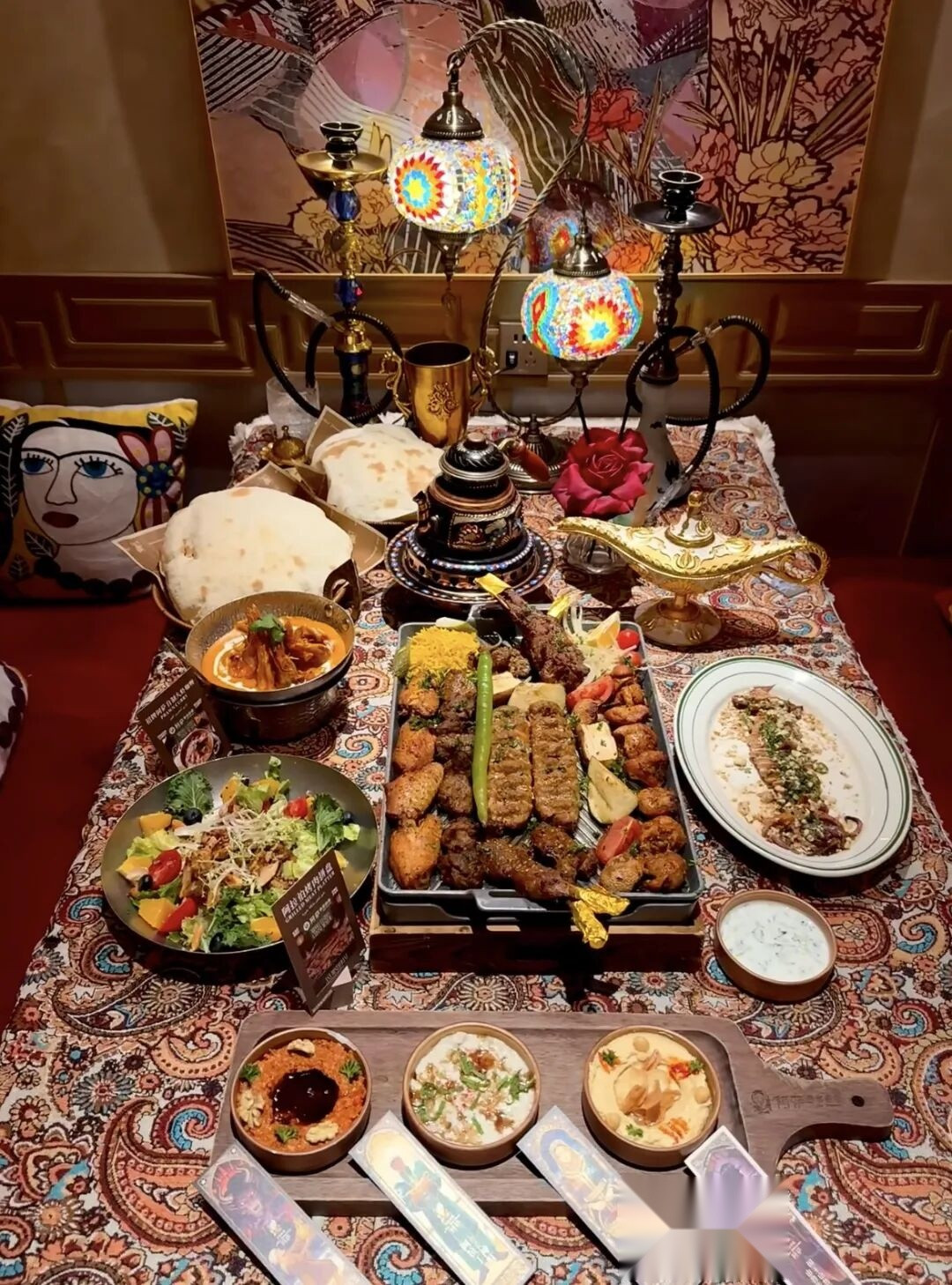
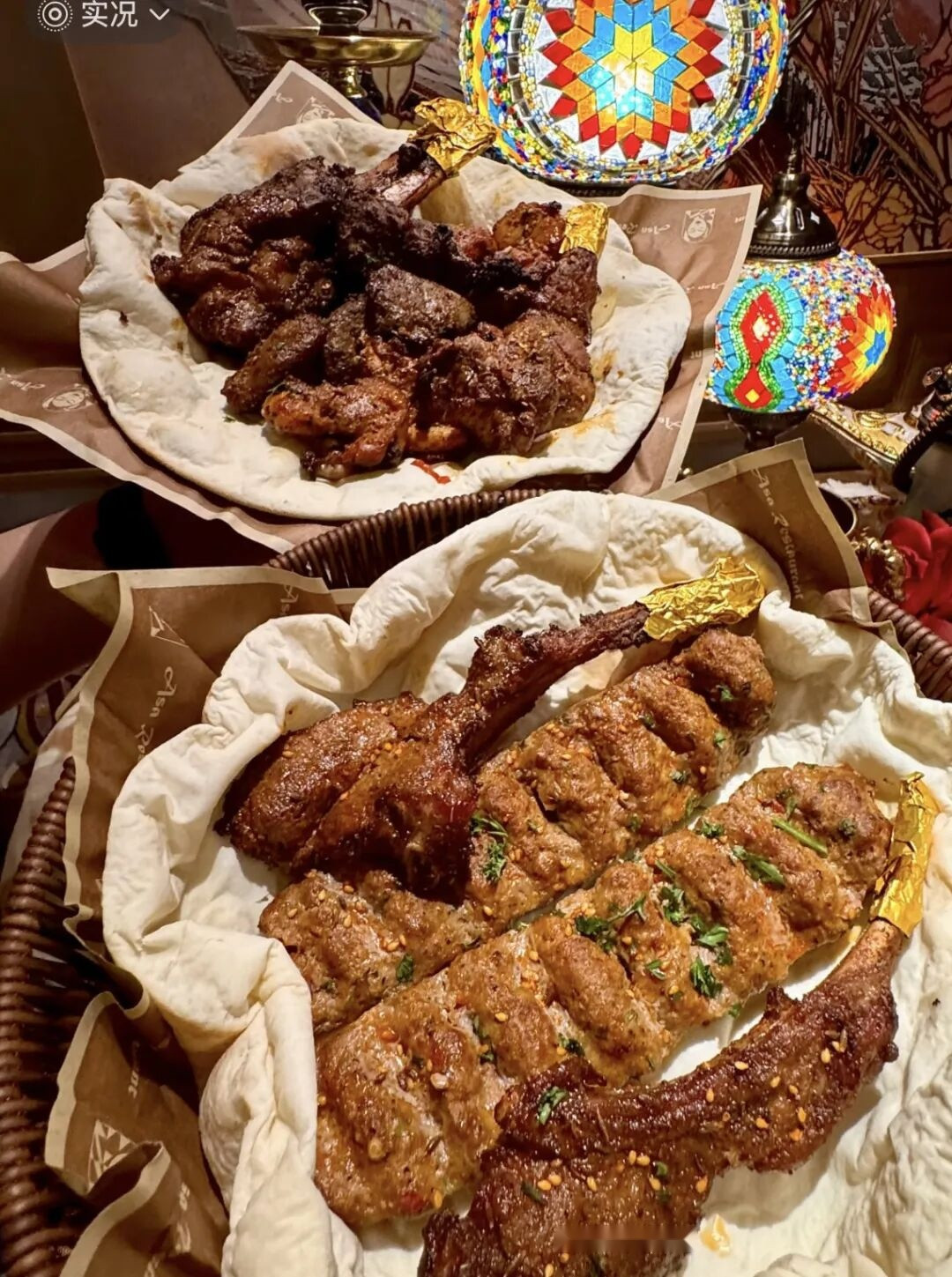
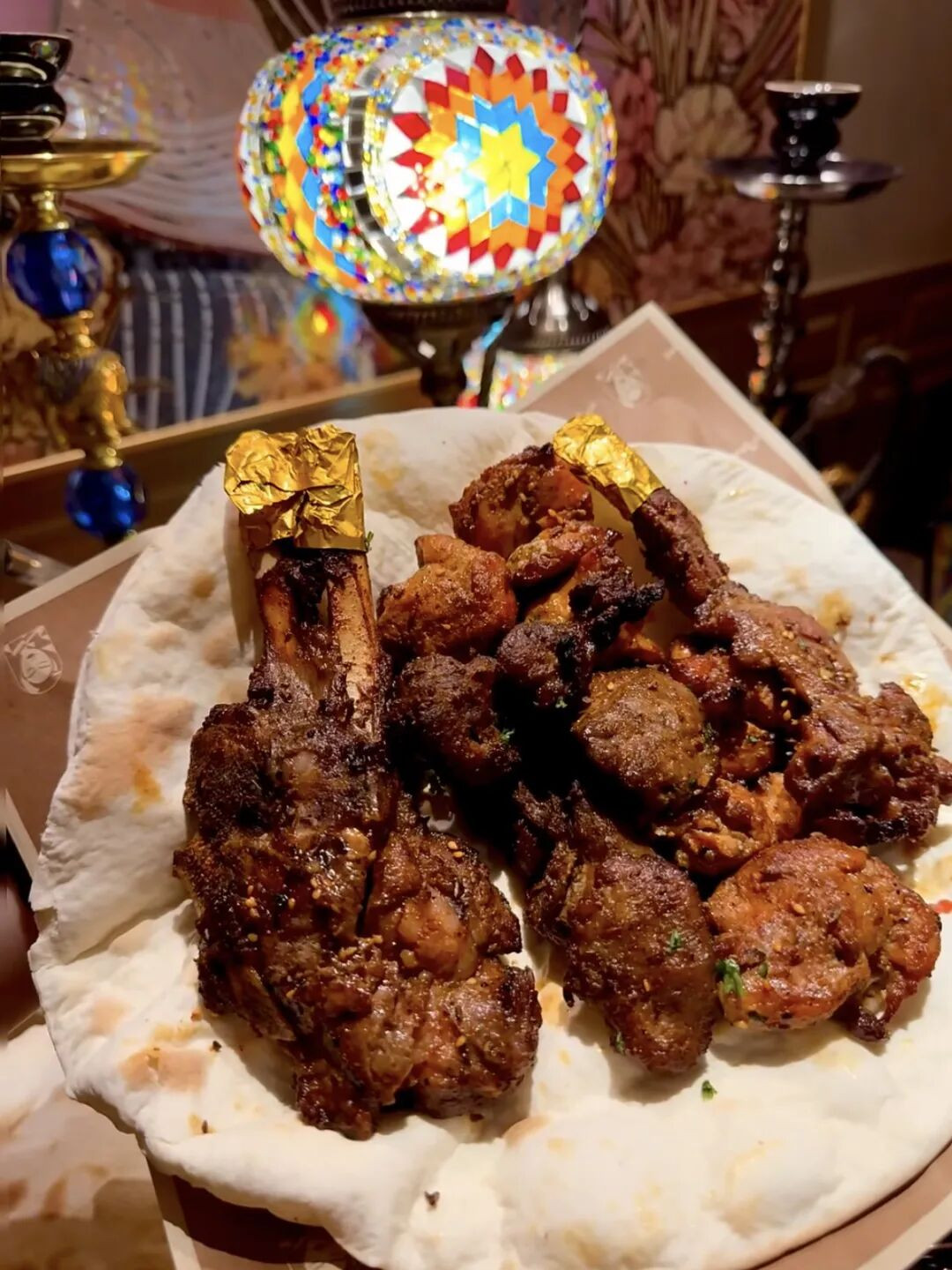
Walk into this Middle Eastern restaurant overflowing with vibes. Step through the doors and you're instantly transported to a golden palace straight out of 'One Thousand and One Nights'. Gilded carvings and stained-glass lamps make it an absolute paradise for photos. Meat lovers, go straight for the signature mixed grill platter! Grilled lamb chops, beef, mutton, chicken wings... packed with over a dozen rich spices. Every single piece of meat is grilled to crispy perfection on the outside while staying tender and juicy on the inside—the juices literally burst out. You've gotta pair it with freshly baked Arabian pita bread! The bread is soft, chewy, and stretchy. Roll up the grilled meat with some dipping sauce, and the mix of textures and savory flavors will have you stomping your feet in joy.
● Value: Offers precise recommendations for users in and around Shanghai looking for 'Middle Eastern food + immersive experiences (vibes, photos, group dining)', catering to cravings for trying something new, taking photos, gathering with friends, and going on dates;
● Audience: Foodies curious about Middle Eastern cuisine, groups and couples who care about dining vibes, families with kids (includes the 'family-friendly restaurant' tag), and those looking for Halal dining options. view all
Stepping Into the Arabian Nights: A Food Review of ASA Middle Eastern Halal Restaurant's Signature Mixed Grill in Shanghai
Summary:
A visit to ASA, a Middle Eastern Halal restaurant in Shanghai filled with 1001 Nights Arabian vibes. Featuring real photos of the luxurious golden palace interior and the massive signature mixed grill platter (grilled lamb chops, beef, chicken wings), providing a unique guide for foodies seeking authentic, exotic Halal cuisine.
ASA Middle Eastern Cuisine · Halal (Shanghai Liying Center)
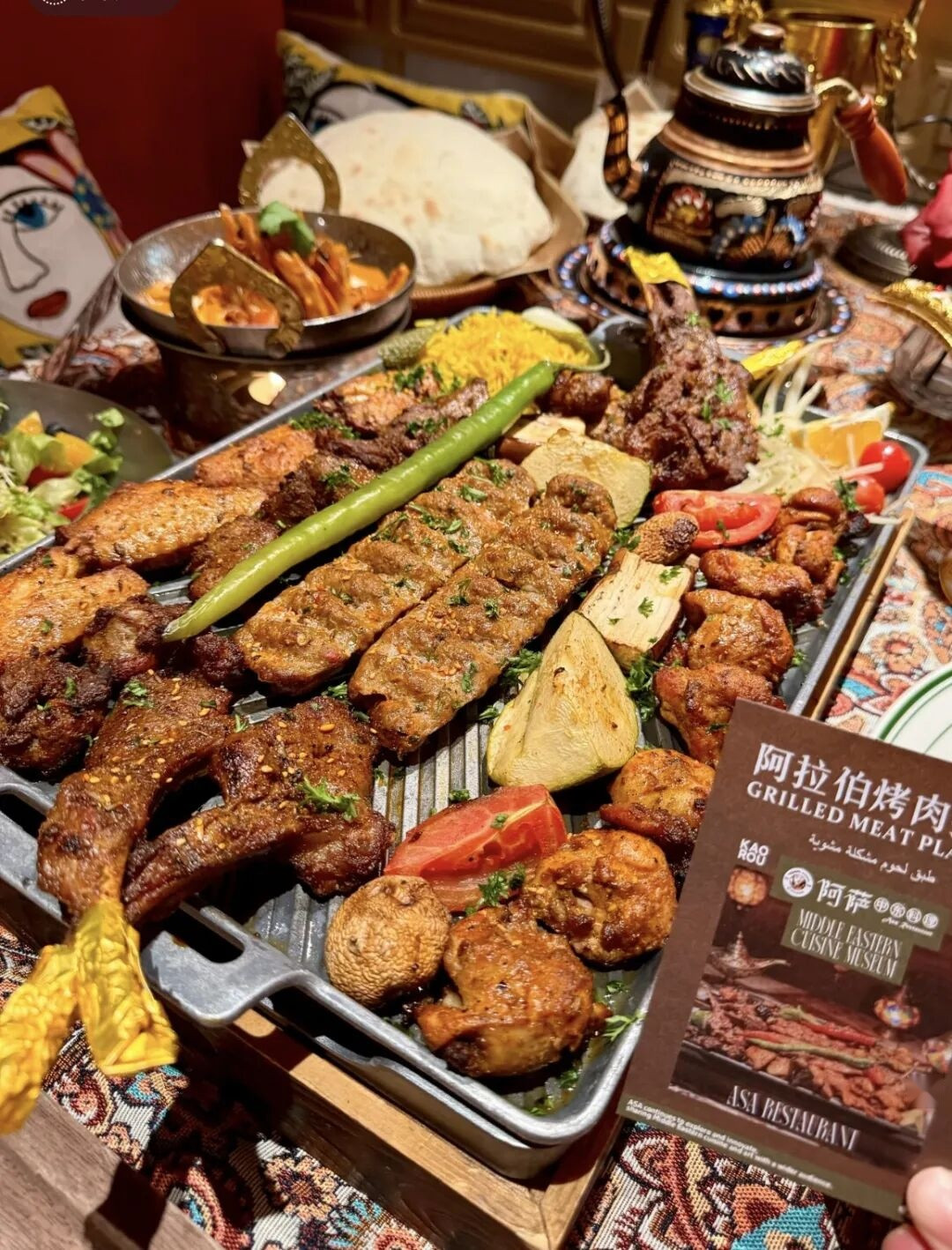
Walk into this Middle Eastern restaurant overflowing with vibes. Step through the doors and you're instantly transported to a golden palace straight out of 'One Thousand and One Nights'. Gilded carvings and stained-glass lamps make it an absolute paradise for photos. Meat lovers, go straight for the signature mixed grill platter! Grilled lamb chops, beef, mutton, chicken wings... packed with over a dozen rich spices. Every single piece of meat is grilled to crispy perfection on the outside while staying tender and juicy on the inside—the juices literally burst out. You've gotta pair it with freshly baked Arabian pita bread! The bread is soft, chewy, and stretchy. Roll up the grilled meat with some dipping sauce, and the mix of textures and savory flavors will have you stomping your feet in joy.
● Value: Offers precise recommendations for users in and around Shanghai looking for 'Middle Eastern food + immersive experiences (vibes, photos, group dining)', catering to cravings for trying something new, taking photos, gathering with friends, and going on dates;
● Audience: Foodies curious about Middle Eastern cuisine, groups and couples who care about dining vibes, families with kids (includes the 'family-friendly restaurant' tag), and those looking for Halal dining options.
Halal Shanghai Food Guide: Experiencing Arabian Nights & Middle Eastern Feasts at Asa Restaurant
Articles • Hasan09 posted the article • 0 comments • 22 views • 5 days ago
Exotic Flavors Straight Out of One Thousand and One Nights: An Honest Review of the Signature Mixed Grill Platter at Asa Middle Eastern Halal Restaurant in Shanghai
Summary:
A firsthand look at Shanghai's Asa Middle Eastern Halal Restaurant, totally dripping with Arabian Nights vibes. We're showing off the ultra-luxurious, gold-drenched palatial setting and the massive signature mixed grill platter (featuring grilled lamb chops, beef, and chicken wings)—serving up the ultimate guide for foodies hunting down authentic, exotic Halal eats.
Asa Middle Eastern Cuisine (Shanghai The In Shanghai Branch)
Step inside this Middle Eastern spot where the vibes are completely unmatched. The moment you walk through the door, you're instantly transported straight into a golden palace straight out of One Thousand and One Nights. Gilded carvings plus colorful glass lanterns make it insanely photogenic for your feed. Meat lovers, drop everything and order the signature mixed grill platter! Grilled lamb chops, beef, lamb, and chicken wings... loaded with over a dozen rich, aromatic spices. Every single piece of meat is grilled to absolute perfection—crispy on the outside, tender on the inside, with juices literally bursting out. You've gotta pair it with their freshly baked Arabic pita bread! The flatbread is super soft yet pleasantly chewy. Wrap it up with the grilled meat and dipping sauces, and that incredible mix of savory crunch will seriously make you want to stomp your feet in pure joy.
Value: Delivers spot-on recommendations for locals and visitors in and around Shanghai looking for 'Middle Eastern food + immersive vibes (atmosphere, photos, group dining)', perfectly hitting the spot for anyone craving something new, chasing aesthetic photos, hosting group dinners, or planning a date night.
Audience: Foodies curious about Middle Eastern cuisine, groups and couples who care about dining vibes, family-friendly crowds (including a 'family-friendly restaurant' tag), and anyone specifically looking for Halal dining options. view all
Exotic Flavors Straight Out of One Thousand and One Nights: An Honest Review of the Signature Mixed Grill Platter at Asa Middle Eastern Halal Restaurant in Shanghai
Summary:
A firsthand look at Shanghai's Asa Middle Eastern Halal Restaurant, totally dripping with Arabian Nights vibes. We're showing off the ultra-luxurious, gold-drenched palatial setting and the massive signature mixed grill platter (featuring grilled lamb chops, beef, and chicken wings)—serving up the ultimate guide for foodies hunting down authentic, exotic Halal eats.
Asa Middle Eastern Cuisine (Shanghai The In Shanghai Branch)
Step inside this Middle Eastern spot where the vibes are completely unmatched. The moment you walk through the door, you're instantly transported straight into a golden palace straight out of One Thousand and One Nights. Gilded carvings plus colorful glass lanterns make it insanely photogenic for your feed. Meat lovers, drop everything and order the signature mixed grill platter! Grilled lamb chops, beef, lamb, and chicken wings... loaded with over a dozen rich, aromatic spices. Every single piece of meat is grilled to absolute perfection—crispy on the outside, tender on the inside, with juices literally bursting out. You've gotta pair it with their freshly baked Arabic pita bread! The flatbread is super soft yet pleasantly chewy. Wrap it up with the grilled meat and dipping sauces, and that incredible mix of savory crunch will seriously make you want to stomp your feet in pure joy.
Value: Delivers spot-on recommendations for locals and visitors in and around Shanghai looking for 'Middle Eastern food + immersive vibes (atmosphere, photos, group dining)', perfectly hitting the spot for anyone craving something new, chasing aesthetic photos, hosting group dinners, or planning a date night.
Audience: Foodies curious about Middle Eastern cuisine, groups and couples who care about dining vibes, family-friendly crowds (including a 'family-friendly restaurant' tag), and anyone specifically looking for Halal dining options.
Best Halal Restaurants in Beijing: 10 Local Muslim Food Spots Worth Trying
Articles • yusuf908 posted the article • 0 comments • 431 views • 2026-06-30 06:24
Summary: This guide to the best halal restaurants in Beijing keeps the original list of local Muslim food spots, Hui Muslim food, and practical halal dining details.
This article summarizes the key points of '10 Halal Restaurants in Beijing Worth Trying (Part 9),' keeping the original paragraph and image order. It is for readers interested in Muslim life, Islamic culture, and Chinese Islamic articles, and makes it easy to search for topics like Uyghur culture, marriage and family, and the ninth installment.
The list includes Shunhexiang Harbin-style stir-fry in Tongzhou, Fenghong Old Beijing Flavor in Changping, Aidamu Xinjiang street barbecue in Shilihe, Ruilin Azerbaijani restaurant near Ritan, Yilan Liyuan American-style burgers on Niujie, Guxiangzhai Tianjin-style shaved ice in Hufangqiao, Niujie's Big Green Bag stinky tofu, Zafran Pakistani restaurant in Xinyuanli, Jinfang Snack Bar in Dongdaqiao, and Ali & Wang's rotating kebab in Sanlitun.
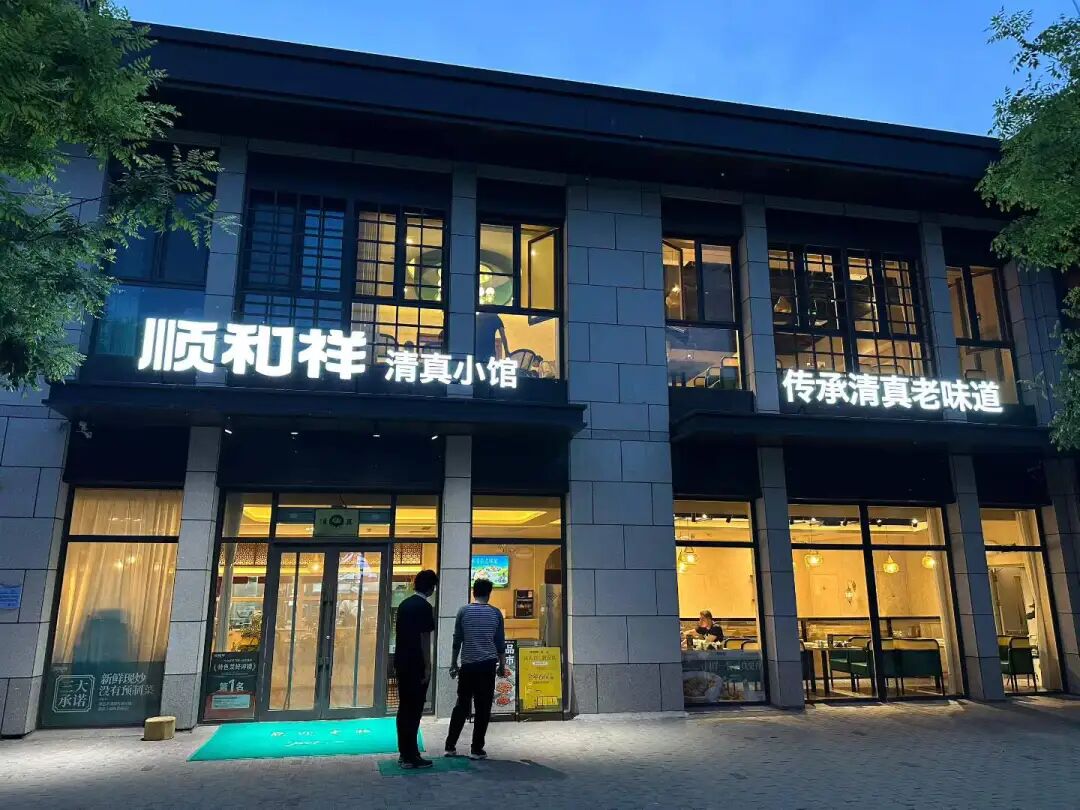
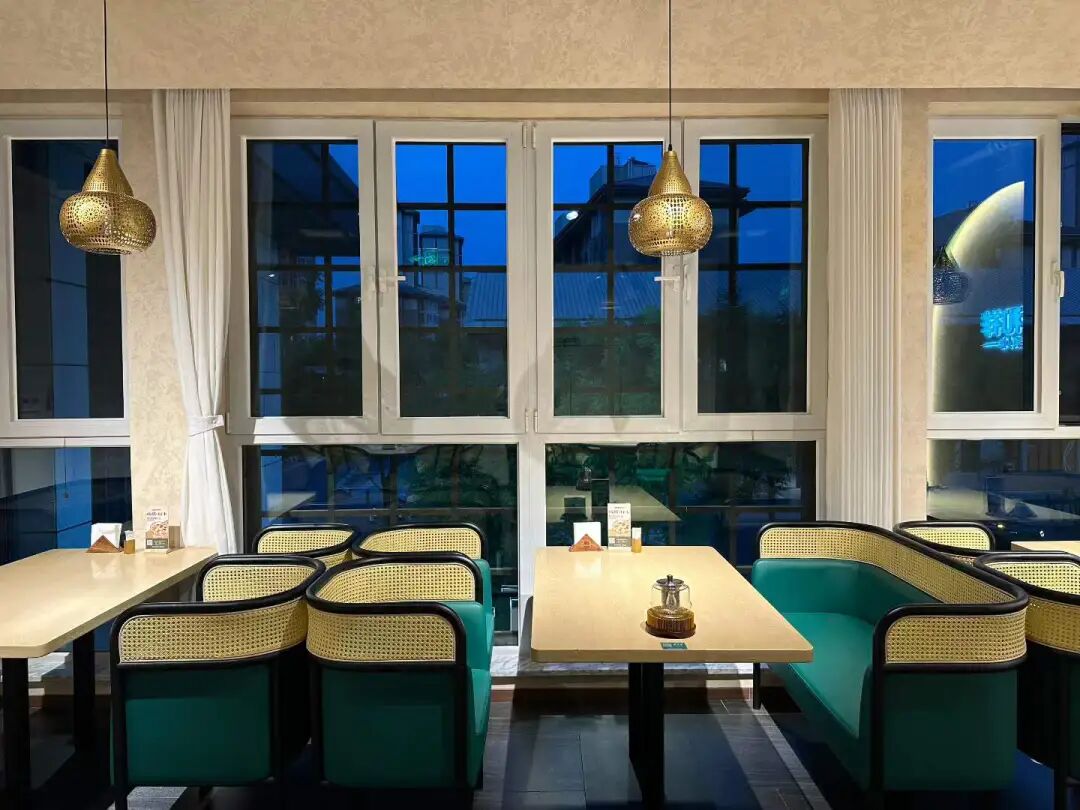
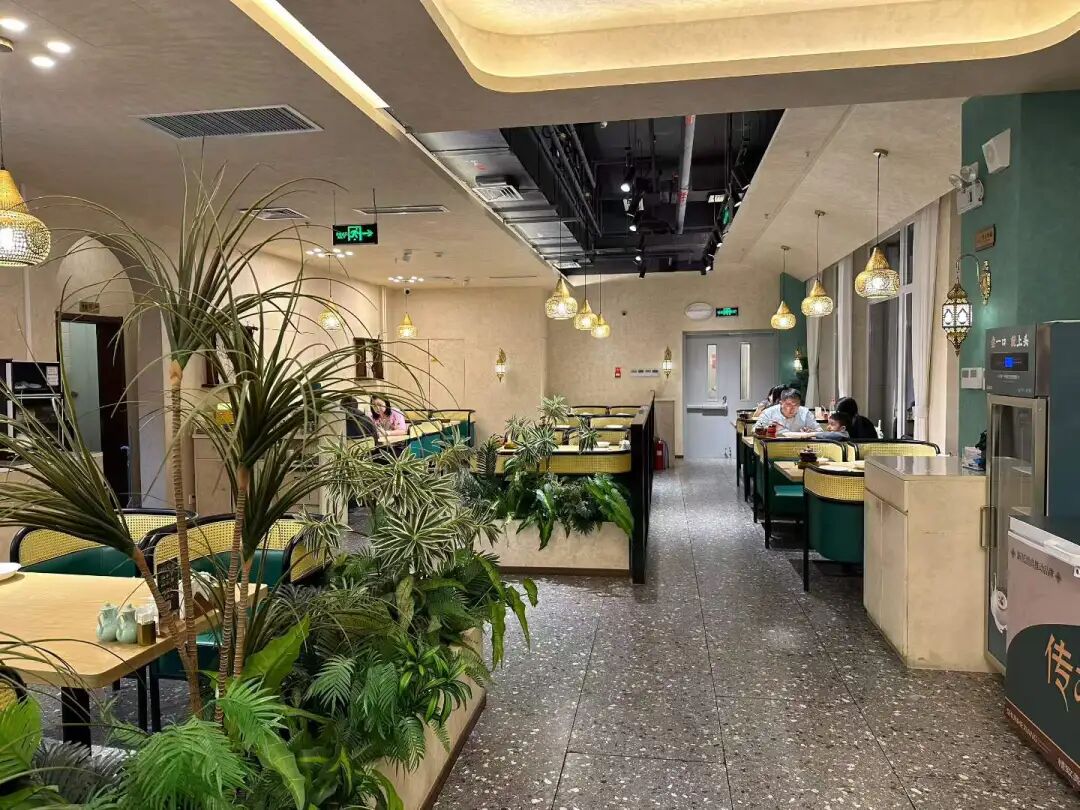
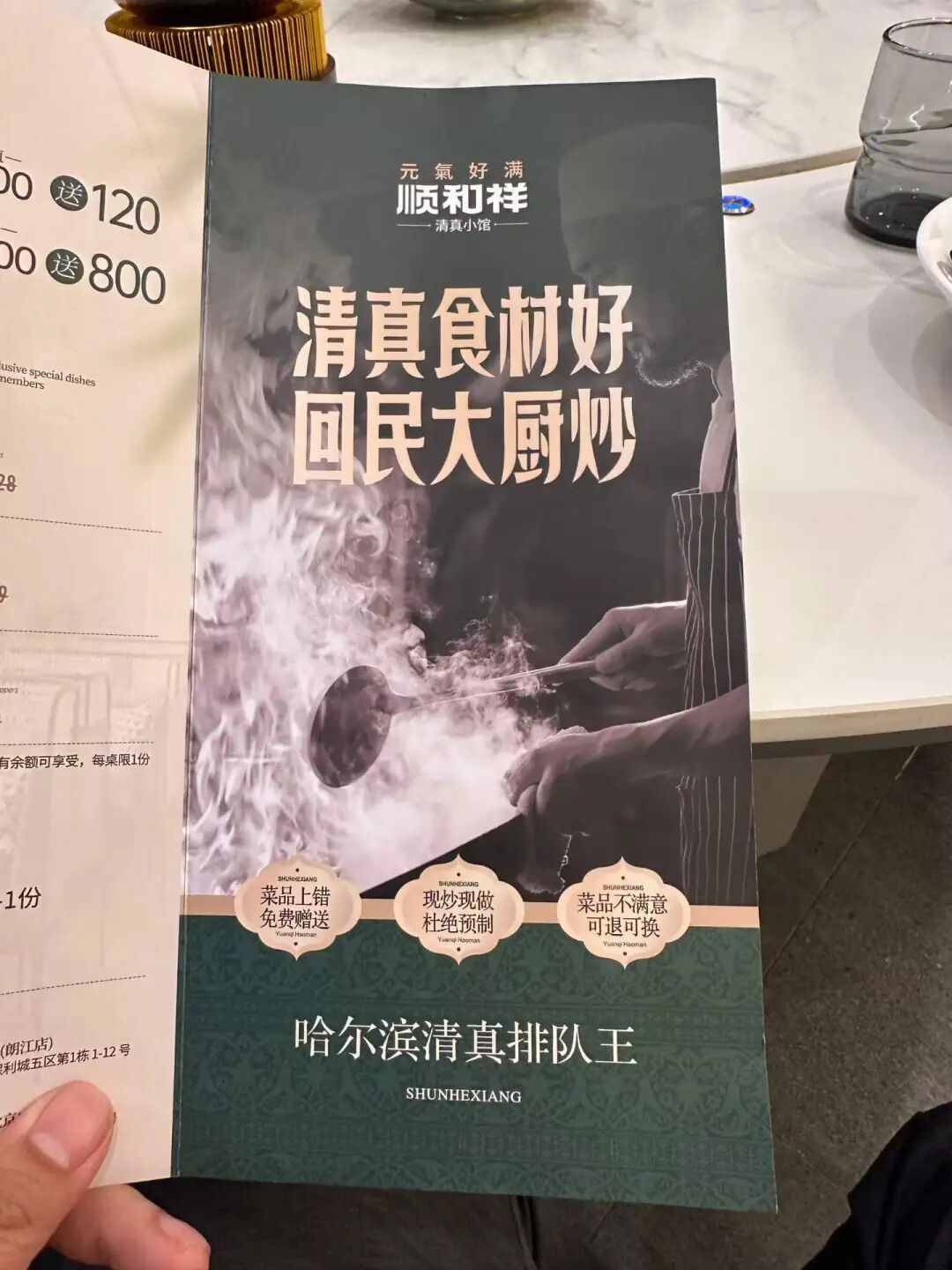
I heard that the Harbin Hui Muslim stir-fry restaurant Shunhexiang opened in Beijing's Tongzhou sub-center, so I came to try it out for dinner. The restaurant is located in a new residential complex along the Grand Canal in Tongzhou. The environment is great, and the private room's turntable is button-controlled, making it easy to reach the dishes.
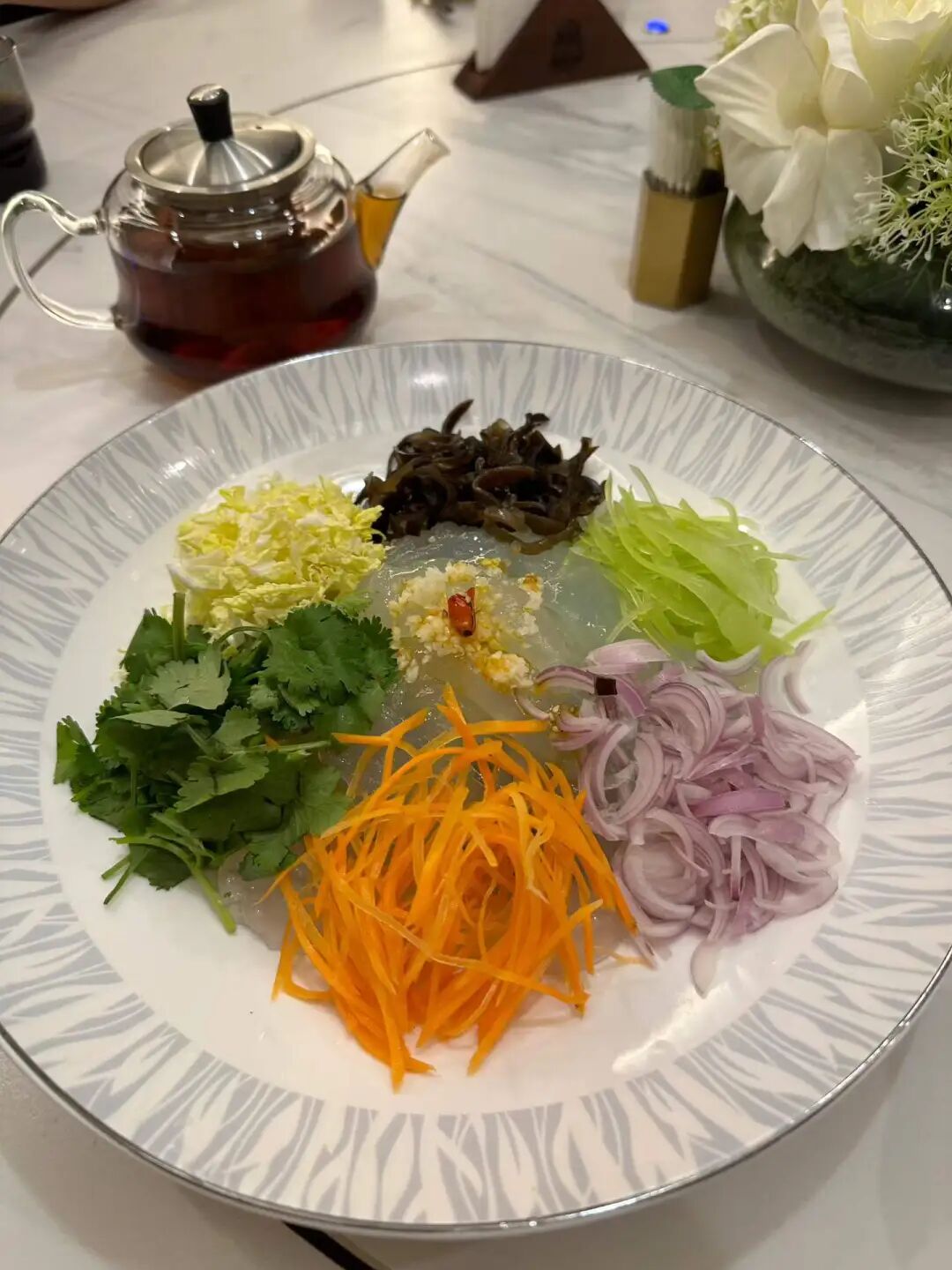
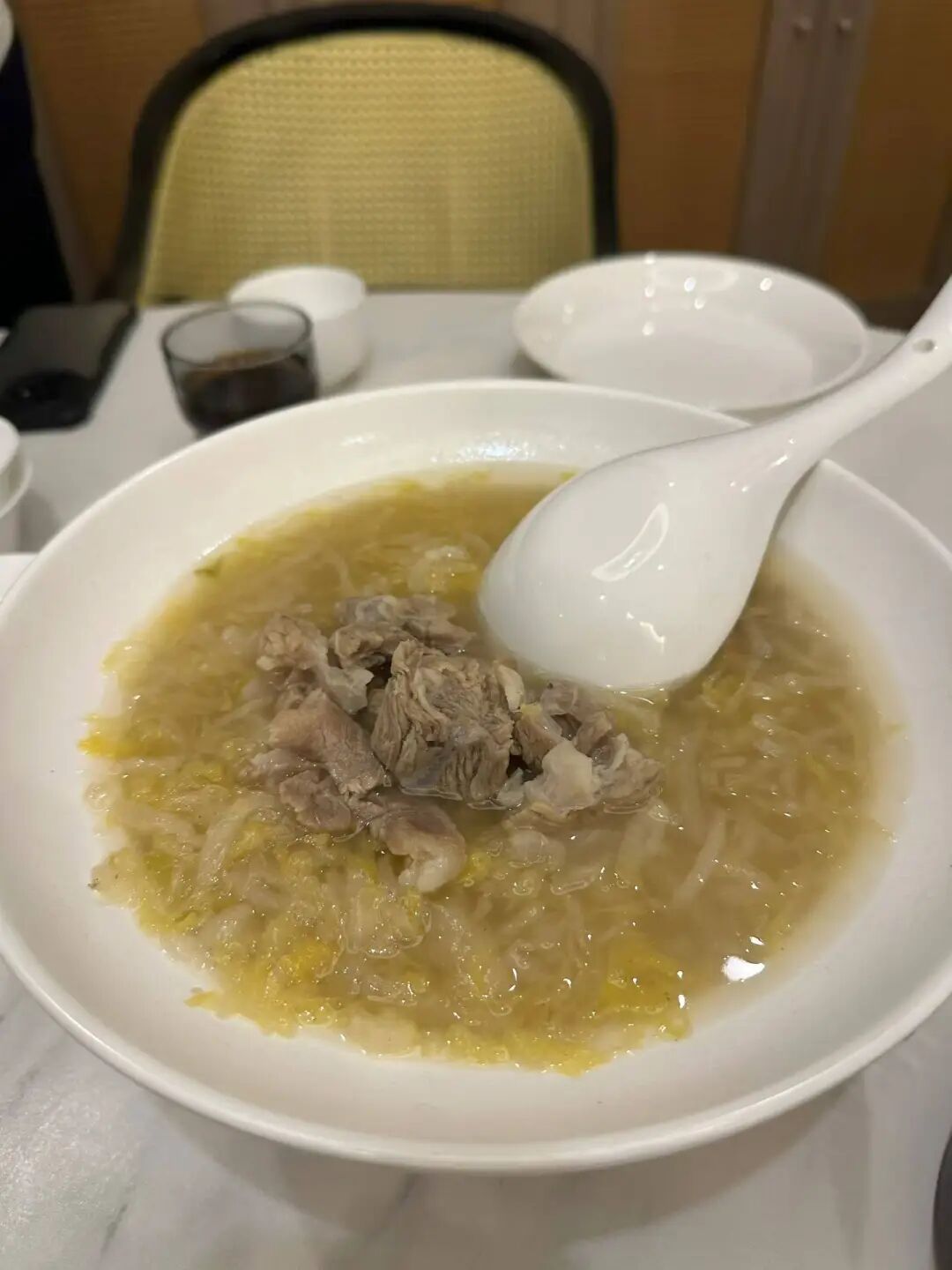
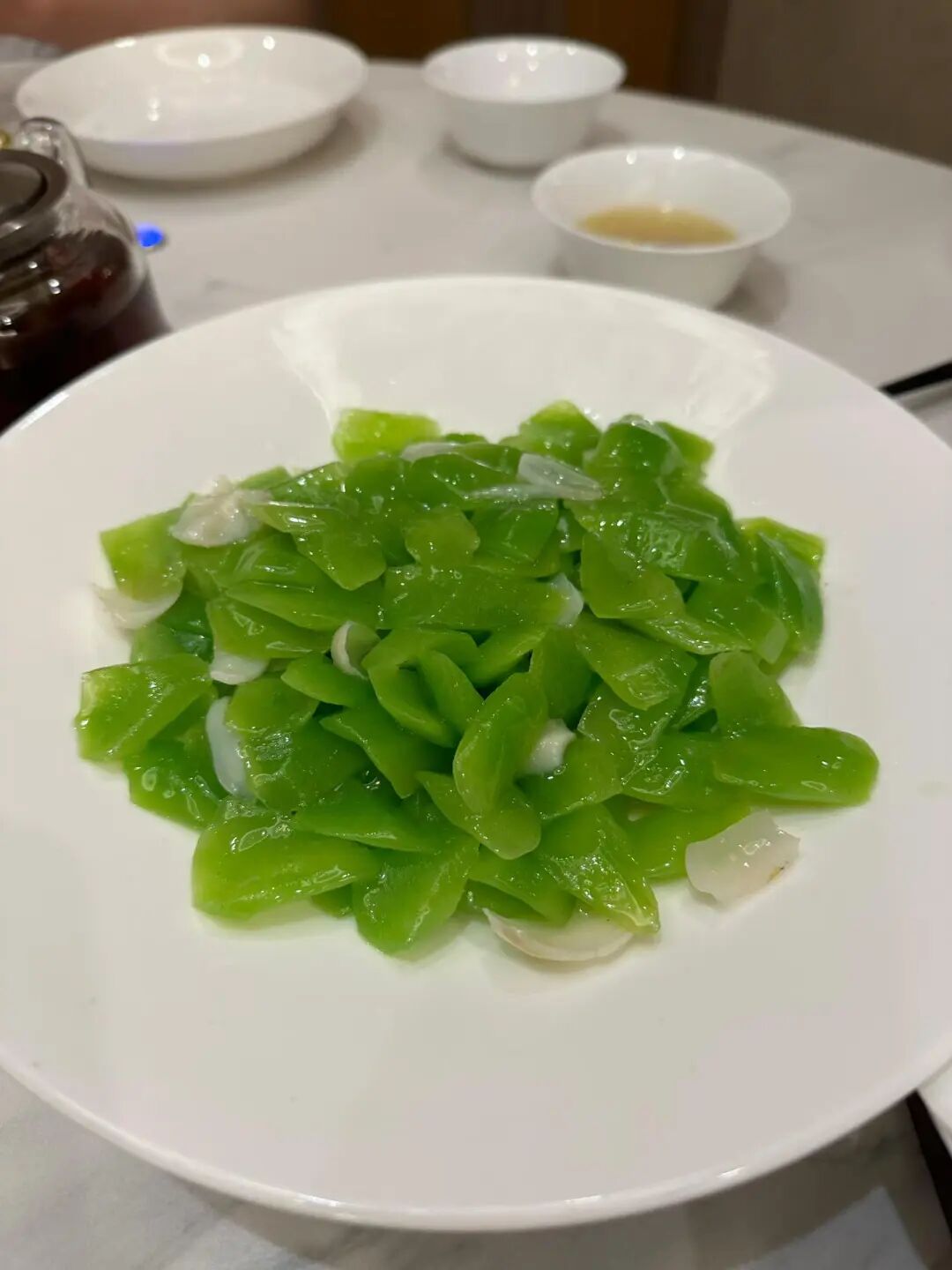
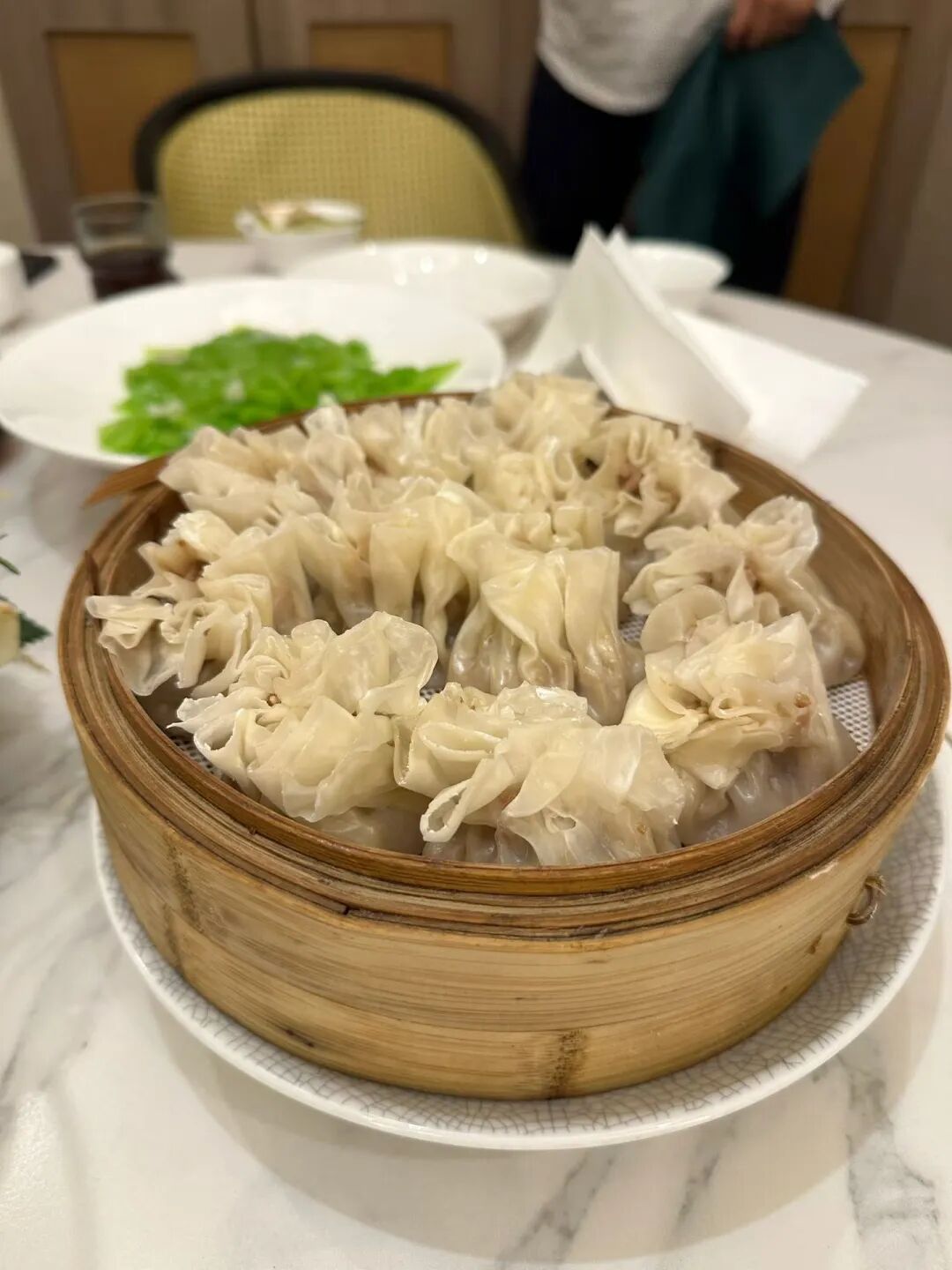
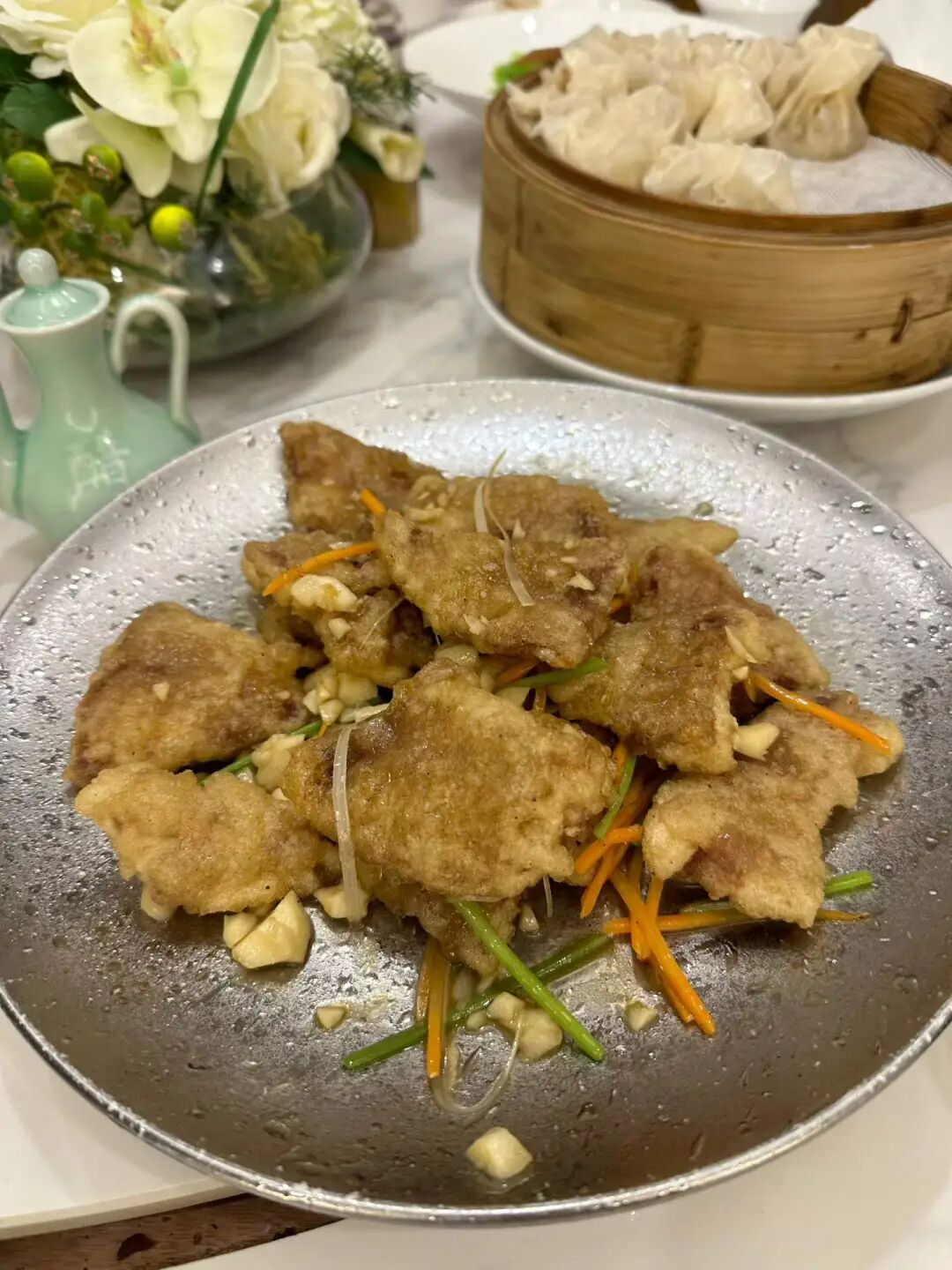
They specialize in Heilongjiang Hui Muslim cuisine and have also added some southern Chinese dishes to their menu. We ordered the savory sweet and sour pork (guobaorou), sauerkraut beef rib stew, colorful starch noodles (dalapi), stir-fried lily bulbs with bamboo shoots, and beef steamed dumplings (shaomai). The best of these was the steamed dumplings. The skin was thin and chewy, and the filling was fragrant and not greasy. I think they are better than the other Hui Muslim steamed dumplings currently in Beijing. The sweet and sour pork had a good texture and wasn't fried too hard. I think it's better than another Heilongjiang Hui Muslim restaurant in Beijing. The sauerkraut tasted great, but there was very little beef, and there were very few lily bulbs in the lily bulb and bamboo shoot dish. Overall, the restaurant is definitely worth a visit. The biggest problem is that it is too far from the city center, almost reaching Hebei. It is best suited for those driving there or people working in the sub-center.
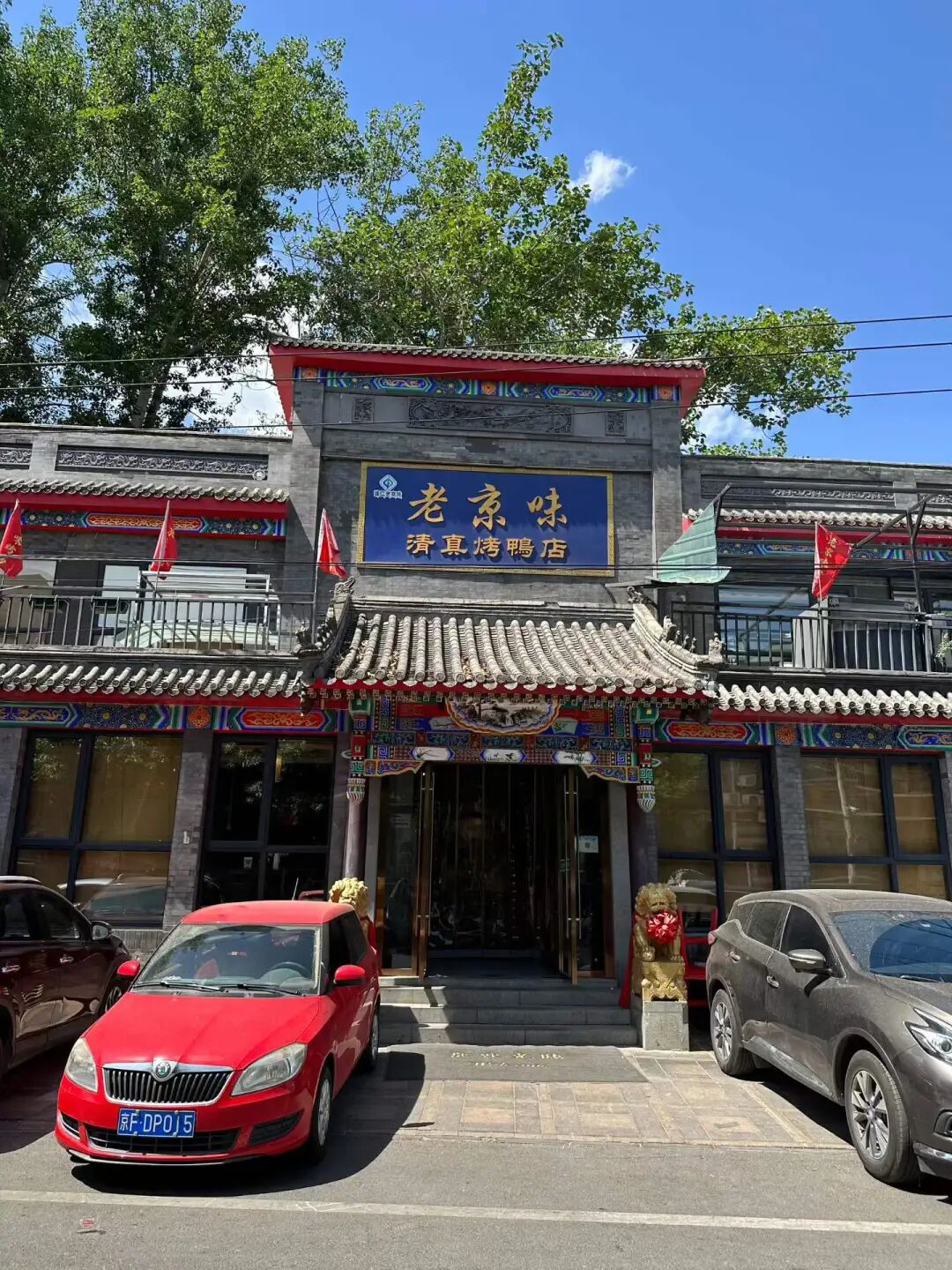
On Sunday, I was in Changping and had Beijing-style food for lunch at Fenghong Old Beijing Flavor in Xiaotangshan.
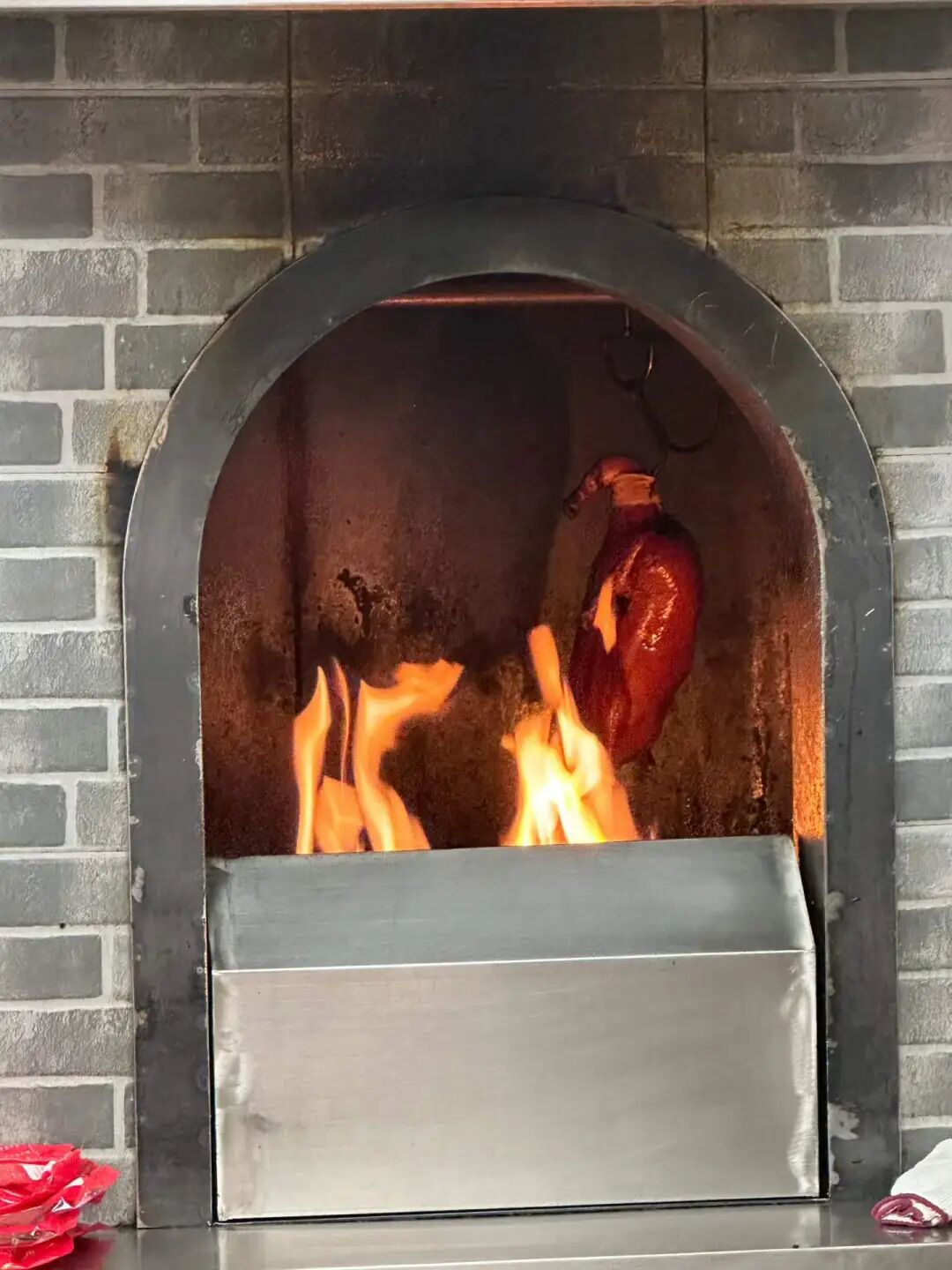
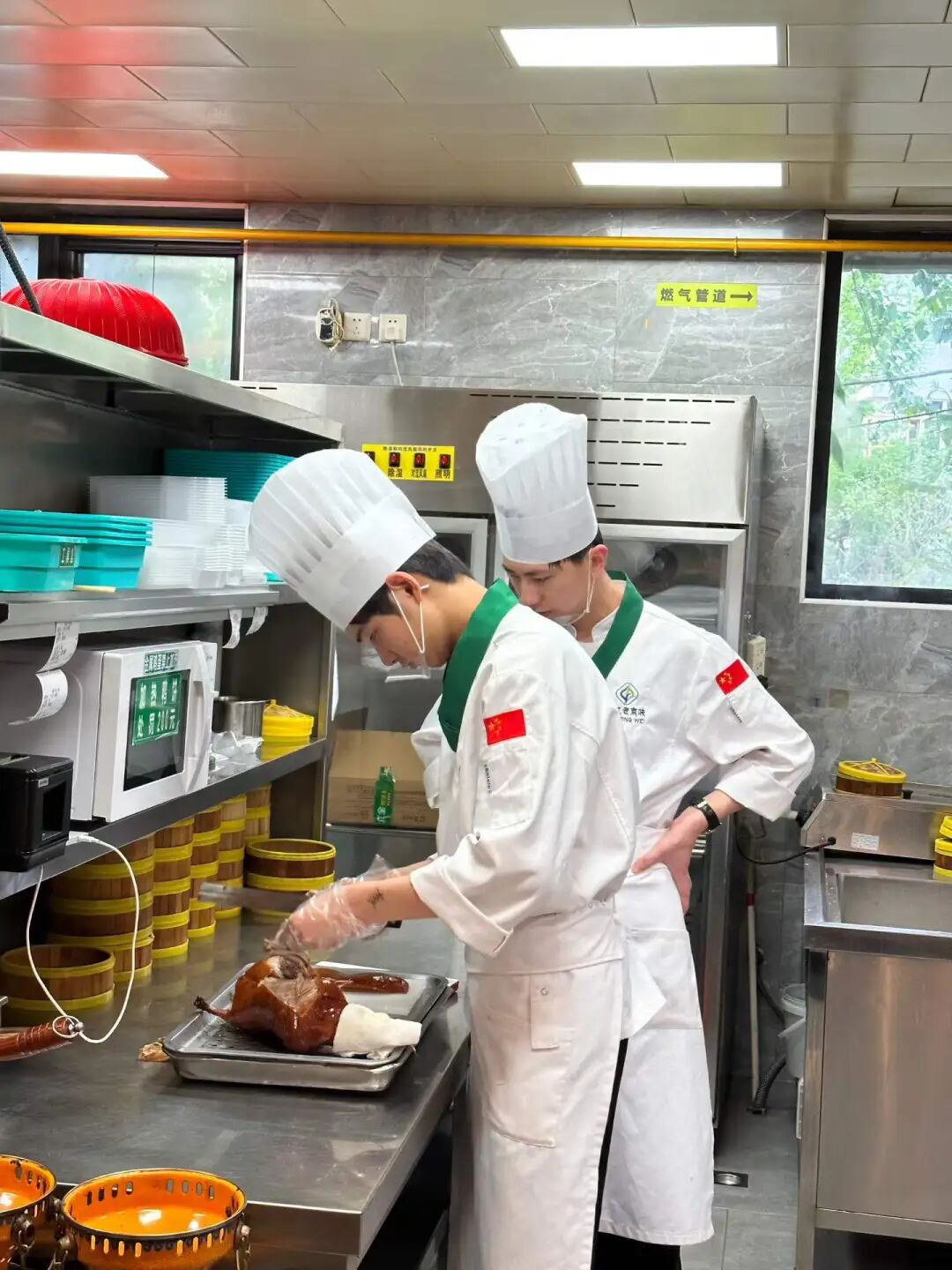
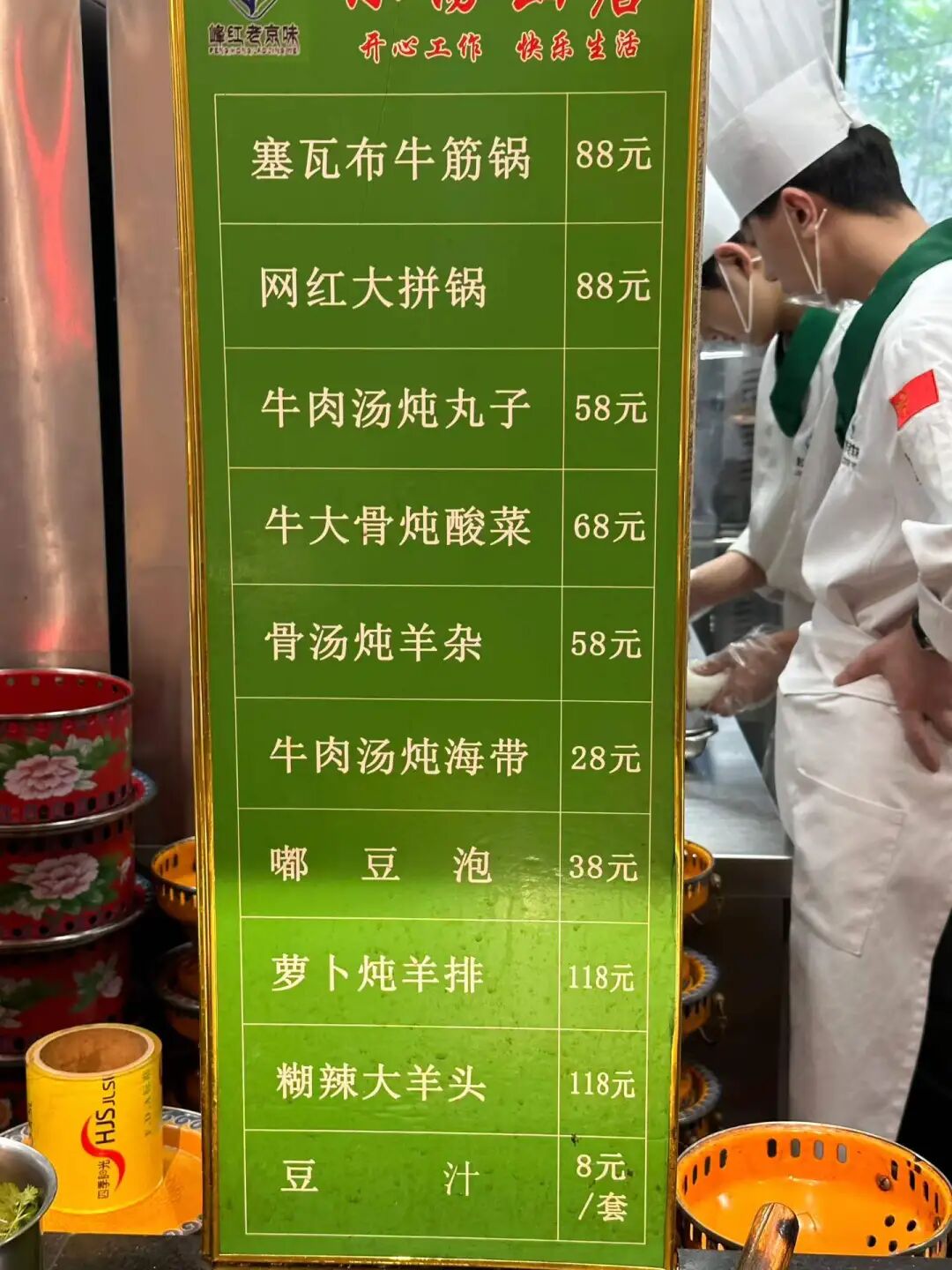
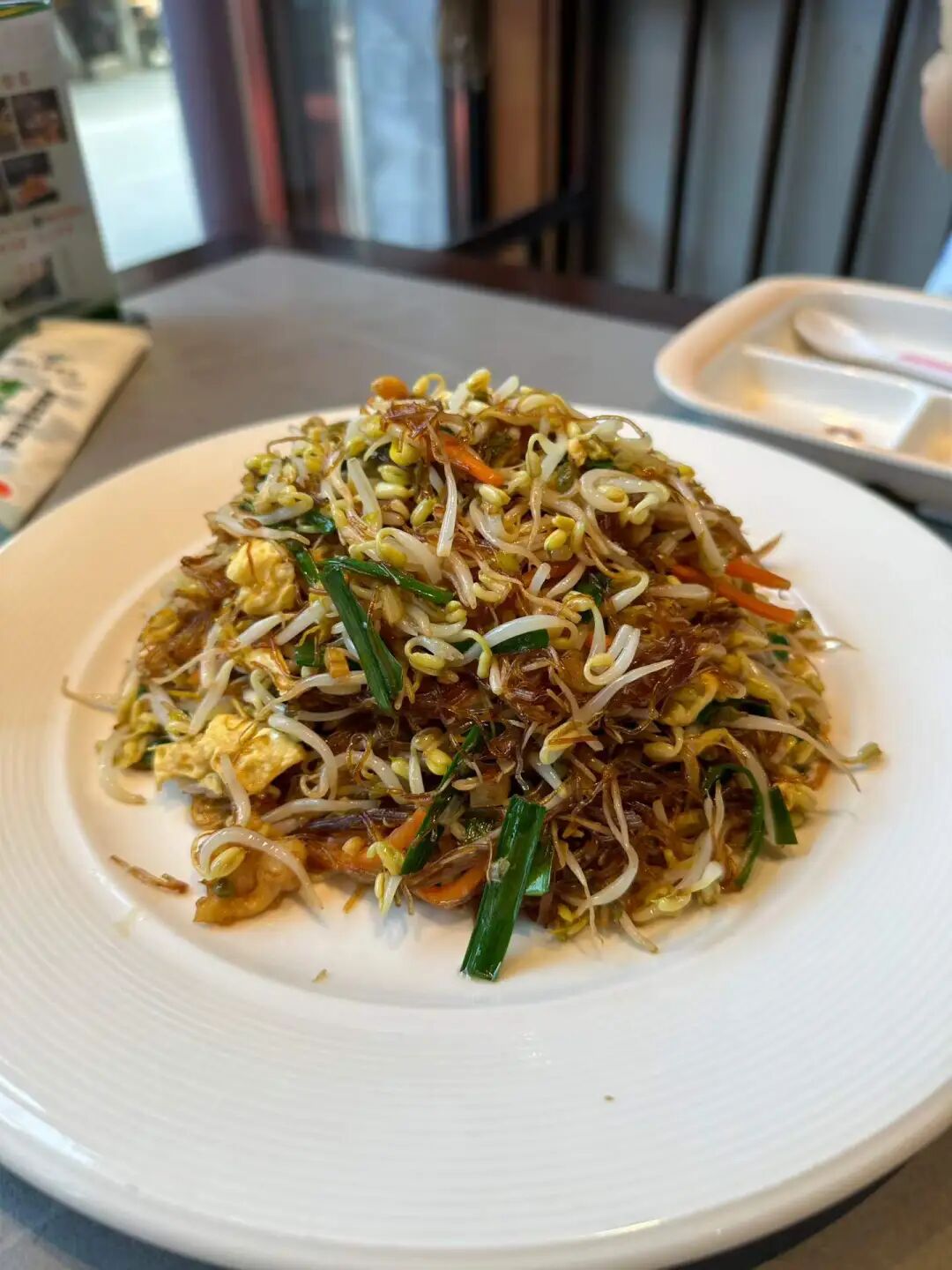
We ordered the three-person set meal, which included half a roast duck, grilled meat on a round iron plate (zhizi kaorou), stir-fried mixed vegetables (chao hecai), and duck frame tofu soup. This three-person set is a great value, and we were stuffed after finishing it. The duck tasted good, and the kids really liked it. The portion of stir-fried mixed vegetables (chao hecai) was huge, and it tasted great too.
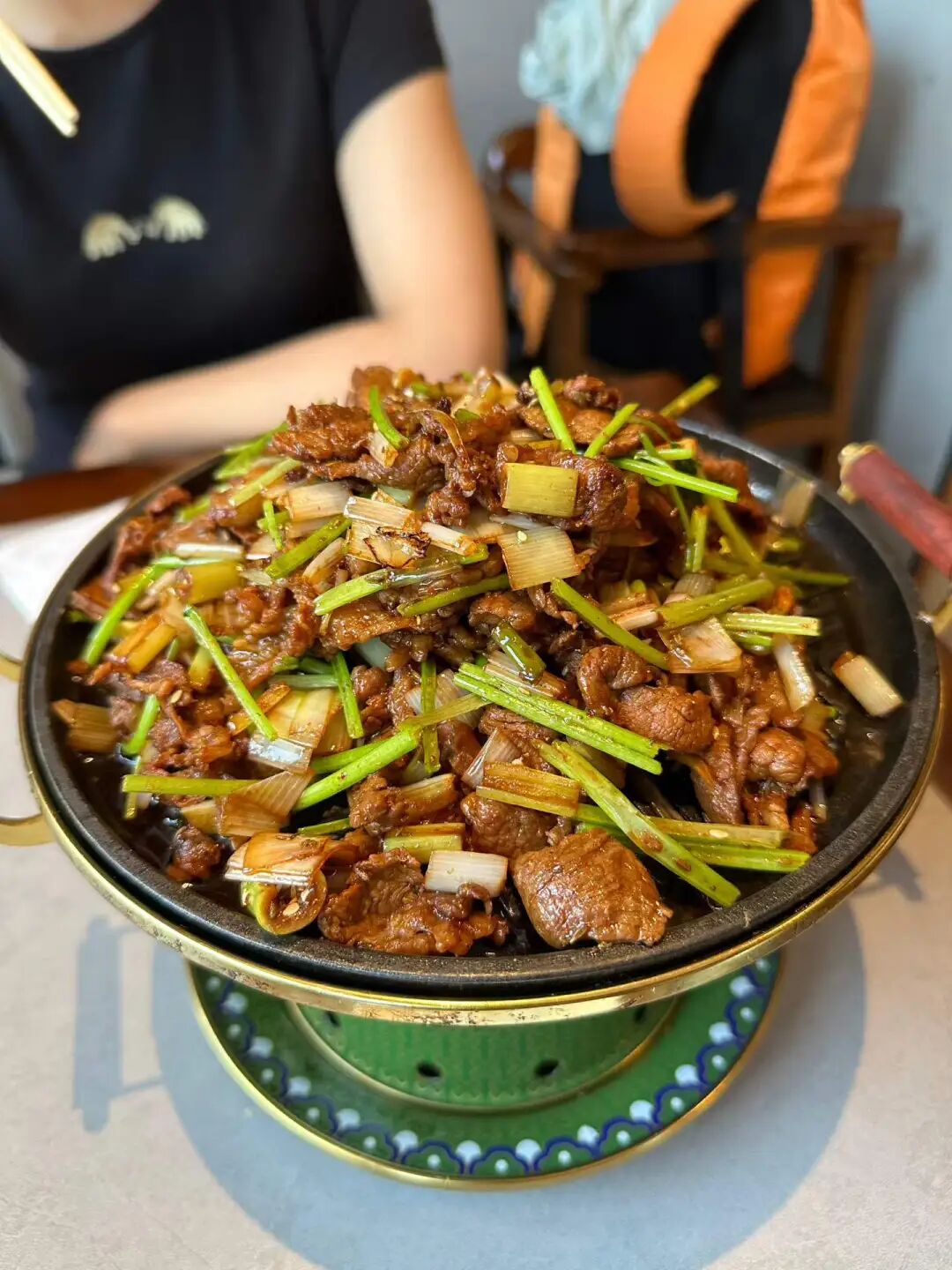
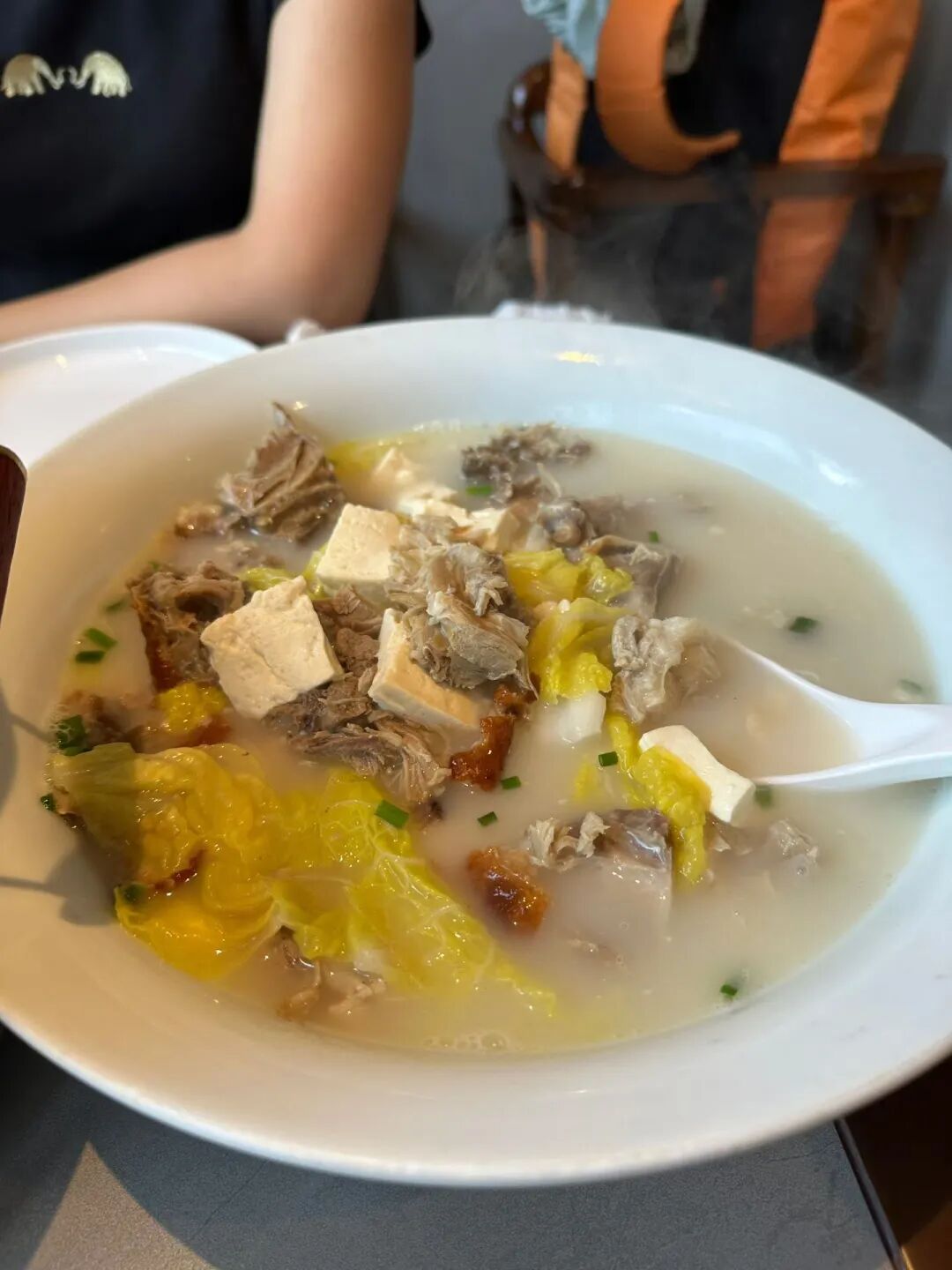
The grilled meat on a round iron plate (zhizi kaorou) was a hit with both the Xinjiang and Hunan people at our table; the meat was tender but still had a nice chew. However, it must have been pre-marinated because it was spicy and couldn't be made mild, so the kids couldn't eat it. Duck frame soup is a must-have with roast duck; it was very savory and we couldn't stop drinking it.
Besides roast duck, they also serve traditional Hui Muslims' eight big bowls (badawan). If you are visiting Changping, you should come here to eat. They don't close in the afternoon, so it is perfect for a late meal after sightseeing.
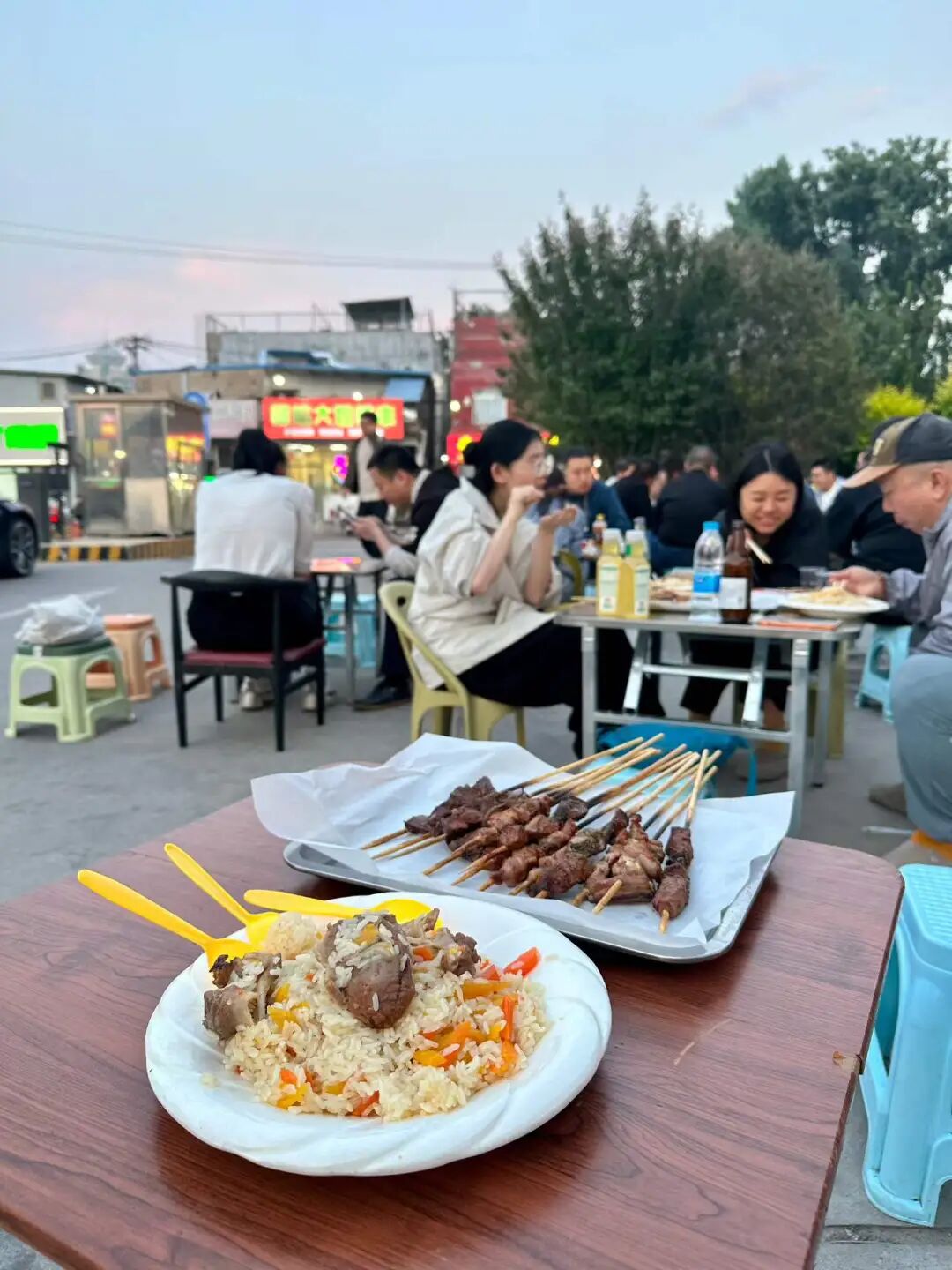
In the evening, we went to Shilihe to eat barbecue at Aidamu. I had heard they were very famous, but this was my first time eating there, and I was truly impressed. They have basically brought the level of a local Xinjiang night market to Beijing; eating there felt just like being back in Xinjiang.
There is a large parking lot right across from the restaurant, making it very convenient if you drive there. When we arrived at 6:30, the place was already packed, so we set up a table in the parking lot across the street. Since the temperature has risen in May, it is perfect for eating barbecue outdoors.
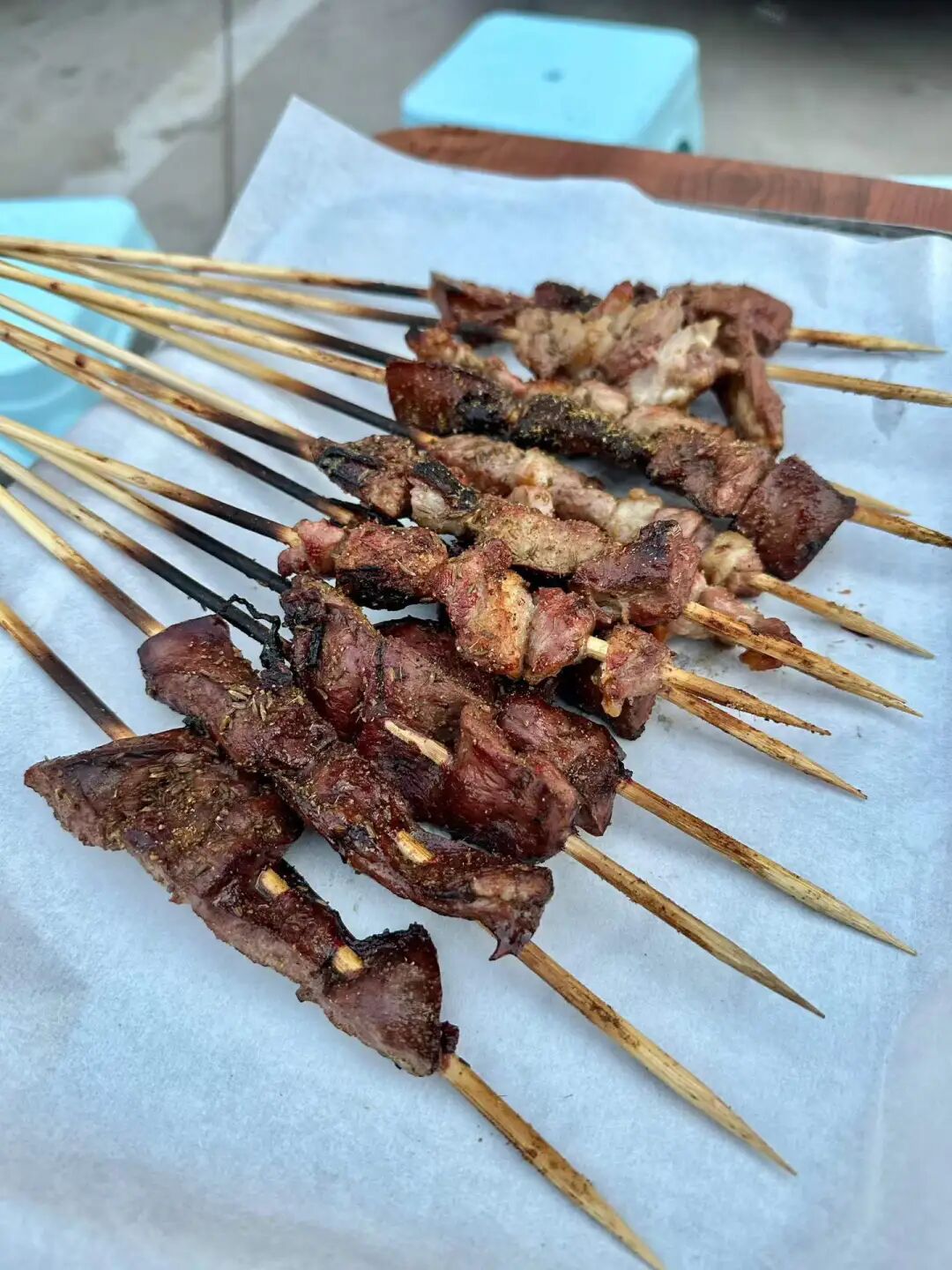
At their place, you grab the skewers yourself from the freezer. We had lamb liver, lamb heart, lamb skewers, and lamb chops. The lamb liver was very tender, definitely top-tier for Beijing. The lamb heart had more chew than the liver, and it was also quite good. The lamb skewers had no gamey smell at all, just the pure aroma of lamb, which is very rare in Beijing.
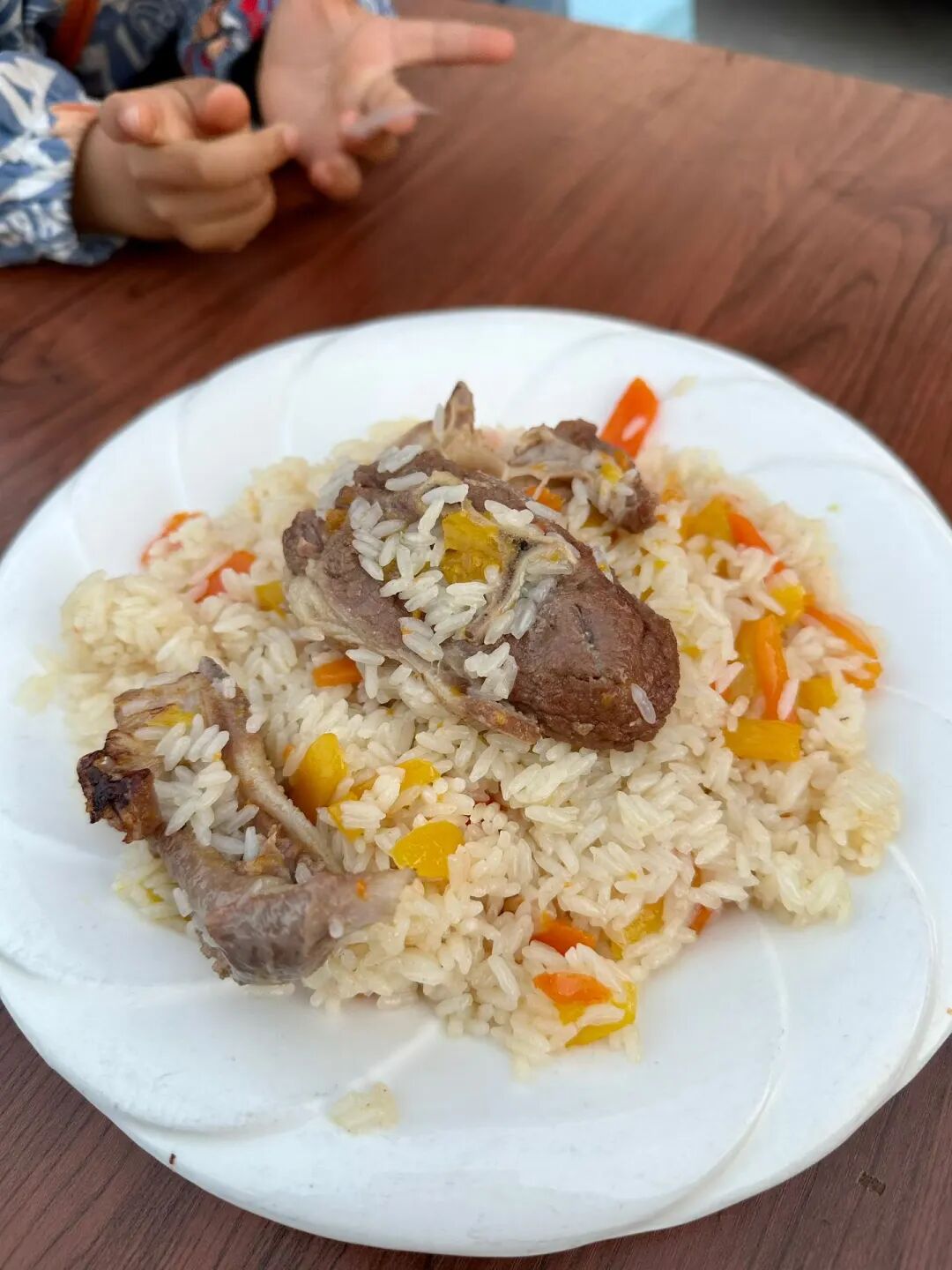
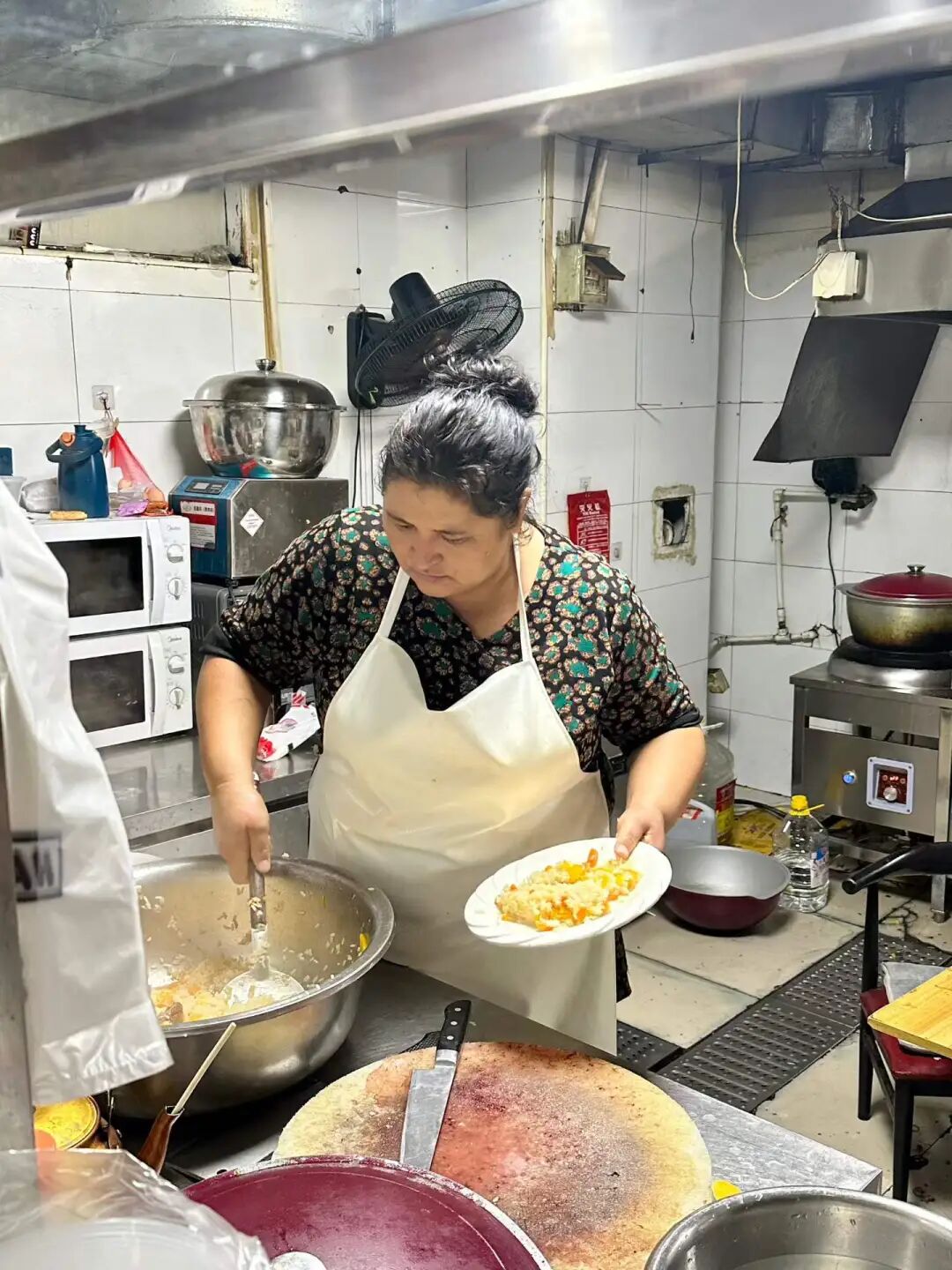
We had the pilaf (zhuafan) fresh out of the pot at seven o'clock. It was shiny and oily, though the lamb was a bit tougher compared to the skewers. Overall, it was still good. I happened to hear the table next to us complaining that their rice was undercooked. Actually, I think pilaf is only good when the rice is a bit firm. If the rice is too soft and mushy, it just becomes regular steamed rice.
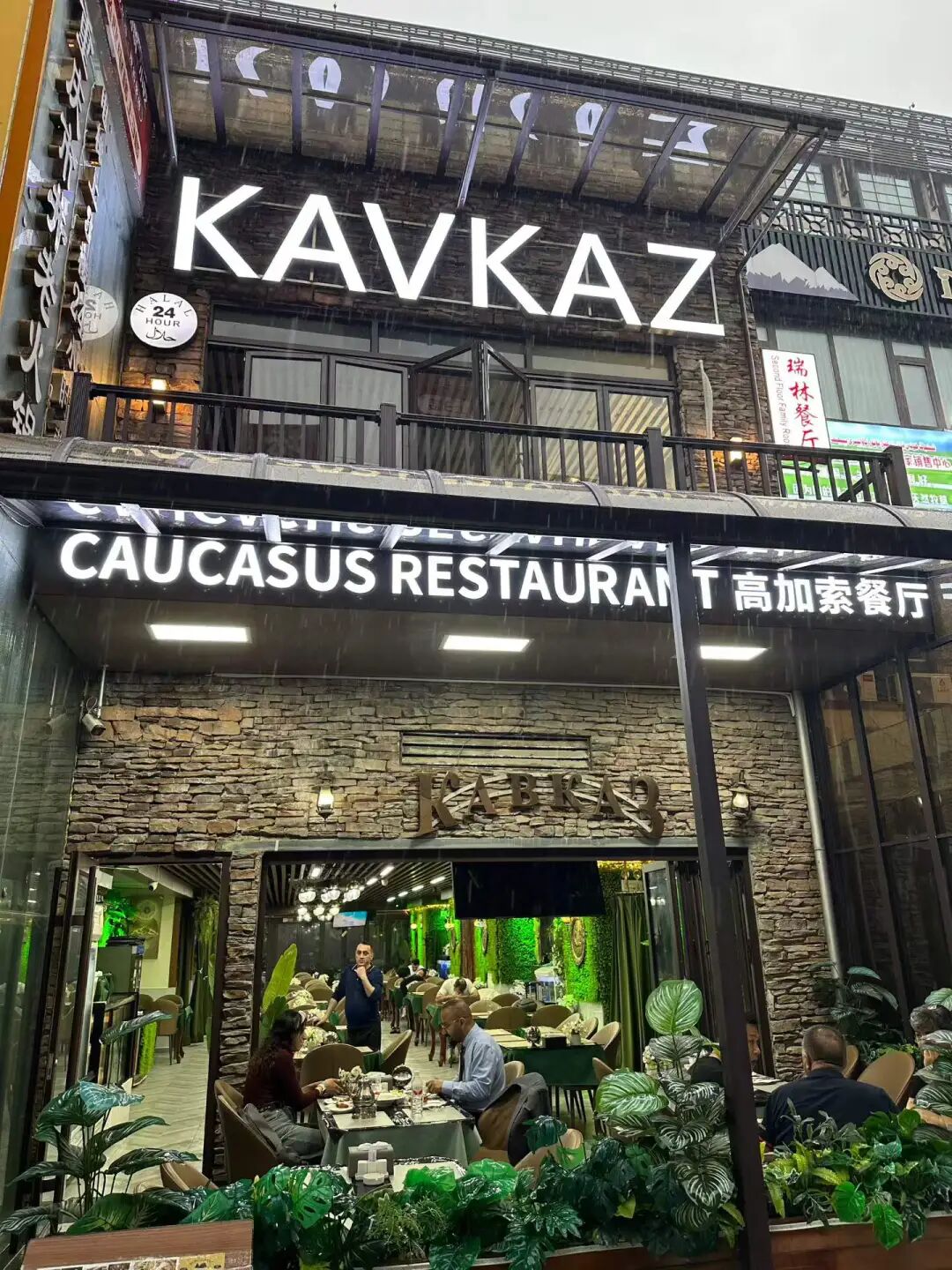
On the weekend, we had dinner at Kavkaz Ruilin, a long-standing Azerbaijani restaurant on Ritan Upper Street, to enjoy some Russian and Caucasian food. This is a classic former Soviet-style restaurant in Beijing that has been open for over a decade. It mostly serves merchants from Russian-speaking regions who come to Yabaolu to source goods. Its Chinese name used to be Ruilin, but it has been changed to Ruilin.
After the Soviet Union collapsed in the 1990s, many traders (daoye) took green-skinned trains to Beijing and headed straight to Yabaolu to stock up on goods. They brought down jackets, leather shoes, toys, and other small items back home to sell for huge profits. Yabaolu gradually grew from street stalls and tents into Beijing's largest wholesale market for Russian-speaking regions, and more former Soviet-style restaurants opened up on nearby Ritan Upper Street. Over a decade ago, Ritan Upper Street was mainly home to Central Asian and Azerbaijani restaurants, including Uzbek and Kazakh spots.
Over the last decade, Russia's economic decline, the shift of markets to places like Yiwu, Guangzhou, and Suifenhe, and the rise of cross-border e-commerce have caused trade with Russia on Yabaolu to shrink. Yitan Shangjie has gradually become a hub for Uyghur restaurants. Besides Dardanelles and Desert Rose, which focus on Turkish food, the only other Azerbaijani restaurant is Ruilin. For Central Asian food, there is the Turkmenistan restaurant Merv downstairs, which also serves Russian dishes.
At first, Ruilin had dim lighting, making it a good spot for traders to talk business, but many Chinese people were afraid to go inside. In recent years, the lighting at Ruilin has become brighter, but when we visited, there were only Russian-speaking customers, and we did not see any other Chinese people eating there.
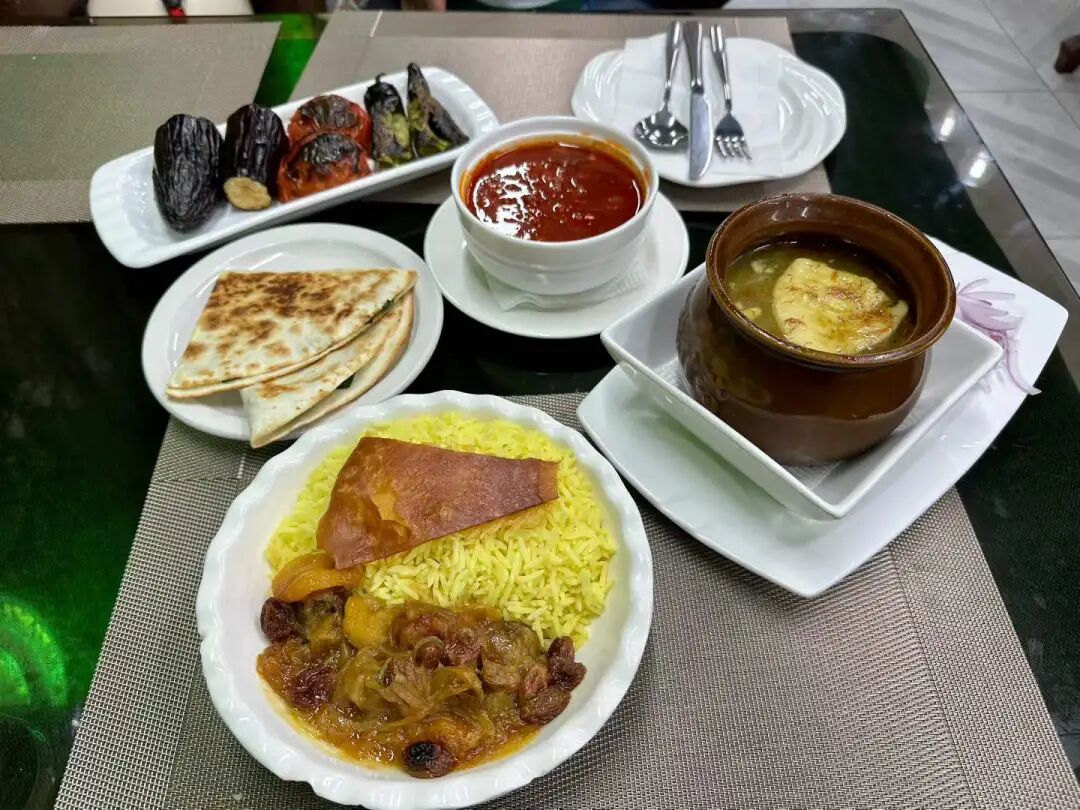
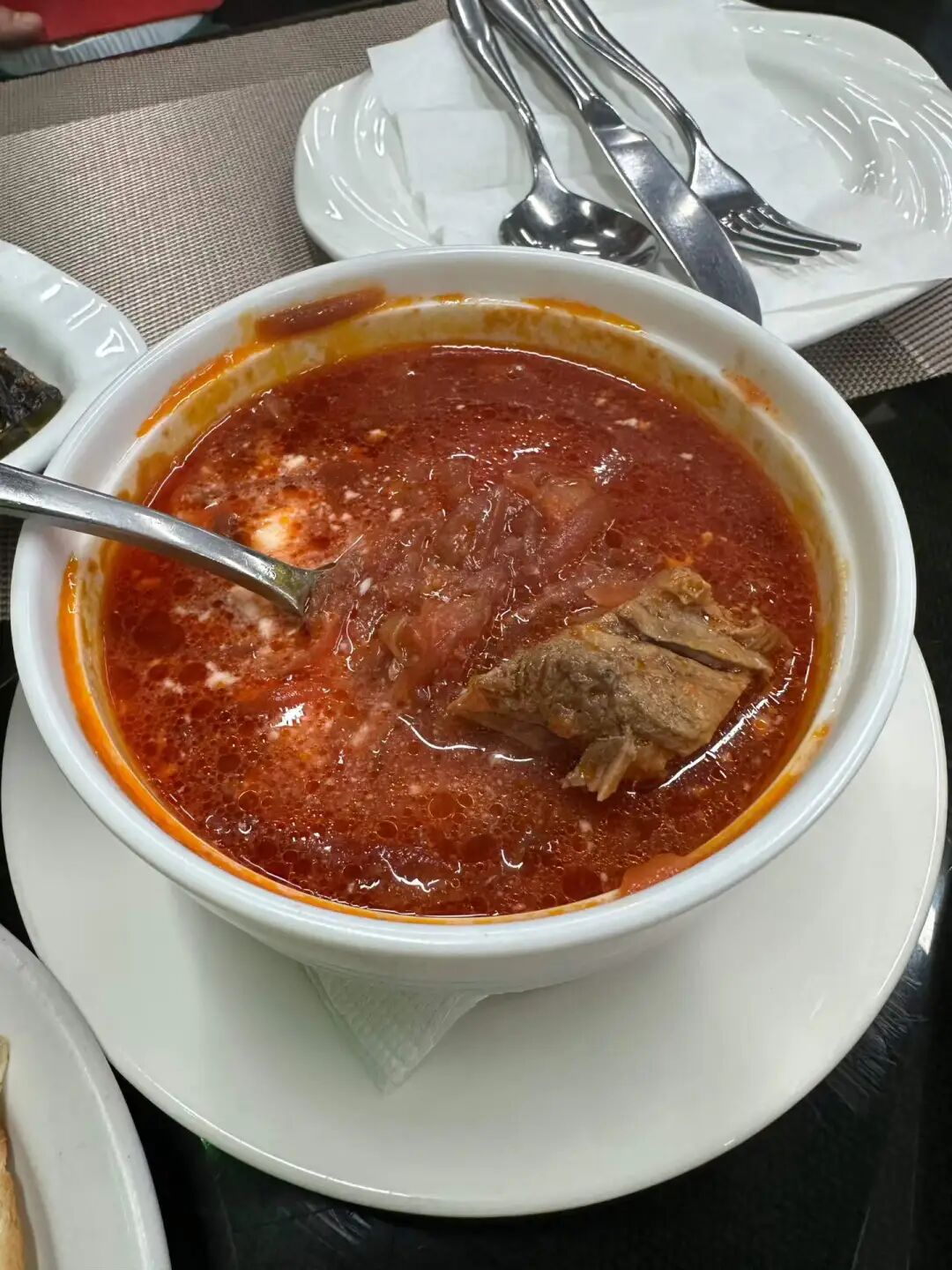
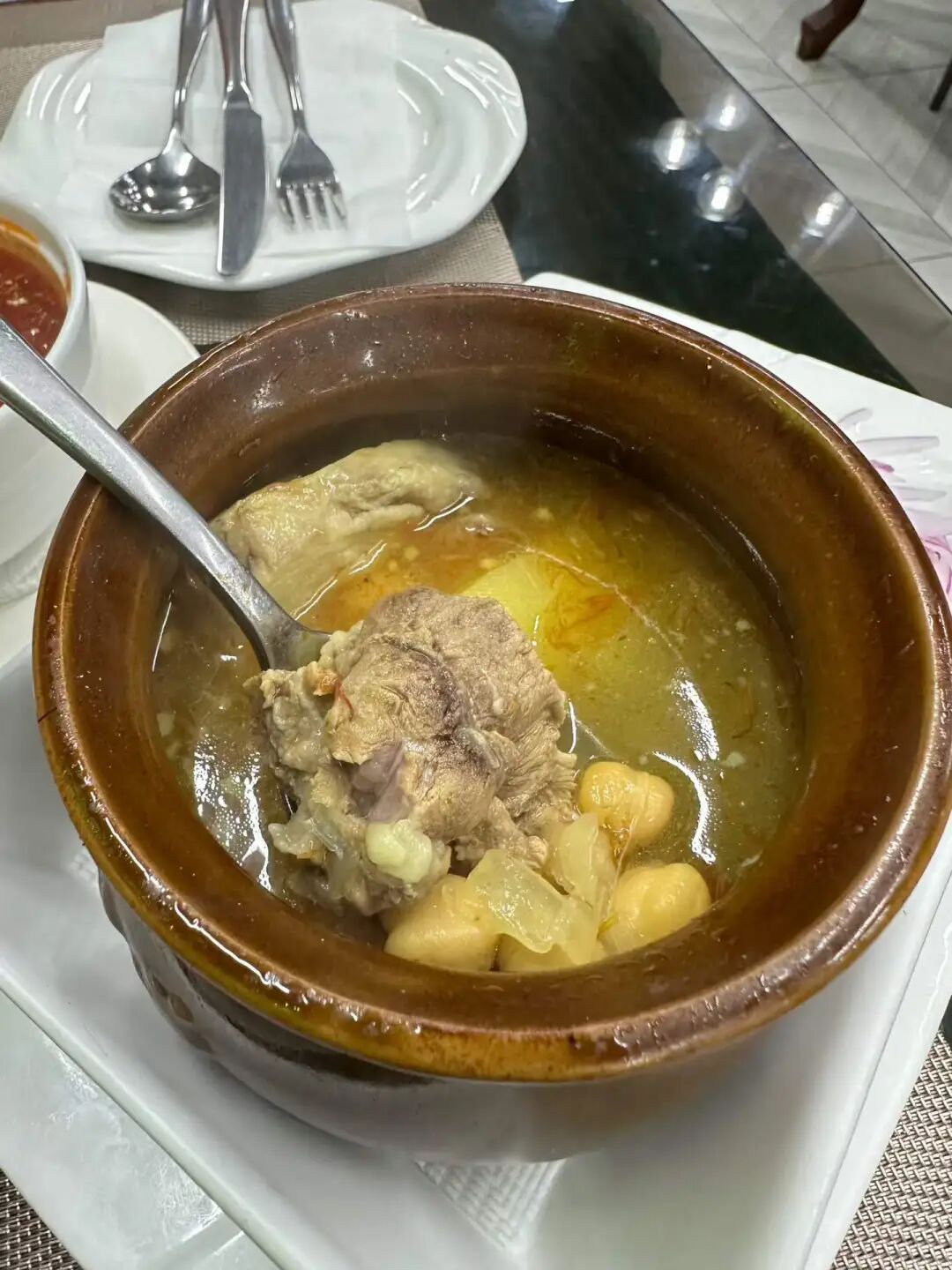
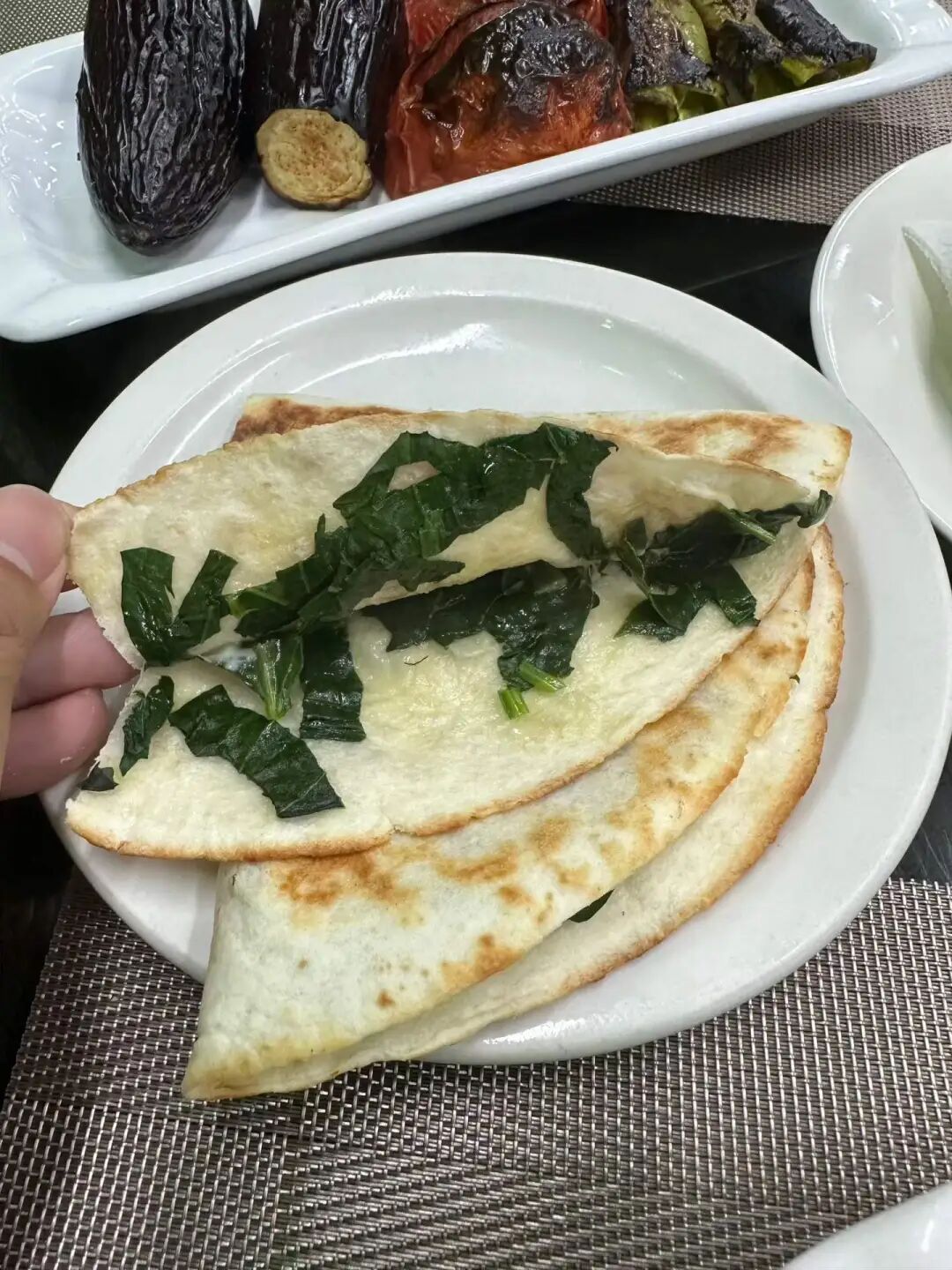
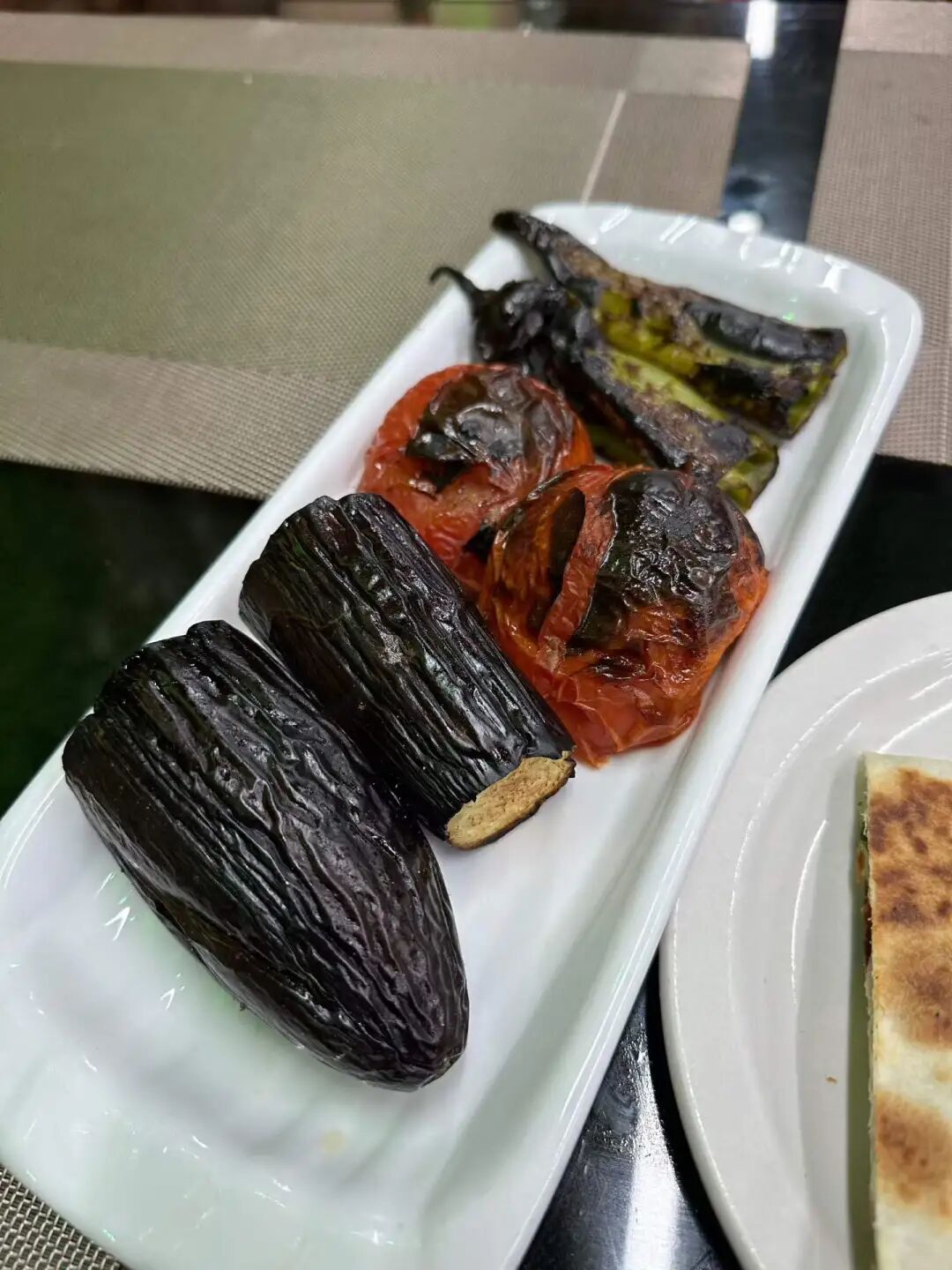
We ordered borscht (hongcaitang), pot-stewed lamb (manguan yangrou), chive pancakes (jiucaibing), Azerbaijani pilaf (zhuafan), and grilled vegetables. Their borscht is closer to the Russian style than the one at Merv. Merv's beef soup has a stronger flavor, while their version has a more intense beet taste, which is also quite good.
Pot-stewed lamb is a classic Russian main course. Traditionally, it is cooked during long, cold winters by stewing meat in a clay pot over a wood-burning fireplace, then sealing the lid and burying it in the fireplace embers for several hours. Their pot-stewed lamb broth is very fresh, similar to Xinjiang cup-stewed lamb (gangzirou), but the lamb is a bit tough rather than tender.
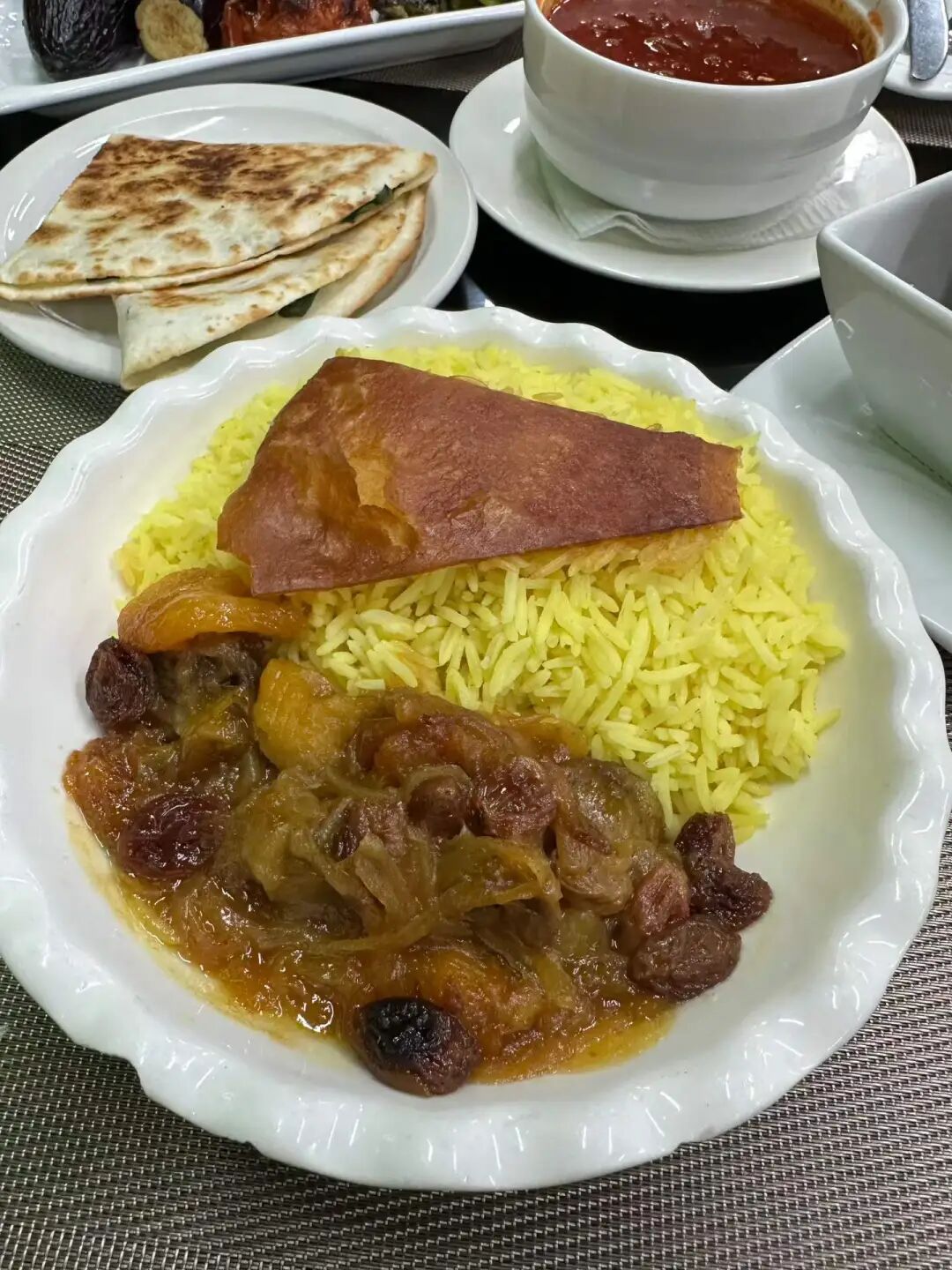
I really like the Azerbaijani pilaf. I made sure to eat the authentic version when I visited Azerbaijan, and after coming back, I think both Ruilin and Dardanelles make a good version. Azerbaijani pilaf is dyed yellow with saffron and includes dried apricots, prunes, chestnuts, and raisins. The lamb is salty and savory, while the dried fruits add sweetness, creating a very rich flavor profile.
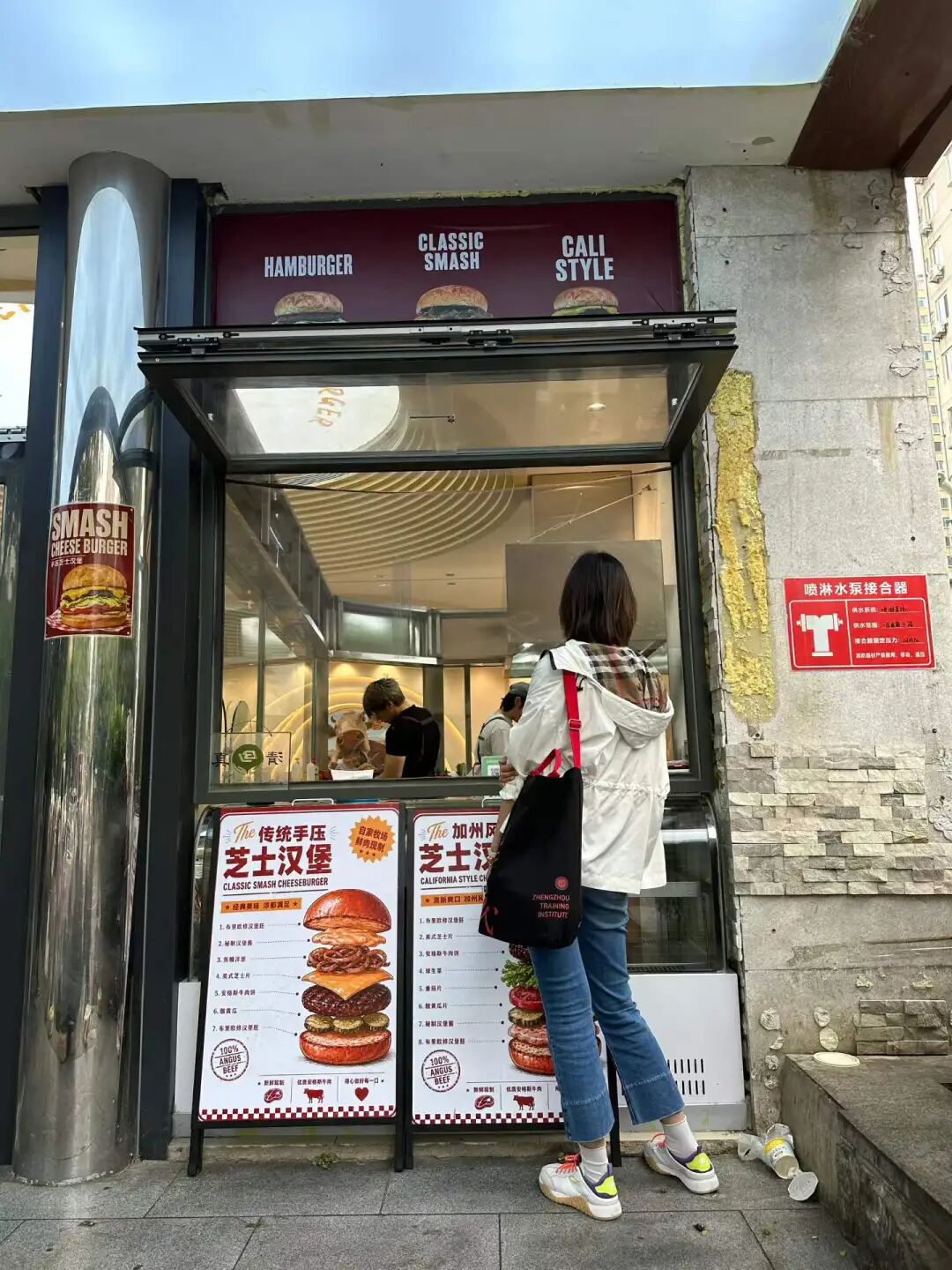
I finally had the cheese beef burger at Yilan Liyuan on Niujie this weekend. They only have regular and California-style options now. The California-style burger adds lettuce and tomato, and you can order it as a single or double patty. They do not let you eat inside the shop, so you have to eat at the entrance or take it away. I waited five minutes at the door and it was ready. The single-layer size is decent, and the crust was baked hot on the spot, but the filling felt a bit dense and not very fluffy. The meat pie tastes good, but it feels a bit loose, as if it wasn't packed tightly enough. Overall it is pretty good, but it would be even better if there were other things to pair it with.
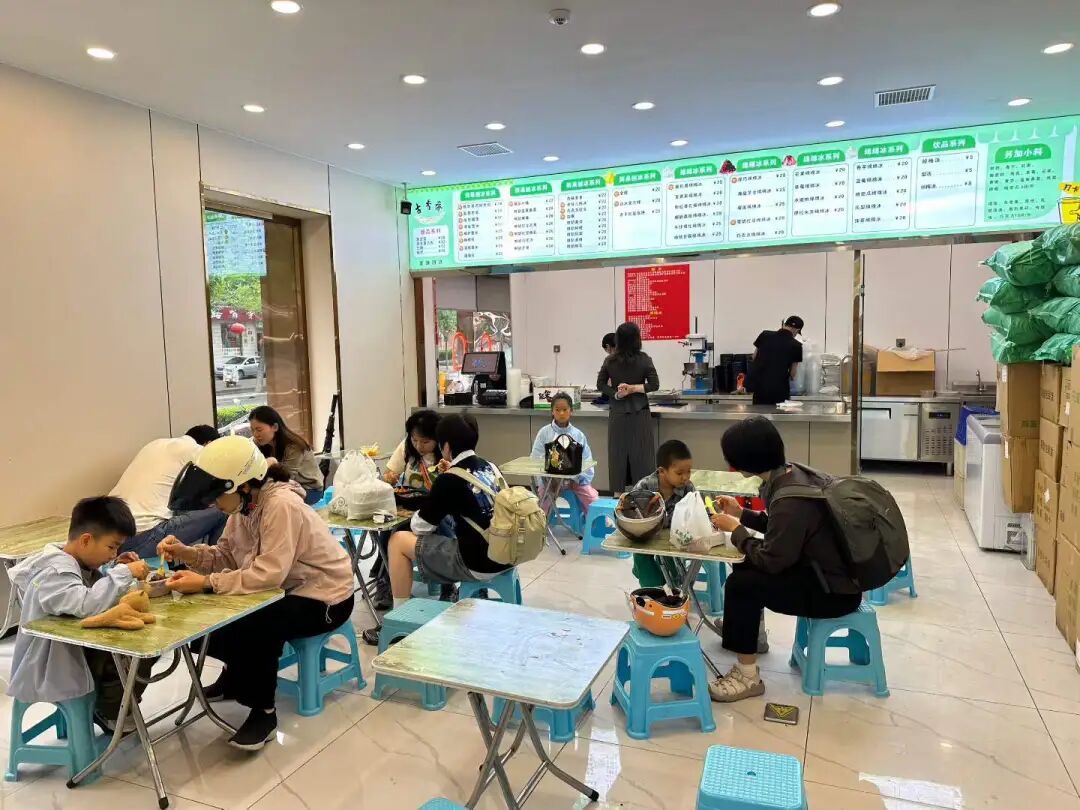
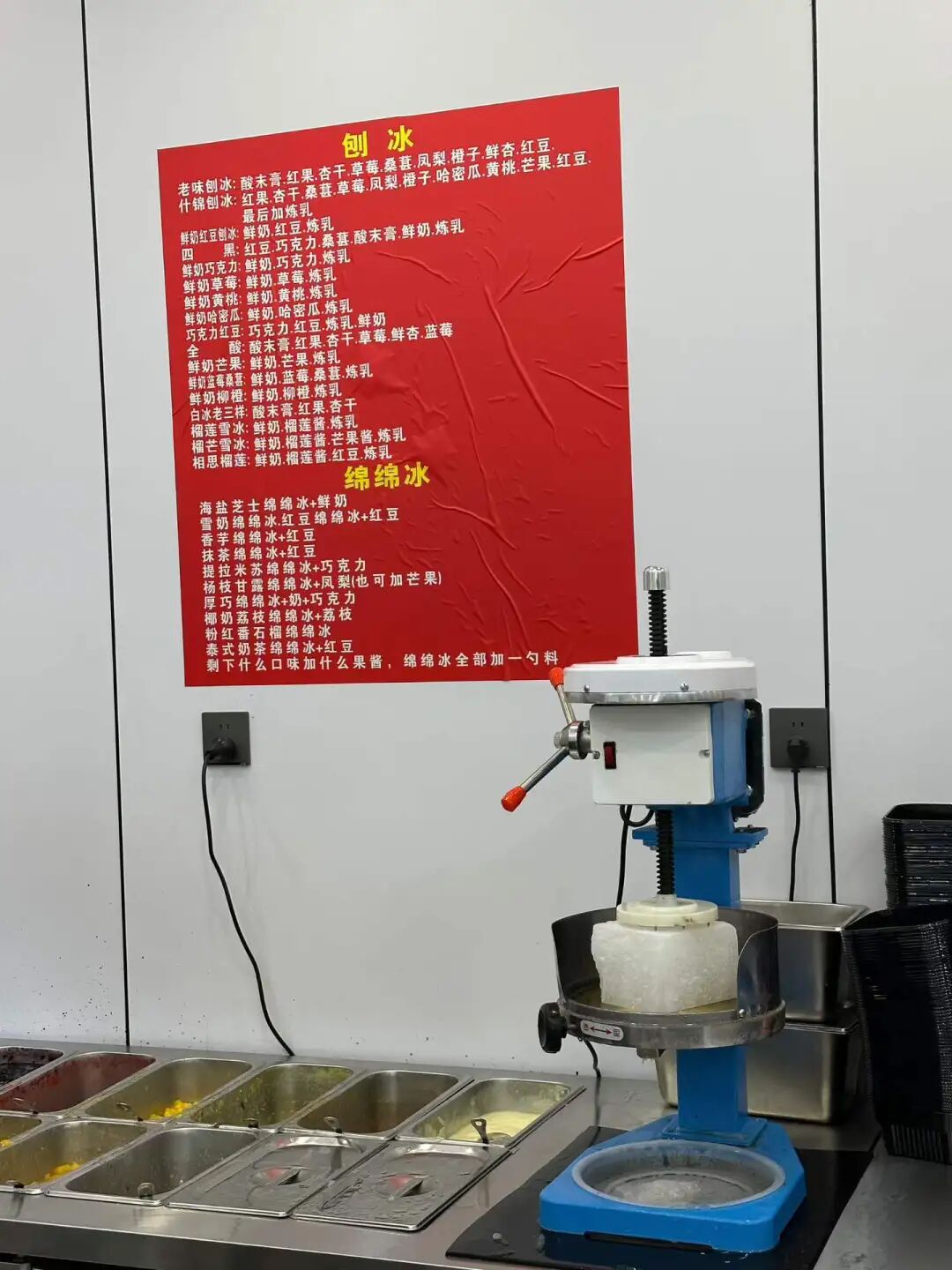
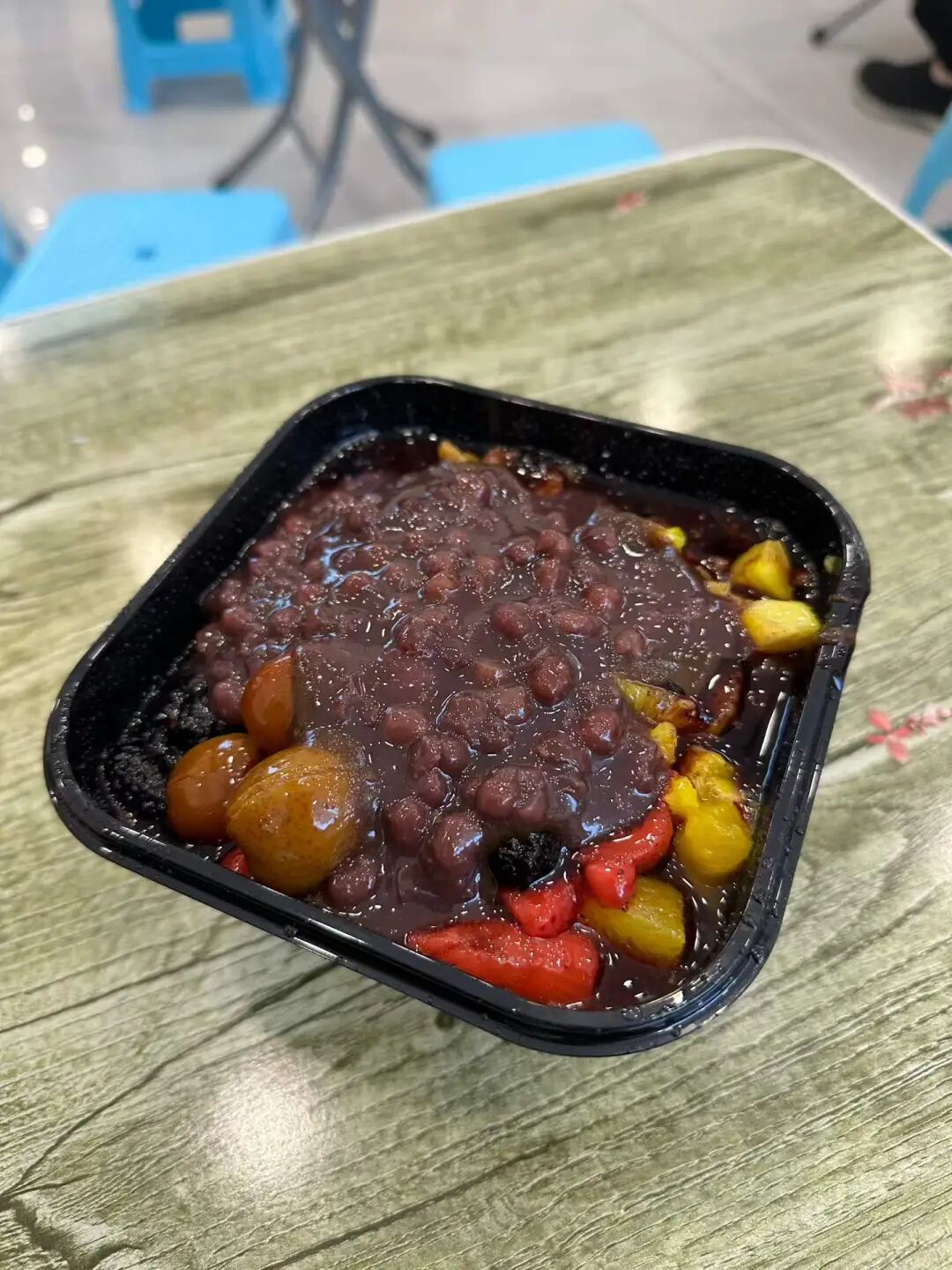
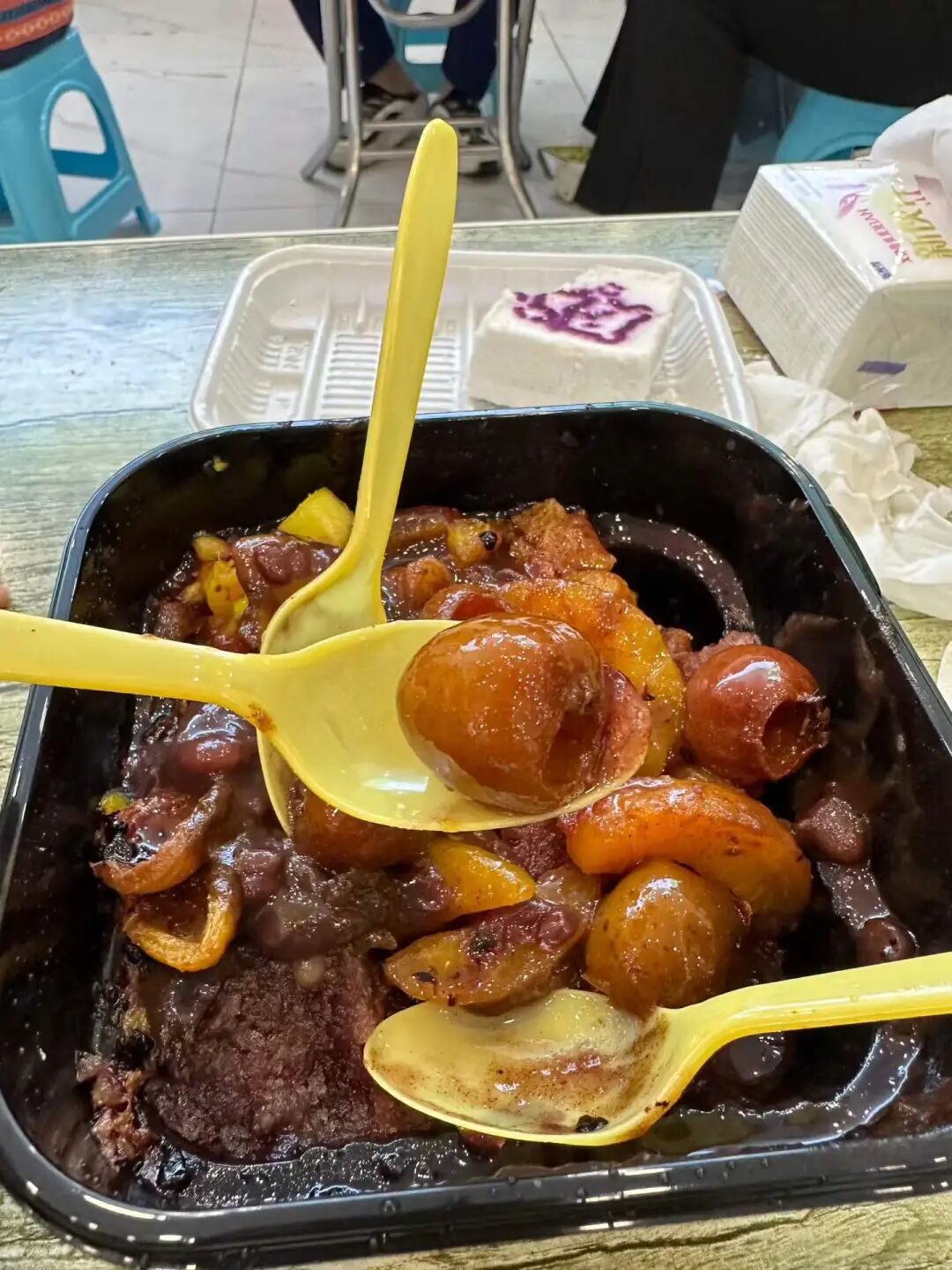
A Tianjin halal shaved ice and steamed pancake (zhengbing) shop called Guxiangzhai has opened at Hufangqiao. Since the weather is getting warmer lately, many people are coming to eat shaved ice. For my first visit, I chose the traditional-style shaved ice. It contains sour hawthorn paste (suanmogao), red hawthorn fruit, dried apricots, strawberries, mulberries, pineapple, orange, fresh apricots, and red beans. It actually has more ingredients than the truly traditional version, and it is mainly sweet and sour to whet your appetite. Sour hawthorn paste (suanmogao) is the soul of Tianjin traditional shaved ice. It is made by grinding dried wild sour jujubes into powder and boiling it with rock sugar. You can buy large blocks of sour hawthorn paste (suanmogao) at the entrance of the archway of the South Mosque (Nandasi) in the Northwest Corner. It also tastes great when mixed directly with water.
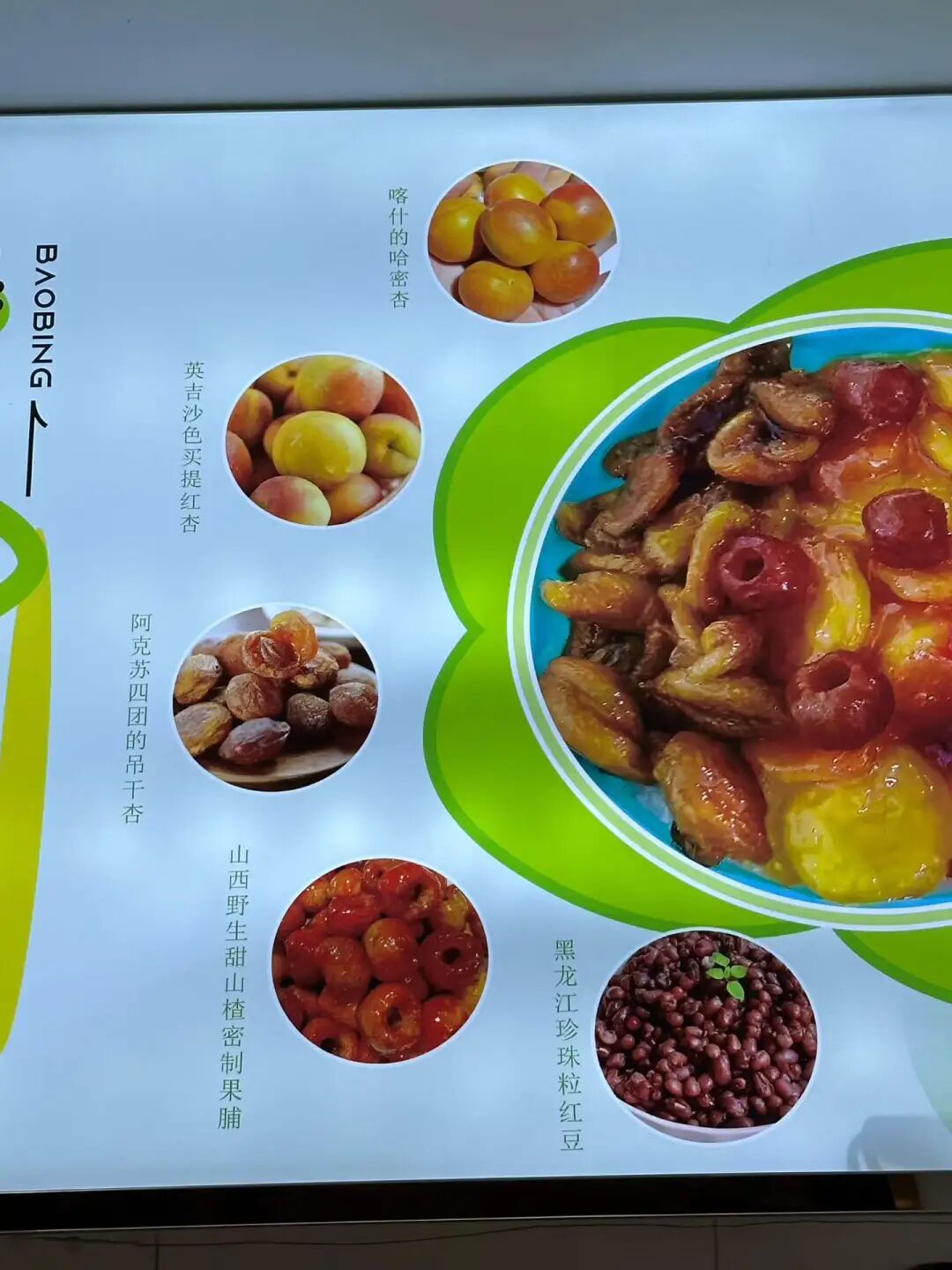
Their dinosaur egg three-apricot shaved ice is also a signature item. It contains Kashgar Hami apricots, Yengisar Saimaiti red apricots, Aksu Situan dried apricots, and secret-recipe preserved fruit made from wild hawthorn from Shanxi. It sounds very good.
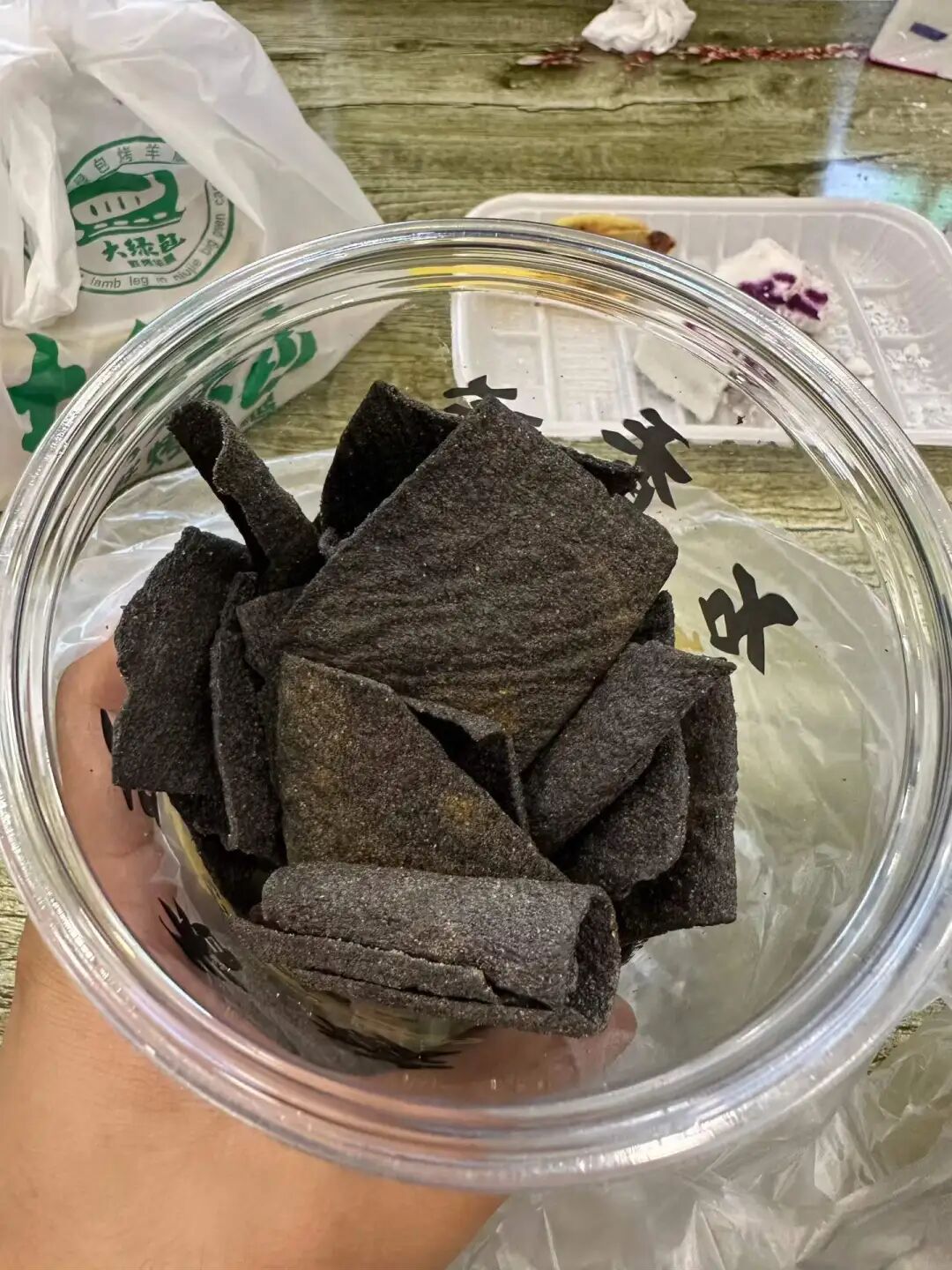
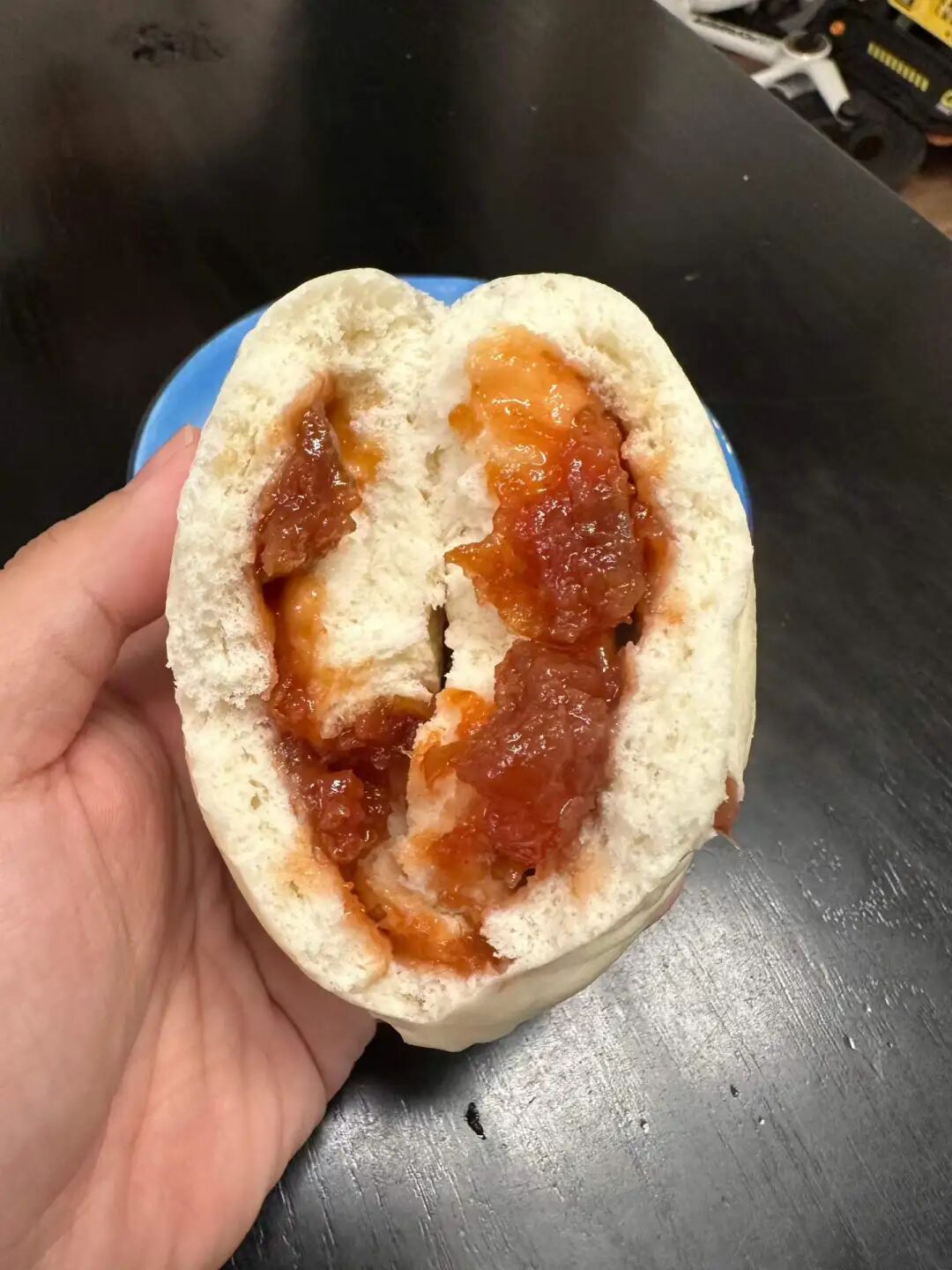
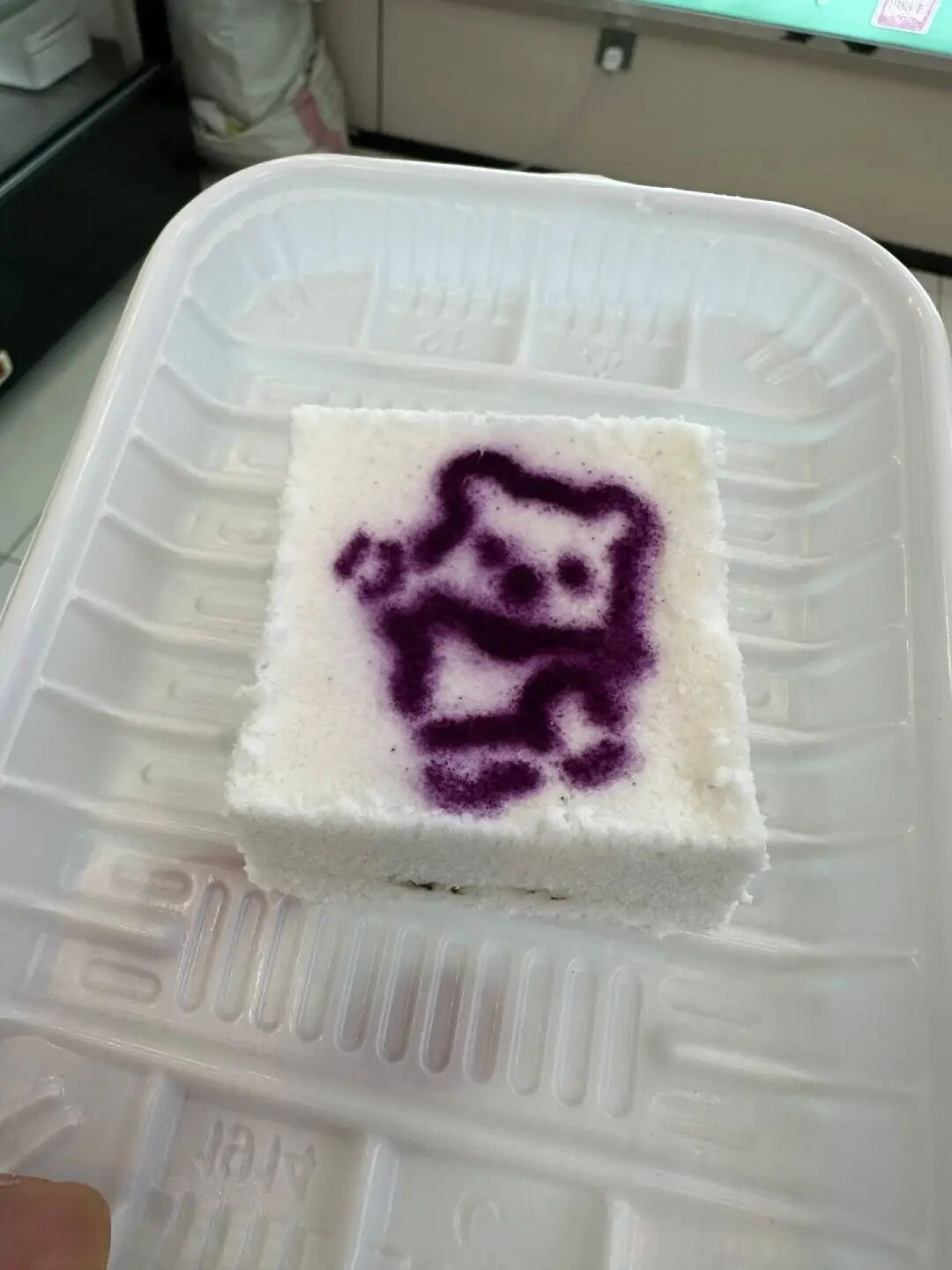
They also sell various snacks. We bought a steamed pancake (zhengbing) with a red hawthorn filling, which is sweet and sour and perfect for breakfast. It is a pity that the rice cakes (gaogan) were sold out, so I bought a rice cake (migao) with a sour hawthorn paste flavor. It was a bit dry, but the taste was still good. I also bought a snack called "five blacks," which contains black rice, black beans, black mulberries, black goji berries, and black sesame seeds. It sounds very healthy.
Across from the China Academy of Chinese Medical Sciences on Niujie Street, the roast lamb leg shop with the big green sign sells stinky tofu with sauce. The sauce is made from beef bone broth (niubanggu aotang), and it really has a meaty flavor. I remember eating fried stinky tofu topped with fermented bean curd sauce from a cart run by local Hui Muslims on Binjiang Road in Tianjin. That flavor was truly satisfying.
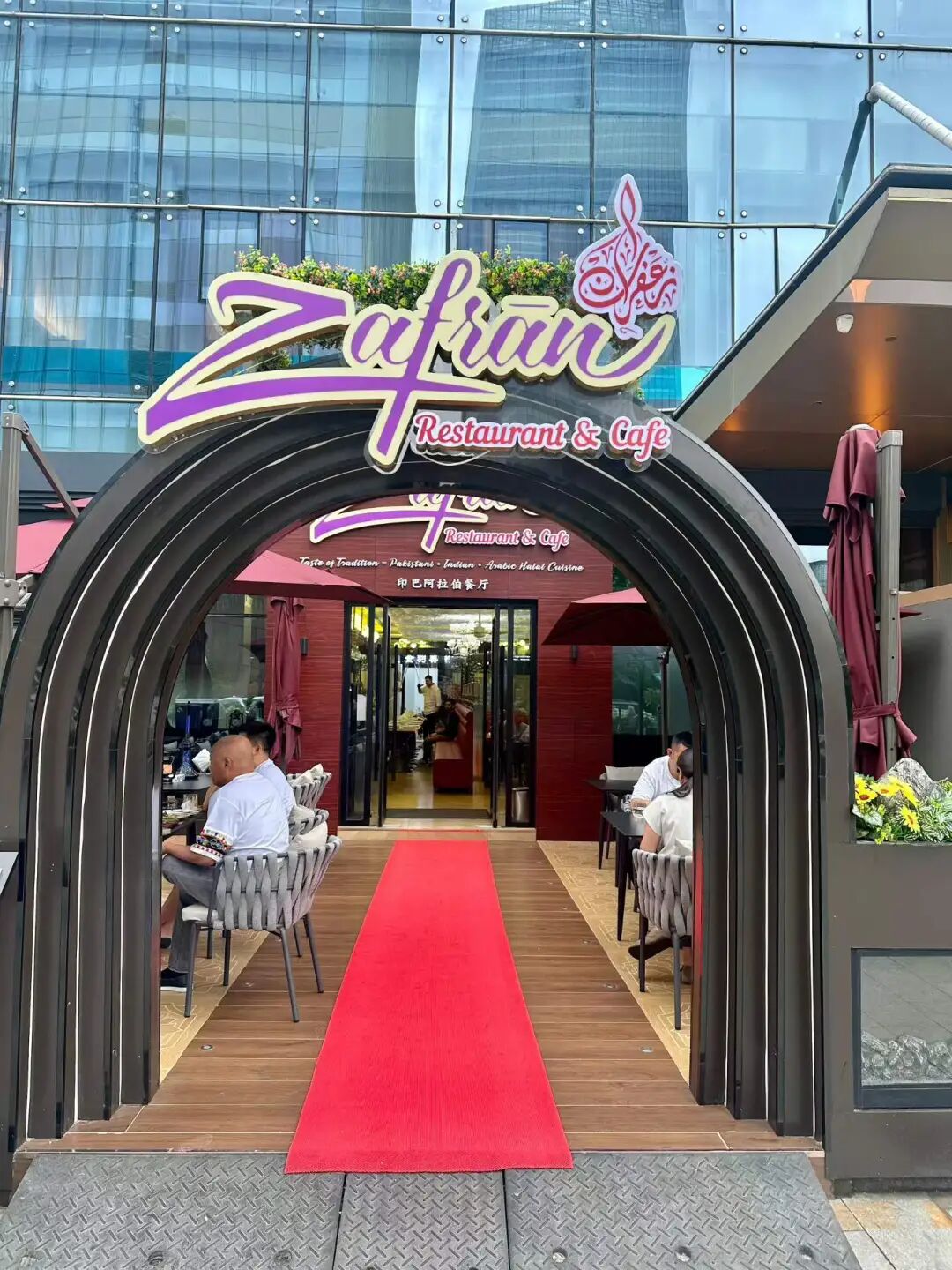
A new alcohol-free Pakistani restaurant called Zafran just opened in Jiayi Plaza near Liangmaqiao. It is very close to the Liangma River, and since it only opened a few days ago, I came specifically to try it.
I looked at the menu and was surprised to find many Afghan Pashtun dishes. I asked the server, and he is a Pashtun from Peshawar. I decided to order a few Pashtun dishes to try, as some of them cannot be found in other Pakistani restaurants.
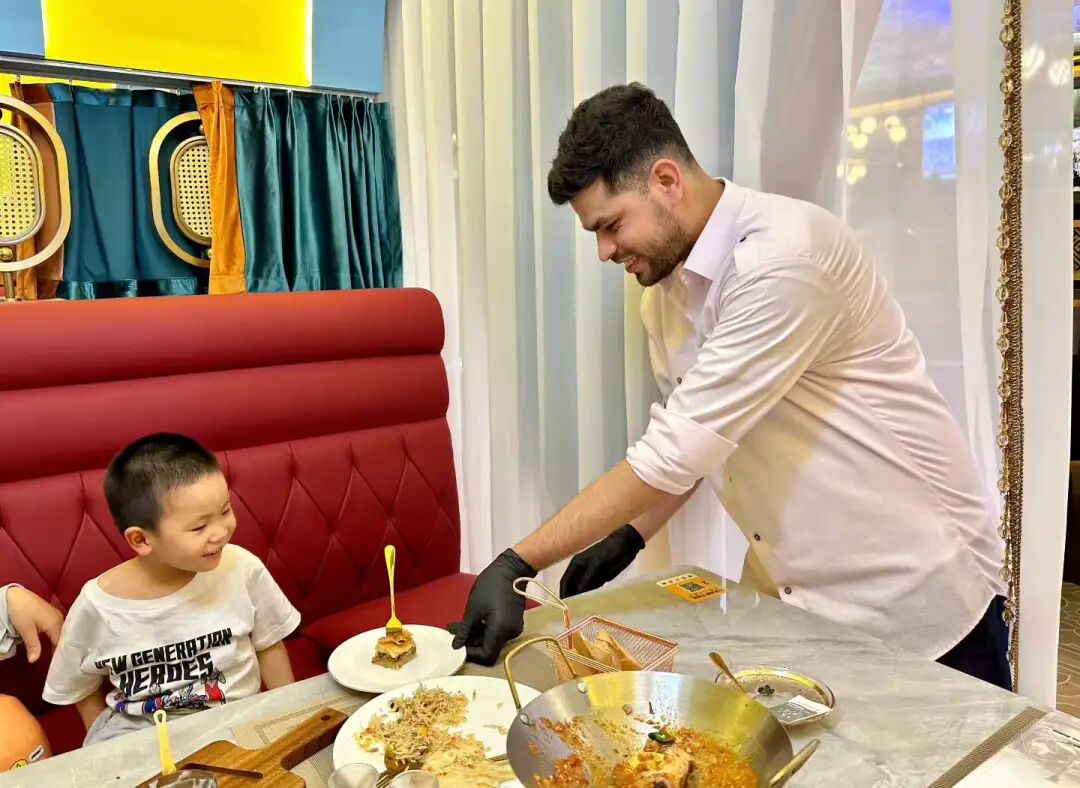
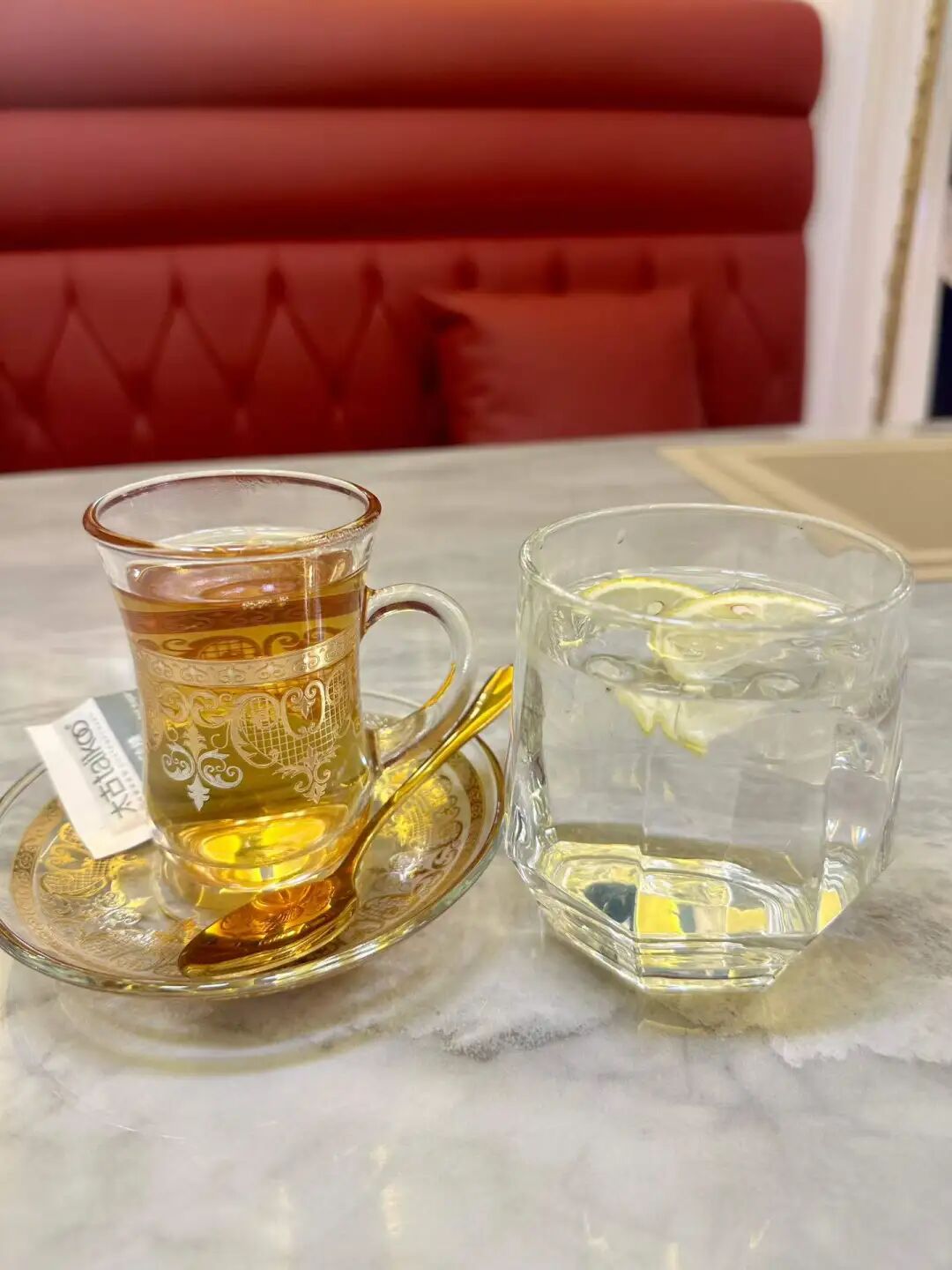
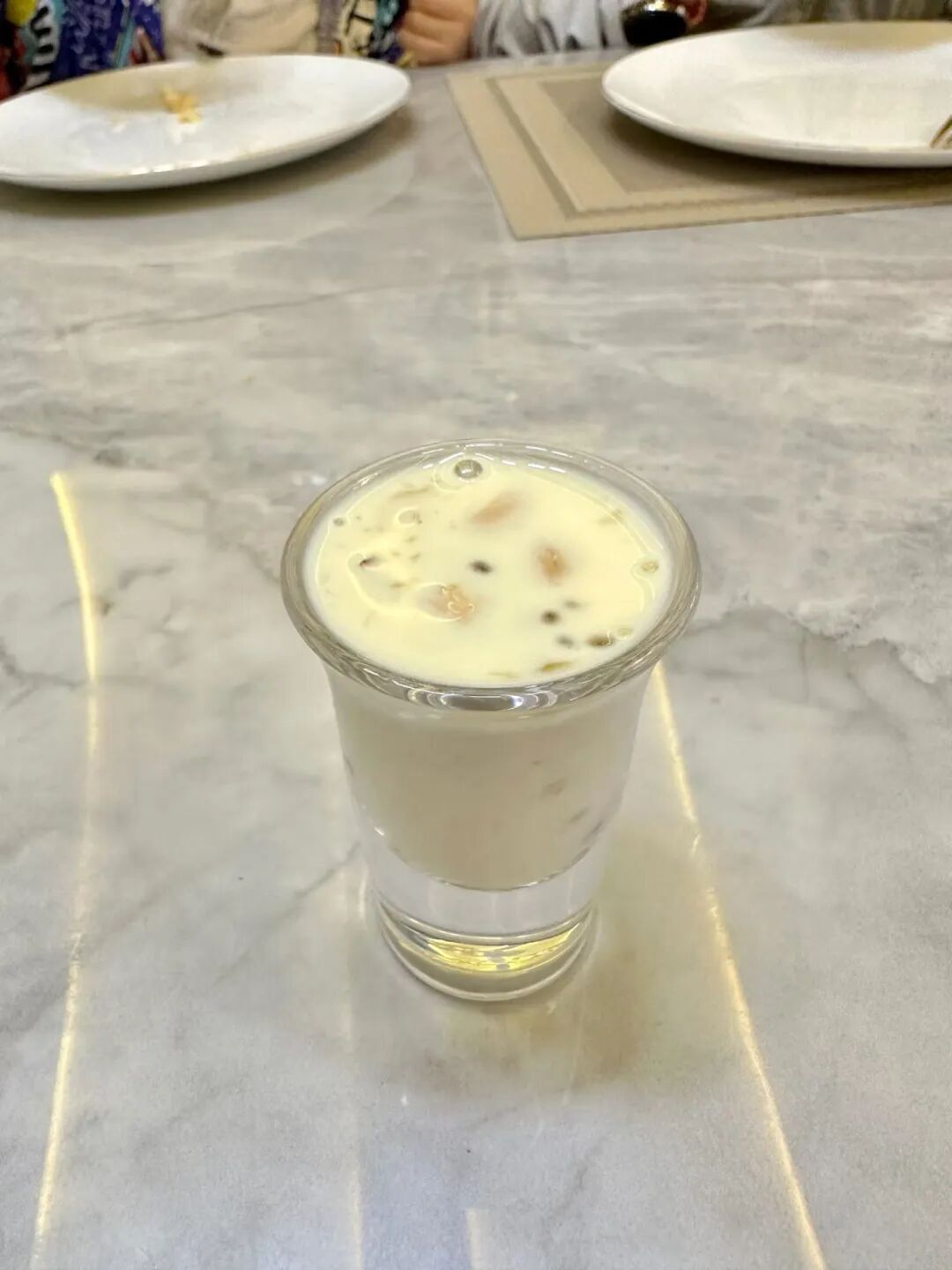
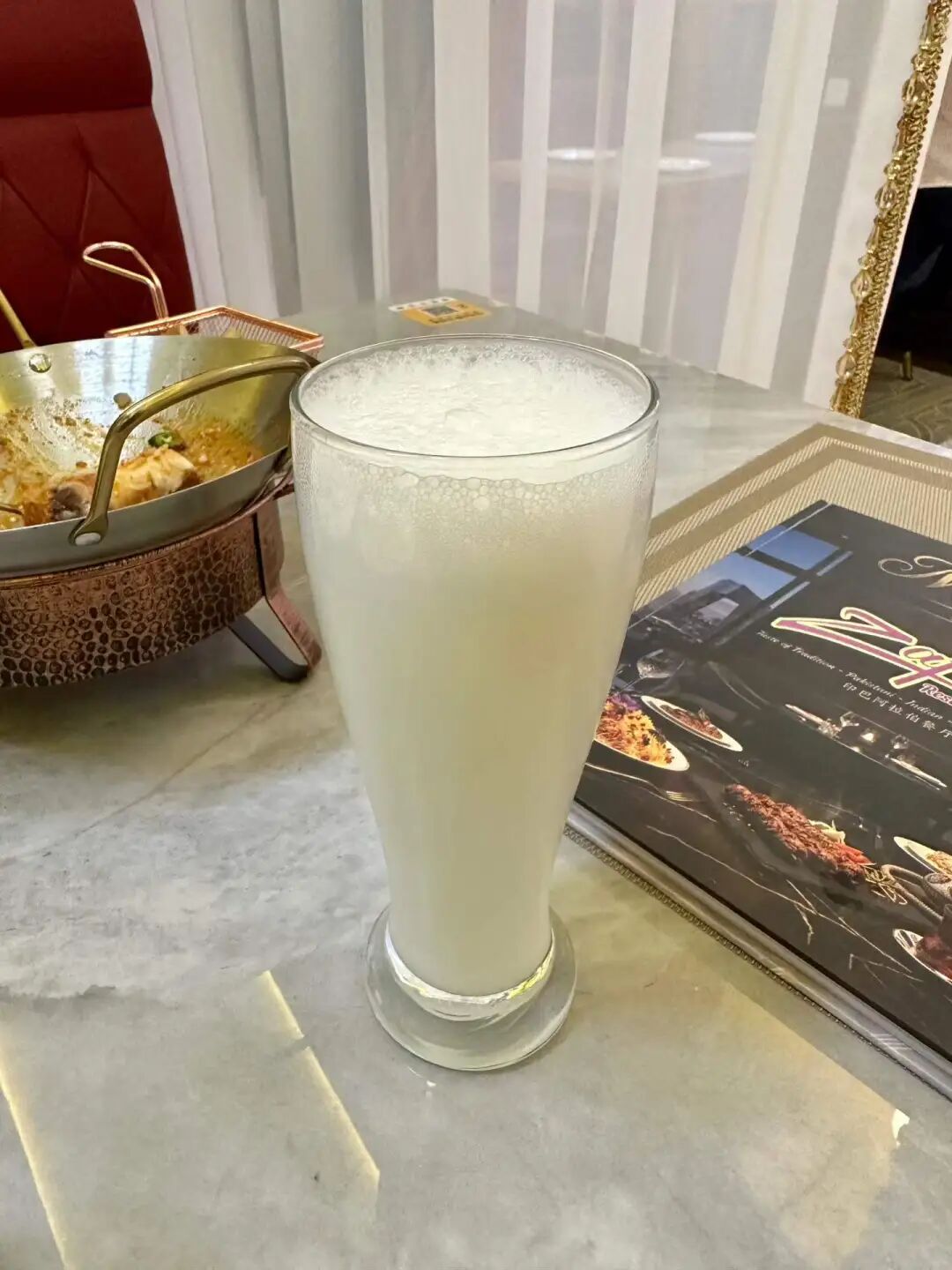
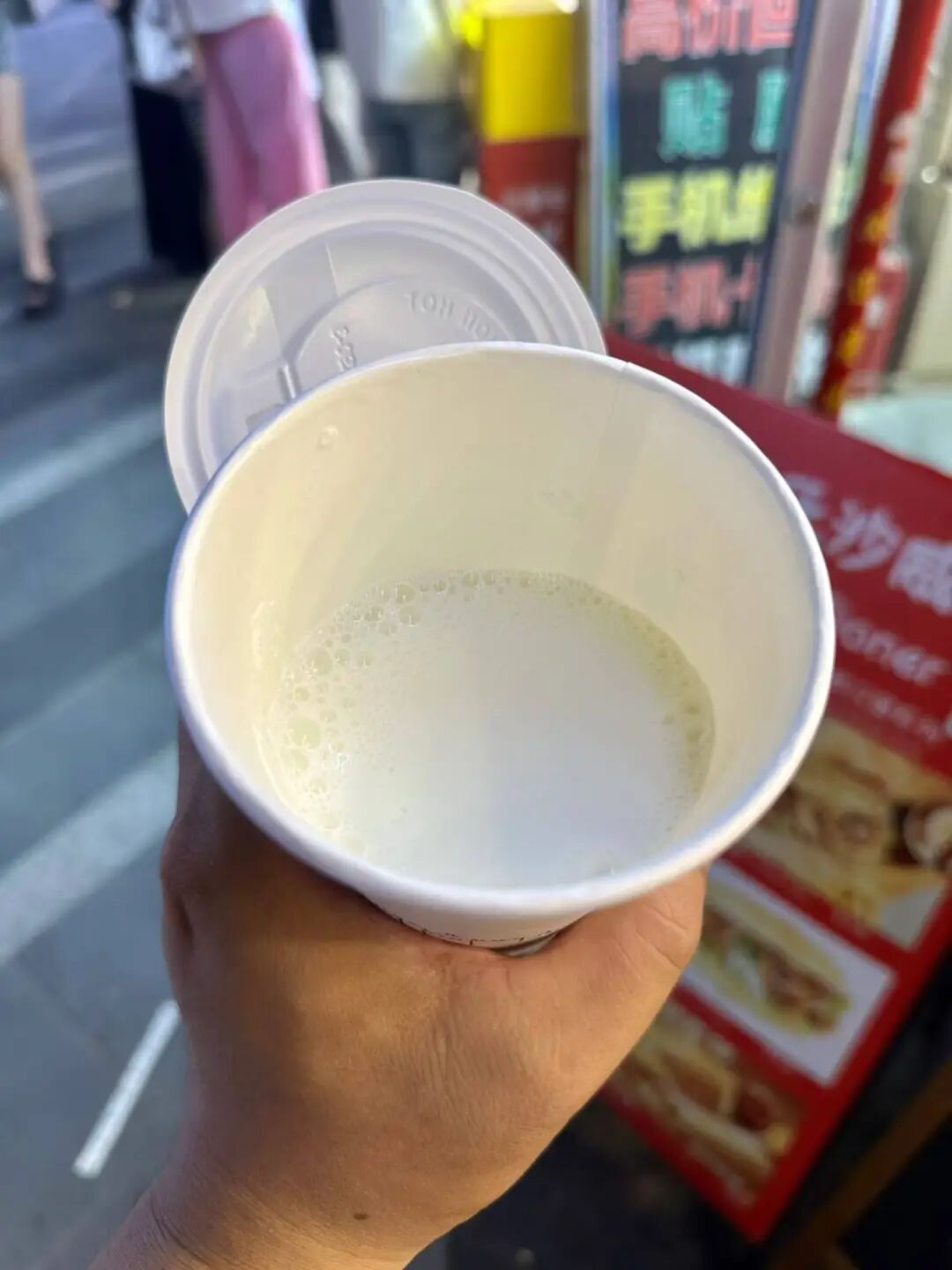
First, I must praise their excellent service. The Pashtun waiter, Anas Khan, always greeted us with a smile and even did a fist bump with my son, Suleiman. As soon as we sat down, they brought us black tea, lemon water, and fried dough twists (mayezi). Later, they served a special dried fruit milkshake with walnuts and almonds. Finally, they gave Suleiman a small cup of thin yogurt drink (lassi) and a piece of baklava, which made him very happy.
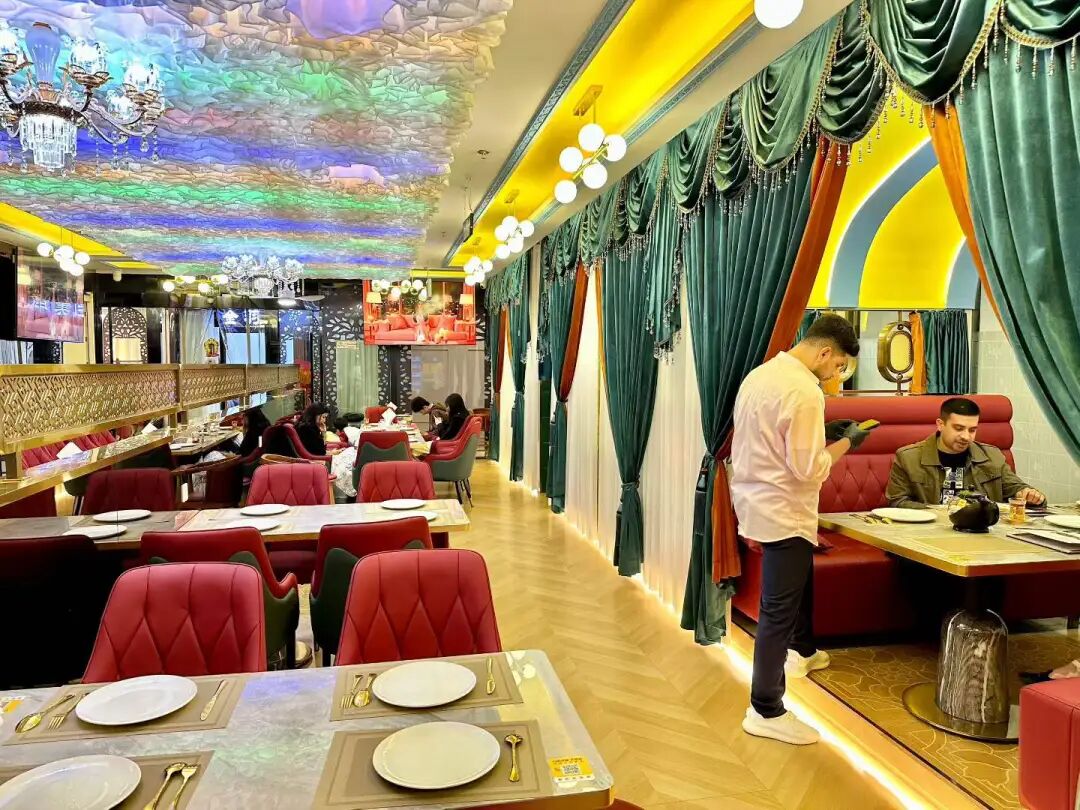
The atmosphere is also very nice, with curtained sofa areas on one side that are perfect for families. There are no large private rooms, but if you have a big group, you can push tables together in the main dining area. There is also outdoor seating at the entrance, which is great for having desserts and drinks in the summer.
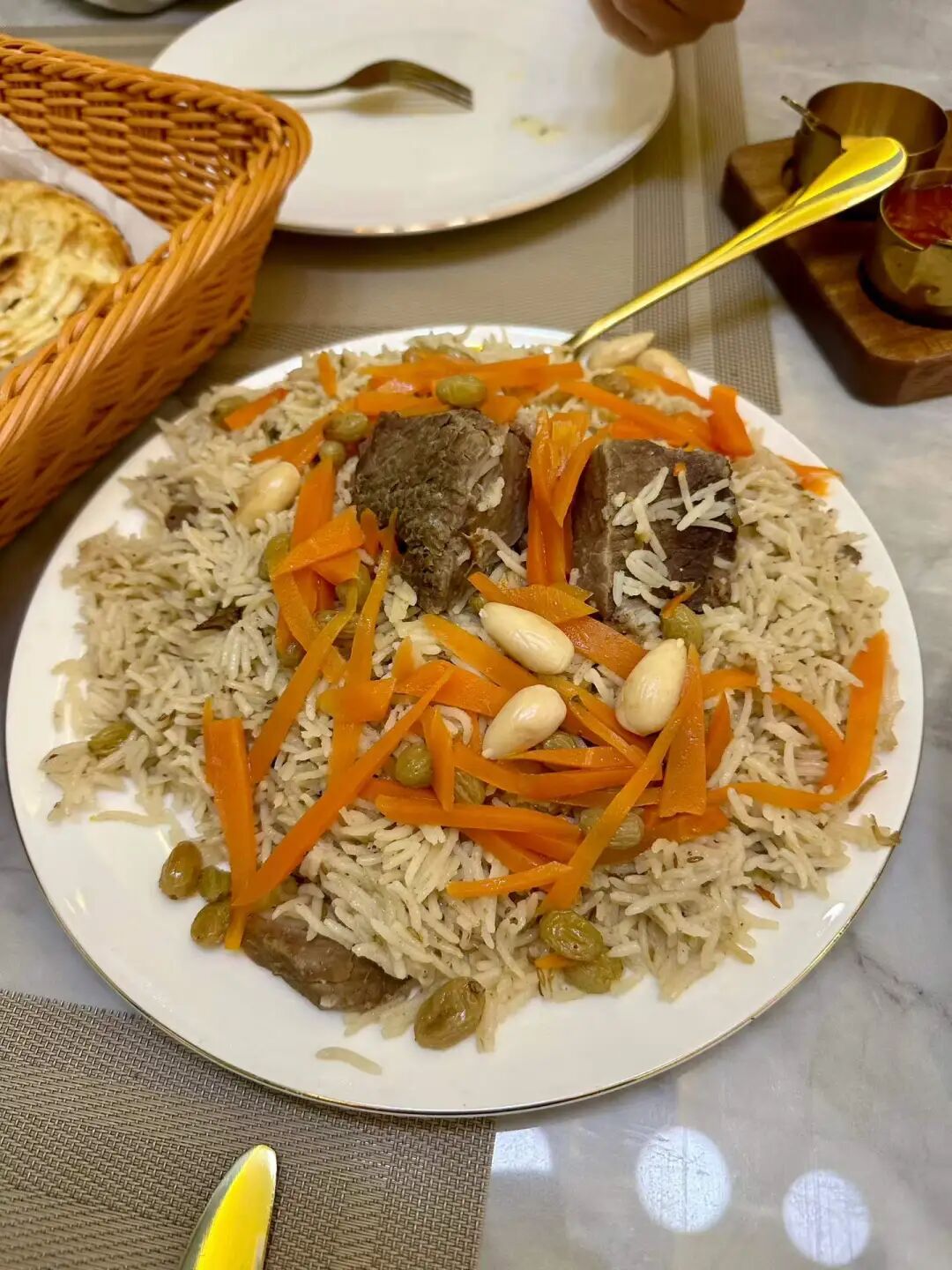
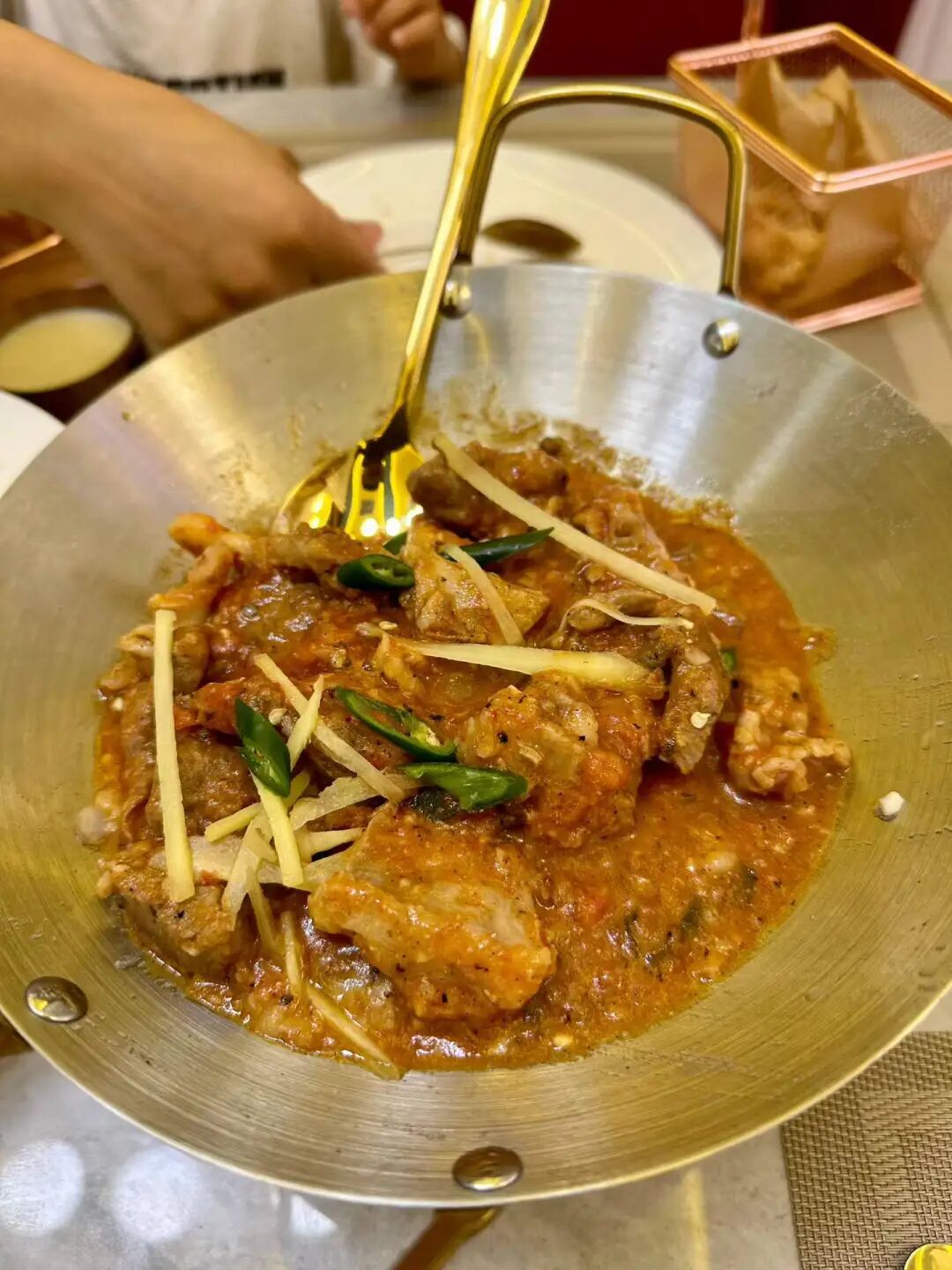
We ordered Afghan pilaf, Peshawar-style lamb, and Kandahar naan. You can tell these are Pashtun specialties just by their names. We also ordered a Caesar salad, french fries, and salty yogurt drink (lassi). Since they just opened, they gave us a 30% discount, which was a great deal.
Afghan pilaf originated in the border region between northern Afghanistan and Uzbekistan. It is known as Qabili Palaw in Afghanistan and later spread from there to West Asia, Central Asia, and Pakistan. Afghan pilaf (pulao) differs from Xinjiang pilaf because it uses long-grain aromatic rice from South Asia and a bit of saffron for color. It is cooked with ghee and vegetable oil, and the carrots are sliced thinly. It also includes cinnamon, cardamom, and cloves, giving it a stronger spice flavor than Xinjiang pilaf. Their Afghan pilaf includes fresh almonds and raisins, but the meat is a bit tough and hard for children to chew. The spice flavor is very rich.
This was my first time eating Peshawar Shinwari lamb, and I highly recommend it! The lamb is very tender and the seasoning is excellent. Peshawar Shinwari lamb is cooked in a metal wok called a karahi. It is a classic main dish for the Pashtun people in northern Pakistan, especially prepared after the animal sacrifice during Eid al-Adha. It is made with fresh bone-in lamb, salt, garlic, and green chilies, without the heavy spices found in southern Pakistan.
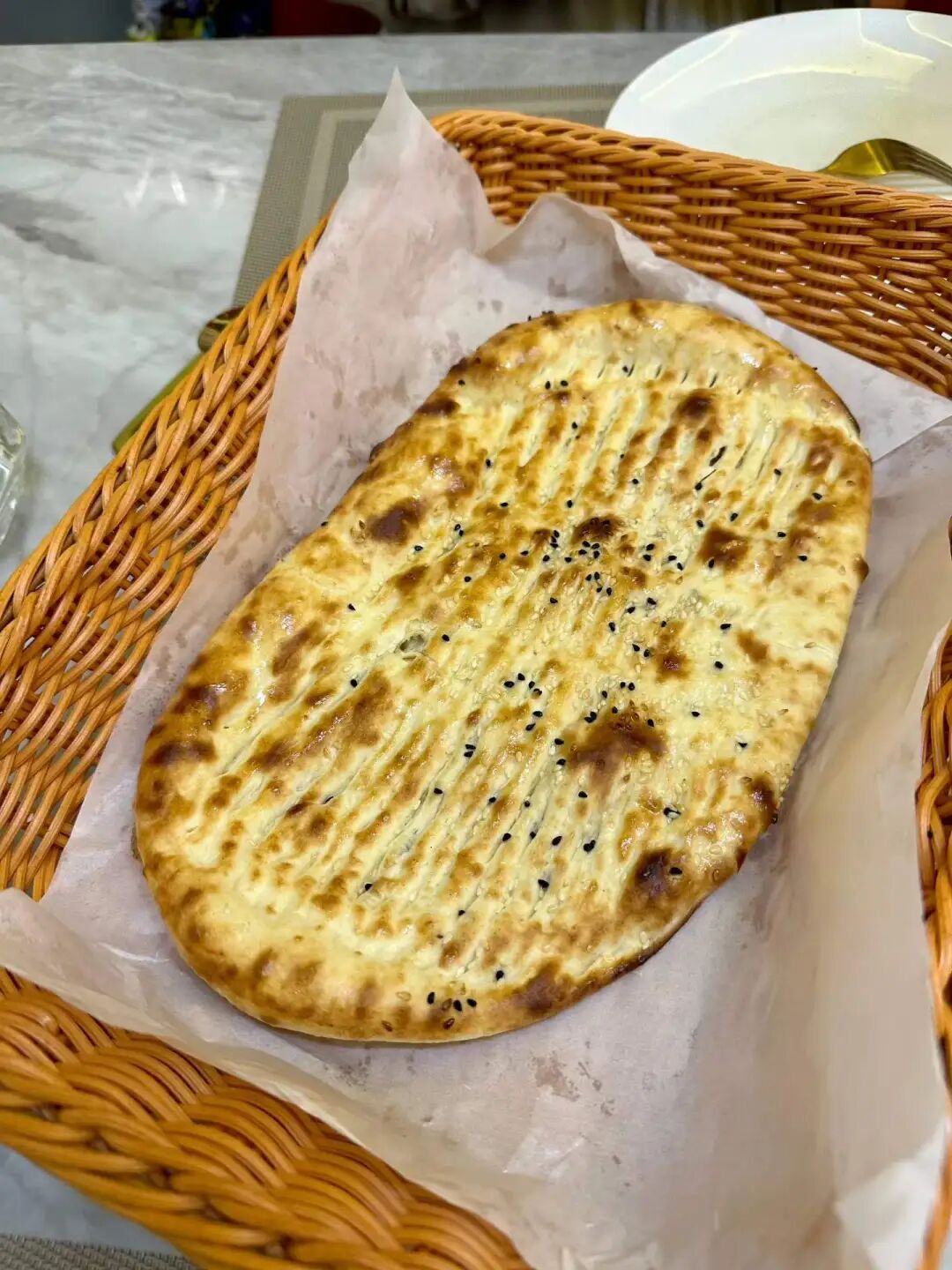
Their Kandahar flatbread (nan) is also amazing and pairs perfectly with the Peshawar lamb. Kandahar flatbread is also popular in Pakistan. It is very fluffy because milk and sugar are added to the dough, making it more fragrant.
I also recommend their yogurt drink (lassi). It is not too sour, but it is very appetizing.
The Qingxiangge restaurant at Dongdaqiao was replaced by Jinfang Snacks this year, and I just went to try it recently. Once inside, I found it is completely different from the old shop at Ciqikou. It uses a self-service tray system with small bowls of stewed dishes, small portions of stir-fries, and a huge variety of mixed salads, noodles, and snacks. It is incredibly rich in options. Small bowls and small plates are rare in traditional Beijing restaurants, making them perfect for people who want to try several different dishes.
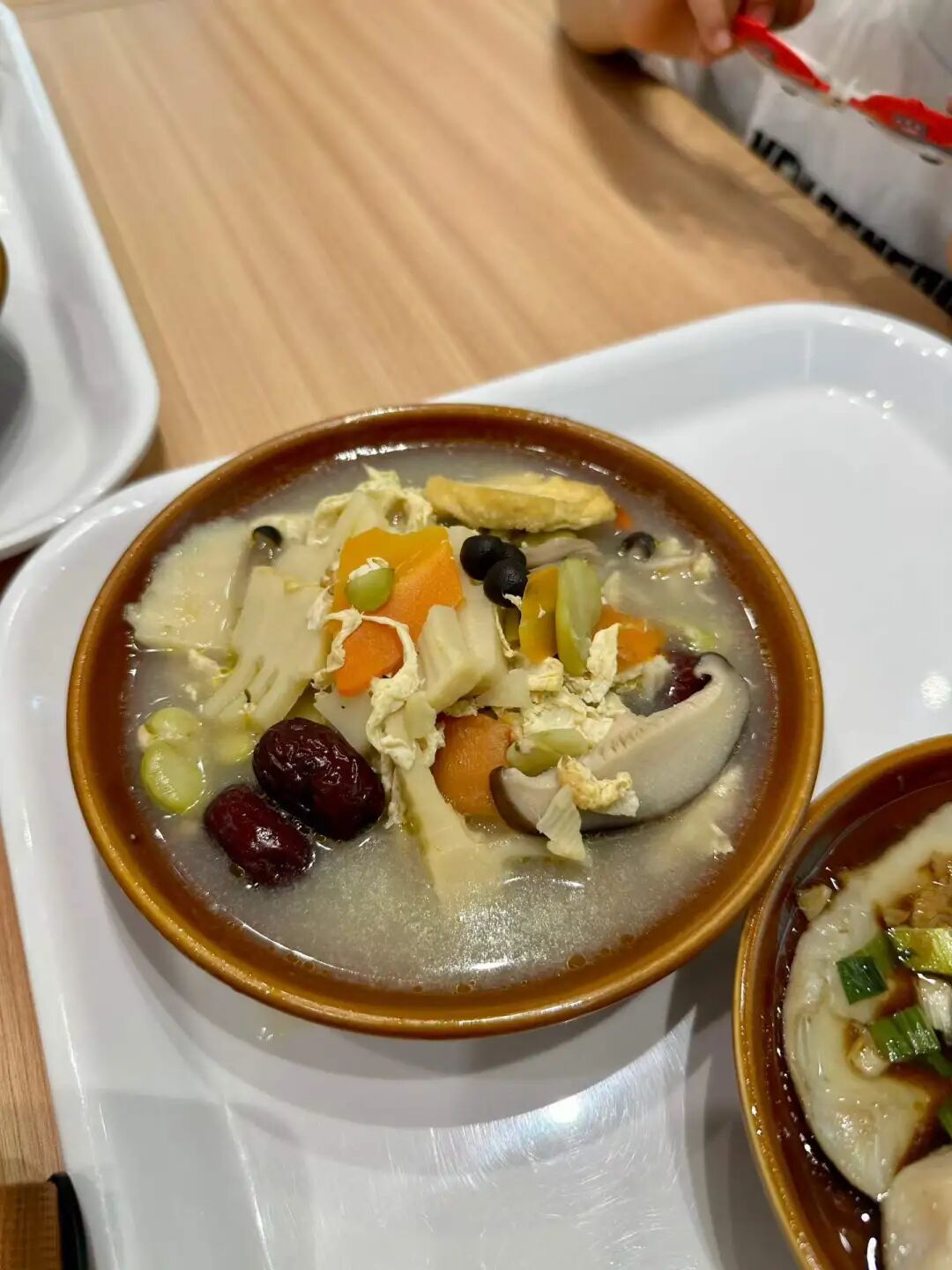
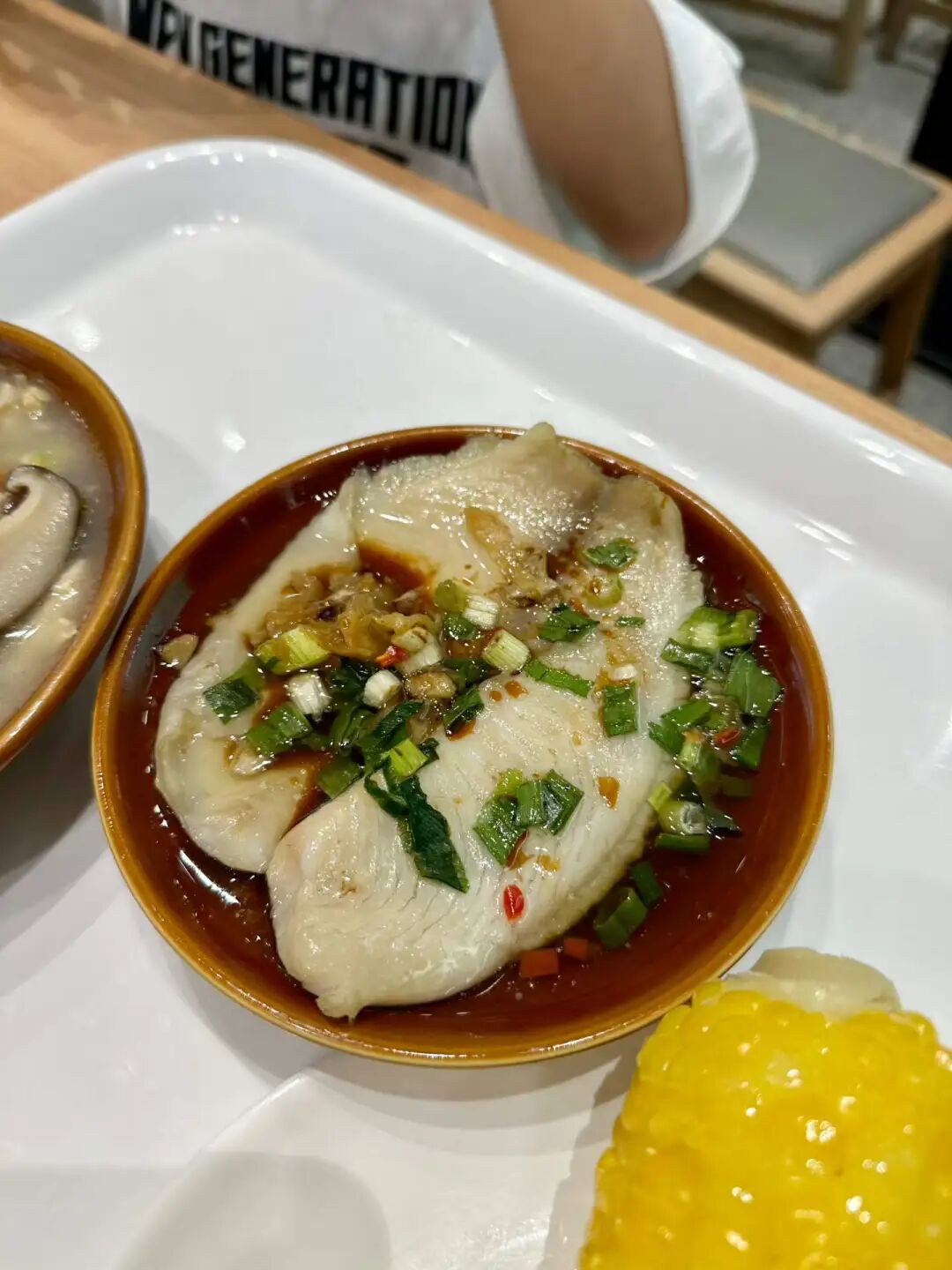
We ordered winter melon meatball soup (donggua cuan wanzi), stir-stir-fried meat with eggs and wood ear mushrooms (muxu rou), stir-fried green beans with pork (biandou chaorou), sea bream fillets (diaoyu pian), and healthy mixed vegetables (yangsheng cai), with corn and red bean rice for our main course. The cheaper meat dishes are mostly chicken, while the beef stew is priced like a standard old Beijing restaurant for Hui Muslims. The winter melon meatball soup goes great with rice, and eating rice soaked in the broth feels just like being a kid again.
Jinfang Snack Shop is celebrating its 100th anniversary this year, so it can finally call itself a century-old shop. Jinfang was originally called Rongxiangcheng Hui Muslim Snack Shop, founded in 1926 outside Chongwenmen by Man Leting (known as Man Liu), a Hui Muslim from Dezhou, Shandong. Man Leting started out with beef and mutton. At first, he bought high-quality cattle and sheep every autumn to raise in Madian, slaughtering and selling them as needed. His business improved significantly in the 1940s, so he expanded his storefront and later began selling cooked foods like roasted mutton (shao yangrou).
In the past, spring and summer were the growing seasons for sheep, so they were usually only slaughtered after autumn. Because of this, some mutton shops would switch to selling cold food during the summer. In the 1940s, Man Leting bought Japanese refrigeration equipment to sell homemade popsicles, soda, and other cold drinks, and business was booming. In 1949, mutton shipments from Inner Mongolia to Beijing were blocked, and the sheep trade hit rock bottom. Just then, Man Leiting's fellow townsman Man Kaiqi came to join him. Man Kaiqi had a background in a pastry shop, so Man Liu stopped selling lamb and switched to snacks and cold dishes, making Rongxiangcheng a famous Hui Muslim snack shop outside Chongwenmen. After the public-private partnership in 1956, Man Leiting's son Man Kaitong became the manager, and in 1958, they stopped making popsicles to focus on snacks like almond tofu (xingren doufu) and sweet rice balls (yuanxiao). In 1966, Rongxiangcheng was officially renamed Jinfang Hui Muslim Snack Shop, and in 1971, it began to focus on sweet rice balls (yuanxiao), which have drawn long lines every year around the Lantern Festival since the 1990s.
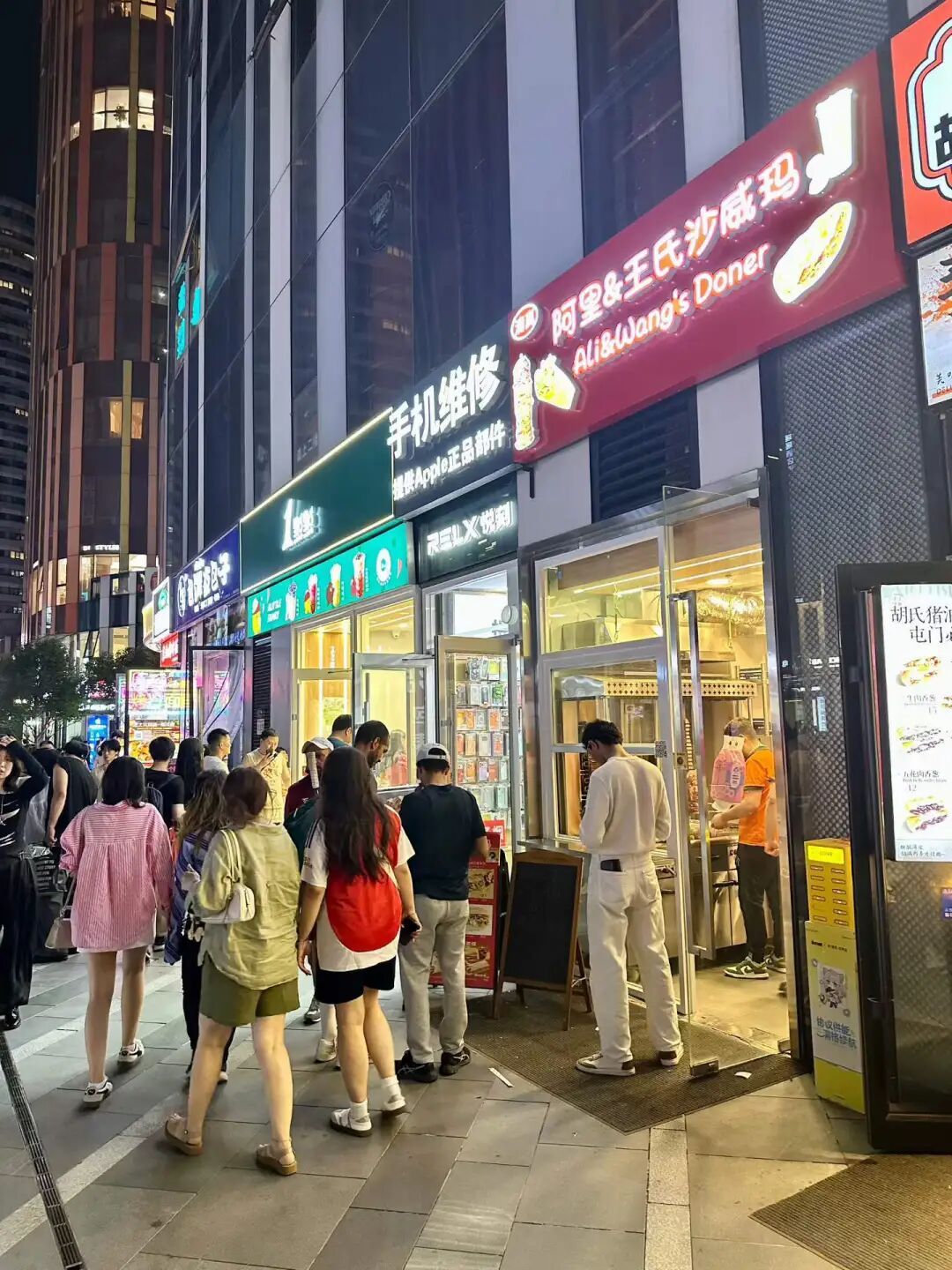
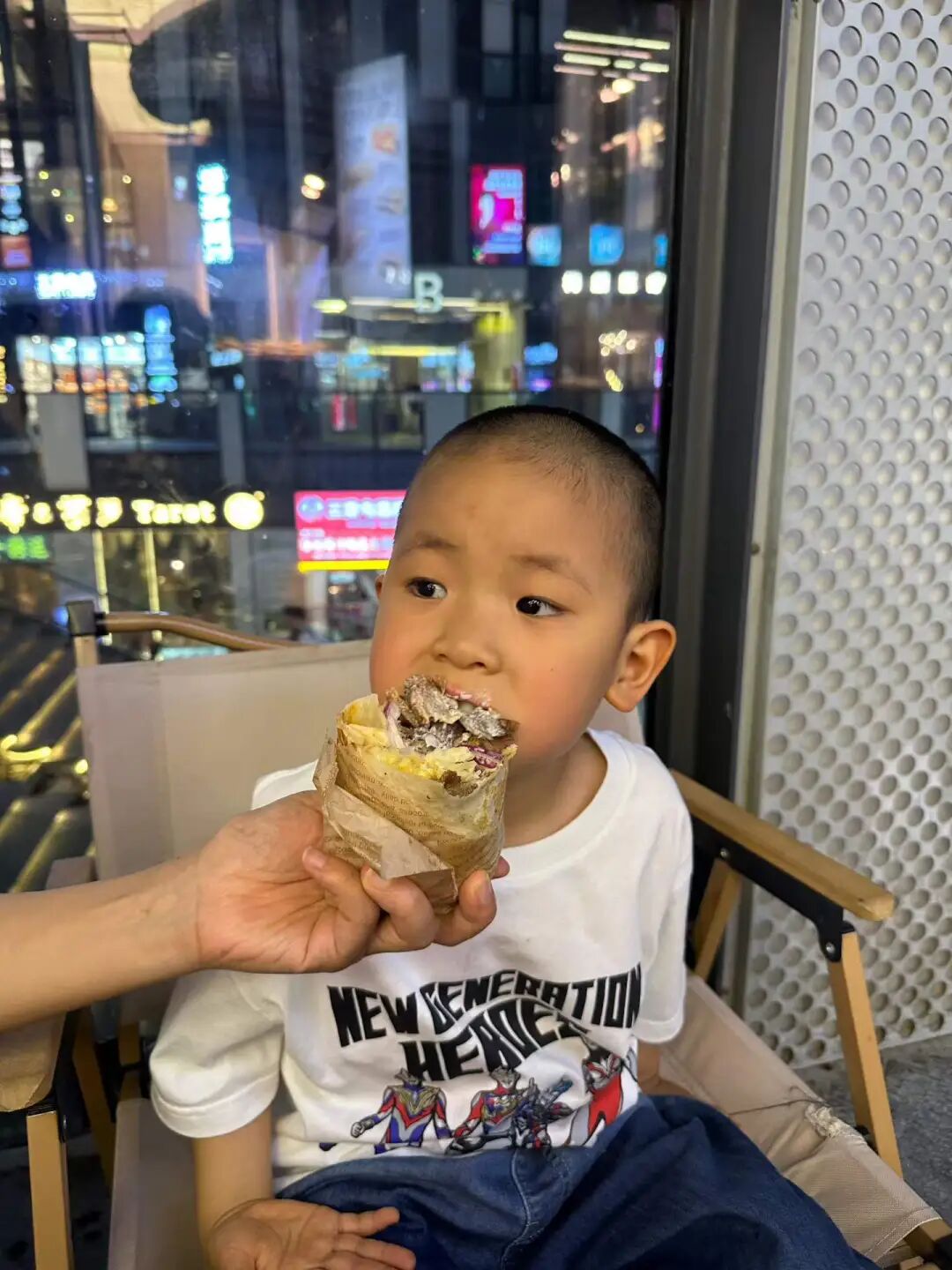
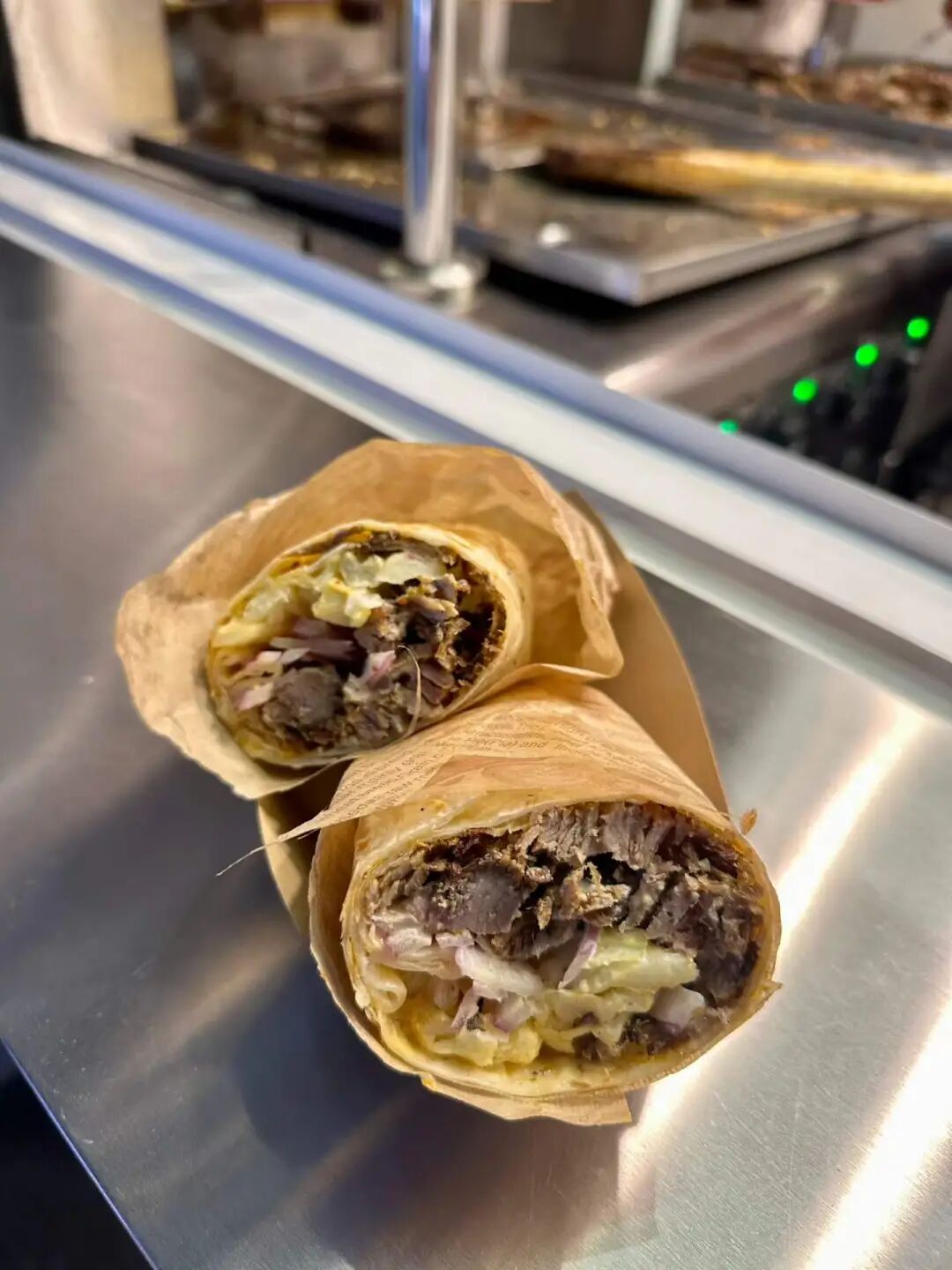
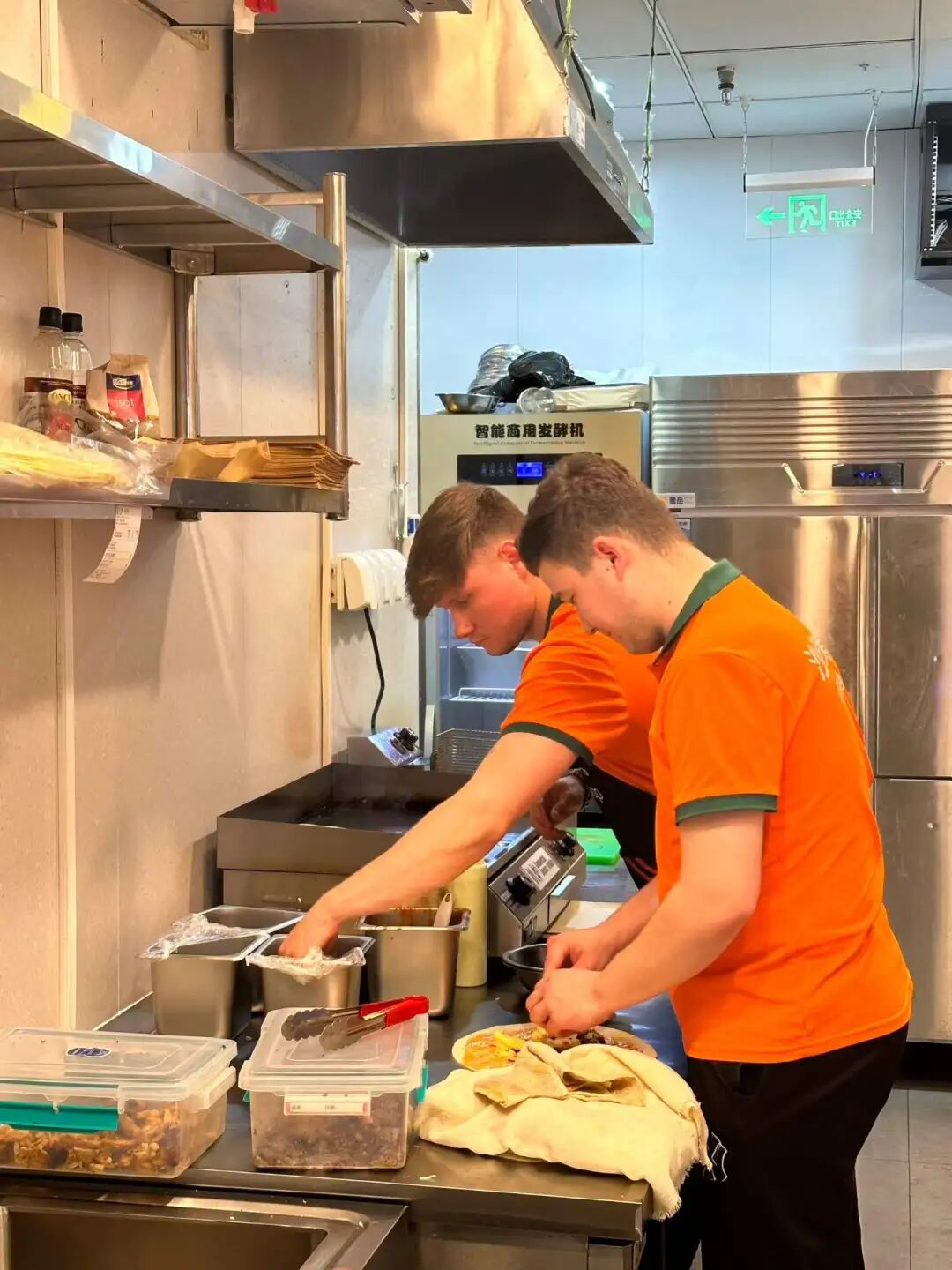
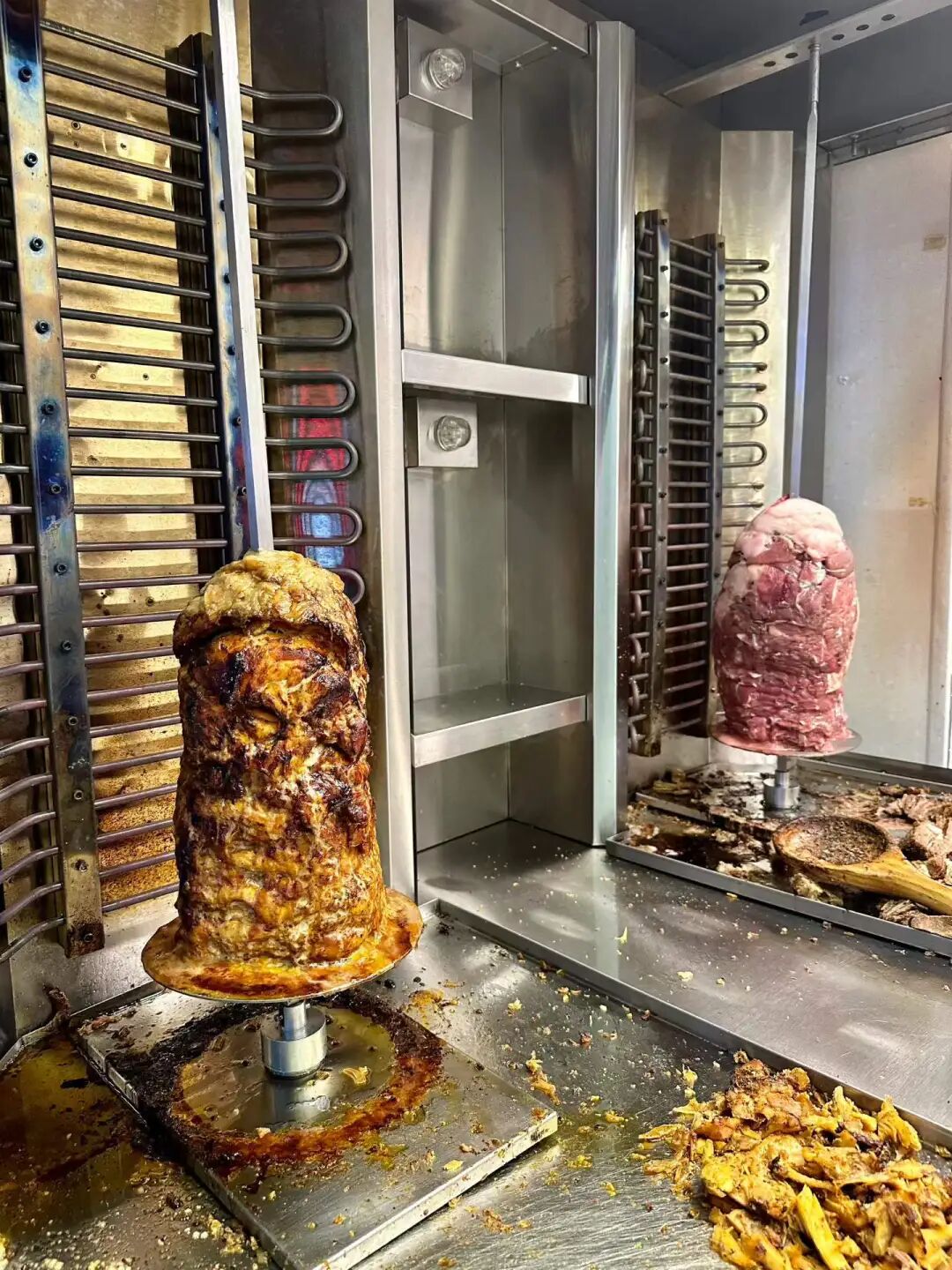
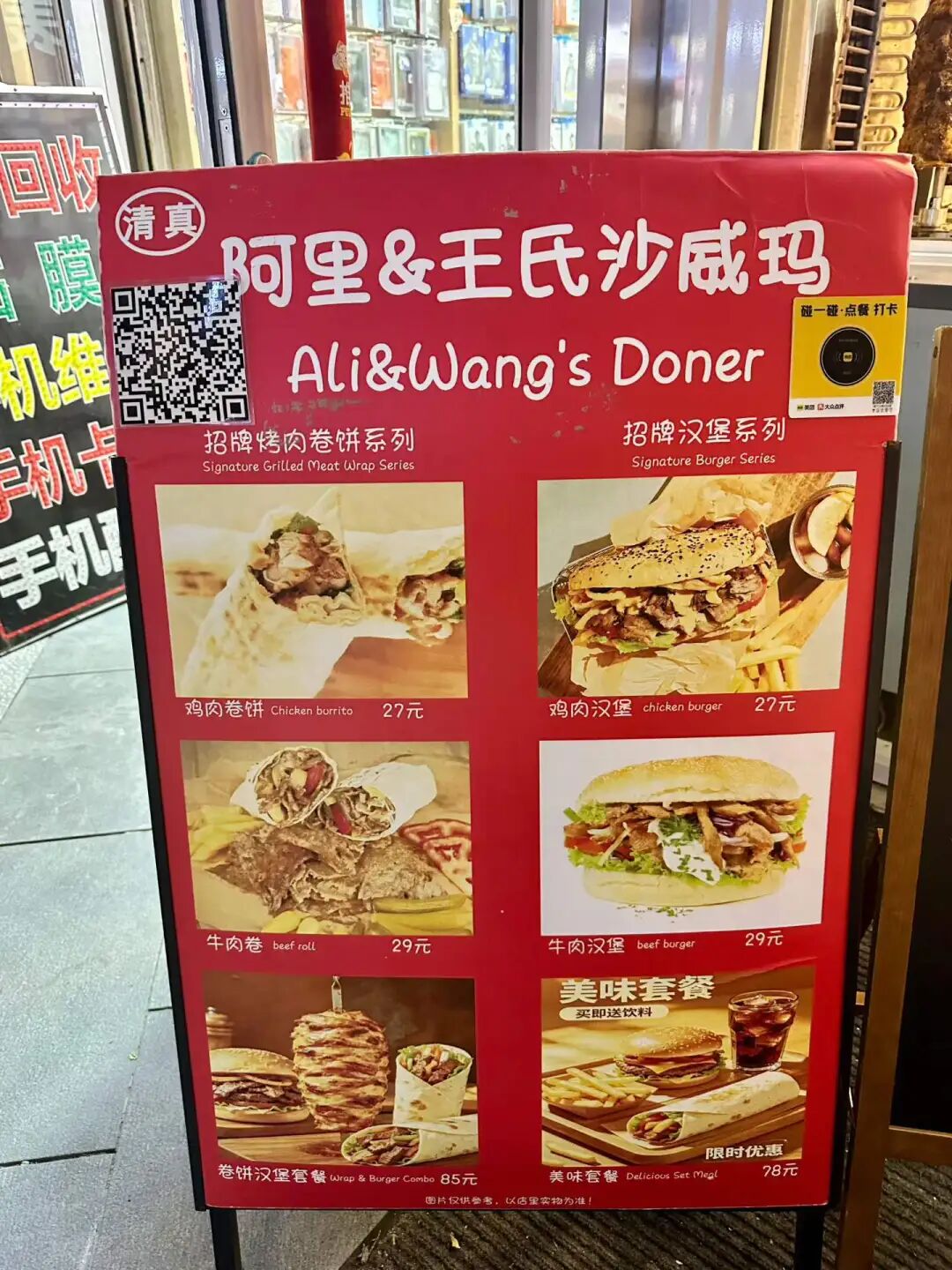
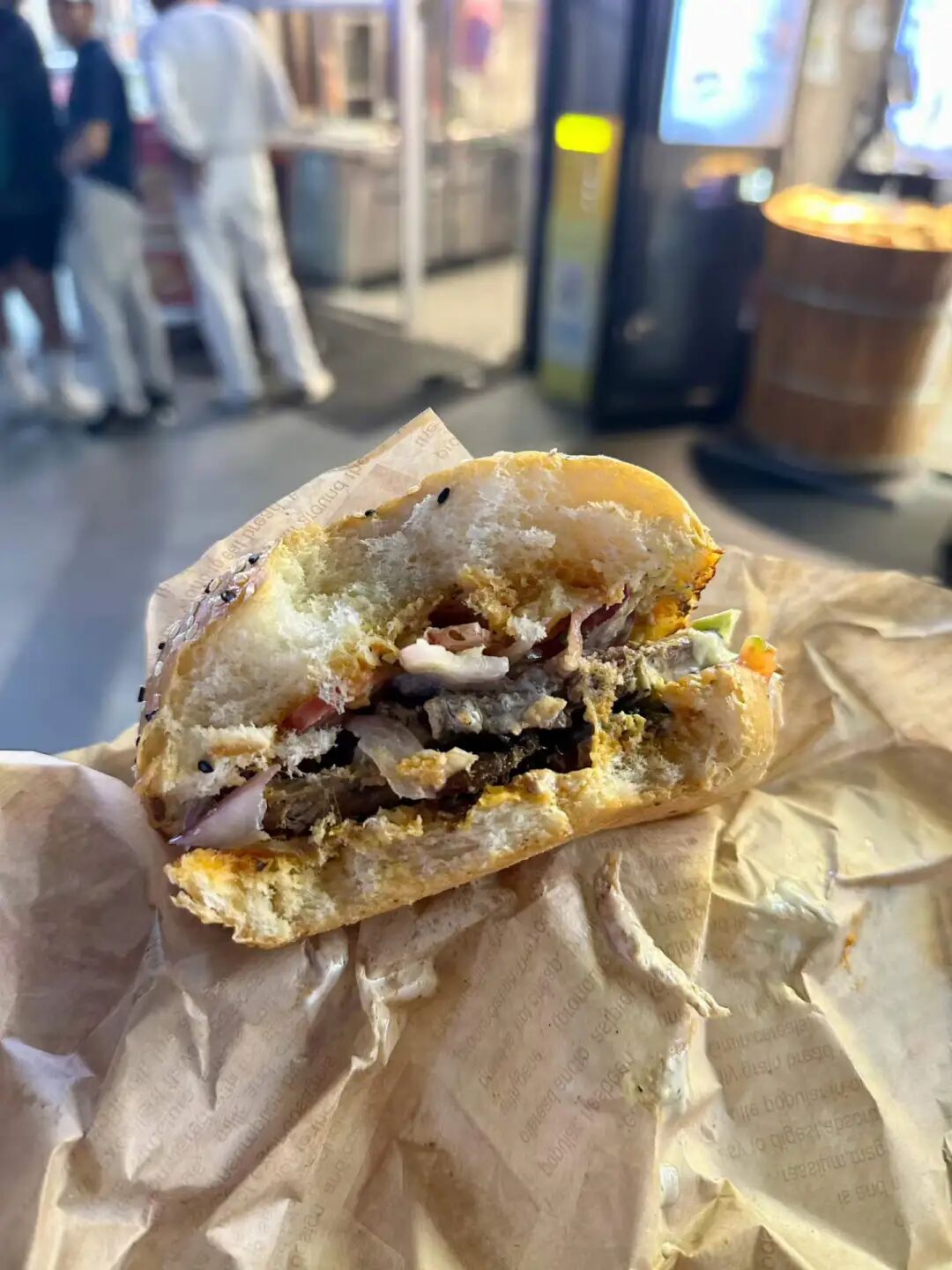
A new shawarma rotisserie shop just opened at the north entrance of Sanlitun SOHO. We went there for dinner; one of the guys working there is from Turkmenistan and the other is from Russia, and almost all the customers were foreigners. The wraps and burgers tasted okay, though the garlic sauce was quite strong. But when we went, they were just starting to roast a new batch of beef, so the pre-sliced beef wasn't very hot. Also, the flatbread wraps they used weren't warm. Still, the vibe is just like a rotisserie shop on a Middle Eastern street; there are no seats, so you grab one to eat on the go and pretend you are in Damascus.
Part 1: 10 halal restaurants in Beijing worth trying: Pakistani restaurant Lahore Courtyard, Henan Jiaozuo beef knife-cut noodles Maimairehong, halal Mongolian food Hulun Aile, West African Ghana Tribe Garden, Xi'an Xing Laosi meatball spicy soup, Xinjiang Changji Jinying meatball soup, Xinjiang Hotan Canteen, Syrian BRBR, Beijing fusion food Gulou Chimian, and Beijing traditional food Xilaisun.
Part 2: 10 halal restaurants in Beijing worth trying (Part 2): UAE restaurant Gulf Mandi Restaurant, Xinjiang Mansion Xihan meatball soup, Xinjiang Mansion lobby Altay afternoon tea, Muhejia revolving hot pot, Xinjiang Urumqi Nazilan (closed), Beijing pastry shop Baoyuanzhai (closed), Pakistani Samosa China-Pakistan Friendship Restaurant, Ma Ye Roast Duck (closed), Bangladeshi Benjibi Restaurant, and Huairou Shihu Cheng Resort.
Part 3: 10 new Beijing restaurants I recently tried. JM Italian Coffee Dongsi branch, halal Hunan-style stir-fry Huixiangyun (now closed) Wangjing branch, Shandong Dezhou Old Ma's lamb soup (yangtang) and steamed dumplings (zhengjiao), Sanlitun Philly cheesesteak (now closed), Pakistani Roma Restaurant (now closed), Muyuzhai garlic lamb intestines (lan suan yang chang), Inner Mongolia Lianying steamed dumplings (shaomai) Caoyuan Shiliuhong, Wangfujing Gansu spicy hot pot (malatang), and Yuezhen Yayuan halal courtyard restaurant.
Part 4: 10 halal restaurants in Beijing worth trying. Hotan rose pilaf (zhua fan) Yizhuang branch, Taiba Western-style bakery, Taiba South Sanlitun Road street shop, Zhaotong small meat skewers Guijie Ganmaya BBQ (now closed), Baixiaobei Heilongjiang BBQ shop, Yunnan Muwenzhai dry-pot beef, Sanlitun Xinjiang restaurant Jiangjiang, Huixiangyun halal Hunan restaurant Zuojiazhuang branch, Yili ice cream shop Bazaar Sweetheart, and Dongzhimen Inner Qianyuan Hotel.
Part 5: 10 halal restaurants in Beijing worth trying. Sandyq Kazakhstan restaurant, Kashgar restaurant, Ahmed restaurant, Jingbalang Naan Bazaar, MacMac Lebanese restaurant, Humaer Xinjiang specialty food, Lao Huihui dumpling restaurant Zoo branch, Fresh Milk Town (now closed) Shuangjing branch, Nawab restaurant, and Liuji Watch Repair BBQ shop.
Part 6: 10 halal restaurants in Beijing worth trying. Hongyunlou Huaiyang cuisine, Sanhe beef noodles (now closed), JM Coffee and Bakery Dajixiang branch, Wanhe fatty beef, Xiangqing roast duck (now closed), Culture Pakistani restaurant, Italian Firenze Western restaurant, Niujie Dashuntang, Zhenweizhai Tianjin cuisine, and Dardanelles children's meal.
Part 7: 10 halal restaurants in Beijing worth trying. JM Western restaurant Chaonei branch, Palestinian restaurant Rose City, Baoding beef soup with flatbread (niurou zhaobing), Pakistani restaurant Al Rayyan, Yili Loulan restaurant Guijie branch, Dianxinyuan Yunnan cuisine, Heilongjiang Suihua restaurant Muxiangyuan, Sanlitun Turkish restaurant, Chaoyangmen fast food stall, and Pakistani buffet Habibi.
Part 8: 10 halal restaurants in Beijing worth trying. Xinjiang Hui Muslim home-style cooking Yige Huangluobo, Liaoning Hui Muslim spicy hot pot (malatang), Hebei Daming Hui Muslim meat pie (roubing) Yimian Liaoyuan (now closed), Hebei Chengde Hui Muslim steamed dumplings (shaomai) Dongtucheng branch, Xilaishun Xisi branch, Longfusi market, Heilongjiang Suihua Hui Muslim Mashi Muxiangyuan Baizhifang branch, Turpan Uyghur restaurant Tianshan, Niujie cafe Sanwanghu, and Heilongjiang Hui Muslim iron pot stew (tieguo dun). view all
Summary: This guide to the best halal restaurants in Beijing keeps the original list of local Muslim food spots, Hui Muslim food, and practical halal dining details.
This article summarizes the key points of '10 Halal Restaurants in Beijing Worth Trying (Part 9),' keeping the original paragraph and image order. It is for readers interested in Muslim life, Islamic culture, and Chinese Islamic articles, and makes it easy to search for topics like Uyghur culture, marriage and family, and the ninth installment.
The list includes Shunhexiang Harbin-style stir-fry in Tongzhou, Fenghong Old Beijing Flavor in Changping, Aidamu Xinjiang street barbecue in Shilihe, Ruilin Azerbaijani restaurant near Ritan, Yilan Liyuan American-style burgers on Niujie, Guxiangzhai Tianjin-style shaved ice in Hufangqiao, Niujie's Big Green Bag stinky tofu, Zafran Pakistani restaurant in Xinyuanli, Jinfang Snack Bar in Dongdaqiao, and Ali & Wang's rotating kebab in Sanlitun.
I heard that the Harbin Hui Muslim stir-fry restaurant Shunhexiang opened in Beijing's Tongzhou sub-center, so I came to try it out for dinner. The restaurant is located in a new residential complex along the Grand Canal in Tongzhou. The environment is great, and the private room's turntable is button-controlled, making it easy to reach the dishes.
They specialize in Heilongjiang Hui Muslim cuisine and have also added some southern Chinese dishes to their menu. We ordered the savory sweet and sour pork (guobaorou), sauerkraut beef rib stew, colorful starch noodles (dalapi), stir-fried lily bulbs with bamboo shoots, and beef steamed dumplings (shaomai). The best of these was the steamed dumplings. The skin was thin and chewy, and the filling was fragrant and not greasy. I think they are better than the other Hui Muslim steamed dumplings currently in Beijing. The sweet and sour pork had a good texture and wasn't fried too hard. I think it's better than another Heilongjiang Hui Muslim restaurant in Beijing. The sauerkraut tasted great, but there was very little beef, and there were very few lily bulbs in the lily bulb and bamboo shoot dish. Overall, the restaurant is definitely worth a visit. The biggest problem is that it is too far from the city center, almost reaching Hebei. It is best suited for those driving there or people working in the sub-center.
On Sunday, I was in Changping and had Beijing-style food for lunch at Fenghong Old Beijing Flavor in Xiaotangshan.
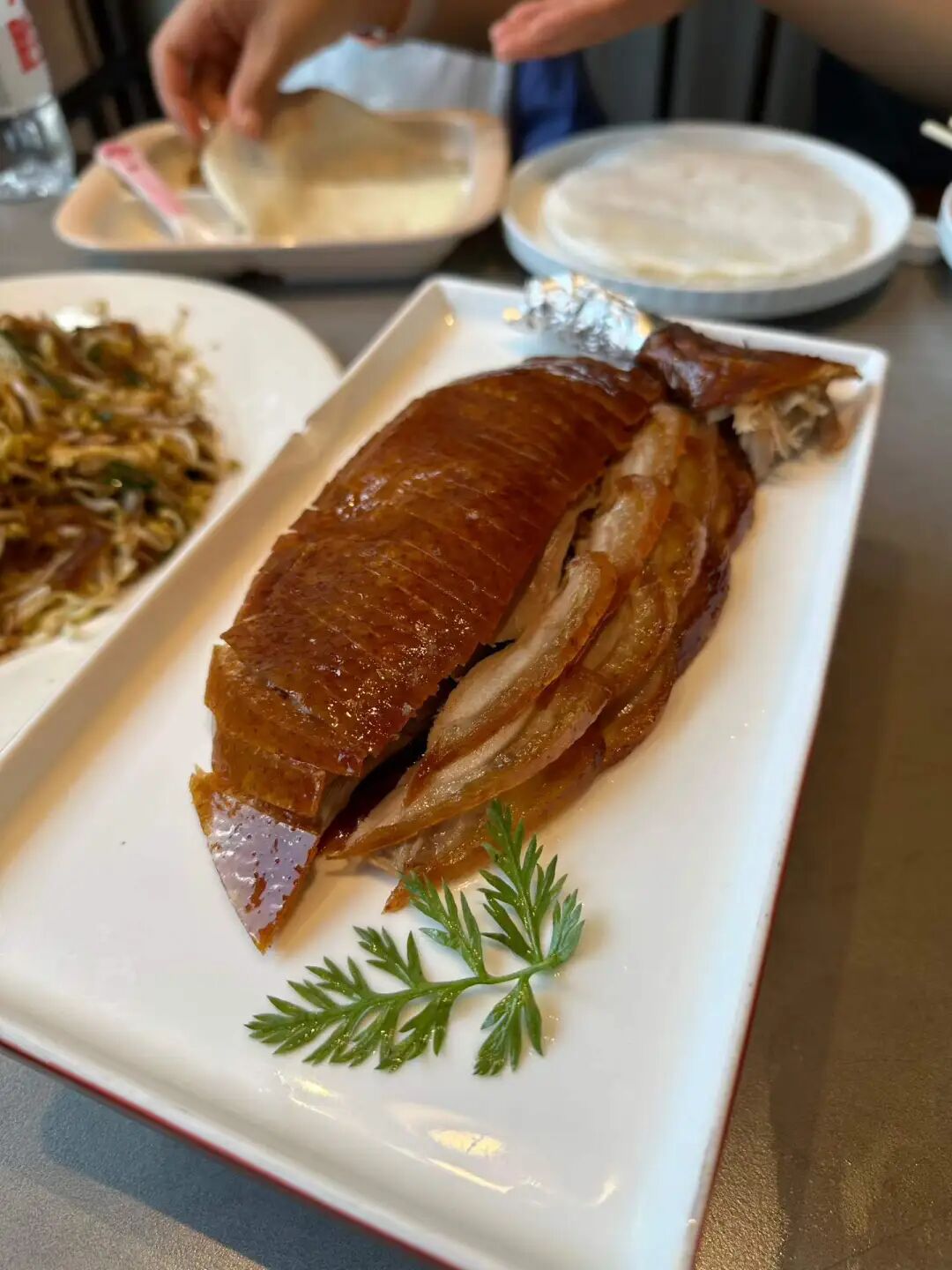
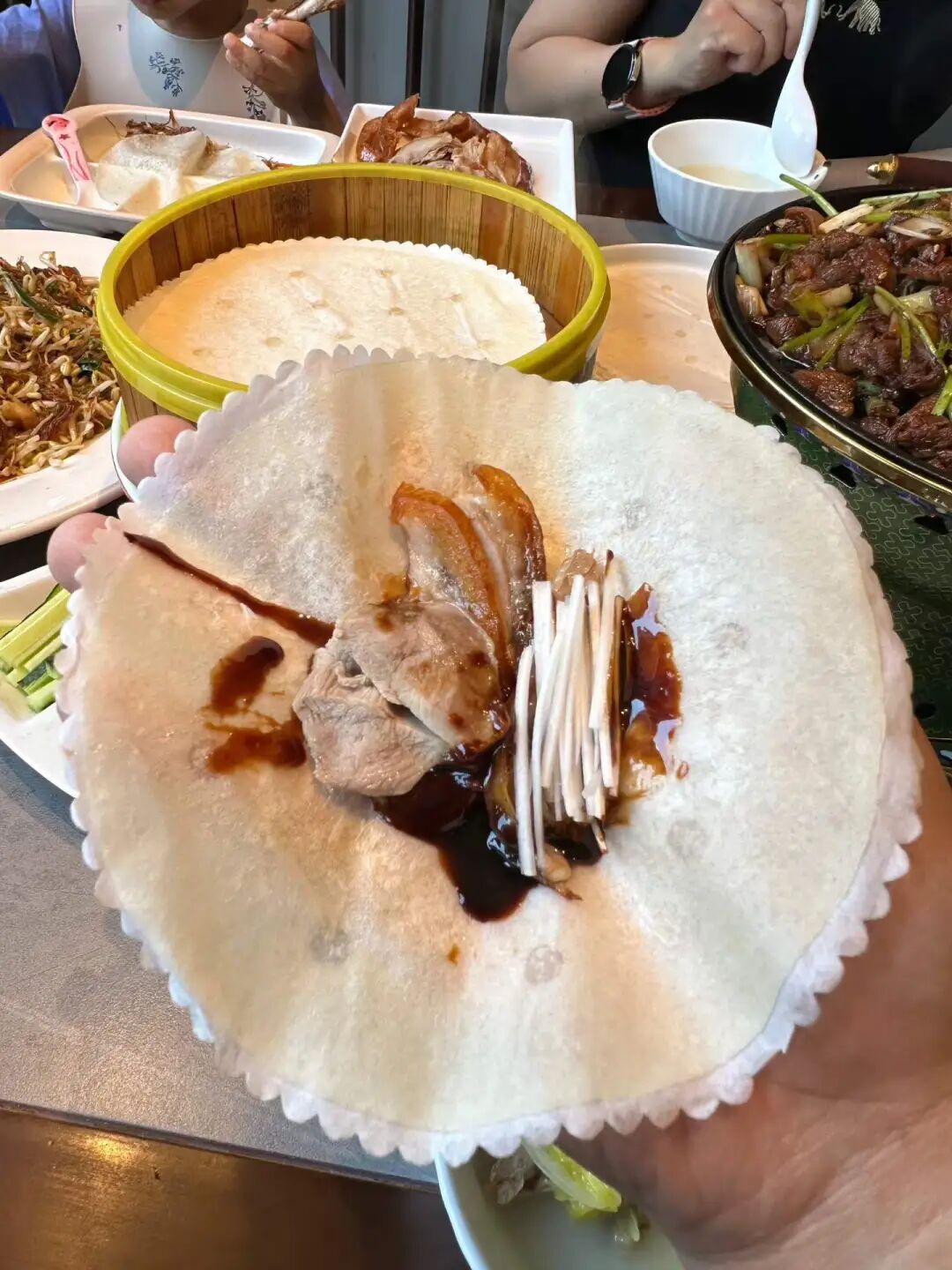
We ordered the three-person set meal, which included half a roast duck, grilled meat on a round iron plate (zhizi kaorou), stir-fried mixed vegetables (chao hecai), and duck frame tofu soup. This three-person set is a great value, and we were stuffed after finishing it. The duck tasted good, and the kids really liked it. The portion of stir-fried mixed vegetables (chao hecai) was huge, and it tasted great too.
The grilled meat on a round iron plate (zhizi kaorou) was a hit with both the Xinjiang and Hunan people at our table; the meat was tender but still had a nice chew. However, it must have been pre-marinated because it was spicy and couldn't be made mild, so the kids couldn't eat it. Duck frame soup is a must-have with roast duck; it was very savory and we couldn't stop drinking it.
Besides roast duck, they also serve traditional Hui Muslims' eight big bowls (badawan). If you are visiting Changping, you should come here to eat. They don't close in the afternoon, so it is perfect for a late meal after sightseeing.
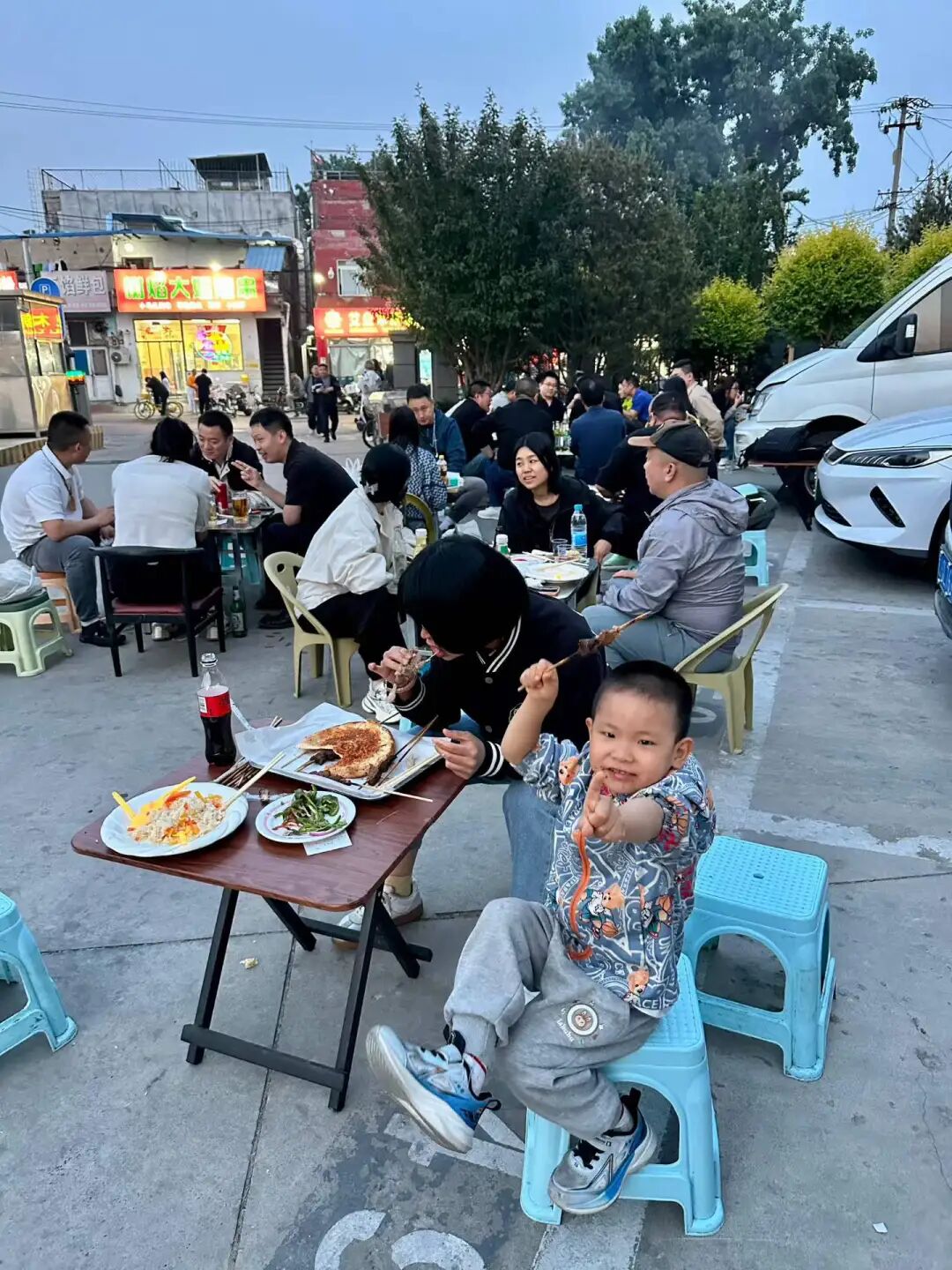
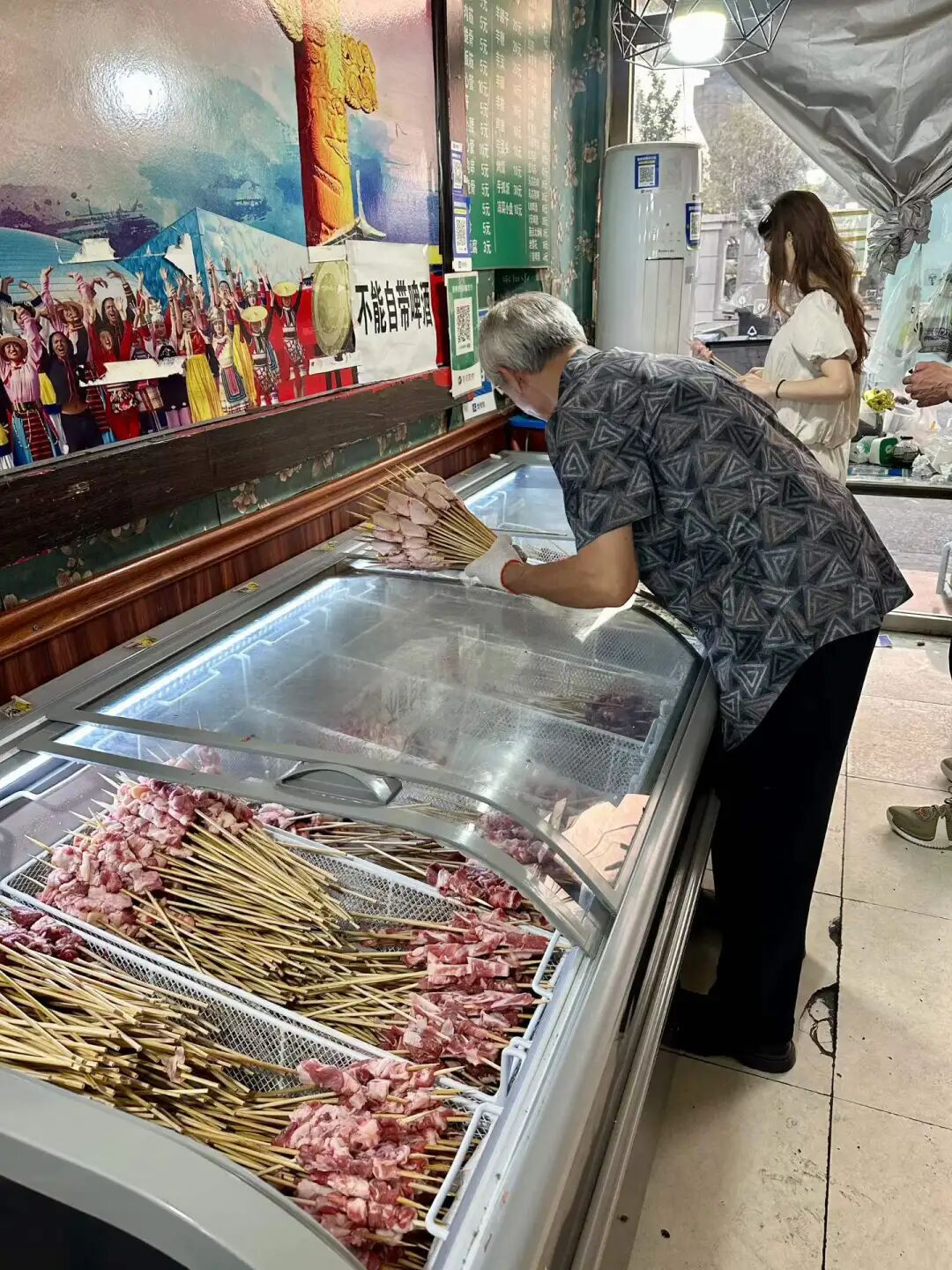
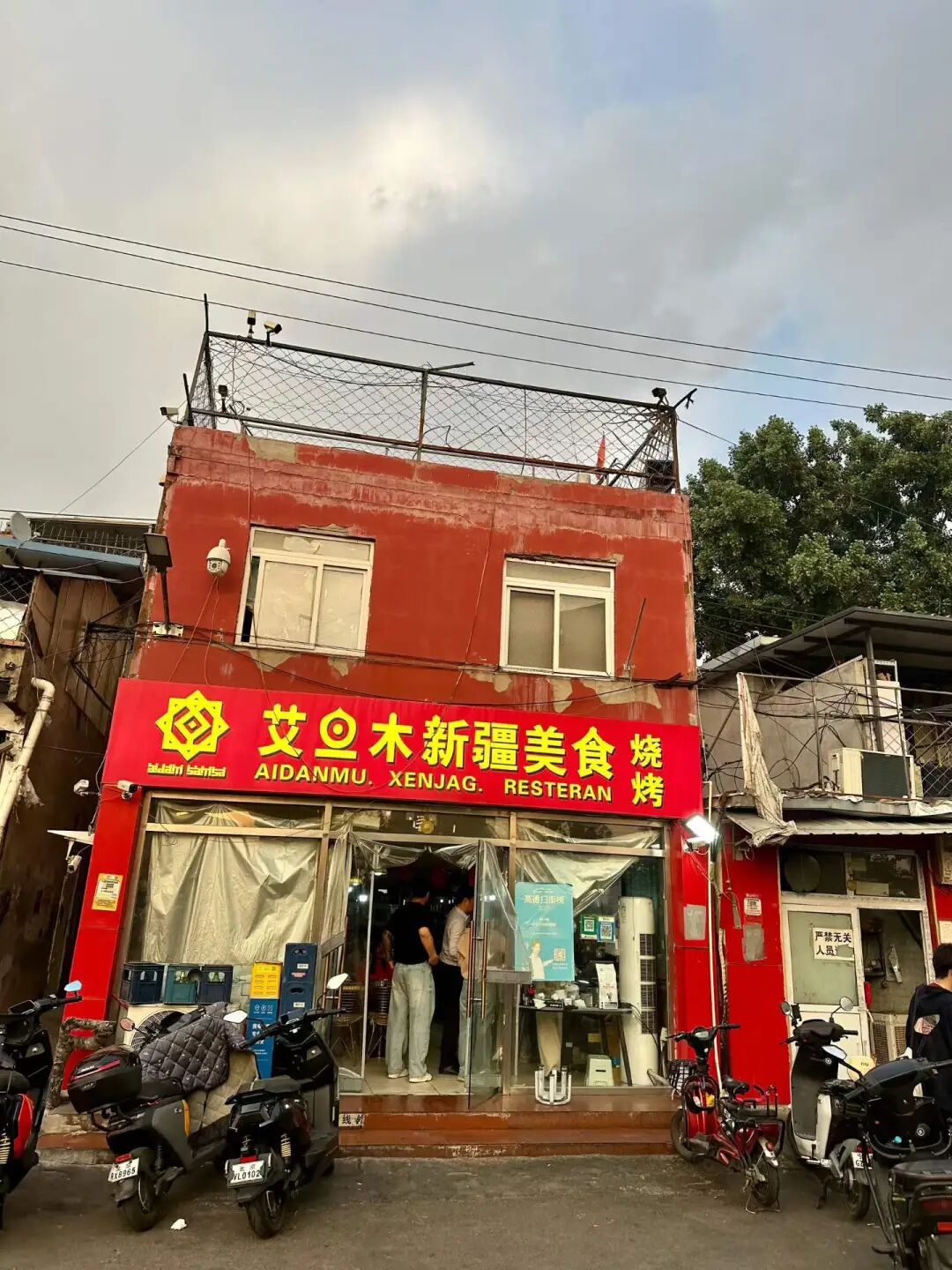
In the evening, we went to Shilihe to eat barbecue at Aidamu. I had heard they were very famous, but this was my first time eating there, and I was truly impressed. They have basically brought the level of a local Xinjiang night market to Beijing; eating there felt just like being back in Xinjiang.
There is a large parking lot right across from the restaurant, making it very convenient if you drive there. When we arrived at 6:30, the place was already packed, so we set up a table in the parking lot across the street. Since the temperature has risen in May, it is perfect for eating barbecue outdoors.
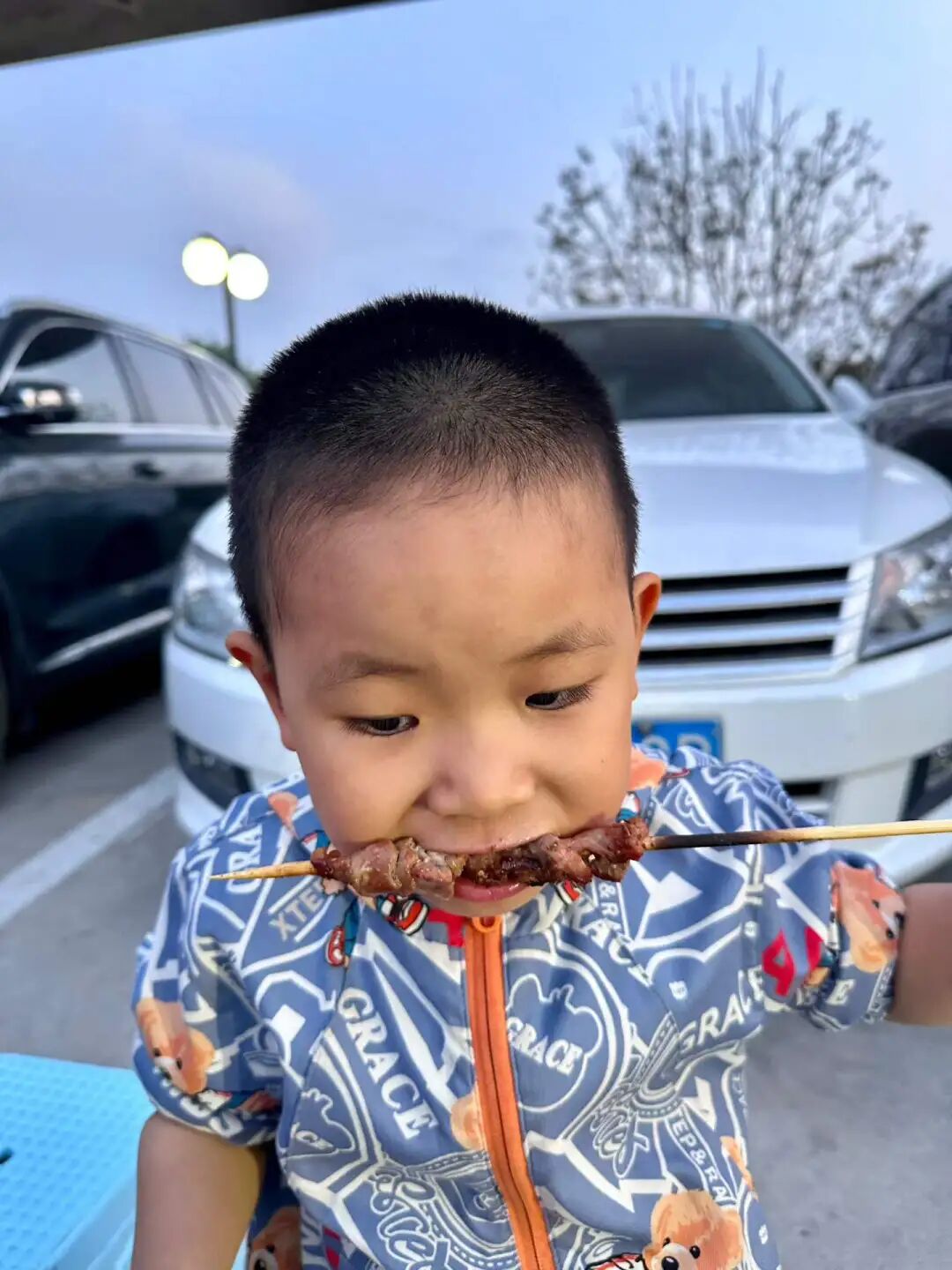
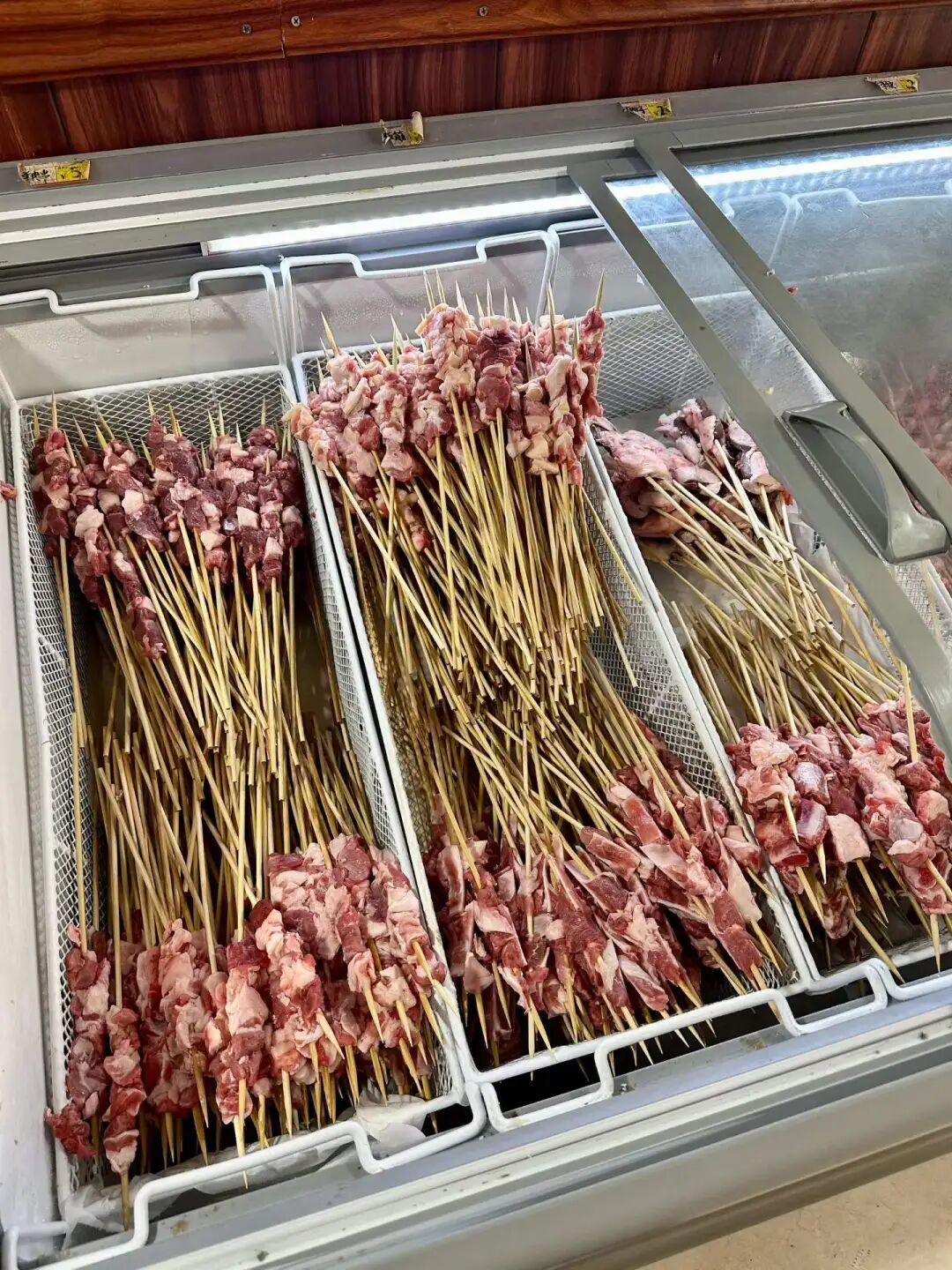
At their place, you grab the skewers yourself from the freezer. We had lamb liver, lamb heart, lamb skewers, and lamb chops. The lamb liver was very tender, definitely top-tier for Beijing. The lamb heart had more chew than the liver, and it was also quite good. The lamb skewers had no gamey smell at all, just the pure aroma of lamb, which is very rare in Beijing.
We had the pilaf (zhuafan) fresh out of the pot at seven o'clock. It was shiny and oily, though the lamb was a bit tougher compared to the skewers. Overall, it was still good. I happened to hear the table next to us complaining that their rice was undercooked. Actually, I think pilaf is only good when the rice is a bit firm. If the rice is too soft and mushy, it just becomes regular steamed rice.
On the weekend, we had dinner at Kavkaz Ruilin, a long-standing Azerbaijani restaurant on Ritan Upper Street, to enjoy some Russian and Caucasian food. This is a classic former Soviet-style restaurant in Beijing that has been open for over a decade. It mostly serves merchants from Russian-speaking regions who come to Yabaolu to source goods. Its Chinese name used to be Ruilin, but it has been changed to Ruilin.
After the Soviet Union collapsed in the 1990s, many traders (daoye) took green-skinned trains to Beijing and headed straight to Yabaolu to stock up on goods. They brought down jackets, leather shoes, toys, and other small items back home to sell for huge profits. Yabaolu gradually grew from street stalls and tents into Beijing's largest wholesale market for Russian-speaking regions, and more former Soviet-style restaurants opened up on nearby Ritan Upper Street. Over a decade ago, Ritan Upper Street was mainly home to Central Asian and Azerbaijani restaurants, including Uzbek and Kazakh spots.
Over the last decade, Russia's economic decline, the shift of markets to places like Yiwu, Guangzhou, and Suifenhe, and the rise of cross-border e-commerce have caused trade with Russia on Yabaolu to shrink. Yitan Shangjie has gradually become a hub for Uyghur restaurants. Besides Dardanelles and Desert Rose, which focus on Turkish food, the only other Azerbaijani restaurant is Ruilin. For Central Asian food, there is the Turkmenistan restaurant Merv downstairs, which also serves Russian dishes.
At first, Ruilin had dim lighting, making it a good spot for traders to talk business, but many Chinese people were afraid to go inside. In recent years, the lighting at Ruilin has become brighter, but when we visited, there were only Russian-speaking customers, and we did not see any other Chinese people eating there.
We ordered borscht (hongcaitang), pot-stewed lamb (manguan yangrou), chive pancakes (jiucaibing), Azerbaijani pilaf (zhuafan), and grilled vegetables. Their borscht is closer to the Russian style than the one at Merv. Merv's beef soup has a stronger flavor, while their version has a more intense beet taste, which is also quite good.
Pot-stewed lamb is a classic Russian main course. Traditionally, it is cooked during long, cold winters by stewing meat in a clay pot over a wood-burning fireplace, then sealing the lid and burying it in the fireplace embers for several hours. Their pot-stewed lamb broth is very fresh, similar to Xinjiang cup-stewed lamb (gangzirou), but the lamb is a bit tough rather than tender.
I really like the Azerbaijani pilaf. I made sure to eat the authentic version when I visited Azerbaijan, and after coming back, I think both Ruilin and Dardanelles make a good version. Azerbaijani pilaf is dyed yellow with saffron and includes dried apricots, prunes, chestnuts, and raisins. The lamb is salty and savory, while the dried fruits add sweetness, creating a very rich flavor profile.

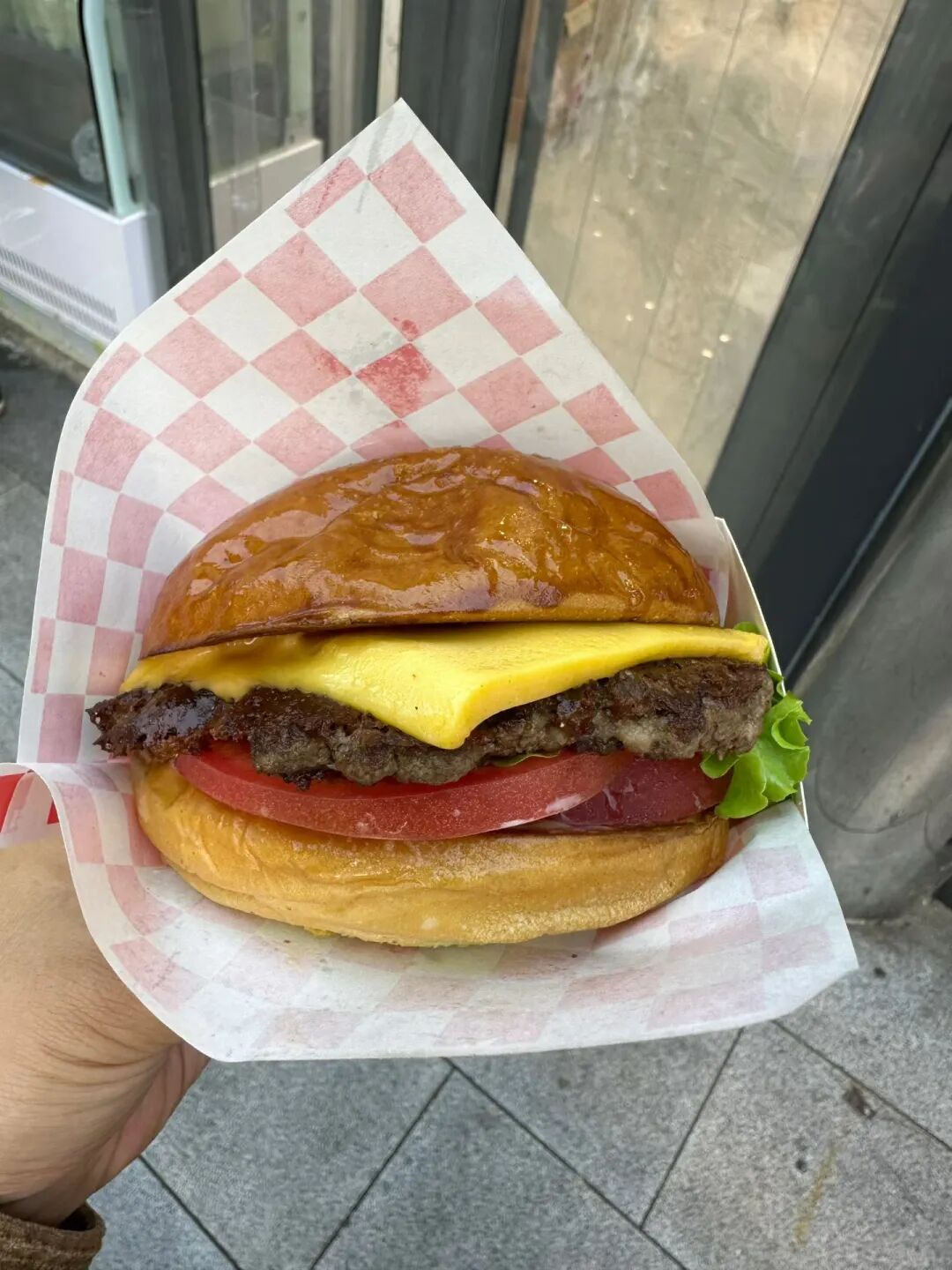
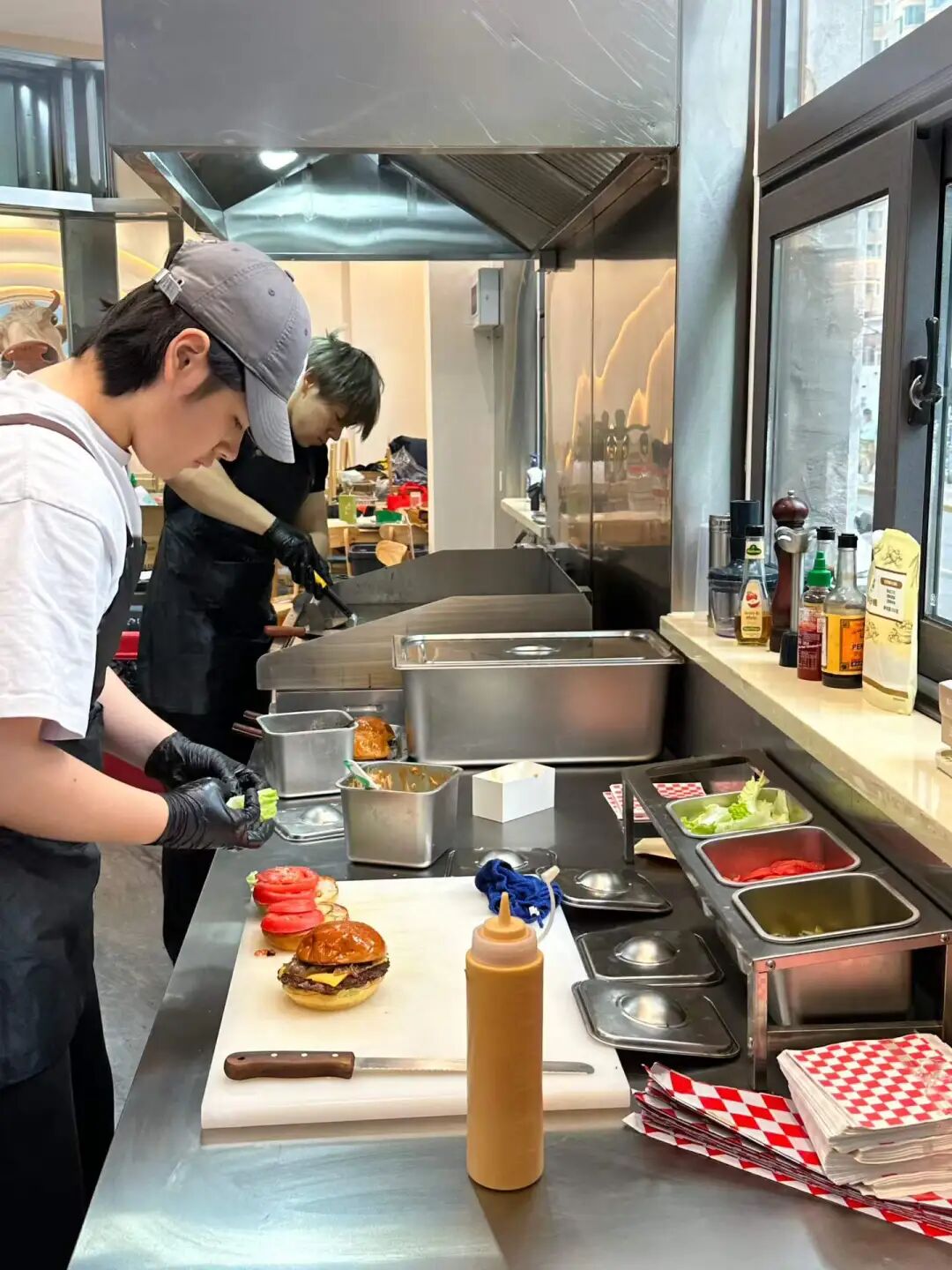
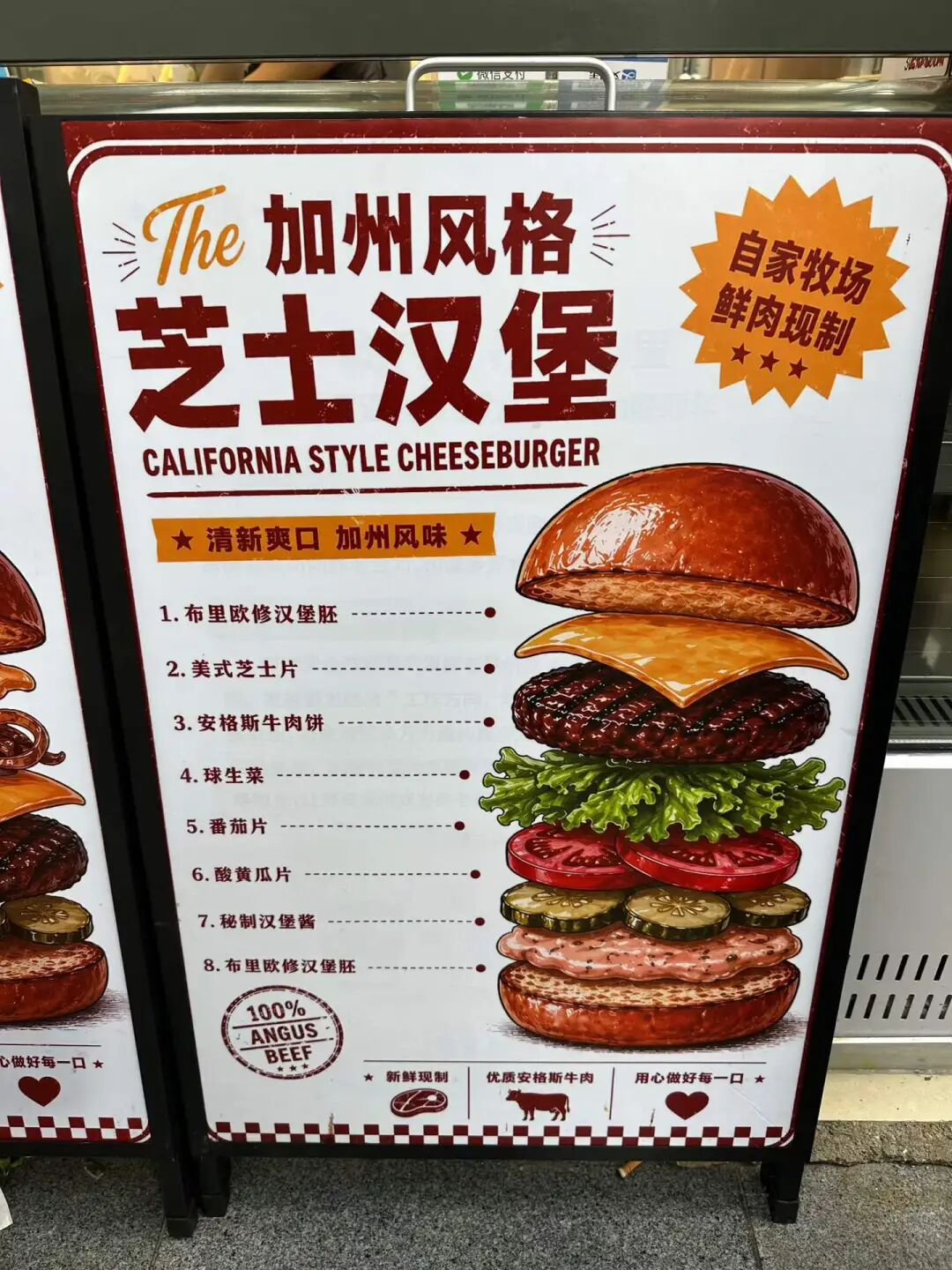
I finally had the cheese beef burger at Yilan Liyuan on Niujie this weekend. They only have regular and California-style options now. The California-style burger adds lettuce and tomato, and you can order it as a single or double patty. They do not let you eat inside the shop, so you have to eat at the entrance or take it away. I waited five minutes at the door and it was ready. The single-layer size is decent, and the crust was baked hot on the spot, but the filling felt a bit dense and not very fluffy. The meat pie tastes good, but it feels a bit loose, as if it wasn't packed tightly enough. Overall it is pretty good, but it would be even better if there were other things to pair it with.
A Tianjin halal shaved ice and steamed pancake (zhengbing) shop called Guxiangzhai has opened at Hufangqiao. Since the weather is getting warmer lately, many people are coming to eat shaved ice. For my first visit, I chose the traditional-style shaved ice. It contains sour hawthorn paste (suanmogao), red hawthorn fruit, dried apricots, strawberries, mulberries, pineapple, orange, fresh apricots, and red beans. It actually has more ingredients than the truly traditional version, and it is mainly sweet and sour to whet your appetite. Sour hawthorn paste (suanmogao) is the soul of Tianjin traditional shaved ice. It is made by grinding dried wild sour jujubes into powder and boiling it with rock sugar. You can buy large blocks of sour hawthorn paste (suanmogao) at the entrance of the archway of the South Mosque (Nandasi) in the Northwest Corner. It also tastes great when mixed directly with water.
Their dinosaur egg three-apricot shaved ice is also a signature item. It contains Kashgar Hami apricots, Yengisar Saimaiti red apricots, Aksu Situan dried apricots, and secret-recipe preserved fruit made from wild hawthorn from Shanxi. It sounds very good.
They also sell various snacks. We bought a steamed pancake (zhengbing) with a red hawthorn filling, which is sweet and sour and perfect for breakfast. It is a pity that the rice cakes (gaogan) were sold out, so I bought a rice cake (migao) with a sour hawthorn paste flavor. It was a bit dry, but the taste was still good. I also bought a snack called "five blacks," which contains black rice, black beans, black mulberries, black goji berries, and black sesame seeds. It sounds very healthy.
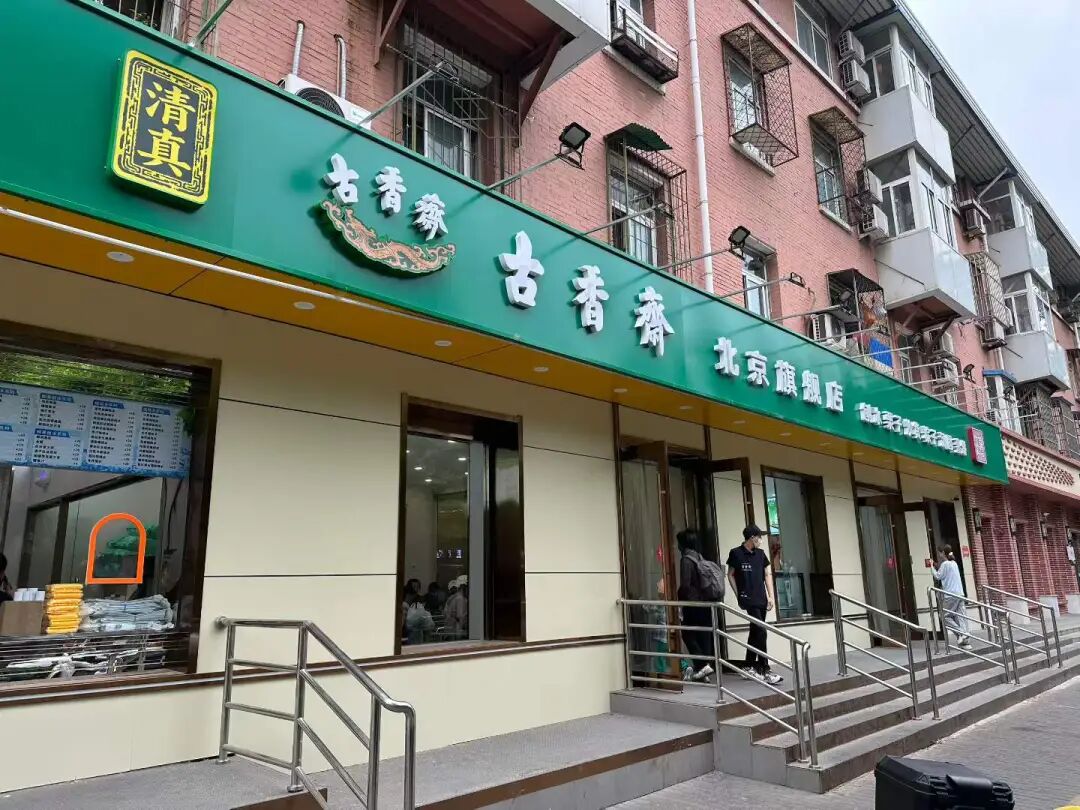
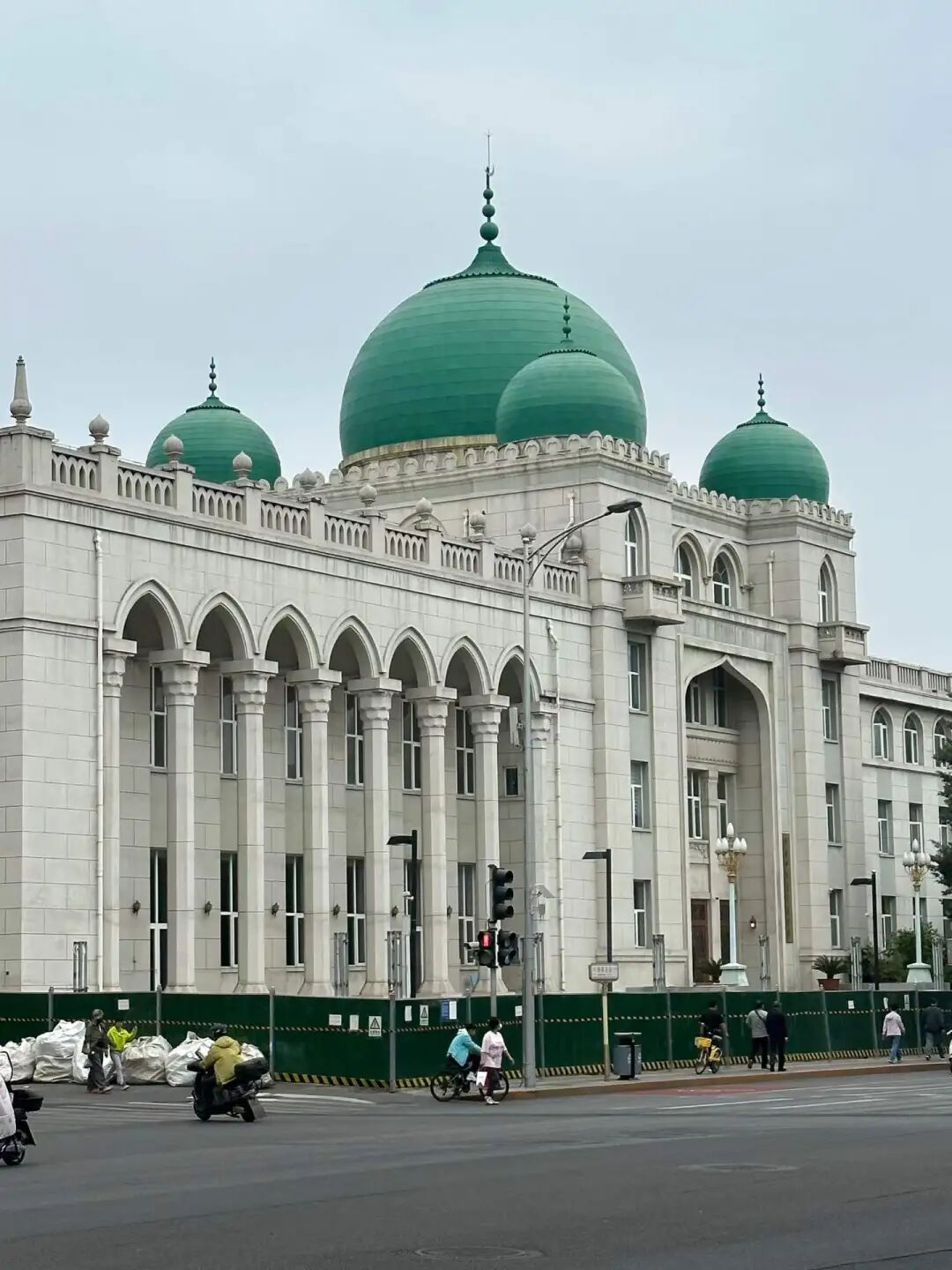
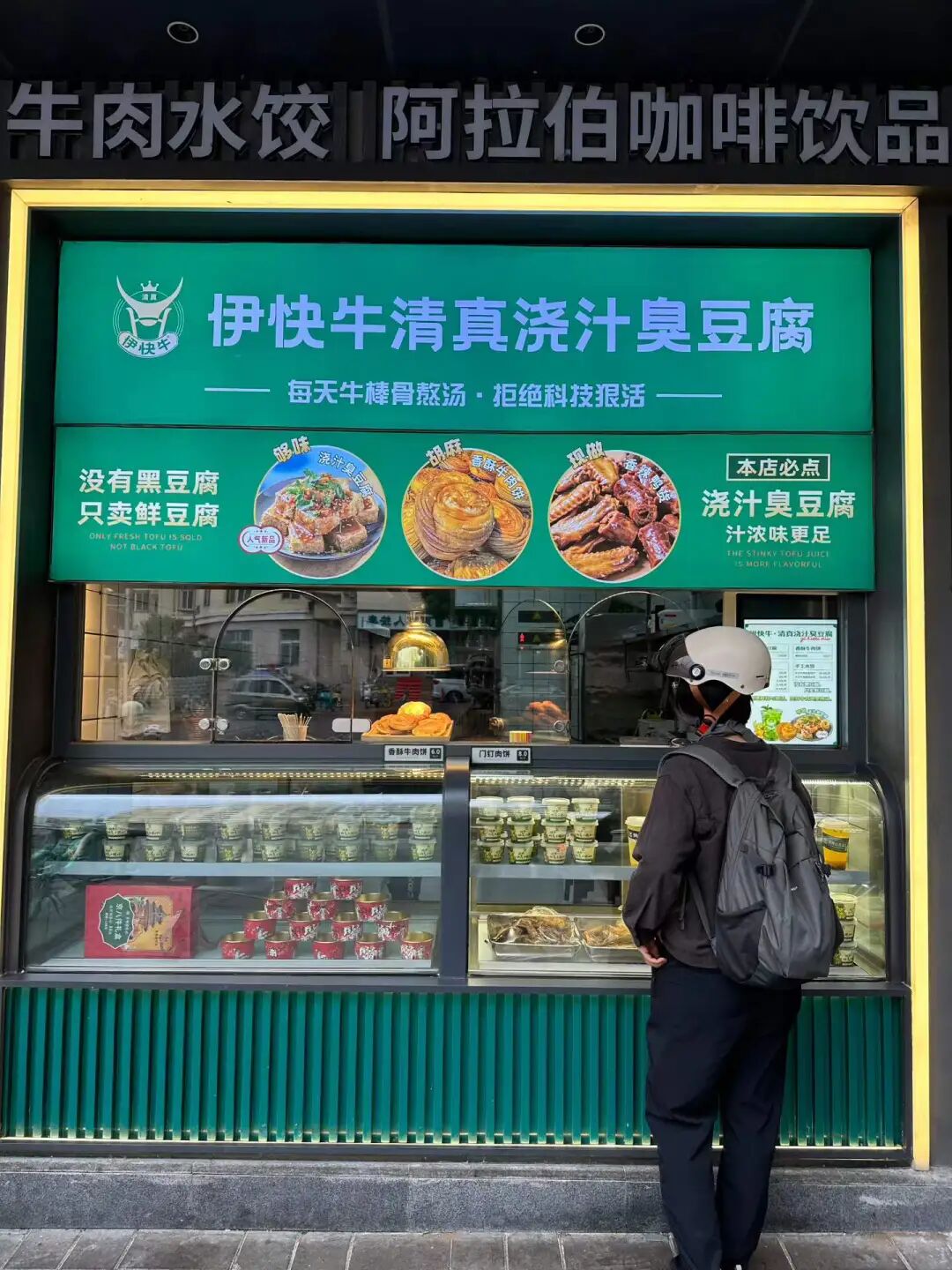
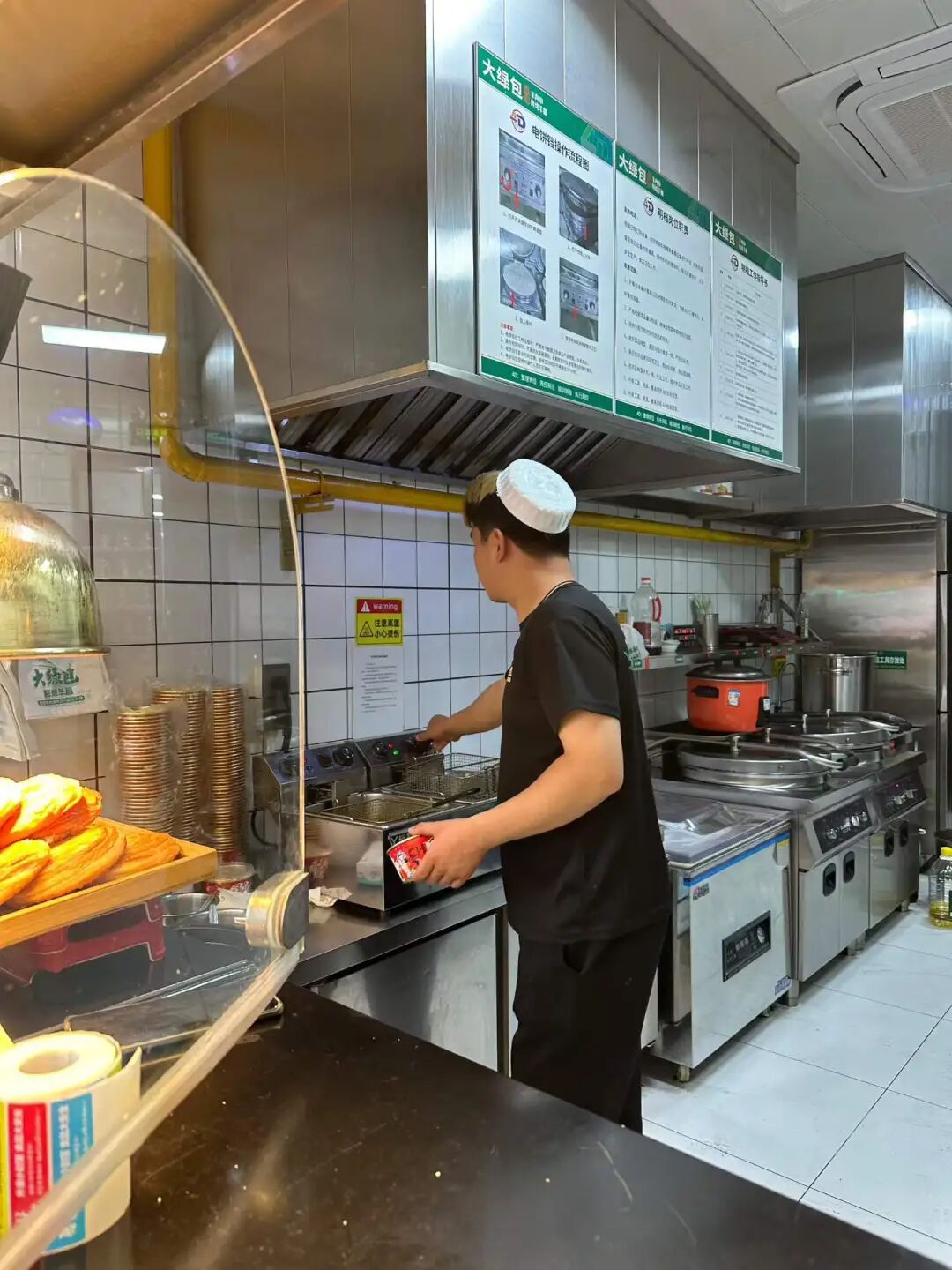
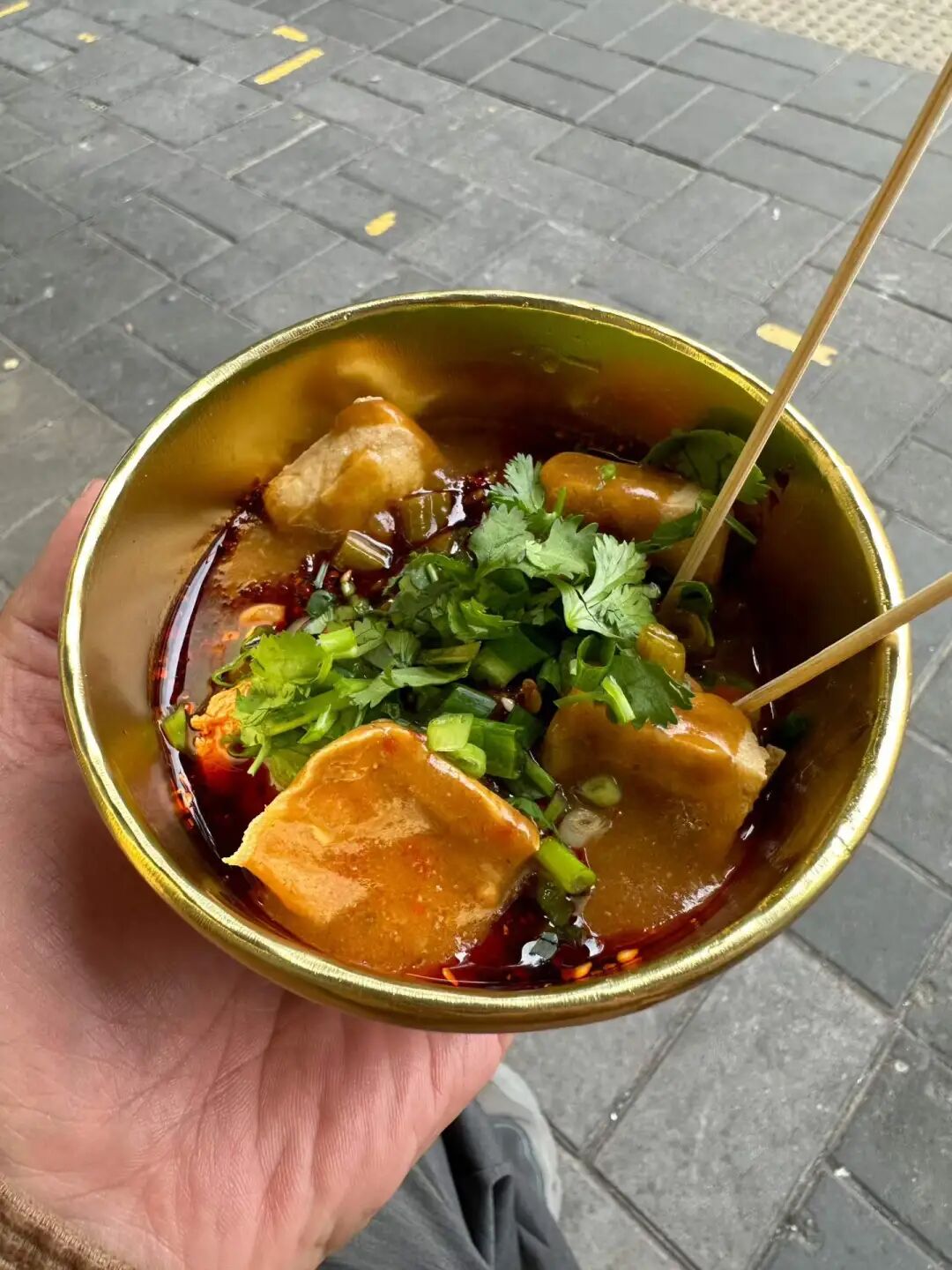
Across from the China Academy of Chinese Medical Sciences on Niujie Street, the roast lamb leg shop with the big green sign sells stinky tofu with sauce. The sauce is made from beef bone broth (niubanggu aotang), and it really has a meaty flavor. I remember eating fried stinky tofu topped with fermented bean curd sauce from a cart run by local Hui Muslims on Binjiang Road in Tianjin. That flavor was truly satisfying.
A new alcohol-free Pakistani restaurant called Zafran just opened in Jiayi Plaza near Liangmaqiao. It is very close to the Liangma River, and since it only opened a few days ago, I came specifically to try it.
I looked at the menu and was surprised to find many Afghan Pashtun dishes. I asked the server, and he is a Pashtun from Peshawar. I decided to order a few Pashtun dishes to try, as some of them cannot be found in other Pakistani restaurants.
First, I must praise their excellent service. The Pashtun waiter, Anas Khan, always greeted us with a smile and even did a fist bump with my son, Suleiman. As soon as we sat down, they brought us black tea, lemon water, and fried dough twists (mayezi). Later, they served a special dried fruit milkshake with walnuts and almonds. Finally, they gave Suleiman a small cup of thin yogurt drink (lassi) and a piece of baklava, which made him very happy.
The atmosphere is also very nice, with curtained sofa areas on one side that are perfect for families. There are no large private rooms, but if you have a big group, you can push tables together in the main dining area. There is also outdoor seating at the entrance, which is great for having desserts and drinks in the summer.
We ordered Afghan pilaf, Peshawar-style lamb, and Kandahar naan. You can tell these are Pashtun specialties just by their names. We also ordered a Caesar salad, french fries, and salty yogurt drink (lassi). Since they just opened, they gave us a 30% discount, which was a great deal.
Afghan pilaf originated in the border region between northern Afghanistan and Uzbekistan. It is known as Qabili Palaw in Afghanistan and later spread from there to West Asia, Central Asia, and Pakistan. Afghan pilaf (pulao) differs from Xinjiang pilaf because it uses long-grain aromatic rice from South Asia and a bit of saffron for color. It is cooked with ghee and vegetable oil, and the carrots are sliced thinly. It also includes cinnamon, cardamom, and cloves, giving it a stronger spice flavor than Xinjiang pilaf. Their Afghan pilaf includes fresh almonds and raisins, but the meat is a bit tough and hard for children to chew. The spice flavor is very rich.
This was my first time eating Peshawar Shinwari lamb, and I highly recommend it! The lamb is very tender and the seasoning is excellent. Peshawar Shinwari lamb is cooked in a metal wok called a karahi. It is a classic main dish for the Pashtun people in northern Pakistan, especially prepared after the animal sacrifice during Eid al-Adha. It is made with fresh bone-in lamb, salt, garlic, and green chilies, without the heavy spices found in southern Pakistan.
Their Kandahar flatbread (nan) is also amazing and pairs perfectly with the Peshawar lamb. Kandahar flatbread is also popular in Pakistan. It is very fluffy because milk and sugar are added to the dough, making it more fragrant.
I also recommend their yogurt drink (lassi). It is not too sour, but it is very appetizing.
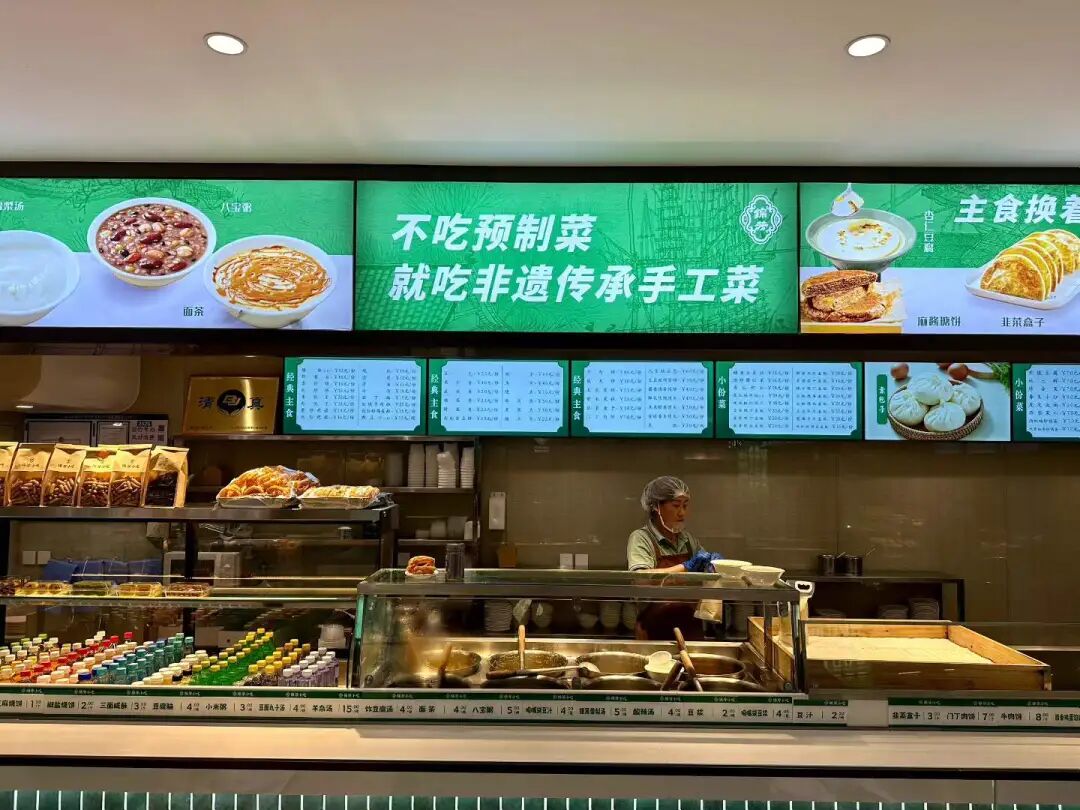
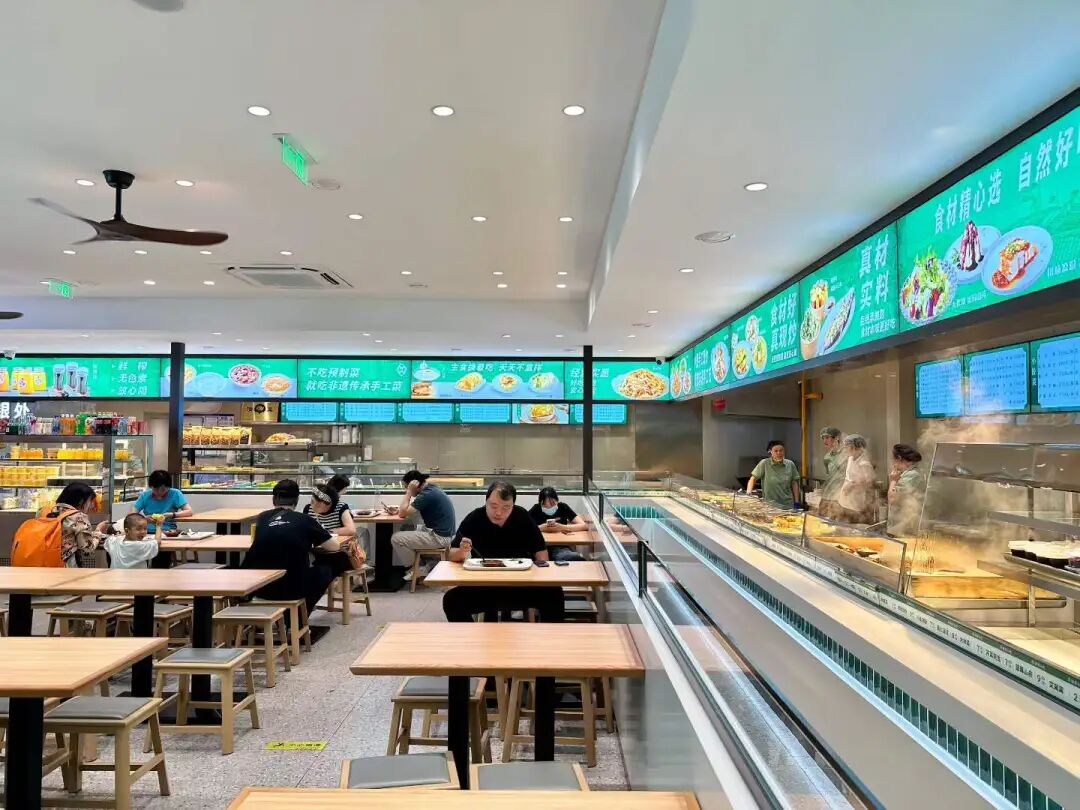
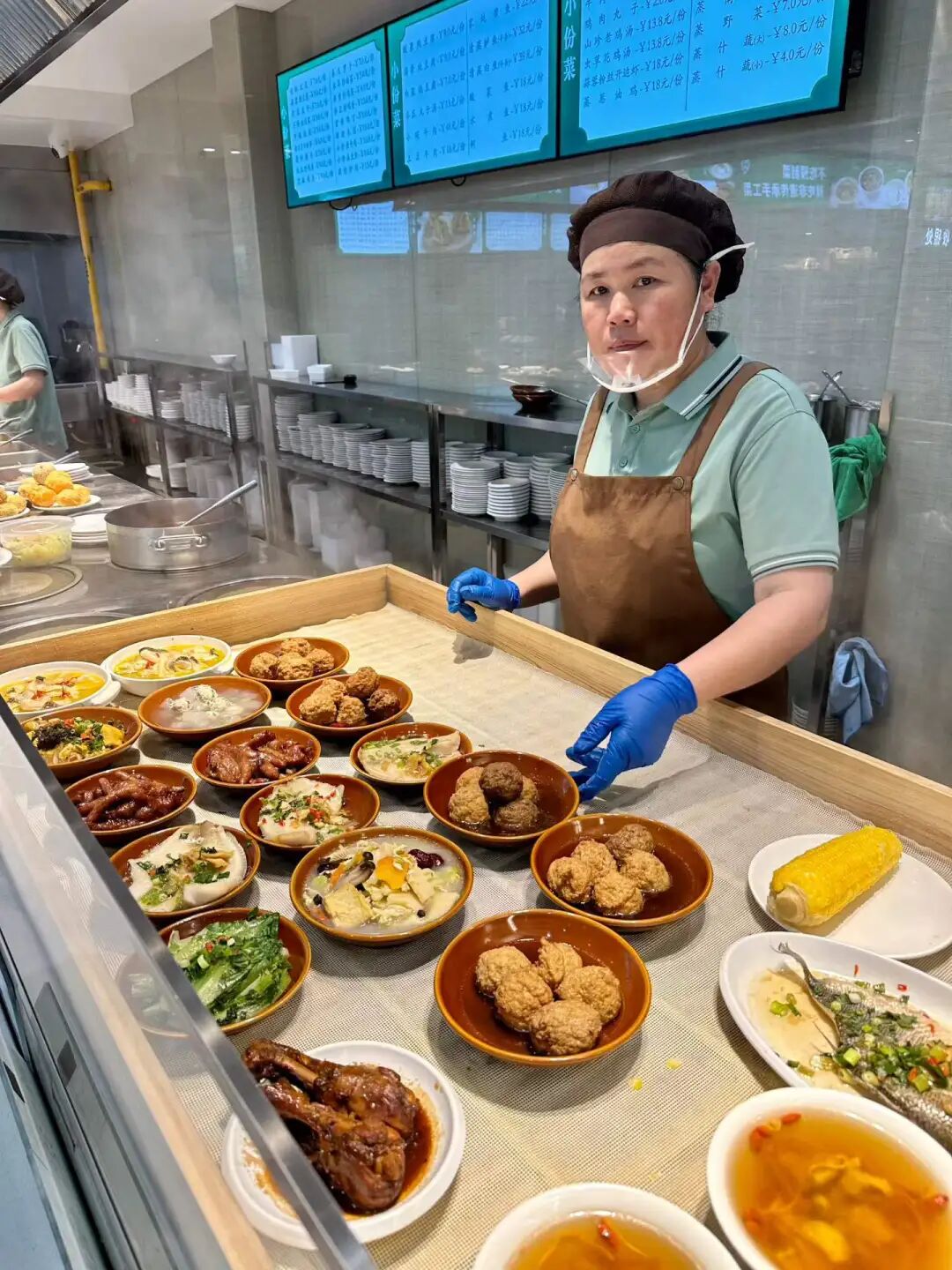
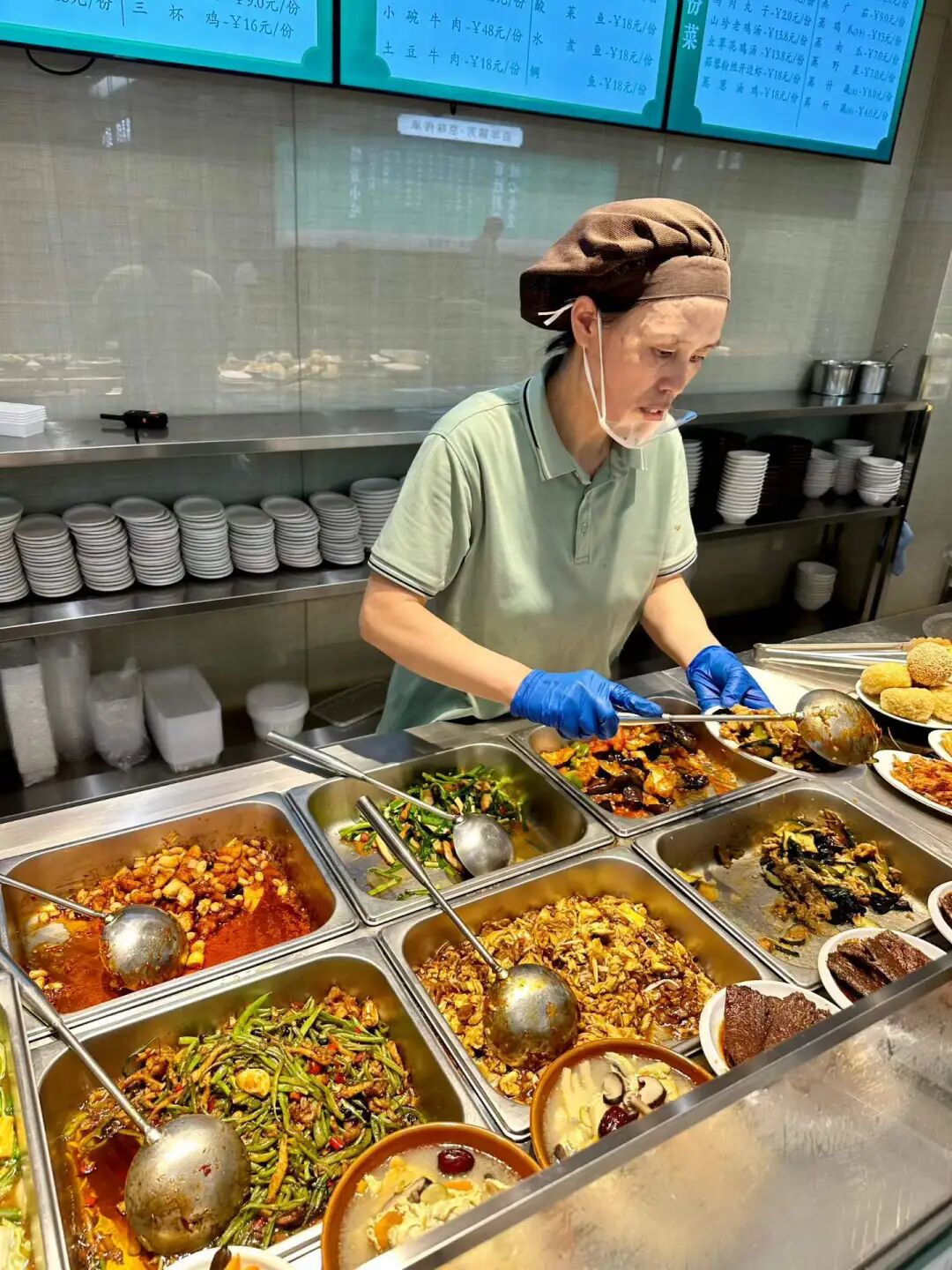
The Qingxiangge restaurant at Dongdaqiao was replaced by Jinfang Snacks this year, and I just went to try it recently. Once inside, I found it is completely different from the old shop at Ciqikou. It uses a self-service tray system with small bowls of stewed dishes, small portions of stir-fries, and a huge variety of mixed salads, noodles, and snacks. It is incredibly rich in options. Small bowls and small plates are rare in traditional Beijing restaurants, making them perfect for people who want to try several different dishes.
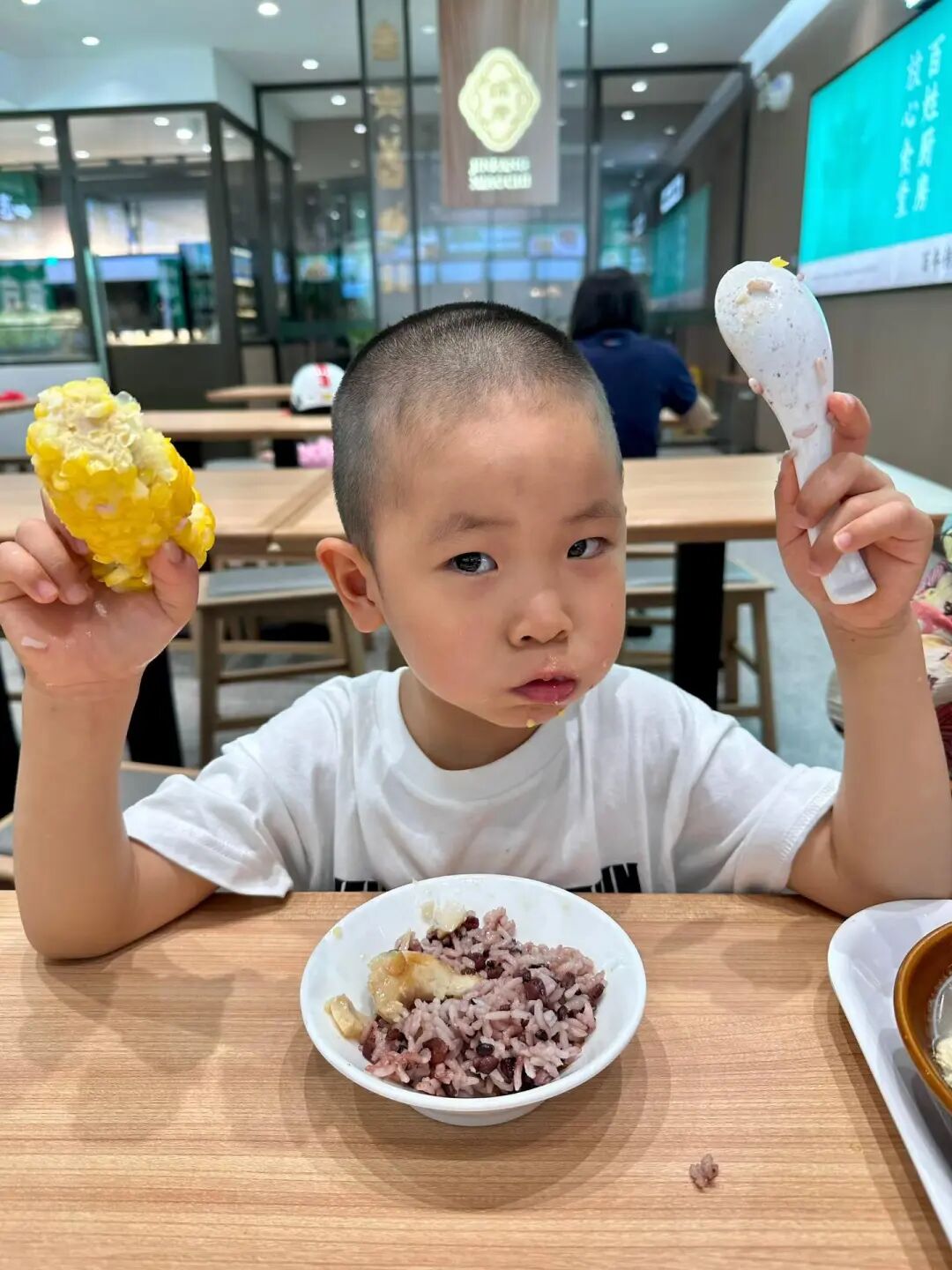
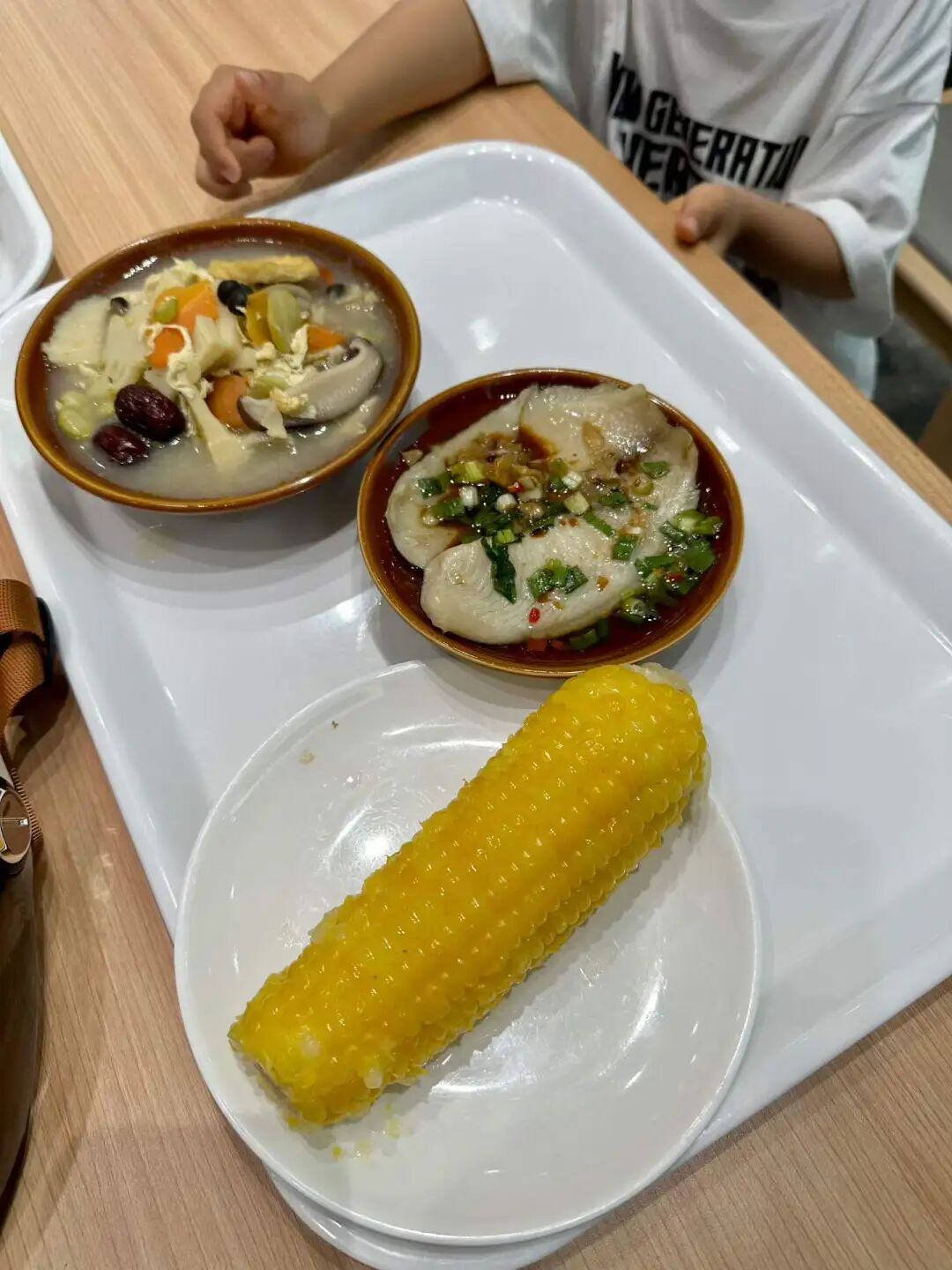
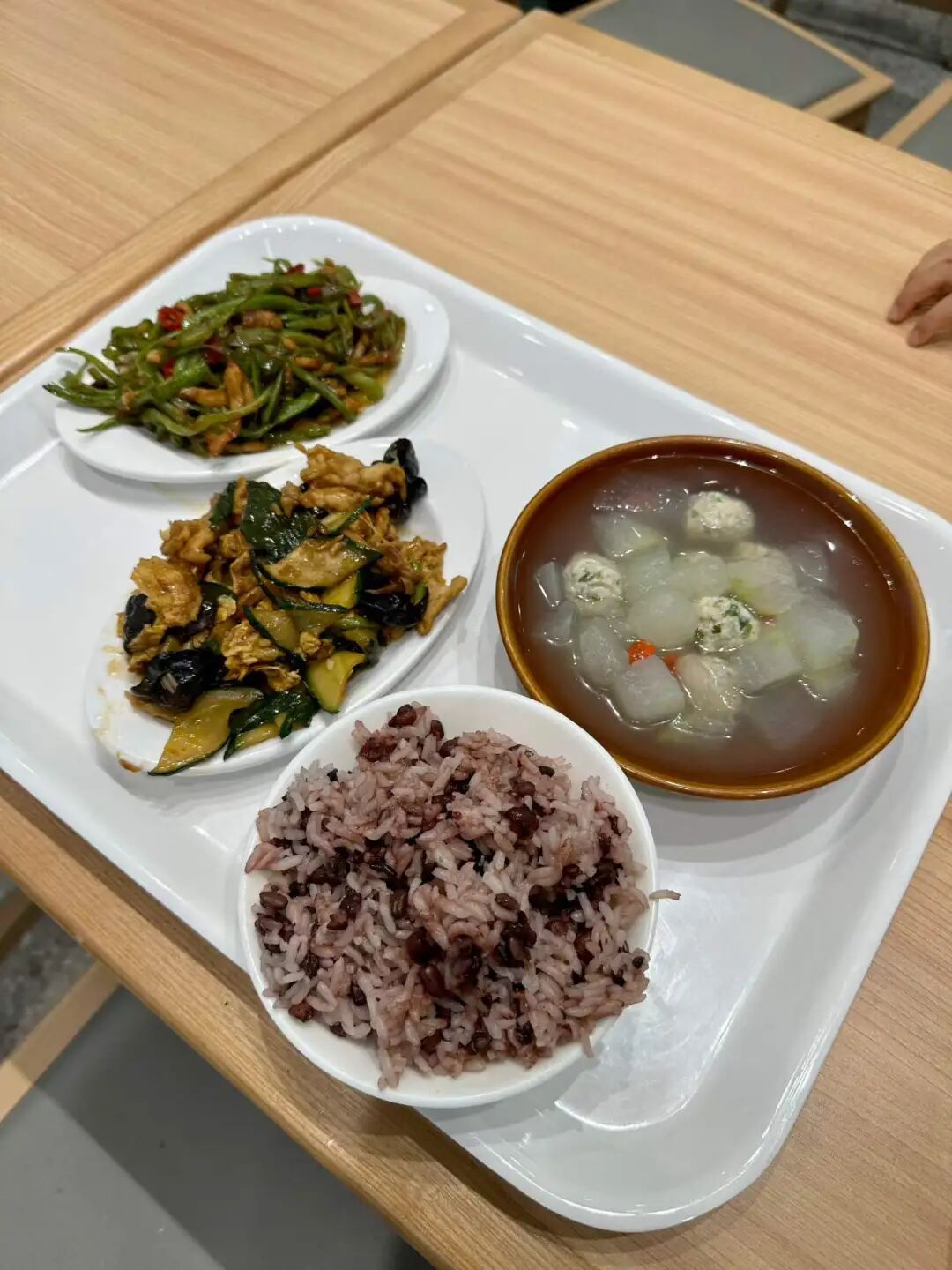
We ordered winter melon meatball soup (donggua cuan wanzi), stir-stir-fried meat with eggs and wood ear mushrooms (muxu rou), stir-fried green beans with pork (biandou chaorou), sea bream fillets (diaoyu pian), and healthy mixed vegetables (yangsheng cai), with corn and red bean rice for our main course. The cheaper meat dishes are mostly chicken, while the beef stew is priced like a standard old Beijing restaurant for Hui Muslims. The winter melon meatball soup goes great with rice, and eating rice soaked in the broth feels just like being a kid again.
Jinfang Snack Shop is celebrating its 100th anniversary this year, so it can finally call itself a century-old shop. Jinfang was originally called Rongxiangcheng Hui Muslim Snack Shop, founded in 1926 outside Chongwenmen by Man Leting (known as Man Liu), a Hui Muslim from Dezhou, Shandong. Man Leting started out with beef and mutton. At first, he bought high-quality cattle and sheep every autumn to raise in Madian, slaughtering and selling them as needed. His business improved significantly in the 1940s, so he expanded his storefront and later began selling cooked foods like roasted mutton (shao yangrou).
In the past, spring and summer were the growing seasons for sheep, so they were usually only slaughtered after autumn. Because of this, some mutton shops would switch to selling cold food during the summer. In the 1940s, Man Leting bought Japanese refrigeration equipment to sell homemade popsicles, soda, and other cold drinks, and business was booming. In 1949, mutton shipments from Inner Mongolia to Beijing were blocked, and the sheep trade hit rock bottom. Just then, Man Leiting's fellow townsman Man Kaiqi came to join him. Man Kaiqi had a background in a pastry shop, so Man Liu stopped selling lamb and switched to snacks and cold dishes, making Rongxiangcheng a famous Hui Muslim snack shop outside Chongwenmen. After the public-private partnership in 1956, Man Leiting's son Man Kaitong became the manager, and in 1958, they stopped making popsicles to focus on snacks like almond tofu (xingren doufu) and sweet rice balls (yuanxiao). In 1966, Rongxiangcheng was officially renamed Jinfang Hui Muslim Snack Shop, and in 1971, it began to focus on sweet rice balls (yuanxiao), which have drawn long lines every year around the Lantern Festival since the 1990s.
A new shawarma rotisserie shop just opened at the north entrance of Sanlitun SOHO. We went there for dinner; one of the guys working there is from Turkmenistan and the other is from Russia, and almost all the customers were foreigners. The wraps and burgers tasted okay, though the garlic sauce was quite strong. But when we went, they were just starting to roast a new batch of beef, so the pre-sliced beef wasn't very hot. Also, the flatbread wraps they used weren't warm. Still, the vibe is just like a rotisserie shop on a Middle Eastern street; there are no seats, so you grab one to eat on the go and pretend you are in Damascus.
Part 1: 10 halal restaurants in Beijing worth trying: Pakistani restaurant Lahore Courtyard, Henan Jiaozuo beef knife-cut noodles Maimairehong, halal Mongolian food Hulun Aile, West African Ghana Tribe Garden, Xi'an Xing Laosi meatball spicy soup, Xinjiang Changji Jinying meatball soup, Xinjiang Hotan Canteen, Syrian BRBR, Beijing fusion food Gulou Chimian, and Beijing traditional food Xilaisun.
Part 2: 10 halal restaurants in Beijing worth trying (Part 2): UAE restaurant Gulf Mandi Restaurant, Xinjiang Mansion Xihan meatball soup, Xinjiang Mansion lobby Altay afternoon tea, Muhejia revolving hot pot, Xinjiang Urumqi Nazilan (closed), Beijing pastry shop Baoyuanzhai (closed), Pakistani Samosa China-Pakistan Friendship Restaurant, Ma Ye Roast Duck (closed), Bangladeshi Benjibi Restaurant, and Huairou Shihu Cheng Resort.
Part 3: 10 new Beijing restaurants I recently tried. JM Italian Coffee Dongsi branch, halal Hunan-style stir-fry Huixiangyun (now closed) Wangjing branch, Shandong Dezhou Old Ma's lamb soup (yangtang) and steamed dumplings (zhengjiao), Sanlitun Philly cheesesteak (now closed), Pakistani Roma Restaurant (now closed), Muyuzhai garlic lamb intestines (lan suan yang chang), Inner Mongolia Lianying steamed dumplings (shaomai) Caoyuan Shiliuhong, Wangfujing Gansu spicy hot pot (malatang), and Yuezhen Yayuan halal courtyard restaurant.
Part 4: 10 halal restaurants in Beijing worth trying. Hotan rose pilaf (zhua fan) Yizhuang branch, Taiba Western-style bakery, Taiba South Sanlitun Road street shop, Zhaotong small meat skewers Guijie Ganmaya BBQ (now closed), Baixiaobei Heilongjiang BBQ shop, Yunnan Muwenzhai dry-pot beef, Sanlitun Xinjiang restaurant Jiangjiang, Huixiangyun halal Hunan restaurant Zuojiazhuang branch, Yili ice cream shop Bazaar Sweetheart, and Dongzhimen Inner Qianyuan Hotel.
Part 5: 10 halal restaurants in Beijing worth trying. Sandyq Kazakhstan restaurant, Kashgar restaurant, Ahmed restaurant, Jingbalang Naan Bazaar, MacMac Lebanese restaurant, Humaer Xinjiang specialty food, Lao Huihui dumpling restaurant Zoo branch, Fresh Milk Town (now closed) Shuangjing branch, Nawab restaurant, and Liuji Watch Repair BBQ shop.
Part 6: 10 halal restaurants in Beijing worth trying. Hongyunlou Huaiyang cuisine, Sanhe beef noodles (now closed), JM Coffee and Bakery Dajixiang branch, Wanhe fatty beef, Xiangqing roast duck (now closed), Culture Pakistani restaurant, Italian Firenze Western restaurant, Niujie Dashuntang, Zhenweizhai Tianjin cuisine, and Dardanelles children's meal.
Part 7: 10 halal restaurants in Beijing worth trying. JM Western restaurant Chaonei branch, Palestinian restaurant Rose City, Baoding beef soup with flatbread (niurou zhaobing), Pakistani restaurant Al Rayyan, Yili Loulan restaurant Guijie branch, Dianxinyuan Yunnan cuisine, Heilongjiang Suihua restaurant Muxiangyuan, Sanlitun Turkish restaurant, Chaoyangmen fast food stall, and Pakistani buffet Habibi.
Part 8: 10 halal restaurants in Beijing worth trying. Xinjiang Hui Muslim home-style cooking Yige Huangluobo, Liaoning Hui Muslim spicy hot pot (malatang), Hebei Daming Hui Muslim meat pie (roubing) Yimian Liaoyuan (now closed), Hebei Chengde Hui Muslim steamed dumplings (shaomai) Dongtucheng branch, Xilaishun Xisi branch, Longfusi market, Heilongjiang Suihua Hui Muslim Mashi Muxiangyuan Baizhifang branch, Turpan Uyghur restaurant Tianshan, Niujie cafe Sanwanghu, and Heilongjiang Hui Muslim iron pot stew (tieguo dun).
Best Halal Restaurants in Beijing: 10 Local Muslim Food Spots Worth Trying (Segment 2 of 3)
Articles • yusuf908 posted the article • 0 comments • 335 views • 2026-06-30 06:24
Summary: This guide to the best halal restaurants in Beijing keeps the original list of local Muslim food spots, Hui Muslim food, and practical halal dining details.
Pot-stewed lamb is a classic Russian main course. Traditionally, it is cooked during long, cold winters by stewing meat in a clay pot over a wood-burning fireplace, then sealing the lid and burying it in the fireplace embers for several hours. Their pot-stewed lamb broth is very fresh, similar to Xinjiang cup-stewed lamb (gangzirou), but the lamb is a bit tough rather than tender.
I really like the Azerbaijani pilaf. I made sure to eat the authentic version when I visited Azerbaijan, and after coming back, I think both Ruilin and Dardanelles make a good version. Azerbaijani pilaf is dyed yellow with saffron and includes dried apricots, prunes, chestnuts, and raisins. The lamb is salty and savory, while the dried fruits add sweetness, creating a very rich flavor profile.
I finally had the cheese beef burger at Yilan Liyuan on Niujie this weekend. They only have regular and California-style options now. The California-style burger adds lettuce and tomato, and you can order it as a single or double patty. They do not let you eat inside the shop, so you have to eat at the entrance or take it away. I waited five minutes at the door and it was ready. The single-layer size is decent, and the crust was baked hot on the spot, but the filling felt a bit dense and not very fluffy. The meat pie tastes good, but it feels a bit loose, as if it wasn't packed tightly enough. Overall it is pretty good, but it would be even better if there were other things to pair it with. view all
Summary: This guide to the best halal restaurants in Beijing keeps the original list of local Muslim food spots, Hui Muslim food, and practical halal dining details.
Pot-stewed lamb is a classic Russian main course. Traditionally, it is cooked during long, cold winters by stewing meat in a clay pot over a wood-burning fireplace, then sealing the lid and burying it in the fireplace embers for several hours. Their pot-stewed lamb broth is very fresh, similar to Xinjiang cup-stewed lamb (gangzirou), but the lamb is a bit tough rather than tender.
I really like the Azerbaijani pilaf. I made sure to eat the authentic version when I visited Azerbaijan, and after coming back, I think both Ruilin and Dardanelles make a good version. Azerbaijani pilaf is dyed yellow with saffron and includes dried apricots, prunes, chestnuts, and raisins. The lamb is salty and savory, while the dried fruits add sweetness, creating a very rich flavor profile.
I finally had the cheese beef burger at Yilan Liyuan on Niujie this weekend. They only have regular and California-style options now. The California-style burger adds lettuce and tomato, and you can order it as a single or double patty. They do not let you eat inside the shop, so you have to eat at the entrance or take it away. I waited five minutes at the door and it was ready. The single-layer size is decent, and the crust was baked hot on the spot, but the filling felt a bit dense and not very fluffy. The meat pie tastes good, but it feels a bit loose, as if it wasn't packed tightly enough. Overall it is pretty good, but it would be even better if there were other things to pair it with.
Best Halal Restaurants in Beijing: 10 Local Muslim Food Spots Worth Trying (Segment 1 of 3)
Articles • yusuf908 posted the article • 0 comments • 345 views • 2026-06-30 06:24
Summary: This guide to the best halal restaurants in Beijing keeps the original list of local Muslim food spots, Hui Muslim food, and practical halal dining details.
The Qingxiangge restaurant at Dongdaqiao was replaced by Jinfang Snacks this year, and I just went to try it recently. Once inside, I found it is completely different from the old shop at Ciqikou. It uses a self-service tray system with small bowls of stewed dishes, small portions of stir-fries, and a huge variety of mixed salads, noodles, and snacks. It is incredibly rich in options. Small bowls and small plates are rare in traditional Beijing restaurants, making them perfect for people who want to try several different dishes.
We ordered winter melon meatball soup (donggua cuan wanzi), stir-stir-fried meat with eggs and wood ear mushrooms (muxu rou), stir-fried green beans with pork (biandou chaorou), sea bream fillets (diaoyu pian), and healthy mixed vegetables (yangsheng cai), with corn and red bean rice for our main course. The cheaper meat dishes are mostly chicken, while the beef stew is priced like a standard old Beijing restaurant for Hui Muslims. The winter melon meatball soup goes great with rice, and eating rice soaked in the broth feels just like being a kid again.
Jinfang Snack Shop is celebrating its 100th anniversary this year, so it can finally call itself a century-old shop. Jinfang was originally called Rongxiangcheng Hui Muslim Snack Shop, founded in 1926 outside Chongwenmen by Man Leting (known as Man Liu), a Hui Muslim from Dezhou, Shandong. Man Leting started out with beef and mutton. At first, he bought high-quality cattle and sheep every autumn to raise in Madian, slaughtering and selling them as needed. His business improved significantly in the 1940s, so he expanded his storefront and later began selling cooked foods like roasted mutton (shao yangrou). view all
Summary: This guide to the best halal restaurants in Beijing keeps the original list of local Muslim food spots, Hui Muslim food, and practical halal dining details.
The Qingxiangge restaurant at Dongdaqiao was replaced by Jinfang Snacks this year, and I just went to try it recently. Once inside, I found it is completely different from the old shop at Ciqikou. It uses a self-service tray system with small bowls of stewed dishes, small portions of stir-fries, and a huge variety of mixed salads, noodles, and snacks. It is incredibly rich in options. Small bowls and small plates are rare in traditional Beijing restaurants, making them perfect for people who want to try several different dishes.
We ordered winter melon meatball soup (donggua cuan wanzi), stir-stir-fried meat with eggs and wood ear mushrooms (muxu rou), stir-fried green beans with pork (biandou chaorou), sea bream fillets (diaoyu pian), and healthy mixed vegetables (yangsheng cai), with corn and red bean rice for our main course. The cheaper meat dishes are mostly chicken, while the beef stew is priced like a standard old Beijing restaurant for Hui Muslims. The winter melon meatball soup goes great with rice, and eating rice soaked in the broth feels just like being a kid again.
Jinfang Snack Shop is celebrating its 100th anniversary this year, so it can finally call itself a century-old shop. Jinfang was originally called Rongxiangcheng Hui Muslim Snack Shop, founded in 1926 outside Chongwenmen by Man Leting (known as Man Liu), a Hui Muslim from Dezhou, Shandong. Man Leting started out with beef and mutton. At first, he bought high-quality cattle and sheep every autumn to raise in Madian, slaughtering and selling them as needed. His business improved significantly in the 1940s, so he expanded his storefront and later began selling cooked foods like roasted mutton (shao yangrou).
Best Halal Restaurants in Beijing: 10 Local Muslim Food Spots Worth Trying (Segment 3 of 3)
Articles • yusuf908 posted the article • 0 comments • 341 views • 2026-06-22 06:36
Summary: This guide to the best halal restaurants in Beijing keeps the original list of local Muslim food spots, Hui Muslim food, and practical halal dining details.
Part 1: 10 halal restaurants in Beijing worth trying: Pakistani restaurant Lahore Courtyard, Henan Jiaozuo beef knife-cut noodles Maimairehong, halal Mongolian food Hulun Aile, West African Ghana Tribe Garden, Xi'an Xing Laosi meatball spicy soup, Xinjiang Changji Jinying meatball soup, Xinjiang Hotan Canteen, Syrian BRBR, Beijing fusion food Gulou Chimian, and Beijing traditional food Xilaisun.
Part 2: 10 halal restaurants in Beijing worth trying (Part 2): UAE restaurant Gulf Mandi Restaurant, Xinjiang Mansion Xihan meatball soup, Xinjiang Mansion lobby Altay afternoon tea, Muhejia revolving hot pot, Xinjiang Urumqi Nazilan (closed), Beijing pastry shop Baoyuanzhai (closed), Pakistani Samosa China-Pakistan Friendship Restaurant, Ma Ye Roast Duck (closed), Bangladeshi Benjibi Restaurant, and Huairou Shihu Cheng Resort.
Part 3: 10 new Beijing restaurants I recently tried. JM Italian Coffee Dongsi branch, halal Hunan-style stir-fry Huixiangyun (now closed) Wangjing branch, Shandong Dezhou Old Ma's lamb soup (yangtang) and steamed dumplings (zhengjiao), Sanlitun Philly cheesesteak (now closed), Pakistani Roma Restaurant (now closed), Muyuzhai garlic lamb intestines (lan suan yang chang), Inner Mongolia Lianying steamed dumplings (shaomai) Caoyuan Shiliuhong, Wangfujing Gansu spicy hot pot (malatang), and Yuezhen Yayuan halal courtyard restaurant.
Part 4: 10 halal restaurants in Beijing worth trying. Hotan rose pilaf (zhua fan) Yizhuang branch, Taiba Western-style bakery, Taiba South Sanlitun Road street shop, Zhaotong small meat skewers Guijie Ganmaya BBQ (now closed), Baixiaobei Heilongjiang BBQ shop, Yunnan Muwenzhai dry-pot beef, Sanlitun Xinjiang restaurant Jiangjiang, Huixiangyun halal Hunan restaurant Zuojiazhuang branch, Yili ice cream shop Bazaar Sweetheart, and Dongzhimen Inner Qianyuan Hotel. view all
Summary: This guide to the best halal restaurants in Beijing keeps the original list of local Muslim food spots, Hui Muslim food, and practical halal dining details.
Part 1: 10 halal restaurants in Beijing worth trying: Pakistani restaurant Lahore Courtyard, Henan Jiaozuo beef knife-cut noodles Maimairehong, halal Mongolian food Hulun Aile, West African Ghana Tribe Garden, Xi'an Xing Laosi meatball spicy soup, Xinjiang Changji Jinying meatball soup, Xinjiang Hotan Canteen, Syrian BRBR, Beijing fusion food Gulou Chimian, and Beijing traditional food Xilaisun.
Part 2: 10 halal restaurants in Beijing worth trying (Part 2): UAE restaurant Gulf Mandi Restaurant, Xinjiang Mansion Xihan meatball soup, Xinjiang Mansion lobby Altay afternoon tea, Muhejia revolving hot pot, Xinjiang Urumqi Nazilan (closed), Beijing pastry shop Baoyuanzhai (closed), Pakistani Samosa China-Pakistan Friendship Restaurant, Ma Ye Roast Duck (closed), Bangladeshi Benjibi Restaurant, and Huairou Shihu Cheng Resort.
Part 3: 10 new Beijing restaurants I recently tried. JM Italian Coffee Dongsi branch, halal Hunan-style stir-fry Huixiangyun (now closed) Wangjing branch, Shandong Dezhou Old Ma's lamb soup (yangtang) and steamed dumplings (zhengjiao), Sanlitun Philly cheesesteak (now closed), Pakistani Roma Restaurant (now closed), Muyuzhai garlic lamb intestines (lan suan yang chang), Inner Mongolia Lianying steamed dumplings (shaomai) Caoyuan Shiliuhong, Wangfujing Gansu spicy hot pot (malatang), and Yuezhen Yayuan halal courtyard restaurant.
Part 4: 10 halal restaurants in Beijing worth trying. Hotan rose pilaf (zhua fan) Yizhuang branch, Taiba Western-style bakery, Taiba South Sanlitun Road street shop, Zhaotong small meat skewers Guijie Ganmaya BBQ (now closed), Baixiaobei Heilongjiang BBQ shop, Yunnan Muwenzhai dry-pot beef, Sanlitun Xinjiang restaurant Jiangjiang, Huixiangyun halal Hunan restaurant Zuojiazhuang branch, Yili ice cream shop Bazaar Sweetheart, and Dongzhimen Inner Qianyuan Hotel.
Best Halal Restaurants in Beijing: 10 Local Muslim Food Spots Worth Trying (Segment 2 of 3)
Articles • yusuf908 posted the article • 0 comments • 354 views • 2026-06-22 06:36
Summary: This guide to the best halal restaurants in Beijing keeps the original list of local Muslim food spots, Hui Muslim food, and practical halal dining details.
In the past, spring and summer were the growing seasons for sheep, so they were usually only slaughtered after autumn. Because of this, some mutton shops would switch to selling cold food during the summer. In the 1940s, Man Leting bought Japanese refrigeration equipment to sell homemade popsicles, soda, and other cold drinks, and business was booming. In 1949, mutton shipments from Inner Mongolia to Beijing were blocked, and the sheep trade hit rock bottom. Just then, Man Leiting's fellow townsman Man Kaiqi came to join him. Man Kaiqi had a background in a pastry shop, so Man Liu stopped selling lamb and switched to snacks and cold dishes, making Rongxiangcheng a famous Hui Muslim snack shop outside Chongwenmen. After the public-private partnership in 1956, Man Leiting's son Man Kaitong became the manager, and in 1958, they stopped making popsicles to focus on snacks like almond tofu (xingren doufu) and sweet rice balls (yuanxiao). In 1966, Rongxiangcheng was officially renamed Jinfang Hui Muslim Snack Shop, and in 1971, it began to focus on sweet rice balls (yuanxiao), which have drawn long lines every year around the Lantern Festival since the 1990s.
A new shawarma rotisserie shop just opened at the north entrance of Sanlitun SOHO. We went there for dinner; one of the guys working there is from Turkmenistan and the other is from Russia, and almost all the customers were foreigners. The wraps and burgers tasted okay, though the garlic sauce was quite strong. But when we went, they were just starting to roast a new batch of beef, so the pre-sliced beef wasn't very hot. Also, the flatbread wraps they used weren't warm. Still, the vibe is just like a rotisserie shop on a Middle Eastern street; there are no seats, so you grab one to eat on the go and pretend you are in Damascus. view all
Summary: This guide to the best halal restaurants in Beijing keeps the original list of local Muslim food spots, Hui Muslim food, and practical halal dining details.
In the past, spring and summer were the growing seasons for sheep, so they were usually only slaughtered after autumn. Because of this, some mutton shops would switch to selling cold food during the summer. In the 1940s, Man Leting bought Japanese refrigeration equipment to sell homemade popsicles, soda, and other cold drinks, and business was booming. In 1949, mutton shipments from Inner Mongolia to Beijing were blocked, and the sheep trade hit rock bottom. Just then, Man Leiting's fellow townsman Man Kaiqi came to join him. Man Kaiqi had a background in a pastry shop, so Man Liu stopped selling lamb and switched to snacks and cold dishes, making Rongxiangcheng a famous Hui Muslim snack shop outside Chongwenmen. After the public-private partnership in 1956, Man Leiting's son Man Kaitong became the manager, and in 1958, they stopped making popsicles to focus on snacks like almond tofu (xingren doufu) and sweet rice balls (yuanxiao). In 1966, Rongxiangcheng was officially renamed Jinfang Hui Muslim Snack Shop, and in 1971, it began to focus on sweet rice balls (yuanxiao), which have drawn long lines every year around the Lantern Festival since the 1990s.
A new shawarma rotisserie shop just opened at the north entrance of Sanlitun SOHO. We went there for dinner; one of the guys working there is from Turkmenistan and the other is from Russia, and almost all the customers were foreigners. The wraps and burgers tasted okay, though the garlic sauce was quite strong. But when we went, they were just starting to roast a new batch of beef, so the pre-sliced beef wasn't very hot. Also, the flatbread wraps they used weren't warm. Still, the vibe is just like a rotisserie shop on a Middle Eastern street; there are no seats, so you grab one to eat on the go and pretend you are in Damascus.
Best Halal Restaurants in Beijing: 10 Local Muslim Food Spots Worth Trying (Segment 3 of 3)
Articles • yusuf908 posted the article • 0 comments • 332 views • 2026-06-22 06:35
Summary: This guide to the best halal restaurants in Beijing keeps the original list of local Muslim food spots, Hui Muslim food, and practical halal dining details.
A Tianjin halal shaved ice and steamed pancake (zhengbing) shop called Guxiangzhai has opened at Hufangqiao. Since the weather is getting warmer lately, many people are coming to eat shaved ice. For my first visit, I chose the traditional-style shaved ice. It contains sour hawthorn paste (suanmogao), red hawthorn fruit, dried apricots, strawberries, mulberries, pineapple, orange, fresh apricots, and red beans. It actually has more ingredients than the truly traditional version, and it is mainly sweet and sour to whet your appetite. Sour hawthorn paste (suanmogao) is the soul of Tianjin traditional shaved ice. It is made by grinding dried wild sour jujubes into powder and boiling it with rock sugar. You can buy large blocks of sour hawthorn paste (suanmogao) at the entrance of the archway of the South Mosque (Nandasi) in the Northwest Corner. It also tastes great when mixed directly with water.
Their dinosaur egg three-apricot shaved ice is also a signature item. It contains Kashgar Hami apricots, Yengisar Saimaiti red apricots, Aksu Situan dried apricots, and secret-recipe preserved fruit made from wild hawthorn from Shanxi. It sounds very good.
They also sell various snacks. We bought a steamed pancake (zhengbing) with a red hawthorn filling, which is sweet and sour and perfect for breakfast. It is a pity that the rice cakes (gaogan) were sold out, so I bought a rice cake (migao) with a sour hawthorn paste flavor. It was a bit dry, but the taste was still good. I also bought a snack called "five blacks," which contains black rice, black beans, black mulberries, black goji berries, and black sesame seeds. It sounds very healthy. view all
Summary: This guide to the best halal restaurants in Beijing keeps the original list of local Muslim food spots, Hui Muslim food, and practical halal dining details.
A Tianjin halal shaved ice and steamed pancake (zhengbing) shop called Guxiangzhai has opened at Hufangqiao. Since the weather is getting warmer lately, many people are coming to eat shaved ice. For my first visit, I chose the traditional-style shaved ice. It contains sour hawthorn paste (suanmogao), red hawthorn fruit, dried apricots, strawberries, mulberries, pineapple, orange, fresh apricots, and red beans. It actually has more ingredients than the truly traditional version, and it is mainly sweet and sour to whet your appetite. Sour hawthorn paste (suanmogao) is the soul of Tianjin traditional shaved ice. It is made by grinding dried wild sour jujubes into powder and boiling it with rock sugar. You can buy large blocks of sour hawthorn paste (suanmogao) at the entrance of the archway of the South Mosque (Nandasi) in the Northwest Corner. It also tastes great when mixed directly with water.
Their dinosaur egg three-apricot shaved ice is also a signature item. It contains Kashgar Hami apricots, Yengisar Saimaiti red apricots, Aksu Situan dried apricots, and secret-recipe preserved fruit made from wild hawthorn from Shanxi. It sounds very good.
They also sell various snacks. We bought a steamed pancake (zhengbing) with a red hawthorn filling, which is sweet and sour and perfect for breakfast. It is a pity that the rice cakes (gaogan) were sold out, so I bought a rice cake (migao) with a sour hawthorn paste flavor. It was a bit dry, but the taste was still good. I also bought a snack called "five blacks," which contains black rice, black beans, black mulberries, black goji berries, and black sesame seeds. It sounds very healthy.
Best Halal Restaurants in Beijing: 10 Local Muslim Food Spots Worth Trying (Segment 1 of 3)
Articles • yusuf908 posted the article • 0 comments • 335 views • 2026-06-22 06:35
Summary: This guide to the best halal restaurants in Beijing keeps the original list of local Muslim food spots, Hui Muslim food, and practical halal dining details.
On the weekend, we had dinner at Kavkaz Ruilin, a long-standing Azerbaijani restaurant on Ritan Upper Street, to enjoy some Russian and Caucasian food. This is a classic former Soviet-style restaurant in Beijing that has been open for over a decade. It mostly serves merchants from Russian-speaking regions who come to Yabaolu to source goods. Its Chinese name used to be Ruilin, but it has been changed to Ruilin.
After the Soviet Union collapsed in the 1990s, many traders (daoye) took green-skinned trains to Beijing and headed straight to Yabaolu to stock up on goods. They brought down jackets, leather shoes, toys, and other small items back home to sell for huge profits. Yabaolu gradually grew from street stalls and tents into Beijing's largest wholesale market for Russian-speaking regions, and more former Soviet-style restaurants opened up on nearby Ritan Upper Street. Over a decade ago, Ritan Upper Street was mainly home to Central Asian and Azerbaijani restaurants, including Uzbek and Kazakh spots.
Over the last decade, Russia's economic decline, the shift of markets to places like Yiwu, Guangzhou, and Suifenhe, and the rise of cross-border e-commerce have caused trade with Russia on Yabaolu to shrink. Yitan Shangjie has gradually become a hub for Uyghur restaurants. Besides Dardanelles and Desert Rose, which focus on Turkish food, the only other Azerbaijani restaurant is Ruilin. For Central Asian food, there is the Turkmenistan restaurant Merv downstairs, which also serves Russian dishes.
At first, Ruilin had dim lighting, making it a good spot for traders to talk business, but many Chinese people were afraid to go inside. In recent years, the lighting at Ruilin has become brighter, but when we visited, there were only Russian-speaking customers, and we did not see any other Chinese people eating there.
We ordered borscht (hongcaitang), pot-stewed lamb (manguan yangrou), chive pancakes (jiucaibing), Azerbaijani pilaf (zhuafan), and grilled vegetables. Their borscht is closer to the Russian style than the one at Merv. Merv's beef soup has a stronger flavor, while their version has a more intense beet taste, which is also quite good. view all
Summary: This guide to the best halal restaurants in Beijing keeps the original list of local Muslim food spots, Hui Muslim food, and practical halal dining details.
On the weekend, we had dinner at Kavkaz Ruilin, a long-standing Azerbaijani restaurant on Ritan Upper Street, to enjoy some Russian and Caucasian food. This is a classic former Soviet-style restaurant in Beijing that has been open for over a decade. It mostly serves merchants from Russian-speaking regions who come to Yabaolu to source goods. Its Chinese name used to be Ruilin, but it has been changed to Ruilin.
After the Soviet Union collapsed in the 1990s, many traders (daoye) took green-skinned trains to Beijing and headed straight to Yabaolu to stock up on goods. They brought down jackets, leather shoes, toys, and other small items back home to sell for huge profits. Yabaolu gradually grew from street stalls and tents into Beijing's largest wholesale market for Russian-speaking regions, and more former Soviet-style restaurants opened up on nearby Ritan Upper Street. Over a decade ago, Ritan Upper Street was mainly home to Central Asian and Azerbaijani restaurants, including Uzbek and Kazakh spots.
Over the last decade, Russia's economic decline, the shift of markets to places like Yiwu, Guangzhou, and Suifenhe, and the rise of cross-border e-commerce have caused trade with Russia on Yabaolu to shrink. Yitan Shangjie has gradually become a hub for Uyghur restaurants. Besides Dardanelles and Desert Rose, which focus on Turkish food, the only other Azerbaijani restaurant is Ruilin. For Central Asian food, there is the Turkmenistan restaurant Merv downstairs, which also serves Russian dishes.
At first, Ruilin had dim lighting, making it a good spot for traders to talk business, but many Chinese people were afraid to go inside. In recent years, the lighting at Ruilin has become brighter, but when we visited, there were only Russian-speaking customers, and we did not see any other Chinese people eating there.
We ordered borscht (hongcaitang), pot-stewed lamb (manguan yangrou), chive pancakes (jiucaibing), Azerbaijani pilaf (zhuafan), and grilled vegetables. Their borscht is closer to the Russian style than the one at Merv. Merv's beef soup has a stronger flavor, while their version has a more intense beet taste, which is also quite good.
Best Halal Restaurants in Beijing: 10 Local Muslim Food Spots Worth Trying (Segment 3 of 3)
Articles • yusuf908 posted the article • 0 comments • 334 views • 2026-06-22 06:35
Summary: This guide to the best halal restaurants in Beijing keeps the original list of local Muslim food spots, Hui Muslim food, and practical halal dining details.
We had the pilaf (zhuafan) fresh out of the pot at seven o'clock. It was shiny and oily, though the lamb was a bit tougher compared to the skewers. Overall, it was still good. I happened to hear the table next to us complaining that their rice was undercooked. Actually, I think pilaf is only good when the rice is a bit firm. If the rice is too soft and mushy, it just becomes regular steamed rice. view all
Summary: This guide to the best halal restaurants in Beijing keeps the original list of local Muslim food spots, Hui Muslim food, and practical halal dining details.
We had the pilaf (zhuafan) fresh out of the pot at seven o'clock. It was shiny and oily, though the lamb was a bit tougher compared to the skewers. Overall, it was still good. I happened to hear the table next to us complaining that their rice was undercooked. Actually, I think pilaf is only good when the rice is a bit firm. If the rice is too soft and mushy, it just becomes regular steamed rice.
Best Halal Restaurants in Beijing: 10 Local Muslim Food Spots Worth Trying (Segment 2 of 3)
Articles • yusuf908 posted the article • 0 comments • 351 views • 2026-06-22 06:35
Summary: This guide to the best halal restaurants in Beijing keeps the original list of local Muslim food spots, Hui Muslim food, and practical halal dining details.
We ordered the three-person set meal, which included half a roast duck, grilled meat on a round iron plate (zhizi kaorou), stir-fried mixed vegetables (chao hecai), and duck frame tofu soup. This three-person set is a great value, and we were stuffed after finishing it. The duck tasted good, and the kids really liked it. The portion of stir-fried mixed vegetables (chao hecai) was huge, and it tasted great too.
The grilled meat on a round iron plate (zhizi kaorou) was a hit with both the Xinjiang and Hunan people at our table; the meat was tender but still had a nice chew. However, it must have been pre-marinated because it was spicy and couldn't be made mild, so the kids couldn't eat it. Duck frame soup is a must-have with roast duck; it was very savory and we couldn't stop drinking it.
Besides roast duck, they also serve traditional Hui Muslims' eight big bowls (badawan). If you are visiting Changping, you should come here to eat. They don't close in the afternoon, so it is perfect for a late meal after sightseeing.
In the evening, we went to Shilihe to eat barbecue at Aidamu. I had heard they were very famous, but this was my first time eating there, and I was truly impressed. They have basically brought the level of a local Xinjiang night market to Beijing; eating there felt just like being back in Xinjiang.
There is a large parking lot right across from the restaurant, making it very convenient if you drive there. When we arrived at 6:30, the place was already packed, so we set up a table in the parking lot across the street. Since the temperature has risen in May, it is perfect for eating barbecue outdoors.
At their place, you grab the skewers yourself from the freezer. We had lamb liver, lamb heart, lamb skewers, and lamb chops. The lamb liver was very tender, definitely top-tier for Beijing. The lamb heart had more chew than the liver, and it was also quite good. The lamb skewers had no gamey smell at all, just the pure aroma of lamb, which is very rare in Beijing. view all
Summary: This guide to the best halal restaurants in Beijing keeps the original list of local Muslim food spots, Hui Muslim food, and practical halal dining details.
We ordered the three-person set meal, which included half a roast duck, grilled meat on a round iron plate (zhizi kaorou), stir-fried mixed vegetables (chao hecai), and duck frame tofu soup. This three-person set is a great value, and we were stuffed after finishing it. The duck tasted good, and the kids really liked it. The portion of stir-fried mixed vegetables (chao hecai) was huge, and it tasted great too.
The grilled meat on a round iron plate (zhizi kaorou) was a hit with both the Xinjiang and Hunan people at our table; the meat was tender but still had a nice chew. However, it must have been pre-marinated because it was spicy and couldn't be made mild, so the kids couldn't eat it. Duck frame soup is a must-have with roast duck; it was very savory and we couldn't stop drinking it.
Besides roast duck, they also serve traditional Hui Muslims' eight big bowls (badawan). If you are visiting Changping, you should come here to eat. They don't close in the afternoon, so it is perfect for a late meal after sightseeing.
In the evening, we went to Shilihe to eat barbecue at Aidamu. I had heard they were very famous, but this was my first time eating there, and I was truly impressed. They have basically brought the level of a local Xinjiang night market to Beijing; eating there felt just like being back in Xinjiang.
There is a large parking lot right across from the restaurant, making it very convenient if you drive there. When we arrived at 6:30, the place was already packed, so we set up a table in the parking lot across the street. Since the temperature has risen in May, it is perfect for eating barbecue outdoors.
At their place, you grab the skewers yourself from the freezer. We had lamb liver, lamb heart, lamb skewers, and lamb chops. The lamb liver was very tender, definitely top-tier for Beijing. The lamb heart had more chew than the liver, and it was also quite good. The lamb skewers had no gamey smell at all, just the pure aroma of lamb, which is very rare in Beijing.
Best Halal Restaurants in Beijing: 10 Local Muslim Food Spots Worth Trying (Segment 1 of 3)
Articles • yusuf908 posted the article • 0 comments • 361 views • 2026-06-22 06:35
Summary: This guide to the best halal restaurants in Beijing keeps the original list of local Muslim food spots, Hui Muslim food, and practical halal dining details.
This article summarizes the key points of '10 Halal Restaurants in Beijing Worth Trying (Part 9),' keeping the original paragraph and image order. It is for readers interested in Muslim life, Islamic culture, and Chinese Islamic articles, and makes it easy to search for topics like Uyghur culture, marriage and family, and the ninth installment.
The list includes Shunhexiang Harbin-style stir-fry in Tongzhou, Fenghong Old Beijing Flavor in Changping, Aidamu Xinjiang street barbecue in Shilihe, Ruilin Azerbaijani restaurant near Ritan, Yilan Liyuan American-style burgers on Niujie, Guxiangzhai Tianjin-style shaved ice in Hufangqiao, Niujie's Big Green Bag stinky tofu, Zafran Pakistani restaurant in Xinyuanli, Jinfang Snack Bar in Dongdaqiao, and Ali & Wang's rotating kebab in Sanlitun.
I heard that the Harbin Hui Muslim stir-fry restaurant Shunhexiang opened in Beijing's Tongzhou sub-center, so I came to try it out for dinner. The restaurant is located in a new residential complex along the Grand Canal in Tongzhou. The environment is great, and the private room's turntable is button-controlled, making it easy to reach the dishes.
They specialize in Heilongjiang Hui Muslim cuisine and have also added some southern Chinese dishes to their menu. We ordered the savory sweet and sour pork (guobaorou), sauerkraut beef rib stew, colorful starch noodles (dalapi), stir-fried lily bulbs with bamboo shoots, and beef steamed dumplings (shaomai). The best of these was the steamed dumplings. The skin was thin and chewy, and the filling was fragrant and not greasy. I think they are better than the other Hui Muslim steamed dumplings currently in Beijing. The sweet and sour pork had a good texture and wasn't fried too hard. I think it's better than another Heilongjiang Hui Muslim restaurant in Beijing. The sauerkraut tasted great, but there was very little beef, and there were very few lily bulbs in the lily bulb and bamboo shoot dish. Overall, the restaurant is definitely worth a visit. The biggest problem is that it is too far from the city center, almost reaching Hebei. It is best suited for those driving there or people working in the sub-center.
On Sunday, I was in Changping and had Beijing-style food for lunch at Fenghong Old Beijing Flavor in Xiaotangshan. view all
Summary: This guide to the best halal restaurants in Beijing keeps the original list of local Muslim food spots, Hui Muslim food, and practical halal dining details.
This article summarizes the key points of '10 Halal Restaurants in Beijing Worth Trying (Part 9),' keeping the original paragraph and image order. It is for readers interested in Muslim life, Islamic culture, and Chinese Islamic articles, and makes it easy to search for topics like Uyghur culture, marriage and family, and the ninth installment.
The list includes Shunhexiang Harbin-style stir-fry in Tongzhou, Fenghong Old Beijing Flavor in Changping, Aidamu Xinjiang street barbecue in Shilihe, Ruilin Azerbaijani restaurant near Ritan, Yilan Liyuan American-style burgers on Niujie, Guxiangzhai Tianjin-style shaved ice in Hufangqiao, Niujie's Big Green Bag stinky tofu, Zafran Pakistani restaurant in Xinyuanli, Jinfang Snack Bar in Dongdaqiao, and Ali & Wang's rotating kebab in Sanlitun.
I heard that the Harbin Hui Muslim stir-fry restaurant Shunhexiang opened in Beijing's Tongzhou sub-center, so I came to try it out for dinner. The restaurant is located in a new residential complex along the Grand Canal in Tongzhou. The environment is great, and the private room's turntable is button-controlled, making it easy to reach the dishes.
They specialize in Heilongjiang Hui Muslim cuisine and have also added some southern Chinese dishes to their menu. We ordered the savory sweet and sour pork (guobaorou), sauerkraut beef rib stew, colorful starch noodles (dalapi), stir-fried lily bulbs with bamboo shoots, and beef steamed dumplings (shaomai). The best of these was the steamed dumplings. The skin was thin and chewy, and the filling was fragrant and not greasy. I think they are better than the other Hui Muslim steamed dumplings currently in Beijing. The sweet and sour pork had a good texture and wasn't fried too hard. I think it's better than another Heilongjiang Hui Muslim restaurant in Beijing. The sauerkraut tasted great, but there was very little beef, and there were very few lily bulbs in the lily bulb and bamboo shoot dish. Overall, the restaurant is definitely worth a visit. The biggest problem is that it is too far from the city center, almost reaching Hebei. It is best suited for those driving there or people working in the sub-center.
On Sunday, I was in Changping and had Beijing-style food for lunch at Fenghong Old Beijing Flavor in Xiaotangshan.
Best Halal Restaurants in Beijing: 10 Local Muslim Food Spots Worth Trying (Part 5 of 5)
Articles • yusuf908 posted the article • 0 comments • 348 views • 2026-06-22 06:33
Summary: This guide to the best halal restaurants in Beijing keeps the original list of local Muslim food spots, Hui Muslim food, and practical halal dining details.
Part 5: 10 halal restaurants in Beijing worth trying. Sandyq Kazakhstan restaurant, Kashgar restaurant, Ahmed restaurant, Jingbalang Naan Bazaar, MacMac Lebanese restaurant, Humaer Xinjiang specialty food, Lao Huihui dumpling restaurant Zoo branch, Fresh Milk Town (now closed) Shuangjing branch, Nawab restaurant, and Liuji Watch Repair BBQ shop.
Part 6: 10 halal restaurants in Beijing worth trying. Hongyunlou Huaiyang cuisine, Sanhe beef noodles (now closed), JM Coffee and Bakery Dajixiang branch, Wanhe fatty beef, Xiangqing roast duck (now closed), Culture Pakistani restaurant, Italian Firenze Western restaurant, Niujie Dashuntang, Zhenweizhai Tianjin cuisine, and Dardanelles children's meal.
Part 7: 10 halal restaurants in Beijing worth trying. JM Western restaurant Chaonei branch, Palestinian restaurant Rose City, Baoding beef soup with flatbread (niurou zhaobing), Pakistani restaurant Al Rayyan, Yili Loulan restaurant Guijie branch, Dianxinyuan Yunnan cuisine, Heilongjiang Suihua restaurant Muxiangyuan, Sanlitun Turkish restaurant, Chaoyangmen fast food stall, and Pakistani buffet Habibi.
Part 8: 10 halal restaurants in Beijing worth trying. Xinjiang Hui Muslim home-style cooking Yige Huangluobo, Liaoning Hui Muslim spicy hot pot (malatang), Hebei Daming Hui Muslim meat pie (roubing) Yimian Liaoyuan (now closed), Hebei Chengde Hui Muslim steamed dumplings (shaomai) Dongtucheng branch, Xilaishun Xisi branch, Longfusi market, Heilongjiang Suihua Hui Muslim Mashi Muxiangyuan Baizhifang branch, Turpan Uyghur restaurant Tianshan, Niujie cafe Sanwanghu, and Heilongjiang Hui Muslim iron pot stew (tieguo dun). view all
Summary: This guide to the best halal restaurants in Beijing keeps the original list of local Muslim food spots, Hui Muslim food, and practical halal dining details.
Part 5: 10 halal restaurants in Beijing worth trying. Sandyq Kazakhstan restaurant, Kashgar restaurant, Ahmed restaurant, Jingbalang Naan Bazaar, MacMac Lebanese restaurant, Humaer Xinjiang specialty food, Lao Huihui dumpling restaurant Zoo branch, Fresh Milk Town (now closed) Shuangjing branch, Nawab restaurant, and Liuji Watch Repair BBQ shop.
Part 6: 10 halal restaurants in Beijing worth trying. Hongyunlou Huaiyang cuisine, Sanhe beef noodles (now closed), JM Coffee and Bakery Dajixiang branch, Wanhe fatty beef, Xiangqing roast duck (now closed), Culture Pakistani restaurant, Italian Firenze Western restaurant, Niujie Dashuntang, Zhenweizhai Tianjin cuisine, and Dardanelles children's meal.
Part 7: 10 halal restaurants in Beijing worth trying. JM Western restaurant Chaonei branch, Palestinian restaurant Rose City, Baoding beef soup with flatbread (niurou zhaobing), Pakistani restaurant Al Rayyan, Yili Loulan restaurant Guijie branch, Dianxinyuan Yunnan cuisine, Heilongjiang Suihua restaurant Muxiangyuan, Sanlitun Turkish restaurant, Chaoyangmen fast food stall, and Pakistani buffet Habibi.
Part 8: 10 halal restaurants in Beijing worth trying. Xinjiang Hui Muslim home-style cooking Yige Huangluobo, Liaoning Hui Muslim spicy hot pot (malatang), Hebei Daming Hui Muslim meat pie (roubing) Yimian Liaoyuan (now closed), Hebei Chengde Hui Muslim steamed dumplings (shaomai) Dongtucheng branch, Xilaishun Xisi branch, Longfusi market, Heilongjiang Suihua Hui Muslim Mashi Muxiangyuan Baizhifang branch, Turpan Uyghur restaurant Tianshan, Niujie cafe Sanwanghu, and Heilongjiang Hui Muslim iron pot stew (tieguo dun).
Best Halal Restaurants in Beijing: 10 Local Muslim Food Spots Worth Trying (Part 3 of 5)
Articles • yusuf908 posted the article • 0 comments • 356 views • 2026-06-22 06:33
Summary: This guide to the best halal restaurants in Beijing keeps the original list of local Muslim food spots, Hui Muslim food, and practical halal dining details.
Across from the China Academy of Chinese Medical Sciences on Niujie Street, the roast lamb leg shop with the big green sign sells stinky tofu with sauce. The sauce is made from beef bone broth (niubanggu aotang), and it really has a meaty flavor. I remember eating fried stinky tofu topped with fermented bean curd sauce from a cart run by local Hui Muslims on Binjiang Road in Tianjin. That flavor was truly satisfying.
A new alcohol-free Pakistani restaurant called Zafran just opened in Jiayi Plaza near Liangmaqiao. It is very close to the Liangma River, and since it only opened a few days ago, I came specifically to try it.
I looked at the menu and was surprised to find many Afghan Pashtun dishes. I asked the server, and he is a Pashtun from Peshawar. I decided to order a few Pashtun dishes to try, as some of them cannot be found in other Pakistani restaurants.
First, I must praise their excellent service. The Pashtun waiter, Anas Khan, always greeted us with a smile and even did a fist bump with my son, Suleiman. As soon as we sat down, they brought us black tea, lemon water, and fried dough twists (mayezi). Later, they served a special dried fruit milkshake with walnuts and almonds. Finally, they gave Suleiman a small cup of thin yogurt drink (lassi) and a piece of baklava, which made him very happy.
The atmosphere is also very nice, with curtained sofa areas on one side that are perfect for families. There are no large private rooms, but if you have a big group, you can push tables together in the main dining area. There is also outdoor seating at the entrance, which is great for having desserts and drinks in the summer.
We ordered Afghan pilaf, Peshawar-style lamb, and Kandahar naan. You can tell these are Pashtun specialties just by their names. We also ordered a Caesar salad, french fries, and salty yogurt drink (lassi). Since they just opened, they gave us a 30% discount, which was a great deal.
Afghan pilaf originated in the border region between northern Afghanistan and Uzbekistan. It is known as Qabili Palaw in Afghanistan and later spread from there to West Asia, Central Asia, and Pakistan. Afghan pilaf (pulao) differs from Xinjiang pilaf because it uses long-grain aromatic rice from South Asia and a bit of saffron for color. It is cooked with ghee and vegetable oil, and the carrots are sliced thinly. It also includes cinnamon, cardamom, and cloves, giving it a stronger spice flavor than Xinjiang pilaf. Their Afghan pilaf includes fresh almonds and raisins, but the meat is a bit tough and hard for children to chew. The spice flavor is very rich.
This was my first time eating Peshawar Shinwari lamb, and I highly recommend it! The lamb is very tender and the seasoning is excellent. Peshawar Shinwari lamb is cooked in a metal wok called a karahi. It is a classic main dish for the Pashtun people in northern Pakistan, especially prepared after the animal sacrifice during Eid al-Adha. It is made with fresh bone-in lamb, salt, garlic, and green chilies, without the heavy spices found in southern Pakistan.
Their Kandahar flatbread (nan) is also amazing and pairs perfectly with the Peshawar lamb. Kandahar flatbread is also popular in Pakistan. It is very fluffy because milk and sugar are added to the dough, making it more fragrant.
I also recommend their yogurt drink (lassi). It is not too sour, but it is very appetizing. view all
Summary: This guide to the best halal restaurants in Beijing keeps the original list of local Muslim food spots, Hui Muslim food, and practical halal dining details.
Across from the China Academy of Chinese Medical Sciences on Niujie Street, the roast lamb leg shop with the big green sign sells stinky tofu with sauce. The sauce is made from beef bone broth (niubanggu aotang), and it really has a meaty flavor. I remember eating fried stinky tofu topped with fermented bean curd sauce from a cart run by local Hui Muslims on Binjiang Road in Tianjin. That flavor was truly satisfying.
A new alcohol-free Pakistani restaurant called Zafran just opened in Jiayi Plaza near Liangmaqiao. It is very close to the Liangma River, and since it only opened a few days ago, I came specifically to try it.
I looked at the menu and was surprised to find many Afghan Pashtun dishes. I asked the server, and he is a Pashtun from Peshawar. I decided to order a few Pashtun dishes to try, as some of them cannot be found in other Pakistani restaurants.
First, I must praise their excellent service. The Pashtun waiter, Anas Khan, always greeted us with a smile and even did a fist bump with my son, Suleiman. As soon as we sat down, they brought us black tea, lemon water, and fried dough twists (mayezi). Later, they served a special dried fruit milkshake with walnuts and almonds. Finally, they gave Suleiman a small cup of thin yogurt drink (lassi) and a piece of baklava, which made him very happy.
The atmosphere is also very nice, with curtained sofa areas on one side that are perfect for families. There are no large private rooms, but if you have a big group, you can push tables together in the main dining area. There is also outdoor seating at the entrance, which is great for having desserts and drinks in the summer.
We ordered Afghan pilaf, Peshawar-style lamb, and Kandahar naan. You can tell these are Pashtun specialties just by their names. We also ordered a Caesar salad, french fries, and salty yogurt drink (lassi). Since they just opened, they gave us a 30% discount, which was a great deal.
Afghan pilaf originated in the border region between northern Afghanistan and Uzbekistan. It is known as Qabili Palaw in Afghanistan and later spread from there to West Asia, Central Asia, and Pakistan. Afghan pilaf (pulao) differs from Xinjiang pilaf because it uses long-grain aromatic rice from South Asia and a bit of saffron for color. It is cooked with ghee and vegetable oil, and the carrots are sliced thinly. It also includes cinnamon, cardamom, and cloves, giving it a stronger spice flavor than Xinjiang pilaf. Their Afghan pilaf includes fresh almonds and raisins, but the meat is a bit tough and hard for children to chew. The spice flavor is very rich.
This was my first time eating Peshawar Shinwari lamb, and I highly recommend it! The lamb is very tender and the seasoning is excellent. Peshawar Shinwari lamb is cooked in a metal wok called a karahi. It is a classic main dish for the Pashtun people in northern Pakistan, especially prepared after the animal sacrifice during Eid al-Adha. It is made with fresh bone-in lamb, salt, garlic, and green chilies, without the heavy spices found in southern Pakistan.
Their Kandahar flatbread (nan) is also amazing and pairs perfectly with the Peshawar lamb. Kandahar flatbread is also popular in Pakistan. It is very fluffy because milk and sugar are added to the dough, making it more fragrant.
I also recommend their yogurt drink (lassi). It is not too sour, but it is very appetizing.
Beijing Halal Food Guide: Guyuan Stewed Snacks, Tianjin Tea Soup and Nanjing Chicken Soup
Articles • yusuf908 posted the article • 0 comments • 437 views • 2026-06-22 06:27
Summary: This Beijing halal food guide covers Guyuan stewed snacks, Tianjin tea soup, Nanjing chicken soup, halal food in China, and food festival details.
This article summarizes the key points of the Beijing Exhibition Center International Food Fair, covering Guyuan stewed snacks (huixiaochi), Tianjin tea soup (chatang), and Nanjing chicken soup. It keeps the original paragraph and image order, making it perfect for readers interested in Muslim life, Islamic culture, and Chinese Islamic writing. It also helps with searching for content related to Uyghur culture, Guyuan stewed snacks, and Tianjin tea soup.
Summer is here, and there are more and more food streets in Beijing, with several popping up every weekend.
I went to the Beijing Exhibition Center International Food Fair at night. There was so much good food that I could eat specialties from Ningxia, Gansu, Xinjiang, Beijing, Tianjin, and Nanjing. I was stuffed by the end of the night. The food festival runs until Sunday and is well worth a visit.
As soon as you enter the west entrance, you see the Ningxia stalls. From inside to outside, there is Yuanzhou Impression Guyuan Taste from Moshikou Street in Shijingshan, Baicao Tan Lamb from Lianhua Bridge, Jingyu Yanyu from Guomao, and the Ningxia Building from Andingmen.
I did not expect to find Guyuan food here! We tried the Guyuan specialty stewed snacks (huixiaochi), which is one of the ten classic bowls of the Hui Muslims in Guyuan. This is similar to the noodle soup (fentang) of Northwest China, which is usually cooked in a big pot during dry, cold weather and eaten with fried dough (youxiang).
The core of Guyuan stewed snacks is egg-stuffed meat slices (jiaban), meatballs, and mung bean jelly (liangfen), all stewed together with a rich, fresh broth and vegetables. However, this stall did not have meatballs; they used egg-stuffed meat slices and meat slices instead. Egg-stuffed meat slices are made by mixing eggs, starch, and flour into a batter, spreading it thin, sandwiching it with lamb filling, steaming it, and cutting it into diamond-shaped pieces. They are soft and chewy with a meaty aroma, and you can add side dishes like wood ear mushrooms, vermicelli, tofu, and spinach.
I then bought some hand-grabbed meat (shouzhuarou) and served it with chive flower sauce, onions, and sweet garlic. It tasted pretty good.
After eating, I bought some fermented oat drink (tianbeizi) and homemade xylitol yogurt at a stall in the Ningxia Building. Drinking tianbeizi in the summer is very refreshing.
I was pleasantly surprised to find two Hui Muslim snack stalls from Tianjin at this Beijing International Food Festival held at the Beijing Exhibition Center: Yuansuzhai Old-Style Fried Rolls (juanquan) from Honghuli and Chatang Hui from the Northwest Corner.
Yuansuzhai sells old-style fried rolls, curry chicken rolls, and peppercorn duck rolls, all served with homemade dark plum juice (wumeitang). The old-style fried rolls are vegetarian and filled with bean sprouts. The curry chicken roll skin is thicker and crispier, tasting a bit like a South Asian samosa. Traditionally, these rolls should be wrapped in a large flatbread (dabing), but they provided small thin pancakes instead so festival guests could try more varieties. I thought that was a great idea. I really love their homemade dark plum juice. I bought some when I visited Honghuli last time. It contains mulberries, osmanthus, roselle, dried tangerine peel, hawthorn, dark plum, licorice, and mint. It is very cooling and quenches thirst.
Yuansuzhai has a hundred-year history and has been passed down through four generations. They started selling fried rolls at a stall in North Zhulin near the Sancha River estuary in the 1920s. North Zhulin was originally a low-lying river beach along the Ziya River. It became solid land in the late Qing Dynasty. By the late Qing and Republican eras, it became a settlement for fishermen, boatmen, and dock workers living in makeshift shelters. Many Hui Muslim snack stalls gathered there, selling items like fried rolls, savory crepe strips (guobacai), and fried cakes (zhagao). The Tongyizhuang Mosque in North Zhulin was built during the Guangxu reign of the Qing Dynasty. It is 150 years old and is the only historical building preserved after the North Zhulin area was demolished.
In the late 1980s, Tianjin began large-scale urban renewal. Old districts like North Zhulin, Tongyizhuang, Xiyuzhuang, Hebei Street, and Beidaguan were demolished, and residents were relocated to Jiayuanli in the Beichen District. In the early 1990s, Yuansuzhai moved to the Jiayuanli commercial street along with the demolition of Beizhulin, becoming a landmark snack spot in Jiayuanli. The Jiayuanli shop closed in 2017, and the fourth-generation owner moved Yuansuzhai again to the Honghuli food street on Honghu South Road, starting with a breakfast cart before opening a formal storefront.
Chatang Hui is an old shop at the entrance of the South Mosque (Nandasi) in the Northwest Corner of Tianjin, with a century of history and four generations of heritage. Chatang (tea soup) first came to Tianjin via the Grand Canal. It was originally made with broomcorn millet flour, but later red sorghum flour was added, giving it a unique red color. Making chatang requires a large dragon-spout copper pot and the 'phoenix three nods' technique, a smooth motion that ensures not a drop spills when pouring. Traditional toppings include brown sugar, white sugar, sesame, crushed peanuts, raisins, and candied fruit shreds (qinghongsi), making it sweet and tangy.
At the Beijing International Food Festival, the Xinjiang stall featuring big plate chicken (dapanji), pilaf (zhuafan), and lamb skewers (yangrouchuan) from the Xinjiang Building is very popular.
Before leaving, I was surprised to find a stall for the old Nanjing halal brand, Lvliuju! They sell various traditional Nanjing snacks, honey lotus root (mizhi ou), green sticky rice balls (qingtuan), water chestnut cake (mati gao), as well as hot osmanthus sugar taro seedlings (guihua tang yumiao) and chicken broth tofu (jizhi huilu gan). Even though we were full, we ordered a bowl of chicken broth tofu. The bean curd soaked in chicken broth was incredibly fresh, and the broth with bean sprouts and wood ear mushrooms was delicious. Chicken broth tofu gets its name because the fried tofu puffs are repeatedly simmered in broth. To make it, the chicken broth must be simmered for six hours and cooked with bean sprouts, wood ear mushrooms, and winter bamboo shoots, making the tofu soft and full of chicken flavor.
Lvliuju was founded in 1912 at Taoye Ferry along the Qinhuai River in Nanjing. It was named Lvliuju because of the shady green willow trees along the riverbank. Lvliuju started as a high-end vegetarian restaurant. Famous figures like Kong Xiangxi, Chiang Ching-kuo, Bai Chongxi, and the Soong sisters often dined here. After 1949, Lvliuju closed for a period. It reopened in 1963 on Yanggongjing, Taiping South Road, where they hired the famous chef Chen Bingyu to continue serving authentic vegetarian dishes. A major specialty of Lvliuju is vegetarian dishes that taste like meat. Their vegetarian chicken and vegetarian duck, made from tofu skin, gluten, and dried bean curd sticks seasoned with traditional Chinese herbs, are delicious. In 1987, Lvliuju added halal dishes to its vegetarian menu and became a halal restaurant. It still keeps vegetarian food as its specialty and is now recognized as a national-level intangible cultural heritage. view all
Summary: This Beijing halal food guide covers Guyuan stewed snacks, Tianjin tea soup, Nanjing chicken soup, halal food in China, and food festival details.
This article summarizes the key points of the Beijing Exhibition Center International Food Fair, covering Guyuan stewed snacks (huixiaochi), Tianjin tea soup (chatang), and Nanjing chicken soup. It keeps the original paragraph and image order, making it perfect for readers interested in Muslim life, Islamic culture, and Chinese Islamic writing. It also helps with searching for content related to Uyghur culture, Guyuan stewed snacks, and Tianjin tea soup.
Summer is here, and there are more and more food streets in Beijing, with several popping up every weekend.
I went to the Beijing Exhibition Center International Food Fair at night. There was so much good food that I could eat specialties from Ningxia, Gansu, Xinjiang, Beijing, Tianjin, and Nanjing. I was stuffed by the end of the night. The food festival runs until Sunday and is well worth a visit.
As soon as you enter the west entrance, you see the Ningxia stalls. From inside to outside, there is Yuanzhou Impression Guyuan Taste from Moshikou Street in Shijingshan, Baicao Tan Lamb from Lianhua Bridge, Jingyu Yanyu from Guomao, and the Ningxia Building from Andingmen.
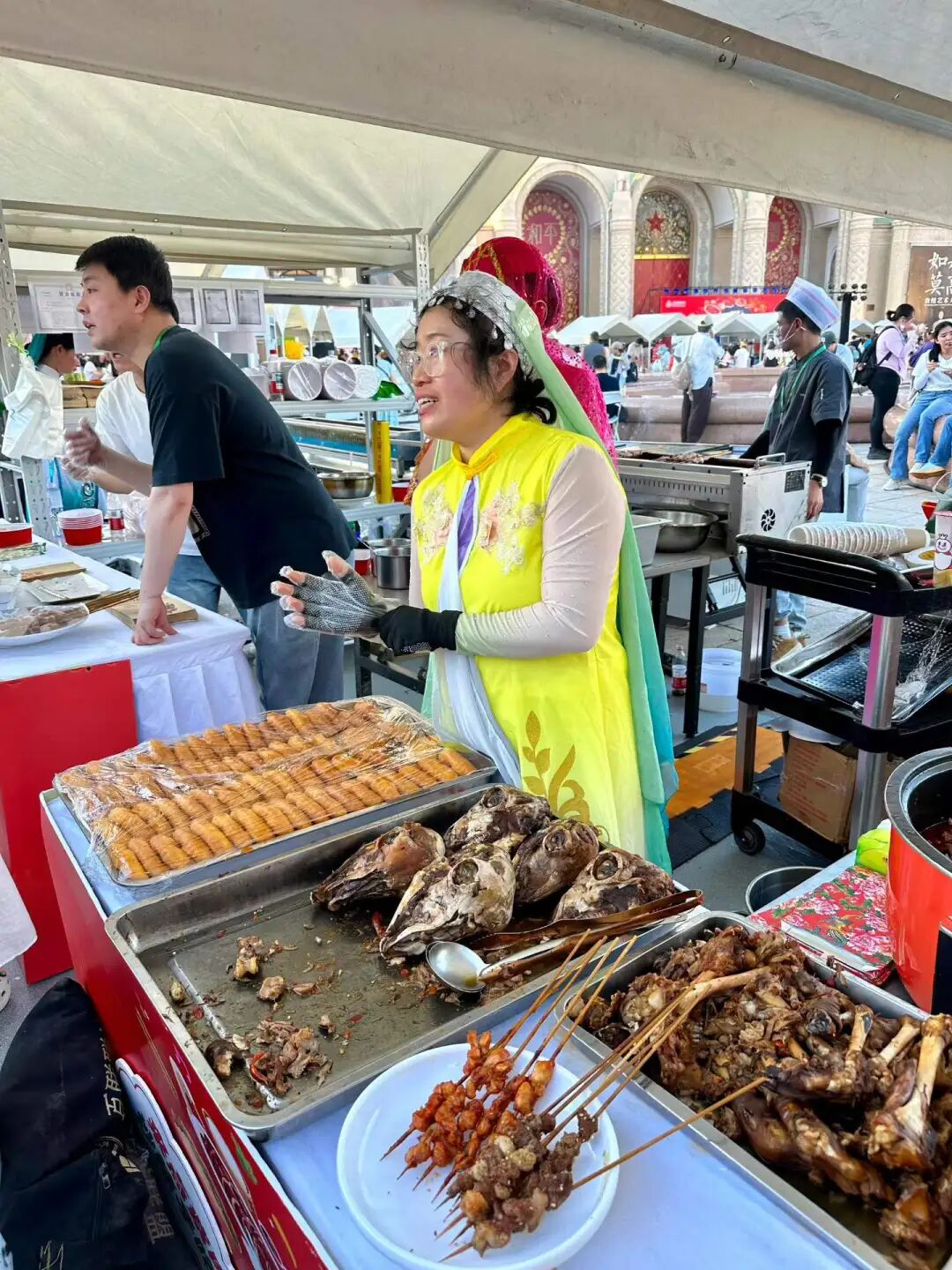
I did not expect to find Guyuan food here! We tried the Guyuan specialty stewed snacks (huixiaochi), which is one of the ten classic bowls of the Hui Muslims in Guyuan. This is similar to the noodle soup (fentang) of Northwest China, which is usually cooked in a big pot during dry, cold weather and eaten with fried dough (youxiang).
The core of Guyuan stewed snacks is egg-stuffed meat slices (jiaban), meatballs, and mung bean jelly (liangfen), all stewed together with a rich, fresh broth and vegetables. However, this stall did not have meatballs; they used egg-stuffed meat slices and meat slices instead. Egg-stuffed meat slices are made by mixing eggs, starch, and flour into a batter, spreading it thin, sandwiching it with lamb filling, steaming it, and cutting it into diamond-shaped pieces. They are soft and chewy with a meaty aroma, and you can add side dishes like wood ear mushrooms, vermicelli, tofu, and spinach.
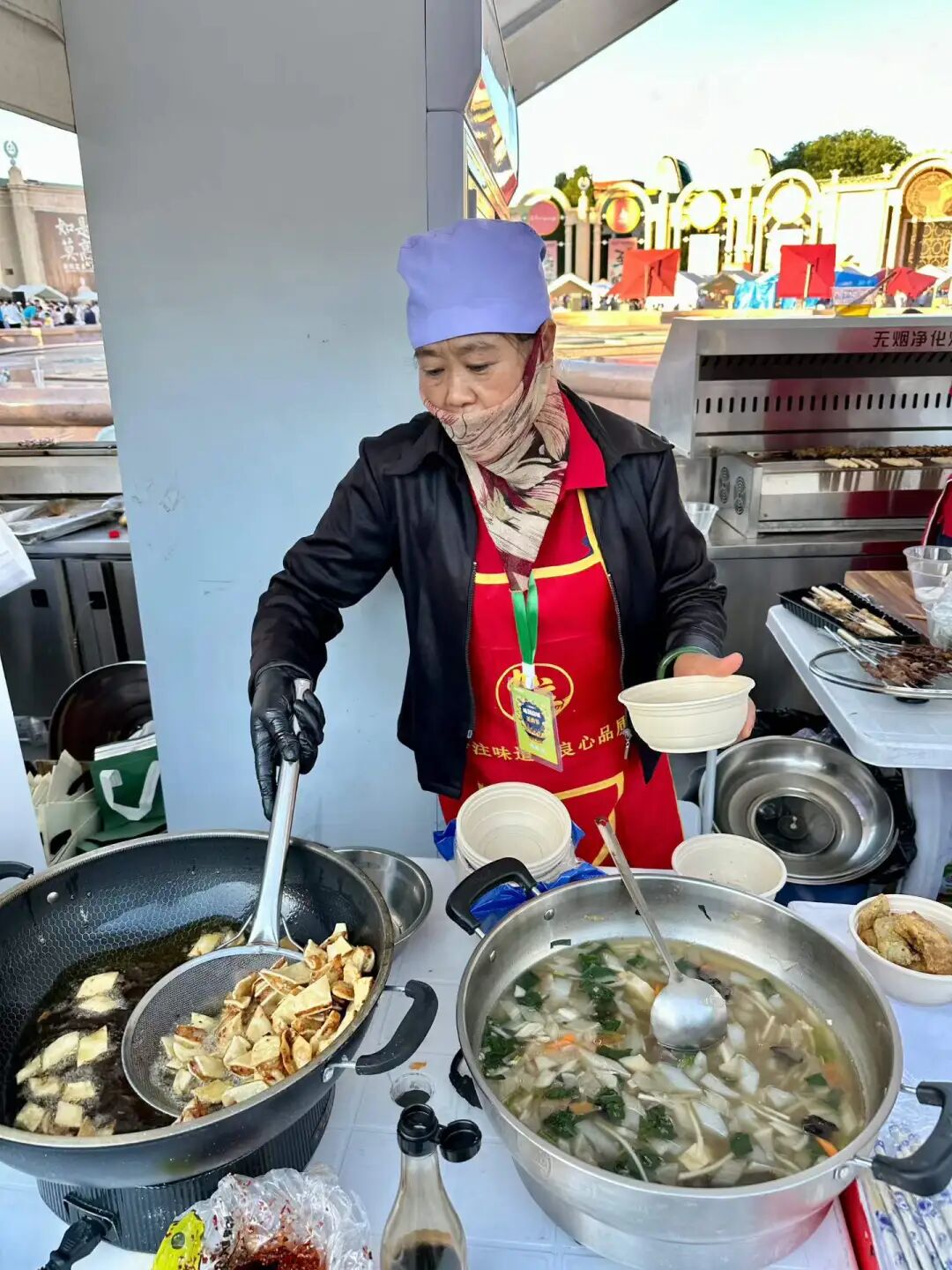
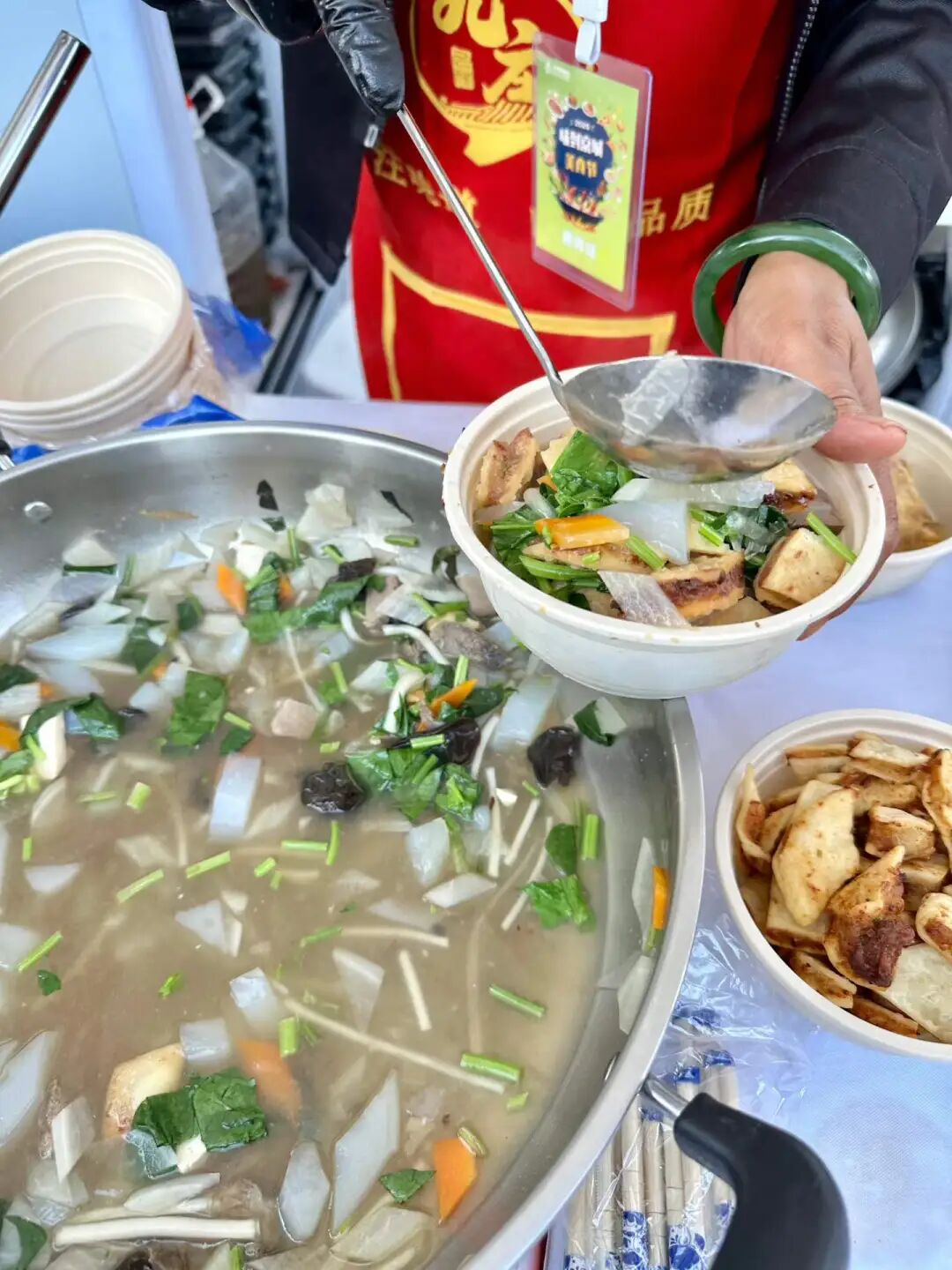
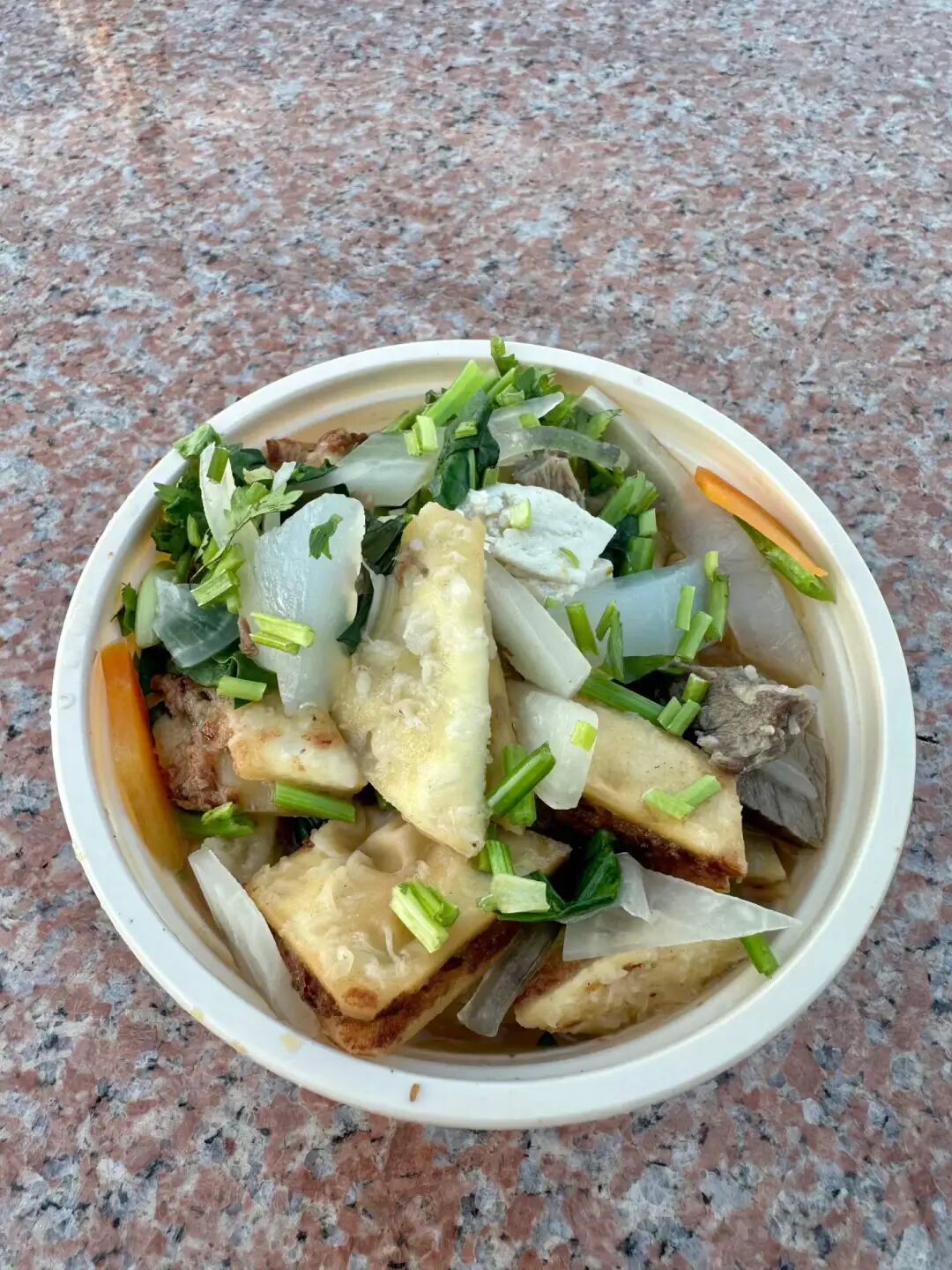
I then bought some hand-grabbed meat (shouzhuarou) and served it with chive flower sauce, onions, and sweet garlic. It tasted pretty good.
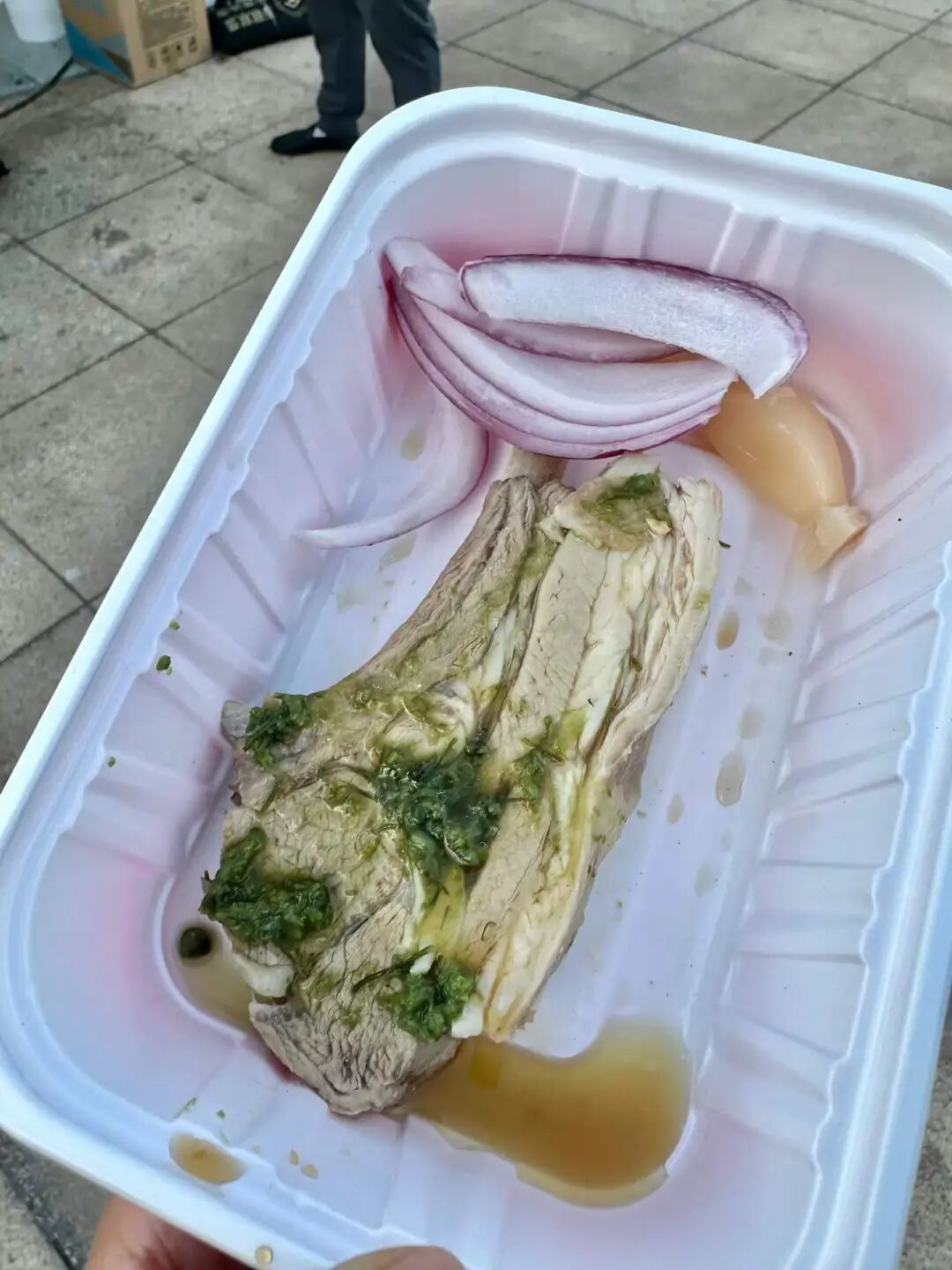
After eating, I bought some fermented oat drink (tianbeizi) and homemade xylitol yogurt at a stall in the Ningxia Building. Drinking tianbeizi in the summer is very refreshing.
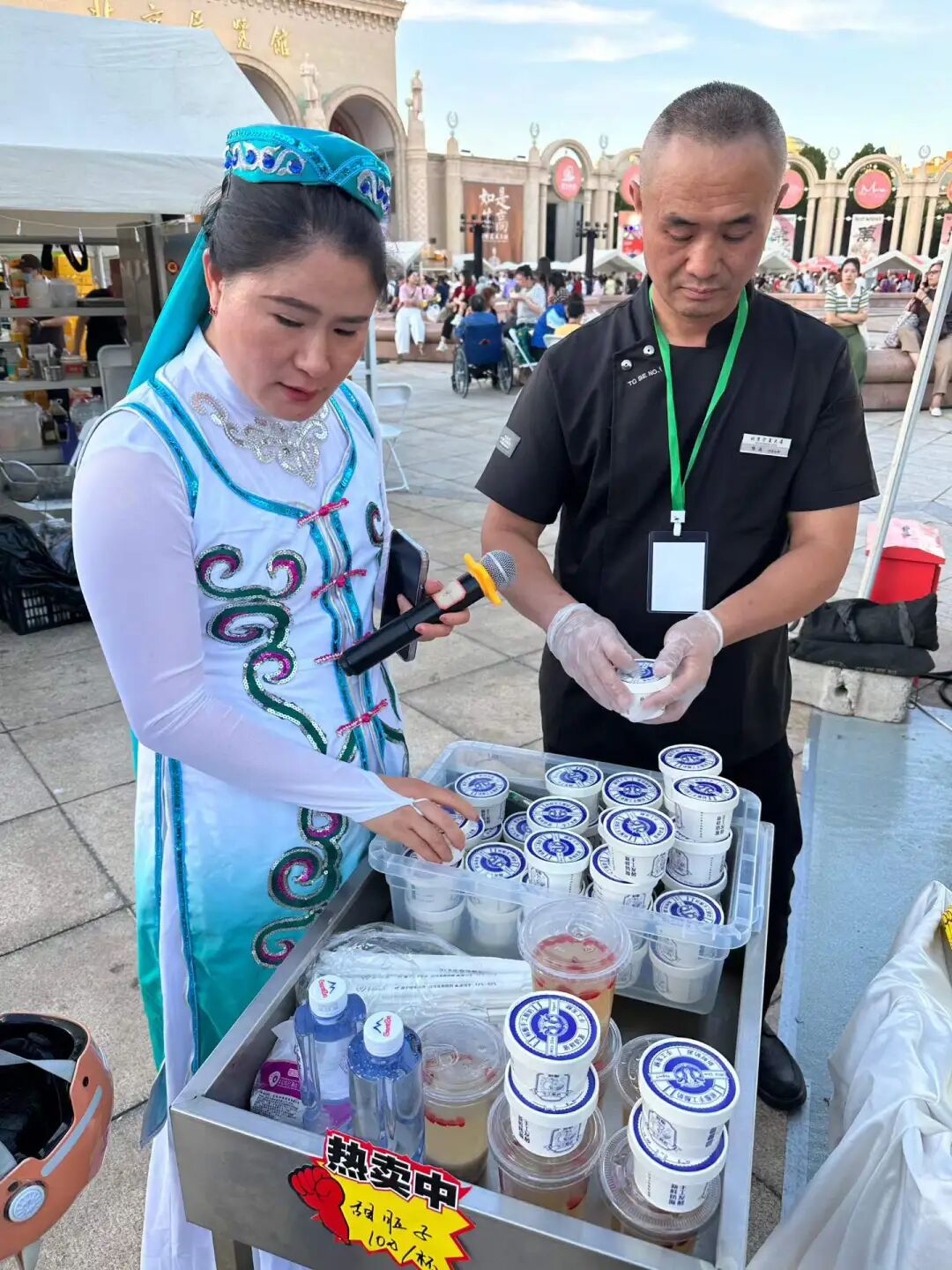
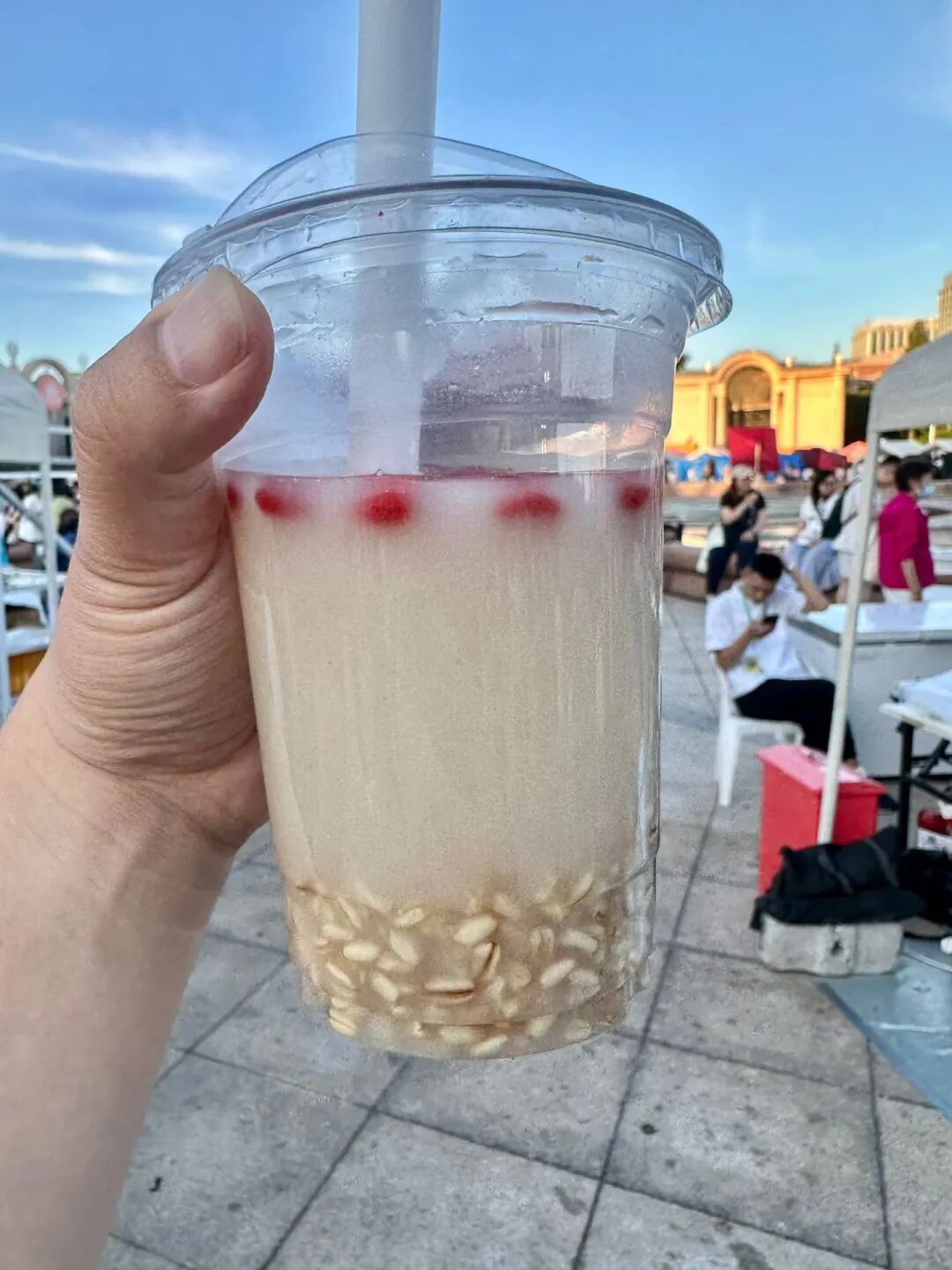
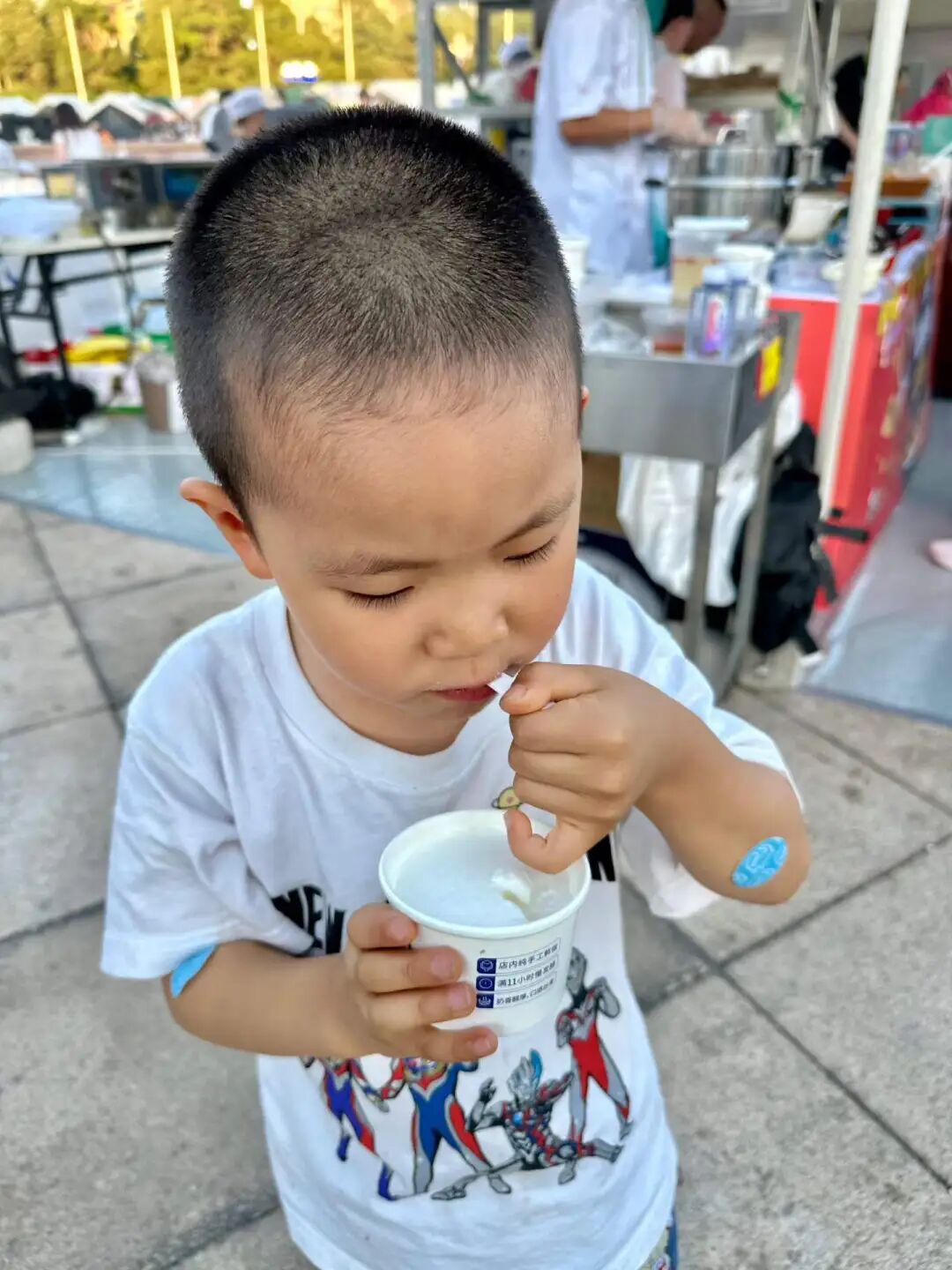
I was pleasantly surprised to find two Hui Muslim snack stalls from Tianjin at this Beijing International Food Festival held at the Beijing Exhibition Center: Yuansuzhai Old-Style Fried Rolls (juanquan) from Honghuli and Chatang Hui from the Northwest Corner.
Yuansuzhai sells old-style fried rolls, curry chicken rolls, and peppercorn duck rolls, all served with homemade dark plum juice (wumeitang). The old-style fried rolls are vegetarian and filled with bean sprouts. The curry chicken roll skin is thicker and crispier, tasting a bit like a South Asian samosa. Traditionally, these rolls should be wrapped in a large flatbread (dabing), but they provided small thin pancakes instead so festival guests could try more varieties. I thought that was a great idea. I really love their homemade dark plum juice. I bought some when I visited Honghuli last time. It contains mulberries, osmanthus, roselle, dried tangerine peel, hawthorn, dark plum, licorice, and mint. It is very cooling and quenches thirst.
Yuansuzhai has a hundred-year history and has been passed down through four generations. They started selling fried rolls at a stall in North Zhulin near the Sancha River estuary in the 1920s. North Zhulin was originally a low-lying river beach along the Ziya River. It became solid land in the late Qing Dynasty. By the late Qing and Republican eras, it became a settlement for fishermen, boatmen, and dock workers living in makeshift shelters. Many Hui Muslim snack stalls gathered there, selling items like fried rolls, savory crepe strips (guobacai), and fried cakes (zhagao). The Tongyizhuang Mosque in North Zhulin was built during the Guangxu reign of the Qing Dynasty. It is 150 years old and is the only historical building preserved after the North Zhulin area was demolished.
In the late 1980s, Tianjin began large-scale urban renewal. Old districts like North Zhulin, Tongyizhuang, Xiyuzhuang, Hebei Street, and Beidaguan were demolished, and residents were relocated to Jiayuanli in the Beichen District. In the early 1990s, Yuansuzhai moved to the Jiayuanli commercial street along with the demolition of Beizhulin, becoming a landmark snack spot in Jiayuanli. The Jiayuanli shop closed in 2017, and the fourth-generation owner moved Yuansuzhai again to the Honghuli food street on Honghu South Road, starting with a breakfast cart before opening a formal storefront.
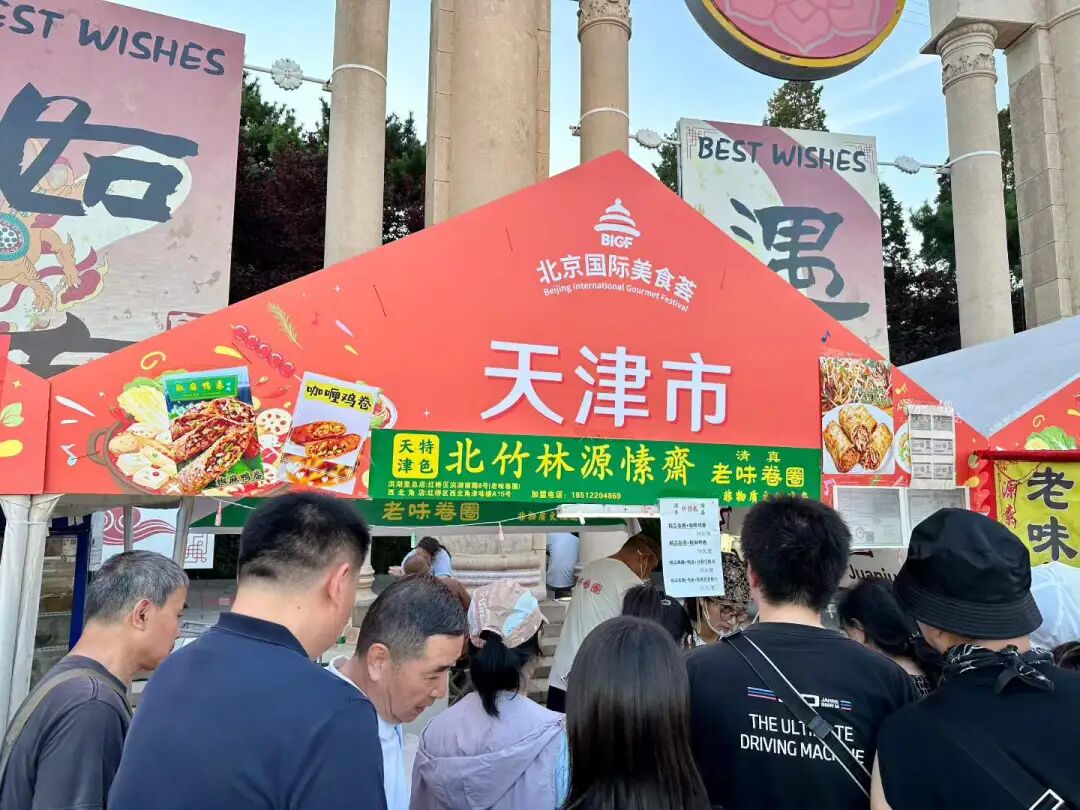
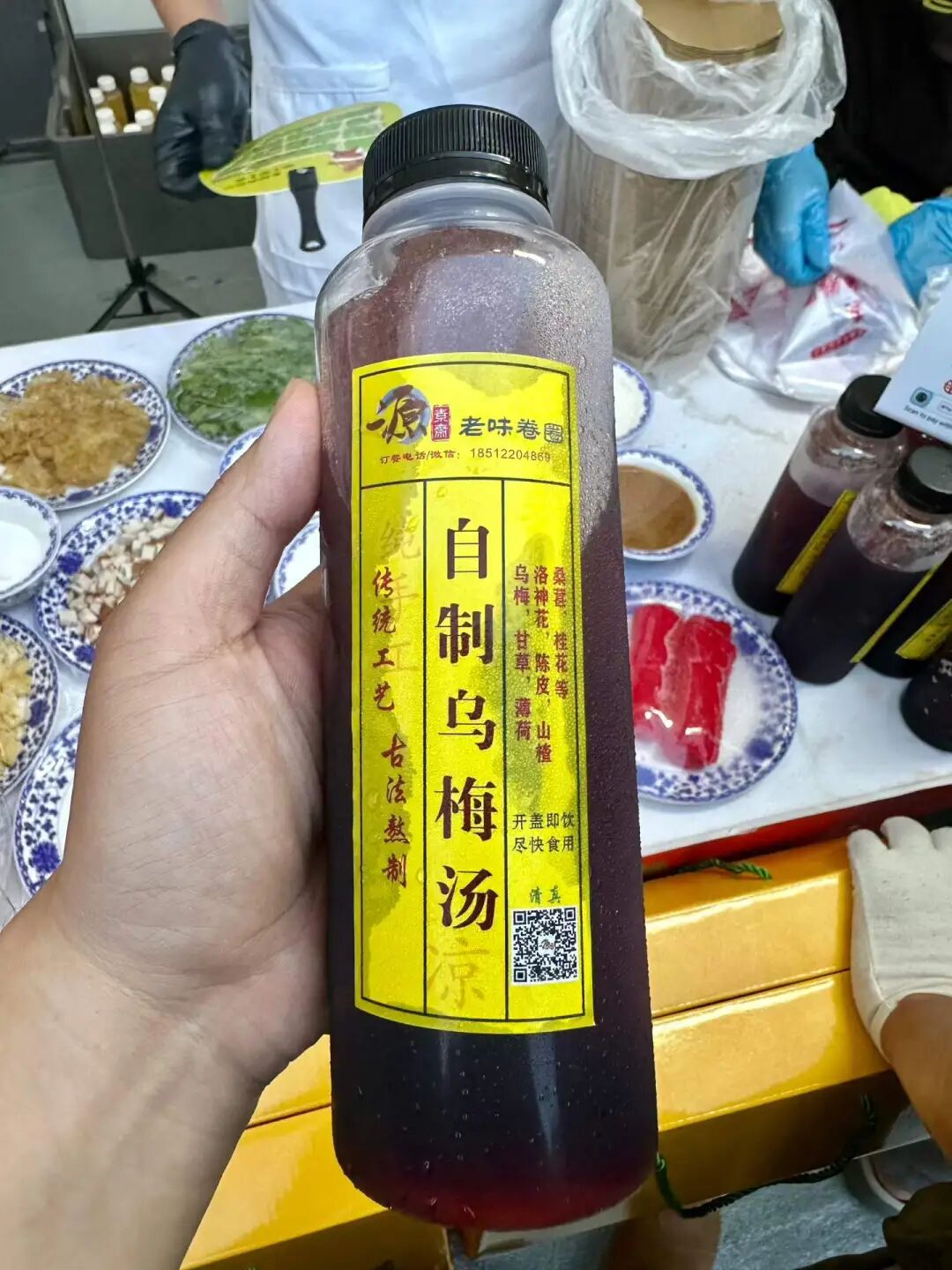
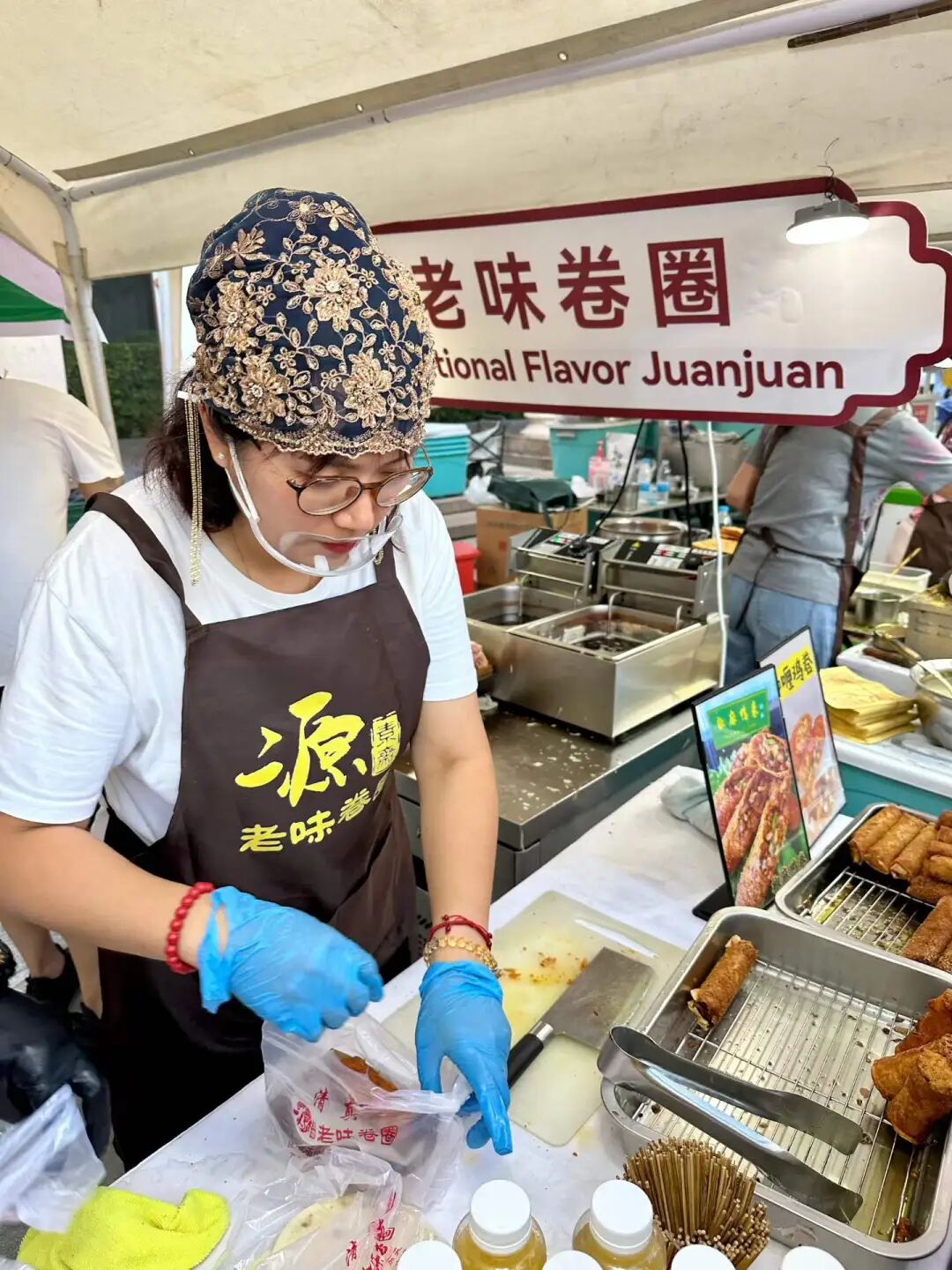
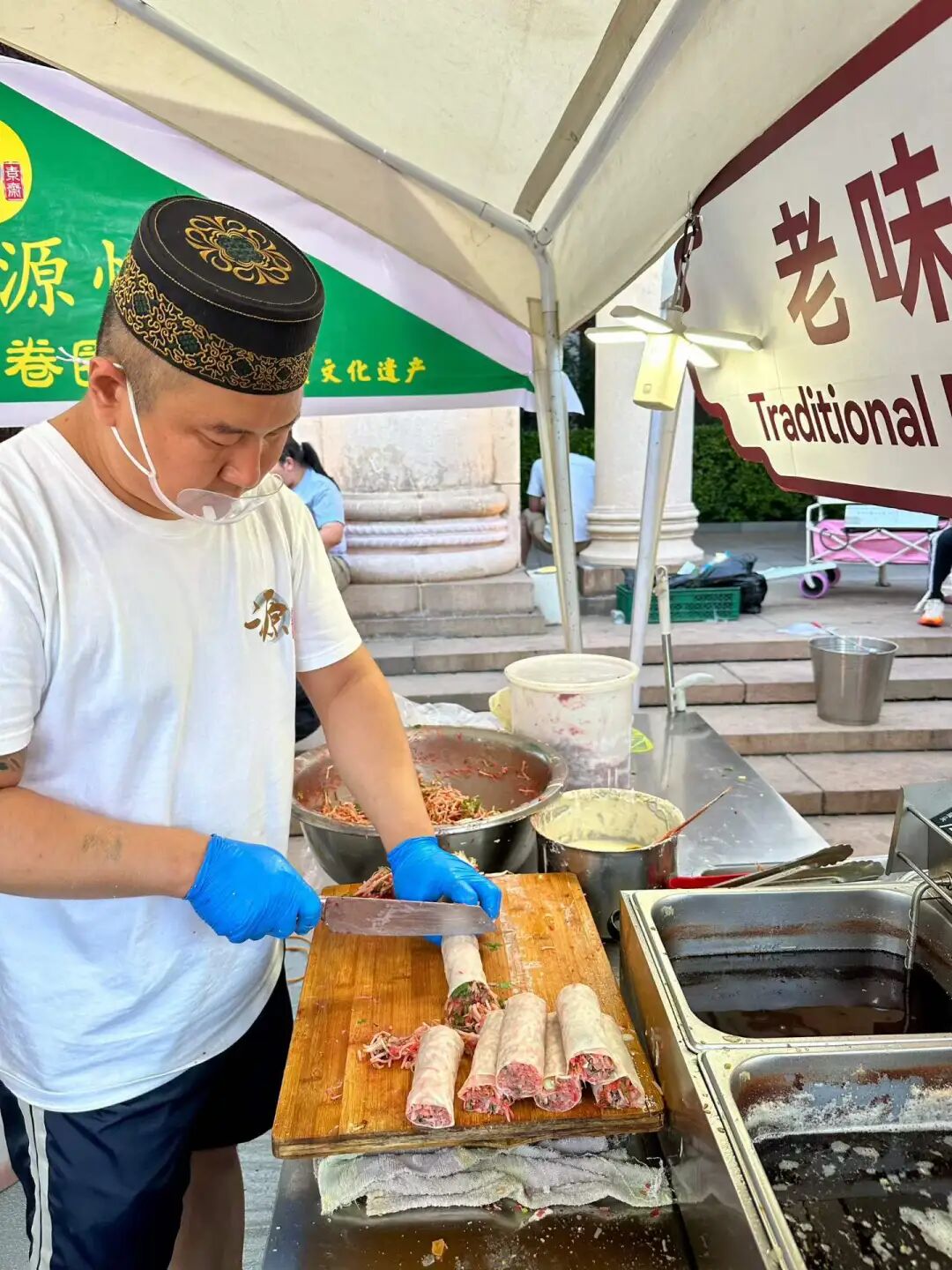
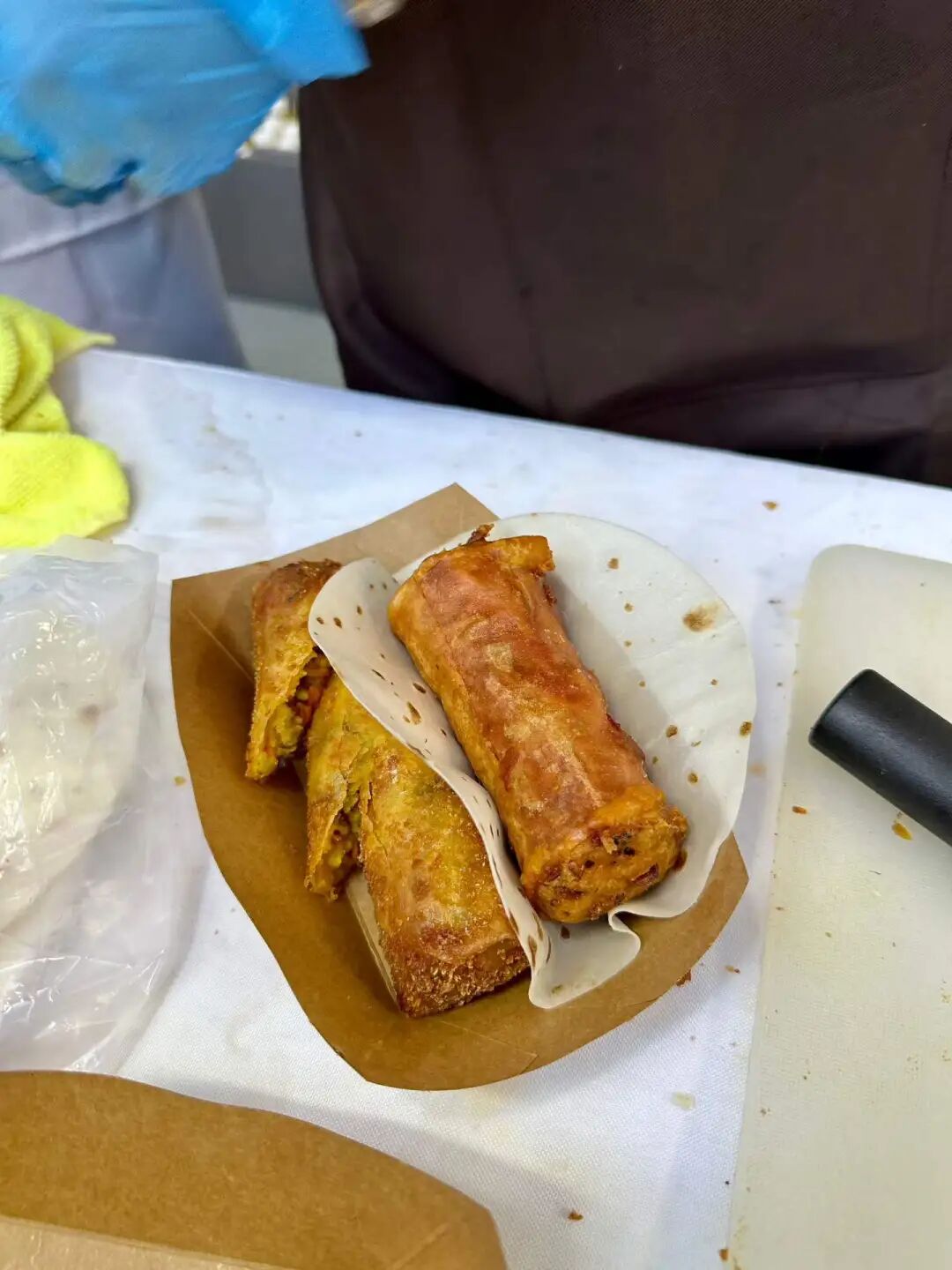
Chatang Hui is an old shop at the entrance of the South Mosque (Nandasi) in the Northwest Corner of Tianjin, with a century of history and four generations of heritage. Chatang (tea soup) first came to Tianjin via the Grand Canal. It was originally made with broomcorn millet flour, but later red sorghum flour was added, giving it a unique red color. Making chatang requires a large dragon-spout copper pot and the 'phoenix three nods' technique, a smooth motion that ensures not a drop spills when pouring. Traditional toppings include brown sugar, white sugar, sesame, crushed peanuts, raisins, and candied fruit shreds (qinghongsi), making it sweet and tangy.
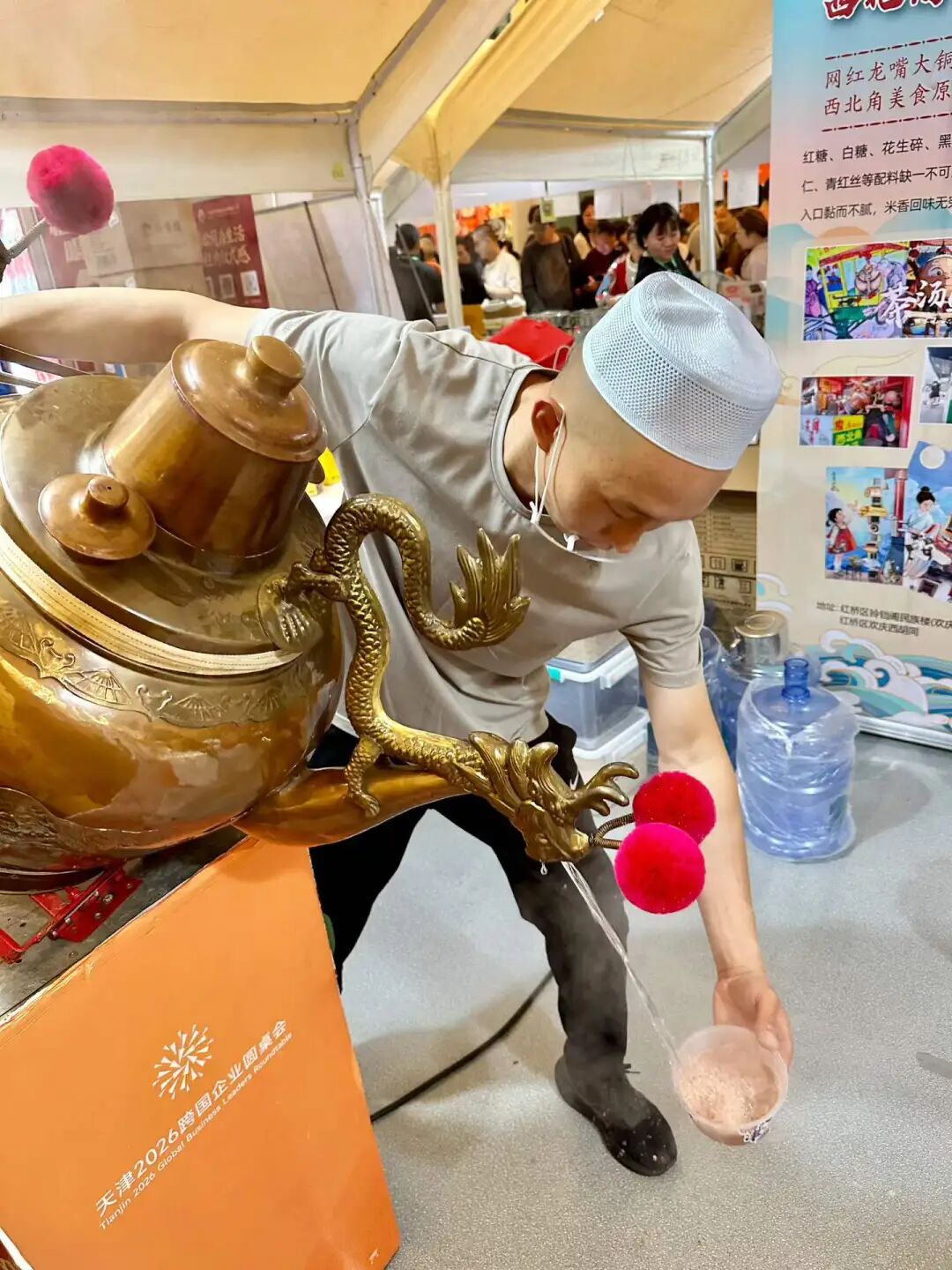
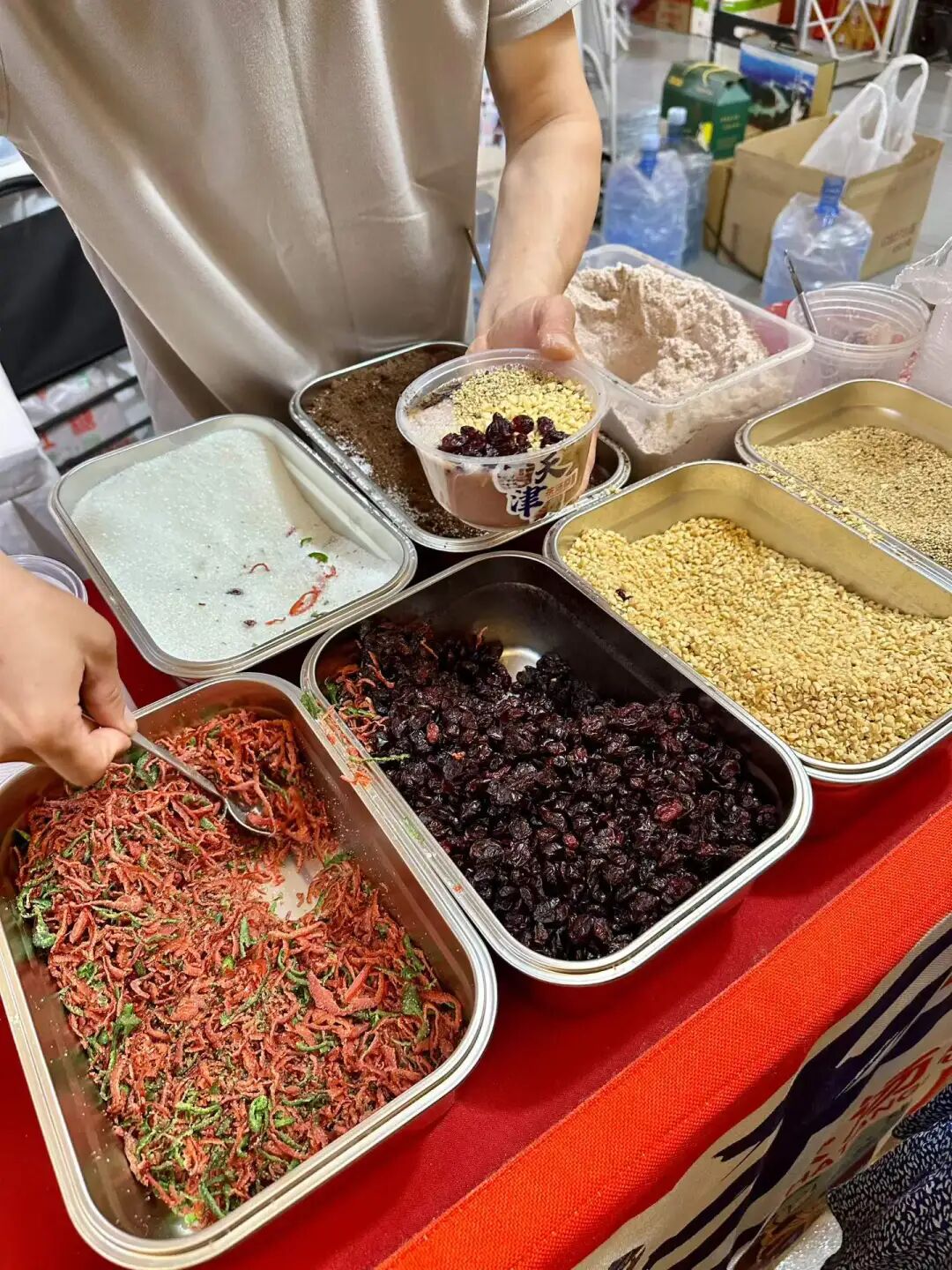
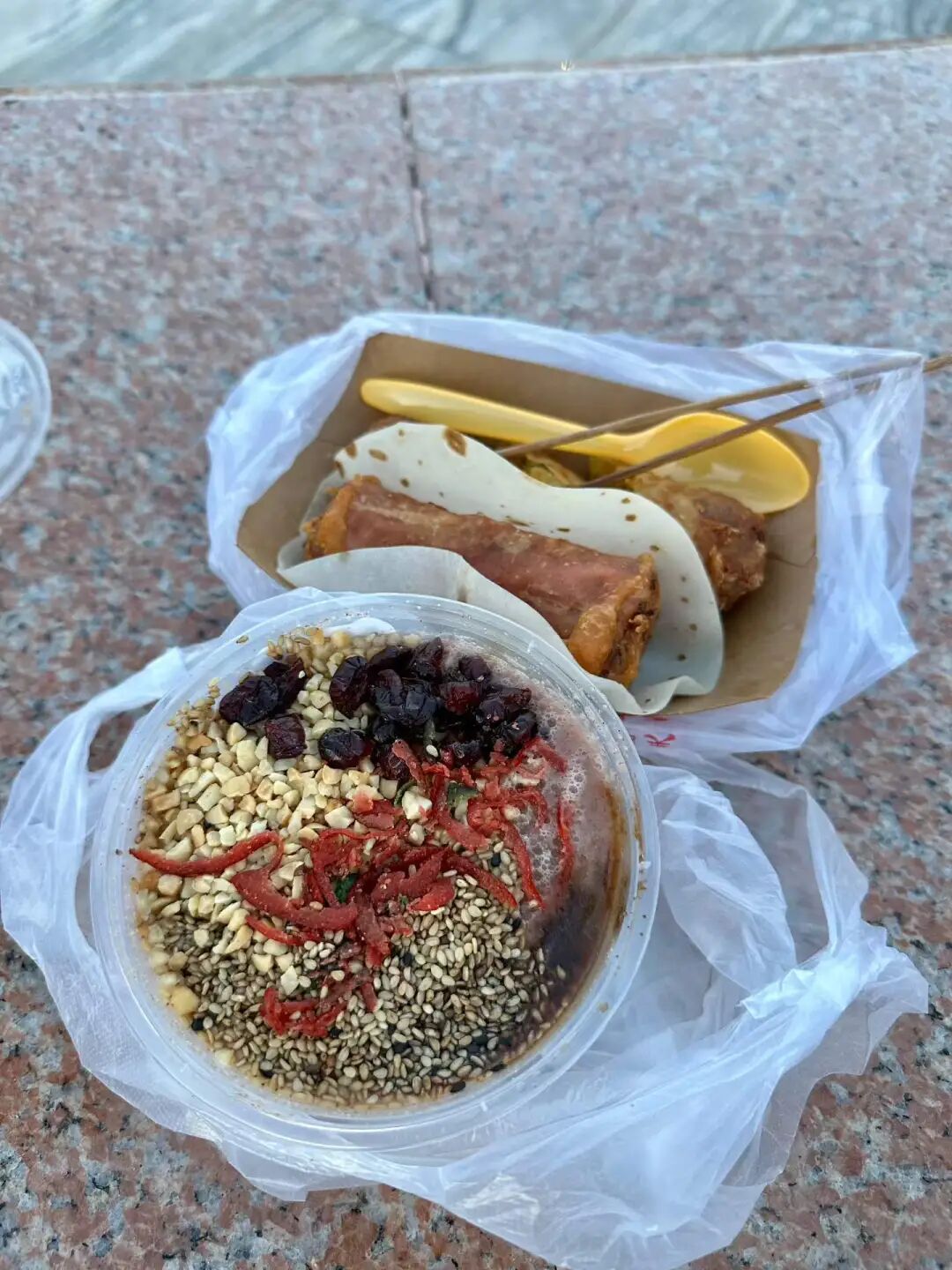
At the Beijing International Food Festival, the Xinjiang stall featuring big plate chicken (dapanji), pilaf (zhuafan), and lamb skewers (yangrouchuan) from the Xinjiang Building is very popular.
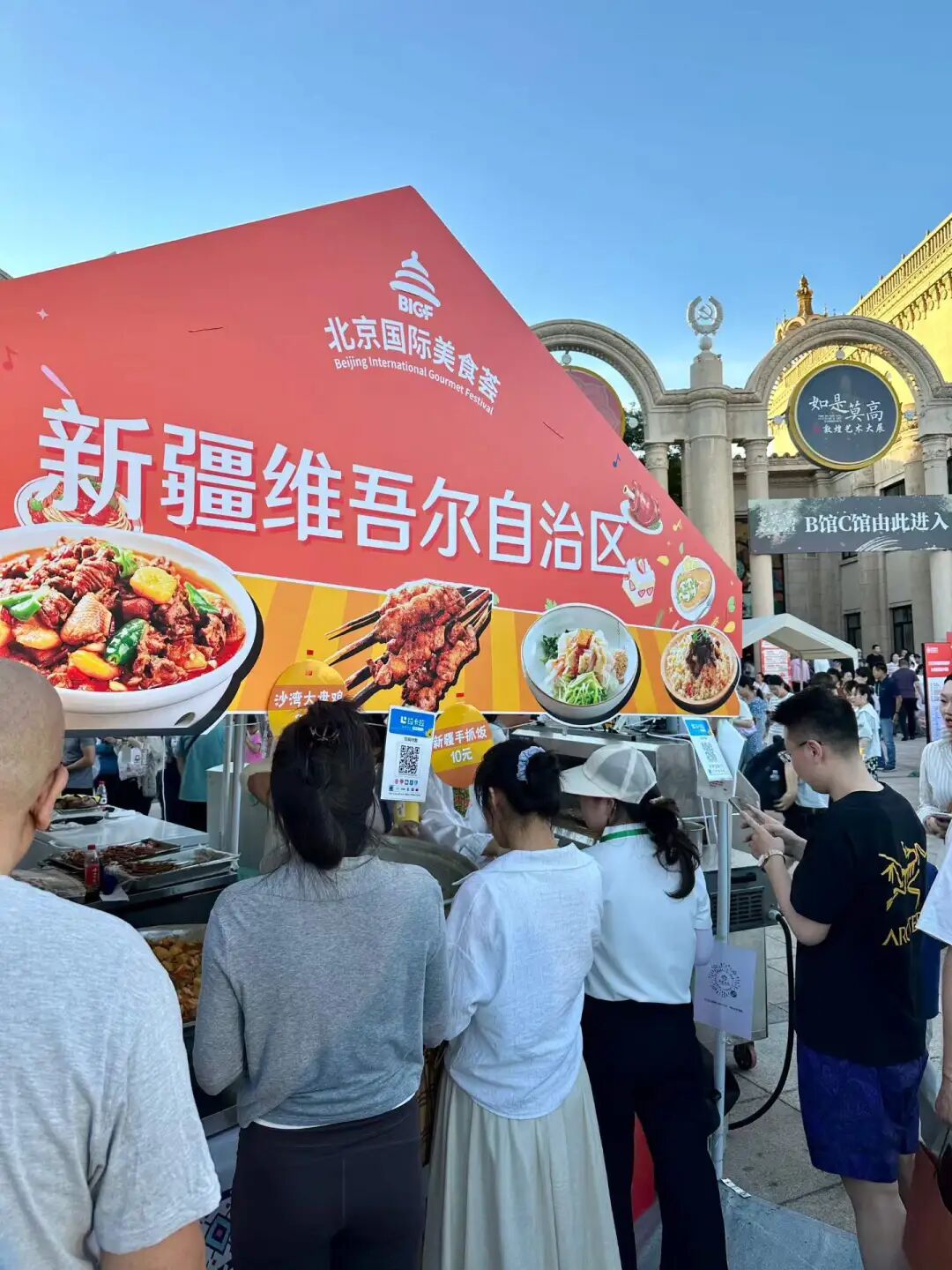
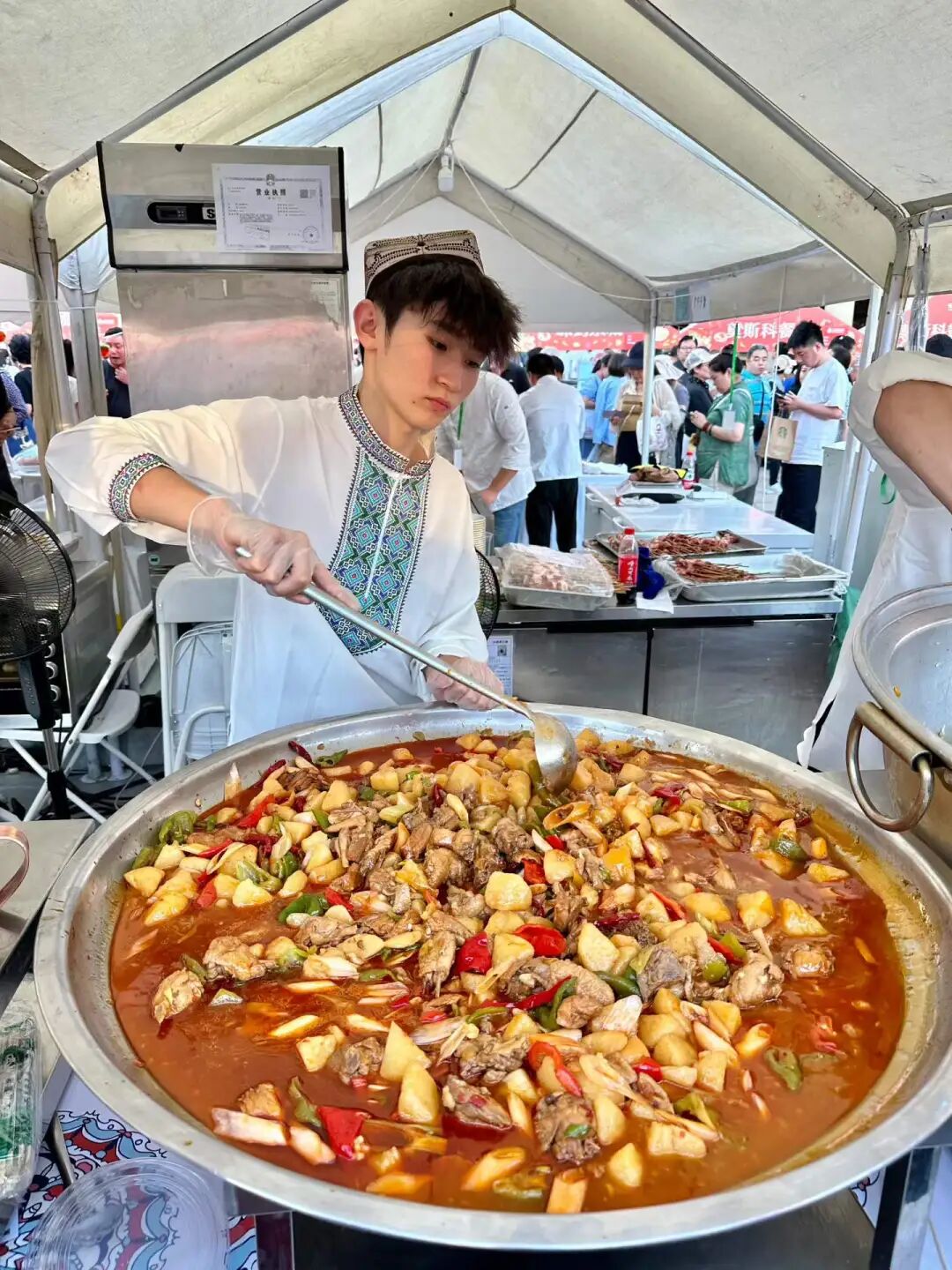
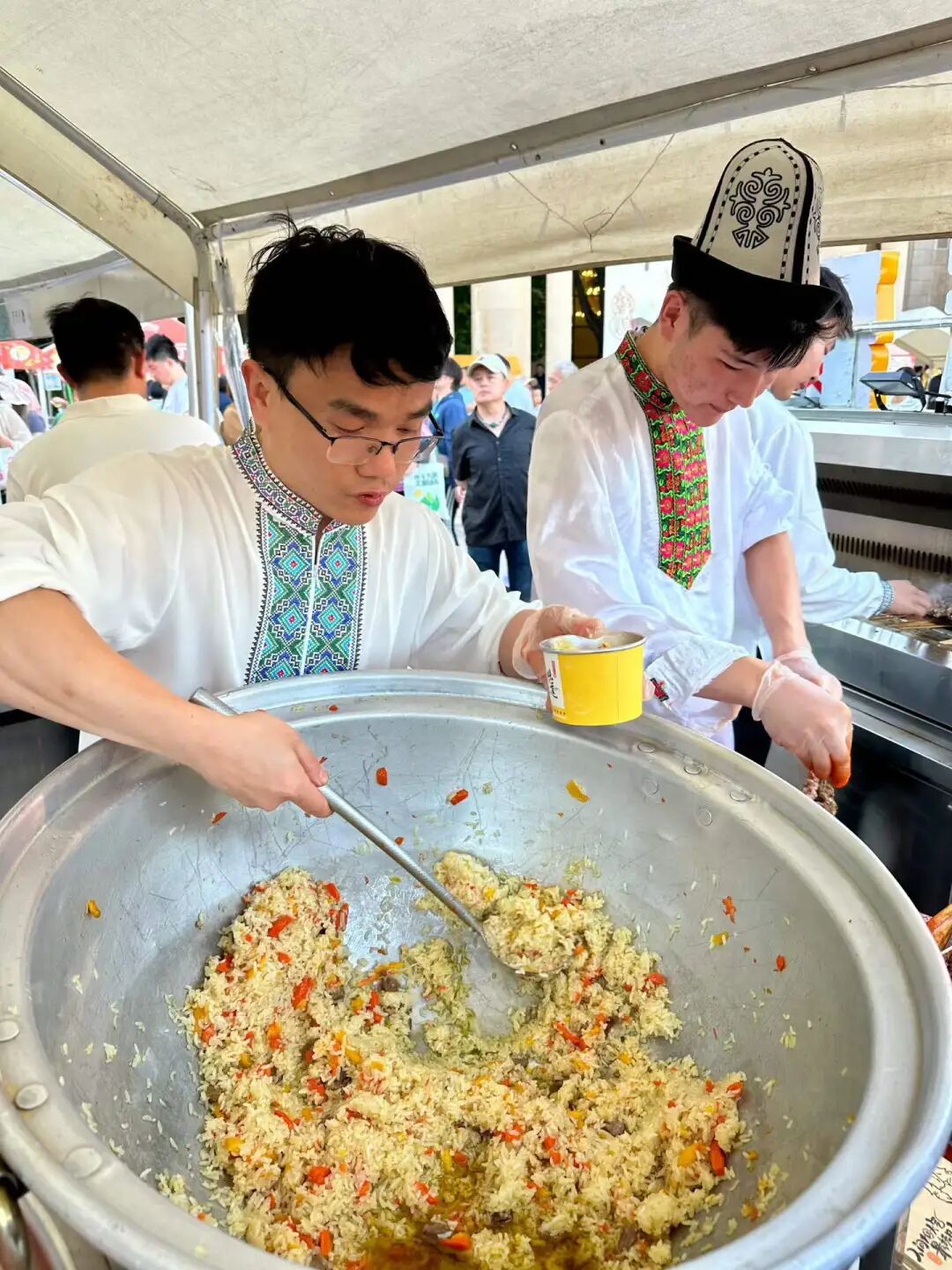
Before leaving, I was surprised to find a stall for the old Nanjing halal brand, Lvliuju! They sell various traditional Nanjing snacks, honey lotus root (mizhi ou), green sticky rice balls (qingtuan), water chestnut cake (mati gao), as well as hot osmanthus sugar taro seedlings (guihua tang yumiao) and chicken broth tofu (jizhi huilu gan). Even though we were full, we ordered a bowl of chicken broth tofu. The bean curd soaked in chicken broth was incredibly fresh, and the broth with bean sprouts and wood ear mushrooms was delicious. Chicken broth tofu gets its name because the fried tofu puffs are repeatedly simmered in broth. To make it, the chicken broth must be simmered for six hours and cooked with bean sprouts, wood ear mushrooms, and winter bamboo shoots, making the tofu soft and full of chicken flavor.
Lvliuju was founded in 1912 at Taoye Ferry along the Qinhuai River in Nanjing. It was named Lvliuju because of the shady green willow trees along the riverbank. Lvliuju started as a high-end vegetarian restaurant. Famous figures like Kong Xiangxi, Chiang Ching-kuo, Bai Chongxi, and the Soong sisters often dined here. After 1949, Lvliuju closed for a period. It reopened in 1963 on Yanggongjing, Taiping South Road, where they hired the famous chef Chen Bingyu to continue serving authentic vegetarian dishes. A major specialty of Lvliuju is vegetarian dishes that taste like meat. Their vegetarian chicken and vegetarian duck, made from tofu skin, gluten, and dried bean curd sticks seasoned with traditional Chinese herbs, are delicious. In 1987, Lvliuju added halal dishes to its vegetarian menu and became a halal restaurant. It still keeps vegetarian food as its specialty and is now recognized as a national-level intangible cultural heritage.
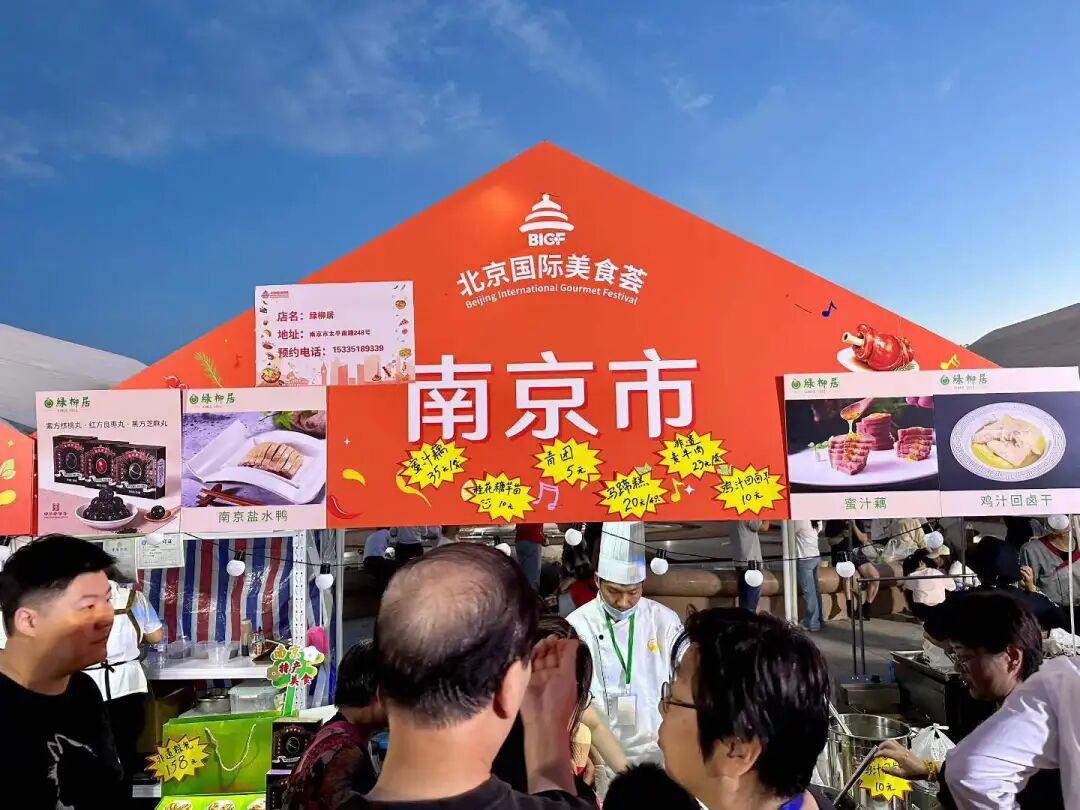
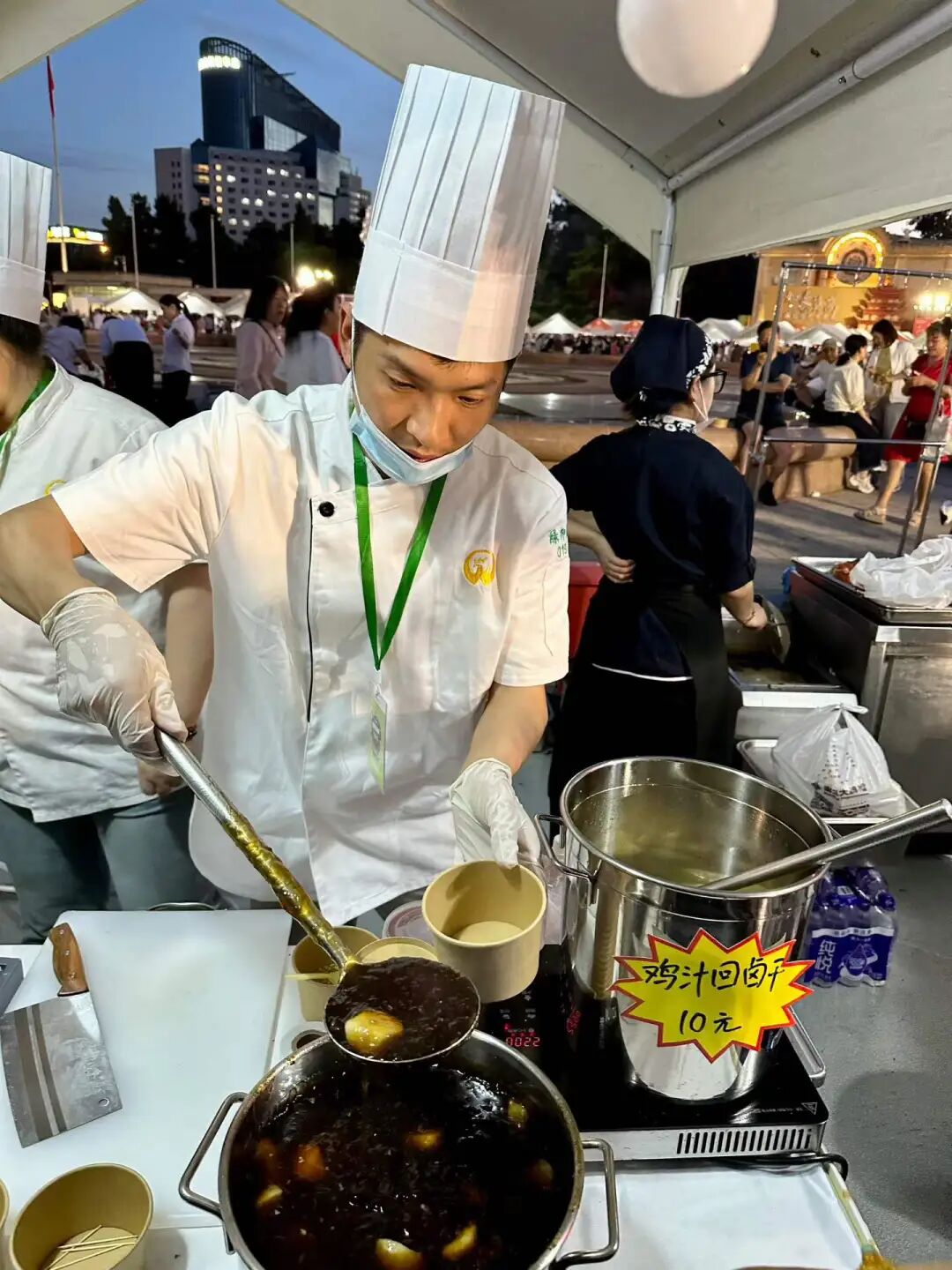
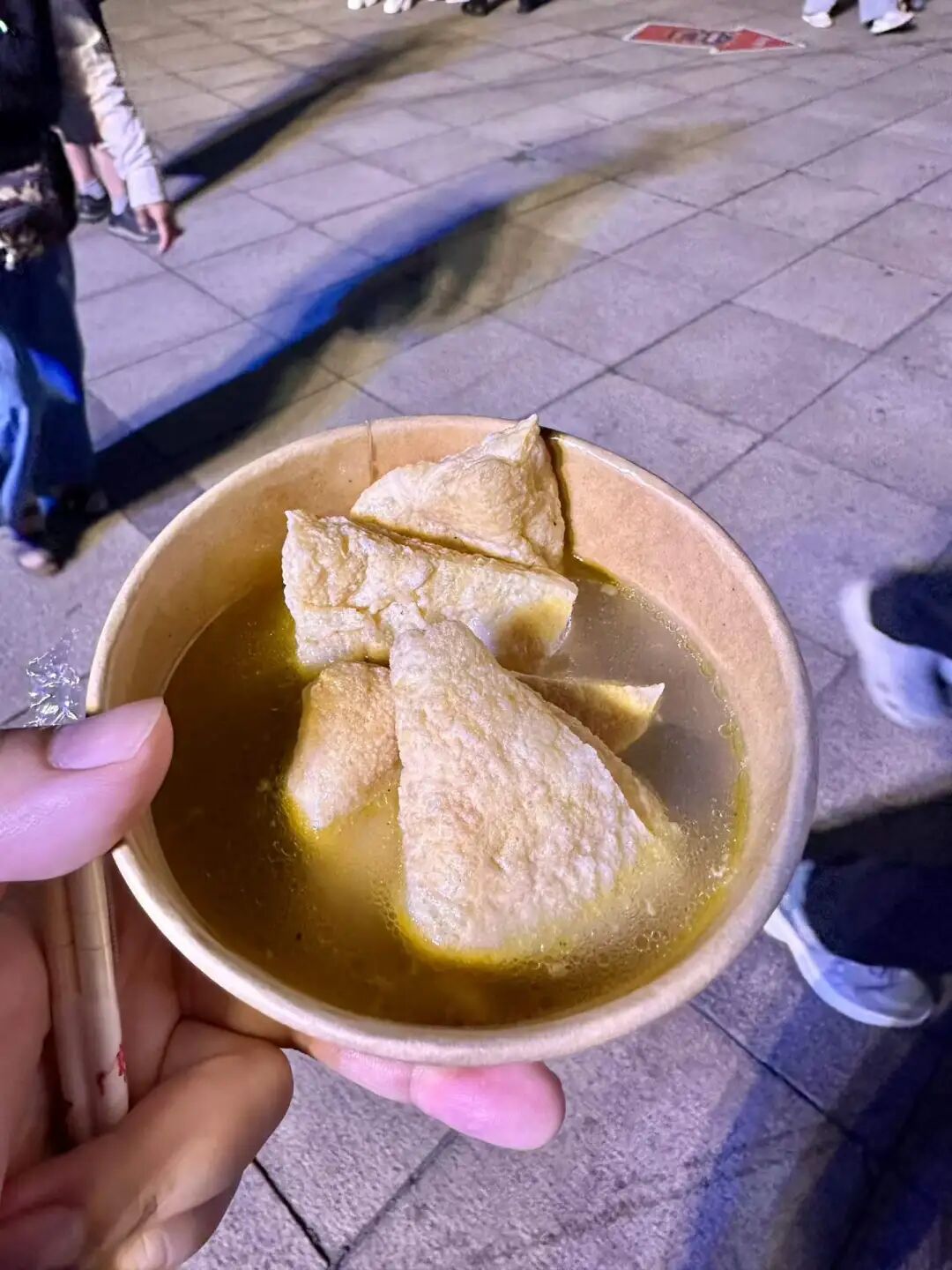
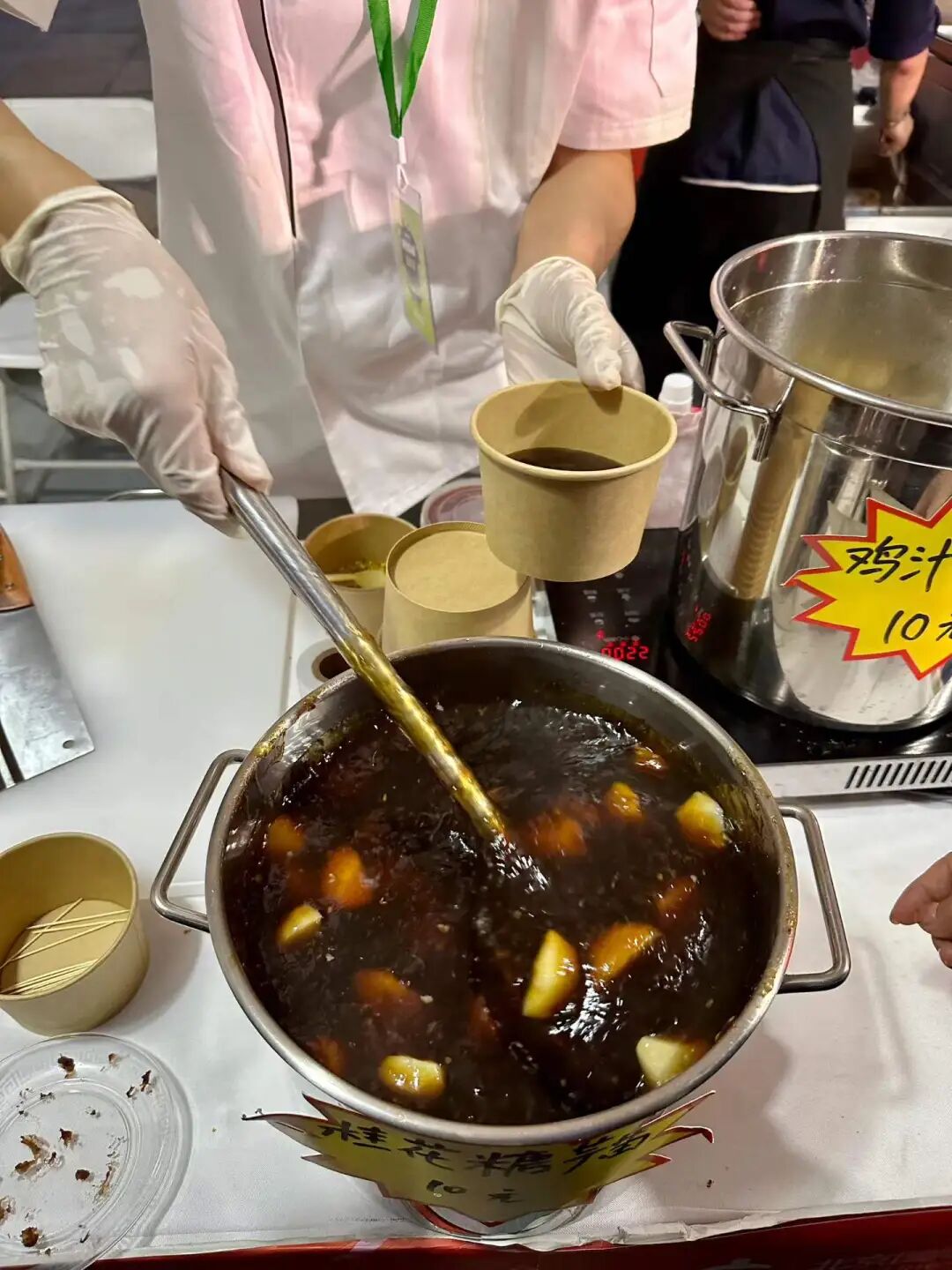
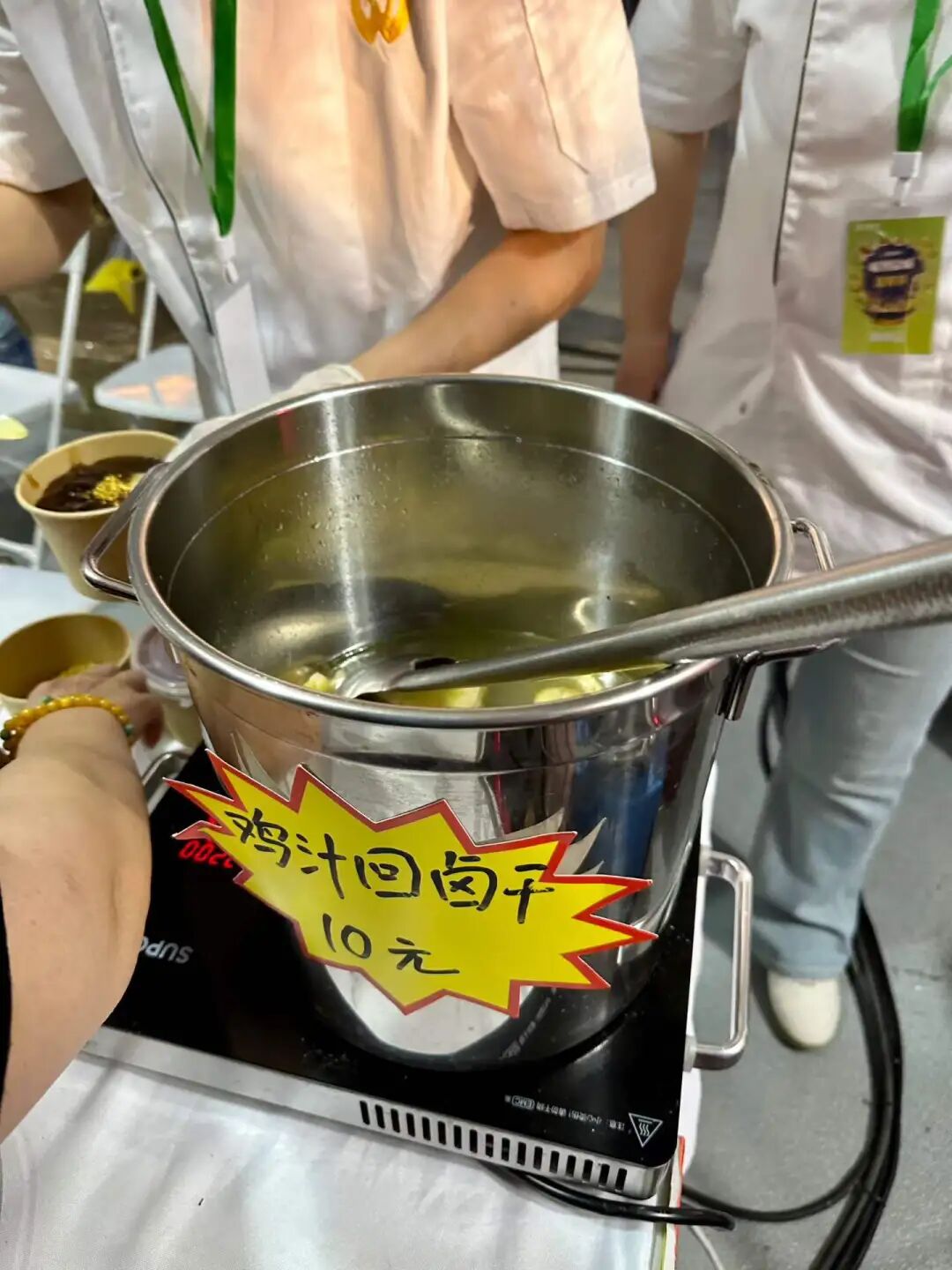
Best Halal Food Beijing: Niujie, Chaoyang, Daxing and District-by-District Muslim Restaurant Map
Articles • yusuf908 posted the article • 0 comments • 258 views • 2026-05-24 00:17
Summary: Best Halal Food Beijing: Niujie, Chaoyang, Daxing and District-by-District Muslim Restaurant Map is presented here as a firsthand travel account in clear English, beginning with this scene: This is the final part of my Beijing halal food map series. Following suggestions from friends and family, I have organized the restaurant information by district to make it easier to find. The account keeps its focus on Beijing Halal Food, Muslim Travel, Middle Eastern Food while preserving the names, places, food, and historical details from the Chinese source.
This is the final part of my Beijing halal food map series. Following suggestions from friends and family, I have organized the restaurant information by district to make it easier to find. Due to space limits, I have included only one photo for each restaurant, with the address listed below it. This list does not include restaurants in Yanqing, Mentougou, or Pinggu districts, and some very famous spots were left out. I have focused on restaurants with local character, covering China's eight major cuisines and flavors from many countries around the world. I have personally visited and gathered information on nearly two hundred restaurants.
Xicheng District
Houweiju Old Beijing Griddle Barbecue (zhizi kaorou)
No. 31 Nanwei Road, Xicheng District (west of the first traffic light south of Xiaoxiang Building)
Xi'an Jasan Steamed Buns (baozi)
No. 1A Baiyunguan Street, Xicheng District
Dahuo Paper-Grilled Barbecue
Nanheng West Street, next to Beijing Health Vocational College
Zhizi Revolution
No. 25 Lingdang Hutong, Jiugulou Street (Gulou branch)
Octopus Balls (takoyaki)
First floor, Qianmen Laozhalan Mall
Nailao Wei Dairy Shop
Room 107, No. 202 Guang'anmen Inner Street (west side of Dazhong Electronics)
Jubaoyuan
No. 5-2 Niujie, Xuanwu District
Hongsheng Hao Charcoal Grilled Lamb Leg
Left side of the main gate of the Health Vocational College, Nanheng West Street
Baodu Feng (Caishikou branch)
Lianhua Hutong, southwest of Caishikou intersection (west side of Fenghua Haojing)
Shandong Shada-cu Savory Crepe (jianbing)
Entrance of the Shuru Hutong Halal Food Market
Niujie Baoji Mung Bean Milk (douzhi)
Entrance of Shuru Hutong, Niujie
Muyixuan lamb spine hot pot (yangxiezi)
East of the Niujie Road intersection
Meisi Coffee (Western-style light meals)
100 meters south of the main gate of the Niujie Mosque
Laochengyi lamb spine hot pot (yangxiezi)
No. 3 Commercial Street, Niujie North Entrance
Dashuntang
Building Jia 4, No. 5 Fayuansi Xili, Jiaozihutong, Xicheng District.
Halal dumpling restaurant
South gate of Niujie Xili Zone 2, Xicheng District
Xi'an Palace crispy beef pie (xiangsu niuroubing)
East of the Niujie Road intersection, Xicheng District
Kaorouji
Qianhai East Bank, Shichahai, Xicheng District
Hongbinlou (traditional Beijing cuisine)
No. 11 Zhanlanguan Road, Xicheng District
Lazi Indian Music Restaurant
No. 31 Gulou West Street, Xicheng District
Hongfuda Restaurant (Sichuan and Beijing cuisine)
4th Floor, Diaoyutai Wanfang Xidan Shopping Mall
Yaoji tripe-wrapped meat (dubao rou)
Room 107, Building 11, Niujie Xili Zone 2
Gaolaosi lamb soup (yangtang)
Inside the courtyard of Home Inn, Guang'anmen Inner Street
Old Neighborhood Beef Noodles (Lao Jie Fang Niu Rou Mian)
Ground floor shops on the west side of Jiaozihutong
Tiankelai (traditional Beijing-style dishes)
Jiaozihutong, Niujie
Hongji Halal Snack Shop
Across from the Niujie Halal Supermarket
Chuxianglou (high-end Northwest fusion cuisine)
Second floor of SOGO Department Store, Xuanwumen
Zhangji Hot Pot (Zhangji Shuanrou)
95 Meishijie, Xicheng District, near the McDonald's at Qianmen
Xinjiang Bing Tuan Restaurant
Building 2, Courtyard 6, Malian Dao South Street, Xicheng District (west of Carrefour)
Dongcheng District
Baikui Laohao Restaurant
195 Andingmen Inner Street
Yuezhen Yayuan (high-end Northwest cuisine)
55 Andingmen East Street, Dongcheng District
Gulou Noodle Shop (modern fusion cuisine)
25 Donggongjie, Gulou East Street
Tangdou Conveyor Belt Buffet Hot Pot
8th floor, north side of Souxiu City Shopping Plaza, Chongwenmen Outer Street (across from Phase 2 of the New World Department Store)
Suzhou Hui Muslim Restaurant (traditional Beijing cuisine)
36 Suzhou Hutong, Dongcheng District
Longtan Hot Pot (Longtan Shuanrou)
16 Zuo'anmen Inner Street, next to the northwest gate of Longtan Lake Park
Alan Restaurant (traditional Beijing flavor)
West of Building 2, Tiantan Dongli South District, Dongcheng District (1 Yongdingmen East Street)
Jinghumenshuanyan Hot Pot
Qumen Subway Station, second floor of Hongdu Building
Annei Laoma Steamed Dumplings (shaomai)
112 Andingmen Inner Street, Dongcheng District
Saduli Indian Restaurant
Second floor, 70A Beiluoguxiang
Dashi (Beijing, Cantonese, and Sichuan-Hunan cuisine)
Address: No. 277 Dongzhimen Inner Street, Dongcheng District, Beijing, near Beixinqiao Subway Station.
Chaoyang District
Jinjiang Xiyu Restaurant
411, Area 4, Huizhong Beili, Asian Games Village, Chaoyang District
Döner Turkish Coffee (Turkish cafe)
Ground floor shops next to Xiushui Street, Chaoyang District
Qingxiangge Dalian Seafood
Next to Dongdaqiao Subway Station, Chaoyang District
Jianghu No. 80
Ground floor shops, Chaoyang Road Entrepreneurship Park
Hemeizhai Roast Duck Restaurant
Shenlu Street, Chaoyang District
Baizuan Xinjiang Restaurant
116 Luying Street, Chaoyang District
Wangas Muslim Restaurant
Ground floor shop, Wanda Plaza, Guomao, Chaoyang District
Indian Kitchen (Yindu Xiaochu)
2nd Floor, No. 2 Sanlitun North Small Street
Silk Road Station (new-style Xinjiang restaurant)
West Gate of Lido Park, No. 6 Fangyuan West Road (near Lido)
Ningxia Flavors (Ningxia cuisine)
2F, Fenglian Plaza, No. 18 Chaoyangmen Outer Street, Chaoyang District
Eliya Halal Bakery
Shop 06, Building 56, Changying Ethnic Homeland, Changying Middle Road, Chaoyang District
Xingu Halal Charcoal BBQ (Korean cuisine)
Next to Yunding Billiards Club, opposite the south gate of Ethnic Homeland residential area, Changying Middle Road (west side of Ethnic Primary School)
One Thousand and One Nights (Arabian cuisine)
No. 6 Chaoyang Park Road, Solana, Chaoyang District
Alameen
Lebanese Restaurant
Next to the German Embassy in Sanlitun
Khan Baba Pakistani Restaurant
Room 511, 5th Floor, Building 2, Sanlitun SOHO, No. 8 Gongti North Road, Chaoyang District
Hefeng Banquet (Hefeng no Utage)
1st Floor, Shaanxi Mansion, Shilihe, Chaoyang District
Istanbul Turkish Restaurant
No. B7 Xiushui South Street (north side of International Building, back street of Friendship Store)
Benjamin Indian-Afghan Restaurant
The second floor of Haoyun Street in Chaoyang District.
Dardanelles Turkish Restaurant.
Units 1-21-22, Courtyard 39, Shenlu Street, Ritan North Road, Chaoyang District.
Persepolis Restaurant (Iranian cuisine).
Exit A of Tuanjiehu Subway Station in Chaoyang District.
Turkish Mama Restaurant.
Exit A of Tuanjiehu Subway Station in Chaoyang District.
Huawei Meat Pie Shop.
No. 11 Songyu North Road.
Xifentang.
Unit 0189B, Block D, Chaowai SOHO, No. 6 Chaowai Street.
Musafir Xinjiang Restaurant.
No. 27 Xidawang Road, Chaoyang District, right outside Pingle Yuan Station on Subway Line 14.
Fireside (French halal restaurant).
First floor, Block E, No. 9 Jinhui Road.
Yan Hot Pot (Sichuan-style hot pot).
Fourth floor of Kuntai Mall, Chaoyang District, Yanlanlou Chaowai Street branch.
A-Gong Noodle House.
Late Night Canteen, basement level of Hopson One, Chaoyang District.
Hailiye Yunnan Halal Restaurant.
First floor of the World Financial Centre.
Xinjiang-style meatball soup.
Second floor of Chaowai SOHO Block B.
NAIL.
Russian-style Western restaurant
Shenlu Street, Chaoyang District, opposite Desert Rose Restaurant
Shangzi Street Clear Beef Brisket Noodles (Cantonese halal restaurant)
West side of the intersection at Yabaolu South Slope Mosque
Shuyuan Small Restaurant
Ground floor shops of Ritan International Trade Center
Changying Three Brothers
Changying Middle Road, Chaoyang District
36 Degrees North Latitude Hot Pot
B1, Wangjing Huacai Commercial Center
Yilao Baiwei Dipping Sauce Hot Pot (Chaoshan hot pot)
No. 13 Changying Guanzhuang Road
Yueshengguan (Korean-style barbecue)
Ground floor shops of Yabaocheng, No. 19 Ritan North Road, Chaoyang District
Caravan Moroccan Halal Restaurant and Bar
No. 44 Guanghua Road, Jianguomenwai
Zhongfayuan Northwest Feast (high-end Northwest fusion cuisine)
2nd Floor, Building C, Oriental Media Center, No. 4 Guanghua Road, Chaoyang District
Yiyuan Gourmet Tea House (high-end fusion cuisine)
Ground floor of Xincheng International, Chaoyang District
Yijinyuan (high-end Northwest fusion cuisine)
Inside the east gate of Longze Yuyue Scenic Area, Yuan Dadu City Wall Ruins Park, Beitucheng East Road, Chaoyang District
Badao Noodles (Chongqing small noodles)
No. 4 Jiuxianqiao Road, 798 Art Zone (opposite UCCA Center for Contemporary Art)
Haitian Yise (sashimi, Cantonese cuisine, Fujian cuisine)
No. 13 Guanzhuang Road, Chaoyang District
Jingmen Laobao San
Building 212, Baiziwan Jiayuan, Chaoyang District
Yongchang Laoguanzi
West side of the ground floor shops at Haitian Yise, No. 13 Guanzhuang Road
Xinyuezhai
Next to Nandouya Mosque, Douban Hutong, Chaoyang District
Ritan Shuanrou
East side of Ritan Park
Gutong Laoyuan Shuanrou
Baihuanyuan, Chaoyang District
Zitengxuan Restaurant (traditional Beijing cuisine)
300 meters east of Tuanjiehu Bridge
Yinmadeng Chuanchuan Market (cold pot skewers)
Northeast corner of Pingle Yuan Subway Station
Fengtai District
Jufuyuan Shuanrou
No. 14 Huxili, 100 meters south of Dazhong Electrical Appliance
Xuezhan Dapanji
Second floor of Ruihai Building next to the West Railway Station
Asiya Restaurant (Northwest cuisine)
No. 45A Fengtai North Road, Lize Bridge
Tanguoju
Shop 23, Building 8, Courtyard 7, Fengqiao Road
Yuanxie Hot Pot Restaurant
Nanxiaojie South Road, Fengtai District
Laomenkuang Baodu Fangzhuang Branch 2
No. 157 Yujiafen, Fangzhuang South Road, Fengtai District
Changping District
Huayunlou Steamed Dumpling (shaomai) Restaurant
No. 2 Zhanqian Road, Shahe Town, Changping District
Chongqing Xiangchangzui Old Stove Hot Pot
Room 201, Building 16, Jiayuan District 1, North Street, Shahe Higher Education Park, Changping District
Liangji Braised Noodles (huimian)
Unit 104, Ganglong Commercial Area, No. 18 Huilongguan West Street, Changping District (east side of Industrial and Commercial Bank of China) (Huilong Surplus Goods Market)
Laikebi Happy Pizza (Western-style light meal)
No. 17 Songyuan Road, Changping District
Aiyidian Halal Yunnan Cuisine
Ground floor, north section of the commercial area on the west side of Fenyayuan District 2, Huilongguan Town, axes 19-21
Old Yang Family Halal Restaurant (New-style fusion cuisine)
No. 30, West Lane 1, Xiguanshi Village, Yangfang Town, Changping District
Yangfang Shengli Lamb Hot Pot
Xiguanshi Village, Yangfang Town, Changping District
Fangshan District
Ailifu Lamb Hot Pot
Chaoyang North Road, Fangshan District
Tongshunzhai Restaurant
South entrance of Doudian Village, Fangshan District
Quran Family (dipped beef tripe, roasted rabbit head)
50 meters north of the 993 bus terminal, south of Doudian Village, on the west side of the road
Zhang's Big Poplar Tree Restaurant (farmhouse dishes)
Directly opposite the Doudian Mosque
Asian Tribe 7 (Indian food)
Room 207, 2nd Floor, Building 1, Jinjie, Changyang Peninsula, Fangshan District
Wanzhenlou Restaurant (Korean-style barbecue buffet)
Zhuochen Building, 12 Xilu South Street, Liangxiang, Fangshan District
Yingbinlou Restaurant (Beijing cuisine)
Next to the Doudian Mosque, Fangshan District
Haidian District
Yilanlou (Northwest Chinese cuisine)
5 Zaojunmiao Road, Haidian District
Ganges Indian Restaurant
6th Floor, Wudaokou Shopping Center
HI HELLO
Western-style grilled rice
Shop 4, Ground Floor, Building 2, Weibohao Garden
Ma Wu Spicy Soup (hulatang) and Pan-fried Buns (shuijianbao) on Guhuai Street
Phase II, Shibao Street, Zhongguancun, Haidian District
Hu's Original Beef Soup (Huainan cuisine)
1st Floor, Shuangtian Building, 30 North Third Ring West Road
Qinshengxuan Xi'an Mutton Pita Soup (yangrou paomo)
40-10 North Third Ring Middle Road (near Taipingzhuang Bridge)
Sijiqing Jinxiang Spring Water Hot Pot (Sijiqing Jinxiang Shuanshuorou Guan)
West of Sijiqing Bridge, Haidian District (southwest corner of Nanpingzhuang intersection)
Yanlanlou (high-end Northwest Chinese cuisine)
Opposite the National Library
Bayi Laoye
Building 23, Weigongcun Residential Area, 22 Minzu University West Road, Haidian District
Daxing District
Dianxinyuan New-Style Yunnan Halal Cuisine
Ground floor shops on the north side of Yongkang Apartment, 18 Kangding Street (100 meters west of Exit A, Tongjinan Road Subway Station)
Xueying Heshunzhai Lamb Spine Hot Pot (Yangxiezi)
No. 10, Lane 16, Qingzheng South Road, Xueying Village, Panggezhuang Town, Daxing District
Chengji Shanxian Lamb Soup Restaurant (Yangtang Guan)
Sanzhong Lane (near Xingfeng Street), about 525 meters from Huangcun West Street Station
Erjie Earth Pot Stew (Diguo Dun)
No. 6, Lane 4, Qingren Road, Daxing District
Jingnan No. 1 Hot Pot (Shuan)
No. 1-A, Qingzheng Road, Xueying Village, Panggezhuang, Daxing District
Rundexuan Halal Restaurant
No. 14 Hongsheng Road, North Second Street, Xihongmen, Daxing District (300 meters north of Xihongmen Subway Station, east side of the road)
Guoguojiao Spicy Dry Pot (Malaxiangguo)
Unit 107, Unit 3, Building 1, Courtyard 39, Chunhe Road, Daxing District
Xinjiang Happy Restaurant
Exit at Xihongmen Station on Subway Line 4, third floor of the Joy Breeze (Huiju) Shopping Center
Yanlan Renjia (Northwest fusion cuisine)
Qingyuan Road, Daxing District
Juewei Duck Neck
Xueying Village, Daxing District
Tongzhou District
Jujingyuan (traditional Beijing cuisine)
Lvyou Xincun, Tongzhou District
Ziguangyuan
Zhongshan Street, Tongzhou District
Zhangji Potstickers (Zhangji Guotie)
70 meters west of Beixiaoyuan Station on Yudaihe East Street, north side of the road
Baixingju (traditional Beijing cuisine)
Baixingju Restaurant, Xiguan Mosque, Yudaihe West Street, Tongzhou District
Shunyi District
Huguosi Snacks (Airport branch)
B1, Terminal 2, Capital Airport
Majia Steamed Dumplings (Majia Shaomai) (now open)
Departure Hall, Terminal 3, Capital Airport
Fushouzhai
Chuangzhan branch, Shunyi District
Huoyan Kongjian Korean BBQ
No. 38 Yumin Street, Shunyi District
Shali Ma Indian and Pakistani Cuisine
Shunyi District
Room 104, Floor 1, Building 8, 16 Yufeng Road (Xinguozhan Huizhan Yujing)
Shijingshan District
Original Flavor Braised Dough Bits (yuanwei huimashi)
Street-level shop, 22 Yinhe Street, Lugu Subdistrict, Hanhai Changcheng Building
Miyun District
Shixiangxuan Small Seafood
Nangeng Street, Miyun District
Tanghe Halal Restaurant
Shop 011, Huanjie, Gubei Water Town Square, Miyun
For detailed introductions to each restaurant, please browse the links from previous posts:
[Beijing Specialty Halal Dining Guide (Including the most complete list of foreign restaurants)] (Part 1)
[Beijing Specialty Halal Dining Guide (Including the most complete list of foreign restaurants)] (Part 2)
[Beijing Specialty Halal Dining Guide (Including the most complete list of foreign restaurants)] (Part 3)
Beijing Specialty Halal Dining Guide (Part 4)
Beijing Specialty Halal Dining Guide (Part 5)
Beijing Specialty Halal Dining Guide (Part 6)
Beijing Specialty Halal Dining Guide (Part 7)
Beijing Specialty Halal Dining Guide (Part 8)
Beijing Specialty Halal Dining Guide (Part 9)
Beijing Specialty Halal Dining Guide (Part 10)
Beijing Specialty Halal Dining Guide (Part 11)
Beijing Specialty Halal Dining Guide (Part 12)
A Map of Specialty Halal Food in Beijing (Part 13) view all
Summary: Best Halal Food Beijing: Niujie, Chaoyang, Daxing and District-by-District Muslim Restaurant Map is presented here as a firsthand travel account in clear English, beginning with this scene: This is the final part of my Beijing halal food map series. Following suggestions from friends and family, I have organized the restaurant information by district to make it easier to find. The account keeps its focus on Beijing Halal Food, Muslim Travel, Middle Eastern Food while preserving the names, places, food, and historical details from the Chinese source.
This is the final part of my Beijing halal food map series. Following suggestions from friends and family, I have organized the restaurant information by district to make it easier to find. Due to space limits, I have included only one photo for each restaurant, with the address listed below it. This list does not include restaurants in Yanqing, Mentougou, or Pinggu districts, and some very famous spots were left out. I have focused on restaurants with local character, covering China's eight major cuisines and flavors from many countries around the world. I have personally visited and gathered information on nearly two hundred restaurants.
Xicheng District
Houweiju Old Beijing Griddle Barbecue (zhizi kaorou)
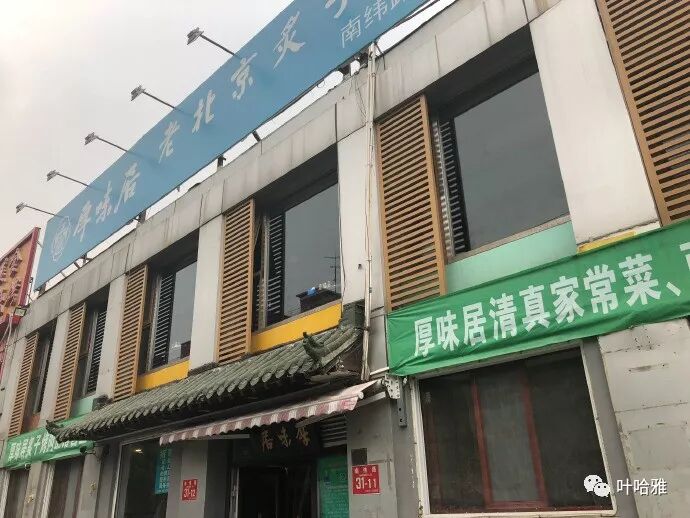
No. 31 Nanwei Road, Xicheng District (west of the first traffic light south of Xiaoxiang Building)
Xi'an Jasan Steamed Buns (baozi)
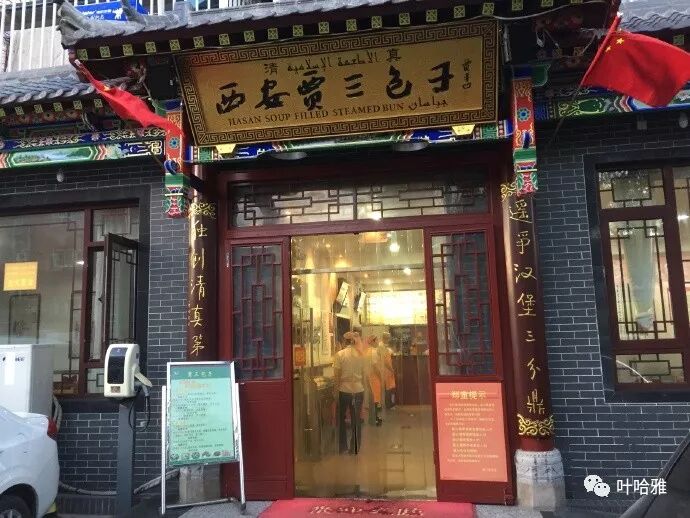
No. 1A Baiyunguan Street, Xicheng District
Dahuo Paper-Grilled Barbecue
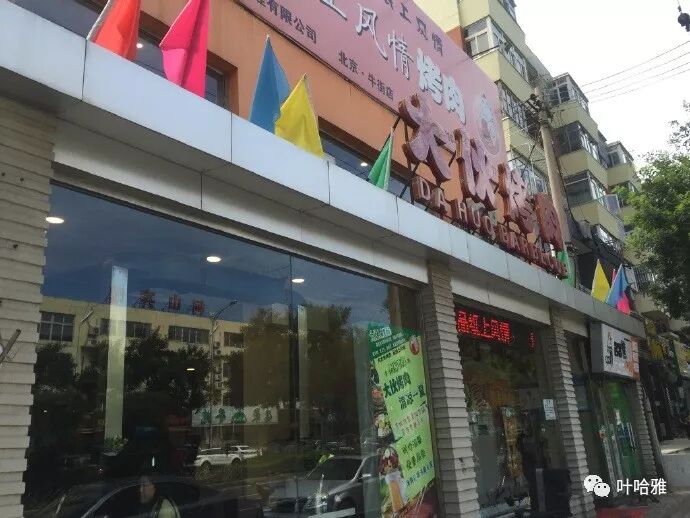
Nanheng West Street, next to Beijing Health Vocational College
Zhizi Revolution
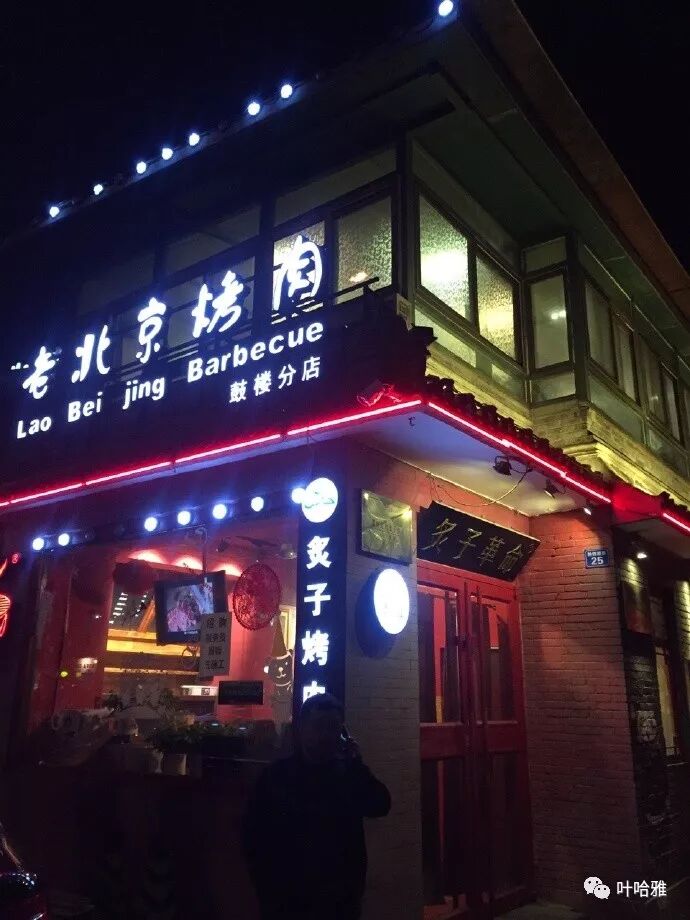
No. 25 Lingdang Hutong, Jiugulou Street (Gulou branch)
Octopus Balls (takoyaki)
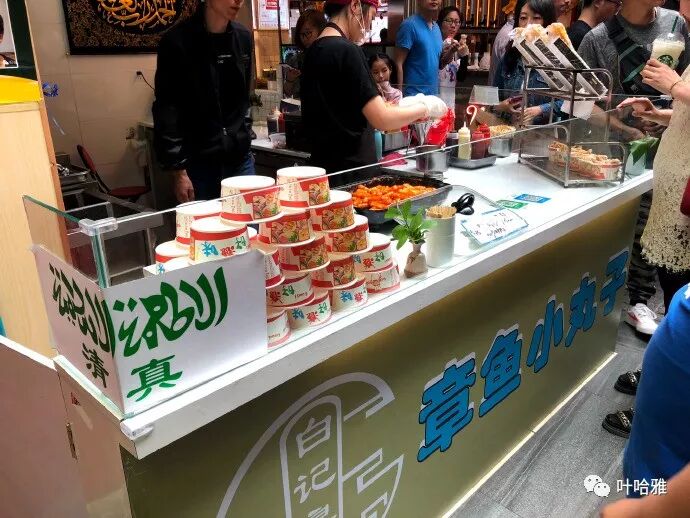
First floor, Qianmen Laozhalan Mall
Nailao Wei Dairy Shop
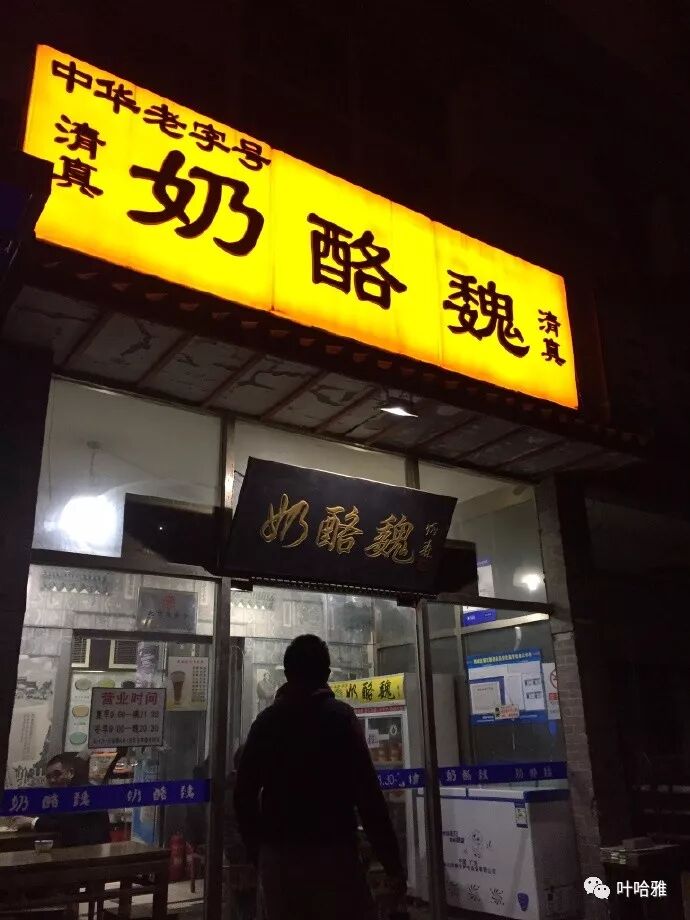
Room 107, No. 202 Guang'anmen Inner Street (west side of Dazhong Electronics)
Jubaoyuan
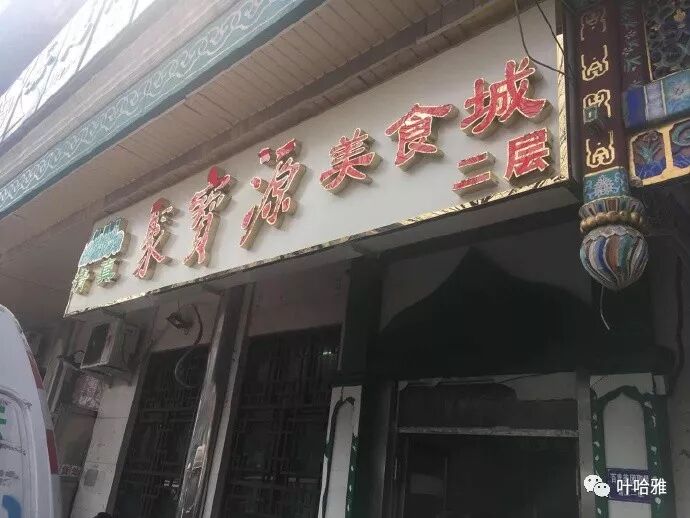
No. 5-2 Niujie, Xuanwu District
Hongsheng Hao Charcoal Grilled Lamb Leg
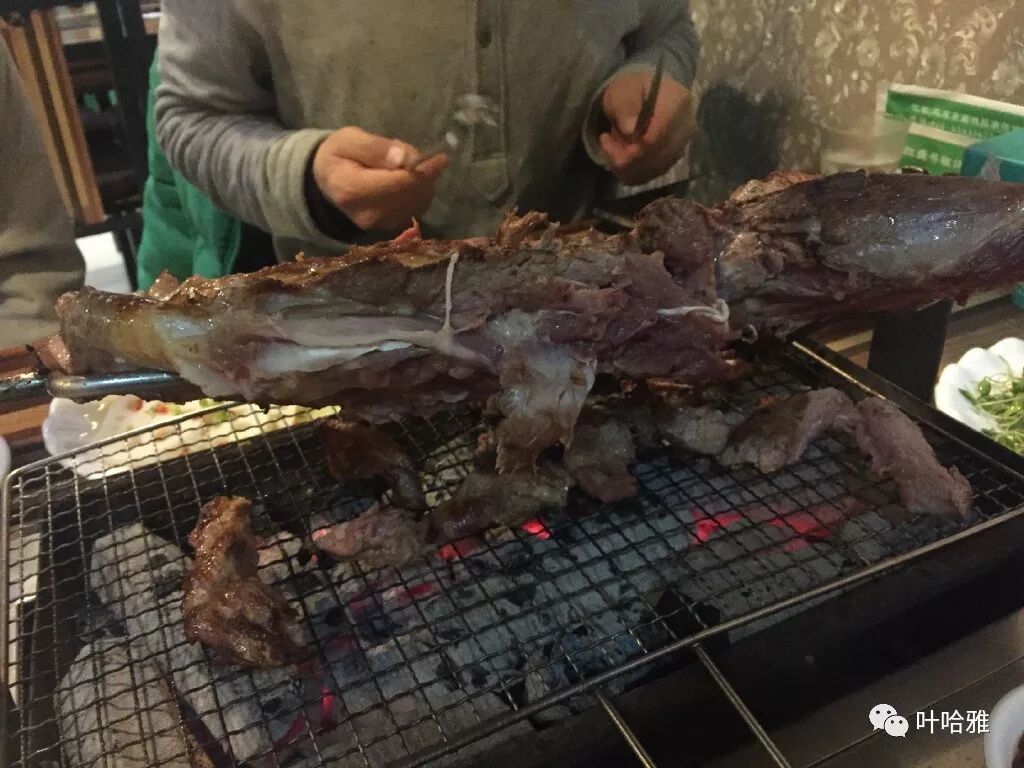
Left side of the main gate of the Health Vocational College, Nanheng West Street
Baodu Feng (Caishikou branch)
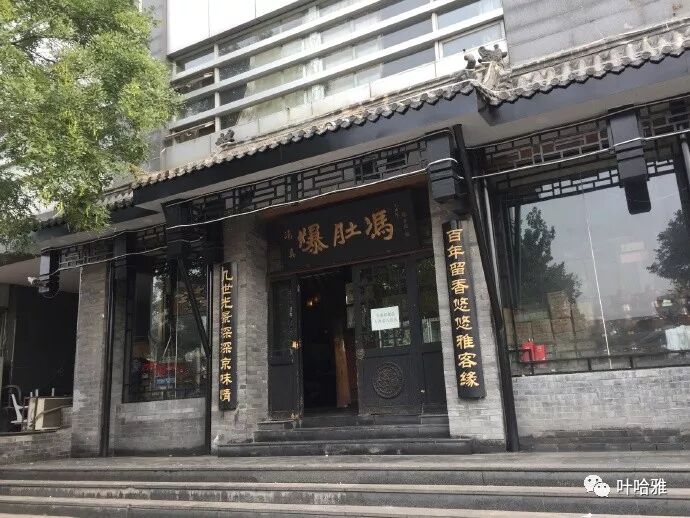
Lianhua Hutong, southwest of Caishikou intersection (west side of Fenghua Haojing)
Shandong Shada-cu Savory Crepe (jianbing)
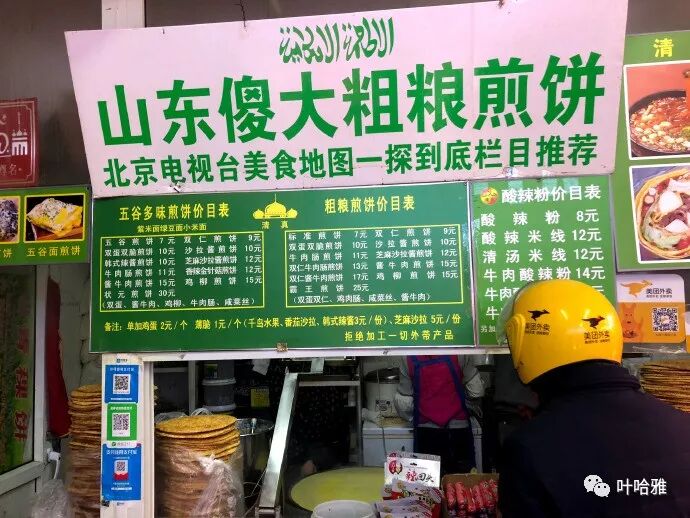
Entrance of the Shuru Hutong Halal Food Market
Niujie Baoji Mung Bean Milk (douzhi)
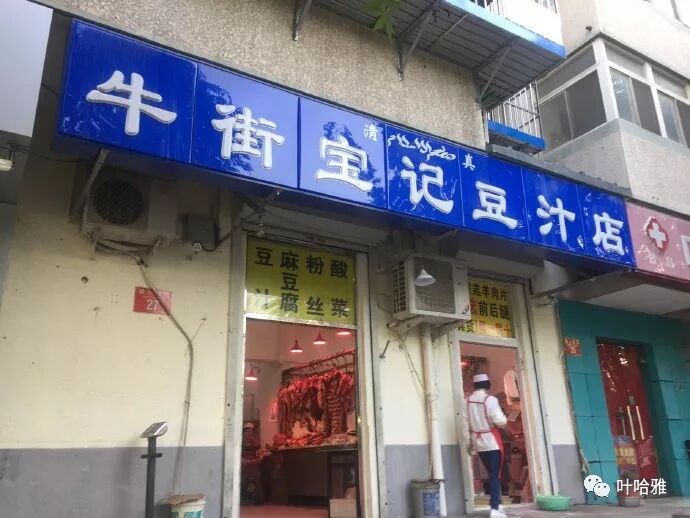
Entrance of Shuru Hutong, Niujie
Muyixuan lamb spine hot pot (yangxiezi)
East of the Niujie Road intersection
Meisi Coffee (Western-style light meals)
100 meters south of the main gate of the Niujie Mosque
Laochengyi lamb spine hot pot (yangxiezi)
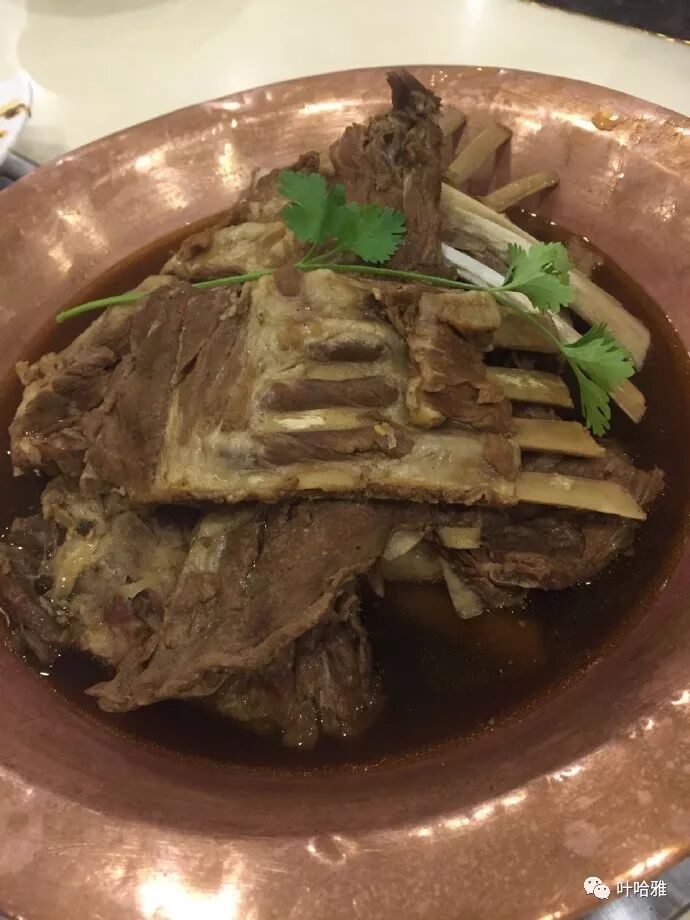
No. 3 Commercial Street, Niujie North Entrance
Dashuntang
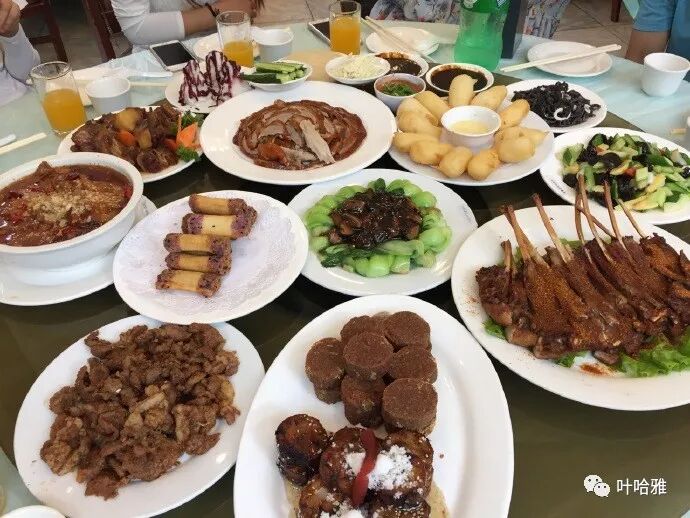
Building Jia 4, No. 5 Fayuansi Xili, Jiaozihutong, Xicheng District.
Halal dumpling restaurant
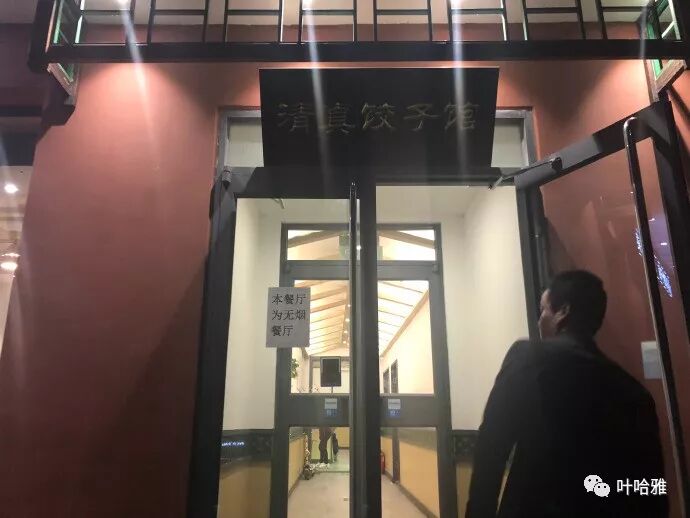
South gate of Niujie Xili Zone 2, Xicheng District
Xi'an Palace crispy beef pie (xiangsu niuroubing)
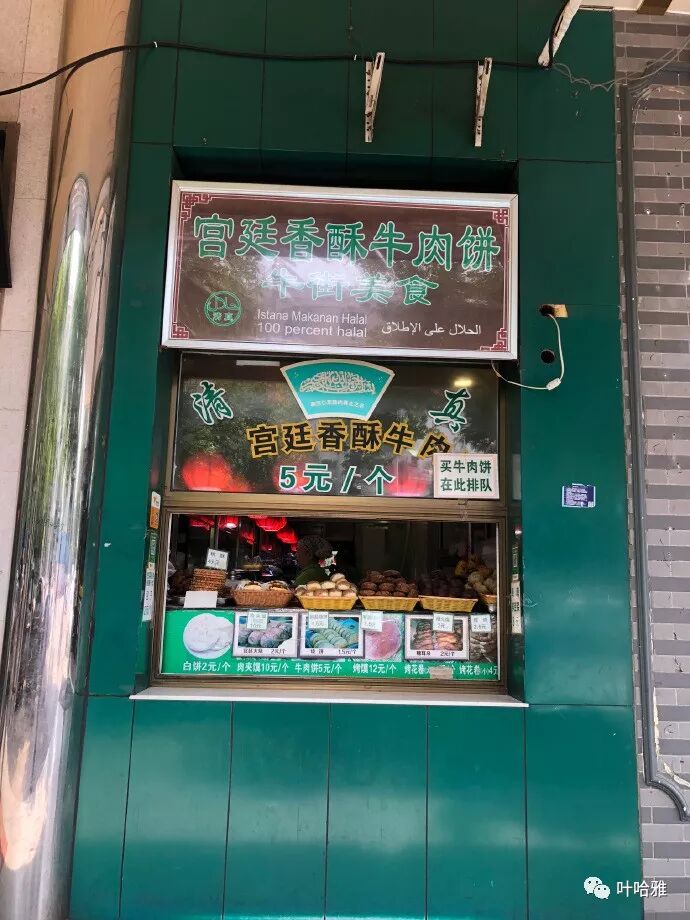
East of the Niujie Road intersection, Xicheng District
Kaorouji
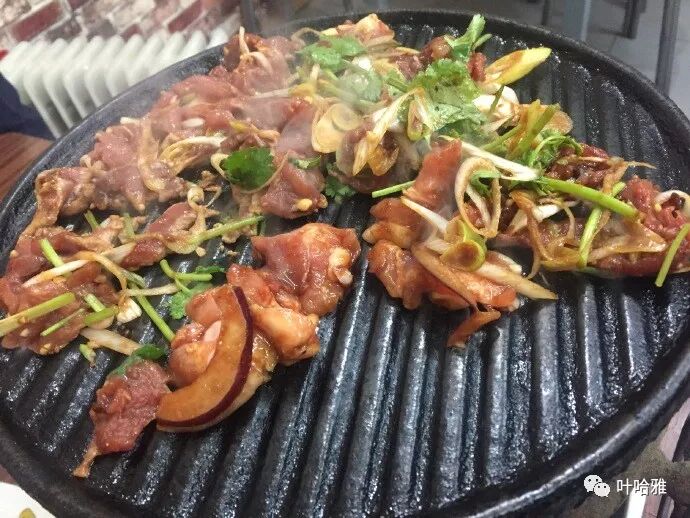
Qianhai East Bank, Shichahai, Xicheng District
Hongbinlou (traditional Beijing cuisine)
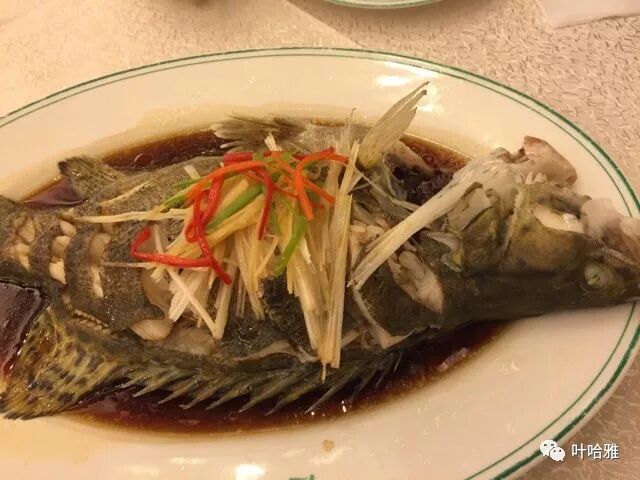
No. 11 Zhanlanguan Road, Xicheng District
Lazi Indian Music Restaurant
No. 31 Gulou West Street, Xicheng District
Hongfuda Restaurant (Sichuan and Beijing cuisine)
4th Floor, Diaoyutai Wanfang Xidan Shopping Mall
Yaoji tripe-wrapped meat (dubao rou)
Room 107, Building 11, Niujie Xili Zone 2
Gaolaosi lamb soup (yangtang)
Inside the courtyard of Home Inn, Guang'anmen Inner Street
Old Neighborhood Beef Noodles (Lao Jie Fang Niu Rou Mian)
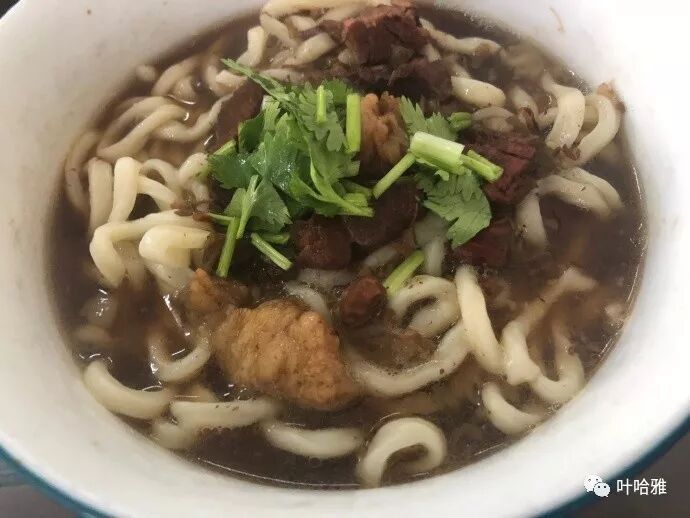
Ground floor shops on the west side of Jiaozihutong
Tiankelai (traditional Beijing-style dishes)
Jiaozihutong, Niujie
Hongji Halal Snack Shop
Across from the Niujie Halal Supermarket
Chuxianglou (high-end Northwest fusion cuisine)
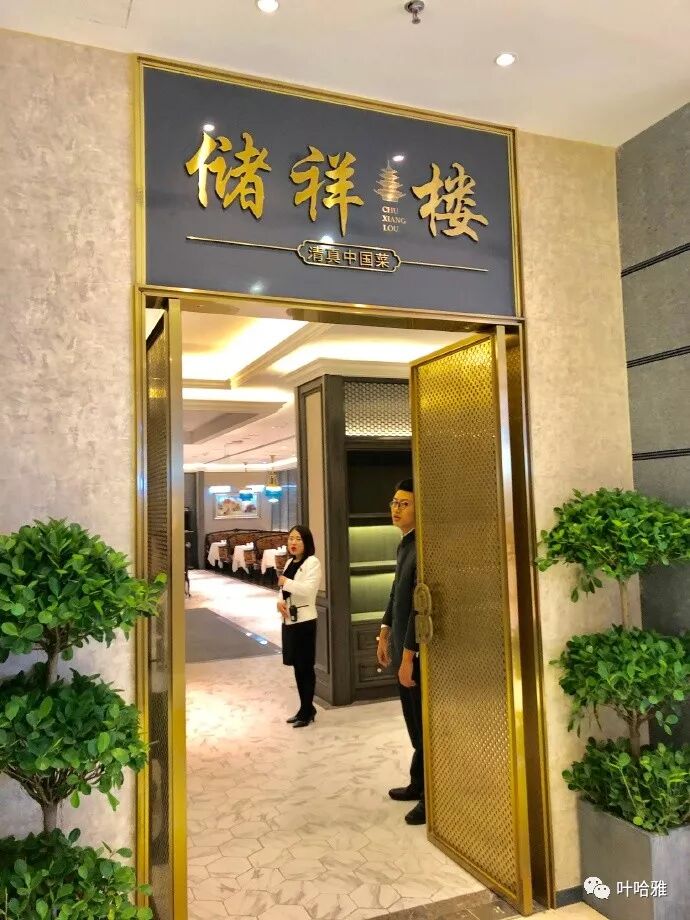
Second floor of SOGO Department Store, Xuanwumen
Zhangji Hot Pot (Zhangji Shuanrou)
95 Meishijie, Xicheng District, near the McDonald's at Qianmen
Xinjiang Bing Tuan Restaurant
Building 2, Courtyard 6, Malian Dao South Street, Xicheng District (west of Carrefour)
Dongcheng District
Baikui Laohao Restaurant
195 Andingmen Inner Street
Yuezhen Yayuan (high-end Northwest cuisine)
55 Andingmen East Street, Dongcheng District
Gulou Noodle Shop (modern fusion cuisine)
25 Donggongjie, Gulou East Street
Tangdou Conveyor Belt Buffet Hot Pot
8th floor, north side of Souxiu City Shopping Plaza, Chongwenmen Outer Street (across from Phase 2 of the New World Department Store)
Suzhou Hui Muslim Restaurant (traditional Beijing cuisine)
36 Suzhou Hutong, Dongcheng District
Longtan Hot Pot (Longtan Shuanrou)
16 Zuo'anmen Inner Street, next to the northwest gate of Longtan Lake Park
Alan Restaurant (traditional Beijing flavor)
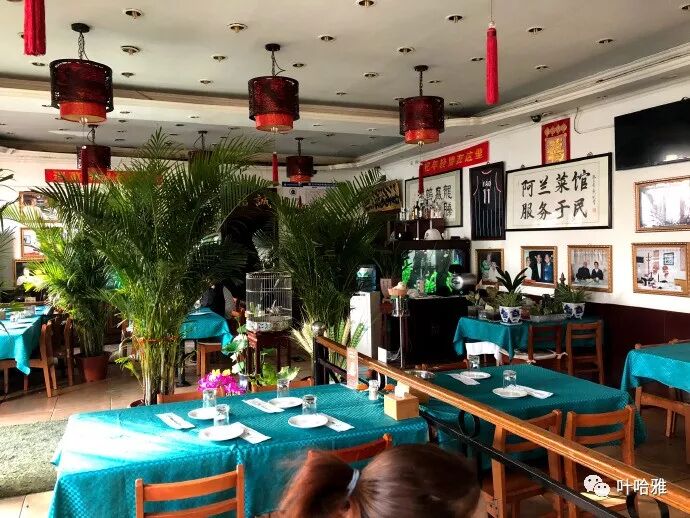
West of Building 2, Tiantan Dongli South District, Dongcheng District (1 Yongdingmen East Street)
Jinghumenshuanyan Hot Pot
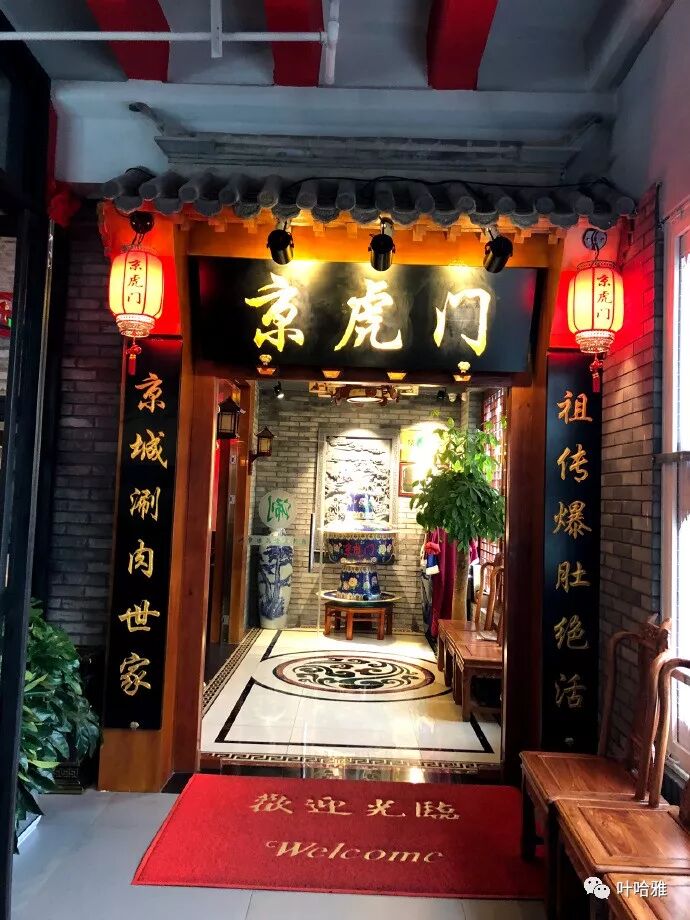
Qumen Subway Station, second floor of Hongdu Building
Annei Laoma Steamed Dumplings (shaomai)
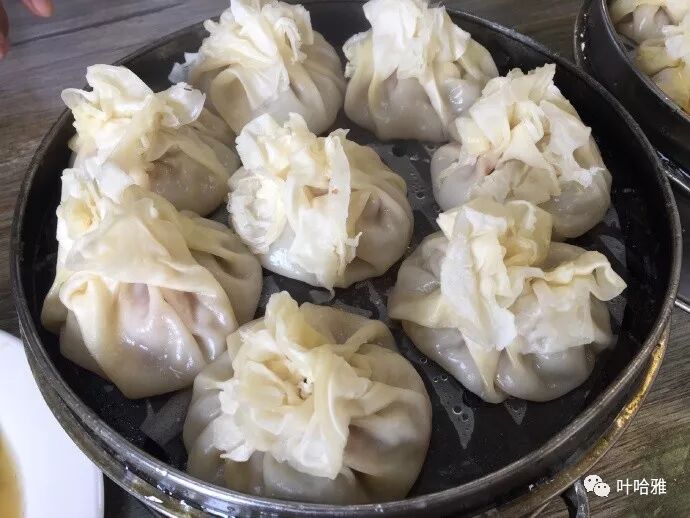
112 Andingmen Inner Street, Dongcheng District
Saduli Indian Restaurant
Second floor, 70A Beiluoguxiang
Dashi (Beijing, Cantonese, and Sichuan-Hunan cuisine)
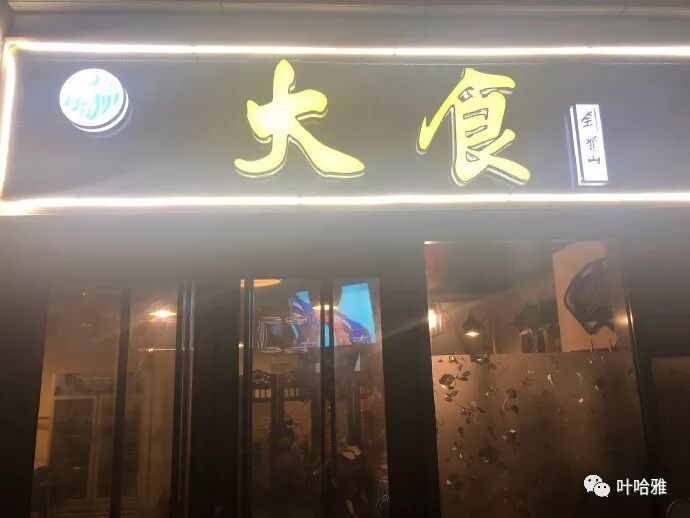
Address: No. 277 Dongzhimen Inner Street, Dongcheng District, Beijing, near Beixinqiao Subway Station.
Chaoyang District
Jinjiang Xiyu Restaurant
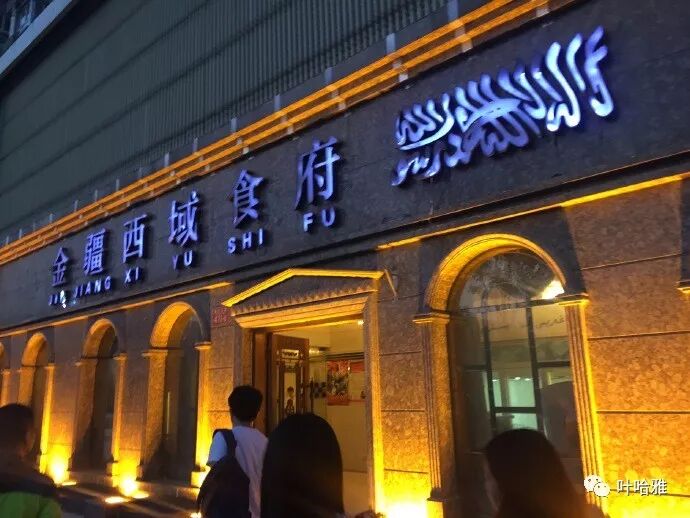
411, Area 4, Huizhong Beili, Asian Games Village, Chaoyang District
Döner Turkish Coffee (Turkish cafe)
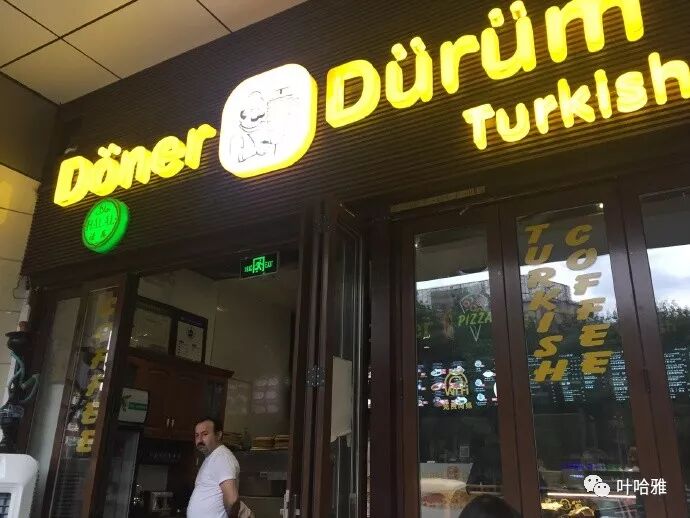
Ground floor shops next to Xiushui Street, Chaoyang District
Qingxiangge Dalian Seafood
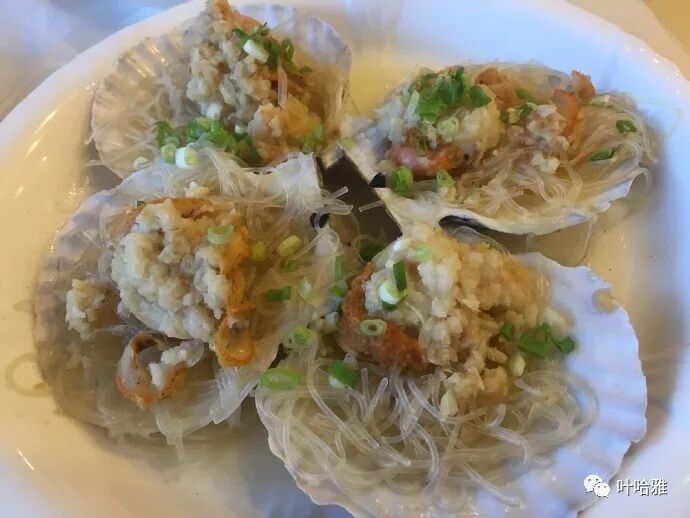
Next to Dongdaqiao Subway Station, Chaoyang District
Jianghu No. 80
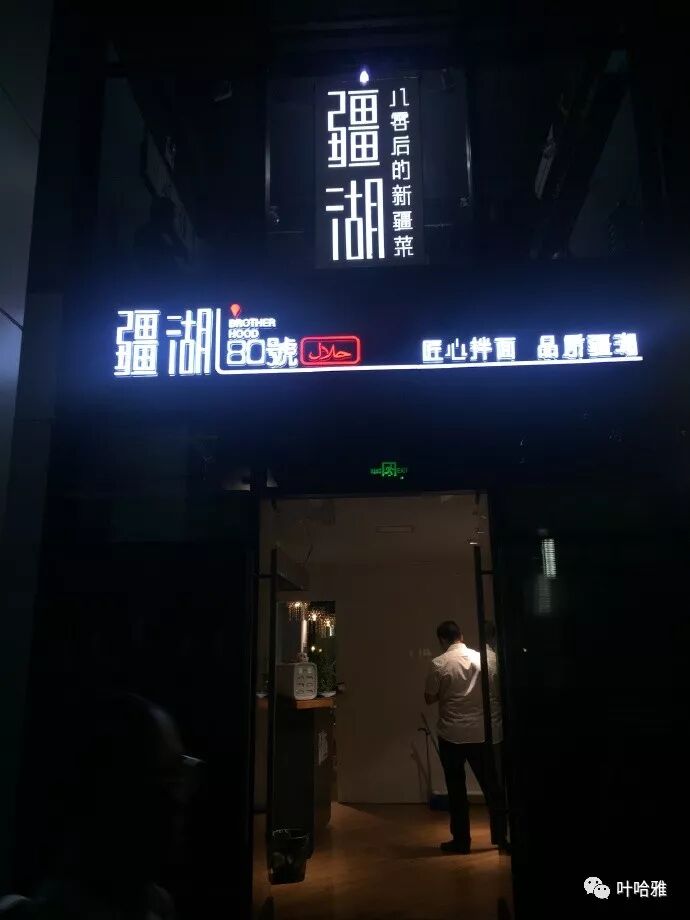
Ground floor shops, Chaoyang Road Entrepreneurship Park
Hemeizhai Roast Duck Restaurant
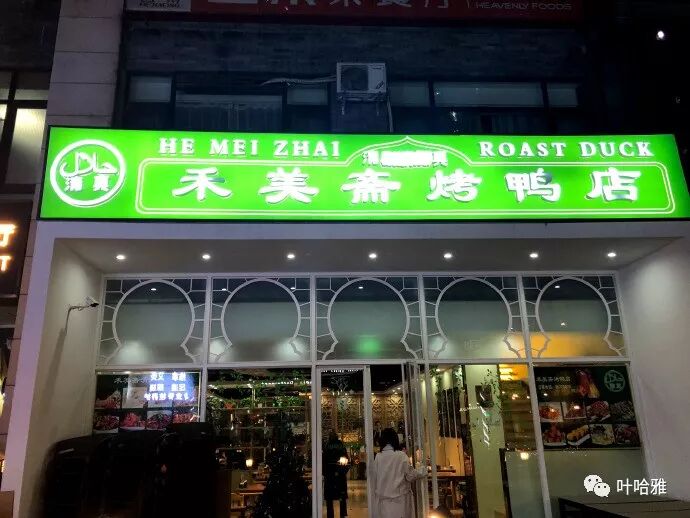
Shenlu Street, Chaoyang District
Baizuan Xinjiang Restaurant
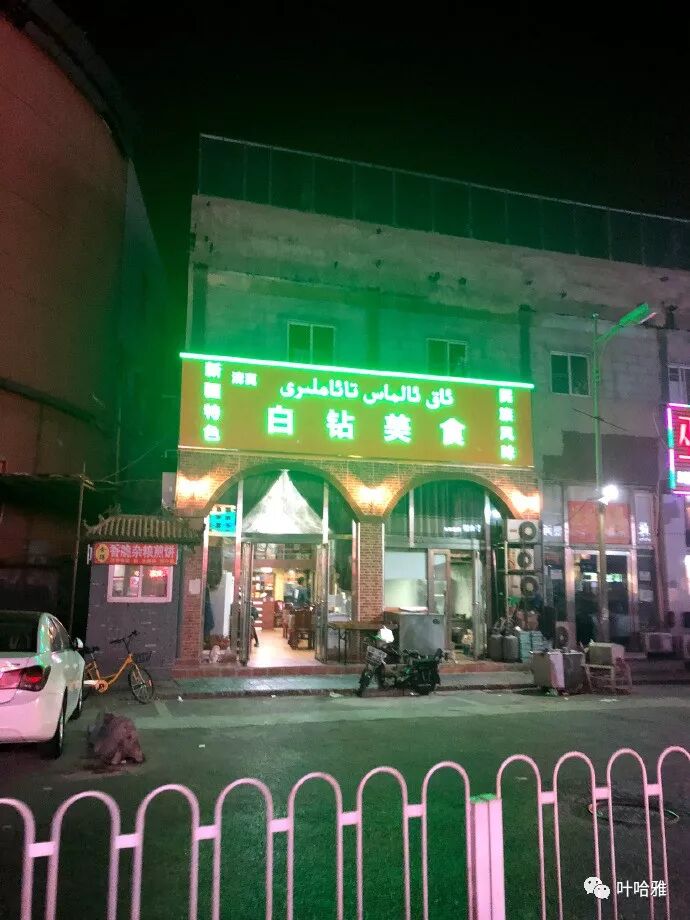
116 Luying Street, Chaoyang District
Wangas Muslim Restaurant
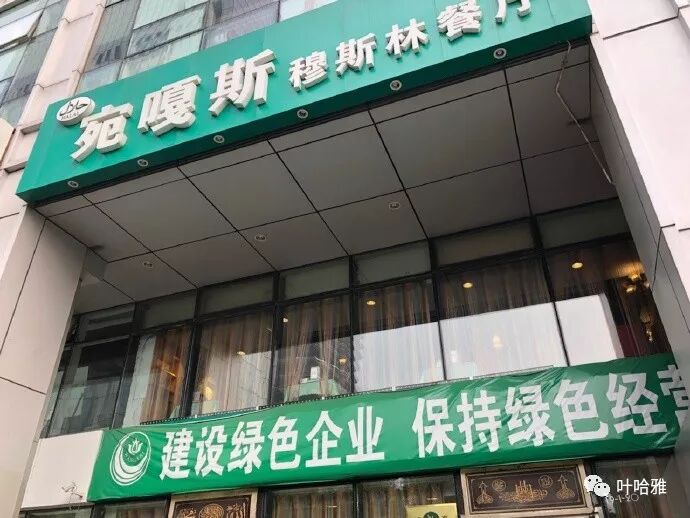
Ground floor shop, Wanda Plaza, Guomao, Chaoyang District
Indian Kitchen (Yindu Xiaochu)
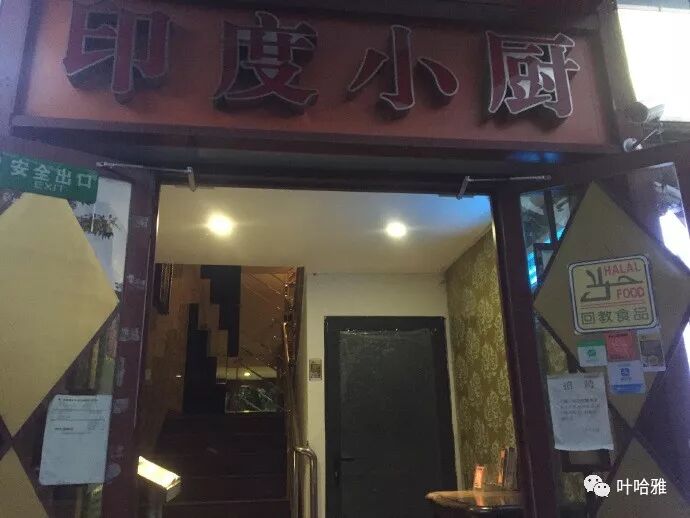
2nd Floor, No. 2 Sanlitun North Small Street
Silk Road Station (new-style Xinjiang restaurant)
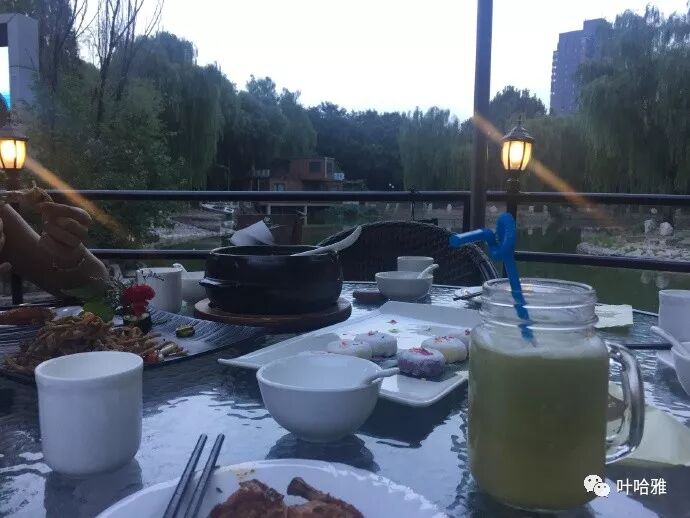
West Gate of Lido Park, No. 6 Fangyuan West Road (near Lido)
Ningxia Flavors (Ningxia cuisine)
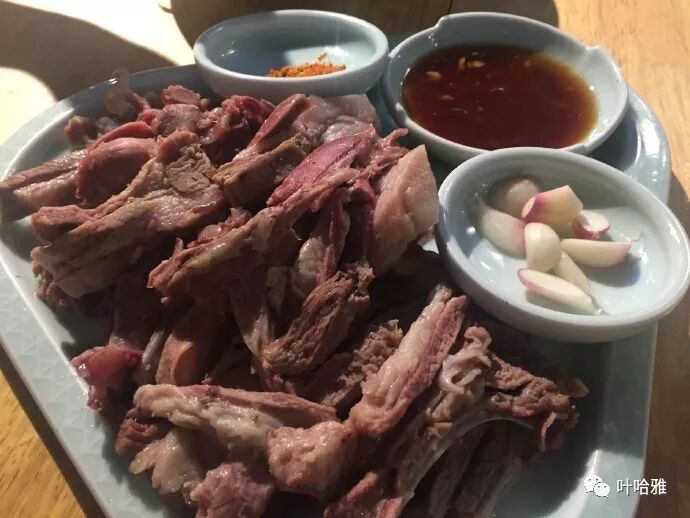
2F, Fenglian Plaza, No. 18 Chaoyangmen Outer Street, Chaoyang District
Eliya Halal Bakery
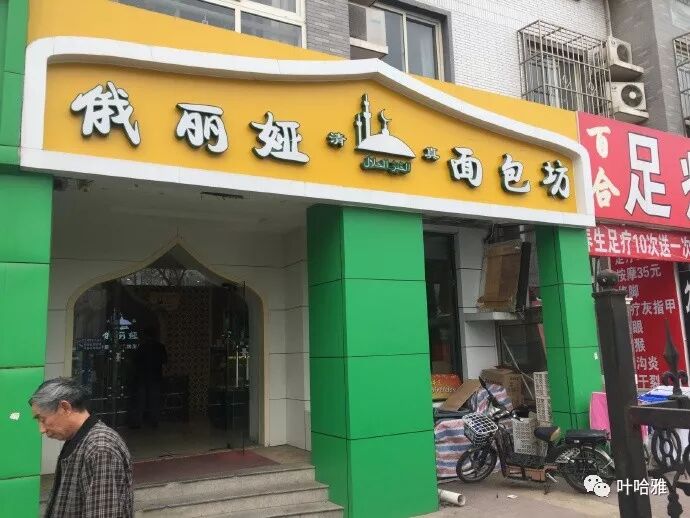
Shop 06, Building 56, Changying Ethnic Homeland, Changying Middle Road, Chaoyang District
Xingu Halal Charcoal BBQ (Korean cuisine)
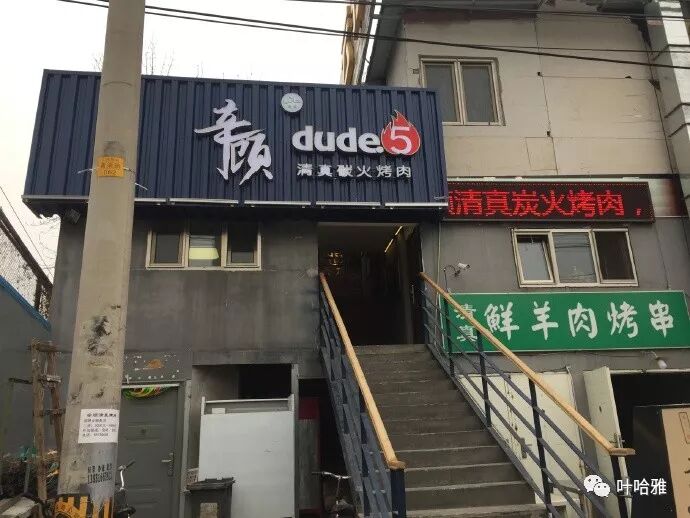
Next to Yunding Billiards Club, opposite the south gate of Ethnic Homeland residential area, Changying Middle Road (west side of Ethnic Primary School)
One Thousand and One Nights (Arabian cuisine)
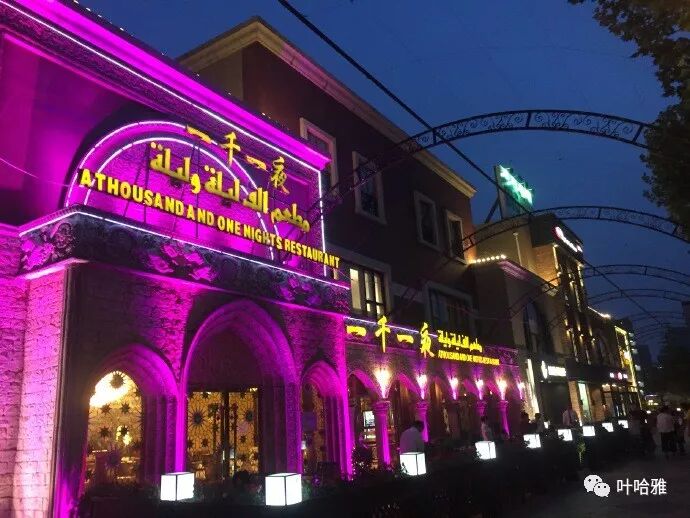
No. 6 Chaoyang Park Road, Solana, Chaoyang District
Alameen
Lebanese Restaurant
Next to the German Embassy in Sanlitun
Khan Baba Pakistani Restaurant
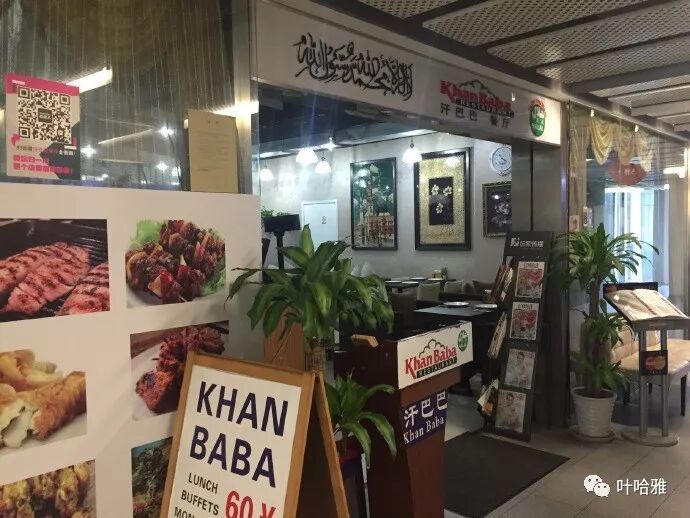
Room 511, 5th Floor, Building 2, Sanlitun SOHO, No. 8 Gongti North Road, Chaoyang District
Hefeng Banquet (Hefeng no Utage)
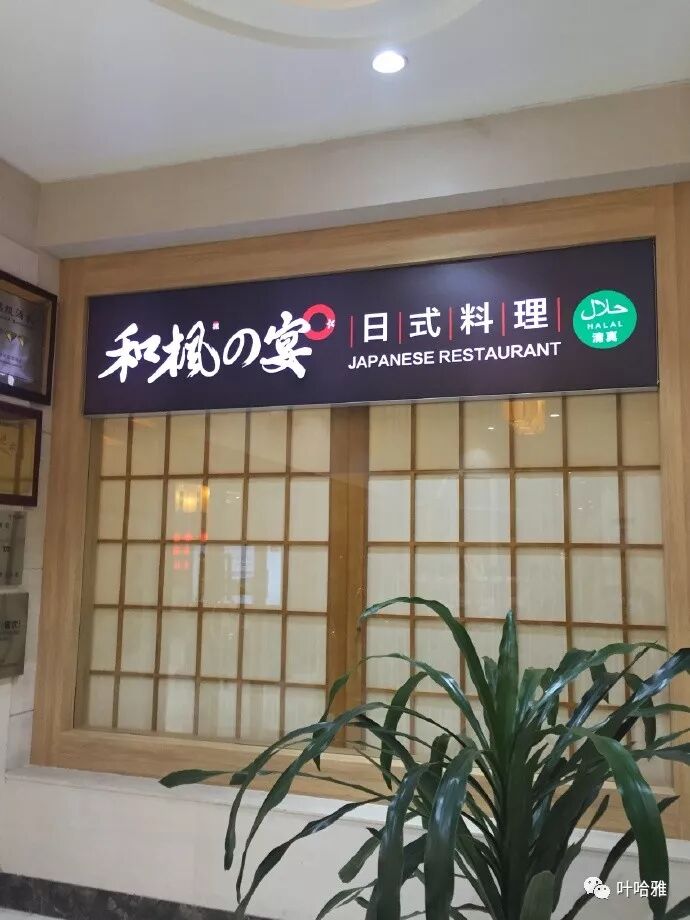
1st Floor, Shaanxi Mansion, Shilihe, Chaoyang District
Istanbul Turkish Restaurant
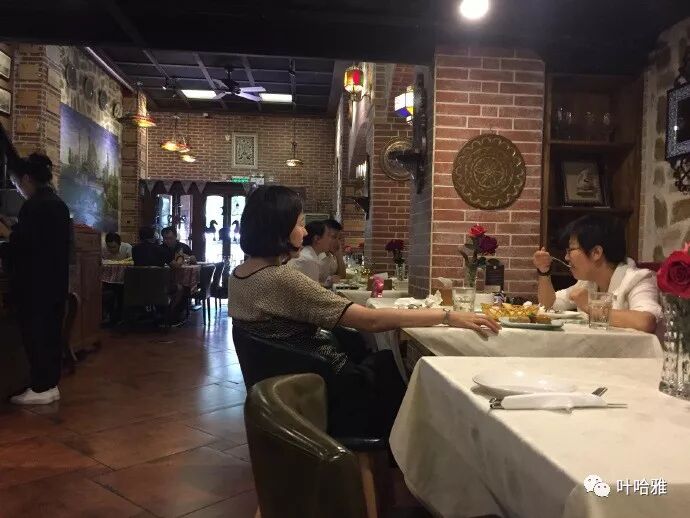
No. B7 Xiushui South Street (north side of International Building, back street of Friendship Store)
Benjamin Indian-Afghan Restaurant
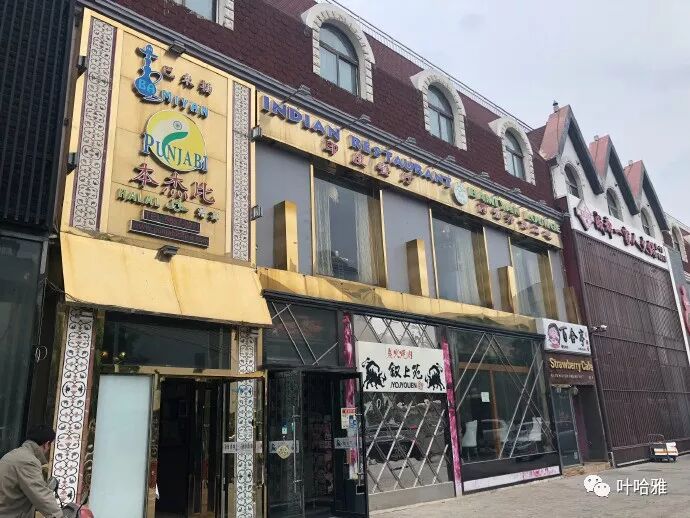
The second floor of Haoyun Street in Chaoyang District.
Dardanelles Turkish Restaurant.
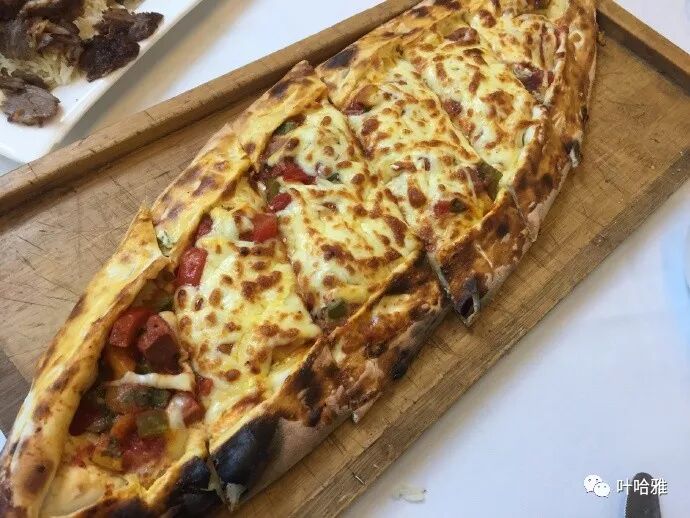
Units 1-21-22, Courtyard 39, Shenlu Street, Ritan North Road, Chaoyang District.
Persepolis Restaurant (Iranian cuisine).
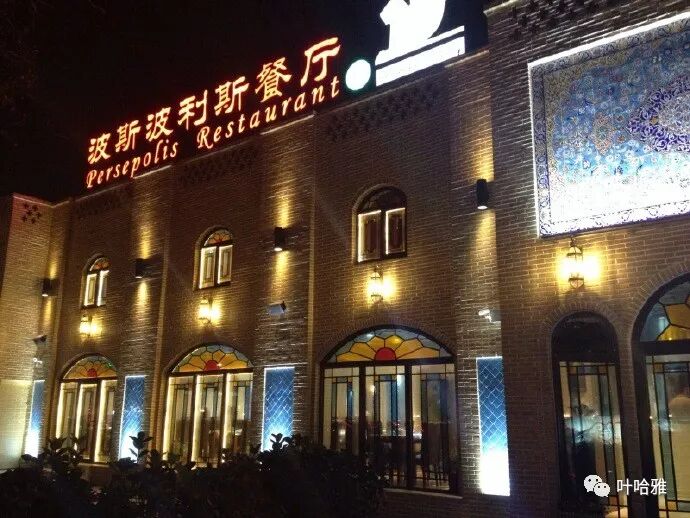
Exit A of Tuanjiehu Subway Station in Chaoyang District.
Turkish Mama Restaurant.
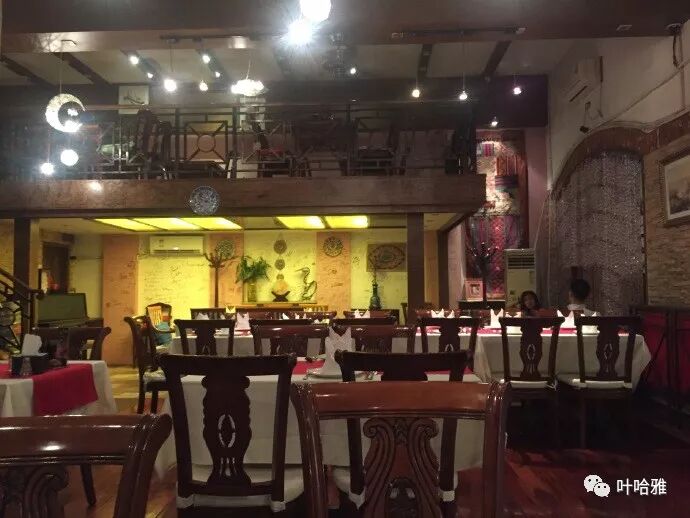
Exit A of Tuanjiehu Subway Station in Chaoyang District.
Huawei Meat Pie Shop.
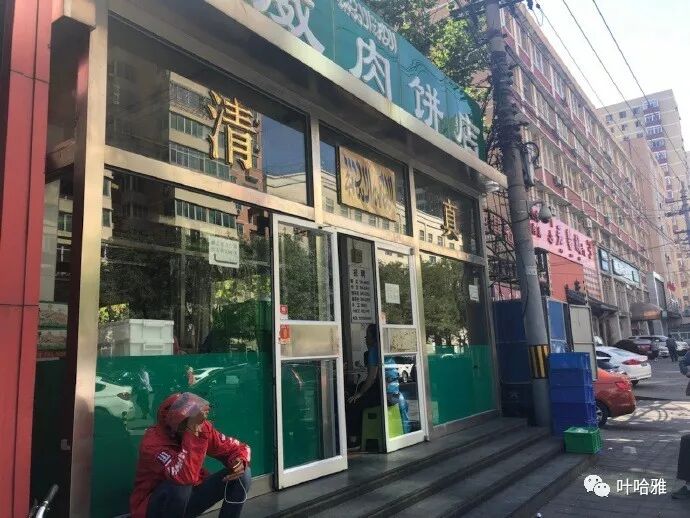
No. 11 Songyu North Road.
Xifentang.
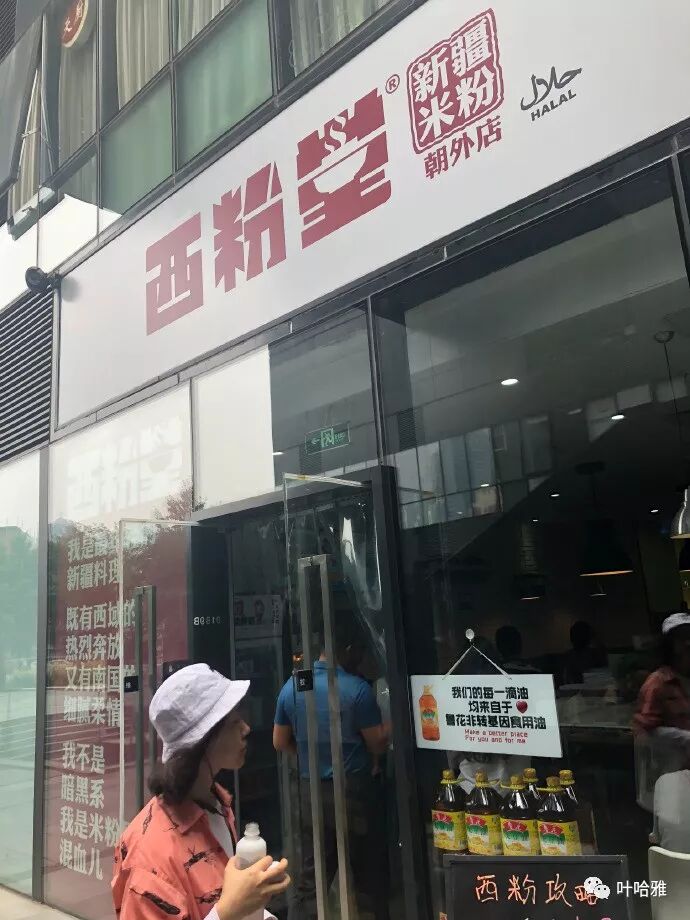
Unit 0189B, Block D, Chaowai SOHO, No. 6 Chaowai Street.
Musafir Xinjiang Restaurant.
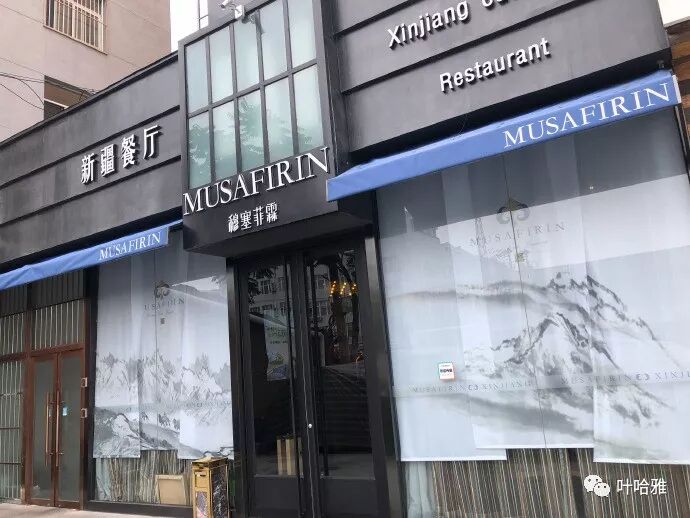
No. 27 Xidawang Road, Chaoyang District, right outside Pingle Yuan Station on Subway Line 14.
Fireside (French halal restaurant).
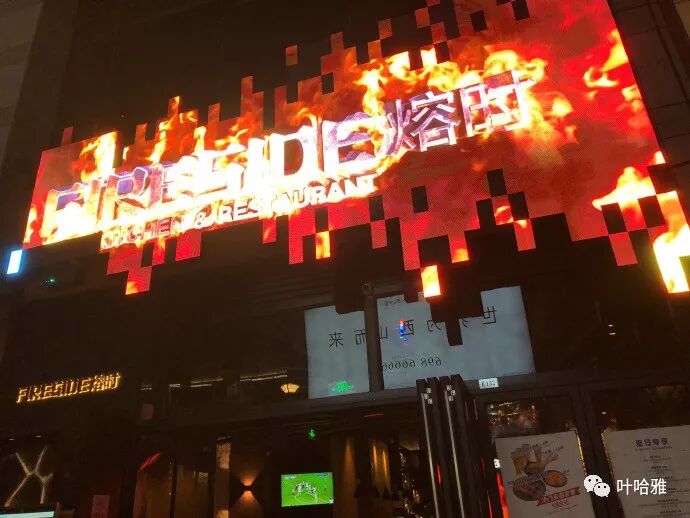
First floor, Block E, No. 9 Jinhui Road.
Yan Hot Pot (Sichuan-style hot pot).
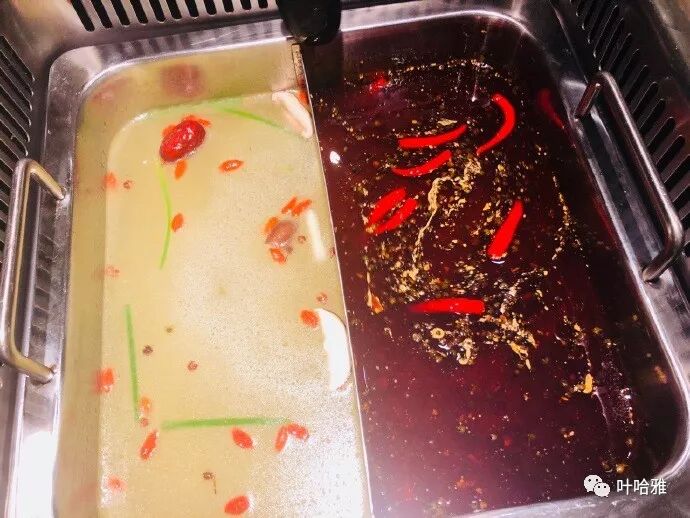
Fourth floor of Kuntai Mall, Chaoyang District, Yanlanlou Chaowai Street branch.
A-Gong Noodle House.
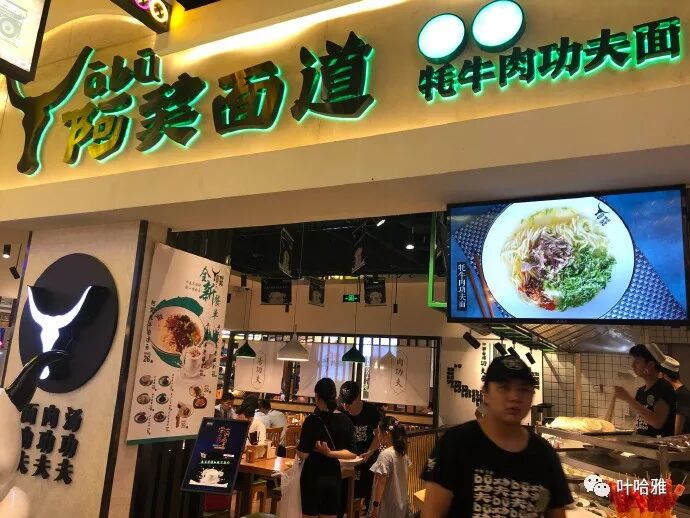
Late Night Canteen, basement level of Hopson One, Chaoyang District.
Hailiye Yunnan Halal Restaurant.
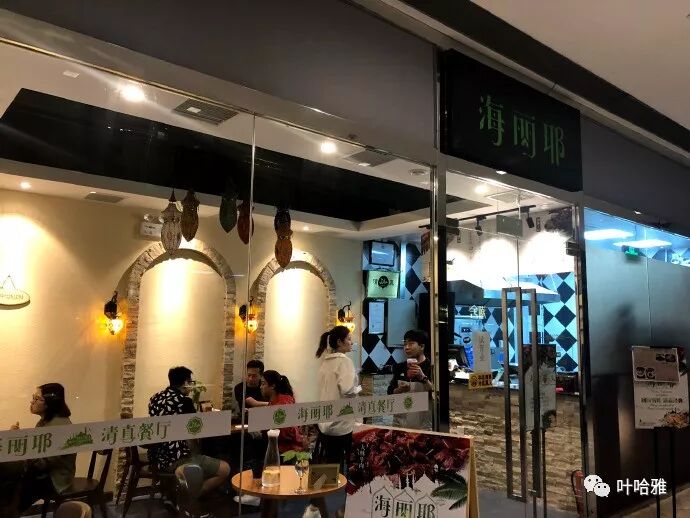
First floor of the World Financial Centre.
Xinjiang-style meatball soup.
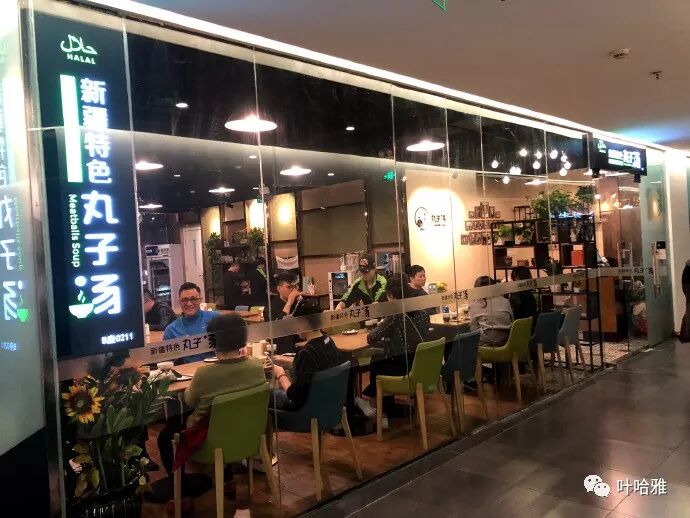
Second floor of Chaowai SOHO Block B.
NAIL.
Russian-style Western restaurant
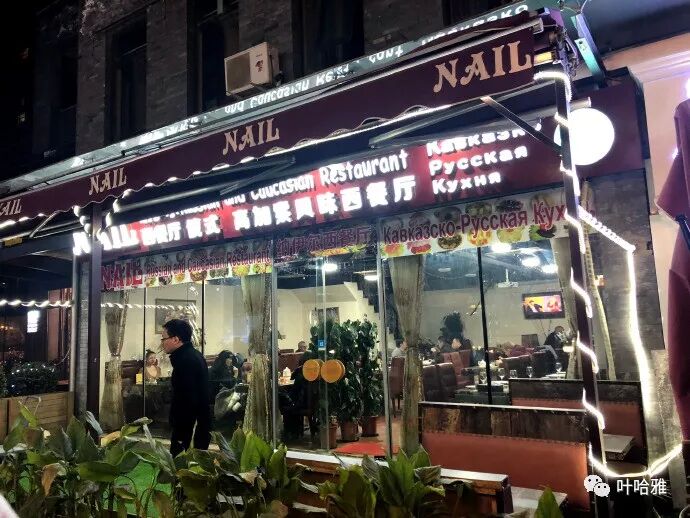
Shenlu Street, Chaoyang District, opposite Desert Rose Restaurant
Shangzi Street Clear Beef Brisket Noodles (Cantonese halal restaurant)
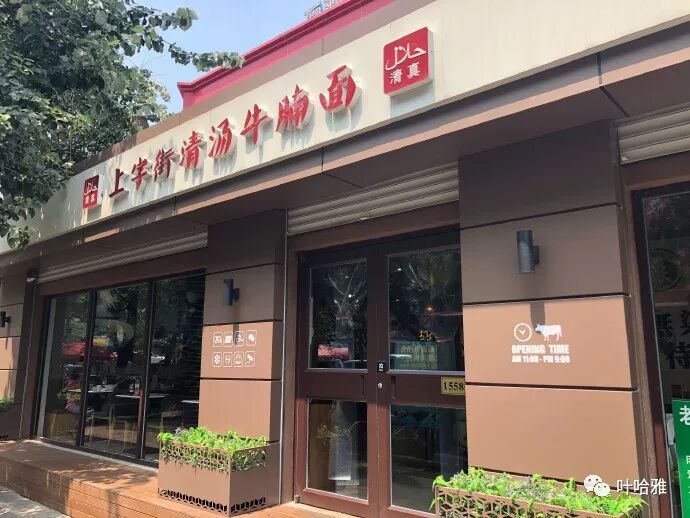
West side of the intersection at Yabaolu South Slope Mosque
Shuyuan Small Restaurant
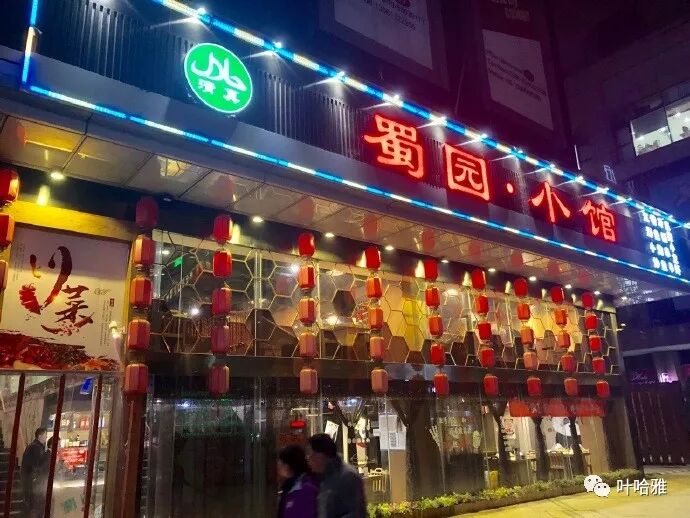
Ground floor shops of Ritan International Trade Center
Changying Three Brothers
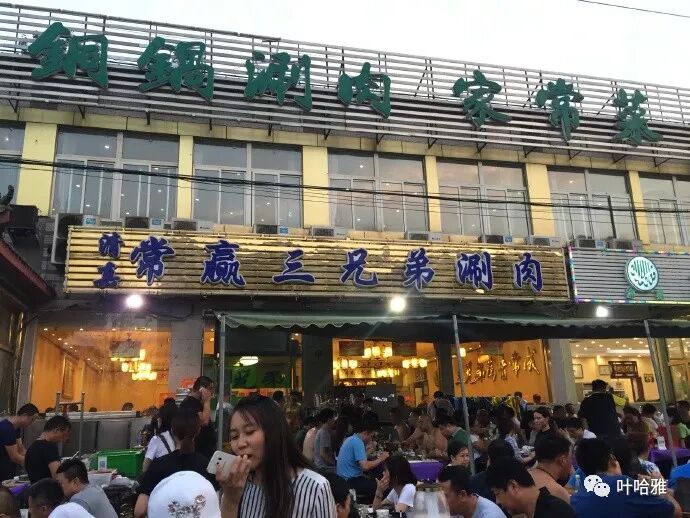
Changying Middle Road, Chaoyang District
36 Degrees North Latitude Hot Pot
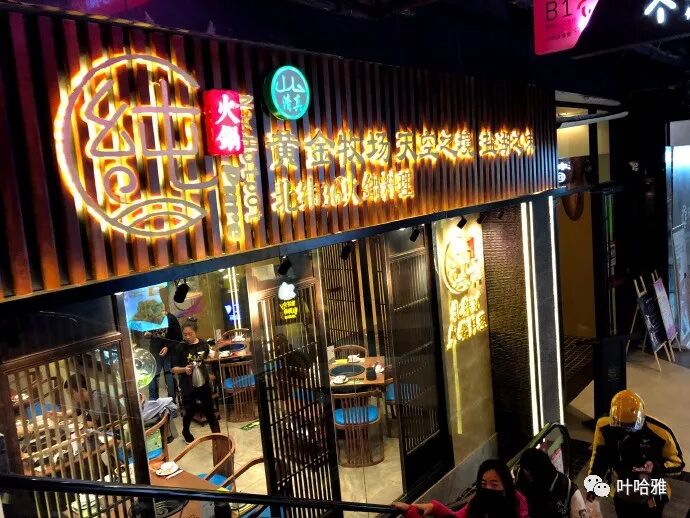
B1, Wangjing Huacai Commercial Center
Yilao Baiwei Dipping Sauce Hot Pot (Chaoshan hot pot)
No. 13 Changying Guanzhuang Road
Yueshengguan (Korean-style barbecue)
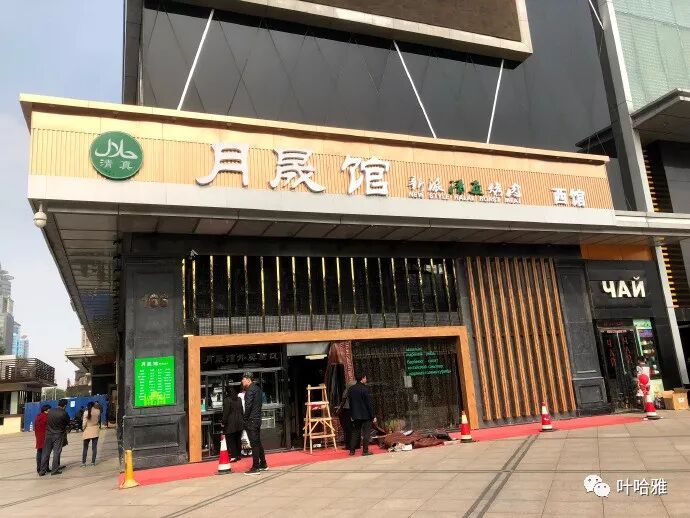
Ground floor shops of Yabaocheng, No. 19 Ritan North Road, Chaoyang District
Caravan Moroccan Halal Restaurant and Bar
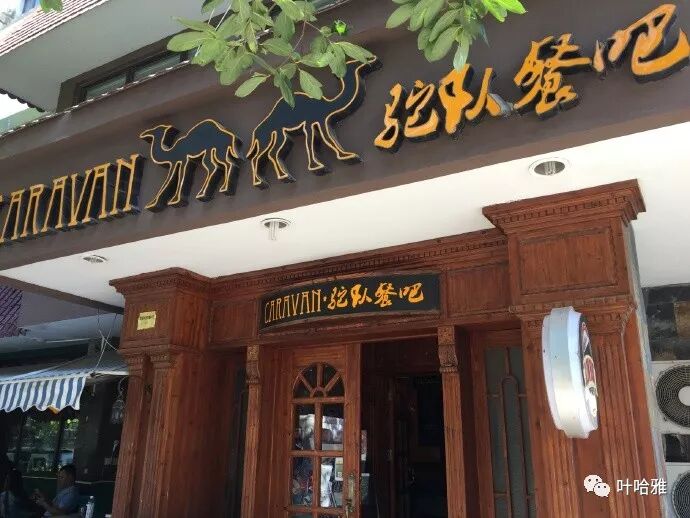
No. 44 Guanghua Road, Jianguomenwai
Zhongfayuan Northwest Feast (high-end Northwest fusion cuisine)
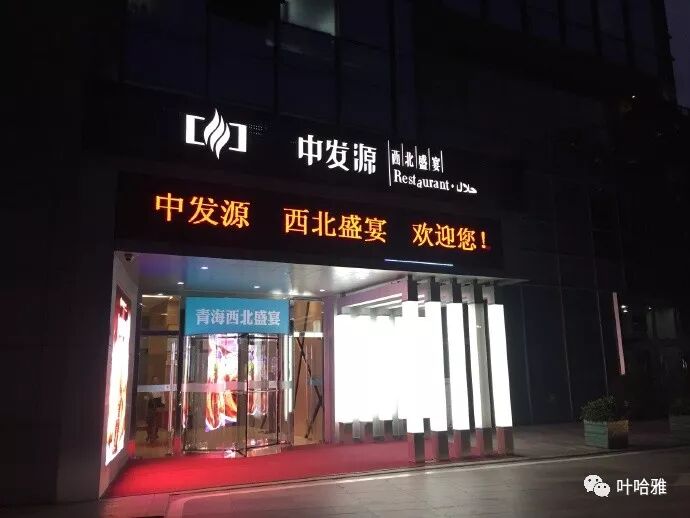
2nd Floor, Building C, Oriental Media Center, No. 4 Guanghua Road, Chaoyang District
Yiyuan Gourmet Tea House (high-end fusion cuisine)
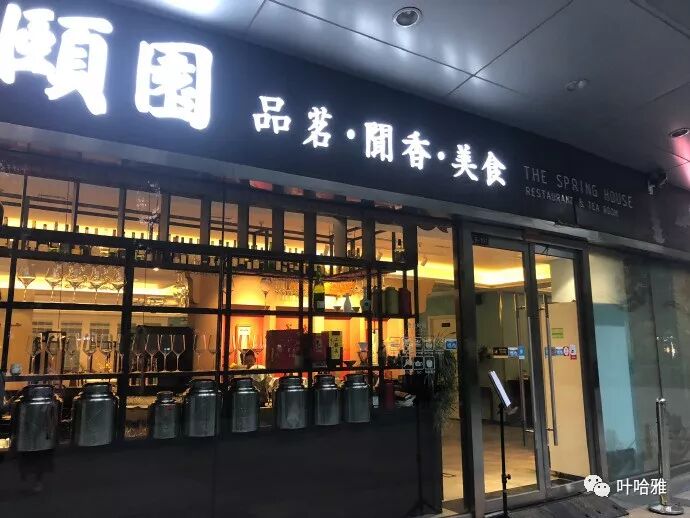
Ground floor of Xincheng International, Chaoyang District
Yijinyuan (high-end Northwest fusion cuisine)
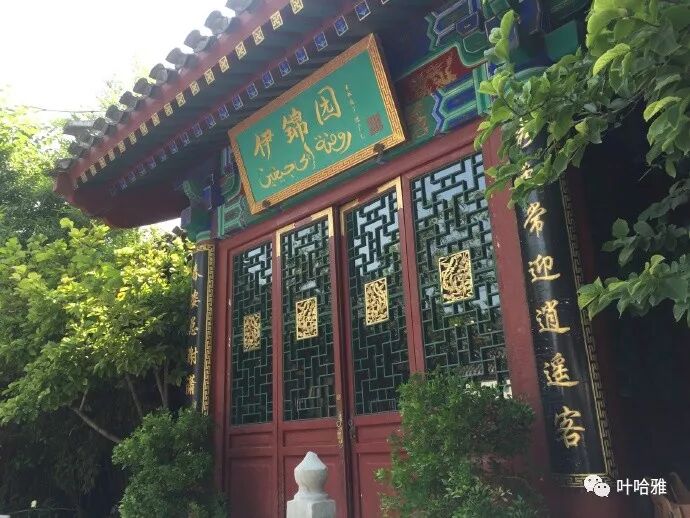
Inside the east gate of Longze Yuyue Scenic Area, Yuan Dadu City Wall Ruins Park, Beitucheng East Road, Chaoyang District
Badao Noodles (Chongqing small noodles)
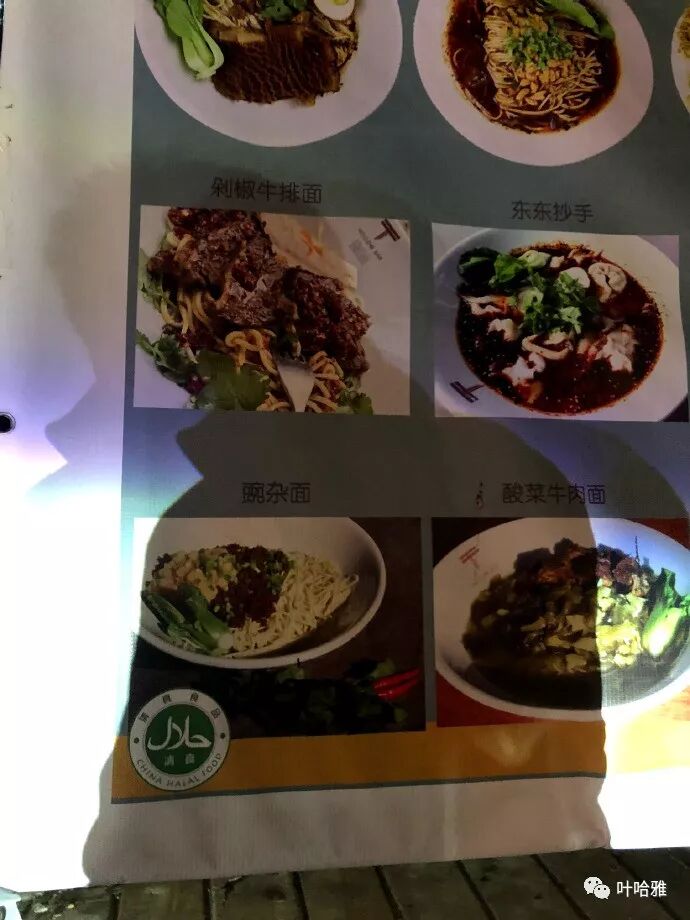
No. 4 Jiuxianqiao Road, 798 Art Zone (opposite UCCA Center for Contemporary Art)
Haitian Yise (sashimi, Cantonese cuisine, Fujian cuisine)
No. 13 Guanzhuang Road, Chaoyang District
Jingmen Laobao San
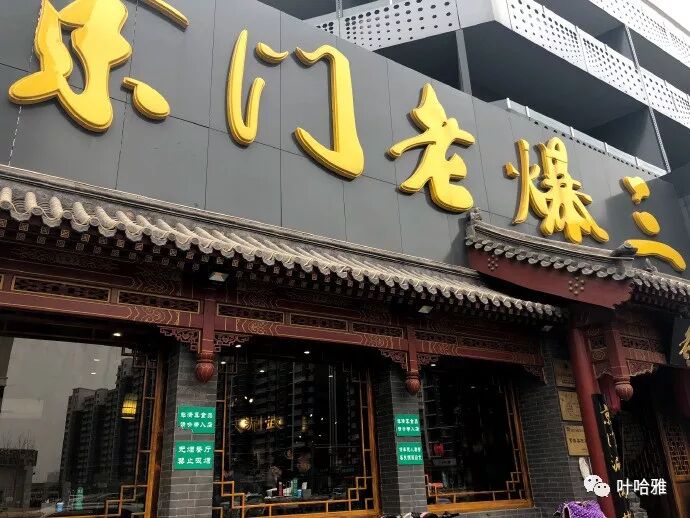
Building 212, Baiziwan Jiayuan, Chaoyang District
Yongchang Laoguanzi
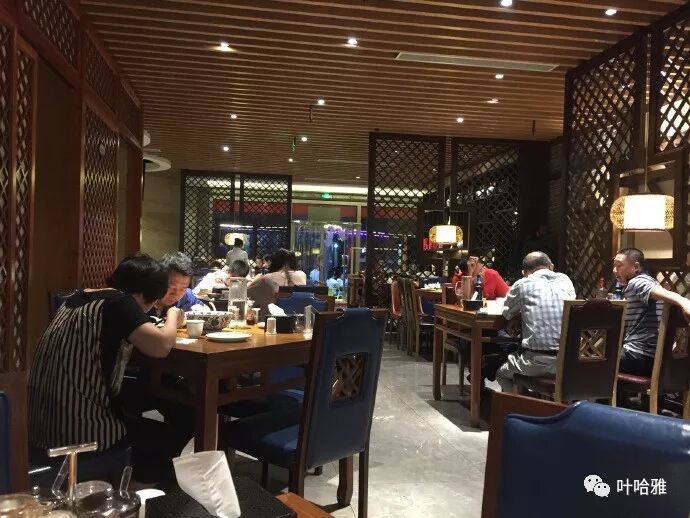
West side of the ground floor shops at Haitian Yise, No. 13 Guanzhuang Road
Xinyuezhai
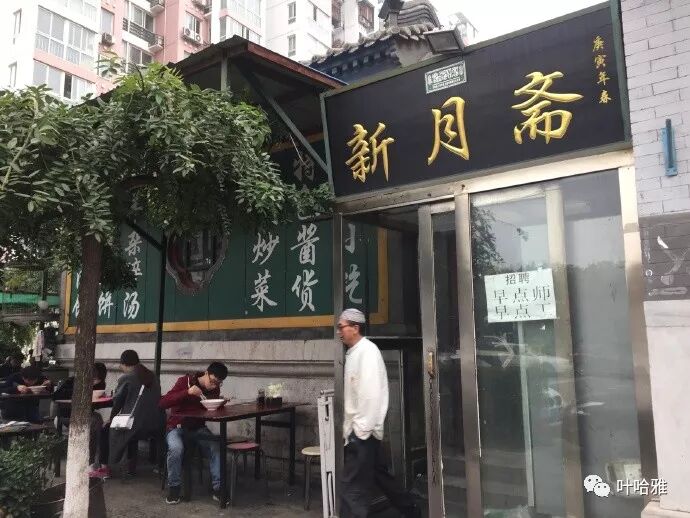
Next to Nandouya Mosque, Douban Hutong, Chaoyang District
Ritan Shuanrou
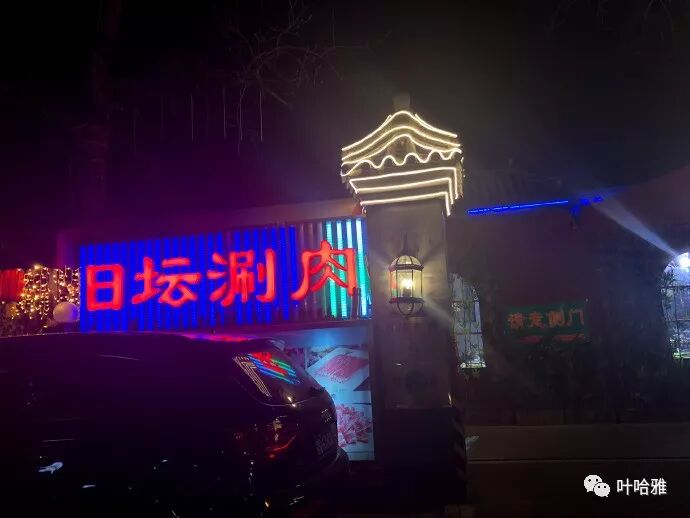
East side of Ritan Park
Gutong Laoyuan Shuanrou
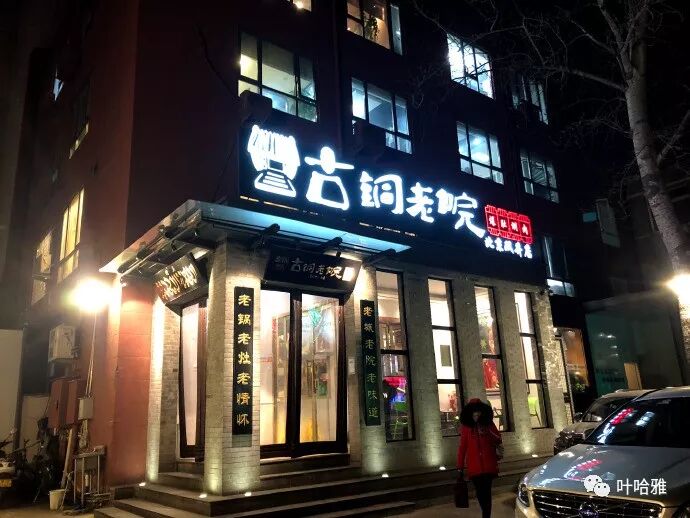
Baihuanyuan, Chaoyang District
Zitengxuan Restaurant (traditional Beijing cuisine)
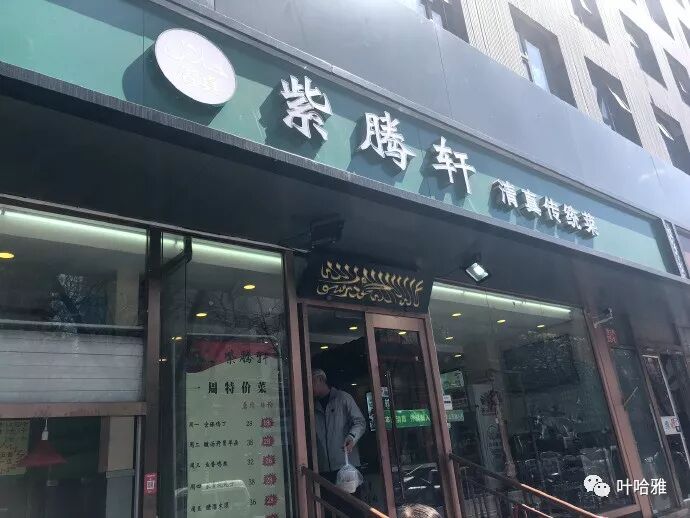
300 meters east of Tuanjiehu Bridge
Yinmadeng Chuanchuan Market (cold pot skewers)
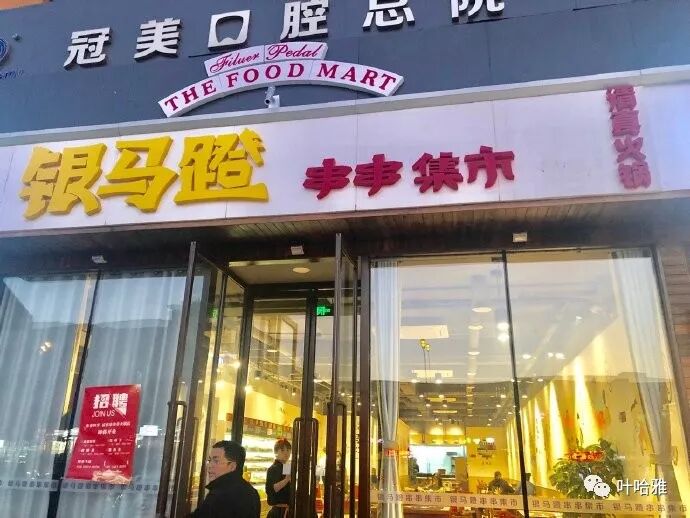
Northeast corner of Pingle Yuan Subway Station
Fengtai District
Jufuyuan Shuanrou
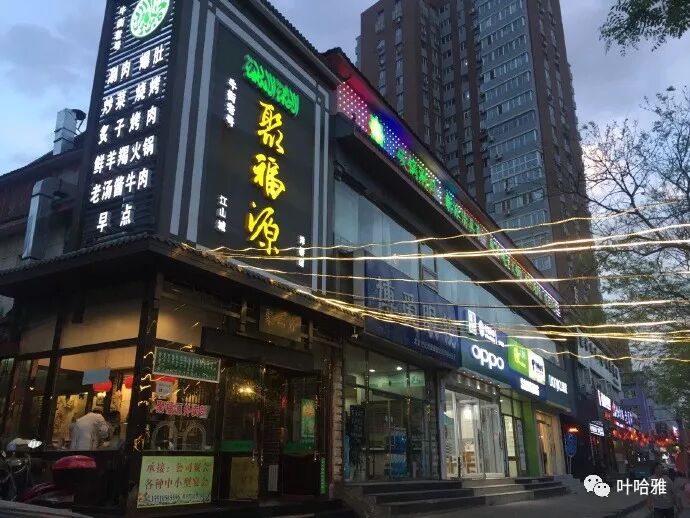
No. 14 Huxili, 100 meters south of Dazhong Electrical Appliance
Xuezhan Dapanji
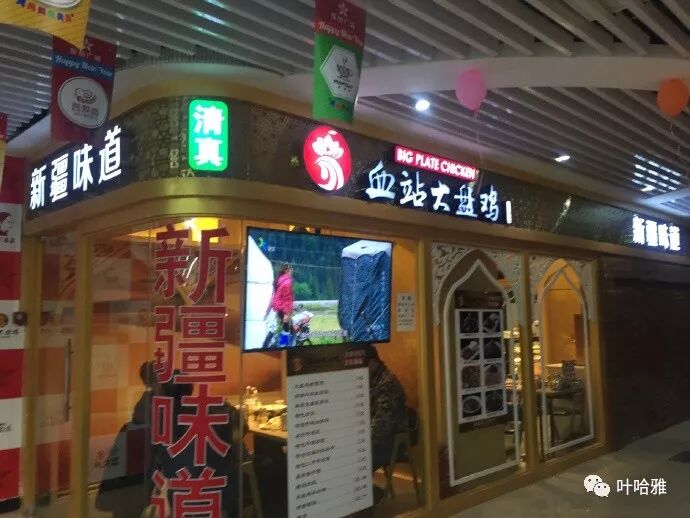
Second floor of Ruihai Building next to the West Railway Station
Asiya Restaurant (Northwest cuisine)
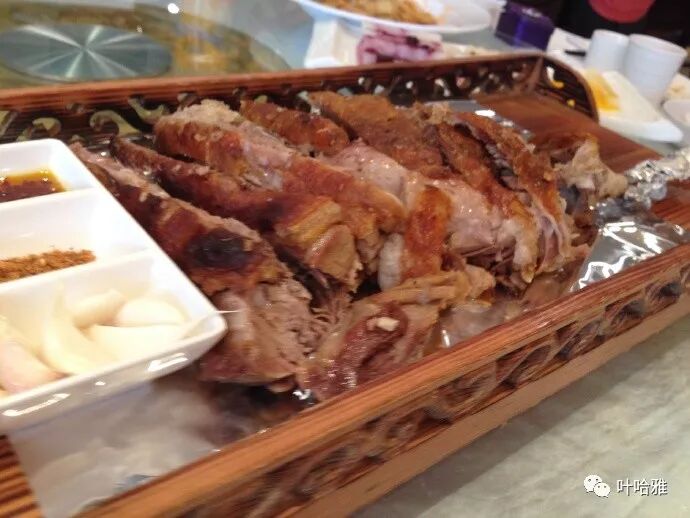
No. 45A Fengtai North Road, Lize Bridge
Tanguoju
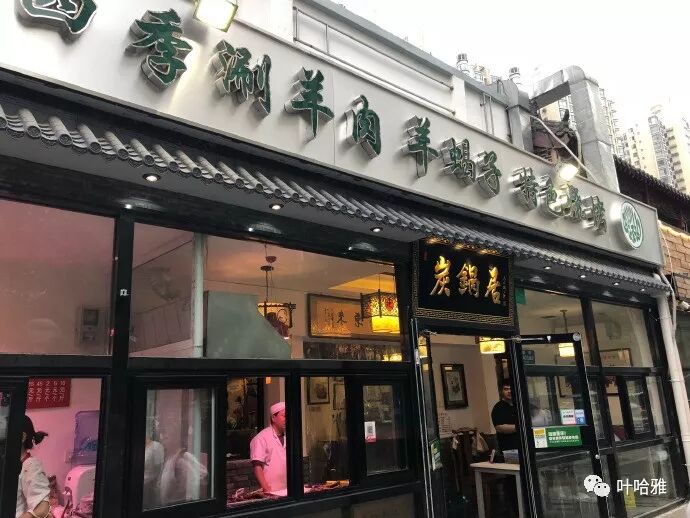
Shop 23, Building 8, Courtyard 7, Fengqiao Road
Yuanxie Hot Pot Restaurant
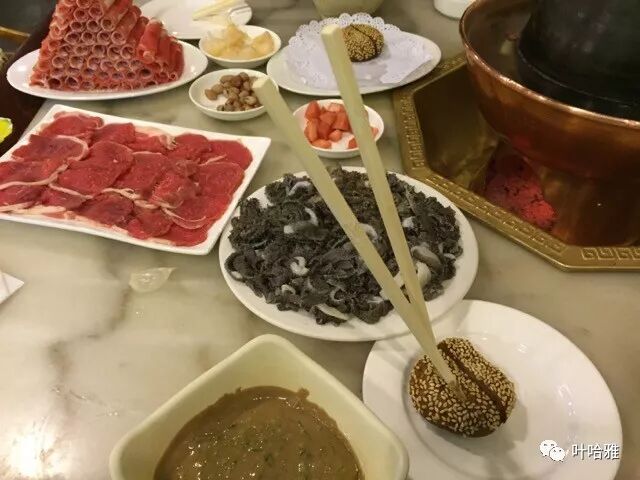
Nanxiaojie South Road, Fengtai District
Laomenkuang Baodu Fangzhuang Branch 2
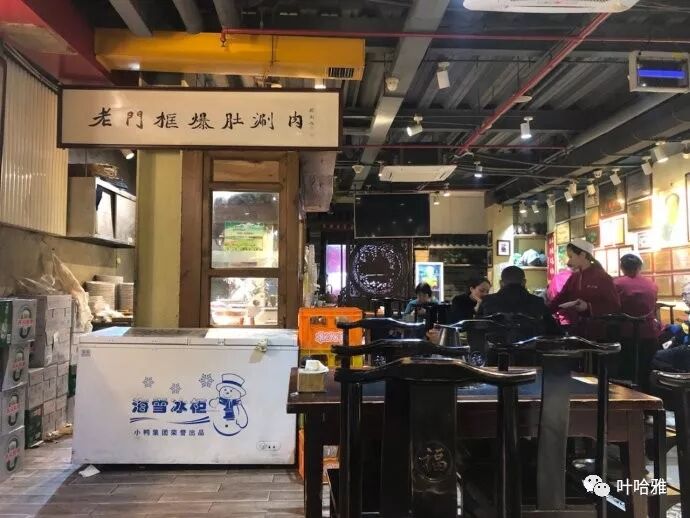
No. 157 Yujiafen, Fangzhuang South Road, Fengtai District
Changping District
Huayunlou Steamed Dumpling (shaomai) Restaurant
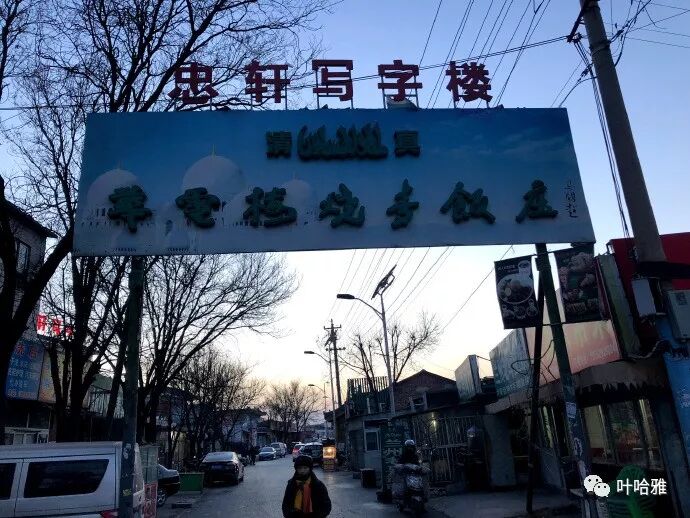
No. 2 Zhanqian Road, Shahe Town, Changping District
Chongqing Xiangchangzui Old Stove Hot Pot
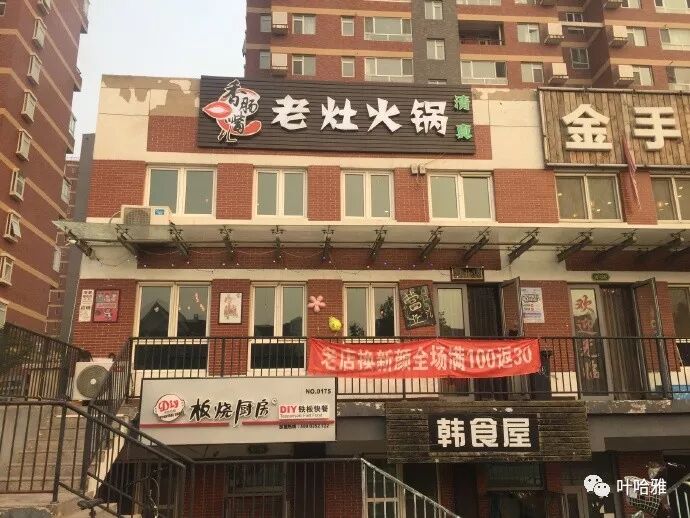
Room 201, Building 16, Jiayuan District 1, North Street, Shahe Higher Education Park, Changping District
Liangji Braised Noodles (huimian)
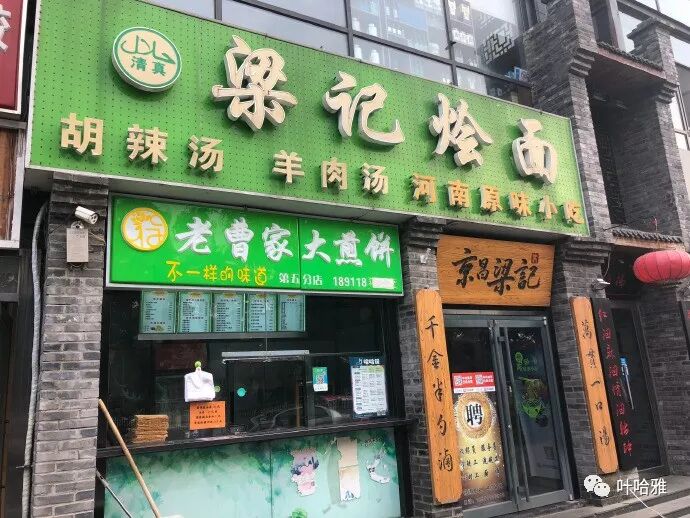
Unit 104, Ganglong Commercial Area, No. 18 Huilongguan West Street, Changping District (east side of Industrial and Commercial Bank of China) (Huilong Surplus Goods Market)
Laikebi Happy Pizza (Western-style light meal)
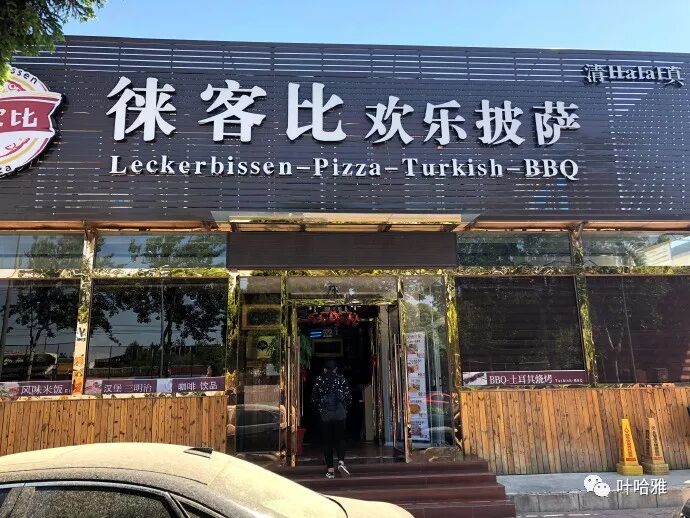
No. 17 Songyuan Road, Changping District
Aiyidian Halal Yunnan Cuisine
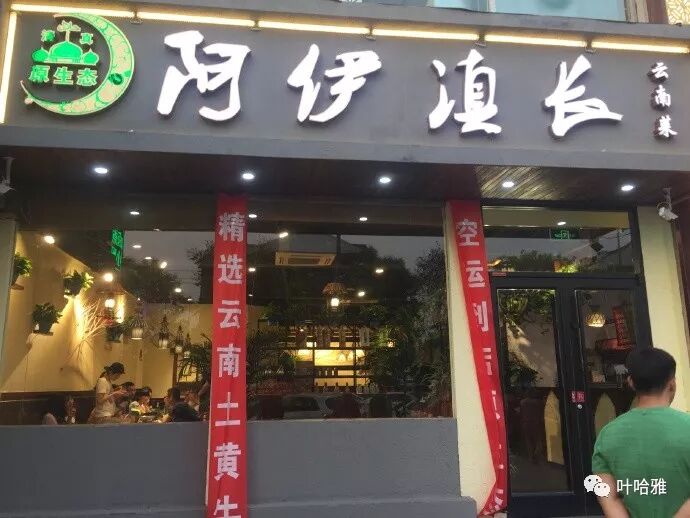
Ground floor, north section of the commercial area on the west side of Fenyayuan District 2, Huilongguan Town, axes 19-21
Old Yang Family Halal Restaurant (New-style fusion cuisine)
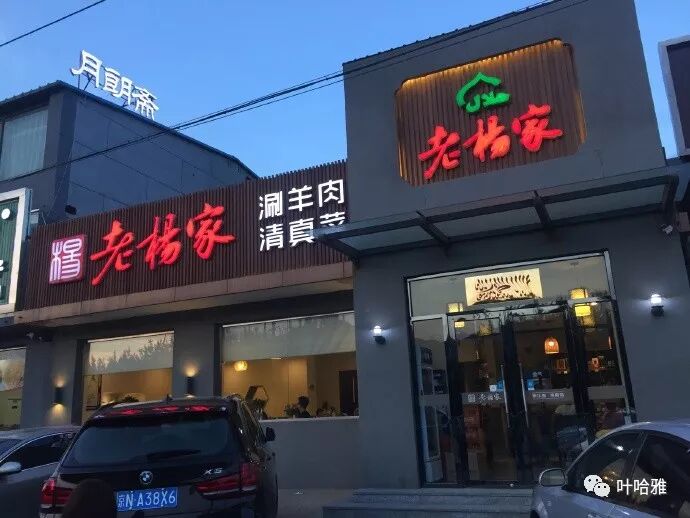
No. 30, West Lane 1, Xiguanshi Village, Yangfang Town, Changping District
Yangfang Shengli Lamb Hot Pot
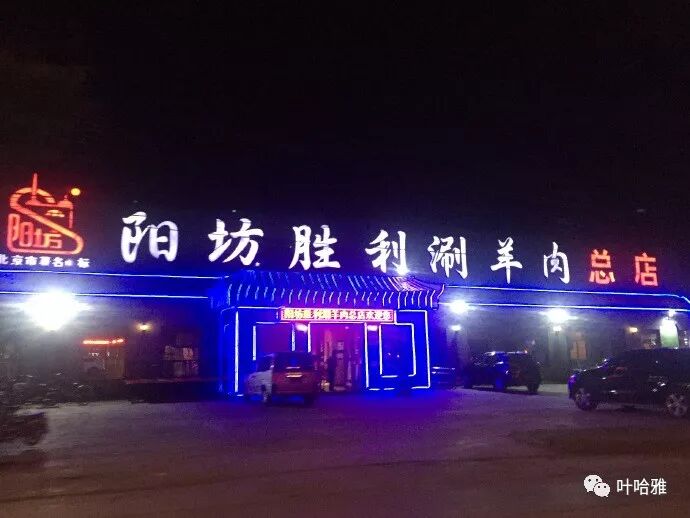
Xiguanshi Village, Yangfang Town, Changping District
Fangshan District
Ailifu Lamb Hot Pot
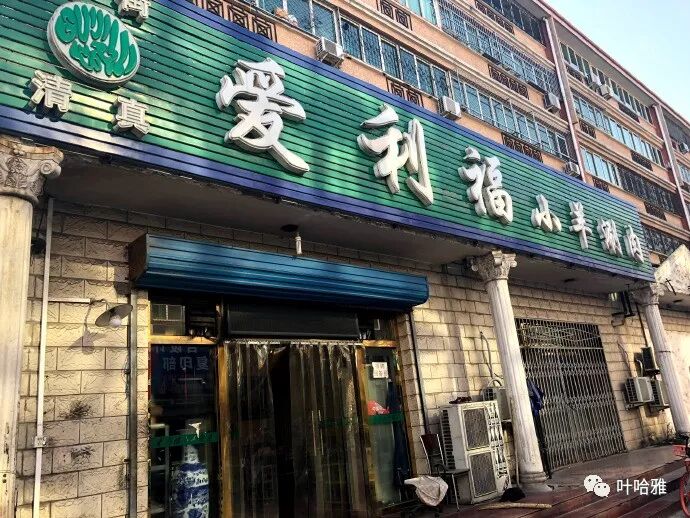
Chaoyang North Road, Fangshan District
Tongshunzhai Restaurant
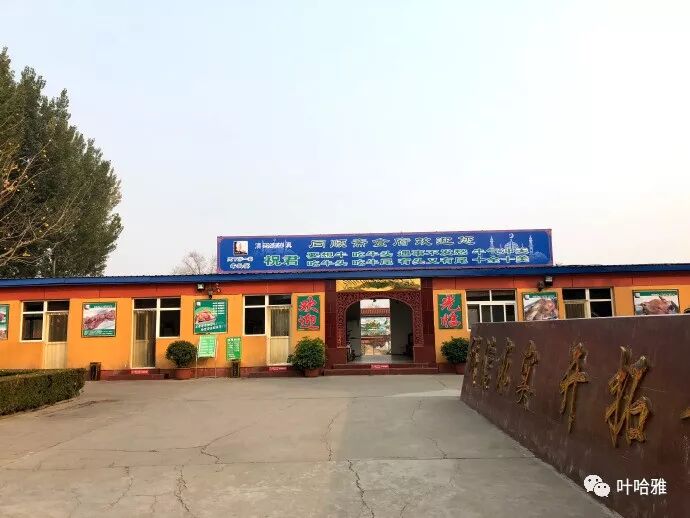
South entrance of Doudian Village, Fangshan District
Quran Family (dipped beef tripe, roasted rabbit head)
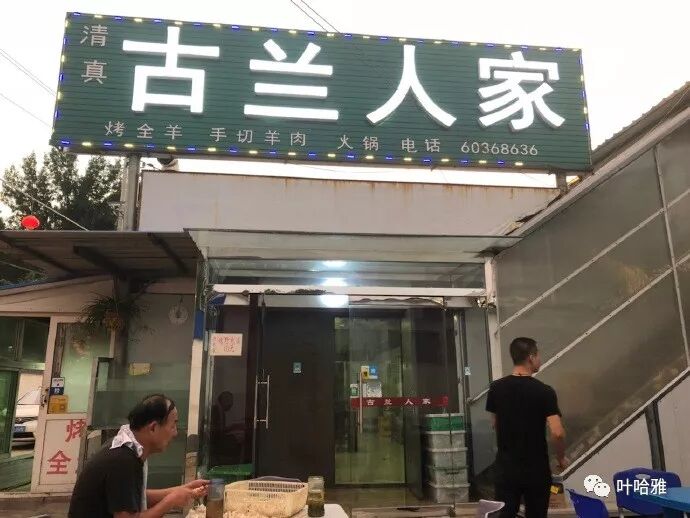
50 meters north of the 993 bus terminal, south of Doudian Village, on the west side of the road
Zhang's Big Poplar Tree Restaurant (farmhouse dishes)
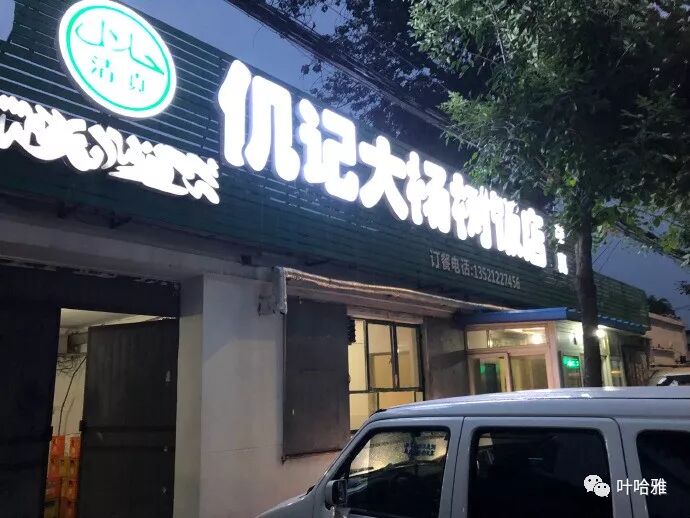
Directly opposite the Doudian Mosque
Asian Tribe 7 (Indian food)
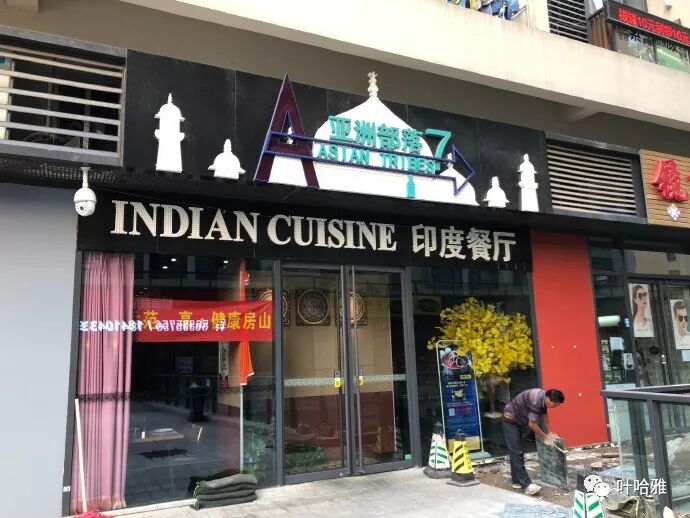
Room 207, 2nd Floor, Building 1, Jinjie, Changyang Peninsula, Fangshan District
Wanzhenlou Restaurant (Korean-style barbecue buffet)
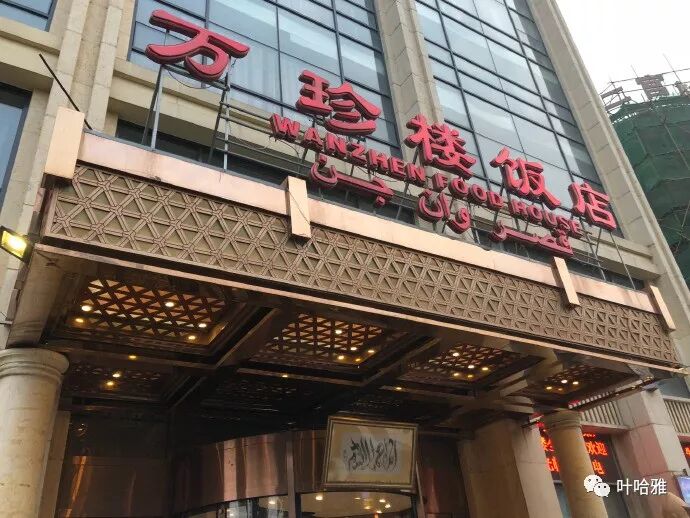
Zhuochen Building, 12 Xilu South Street, Liangxiang, Fangshan District
Yingbinlou Restaurant (Beijing cuisine)
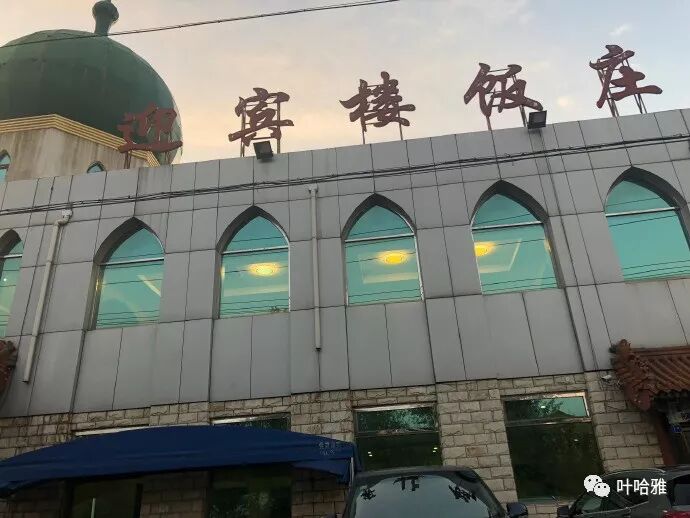
Next to the Doudian Mosque, Fangshan District
Haidian District
Yilanlou (Northwest Chinese cuisine)
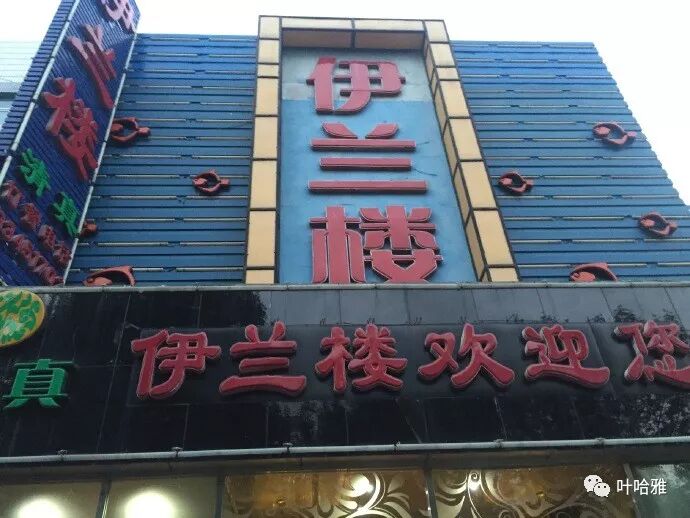
5 Zaojunmiao Road, Haidian District
Ganges Indian Restaurant
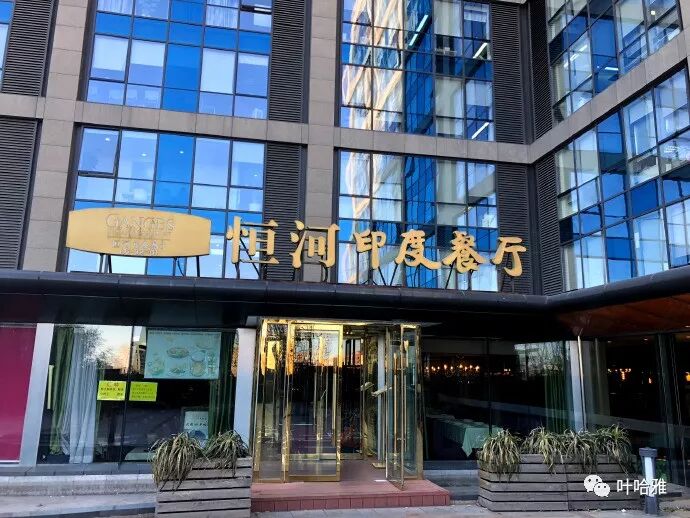
6th Floor, Wudaokou Shopping Center
HI HELLO
Western-style grilled rice
Shop 4, Ground Floor, Building 2, Weibohao Garden
Ma Wu Spicy Soup (hulatang) and Pan-fried Buns (shuijianbao) on Guhuai Street
Phase II, Shibao Street, Zhongguancun, Haidian District
Hu's Original Beef Soup (Huainan cuisine)
1st Floor, Shuangtian Building, 30 North Third Ring West Road
Qinshengxuan Xi'an Mutton Pita Soup (yangrou paomo)
40-10 North Third Ring Middle Road (near Taipingzhuang Bridge)
Sijiqing Jinxiang Spring Water Hot Pot (Sijiqing Jinxiang Shuanshuorou Guan)
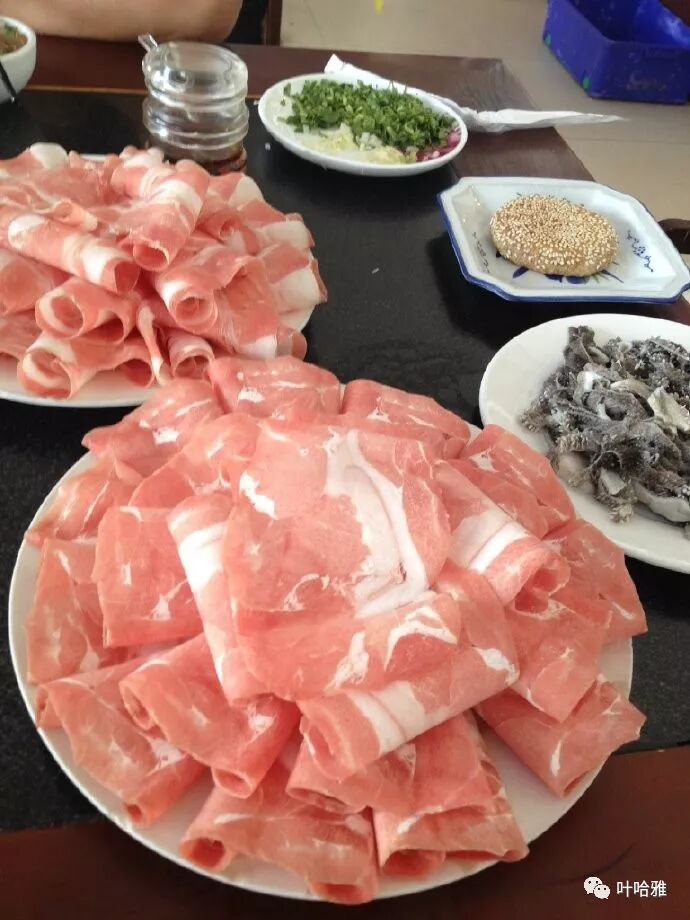
West of Sijiqing Bridge, Haidian District (southwest corner of Nanpingzhuang intersection)
Yanlanlou (high-end Northwest Chinese cuisine)
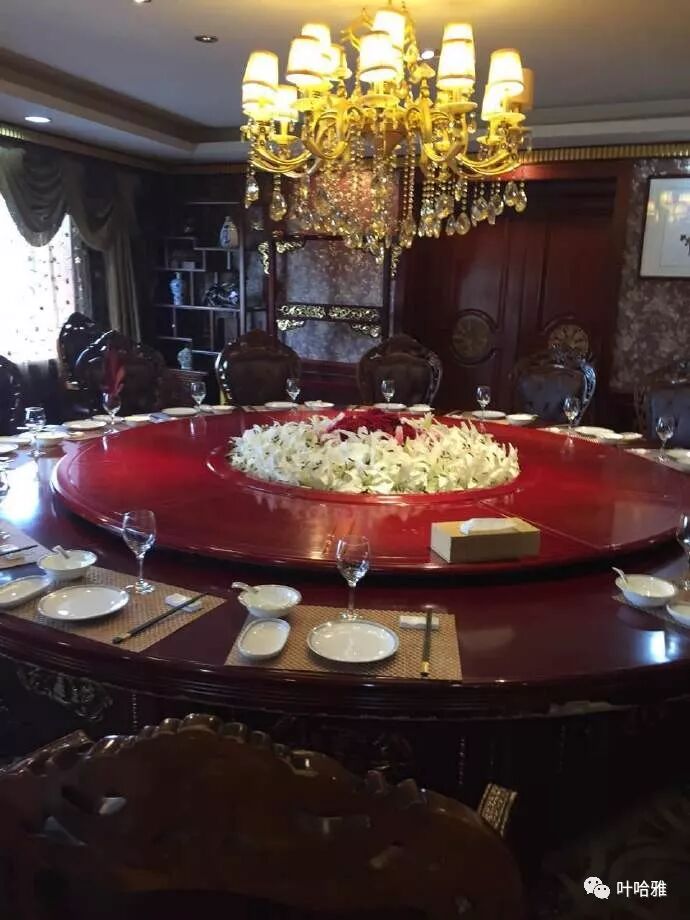
Opposite the National Library
Bayi Laoye
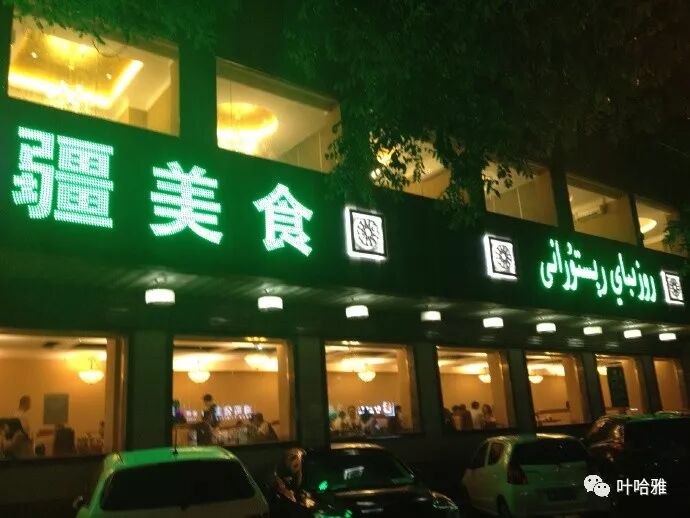
Building 23, Weigongcun Residential Area, 22 Minzu University West Road, Haidian District
Daxing District
Dianxinyuan New-Style Yunnan Halal Cuisine
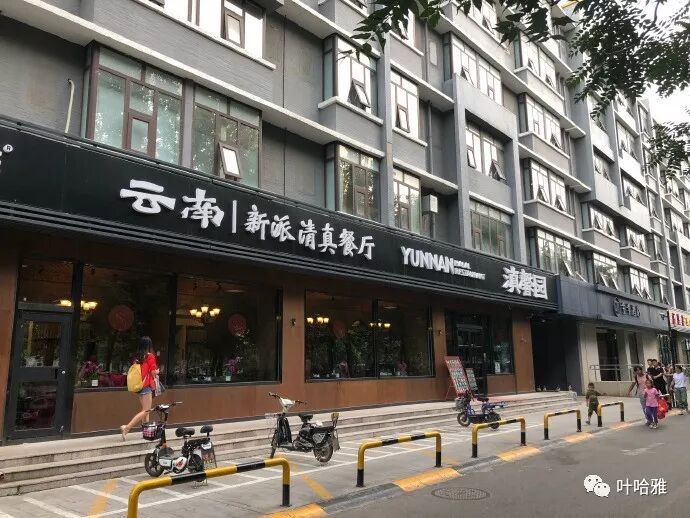
Ground floor shops on the north side of Yongkang Apartment, 18 Kangding Street (100 meters west of Exit A, Tongjinan Road Subway Station)
Xueying Heshunzhai Lamb Spine Hot Pot (Yangxiezi)
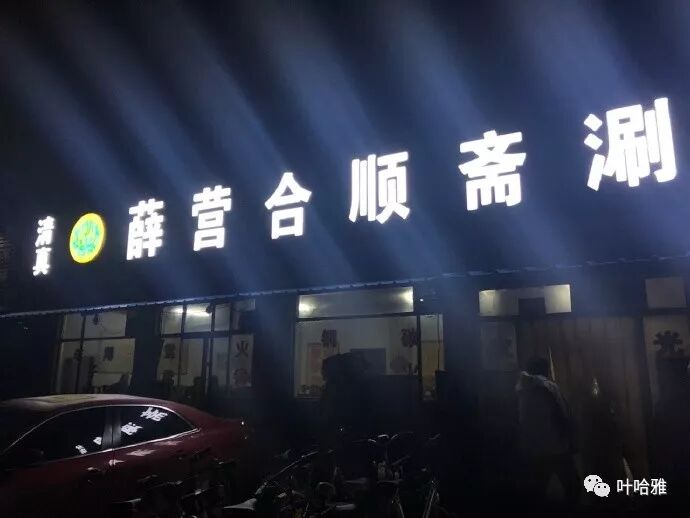
No. 10, Lane 16, Qingzheng South Road, Xueying Village, Panggezhuang Town, Daxing District
Chengji Shanxian Lamb Soup Restaurant (Yangtang Guan)
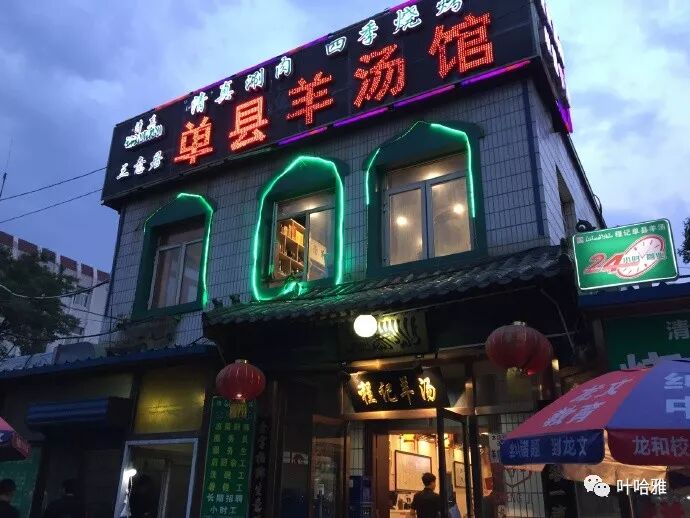
Sanzhong Lane (near Xingfeng Street), about 525 meters from Huangcun West Street Station
Erjie Earth Pot Stew (Diguo Dun)
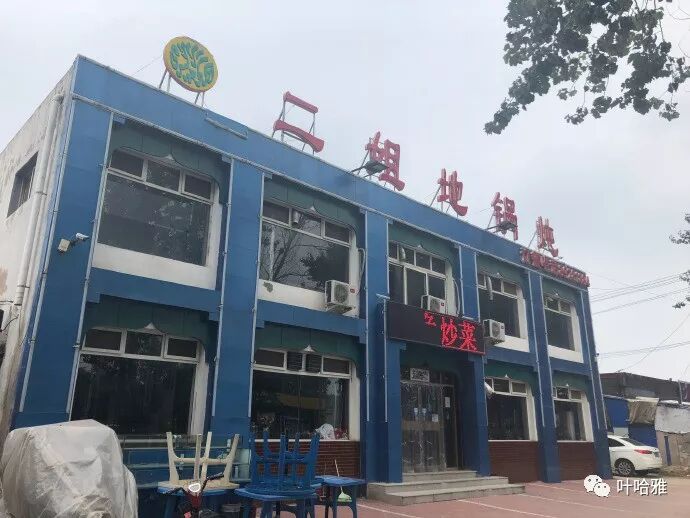
No. 6, Lane 4, Qingren Road, Daxing District
Jingnan No. 1 Hot Pot (Shuan)
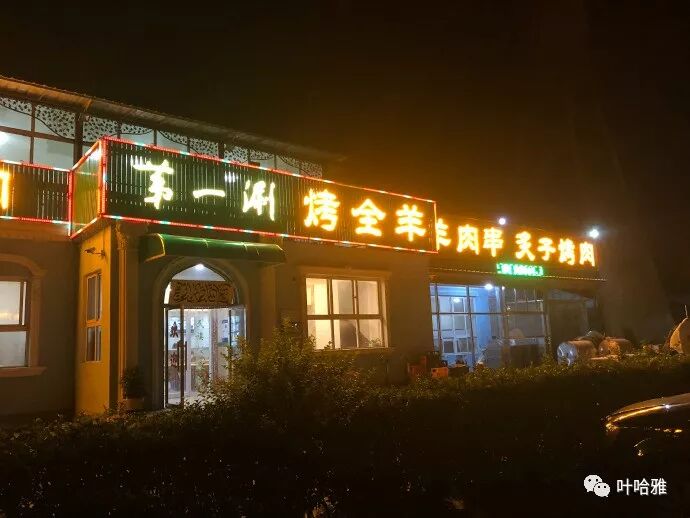
No. 1-A, Qingzheng Road, Xueying Village, Panggezhuang, Daxing District
Rundexuan Halal Restaurant
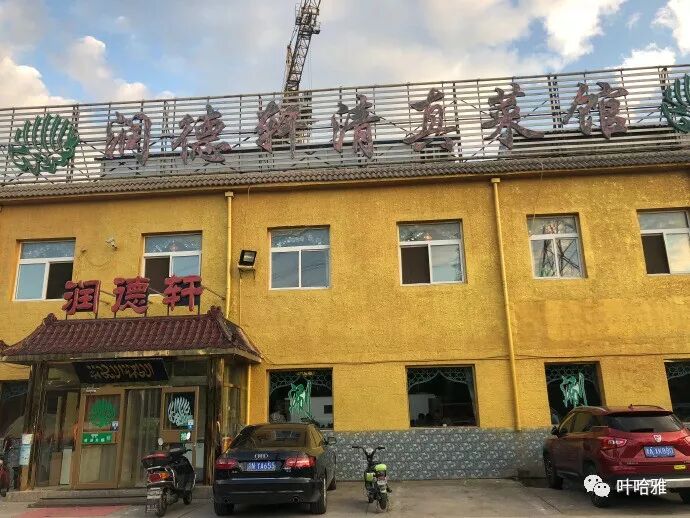
No. 14 Hongsheng Road, North Second Street, Xihongmen, Daxing District (300 meters north of Xihongmen Subway Station, east side of the road)
Guoguojiao Spicy Dry Pot (Malaxiangguo)
Unit 107, Unit 3, Building 1, Courtyard 39, Chunhe Road, Daxing District
Xinjiang Happy Restaurant
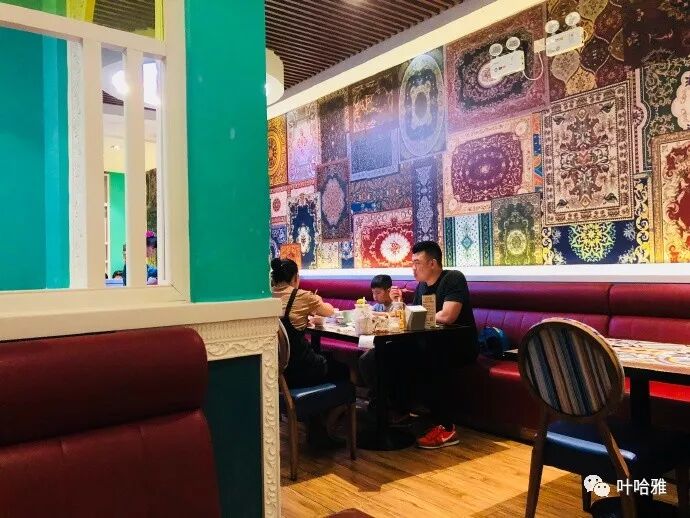
Exit at Xihongmen Station on Subway Line 4, third floor of the Joy Breeze (Huiju) Shopping Center
Yanlan Renjia (Northwest fusion cuisine)
Qingyuan Road, Daxing District
Juewei Duck Neck
Xueying Village, Daxing District
Tongzhou District
Jujingyuan (traditional Beijing cuisine)
Lvyou Xincun, Tongzhou District
Ziguangyuan
Zhongshan Street, Tongzhou District
Zhangji Potstickers (Zhangji Guotie)
70 meters west of Beixiaoyuan Station on Yudaihe East Street, north side of the road
Baixingju (traditional Beijing cuisine)
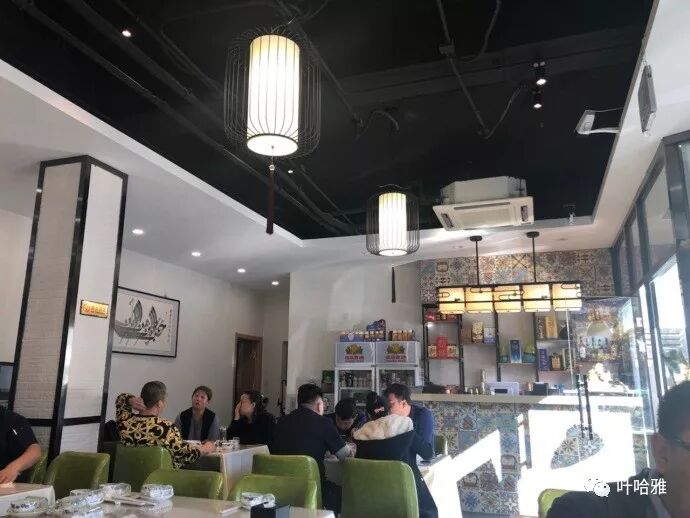
Baixingju Restaurant, Xiguan Mosque, Yudaihe West Street, Tongzhou District
Shunyi District
Huguosi Snacks (Airport branch)
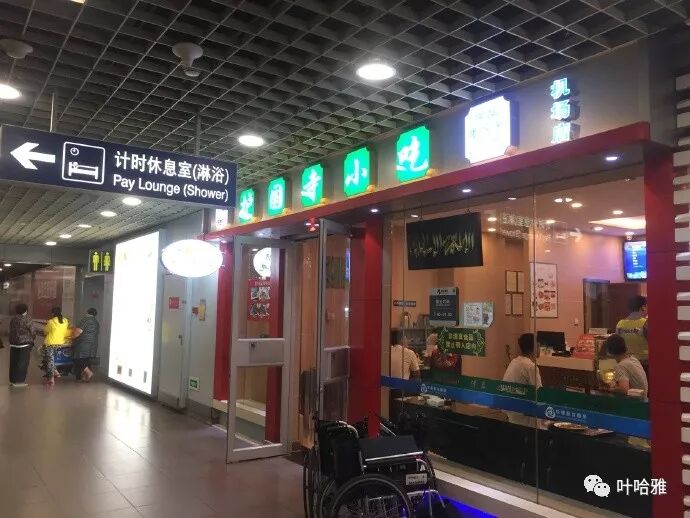
B1, Terminal 2, Capital Airport
Majia Steamed Dumplings (Majia Shaomai) (now open)
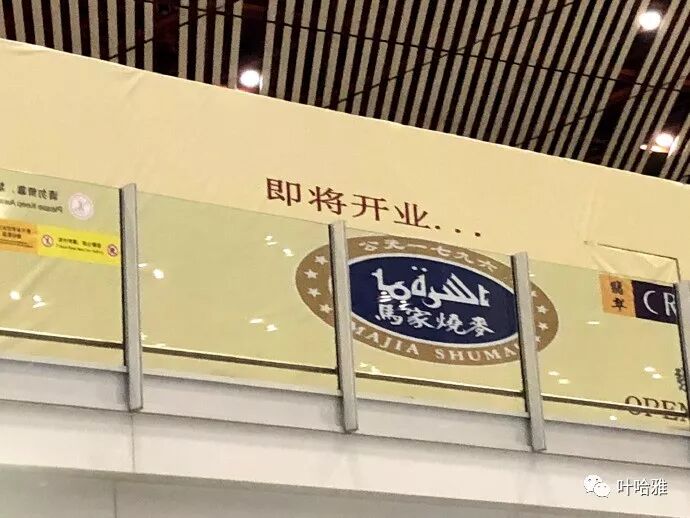
Departure Hall, Terminal 3, Capital Airport
Fushouzhai
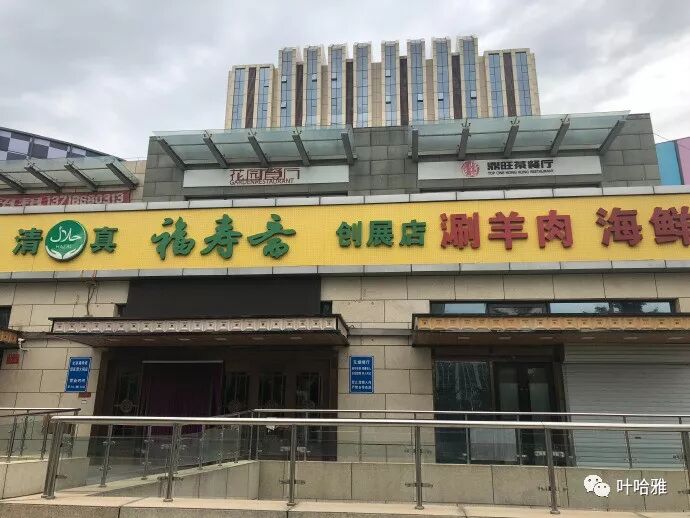
Chuangzhan branch, Shunyi District
Huoyan Kongjian Korean BBQ
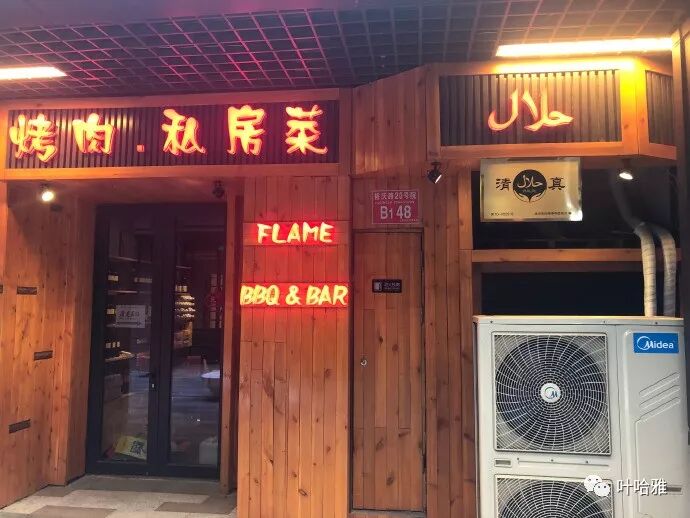
No. 38 Yumin Street, Shunyi District
Shali Ma Indian and Pakistani Cuisine
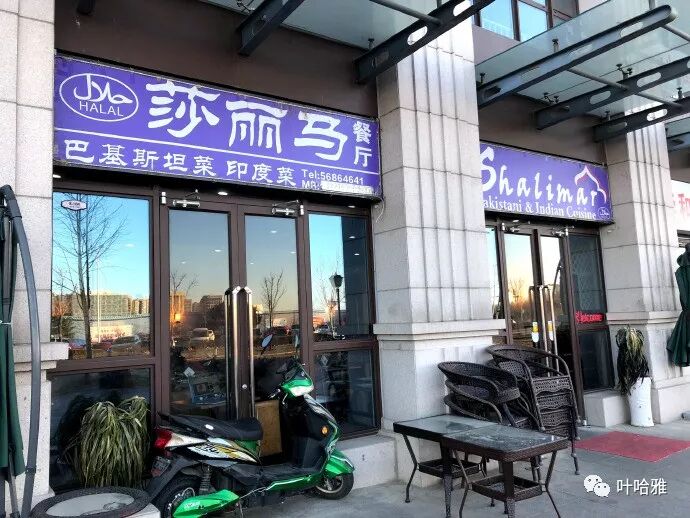
Shunyi District
Room 104, Floor 1, Building 8, 16 Yufeng Road (Xinguozhan Huizhan Yujing)
Shijingshan District
Original Flavor Braised Dough Bits (yuanwei huimashi)
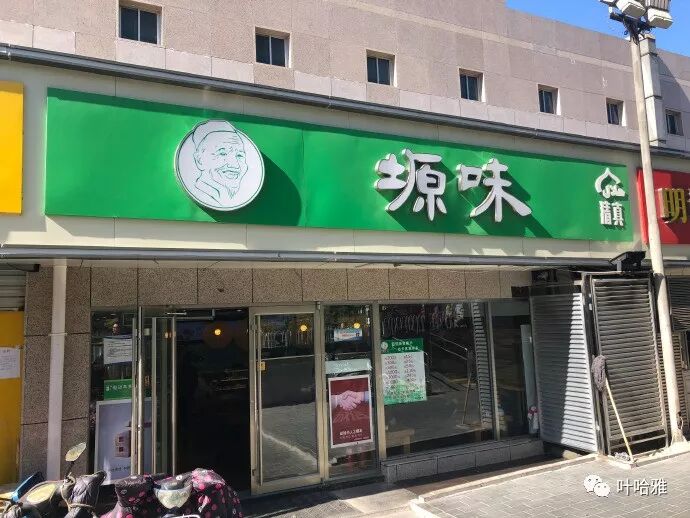
Street-level shop, 22 Yinhe Street, Lugu Subdistrict, Hanhai Changcheng Building
Miyun District
Shixiangxuan Small Seafood
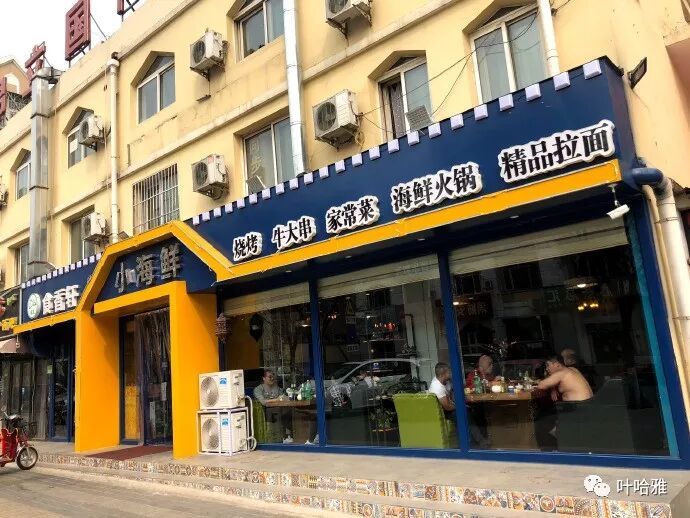
Nangeng Street, Miyun District
Tanghe Halal Restaurant
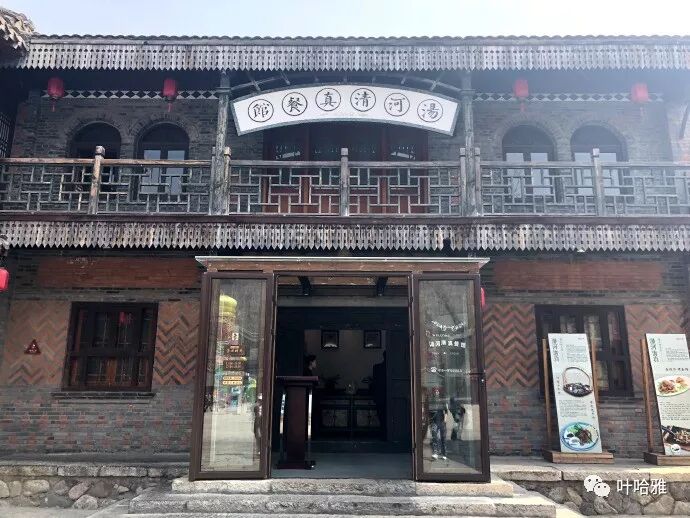
Shop 011, Huanjie, Gubei Water Town Square, Miyun
For detailed introductions to each restaurant, please browse the links from previous posts:
[Beijing Specialty Halal Dining Guide (Including the most complete list of foreign restaurants)] (Part 1)
[Beijing Specialty Halal Dining Guide (Including the most complete list of foreign restaurants)] (Part 2)
[Beijing Specialty Halal Dining Guide (Including the most complete list of foreign restaurants)] (Part 3)
Beijing Specialty Halal Dining Guide (Part 4)
Beijing Specialty Halal Dining Guide (Part 5)
Beijing Specialty Halal Dining Guide (Part 6)
Beijing Specialty Halal Dining Guide (Part 7)
Beijing Specialty Halal Dining Guide (Part 8)
Beijing Specialty Halal Dining Guide (Part 9)
Beijing Specialty Halal Dining Guide (Part 10)
Beijing Specialty Halal Dining Guide (Part 11)
Beijing Specialty Halal Dining Guide (Part 12)
A Map of Specialty Halal Food in Beijing (Part 13)
Best Halal Restaurant Beijing: Dashi, Huawei Meat Pie, Xinjiang Rice Noodles and Mosque-Area Hot Pot
Articles • yusuf908 posted the article • 0 comments • 188 views • 2026-05-24 00:17
Summary: Best Halal Restaurant Beijing: Dashi, Huawei Meat Pie, Xinjiang Rice Noodles and Mosque-Area Hot Pot is presented here as a firsthand travel account in clear English, beginning with this scene: I have gathered a few more halal restaurants in Beijing to share with you over the past few days. The account keeps its focus on Beijing Halal Food, Muslim Travel, Middle Eastern Food while preserving the names, places, food, and historical details from the Chinese source.
I have gathered a few more halal restaurants in Beijing to share with you over the past few days. As always, I only share places I have personally eaten at. There are a few others on my wishlist that I haven't tried yet, so I won't recommend them for now. Including the last few spots in my collection, my map of Beijing's specialty halal food should be complete once I reach 200 entries. I hope some wealthy entrepreneurs will open new halal restaurants in Beijing soon.
179. Dashí
The name is quite vintage, as Dashí was the ancient Chinese term for the Arab Empire. In reality, this is a fusion restaurant serving Cantonese, Jiangnan, Sichuan-Hunan, and Beijing-style dishes. The owner is a Hui Muslim from Beijing.
I came here for the Cantonese-style deep-well roasted goose (shenjing shao'e). The meat was a bit fatty, and the skin was on the tougher side.
Jiangnan bamboo steamer taro (zhulong yutou), which is a sweet dish.
Almond-scented beef cubes with chrysanthemum (xingxiang zhenju niuzaili), the beef was tender.
For the main course, I had beef dumplings (shuijiao). These were delicious, with thin skins and plenty of filling.
Address: No. 277 Dongzhimen Inner Street, Dongcheng District, Beijing, near Beixinqiao Subway Station.
180. Huawei Meat Pie Shop
This place is very famous. It is always 100% full during meal times, so you have to wait in line. Everyone comes here for the meat pies (roubing).
Besides meat pies, they also serve traditional old Beijing foods like grilled meat on a round iron plate (zhizi kaorou).
The meat pie skin is thin and soft, though I personally prefer a pie with a crispy skin and tender meat.
180. Peking University Tongyuan Halal Restaurant
The halal restaurant at Peking University is quite small and gets very crowded during peak hours. To ensure minority students can get a meal, the canteen only serves them during the day since they rely on halal food, while other students can choose non-halal canteens. However, the restaurant opens to all students and faculty after 6:00 PM, and many students come here at night for barbecue.
Lamb rice noodles (yangrou fen).
Spiced beef (jiang niurou), lamb chops, and lamb skewers (yangrou chuan).
Address: Opposite the Peking University tennis courts.
181. Xifentang
This is a very refined Xinjiang rice noodle shop. In recent years, I have noticed that many Xinjiang restaurants have stylish, creative decor that really makes you hungry.
Xinjiang's signature drink, kvass (kawasi), which is a non-alcoholic, beer-flavored beverage.
Chicken rice noodles (jirou mifun), which you need to mix well before eating.
The ingredients look fresh and clean.
Xifentang is a chain with four locations in Beijing, spread across Chaowai, Fengke, Wangjing, and Shangdi.
Address: Unit 0189B, Tower B, Chaowai SOHO, No. 6 Chaowai Street.
182. Jujingyuan
A small Beijing-style restaurant next to the Tongzhou Xiguan Mosque.
The shop specializes in Beijing-style meat pies (jingdong roubing) and flatbreads (hubing). I really like their meat pies; they are crispy on the outside and tender on the inside.
The chive-filled flatbread (hubing) comes in a very large piece.
Be careful not to burn your mouth when eating the door-nail meat pies (mending roubing).
183. Xiao Baza
This is a new-style Xinjiang restaurant that opened recently. It does not have a halal sign hanging up, but when I went with my Uyghur friends, we asked the kitchen staff. They were all young Uyghur men who confirmed the food is indeed halal, but for certain reasons, they haven't put up the sign. We decided to trust our fellow brothers and went ahead and ate there.
I have mentioned before that many new Xinjiang restaurants have moved away from traditional ethnic decor. This place follows a modern, minimalist style.
The meat is fresh and tender, and the red willow skewer barbecue (hongliu kao) is delicious.
This is their improved version of planet big plate chicken (xingqiu dapanji). It looks very spicy because of the peppers, but it is actually quite mild.
Xiao Baza is a chain, and there are at least five branches in Beijing now.
Address: B1, Phase 2, U-Town Shopping Center, No. 7 Sanfeng Hutong, Chaoyang District, Beijing.
184. Fushouzhai
A famous hot pot restaurant in Shunyi. They have three branches, all located close to each other within Shunyi, and every one of them is packed with customers.
The Qinglan branch is right next to a mosque.
The meat and tripe are very fresh. Overall, it is just as good as the old-fashioned hot pot restaurants in the city center.
Address: Second Floor, Halal Street, Qinglan Garden, Houshayu Town, Shunyi District.
185. Yuanwei
I came here specifically for the braised cat-ear noodles (hui mashi).
Besides the braised cat-ear noodles, they also serve barbecue and Northwest-style home-cooked flour dishes like pita bread in soup (paomo) and hand-pulled noodles (lamian).
Braised cat-ear noodles are a Shaanxi specialty. They are sour and spicy. They are served piping hot, making them perfect for warming you up in the winter.
Address: Street-level shop, Hanhai Changcheng Building, No. 22 Yinhe Street, Lugu Subdistrict.
I am quite lazy. When I write food maps, I usually avoid writing subjective opinions because everyone has different tastes, and I even want to skip the addresses since the restaurant names are provided and you can easily find them with a map app. You can also find detailed information on Dazhong Dianping. Later, I realized many people are lazier than me; they want to find the restaurant and order the food just by looking at my post, and they might even want me to pay the bill for them too. view all
Summary: Best Halal Restaurant Beijing: Dashi, Huawei Meat Pie, Xinjiang Rice Noodles and Mosque-Area Hot Pot is presented here as a firsthand travel account in clear English, beginning with this scene: I have gathered a few more halal restaurants in Beijing to share with you over the past few days. The account keeps its focus on Beijing Halal Food, Muslim Travel, Middle Eastern Food while preserving the names, places, food, and historical details from the Chinese source.
I have gathered a few more halal restaurants in Beijing to share with you over the past few days. As always, I only share places I have personally eaten at. There are a few others on my wishlist that I haven't tried yet, so I won't recommend them for now. Including the last few spots in my collection, my map of Beijing's specialty halal food should be complete once I reach 200 entries. I hope some wealthy entrepreneurs will open new halal restaurants in Beijing soon.
179. Dashí
The name is quite vintage, as Dashí was the ancient Chinese term for the Arab Empire. In reality, this is a fusion restaurant serving Cantonese, Jiangnan, Sichuan-Hunan, and Beijing-style dishes. The owner is a Hui Muslim from Beijing.
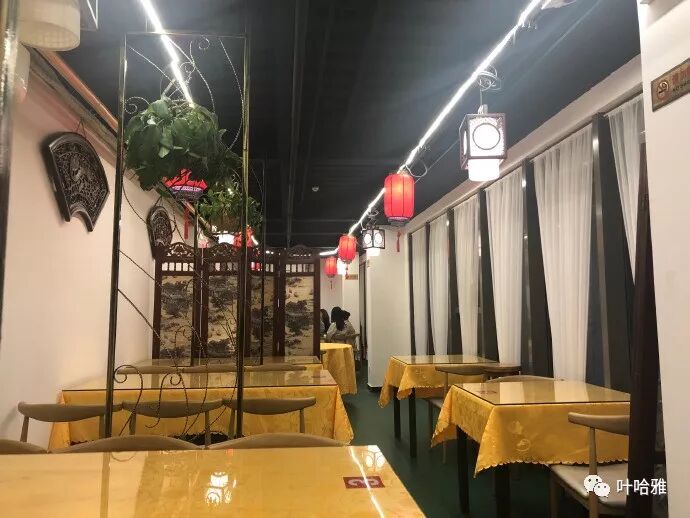
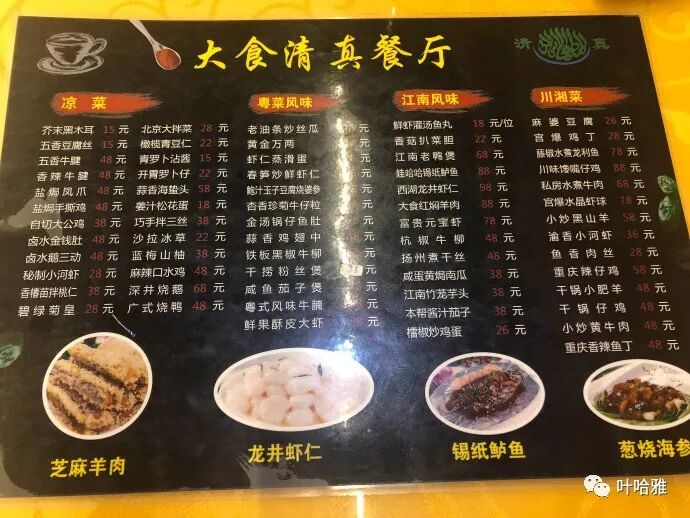
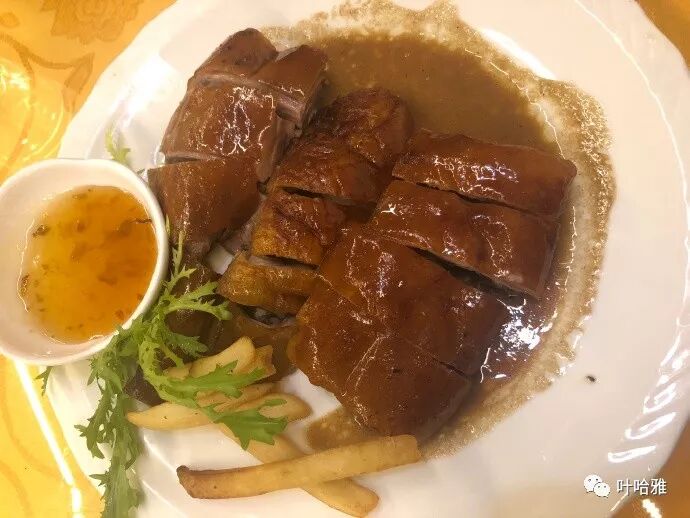
I came here for the Cantonese-style deep-well roasted goose (shenjing shao'e). The meat was a bit fatty, and the skin was on the tougher side.
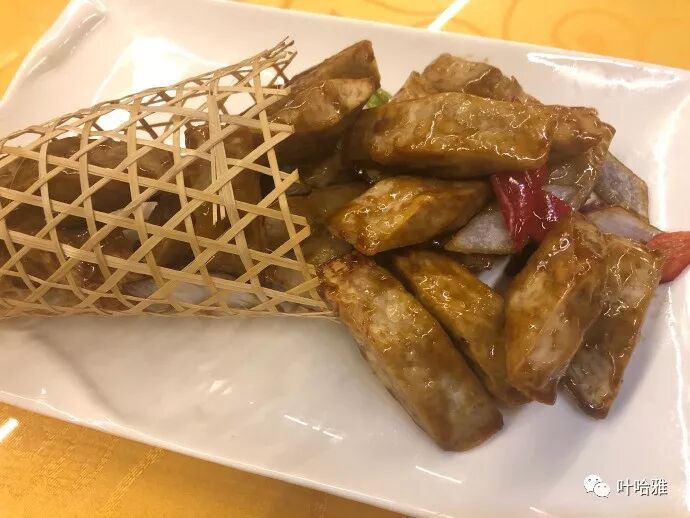
Jiangnan bamboo steamer taro (zhulong yutou), which is a sweet dish.
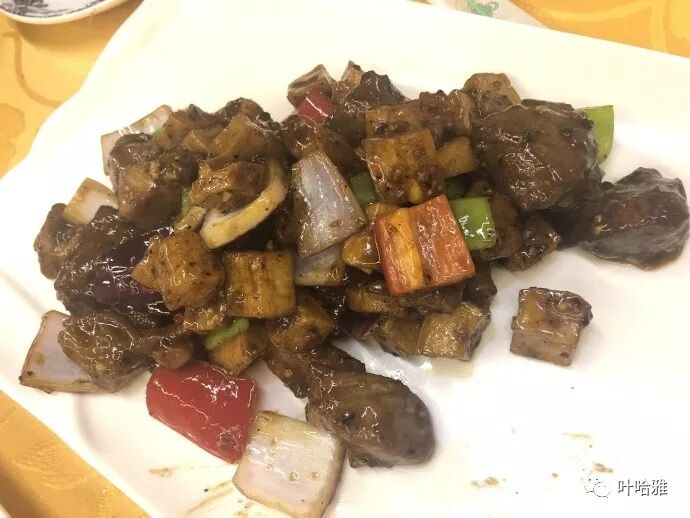
Almond-scented beef cubes with chrysanthemum (xingxiang zhenju niuzaili), the beef was tender.
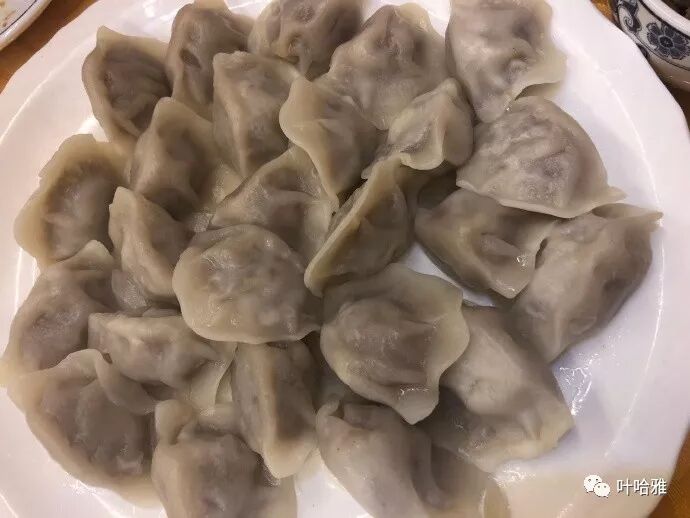
For the main course, I had beef dumplings (shuijiao). These were delicious, with thin skins and plenty of filling.
Address: No. 277 Dongzhimen Inner Street, Dongcheng District, Beijing, near Beixinqiao Subway Station.
180. Huawei Meat Pie Shop
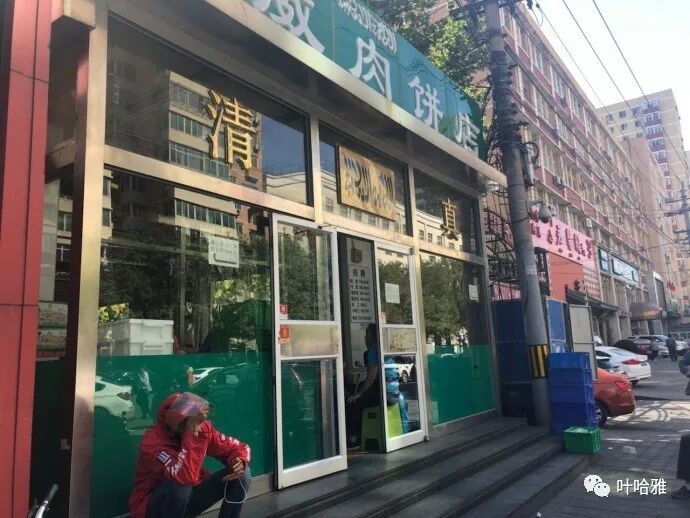
This place is very famous. It is always 100% full during meal times, so you have to wait in line. Everyone comes here for the meat pies (roubing).
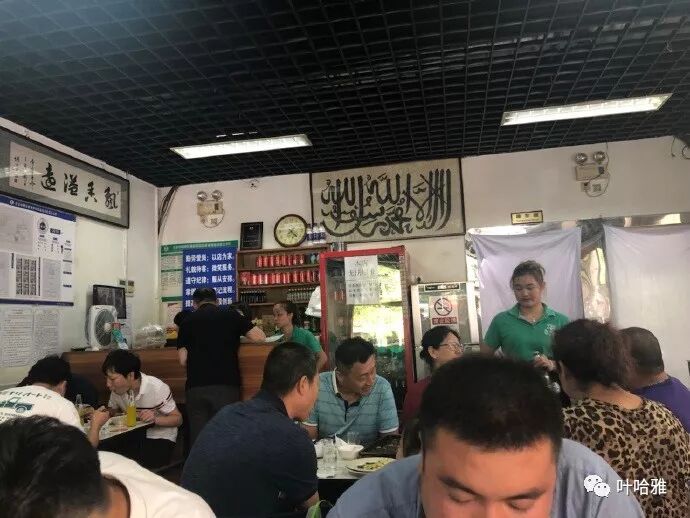
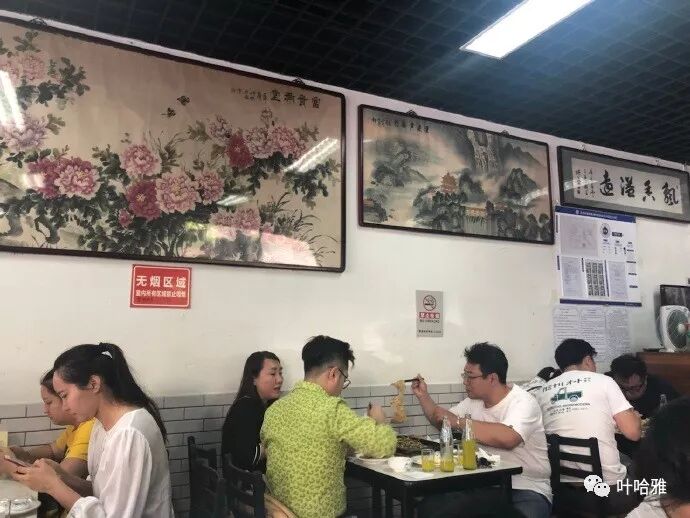
Besides meat pies, they also serve traditional old Beijing foods like grilled meat on a round iron plate (zhizi kaorou).
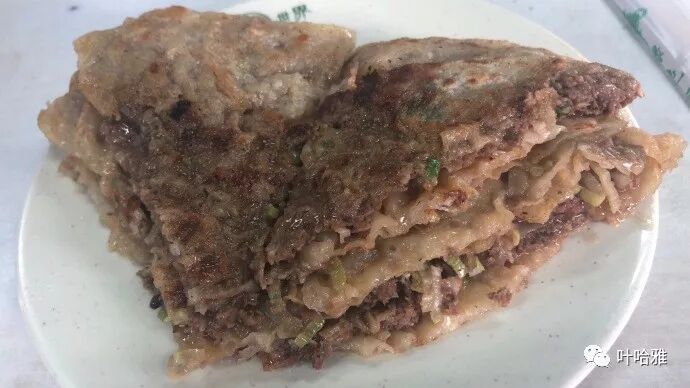
The meat pie skin is thin and soft, though I personally prefer a pie with a crispy skin and tender meat.
180. Peking University Tongyuan Halal Restaurant
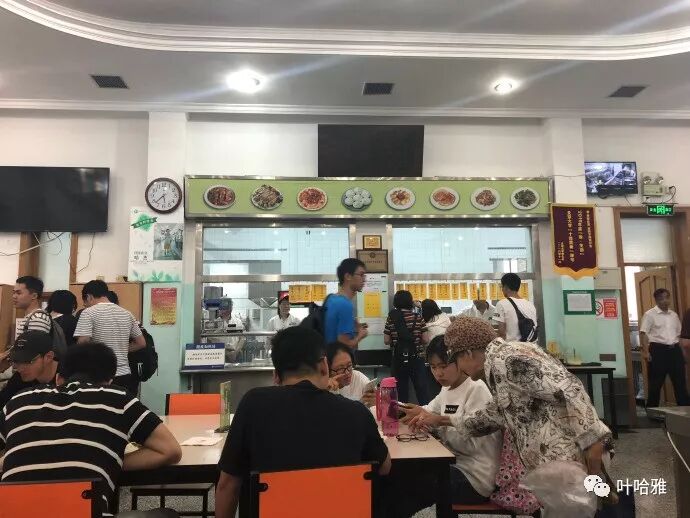
The halal restaurant at Peking University is quite small and gets very crowded during peak hours. To ensure minority students can get a meal, the canteen only serves them during the day since they rely on halal food, while other students can choose non-halal canteens. However, the restaurant opens to all students and faculty after 6:00 PM, and many students come here at night for barbecue.
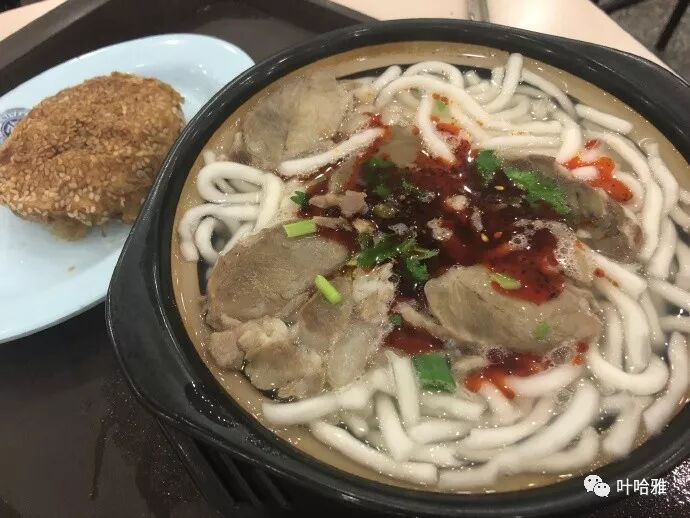
Lamb rice noodles (yangrou fen).
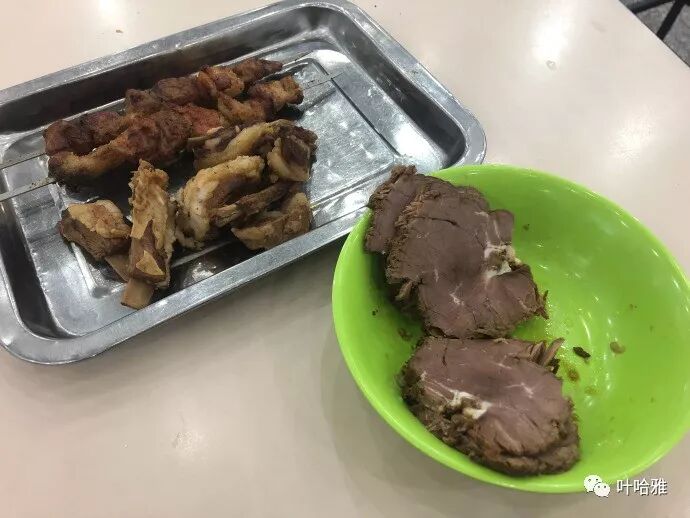
Spiced beef (jiang niurou), lamb chops, and lamb skewers (yangrou chuan).
Address: Opposite the Peking University tennis courts.
181. Xifentang
This is a very refined Xinjiang rice noodle shop. In recent years, I have noticed that many Xinjiang restaurants have stylish, creative decor that really makes you hungry.
Xinjiang's signature drink, kvass (kawasi), which is a non-alcoholic, beer-flavored beverage.
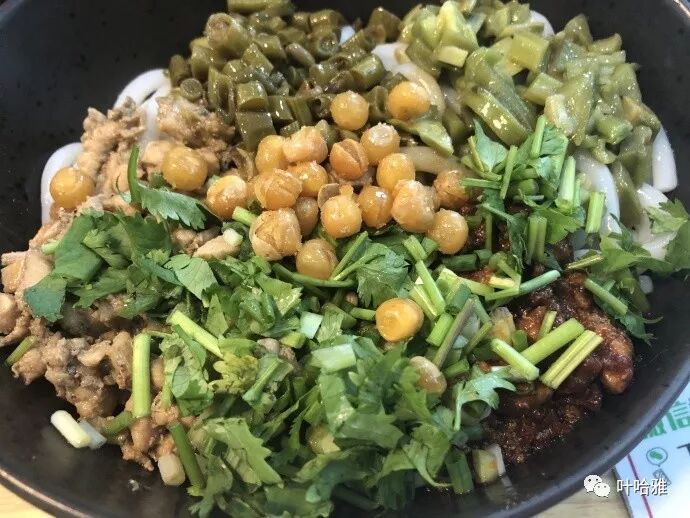
Chicken rice noodles (jirou mifun), which you need to mix well before eating.
The ingredients look fresh and clean.
Xifentang is a chain with four locations in Beijing, spread across Chaowai, Fengke, Wangjing, and Shangdi.
Address: Unit 0189B, Tower B, Chaowai SOHO, No. 6 Chaowai Street.
182. Jujingyuan
A small Beijing-style restaurant next to the Tongzhou Xiguan Mosque.
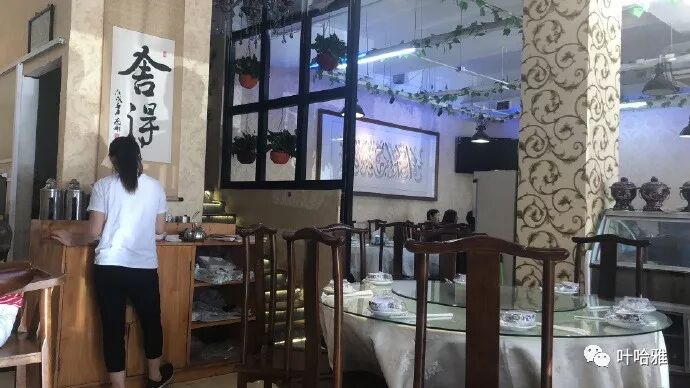
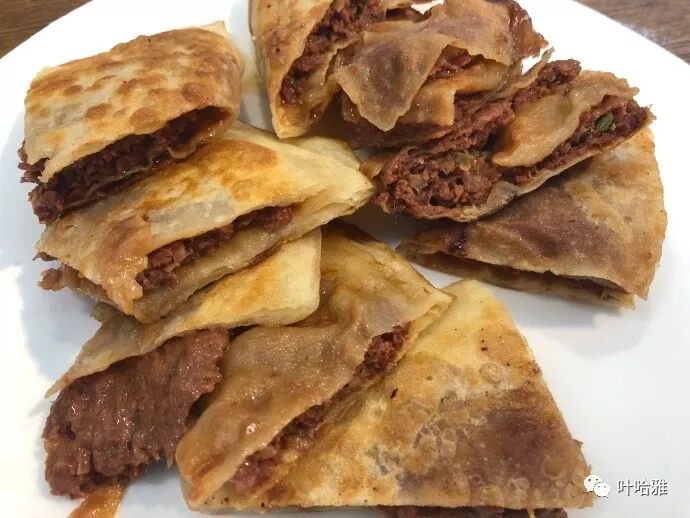
The shop specializes in Beijing-style meat pies (jingdong roubing) and flatbreads (hubing). I really like their meat pies; they are crispy on the outside and tender on the inside.
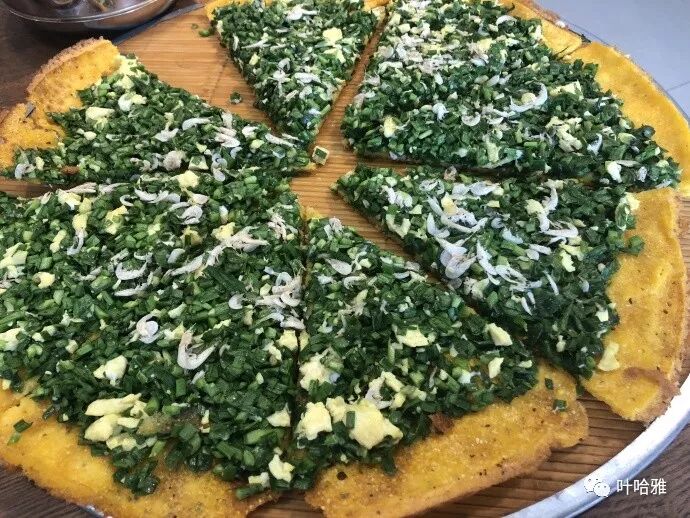
The chive-filled flatbread (hubing) comes in a very large piece.
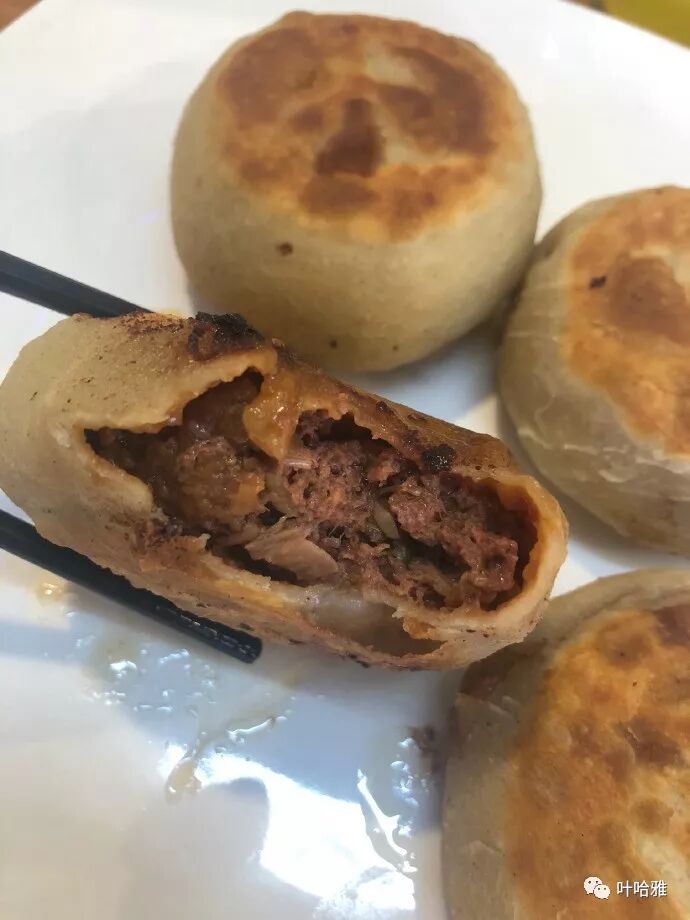
Be careful not to burn your mouth when eating the door-nail meat pies (mending roubing).
183. Xiao Baza
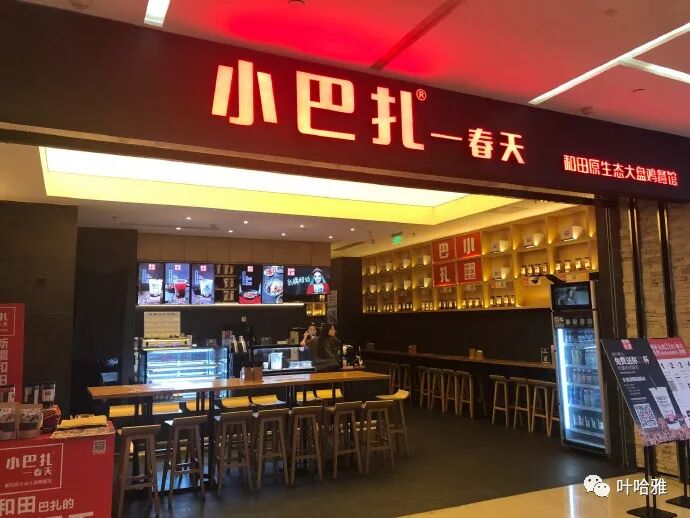
This is a new-style Xinjiang restaurant that opened recently. It does not have a halal sign hanging up, but when I went with my Uyghur friends, we asked the kitchen staff. They were all young Uyghur men who confirmed the food is indeed halal, but for certain reasons, they haven't put up the sign. We decided to trust our fellow brothers and went ahead and ate there.
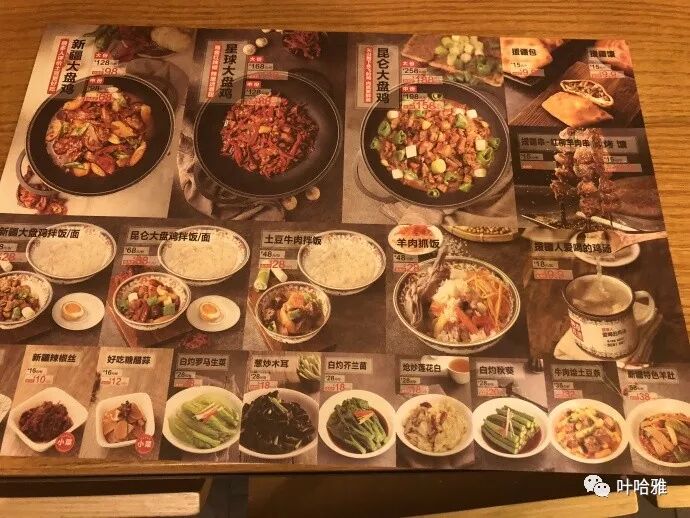
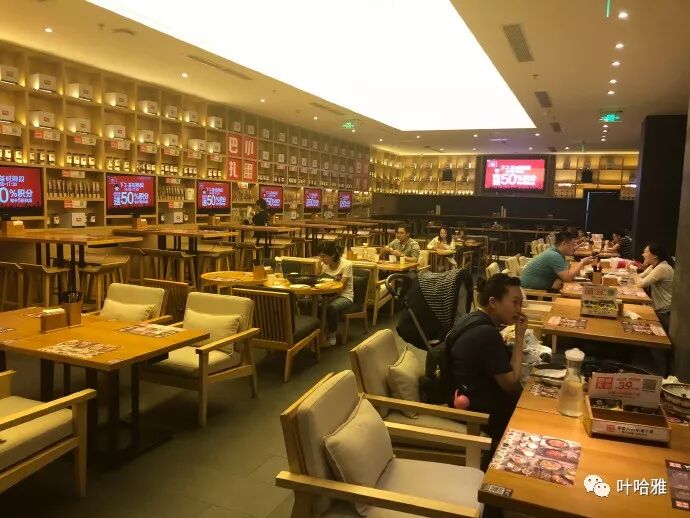
I have mentioned before that many new Xinjiang restaurants have moved away from traditional ethnic decor. This place follows a modern, minimalist style.
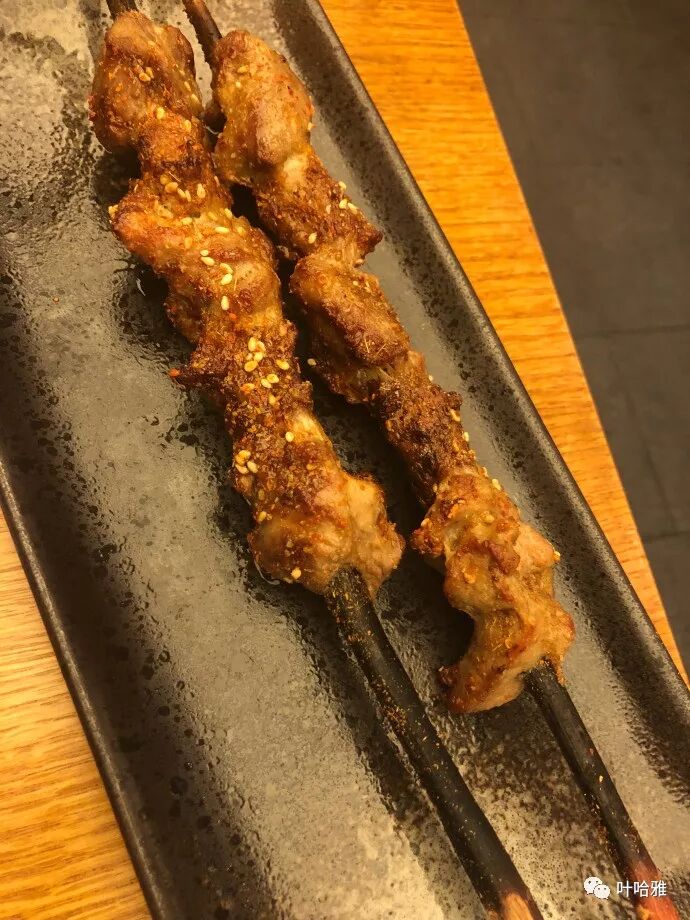
The meat is fresh and tender, and the red willow skewer barbecue (hongliu kao) is delicious.
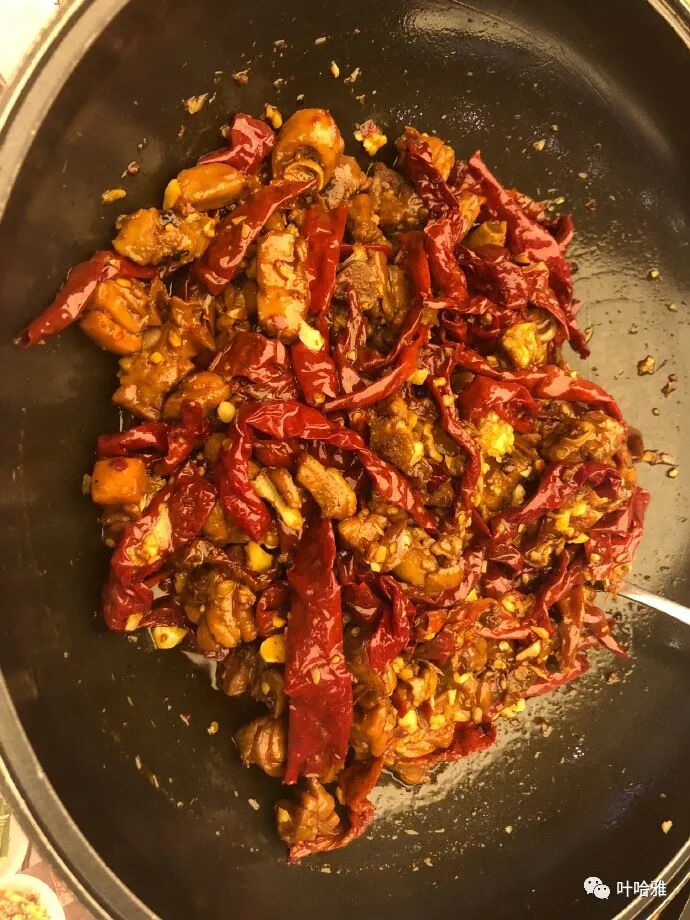
This is their improved version of planet big plate chicken (xingqiu dapanji). It looks very spicy because of the peppers, but it is actually quite mild.
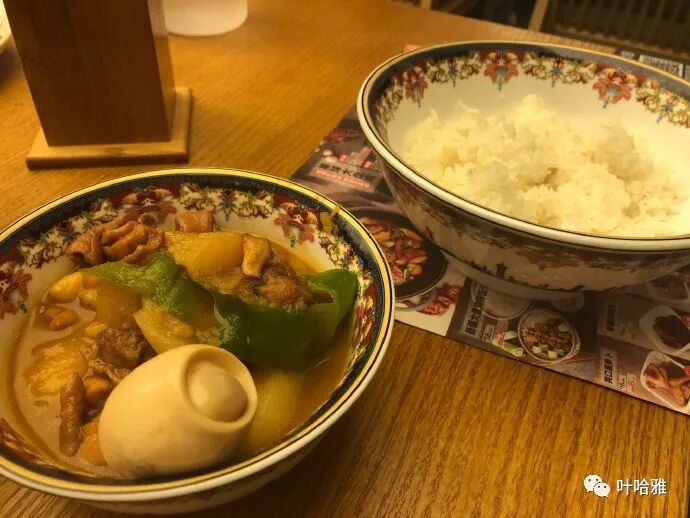
Xiao Baza is a chain, and there are at least five branches in Beijing now.
Address: B1, Phase 2, U-Town Shopping Center, No. 7 Sanfeng Hutong, Chaoyang District, Beijing.
184. Fushouzhai
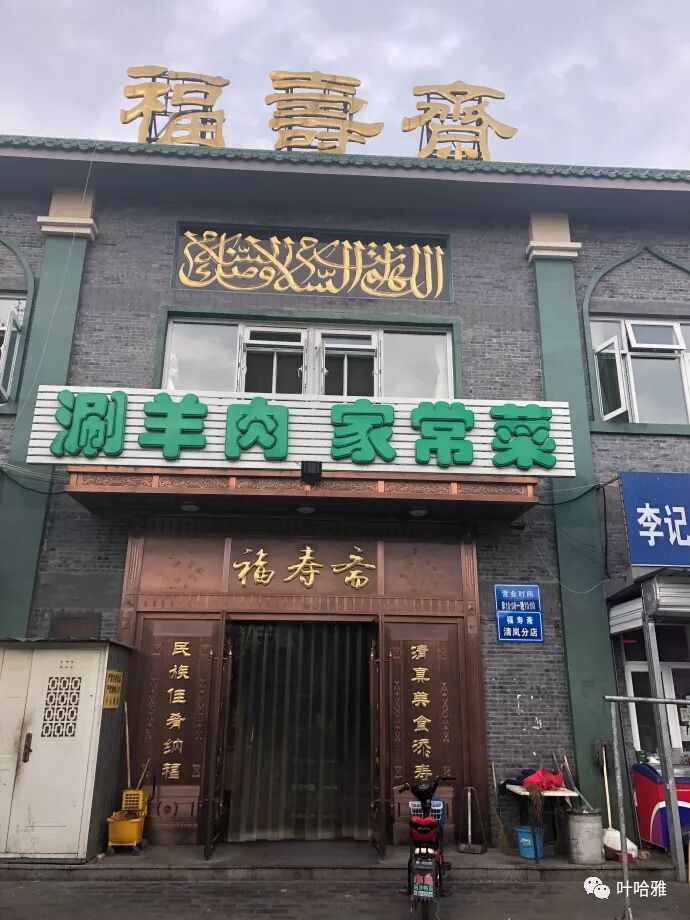
A famous hot pot restaurant in Shunyi. They have three branches, all located close to each other within Shunyi, and every one of them is packed with customers.
The Qinglan branch is right next to a mosque.
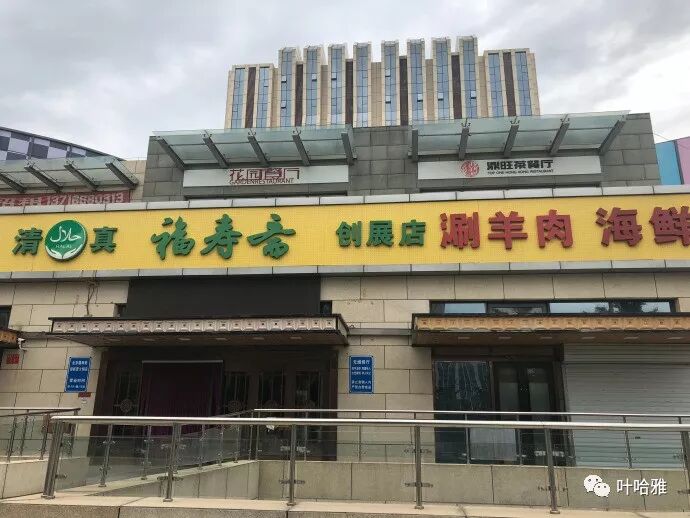
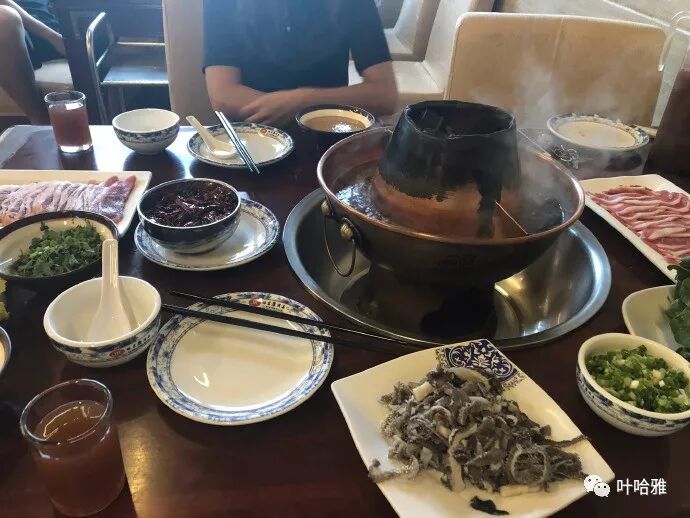
The meat and tripe are very fresh. Overall, it is just as good as the old-fashioned hot pot restaurants in the city center.
Address: Second Floor, Halal Street, Qinglan Garden, Houshayu Town, Shunyi District.
185. Yuanwei
I came here specifically for the braised cat-ear noodles (hui mashi).
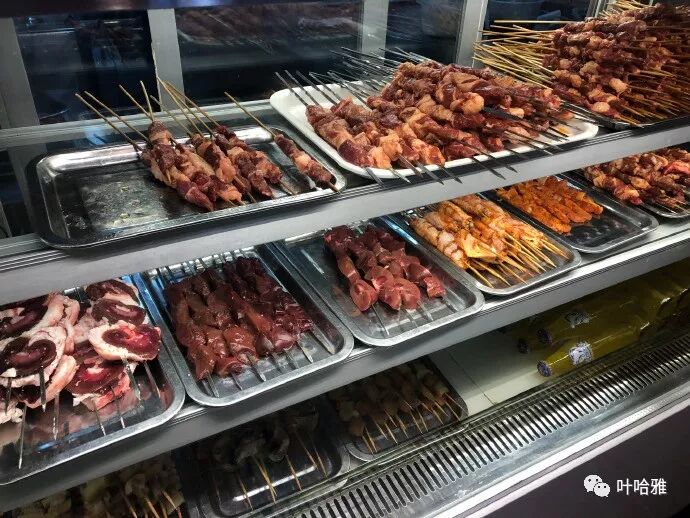
Besides the braised cat-ear noodles, they also serve barbecue and Northwest-style home-cooked flour dishes like pita bread in soup (paomo) and hand-pulled noodles (lamian).
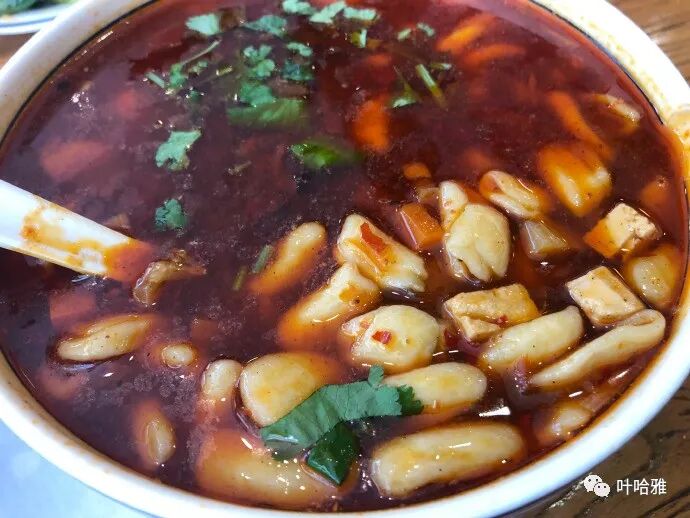
Braised cat-ear noodles are a Shaanxi specialty. They are sour and spicy. They are served piping hot, making them perfect for warming you up in the winter.
Address: Street-level shop, Hanhai Changcheng Building, No. 22 Yinhe Street, Lugu Subdistrict.
I am quite lazy. When I write food maps, I usually avoid writing subjective opinions because everyone has different tastes, and I even want to skip the addresses since the restaurant names are provided and you can easily find them with a map app. You can also find detailed information on Dazhong Dianping. Later, I realized many people are lazier than me; they want to find the restaurant and order the food just by looking at my post, and they might even want me to pay the bill for them too.
Halal Food Guide: Beijing - Mediterranean Festival, Musakhan and Karkadeh
Articles • ali2007fr posted the article • 0 comments • 252 views • 2026-05-20 09:38
Summary: This Beijing Mediterranean Food Festival visit covers Palestinian musakhan, Egyptian karkadeh, Caucasian venison stew, Bangladeshi curry, and other halal food stalls near Jianguomen. The article keeps the restaurant names, dish details, and cultural background of Jaffa, roselle tea, and Ramadan drinks.
On Sunday, I went to the Mediterranean Food Festival outside the Scitech Plaza at Jianguomen. Since the start of summer, Beijing has hosted several specialty food festivals every month, which is a great way to take an evening stroll and satisfy a craving. This time, the food festival at Scitech featured stalls from Xiting Xiuse (Azerbaijan), Cleopatra (Egypt), Benjiebi (Bangladesh), and Jaffa (Palestine).
We first bought Palestinian-style Musakhan chicken rolls and hummus (hummus) at Jaffa, and the Palestinian brother even gave Suleiman a donut.
Musakhan is known as the national dish of Palestine and is especially popular among Palestinians and Jordanians. Palestinians heat up freshly made Taboon bread (taboon), then roll it with roasted chicken, onions, sumac powder, allspice powder, saffron, and fried pine nuts, all brushed with olive oil.
Jaffa is an ancient Palestinian city that was once primarily Arab during the Ottoman period, and in the 19th century, it was famous for its vast orchards and Jaffa oranges. In the early 20th century, Jaffa was also a news hub for Palestine, with many newspaper offices located there. After 1948, most of the Arab population was expelled from or fled Jaffa.
Then we bought Caucasian venison stew at Xiting Xiuse. They use traditional Caucasian mountain cooking techniques to slow-cook the venison until it is soft and tender. The rich soup is also very flavorful when dipped with bread.
We ate chicken rice and milk pudding with hibiscus water at the Cleopatra restaurant. Their shop is located in Sanlitun SOHO, and they also set up a stall every year at the International Neighborhood Festival at the Jianguomen Diplomatic Residence Compound. The rice was mixed with cashews, raisins, and fried noodles, and it tasted great with the shredded chicken. I especially liked the hibiscus water and drank two cups.
Hibiscus water is actually roselle tea. Roselle is native to Africa and is often used in Egypt and Sudan to make hibiscus water called Karkadeh, which has a history of over 6,000 years and is also known as Pharaoh's tea. Hibiscus water can be found at various celebrations in Egypt, especially during the iftar meal in Ramadan. Egyptians make hibiscus water in both cold and hot ways. You can soak the dried petals in cold water overnight, then filter and add sugar before refrigerating, or boil them for 5 to 10 minutes, filter, add sugar, and refrigerate after cooling.
At the Bangladeshi stall Benjiebi, I ordered masala beef curry with saffron rice, and also ordered grilled lamb chops with mint chili sauce; their lamb was very tender. Their shop is on Haoyun Street, diagonally across from Solana, and we often go there to eat after walking around Solana. Their weekday lunch curry set is also very affordable. view all
Summary: This Beijing Mediterranean Food Festival visit covers Palestinian musakhan, Egyptian karkadeh, Caucasian venison stew, Bangladeshi curry, and other halal food stalls near Jianguomen. The article keeps the restaurant names, dish details, and cultural background of Jaffa, roselle tea, and Ramadan drinks.
On Sunday, I went to the Mediterranean Food Festival outside the Scitech Plaza at Jianguomen. Since the start of summer, Beijing has hosted several specialty food festivals every month, which is a great way to take an evening stroll and satisfy a craving. This time, the food festival at Scitech featured stalls from Xiting Xiuse (Azerbaijan), Cleopatra (Egypt), Benjiebi (Bangladesh), and Jaffa (Palestine).
We first bought Palestinian-style Musakhan chicken rolls and hummus (hummus) at Jaffa, and the Palestinian brother even gave Suleiman a donut.
Musakhan is known as the national dish of Palestine and is especially popular among Palestinians and Jordanians. Palestinians heat up freshly made Taboon bread (taboon), then roll it with roasted chicken, onions, sumac powder, allspice powder, saffron, and fried pine nuts, all brushed with olive oil.
Jaffa is an ancient Palestinian city that was once primarily Arab during the Ottoman period, and in the 19th century, it was famous for its vast orchards and Jaffa oranges. In the early 20th century, Jaffa was also a news hub for Palestine, with many newspaper offices located there. After 1948, most of the Arab population was expelled from or fled Jaffa.
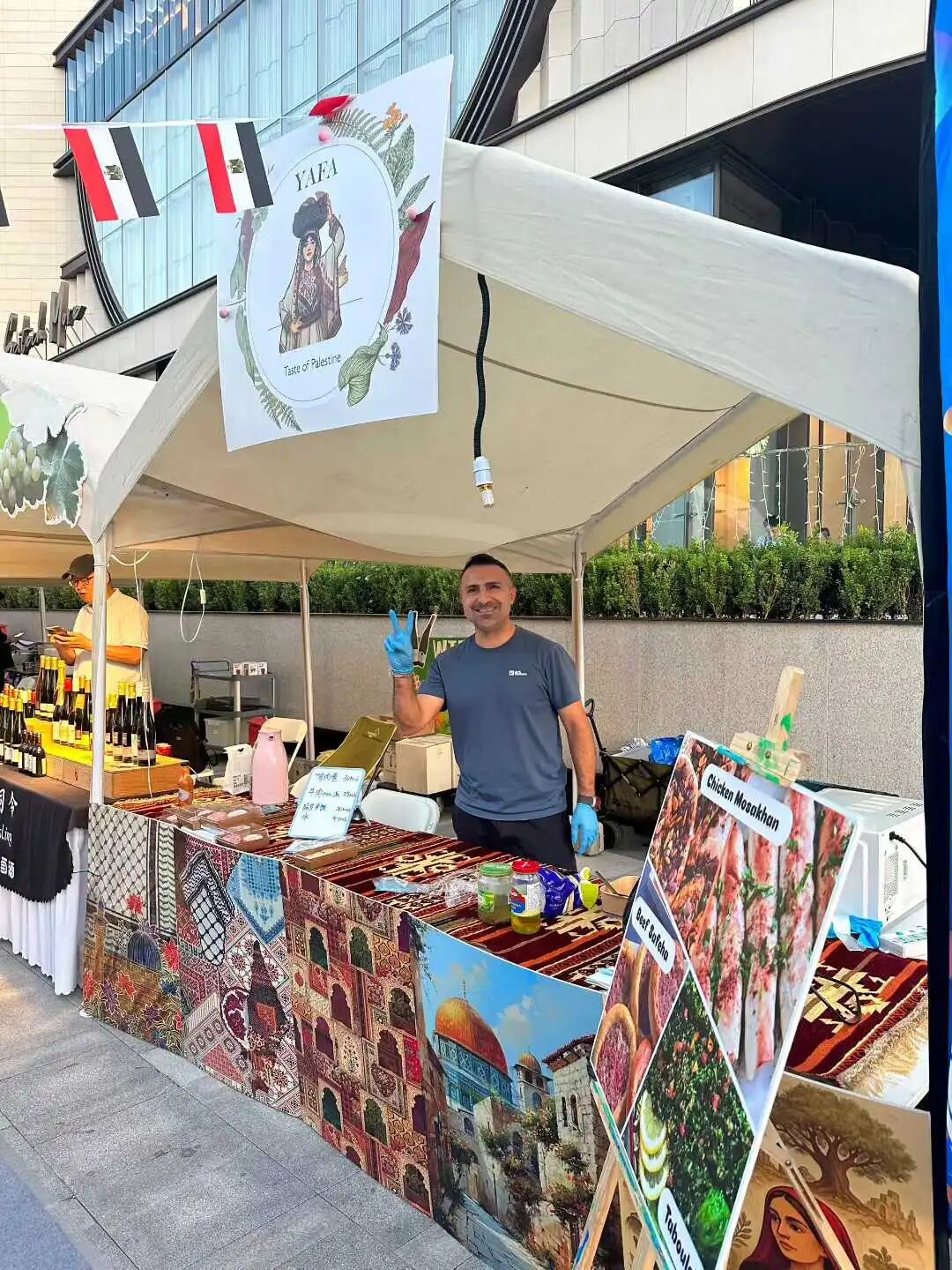
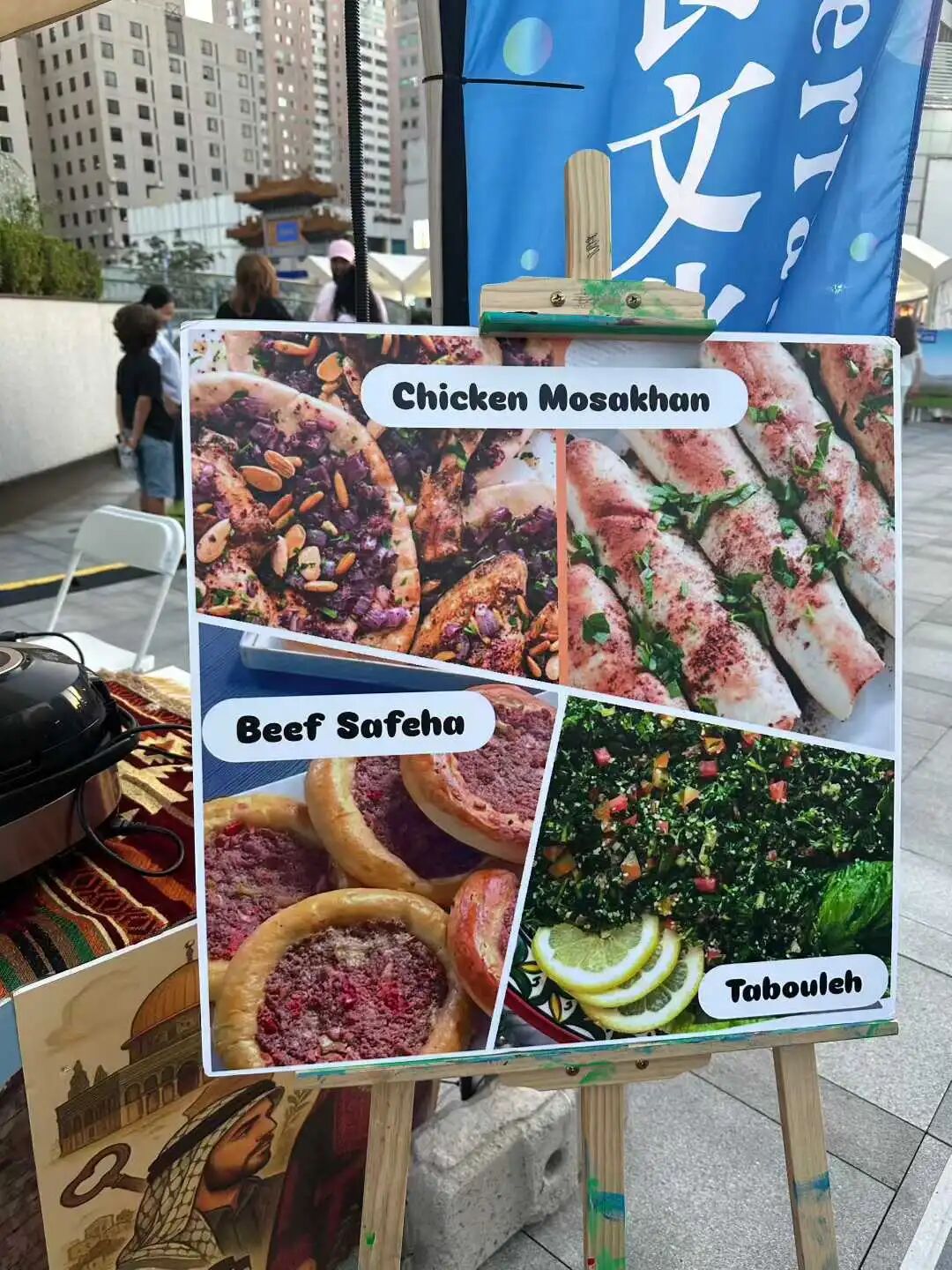
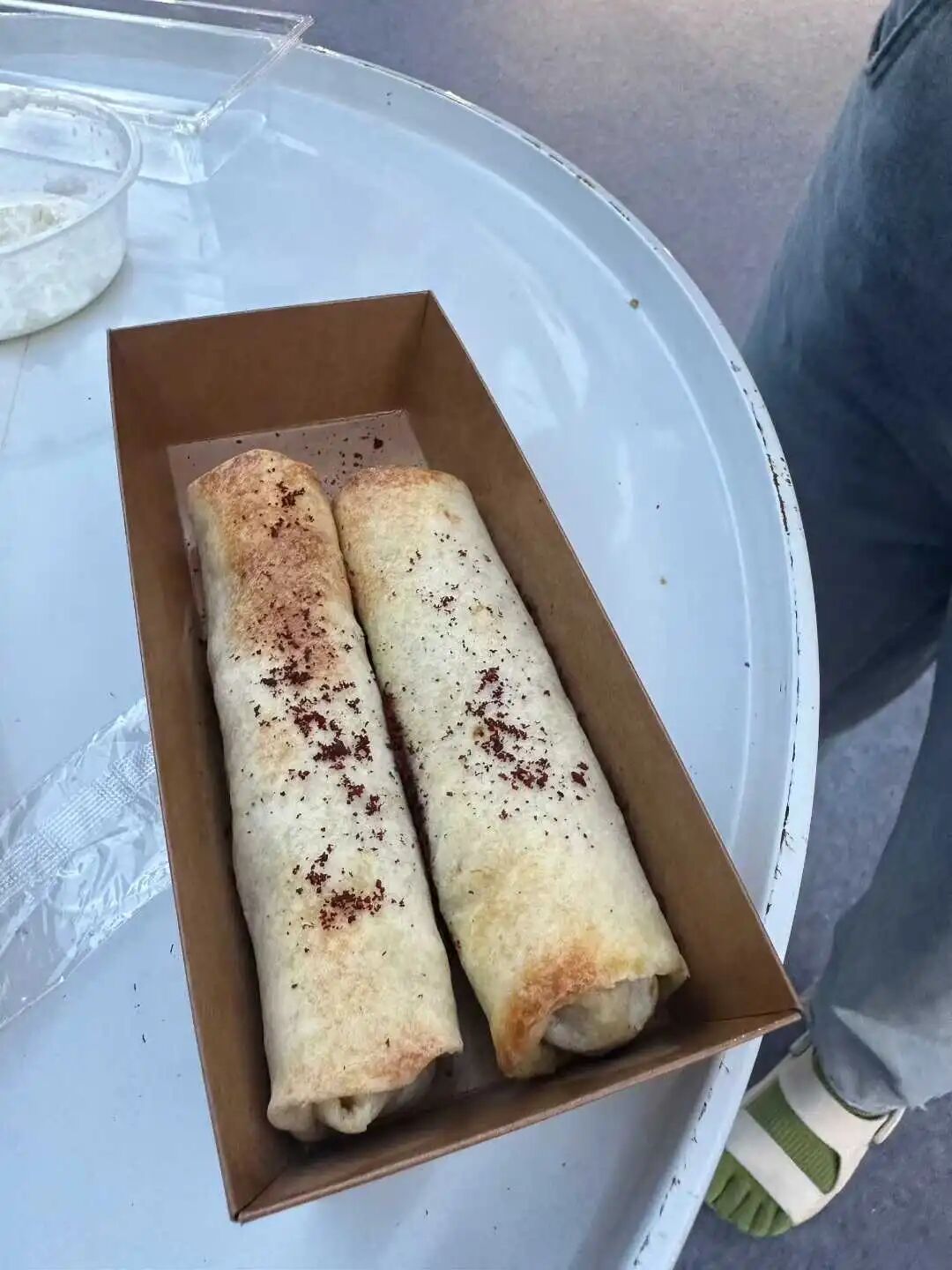
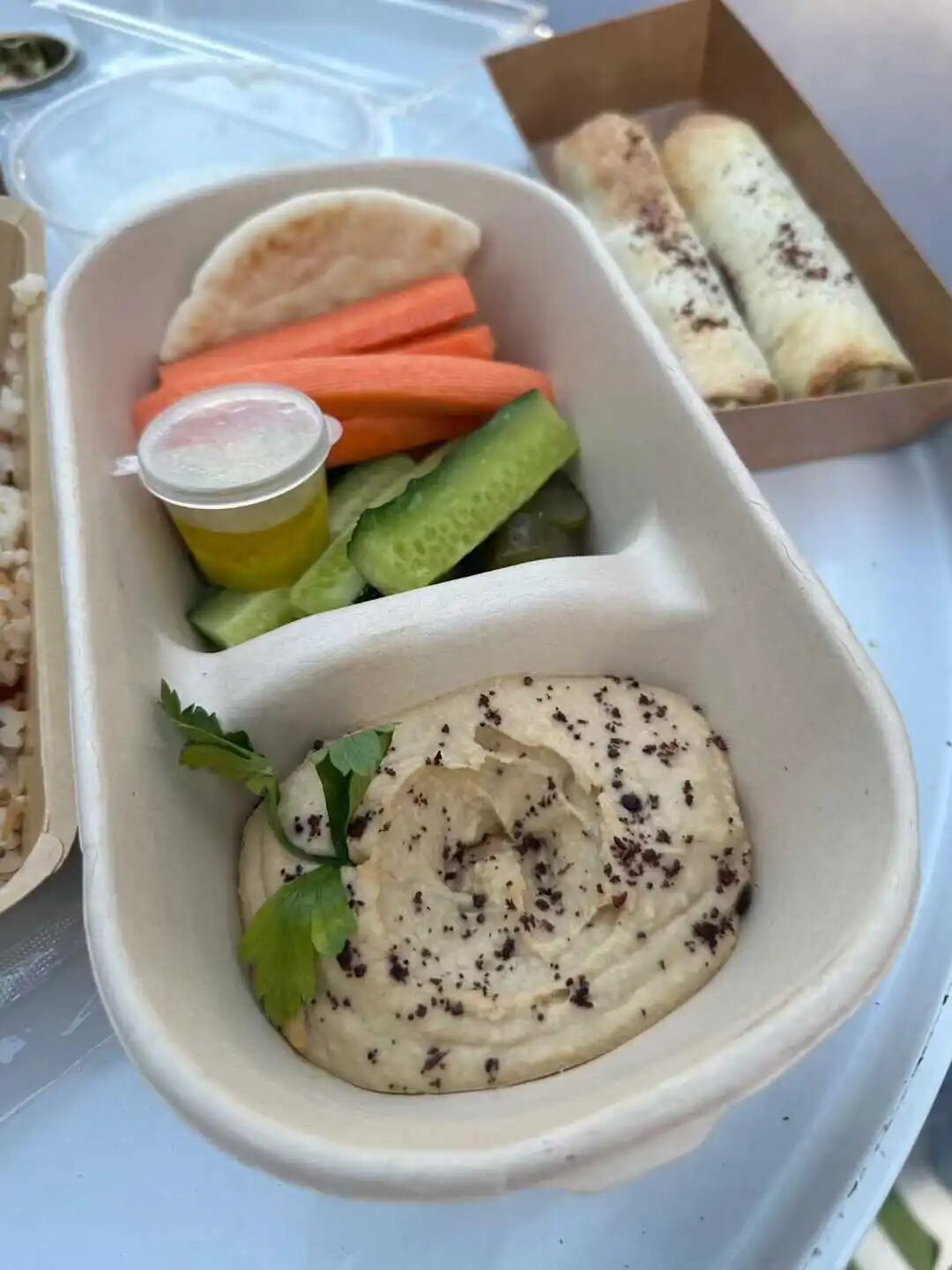
Then we bought Caucasian venison stew at Xiting Xiuse. They use traditional Caucasian mountain cooking techniques to slow-cook the venison until it is soft and tender. The rich soup is also very flavorful when dipped with bread.
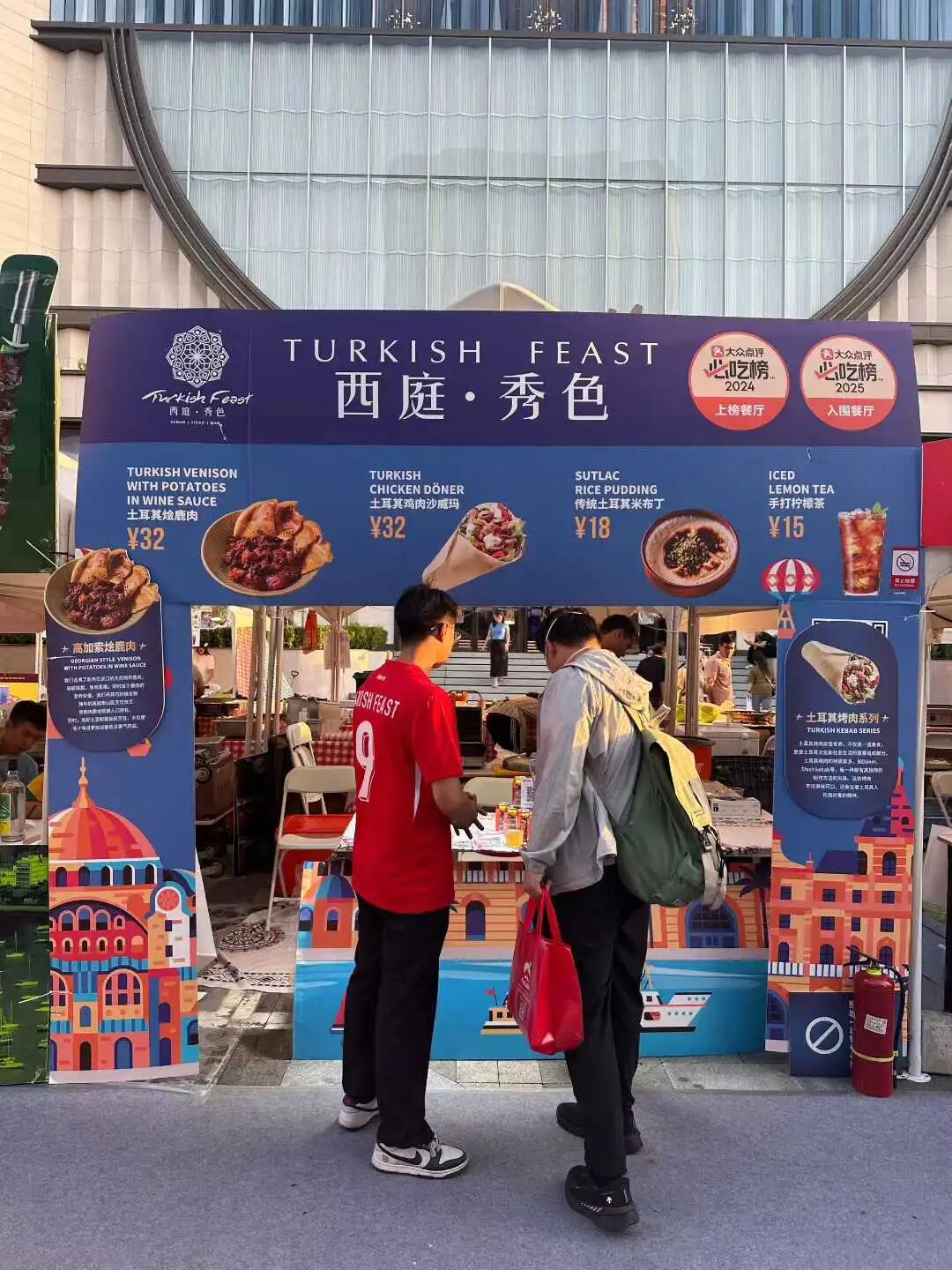
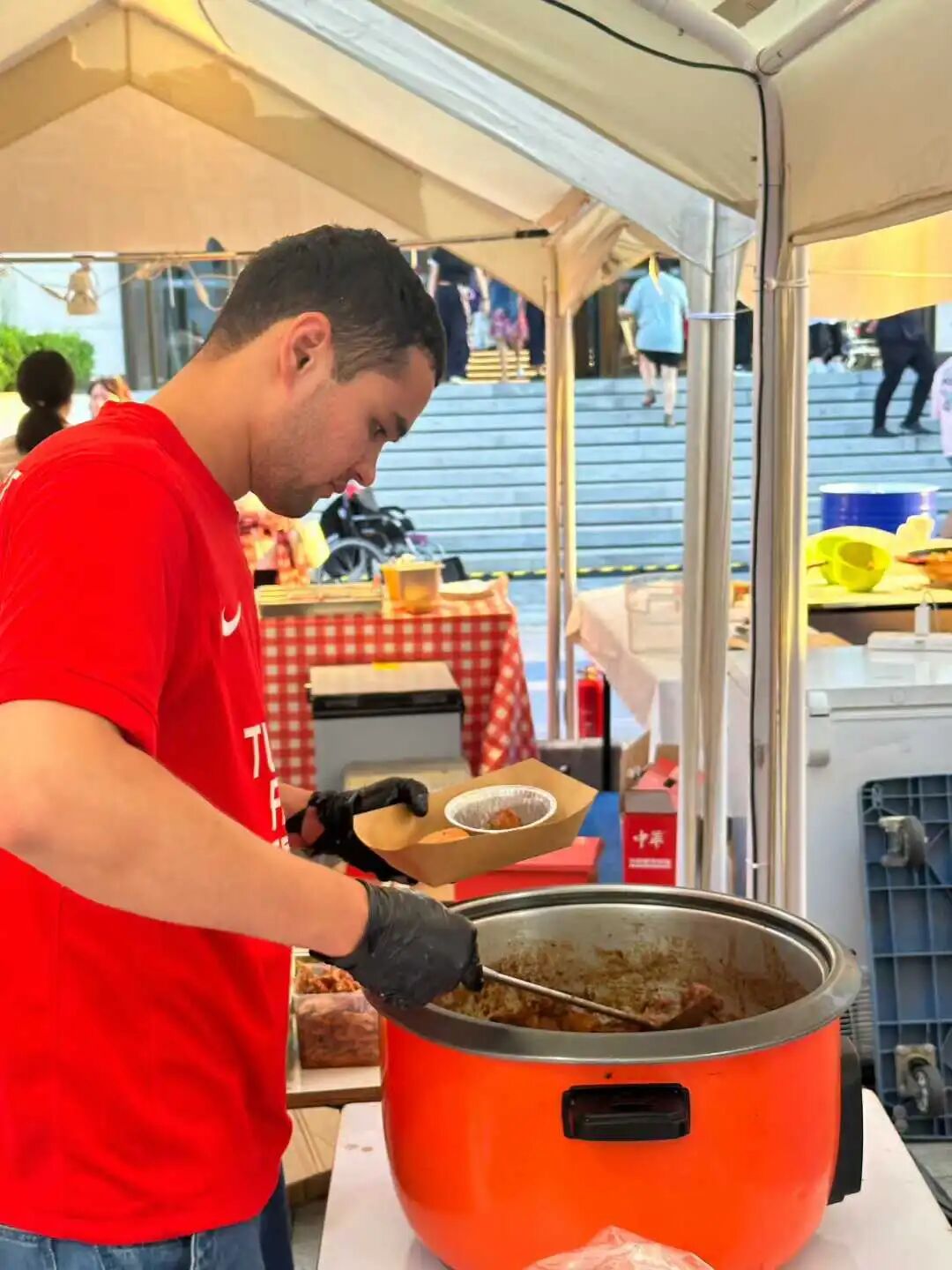
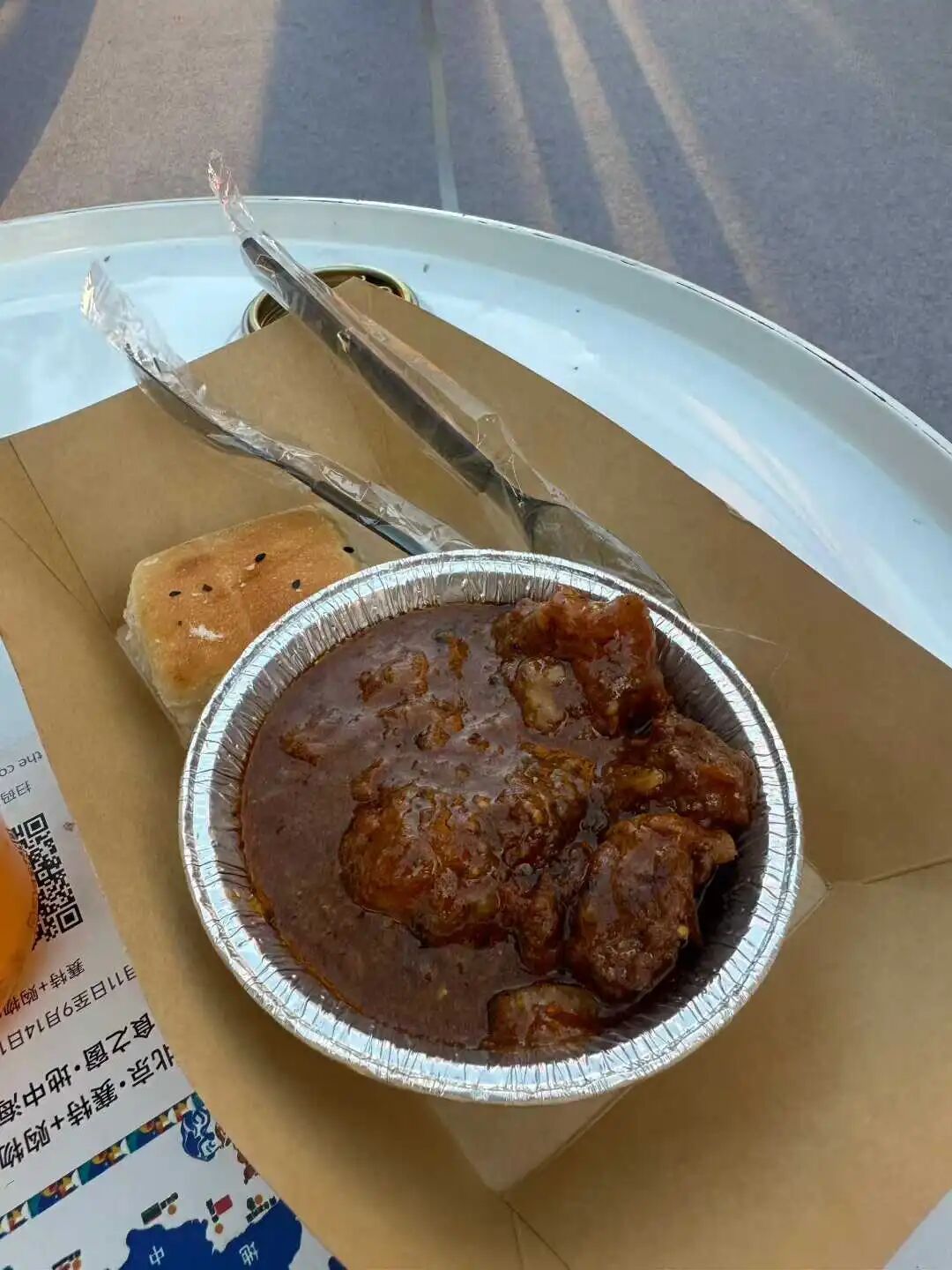
We ate chicken rice and milk pudding with hibiscus water at the Cleopatra restaurant. Their shop is located in Sanlitun SOHO, and they also set up a stall every year at the International Neighborhood Festival at the Jianguomen Diplomatic Residence Compound. The rice was mixed with cashews, raisins, and fried noodles, and it tasted great with the shredded chicken. I especially liked the hibiscus water and drank two cups.
Hibiscus water is actually roselle tea. Roselle is native to Africa and is often used in Egypt and Sudan to make hibiscus water called Karkadeh, which has a history of over 6,000 years and is also known as Pharaoh's tea. Hibiscus water can be found at various celebrations in Egypt, especially during the iftar meal in Ramadan. Egyptians make hibiscus water in both cold and hot ways. You can soak the dried petals in cold water overnight, then filter and add sugar before refrigerating, or boil them for 5 to 10 minutes, filter, add sugar, and refrigerate after cooling.
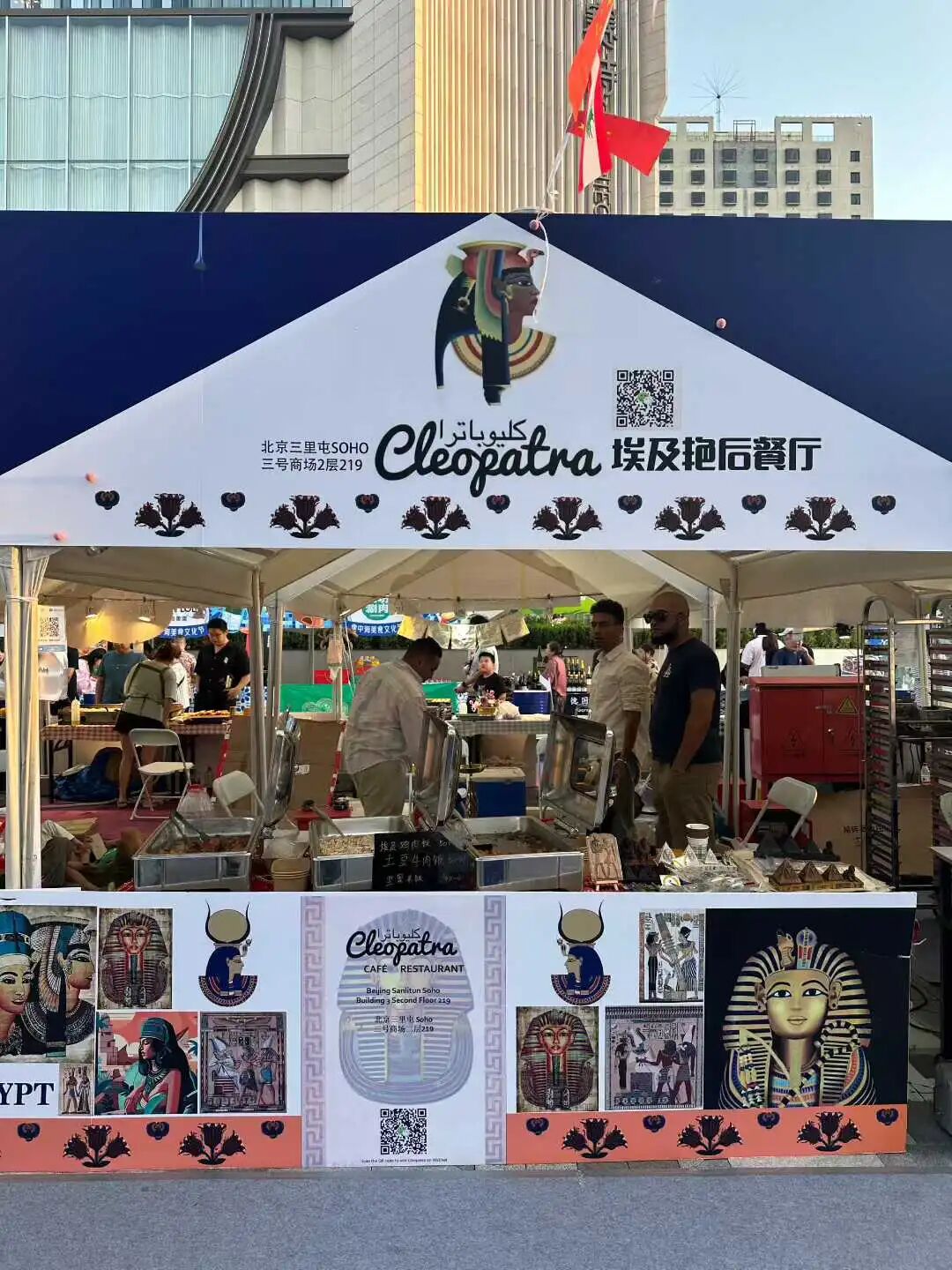
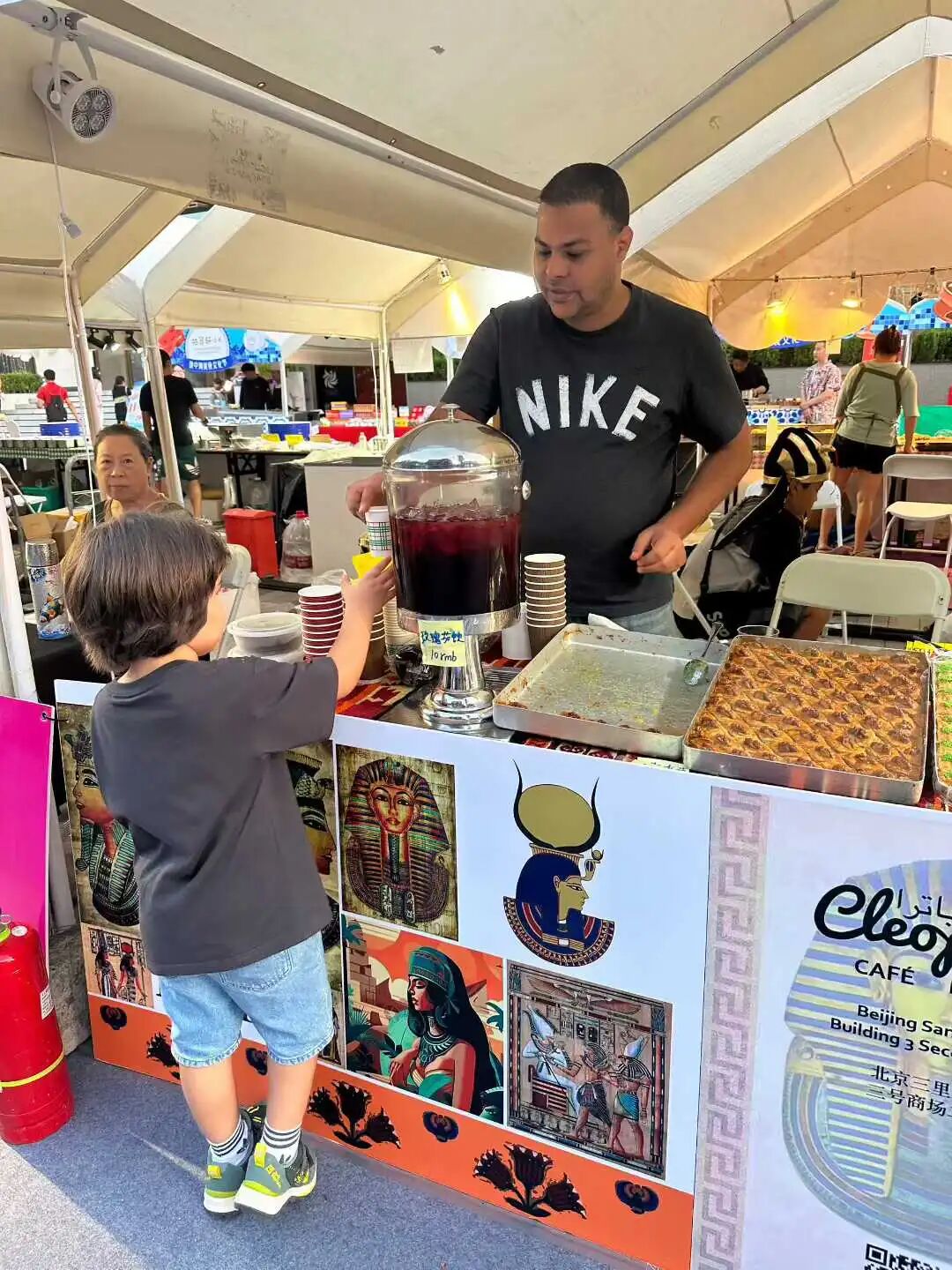
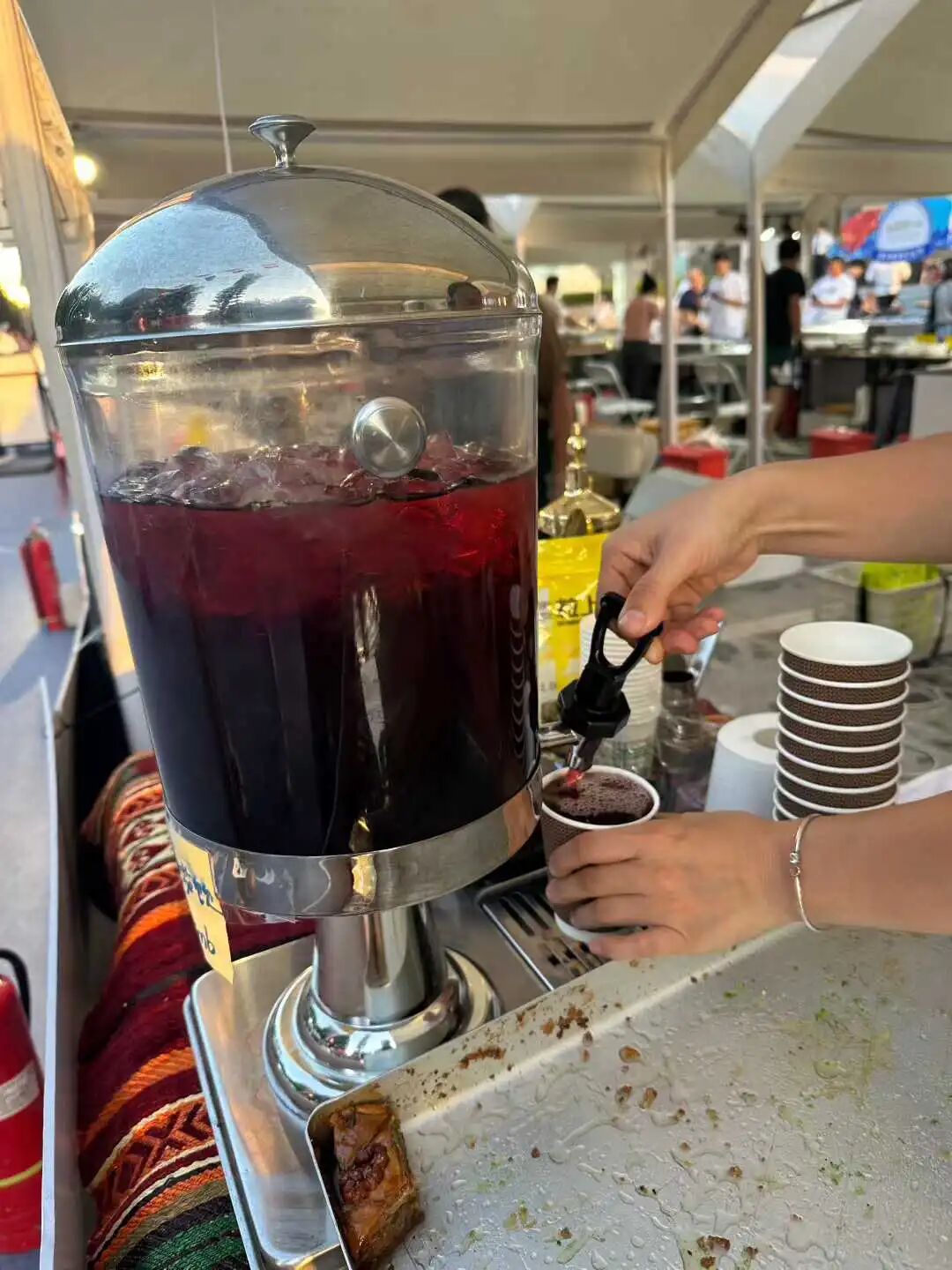
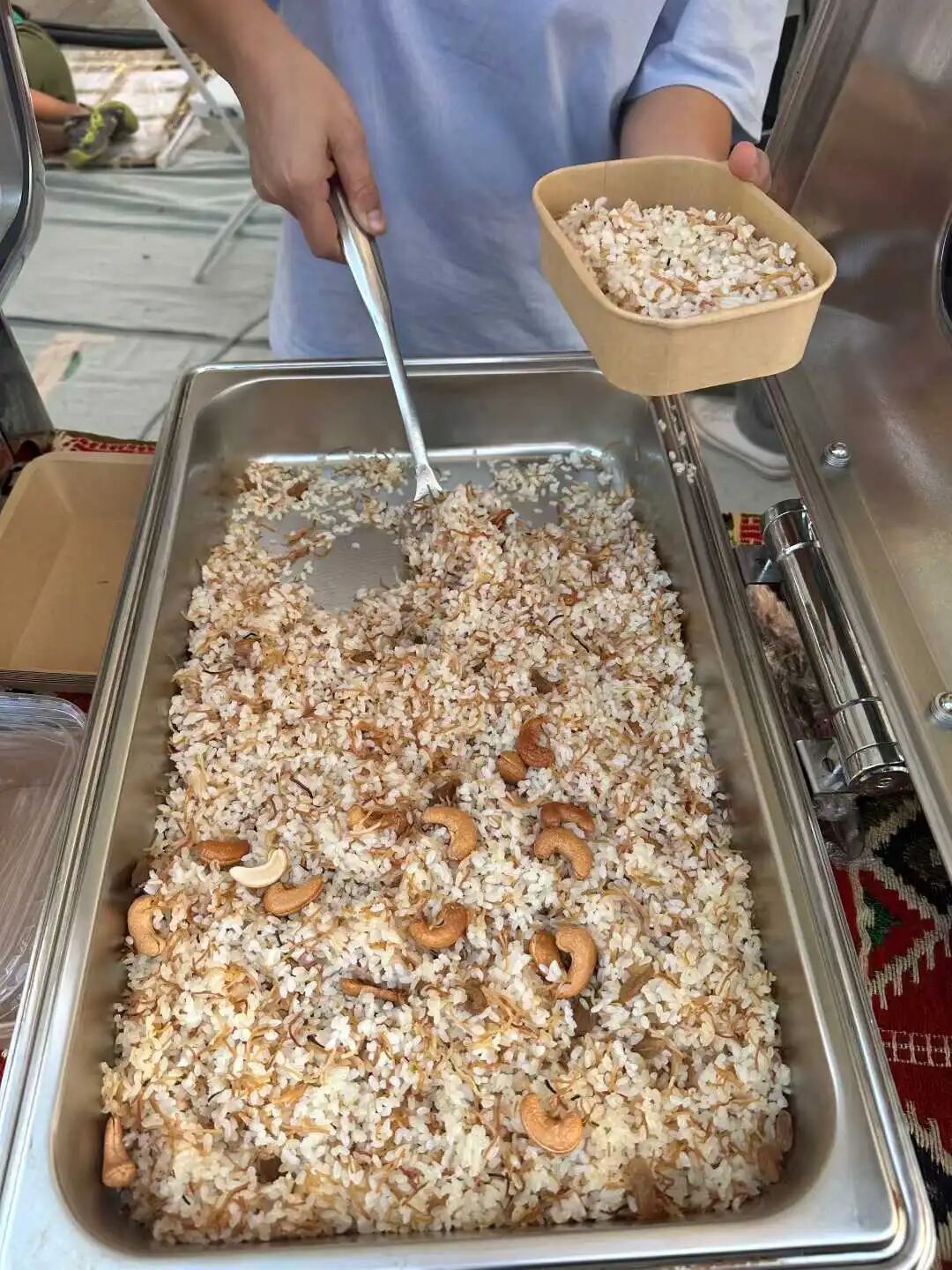
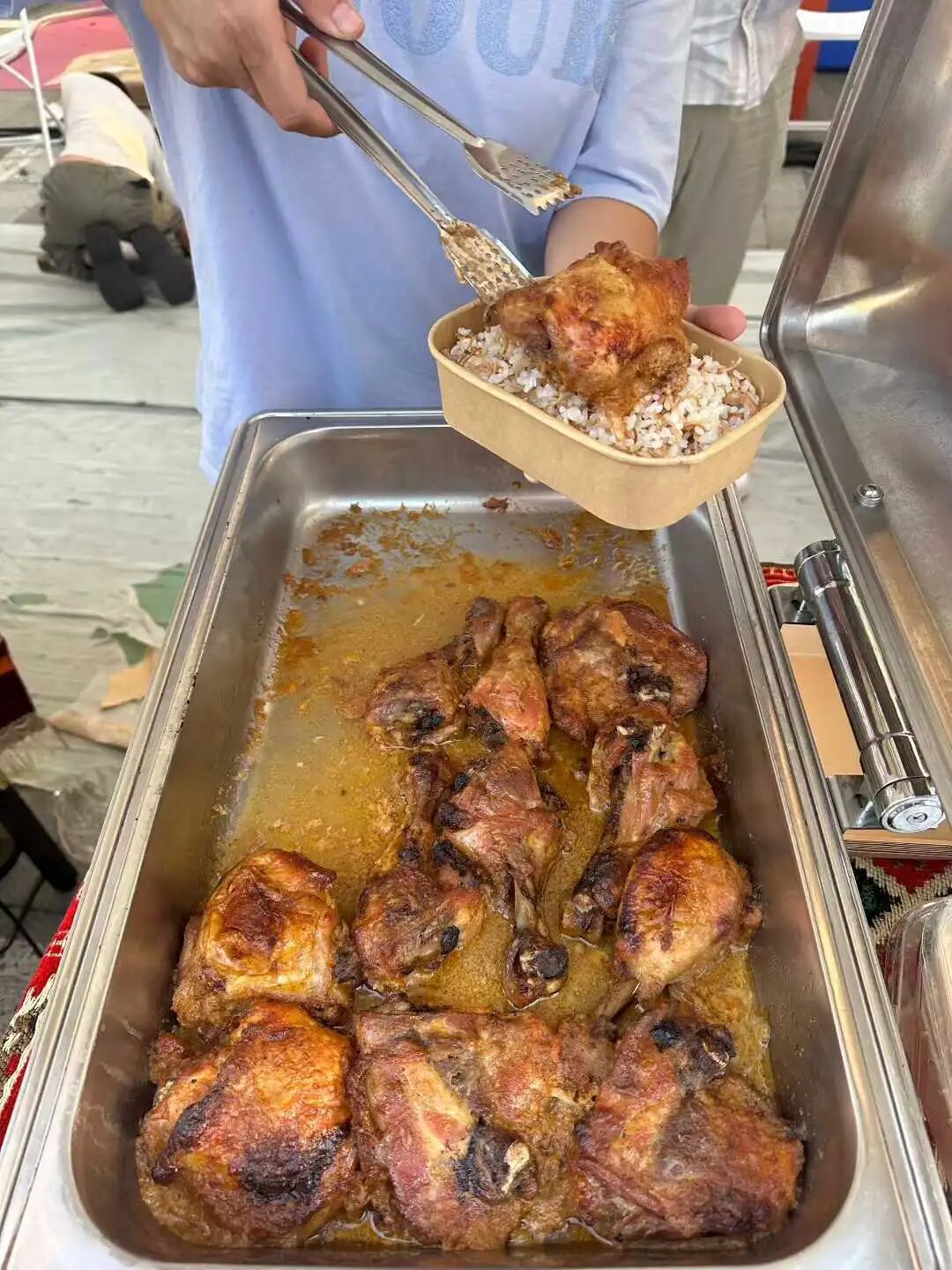
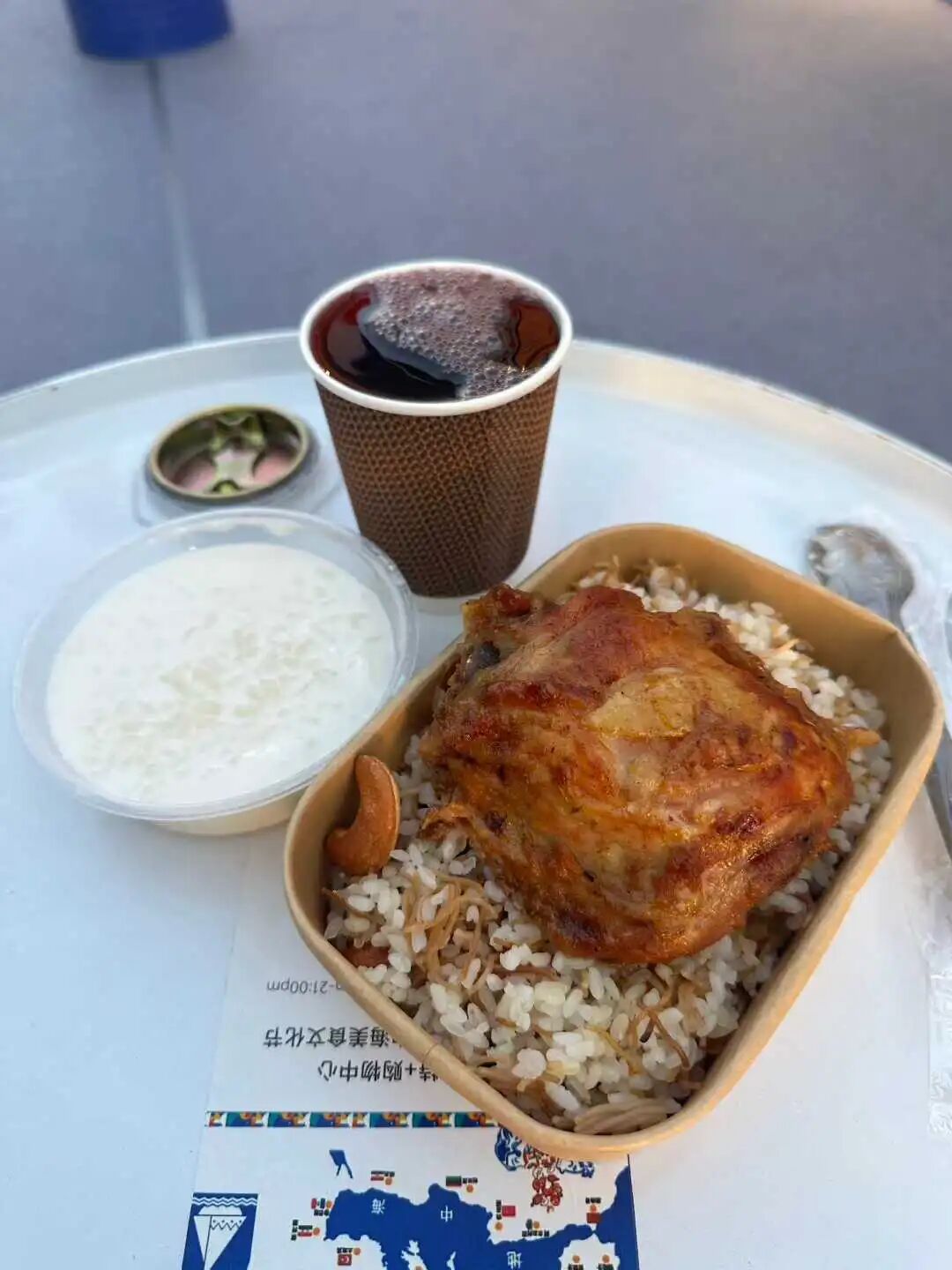
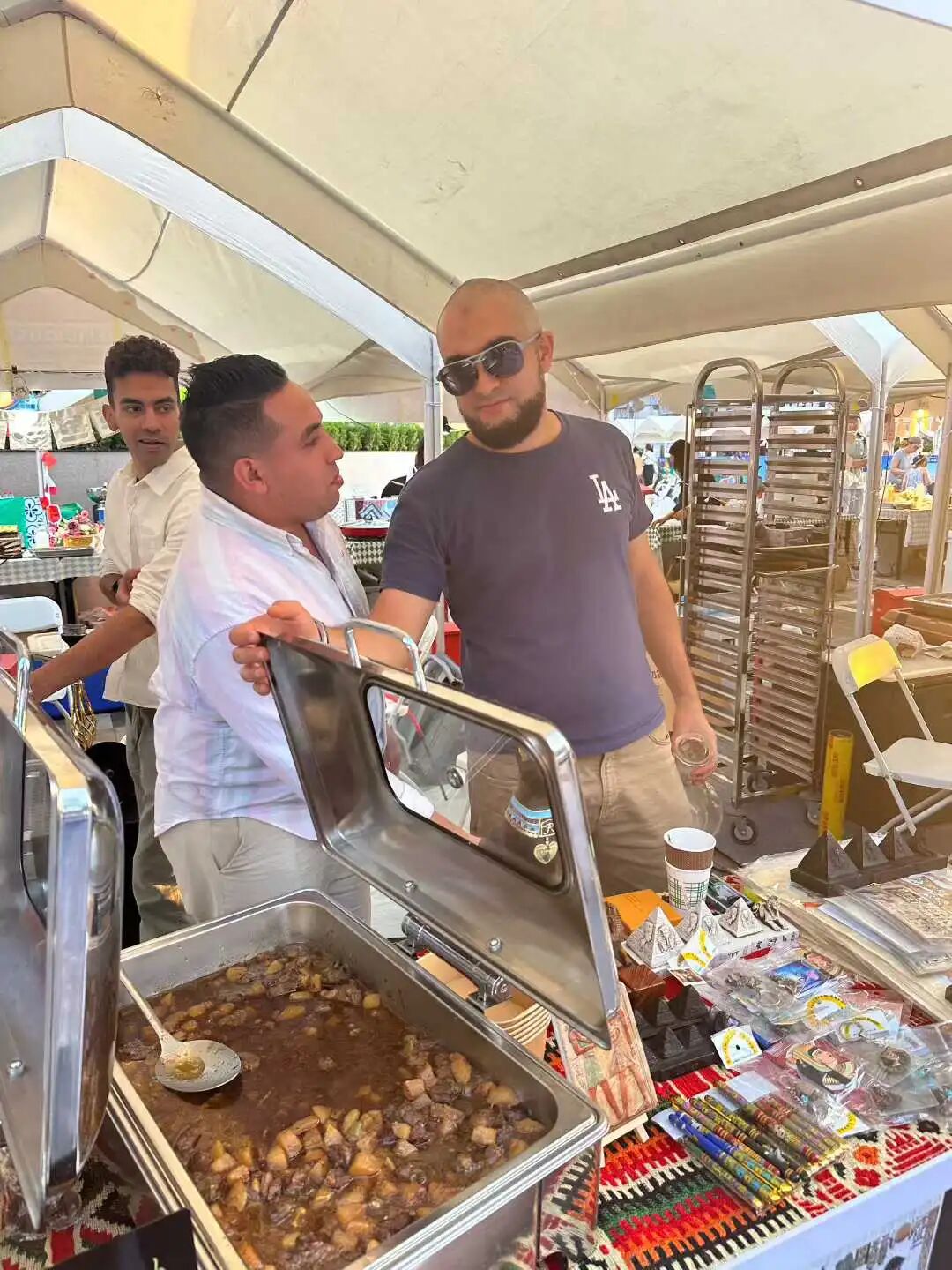
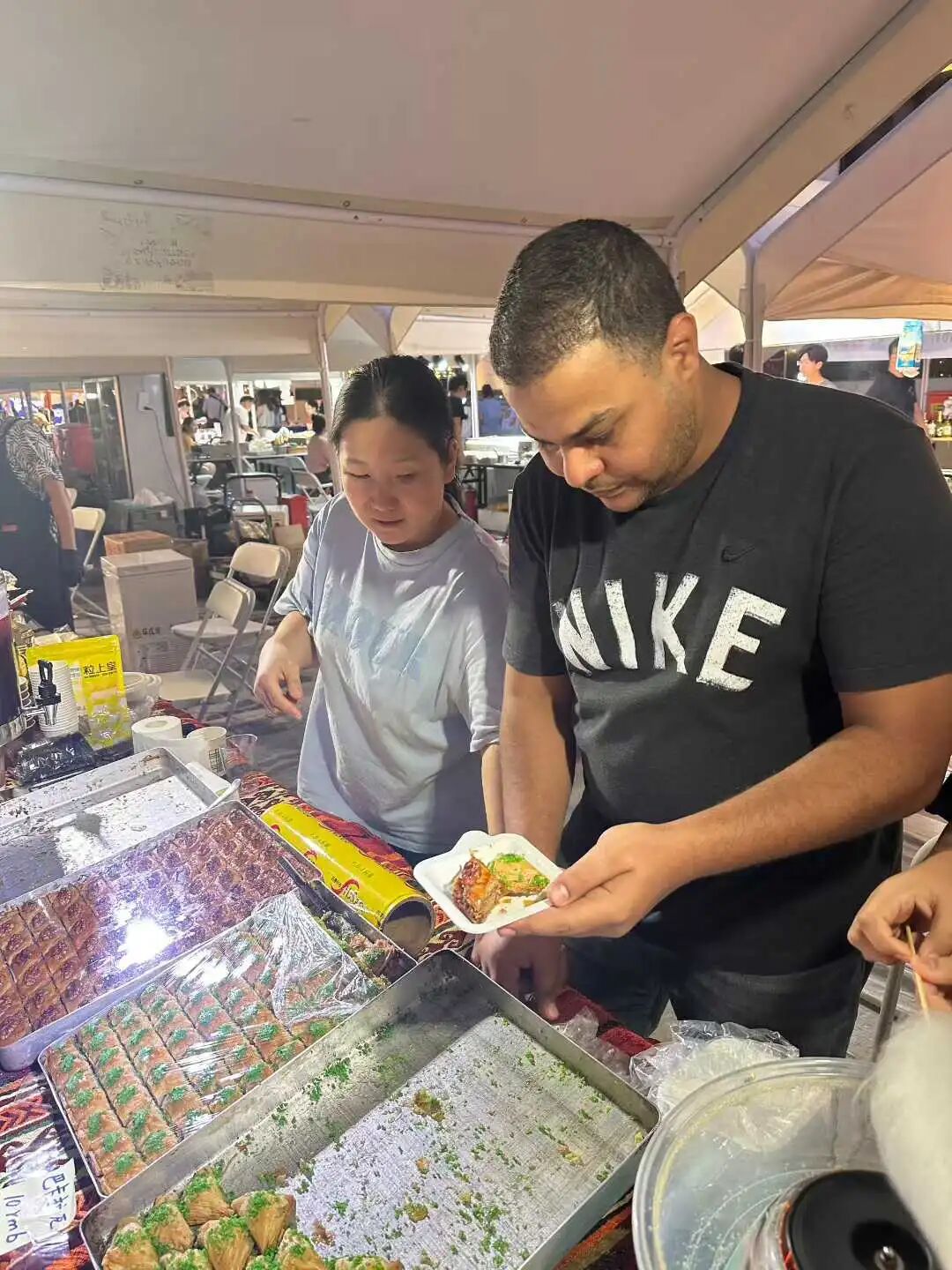
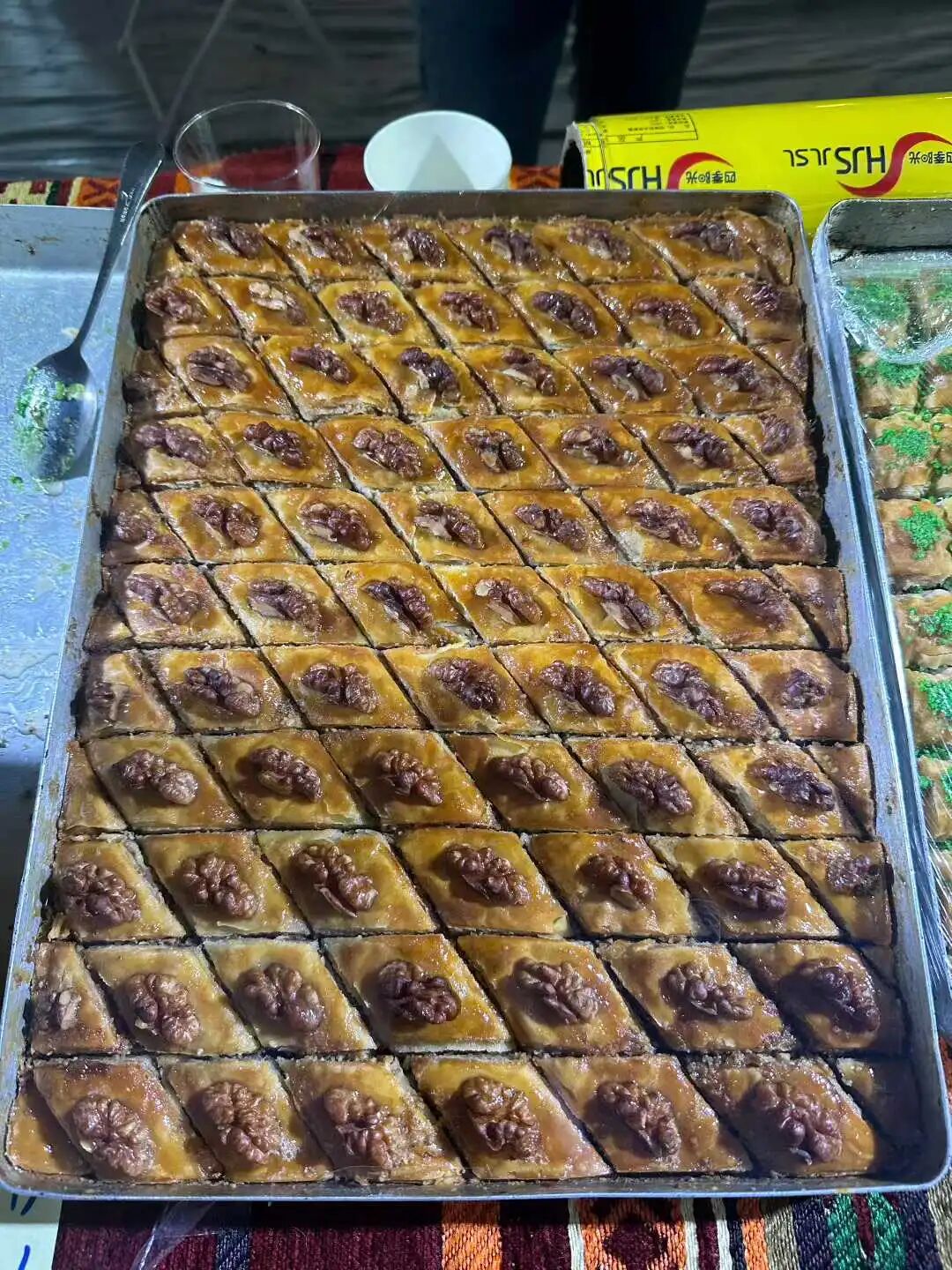
At the Bangladeshi stall Benjiebi, I ordered masala beef curry with saffron rice, and also ordered grilled lamb chops with mint chili sauce; their lamb was very tender. Their shop is on Haoyun Street, diagonally across from Solana, and we often go there to eat after walking around Solana. Their weekday lunch curry set is also very affordable.
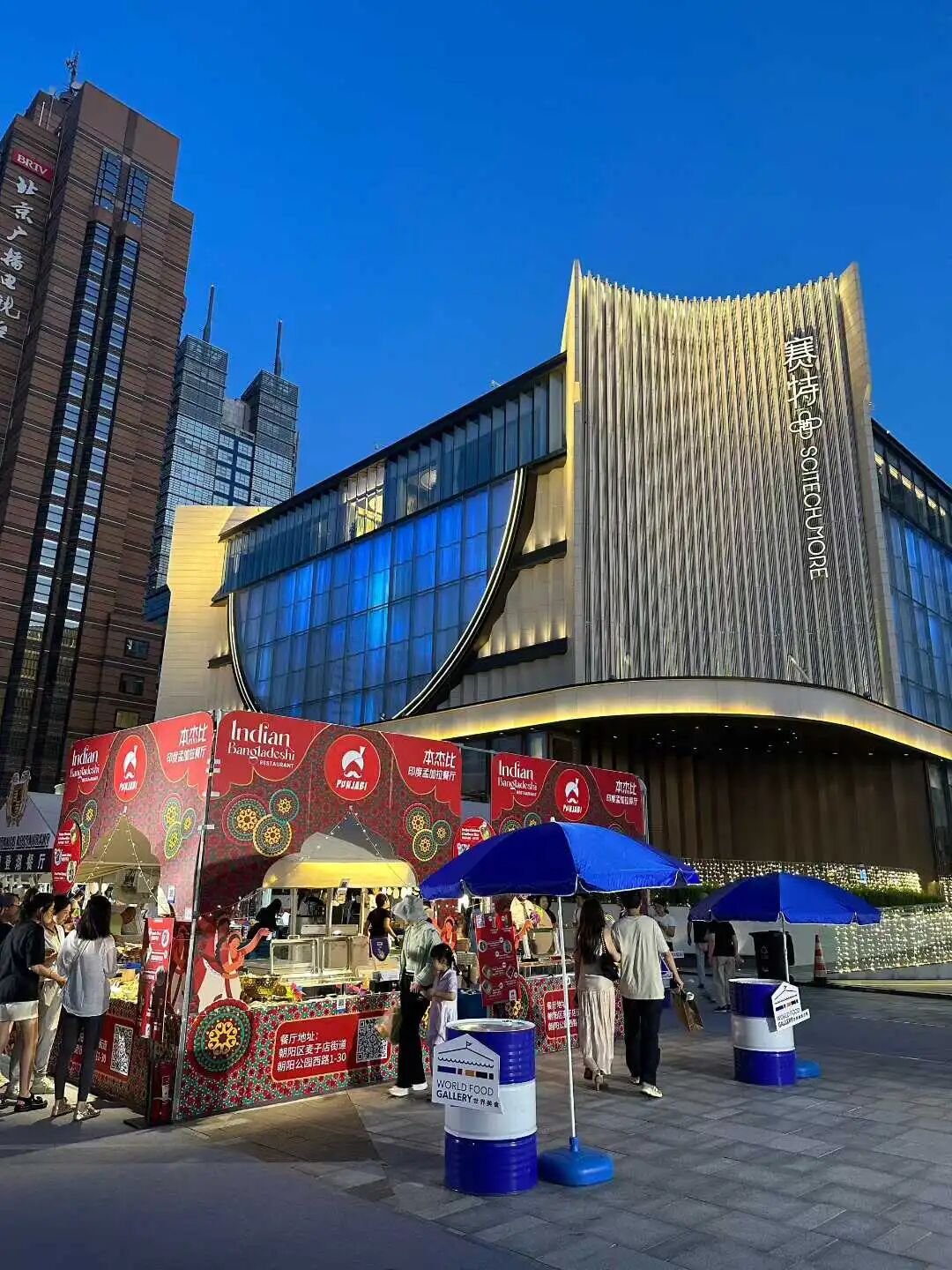
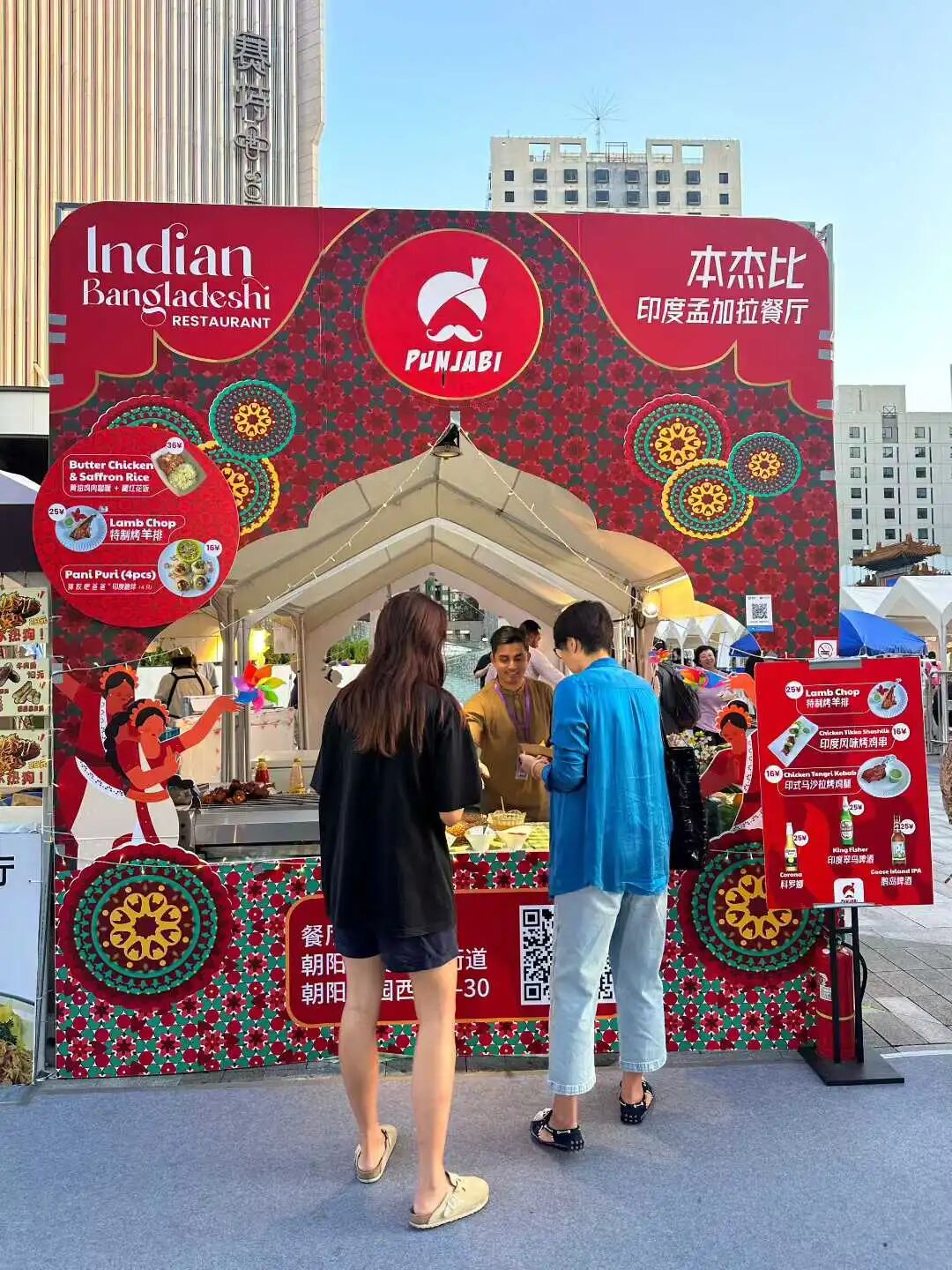
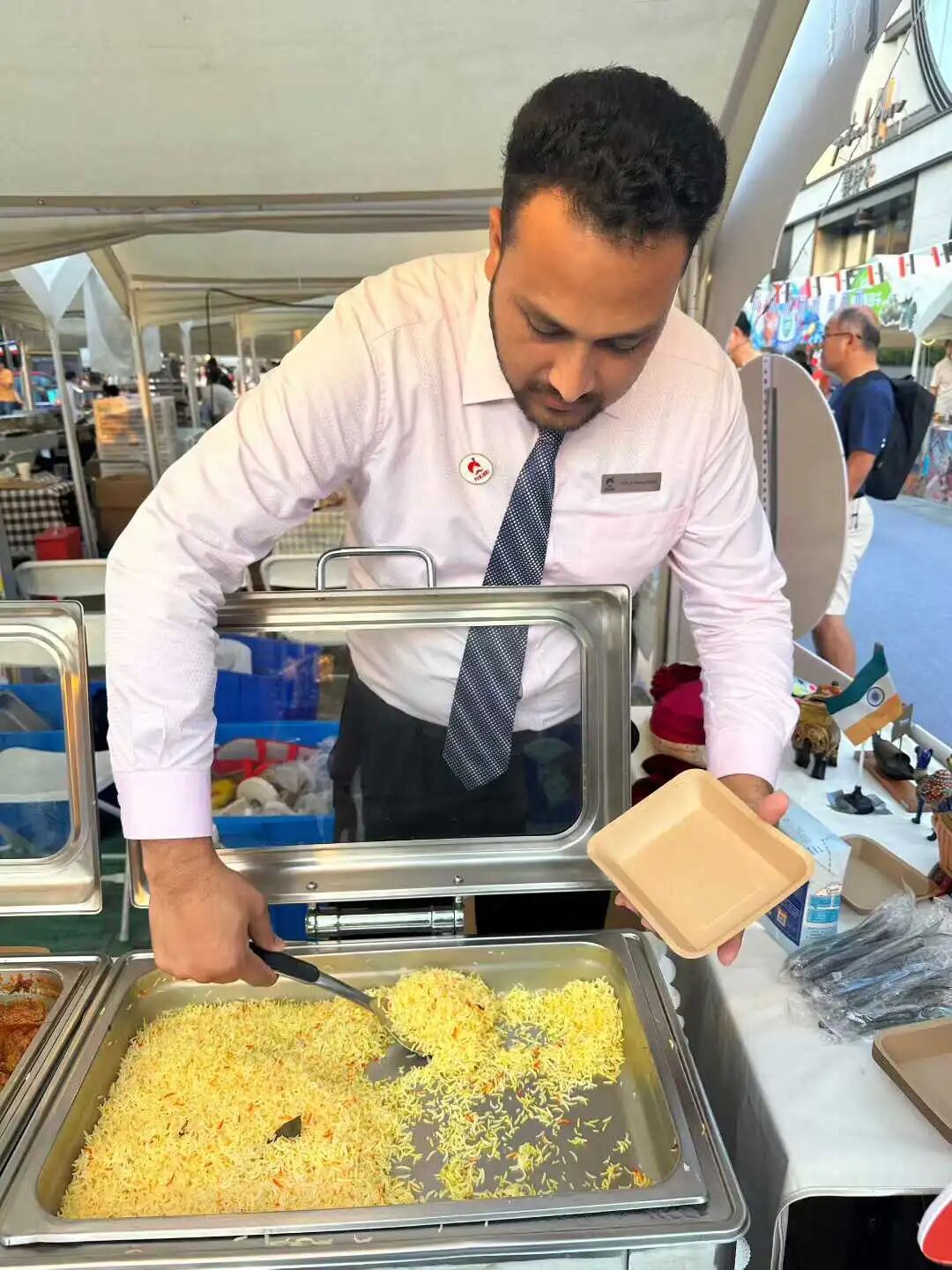
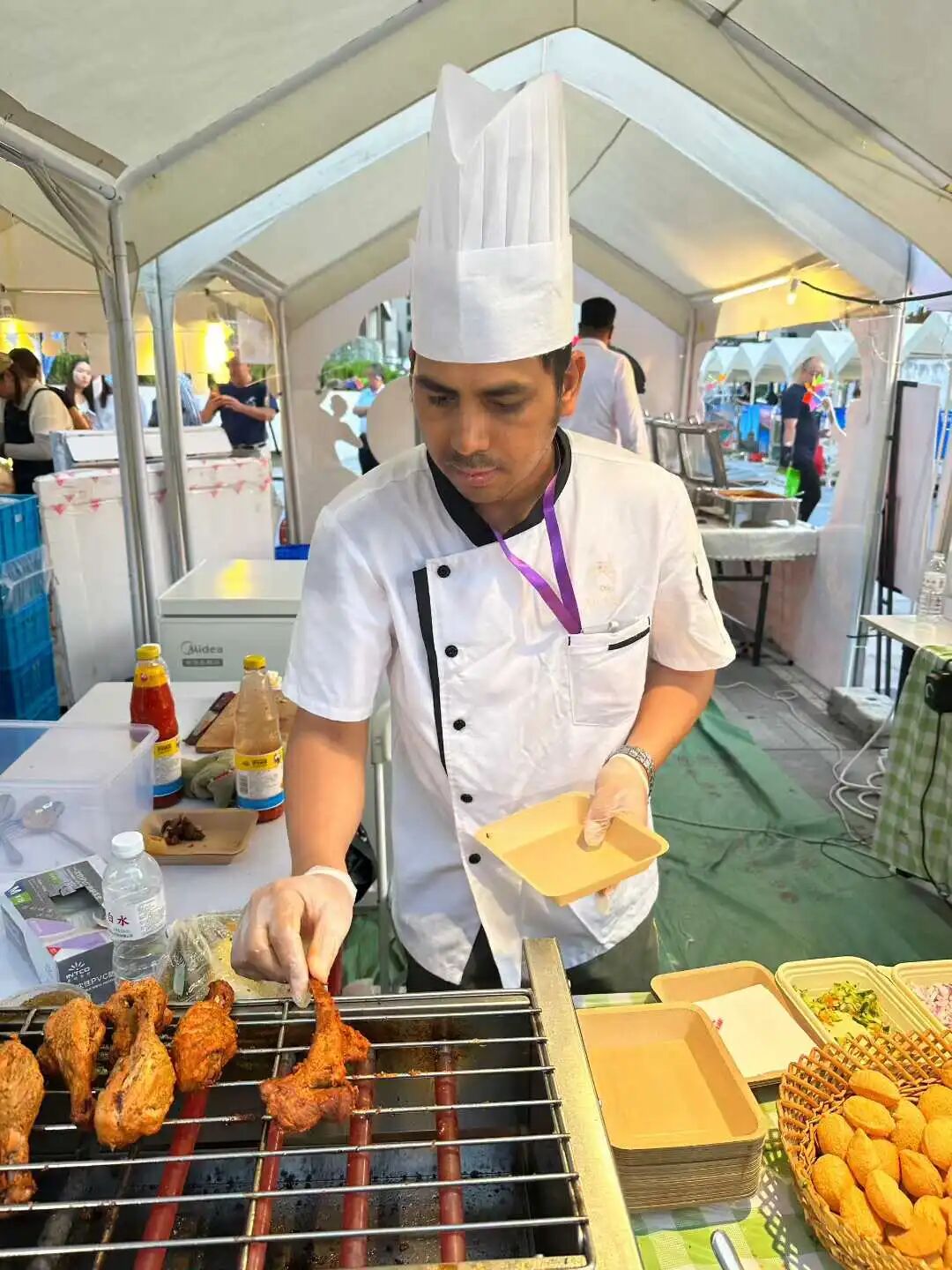
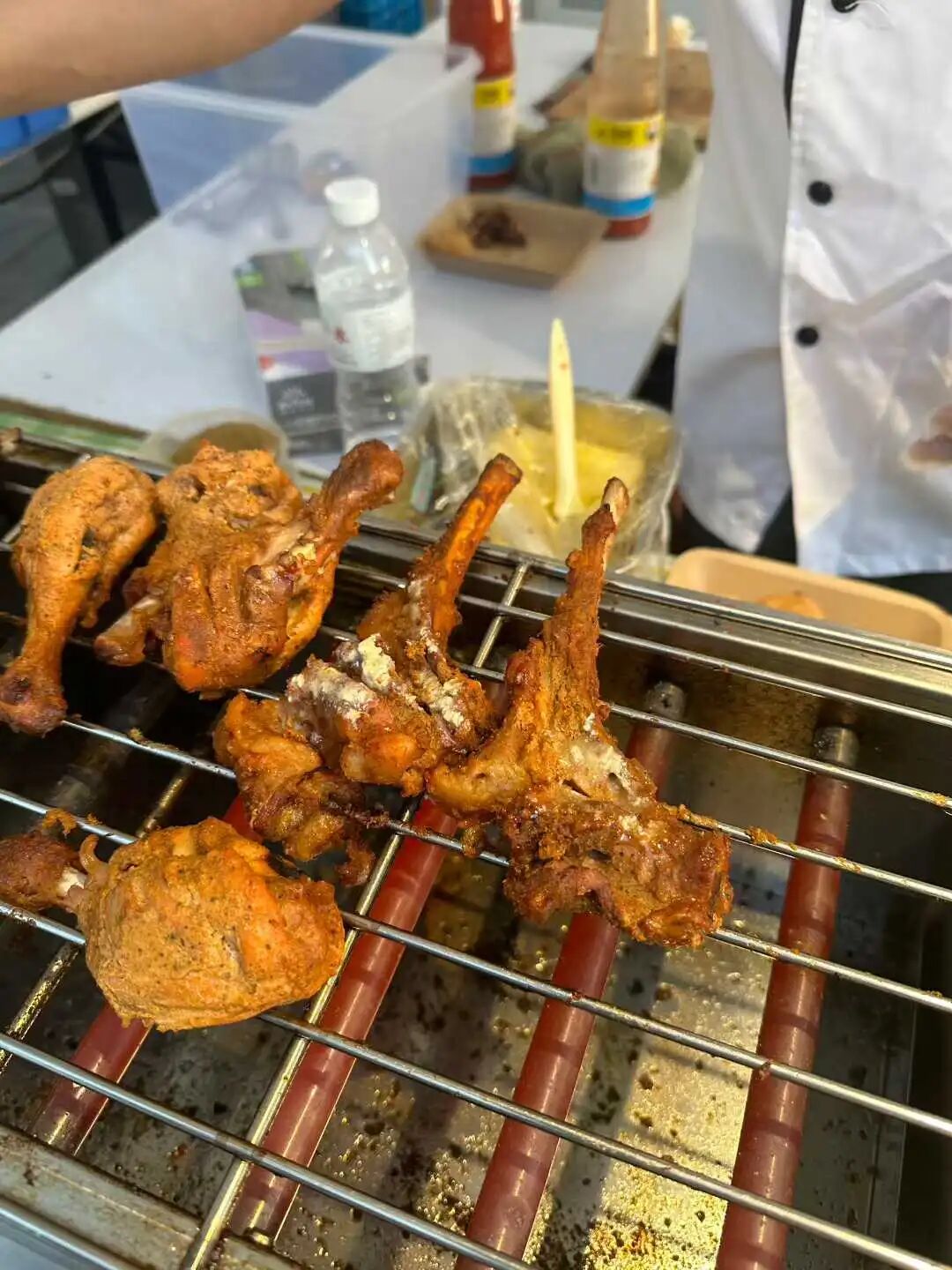
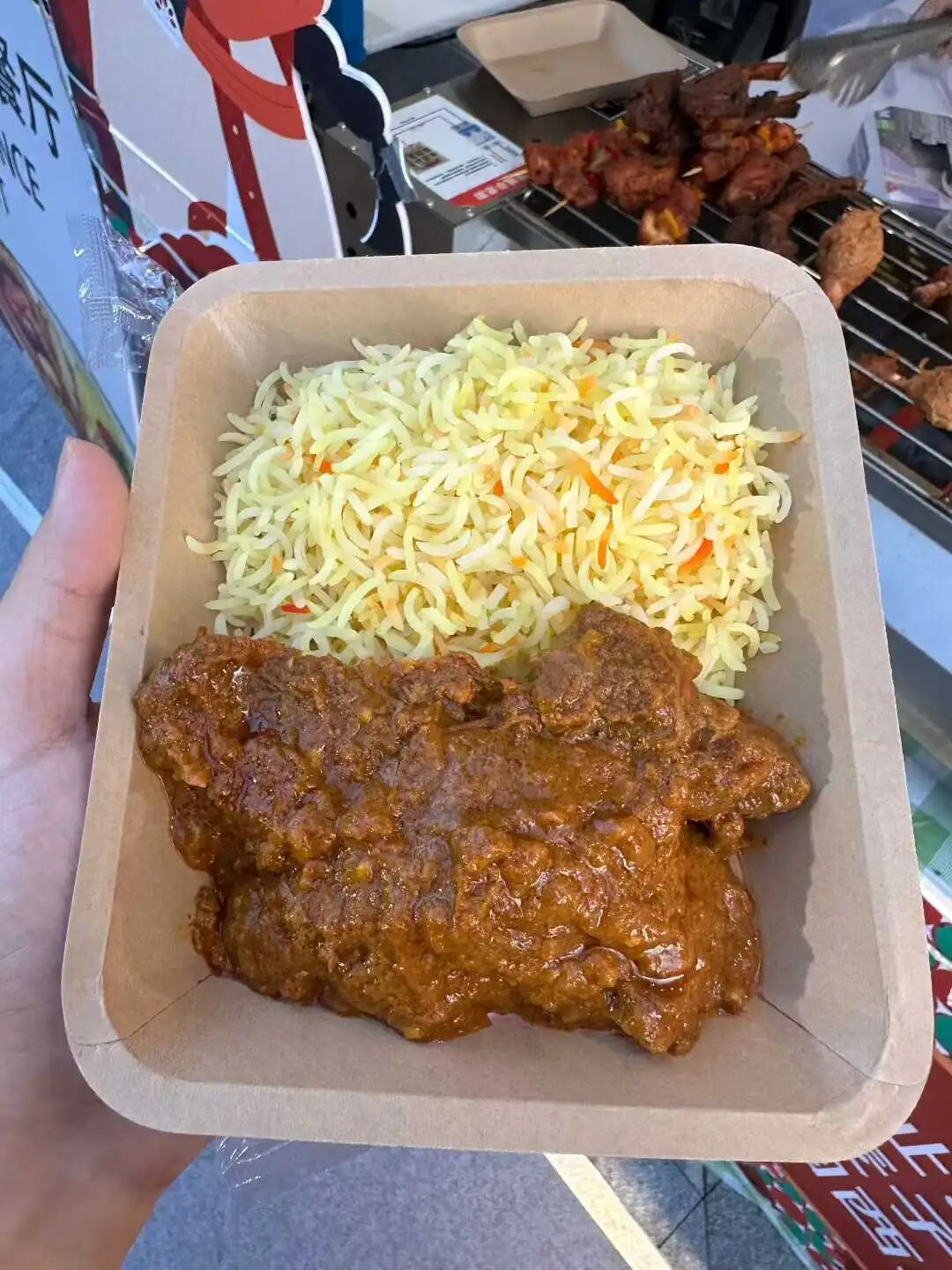
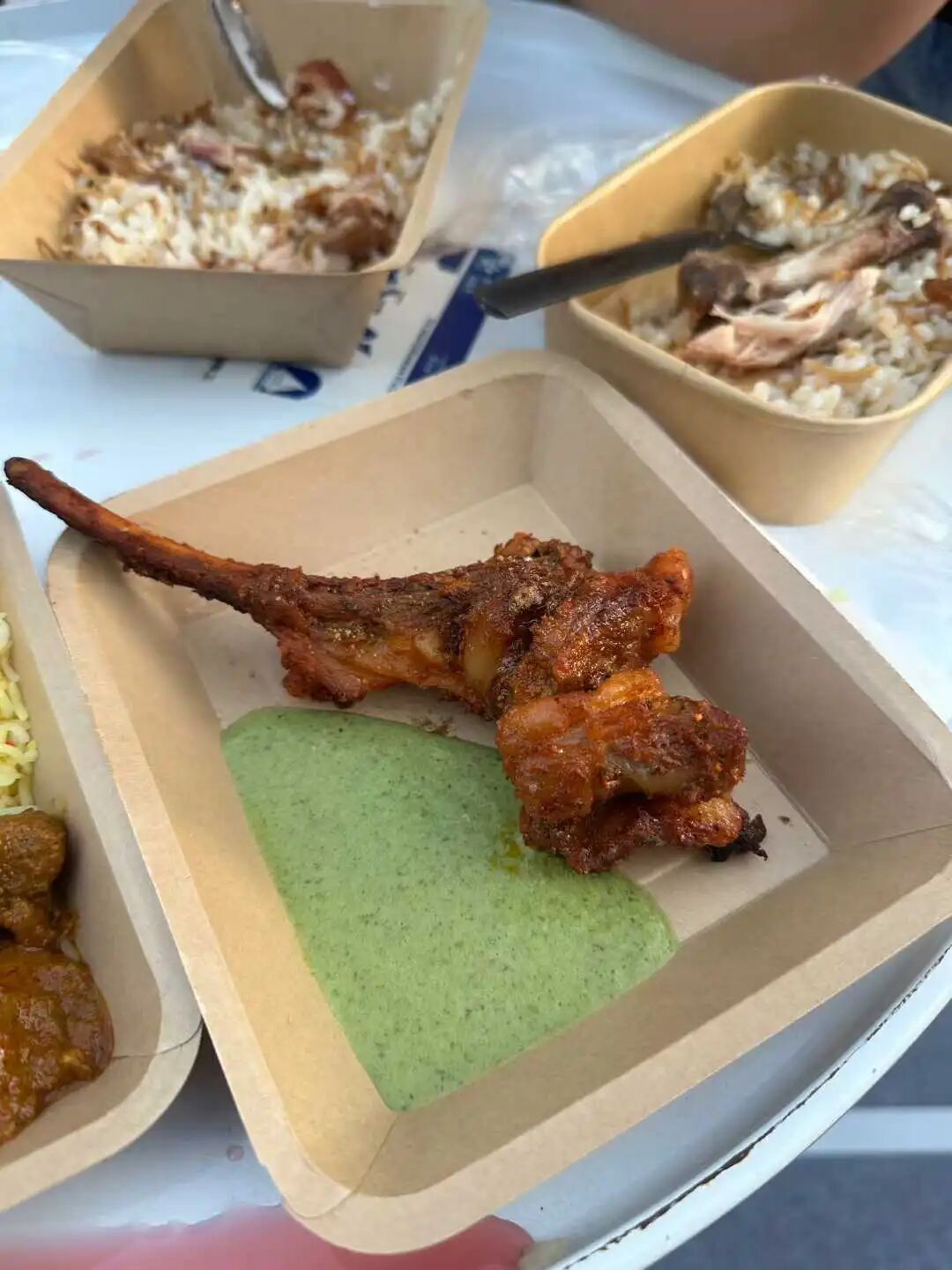
Halal Food Guide: Beijing - 38 International Muslim Restaurants
Articles • ali2007fr posted the article • 0 comments • 294 views • 2026-05-19 22:56
Summary: This Beijing halal food guide lists 38 international Muslim restaurants across the city, including Middle Eastern, South Asian, Central Asian, and other halal dining options. It keeps the original locations, restaurant notes, food details, and practical context for readers planning halal meals in Beijing.
Arab restaurants
1. The owner of Taiba is Iraqi, and the shop is in Sanlitun SOHO.
2. Taiba's new restaurant, Alkhaleej Mandi Kitchen, focuses on Gulf Arab flavors and serves Yemeni food.
3. The Lebanese restaurant Alameen is in the Sanlitun embassy area, behind the German Embassy.
4. The Lebanese restaurant Sumac (Sumake) is by the Liangma River. It is a bit pricey, and I have not been there yet.
5. The Palestinian restaurant Alsafir is on the Ocean Express food street at Sanyuanqiao.
6. The rotisserie meat shop Shawarma City (Shawama Cheng) is in the sunken plaza of Sanlitun SOHO. The owner is Palestinian and sells rotisserie meat. There is no indoor seating, so you can eat on the chairs at the entrance or take it to go.
7. The Syrian restaurant BRBR has one shop in Wudaokou and another in SOLANA, which is very busy on weekends.
8. The Syrian restaurant One Thousand and One Nights is next to the Sanlitun Diplomatic Residence Compound and is a long-standing Arab restaurant.
9. The Egyptian restaurant Cleopatra is in Sanlitun SOHO. It is a hookah lounge that sells light meals and has a buffet on weekends.
10. The Tunisian restaurant La Medina is on Liangmahe South Road outside Dongzhimen, by the Liangma River.
11. Habibi in Jiugong, Daxing. I have not eaten here yet.
Turkish restaurants
12. The high-end Turkish restaurant Sultan (Sutan) serves main courses and Mado breakfast, located in Jinshangyuan, Xinyuanli.
13. Turkish Mama is next to the Sanlitun Diplomatic Residence Compound, right by One Thousand and One Nights and Iranian food.
14. The owner of West Yard (Xiting Xiuse) is Azerbaijani. One shop is next to Sultan in Jinshangyuan, another is in China Central Place, and a new shop in WF Central is opening soon.
15. The owner of Dardanelles (Dadanier) is also Azerbaijani. The main shop is on Ritan Shangjie, and there are snack shops in Sanlitun SOHO and Xiushui Street.
16. Desert Rose and Dardanelles have the same owner, and the prices are slightly lower than Dardanelles.
Azerbaijani restaurants
17. The long-standing Azerbaijani restaurant Ruilin on Ritan Shangjie is a witness to the trade with Russia on Yabaolu. They also serve Russian food.
18. A newly opened Azerbaijani restaurant on Xiaoyun Road. I have not been there yet.
South Asian restaurants
19. The Pakistani restaurant Samosa focuses on buffets. One shop is at the old China International Exhibition Center, and the other is outside Dongzhimen.
The Pakistani restaurant Zamzam is on Xueqing Road and also features a buffet.
The Pakistani restaurant Habibi is north of the west gate of Minzu University and also features a buffet.
The Pakistani restaurant Khan Baba has one location in Wudaokou and another in Sanlitun SOHO. The owner is a Pashtun from Peshawar.
The Pakistani restaurant Lahore Restaurant has one location on Qingnian Road and another outside Dongzhimen. The owner is Punjabi.
The Pakistani restaurant Sultan is in the mountains of Huairou and offers accommodation.
The Pakistani restaurant Masala is in the Huairou county seat and has the same owner as Sultan.
Shalimar Restaurant is near the Capital Airport's Euro Plaza (Xiangyun Xiaozhen). The owner is Bangladeshi and serves mostly Indian food.
Punjabi (Benjiebi) is on Haoyun Street across from Solana (Lanse Gangwan). The owner is Bangladeshi and serves mostly Indian food.
Saduli is on Beiluoguxiang. The owner is Bangladeshi and serves mostly Indian food.
Yummy is an Indian flying bread (feibing) shop near the Communication University of China that I have not tried yet.
Dastaan Restaurant is in Sanlitun SOHO and the owner is an Indian Muslim.
Bollywood Story is a restaurant the owner of Dastaan opened in Baiziwan, which I have not tried yet.
Love at Curry (Ai Zai Gali) is on the basement floor of the Hongqiao Market in Ciqikou. The server said the owner is a Muslim from New Delhi.
Ganges Impression (Henghe Yinxiang) is in the Gulou Garden on Gulou East Street. It has a halal sign at the door, but I have not tried it yet.
The long-standing Indian restaurant Indian Kitchen (Yindu Xiaochu) is on Ritan Shangjie. The owner is Hindu, but the ingredients are halal.
Ganges Legend (Henghe Chuanqi) is in The Place (Shimao Tianjie). They are likely also Hindu, but the ingredients are halal.
African food
Tribal Garden (Buluo Huayuan) is a newly opened West African Ghanaian restaurant in Sanlitun SOHO.
Indonesian restaurants
The owner of NomNom is not Muslim, but the ingredients are halal. Indonesian Muslim students and embassy staff eat there.
Iranian restaurants
Iranian Food (Yilang Meishi) is next to the Sanlitun Diplomatic Apartment. It used to be an authentic Iranian restaurant called Persepolis. I went once after they changed the name, but I saw the staff were all Chinese and the taste was not very authentic, so I never went back. view all
Summary: This Beijing halal food guide lists 38 international Muslim restaurants across the city, including Middle Eastern, South Asian, Central Asian, and other halal dining options. It keeps the original locations, restaurant notes, food details, and practical context for readers planning halal meals in Beijing.
Arab restaurants
1. The owner of Taiba is Iraqi, and the shop is in Sanlitun SOHO.
2. Taiba's new restaurant, Alkhaleej Mandi Kitchen, focuses on Gulf Arab flavors and serves Yemeni food.
3. The Lebanese restaurant Alameen is in the Sanlitun embassy area, behind the German Embassy.
4. The Lebanese restaurant Sumac (Sumake) is by the Liangma River. It is a bit pricey, and I have not been there yet.
5. The Palestinian restaurant Alsafir is on the Ocean Express food street at Sanyuanqiao.
6. The rotisserie meat shop Shawarma City (Shawama Cheng) is in the sunken plaza of Sanlitun SOHO. The owner is Palestinian and sells rotisserie meat. There is no indoor seating, so you can eat on the chairs at the entrance or take it to go.
7. The Syrian restaurant BRBR has one shop in Wudaokou and another in SOLANA, which is very busy on weekends.
8. The Syrian restaurant One Thousand and One Nights is next to the Sanlitun Diplomatic Residence Compound and is a long-standing Arab restaurant.
9. The Egyptian restaurant Cleopatra is in Sanlitun SOHO. It is a hookah lounge that sells light meals and has a buffet on weekends.
10. The Tunisian restaurant La Medina is on Liangmahe South Road outside Dongzhimen, by the Liangma River.
11. Habibi in Jiugong, Daxing. I have not eaten here yet.
Turkish restaurants
12. The high-end Turkish restaurant Sultan (Sutan) serves main courses and Mado breakfast, located in Jinshangyuan, Xinyuanli.
13. Turkish Mama is next to the Sanlitun Diplomatic Residence Compound, right by One Thousand and One Nights and Iranian food.
14. The owner of West Yard (Xiting Xiuse) is Azerbaijani. One shop is next to Sultan in Jinshangyuan, another is in China Central Place, and a new shop in WF Central is opening soon.
15. The owner of Dardanelles (Dadanier) is also Azerbaijani. The main shop is on Ritan Shangjie, and there are snack shops in Sanlitun SOHO and Xiushui Street.
16. Desert Rose and Dardanelles have the same owner, and the prices are slightly lower than Dardanelles.
Azerbaijani restaurants
17. The long-standing Azerbaijani restaurant Ruilin on Ritan Shangjie is a witness to the trade with Russia on Yabaolu. They also serve Russian food.
18. A newly opened Azerbaijani restaurant on Xiaoyun Road. I have not been there yet.
South Asian restaurants
19. The Pakistani restaurant Samosa focuses on buffets. One shop is at the old China International Exhibition Center, and the other is outside Dongzhimen.
The Pakistani restaurant Zamzam is on Xueqing Road and also features a buffet.
The Pakistani restaurant Habibi is north of the west gate of Minzu University and also features a buffet.
The Pakistani restaurant Khan Baba has one location in Wudaokou and another in Sanlitun SOHO. The owner is a Pashtun from Peshawar.
The Pakistani restaurant Lahore Restaurant has one location on Qingnian Road and another outside Dongzhimen. The owner is Punjabi.
The Pakistani restaurant Sultan is in the mountains of Huairou and offers accommodation.
The Pakistani restaurant Masala is in the Huairou county seat and has the same owner as Sultan.
Shalimar Restaurant is near the Capital Airport's Euro Plaza (Xiangyun Xiaozhen). The owner is Bangladeshi and serves mostly Indian food.
Punjabi (Benjiebi) is on Haoyun Street across from Solana (Lanse Gangwan). The owner is Bangladeshi and serves mostly Indian food.
Saduli is on Beiluoguxiang. The owner is Bangladeshi and serves mostly Indian food.
Yummy is an Indian flying bread (feibing) shop near the Communication University of China that I have not tried yet.
Dastaan Restaurant is in Sanlitun SOHO and the owner is an Indian Muslim.
Bollywood Story is a restaurant the owner of Dastaan opened in Baiziwan, which I have not tried yet.
Love at Curry (Ai Zai Gali) is on the basement floor of the Hongqiao Market in Ciqikou. The server said the owner is a Muslim from New Delhi.
Ganges Impression (Henghe Yinxiang) is in the Gulou Garden on Gulou East Street. It has a halal sign at the door, but I have not tried it yet.
The long-standing Indian restaurant Indian Kitchen (Yindu Xiaochu) is on Ritan Shangjie. The owner is Hindu, but the ingredients are halal.
Ganges Legend (Henghe Chuanqi) is in The Place (Shimao Tianjie). They are likely also Hindu, but the ingredients are halal.
African food
Tribal Garden (Buluo Huayuan) is a newly opened West African Ghanaian restaurant in Sanlitun SOHO.
Indonesian restaurants
The owner of NomNom is not Muslim, but the ingredients are halal. Indonesian Muslim students and embassy staff eat there.
Iranian restaurants
Iranian Food (Yilang Meishi) is next to the Sanlitun Diplomatic Apartment. It used to be an authentic Iranian restaurant called Persepolis. I went once after they changed the name, but I saw the staff were all Chinese and the taste was not very authentic, so I never went back.
Halal Food Guide: Yiwu - New Middle Eastern Restaurants (Part 1)
Articles • ali2007fr posted the article • 0 comments • 233 views • 2026-05-19 09:31
Summary: Halal Food Guide: Yiwu - New Middle Eastern Restaurants (Part 1) is presented here as a firsthand travel account in clear, natural English. The account focuses on Yiwu, Middle Eastern Food, Halal Food while preserving the names, places, food, photos, and historical details from the Chinese source.
Since we could not travel abroad in 2020, we made a special trip to Yiwu to eat food from all over the world. See "Tasting Foreign Food in Yiwu" for more. On that trip, we ate at two Syrian restaurants, two Afghan restaurants, one Egyptian juice shop, one Malaysian Nyonya bird's nest shop, one Turkish restaurant, and one Indian restaurant. Because of travel restrictions at the time, many foreign restaurants in Yiwu were forced to close, and the ones still open were struggling.
Four years later, we visited Yiwu again. Now that travel is back to normal, Yiwu is busy again. People from countries across the Middle East and Africa have come to Yiwu to buy goods, and many new Middle Eastern restaurants have opened, especially around the Binwang Trade Area. We picked a few of these new restaurants to try, and we will share them with you below.
On May 1st, we had a Yemeni breakfast at the Marashim restaurant in the Binwang Trade Area. We had fried eggs with vegetables and tuna stewed with fava beans, served with Yemeni soft bread (malawah). I had eaten Yemeni flatbread (khubz) at a Yemeni restaurant in Guangzhou before, and it was very crispy and delicious. This is my first time having Yemeni soft bread (yemen ruanbing). It looks a bit like bread and tastes like the inside of a flatbread (laobing). It is perfect for breakfast. The tuna and fava bean dish is full of spices, and it is delicious when you dip the bread into it.
This is a newly opened restaurant, so there is no information about it on Dazhong Dianping yet. There are three other Yemeni restaurants right next door. Sinbad is the most famous one, and they specialize in large Yemeni flatbread served with various braised meats.
After breakfast, we went to the imported food supermarket Spinneys. We also shopped there when we last visited Yiwu. You can buy Lebanese hummus, Syrian pistachio candy, and all kinds of Middle Eastern specialty foods here. The bread baked fresh in the store smells amazing, and they have a huge variety of pastries too.
A neighbor reminded me that Spinneys is actually a century-old Middle Eastern supermarket chain based in Dubai.
The name Spinneys comes from its founder, British officer Arthur Rawdon Spinney. He became a supplier for the Palestine Railways in 1924 and later started importing British goods into Syria and Palestine. At the time, it was the only company in Palestine to offer British products.
In the 1920s, Spinneys was headquartered in Haifa. Its stores were mainly located in cities easily reached by the British via railway, such as Alexandria, Cairo, Acre, and Damascus. After the Arab Revolt broke out in Palestine in the 1930s, the railway lines were cut, and Spinneys moved its headquarters to Baghdad. Spinneys began to expand after the 1940s, with both the Dubai and Beirut stores opening during this period. The Kingdom of Iraq was overthrown in 1958, and the new Republic of Iraq formed an alliance with the Soviet Union. Spinneys moved its headquarters to Dubai in 1961, where it has operated ever since.
Today, most Spinneys stores are concentrated in the UAE, Egypt, and Lebanon, making it a famous supermarket chain in the Middle East.
I bought some Yili yogurt drink (TAN) at the Spinneys supermarket. It is basically a fizzy version of yogurt curd (suannai gede), and the taste is very authentic! One sip takes me right back to the pasture.
I also bought dates stuffed with walnuts and crushed pistachios. It was my first time eating them this way, and they are a great energy booster! They are perfect to carry along when hiking.
At noon, I had Turkish afternoon tea at a Turkish dessert shop called Sweet Life in the Binwang Trade Area. The 'Foreigner Street' in Area C of the Binwang Market is basically all foreign restaurants. Many Middle Easterners come here in the evening to drink tea and smoke shisha.
Sweet Life is a rare authentic Turkish dessert shop in China. The sweetness is very high, and syrup oozes out with every bite. It is exactly the same as the desserts sold in the local shops we visited in Istanbul. So, if any dost (friends) cannot handle too much sugar, you should be careful when trying them.
Their specialty is various flavors of baklava, including classic original, walnut, chocolate, hazelnut, and more. They also have cheese-filled sobiyet, lemon syrup-soaked almond pastries called sekerpare, and shredded dough pastries called burma kadayif, among many other options.
The desserts are served with Turkish black tea and coffee. We ordered one of each. Personally, I think Turkish coffee pairs better with baklava—a sip of strong coffee followed by a bite of honey-sweet pastry.
I rode my bike to the Yiwu Grand Mosque for noon namaz. Since this area is far from the trade city, people usually pray at local prayer spots and only come to the Grand Mosque for Friday prayers.
Yiwu set up two prayer spots in 2000 at the Xinjiang Ethnic Hotel and the Honglou Hotel, then in 2004 converted a Yiwu silk factory warehouse into a prayer spot, which was the predecessor to the Yiwu Grand Mosque. As Yiwu's small commodity economy boomed, more friends (dosti) came to do business, so the old silk factory warehouse was renovated in 2010 and officially completed in 2012 as the current Yiwu Grand Mosque.
In the evening, I ate authentic African food at Sina African Restaurant, located at the intersection of Street 8 in the Binwang Trade Area. The restaurant is owned by Mohammad Rifat, the Egyptian guy who runs Leifeng Juice; he has opened six Leifeng Juice shops in Yiwu over the past two years and also started this African restaurant. During this trip to Yiwu, I noticed there are clearly more Black faces than Arab faces in the Binwang Trade City, but the restaurants are still mostly Arab or Turkish, so Sina African Restaurant, which specializes in sub-Saharan African flavors, is very popular with Black friends (dosti).
We ordered South African stir-fried beef with melon seed soup and fufu, fried tilapia with cassava flour (atteke), and the classic avocado, nut, and date milkshake from Leifeng Juice. To be honest, even though I have visited 20 countries, this is the only meal I really struggled to get used to. Even though it was hard to get used to, I think it is worth trying if you want to understand the local food culture.
Fufu is a classic staple food in West and Central Africa, and the name Fufu actually means to pound. The main ingredients for fufu vary by region, but it is usually made from cassava, yam, or plantain. Nowadays, people can also use flour or rice, but it is still typically made by pounding the ingredients with a wooden spoon in a bowl. In West and Central Africa, fufu is usually served with okra, fish, and tomato soup. To eat it, wash your hands first, then take a piece of fufu and roll it into a ball with your right hand, press a small dent into it, and scoop up the soup to eat. The fufu I chose came with a soup made from ground egusi seeds, a West African specialty, stewed with bitter leaf. Bitter leaf, scientifically known as Vernonia amygdalina, is a shrub that grows in tropical Africa and has a very bitter taste. Bitter leaf (kuye) is the main vegetable used in various stews and braised dishes across equatorial Africa, and it is also the most traditional stewed vegetable dish in Nigeria.
Atteke is a classic West African side dish for fried fish, originally from southern Ivory Coast. Atteke is made similarly to North African couscous, but it uses fermented cassava pulp instead of semolina.
Although Chinese people might not be used to the African food at Sina's place, everyone is sure to love the Leifeng juice. Zainab especially likes their avocado and date milkshake; the dates really add a great flavor to the shake. But you only need a small cup of this high-calorie drink.
I went for a walk in the Binwang business district in the evening. The Xinjiang Golden Poplar (Jinhuyang) specialty restaurant at the intersection of Chouzhou North Road is really popular, and there are a lot of people eating barbecue there at night. Their fresh juice stand at the street corner is also very popular. We ordered a mix of orange and pomegranate juice. They used three oranges and two pomegranates to fill one cup without adding a single drop of water, so the flavor was really rich.
There are many Hui Muslims from Yunnan in the Binwang area. You can see Hui Muslim sisters from Yunnan working as servers in all the Middle Eastern restaurants. There are many Yunnan restaurants in the small alleys of Yijiashan, across from Binwang. The Yunnan-style barbecue place at the intersection of Chouzhou North Road is especially popular. The restaurant has a stall out front selling Zhaotong spicy chicken legs and grilled tofu (shaodoufu). We ordered a few pieces of grilled tofu. They sliced them open and added fish mint (zhe'ergen), pickled vegetables (suancai), and chili powder. I asked for it to be less spicy, but my mouth was still on fire. It was so satisfying, haha.
The prayer spot in the Binwang business district was packed with people at the lishamu and hufu stalls. Most of them were African friends (dost) who came here for business. After the second floor filled up, the imam guided everyone to the third and fourth floors, and eventually, we went all the way up to the fifth floor.
The Haya clothing store at the entrance of the Binwang business district prayer spot has many Middle Eastern outfits, and we bought several pieces.
Many new Middle Eastern restaurants have opened in the Binwang Trade Area. It is much busier than when I visited two years ago. I even saw Iraqi barbecue, which I want to try next time.
I drank a Dubai malt beverage.
A new Egyptian snack shop called Friends opened across from the prayer spot in the Yiwu Binwang Trade Area. It is a great place for a late-night snack after visiting Hufu Beach. The shop is very affordable. We ordered a 45-yuan set meal that came with a plate of fried chickpea balls (falafel), a plate of chickpea dip (hummus), a plate of cold mixed vegetables, a plate of french fries, a plate of boiled eggs, and a plate of Arabic flatbread. Rolling everything into the flatbread makes you feel like you are on a street in the Middle East.
They also use the same vinegar bottles found in local Chinese snack shops, but they filled them with olive oil. That is very Yiwu!
On May 2, I performed the morning prayer (fajr) at the prayer spot in the Yiwu Binwang Trade Area. There were many African friends (dosti) there.
I had a Middle Eastern breakfast at the Senator seafood restaurant in the Yiwu Binwang Trade Area. We had flatbread with jam and chocolate spread, served with cheese, olives, eggs, and black tea. We also ordered a seafood soup with fish and shrimp. The cheese breakfast I had at Mado during my last trip to Yiwu was truly the best Middle Eastern breakfast I have ever eaten in China. Although the selection at Sainata is not as extensive, the shop is quiet, the atmosphere is nice, and their seafood soup is very fresh and delicious.
Ride north from the Binwang Trade District to the International Trade City and have a Turkish coffee at the Turkish cafe, Cafe Turka. It is a small, unassuming shop, and one Turkish guy manages to keep up with everything. Besides coffee, they also serve Turkish snacks, featuring mozzarella cheese toast and sujuk sausage toast, which you can also order as a brunch set. You can come here to sit down, have a coffee, and enjoy some snacks while you are shopping at the International Trade City; it is very relaxing.
District 1 of the International Trade City has all kinds of wholesale Islamic souvenirs, and I suspect many of the souvenirs sold in the Two Holy Cities are actually sourced from here, haha.
Leifeng Juice Shop is so popular right now! The old shop on Chouzhou North Road has a huge line, just as busy as the Wuyutai tea shop at the Lama Temple in Beijing. A bit further ahead, the Turkish dessert shop Sweet Life is also quite crowded. Actually, both of these businesses have more than one location in Yiwu, and the other shops I visited earlier were not that busy. view all
Summary: Halal Food Guide: Yiwu - New Middle Eastern Restaurants (Part 1) is presented here as a firsthand travel account in clear, natural English. The account focuses on Yiwu, Middle Eastern Food, Halal Food while preserving the names, places, food, photos, and historical details from the Chinese source.
Since we could not travel abroad in 2020, we made a special trip to Yiwu to eat food from all over the world. See "Tasting Foreign Food in Yiwu" for more. On that trip, we ate at two Syrian restaurants, two Afghan restaurants, one Egyptian juice shop, one Malaysian Nyonya bird's nest shop, one Turkish restaurant, and one Indian restaurant. Because of travel restrictions at the time, many foreign restaurants in Yiwu were forced to close, and the ones still open were struggling.
Four years later, we visited Yiwu again. Now that travel is back to normal, Yiwu is busy again. People from countries across the Middle East and Africa have come to Yiwu to buy goods, and many new Middle Eastern restaurants have opened, especially around the Binwang Trade Area. We picked a few of these new restaurants to try, and we will share them with you below.
On May 1st, we had a Yemeni breakfast at the Marashim restaurant in the Binwang Trade Area. We had fried eggs with vegetables and tuna stewed with fava beans, served with Yemeni soft bread (malawah). I had eaten Yemeni flatbread (khubz) at a Yemeni restaurant in Guangzhou before, and it was very crispy and delicious. This is my first time having Yemeni soft bread (yemen ruanbing). It looks a bit like bread and tastes like the inside of a flatbread (laobing). It is perfect for breakfast. The tuna and fava bean dish is full of spices, and it is delicious when you dip the bread into it.
This is a newly opened restaurant, so there is no information about it on Dazhong Dianping yet. There are three other Yemeni restaurants right next door. Sinbad is the most famous one, and they specialize in large Yemeni flatbread served with various braised meats.
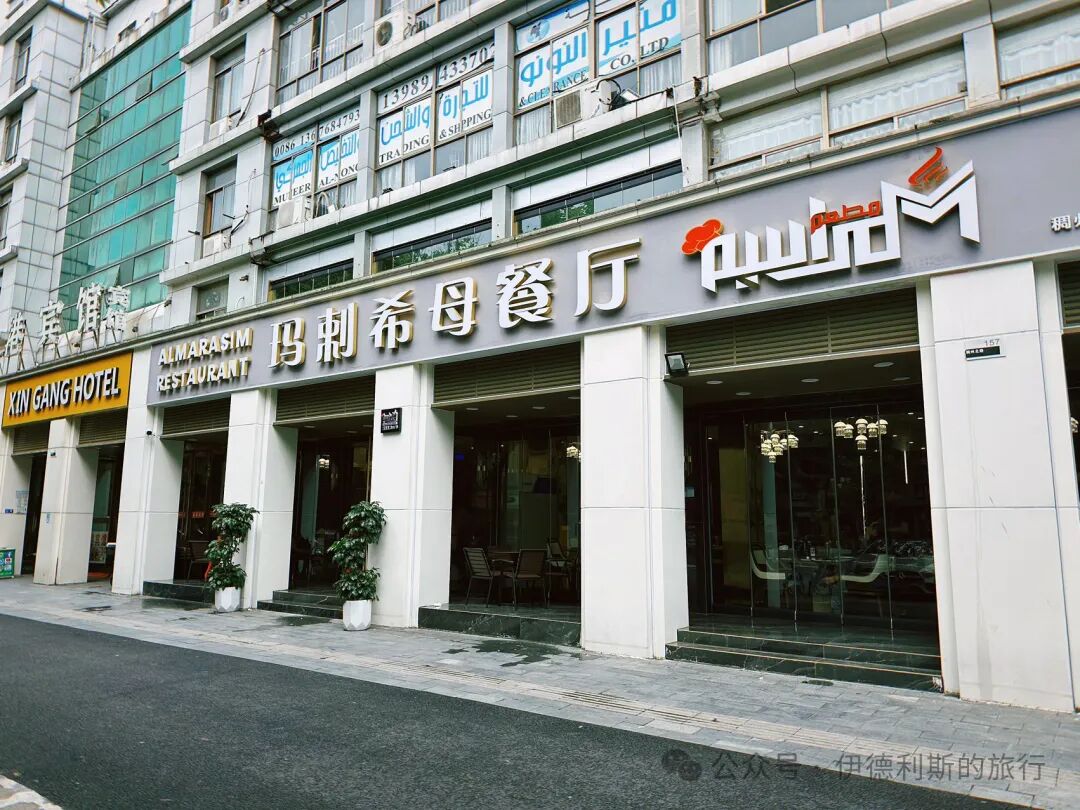
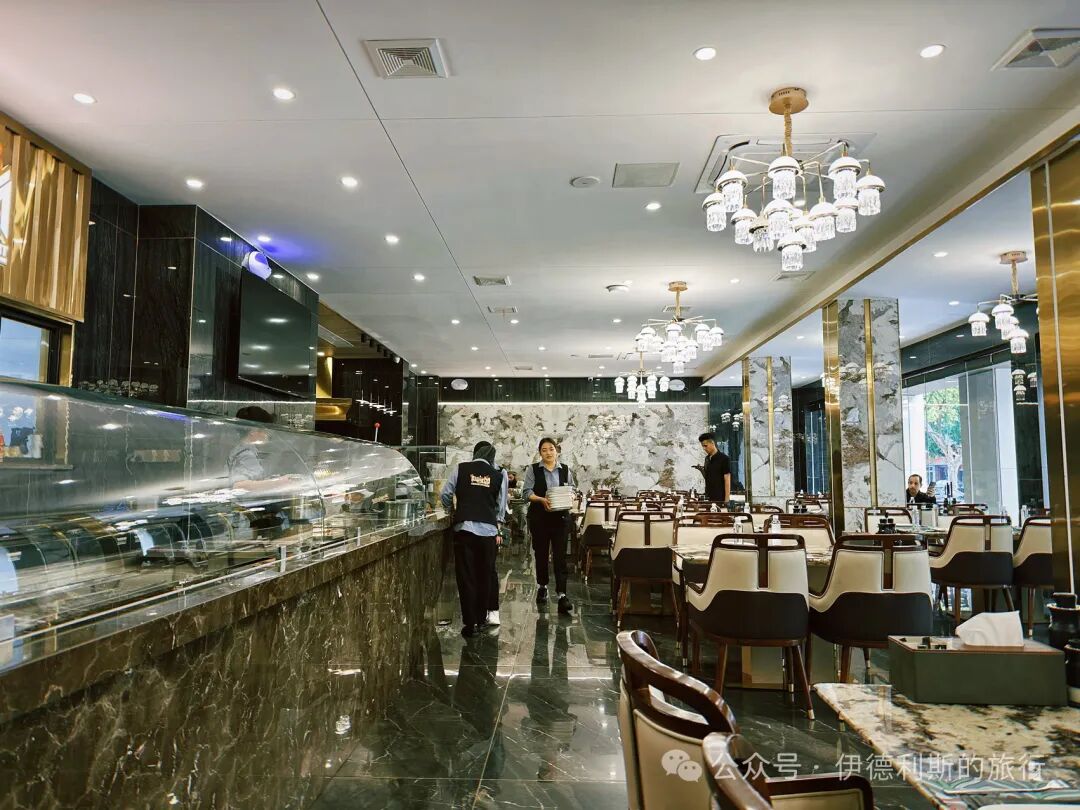
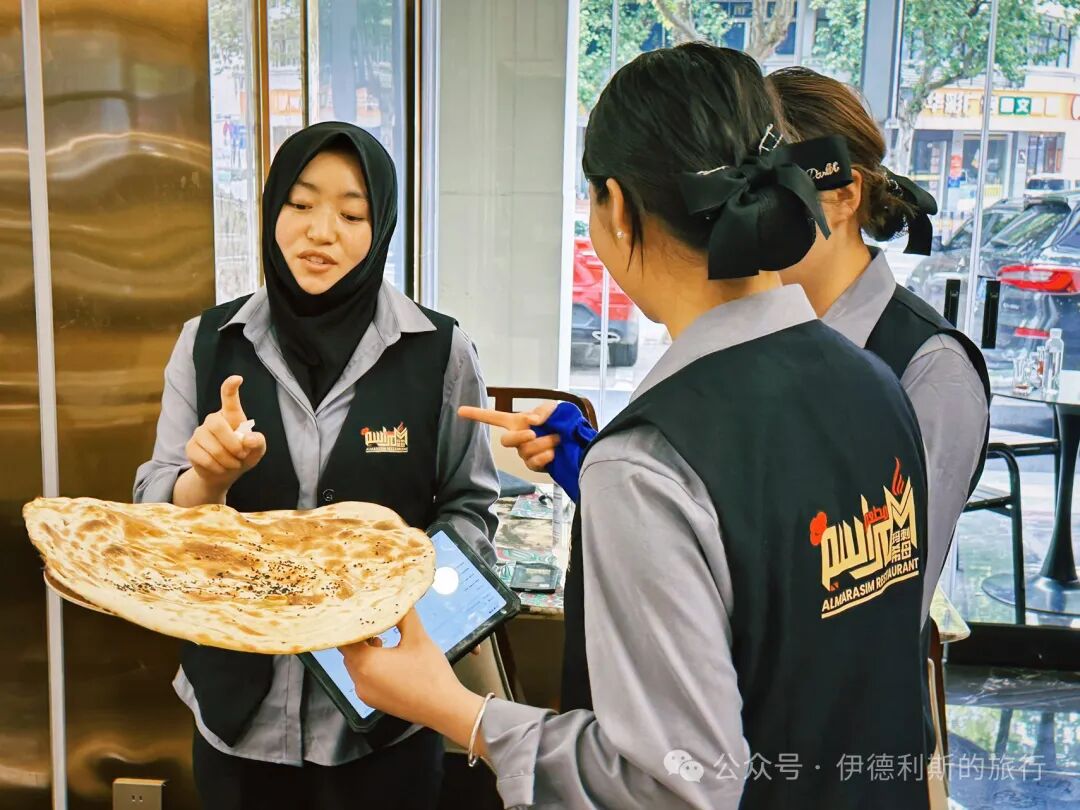
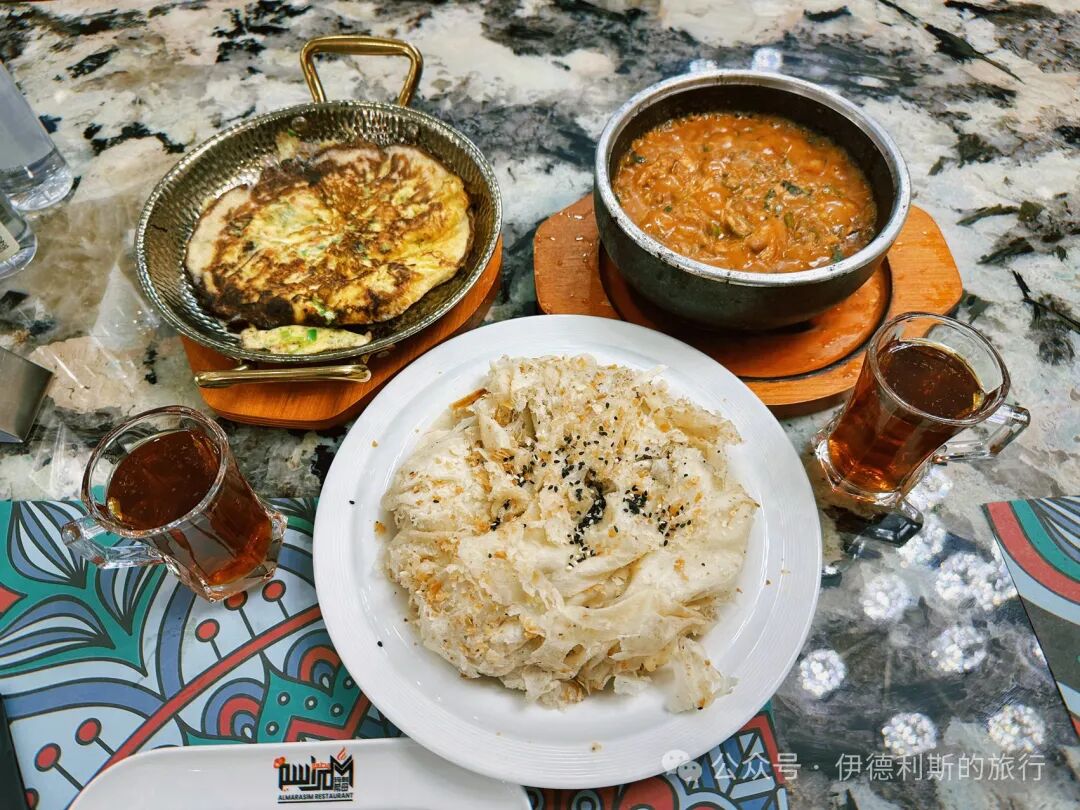
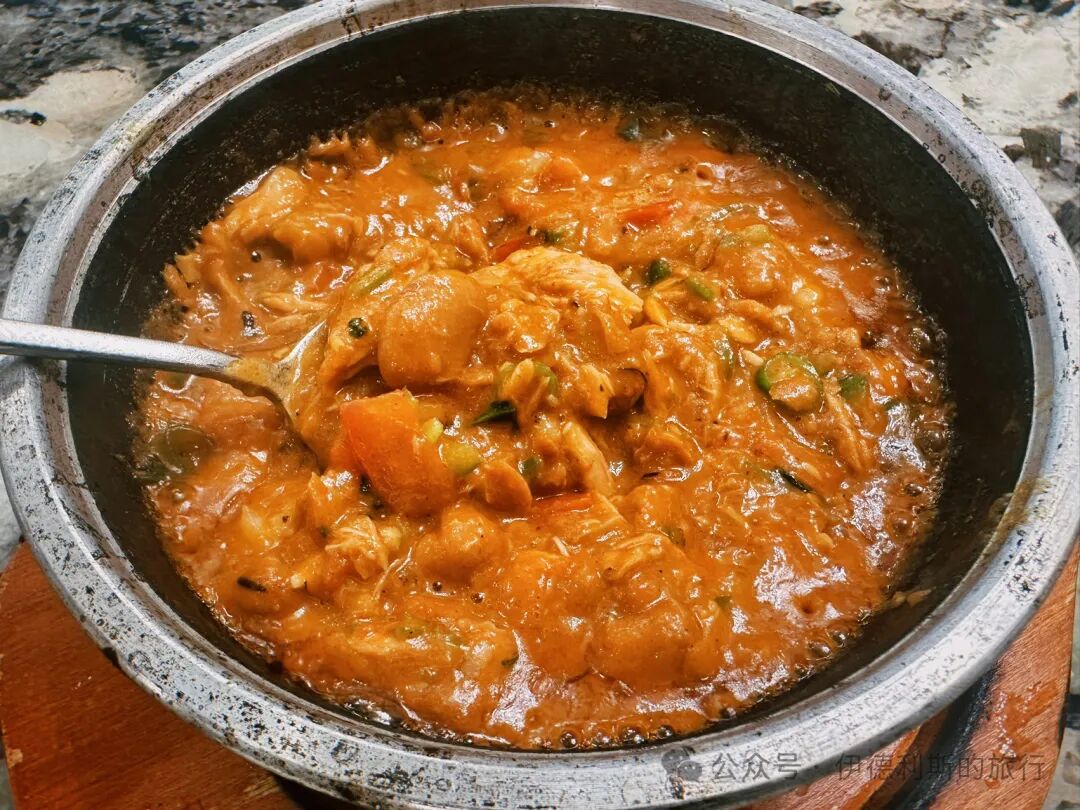
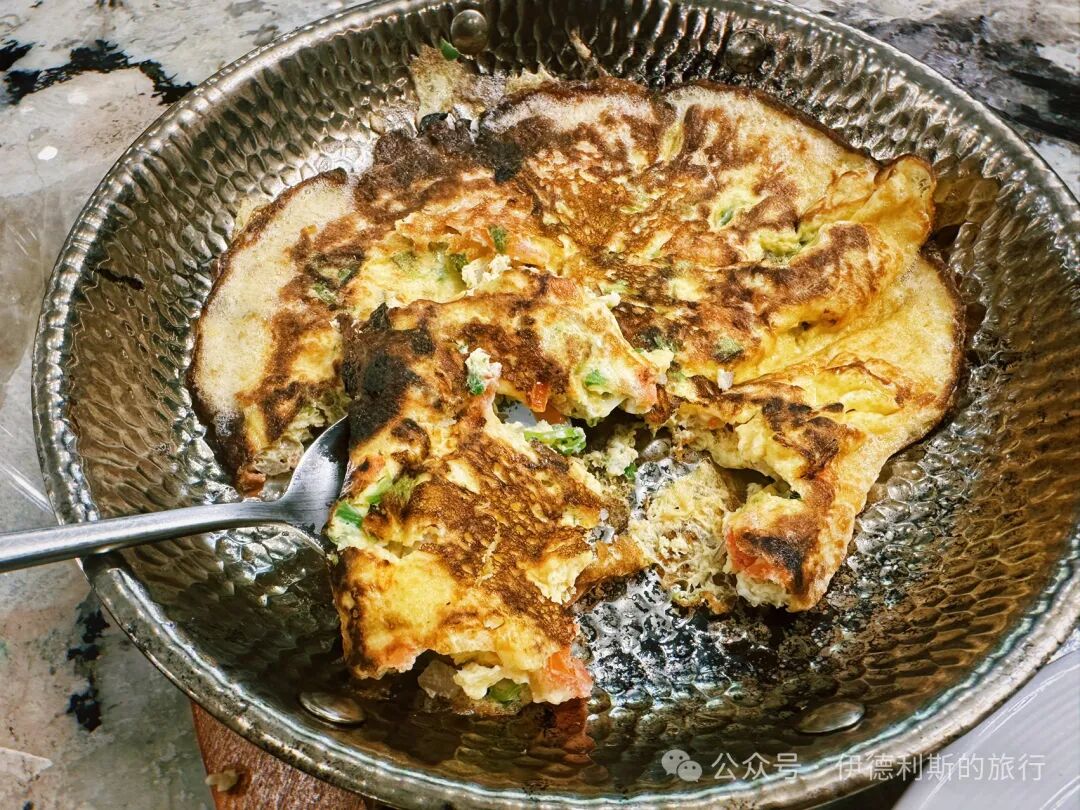
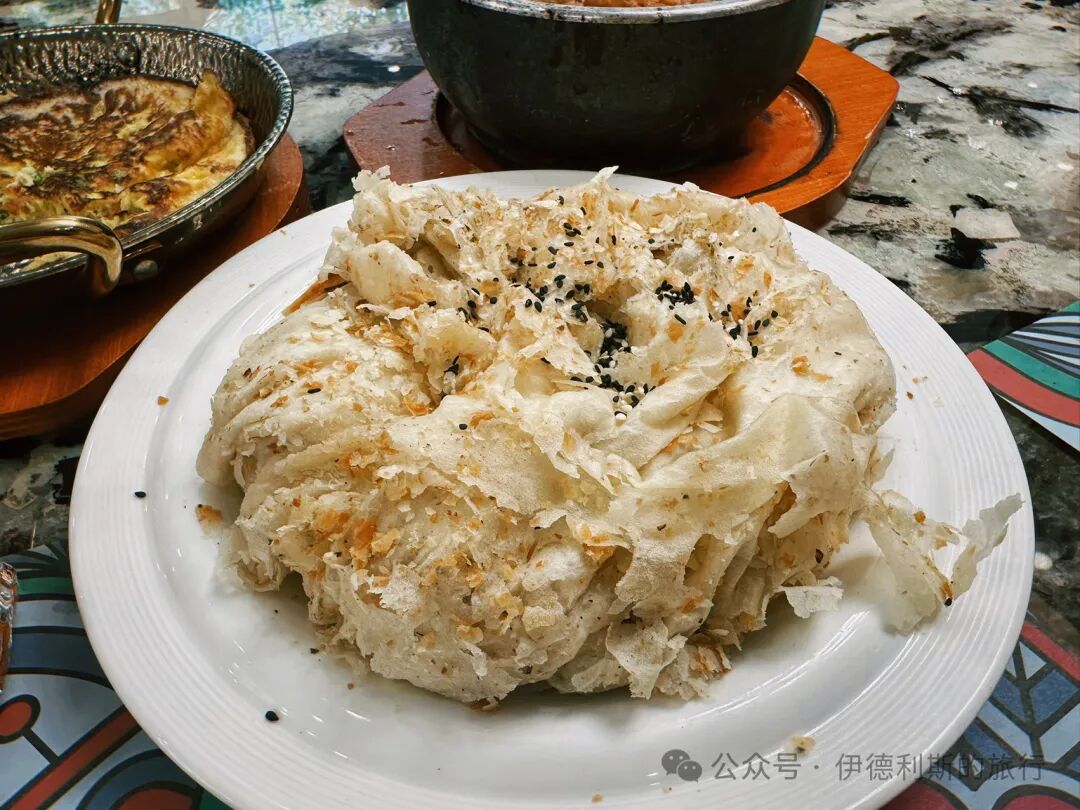
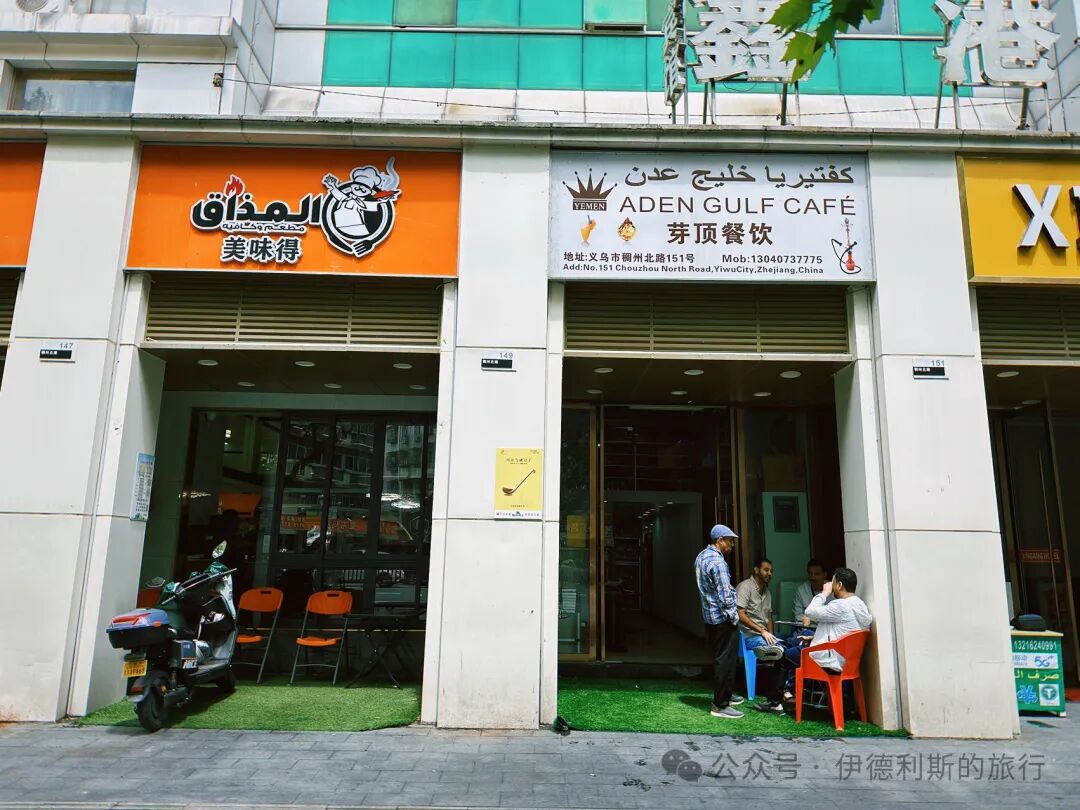
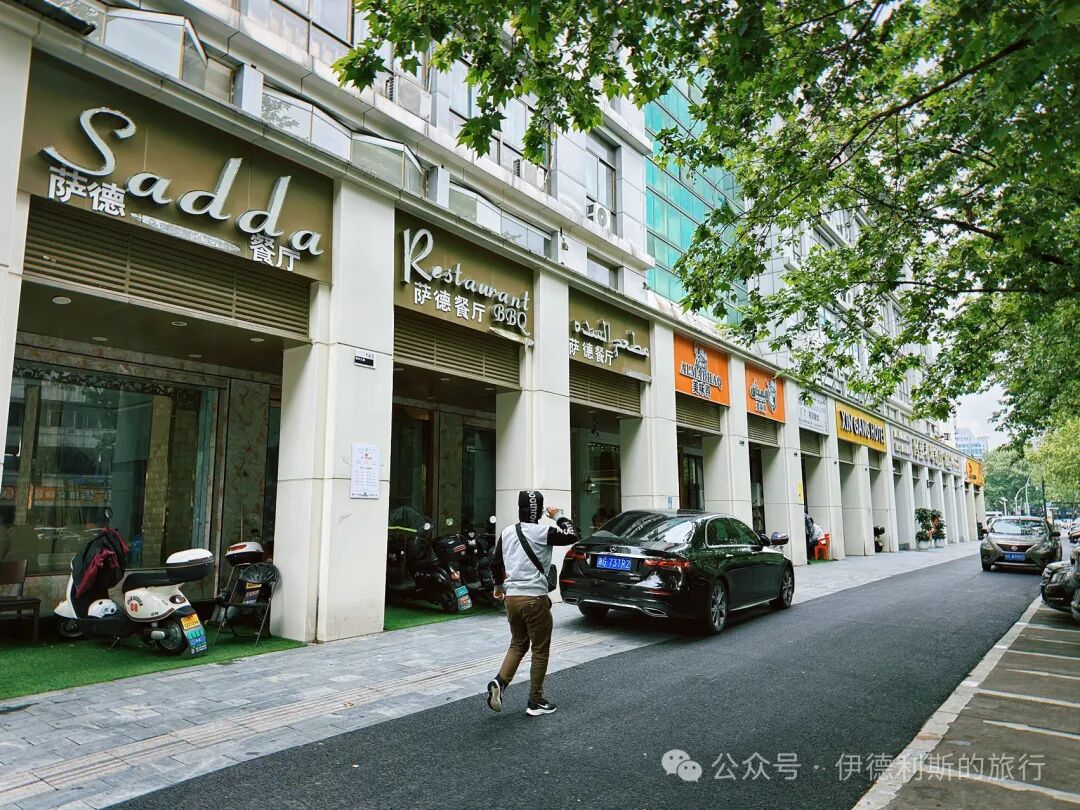
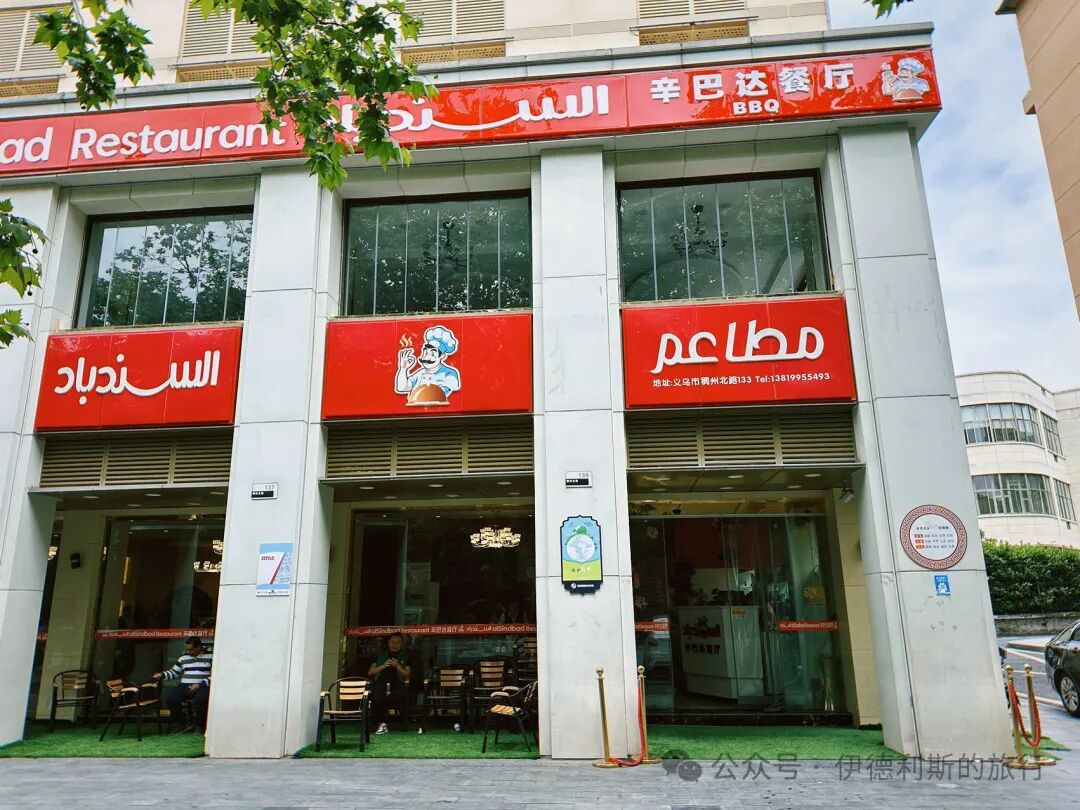
After breakfast, we went to the imported food supermarket Spinneys. We also shopped there when we last visited Yiwu. You can buy Lebanese hummus, Syrian pistachio candy, and all kinds of Middle Eastern specialty foods here. The bread baked fresh in the store smells amazing, and they have a huge variety of pastries too.
A neighbor reminded me that Spinneys is actually a century-old Middle Eastern supermarket chain based in Dubai.
The name Spinneys comes from its founder, British officer Arthur Rawdon Spinney. He became a supplier for the Palestine Railways in 1924 and later started importing British goods into Syria and Palestine. At the time, it was the only company in Palestine to offer British products.
In the 1920s, Spinneys was headquartered in Haifa. Its stores were mainly located in cities easily reached by the British via railway, such as Alexandria, Cairo, Acre, and Damascus. After the Arab Revolt broke out in Palestine in the 1930s, the railway lines were cut, and Spinneys moved its headquarters to Baghdad. Spinneys began to expand after the 1940s, with both the Dubai and Beirut stores opening during this period. The Kingdom of Iraq was overthrown in 1958, and the new Republic of Iraq formed an alliance with the Soviet Union. Spinneys moved its headquarters to Dubai in 1961, where it has operated ever since.
Today, most Spinneys stores are concentrated in the UAE, Egypt, and Lebanon, making it a famous supermarket chain in the Middle East.
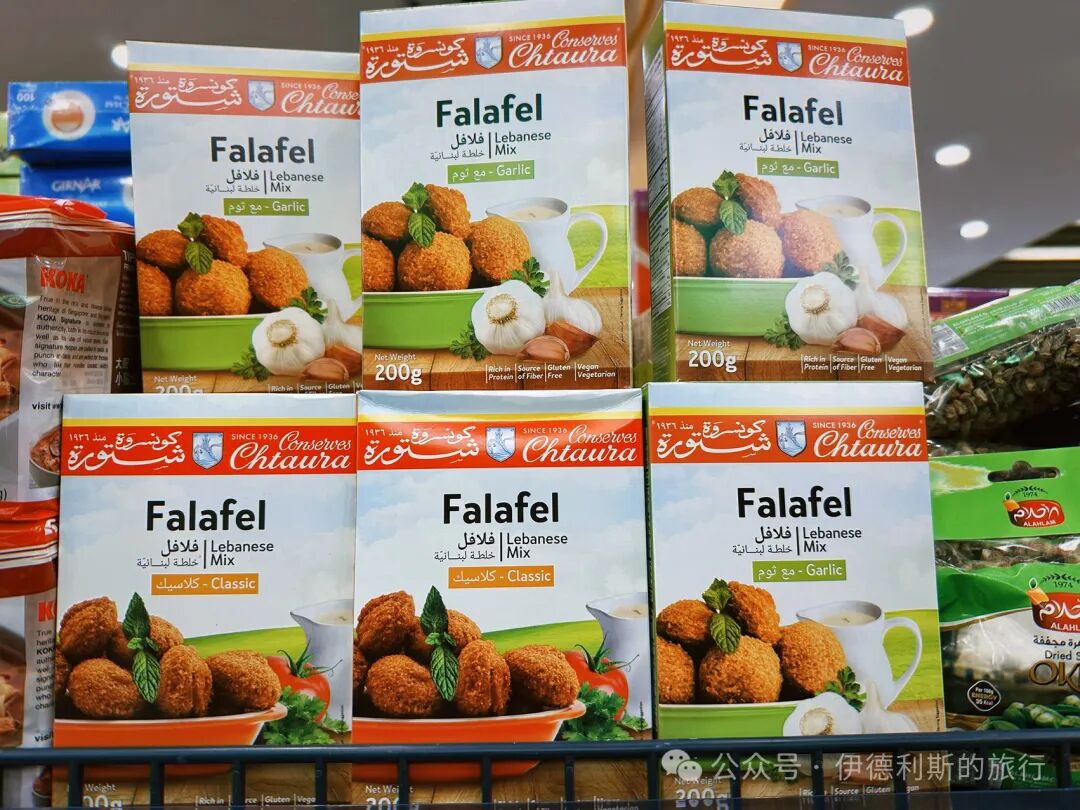
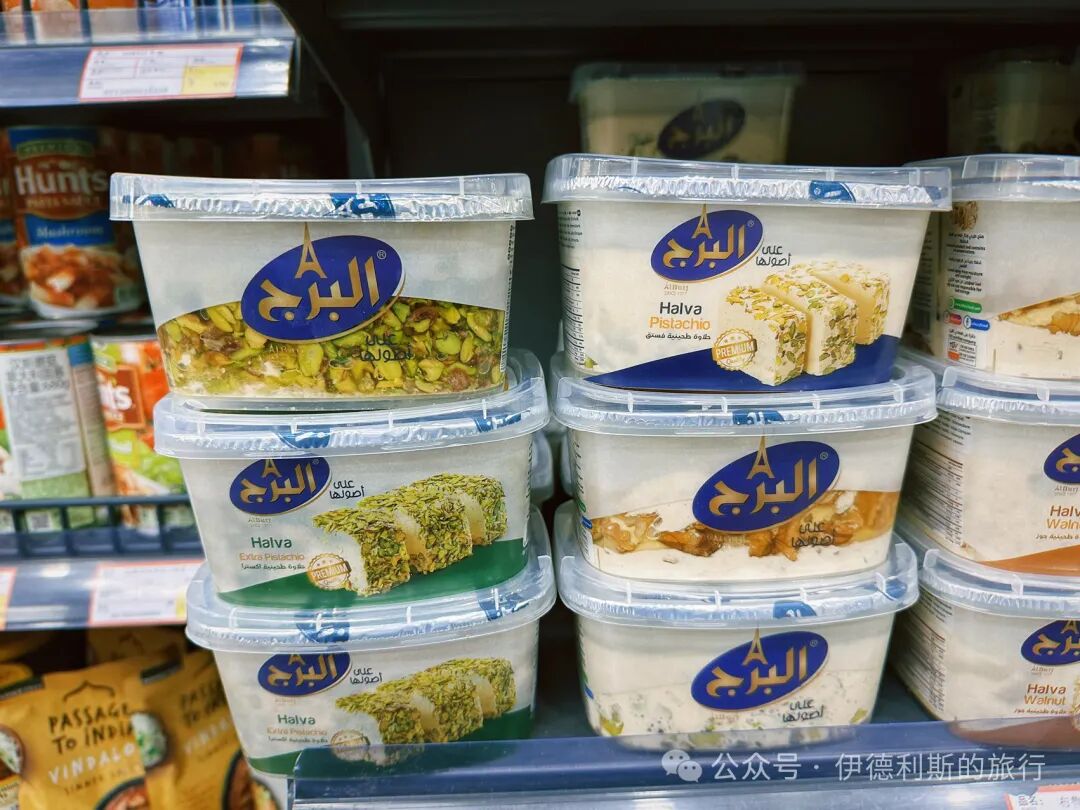
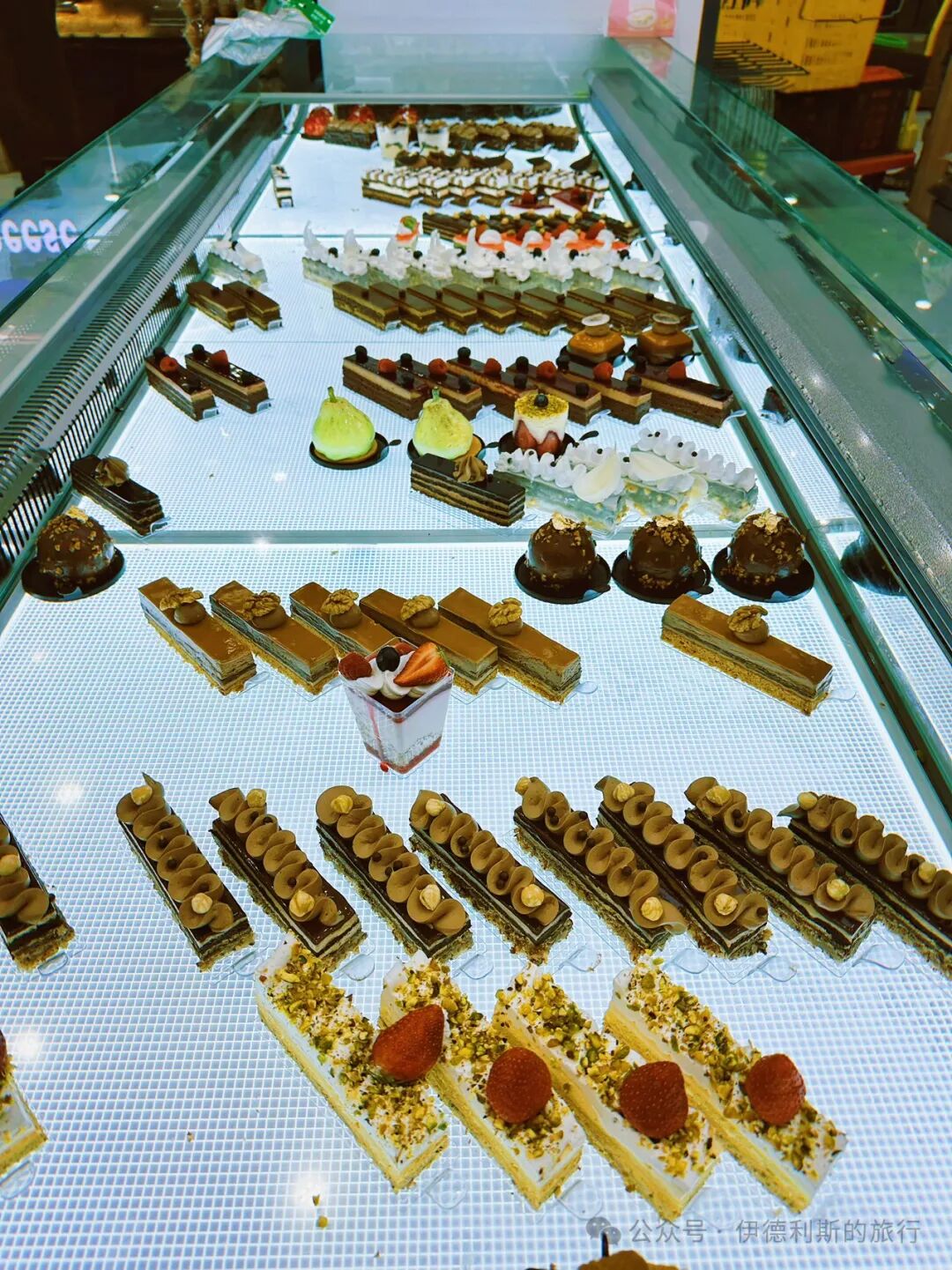
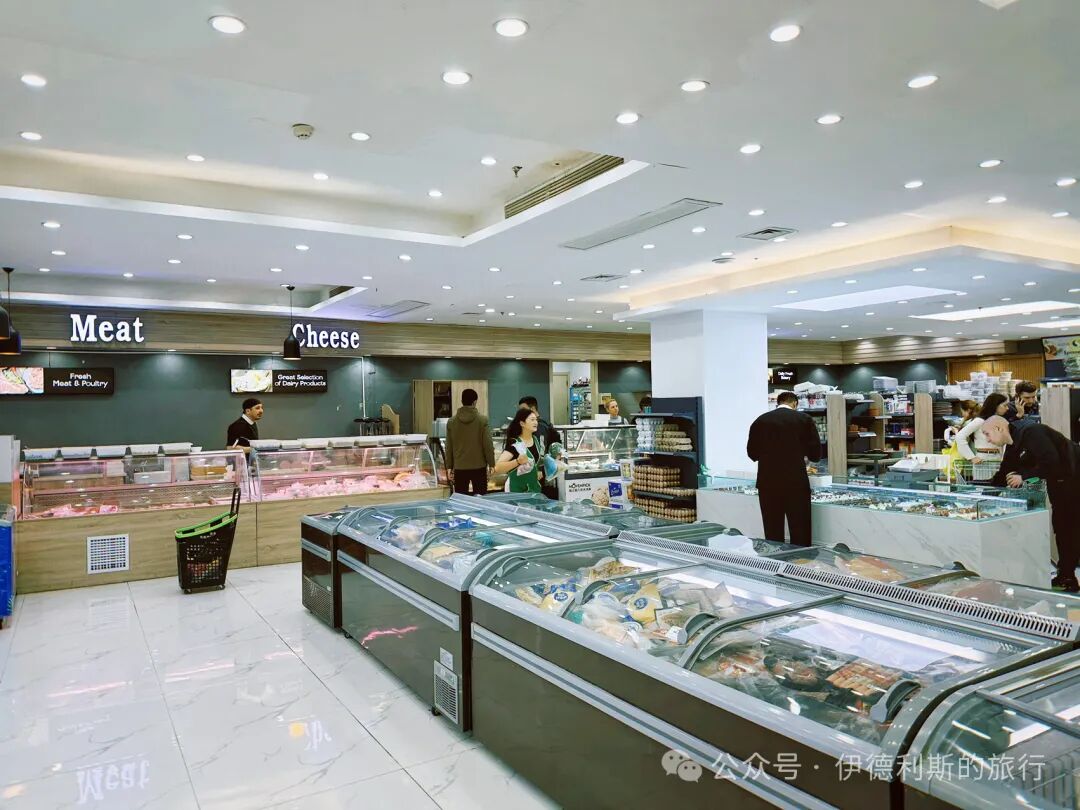
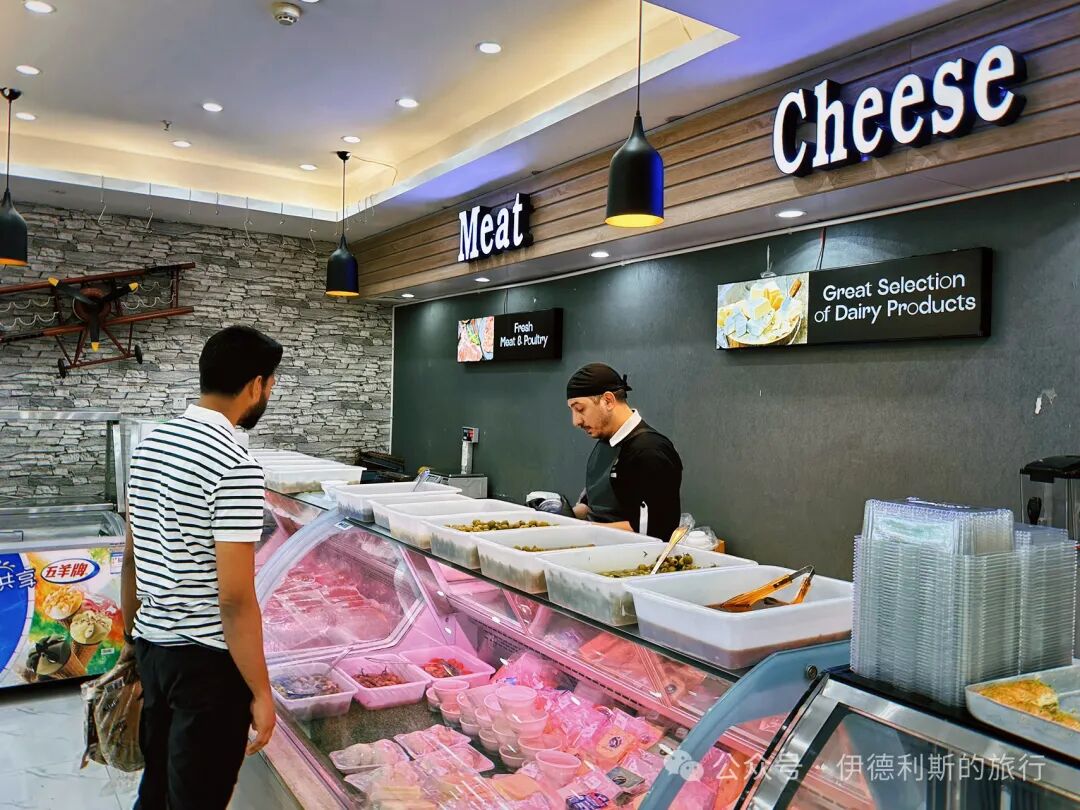
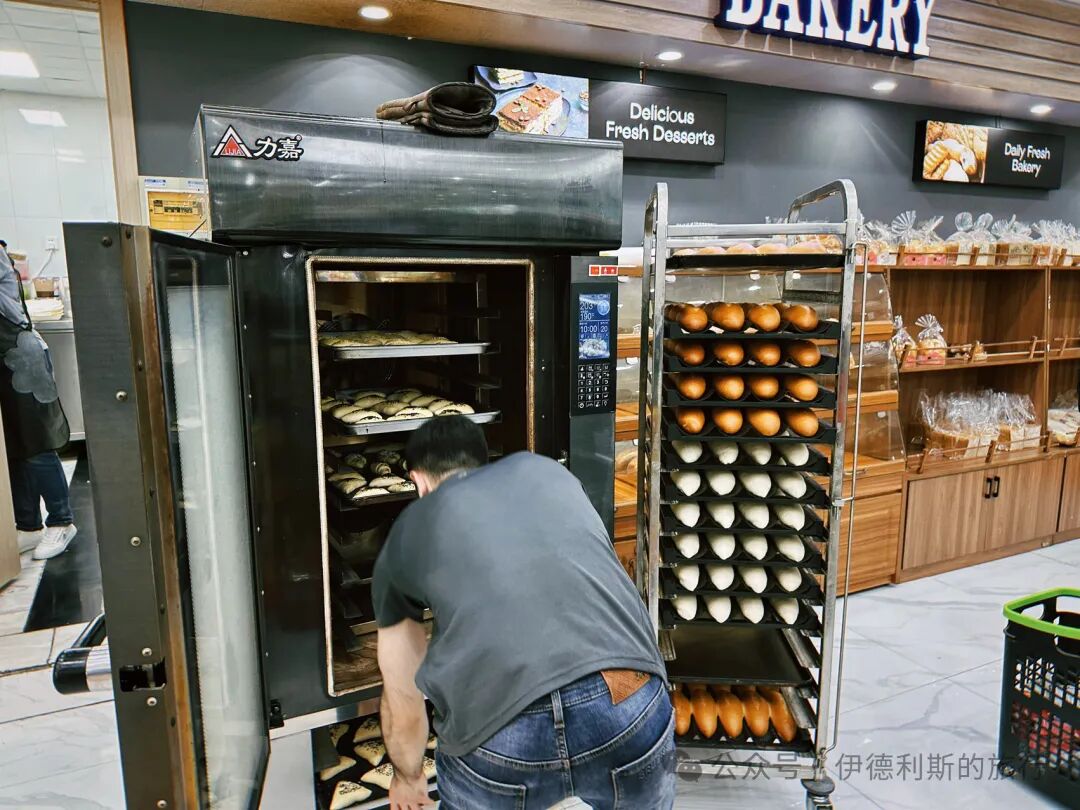
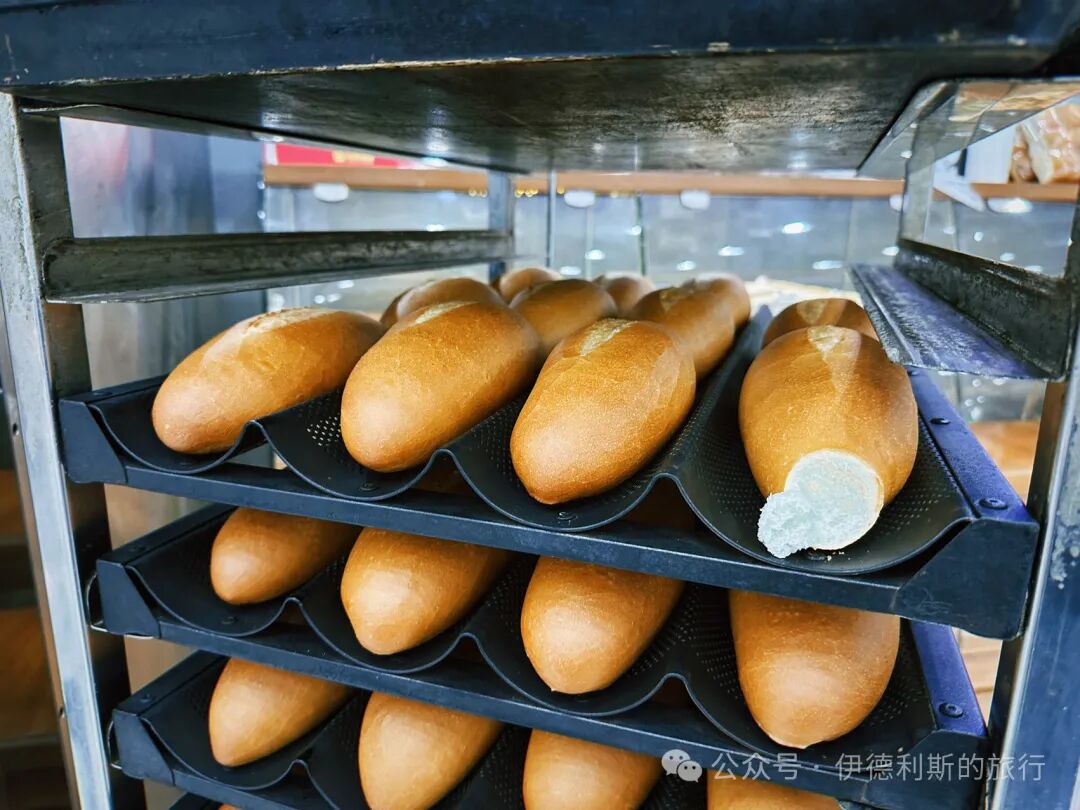
I bought some Yili yogurt drink (TAN) at the Spinneys supermarket. It is basically a fizzy version of yogurt curd (suannai gede), and the taste is very authentic! One sip takes me right back to the pasture.
I also bought dates stuffed with walnuts and crushed pistachios. It was my first time eating them this way, and they are a great energy booster! They are perfect to carry along when hiking.
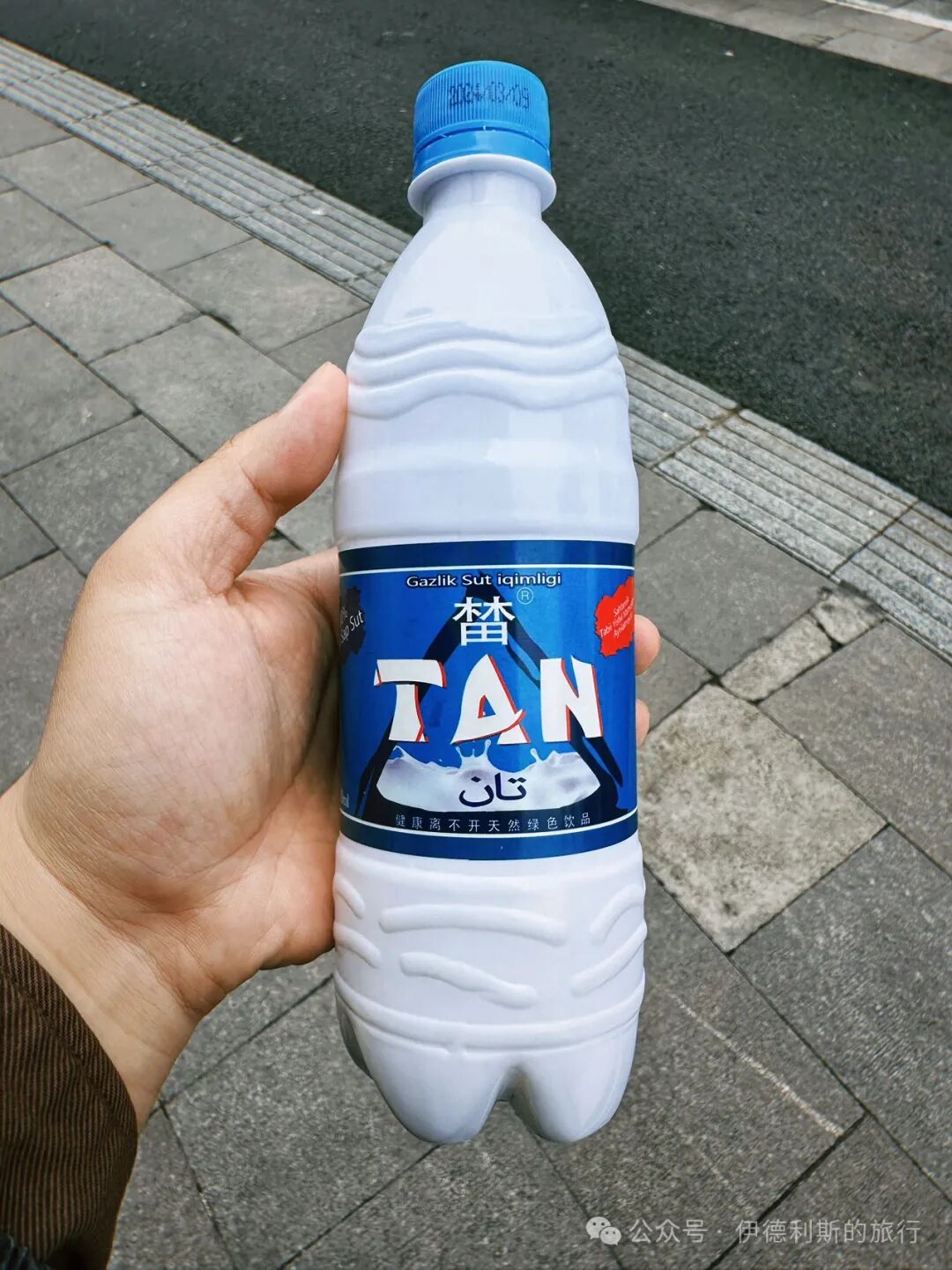
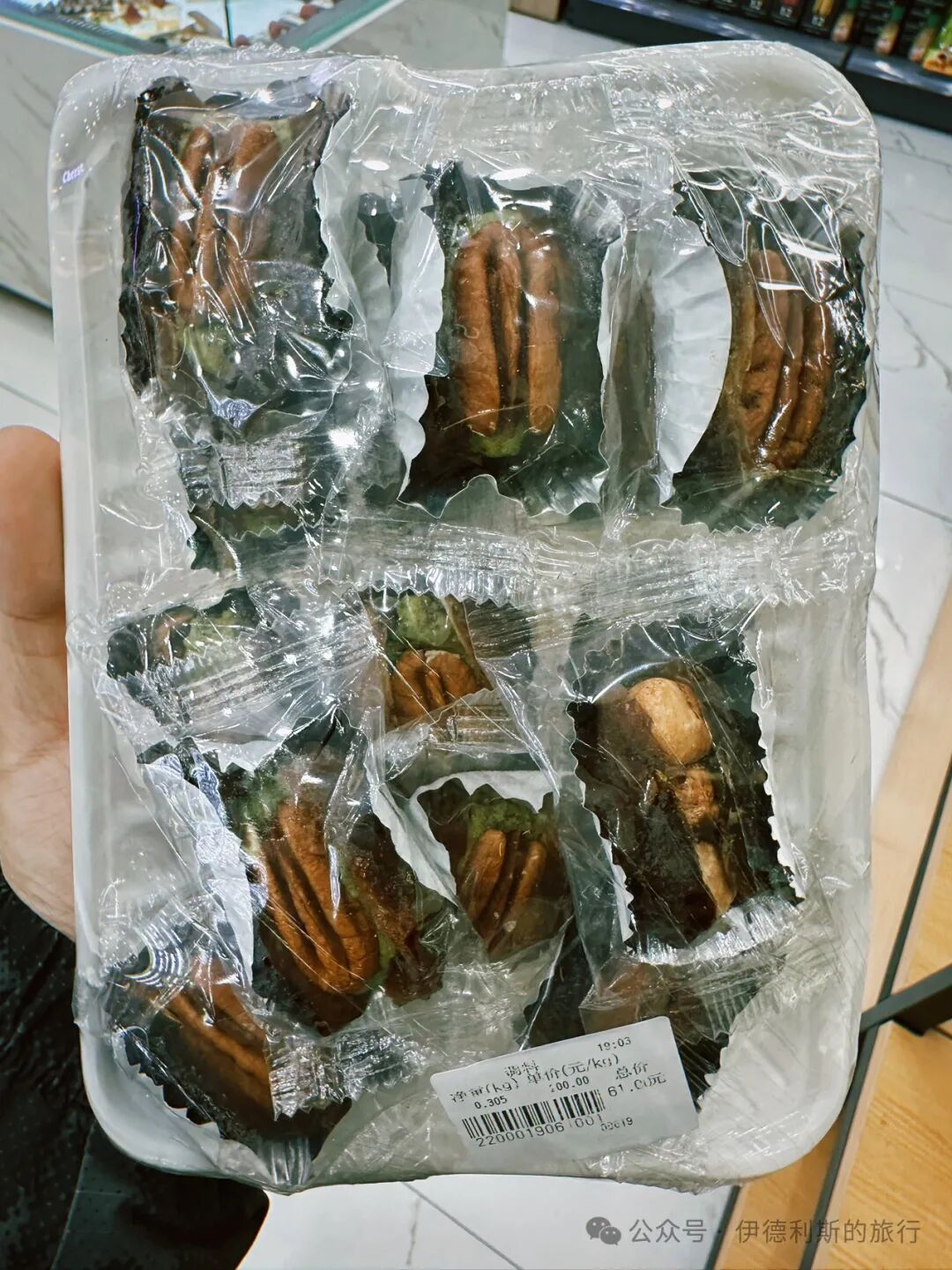
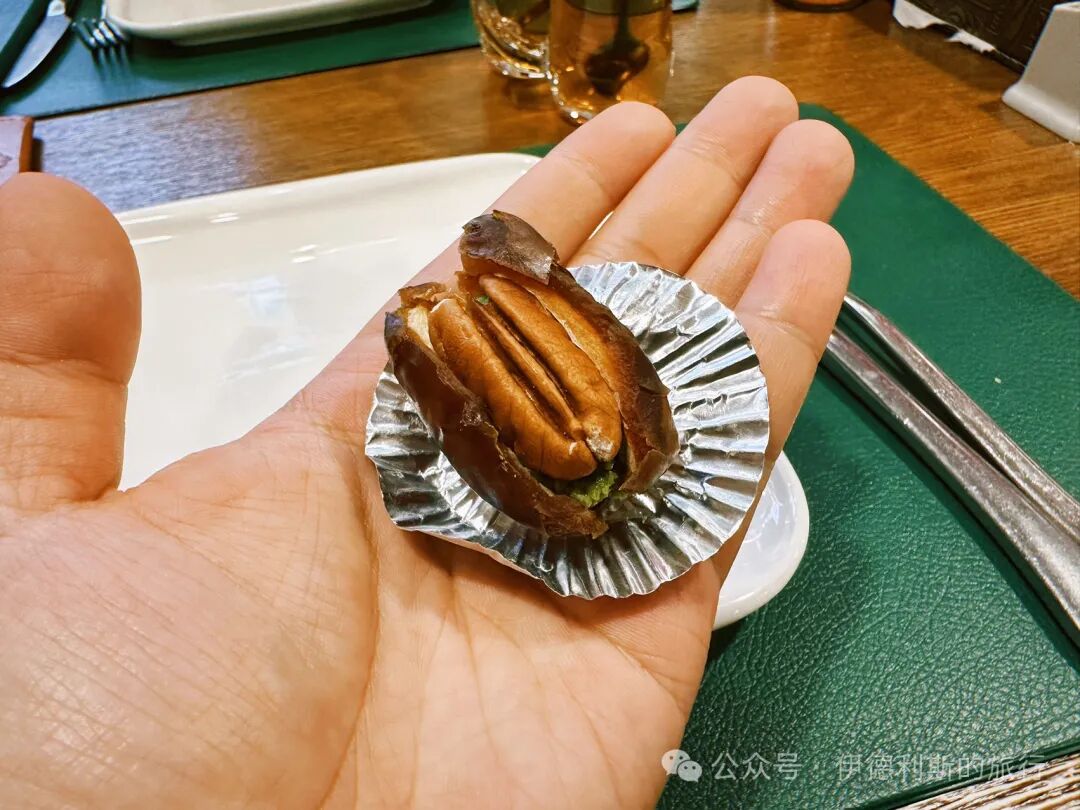
At noon, I had Turkish afternoon tea at a Turkish dessert shop called Sweet Life in the Binwang Trade Area. The 'Foreigner Street' in Area C of the Binwang Market is basically all foreign restaurants. Many Middle Easterners come here in the evening to drink tea and smoke shisha.
Sweet Life is a rare authentic Turkish dessert shop in China. The sweetness is very high, and syrup oozes out with every bite. It is exactly the same as the desserts sold in the local shops we visited in Istanbul. So, if any dost (friends) cannot handle too much sugar, you should be careful when trying them.
Their specialty is various flavors of baklava, including classic original, walnut, chocolate, hazelnut, and more. They also have cheese-filled sobiyet, lemon syrup-soaked almond pastries called sekerpare, and shredded dough pastries called burma kadayif, among many other options.
The desserts are served with Turkish black tea and coffee. We ordered one of each. Personally, I think Turkish coffee pairs better with baklava—a sip of strong coffee followed by a bite of honey-sweet pastry.
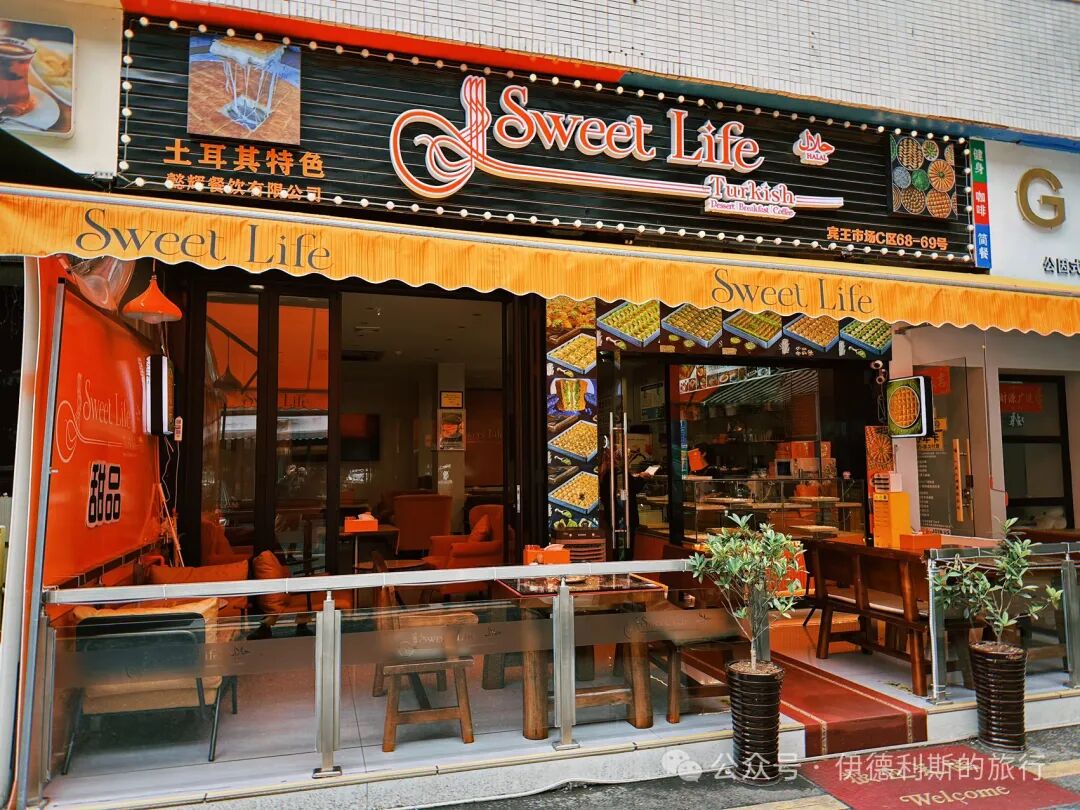
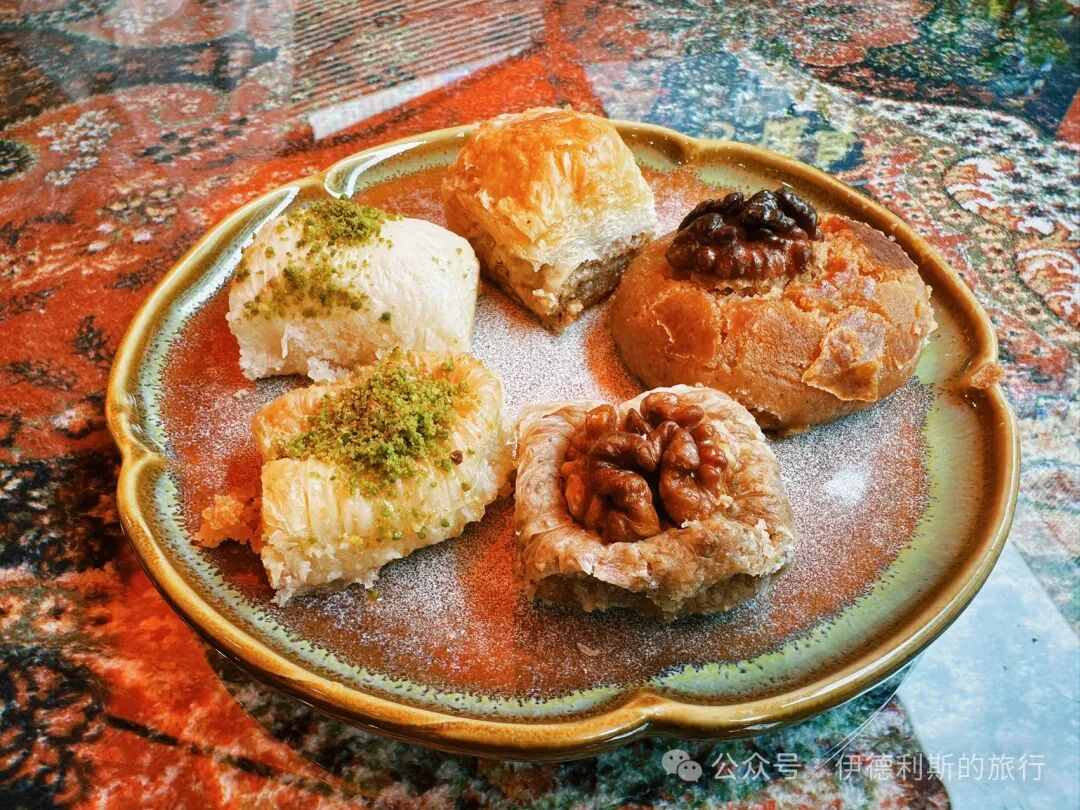
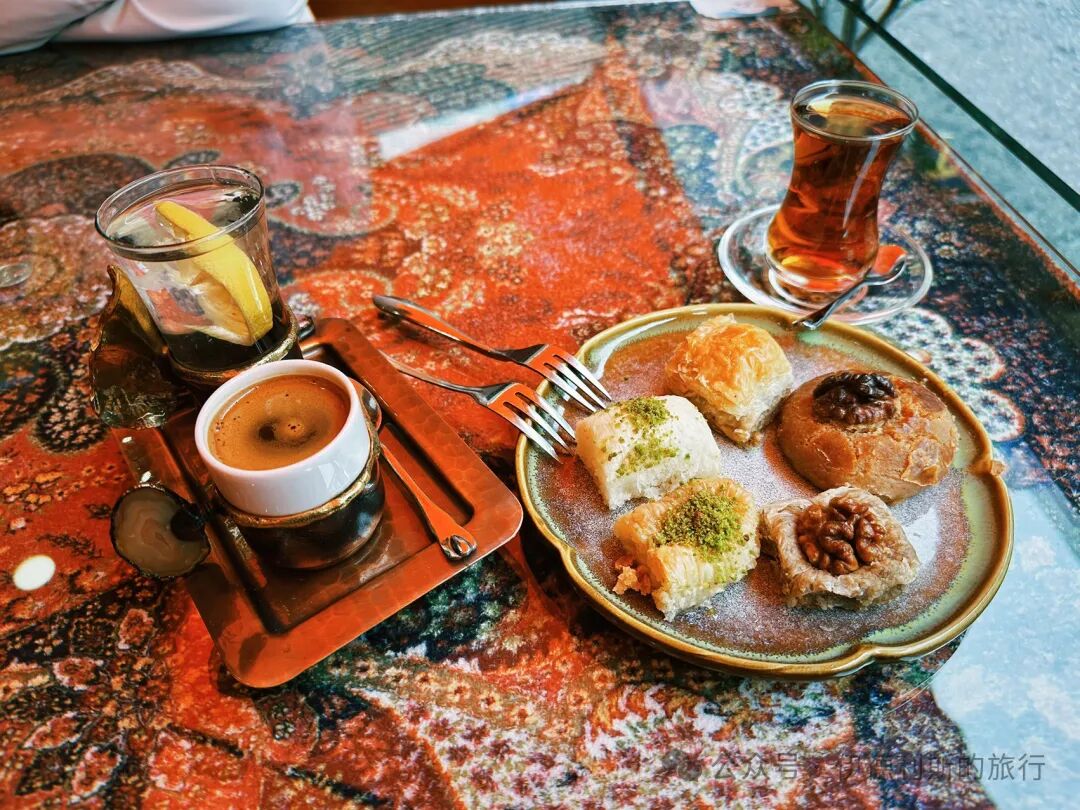
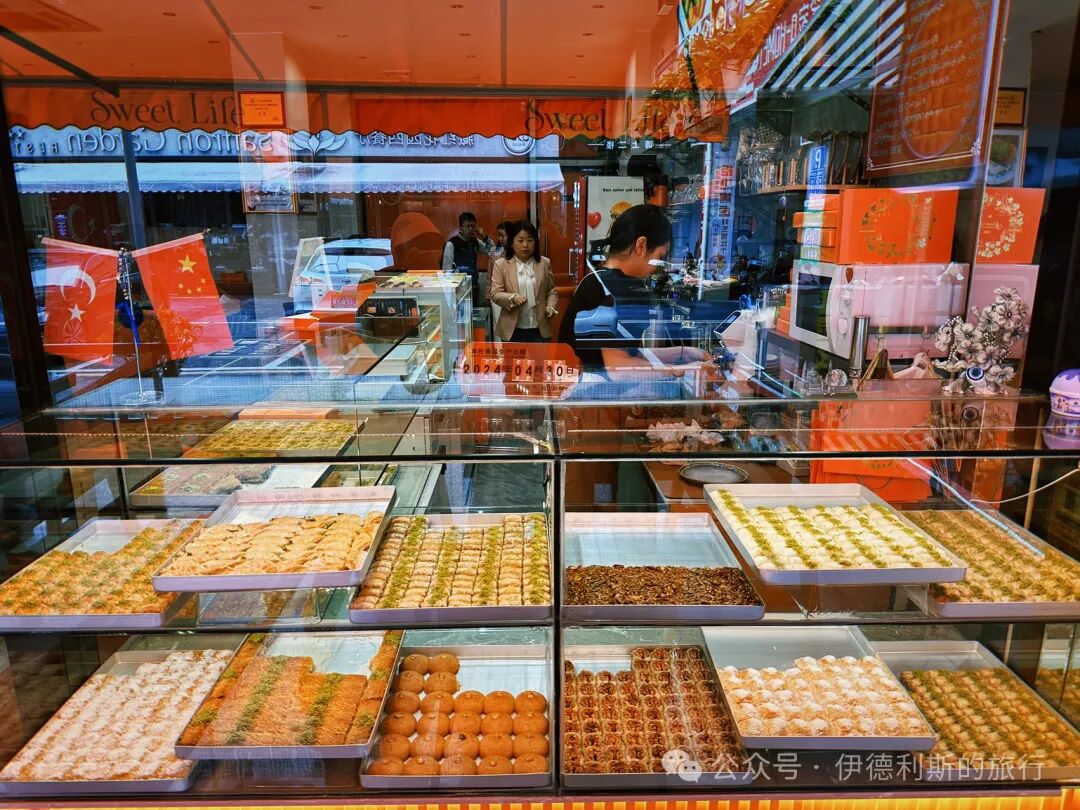
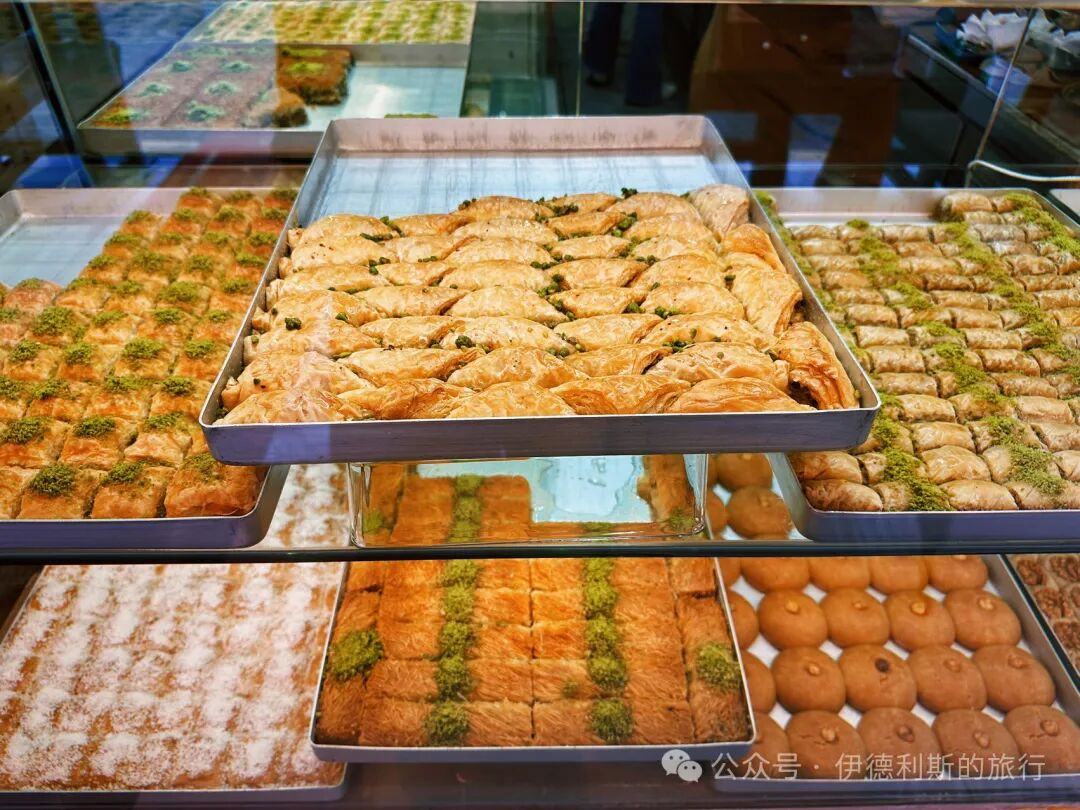
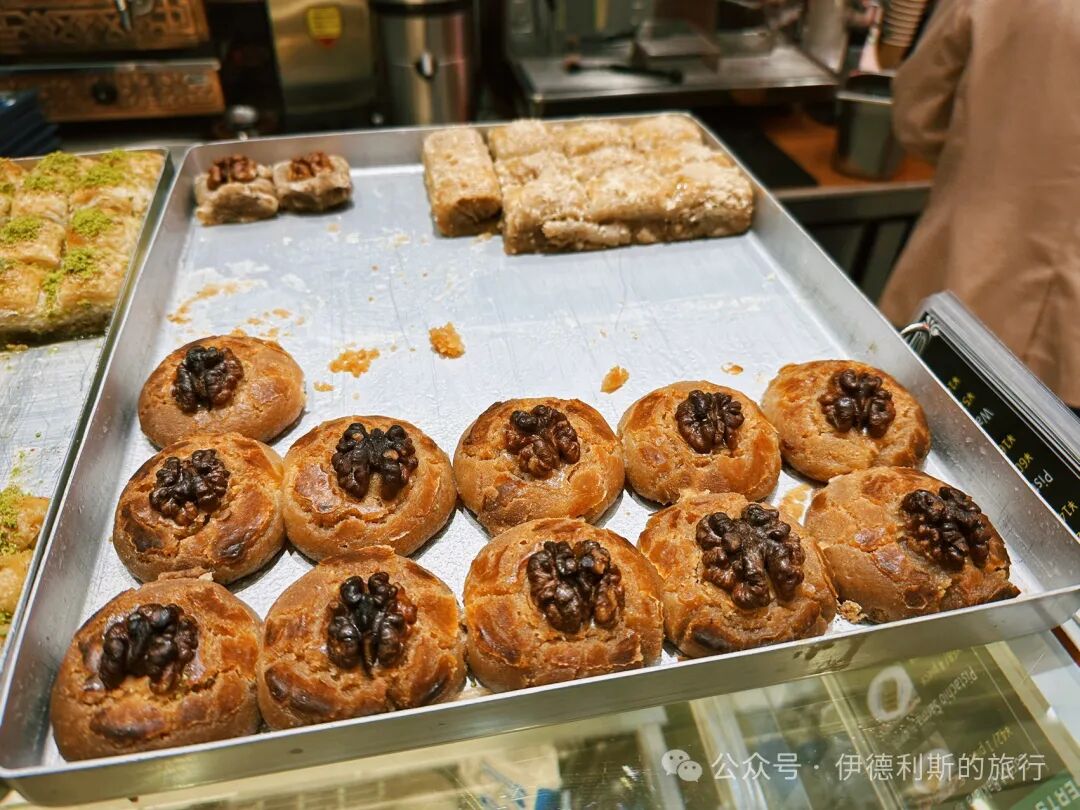
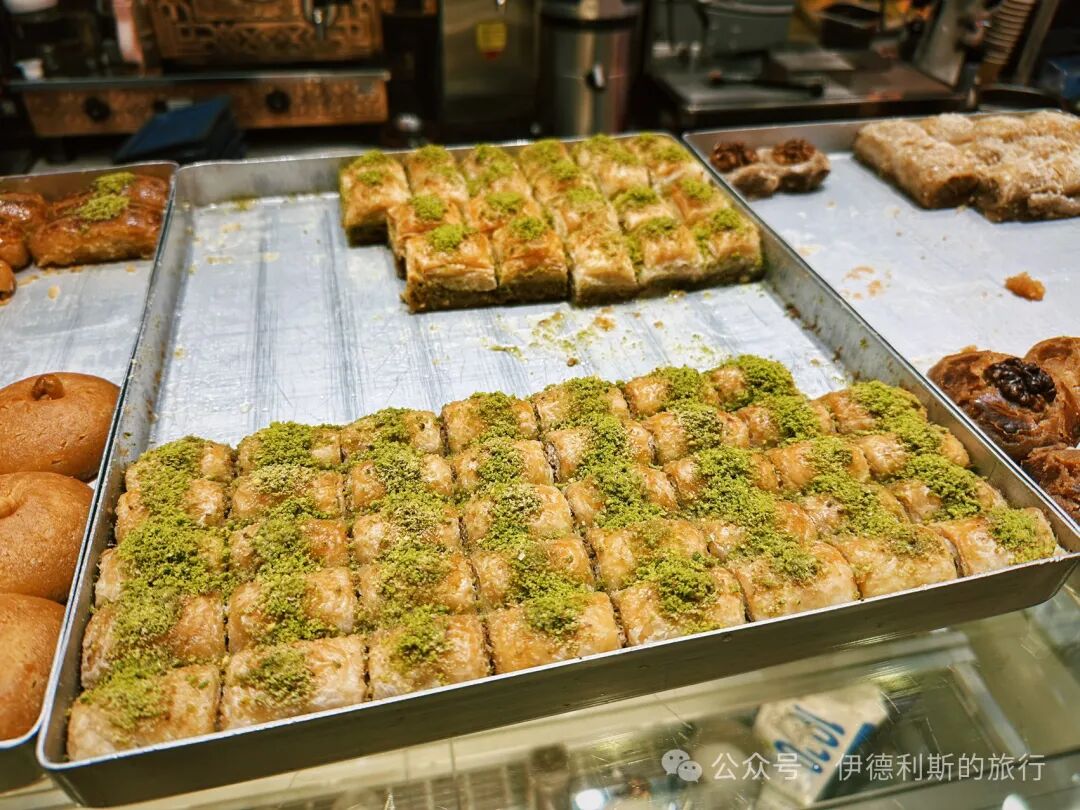
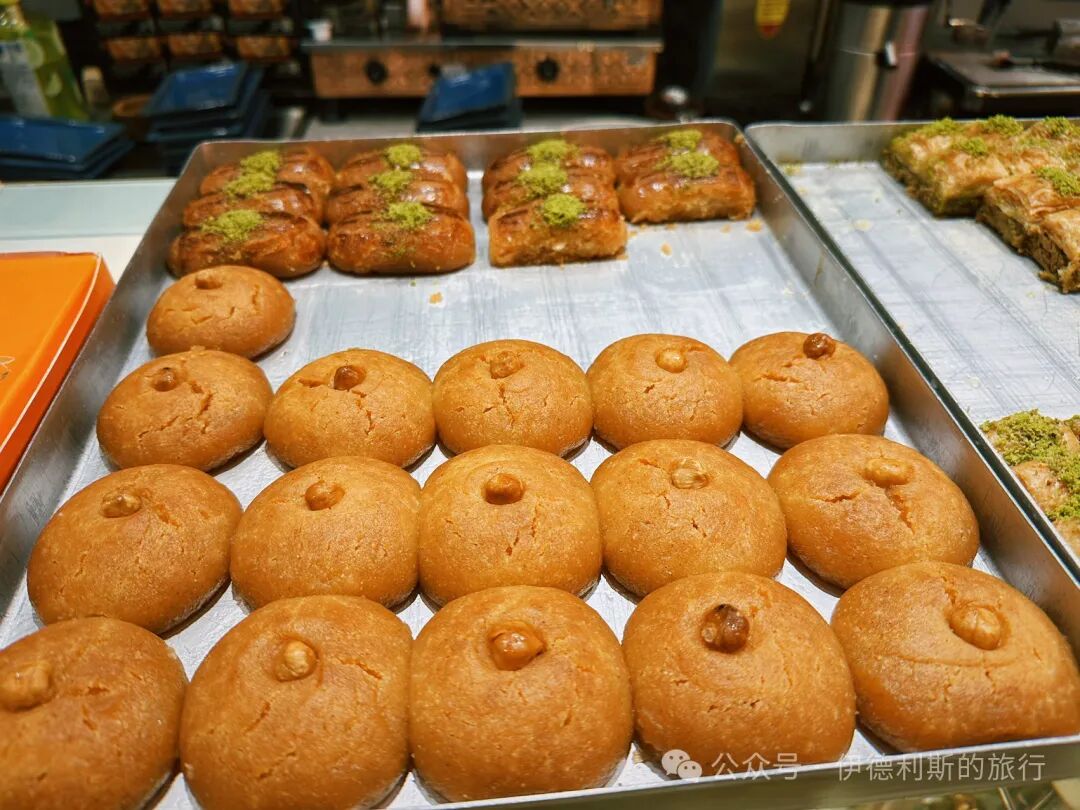
I rode my bike to the Yiwu Grand Mosque for noon namaz. Since this area is far from the trade city, people usually pray at local prayer spots and only come to the Grand Mosque for Friday prayers.
Yiwu set up two prayer spots in 2000 at the Xinjiang Ethnic Hotel and the Honglou Hotel, then in 2004 converted a Yiwu silk factory warehouse into a prayer spot, which was the predecessor to the Yiwu Grand Mosque. As Yiwu's small commodity economy boomed, more friends (dosti) came to do business, so the old silk factory warehouse was renovated in 2010 and officially completed in 2012 as the current Yiwu Grand Mosque.
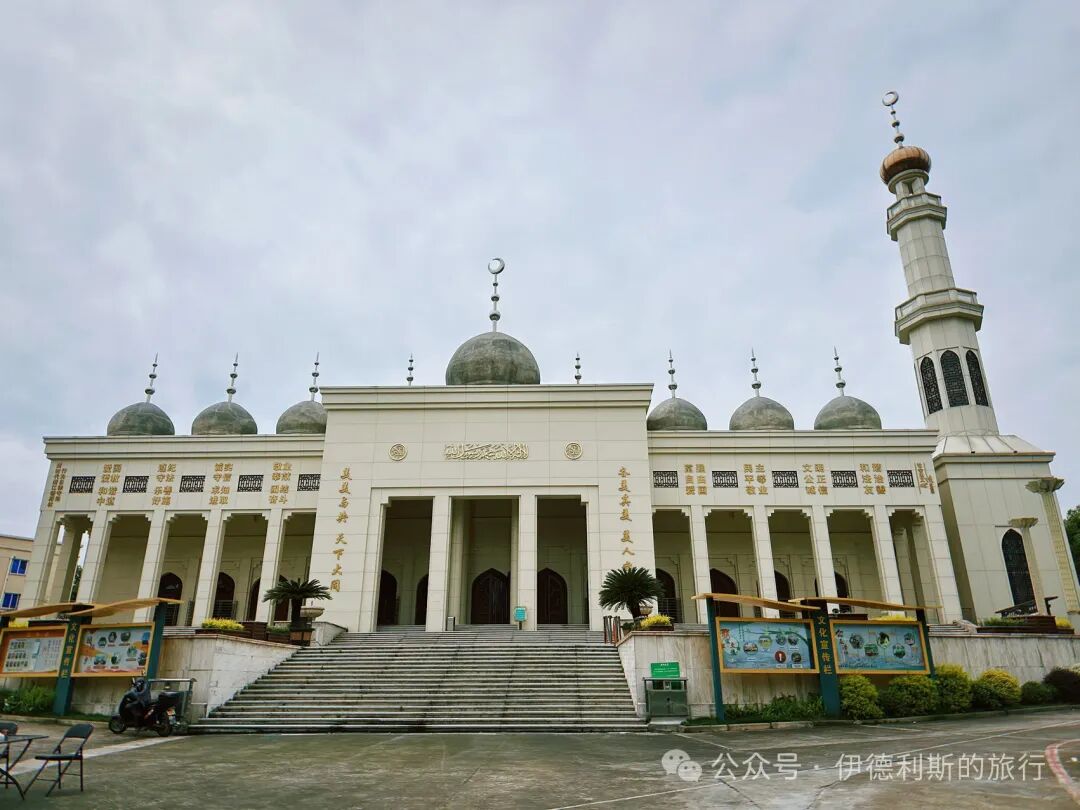
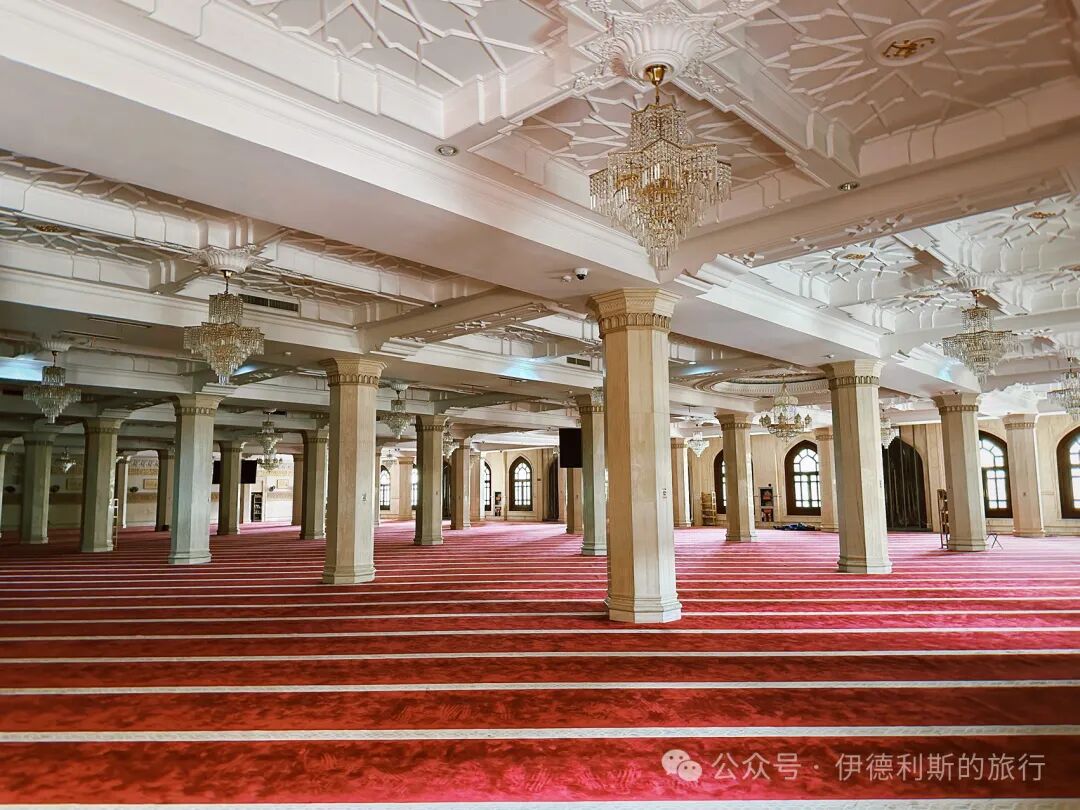
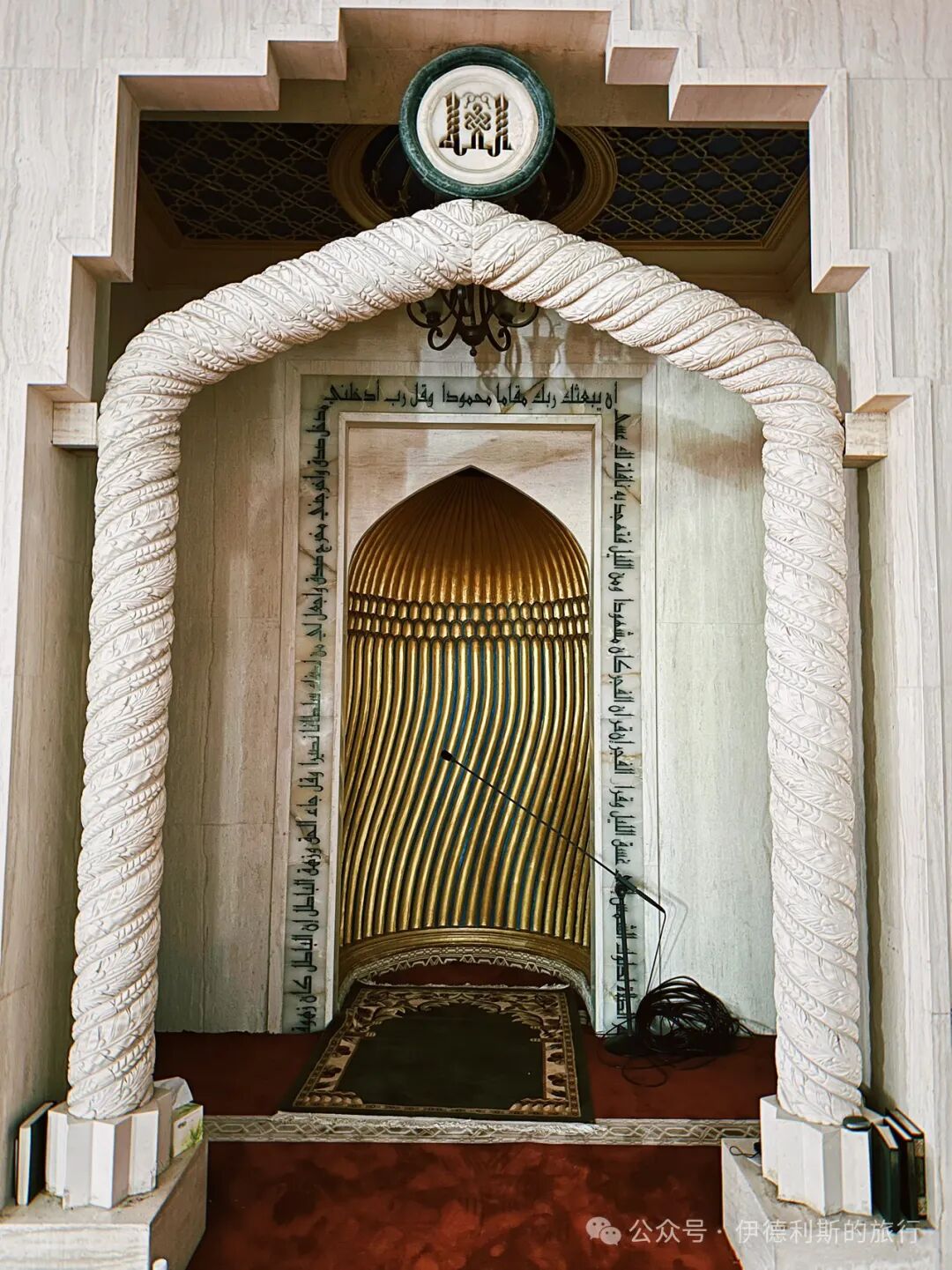
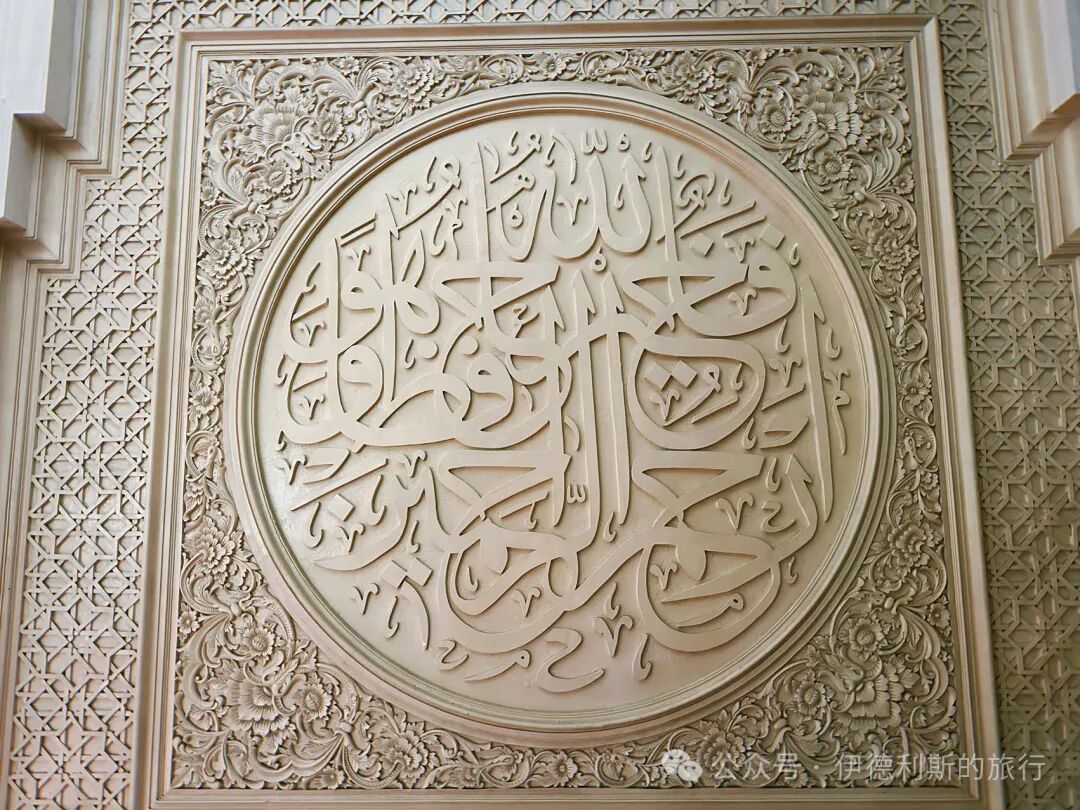
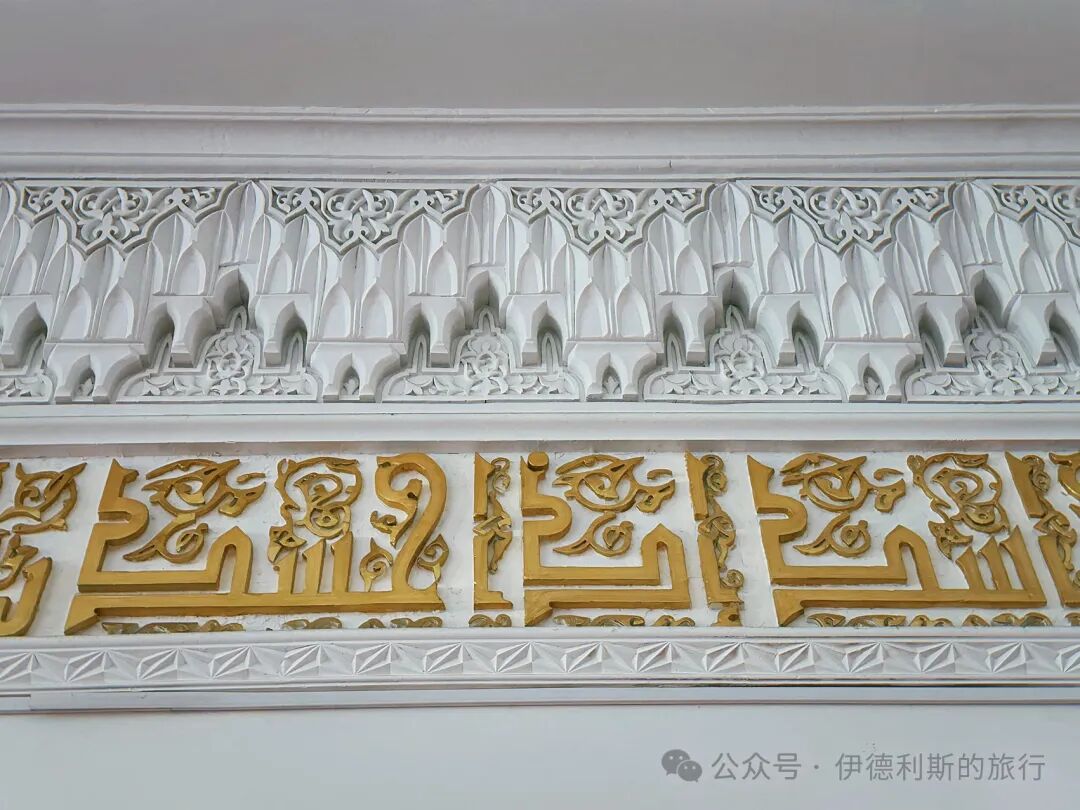
In the evening, I ate authentic African food at Sina African Restaurant, located at the intersection of Street 8 in the Binwang Trade Area. The restaurant is owned by Mohammad Rifat, the Egyptian guy who runs Leifeng Juice; he has opened six Leifeng Juice shops in Yiwu over the past two years and also started this African restaurant. During this trip to Yiwu, I noticed there are clearly more Black faces than Arab faces in the Binwang Trade City, but the restaurants are still mostly Arab or Turkish, so Sina African Restaurant, which specializes in sub-Saharan African flavors, is very popular with Black friends (dosti).
We ordered South African stir-fried beef with melon seed soup and fufu, fried tilapia with cassava flour (atteke), and the classic avocado, nut, and date milkshake from Leifeng Juice. To be honest, even though I have visited 20 countries, this is the only meal I really struggled to get used to. Even though it was hard to get used to, I think it is worth trying if you want to understand the local food culture.
Fufu is a classic staple food in West and Central Africa, and the name Fufu actually means to pound. The main ingredients for fufu vary by region, but it is usually made from cassava, yam, or plantain. Nowadays, people can also use flour or rice, but it is still typically made by pounding the ingredients with a wooden spoon in a bowl. In West and Central Africa, fufu is usually served with okra, fish, and tomato soup. To eat it, wash your hands first, then take a piece of fufu and roll it into a ball with your right hand, press a small dent into it, and scoop up the soup to eat. The fufu I chose came with a soup made from ground egusi seeds, a West African specialty, stewed with bitter leaf. Bitter leaf, scientifically known as Vernonia amygdalina, is a shrub that grows in tropical Africa and has a very bitter taste. Bitter leaf (kuye) is the main vegetable used in various stews and braised dishes across equatorial Africa, and it is also the most traditional stewed vegetable dish in Nigeria.
Atteke is a classic West African side dish for fried fish, originally from southern Ivory Coast. Atteke is made similarly to North African couscous, but it uses fermented cassava pulp instead of semolina.
Although Chinese people might not be used to the African food at Sina's place, everyone is sure to love the Leifeng juice. Zainab especially likes their avocado and date milkshake; the dates really add a great flavor to the shake. But you only need a small cup of this high-calorie drink.
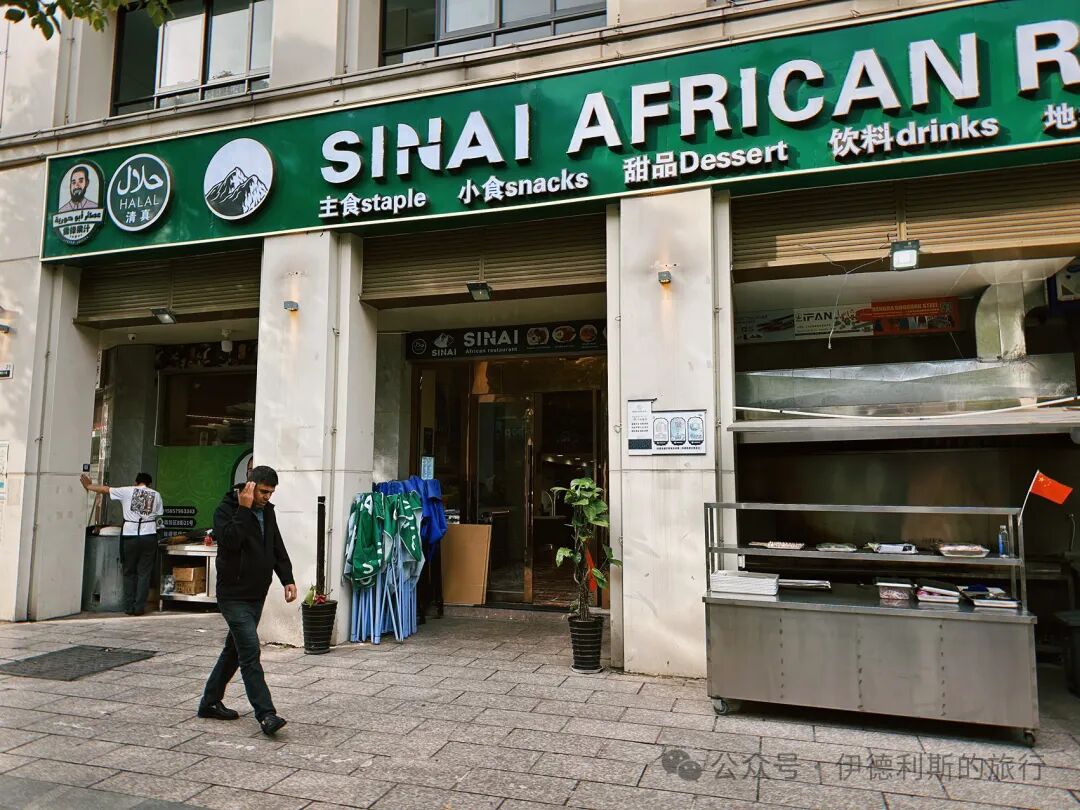
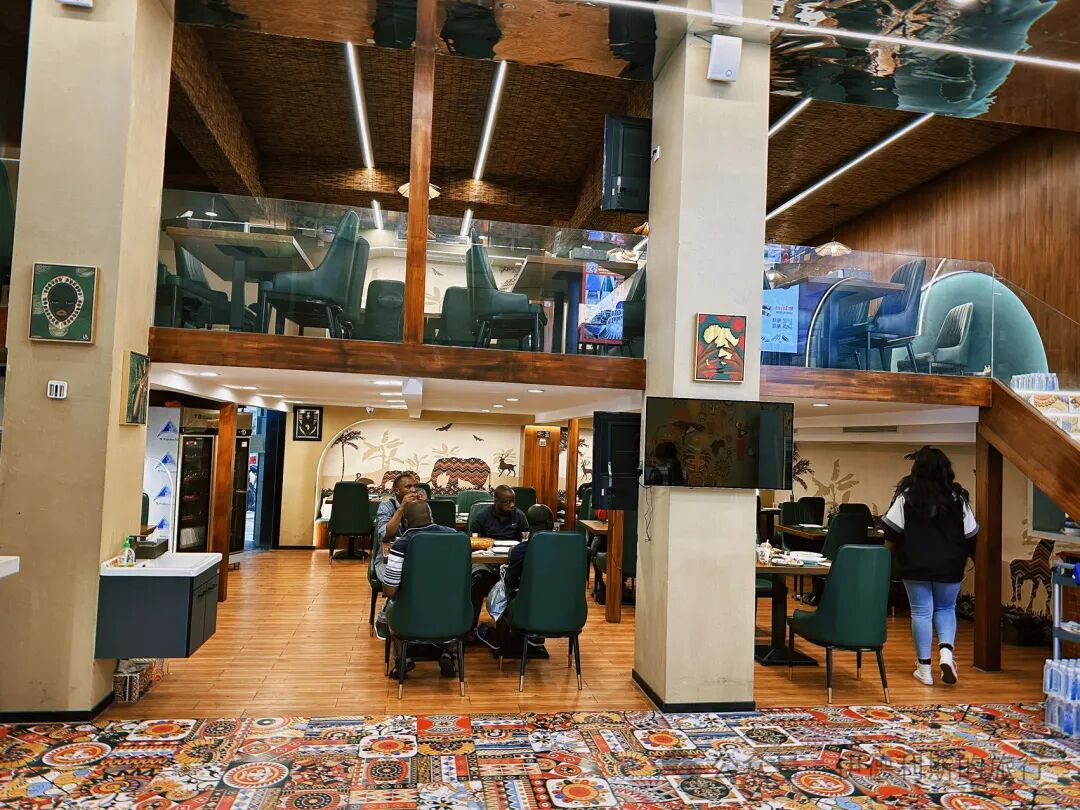
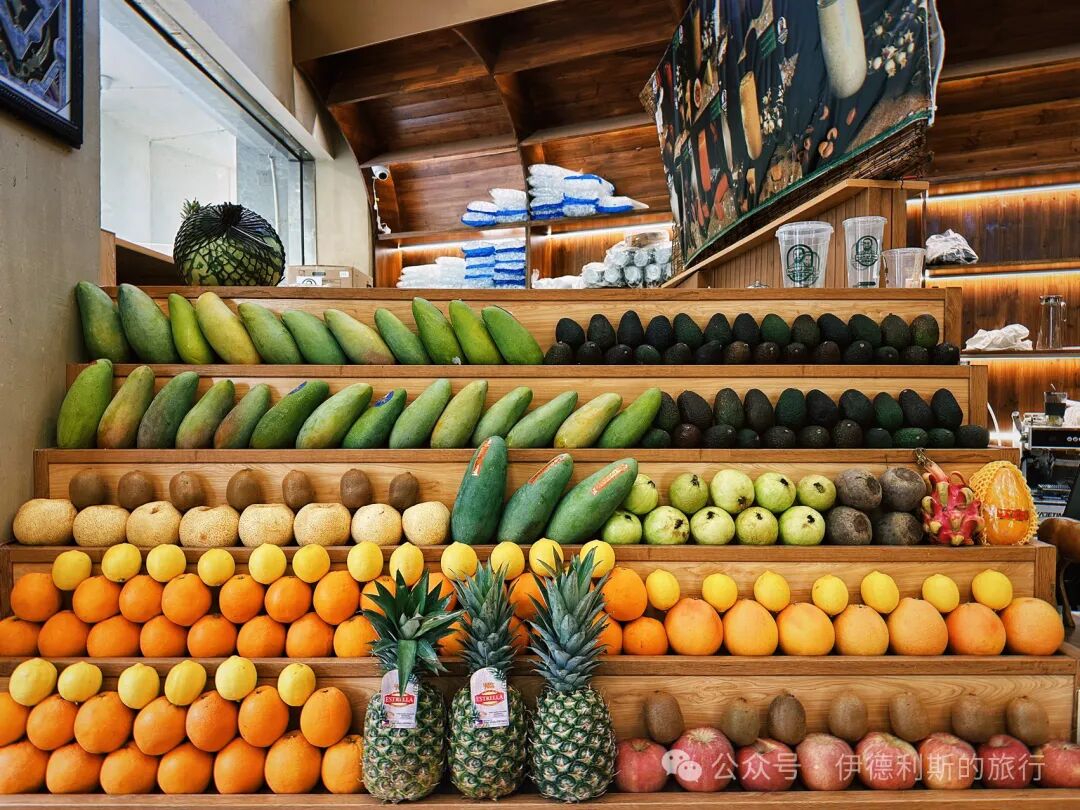
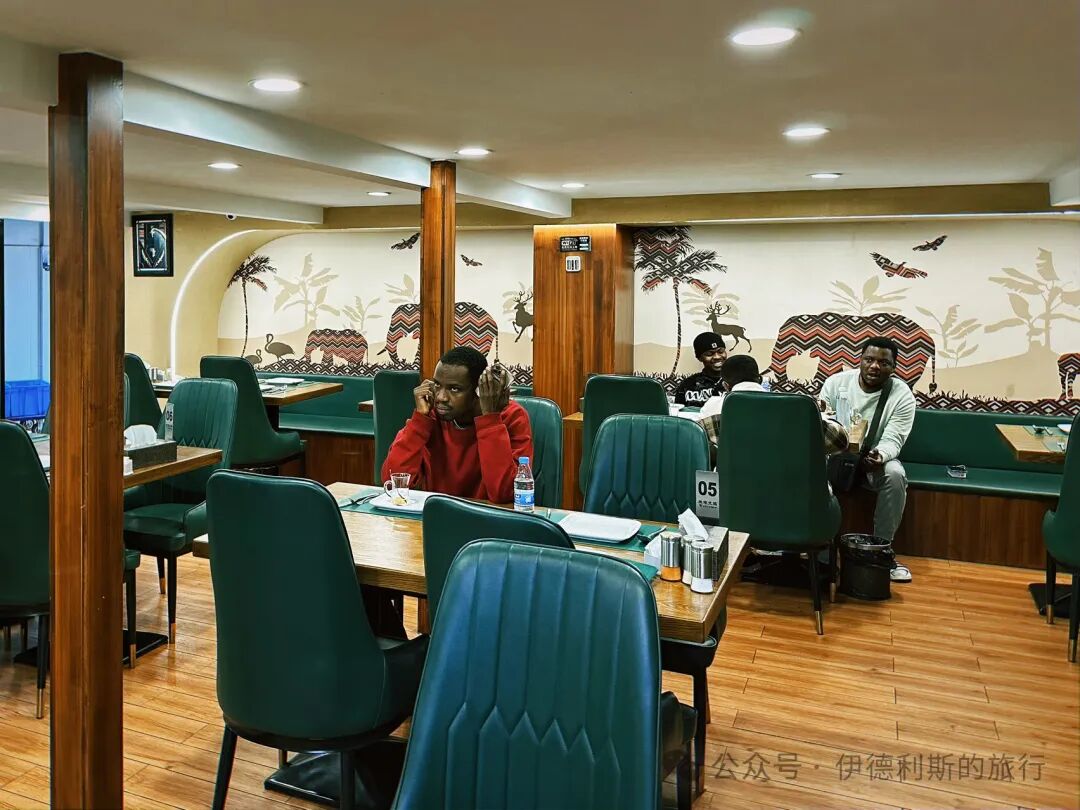
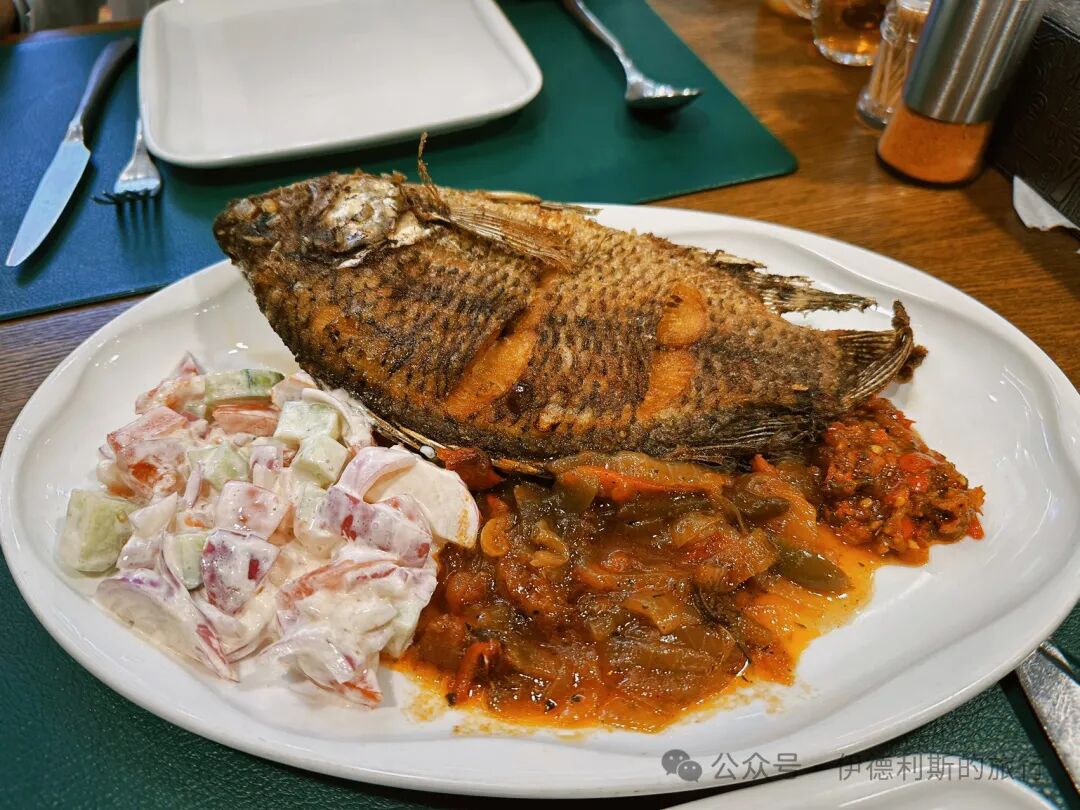
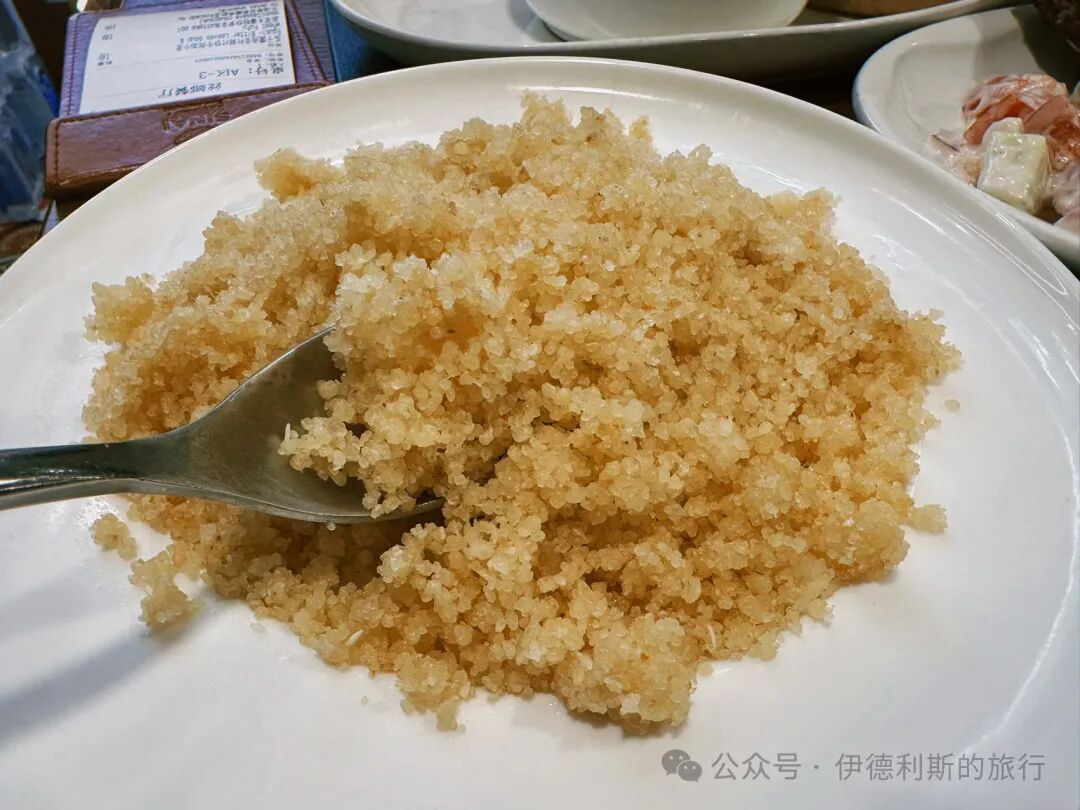
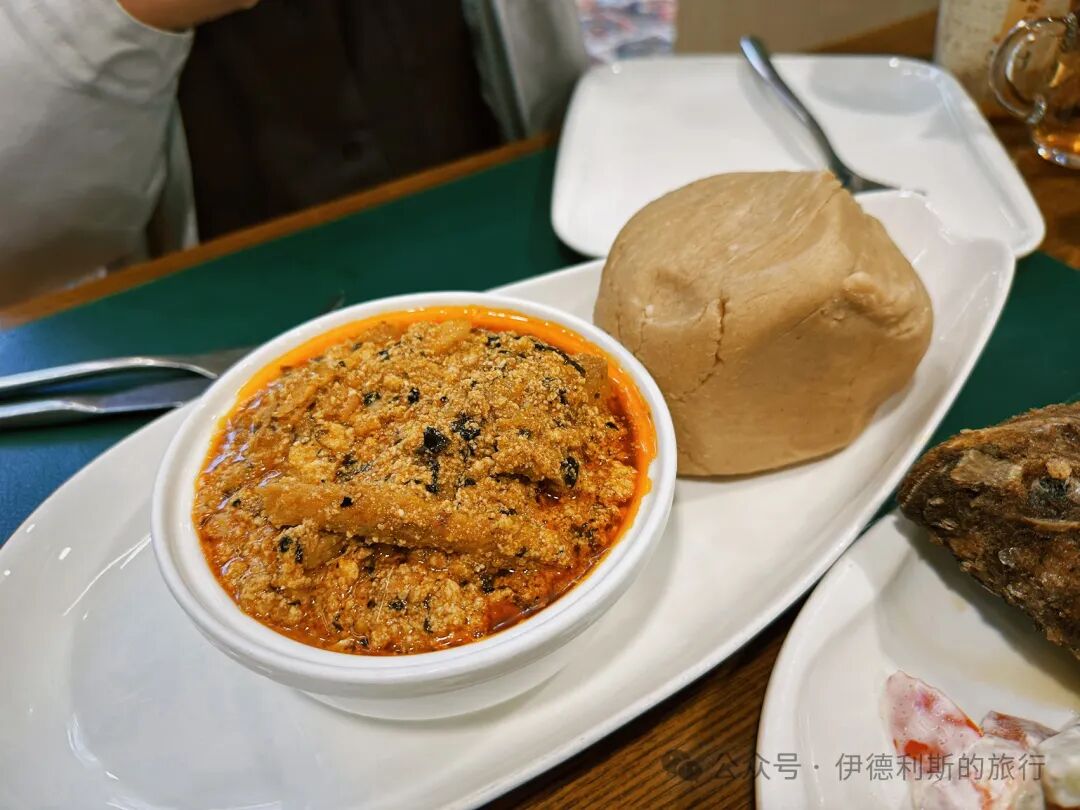
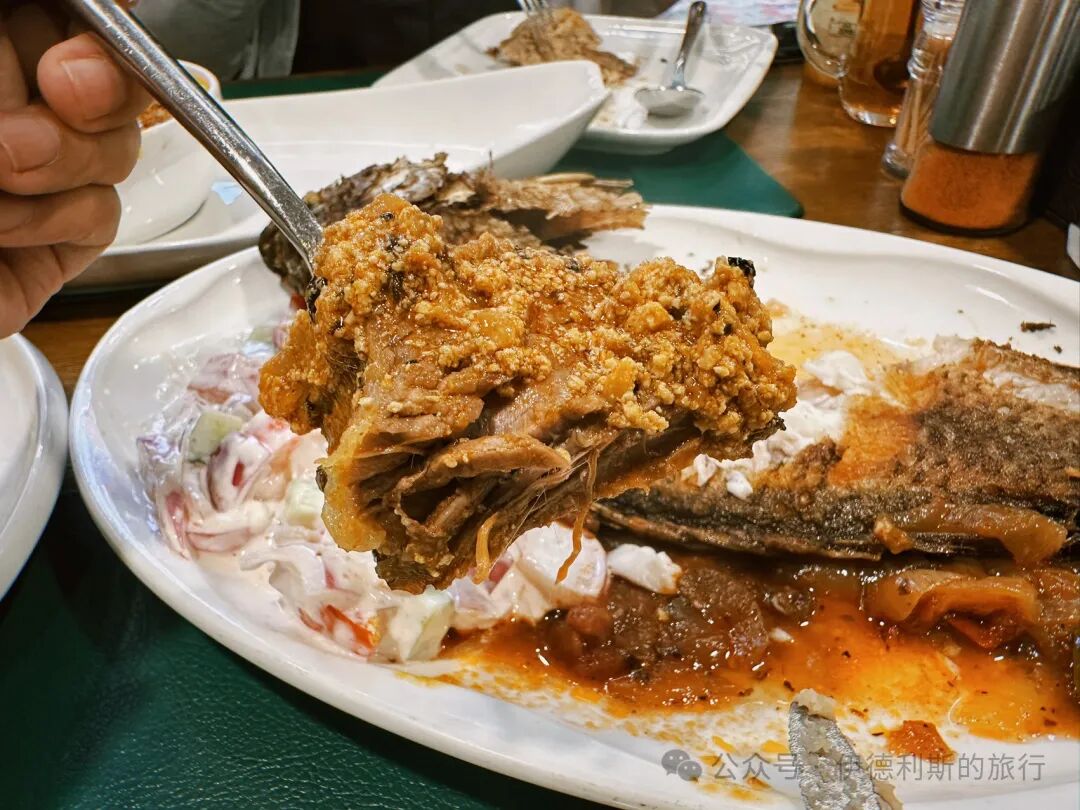
I went for a walk in the Binwang business district in the evening. The Xinjiang Golden Poplar (Jinhuyang) specialty restaurant at the intersection of Chouzhou North Road is really popular, and there are a lot of people eating barbecue there at night. Their fresh juice stand at the street corner is also very popular. We ordered a mix of orange and pomegranate juice. They used three oranges and two pomegranates to fill one cup without adding a single drop of water, so the flavor was really rich.
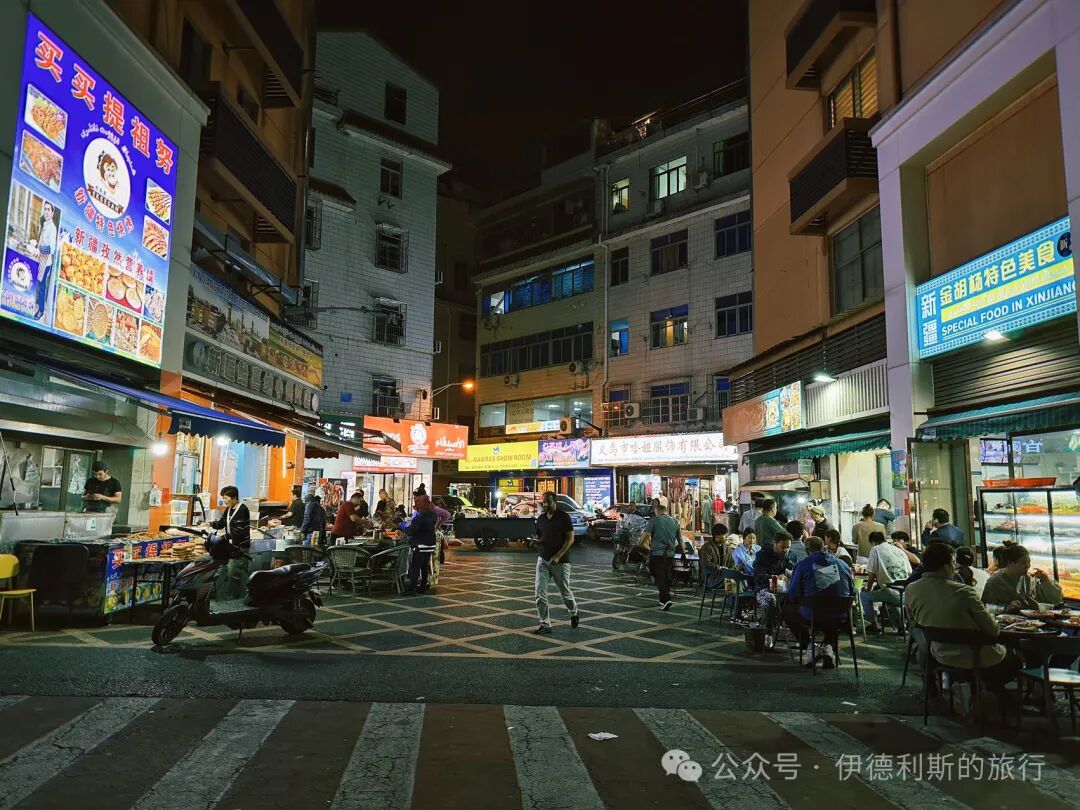
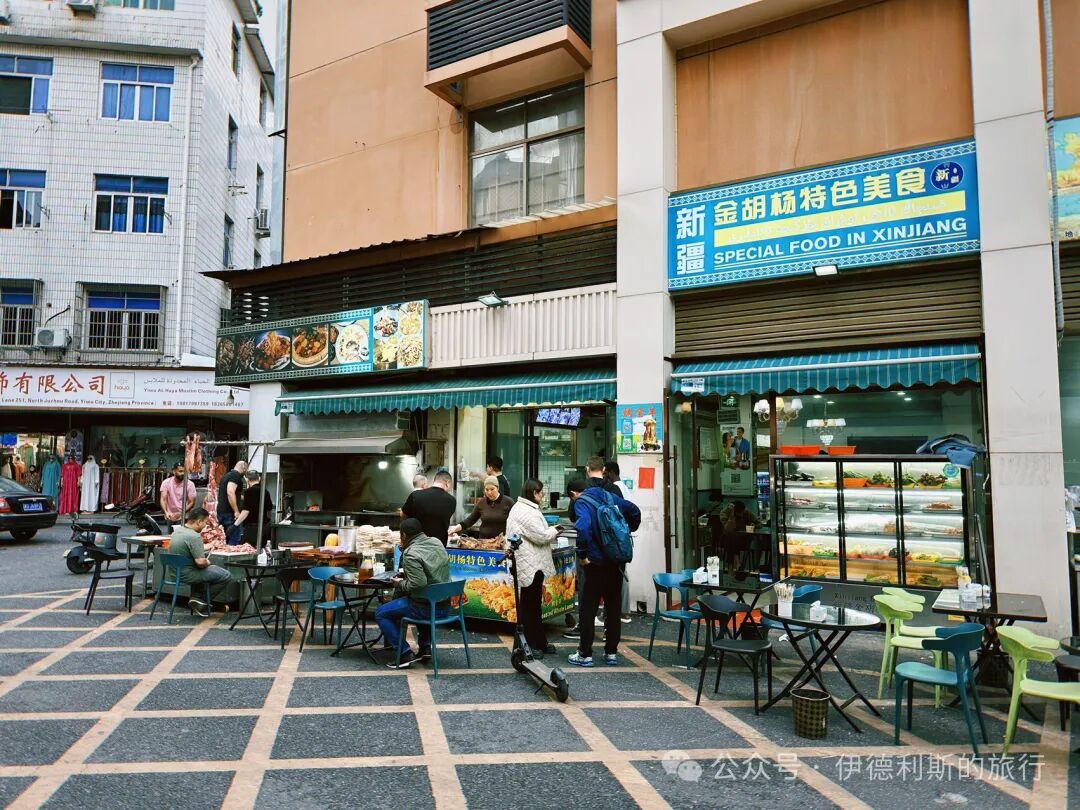
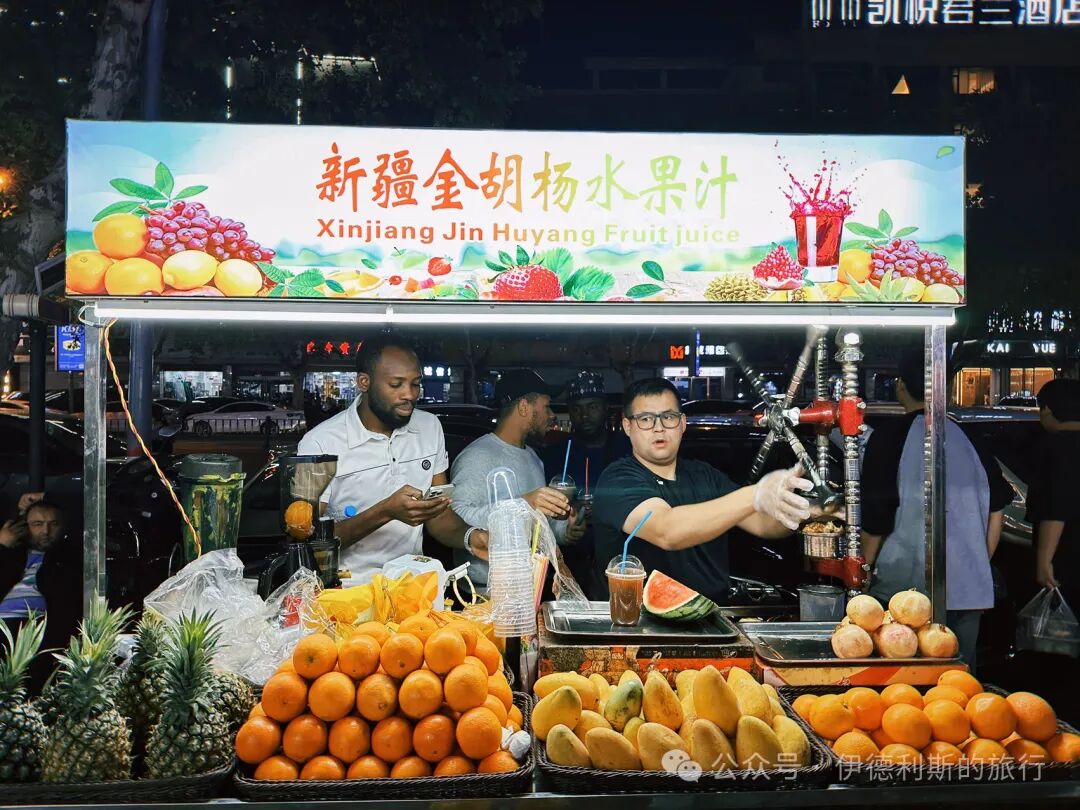
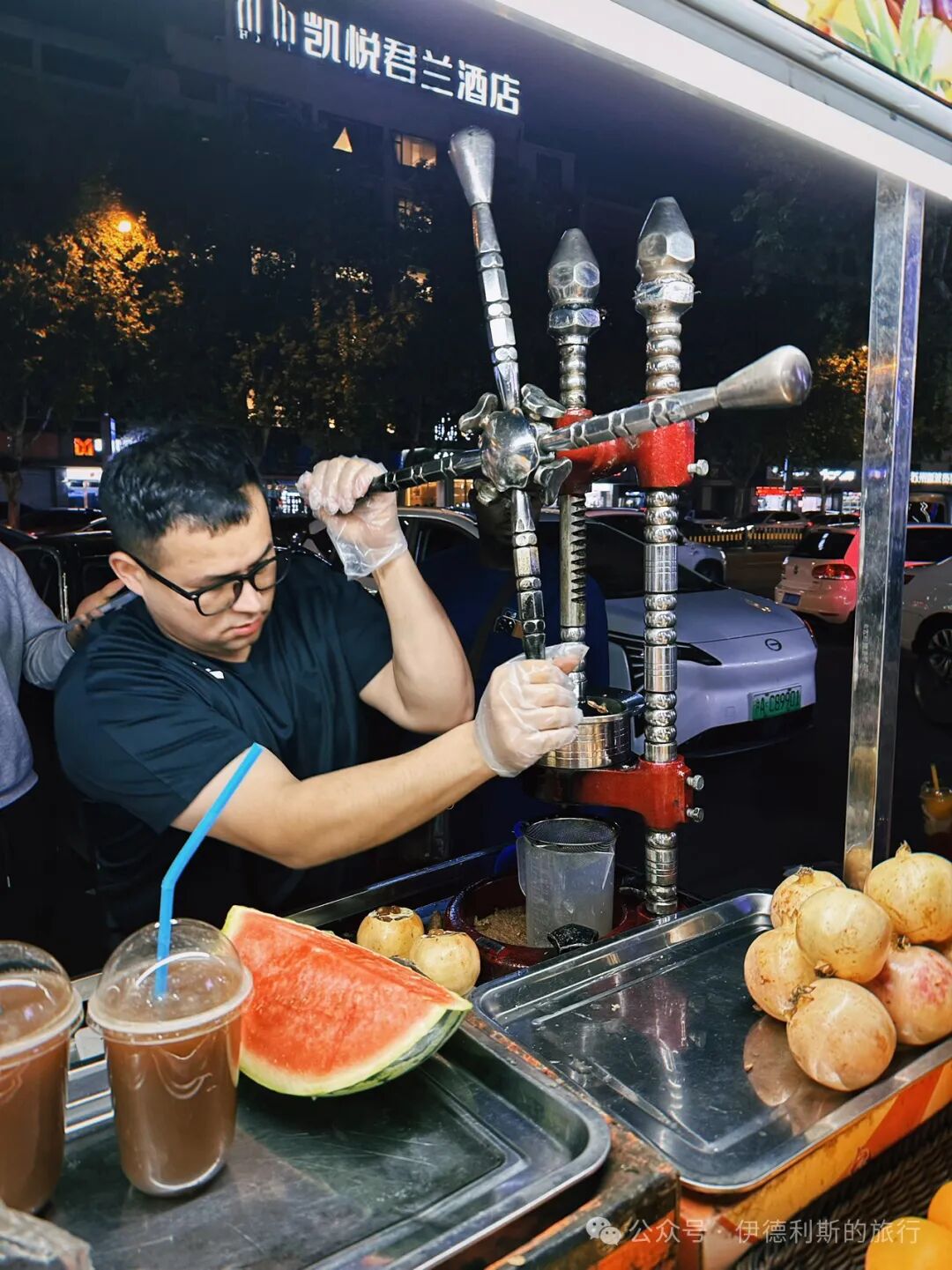
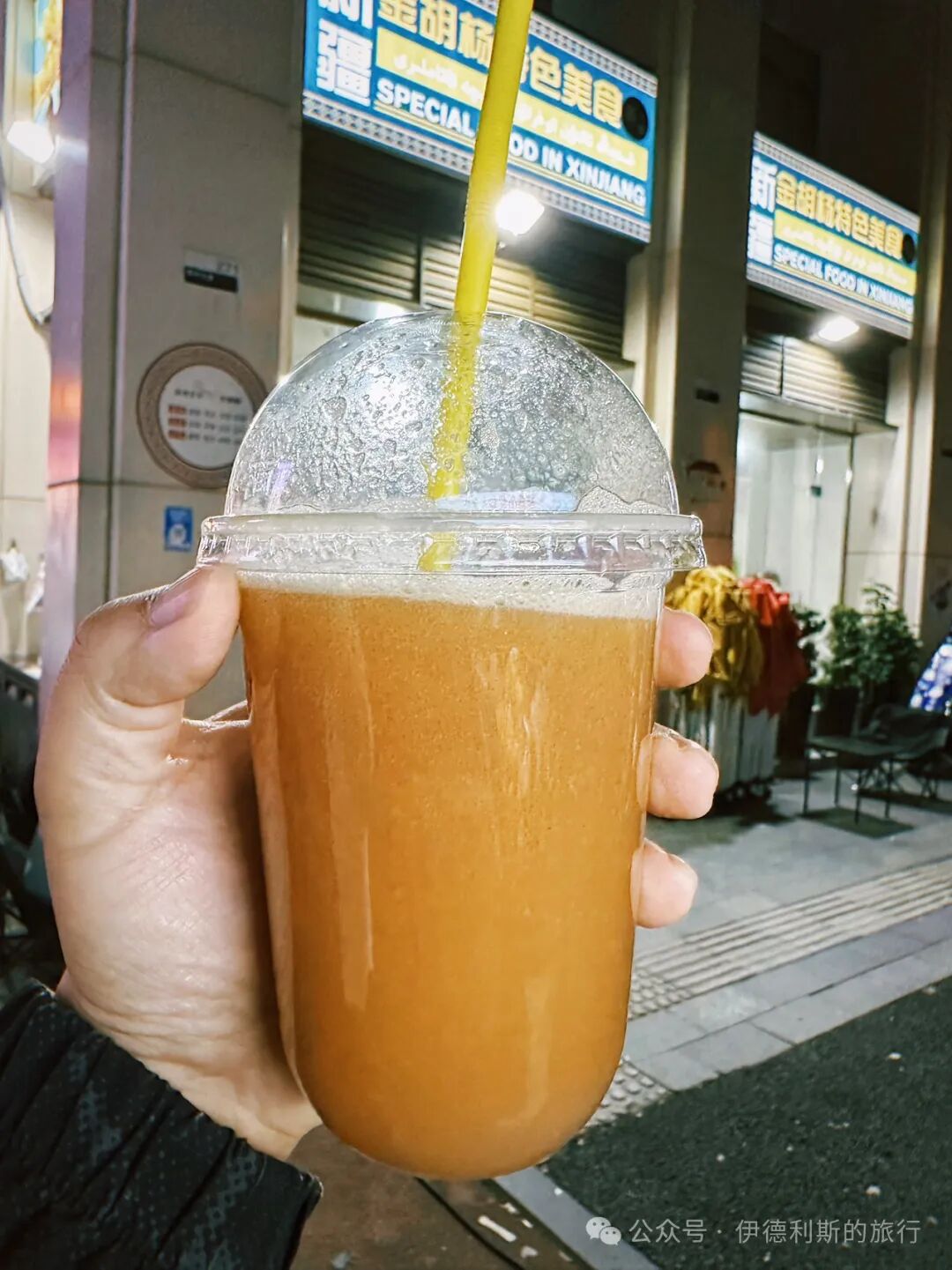
There are many Hui Muslims from Yunnan in the Binwang area. You can see Hui Muslim sisters from Yunnan working as servers in all the Middle Eastern restaurants. There are many Yunnan restaurants in the small alleys of Yijiashan, across from Binwang. The Yunnan-style barbecue place at the intersection of Chouzhou North Road is especially popular. The restaurant has a stall out front selling Zhaotong spicy chicken legs and grilled tofu (shaodoufu). We ordered a few pieces of grilled tofu. They sliced them open and added fish mint (zhe'ergen), pickled vegetables (suancai), and chili powder. I asked for it to be less spicy, but my mouth was still on fire. It was so satisfying, haha.
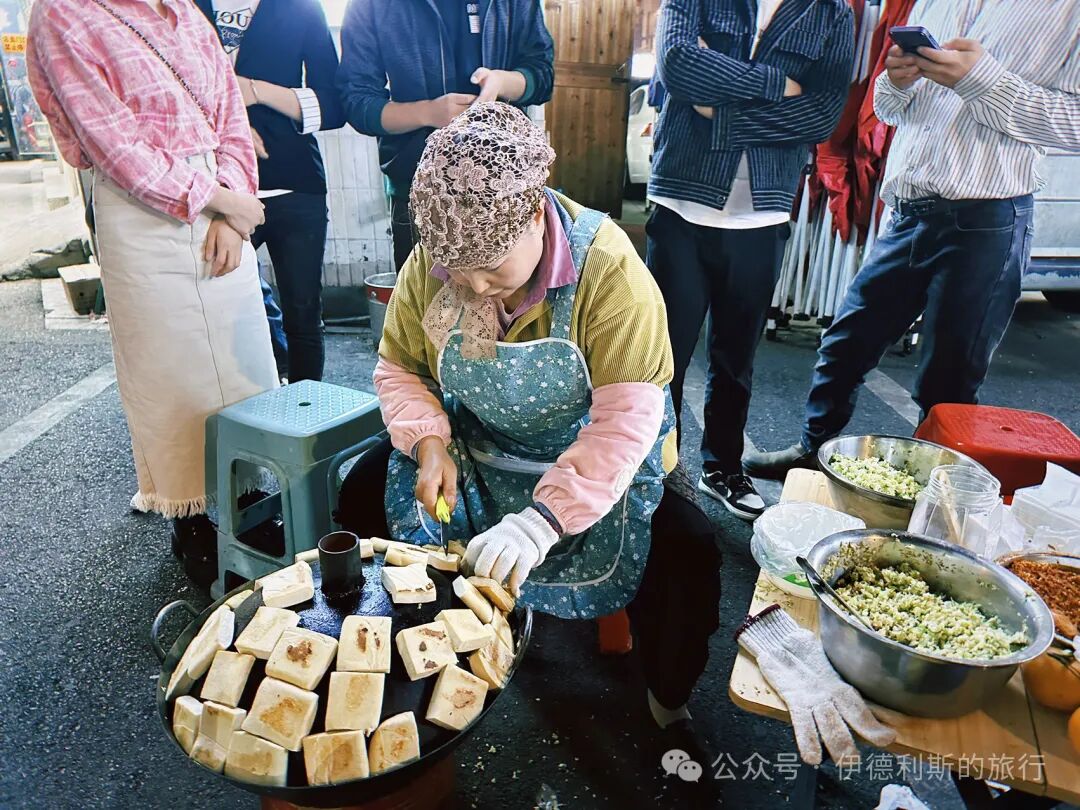
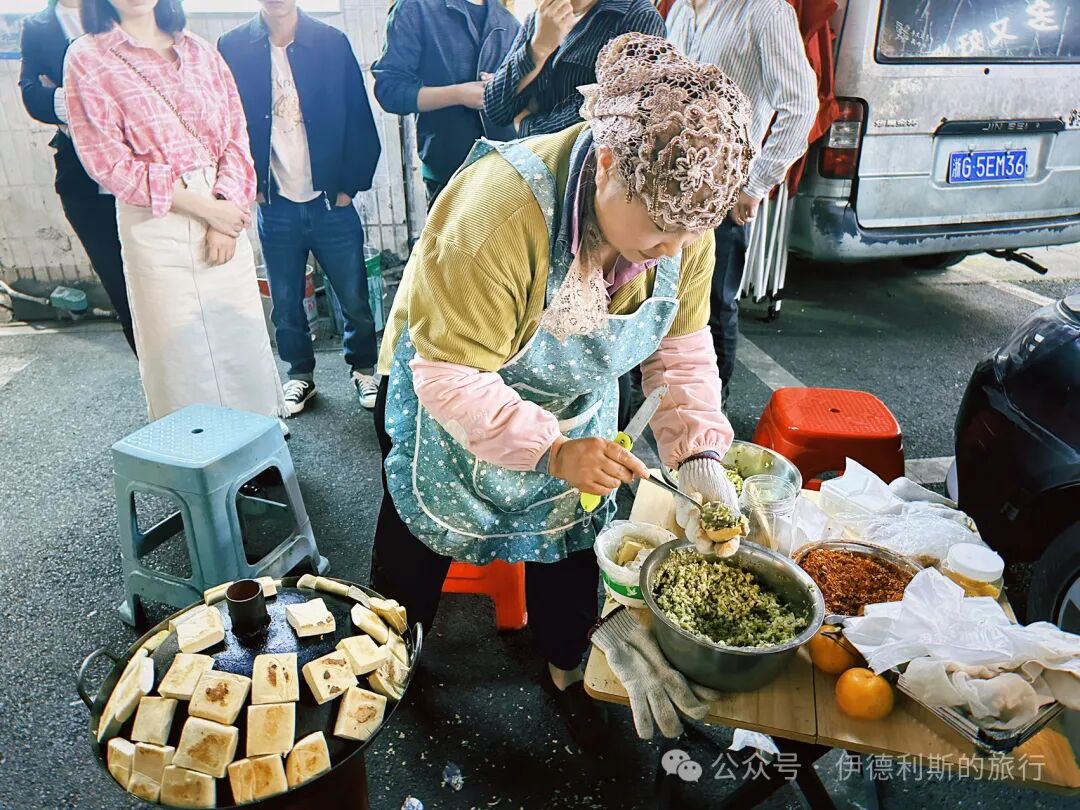
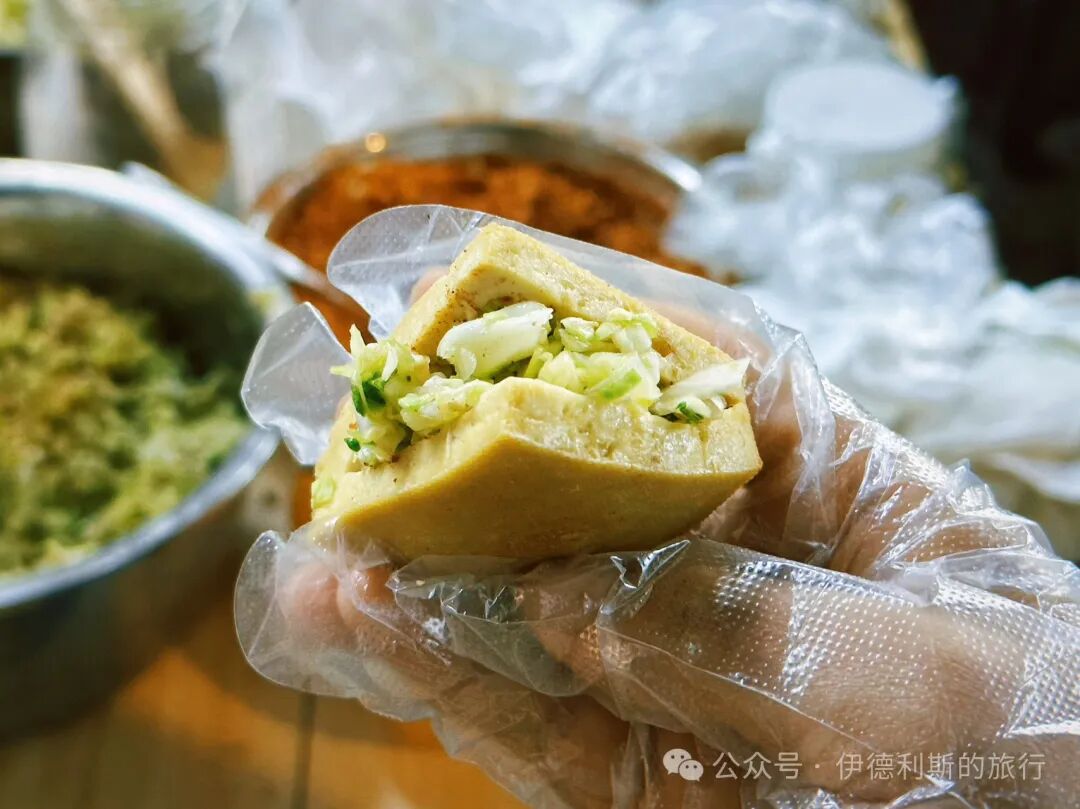
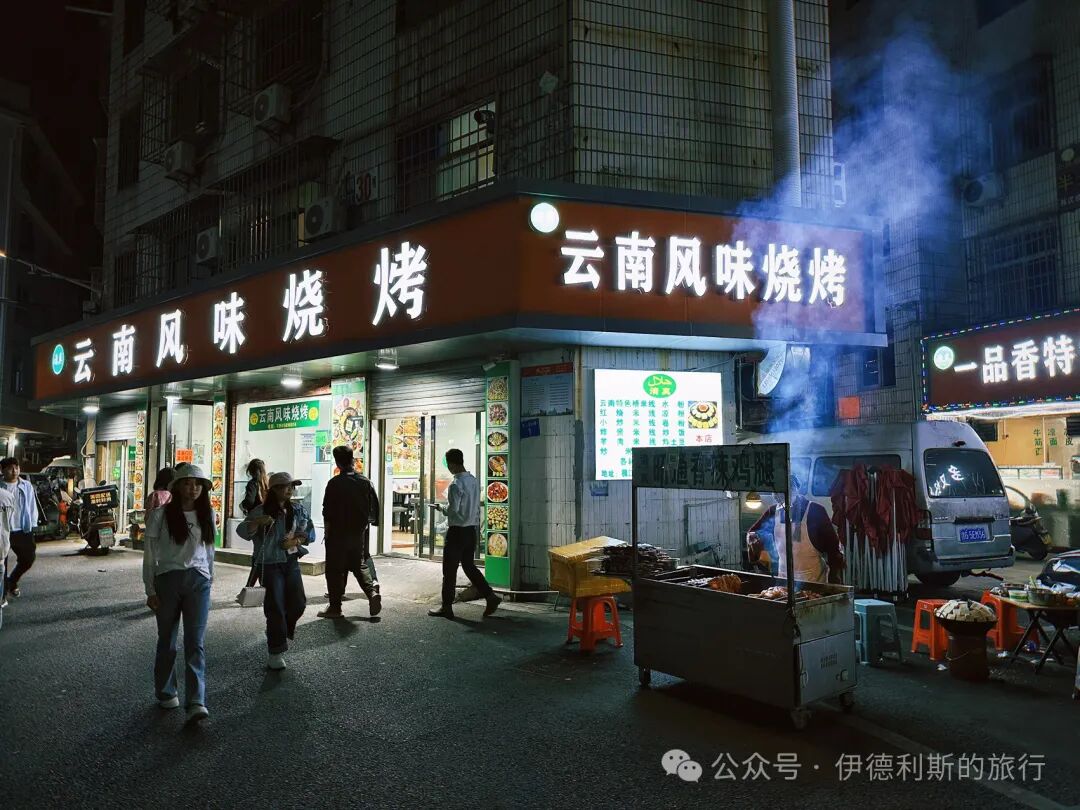
The prayer spot in the Binwang business district was packed with people at the lishamu and hufu stalls. Most of them were African friends (dost) who came here for business. After the second floor filled up, the imam guided everyone to the third and fourth floors, and eventually, we went all the way up to the fifth floor.
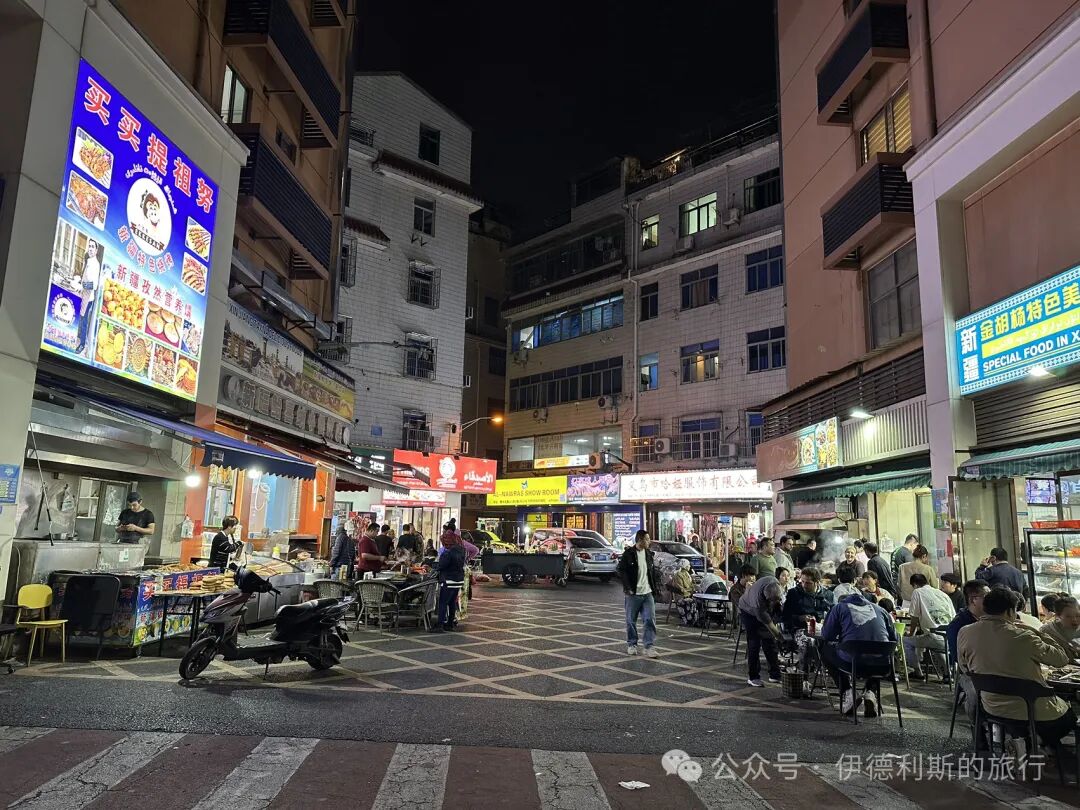
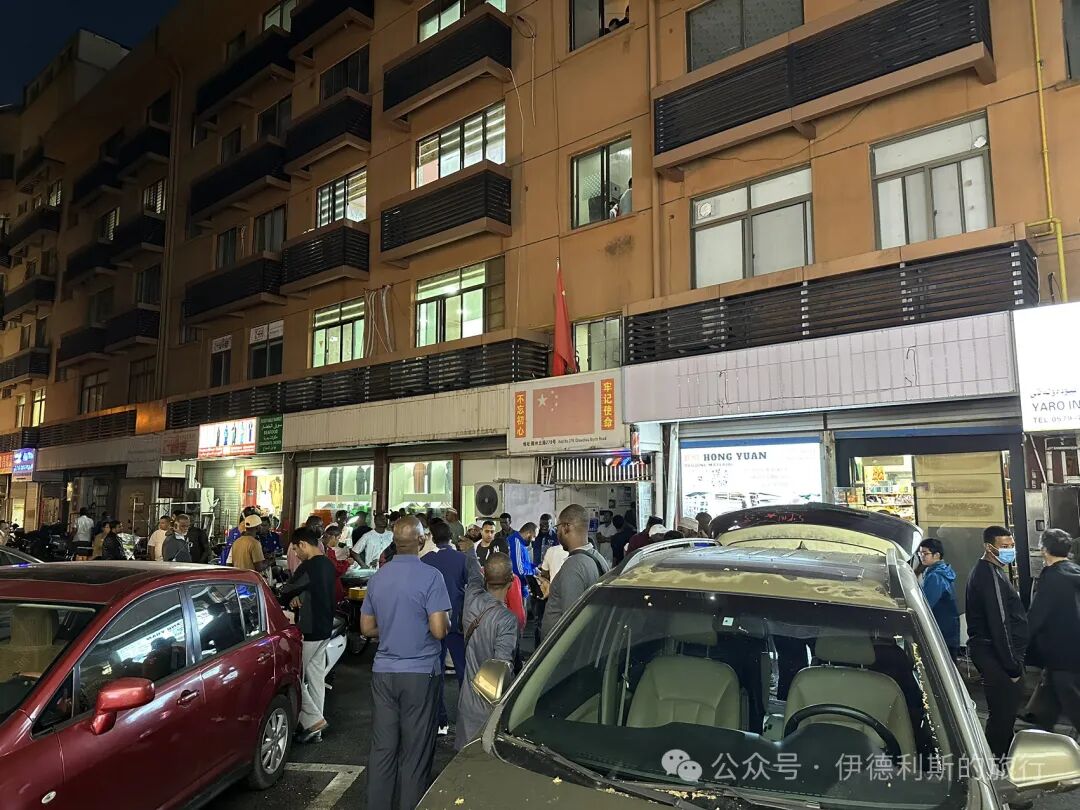
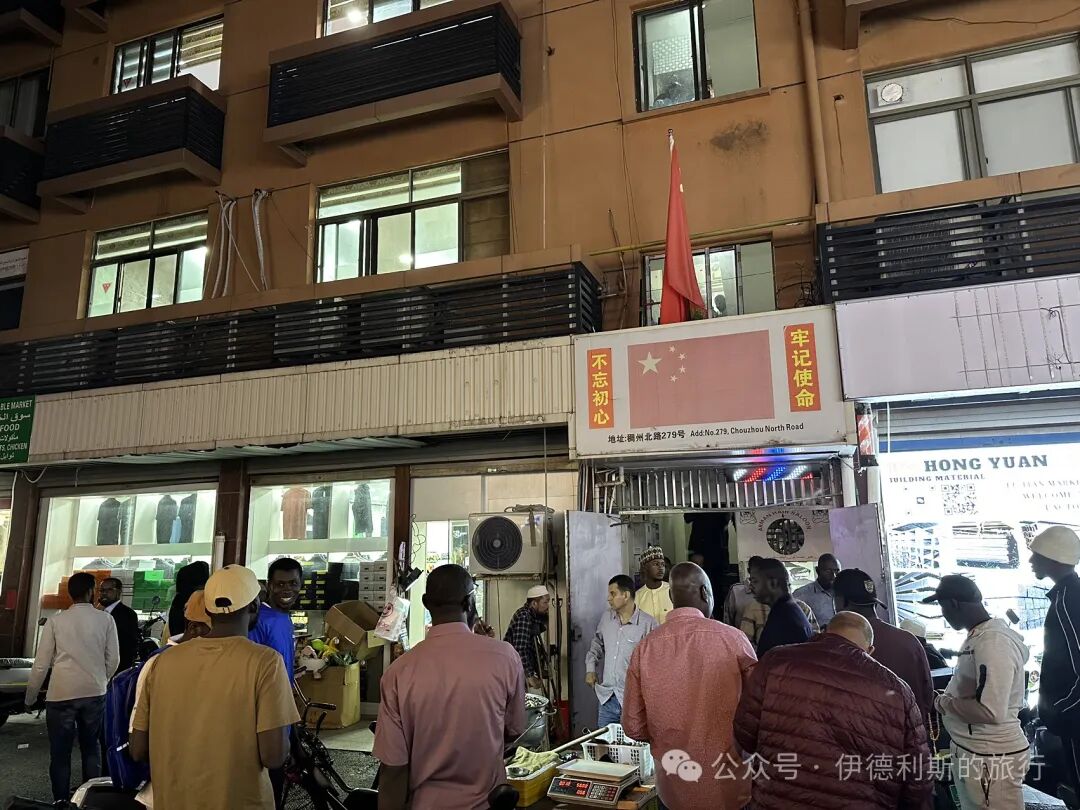

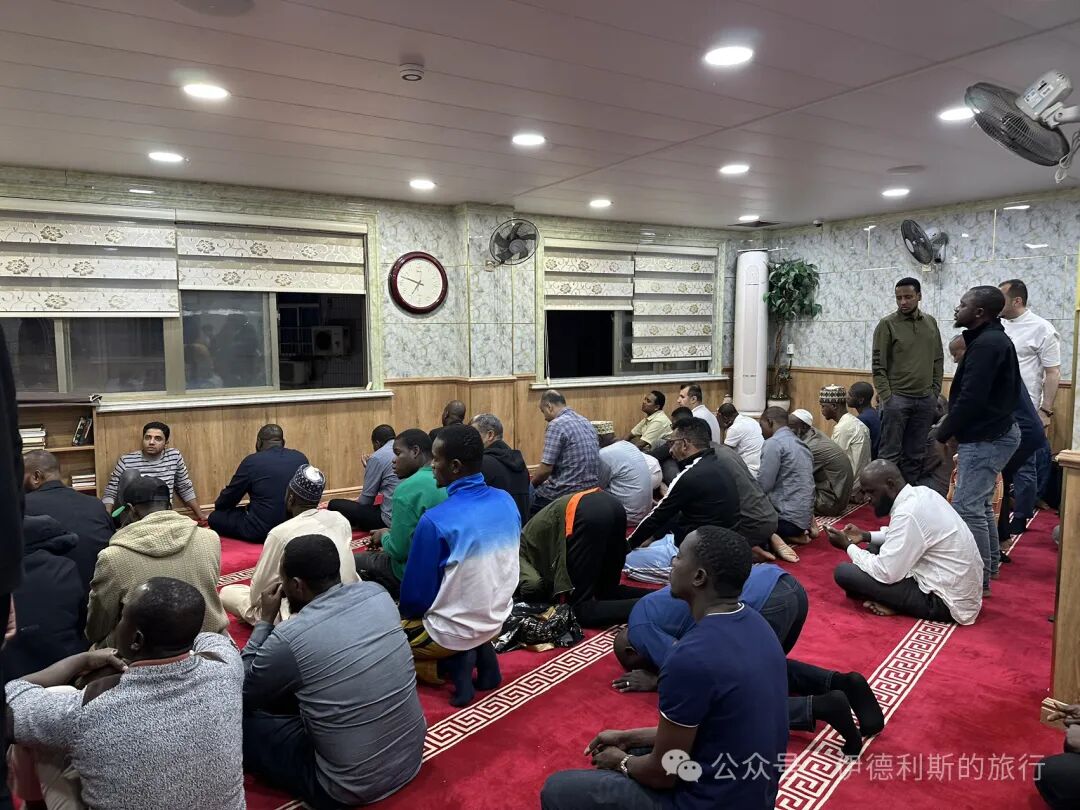
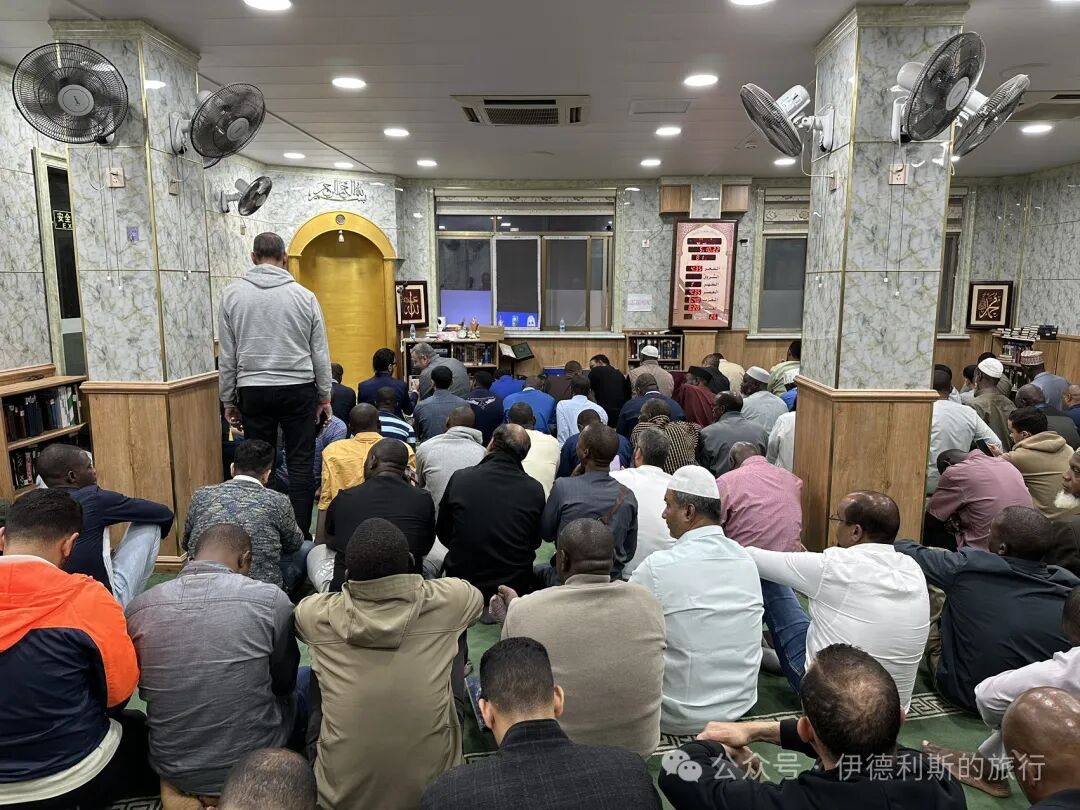
The Haya clothing store at the entrance of the Binwang business district prayer spot has many Middle Eastern outfits, and we bought several pieces.
Many new Middle Eastern restaurants have opened in the Binwang Trade Area. It is much busier than when I visited two years ago. I even saw Iraqi barbecue, which I want to try next time.
I drank a Dubai malt beverage.
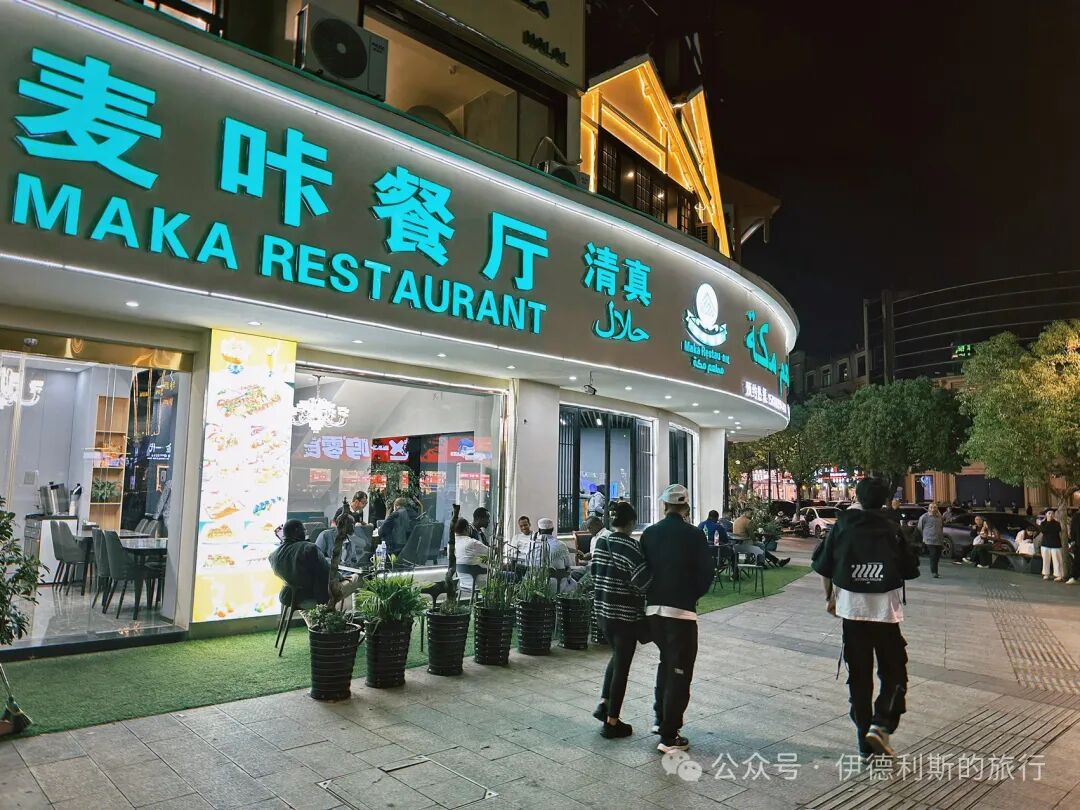
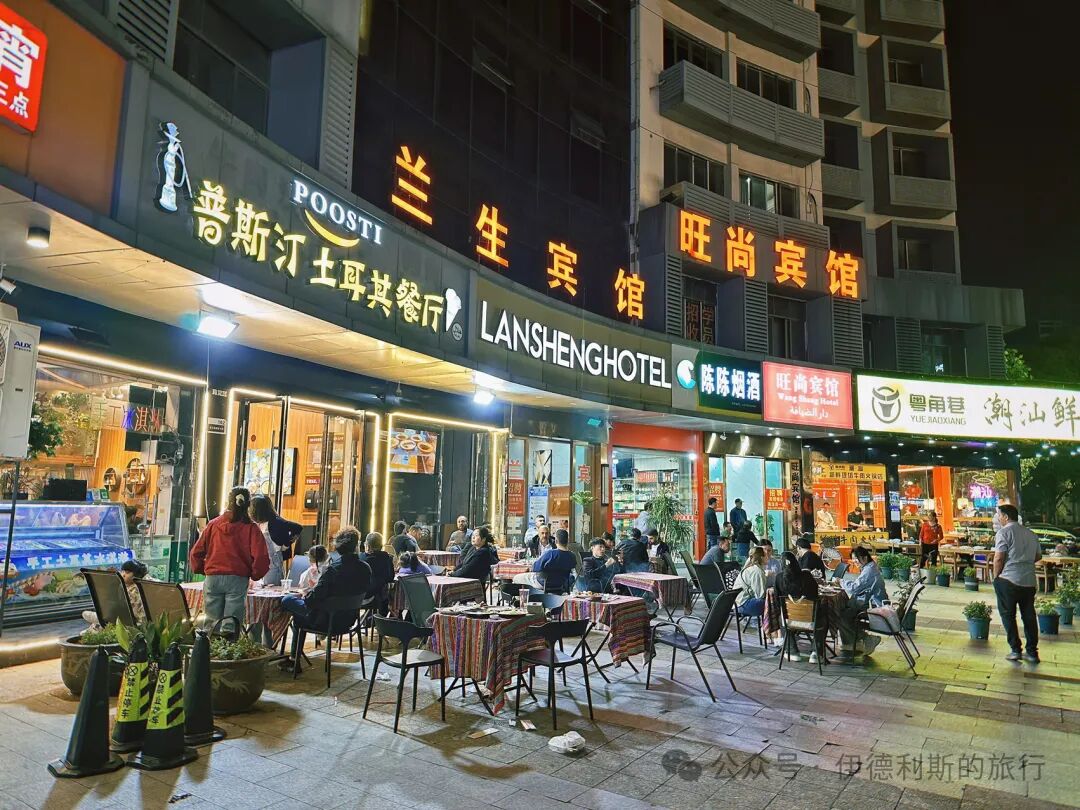
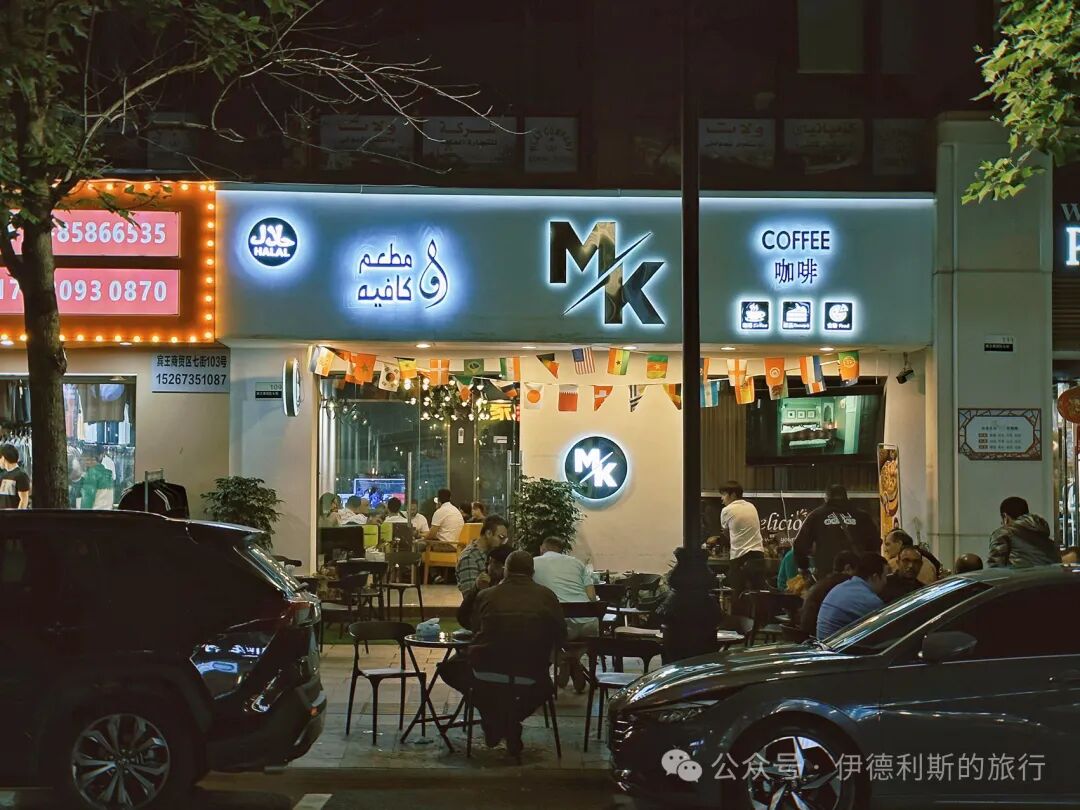
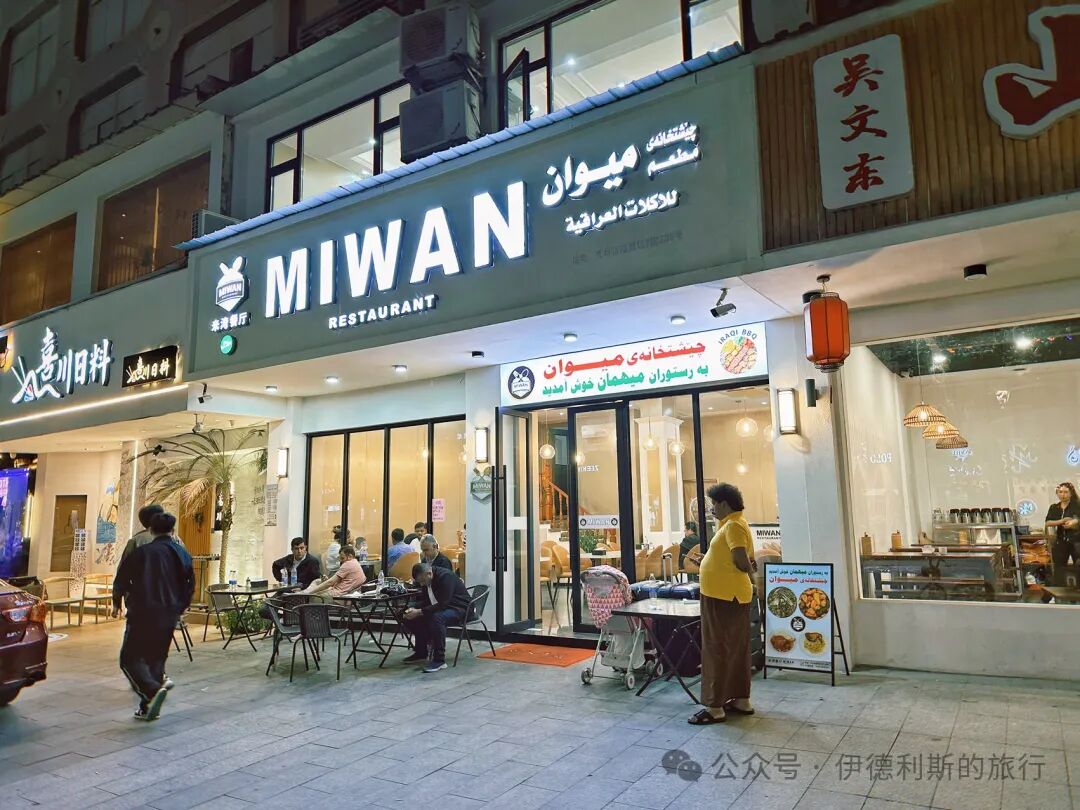
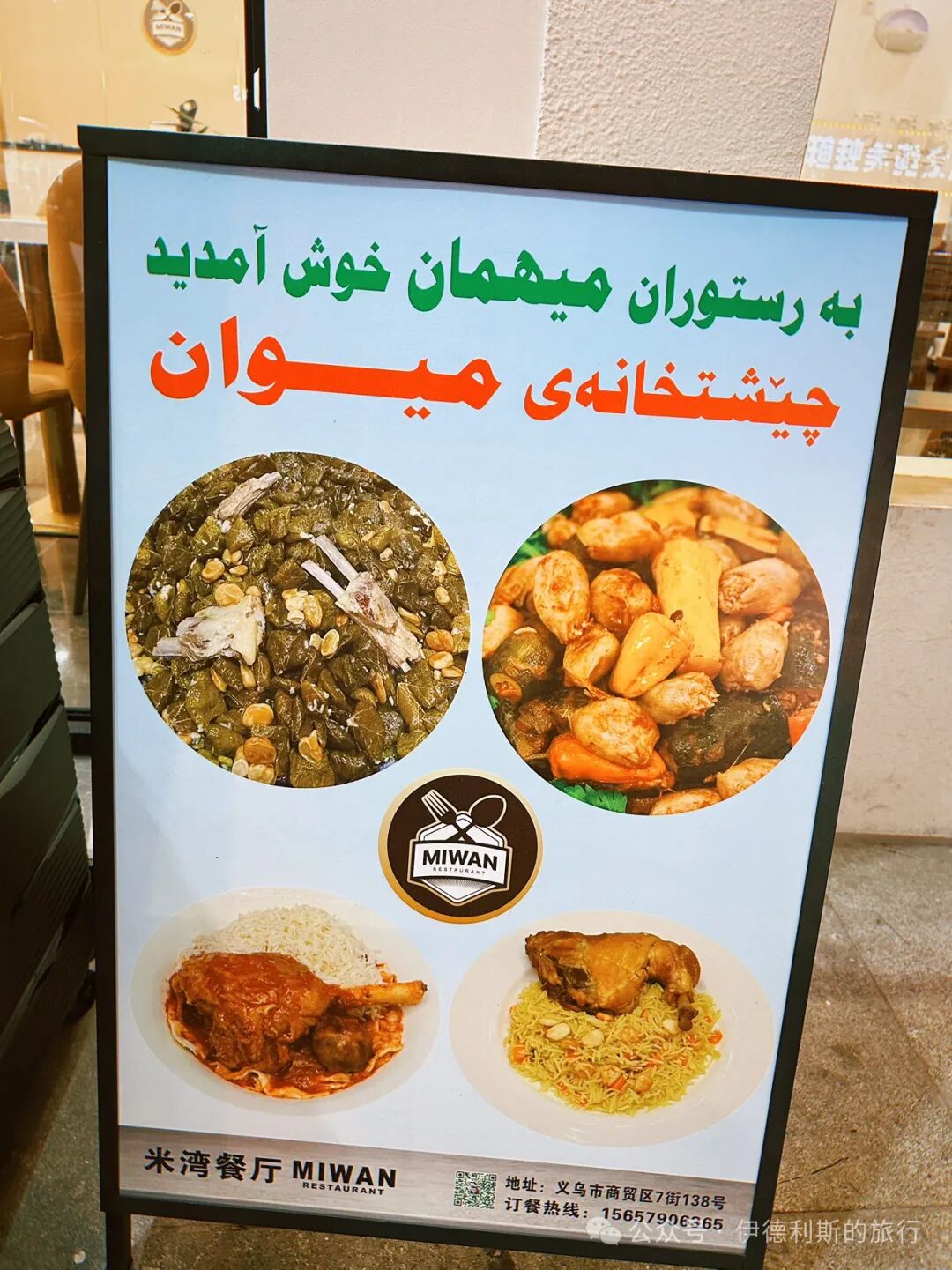
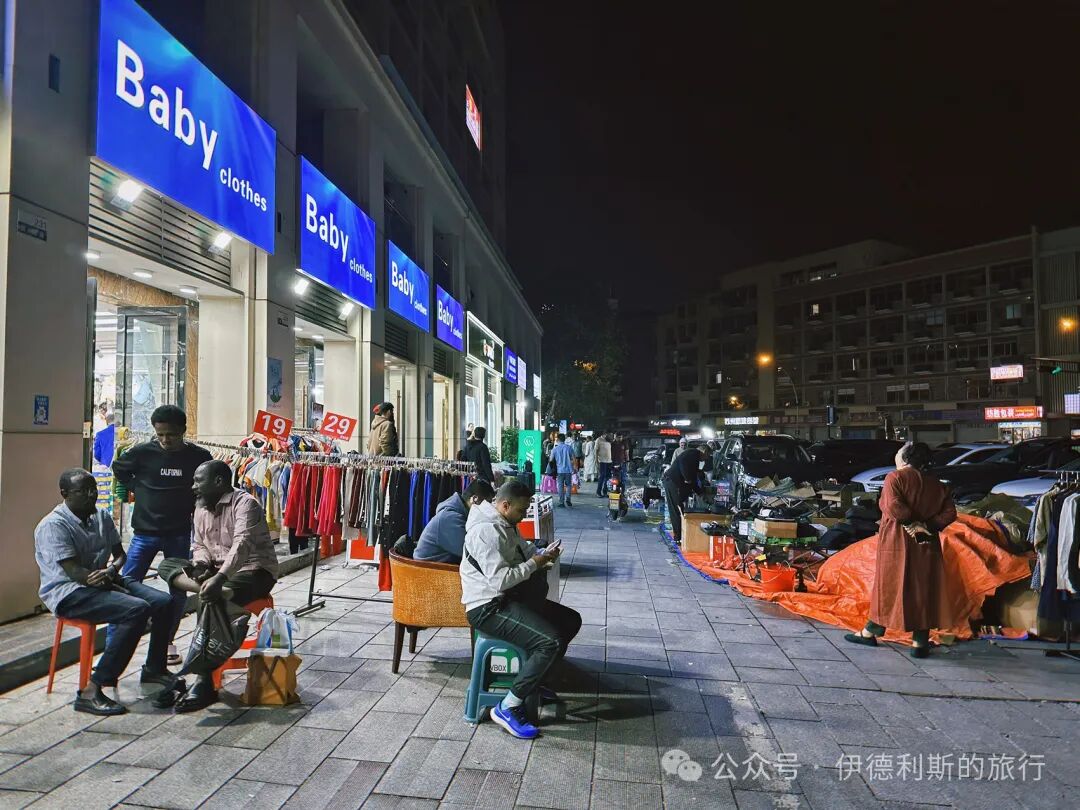
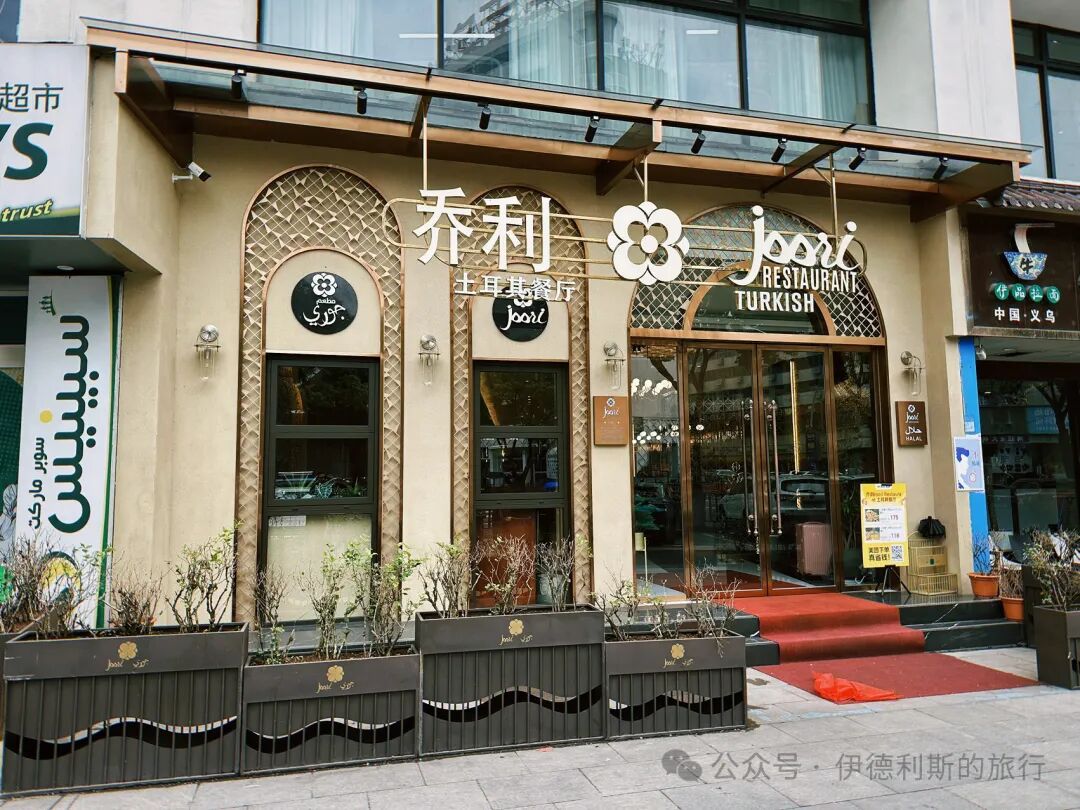
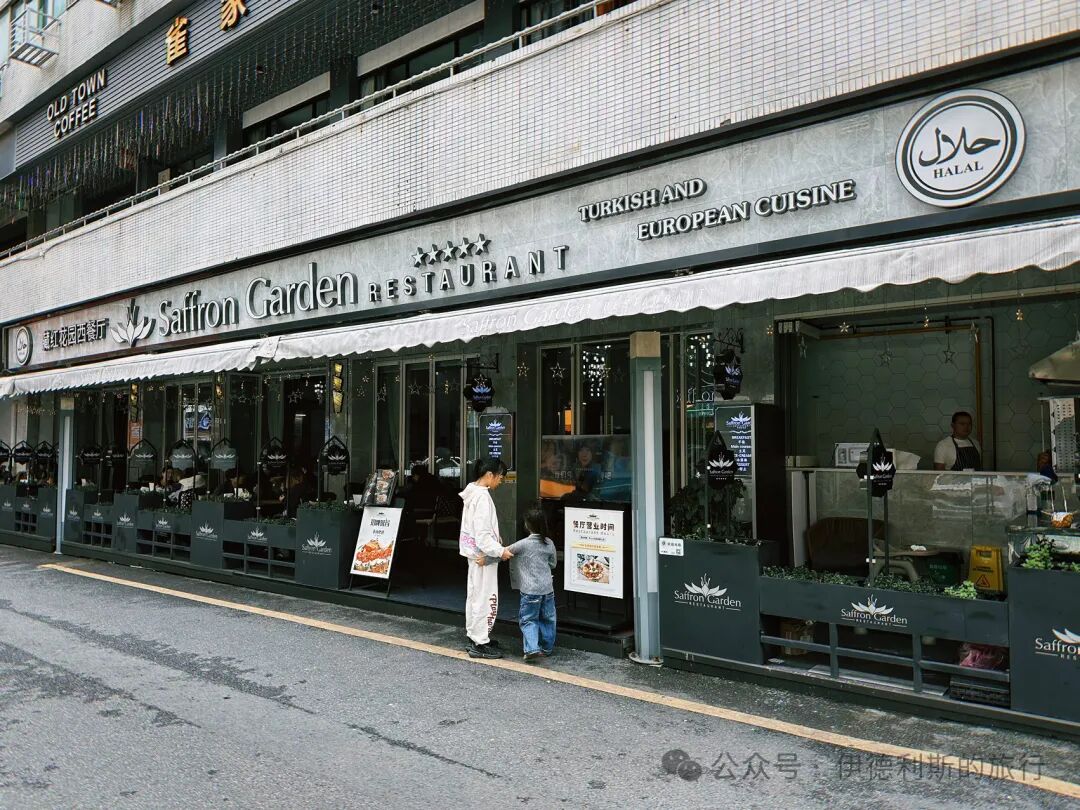
A new Egyptian snack shop called Friends opened across from the prayer spot in the Yiwu Binwang Trade Area. It is a great place for a late-night snack after visiting Hufu Beach. The shop is very affordable. We ordered a 45-yuan set meal that came with a plate of fried chickpea balls (falafel), a plate of chickpea dip (hummus), a plate of cold mixed vegetables, a plate of french fries, a plate of boiled eggs, and a plate of Arabic flatbread. Rolling everything into the flatbread makes you feel like you are on a street in the Middle East.
They also use the same vinegar bottles found in local Chinese snack shops, but they filled them with olive oil. That is very Yiwu!
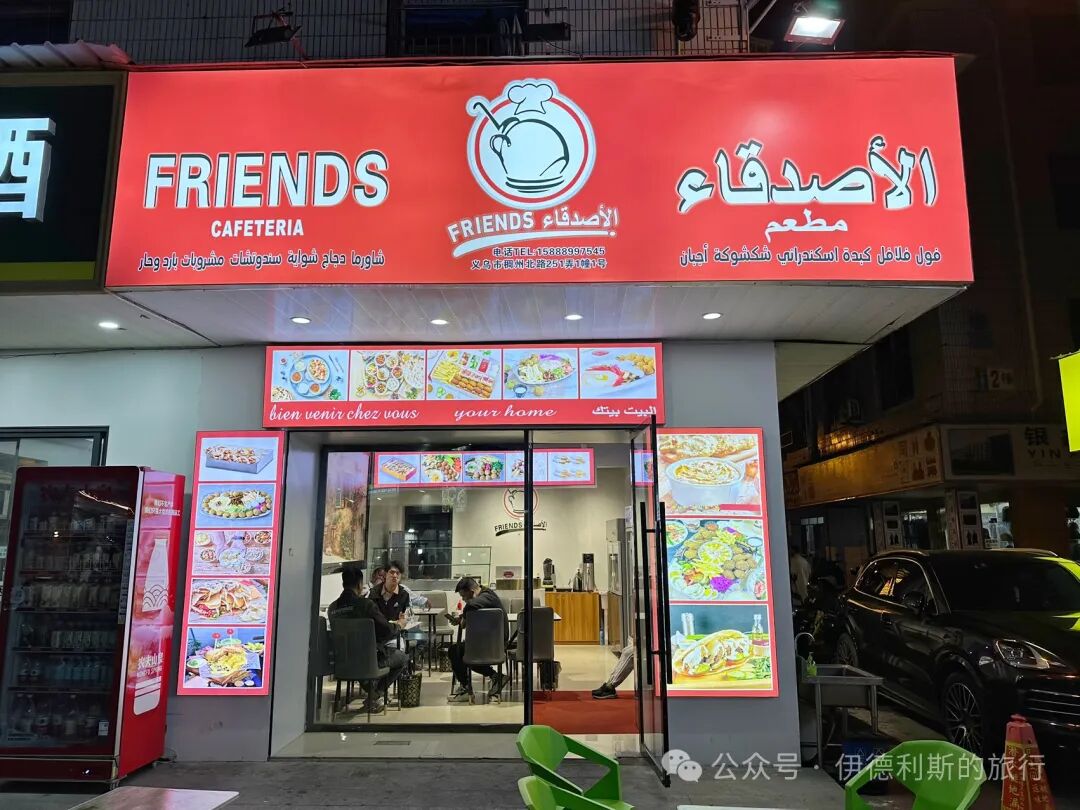
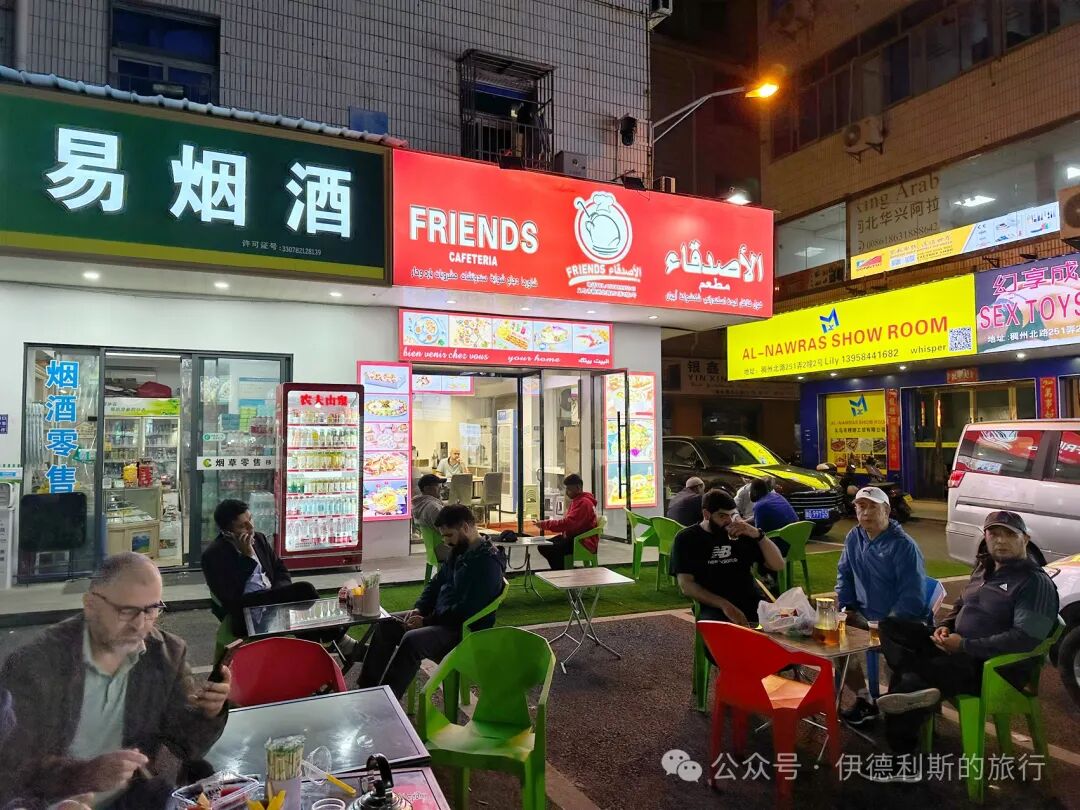
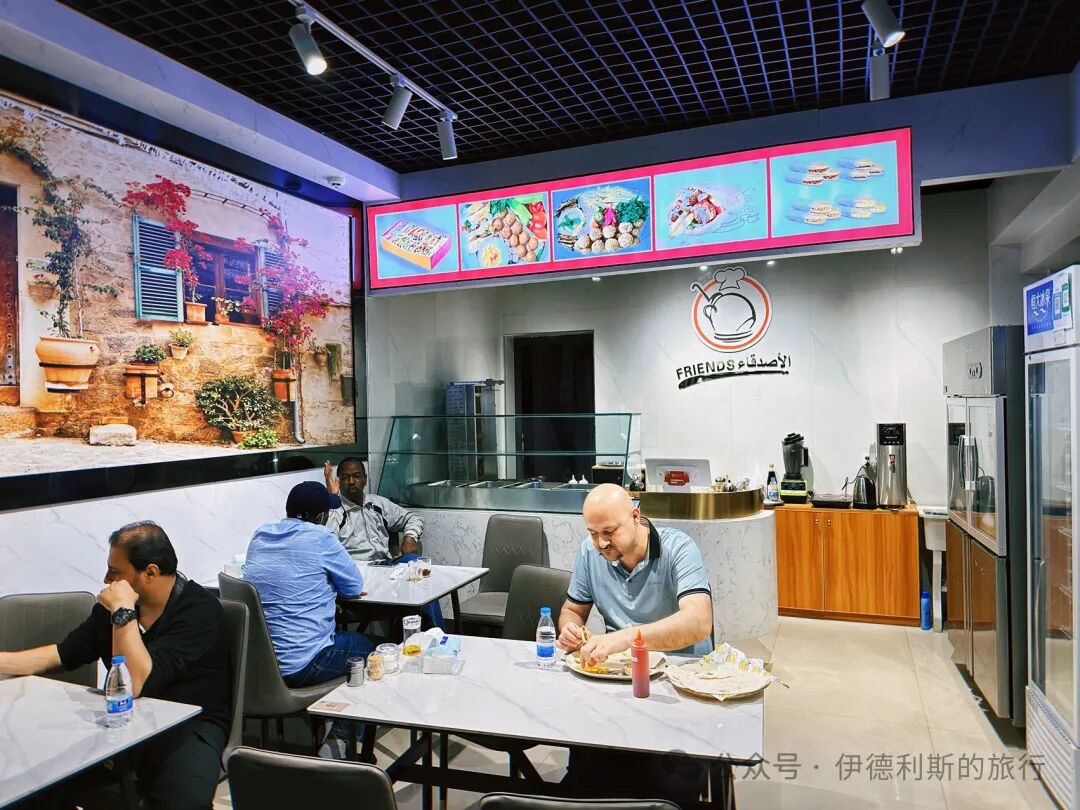
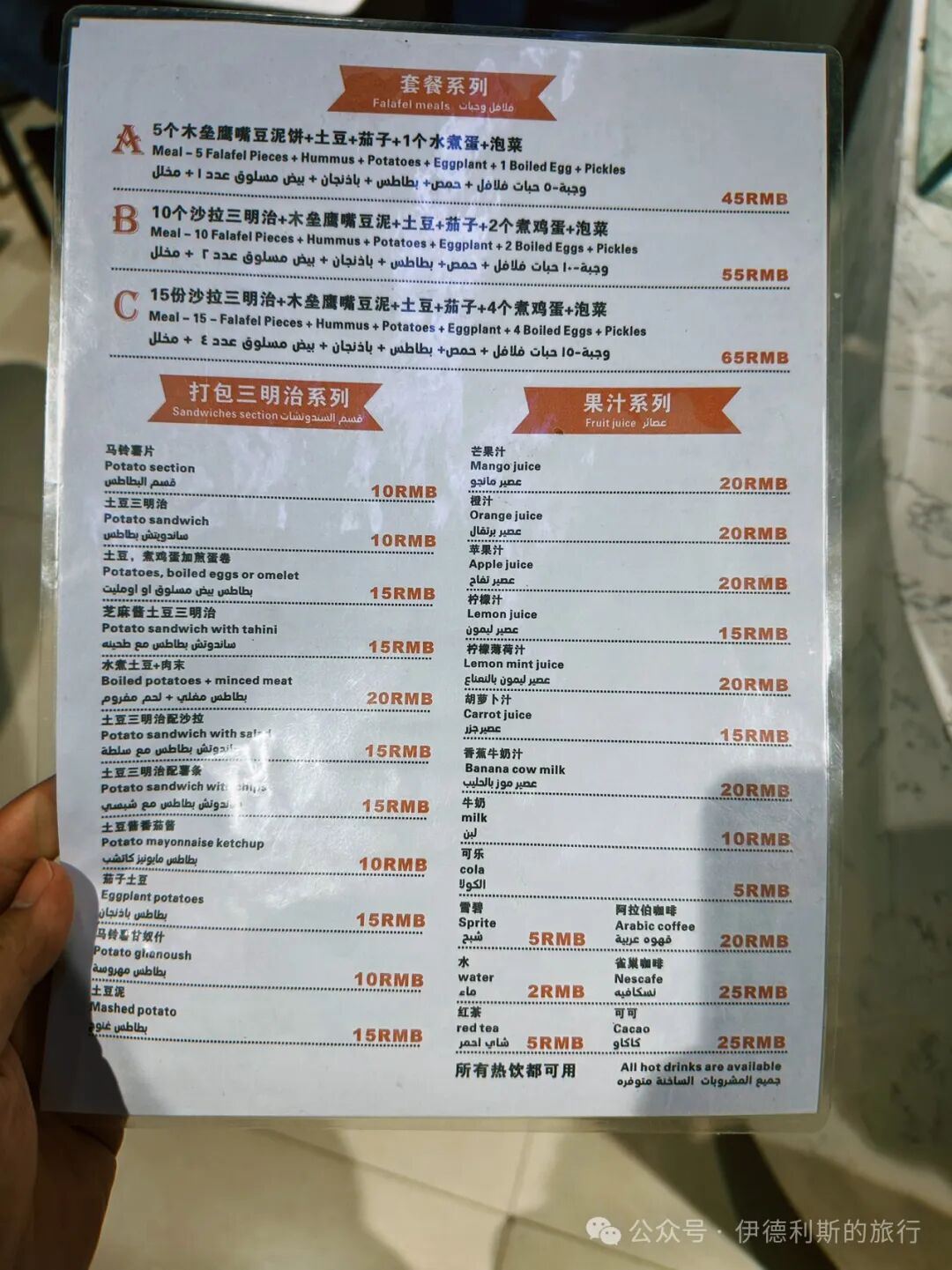
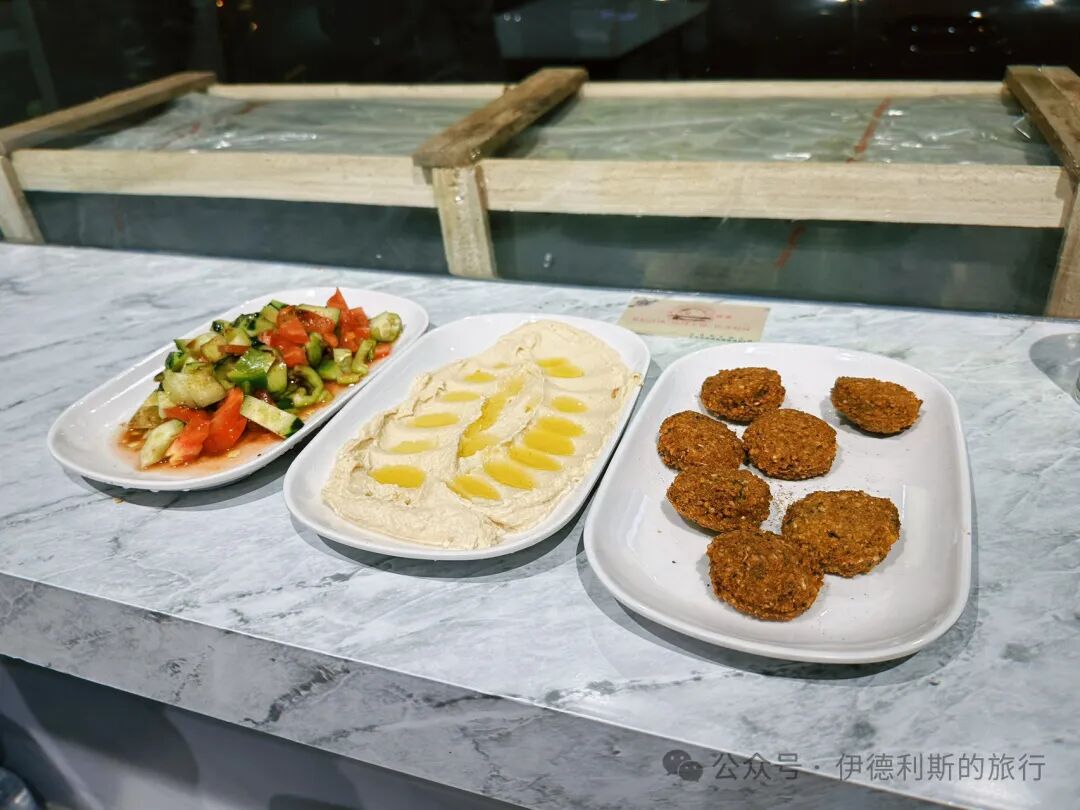
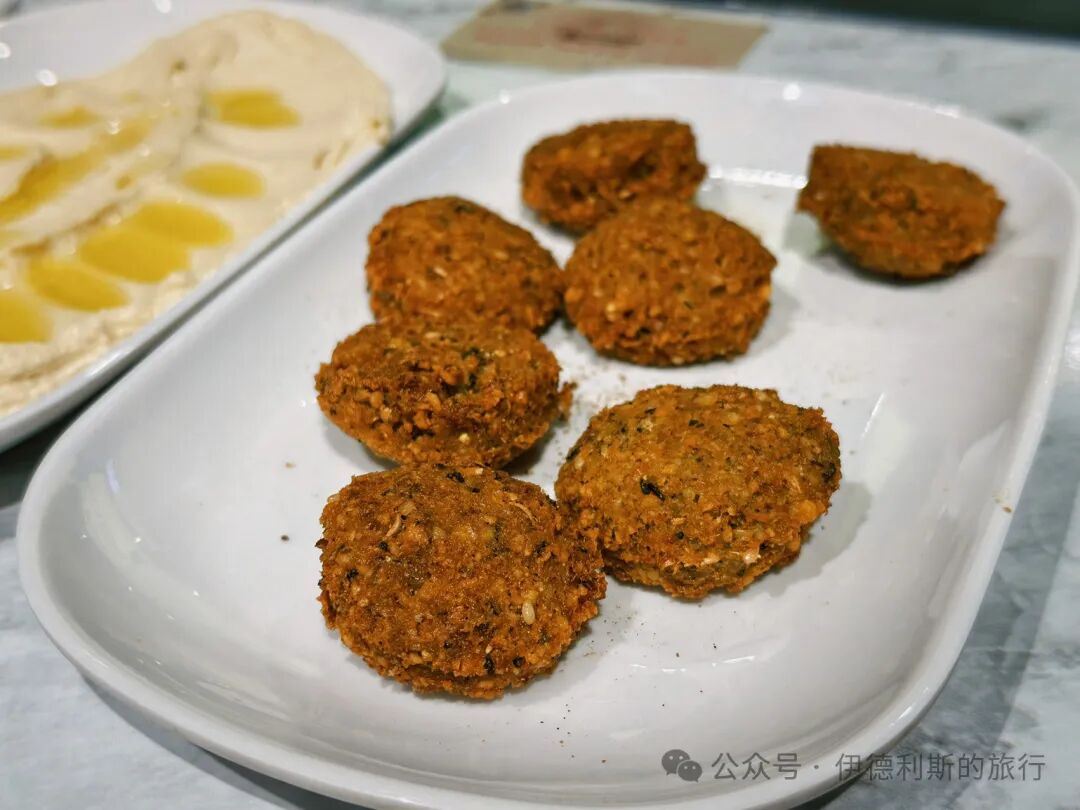
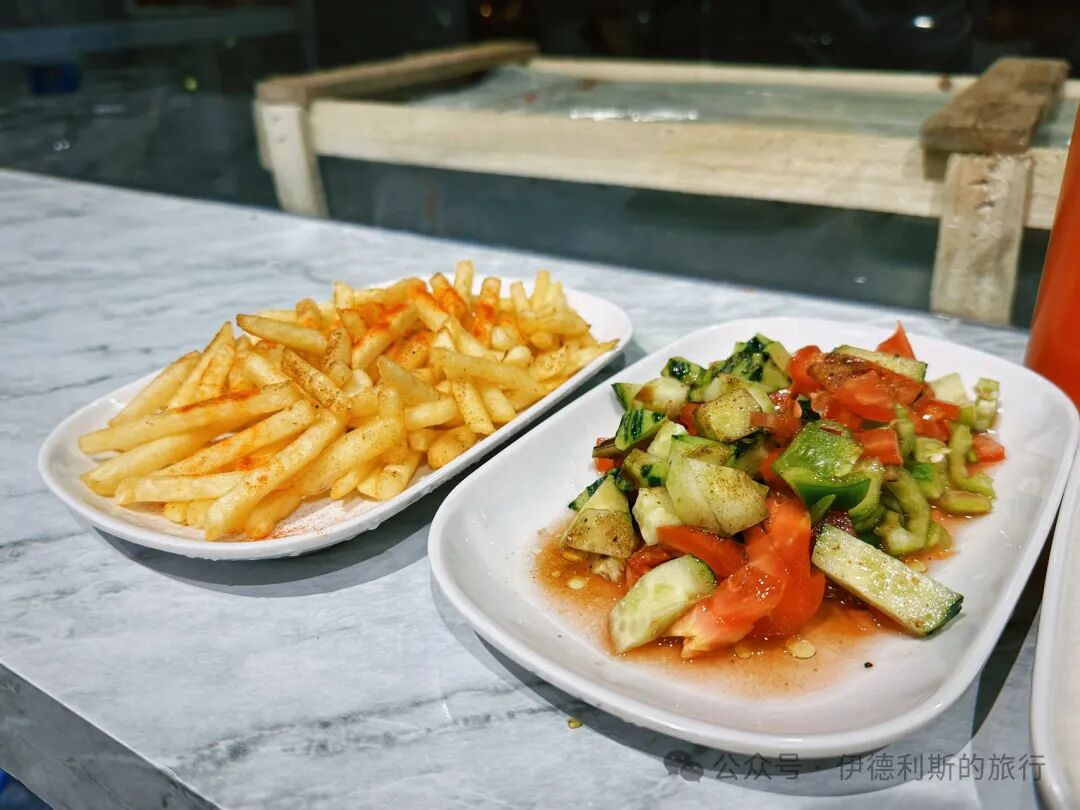
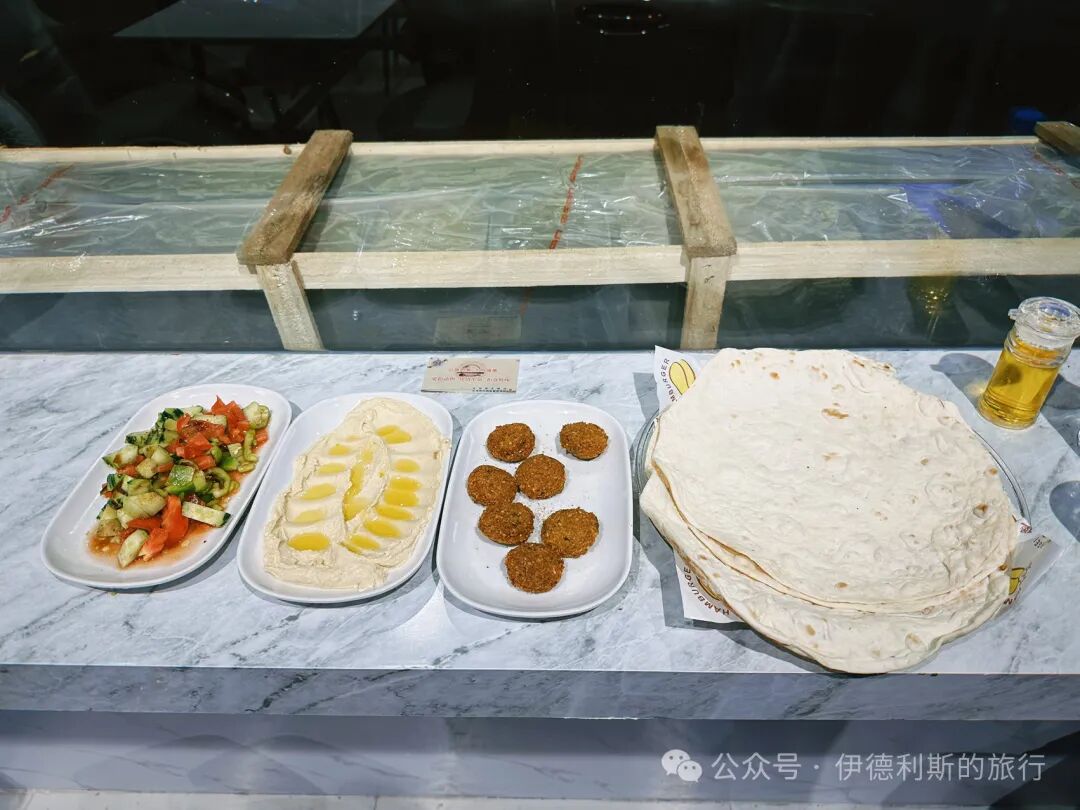
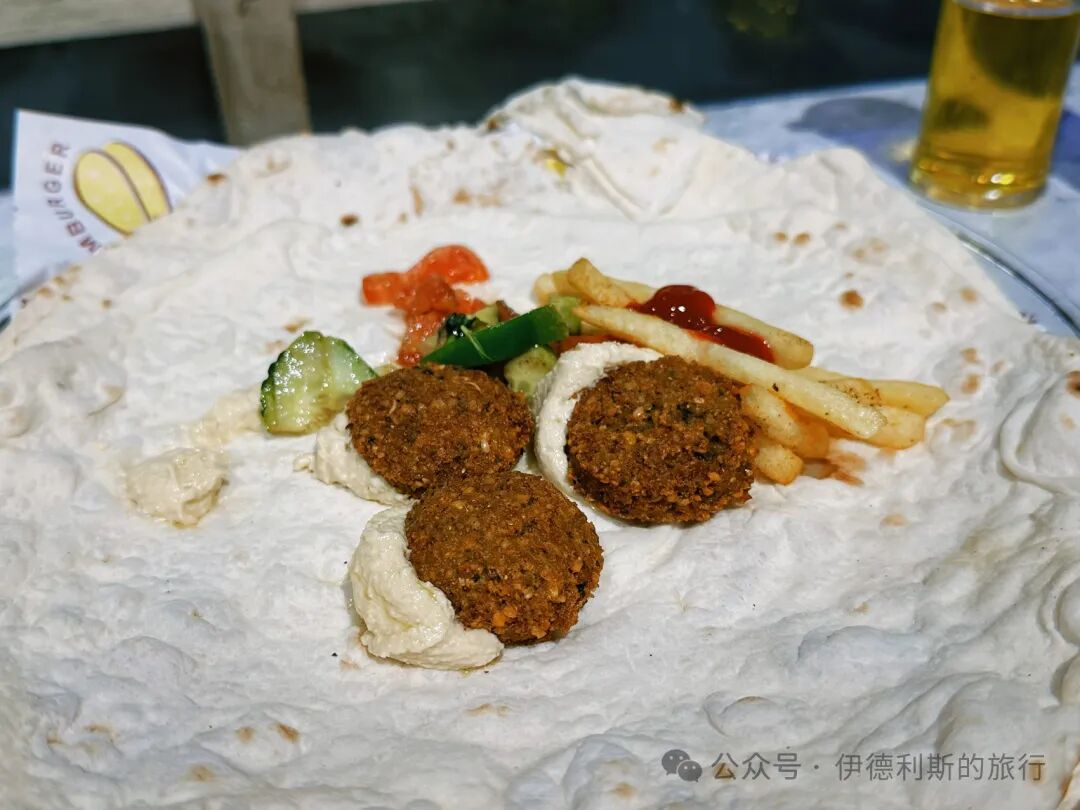
On May 2, I performed the morning prayer (fajr) at the prayer spot in the Yiwu Binwang Trade Area. There were many African friends (dosti) there.
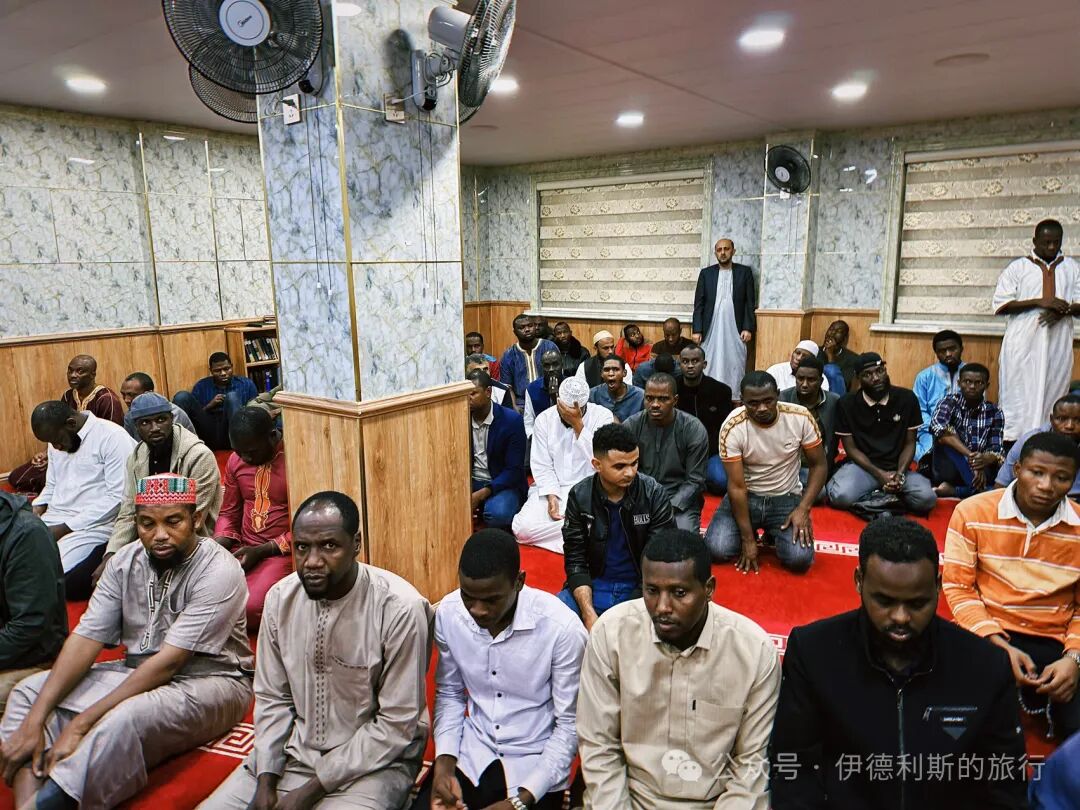
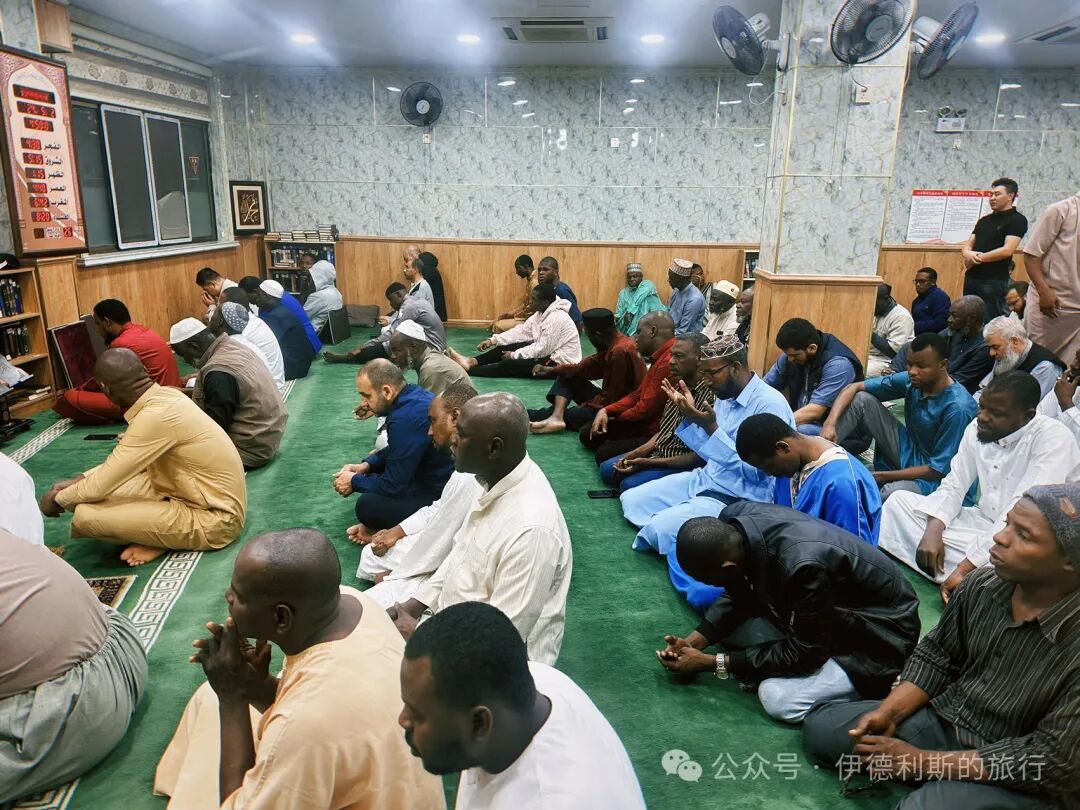
I had a Middle Eastern breakfast at the Senator seafood restaurant in the Yiwu Binwang Trade Area. We had flatbread with jam and chocolate spread, served with cheese, olives, eggs, and black tea. We also ordered a seafood soup with fish and shrimp. The cheese breakfast I had at Mado during my last trip to Yiwu was truly the best Middle Eastern breakfast I have ever eaten in China. Although the selection at Sainata is not as extensive, the shop is quiet, the atmosphere is nice, and their seafood soup is very fresh and delicious.
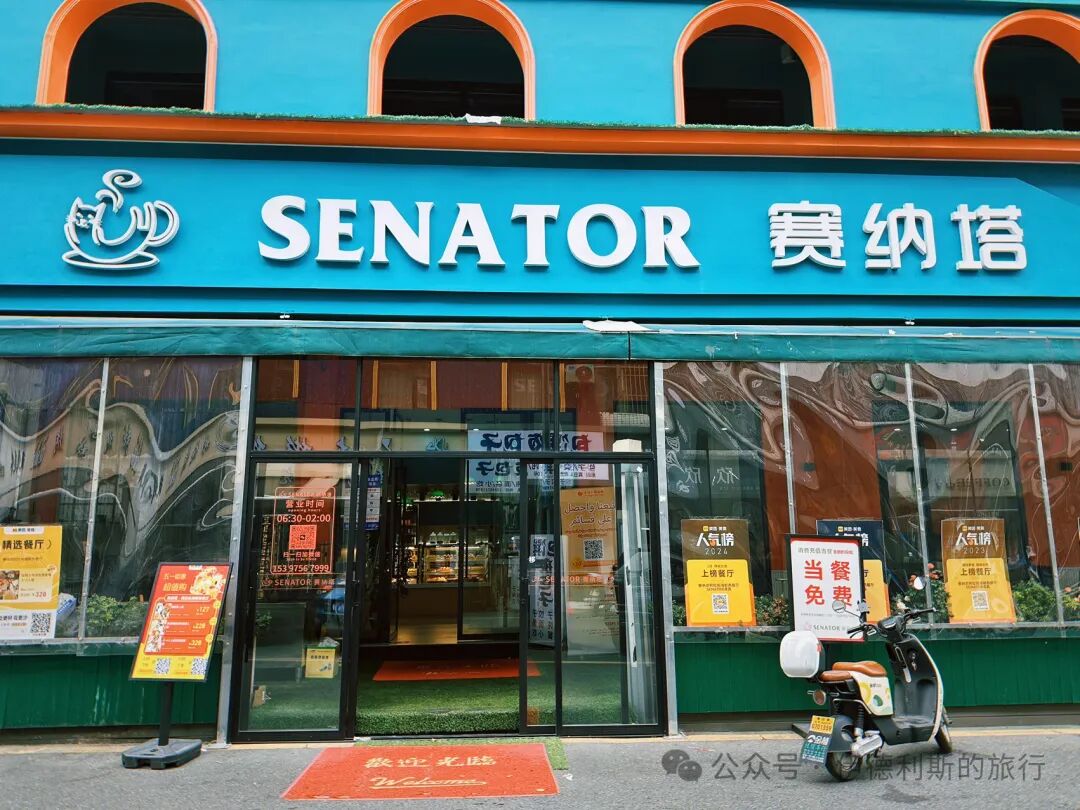
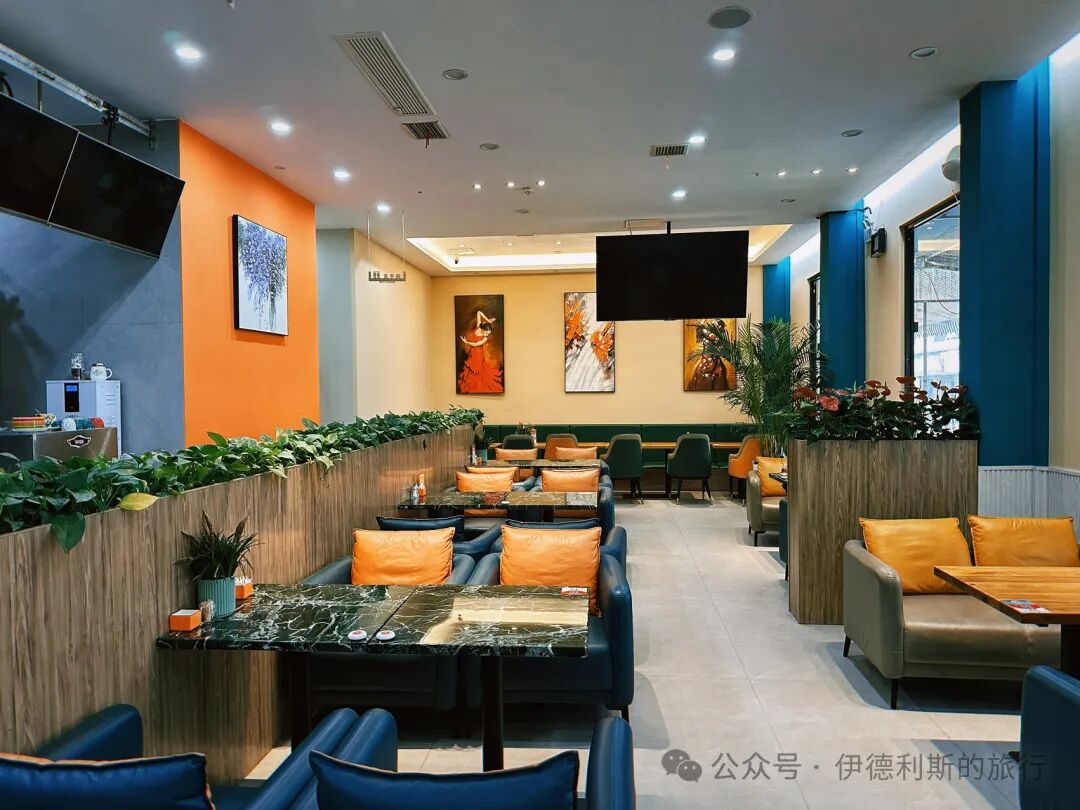
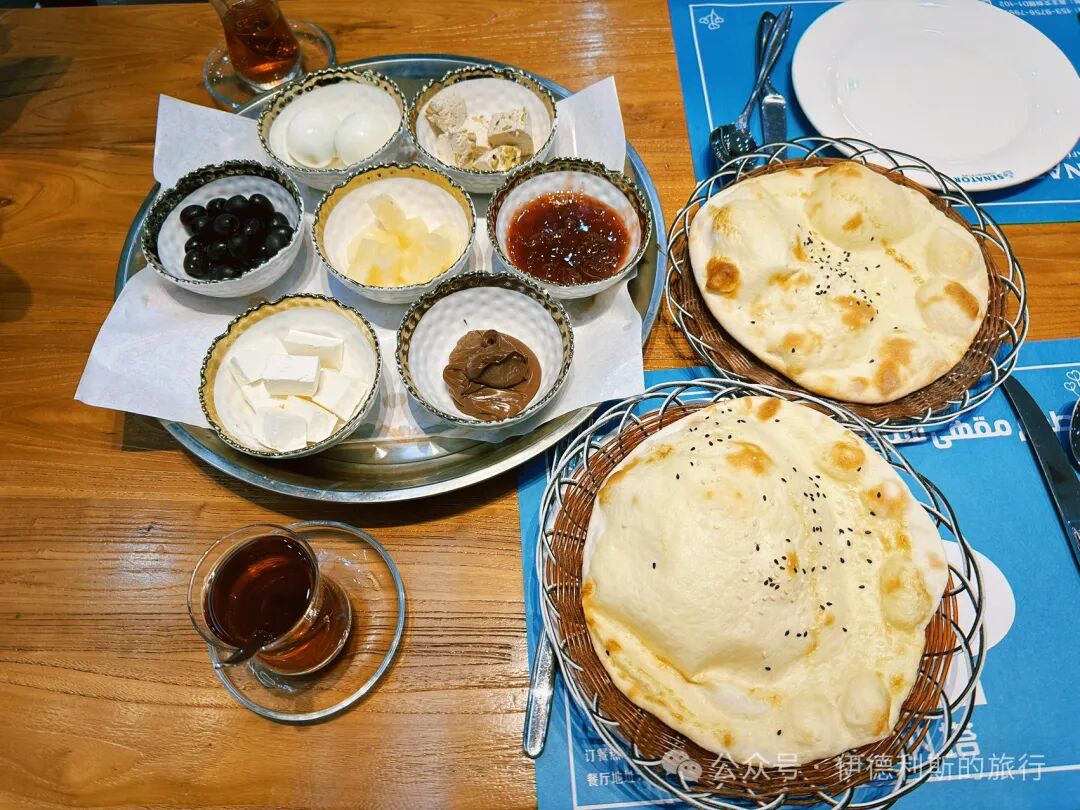
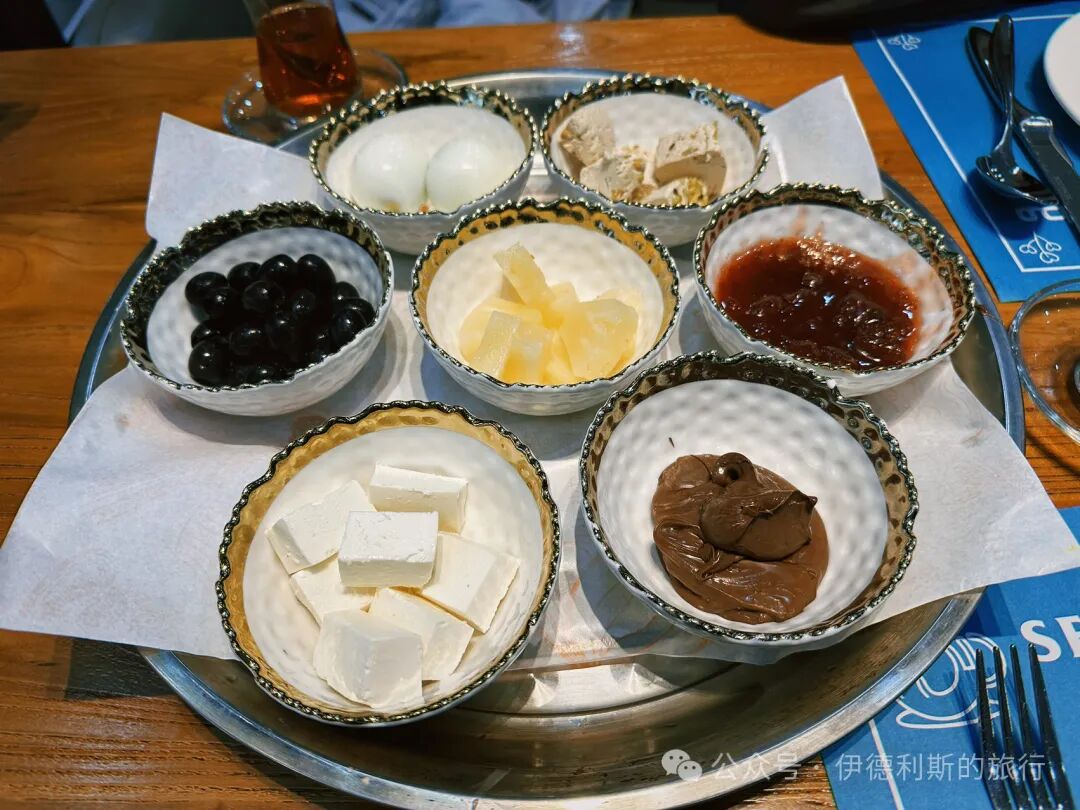
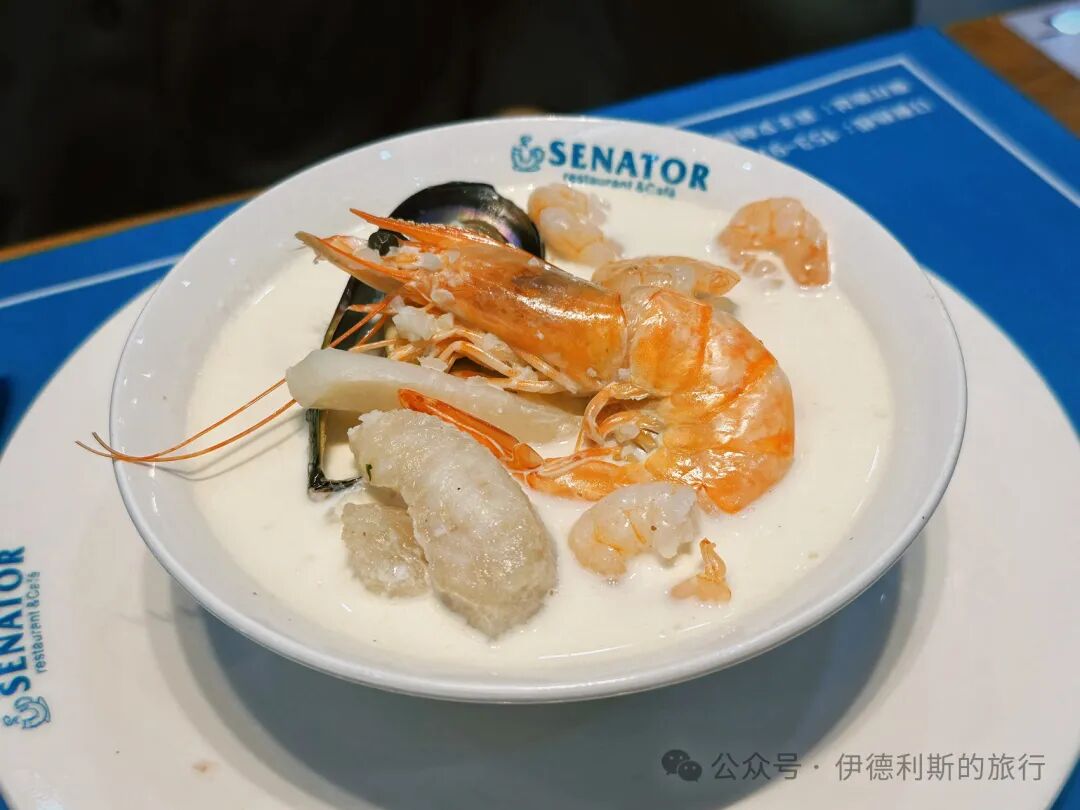
Ride north from the Binwang Trade District to the International Trade City and have a Turkish coffee at the Turkish cafe, Cafe Turka. It is a small, unassuming shop, and one Turkish guy manages to keep up with everything. Besides coffee, they also serve Turkish snacks, featuring mozzarella cheese toast and sujuk sausage toast, which you can also order as a brunch set. You can come here to sit down, have a coffee, and enjoy some snacks while you are shopping at the International Trade City; it is very relaxing.
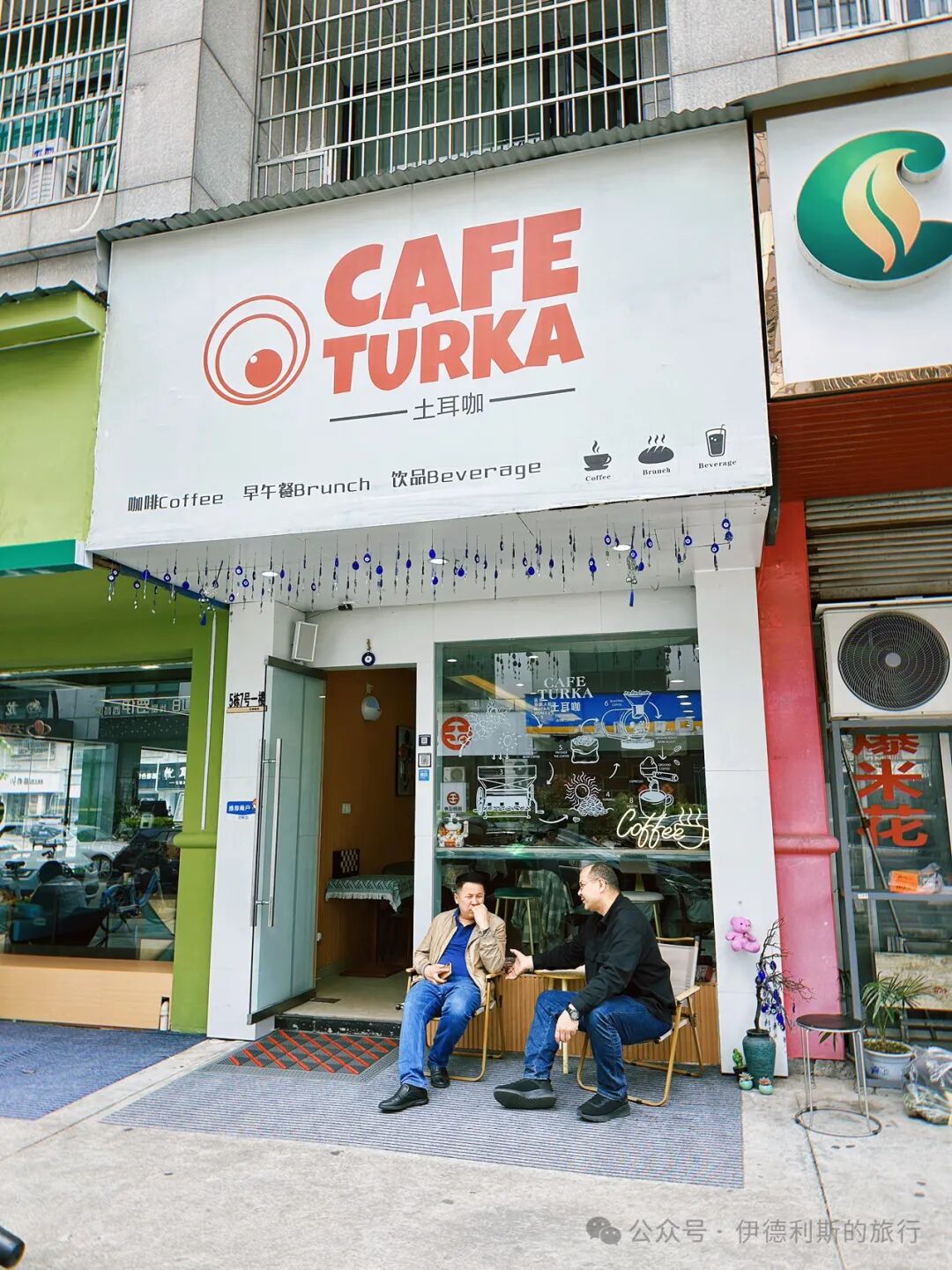
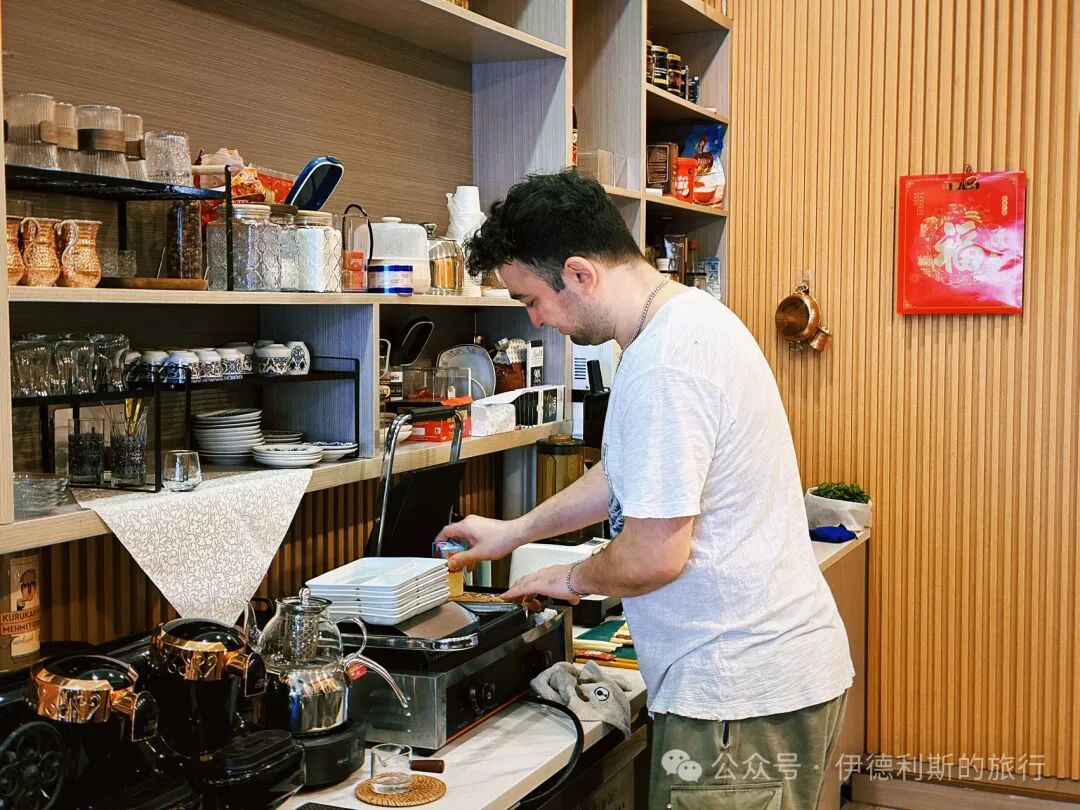
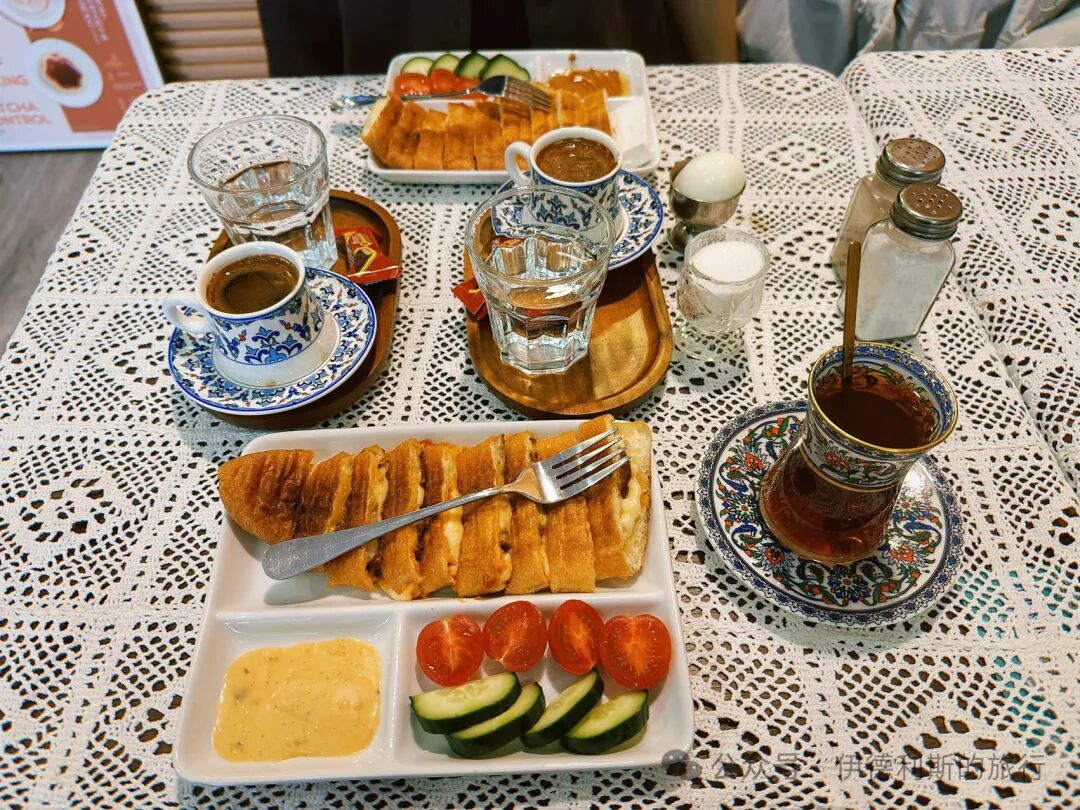
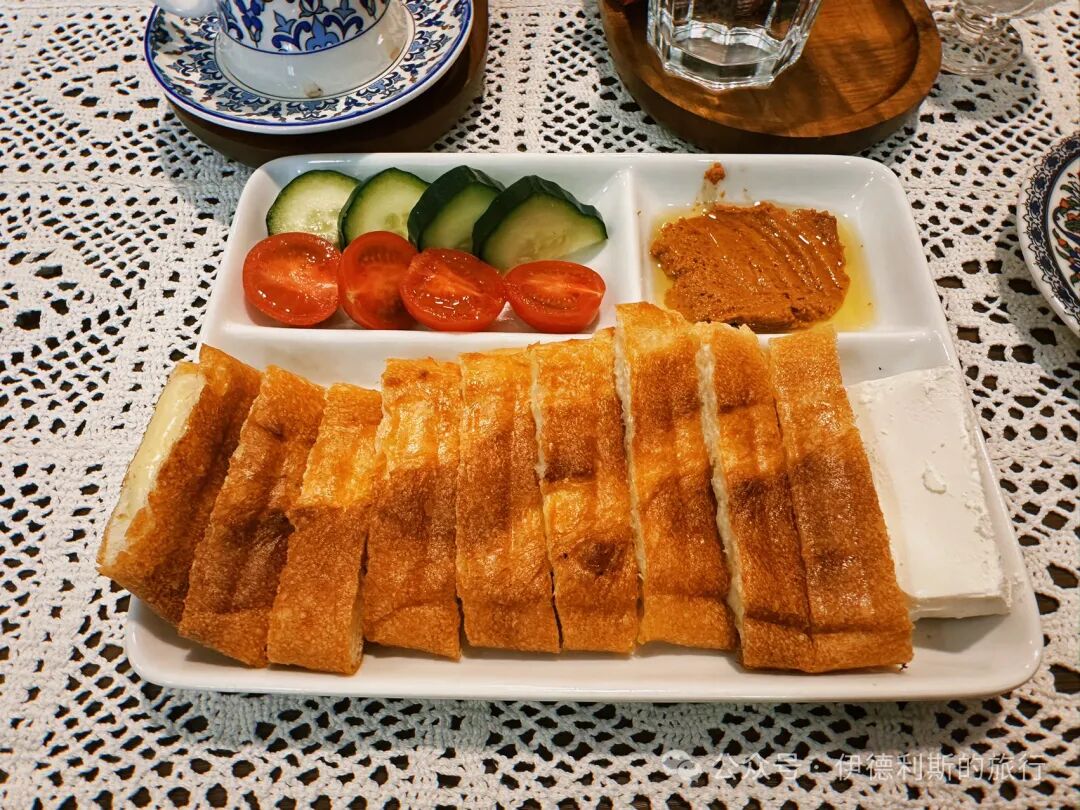
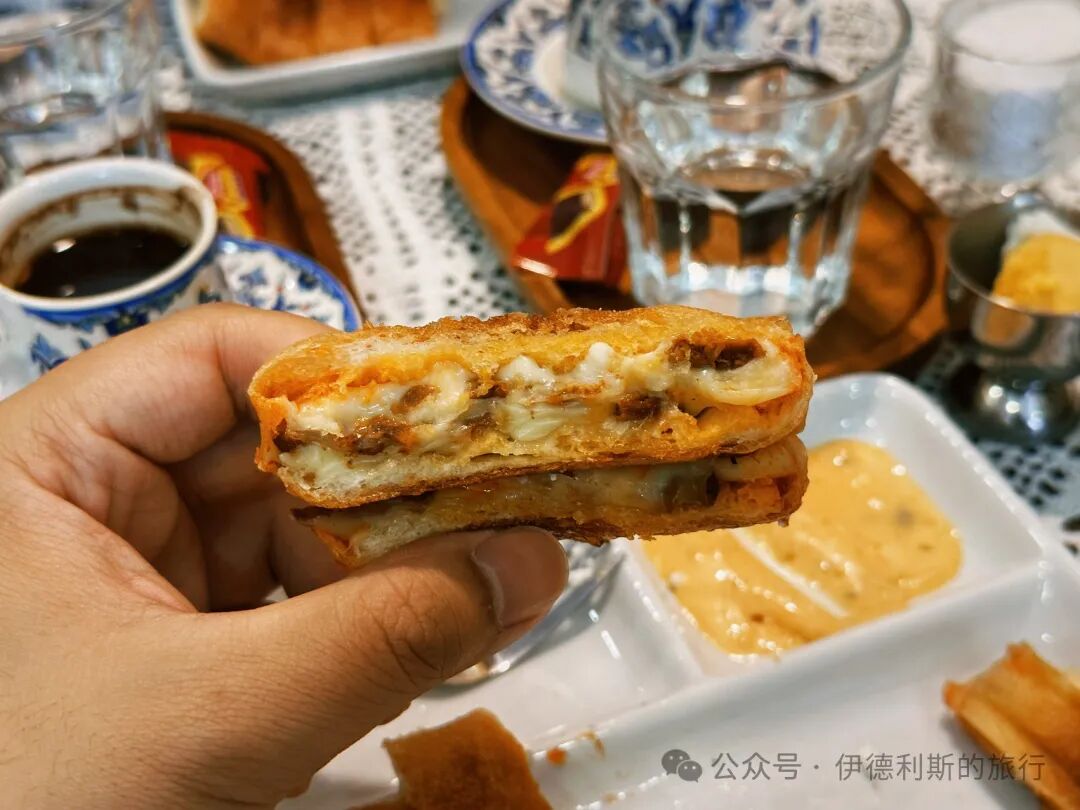
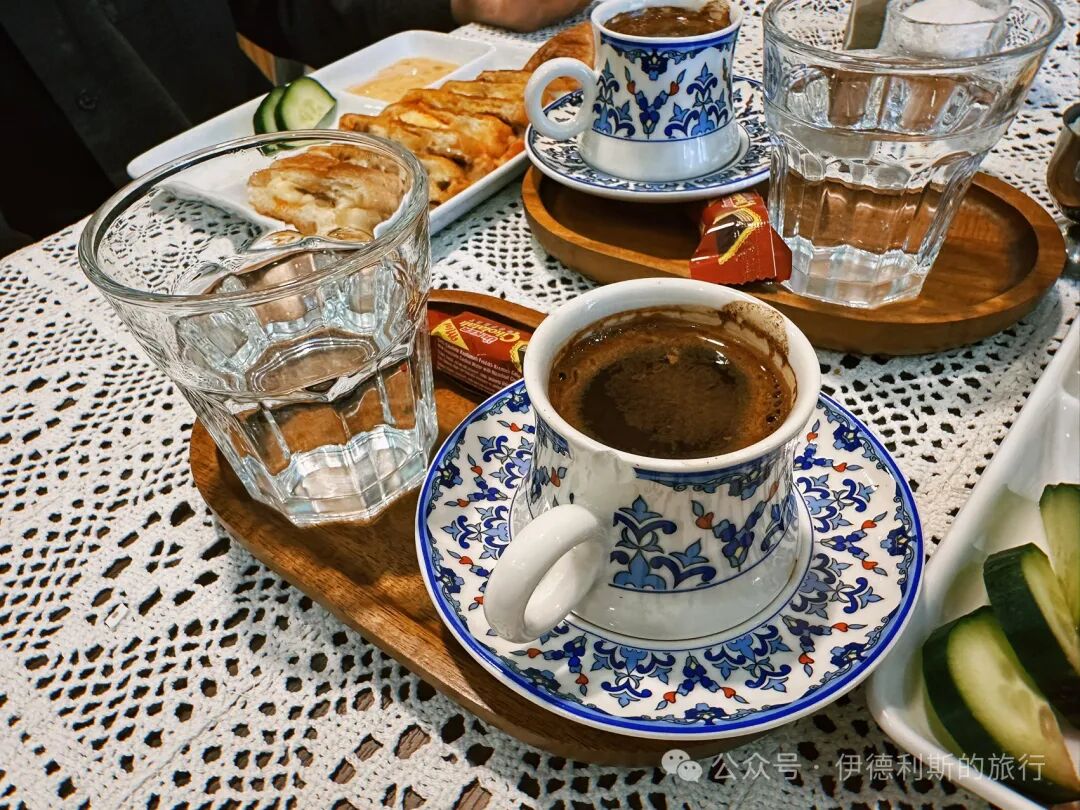
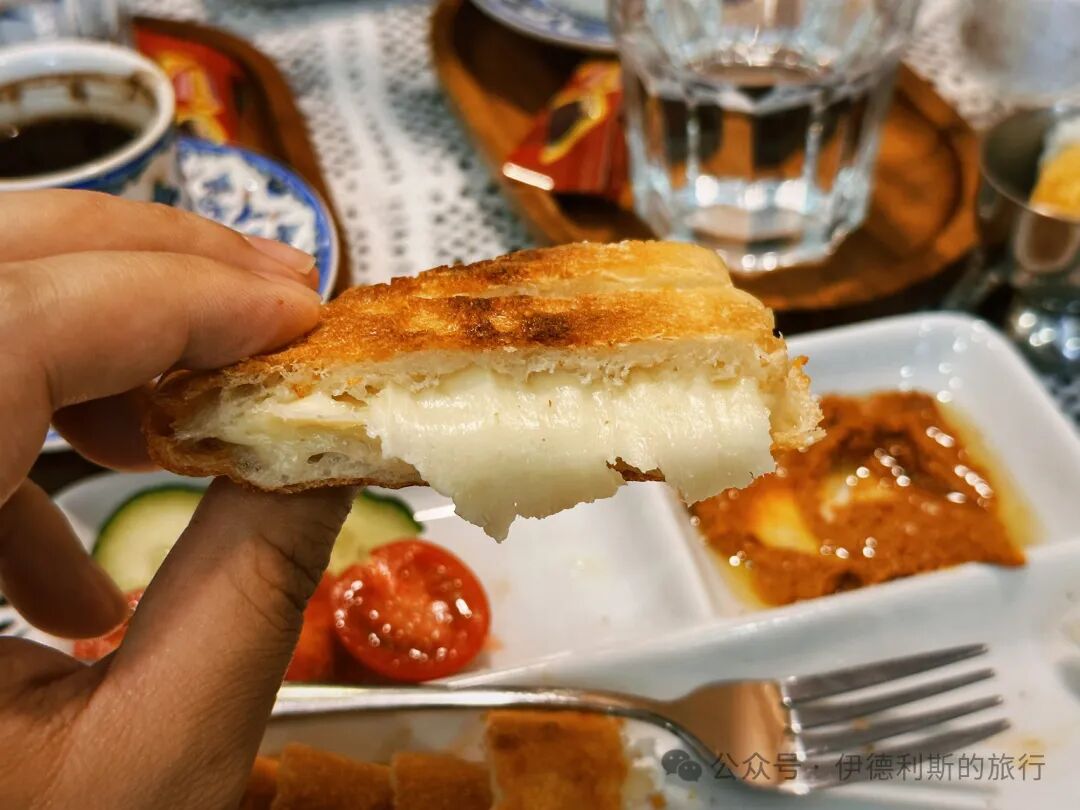
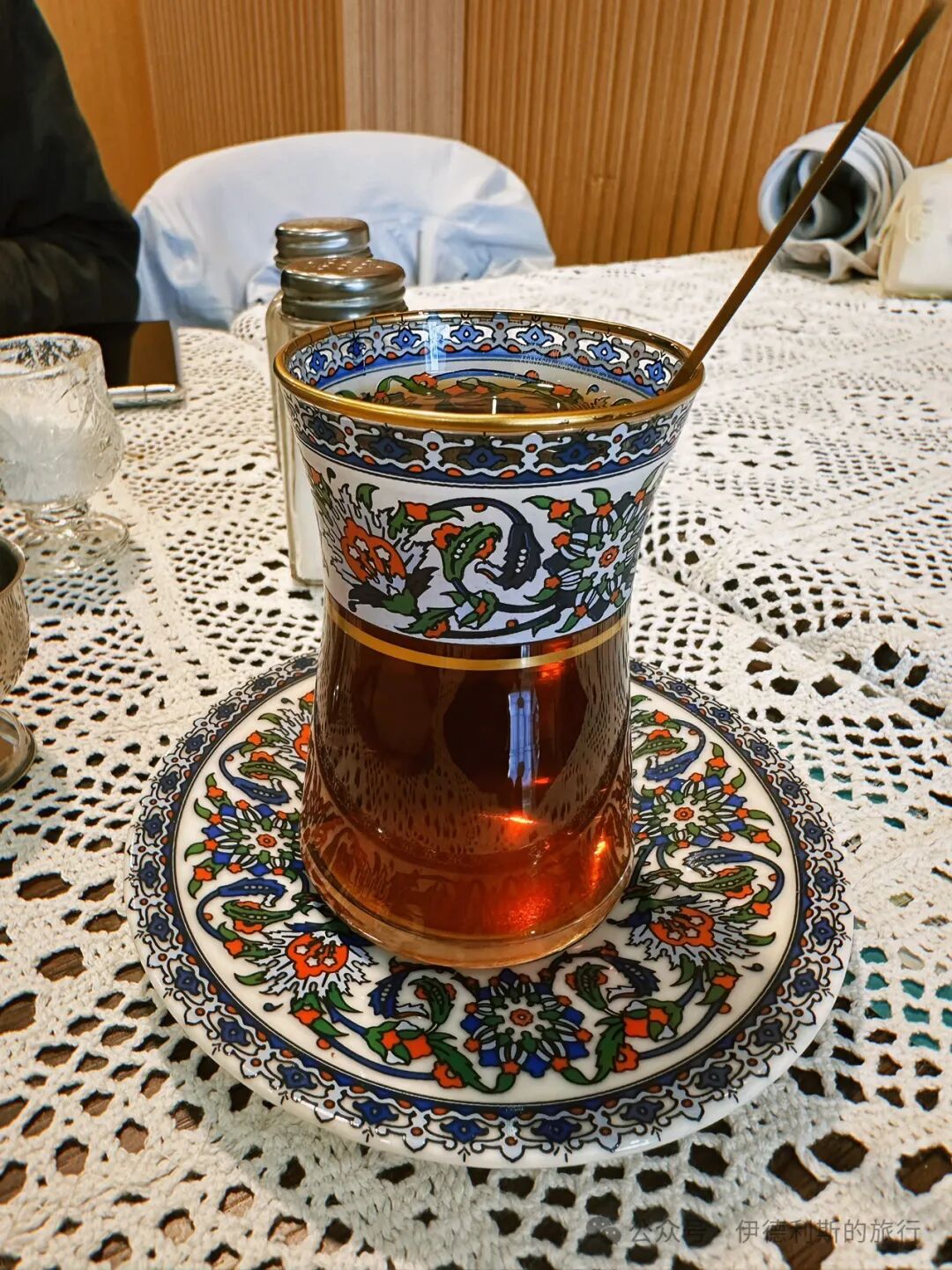
District 1 of the International Trade City has all kinds of wholesale Islamic souvenirs, and I suspect many of the souvenirs sold in the Two Holy Cities are actually sourced from here, haha.
Leifeng Juice Shop is so popular right now! The old shop on Chouzhou North Road has a huge line, just as busy as the Wuyutai tea shop at the Lama Temple in Beijing. A bit further ahead, the Turkish dessert shop Sweet Life is also quite crowded. Actually, both of these businesses have more than one location in Yiwu, and the other shops I visited earlier were not that busy.
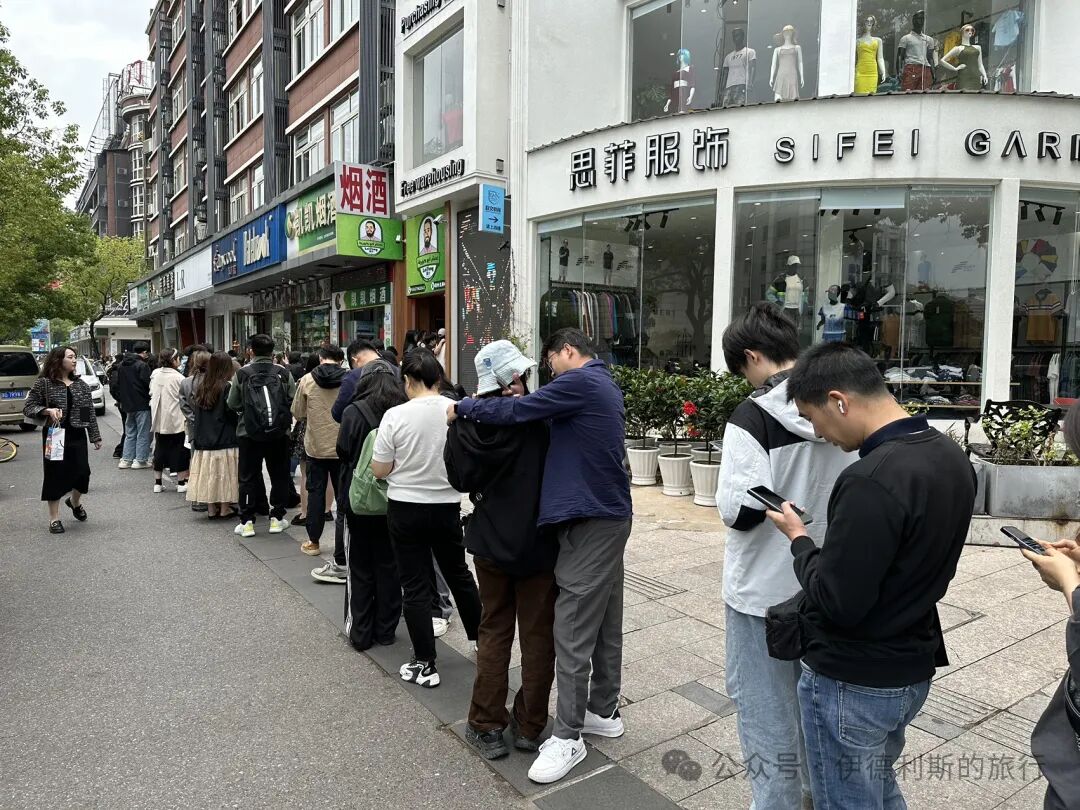
Halal Food Guide: Yiwu - New Middle Eastern Restaurants (Part 2)
Articles • ali2007fr posted the article • 0 comments • 269 views • 2026-05-19 09:30
Summary: Halal Food Guide: Yiwu - New Middle Eastern Restaurants (Part 2) is presented here as a firsthand travel account in clear, natural English. The account focuses on Yiwu, Middle Eastern Food, Halal Food while preserving the names, places, food, photos, and historical details from the Chinese source. view all
Summary: Halal Food Guide: Yiwu - New Middle Eastern Restaurants (Part 2) is presented here as a firsthand travel account in clear, natural English. The account focuses on Yiwu, Middle Eastern Food, Halal Food while preserving the names, places, food, photos, and historical details from the Chinese source.
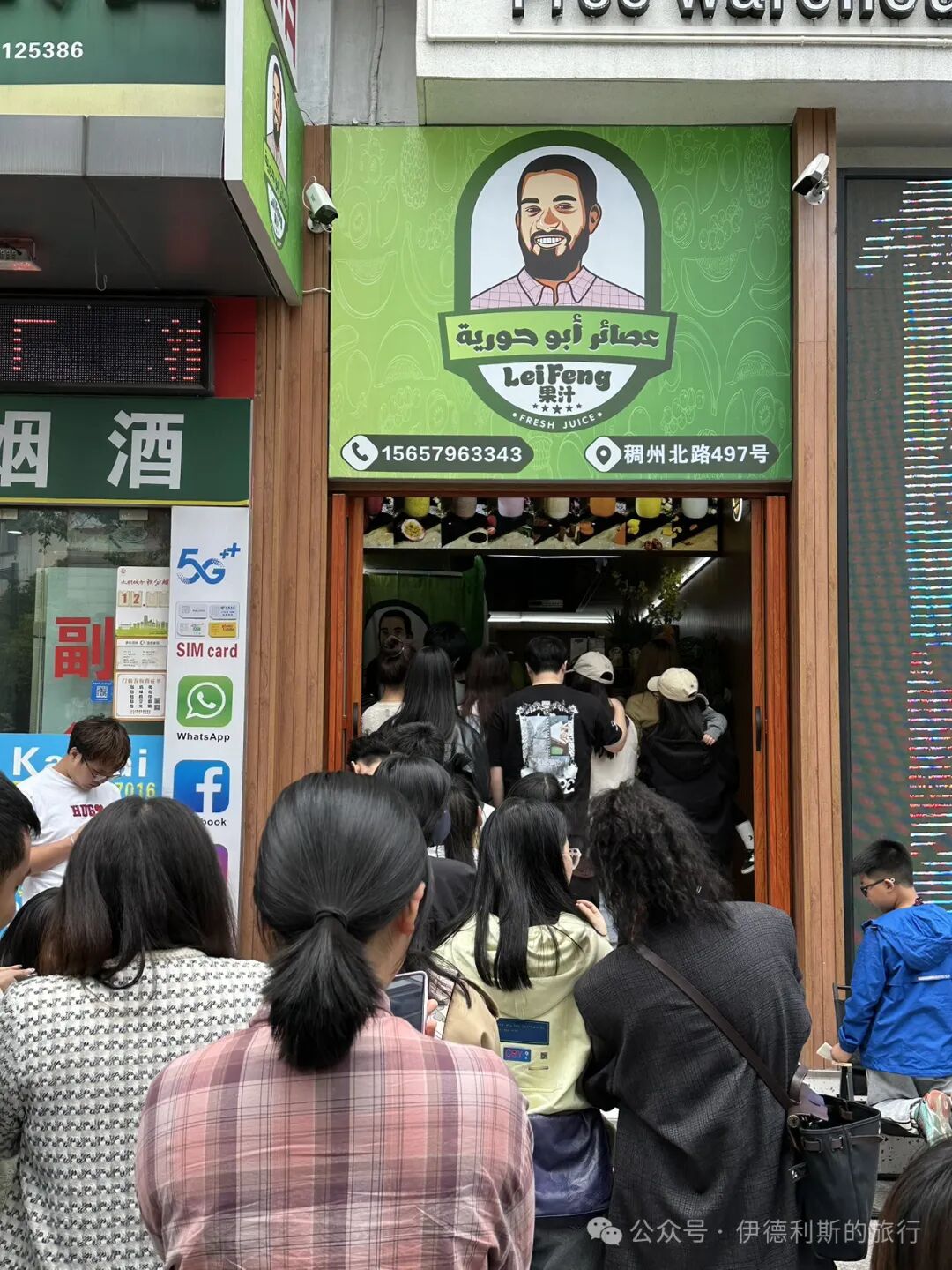
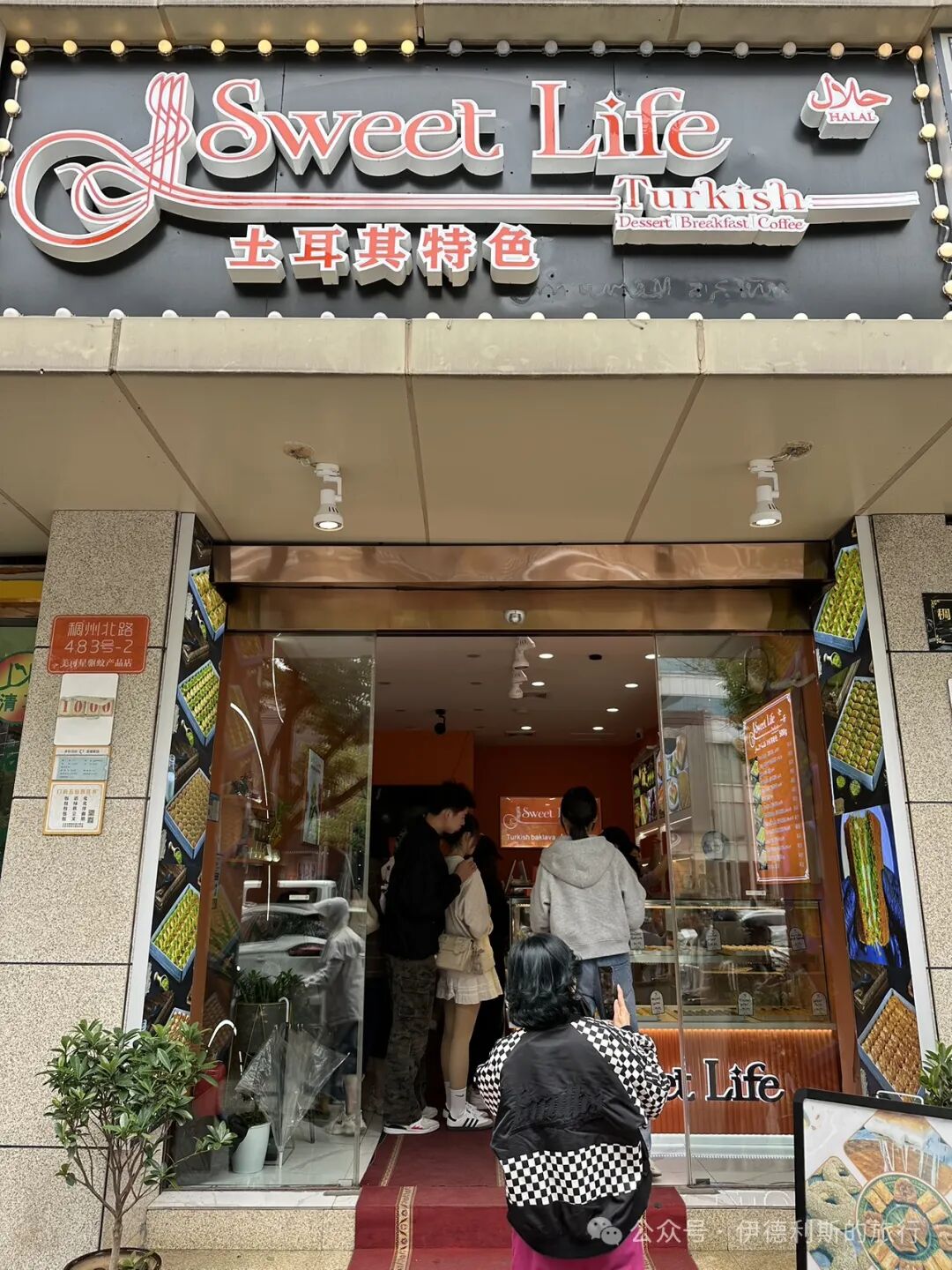
Halal Food Guide: Beijing — South Asian and Middle Eastern Halal Restaurants
Articles • ali2007fr posted the article • 0 comments • 178 views • 2026-05-18 01:28
Summary: Halal Food Guide: Beijing — South Asian and Middle Eastern Halal Restaurants is presented here as a firsthand travel account in clear English, beginning with this scene: I have organized some dishes I ate at various South Asian and Middle Eastern restaurants in Beijing, hoping this helps you when ordering. The account keeps its focus on Beijing Halal Food, Middle Eastern Food, South Asian Food while preserving the names, places, food, and historical details from the Chinese source.
I have organized some dishes I ate at various South Asian and Middle Eastern restaurants in Beijing, hoping this helps you when ordering.
1. The Levant
Falafel (fried chickpea balls)
Falafel is known as the national dish of Egypt, Israel, and Palestine. These fried chickpea balls likely originated in the Nile Delta of ancient Egypt and spread to the Levant through trade in the port of Alexandria. In the Levant, falafel changed from being made with fried fava beans to fried chickpeas. To make falafel, soak the chickpeas overnight, grind them with parsley, cumin, cilantro, and other spices, shape them into balls, and deep-fry them. After frying, the inside of the falafel remains soft.
Falafel in pita bread at the Jordanian restaurant Al Safir:
Falafel at the Arabic fast-food restaurant Taiba:
Falafel at the Palestinian restaurant Zayton:
Kibbeh (fried meat balls)
Kibbeh is made of cracked wheat wrapped around a filling of minced meat, chopped onions, and Middle Eastern spices like cinnamon, nutmeg, cloves, and allspice. Kibbeh is the North Levantine dialect version of the classical Arabic word kubbah, which translates literally to "ball." Kibbeh is most famous in Aleppo, northern Syria, where there are 17 different varieties. Besides the original flavor, they can be made with yogurt, lemon juice, pomegranate molasses, or cherry sauce.
Yogurt kibbeh at the Jordanian restaurant Al Safir:
Kibbeh at the Lebanese restaurant Alameen:
Mahashi (stuffed vegetables with rice and meat)
Mahashi is made by stuffing Lebanese zucchini (kusa) and eggplant with minced meat and rice, then cooking them in tomato sauce, cumin, and broth. Mahashi is a classic Ottoman dish found throughout former Ottoman territories from the Balkans to the Levant (the eastern Mediterranean coast) and Egypt, with each region having its own unique way of making it. Mahashi is a common dish served at weddings, family gatherings, and during Eid al-Fitr.
Mahashi at the Lebanese restaurant Al Ameen:
Lahmacun (meat flatbread)
Lahmacun comes from Arabic and translates literally to "meat with dough." During the Ottoman era, lahmacun spread from the Arab world to Turkey, Armenia, and other former Ottoman regions. Because of this, it is also called "Turkish pizza" or "Armenian pizza," though the basic method is always a thin flatbread topped with minced meat.
Lahmacun at the Turkish restaurant Rumi's Secret:
Lahmacun at the Arabic fast food shop Taiba:
Lahmacun at the Turkish restaurant Doner & Kebab:
Lahmacun at the Turkish restaurant Kubei:
Lahmacun at the Turkish restaurant Dardanelles:
Za'atar Manakeesh flatbread
Manakeesh is a type of Arab flatbread. Za'atar is a Levantine spice blend made from Syrian oregano (also called Lebanese oregano), toasted sesame seeds, dried sumac, and thyme, mixed with olive oil before eating. Syrian oregano is also considered the hyssop mentioned in the Bible. People in Syria and Lebanon often find wild oregano in the fields, pick the leaves to dry in the sun, and then grind them into a powder to make the spice. Za'atar has an earthy taste with a hint of citrus and nuttiness. It feels very unique the first time you eat it.
Za'atar Manakeesh flatbread at the Arabic restaurant Taiba:
Mandi lamb rice
Mandi originated in Yemen and is popular in the Arabian Peninsula, Egypt, and the Levant. Mandi is usually made with rice, meat (lamb, camel, or chicken), and Hawaij spice. Hawaij is also a specialty spice from Yemen used for cooking, soups, and coffee. Its main ingredients are cumin, black pepper, turmeric, and cardamom. The texture of Mandi is drier than regular curry rice.
Mandi lamb rice at the Syrian restaurant BRBR:
Mandi lamb rice at the Syrian restaurant One Thousand and One Nights:
Chickpea yogurt salad (Fatteh)
Fatteh means "crushed" in Arabic. It is a snack from the southern Levant region, found in Damascus, Beirut, Jordan, and Palestine, but not in the northern Levant. The main ingredient of Fatteh is crushed flatbread (Khubz). It is topped with yogurt, steamed chickpeas, olive oil, and other ingredients, then sprinkled with cumin. Sometimes it includes eggplant, carrots, chicken, or lamb.
Fatteh at the Palestinian restaurant Zayton:
Tabbouleh salad
Tabbouleh is a Levantine Meze (appetizer). It is made of chopped parsley, tomatoes, mint, onions, and bulgur (crushed dried wheat). It is seasoned with olive oil, lemon juice, salt, and pepper. The word "tabbūle" in Levantine Arabic comes from the ancient Aramaic root "t-b-l," which means "to season" or "to dip." Tabbouleh salad comes from the mountains of Lebanon and Syria. Wheat grown in the Beqaa Valley of Lebanon was once known as the best for making bulgur.
Tabbouleh at the Palestinian restaurant Zayton:
Tabbouleh salad at the Syrian restaurant BRBR:
Chickpea dip (hummus)
Hummus is short for the Arabic term "ḥummuṣ bi ṭaḥīna" (chickpeas with sesame paste). Hummus is a mix of chickpeas, sesame paste (tahini), olive oil, lemon juice, and garlic. It is very popular across the Middle East and the Mediterranean.
Lamb hummus at the Jordanian restaurant Al Safir:
Hummus at the Arabic fast food shop Taiba:
Hummus at the Turkish restaurant Xiting Xiuse:
Hummus at the Turkish restaurant Kubei (in the middle):
Beef hummus at the Palestinian restaurant Zayton:
Pine nut hummus at the Syrian restaurant One Thousand and One Nights:
Eggplant dip (baba ghanoush)
To make baba ghanoush, you roast eggplant until soft, mash it, and add olive oil and lemon juice. Sometimes people also add sesame paste, onions, or tomatoes.
Baba ghanoush at the Syrian restaurant BRBR:
Lentil soup
Lentil soup is made from lentils and has a very long history. You can use many types of lentils for lentil soup, including green, brown, red, yellow, and black lentils. Genesis chapter 25 mentions, "Then Jacob gave Esau bread and pottage of lentils; and he did eat and drink, and rose up, and went his way." This refers to red lentil soup.
Lentil soup at the Lebanese restaurant Al Ameen:
Lentil soup at the Arabic fast food shop Taiba:
Lentil soup at the Syrian restaurant BRBR:
Lentil and wheat grain soup at a Turkish mother's home:
Lentil soup at the Turkish restaurant Rumi's Secret:
Lentil soup at the Turkish restaurant Xiting Xiuse:
Lentil soup at the Azerbaijani/Turkish restaurant Doner & Kebab:
Kofta meatballs
The word kofta comes from the Persian word "kufte," which means "ground meat." Kofta recipes appeared in early Arabic cookbooks, originally as large lamb meatballs with saffron and egg yolk.
Kofta meatball soup at the Syrian restaurant One Thousand and One Nights:
2. Maghreb Chapter (Tunisia)
Harira bean soup
Harira bean soup is a classic appetizer in the Maghreb region (Algeria, Libya, Mauritania, Morocco, and Tunisia). It is most commonly made for breaking the fast during Ramadan. Every region makes Harira differently. The version we had included tomatoes, lentils, chickpeas, lamb, and various spices.
Harira bean soup at the Tunisian restaurant La Medina:
Brik pastry
Brik pastry is a North African Berber dish that was later brought to Israel by Tunisian Jews. The filling usually contains eggs, tuna, harissa sauce (Harissa), and parsley. It is then wrapped in a crispy dough called Malsouka or Warka and deep-fried.
Brik pastry at the Tunisian restaurant La Medina:
Couscous
Couscous (Couscous) is a staple of Berber cuisine. It is made by rubbing semolina into millet-sized grains and then drying them in the sun. Couscous was first seen in North Africa between the 11th and 13th centuries. The famous 13th-century Andalusian scholar and gourmet Ibn Razin al-Tuyibi first recorded the method for making couscous in his book, The Andalusian Cookbook.
Couscous at the Tunisian restaurant La Medina:
North African sausage (merguez)
North African sausage (Merguez) is made with lamb and beef, mixed with cumin, harissa sauce, chili, and other spices. It is usually grilled. Merguez sausage was first seen in the 12th century in Andalusia, which was southern Spain under Arab rule, and later spread throughout North Africa.
North African sausage (merguez) at the Tunisian restaurant La Medina:
Tajine pot (tajine)
The tagine (Tajine) is a North African Berber specialty that appeared in the 9th-century classic One Thousand and One Nights. Modern tagines are made of pottery, sometimes glazed. They have a round, flat bottom and a conical or domed top. This design allows evaporated steam to return to the bottom, and water can be added through a hole in the lid.
Tajine at the Tunisian restaurant La Medina:
3. Turkey Chapter
Pide pizza
Pide may come from the ancient Greek word "pítta" and refers to three types of bread in Turkey. One is a flatbread similar to Arabic pita, one is a soft leavened bread served during Ramadan, and the third is a large boat-shaped pizza. To make Pide pizza, you put various cheeses and meats on dough and bake it in an oven.
Lamb and cheese Pide at Dardanelles:
Three-topping Pide with cheese, meat, and vegetables at Rumi's Secret:
Spinach Pide at Xiting Xiuse during Ramadan:
Beef and cheese Pide at Xiting Xiuse:
Assorted Pide at Desert Rose:
Double cheese Pide at Kubei:
Mevlana meat Pide at Kubei:
Sultan's Delight (Hünkar Beğendi)
Sultan's Delight (Hünkar Beğendi) is a dish that started in the Ottoman palace. It uses rich lamb stew served over creamy roasted eggplant puree and is quite rare in Beijing.
Sultan's Delight at Turkish Mom:
Beef sausage fried eggs (Sucuklu yumurta)
The "Sujuk" in Sucuklu yumurta first appeared in the Compendium of the Turkic Dialects. It is made by grinding beef, adding tail fat and other fats, stuffing it into casings, tying it with string, and letting it ferment gradually.
Sucuklu yumurta at the Turkish/Azerbaijani restaurant Xiting Xiuse:
Pottery kebab (Testi kebabı)
Testi kebabı is a popular way of eating in central Anatolia and the west-central Black Sea region. You put beef, mushrooms, tomatoes, and shallots into a clay pot, seal the opening with bread, and slow-cook it in an oven. After the stew is ready, sear it in butter on an iron plate. Then, crack open the clay pot and toss the bread and the stew inside onto the plate. The aroma is incredible!
Sucuklu yumurta at the Turkish/Azerbaijani restaurant Xiting Xiuse:
Simit bagel
The earliest record of the simit bagel in Istanbul dates back to 1525. According to the famous 17th-century Ottoman traveler Evliya Celebi, there were 70 simit bakeries in Istanbul in the 1630s.
Simit at the Turkish restaurant Kubei:
Baklava dessert
Baklava is the most famous dessert of the Ottoman Empire, developed by the royal chefs at the Topkapi Palace. On the 15th day of Ramadan each year, the Ottoman Sultan would attend a ceremony called 'Baklava Alayı' to distribute trays of Baklava to the Janissaries. Baklava is a flaky pastry made by layering very thin unleavened filo dough, filled with crushed pistachios, walnuts, syrup, or honey.
Baklava from a Turkish mom:
Baklava at Kubei:
Baklava at Desert Rose:
Salty yogurt drink (Ayran)
Ayran is a drink made by mixing yogurt, salt, and water. You can also add mint or carbonated water. It is perfect with grilled meat in the summer. The word Ayran comes from Turkic and first appeared in the 'Compendium of the Turkic Dialects' written by Mahmud al-Kashgari in the 1070s.
Ayran at Xiting Xiuse:
Ayran at Kubei:
4. Caucasus Chapter
Karabakh Pilaf
Karabakh is a region on the border of Azerbaijan and Armenia. Its name comes from the Turkic word 'Kara' (black) and the Persian word 'Bagh' (garden). Most people living there now are Azerbaijanis. The Karabakh Pilaf we ate was stewed lamb with apricots. The rice is yellow because it is stained with saffron juice. When I was in Baku before, I ate this apricot and saffron pilaf while listening to Azerbaijani mugham music. It felt very familiar to eat it again this time.
Karabakh Pilaf at the Turkish/Azerbaijani restaurant Xiting Xiuse:
5. South Asia
Samosa curry pastry (samosa)
Muslim merchants from Central Asia brought the samosa to South Asia from Persia during the 13th and 14th centuries. Around 1300, the Delhi Sultanate scholar Amir Khusro wrote that princes and nobles in the Delhi Sultanate enjoyed "samosas made with meat, clarified butter (ghee), and onions."
Samosa at the Kolkata restaurant Saduri:
Samosa at the Pakistani restaurant Khan Baba:
Thin yogurt drink (lassi)
Lassi comes from the Sanskrit word 'lasika,' which originally meant serum. Lassi comes in sweet and salty versions. The sweet version is mainly found in Gujarat, Rajasthan, and Sindh, while the salty version is widely distributed across other parts of North India.
Lassi at the Kolkata restaurant Saduri:
Vegetable yogurt (raita)
Raita is a Hindi word formed by combining the Sanskrit words 'rajika' and 'tiktaka,' meaning 'black mustard seeds' and 'pungent.' This is because making raita involves frying black mustard seeds and cumin, mixing them into chopped vegetables, and then adding them to yogurt.
Raita at the Kolkata restaurant Saduri:
Fried curry (bhuna)
Bhuna means 'to fry' in Urdu. It usually includes onion, ginger, and garlic. When cooking, the curry is fried in hot oil until it becomes a paste. I think it tastes better than regular curry.
Beef bhuna at the Kolkata restaurant Saduri:
Stewed curry (korma)
Korma is a type of curry stewed with coconut milk or yogurt. The word 'korma' comes from the Turkic word 'qawirma,' which originally meant to fry, but evolved into the Urdu word for stew. Korma is a classic Mughal court dish that originated in the 16th century. People say Shah Jahan ate korma with his guests at the banquet celebrating the completion of the Taj Mahal.
Vegetable korma at the Kolkata restaurant Saduri:
Lamb korma at Mirch Masala:
Spice blend curry (masala)
Masala is a famous South Asian spice blend. Its main ingredients are garlic, ginger, onion, chili, and tomato. There is no fixed recipe for masala tea, but it usually includes black tea, milk, sugar, cardamom, black pepper, and ginger. Other spices include cinnamon, star anise, fennel seeds, and cloves.
Masala fish stew at the Pakistani restaurant Khan Baba:
Masala tea at the Indian Kitchen:
Potato rice crepe (dosa) with potato sauce and masala curry at the Indian Kitchen:
Masala lamb at the Kolkata restaurant Sadhu:
Pickled chickpea curry (achari chana masala) at the Pakistani restaurant Lahore Restaurant:
Clay pot (handi)
Handi is a popular way to eat curry in northern South Asia. It uses many rich spices like cardamom, cinnamon, and cloves. The biggest difference from regular South Asian curry is that handi does not use ginger, but uses garlic and onions instead.
Lamb handi at the Pakistani restaurant Khan Baba:
Chicken pickled curry (achari handi) at the Pakistani restaurant Khan Baba:
Curried chickpeas (dall chana)
Dal means split in Sanskrit. In South Asia, it refers to hulled legumes, including chickpeas, peas, and lentils. You can eat them dry or with soup.
Curried chickpeas (dall chana) at the Pakistani restaurant Khan Baba:
Biryani rice
Biryani is a Persian loanword in Urdu. It likely originated in the Mughal court. People say Mughal royal chefs created it by combining Indian spicy rice with Persian pilaf. Mughal documents mention both biryanis and pilaf (pulao), and the two terms were interchangeable at the time. People generally think biryani contains more spices and has a stronger curry flavor than pilaf.
Biryani at the Pakistani restaurant Zam Zam:
Biryani at the Pakistani restaurant Khan Baba:
Biryani at the Pakistani restaurant Lahore Restaurant:
Biryani at the restaurant Mirch Masala:
Raisin pilaf (shejhani pulao)
Although rice has been grown in Eurasia for a very long time, the style of cooking rice in a large pot only became popular from Andalusia to Afghanistan during the Abbasid Caliphate. The word pilaf (pilāv) comes from Persian. The earliest record of pilaf dates back to the 10th-century writings of the Persian scholar Ibn Sina, which is why some people call him the father of modern pilaf. After the 16th century, pilaf became popular in India as the Mughal Empire flourished.
Shejhani Pulao at the Kolkata restaurant Sadri:
Tikka grilled meat chunks
Tikka comes from the Turkic word tikkü, which means piece. The Mughal Empire brought this style of grilling spiced, boneless meat or vegetable chunks to India. The most common version is chicken tikka.
The tikka platter at the Pakistani restaurant ZAM ZAM includes mint chicken (Haryali Tikka), lamb tikka, beef tikka, and fish tikka.
Grilled salmon tikka at the Kolkata restaurant Sadri:
Grilled tofu (Paneer Tikka) at the Indian Little Kitchen. view all
Summary: Halal Food Guide: Beijing — South Asian and Middle Eastern Halal Restaurants is presented here as a firsthand travel account in clear English, beginning with this scene: I have organized some dishes I ate at various South Asian and Middle Eastern restaurants in Beijing, hoping this helps you when ordering. The account keeps its focus on Beijing Halal Food, Middle Eastern Food, South Asian Food while preserving the names, places, food, and historical details from the Chinese source.
I have organized some dishes I ate at various South Asian and Middle Eastern restaurants in Beijing, hoping this helps you when ordering.
1. The Levant
Falafel (fried chickpea balls)
Falafel is known as the national dish of Egypt, Israel, and Palestine. These fried chickpea balls likely originated in the Nile Delta of ancient Egypt and spread to the Levant through trade in the port of Alexandria. In the Levant, falafel changed from being made with fried fava beans to fried chickpeas. To make falafel, soak the chickpeas overnight, grind them with parsley, cumin, cilantro, and other spices, shape them into balls, and deep-fry them. After frying, the inside of the falafel remains soft.
Falafel in pita bread at the Jordanian restaurant Al Safir:
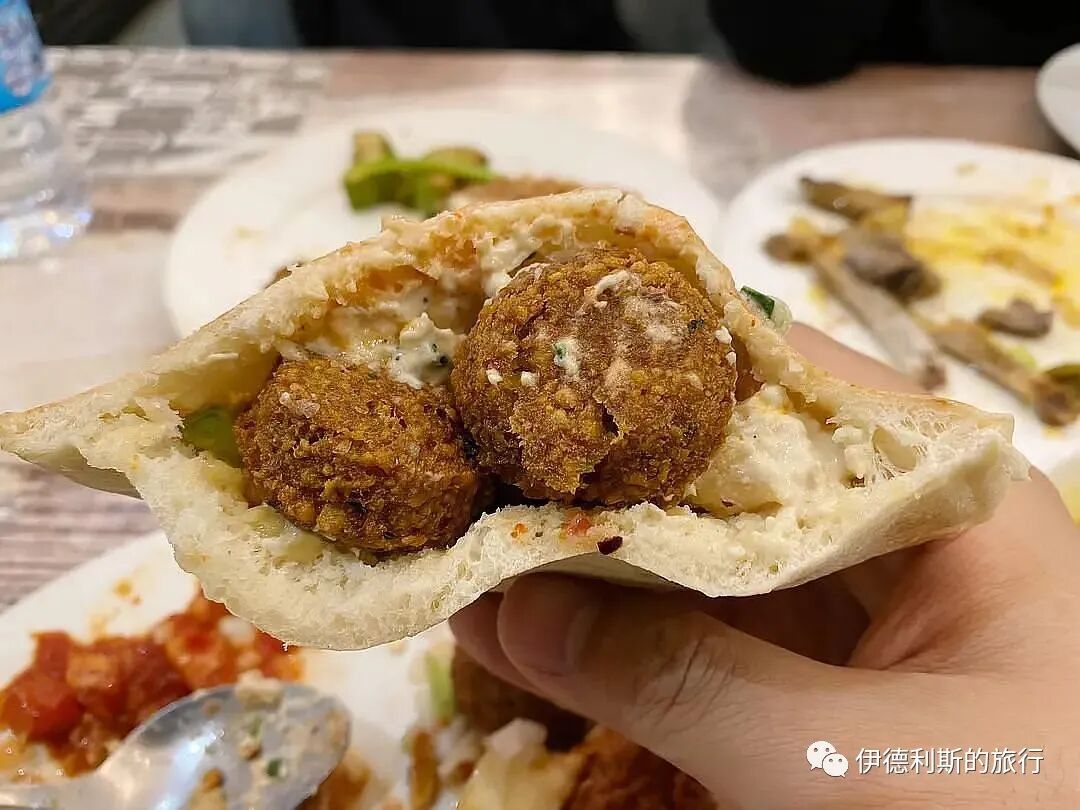
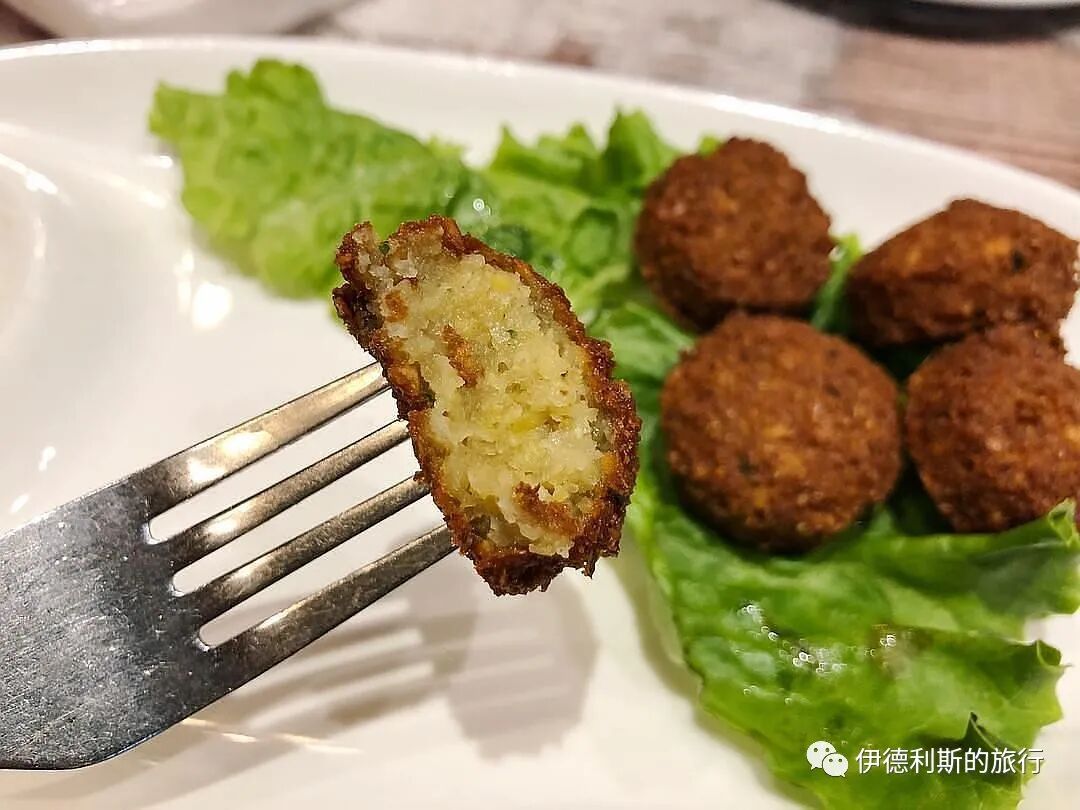
Falafel at the Arabic fast-food restaurant Taiba:
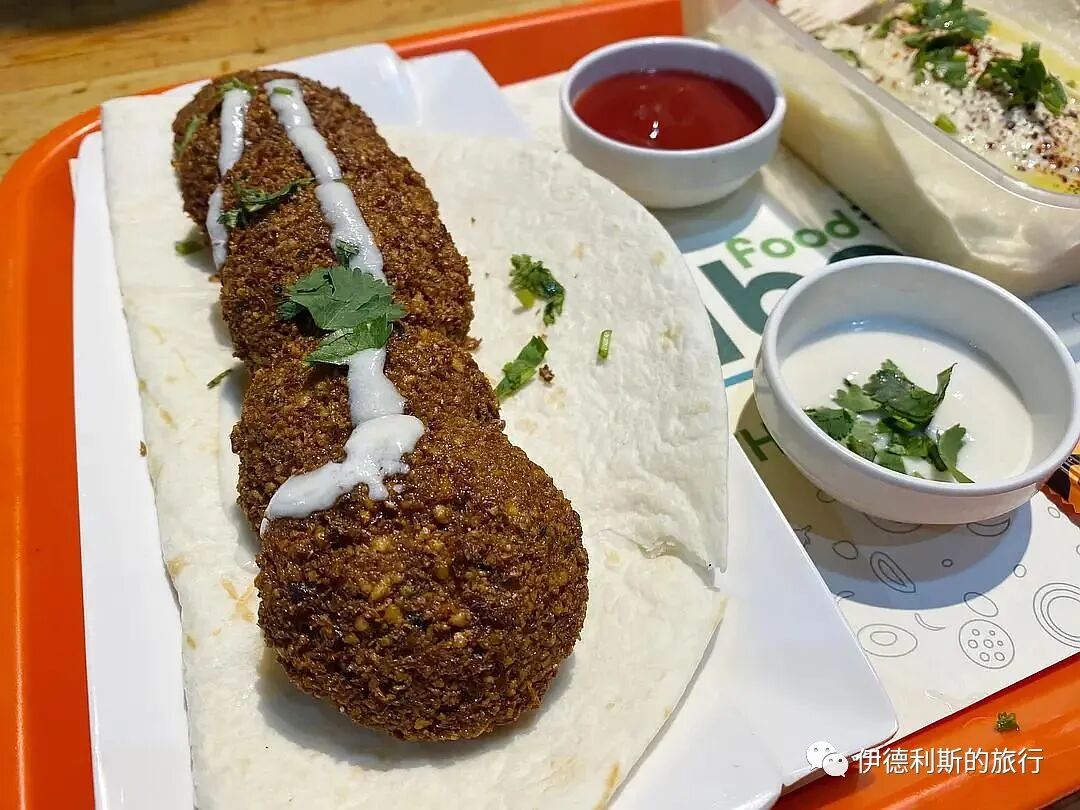
Falafel at the Palestinian restaurant Zayton:
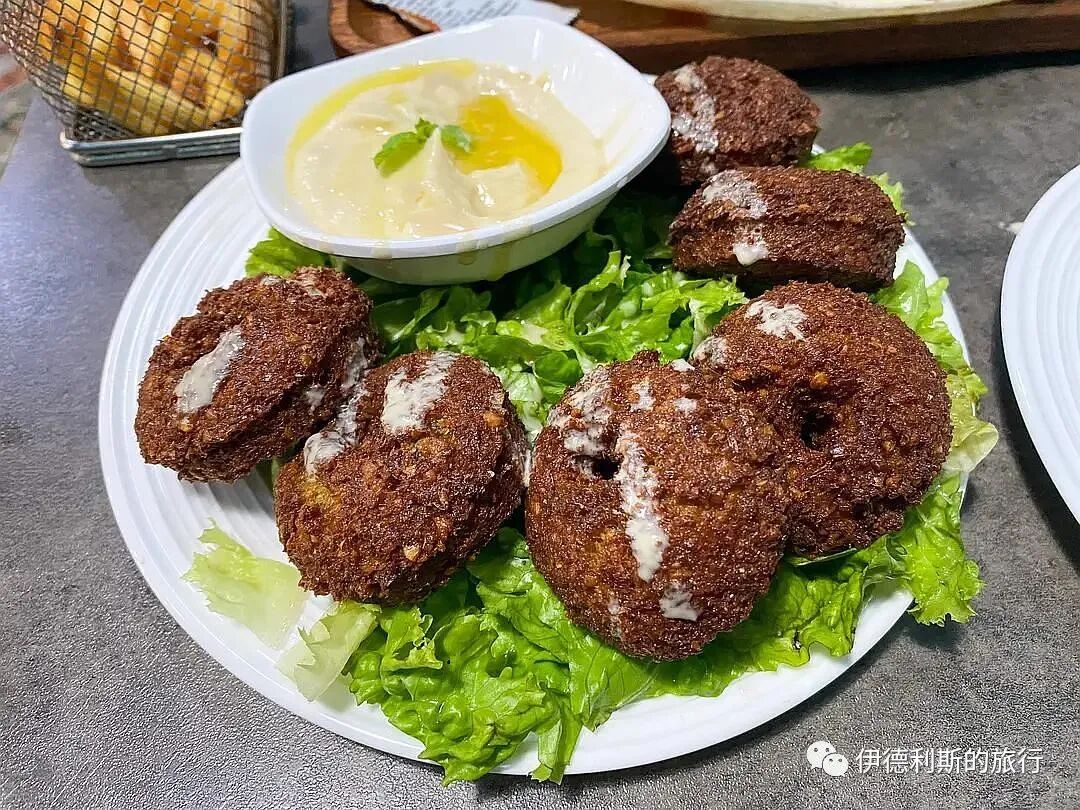
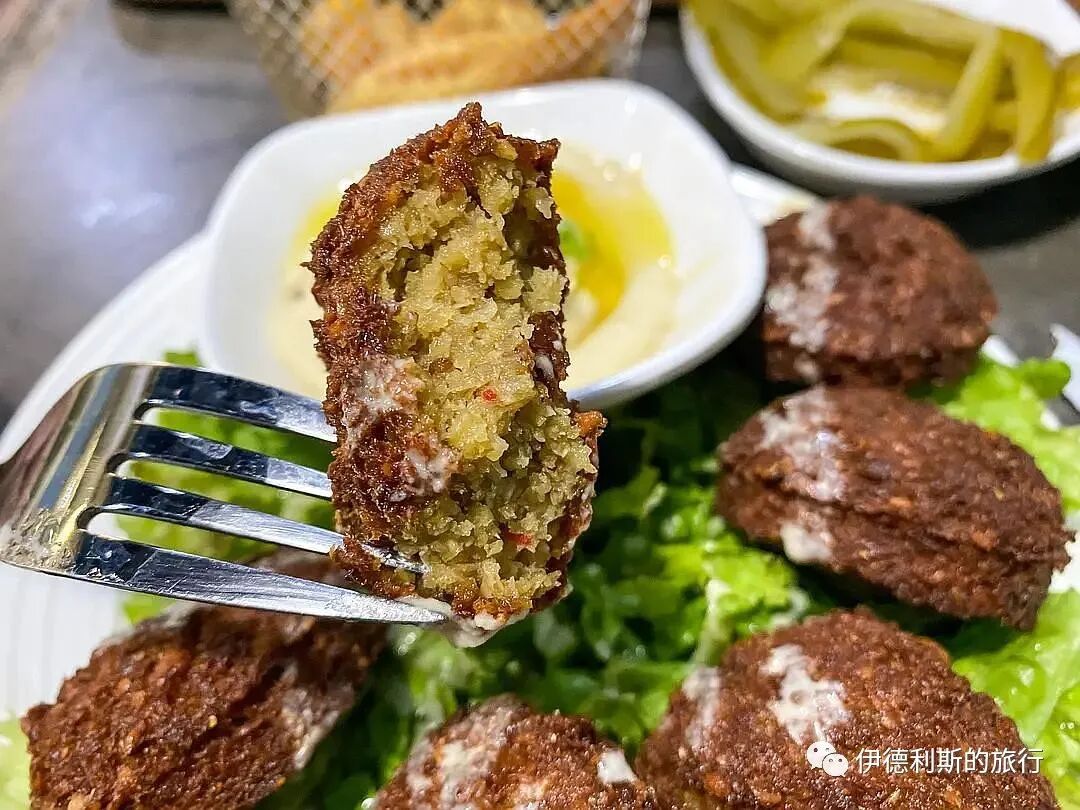
Kibbeh (fried meat balls)
Kibbeh is made of cracked wheat wrapped around a filling of minced meat, chopped onions, and Middle Eastern spices like cinnamon, nutmeg, cloves, and allspice. Kibbeh is the North Levantine dialect version of the classical Arabic word kubbah, which translates literally to "ball." Kibbeh is most famous in Aleppo, northern Syria, where there are 17 different varieties. Besides the original flavor, they can be made with yogurt, lemon juice, pomegranate molasses, or cherry sauce.
Yogurt kibbeh at the Jordanian restaurant Al Safir:
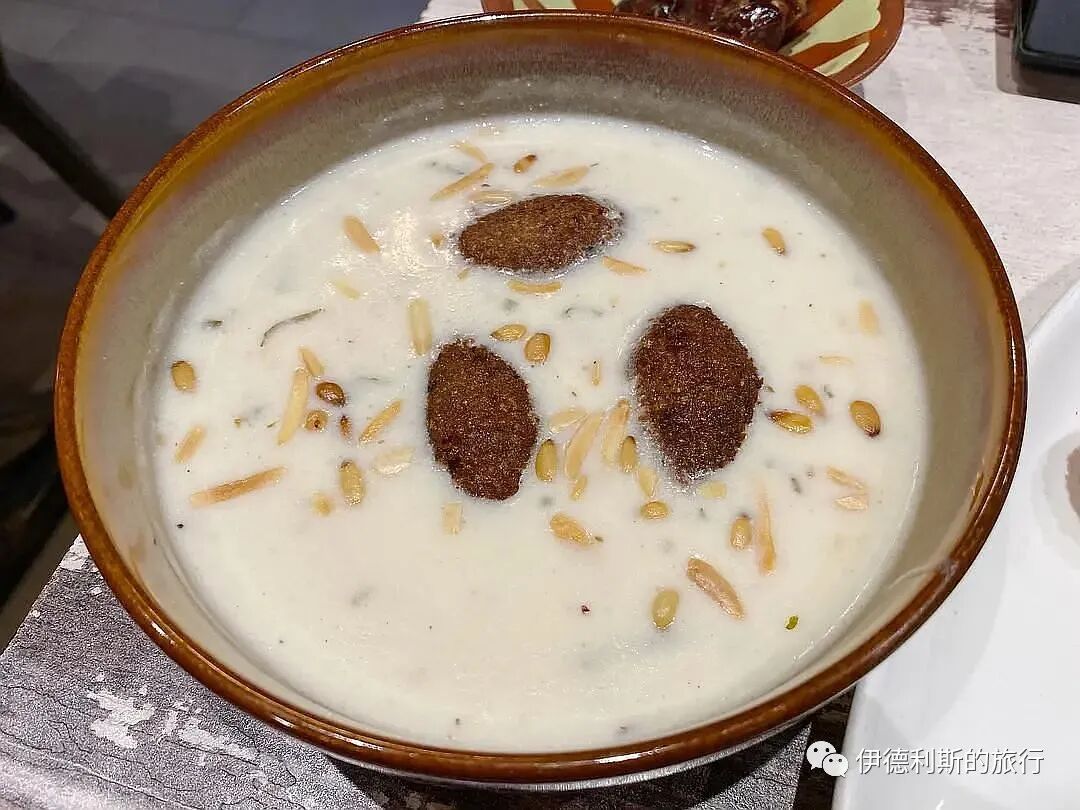
Kibbeh at the Lebanese restaurant Alameen:
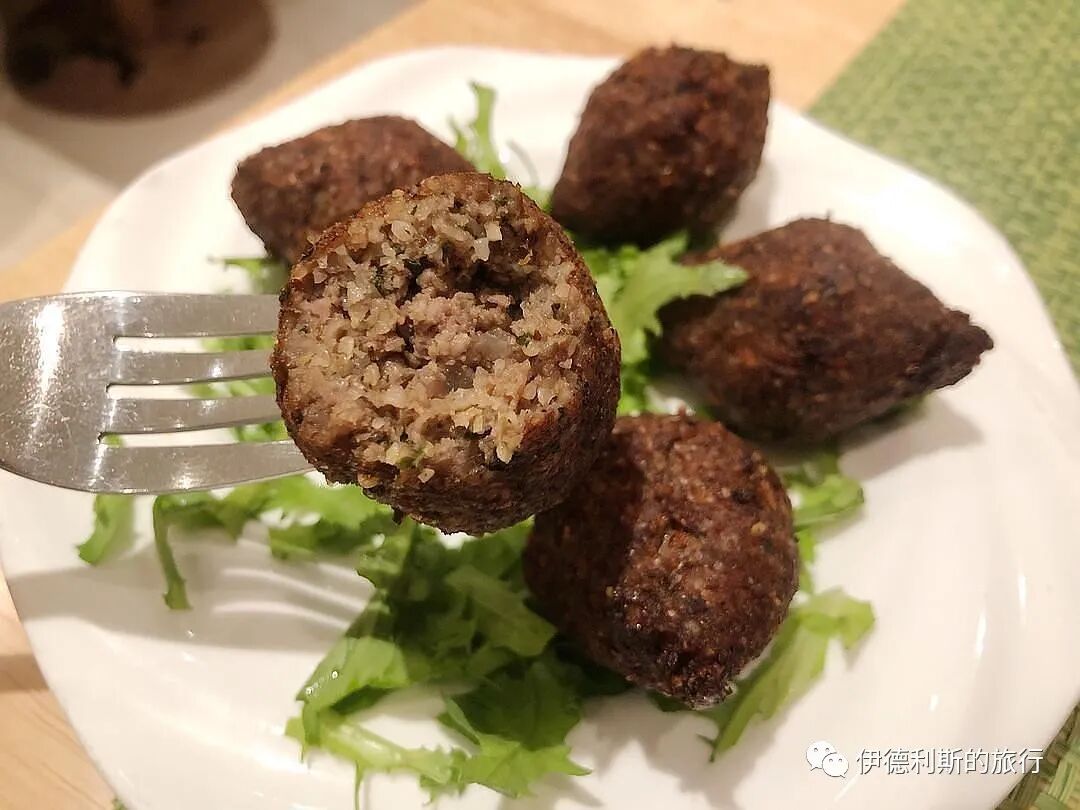
Mahashi (stuffed vegetables with rice and meat)
Mahashi is made by stuffing Lebanese zucchini (kusa) and eggplant with minced meat and rice, then cooking them in tomato sauce, cumin, and broth. Mahashi is a classic Ottoman dish found throughout former Ottoman territories from the Balkans to the Levant (the eastern Mediterranean coast) and Egypt, with each region having its own unique way of making it. Mahashi is a common dish served at weddings, family gatherings, and during Eid al-Fitr.
Mahashi at the Lebanese restaurant Al Ameen:
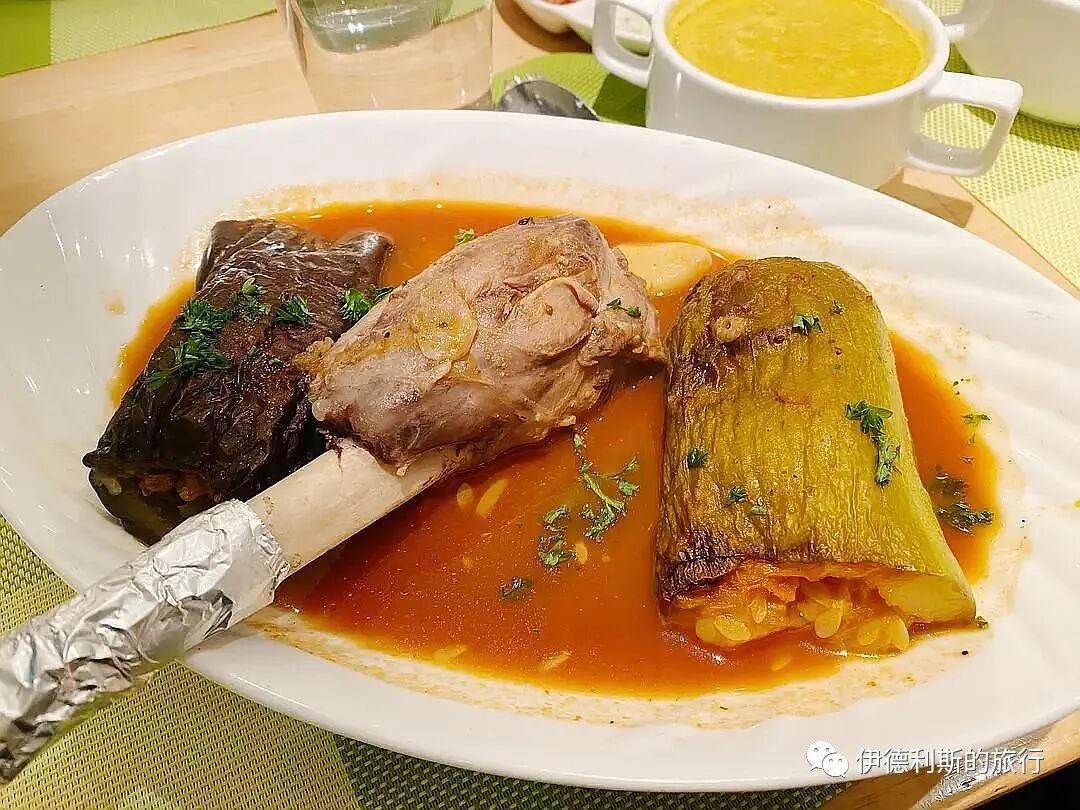
Lahmacun (meat flatbread)
Lahmacun comes from Arabic and translates literally to "meat with dough." During the Ottoman era, lahmacun spread from the Arab world to Turkey, Armenia, and other former Ottoman regions. Because of this, it is also called "Turkish pizza" or "Armenian pizza," though the basic method is always a thin flatbread topped with minced meat.
Lahmacun at the Turkish restaurant Rumi's Secret:
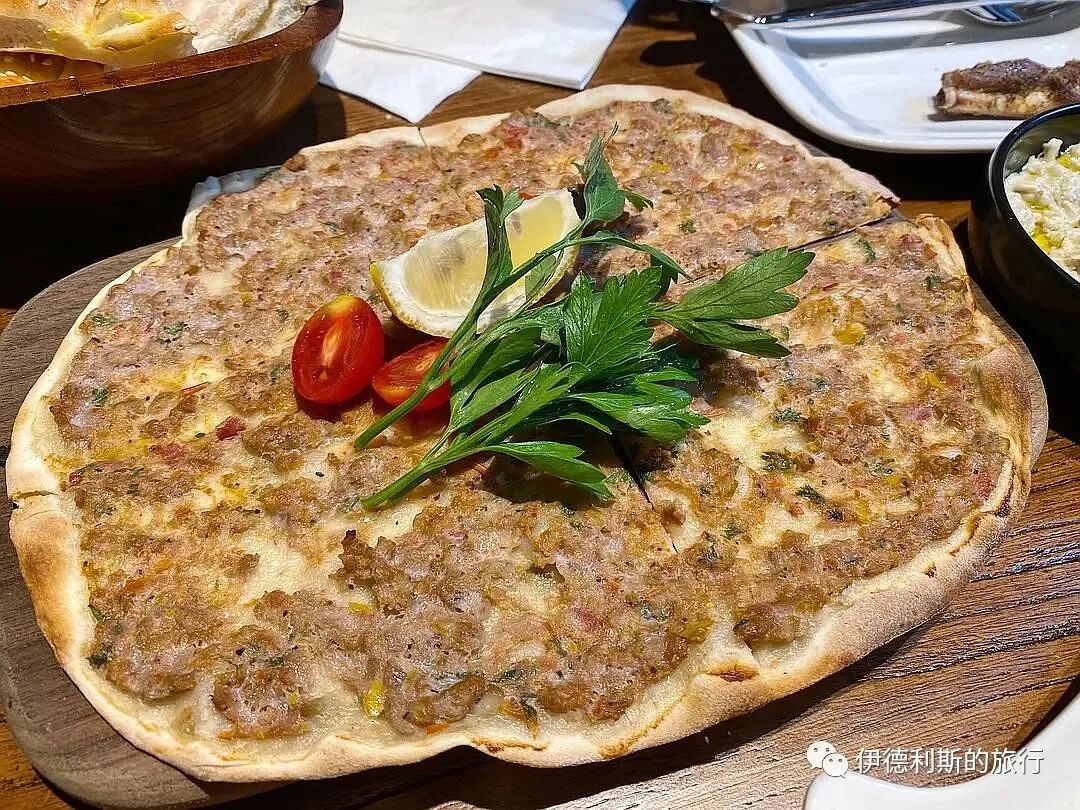
Lahmacun at the Arabic fast food shop Taiba:
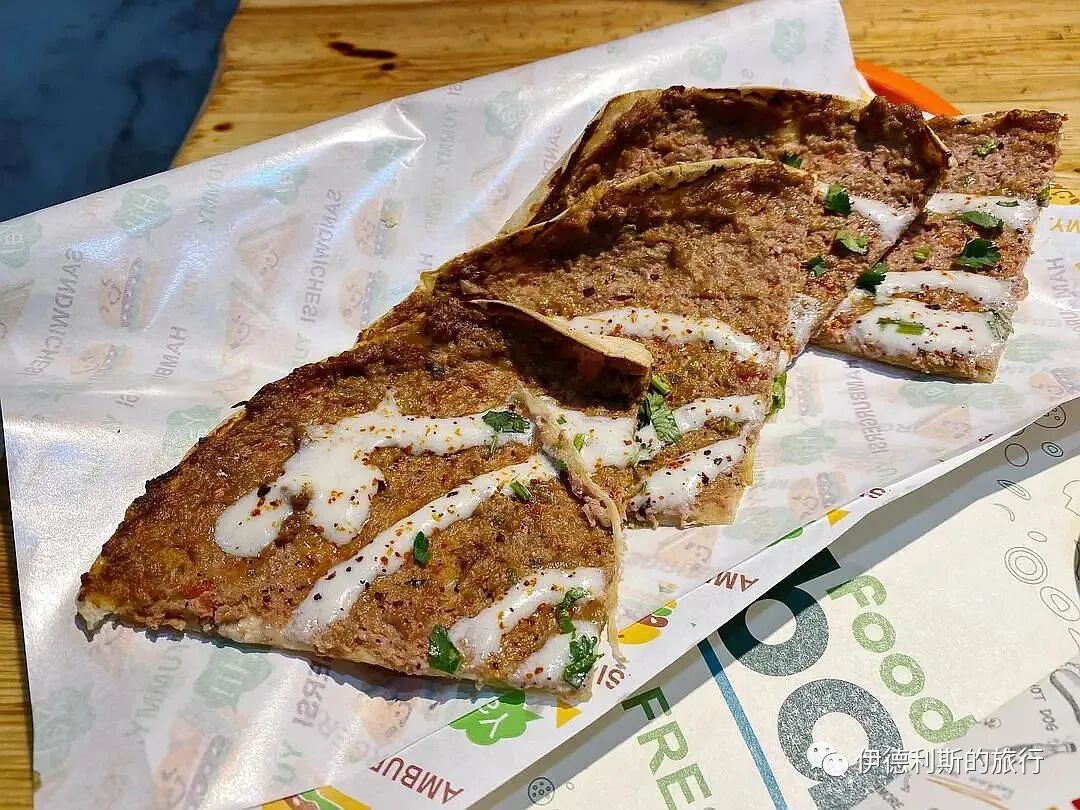
Lahmacun at the Turkish restaurant Doner & Kebab:
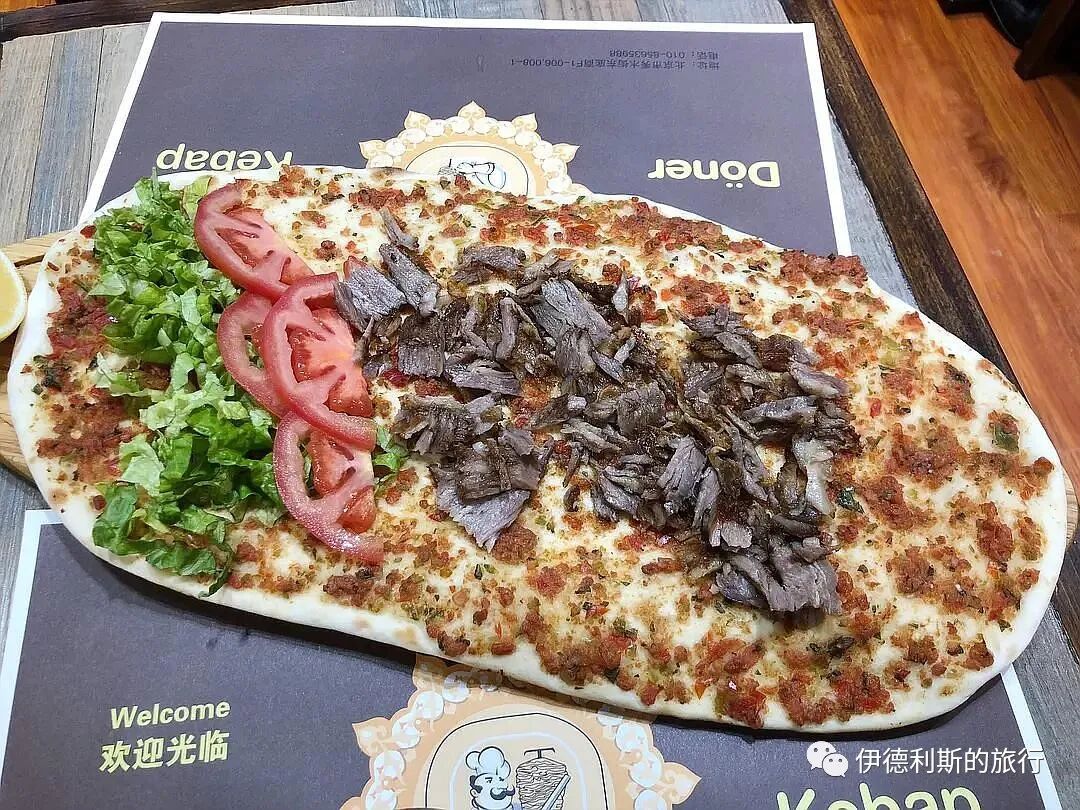
Lahmacun at the Turkish restaurant Kubei:
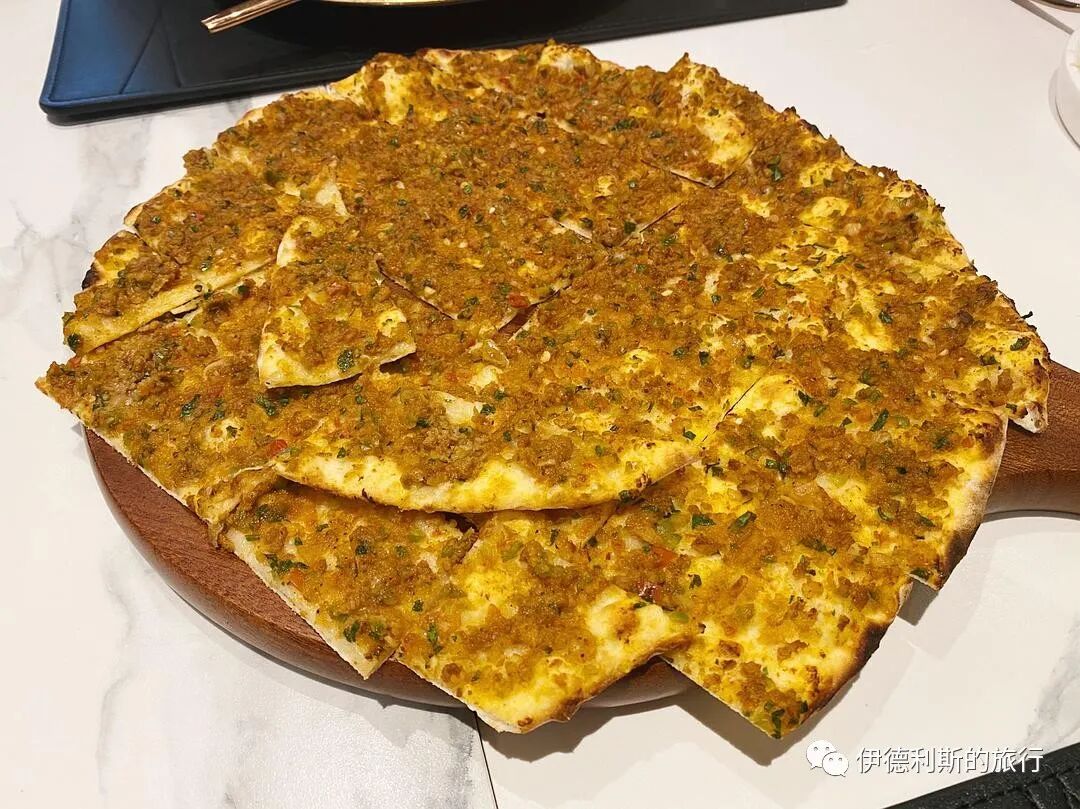
Lahmacun at the Turkish restaurant Dardanelles:
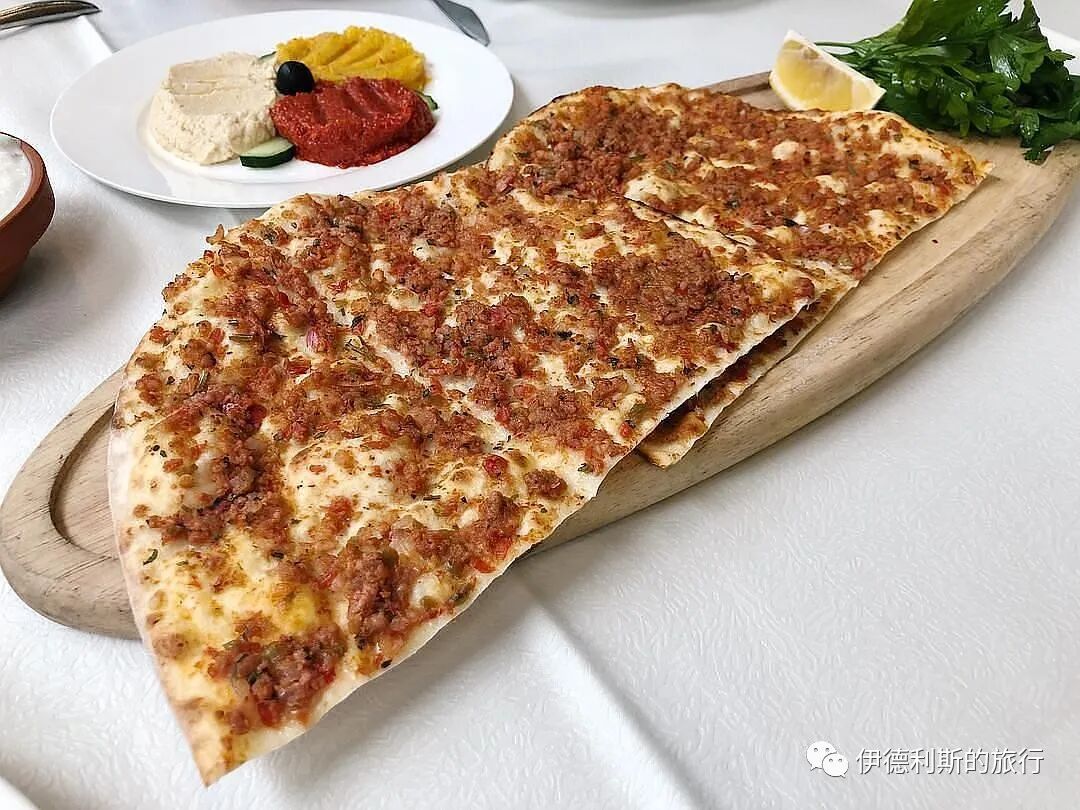
Za'atar Manakeesh flatbread
Manakeesh is a type of Arab flatbread. Za'atar is a Levantine spice blend made from Syrian oregano (also called Lebanese oregano), toasted sesame seeds, dried sumac, and thyme, mixed with olive oil before eating. Syrian oregano is also considered the hyssop mentioned in the Bible. People in Syria and Lebanon often find wild oregano in the fields, pick the leaves to dry in the sun, and then grind them into a powder to make the spice. Za'atar has an earthy taste with a hint of citrus and nuttiness. It feels very unique the first time you eat it.
Za'atar Manakeesh flatbread at the Arabic restaurant Taiba:
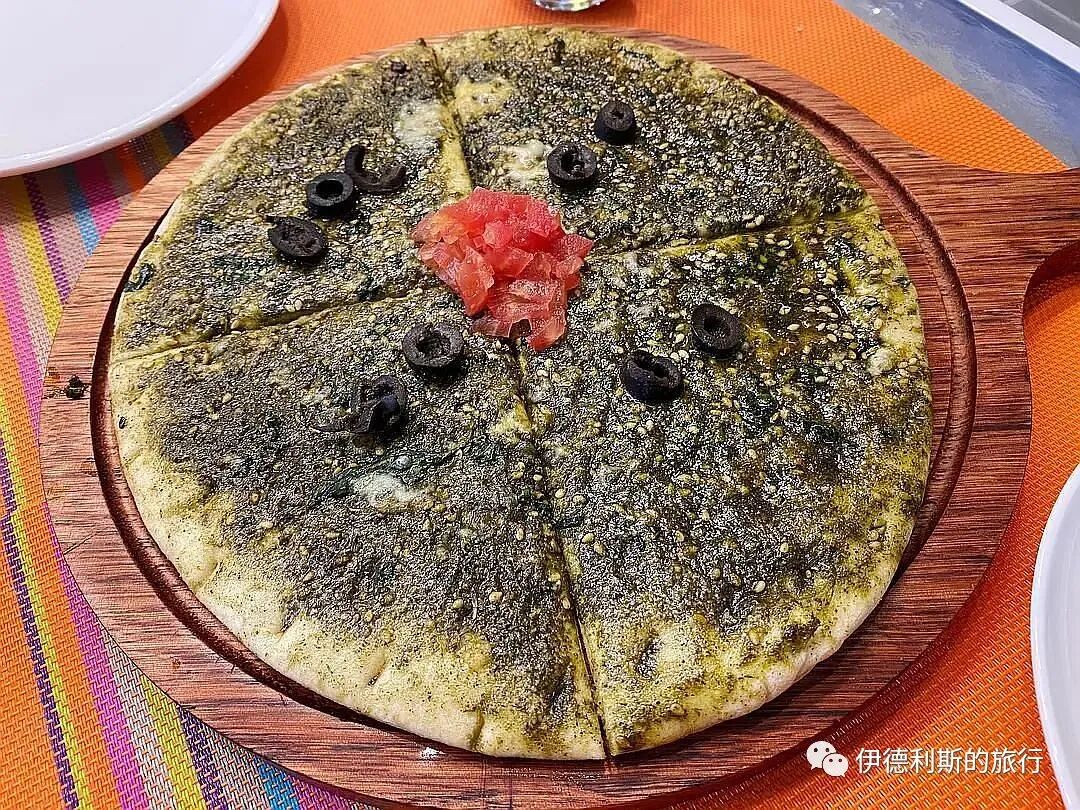
Mandi lamb rice
Mandi originated in Yemen and is popular in the Arabian Peninsula, Egypt, and the Levant. Mandi is usually made with rice, meat (lamb, camel, or chicken), and Hawaij spice. Hawaij is also a specialty spice from Yemen used for cooking, soups, and coffee. Its main ingredients are cumin, black pepper, turmeric, and cardamom. The texture of Mandi is drier than regular curry rice.
Mandi lamb rice at the Syrian restaurant BRBR:
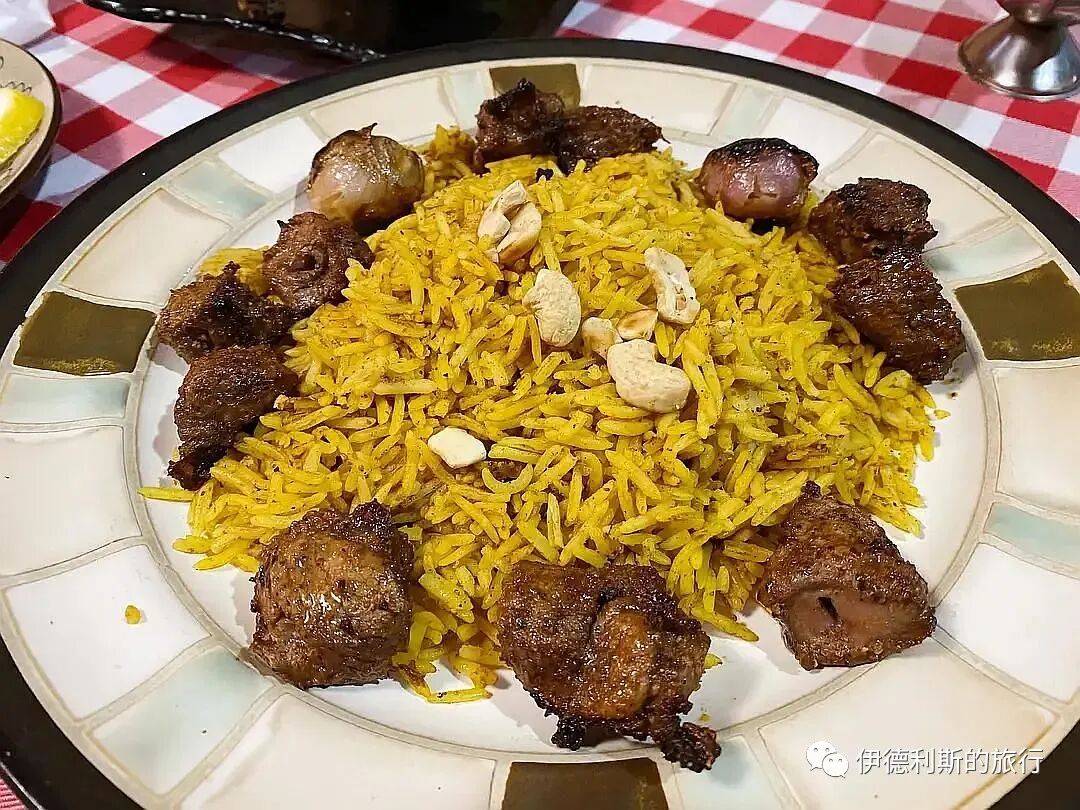
Mandi lamb rice at the Syrian restaurant One Thousand and One Nights:
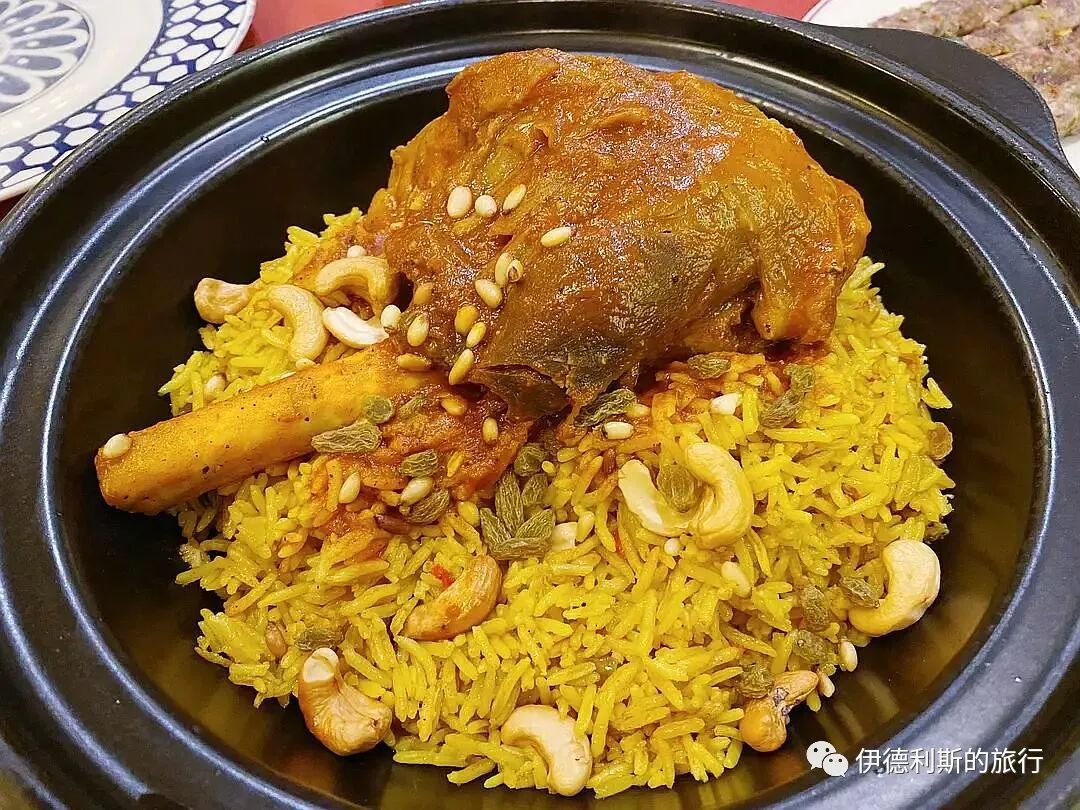
Chickpea yogurt salad (Fatteh)
Fatteh means "crushed" in Arabic. It is a snack from the southern Levant region, found in Damascus, Beirut, Jordan, and Palestine, but not in the northern Levant. The main ingredient of Fatteh is crushed flatbread (Khubz). It is topped with yogurt, steamed chickpeas, olive oil, and other ingredients, then sprinkled with cumin. Sometimes it includes eggplant, carrots, chicken, or lamb.
Fatteh at the Palestinian restaurant Zayton:
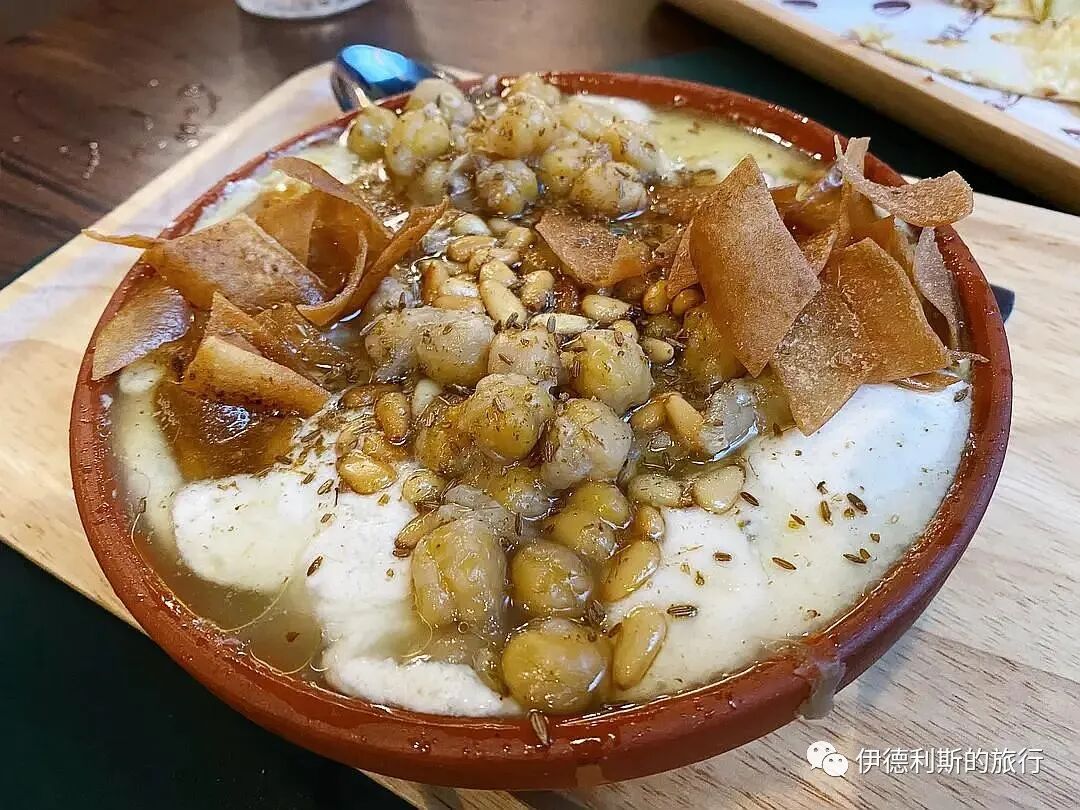
Tabbouleh salad
Tabbouleh is a Levantine Meze (appetizer). It is made of chopped parsley, tomatoes, mint, onions, and bulgur (crushed dried wheat). It is seasoned with olive oil, lemon juice, salt, and pepper. The word "tabbūle" in Levantine Arabic comes from the ancient Aramaic root "t-b-l," which means "to season" or "to dip." Tabbouleh salad comes from the mountains of Lebanon and Syria. Wheat grown in the Beqaa Valley of Lebanon was once known as the best for making bulgur.
Tabbouleh at the Palestinian restaurant Zayton:
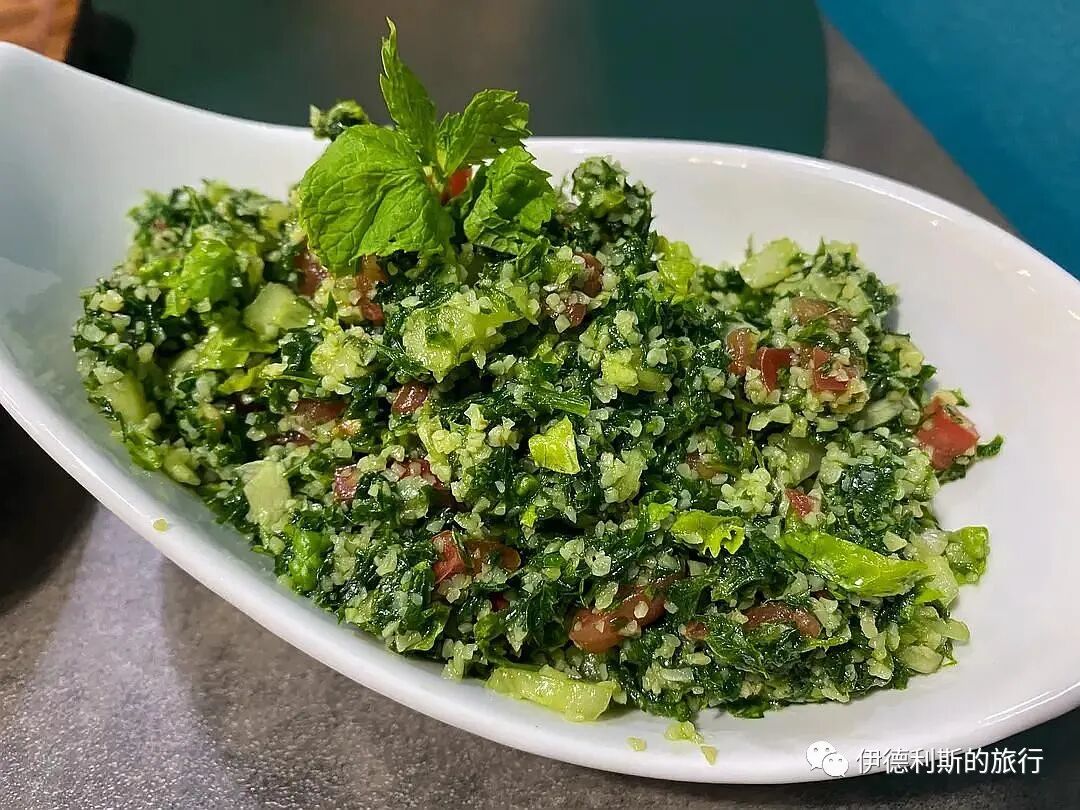
Tabbouleh salad at the Syrian restaurant BRBR:
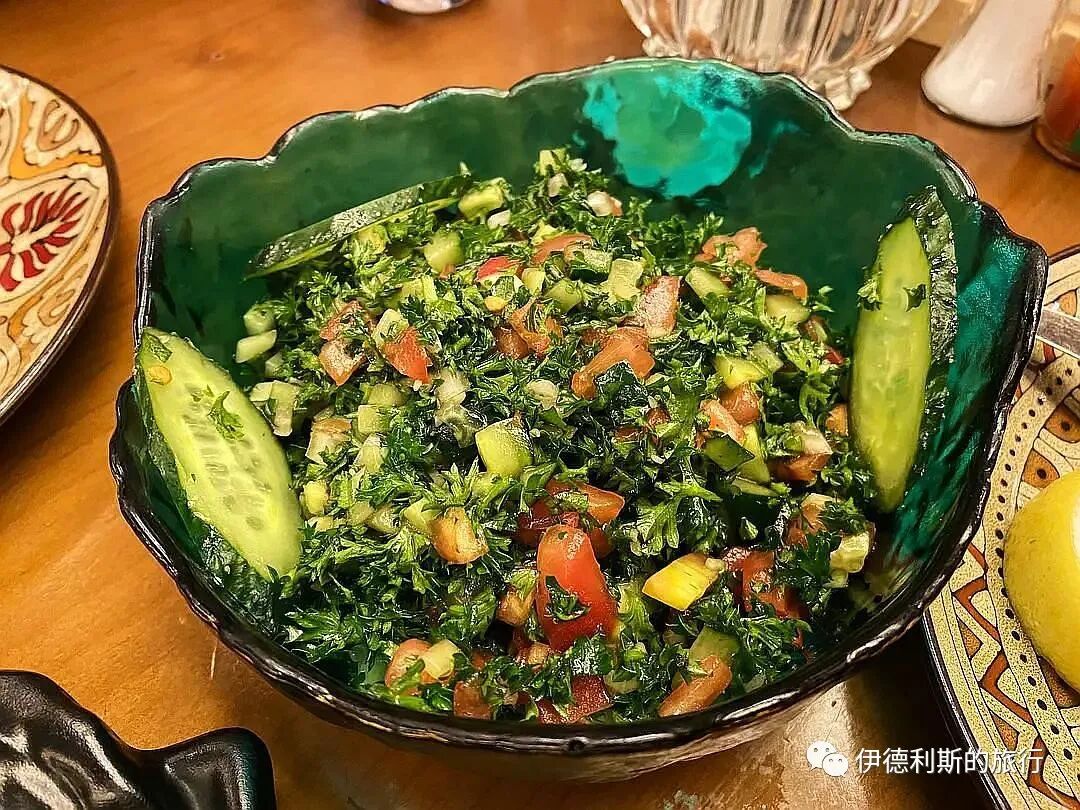
Chickpea dip (hummus)
Hummus is short for the Arabic term "ḥummuṣ bi ṭaḥīna" (chickpeas with sesame paste). Hummus is a mix of chickpeas, sesame paste (tahini), olive oil, lemon juice, and garlic. It is very popular across the Middle East and the Mediterranean.
Lamb hummus at the Jordanian restaurant Al Safir:
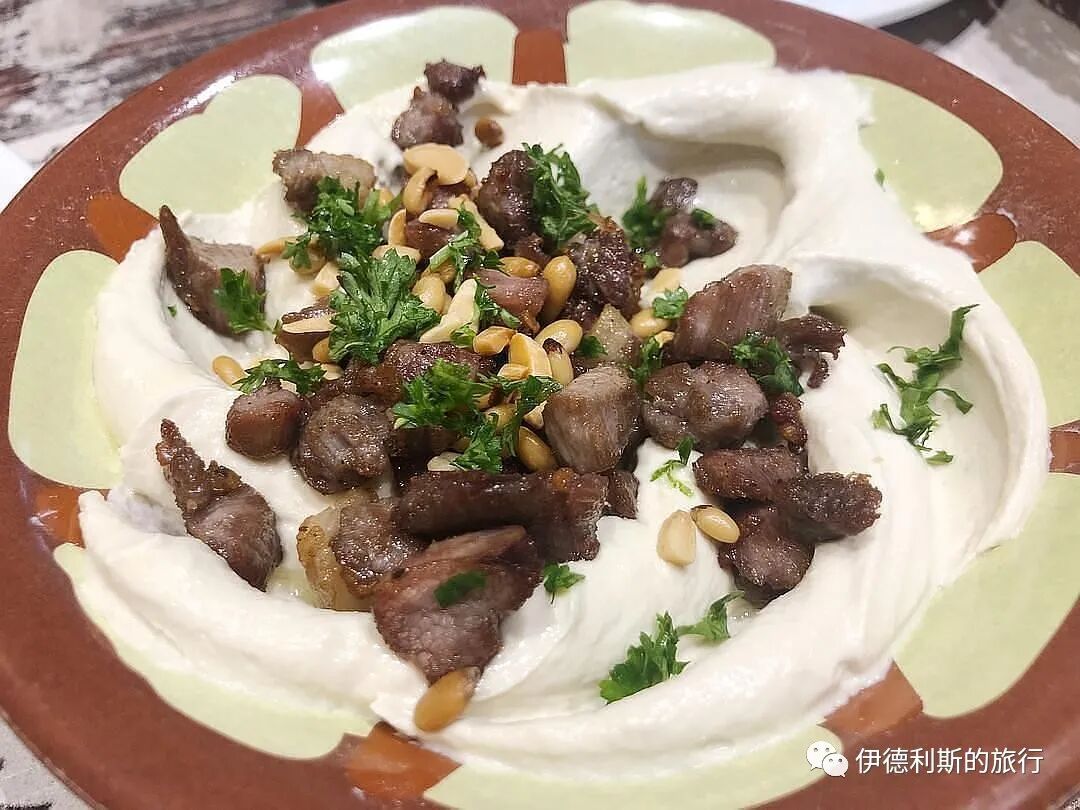
Hummus at the Arabic fast food shop Taiba:
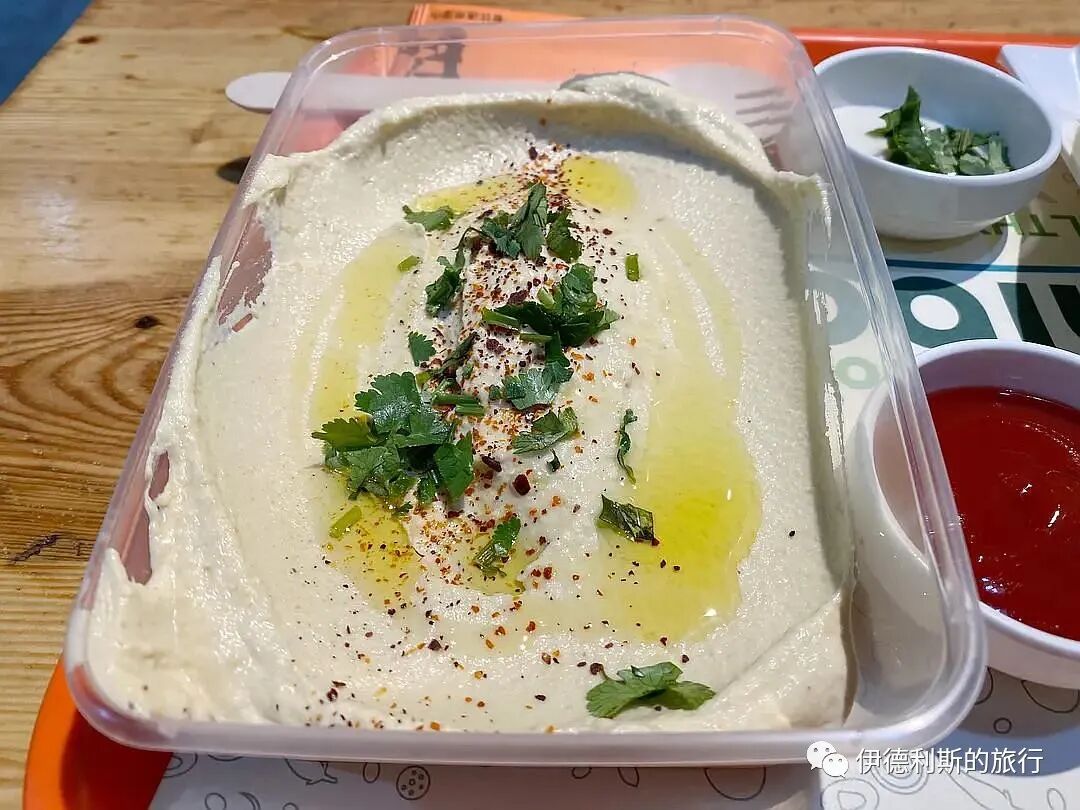
Hummus at the Turkish restaurant Xiting Xiuse:
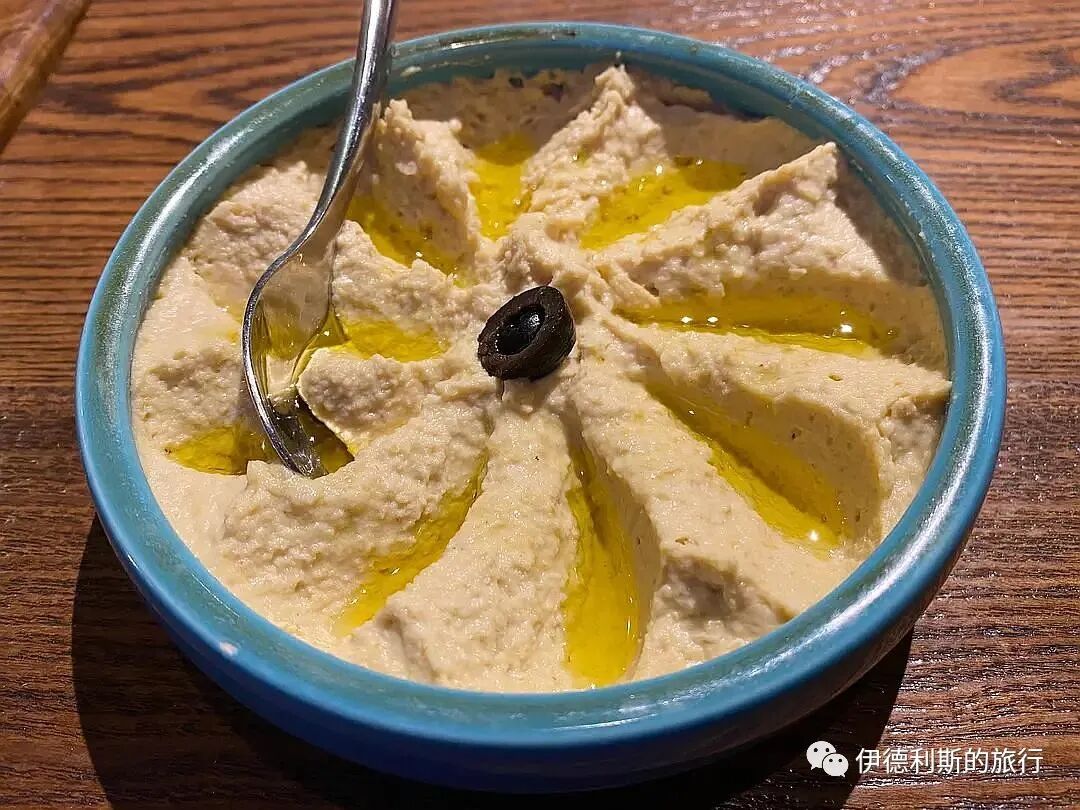
Hummus at the Turkish restaurant Kubei (in the middle):
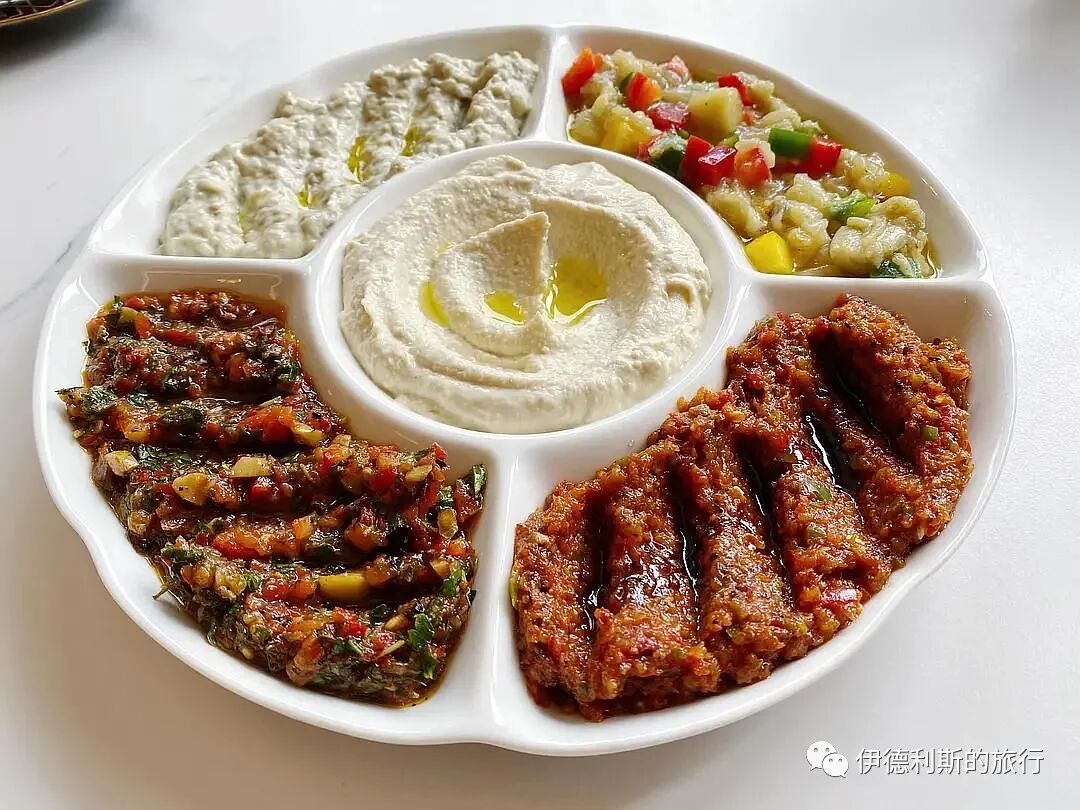
Beef hummus at the Palestinian restaurant Zayton:
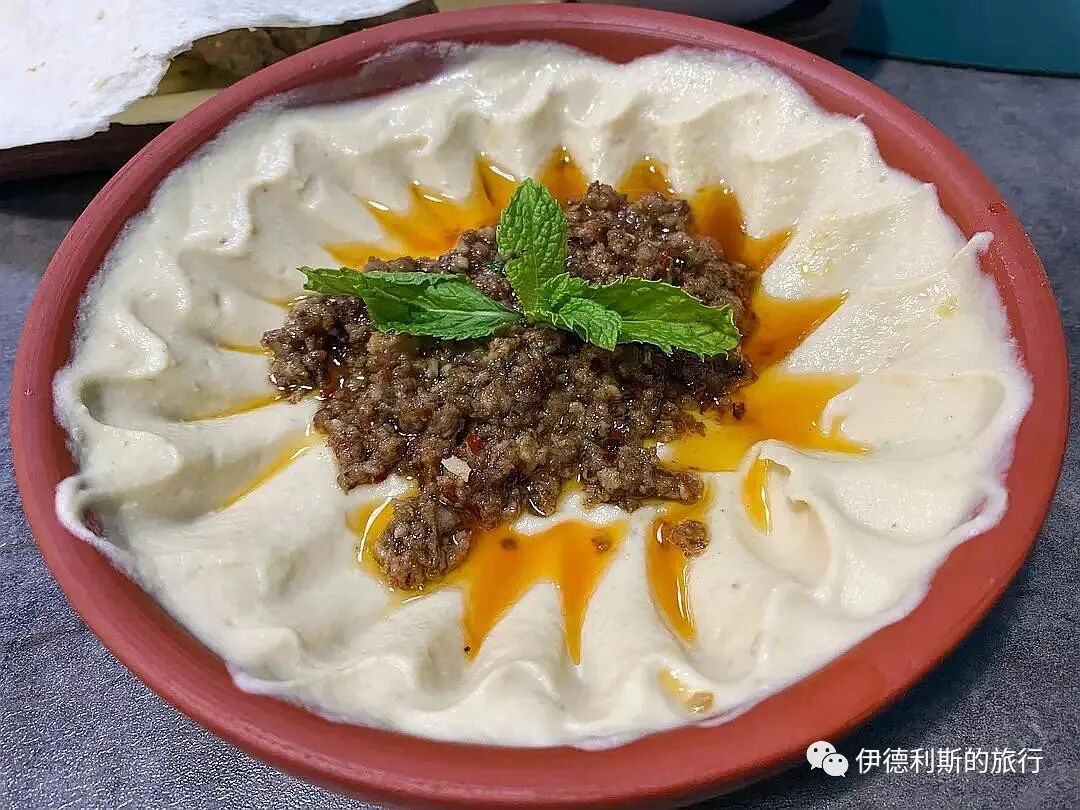
Pine nut hummus at the Syrian restaurant One Thousand and One Nights:
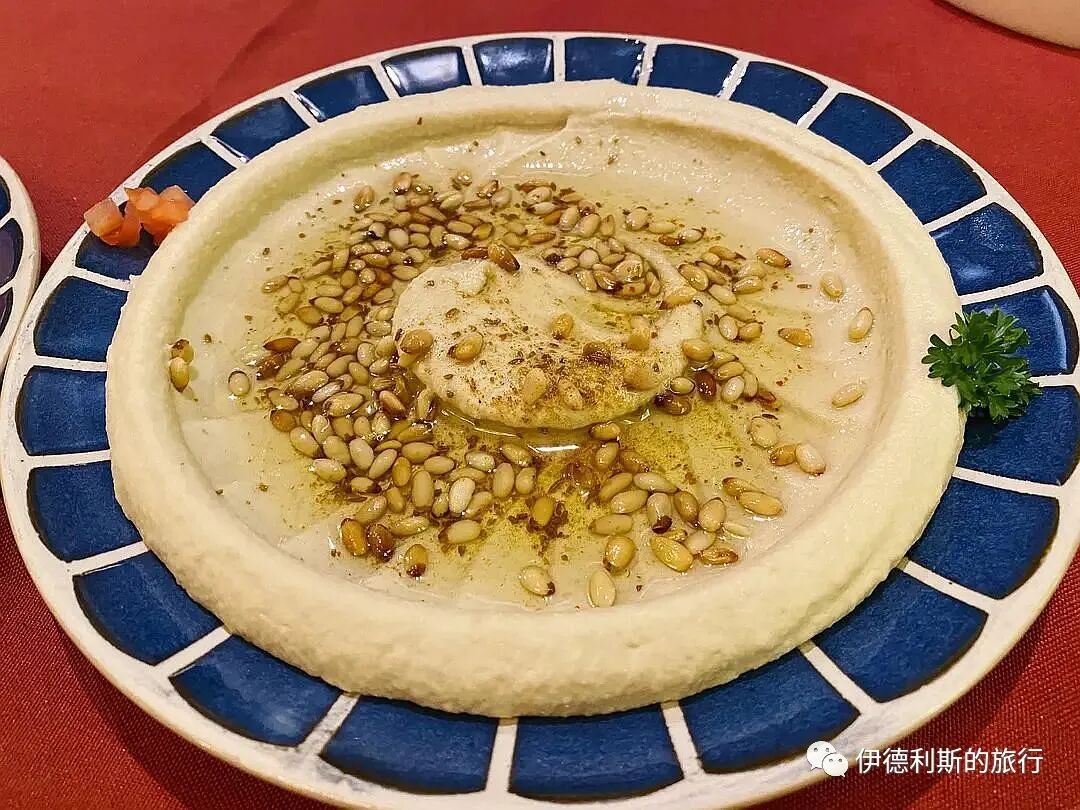
Eggplant dip (baba ghanoush)
To make baba ghanoush, you roast eggplant until soft, mash it, and add olive oil and lemon juice. Sometimes people also add sesame paste, onions, or tomatoes.
Baba ghanoush at the Syrian restaurant BRBR:
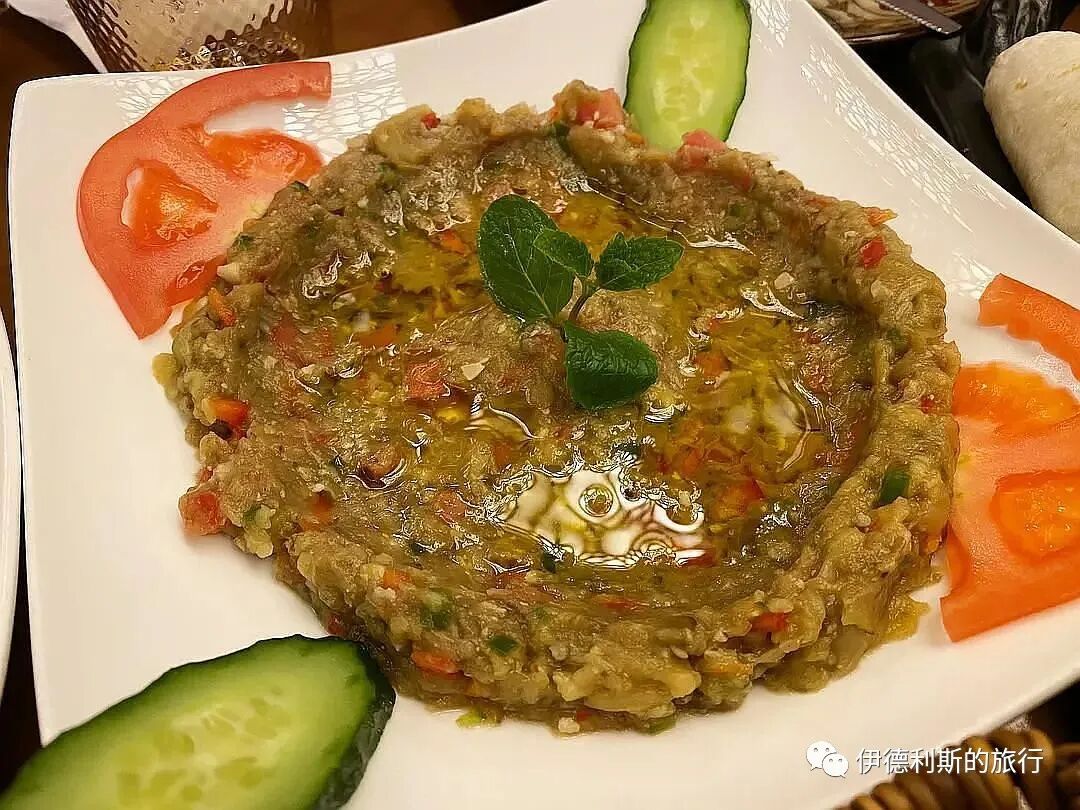
Lentil soup
Lentil soup is made from lentils and has a very long history. You can use many types of lentils for lentil soup, including green, brown, red, yellow, and black lentils. Genesis chapter 25 mentions, "Then Jacob gave Esau bread and pottage of lentils; and he did eat and drink, and rose up, and went his way." This refers to red lentil soup.
Lentil soup at the Lebanese restaurant Al Ameen:
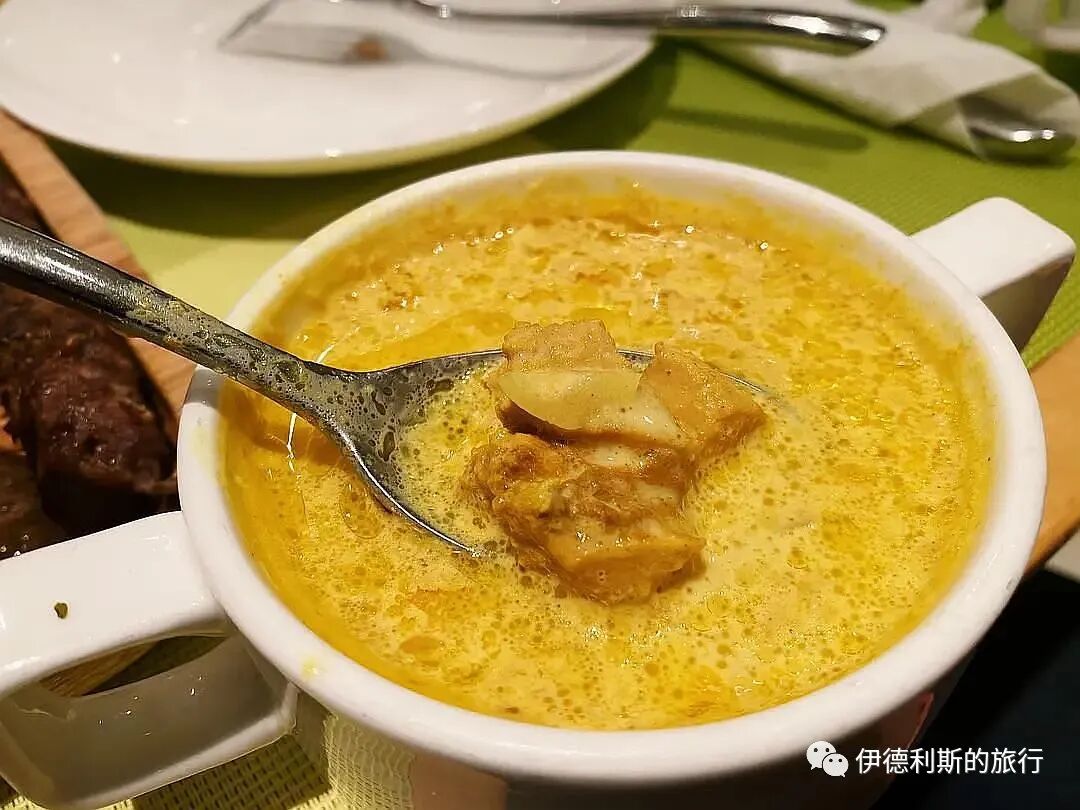
Lentil soup at the Arabic fast food shop Taiba:
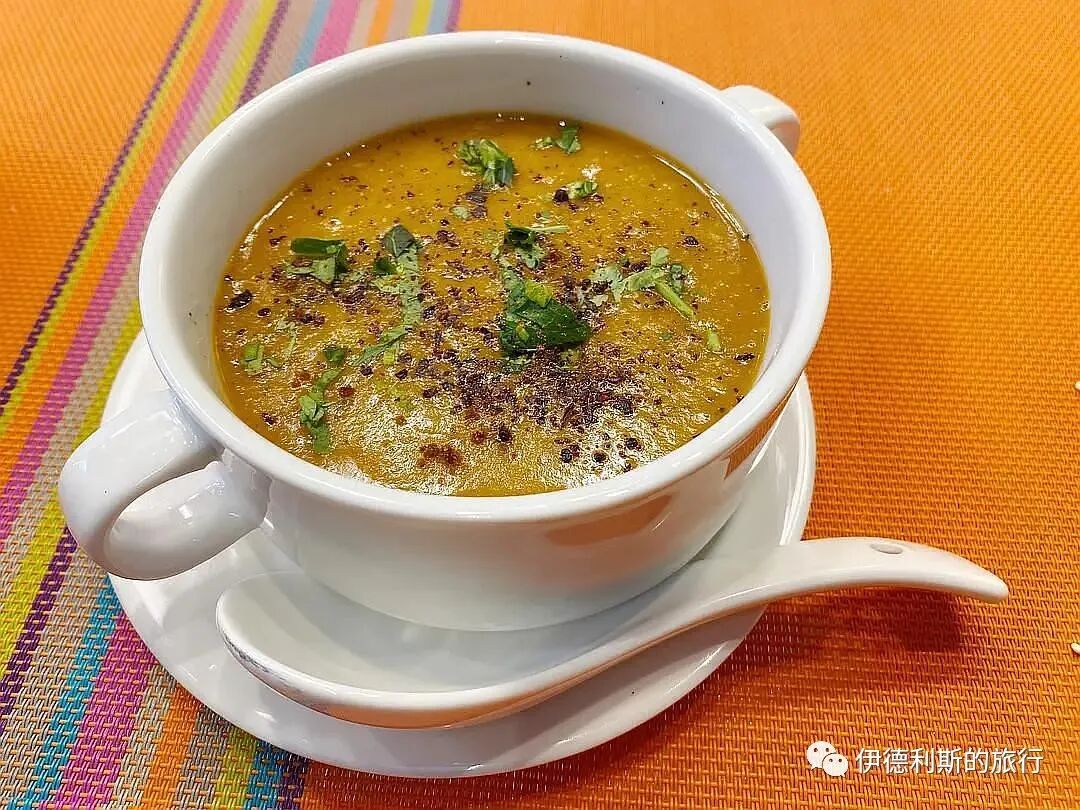
Lentil soup at the Syrian restaurant BRBR:
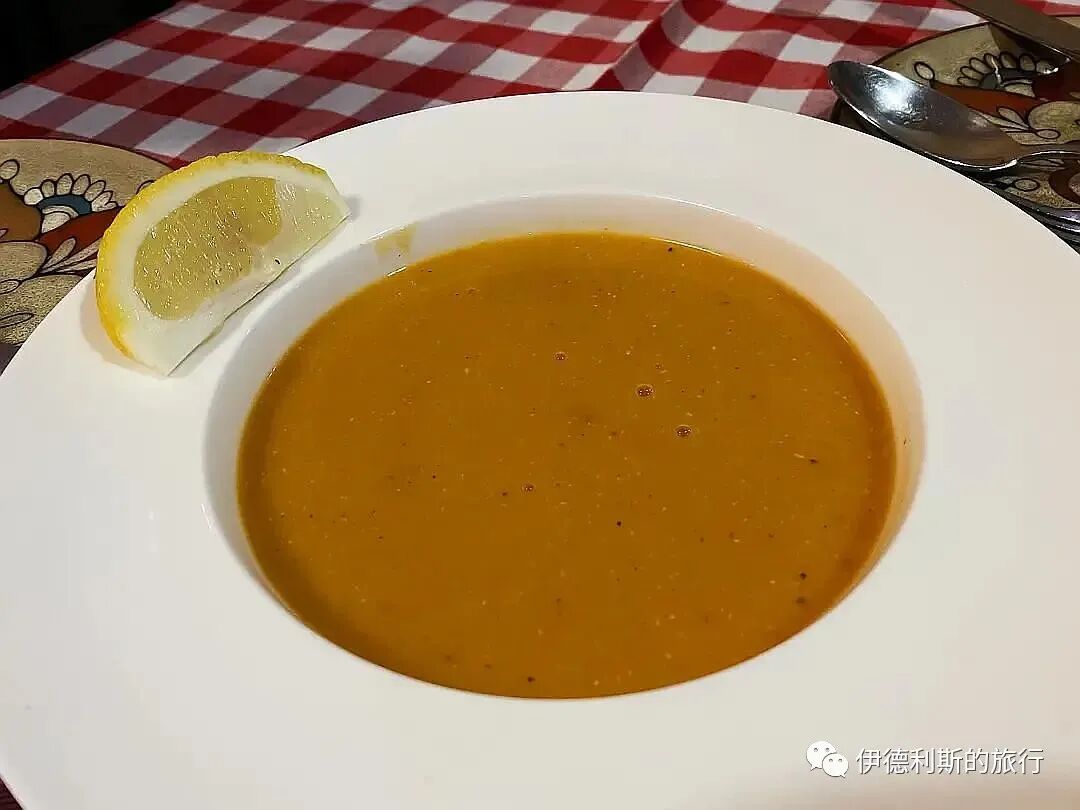
Lentil and wheat grain soup at a Turkish mother's home:
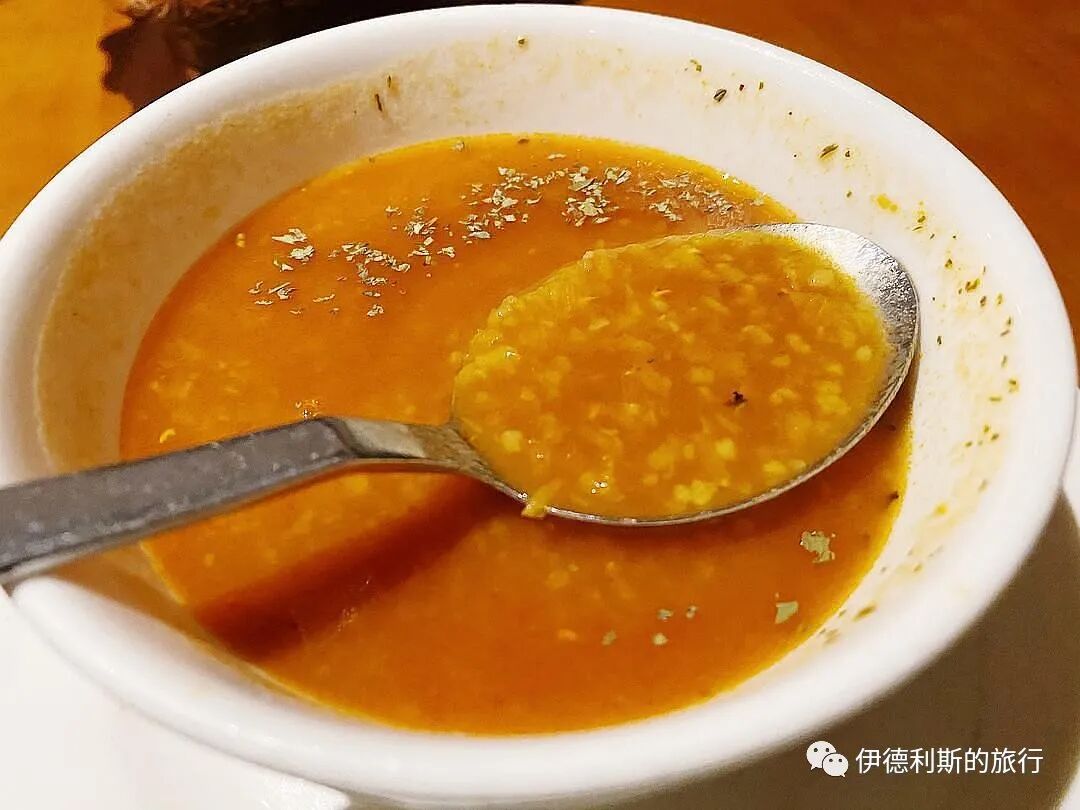
Lentil soup at the Turkish restaurant Rumi's Secret:
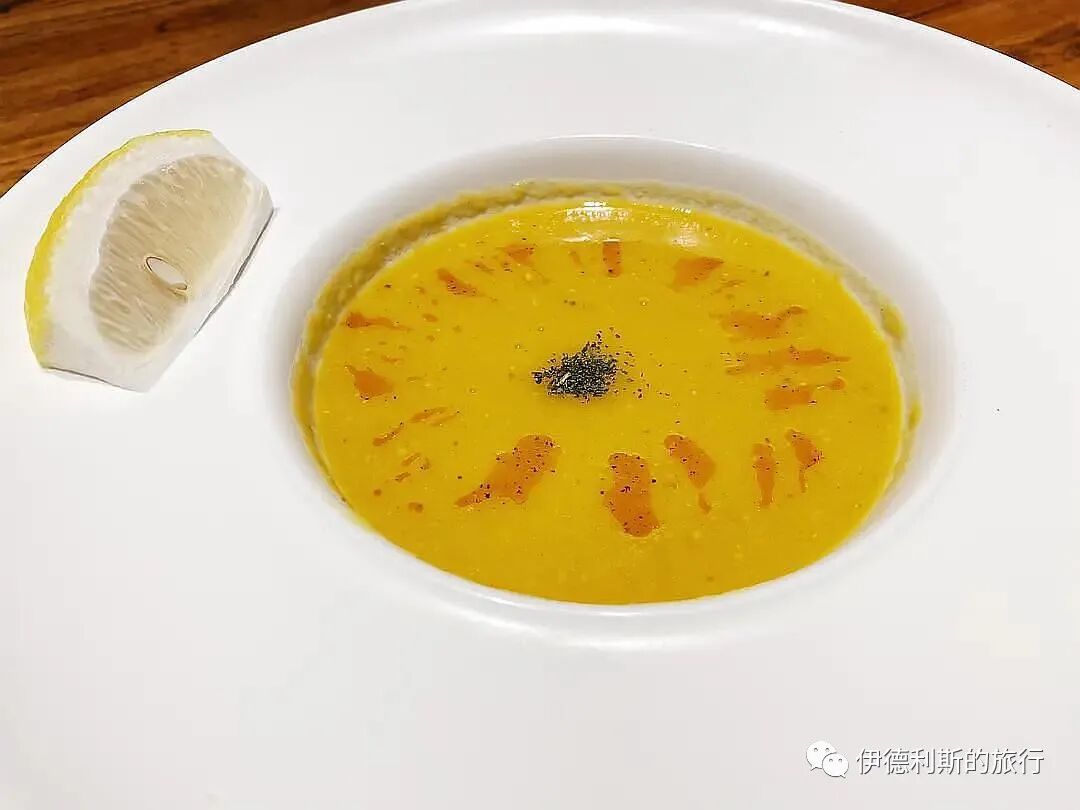
Lentil soup at the Turkish restaurant Xiting Xiuse:
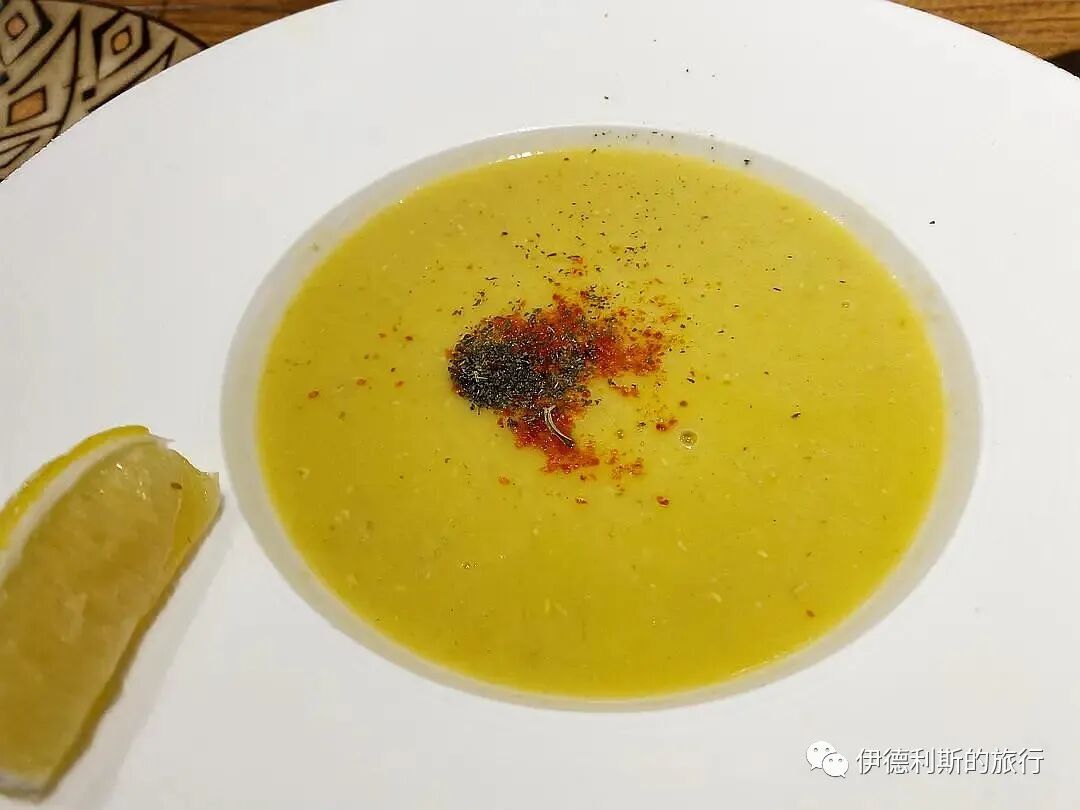
Lentil soup at the Azerbaijani/Turkish restaurant Doner & Kebab:
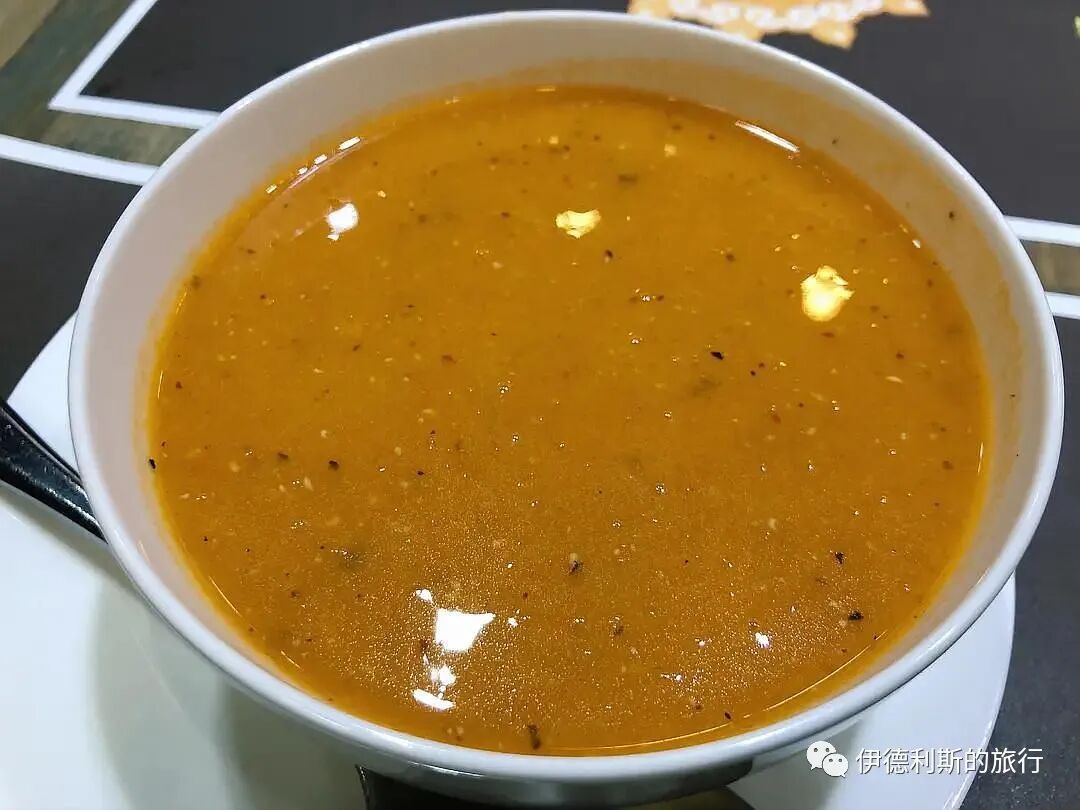
Kofta meatballs
The word kofta comes from the Persian word "kufte," which means "ground meat." Kofta recipes appeared in early Arabic cookbooks, originally as large lamb meatballs with saffron and egg yolk.
Kofta meatball soup at the Syrian restaurant One Thousand and One Nights:
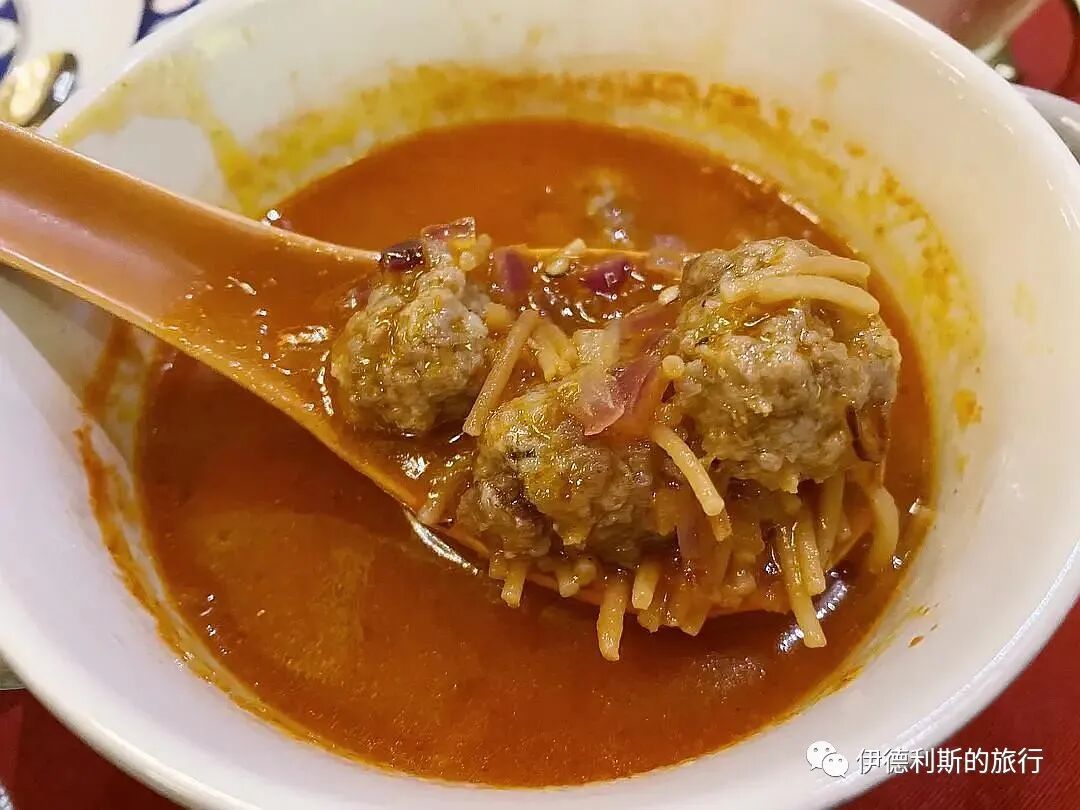
2. Maghreb Chapter (Tunisia)
Harira bean soup
Harira bean soup is a classic appetizer in the Maghreb region (Algeria, Libya, Mauritania, Morocco, and Tunisia). It is most commonly made for breaking the fast during Ramadan. Every region makes Harira differently. The version we had included tomatoes, lentils, chickpeas, lamb, and various spices.
Harira bean soup at the Tunisian restaurant La Medina:
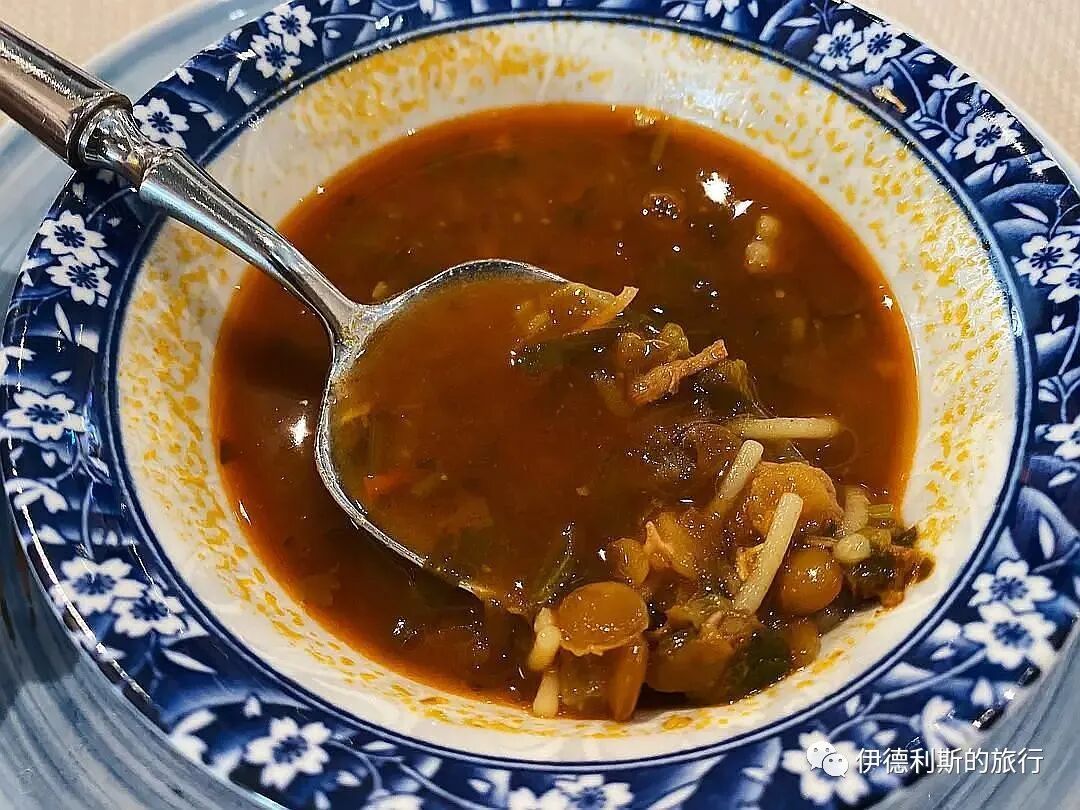
Brik pastry
Brik pastry is a North African Berber dish that was later brought to Israel by Tunisian Jews. The filling usually contains eggs, tuna, harissa sauce (Harissa), and parsley. It is then wrapped in a crispy dough called Malsouka or Warka and deep-fried.
Brik pastry at the Tunisian restaurant La Medina:
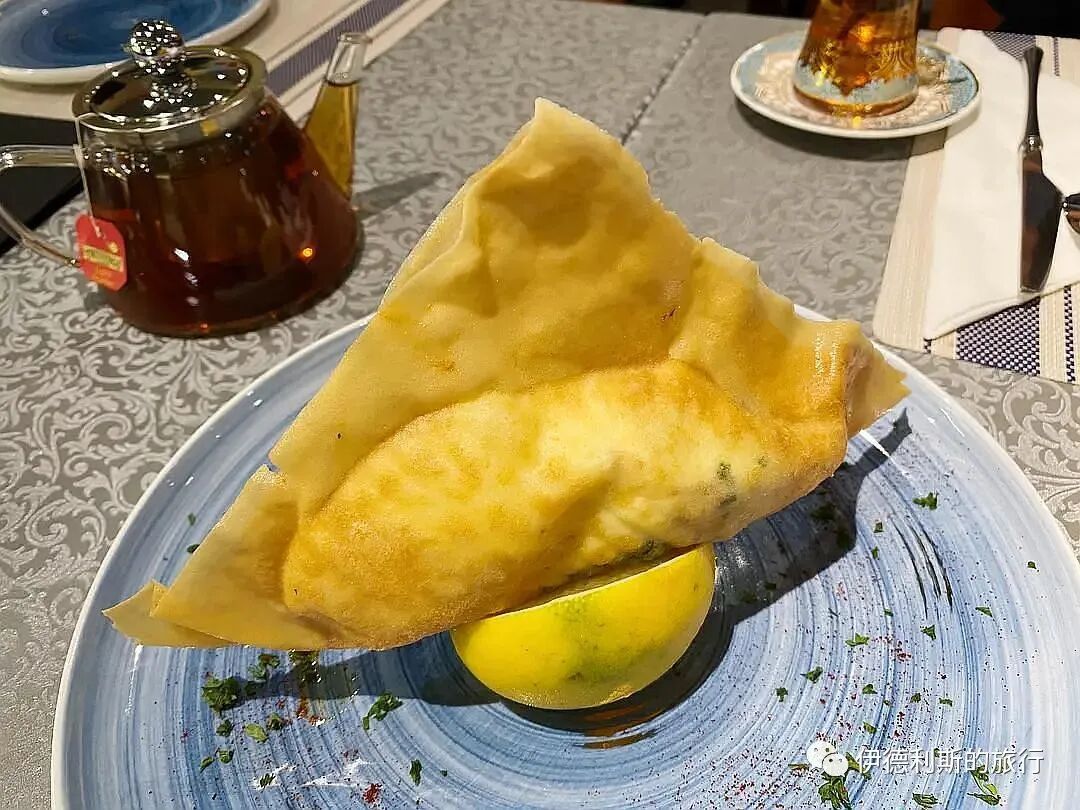
Couscous
Couscous (Couscous) is a staple of Berber cuisine. It is made by rubbing semolina into millet-sized grains and then drying them in the sun. Couscous was first seen in North Africa between the 11th and 13th centuries. The famous 13th-century Andalusian scholar and gourmet Ibn Razin al-Tuyibi first recorded the method for making couscous in his book, The Andalusian Cookbook.
Couscous at the Tunisian restaurant La Medina:
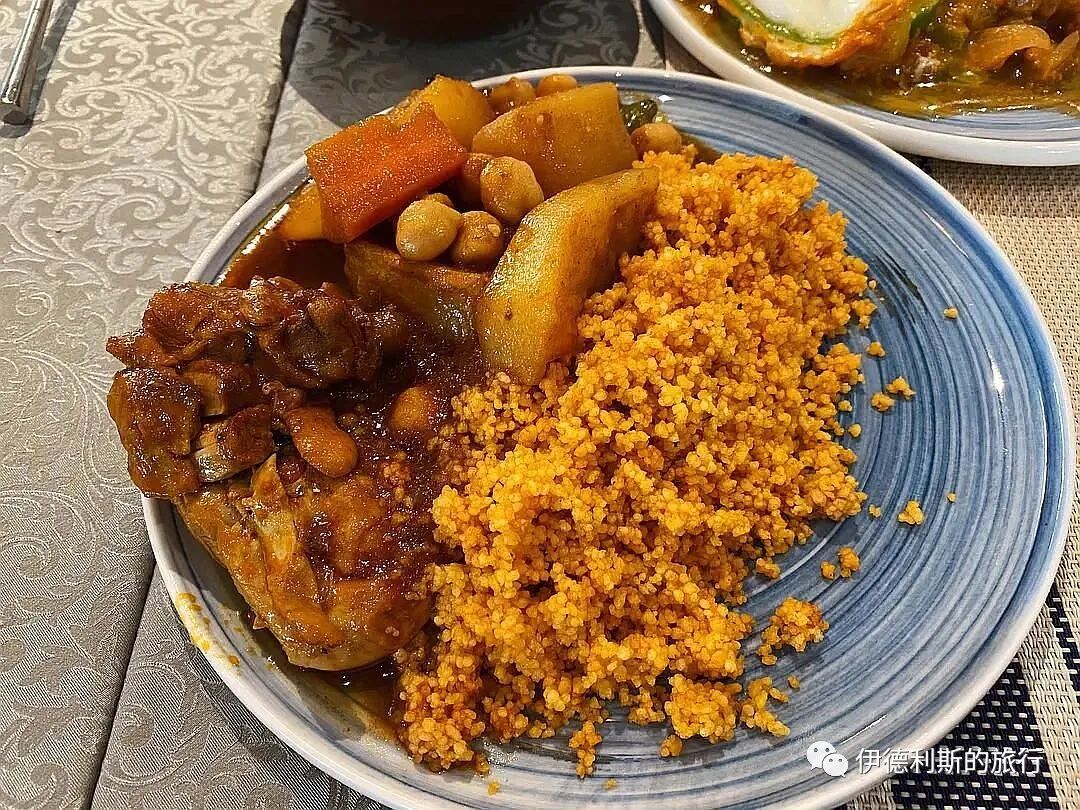
North African sausage (merguez)
North African sausage (Merguez) is made with lamb and beef, mixed with cumin, harissa sauce, chili, and other spices. It is usually grilled. Merguez sausage was first seen in the 12th century in Andalusia, which was southern Spain under Arab rule, and later spread throughout North Africa.
North African sausage (merguez) at the Tunisian restaurant La Medina:
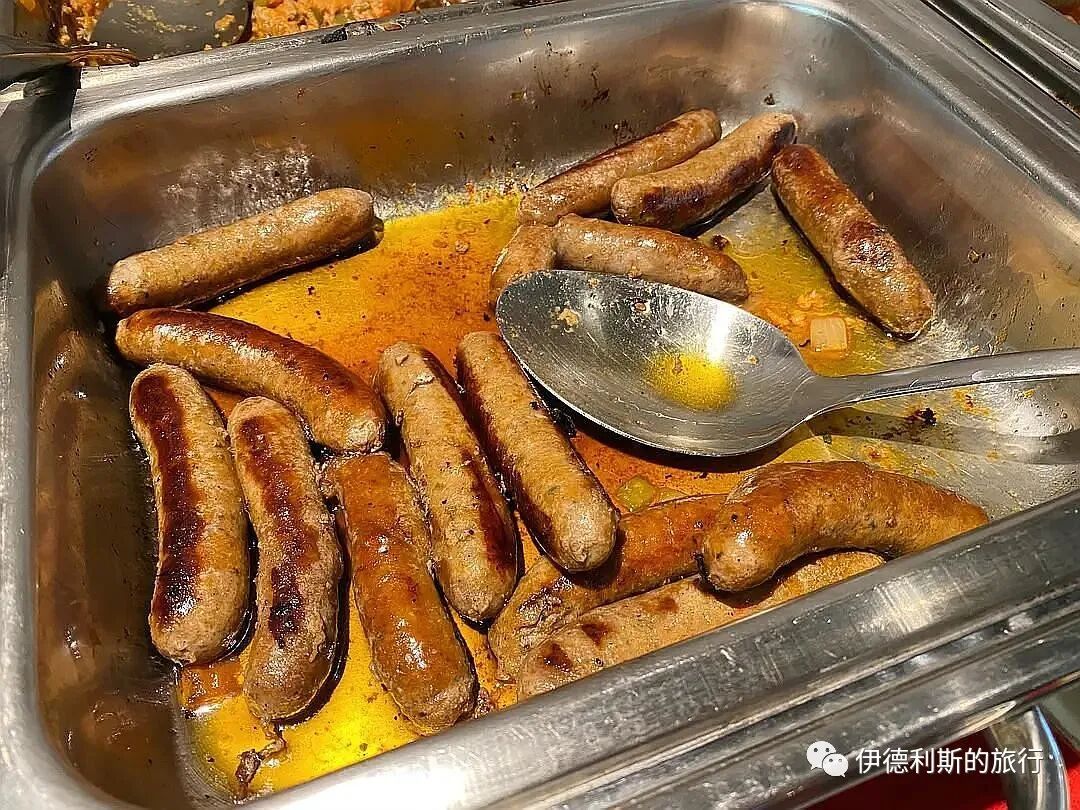
Tajine pot (tajine)
The tagine (Tajine) is a North African Berber specialty that appeared in the 9th-century classic One Thousand and One Nights. Modern tagines are made of pottery, sometimes glazed. They have a round, flat bottom and a conical or domed top. This design allows evaporated steam to return to the bottom, and water can be added through a hole in the lid.
Tajine at the Tunisian restaurant La Medina:
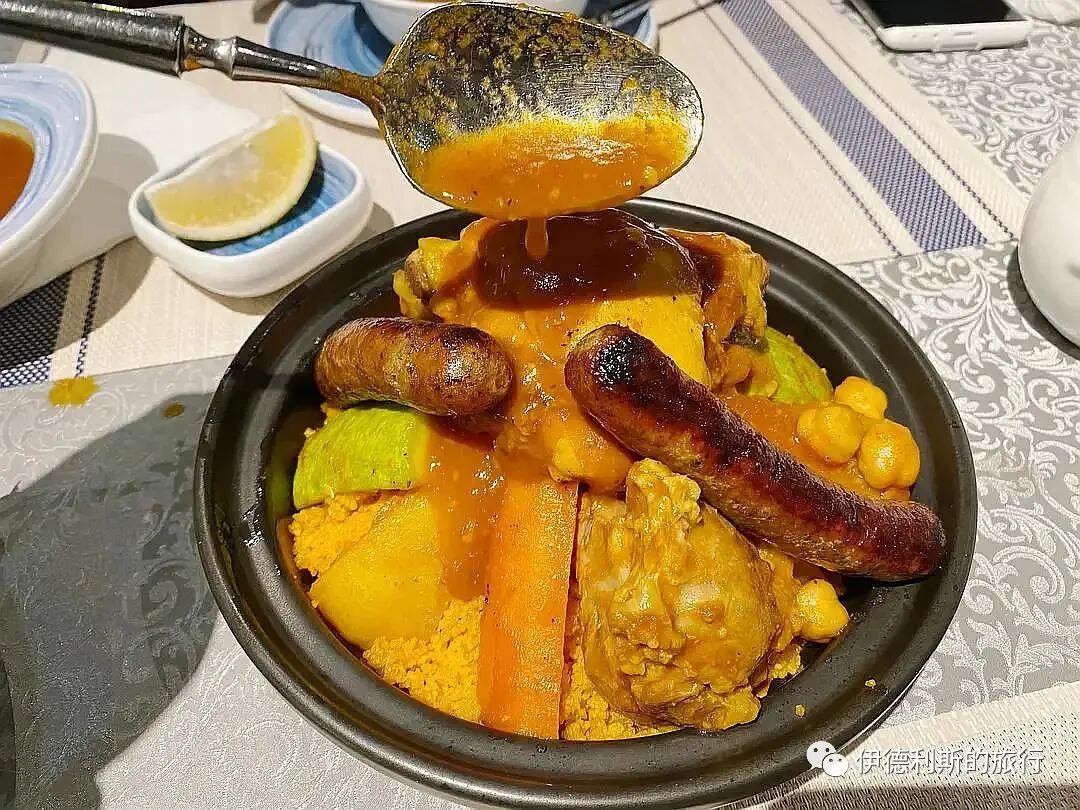
3. Turkey Chapter
Pide pizza
Pide may come from the ancient Greek word "pítta" and refers to three types of bread in Turkey. One is a flatbread similar to Arabic pita, one is a soft leavened bread served during Ramadan, and the third is a large boat-shaped pizza. To make Pide pizza, you put various cheeses and meats on dough and bake it in an oven.
Lamb and cheese Pide at Dardanelles:
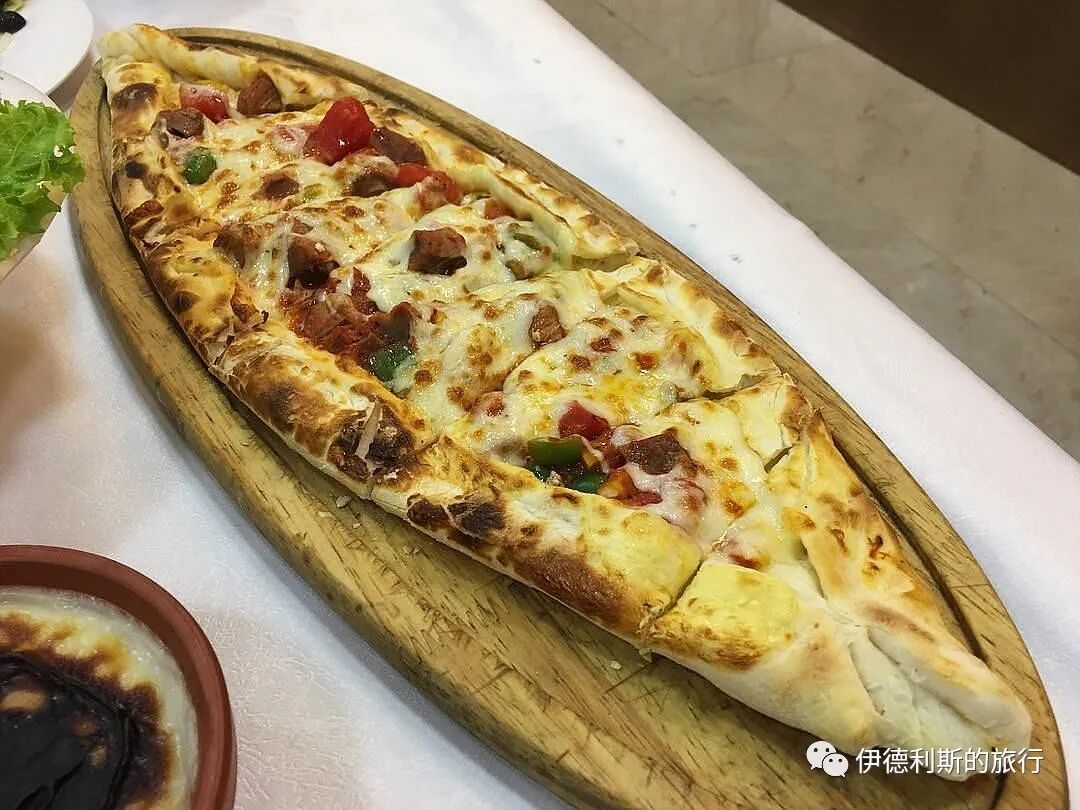
Three-topping Pide with cheese, meat, and vegetables at Rumi's Secret:
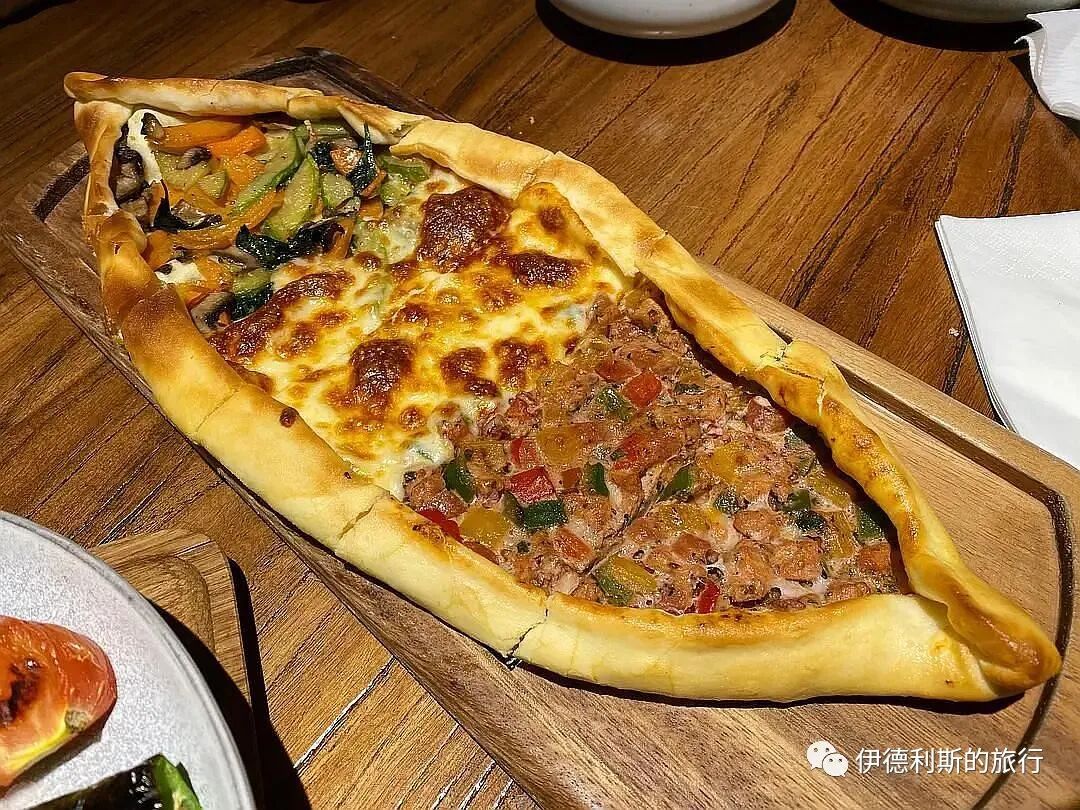
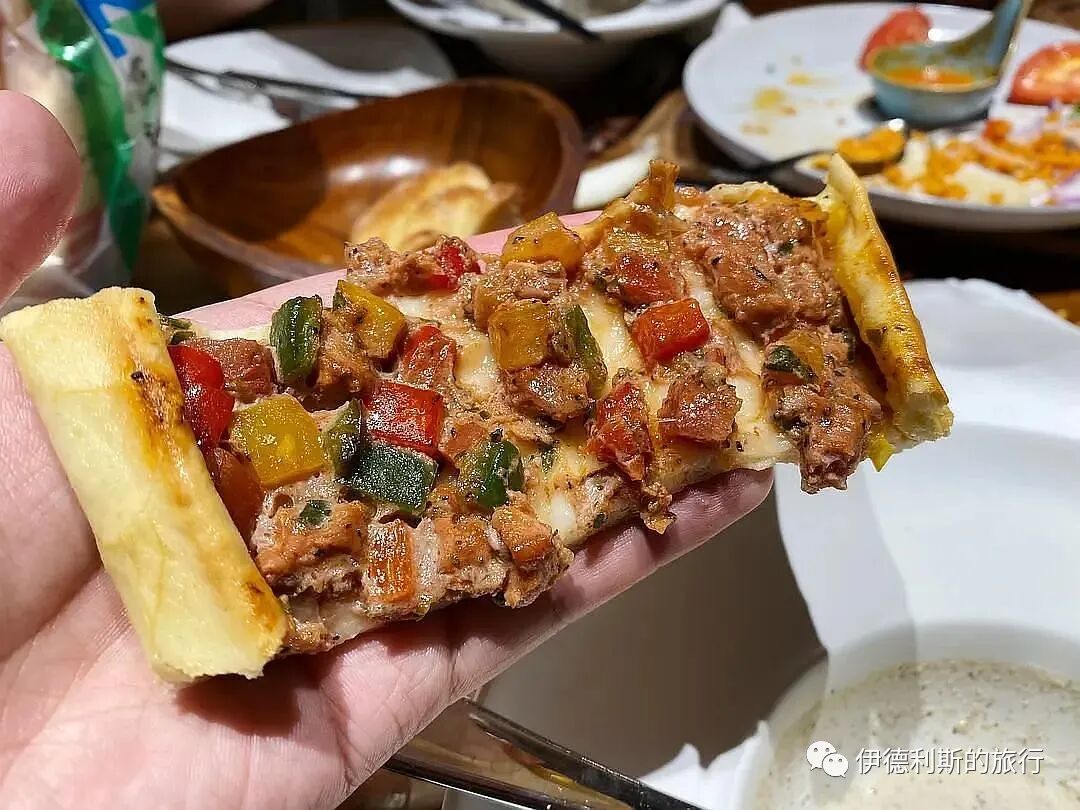
Spinach Pide at Xiting Xiuse during Ramadan:
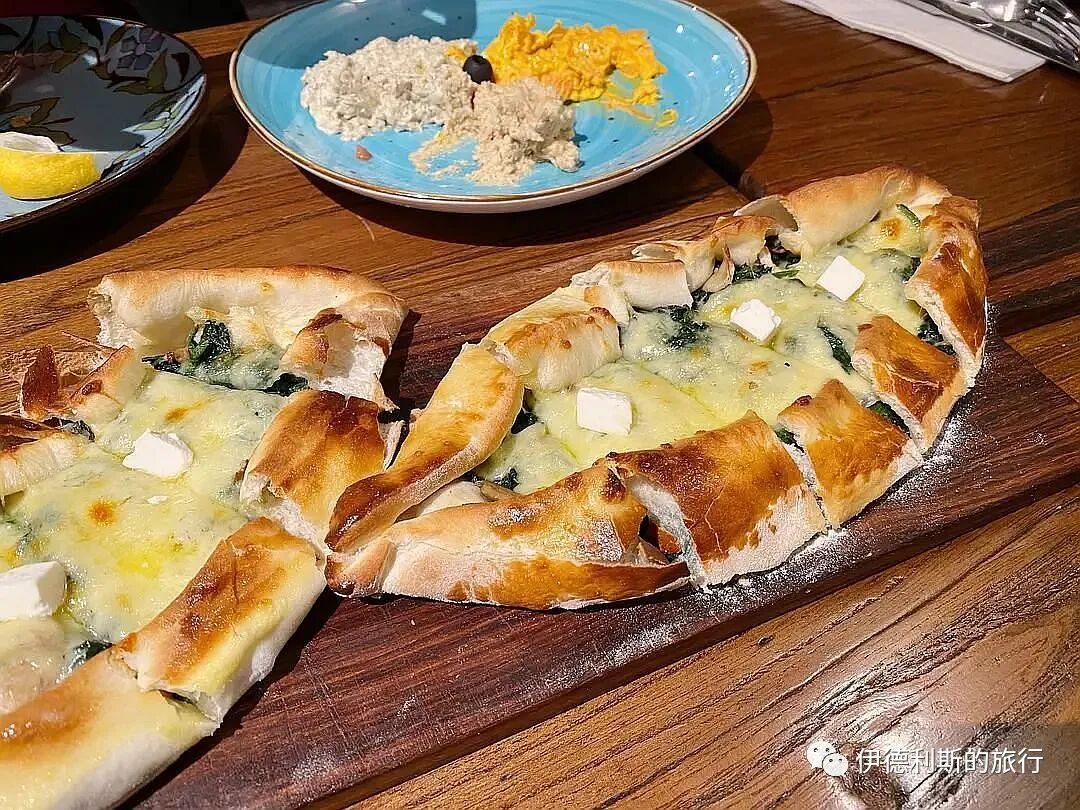
Beef and cheese Pide at Xiting Xiuse:
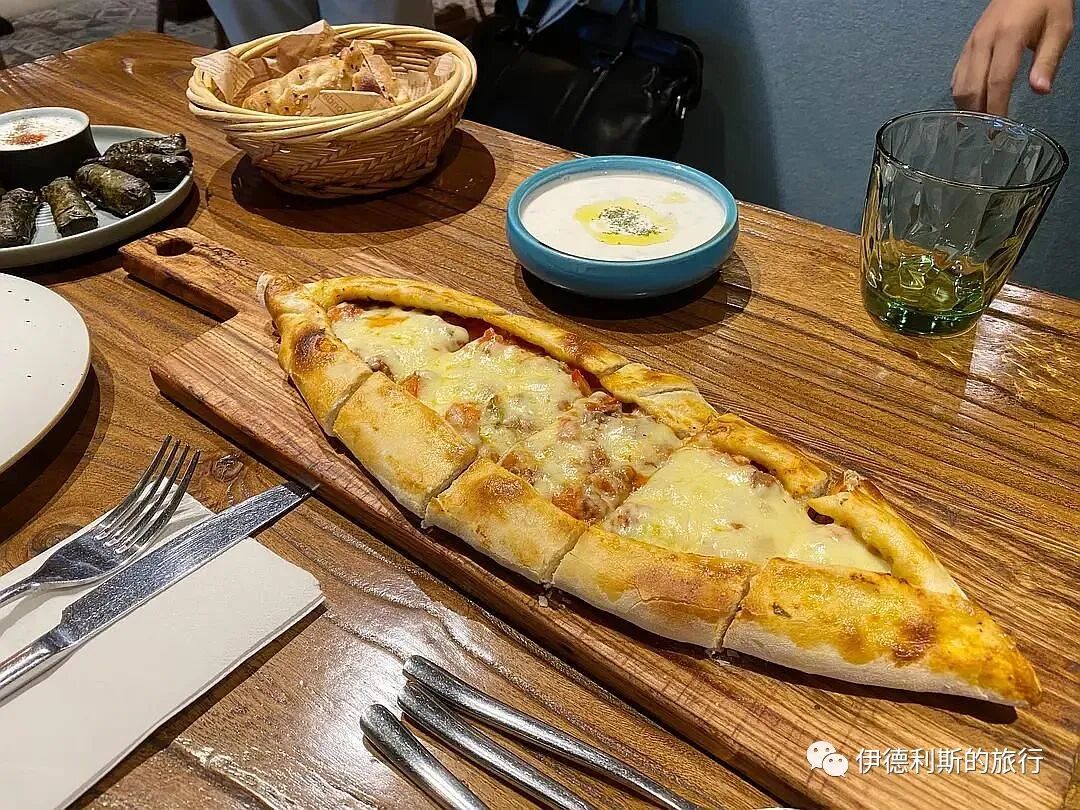
Assorted Pide at Desert Rose:
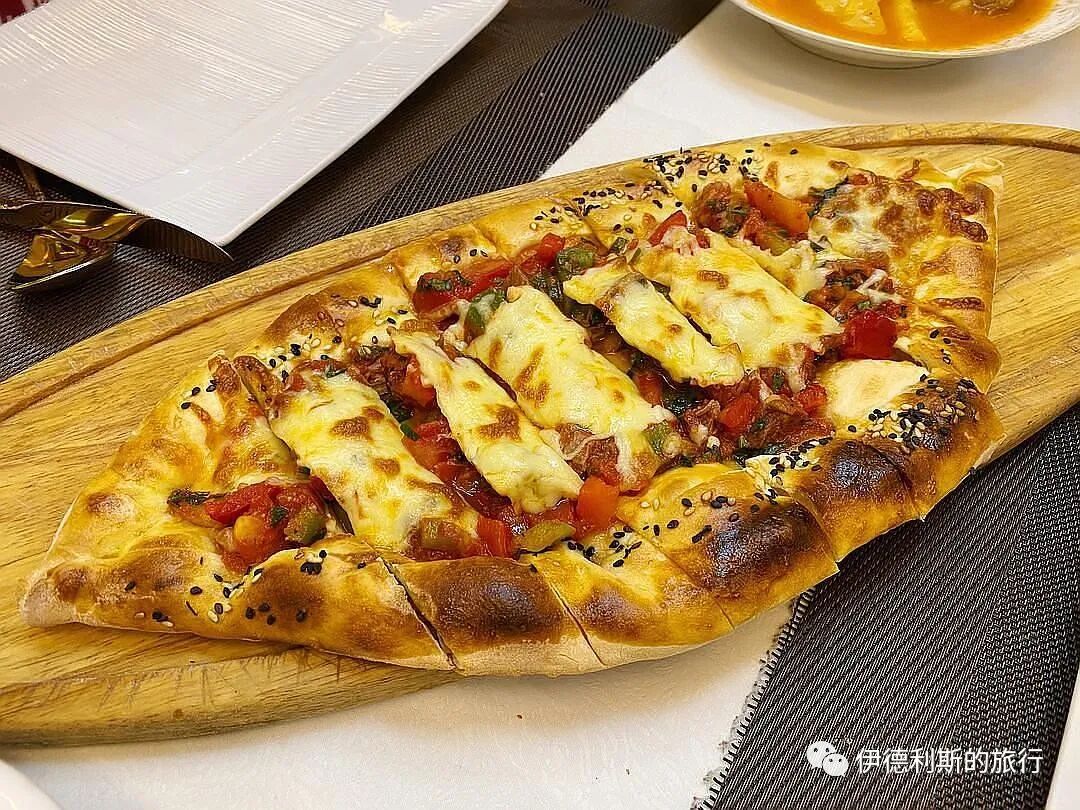
Double cheese Pide at Kubei:
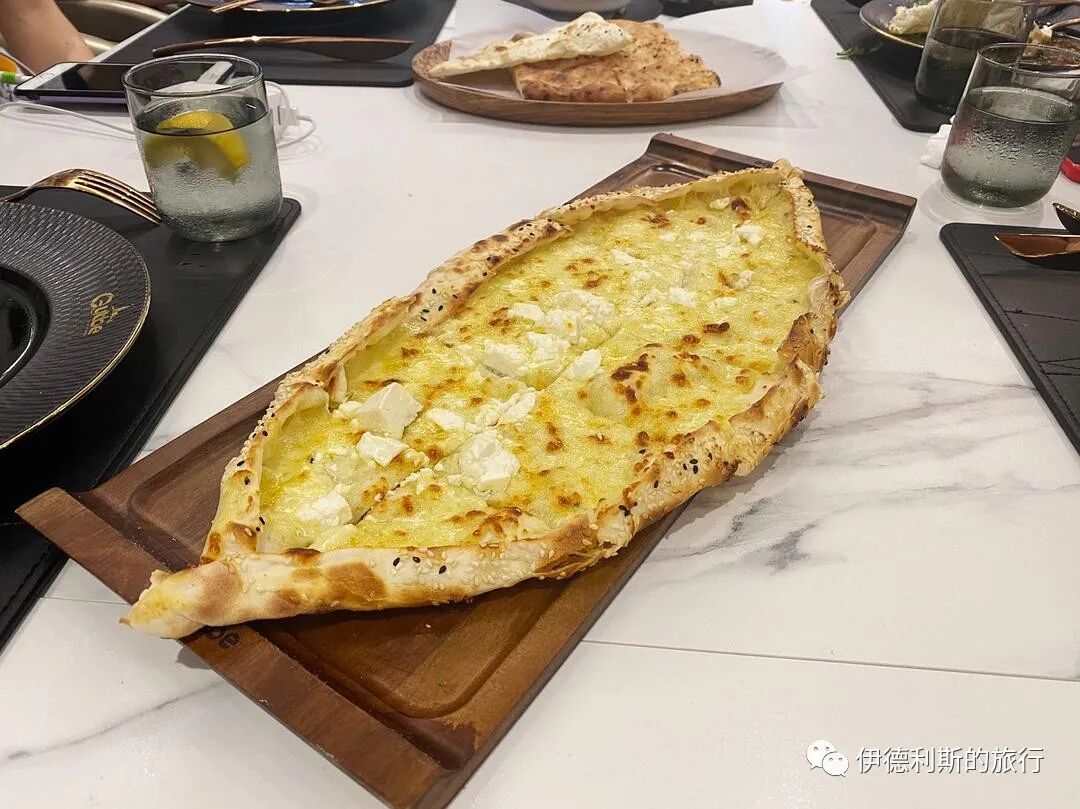
Mevlana meat Pide at Kubei:
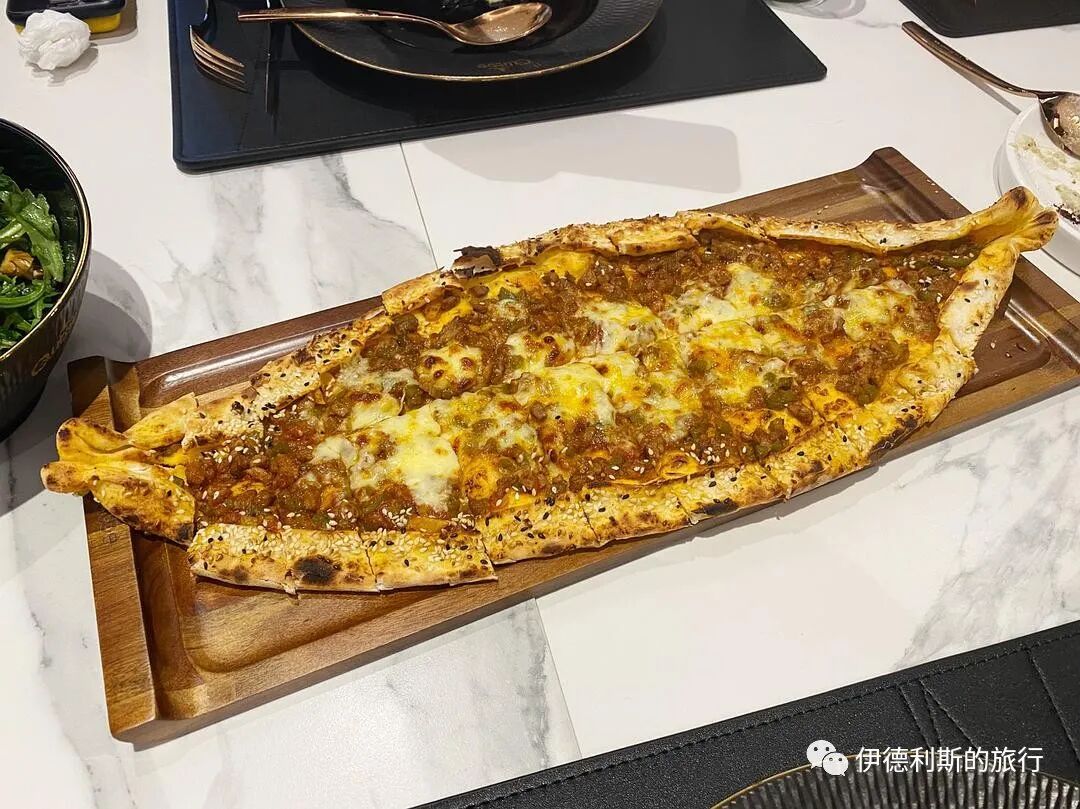
Sultan's Delight (Hünkar Beğendi)
Sultan's Delight (Hünkar Beğendi) is a dish that started in the Ottoman palace. It uses rich lamb stew served over creamy roasted eggplant puree and is quite rare in Beijing.
Sultan's Delight at Turkish Mom:
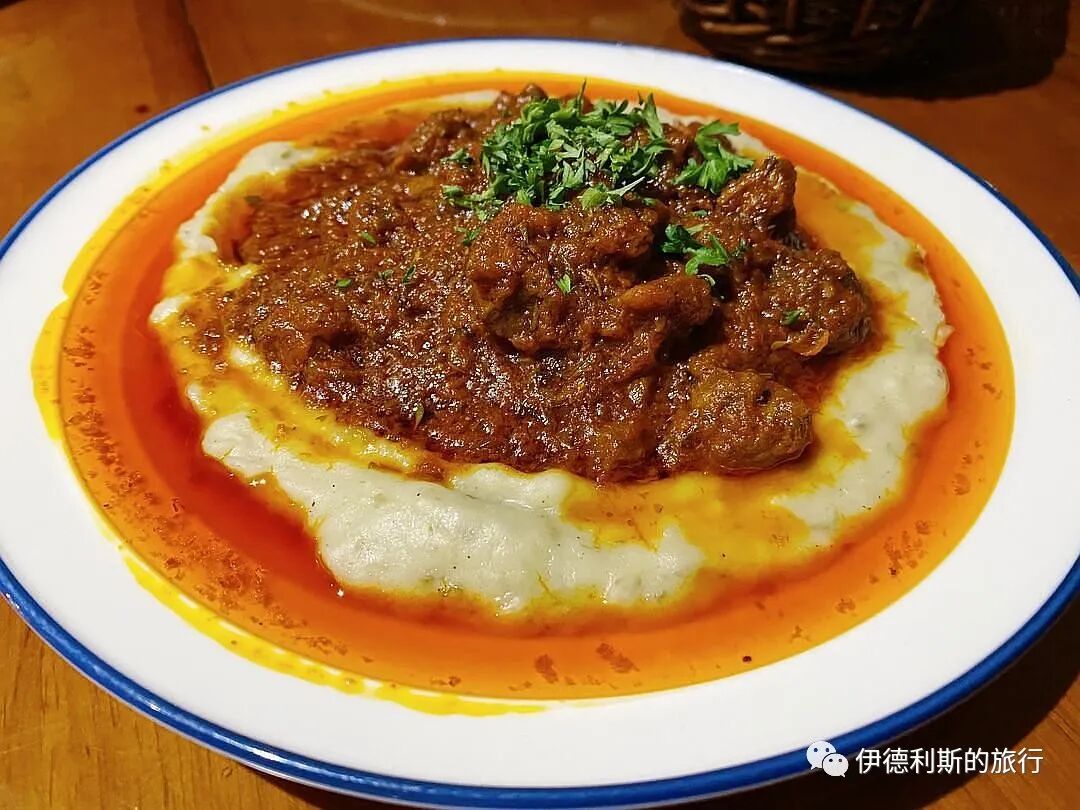
Beef sausage fried eggs (Sucuklu yumurta)
The "Sujuk" in Sucuklu yumurta first appeared in the Compendium of the Turkic Dialects. It is made by grinding beef, adding tail fat and other fats, stuffing it into casings, tying it with string, and letting it ferment gradually.
Sucuklu yumurta at the Turkish/Azerbaijani restaurant Xiting Xiuse:
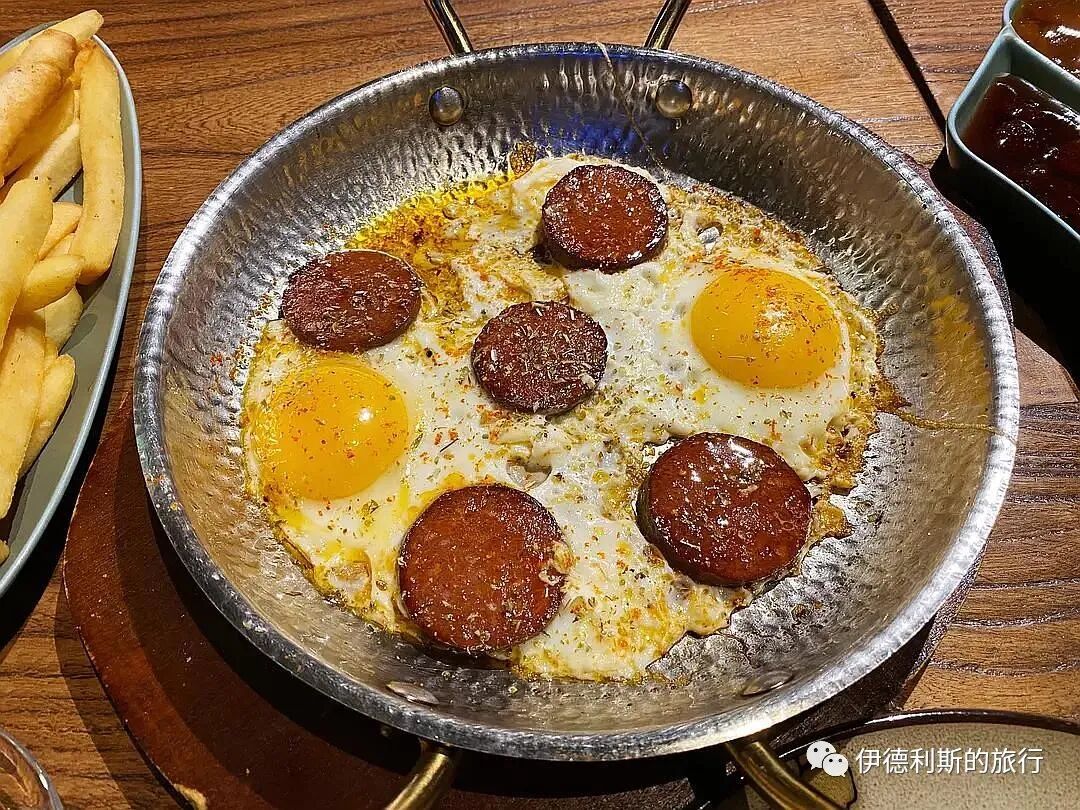
Pottery kebab (Testi kebabı)
Testi kebabı is a popular way of eating in central Anatolia and the west-central Black Sea region. You put beef, mushrooms, tomatoes, and shallots into a clay pot, seal the opening with bread, and slow-cook it in an oven. After the stew is ready, sear it in butter on an iron plate. Then, crack open the clay pot and toss the bread and the stew inside onto the plate. The aroma is incredible!
Sucuklu yumurta at the Turkish/Azerbaijani restaurant Xiting Xiuse:
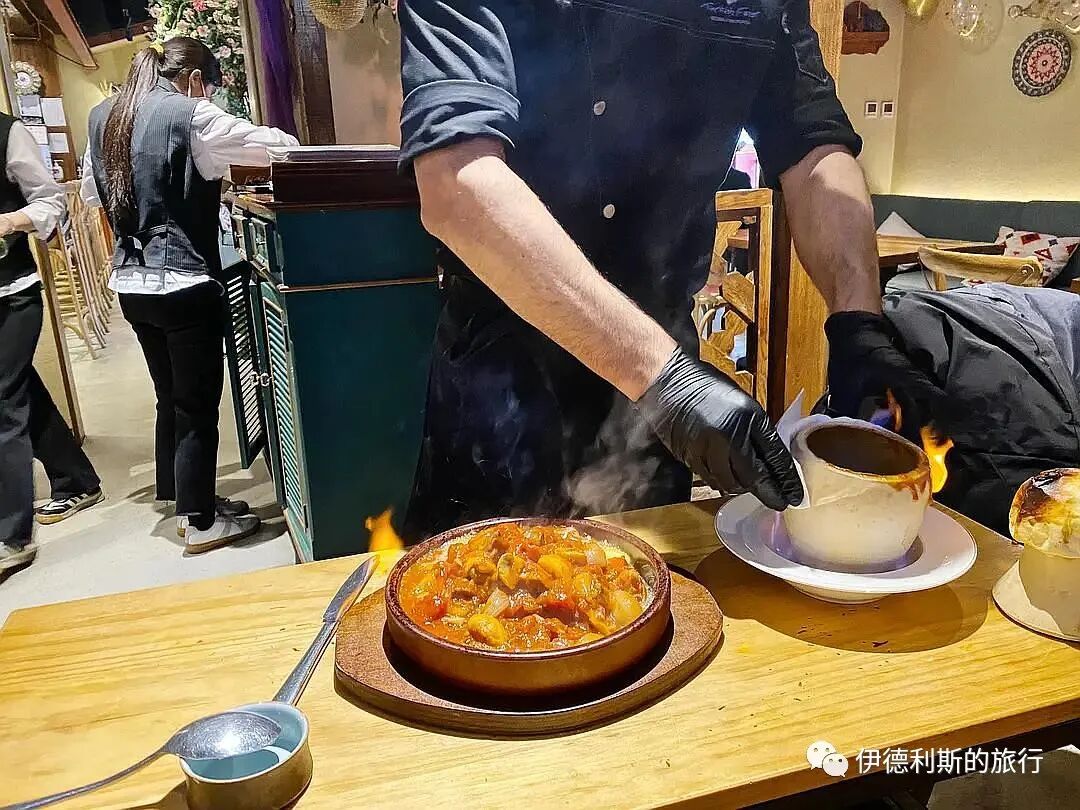
Simit bagel
The earliest record of the simit bagel in Istanbul dates back to 1525. According to the famous 17th-century Ottoman traveler Evliya Celebi, there were 70 simit bakeries in Istanbul in the 1630s.
Simit at the Turkish restaurant Kubei:
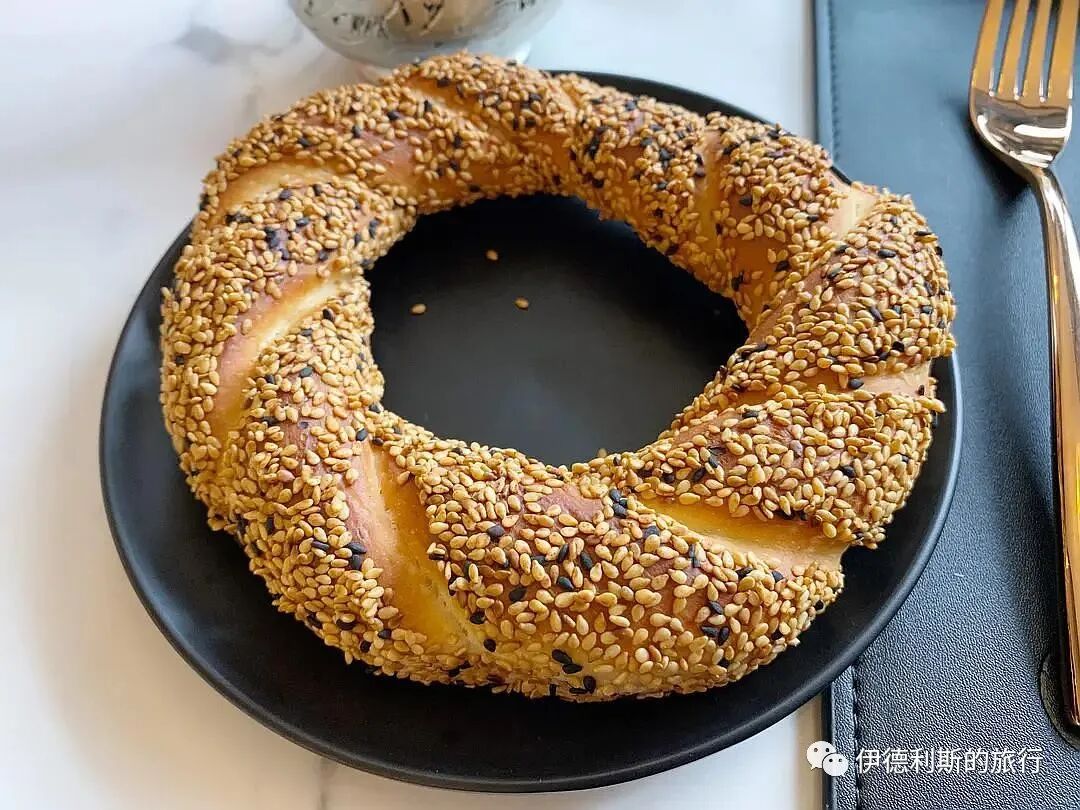
Baklava dessert
Baklava is the most famous dessert of the Ottoman Empire, developed by the royal chefs at the Topkapi Palace. On the 15th day of Ramadan each year, the Ottoman Sultan would attend a ceremony called 'Baklava Alayı' to distribute trays of Baklava to the Janissaries. Baklava is a flaky pastry made by layering very thin unleavened filo dough, filled with crushed pistachios, walnuts, syrup, or honey.
Baklava from a Turkish mom:
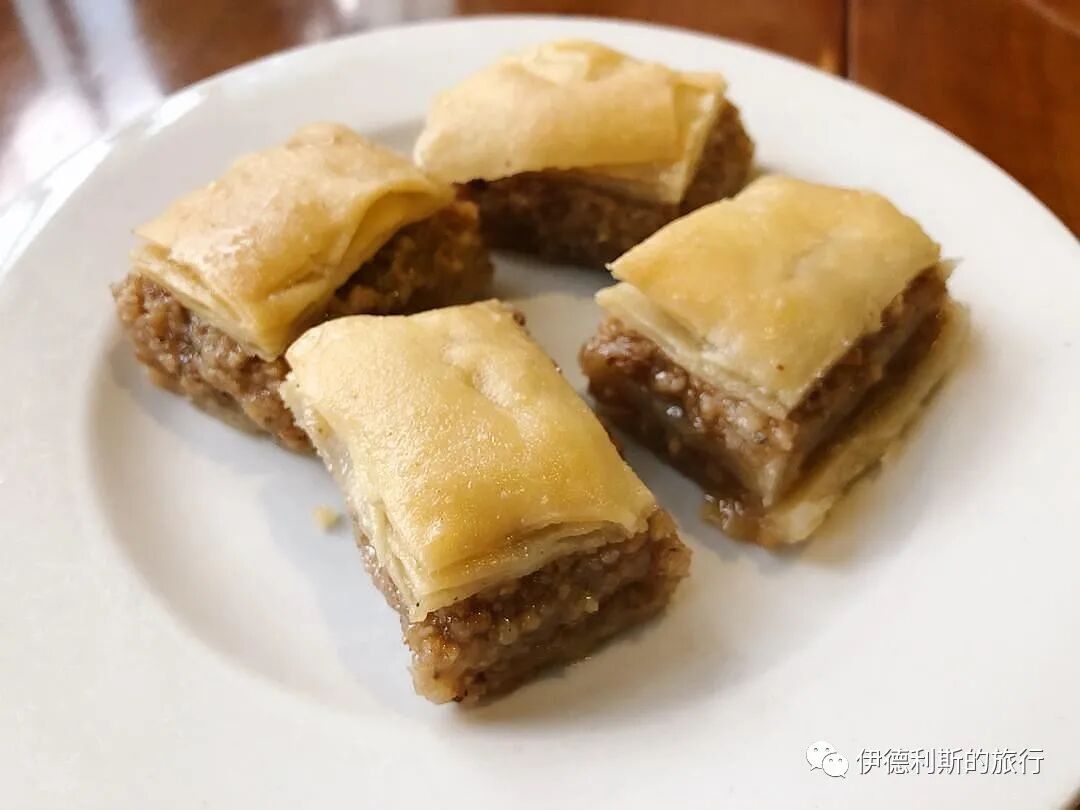
Baklava at Kubei:
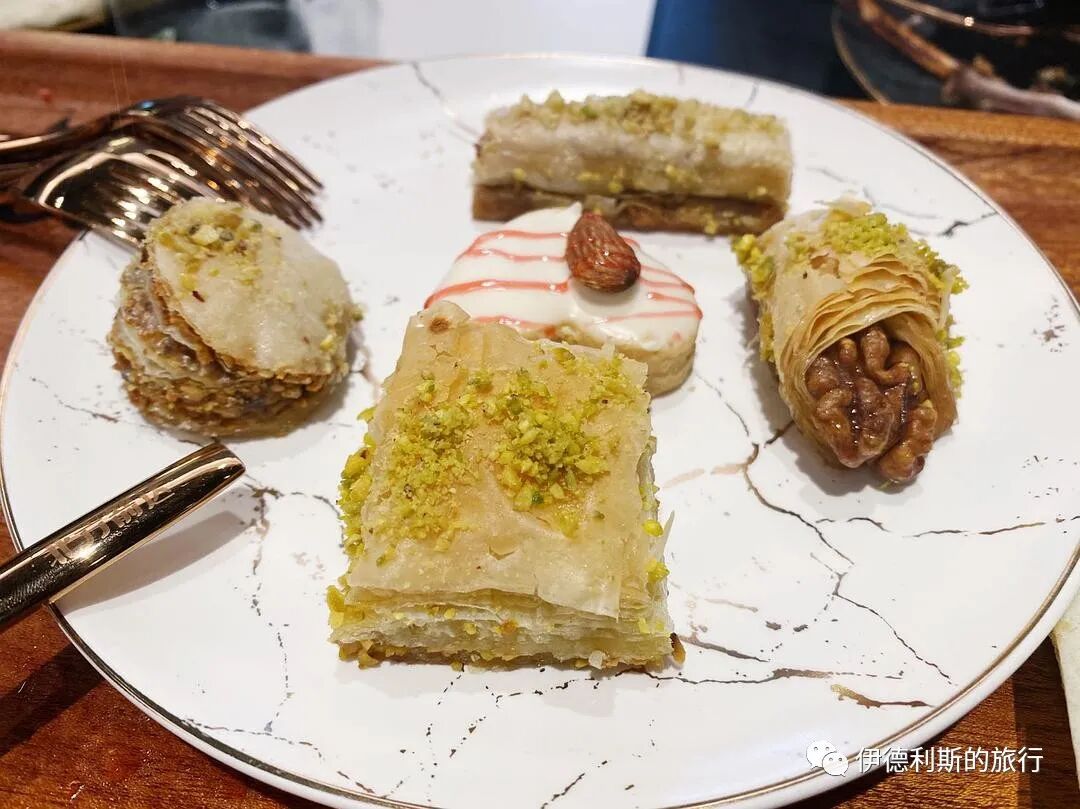
Baklava at Desert Rose:
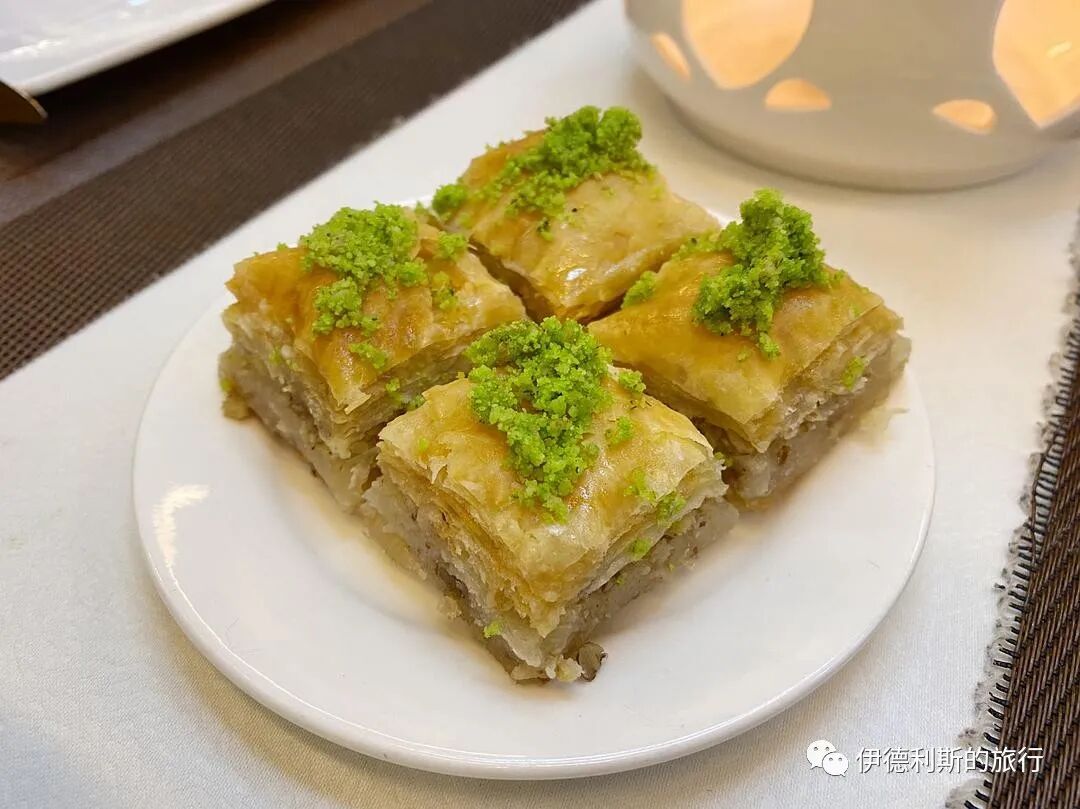
Salty yogurt drink (Ayran)
Ayran is a drink made by mixing yogurt, salt, and water. You can also add mint or carbonated water. It is perfect with grilled meat in the summer. The word Ayran comes from Turkic and first appeared in the 'Compendium of the Turkic Dialects' written by Mahmud al-Kashgari in the 1070s.
Ayran at Xiting Xiuse:
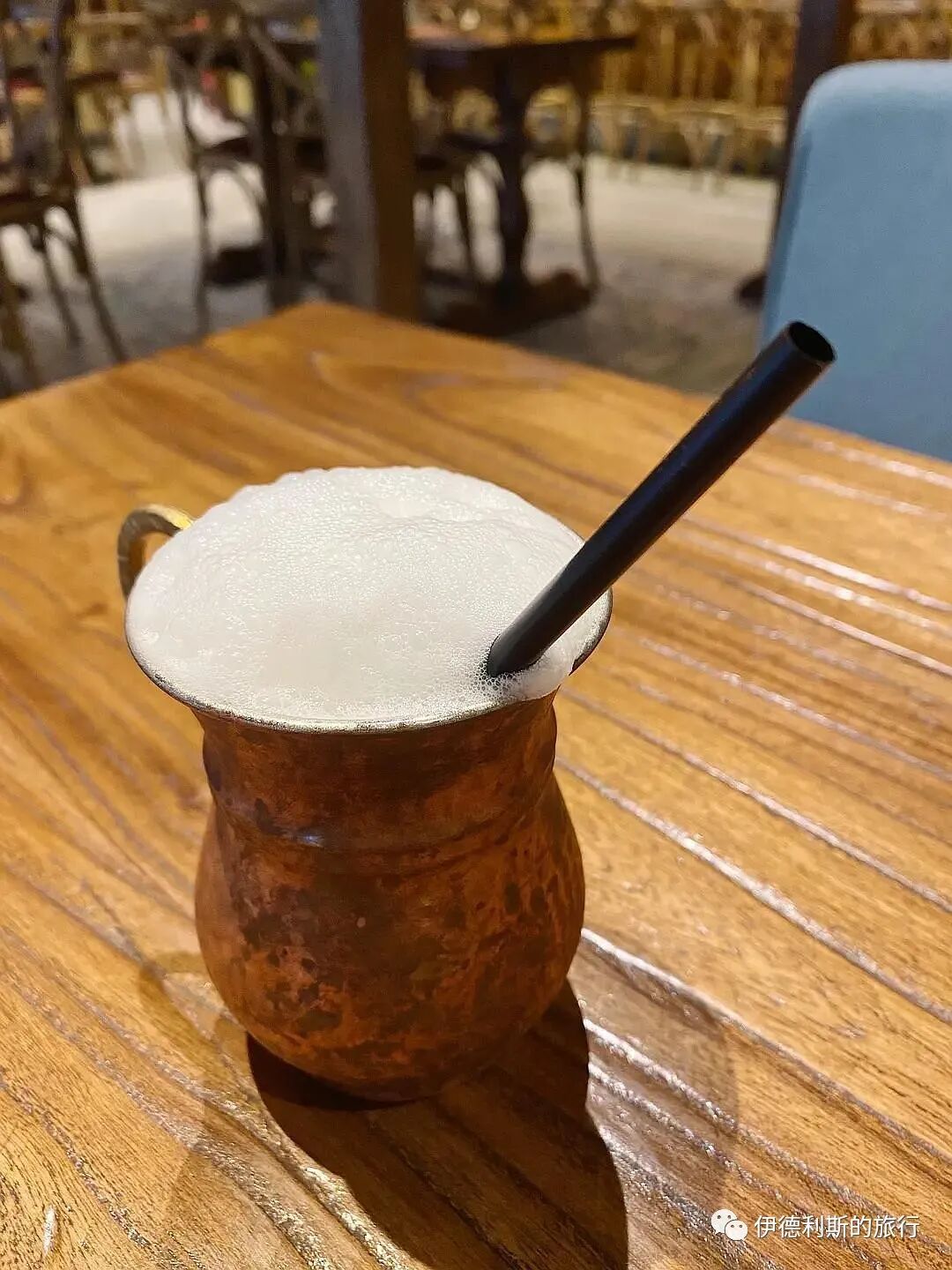
Ayran at Kubei:
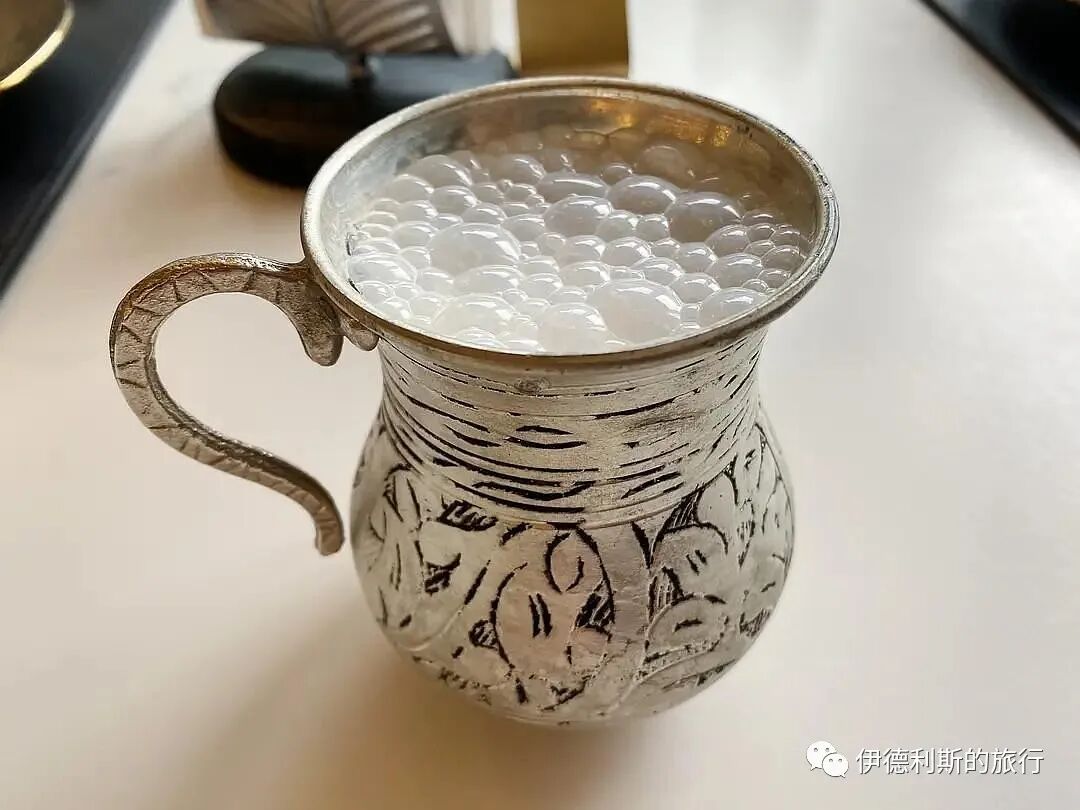
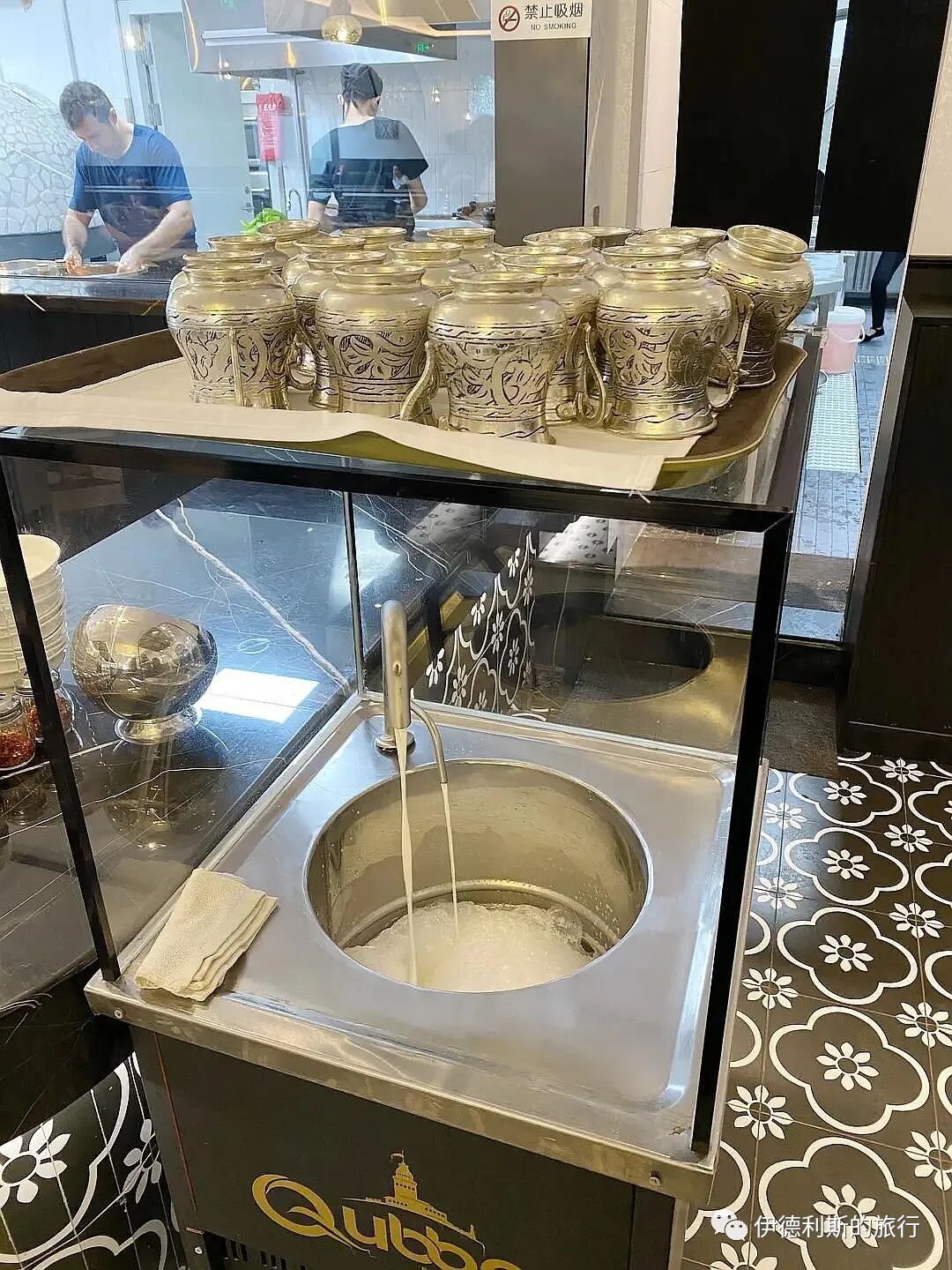
4. Caucasus Chapter
Karabakh Pilaf
Karabakh is a region on the border of Azerbaijan and Armenia. Its name comes from the Turkic word 'Kara' (black) and the Persian word 'Bagh' (garden). Most people living there now are Azerbaijanis. The Karabakh Pilaf we ate was stewed lamb with apricots. The rice is yellow because it is stained with saffron juice. When I was in Baku before, I ate this apricot and saffron pilaf while listening to Azerbaijani mugham music. It felt very familiar to eat it again this time.
Karabakh Pilaf at the Turkish/Azerbaijani restaurant Xiting Xiuse:
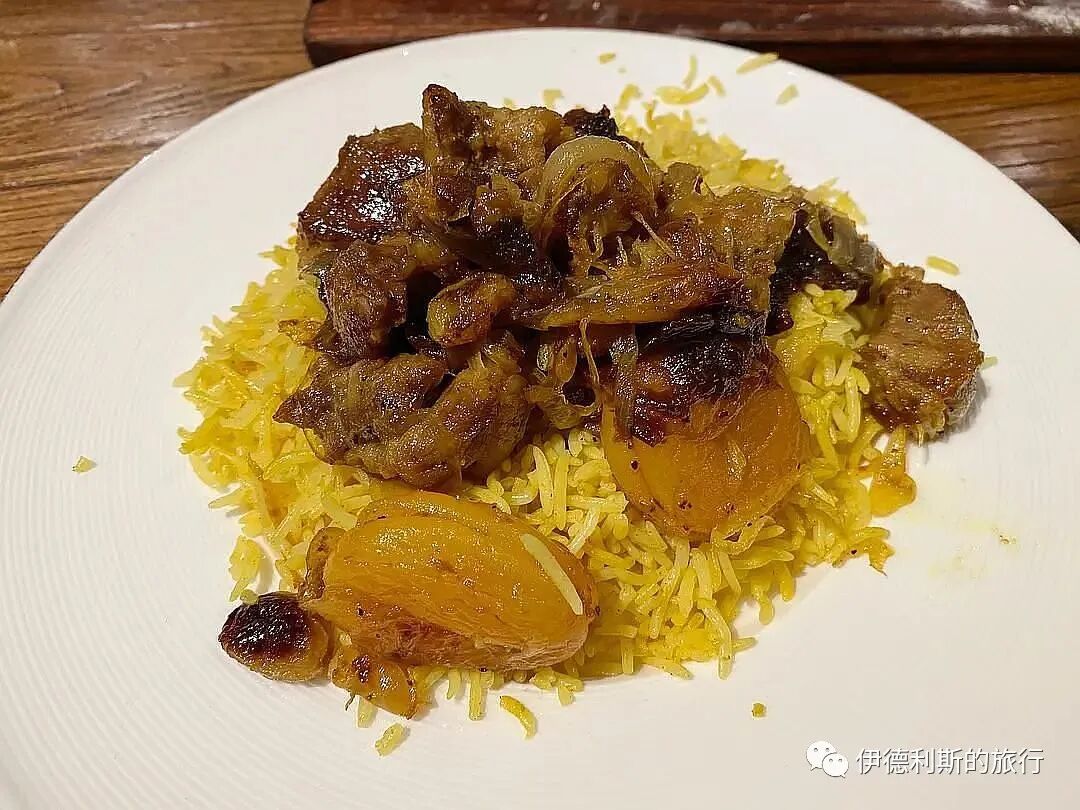
5. South Asia
Samosa curry pastry (samosa)
Muslim merchants from Central Asia brought the samosa to South Asia from Persia during the 13th and 14th centuries. Around 1300, the Delhi Sultanate scholar Amir Khusro wrote that princes and nobles in the Delhi Sultanate enjoyed "samosas made with meat, clarified butter (ghee), and onions."
Samosa at the Kolkata restaurant Saduri:
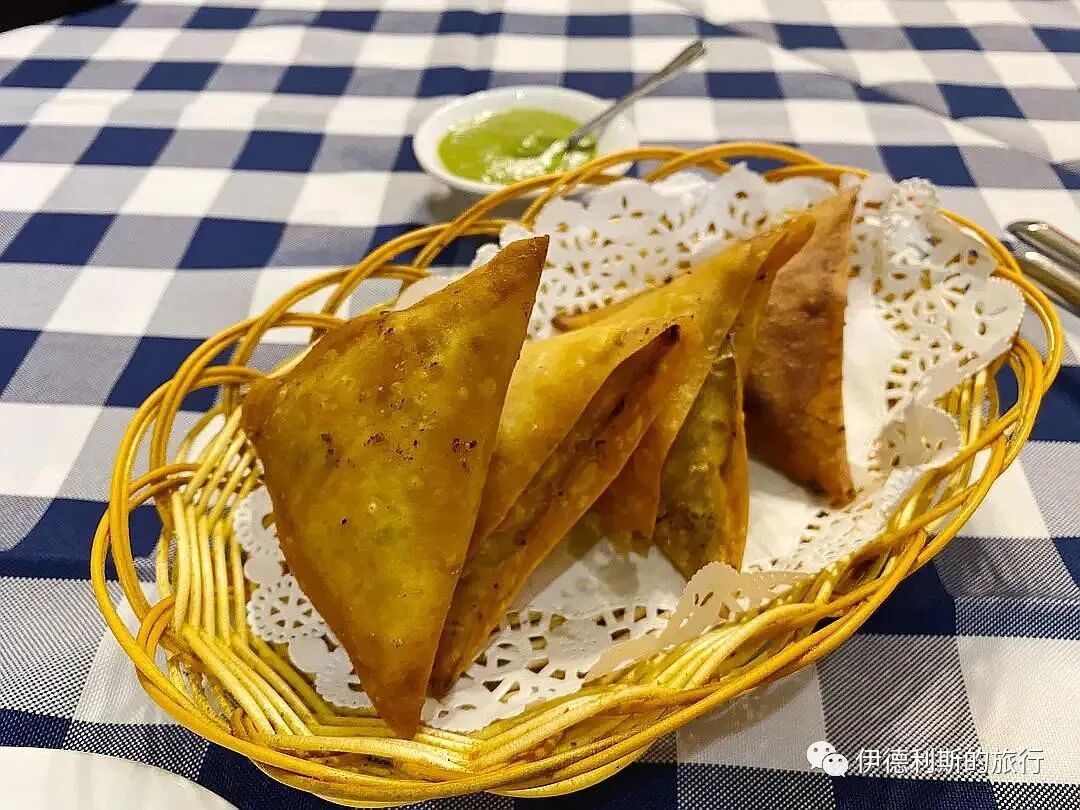
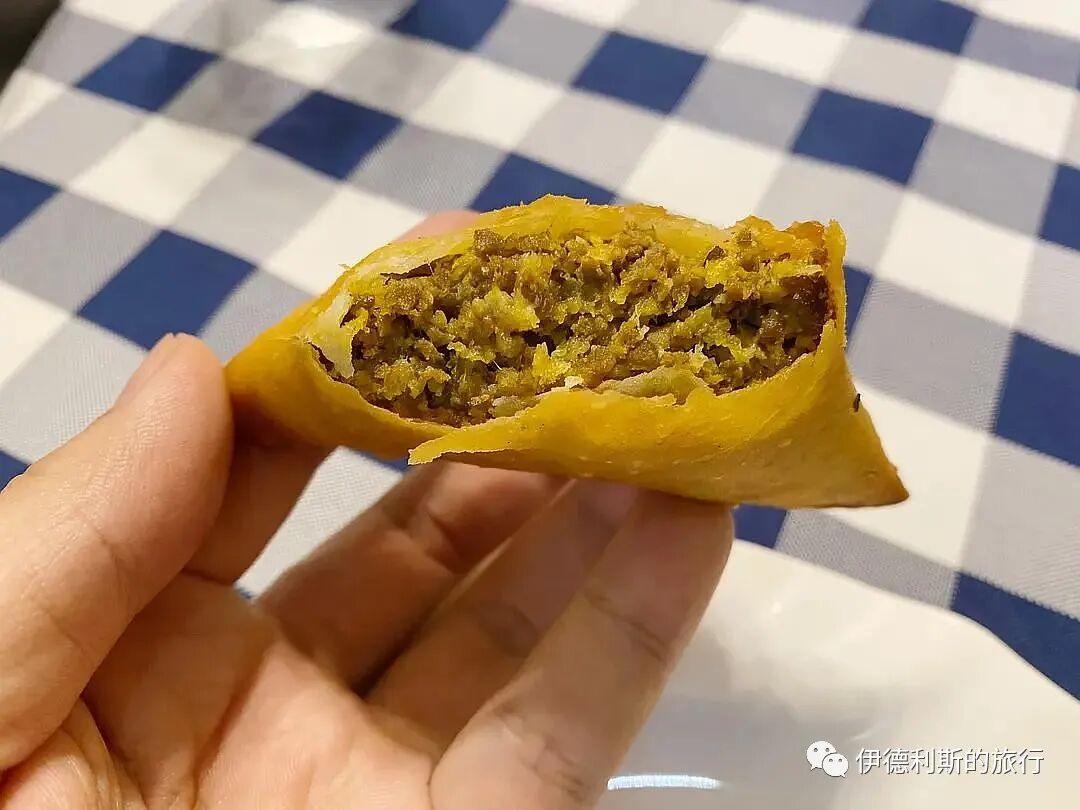
Samosa at the Pakistani restaurant Khan Baba:
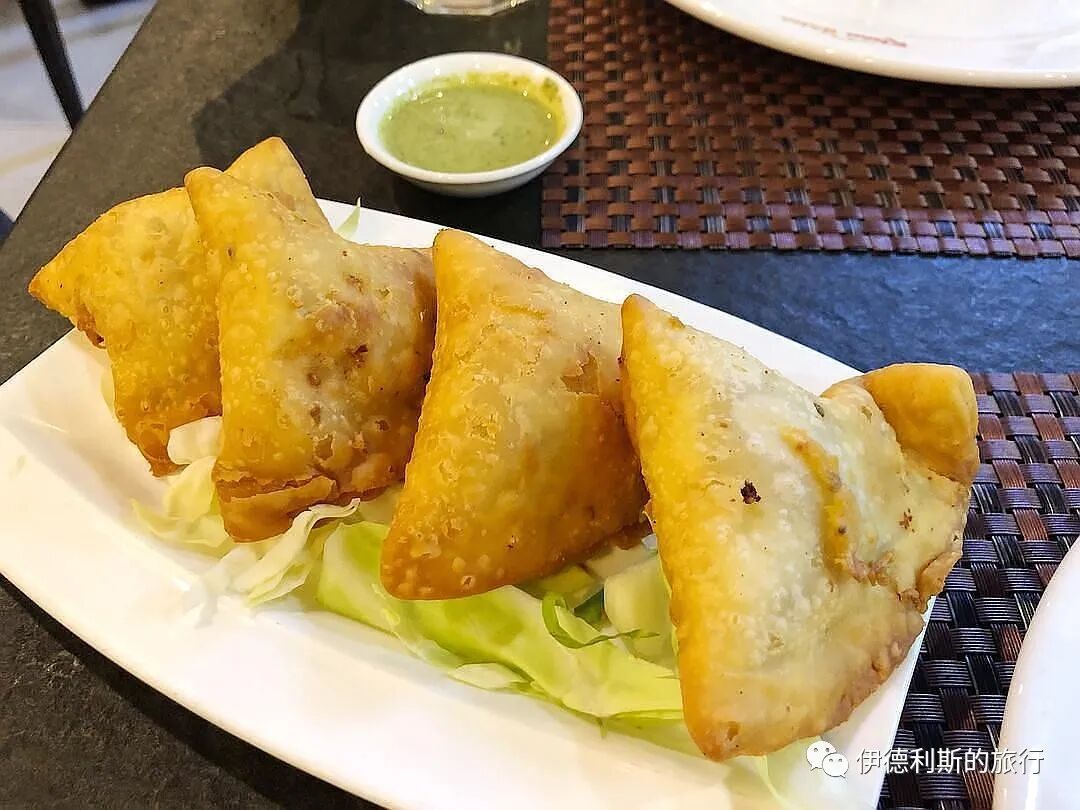
Thin yogurt drink (lassi)
Lassi comes from the Sanskrit word 'lasika,' which originally meant serum. Lassi comes in sweet and salty versions. The sweet version is mainly found in Gujarat, Rajasthan, and Sindh, while the salty version is widely distributed across other parts of North India.
Lassi at the Kolkata restaurant Saduri:
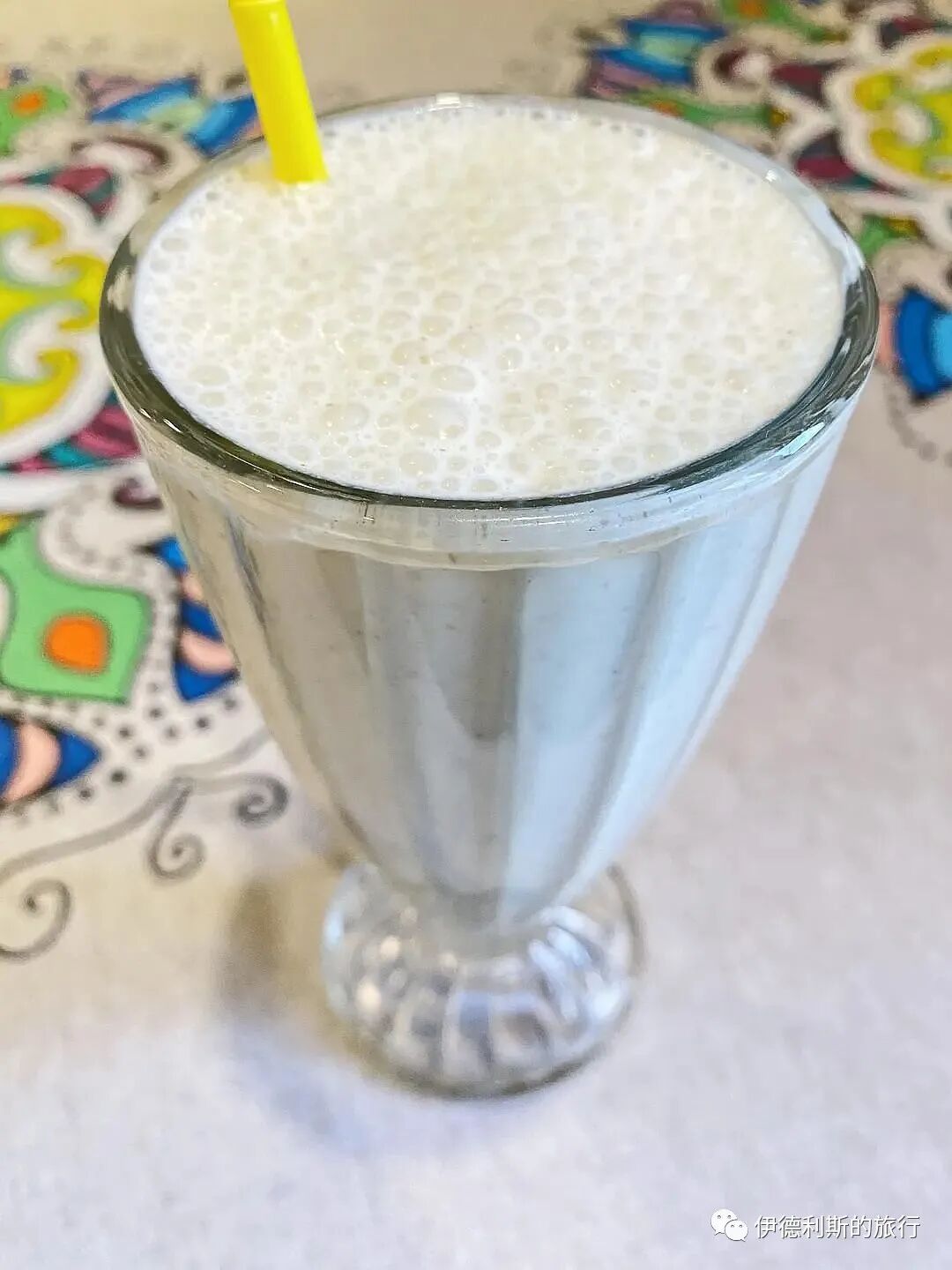
Vegetable yogurt (raita)
Raita is a Hindi word formed by combining the Sanskrit words 'rajika' and 'tiktaka,' meaning 'black mustard seeds' and 'pungent.' This is because making raita involves frying black mustard seeds and cumin, mixing them into chopped vegetables, and then adding them to yogurt.
Raita at the Kolkata restaurant Saduri:
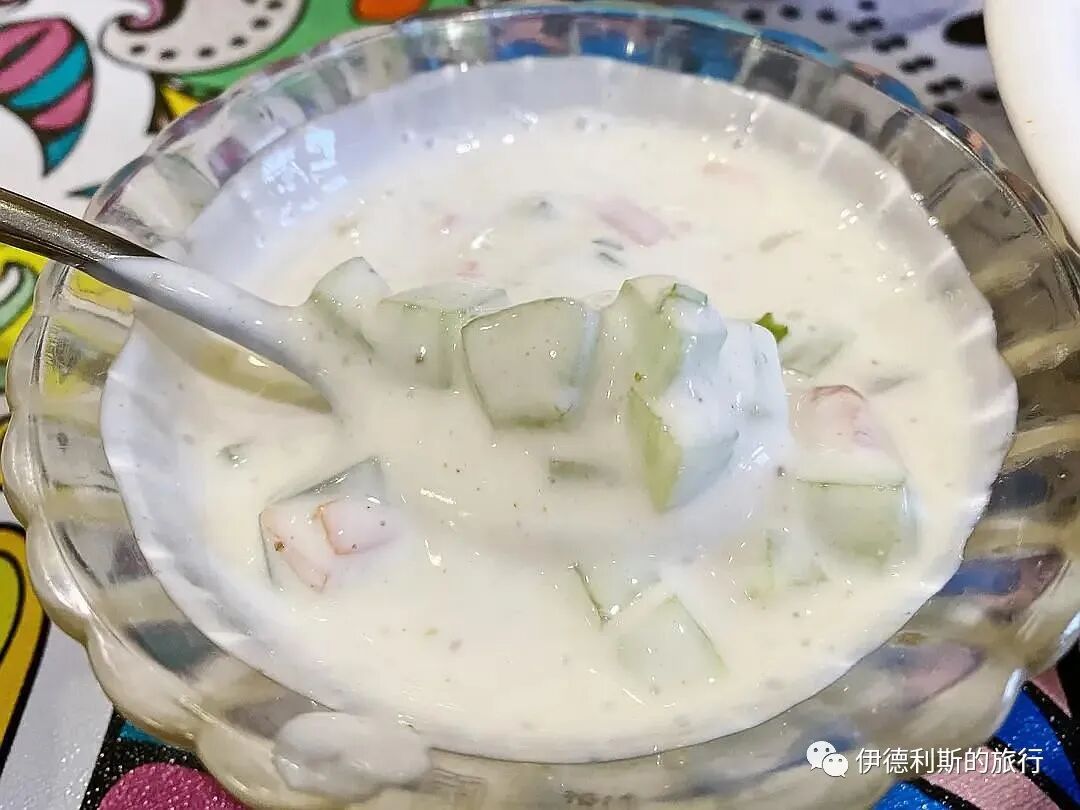
Fried curry (bhuna)
Bhuna means 'to fry' in Urdu. It usually includes onion, ginger, and garlic. When cooking, the curry is fried in hot oil until it becomes a paste. I think it tastes better than regular curry.
Beef bhuna at the Kolkata restaurant Saduri:
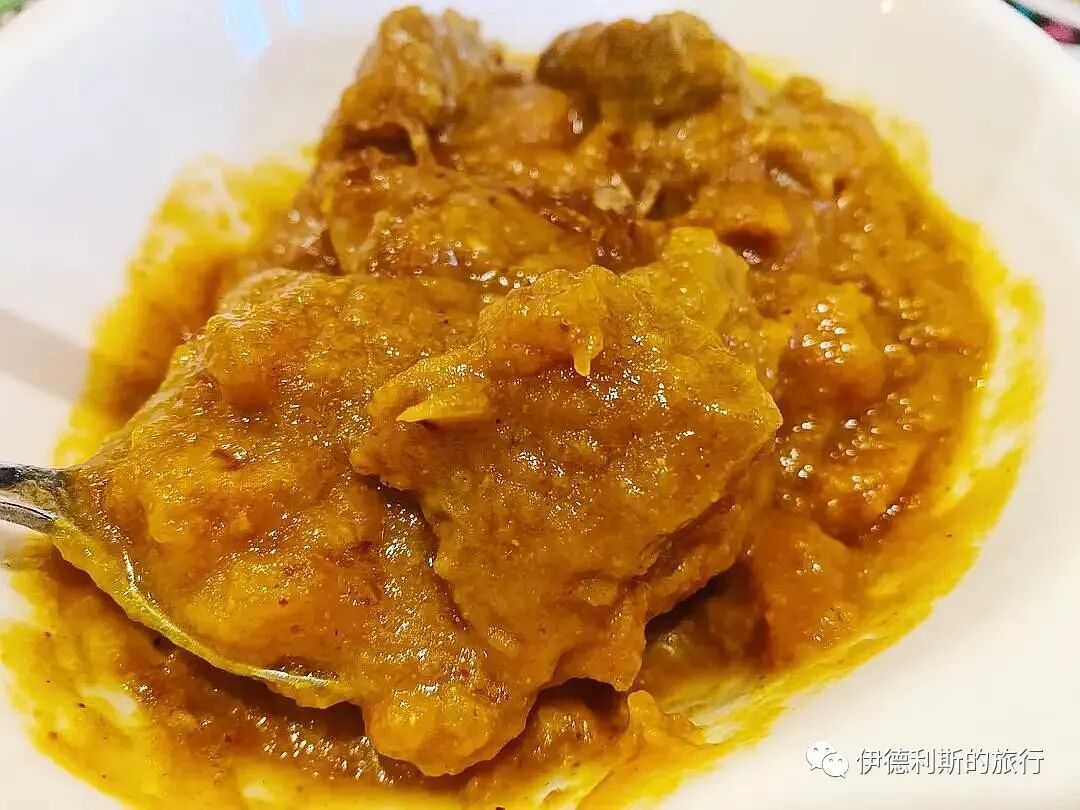
Stewed curry (korma)
Korma is a type of curry stewed with coconut milk or yogurt. The word 'korma' comes from the Turkic word 'qawirma,' which originally meant to fry, but evolved into the Urdu word for stew. Korma is a classic Mughal court dish that originated in the 16th century. People say Shah Jahan ate korma with his guests at the banquet celebrating the completion of the Taj Mahal.
Vegetable korma at the Kolkata restaurant Saduri:
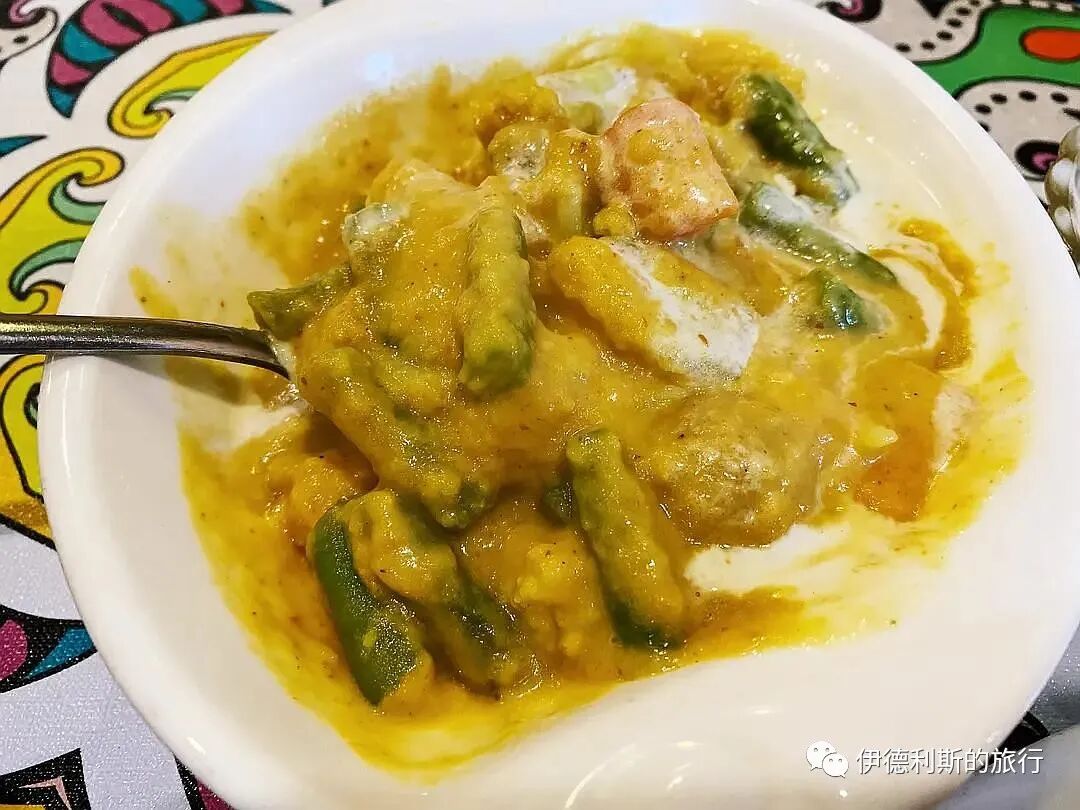
Lamb korma at Mirch Masala:
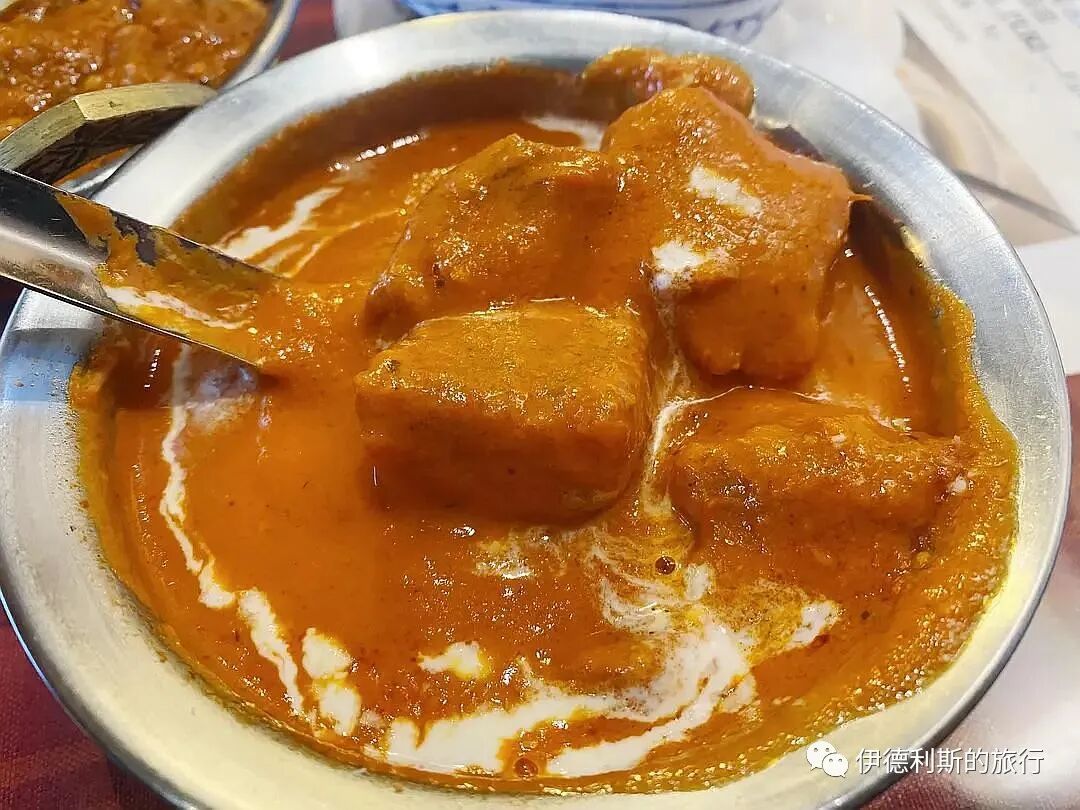
Spice blend curry (masala)
Masala is a famous South Asian spice blend. Its main ingredients are garlic, ginger, onion, chili, and tomato. There is no fixed recipe for masala tea, but it usually includes black tea, milk, sugar, cardamom, black pepper, and ginger. Other spices include cinnamon, star anise, fennel seeds, and cloves.
Masala fish stew at the Pakistani restaurant Khan Baba:
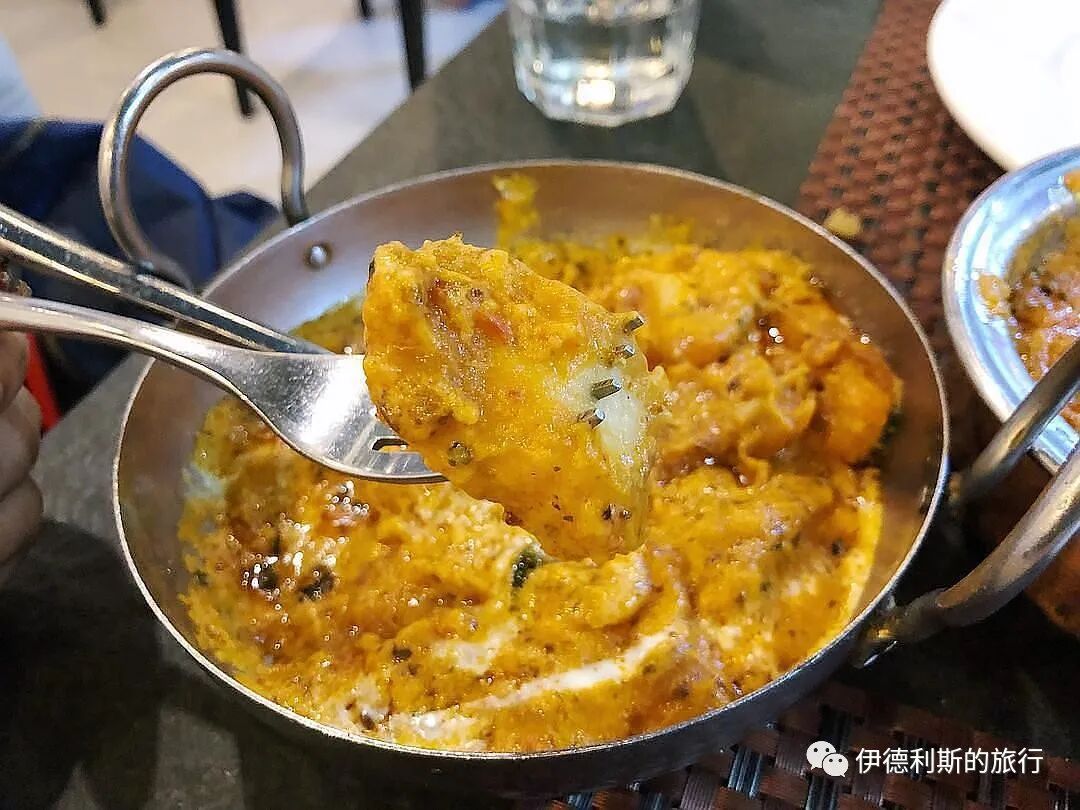
Masala tea at the Indian Kitchen:
Potato rice crepe (dosa) with potato sauce and masala curry at the Indian Kitchen:
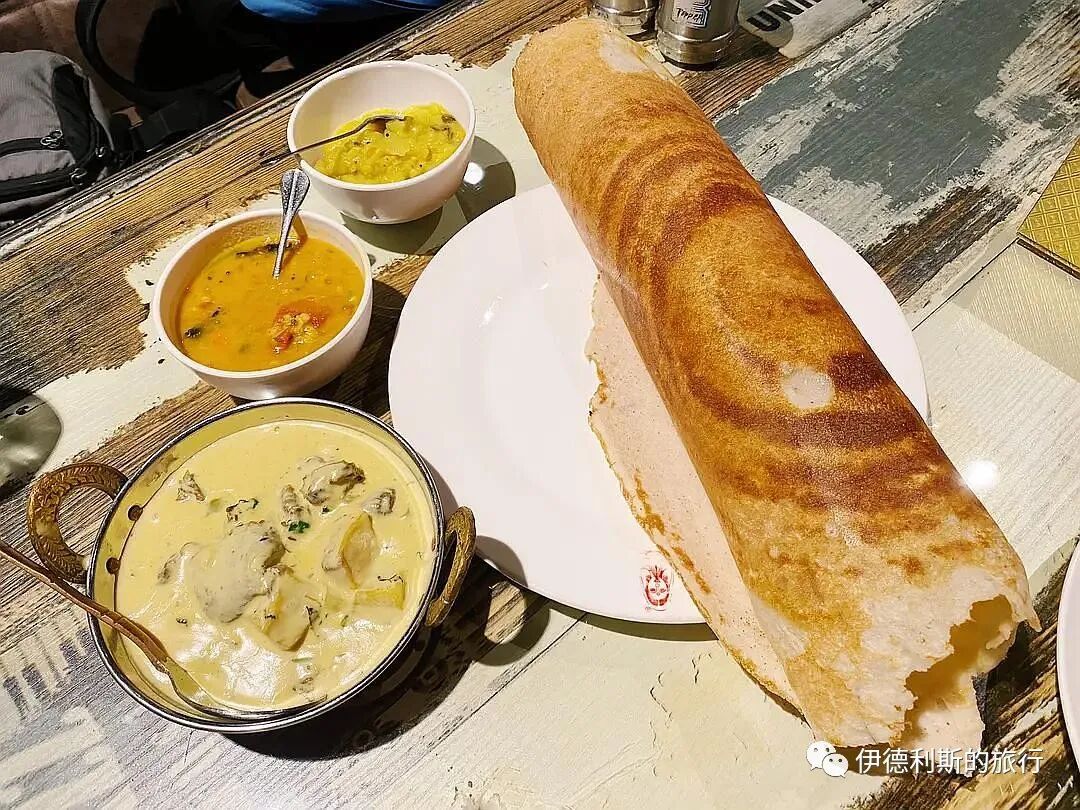
Masala lamb at the Kolkata restaurant Sadhu:
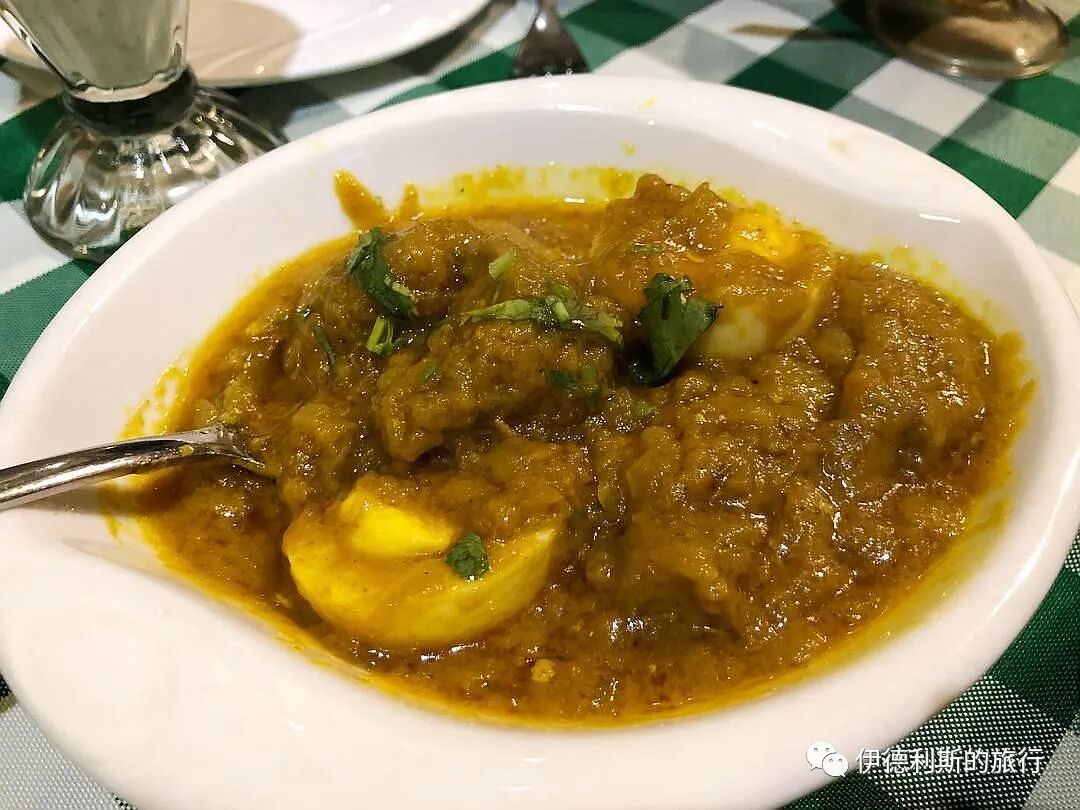
Pickled chickpea curry (achari chana masala) at the Pakistani restaurant Lahore Restaurant:
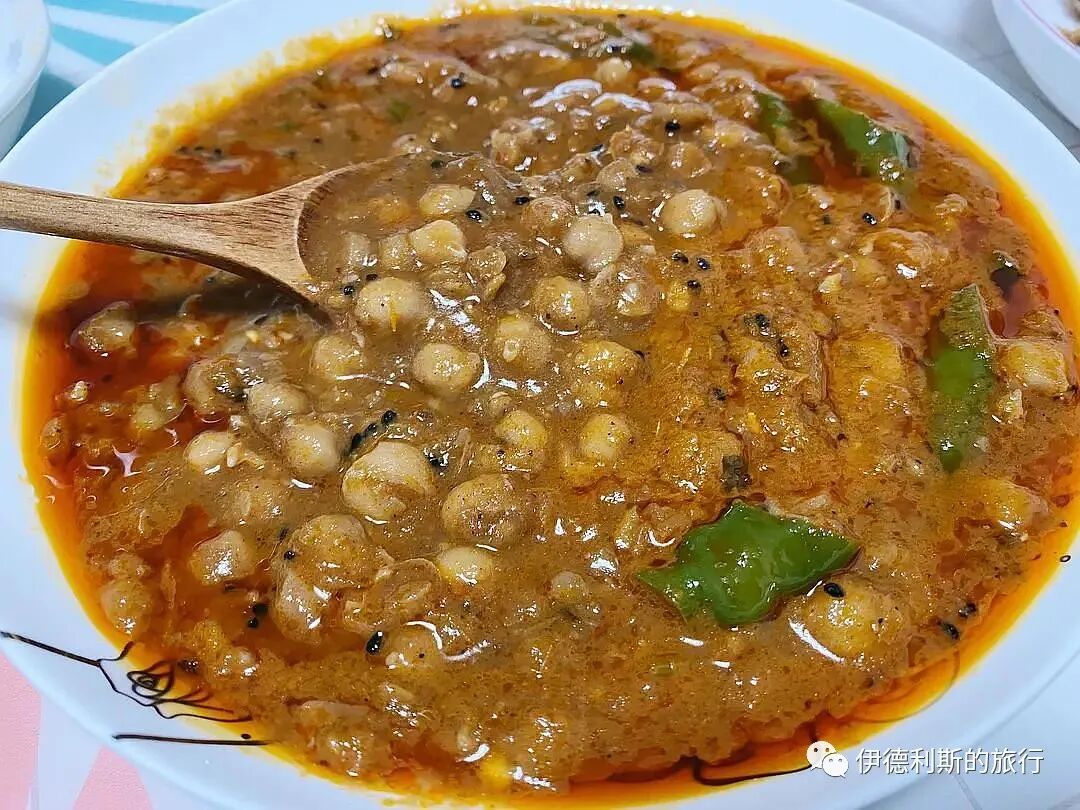
Clay pot (handi)
Handi is a popular way to eat curry in northern South Asia. It uses many rich spices like cardamom, cinnamon, and cloves. The biggest difference from regular South Asian curry is that handi does not use ginger, but uses garlic and onions instead.
Lamb handi at the Pakistani restaurant Khan Baba:
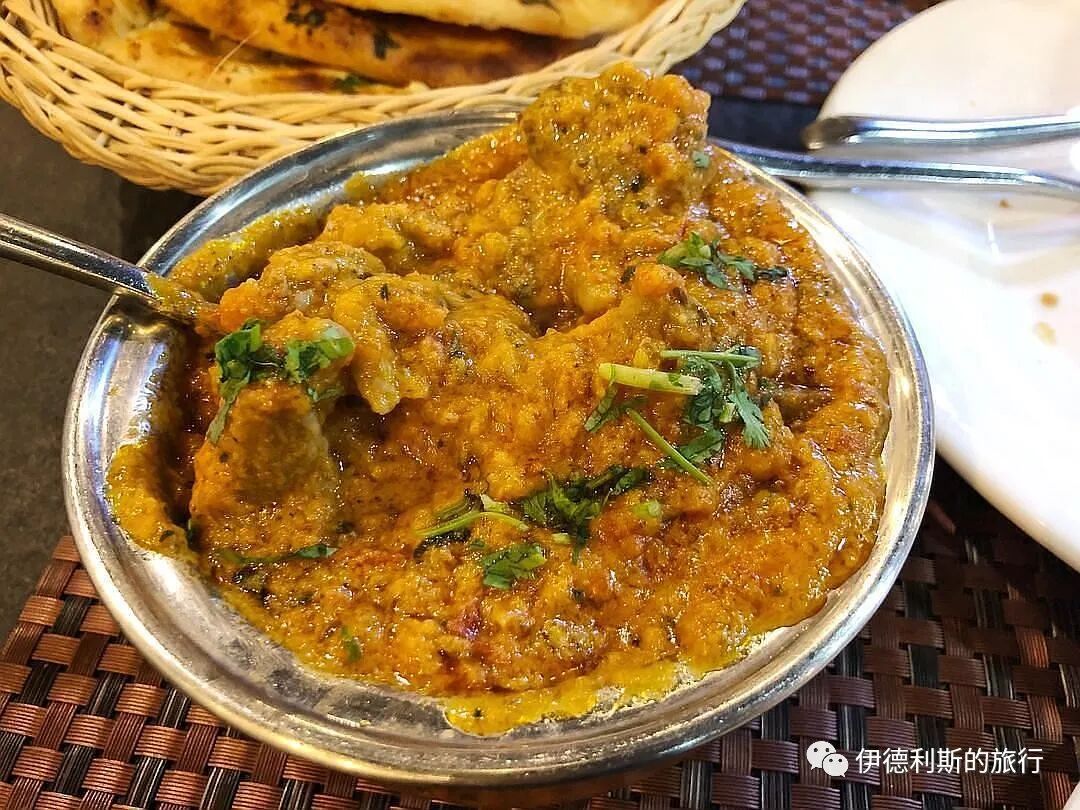
Chicken pickled curry (achari handi) at the Pakistani restaurant Khan Baba:
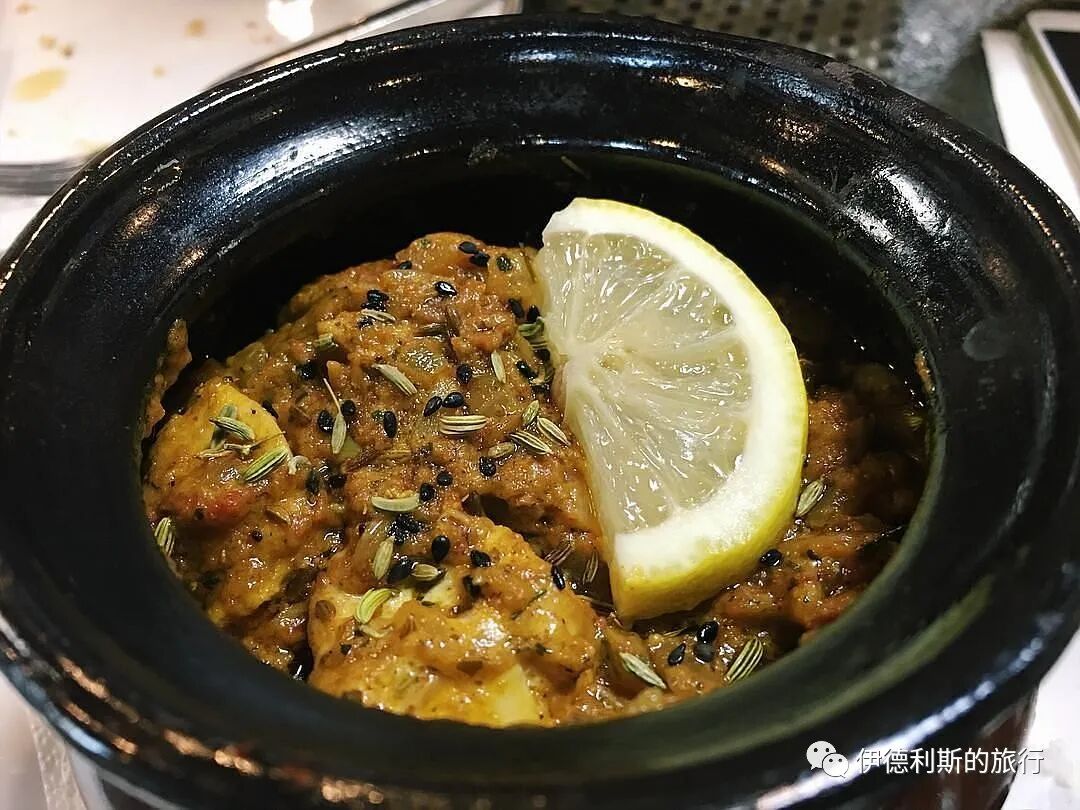
Curried chickpeas (dall chana)
Dal means split in Sanskrit. In South Asia, it refers to hulled legumes, including chickpeas, peas, and lentils. You can eat them dry or with soup.
Curried chickpeas (dall chana) at the Pakistani restaurant Khan Baba:
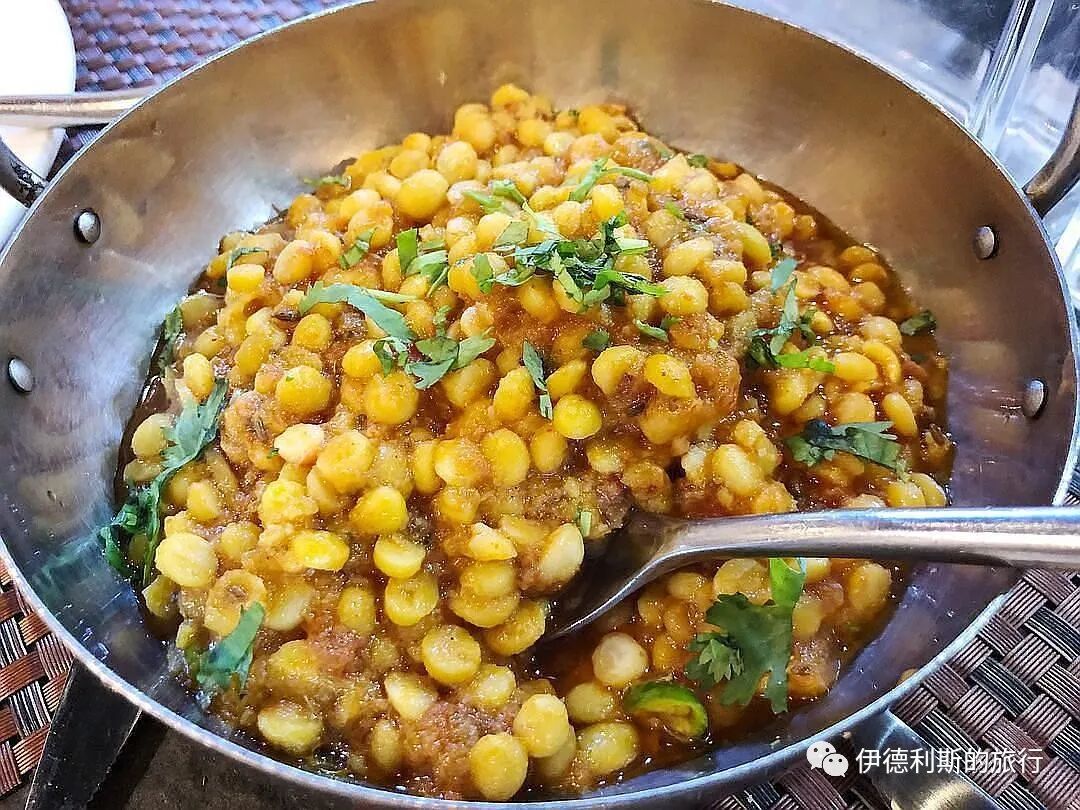
Biryani rice
Biryani is a Persian loanword in Urdu. It likely originated in the Mughal court. People say Mughal royal chefs created it by combining Indian spicy rice with Persian pilaf. Mughal documents mention both biryanis and pilaf (pulao), and the two terms were interchangeable at the time. People generally think biryani contains more spices and has a stronger curry flavor than pilaf.
Biryani at the Pakistani restaurant Zam Zam:
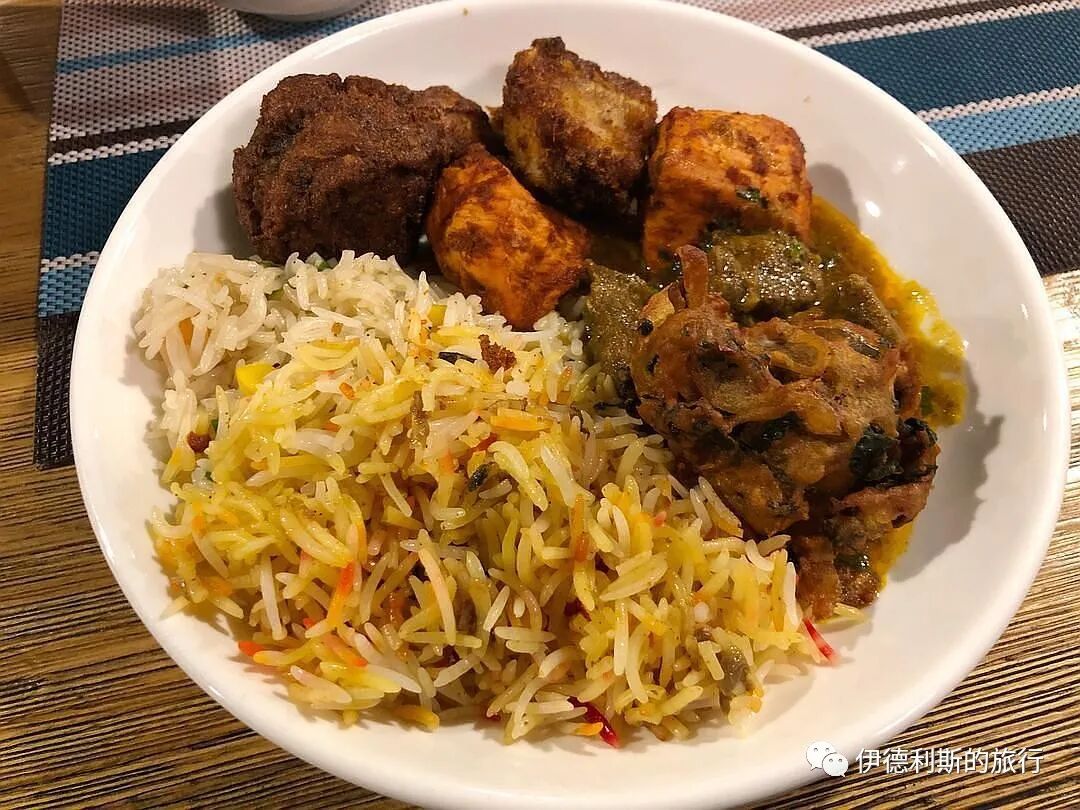
Biryani at the Pakistani restaurant Khan Baba:
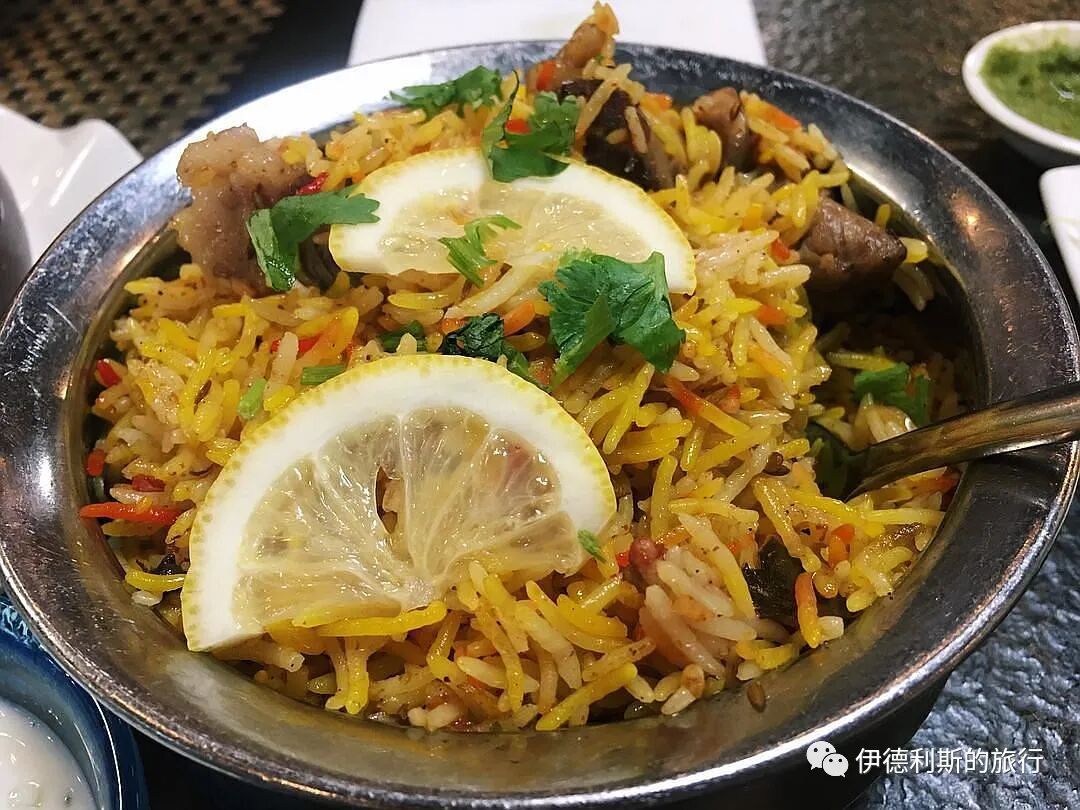
Biryani at the Pakistani restaurant Lahore Restaurant:
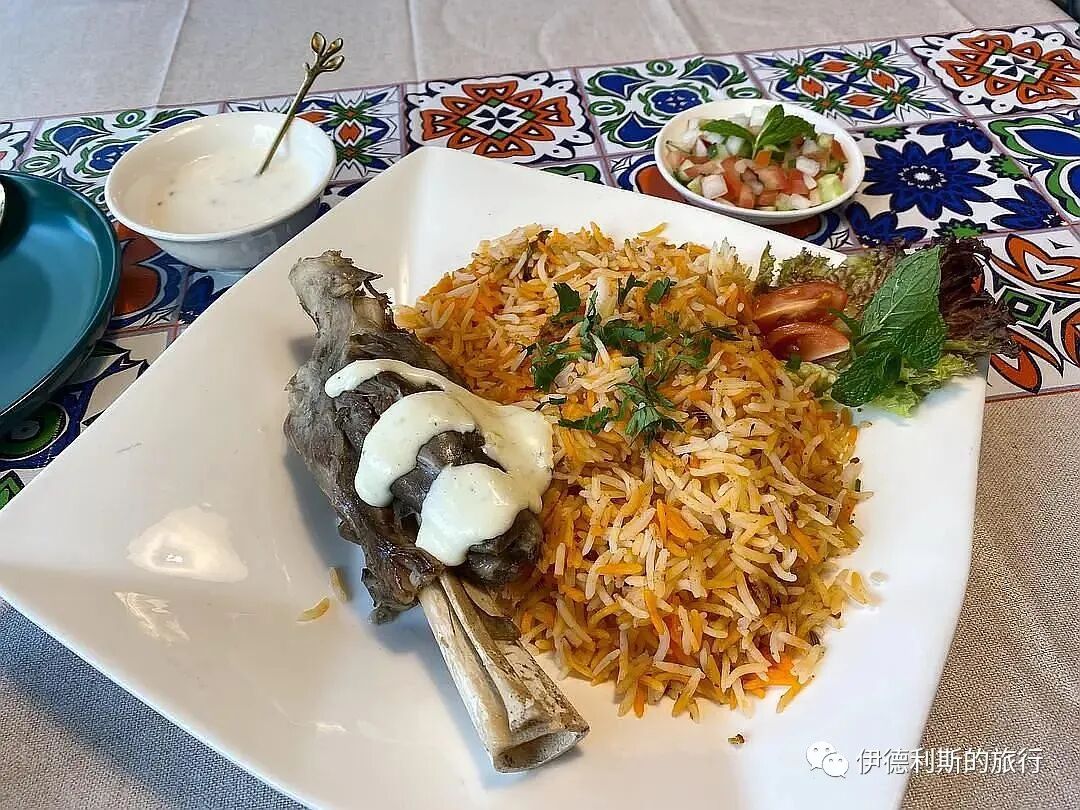
Biryani at the restaurant Mirch Masala:
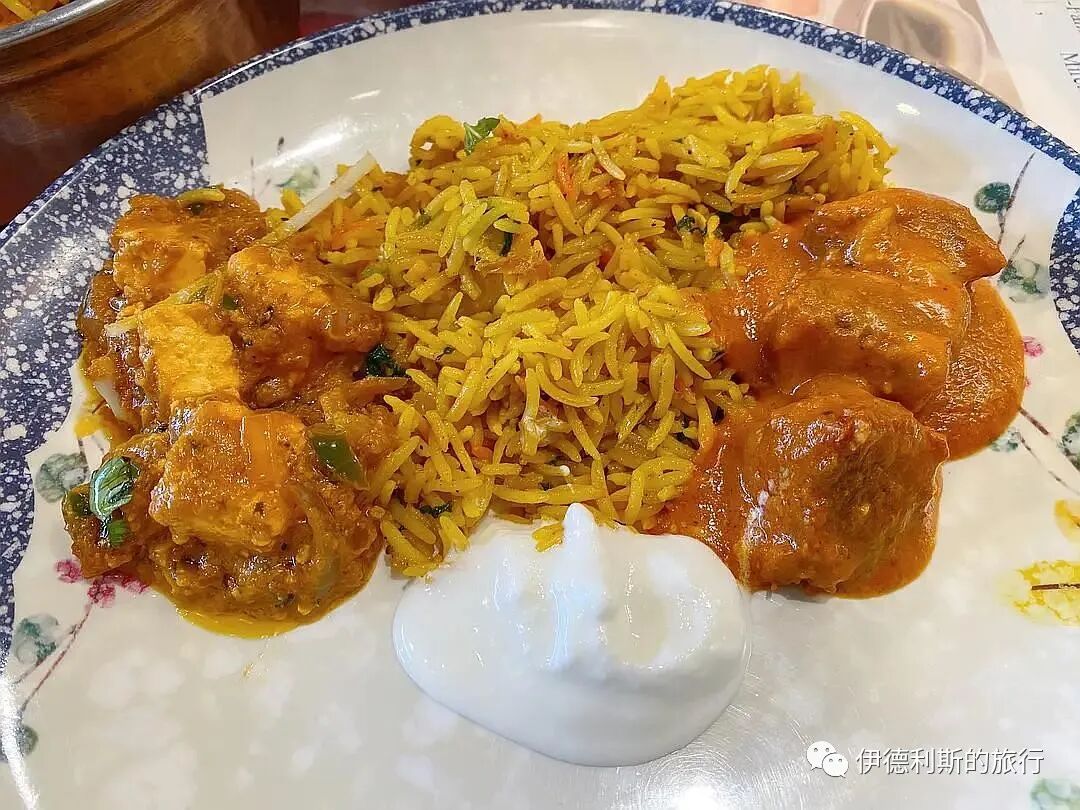
Raisin pilaf (shejhani pulao)
Although rice has been grown in Eurasia for a very long time, the style of cooking rice in a large pot only became popular from Andalusia to Afghanistan during the Abbasid Caliphate. The word pilaf (pilāv) comes from Persian. The earliest record of pilaf dates back to the 10th-century writings of the Persian scholar Ibn Sina, which is why some people call him the father of modern pilaf. After the 16th century, pilaf became popular in India as the Mughal Empire flourished.
Shejhani Pulao at the Kolkata restaurant Sadri:
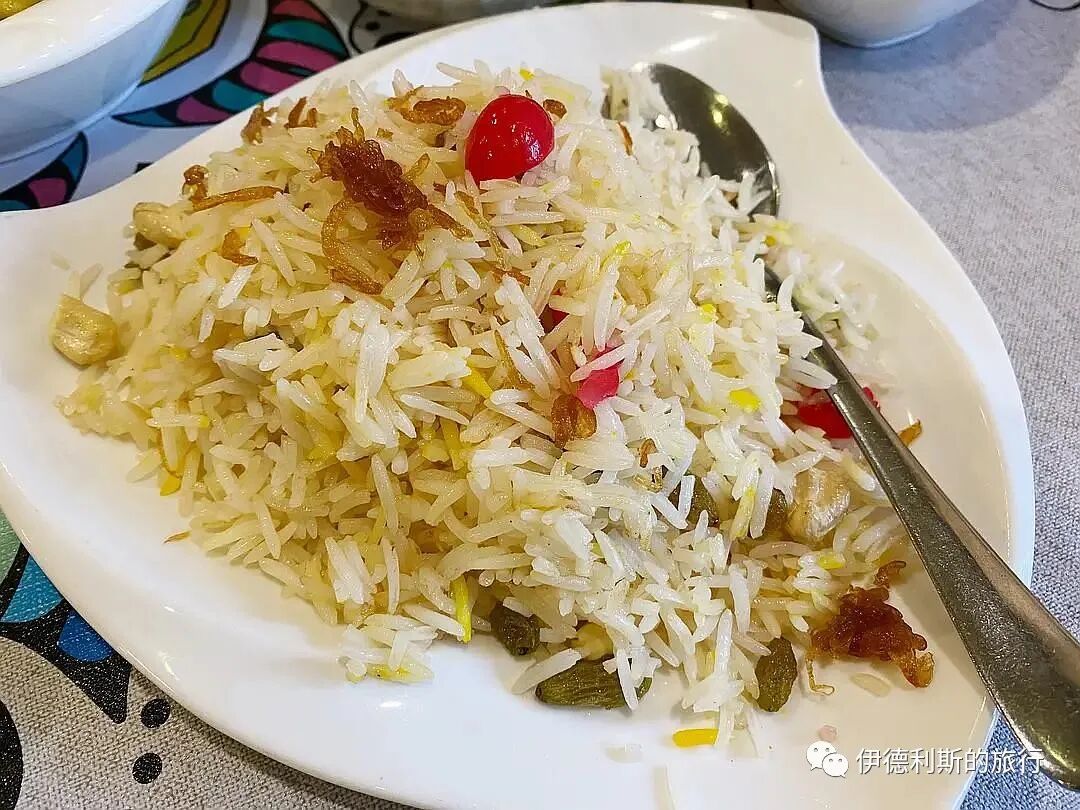
Tikka grilled meat chunks
Tikka comes from the Turkic word tikkü, which means piece. The Mughal Empire brought this style of grilling spiced, boneless meat or vegetable chunks to India. The most common version is chicken tikka.
The tikka platter at the Pakistani restaurant ZAM ZAM includes mint chicken (Haryali Tikka), lamb tikka, beef tikka, and fish tikka.
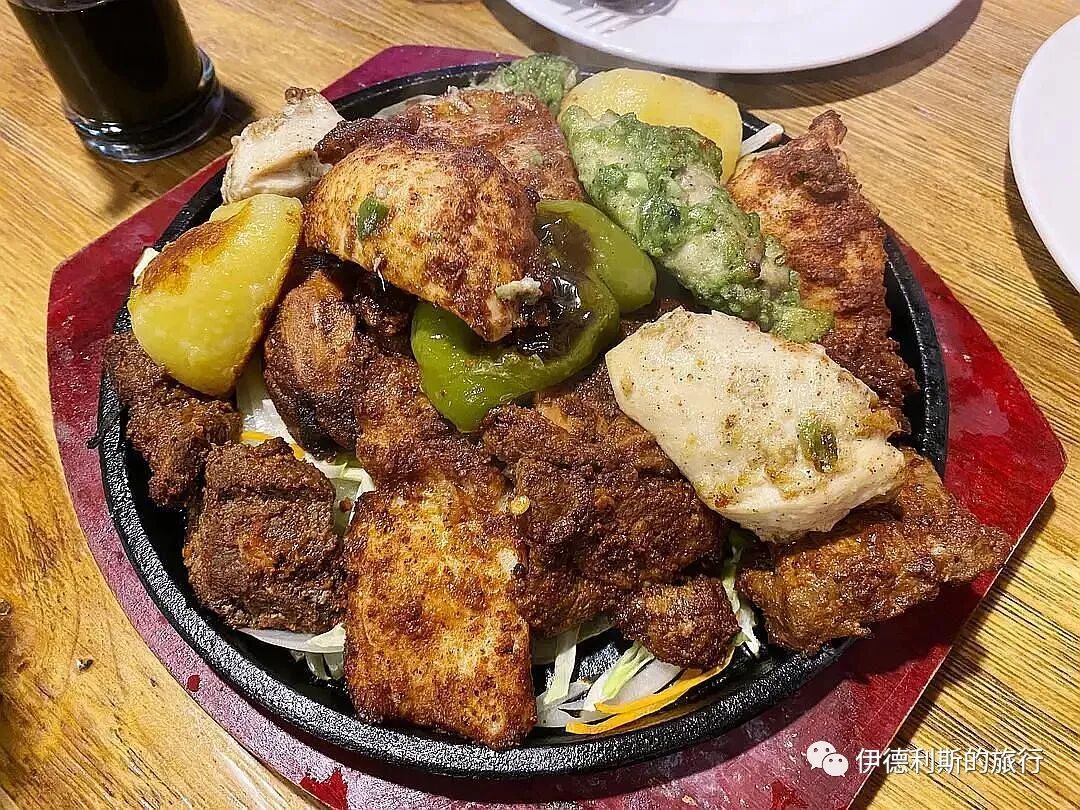
Grilled salmon tikka at the Kolkata restaurant Sadri:
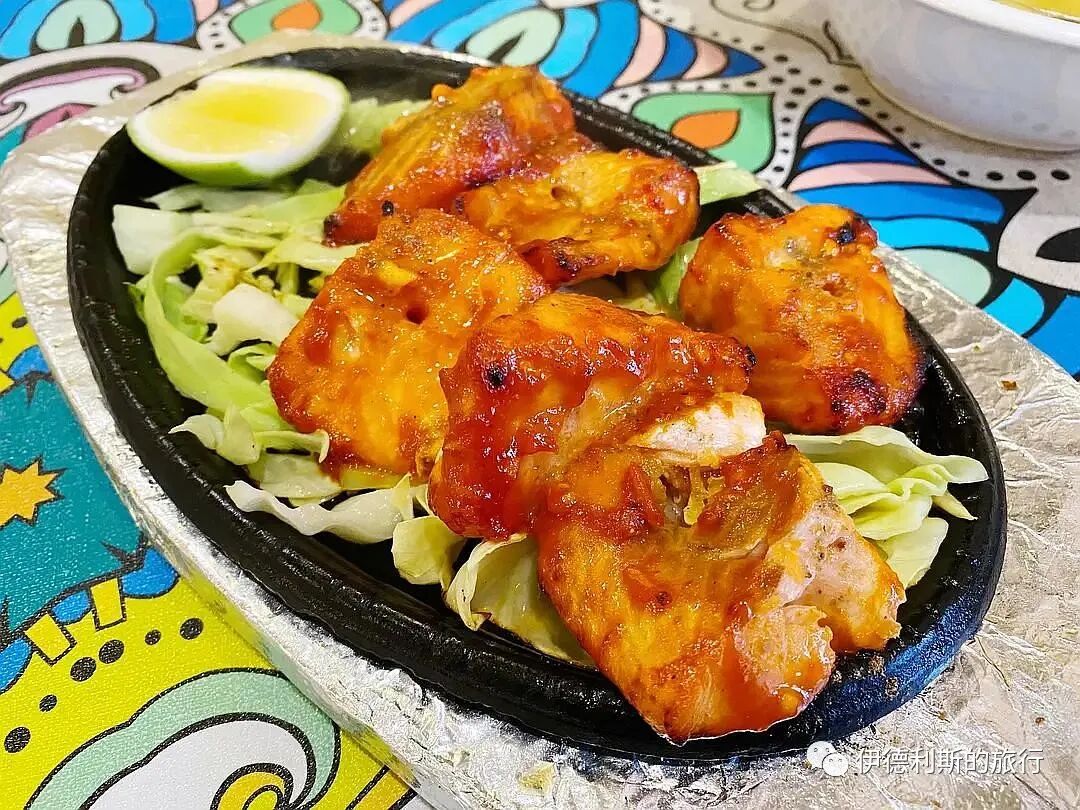
Grilled tofu (Paneer Tikka) at the Indian Little Kitchen.
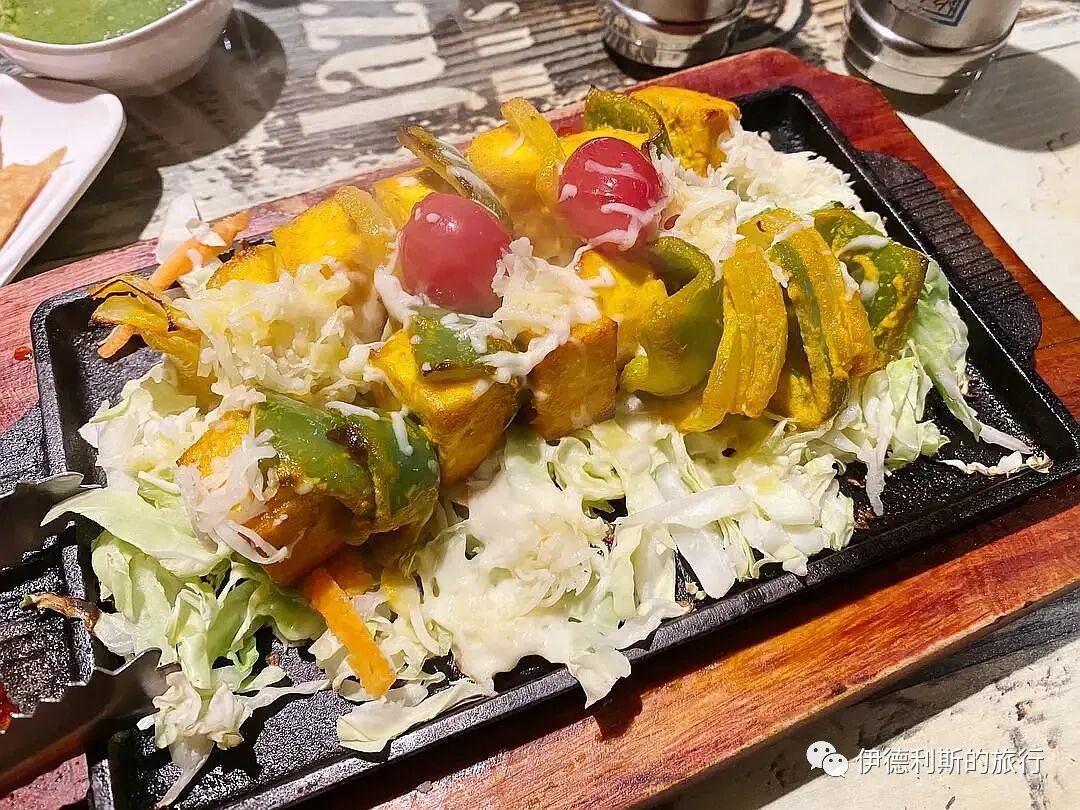
Eating South Asian and Middle Eastern Food in Beijing (Part 1) (Section 4B of 4)
Articles • ali2007fr posted the article • 0 comments • 268 views • 2026-05-17 00:26
Summary: This travel note introduces Eating South Asian and Middle Eastern Food in Beijing (Part 1). I have been to many Middle Eastern and South Asian restaurants in Beijing in the past few years, some of which have closed. It is useful for readers interested in Beijing Halal Food, Muslim Travel, Middle Eastern Food. Section 4B of 4.
On July 4, 2020, we ate at Rumi’s Secret, a Turkish restaurant on Ritan Street, at noon. Although their restaurant just opened in June, most of my dusty friends have tried it several times! The environment of their home is very good, suitable for chatting, and there are performances in the evening.
At their house, we had hummus hummus, carrot puree, cream of mushroom soup, lentil soup, black tea, yogurt aylan, rice pudding, grilled lamb roast beef, and minced meat pie Lahmacun.
4. The beautiful western courtyard of the Turkish restaurant
On May 6, 2021, Iftar ate the Ramadan set meal at Xiting Xiuse in Xinyuanli. There are two types of chicken and mutton, which are different every day. The lamb we caught yesterday was Karabakh Pilaf, and the chicken was grilled chicken wings.
Karabakh is an area on the border between Azerbaijan and Armenia. Its name comes from the Turkic word "Kara (black)" and the Persian word "Bagh (garden)". Most of the people living here are Azerbaijanis. The Karabakh pilaf we ate was stewed lamb with apricots, and the rice was yellow because it was dyed with saffron juice. I had eaten this kind of apricot + saffron pilaf while listening to Azerbaijani Muqam when I was playing in Baku. It was very friendly this time.
In addition to the main course, the soup in the set menu is the classic red lentil soup. The side dishes are hummus with hummus, yogurt tomato sauce and carrot cheese sauce, as well as nut and pepper salad. The main dish is spinach Pide pancake, which is delicious with spinach and cheese. The drinks are Ayran and black tea. Their Ayran is not particularly sour. Finally there was rice pudding and Semolina for dessert. view all
Summary: This travel note introduces Eating South Asian and Middle Eastern Food in Beijing (Part 1). I have been to many Middle Eastern and South Asian restaurants in Beijing in the past few years, some of which have closed. It is useful for readers interested in Beijing Halal Food, Muslim Travel, Middle Eastern Food. Section 4B of 4.
On July 4, 2020, we ate at Rumi’s Secret, a Turkish restaurant on Ritan Street, at noon. Although their restaurant just opened in June, most of my dusty friends have tried it several times! The environment of their home is very good, suitable for chatting, and there are performances in the evening.
At their house, we had hummus hummus, carrot puree, cream of mushroom soup, lentil soup, black tea, yogurt aylan, rice pudding, grilled lamb roast beef, and minced meat pie Lahmacun.
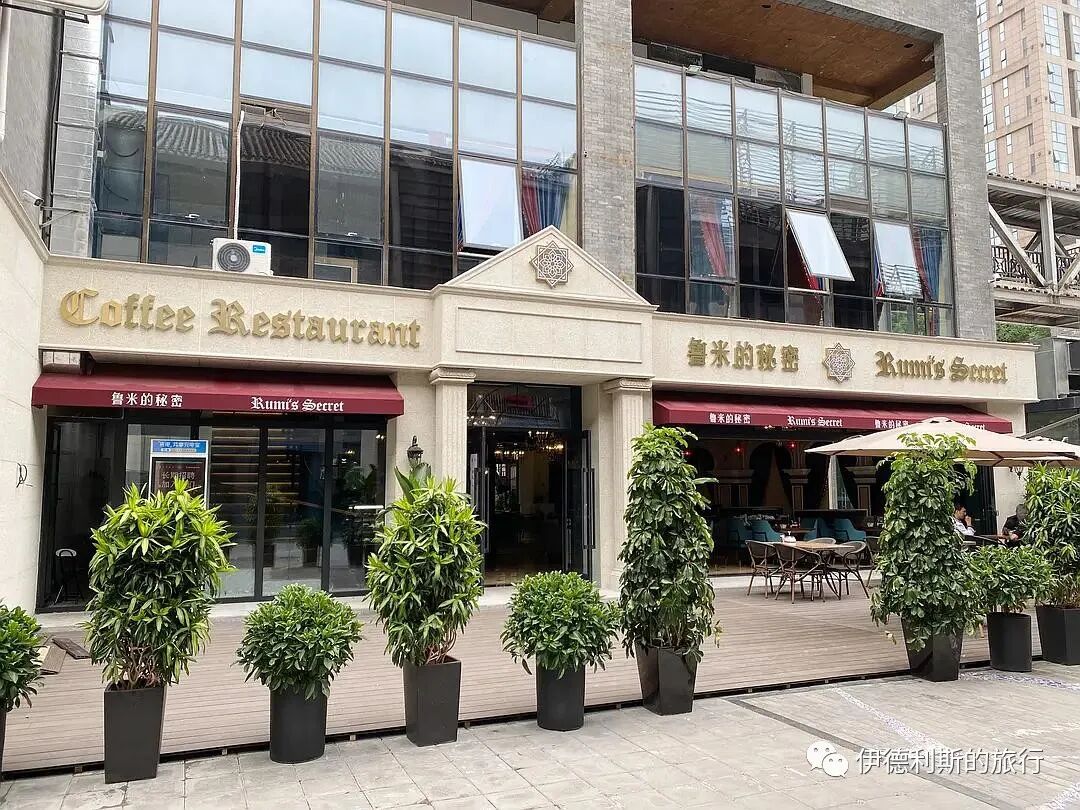
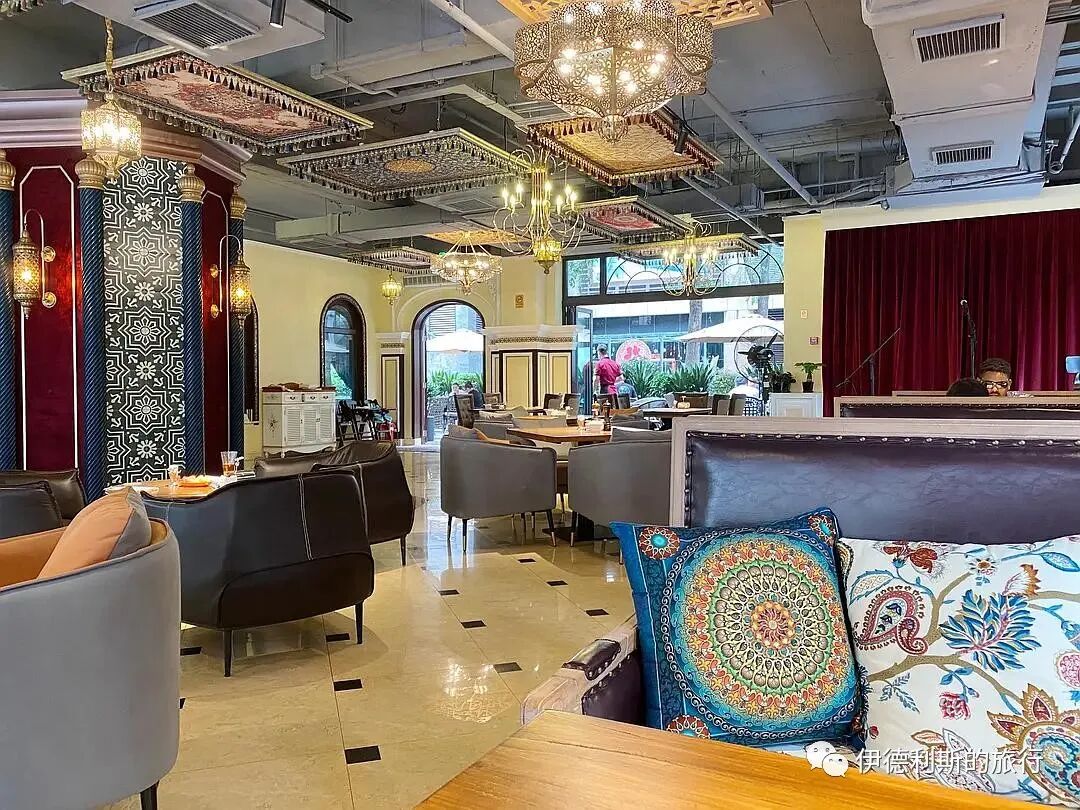
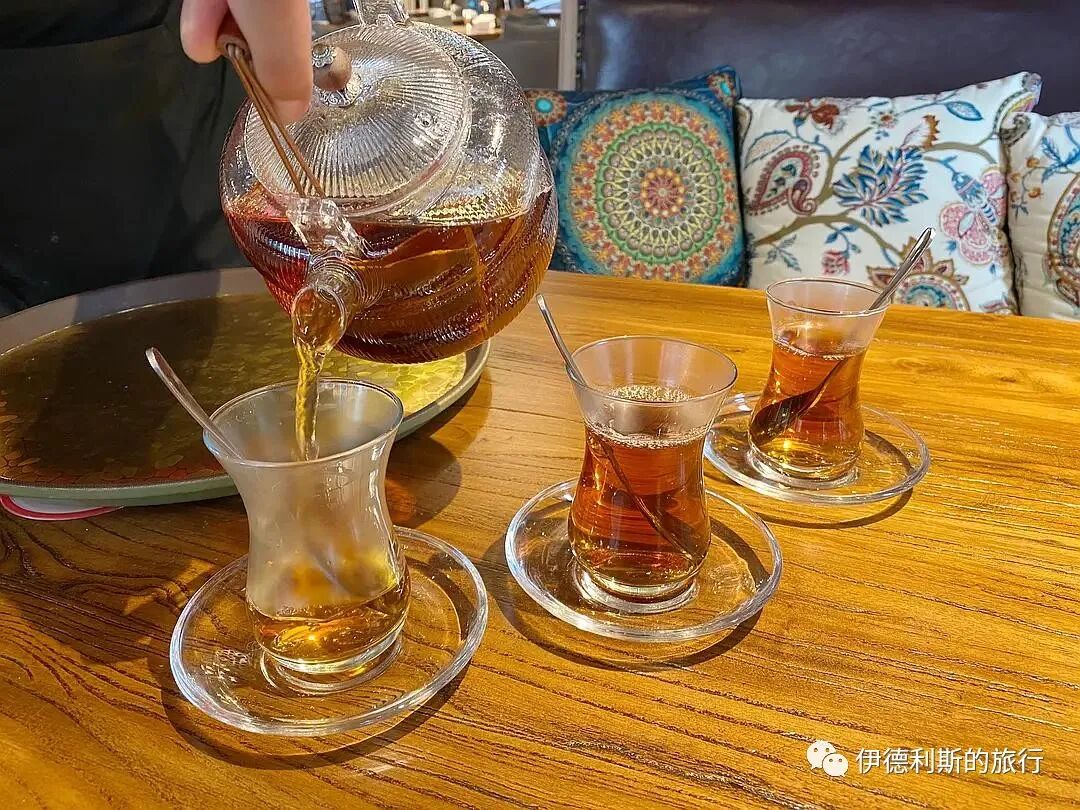
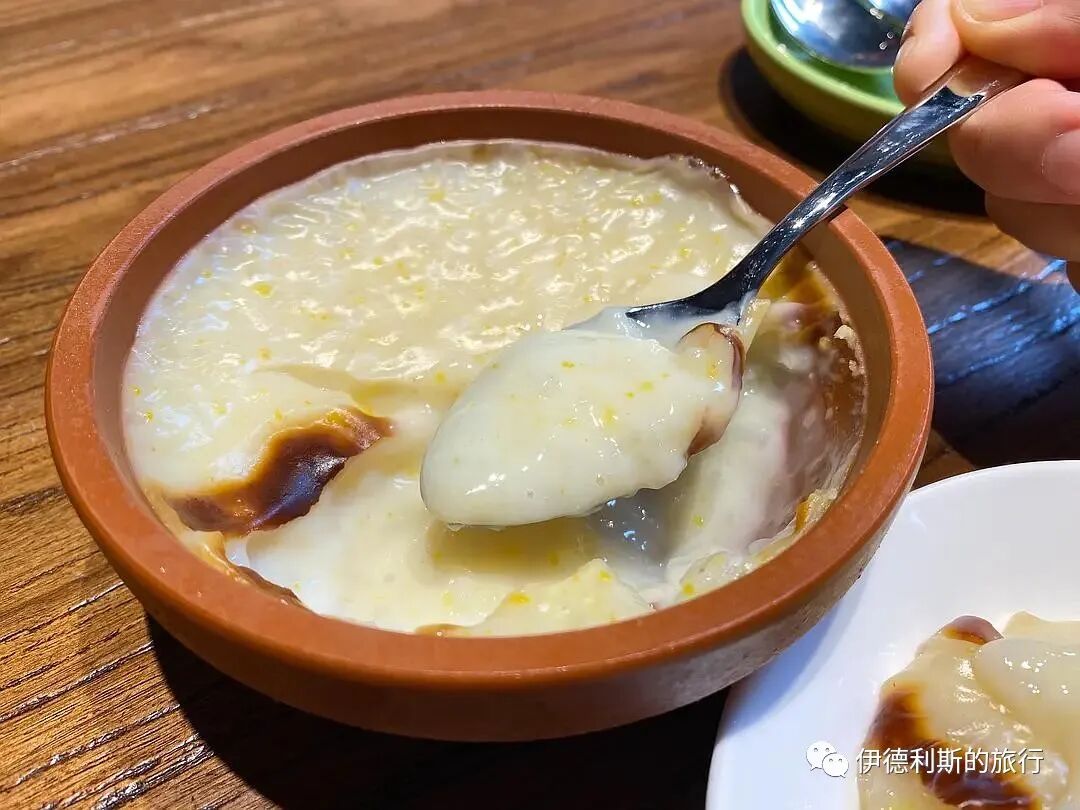
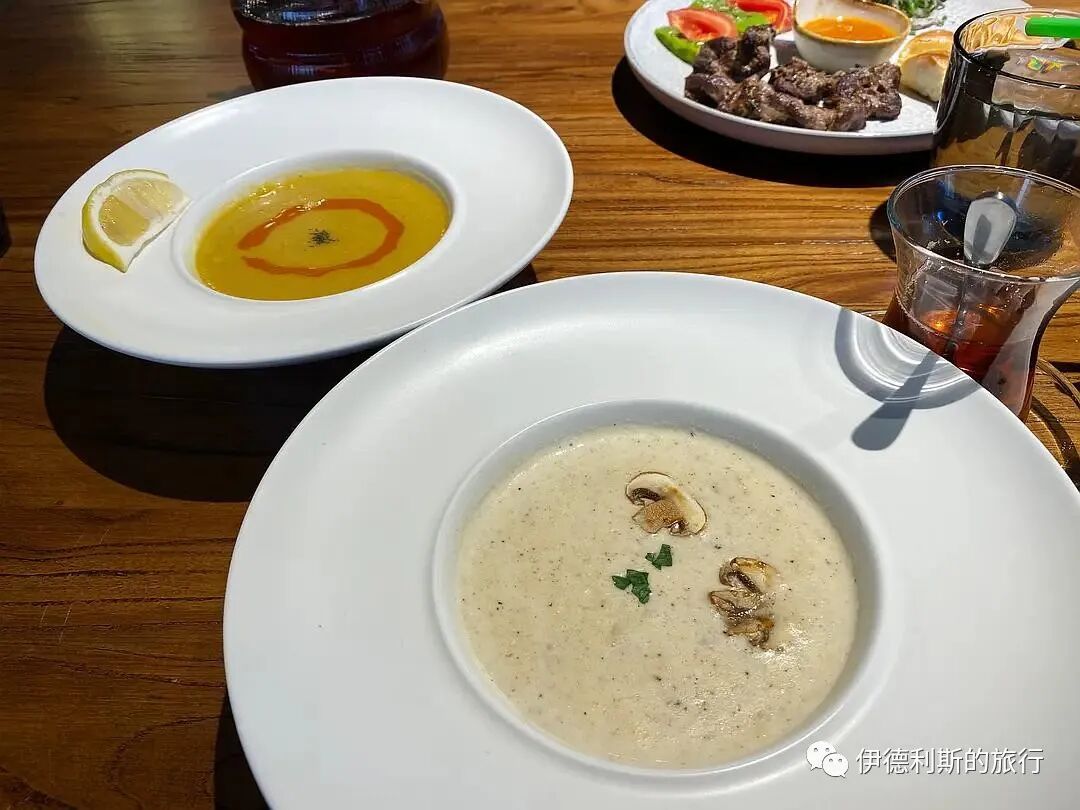
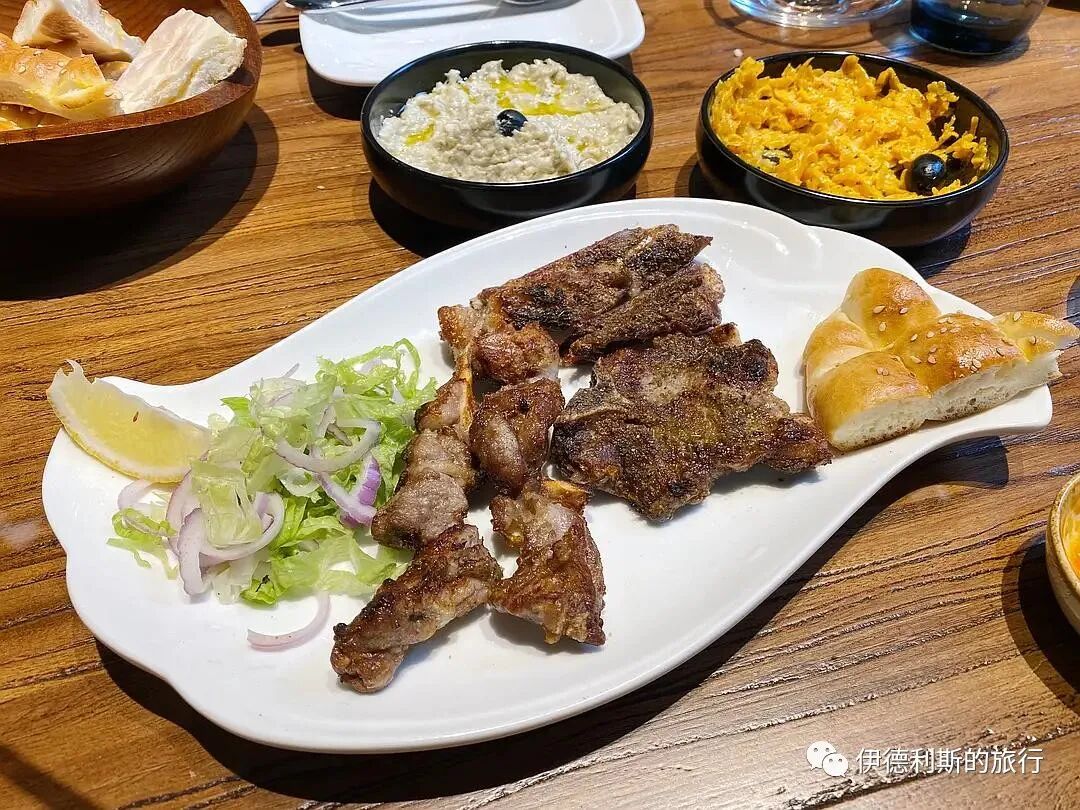
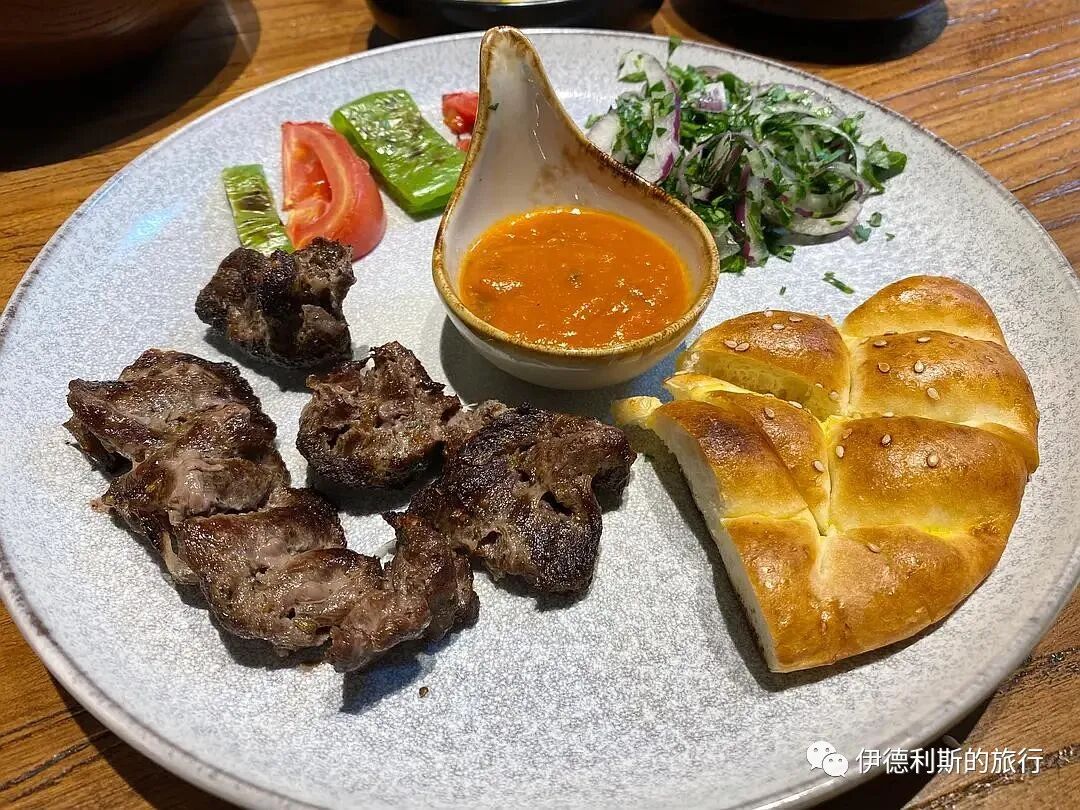
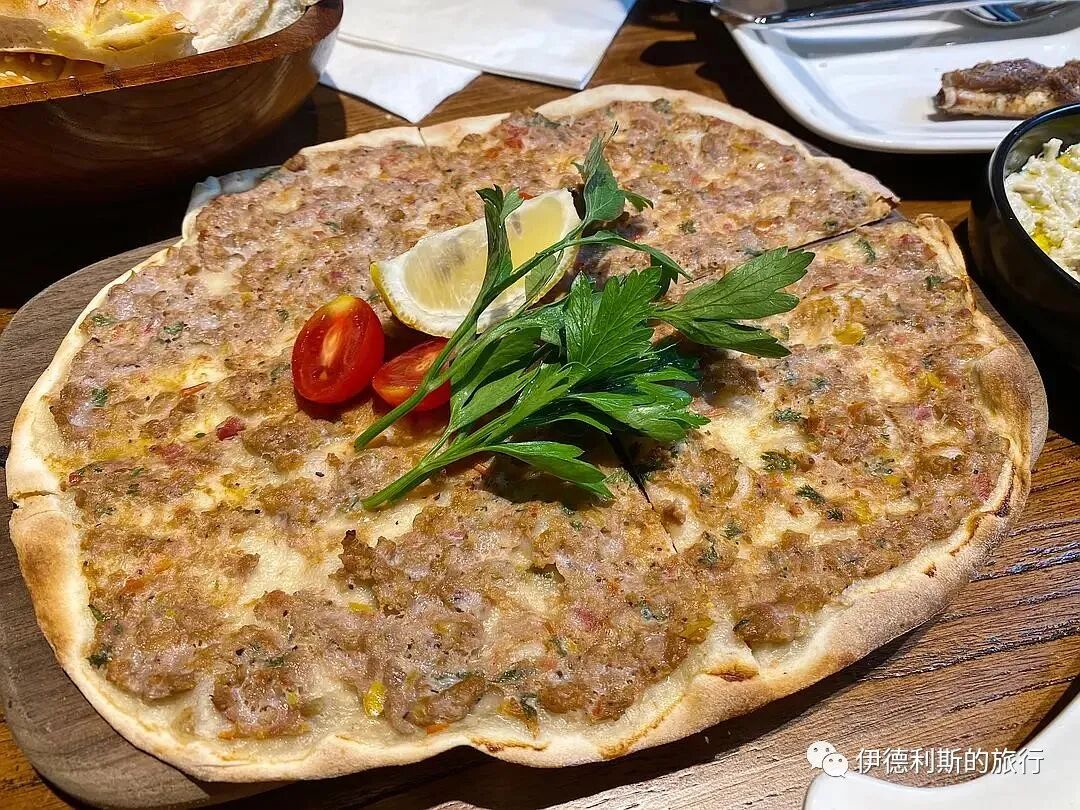
4. The beautiful western courtyard of the Turkish restaurant
On May 6, 2021, Iftar ate the Ramadan set meal at Xiting Xiuse in Xinyuanli. There are two types of chicken and mutton, which are different every day. The lamb we caught yesterday was Karabakh Pilaf, and the chicken was grilled chicken wings.
Karabakh is an area on the border between Azerbaijan and Armenia. Its name comes from the Turkic word "Kara (black)" and the Persian word "Bagh (garden)". Most of the people living here are Azerbaijanis. The Karabakh pilaf we ate was stewed lamb with apricots, and the rice was yellow because it was dyed with saffron juice. I had eaten this kind of apricot + saffron pilaf while listening to Azerbaijani Muqam when I was playing in Baku. It was very friendly this time.
In addition to the main course, the soup in the set menu is the classic red lentil soup. The side dishes are hummus with hummus, yogurt tomato sauce and carrot cheese sauce, as well as nut and pepper salad. The main dish is spinach Pide pancake, which is delicious with spinach and cheese. The drinks are Ayran and black tea. Their Ayran is not particularly sour. Finally there was rice pudding and Semolina for dessert.
Eating South Asian and Middle Eastern Food in Beijing (Part 1) (Section 1A of 4)
Articles • ali2007fr posted the article • 0 comments • 233 views • 2026-05-17 00:26
Summary: This travel note introduces Eating South Asian and Middle Eastern Food in Beijing (Part 1). I have been to many Middle Eastern and South Asian restaurants in Beijing in the past few years, some of which have closed. It is useful for readers interested in Beijing Halal Food, Muslim Travel, Middle Eastern Food. Section 1A of 4.
I have been to many Middle Eastern and South Asian restaurants in Beijing in the past few years, some of which have closed. I have been thinking about sorting it out in the past few days. Next, I will try all the restaurants I have not been to. Now I will share with you the restaurants I have been to.
First, let’s list the South Asian and Middle Eastern restaurants in Beijing that I know: Al Ameen (Lebanon), Al Safir (Jordan), BRBR (Syria), One Thousand and One Nights (Arabia), Taiba Guijie Store (Arabia), Turkish Mama (Turkey), Rumi's Secret (Turkey), Xiting Xiuse (Turkey), Dardaniel (Azerbaijan/Turkey) (It), Desert Rose (Azerbaijan/Turkey), Doner&Kebab (Azerbaijan/Turkey), Kavkaz (Azerbaijan), Iranian Food (the Iranian boss has returned to China and is currently run by Chinese), Khan Baba (Pakistan), Zam Zam (Pakistan), Lahore Restaurant (Pakistan), Benjabi (India), Indian Chef (India), Land of Masala (India), Sadhuli (India).
Newly opened in 2021: Zayton (Palestine), Istanbul (Türkiye), Qubbe (Türkiye), Taiba Sanlitun Store (Arabia).
One that was written in 2020 but closed in 2021: Meza (Tunisia).
I have eaten at restaurants that are closed: Camel Restaurant (Morocco), Nayir (Azerbaijan), Shashi Castle (Uzbekistan), Enchant (Turkey), and Bata Pancake (Israel).
1. Arabia
1. Jordanian restaurant Al Safir
On April 18, 2021, Ramadan Iftar had a buffet at the Jordanian restaurant Al Safir in Sanyuanqiao. It was a good opportunity to experience Levantine salads and various sauces! Now you can try all the things you wouldn’t normally order. The most classic ones are of course Hummus and Falafel. The most authentic way to eat them is to eat them with pita bread, sandwiching various sauces and falafel. The main courses include fish, lamb chops, chicken stewed rice, fried chicken, adzuki bean soup and various juices, including grape juice. Their lamb chops are so delicious, it feels like they were grilled first? The taste is particularly good. view all
Summary: This travel note introduces Eating South Asian and Middle Eastern Food in Beijing (Part 1). I have been to many Middle Eastern and South Asian restaurants in Beijing in the past few years, some of which have closed. It is useful for readers interested in Beijing Halal Food, Muslim Travel, Middle Eastern Food. Section 1A of 4.
I have been to many Middle Eastern and South Asian restaurants in Beijing in the past few years, some of which have closed. I have been thinking about sorting it out in the past few days. Next, I will try all the restaurants I have not been to. Now I will share with you the restaurants I have been to.
First, let’s list the South Asian and Middle Eastern restaurants in Beijing that I know: Al Ameen (Lebanon), Al Safir (Jordan), BRBR (Syria), One Thousand and One Nights (Arabia), Taiba Guijie Store (Arabia), Turkish Mama (Turkey), Rumi's Secret (Turkey), Xiting Xiuse (Turkey), Dardaniel (Azerbaijan/Turkey) (It), Desert Rose (Azerbaijan/Turkey), Doner&Kebab (Azerbaijan/Turkey), Kavkaz (Azerbaijan), Iranian Food (the Iranian boss has returned to China and is currently run by Chinese), Khan Baba (Pakistan), Zam Zam (Pakistan), Lahore Restaurant (Pakistan), Benjabi (India), Indian Chef (India), Land of Masala (India), Sadhuli (India).
Newly opened in 2021: Zayton (Palestine), Istanbul (Türkiye), Qubbe (Türkiye), Taiba Sanlitun Store (Arabia).
One that was written in 2020 but closed in 2021: Meza (Tunisia).
I have eaten at restaurants that are closed: Camel Restaurant (Morocco), Nayir (Azerbaijan), Shashi Castle (Uzbekistan), Enchant (Turkey), and Bata Pancake (Israel).
1. Arabia
1. Jordanian restaurant Al Safir
On April 18, 2021, Ramadan Iftar had a buffet at the Jordanian restaurant Al Safir in Sanyuanqiao. It was a good opportunity to experience Levantine salads and various sauces! Now you can try all the things you wouldn’t normally order. The most classic ones are of course Hummus and Falafel. The most authentic way to eat them is to eat them with pita bread, sandwiching various sauces and falafel. The main courses include fish, lamb chops, chicken stewed rice, fried chicken, adzuki bean soup and various juices, including grape juice. Their lamb chops are so delicious, it feels like they were grilled first? The taste is particularly good.
Eating South Asian and Middle Eastern Food in Beijing (Part 1) (Section 4C of 4)
ali2007fr posted the article • 0 comments • 282 views • 2026-05-17 00:23
Summary: This travel note introduces Eating South Asian and Middle Eastern Food in Beijing (Part 1). Over the past few years, I have visited many Middle Eastern and South Asian restaurants in Beijing, some of which have already closed down. It is useful for readers interested in Beijing Halal Food, Muslim Travel, Middle Eastern Food.
4. Turkish restaurant Xitingxiuse
On May 6, 2021, I had the Ramadan set meal for Iftar at Xiting Xiuse in Xinyuanli. There were chicken and lamb options, and the menu changed every day. The lamb dish we had yesterday was Karabakh Pilaf, and the chicken dish was grilled chicken wings.
Karabakh is a region on the border of Azerbaijan and Armenia; its name comes from the Turkic word 'Kara' (black) and the Persian word 'Bagh' (garden), and it is currently inhabited mostly by Azerbaijanis. The Karabakh pilaf we ate was lamb stew with apricots, and the rice was yellow because it was stained with saffron juice. I had eaten this apricot and saffron pilaf before while listening to Azerbaijani mugham when I was traveling in Baku, so eating it this time felt very familiar.
Besides the main course, the set meal includes classic red lentil soup, side dishes of hummus, yogurt eggplant dip, and carrot cheese dip, as well as a walnut bell pepper salad, and the main staple is spinach Pide, which is quite delicious with the spinach and cheese. The drinks are Ayran and black tea; their Ayran is not particularly sour. Finally, there are desserts of rice pudding and semolina.
Overall, this set meal is quite good value for money for the embassy district!
On June 24, 2020, I ate lentil soup, cucumber yogurt, stuffed grape leaves (dolma), meat patties (kofte), beef and cheese pide, ayran yogurt, and pomegranate chicken at the Turkish restaurant Xiting Xiuse in Xinyuanli. The restaurant has been open for a year, and the manager is a Turkmen from Turkmenistan who stayed in Beijing after graduating from the Communication University of China. The head chef is an Azerbaijani from Istanbul who never misses his five daily prayers, and there is also a Kazakh staff member from Kazakhstan working at the shop. I really feel their food is quite delicious; the pide bread is especially fragrant when fresh out of the oven, and the meat quality is also very good. The last photo is a nice picture of the head chef that the manager sent to us. view all
Summary: This travel note introduces Eating South Asian and Middle Eastern Food in Beijing (Part 1). Over the past few years, I have visited many Middle Eastern and South Asian restaurants in Beijing, some of which have already closed down. It is useful for readers interested in Beijing Halal Food, Muslim Travel, Middle Eastern Food.
4. Turkish restaurant Xitingxiuse
On May 6, 2021, I had the Ramadan set meal for Iftar at Xiting Xiuse in Xinyuanli. There were chicken and lamb options, and the menu changed every day. The lamb dish we had yesterday was Karabakh Pilaf, and the chicken dish was grilled chicken wings.
Karabakh is a region on the border of Azerbaijan and Armenia; its name comes from the Turkic word 'Kara' (black) and the Persian word 'Bagh' (garden), and it is currently inhabited mostly by Azerbaijanis. The Karabakh pilaf we ate was lamb stew with apricots, and the rice was yellow because it was stained with saffron juice. I had eaten this apricot and saffron pilaf before while listening to Azerbaijani mugham when I was traveling in Baku, so eating it this time felt very familiar.
Besides the main course, the set meal includes classic red lentil soup, side dishes of hummus, yogurt eggplant dip, and carrot cheese dip, as well as a walnut bell pepper salad, and the main staple is spinach Pide, which is quite delicious with the spinach and cheese. The drinks are Ayran and black tea; their Ayran is not particularly sour. Finally, there are desserts of rice pudding and semolina.
Overall, this set meal is quite good value for money for the embassy district!
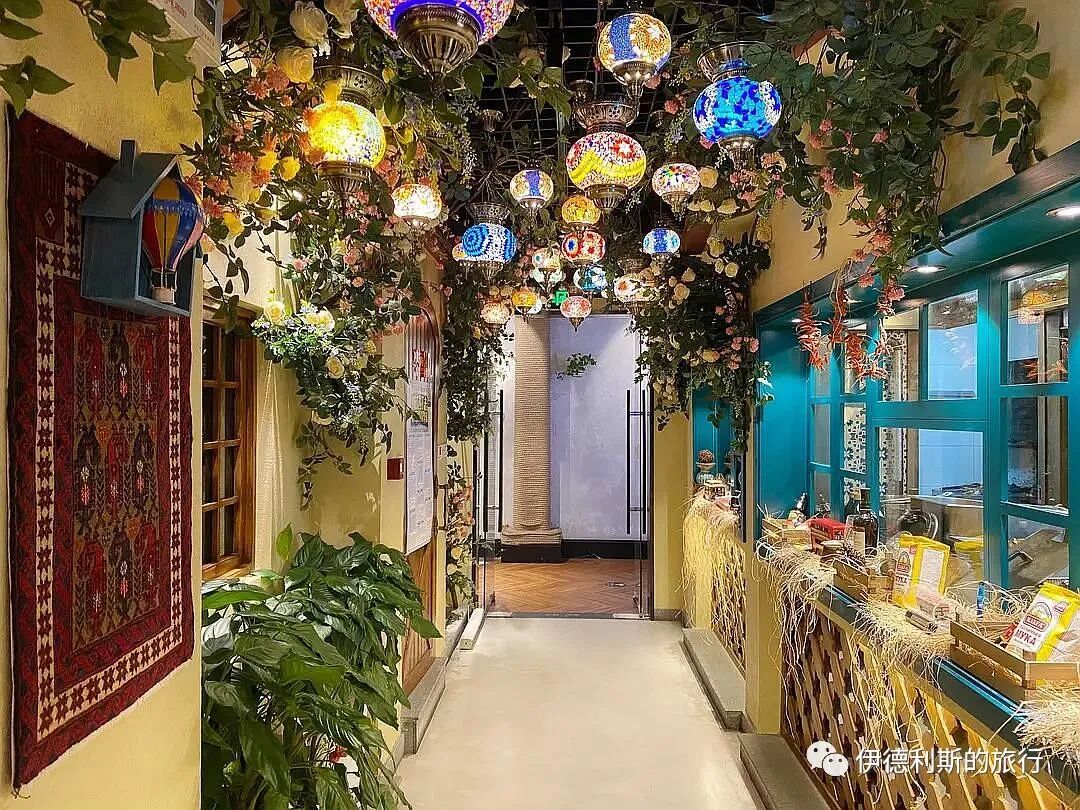
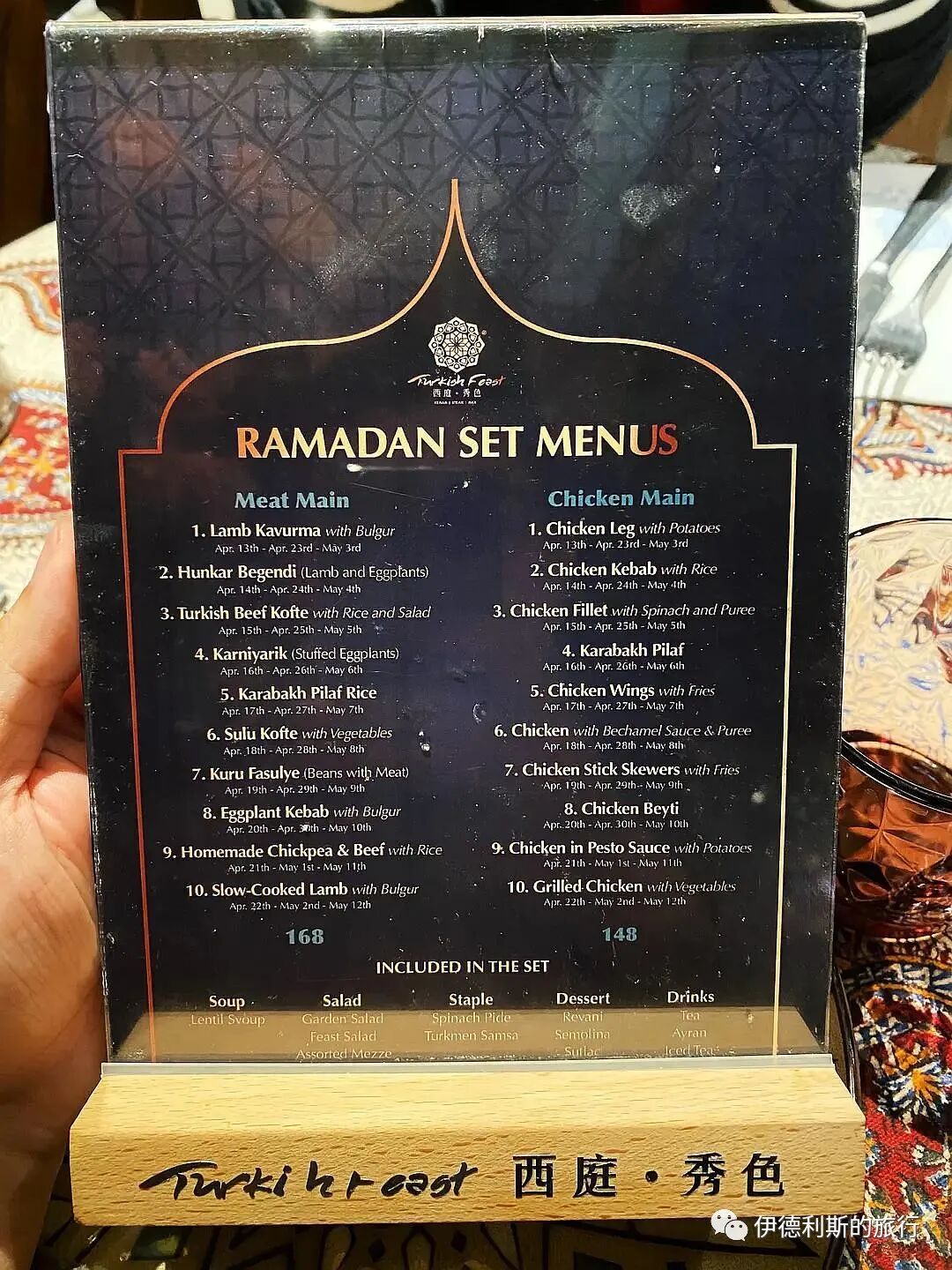
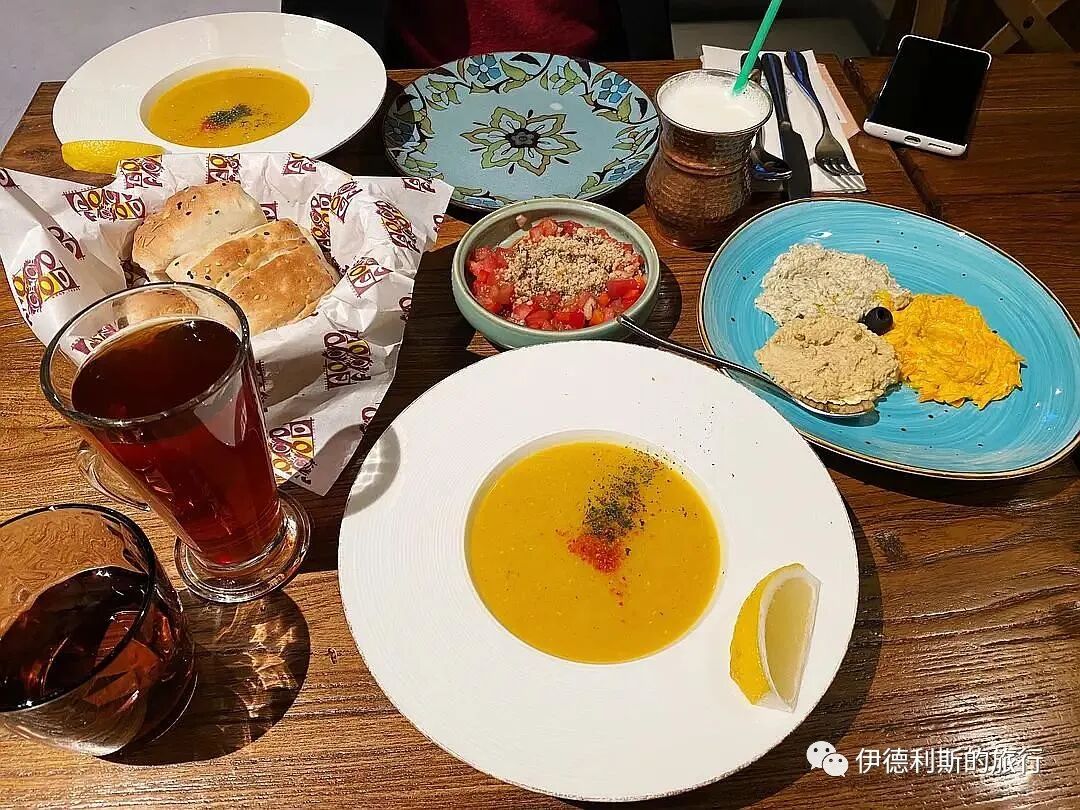
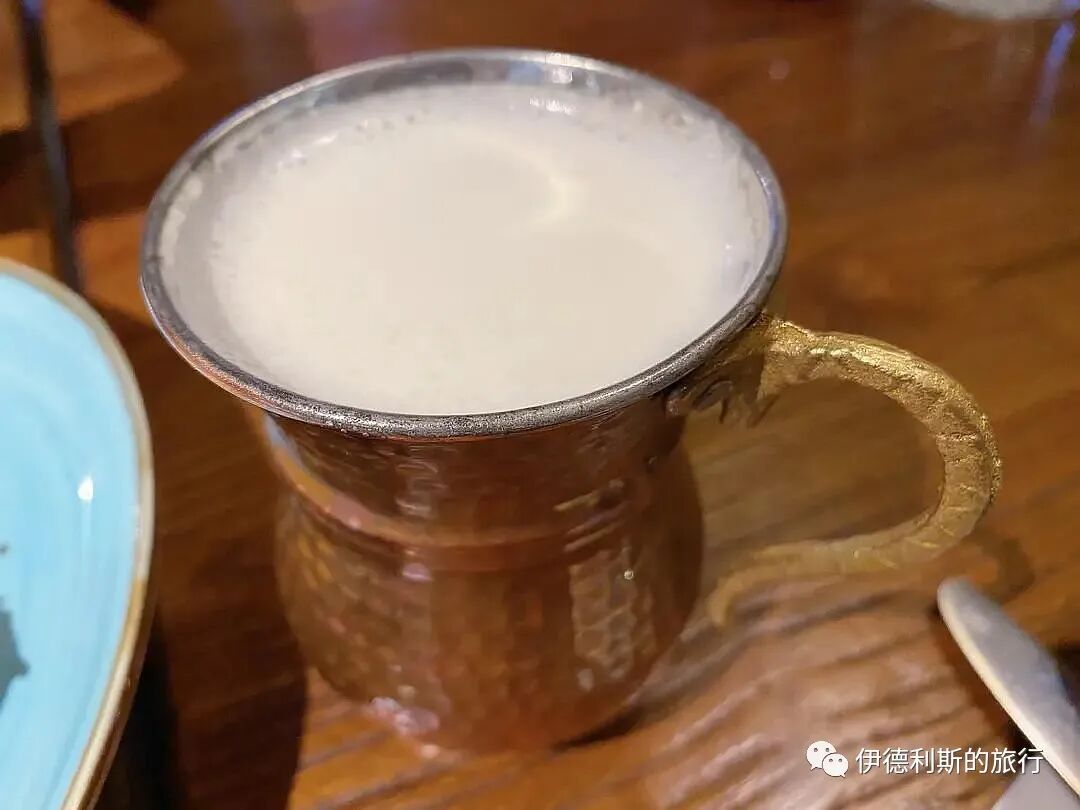
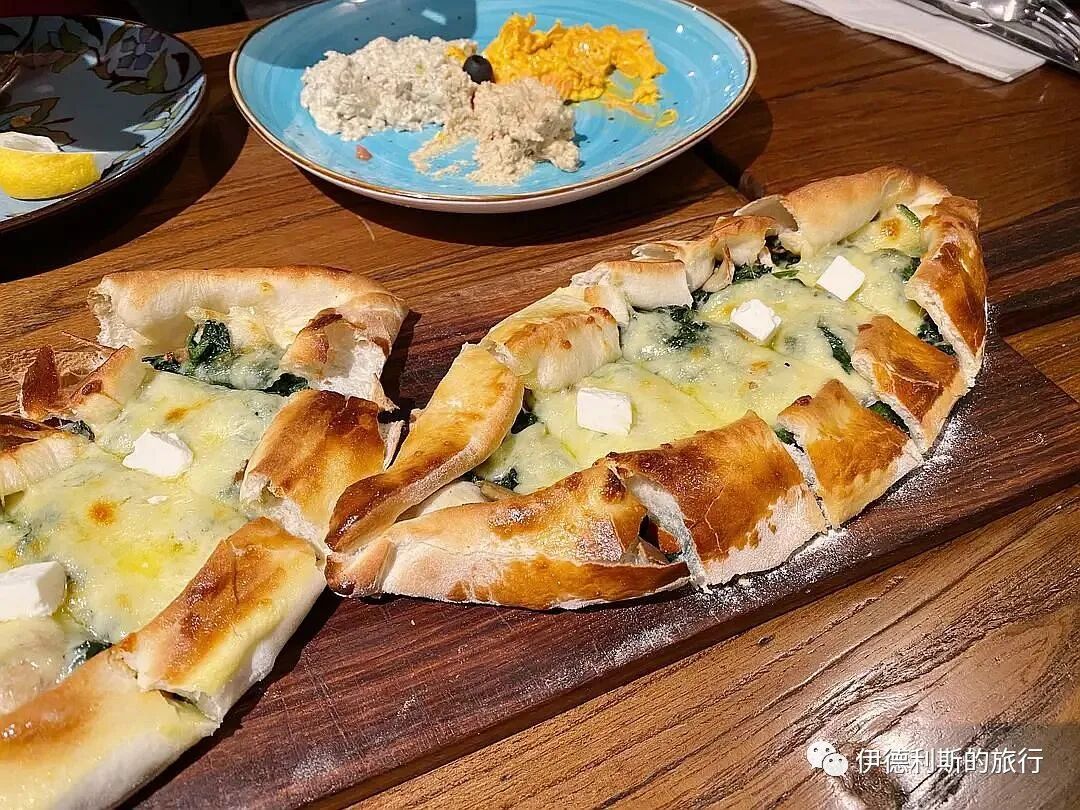
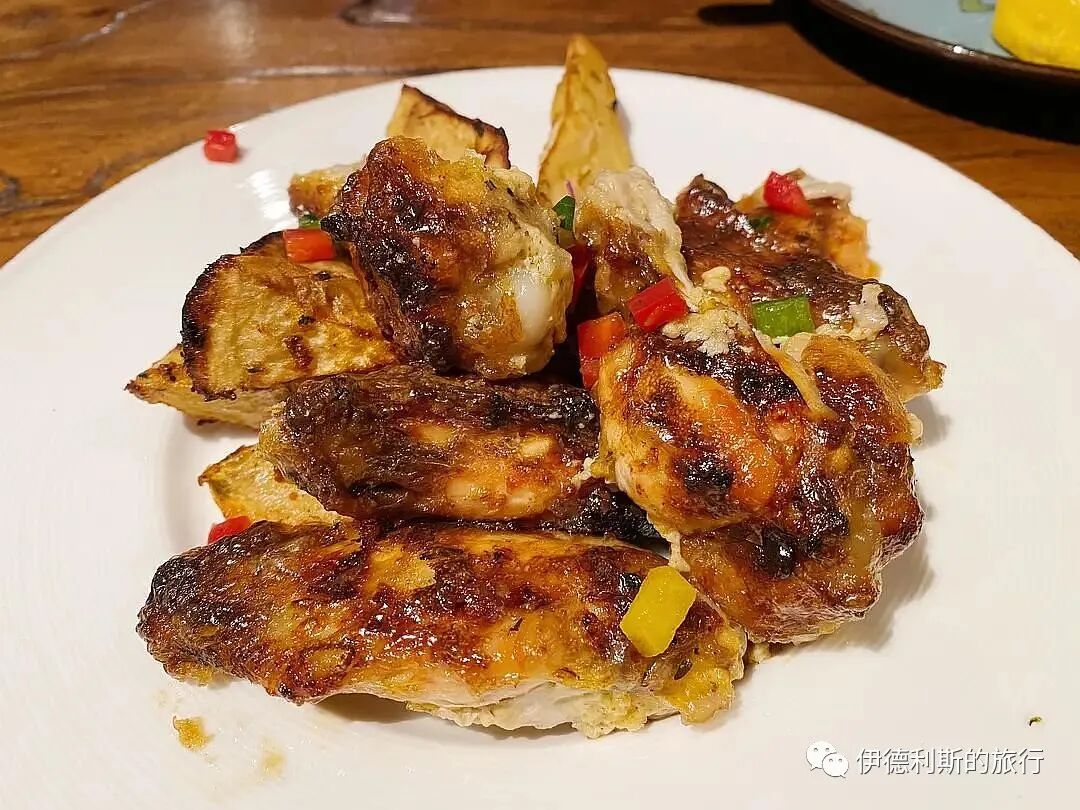
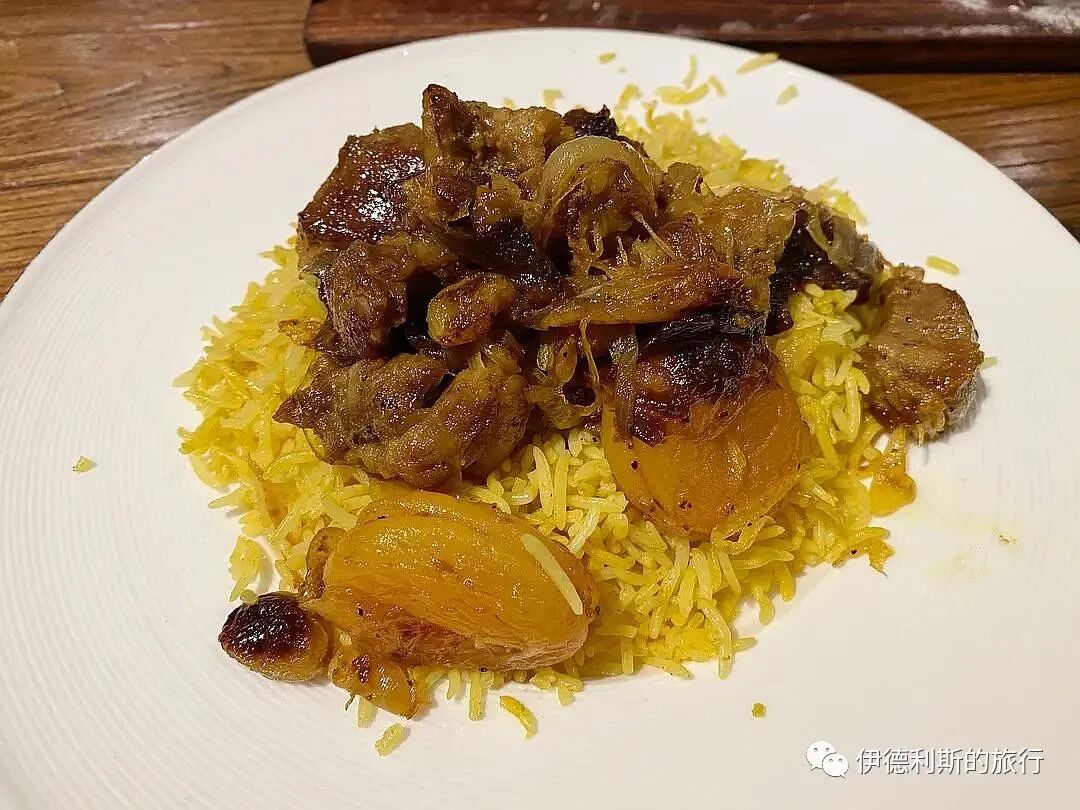
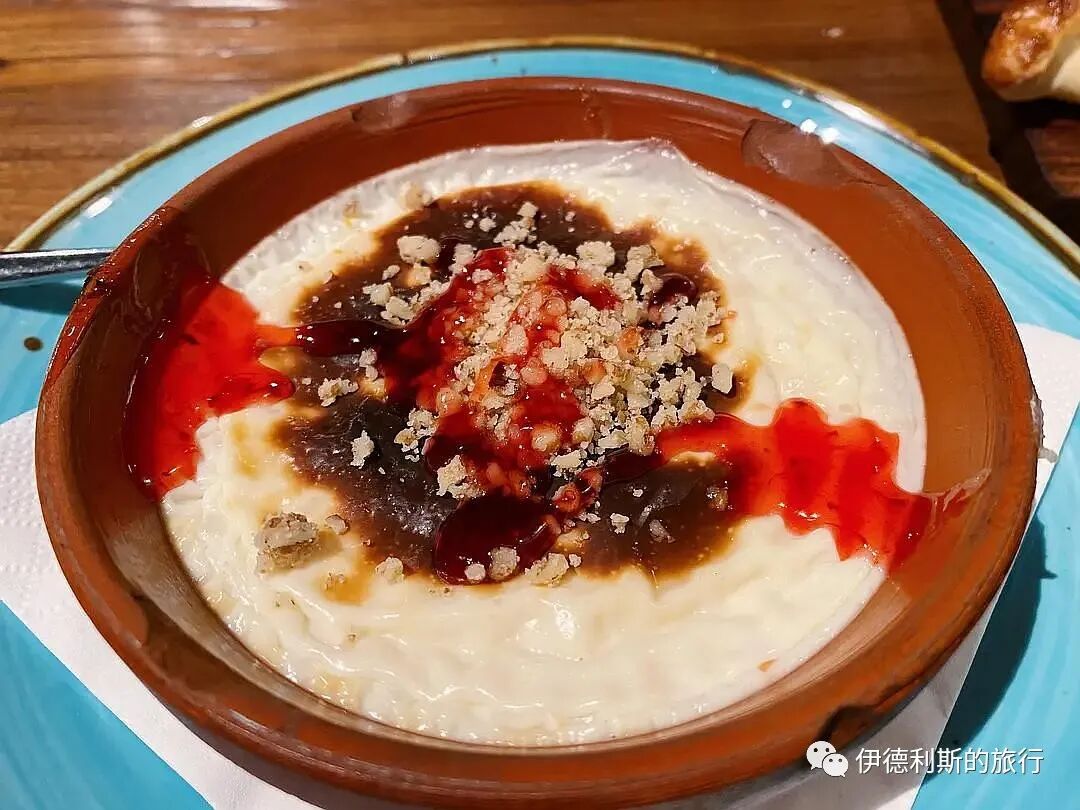
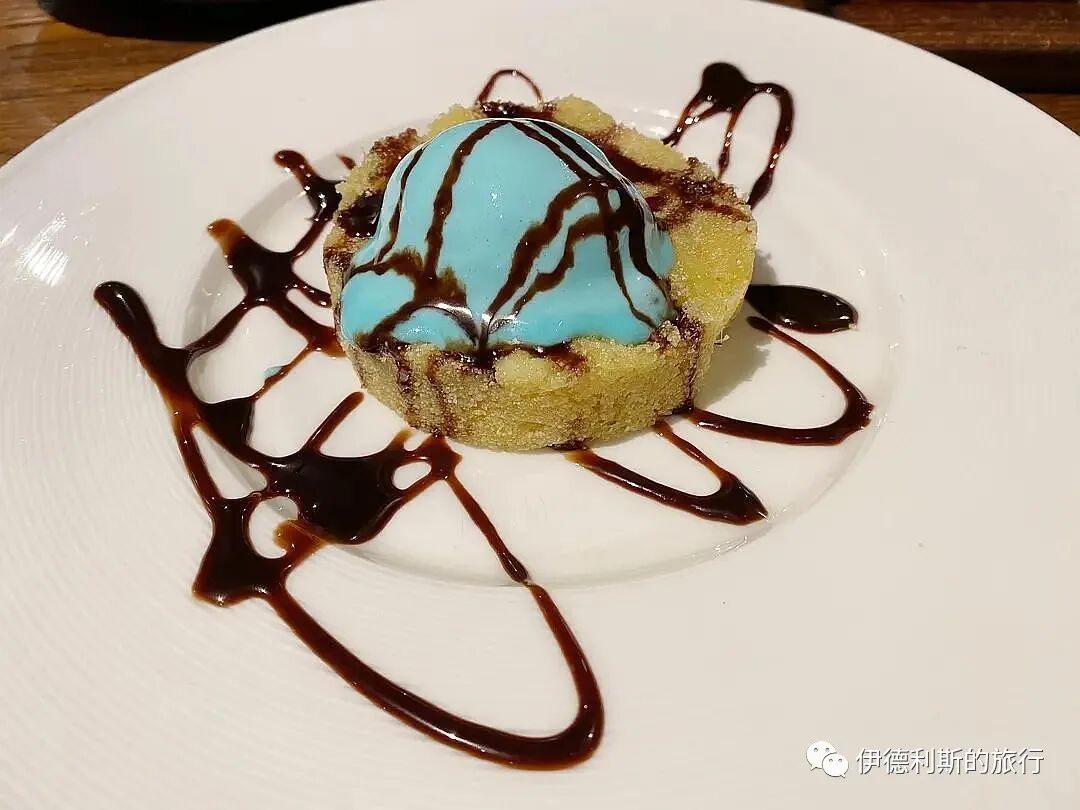
On June 24, 2020, I ate lentil soup, cucumber yogurt, stuffed grape leaves (dolma), meat patties (kofte), beef and cheese pide, ayran yogurt, and pomegranate chicken at the Turkish restaurant Xiting Xiuse in Xinyuanli. The restaurant has been open for a year, and the manager is a Turkmen from Turkmenistan who stayed in Beijing after graduating from the Communication University of China. The head chef is an Azerbaijani from Istanbul who never misses his five daily prayers, and there is also a Kazakh staff member from Kazakhstan working at the shop. I really feel their food is quite delicious; the pide bread is especially fragrant when fresh out of the oven, and the meat quality is also very good. The last photo is a nice picture of the head chef that the manager sent to us.
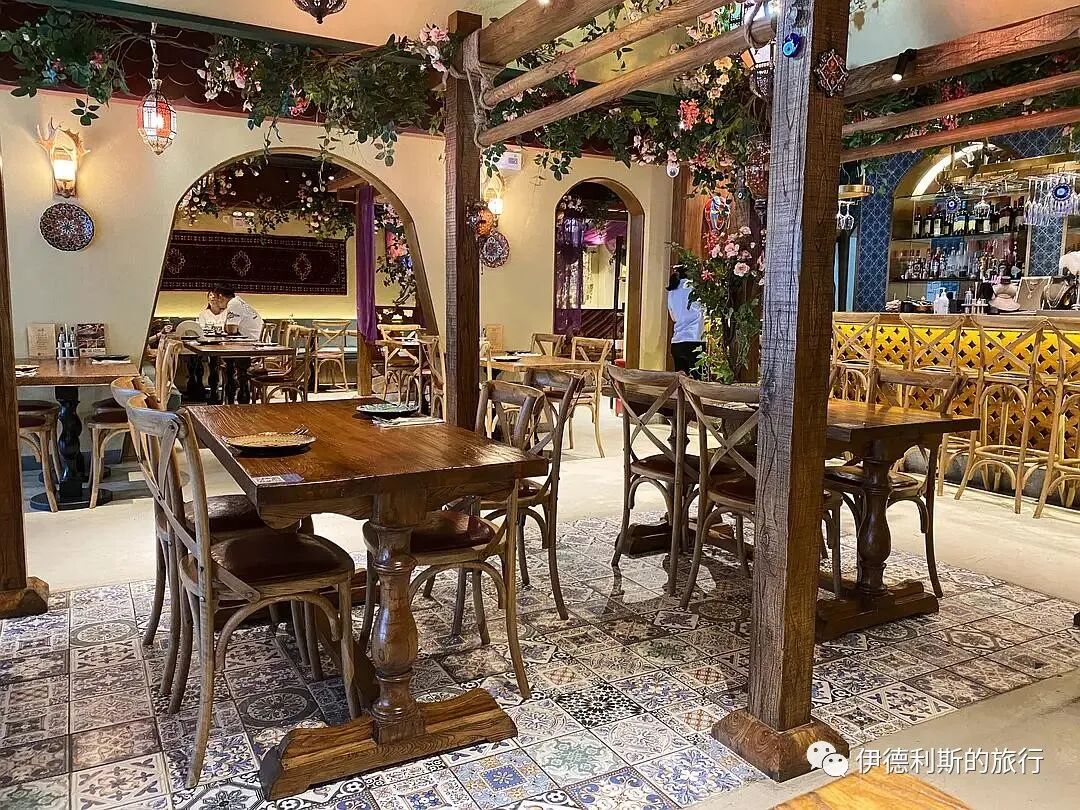
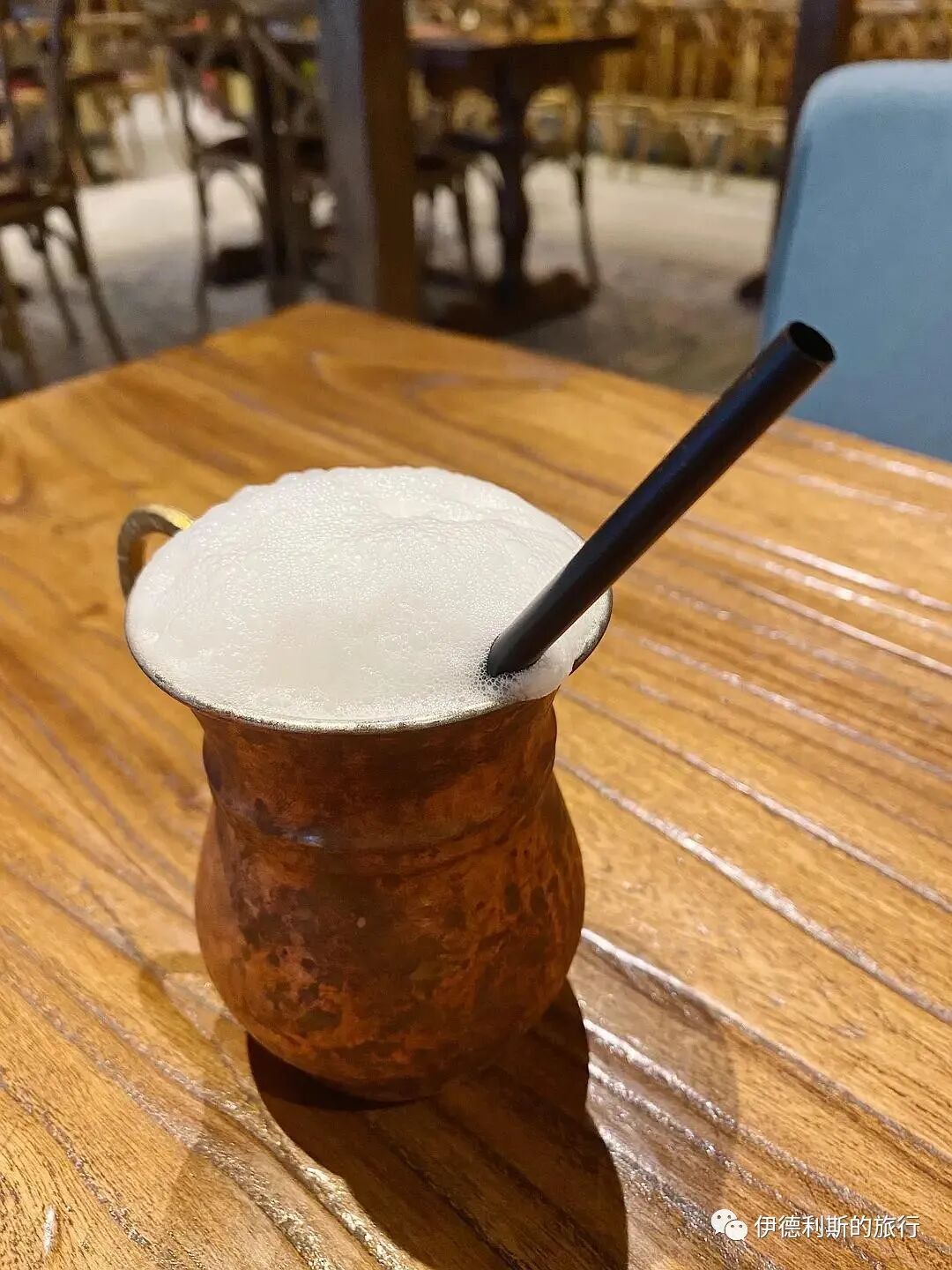
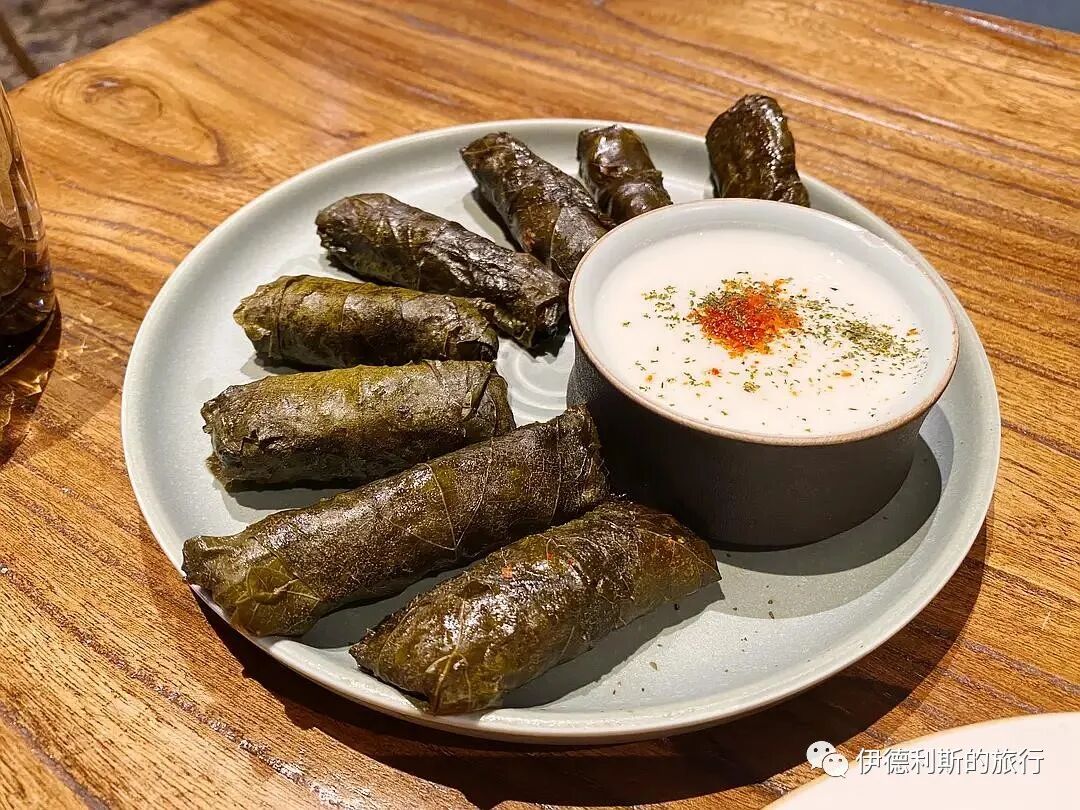
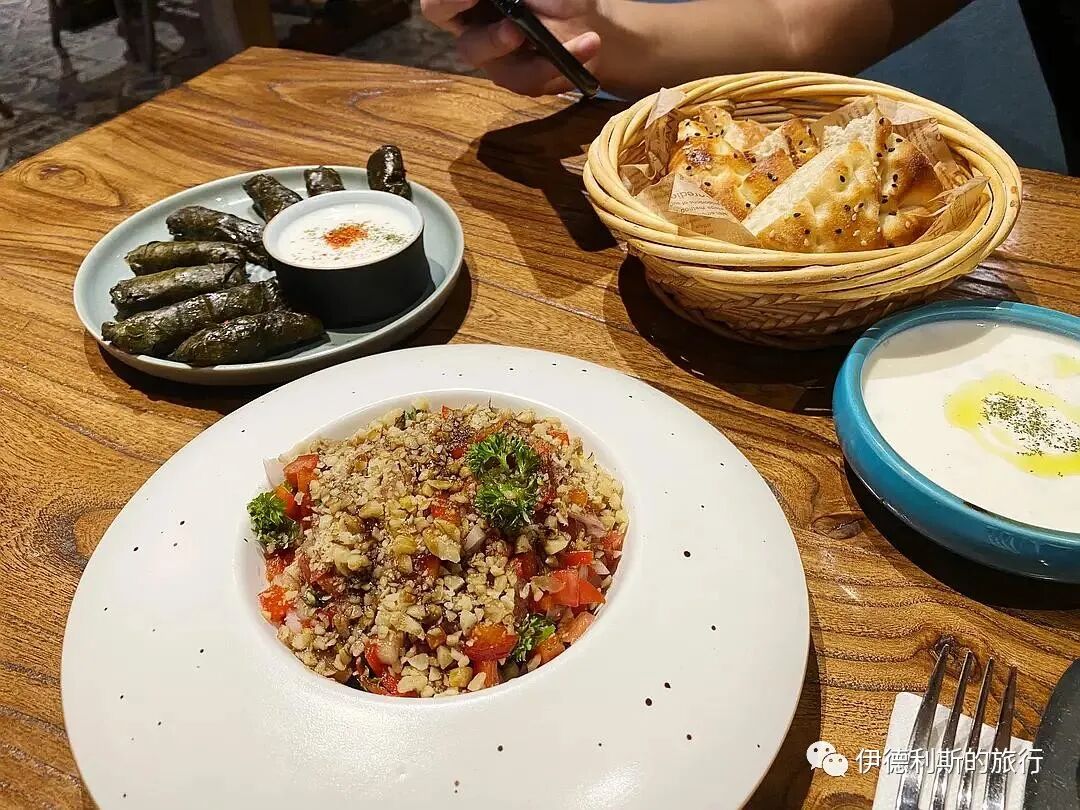
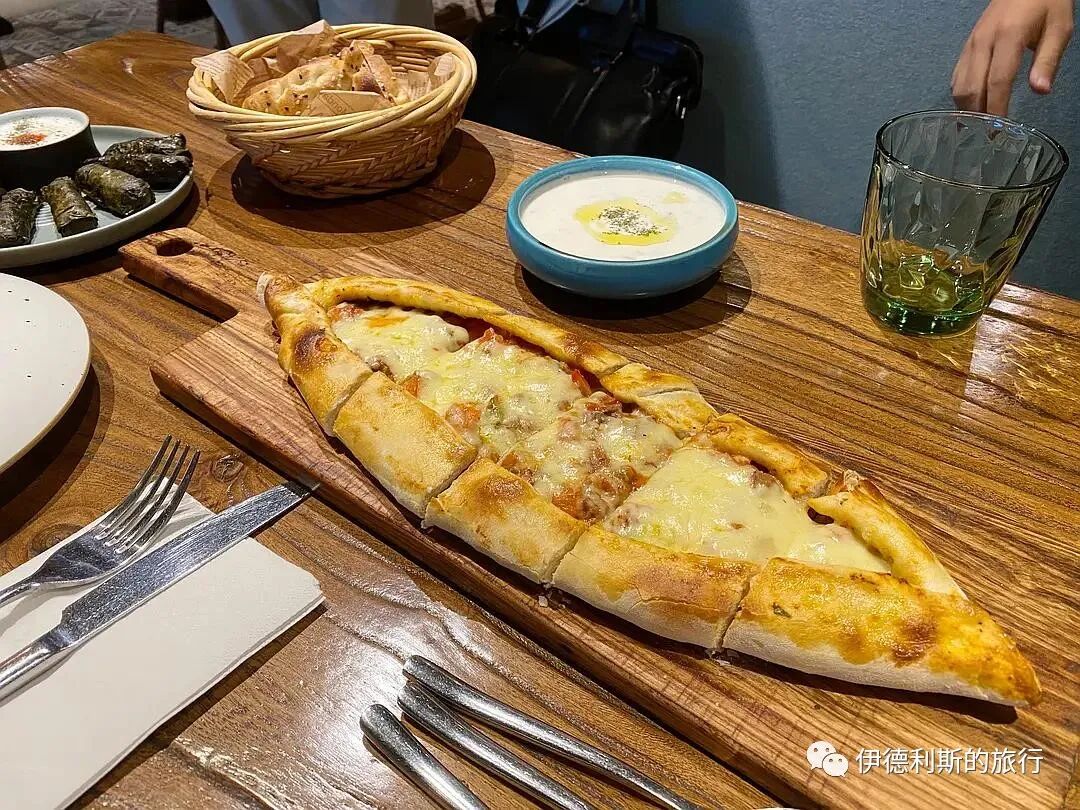
Eating South Asian and Middle Eastern Food in Beijing (Part 1) (Section 4A of 4)
ali2007fr posted the article • 0 comments • 242 views • 2026-05-17 00:23
Summary: This travel note introduces Eating South Asian and Middle Eastern Food in Beijing (Part 1). Over the past few years, I have visited many Middle Eastern and South Asian restaurants in Beijing, some of which have already closed down. It is useful for readers interested in Beijing Halal Food, Muslim Travel, Middle Eastern Food.
3. The secret of Rumi's Turkish restaurant
On February 18, 2021, I had an Ottoman breakfast at Rumi's Secret on Ritan Shangjie, pretending to be in Turkey.
On September 25, 2020, our family held a welcome dinner for Zainab's mother at Rumi's Secret, a Turkish restaurant on Ritan Upper Street. Since opening this summer, Rumi's Secret has become a popular spot for friends in Beijing, especially among our Uyghur friends. Because they do not sell alcohol, I find it to have the most comfortable atmosphere among the many halal restaurants on Ritan Upper Street, making it very suitable for family gatherings.
For appetizers, we ordered carrot puree and yogurt eggplant puree; for soup, we ordered lentil soup and cream of mushroom soup; then we also ordered grilled chicken, kebabs, and Pide. The owner also gave us complimentary black tea and dessert after the meal. Zainab's mother tried Middle Eastern lentil soup for the first time and thought it tasted very good. Their grilled chicken and kebabs were also quite delicious, but the one I recommend most is the mixed Pide, which had cheese, meat, and vegetables. I think it was even more fragrant than the Pide I had at several shops in Turkey. view all
Summary: This travel note introduces Eating South Asian and Middle Eastern Food in Beijing (Part 1). Over the past few years, I have visited many Middle Eastern and South Asian restaurants in Beijing, some of which have already closed down. It is useful for readers interested in Beijing Halal Food, Muslim Travel, Middle Eastern Food.
3. The secret of Rumi's Turkish restaurant
On February 18, 2021, I had an Ottoman breakfast at Rumi's Secret on Ritan Shangjie, pretending to be in Turkey.
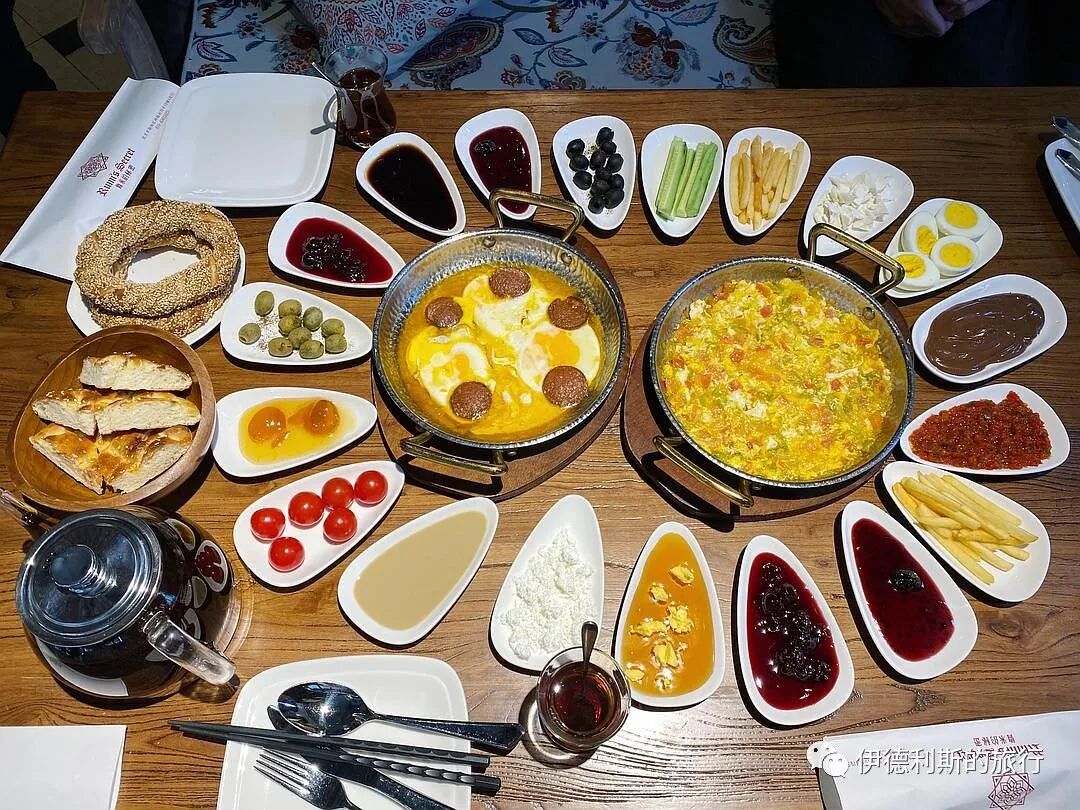
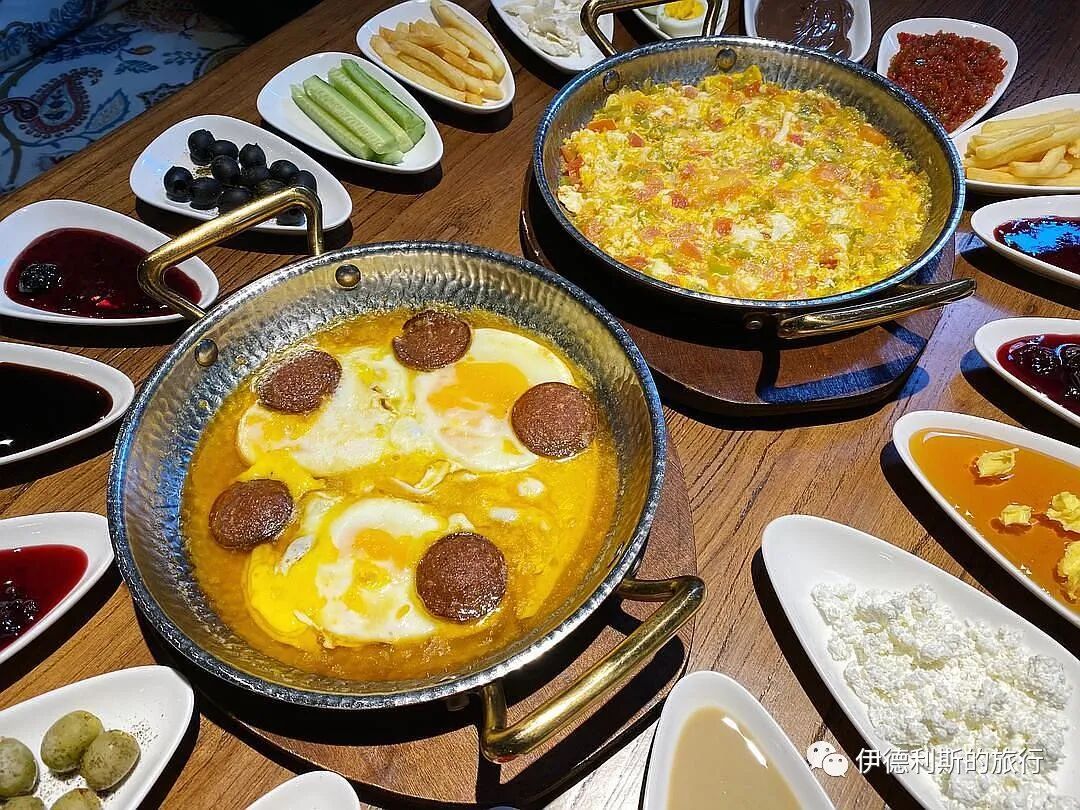
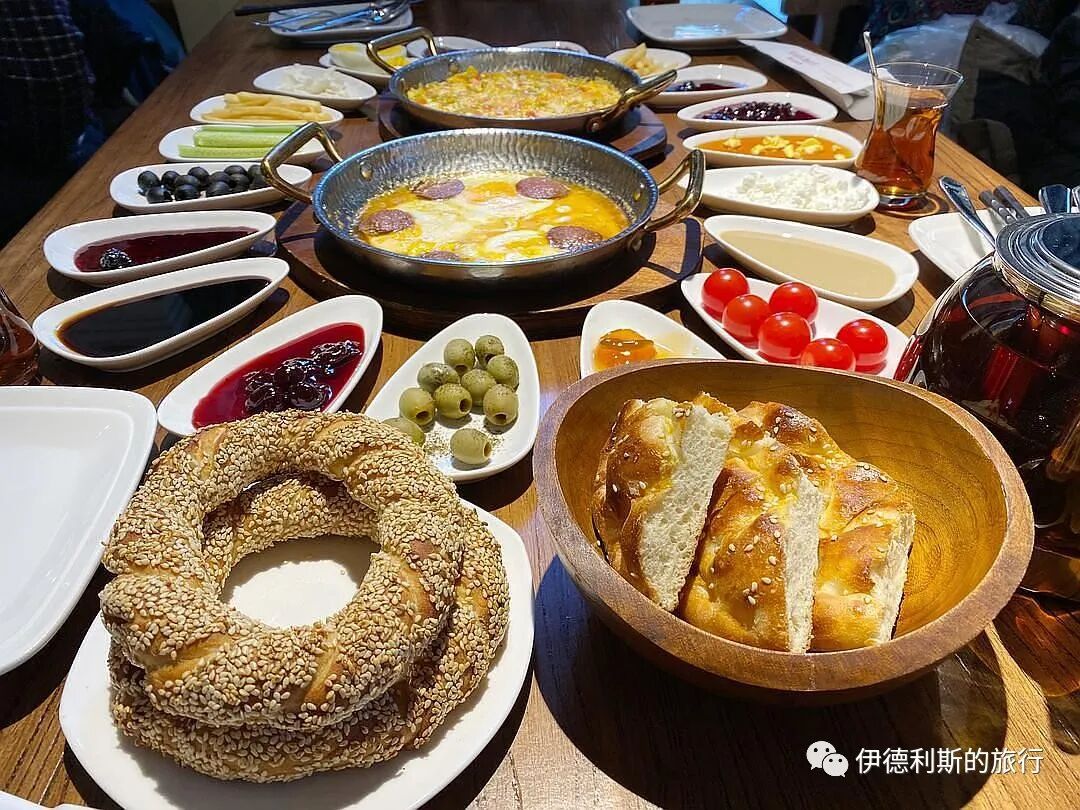
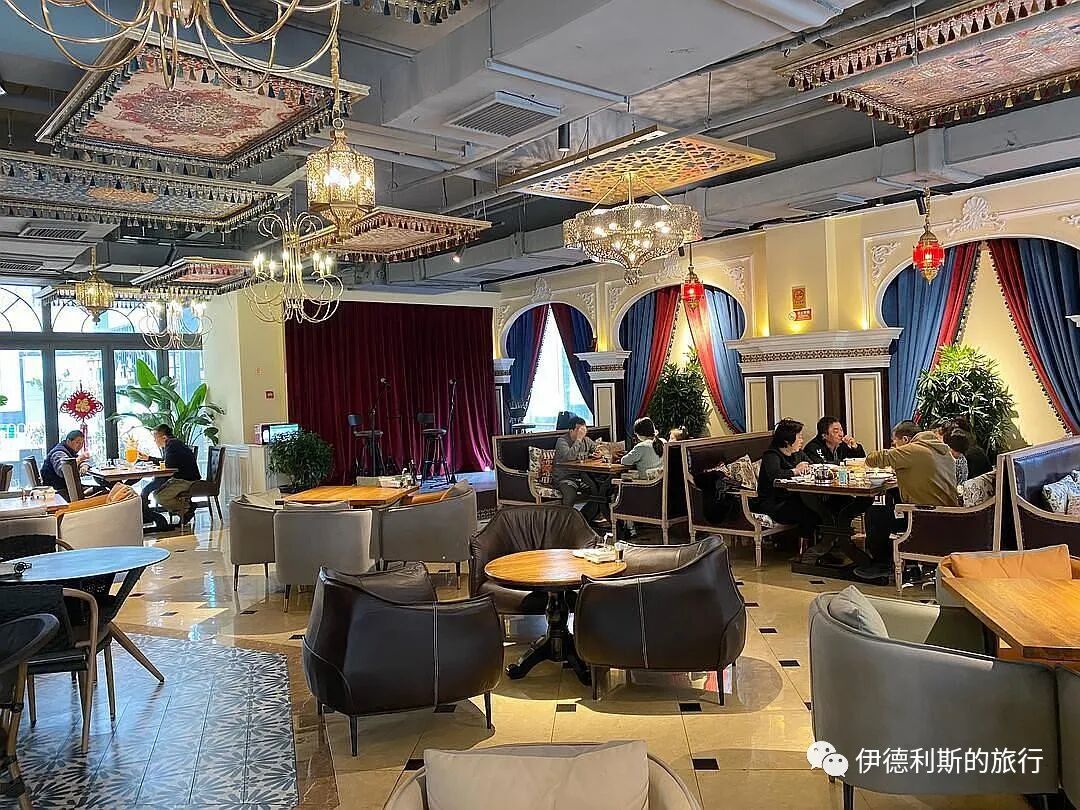
On September 25, 2020, our family held a welcome dinner for Zainab's mother at Rumi's Secret, a Turkish restaurant on Ritan Upper Street. Since opening this summer, Rumi's Secret has become a popular spot for friends in Beijing, especially among our Uyghur friends. Because they do not sell alcohol, I find it to have the most comfortable atmosphere among the many halal restaurants on Ritan Upper Street, making it very suitable for family gatherings.
For appetizers, we ordered carrot puree and yogurt eggplant puree; for soup, we ordered lentil soup and cream of mushroom soup; then we also ordered grilled chicken, kebabs, and Pide. The owner also gave us complimentary black tea and dessert after the meal. Zainab's mother tried Middle Eastern lentil soup for the first time and thought it tasted very good. Their grilled chicken and kebabs were also quite delicious, but the one I recommend most is the mixed Pide, which had cheese, meat, and vegetables. I think it was even more fragrant than the Pide I had at several shops in Turkey.
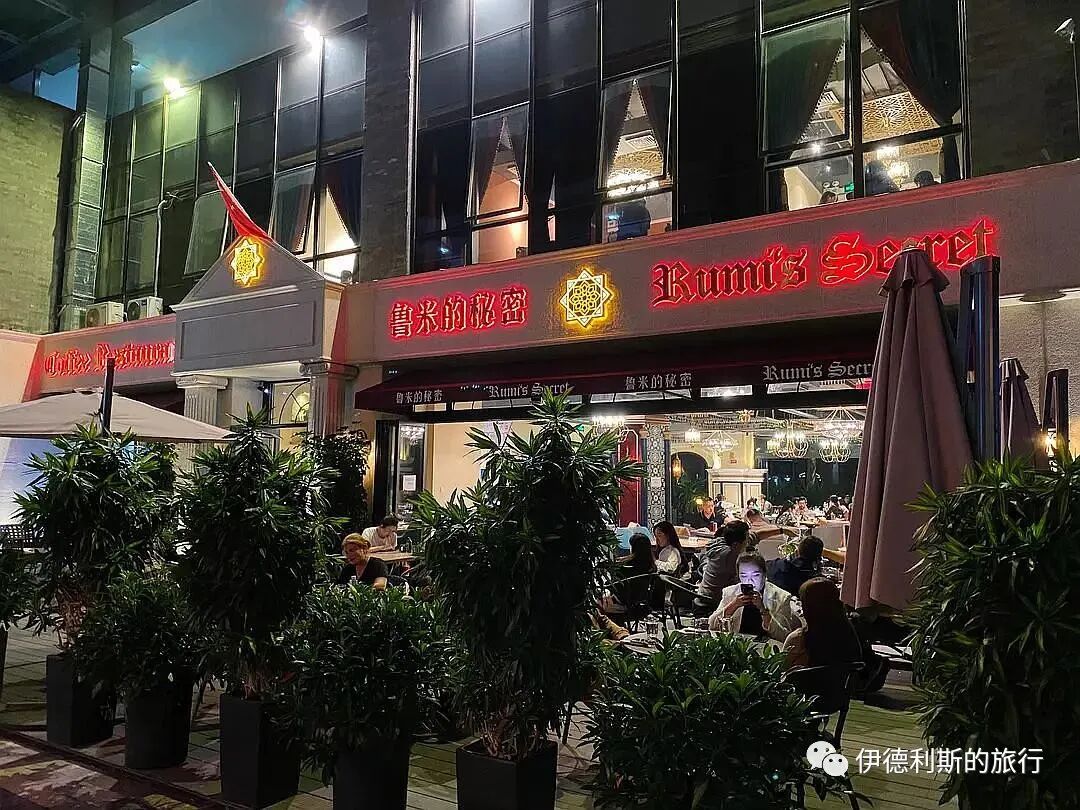
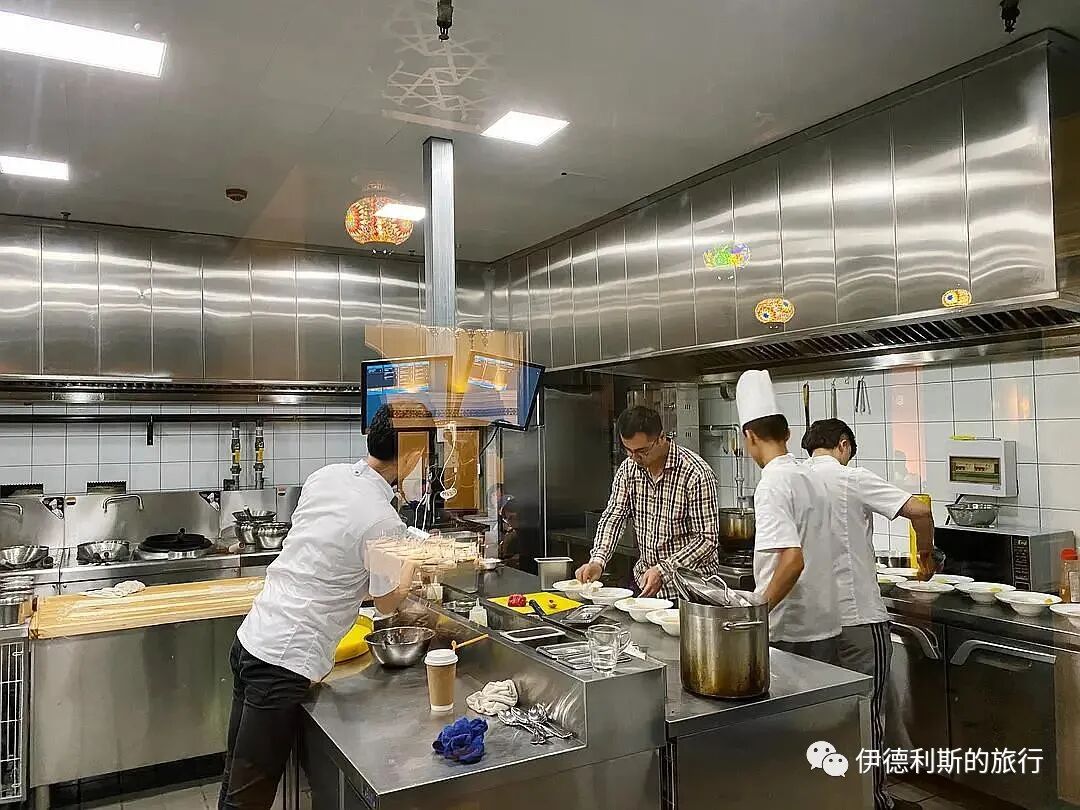
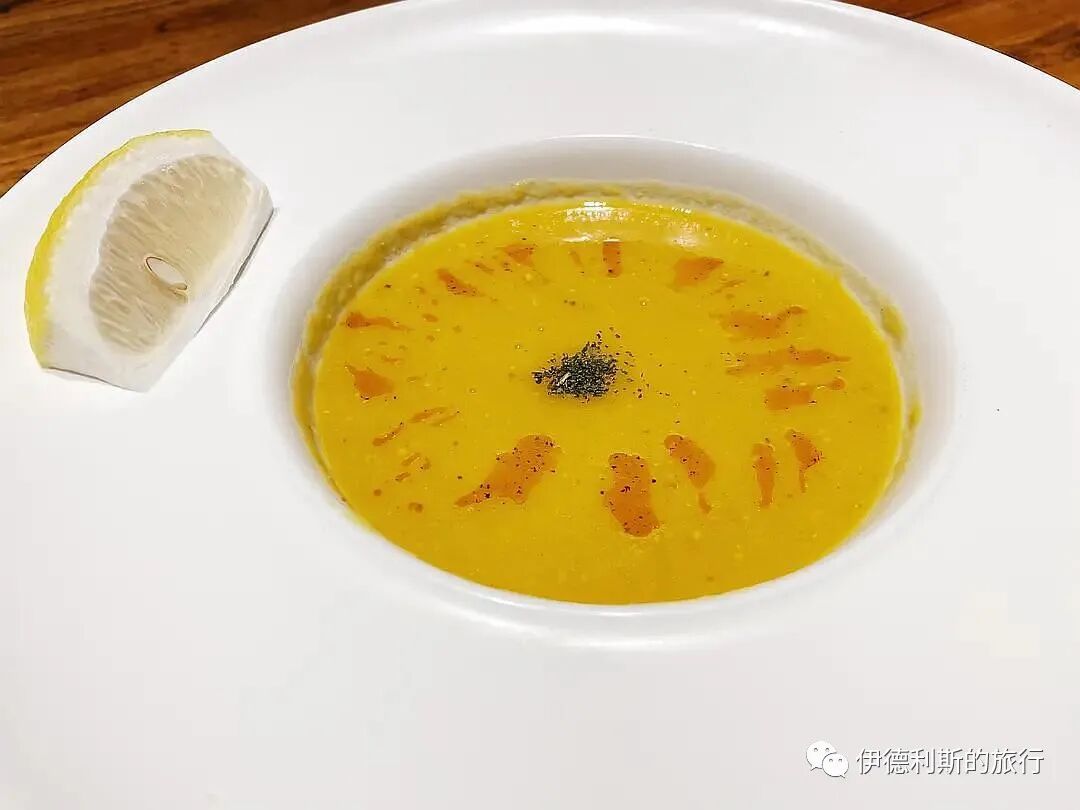
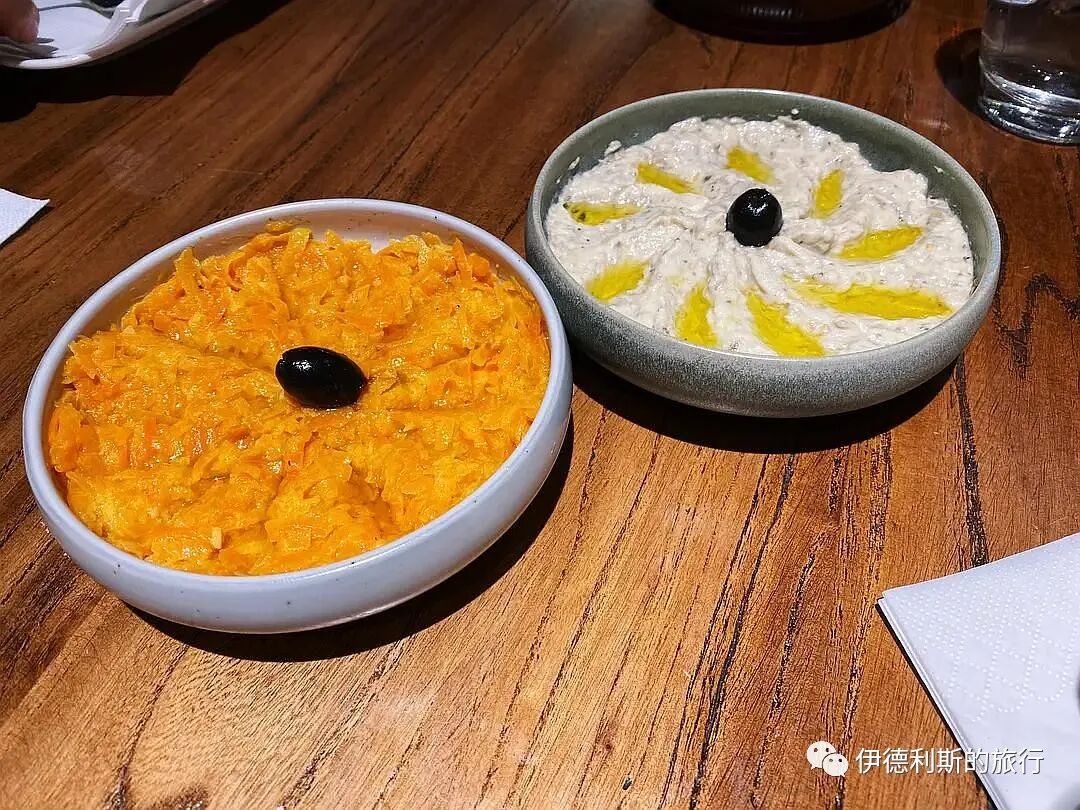
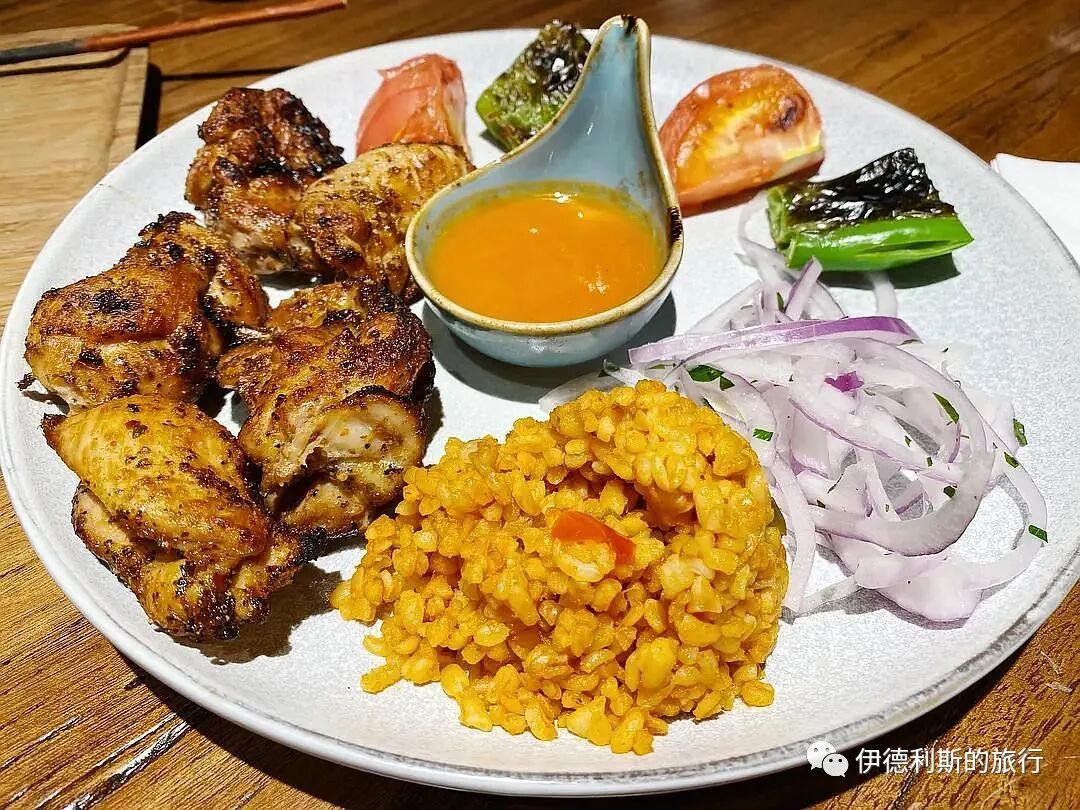
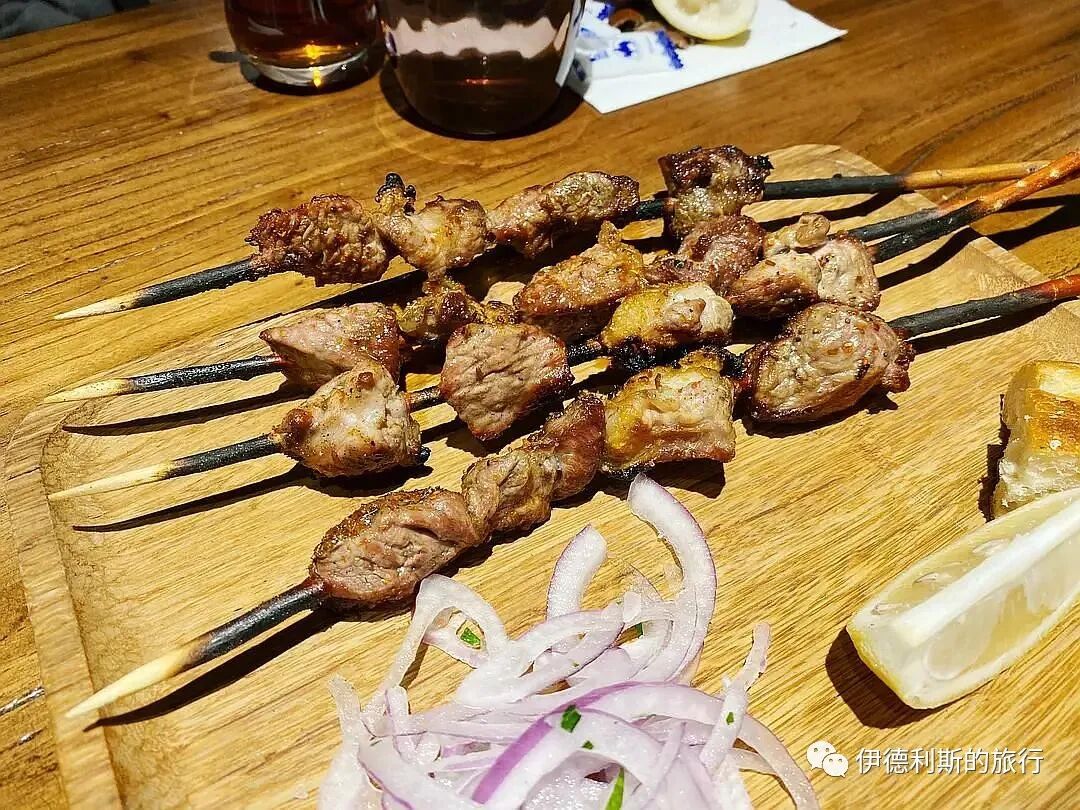
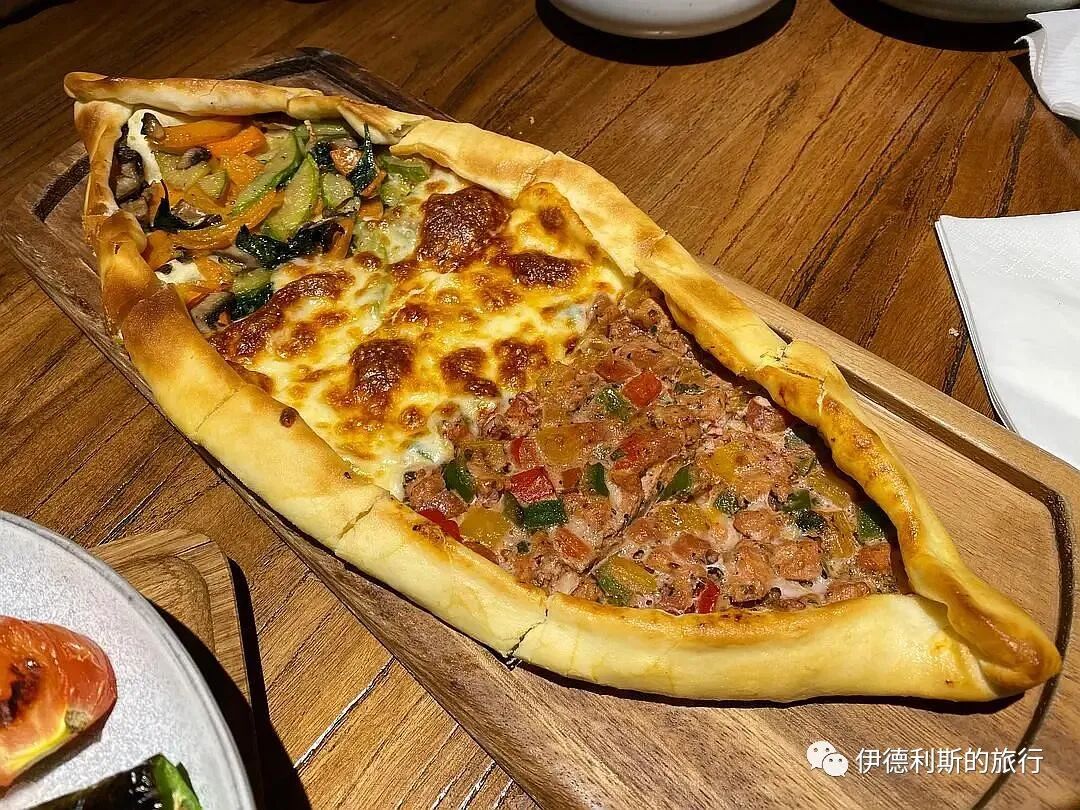
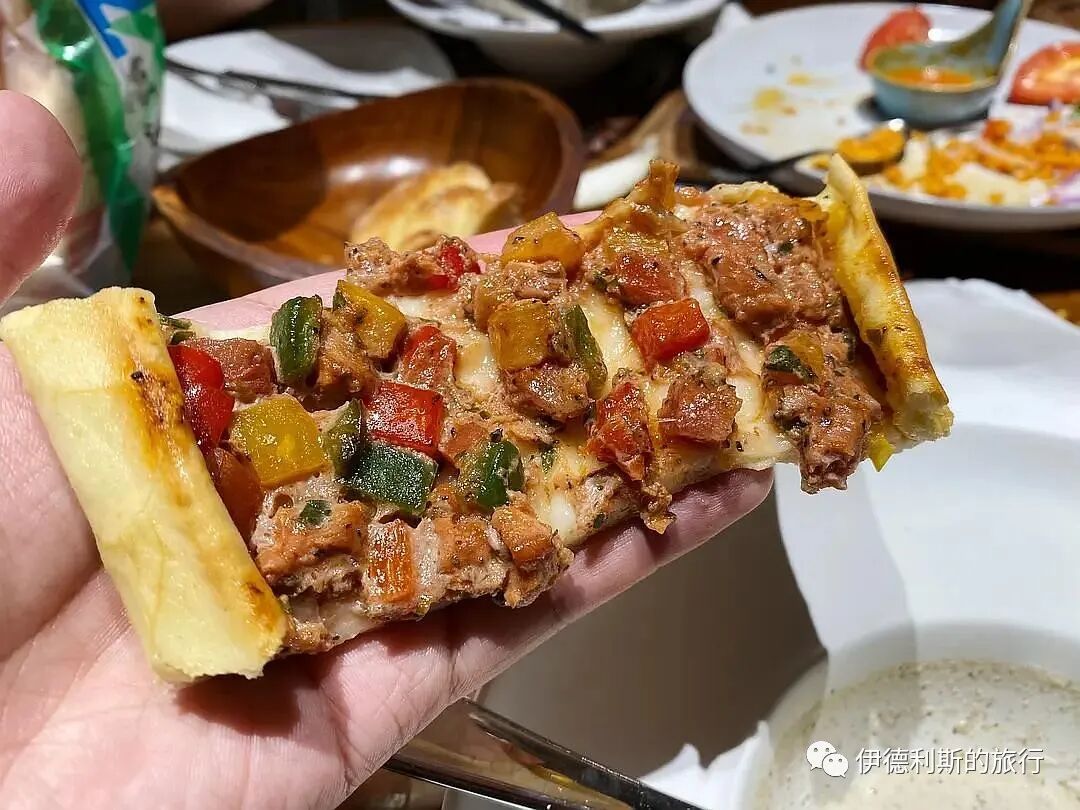
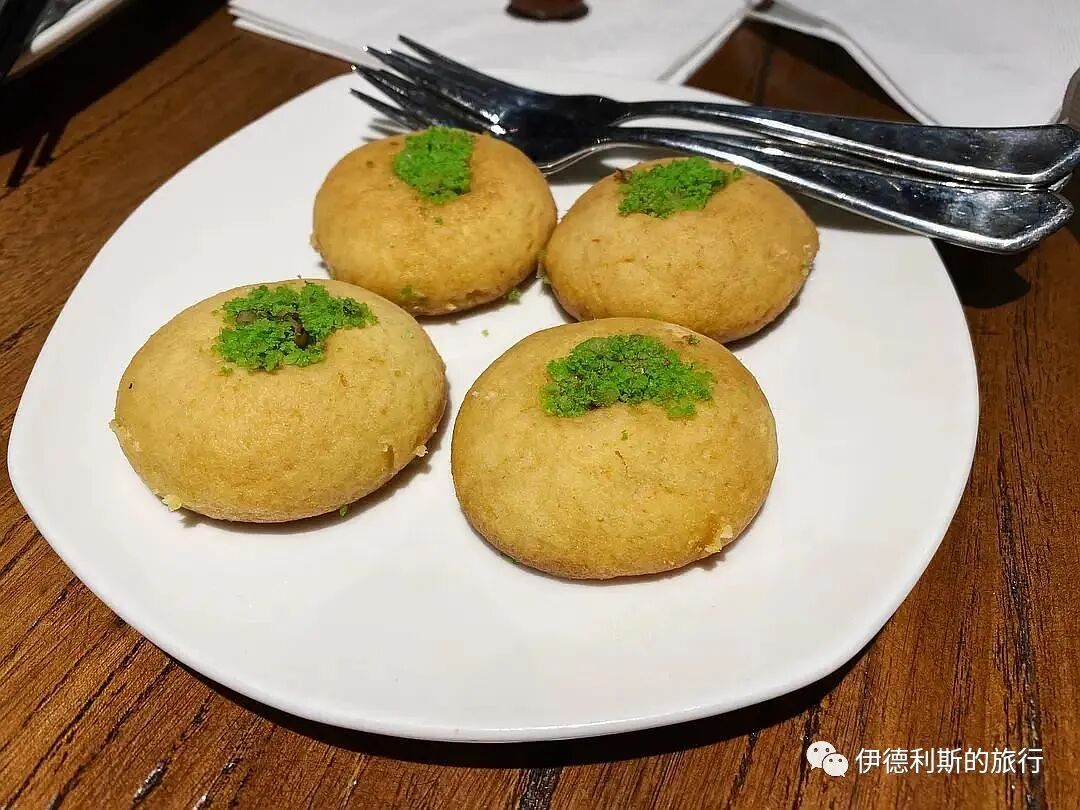
Eating South Asian and Middle Eastern Food in Beijing (Part 1) (Section 1C of 4)
ali2007fr posted the article • 0 comments • 271 views • 2026-05-17 00:23
Summary: This travel note introduces Eating South Asian and Middle Eastern Food in Beijing (Part 1). Over the past few years, I have visited many Middle Eastern and South Asian restaurants in Beijing, some of which have already closed down. It is useful for readers interested in Beijing Halal Food, Muslim Travel, Middle Eastern Food.
On July 17, 2019, I enjoyed having lentil soup, lamb hummus, falafel, labneh, cucumber yogurt, and a mixed grill platter at Al Safir.
Hummus and falafel are both specialty foods from the Levant region on the eastern Mediterranean coast, and all kinds of ways to prepare hummus are super delicious. I have also loved lentil soup ever since I started eating at the Palestinian restaurant at my university, although it is a bit hot to eat in the summer.
I love their roasted lamb so much! It is very tender, and it is so satisfying to dip it in the onion and tomato sauce and wrap it in pita bread. Their roasted meat is so delicious that there was an incident where I ate several pieces as soon as it was served before I remembered to take a photo lol.
On January 10, 2019, I had lentil soup, lamb hummus, grilled fish, and mint tea for lunch at the Jordanian restaurant Al Safir in Sanyuanqiao. I especially love their onion sauce! I have to order an extra serving every time. view all
Summary: This travel note introduces Eating South Asian and Middle Eastern Food in Beijing (Part 1). Over the past few years, I have visited many Middle Eastern and South Asian restaurants in Beijing, some of which have already closed down. It is useful for readers interested in Beijing Halal Food, Muslim Travel, Middle Eastern Food.
On July 17, 2019, I enjoyed having lentil soup, lamb hummus, falafel, labneh, cucumber yogurt, and a mixed grill platter at Al Safir.
Hummus and falafel are both specialty foods from the Levant region on the eastern Mediterranean coast, and all kinds of ways to prepare hummus are super delicious. I have also loved lentil soup ever since I started eating at the Palestinian restaurant at my university, although it is a bit hot to eat in the summer.
I love their roasted lamb so much! It is very tender, and it is so satisfying to dip it in the onion and tomato sauce and wrap it in pita bread. Their roasted meat is so delicious that there was an incident where I ate several pieces as soon as it was served before I remembered to take a photo lol.
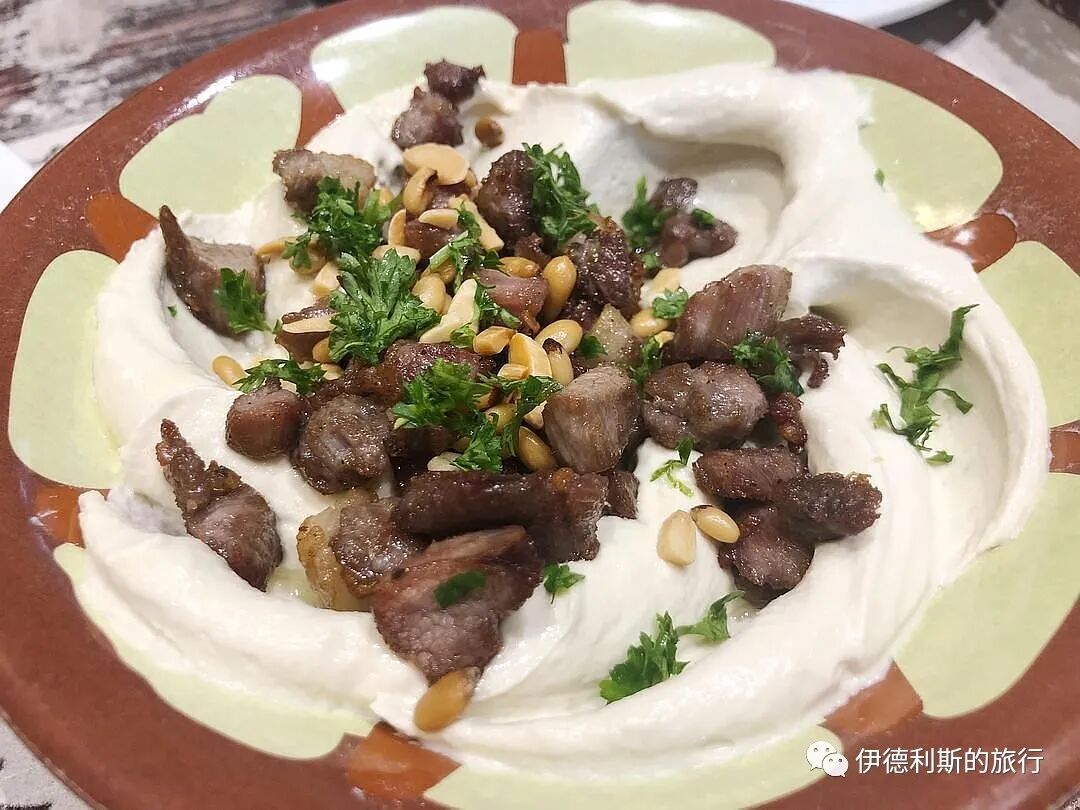
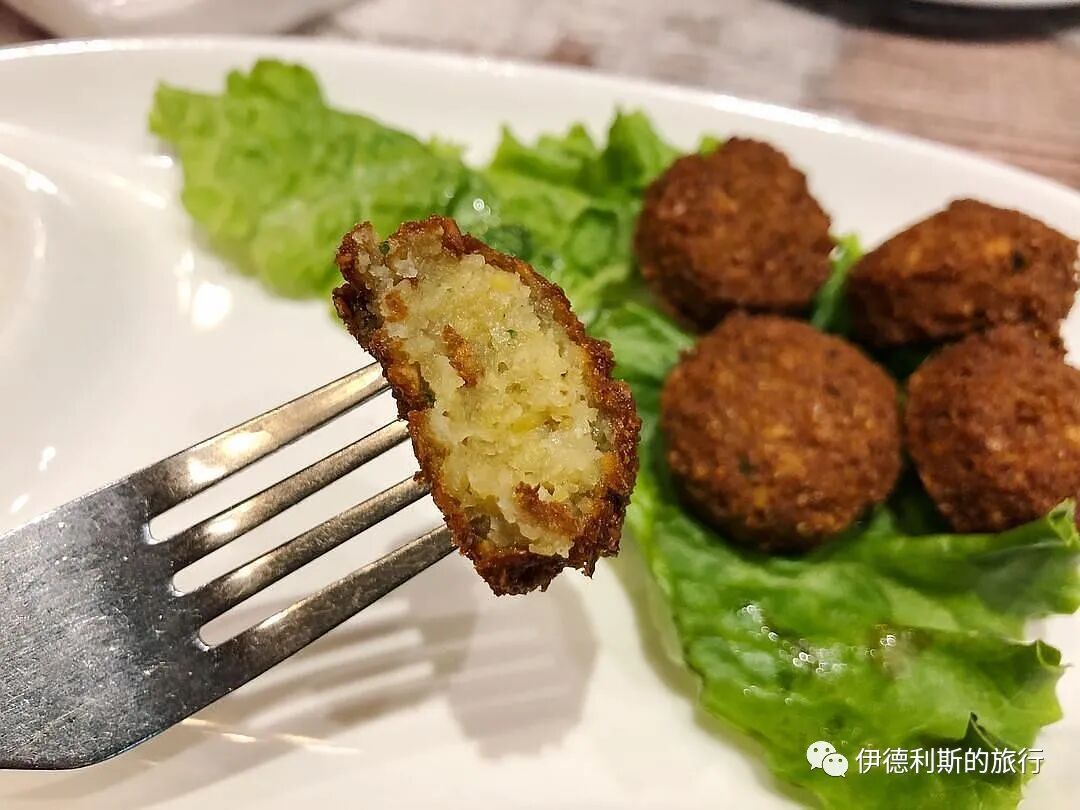
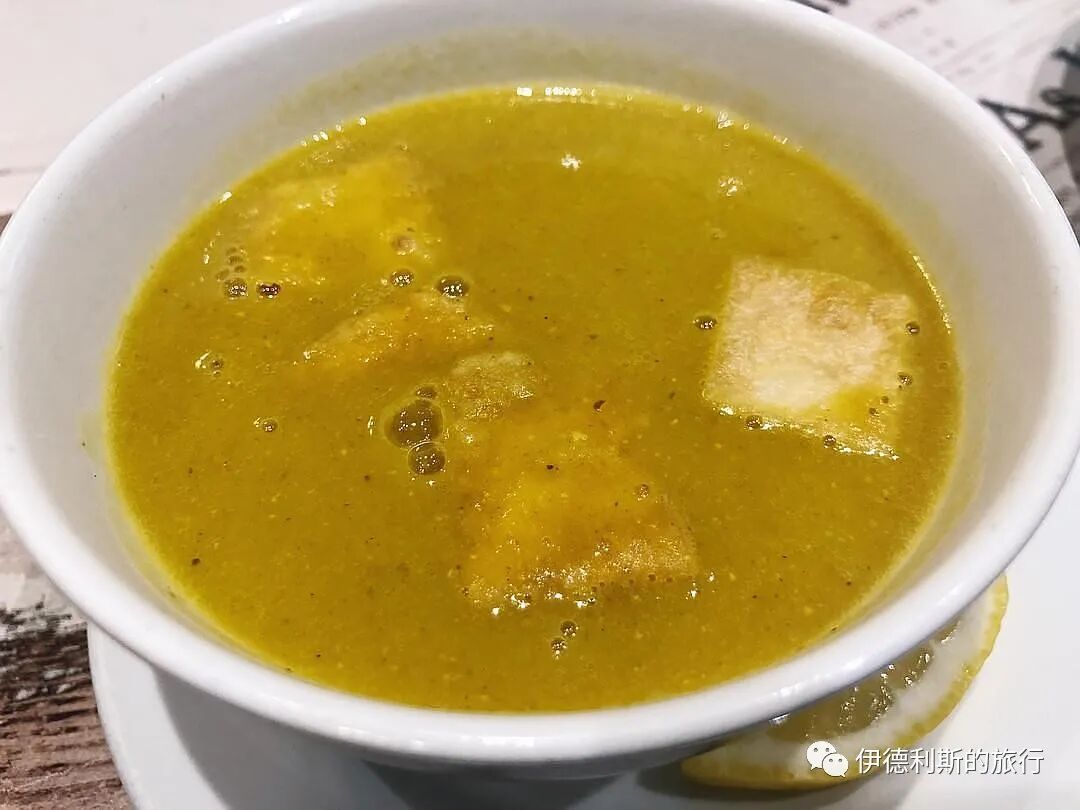
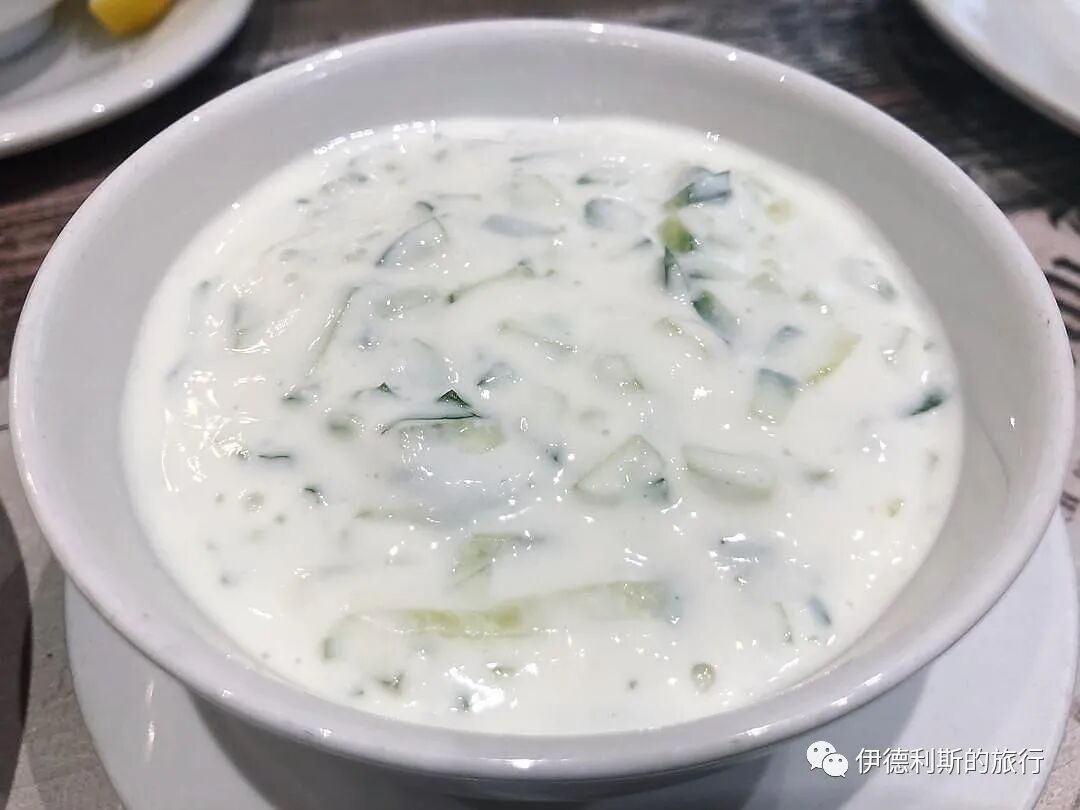
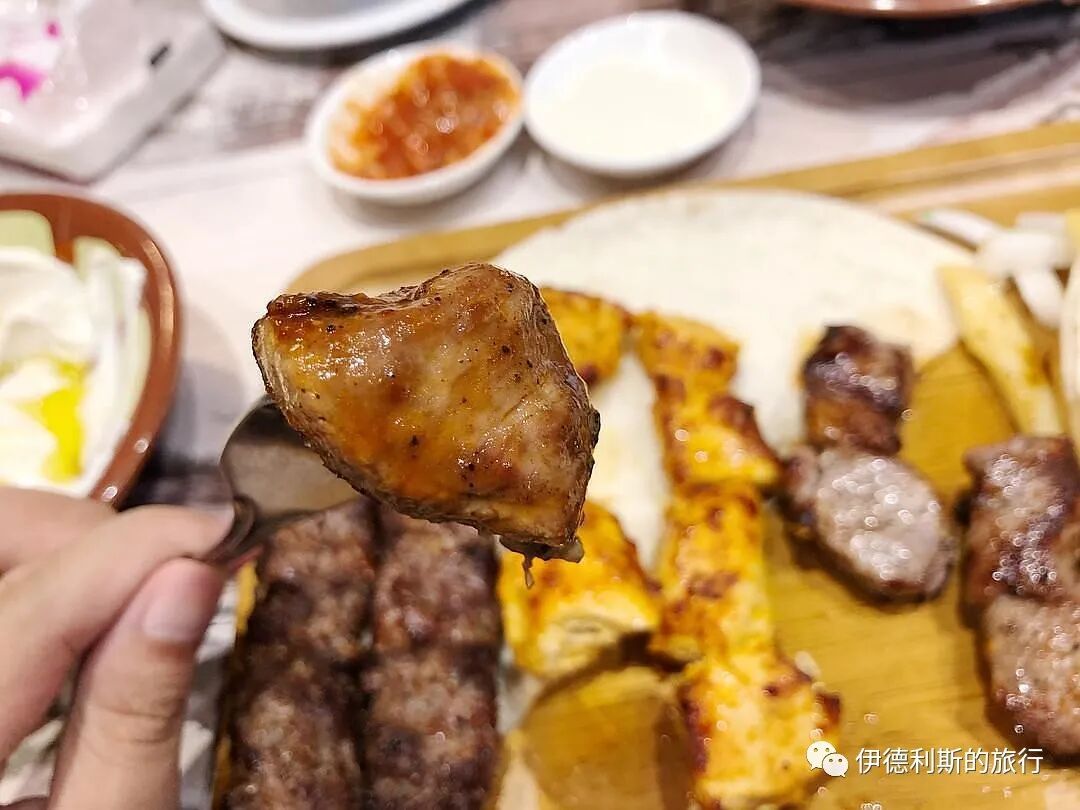
On January 10, 2019, I had lentil soup, lamb hummus, grilled fish, and mint tea for lunch at the Jordanian restaurant Al Safir in Sanyuanqiao. I especially love their onion sauce! I have to order an extra serving every time.
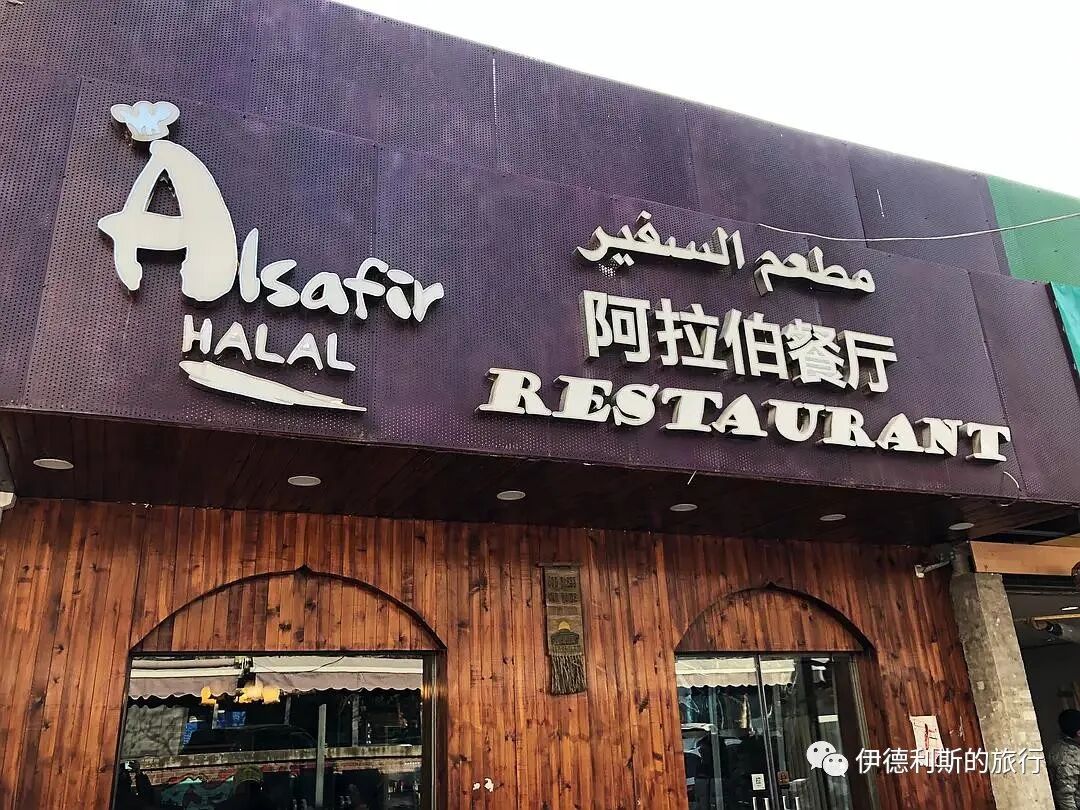
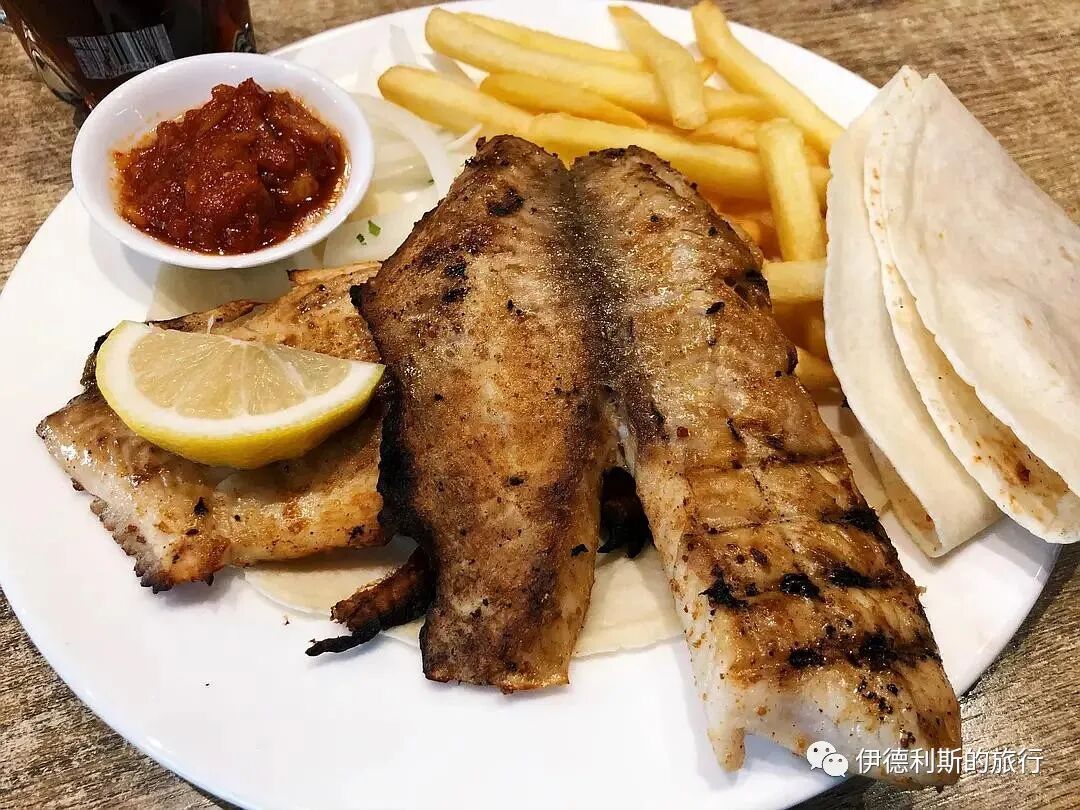
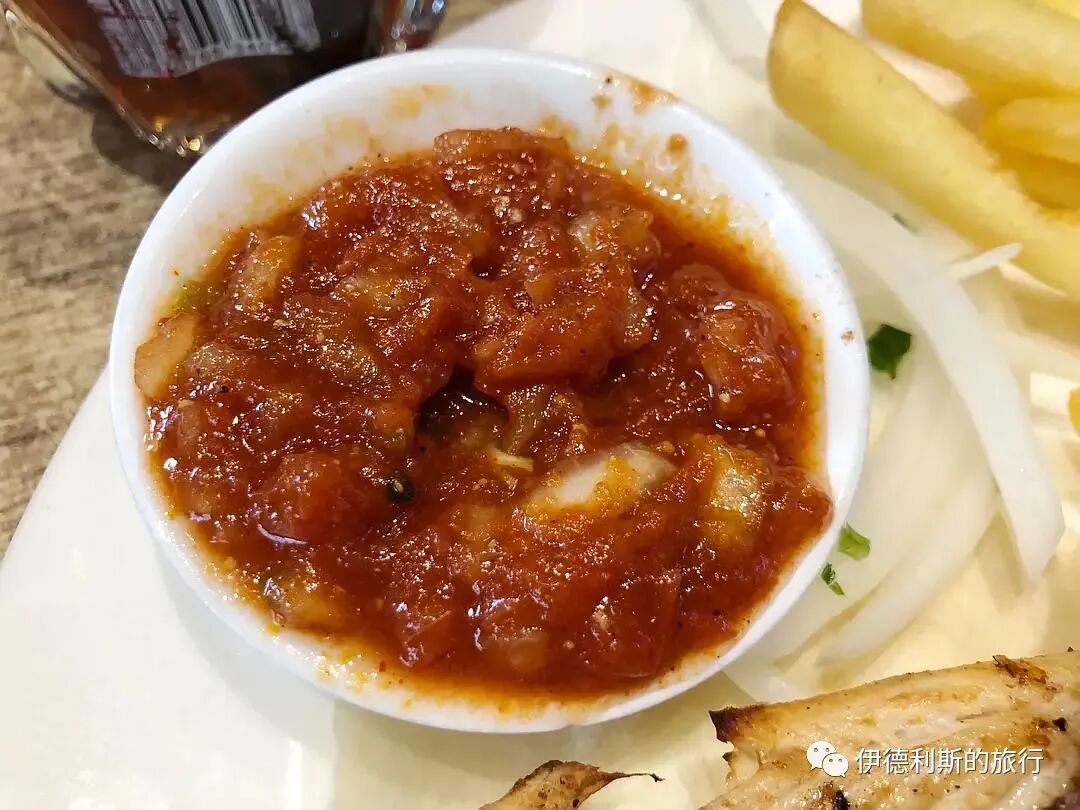
Eating South Asian and Middle Eastern Food in Beijing (Part 1) (Section 1B of 4)
ali2007fr posted the article • 0 comments • 245 views • 2026-05-17 00:23
Summary: This travel note introduces Eating South Asian and Middle Eastern Food in Beijing (Part 1). Over the past few years, I have visited many Middle Eastern and South Asian restaurants in Beijing, some of which have already closed down. It is useful for readers interested in Beijing Halal Food, Muslim Travel, Middle Eastern Food.
On May 20, 2020, it was Zainab's birthday, and we went to Al Safir for Iftar. Ever since Zainab ate with their family last year, she has fallen in love with Arabic food, especially Levantine cuisine. We were originally going to take our honeymoon in the Middle East this year, but now we have to satisfy our cravings by eating at an Arabic restaurant instead.
They offer both à la carte and Iftar buffet, and they also have dates for Iftar. We had a buffet with a wide variety of salads, and we could drink cup after cup of Arabic lentil soup. We ordered the garlic hummus, falafel, and a mixed grill platter; their grilled meat is incredibly delicious!
A more unique dish is yogurt-sauce Kibbeh, which is a small patty made from ground wheat, onions, beef, lamb, and various Middle Eastern spices (cinnamon, nutmeg, cloves, etc.), with a fried beef exterior and a lamb filling. The word Kibbeh comes from North Levantine Arabic and means ball; this dish originated in the Levant region and is popular throughout the Middle East. view all
Summary: This travel note introduces Eating South Asian and Middle Eastern Food in Beijing (Part 1). Over the past few years, I have visited many Middle Eastern and South Asian restaurants in Beijing, some of which have already closed down. It is useful for readers interested in Beijing Halal Food, Muslim Travel, Middle Eastern Food.
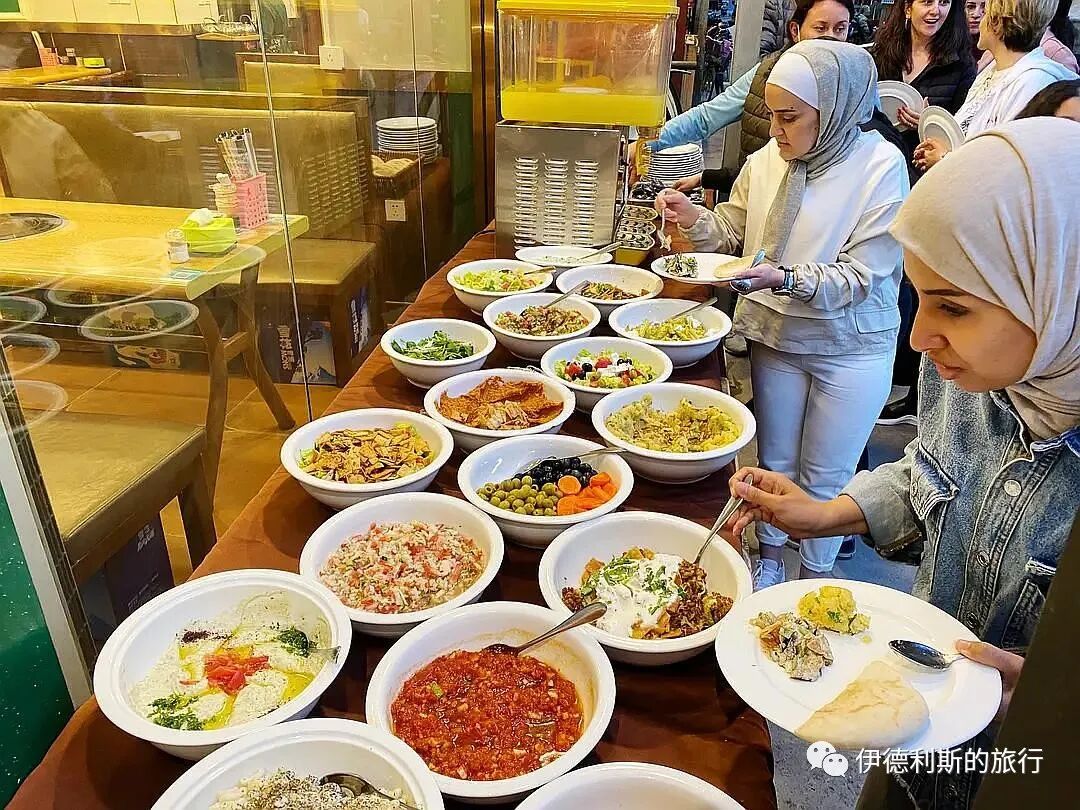
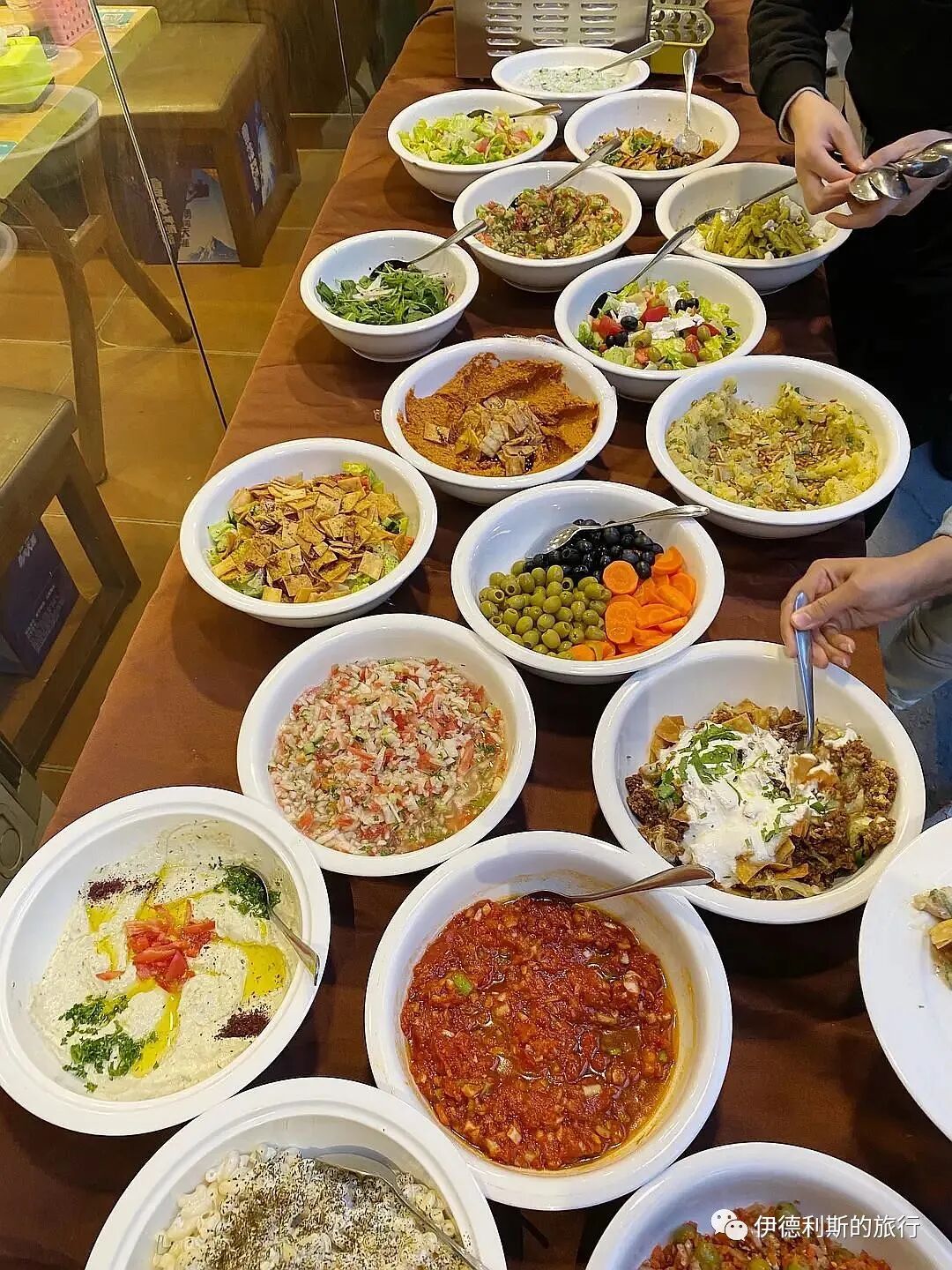
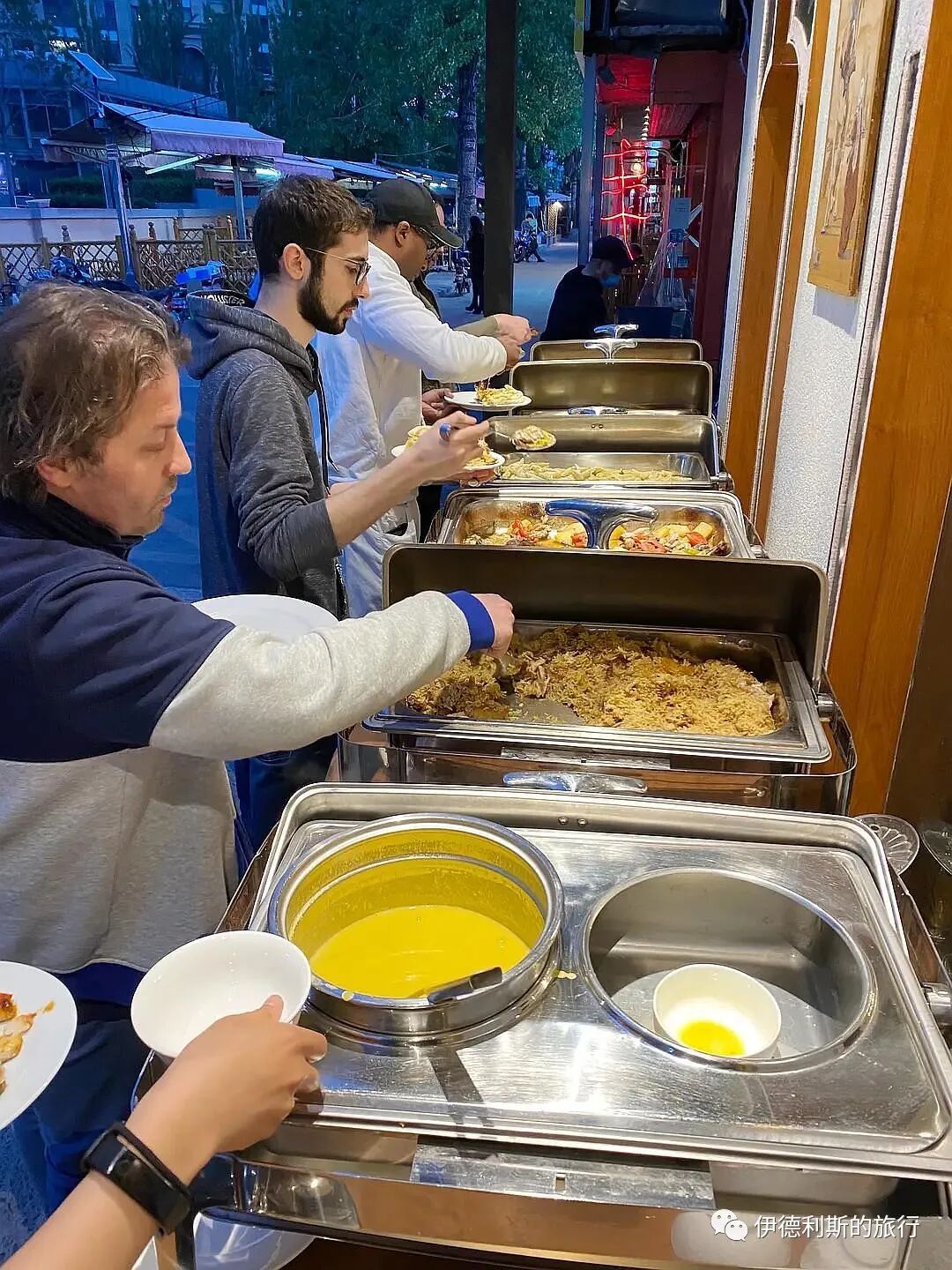
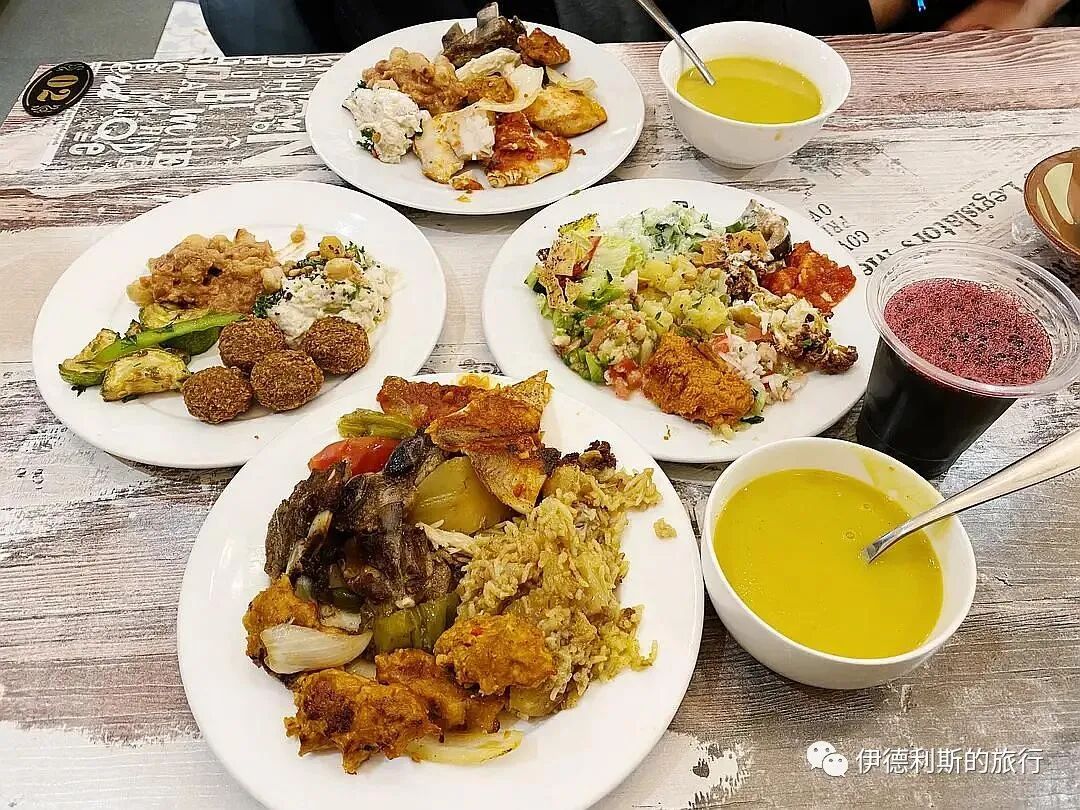
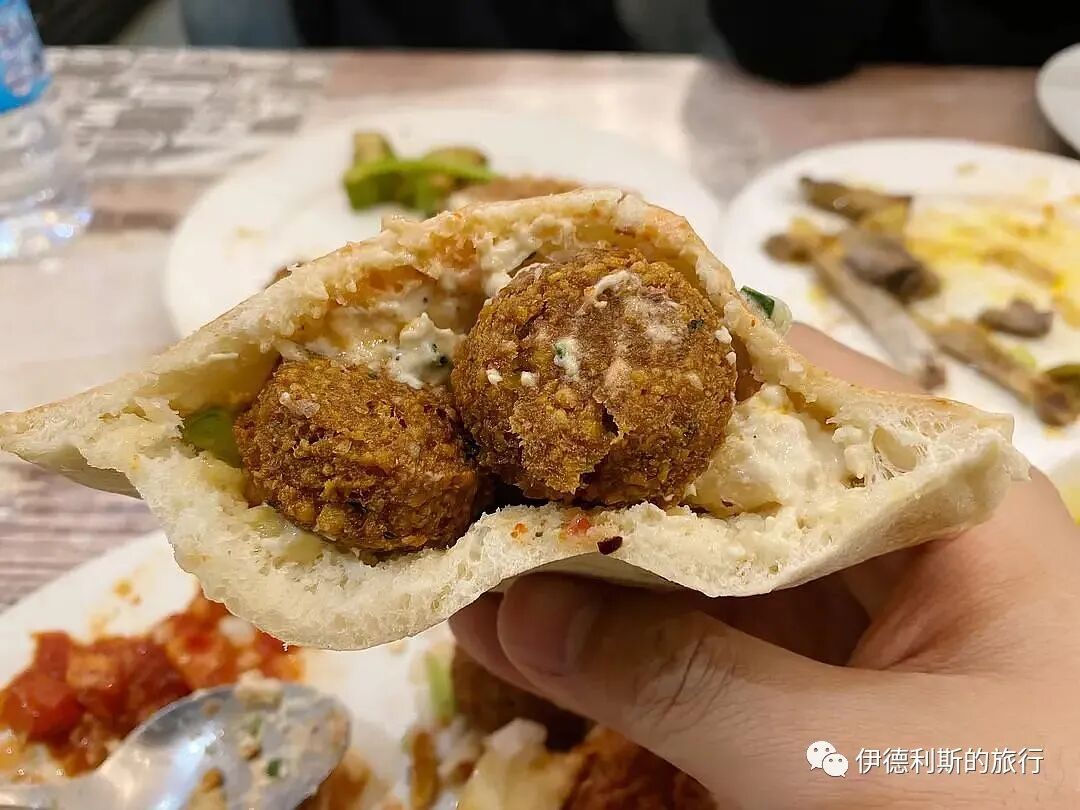
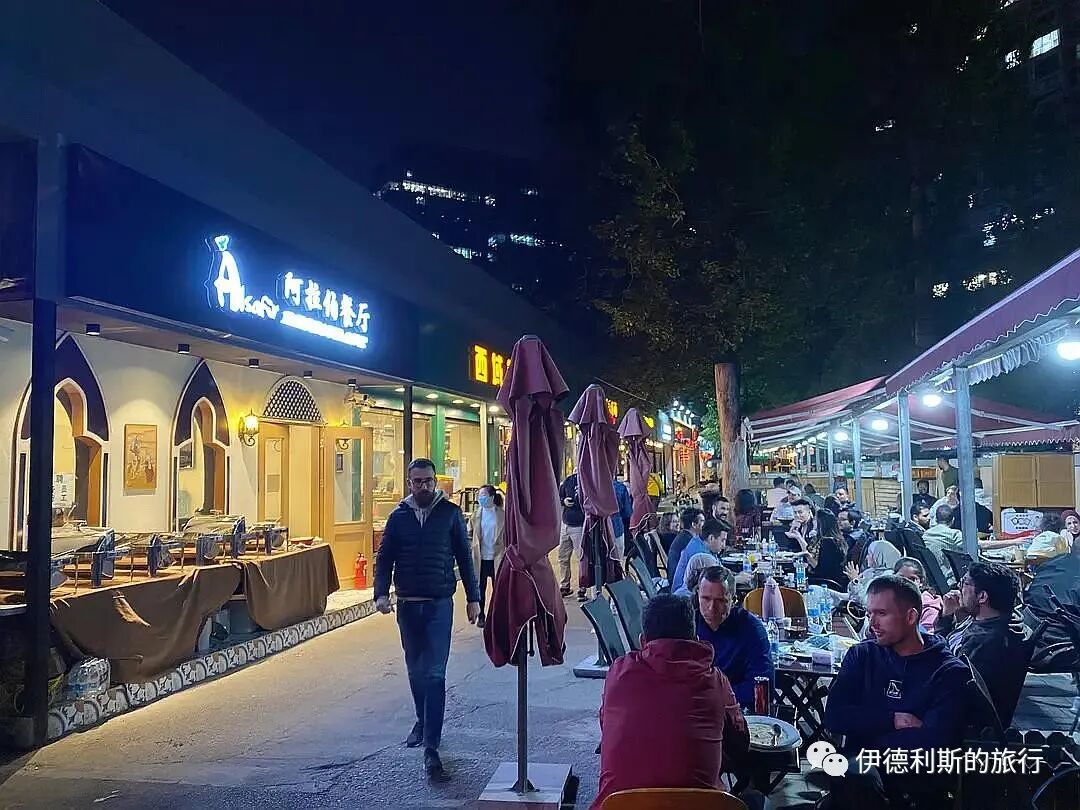
On May 20, 2020, it was Zainab's birthday, and we went to Al Safir for Iftar. Ever since Zainab ate with their family last year, she has fallen in love with Arabic food, especially Levantine cuisine. We were originally going to take our honeymoon in the Middle East this year, but now we have to satisfy our cravings by eating at an Arabic restaurant instead.
They offer both à la carte and Iftar buffet, and they also have dates for Iftar. We had a buffet with a wide variety of salads, and we could drink cup after cup of Arabic lentil soup. We ordered the garlic hummus, falafel, and a mixed grill platter; their grilled meat is incredibly delicious!
A more unique dish is yogurt-sauce Kibbeh, which is a small patty made from ground wheat, onions, beef, lamb, and various Middle Eastern spices (cinnamon, nutmeg, cloves, etc.), with a fried beef exterior and a lamb filling. The word Kibbeh comes from North Levantine Arabic and means ball; this dish originated in the Levant region and is popular throughout the Middle East.
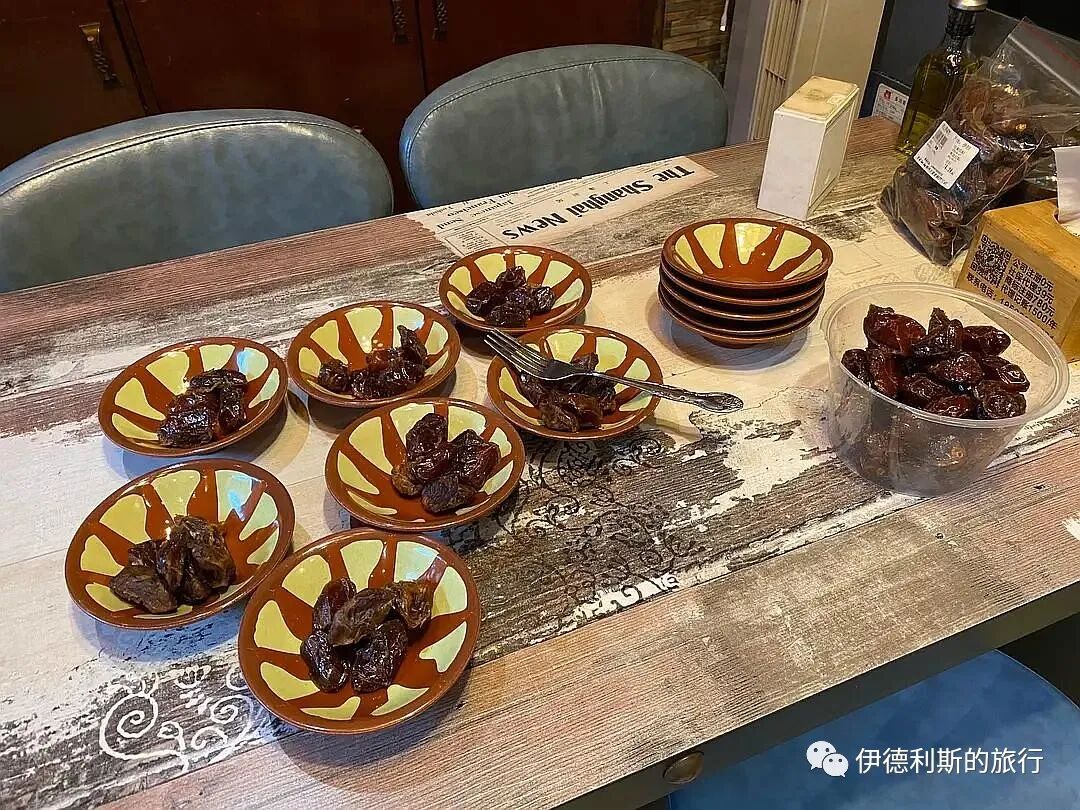
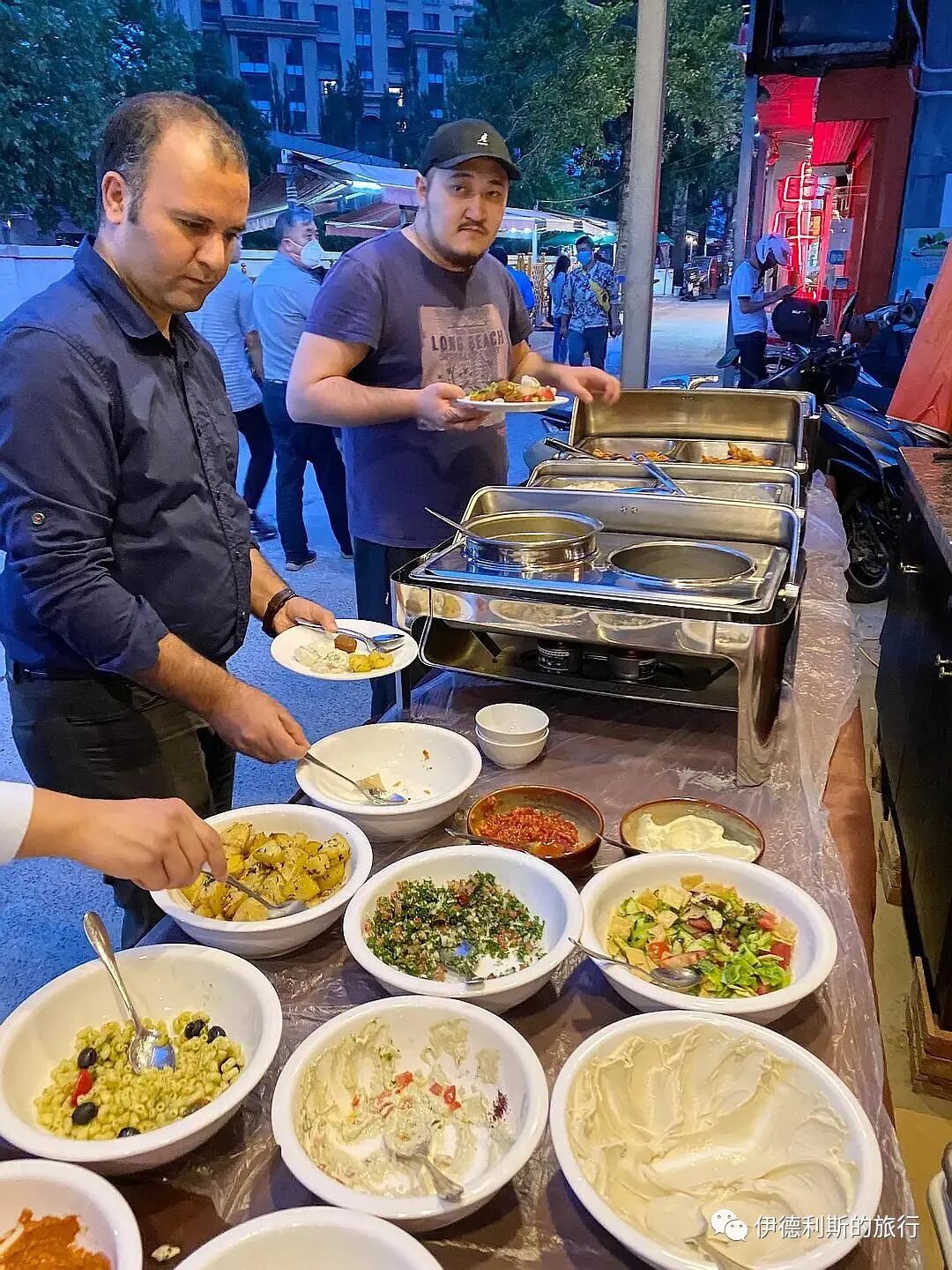
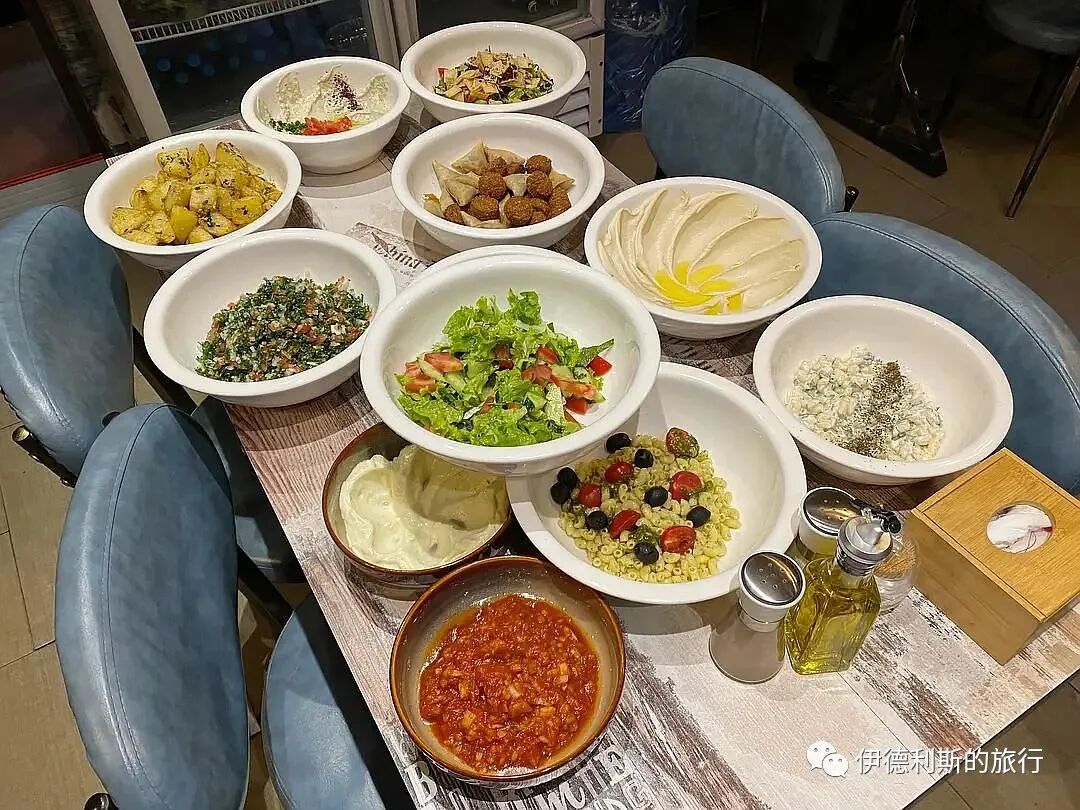
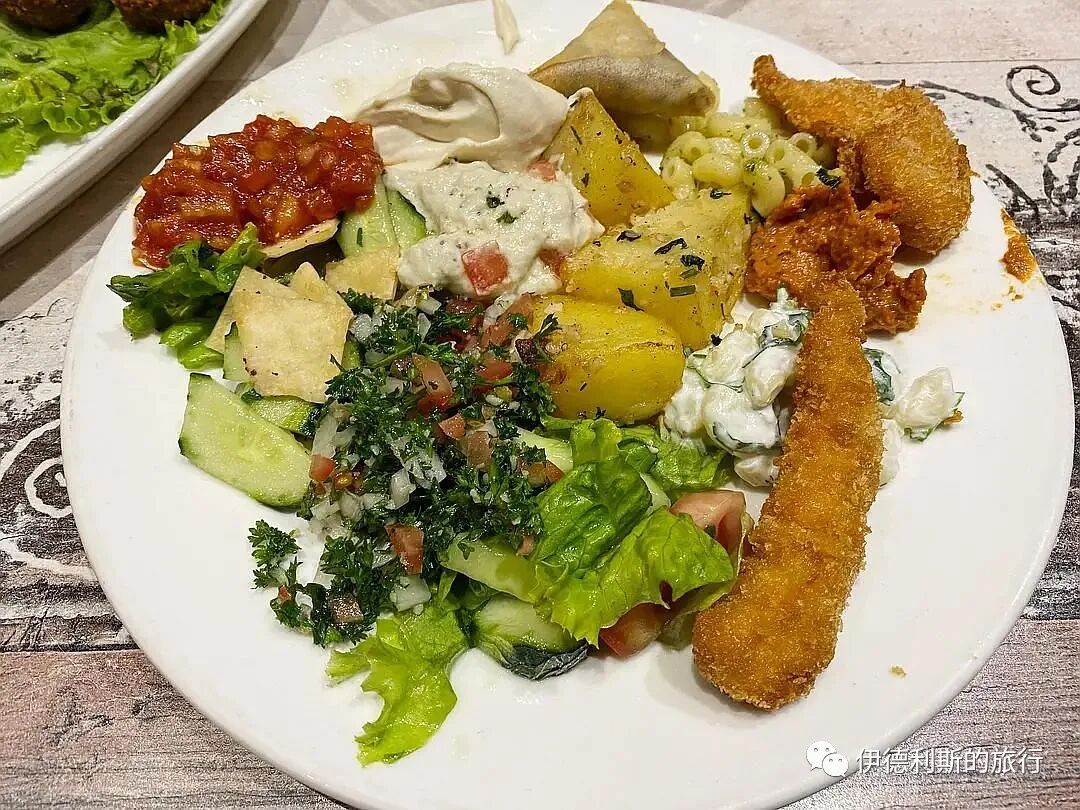
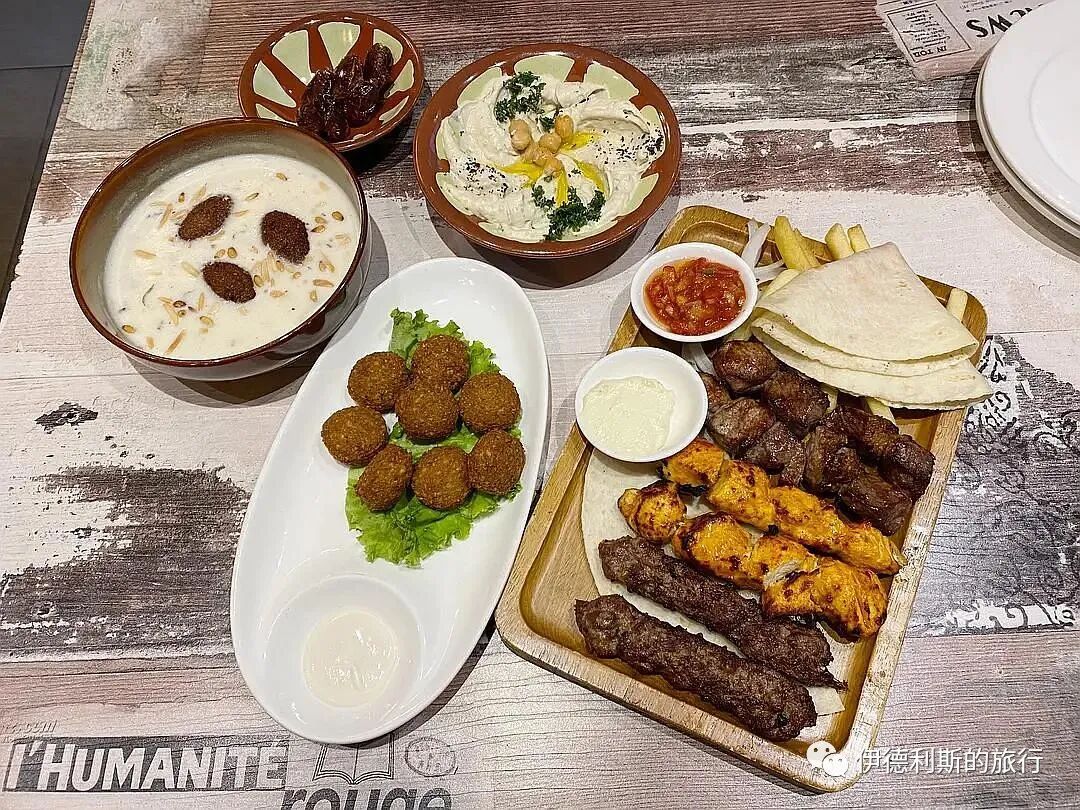
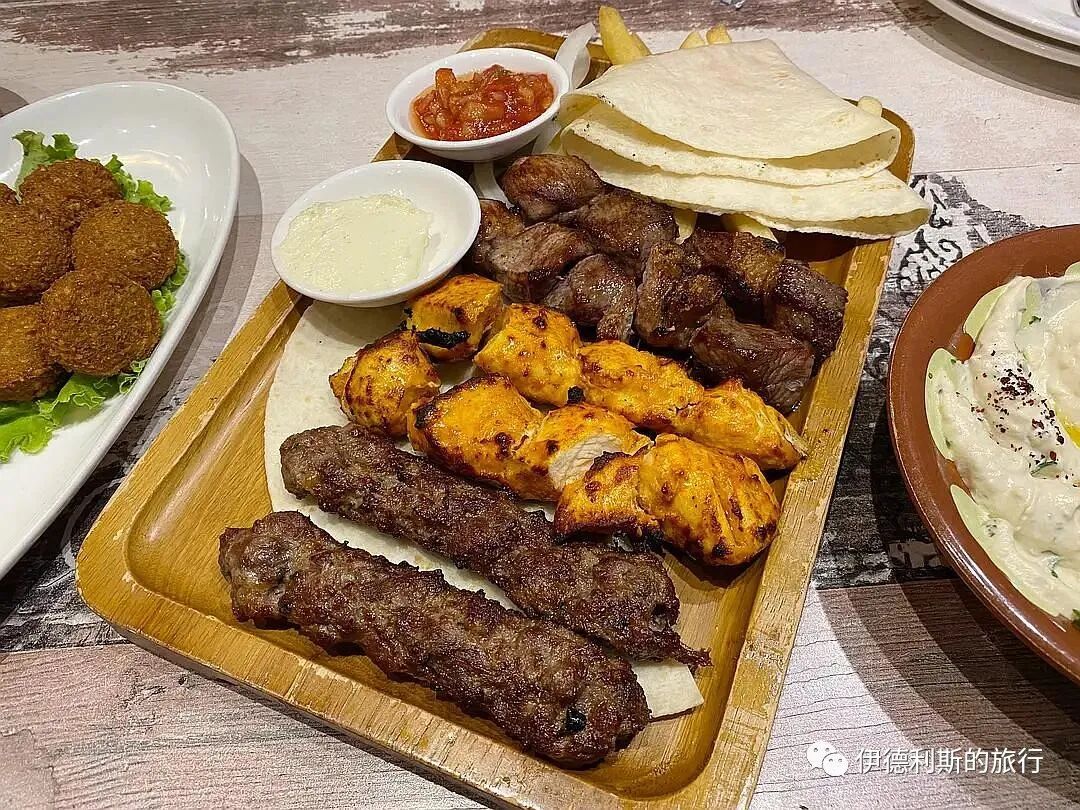
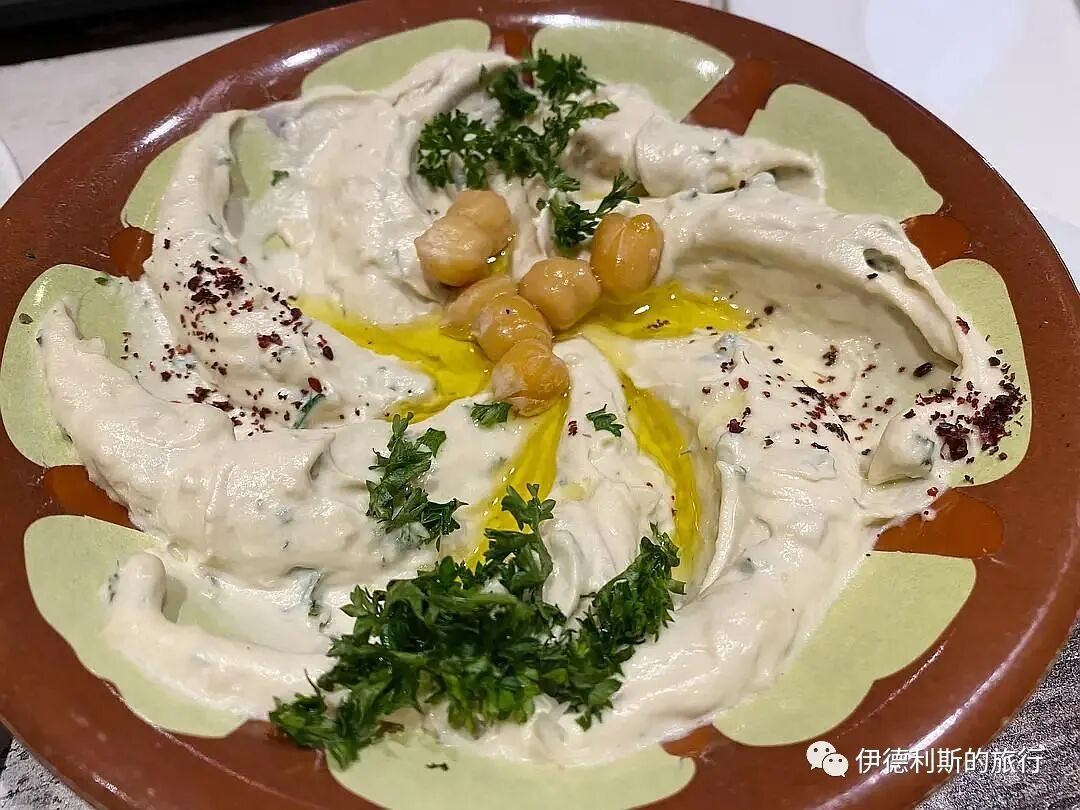
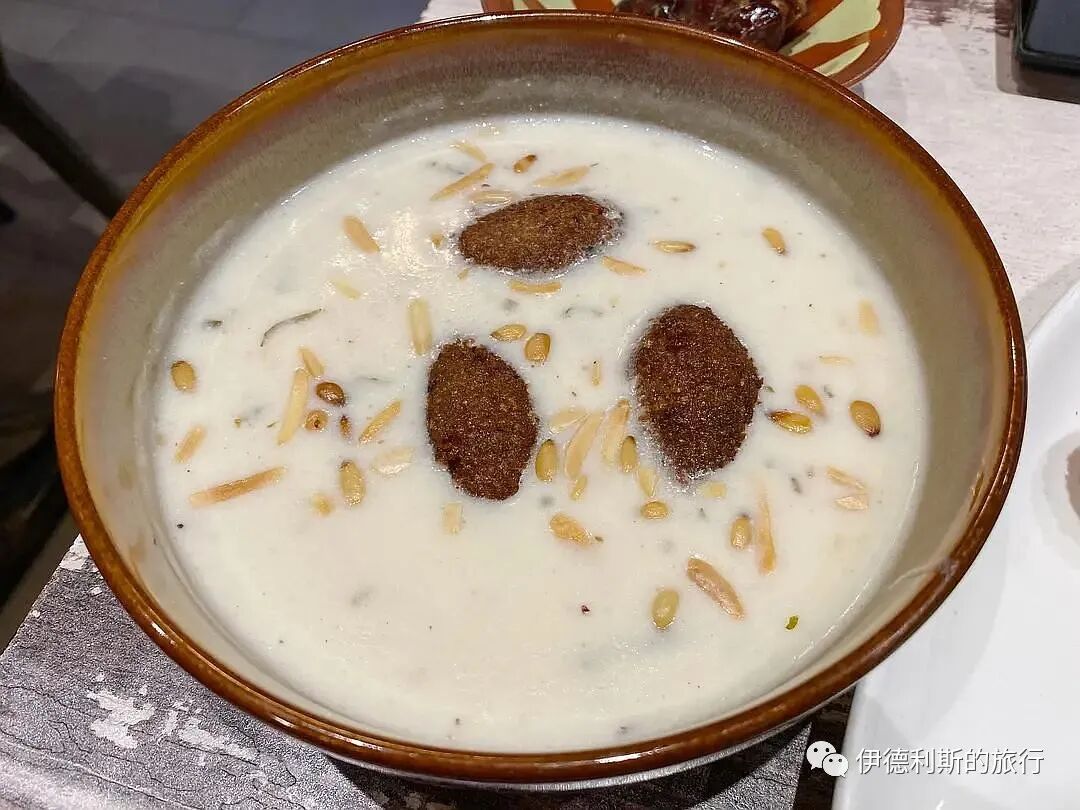
Eating South Asian and Middle Eastern Food in Beijing (Part 1)
Articles • ali2007fr posted the article • 0 comments • 330 views • 2026-05-17 00:22
Summary: This travel note introduces Eating South Asian and Middle Eastern Food in Beijing (Part 1). I have been to many Middle Eastern and South Asian restaurants in Beijing in the past few years, some of which have closed. It is useful for readers interested in Beijing Halal Food, Muslim Travel, Middle Eastern Food.
I have been to many Middle Eastern and South Asian restaurants in Beijing in the past few years, some of which have closed. I have been thinking about sorting it out in the past few days. Next, I will try all the restaurants I have not been to. Now I will share with you the restaurants I have been to.
First, let’s list the South Asian and Middle Eastern restaurants in Beijing that I know: Al Ameen (Lebanon), Al Safir (Jordan), BRBR (Syria), One Thousand and One Nights (Arabia), Taiba Guijie Store (Arabia), Turkish Mama (Turkey), Rumi's Secret (Turkey), Xiting Xiuse (Turkey), Dardaniel (Azerbaijan/Turkey) (It), Desert Rose (Azerbaijan/Turkey), Doner&Kebab (Azerbaijan/Turkey), Kavkaz (Azerbaijan), Iranian Food (the Iranian boss has returned to China and is currently run by Chinese), Khan Baba (Pakistan), Zam Zam (Pakistan), Lahore Restaurant (Pakistan), Benjabi (India), Indian Chef (India), Land of Masala (India), Sadhuli (India).
Newly opened in 2021: Zayton (Palestine), Istanbul (Türkiye), Qubbe (Türkiye), Taiba Sanlitun Store (Arabia).
One that was written in 2020 but closed in 2021: Meza (Tunisia).
I have eaten at restaurants that are closed: Camel Restaurant (Morocco), Nayir (Azerbaijan), Shashi Castle (Uzbekistan), Enchant (Turkey), and Bata Pancake (Israel).
1. Arabia
1. Jordanian restaurant Al Safir
On April 18, 2021, Ramadan Iftar had a buffet at the Jordanian restaurant Al Safir in Sanyuanqiao. It was a good opportunity to experience Levantine salads and various sauces! Now you can try all the things you wouldn’t normally order. The most classic ones are of course Hummus and Falafel. The most authentic way to eat them is to eat them with pita bread, sandwiching various sauces and falafel. The main courses include fish, lamb chops, chicken stewed rice, fried chicken, adzuki bean soup and various juices, including grape juice. Their lamb chops are so delicious, it feels like they were grilled first? The taste is particularly good.
It was Zainab’s birthday on May 20, 2020. Iftar and I went to Al Safir. Ever since Zainab ate with their family last year, we have fallen in love with Arabic food, especially Levantine food. We were originally going to divorce and go to the Middle East together this year, but now we have to eat at Arabic restaurants to satisfy our cravings.
They can order a la carte and eat Iftar's buffet, as well as Iftar's dates. We had a buffet with a variety of salads and cups of Arabic bean soup. I ordered Beirut Hummus with garlic flavor, Falafel with fried chickpeas, and a barbecue platter. Their barbecue is delicious!
The more distinctive one is the yogurt sauce Kibbeh, which is a small scone made by grinding wheat, onions, beef, lamb and various Middle Eastern spices (cinnamon, nutmeg, cloves, etc.). It has fried beef on the outside and lamb filling on the inside. The word kibbeh comes from the North Levantine Arabic word meaning ball, and the dish originated in the Levant region and is popular throughout the Middle East.
On July 17, 2019, I had adzuki bean soup, mutton Hummus, Falafel, thick yogurt, cucumber yogurt and grilled meat platter at Al Safir. I really enjoyed it.
Hummus and Falafel are both specialty delicacies of the Levant region on the east coast of the Mediterranean. Hummus is super delicious in various ways. I have also been a fan of adzuki bean soup since I ate it in the Palestinian restaurant on campus when I was in college, but it is a bit too hot to eat in the summer.
I love their roast lamb so much! It's very tender, and it's so satisfying to wrap it in Arabic pancakes dipped in tomato sauce. Their barbecue is so delicious that there was an incident where I ate several pieces of the barbecue before I even remembered to take a photo www
On January 10, 2019, we had adzuki bean soup, mutton hummus, grilled fish and mint tea at Al Safir, a Jordanian restaurant in Sanyuanqiao. I especially like their Pi Ya Zi sauce! Have to add another portion each time.
2. Lebanese restaurant Al Ameen
On September 24, 2020, when my mother-in-law came to Beijing for her first meal, we ate at Al Ameen, a Lebanese restaurant next to the German Embassy outside Dongzhimen. I have eaten there for many years. It was closed for renovation for a period of time, and it reopened last year. This year, I feel that their family is obviously not as big as before YQ, and the dishes have become less. I hope their family can survive this difficult time.
I ordered the more classic appetizer platter (Hummus hummus, carrot puree, yogurt, Mutebbel eggplant yogurt sauce)\cream of mushroom soup, lentil soup, vegetable soup, chicken soup, barbecue platter and grilled vegetable platter. What’s more special is the Mahashi, a rice dumpling with lamb bone and vegetables.
Mahashi is made of Lebanese zucchini (Kusa) and eggplant stuffed with meat and rice, and cooked with tomato sauce, cumin and broth. Mahashi is a classic Ottoman dish that can be found throughout the pre-Ottoman regions from the Balkans to the Levant (eastern coast of the Mediterranean) and Egypt, and is prepared differently in each region. Mahashi is a common dish served at banquets at weddings, family gatherings and Eid.
On September 26, 2019, I went to the Lebanese restaurant Alameen in Sanlitun. After the renovation, it became a lot bigger and some new dishes were added. I will try it when I have time in the future. This time I had a platter of chickpea hummus sauce, eggplant sauce, yogurt, adzuki bean soup, cream of mushroom soup, lamb naan, lamb chops, fried fish and lemongrass mint tea. One of the more distinctive ones is Kibbeh, a Levantine barbecue.
On May 26, 2019, I ate roasted lamb leg, lentil soup and hummus at the Lebanese restaurant Alameen outside Dongzhimen in the evening.
3. Meza, a Tunisian restaurant (closed)
On the evening of December 21, 2020, I went to the Tunisian restaurant Mesa, which was newly opened in November. After the Moroccan restaurant Camel Team Restaurant and Bar closed due to the epidemic (the owner ran away), there is a North African restaurant in Beijing. (Unfortunately it will be closed again in 2021).
I ordered Brik with Tuna, sizzling Shakshuka with eggs, grilled chicken skewers, Tunisian sausage (Merguez), Baba Ganoush, pickle platter, lentil soup, and also ordered Tajine Couscous with various grilled meats, which was not on the menu.
Brik pie is a North African Berber dish that was later brought to Israel by Tunisian Jews. The filling is usually filled with eggs, tuna, harissa, parsley, etc., and then wrapped in crispy noodles called Malsouka or Warka and fried.
Shakshuka is a stew of eggs, tomatoes and onions, usually with olive oil, chili, garlic, cumin, nutmeg and other spices. Shakshouka, which means "mixture" in Arabic, is widely distributed in the former Ottoman lands and Andalusia, and was brought to Israel by Tunisian Jews. The dish was originally just a stew of minced meat or liver. Tomatoes and peppers were later introduced from the Americas, and eggs are often added to the Tunisian version.
Merguez is a North African sausage made from lamb and beef, mixed with cumin, harissa, chili peppers and other spices, and is usually grilled. Merguez sausage was first seen in Andalusia in the 12th century, that is, southern Spain under Arab rule. At that time, it was pronounced as mirkās or merkās in Andalusian Arabic. Later it spread throughout North Africa and then to France and Germany.
Baba ghanoush is a Middle Eastern Levantine appetizer, which is made of cooked eggplant puree mixed with sesame sauce and olive oil, lemon juice and other seasonings. It is usually dipped in pita.
Tajine is a North African Berber specialty. Tajine in North African Arabic originates from ancient Greek, and its original meaning is pan. The tagine can be traced back to Harun al-Rashid, the fifth generation caliph of the Bassi Dynasty in the 8th-9th century, and appears in the 9th-century masterpiece "One Thousand and One Nights". Today's tagines are made of pottery, sometimes glazed, with a rounded flat bottom and a cone or dome on top. This design allows all evaporated water vapor to return to the bottom, and water can be added from the hole in the lid.
Couscous, a staple of Berber cuisine, is made from semolina rolled into millet-sized particles and then dried in the sun. Couscous was first seen in North Africa from the 11th to the 13th century. In the 13th century, Ibn Razin al-Tuyibi, a famous Andalusian scholar and gourmet, first recorded the recipe of couscous in his book "Andalusian Cookbook".
4. Arabic fast food restaurant Taiba
On January 17, 2021, Taiba, a new Arabic fast food restaurant, was recently opened on Guijie Street. I ate Arabic pizza Lahmacun, hummus, and chickpea croquettes Falafel, and drank Middle Eastern black tea with strong spices. Their little brother is from Sudan and speaks Chinese very well. In addition, they mainly serve takeout, and if you want to dine in, you can only eat at the noodle shop next to it.
Lahmacun comes from Arabic (لحم بعجين), which literally translates to "meat and dough". During the Ottoman era, Lahmacun spread from Arabia to pre-Ottoman regions such as Turkey and Armenia, so it was also called "Turkish pizza" or "Armenian pizza", but the basic method is to make thin pancakes with minced meat.
5. Syrian Restaurant BRBR
On March 7, 2021, we ate at BRBR, a Syrian restaurant in Wudaokou, at noon. I have heard about their restaurant for a long time, but I have never eaten there since I live too far away from the city. This is the first time I have eaten there. I feel deeply that their family is so popular! We went there after two o'clock and had to wait for a long time to be seated. All the young people came to eat.
Syrian cuisine is also a relatively standard Levantine cuisine. The most classic ones are hummus and falafel, but we didn’t order them this time. Ordered lentil soup, grilled meat platter (Shuqaf mutton skewers, traditional Kabab, chicken skewers and chicken wings), half grilled chicken, chickpea broad beans with tahini sauce, lemon mint.
What was special this time was the traditional Arab Mandi mutton rice. Mandi originated from Yemen and is popular in the Arabian Peninsula, Egypt and the Levant. Mandi is usually made of rice, meat (mutton, camel or chicken) and Hawaij spices. Hawaij is also a special spice originating from Yemen. It can be used for cooking, soup and coffee. The main ingredients are cumin, black pepper, turmeric and cardamom. The taste of Mandi is drier than ordinary curry rice.
2. Türkiye and Azerbaijan
1. Turkish Mom
On January 10, 2020, after getting married, I went to Sanlitun's Turkish mother with Zainab. I ordered lentil and wheat soup, "Sultan's favorite", barbecue platter and rice pudding, and then drank tea and smoked shisha to talk about things. Turkish Mama is much better than the Iranian food next door. The grilled lamb and toasted bread are especially delicious. The wheat rice we originally ordered was returned because the bread was so delicious.
The Sultan's Favorite (Hünkar Heğendi) is a snack that originated in the Ottoman court. It uses rich stewed lamb with creamy roasted eggplant puree. It is quite rare in Beijing.
On October 19, 2019, Turkish mothers smoked hookah, drank tea, and ate baklava and rice pudding in the west of Changhong Bridge.
2. Turkish Restaurant Dardanelle
On August 11, 2019, after the Eid al-Adha celebrations, I went out to eat at the Turkish restaurant Dardanir in the Temple of Heaven. I ordered lentil soup, cream of chicken soup, assorted salads (hummus, yellow pepper puree, chili puree), mint yogurt, roasted lamb liver, tomato lamb kebabs, Lahmachun pizza, yogurt Ayran and rice pudding.
On June 6, 2018, my friends and I went to Dardanelle on Shenlu Street to eat cream chicken soup, assorted barbecue, lamb cheese Pide, Mediterranean salad, rice pudding and Turkish black tea. I liked the lamb cheese Pide, it was really huge!
3. The secret of Rumi in Turkish restaurant
On February 18, 2021, have an Ottoman breakfast at Rumi’s Secret in the Temple of the Sun and pretend to be in Türkiye.
On September 25, 2020, in the evening, our family welcomed Zainab’s mother and had a secret dinner at Rumi’s, a Turkish restaurant on Ritan Street. Since its opening this summer, Rumi’s Secret has become a popular place to visit in Jindosti, especially among Uyghur friends. Because they don't sell alcohol, I think their environment is the most comfortable among the many halal restaurants on Ritan Street, and it's very suitable for family gatherings.
This time we ordered carrot puree and yogurt and eggplant puree as appetizers, lentil soup and cream of mushroom soup as soup, and then ordered grilled chicken, skewers and Pide. The boss also gave us black tea and dessert after the meal. Zainab's mother drank Middle Eastern lentil soup for the first time and found it delicious. Their grilled chicken and grilled skewers are also quite delicious, but the most recommended thing is the three-piece Pide pancake, which is a combination of cheese, meat and vegetables. I think it is even more delicious than the Pide in several restaurants I have eaten in Turkey.
On July 4, 2020, we ate at Rumi’s Secret, a Turkish restaurant on Ritan Street, at noon. Although their restaurant just opened in June, most of my dusty friends have tried it several times! The environment of their home is very good, suitable for chatting, and there are performances in the evening.
At their house, we had hummus hummus, carrot puree, cream of mushroom soup, lentil soup, black tea, yogurt aylan, rice pudding, grilled lamb roast beef, and minced meat pie Lahmacun.
4. The beautiful western courtyard of the Turkish restaurant
On May 6, 2021, Iftar ate the Ramadan set meal at Xiting Xiuse in Xinyuanli. There are two types of chicken and mutton, which are different every day. The lamb we caught yesterday was Karabakh Pilaf, and the chicken was grilled chicken wings.
Karabakh is an area on the border between Azerbaijan and Armenia. Its name comes from the Turkic word "Kara (black)" and the Persian word "Bagh (garden)". Most of the people living here are Azerbaijanis. The Karabakh pilaf we ate was stewed lamb with apricots, and the rice was yellow because it was dyed with saffron juice. I had eaten this kind of apricot + saffron pilaf while listening to Azerbaijani Muqam when I was playing in Baku. It was very friendly this time.
In addition to the main course, the soup in the set menu is the classic red lentil soup. The side dishes are hummus with hummus, yogurt tomato sauce and carrot cheese sauce, as well as nut and pepper salad. The main dish is spinach Pide pancake, which is delicious with spinach and cheese. The drinks are Ayran and black tea. Their Ayran is not particularly sour. Finally there was rice pudding and Semolina for dessert.
In general, this package is quite cost-effective in the embassy area!
On June 24, 2020, I ate Lentil soup, cucumber yogurt, grape coconut meat roll Dolma, meat pie Kofte, beef cheese Pide pie, Ayran yogurt and pomegranate juice chicken at the Turkish restaurant Xiting Xiuse in Xinyuanli. Their store has been open for a year, and the store manager is a Turkmen from Turkmenistan. He stayed in Beijing after studying abroad at Communication University. The head chef is an Azerbaijani from Istanbul and works at five o'clock every day. The waiters in the store are also Kazakhs from Kazakhstan. I think theirs is really delicious. The Pide pancakes are very fragrant fresh out of the oven and the meat quality is also very good. The last photo is a beautiful photo of the chef sent to us by the store manager. view all
Summary: This travel note introduces Eating South Asian and Middle Eastern Food in Beijing (Part 1). I have been to many Middle Eastern and South Asian restaurants in Beijing in the past few years, some of which have closed. It is useful for readers interested in Beijing Halal Food, Muslim Travel, Middle Eastern Food.
I have been to many Middle Eastern and South Asian restaurants in Beijing in the past few years, some of which have closed. I have been thinking about sorting it out in the past few days. Next, I will try all the restaurants I have not been to. Now I will share with you the restaurants I have been to.
First, let’s list the South Asian and Middle Eastern restaurants in Beijing that I know: Al Ameen (Lebanon), Al Safir (Jordan), BRBR (Syria), One Thousand and One Nights (Arabia), Taiba Guijie Store (Arabia), Turkish Mama (Turkey), Rumi's Secret (Turkey), Xiting Xiuse (Turkey), Dardaniel (Azerbaijan/Turkey) (It), Desert Rose (Azerbaijan/Turkey), Doner&Kebab (Azerbaijan/Turkey), Kavkaz (Azerbaijan), Iranian Food (the Iranian boss has returned to China and is currently run by Chinese), Khan Baba (Pakistan), Zam Zam (Pakistan), Lahore Restaurant (Pakistan), Benjabi (India), Indian Chef (India), Land of Masala (India), Sadhuli (India).
Newly opened in 2021: Zayton (Palestine), Istanbul (Türkiye), Qubbe (Türkiye), Taiba Sanlitun Store (Arabia).
One that was written in 2020 but closed in 2021: Meza (Tunisia).
I have eaten at restaurants that are closed: Camel Restaurant (Morocco), Nayir (Azerbaijan), Shashi Castle (Uzbekistan), Enchant (Turkey), and Bata Pancake (Israel).
1. Arabia
1. Jordanian restaurant Al Safir
On April 18, 2021, Ramadan Iftar had a buffet at the Jordanian restaurant Al Safir in Sanyuanqiao. It was a good opportunity to experience Levantine salads and various sauces! Now you can try all the things you wouldn’t normally order. The most classic ones are of course Hummus and Falafel. The most authentic way to eat them is to eat them with pita bread, sandwiching various sauces and falafel. The main courses include fish, lamb chops, chicken stewed rice, fried chicken, adzuki bean soup and various juices, including grape juice. Their lamb chops are so delicious, it feels like they were grilled first? The taste is particularly good.
It was Zainab’s birthday on May 20, 2020. Iftar and I went to Al Safir. Ever since Zainab ate with their family last year, we have fallen in love with Arabic food, especially Levantine food. We were originally going to divorce and go to the Middle East together this year, but now we have to eat at Arabic restaurants to satisfy our cravings.
They can order a la carte and eat Iftar's buffet, as well as Iftar's dates. We had a buffet with a variety of salads and cups of Arabic bean soup. I ordered Beirut Hummus with garlic flavor, Falafel with fried chickpeas, and a barbecue platter. Their barbecue is delicious!
The more distinctive one is the yogurt sauce Kibbeh, which is a small scone made by grinding wheat, onions, beef, lamb and various Middle Eastern spices (cinnamon, nutmeg, cloves, etc.). It has fried beef on the outside and lamb filling on the inside. The word kibbeh comes from the North Levantine Arabic word meaning ball, and the dish originated in the Levant region and is popular throughout the Middle East.
On July 17, 2019, I had adzuki bean soup, mutton Hummus, Falafel, thick yogurt, cucumber yogurt and grilled meat platter at Al Safir. I really enjoyed it.
Hummus and Falafel are both specialty delicacies of the Levant region on the east coast of the Mediterranean. Hummus is super delicious in various ways. I have also been a fan of adzuki bean soup since I ate it in the Palestinian restaurant on campus when I was in college, but it is a bit too hot to eat in the summer.
I love their roast lamb so much! It's very tender, and it's so satisfying to wrap it in Arabic pancakes dipped in tomato sauce. Their barbecue is so delicious that there was an incident where I ate several pieces of the barbecue before I even remembered to take a photo www
On January 10, 2019, we had adzuki bean soup, mutton hummus, grilled fish and mint tea at Al Safir, a Jordanian restaurant in Sanyuanqiao. I especially like their Pi Ya Zi sauce! Have to add another portion each time.
2. Lebanese restaurant Al Ameen
On September 24, 2020, when my mother-in-law came to Beijing for her first meal, we ate at Al Ameen, a Lebanese restaurant next to the German Embassy outside Dongzhimen. I have eaten there for many years. It was closed for renovation for a period of time, and it reopened last year. This year, I feel that their family is obviously not as big as before YQ, and the dishes have become less. I hope their family can survive this difficult time.
I ordered the more classic appetizer platter (Hummus hummus, carrot puree, yogurt, Mutebbel eggplant yogurt sauce)\cream of mushroom soup, lentil soup, vegetable soup, chicken soup, barbecue platter and grilled vegetable platter. What’s more special is the Mahashi, a rice dumpling with lamb bone and vegetables.
Mahashi is made of Lebanese zucchini (Kusa) and eggplant stuffed with meat and rice, and cooked with tomato sauce, cumin and broth. Mahashi is a classic Ottoman dish that can be found throughout the pre-Ottoman regions from the Balkans to the Levant (eastern coast of the Mediterranean) and Egypt, and is prepared differently in each region. Mahashi is a common dish served at banquets at weddings, family gatherings and Eid.
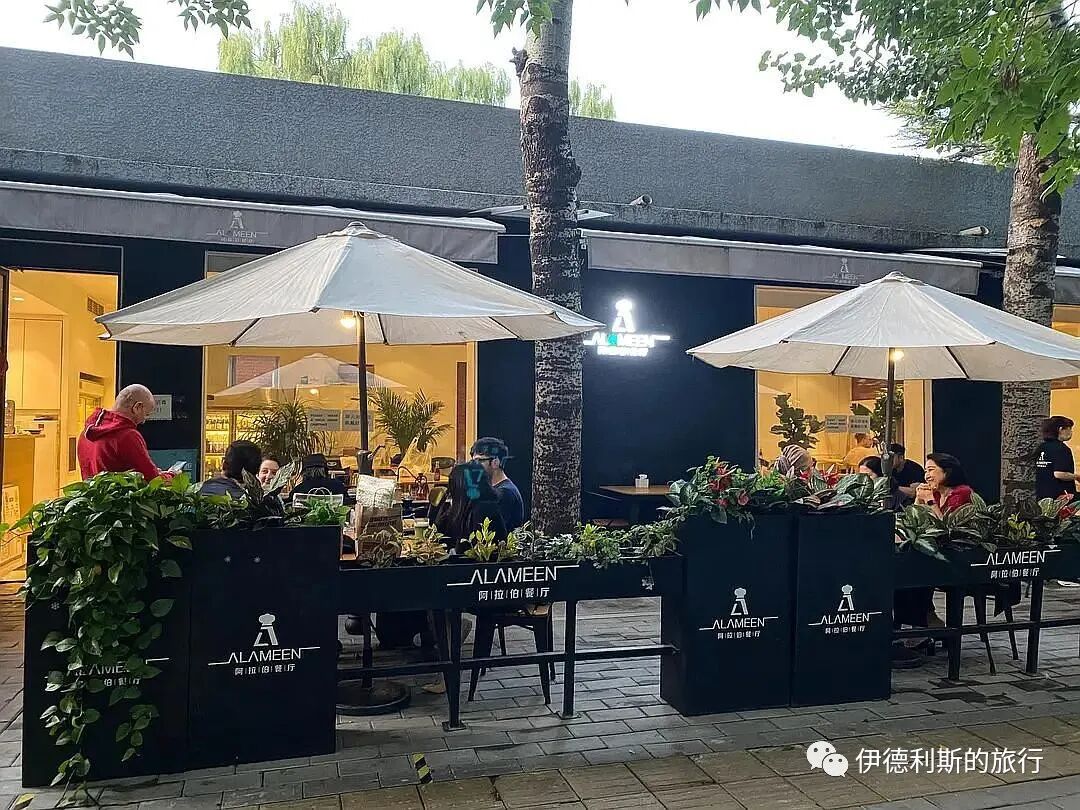
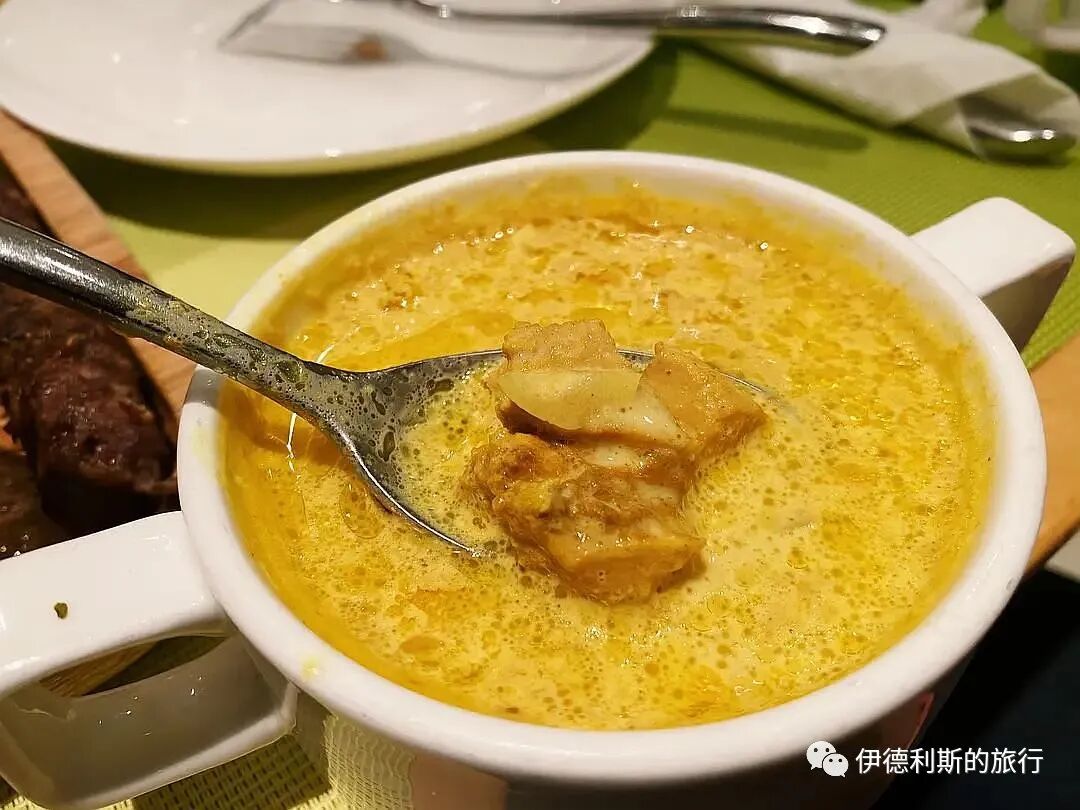
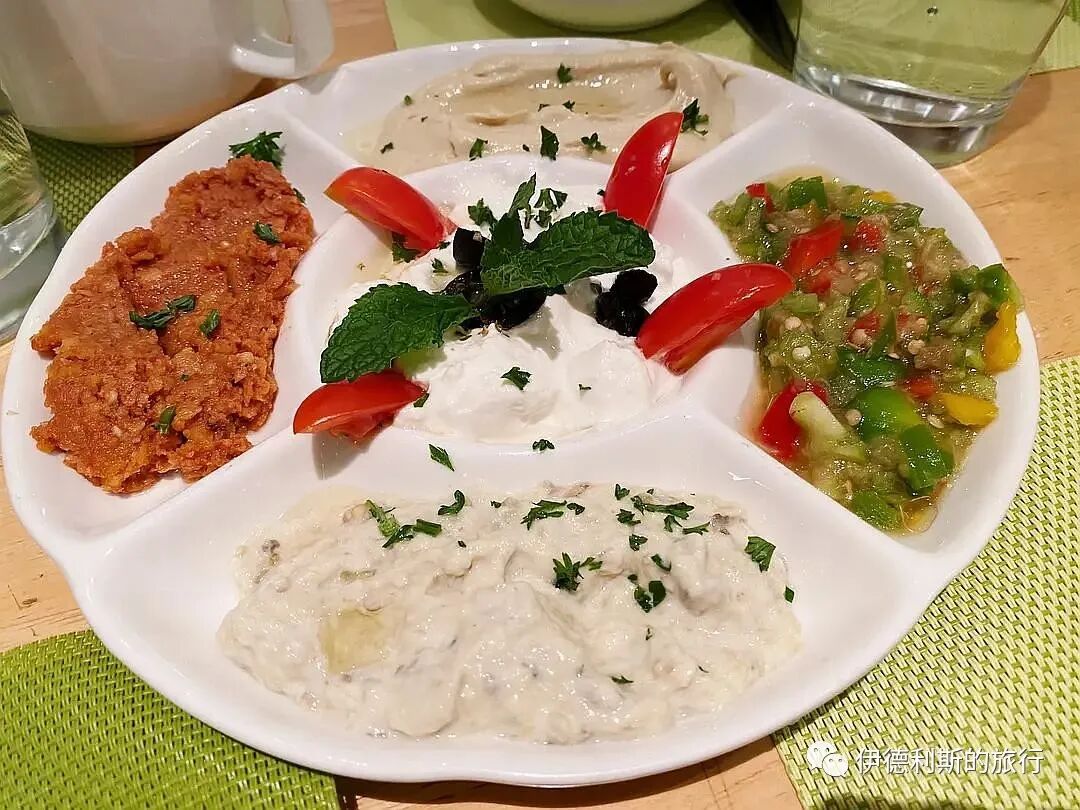
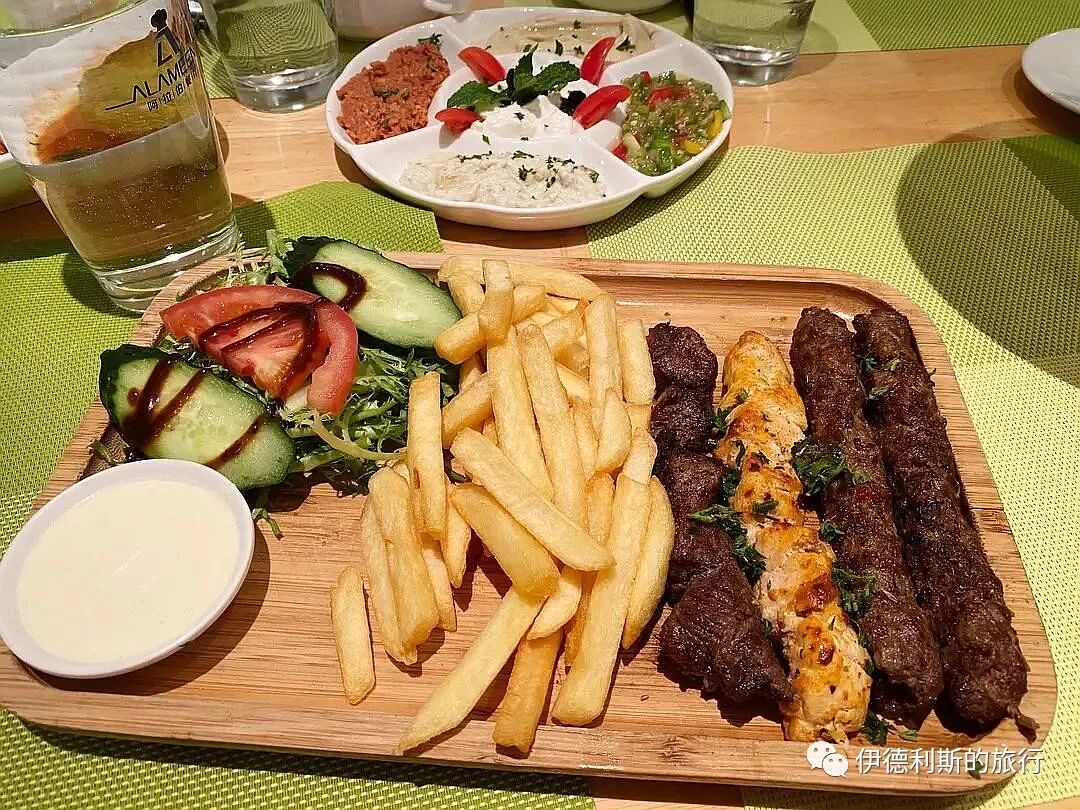
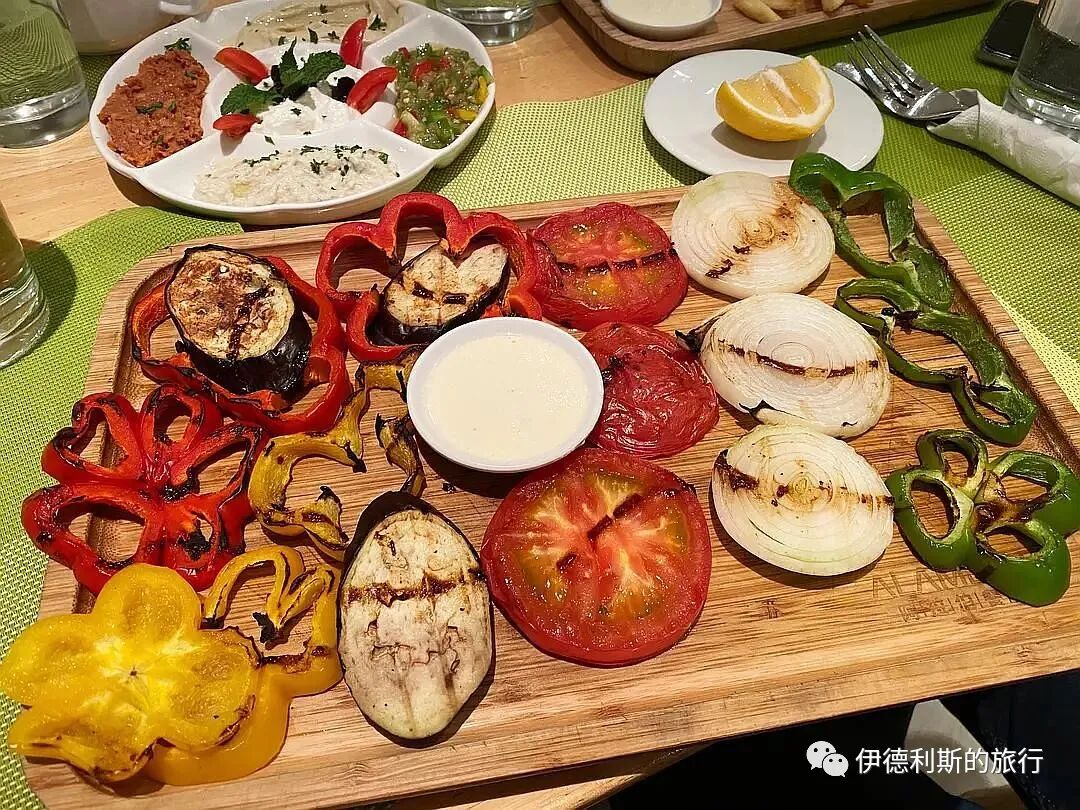
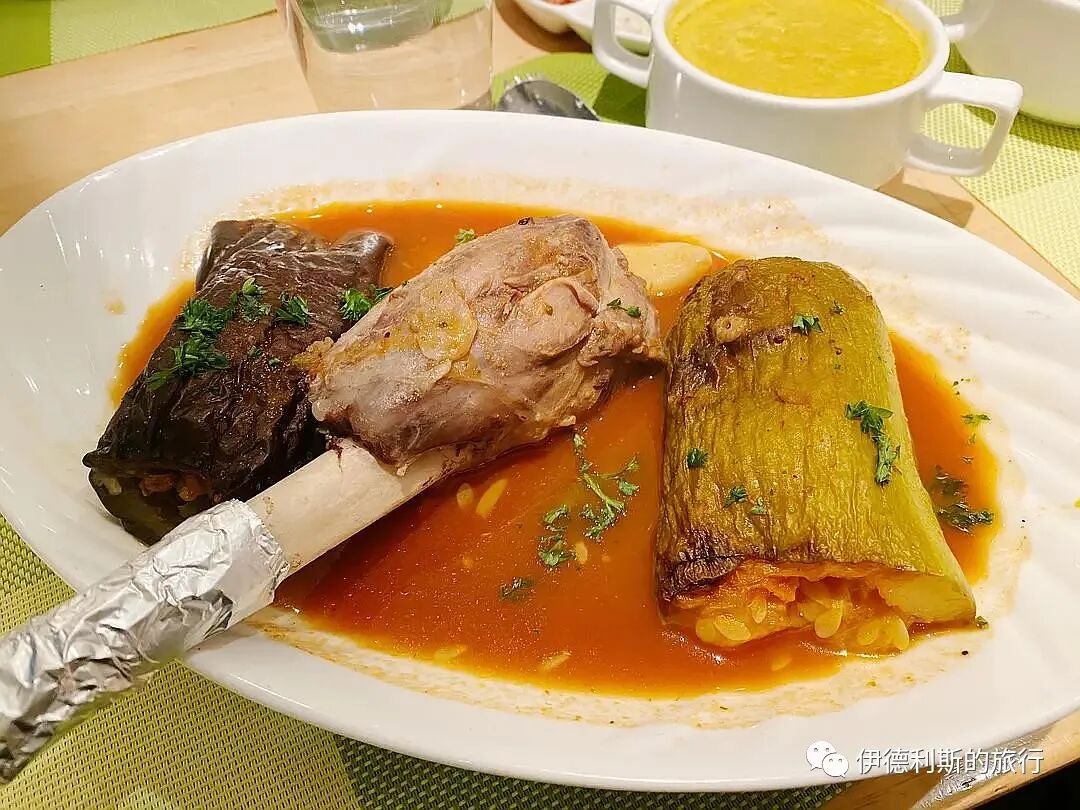
On September 26, 2019, I went to the Lebanese restaurant Alameen in Sanlitun. After the renovation, it became a lot bigger and some new dishes were added. I will try it when I have time in the future. This time I had a platter of chickpea hummus sauce, eggplant sauce, yogurt, adzuki bean soup, cream of mushroom soup, lamb naan, lamb chops, fried fish and lemongrass mint tea. One of the more distinctive ones is Kibbeh, a Levantine barbecue.
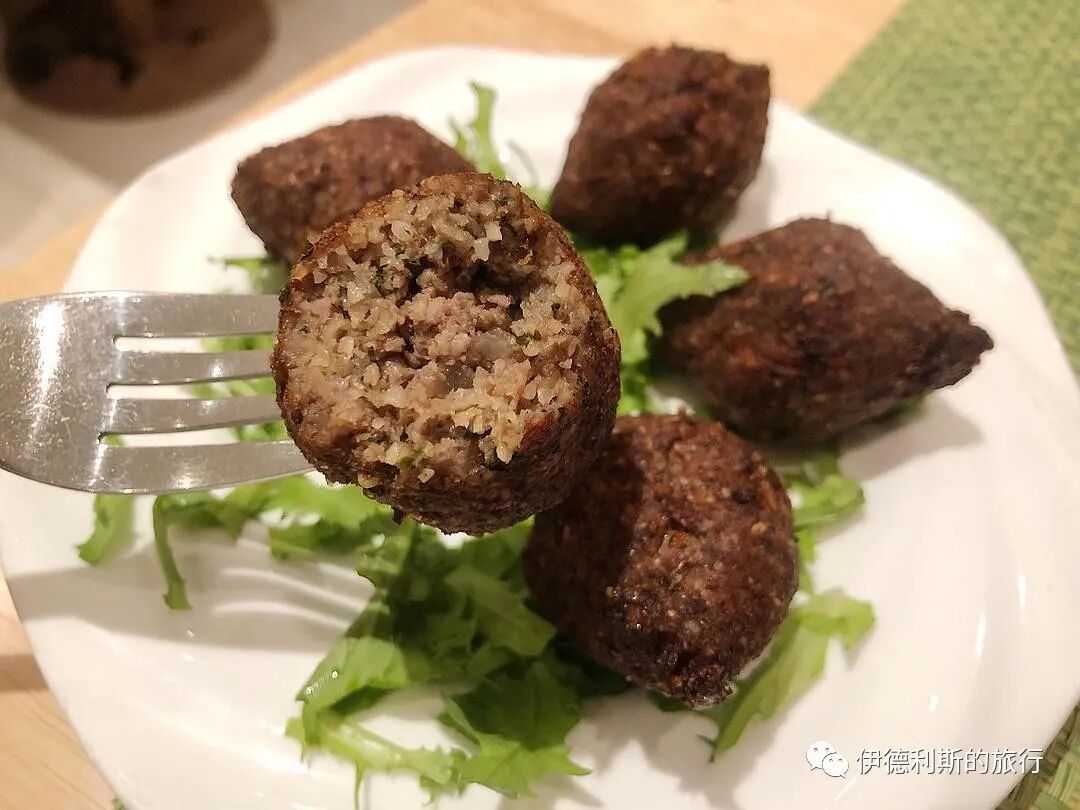
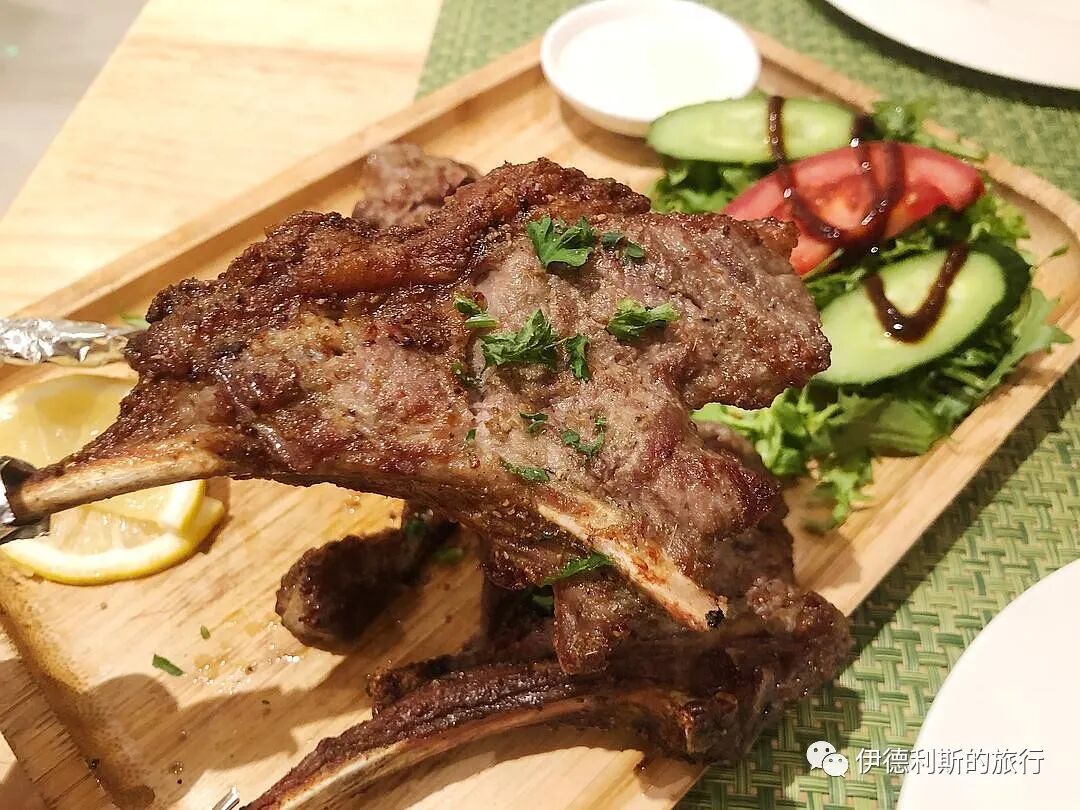
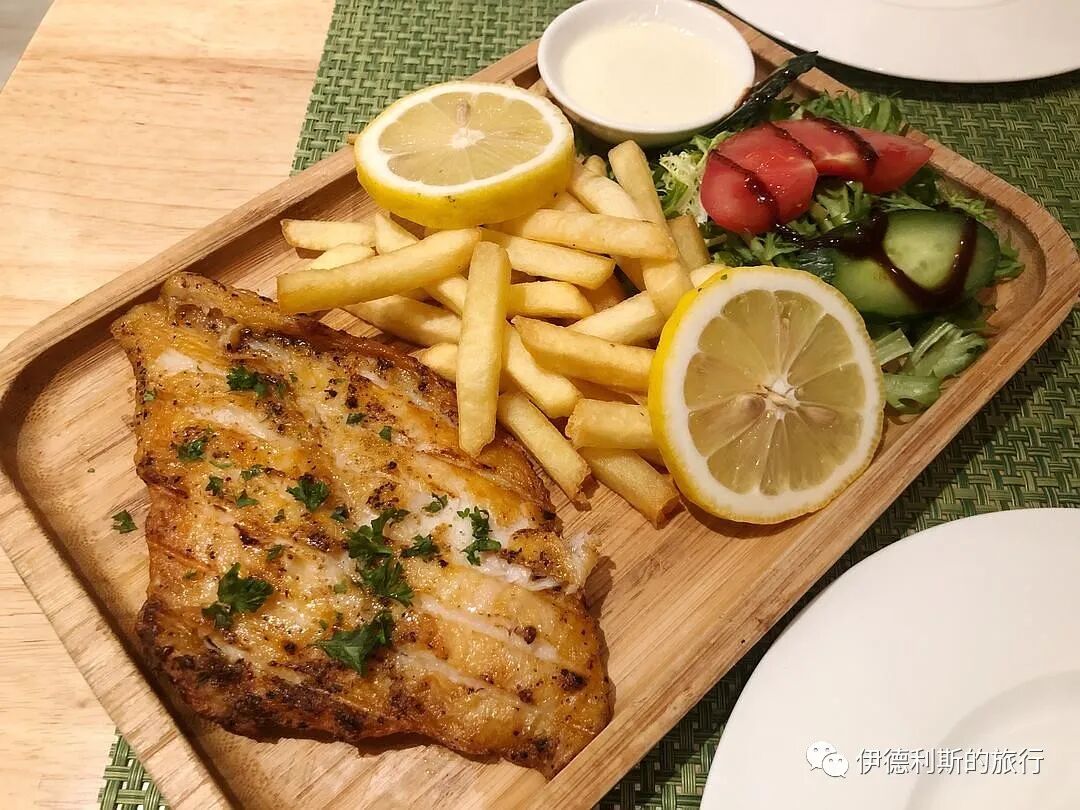
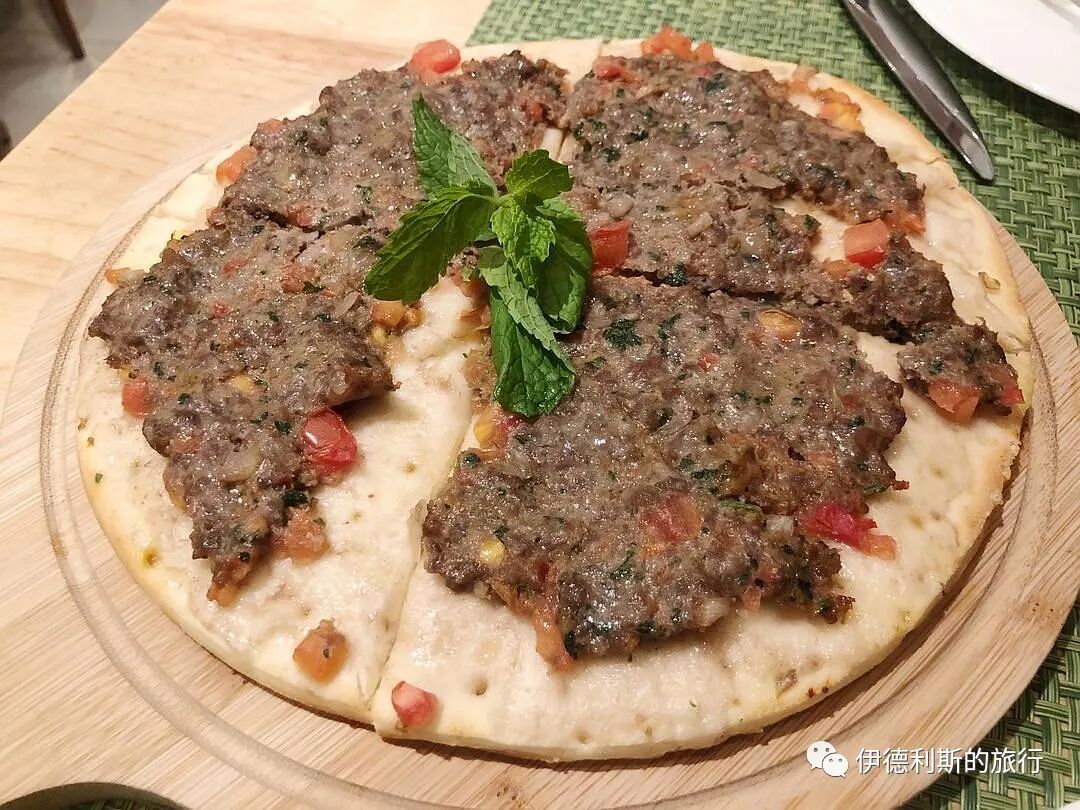
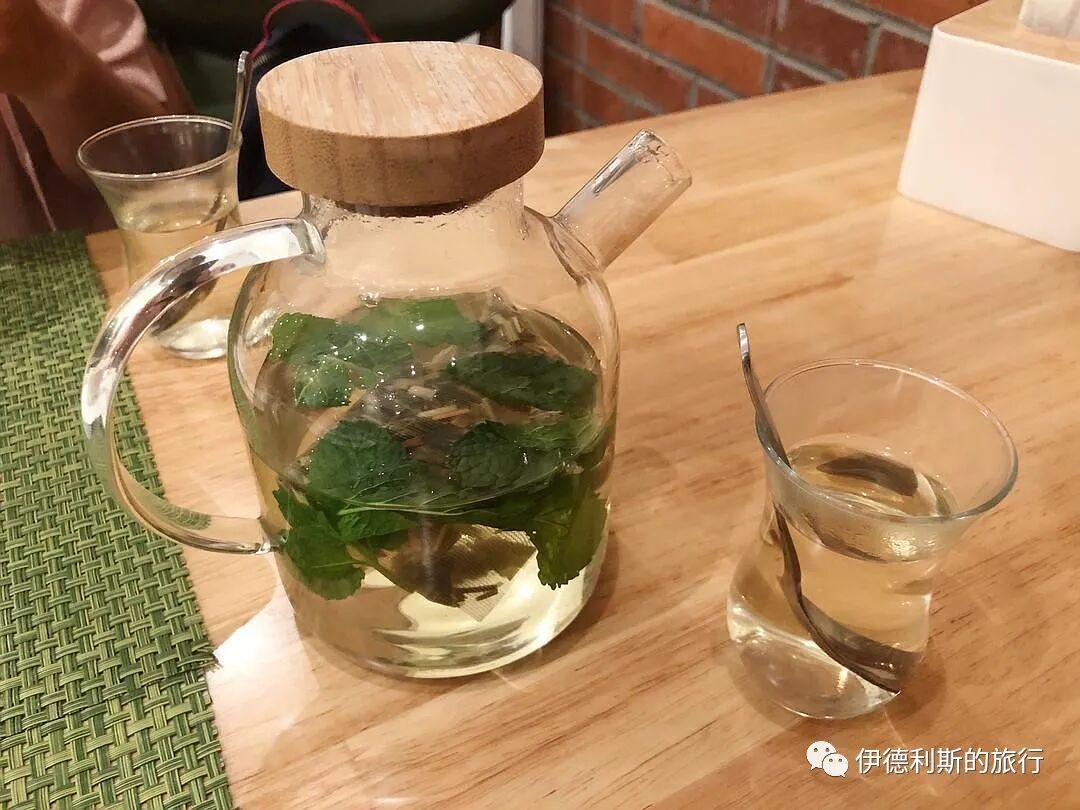
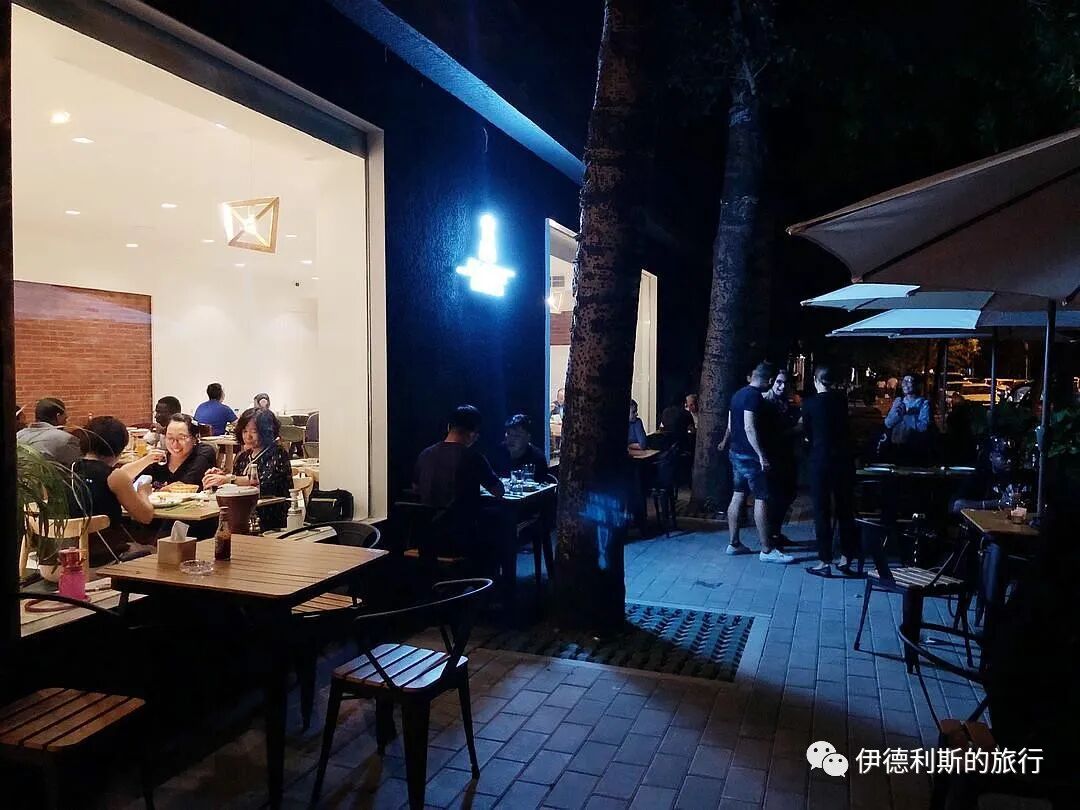
On May 26, 2019, I ate roasted lamb leg, lentil soup and hummus at the Lebanese restaurant Alameen outside Dongzhimen in the evening.
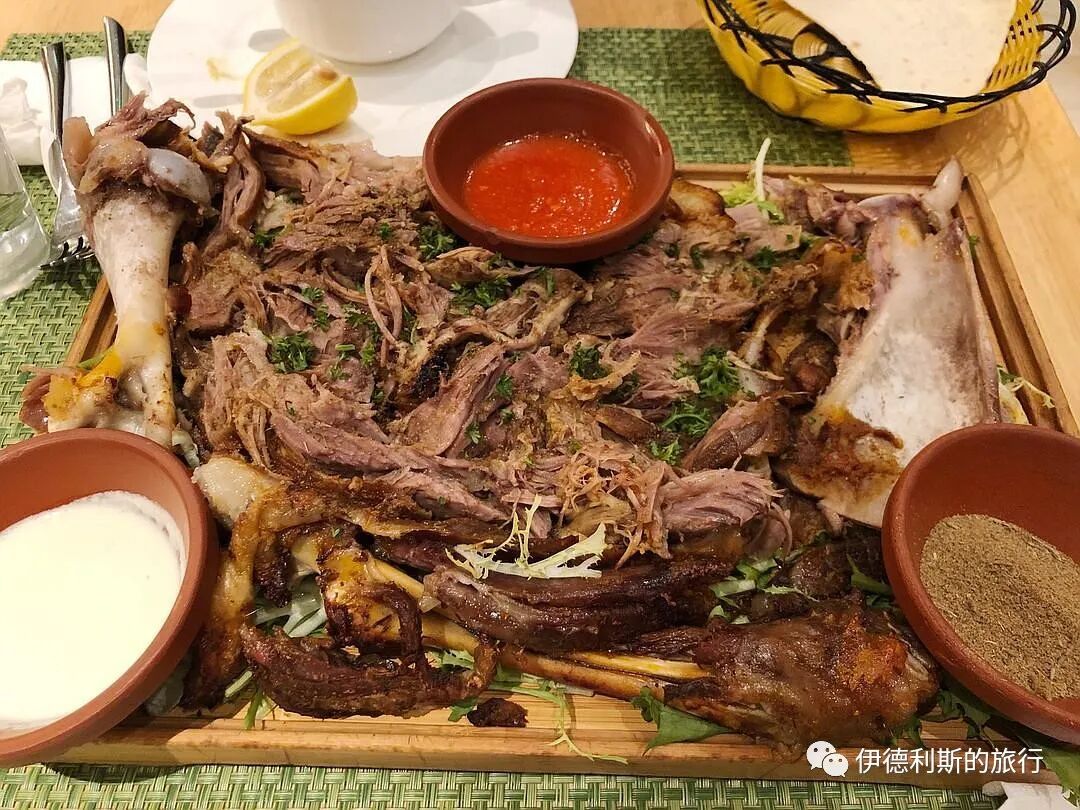
3. Meza, a Tunisian restaurant (closed)
On the evening of December 21, 2020, I went to the Tunisian restaurant Mesa, which was newly opened in November. After the Moroccan restaurant Camel Team Restaurant and Bar closed due to the epidemic (the owner ran away), there is a North African restaurant in Beijing. (Unfortunately it will be closed again in 2021).
I ordered Brik with Tuna, sizzling Shakshuka with eggs, grilled chicken skewers, Tunisian sausage (Merguez), Baba Ganoush, pickle platter, lentil soup, and also ordered Tajine Couscous with various grilled meats, which was not on the menu.
Brik pie is a North African Berber dish that was later brought to Israel by Tunisian Jews. The filling is usually filled with eggs, tuna, harissa, parsley, etc., and then wrapped in crispy noodles called Malsouka or Warka and fried.
Shakshuka is a stew of eggs, tomatoes and onions, usually with olive oil, chili, garlic, cumin, nutmeg and other spices. Shakshouka, which means "mixture" in Arabic, is widely distributed in the former Ottoman lands and Andalusia, and was brought to Israel by Tunisian Jews. The dish was originally just a stew of minced meat or liver. Tomatoes and peppers were later introduced from the Americas, and eggs are often added to the Tunisian version.
Merguez is a North African sausage made from lamb and beef, mixed with cumin, harissa, chili peppers and other spices, and is usually grilled. Merguez sausage was first seen in Andalusia in the 12th century, that is, southern Spain under Arab rule. At that time, it was pronounced as mirkās or merkās in Andalusian Arabic. Later it spread throughout North Africa and then to France and Germany.
Baba ghanoush is a Middle Eastern Levantine appetizer, which is made of cooked eggplant puree mixed with sesame sauce and olive oil, lemon juice and other seasonings. It is usually dipped in pita.
Tajine is a North African Berber specialty. Tajine in North African Arabic originates from ancient Greek, and its original meaning is pan. The tagine can be traced back to Harun al-Rashid, the fifth generation caliph of the Bassi Dynasty in the 8th-9th century, and appears in the 9th-century masterpiece "One Thousand and One Nights". Today's tagines are made of pottery, sometimes glazed, with a rounded flat bottom and a cone or dome on top. This design allows all evaporated water vapor to return to the bottom, and water can be added from the hole in the lid.
Couscous, a staple of Berber cuisine, is made from semolina rolled into millet-sized particles and then dried in the sun. Couscous was first seen in North Africa from the 11th to the 13th century. In the 13th century, Ibn Razin al-Tuyibi, a famous Andalusian scholar and gourmet, first recorded the recipe of couscous in his book "Andalusian Cookbook".
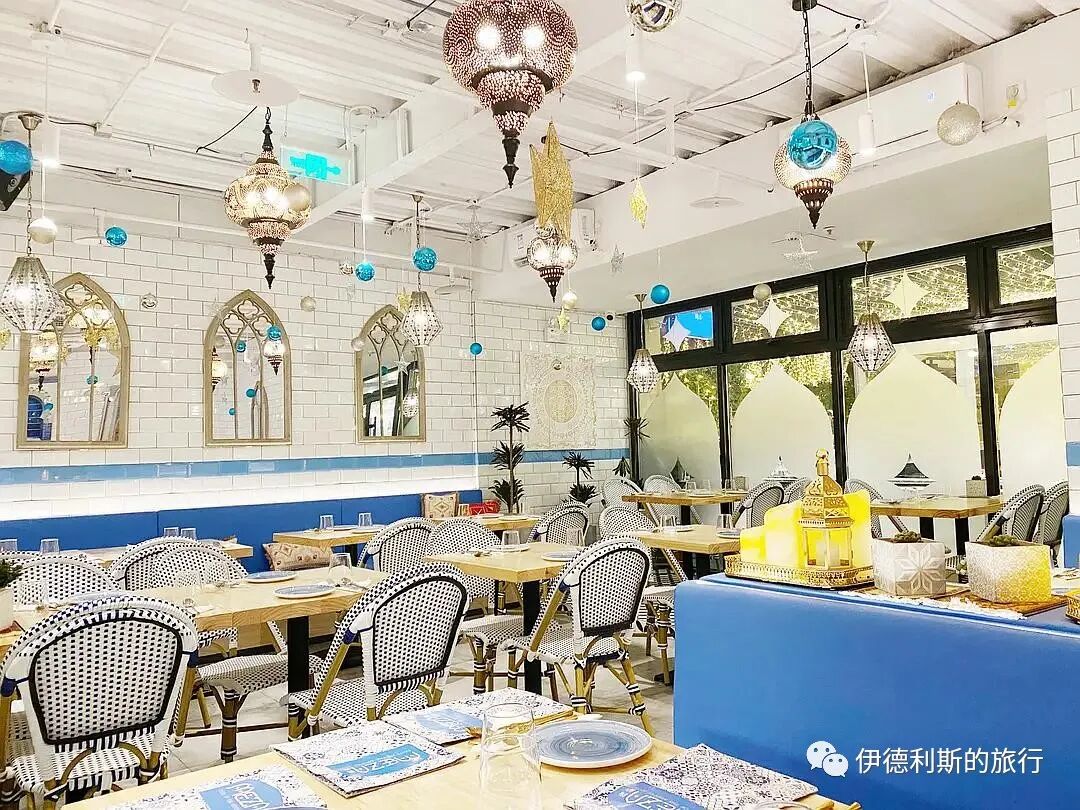
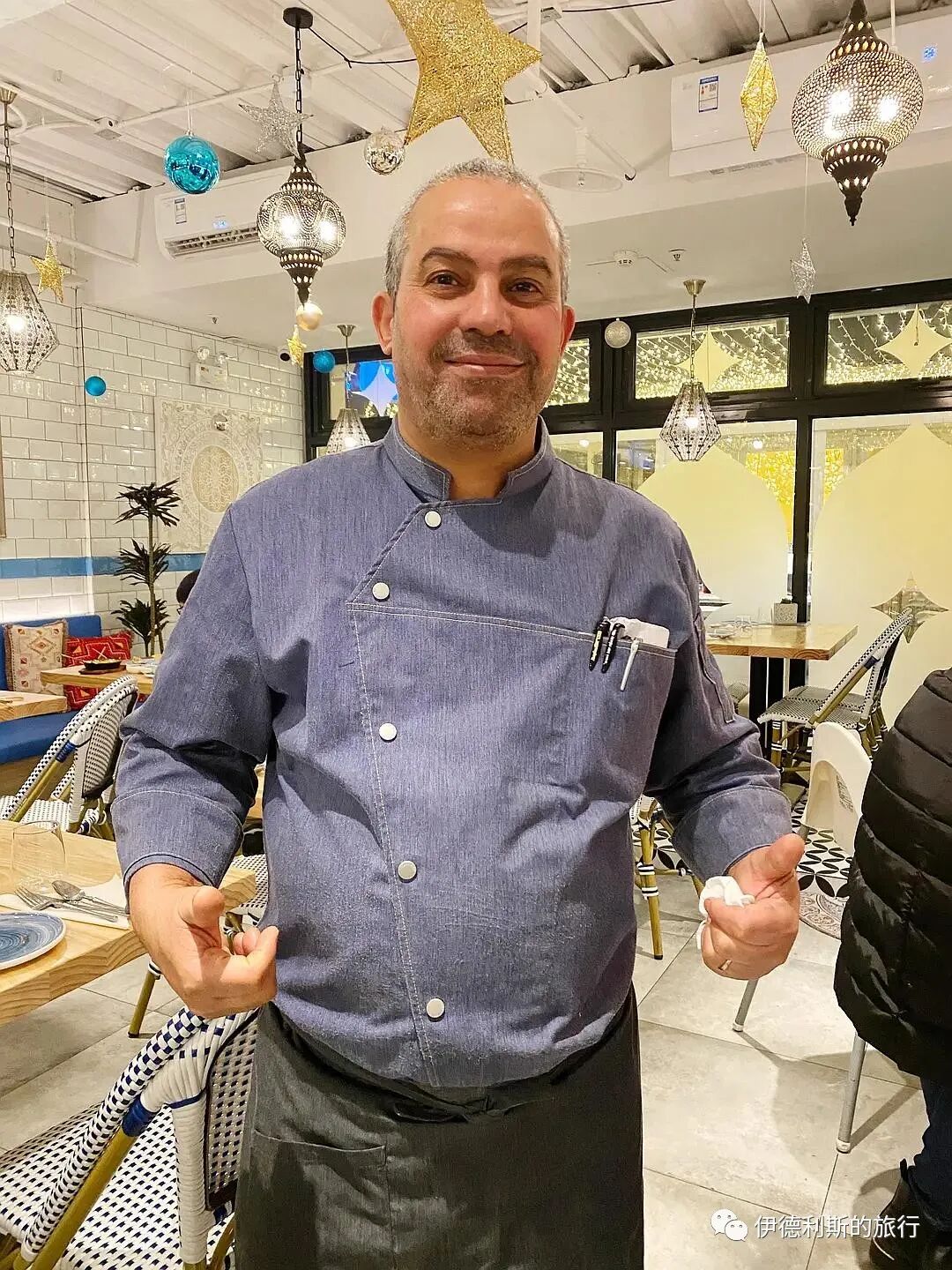
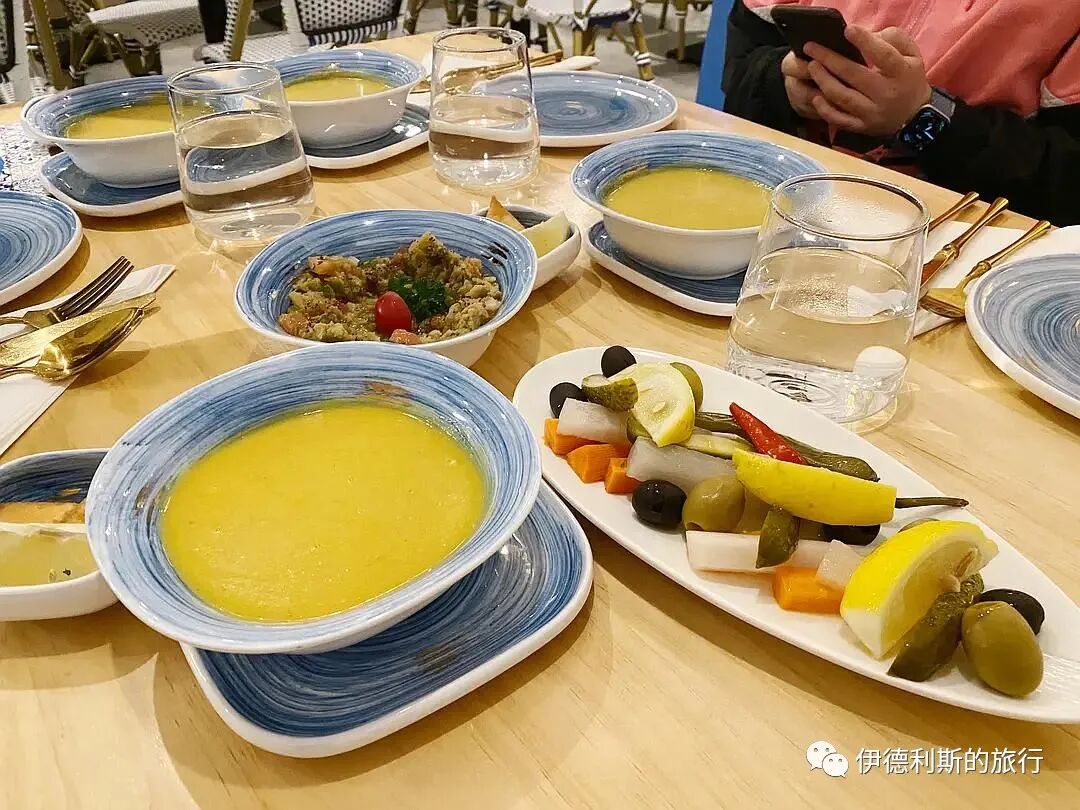
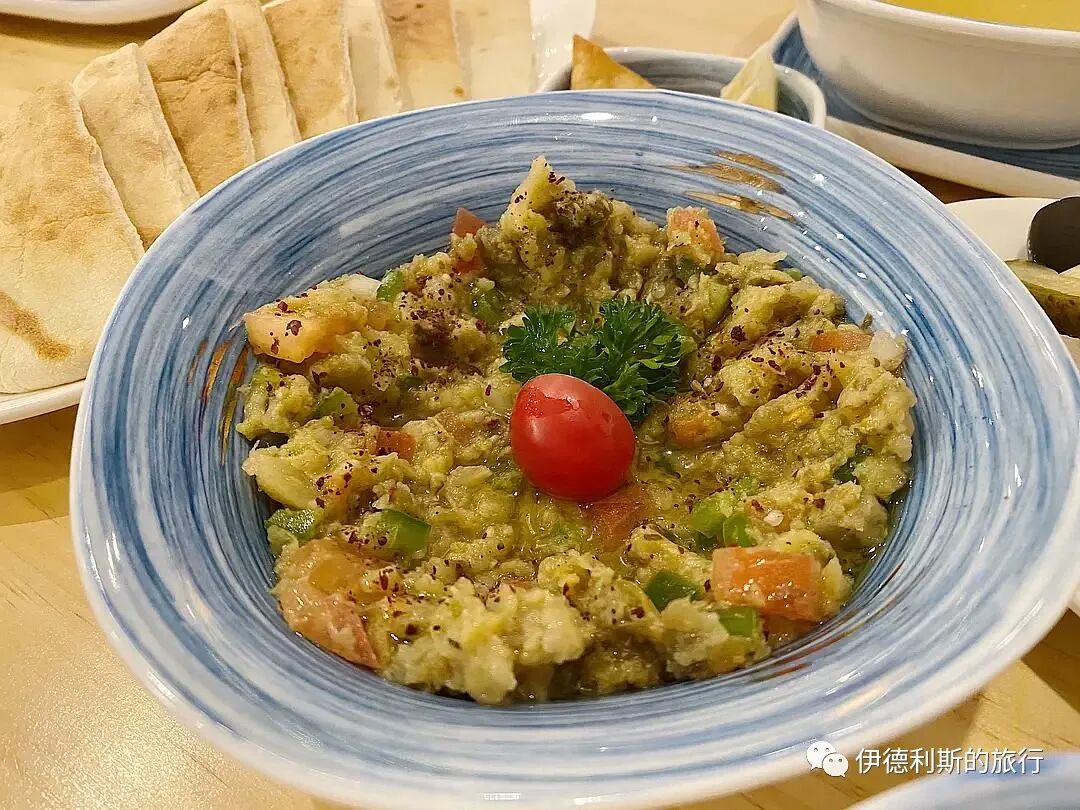
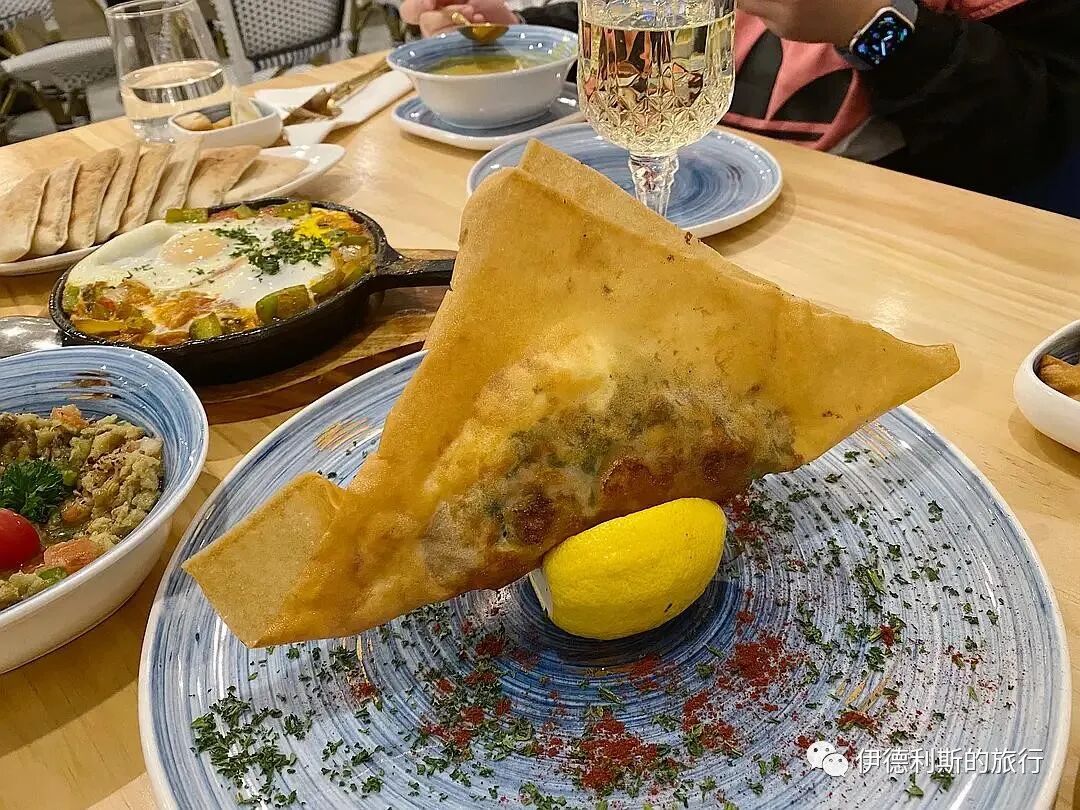
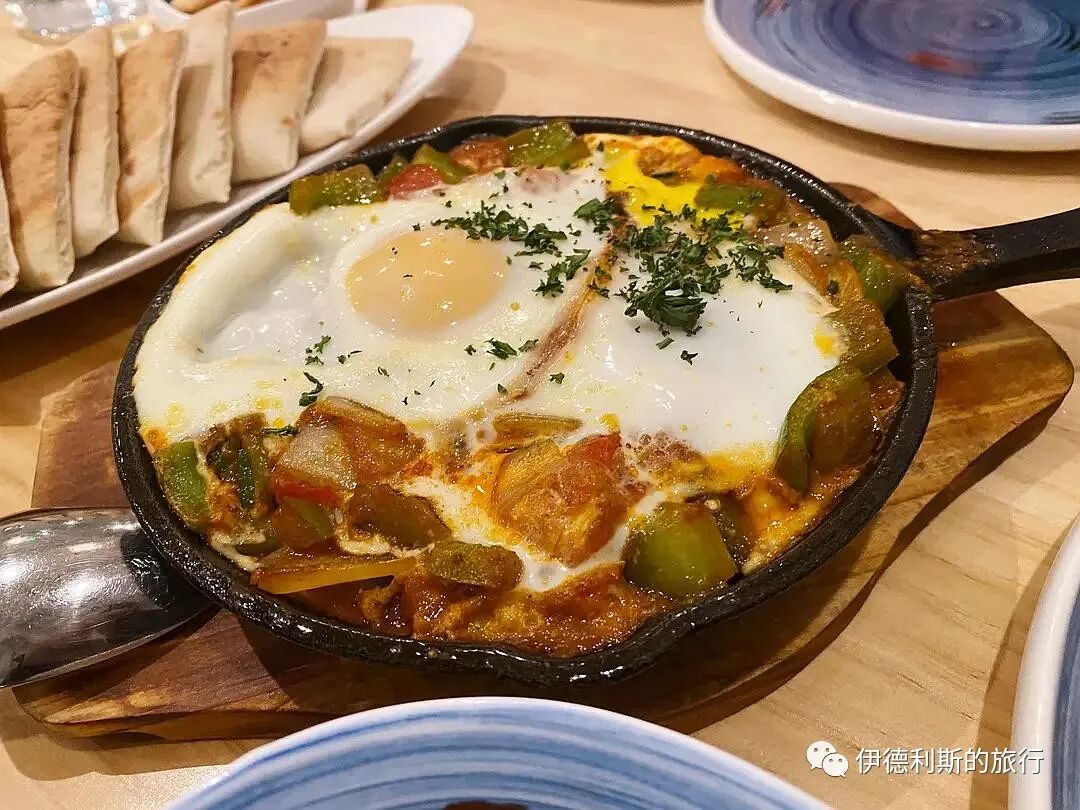
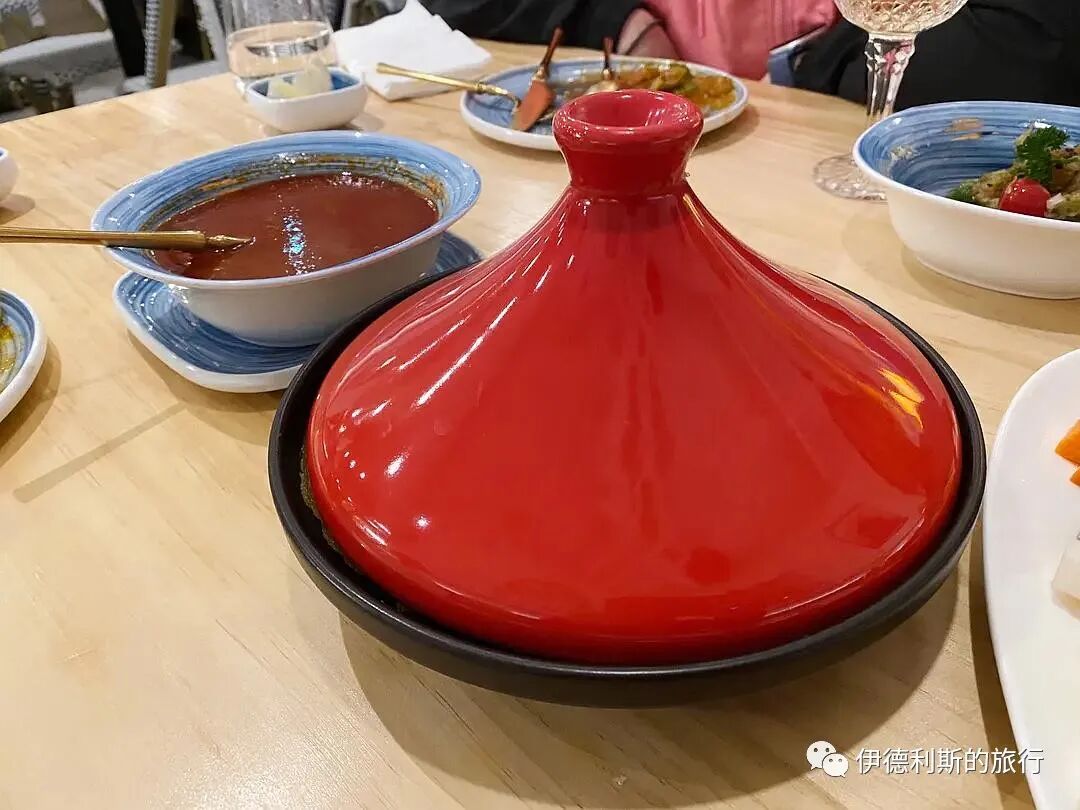
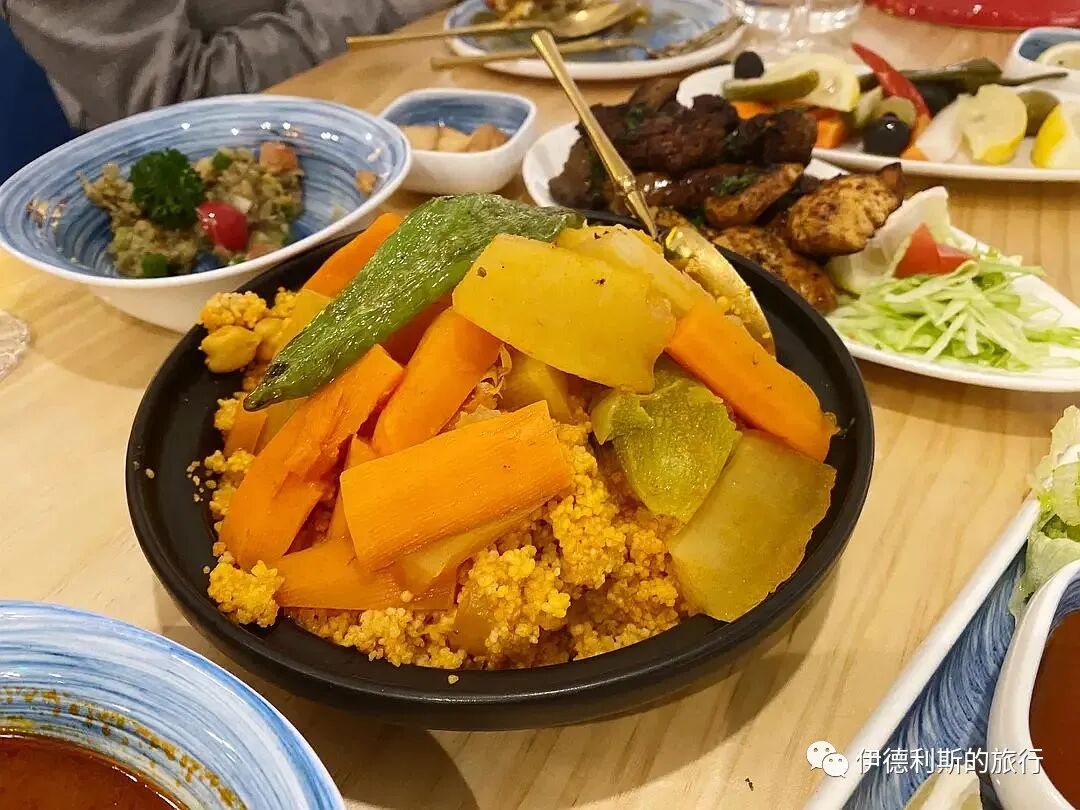
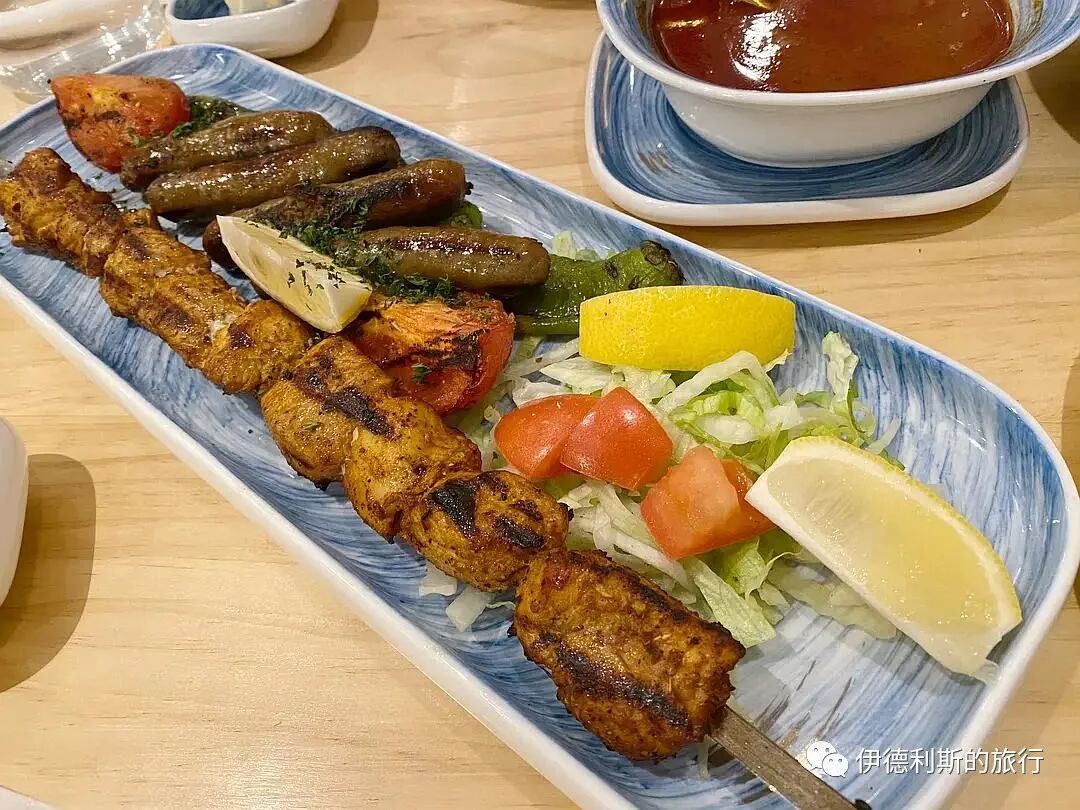
4. Arabic fast food restaurant Taiba
On January 17, 2021, Taiba, a new Arabic fast food restaurant, was recently opened on Guijie Street. I ate Arabic pizza Lahmacun, hummus, and chickpea croquettes Falafel, and drank Middle Eastern black tea with strong spices. Their little brother is from Sudan and speaks Chinese very well. In addition, they mainly serve takeout, and if you want to dine in, you can only eat at the noodle shop next to it.
Lahmacun comes from Arabic (لحم بعجين), which literally translates to "meat and dough". During the Ottoman era, Lahmacun spread from Arabia to pre-Ottoman regions such as Turkey and Armenia, so it was also called "Turkish pizza" or "Armenian pizza", but the basic method is to make thin pancakes with minced meat.
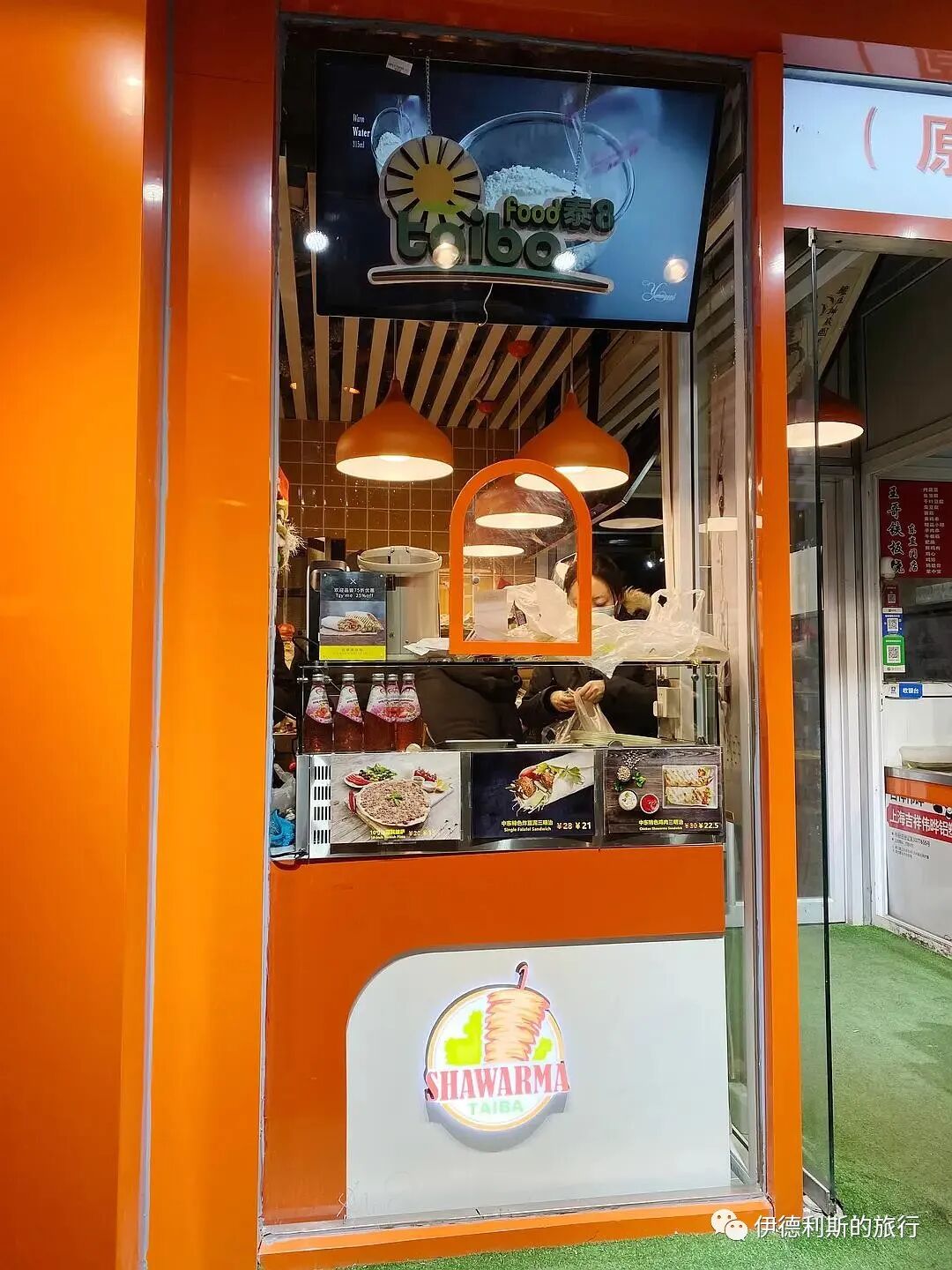
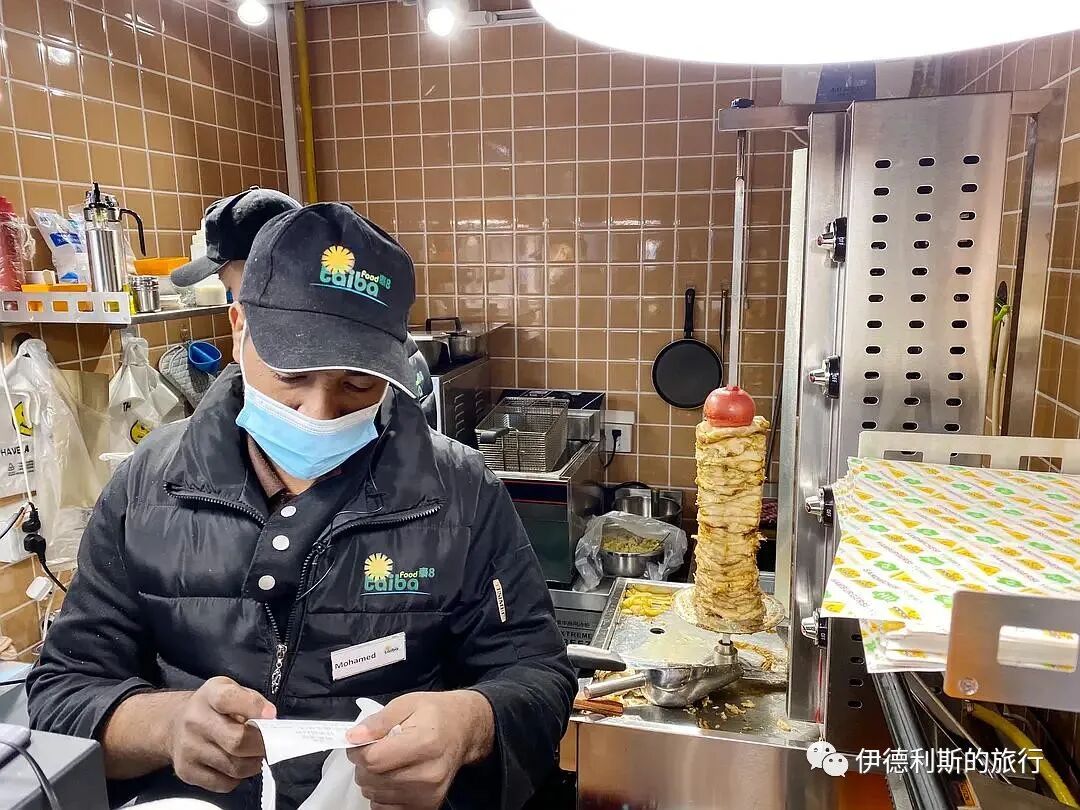
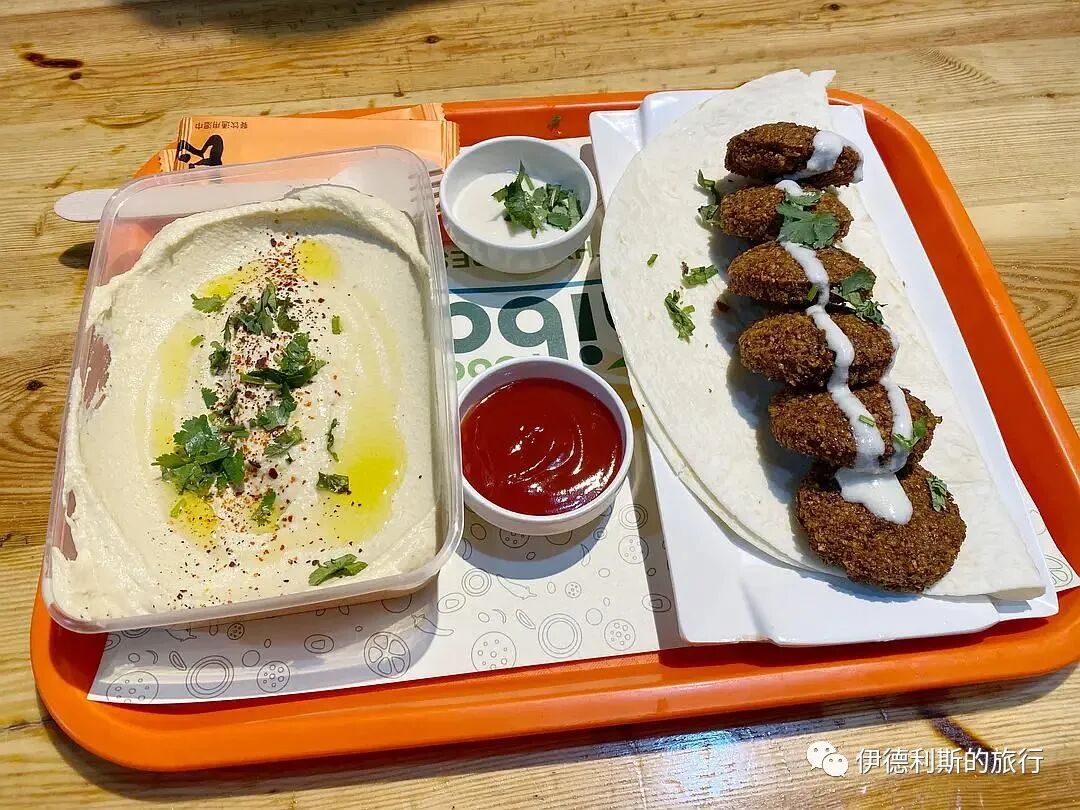
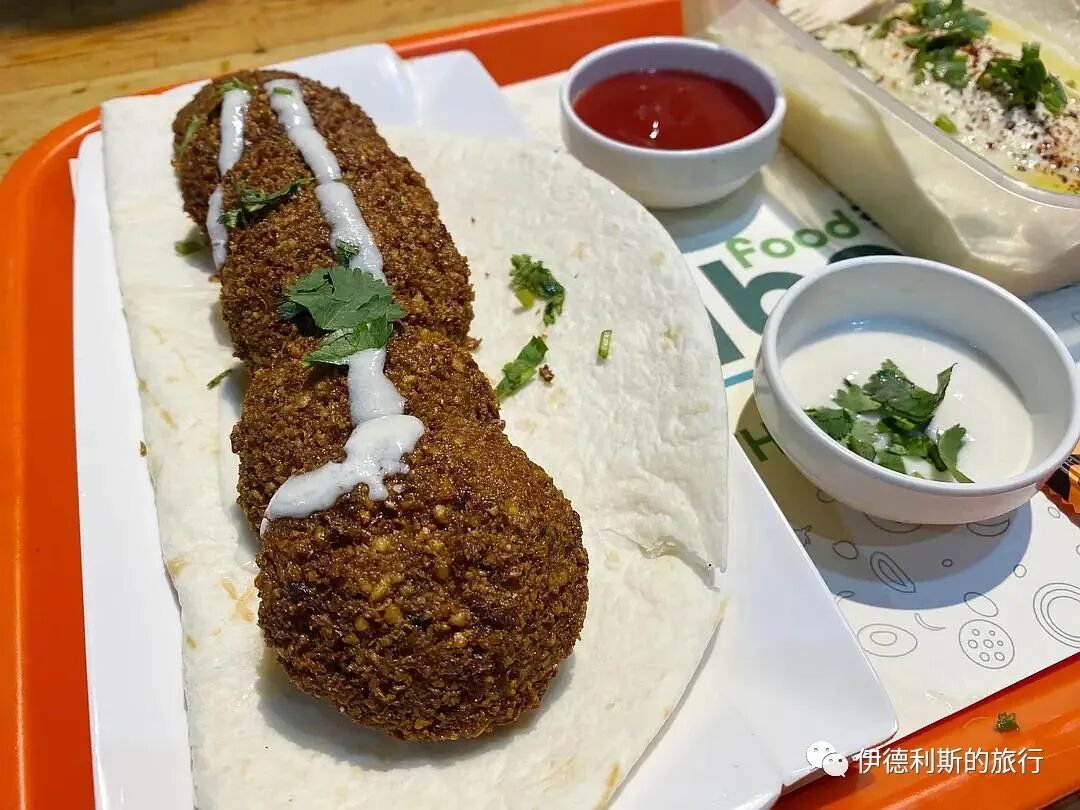
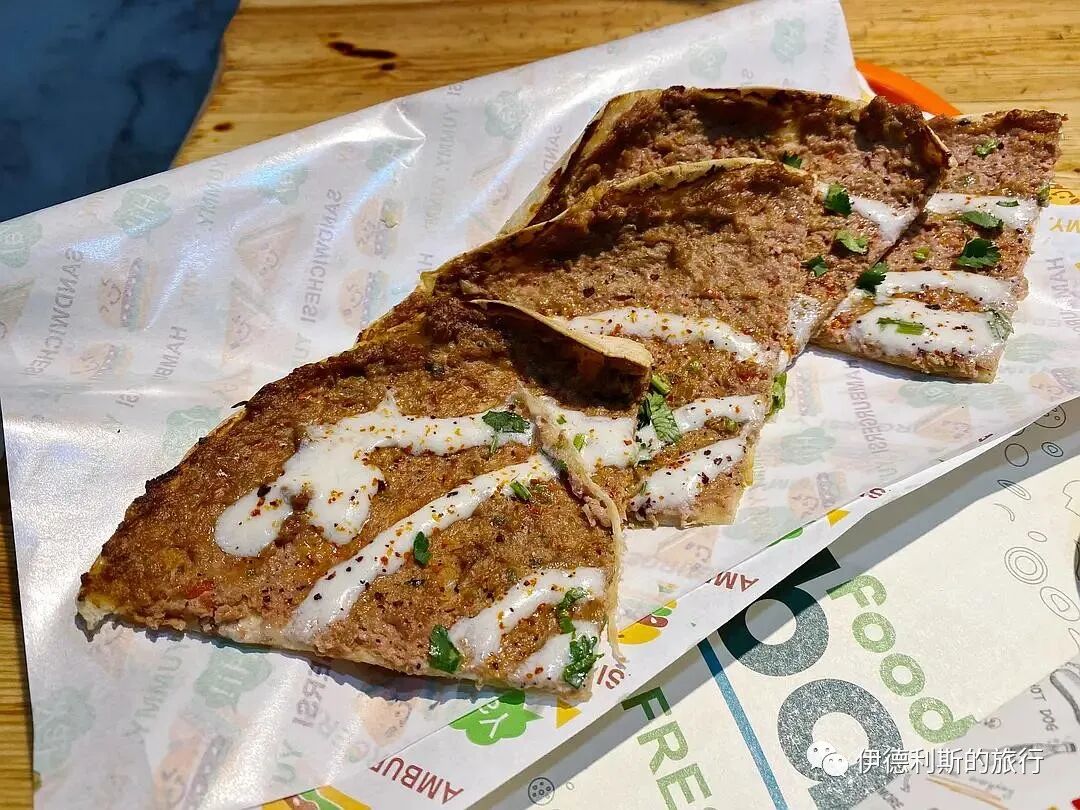
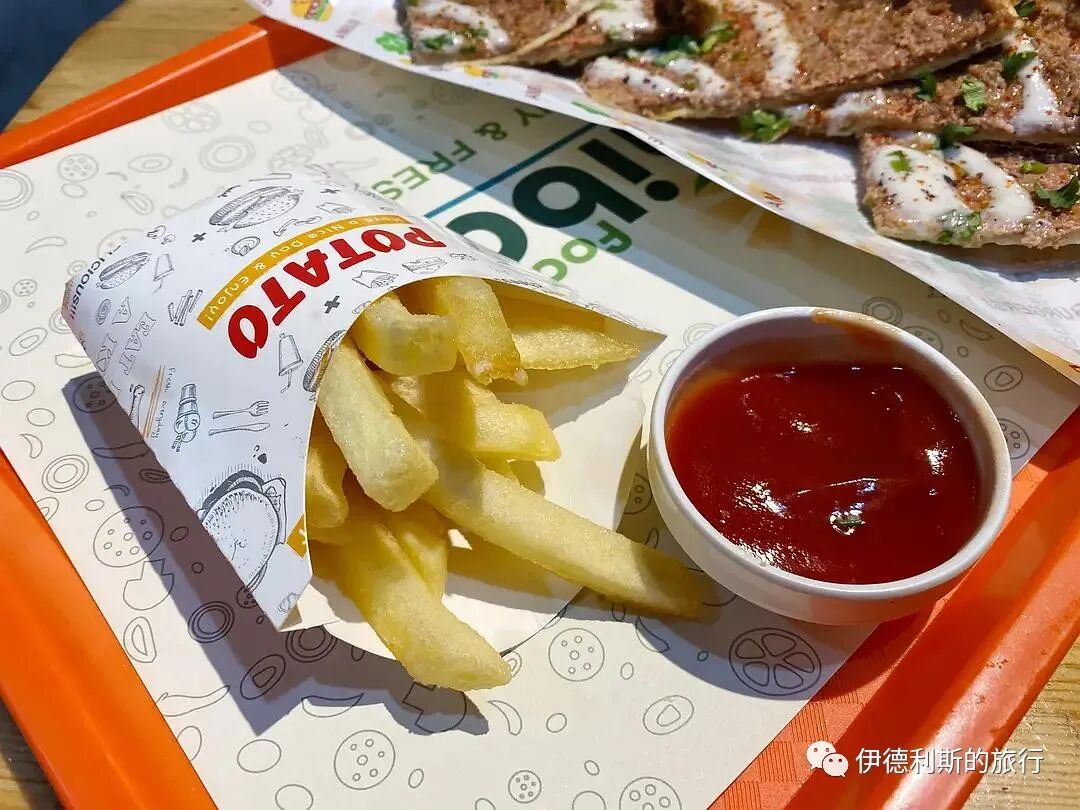
5. Syrian Restaurant BRBR
On March 7, 2021, we ate at BRBR, a Syrian restaurant in Wudaokou, at noon. I have heard about their restaurant for a long time, but I have never eaten there since I live too far away from the city. This is the first time I have eaten there. I feel deeply that their family is so popular! We went there after two o'clock and had to wait for a long time to be seated. All the young people came to eat.
Syrian cuisine is also a relatively standard Levantine cuisine. The most classic ones are hummus and falafel, but we didn’t order them this time. Ordered lentil soup, grilled meat platter (Shuqaf mutton skewers, traditional Kabab, chicken skewers and chicken wings), half grilled chicken, chickpea broad beans with tahini sauce, lemon mint.
What was special this time was the traditional Arab Mandi mutton rice. Mandi originated from Yemen and is popular in the Arabian Peninsula, Egypt and the Levant. Mandi is usually made of rice, meat (mutton, camel or chicken) and Hawaij spices. Hawaij is also a special spice originating from Yemen. It can be used for cooking, soup and coffee. The main ingredients are cumin, black pepper, turmeric and cardamom. The taste of Mandi is drier than ordinary curry rice.
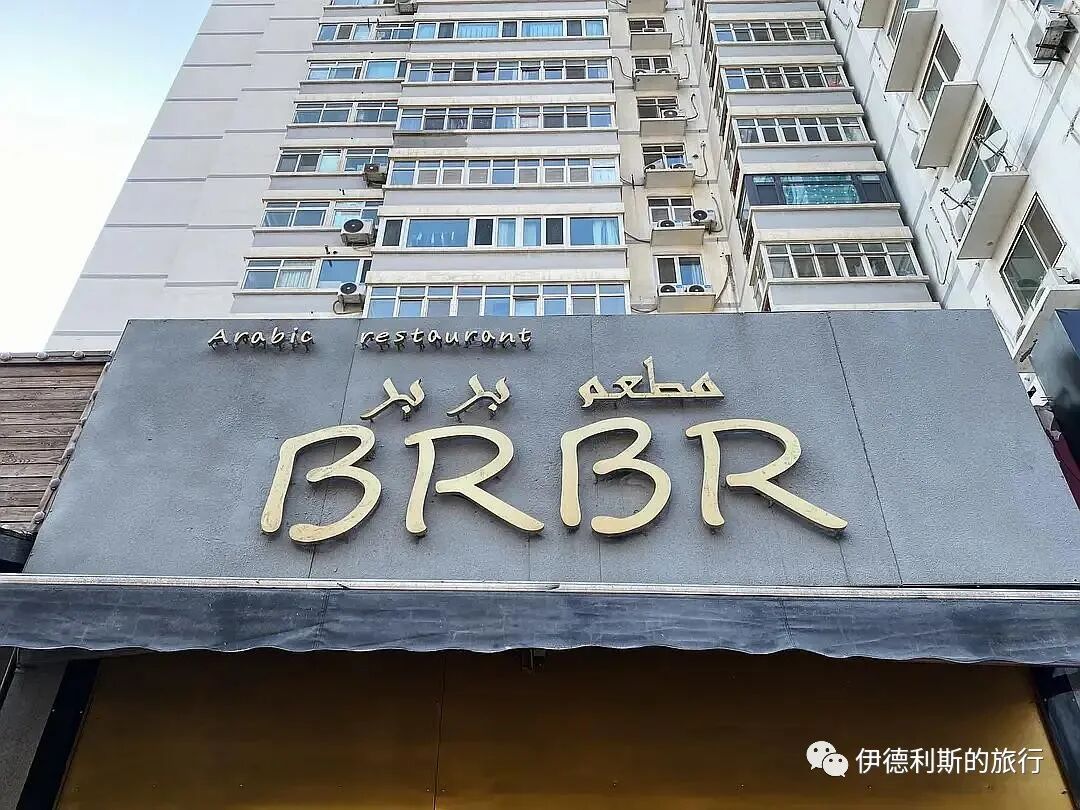
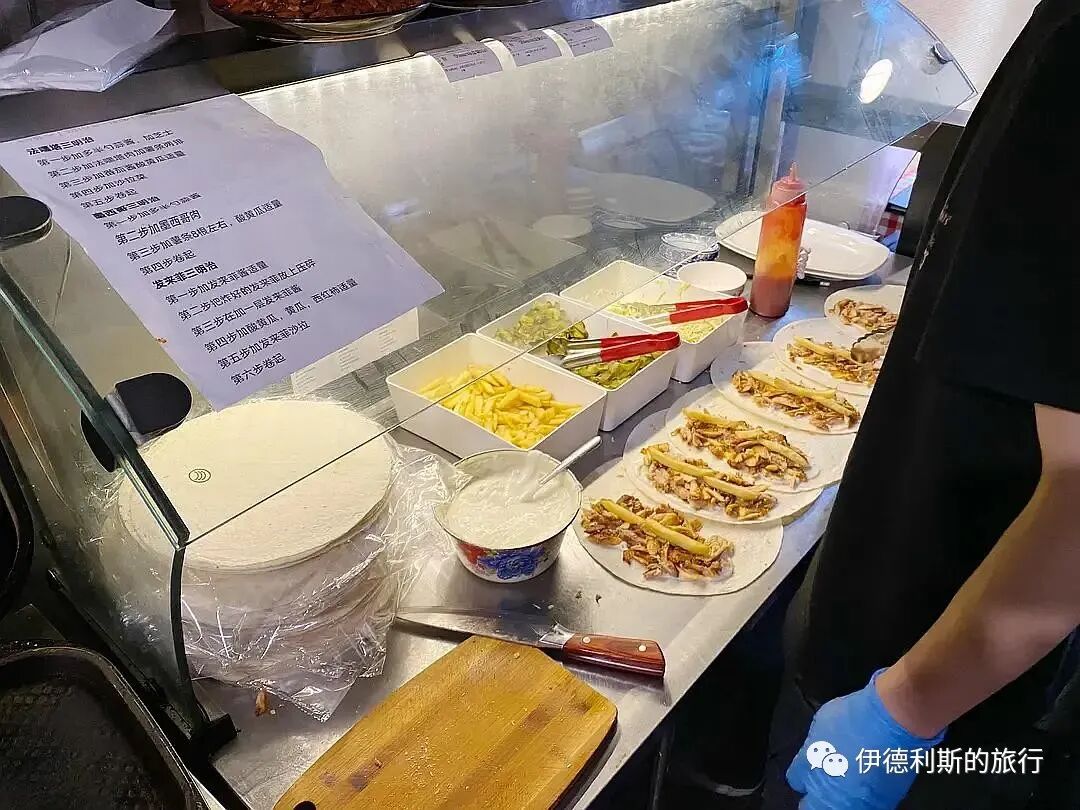
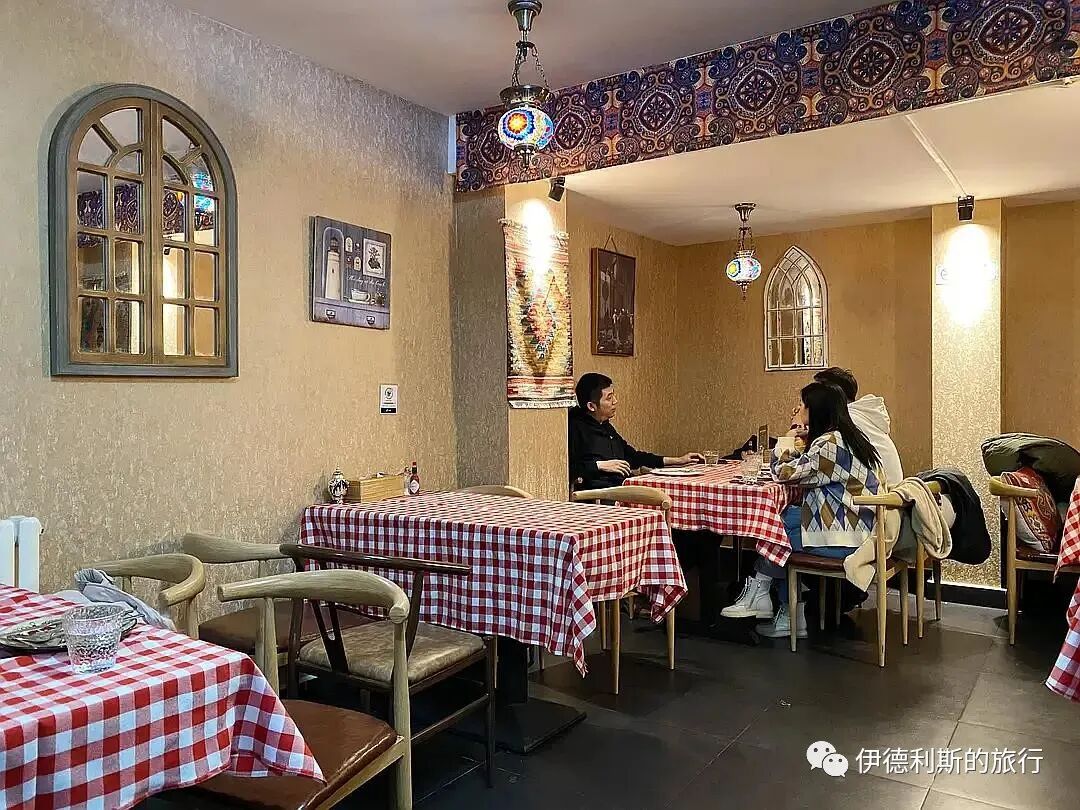
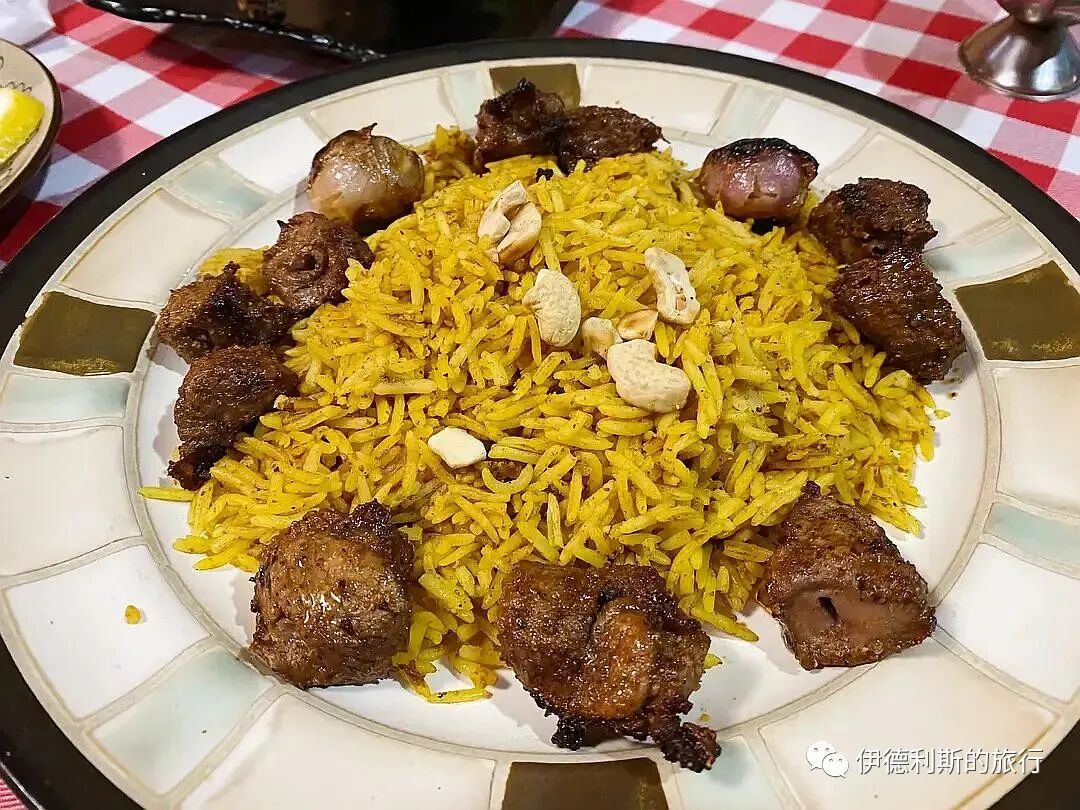
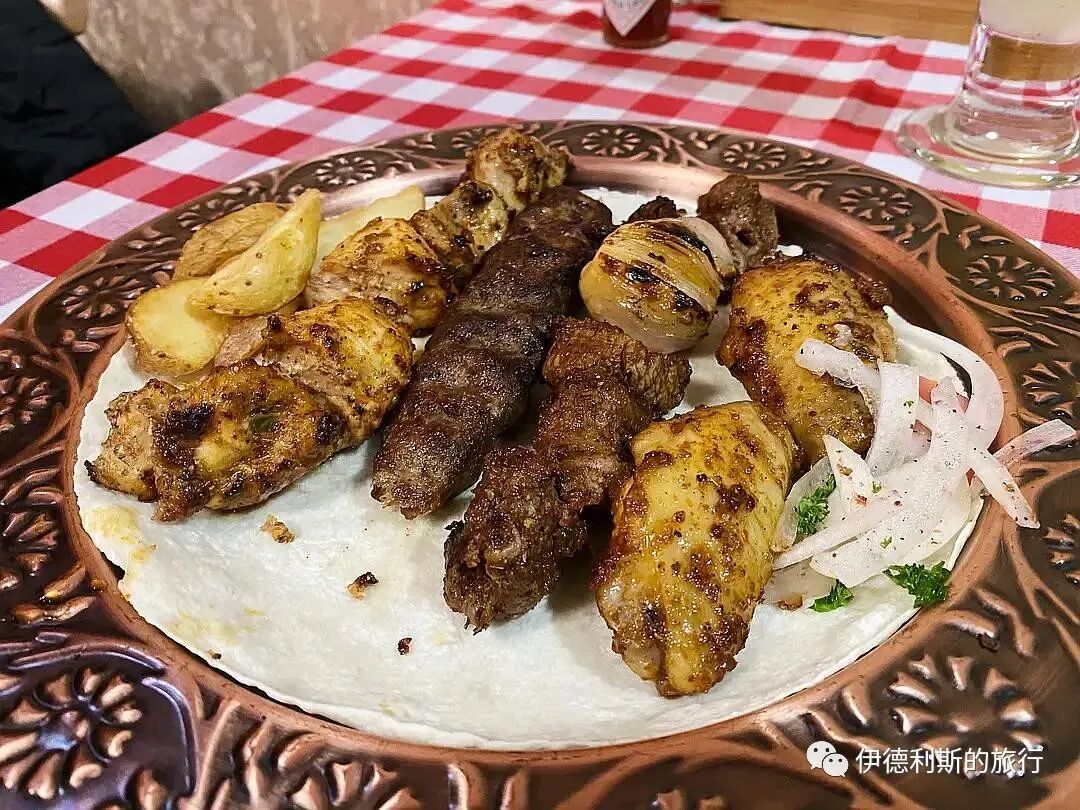
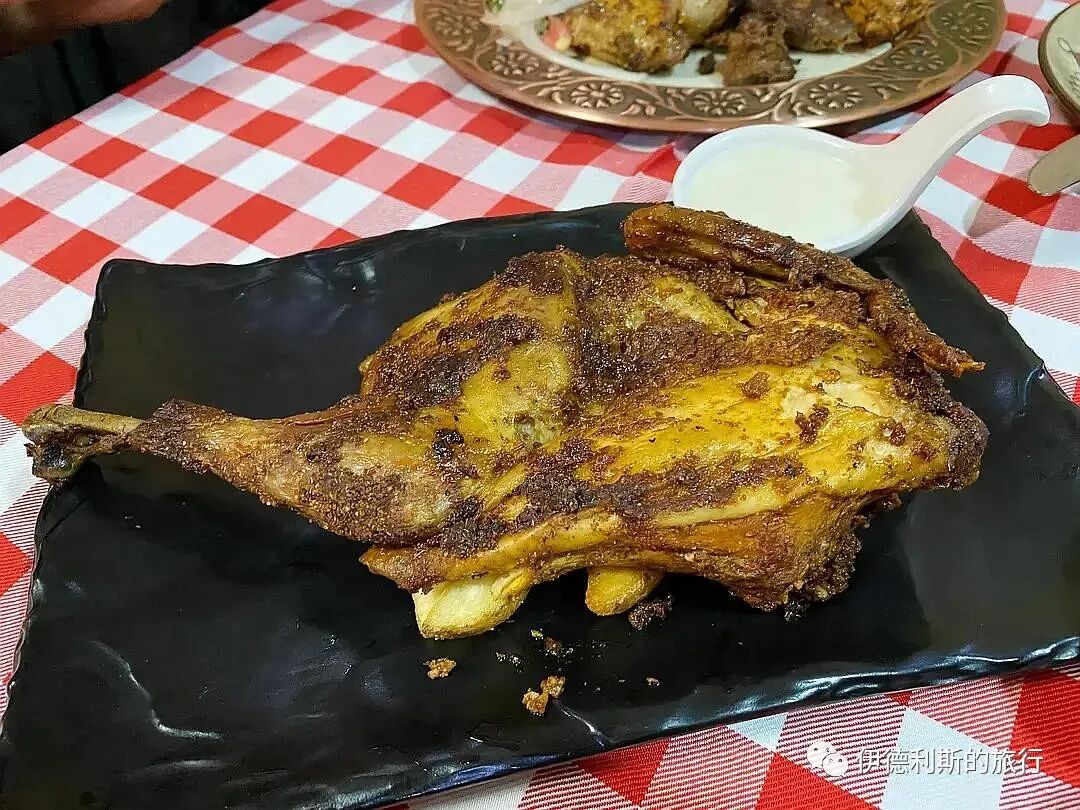
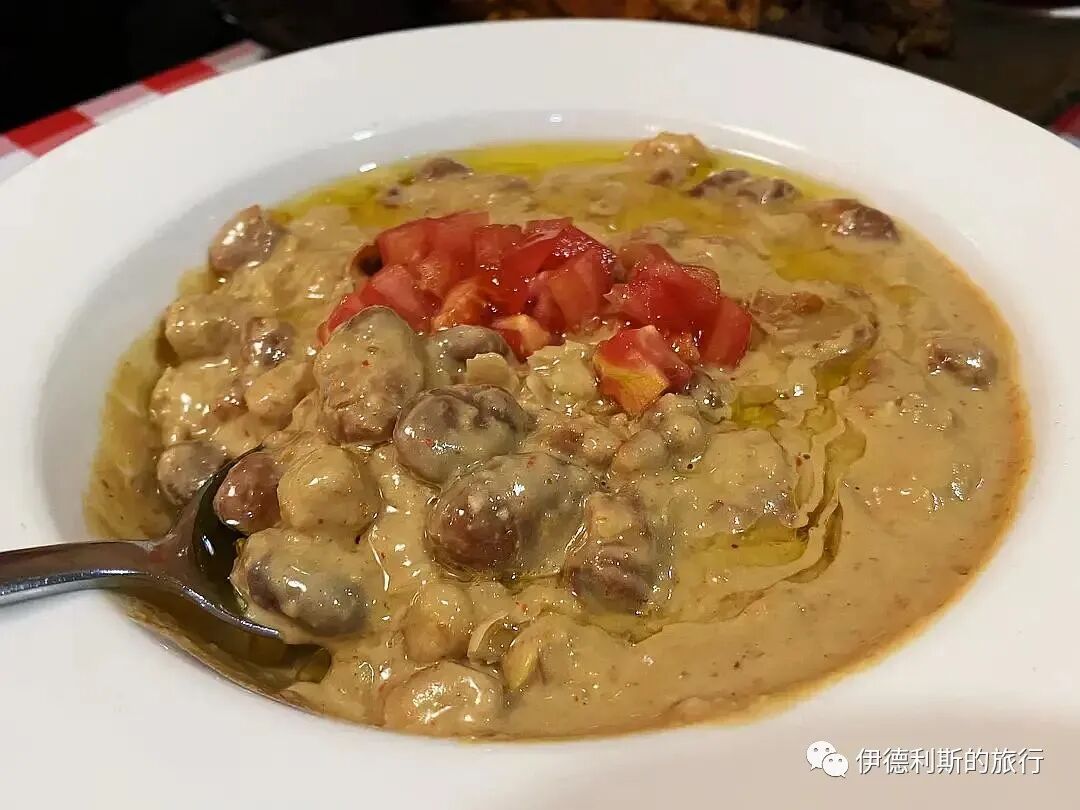
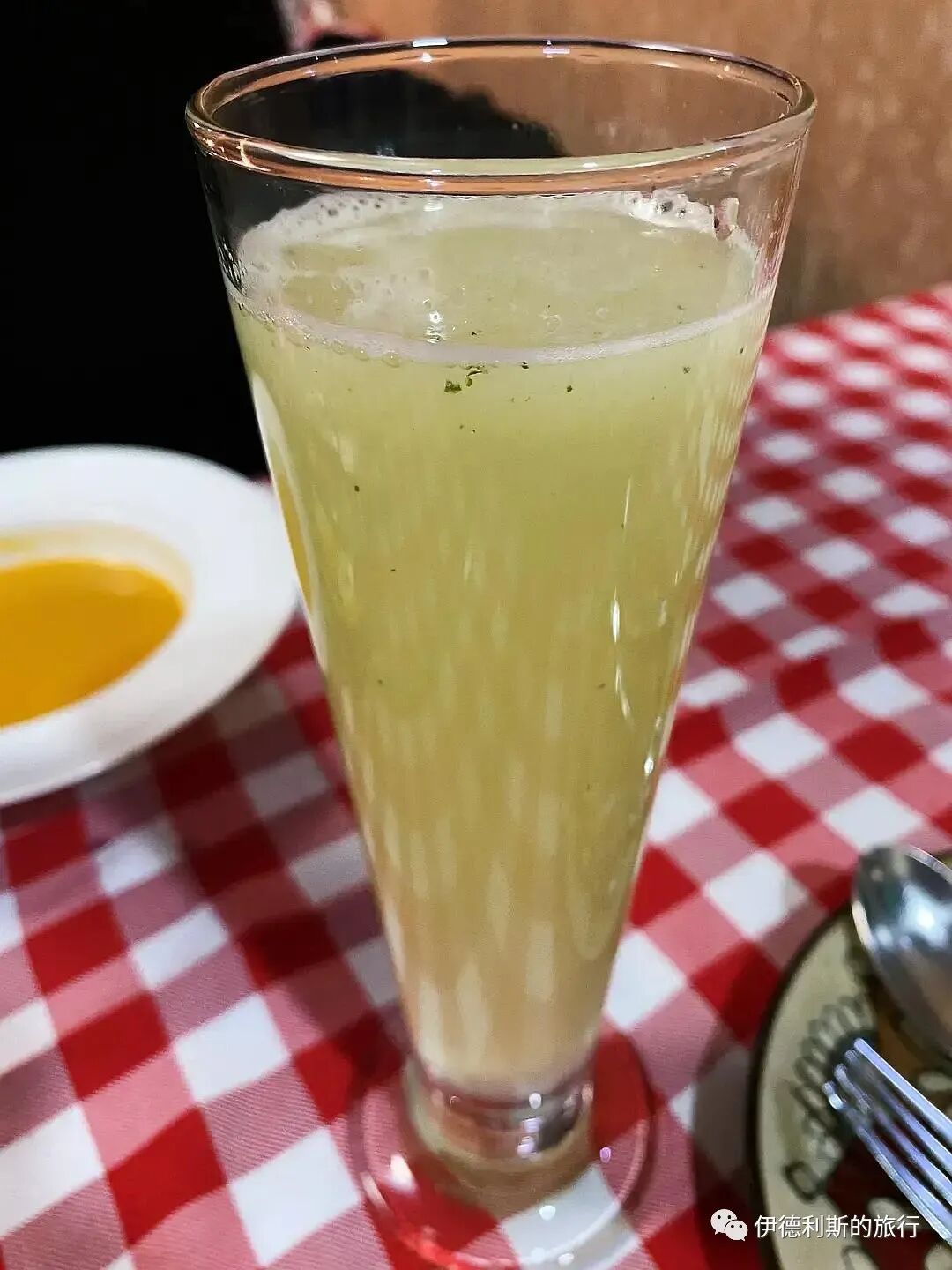
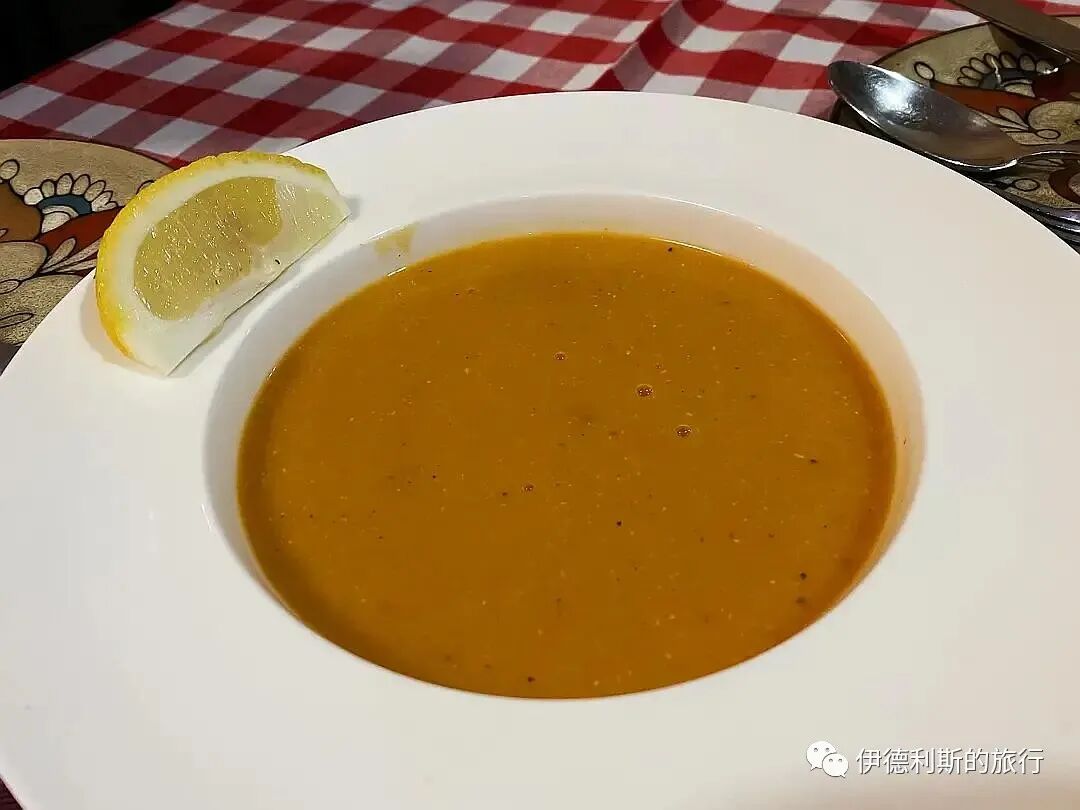
2. Türkiye and Azerbaijan
1. Turkish Mom
On January 10, 2020, after getting married, I went to Sanlitun's Turkish mother with Zainab. I ordered lentil and wheat soup, "Sultan's favorite", barbecue platter and rice pudding, and then drank tea and smoked shisha to talk about things. Turkish Mama is much better than the Iranian food next door. The grilled lamb and toasted bread are especially delicious. The wheat rice we originally ordered was returned because the bread was so delicious.
The Sultan's Favorite (Hünkar Heğendi) is a snack that originated in the Ottoman court. It uses rich stewed lamb with creamy roasted eggplant puree. It is quite rare in Beijing.
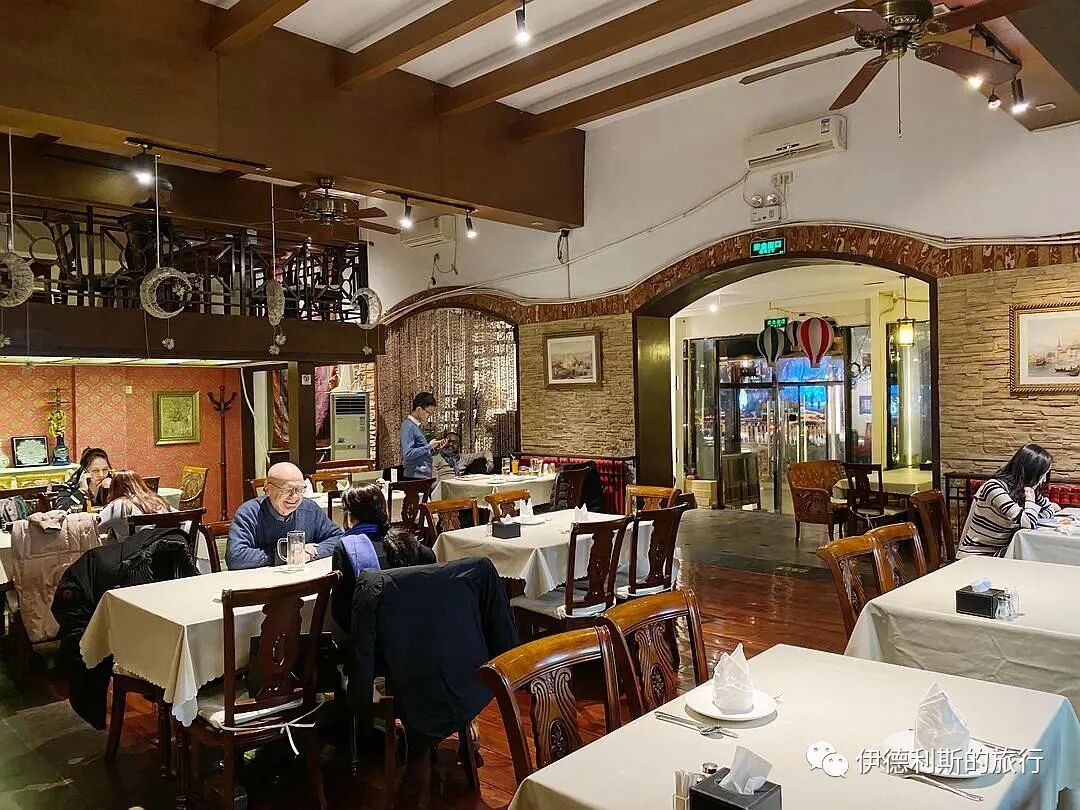
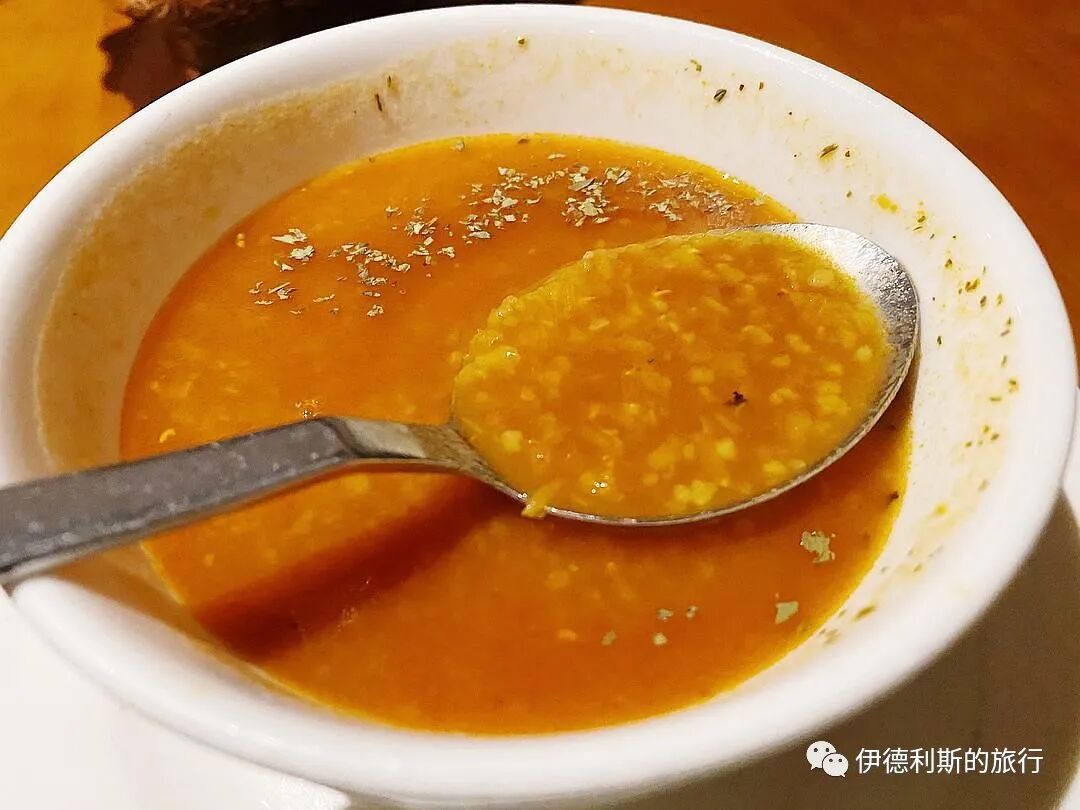

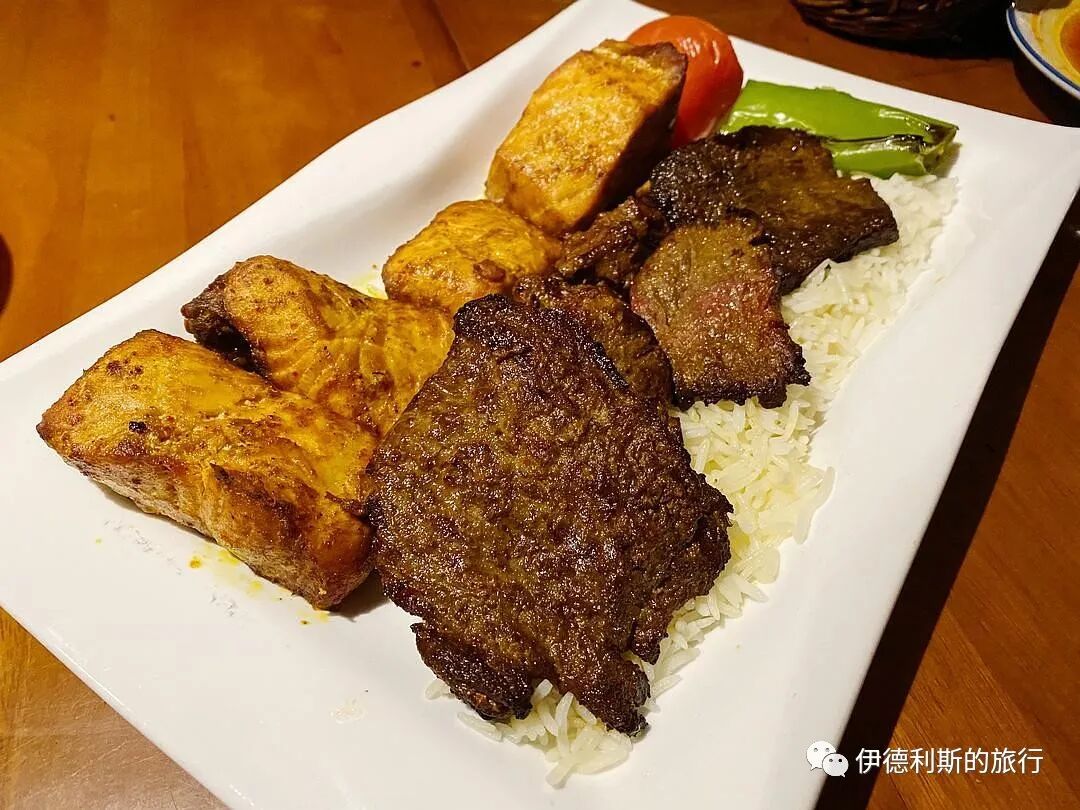
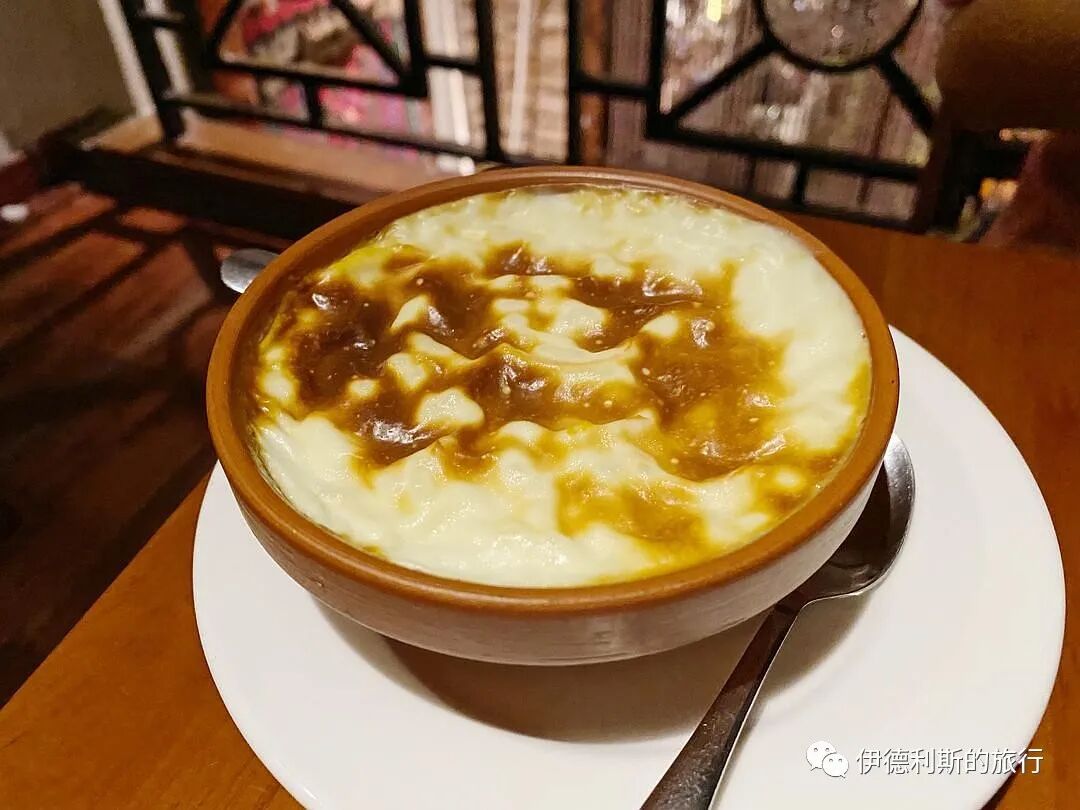
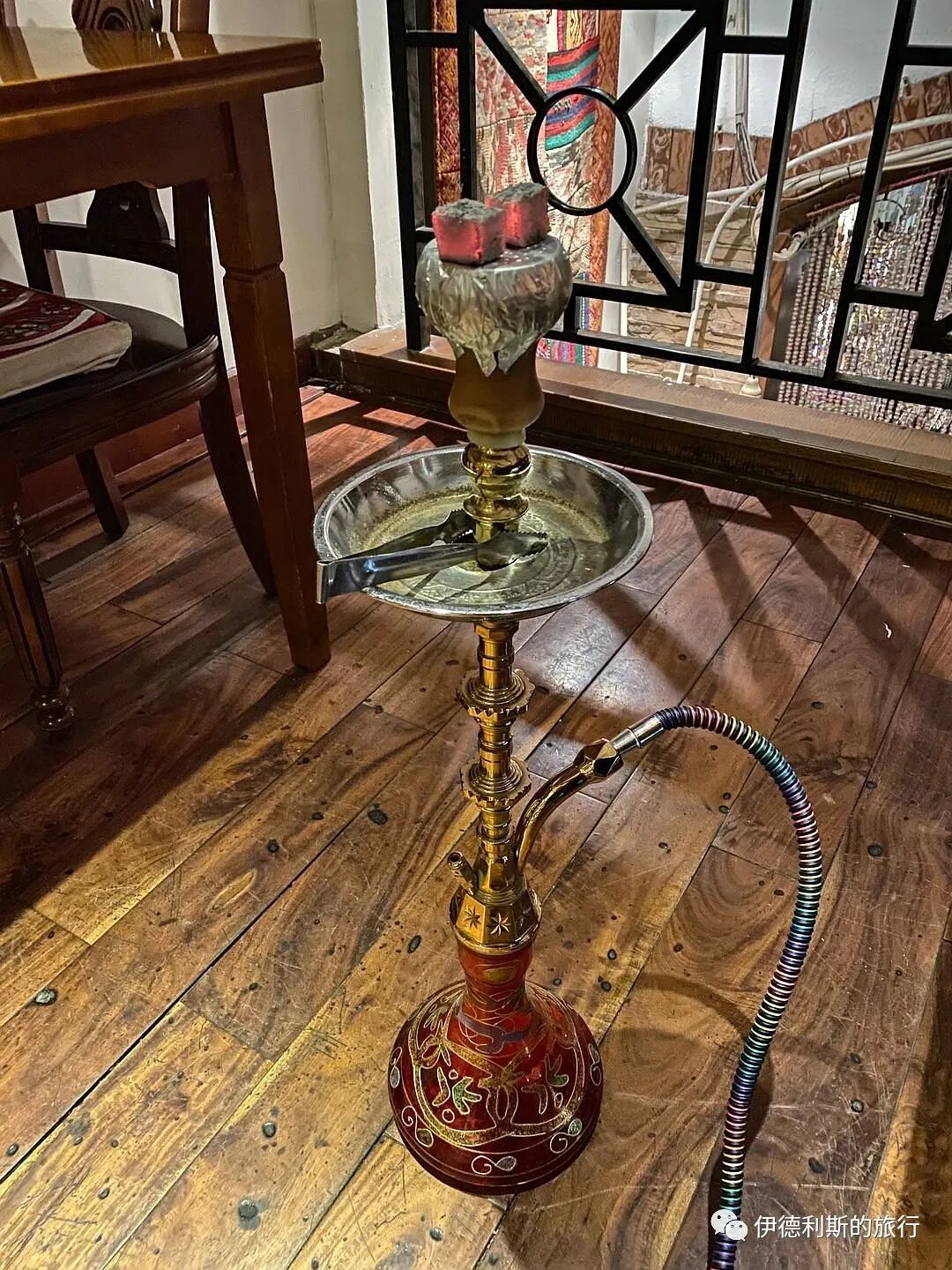
On October 19, 2019, Turkish mothers smoked hookah, drank tea, and ate baklava and rice pudding in the west of Changhong Bridge.
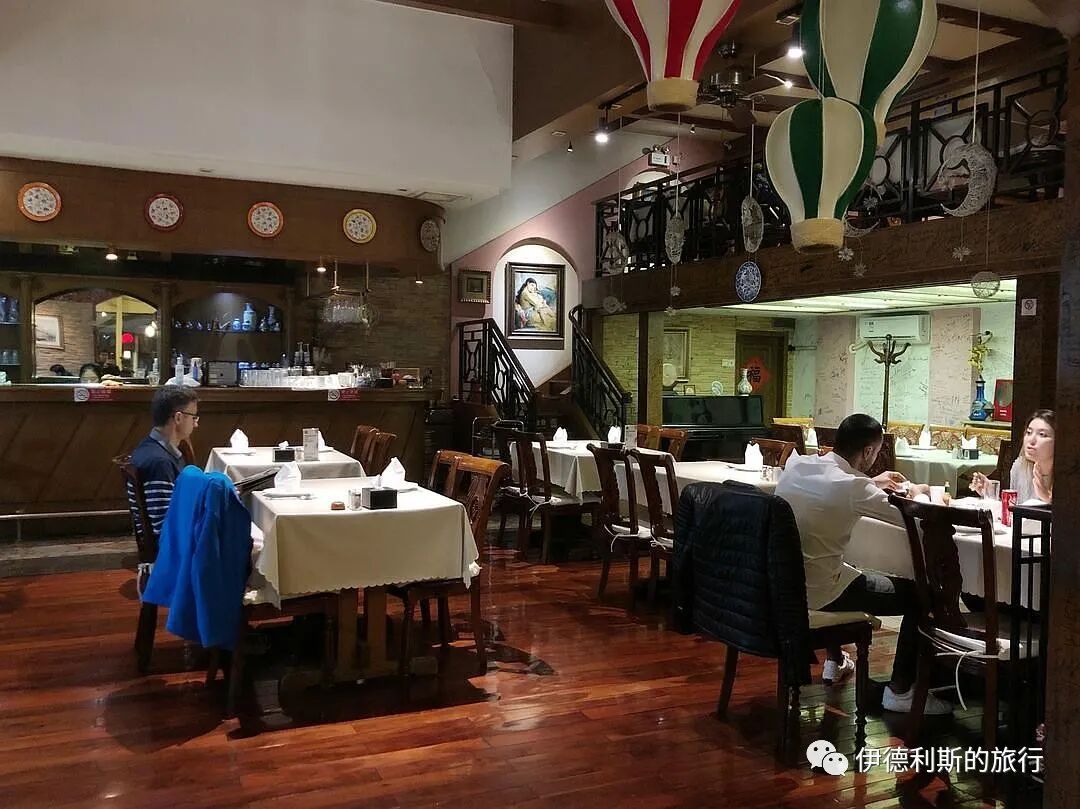
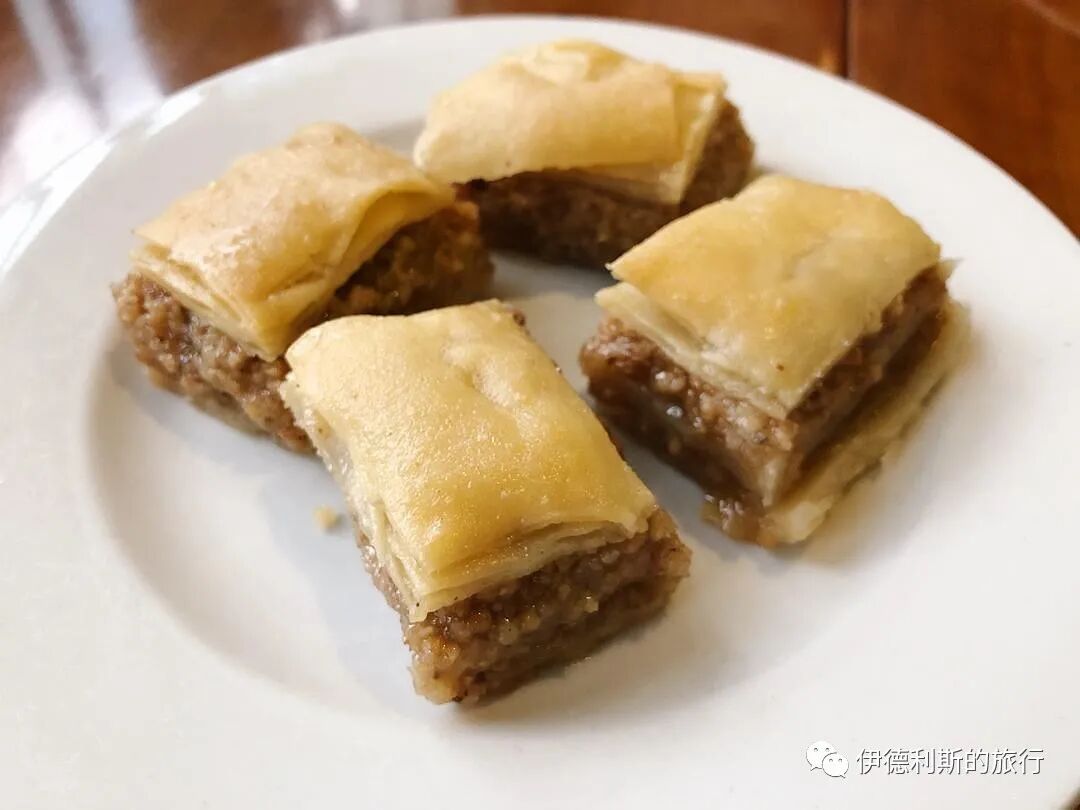
2. Turkish Restaurant Dardanelle
On August 11, 2019, after the Eid al-Adha celebrations, I went out to eat at the Turkish restaurant Dardanir in the Temple of Heaven. I ordered lentil soup, cream of chicken soup, assorted salads (hummus, yellow pepper puree, chili puree), mint yogurt, roasted lamb liver, tomato lamb kebabs, Lahmachun pizza, yogurt Ayran and rice pudding.
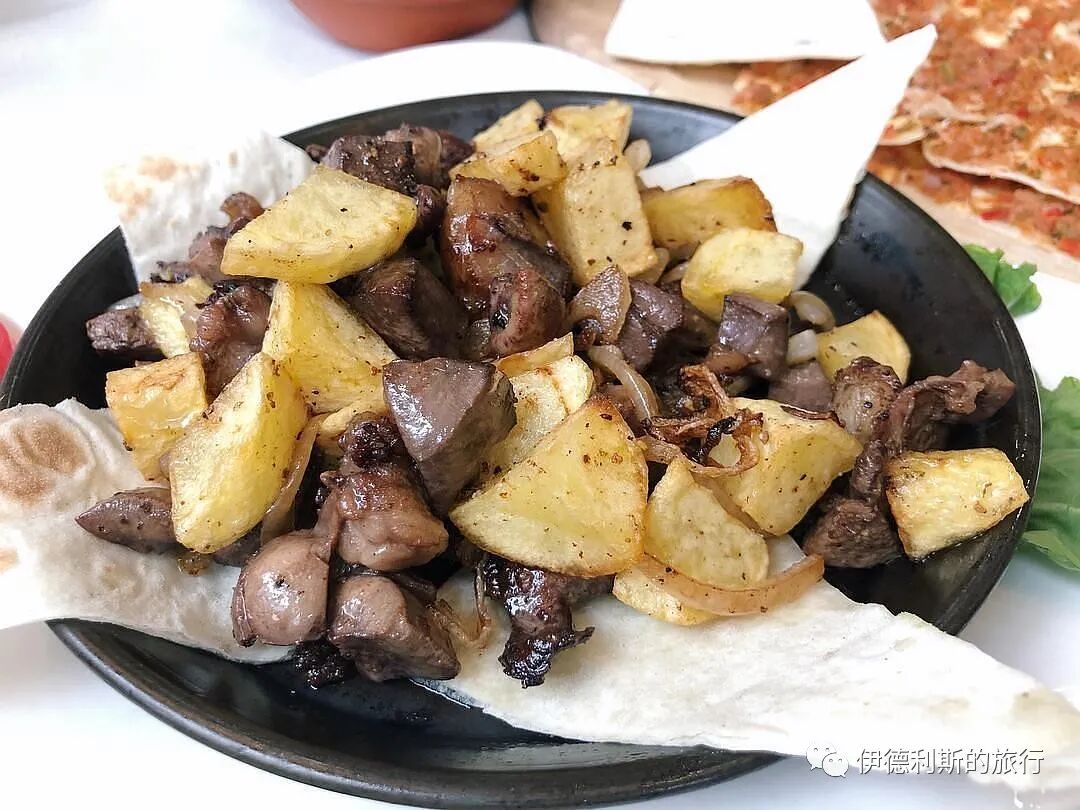
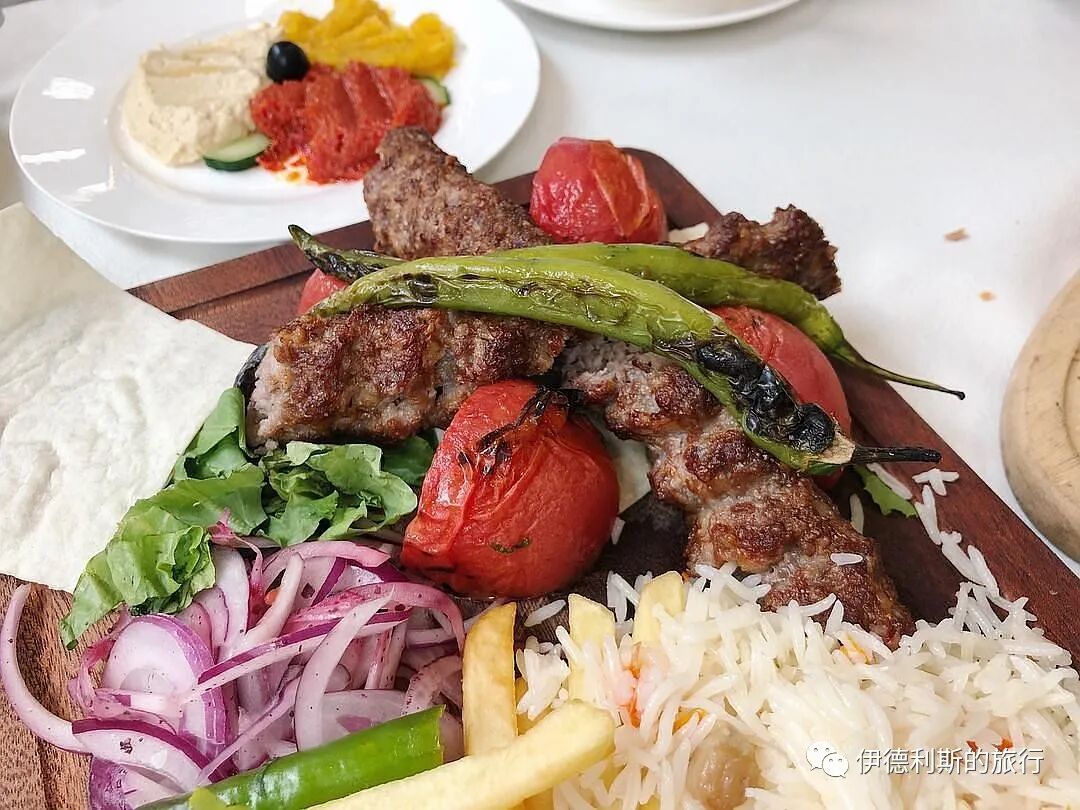
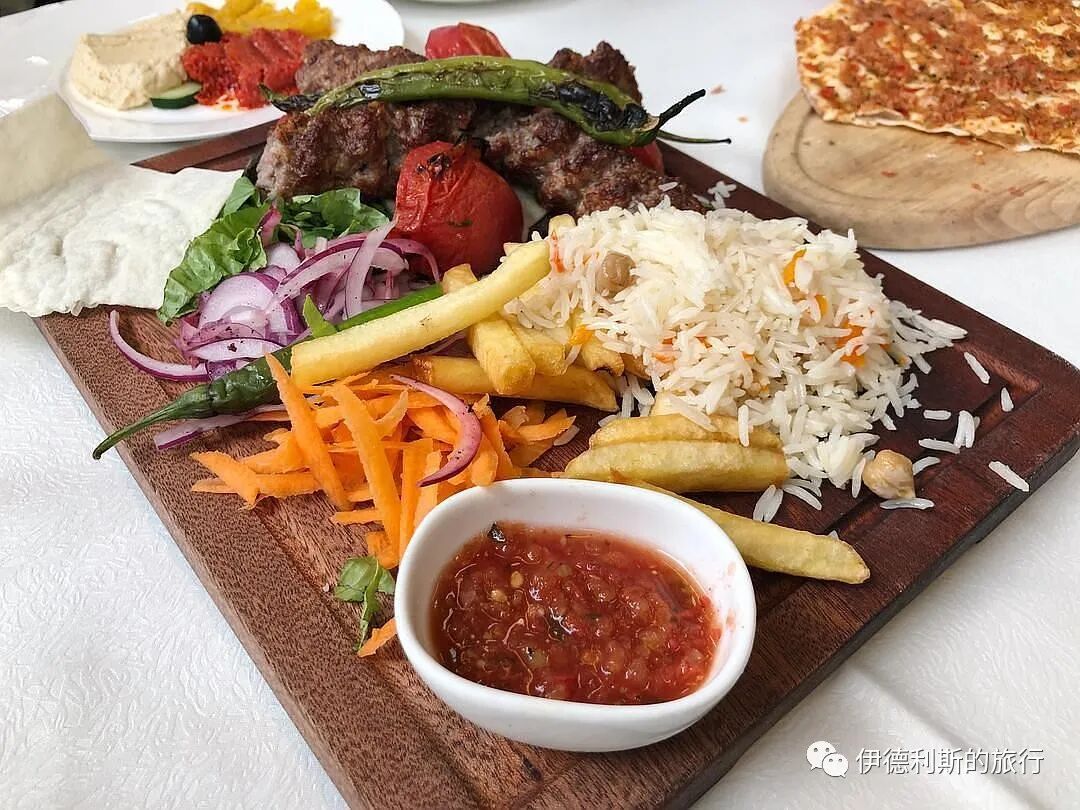
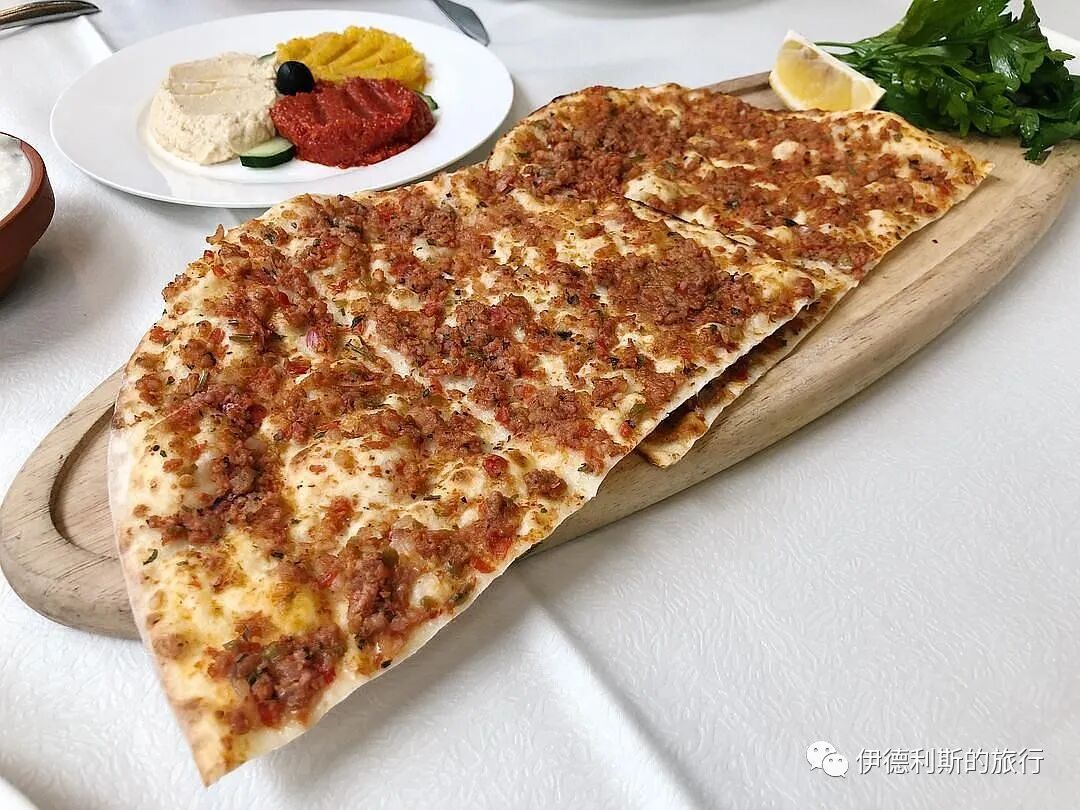
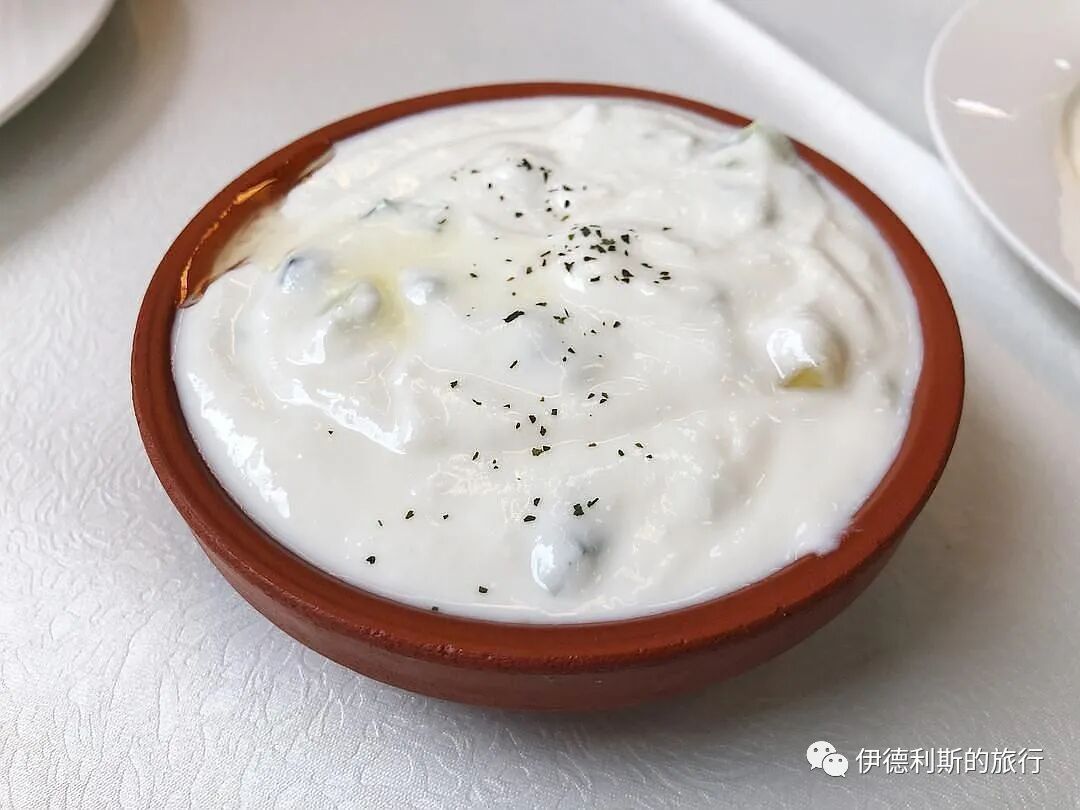
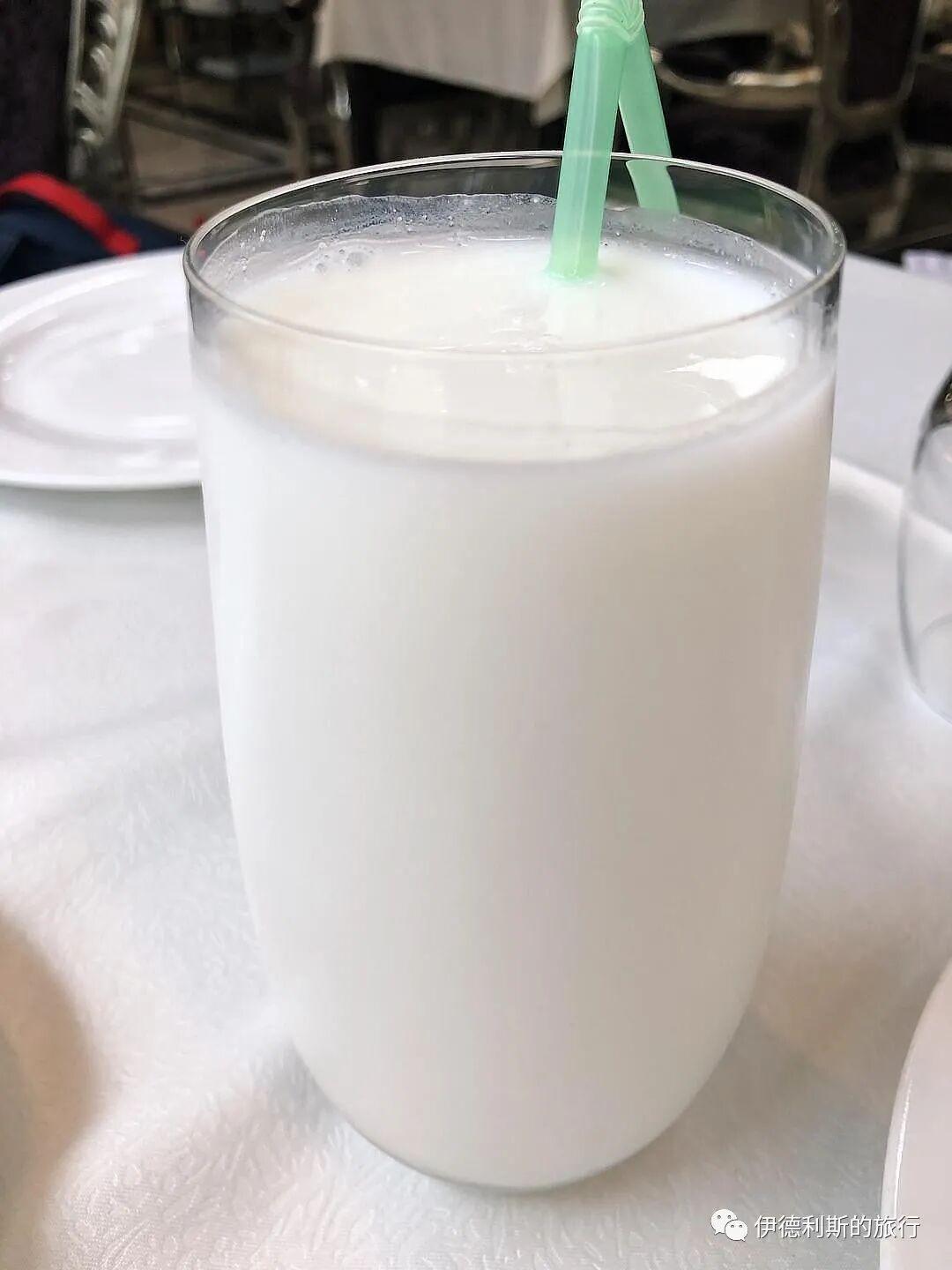
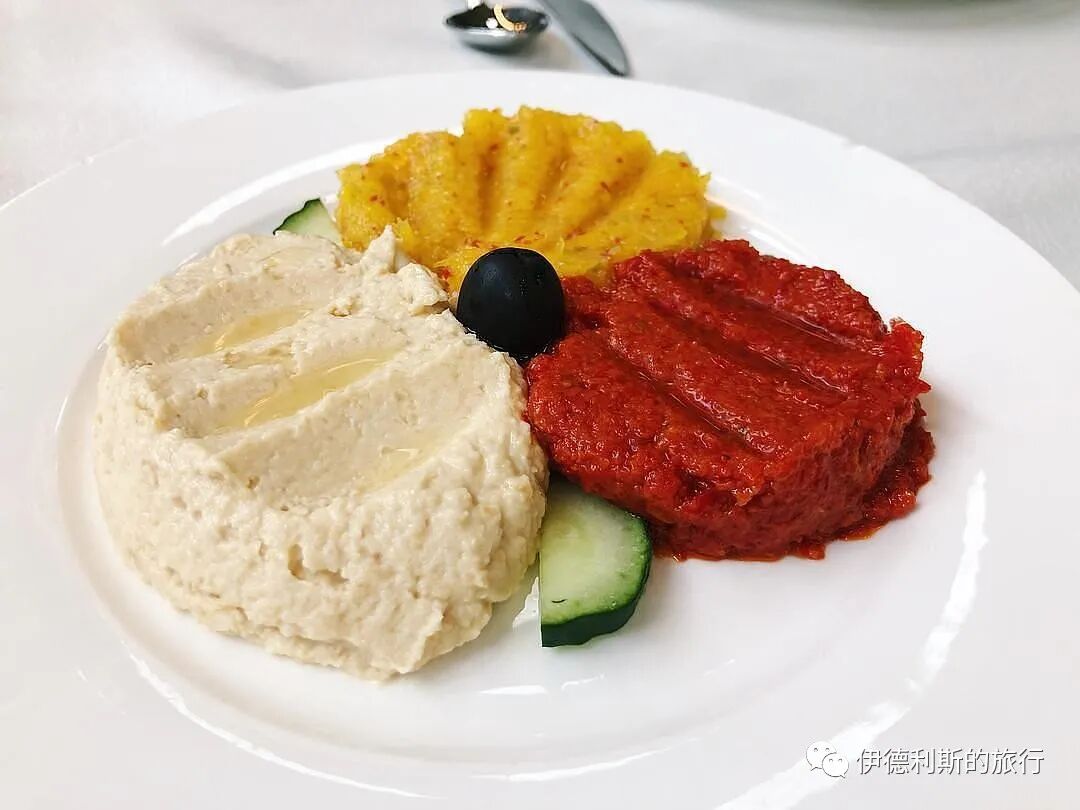
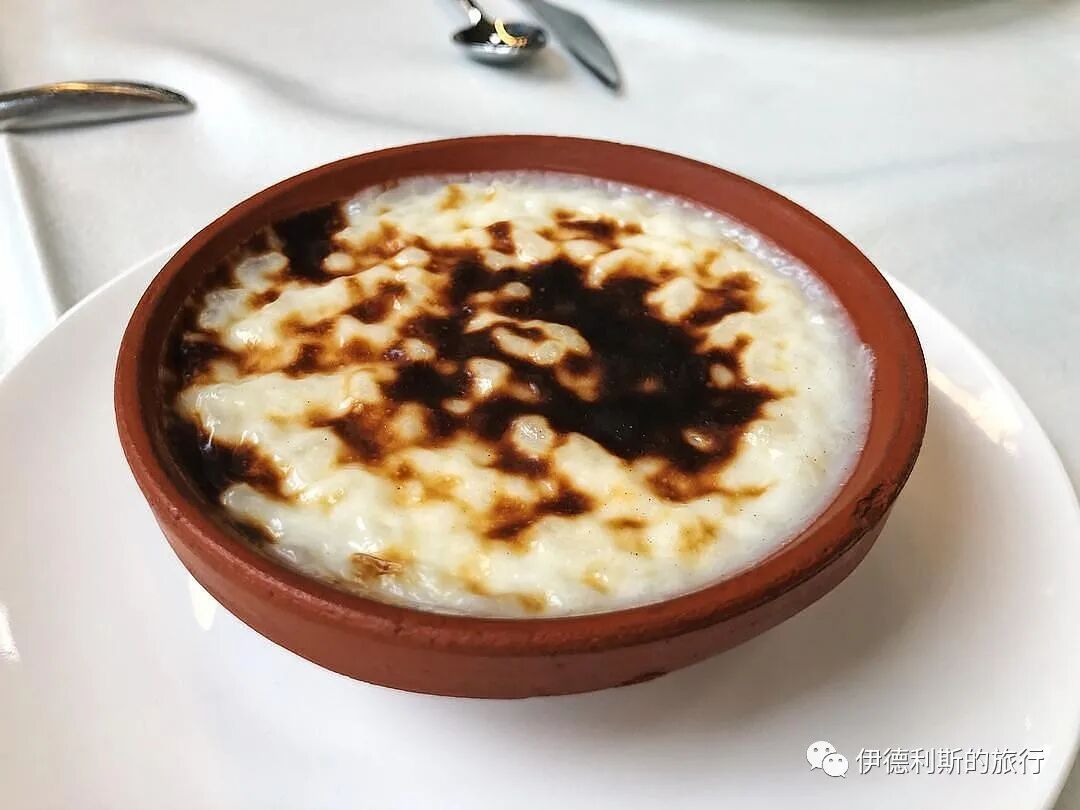
On June 6, 2018, my friends and I went to Dardanelle on Shenlu Street to eat cream chicken soup, assorted barbecue, lamb cheese Pide, Mediterranean salad, rice pudding and Turkish black tea. I liked the lamb cheese Pide, it was really huge!
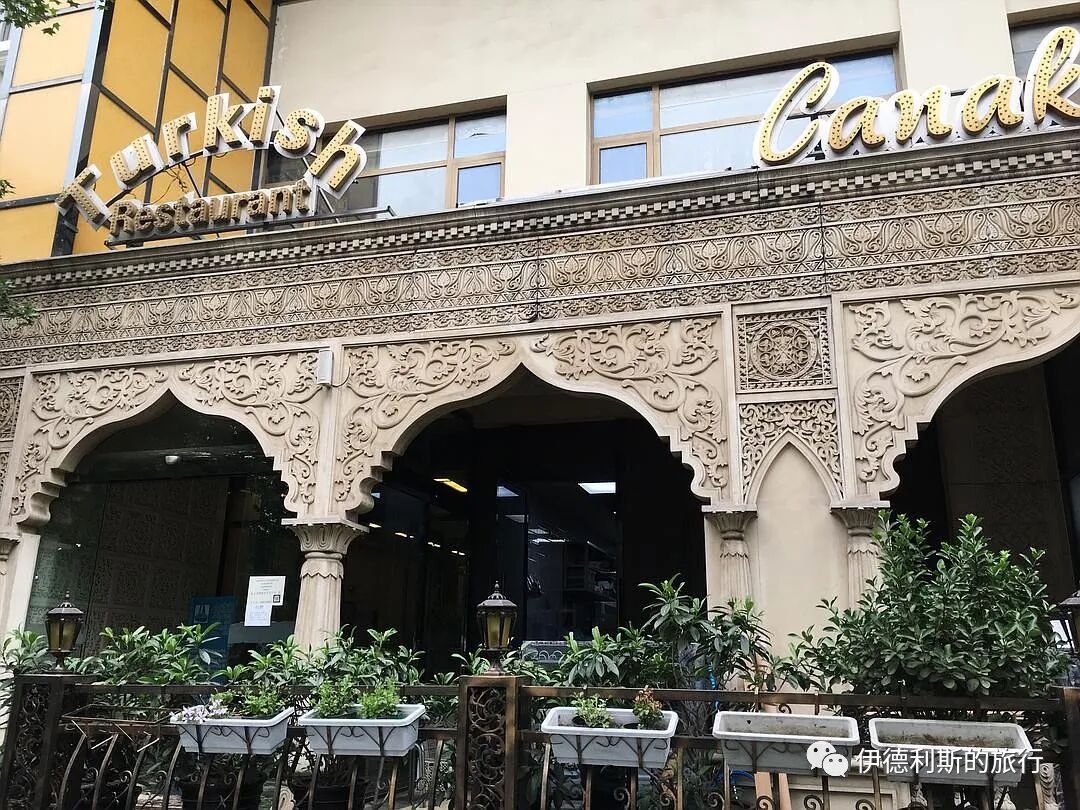
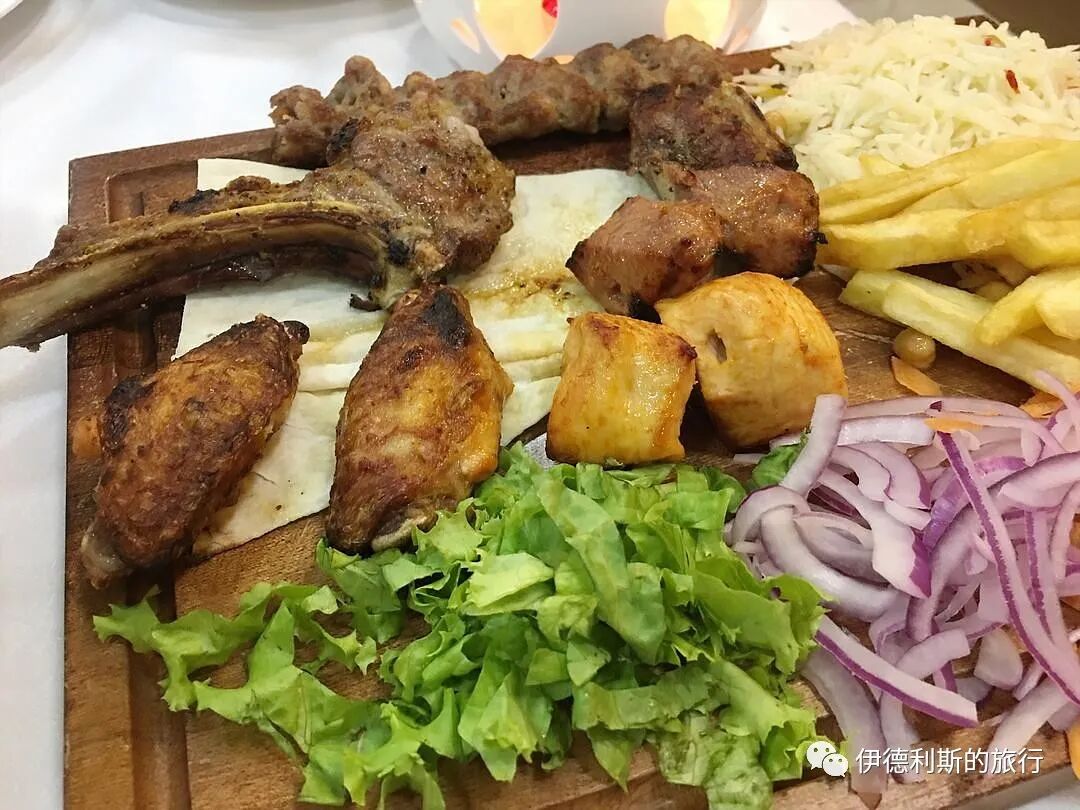
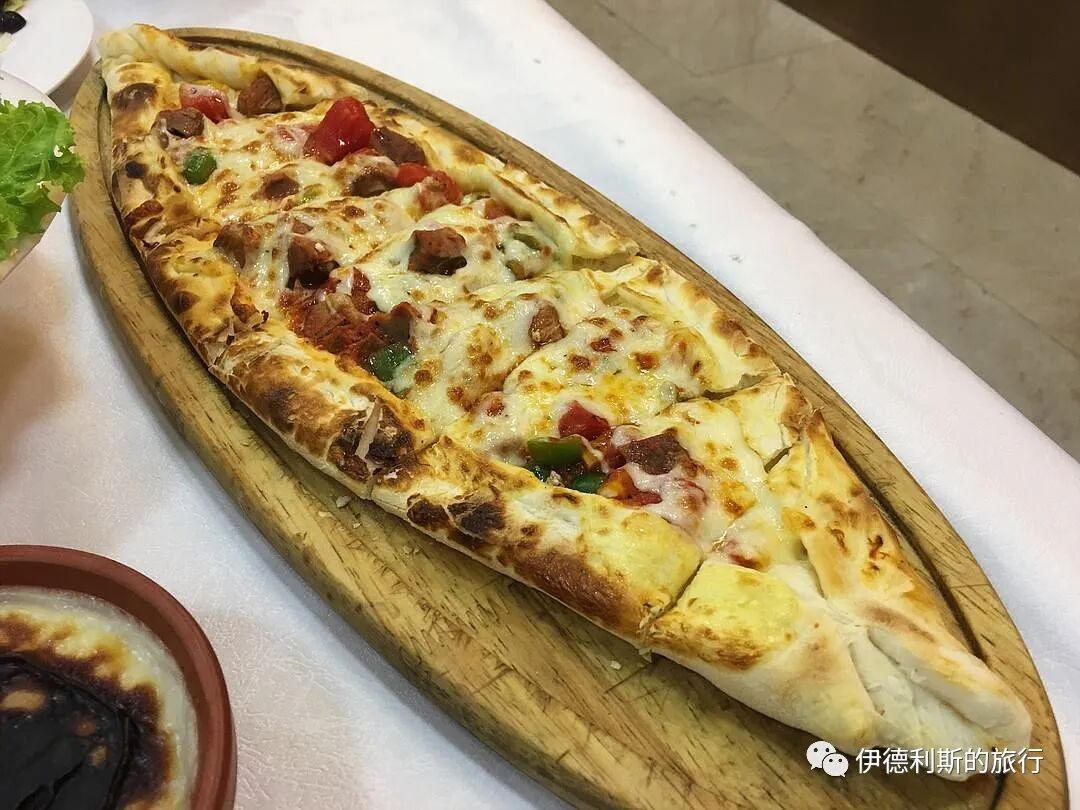
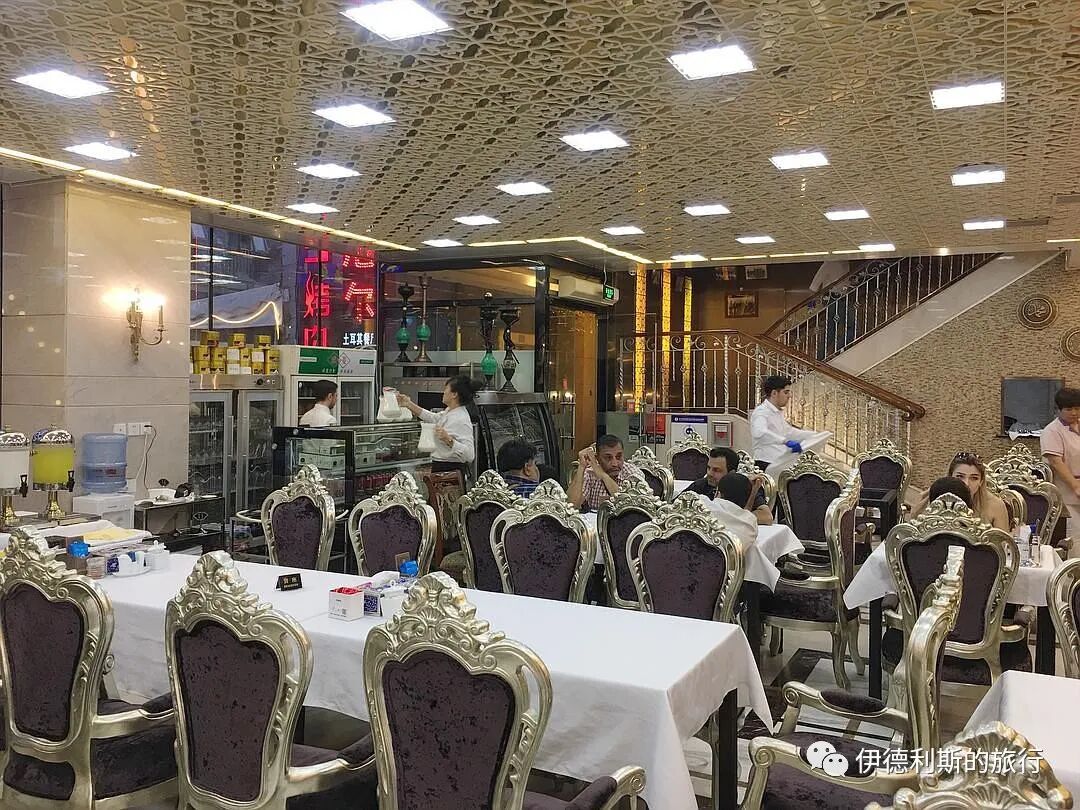
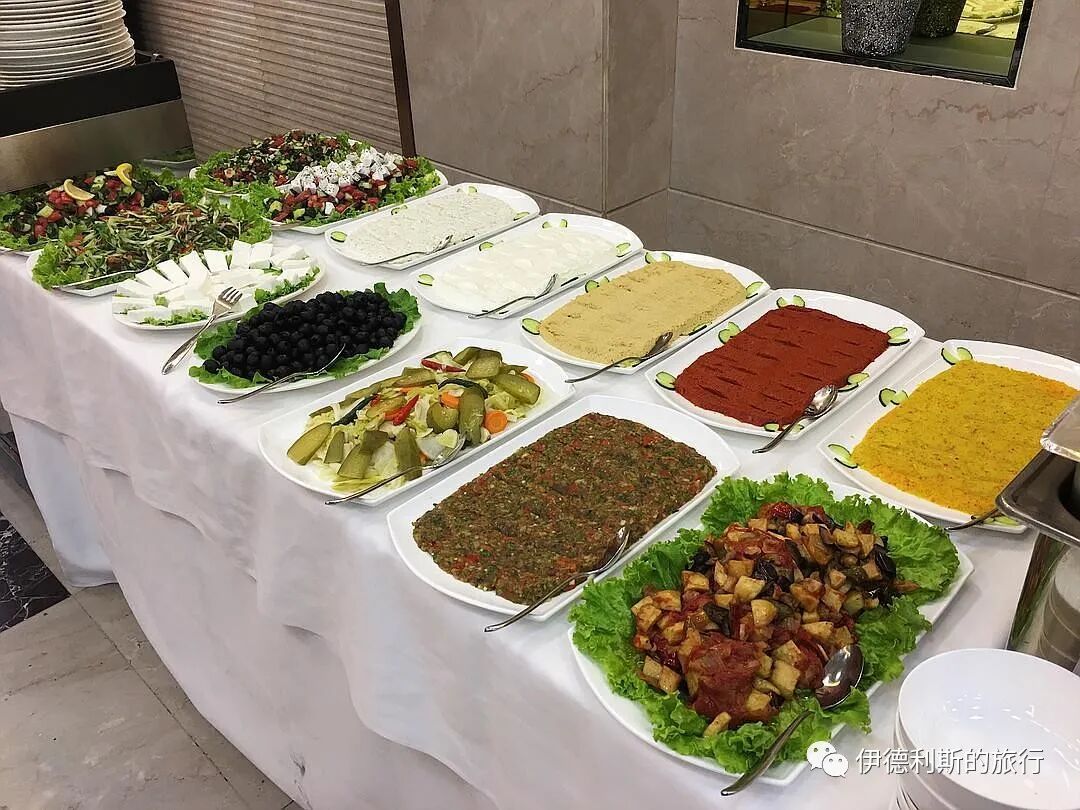
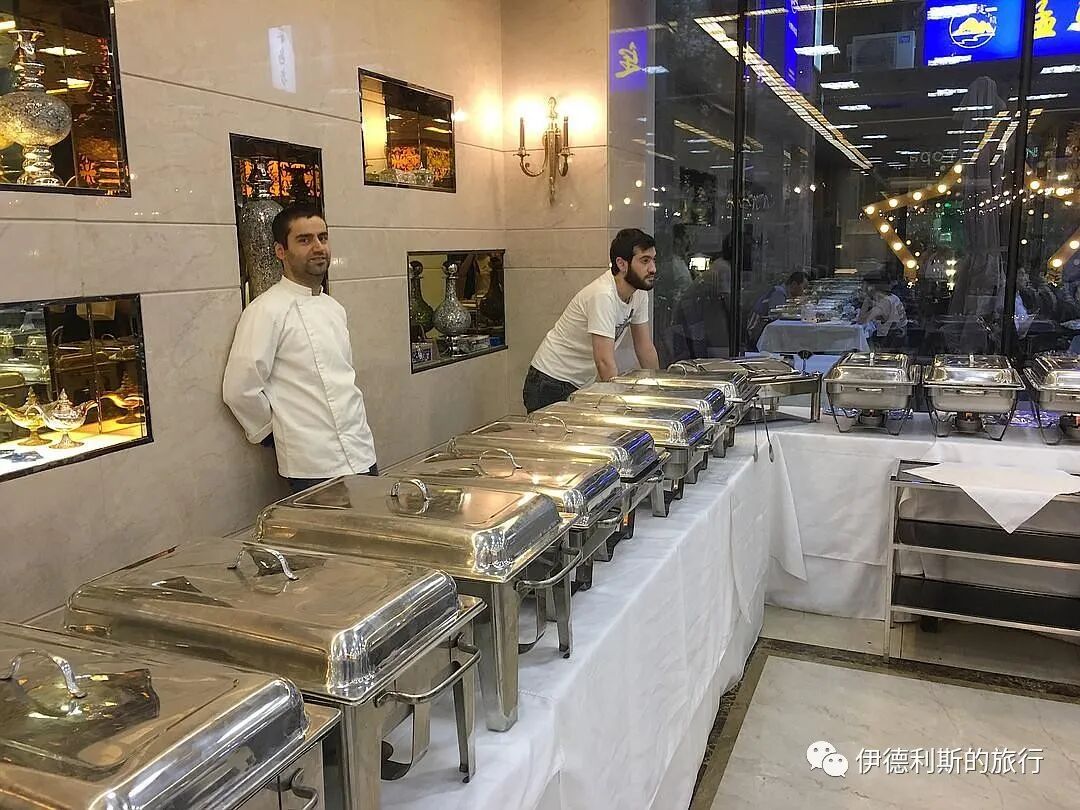
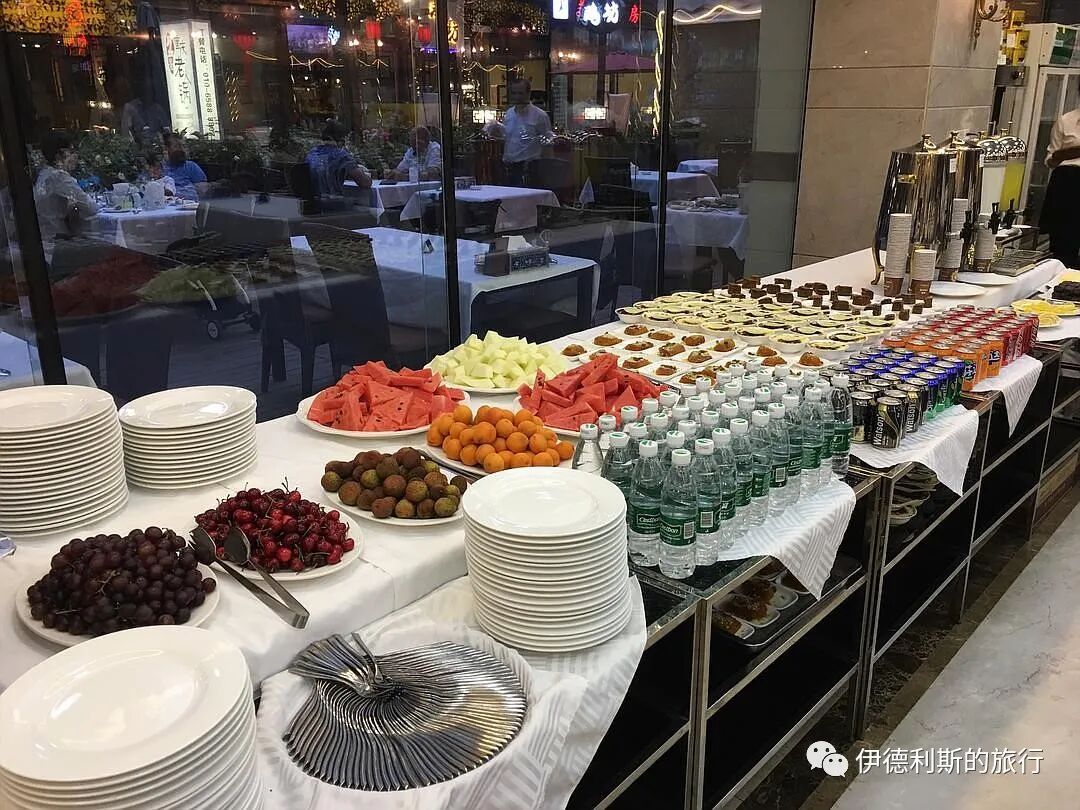
3. The secret of Rumi in Turkish restaurant
On February 18, 2021, have an Ottoman breakfast at Rumi’s Secret in the Temple of the Sun and pretend to be in Türkiye.
On September 25, 2020, in the evening, our family welcomed Zainab’s mother and had a secret dinner at Rumi’s, a Turkish restaurant on Ritan Street. Since its opening this summer, Rumi’s Secret has become a popular place to visit in Jindosti, especially among Uyghur friends. Because they don't sell alcohol, I think their environment is the most comfortable among the many halal restaurants on Ritan Street, and it's very suitable for family gatherings.
This time we ordered carrot puree and yogurt and eggplant puree as appetizers, lentil soup and cream of mushroom soup as soup, and then ordered grilled chicken, skewers and Pide. The boss also gave us black tea and dessert after the meal. Zainab's mother drank Middle Eastern lentil soup for the first time and found it delicious. Their grilled chicken and grilled skewers are also quite delicious, but the most recommended thing is the three-piece Pide pancake, which is a combination of cheese, meat and vegetables. I think it is even more delicious than the Pide in several restaurants I have eaten in Turkey.
On July 4, 2020, we ate at Rumi’s Secret, a Turkish restaurant on Ritan Street, at noon. Although their restaurant just opened in June, most of my dusty friends have tried it several times! The environment of their home is very good, suitable for chatting, and there are performances in the evening.
At their house, we had hummus hummus, carrot puree, cream of mushroom soup, lentil soup, black tea, yogurt aylan, rice pudding, grilled lamb roast beef, and minced meat pie Lahmacun.
4. The beautiful western courtyard of the Turkish restaurant
On May 6, 2021, Iftar ate the Ramadan set meal at Xiting Xiuse in Xinyuanli. There are two types of chicken and mutton, which are different every day. The lamb we caught yesterday was Karabakh Pilaf, and the chicken was grilled chicken wings.
Karabakh is an area on the border between Azerbaijan and Armenia. Its name comes from the Turkic word "Kara (black)" and the Persian word "Bagh (garden)". Most of the people living here are Azerbaijanis. The Karabakh pilaf we ate was stewed lamb with apricots, and the rice was yellow because it was dyed with saffron juice. I had eaten this kind of apricot + saffron pilaf while listening to Azerbaijani Muqam when I was playing in Baku. It was very friendly this time.
In addition to the main course, the soup in the set menu is the classic red lentil soup. The side dishes are hummus with hummus, yogurt tomato sauce and carrot cheese sauce, as well as nut and pepper salad. The main dish is spinach Pide pancake, which is delicious with spinach and cheese. The drinks are Ayran and black tea. Their Ayran is not particularly sour. Finally there was rice pudding and Semolina for dessert.
In general, this package is quite cost-effective in the embassy area!
On June 24, 2020, I ate Lentil soup, cucumber yogurt, grape coconut meat roll Dolma, meat pie Kofte, beef cheese Pide pie, Ayran yogurt and pomegranate juice chicken at the Turkish restaurant Xiting Xiuse in Xinyuanli. Their store has been open for a year, and the store manager is a Turkmen from Turkmenistan. He stayed in Beijing after studying abroad at Communication University. The head chef is an Azerbaijani from Istanbul and works at five o'clock every day. The waiters in the store are also Kazakhs from Kazakhstan. I think theirs is really delicious. The Pide pancakes are very fragrant fresh out of the oven and the meat quality is also very good. The last photo is a beautiful photo of the chef sent to us by the store manager.
Eating South Asian and Middle Eastern Food in Beijing (Part 1) (Section 1 of 2)
Articles • ali2007fr posted the article • 0 comments • 275 views • 2026-05-17 00:22
Summary: This travel note introduces Eating South Asian and Middle Eastern Food in Beijing (Part 1). I have been to many Middle Eastern and South Asian restaurants in Beijing in the past few years, some of which have closed. It is useful for readers interested in Beijing Halal Food, Muslim Travel, Middle Eastern Food. Section 1 of 2.
I have been to many Middle Eastern and South Asian restaurants in Beijing in the past few years, some of which have closed. I have been thinking about sorting it out in the past few days. Next, I will try all the restaurants I have not been to. Now I will share with you the restaurants I have been to.
First, let’s list the South Asian and Middle Eastern restaurants in Beijing that I know: Al Ameen (Lebanon), Al Safir (Jordan), BRBR (Syria), One Thousand and One Nights (Arabia), Taiba Guijie Store (Arabia), Turkish Mama (Turkey), Rumi's Secret (Turkey), Xiting Xiuse (Turkey), Dardaniel (Azerbaijan/Turkey) (It), Desert Rose (Azerbaijan/Turkey), Doner&Kebab (Azerbaijan/Turkey), Kavkaz (Azerbaijan), Iranian Food (the Iranian boss has returned to China and is currently run by Chinese), Khan Baba (Pakistan), Zam Zam (Pakistan), Lahore Restaurant (Pakistan), Benjabi (India), Indian Chef (India), Land of Masala (India), Sadhuli (India).
Newly opened in 2021: Zayton (Palestine), Istanbul (Türkiye), Qubbe (Türkiye), Taiba Sanlitun Store (Arabia).
One that was written in 2020 but closed in 2021: Meza (Tunisia).
I have eaten at restaurants that are closed: Camel Restaurant (Morocco), Nayir (Azerbaijan), Shashi Castle (Uzbekistan), Enchant (Turkey), and Bata Pancake (Israel).
1. Arabia
1. Jordanian restaurant Al Safir
On April 18, 2021, Ramadan Iftar had a buffet at the Jordanian restaurant Al Safir in Sanyuanqiao. It was a good opportunity to experience Levantine salads and various sauces! Now you can try all the things you wouldn’t normally order. The most classic ones are of course Hummus and Falafel. The most authentic way to eat them is to eat them with pita bread, sandwiching various sauces and falafel. The main courses include fish, lamb chops, chicken stewed rice, fried chicken, adzuki bean soup and various juices, including grape juice. Their lamb chops are so delicious, it feels like they were grilled first? The taste is particularly good.
It was Zainab’s birthday on May 20, 2020. Iftar and I went to Al Safir. Ever since Zainab ate with their family last year, we have fallen in love with Arabic food, especially Levantine food. We were originally going to divorce and go to the Middle East together this year, but now we have to eat at Arabic restaurants to satisfy our cravings.
They can order a la carte and eat Iftar's buffet, as well as Iftar's dates. We had a buffet with a variety of salads and cups of Arabic bean soup. I ordered Beirut Hummus with garlic flavor, Falafel with fried chickpeas, and a barbecue platter. Their barbecue is delicious!
The more distinctive one is the yogurt sauce Kibbeh, which is a small scone made by grinding wheat, onions, beef, lamb and various Middle Eastern spices (cinnamon, nutmeg, cloves, etc.). It has fried beef on the outside and lamb filling on the inside. The word kibbeh comes from the North Levantine Arabic word meaning ball, and the dish originated in the Levant region and is popular throughout the Middle East.
On July 17, 2019, I had adzuki bean soup, mutton Hummus, Falafel, thick yogurt, cucumber yogurt and grilled meat platter at Al Safir. I really enjoyed it.
Hummus and Falafel are both specialty delicacies of the Levant region on the east coast of the Mediterranean. Hummus is super delicious in various ways. I have also been a fan of adzuki bean soup since I ate it in the Palestinian restaurant on campus when I was in college, but it is a bit too hot to eat in the summer.
I love their roast lamb so much! It's very tender, and it's so satisfying to wrap it in Arabic pancakes dipped in tomato sauce. Their barbecue is so delicious that there was an incident where I ate several pieces of the barbecue before I even remembered to take a photo www
On January 10, 2019, we had adzuki bean soup, mutton hummus, grilled fish and mint tea at Al Safir, a Jordanian restaurant in Sanyuanqiao. I especially like their Pi Ya Zi sauce! Have to add another portion each time.
2. Lebanese restaurant Al Ameen
On September 24, 2020, when my mother-in-law came to Beijing for her first meal, we ate at Al Ameen, a Lebanese restaurant next to the German Embassy outside Dongzhimen. I have eaten there for many years. It was closed for renovation for a period of time, and it reopened last year. This year, I feel that their family is obviously not as big as before YQ, and the dishes have become less. I hope their family can survive this difficult time.
I ordered the more classic appetizer platter (Hummus hummus, carrot puree, yogurt, Mutebbel eggplant yogurt sauce)\cream of mushroom soup, lentil soup, vegetable soup, chicken soup, barbecue platter and grilled vegetable platter. What’s more special is the Mahashi, a rice dumpling with lamb bone and vegetables.
Mahashi is made of Lebanese zucchini (Kusa) and eggplant stuffed with meat and rice, and cooked with tomato sauce, cumin and broth. Mahashi is a classic Ottoman dish that can be found throughout the pre-Ottoman regions from the Balkans to the Levant (eastern coast of the Mediterranean) and Egypt, and is prepared differently in each region. Mahashi is a common dish served at banquets at weddings, family gatherings and Eid.
On September 26, 2019, I went to the Lebanese restaurant Alameen in Sanlitun. After the renovation, it became a lot bigger and some new dishes were added. I will try it when I have time in the future. This time I had a platter of chickpea hummus sauce, eggplant sauce, yogurt, adzuki bean soup, cream of mushroom soup, lamb naan, lamb chops, fried fish and lemongrass mint tea. One of the more distinctive ones is Kibbeh, a Levantine barbecue.
On May 26, 2019, I ate roasted lamb leg, lentil soup and hummus at the Lebanese restaurant Alameen outside Dongzhimen in the evening.
3. Meza, a Tunisian restaurant (closed)
On the evening of December 21, 2020, I went to the Tunisian restaurant Mesa, which was newly opened in November. After the Moroccan restaurant Camel Team Restaurant and Bar closed due to the epidemic (the owner ran away), there is a North African restaurant in Beijing. (Unfortunately it will be closed again in 2021).
I ordered Brik with Tuna, sizzling Shakshuka with eggs, grilled chicken skewers, Tunisian sausage (Merguez), Baba Ganoush, pickle platter, lentil soup, and also ordered Tajine Couscous with various grilled meats, which was not on the menu.
Brik pie is a North African Berber dish that was later brought to Israel by Tunisian Jews. The filling is usually filled with eggs, tuna, harissa, parsley, etc., and then wrapped in crispy noodles called Malsouka or Warka and fried.
Shakshuka is a stew of eggs, tomatoes and onions, usually with olive oil, chili, garlic, cumin, nutmeg and other spices. Shakshouka, which means "mixture" in Arabic, is widely distributed in the former Ottoman lands and Andalusia, and was brought to Israel by Tunisian Jews. The dish was originally just a stew of minced meat or liver. Tomatoes and peppers were later introduced from the Americas, and eggs are often added to the Tunisian version.
Merguez is a North African sausage made from lamb and beef, mixed with cumin, harissa, chili peppers and other spices, and is usually grilled. Merguez sausage was first seen in Andalusia in the 12th century, that is, southern Spain under Arab rule. At that time, it was pronounced as mirkās or merkās in Andalusian Arabic. Later it spread throughout North Africa and then to France and Germany.
Baba ghanoush is a Middle Eastern Levantine appetizer, which is made of cooked eggplant puree mixed with sesame sauce and olive oil, lemon juice and other seasonings. It is usually dipped in pita.
Tajine is a North African Berber specialty. Tajine in North African Arabic originates from ancient Greek, and its original meaning is pan. The tagine can be traced back to Harun al-Rashid, the fifth generation caliph of the Bassi Dynasty in the 8th-9th century, and appears in the 9th-century masterpiece "One Thousand and One Nights". Today's tagines are made of pottery, sometimes glazed, with a rounded flat bottom and a cone or dome on top. This design allows all evaporated water vapor to return to the bottom, and water can be added from the hole in the lid.
Couscous, a staple of Berber cuisine, is made from semolina rolled into millet-sized particles and then dried in the sun. Couscous was first seen in North Africa from the 11th to the 13th century. In the 13th century, Ibn Razin al-Tuyibi, a famous Andalusian scholar and gourmet, first recorded the recipe of couscous in his book "Andalusian Cookbook".
4. Arabic fast food restaurant Taiba view all
Summary: This travel note introduces Eating South Asian and Middle Eastern Food in Beijing (Part 1). I have been to many Middle Eastern and South Asian restaurants in Beijing in the past few years, some of which have closed. It is useful for readers interested in Beijing Halal Food, Muslim Travel, Middle Eastern Food. Section 1 of 2.
I have been to many Middle Eastern and South Asian restaurants in Beijing in the past few years, some of which have closed. I have been thinking about sorting it out in the past few days. Next, I will try all the restaurants I have not been to. Now I will share with you the restaurants I have been to.
First, let’s list the South Asian and Middle Eastern restaurants in Beijing that I know: Al Ameen (Lebanon), Al Safir (Jordan), BRBR (Syria), One Thousand and One Nights (Arabia), Taiba Guijie Store (Arabia), Turkish Mama (Turkey), Rumi's Secret (Turkey), Xiting Xiuse (Turkey), Dardaniel (Azerbaijan/Turkey) (It), Desert Rose (Azerbaijan/Turkey), Doner&Kebab (Azerbaijan/Turkey), Kavkaz (Azerbaijan), Iranian Food (the Iranian boss has returned to China and is currently run by Chinese), Khan Baba (Pakistan), Zam Zam (Pakistan), Lahore Restaurant (Pakistan), Benjabi (India), Indian Chef (India), Land of Masala (India), Sadhuli (India).
Newly opened in 2021: Zayton (Palestine), Istanbul (Türkiye), Qubbe (Türkiye), Taiba Sanlitun Store (Arabia).
One that was written in 2020 but closed in 2021: Meza (Tunisia).
I have eaten at restaurants that are closed: Camel Restaurant (Morocco), Nayir (Azerbaijan), Shashi Castle (Uzbekistan), Enchant (Turkey), and Bata Pancake (Israel).
1. Arabia
1. Jordanian restaurant Al Safir
On April 18, 2021, Ramadan Iftar had a buffet at the Jordanian restaurant Al Safir in Sanyuanqiao. It was a good opportunity to experience Levantine salads and various sauces! Now you can try all the things you wouldn’t normally order. The most classic ones are of course Hummus and Falafel. The most authentic way to eat them is to eat them with pita bread, sandwiching various sauces and falafel. The main courses include fish, lamb chops, chicken stewed rice, fried chicken, adzuki bean soup and various juices, including grape juice. Their lamb chops are so delicious, it feels like they were grilled first? The taste is particularly good.
It was Zainab’s birthday on May 20, 2020. Iftar and I went to Al Safir. Ever since Zainab ate with their family last year, we have fallen in love with Arabic food, especially Levantine food. We were originally going to divorce and go to the Middle East together this year, but now we have to eat at Arabic restaurants to satisfy our cravings.
They can order a la carte and eat Iftar's buffet, as well as Iftar's dates. We had a buffet with a variety of salads and cups of Arabic bean soup. I ordered Beirut Hummus with garlic flavor, Falafel with fried chickpeas, and a barbecue platter. Their barbecue is delicious!
The more distinctive one is the yogurt sauce Kibbeh, which is a small scone made by grinding wheat, onions, beef, lamb and various Middle Eastern spices (cinnamon, nutmeg, cloves, etc.). It has fried beef on the outside and lamb filling on the inside. The word kibbeh comes from the North Levantine Arabic word meaning ball, and the dish originated in the Levant region and is popular throughout the Middle East.
On July 17, 2019, I had adzuki bean soup, mutton Hummus, Falafel, thick yogurt, cucumber yogurt and grilled meat platter at Al Safir. I really enjoyed it.
Hummus and Falafel are both specialty delicacies of the Levant region on the east coast of the Mediterranean. Hummus is super delicious in various ways. I have also been a fan of adzuki bean soup since I ate it in the Palestinian restaurant on campus when I was in college, but it is a bit too hot to eat in the summer.
I love their roast lamb so much! It's very tender, and it's so satisfying to wrap it in Arabic pancakes dipped in tomato sauce. Their barbecue is so delicious that there was an incident where I ate several pieces of the barbecue before I even remembered to take a photo www
On January 10, 2019, we had adzuki bean soup, mutton hummus, grilled fish and mint tea at Al Safir, a Jordanian restaurant in Sanyuanqiao. I especially like their Pi Ya Zi sauce! Have to add another portion each time.
2. Lebanese restaurant Al Ameen
On September 24, 2020, when my mother-in-law came to Beijing for her first meal, we ate at Al Ameen, a Lebanese restaurant next to the German Embassy outside Dongzhimen. I have eaten there for many years. It was closed for renovation for a period of time, and it reopened last year. This year, I feel that their family is obviously not as big as before YQ, and the dishes have become less. I hope their family can survive this difficult time.
I ordered the more classic appetizer platter (Hummus hummus, carrot puree, yogurt, Mutebbel eggplant yogurt sauce)\cream of mushroom soup, lentil soup, vegetable soup, chicken soup, barbecue platter and grilled vegetable platter. What’s more special is the Mahashi, a rice dumpling with lamb bone and vegetables.
Mahashi is made of Lebanese zucchini (Kusa) and eggplant stuffed with meat and rice, and cooked with tomato sauce, cumin and broth. Mahashi is a classic Ottoman dish that can be found throughout the pre-Ottoman regions from the Balkans to the Levant (eastern coast of the Mediterranean) and Egypt, and is prepared differently in each region. Mahashi is a common dish served at banquets at weddings, family gatherings and Eid.
On September 26, 2019, I went to the Lebanese restaurant Alameen in Sanlitun. After the renovation, it became a lot bigger and some new dishes were added. I will try it when I have time in the future. This time I had a platter of chickpea hummus sauce, eggplant sauce, yogurt, adzuki bean soup, cream of mushroom soup, lamb naan, lamb chops, fried fish and lemongrass mint tea. One of the more distinctive ones is Kibbeh, a Levantine barbecue.
On May 26, 2019, I ate roasted lamb leg, lentil soup and hummus at the Lebanese restaurant Alameen outside Dongzhimen in the evening.
3. Meza, a Tunisian restaurant (closed)
On the evening of December 21, 2020, I went to the Tunisian restaurant Mesa, which was newly opened in November. After the Moroccan restaurant Camel Team Restaurant and Bar closed due to the epidemic (the owner ran away), there is a North African restaurant in Beijing. (Unfortunately it will be closed again in 2021).
I ordered Brik with Tuna, sizzling Shakshuka with eggs, grilled chicken skewers, Tunisian sausage (Merguez), Baba Ganoush, pickle platter, lentil soup, and also ordered Tajine Couscous with various grilled meats, which was not on the menu.
Brik pie is a North African Berber dish that was later brought to Israel by Tunisian Jews. The filling is usually filled with eggs, tuna, harissa, parsley, etc., and then wrapped in crispy noodles called Malsouka or Warka and fried.
Shakshuka is a stew of eggs, tomatoes and onions, usually with olive oil, chili, garlic, cumin, nutmeg and other spices. Shakshouka, which means "mixture" in Arabic, is widely distributed in the former Ottoman lands and Andalusia, and was brought to Israel by Tunisian Jews. The dish was originally just a stew of minced meat or liver. Tomatoes and peppers were later introduced from the Americas, and eggs are often added to the Tunisian version.
Merguez is a North African sausage made from lamb and beef, mixed with cumin, harissa, chili peppers and other spices, and is usually grilled. Merguez sausage was first seen in Andalusia in the 12th century, that is, southern Spain under Arab rule. At that time, it was pronounced as mirkās or merkās in Andalusian Arabic. Later it spread throughout North Africa and then to France and Germany.
Baba ghanoush is a Middle Eastern Levantine appetizer, which is made of cooked eggplant puree mixed with sesame sauce and olive oil, lemon juice and other seasonings. It is usually dipped in pita.
Tajine is a North African Berber specialty. Tajine in North African Arabic originates from ancient Greek, and its original meaning is pan. The tagine can be traced back to Harun al-Rashid, the fifth generation caliph of the Bassi Dynasty in the 8th-9th century, and appears in the 9th-century masterpiece "One Thousand and One Nights". Today's tagines are made of pottery, sometimes glazed, with a rounded flat bottom and a cone or dome on top. This design allows all evaporated water vapor to return to the bottom, and water can be added from the hole in the lid.
Couscous, a staple of Berber cuisine, is made from semolina rolled into millet-sized particles and then dried in the sun. Couscous was first seen in North Africa from the 11th to the 13th century. In the 13th century, Ibn Razin al-Tuyibi, a famous Andalusian scholar and gourmet, first recorded the recipe of couscous in his book "Andalusian Cookbook".
4. Arabic fast food restaurant Taiba
A Taste of 1001 Nights: Halal Middle Eastern Feasts and Iconic Grilled Platters in Shanghai
Articles • Hasan09 posted the article • 0 comments • 22 views • 5 days ago
Stepping Into the Arabian Nights: A Food Review of ASA Middle Eastern Halal Restaurant's Signature Mixed Grill in Shanghai
Summary:
A visit to ASA, a Middle Eastern Halal restaurant in Shanghai filled with 1001 Nights Arabian vibes. Featuring real photos of the luxurious golden palace interior and the massive signature mixed grill platter (grilled lamb chops, beef, chicken wings), providing a unique guide for foodies seeking authentic, exotic Halal cuisine.
ASA Middle Eastern Cuisine · Halal (Shanghai Liying Center)
Walk into this Middle Eastern restaurant overflowing with vibes. Step through the doors and you're instantly transported to a golden palace straight out of 'One Thousand and One Nights'. Gilded carvings and stained-glass lamps make it an absolute paradise for photos. Meat lovers, go straight for the signature mixed grill platter! Grilled lamb chops, beef, mutton, chicken wings... packed with over a dozen rich spices. Every single piece of meat is grilled to crispy perfection on the outside while staying tender and juicy on the inside—the juices literally burst out. You've gotta pair it with freshly baked Arabian pita bread! The bread is soft, chewy, and stretchy. Roll up the grilled meat with some dipping sauce, and the mix of textures and savory flavors will have you stomping your feet in joy.
● Value: Offers precise recommendations for users in and around Shanghai looking for 'Middle Eastern food + immersive experiences (vibes, photos, group dining)', catering to cravings for trying something new, taking photos, gathering with friends, and going on dates;
● Audience: Foodies curious about Middle Eastern cuisine, groups and couples who care about dining vibes, families with kids (includes the 'family-friendly restaurant' tag), and those looking for Halal dining options. view all
Stepping Into the Arabian Nights: A Food Review of ASA Middle Eastern Halal Restaurant's Signature Mixed Grill in Shanghai
Summary:
A visit to ASA, a Middle Eastern Halal restaurant in Shanghai filled with 1001 Nights Arabian vibes. Featuring real photos of the luxurious golden palace interior and the massive signature mixed grill platter (grilled lamb chops, beef, chicken wings), providing a unique guide for foodies seeking authentic, exotic Halal cuisine.
ASA Middle Eastern Cuisine · Halal (Shanghai Liying Center)
Walk into this Middle Eastern restaurant overflowing with vibes. Step through the doors and you're instantly transported to a golden palace straight out of 'One Thousand and One Nights'. Gilded carvings and stained-glass lamps make it an absolute paradise for photos. Meat lovers, go straight for the signature mixed grill platter! Grilled lamb chops, beef, mutton, chicken wings... packed with over a dozen rich spices. Every single piece of meat is grilled to crispy perfection on the outside while staying tender and juicy on the inside—the juices literally burst out. You've gotta pair it with freshly baked Arabian pita bread! The bread is soft, chewy, and stretchy. Roll up the grilled meat with some dipping sauce, and the mix of textures and savory flavors will have you stomping your feet in joy.
● Value: Offers precise recommendations for users in and around Shanghai looking for 'Middle Eastern food + immersive experiences (vibes, photos, group dining)', catering to cravings for trying something new, taking photos, gathering with friends, and going on dates;
● Audience: Foodies curious about Middle Eastern cuisine, groups and couples who care about dining vibes, families with kids (includes the 'family-friendly restaurant' tag), and those looking for Halal dining options.
Halal Shanghai Food Guide: Experiencing Arabian Nights & Middle Eastern Feasts at Asa Restaurant
Articles • Hasan09 posted the article • 0 comments • 22 views • 5 days ago
Exotic Flavors Straight Out of One Thousand and One Nights: An Honest Review of the Signature Mixed Grill Platter at Asa Middle Eastern Halal Restaurant in Shanghai
Summary:
A firsthand look at Shanghai's Asa Middle Eastern Halal Restaurant, totally dripping with Arabian Nights vibes. We're showing off the ultra-luxurious, gold-drenched palatial setting and the massive signature mixed grill platter (featuring grilled lamb chops, beef, and chicken wings)—serving up the ultimate guide for foodies hunting down authentic, exotic Halal eats.
Asa Middle Eastern Cuisine (Shanghai The In Shanghai Branch)
Step inside this Middle Eastern spot where the vibes are completely unmatched. The moment you walk through the door, you're instantly transported straight into a golden palace straight out of One Thousand and One Nights. Gilded carvings plus colorful glass lanterns make it insanely photogenic for your feed. Meat lovers, drop everything and order the signature mixed grill platter! Grilled lamb chops, beef, lamb, and chicken wings... loaded with over a dozen rich, aromatic spices. Every single piece of meat is grilled to absolute perfection—crispy on the outside, tender on the inside, with juices literally bursting out. You've gotta pair it with their freshly baked Arabic pita bread! The flatbread is super soft yet pleasantly chewy. Wrap it up with the grilled meat and dipping sauces, and that incredible mix of savory crunch will seriously make you want to stomp your feet in pure joy.
Value: Delivers spot-on recommendations for locals and visitors in and around Shanghai looking for 'Middle Eastern food + immersive vibes (atmosphere, photos, group dining)', perfectly hitting the spot for anyone craving something new, chasing aesthetic photos, hosting group dinners, or planning a date night.
Audience: Foodies curious about Middle Eastern cuisine, groups and couples who care about dining vibes, family-friendly crowds (including a 'family-friendly restaurant' tag), and anyone specifically looking for Halal dining options. view all
Exotic Flavors Straight Out of One Thousand and One Nights: An Honest Review of the Signature Mixed Grill Platter at Asa Middle Eastern Halal Restaurant in Shanghai
Summary:
A firsthand look at Shanghai's Asa Middle Eastern Halal Restaurant, totally dripping with Arabian Nights vibes. We're showing off the ultra-luxurious, gold-drenched palatial setting and the massive signature mixed grill platter (featuring grilled lamb chops, beef, and chicken wings)—serving up the ultimate guide for foodies hunting down authentic, exotic Halal eats.
Asa Middle Eastern Cuisine (Shanghai The In Shanghai Branch)
Step inside this Middle Eastern spot where the vibes are completely unmatched. The moment you walk through the door, you're instantly transported straight into a golden palace straight out of One Thousand and One Nights. Gilded carvings plus colorful glass lanterns make it insanely photogenic for your feed. Meat lovers, drop everything and order the signature mixed grill platter! Grilled lamb chops, beef, lamb, and chicken wings... loaded with over a dozen rich, aromatic spices. Every single piece of meat is grilled to absolute perfection—crispy on the outside, tender on the inside, with juices literally bursting out. You've gotta pair it with their freshly baked Arabic pita bread! The flatbread is super soft yet pleasantly chewy. Wrap it up with the grilled meat and dipping sauces, and that incredible mix of savory crunch will seriously make you want to stomp your feet in pure joy.
Value: Delivers spot-on recommendations for locals and visitors in and around Shanghai looking for 'Middle Eastern food + immersive vibes (atmosphere, photos, group dining)', perfectly hitting the spot for anyone craving something new, chasing aesthetic photos, hosting group dinners, or planning a date night.
Audience: Foodies curious about Middle Eastern cuisine, groups and couples who care about dining vibes, family-friendly crowds (including a 'family-friendly restaurant' tag), and anyone specifically looking for Halal dining options.
Best Halal Restaurants in Beijing: 10 Local Muslim Food Spots Worth Trying
Articles • yusuf908 posted the article • 0 comments • 431 views • 2026-06-30 06:24
Summary: This guide to the best halal restaurants in Beijing keeps the original list of local Muslim food spots, Hui Muslim food, and practical halal dining details.
This article summarizes the key points of '10 Halal Restaurants in Beijing Worth Trying (Part 9),' keeping the original paragraph and image order. It is for readers interested in Muslim life, Islamic culture, and Chinese Islamic articles, and makes it easy to search for topics like Uyghur culture, marriage and family, and the ninth installment.
The list includes Shunhexiang Harbin-style stir-fry in Tongzhou, Fenghong Old Beijing Flavor in Changping, Aidamu Xinjiang street barbecue in Shilihe, Ruilin Azerbaijani restaurant near Ritan, Yilan Liyuan American-style burgers on Niujie, Guxiangzhai Tianjin-style shaved ice in Hufangqiao, Niujie's Big Green Bag stinky tofu, Zafran Pakistani restaurant in Xinyuanli, Jinfang Snack Bar in Dongdaqiao, and Ali & Wang's rotating kebab in Sanlitun.
I heard that the Harbin Hui Muslim stir-fry restaurant Shunhexiang opened in Beijing's Tongzhou sub-center, so I came to try it out for dinner. The restaurant is located in a new residential complex along the Grand Canal in Tongzhou. The environment is great, and the private room's turntable is button-controlled, making it easy to reach the dishes.
They specialize in Heilongjiang Hui Muslim cuisine and have also added some southern Chinese dishes to their menu. We ordered the savory sweet and sour pork (guobaorou), sauerkraut beef rib stew, colorful starch noodles (dalapi), stir-fried lily bulbs with bamboo shoots, and beef steamed dumplings (shaomai). The best of these was the steamed dumplings. The skin was thin and chewy, and the filling was fragrant and not greasy. I think they are better than the other Hui Muslim steamed dumplings currently in Beijing. The sweet and sour pork had a good texture and wasn't fried too hard. I think it's better than another Heilongjiang Hui Muslim restaurant in Beijing. The sauerkraut tasted great, but there was very little beef, and there were very few lily bulbs in the lily bulb and bamboo shoot dish. Overall, the restaurant is definitely worth a visit. The biggest problem is that it is too far from the city center, almost reaching Hebei. It is best suited for those driving there or people working in the sub-center.
On Sunday, I was in Changping and had Beijing-style food for lunch at Fenghong Old Beijing Flavor in Xiaotangshan.
We ordered the three-person set meal, which included half a roast duck, grilled meat on a round iron plate (zhizi kaorou), stir-fried mixed vegetables (chao hecai), and duck frame tofu soup. This three-person set is a great value, and we were stuffed after finishing it. The duck tasted good, and the kids really liked it. The portion of stir-fried mixed vegetables (chao hecai) was huge, and it tasted great too.
The grilled meat on a round iron plate (zhizi kaorou) was a hit with both the Xinjiang and Hunan people at our table; the meat was tender but still had a nice chew. However, it must have been pre-marinated because it was spicy and couldn't be made mild, so the kids couldn't eat it. Duck frame soup is a must-have with roast duck; it was very savory and we couldn't stop drinking it.
Besides roast duck, they also serve traditional Hui Muslims' eight big bowls (badawan). If you are visiting Changping, you should come here to eat. They don't close in the afternoon, so it is perfect for a late meal after sightseeing.
In the evening, we went to Shilihe to eat barbecue at Aidamu. I had heard they were very famous, but this was my first time eating there, and I was truly impressed. They have basically brought the level of a local Xinjiang night market to Beijing; eating there felt just like being back in Xinjiang.
There is a large parking lot right across from the restaurant, making it very convenient if you drive there. When we arrived at 6:30, the place was already packed, so we set up a table in the parking lot across the street. Since the temperature has risen in May, it is perfect for eating barbecue outdoors.
At their place, you grab the skewers yourself from the freezer. We had lamb liver, lamb heart, lamb skewers, and lamb chops. The lamb liver was very tender, definitely top-tier for Beijing. The lamb heart had more chew than the liver, and it was also quite good. The lamb skewers had no gamey smell at all, just the pure aroma of lamb, which is very rare in Beijing.
We had the pilaf (zhuafan) fresh out of the pot at seven o'clock. It was shiny and oily, though the lamb was a bit tougher compared to the skewers. Overall, it was still good. I happened to hear the table next to us complaining that their rice was undercooked. Actually, I think pilaf is only good when the rice is a bit firm. If the rice is too soft and mushy, it just becomes regular steamed rice.
On the weekend, we had dinner at Kavkaz Ruilin, a long-standing Azerbaijani restaurant on Ritan Upper Street, to enjoy some Russian and Caucasian food. This is a classic former Soviet-style restaurant in Beijing that has been open for over a decade. It mostly serves merchants from Russian-speaking regions who come to Yabaolu to source goods. Its Chinese name used to be Ruilin, but it has been changed to Ruilin.
After the Soviet Union collapsed in the 1990s, many traders (daoye) took green-skinned trains to Beijing and headed straight to Yabaolu to stock up on goods. They brought down jackets, leather shoes, toys, and other small items back home to sell for huge profits. Yabaolu gradually grew from street stalls and tents into Beijing's largest wholesale market for Russian-speaking regions, and more former Soviet-style restaurants opened up on nearby Ritan Upper Street. Over a decade ago, Ritan Upper Street was mainly home to Central Asian and Azerbaijani restaurants, including Uzbek and Kazakh spots.
Over the last decade, Russia's economic decline, the shift of markets to places like Yiwu, Guangzhou, and Suifenhe, and the rise of cross-border e-commerce have caused trade with Russia on Yabaolu to shrink. Yitan Shangjie has gradually become a hub for Uyghur restaurants. Besides Dardanelles and Desert Rose, which focus on Turkish food, the only other Azerbaijani restaurant is Ruilin. For Central Asian food, there is the Turkmenistan restaurant Merv downstairs, which also serves Russian dishes.
At first, Ruilin had dim lighting, making it a good spot for traders to talk business, but many Chinese people were afraid to go inside. In recent years, the lighting at Ruilin has become brighter, but when we visited, there were only Russian-speaking customers, and we did not see any other Chinese people eating there.
We ordered borscht (hongcaitang), pot-stewed lamb (manguan yangrou), chive pancakes (jiucaibing), Azerbaijani pilaf (zhuafan), and grilled vegetables. Their borscht is closer to the Russian style than the one at Merv. Merv's beef soup has a stronger flavor, while their version has a more intense beet taste, which is also quite good.
Pot-stewed lamb is a classic Russian main course. Traditionally, it is cooked during long, cold winters by stewing meat in a clay pot over a wood-burning fireplace, then sealing the lid and burying it in the fireplace embers for several hours. Their pot-stewed lamb broth is very fresh, similar to Xinjiang cup-stewed lamb (gangzirou), but the lamb is a bit tough rather than tender.
I really like the Azerbaijani pilaf. I made sure to eat the authentic version when I visited Azerbaijan, and after coming back, I think both Ruilin and Dardanelles make a good version. Azerbaijani pilaf is dyed yellow with saffron and includes dried apricots, prunes, chestnuts, and raisins. The lamb is salty and savory, while the dried fruits add sweetness, creating a very rich flavor profile.
I finally had the cheese beef burger at Yilan Liyuan on Niujie this weekend. They only have regular and California-style options now. The California-style burger adds lettuce and tomato, and you can order it as a single or double patty. They do not let you eat inside the shop, so you have to eat at the entrance or take it away. I waited five minutes at the door and it was ready. The single-layer size is decent, and the crust was baked hot on the spot, but the filling felt a bit dense and not very fluffy. The meat pie tastes good, but it feels a bit loose, as if it wasn't packed tightly enough. Overall it is pretty good, but it would be even better if there were other things to pair it with.
A Tianjin halal shaved ice and steamed pancake (zhengbing) shop called Guxiangzhai has opened at Hufangqiao. Since the weather is getting warmer lately, many people are coming to eat shaved ice. For my first visit, I chose the traditional-style shaved ice. It contains sour hawthorn paste (suanmogao), red hawthorn fruit, dried apricots, strawberries, mulberries, pineapple, orange, fresh apricots, and red beans. It actually has more ingredients than the truly traditional version, and it is mainly sweet and sour to whet your appetite. Sour hawthorn paste (suanmogao) is the soul of Tianjin traditional shaved ice. It is made by grinding dried wild sour jujubes into powder and boiling it with rock sugar. You can buy large blocks of sour hawthorn paste (suanmogao) at the entrance of the archway of the South Mosque (Nandasi) in the Northwest Corner. It also tastes great when mixed directly with water.
Their dinosaur egg three-apricot shaved ice is also a signature item. It contains Kashgar Hami apricots, Yengisar Saimaiti red apricots, Aksu Situan dried apricots, and secret-recipe preserved fruit made from wild hawthorn from Shanxi. It sounds very good.
They also sell various snacks. We bought a steamed pancake (zhengbing) with a red hawthorn filling, which is sweet and sour and perfect for breakfast. It is a pity that the rice cakes (gaogan) were sold out, so I bought a rice cake (migao) with a sour hawthorn paste flavor. It was a bit dry, but the taste was still good. I also bought a snack called "five blacks," which contains black rice, black beans, black mulberries, black goji berries, and black sesame seeds. It sounds very healthy.
Across from the China Academy of Chinese Medical Sciences on Niujie Street, the roast lamb leg shop with the big green sign sells stinky tofu with sauce. The sauce is made from beef bone broth (niubanggu aotang), and it really has a meaty flavor. I remember eating fried stinky tofu topped with fermented bean curd sauce from a cart run by local Hui Muslims on Binjiang Road in Tianjin. That flavor was truly satisfying.
A new alcohol-free Pakistani restaurant called Zafran just opened in Jiayi Plaza near Liangmaqiao. It is very close to the Liangma River, and since it only opened a few days ago, I came specifically to try it.
I looked at the menu and was surprised to find many Afghan Pashtun dishes. I asked the server, and he is a Pashtun from Peshawar. I decided to order a few Pashtun dishes to try, as some of them cannot be found in other Pakistani restaurants.
First, I must praise their excellent service. The Pashtun waiter, Anas Khan, always greeted us with a smile and even did a fist bump with my son, Suleiman. As soon as we sat down, they brought us black tea, lemon water, and fried dough twists (mayezi). Later, they served a special dried fruit milkshake with walnuts and almonds. Finally, they gave Suleiman a small cup of thin yogurt drink (lassi) and a piece of baklava, which made him very happy.
The atmosphere is also very nice, with curtained sofa areas on one side that are perfect for families. There are no large private rooms, but if you have a big group, you can push tables together in the main dining area. There is also outdoor seating at the entrance, which is great for having desserts and drinks in the summer.
We ordered Afghan pilaf, Peshawar-style lamb, and Kandahar naan. You can tell these are Pashtun specialties just by their names. We also ordered a Caesar salad, french fries, and salty yogurt drink (lassi). Since they just opened, they gave us a 30% discount, which was a great deal.
Afghan pilaf originated in the border region between northern Afghanistan and Uzbekistan. It is known as Qabili Palaw in Afghanistan and later spread from there to West Asia, Central Asia, and Pakistan. Afghan pilaf (pulao) differs from Xinjiang pilaf because it uses long-grain aromatic rice from South Asia and a bit of saffron for color. It is cooked with ghee and vegetable oil, and the carrots are sliced thinly. It also includes cinnamon, cardamom, and cloves, giving it a stronger spice flavor than Xinjiang pilaf. Their Afghan pilaf includes fresh almonds and raisins, but the meat is a bit tough and hard for children to chew. The spice flavor is very rich.
This was my first time eating Peshawar Shinwari lamb, and I highly recommend it! The lamb is very tender and the seasoning is excellent. Peshawar Shinwari lamb is cooked in a metal wok called a karahi. It is a classic main dish for the Pashtun people in northern Pakistan, especially prepared after the animal sacrifice during Eid al-Adha. It is made with fresh bone-in lamb, salt, garlic, and green chilies, without the heavy spices found in southern Pakistan.
Their Kandahar flatbread (nan) is also amazing and pairs perfectly with the Peshawar lamb. Kandahar flatbread is also popular in Pakistan. It is very fluffy because milk and sugar are added to the dough, making it more fragrant.
I also recommend their yogurt drink (lassi). It is not too sour, but it is very appetizing.
The Qingxiangge restaurant at Dongdaqiao was replaced by Jinfang Snacks this year, and I just went to try it recently. Once inside, I found it is completely different from the old shop at Ciqikou. It uses a self-service tray system with small bowls of stewed dishes, small portions of stir-fries, and a huge variety of mixed salads, noodles, and snacks. It is incredibly rich in options. Small bowls and small plates are rare in traditional Beijing restaurants, making them perfect for people who want to try several different dishes.
We ordered winter melon meatball soup (donggua cuan wanzi), stir-stir-fried meat with eggs and wood ear mushrooms (muxu rou), stir-fried green beans with pork (biandou chaorou), sea bream fillets (diaoyu pian), and healthy mixed vegetables (yangsheng cai), with corn and red bean rice for our main course. The cheaper meat dishes are mostly chicken, while the beef stew is priced like a standard old Beijing restaurant for Hui Muslims. The winter melon meatball soup goes great with rice, and eating rice soaked in the broth feels just like being a kid again.
Jinfang Snack Shop is celebrating its 100th anniversary this year, so it can finally call itself a century-old shop. Jinfang was originally called Rongxiangcheng Hui Muslim Snack Shop, founded in 1926 outside Chongwenmen by Man Leting (known as Man Liu), a Hui Muslim from Dezhou, Shandong. Man Leting started out with beef and mutton. At first, he bought high-quality cattle and sheep every autumn to raise in Madian, slaughtering and selling them as needed. His business improved significantly in the 1940s, so he expanded his storefront and later began selling cooked foods like roasted mutton (shao yangrou).
In the past, spring and summer were the growing seasons for sheep, so they were usually only slaughtered after autumn. Because of this, some mutton shops would switch to selling cold food during the summer. In the 1940s, Man Leting bought Japanese refrigeration equipment to sell homemade popsicles, soda, and other cold drinks, and business was booming. In 1949, mutton shipments from Inner Mongolia to Beijing were blocked, and the sheep trade hit rock bottom. Just then, Man Leiting's fellow townsman Man Kaiqi came to join him. Man Kaiqi had a background in a pastry shop, so Man Liu stopped selling lamb and switched to snacks and cold dishes, making Rongxiangcheng a famous Hui Muslim snack shop outside Chongwenmen. After the public-private partnership in 1956, Man Leiting's son Man Kaitong became the manager, and in 1958, they stopped making popsicles to focus on snacks like almond tofu (xingren doufu) and sweet rice balls (yuanxiao). In 1966, Rongxiangcheng was officially renamed Jinfang Hui Muslim Snack Shop, and in 1971, it began to focus on sweet rice balls (yuanxiao), which have drawn long lines every year around the Lantern Festival since the 1990s.
A new shawarma rotisserie shop just opened at the north entrance of Sanlitun SOHO. We went there for dinner; one of the guys working there is from Turkmenistan and the other is from Russia, and almost all the customers were foreigners. The wraps and burgers tasted okay, though the garlic sauce was quite strong. But when we went, they were just starting to roast a new batch of beef, so the pre-sliced beef wasn't very hot. Also, the flatbread wraps they used weren't warm. Still, the vibe is just like a rotisserie shop on a Middle Eastern street; there are no seats, so you grab one to eat on the go and pretend you are in Damascus.
Part 1: 10 halal restaurants in Beijing worth trying: Pakistani restaurant Lahore Courtyard, Henan Jiaozuo beef knife-cut noodles Maimairehong, halal Mongolian food Hulun Aile, West African Ghana Tribe Garden, Xi'an Xing Laosi meatball spicy soup, Xinjiang Changji Jinying meatball soup, Xinjiang Hotan Canteen, Syrian BRBR, Beijing fusion food Gulou Chimian, and Beijing traditional food Xilaisun.
Part 2: 10 halal restaurants in Beijing worth trying (Part 2): UAE restaurant Gulf Mandi Restaurant, Xinjiang Mansion Xihan meatball soup, Xinjiang Mansion lobby Altay afternoon tea, Muhejia revolving hot pot, Xinjiang Urumqi Nazilan (closed), Beijing pastry shop Baoyuanzhai (closed), Pakistani Samosa China-Pakistan Friendship Restaurant, Ma Ye Roast Duck (closed), Bangladeshi Benjibi Restaurant, and Huairou Shihu Cheng Resort.
Part 3: 10 new Beijing restaurants I recently tried. JM Italian Coffee Dongsi branch, halal Hunan-style stir-fry Huixiangyun (now closed) Wangjing branch, Shandong Dezhou Old Ma's lamb soup (yangtang) and steamed dumplings (zhengjiao), Sanlitun Philly cheesesteak (now closed), Pakistani Roma Restaurant (now closed), Muyuzhai garlic lamb intestines (lan suan yang chang), Inner Mongolia Lianying steamed dumplings (shaomai) Caoyuan Shiliuhong, Wangfujing Gansu spicy hot pot (malatang), and Yuezhen Yayuan halal courtyard restaurant.
Part 4: 10 halal restaurants in Beijing worth trying. Hotan rose pilaf (zhua fan) Yizhuang branch, Taiba Western-style bakery, Taiba South Sanlitun Road street shop, Zhaotong small meat skewers Guijie Ganmaya BBQ (now closed), Baixiaobei Heilongjiang BBQ shop, Yunnan Muwenzhai dry-pot beef, Sanlitun Xinjiang restaurant Jiangjiang, Huixiangyun halal Hunan restaurant Zuojiazhuang branch, Yili ice cream shop Bazaar Sweetheart, and Dongzhimen Inner Qianyuan Hotel.
Part 5: 10 halal restaurants in Beijing worth trying. Sandyq Kazakhstan restaurant, Kashgar restaurant, Ahmed restaurant, Jingbalang Naan Bazaar, MacMac Lebanese restaurant, Humaer Xinjiang specialty food, Lao Huihui dumpling restaurant Zoo branch, Fresh Milk Town (now closed) Shuangjing branch, Nawab restaurant, and Liuji Watch Repair BBQ shop.
Part 6: 10 halal restaurants in Beijing worth trying. Hongyunlou Huaiyang cuisine, Sanhe beef noodles (now closed), JM Coffee and Bakery Dajixiang branch, Wanhe fatty beef, Xiangqing roast duck (now closed), Culture Pakistani restaurant, Italian Firenze Western restaurant, Niujie Dashuntang, Zhenweizhai Tianjin cuisine, and Dardanelles children's meal.
Part 7: 10 halal restaurants in Beijing worth trying. JM Western restaurant Chaonei branch, Palestinian restaurant Rose City, Baoding beef soup with flatbread (niurou zhaobing), Pakistani restaurant Al Rayyan, Yili Loulan restaurant Guijie branch, Dianxinyuan Yunnan cuisine, Heilongjiang Suihua restaurant Muxiangyuan, Sanlitun Turkish restaurant, Chaoyangmen fast food stall, and Pakistani buffet Habibi.
Part 8: 10 halal restaurants in Beijing worth trying. Xinjiang Hui Muslim home-style cooking Yige Huangluobo, Liaoning Hui Muslim spicy hot pot (malatang), Hebei Daming Hui Muslim meat pie (roubing) Yimian Liaoyuan (now closed), Hebei Chengde Hui Muslim steamed dumplings (shaomai) Dongtucheng branch, Xilaishun Xisi branch, Longfusi market, Heilongjiang Suihua Hui Muslim Mashi Muxiangyuan Baizhifang branch, Turpan Uyghur restaurant Tianshan, Niujie cafe Sanwanghu, and Heilongjiang Hui Muslim iron pot stew (tieguo dun). view all
Summary: This guide to the best halal restaurants in Beijing keeps the original list of local Muslim food spots, Hui Muslim food, and practical halal dining details.
This article summarizes the key points of '10 Halal Restaurants in Beijing Worth Trying (Part 9),' keeping the original paragraph and image order. It is for readers interested in Muslim life, Islamic culture, and Chinese Islamic articles, and makes it easy to search for topics like Uyghur culture, marriage and family, and the ninth installment.
The list includes Shunhexiang Harbin-style stir-fry in Tongzhou, Fenghong Old Beijing Flavor in Changping, Aidamu Xinjiang street barbecue in Shilihe, Ruilin Azerbaijani restaurant near Ritan, Yilan Liyuan American-style burgers on Niujie, Guxiangzhai Tianjin-style shaved ice in Hufangqiao, Niujie's Big Green Bag stinky tofu, Zafran Pakistani restaurant in Xinyuanli, Jinfang Snack Bar in Dongdaqiao, and Ali & Wang's rotating kebab in Sanlitun.
I heard that the Harbin Hui Muslim stir-fry restaurant Shunhexiang opened in Beijing's Tongzhou sub-center, so I came to try it out for dinner. The restaurant is located in a new residential complex along the Grand Canal in Tongzhou. The environment is great, and the private room's turntable is button-controlled, making it easy to reach the dishes.
They specialize in Heilongjiang Hui Muslim cuisine and have also added some southern Chinese dishes to their menu. We ordered the savory sweet and sour pork (guobaorou), sauerkraut beef rib stew, colorful starch noodles (dalapi), stir-fried lily bulbs with bamboo shoots, and beef steamed dumplings (shaomai). The best of these was the steamed dumplings. The skin was thin and chewy, and the filling was fragrant and not greasy. I think they are better than the other Hui Muslim steamed dumplings currently in Beijing. The sweet and sour pork had a good texture and wasn't fried too hard. I think it's better than another Heilongjiang Hui Muslim restaurant in Beijing. The sauerkraut tasted great, but there was very little beef, and there were very few lily bulbs in the lily bulb and bamboo shoot dish. Overall, the restaurant is definitely worth a visit. The biggest problem is that it is too far from the city center, almost reaching Hebei. It is best suited for those driving there or people working in the sub-center.
On Sunday, I was in Changping and had Beijing-style food for lunch at Fenghong Old Beijing Flavor in Xiaotangshan.
We ordered the three-person set meal, which included half a roast duck, grilled meat on a round iron plate (zhizi kaorou), stir-fried mixed vegetables (chao hecai), and duck frame tofu soup. This three-person set is a great value, and we were stuffed after finishing it. The duck tasted good, and the kids really liked it. The portion of stir-fried mixed vegetables (chao hecai) was huge, and it tasted great too.
The grilled meat on a round iron plate (zhizi kaorou) was a hit with both the Xinjiang and Hunan people at our table; the meat was tender but still had a nice chew. However, it must have been pre-marinated because it was spicy and couldn't be made mild, so the kids couldn't eat it. Duck frame soup is a must-have with roast duck; it was very savory and we couldn't stop drinking it.
Besides roast duck, they also serve traditional Hui Muslims' eight big bowls (badawan). If you are visiting Changping, you should come here to eat. They don't close in the afternoon, so it is perfect for a late meal after sightseeing.
In the evening, we went to Shilihe to eat barbecue at Aidamu. I had heard they were very famous, but this was my first time eating there, and I was truly impressed. They have basically brought the level of a local Xinjiang night market to Beijing; eating there felt just like being back in Xinjiang.
There is a large parking lot right across from the restaurant, making it very convenient if you drive there. When we arrived at 6:30, the place was already packed, so we set up a table in the parking lot across the street. Since the temperature has risen in May, it is perfect for eating barbecue outdoors.
At their place, you grab the skewers yourself from the freezer. We had lamb liver, lamb heart, lamb skewers, and lamb chops. The lamb liver was very tender, definitely top-tier for Beijing. The lamb heart had more chew than the liver, and it was also quite good. The lamb skewers had no gamey smell at all, just the pure aroma of lamb, which is very rare in Beijing.
We had the pilaf (zhuafan) fresh out of the pot at seven o'clock. It was shiny and oily, though the lamb was a bit tougher compared to the skewers. Overall, it was still good. I happened to hear the table next to us complaining that their rice was undercooked. Actually, I think pilaf is only good when the rice is a bit firm. If the rice is too soft and mushy, it just becomes regular steamed rice.
On the weekend, we had dinner at Kavkaz Ruilin, a long-standing Azerbaijani restaurant on Ritan Upper Street, to enjoy some Russian and Caucasian food. This is a classic former Soviet-style restaurant in Beijing that has been open for over a decade. It mostly serves merchants from Russian-speaking regions who come to Yabaolu to source goods. Its Chinese name used to be Ruilin, but it has been changed to Ruilin.
After the Soviet Union collapsed in the 1990s, many traders (daoye) took green-skinned trains to Beijing and headed straight to Yabaolu to stock up on goods. They brought down jackets, leather shoes, toys, and other small items back home to sell for huge profits. Yabaolu gradually grew from street stalls and tents into Beijing's largest wholesale market for Russian-speaking regions, and more former Soviet-style restaurants opened up on nearby Ritan Upper Street. Over a decade ago, Ritan Upper Street was mainly home to Central Asian and Azerbaijani restaurants, including Uzbek and Kazakh spots.
Over the last decade, Russia's economic decline, the shift of markets to places like Yiwu, Guangzhou, and Suifenhe, and the rise of cross-border e-commerce have caused trade with Russia on Yabaolu to shrink. Yitan Shangjie has gradually become a hub for Uyghur restaurants. Besides Dardanelles and Desert Rose, which focus on Turkish food, the only other Azerbaijani restaurant is Ruilin. For Central Asian food, there is the Turkmenistan restaurant Merv downstairs, which also serves Russian dishes.
At first, Ruilin had dim lighting, making it a good spot for traders to talk business, but many Chinese people were afraid to go inside. In recent years, the lighting at Ruilin has become brighter, but when we visited, there were only Russian-speaking customers, and we did not see any other Chinese people eating there.
We ordered borscht (hongcaitang), pot-stewed lamb (manguan yangrou), chive pancakes (jiucaibing), Azerbaijani pilaf (zhuafan), and grilled vegetables. Their borscht is closer to the Russian style than the one at Merv. Merv's beef soup has a stronger flavor, while their version has a more intense beet taste, which is also quite good.
Pot-stewed lamb is a classic Russian main course. Traditionally, it is cooked during long, cold winters by stewing meat in a clay pot over a wood-burning fireplace, then sealing the lid and burying it in the fireplace embers for several hours. Their pot-stewed lamb broth is very fresh, similar to Xinjiang cup-stewed lamb (gangzirou), but the lamb is a bit tough rather than tender.
I really like the Azerbaijani pilaf. I made sure to eat the authentic version when I visited Azerbaijan, and after coming back, I think both Ruilin and Dardanelles make a good version. Azerbaijani pilaf is dyed yellow with saffron and includes dried apricots, prunes, chestnuts, and raisins. The lamb is salty and savory, while the dried fruits add sweetness, creating a very rich flavor profile.
I finally had the cheese beef burger at Yilan Liyuan on Niujie this weekend. They only have regular and California-style options now. The California-style burger adds lettuce and tomato, and you can order it as a single or double patty. They do not let you eat inside the shop, so you have to eat at the entrance or take it away. I waited five minutes at the door and it was ready. The single-layer size is decent, and the crust was baked hot on the spot, but the filling felt a bit dense and not very fluffy. The meat pie tastes good, but it feels a bit loose, as if it wasn't packed tightly enough. Overall it is pretty good, but it would be even better if there were other things to pair it with.
A Tianjin halal shaved ice and steamed pancake (zhengbing) shop called Guxiangzhai has opened at Hufangqiao. Since the weather is getting warmer lately, many people are coming to eat shaved ice. For my first visit, I chose the traditional-style shaved ice. It contains sour hawthorn paste (suanmogao), red hawthorn fruit, dried apricots, strawberries, mulberries, pineapple, orange, fresh apricots, and red beans. It actually has more ingredients than the truly traditional version, and it is mainly sweet and sour to whet your appetite. Sour hawthorn paste (suanmogao) is the soul of Tianjin traditional shaved ice. It is made by grinding dried wild sour jujubes into powder and boiling it with rock sugar. You can buy large blocks of sour hawthorn paste (suanmogao) at the entrance of the archway of the South Mosque (Nandasi) in the Northwest Corner. It also tastes great when mixed directly with water.
Their dinosaur egg three-apricot shaved ice is also a signature item. It contains Kashgar Hami apricots, Yengisar Saimaiti red apricots, Aksu Situan dried apricots, and secret-recipe preserved fruit made from wild hawthorn from Shanxi. It sounds very good.
They also sell various snacks. We bought a steamed pancake (zhengbing) with a red hawthorn filling, which is sweet and sour and perfect for breakfast. It is a pity that the rice cakes (gaogan) were sold out, so I bought a rice cake (migao) with a sour hawthorn paste flavor. It was a bit dry, but the taste was still good. I also bought a snack called "five blacks," which contains black rice, black beans, black mulberries, black goji berries, and black sesame seeds. It sounds very healthy.
Across from the China Academy of Chinese Medical Sciences on Niujie Street, the roast lamb leg shop with the big green sign sells stinky tofu with sauce. The sauce is made from beef bone broth (niubanggu aotang), and it really has a meaty flavor. I remember eating fried stinky tofu topped with fermented bean curd sauce from a cart run by local Hui Muslims on Binjiang Road in Tianjin. That flavor was truly satisfying.
A new alcohol-free Pakistani restaurant called Zafran just opened in Jiayi Plaza near Liangmaqiao. It is very close to the Liangma River, and since it only opened a few days ago, I came specifically to try it.
I looked at the menu and was surprised to find many Afghan Pashtun dishes. I asked the server, and he is a Pashtun from Peshawar. I decided to order a few Pashtun dishes to try, as some of them cannot be found in other Pakistani restaurants.
First, I must praise their excellent service. The Pashtun waiter, Anas Khan, always greeted us with a smile and even did a fist bump with my son, Suleiman. As soon as we sat down, they brought us black tea, lemon water, and fried dough twists (mayezi). Later, they served a special dried fruit milkshake with walnuts and almonds. Finally, they gave Suleiman a small cup of thin yogurt drink (lassi) and a piece of baklava, which made him very happy.
The atmosphere is also very nice, with curtained sofa areas on one side that are perfect for families. There are no large private rooms, but if you have a big group, you can push tables together in the main dining area. There is also outdoor seating at the entrance, which is great for having desserts and drinks in the summer.
We ordered Afghan pilaf, Peshawar-style lamb, and Kandahar naan. You can tell these are Pashtun specialties just by their names. We also ordered a Caesar salad, french fries, and salty yogurt drink (lassi). Since they just opened, they gave us a 30% discount, which was a great deal.
Afghan pilaf originated in the border region between northern Afghanistan and Uzbekistan. It is known as Qabili Palaw in Afghanistan and later spread from there to West Asia, Central Asia, and Pakistan. Afghan pilaf (pulao) differs from Xinjiang pilaf because it uses long-grain aromatic rice from South Asia and a bit of saffron for color. It is cooked with ghee and vegetable oil, and the carrots are sliced thinly. It also includes cinnamon, cardamom, and cloves, giving it a stronger spice flavor than Xinjiang pilaf. Their Afghan pilaf includes fresh almonds and raisins, but the meat is a bit tough and hard for children to chew. The spice flavor is very rich.
This was my first time eating Peshawar Shinwari lamb, and I highly recommend it! The lamb is very tender and the seasoning is excellent. Peshawar Shinwari lamb is cooked in a metal wok called a karahi. It is a classic main dish for the Pashtun people in northern Pakistan, especially prepared after the animal sacrifice during Eid al-Adha. It is made with fresh bone-in lamb, salt, garlic, and green chilies, without the heavy spices found in southern Pakistan.
Their Kandahar flatbread (nan) is also amazing and pairs perfectly with the Peshawar lamb. Kandahar flatbread is also popular in Pakistan. It is very fluffy because milk and sugar are added to the dough, making it more fragrant.
I also recommend their yogurt drink (lassi). It is not too sour, but it is very appetizing.
The Qingxiangge restaurant at Dongdaqiao was replaced by Jinfang Snacks this year, and I just went to try it recently. Once inside, I found it is completely different from the old shop at Ciqikou. It uses a self-service tray system with small bowls of stewed dishes, small portions of stir-fries, and a huge variety of mixed salads, noodles, and snacks. It is incredibly rich in options. Small bowls and small plates are rare in traditional Beijing restaurants, making them perfect for people who want to try several different dishes.
We ordered winter melon meatball soup (donggua cuan wanzi), stir-stir-fried meat with eggs and wood ear mushrooms (muxu rou), stir-fried green beans with pork (biandou chaorou), sea bream fillets (diaoyu pian), and healthy mixed vegetables (yangsheng cai), with corn and red bean rice for our main course. The cheaper meat dishes are mostly chicken, while the beef stew is priced like a standard old Beijing restaurant for Hui Muslims. The winter melon meatball soup goes great with rice, and eating rice soaked in the broth feels just like being a kid again.
Jinfang Snack Shop is celebrating its 100th anniversary this year, so it can finally call itself a century-old shop. Jinfang was originally called Rongxiangcheng Hui Muslim Snack Shop, founded in 1926 outside Chongwenmen by Man Leting (known as Man Liu), a Hui Muslim from Dezhou, Shandong. Man Leting started out with beef and mutton. At first, he bought high-quality cattle and sheep every autumn to raise in Madian, slaughtering and selling them as needed. His business improved significantly in the 1940s, so he expanded his storefront and later began selling cooked foods like roasted mutton (shao yangrou).
In the past, spring and summer were the growing seasons for sheep, so they were usually only slaughtered after autumn. Because of this, some mutton shops would switch to selling cold food during the summer. In the 1940s, Man Leting bought Japanese refrigeration equipment to sell homemade popsicles, soda, and other cold drinks, and business was booming. In 1949, mutton shipments from Inner Mongolia to Beijing were blocked, and the sheep trade hit rock bottom. Just then, Man Leiting's fellow townsman Man Kaiqi came to join him. Man Kaiqi had a background in a pastry shop, so Man Liu stopped selling lamb and switched to snacks and cold dishes, making Rongxiangcheng a famous Hui Muslim snack shop outside Chongwenmen. After the public-private partnership in 1956, Man Leiting's son Man Kaitong became the manager, and in 1958, they stopped making popsicles to focus on snacks like almond tofu (xingren doufu) and sweet rice balls (yuanxiao). In 1966, Rongxiangcheng was officially renamed Jinfang Hui Muslim Snack Shop, and in 1971, it began to focus on sweet rice balls (yuanxiao), which have drawn long lines every year around the Lantern Festival since the 1990s.
A new shawarma rotisserie shop just opened at the north entrance of Sanlitun SOHO. We went there for dinner; one of the guys working there is from Turkmenistan and the other is from Russia, and almost all the customers were foreigners. The wraps and burgers tasted okay, though the garlic sauce was quite strong. But when we went, they were just starting to roast a new batch of beef, so the pre-sliced beef wasn't very hot. Also, the flatbread wraps they used weren't warm. Still, the vibe is just like a rotisserie shop on a Middle Eastern street; there are no seats, so you grab one to eat on the go and pretend you are in Damascus.
Part 1: 10 halal restaurants in Beijing worth trying: Pakistani restaurant Lahore Courtyard, Henan Jiaozuo beef knife-cut noodles Maimairehong, halal Mongolian food Hulun Aile, West African Ghana Tribe Garden, Xi'an Xing Laosi meatball spicy soup, Xinjiang Changji Jinying meatball soup, Xinjiang Hotan Canteen, Syrian BRBR, Beijing fusion food Gulou Chimian, and Beijing traditional food Xilaisun.
Part 2: 10 halal restaurants in Beijing worth trying (Part 2): UAE restaurant Gulf Mandi Restaurant, Xinjiang Mansion Xihan meatball soup, Xinjiang Mansion lobby Altay afternoon tea, Muhejia revolving hot pot, Xinjiang Urumqi Nazilan (closed), Beijing pastry shop Baoyuanzhai (closed), Pakistani Samosa China-Pakistan Friendship Restaurant, Ma Ye Roast Duck (closed), Bangladeshi Benjibi Restaurant, and Huairou Shihu Cheng Resort.
Part 3: 10 new Beijing restaurants I recently tried. JM Italian Coffee Dongsi branch, halal Hunan-style stir-fry Huixiangyun (now closed) Wangjing branch, Shandong Dezhou Old Ma's lamb soup (yangtang) and steamed dumplings (zhengjiao), Sanlitun Philly cheesesteak (now closed), Pakistani Roma Restaurant (now closed), Muyuzhai garlic lamb intestines (lan suan yang chang), Inner Mongolia Lianying steamed dumplings (shaomai) Caoyuan Shiliuhong, Wangfujing Gansu spicy hot pot (malatang), and Yuezhen Yayuan halal courtyard restaurant.
Part 4: 10 halal restaurants in Beijing worth trying. Hotan rose pilaf (zhua fan) Yizhuang branch, Taiba Western-style bakery, Taiba South Sanlitun Road street shop, Zhaotong small meat skewers Guijie Ganmaya BBQ (now closed), Baixiaobei Heilongjiang BBQ shop, Yunnan Muwenzhai dry-pot beef, Sanlitun Xinjiang restaurant Jiangjiang, Huixiangyun halal Hunan restaurant Zuojiazhuang branch, Yili ice cream shop Bazaar Sweetheart, and Dongzhimen Inner Qianyuan Hotel.
Part 5: 10 halal restaurants in Beijing worth trying. Sandyq Kazakhstan restaurant, Kashgar restaurant, Ahmed restaurant, Jingbalang Naan Bazaar, MacMac Lebanese restaurant, Humaer Xinjiang specialty food, Lao Huihui dumpling restaurant Zoo branch, Fresh Milk Town (now closed) Shuangjing branch, Nawab restaurant, and Liuji Watch Repair BBQ shop.
Part 6: 10 halal restaurants in Beijing worth trying. Hongyunlou Huaiyang cuisine, Sanhe beef noodles (now closed), JM Coffee and Bakery Dajixiang branch, Wanhe fatty beef, Xiangqing roast duck (now closed), Culture Pakistani restaurant, Italian Firenze Western restaurant, Niujie Dashuntang, Zhenweizhai Tianjin cuisine, and Dardanelles children's meal.
Part 7: 10 halal restaurants in Beijing worth trying. JM Western restaurant Chaonei branch, Palestinian restaurant Rose City, Baoding beef soup with flatbread (niurou zhaobing), Pakistani restaurant Al Rayyan, Yili Loulan restaurant Guijie branch, Dianxinyuan Yunnan cuisine, Heilongjiang Suihua restaurant Muxiangyuan, Sanlitun Turkish restaurant, Chaoyangmen fast food stall, and Pakistani buffet Habibi.
Part 8: 10 halal restaurants in Beijing worth trying. Xinjiang Hui Muslim home-style cooking Yige Huangluobo, Liaoning Hui Muslim spicy hot pot (malatang), Hebei Daming Hui Muslim meat pie (roubing) Yimian Liaoyuan (now closed), Hebei Chengde Hui Muslim steamed dumplings (shaomai) Dongtucheng branch, Xilaishun Xisi branch, Longfusi market, Heilongjiang Suihua Hui Muslim Mashi Muxiangyuan Baizhifang branch, Turpan Uyghur restaurant Tianshan, Niujie cafe Sanwanghu, and Heilongjiang Hui Muslim iron pot stew (tieguo dun).
Best Halal Restaurants in Beijing: 10 Local Muslim Food Spots Worth Trying (Segment 2 of 3)
Articles • yusuf908 posted the article • 0 comments • 335 views • 2026-06-30 06:24
Summary: This guide to the best halal restaurants in Beijing keeps the original list of local Muslim food spots, Hui Muslim food, and practical halal dining details.
Pot-stewed lamb is a classic Russian main course. Traditionally, it is cooked during long, cold winters by stewing meat in a clay pot over a wood-burning fireplace, then sealing the lid and burying it in the fireplace embers for several hours. Their pot-stewed lamb broth is very fresh, similar to Xinjiang cup-stewed lamb (gangzirou), but the lamb is a bit tough rather than tender.
I really like the Azerbaijani pilaf. I made sure to eat the authentic version when I visited Azerbaijan, and after coming back, I think both Ruilin and Dardanelles make a good version. Azerbaijani pilaf is dyed yellow with saffron and includes dried apricots, prunes, chestnuts, and raisins. The lamb is salty and savory, while the dried fruits add sweetness, creating a very rich flavor profile.
I finally had the cheese beef burger at Yilan Liyuan on Niujie this weekend. They only have regular and California-style options now. The California-style burger adds lettuce and tomato, and you can order it as a single or double patty. They do not let you eat inside the shop, so you have to eat at the entrance or take it away. I waited five minutes at the door and it was ready. The single-layer size is decent, and the crust was baked hot on the spot, but the filling felt a bit dense and not very fluffy. The meat pie tastes good, but it feels a bit loose, as if it wasn't packed tightly enough. Overall it is pretty good, but it would be even better if there were other things to pair it with. view all
Summary: This guide to the best halal restaurants in Beijing keeps the original list of local Muslim food spots, Hui Muslim food, and practical halal dining details.
Pot-stewed lamb is a classic Russian main course. Traditionally, it is cooked during long, cold winters by stewing meat in a clay pot over a wood-burning fireplace, then sealing the lid and burying it in the fireplace embers for several hours. Their pot-stewed lamb broth is very fresh, similar to Xinjiang cup-stewed lamb (gangzirou), but the lamb is a bit tough rather than tender.
I really like the Azerbaijani pilaf. I made sure to eat the authentic version when I visited Azerbaijan, and after coming back, I think both Ruilin and Dardanelles make a good version. Azerbaijani pilaf is dyed yellow with saffron and includes dried apricots, prunes, chestnuts, and raisins. The lamb is salty and savory, while the dried fruits add sweetness, creating a very rich flavor profile.
I finally had the cheese beef burger at Yilan Liyuan on Niujie this weekend. They only have regular and California-style options now. The California-style burger adds lettuce and tomato, and you can order it as a single or double patty. They do not let you eat inside the shop, so you have to eat at the entrance or take it away. I waited five minutes at the door and it was ready. The single-layer size is decent, and the crust was baked hot on the spot, but the filling felt a bit dense and not very fluffy. The meat pie tastes good, but it feels a bit loose, as if it wasn't packed tightly enough. Overall it is pretty good, but it would be even better if there were other things to pair it with.
Best Halal Restaurants in Beijing: 10 Local Muslim Food Spots Worth Trying (Segment 1 of 3)
Articles • yusuf908 posted the article • 0 comments • 345 views • 2026-06-30 06:24
Summary: This guide to the best halal restaurants in Beijing keeps the original list of local Muslim food spots, Hui Muslim food, and practical halal dining details.
The Qingxiangge restaurant at Dongdaqiao was replaced by Jinfang Snacks this year, and I just went to try it recently. Once inside, I found it is completely different from the old shop at Ciqikou. It uses a self-service tray system with small bowls of stewed dishes, small portions of stir-fries, and a huge variety of mixed salads, noodles, and snacks. It is incredibly rich in options. Small bowls and small plates are rare in traditional Beijing restaurants, making them perfect for people who want to try several different dishes.
We ordered winter melon meatball soup (donggua cuan wanzi), stir-stir-fried meat with eggs and wood ear mushrooms (muxu rou), stir-fried green beans with pork (biandou chaorou), sea bream fillets (diaoyu pian), and healthy mixed vegetables (yangsheng cai), with corn and red bean rice for our main course. The cheaper meat dishes are mostly chicken, while the beef stew is priced like a standard old Beijing restaurant for Hui Muslims. The winter melon meatball soup goes great with rice, and eating rice soaked in the broth feels just like being a kid again.
Jinfang Snack Shop is celebrating its 100th anniversary this year, so it can finally call itself a century-old shop. Jinfang was originally called Rongxiangcheng Hui Muslim Snack Shop, founded in 1926 outside Chongwenmen by Man Leting (known as Man Liu), a Hui Muslim from Dezhou, Shandong. Man Leting started out with beef and mutton. At first, he bought high-quality cattle and sheep every autumn to raise in Madian, slaughtering and selling them as needed. His business improved significantly in the 1940s, so he expanded his storefront and later began selling cooked foods like roasted mutton (shao yangrou). view all
Summary: This guide to the best halal restaurants in Beijing keeps the original list of local Muslim food spots, Hui Muslim food, and practical halal dining details.
The Qingxiangge restaurant at Dongdaqiao was replaced by Jinfang Snacks this year, and I just went to try it recently. Once inside, I found it is completely different from the old shop at Ciqikou. It uses a self-service tray system with small bowls of stewed dishes, small portions of stir-fries, and a huge variety of mixed salads, noodles, and snacks. It is incredibly rich in options. Small bowls and small plates are rare in traditional Beijing restaurants, making them perfect for people who want to try several different dishes.
We ordered winter melon meatball soup (donggua cuan wanzi), stir-stir-fried meat with eggs and wood ear mushrooms (muxu rou), stir-fried green beans with pork (biandou chaorou), sea bream fillets (diaoyu pian), and healthy mixed vegetables (yangsheng cai), with corn and red bean rice for our main course. The cheaper meat dishes are mostly chicken, while the beef stew is priced like a standard old Beijing restaurant for Hui Muslims. The winter melon meatball soup goes great with rice, and eating rice soaked in the broth feels just like being a kid again.
Jinfang Snack Shop is celebrating its 100th anniversary this year, so it can finally call itself a century-old shop. Jinfang was originally called Rongxiangcheng Hui Muslim Snack Shop, founded in 1926 outside Chongwenmen by Man Leting (known as Man Liu), a Hui Muslim from Dezhou, Shandong. Man Leting started out with beef and mutton. At first, he bought high-quality cattle and sheep every autumn to raise in Madian, slaughtering and selling them as needed. His business improved significantly in the 1940s, so he expanded his storefront and later began selling cooked foods like roasted mutton (shao yangrou).
Best Halal Restaurants in Beijing: 10 Local Muslim Food Spots Worth Trying (Segment 3 of 3)
Articles • yusuf908 posted the article • 0 comments • 341 views • 2026-06-22 06:36
Summary: This guide to the best halal restaurants in Beijing keeps the original list of local Muslim food spots, Hui Muslim food, and practical halal dining details.
Part 1: 10 halal restaurants in Beijing worth trying: Pakistani restaurant Lahore Courtyard, Henan Jiaozuo beef knife-cut noodles Maimairehong, halal Mongolian food Hulun Aile, West African Ghana Tribe Garden, Xi'an Xing Laosi meatball spicy soup, Xinjiang Changji Jinying meatball soup, Xinjiang Hotan Canteen, Syrian BRBR, Beijing fusion food Gulou Chimian, and Beijing traditional food Xilaisun.
Part 2: 10 halal restaurants in Beijing worth trying (Part 2): UAE restaurant Gulf Mandi Restaurant, Xinjiang Mansion Xihan meatball soup, Xinjiang Mansion lobby Altay afternoon tea, Muhejia revolving hot pot, Xinjiang Urumqi Nazilan (closed), Beijing pastry shop Baoyuanzhai (closed), Pakistani Samosa China-Pakistan Friendship Restaurant, Ma Ye Roast Duck (closed), Bangladeshi Benjibi Restaurant, and Huairou Shihu Cheng Resort.
Part 3: 10 new Beijing restaurants I recently tried. JM Italian Coffee Dongsi branch, halal Hunan-style stir-fry Huixiangyun (now closed) Wangjing branch, Shandong Dezhou Old Ma's lamb soup (yangtang) and steamed dumplings (zhengjiao), Sanlitun Philly cheesesteak (now closed), Pakistani Roma Restaurant (now closed), Muyuzhai garlic lamb intestines (lan suan yang chang), Inner Mongolia Lianying steamed dumplings (shaomai) Caoyuan Shiliuhong, Wangfujing Gansu spicy hot pot (malatang), and Yuezhen Yayuan halal courtyard restaurant.
Part 4: 10 halal restaurants in Beijing worth trying. Hotan rose pilaf (zhua fan) Yizhuang branch, Taiba Western-style bakery, Taiba South Sanlitun Road street shop, Zhaotong small meat skewers Guijie Ganmaya BBQ (now closed), Baixiaobei Heilongjiang BBQ shop, Yunnan Muwenzhai dry-pot beef, Sanlitun Xinjiang restaurant Jiangjiang, Huixiangyun halal Hunan restaurant Zuojiazhuang branch, Yili ice cream shop Bazaar Sweetheart, and Dongzhimen Inner Qianyuan Hotel. view all
Summary: This guide to the best halal restaurants in Beijing keeps the original list of local Muslim food spots, Hui Muslim food, and practical halal dining details.
Part 1: 10 halal restaurants in Beijing worth trying: Pakistani restaurant Lahore Courtyard, Henan Jiaozuo beef knife-cut noodles Maimairehong, halal Mongolian food Hulun Aile, West African Ghana Tribe Garden, Xi'an Xing Laosi meatball spicy soup, Xinjiang Changji Jinying meatball soup, Xinjiang Hotan Canteen, Syrian BRBR, Beijing fusion food Gulou Chimian, and Beijing traditional food Xilaisun.
Part 2: 10 halal restaurants in Beijing worth trying (Part 2): UAE restaurant Gulf Mandi Restaurant, Xinjiang Mansion Xihan meatball soup, Xinjiang Mansion lobby Altay afternoon tea, Muhejia revolving hot pot, Xinjiang Urumqi Nazilan (closed), Beijing pastry shop Baoyuanzhai (closed), Pakistani Samosa China-Pakistan Friendship Restaurant, Ma Ye Roast Duck (closed), Bangladeshi Benjibi Restaurant, and Huairou Shihu Cheng Resort.
Part 3: 10 new Beijing restaurants I recently tried. JM Italian Coffee Dongsi branch, halal Hunan-style stir-fry Huixiangyun (now closed) Wangjing branch, Shandong Dezhou Old Ma's lamb soup (yangtang) and steamed dumplings (zhengjiao), Sanlitun Philly cheesesteak (now closed), Pakistani Roma Restaurant (now closed), Muyuzhai garlic lamb intestines (lan suan yang chang), Inner Mongolia Lianying steamed dumplings (shaomai) Caoyuan Shiliuhong, Wangfujing Gansu spicy hot pot (malatang), and Yuezhen Yayuan halal courtyard restaurant.
Part 4: 10 halal restaurants in Beijing worth trying. Hotan rose pilaf (zhua fan) Yizhuang branch, Taiba Western-style bakery, Taiba South Sanlitun Road street shop, Zhaotong small meat skewers Guijie Ganmaya BBQ (now closed), Baixiaobei Heilongjiang BBQ shop, Yunnan Muwenzhai dry-pot beef, Sanlitun Xinjiang restaurant Jiangjiang, Huixiangyun halal Hunan restaurant Zuojiazhuang branch, Yili ice cream shop Bazaar Sweetheart, and Dongzhimen Inner Qianyuan Hotel.
Best Halal Restaurants in Beijing: 10 Local Muslim Food Spots Worth Trying (Segment 2 of 3)
Articles • yusuf908 posted the article • 0 comments • 354 views • 2026-06-22 06:36
Summary: This guide to the best halal restaurants in Beijing keeps the original list of local Muslim food spots, Hui Muslim food, and practical halal dining details.
In the past, spring and summer were the growing seasons for sheep, so they were usually only slaughtered after autumn. Because of this, some mutton shops would switch to selling cold food during the summer. In the 1940s, Man Leting bought Japanese refrigeration equipment to sell homemade popsicles, soda, and other cold drinks, and business was booming. In 1949, mutton shipments from Inner Mongolia to Beijing were blocked, and the sheep trade hit rock bottom. Just then, Man Leiting's fellow townsman Man Kaiqi came to join him. Man Kaiqi had a background in a pastry shop, so Man Liu stopped selling lamb and switched to snacks and cold dishes, making Rongxiangcheng a famous Hui Muslim snack shop outside Chongwenmen. After the public-private partnership in 1956, Man Leiting's son Man Kaitong became the manager, and in 1958, they stopped making popsicles to focus on snacks like almond tofu (xingren doufu) and sweet rice balls (yuanxiao). In 1966, Rongxiangcheng was officially renamed Jinfang Hui Muslim Snack Shop, and in 1971, it began to focus on sweet rice balls (yuanxiao), which have drawn long lines every year around the Lantern Festival since the 1990s.
A new shawarma rotisserie shop just opened at the north entrance of Sanlitun SOHO. We went there for dinner; one of the guys working there is from Turkmenistan and the other is from Russia, and almost all the customers were foreigners. The wraps and burgers tasted okay, though the garlic sauce was quite strong. But when we went, they were just starting to roast a new batch of beef, so the pre-sliced beef wasn't very hot. Also, the flatbread wraps they used weren't warm. Still, the vibe is just like a rotisserie shop on a Middle Eastern street; there are no seats, so you grab one to eat on the go and pretend you are in Damascus. view all
Summary: This guide to the best halal restaurants in Beijing keeps the original list of local Muslim food spots, Hui Muslim food, and practical halal dining details.
In the past, spring and summer were the growing seasons for sheep, so they were usually only slaughtered after autumn. Because of this, some mutton shops would switch to selling cold food during the summer. In the 1940s, Man Leting bought Japanese refrigeration equipment to sell homemade popsicles, soda, and other cold drinks, and business was booming. In 1949, mutton shipments from Inner Mongolia to Beijing were blocked, and the sheep trade hit rock bottom. Just then, Man Leiting's fellow townsman Man Kaiqi came to join him. Man Kaiqi had a background in a pastry shop, so Man Liu stopped selling lamb and switched to snacks and cold dishes, making Rongxiangcheng a famous Hui Muslim snack shop outside Chongwenmen. After the public-private partnership in 1956, Man Leiting's son Man Kaitong became the manager, and in 1958, they stopped making popsicles to focus on snacks like almond tofu (xingren doufu) and sweet rice balls (yuanxiao). In 1966, Rongxiangcheng was officially renamed Jinfang Hui Muslim Snack Shop, and in 1971, it began to focus on sweet rice balls (yuanxiao), which have drawn long lines every year around the Lantern Festival since the 1990s.
A new shawarma rotisserie shop just opened at the north entrance of Sanlitun SOHO. We went there for dinner; one of the guys working there is from Turkmenistan and the other is from Russia, and almost all the customers were foreigners. The wraps and burgers tasted okay, though the garlic sauce was quite strong. But when we went, they were just starting to roast a new batch of beef, so the pre-sliced beef wasn't very hot. Also, the flatbread wraps they used weren't warm. Still, the vibe is just like a rotisserie shop on a Middle Eastern street; there are no seats, so you grab one to eat on the go and pretend you are in Damascus.
Best Halal Restaurants in Beijing: 10 Local Muslim Food Spots Worth Trying (Segment 3 of 3)
Articles • yusuf908 posted the article • 0 comments • 332 views • 2026-06-22 06:35
Summary: This guide to the best halal restaurants in Beijing keeps the original list of local Muslim food spots, Hui Muslim food, and practical halal dining details.
A Tianjin halal shaved ice and steamed pancake (zhengbing) shop called Guxiangzhai has opened at Hufangqiao. Since the weather is getting warmer lately, many people are coming to eat shaved ice. For my first visit, I chose the traditional-style shaved ice. It contains sour hawthorn paste (suanmogao), red hawthorn fruit, dried apricots, strawberries, mulberries, pineapple, orange, fresh apricots, and red beans. It actually has more ingredients than the truly traditional version, and it is mainly sweet and sour to whet your appetite. Sour hawthorn paste (suanmogao) is the soul of Tianjin traditional shaved ice. It is made by grinding dried wild sour jujubes into powder and boiling it with rock sugar. You can buy large blocks of sour hawthorn paste (suanmogao) at the entrance of the archway of the South Mosque (Nandasi) in the Northwest Corner. It also tastes great when mixed directly with water.
Their dinosaur egg three-apricot shaved ice is also a signature item. It contains Kashgar Hami apricots, Yengisar Saimaiti red apricots, Aksu Situan dried apricots, and secret-recipe preserved fruit made from wild hawthorn from Shanxi. It sounds very good.
They also sell various snacks. We bought a steamed pancake (zhengbing) with a red hawthorn filling, which is sweet and sour and perfect for breakfast. It is a pity that the rice cakes (gaogan) were sold out, so I bought a rice cake (migao) with a sour hawthorn paste flavor. It was a bit dry, but the taste was still good. I also bought a snack called "five blacks," which contains black rice, black beans, black mulberries, black goji berries, and black sesame seeds. It sounds very healthy. view all
Summary: This guide to the best halal restaurants in Beijing keeps the original list of local Muslim food spots, Hui Muslim food, and practical halal dining details.
A Tianjin halal shaved ice and steamed pancake (zhengbing) shop called Guxiangzhai has opened at Hufangqiao. Since the weather is getting warmer lately, many people are coming to eat shaved ice. For my first visit, I chose the traditional-style shaved ice. It contains sour hawthorn paste (suanmogao), red hawthorn fruit, dried apricots, strawberries, mulberries, pineapple, orange, fresh apricots, and red beans. It actually has more ingredients than the truly traditional version, and it is mainly sweet and sour to whet your appetite. Sour hawthorn paste (suanmogao) is the soul of Tianjin traditional shaved ice. It is made by grinding dried wild sour jujubes into powder and boiling it with rock sugar. You can buy large blocks of sour hawthorn paste (suanmogao) at the entrance of the archway of the South Mosque (Nandasi) in the Northwest Corner. It also tastes great when mixed directly with water.
Their dinosaur egg three-apricot shaved ice is also a signature item. It contains Kashgar Hami apricots, Yengisar Saimaiti red apricots, Aksu Situan dried apricots, and secret-recipe preserved fruit made from wild hawthorn from Shanxi. It sounds very good.
They also sell various snacks. We bought a steamed pancake (zhengbing) with a red hawthorn filling, which is sweet and sour and perfect for breakfast. It is a pity that the rice cakes (gaogan) were sold out, so I bought a rice cake (migao) with a sour hawthorn paste flavor. It was a bit dry, but the taste was still good. I also bought a snack called "five blacks," which contains black rice, black beans, black mulberries, black goji berries, and black sesame seeds. It sounds very healthy.
Best Halal Restaurants in Beijing: 10 Local Muslim Food Spots Worth Trying (Segment 1 of 3)
Articles • yusuf908 posted the article • 0 comments • 335 views • 2026-06-22 06:35
Summary: This guide to the best halal restaurants in Beijing keeps the original list of local Muslim food spots, Hui Muslim food, and practical halal dining details.
On the weekend, we had dinner at Kavkaz Ruilin, a long-standing Azerbaijani restaurant on Ritan Upper Street, to enjoy some Russian and Caucasian food. This is a classic former Soviet-style restaurant in Beijing that has been open for over a decade. It mostly serves merchants from Russian-speaking regions who come to Yabaolu to source goods. Its Chinese name used to be Ruilin, but it has been changed to Ruilin.
After the Soviet Union collapsed in the 1990s, many traders (daoye) took green-skinned trains to Beijing and headed straight to Yabaolu to stock up on goods. They brought down jackets, leather shoes, toys, and other small items back home to sell for huge profits. Yabaolu gradually grew from street stalls and tents into Beijing's largest wholesale market for Russian-speaking regions, and more former Soviet-style restaurants opened up on nearby Ritan Upper Street. Over a decade ago, Ritan Upper Street was mainly home to Central Asian and Azerbaijani restaurants, including Uzbek and Kazakh spots.
Over the last decade, Russia's economic decline, the shift of markets to places like Yiwu, Guangzhou, and Suifenhe, and the rise of cross-border e-commerce have caused trade with Russia on Yabaolu to shrink. Yitan Shangjie has gradually become a hub for Uyghur restaurants. Besides Dardanelles and Desert Rose, which focus on Turkish food, the only other Azerbaijani restaurant is Ruilin. For Central Asian food, there is the Turkmenistan restaurant Merv downstairs, which also serves Russian dishes.
At first, Ruilin had dim lighting, making it a good spot for traders to talk business, but many Chinese people were afraid to go inside. In recent years, the lighting at Ruilin has become brighter, but when we visited, there were only Russian-speaking customers, and we did not see any other Chinese people eating there.
We ordered borscht (hongcaitang), pot-stewed lamb (manguan yangrou), chive pancakes (jiucaibing), Azerbaijani pilaf (zhuafan), and grilled vegetables. Their borscht is closer to the Russian style than the one at Merv. Merv's beef soup has a stronger flavor, while their version has a more intense beet taste, which is also quite good. view all
Summary: This guide to the best halal restaurants in Beijing keeps the original list of local Muslim food spots, Hui Muslim food, and practical halal dining details.
On the weekend, we had dinner at Kavkaz Ruilin, a long-standing Azerbaijani restaurant on Ritan Upper Street, to enjoy some Russian and Caucasian food. This is a classic former Soviet-style restaurant in Beijing that has been open for over a decade. It mostly serves merchants from Russian-speaking regions who come to Yabaolu to source goods. Its Chinese name used to be Ruilin, but it has been changed to Ruilin.
After the Soviet Union collapsed in the 1990s, many traders (daoye) took green-skinned trains to Beijing and headed straight to Yabaolu to stock up on goods. They brought down jackets, leather shoes, toys, and other small items back home to sell for huge profits. Yabaolu gradually grew from street stalls and tents into Beijing's largest wholesale market for Russian-speaking regions, and more former Soviet-style restaurants opened up on nearby Ritan Upper Street. Over a decade ago, Ritan Upper Street was mainly home to Central Asian and Azerbaijani restaurants, including Uzbek and Kazakh spots.
Over the last decade, Russia's economic decline, the shift of markets to places like Yiwu, Guangzhou, and Suifenhe, and the rise of cross-border e-commerce have caused trade with Russia on Yabaolu to shrink. Yitan Shangjie has gradually become a hub for Uyghur restaurants. Besides Dardanelles and Desert Rose, which focus on Turkish food, the only other Azerbaijani restaurant is Ruilin. For Central Asian food, there is the Turkmenistan restaurant Merv downstairs, which also serves Russian dishes.
At first, Ruilin had dim lighting, making it a good spot for traders to talk business, but many Chinese people were afraid to go inside. In recent years, the lighting at Ruilin has become brighter, but when we visited, there were only Russian-speaking customers, and we did not see any other Chinese people eating there.
We ordered borscht (hongcaitang), pot-stewed lamb (manguan yangrou), chive pancakes (jiucaibing), Azerbaijani pilaf (zhuafan), and grilled vegetables. Their borscht is closer to the Russian style than the one at Merv. Merv's beef soup has a stronger flavor, while their version has a more intense beet taste, which is also quite good.
Best Halal Restaurants in Beijing: 10 Local Muslim Food Spots Worth Trying (Segment 3 of 3)
Articles • yusuf908 posted the article • 0 comments • 334 views • 2026-06-22 06:35
Summary: This guide to the best halal restaurants in Beijing keeps the original list of local Muslim food spots, Hui Muslim food, and practical halal dining details.
We had the pilaf (zhuafan) fresh out of the pot at seven o'clock. It was shiny and oily, though the lamb was a bit tougher compared to the skewers. Overall, it was still good. I happened to hear the table next to us complaining that their rice was undercooked. Actually, I think pilaf is only good when the rice is a bit firm. If the rice is too soft and mushy, it just becomes regular steamed rice. view all
Summary: This guide to the best halal restaurants in Beijing keeps the original list of local Muslim food spots, Hui Muslim food, and practical halal dining details.
We had the pilaf (zhuafan) fresh out of the pot at seven o'clock. It was shiny and oily, though the lamb was a bit tougher compared to the skewers. Overall, it was still good. I happened to hear the table next to us complaining that their rice was undercooked. Actually, I think pilaf is only good when the rice is a bit firm. If the rice is too soft and mushy, it just becomes regular steamed rice.
Best Halal Restaurants in Beijing: 10 Local Muslim Food Spots Worth Trying (Segment 2 of 3)
Articles • yusuf908 posted the article • 0 comments • 351 views • 2026-06-22 06:35
Summary: This guide to the best halal restaurants in Beijing keeps the original list of local Muslim food spots, Hui Muslim food, and practical halal dining details.
We ordered the three-person set meal, which included half a roast duck, grilled meat on a round iron plate (zhizi kaorou), stir-fried mixed vegetables (chao hecai), and duck frame tofu soup. This three-person set is a great value, and we were stuffed after finishing it. The duck tasted good, and the kids really liked it. The portion of stir-fried mixed vegetables (chao hecai) was huge, and it tasted great too.
The grilled meat on a round iron plate (zhizi kaorou) was a hit with both the Xinjiang and Hunan people at our table; the meat was tender but still had a nice chew. However, it must have been pre-marinated because it was spicy and couldn't be made mild, so the kids couldn't eat it. Duck frame soup is a must-have with roast duck; it was very savory and we couldn't stop drinking it.
Besides roast duck, they also serve traditional Hui Muslims' eight big bowls (badawan). If you are visiting Changping, you should come here to eat. They don't close in the afternoon, so it is perfect for a late meal after sightseeing.
In the evening, we went to Shilihe to eat barbecue at Aidamu. I had heard they were very famous, but this was my first time eating there, and I was truly impressed. They have basically brought the level of a local Xinjiang night market to Beijing; eating there felt just like being back in Xinjiang.
There is a large parking lot right across from the restaurant, making it very convenient if you drive there. When we arrived at 6:30, the place was already packed, so we set up a table in the parking lot across the street. Since the temperature has risen in May, it is perfect for eating barbecue outdoors.
At their place, you grab the skewers yourself from the freezer. We had lamb liver, lamb heart, lamb skewers, and lamb chops. The lamb liver was very tender, definitely top-tier for Beijing. The lamb heart had more chew than the liver, and it was also quite good. The lamb skewers had no gamey smell at all, just the pure aroma of lamb, which is very rare in Beijing. view all
Summary: This guide to the best halal restaurants in Beijing keeps the original list of local Muslim food spots, Hui Muslim food, and practical halal dining details.
We ordered the three-person set meal, which included half a roast duck, grilled meat on a round iron plate (zhizi kaorou), stir-fried mixed vegetables (chao hecai), and duck frame tofu soup. This three-person set is a great value, and we were stuffed after finishing it. The duck tasted good, and the kids really liked it. The portion of stir-fried mixed vegetables (chao hecai) was huge, and it tasted great too.
The grilled meat on a round iron plate (zhizi kaorou) was a hit with both the Xinjiang and Hunan people at our table; the meat was tender but still had a nice chew. However, it must have been pre-marinated because it was spicy and couldn't be made mild, so the kids couldn't eat it. Duck frame soup is a must-have with roast duck; it was very savory and we couldn't stop drinking it.
Besides roast duck, they also serve traditional Hui Muslims' eight big bowls (badawan). If you are visiting Changping, you should come here to eat. They don't close in the afternoon, so it is perfect for a late meal after sightseeing.
In the evening, we went to Shilihe to eat barbecue at Aidamu. I had heard they were very famous, but this was my first time eating there, and I was truly impressed. They have basically brought the level of a local Xinjiang night market to Beijing; eating there felt just like being back in Xinjiang.
There is a large parking lot right across from the restaurant, making it very convenient if you drive there. When we arrived at 6:30, the place was already packed, so we set up a table in the parking lot across the street. Since the temperature has risen in May, it is perfect for eating barbecue outdoors.
At their place, you grab the skewers yourself from the freezer. We had lamb liver, lamb heart, lamb skewers, and lamb chops. The lamb liver was very tender, definitely top-tier for Beijing. The lamb heart had more chew than the liver, and it was also quite good. The lamb skewers had no gamey smell at all, just the pure aroma of lamb, which is very rare in Beijing.
Best Halal Restaurants in Beijing: 10 Local Muslim Food Spots Worth Trying (Segment 1 of 3)
Articles • yusuf908 posted the article • 0 comments • 361 views • 2026-06-22 06:35
Summary: This guide to the best halal restaurants in Beijing keeps the original list of local Muslim food spots, Hui Muslim food, and practical halal dining details.
This article summarizes the key points of '10 Halal Restaurants in Beijing Worth Trying (Part 9),' keeping the original paragraph and image order. It is for readers interested in Muslim life, Islamic culture, and Chinese Islamic articles, and makes it easy to search for topics like Uyghur culture, marriage and family, and the ninth installment.
The list includes Shunhexiang Harbin-style stir-fry in Tongzhou, Fenghong Old Beijing Flavor in Changping, Aidamu Xinjiang street barbecue in Shilihe, Ruilin Azerbaijani restaurant near Ritan, Yilan Liyuan American-style burgers on Niujie, Guxiangzhai Tianjin-style shaved ice in Hufangqiao, Niujie's Big Green Bag stinky tofu, Zafran Pakistani restaurant in Xinyuanli, Jinfang Snack Bar in Dongdaqiao, and Ali & Wang's rotating kebab in Sanlitun.
I heard that the Harbin Hui Muslim stir-fry restaurant Shunhexiang opened in Beijing's Tongzhou sub-center, so I came to try it out for dinner. The restaurant is located in a new residential complex along the Grand Canal in Tongzhou. The environment is great, and the private room's turntable is button-controlled, making it easy to reach the dishes.
They specialize in Heilongjiang Hui Muslim cuisine and have also added some southern Chinese dishes to their menu. We ordered the savory sweet and sour pork (guobaorou), sauerkraut beef rib stew, colorful starch noodles (dalapi), stir-fried lily bulbs with bamboo shoots, and beef steamed dumplings (shaomai). The best of these was the steamed dumplings. The skin was thin and chewy, and the filling was fragrant and not greasy. I think they are better than the other Hui Muslim steamed dumplings currently in Beijing. The sweet and sour pork had a good texture and wasn't fried too hard. I think it's better than another Heilongjiang Hui Muslim restaurant in Beijing. The sauerkraut tasted great, but there was very little beef, and there were very few lily bulbs in the lily bulb and bamboo shoot dish. Overall, the restaurant is definitely worth a visit. The biggest problem is that it is too far from the city center, almost reaching Hebei. It is best suited for those driving there or people working in the sub-center.
On Sunday, I was in Changping and had Beijing-style food for lunch at Fenghong Old Beijing Flavor in Xiaotangshan. view all
Summary: This guide to the best halal restaurants in Beijing keeps the original list of local Muslim food spots, Hui Muslim food, and practical halal dining details.
This article summarizes the key points of '10 Halal Restaurants in Beijing Worth Trying (Part 9),' keeping the original paragraph and image order. It is for readers interested in Muslim life, Islamic culture, and Chinese Islamic articles, and makes it easy to search for topics like Uyghur culture, marriage and family, and the ninth installment.
The list includes Shunhexiang Harbin-style stir-fry in Tongzhou, Fenghong Old Beijing Flavor in Changping, Aidamu Xinjiang street barbecue in Shilihe, Ruilin Azerbaijani restaurant near Ritan, Yilan Liyuan American-style burgers on Niujie, Guxiangzhai Tianjin-style shaved ice in Hufangqiao, Niujie's Big Green Bag stinky tofu, Zafran Pakistani restaurant in Xinyuanli, Jinfang Snack Bar in Dongdaqiao, and Ali & Wang's rotating kebab in Sanlitun.
I heard that the Harbin Hui Muslim stir-fry restaurant Shunhexiang opened in Beijing's Tongzhou sub-center, so I came to try it out for dinner. The restaurant is located in a new residential complex along the Grand Canal in Tongzhou. The environment is great, and the private room's turntable is button-controlled, making it easy to reach the dishes.
They specialize in Heilongjiang Hui Muslim cuisine and have also added some southern Chinese dishes to their menu. We ordered the savory sweet and sour pork (guobaorou), sauerkraut beef rib stew, colorful starch noodles (dalapi), stir-fried lily bulbs with bamboo shoots, and beef steamed dumplings (shaomai). The best of these was the steamed dumplings. The skin was thin and chewy, and the filling was fragrant and not greasy. I think they are better than the other Hui Muslim steamed dumplings currently in Beijing. The sweet and sour pork had a good texture and wasn't fried too hard. I think it's better than another Heilongjiang Hui Muslim restaurant in Beijing. The sauerkraut tasted great, but there was very little beef, and there were very few lily bulbs in the lily bulb and bamboo shoot dish. Overall, the restaurant is definitely worth a visit. The biggest problem is that it is too far from the city center, almost reaching Hebei. It is best suited for those driving there or people working in the sub-center.
On Sunday, I was in Changping and had Beijing-style food for lunch at Fenghong Old Beijing Flavor in Xiaotangshan.
Best Halal Restaurants in Beijing: 10 Local Muslim Food Spots Worth Trying (Part 5 of 5)
Articles • yusuf908 posted the article • 0 comments • 348 views • 2026-06-22 06:33
Summary: This guide to the best halal restaurants in Beijing keeps the original list of local Muslim food spots, Hui Muslim food, and practical halal dining details.
Part 5: 10 halal restaurants in Beijing worth trying. Sandyq Kazakhstan restaurant, Kashgar restaurant, Ahmed restaurant, Jingbalang Naan Bazaar, MacMac Lebanese restaurant, Humaer Xinjiang specialty food, Lao Huihui dumpling restaurant Zoo branch, Fresh Milk Town (now closed) Shuangjing branch, Nawab restaurant, and Liuji Watch Repair BBQ shop.
Part 6: 10 halal restaurants in Beijing worth trying. Hongyunlou Huaiyang cuisine, Sanhe beef noodles (now closed), JM Coffee and Bakery Dajixiang branch, Wanhe fatty beef, Xiangqing roast duck (now closed), Culture Pakistani restaurant, Italian Firenze Western restaurant, Niujie Dashuntang, Zhenweizhai Tianjin cuisine, and Dardanelles children's meal.
Part 7: 10 halal restaurants in Beijing worth trying. JM Western restaurant Chaonei branch, Palestinian restaurant Rose City, Baoding beef soup with flatbread (niurou zhaobing), Pakistani restaurant Al Rayyan, Yili Loulan restaurant Guijie branch, Dianxinyuan Yunnan cuisine, Heilongjiang Suihua restaurant Muxiangyuan, Sanlitun Turkish restaurant, Chaoyangmen fast food stall, and Pakistani buffet Habibi.
Part 8: 10 halal restaurants in Beijing worth trying. Xinjiang Hui Muslim home-style cooking Yige Huangluobo, Liaoning Hui Muslim spicy hot pot (malatang), Hebei Daming Hui Muslim meat pie (roubing) Yimian Liaoyuan (now closed), Hebei Chengde Hui Muslim steamed dumplings (shaomai) Dongtucheng branch, Xilaishun Xisi branch, Longfusi market, Heilongjiang Suihua Hui Muslim Mashi Muxiangyuan Baizhifang branch, Turpan Uyghur restaurant Tianshan, Niujie cafe Sanwanghu, and Heilongjiang Hui Muslim iron pot stew (tieguo dun). view all
Summary: This guide to the best halal restaurants in Beijing keeps the original list of local Muslim food spots, Hui Muslim food, and practical halal dining details.
Part 5: 10 halal restaurants in Beijing worth trying. Sandyq Kazakhstan restaurant, Kashgar restaurant, Ahmed restaurant, Jingbalang Naan Bazaar, MacMac Lebanese restaurant, Humaer Xinjiang specialty food, Lao Huihui dumpling restaurant Zoo branch, Fresh Milk Town (now closed) Shuangjing branch, Nawab restaurant, and Liuji Watch Repair BBQ shop.
Part 6: 10 halal restaurants in Beijing worth trying. Hongyunlou Huaiyang cuisine, Sanhe beef noodles (now closed), JM Coffee and Bakery Dajixiang branch, Wanhe fatty beef, Xiangqing roast duck (now closed), Culture Pakistani restaurant, Italian Firenze Western restaurant, Niujie Dashuntang, Zhenweizhai Tianjin cuisine, and Dardanelles children's meal.
Part 7: 10 halal restaurants in Beijing worth trying. JM Western restaurant Chaonei branch, Palestinian restaurant Rose City, Baoding beef soup with flatbread (niurou zhaobing), Pakistani restaurant Al Rayyan, Yili Loulan restaurant Guijie branch, Dianxinyuan Yunnan cuisine, Heilongjiang Suihua restaurant Muxiangyuan, Sanlitun Turkish restaurant, Chaoyangmen fast food stall, and Pakistani buffet Habibi.
Part 8: 10 halal restaurants in Beijing worth trying. Xinjiang Hui Muslim home-style cooking Yige Huangluobo, Liaoning Hui Muslim spicy hot pot (malatang), Hebei Daming Hui Muslim meat pie (roubing) Yimian Liaoyuan (now closed), Hebei Chengde Hui Muslim steamed dumplings (shaomai) Dongtucheng branch, Xilaishun Xisi branch, Longfusi market, Heilongjiang Suihua Hui Muslim Mashi Muxiangyuan Baizhifang branch, Turpan Uyghur restaurant Tianshan, Niujie cafe Sanwanghu, and Heilongjiang Hui Muslim iron pot stew (tieguo dun).
Best Halal Restaurants in Beijing: 10 Local Muslim Food Spots Worth Trying (Part 3 of 5)
Articles • yusuf908 posted the article • 0 comments • 356 views • 2026-06-22 06:33
Summary: This guide to the best halal restaurants in Beijing keeps the original list of local Muslim food spots, Hui Muslim food, and practical halal dining details.
Across from the China Academy of Chinese Medical Sciences on Niujie Street, the roast lamb leg shop with the big green sign sells stinky tofu with sauce. The sauce is made from beef bone broth (niubanggu aotang), and it really has a meaty flavor. I remember eating fried stinky tofu topped with fermented bean curd sauce from a cart run by local Hui Muslims on Binjiang Road in Tianjin. That flavor was truly satisfying.
A new alcohol-free Pakistani restaurant called Zafran just opened in Jiayi Plaza near Liangmaqiao. It is very close to the Liangma River, and since it only opened a few days ago, I came specifically to try it.
I looked at the menu and was surprised to find many Afghan Pashtun dishes. I asked the server, and he is a Pashtun from Peshawar. I decided to order a few Pashtun dishes to try, as some of them cannot be found in other Pakistani restaurants.
First, I must praise their excellent service. The Pashtun waiter, Anas Khan, always greeted us with a smile and even did a fist bump with my son, Suleiman. As soon as we sat down, they brought us black tea, lemon water, and fried dough twists (mayezi). Later, they served a special dried fruit milkshake with walnuts and almonds. Finally, they gave Suleiman a small cup of thin yogurt drink (lassi) and a piece of baklava, which made him very happy.
The atmosphere is also very nice, with curtained sofa areas on one side that are perfect for families. There are no large private rooms, but if you have a big group, you can push tables together in the main dining area. There is also outdoor seating at the entrance, which is great for having desserts and drinks in the summer.
We ordered Afghan pilaf, Peshawar-style lamb, and Kandahar naan. You can tell these are Pashtun specialties just by their names. We also ordered a Caesar salad, french fries, and salty yogurt drink (lassi). Since they just opened, they gave us a 30% discount, which was a great deal.
Afghan pilaf originated in the border region between northern Afghanistan and Uzbekistan. It is known as Qabili Palaw in Afghanistan and later spread from there to West Asia, Central Asia, and Pakistan. Afghan pilaf (pulao) differs from Xinjiang pilaf because it uses long-grain aromatic rice from South Asia and a bit of saffron for color. It is cooked with ghee and vegetable oil, and the carrots are sliced thinly. It also includes cinnamon, cardamom, and cloves, giving it a stronger spice flavor than Xinjiang pilaf. Their Afghan pilaf includes fresh almonds and raisins, but the meat is a bit tough and hard for children to chew. The spice flavor is very rich.
This was my first time eating Peshawar Shinwari lamb, and I highly recommend it! The lamb is very tender and the seasoning is excellent. Peshawar Shinwari lamb is cooked in a metal wok called a karahi. It is a classic main dish for the Pashtun people in northern Pakistan, especially prepared after the animal sacrifice during Eid al-Adha. It is made with fresh bone-in lamb, salt, garlic, and green chilies, without the heavy spices found in southern Pakistan.
Their Kandahar flatbread (nan) is also amazing and pairs perfectly with the Peshawar lamb. Kandahar flatbread is also popular in Pakistan. It is very fluffy because milk and sugar are added to the dough, making it more fragrant.
I also recommend their yogurt drink (lassi). It is not too sour, but it is very appetizing. view all
Summary: This guide to the best halal restaurants in Beijing keeps the original list of local Muslim food spots, Hui Muslim food, and practical halal dining details.
Across from the China Academy of Chinese Medical Sciences on Niujie Street, the roast lamb leg shop with the big green sign sells stinky tofu with sauce. The sauce is made from beef bone broth (niubanggu aotang), and it really has a meaty flavor. I remember eating fried stinky tofu topped with fermented bean curd sauce from a cart run by local Hui Muslims on Binjiang Road in Tianjin. That flavor was truly satisfying.
A new alcohol-free Pakistani restaurant called Zafran just opened in Jiayi Plaza near Liangmaqiao. It is very close to the Liangma River, and since it only opened a few days ago, I came specifically to try it.
I looked at the menu and was surprised to find many Afghan Pashtun dishes. I asked the server, and he is a Pashtun from Peshawar. I decided to order a few Pashtun dishes to try, as some of them cannot be found in other Pakistani restaurants.
First, I must praise their excellent service. The Pashtun waiter, Anas Khan, always greeted us with a smile and even did a fist bump with my son, Suleiman. As soon as we sat down, they brought us black tea, lemon water, and fried dough twists (mayezi). Later, they served a special dried fruit milkshake with walnuts and almonds. Finally, they gave Suleiman a small cup of thin yogurt drink (lassi) and a piece of baklava, which made him very happy.
The atmosphere is also very nice, with curtained sofa areas on one side that are perfect for families. There are no large private rooms, but if you have a big group, you can push tables together in the main dining area. There is also outdoor seating at the entrance, which is great for having desserts and drinks in the summer.
We ordered Afghan pilaf, Peshawar-style lamb, and Kandahar naan. You can tell these are Pashtun specialties just by their names. We also ordered a Caesar salad, french fries, and salty yogurt drink (lassi). Since they just opened, they gave us a 30% discount, which was a great deal.
Afghan pilaf originated in the border region between northern Afghanistan and Uzbekistan. It is known as Qabili Palaw in Afghanistan and later spread from there to West Asia, Central Asia, and Pakistan. Afghan pilaf (pulao) differs from Xinjiang pilaf because it uses long-grain aromatic rice from South Asia and a bit of saffron for color. It is cooked with ghee and vegetable oil, and the carrots are sliced thinly. It also includes cinnamon, cardamom, and cloves, giving it a stronger spice flavor than Xinjiang pilaf. Their Afghan pilaf includes fresh almonds and raisins, but the meat is a bit tough and hard for children to chew. The spice flavor is very rich.
This was my first time eating Peshawar Shinwari lamb, and I highly recommend it! The lamb is very tender and the seasoning is excellent. Peshawar Shinwari lamb is cooked in a metal wok called a karahi. It is a classic main dish for the Pashtun people in northern Pakistan, especially prepared after the animal sacrifice during Eid al-Adha. It is made with fresh bone-in lamb, salt, garlic, and green chilies, without the heavy spices found in southern Pakistan.
Their Kandahar flatbread (nan) is also amazing and pairs perfectly with the Peshawar lamb. Kandahar flatbread is also popular in Pakistan. It is very fluffy because milk and sugar are added to the dough, making it more fragrant.
I also recommend their yogurt drink (lassi). It is not too sour, but it is very appetizing.
Beijing Halal Food Guide: Guyuan Stewed Snacks, Tianjin Tea Soup and Nanjing Chicken Soup
Articles • yusuf908 posted the article • 0 comments • 437 views • 2026-06-22 06:27
Summary: This Beijing halal food guide covers Guyuan stewed snacks, Tianjin tea soup, Nanjing chicken soup, halal food in China, and food festival details.
This article summarizes the key points of the Beijing Exhibition Center International Food Fair, covering Guyuan stewed snacks (huixiaochi), Tianjin tea soup (chatang), and Nanjing chicken soup. It keeps the original paragraph and image order, making it perfect for readers interested in Muslim life, Islamic culture, and Chinese Islamic writing. It also helps with searching for content related to Uyghur culture, Guyuan stewed snacks, and Tianjin tea soup.
Summer is here, and there are more and more food streets in Beijing, with several popping up every weekend.
I went to the Beijing Exhibition Center International Food Fair at night. There was so much good food that I could eat specialties from Ningxia, Gansu, Xinjiang, Beijing, Tianjin, and Nanjing. I was stuffed by the end of the night. The food festival runs until Sunday and is well worth a visit.
As soon as you enter the west entrance, you see the Ningxia stalls. From inside to outside, there is Yuanzhou Impression Guyuan Taste from Moshikou Street in Shijingshan, Baicao Tan Lamb from Lianhua Bridge, Jingyu Yanyu from Guomao, and the Ningxia Building from Andingmen.
I did not expect to find Guyuan food here! We tried the Guyuan specialty stewed snacks (huixiaochi), which is one of the ten classic bowls of the Hui Muslims in Guyuan. This is similar to the noodle soup (fentang) of Northwest China, which is usually cooked in a big pot during dry, cold weather and eaten with fried dough (youxiang).
The core of Guyuan stewed snacks is egg-stuffed meat slices (jiaban), meatballs, and mung bean jelly (liangfen), all stewed together with a rich, fresh broth and vegetables. However, this stall did not have meatballs; they used egg-stuffed meat slices and meat slices instead. Egg-stuffed meat slices are made by mixing eggs, starch, and flour into a batter, spreading it thin, sandwiching it with lamb filling, steaming it, and cutting it into diamond-shaped pieces. They are soft and chewy with a meaty aroma, and you can add side dishes like wood ear mushrooms, vermicelli, tofu, and spinach.
I then bought some hand-grabbed meat (shouzhuarou) and served it with chive flower sauce, onions, and sweet garlic. It tasted pretty good.
After eating, I bought some fermented oat drink (tianbeizi) and homemade xylitol yogurt at a stall in the Ningxia Building. Drinking tianbeizi in the summer is very refreshing.
I was pleasantly surprised to find two Hui Muslim snack stalls from Tianjin at this Beijing International Food Festival held at the Beijing Exhibition Center: Yuansuzhai Old-Style Fried Rolls (juanquan) from Honghuli and Chatang Hui from the Northwest Corner.
Yuansuzhai sells old-style fried rolls, curry chicken rolls, and peppercorn duck rolls, all served with homemade dark plum juice (wumeitang). The old-style fried rolls are vegetarian and filled with bean sprouts. The curry chicken roll skin is thicker and crispier, tasting a bit like a South Asian samosa. Traditionally, these rolls should be wrapped in a large flatbread (dabing), but they provided small thin pancakes instead so festival guests could try more varieties. I thought that was a great idea. I really love their homemade dark plum juice. I bought some when I visited Honghuli last time. It contains mulberries, osmanthus, roselle, dried tangerine peel, hawthorn, dark plum, licorice, and mint. It is very cooling and quenches thirst.
Yuansuzhai has a hundred-year history and has been passed down through four generations. They started selling fried rolls at a stall in North Zhulin near the Sancha River estuary in the 1920s. North Zhulin was originally a low-lying river beach along the Ziya River. It became solid land in the late Qing Dynasty. By the late Qing and Republican eras, it became a settlement for fishermen, boatmen, and dock workers living in makeshift shelters. Many Hui Muslim snack stalls gathered there, selling items like fried rolls, savory crepe strips (guobacai), and fried cakes (zhagao). The Tongyizhuang Mosque in North Zhulin was built during the Guangxu reign of the Qing Dynasty. It is 150 years old and is the only historical building preserved after the North Zhulin area was demolished.
In the late 1980s, Tianjin began large-scale urban renewal. Old districts like North Zhulin, Tongyizhuang, Xiyuzhuang, Hebei Street, and Beidaguan were demolished, and residents were relocated to Jiayuanli in the Beichen District. In the early 1990s, Yuansuzhai moved to the Jiayuanli commercial street along with the demolition of Beizhulin, becoming a landmark snack spot in Jiayuanli. The Jiayuanli shop closed in 2017, and the fourth-generation owner moved Yuansuzhai again to the Honghuli food street on Honghu South Road, starting with a breakfast cart before opening a formal storefront.
Chatang Hui is an old shop at the entrance of the South Mosque (Nandasi) in the Northwest Corner of Tianjin, with a century of history and four generations of heritage. Chatang (tea soup) first came to Tianjin via the Grand Canal. It was originally made with broomcorn millet flour, but later red sorghum flour was added, giving it a unique red color. Making chatang requires a large dragon-spout copper pot and the 'phoenix three nods' technique, a smooth motion that ensures not a drop spills when pouring. Traditional toppings include brown sugar, white sugar, sesame, crushed peanuts, raisins, and candied fruit shreds (qinghongsi), making it sweet and tangy.
At the Beijing International Food Festival, the Xinjiang stall featuring big plate chicken (dapanji), pilaf (zhuafan), and lamb skewers (yangrouchuan) from the Xinjiang Building is very popular.
Before leaving, I was surprised to find a stall for the old Nanjing halal brand, Lvliuju! They sell various traditional Nanjing snacks, honey lotus root (mizhi ou), green sticky rice balls (qingtuan), water chestnut cake (mati gao), as well as hot osmanthus sugar taro seedlings (guihua tang yumiao) and chicken broth tofu (jizhi huilu gan). Even though we were full, we ordered a bowl of chicken broth tofu. The bean curd soaked in chicken broth was incredibly fresh, and the broth with bean sprouts and wood ear mushrooms was delicious. Chicken broth tofu gets its name because the fried tofu puffs are repeatedly simmered in broth. To make it, the chicken broth must be simmered for six hours and cooked with bean sprouts, wood ear mushrooms, and winter bamboo shoots, making the tofu soft and full of chicken flavor.
Lvliuju was founded in 1912 at Taoye Ferry along the Qinhuai River in Nanjing. It was named Lvliuju because of the shady green willow trees along the riverbank. Lvliuju started as a high-end vegetarian restaurant. Famous figures like Kong Xiangxi, Chiang Ching-kuo, Bai Chongxi, and the Soong sisters often dined here. After 1949, Lvliuju closed for a period. It reopened in 1963 on Yanggongjing, Taiping South Road, where they hired the famous chef Chen Bingyu to continue serving authentic vegetarian dishes. A major specialty of Lvliuju is vegetarian dishes that taste like meat. Their vegetarian chicken and vegetarian duck, made from tofu skin, gluten, and dried bean curd sticks seasoned with traditional Chinese herbs, are delicious. In 1987, Lvliuju added halal dishes to its vegetarian menu and became a halal restaurant. It still keeps vegetarian food as its specialty and is now recognized as a national-level intangible cultural heritage. view all
Summary: This Beijing halal food guide covers Guyuan stewed snacks, Tianjin tea soup, Nanjing chicken soup, halal food in China, and food festival details.
This article summarizes the key points of the Beijing Exhibition Center International Food Fair, covering Guyuan stewed snacks (huixiaochi), Tianjin tea soup (chatang), and Nanjing chicken soup. It keeps the original paragraph and image order, making it perfect for readers interested in Muslim life, Islamic culture, and Chinese Islamic writing. It also helps with searching for content related to Uyghur culture, Guyuan stewed snacks, and Tianjin tea soup.
Summer is here, and there are more and more food streets in Beijing, with several popping up every weekend.
I went to the Beijing Exhibition Center International Food Fair at night. There was so much good food that I could eat specialties from Ningxia, Gansu, Xinjiang, Beijing, Tianjin, and Nanjing. I was stuffed by the end of the night. The food festival runs until Sunday and is well worth a visit.
As soon as you enter the west entrance, you see the Ningxia stalls. From inside to outside, there is Yuanzhou Impression Guyuan Taste from Moshikou Street in Shijingshan, Baicao Tan Lamb from Lianhua Bridge, Jingyu Yanyu from Guomao, and the Ningxia Building from Andingmen.
I did not expect to find Guyuan food here! We tried the Guyuan specialty stewed snacks (huixiaochi), which is one of the ten classic bowls of the Hui Muslims in Guyuan. This is similar to the noodle soup (fentang) of Northwest China, which is usually cooked in a big pot during dry, cold weather and eaten with fried dough (youxiang).
The core of Guyuan stewed snacks is egg-stuffed meat slices (jiaban), meatballs, and mung bean jelly (liangfen), all stewed together with a rich, fresh broth and vegetables. However, this stall did not have meatballs; they used egg-stuffed meat slices and meat slices instead. Egg-stuffed meat slices are made by mixing eggs, starch, and flour into a batter, spreading it thin, sandwiching it with lamb filling, steaming it, and cutting it into diamond-shaped pieces. They are soft and chewy with a meaty aroma, and you can add side dishes like wood ear mushrooms, vermicelli, tofu, and spinach.
I then bought some hand-grabbed meat (shouzhuarou) and served it with chive flower sauce, onions, and sweet garlic. It tasted pretty good.
After eating, I bought some fermented oat drink (tianbeizi) and homemade xylitol yogurt at a stall in the Ningxia Building. Drinking tianbeizi in the summer is very refreshing.
I was pleasantly surprised to find two Hui Muslim snack stalls from Tianjin at this Beijing International Food Festival held at the Beijing Exhibition Center: Yuansuzhai Old-Style Fried Rolls (juanquan) from Honghuli and Chatang Hui from the Northwest Corner.
Yuansuzhai sells old-style fried rolls, curry chicken rolls, and peppercorn duck rolls, all served with homemade dark plum juice (wumeitang). The old-style fried rolls are vegetarian and filled with bean sprouts. The curry chicken roll skin is thicker and crispier, tasting a bit like a South Asian samosa. Traditionally, these rolls should be wrapped in a large flatbread (dabing), but they provided small thin pancakes instead so festival guests could try more varieties. I thought that was a great idea. I really love their homemade dark plum juice. I bought some when I visited Honghuli last time. It contains mulberries, osmanthus, roselle, dried tangerine peel, hawthorn, dark plum, licorice, and mint. It is very cooling and quenches thirst.
Yuansuzhai has a hundred-year history and has been passed down through four generations. They started selling fried rolls at a stall in North Zhulin near the Sancha River estuary in the 1920s. North Zhulin was originally a low-lying river beach along the Ziya River. It became solid land in the late Qing Dynasty. By the late Qing and Republican eras, it became a settlement for fishermen, boatmen, and dock workers living in makeshift shelters. Many Hui Muslim snack stalls gathered there, selling items like fried rolls, savory crepe strips (guobacai), and fried cakes (zhagao). The Tongyizhuang Mosque in North Zhulin was built during the Guangxu reign of the Qing Dynasty. It is 150 years old and is the only historical building preserved after the North Zhulin area was demolished.
In the late 1980s, Tianjin began large-scale urban renewal. Old districts like North Zhulin, Tongyizhuang, Xiyuzhuang, Hebei Street, and Beidaguan were demolished, and residents were relocated to Jiayuanli in the Beichen District. In the early 1990s, Yuansuzhai moved to the Jiayuanli commercial street along with the demolition of Beizhulin, becoming a landmark snack spot in Jiayuanli. The Jiayuanli shop closed in 2017, and the fourth-generation owner moved Yuansuzhai again to the Honghuli food street on Honghu South Road, starting with a breakfast cart before opening a formal storefront.
Chatang Hui is an old shop at the entrance of the South Mosque (Nandasi) in the Northwest Corner of Tianjin, with a century of history and four generations of heritage. Chatang (tea soup) first came to Tianjin via the Grand Canal. It was originally made with broomcorn millet flour, but later red sorghum flour was added, giving it a unique red color. Making chatang requires a large dragon-spout copper pot and the 'phoenix three nods' technique, a smooth motion that ensures not a drop spills when pouring. Traditional toppings include brown sugar, white sugar, sesame, crushed peanuts, raisins, and candied fruit shreds (qinghongsi), making it sweet and tangy.
At the Beijing International Food Festival, the Xinjiang stall featuring big plate chicken (dapanji), pilaf (zhuafan), and lamb skewers (yangrouchuan) from the Xinjiang Building is very popular.
Before leaving, I was surprised to find a stall for the old Nanjing halal brand, Lvliuju! They sell various traditional Nanjing snacks, honey lotus root (mizhi ou), green sticky rice balls (qingtuan), water chestnut cake (mati gao), as well as hot osmanthus sugar taro seedlings (guihua tang yumiao) and chicken broth tofu (jizhi huilu gan). Even though we were full, we ordered a bowl of chicken broth tofu. The bean curd soaked in chicken broth was incredibly fresh, and the broth with bean sprouts and wood ear mushrooms was delicious. Chicken broth tofu gets its name because the fried tofu puffs are repeatedly simmered in broth. To make it, the chicken broth must be simmered for six hours and cooked with bean sprouts, wood ear mushrooms, and winter bamboo shoots, making the tofu soft and full of chicken flavor.
Lvliuju was founded in 1912 at Taoye Ferry along the Qinhuai River in Nanjing. It was named Lvliuju because of the shady green willow trees along the riverbank. Lvliuju started as a high-end vegetarian restaurant. Famous figures like Kong Xiangxi, Chiang Ching-kuo, Bai Chongxi, and the Soong sisters often dined here. After 1949, Lvliuju closed for a period. It reopened in 1963 on Yanggongjing, Taiping South Road, where they hired the famous chef Chen Bingyu to continue serving authentic vegetarian dishes. A major specialty of Lvliuju is vegetarian dishes that taste like meat. Their vegetarian chicken and vegetarian duck, made from tofu skin, gluten, and dried bean curd sticks seasoned with traditional Chinese herbs, are delicious. In 1987, Lvliuju added halal dishes to its vegetarian menu and became a halal restaurant. It still keeps vegetarian food as its specialty and is now recognized as a national-level intangible cultural heritage.
Best Halal Food Beijing: Niujie, Chaoyang, Daxing and District-by-District Muslim Restaurant Map
Articles • yusuf908 posted the article • 0 comments • 258 views • 2026-05-24 00:17
Summary: Best Halal Food Beijing: Niujie, Chaoyang, Daxing and District-by-District Muslim Restaurant Map is presented here as a firsthand travel account in clear English, beginning with this scene: This is the final part of my Beijing halal food map series. Following suggestions from friends and family, I have organized the restaurant information by district to make it easier to find. The account keeps its focus on Beijing Halal Food, Muslim Travel, Middle Eastern Food while preserving the names, places, food, and historical details from the Chinese source.
This is the final part of my Beijing halal food map series. Following suggestions from friends and family, I have organized the restaurant information by district to make it easier to find. Due to space limits, I have included only one photo for each restaurant, with the address listed below it. This list does not include restaurants in Yanqing, Mentougou, or Pinggu districts, and some very famous spots were left out. I have focused on restaurants with local character, covering China's eight major cuisines and flavors from many countries around the world. I have personally visited and gathered information on nearly two hundred restaurants.
Xicheng District
Houweiju Old Beijing Griddle Barbecue (zhizi kaorou)
No. 31 Nanwei Road, Xicheng District (west of the first traffic light south of Xiaoxiang Building)
Xi'an Jasan Steamed Buns (baozi)
No. 1A Baiyunguan Street, Xicheng District
Dahuo Paper-Grilled Barbecue
Nanheng West Street, next to Beijing Health Vocational College
Zhizi Revolution
No. 25 Lingdang Hutong, Jiugulou Street (Gulou branch)
Octopus Balls (takoyaki)
First floor, Qianmen Laozhalan Mall
Nailao Wei Dairy Shop
Room 107, No. 202 Guang'anmen Inner Street (west side of Dazhong Electronics)
Jubaoyuan
No. 5-2 Niujie, Xuanwu District
Hongsheng Hao Charcoal Grilled Lamb Leg
Left side of the main gate of the Health Vocational College, Nanheng West Street
Baodu Feng (Caishikou branch)
Lianhua Hutong, southwest of Caishikou intersection (west side of Fenghua Haojing)
Shandong Shada-cu Savory Crepe (jianbing)
Entrance of the Shuru Hutong Halal Food Market
Niujie Baoji Mung Bean Milk (douzhi)
Entrance of Shuru Hutong, Niujie
Muyixuan lamb spine hot pot (yangxiezi)
East of the Niujie Road intersection
Meisi Coffee (Western-style light meals)
100 meters south of the main gate of the Niujie Mosque
Laochengyi lamb spine hot pot (yangxiezi)
No. 3 Commercial Street, Niujie North Entrance
Dashuntang
Building Jia 4, No. 5 Fayuansi Xili, Jiaozihutong, Xicheng District.
Halal dumpling restaurant
South gate of Niujie Xili Zone 2, Xicheng District
Xi'an Palace crispy beef pie (xiangsu niuroubing)
East of the Niujie Road intersection, Xicheng District
Kaorouji
Qianhai East Bank, Shichahai, Xicheng District
Hongbinlou (traditional Beijing cuisine)
No. 11 Zhanlanguan Road, Xicheng District
Lazi Indian Music Restaurant
No. 31 Gulou West Street, Xicheng District
Hongfuda Restaurant (Sichuan and Beijing cuisine)
4th Floor, Diaoyutai Wanfang Xidan Shopping Mall
Yaoji tripe-wrapped meat (dubao rou)
Room 107, Building 11, Niujie Xili Zone 2
Gaolaosi lamb soup (yangtang)
Inside the courtyard of Home Inn, Guang'anmen Inner Street
Old Neighborhood Beef Noodles (Lao Jie Fang Niu Rou Mian)
Ground floor shops on the west side of Jiaozihutong
Tiankelai (traditional Beijing-style dishes)
Jiaozihutong, Niujie
Hongji Halal Snack Shop
Across from the Niujie Halal Supermarket
Chuxianglou (high-end Northwest fusion cuisine)
Second floor of SOGO Department Store, Xuanwumen
Zhangji Hot Pot (Zhangji Shuanrou)
95 Meishijie, Xicheng District, near the McDonald's at Qianmen
Xinjiang Bing Tuan Restaurant
Building 2, Courtyard 6, Malian Dao South Street, Xicheng District (west of Carrefour)
Dongcheng District
Baikui Laohao Restaurant
195 Andingmen Inner Street
Yuezhen Yayuan (high-end Northwest cuisine)
55 Andingmen East Street, Dongcheng District
Gulou Noodle Shop (modern fusion cuisine)
25 Donggongjie, Gulou East Street
Tangdou Conveyor Belt Buffet Hot Pot
8th floor, north side of Souxiu City Shopping Plaza, Chongwenmen Outer Street (across from Phase 2 of the New World Department Store)
Suzhou Hui Muslim Restaurant (traditional Beijing cuisine)
36 Suzhou Hutong, Dongcheng District
Longtan Hot Pot (Longtan Shuanrou)
16 Zuo'anmen Inner Street, next to the northwest gate of Longtan Lake Park
Alan Restaurant (traditional Beijing flavor)
West of Building 2, Tiantan Dongli South District, Dongcheng District (1 Yongdingmen East Street)
Jinghumenshuanyan Hot Pot
Qumen Subway Station, second floor of Hongdu Building
Annei Laoma Steamed Dumplings (shaomai)
112 Andingmen Inner Street, Dongcheng District
Saduli Indian Restaurant
Second floor, 70A Beiluoguxiang
Dashi (Beijing, Cantonese, and Sichuan-Hunan cuisine)
Address: No. 277 Dongzhimen Inner Street, Dongcheng District, Beijing, near Beixinqiao Subway Station.
Chaoyang District
Jinjiang Xiyu Restaurant
411, Area 4, Huizhong Beili, Asian Games Village, Chaoyang District
Döner Turkish Coffee (Turkish cafe)
Ground floor shops next to Xiushui Street, Chaoyang District
Qingxiangge Dalian Seafood
Next to Dongdaqiao Subway Station, Chaoyang District
Jianghu No. 80
Ground floor shops, Chaoyang Road Entrepreneurship Park
Hemeizhai Roast Duck Restaurant
Shenlu Street, Chaoyang District
Baizuan Xinjiang Restaurant
116 Luying Street, Chaoyang District
Wangas Muslim Restaurant
Ground floor shop, Wanda Plaza, Guomao, Chaoyang District
Indian Kitchen (Yindu Xiaochu)
2nd Floor, No. 2 Sanlitun North Small Street
Silk Road Station (new-style Xinjiang restaurant)
West Gate of Lido Park, No. 6 Fangyuan West Road (near Lido)
Ningxia Flavors (Ningxia cuisine)
2F, Fenglian Plaza, No. 18 Chaoyangmen Outer Street, Chaoyang District
Eliya Halal Bakery
Shop 06, Building 56, Changying Ethnic Homeland, Changying Middle Road, Chaoyang District
Xingu Halal Charcoal BBQ (Korean cuisine)
Next to Yunding Billiards Club, opposite the south gate of Ethnic Homeland residential area, Changying Middle Road (west side of Ethnic Primary School)
One Thousand and One Nights (Arabian cuisine)
No. 6 Chaoyang Park Road, Solana, Chaoyang District
Alameen
Lebanese Restaurant
Next to the German Embassy in Sanlitun
Khan Baba Pakistani Restaurant
Room 511, 5th Floor, Building 2, Sanlitun SOHO, No. 8 Gongti North Road, Chaoyang District
Hefeng Banquet (Hefeng no Utage)
1st Floor, Shaanxi Mansion, Shilihe, Chaoyang District
Istanbul Turkish Restaurant
No. B7 Xiushui South Street (north side of International Building, back street of Friendship Store)
Benjamin Indian-Afghan Restaurant
The second floor of Haoyun Street in Chaoyang District.
Dardanelles Turkish Restaurant.
Units 1-21-22, Courtyard 39, Shenlu Street, Ritan North Road, Chaoyang District.
Persepolis Restaurant (Iranian cuisine).
Exit A of Tuanjiehu Subway Station in Chaoyang District.
Turkish Mama Restaurant.
Exit A of Tuanjiehu Subway Station in Chaoyang District.
Huawei Meat Pie Shop.
No. 11 Songyu North Road.
Xifentang.
Unit 0189B, Block D, Chaowai SOHO, No. 6 Chaowai Street.
Musafir Xinjiang Restaurant.
No. 27 Xidawang Road, Chaoyang District, right outside Pingle Yuan Station on Subway Line 14.
Fireside (French halal restaurant).
First floor, Block E, No. 9 Jinhui Road.
Yan Hot Pot (Sichuan-style hot pot).
Fourth floor of Kuntai Mall, Chaoyang District, Yanlanlou Chaowai Street branch.
A-Gong Noodle House.
Late Night Canteen, basement level of Hopson One, Chaoyang District.
Hailiye Yunnan Halal Restaurant.
First floor of the World Financial Centre.
Xinjiang-style meatball soup.
Second floor of Chaowai SOHO Block B.
NAIL.
Russian-style Western restaurant
Shenlu Street, Chaoyang District, opposite Desert Rose Restaurant
Shangzi Street Clear Beef Brisket Noodles (Cantonese halal restaurant)
West side of the intersection at Yabaolu South Slope Mosque
Shuyuan Small Restaurant
Ground floor shops of Ritan International Trade Center
Changying Three Brothers
Changying Middle Road, Chaoyang District
36 Degrees North Latitude Hot Pot
B1, Wangjing Huacai Commercial Center
Yilao Baiwei Dipping Sauce Hot Pot (Chaoshan hot pot)
No. 13 Changying Guanzhuang Road
Yueshengguan (Korean-style barbecue)
Ground floor shops of Yabaocheng, No. 19 Ritan North Road, Chaoyang District
Caravan Moroccan Halal Restaurant and Bar
No. 44 Guanghua Road, Jianguomenwai
Zhongfayuan Northwest Feast (high-end Northwest fusion cuisine)
2nd Floor, Building C, Oriental Media Center, No. 4 Guanghua Road, Chaoyang District
Yiyuan Gourmet Tea House (high-end fusion cuisine)
Ground floor of Xincheng International, Chaoyang District
Yijinyuan (high-end Northwest fusion cuisine)
Inside the east gate of Longze Yuyue Scenic Area, Yuan Dadu City Wall Ruins Park, Beitucheng East Road, Chaoyang District
Badao Noodles (Chongqing small noodles)
No. 4 Jiuxianqiao Road, 798 Art Zone (opposite UCCA Center for Contemporary Art)
Haitian Yise (sashimi, Cantonese cuisine, Fujian cuisine)
No. 13 Guanzhuang Road, Chaoyang District
Jingmen Laobao San
Building 212, Baiziwan Jiayuan, Chaoyang District
Yongchang Laoguanzi
West side of the ground floor shops at Haitian Yise, No. 13 Guanzhuang Road
Xinyuezhai
Next to Nandouya Mosque, Douban Hutong, Chaoyang District
Ritan Shuanrou
East side of Ritan Park
Gutong Laoyuan Shuanrou
Baihuanyuan, Chaoyang District
Zitengxuan Restaurant (traditional Beijing cuisine)
300 meters east of Tuanjiehu Bridge
Yinmadeng Chuanchuan Market (cold pot skewers)
Northeast corner of Pingle Yuan Subway Station
Fengtai District
Jufuyuan Shuanrou
No. 14 Huxili, 100 meters south of Dazhong Electrical Appliance
Xuezhan Dapanji
Second floor of Ruihai Building next to the West Railway Station
Asiya Restaurant (Northwest cuisine)
No. 45A Fengtai North Road, Lize Bridge
Tanguoju
Shop 23, Building 8, Courtyard 7, Fengqiao Road
Yuanxie Hot Pot Restaurant
Nanxiaojie South Road, Fengtai District
Laomenkuang Baodu Fangzhuang Branch 2
No. 157 Yujiafen, Fangzhuang South Road, Fengtai District
Changping District
Huayunlou Steamed Dumpling (shaomai) Restaurant
No. 2 Zhanqian Road, Shahe Town, Changping District
Chongqing Xiangchangzui Old Stove Hot Pot
Room 201, Building 16, Jiayuan District 1, North Street, Shahe Higher Education Park, Changping District
Liangji Braised Noodles (huimian)
Unit 104, Ganglong Commercial Area, No. 18 Huilongguan West Street, Changping District (east side of Industrial and Commercial Bank of China) (Huilong Surplus Goods Market)
Laikebi Happy Pizza (Western-style light meal)
No. 17 Songyuan Road, Changping District
Aiyidian Halal Yunnan Cuisine
Ground floor, north section of the commercial area on the west side of Fenyayuan District 2, Huilongguan Town, axes 19-21
Old Yang Family Halal Restaurant (New-style fusion cuisine)
No. 30, West Lane 1, Xiguanshi Village, Yangfang Town, Changping District
Yangfang Shengli Lamb Hot Pot
Xiguanshi Village, Yangfang Town, Changping District
Fangshan District
Ailifu Lamb Hot Pot
Chaoyang North Road, Fangshan District
Tongshunzhai Restaurant
South entrance of Doudian Village, Fangshan District
Quran Family (dipped beef tripe, roasted rabbit head)
50 meters north of the 993 bus terminal, south of Doudian Village, on the west side of the road
Zhang's Big Poplar Tree Restaurant (farmhouse dishes)
Directly opposite the Doudian Mosque
Asian Tribe 7 (Indian food)
Room 207, 2nd Floor, Building 1, Jinjie, Changyang Peninsula, Fangshan District
Wanzhenlou Restaurant (Korean-style barbecue buffet)
Zhuochen Building, 12 Xilu South Street, Liangxiang, Fangshan District
Yingbinlou Restaurant (Beijing cuisine)
Next to the Doudian Mosque, Fangshan District
Haidian District
Yilanlou (Northwest Chinese cuisine)
5 Zaojunmiao Road, Haidian District
Ganges Indian Restaurant
6th Floor, Wudaokou Shopping Center
HI HELLO
Western-style grilled rice
Shop 4, Ground Floor, Building 2, Weibohao Garden
Ma Wu Spicy Soup (hulatang) and Pan-fried Buns (shuijianbao) on Guhuai Street
Phase II, Shibao Street, Zhongguancun, Haidian District
Hu's Original Beef Soup (Huainan cuisine)
1st Floor, Shuangtian Building, 30 North Third Ring West Road
Qinshengxuan Xi'an Mutton Pita Soup (yangrou paomo)
40-10 North Third Ring Middle Road (near Taipingzhuang Bridge)
Sijiqing Jinxiang Spring Water Hot Pot (Sijiqing Jinxiang Shuanshuorou Guan)
West of Sijiqing Bridge, Haidian District (southwest corner of Nanpingzhuang intersection)
Yanlanlou (high-end Northwest Chinese cuisine)
Opposite the National Library
Bayi Laoye
Building 23, Weigongcun Residential Area, 22 Minzu University West Road, Haidian District
Daxing District
Dianxinyuan New-Style Yunnan Halal Cuisine
Ground floor shops on the north side of Yongkang Apartment, 18 Kangding Street (100 meters west of Exit A, Tongjinan Road Subway Station)
Xueying Heshunzhai Lamb Spine Hot Pot (Yangxiezi)
No. 10, Lane 16, Qingzheng South Road, Xueying Village, Panggezhuang Town, Daxing District
Chengji Shanxian Lamb Soup Restaurant (Yangtang Guan)
Sanzhong Lane (near Xingfeng Street), about 525 meters from Huangcun West Street Station
Erjie Earth Pot Stew (Diguo Dun)
No. 6, Lane 4, Qingren Road, Daxing District
Jingnan No. 1 Hot Pot (Shuan)
No. 1-A, Qingzheng Road, Xueying Village, Panggezhuang, Daxing District
Rundexuan Halal Restaurant
No. 14 Hongsheng Road, North Second Street, Xihongmen, Daxing District (300 meters north of Xihongmen Subway Station, east side of the road)
Guoguojiao Spicy Dry Pot (Malaxiangguo)
Unit 107, Unit 3, Building 1, Courtyard 39, Chunhe Road, Daxing District
Xinjiang Happy Restaurant
Exit at Xihongmen Station on Subway Line 4, third floor of the Joy Breeze (Huiju) Shopping Center
Yanlan Renjia (Northwest fusion cuisine)
Qingyuan Road, Daxing District
Juewei Duck Neck
Xueying Village, Daxing District
Tongzhou District
Jujingyuan (traditional Beijing cuisine)
Lvyou Xincun, Tongzhou District
Ziguangyuan
Zhongshan Street, Tongzhou District
Zhangji Potstickers (Zhangji Guotie)
70 meters west of Beixiaoyuan Station on Yudaihe East Street, north side of the road
Baixingju (traditional Beijing cuisine)
Baixingju Restaurant, Xiguan Mosque, Yudaihe West Street, Tongzhou District
Shunyi District
Huguosi Snacks (Airport branch)
B1, Terminal 2, Capital Airport
Majia Steamed Dumplings (Majia Shaomai) (now open)
Departure Hall, Terminal 3, Capital Airport
Fushouzhai
Chuangzhan branch, Shunyi District
Huoyan Kongjian Korean BBQ
No. 38 Yumin Street, Shunyi District
Shali Ma Indian and Pakistani Cuisine
Shunyi District
Room 104, Floor 1, Building 8, 16 Yufeng Road (Xinguozhan Huizhan Yujing)
Shijingshan District
Original Flavor Braised Dough Bits (yuanwei huimashi)
Street-level shop, 22 Yinhe Street, Lugu Subdistrict, Hanhai Changcheng Building
Miyun District
Shixiangxuan Small Seafood
Nangeng Street, Miyun District
Tanghe Halal Restaurant
Shop 011, Huanjie, Gubei Water Town Square, Miyun
For detailed introductions to each restaurant, please browse the links from previous posts:
[Beijing Specialty Halal Dining Guide (Including the most complete list of foreign restaurants)] (Part 1)
[Beijing Specialty Halal Dining Guide (Including the most complete list of foreign restaurants)] (Part 2)
[Beijing Specialty Halal Dining Guide (Including the most complete list of foreign restaurants)] (Part 3)
Beijing Specialty Halal Dining Guide (Part 4)
Beijing Specialty Halal Dining Guide (Part 5)
Beijing Specialty Halal Dining Guide (Part 6)
Beijing Specialty Halal Dining Guide (Part 7)
Beijing Specialty Halal Dining Guide (Part 8)
Beijing Specialty Halal Dining Guide (Part 9)
Beijing Specialty Halal Dining Guide (Part 10)
Beijing Specialty Halal Dining Guide (Part 11)
Beijing Specialty Halal Dining Guide (Part 12)
A Map of Specialty Halal Food in Beijing (Part 13) view all
Summary: Best Halal Food Beijing: Niujie, Chaoyang, Daxing and District-by-District Muslim Restaurant Map is presented here as a firsthand travel account in clear English, beginning with this scene: This is the final part of my Beijing halal food map series. Following suggestions from friends and family, I have organized the restaurant information by district to make it easier to find. The account keeps its focus on Beijing Halal Food, Muslim Travel, Middle Eastern Food while preserving the names, places, food, and historical details from the Chinese source.
This is the final part of my Beijing halal food map series. Following suggestions from friends and family, I have organized the restaurant information by district to make it easier to find. Due to space limits, I have included only one photo for each restaurant, with the address listed below it. This list does not include restaurants in Yanqing, Mentougou, or Pinggu districts, and some very famous spots were left out. I have focused on restaurants with local character, covering China's eight major cuisines and flavors from many countries around the world. I have personally visited and gathered information on nearly two hundred restaurants.
Xicheng District
Houweiju Old Beijing Griddle Barbecue (zhizi kaorou)
No. 31 Nanwei Road, Xicheng District (west of the first traffic light south of Xiaoxiang Building)
Xi'an Jasan Steamed Buns (baozi)
No. 1A Baiyunguan Street, Xicheng District
Dahuo Paper-Grilled Barbecue
Nanheng West Street, next to Beijing Health Vocational College
Zhizi Revolution
No. 25 Lingdang Hutong, Jiugulou Street (Gulou branch)
Octopus Balls (takoyaki)
First floor, Qianmen Laozhalan Mall
Nailao Wei Dairy Shop
Room 107, No. 202 Guang'anmen Inner Street (west side of Dazhong Electronics)
Jubaoyuan
No. 5-2 Niujie, Xuanwu District
Hongsheng Hao Charcoal Grilled Lamb Leg
Left side of the main gate of the Health Vocational College, Nanheng West Street
Baodu Feng (Caishikou branch)
Lianhua Hutong, southwest of Caishikou intersection (west side of Fenghua Haojing)
Shandong Shada-cu Savory Crepe (jianbing)
Entrance of the Shuru Hutong Halal Food Market
Niujie Baoji Mung Bean Milk (douzhi)
Entrance of Shuru Hutong, Niujie
Muyixuan lamb spine hot pot (yangxiezi)
East of the Niujie Road intersection
Meisi Coffee (Western-style light meals)
100 meters south of the main gate of the Niujie Mosque
Laochengyi lamb spine hot pot (yangxiezi)
No. 3 Commercial Street, Niujie North Entrance
Dashuntang
Building Jia 4, No. 5 Fayuansi Xili, Jiaozihutong, Xicheng District.
Halal dumpling restaurant
South gate of Niujie Xili Zone 2, Xicheng District
Xi'an Palace crispy beef pie (xiangsu niuroubing)
East of the Niujie Road intersection, Xicheng District
Kaorouji
Qianhai East Bank, Shichahai, Xicheng District
Hongbinlou (traditional Beijing cuisine)
No. 11 Zhanlanguan Road, Xicheng District
Lazi Indian Music Restaurant
No. 31 Gulou West Street, Xicheng District
Hongfuda Restaurant (Sichuan and Beijing cuisine)
4th Floor, Diaoyutai Wanfang Xidan Shopping Mall
Yaoji tripe-wrapped meat (dubao rou)
Room 107, Building 11, Niujie Xili Zone 2
Gaolaosi lamb soup (yangtang)
Inside the courtyard of Home Inn, Guang'anmen Inner Street
Old Neighborhood Beef Noodles (Lao Jie Fang Niu Rou Mian)
Ground floor shops on the west side of Jiaozihutong
Tiankelai (traditional Beijing-style dishes)
Jiaozihutong, Niujie
Hongji Halal Snack Shop
Across from the Niujie Halal Supermarket
Chuxianglou (high-end Northwest fusion cuisine)
Second floor of SOGO Department Store, Xuanwumen
Zhangji Hot Pot (Zhangji Shuanrou)
95 Meishijie, Xicheng District, near the McDonald's at Qianmen
Xinjiang Bing Tuan Restaurant
Building 2, Courtyard 6, Malian Dao South Street, Xicheng District (west of Carrefour)
Dongcheng District
Baikui Laohao Restaurant
195 Andingmen Inner Street
Yuezhen Yayuan (high-end Northwest cuisine)
55 Andingmen East Street, Dongcheng District
Gulou Noodle Shop (modern fusion cuisine)
25 Donggongjie, Gulou East Street
Tangdou Conveyor Belt Buffet Hot Pot
8th floor, north side of Souxiu City Shopping Plaza, Chongwenmen Outer Street (across from Phase 2 of the New World Department Store)
Suzhou Hui Muslim Restaurant (traditional Beijing cuisine)
36 Suzhou Hutong, Dongcheng District
Longtan Hot Pot (Longtan Shuanrou)
16 Zuo'anmen Inner Street, next to the northwest gate of Longtan Lake Park
Alan Restaurant (traditional Beijing flavor)
West of Building 2, Tiantan Dongli South District, Dongcheng District (1 Yongdingmen East Street)
Jinghumenshuanyan Hot Pot
Qumen Subway Station, second floor of Hongdu Building
Annei Laoma Steamed Dumplings (shaomai)
112 Andingmen Inner Street, Dongcheng District
Saduli Indian Restaurant
Second floor, 70A Beiluoguxiang
Dashi (Beijing, Cantonese, and Sichuan-Hunan cuisine)
Address: No. 277 Dongzhimen Inner Street, Dongcheng District, Beijing, near Beixinqiao Subway Station.
Chaoyang District
Jinjiang Xiyu Restaurant
411, Area 4, Huizhong Beili, Asian Games Village, Chaoyang District
Döner Turkish Coffee (Turkish cafe)
Ground floor shops next to Xiushui Street, Chaoyang District
Qingxiangge Dalian Seafood
Next to Dongdaqiao Subway Station, Chaoyang District
Jianghu No. 80
Ground floor shops, Chaoyang Road Entrepreneurship Park
Hemeizhai Roast Duck Restaurant
Shenlu Street, Chaoyang District
Baizuan Xinjiang Restaurant
116 Luying Street, Chaoyang District
Wangas Muslim Restaurant
Ground floor shop, Wanda Plaza, Guomao, Chaoyang District
Indian Kitchen (Yindu Xiaochu)
2nd Floor, No. 2 Sanlitun North Small Street
Silk Road Station (new-style Xinjiang restaurant)
West Gate of Lido Park, No. 6 Fangyuan West Road (near Lido)
Ningxia Flavors (Ningxia cuisine)
2F, Fenglian Plaza, No. 18 Chaoyangmen Outer Street, Chaoyang District
Eliya Halal Bakery
Shop 06, Building 56, Changying Ethnic Homeland, Changying Middle Road, Chaoyang District
Xingu Halal Charcoal BBQ (Korean cuisine)
Next to Yunding Billiards Club, opposite the south gate of Ethnic Homeland residential area, Changying Middle Road (west side of Ethnic Primary School)
One Thousand and One Nights (Arabian cuisine)
No. 6 Chaoyang Park Road, Solana, Chaoyang District
Alameen
Lebanese Restaurant
Next to the German Embassy in Sanlitun
Khan Baba Pakistani Restaurant
Room 511, 5th Floor, Building 2, Sanlitun SOHO, No. 8 Gongti North Road, Chaoyang District
Hefeng Banquet (Hefeng no Utage)
1st Floor, Shaanxi Mansion, Shilihe, Chaoyang District
Istanbul Turkish Restaurant
No. B7 Xiushui South Street (north side of International Building, back street of Friendship Store)
Benjamin Indian-Afghan Restaurant
The second floor of Haoyun Street in Chaoyang District.
Dardanelles Turkish Restaurant.
Units 1-21-22, Courtyard 39, Shenlu Street, Ritan North Road, Chaoyang District.
Persepolis Restaurant (Iranian cuisine).
Exit A of Tuanjiehu Subway Station in Chaoyang District.
Turkish Mama Restaurant.
Exit A of Tuanjiehu Subway Station in Chaoyang District.
Huawei Meat Pie Shop.
No. 11 Songyu North Road.
Xifentang.
Unit 0189B, Block D, Chaowai SOHO, No. 6 Chaowai Street.
Musafir Xinjiang Restaurant.
No. 27 Xidawang Road, Chaoyang District, right outside Pingle Yuan Station on Subway Line 14.
Fireside (French halal restaurant).
First floor, Block E, No. 9 Jinhui Road.
Yan Hot Pot (Sichuan-style hot pot).
Fourth floor of Kuntai Mall, Chaoyang District, Yanlanlou Chaowai Street branch.
A-Gong Noodle House.
Late Night Canteen, basement level of Hopson One, Chaoyang District.
Hailiye Yunnan Halal Restaurant.
First floor of the World Financial Centre.
Xinjiang-style meatball soup.
Second floor of Chaowai SOHO Block B.
NAIL.
Russian-style Western restaurant
Shenlu Street, Chaoyang District, opposite Desert Rose Restaurant
Shangzi Street Clear Beef Brisket Noodles (Cantonese halal restaurant)
West side of the intersection at Yabaolu South Slope Mosque
Shuyuan Small Restaurant
Ground floor shops of Ritan International Trade Center
Changying Three Brothers
Changying Middle Road, Chaoyang District
36 Degrees North Latitude Hot Pot
B1, Wangjing Huacai Commercial Center
Yilao Baiwei Dipping Sauce Hot Pot (Chaoshan hot pot)
No. 13 Changying Guanzhuang Road
Yueshengguan (Korean-style barbecue)
Ground floor shops of Yabaocheng, No. 19 Ritan North Road, Chaoyang District
Caravan Moroccan Halal Restaurant and Bar
No. 44 Guanghua Road, Jianguomenwai
Zhongfayuan Northwest Feast (high-end Northwest fusion cuisine)
2nd Floor, Building C, Oriental Media Center, No. 4 Guanghua Road, Chaoyang District
Yiyuan Gourmet Tea House (high-end fusion cuisine)
Ground floor of Xincheng International, Chaoyang District
Yijinyuan (high-end Northwest fusion cuisine)
Inside the east gate of Longze Yuyue Scenic Area, Yuan Dadu City Wall Ruins Park, Beitucheng East Road, Chaoyang District
Badao Noodles (Chongqing small noodles)
No. 4 Jiuxianqiao Road, 798 Art Zone (opposite UCCA Center for Contemporary Art)
Haitian Yise (sashimi, Cantonese cuisine, Fujian cuisine)
No. 13 Guanzhuang Road, Chaoyang District
Jingmen Laobao San
Building 212, Baiziwan Jiayuan, Chaoyang District
Yongchang Laoguanzi
West side of the ground floor shops at Haitian Yise, No. 13 Guanzhuang Road
Xinyuezhai
Next to Nandouya Mosque, Douban Hutong, Chaoyang District
Ritan Shuanrou
East side of Ritan Park
Gutong Laoyuan Shuanrou
Baihuanyuan, Chaoyang District
Zitengxuan Restaurant (traditional Beijing cuisine)
300 meters east of Tuanjiehu Bridge
Yinmadeng Chuanchuan Market (cold pot skewers)
Northeast corner of Pingle Yuan Subway Station
Fengtai District
Jufuyuan Shuanrou
No. 14 Huxili, 100 meters south of Dazhong Electrical Appliance
Xuezhan Dapanji
Second floor of Ruihai Building next to the West Railway Station
Asiya Restaurant (Northwest cuisine)
No. 45A Fengtai North Road, Lize Bridge
Tanguoju
Shop 23, Building 8, Courtyard 7, Fengqiao Road
Yuanxie Hot Pot Restaurant
Nanxiaojie South Road, Fengtai District
Laomenkuang Baodu Fangzhuang Branch 2
No. 157 Yujiafen, Fangzhuang South Road, Fengtai District
Changping District
Huayunlou Steamed Dumpling (shaomai) Restaurant
No. 2 Zhanqian Road, Shahe Town, Changping District
Chongqing Xiangchangzui Old Stove Hot Pot
Room 201, Building 16, Jiayuan District 1, North Street, Shahe Higher Education Park, Changping District
Liangji Braised Noodles (huimian)
Unit 104, Ganglong Commercial Area, No. 18 Huilongguan West Street, Changping District (east side of Industrial and Commercial Bank of China) (Huilong Surplus Goods Market)
Laikebi Happy Pizza (Western-style light meal)
No. 17 Songyuan Road, Changping District
Aiyidian Halal Yunnan Cuisine
Ground floor, north section of the commercial area on the west side of Fenyayuan District 2, Huilongguan Town, axes 19-21
Old Yang Family Halal Restaurant (New-style fusion cuisine)
No. 30, West Lane 1, Xiguanshi Village, Yangfang Town, Changping District
Yangfang Shengli Lamb Hot Pot
Xiguanshi Village, Yangfang Town, Changping District
Fangshan District
Ailifu Lamb Hot Pot
Chaoyang North Road, Fangshan District
Tongshunzhai Restaurant
South entrance of Doudian Village, Fangshan District
Quran Family (dipped beef tripe, roasted rabbit head)
50 meters north of the 993 bus terminal, south of Doudian Village, on the west side of the road
Zhang's Big Poplar Tree Restaurant (farmhouse dishes)
Directly opposite the Doudian Mosque
Asian Tribe 7 (Indian food)
Room 207, 2nd Floor, Building 1, Jinjie, Changyang Peninsula, Fangshan District
Wanzhenlou Restaurant (Korean-style barbecue buffet)
Zhuochen Building, 12 Xilu South Street, Liangxiang, Fangshan District
Yingbinlou Restaurant (Beijing cuisine)
Next to the Doudian Mosque, Fangshan District
Haidian District
Yilanlou (Northwest Chinese cuisine)
5 Zaojunmiao Road, Haidian District
Ganges Indian Restaurant
6th Floor, Wudaokou Shopping Center
HI HELLO
Western-style grilled rice
Shop 4, Ground Floor, Building 2, Weibohao Garden
Ma Wu Spicy Soup (hulatang) and Pan-fried Buns (shuijianbao) on Guhuai Street
Phase II, Shibao Street, Zhongguancun, Haidian District
Hu's Original Beef Soup (Huainan cuisine)
1st Floor, Shuangtian Building, 30 North Third Ring West Road
Qinshengxuan Xi'an Mutton Pita Soup (yangrou paomo)
40-10 North Third Ring Middle Road (near Taipingzhuang Bridge)
Sijiqing Jinxiang Spring Water Hot Pot (Sijiqing Jinxiang Shuanshuorou Guan)
West of Sijiqing Bridge, Haidian District (southwest corner of Nanpingzhuang intersection)
Yanlanlou (high-end Northwest Chinese cuisine)
Opposite the National Library
Bayi Laoye
Building 23, Weigongcun Residential Area, 22 Minzu University West Road, Haidian District
Daxing District
Dianxinyuan New-Style Yunnan Halal Cuisine
Ground floor shops on the north side of Yongkang Apartment, 18 Kangding Street (100 meters west of Exit A, Tongjinan Road Subway Station)
Xueying Heshunzhai Lamb Spine Hot Pot (Yangxiezi)
No. 10, Lane 16, Qingzheng South Road, Xueying Village, Panggezhuang Town, Daxing District
Chengji Shanxian Lamb Soup Restaurant (Yangtang Guan)
Sanzhong Lane (near Xingfeng Street), about 525 meters from Huangcun West Street Station
Erjie Earth Pot Stew (Diguo Dun)
No. 6, Lane 4, Qingren Road, Daxing District
Jingnan No. 1 Hot Pot (Shuan)
No. 1-A, Qingzheng Road, Xueying Village, Panggezhuang, Daxing District
Rundexuan Halal Restaurant
No. 14 Hongsheng Road, North Second Street, Xihongmen, Daxing District (300 meters north of Xihongmen Subway Station, east side of the road)
Guoguojiao Spicy Dry Pot (Malaxiangguo)
Unit 107, Unit 3, Building 1, Courtyard 39, Chunhe Road, Daxing District
Xinjiang Happy Restaurant
Exit at Xihongmen Station on Subway Line 4, third floor of the Joy Breeze (Huiju) Shopping Center
Yanlan Renjia (Northwest fusion cuisine)
Qingyuan Road, Daxing District
Juewei Duck Neck
Xueying Village, Daxing District
Tongzhou District
Jujingyuan (traditional Beijing cuisine)
Lvyou Xincun, Tongzhou District
Ziguangyuan
Zhongshan Street, Tongzhou District
Zhangji Potstickers (Zhangji Guotie)
70 meters west of Beixiaoyuan Station on Yudaihe East Street, north side of the road
Baixingju (traditional Beijing cuisine)
Baixingju Restaurant, Xiguan Mosque, Yudaihe West Street, Tongzhou District
Shunyi District
Huguosi Snacks (Airport branch)
B1, Terminal 2, Capital Airport
Majia Steamed Dumplings (Majia Shaomai) (now open)
Departure Hall, Terminal 3, Capital Airport
Fushouzhai
Chuangzhan branch, Shunyi District
Huoyan Kongjian Korean BBQ
No. 38 Yumin Street, Shunyi District
Shali Ma Indian and Pakistani Cuisine
Shunyi District
Room 104, Floor 1, Building 8, 16 Yufeng Road (Xinguozhan Huizhan Yujing)
Shijingshan District
Original Flavor Braised Dough Bits (yuanwei huimashi)
Street-level shop, 22 Yinhe Street, Lugu Subdistrict, Hanhai Changcheng Building
Miyun District
Shixiangxuan Small Seafood
Nangeng Street, Miyun District
Tanghe Halal Restaurant
Shop 011, Huanjie, Gubei Water Town Square, Miyun
For detailed introductions to each restaurant, please browse the links from previous posts:
[Beijing Specialty Halal Dining Guide (Including the most complete list of foreign restaurants)] (Part 1)
[Beijing Specialty Halal Dining Guide (Including the most complete list of foreign restaurants)] (Part 2)
[Beijing Specialty Halal Dining Guide (Including the most complete list of foreign restaurants)] (Part 3)
Beijing Specialty Halal Dining Guide (Part 4)
Beijing Specialty Halal Dining Guide (Part 5)
Beijing Specialty Halal Dining Guide (Part 6)
Beijing Specialty Halal Dining Guide (Part 7)
Beijing Specialty Halal Dining Guide (Part 8)
Beijing Specialty Halal Dining Guide (Part 9)
Beijing Specialty Halal Dining Guide (Part 10)
Beijing Specialty Halal Dining Guide (Part 11)
Beijing Specialty Halal Dining Guide (Part 12)
A Map of Specialty Halal Food in Beijing (Part 13)
Best Halal Restaurant Beijing: Dashi, Huawei Meat Pie, Xinjiang Rice Noodles and Mosque-Area Hot Pot
Articles • yusuf908 posted the article • 0 comments • 188 views • 2026-05-24 00:17
Summary: Best Halal Restaurant Beijing: Dashi, Huawei Meat Pie, Xinjiang Rice Noodles and Mosque-Area Hot Pot is presented here as a firsthand travel account in clear English, beginning with this scene: I have gathered a few more halal restaurants in Beijing to share with you over the past few days. The account keeps its focus on Beijing Halal Food, Muslim Travel, Middle Eastern Food while preserving the names, places, food, and historical details from the Chinese source.
I have gathered a few more halal restaurants in Beijing to share with you over the past few days. As always, I only share places I have personally eaten at. There are a few others on my wishlist that I haven't tried yet, so I won't recommend them for now. Including the last few spots in my collection, my map of Beijing's specialty halal food should be complete once I reach 200 entries. I hope some wealthy entrepreneurs will open new halal restaurants in Beijing soon.
179. Dashí
The name is quite vintage, as Dashí was the ancient Chinese term for the Arab Empire. In reality, this is a fusion restaurant serving Cantonese, Jiangnan, Sichuan-Hunan, and Beijing-style dishes. The owner is a Hui Muslim from Beijing.
I came here for the Cantonese-style deep-well roasted goose (shenjing shao'e). The meat was a bit fatty, and the skin was on the tougher side.
Jiangnan bamboo steamer taro (zhulong yutou), which is a sweet dish.
Almond-scented beef cubes with chrysanthemum (xingxiang zhenju niuzaili), the beef was tender.
For the main course, I had beef dumplings (shuijiao). These were delicious, with thin skins and plenty of filling.
Address: No. 277 Dongzhimen Inner Street, Dongcheng District, Beijing, near Beixinqiao Subway Station.
180. Huawei Meat Pie Shop
This place is very famous. It is always 100% full during meal times, so you have to wait in line. Everyone comes here for the meat pies (roubing).
Besides meat pies, they also serve traditional old Beijing foods like grilled meat on a round iron plate (zhizi kaorou).
The meat pie skin is thin and soft, though I personally prefer a pie with a crispy skin and tender meat.
180. Peking University Tongyuan Halal Restaurant
The halal restaurant at Peking University is quite small and gets very crowded during peak hours. To ensure minority students can get a meal, the canteen only serves them during the day since they rely on halal food, while other students can choose non-halal canteens. However, the restaurant opens to all students and faculty after 6:00 PM, and many students come here at night for barbecue.
Lamb rice noodles (yangrou fen).
Spiced beef (jiang niurou), lamb chops, and lamb skewers (yangrou chuan).
Address: Opposite the Peking University tennis courts.
181. Xifentang
This is a very refined Xinjiang rice noodle shop. In recent years, I have noticed that many Xinjiang restaurants have stylish, creative decor that really makes you hungry.
Xinjiang's signature drink, kvass (kawasi), which is a non-alcoholic, beer-flavored beverage.
Chicken rice noodles (jirou mifun), which you need to mix well before eating.
The ingredients look fresh and clean.
Xifentang is a chain with four locations in Beijing, spread across Chaowai, Fengke, Wangjing, and Shangdi.
Address: Unit 0189B, Tower B, Chaowai SOHO, No. 6 Chaowai Street.
182. Jujingyuan
A small Beijing-style restaurant next to the Tongzhou Xiguan Mosque.
The shop specializes in Beijing-style meat pies (jingdong roubing) and flatbreads (hubing). I really like their meat pies; they are crispy on the outside and tender on the inside.
The chive-filled flatbread (hubing) comes in a very large piece.
Be careful not to burn your mouth when eating the door-nail meat pies (mending roubing).
183. Xiao Baza
This is a new-style Xinjiang restaurant that opened recently. It does not have a halal sign hanging up, but when I went with my Uyghur friends, we asked the kitchen staff. They were all young Uyghur men who confirmed the food is indeed halal, but for certain reasons, they haven't put up the sign. We decided to trust our fellow brothers and went ahead and ate there.
I have mentioned before that many new Xinjiang restaurants have moved away from traditional ethnic decor. This place follows a modern, minimalist style.
The meat is fresh and tender, and the red willow skewer barbecue (hongliu kao) is delicious.
This is their improved version of planet big plate chicken (xingqiu dapanji). It looks very spicy because of the peppers, but it is actually quite mild.
Xiao Baza is a chain, and there are at least five branches in Beijing now.
Address: B1, Phase 2, U-Town Shopping Center, No. 7 Sanfeng Hutong, Chaoyang District, Beijing.
184. Fushouzhai
A famous hot pot restaurant in Shunyi. They have three branches, all located close to each other within Shunyi, and every one of them is packed with customers.
The Qinglan branch is right next to a mosque.
The meat and tripe are very fresh. Overall, it is just as good as the old-fashioned hot pot restaurants in the city center.
Address: Second Floor, Halal Street, Qinglan Garden, Houshayu Town, Shunyi District.
185. Yuanwei
I came here specifically for the braised cat-ear noodles (hui mashi).
Besides the braised cat-ear noodles, they also serve barbecue and Northwest-style home-cooked flour dishes like pita bread in soup (paomo) and hand-pulled noodles (lamian).
Braised cat-ear noodles are a Shaanxi specialty. They are sour and spicy. They are served piping hot, making them perfect for warming you up in the winter.
Address: Street-level shop, Hanhai Changcheng Building, No. 22 Yinhe Street, Lugu Subdistrict.
I am quite lazy. When I write food maps, I usually avoid writing subjective opinions because everyone has different tastes, and I even want to skip the addresses since the restaurant names are provided and you can easily find them with a map app. You can also find detailed information on Dazhong Dianping. Later, I realized many people are lazier than me; they want to find the restaurant and order the food just by looking at my post, and they might even want me to pay the bill for them too. view all
Summary: Best Halal Restaurant Beijing: Dashi, Huawei Meat Pie, Xinjiang Rice Noodles and Mosque-Area Hot Pot is presented here as a firsthand travel account in clear English, beginning with this scene: I have gathered a few more halal restaurants in Beijing to share with you over the past few days. The account keeps its focus on Beijing Halal Food, Muslim Travel, Middle Eastern Food while preserving the names, places, food, and historical details from the Chinese source.
I have gathered a few more halal restaurants in Beijing to share with you over the past few days. As always, I only share places I have personally eaten at. There are a few others on my wishlist that I haven't tried yet, so I won't recommend them for now. Including the last few spots in my collection, my map of Beijing's specialty halal food should be complete once I reach 200 entries. I hope some wealthy entrepreneurs will open new halal restaurants in Beijing soon.
179. Dashí
The name is quite vintage, as Dashí was the ancient Chinese term for the Arab Empire. In reality, this is a fusion restaurant serving Cantonese, Jiangnan, Sichuan-Hunan, and Beijing-style dishes. The owner is a Hui Muslim from Beijing.
I came here for the Cantonese-style deep-well roasted goose (shenjing shao'e). The meat was a bit fatty, and the skin was on the tougher side.
Jiangnan bamboo steamer taro (zhulong yutou), which is a sweet dish.
Almond-scented beef cubes with chrysanthemum (xingxiang zhenju niuzaili), the beef was tender.
For the main course, I had beef dumplings (shuijiao). These were delicious, with thin skins and plenty of filling.
Address: No. 277 Dongzhimen Inner Street, Dongcheng District, Beijing, near Beixinqiao Subway Station.
180. Huawei Meat Pie Shop
This place is very famous. It is always 100% full during meal times, so you have to wait in line. Everyone comes here for the meat pies (roubing).
Besides meat pies, they also serve traditional old Beijing foods like grilled meat on a round iron plate (zhizi kaorou).
The meat pie skin is thin and soft, though I personally prefer a pie with a crispy skin and tender meat.
180. Peking University Tongyuan Halal Restaurant
The halal restaurant at Peking University is quite small and gets very crowded during peak hours. To ensure minority students can get a meal, the canteen only serves them during the day since they rely on halal food, while other students can choose non-halal canteens. However, the restaurant opens to all students and faculty after 6:00 PM, and many students come here at night for barbecue.
Lamb rice noodles (yangrou fen).
Spiced beef (jiang niurou), lamb chops, and lamb skewers (yangrou chuan).
Address: Opposite the Peking University tennis courts.
181. Xifentang
This is a very refined Xinjiang rice noodle shop. In recent years, I have noticed that many Xinjiang restaurants have stylish, creative decor that really makes you hungry.
Xinjiang's signature drink, kvass (kawasi), which is a non-alcoholic, beer-flavored beverage.
Chicken rice noodles (jirou mifun), which you need to mix well before eating.
The ingredients look fresh and clean.
Xifentang is a chain with four locations in Beijing, spread across Chaowai, Fengke, Wangjing, and Shangdi.
Address: Unit 0189B, Tower B, Chaowai SOHO, No. 6 Chaowai Street.
182. Jujingyuan
A small Beijing-style restaurant next to the Tongzhou Xiguan Mosque.
The shop specializes in Beijing-style meat pies (jingdong roubing) and flatbreads (hubing). I really like their meat pies; they are crispy on the outside and tender on the inside.
The chive-filled flatbread (hubing) comes in a very large piece.
Be careful not to burn your mouth when eating the door-nail meat pies (mending roubing).
183. Xiao Baza
This is a new-style Xinjiang restaurant that opened recently. It does not have a halal sign hanging up, but when I went with my Uyghur friends, we asked the kitchen staff. They were all young Uyghur men who confirmed the food is indeed halal, but for certain reasons, they haven't put up the sign. We decided to trust our fellow brothers and went ahead and ate there.
I have mentioned before that many new Xinjiang restaurants have moved away from traditional ethnic decor. This place follows a modern, minimalist style.
The meat is fresh and tender, and the red willow skewer barbecue (hongliu kao) is delicious.
This is their improved version of planet big plate chicken (xingqiu dapanji). It looks very spicy because of the peppers, but it is actually quite mild.
Xiao Baza is a chain, and there are at least five branches in Beijing now.
Address: B1, Phase 2, U-Town Shopping Center, No. 7 Sanfeng Hutong, Chaoyang District, Beijing.
184. Fushouzhai
A famous hot pot restaurant in Shunyi. They have three branches, all located close to each other within Shunyi, and every one of them is packed with customers.
The Qinglan branch is right next to a mosque.
The meat and tripe are very fresh. Overall, it is just as good as the old-fashioned hot pot restaurants in the city center.
Address: Second Floor, Halal Street, Qinglan Garden, Houshayu Town, Shunyi District.
185. Yuanwei
I came here specifically for the braised cat-ear noodles (hui mashi).
Besides the braised cat-ear noodles, they also serve barbecue and Northwest-style home-cooked flour dishes like pita bread in soup (paomo) and hand-pulled noodles (lamian).
Braised cat-ear noodles are a Shaanxi specialty. They are sour and spicy. They are served piping hot, making them perfect for warming you up in the winter.
Address: Street-level shop, Hanhai Changcheng Building, No. 22 Yinhe Street, Lugu Subdistrict.
I am quite lazy. When I write food maps, I usually avoid writing subjective opinions because everyone has different tastes, and I even want to skip the addresses since the restaurant names are provided and you can easily find them with a map app. You can also find detailed information on Dazhong Dianping. Later, I realized many people are lazier than me; they want to find the restaurant and order the food just by looking at my post, and they might even want me to pay the bill for them too.
Halal Food Guide: Beijing - Mediterranean Festival, Musakhan and Karkadeh
Articles • ali2007fr posted the article • 0 comments • 252 views • 2026-05-20 09:38
Summary: This Beijing Mediterranean Food Festival visit covers Palestinian musakhan, Egyptian karkadeh, Caucasian venison stew, Bangladeshi curry, and other halal food stalls near Jianguomen. The article keeps the restaurant names, dish details, and cultural background of Jaffa, roselle tea, and Ramadan drinks.
On Sunday, I went to the Mediterranean Food Festival outside the Scitech Plaza at Jianguomen. Since the start of summer, Beijing has hosted several specialty food festivals every month, which is a great way to take an evening stroll and satisfy a craving. This time, the food festival at Scitech featured stalls from Xiting Xiuse (Azerbaijan), Cleopatra (Egypt), Benjiebi (Bangladesh), and Jaffa (Palestine).
We first bought Palestinian-style Musakhan chicken rolls and hummus (hummus) at Jaffa, and the Palestinian brother even gave Suleiman a donut.
Musakhan is known as the national dish of Palestine and is especially popular among Palestinians and Jordanians. Palestinians heat up freshly made Taboon bread (taboon), then roll it with roasted chicken, onions, sumac powder, allspice powder, saffron, and fried pine nuts, all brushed with olive oil.
Jaffa is an ancient Palestinian city that was once primarily Arab during the Ottoman period, and in the 19th century, it was famous for its vast orchards and Jaffa oranges. In the early 20th century, Jaffa was also a news hub for Palestine, with many newspaper offices located there. After 1948, most of the Arab population was expelled from or fled Jaffa.
Then we bought Caucasian venison stew at Xiting Xiuse. They use traditional Caucasian mountain cooking techniques to slow-cook the venison until it is soft and tender. The rich soup is also very flavorful when dipped with bread.
We ate chicken rice and milk pudding with hibiscus water at the Cleopatra restaurant. Their shop is located in Sanlitun SOHO, and they also set up a stall every year at the International Neighborhood Festival at the Jianguomen Diplomatic Residence Compound. The rice was mixed with cashews, raisins, and fried noodles, and it tasted great with the shredded chicken. I especially liked the hibiscus water and drank two cups.
Hibiscus water is actually roselle tea. Roselle is native to Africa and is often used in Egypt and Sudan to make hibiscus water called Karkadeh, which has a history of over 6,000 years and is also known as Pharaoh's tea. Hibiscus water can be found at various celebrations in Egypt, especially during the iftar meal in Ramadan. Egyptians make hibiscus water in both cold and hot ways. You can soak the dried petals in cold water overnight, then filter and add sugar before refrigerating, or boil them for 5 to 10 minutes, filter, add sugar, and refrigerate after cooling.
At the Bangladeshi stall Benjiebi, I ordered masala beef curry with saffron rice, and also ordered grilled lamb chops with mint chili sauce; their lamb was very tender. Their shop is on Haoyun Street, diagonally across from Solana, and we often go there to eat after walking around Solana. Their weekday lunch curry set is also very affordable. view all
Summary: This Beijing Mediterranean Food Festival visit covers Palestinian musakhan, Egyptian karkadeh, Caucasian venison stew, Bangladeshi curry, and other halal food stalls near Jianguomen. The article keeps the restaurant names, dish details, and cultural background of Jaffa, roselle tea, and Ramadan drinks.
On Sunday, I went to the Mediterranean Food Festival outside the Scitech Plaza at Jianguomen. Since the start of summer, Beijing has hosted several specialty food festivals every month, which is a great way to take an evening stroll and satisfy a craving. This time, the food festival at Scitech featured stalls from Xiting Xiuse (Azerbaijan), Cleopatra (Egypt), Benjiebi (Bangladesh), and Jaffa (Palestine).
We first bought Palestinian-style Musakhan chicken rolls and hummus (hummus) at Jaffa, and the Palestinian brother even gave Suleiman a donut.
Musakhan is known as the national dish of Palestine and is especially popular among Palestinians and Jordanians. Palestinians heat up freshly made Taboon bread (taboon), then roll it with roasted chicken, onions, sumac powder, allspice powder, saffron, and fried pine nuts, all brushed with olive oil.
Jaffa is an ancient Palestinian city that was once primarily Arab during the Ottoman period, and in the 19th century, it was famous for its vast orchards and Jaffa oranges. In the early 20th century, Jaffa was also a news hub for Palestine, with many newspaper offices located there. After 1948, most of the Arab population was expelled from or fled Jaffa.
Then we bought Caucasian venison stew at Xiting Xiuse. They use traditional Caucasian mountain cooking techniques to slow-cook the venison until it is soft and tender. The rich soup is also very flavorful when dipped with bread.
We ate chicken rice and milk pudding with hibiscus water at the Cleopatra restaurant. Their shop is located in Sanlitun SOHO, and they also set up a stall every year at the International Neighborhood Festival at the Jianguomen Diplomatic Residence Compound. The rice was mixed with cashews, raisins, and fried noodles, and it tasted great with the shredded chicken. I especially liked the hibiscus water and drank two cups.
Hibiscus water is actually roselle tea. Roselle is native to Africa and is often used in Egypt and Sudan to make hibiscus water called Karkadeh, which has a history of over 6,000 years and is also known as Pharaoh's tea. Hibiscus water can be found at various celebrations in Egypt, especially during the iftar meal in Ramadan. Egyptians make hibiscus water in both cold and hot ways. You can soak the dried petals in cold water overnight, then filter and add sugar before refrigerating, or boil them for 5 to 10 minutes, filter, add sugar, and refrigerate after cooling.
At the Bangladeshi stall Benjiebi, I ordered masala beef curry with saffron rice, and also ordered grilled lamb chops with mint chili sauce; their lamb was very tender. Their shop is on Haoyun Street, diagonally across from Solana, and we often go there to eat after walking around Solana. Their weekday lunch curry set is also very affordable.
Halal Food Guide: Beijing - 38 International Muslim Restaurants
Articles • ali2007fr posted the article • 0 comments • 294 views • 2026-05-19 22:56
Summary: This Beijing halal food guide lists 38 international Muslim restaurants across the city, including Middle Eastern, South Asian, Central Asian, and other halal dining options. It keeps the original locations, restaurant notes, food details, and practical context for readers planning halal meals in Beijing.
Arab restaurants
1. The owner of Taiba is Iraqi, and the shop is in Sanlitun SOHO.
2. Taiba's new restaurant, Alkhaleej Mandi Kitchen, focuses on Gulf Arab flavors and serves Yemeni food.
3. The Lebanese restaurant Alameen is in the Sanlitun embassy area, behind the German Embassy.
4. The Lebanese restaurant Sumac (Sumake) is by the Liangma River. It is a bit pricey, and I have not been there yet.
5. The Palestinian restaurant Alsafir is on the Ocean Express food street at Sanyuanqiao.
6. The rotisserie meat shop Shawarma City (Shawama Cheng) is in the sunken plaza of Sanlitun SOHO. The owner is Palestinian and sells rotisserie meat. There is no indoor seating, so you can eat on the chairs at the entrance or take it to go.
7. The Syrian restaurant BRBR has one shop in Wudaokou and another in SOLANA, which is very busy on weekends.
8. The Syrian restaurant One Thousand and One Nights is next to the Sanlitun Diplomatic Residence Compound and is a long-standing Arab restaurant.
9. The Egyptian restaurant Cleopatra is in Sanlitun SOHO. It is a hookah lounge that sells light meals and has a buffet on weekends.
10. The Tunisian restaurant La Medina is on Liangmahe South Road outside Dongzhimen, by the Liangma River.
11. Habibi in Jiugong, Daxing. I have not eaten here yet.
Turkish restaurants
12. The high-end Turkish restaurant Sultan (Sutan) serves main courses and Mado breakfast, located in Jinshangyuan, Xinyuanli.
13. Turkish Mama is next to the Sanlitun Diplomatic Residence Compound, right by One Thousand and One Nights and Iranian food.
14. The owner of West Yard (Xiting Xiuse) is Azerbaijani. One shop is next to Sultan in Jinshangyuan, another is in China Central Place, and a new shop in WF Central is opening soon.
15. The owner of Dardanelles (Dadanier) is also Azerbaijani. The main shop is on Ritan Shangjie, and there are snack shops in Sanlitun SOHO and Xiushui Street.
16. Desert Rose and Dardanelles have the same owner, and the prices are slightly lower than Dardanelles.
Azerbaijani restaurants
17. The long-standing Azerbaijani restaurant Ruilin on Ritan Shangjie is a witness to the trade with Russia on Yabaolu. They also serve Russian food.
18. A newly opened Azerbaijani restaurant on Xiaoyun Road. I have not been there yet.
South Asian restaurants
19. The Pakistani restaurant Samosa focuses on buffets. One shop is at the old China International Exhibition Center, and the other is outside Dongzhimen.
The Pakistani restaurant Zamzam is on Xueqing Road and also features a buffet.
The Pakistani restaurant Habibi is north of the west gate of Minzu University and also features a buffet.
The Pakistani restaurant Khan Baba has one location in Wudaokou and another in Sanlitun SOHO. The owner is a Pashtun from Peshawar.
The Pakistani restaurant Lahore Restaurant has one location on Qingnian Road and another outside Dongzhimen. The owner is Punjabi.
The Pakistani restaurant Sultan is in the mountains of Huairou and offers accommodation.
The Pakistani restaurant Masala is in the Huairou county seat and has the same owner as Sultan.
Shalimar Restaurant is near the Capital Airport's Euro Plaza (Xiangyun Xiaozhen). The owner is Bangladeshi and serves mostly Indian food.
Punjabi (Benjiebi) is on Haoyun Street across from Solana (Lanse Gangwan). The owner is Bangladeshi and serves mostly Indian food.
Saduli is on Beiluoguxiang. The owner is Bangladeshi and serves mostly Indian food.
Yummy is an Indian flying bread (feibing) shop near the Communication University of China that I have not tried yet.
Dastaan Restaurant is in Sanlitun SOHO and the owner is an Indian Muslim.
Bollywood Story is a restaurant the owner of Dastaan opened in Baiziwan, which I have not tried yet.
Love at Curry (Ai Zai Gali) is on the basement floor of the Hongqiao Market in Ciqikou. The server said the owner is a Muslim from New Delhi.
Ganges Impression (Henghe Yinxiang) is in the Gulou Garden on Gulou East Street. It has a halal sign at the door, but I have not tried it yet.
The long-standing Indian restaurant Indian Kitchen (Yindu Xiaochu) is on Ritan Shangjie. The owner is Hindu, but the ingredients are halal.
Ganges Legend (Henghe Chuanqi) is in The Place (Shimao Tianjie). They are likely also Hindu, but the ingredients are halal.
African food
Tribal Garden (Buluo Huayuan) is a newly opened West African Ghanaian restaurant in Sanlitun SOHO.
Indonesian restaurants
The owner of NomNom is not Muslim, but the ingredients are halal. Indonesian Muslim students and embassy staff eat there.
Iranian restaurants
Iranian Food (Yilang Meishi) is next to the Sanlitun Diplomatic Apartment. It used to be an authentic Iranian restaurant called Persepolis. I went once after they changed the name, but I saw the staff were all Chinese and the taste was not very authentic, so I never went back. view all
Summary: This Beijing halal food guide lists 38 international Muslim restaurants across the city, including Middle Eastern, South Asian, Central Asian, and other halal dining options. It keeps the original locations, restaurant notes, food details, and practical context for readers planning halal meals in Beijing.
Arab restaurants
1. The owner of Taiba is Iraqi, and the shop is in Sanlitun SOHO.
2. Taiba's new restaurant, Alkhaleej Mandi Kitchen, focuses on Gulf Arab flavors and serves Yemeni food.
3. The Lebanese restaurant Alameen is in the Sanlitun embassy area, behind the German Embassy.
4. The Lebanese restaurant Sumac (Sumake) is by the Liangma River. It is a bit pricey, and I have not been there yet.
5. The Palestinian restaurant Alsafir is on the Ocean Express food street at Sanyuanqiao.
6. The rotisserie meat shop Shawarma City (Shawama Cheng) is in the sunken plaza of Sanlitun SOHO. The owner is Palestinian and sells rotisserie meat. There is no indoor seating, so you can eat on the chairs at the entrance or take it to go.
7. The Syrian restaurant BRBR has one shop in Wudaokou and another in SOLANA, which is very busy on weekends.
8. The Syrian restaurant One Thousand and One Nights is next to the Sanlitun Diplomatic Residence Compound and is a long-standing Arab restaurant.
9. The Egyptian restaurant Cleopatra is in Sanlitun SOHO. It is a hookah lounge that sells light meals and has a buffet on weekends.
10. The Tunisian restaurant La Medina is on Liangmahe South Road outside Dongzhimen, by the Liangma River.
11. Habibi in Jiugong, Daxing. I have not eaten here yet.
Turkish restaurants
12. The high-end Turkish restaurant Sultan (Sutan) serves main courses and Mado breakfast, located in Jinshangyuan, Xinyuanli.
13. Turkish Mama is next to the Sanlitun Diplomatic Residence Compound, right by One Thousand and One Nights and Iranian food.
14. The owner of West Yard (Xiting Xiuse) is Azerbaijani. One shop is next to Sultan in Jinshangyuan, another is in China Central Place, and a new shop in WF Central is opening soon.
15. The owner of Dardanelles (Dadanier) is also Azerbaijani. The main shop is on Ritan Shangjie, and there are snack shops in Sanlitun SOHO and Xiushui Street.
16. Desert Rose and Dardanelles have the same owner, and the prices are slightly lower than Dardanelles.
Azerbaijani restaurants
17. The long-standing Azerbaijani restaurant Ruilin on Ritan Shangjie is a witness to the trade with Russia on Yabaolu. They also serve Russian food.
18. A newly opened Azerbaijani restaurant on Xiaoyun Road. I have not been there yet.
South Asian restaurants
19. The Pakistani restaurant Samosa focuses on buffets. One shop is at the old China International Exhibition Center, and the other is outside Dongzhimen.
The Pakistani restaurant Zamzam is on Xueqing Road and also features a buffet.
The Pakistani restaurant Habibi is north of the west gate of Minzu University and also features a buffet.
The Pakistani restaurant Khan Baba has one location in Wudaokou and another in Sanlitun SOHO. The owner is a Pashtun from Peshawar.
The Pakistani restaurant Lahore Restaurant has one location on Qingnian Road and another outside Dongzhimen. The owner is Punjabi.
The Pakistani restaurant Sultan is in the mountains of Huairou and offers accommodation.
The Pakistani restaurant Masala is in the Huairou county seat and has the same owner as Sultan.
Shalimar Restaurant is near the Capital Airport's Euro Plaza (Xiangyun Xiaozhen). The owner is Bangladeshi and serves mostly Indian food.
Punjabi (Benjiebi) is on Haoyun Street across from Solana (Lanse Gangwan). The owner is Bangladeshi and serves mostly Indian food.
Saduli is on Beiluoguxiang. The owner is Bangladeshi and serves mostly Indian food.
Yummy is an Indian flying bread (feibing) shop near the Communication University of China that I have not tried yet.
Dastaan Restaurant is in Sanlitun SOHO and the owner is an Indian Muslim.
Bollywood Story is a restaurant the owner of Dastaan opened in Baiziwan, which I have not tried yet.
Love at Curry (Ai Zai Gali) is on the basement floor of the Hongqiao Market in Ciqikou. The server said the owner is a Muslim from New Delhi.
Ganges Impression (Henghe Yinxiang) is in the Gulou Garden on Gulou East Street. It has a halal sign at the door, but I have not tried it yet.
The long-standing Indian restaurant Indian Kitchen (Yindu Xiaochu) is on Ritan Shangjie. The owner is Hindu, but the ingredients are halal.
Ganges Legend (Henghe Chuanqi) is in The Place (Shimao Tianjie). They are likely also Hindu, but the ingredients are halal.
African food
Tribal Garden (Buluo Huayuan) is a newly opened West African Ghanaian restaurant in Sanlitun SOHO.
Indonesian restaurants
The owner of NomNom is not Muslim, but the ingredients are halal. Indonesian Muslim students and embassy staff eat there.
Iranian restaurants
Iranian Food (Yilang Meishi) is next to the Sanlitun Diplomatic Apartment. It used to be an authentic Iranian restaurant called Persepolis. I went once after they changed the name, but I saw the staff were all Chinese and the taste was not very authentic, so I never went back.
Halal Food Guide: Yiwu - New Middle Eastern Restaurants (Part 1)
Articles • ali2007fr posted the article • 0 comments • 233 views • 2026-05-19 09:31
Summary: Halal Food Guide: Yiwu - New Middle Eastern Restaurants (Part 1) is presented here as a firsthand travel account in clear, natural English. The account focuses on Yiwu, Middle Eastern Food, Halal Food while preserving the names, places, food, photos, and historical details from the Chinese source.
Since we could not travel abroad in 2020, we made a special trip to Yiwu to eat food from all over the world. See "Tasting Foreign Food in Yiwu" for more. On that trip, we ate at two Syrian restaurants, two Afghan restaurants, one Egyptian juice shop, one Malaysian Nyonya bird's nest shop, one Turkish restaurant, and one Indian restaurant. Because of travel restrictions at the time, many foreign restaurants in Yiwu were forced to close, and the ones still open were struggling.
Four years later, we visited Yiwu again. Now that travel is back to normal, Yiwu is busy again. People from countries across the Middle East and Africa have come to Yiwu to buy goods, and many new Middle Eastern restaurants have opened, especially around the Binwang Trade Area. We picked a few of these new restaurants to try, and we will share them with you below.
On May 1st, we had a Yemeni breakfast at the Marashim restaurant in the Binwang Trade Area. We had fried eggs with vegetables and tuna stewed with fava beans, served with Yemeni soft bread (malawah). I had eaten Yemeni flatbread (khubz) at a Yemeni restaurant in Guangzhou before, and it was very crispy and delicious. This is my first time having Yemeni soft bread (yemen ruanbing). It looks a bit like bread and tastes like the inside of a flatbread (laobing). It is perfect for breakfast. The tuna and fava bean dish is full of spices, and it is delicious when you dip the bread into it.
This is a newly opened restaurant, so there is no information about it on Dazhong Dianping yet. There are three other Yemeni restaurants right next door. Sinbad is the most famous one, and they specialize in large Yemeni flatbread served with various braised meats.
After breakfast, we went to the imported food supermarket Spinneys. We also shopped there when we last visited Yiwu. You can buy Lebanese hummus, Syrian pistachio candy, and all kinds of Middle Eastern specialty foods here. The bread baked fresh in the store smells amazing, and they have a huge variety of pastries too.
A neighbor reminded me that Spinneys is actually a century-old Middle Eastern supermarket chain based in Dubai.
The name Spinneys comes from its founder, British officer Arthur Rawdon Spinney. He became a supplier for the Palestine Railways in 1924 and later started importing British goods into Syria and Palestine. At the time, it was the only company in Palestine to offer British products.
In the 1920s, Spinneys was headquartered in Haifa. Its stores were mainly located in cities easily reached by the British via railway, such as Alexandria, Cairo, Acre, and Damascus. After the Arab Revolt broke out in Palestine in the 1930s, the railway lines were cut, and Spinneys moved its headquarters to Baghdad. Spinneys began to expand after the 1940s, with both the Dubai and Beirut stores opening during this period. The Kingdom of Iraq was overthrown in 1958, and the new Republic of Iraq formed an alliance with the Soviet Union. Spinneys moved its headquarters to Dubai in 1961, where it has operated ever since.
Today, most Spinneys stores are concentrated in the UAE, Egypt, and Lebanon, making it a famous supermarket chain in the Middle East.
I bought some Yili yogurt drink (TAN) at the Spinneys supermarket. It is basically a fizzy version of yogurt curd (suannai gede), and the taste is very authentic! One sip takes me right back to the pasture.
I also bought dates stuffed with walnuts and crushed pistachios. It was my first time eating them this way, and they are a great energy booster! They are perfect to carry along when hiking.
At noon, I had Turkish afternoon tea at a Turkish dessert shop called Sweet Life in the Binwang Trade Area. The 'Foreigner Street' in Area C of the Binwang Market is basically all foreign restaurants. Many Middle Easterners come here in the evening to drink tea and smoke shisha.
Sweet Life is a rare authentic Turkish dessert shop in China. The sweetness is very high, and syrup oozes out with every bite. It is exactly the same as the desserts sold in the local shops we visited in Istanbul. So, if any dost (friends) cannot handle too much sugar, you should be careful when trying them.
Their specialty is various flavors of baklava, including classic original, walnut, chocolate, hazelnut, and more. They also have cheese-filled sobiyet, lemon syrup-soaked almond pastries called sekerpare, and shredded dough pastries called burma kadayif, among many other options.
The desserts are served with Turkish black tea and coffee. We ordered one of each. Personally, I think Turkish coffee pairs better with baklava—a sip of strong coffee followed by a bite of honey-sweet pastry.
I rode my bike to the Yiwu Grand Mosque for noon namaz. Since this area is far from the trade city, people usually pray at local prayer spots and only come to the Grand Mosque for Friday prayers.
Yiwu set up two prayer spots in 2000 at the Xinjiang Ethnic Hotel and the Honglou Hotel, then in 2004 converted a Yiwu silk factory warehouse into a prayer spot, which was the predecessor to the Yiwu Grand Mosque. As Yiwu's small commodity economy boomed, more friends (dosti) came to do business, so the old silk factory warehouse was renovated in 2010 and officially completed in 2012 as the current Yiwu Grand Mosque.
In the evening, I ate authentic African food at Sina African Restaurant, located at the intersection of Street 8 in the Binwang Trade Area. The restaurant is owned by Mohammad Rifat, the Egyptian guy who runs Leifeng Juice; he has opened six Leifeng Juice shops in Yiwu over the past two years and also started this African restaurant. During this trip to Yiwu, I noticed there are clearly more Black faces than Arab faces in the Binwang Trade City, but the restaurants are still mostly Arab or Turkish, so Sina African Restaurant, which specializes in sub-Saharan African flavors, is very popular with Black friends (dosti).
We ordered South African stir-fried beef with melon seed soup and fufu, fried tilapia with cassava flour (atteke), and the classic avocado, nut, and date milkshake from Leifeng Juice. To be honest, even though I have visited 20 countries, this is the only meal I really struggled to get used to. Even though it was hard to get used to, I think it is worth trying if you want to understand the local food culture.
Fufu is a classic staple food in West and Central Africa, and the name Fufu actually means to pound. The main ingredients for fufu vary by region, but it is usually made from cassava, yam, or plantain. Nowadays, people can also use flour or rice, but it is still typically made by pounding the ingredients with a wooden spoon in a bowl. In West and Central Africa, fufu is usually served with okra, fish, and tomato soup. To eat it, wash your hands first, then take a piece of fufu and roll it into a ball with your right hand, press a small dent into it, and scoop up the soup to eat. The fufu I chose came with a soup made from ground egusi seeds, a West African specialty, stewed with bitter leaf. Bitter leaf, scientifically known as Vernonia amygdalina, is a shrub that grows in tropical Africa and has a very bitter taste. Bitter leaf (kuye) is the main vegetable used in various stews and braised dishes across equatorial Africa, and it is also the most traditional stewed vegetable dish in Nigeria.
Atteke is a classic West African side dish for fried fish, originally from southern Ivory Coast. Atteke is made similarly to North African couscous, but it uses fermented cassava pulp instead of semolina.
Although Chinese people might not be used to the African food at Sina's place, everyone is sure to love the Leifeng juice. Zainab especially likes their avocado and date milkshake; the dates really add a great flavor to the shake. But you only need a small cup of this high-calorie drink.
I went for a walk in the Binwang business district in the evening. The Xinjiang Golden Poplar (Jinhuyang) specialty restaurant at the intersection of Chouzhou North Road is really popular, and there are a lot of people eating barbecue there at night. Their fresh juice stand at the street corner is also very popular. We ordered a mix of orange and pomegranate juice. They used three oranges and two pomegranates to fill one cup without adding a single drop of water, so the flavor was really rich.
There are many Hui Muslims from Yunnan in the Binwang area. You can see Hui Muslim sisters from Yunnan working as servers in all the Middle Eastern restaurants. There are many Yunnan restaurants in the small alleys of Yijiashan, across from Binwang. The Yunnan-style barbecue place at the intersection of Chouzhou North Road is especially popular. The restaurant has a stall out front selling Zhaotong spicy chicken legs and grilled tofu (shaodoufu). We ordered a few pieces of grilled tofu. They sliced them open and added fish mint (zhe'ergen), pickled vegetables (suancai), and chili powder. I asked for it to be less spicy, but my mouth was still on fire. It was so satisfying, haha.
The prayer spot in the Binwang business district was packed with people at the lishamu and hufu stalls. Most of them were African friends (dost) who came here for business. After the second floor filled up, the imam guided everyone to the third and fourth floors, and eventually, we went all the way up to the fifth floor.
The Haya clothing store at the entrance of the Binwang business district prayer spot has many Middle Eastern outfits, and we bought several pieces.
Many new Middle Eastern restaurants have opened in the Binwang Trade Area. It is much busier than when I visited two years ago. I even saw Iraqi barbecue, which I want to try next time.
I drank a Dubai malt beverage.
A new Egyptian snack shop called Friends opened across from the prayer spot in the Yiwu Binwang Trade Area. It is a great place for a late-night snack after visiting Hufu Beach. The shop is very affordable. We ordered a 45-yuan set meal that came with a plate of fried chickpea balls (falafel), a plate of chickpea dip (hummus), a plate of cold mixed vegetables, a plate of french fries, a plate of boiled eggs, and a plate of Arabic flatbread. Rolling everything into the flatbread makes you feel like you are on a street in the Middle East.
They also use the same vinegar bottles found in local Chinese snack shops, but they filled them with olive oil. That is very Yiwu!
On May 2, I performed the morning prayer (fajr) at the prayer spot in the Yiwu Binwang Trade Area. There were many African friends (dosti) there.
I had a Middle Eastern breakfast at the Senator seafood restaurant in the Yiwu Binwang Trade Area. We had flatbread with jam and chocolate spread, served with cheese, olives, eggs, and black tea. We also ordered a seafood soup with fish and shrimp. The cheese breakfast I had at Mado during my last trip to Yiwu was truly the best Middle Eastern breakfast I have ever eaten in China. Although the selection at Sainata is not as extensive, the shop is quiet, the atmosphere is nice, and their seafood soup is very fresh and delicious.
Ride north from the Binwang Trade District to the International Trade City and have a Turkish coffee at the Turkish cafe, Cafe Turka. It is a small, unassuming shop, and one Turkish guy manages to keep up with everything. Besides coffee, they also serve Turkish snacks, featuring mozzarella cheese toast and sujuk sausage toast, which you can also order as a brunch set. You can come here to sit down, have a coffee, and enjoy some snacks while you are shopping at the International Trade City; it is very relaxing.
District 1 of the International Trade City has all kinds of wholesale Islamic souvenirs, and I suspect many of the souvenirs sold in the Two Holy Cities are actually sourced from here, haha.
Leifeng Juice Shop is so popular right now! The old shop on Chouzhou North Road has a huge line, just as busy as the Wuyutai tea shop at the Lama Temple in Beijing. A bit further ahead, the Turkish dessert shop Sweet Life is also quite crowded. Actually, both of these businesses have more than one location in Yiwu, and the other shops I visited earlier were not that busy. view all
Summary: Halal Food Guide: Yiwu - New Middle Eastern Restaurants (Part 1) is presented here as a firsthand travel account in clear, natural English. The account focuses on Yiwu, Middle Eastern Food, Halal Food while preserving the names, places, food, photos, and historical details from the Chinese source.
Since we could not travel abroad in 2020, we made a special trip to Yiwu to eat food from all over the world. See "Tasting Foreign Food in Yiwu" for more. On that trip, we ate at two Syrian restaurants, two Afghan restaurants, one Egyptian juice shop, one Malaysian Nyonya bird's nest shop, one Turkish restaurant, and one Indian restaurant. Because of travel restrictions at the time, many foreign restaurants in Yiwu were forced to close, and the ones still open were struggling.
Four years later, we visited Yiwu again. Now that travel is back to normal, Yiwu is busy again. People from countries across the Middle East and Africa have come to Yiwu to buy goods, and many new Middle Eastern restaurants have opened, especially around the Binwang Trade Area. We picked a few of these new restaurants to try, and we will share them with you below.
On May 1st, we had a Yemeni breakfast at the Marashim restaurant in the Binwang Trade Area. We had fried eggs with vegetables and tuna stewed with fava beans, served with Yemeni soft bread (malawah). I had eaten Yemeni flatbread (khubz) at a Yemeni restaurant in Guangzhou before, and it was very crispy and delicious. This is my first time having Yemeni soft bread (yemen ruanbing). It looks a bit like bread and tastes like the inside of a flatbread (laobing). It is perfect for breakfast. The tuna and fava bean dish is full of spices, and it is delicious when you dip the bread into it.
This is a newly opened restaurant, so there is no information about it on Dazhong Dianping yet. There are three other Yemeni restaurants right next door. Sinbad is the most famous one, and they specialize in large Yemeni flatbread served with various braised meats.
After breakfast, we went to the imported food supermarket Spinneys. We also shopped there when we last visited Yiwu. You can buy Lebanese hummus, Syrian pistachio candy, and all kinds of Middle Eastern specialty foods here. The bread baked fresh in the store smells amazing, and they have a huge variety of pastries too.
A neighbor reminded me that Spinneys is actually a century-old Middle Eastern supermarket chain based in Dubai.
The name Spinneys comes from its founder, British officer Arthur Rawdon Spinney. He became a supplier for the Palestine Railways in 1924 and later started importing British goods into Syria and Palestine. At the time, it was the only company in Palestine to offer British products.
In the 1920s, Spinneys was headquartered in Haifa. Its stores were mainly located in cities easily reached by the British via railway, such as Alexandria, Cairo, Acre, and Damascus. After the Arab Revolt broke out in Palestine in the 1930s, the railway lines were cut, and Spinneys moved its headquarters to Baghdad. Spinneys began to expand after the 1940s, with both the Dubai and Beirut stores opening during this period. The Kingdom of Iraq was overthrown in 1958, and the new Republic of Iraq formed an alliance with the Soviet Union. Spinneys moved its headquarters to Dubai in 1961, where it has operated ever since.
Today, most Spinneys stores are concentrated in the UAE, Egypt, and Lebanon, making it a famous supermarket chain in the Middle East.
I bought some Yili yogurt drink (TAN) at the Spinneys supermarket. It is basically a fizzy version of yogurt curd (suannai gede), and the taste is very authentic! One sip takes me right back to the pasture.
I also bought dates stuffed with walnuts and crushed pistachios. It was my first time eating them this way, and they are a great energy booster! They are perfect to carry along when hiking.
At noon, I had Turkish afternoon tea at a Turkish dessert shop called Sweet Life in the Binwang Trade Area. The 'Foreigner Street' in Area C of the Binwang Market is basically all foreign restaurants. Many Middle Easterners come here in the evening to drink tea and smoke shisha.
Sweet Life is a rare authentic Turkish dessert shop in China. The sweetness is very high, and syrup oozes out with every bite. It is exactly the same as the desserts sold in the local shops we visited in Istanbul. So, if any dost (friends) cannot handle too much sugar, you should be careful when trying them.
Their specialty is various flavors of baklava, including classic original, walnut, chocolate, hazelnut, and more. They also have cheese-filled sobiyet, lemon syrup-soaked almond pastries called sekerpare, and shredded dough pastries called burma kadayif, among many other options.
The desserts are served with Turkish black tea and coffee. We ordered one of each. Personally, I think Turkish coffee pairs better with baklava—a sip of strong coffee followed by a bite of honey-sweet pastry.
I rode my bike to the Yiwu Grand Mosque for noon namaz. Since this area is far from the trade city, people usually pray at local prayer spots and only come to the Grand Mosque for Friday prayers.
Yiwu set up two prayer spots in 2000 at the Xinjiang Ethnic Hotel and the Honglou Hotel, then in 2004 converted a Yiwu silk factory warehouse into a prayer spot, which was the predecessor to the Yiwu Grand Mosque. As Yiwu's small commodity economy boomed, more friends (dosti) came to do business, so the old silk factory warehouse was renovated in 2010 and officially completed in 2012 as the current Yiwu Grand Mosque.
In the evening, I ate authentic African food at Sina African Restaurant, located at the intersection of Street 8 in the Binwang Trade Area. The restaurant is owned by Mohammad Rifat, the Egyptian guy who runs Leifeng Juice; he has opened six Leifeng Juice shops in Yiwu over the past two years and also started this African restaurant. During this trip to Yiwu, I noticed there are clearly more Black faces than Arab faces in the Binwang Trade City, but the restaurants are still mostly Arab or Turkish, so Sina African Restaurant, which specializes in sub-Saharan African flavors, is very popular with Black friends (dosti).
We ordered South African stir-fried beef with melon seed soup and fufu, fried tilapia with cassava flour (atteke), and the classic avocado, nut, and date milkshake from Leifeng Juice. To be honest, even though I have visited 20 countries, this is the only meal I really struggled to get used to. Even though it was hard to get used to, I think it is worth trying if you want to understand the local food culture.
Fufu is a classic staple food in West and Central Africa, and the name Fufu actually means to pound. The main ingredients for fufu vary by region, but it is usually made from cassava, yam, or plantain. Nowadays, people can also use flour or rice, but it is still typically made by pounding the ingredients with a wooden spoon in a bowl. In West and Central Africa, fufu is usually served with okra, fish, and tomato soup. To eat it, wash your hands first, then take a piece of fufu and roll it into a ball with your right hand, press a small dent into it, and scoop up the soup to eat. The fufu I chose came with a soup made from ground egusi seeds, a West African specialty, stewed with bitter leaf. Bitter leaf, scientifically known as Vernonia amygdalina, is a shrub that grows in tropical Africa and has a very bitter taste. Bitter leaf (kuye) is the main vegetable used in various stews and braised dishes across equatorial Africa, and it is also the most traditional stewed vegetable dish in Nigeria.
Atteke is a classic West African side dish for fried fish, originally from southern Ivory Coast. Atteke is made similarly to North African couscous, but it uses fermented cassava pulp instead of semolina.
Although Chinese people might not be used to the African food at Sina's place, everyone is sure to love the Leifeng juice. Zainab especially likes their avocado and date milkshake; the dates really add a great flavor to the shake. But you only need a small cup of this high-calorie drink.
I went for a walk in the Binwang business district in the evening. The Xinjiang Golden Poplar (Jinhuyang) specialty restaurant at the intersection of Chouzhou North Road is really popular, and there are a lot of people eating barbecue there at night. Their fresh juice stand at the street corner is also very popular. We ordered a mix of orange and pomegranate juice. They used three oranges and two pomegranates to fill one cup without adding a single drop of water, so the flavor was really rich.
There are many Hui Muslims from Yunnan in the Binwang area. You can see Hui Muslim sisters from Yunnan working as servers in all the Middle Eastern restaurants. There are many Yunnan restaurants in the small alleys of Yijiashan, across from Binwang. The Yunnan-style barbecue place at the intersection of Chouzhou North Road is especially popular. The restaurant has a stall out front selling Zhaotong spicy chicken legs and grilled tofu (shaodoufu). We ordered a few pieces of grilled tofu. They sliced them open and added fish mint (zhe'ergen), pickled vegetables (suancai), and chili powder. I asked for it to be less spicy, but my mouth was still on fire. It was so satisfying, haha.
The prayer spot in the Binwang business district was packed with people at the lishamu and hufu stalls. Most of them were African friends (dost) who came here for business. After the second floor filled up, the imam guided everyone to the third and fourth floors, and eventually, we went all the way up to the fifth floor.
The Haya clothing store at the entrance of the Binwang business district prayer spot has many Middle Eastern outfits, and we bought several pieces.
Many new Middle Eastern restaurants have opened in the Binwang Trade Area. It is much busier than when I visited two years ago. I even saw Iraqi barbecue, which I want to try next time.
I drank a Dubai malt beverage.
A new Egyptian snack shop called Friends opened across from the prayer spot in the Yiwu Binwang Trade Area. It is a great place for a late-night snack after visiting Hufu Beach. The shop is very affordable. We ordered a 45-yuan set meal that came with a plate of fried chickpea balls (falafel), a plate of chickpea dip (hummus), a plate of cold mixed vegetables, a plate of french fries, a plate of boiled eggs, and a plate of Arabic flatbread. Rolling everything into the flatbread makes you feel like you are on a street in the Middle East.
They also use the same vinegar bottles found in local Chinese snack shops, but they filled them with olive oil. That is very Yiwu!
On May 2, I performed the morning prayer (fajr) at the prayer spot in the Yiwu Binwang Trade Area. There were many African friends (dosti) there.
I had a Middle Eastern breakfast at the Senator seafood restaurant in the Yiwu Binwang Trade Area. We had flatbread with jam and chocolate spread, served with cheese, olives, eggs, and black tea. We also ordered a seafood soup with fish and shrimp. The cheese breakfast I had at Mado during my last trip to Yiwu was truly the best Middle Eastern breakfast I have ever eaten in China. Although the selection at Sainata is not as extensive, the shop is quiet, the atmosphere is nice, and their seafood soup is very fresh and delicious.
Ride north from the Binwang Trade District to the International Trade City and have a Turkish coffee at the Turkish cafe, Cafe Turka. It is a small, unassuming shop, and one Turkish guy manages to keep up with everything. Besides coffee, they also serve Turkish snacks, featuring mozzarella cheese toast and sujuk sausage toast, which you can also order as a brunch set. You can come here to sit down, have a coffee, and enjoy some snacks while you are shopping at the International Trade City; it is very relaxing.
District 1 of the International Trade City has all kinds of wholesale Islamic souvenirs, and I suspect many of the souvenirs sold in the Two Holy Cities are actually sourced from here, haha.
Leifeng Juice Shop is so popular right now! The old shop on Chouzhou North Road has a huge line, just as busy as the Wuyutai tea shop at the Lama Temple in Beijing. A bit further ahead, the Turkish dessert shop Sweet Life is also quite crowded. Actually, both of these businesses have more than one location in Yiwu, and the other shops I visited earlier were not that busy.
Halal Food Guide: Yiwu - New Middle Eastern Restaurants (Part 2)
Articles • ali2007fr posted the article • 0 comments • 269 views • 2026-05-19 09:30
Summary: Halal Food Guide: Yiwu - New Middle Eastern Restaurants (Part 2) is presented here as a firsthand travel account in clear, natural English. The account focuses on Yiwu, Middle Eastern Food, Halal Food while preserving the names, places, food, photos, and historical details from the Chinese source. view all
Summary: Halal Food Guide: Yiwu - New Middle Eastern Restaurants (Part 2) is presented here as a firsthand travel account in clear, natural English. The account focuses on Yiwu, Middle Eastern Food, Halal Food while preserving the names, places, food, photos, and historical details from the Chinese source.
Halal Food Guide: Beijing — South Asian and Middle Eastern Halal Restaurants
Articles • ali2007fr posted the article • 0 comments • 178 views • 2026-05-18 01:28
Summary: Halal Food Guide: Beijing — South Asian and Middle Eastern Halal Restaurants is presented here as a firsthand travel account in clear English, beginning with this scene: I have organized some dishes I ate at various South Asian and Middle Eastern restaurants in Beijing, hoping this helps you when ordering. The account keeps its focus on Beijing Halal Food, Middle Eastern Food, South Asian Food while preserving the names, places, food, and historical details from the Chinese source.
I have organized some dishes I ate at various South Asian and Middle Eastern restaurants in Beijing, hoping this helps you when ordering.
1. The Levant
Falafel (fried chickpea balls)
Falafel is known as the national dish of Egypt, Israel, and Palestine. These fried chickpea balls likely originated in the Nile Delta of ancient Egypt and spread to the Levant through trade in the port of Alexandria. In the Levant, falafel changed from being made with fried fava beans to fried chickpeas. To make falafel, soak the chickpeas overnight, grind them with parsley, cumin, cilantro, and other spices, shape them into balls, and deep-fry them. After frying, the inside of the falafel remains soft.
Falafel in pita bread at the Jordanian restaurant Al Safir:
Falafel at the Arabic fast-food restaurant Taiba:
Falafel at the Palestinian restaurant Zayton:
Kibbeh (fried meat balls)
Kibbeh is made of cracked wheat wrapped around a filling of minced meat, chopped onions, and Middle Eastern spices like cinnamon, nutmeg, cloves, and allspice. Kibbeh is the North Levantine dialect version of the classical Arabic word kubbah, which translates literally to "ball." Kibbeh is most famous in Aleppo, northern Syria, where there are 17 different varieties. Besides the original flavor, they can be made with yogurt, lemon juice, pomegranate molasses, or cherry sauce.
Yogurt kibbeh at the Jordanian restaurant Al Safir:
Kibbeh at the Lebanese restaurant Alameen:
Mahashi (stuffed vegetables with rice and meat)
Mahashi is made by stuffing Lebanese zucchini (kusa) and eggplant with minced meat and rice, then cooking them in tomato sauce, cumin, and broth. Mahashi is a classic Ottoman dish found throughout former Ottoman territories from the Balkans to the Levant (the eastern Mediterranean coast) and Egypt, with each region having its own unique way of making it. Mahashi is a common dish served at weddings, family gatherings, and during Eid al-Fitr.
Mahashi at the Lebanese restaurant Al Ameen:
Lahmacun (meat flatbread)
Lahmacun comes from Arabic and translates literally to "meat with dough." During the Ottoman era, lahmacun spread from the Arab world to Turkey, Armenia, and other former Ottoman regions. Because of this, it is also called "Turkish pizza" or "Armenian pizza," though the basic method is always a thin flatbread topped with minced meat.
Lahmacun at the Turkish restaurant Rumi's Secret:
Lahmacun at the Arabic fast food shop Taiba:
Lahmacun at the Turkish restaurant Doner & Kebab:
Lahmacun at the Turkish restaurant Kubei:
Lahmacun at the Turkish restaurant Dardanelles:
Za'atar Manakeesh flatbread
Manakeesh is a type of Arab flatbread. Za'atar is a Levantine spice blend made from Syrian oregano (also called Lebanese oregano), toasted sesame seeds, dried sumac, and thyme, mixed with olive oil before eating. Syrian oregano is also considered the hyssop mentioned in the Bible. People in Syria and Lebanon often find wild oregano in the fields, pick the leaves to dry in the sun, and then grind them into a powder to make the spice. Za'atar has an earthy taste with a hint of citrus and nuttiness. It feels very unique the first time you eat it.
Za'atar Manakeesh flatbread at the Arabic restaurant Taiba:
Mandi lamb rice
Mandi originated in Yemen and is popular in the Arabian Peninsula, Egypt, and the Levant. Mandi is usually made with rice, meat (lamb, camel, or chicken), and Hawaij spice. Hawaij is also a specialty spice from Yemen used for cooking, soups, and coffee. Its main ingredients are cumin, black pepper, turmeric, and cardamom. The texture of Mandi is drier than regular curry rice.
Mandi lamb rice at the Syrian restaurant BRBR:
Mandi lamb rice at the Syrian restaurant One Thousand and One Nights:
Chickpea yogurt salad (Fatteh)
Fatteh means "crushed" in Arabic. It is a snack from the southern Levant region, found in Damascus, Beirut, Jordan, and Palestine, but not in the northern Levant. The main ingredient of Fatteh is crushed flatbread (Khubz). It is topped with yogurt, steamed chickpeas, olive oil, and other ingredients, then sprinkled with cumin. Sometimes it includes eggplant, carrots, chicken, or lamb.
Fatteh at the Palestinian restaurant Zayton:
Tabbouleh salad
Tabbouleh is a Levantine Meze (appetizer). It is made of chopped parsley, tomatoes, mint, onions, and bulgur (crushed dried wheat). It is seasoned with olive oil, lemon juice, salt, and pepper. The word "tabbūle" in Levantine Arabic comes from the ancient Aramaic root "t-b-l," which means "to season" or "to dip." Tabbouleh salad comes from the mountains of Lebanon and Syria. Wheat grown in the Beqaa Valley of Lebanon was once known as the best for making bulgur.
Tabbouleh at the Palestinian restaurant Zayton:
Tabbouleh salad at the Syrian restaurant BRBR:
Chickpea dip (hummus)
Hummus is short for the Arabic term "ḥummuṣ bi ṭaḥīna" (chickpeas with sesame paste). Hummus is a mix of chickpeas, sesame paste (tahini), olive oil, lemon juice, and garlic. It is very popular across the Middle East and the Mediterranean.
Lamb hummus at the Jordanian restaurant Al Safir:
Hummus at the Arabic fast food shop Taiba:
Hummus at the Turkish restaurant Xiting Xiuse:
Hummus at the Turkish restaurant Kubei (in the middle):
Beef hummus at the Palestinian restaurant Zayton:
Pine nut hummus at the Syrian restaurant One Thousand and One Nights:
Eggplant dip (baba ghanoush)
To make baba ghanoush, you roast eggplant until soft, mash it, and add olive oil and lemon juice. Sometimes people also add sesame paste, onions, or tomatoes.
Baba ghanoush at the Syrian restaurant BRBR:
Lentil soup
Lentil soup is made from lentils and has a very long history. You can use many types of lentils for lentil soup, including green, brown, red, yellow, and black lentils. Genesis chapter 25 mentions, "Then Jacob gave Esau bread and pottage of lentils; and he did eat and drink, and rose up, and went his way." This refers to red lentil soup.
Lentil soup at the Lebanese restaurant Al Ameen:
Lentil soup at the Arabic fast food shop Taiba:
Lentil soup at the Syrian restaurant BRBR:
Lentil and wheat grain soup at a Turkish mother's home:
Lentil soup at the Turkish restaurant Rumi's Secret:
Lentil soup at the Turkish restaurant Xiting Xiuse:
Lentil soup at the Azerbaijani/Turkish restaurant Doner & Kebab:
Kofta meatballs
The word kofta comes from the Persian word "kufte," which means "ground meat." Kofta recipes appeared in early Arabic cookbooks, originally as large lamb meatballs with saffron and egg yolk.
Kofta meatball soup at the Syrian restaurant One Thousand and One Nights:
2. Maghreb Chapter (Tunisia)
Harira bean soup
Harira bean soup is a classic appetizer in the Maghreb region (Algeria, Libya, Mauritania, Morocco, and Tunisia). It is most commonly made for breaking the fast during Ramadan. Every region makes Harira differently. The version we had included tomatoes, lentils, chickpeas, lamb, and various spices.
Harira bean soup at the Tunisian restaurant La Medina:
Brik pastry
Brik pastry is a North African Berber dish that was later brought to Israel by Tunisian Jews. The filling usually contains eggs, tuna, harissa sauce (Harissa), and parsley. It is then wrapped in a crispy dough called Malsouka or Warka and deep-fried.
Brik pastry at the Tunisian restaurant La Medina:
Couscous
Couscous (Couscous) is a staple of Berber cuisine. It is made by rubbing semolina into millet-sized grains and then drying them in the sun. Couscous was first seen in North Africa between the 11th and 13th centuries. The famous 13th-century Andalusian scholar and gourmet Ibn Razin al-Tuyibi first recorded the method for making couscous in his book, The Andalusian Cookbook.
Couscous at the Tunisian restaurant La Medina:
North African sausage (merguez)
North African sausage (Merguez) is made with lamb and beef, mixed with cumin, harissa sauce, chili, and other spices. It is usually grilled. Merguez sausage was first seen in the 12th century in Andalusia, which was southern Spain under Arab rule, and later spread throughout North Africa.
North African sausage (merguez) at the Tunisian restaurant La Medina:
Tajine pot (tajine)
The tagine (Tajine) is a North African Berber specialty that appeared in the 9th-century classic One Thousand and One Nights. Modern tagines are made of pottery, sometimes glazed. They have a round, flat bottom and a conical or domed top. This design allows evaporated steam to return to the bottom, and water can be added through a hole in the lid.
Tajine at the Tunisian restaurant La Medina:
3. Turkey Chapter
Pide pizza
Pide may come from the ancient Greek word "pítta" and refers to three types of bread in Turkey. One is a flatbread similar to Arabic pita, one is a soft leavened bread served during Ramadan, and the third is a large boat-shaped pizza. To make Pide pizza, you put various cheeses and meats on dough and bake it in an oven.
Lamb and cheese Pide at Dardanelles:
Three-topping Pide with cheese, meat, and vegetables at Rumi's Secret:
Spinach Pide at Xiting Xiuse during Ramadan:
Beef and cheese Pide at Xiting Xiuse:
Assorted Pide at Desert Rose:
Double cheese Pide at Kubei:
Mevlana meat Pide at Kubei:
Sultan's Delight (Hünkar Beğendi)
Sultan's Delight (Hünkar Beğendi) is a dish that started in the Ottoman palace. It uses rich lamb stew served over creamy roasted eggplant puree and is quite rare in Beijing.
Sultan's Delight at Turkish Mom:
Beef sausage fried eggs (Sucuklu yumurta)
The "Sujuk" in Sucuklu yumurta first appeared in the Compendium of the Turkic Dialects. It is made by grinding beef, adding tail fat and other fats, stuffing it into casings, tying it with string, and letting it ferment gradually.
Sucuklu yumurta at the Turkish/Azerbaijani restaurant Xiting Xiuse:
Pottery kebab (Testi kebabı)
Testi kebabı is a popular way of eating in central Anatolia and the west-central Black Sea region. You put beef, mushrooms, tomatoes, and shallots into a clay pot, seal the opening with bread, and slow-cook it in an oven. After the stew is ready, sear it in butter on an iron plate. Then, crack open the clay pot and toss the bread and the stew inside onto the plate. The aroma is incredible!
Sucuklu yumurta at the Turkish/Azerbaijani restaurant Xiting Xiuse:
Simit bagel
The earliest record of the simit bagel in Istanbul dates back to 1525. According to the famous 17th-century Ottoman traveler Evliya Celebi, there were 70 simit bakeries in Istanbul in the 1630s.
Simit at the Turkish restaurant Kubei:
Baklava dessert
Baklava is the most famous dessert of the Ottoman Empire, developed by the royal chefs at the Topkapi Palace. On the 15th day of Ramadan each year, the Ottoman Sultan would attend a ceremony called 'Baklava Alayı' to distribute trays of Baklava to the Janissaries. Baklava is a flaky pastry made by layering very thin unleavened filo dough, filled with crushed pistachios, walnuts, syrup, or honey.
Baklava from a Turkish mom:
Baklava at Kubei:
Baklava at Desert Rose:
Salty yogurt drink (Ayran)
Ayran is a drink made by mixing yogurt, salt, and water. You can also add mint or carbonated water. It is perfect with grilled meat in the summer. The word Ayran comes from Turkic and first appeared in the 'Compendium of the Turkic Dialects' written by Mahmud al-Kashgari in the 1070s.
Ayran at Xiting Xiuse:
Ayran at Kubei:
4. Caucasus Chapter
Karabakh Pilaf
Karabakh is a region on the border of Azerbaijan and Armenia. Its name comes from the Turkic word 'Kara' (black) and the Persian word 'Bagh' (garden). Most people living there now are Azerbaijanis. The Karabakh Pilaf we ate was stewed lamb with apricots. The rice is yellow because it is stained with saffron juice. When I was in Baku before, I ate this apricot and saffron pilaf while listening to Azerbaijani mugham music. It felt very familiar to eat it again this time.
Karabakh Pilaf at the Turkish/Azerbaijani restaurant Xiting Xiuse:
5. South Asia
Samosa curry pastry (samosa)
Muslim merchants from Central Asia brought the samosa to South Asia from Persia during the 13th and 14th centuries. Around 1300, the Delhi Sultanate scholar Amir Khusro wrote that princes and nobles in the Delhi Sultanate enjoyed "samosas made with meat, clarified butter (ghee), and onions."
Samosa at the Kolkata restaurant Saduri:
Samosa at the Pakistani restaurant Khan Baba:
Thin yogurt drink (lassi)
Lassi comes from the Sanskrit word 'lasika,' which originally meant serum. Lassi comes in sweet and salty versions. The sweet version is mainly found in Gujarat, Rajasthan, and Sindh, while the salty version is widely distributed across other parts of North India.
Lassi at the Kolkata restaurant Saduri:
Vegetable yogurt (raita)
Raita is a Hindi word formed by combining the Sanskrit words 'rajika' and 'tiktaka,' meaning 'black mustard seeds' and 'pungent.' This is because making raita involves frying black mustard seeds and cumin, mixing them into chopped vegetables, and then adding them to yogurt.
Raita at the Kolkata restaurant Saduri:
Fried curry (bhuna)
Bhuna means 'to fry' in Urdu. It usually includes onion, ginger, and garlic. When cooking, the curry is fried in hot oil until it becomes a paste. I think it tastes better than regular curry.
Beef bhuna at the Kolkata restaurant Saduri:
Stewed curry (korma)
Korma is a type of curry stewed with coconut milk or yogurt. The word 'korma' comes from the Turkic word 'qawirma,' which originally meant to fry, but evolved into the Urdu word for stew. Korma is a classic Mughal court dish that originated in the 16th century. People say Shah Jahan ate korma with his guests at the banquet celebrating the completion of the Taj Mahal.
Vegetable korma at the Kolkata restaurant Saduri:
Lamb korma at Mirch Masala:
Spice blend curry (masala)
Masala is a famous South Asian spice blend. Its main ingredients are garlic, ginger, onion, chili, and tomato. There is no fixed recipe for masala tea, but it usually includes black tea, milk, sugar, cardamom, black pepper, and ginger. Other spices include cinnamon, star anise, fennel seeds, and cloves.
Masala fish stew at the Pakistani restaurant Khan Baba:
Masala tea at the Indian Kitchen:
Potato rice crepe (dosa) with potato sauce and masala curry at the Indian Kitchen:
Masala lamb at the Kolkata restaurant Sadhu:
Pickled chickpea curry (achari chana masala) at the Pakistani restaurant Lahore Restaurant:
Clay pot (handi)
Handi is a popular way to eat curry in northern South Asia. It uses many rich spices like cardamom, cinnamon, and cloves. The biggest difference from regular South Asian curry is that handi does not use ginger, but uses garlic and onions instead.
Lamb handi at the Pakistani restaurant Khan Baba:
Chicken pickled curry (achari handi) at the Pakistani restaurant Khan Baba:
Curried chickpeas (dall chana)
Dal means split in Sanskrit. In South Asia, it refers to hulled legumes, including chickpeas, peas, and lentils. You can eat them dry or with soup.
Curried chickpeas (dall chana) at the Pakistani restaurant Khan Baba:
Biryani rice
Biryani is a Persian loanword in Urdu. It likely originated in the Mughal court. People say Mughal royal chefs created it by combining Indian spicy rice with Persian pilaf. Mughal documents mention both biryanis and pilaf (pulao), and the two terms were interchangeable at the time. People generally think biryani contains more spices and has a stronger curry flavor than pilaf.
Biryani at the Pakistani restaurant Zam Zam:
Biryani at the Pakistani restaurant Khan Baba:
Biryani at the Pakistani restaurant Lahore Restaurant:
Biryani at the restaurant Mirch Masala:
Raisin pilaf (shejhani pulao)
Although rice has been grown in Eurasia for a very long time, the style of cooking rice in a large pot only became popular from Andalusia to Afghanistan during the Abbasid Caliphate. The word pilaf (pilāv) comes from Persian. The earliest record of pilaf dates back to the 10th-century writings of the Persian scholar Ibn Sina, which is why some people call him the father of modern pilaf. After the 16th century, pilaf became popular in India as the Mughal Empire flourished.
Shejhani Pulao at the Kolkata restaurant Sadri:
Tikka grilled meat chunks
Tikka comes from the Turkic word tikkü, which means piece. The Mughal Empire brought this style of grilling spiced, boneless meat or vegetable chunks to India. The most common version is chicken tikka.
The tikka platter at the Pakistani restaurant ZAM ZAM includes mint chicken (Haryali Tikka), lamb tikka, beef tikka, and fish tikka.
Grilled salmon tikka at the Kolkata restaurant Sadri:
Grilled tofu (Paneer Tikka) at the Indian Little Kitchen. view all
Summary: Halal Food Guide: Beijing — South Asian and Middle Eastern Halal Restaurants is presented here as a firsthand travel account in clear English, beginning with this scene: I have organized some dishes I ate at various South Asian and Middle Eastern restaurants in Beijing, hoping this helps you when ordering. The account keeps its focus on Beijing Halal Food, Middle Eastern Food, South Asian Food while preserving the names, places, food, and historical details from the Chinese source.
I have organized some dishes I ate at various South Asian and Middle Eastern restaurants in Beijing, hoping this helps you when ordering.
1. The Levant
Falafel (fried chickpea balls)
Falafel is known as the national dish of Egypt, Israel, and Palestine. These fried chickpea balls likely originated in the Nile Delta of ancient Egypt and spread to the Levant through trade in the port of Alexandria. In the Levant, falafel changed from being made with fried fava beans to fried chickpeas. To make falafel, soak the chickpeas overnight, grind them with parsley, cumin, cilantro, and other spices, shape them into balls, and deep-fry them. After frying, the inside of the falafel remains soft.
Falafel in pita bread at the Jordanian restaurant Al Safir:
Falafel at the Arabic fast-food restaurant Taiba:
Falafel at the Palestinian restaurant Zayton:
Kibbeh (fried meat balls)
Kibbeh is made of cracked wheat wrapped around a filling of minced meat, chopped onions, and Middle Eastern spices like cinnamon, nutmeg, cloves, and allspice. Kibbeh is the North Levantine dialect version of the classical Arabic word kubbah, which translates literally to "ball." Kibbeh is most famous in Aleppo, northern Syria, where there are 17 different varieties. Besides the original flavor, they can be made with yogurt, lemon juice, pomegranate molasses, or cherry sauce.
Yogurt kibbeh at the Jordanian restaurant Al Safir:
Kibbeh at the Lebanese restaurant Alameen:
Mahashi (stuffed vegetables with rice and meat)
Mahashi is made by stuffing Lebanese zucchini (kusa) and eggplant with minced meat and rice, then cooking them in tomato sauce, cumin, and broth. Mahashi is a classic Ottoman dish found throughout former Ottoman territories from the Balkans to the Levant (the eastern Mediterranean coast) and Egypt, with each region having its own unique way of making it. Mahashi is a common dish served at weddings, family gatherings, and during Eid al-Fitr.
Mahashi at the Lebanese restaurant Al Ameen:
Lahmacun (meat flatbread)
Lahmacun comes from Arabic and translates literally to "meat with dough." During the Ottoman era, lahmacun spread from the Arab world to Turkey, Armenia, and other former Ottoman regions. Because of this, it is also called "Turkish pizza" or "Armenian pizza," though the basic method is always a thin flatbread topped with minced meat.
Lahmacun at the Turkish restaurant Rumi's Secret:
Lahmacun at the Arabic fast food shop Taiba:
Lahmacun at the Turkish restaurant Doner & Kebab:
Lahmacun at the Turkish restaurant Kubei:
Lahmacun at the Turkish restaurant Dardanelles:
Za'atar Manakeesh flatbread
Manakeesh is a type of Arab flatbread. Za'atar is a Levantine spice blend made from Syrian oregano (also called Lebanese oregano), toasted sesame seeds, dried sumac, and thyme, mixed with olive oil before eating. Syrian oregano is also considered the hyssop mentioned in the Bible. People in Syria and Lebanon often find wild oregano in the fields, pick the leaves to dry in the sun, and then grind them into a powder to make the spice. Za'atar has an earthy taste with a hint of citrus and nuttiness. It feels very unique the first time you eat it.
Za'atar Manakeesh flatbread at the Arabic restaurant Taiba:
Mandi lamb rice
Mandi originated in Yemen and is popular in the Arabian Peninsula, Egypt, and the Levant. Mandi is usually made with rice, meat (lamb, camel, or chicken), and Hawaij spice. Hawaij is also a specialty spice from Yemen used for cooking, soups, and coffee. Its main ingredients are cumin, black pepper, turmeric, and cardamom. The texture of Mandi is drier than regular curry rice.
Mandi lamb rice at the Syrian restaurant BRBR:
Mandi lamb rice at the Syrian restaurant One Thousand and One Nights:
Chickpea yogurt salad (Fatteh)
Fatteh means "crushed" in Arabic. It is a snack from the southern Levant region, found in Damascus, Beirut, Jordan, and Palestine, but not in the northern Levant. The main ingredient of Fatteh is crushed flatbread (Khubz). It is topped with yogurt, steamed chickpeas, olive oil, and other ingredients, then sprinkled with cumin. Sometimes it includes eggplant, carrots, chicken, or lamb.
Fatteh at the Palestinian restaurant Zayton:
Tabbouleh salad
Tabbouleh is a Levantine Meze (appetizer). It is made of chopped parsley, tomatoes, mint, onions, and bulgur (crushed dried wheat). It is seasoned with olive oil, lemon juice, salt, and pepper. The word "tabbūle" in Levantine Arabic comes from the ancient Aramaic root "t-b-l," which means "to season" or "to dip." Tabbouleh salad comes from the mountains of Lebanon and Syria. Wheat grown in the Beqaa Valley of Lebanon was once known as the best for making bulgur.
Tabbouleh at the Palestinian restaurant Zayton:
Tabbouleh salad at the Syrian restaurant BRBR:
Chickpea dip (hummus)
Hummus is short for the Arabic term "ḥummuṣ bi ṭaḥīna" (chickpeas with sesame paste). Hummus is a mix of chickpeas, sesame paste (tahini), olive oil, lemon juice, and garlic. It is very popular across the Middle East and the Mediterranean.
Lamb hummus at the Jordanian restaurant Al Safir:
Hummus at the Arabic fast food shop Taiba:
Hummus at the Turkish restaurant Xiting Xiuse:
Hummus at the Turkish restaurant Kubei (in the middle):
Beef hummus at the Palestinian restaurant Zayton:
Pine nut hummus at the Syrian restaurant One Thousand and One Nights:
Eggplant dip (baba ghanoush)
To make baba ghanoush, you roast eggplant until soft, mash it, and add olive oil and lemon juice. Sometimes people also add sesame paste, onions, or tomatoes.
Baba ghanoush at the Syrian restaurant BRBR:
Lentil soup
Lentil soup is made from lentils and has a very long history. You can use many types of lentils for lentil soup, including green, brown, red, yellow, and black lentils. Genesis chapter 25 mentions, "Then Jacob gave Esau bread and pottage of lentils; and he did eat and drink, and rose up, and went his way." This refers to red lentil soup.
Lentil soup at the Lebanese restaurant Al Ameen:
Lentil soup at the Arabic fast food shop Taiba:
Lentil soup at the Syrian restaurant BRBR:
Lentil and wheat grain soup at a Turkish mother's home:
Lentil soup at the Turkish restaurant Rumi's Secret:
Lentil soup at the Turkish restaurant Xiting Xiuse:
Lentil soup at the Azerbaijani/Turkish restaurant Doner & Kebab:
Kofta meatballs
The word kofta comes from the Persian word "kufte," which means "ground meat." Kofta recipes appeared in early Arabic cookbooks, originally as large lamb meatballs with saffron and egg yolk.
Kofta meatball soup at the Syrian restaurant One Thousand and One Nights:
2. Maghreb Chapter (Tunisia)
Harira bean soup
Harira bean soup is a classic appetizer in the Maghreb region (Algeria, Libya, Mauritania, Morocco, and Tunisia). It is most commonly made for breaking the fast during Ramadan. Every region makes Harira differently. The version we had included tomatoes, lentils, chickpeas, lamb, and various spices.
Harira bean soup at the Tunisian restaurant La Medina:
Brik pastry
Brik pastry is a North African Berber dish that was later brought to Israel by Tunisian Jews. The filling usually contains eggs, tuna, harissa sauce (Harissa), and parsley. It is then wrapped in a crispy dough called Malsouka or Warka and deep-fried.
Brik pastry at the Tunisian restaurant La Medina:
Couscous
Couscous (Couscous) is a staple of Berber cuisine. It is made by rubbing semolina into millet-sized grains and then drying them in the sun. Couscous was first seen in North Africa between the 11th and 13th centuries. The famous 13th-century Andalusian scholar and gourmet Ibn Razin al-Tuyibi first recorded the method for making couscous in his book, The Andalusian Cookbook.
Couscous at the Tunisian restaurant La Medina:
North African sausage (merguez)
North African sausage (Merguez) is made with lamb and beef, mixed with cumin, harissa sauce, chili, and other spices. It is usually grilled. Merguez sausage was first seen in the 12th century in Andalusia, which was southern Spain under Arab rule, and later spread throughout North Africa.
North African sausage (merguez) at the Tunisian restaurant La Medina:
Tajine pot (tajine)
The tagine (Tajine) is a North African Berber specialty that appeared in the 9th-century classic One Thousand and One Nights. Modern tagines are made of pottery, sometimes glazed. They have a round, flat bottom and a conical or domed top. This design allows evaporated steam to return to the bottom, and water can be added through a hole in the lid.
Tajine at the Tunisian restaurant La Medina:
3. Turkey Chapter
Pide pizza
Pide may come from the ancient Greek word "pítta" and refers to three types of bread in Turkey. One is a flatbread similar to Arabic pita, one is a soft leavened bread served during Ramadan, and the third is a large boat-shaped pizza. To make Pide pizza, you put various cheeses and meats on dough and bake it in an oven.
Lamb and cheese Pide at Dardanelles:
Three-topping Pide with cheese, meat, and vegetables at Rumi's Secret:
Spinach Pide at Xiting Xiuse during Ramadan:
Beef and cheese Pide at Xiting Xiuse:
Assorted Pide at Desert Rose:
Double cheese Pide at Kubei:
Mevlana meat Pide at Kubei:
Sultan's Delight (Hünkar Beğendi)
Sultan's Delight (Hünkar Beğendi) is a dish that started in the Ottoman palace. It uses rich lamb stew served over creamy roasted eggplant puree and is quite rare in Beijing.
Sultan's Delight at Turkish Mom:
Beef sausage fried eggs (Sucuklu yumurta)
The "Sujuk" in Sucuklu yumurta first appeared in the Compendium of the Turkic Dialects. It is made by grinding beef, adding tail fat and other fats, stuffing it into casings, tying it with string, and letting it ferment gradually.
Sucuklu yumurta at the Turkish/Azerbaijani restaurant Xiting Xiuse:
Pottery kebab (Testi kebabı)
Testi kebabı is a popular way of eating in central Anatolia and the west-central Black Sea region. You put beef, mushrooms, tomatoes, and shallots into a clay pot, seal the opening with bread, and slow-cook it in an oven. After the stew is ready, sear it in butter on an iron plate. Then, crack open the clay pot and toss the bread and the stew inside onto the plate. The aroma is incredible!
Sucuklu yumurta at the Turkish/Azerbaijani restaurant Xiting Xiuse:
Simit bagel
The earliest record of the simit bagel in Istanbul dates back to 1525. According to the famous 17th-century Ottoman traveler Evliya Celebi, there were 70 simit bakeries in Istanbul in the 1630s.
Simit at the Turkish restaurant Kubei:
Baklava dessert
Baklava is the most famous dessert of the Ottoman Empire, developed by the royal chefs at the Topkapi Palace. On the 15th day of Ramadan each year, the Ottoman Sultan would attend a ceremony called 'Baklava Alayı' to distribute trays of Baklava to the Janissaries. Baklava is a flaky pastry made by layering very thin unleavened filo dough, filled with crushed pistachios, walnuts, syrup, or honey.
Baklava from a Turkish mom:
Baklava at Kubei:
Baklava at Desert Rose:
Salty yogurt drink (Ayran)
Ayran is a drink made by mixing yogurt, salt, and water. You can also add mint or carbonated water. It is perfect with grilled meat in the summer. The word Ayran comes from Turkic and first appeared in the 'Compendium of the Turkic Dialects' written by Mahmud al-Kashgari in the 1070s.
Ayran at Xiting Xiuse:
Ayran at Kubei:
4. Caucasus Chapter
Karabakh Pilaf
Karabakh is a region on the border of Azerbaijan and Armenia. Its name comes from the Turkic word 'Kara' (black) and the Persian word 'Bagh' (garden). Most people living there now are Azerbaijanis. The Karabakh Pilaf we ate was stewed lamb with apricots. The rice is yellow because it is stained with saffron juice. When I was in Baku before, I ate this apricot and saffron pilaf while listening to Azerbaijani mugham music. It felt very familiar to eat it again this time.
Karabakh Pilaf at the Turkish/Azerbaijani restaurant Xiting Xiuse:
5. South Asia
Samosa curry pastry (samosa)
Muslim merchants from Central Asia brought the samosa to South Asia from Persia during the 13th and 14th centuries. Around 1300, the Delhi Sultanate scholar Amir Khusro wrote that princes and nobles in the Delhi Sultanate enjoyed "samosas made with meat, clarified butter (ghee), and onions."
Samosa at the Kolkata restaurant Saduri:
Samosa at the Pakistani restaurant Khan Baba:
Thin yogurt drink (lassi)
Lassi comes from the Sanskrit word 'lasika,' which originally meant serum. Lassi comes in sweet and salty versions. The sweet version is mainly found in Gujarat, Rajasthan, and Sindh, while the salty version is widely distributed across other parts of North India.
Lassi at the Kolkata restaurant Saduri:
Vegetable yogurt (raita)
Raita is a Hindi word formed by combining the Sanskrit words 'rajika' and 'tiktaka,' meaning 'black mustard seeds' and 'pungent.' This is because making raita involves frying black mustard seeds and cumin, mixing them into chopped vegetables, and then adding them to yogurt.
Raita at the Kolkata restaurant Saduri:
Fried curry (bhuna)
Bhuna means 'to fry' in Urdu. It usually includes onion, ginger, and garlic. When cooking, the curry is fried in hot oil until it becomes a paste. I think it tastes better than regular curry.
Beef bhuna at the Kolkata restaurant Saduri:
Stewed curry (korma)
Korma is a type of curry stewed with coconut milk or yogurt. The word 'korma' comes from the Turkic word 'qawirma,' which originally meant to fry, but evolved into the Urdu word for stew. Korma is a classic Mughal court dish that originated in the 16th century. People say Shah Jahan ate korma with his guests at the banquet celebrating the completion of the Taj Mahal.
Vegetable korma at the Kolkata restaurant Saduri:
Lamb korma at Mirch Masala:
Spice blend curry (masala)
Masala is a famous South Asian spice blend. Its main ingredients are garlic, ginger, onion, chili, and tomato. There is no fixed recipe for masala tea, but it usually includes black tea, milk, sugar, cardamom, black pepper, and ginger. Other spices include cinnamon, star anise, fennel seeds, and cloves.
Masala fish stew at the Pakistani restaurant Khan Baba:
Masala tea at the Indian Kitchen:
Potato rice crepe (dosa) with potato sauce and masala curry at the Indian Kitchen:
Masala lamb at the Kolkata restaurant Sadhu:
Pickled chickpea curry (achari chana masala) at the Pakistani restaurant Lahore Restaurant:
Clay pot (handi)
Handi is a popular way to eat curry in northern South Asia. It uses many rich spices like cardamom, cinnamon, and cloves. The biggest difference from regular South Asian curry is that handi does not use ginger, but uses garlic and onions instead.
Lamb handi at the Pakistani restaurant Khan Baba:
Chicken pickled curry (achari handi) at the Pakistani restaurant Khan Baba:
Curried chickpeas (dall chana)
Dal means split in Sanskrit. In South Asia, it refers to hulled legumes, including chickpeas, peas, and lentils. You can eat them dry or with soup.
Curried chickpeas (dall chana) at the Pakistani restaurant Khan Baba:
Biryani rice
Biryani is a Persian loanword in Urdu. It likely originated in the Mughal court. People say Mughal royal chefs created it by combining Indian spicy rice with Persian pilaf. Mughal documents mention both biryanis and pilaf (pulao), and the two terms were interchangeable at the time. People generally think biryani contains more spices and has a stronger curry flavor than pilaf.
Biryani at the Pakistani restaurant Zam Zam:
Biryani at the Pakistani restaurant Khan Baba:
Biryani at the Pakistani restaurant Lahore Restaurant:
Biryani at the restaurant Mirch Masala:
Raisin pilaf (shejhani pulao)
Although rice has been grown in Eurasia for a very long time, the style of cooking rice in a large pot only became popular from Andalusia to Afghanistan during the Abbasid Caliphate. The word pilaf (pilāv) comes from Persian. The earliest record of pilaf dates back to the 10th-century writings of the Persian scholar Ibn Sina, which is why some people call him the father of modern pilaf. After the 16th century, pilaf became popular in India as the Mughal Empire flourished.
Shejhani Pulao at the Kolkata restaurant Sadri:
Tikka grilled meat chunks
Tikka comes from the Turkic word tikkü, which means piece. The Mughal Empire brought this style of grilling spiced, boneless meat or vegetable chunks to India. The most common version is chicken tikka.
The tikka platter at the Pakistani restaurant ZAM ZAM includes mint chicken (Haryali Tikka), lamb tikka, beef tikka, and fish tikka.
Grilled salmon tikka at the Kolkata restaurant Sadri:
Grilled tofu (Paneer Tikka) at the Indian Little Kitchen.
Eating South Asian and Middle Eastern Food in Beijing (Part 1) (Section 4B of 4)
Articles • ali2007fr posted the article • 0 comments • 268 views • 2026-05-17 00:26
Summary: This travel note introduces Eating South Asian and Middle Eastern Food in Beijing (Part 1). I have been to many Middle Eastern and South Asian restaurants in Beijing in the past few years, some of which have closed. It is useful for readers interested in Beijing Halal Food, Muslim Travel, Middle Eastern Food. Section 4B of 4.
On July 4, 2020, we ate at Rumi’s Secret, a Turkish restaurant on Ritan Street, at noon. Although their restaurant just opened in June, most of my dusty friends have tried it several times! The environment of their home is very good, suitable for chatting, and there are performances in the evening.
At their house, we had hummus hummus, carrot puree, cream of mushroom soup, lentil soup, black tea, yogurt aylan, rice pudding, grilled lamb roast beef, and minced meat pie Lahmacun.
4. The beautiful western courtyard of the Turkish restaurant
On May 6, 2021, Iftar ate the Ramadan set meal at Xiting Xiuse in Xinyuanli. There are two types of chicken and mutton, which are different every day. The lamb we caught yesterday was Karabakh Pilaf, and the chicken was grilled chicken wings.
Karabakh is an area on the border between Azerbaijan and Armenia. Its name comes from the Turkic word "Kara (black)" and the Persian word "Bagh (garden)". Most of the people living here are Azerbaijanis. The Karabakh pilaf we ate was stewed lamb with apricots, and the rice was yellow because it was dyed with saffron juice. I had eaten this kind of apricot + saffron pilaf while listening to Azerbaijani Muqam when I was playing in Baku. It was very friendly this time.
In addition to the main course, the soup in the set menu is the classic red lentil soup. The side dishes are hummus with hummus, yogurt tomato sauce and carrot cheese sauce, as well as nut and pepper salad. The main dish is spinach Pide pancake, which is delicious with spinach and cheese. The drinks are Ayran and black tea. Their Ayran is not particularly sour. Finally there was rice pudding and Semolina for dessert. view all
Summary: This travel note introduces Eating South Asian and Middle Eastern Food in Beijing (Part 1). I have been to many Middle Eastern and South Asian restaurants in Beijing in the past few years, some of which have closed. It is useful for readers interested in Beijing Halal Food, Muslim Travel, Middle Eastern Food. Section 4B of 4.
On July 4, 2020, we ate at Rumi’s Secret, a Turkish restaurant on Ritan Street, at noon. Although their restaurant just opened in June, most of my dusty friends have tried it several times! The environment of their home is very good, suitable for chatting, and there are performances in the evening.
At their house, we had hummus hummus, carrot puree, cream of mushroom soup, lentil soup, black tea, yogurt aylan, rice pudding, grilled lamb roast beef, and minced meat pie Lahmacun.
4. The beautiful western courtyard of the Turkish restaurant
On May 6, 2021, Iftar ate the Ramadan set meal at Xiting Xiuse in Xinyuanli. There are two types of chicken and mutton, which are different every day. The lamb we caught yesterday was Karabakh Pilaf, and the chicken was grilled chicken wings.
Karabakh is an area on the border between Azerbaijan and Armenia. Its name comes from the Turkic word "Kara (black)" and the Persian word "Bagh (garden)". Most of the people living here are Azerbaijanis. The Karabakh pilaf we ate was stewed lamb with apricots, and the rice was yellow because it was dyed with saffron juice. I had eaten this kind of apricot + saffron pilaf while listening to Azerbaijani Muqam when I was playing in Baku. It was very friendly this time.
In addition to the main course, the soup in the set menu is the classic red lentil soup. The side dishes are hummus with hummus, yogurt tomato sauce and carrot cheese sauce, as well as nut and pepper salad. The main dish is spinach Pide pancake, which is delicious with spinach and cheese. The drinks are Ayran and black tea. Their Ayran is not particularly sour. Finally there was rice pudding and Semolina for dessert.
Eating South Asian and Middle Eastern Food in Beijing (Part 1) (Section 1A of 4)
Articles • ali2007fr posted the article • 0 comments • 233 views • 2026-05-17 00:26
Summary: This travel note introduces Eating South Asian and Middle Eastern Food in Beijing (Part 1). I have been to many Middle Eastern and South Asian restaurants in Beijing in the past few years, some of which have closed. It is useful for readers interested in Beijing Halal Food, Muslim Travel, Middle Eastern Food. Section 1A of 4.
I have been to many Middle Eastern and South Asian restaurants in Beijing in the past few years, some of which have closed. I have been thinking about sorting it out in the past few days. Next, I will try all the restaurants I have not been to. Now I will share with you the restaurants I have been to.
First, let’s list the South Asian and Middle Eastern restaurants in Beijing that I know: Al Ameen (Lebanon), Al Safir (Jordan), BRBR (Syria), One Thousand and One Nights (Arabia), Taiba Guijie Store (Arabia), Turkish Mama (Turkey), Rumi's Secret (Turkey), Xiting Xiuse (Turkey), Dardaniel (Azerbaijan/Turkey) (It), Desert Rose (Azerbaijan/Turkey), Doner&Kebab (Azerbaijan/Turkey), Kavkaz (Azerbaijan), Iranian Food (the Iranian boss has returned to China and is currently run by Chinese), Khan Baba (Pakistan), Zam Zam (Pakistan), Lahore Restaurant (Pakistan), Benjabi (India), Indian Chef (India), Land of Masala (India), Sadhuli (India).
Newly opened in 2021: Zayton (Palestine), Istanbul (Türkiye), Qubbe (Türkiye), Taiba Sanlitun Store (Arabia).
One that was written in 2020 but closed in 2021: Meza (Tunisia).
I have eaten at restaurants that are closed: Camel Restaurant (Morocco), Nayir (Azerbaijan), Shashi Castle (Uzbekistan), Enchant (Turkey), and Bata Pancake (Israel).
1. Arabia
1. Jordanian restaurant Al Safir
On April 18, 2021, Ramadan Iftar had a buffet at the Jordanian restaurant Al Safir in Sanyuanqiao. It was a good opportunity to experience Levantine salads and various sauces! Now you can try all the things you wouldn’t normally order. The most classic ones are of course Hummus and Falafel. The most authentic way to eat them is to eat them with pita bread, sandwiching various sauces and falafel. The main courses include fish, lamb chops, chicken stewed rice, fried chicken, adzuki bean soup and various juices, including grape juice. Their lamb chops are so delicious, it feels like they were grilled first? The taste is particularly good. view all
Summary: This travel note introduces Eating South Asian and Middle Eastern Food in Beijing (Part 1). I have been to many Middle Eastern and South Asian restaurants in Beijing in the past few years, some of which have closed. It is useful for readers interested in Beijing Halal Food, Muslim Travel, Middle Eastern Food. Section 1A of 4.
I have been to many Middle Eastern and South Asian restaurants in Beijing in the past few years, some of which have closed. I have been thinking about sorting it out in the past few days. Next, I will try all the restaurants I have not been to. Now I will share with you the restaurants I have been to.
First, let’s list the South Asian and Middle Eastern restaurants in Beijing that I know: Al Ameen (Lebanon), Al Safir (Jordan), BRBR (Syria), One Thousand and One Nights (Arabia), Taiba Guijie Store (Arabia), Turkish Mama (Turkey), Rumi's Secret (Turkey), Xiting Xiuse (Turkey), Dardaniel (Azerbaijan/Turkey) (It), Desert Rose (Azerbaijan/Turkey), Doner&Kebab (Azerbaijan/Turkey), Kavkaz (Azerbaijan), Iranian Food (the Iranian boss has returned to China and is currently run by Chinese), Khan Baba (Pakistan), Zam Zam (Pakistan), Lahore Restaurant (Pakistan), Benjabi (India), Indian Chef (India), Land of Masala (India), Sadhuli (India).
Newly opened in 2021: Zayton (Palestine), Istanbul (Türkiye), Qubbe (Türkiye), Taiba Sanlitun Store (Arabia).
One that was written in 2020 but closed in 2021: Meza (Tunisia).
I have eaten at restaurants that are closed: Camel Restaurant (Morocco), Nayir (Azerbaijan), Shashi Castle (Uzbekistan), Enchant (Turkey), and Bata Pancake (Israel).
1. Arabia
1. Jordanian restaurant Al Safir
On April 18, 2021, Ramadan Iftar had a buffet at the Jordanian restaurant Al Safir in Sanyuanqiao. It was a good opportunity to experience Levantine salads and various sauces! Now you can try all the things you wouldn’t normally order. The most classic ones are of course Hummus and Falafel. The most authentic way to eat them is to eat them with pita bread, sandwiching various sauces and falafel. The main courses include fish, lamb chops, chicken stewed rice, fried chicken, adzuki bean soup and various juices, including grape juice. Their lamb chops are so delicious, it feels like they were grilled first? The taste is particularly good.
Eating South Asian and Middle Eastern Food in Beijing (Part 1) (Section 4C of 4)
ali2007fr posted the article • 0 comments • 282 views • 2026-05-17 00:23
Summary: This travel note introduces Eating South Asian and Middle Eastern Food in Beijing (Part 1). Over the past few years, I have visited many Middle Eastern and South Asian restaurants in Beijing, some of which have already closed down. It is useful for readers interested in Beijing Halal Food, Muslim Travel, Middle Eastern Food.
4. Turkish restaurant Xitingxiuse
On May 6, 2021, I had the Ramadan set meal for Iftar at Xiting Xiuse in Xinyuanli. There were chicken and lamb options, and the menu changed every day. The lamb dish we had yesterday was Karabakh Pilaf, and the chicken dish was grilled chicken wings.
Karabakh is a region on the border of Azerbaijan and Armenia; its name comes from the Turkic word 'Kara' (black) and the Persian word 'Bagh' (garden), and it is currently inhabited mostly by Azerbaijanis. The Karabakh pilaf we ate was lamb stew with apricots, and the rice was yellow because it was stained with saffron juice. I had eaten this apricot and saffron pilaf before while listening to Azerbaijani mugham when I was traveling in Baku, so eating it this time felt very familiar.
Besides the main course, the set meal includes classic red lentil soup, side dishes of hummus, yogurt eggplant dip, and carrot cheese dip, as well as a walnut bell pepper salad, and the main staple is spinach Pide, which is quite delicious with the spinach and cheese. The drinks are Ayran and black tea; their Ayran is not particularly sour. Finally, there are desserts of rice pudding and semolina.
Overall, this set meal is quite good value for money for the embassy district!
On June 24, 2020, I ate lentil soup, cucumber yogurt, stuffed grape leaves (dolma), meat patties (kofte), beef and cheese pide, ayran yogurt, and pomegranate chicken at the Turkish restaurant Xiting Xiuse in Xinyuanli. The restaurant has been open for a year, and the manager is a Turkmen from Turkmenistan who stayed in Beijing after graduating from the Communication University of China. The head chef is an Azerbaijani from Istanbul who never misses his five daily prayers, and there is also a Kazakh staff member from Kazakhstan working at the shop. I really feel their food is quite delicious; the pide bread is especially fragrant when fresh out of the oven, and the meat quality is also very good. The last photo is a nice picture of the head chef that the manager sent to us. view all
Summary: This travel note introduces Eating South Asian and Middle Eastern Food in Beijing (Part 1). Over the past few years, I have visited many Middle Eastern and South Asian restaurants in Beijing, some of which have already closed down. It is useful for readers interested in Beijing Halal Food, Muslim Travel, Middle Eastern Food.
4. Turkish restaurant Xitingxiuse
On May 6, 2021, I had the Ramadan set meal for Iftar at Xiting Xiuse in Xinyuanli. There were chicken and lamb options, and the menu changed every day. The lamb dish we had yesterday was Karabakh Pilaf, and the chicken dish was grilled chicken wings.
Karabakh is a region on the border of Azerbaijan and Armenia; its name comes from the Turkic word 'Kara' (black) and the Persian word 'Bagh' (garden), and it is currently inhabited mostly by Azerbaijanis. The Karabakh pilaf we ate was lamb stew with apricots, and the rice was yellow because it was stained with saffron juice. I had eaten this apricot and saffron pilaf before while listening to Azerbaijani mugham when I was traveling in Baku, so eating it this time felt very familiar.
Besides the main course, the set meal includes classic red lentil soup, side dishes of hummus, yogurt eggplant dip, and carrot cheese dip, as well as a walnut bell pepper salad, and the main staple is spinach Pide, which is quite delicious with the spinach and cheese. The drinks are Ayran and black tea; their Ayran is not particularly sour. Finally, there are desserts of rice pudding and semolina.
Overall, this set meal is quite good value for money for the embassy district!
On June 24, 2020, I ate lentil soup, cucumber yogurt, stuffed grape leaves (dolma), meat patties (kofte), beef and cheese pide, ayran yogurt, and pomegranate chicken at the Turkish restaurant Xiting Xiuse in Xinyuanli. The restaurant has been open for a year, and the manager is a Turkmen from Turkmenistan who stayed in Beijing after graduating from the Communication University of China. The head chef is an Azerbaijani from Istanbul who never misses his five daily prayers, and there is also a Kazakh staff member from Kazakhstan working at the shop. I really feel their food is quite delicious; the pide bread is especially fragrant when fresh out of the oven, and the meat quality is also very good. The last photo is a nice picture of the head chef that the manager sent to us.
Eating South Asian and Middle Eastern Food in Beijing (Part 1) (Section 4A of 4)
ali2007fr posted the article • 0 comments • 242 views • 2026-05-17 00:23
Summary: This travel note introduces Eating South Asian and Middle Eastern Food in Beijing (Part 1). Over the past few years, I have visited many Middle Eastern and South Asian restaurants in Beijing, some of which have already closed down. It is useful for readers interested in Beijing Halal Food, Muslim Travel, Middle Eastern Food.
3. The secret of Rumi's Turkish restaurant
On February 18, 2021, I had an Ottoman breakfast at Rumi's Secret on Ritan Shangjie, pretending to be in Turkey.
On September 25, 2020, our family held a welcome dinner for Zainab's mother at Rumi's Secret, a Turkish restaurant on Ritan Upper Street. Since opening this summer, Rumi's Secret has become a popular spot for friends in Beijing, especially among our Uyghur friends. Because they do not sell alcohol, I find it to have the most comfortable atmosphere among the many halal restaurants on Ritan Upper Street, making it very suitable for family gatherings.
For appetizers, we ordered carrot puree and yogurt eggplant puree; for soup, we ordered lentil soup and cream of mushroom soup; then we also ordered grilled chicken, kebabs, and Pide. The owner also gave us complimentary black tea and dessert after the meal. Zainab's mother tried Middle Eastern lentil soup for the first time and thought it tasted very good. Their grilled chicken and kebabs were also quite delicious, but the one I recommend most is the mixed Pide, which had cheese, meat, and vegetables. I think it was even more fragrant than the Pide I had at several shops in Turkey. view all
Summary: This travel note introduces Eating South Asian and Middle Eastern Food in Beijing (Part 1). Over the past few years, I have visited many Middle Eastern and South Asian restaurants in Beijing, some of which have already closed down. It is useful for readers interested in Beijing Halal Food, Muslim Travel, Middle Eastern Food.
3. The secret of Rumi's Turkish restaurant
On February 18, 2021, I had an Ottoman breakfast at Rumi's Secret on Ritan Shangjie, pretending to be in Turkey.
On September 25, 2020, our family held a welcome dinner for Zainab's mother at Rumi's Secret, a Turkish restaurant on Ritan Upper Street. Since opening this summer, Rumi's Secret has become a popular spot for friends in Beijing, especially among our Uyghur friends. Because they do not sell alcohol, I find it to have the most comfortable atmosphere among the many halal restaurants on Ritan Upper Street, making it very suitable for family gatherings.
For appetizers, we ordered carrot puree and yogurt eggplant puree; for soup, we ordered lentil soup and cream of mushroom soup; then we also ordered grilled chicken, kebabs, and Pide. The owner also gave us complimentary black tea and dessert after the meal. Zainab's mother tried Middle Eastern lentil soup for the first time and thought it tasted very good. Their grilled chicken and kebabs were also quite delicious, but the one I recommend most is the mixed Pide, which had cheese, meat, and vegetables. I think it was even more fragrant than the Pide I had at several shops in Turkey.
Eating South Asian and Middle Eastern Food in Beijing (Part 1) (Section 1C of 4)
ali2007fr posted the article • 0 comments • 271 views • 2026-05-17 00:23
Summary: This travel note introduces Eating South Asian and Middle Eastern Food in Beijing (Part 1). Over the past few years, I have visited many Middle Eastern and South Asian restaurants in Beijing, some of which have already closed down. It is useful for readers interested in Beijing Halal Food, Muslim Travel, Middle Eastern Food.
On July 17, 2019, I enjoyed having lentil soup, lamb hummus, falafel, labneh, cucumber yogurt, and a mixed grill platter at Al Safir.
Hummus and falafel are both specialty foods from the Levant region on the eastern Mediterranean coast, and all kinds of ways to prepare hummus are super delicious. I have also loved lentil soup ever since I started eating at the Palestinian restaurant at my university, although it is a bit hot to eat in the summer.
I love their roasted lamb so much! It is very tender, and it is so satisfying to dip it in the onion and tomato sauce and wrap it in pita bread. Their roasted meat is so delicious that there was an incident where I ate several pieces as soon as it was served before I remembered to take a photo lol.
On January 10, 2019, I had lentil soup, lamb hummus, grilled fish, and mint tea for lunch at the Jordanian restaurant Al Safir in Sanyuanqiao. I especially love their onion sauce! I have to order an extra serving every time. view all
Summary: This travel note introduces Eating South Asian and Middle Eastern Food in Beijing (Part 1). Over the past few years, I have visited many Middle Eastern and South Asian restaurants in Beijing, some of which have already closed down. It is useful for readers interested in Beijing Halal Food, Muslim Travel, Middle Eastern Food.
On July 17, 2019, I enjoyed having lentil soup, lamb hummus, falafel, labneh, cucumber yogurt, and a mixed grill platter at Al Safir.
Hummus and falafel are both specialty foods from the Levant region on the eastern Mediterranean coast, and all kinds of ways to prepare hummus are super delicious. I have also loved lentil soup ever since I started eating at the Palestinian restaurant at my university, although it is a bit hot to eat in the summer.
I love their roasted lamb so much! It is very tender, and it is so satisfying to dip it in the onion and tomato sauce and wrap it in pita bread. Their roasted meat is so delicious that there was an incident where I ate several pieces as soon as it was served before I remembered to take a photo lol.
On January 10, 2019, I had lentil soup, lamb hummus, grilled fish, and mint tea for lunch at the Jordanian restaurant Al Safir in Sanyuanqiao. I especially love their onion sauce! I have to order an extra serving every time.
Eating South Asian and Middle Eastern Food in Beijing (Part 1) (Section 1B of 4)
ali2007fr posted the article • 0 comments • 245 views • 2026-05-17 00:23
Summary: This travel note introduces Eating South Asian and Middle Eastern Food in Beijing (Part 1). Over the past few years, I have visited many Middle Eastern and South Asian restaurants in Beijing, some of which have already closed down. It is useful for readers interested in Beijing Halal Food, Muslim Travel, Middle Eastern Food.
On May 20, 2020, it was Zainab's birthday, and we went to Al Safir for Iftar. Ever since Zainab ate with their family last year, she has fallen in love with Arabic food, especially Levantine cuisine. We were originally going to take our honeymoon in the Middle East this year, but now we have to satisfy our cravings by eating at an Arabic restaurant instead.
They offer both à la carte and Iftar buffet, and they also have dates for Iftar. We had a buffet with a wide variety of salads, and we could drink cup after cup of Arabic lentil soup. We ordered the garlic hummus, falafel, and a mixed grill platter; their grilled meat is incredibly delicious!
A more unique dish is yogurt-sauce Kibbeh, which is a small patty made from ground wheat, onions, beef, lamb, and various Middle Eastern spices (cinnamon, nutmeg, cloves, etc.), with a fried beef exterior and a lamb filling. The word Kibbeh comes from North Levantine Arabic and means ball; this dish originated in the Levant region and is popular throughout the Middle East. view all
Summary: This travel note introduces Eating South Asian and Middle Eastern Food in Beijing (Part 1). Over the past few years, I have visited many Middle Eastern and South Asian restaurants in Beijing, some of which have already closed down. It is useful for readers interested in Beijing Halal Food, Muslim Travel, Middle Eastern Food.
On May 20, 2020, it was Zainab's birthday, and we went to Al Safir for Iftar. Ever since Zainab ate with their family last year, she has fallen in love with Arabic food, especially Levantine cuisine. We were originally going to take our honeymoon in the Middle East this year, but now we have to satisfy our cravings by eating at an Arabic restaurant instead.
They offer both à la carte and Iftar buffet, and they also have dates for Iftar. We had a buffet with a wide variety of salads, and we could drink cup after cup of Arabic lentil soup. We ordered the garlic hummus, falafel, and a mixed grill platter; their grilled meat is incredibly delicious!
A more unique dish is yogurt-sauce Kibbeh, which is a small patty made from ground wheat, onions, beef, lamb, and various Middle Eastern spices (cinnamon, nutmeg, cloves, etc.), with a fried beef exterior and a lamb filling. The word Kibbeh comes from North Levantine Arabic and means ball; this dish originated in the Levant region and is popular throughout the Middle East.
Eating South Asian and Middle Eastern Food in Beijing (Part 1)
Articles • ali2007fr posted the article • 0 comments • 330 views • 2026-05-17 00:22
Summary: This travel note introduces Eating South Asian and Middle Eastern Food in Beijing (Part 1). I have been to many Middle Eastern and South Asian restaurants in Beijing in the past few years, some of which have closed. It is useful for readers interested in Beijing Halal Food, Muslim Travel, Middle Eastern Food.
I have been to many Middle Eastern and South Asian restaurants in Beijing in the past few years, some of which have closed. I have been thinking about sorting it out in the past few days. Next, I will try all the restaurants I have not been to. Now I will share with you the restaurants I have been to.
First, let’s list the South Asian and Middle Eastern restaurants in Beijing that I know: Al Ameen (Lebanon), Al Safir (Jordan), BRBR (Syria), One Thousand and One Nights (Arabia), Taiba Guijie Store (Arabia), Turkish Mama (Turkey), Rumi's Secret (Turkey), Xiting Xiuse (Turkey), Dardaniel (Azerbaijan/Turkey) (It), Desert Rose (Azerbaijan/Turkey), Doner&Kebab (Azerbaijan/Turkey), Kavkaz (Azerbaijan), Iranian Food (the Iranian boss has returned to China and is currently run by Chinese), Khan Baba (Pakistan), Zam Zam (Pakistan), Lahore Restaurant (Pakistan), Benjabi (India), Indian Chef (India), Land of Masala (India), Sadhuli (India).
Newly opened in 2021: Zayton (Palestine), Istanbul (Türkiye), Qubbe (Türkiye), Taiba Sanlitun Store (Arabia).
One that was written in 2020 but closed in 2021: Meza (Tunisia).
I have eaten at restaurants that are closed: Camel Restaurant (Morocco), Nayir (Azerbaijan), Shashi Castle (Uzbekistan), Enchant (Turkey), and Bata Pancake (Israel).
1. Arabia
1. Jordanian restaurant Al Safir
On April 18, 2021, Ramadan Iftar had a buffet at the Jordanian restaurant Al Safir in Sanyuanqiao. It was a good opportunity to experience Levantine salads and various sauces! Now you can try all the things you wouldn’t normally order. The most classic ones are of course Hummus and Falafel. The most authentic way to eat them is to eat them with pita bread, sandwiching various sauces and falafel. The main courses include fish, lamb chops, chicken stewed rice, fried chicken, adzuki bean soup and various juices, including grape juice. Their lamb chops are so delicious, it feels like they were grilled first? The taste is particularly good.
It was Zainab’s birthday on May 20, 2020. Iftar and I went to Al Safir. Ever since Zainab ate with their family last year, we have fallen in love with Arabic food, especially Levantine food. We were originally going to divorce and go to the Middle East together this year, but now we have to eat at Arabic restaurants to satisfy our cravings.
They can order a la carte and eat Iftar's buffet, as well as Iftar's dates. We had a buffet with a variety of salads and cups of Arabic bean soup. I ordered Beirut Hummus with garlic flavor, Falafel with fried chickpeas, and a barbecue platter. Their barbecue is delicious!
The more distinctive one is the yogurt sauce Kibbeh, which is a small scone made by grinding wheat, onions, beef, lamb and various Middle Eastern spices (cinnamon, nutmeg, cloves, etc.). It has fried beef on the outside and lamb filling on the inside. The word kibbeh comes from the North Levantine Arabic word meaning ball, and the dish originated in the Levant region and is popular throughout the Middle East.
On July 17, 2019, I had adzuki bean soup, mutton Hummus, Falafel, thick yogurt, cucumber yogurt and grilled meat platter at Al Safir. I really enjoyed it.
Hummus and Falafel are both specialty delicacies of the Levant region on the east coast of the Mediterranean. Hummus is super delicious in various ways. I have also been a fan of adzuki bean soup since I ate it in the Palestinian restaurant on campus when I was in college, but it is a bit too hot to eat in the summer.
I love their roast lamb so much! It's very tender, and it's so satisfying to wrap it in Arabic pancakes dipped in tomato sauce. Their barbecue is so delicious that there was an incident where I ate several pieces of the barbecue before I even remembered to take a photo www
On January 10, 2019, we had adzuki bean soup, mutton hummus, grilled fish and mint tea at Al Safir, a Jordanian restaurant in Sanyuanqiao. I especially like their Pi Ya Zi sauce! Have to add another portion each time.
2. Lebanese restaurant Al Ameen
On September 24, 2020, when my mother-in-law came to Beijing for her first meal, we ate at Al Ameen, a Lebanese restaurant next to the German Embassy outside Dongzhimen. I have eaten there for many years. It was closed for renovation for a period of time, and it reopened last year. This year, I feel that their family is obviously not as big as before YQ, and the dishes have become less. I hope their family can survive this difficult time.
I ordered the more classic appetizer platter (Hummus hummus, carrot puree, yogurt, Mutebbel eggplant yogurt sauce)\cream of mushroom soup, lentil soup, vegetable soup, chicken soup, barbecue platter and grilled vegetable platter. What’s more special is the Mahashi, a rice dumpling with lamb bone and vegetables.
Mahashi is made of Lebanese zucchini (Kusa) and eggplant stuffed with meat and rice, and cooked with tomato sauce, cumin and broth. Mahashi is a classic Ottoman dish that can be found throughout the pre-Ottoman regions from the Balkans to the Levant (eastern coast of the Mediterranean) and Egypt, and is prepared differently in each region. Mahashi is a common dish served at banquets at weddings, family gatherings and Eid.
On September 26, 2019, I went to the Lebanese restaurant Alameen in Sanlitun. After the renovation, it became a lot bigger and some new dishes were added. I will try it when I have time in the future. This time I had a platter of chickpea hummus sauce, eggplant sauce, yogurt, adzuki bean soup, cream of mushroom soup, lamb naan, lamb chops, fried fish and lemongrass mint tea. One of the more distinctive ones is Kibbeh, a Levantine barbecue.
On May 26, 2019, I ate roasted lamb leg, lentil soup and hummus at the Lebanese restaurant Alameen outside Dongzhimen in the evening.
3. Meza, a Tunisian restaurant (closed)
On the evening of December 21, 2020, I went to the Tunisian restaurant Mesa, which was newly opened in November. After the Moroccan restaurant Camel Team Restaurant and Bar closed due to the epidemic (the owner ran away), there is a North African restaurant in Beijing. (Unfortunately it will be closed again in 2021).
I ordered Brik with Tuna, sizzling Shakshuka with eggs, grilled chicken skewers, Tunisian sausage (Merguez), Baba Ganoush, pickle platter, lentil soup, and also ordered Tajine Couscous with various grilled meats, which was not on the menu.
Brik pie is a North African Berber dish that was later brought to Israel by Tunisian Jews. The filling is usually filled with eggs, tuna, harissa, parsley, etc., and then wrapped in crispy noodles called Malsouka or Warka and fried.
Shakshuka is a stew of eggs, tomatoes and onions, usually with olive oil, chili, garlic, cumin, nutmeg and other spices. Shakshouka, which means "mixture" in Arabic, is widely distributed in the former Ottoman lands and Andalusia, and was brought to Israel by Tunisian Jews. The dish was originally just a stew of minced meat or liver. Tomatoes and peppers were later introduced from the Americas, and eggs are often added to the Tunisian version.
Merguez is a North African sausage made from lamb and beef, mixed with cumin, harissa, chili peppers and other spices, and is usually grilled. Merguez sausage was first seen in Andalusia in the 12th century, that is, southern Spain under Arab rule. At that time, it was pronounced as mirkās or merkās in Andalusian Arabic. Later it spread throughout North Africa and then to France and Germany.
Baba ghanoush is a Middle Eastern Levantine appetizer, which is made of cooked eggplant puree mixed with sesame sauce and olive oil, lemon juice and other seasonings. It is usually dipped in pita.
Tajine is a North African Berber specialty. Tajine in North African Arabic originates from ancient Greek, and its original meaning is pan. The tagine can be traced back to Harun al-Rashid, the fifth generation caliph of the Bassi Dynasty in the 8th-9th century, and appears in the 9th-century masterpiece "One Thousand and One Nights". Today's tagines are made of pottery, sometimes glazed, with a rounded flat bottom and a cone or dome on top. This design allows all evaporated water vapor to return to the bottom, and water can be added from the hole in the lid.
Couscous, a staple of Berber cuisine, is made from semolina rolled into millet-sized particles and then dried in the sun. Couscous was first seen in North Africa from the 11th to the 13th century. In the 13th century, Ibn Razin al-Tuyibi, a famous Andalusian scholar and gourmet, first recorded the recipe of couscous in his book "Andalusian Cookbook".
4. Arabic fast food restaurant Taiba
On January 17, 2021, Taiba, a new Arabic fast food restaurant, was recently opened on Guijie Street. I ate Arabic pizza Lahmacun, hummus, and chickpea croquettes Falafel, and drank Middle Eastern black tea with strong spices. Their little brother is from Sudan and speaks Chinese very well. In addition, they mainly serve takeout, and if you want to dine in, you can only eat at the noodle shop next to it.
Lahmacun comes from Arabic (لحم بعجين), which literally translates to "meat and dough". During the Ottoman era, Lahmacun spread from Arabia to pre-Ottoman regions such as Turkey and Armenia, so it was also called "Turkish pizza" or "Armenian pizza", but the basic method is to make thin pancakes with minced meat.
5. Syrian Restaurant BRBR
On March 7, 2021, we ate at BRBR, a Syrian restaurant in Wudaokou, at noon. I have heard about their restaurant for a long time, but I have never eaten there since I live too far away from the city. This is the first time I have eaten there. I feel deeply that their family is so popular! We went there after two o'clock and had to wait for a long time to be seated. All the young people came to eat.
Syrian cuisine is also a relatively standard Levantine cuisine. The most classic ones are hummus and falafel, but we didn’t order them this time. Ordered lentil soup, grilled meat platter (Shuqaf mutton skewers, traditional Kabab, chicken skewers and chicken wings), half grilled chicken, chickpea broad beans with tahini sauce, lemon mint.
What was special this time was the traditional Arab Mandi mutton rice. Mandi originated from Yemen and is popular in the Arabian Peninsula, Egypt and the Levant. Mandi is usually made of rice, meat (mutton, camel or chicken) and Hawaij spices. Hawaij is also a special spice originating from Yemen. It can be used for cooking, soup and coffee. The main ingredients are cumin, black pepper, turmeric and cardamom. The taste of Mandi is drier than ordinary curry rice.
2. Türkiye and Azerbaijan
1. Turkish Mom
On January 10, 2020, after getting married, I went to Sanlitun's Turkish mother with Zainab. I ordered lentil and wheat soup, "Sultan's favorite", barbecue platter and rice pudding, and then drank tea and smoked shisha to talk about things. Turkish Mama is much better than the Iranian food next door. The grilled lamb and toasted bread are especially delicious. The wheat rice we originally ordered was returned because the bread was so delicious.
The Sultan's Favorite (Hünkar Heğendi) is a snack that originated in the Ottoman court. It uses rich stewed lamb with creamy roasted eggplant puree. It is quite rare in Beijing.
On October 19, 2019, Turkish mothers smoked hookah, drank tea, and ate baklava and rice pudding in the west of Changhong Bridge.
2. Turkish Restaurant Dardanelle
On August 11, 2019, after the Eid al-Adha celebrations, I went out to eat at the Turkish restaurant Dardanir in the Temple of Heaven. I ordered lentil soup, cream of chicken soup, assorted salads (hummus, yellow pepper puree, chili puree), mint yogurt, roasted lamb liver, tomato lamb kebabs, Lahmachun pizza, yogurt Ayran and rice pudding.
On June 6, 2018, my friends and I went to Dardanelle on Shenlu Street to eat cream chicken soup, assorted barbecue, lamb cheese Pide, Mediterranean salad, rice pudding and Turkish black tea. I liked the lamb cheese Pide, it was really huge!
3. The secret of Rumi in Turkish restaurant
On February 18, 2021, have an Ottoman breakfast at Rumi’s Secret in the Temple of the Sun and pretend to be in Türkiye.
On September 25, 2020, in the evening, our family welcomed Zainab’s mother and had a secret dinner at Rumi’s, a Turkish restaurant on Ritan Street. Since its opening this summer, Rumi’s Secret has become a popular place to visit in Jindosti, especially among Uyghur friends. Because they don't sell alcohol, I think their environment is the most comfortable among the many halal restaurants on Ritan Street, and it's very suitable for family gatherings.
This time we ordered carrot puree and yogurt and eggplant puree as appetizers, lentil soup and cream of mushroom soup as soup, and then ordered grilled chicken, skewers and Pide. The boss also gave us black tea and dessert after the meal. Zainab's mother drank Middle Eastern lentil soup for the first time and found it delicious. Their grilled chicken and grilled skewers are also quite delicious, but the most recommended thing is the three-piece Pide pancake, which is a combination of cheese, meat and vegetables. I think it is even more delicious than the Pide in several restaurants I have eaten in Turkey.
On July 4, 2020, we ate at Rumi’s Secret, a Turkish restaurant on Ritan Street, at noon. Although their restaurant just opened in June, most of my dusty friends have tried it several times! The environment of their home is very good, suitable for chatting, and there are performances in the evening.
At their house, we had hummus hummus, carrot puree, cream of mushroom soup, lentil soup, black tea, yogurt aylan, rice pudding, grilled lamb roast beef, and minced meat pie Lahmacun.
4. The beautiful western courtyard of the Turkish restaurant
On May 6, 2021, Iftar ate the Ramadan set meal at Xiting Xiuse in Xinyuanli. There are two types of chicken and mutton, which are different every day. The lamb we caught yesterday was Karabakh Pilaf, and the chicken was grilled chicken wings.
Karabakh is an area on the border between Azerbaijan and Armenia. Its name comes from the Turkic word "Kara (black)" and the Persian word "Bagh (garden)". Most of the people living here are Azerbaijanis. The Karabakh pilaf we ate was stewed lamb with apricots, and the rice was yellow because it was dyed with saffron juice. I had eaten this kind of apricot + saffron pilaf while listening to Azerbaijani Muqam when I was playing in Baku. It was very friendly this time.
In addition to the main course, the soup in the set menu is the classic red lentil soup. The side dishes are hummus with hummus, yogurt tomato sauce and carrot cheese sauce, as well as nut and pepper salad. The main dish is spinach Pide pancake, which is delicious with spinach and cheese. The drinks are Ayran and black tea. Their Ayran is not particularly sour. Finally there was rice pudding and Semolina for dessert.
In general, this package is quite cost-effective in the embassy area!
On June 24, 2020, I ate Lentil soup, cucumber yogurt, grape coconut meat roll Dolma, meat pie Kofte, beef cheese Pide pie, Ayran yogurt and pomegranate juice chicken at the Turkish restaurant Xiting Xiuse in Xinyuanli. Their store has been open for a year, and the store manager is a Turkmen from Turkmenistan. He stayed in Beijing after studying abroad at Communication University. The head chef is an Azerbaijani from Istanbul and works at five o'clock every day. The waiters in the store are also Kazakhs from Kazakhstan. I think theirs is really delicious. The Pide pancakes are very fragrant fresh out of the oven and the meat quality is also very good. The last photo is a beautiful photo of the chef sent to us by the store manager. view all
Summary: This travel note introduces Eating South Asian and Middle Eastern Food in Beijing (Part 1). I have been to many Middle Eastern and South Asian restaurants in Beijing in the past few years, some of which have closed. It is useful for readers interested in Beijing Halal Food, Muslim Travel, Middle Eastern Food.
I have been to many Middle Eastern and South Asian restaurants in Beijing in the past few years, some of which have closed. I have been thinking about sorting it out in the past few days. Next, I will try all the restaurants I have not been to. Now I will share with you the restaurants I have been to.
First, let’s list the South Asian and Middle Eastern restaurants in Beijing that I know: Al Ameen (Lebanon), Al Safir (Jordan), BRBR (Syria), One Thousand and One Nights (Arabia), Taiba Guijie Store (Arabia), Turkish Mama (Turkey), Rumi's Secret (Turkey), Xiting Xiuse (Turkey), Dardaniel (Azerbaijan/Turkey) (It), Desert Rose (Azerbaijan/Turkey), Doner&Kebab (Azerbaijan/Turkey), Kavkaz (Azerbaijan), Iranian Food (the Iranian boss has returned to China and is currently run by Chinese), Khan Baba (Pakistan), Zam Zam (Pakistan), Lahore Restaurant (Pakistan), Benjabi (India), Indian Chef (India), Land of Masala (India), Sadhuli (India).
Newly opened in 2021: Zayton (Palestine), Istanbul (Türkiye), Qubbe (Türkiye), Taiba Sanlitun Store (Arabia).
One that was written in 2020 but closed in 2021: Meza (Tunisia).
I have eaten at restaurants that are closed: Camel Restaurant (Morocco), Nayir (Azerbaijan), Shashi Castle (Uzbekistan), Enchant (Turkey), and Bata Pancake (Israel).
1. Arabia
1. Jordanian restaurant Al Safir
On April 18, 2021, Ramadan Iftar had a buffet at the Jordanian restaurant Al Safir in Sanyuanqiao. It was a good opportunity to experience Levantine salads and various sauces! Now you can try all the things you wouldn’t normally order. The most classic ones are of course Hummus and Falafel. The most authentic way to eat them is to eat them with pita bread, sandwiching various sauces and falafel. The main courses include fish, lamb chops, chicken stewed rice, fried chicken, adzuki bean soup and various juices, including grape juice. Their lamb chops are so delicious, it feels like they were grilled first? The taste is particularly good.
It was Zainab’s birthday on May 20, 2020. Iftar and I went to Al Safir. Ever since Zainab ate with their family last year, we have fallen in love with Arabic food, especially Levantine food. We were originally going to divorce and go to the Middle East together this year, but now we have to eat at Arabic restaurants to satisfy our cravings.
They can order a la carte and eat Iftar's buffet, as well as Iftar's dates. We had a buffet with a variety of salads and cups of Arabic bean soup. I ordered Beirut Hummus with garlic flavor, Falafel with fried chickpeas, and a barbecue platter. Their barbecue is delicious!
The more distinctive one is the yogurt sauce Kibbeh, which is a small scone made by grinding wheat, onions, beef, lamb and various Middle Eastern spices (cinnamon, nutmeg, cloves, etc.). It has fried beef on the outside and lamb filling on the inside. The word kibbeh comes from the North Levantine Arabic word meaning ball, and the dish originated in the Levant region and is popular throughout the Middle East.
On July 17, 2019, I had adzuki bean soup, mutton Hummus, Falafel, thick yogurt, cucumber yogurt and grilled meat platter at Al Safir. I really enjoyed it.
Hummus and Falafel are both specialty delicacies of the Levant region on the east coast of the Mediterranean. Hummus is super delicious in various ways. I have also been a fan of adzuki bean soup since I ate it in the Palestinian restaurant on campus when I was in college, but it is a bit too hot to eat in the summer.
I love their roast lamb so much! It's very tender, and it's so satisfying to wrap it in Arabic pancakes dipped in tomato sauce. Their barbecue is so delicious that there was an incident where I ate several pieces of the barbecue before I even remembered to take a photo www
On January 10, 2019, we had adzuki bean soup, mutton hummus, grilled fish and mint tea at Al Safir, a Jordanian restaurant in Sanyuanqiao. I especially like their Pi Ya Zi sauce! Have to add another portion each time.
2. Lebanese restaurant Al Ameen
On September 24, 2020, when my mother-in-law came to Beijing for her first meal, we ate at Al Ameen, a Lebanese restaurant next to the German Embassy outside Dongzhimen. I have eaten there for many years. It was closed for renovation for a period of time, and it reopened last year. This year, I feel that their family is obviously not as big as before YQ, and the dishes have become less. I hope their family can survive this difficult time.
I ordered the more classic appetizer platter (Hummus hummus, carrot puree, yogurt, Mutebbel eggplant yogurt sauce)\cream of mushroom soup, lentil soup, vegetable soup, chicken soup, barbecue platter and grilled vegetable platter. What’s more special is the Mahashi, a rice dumpling with lamb bone and vegetables.
Mahashi is made of Lebanese zucchini (Kusa) and eggplant stuffed with meat and rice, and cooked with tomato sauce, cumin and broth. Mahashi is a classic Ottoman dish that can be found throughout the pre-Ottoman regions from the Balkans to the Levant (eastern coast of the Mediterranean) and Egypt, and is prepared differently in each region. Mahashi is a common dish served at banquets at weddings, family gatherings and Eid.
On September 26, 2019, I went to the Lebanese restaurant Alameen in Sanlitun. After the renovation, it became a lot bigger and some new dishes were added. I will try it when I have time in the future. This time I had a platter of chickpea hummus sauce, eggplant sauce, yogurt, adzuki bean soup, cream of mushroom soup, lamb naan, lamb chops, fried fish and lemongrass mint tea. One of the more distinctive ones is Kibbeh, a Levantine barbecue.
On May 26, 2019, I ate roasted lamb leg, lentil soup and hummus at the Lebanese restaurant Alameen outside Dongzhimen in the evening.
3. Meza, a Tunisian restaurant (closed)
On the evening of December 21, 2020, I went to the Tunisian restaurant Mesa, which was newly opened in November. After the Moroccan restaurant Camel Team Restaurant and Bar closed due to the epidemic (the owner ran away), there is a North African restaurant in Beijing. (Unfortunately it will be closed again in 2021).
I ordered Brik with Tuna, sizzling Shakshuka with eggs, grilled chicken skewers, Tunisian sausage (Merguez), Baba Ganoush, pickle platter, lentil soup, and also ordered Tajine Couscous with various grilled meats, which was not on the menu.
Brik pie is a North African Berber dish that was later brought to Israel by Tunisian Jews. The filling is usually filled with eggs, tuna, harissa, parsley, etc., and then wrapped in crispy noodles called Malsouka or Warka and fried.
Shakshuka is a stew of eggs, tomatoes and onions, usually with olive oil, chili, garlic, cumin, nutmeg and other spices. Shakshouka, which means "mixture" in Arabic, is widely distributed in the former Ottoman lands and Andalusia, and was brought to Israel by Tunisian Jews. The dish was originally just a stew of minced meat or liver. Tomatoes and peppers were later introduced from the Americas, and eggs are often added to the Tunisian version.
Merguez is a North African sausage made from lamb and beef, mixed with cumin, harissa, chili peppers and other spices, and is usually grilled. Merguez sausage was first seen in Andalusia in the 12th century, that is, southern Spain under Arab rule. At that time, it was pronounced as mirkās or merkās in Andalusian Arabic. Later it spread throughout North Africa and then to France and Germany.
Baba ghanoush is a Middle Eastern Levantine appetizer, which is made of cooked eggplant puree mixed with sesame sauce and olive oil, lemon juice and other seasonings. It is usually dipped in pita.
Tajine is a North African Berber specialty. Tajine in North African Arabic originates from ancient Greek, and its original meaning is pan. The tagine can be traced back to Harun al-Rashid, the fifth generation caliph of the Bassi Dynasty in the 8th-9th century, and appears in the 9th-century masterpiece "One Thousand and One Nights". Today's tagines are made of pottery, sometimes glazed, with a rounded flat bottom and a cone or dome on top. This design allows all evaporated water vapor to return to the bottom, and water can be added from the hole in the lid.
Couscous, a staple of Berber cuisine, is made from semolina rolled into millet-sized particles and then dried in the sun. Couscous was first seen in North Africa from the 11th to the 13th century. In the 13th century, Ibn Razin al-Tuyibi, a famous Andalusian scholar and gourmet, first recorded the recipe of couscous in his book "Andalusian Cookbook".
4. Arabic fast food restaurant Taiba
On January 17, 2021, Taiba, a new Arabic fast food restaurant, was recently opened on Guijie Street. I ate Arabic pizza Lahmacun, hummus, and chickpea croquettes Falafel, and drank Middle Eastern black tea with strong spices. Their little brother is from Sudan and speaks Chinese very well. In addition, they mainly serve takeout, and if you want to dine in, you can only eat at the noodle shop next to it.
Lahmacun comes from Arabic (لحم بعجين), which literally translates to "meat and dough". During the Ottoman era, Lahmacun spread from Arabia to pre-Ottoman regions such as Turkey and Armenia, so it was also called "Turkish pizza" or "Armenian pizza", but the basic method is to make thin pancakes with minced meat.
5. Syrian Restaurant BRBR
On March 7, 2021, we ate at BRBR, a Syrian restaurant in Wudaokou, at noon. I have heard about their restaurant for a long time, but I have never eaten there since I live too far away from the city. This is the first time I have eaten there. I feel deeply that their family is so popular! We went there after two o'clock and had to wait for a long time to be seated. All the young people came to eat.
Syrian cuisine is also a relatively standard Levantine cuisine. The most classic ones are hummus and falafel, but we didn’t order them this time. Ordered lentil soup, grilled meat platter (Shuqaf mutton skewers, traditional Kabab, chicken skewers and chicken wings), half grilled chicken, chickpea broad beans with tahini sauce, lemon mint.
What was special this time was the traditional Arab Mandi mutton rice. Mandi originated from Yemen and is popular in the Arabian Peninsula, Egypt and the Levant. Mandi is usually made of rice, meat (mutton, camel or chicken) and Hawaij spices. Hawaij is also a special spice originating from Yemen. It can be used for cooking, soup and coffee. The main ingredients are cumin, black pepper, turmeric and cardamom. The taste of Mandi is drier than ordinary curry rice.
2. Türkiye and Azerbaijan
1. Turkish Mom
On January 10, 2020, after getting married, I went to Sanlitun's Turkish mother with Zainab. I ordered lentil and wheat soup, "Sultan's favorite", barbecue platter and rice pudding, and then drank tea and smoked shisha to talk about things. Turkish Mama is much better than the Iranian food next door. The grilled lamb and toasted bread are especially delicious. The wheat rice we originally ordered was returned because the bread was so delicious.
The Sultan's Favorite (Hünkar Heğendi) is a snack that originated in the Ottoman court. It uses rich stewed lamb with creamy roasted eggplant puree. It is quite rare in Beijing.
On October 19, 2019, Turkish mothers smoked hookah, drank tea, and ate baklava and rice pudding in the west of Changhong Bridge.
2. Turkish Restaurant Dardanelle
On August 11, 2019, after the Eid al-Adha celebrations, I went out to eat at the Turkish restaurant Dardanir in the Temple of Heaven. I ordered lentil soup, cream of chicken soup, assorted salads (hummus, yellow pepper puree, chili puree), mint yogurt, roasted lamb liver, tomato lamb kebabs, Lahmachun pizza, yogurt Ayran and rice pudding.
On June 6, 2018, my friends and I went to Dardanelle on Shenlu Street to eat cream chicken soup, assorted barbecue, lamb cheese Pide, Mediterranean salad, rice pudding and Turkish black tea. I liked the lamb cheese Pide, it was really huge!
3. The secret of Rumi in Turkish restaurant
On February 18, 2021, have an Ottoman breakfast at Rumi’s Secret in the Temple of the Sun and pretend to be in Türkiye.
On September 25, 2020, in the evening, our family welcomed Zainab’s mother and had a secret dinner at Rumi’s, a Turkish restaurant on Ritan Street. Since its opening this summer, Rumi’s Secret has become a popular place to visit in Jindosti, especially among Uyghur friends. Because they don't sell alcohol, I think their environment is the most comfortable among the many halal restaurants on Ritan Street, and it's very suitable for family gatherings.
This time we ordered carrot puree and yogurt and eggplant puree as appetizers, lentil soup and cream of mushroom soup as soup, and then ordered grilled chicken, skewers and Pide. The boss also gave us black tea and dessert after the meal. Zainab's mother drank Middle Eastern lentil soup for the first time and found it delicious. Their grilled chicken and grilled skewers are also quite delicious, but the most recommended thing is the three-piece Pide pancake, which is a combination of cheese, meat and vegetables. I think it is even more delicious than the Pide in several restaurants I have eaten in Turkey.
On July 4, 2020, we ate at Rumi’s Secret, a Turkish restaurant on Ritan Street, at noon. Although their restaurant just opened in June, most of my dusty friends have tried it several times! The environment of their home is very good, suitable for chatting, and there are performances in the evening.
At their house, we had hummus hummus, carrot puree, cream of mushroom soup, lentil soup, black tea, yogurt aylan, rice pudding, grilled lamb roast beef, and minced meat pie Lahmacun.
4. The beautiful western courtyard of the Turkish restaurant
On May 6, 2021, Iftar ate the Ramadan set meal at Xiting Xiuse in Xinyuanli. There are two types of chicken and mutton, which are different every day. The lamb we caught yesterday was Karabakh Pilaf, and the chicken was grilled chicken wings.
Karabakh is an area on the border between Azerbaijan and Armenia. Its name comes from the Turkic word "Kara (black)" and the Persian word "Bagh (garden)". Most of the people living here are Azerbaijanis. The Karabakh pilaf we ate was stewed lamb with apricots, and the rice was yellow because it was dyed with saffron juice. I had eaten this kind of apricot + saffron pilaf while listening to Azerbaijani Muqam when I was playing in Baku. It was very friendly this time.
In addition to the main course, the soup in the set menu is the classic red lentil soup. The side dishes are hummus with hummus, yogurt tomato sauce and carrot cheese sauce, as well as nut and pepper salad. The main dish is spinach Pide pancake, which is delicious with spinach and cheese. The drinks are Ayran and black tea. Their Ayran is not particularly sour. Finally there was rice pudding and Semolina for dessert.
In general, this package is quite cost-effective in the embassy area!
On June 24, 2020, I ate Lentil soup, cucumber yogurt, grape coconut meat roll Dolma, meat pie Kofte, beef cheese Pide pie, Ayran yogurt and pomegranate juice chicken at the Turkish restaurant Xiting Xiuse in Xinyuanli. Their store has been open for a year, and the store manager is a Turkmen from Turkmenistan. He stayed in Beijing after studying abroad at Communication University. The head chef is an Azerbaijani from Istanbul and works at five o'clock every day. The waiters in the store are also Kazakhs from Kazakhstan. I think theirs is really delicious. The Pide pancakes are very fragrant fresh out of the oven and the meat quality is also very good. The last photo is a beautiful photo of the chef sent to us by the store manager.
Eating South Asian and Middle Eastern Food in Beijing (Part 1) (Section 1 of 2)
Articles • ali2007fr posted the article • 0 comments • 275 views • 2026-05-17 00:22
Summary: This travel note introduces Eating South Asian and Middle Eastern Food in Beijing (Part 1). I have been to many Middle Eastern and South Asian restaurants in Beijing in the past few years, some of which have closed. It is useful for readers interested in Beijing Halal Food, Muslim Travel, Middle Eastern Food. Section 1 of 2.
I have been to many Middle Eastern and South Asian restaurants in Beijing in the past few years, some of which have closed. I have been thinking about sorting it out in the past few days. Next, I will try all the restaurants I have not been to. Now I will share with you the restaurants I have been to.
First, let’s list the South Asian and Middle Eastern restaurants in Beijing that I know: Al Ameen (Lebanon), Al Safir (Jordan), BRBR (Syria), One Thousand and One Nights (Arabia), Taiba Guijie Store (Arabia), Turkish Mama (Turkey), Rumi's Secret (Turkey), Xiting Xiuse (Turkey), Dardaniel (Azerbaijan/Turkey) (It), Desert Rose (Azerbaijan/Turkey), Doner&Kebab (Azerbaijan/Turkey), Kavkaz (Azerbaijan), Iranian Food (the Iranian boss has returned to China and is currently run by Chinese), Khan Baba (Pakistan), Zam Zam (Pakistan), Lahore Restaurant (Pakistan), Benjabi (India), Indian Chef (India), Land of Masala (India), Sadhuli (India).
Newly opened in 2021: Zayton (Palestine), Istanbul (Türkiye), Qubbe (Türkiye), Taiba Sanlitun Store (Arabia).
One that was written in 2020 but closed in 2021: Meza (Tunisia).
I have eaten at restaurants that are closed: Camel Restaurant (Morocco), Nayir (Azerbaijan), Shashi Castle (Uzbekistan), Enchant (Turkey), and Bata Pancake (Israel).
1. Arabia
1. Jordanian restaurant Al Safir
On April 18, 2021, Ramadan Iftar had a buffet at the Jordanian restaurant Al Safir in Sanyuanqiao. It was a good opportunity to experience Levantine salads and various sauces! Now you can try all the things you wouldn’t normally order. The most classic ones are of course Hummus and Falafel. The most authentic way to eat them is to eat them with pita bread, sandwiching various sauces and falafel. The main courses include fish, lamb chops, chicken stewed rice, fried chicken, adzuki bean soup and various juices, including grape juice. Their lamb chops are so delicious, it feels like they were grilled first? The taste is particularly good.
It was Zainab’s birthday on May 20, 2020. Iftar and I went to Al Safir. Ever since Zainab ate with their family last year, we have fallen in love with Arabic food, especially Levantine food. We were originally going to divorce and go to the Middle East together this year, but now we have to eat at Arabic restaurants to satisfy our cravings.
They can order a la carte and eat Iftar's buffet, as well as Iftar's dates. We had a buffet with a variety of salads and cups of Arabic bean soup. I ordered Beirut Hummus with garlic flavor, Falafel with fried chickpeas, and a barbecue platter. Their barbecue is delicious!
The more distinctive one is the yogurt sauce Kibbeh, which is a small scone made by grinding wheat, onions, beef, lamb and various Middle Eastern spices (cinnamon, nutmeg, cloves, etc.). It has fried beef on the outside and lamb filling on the inside. The word kibbeh comes from the North Levantine Arabic word meaning ball, and the dish originated in the Levant region and is popular throughout the Middle East.
On July 17, 2019, I had adzuki bean soup, mutton Hummus, Falafel, thick yogurt, cucumber yogurt and grilled meat platter at Al Safir. I really enjoyed it.
Hummus and Falafel are both specialty delicacies of the Levant region on the east coast of the Mediterranean. Hummus is super delicious in various ways. I have also been a fan of adzuki bean soup since I ate it in the Palestinian restaurant on campus when I was in college, but it is a bit too hot to eat in the summer.
I love their roast lamb so much! It's very tender, and it's so satisfying to wrap it in Arabic pancakes dipped in tomato sauce. Their barbecue is so delicious that there was an incident where I ate several pieces of the barbecue before I even remembered to take a photo www
On January 10, 2019, we had adzuki bean soup, mutton hummus, grilled fish and mint tea at Al Safir, a Jordanian restaurant in Sanyuanqiao. I especially like their Pi Ya Zi sauce! Have to add another portion each time.
2. Lebanese restaurant Al Ameen
On September 24, 2020, when my mother-in-law came to Beijing for her first meal, we ate at Al Ameen, a Lebanese restaurant next to the German Embassy outside Dongzhimen. I have eaten there for many years. It was closed for renovation for a period of time, and it reopened last year. This year, I feel that their family is obviously not as big as before YQ, and the dishes have become less. I hope their family can survive this difficult time.
I ordered the more classic appetizer platter (Hummus hummus, carrot puree, yogurt, Mutebbel eggplant yogurt sauce)\cream of mushroom soup, lentil soup, vegetable soup, chicken soup, barbecue platter and grilled vegetable platter. What’s more special is the Mahashi, a rice dumpling with lamb bone and vegetables.
Mahashi is made of Lebanese zucchini (Kusa) and eggplant stuffed with meat and rice, and cooked with tomato sauce, cumin and broth. Mahashi is a classic Ottoman dish that can be found throughout the pre-Ottoman regions from the Balkans to the Levant (eastern coast of the Mediterranean) and Egypt, and is prepared differently in each region. Mahashi is a common dish served at banquets at weddings, family gatherings and Eid.
On September 26, 2019, I went to the Lebanese restaurant Alameen in Sanlitun. After the renovation, it became a lot bigger and some new dishes were added. I will try it when I have time in the future. This time I had a platter of chickpea hummus sauce, eggplant sauce, yogurt, adzuki bean soup, cream of mushroom soup, lamb naan, lamb chops, fried fish and lemongrass mint tea. One of the more distinctive ones is Kibbeh, a Levantine barbecue.
On May 26, 2019, I ate roasted lamb leg, lentil soup and hummus at the Lebanese restaurant Alameen outside Dongzhimen in the evening.
3. Meza, a Tunisian restaurant (closed)
On the evening of December 21, 2020, I went to the Tunisian restaurant Mesa, which was newly opened in November. After the Moroccan restaurant Camel Team Restaurant and Bar closed due to the epidemic (the owner ran away), there is a North African restaurant in Beijing. (Unfortunately it will be closed again in 2021).
I ordered Brik with Tuna, sizzling Shakshuka with eggs, grilled chicken skewers, Tunisian sausage (Merguez), Baba Ganoush, pickle platter, lentil soup, and also ordered Tajine Couscous with various grilled meats, which was not on the menu.
Brik pie is a North African Berber dish that was later brought to Israel by Tunisian Jews. The filling is usually filled with eggs, tuna, harissa, parsley, etc., and then wrapped in crispy noodles called Malsouka or Warka and fried.
Shakshuka is a stew of eggs, tomatoes and onions, usually with olive oil, chili, garlic, cumin, nutmeg and other spices. Shakshouka, which means "mixture" in Arabic, is widely distributed in the former Ottoman lands and Andalusia, and was brought to Israel by Tunisian Jews. The dish was originally just a stew of minced meat or liver. Tomatoes and peppers were later introduced from the Americas, and eggs are often added to the Tunisian version.
Merguez is a North African sausage made from lamb and beef, mixed with cumin, harissa, chili peppers and other spices, and is usually grilled. Merguez sausage was first seen in Andalusia in the 12th century, that is, southern Spain under Arab rule. At that time, it was pronounced as mirkās or merkās in Andalusian Arabic. Later it spread throughout North Africa and then to France and Germany.
Baba ghanoush is a Middle Eastern Levantine appetizer, which is made of cooked eggplant puree mixed with sesame sauce and olive oil, lemon juice and other seasonings. It is usually dipped in pita.
Tajine is a North African Berber specialty. Tajine in North African Arabic originates from ancient Greek, and its original meaning is pan. The tagine can be traced back to Harun al-Rashid, the fifth generation caliph of the Bassi Dynasty in the 8th-9th century, and appears in the 9th-century masterpiece "One Thousand and One Nights". Today's tagines are made of pottery, sometimes glazed, with a rounded flat bottom and a cone or dome on top. This design allows all evaporated water vapor to return to the bottom, and water can be added from the hole in the lid.
Couscous, a staple of Berber cuisine, is made from semolina rolled into millet-sized particles and then dried in the sun. Couscous was first seen in North Africa from the 11th to the 13th century. In the 13th century, Ibn Razin al-Tuyibi, a famous Andalusian scholar and gourmet, first recorded the recipe of couscous in his book "Andalusian Cookbook".
4. Arabic fast food restaurant Taiba view all
Summary: This travel note introduces Eating South Asian and Middle Eastern Food in Beijing (Part 1). I have been to many Middle Eastern and South Asian restaurants in Beijing in the past few years, some of which have closed. It is useful for readers interested in Beijing Halal Food, Muslim Travel, Middle Eastern Food. Section 1 of 2.
I have been to many Middle Eastern and South Asian restaurants in Beijing in the past few years, some of which have closed. I have been thinking about sorting it out in the past few days. Next, I will try all the restaurants I have not been to. Now I will share with you the restaurants I have been to.
First, let’s list the South Asian and Middle Eastern restaurants in Beijing that I know: Al Ameen (Lebanon), Al Safir (Jordan), BRBR (Syria), One Thousand and One Nights (Arabia), Taiba Guijie Store (Arabia), Turkish Mama (Turkey), Rumi's Secret (Turkey), Xiting Xiuse (Turkey), Dardaniel (Azerbaijan/Turkey) (It), Desert Rose (Azerbaijan/Turkey), Doner&Kebab (Azerbaijan/Turkey), Kavkaz (Azerbaijan), Iranian Food (the Iranian boss has returned to China and is currently run by Chinese), Khan Baba (Pakistan), Zam Zam (Pakistan), Lahore Restaurant (Pakistan), Benjabi (India), Indian Chef (India), Land of Masala (India), Sadhuli (India).
Newly opened in 2021: Zayton (Palestine), Istanbul (Türkiye), Qubbe (Türkiye), Taiba Sanlitun Store (Arabia).
One that was written in 2020 but closed in 2021: Meza (Tunisia).
I have eaten at restaurants that are closed: Camel Restaurant (Morocco), Nayir (Azerbaijan), Shashi Castle (Uzbekistan), Enchant (Turkey), and Bata Pancake (Israel).
1. Arabia
1. Jordanian restaurant Al Safir
On April 18, 2021, Ramadan Iftar had a buffet at the Jordanian restaurant Al Safir in Sanyuanqiao. It was a good opportunity to experience Levantine salads and various sauces! Now you can try all the things you wouldn’t normally order. The most classic ones are of course Hummus and Falafel. The most authentic way to eat them is to eat them with pita bread, sandwiching various sauces and falafel. The main courses include fish, lamb chops, chicken stewed rice, fried chicken, adzuki bean soup and various juices, including grape juice. Their lamb chops are so delicious, it feels like they were grilled first? The taste is particularly good.
It was Zainab’s birthday on May 20, 2020. Iftar and I went to Al Safir. Ever since Zainab ate with their family last year, we have fallen in love with Arabic food, especially Levantine food. We were originally going to divorce and go to the Middle East together this year, but now we have to eat at Arabic restaurants to satisfy our cravings.
They can order a la carte and eat Iftar's buffet, as well as Iftar's dates. We had a buffet with a variety of salads and cups of Arabic bean soup. I ordered Beirut Hummus with garlic flavor, Falafel with fried chickpeas, and a barbecue platter. Their barbecue is delicious!
The more distinctive one is the yogurt sauce Kibbeh, which is a small scone made by grinding wheat, onions, beef, lamb and various Middle Eastern spices (cinnamon, nutmeg, cloves, etc.). It has fried beef on the outside and lamb filling on the inside. The word kibbeh comes from the North Levantine Arabic word meaning ball, and the dish originated in the Levant region and is popular throughout the Middle East.
On July 17, 2019, I had adzuki bean soup, mutton Hummus, Falafel, thick yogurt, cucumber yogurt and grilled meat platter at Al Safir. I really enjoyed it.
Hummus and Falafel are both specialty delicacies of the Levant region on the east coast of the Mediterranean. Hummus is super delicious in various ways. I have also been a fan of adzuki bean soup since I ate it in the Palestinian restaurant on campus when I was in college, but it is a bit too hot to eat in the summer.
I love their roast lamb so much! It's very tender, and it's so satisfying to wrap it in Arabic pancakes dipped in tomato sauce. Their barbecue is so delicious that there was an incident where I ate several pieces of the barbecue before I even remembered to take a photo www
On January 10, 2019, we had adzuki bean soup, mutton hummus, grilled fish and mint tea at Al Safir, a Jordanian restaurant in Sanyuanqiao. I especially like their Pi Ya Zi sauce! Have to add another portion each time.
2. Lebanese restaurant Al Ameen
On September 24, 2020, when my mother-in-law came to Beijing for her first meal, we ate at Al Ameen, a Lebanese restaurant next to the German Embassy outside Dongzhimen. I have eaten there for many years. It was closed for renovation for a period of time, and it reopened last year. This year, I feel that their family is obviously not as big as before YQ, and the dishes have become less. I hope their family can survive this difficult time.
I ordered the more classic appetizer platter (Hummus hummus, carrot puree, yogurt, Mutebbel eggplant yogurt sauce)\cream of mushroom soup, lentil soup, vegetable soup, chicken soup, barbecue platter and grilled vegetable platter. What’s more special is the Mahashi, a rice dumpling with lamb bone and vegetables.
Mahashi is made of Lebanese zucchini (Kusa) and eggplant stuffed with meat and rice, and cooked with tomato sauce, cumin and broth. Mahashi is a classic Ottoman dish that can be found throughout the pre-Ottoman regions from the Balkans to the Levant (eastern coast of the Mediterranean) and Egypt, and is prepared differently in each region. Mahashi is a common dish served at banquets at weddings, family gatherings and Eid.
On September 26, 2019, I went to the Lebanese restaurant Alameen in Sanlitun. After the renovation, it became a lot bigger and some new dishes were added. I will try it when I have time in the future. This time I had a platter of chickpea hummus sauce, eggplant sauce, yogurt, adzuki bean soup, cream of mushroom soup, lamb naan, lamb chops, fried fish and lemongrass mint tea. One of the more distinctive ones is Kibbeh, a Levantine barbecue.
On May 26, 2019, I ate roasted lamb leg, lentil soup and hummus at the Lebanese restaurant Alameen outside Dongzhimen in the evening.
3. Meza, a Tunisian restaurant (closed)
On the evening of December 21, 2020, I went to the Tunisian restaurant Mesa, which was newly opened in November. After the Moroccan restaurant Camel Team Restaurant and Bar closed due to the epidemic (the owner ran away), there is a North African restaurant in Beijing. (Unfortunately it will be closed again in 2021).
I ordered Brik with Tuna, sizzling Shakshuka with eggs, grilled chicken skewers, Tunisian sausage (Merguez), Baba Ganoush, pickle platter, lentil soup, and also ordered Tajine Couscous with various grilled meats, which was not on the menu.
Brik pie is a North African Berber dish that was later brought to Israel by Tunisian Jews. The filling is usually filled with eggs, tuna, harissa, parsley, etc., and then wrapped in crispy noodles called Malsouka or Warka and fried.
Shakshuka is a stew of eggs, tomatoes and onions, usually with olive oil, chili, garlic, cumin, nutmeg and other spices. Shakshouka, which means "mixture" in Arabic, is widely distributed in the former Ottoman lands and Andalusia, and was brought to Israel by Tunisian Jews. The dish was originally just a stew of minced meat or liver. Tomatoes and peppers were later introduced from the Americas, and eggs are often added to the Tunisian version.
Merguez is a North African sausage made from lamb and beef, mixed with cumin, harissa, chili peppers and other spices, and is usually grilled. Merguez sausage was first seen in Andalusia in the 12th century, that is, southern Spain under Arab rule. At that time, it was pronounced as mirkās or merkās in Andalusian Arabic. Later it spread throughout North Africa and then to France and Germany.
Baba ghanoush is a Middle Eastern Levantine appetizer, which is made of cooked eggplant puree mixed with sesame sauce and olive oil, lemon juice and other seasonings. It is usually dipped in pita.
Tajine is a North African Berber specialty. Tajine in North African Arabic originates from ancient Greek, and its original meaning is pan. The tagine can be traced back to Harun al-Rashid, the fifth generation caliph of the Bassi Dynasty in the 8th-9th century, and appears in the 9th-century masterpiece "One Thousand and One Nights". Today's tagines are made of pottery, sometimes glazed, with a rounded flat bottom and a cone or dome on top. This design allows all evaporated water vapor to return to the bottom, and water can be added from the hole in the lid.
Couscous, a staple of Berber cuisine, is made from semolina rolled into millet-sized particles and then dried in the sun. Couscous was first seen in North Africa from the 11th to the 13th century. In the 13th century, Ibn Razin al-Tuyibi, a famous Andalusian scholar and gourmet, first recorded the recipe of couscous in his book "Andalusian Cookbook".
4. Arabic fast food restaurant Taiba