

Muslim Travel Guide Iran Tehran: Imam Khomeini Mosque, Grand Bazaar Food and Wudu Courtyard
Reposted from the web
Summary: This Iran Muslim travel guide walks through the Tehran bazaar near Golestan Palace, with potato and beef wraps, crowded lanes, Imam Khomeini Mosque, its wudu courtyard, clock tower, mirror-covered library, Qur'an translations, friendly staff, and a crescent-shaped light moment in the bazaar dome.
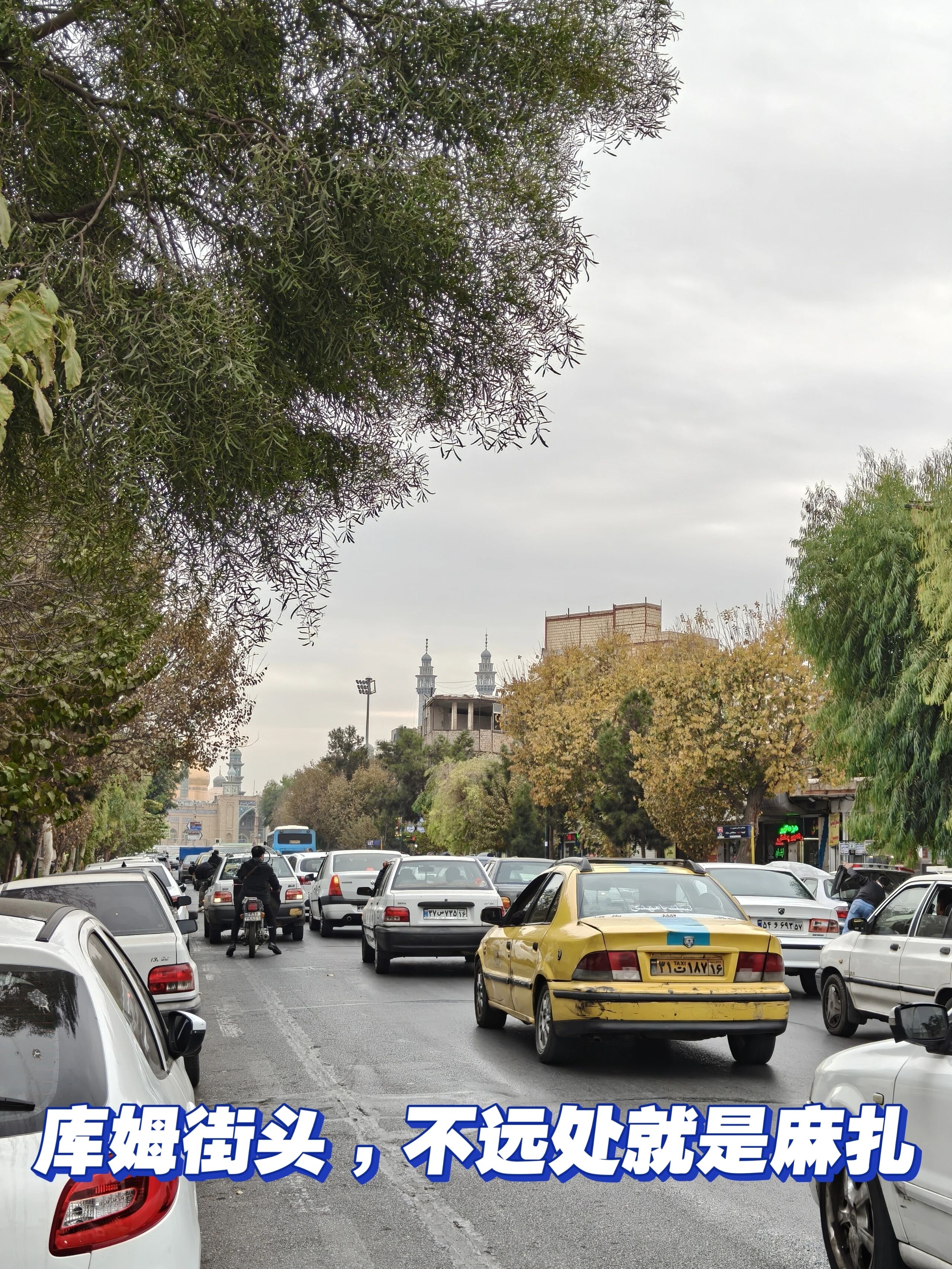
There are many bazaars near Golestan Palace. Friday is a public holiday in Iran, and only one mosque in Tehran stays open while the rest are closed. Only a few shops inside the bazaar are open.
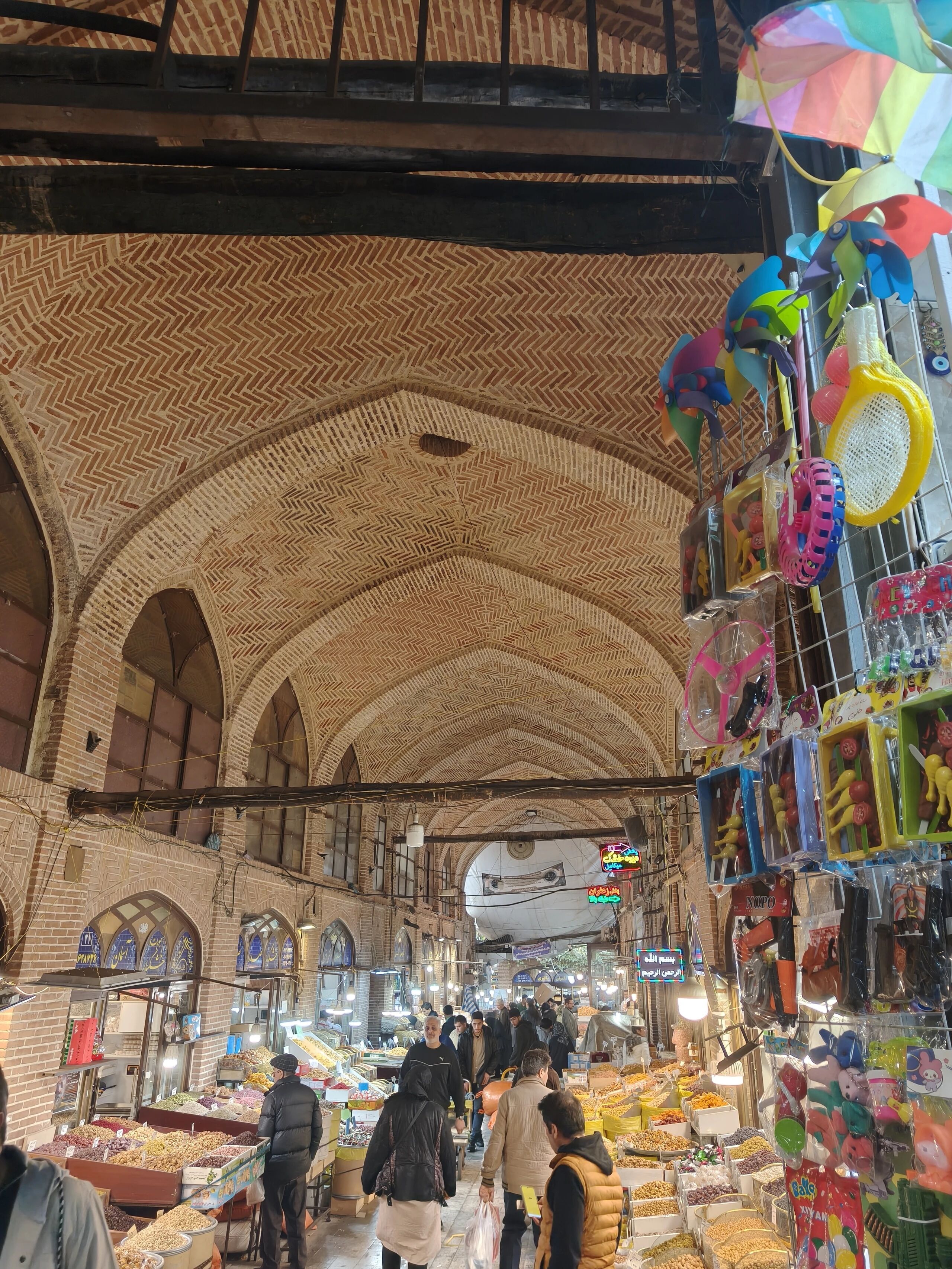
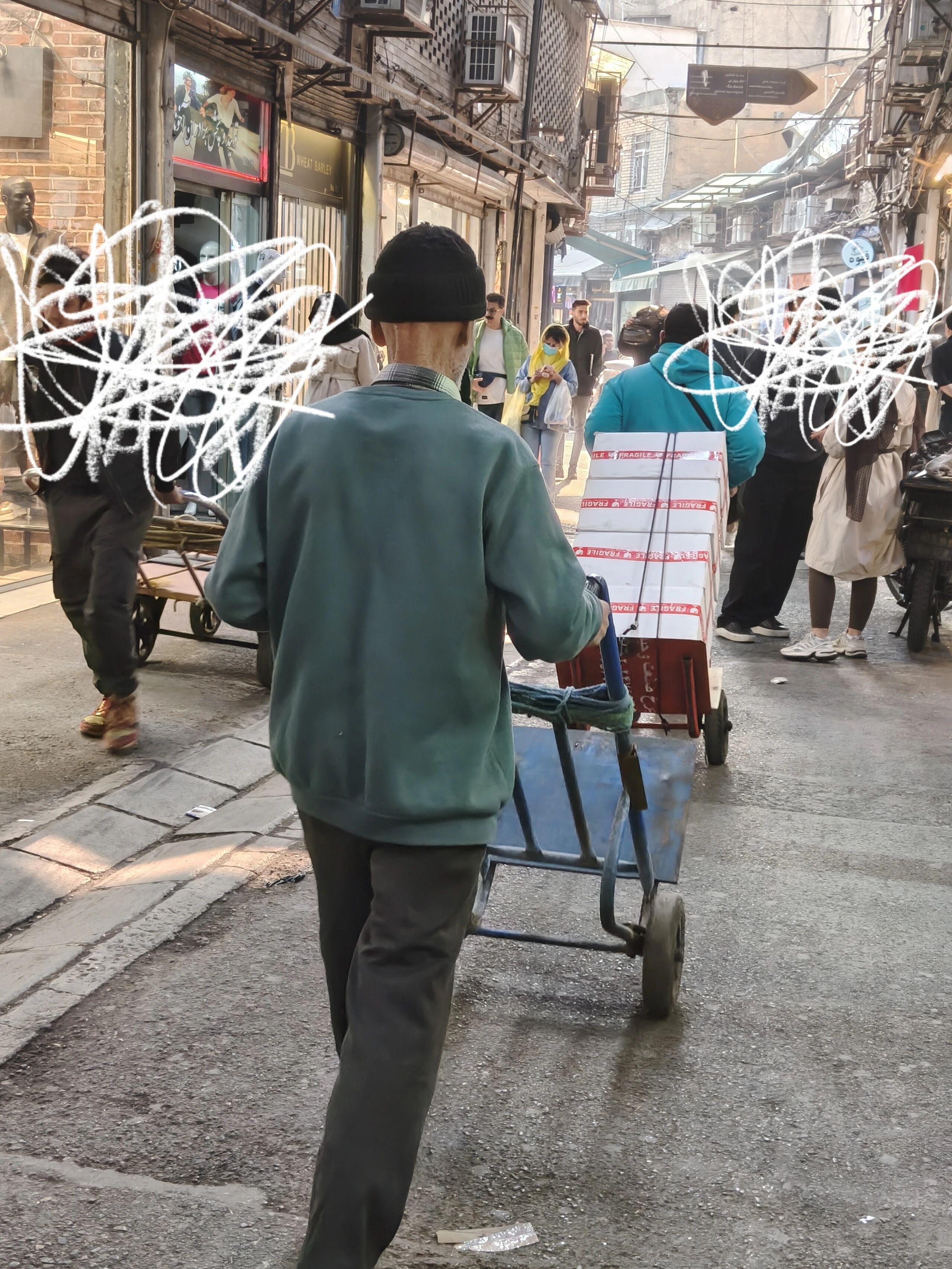
The market feels like a ghost town on Friday, but as soon as Friday passes, it quickly becomes lively, crowded with pedestrians and porters shoulder to shoulder.
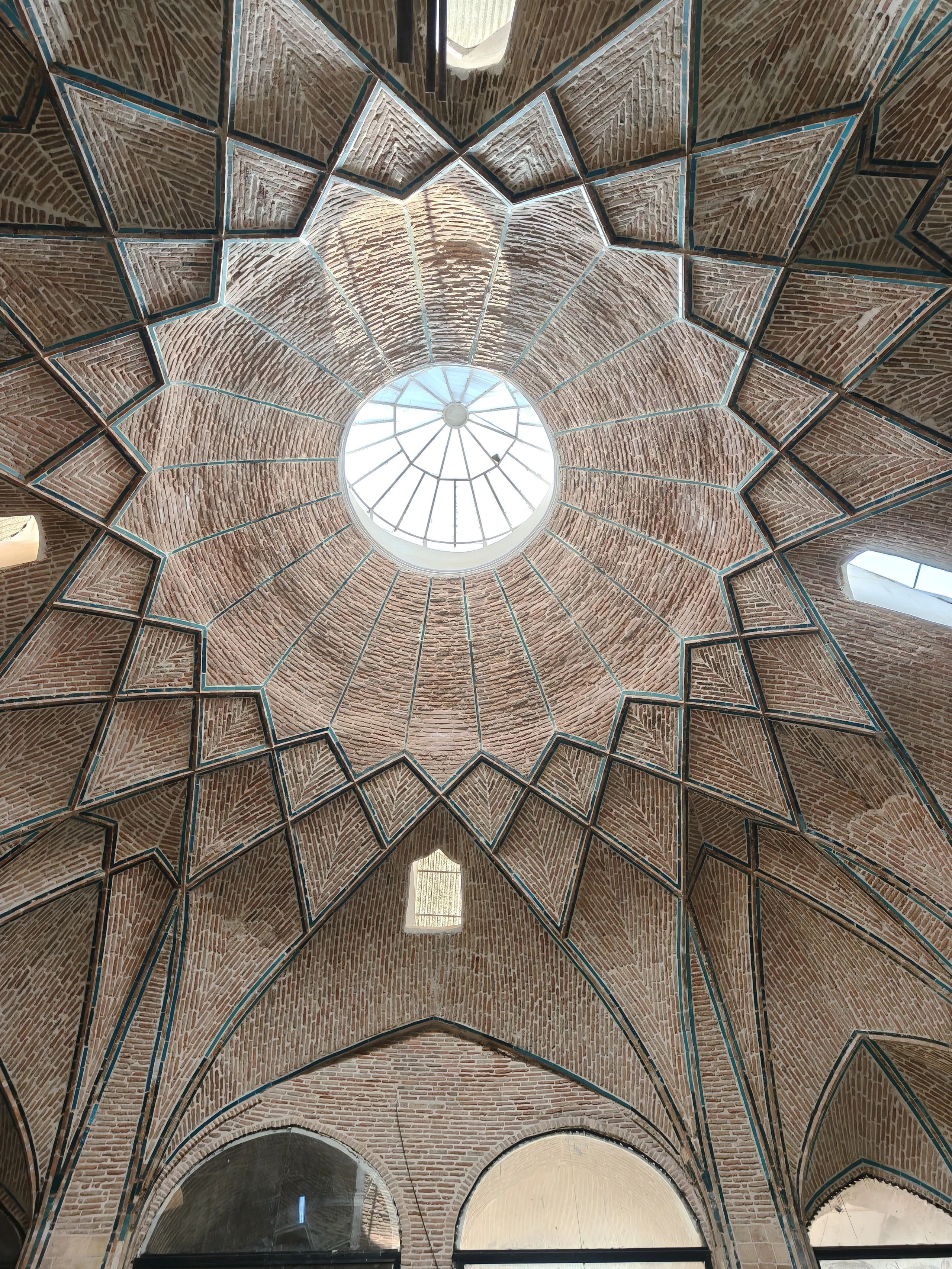
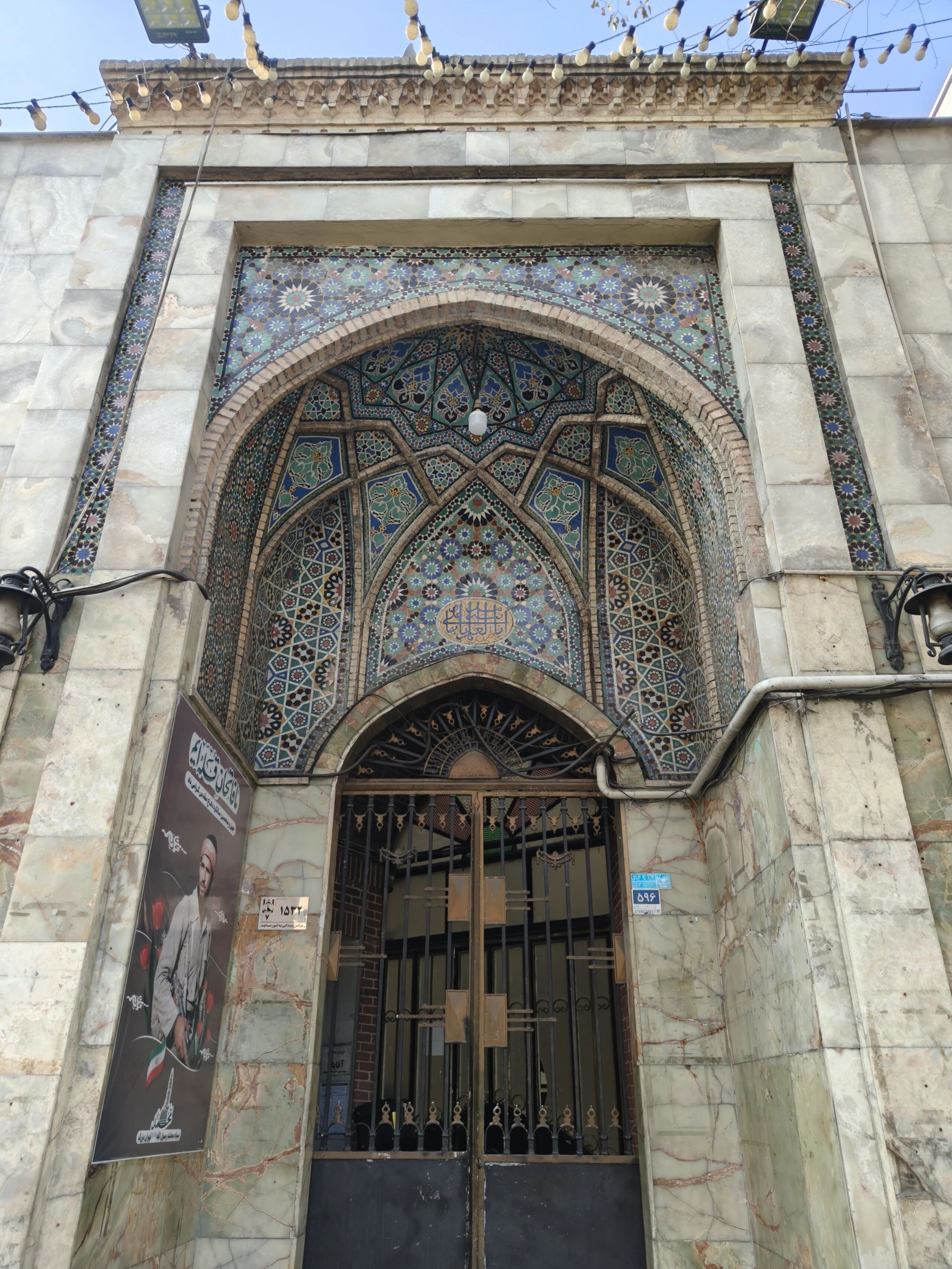
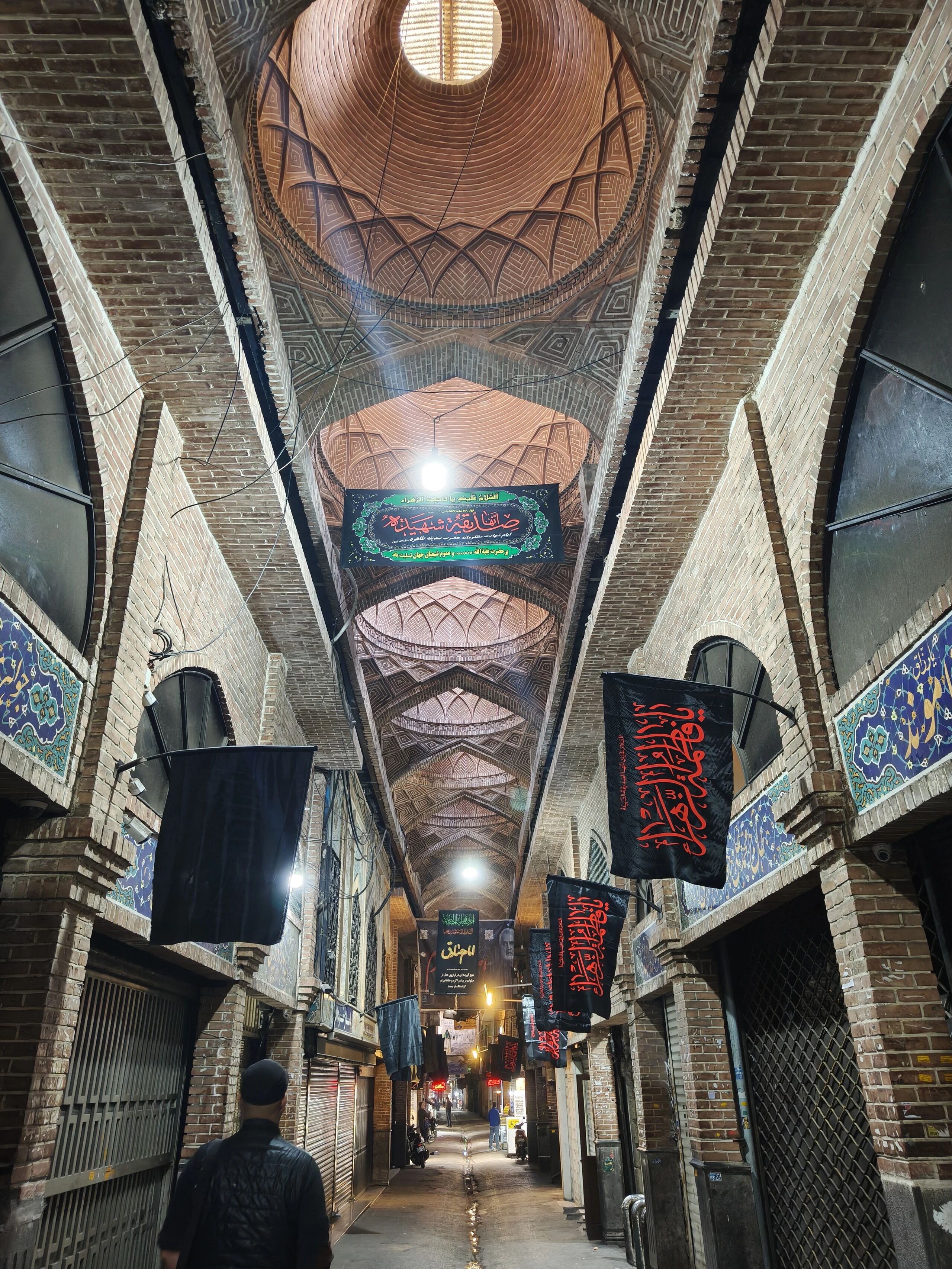
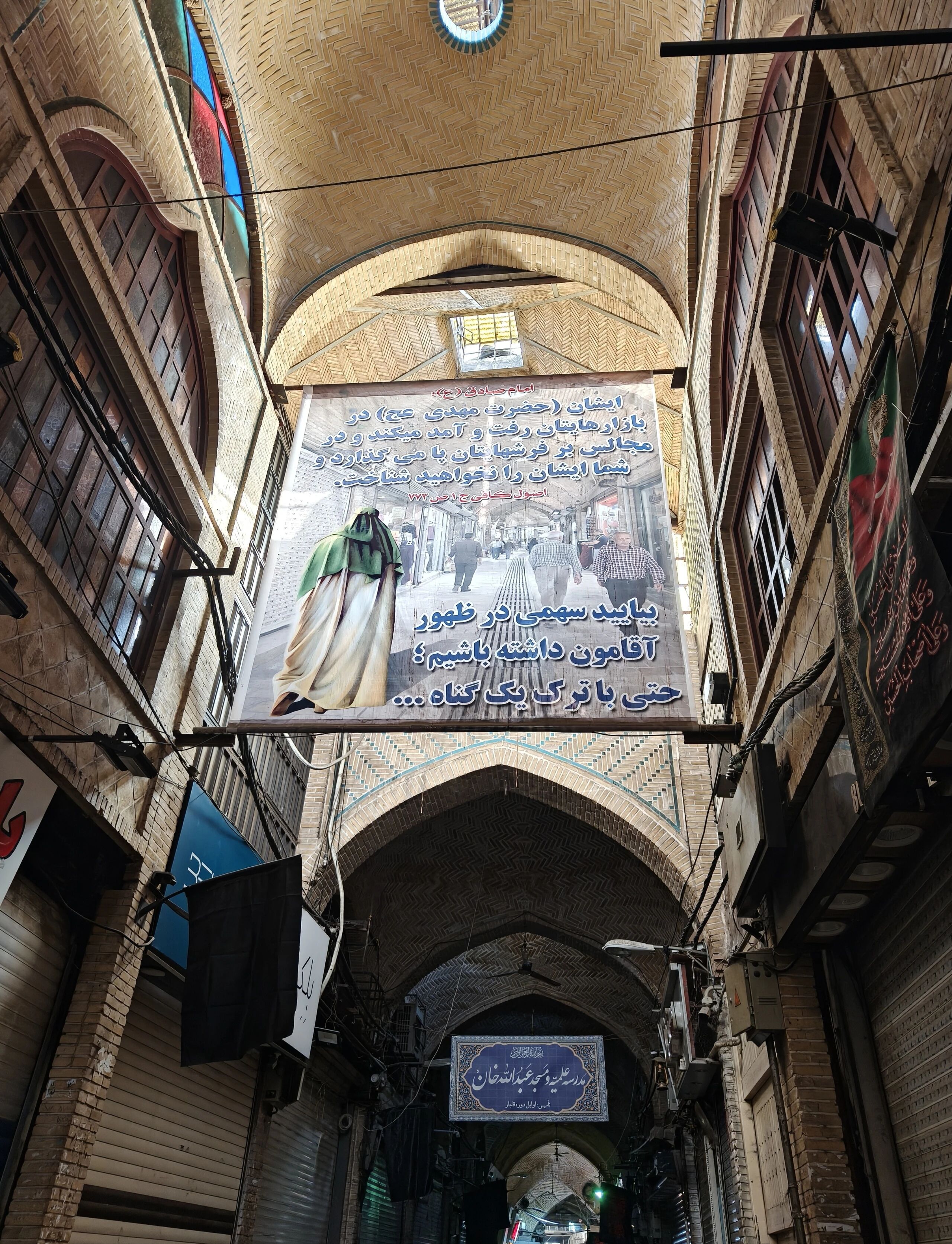
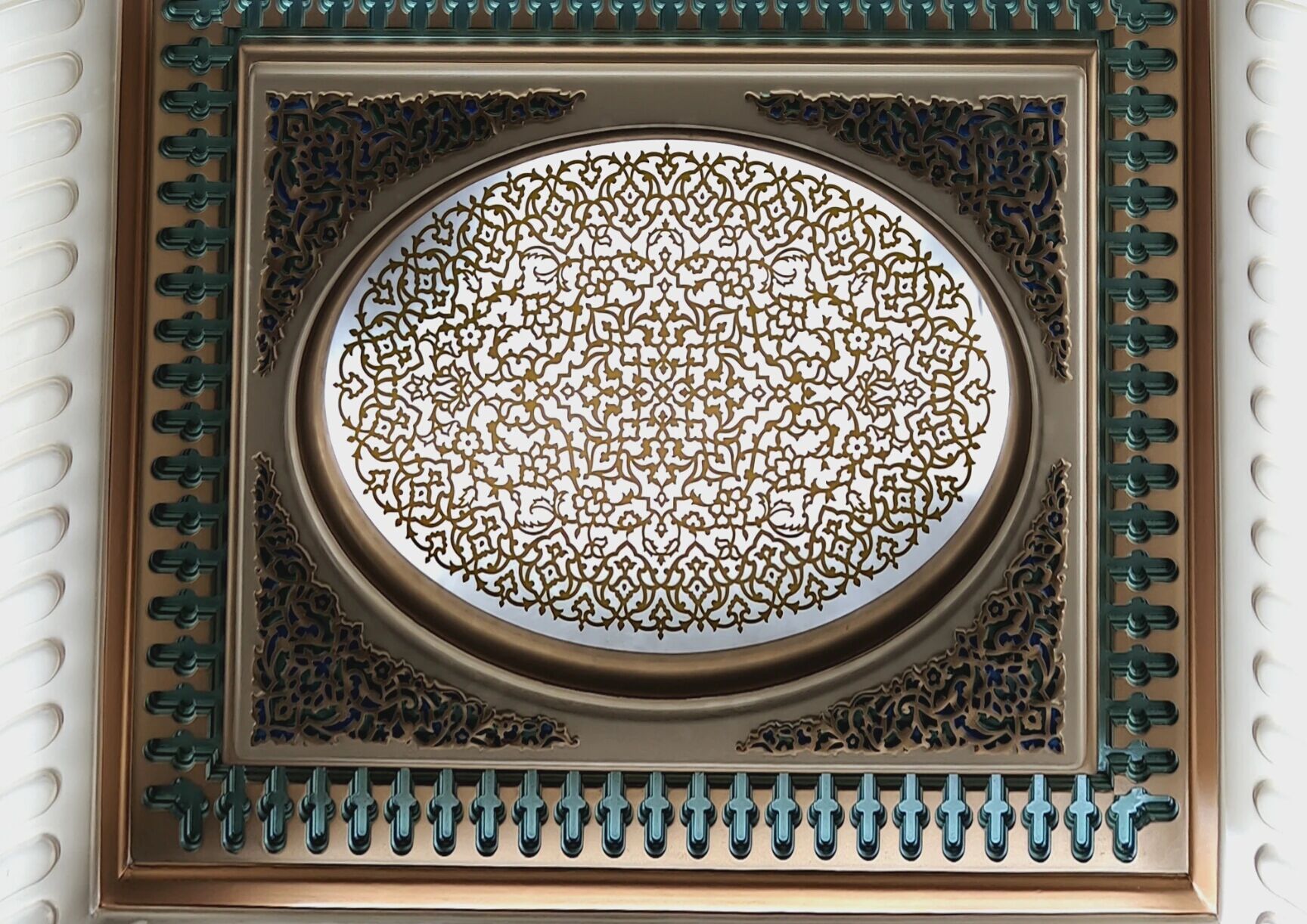
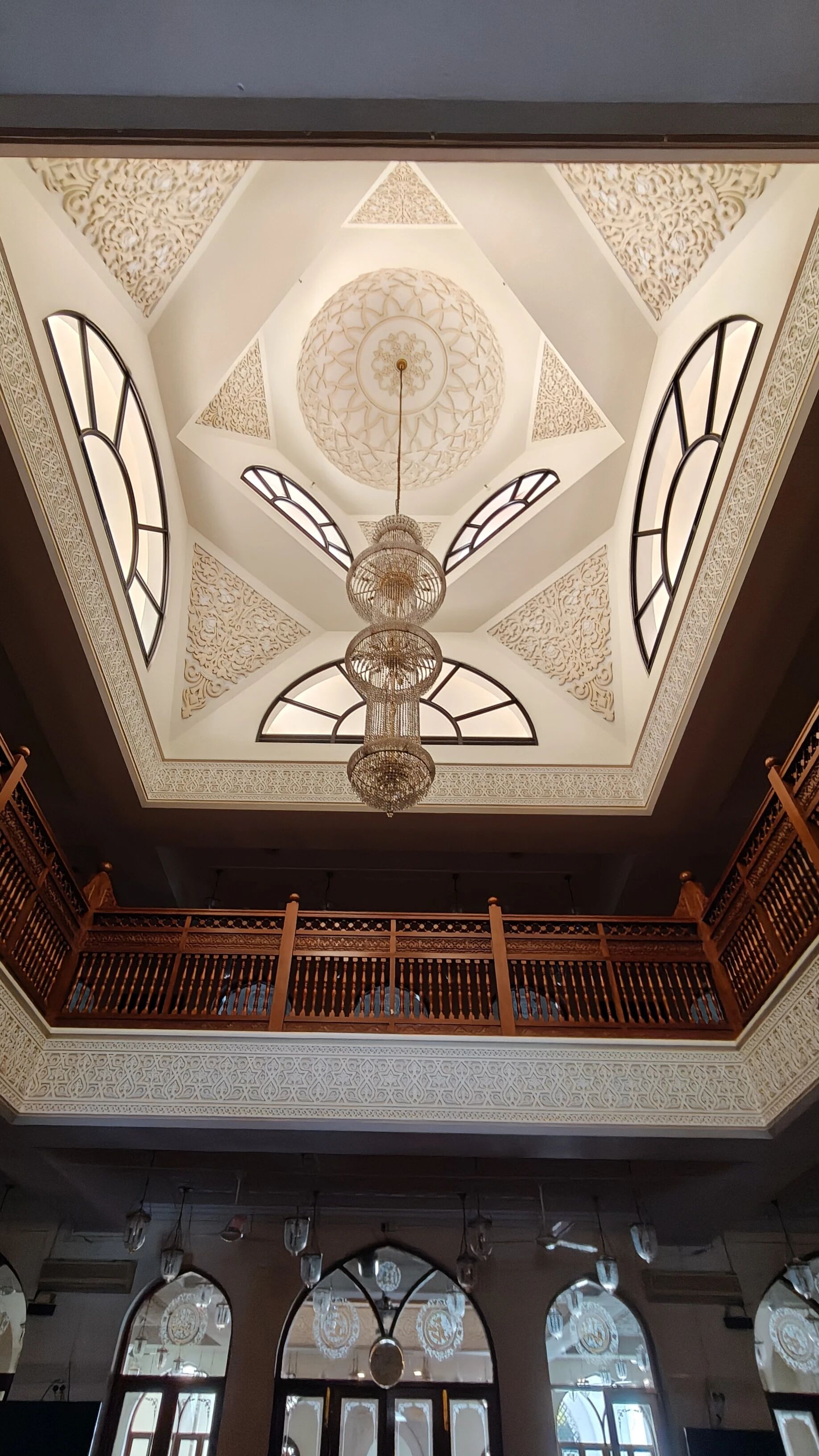
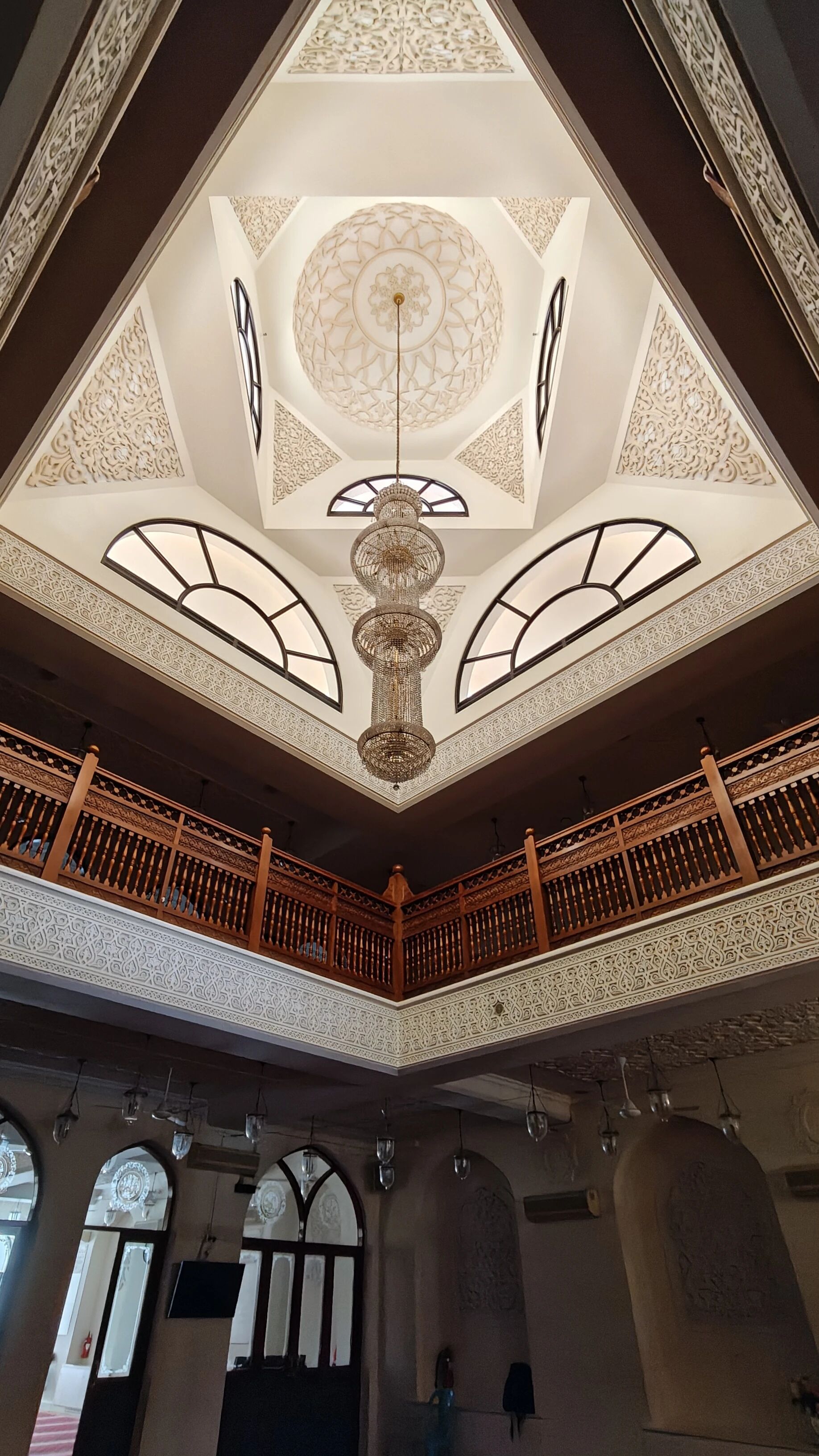
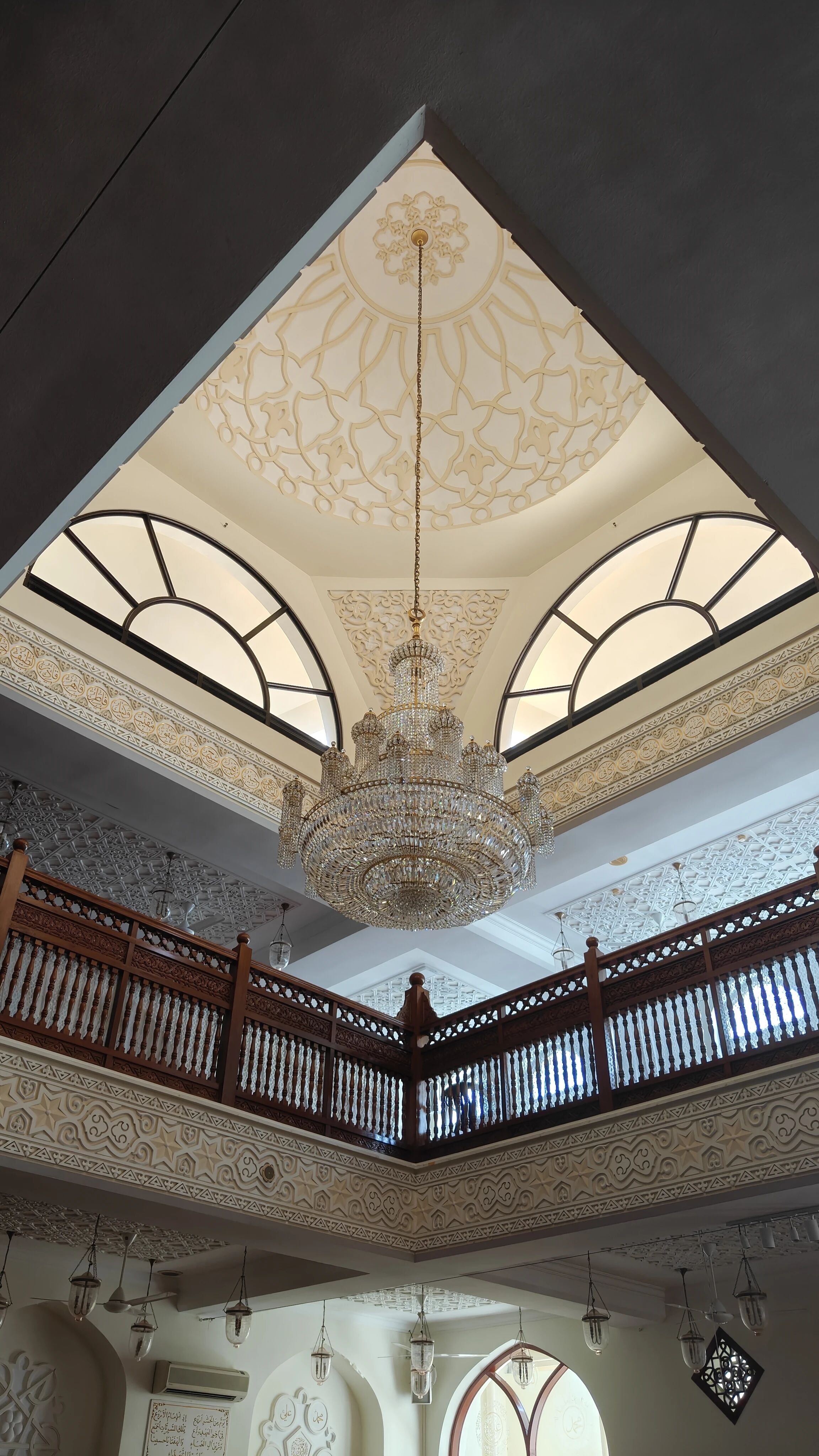
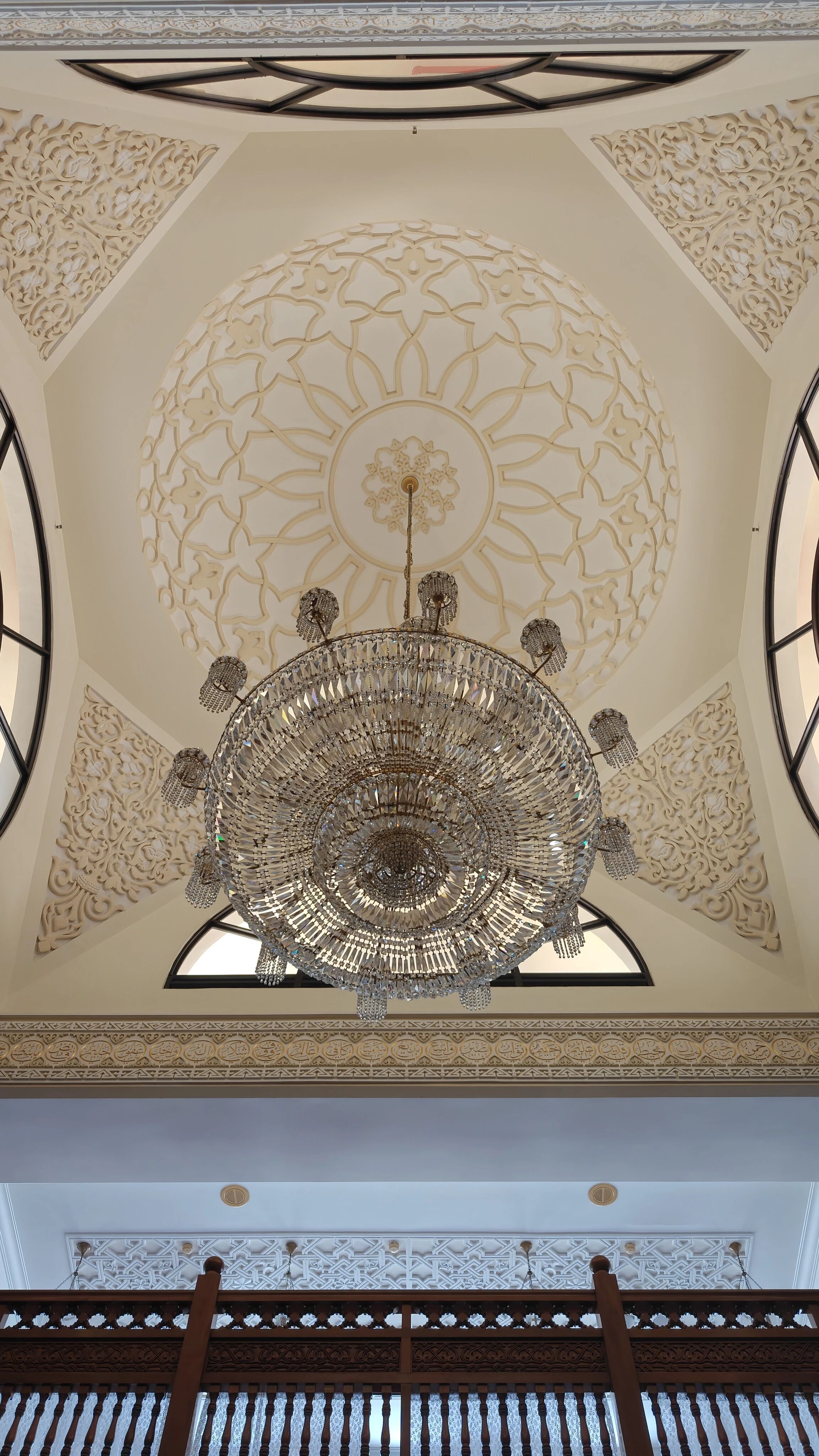
Bazaars almost always have domes, and you can enjoy their orderly beauty just by looking up. (Photo 1)
After walking for a while, my guide told me he knew a good place that mainly sells wraps with potato, chicken, or beef fillings. I like potatoes, so of course I chose the potato one. The guide chose the beef one. The wrap included mashed boiled eggs, and the potatoes were very tasty.
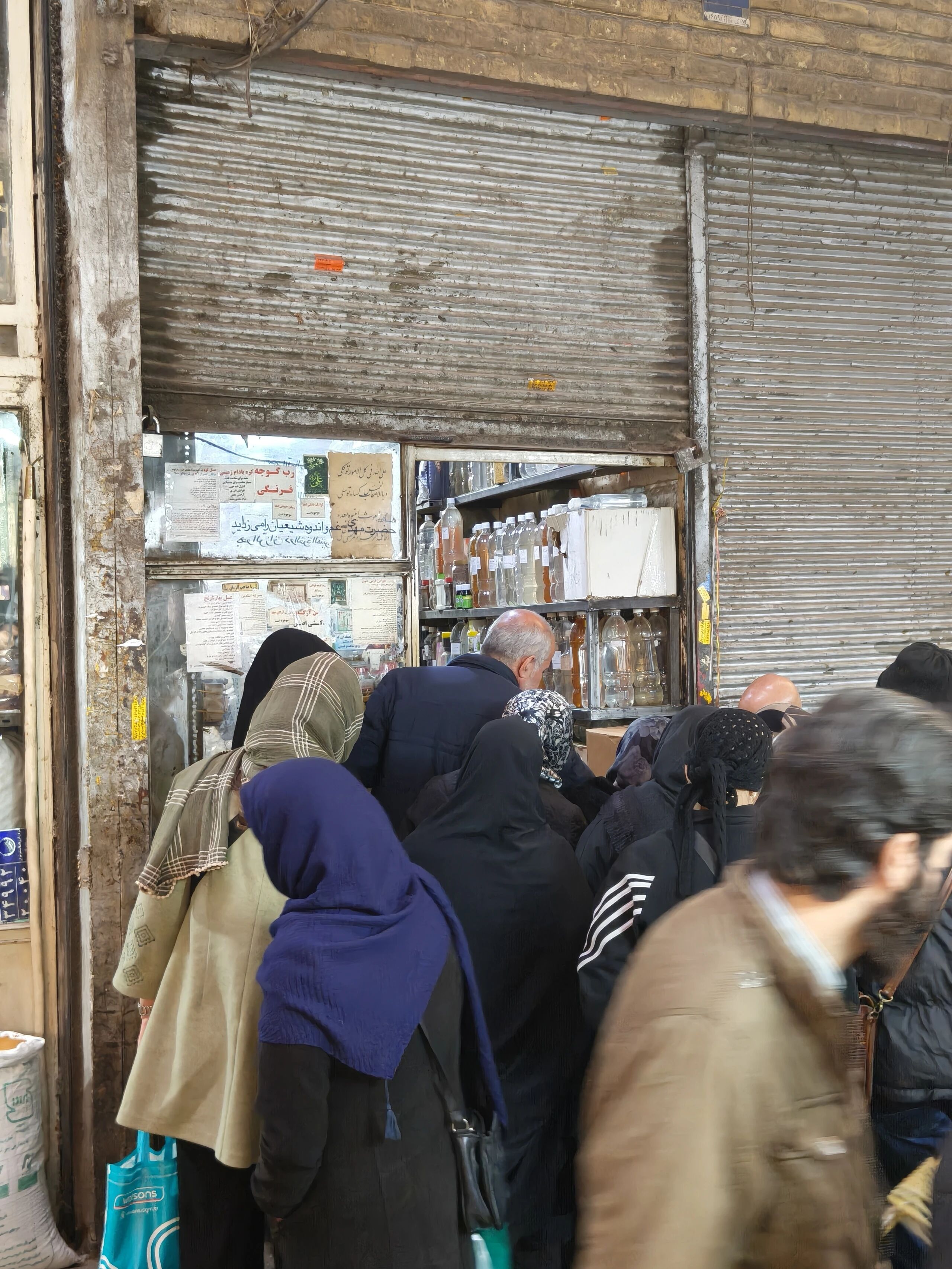
The shop is very narrow and crowded. (Photo 5, Photo 6)
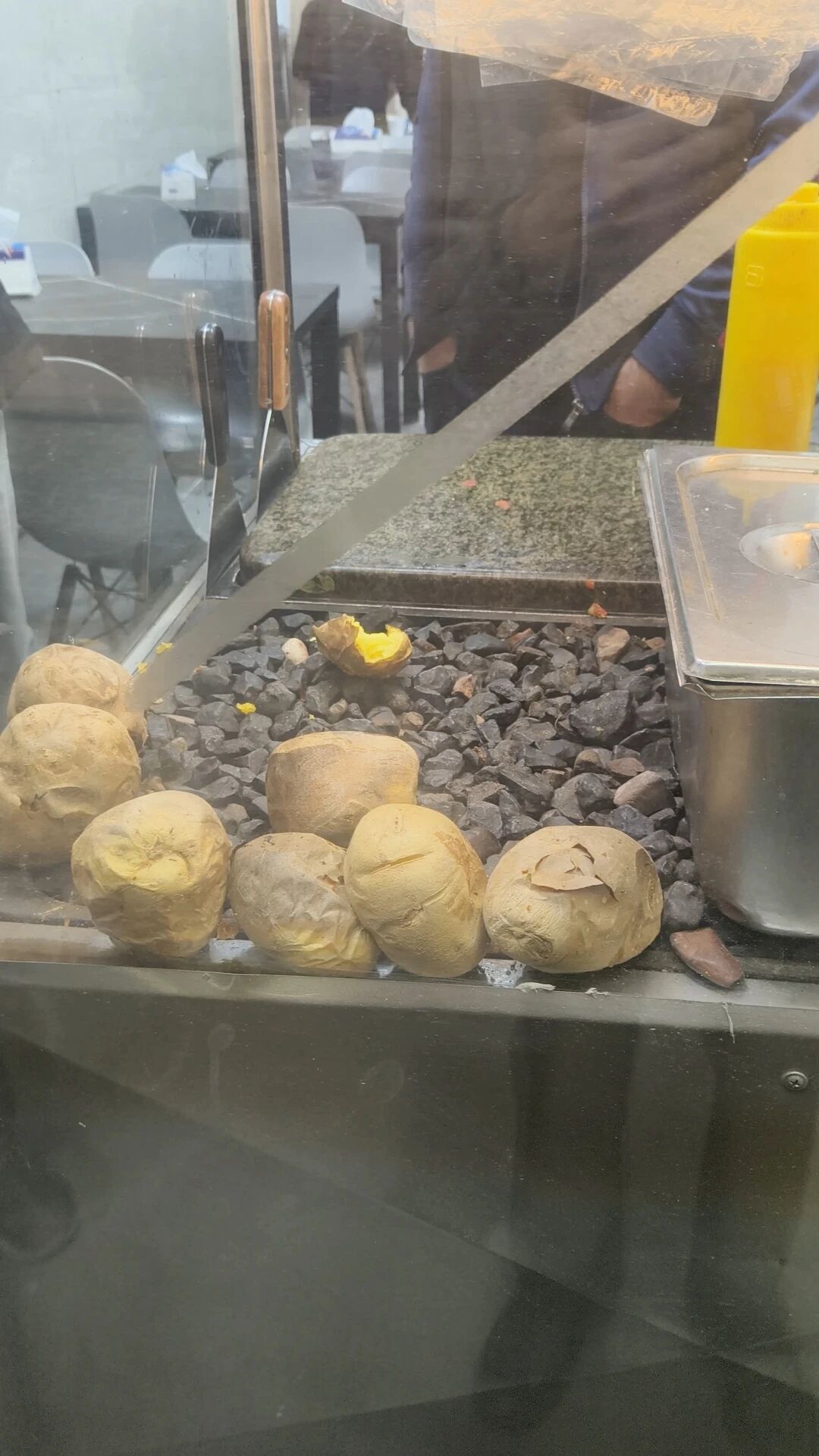
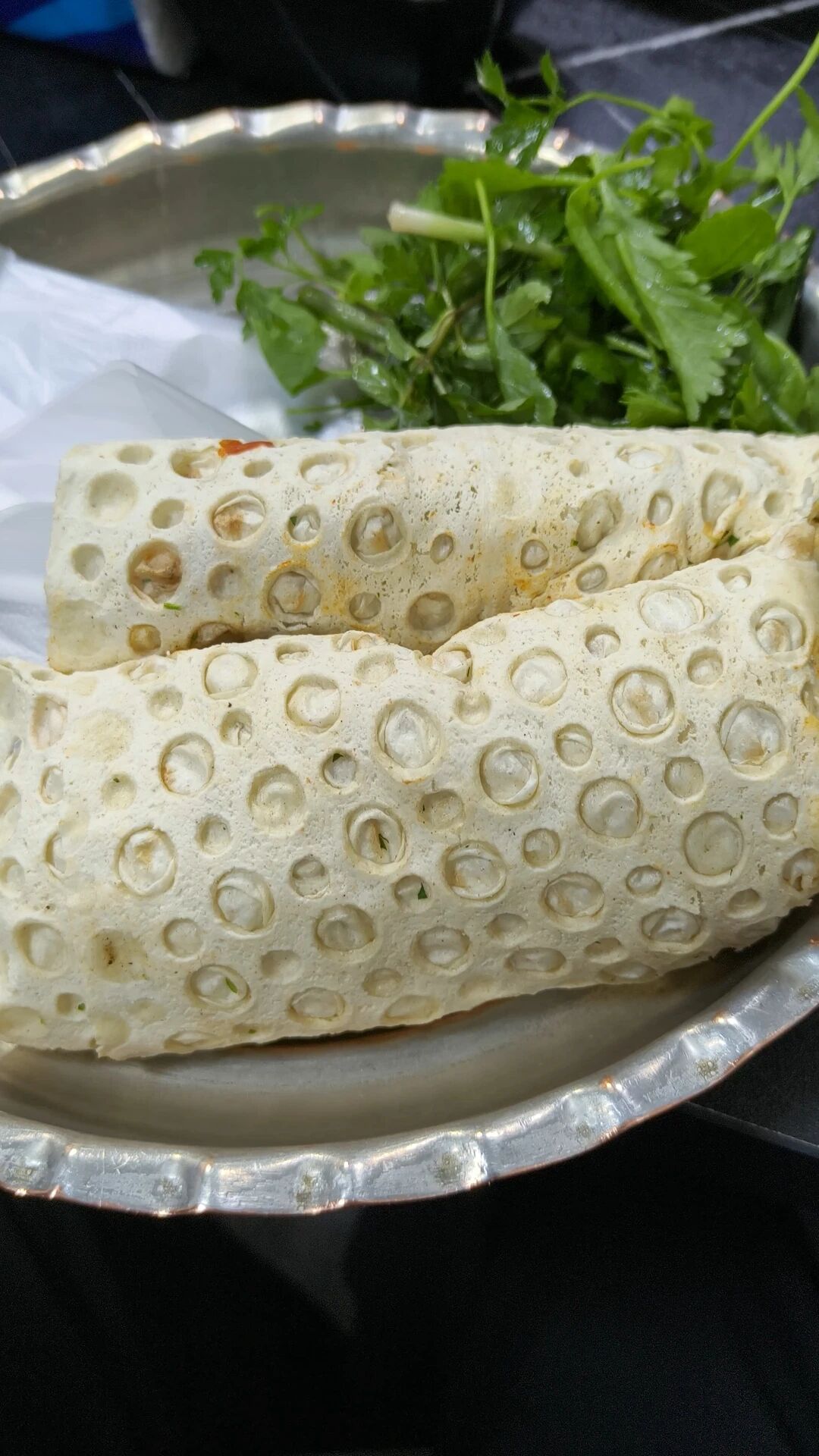
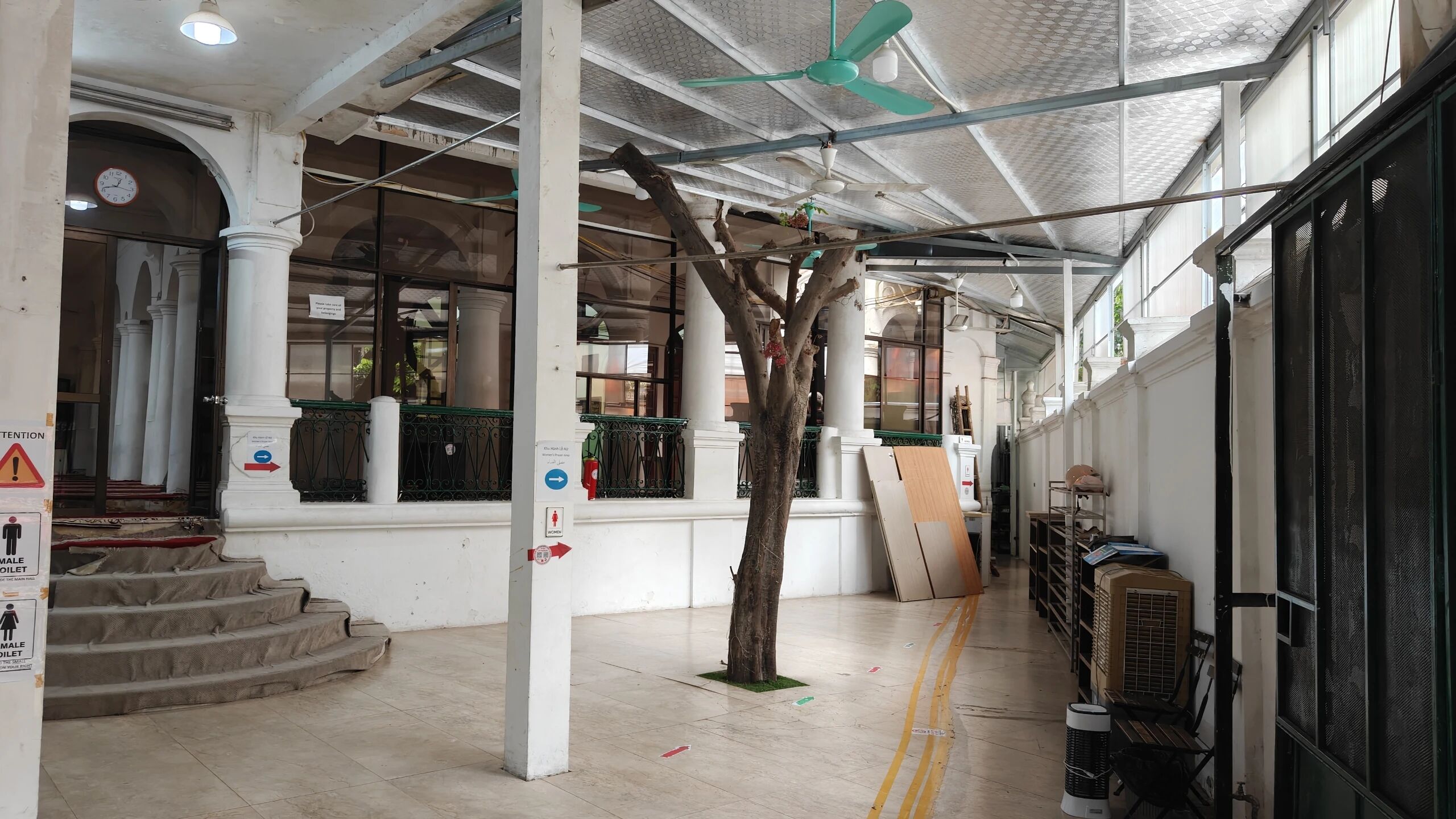
Then, I am not sure how we got there, but we walked into a mosque. The area outside was cramped and narrow, and I really did not expect such a large mosque square in the middle.
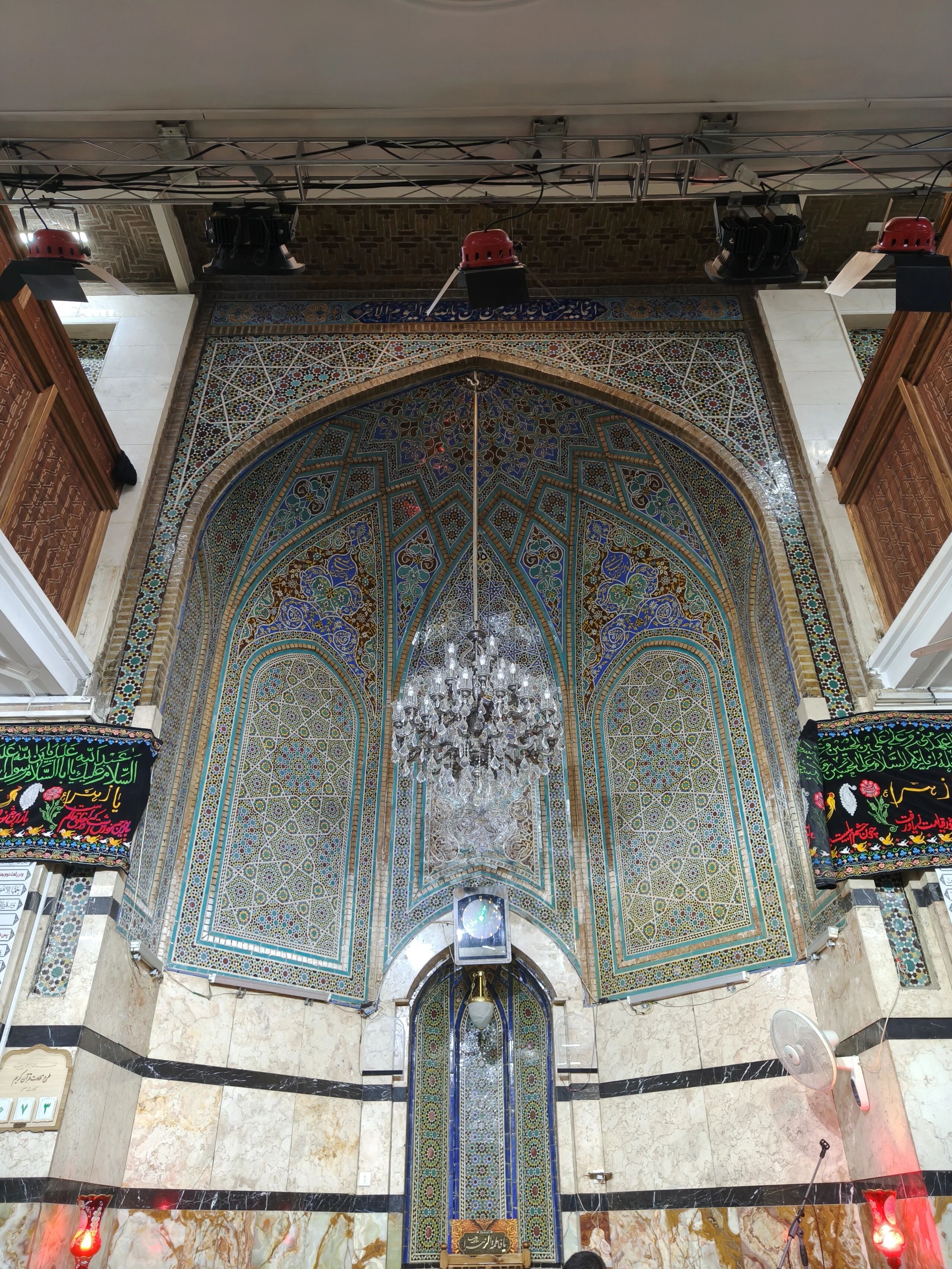
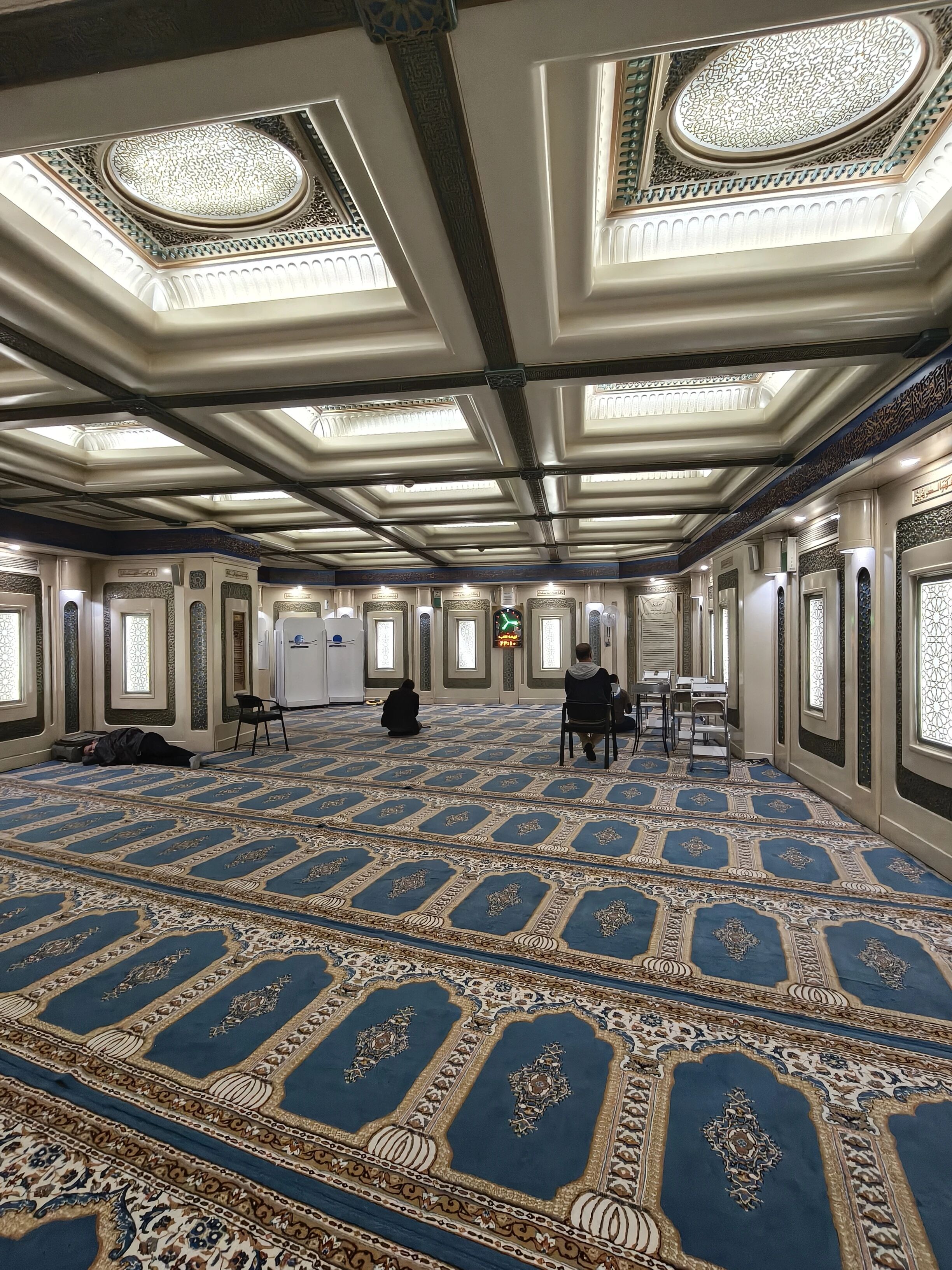
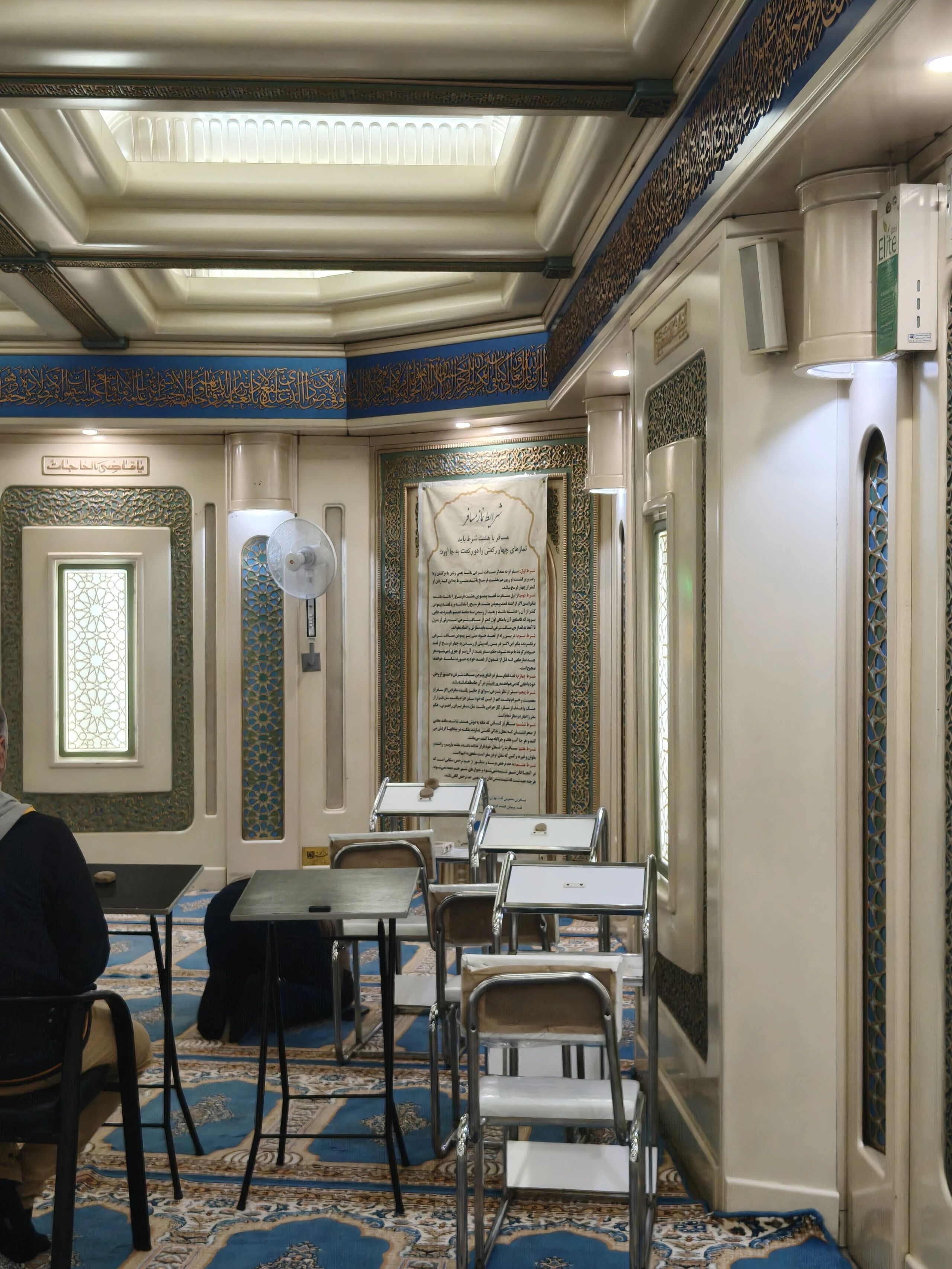
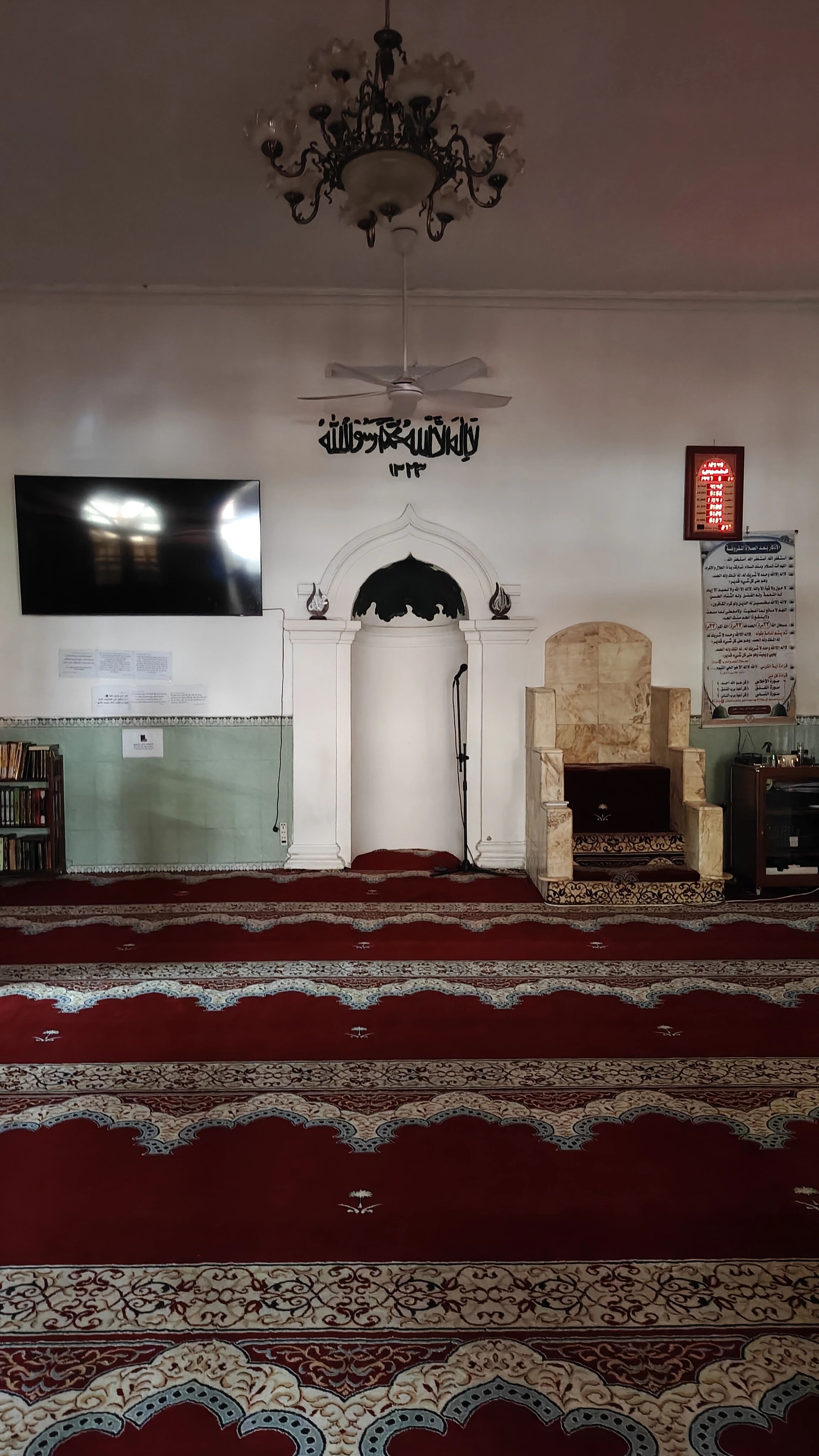
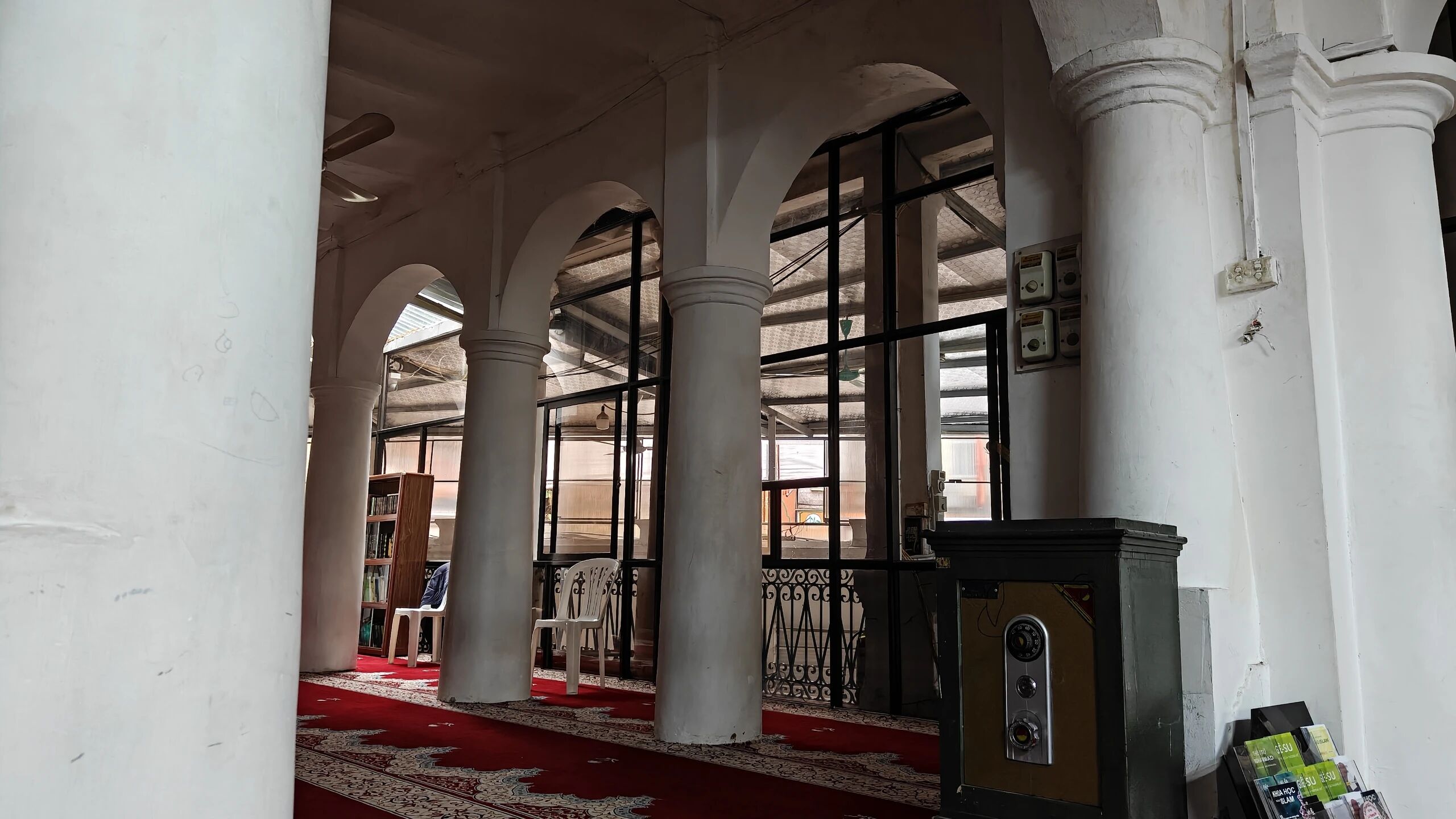
This is the Imam Khomeini Mosque. The main hall (Photo 7) looks like a larger version of the Id Kah Mosque in Xinjiang, as if they were built from the same blueprint. There is a water basin in the middle of the mosque square with taps along the edge for performing wudu. (Photo 9)
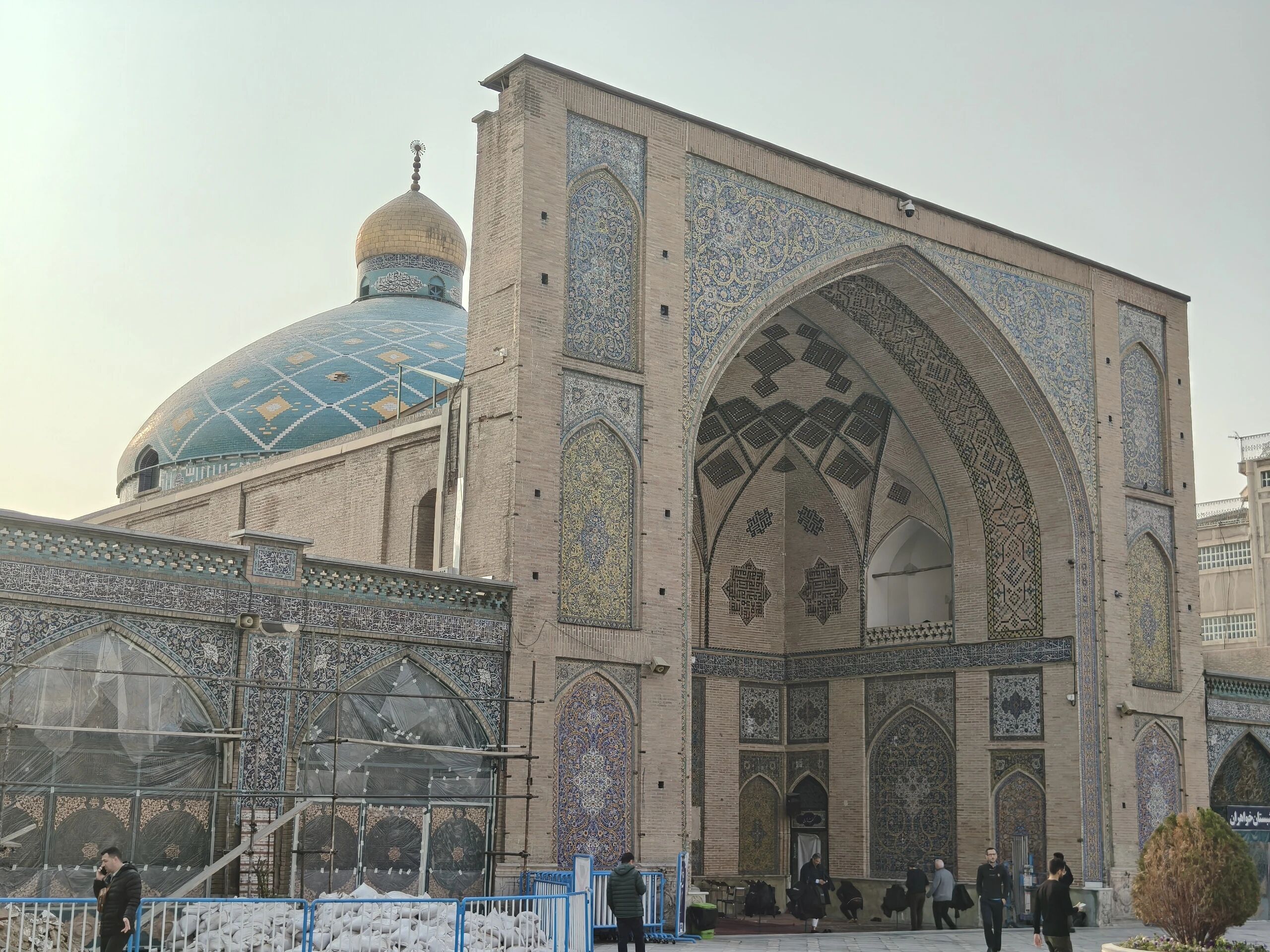
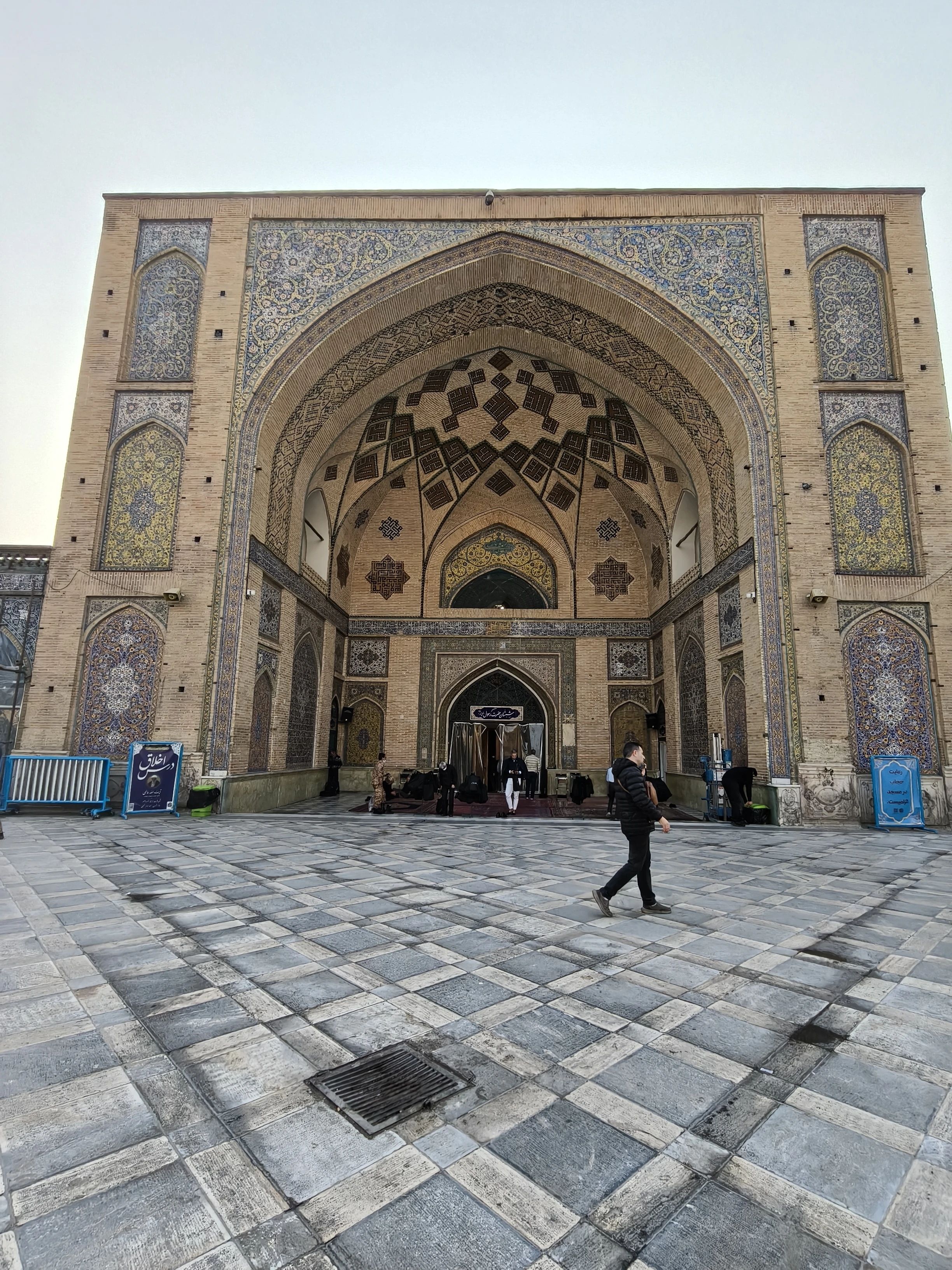
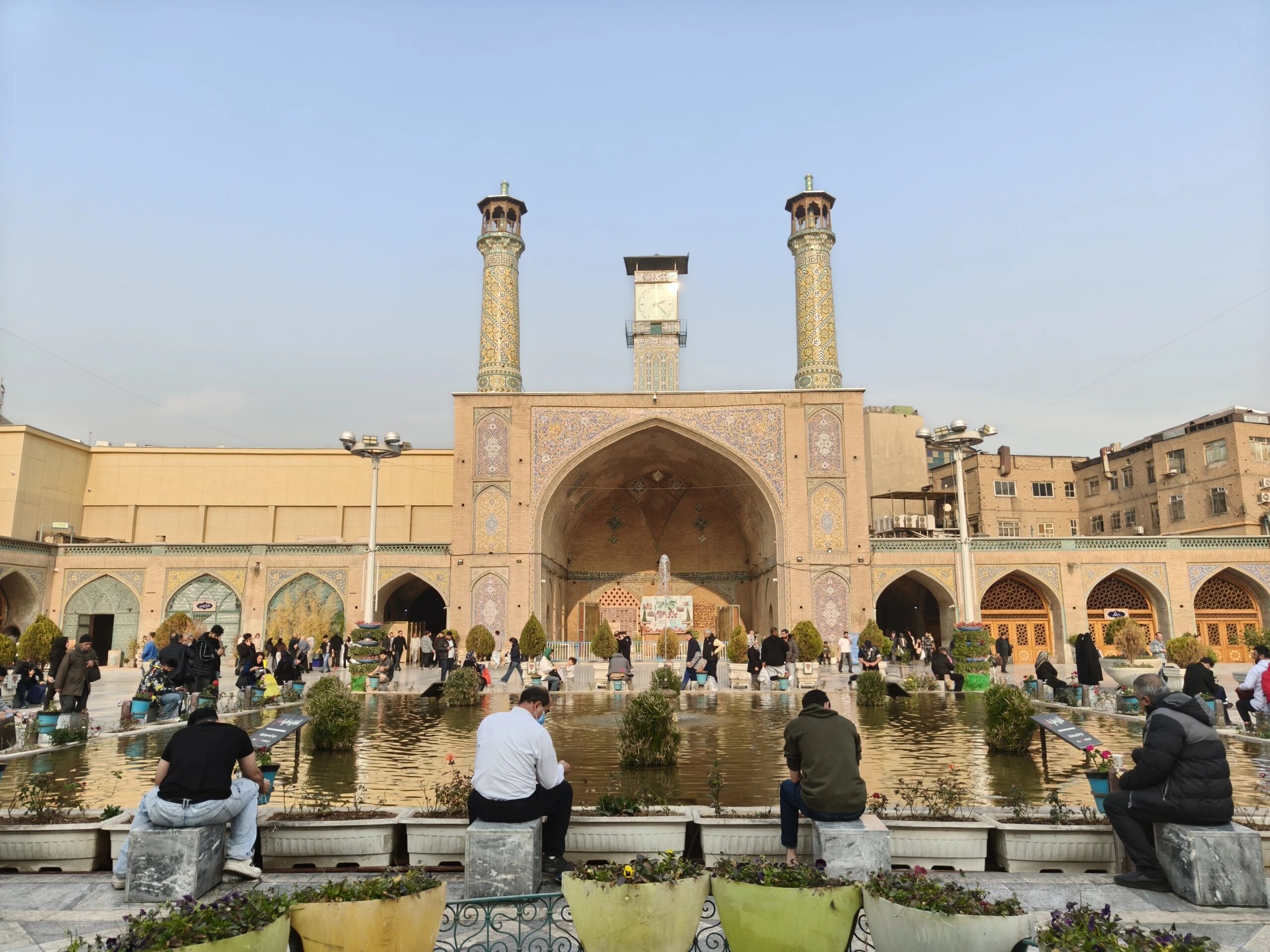
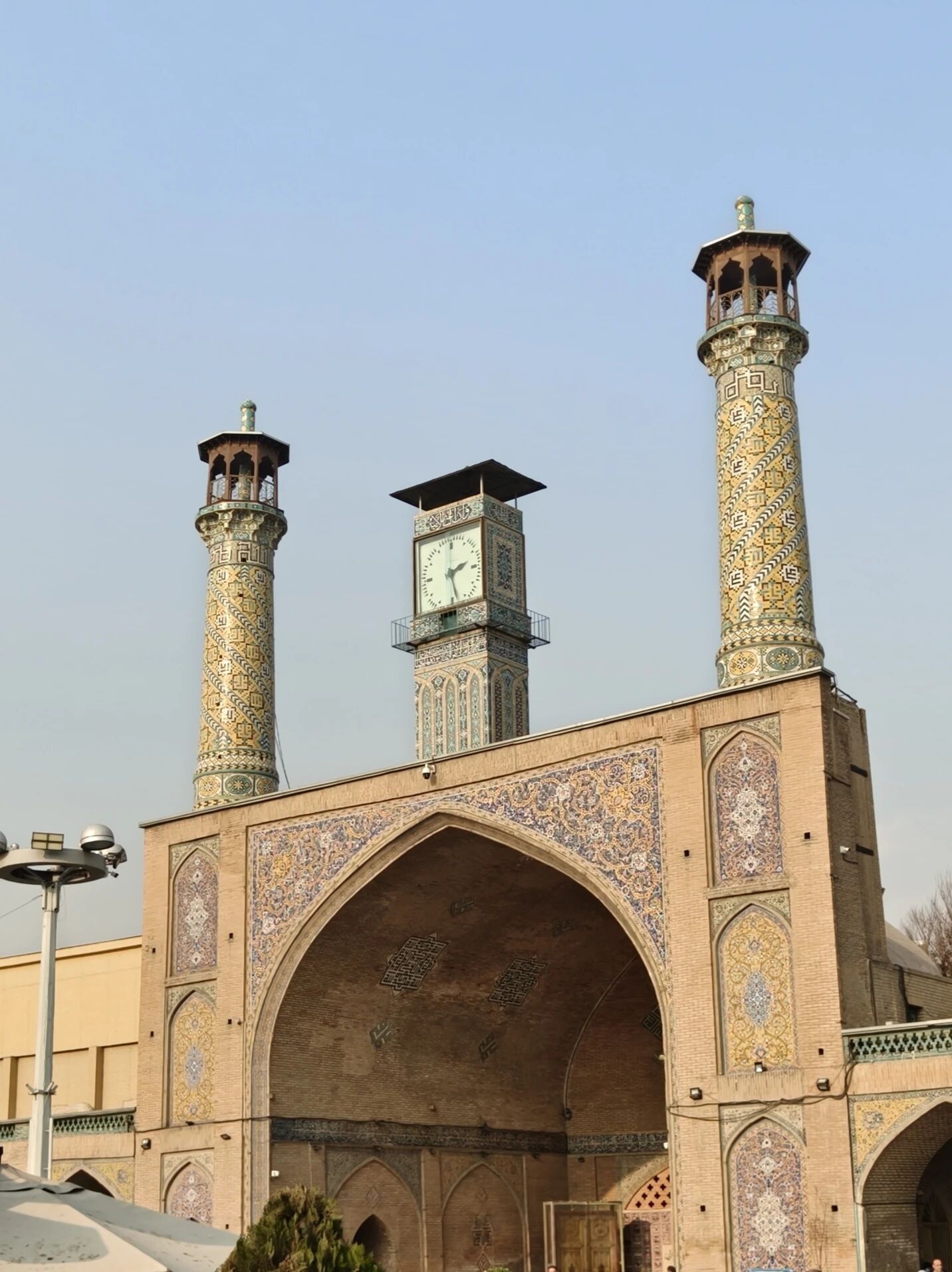
At the other end of the square stand two minarets with a clock tower in between. (Photo 10)
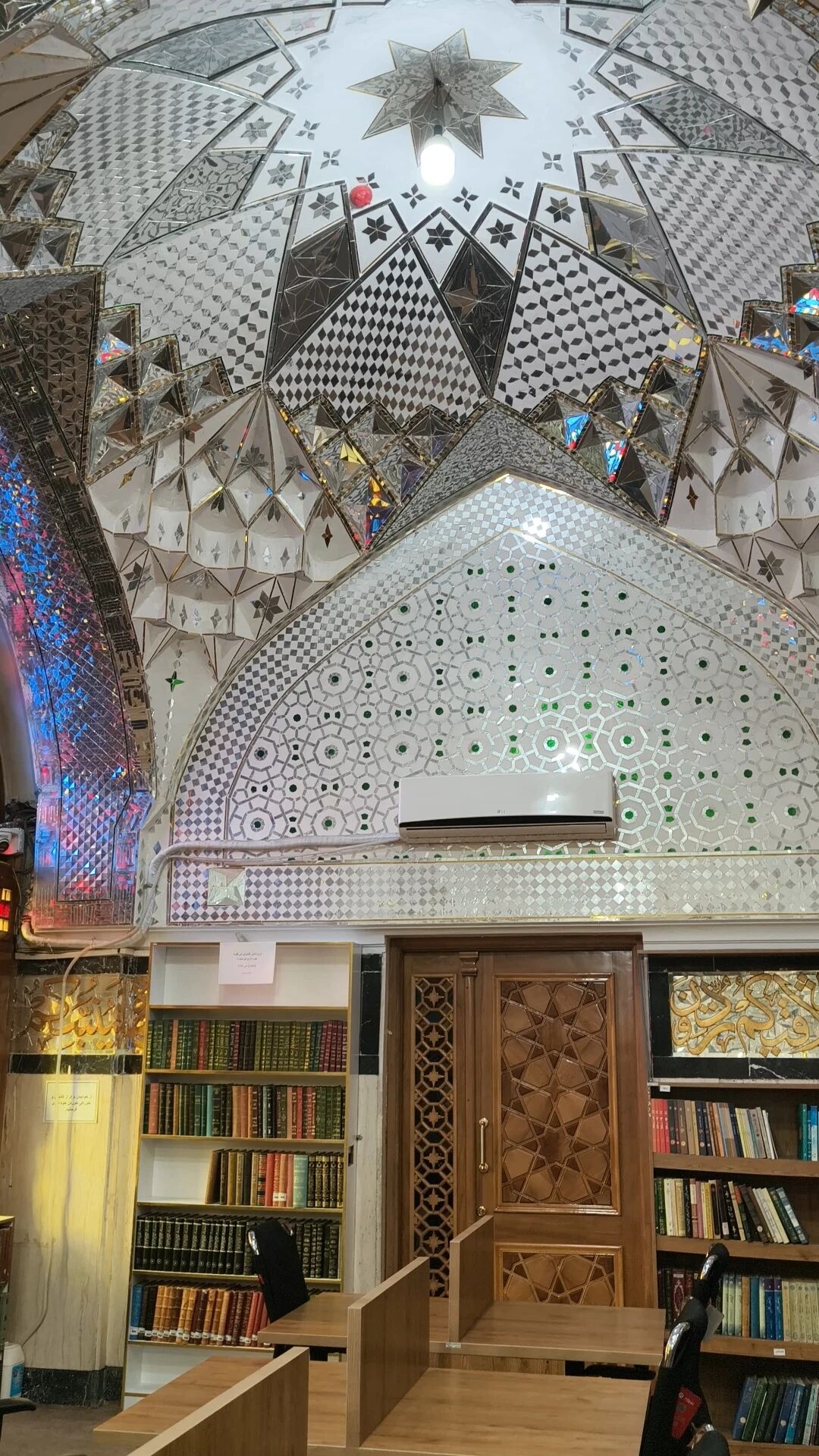
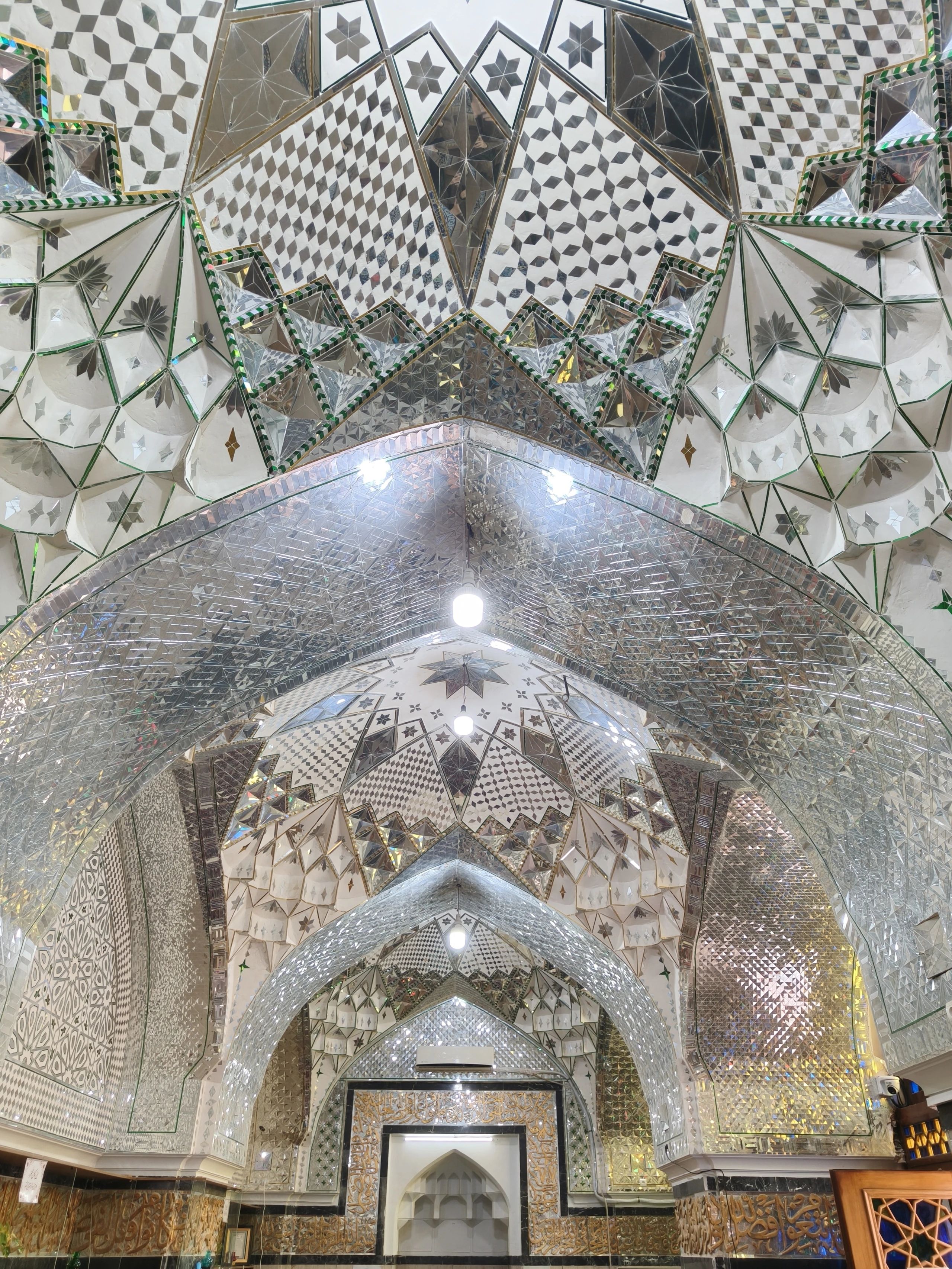
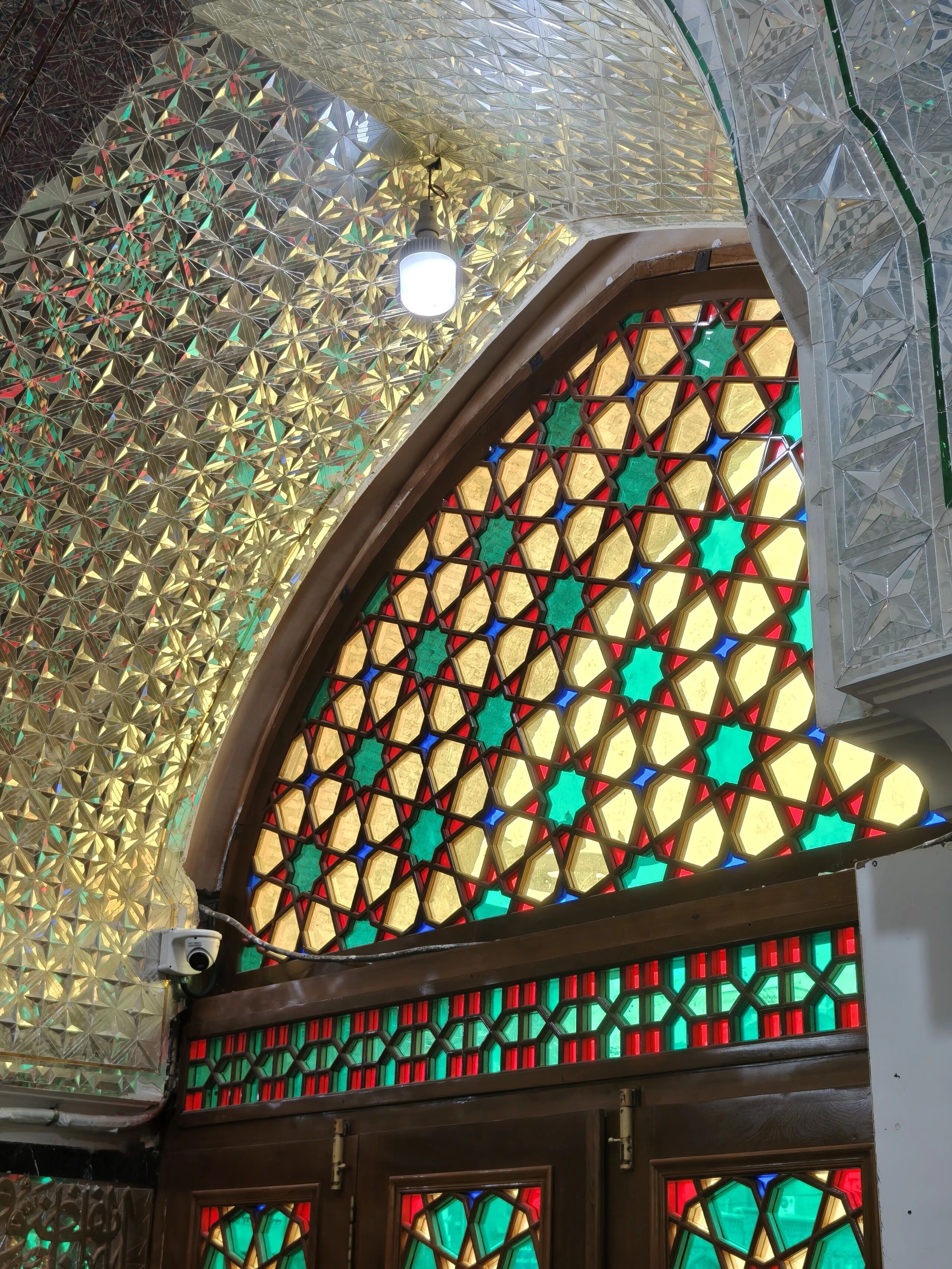
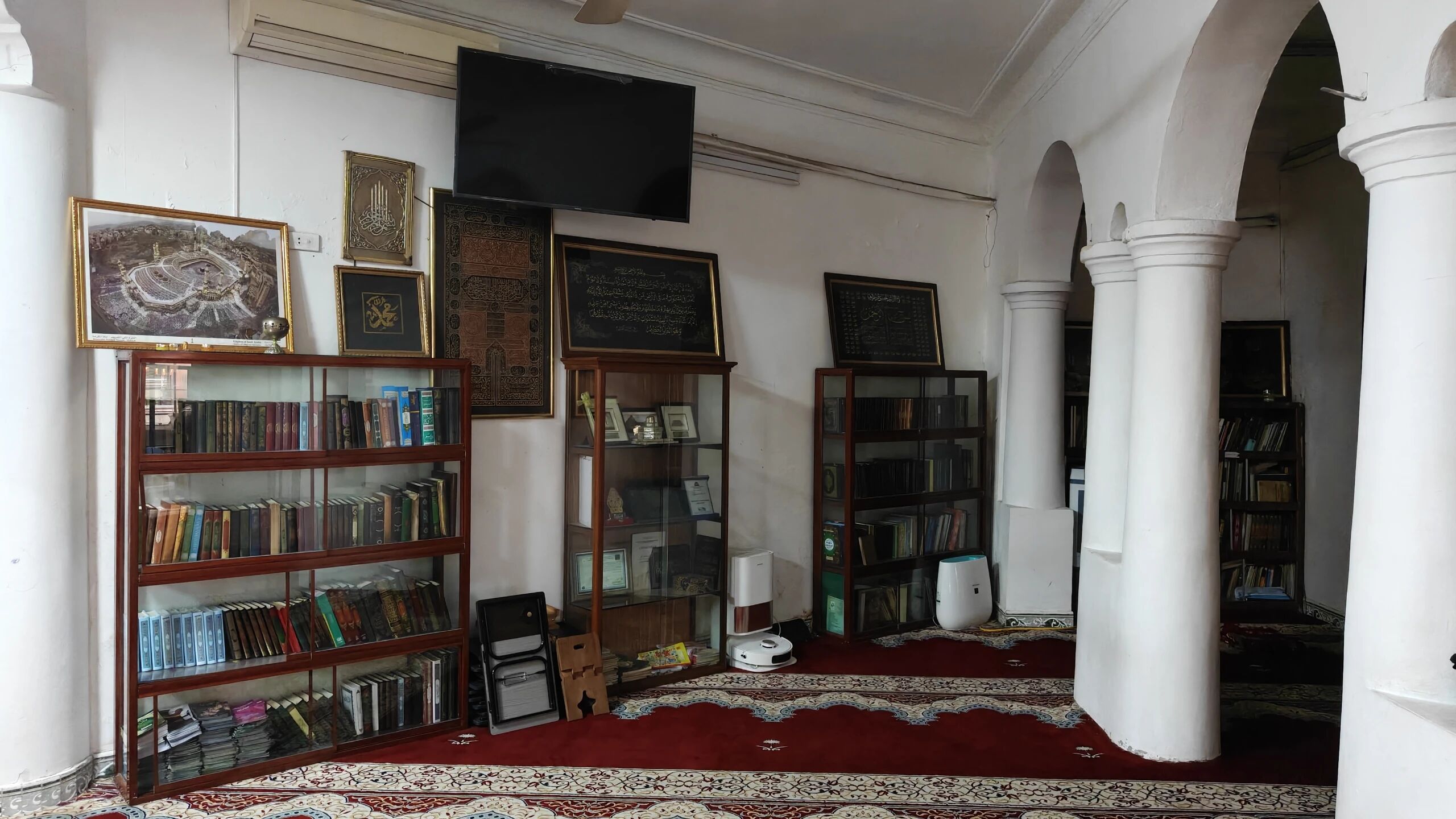
On one side of the square is a library covered in many mirrors that sparkle. (Photo 11, Photo 12) It looks just like the Tomb of the King of Lights in Iraq that I saw online.
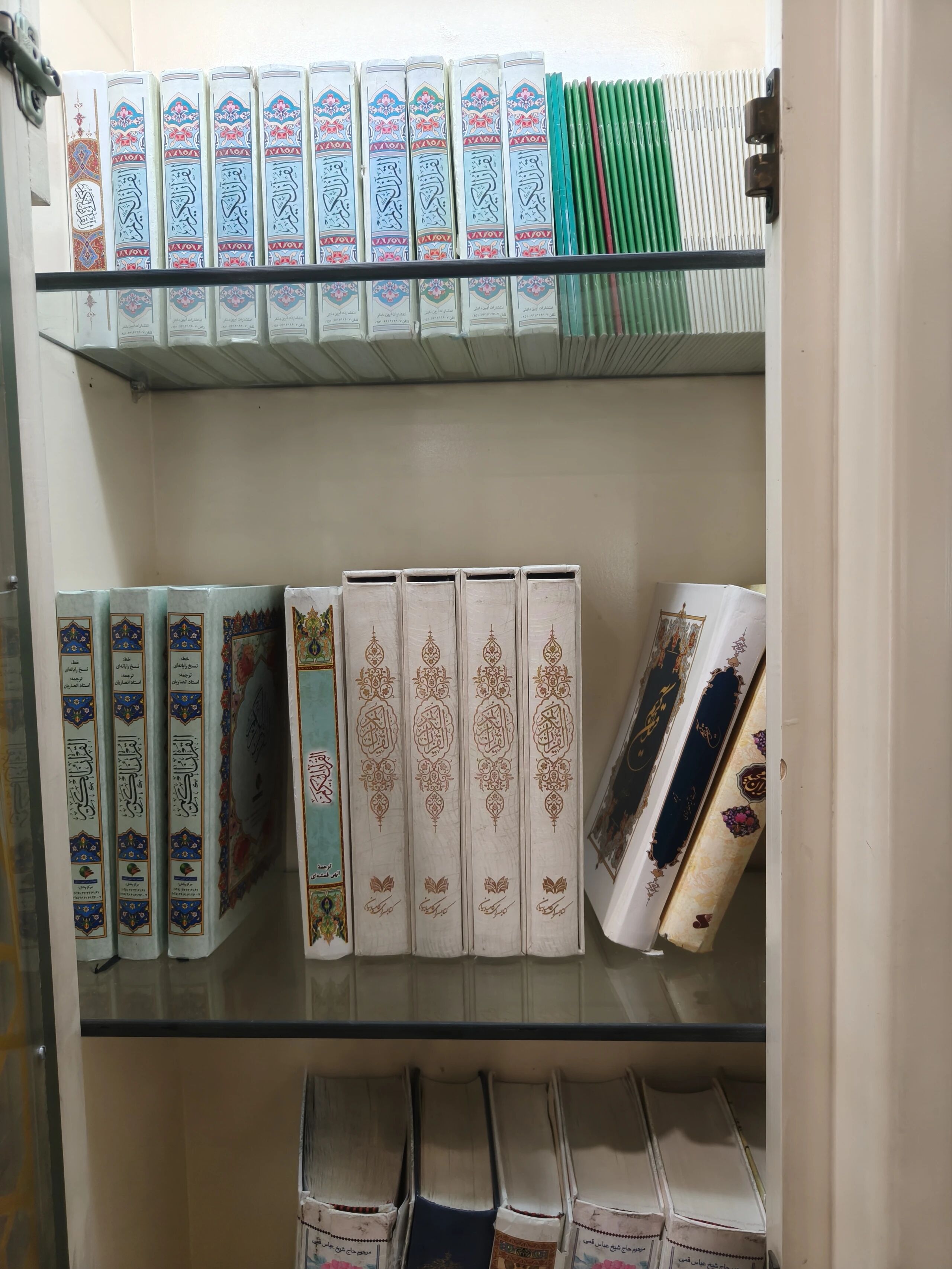
The library also holds copies of the Qur'an (Photo 13) in other languages, including French, English, Russian, and Armenian. There were a few staff members inside. When the tour guide told them I was from China, they gave me a tile ornament and a copy of the Qur'an.
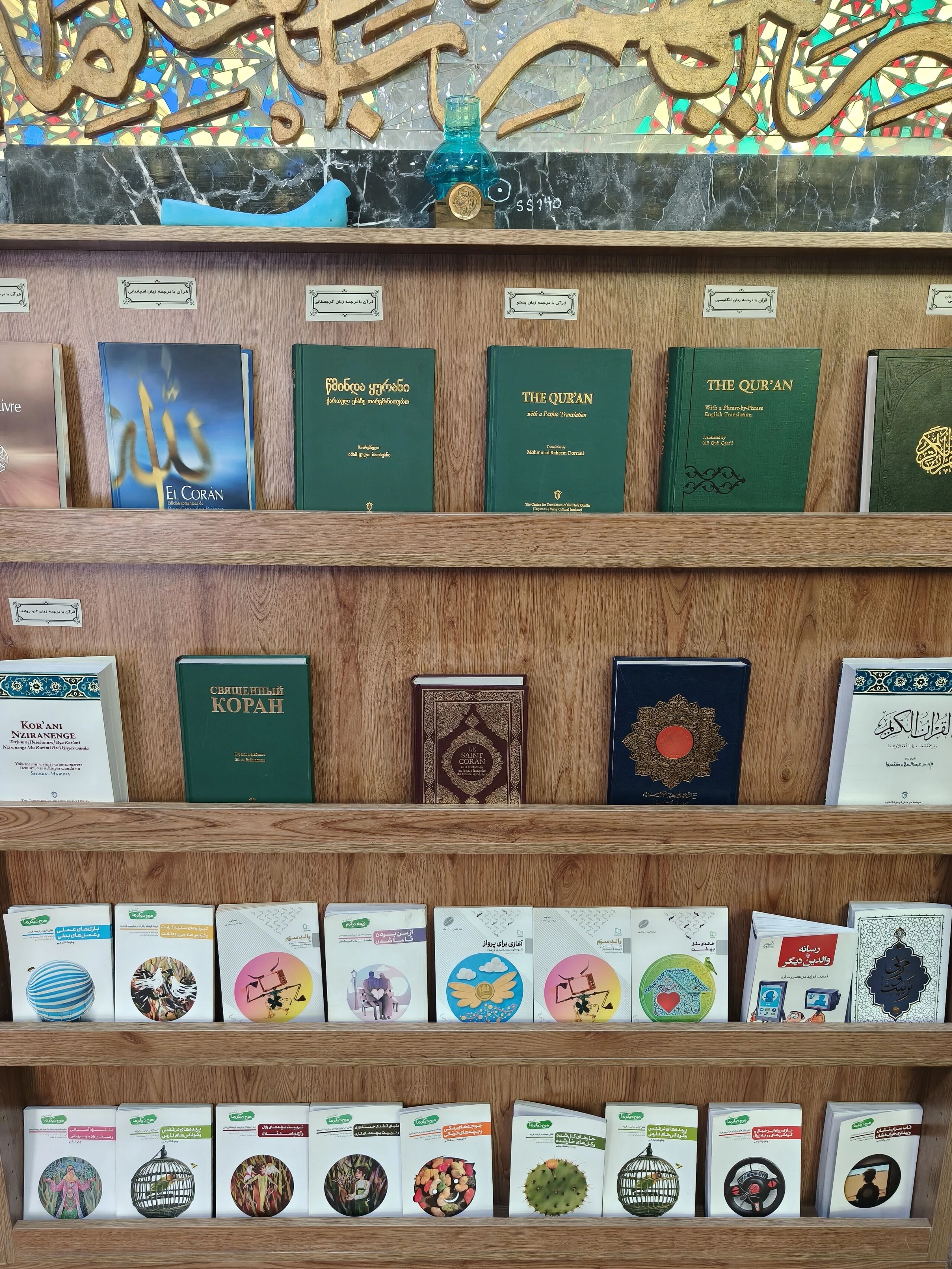
The staff said they were happy to meet me and welcomed me to Iran. To be polite, I told them they were welcome to visit China as well. The staff also asked if China accepts international students from countries like Iran, Iraq, and Afghanistan, and which university majors in China are the best.
I answered based on what I had seen in China. It seems like many foreigners come here to study medicine, and I actually know international students from Pakistan, Turkey, and Yemen who are studying in Lanzhou and Chengdu.
After leaving the mosque, I returned to the bazaar. I looked up and saw the sunlight hitting the dome at an angle, perfectly revealing the shape of a crescent moon.
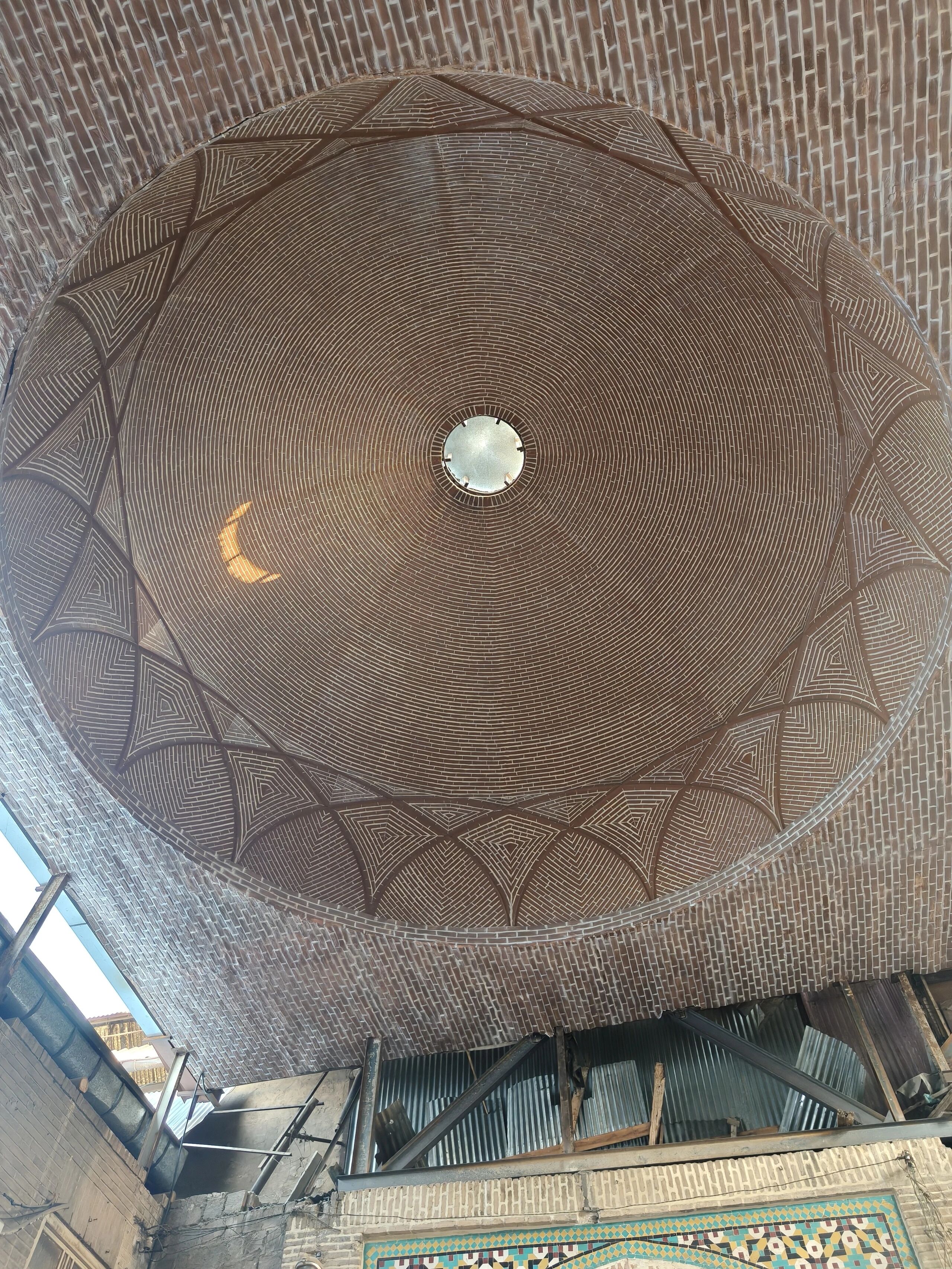 Collapse Read »
Summary: This Iran Muslim travel guide walks through the Tehran bazaar near Golestan Palace, with potato and beef wraps, crowded lanes, Imam Khomeini Mosque, its wudu courtyard, clock tower, mirror-covered library, Qur'an translations, friendly staff, and a crescent-shaped light moment in the bazaar dome.
There are many bazaars near Golestan Palace. Friday is a public holiday in Iran, and only one mosque in Tehran stays open while the rest are closed. Only a few shops inside the bazaar are open.
The market feels like a ghost town on Friday, but as soon as Friday passes, it quickly becomes lively, crowded with pedestrians and porters shoulder to shoulder.
Bazaars almost always have domes, and you can enjoy their orderly beauty just by looking up. (Photo 1)
After walking for a while, my guide told me he knew a good place that mainly sells wraps with potato, chicken, or beef fillings. I like potatoes, so of course I chose the potato one. The guide chose the beef one. The wrap included mashed boiled eggs, and the potatoes were very tasty.
The shop is very narrow and crowded. (Photo 5, Photo 6)
Then, I am not sure how we got there, but we walked into a mosque. The area outside was cramped and narrow, and I really did not expect such a large mosque square in the middle.
This is the Imam Khomeini Mosque. The main hall (Photo 7) looks like a larger version of the Id Kah Mosque in Xinjiang, as if they were built from the same blueprint. There is a water basin in the middle of the mosque square with taps along the edge for performing wudu. (Photo 9)
At the other end of the square stand two minarets with a clock tower in between. (Photo 10)
On one side of the square is a library covered in many mirrors that sparkle. (Photo 11, Photo 12) It looks just like the Tomb of the King of Lights in Iraq that I saw online.
The library also holds copies of the Qur'an (Photo 13) in other languages, including French, English, Russian, and Armenian. There were a few staff members inside. When the tour guide told them I was from China, they gave me a tile ornament and a copy of the Qur'an.
The staff said they were happy to meet me and welcomed me to Iran. To be polite, I told them they were welcome to visit China as well. The staff also asked if China accepts international students from countries like Iran, Iraq, and Afghanistan, and which university majors in China are the best.
I answered based on what I had seen in China. It seems like many foreigners come here to study medicine, and I actually know international students from Pakistan, Turkey, and Yemen who are studying in Lanzhou and Chengdu.
After leaving the mosque, I returned to the bazaar. I looked up and saw the sunlight hitting the dome at an angle, perfectly revealing the shape of a crescent moon.
Collapse Read »
Muslim Travel Guide Iran Qom: Fatima Masumeh Shrine Mosque, Mirror Hall and Mazar Courtyard
Reposted from the web
Summary: This Iran Muslim travel guide visits the Fatima Masumeh Shrine Mosque in Qom, with its security check, large courtyards, shoe storage, mirror-covered halls, tiled gates, huge dome, dazzling interior surfaces, and the author's first experience inside a large mazar-style shrine mosque.
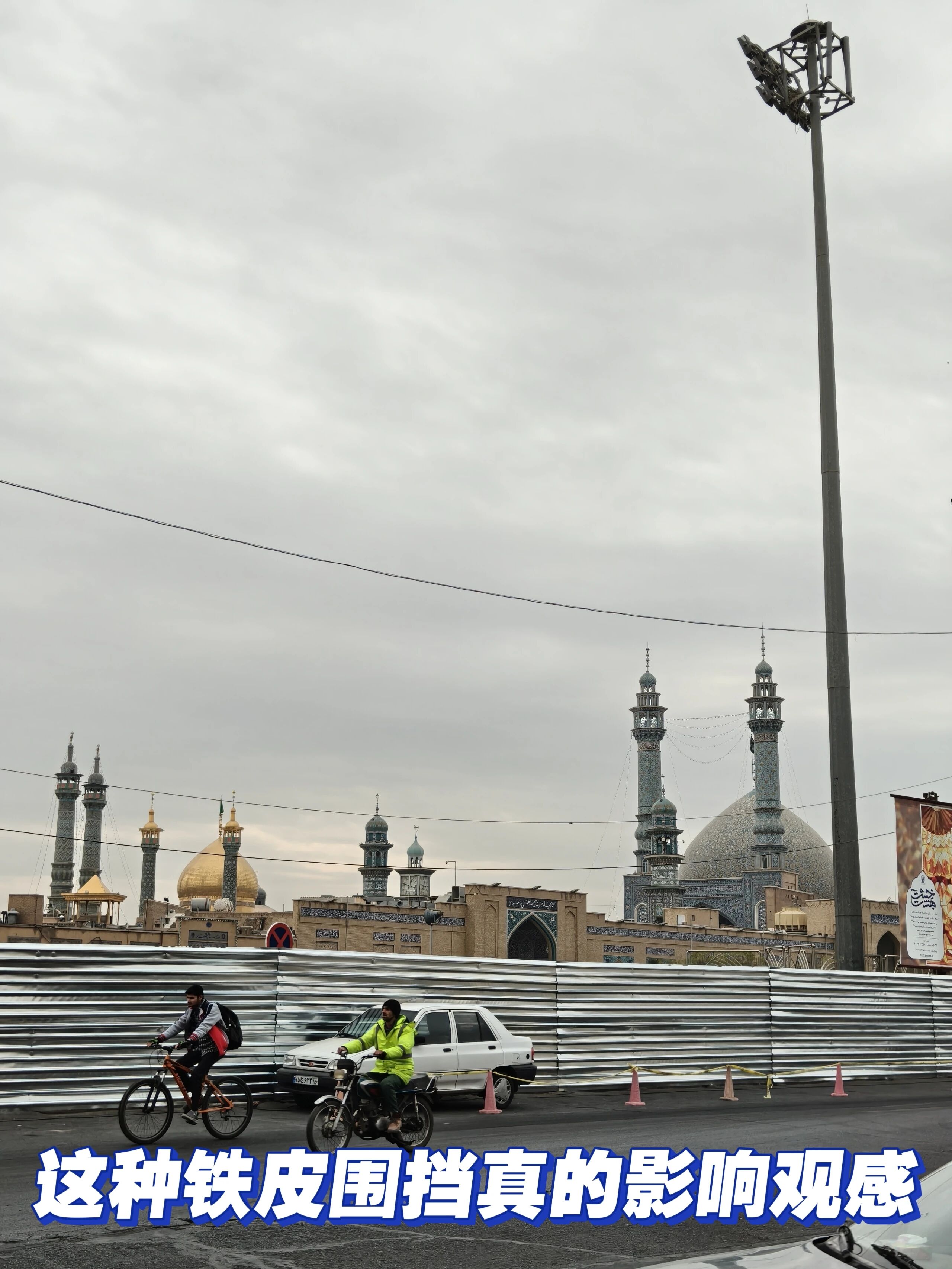
I left Tehran by bus for Qom. The most eye-catching building in this small city is the mazar-style shrine of Fatima Masumeh, who was the daughter of a great imam, not the daughter of the Prophet. There is a security check at the entrance of the shrine, where men and women enter separately to be screened.
I could not take my action camera inside my bag, so I had to leave it at the storage counter by the door. However, I was allowed to bring my phone inside. Couldn't I just take photos and videos with my phone anyway?
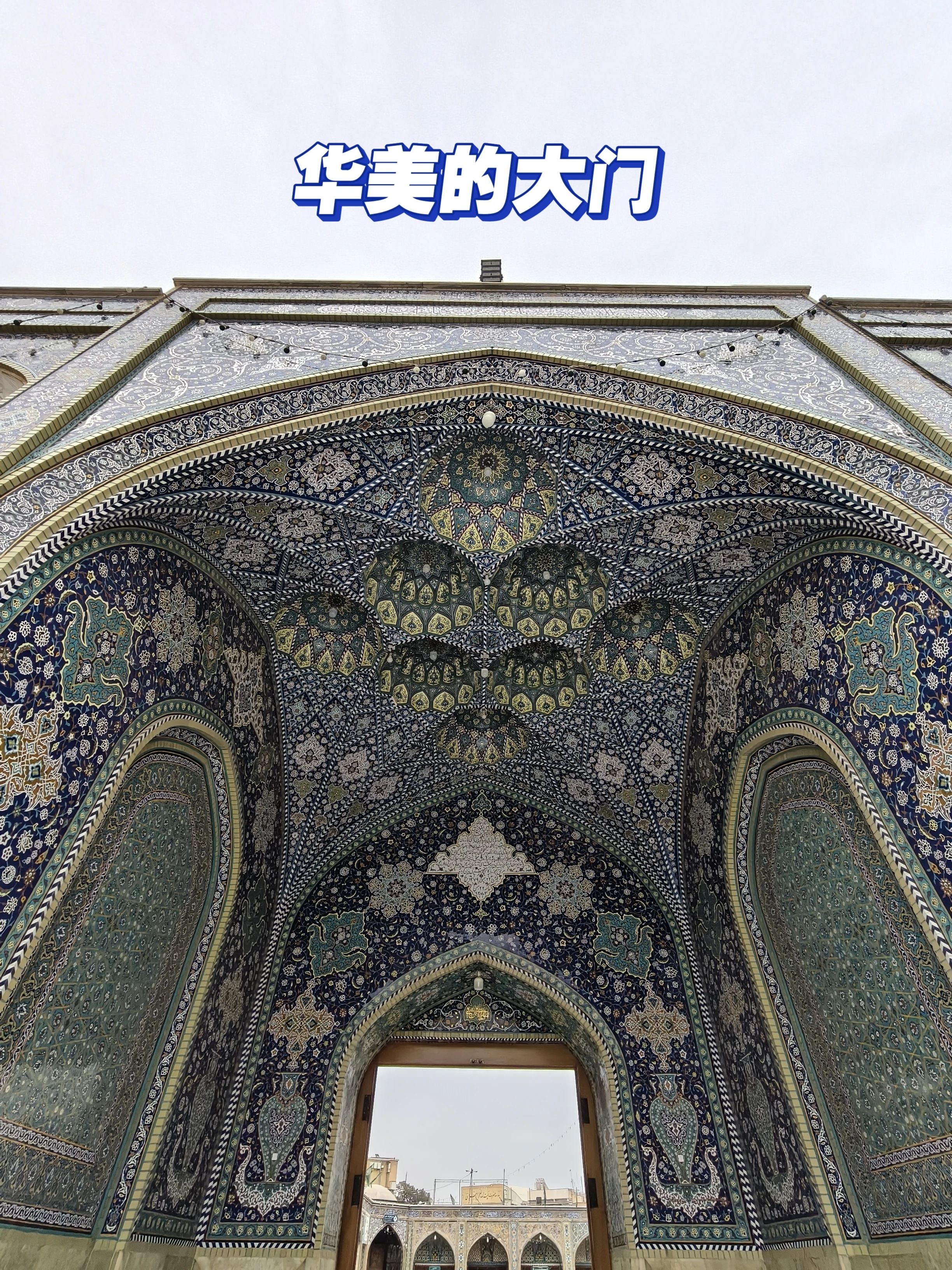
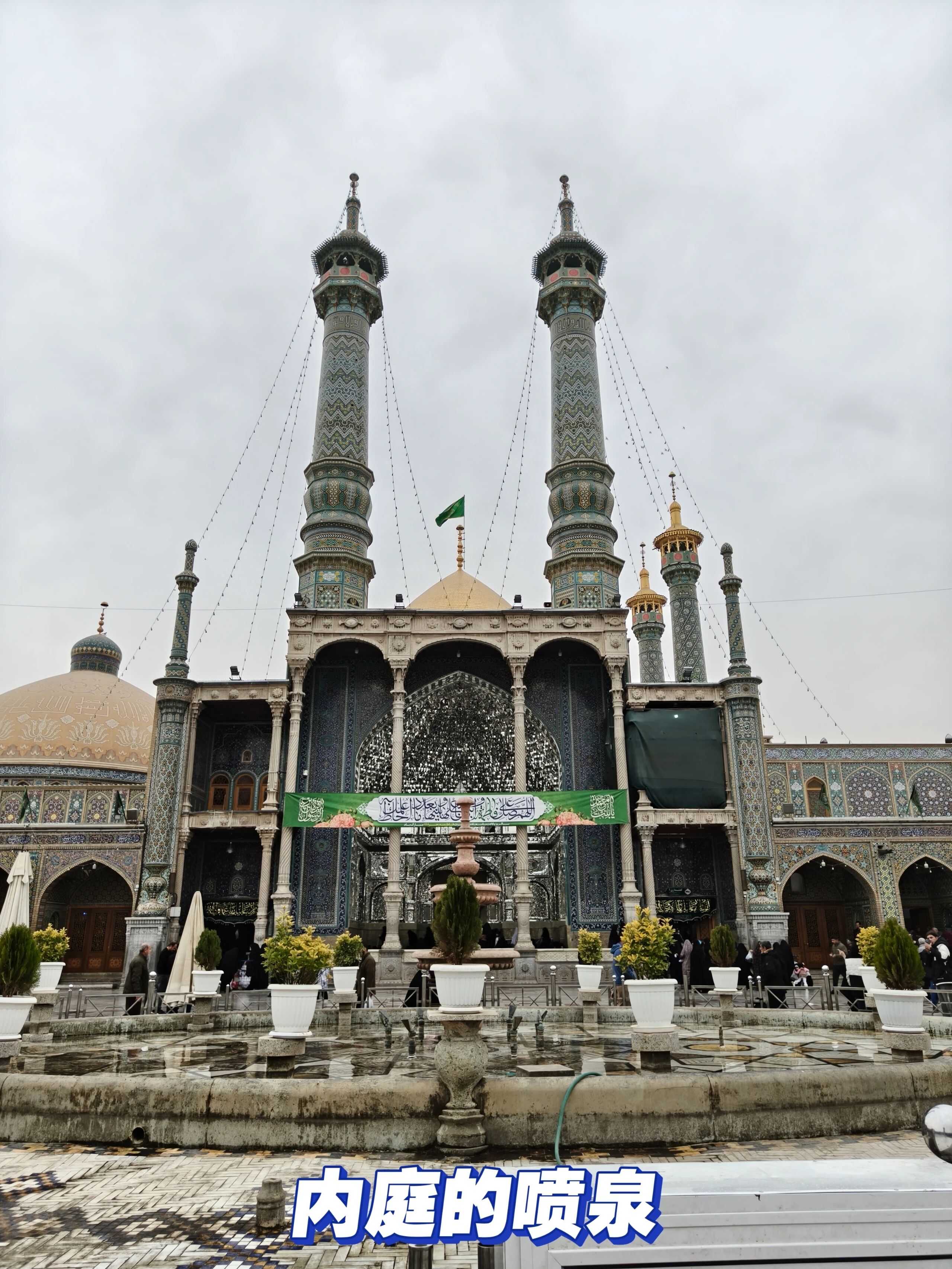
Entering the shrine mosque, you first walk into a large courtyard, and after passing through that, you reach another courtyard. The site covers a large area, and this was the first large-scale shrine mosque I had ever visited.
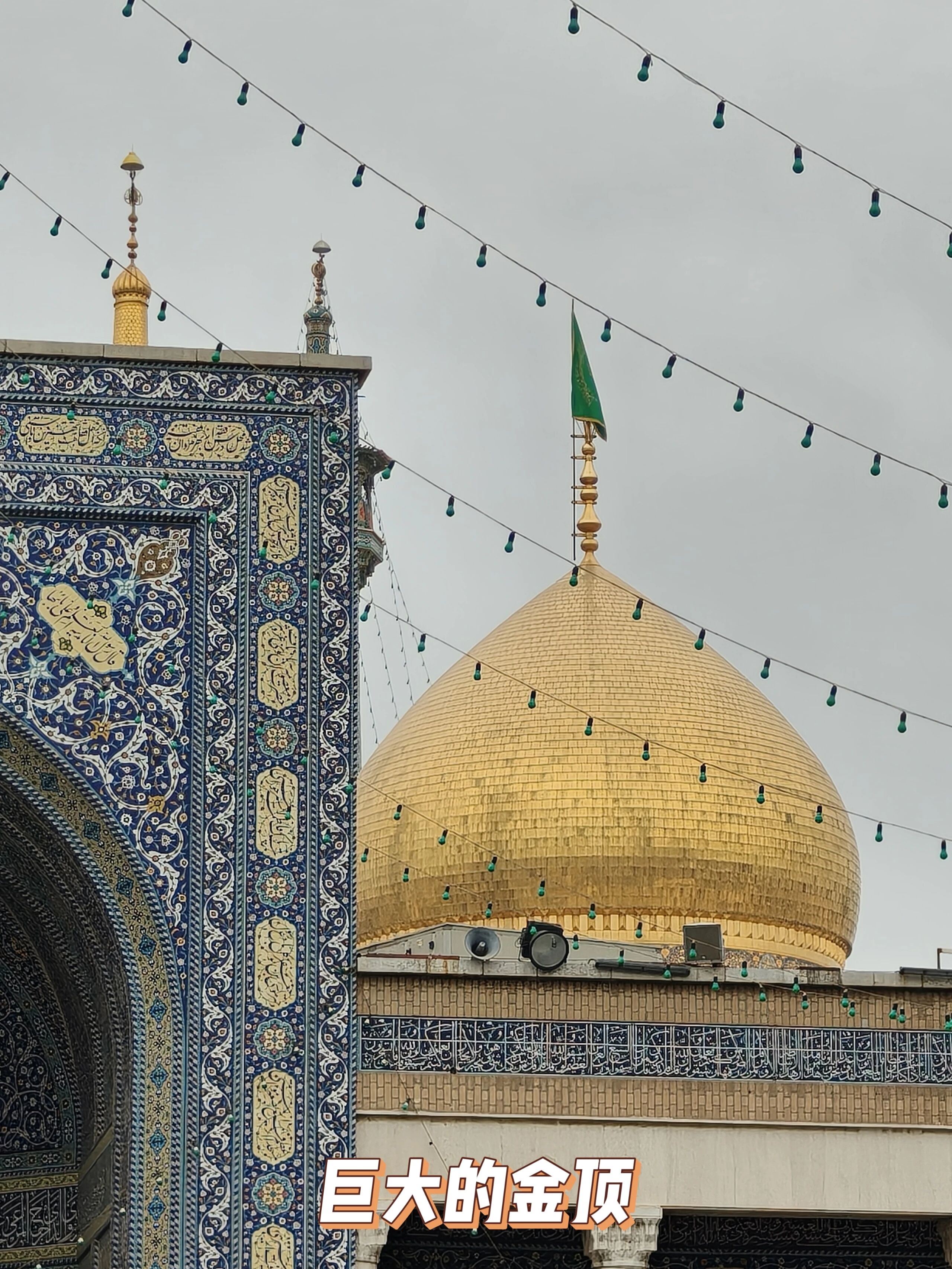
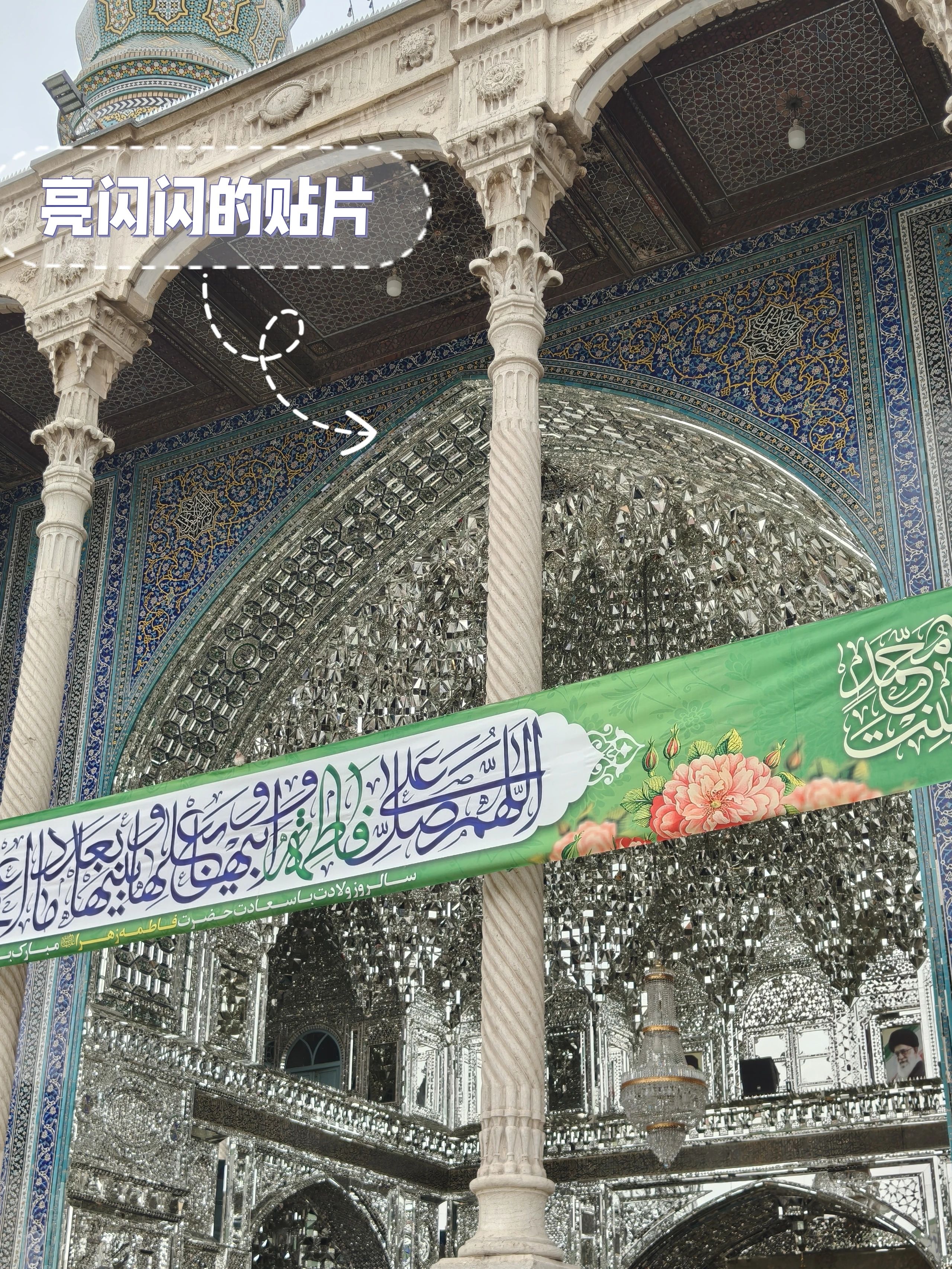
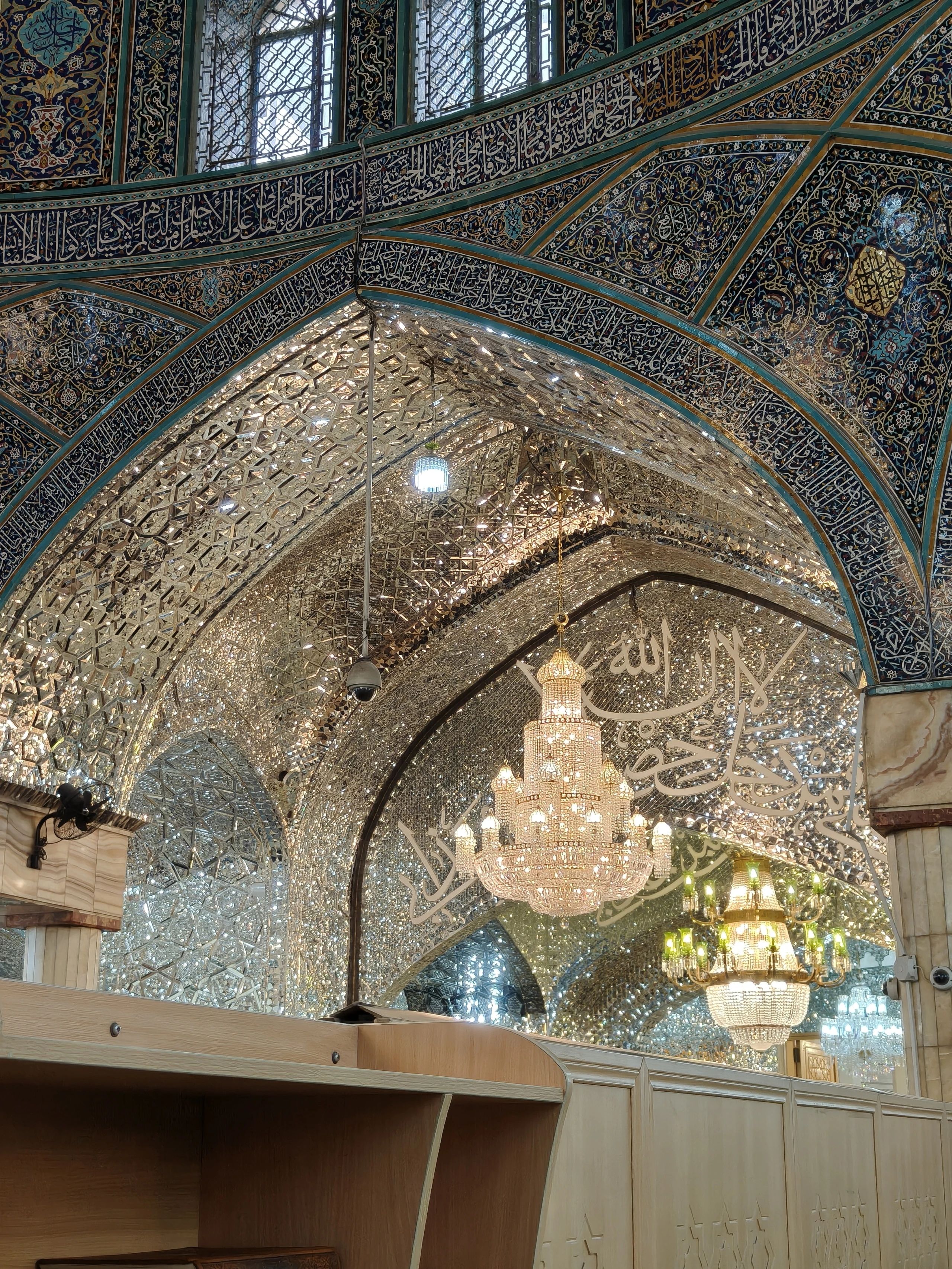
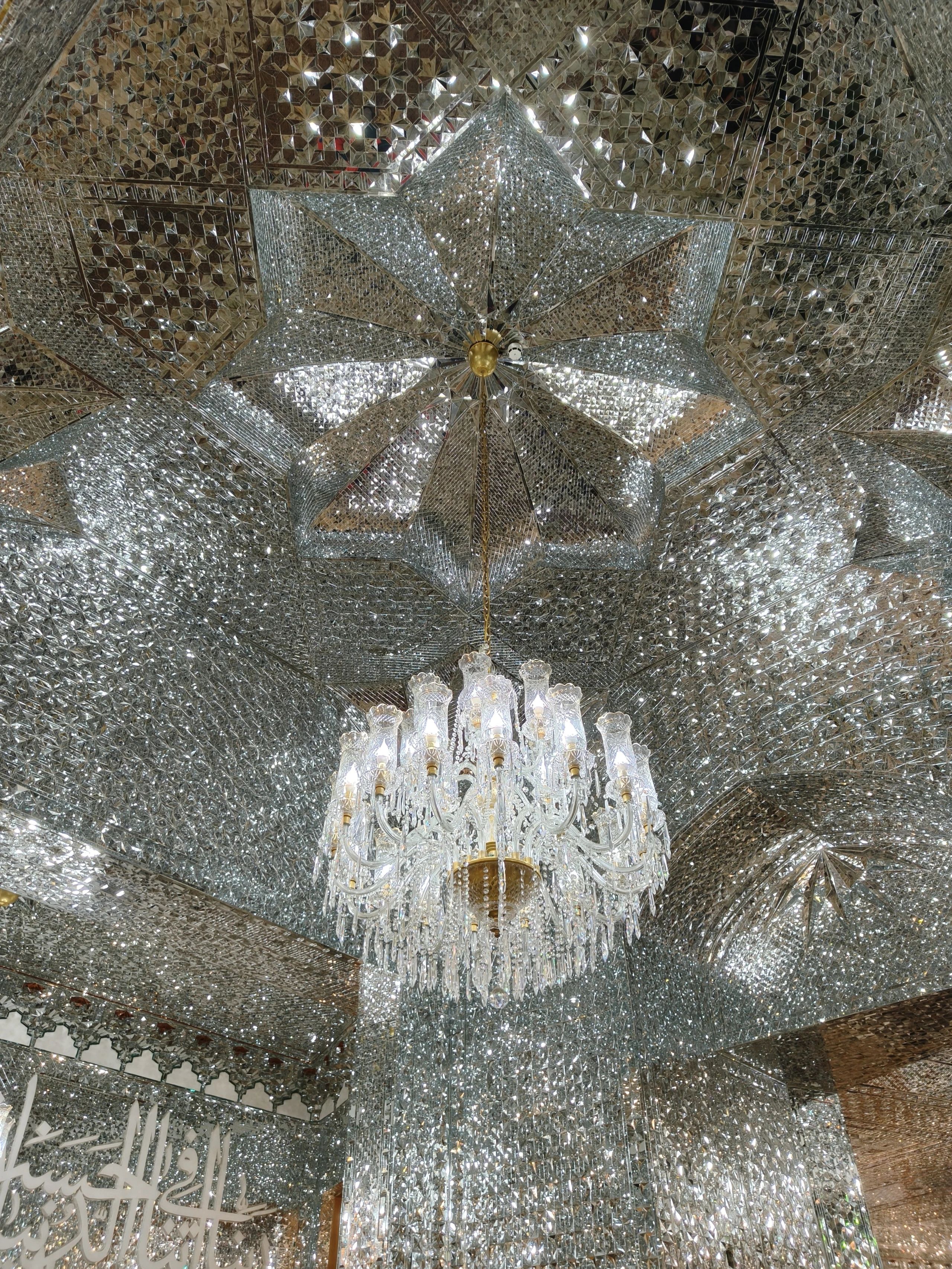
Inside, there are all kinds of shrine elements, including dazzling tiles, intricate gates, a massive dome, and sparkling interior decorations.
To go inside, however, you must first take off your shoes and leave them at the storage area by the door. The staff gives you a tag, and when you come out, you just show the tag to get your shoes back.
Once inside, I realized the indoor area of the building was even larger than the outdoor area. Looking up, you can see a shimmering prism ceiling. Carefully cut pieces of mirror are attached one by one to the ceiling and walls, creating a truly stunning effect.
(Photos 6 to 10)
I noticed that besides Iranians, there were also some Pakistanis wearing robes with rounded hems. The robes were also quite short. I also saw some Arabs wearing headscarves and heard people talking in Arabic.
In the prayer line, I saw a Black man wearing an African silk robe and a tall, brimless prayer cap. I had heard early on that there are African students in Iran, so maybe he is one of them.
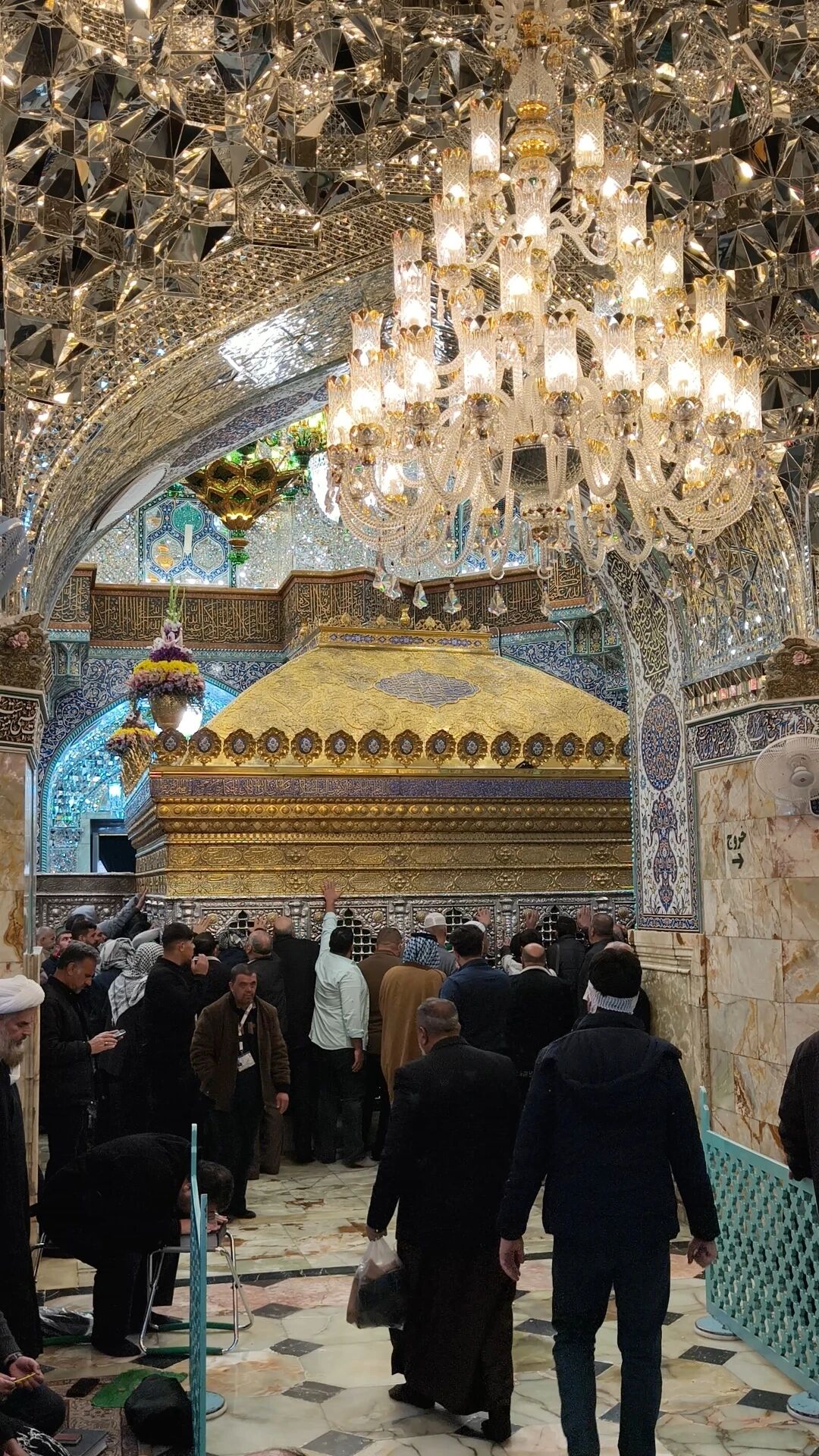
I also noticed many people crowding around the tomb to look inside, so I joined in, but I couldn't see anything because it was very blurry inside (Photo 9).
People say Fatima Masumeh is buried here. She was the sister of the eighth Shia Imam, Ali al-Ridha, and the daughter of the seventh Imam, Musa al-Kadhim.
Further inside is the prayer area. It is truly huge and is likely one of the largest mosques I have visited so far.
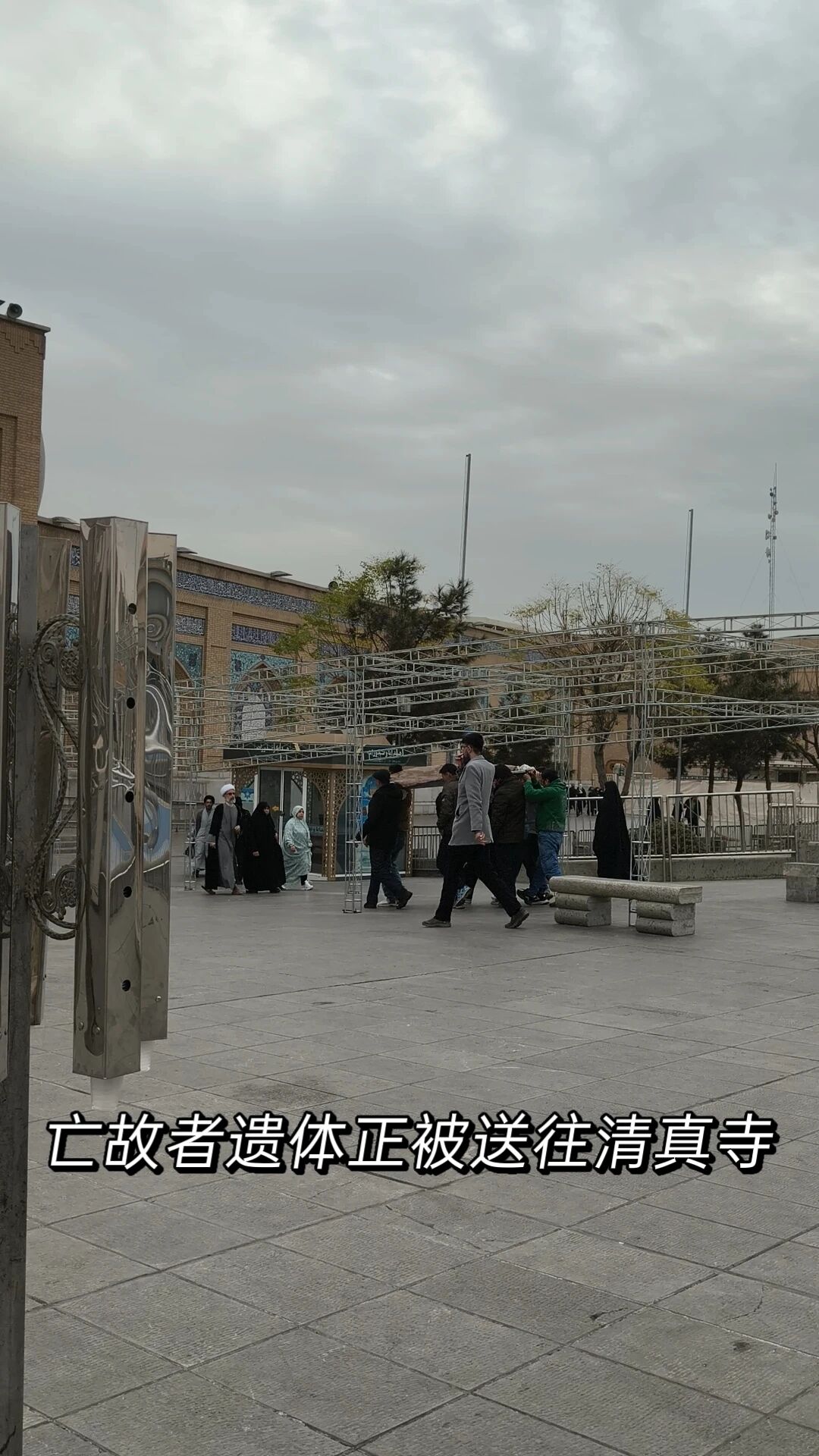
After leaving the courtyard, I saw a group of people carrying a body into the mosque. They will probably hold a funeral prayer for him here soon.
 Collapse Read »
Summary: This Iran Muslim travel guide visits the Fatima Masumeh Shrine Mosque in Qom, with its security check, large courtyards, shoe storage, mirror-covered halls, tiled gates, huge dome, dazzling interior surfaces, and the author's first experience inside a large mazar-style shrine mosque.
I left Tehran by bus for Qom. The most eye-catching building in this small city is the mazar-style shrine of Fatima Masumeh, who was the daughter of a great imam, not the daughter of the Prophet. There is a security check at the entrance of the shrine, where men and women enter separately to be screened.
I could not take my action camera inside my bag, so I had to leave it at the storage counter by the door. However, I was allowed to bring my phone inside. Couldn't I just take photos and videos with my phone anyway?
Entering the shrine mosque, you first walk into a large courtyard, and after passing through that, you reach another courtyard. The site covers a large area, and this was the first large-scale shrine mosque I had ever visited.
Inside, there are all kinds of shrine elements, including dazzling tiles, intricate gates, a massive dome, and sparkling interior decorations.
To go inside, however, you must first take off your shoes and leave them at the storage area by the door. The staff gives you a tag, and when you come out, you just show the tag to get your shoes back.
Once inside, I realized the indoor area of the building was even larger than the outdoor area. Looking up, you can see a shimmering prism ceiling. Carefully cut pieces of mirror are attached one by one to the ceiling and walls, creating a truly stunning effect.
(Photos 6 to 10)
I noticed that besides Iranians, there were also some Pakistanis wearing robes with rounded hems. The robes were also quite short. I also saw some Arabs wearing headscarves and heard people talking in Arabic.
In the prayer line, I saw a Black man wearing an African silk robe and a tall, brimless prayer cap. I had heard early on that there are African students in Iran, so maybe he is one of them.
I also noticed many people crowding around the tomb to look inside, so I joined in, but I couldn't see anything because it was very blurry inside (Photo 9).
People say Fatima Masumeh is buried here. She was the sister of the eighth Shia Imam, Ali al-Ridha, and the daughter of the seventh Imam, Musa al-Kadhim.
Further inside is the prayer area. It is truly huge and is likely one of the largest mosques I have visited so far.
After leaving the courtyard, I saw a group of people carrying a body into the mosque. They will probably hold a funeral prayer for him here soon.
Collapse Read »
Muslim Travel Guide Iran Tehran: Vali-e-Asr Mosque, Hidden Modern Mosque Architecture and City Visit
Reposted from the web
Summary: This Iran Muslim travel guide follows a visit to Tehran's Vali-e-Asr Mosque, a modern mosque first noticed through an architecture article, with its hidden entrance, quiet indoor spaces, curved walls, simple prayer area, and a design that feels very different from classic mosque architecture.
Years ago, I read an article on the WeChat account Youth Architecture titled Can Religious Architecture Break Through Traditional Forms? | Modern Mosque Architecture (the article can still be searched online). It mentioned several mosques that were different from traditional buildings.
There were some in Singapore, some in Iran, and one in China. I went to Singapore a while ago, but did not have enough time to visit the mosque mentioned in that article. After landing in Iran, I remembered the article and searched for it, finding that the modern mosque in Iran was in the capital, Tehran.
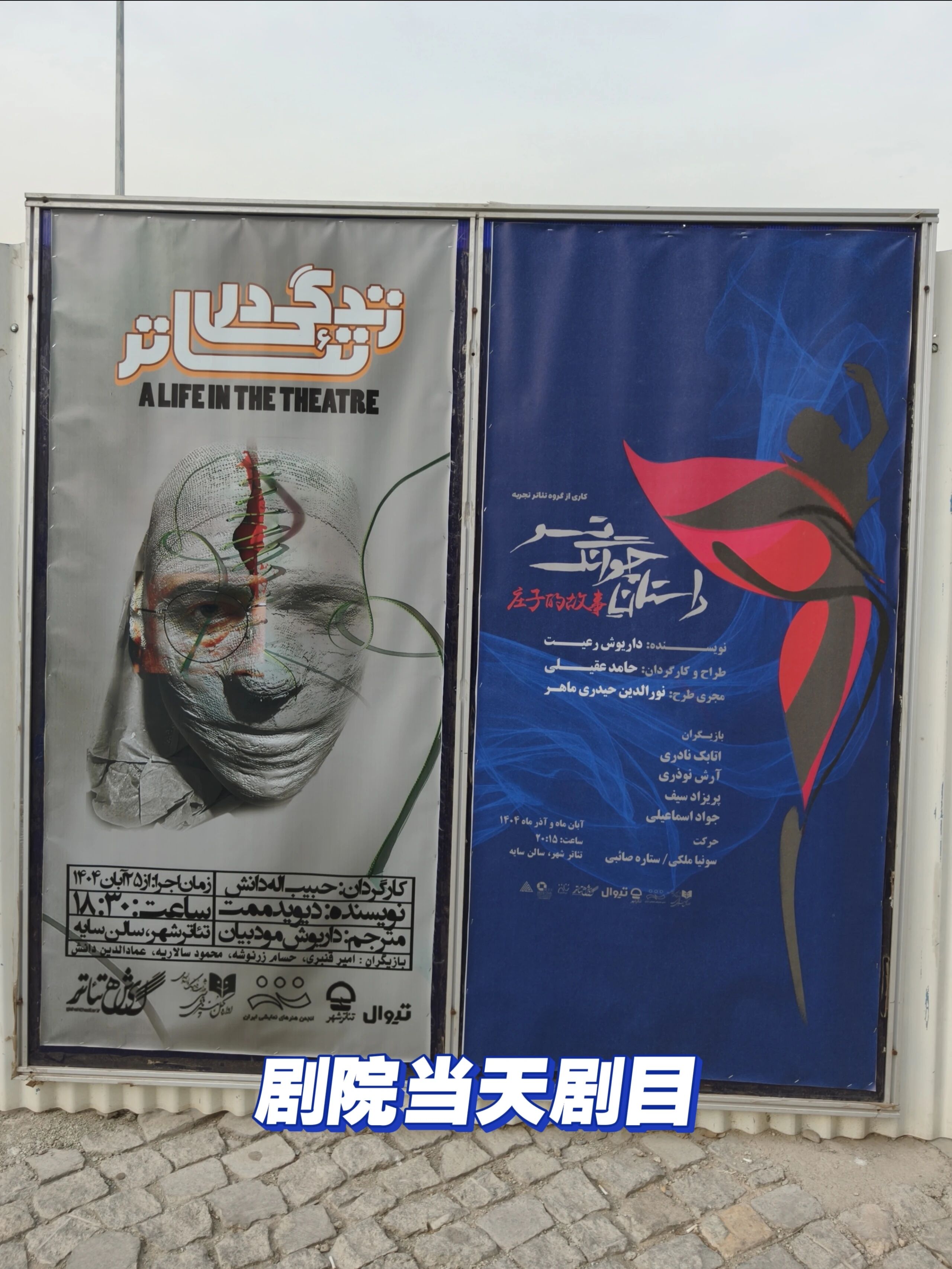
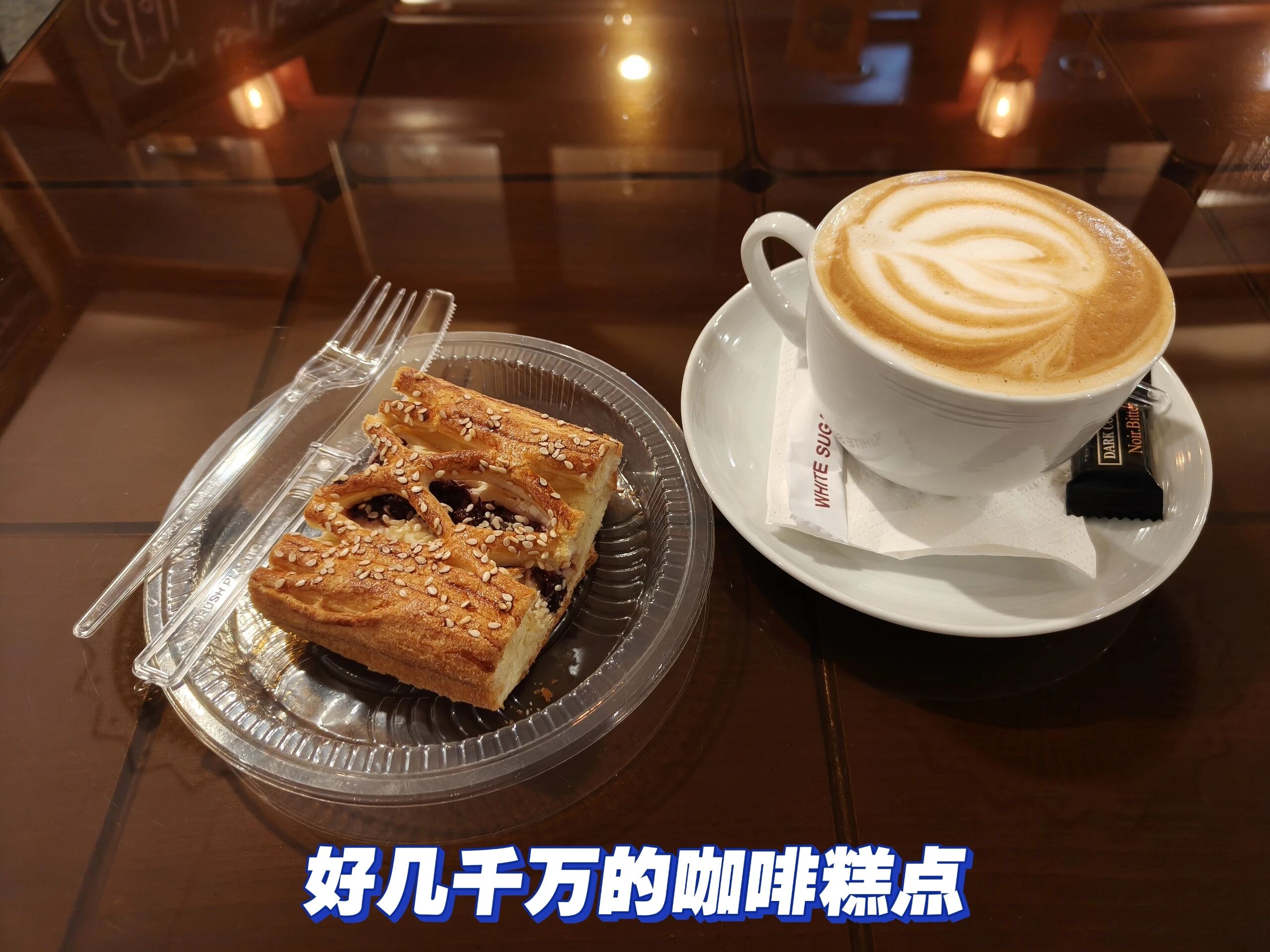
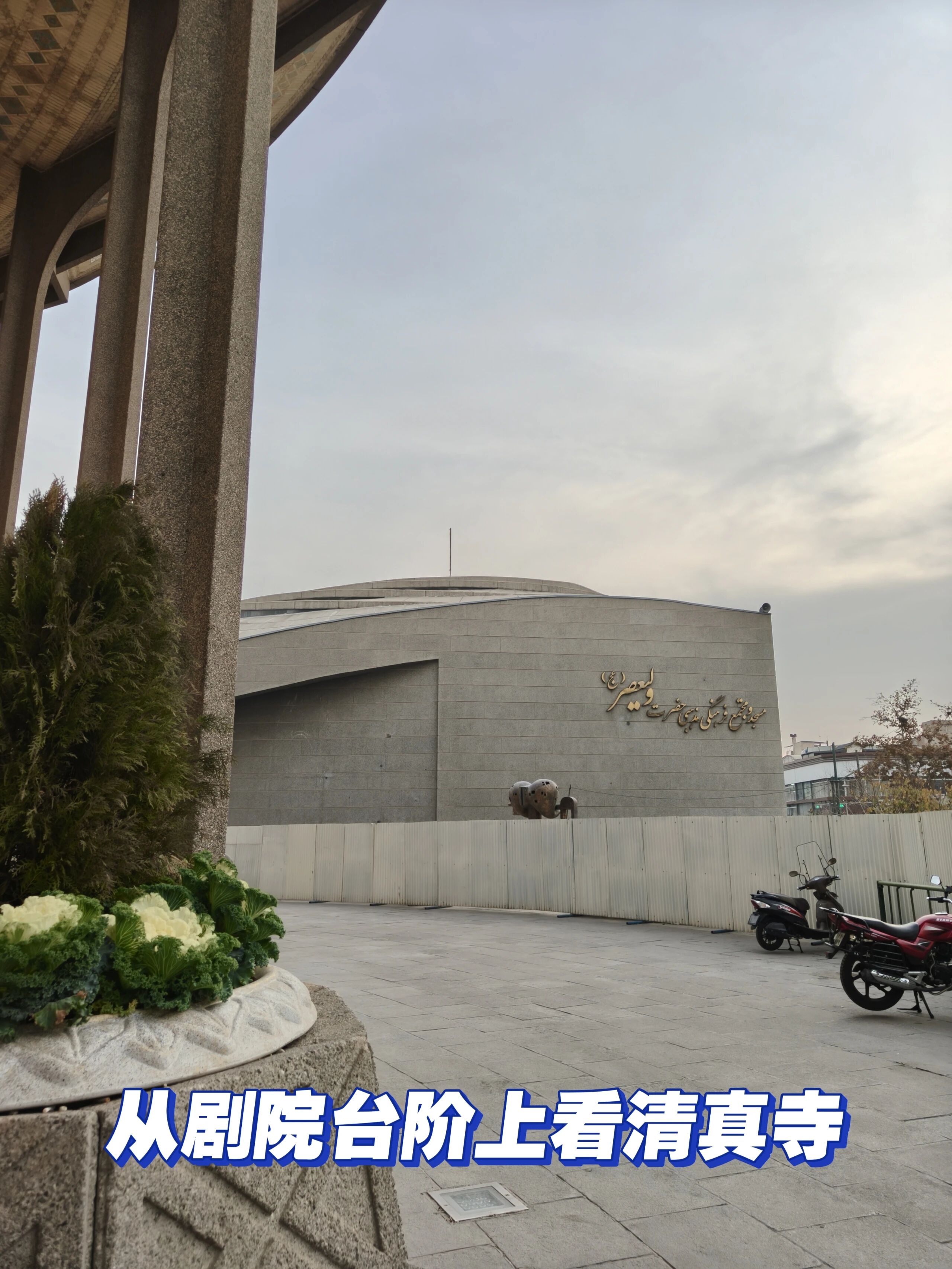
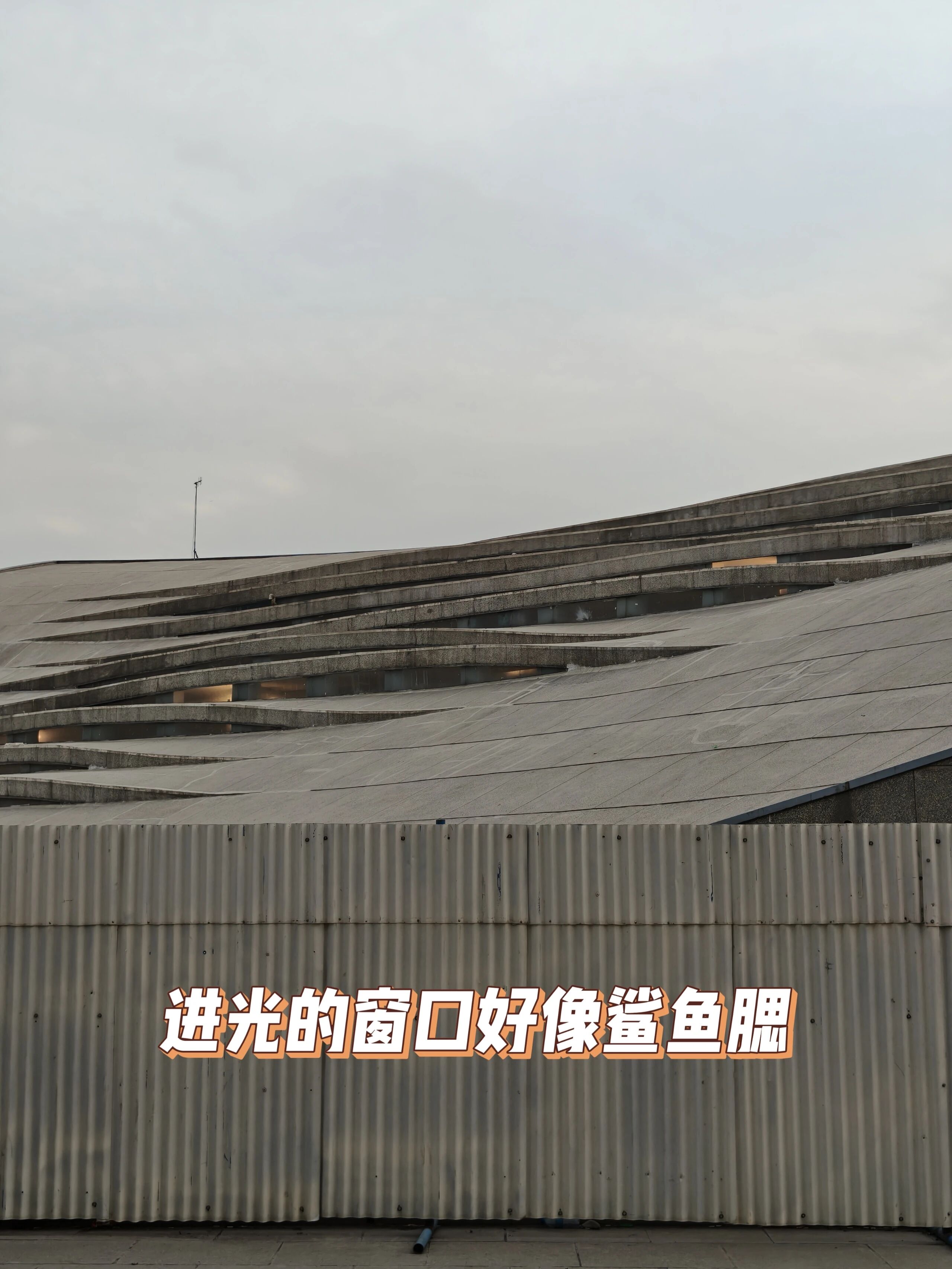
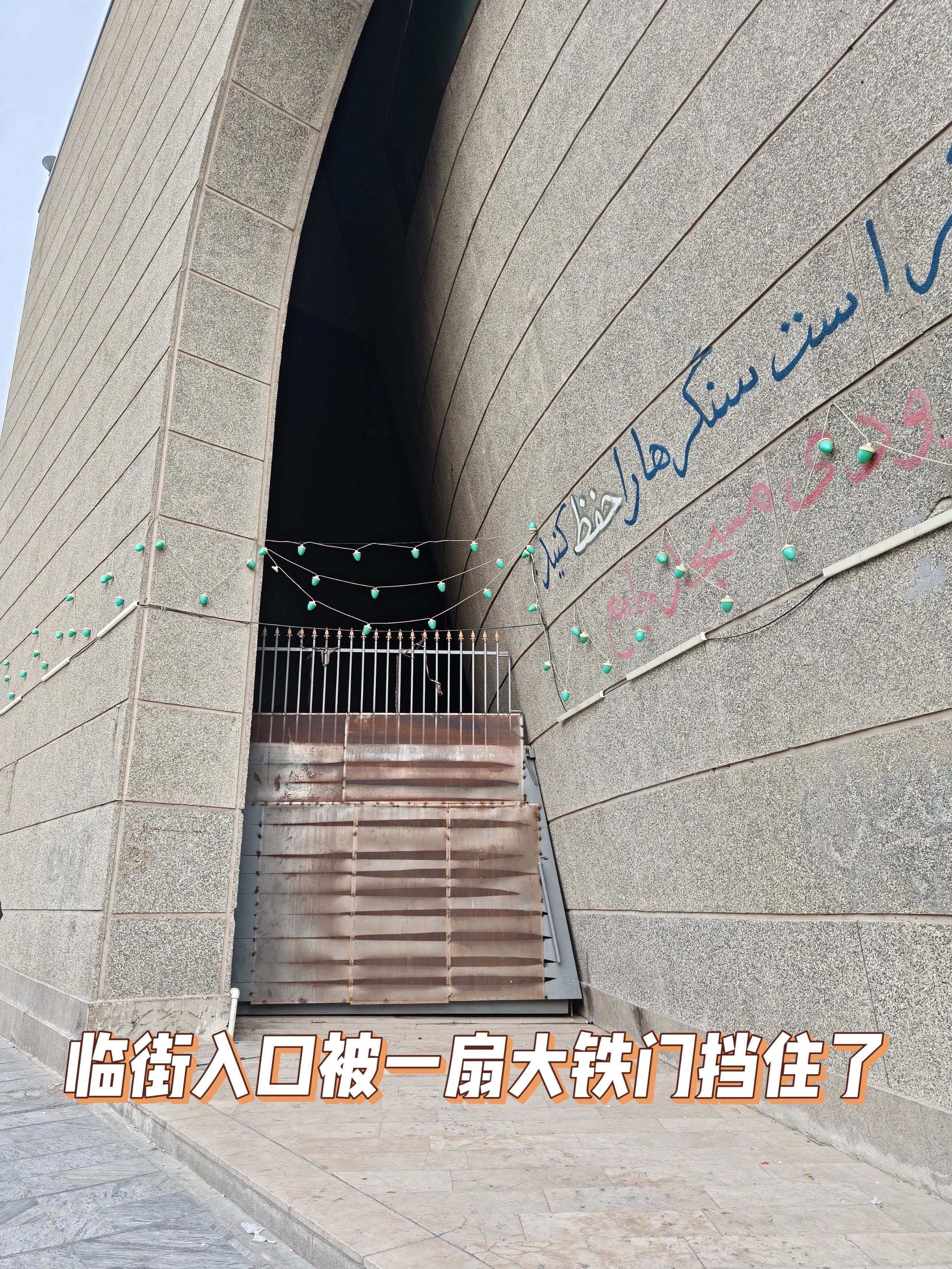
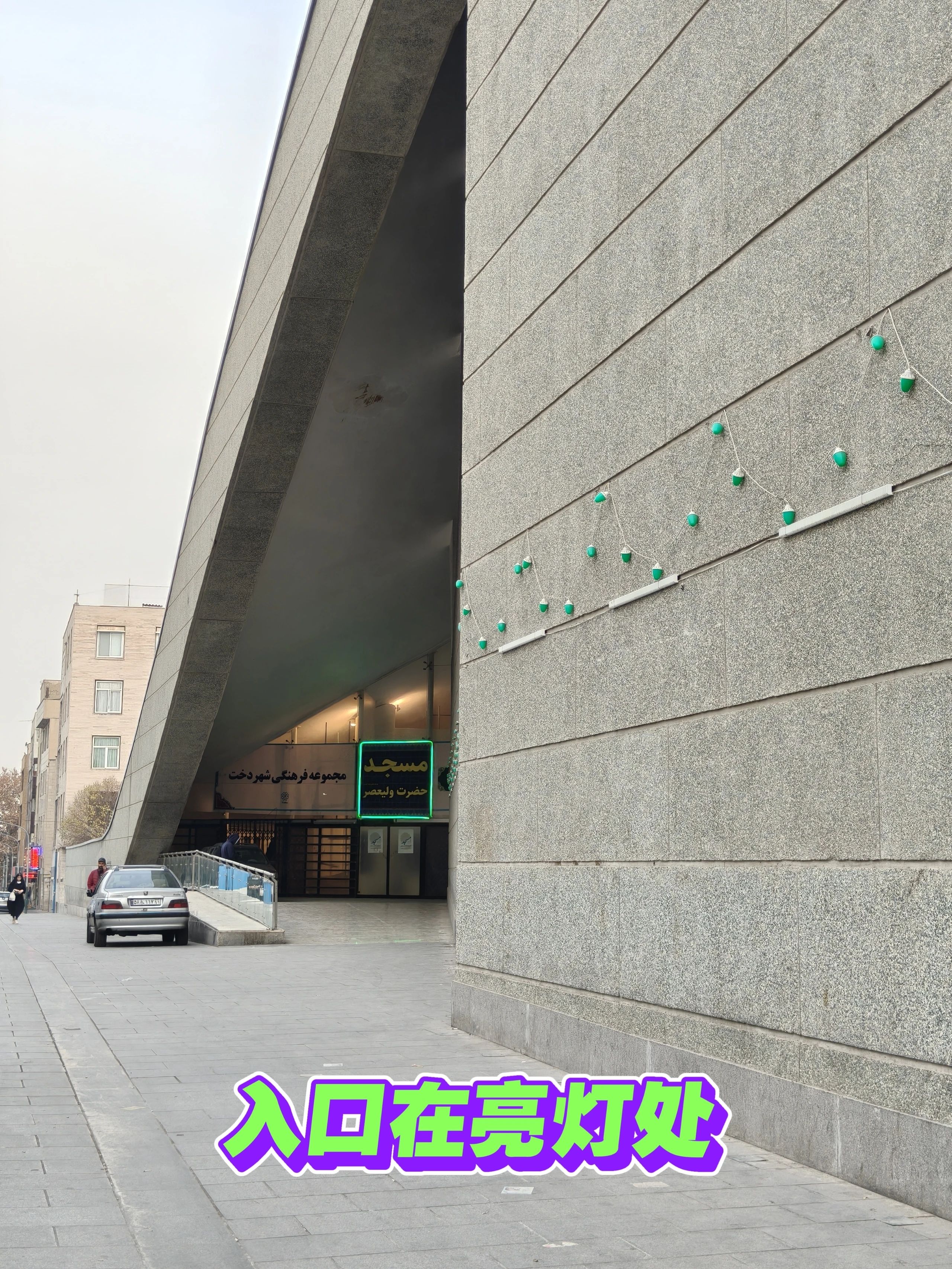
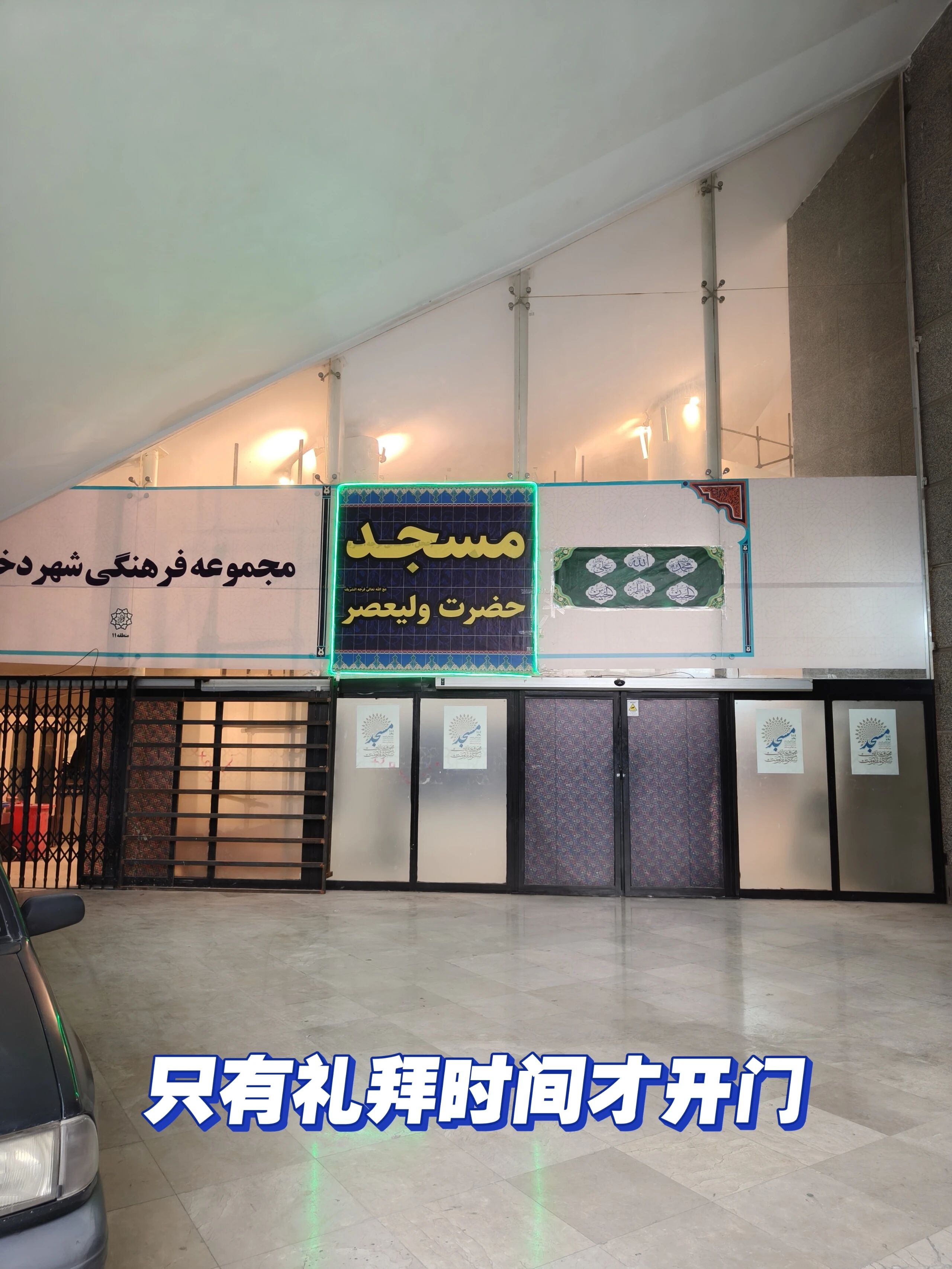
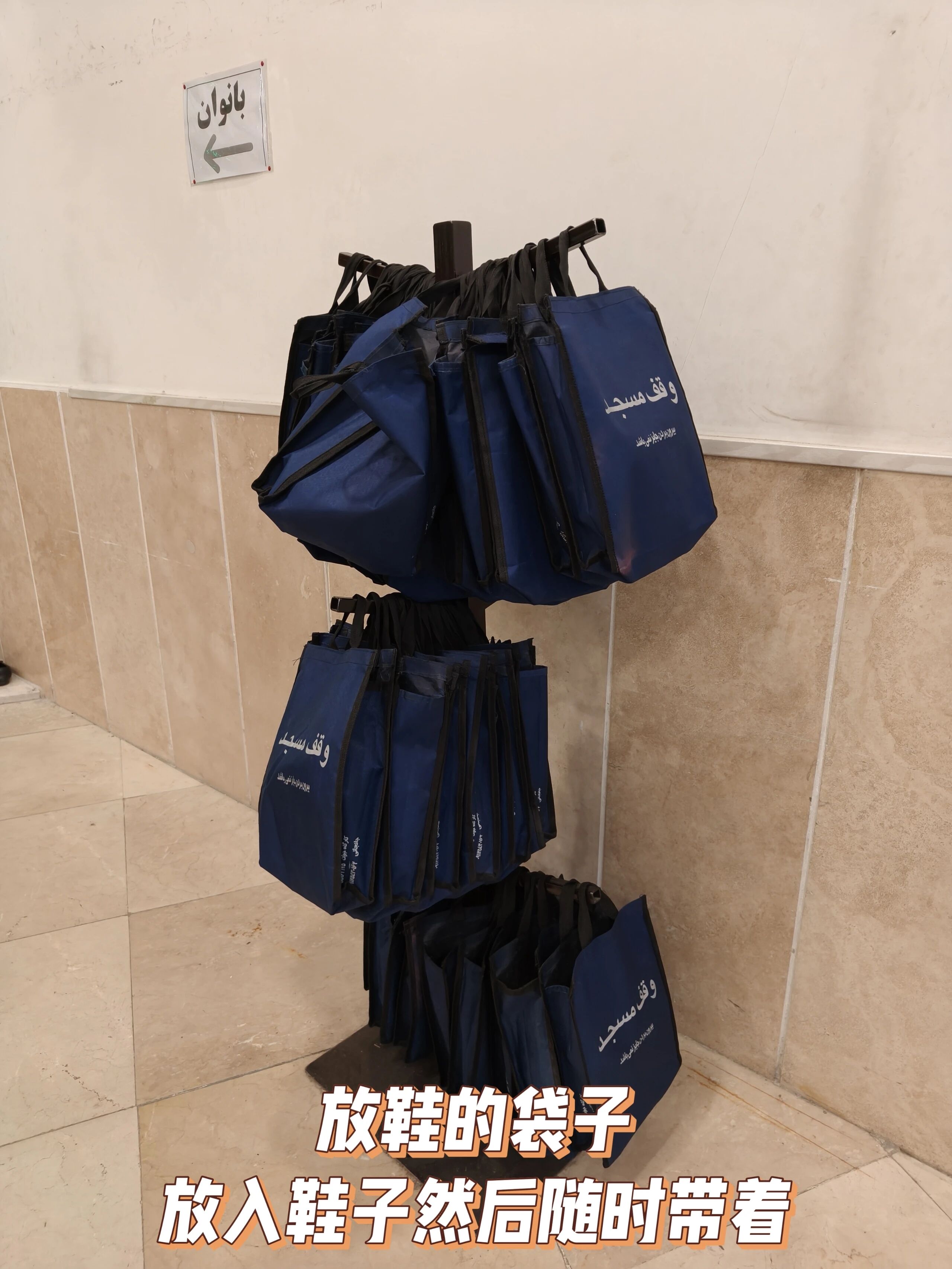
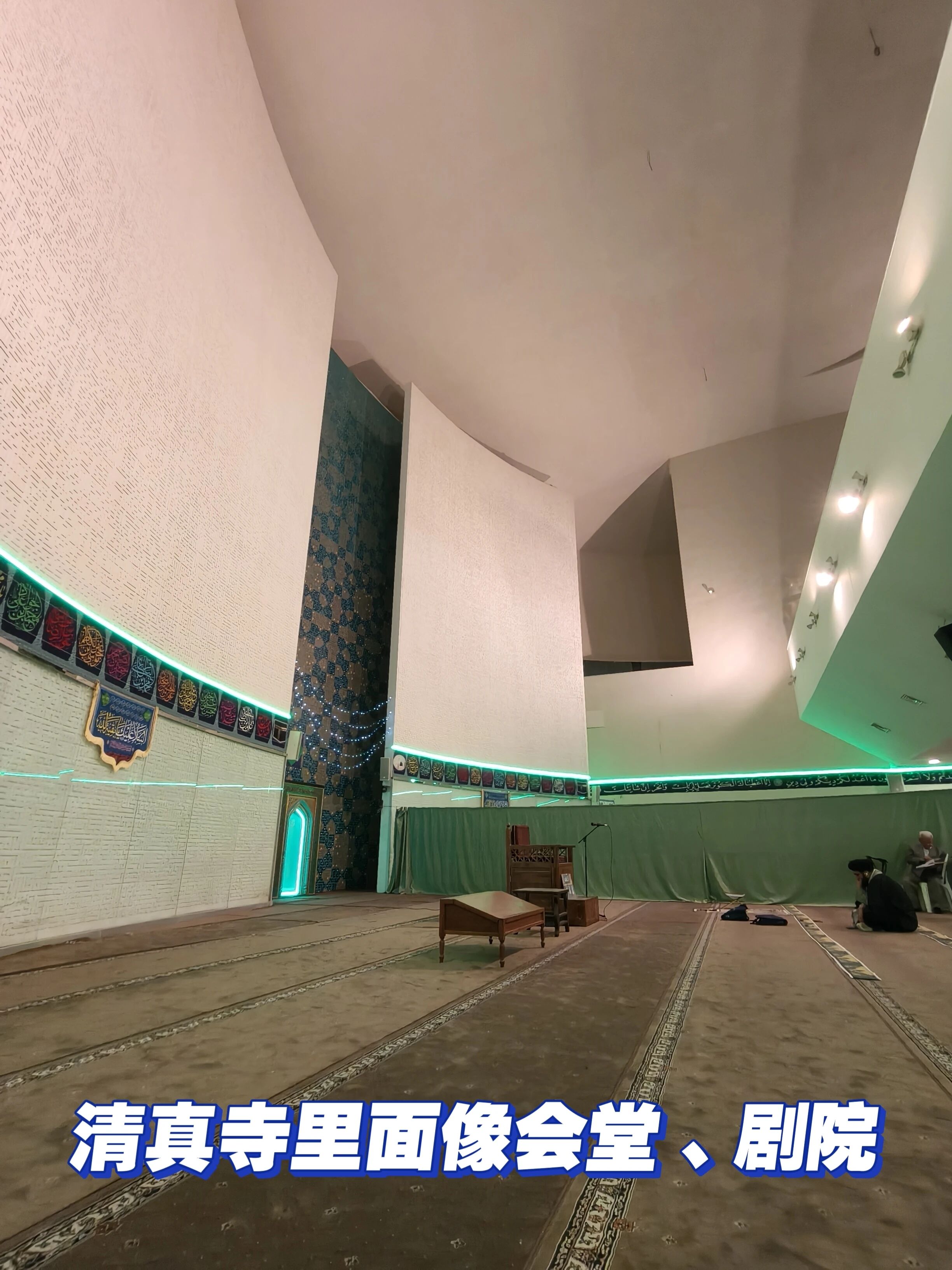
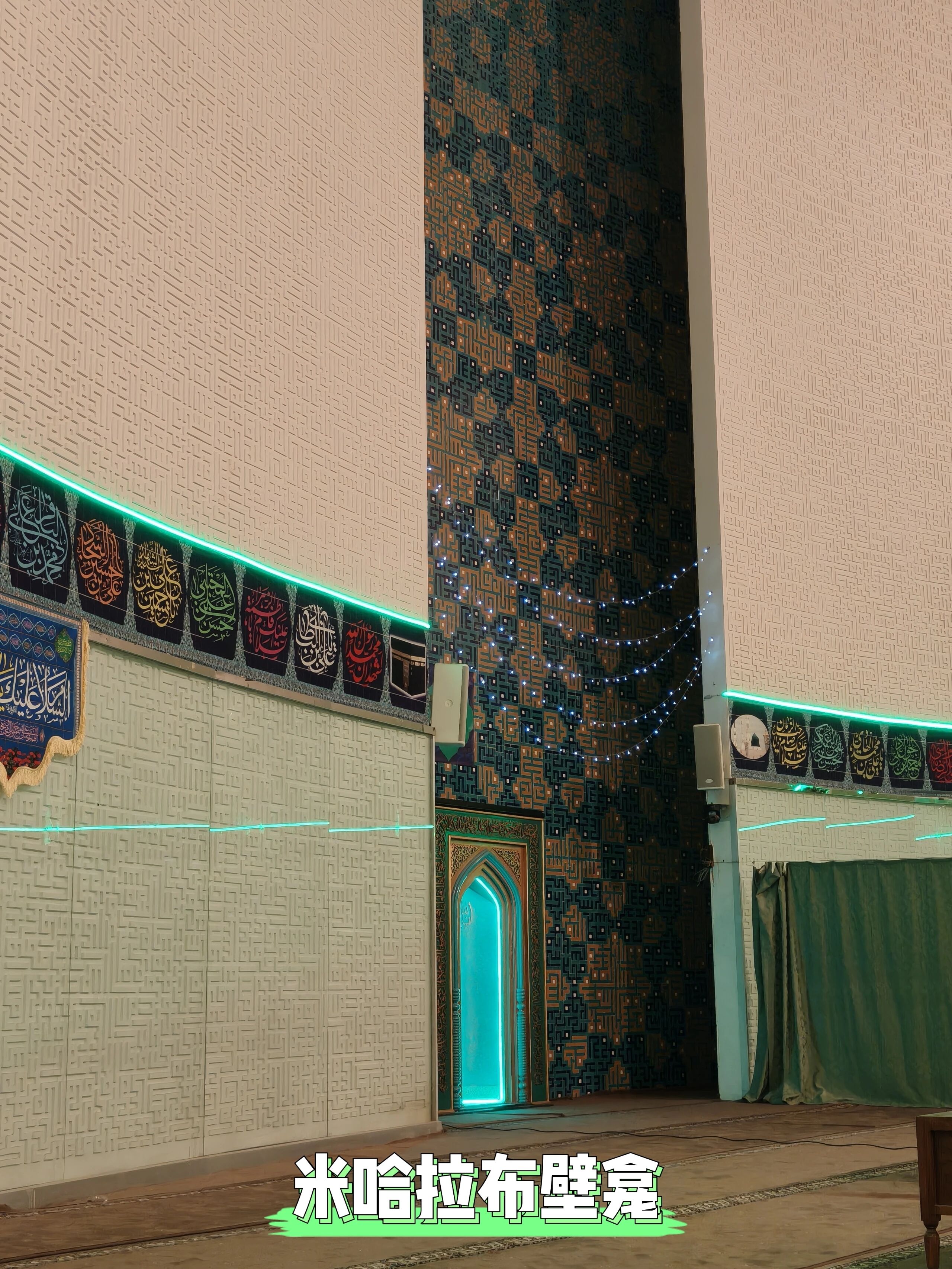
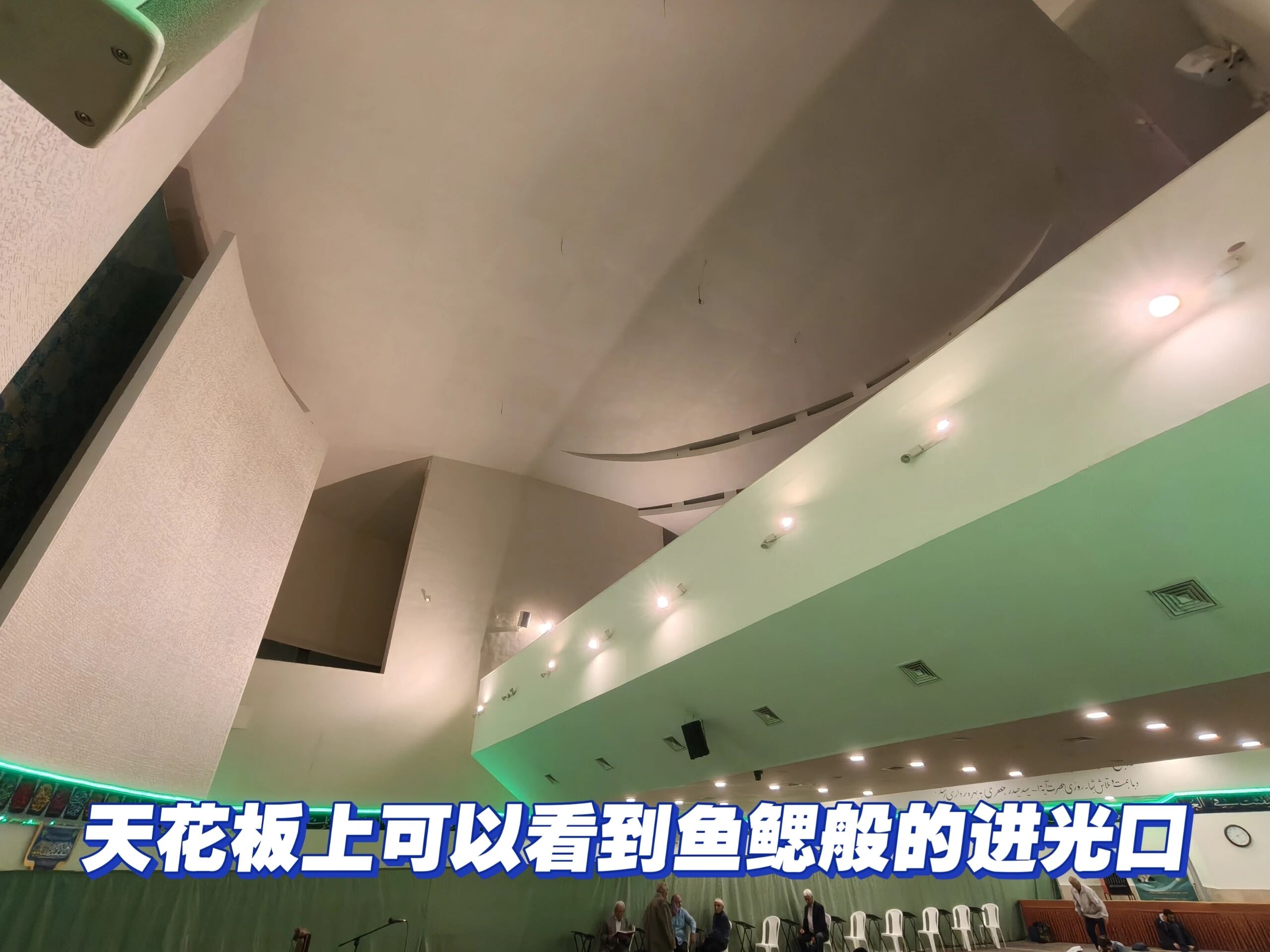
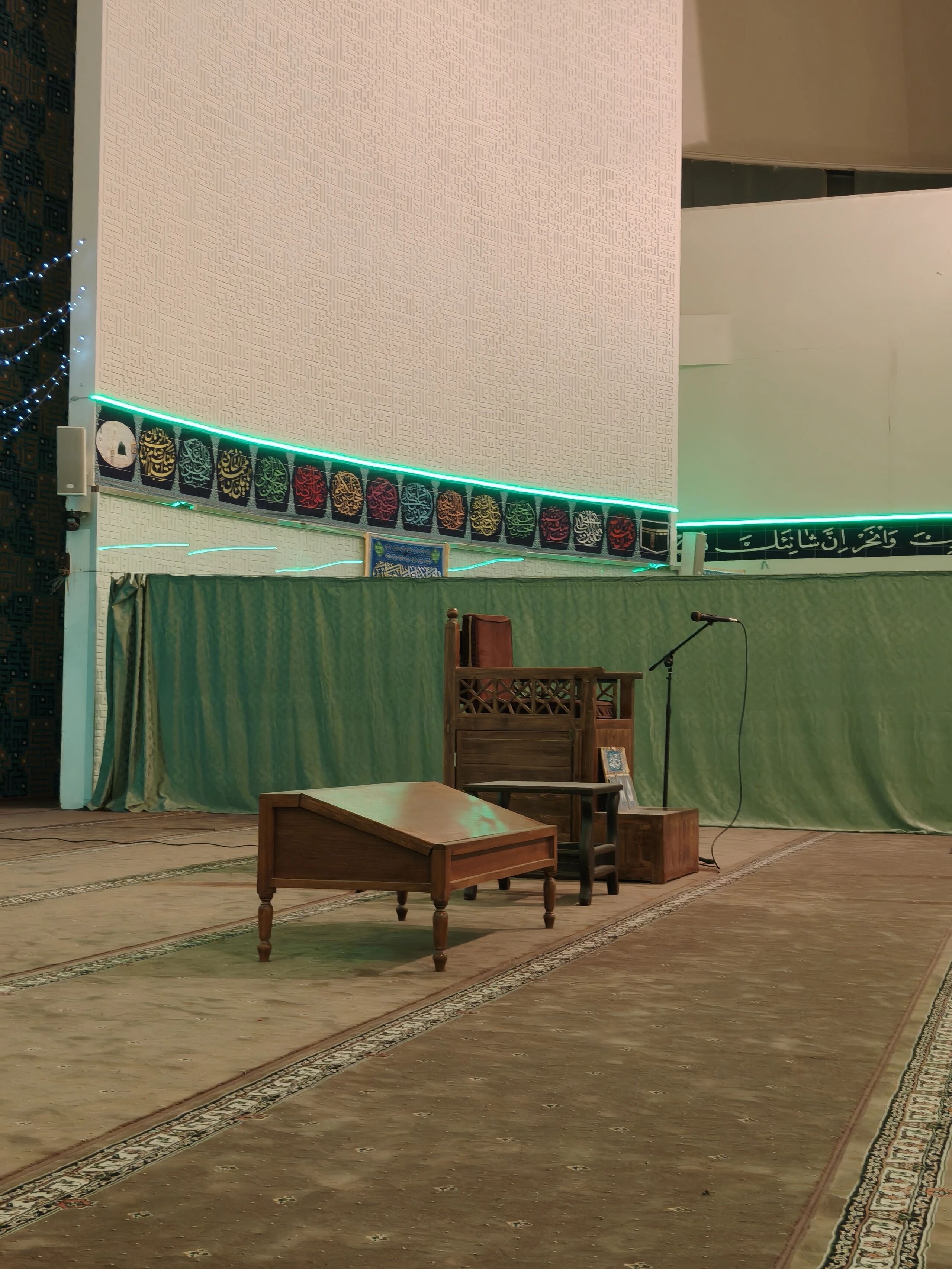
I was in Tehran at the time. So, I found some time and specifically took a taxi there.
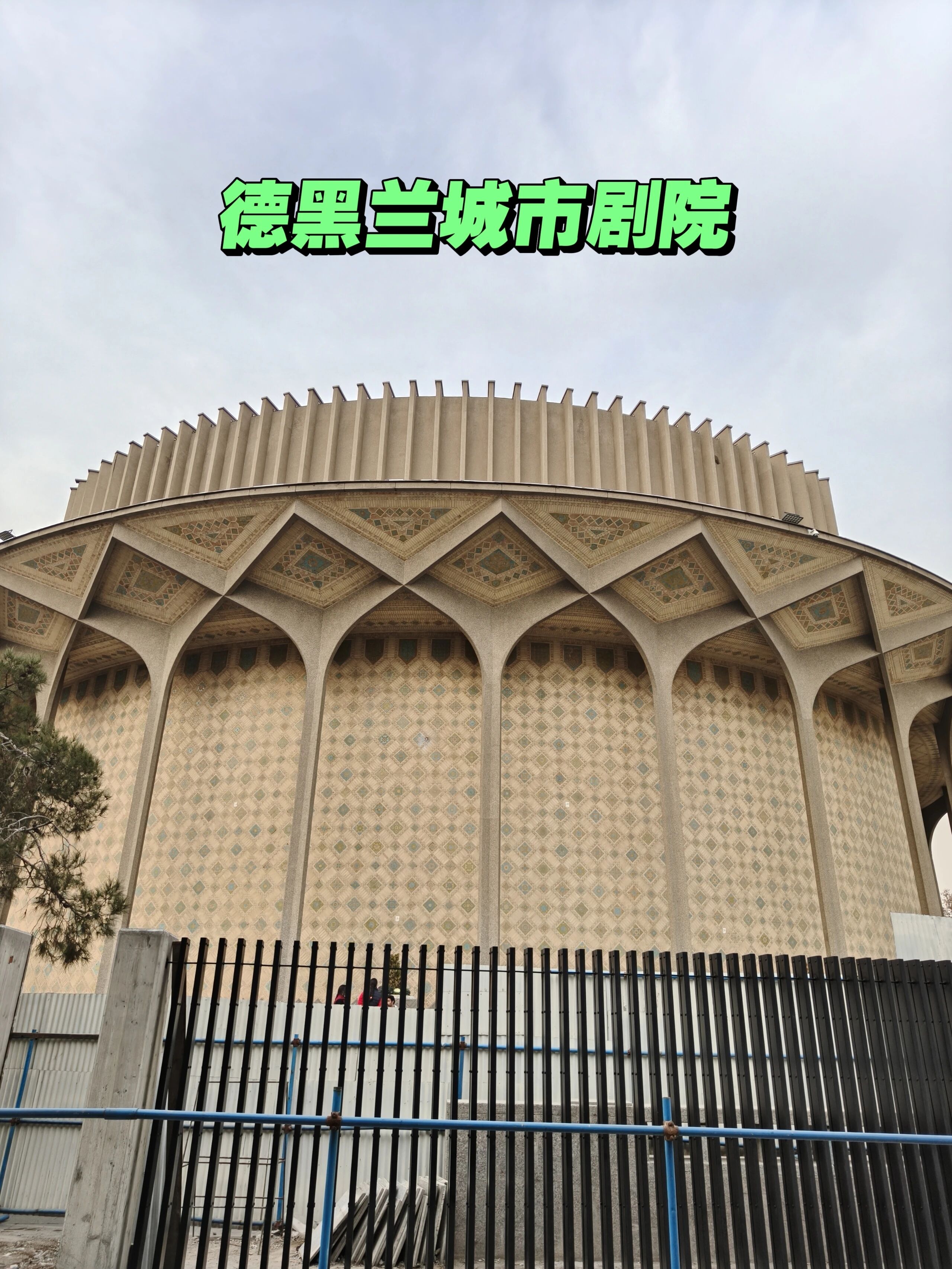
This mosque is next to the Tehran City Theater. It was not open when I first arrived, as Iranian mosques only open during prayer times (except for mausoleums).
I used this time to go to a cafe in the basement of the Tehran City Theater, where I ordered a coffee and a pastry. It cost me several 10 million rial notes, which I roughly estimated to be about 40 to 50 yuan.
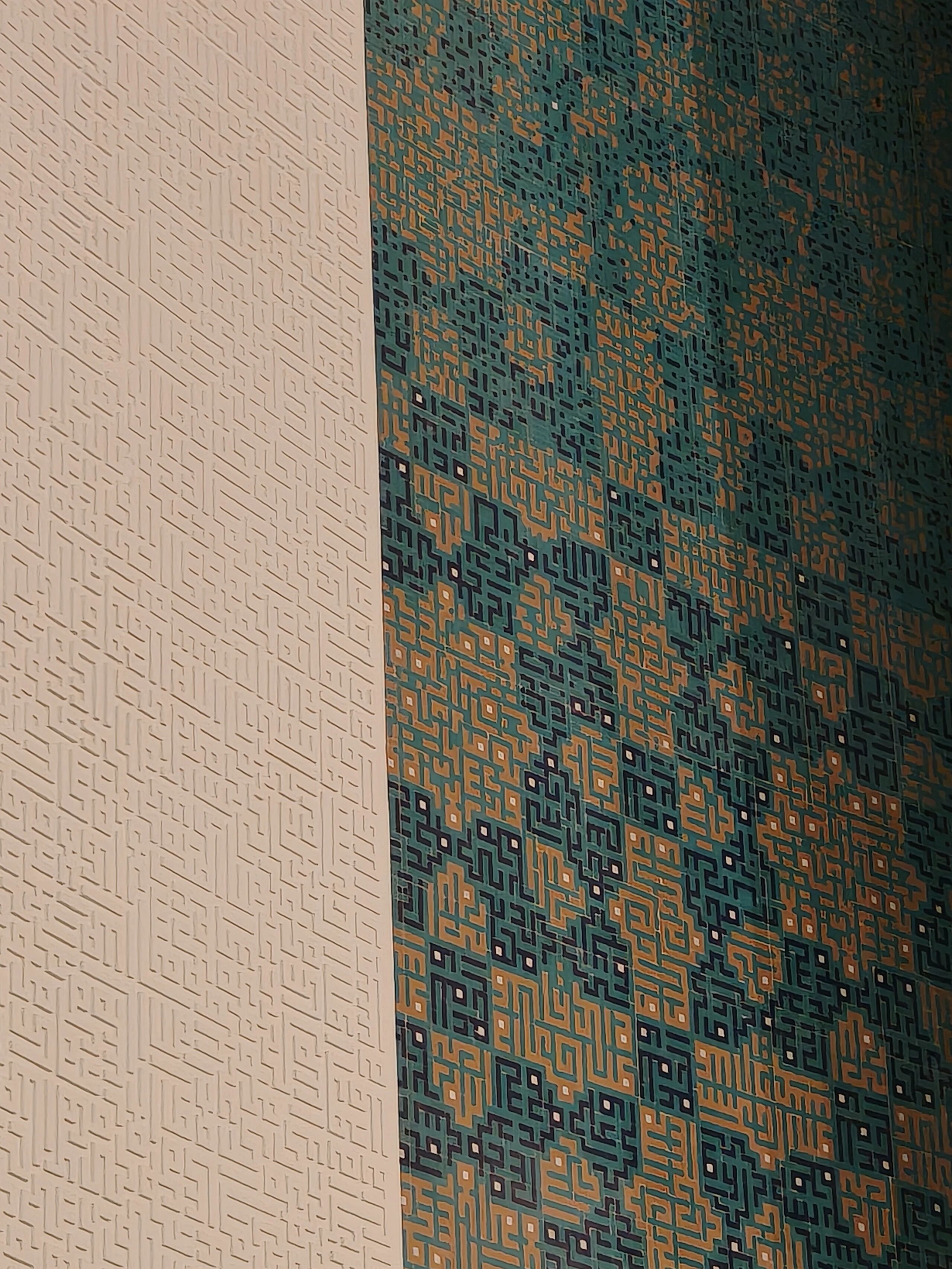
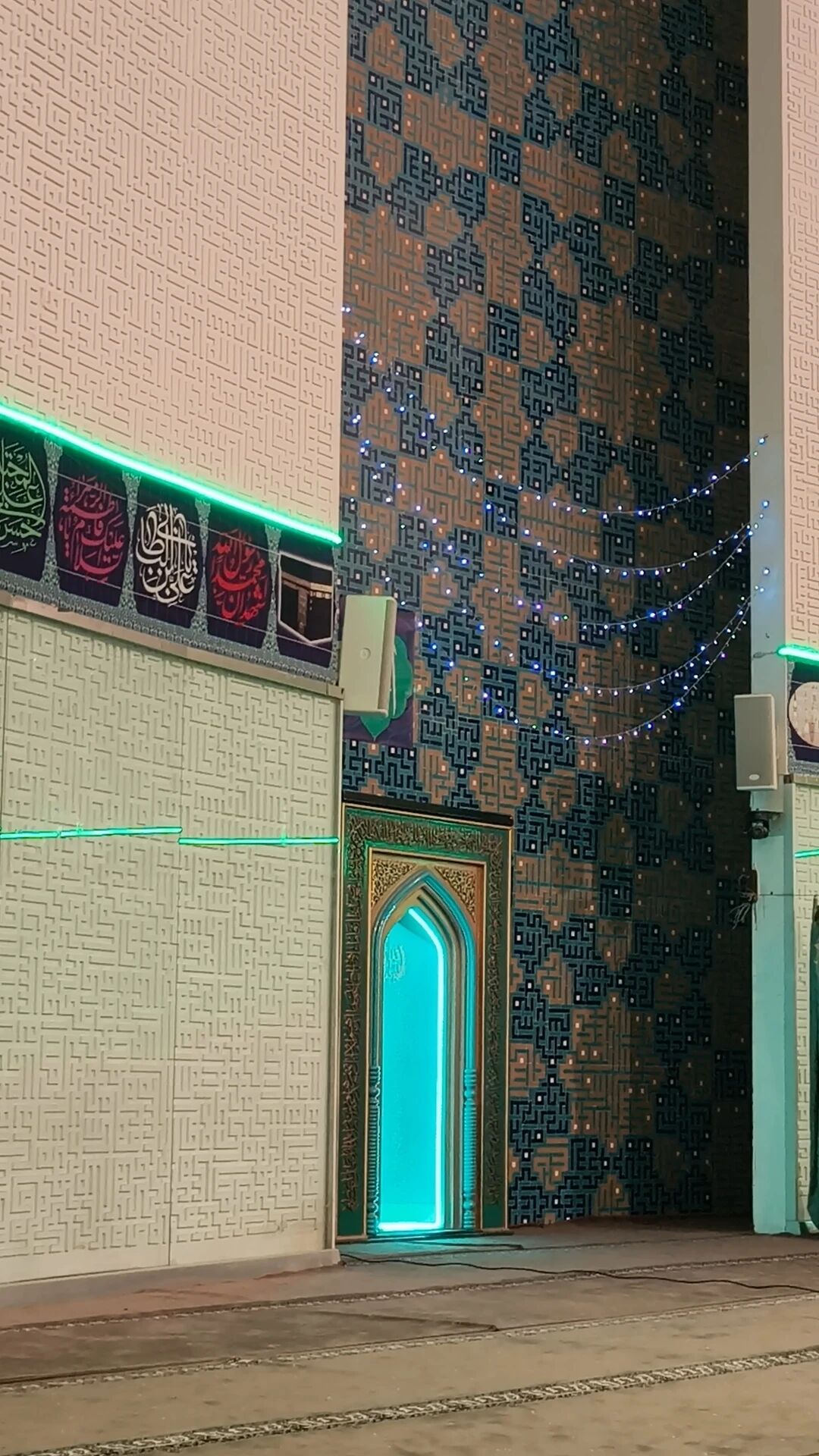
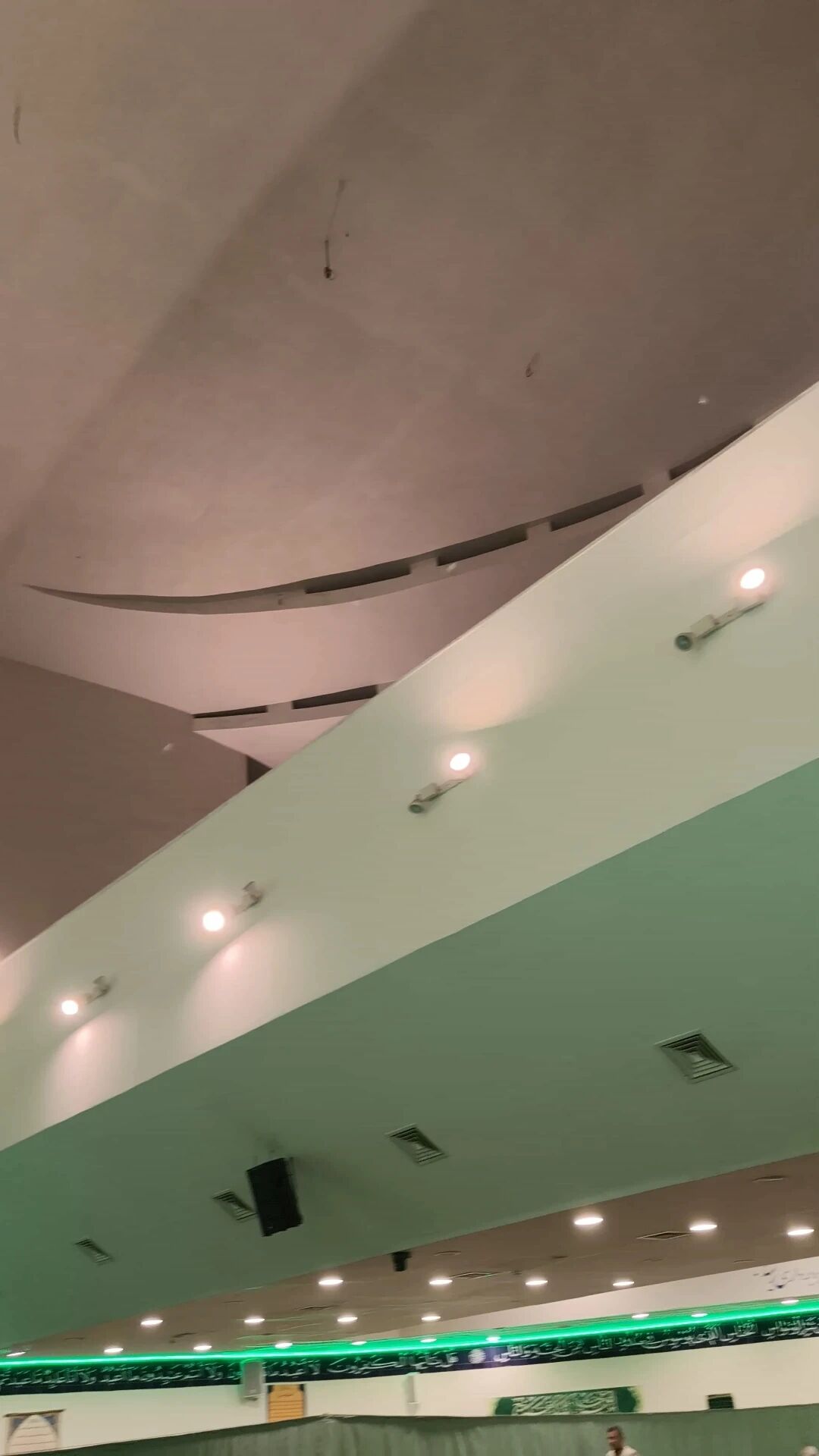
When I finally entered this modern-looking mosque, I found it was truly worth the trip. This building is different from any mosque I have visited before. It does not seek symmetry in its layout, the ceiling is not rectangular, and you can even see light inlets that look like shark gills.
I looked around. It was mostly the same as the pictures in that article, but there were some extra decorations inside. The floor is now covered with carpets, and decorative calligraphy verses hang on the walls. A curtain in the middle separates the men's and women's prayer areas.
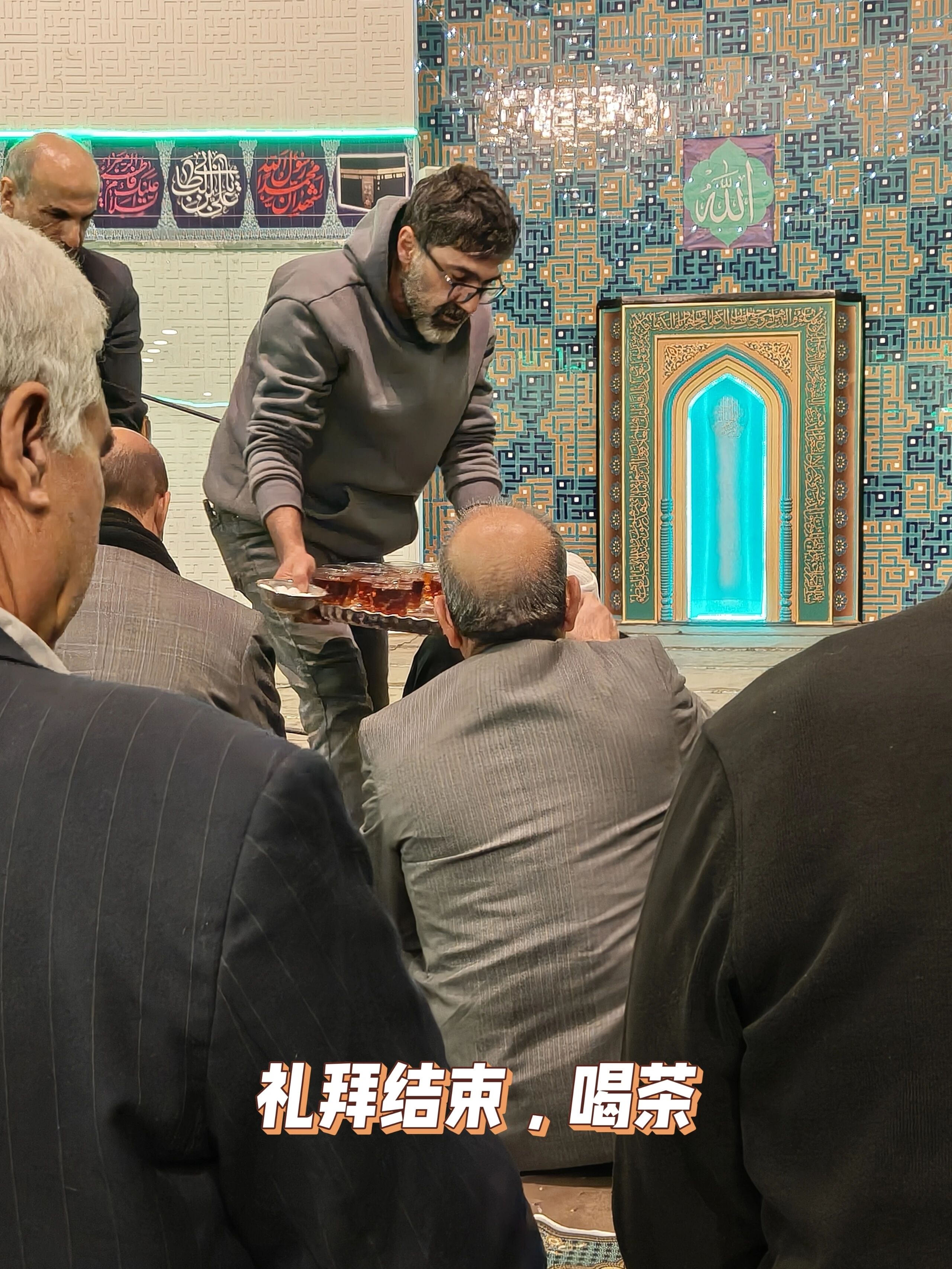
After finishing namaz, a man wearing glasses started handing out copies of the Qur'an, and he gave me one too. Then a man began to recite, and an older gentleman next to me pointed out exactly which chapter and verse he was reading. After the recitation, they served black tea. It was not bitter, and you could add sugar cubes to it.
I was about to leave after finishing my tea when a friendly mosque attendant stopped me to chat. He asked where I was from and if I was in Iran for work or something else. One man even called his friend to say that a Chinese person had come to the mosque. It felt like he had just met a celebrity.
A guy asked if I was Shia. When I said no, he tried to act calm, but I could tell he was a little disappointed. A young man joined our conversation. His English was good, and he said he used to go to school in the United States.
He asked where I was going next and offered to show me the way or help out. I am a bit shy and do not like to bother others, so I politely declined.
After heading out, I planned to go to the Freedom Tower and waited for a taxi by the side of the road, but I ran into a traffic jam again.
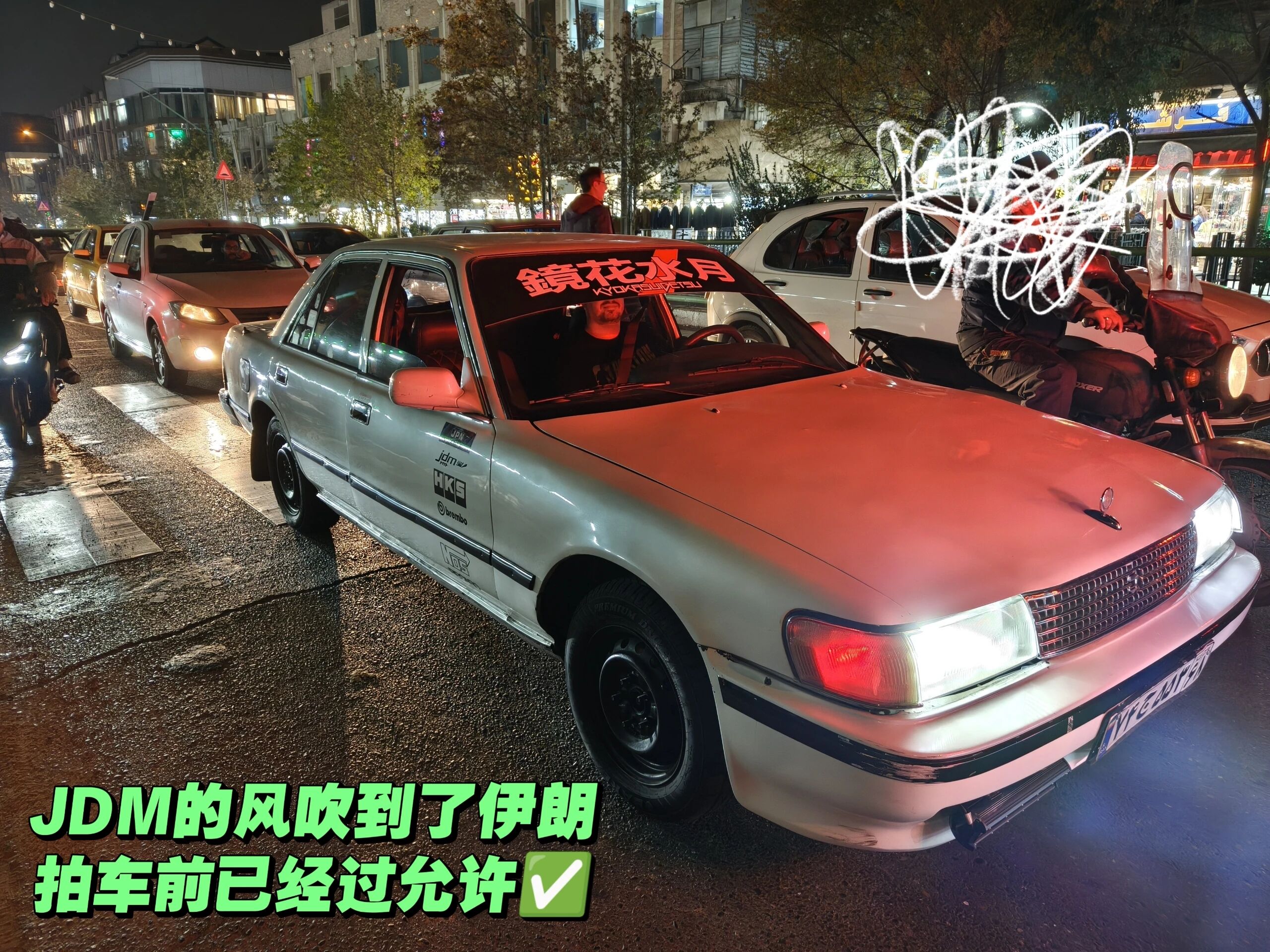
I also saw a car parked nearby with four Chinese characters, "Jing Hua Shui Yue" (flowers in the mirror and the moon in the water), and a sticker that said JDM, which originally meant Japanese Domestic Market cars but now refers to Japanese car modification culture. With the owner's permission, I took a photo of his beloved car. Collapse Read »
Summary: This Iran Muslim travel guide follows a visit to Tehran's Vali-e-Asr Mosque, a modern mosque first noticed through an architecture article, with its hidden entrance, quiet indoor spaces, curved walls, simple prayer area, and a design that feels very different from classic mosque architecture.
Years ago, I read an article on the WeChat account Youth Architecture titled Can Religious Architecture Break Through Traditional Forms? | Modern Mosque Architecture (the article can still be searched online). It mentioned several mosques that were different from traditional buildings.
There were some in Singapore, some in Iran, and one in China. I went to Singapore a while ago, but did not have enough time to visit the mosque mentioned in that article. After landing in Iran, I remembered the article and searched for it, finding that the modern mosque in Iran was in the capital, Tehran.
I was in Tehran at the time. So, I found some time and specifically took a taxi there.
This mosque is next to the Tehran City Theater. It was not open when I first arrived, as Iranian mosques only open during prayer times (except for mausoleums).
I used this time to go to a cafe in the basement of the Tehran City Theater, where I ordered a coffee and a pastry. It cost me several 10 million rial notes, which I roughly estimated to be about 40 to 50 yuan.
When I finally entered this modern-looking mosque, I found it was truly worth the trip. This building is different from any mosque I have visited before. It does not seek symmetry in its layout, the ceiling is not rectangular, and you can even see light inlets that look like shark gills.
I looked around. It was mostly the same as the pictures in that article, but there were some extra decorations inside. The floor is now covered with carpets, and decorative calligraphy verses hang on the walls. A curtain in the middle separates the men's and women's prayer areas.
After finishing namaz, a man wearing glasses started handing out copies of the Qur'an, and he gave me one too. Then a man began to recite, and an older gentleman next to me pointed out exactly which chapter and verse he was reading. After the recitation, they served black tea. It was not bitter, and you could add sugar cubes to it.
I was about to leave after finishing my tea when a friendly mosque attendant stopped me to chat. He asked where I was from and if I was in Iran for work or something else. One man even called his friend to say that a Chinese person had come to the mosque. It felt like he had just met a celebrity.
A guy asked if I was Shia. When I said no, he tried to act calm, but I could tell he was a little disappointed. A young man joined our conversation. His English was good, and he said he used to go to school in the United States.
He asked where I was going next and offered to show me the way or help out. I am a bit shy and do not like to bother others, so I politely declined.
After heading out, I planned to go to the Freedom Tower and waited for a taxi by the side of the road, but I ran into a traffic jam again.
I also saw a car parked nearby with four Chinese characters, "Jing Hua Shui Yue" (flowers in the mirror and the moon in the water), and a sticker that said JDM, which originally meant Japanese Domestic Market cars but now refers to Japanese car modification culture. With the owner's permission, I took a photo of his beloved car. Collapse Read »
Mosque Near Me Tehran: Vali-e-Asr Mosque, Modern Islamic Architecture and Quiet Prayer Space
Reposted from the web
Summary: This Tehran mosque guide visits Vali-e-Asr Mosque, a modern Iranian mosque near Valiasr Theater, describing its low-profile architecture, layered prayer hall, simple mihrab, brick-and-wood interior, clerical office, and the author's reaction to a mosque that breaks away from traditional forms.
Years ago, I read an article on the WeChat account Youth Architecture titled Can Religious Architecture Break Through Traditional Forms? | Modern Mosque Architecture (the article can still be searched online). It mentioned several mosques that were different from traditional buildings.
There were some in Singapore, some in Iran, and one in China. I went to Singapore a while ago, but did not have enough time to visit the mosque mentioned in that article. After landing in Iran, I remembered the article and searched for it, finding that the modern mosque in Iran was in the capital, Tehran.
I was in Tehran at the time. So, I found some time and specifically took a taxi there.
This mosque is next to the Tehran City Theater. It was not open when I first arrived, as Iranian mosques only open during prayer times (except for mausoleums).
I used this time to go to a cafe in the basement of the Tehran City Theater, where I ordered a coffee and a pastry. It cost me several 10 million rial notes, which I roughly estimated to be about 40 to 50 yuan.
When I finally entered this modern-looking mosque, I found it was truly worth the trip. This building is different from any mosque I have visited before. It does not seek symmetry in its layout, the ceiling is not rectangular, and you can even see light inlets that look like shark gills.
I looked around. It was mostly the same as the pictures in that article, but there were some extra decorations inside. The floor is now covered with carpets, and decorative calligraphy verses hang on the walls. A curtain in the middle separates the men's and women's prayer areas.
After finishing namaz, a man wearing glasses started handing out copies of the Qur'an, and he gave me one too. Then a man began to recite, and an older gentleman next to me pointed out exactly which chapter and verse he was reading. After the recitation, they served black tea. It was not bitter, and you could add sugar cubes to it.
I was about to leave after finishing my tea when a friendly mosque attendant stopped me to chat. He asked where I was from and if I was in Iran for work or something else. One man even called his friend to say that a Chinese person had come to the mosque. It felt like he had just met a celebrity.
A guy asked if I was Shia. When I said no, he tried to act calm, but I could tell he was a little disappointed. A young man joined our conversation. His English was good, and he said he used to go to school in the United States.
He asked where I was going next and offered to show me the way or help out. I am a bit shy and do not like to bother others, so I politely declined.
After heading out, I planned to go to the Freedom Tower and waited for a taxi by the side of the road, but I ran into a traffic jam again.
I also saw a car parked nearby with four Chinese characters, "Jing Hua Shui Yue" (flowers in the mirror and the moon in the water), and a sticker that said JDM, which originally meant Japanese Domestic Market cars but now refers to Japanese car modification culture. With the owner's permission, I took a photo of his beloved car. Collapse Read »
Summary: This Tehran mosque guide visits Vali-e-Asr Mosque, a modern Iranian mosque near Valiasr Theater, describing its low-profile architecture, layered prayer hall, simple mihrab, brick-and-wood interior, clerical office, and the author's reaction to a mosque that breaks away from traditional forms.
Years ago, I read an article on the WeChat account Youth Architecture titled Can Religious Architecture Break Through Traditional Forms? | Modern Mosque Architecture (the article can still be searched online). It mentioned several mosques that were different from traditional buildings.
There were some in Singapore, some in Iran, and one in China. I went to Singapore a while ago, but did not have enough time to visit the mosque mentioned in that article. After landing in Iran, I remembered the article and searched for it, finding that the modern mosque in Iran was in the capital, Tehran.
I was in Tehran at the time. So, I found some time and specifically took a taxi there.
This mosque is next to the Tehran City Theater. It was not open when I first arrived, as Iranian mosques only open during prayer times (except for mausoleums).
I used this time to go to a cafe in the basement of the Tehran City Theater, where I ordered a coffee and a pastry. It cost me several 10 million rial notes, which I roughly estimated to be about 40 to 50 yuan.
When I finally entered this modern-looking mosque, I found it was truly worth the trip. This building is different from any mosque I have visited before. It does not seek symmetry in its layout, the ceiling is not rectangular, and you can even see light inlets that look like shark gills.
I looked around. It was mostly the same as the pictures in that article, but there were some extra decorations inside. The floor is now covered with carpets, and decorative calligraphy verses hang on the walls. A curtain in the middle separates the men's and women's prayer areas.
After finishing namaz, a man wearing glasses started handing out copies of the Qur'an, and he gave me one too. Then a man began to recite, and an older gentleman next to me pointed out exactly which chapter and verse he was reading. After the recitation, they served black tea. It was not bitter, and you could add sugar cubes to it.
I was about to leave after finishing my tea when a friendly mosque attendant stopped me to chat. He asked where I was from and if I was in Iran for work or something else. One man even called his friend to say that a Chinese person had come to the mosque. It felt like he had just met a celebrity.
A guy asked if I was Shia. When I said no, he tried to act calm, but I could tell he was a little disappointed. A young man joined our conversation. His English was good, and he said he used to go to school in the United States.
He asked where I was going next and offered to show me the way or help out. I am a bit shy and do not like to bother others, so I politely declined.
After heading out, I planned to go to the Freedom Tower and waited for a taxi by the side of the road, but I ran into a traffic jam again.
I also saw a car parked nearby with four Chinese characters, "Jing Hua Shui Yue" (flowers in the mirror and the moon in the water), and a sticker that said JDM, which originally meant Japanese Domestic Market cars but now refers to Japanese car modification culture. With the owner's permission, I took a photo of his beloved car. Collapse Read »
Muslim Travel Guide Iran Tehran: Friday Prayer, Closed Mosques and Flower-Bird Embroidery
Reposted from the web
Summary: This Iran Muslim travel guide follows a Friday in Tehran, when nearby mosques and the bazaar were closed, then returns after Jumu'ah day to see a small mosque, flower-and-bird embroidery, a Shia-themed image, and the practical challenge of carrying cash in Iran.
I landed in Tehran, Iran, on a Thursday night and woke up the next morning on Friday, which is the Jumu'ah day. However, I found the doors of the mosque near where I was staying were locked tight.
(Photo 1) Not only that, but a large mosque the motorcycle taxi driver took me to, Imam Khamenei Mosque, was also closed. I ran to all the nearby mosques, but not a single one was open. I noticed that only a few shops at the entrance of the bazaar were open, while everything inside was completely shut.
I was totally confused as to why the mosques were all closed on the day of congregational prayer, so I just walked around until I reached the area near Golestan Palace. I met a guy who spoke English and later found out he was a tour guide. He told me that only one mosque in Tehran stays open on Fridays, while all the others are closed.
This way, everyone can gather together in one place for prayer. So that was it. Actually, I had heard of similar things before, where some small mosques do not hold the noon Jumu'ah prayer on Fridays. The worshippers from those mosques then have to go to a larger mosque further away to attend the congregational prayer.
But I still cannot understand why a place like Tehran, with its huge population and large city area, only keeps one mosque open on Fridays.
I went back after Friday, and the mosque was indeed open, and the bazaar was packed with people. I went to the small mosque near where I was staying again. I found some banners hanging inside, decorated with flowers and birds.
(Photos 5 and 6) A long-tailed bird and a small bird are tucked between the calligraphy.
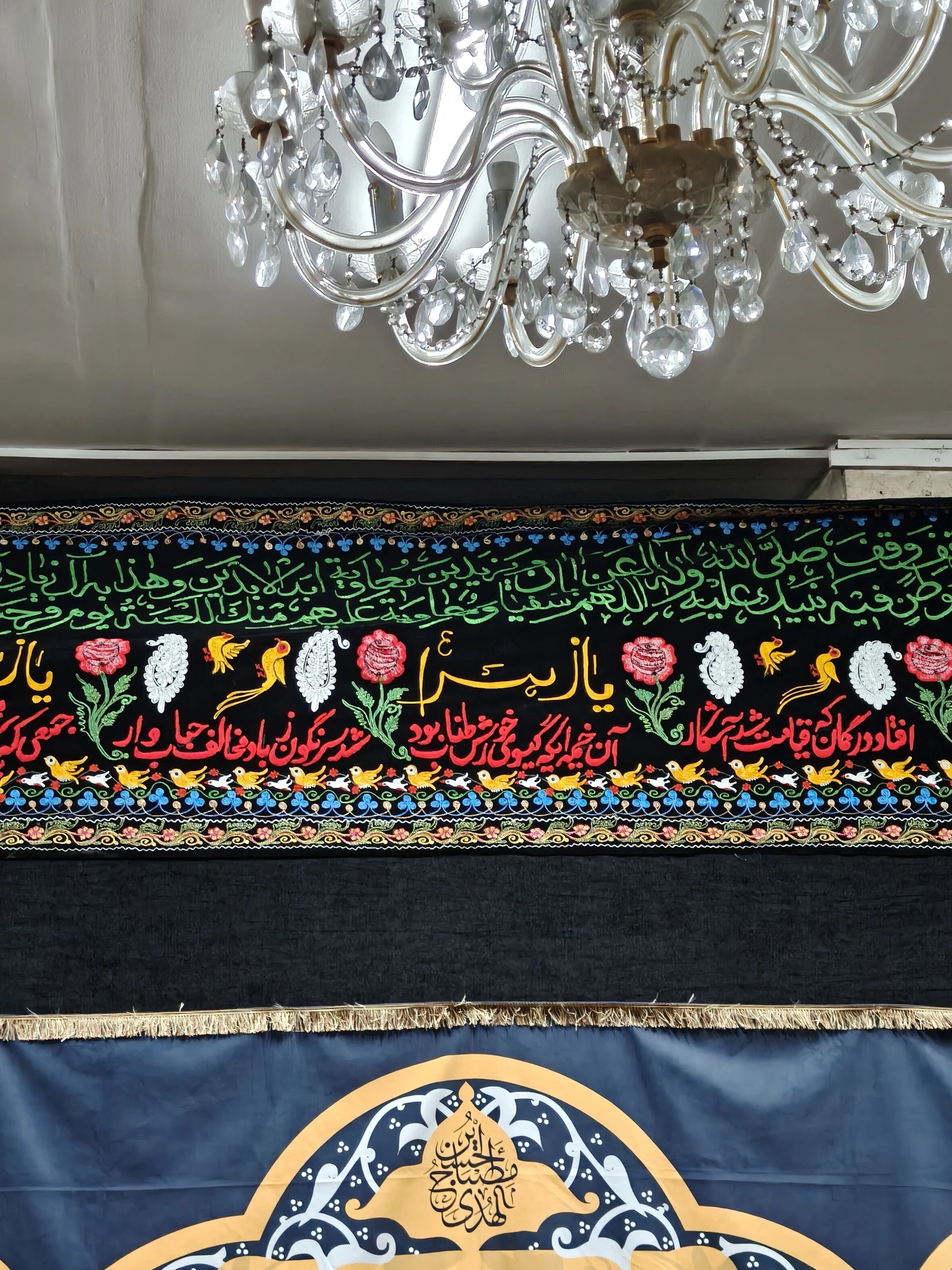
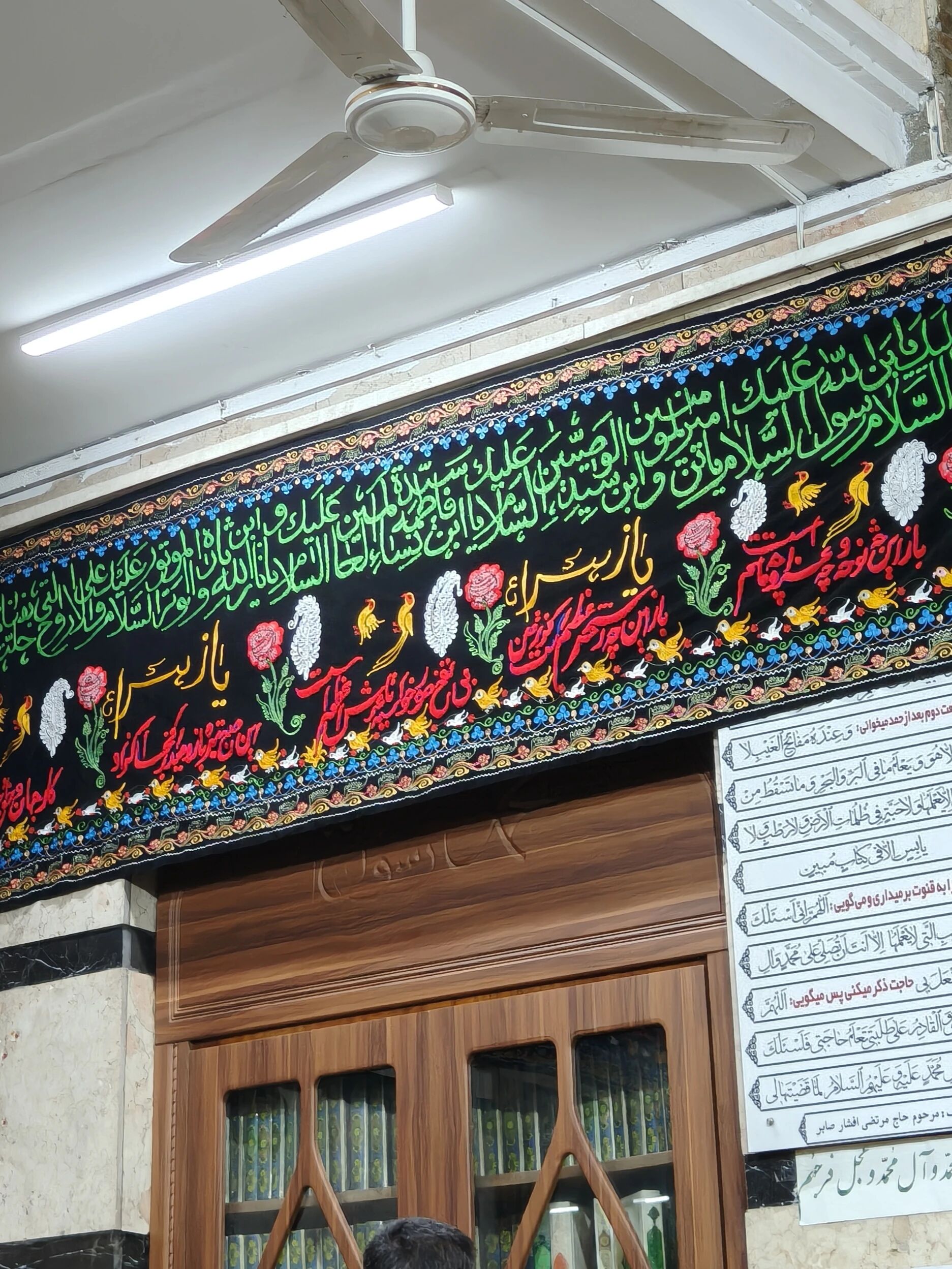
Generally speaking, animal images are not allowed inside a mosque, but in real life, you can still see some decorative animal figures.
For example, some ancient mosques in China still have roof beasts on their ridges, and there is a madrasa in Central Asia with a lion carrying the sun on its gate.
Besides the embroidery, I also saw a hanging painting like the one in photo 7 inside the main hall. The painting shows one hand grabbing another hand by the wrist and raising it up. This likely shows the scene where the Prophet Muhammad raised his cousin Ali as his successor.
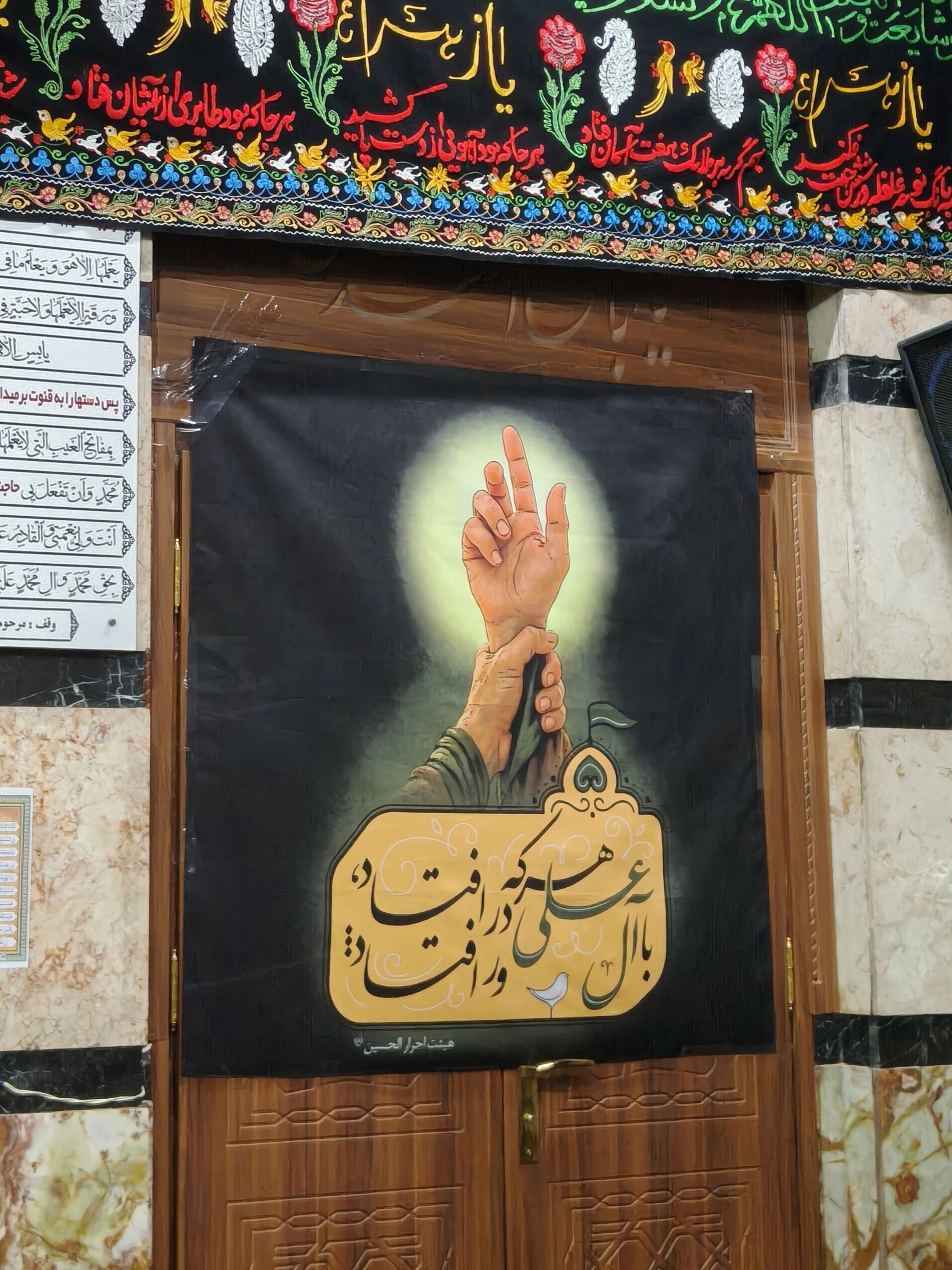
After finishing my namaz, I went near the British Embassy to exchange money, though money does not last long here. I exchanged 240 US dollars, and it was gone in two days without me spending much. ATM machines in Iran do not accept Visa cards, UnionPay, or WeChat Pay.
As foreigners, we have to bring enough US dollars in cash to exchange there, then carry several bundles of cash around in our bags. It is still very inconvenient. Collapse Read »
Summary: This Iran Muslim travel guide follows a Friday in Tehran, when nearby mosques and the bazaar were closed, then returns after Jumu'ah day to see a small mosque, flower-and-bird embroidery, a Shia-themed image, and the practical challenge of carrying cash in Iran.
I landed in Tehran, Iran, on a Thursday night and woke up the next morning on Friday, which is the Jumu'ah day. However, I found the doors of the mosque near where I was staying were locked tight.
(Photo 1) Not only that, but a large mosque the motorcycle taxi driver took me to, Imam Khamenei Mosque, was also closed. I ran to all the nearby mosques, but not a single one was open. I noticed that only a few shops at the entrance of the bazaar were open, while everything inside was completely shut.
I was totally confused as to why the mosques were all closed on the day of congregational prayer, so I just walked around until I reached the area near Golestan Palace. I met a guy who spoke English and later found out he was a tour guide. He told me that only one mosque in Tehran stays open on Fridays, while all the others are closed.
This way, everyone can gather together in one place for prayer. So that was it. Actually, I had heard of similar things before, where some small mosques do not hold the noon Jumu'ah prayer on Fridays. The worshippers from those mosques then have to go to a larger mosque further away to attend the congregational prayer.
But I still cannot understand why a place like Tehran, with its huge population and large city area, only keeps one mosque open on Fridays.
I went back after Friday, and the mosque was indeed open, and the bazaar was packed with people. I went to the small mosque near where I was staying again. I found some banners hanging inside, decorated with flowers and birds.
(Photos 5 and 6) A long-tailed bird and a small bird are tucked between the calligraphy.
Generally speaking, animal images are not allowed inside a mosque, but in real life, you can still see some decorative animal figures.
For example, some ancient mosques in China still have roof beasts on their ridges, and there is a madrasa in Central Asia with a lion carrying the sun on its gate.
Besides the embroidery, I also saw a hanging painting like the one in photo 7 inside the main hall. The painting shows one hand grabbing another hand by the wrist and raising it up. This likely shows the scene where the Prophet Muhammad raised his cousin Ali as his successor.
After finishing my namaz, I went near the British Embassy to exchange money, though money does not last long here. I exchanged 240 US dollars, and it was gone in two days without me spending much. ATM machines in Iran do not accept Visa cards, UnionPay, or WeChat Pay.
As foreigners, we have to bring enough US dollars in cash to exchange there, then carry several bundles of cash around in our bags. It is still very inconvenient. Collapse Read »
Muslim Travel Guide Iran Tehran: Imam Khomeini Airport Prayer Room, Wudu Area and Shia Travel Notes
Reposted from the web
Summary: This Iran Muslim travel guide starts at Imam Khomeini International Airport in Tehran, covering the author's Oman transfer, airport money exchange, the first-floor prayer room, shoe area, Shia-style decoration, mohr prayer stones, Qur'an copies with Persian translation, and the first impression of Iran.
Since visiting a Shia mosque in Singapore last time, my interest in Shia Islam has grown, and I even thought about exploring a Shia country.
So, I stopped over in Oman (Oman has a minority sect independent of Sunni Islam called Ibadi Islam; I will share what I saw and heard in Oman later) and landed at Imam Khomeini International Airport in the capital of Iran.
I do not understand why they chose different characters for the transliteration; isn't Imam Khomeini just Imam Khomeini?
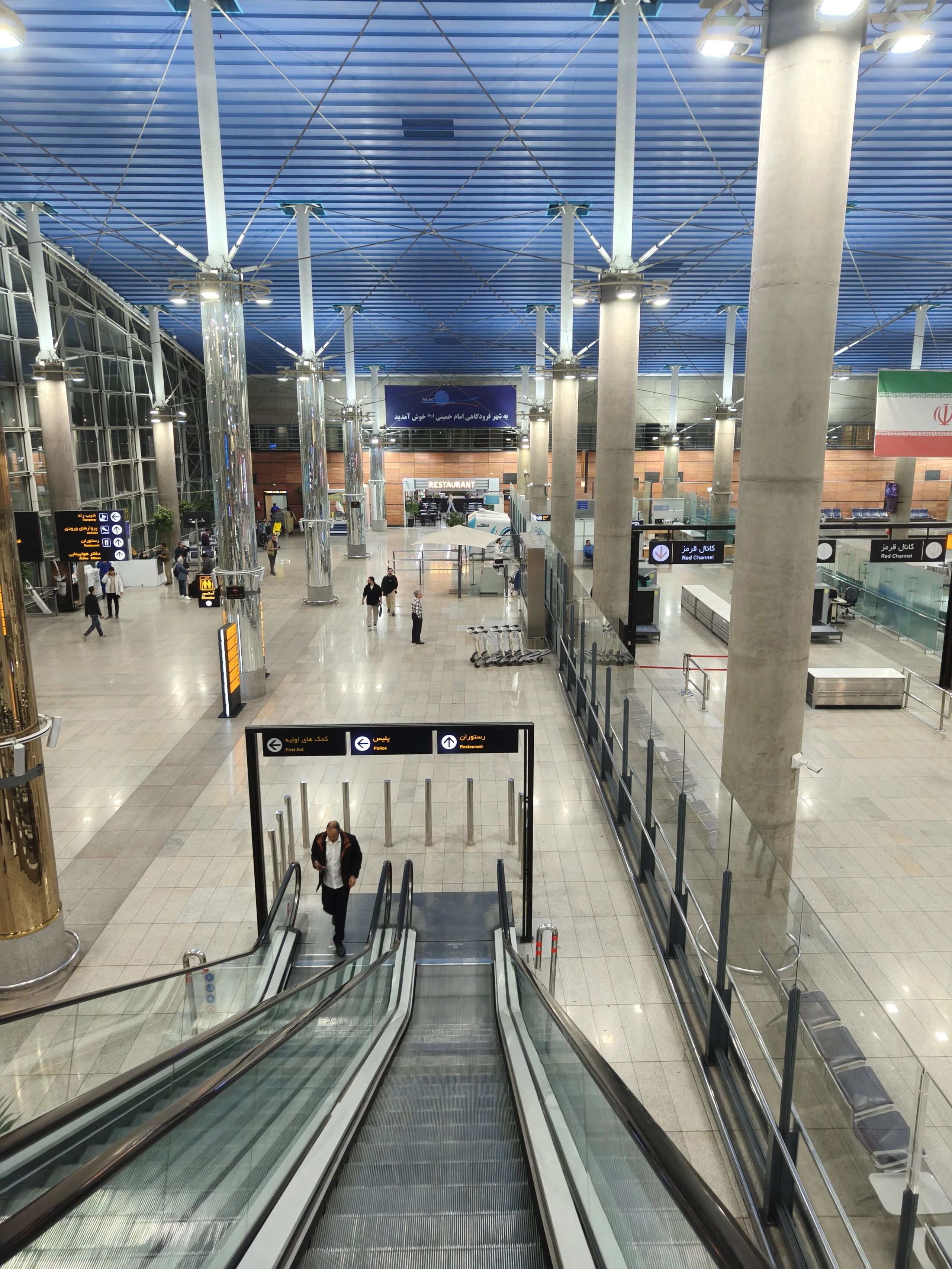
This airport looks a bit old. I had just flown from the new terminal at Lanzhou Zhongchuan Airport to Beijing Capital Airport, then from Daxing Airport to Muscat Airport in Oman for my layover. So for me, the contrast was very obvious.
Back to the point, the first thing to do after landing is to exchange money. I suggest you only exchange enough for your taxi fare at the airport. You should exchange the bulk of your money in the city. The exchange rate in the city is very different from the airport; for the same amount of money, you can get 1.2 million in the city, but the airport will only give you 750,000.
This gap is quite large. (Airport currency exchange counters are often like this, but the one at the Iranian airport felt especially harsh.) After exchanging money, I went to the first floor and noticed the prayer room (Photos 3 and 4). Its decoration style is different from the simple style in Malaysia, Oman, and Singapore.
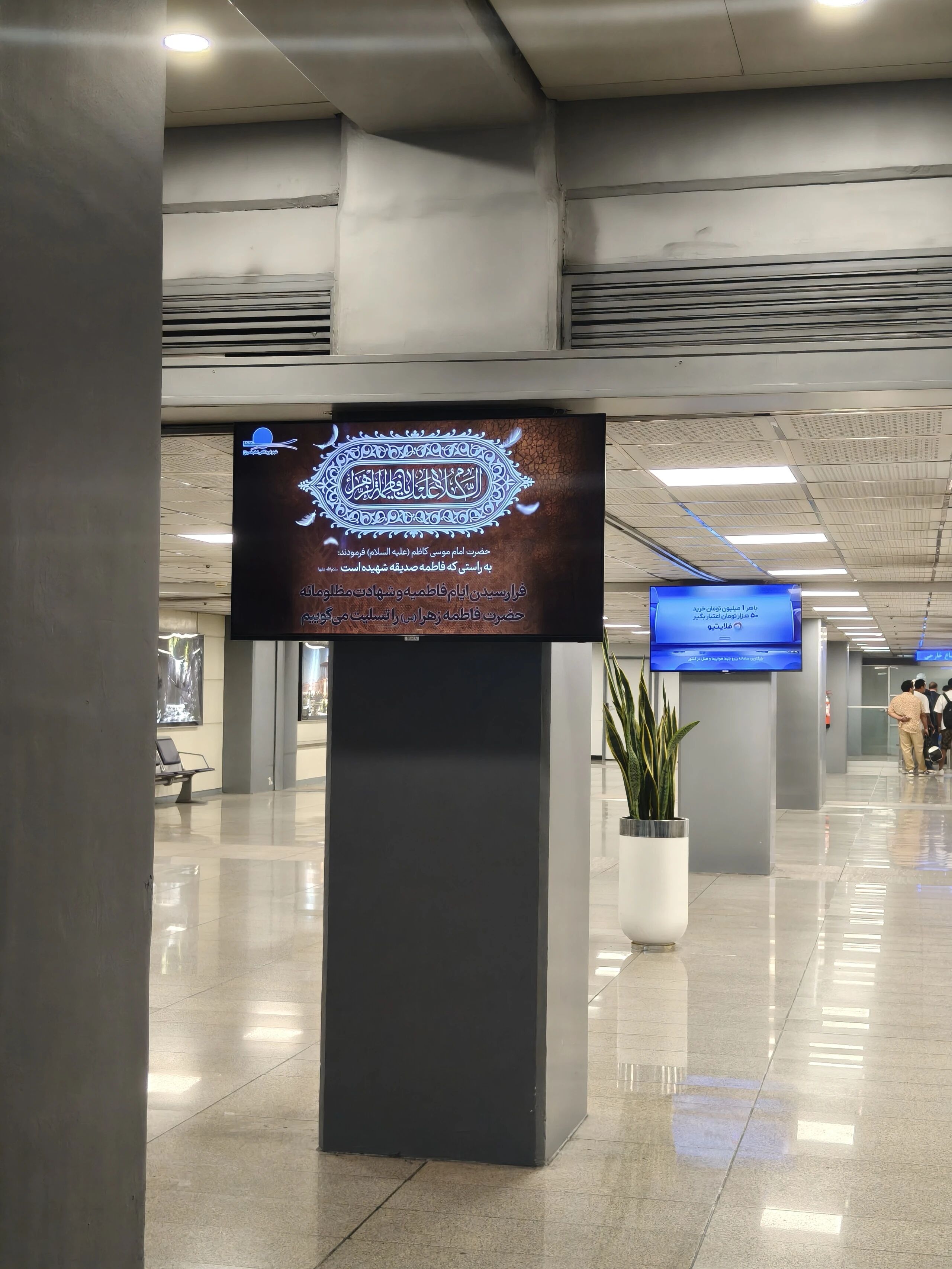
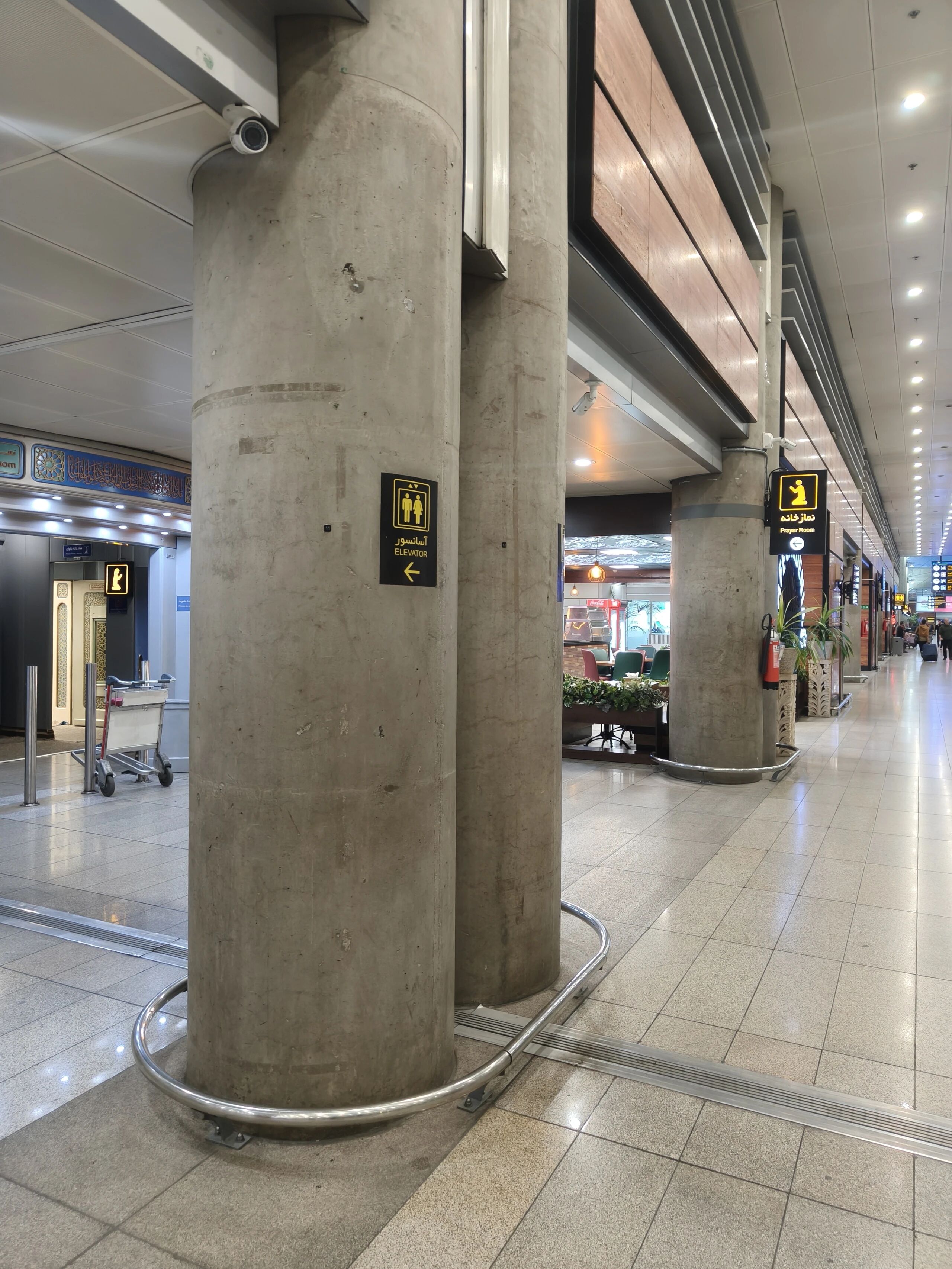
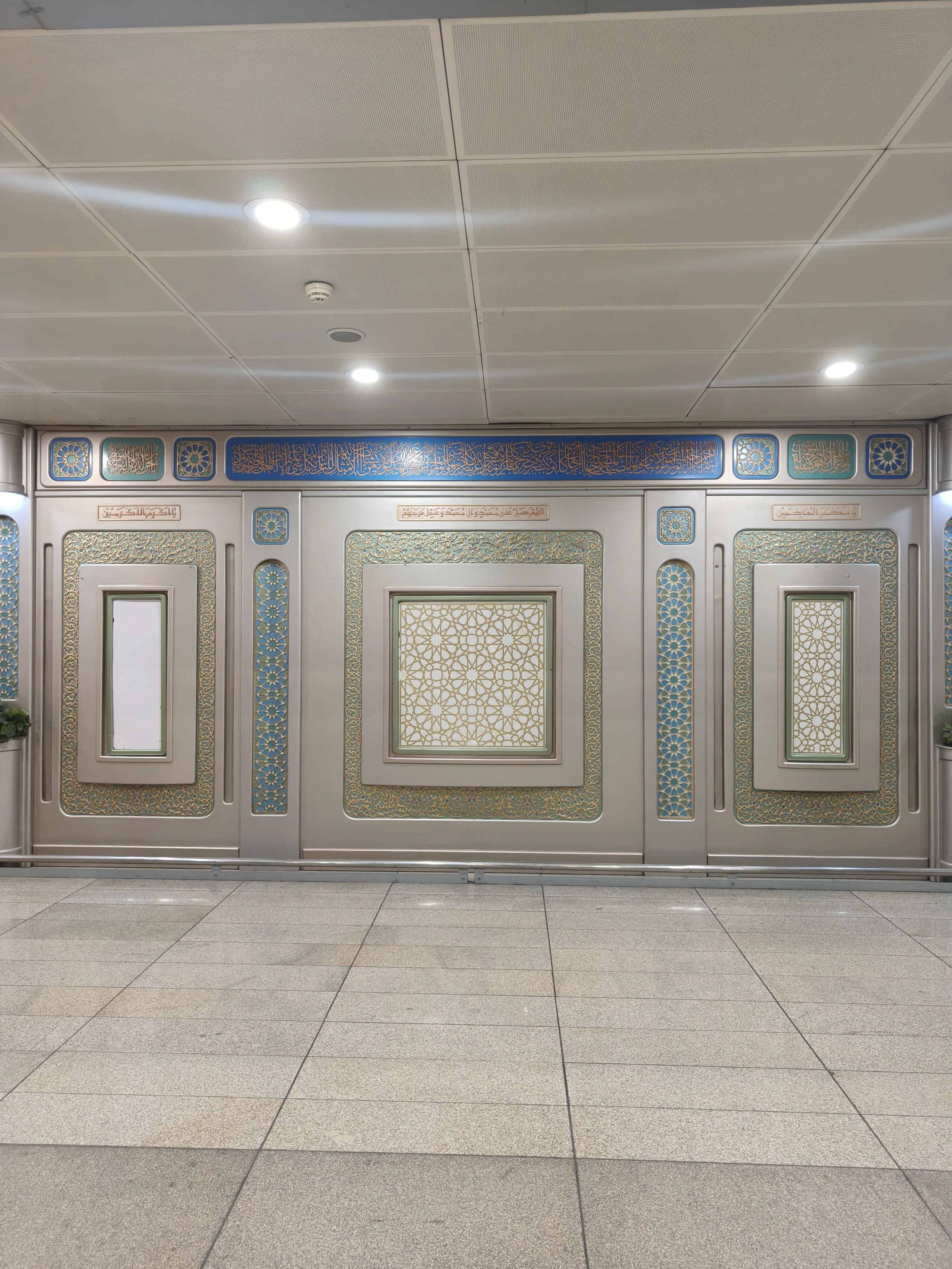
It happened to be time for namaz, so I stepped into the prayer space in Iran.
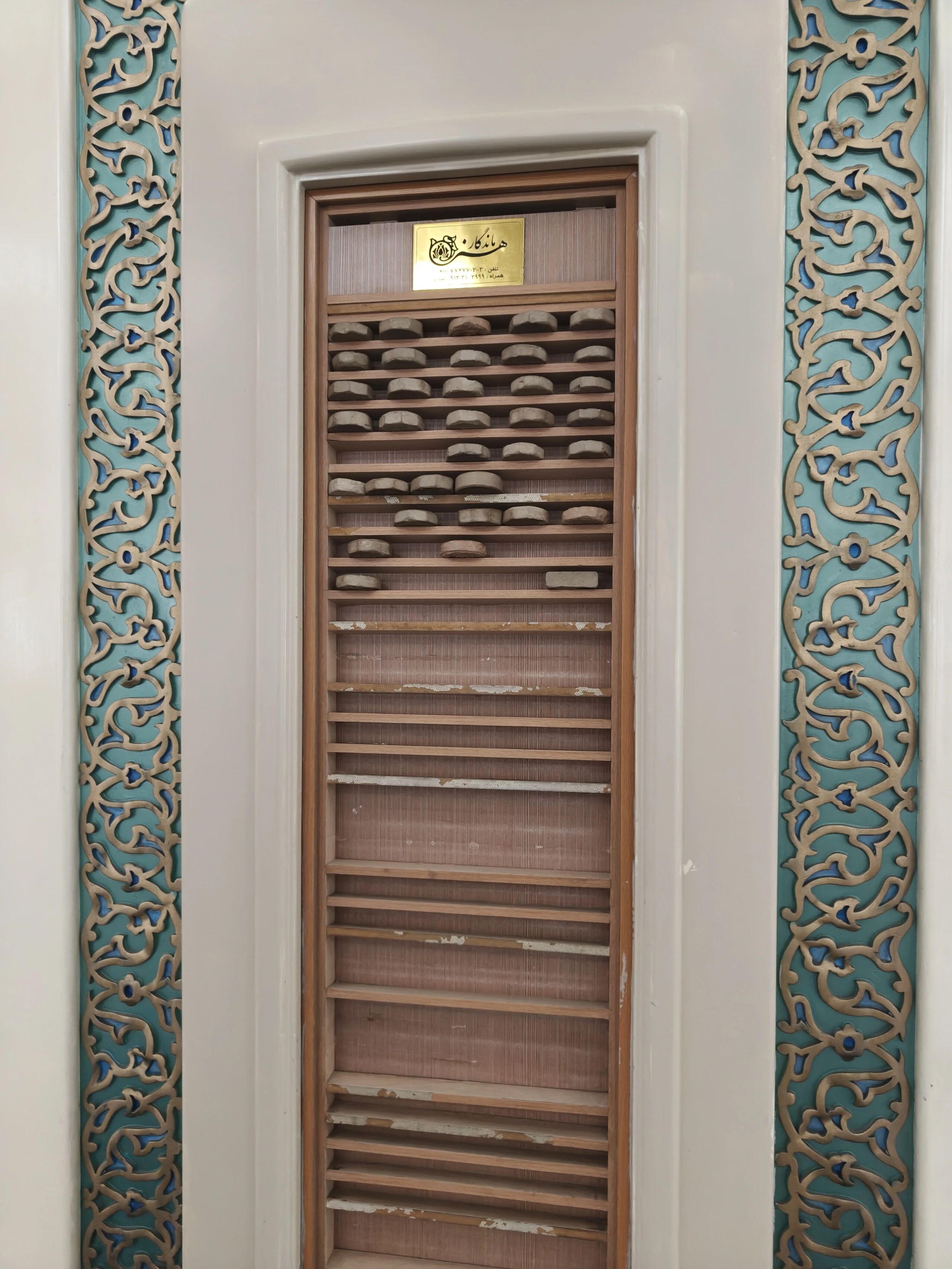
Photo 5 shows the entryway, where you must put your shoes in the cubbies. On the left is the men's prayer room, and on the right is the women's prayer room. As soon as I walked in, I noticed something I had never seen in any other mosque or prayer room I had visited before: small stone tablets.
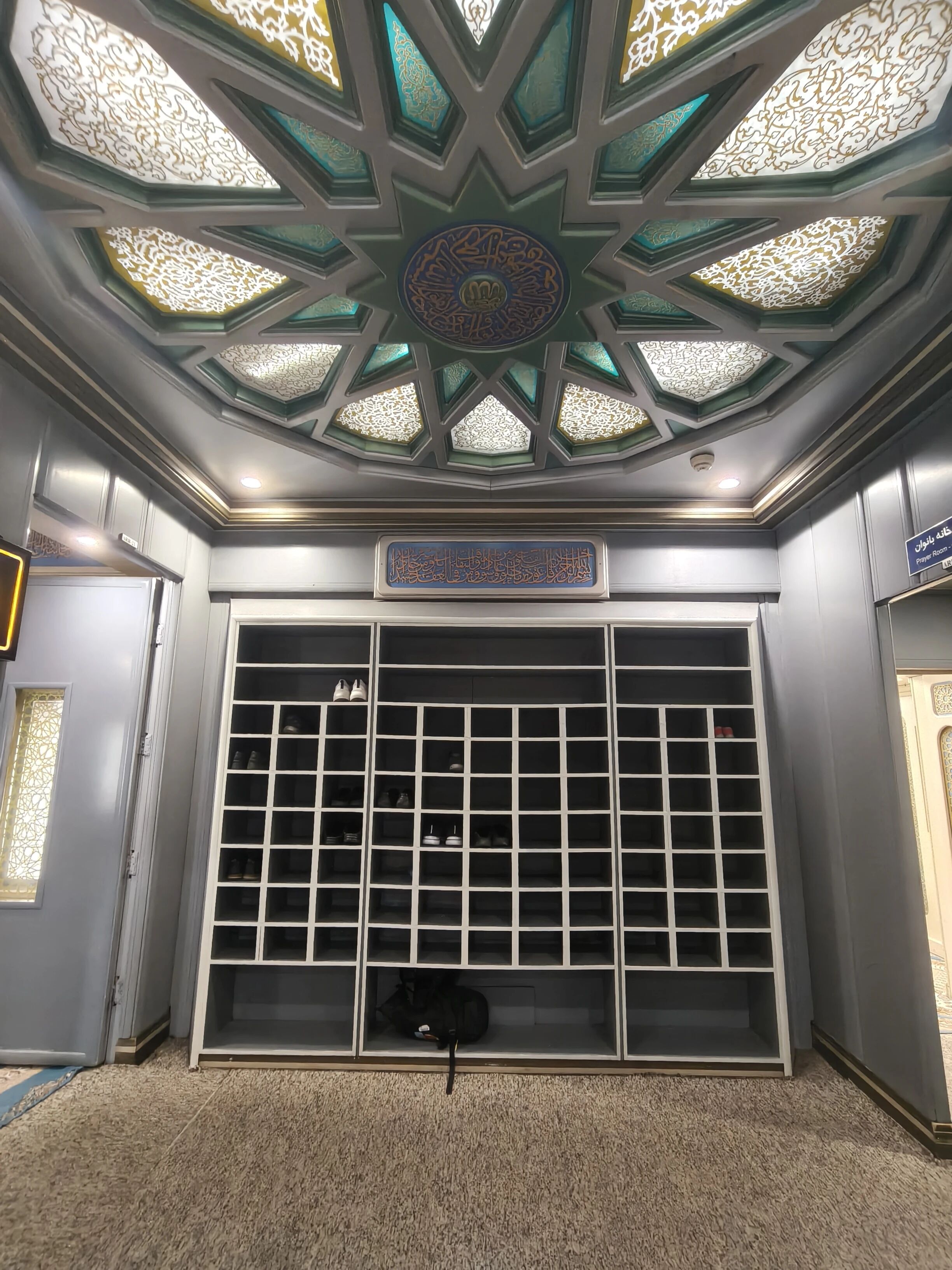
(Photo 6) Even the Shia mosque I visited in Singapore earlier did not have these.
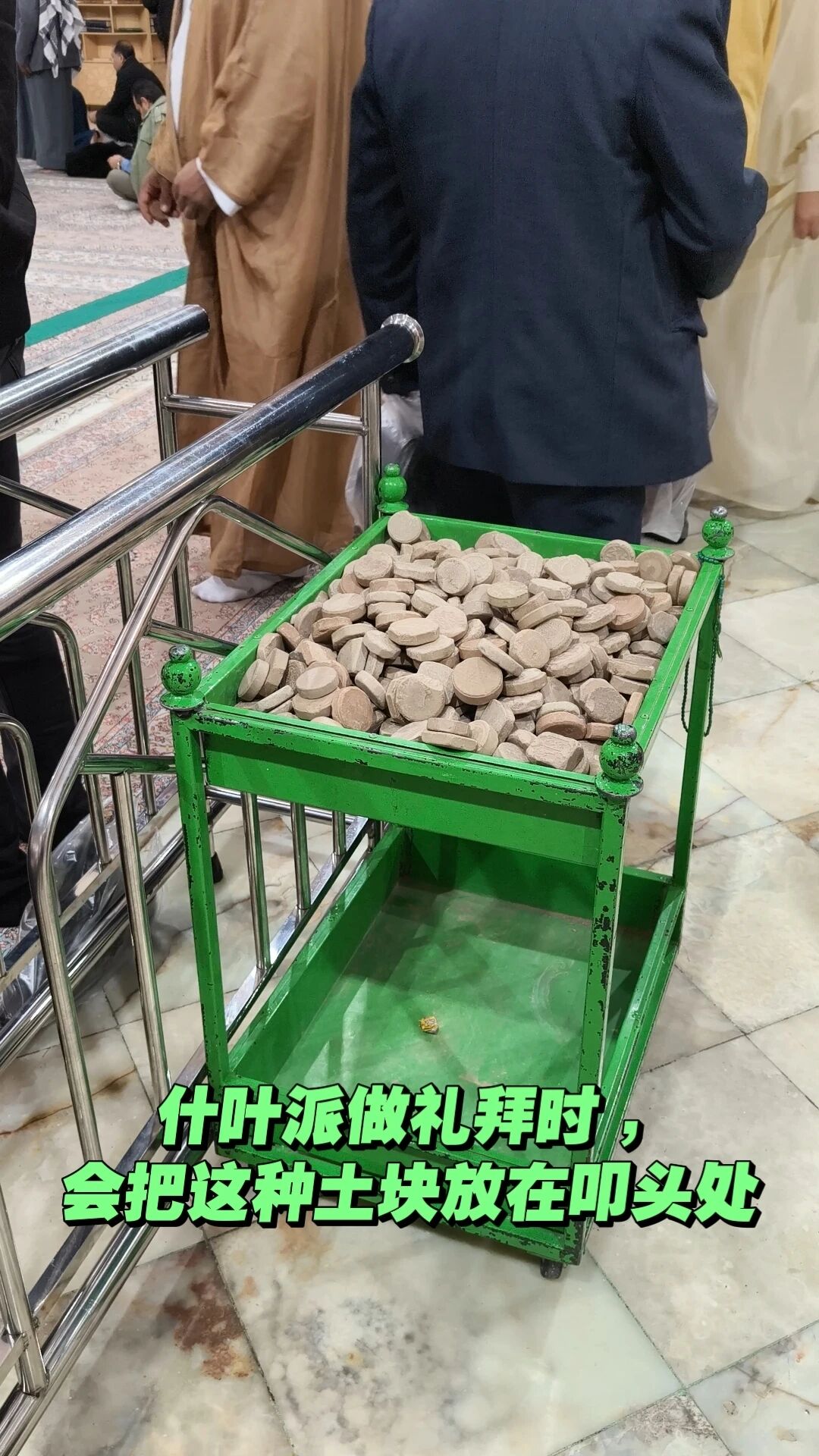
During namaz, I noticed that everyone here had one, placing it exactly where their forehead would touch the ground. (Photo 7, Photo 8) I picked one up too. It was about the size of a chess piece, felt like brick, and had a smooth surface that did not crumble. It had the words "Ya (a call) Husayn" written on it.
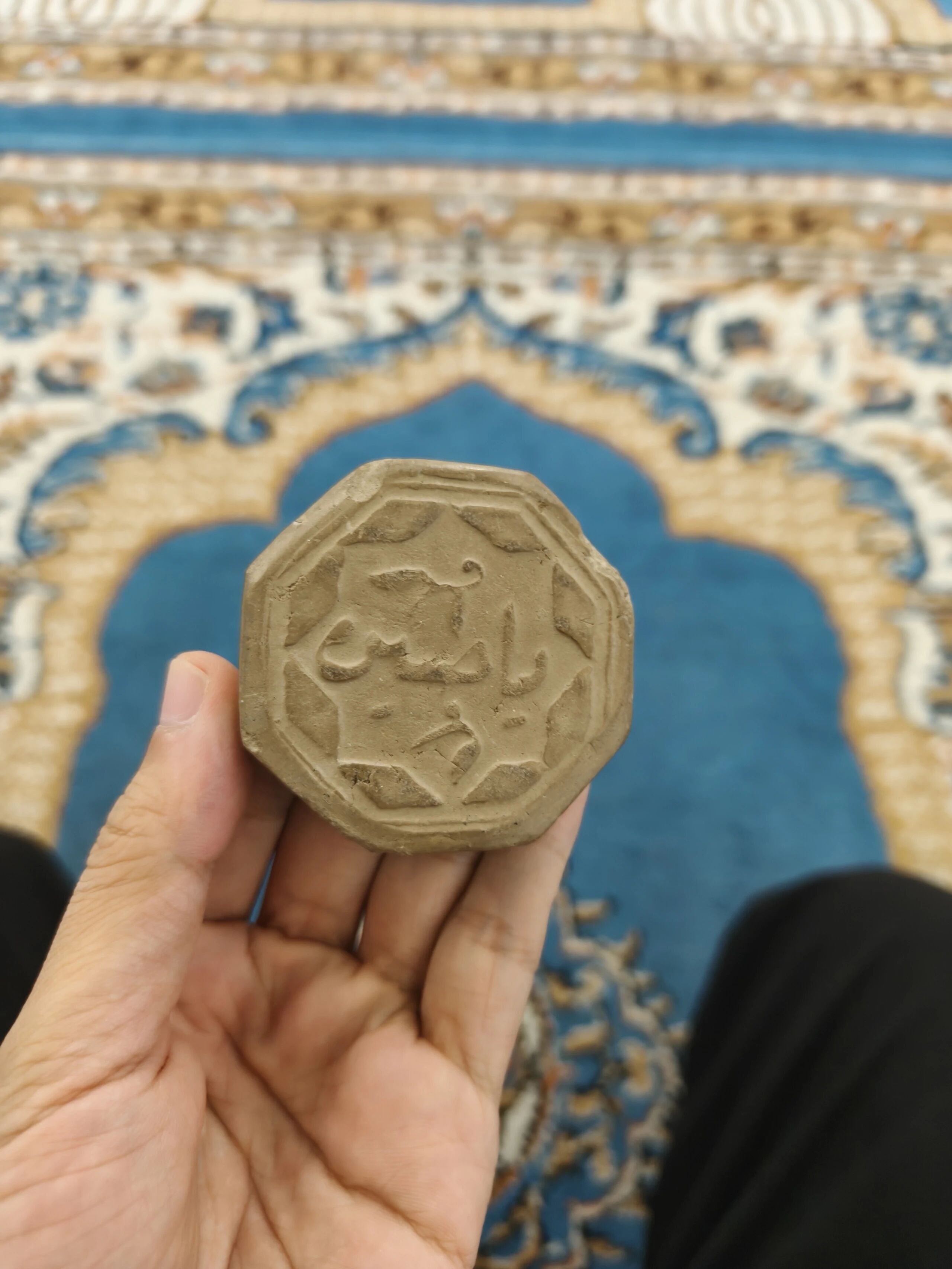
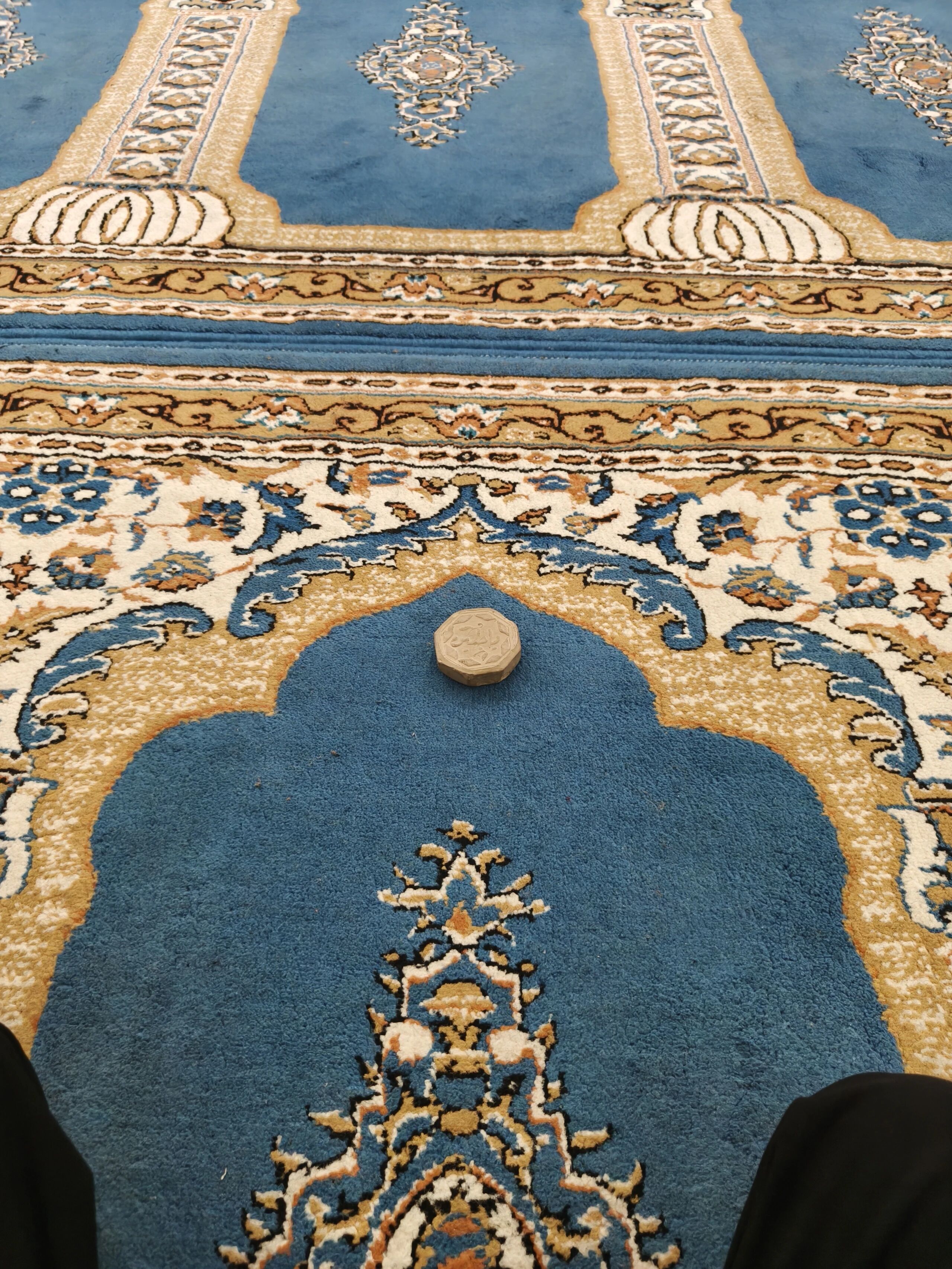
This must be a way to express grief for the Prophet's grandson who died at the hands of his enemies.
After namaz, I took a panoramic shot of the room. It is quite large, and the ceiling and walls are decorated.
You might notice a row of chairs with small desks on the right side of the prayer hall (Photo 11). What are these for? These are for Muslims who have trouble walking or have back problems.
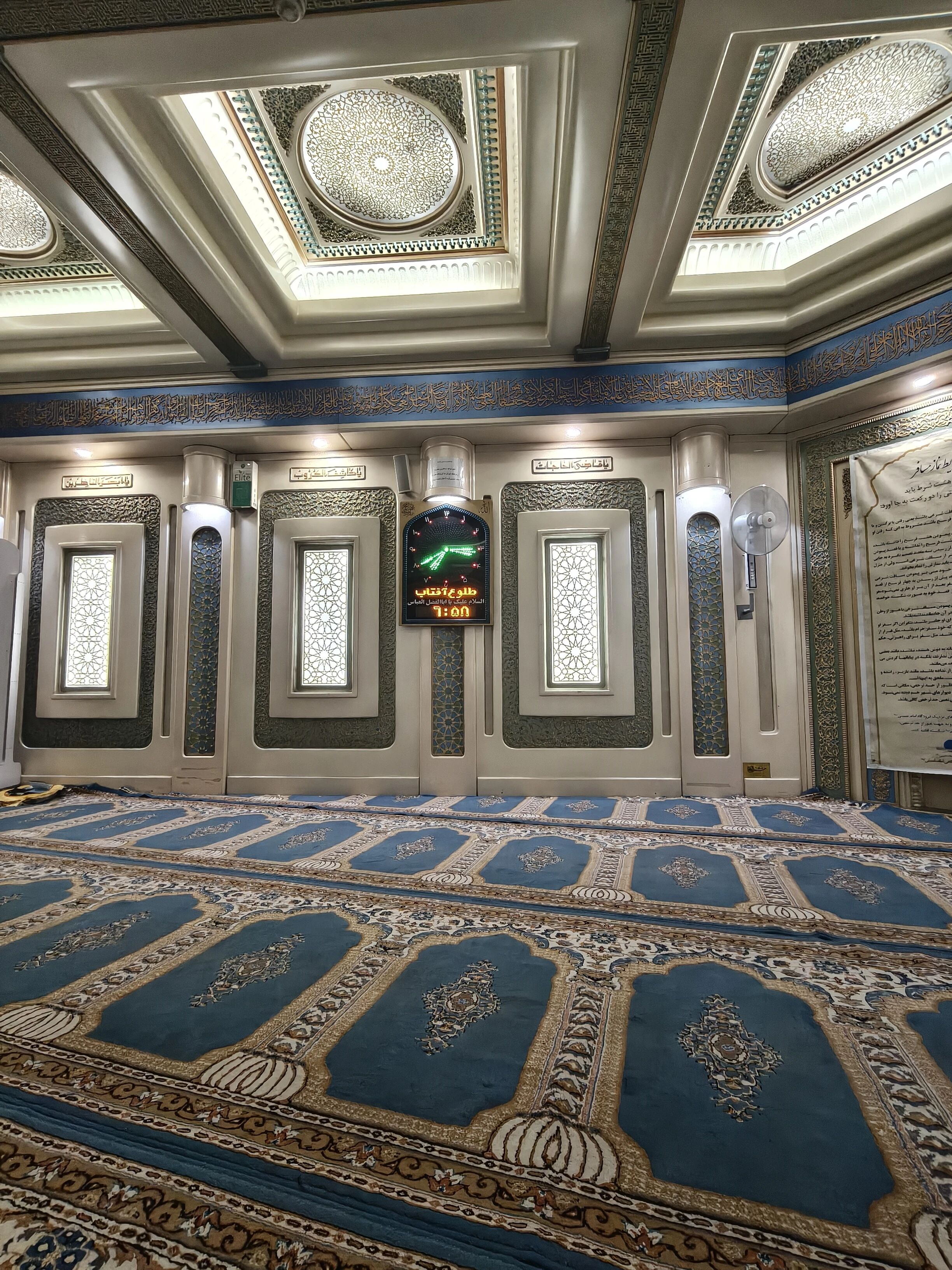
Because of their physical condition, they cannot stand, bow, or prostrate during namaz, so they must pray while sitting in these chairs. These small chairs are not rare; you can find them in almost every mosque, and they are not unique to the Shia sect.
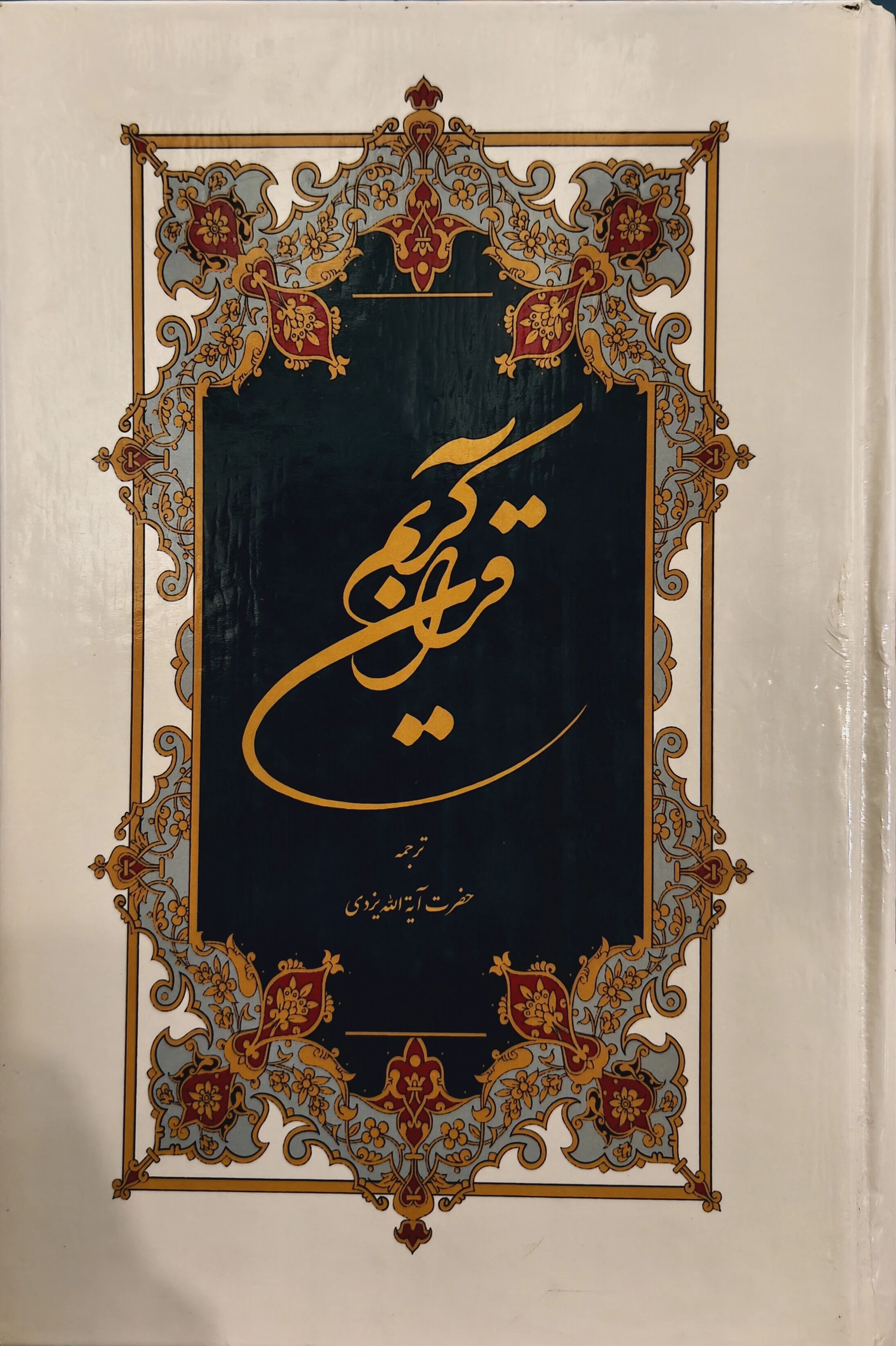
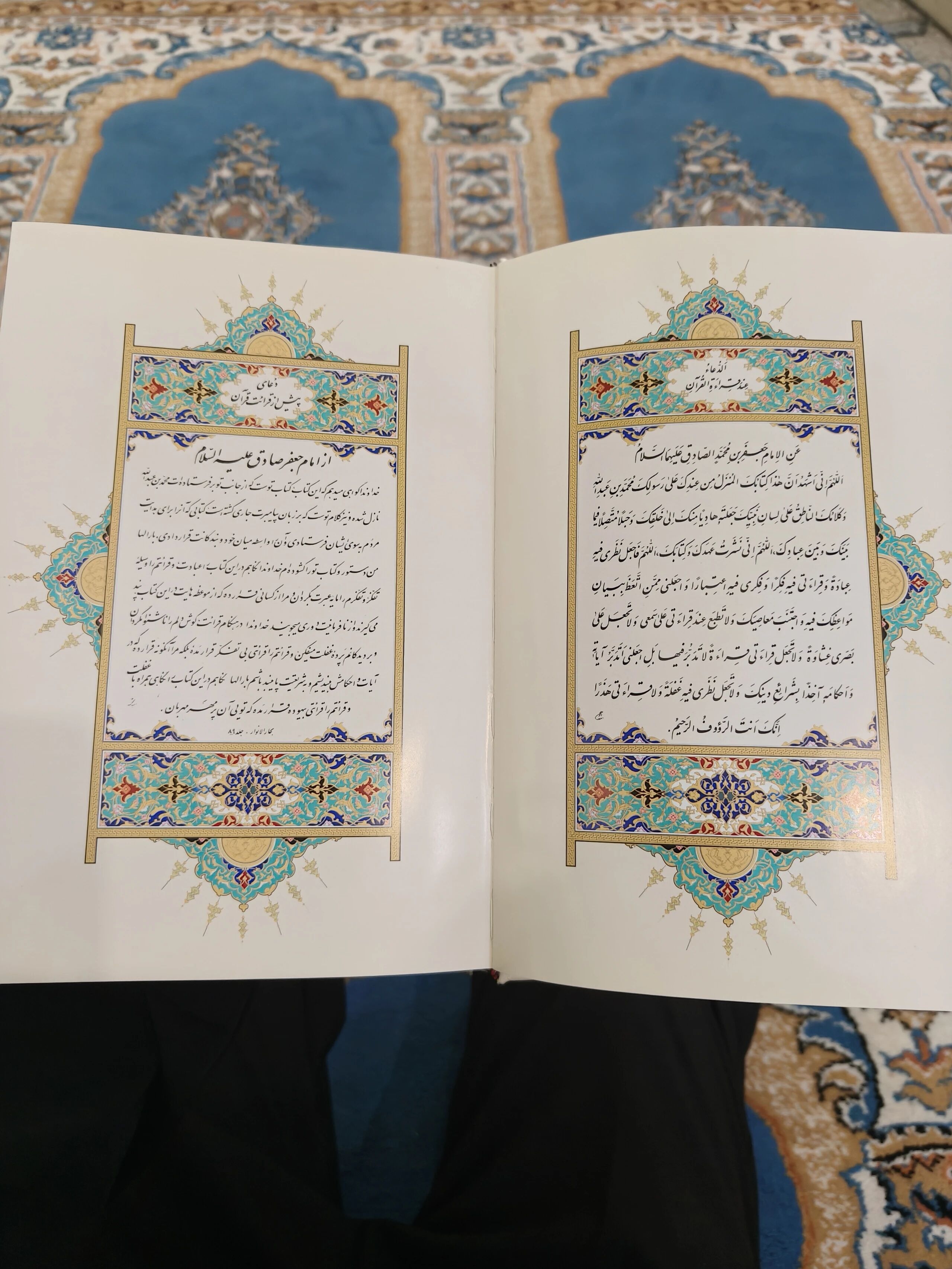
Behind this prayer room, there is a place for storing calligraphy (Photo 13). I picked up a Qur'an, and since I was in Iran, the cover naturally featured elegant Persian calligraphy (Photo 14). The preface on the first page was also written in Persian calligraphy.
I opened the main text of the Qur'an and noticed a line of small print underneath the verses (Photo 16), which was a Persian translation.
After that, I left the prayer room and got into a taxi heading to downtown Tehran. What kind of experiences will I have in Iran ahead? The next part will be updated soon. Collapse Read »
Summary: This Iran Muslim travel guide starts at Imam Khomeini International Airport in Tehran, covering the author's Oman transfer, airport money exchange, the first-floor prayer room, shoe area, Shia-style decoration, mohr prayer stones, Qur'an copies with Persian translation, and the first impression of Iran.
Since visiting a Shia mosque in Singapore last time, my interest in Shia Islam has grown, and I even thought about exploring a Shia country.
So, I stopped over in Oman (Oman has a minority sect independent of Sunni Islam called Ibadi Islam; I will share what I saw and heard in Oman later) and landed at Imam Khomeini International Airport in the capital of Iran.
I do not understand why they chose different characters for the transliteration; isn't Imam Khomeini just Imam Khomeini?
This airport looks a bit old. I had just flown from the new terminal at Lanzhou Zhongchuan Airport to Beijing Capital Airport, then from Daxing Airport to Muscat Airport in Oman for my layover. So for me, the contrast was very obvious.
Back to the point, the first thing to do after landing is to exchange money. I suggest you only exchange enough for your taxi fare at the airport. You should exchange the bulk of your money in the city. The exchange rate in the city is very different from the airport; for the same amount of money, you can get 1.2 million in the city, but the airport will only give you 750,000.
This gap is quite large. (Airport currency exchange counters are often like this, but the one at the Iranian airport felt especially harsh.) After exchanging money, I went to the first floor and noticed the prayer room (Photos 3 and 4). Its decoration style is different from the simple style in Malaysia, Oman, and Singapore.
It happened to be time for namaz, so I stepped into the prayer space in Iran.
Photo 5 shows the entryway, where you must put your shoes in the cubbies. On the left is the men's prayer room, and on the right is the women's prayer room. As soon as I walked in, I noticed something I had never seen in any other mosque or prayer room I had visited before: small stone tablets.
(Photo 6) Even the Shia mosque I visited in Singapore earlier did not have these.
During namaz, I noticed that everyone here had one, placing it exactly where their forehead would touch the ground. (Photo 7, Photo 8) I picked one up too. It was about the size of a chess piece, felt like brick, and had a smooth surface that did not crumble. It had the words "Ya (a call) Husayn" written on it.
This must be a way to express grief for the Prophet's grandson who died at the hands of his enemies.
After namaz, I took a panoramic shot of the room. It is quite large, and the ceiling and walls are decorated.
You might notice a row of chairs with small desks on the right side of the prayer hall (Photo 11). What are these for? These are for Muslims who have trouble walking or have back problems.
Because of their physical condition, they cannot stand, bow, or prostrate during namaz, so they must pray while sitting in these chairs. These small chairs are not rare; you can find them in almost every mosque, and they are not unique to the Shia sect.
Behind this prayer room, there is a place for storing calligraphy (Photo 13). I picked up a Qur'an, and since I was in Iran, the cover naturally featured elegant Persian calligraphy (Photo 14). The preface on the first page was also written in Persian calligraphy.
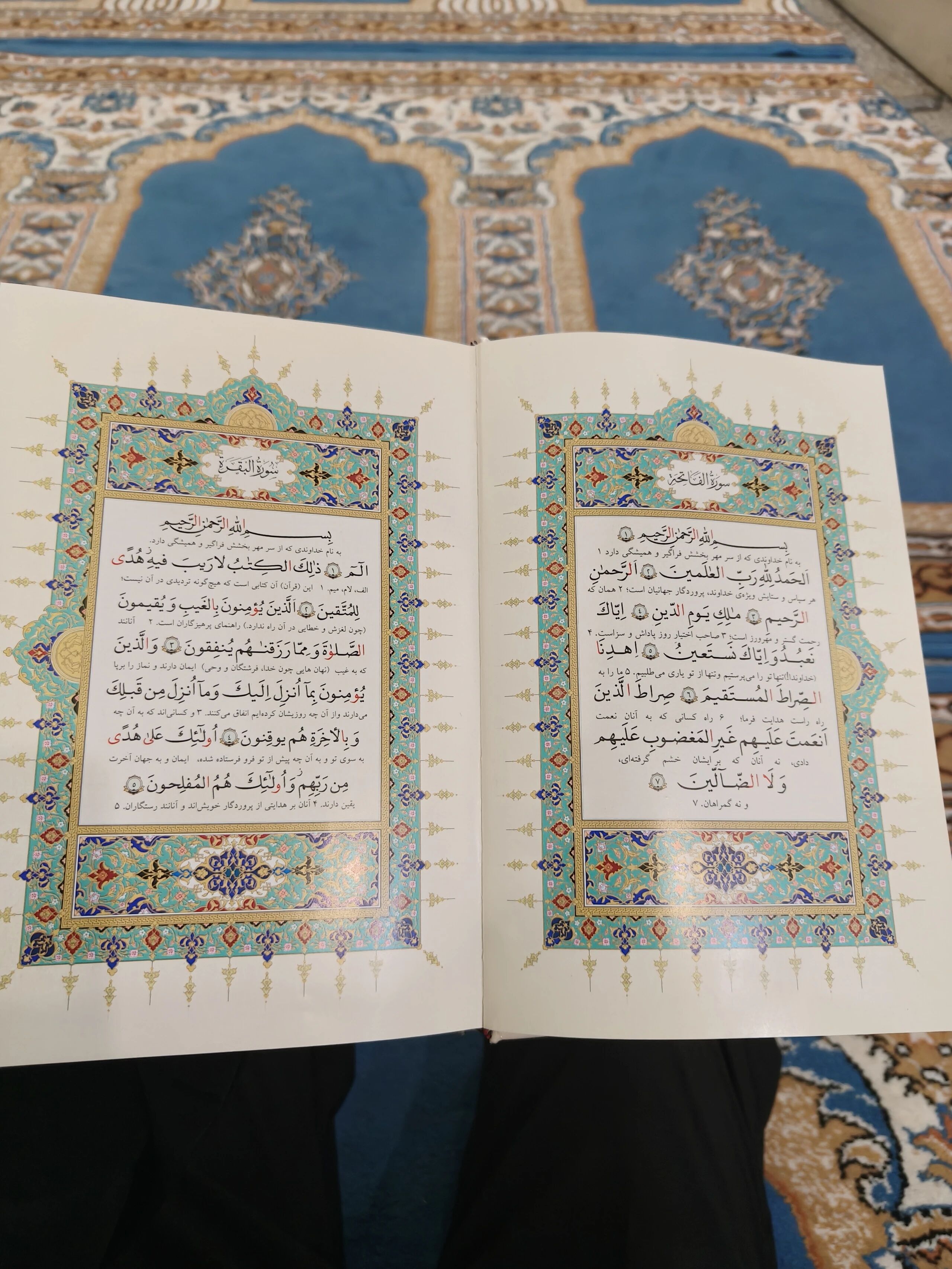
I opened the main text of the Qur'an and noticed a line of small print underneath the verses (Photo 16), which was a Persian translation.
After that, I left the prayer room and got into a taxi heading to downtown Tehran. What kind of experiences will I have in Iran ahead? The next part will be updated soon. Collapse Read »
Muslim Travel Guide Maldives Male: Friday Mosque, Coral Stone Tombs and National Museum
Reposted from the web
Summary: This Maldives Muslim travel guide visits Male's old Friday Mosque, its lighthouse-like minaret, coral-stone tombs, carved wooden interior, coffered ceiling, Muslim visitors from South Africa and Turkiye, and the nearby National Museum with royal objects, ship models, and marine displays.
After visiting many places in Singapore, I started my journey to the Maldives. The Maldives is the first Muslim country I have ever visited. In the Maldives, I mainly stayed on Male, the local island city.
Male is densely populated and is likely the most populous island in the Maldives. There are two mosques in the center of the island, one new and one old. The new one is called the Sultan Mohammed Mosque and has a striking gold dome. The old one is called the Male Friday Mosque.
I filmed a lot of footage on the island, including many small soccer fields, free beaches, dense building complexes, busy piers, and giant flying foxes. However, due to severe data loss, I can currently only find some photos of the Male Friday Mosque to share with you.
I want to urge everyone to take data security seriously and back up your data in time! Otherwise, if you lose it, you will be truly heartbroken and full of regret!
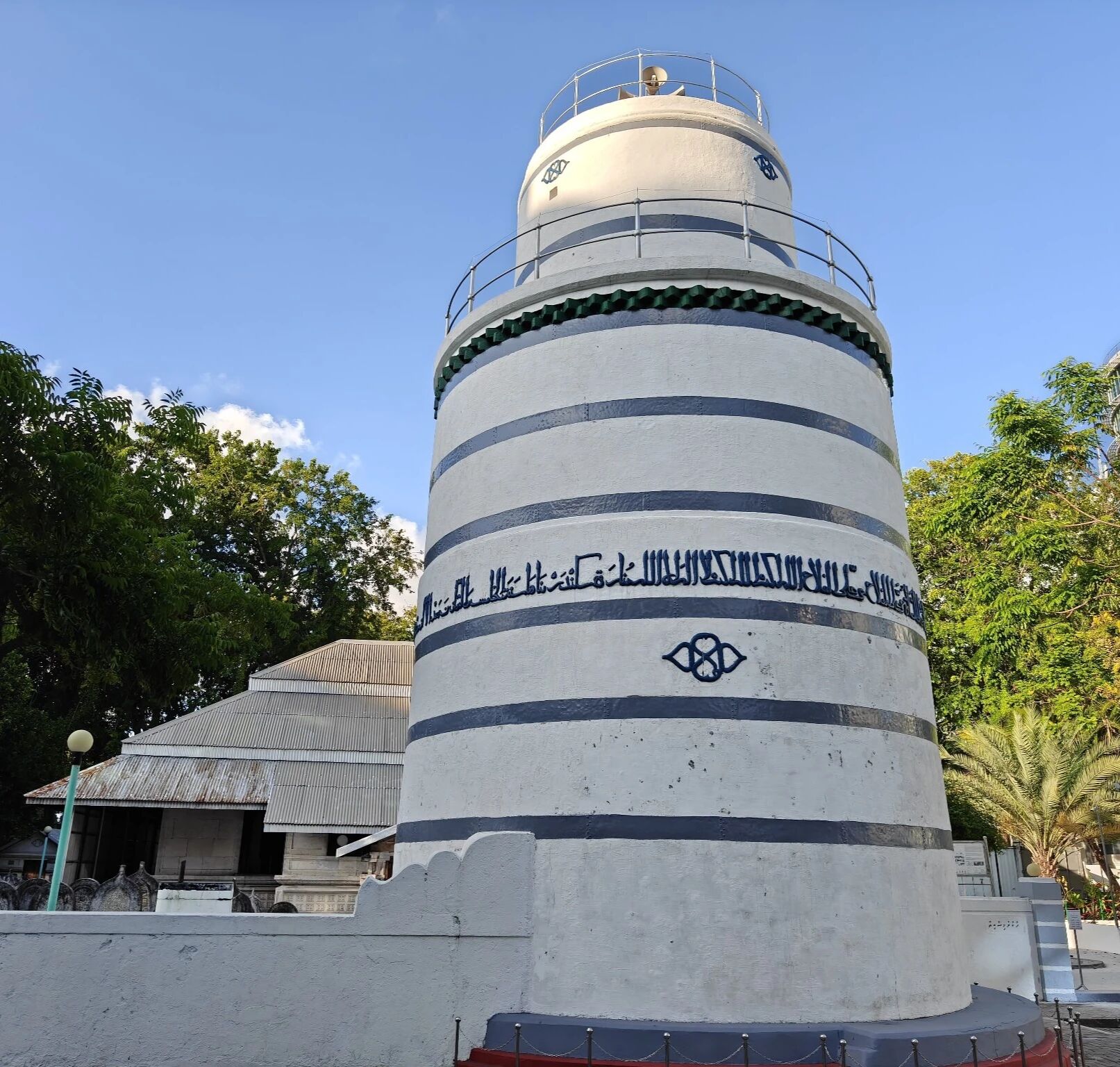
There is a lighthouse-shaped minaret at the entrance of the Male Friday Mosque (Picture 1). This reminds me of the Light Tower at the Huaisheng Mosque in Guangzhou. A few years ago, I was lucky enough to see its beauty in Guangzhou.
Behind the tower are a courtyard and the main hall, where you can find some coral stone tombs (tu'er) holding the remains of past sultans. The stone walls are carved and look very delicate.
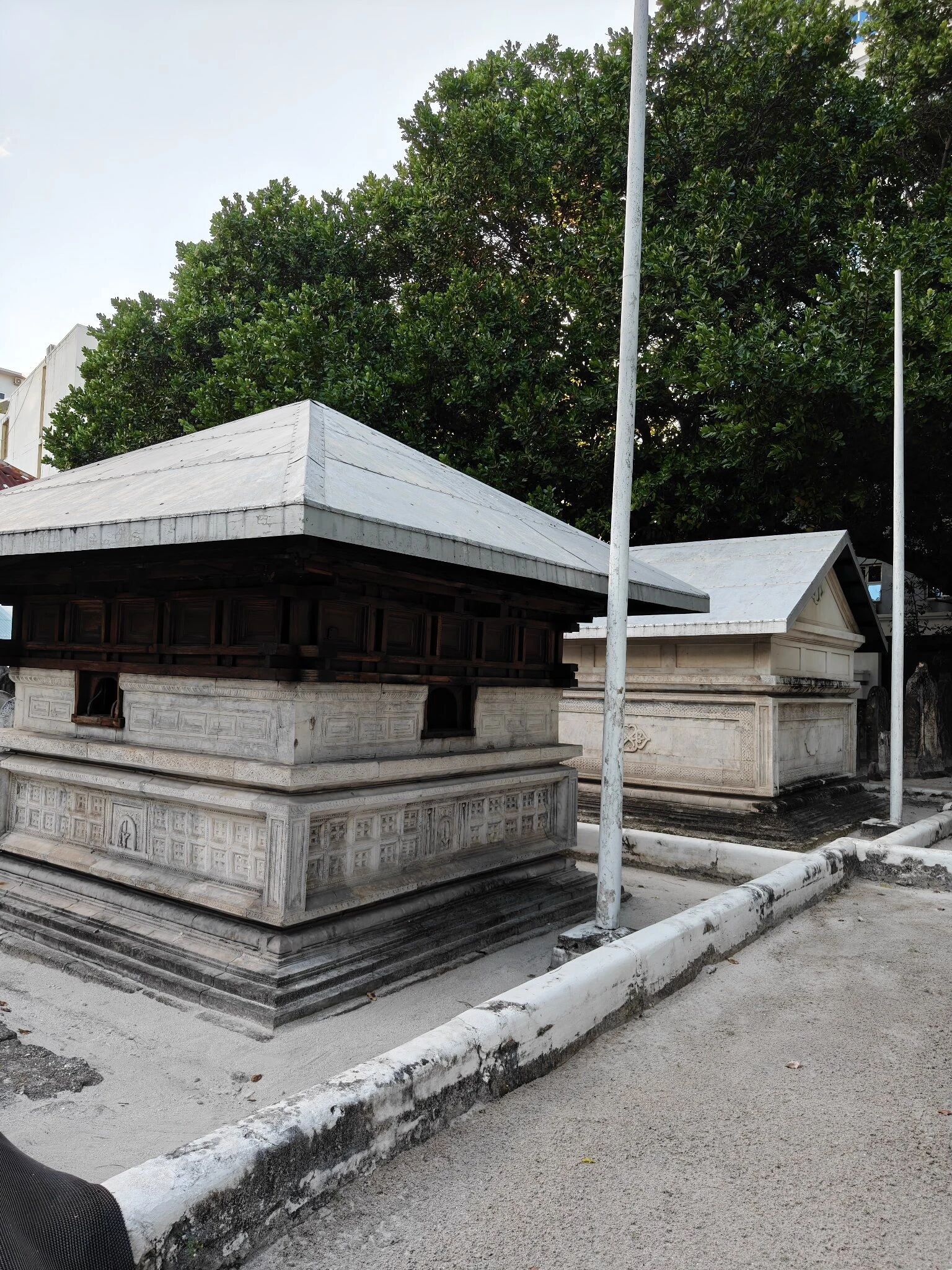
Next to the stone walls, I met a Japanese father and daughter, and their local guide was explaining the stone carvings to them in fluent Japanese. It was quite interesting to hear a guide who looked South Asian speaking such natural Japanese.
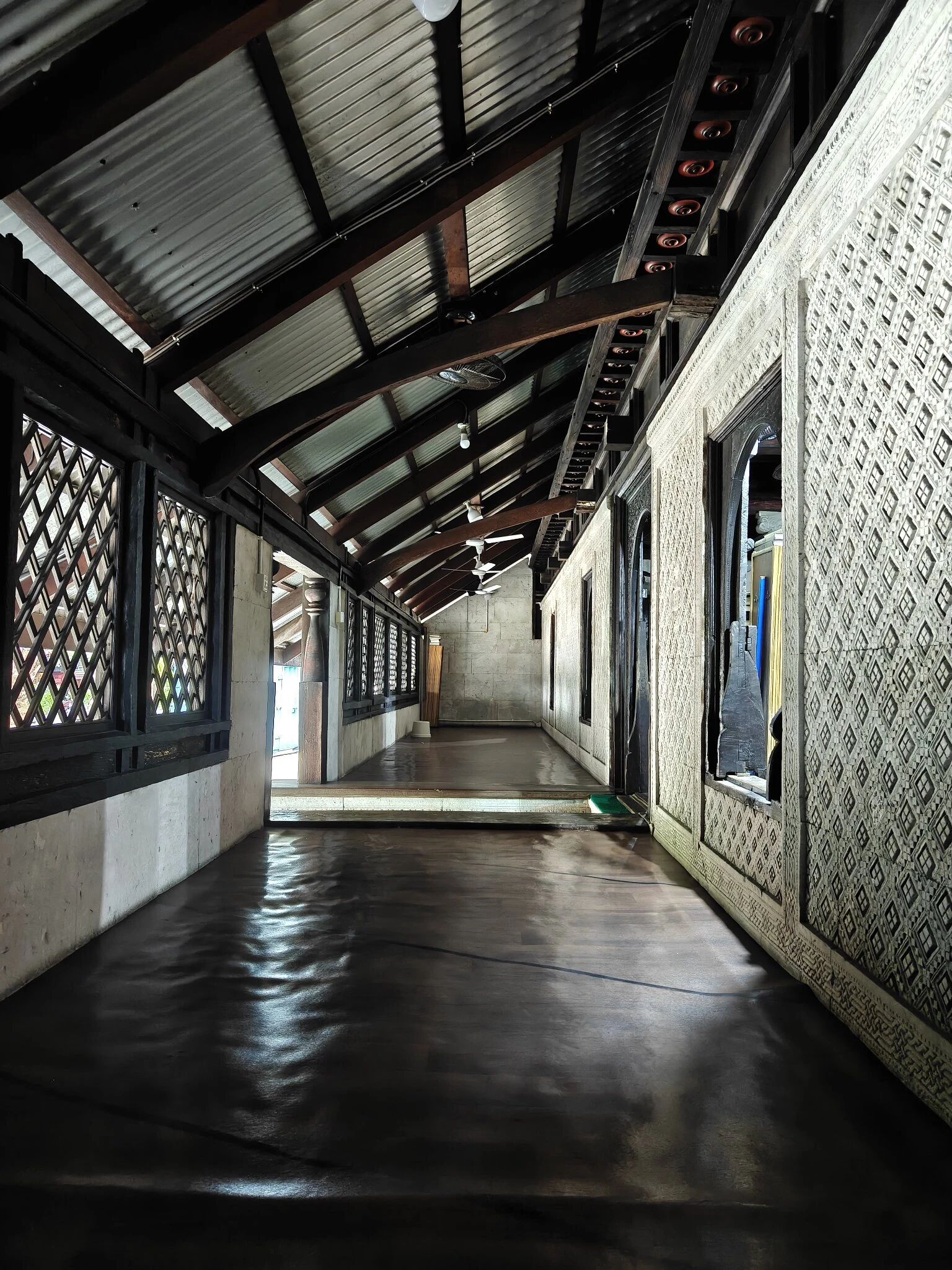
Inside the main hall, there is a corridor with vinyl flooring, and the staff told me that local believers still use this space today. To be honest, before coming to the island, I thought this place had become just a tourist attraction.
However, it is very open to visitors, and you can even enter the prayer hall; I saw a father and daughter who looked Eastern European staring up at the ceiling inside. The daughter was wearing a small square headscarf. (As a side note, Eastern Orthodox women also wear headscarves inside their houses of worship, right?)
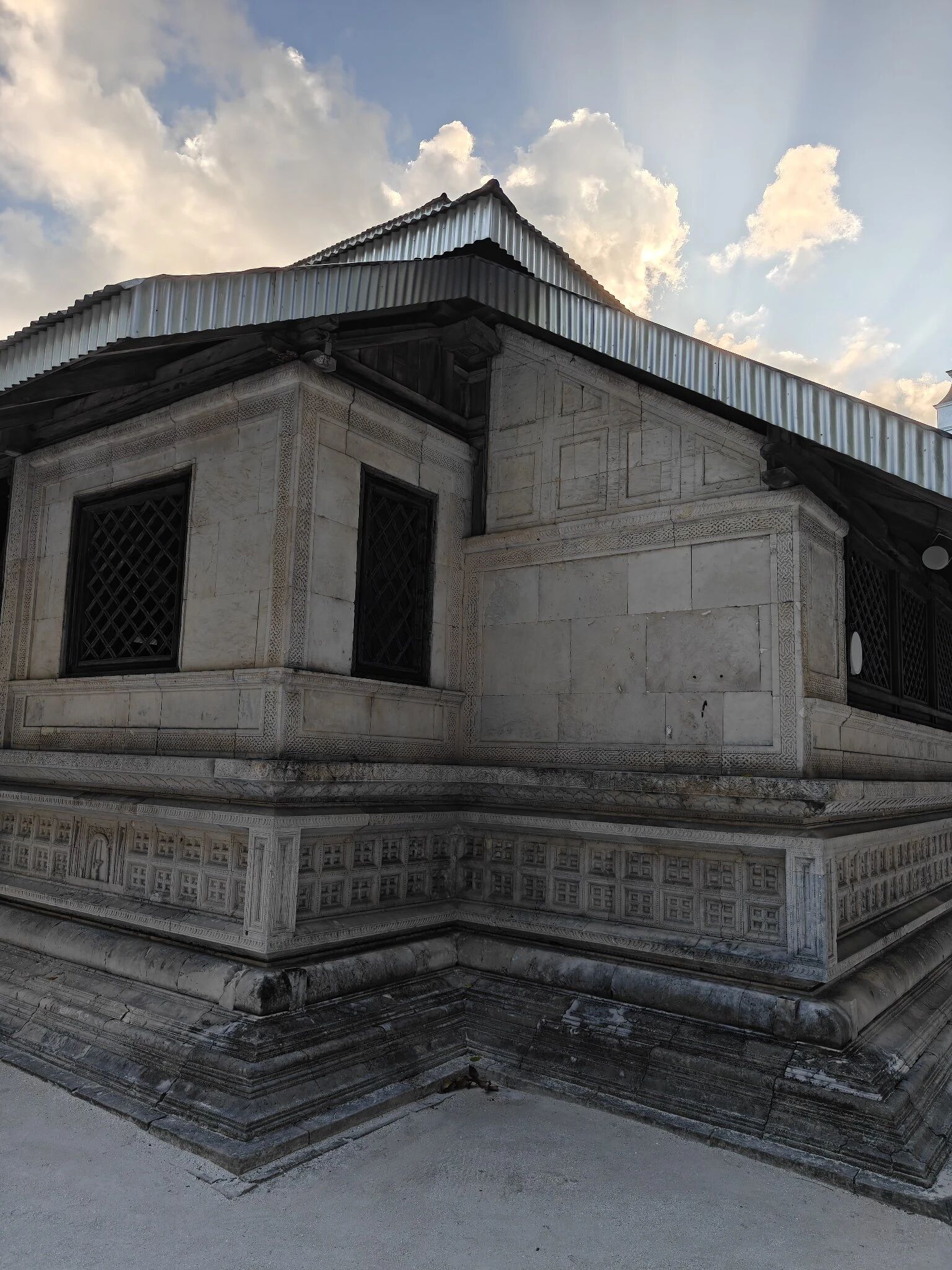
The Male Friday Mosque was built in 1658 and is considered an ancient building, though because land in the Maldives is so limited, the island's ancient structures are not very large. The main hall is quite dim and the ceilings are not very high. But the detail of the interior decoration really surprised me.
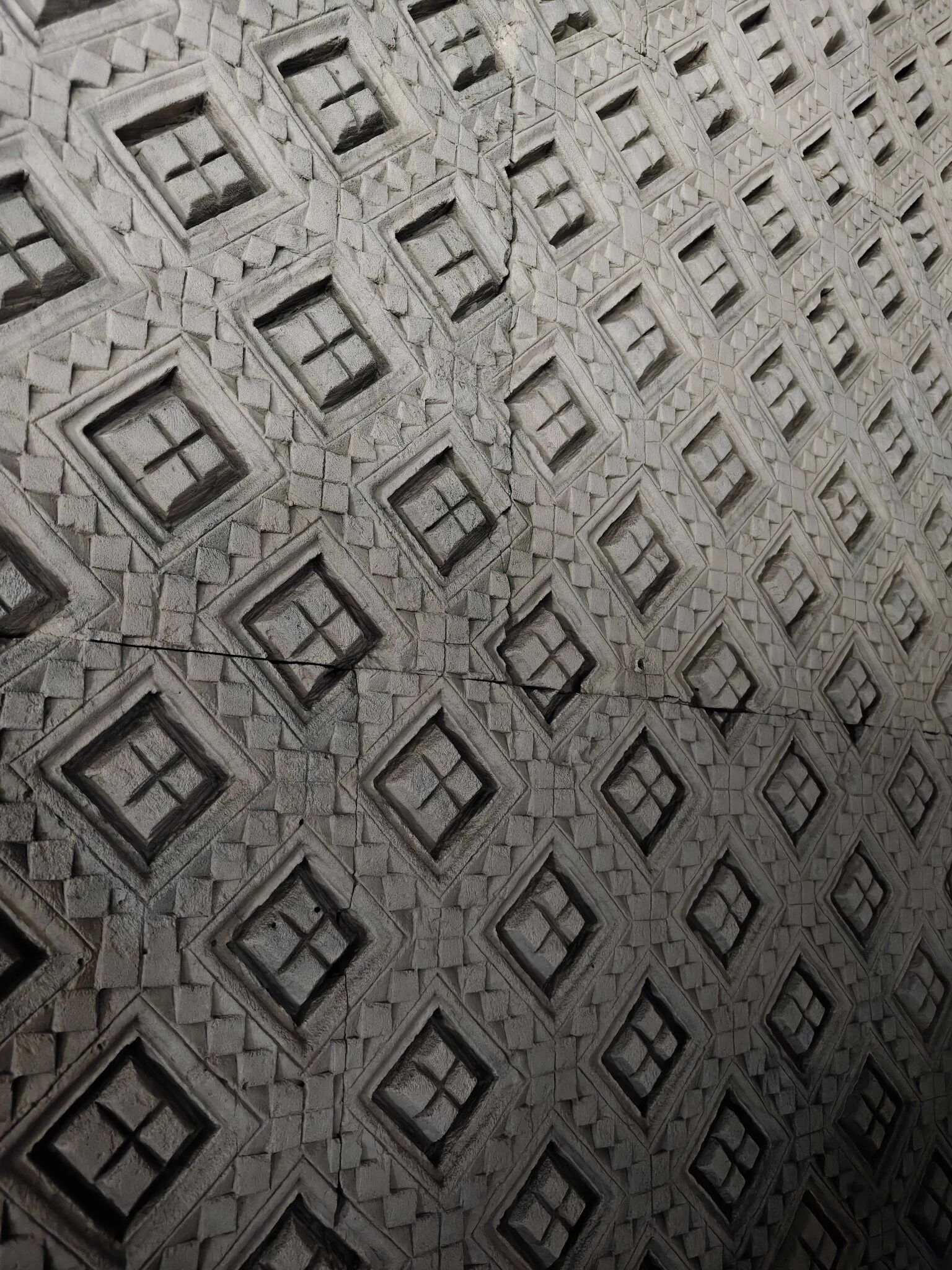
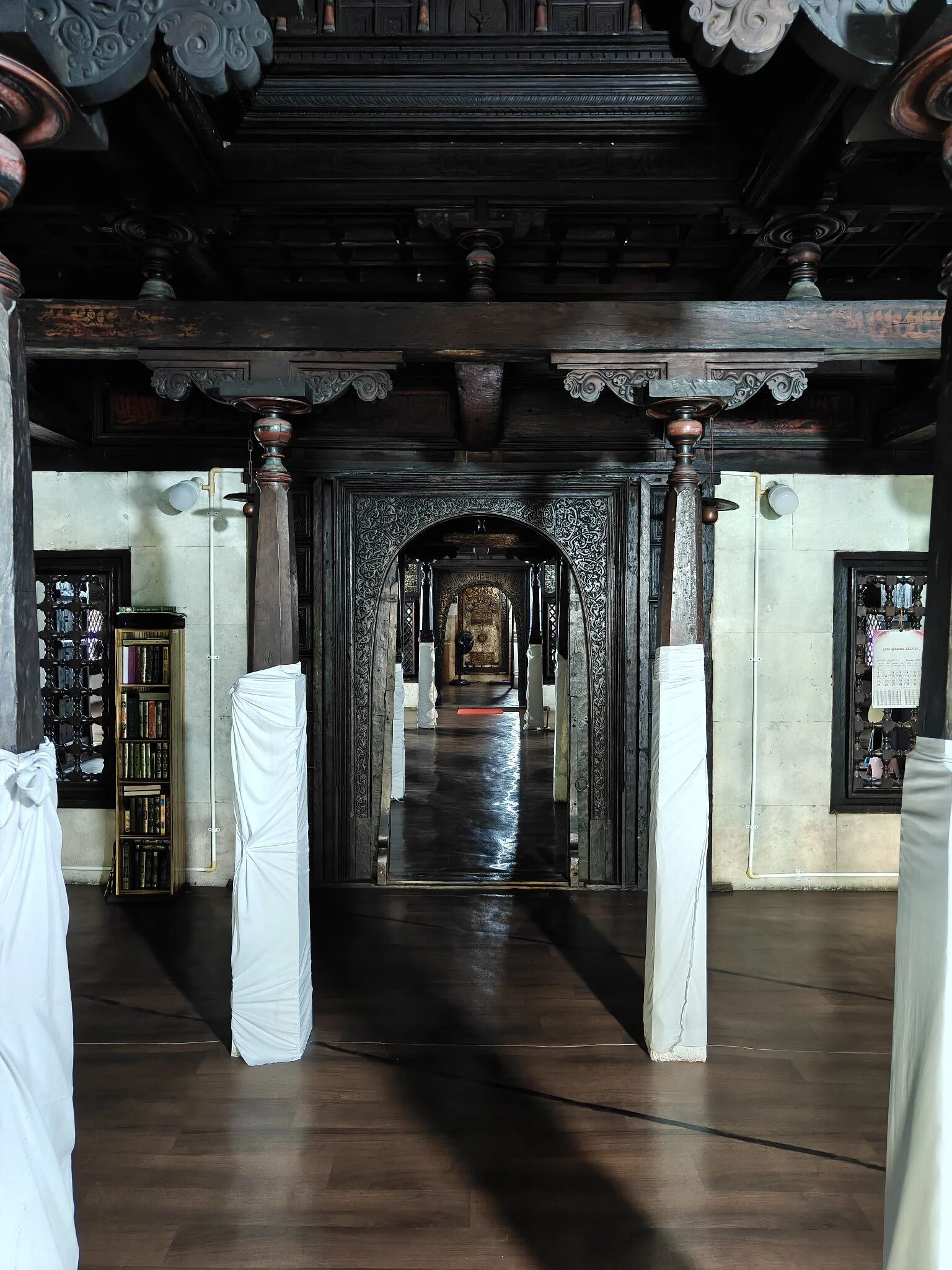
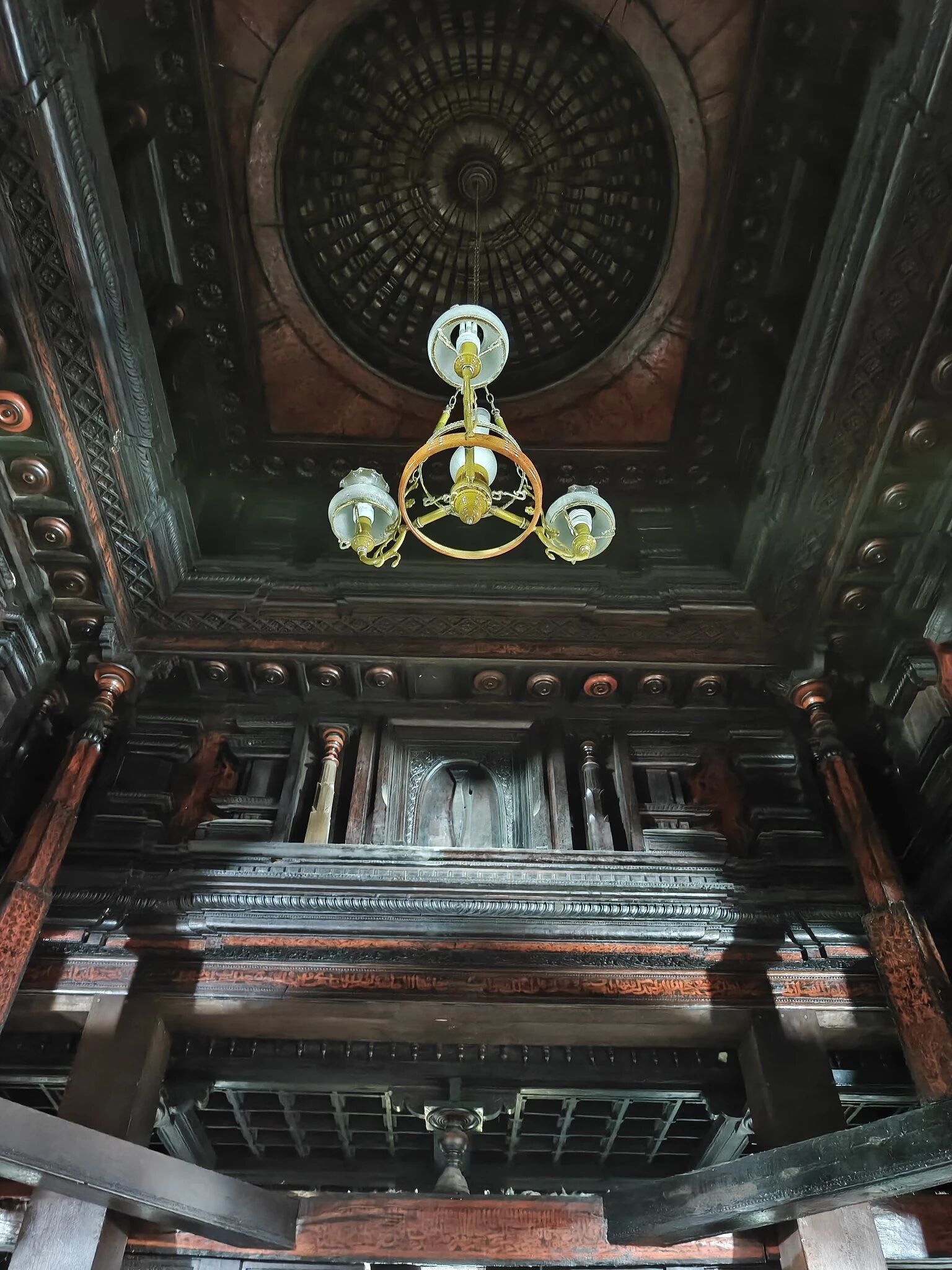
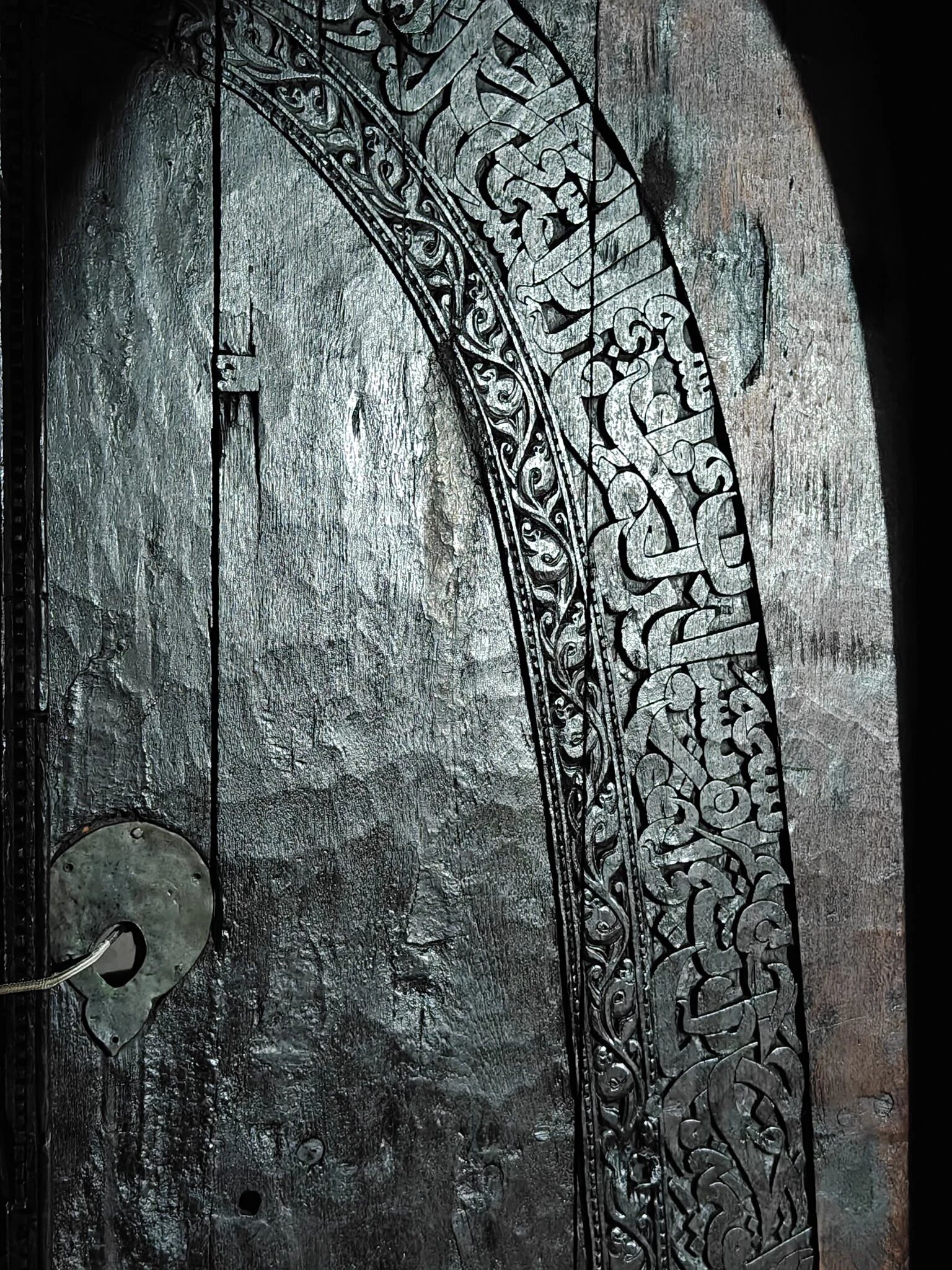
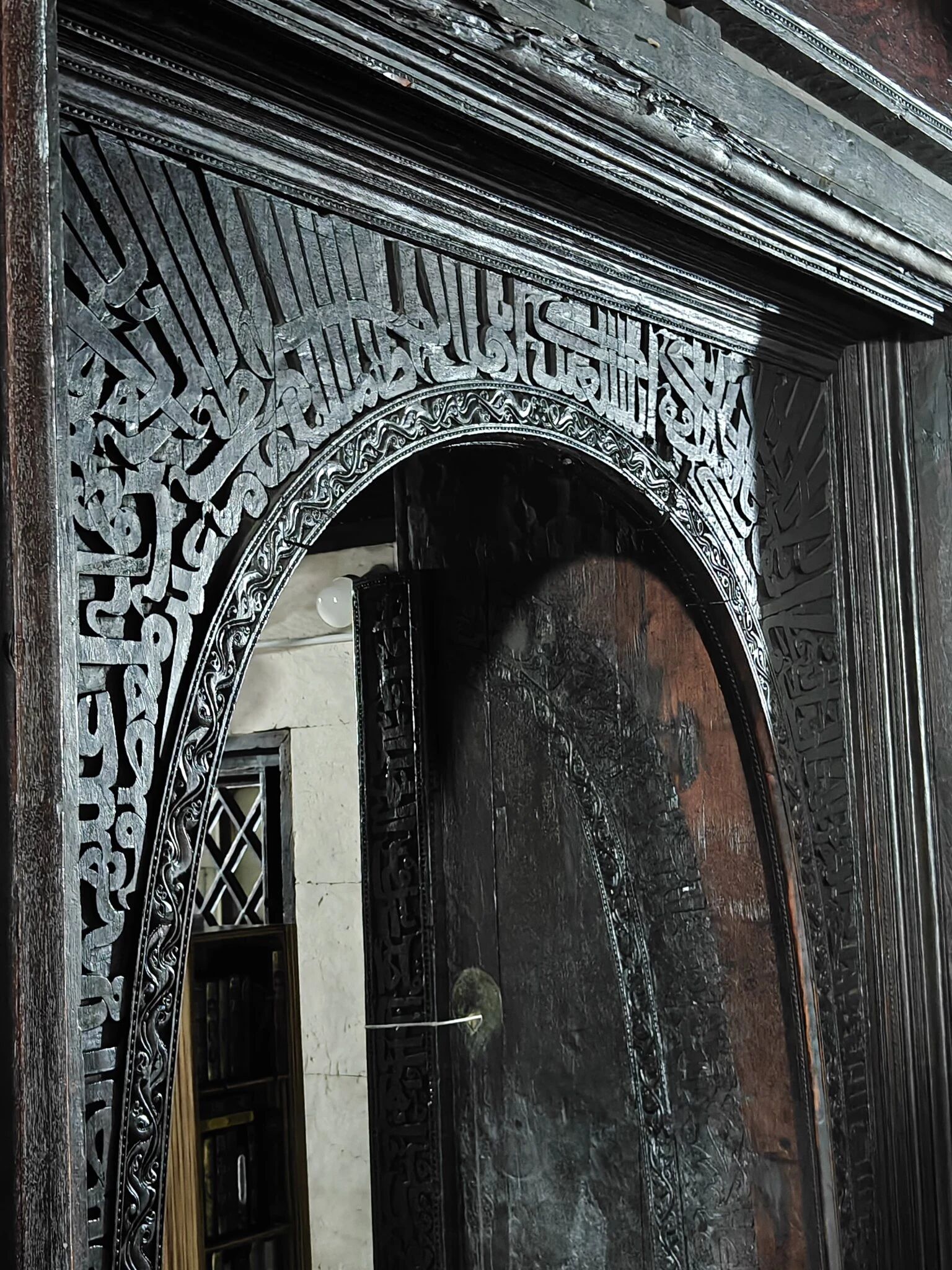
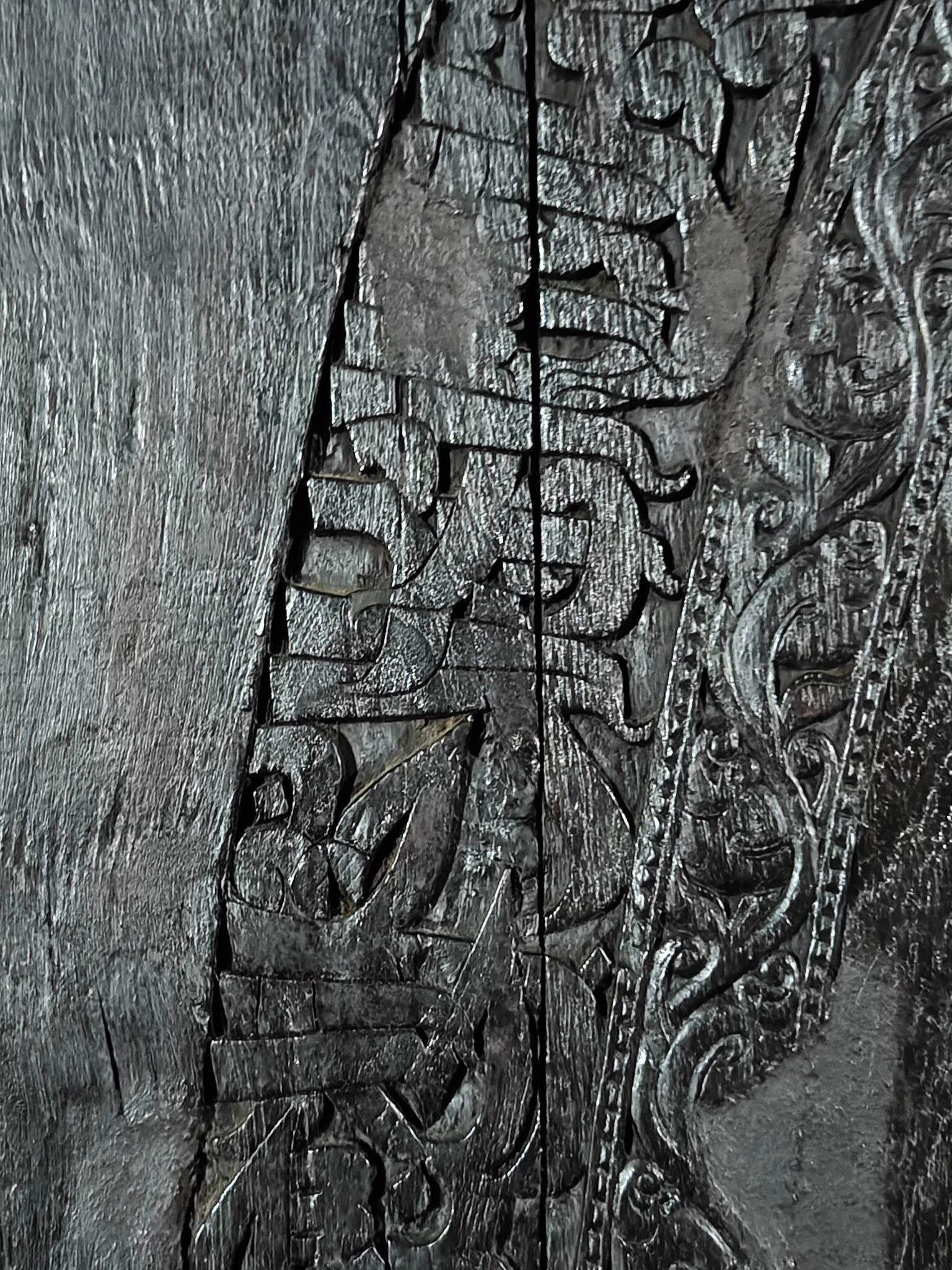
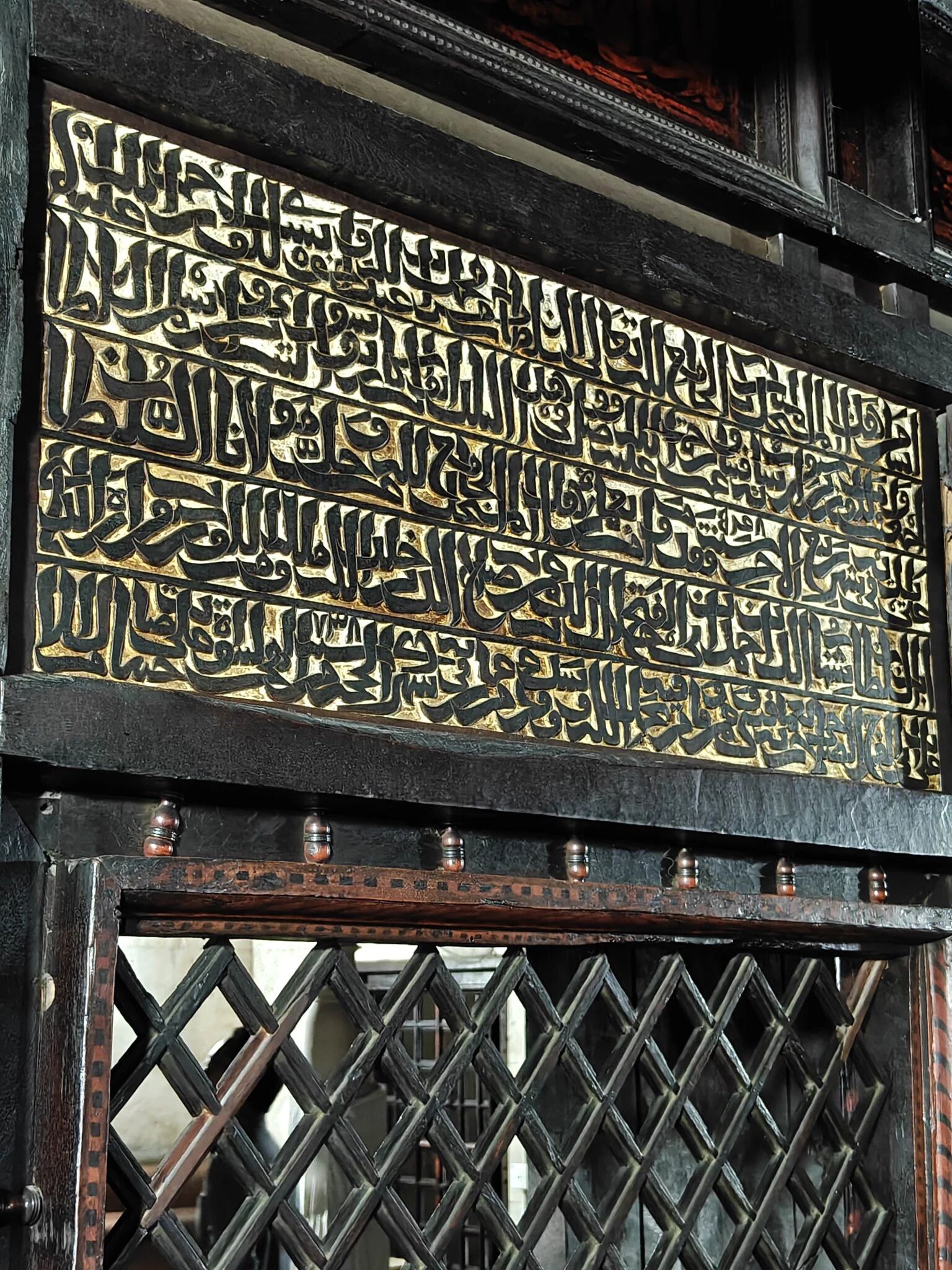
I was especially impressed by the coffered ceiling (zaojing) in the center of the main hall (Photo 6) and the wood carvings inside (Photos 7 through 10). I met Muslim tourists from South Africa and Turkey inside, said hello, and chatted with them for a bit.
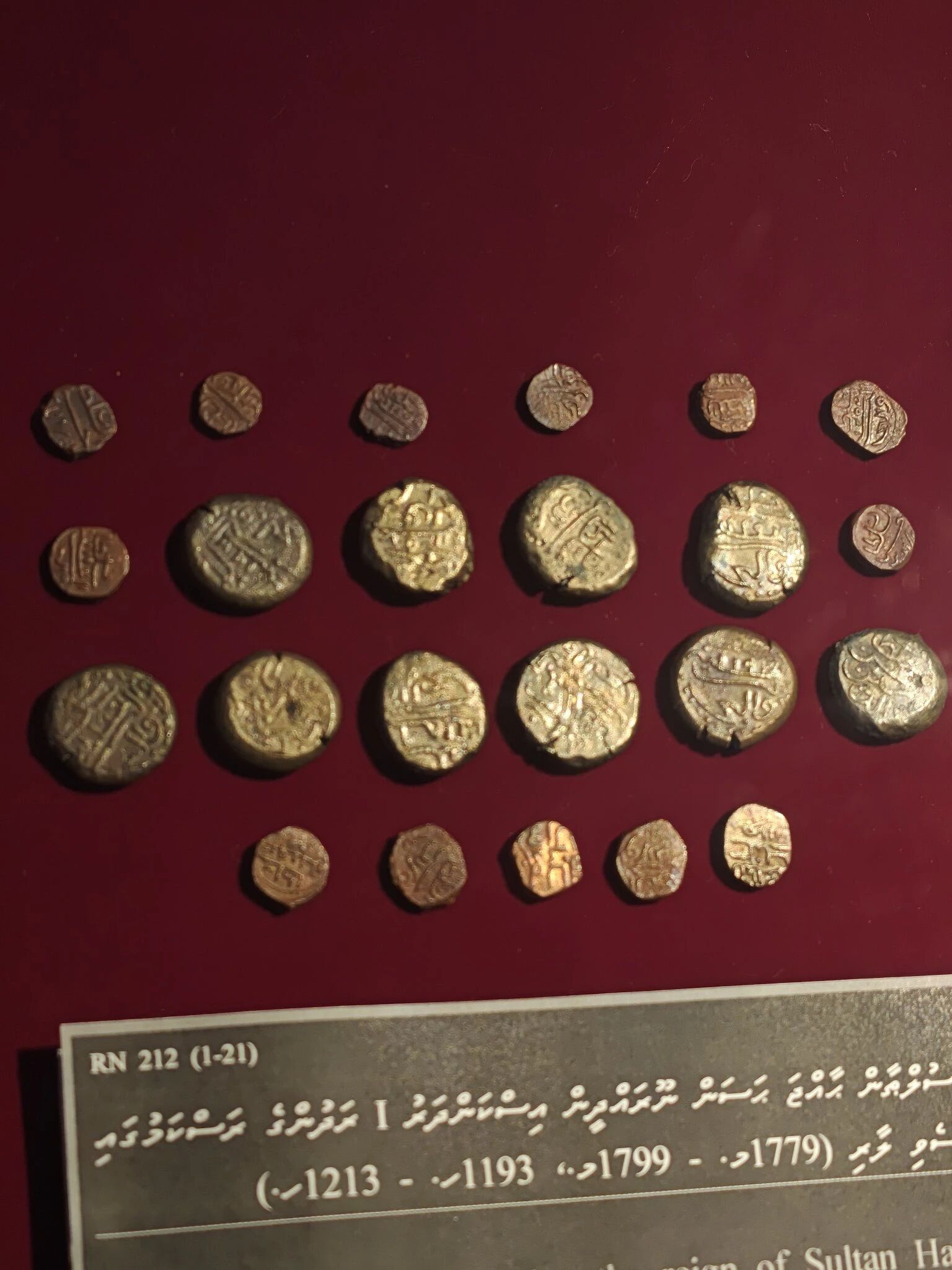
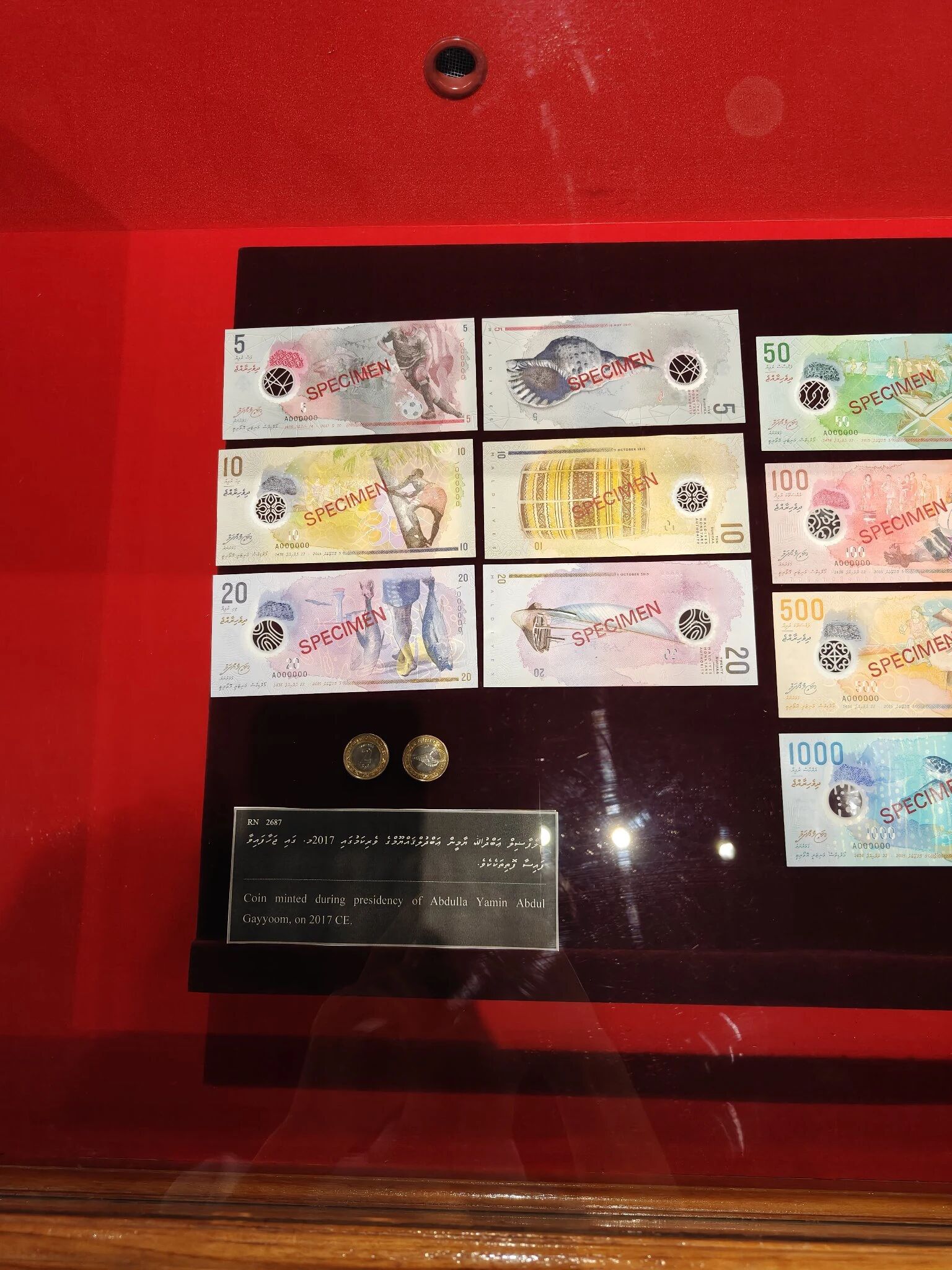
The Male Friday Mosque is right across from the Presidential Palace, and the Maldives National Museum is nearby. The museum has two exhibition halls. The first floor displays some pre-Islamic Hindu sculptures, ancient coins, and some modern machinery.
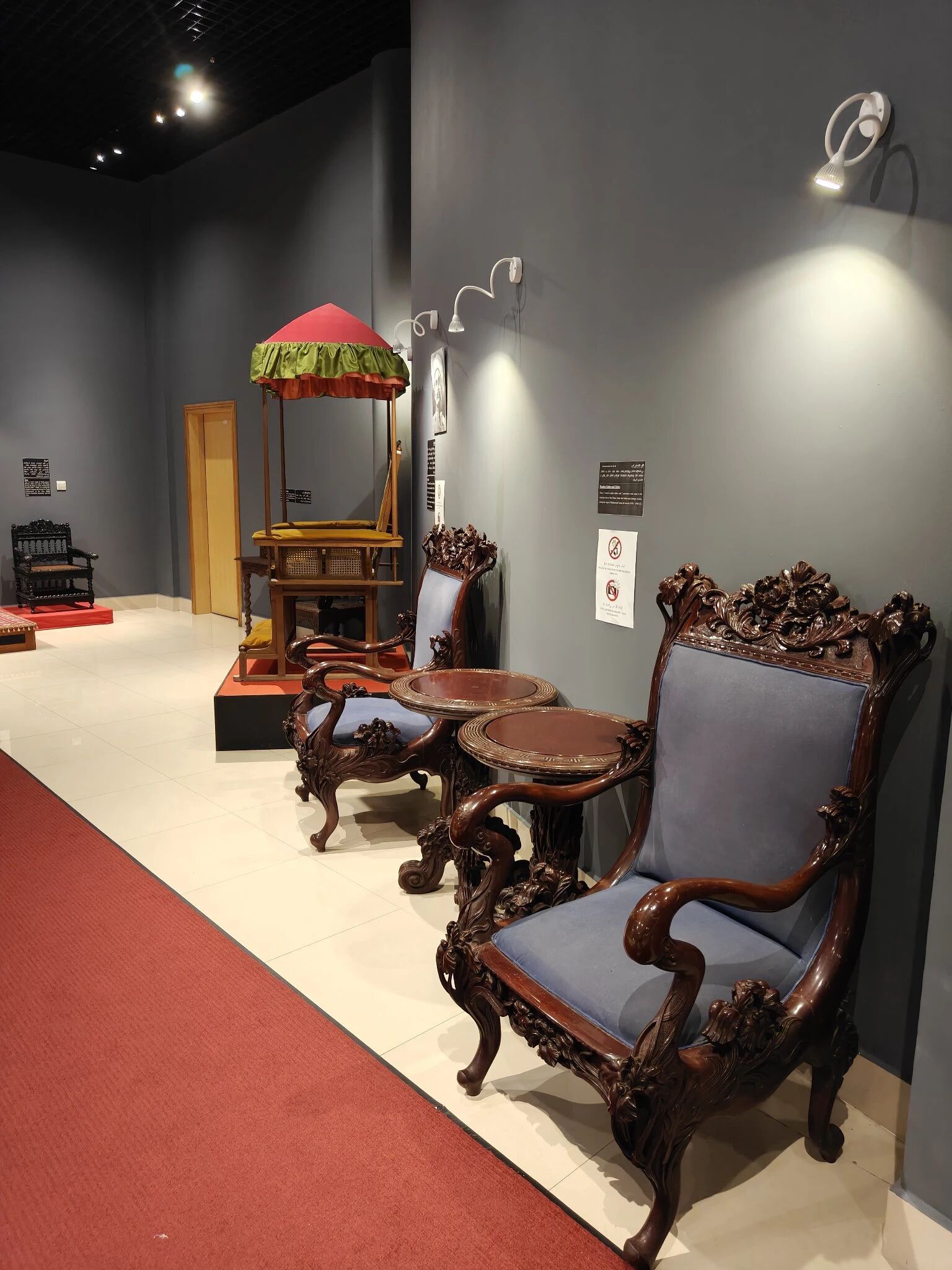
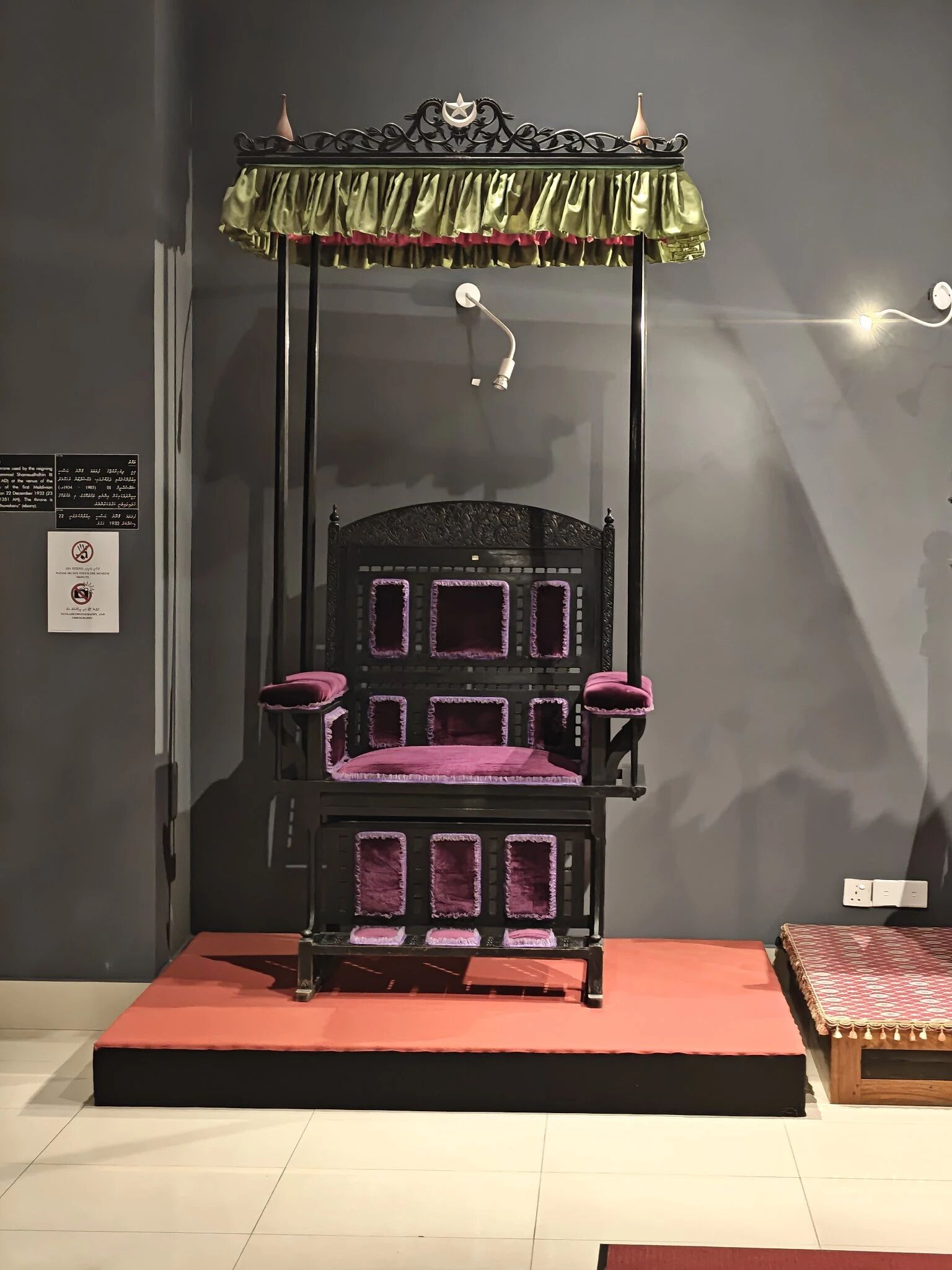
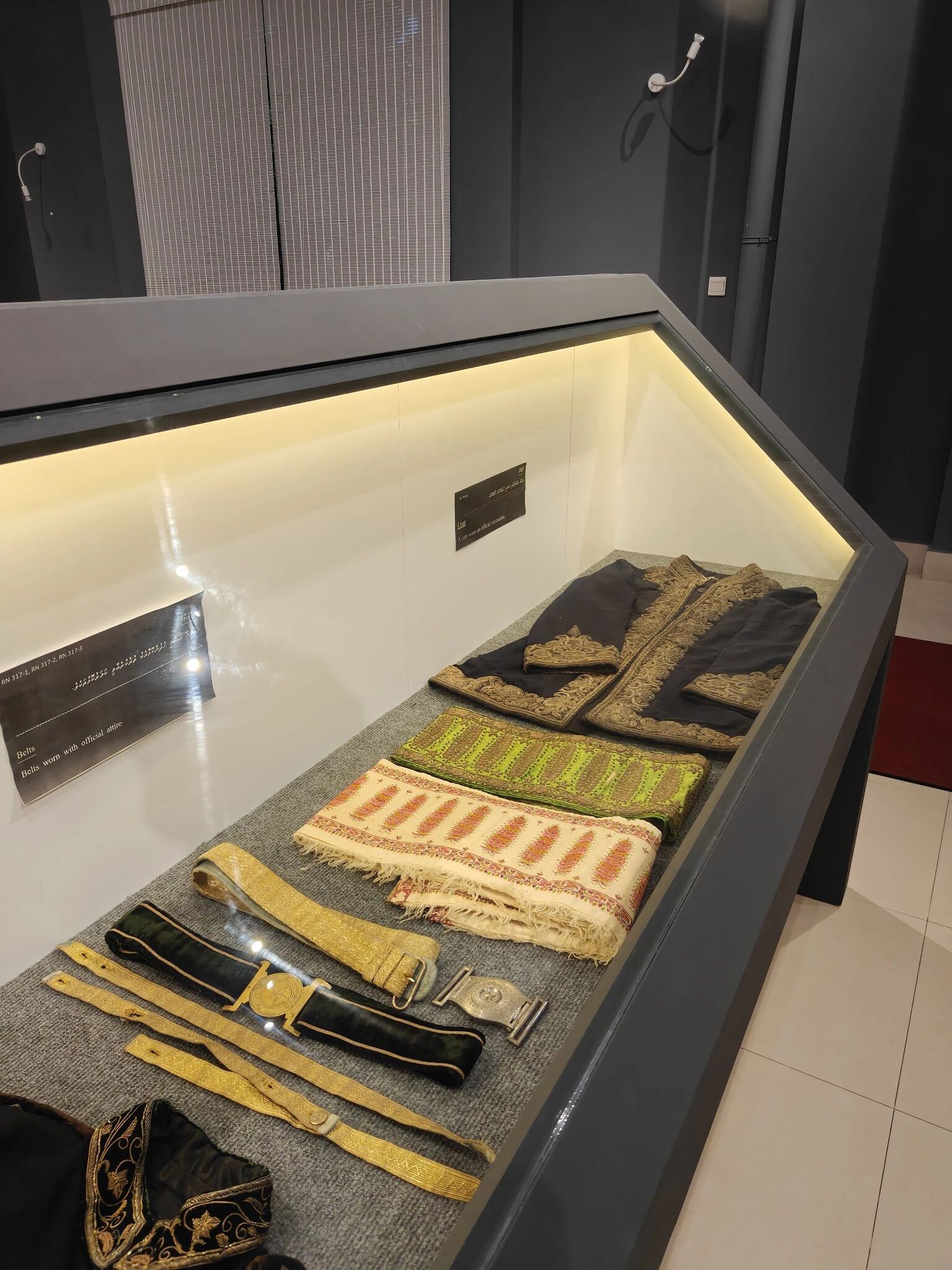
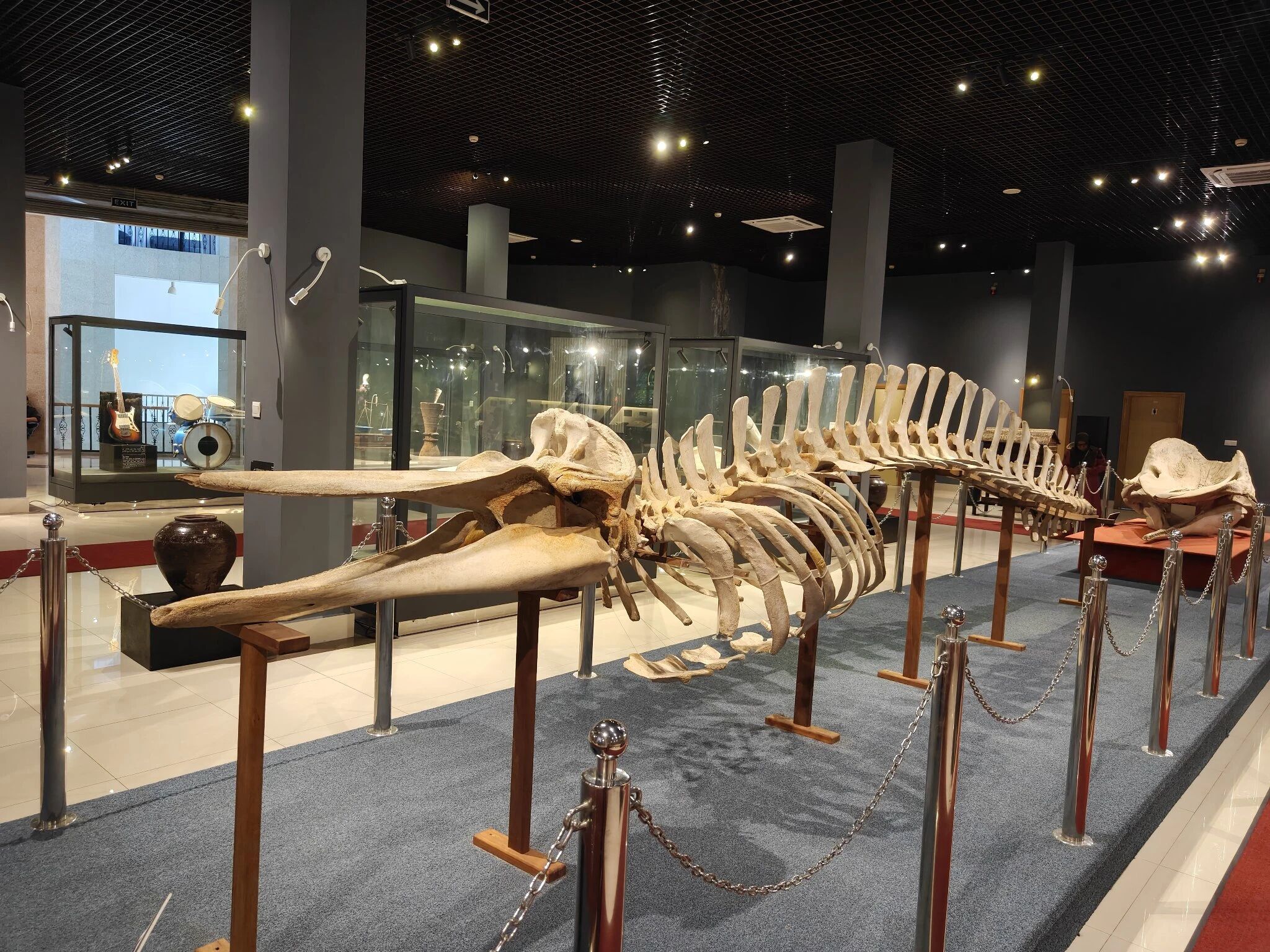
The second floor displays items from the former royal family, models of sailing ships, and specimens of marine life. The most memorable part is the skeleton of a rare whale that washed up on a Maldivian island and was turned into a skeleton specimen for display.
I met some tourists from China at the museum; judging by their clothes, they seemed to be there for a business trip. They only walked through the first floor and left, so they must have missed the second-floor exhibition hall.
 Collapse Read »
Summary: This Maldives Muslim travel guide visits Male's old Friday Mosque, its lighthouse-like minaret, coral-stone tombs, carved wooden interior, coffered ceiling, Muslim visitors from South Africa and Turkiye, and the nearby National Museum with royal objects, ship models, and marine displays.
After visiting many places in Singapore, I started my journey to the Maldives. The Maldives is the first Muslim country I have ever visited. In the Maldives, I mainly stayed on Male, the local island city.
Male is densely populated and is likely the most populous island in the Maldives. There are two mosques in the center of the island, one new and one old. The new one is called the Sultan Mohammed Mosque and has a striking gold dome. The old one is called the Male Friday Mosque.
I filmed a lot of footage on the island, including many small soccer fields, free beaches, dense building complexes, busy piers, and giant flying foxes. However, due to severe data loss, I can currently only find some photos of the Male Friday Mosque to share with you.
I want to urge everyone to take data security seriously and back up your data in time! Otherwise, if you lose it, you will be truly heartbroken and full of regret!
There is a lighthouse-shaped minaret at the entrance of the Male Friday Mosque (Picture 1). This reminds me of the Light Tower at the Huaisheng Mosque in Guangzhou. A few years ago, I was lucky enough to see its beauty in Guangzhou.
Behind the tower are a courtyard and the main hall, where you can find some coral stone tombs (tu'er) holding the remains of past sultans. The stone walls are carved and look very delicate.
Next to the stone walls, I met a Japanese father and daughter, and their local guide was explaining the stone carvings to them in fluent Japanese. It was quite interesting to hear a guide who looked South Asian speaking such natural Japanese.
Inside the main hall, there is a corridor with vinyl flooring, and the staff told me that local believers still use this space today. To be honest, before coming to the island, I thought this place had become just a tourist attraction.
However, it is very open to visitors, and you can even enter the prayer hall; I saw a father and daughter who looked Eastern European staring up at the ceiling inside. The daughter was wearing a small square headscarf. (As a side note, Eastern Orthodox women also wear headscarves inside their houses of worship, right?)
The Male Friday Mosque was built in 1658 and is considered an ancient building, though because land in the Maldives is so limited, the island's ancient structures are not very large. The main hall is quite dim and the ceilings are not very high. But the detail of the interior decoration really surprised me.
I was especially impressed by the coffered ceiling (zaojing) in the center of the main hall (Photo 6) and the wood carvings inside (Photos 7 through 10). I met Muslim tourists from South Africa and Turkey inside, said hello, and chatted with them for a bit.
The Male Friday Mosque is right across from the Presidential Palace, and the Maldives National Museum is nearby. The museum has two exhibition halls. The first floor displays some pre-Islamic Hindu sculptures, ancient coins, and some modern machinery.
The second floor displays items from the former royal family, models of sailing ships, and specimens of marine life. The most memorable part is the skeleton of a rare whale that washed up on a Maldivian island and was turned into a skeleton specimen for display.
I met some tourists from China at the museum; judging by their clothes, they seemed to be there for a business trip. They only walked through the first floor and left, so they must have missed the second-floor exhibition hall.
Collapse Read »
Muslim Travel Guide Singapore: Burhani Mosque, Dawoodi Bohra Shia Community and Prayer Hall
Reposted from the web
Summary: This Singapore Muslim travel guide visits Burhani Mosque, the Shia mosque linked to the Dawoodi Bohra community from Gujarat, with its locked entrance, wudu area, two-part prayer hall, dome windows, mihrab banners, individual prayers, and a rare look at Shia Muslim life in Singapore.
I became interested when I heard a guide and an imam at the Abdul Gafoor Mosque mention that there is a Shia mosque in Singapore. I had read a bit online about the differences between Sunni and Shia Islam.
But I had never visited a Shia mosque or met anyone from the Shia community in person.
When I reached the main street entrance of Burhani Mosque, it was almost time for salah, but the doors were still locked.
The sign at the entrance said that Burhani Mosque (Masjid Al Burhani) is the spiritual home of the Dawoodi Bohra community and was built in 1897.
This community comes from Gujarat, India (the same place as the Angullia family from my last post, and also the home of Indian Prime Minister Modi).
The older man I met inside the mosque later did look a bit like Modi, and the community members mainly trade in timber, tin, and rubber.
After quickly reading the introduction, I tried to enter through the back door, but there was a sign saying it was private property, even though the Q&A section on Google Maps said it was open. I stood at the entrance feeling stuck, wondering if I should just walk in. Or should I just leave and go somewhere else?
Just then, a man who looked South Asian walked up behind me, and after he confirmed I could go in, I finally entered this Shia mosque in Singapore. In the wudu area, I found some wooden clogs with an Indian style, which looked like they would be hard to wear.
Entering the prayer hall, I found it divided into two sections by a central door: a front hall and a back hall. The back hall (photos 5 and 6) has a high ceiling, and there is also prayer space on the second floor. Above is a dome with two layers of windows along the edge, totaling eight semicircular windows, and the inside of the dome is decorated with relief patterns.
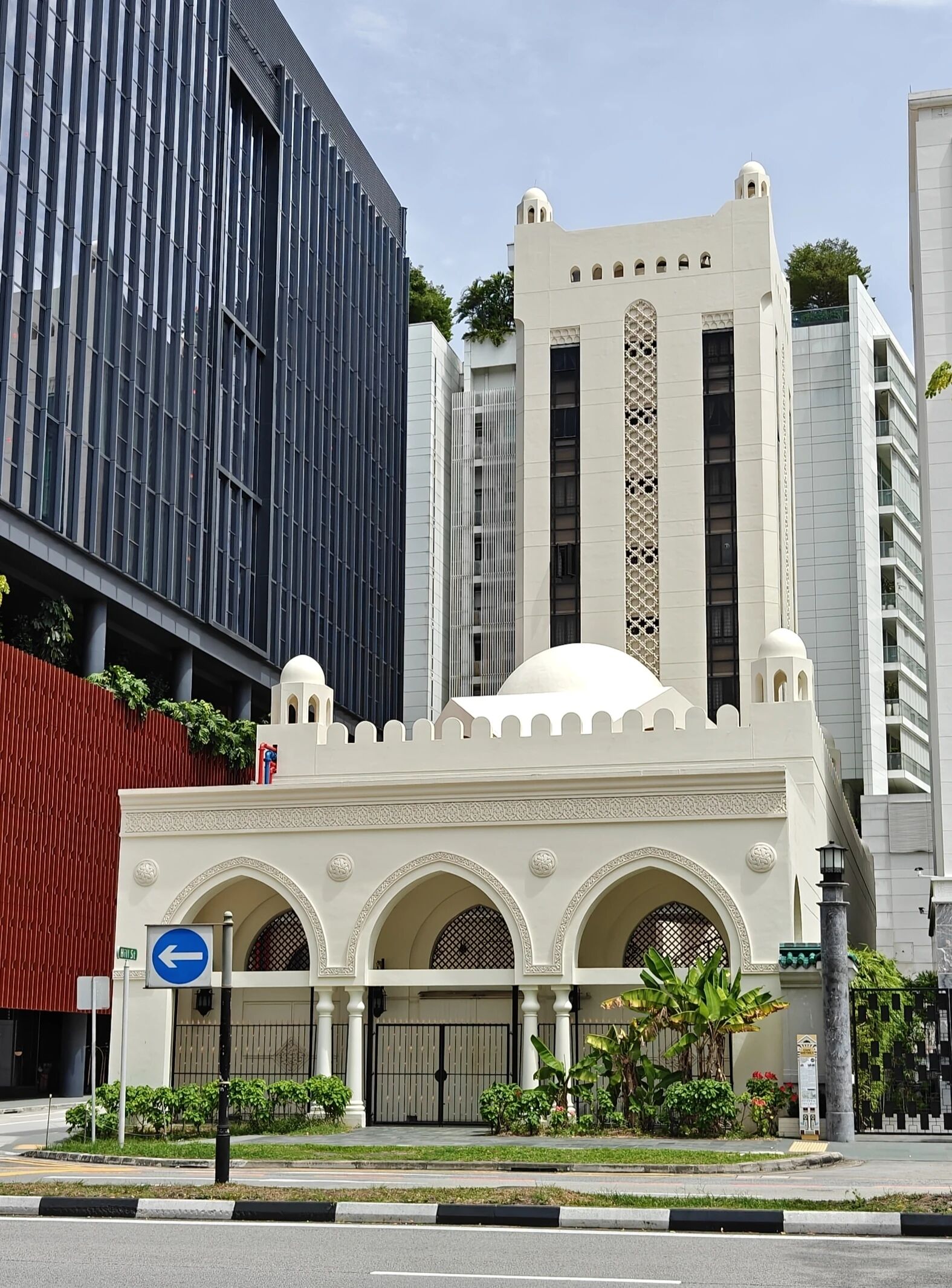
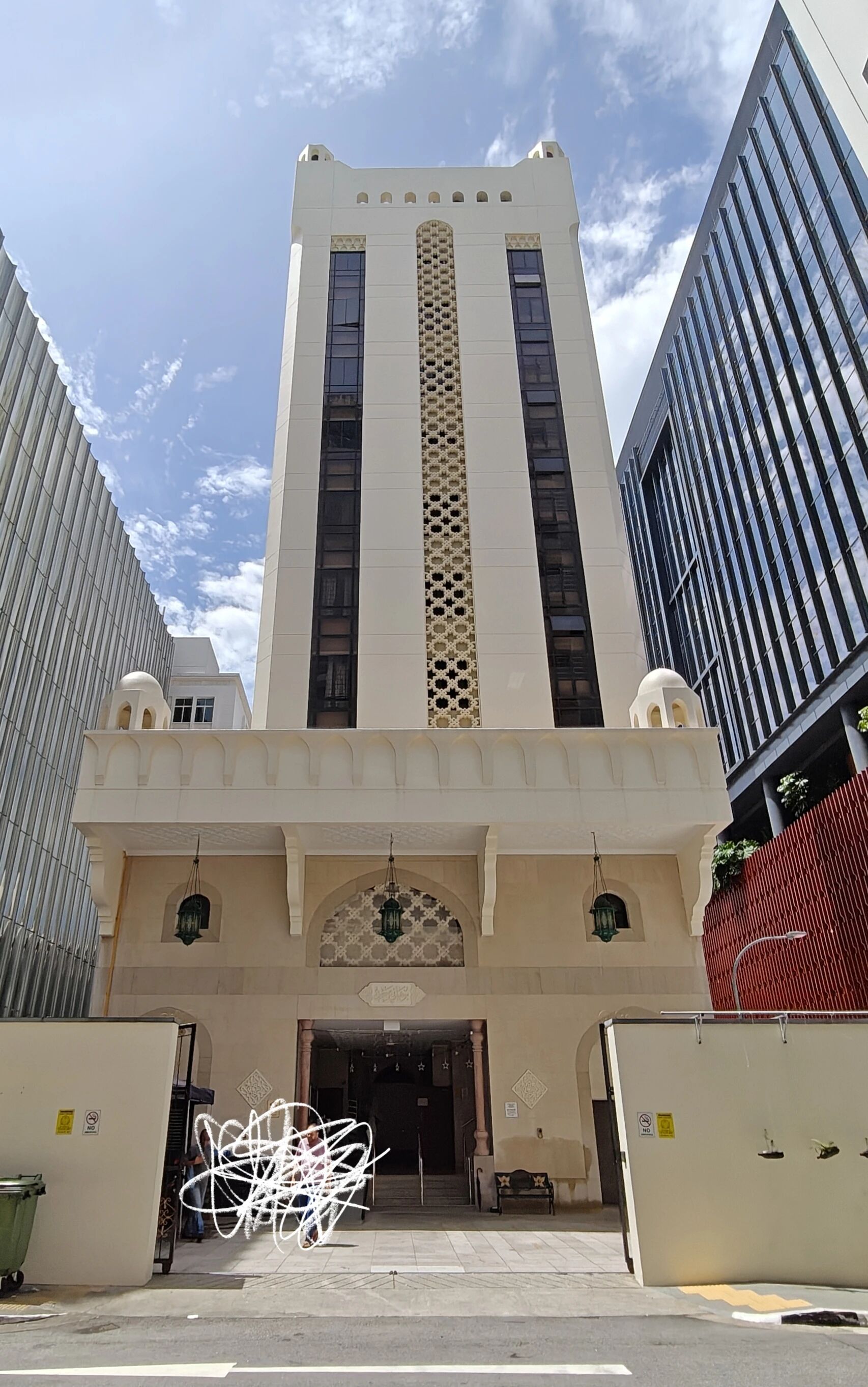
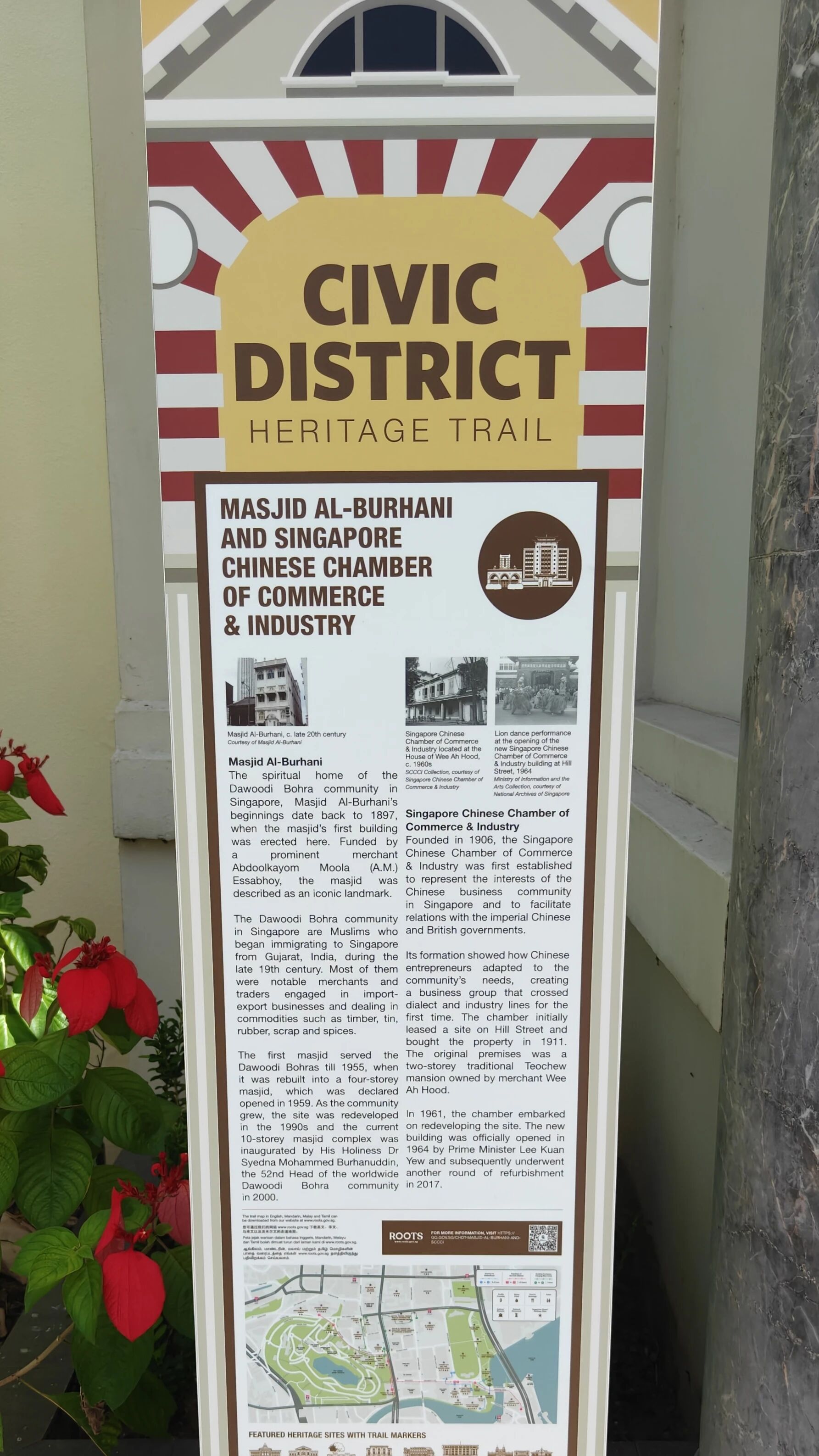
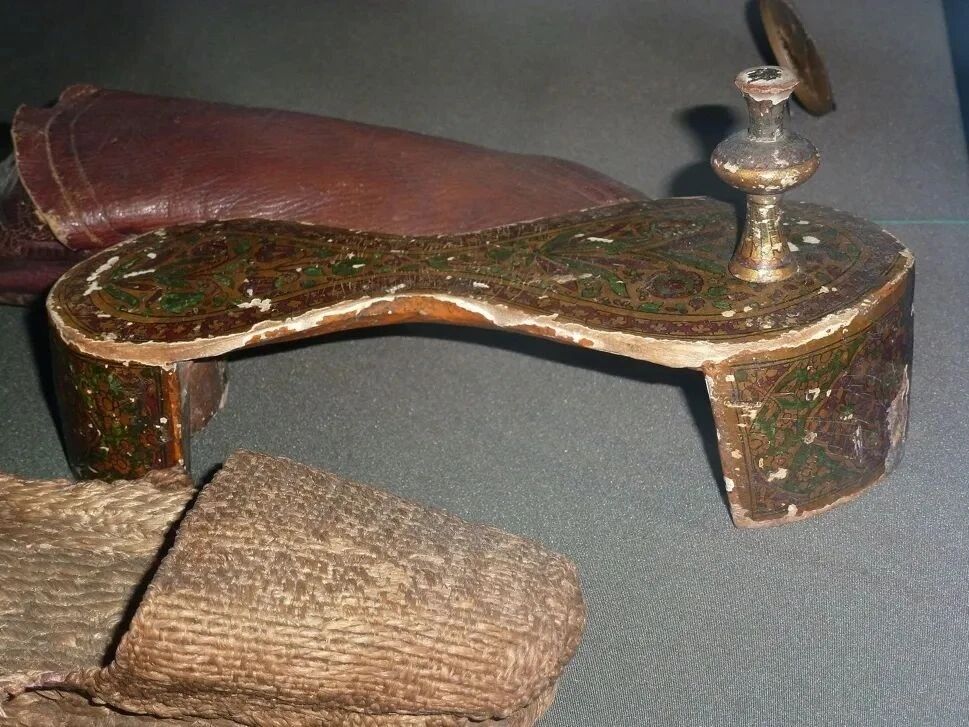
Opening the large central door (photo 7) leads to the front hall, which is lower than the back hall and has only one layer of four semicircular windows at the dome.
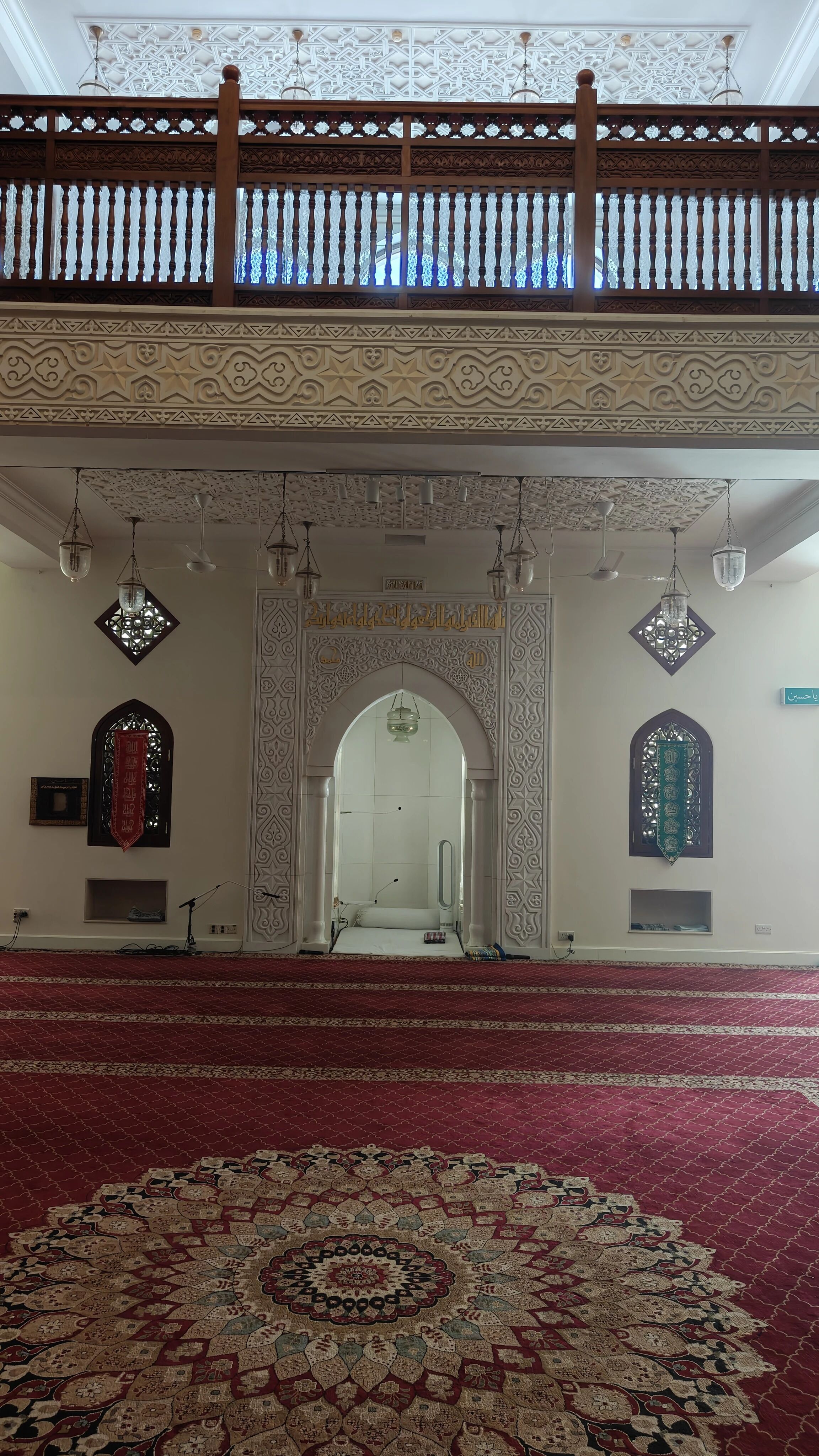
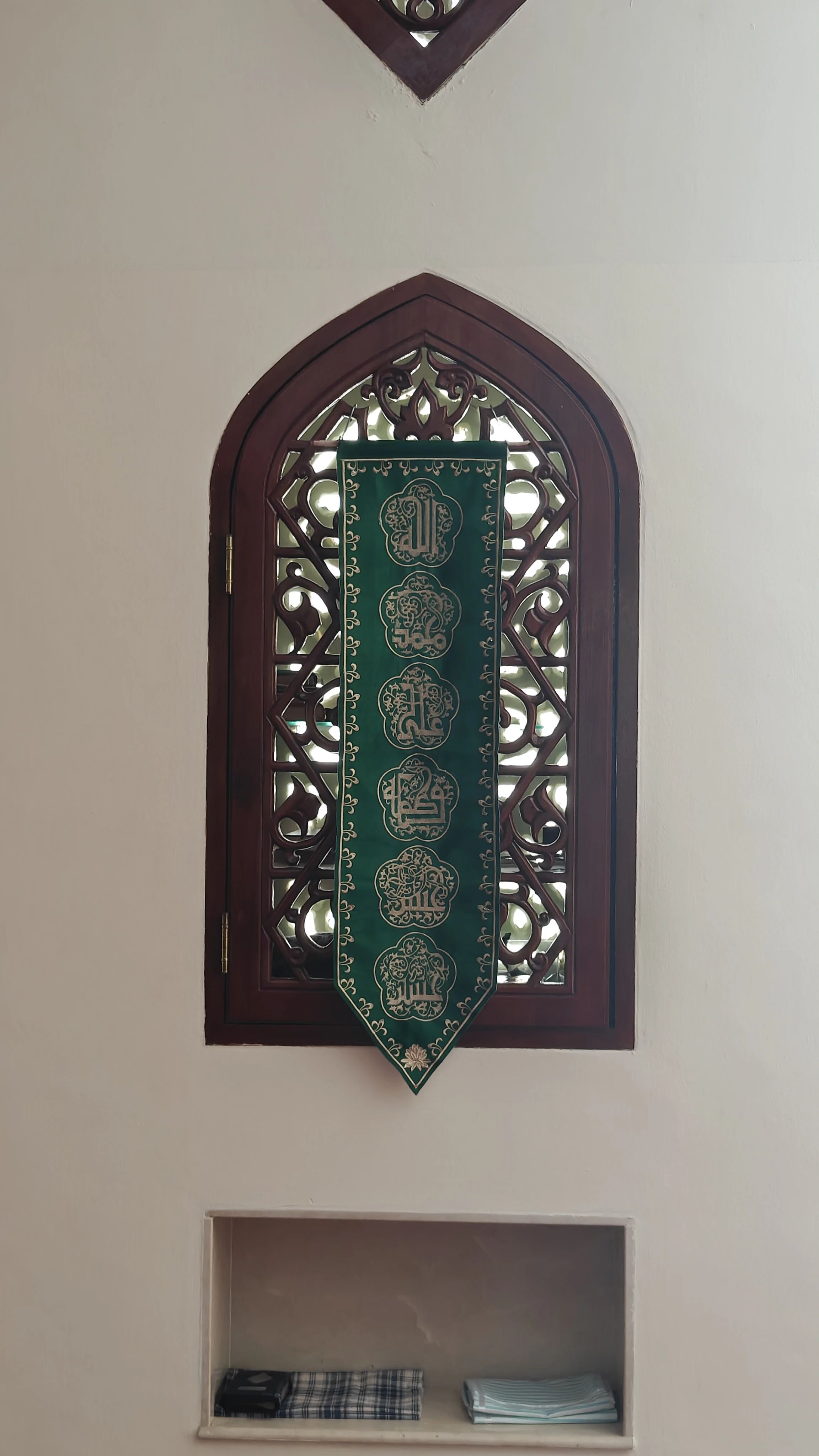
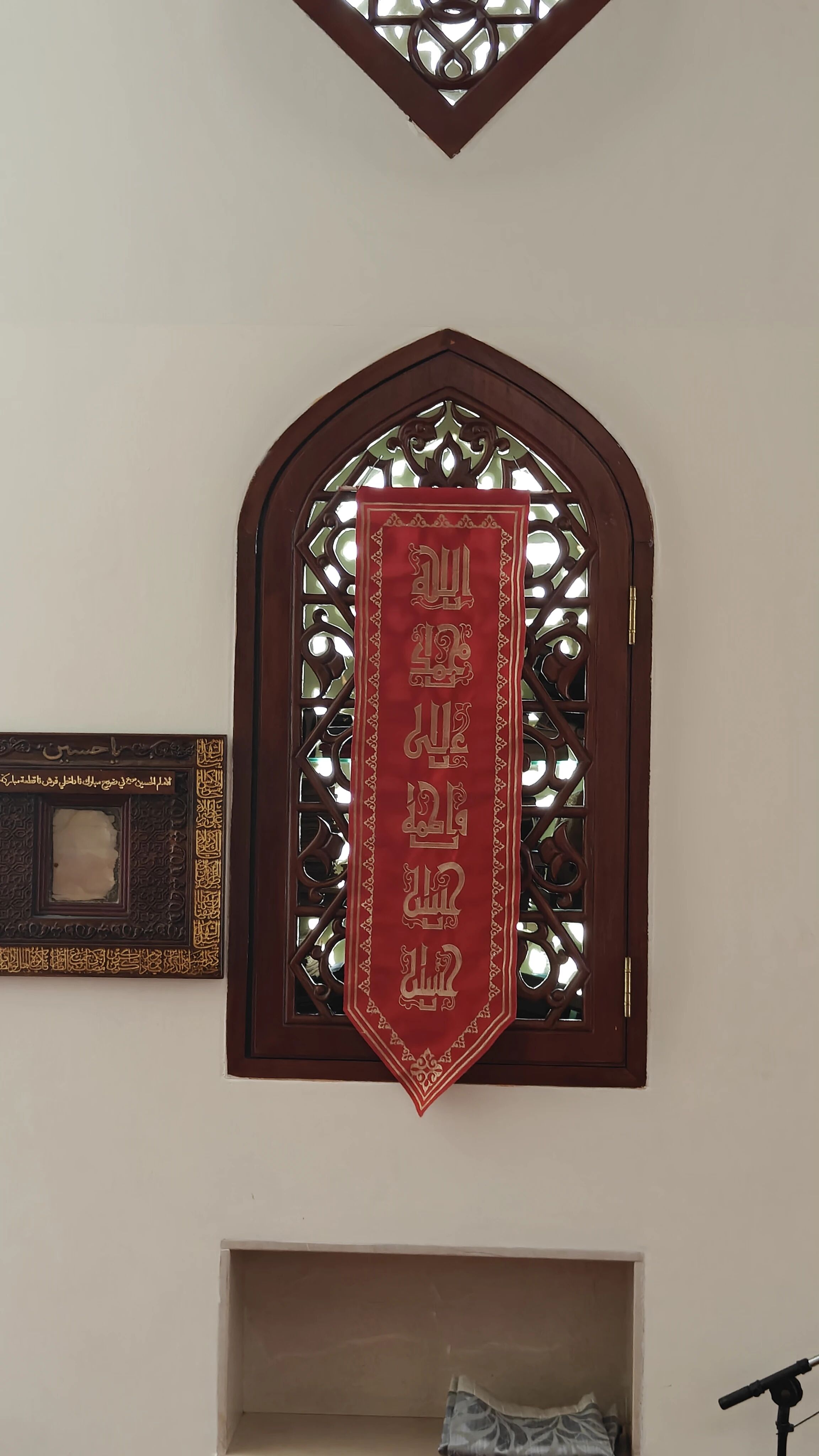
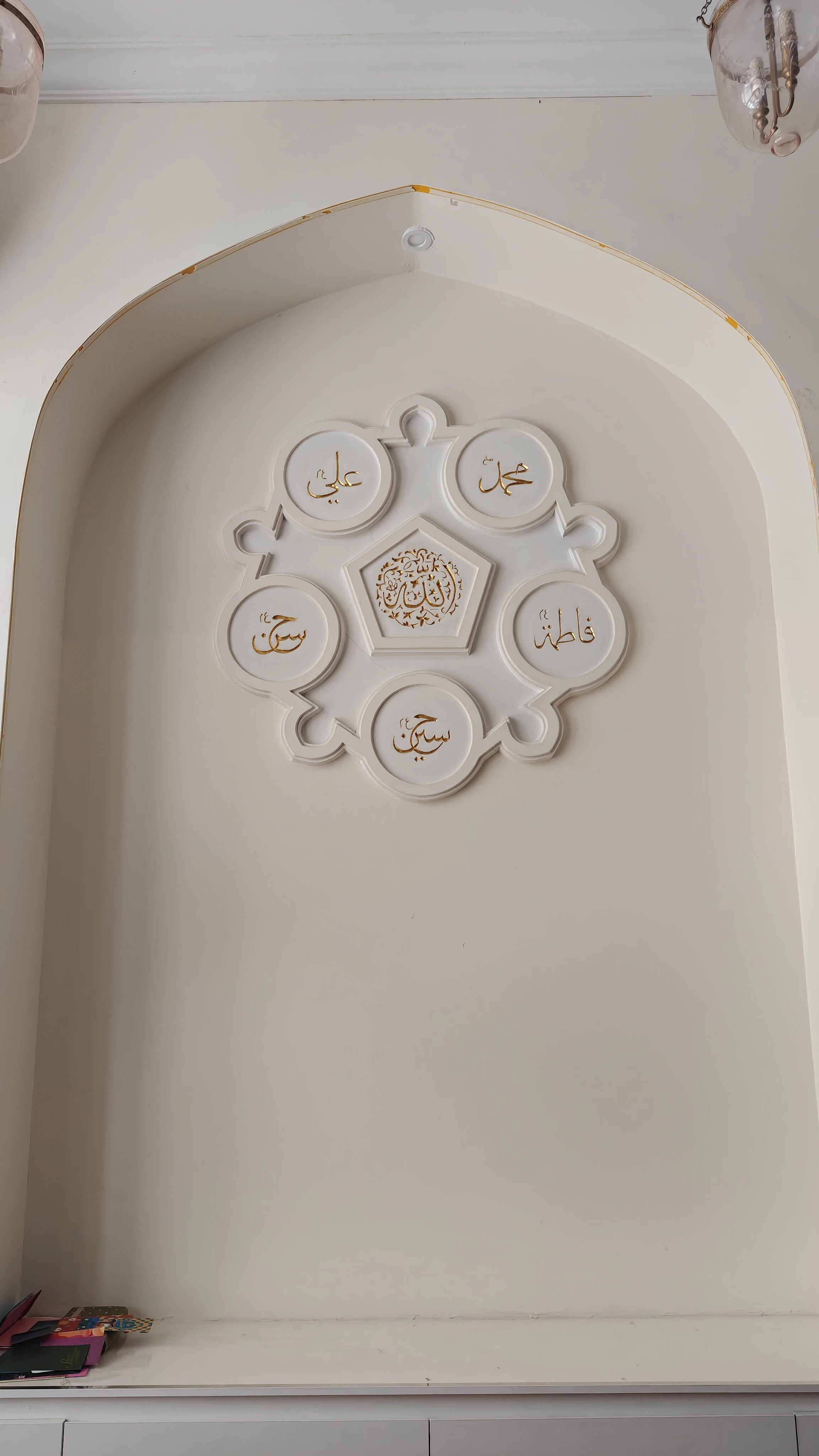
Below is the mihrab (photo 10), with banners on the left and right. The left one is green and the right one is red. The content is basically the same, listing from top to bottom: Allah, Muhammad (the Prophet Muhammad), Ali (the fourth caliph), Fatimah (the Prophet Muhammad's daughter and Ali's wife), Hasan (the eldest son of Ali and Fatimah), and Husayn (the second son of Ali and Fatimah).
The red banner adds the invocation 'Ya' before each name.
Photo 14 shows similar content. I have not seen similar banners in any other mosque to this day.
When I first arrived at the mosque, people were entering the prayer hall one after another to pray. In other mosques, many people would usually move toward the front after a while. However, no one here opened the door to move to the front rows. (The closer you are to the mihrab, the further forward you are.)
Only two elders were performing congregational namaz in front of the mihrab, where one leads and the others follow, while everyone else prayed individually. I also noticed that after their salah, they tapped their chests and recited "Ya Ali" several times.
After salah, I felt a bit shy but gathered the courage to greet the two Shia elders and asked about the congregational namaz here; they explained that people usually pray on their own and leave once they finish.
Shia Muslims are a minority, so finding a Shia mosque in Singapore was an unexpected discovery.
 Collapse Read »
Summary: This Singapore Muslim travel guide visits Burhani Mosque, the Shia mosque linked to the Dawoodi Bohra community from Gujarat, with its locked entrance, wudu area, two-part prayer hall, dome windows, mihrab banners, individual prayers, and a rare look at Shia Muslim life in Singapore.
I became interested when I heard a guide and an imam at the Abdul Gafoor Mosque mention that there is a Shia mosque in Singapore. I had read a bit online about the differences between Sunni and Shia Islam.
But I had never visited a Shia mosque or met anyone from the Shia community in person.
When I reached the main street entrance of Burhani Mosque, it was almost time for salah, but the doors were still locked.
The sign at the entrance said that Burhani Mosque (Masjid Al Burhani) is the spiritual home of the Dawoodi Bohra community and was built in 1897.
This community comes from Gujarat, India (the same place as the Angullia family from my last post, and also the home of Indian Prime Minister Modi).
The older man I met inside the mosque later did look a bit like Modi, and the community members mainly trade in timber, tin, and rubber.
After quickly reading the introduction, I tried to enter through the back door, but there was a sign saying it was private property, even though the Q&A section on Google Maps said it was open. I stood at the entrance feeling stuck, wondering if I should just walk in. Or should I just leave and go somewhere else?
Just then, a man who looked South Asian walked up behind me, and after he confirmed I could go in, I finally entered this Shia mosque in Singapore. In the wudu area, I found some wooden clogs with an Indian style, which looked like they would be hard to wear.
Entering the prayer hall, I found it divided into two sections by a central door: a front hall and a back hall. The back hall (photos 5 and 6) has a high ceiling, and there is also prayer space on the second floor. Above is a dome with two layers of windows along the edge, totaling eight semicircular windows, and the inside of the dome is decorated with relief patterns.
Opening the large central door (photo 7) leads to the front hall, which is lower than the back hall and has only one layer of four semicircular windows at the dome.
Below is the mihrab (photo 10), with banners on the left and right. The left one is green and the right one is red. The content is basically the same, listing from top to bottom: Allah, Muhammad (the Prophet Muhammad), Ali (the fourth caliph), Fatimah (the Prophet Muhammad's daughter and Ali's wife), Hasan (the eldest son of Ali and Fatimah), and Husayn (the second son of Ali and Fatimah).
The red banner adds the invocation 'Ya' before each name.
Photo 14 shows similar content. I have not seen similar banners in any other mosque to this day.
When I first arrived at the mosque, people were entering the prayer hall one after another to pray. In other mosques, many people would usually move toward the front after a while. However, no one here opened the door to move to the front rows. (The closer you are to the mihrab, the further forward you are.)
Only two elders were performing congregational namaz in front of the mihrab, where one leads and the others follow, while everyone else prayed individually. I also noticed that after their salah, they tapped their chests and recited "Ya Ali" several times.
After salah, I felt a bit shy but gathered the courage to greet the two Shia elders and asked about the congregational namaz here; they explained that people usually pray on their own and leave once they finish.
Shia Muslims are a minority, so finding a Shia mosque in Singapore was an unexpected discovery.
Collapse Read »
Muslim Travel Guide Singapore Little India: Angullia Mosque, Gujarati Muslim Heritage and Prayer Hall
Reposted from the web
Summary: This Singapore Muslim travel guide visits Angullia Mosque in Little India, built by a Gujarati Muslim family in the 1890s, with its red exterior, upper-floor prayer hall, glass dome light, mihrab, minbar, wudu areas, and the South Asian street scene nearby.
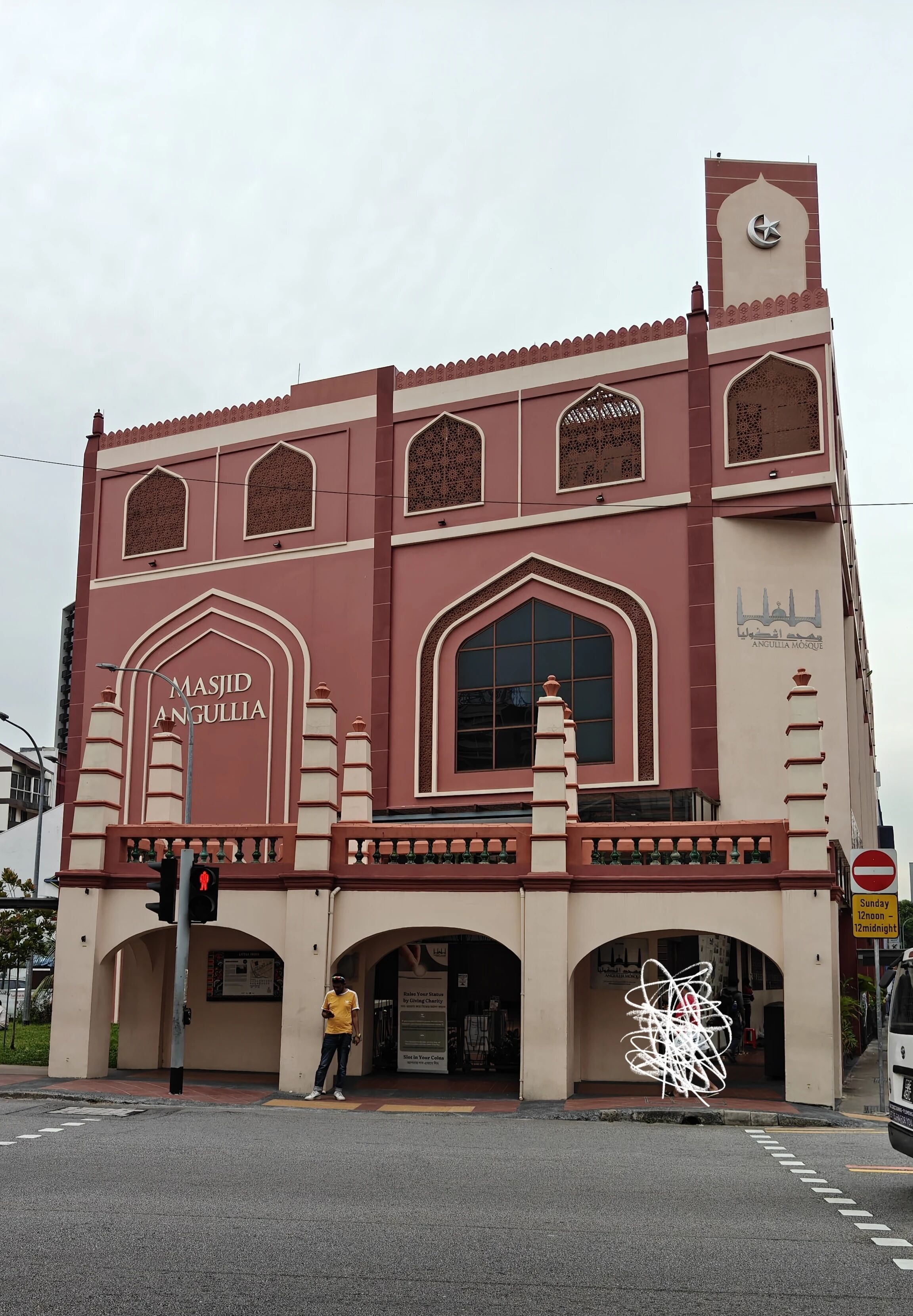
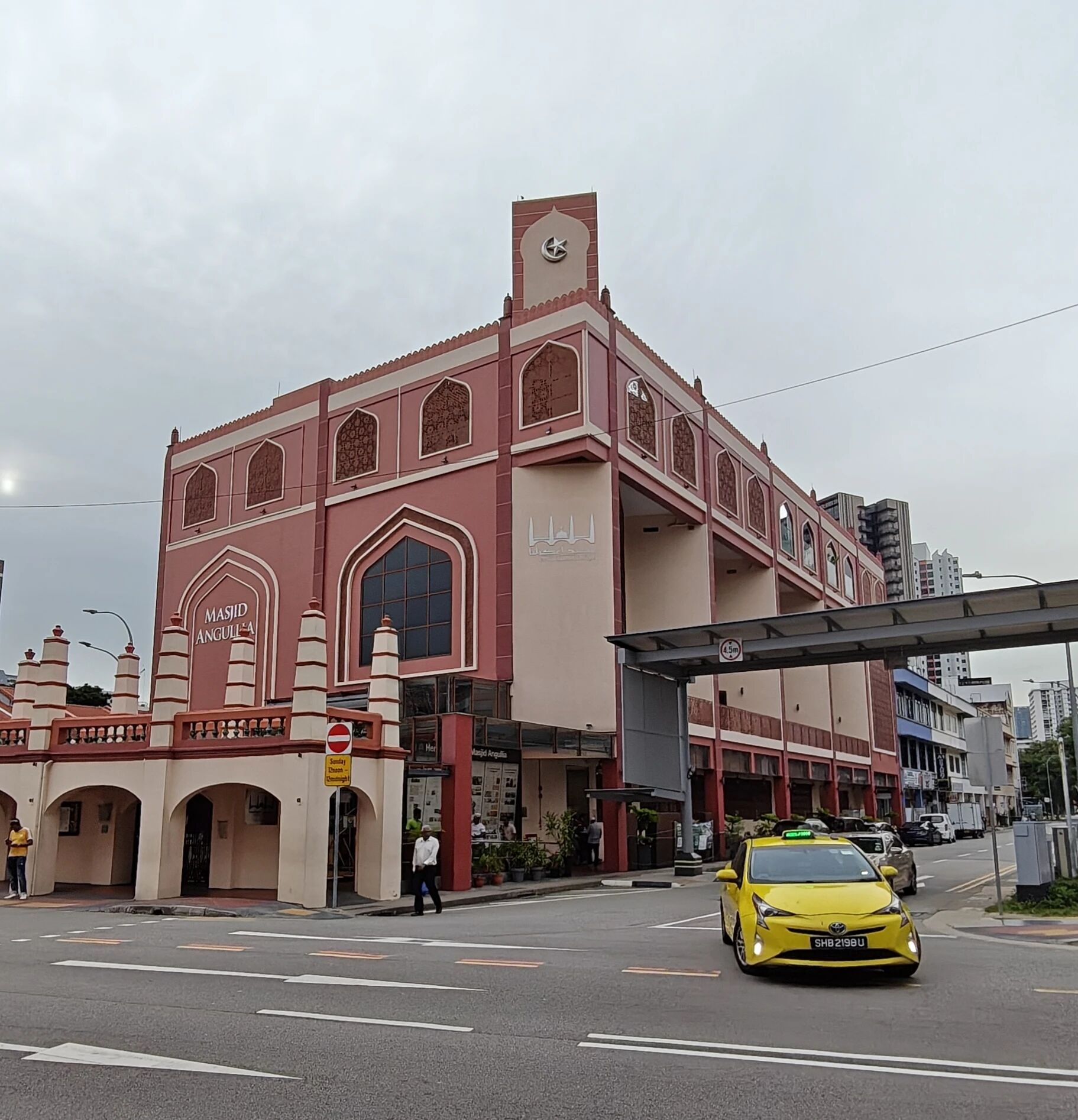
The mosque I am introducing today was built in the 1890s by the Angullia family, who came from Gujarat, India. Gujarat is the home state of India's current Prime Minister, Modi.
The Angullia Mosque and the Hindu temple shown in the previous post are both in the Little India neighborhood on the same street. Many South Asians walk by, and the shops along the street have a distinct Indian style. The road is full of Diwali decorations, so walking here really feels like being in India.
From the outside, the ochre-red color of the mosque reminds people of iconic Indian buildings like the Red Fort.
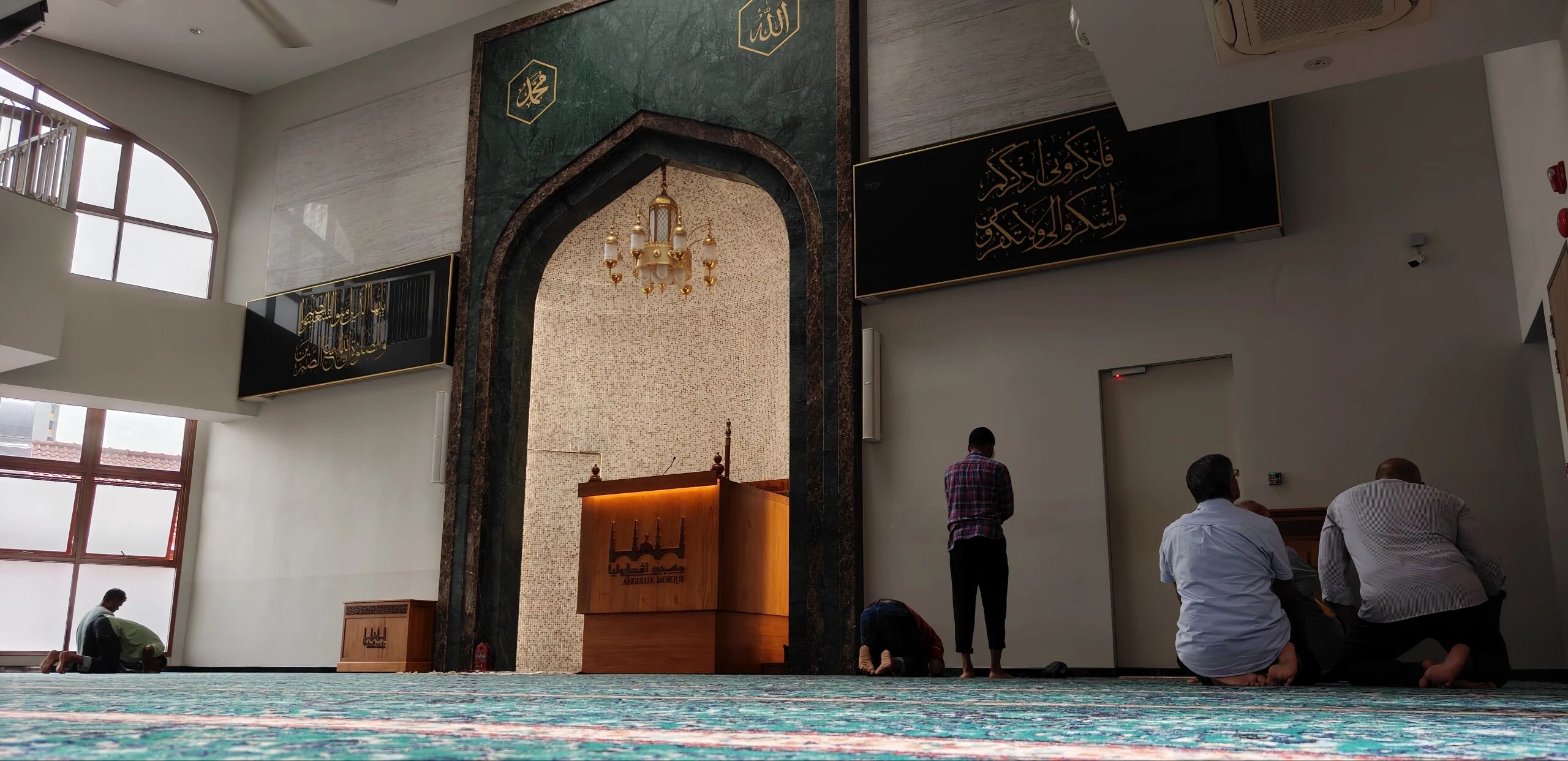
The first floor of the mosque is a parking lot. The prayer hall and the area for wudu (ablution) are on the second floor for men and the third floor for women.
Entering the second floor, the mihrab niche connects the second and third floors vertically. The third-floor floorboards have an opening so that the glass dome on the roof can bring natural light directly down to the second floor. (Photo 3, Photo 4)
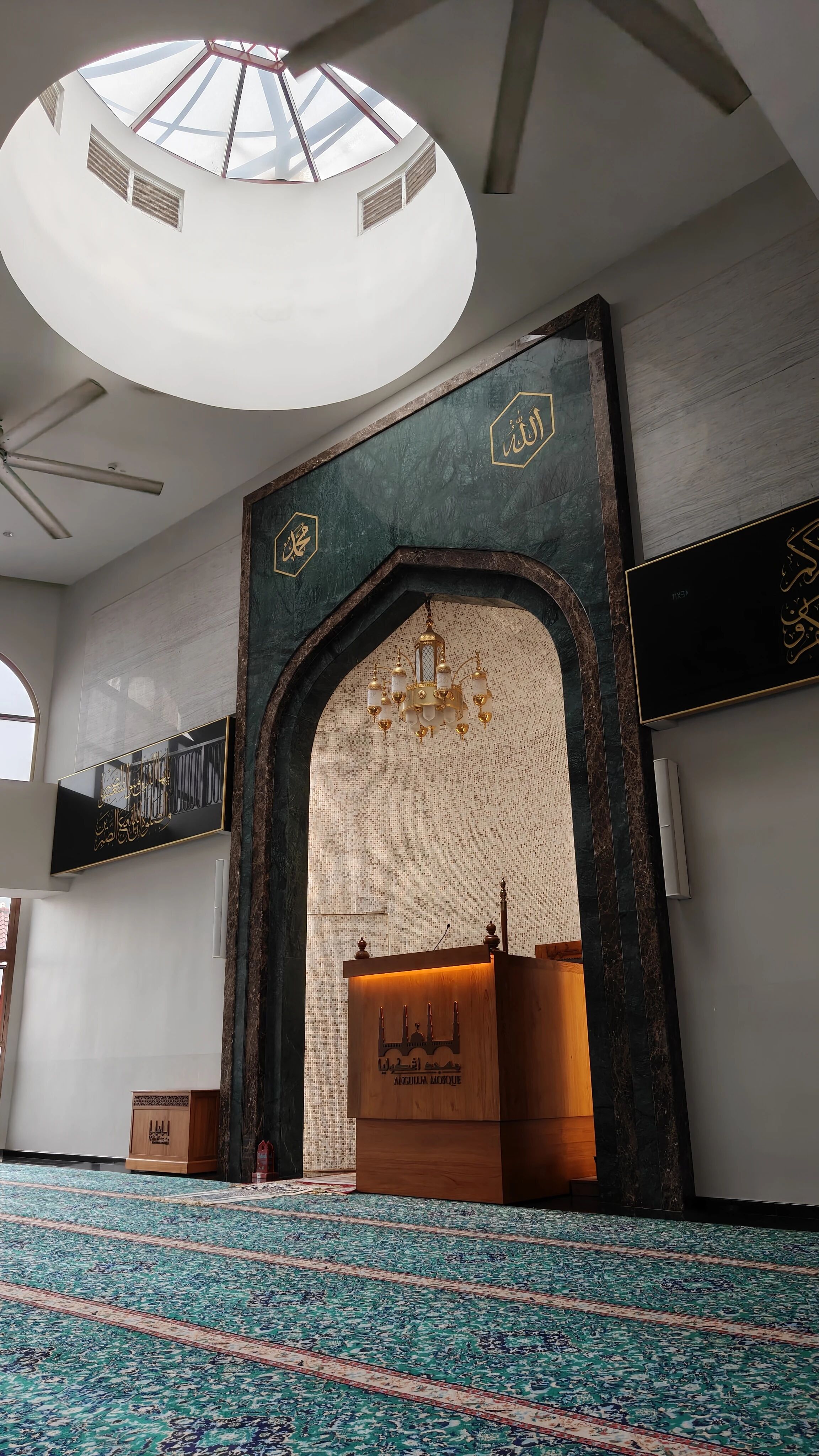
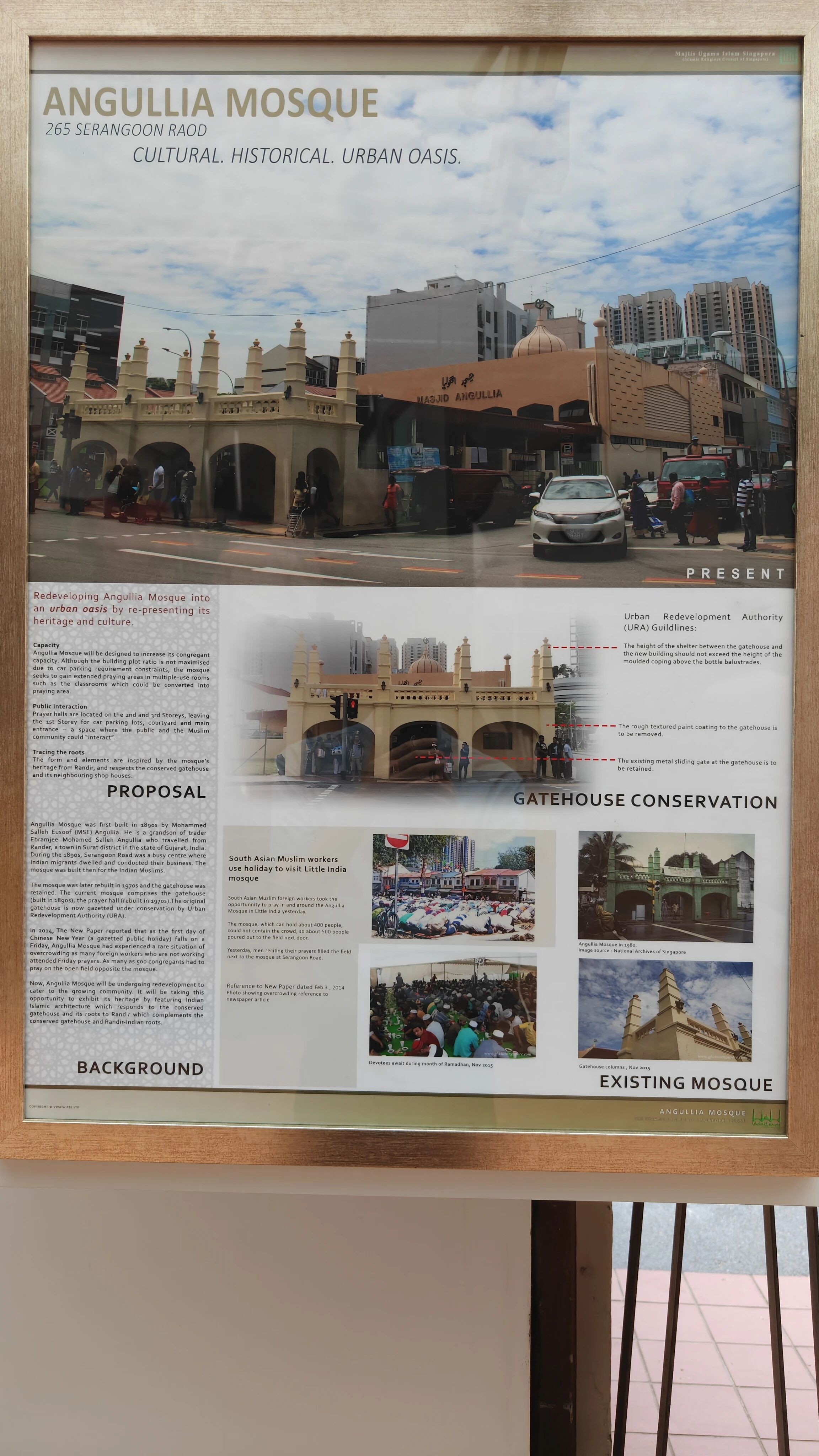
There is an Angullia Mosque logo on the minbar (Photo 5). The silhouette on this logo actually shows what the building looked like originally. In 2014, a large influx of foreign workers exceeded the capacity of the Angullia Mosque.
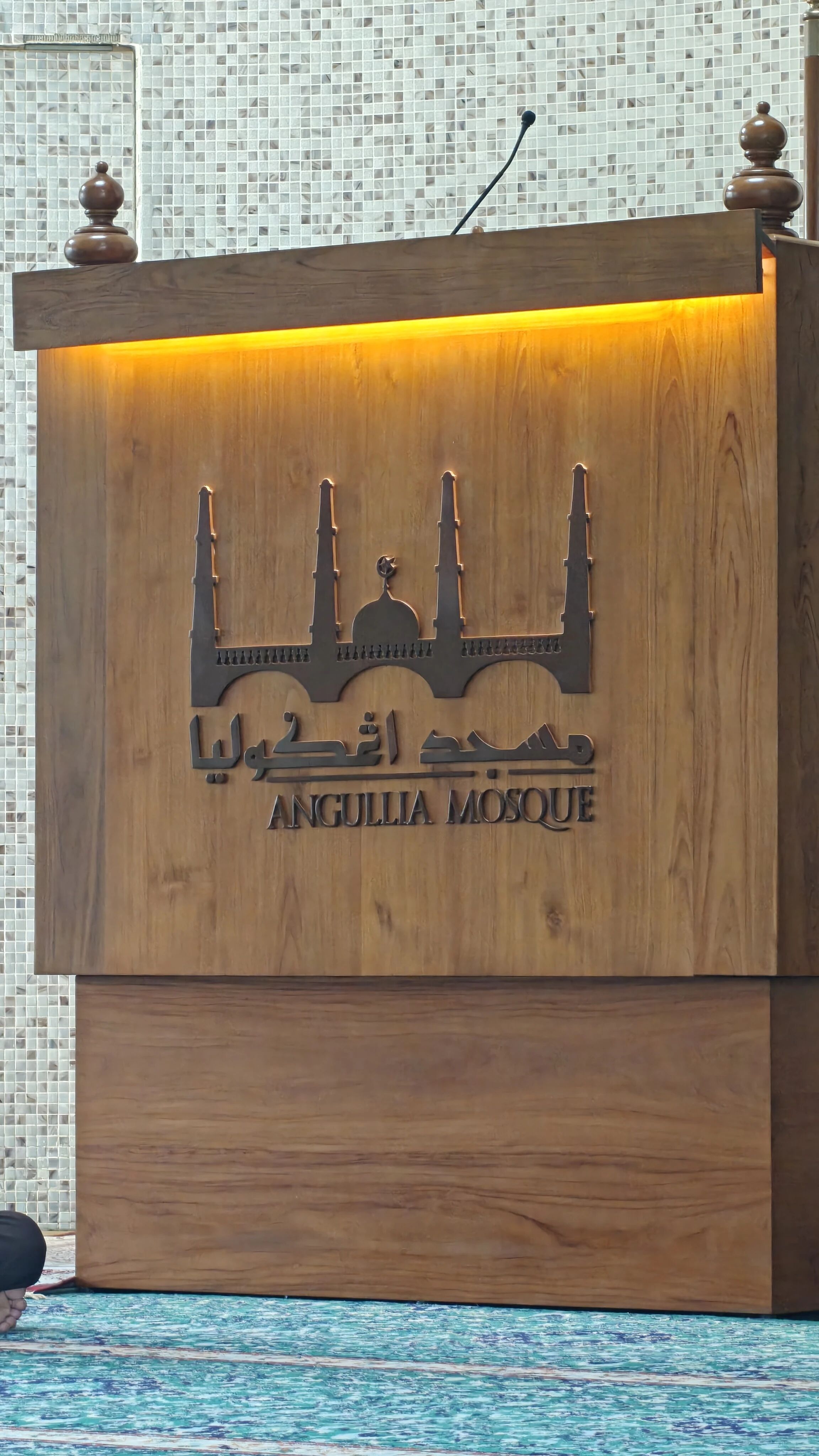
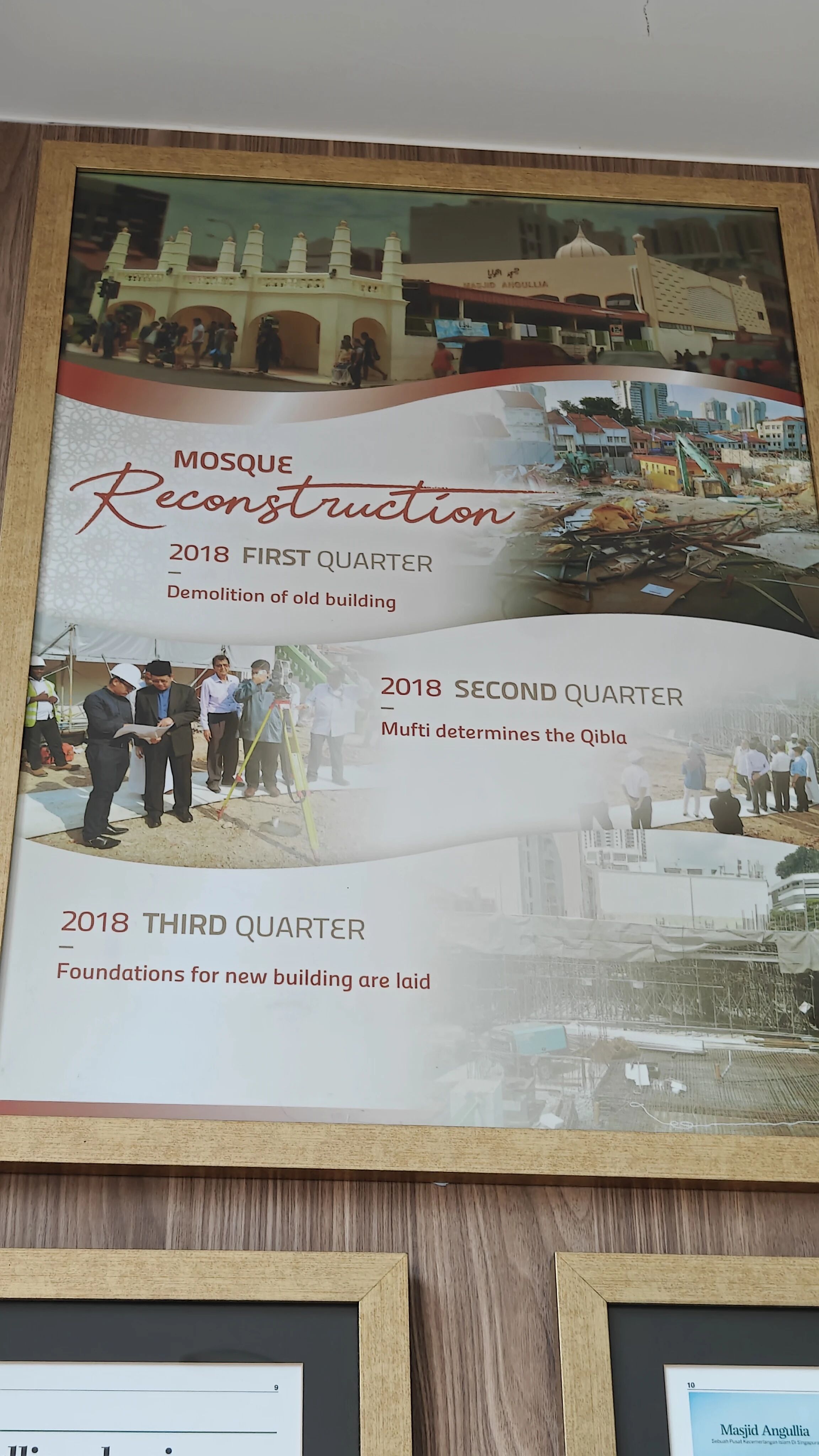
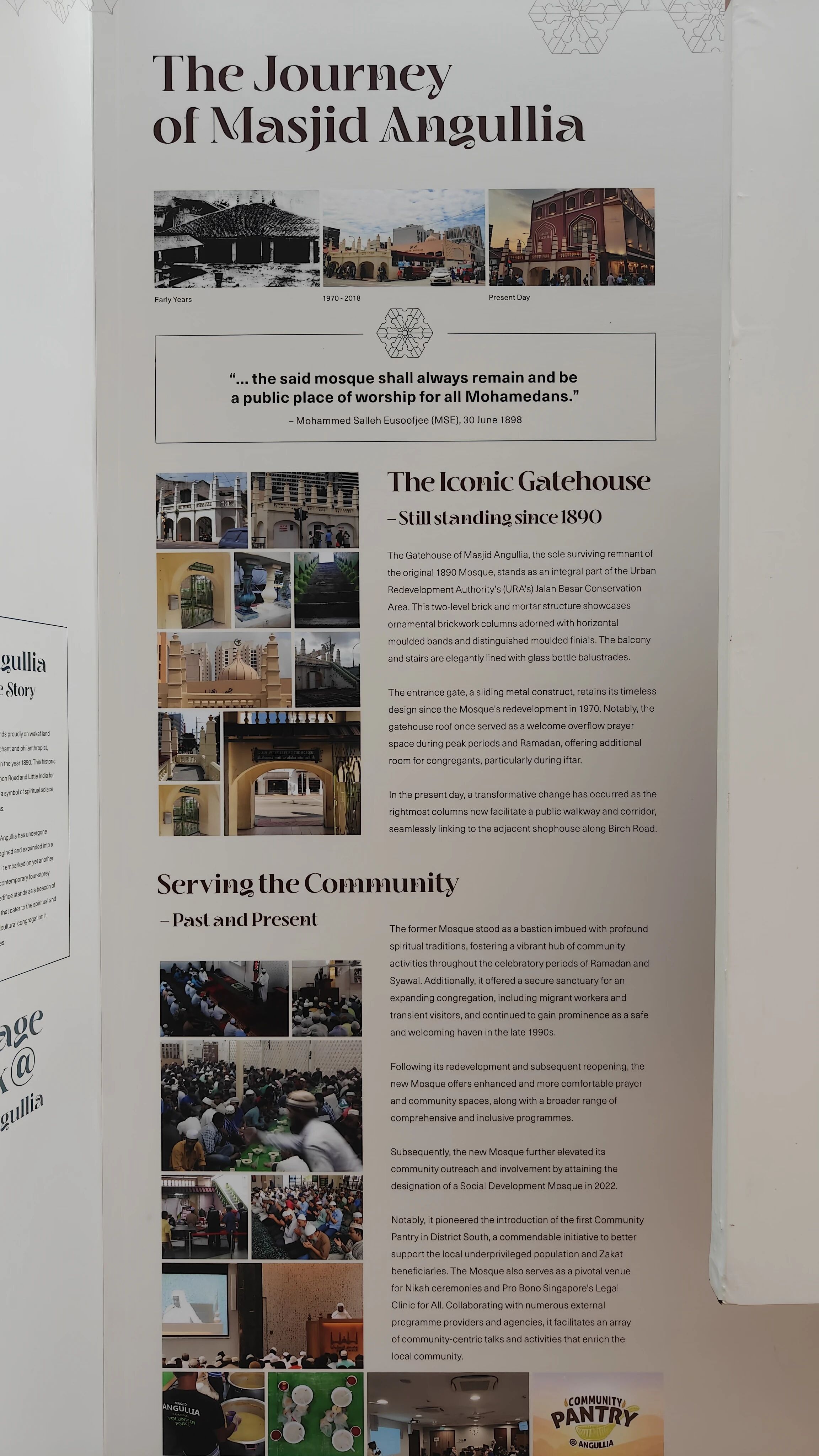
Because of this, demolition and expansion work began here in 2018. However, the iconic entrance hall with its eight pillars was preserved.
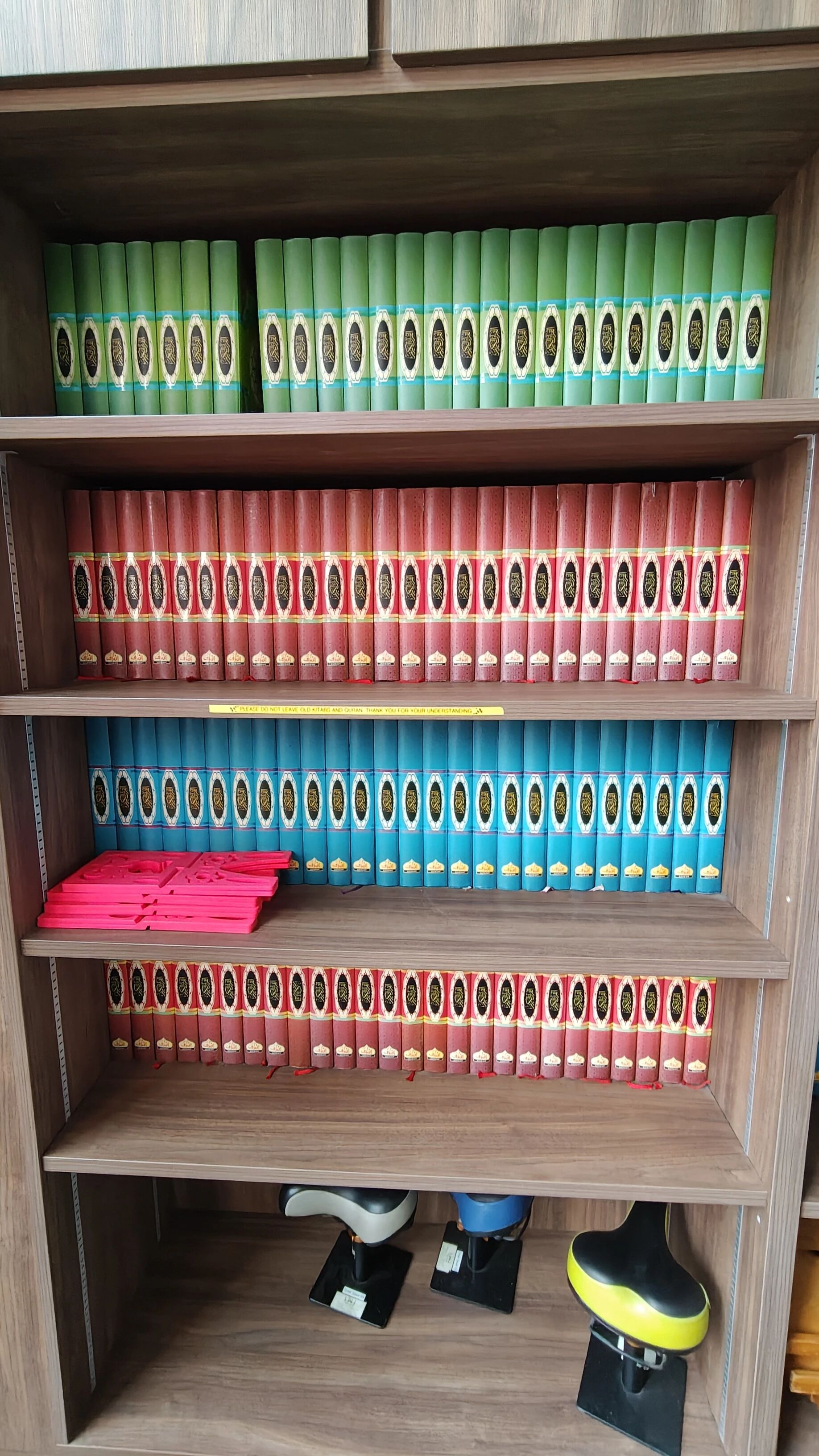
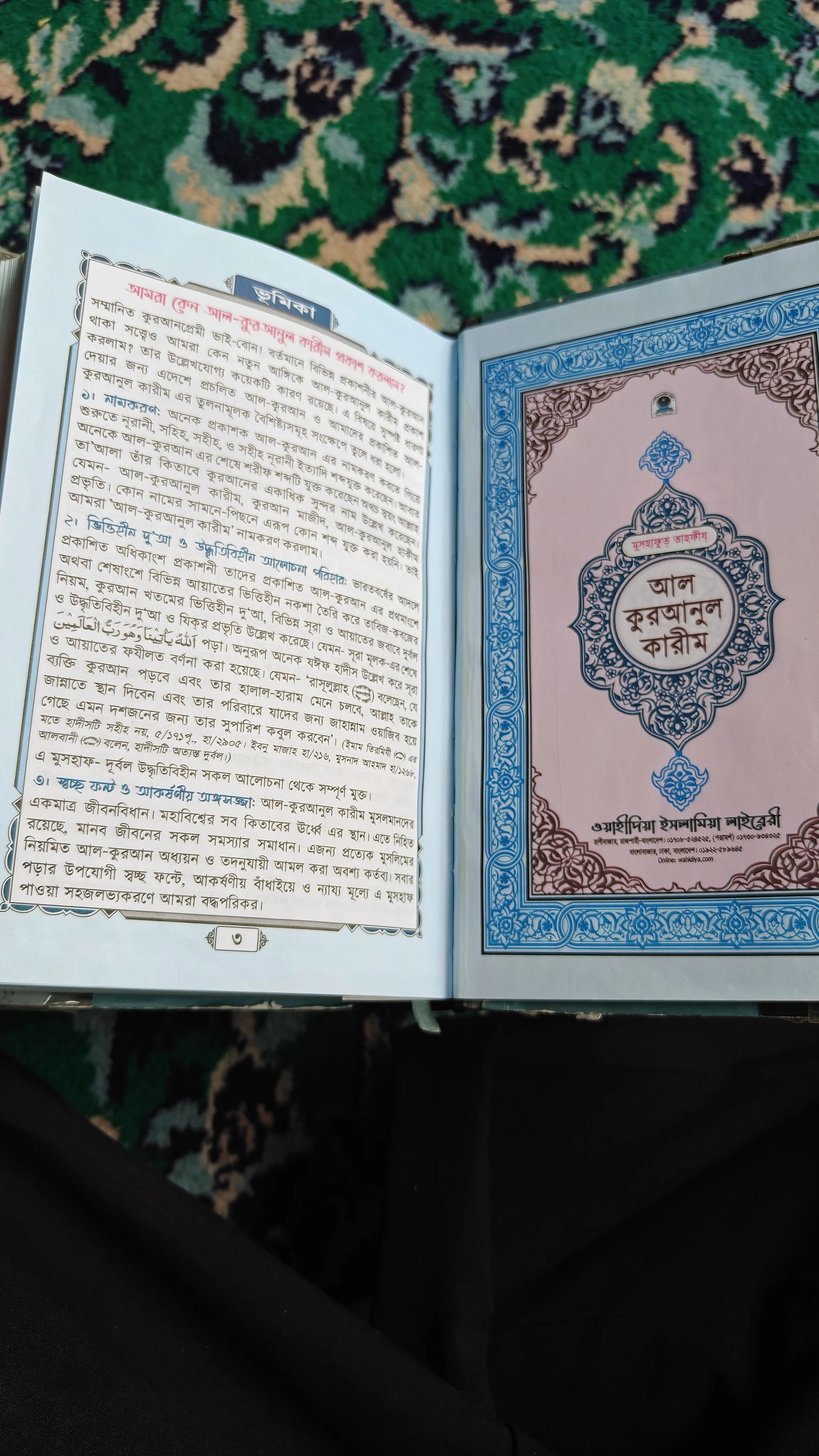
There are many copies of the Qur'an behind the prayer hall. I picked one up at random and found it was published in Bangladesh, so it had a lot of Bengali text inside. At first glance, I have to say that this dense Brahmi script really looks like the calligraphy of another world religion. (Photo 7)
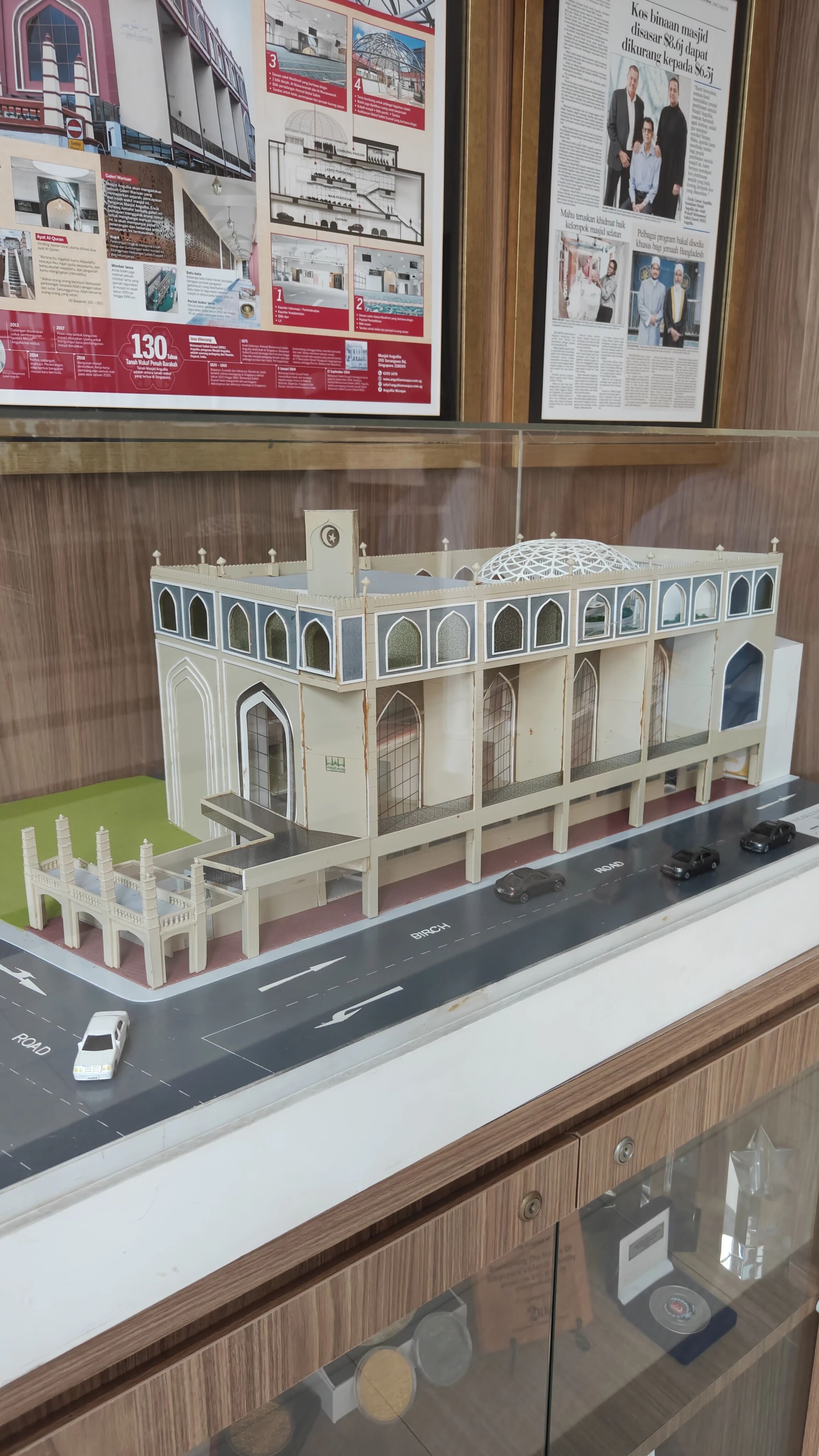
There is a miniature model of the place on the second-floor porch. (Photo 8)
The entrance on the first floor has some old items on display, which serves as a simple exhibition (I think the mosque management committee is very thoughtful). They are:
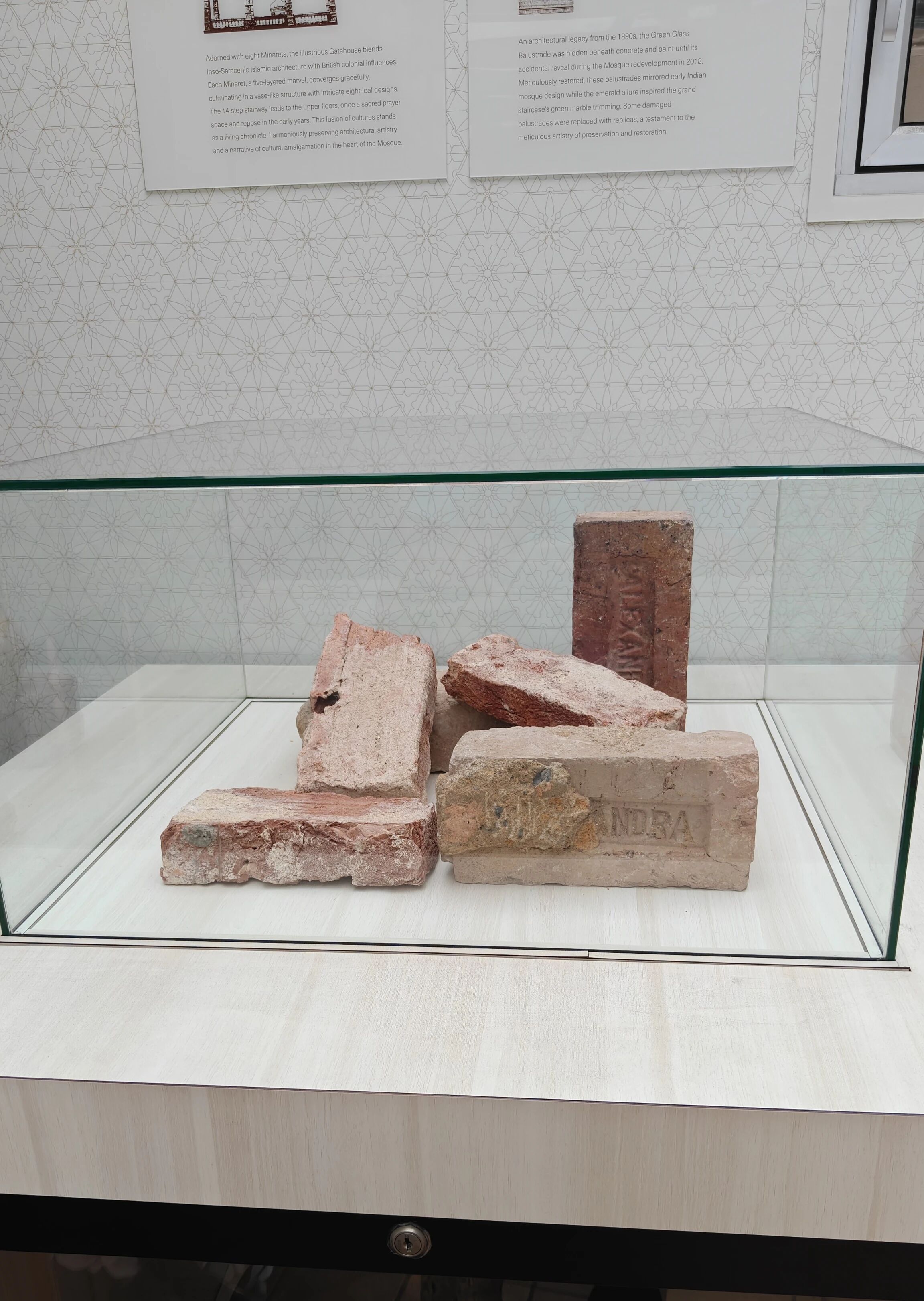
1. Bricks used for building walls in the 1890s, which still have the brick factory's name, Alexandra, printed on them. They were specifically kept during the renovation (Photo 10).
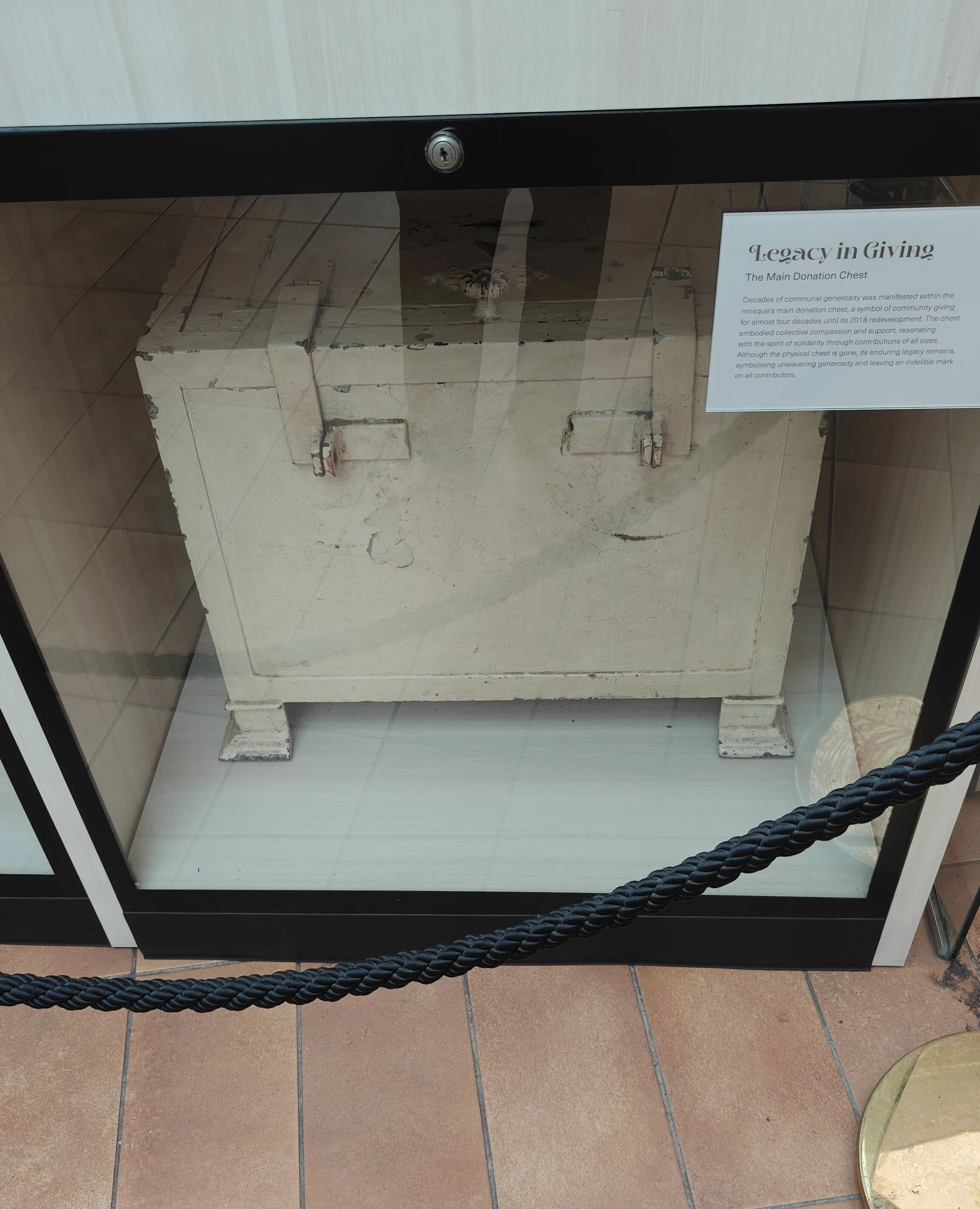
2. A donation box used for over forty years (Photo 11).
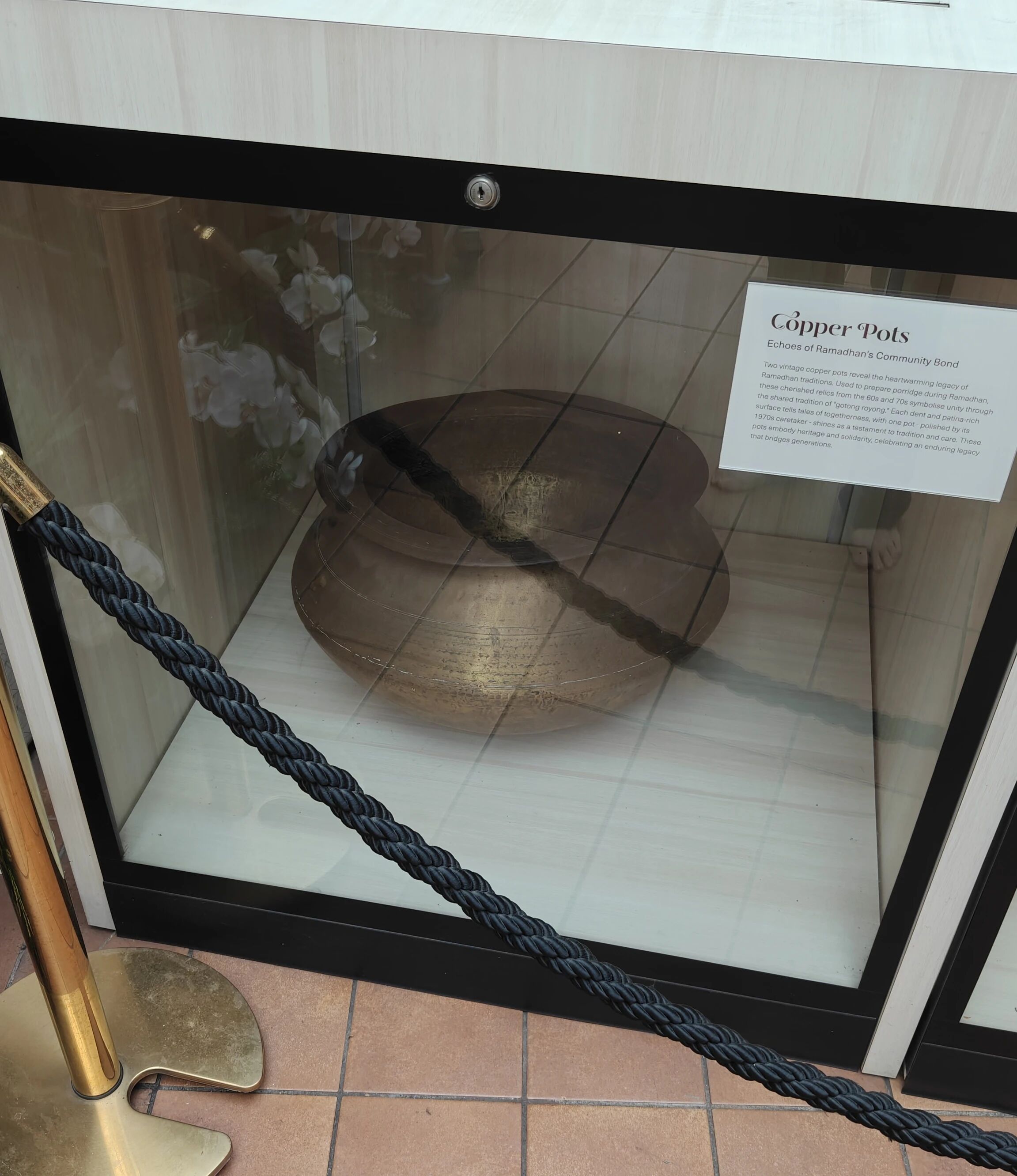
3. A copper pot used for cooking porridge during Ramadan in the past (Photo 12).
Another feature of this mosque is the large number of information boards. You can see what it looked like before the 2018 expansion on the display boards (Photo 13). They even used the outer porch.
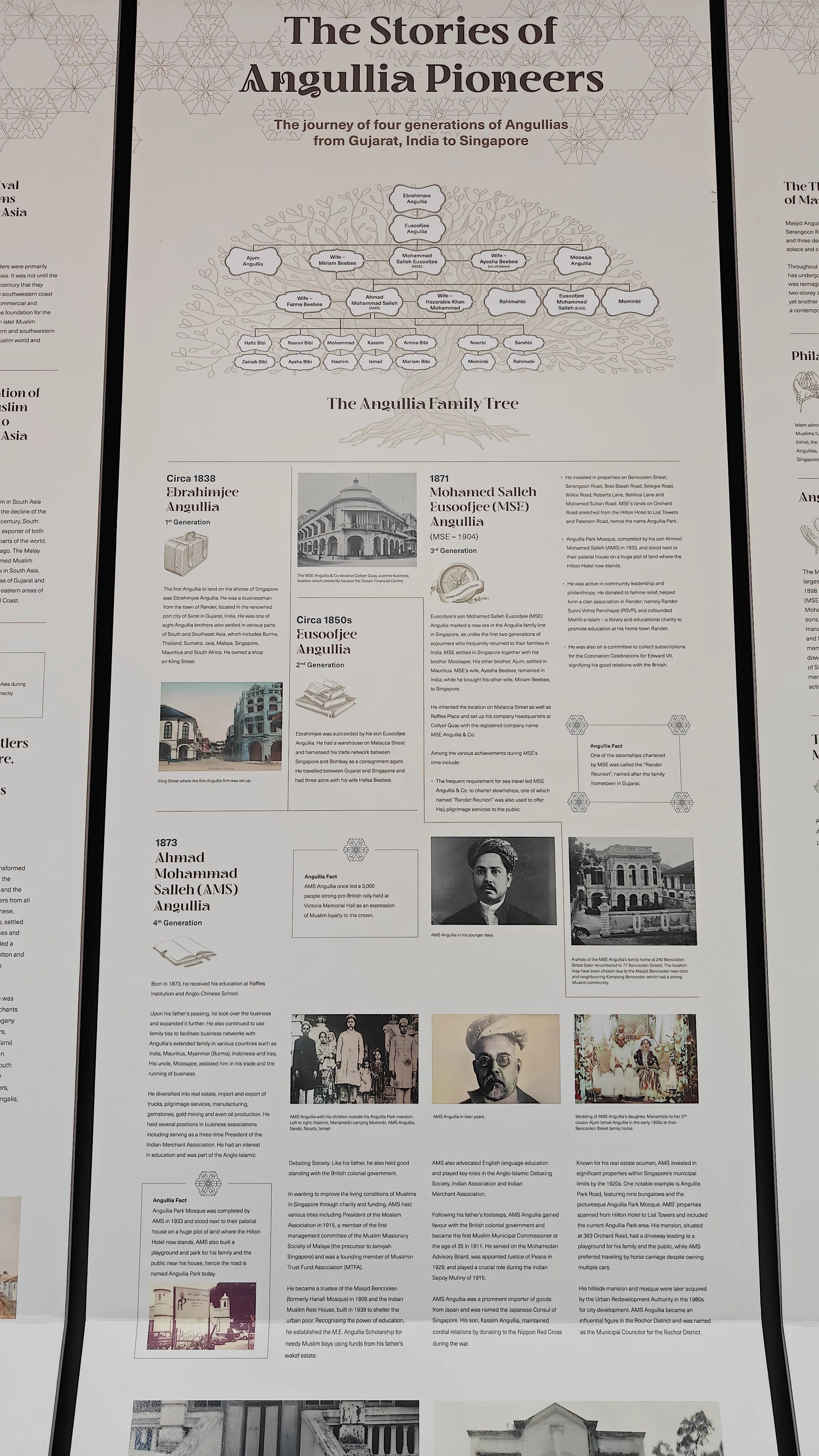
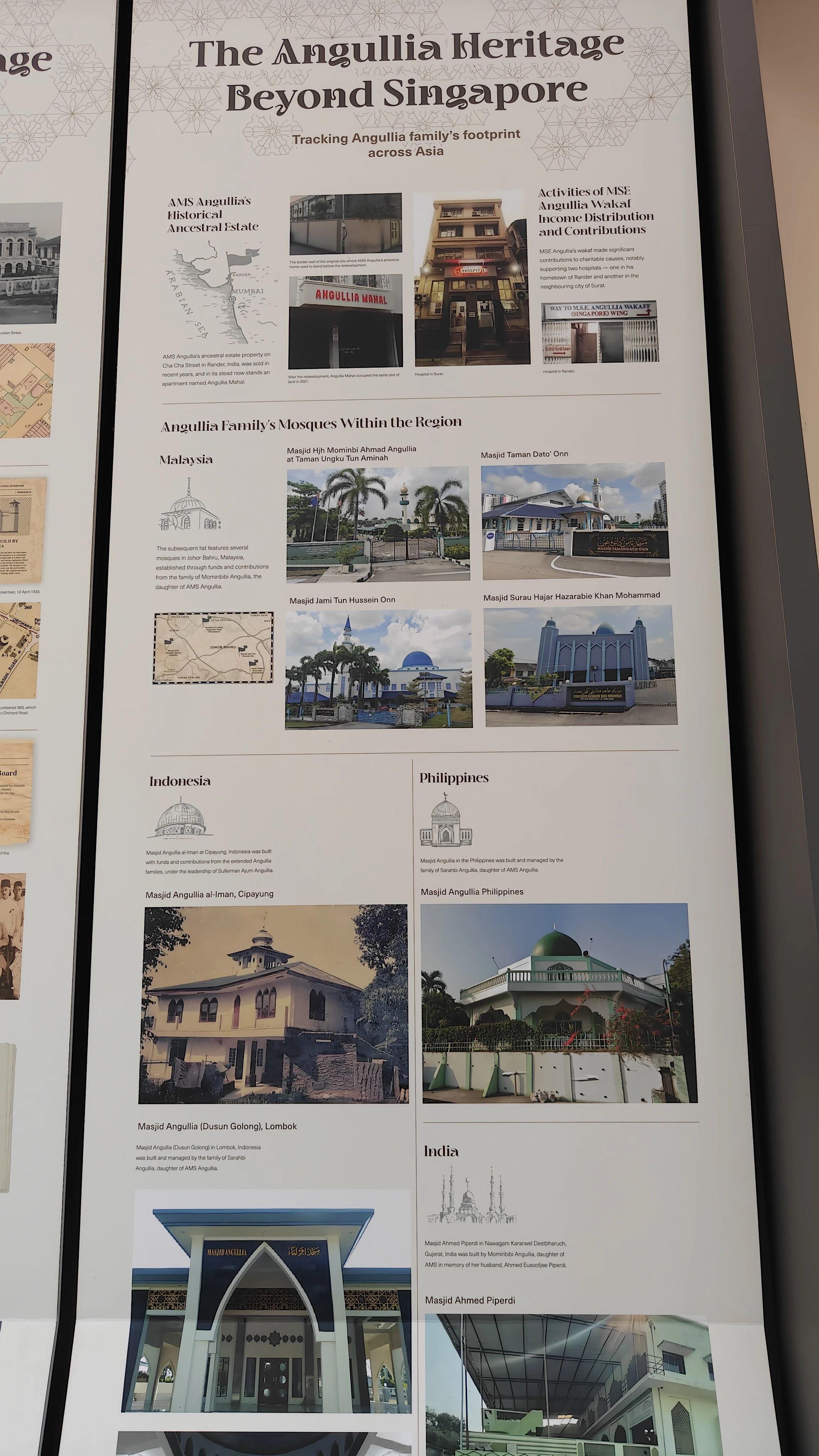
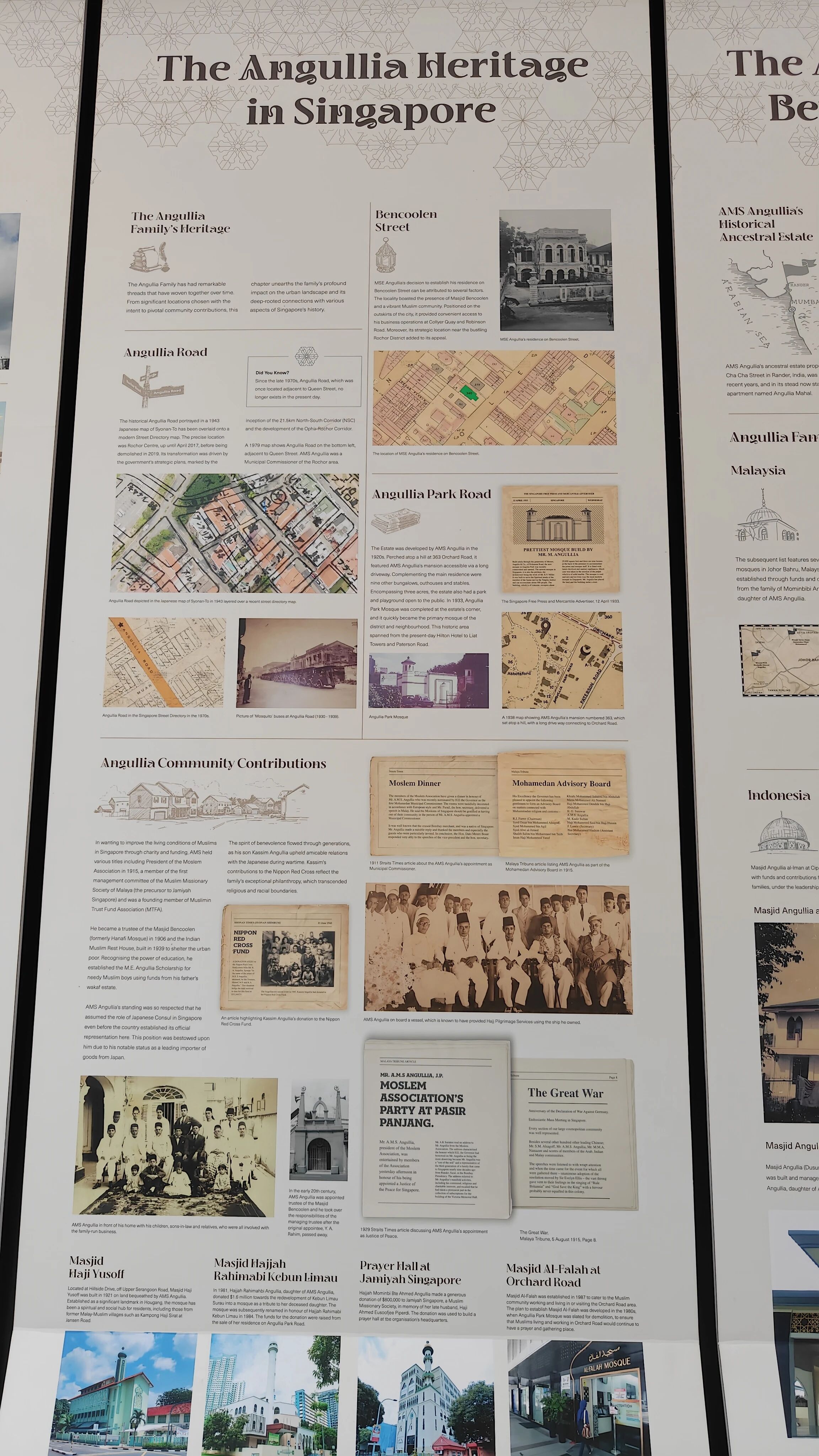
The porch is mainly used to exhibit the family history of the Angullia family (Photo 18), as well as the architectural heritage left by the Angullia family in Singapore and other countries like Malaysia and the Philippines (Photos 19 and 20).
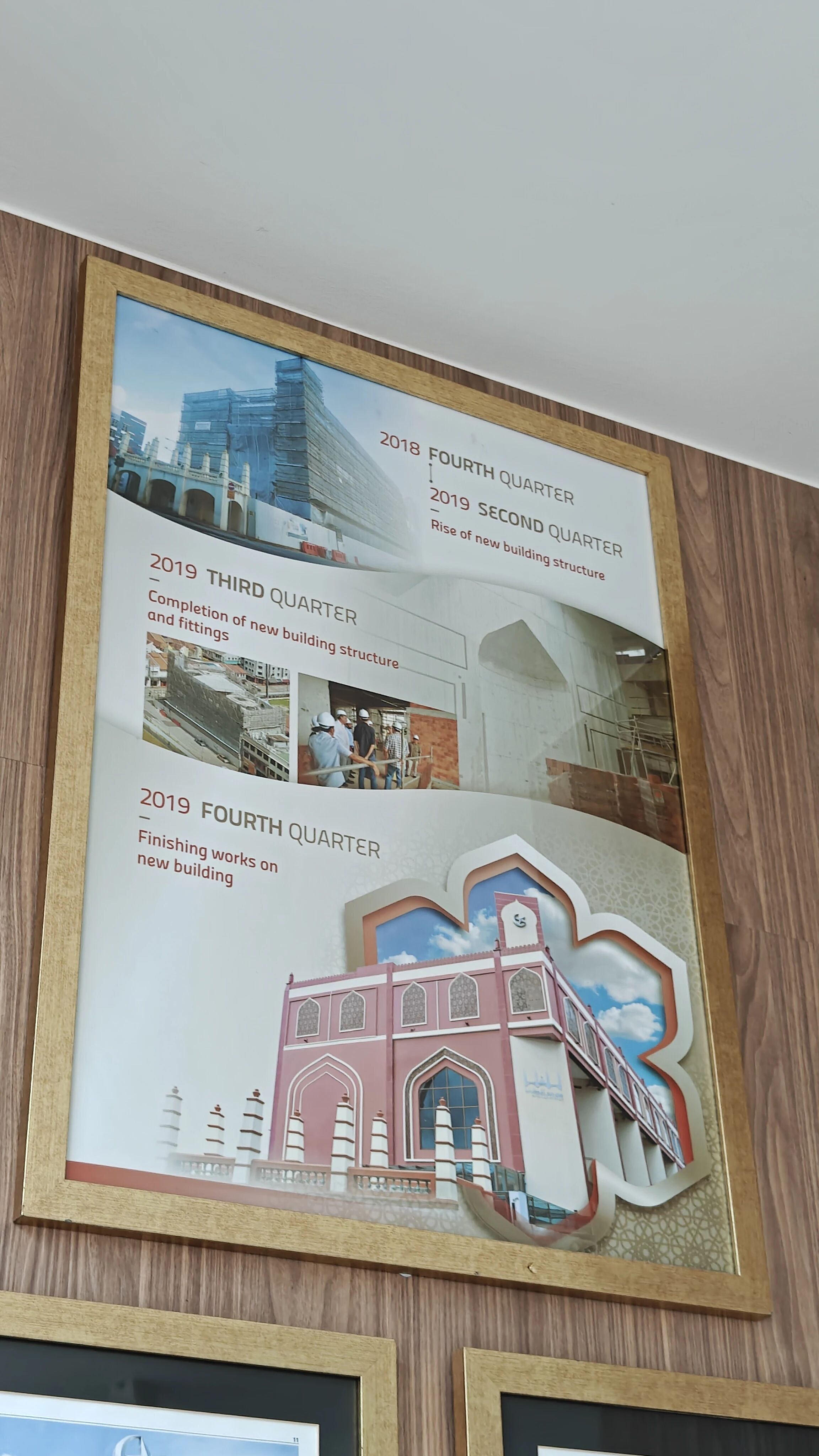
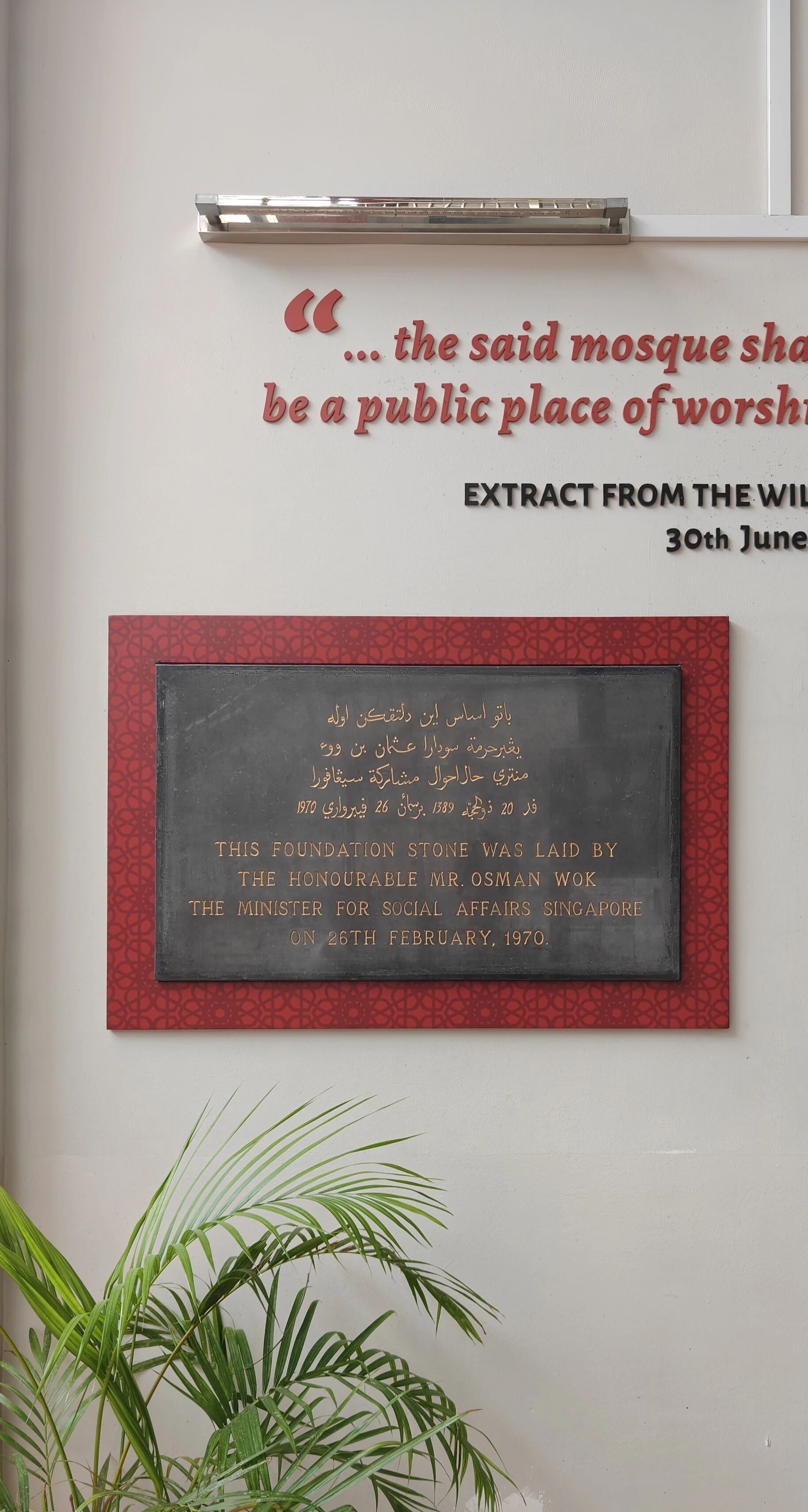
After leaving the mosque, I had dinner and went back to my accommodation to rest. I had previously heard at the Abdul Gafoor Mosque that there is also a Shia mosque in Singapore, which immediately sparked my interest, so I decided to go and see it.
In our next post, we will visit the only Shia mosque in Singapore. Collapse Read »
Summary: This Singapore Muslim travel guide visits Angullia Mosque in Little India, built by a Gujarati Muslim family in the 1890s, with its red exterior, upper-floor prayer hall, glass dome light, mihrab, minbar, wudu areas, and the South Asian street scene nearby.
The mosque I am introducing today was built in the 1890s by the Angullia family, who came from Gujarat, India. Gujarat is the home state of India's current Prime Minister, Modi.
The Angullia Mosque and the Hindu temple shown in the previous post are both in the Little India neighborhood on the same street. Many South Asians walk by, and the shops along the street have a distinct Indian style. The road is full of Diwali decorations, so walking here really feels like being in India.
From the outside, the ochre-red color of the mosque reminds people of iconic Indian buildings like the Red Fort.
The first floor of the mosque is a parking lot. The prayer hall and the area for wudu (ablution) are on the second floor for men and the third floor for women.
Entering the second floor, the mihrab niche connects the second and third floors vertically. The third-floor floorboards have an opening so that the glass dome on the roof can bring natural light directly down to the second floor. (Photo 3, Photo 4)
There is an Angullia Mosque logo on the minbar (Photo 5). The silhouette on this logo actually shows what the building looked like originally. In 2014, a large influx of foreign workers exceeded the capacity of the Angullia Mosque.
Because of this, demolition and expansion work began here in 2018. However, the iconic entrance hall with its eight pillars was preserved.
There are many copies of the Qur'an behind the prayer hall. I picked one up at random and found it was published in Bangladesh, so it had a lot of Bengali text inside. At first glance, I have to say that this dense Brahmi script really looks like the calligraphy of another world religion. (Photo 7)
There is a miniature model of the place on the second-floor porch. (Photo 8)
The entrance on the first floor has some old items on display, which serves as a simple exhibition (I think the mosque management committee is very thoughtful). They are:
1. Bricks used for building walls in the 1890s, which still have the brick factory's name, Alexandra, printed on them. They were specifically kept during the renovation (Photo 10).
2. A donation box used for over forty years (Photo 11).
3. A copper pot used for cooking porridge during Ramadan in the past (Photo 12).
Another feature of this mosque is the large number of information boards. You can see what it looked like before the 2018 expansion on the display boards (Photo 13). They even used the outer porch.
The porch is mainly used to exhibit the family history of the Angullia family (Photo 18), as well as the architectural heritage left by the Angullia family in Singapore and other countries like Malaysia and the Philippines (Photos 19 and 20).
After leaving the mosque, I had dinner and went back to my accommodation to rest. I had previously heard at the Abdul Gafoor Mosque that there is also a Shia mosque in Singapore, which immediately sparked my interest, so I decided to go and see it.
In our next post, we will visit the only Shia mosque in Singapore. Collapse Read »
Muslim Travel Guide Singapore Little India: Abdul Gafoor Mosque, Tamil Muslim Heritage and Prayer Hall
Reposted from the web
Summary: This Singapore Muslim travel guide visits Abdul Gafoor Mosque in Little India, a Tamil Muslim mosque first built in 1859, with its prayer hall, skylight design, Tamil writing, small museum, 99 names of Allah display, Qur'an manuscripts, and the Indian street life around the mosque.
Little India is the main area for the Indian community in Singapore. Besides Hindu temples, you can also find mosques built by Indians here. Many people think everyone in India is Buddhist, but the Buddhist population there is actually very small today.
Most people follow Hinduism, but India is also home to over 100 million Muslims. So, it is not strange to find mosques wherever there are people of Indian descent.
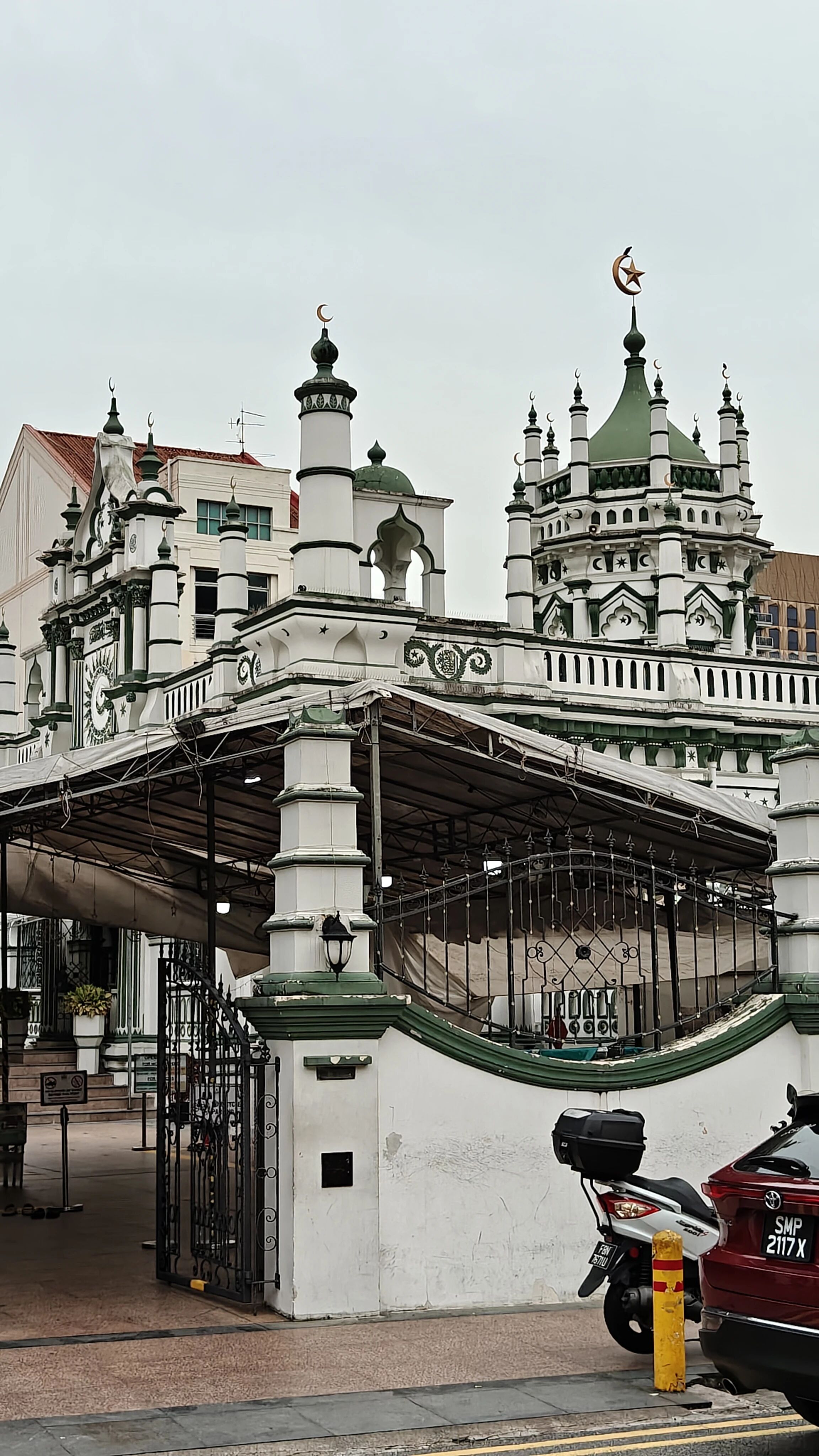
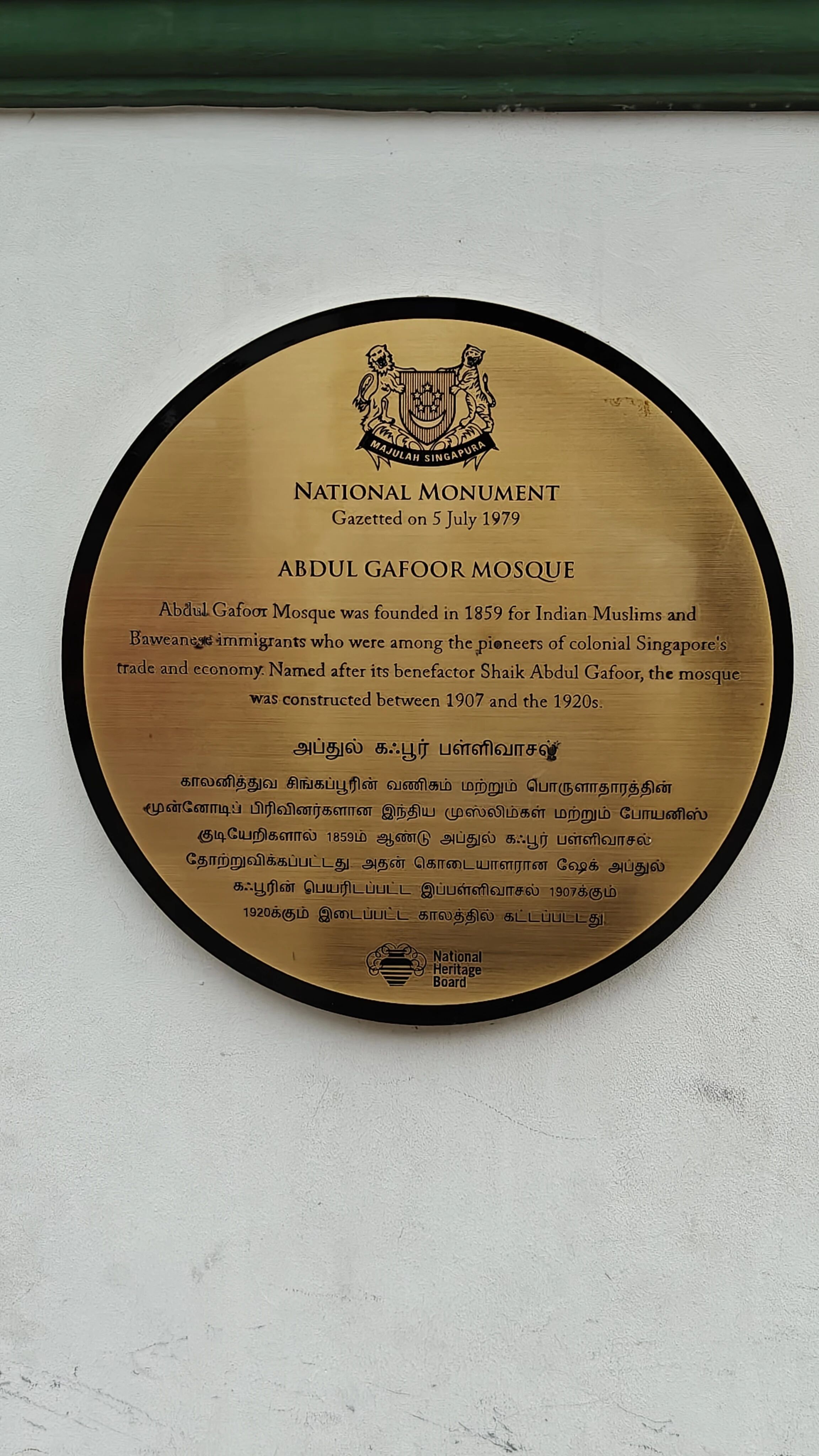
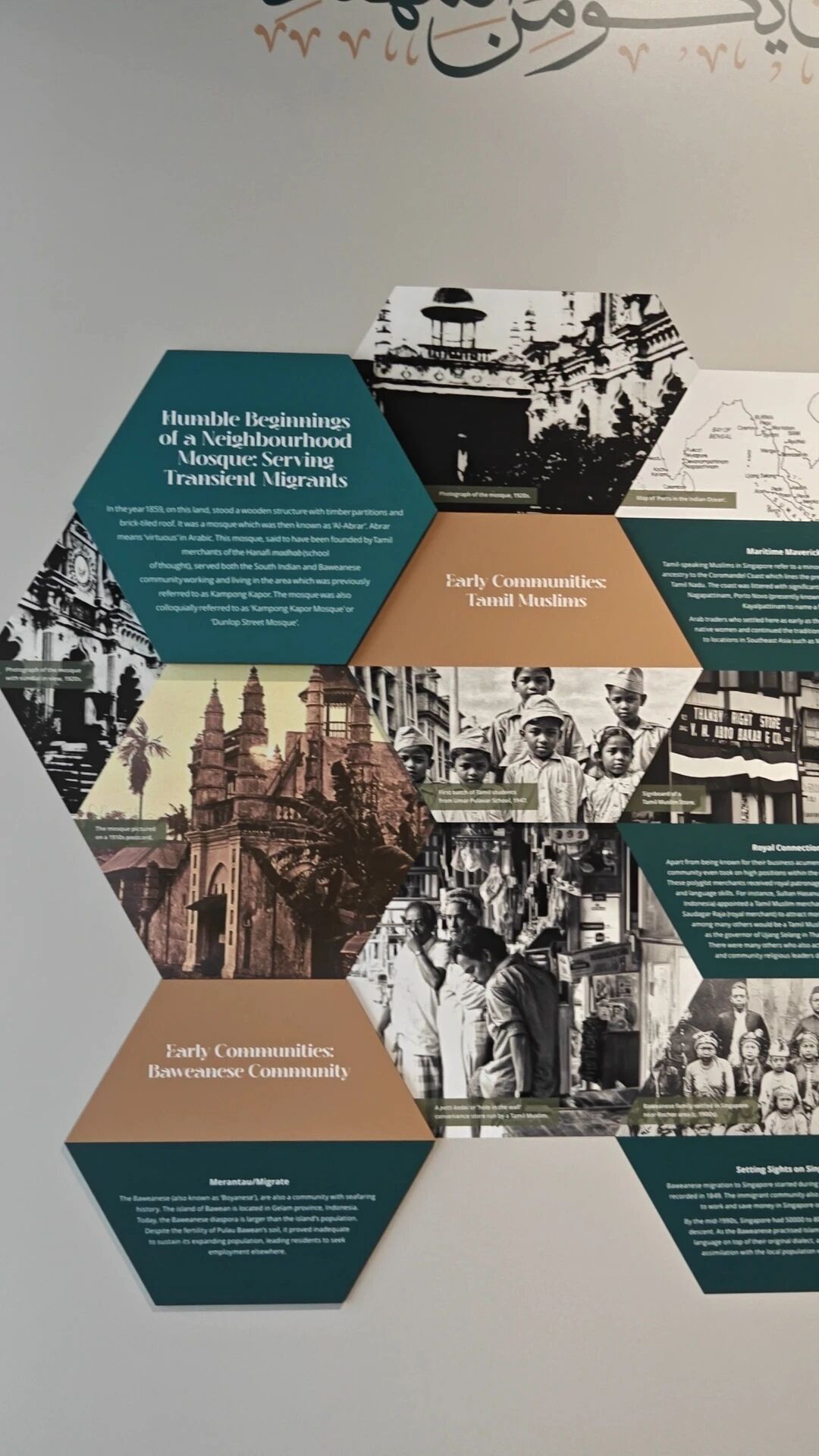
There is a mosque in the Little India neighborhood called Abdul Gafoor Mosque. The plaque at the entrance has a short introduction in both English and Tamil. This mosque was first built in 1859, and the current building was constructed between 1907 and 1920.
When I walked to the entrance, a staff member noticed me and invited me inside to show me the mosque's museum.
I told him I would look later, then I went to the prayer hall. Above the entrance to the prayer hall are the names of the 25 prophets mentioned in the Qur'an, including Adam (Adam), Ibrahim (Abraham), Musa (Moses), and Isa (Jesus).
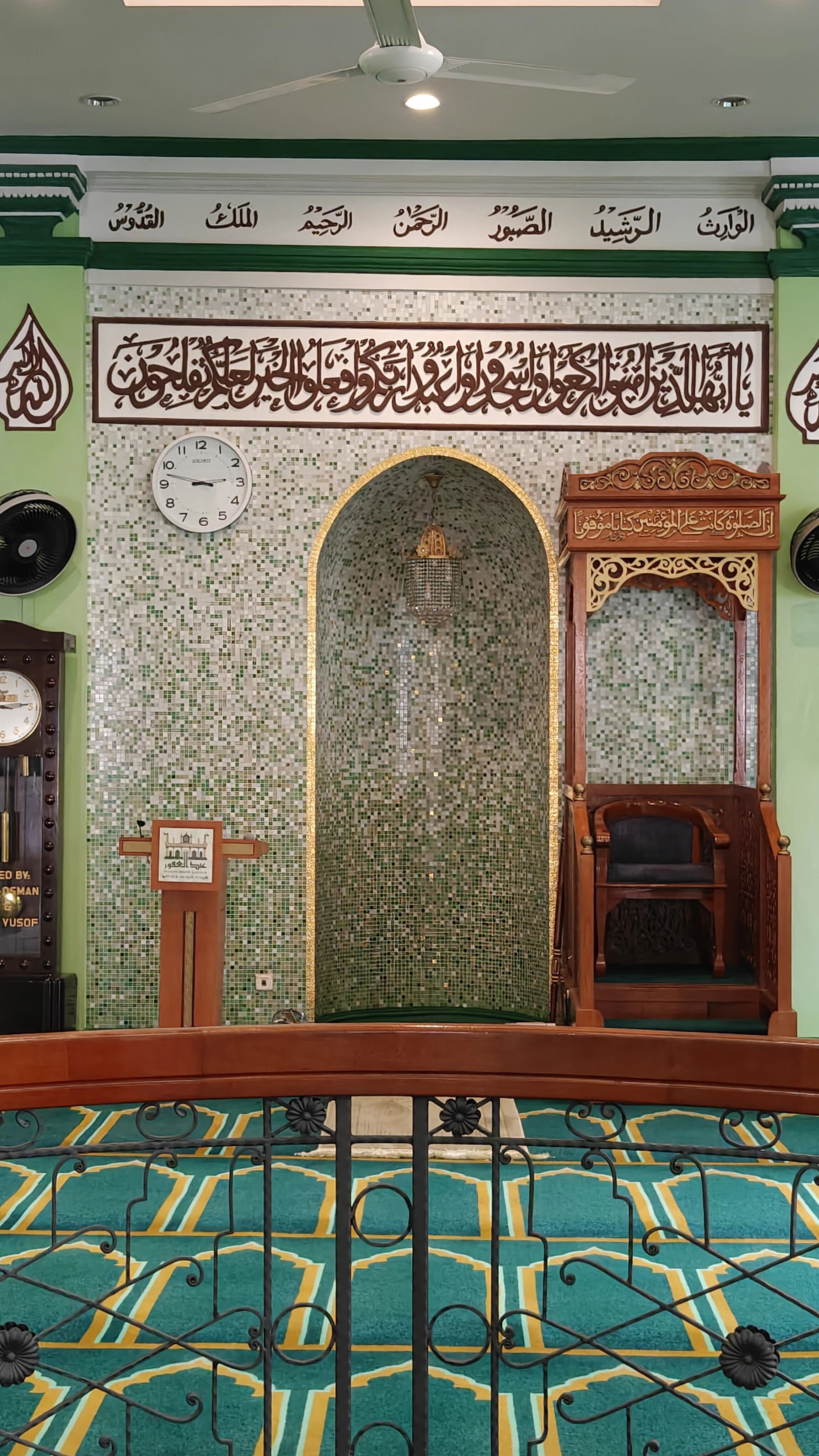
Entering the prayer hall, I noticed a skylight in the middle of the floor directly under the dome, which brings light down into the prayer area below. This is a unique feature of this mosque. (Photos 4 to 6)
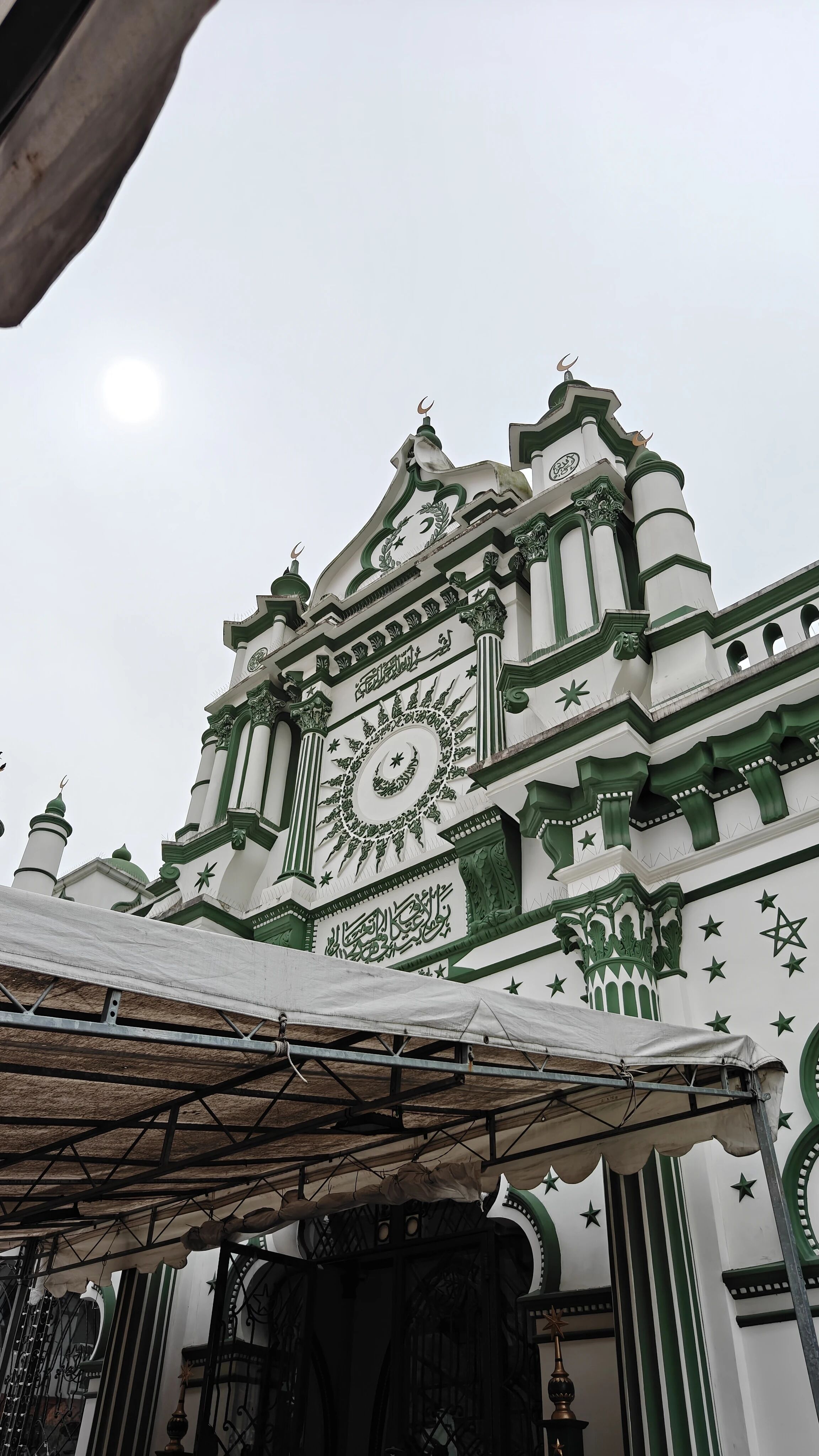
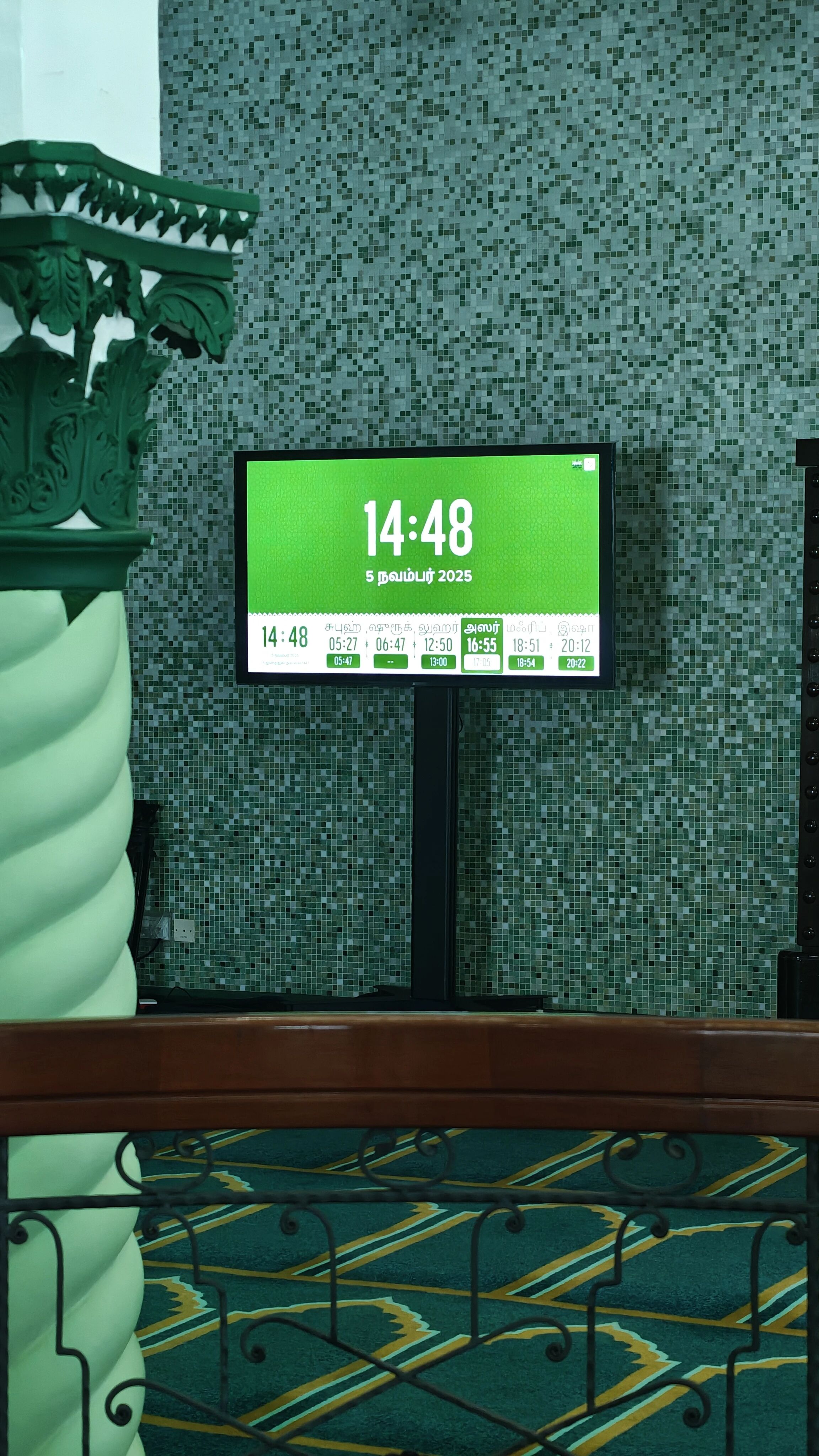
Another feature is the Tamil writing found throughout the mosque, as it was built by the Tamil people. (Photo 9)
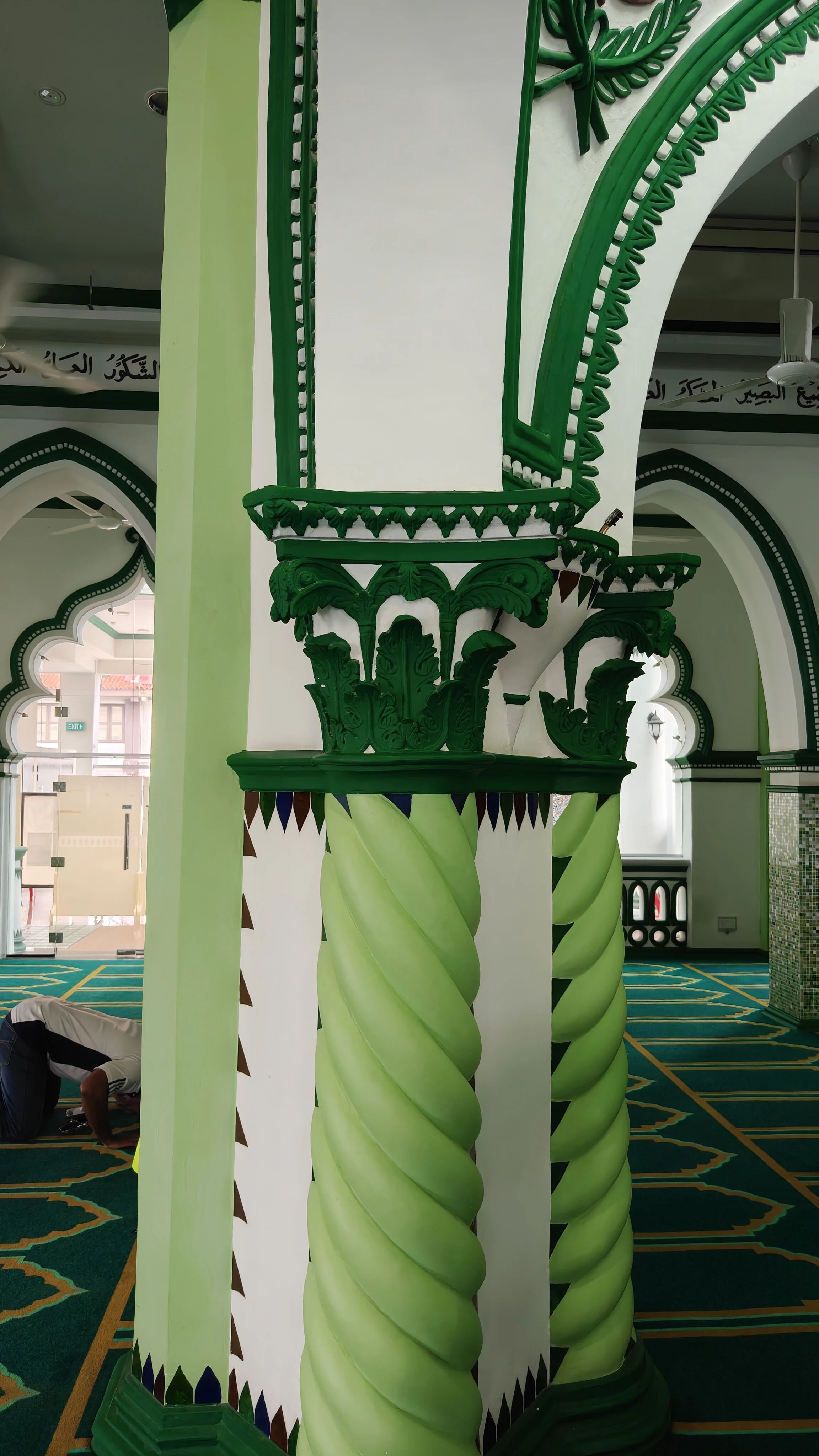
The twisted columns, which look like braided dough (mahua), are another unique feature here. (Photo 10)
I followed other visitors into the small museum inside the mosque. It details the history of the site, which started as a wooden building for immigrants before being rebuilt into its current form. (Photo 11)
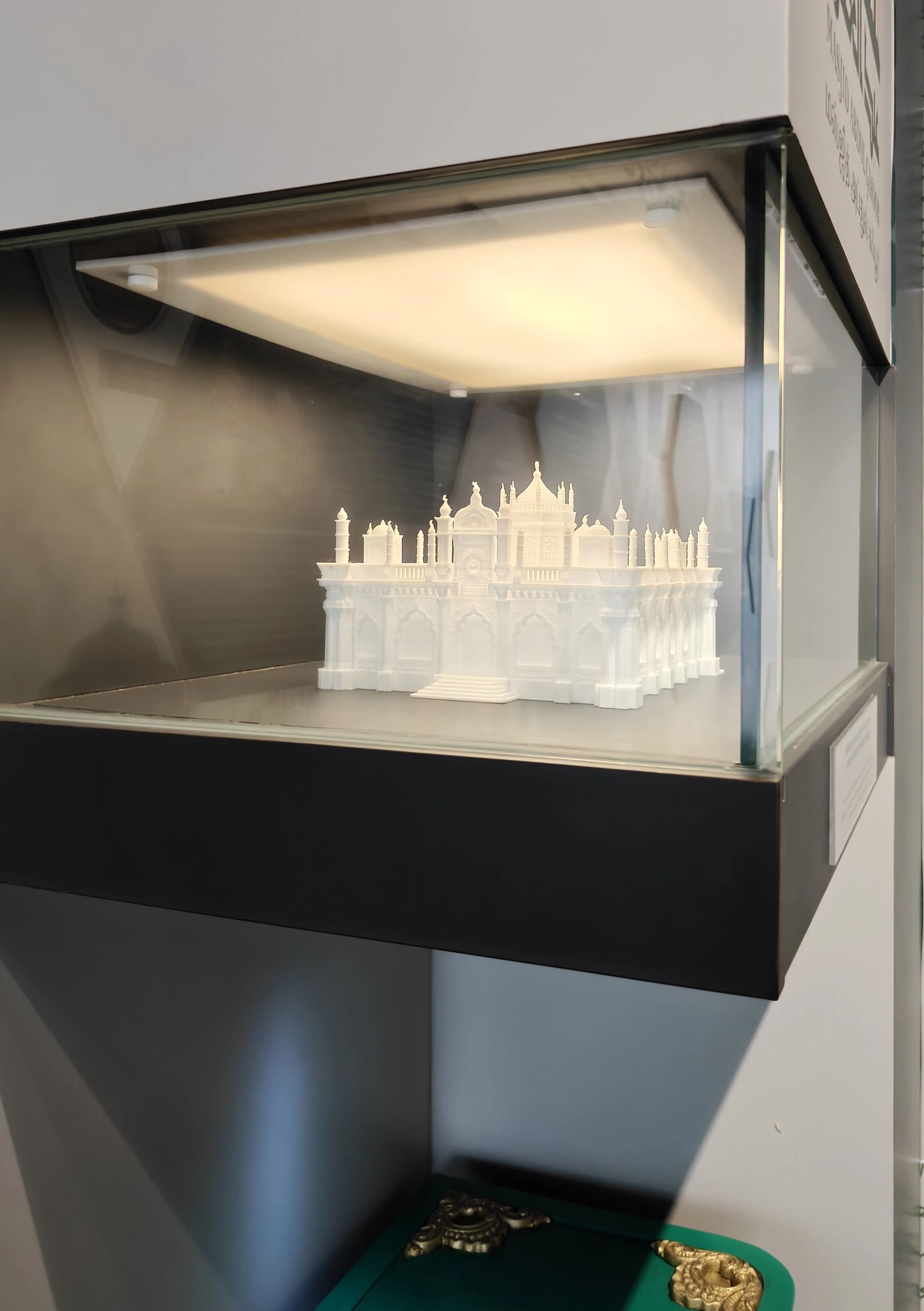
There is also a miniature model of the prayer hall here (Photo 12).
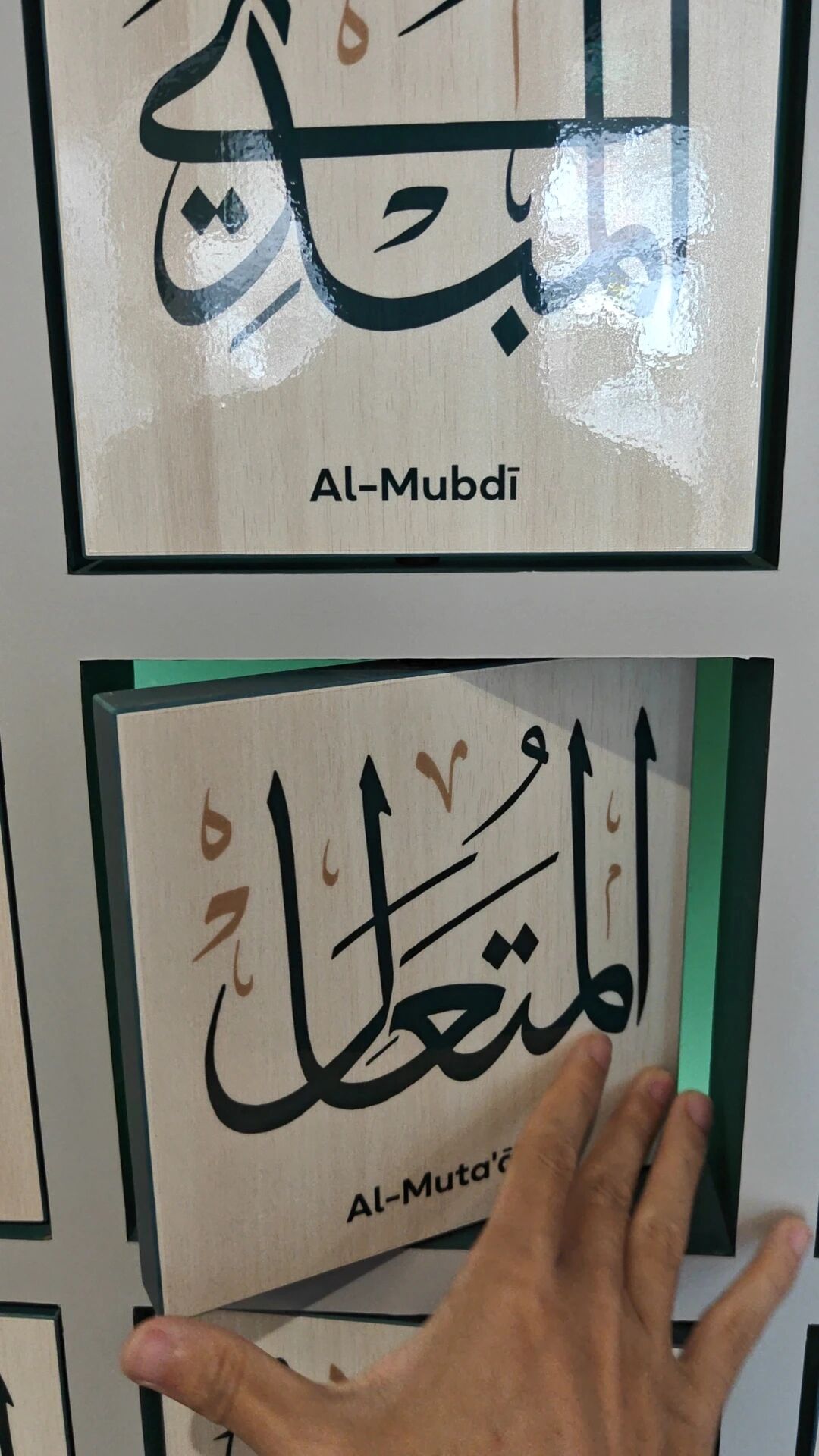
One wall displays the 99 names of Allah. The front shows the Arabic original, and you can flip the tiles to see the English meaning on the back. (Photo 13)
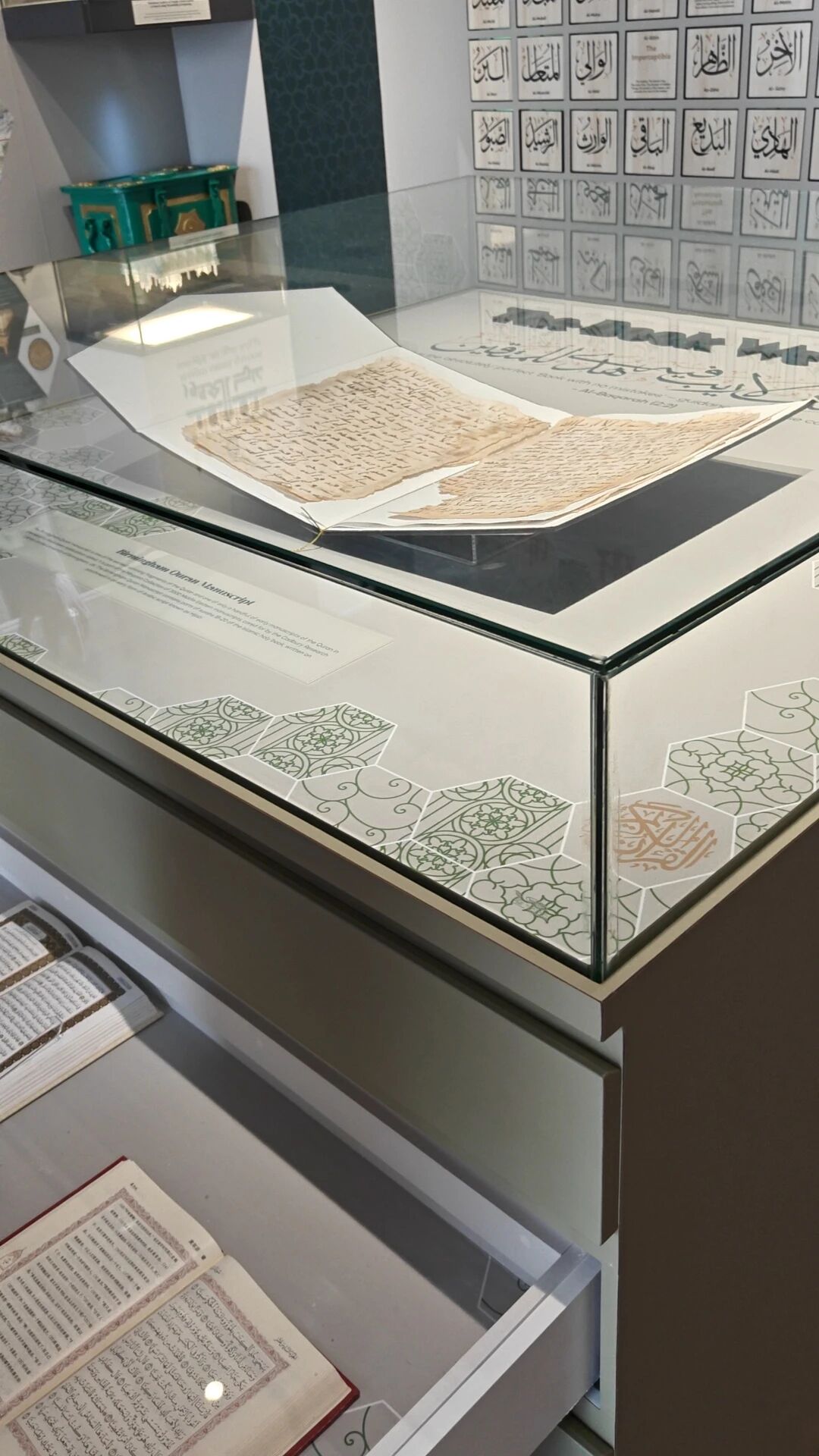
A display case holds handwritten copies of the Qur'an and various translations, including the Chinese version by Mr. Ma Jian. (Photo 14)
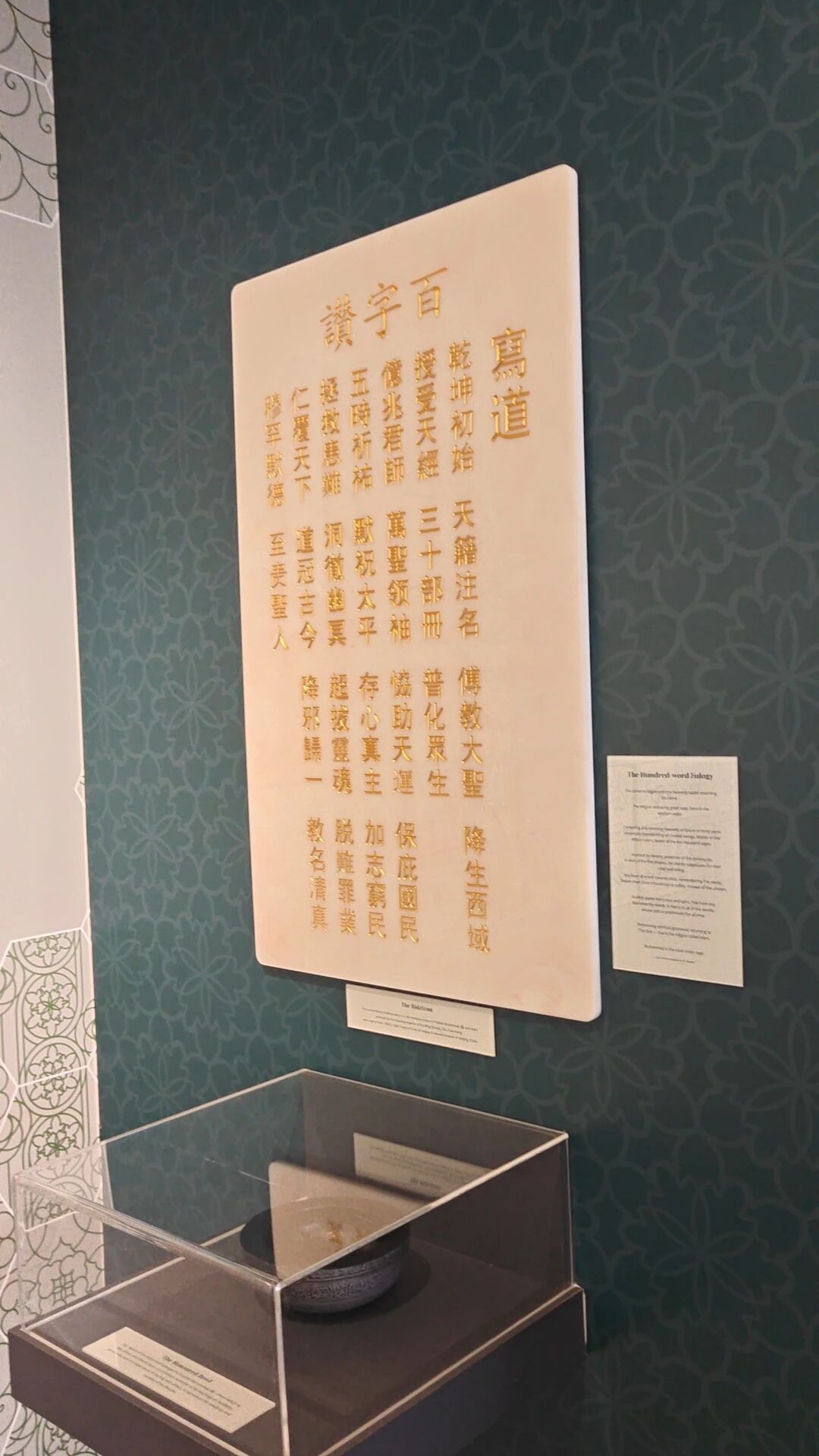
Next is a newly built stone tablet carved with the Hundred-Word Eulogy written by ancient Chinese people, which you can read for yourselves. (Photo 15)
I asked the guide if he was an imam. He said he was not, as he works specifically in publicity. The guide spoke fluent English, but as a Tamil, he spoke very fast without any pauses, so I still found it a bit difficult to follow. Still, I appreciate his effort in explaining things.
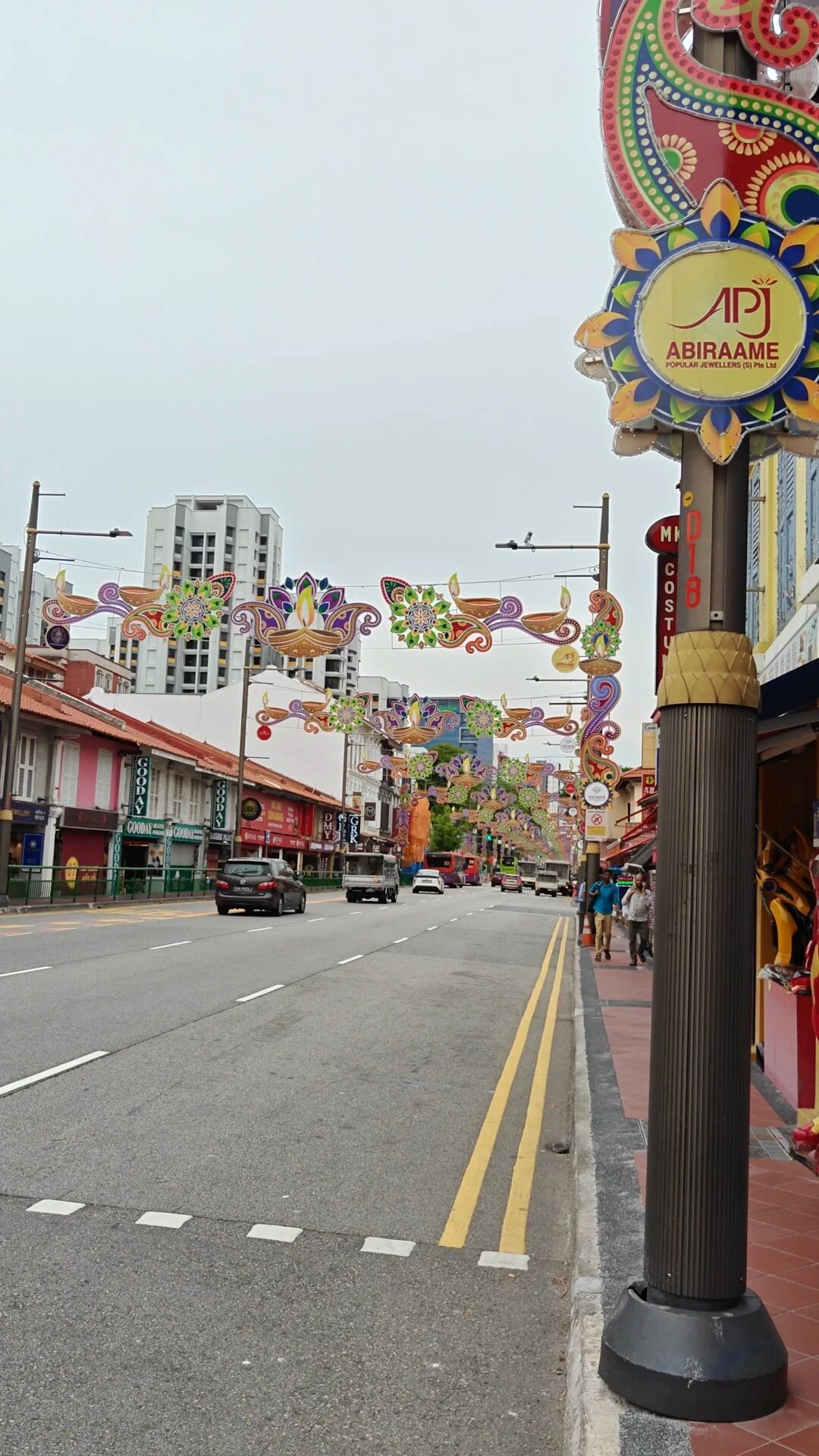
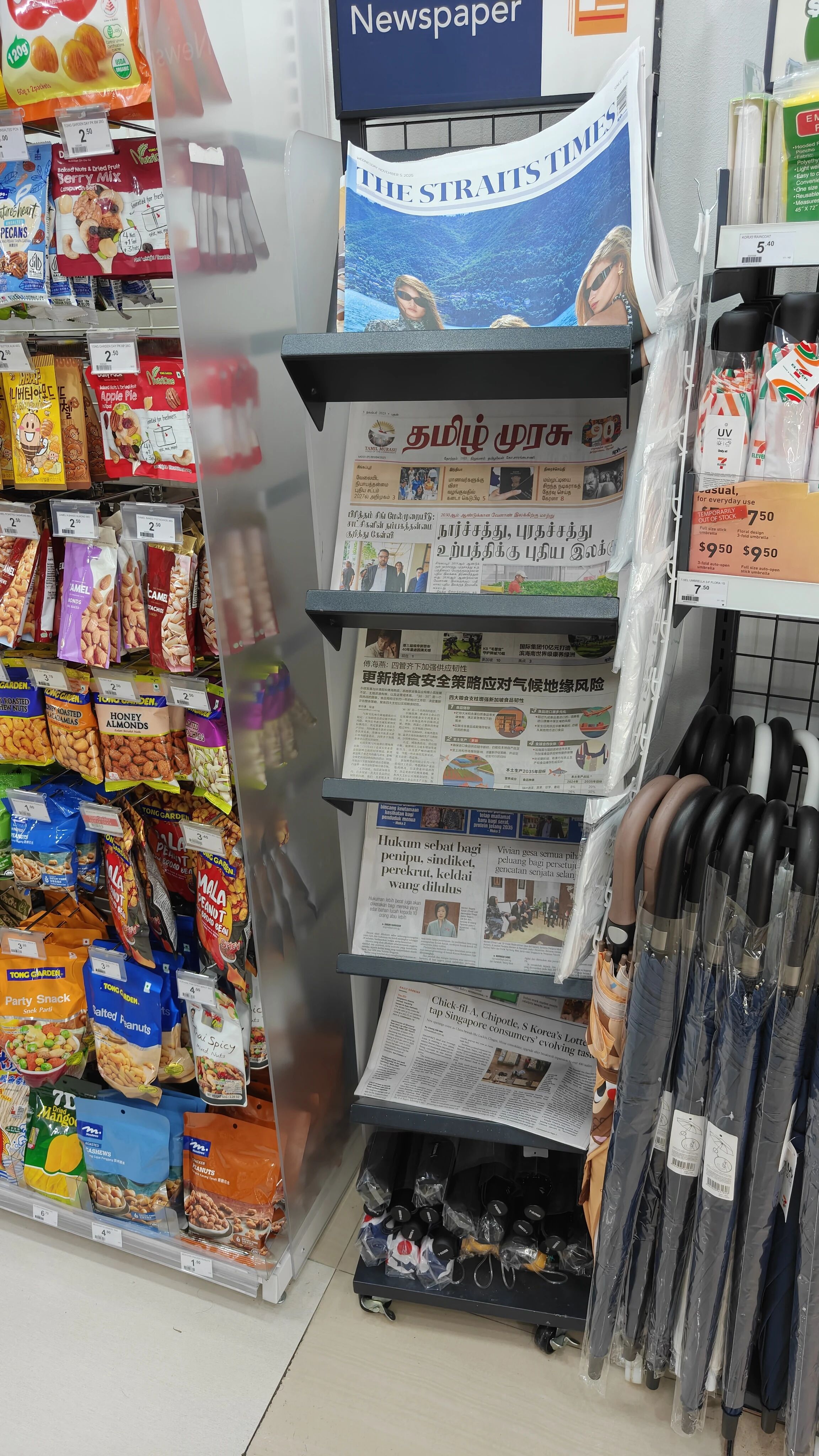
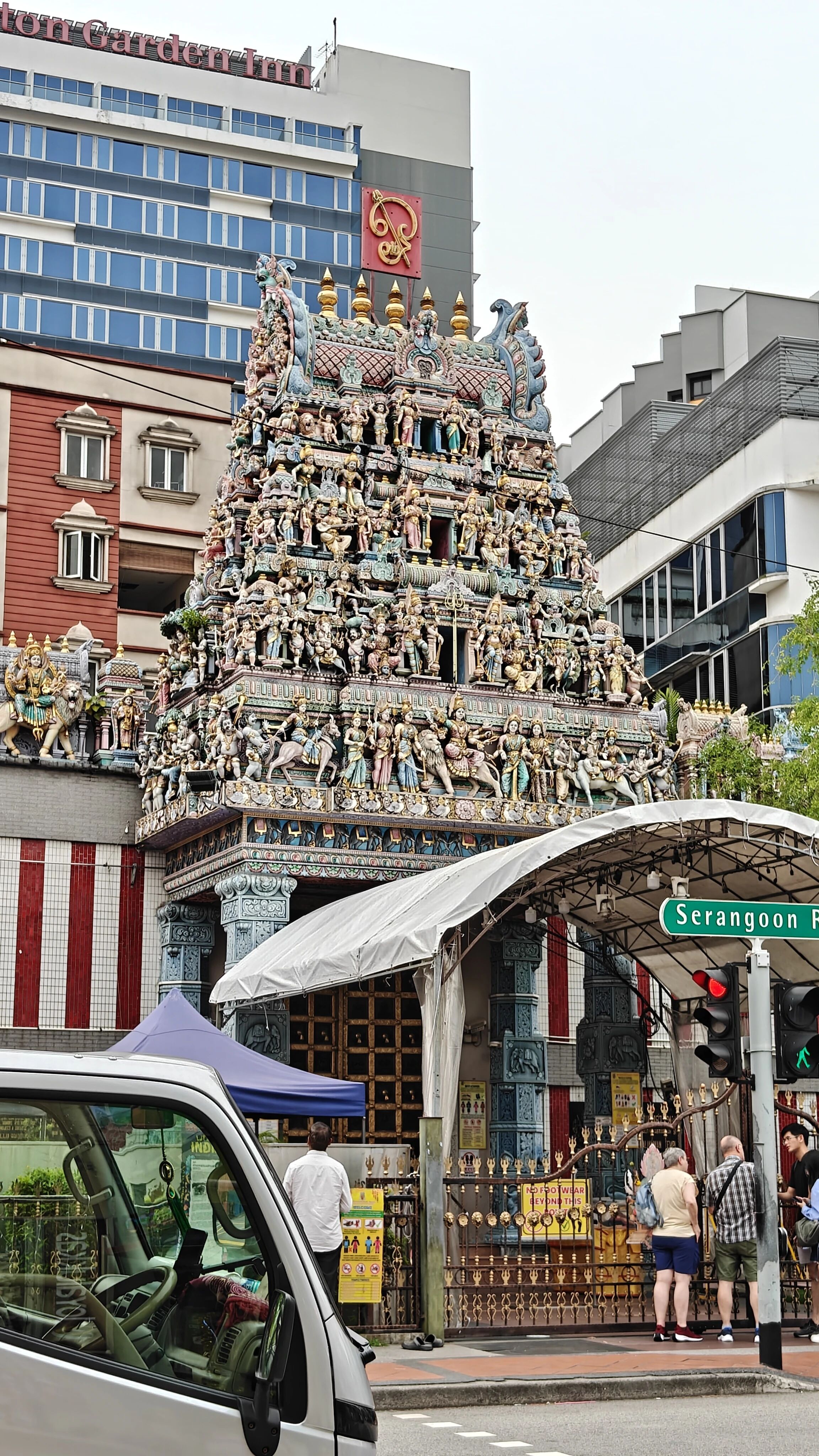
Finally, let me show you the Indian style of the neighborhood. Diwali has just passed, so there are many Indian-style decorative lights here (Photo 17). You can buy Tamil newspapers at convenience stores (Photo 18), and the streets are full of Indian restaurants, posters of Indian stars, and a South Indian-style Hindu temple.
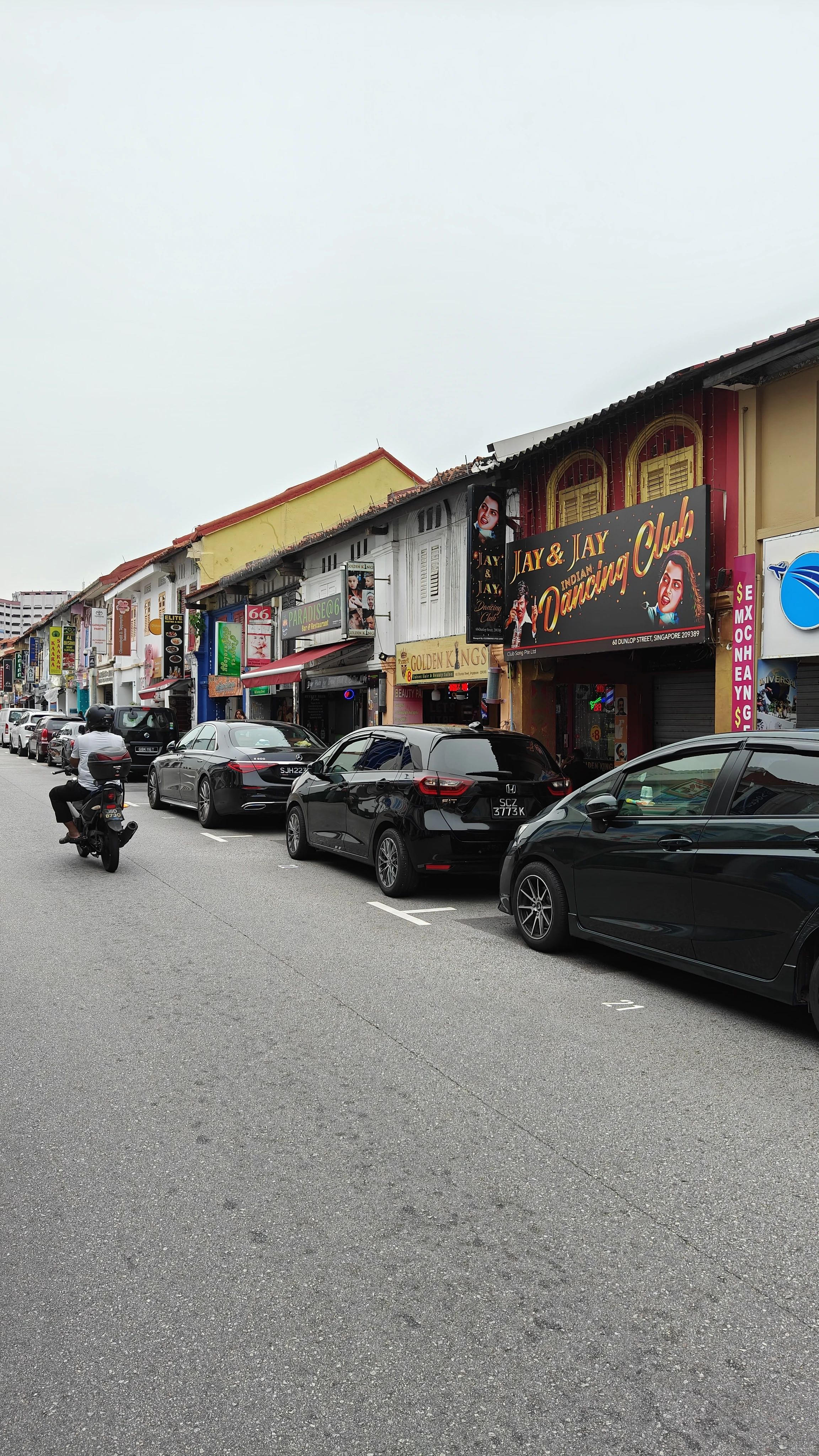
(Photo 19)
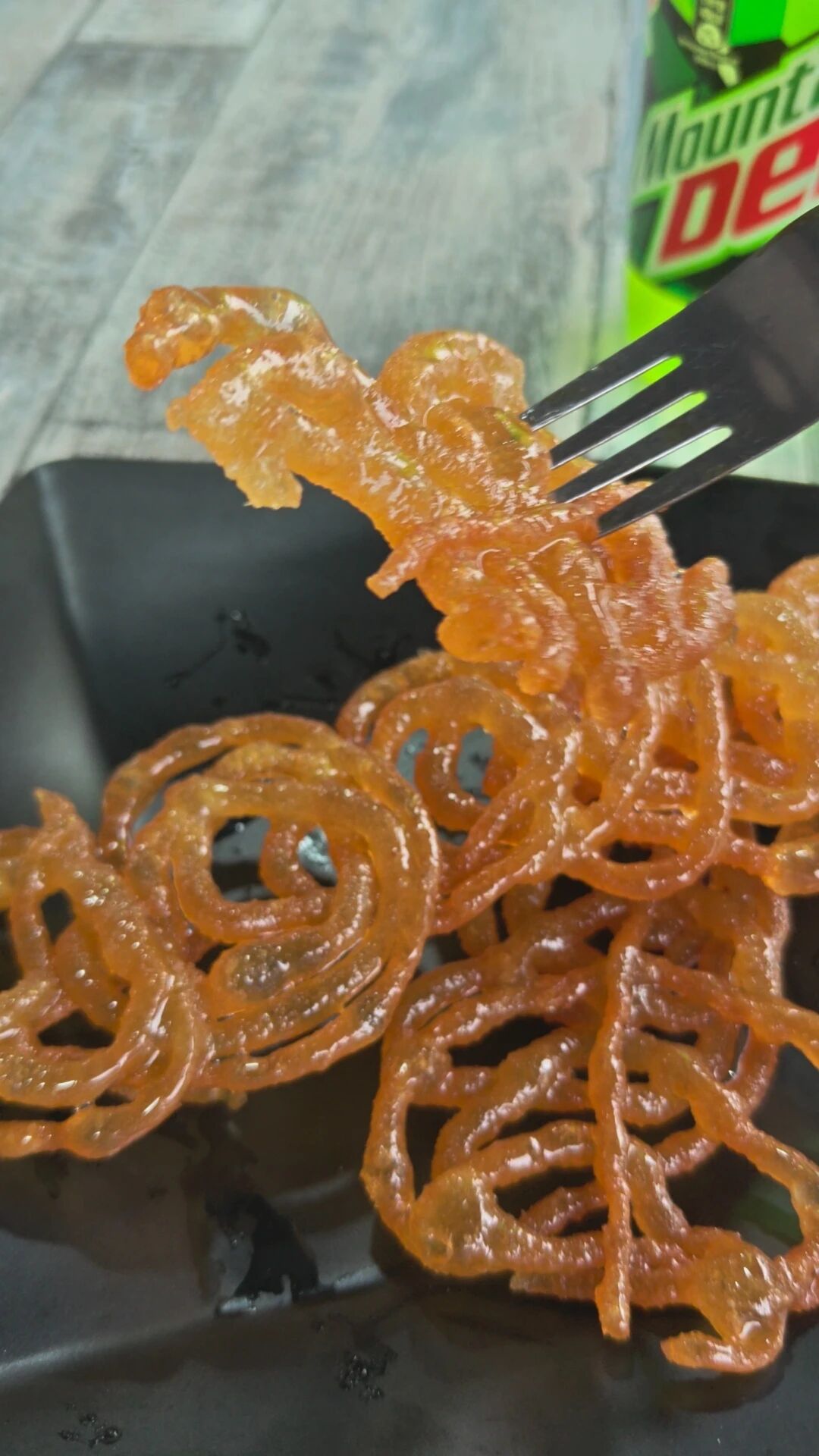
The last photo is the dessert I ordered at an Indian restaurant, jalebi (jialebei), which is a deep-fried sweet made from flour and sugar batter. Please enjoy it with me.
 Collapse Read »
Summary: This Singapore Muslim travel guide visits Abdul Gafoor Mosque in Little India, a Tamil Muslim mosque first built in 1859, with its prayer hall, skylight design, Tamil writing, small museum, 99 names of Allah display, Qur'an manuscripts, and the Indian street life around the mosque.
Little India is the main area for the Indian community in Singapore. Besides Hindu temples, you can also find mosques built by Indians here. Many people think everyone in India is Buddhist, but the Buddhist population there is actually very small today.
Most people follow Hinduism, but India is also home to over 100 million Muslims. So, it is not strange to find mosques wherever there are people of Indian descent.
There is a mosque in the Little India neighborhood called Abdul Gafoor Mosque. The plaque at the entrance has a short introduction in both English and Tamil. This mosque was first built in 1859, and the current building was constructed between 1907 and 1920.
When I walked to the entrance, a staff member noticed me and invited me inside to show me the mosque's museum.
I told him I would look later, then I went to the prayer hall. Above the entrance to the prayer hall are the names of the 25 prophets mentioned in the Qur'an, including Adam (Adam), Ibrahim (Abraham), Musa (Moses), and Isa (Jesus).
Entering the prayer hall, I noticed a skylight in the middle of the floor directly under the dome, which brings light down into the prayer area below. This is a unique feature of this mosque. (Photos 4 to 6)
Another feature is the Tamil writing found throughout the mosque, as it was built by the Tamil people. (Photo 9)
The twisted columns, which look like braided dough (mahua), are another unique feature here. (Photo 10)
I followed other visitors into the small museum inside the mosque. It details the history of the site, which started as a wooden building for immigrants before being rebuilt into its current form. (Photo 11)
There is also a miniature model of the prayer hall here (Photo 12).
One wall displays the 99 names of Allah. The front shows the Arabic original, and you can flip the tiles to see the English meaning on the back. (Photo 13)
A display case holds handwritten copies of the Qur'an and various translations, including the Chinese version by Mr. Ma Jian. (Photo 14)
Next is a newly built stone tablet carved with the Hundred-Word Eulogy written by ancient Chinese people, which you can read for yourselves. (Photo 15)
I asked the guide if he was an imam. He said he was not, as he works specifically in publicity. The guide spoke fluent English, but as a Tamil, he spoke very fast without any pauses, so I still found it a bit difficult to follow. Still, I appreciate his effort in explaining things.
Finally, let me show you the Indian style of the neighborhood. Diwali has just passed, so there are many Indian-style decorative lights here (Photo 17). You can buy Tamil newspapers at convenience stores (Photo 18), and the streets are full of Indian restaurants, posters of Indian stars, and a South Indian-style Hindu temple.
(Photo 19)
The last photo is the dessert I ordered at an Indian restaurant, jalebi (jialebei), which is a deep-fried sweet made from flour and sugar batter. Please enjoy it with me.
Collapse Read »
Muslim Travel Guide Vietnam Hanoi: Al-Noor Mosque, Wudu Area, Halal Food and Muslim Life
Reposted from the web
Summary: This Vietnam Muslim travel guide visits Al-Noor Mosque in Hanoi, the only functioning mosque in northern Vietnam, with its courtyard prayer space, small prayer hall, wudu area, Cham imam, Kinh Muslims learning about Islam, nearby halal food, and local street scenes.
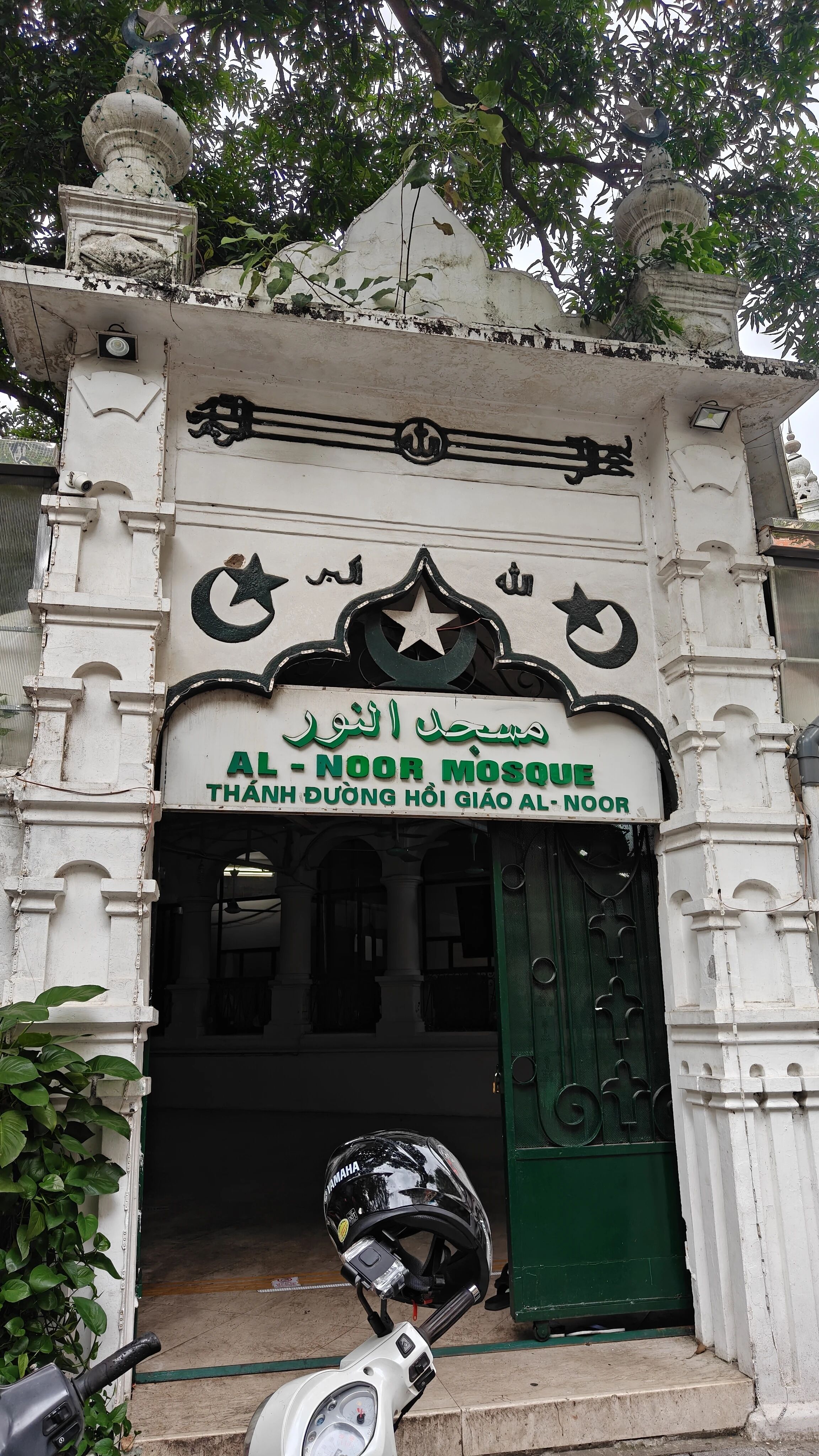
Most of the mosques in Vietnam are located in southern Vietnam. There is currently only one functioning mosque in the north, which is the Al-Noor Mosque (Guangming Mosque) that I will introduce this time.
Picture 1 is the door of the mosque, with Al-Noor written on it, which is Arabic transliterated from Latin letters, meaning light. It can also be seen from the Vietnamese text at the bottom that Vietnam still uses the word Islam (Hoi Giao).
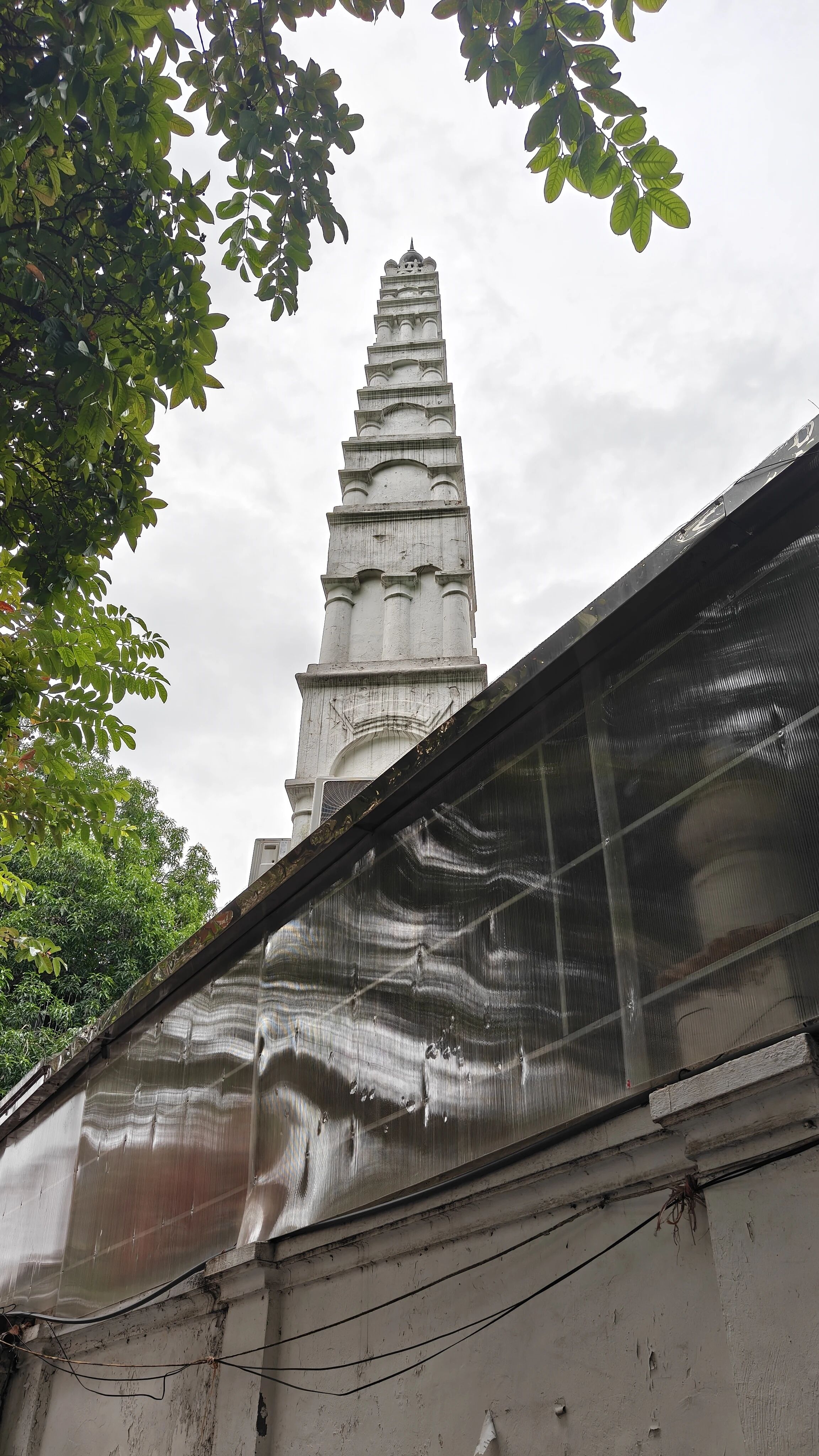
Picture 2 is the minaret of the mosque.
Pictures 3 & 4 show the courtyard of the mosque. In order to keep the courtyard clean, a simple awning is built on it, and you have to take off your shoes when entering the courtyard. I guess it's because this mosque is relatively small, so the courtyard has to be used as a prayer hall.
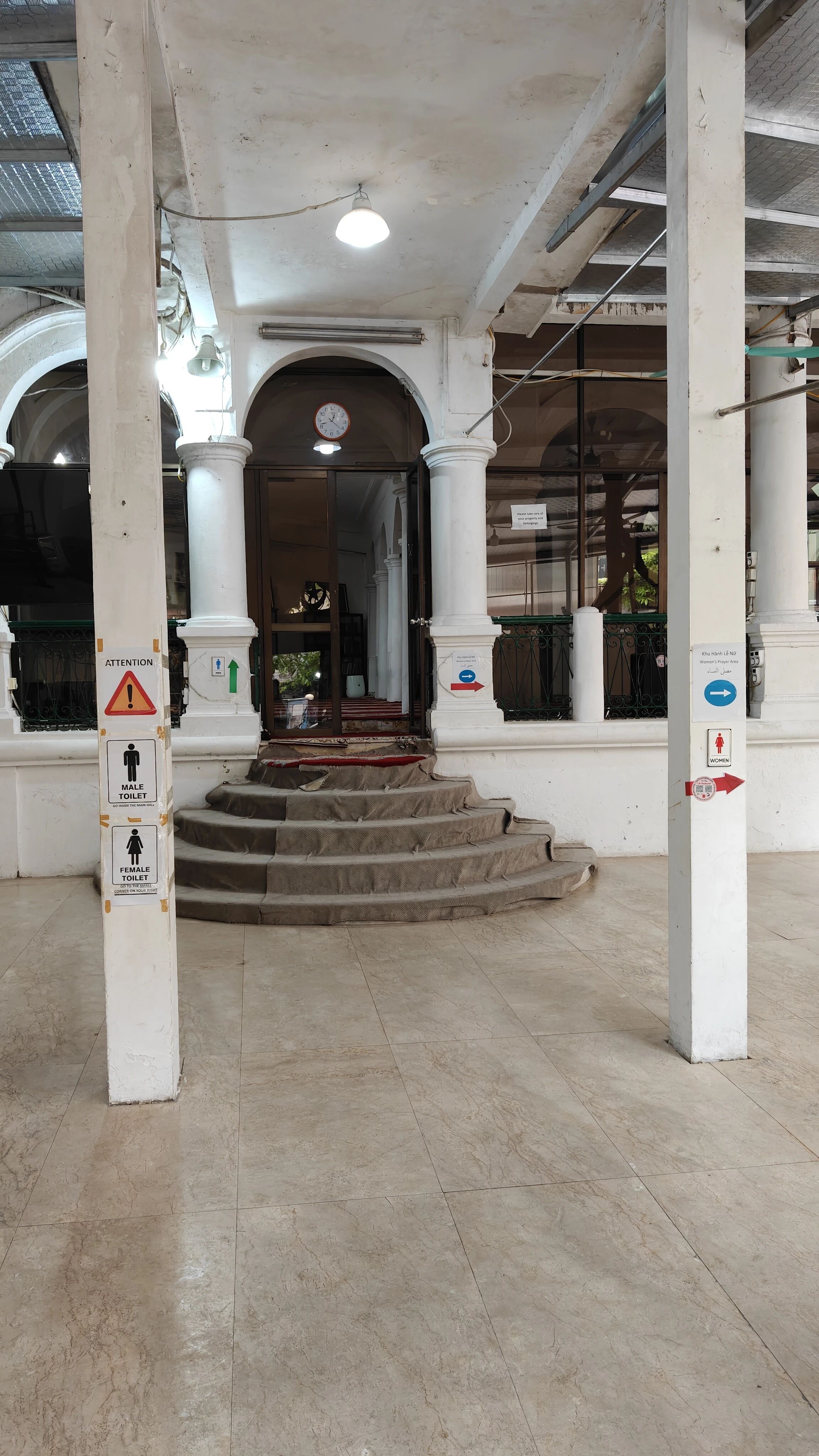
Pictures 5, 6 & 7 show the inside of the prayer hall. The lighting is not very good, so you have to go through the prayer hall to perform wudu. The conditions are quite basic.
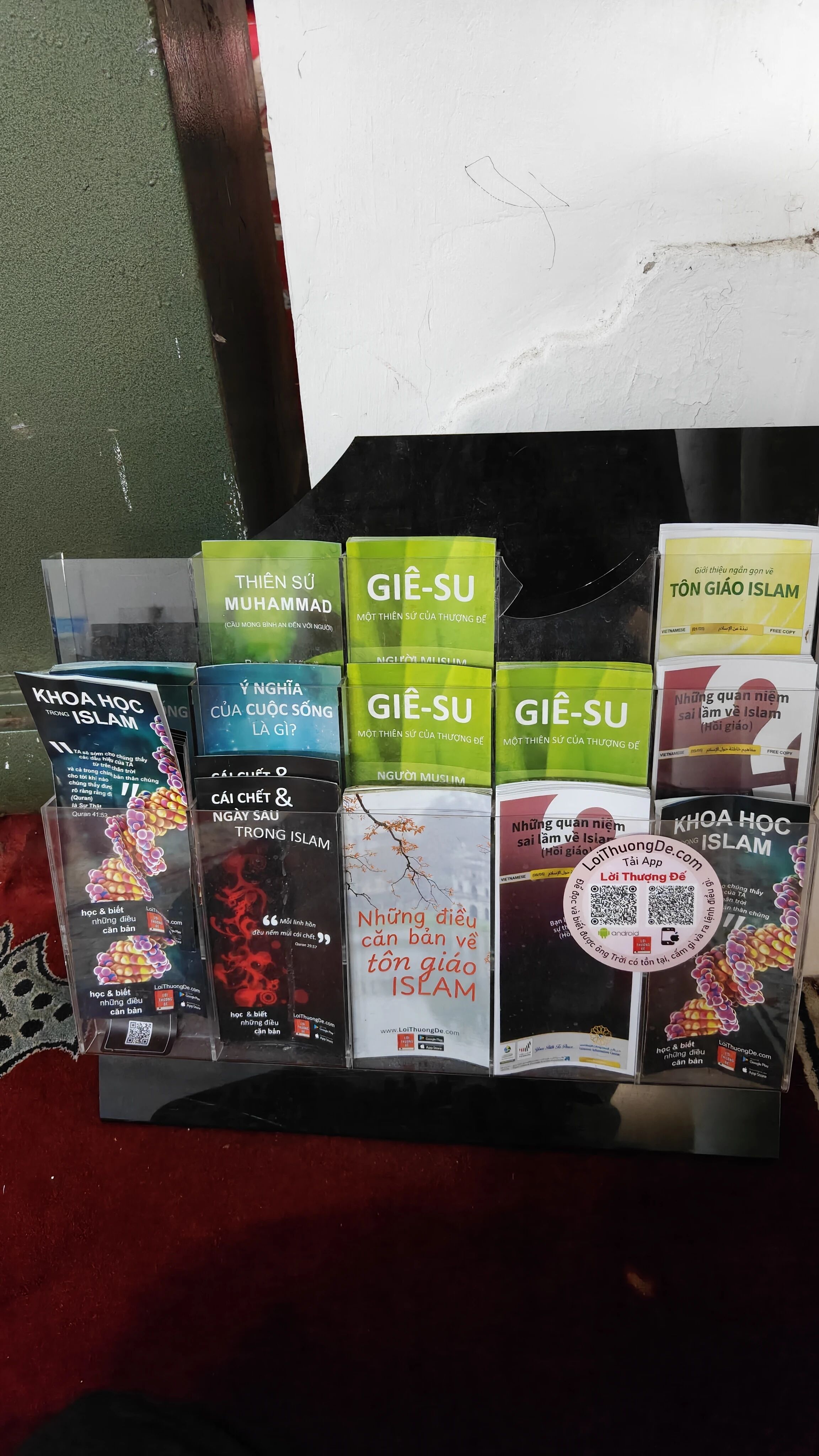
Picture 8 shows some introductory Islam materials placed near the entrance to the prayer hall. I have also met the imam here. The imam is a Cham ethnic minority in Vietnam. His hometown is in a village in southern Vietnam. He is young and very kind.
I asked him if there were any Muslims from the Kinh ethnic group (the main ethnic group in Vietnam), and he said that one or two Kinh people would accept Islam every month.
Later, I did meet a Kinh Muslim. He took the initiative to say hello to me. During the conversation, it was obvious that he was very passionate about his faith. But after a while, he disappeared. When I saw him again, he was holding cakes in his hand, and there was a mother and daughter at the door.
It turned out that the mother and daughter came to learn about Islam. The young Kinh man went to buy cakes for them and wanted them to sit down and introduce them while eating.
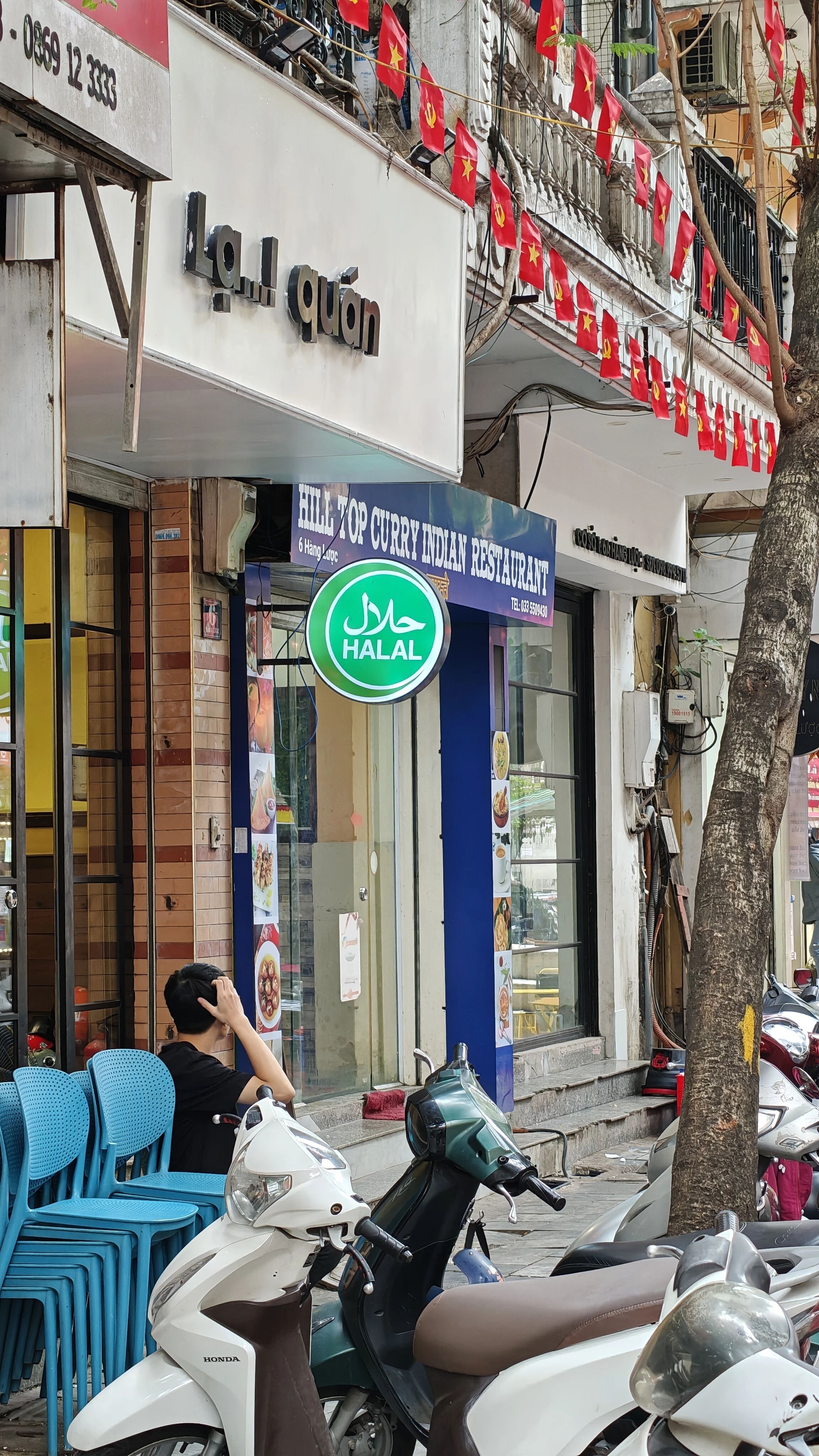
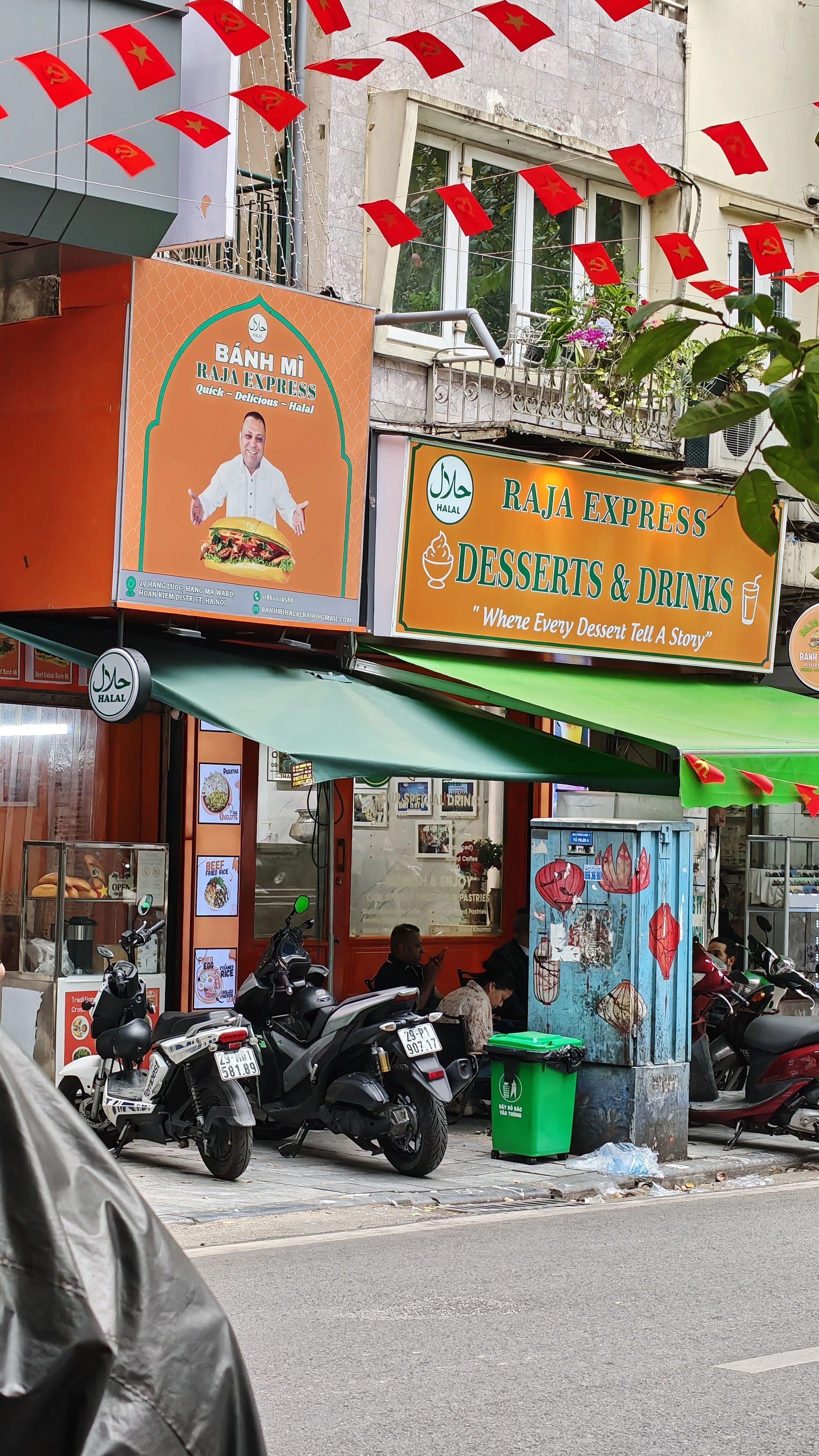
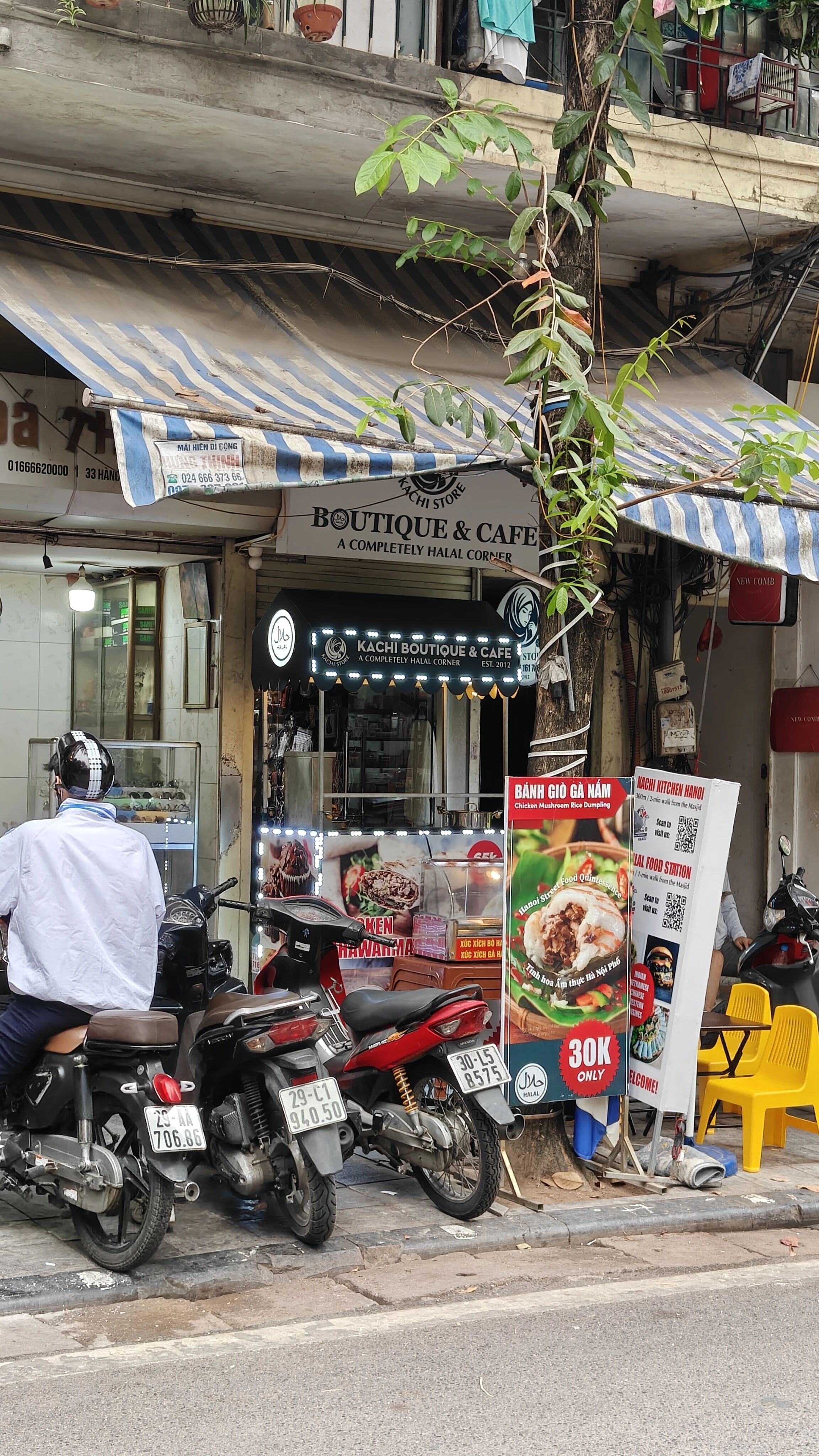
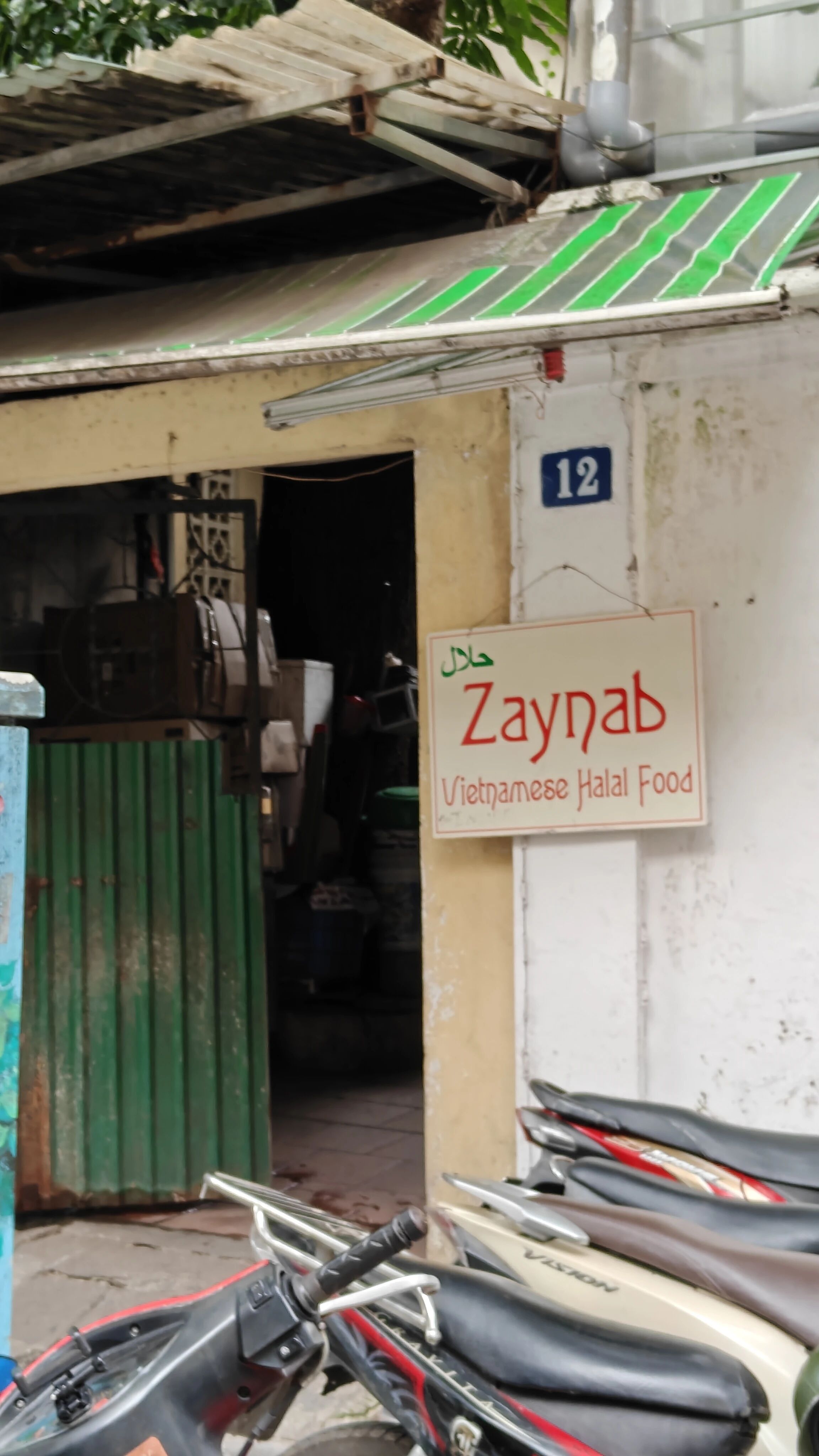
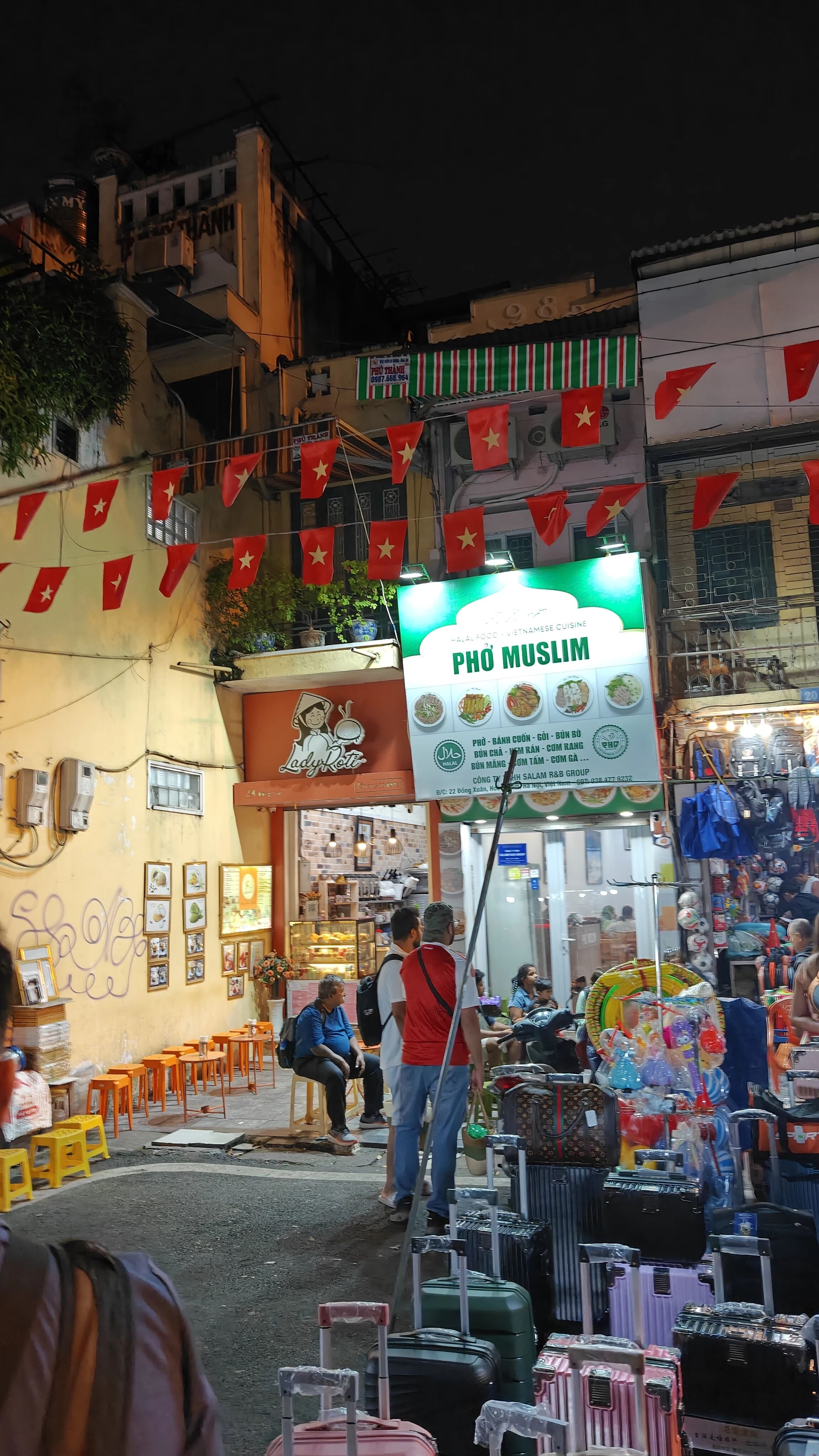
Picture 9 to Picture 13, after a while it’s time to eat. There are also many halal restaurants around the mosque. Before going there, I thought there were only one or two.
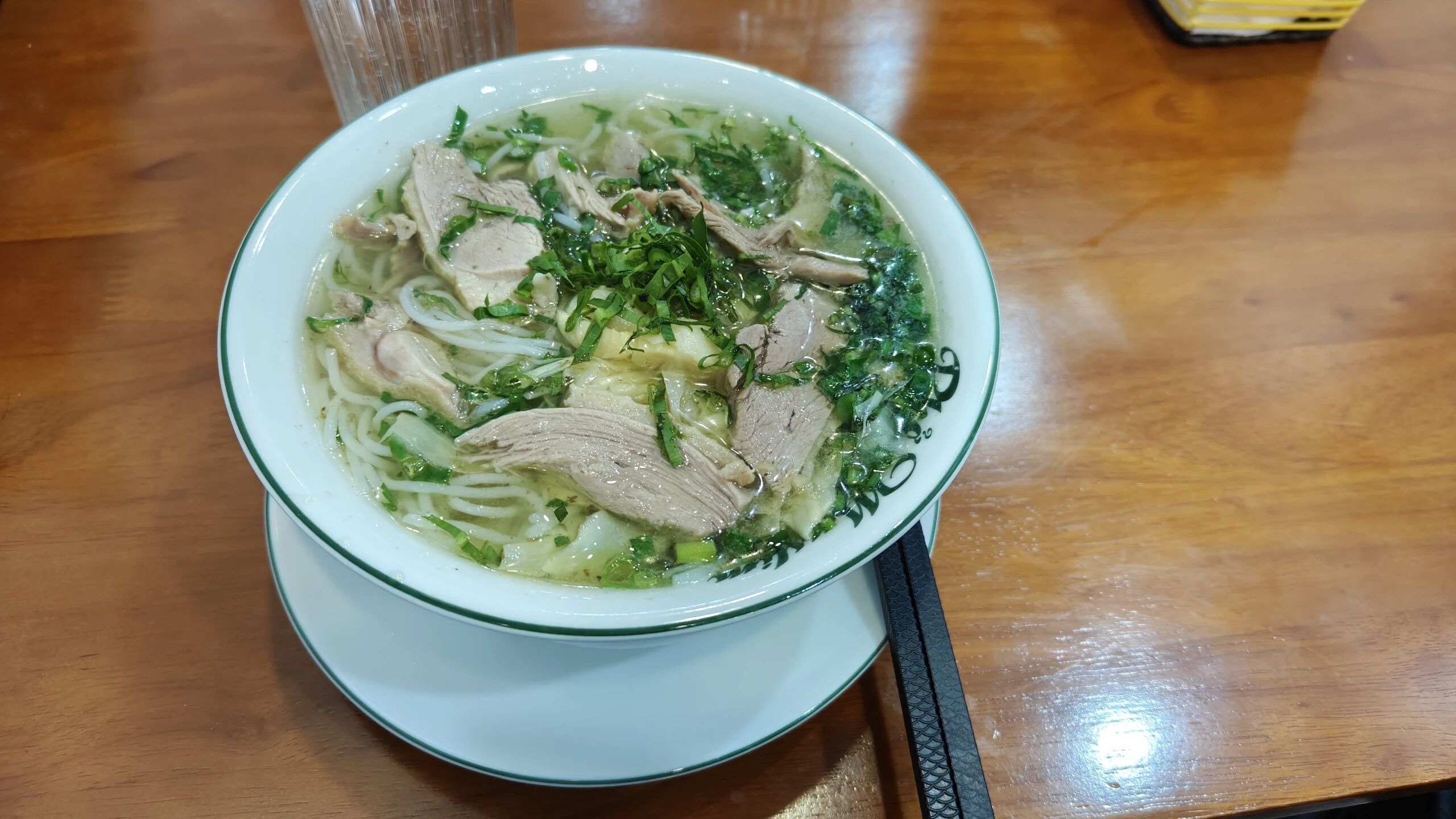
Picture 14: My brother treated me to Vietnamese pho, which was made with duck meat and bamboo shoots in it. He asked me if bamboo shoots are also eaten in China, and I said of course.
Picture 15 & Picture 16, the next day I ate another Vietnamese specialty, banh mi-style baguette with vegetables, opposite the mosque. Cut the baguettes brought by the former colonists and add eggs, sausages, vegetables or skewers to complete this snack.
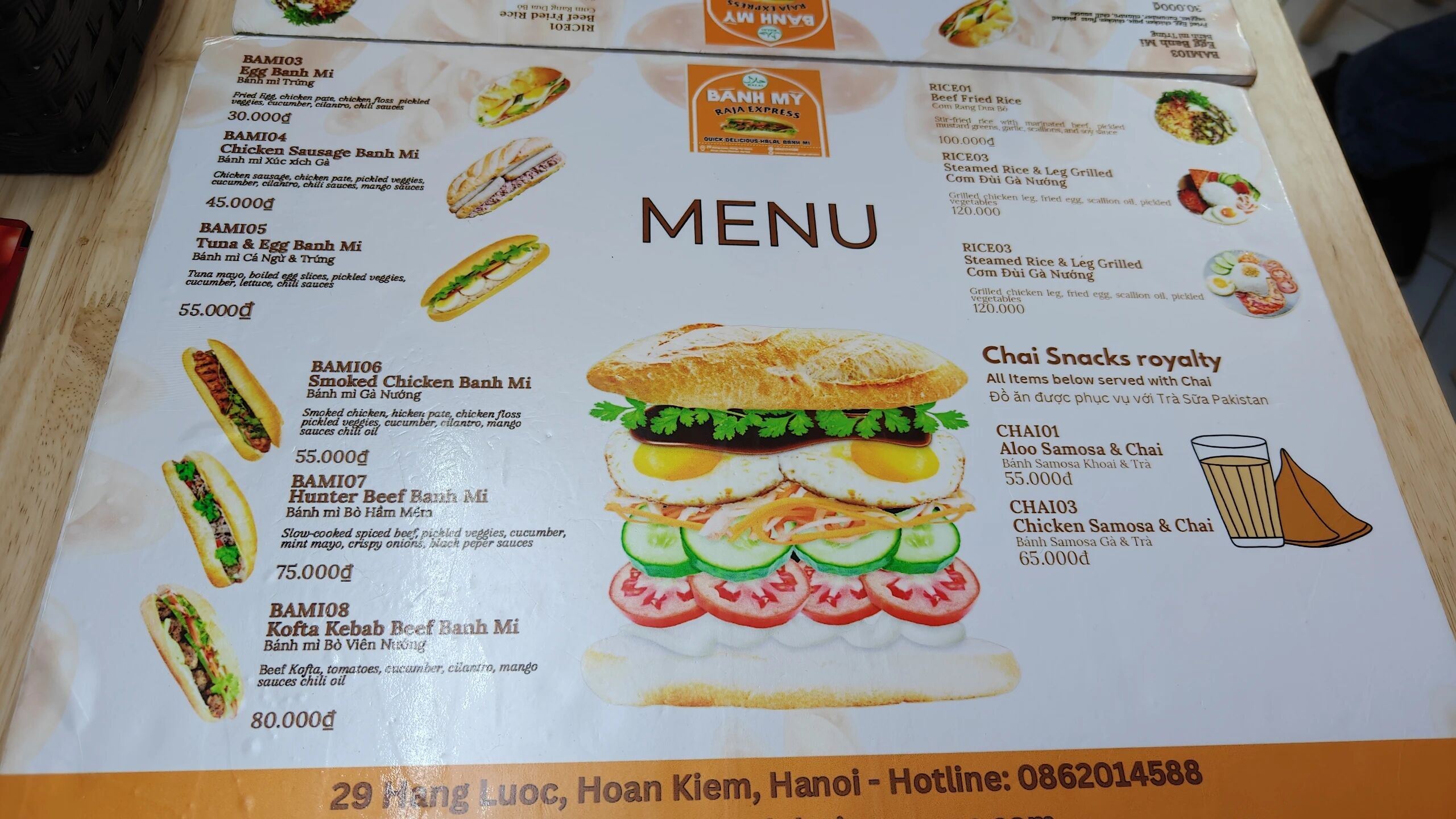
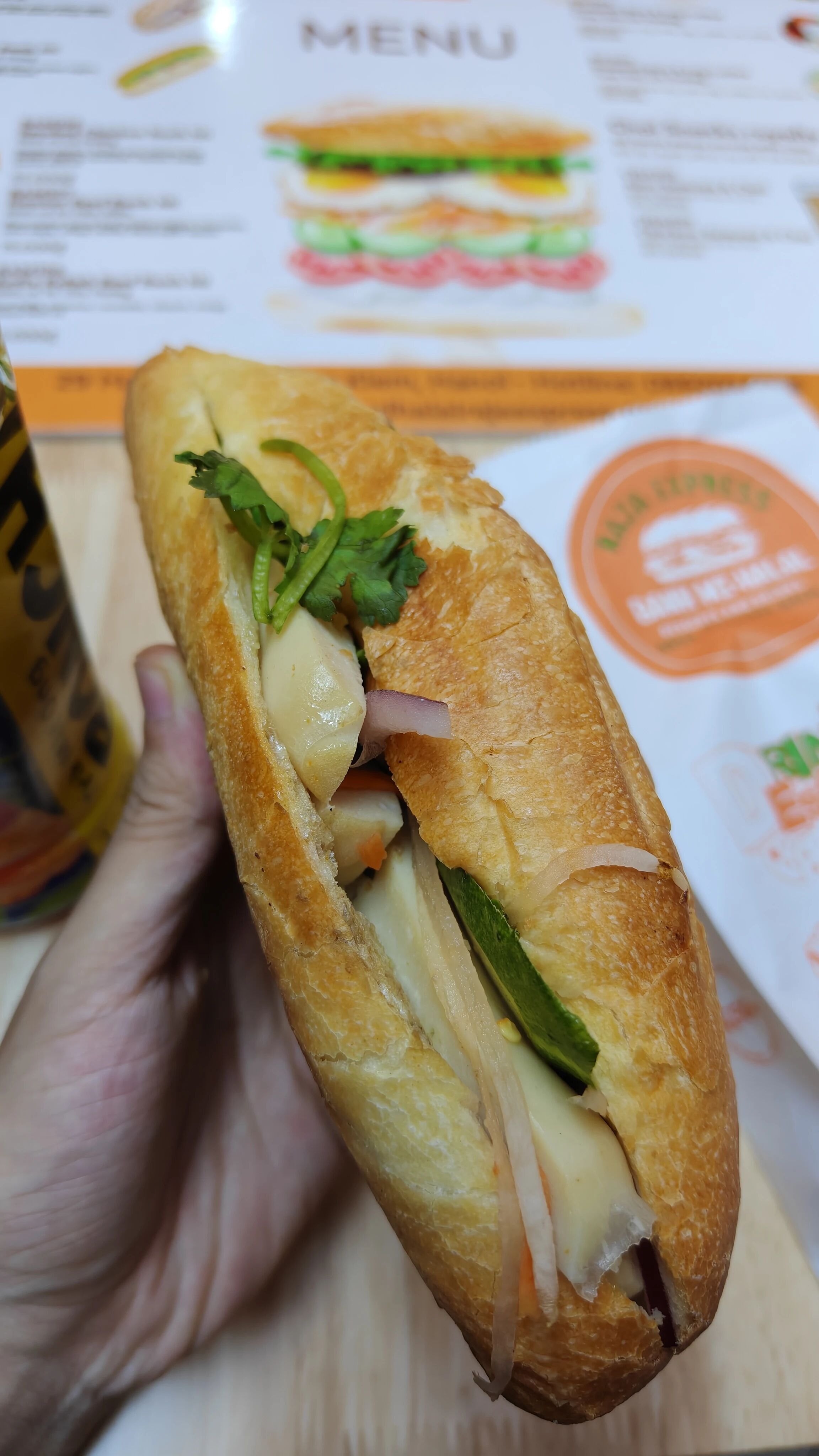
The baguette is quite firm, but the portion is not big, so one person will not be full.
Picture 17, by the way, I would like to talk about the political propaganda posters I saw around the Ho Chi Minh Mausoleum. Such posters can be seen in the streets and alleys, and there were many in China before.
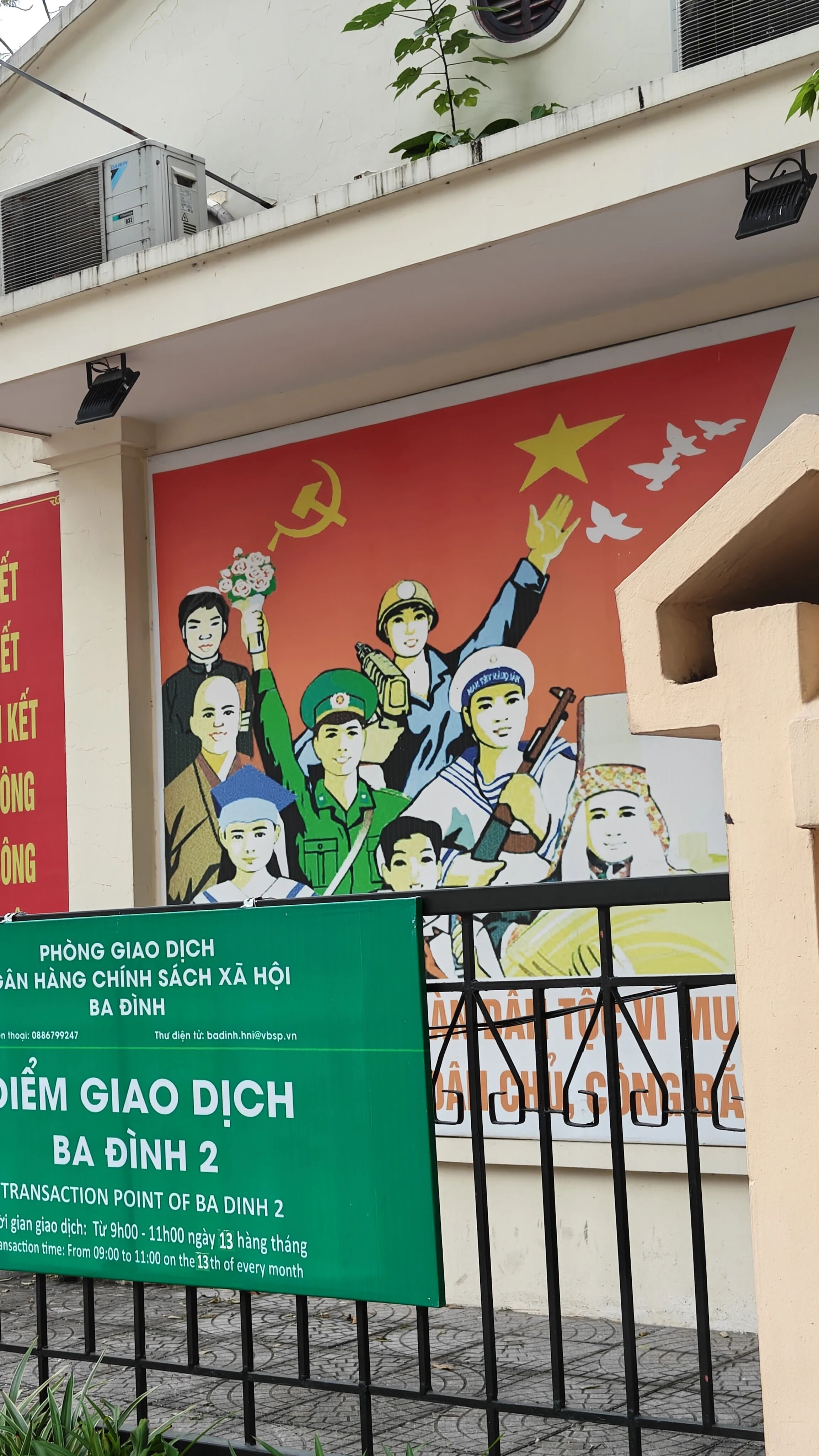
But the difference is that there are Buddhist monks and Catholic priests on the posters in Vietnam. This is a place similar to but different from China.
Then I went to South Vietnam. Please stay tuned for more information about that.
Collapse Read »
Summary: This Vietnam Muslim travel guide visits Al-Noor Mosque in Hanoi, the only functioning mosque in northern Vietnam, with its courtyard prayer space, small prayer hall, wudu area, Cham imam, Kinh Muslims learning about Islam, nearby halal food, and local street scenes.
Most of the mosques in Vietnam are located in southern Vietnam. There is currently only one functioning mosque in the north, which is the Al-Noor Mosque (Guangming Mosque) that I will introduce this time.
Picture 1 is the door of the mosque, with Al-Noor written on it, which is Arabic transliterated from Latin letters, meaning light. It can also be seen from the Vietnamese text at the bottom that Vietnam still uses the word Islam (Hoi Giao).
Picture 2 is the minaret of the mosque.
Pictures 3 & 4 show the courtyard of the mosque. In order to keep the courtyard clean, a simple awning is built on it, and you have to take off your shoes when entering the courtyard. I guess it's because this mosque is relatively small, so the courtyard has to be used as a prayer hall.
Pictures 5, 6 & 7 show the inside of the prayer hall. The lighting is not very good, so you have to go through the prayer hall to perform wudu. The conditions are quite basic.
Picture 8 shows some introductory Islam materials placed near the entrance to the prayer hall. I have also met the imam here. The imam is a Cham ethnic minority in Vietnam. His hometown is in a village in southern Vietnam. He is young and very kind.
I asked him if there were any Muslims from the Kinh ethnic group (the main ethnic group in Vietnam), and he said that one or two Kinh people would accept Islam every month.
Later, I did meet a Kinh Muslim. He took the initiative to say hello to me. During the conversation, it was obvious that he was very passionate about his faith. But after a while, he disappeared. When I saw him again, he was holding cakes in his hand, and there was a mother and daughter at the door.
It turned out that the mother and daughter came to learn about Islam. The young Kinh man went to buy cakes for them and wanted them to sit down and introduce them while eating.
Picture 9 to Picture 13, after a while it’s time to eat. There are also many halal restaurants around the mosque. Before going there, I thought there were only one or two.
Picture 14: My brother treated me to Vietnamese pho, which was made with duck meat and bamboo shoots in it. He asked me if bamboo shoots are also eaten in China, and I said of course.
Picture 15 & Picture 16, the next day I ate another Vietnamese specialty, banh mi-style baguette with vegetables, opposite the mosque. Cut the baguettes brought by the former colonists and add eggs, sausages, vegetables or skewers to complete this snack.
The baguette is quite firm, but the portion is not big, so one person will not be full.
Picture 17, by the way, I would like to talk about the political propaganda posters I saw around the Ho Chi Minh Mausoleum. Such posters can be seen in the streets and alleys, and there were many in China before.
But the difference is that there are Buddhist monks and Catholic priests on the posters in Vietnam. This is a place similar to but different from China.
Then I went to South Vietnam. Please stay tuned for more information about that.
Collapse Read »
Muslim Travel Guide Singapore: Malabar Mosque, South Indian Muslim Community and Little India Heritage
Reposted from the web
Summary: This Singapore Muslim travel guide visits Malabar Mosque, the blue mosque built by South Indian Muslims from Kerala, with Malayalam on the wall, the women's prayer room, Indian-style architecture, graves, community history, and a nearby historic seminary.
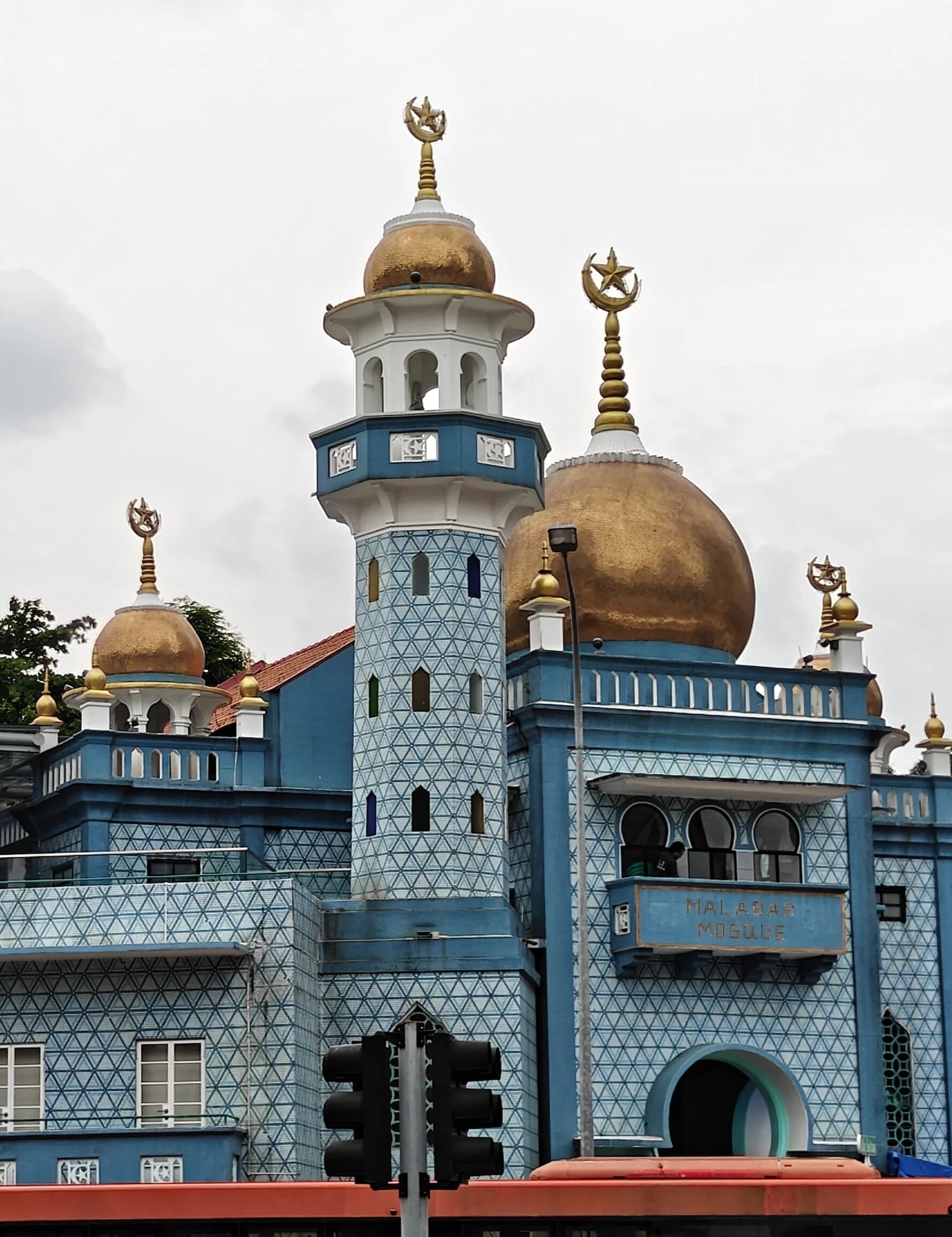
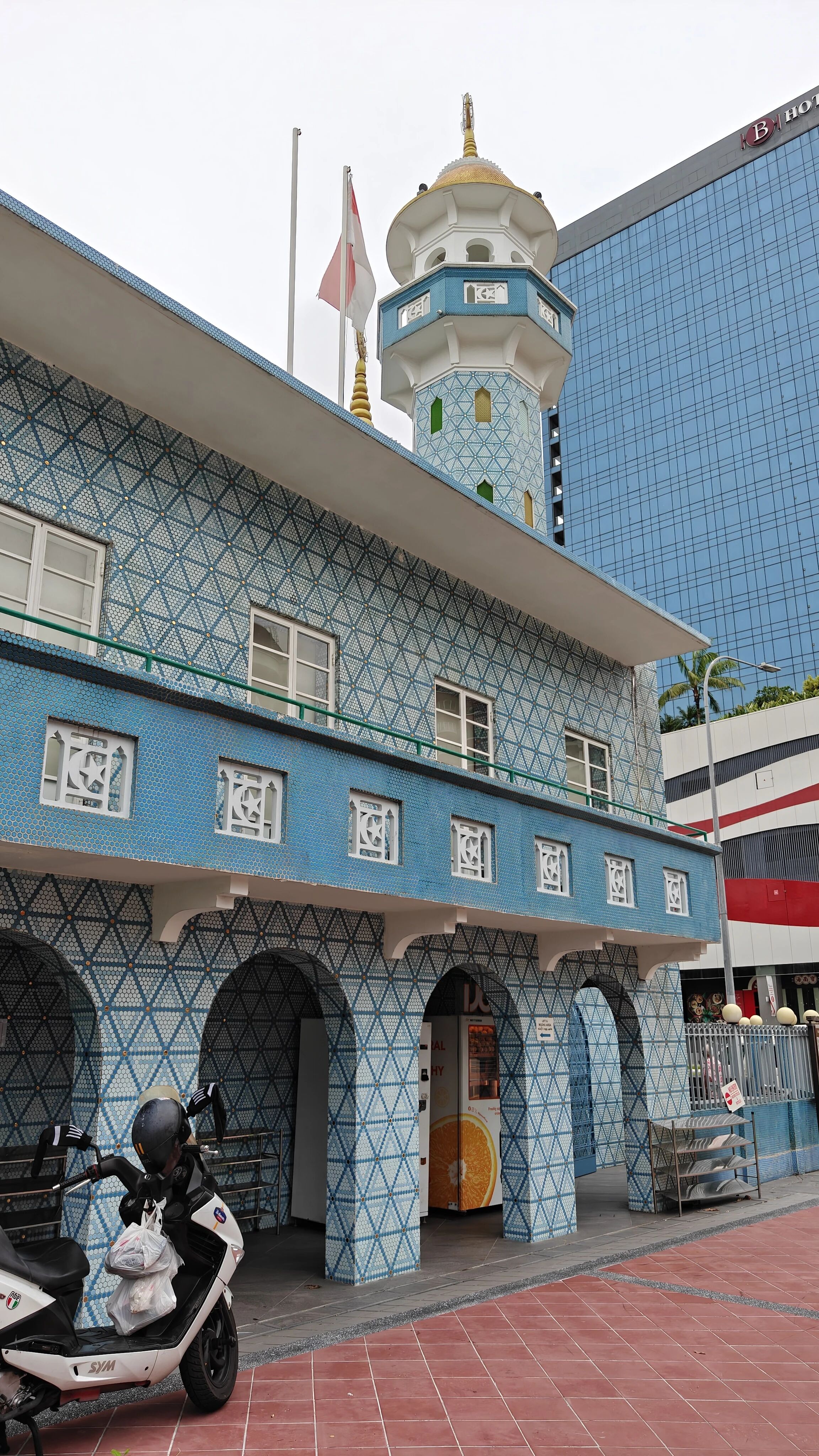
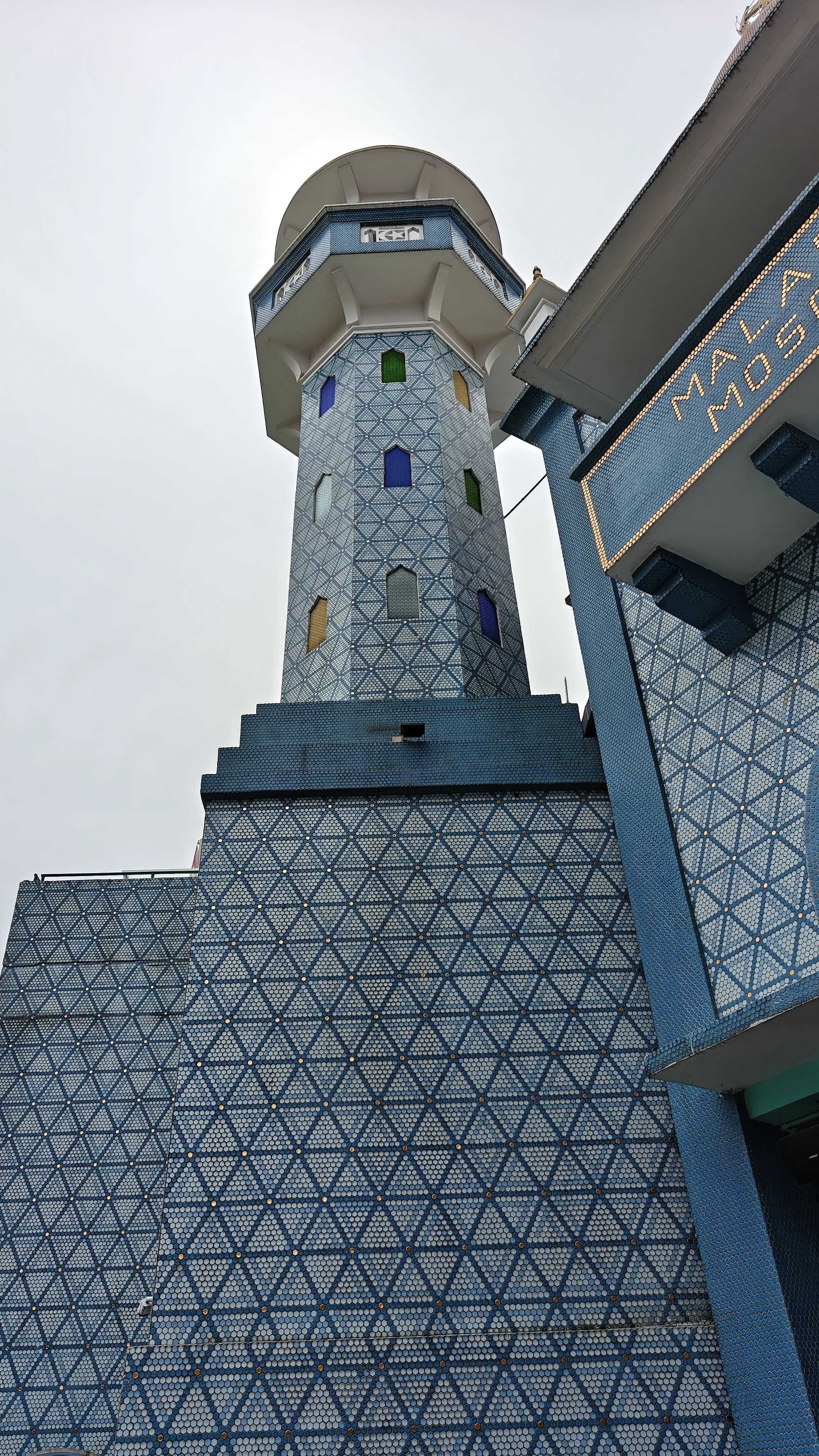
Not far from the Sultan Mosque, there is a small blue mosque called the Malabar Mosque. On its outer wall, beside Arabic, there is also a South Indian script called Malayalam (Picture 2).
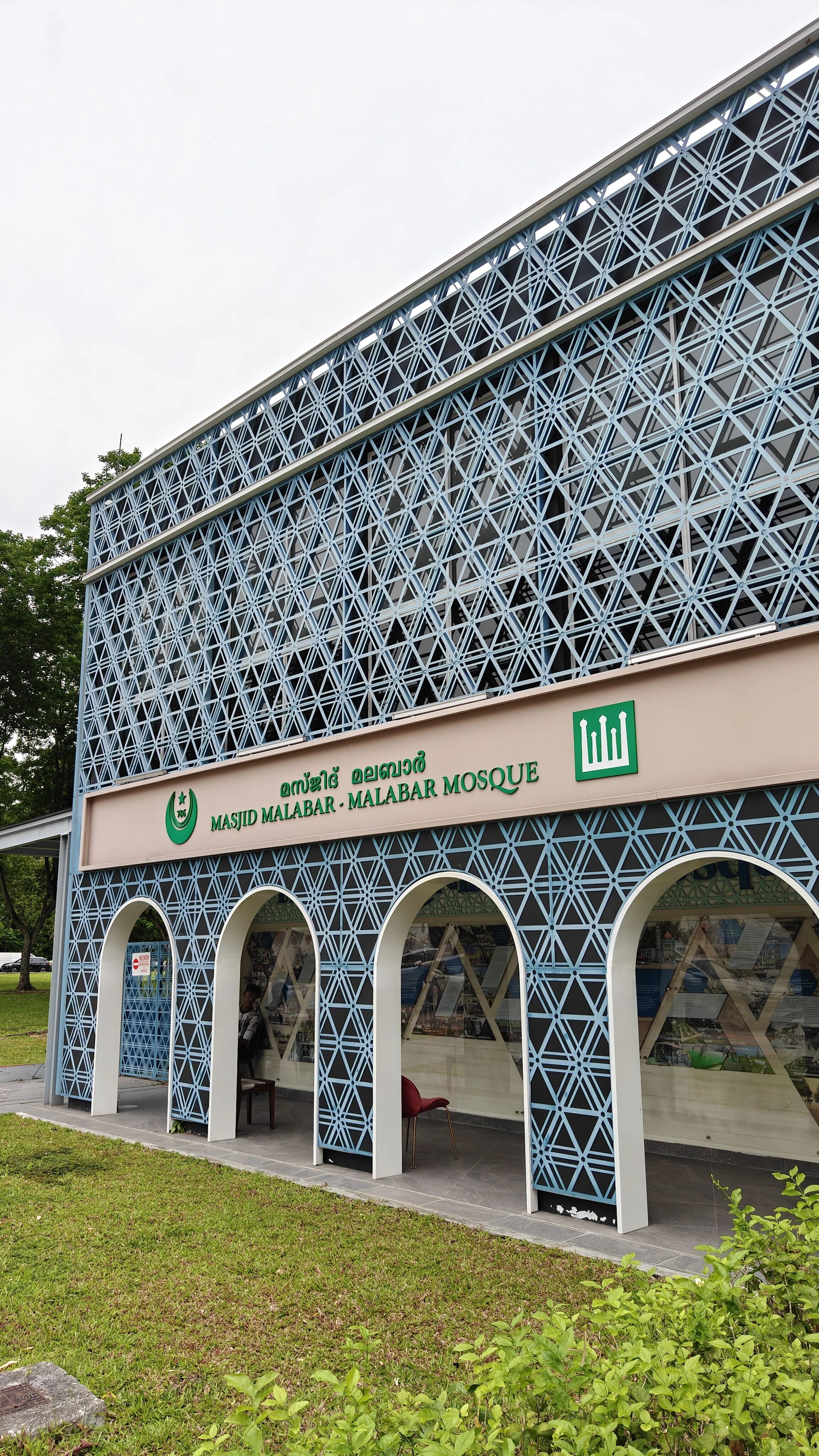
This is because the mosque itself was founded by the Malabar Muslim community in the South Indian state of Kerala.
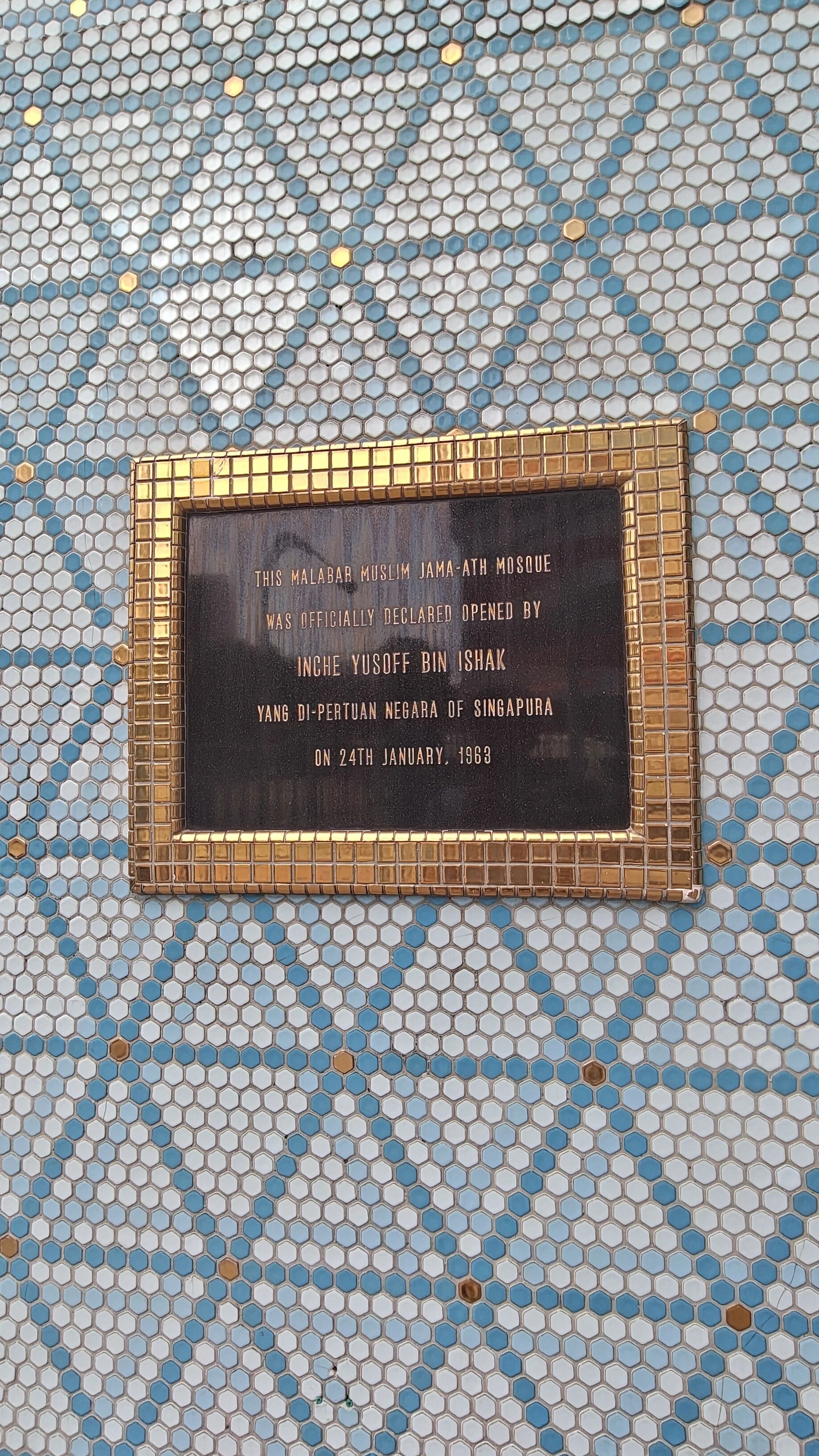
There is an explanation of the origin of this mosque at the door of the mosque (Picture 4). Here is a summary of the translation for you: "The Malabar Mosque on Victoria Street was built and managed by the Malabar Muslim Community. Malabar Muslims come from the southern Indian state of Kerala.
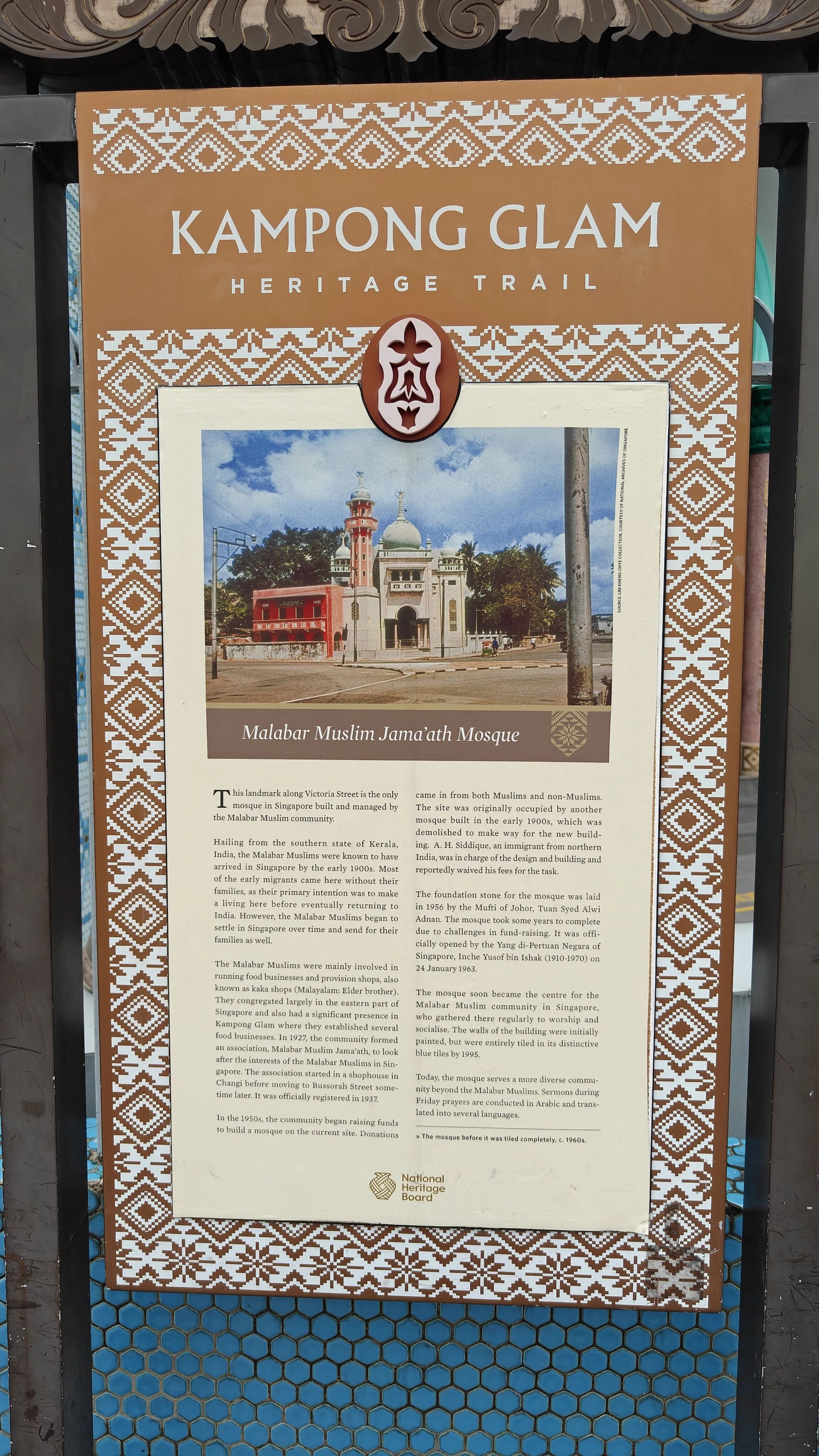
At the beginning of the 20th century, they came to Singapore to work and earn a living. Later, they started a catering business and sold food here. In 1927, in order to keep each other warm, they formed the Malabar Muslim Community Association. In 1950, they began to raise funds to build the mosque.
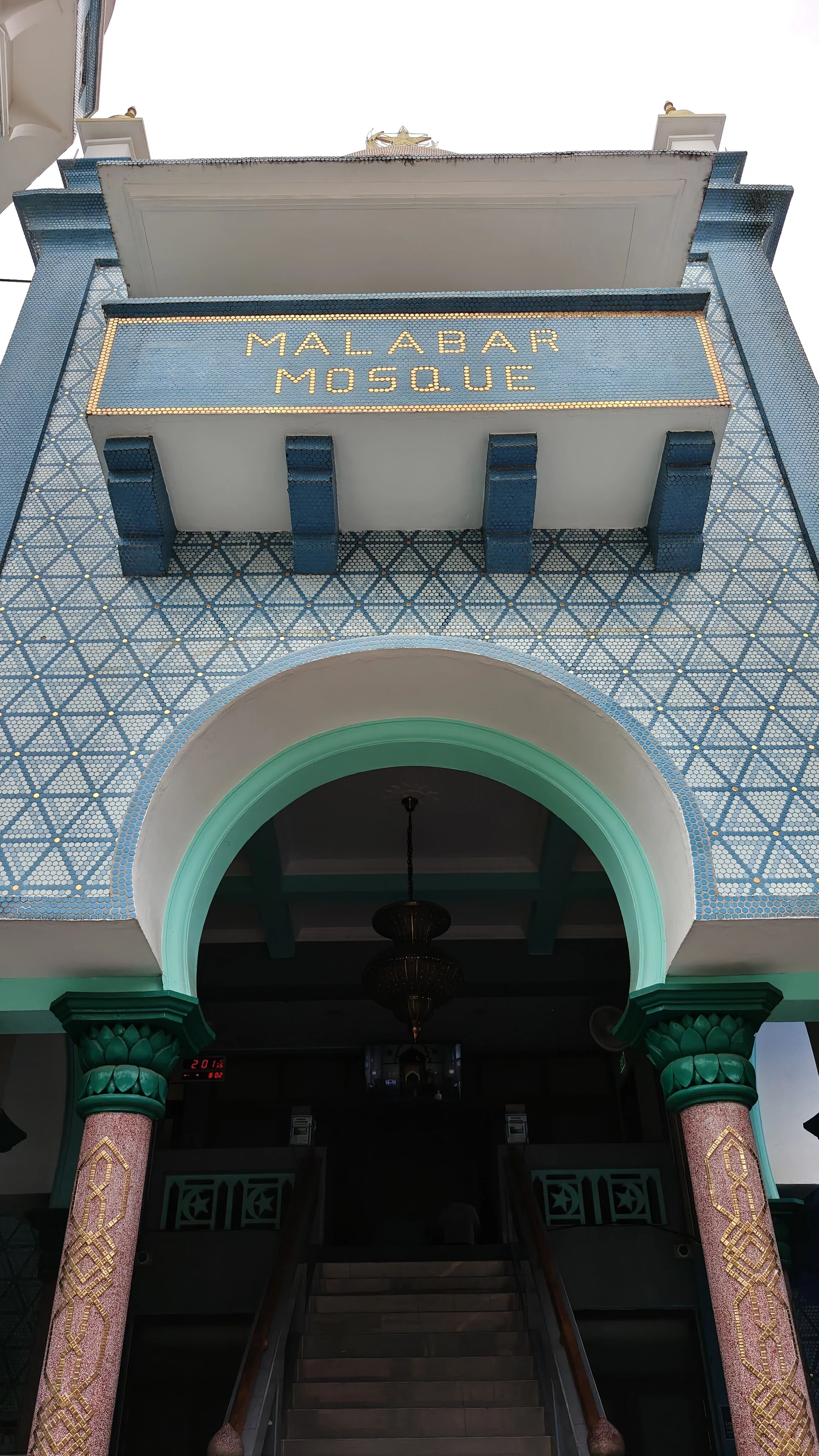
In 1963, Singapore's first president Yusuf bin Ishaq officially opened the mosque. In 1995, the facade of the mosque was paved with blue tiles, turning it into what we see today.
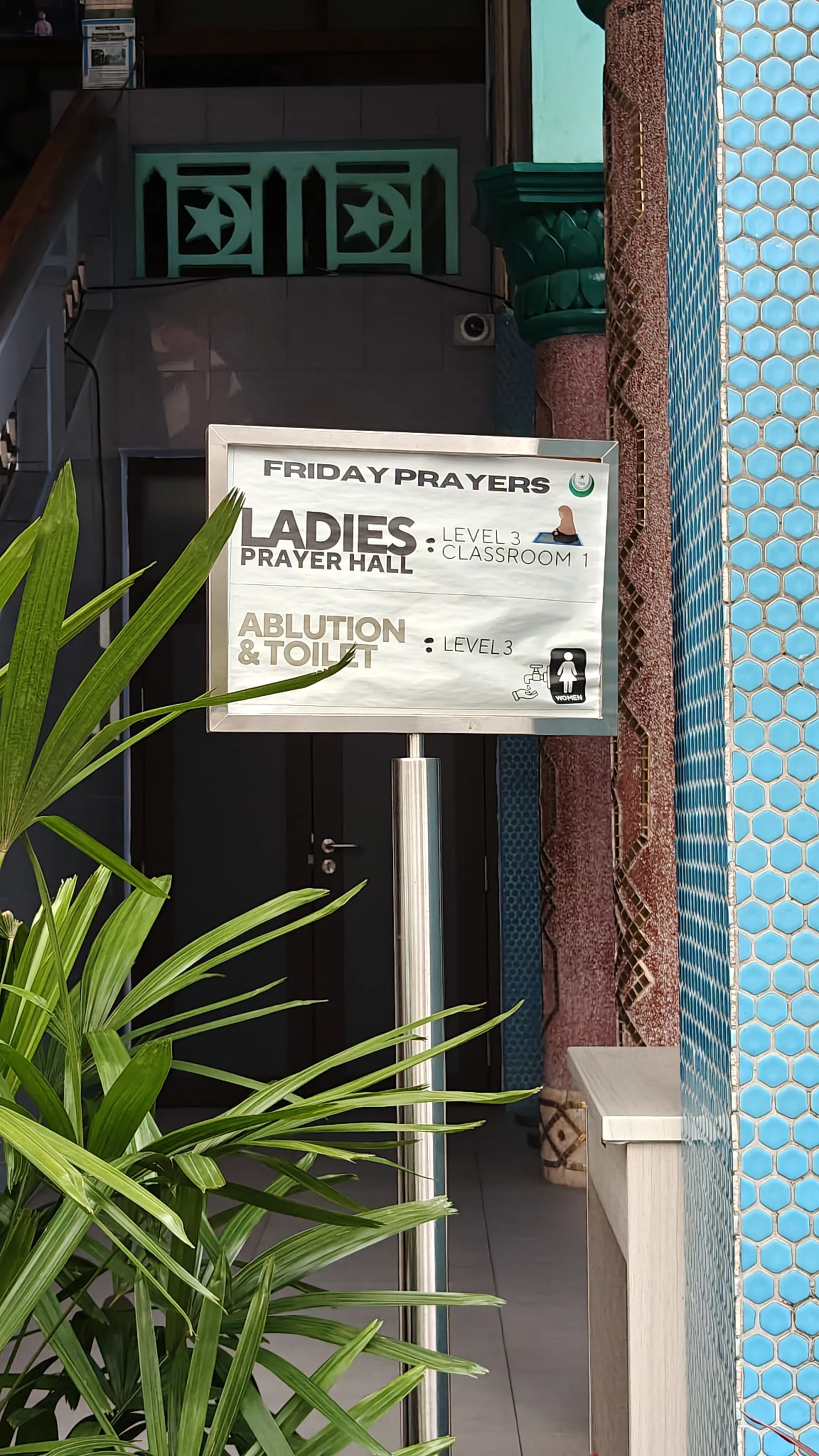
This mosque has a women's prayer room and a prayer room on the third floor of the mosque.
Although it is a mosque for South Indian Muslims, the designer is a North Indian, so the overall mosque is still in the North Indian style with a rounded onion dome + rain-shielding eaves. South Indian style mosques can also be found in Singapore, I will update this soon.
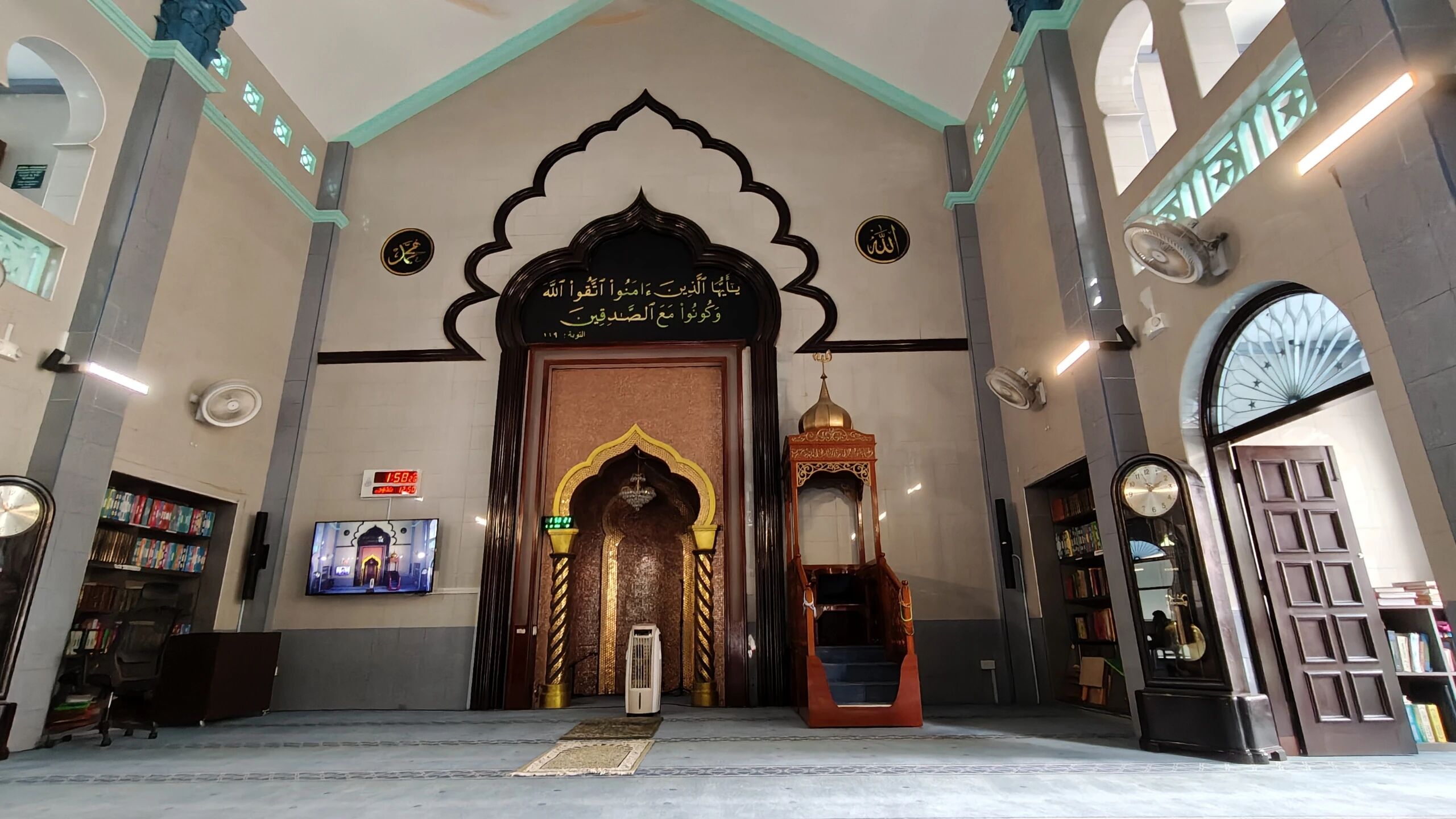
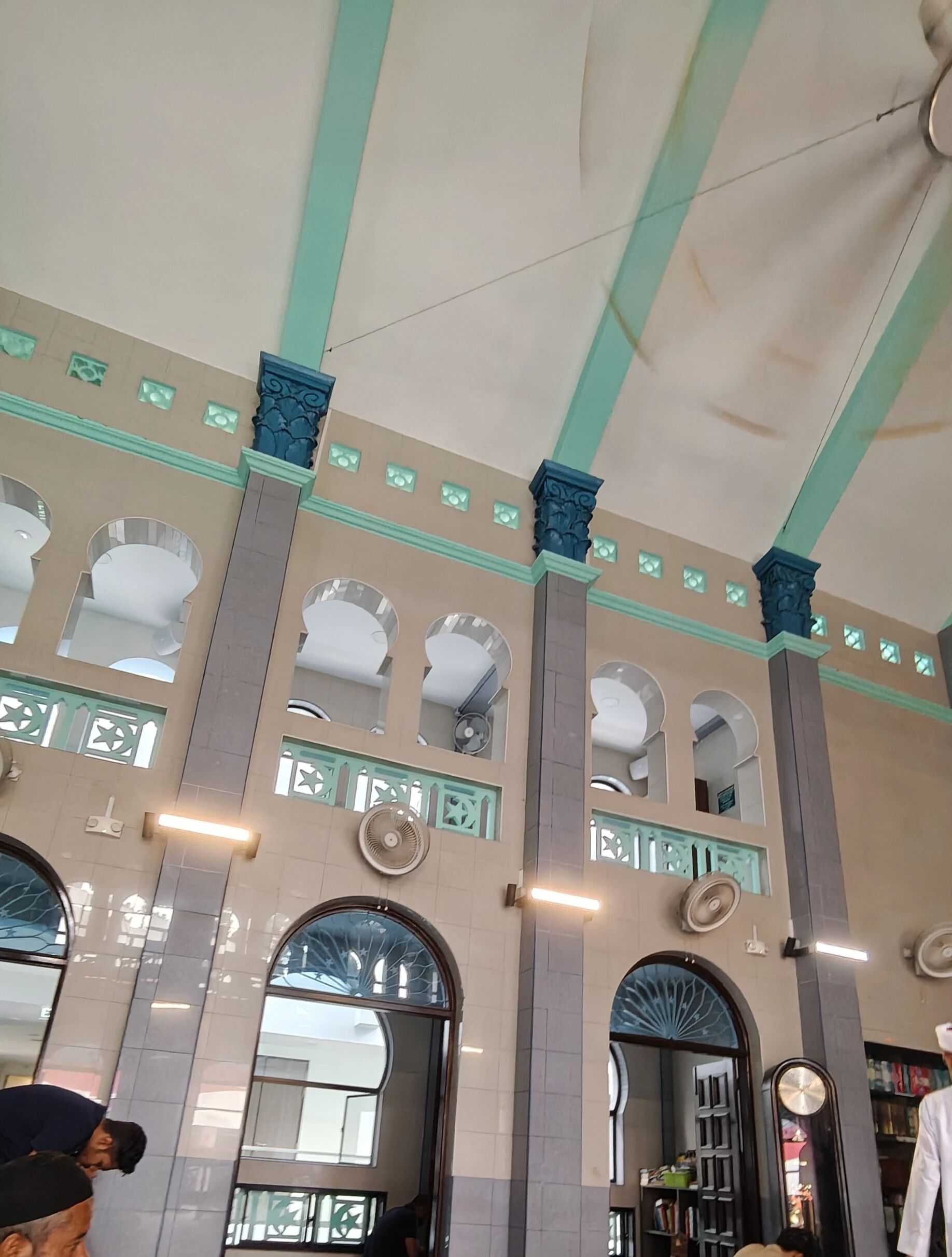
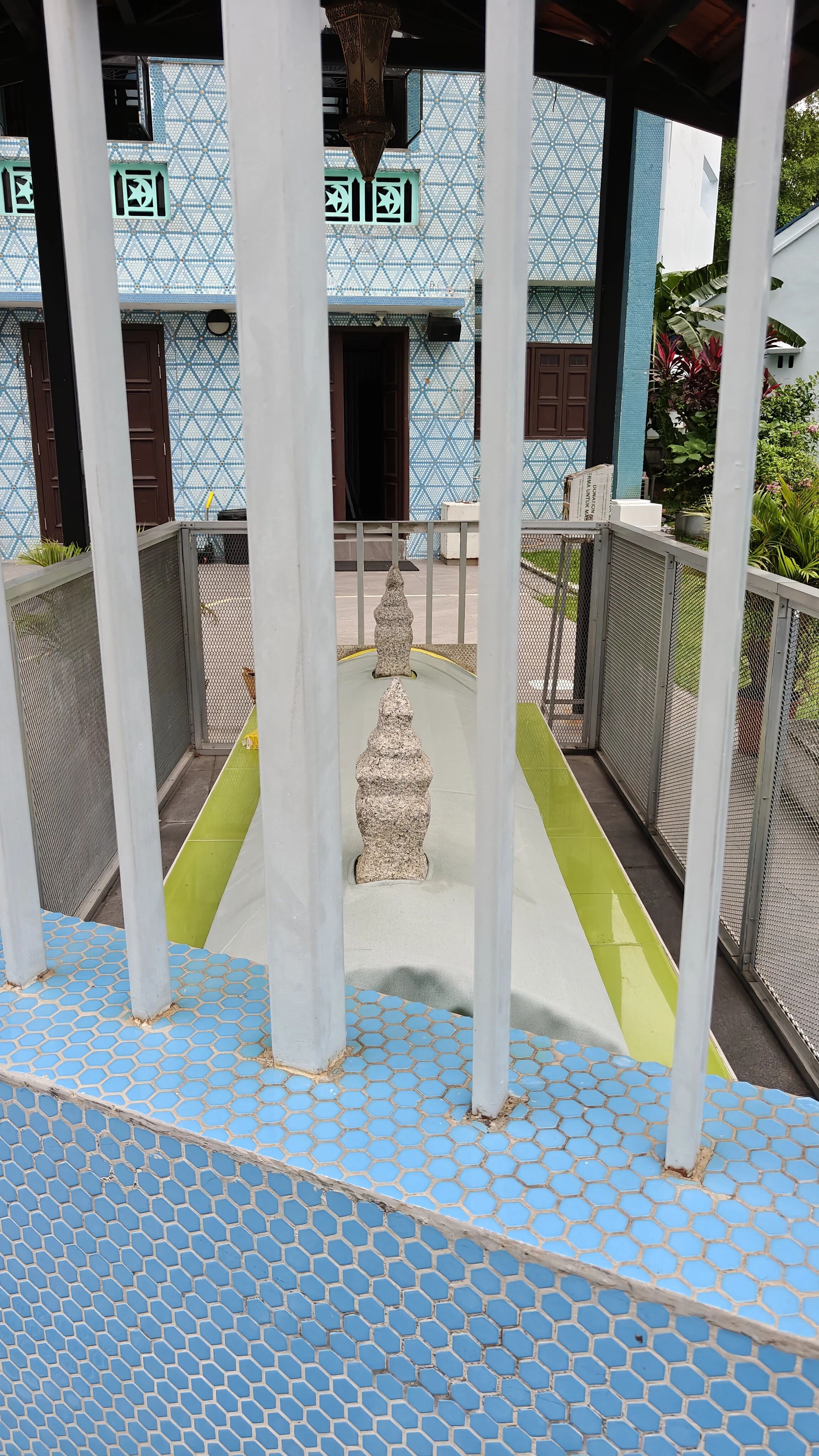
Let's take a look at the prayer hall. The interior area of the prayer hall is not small, and it is also high. Most of the worshippers in the mosque are of Indian origin, and there are also some Malays. There is a tomb pavilion next to the prayer hall, where their community leaders should be buried.
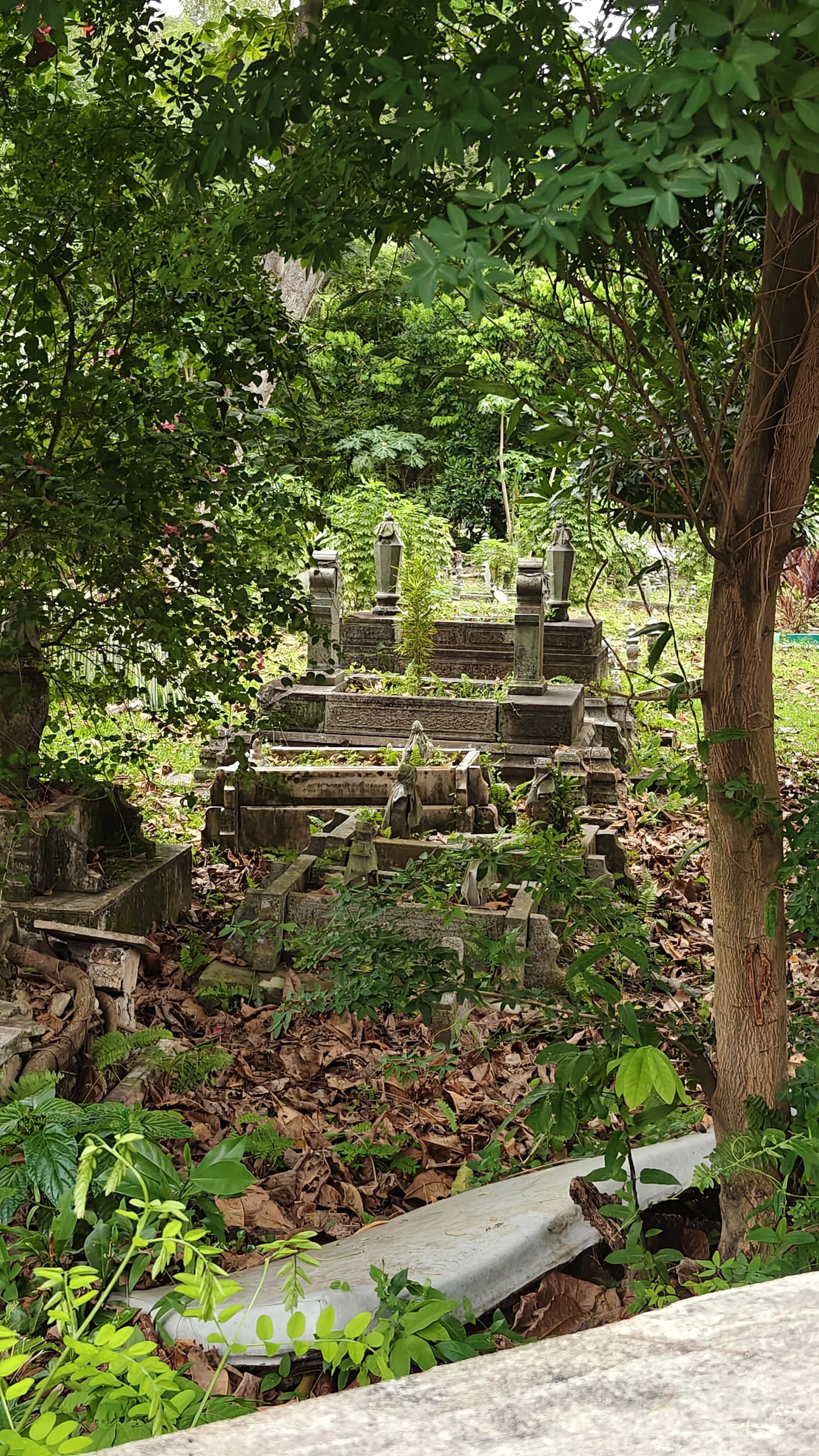
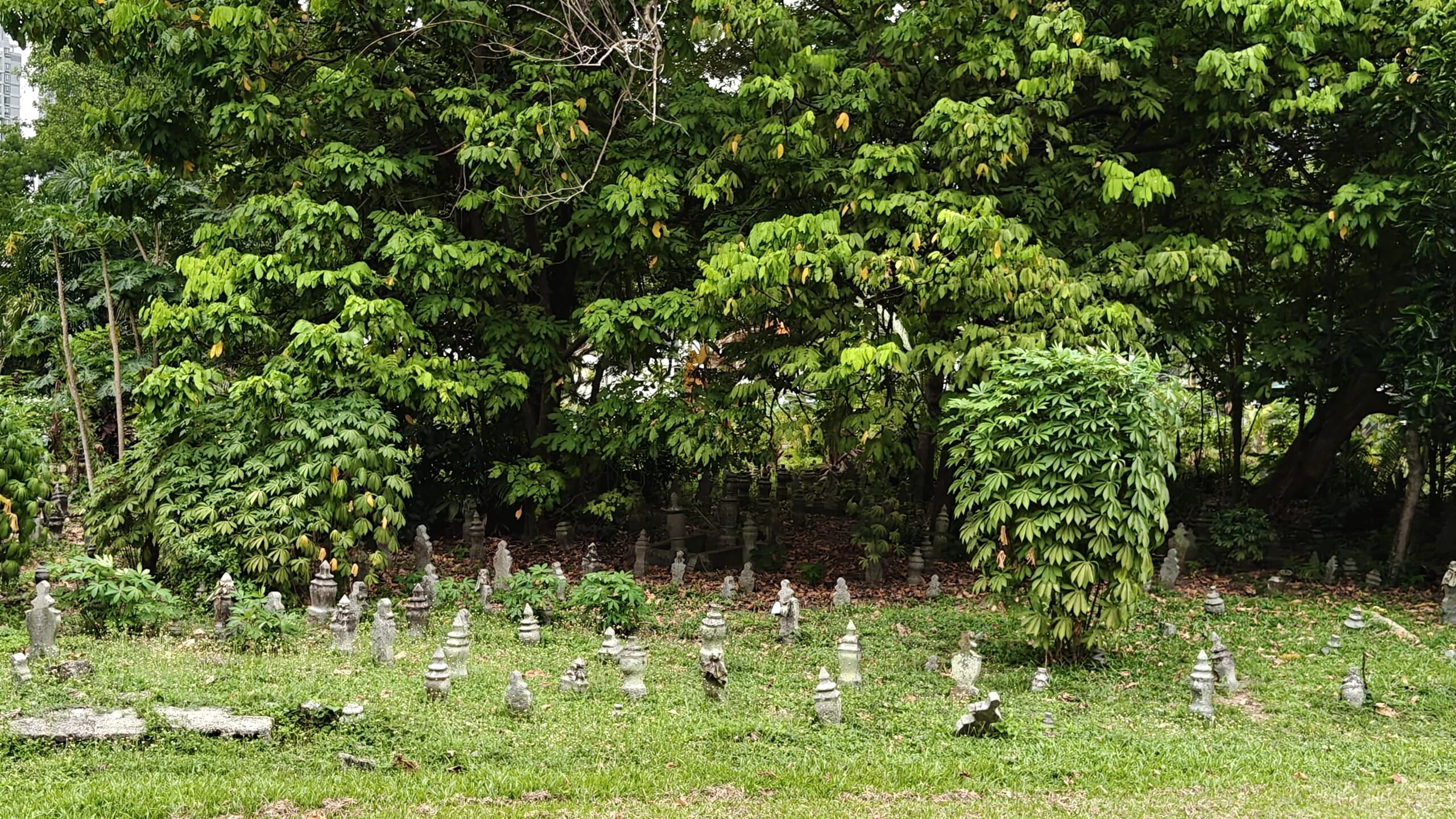
There is a large open space outside the mosque with many graves (Pictures 13 and 14), which are densely packed. The people buried here are probably the first people who came to Singapore to make a living.
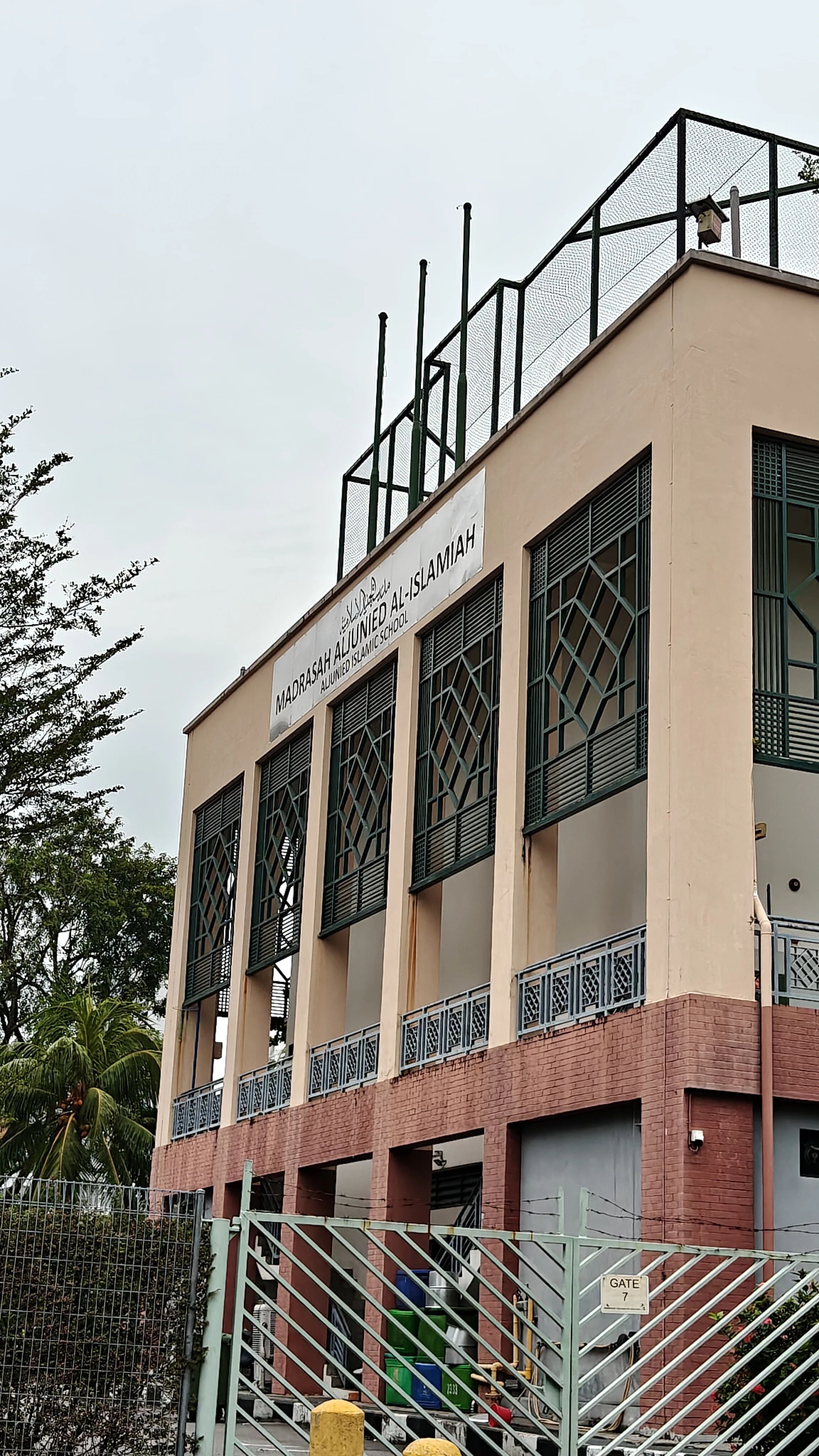
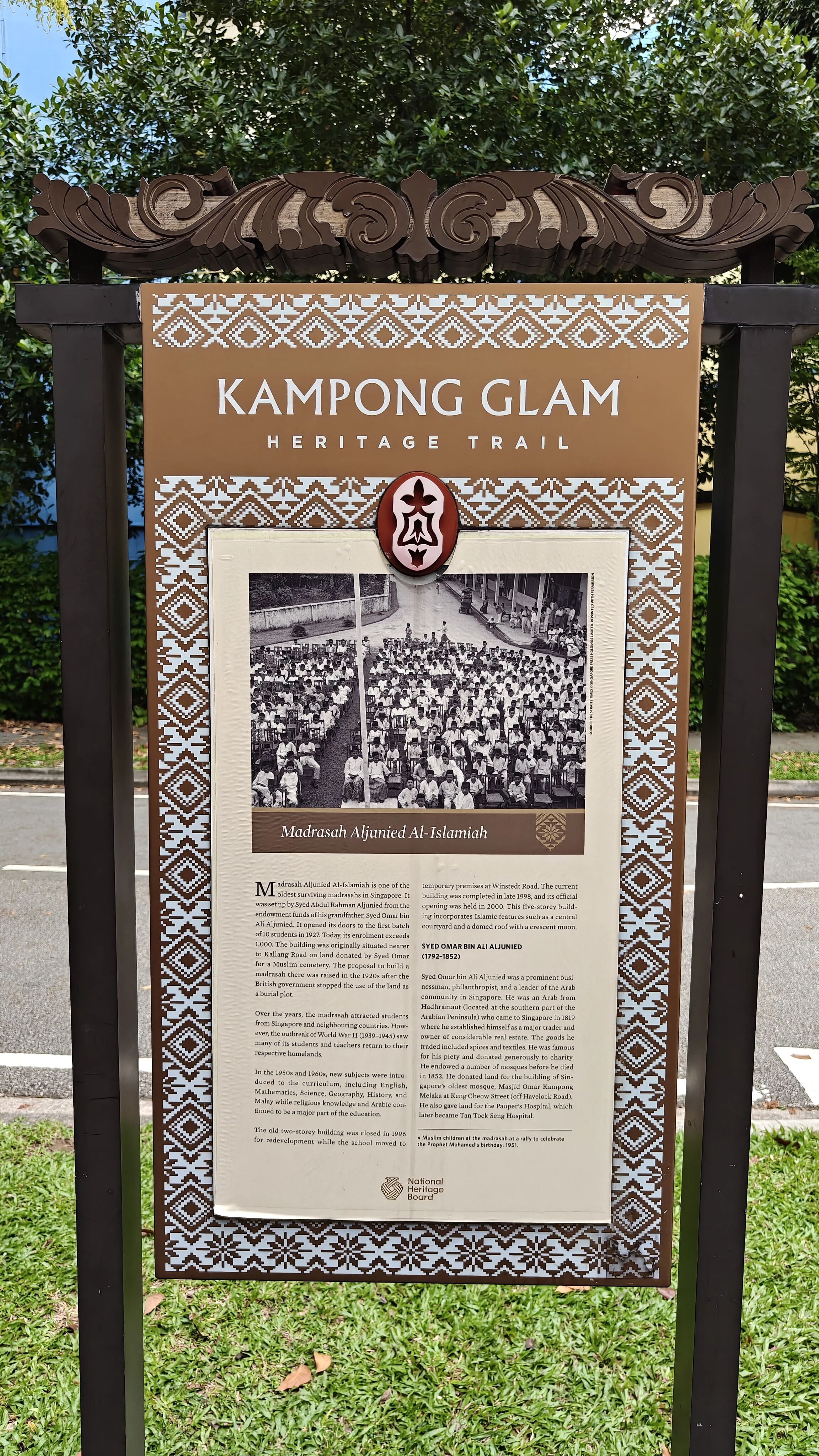
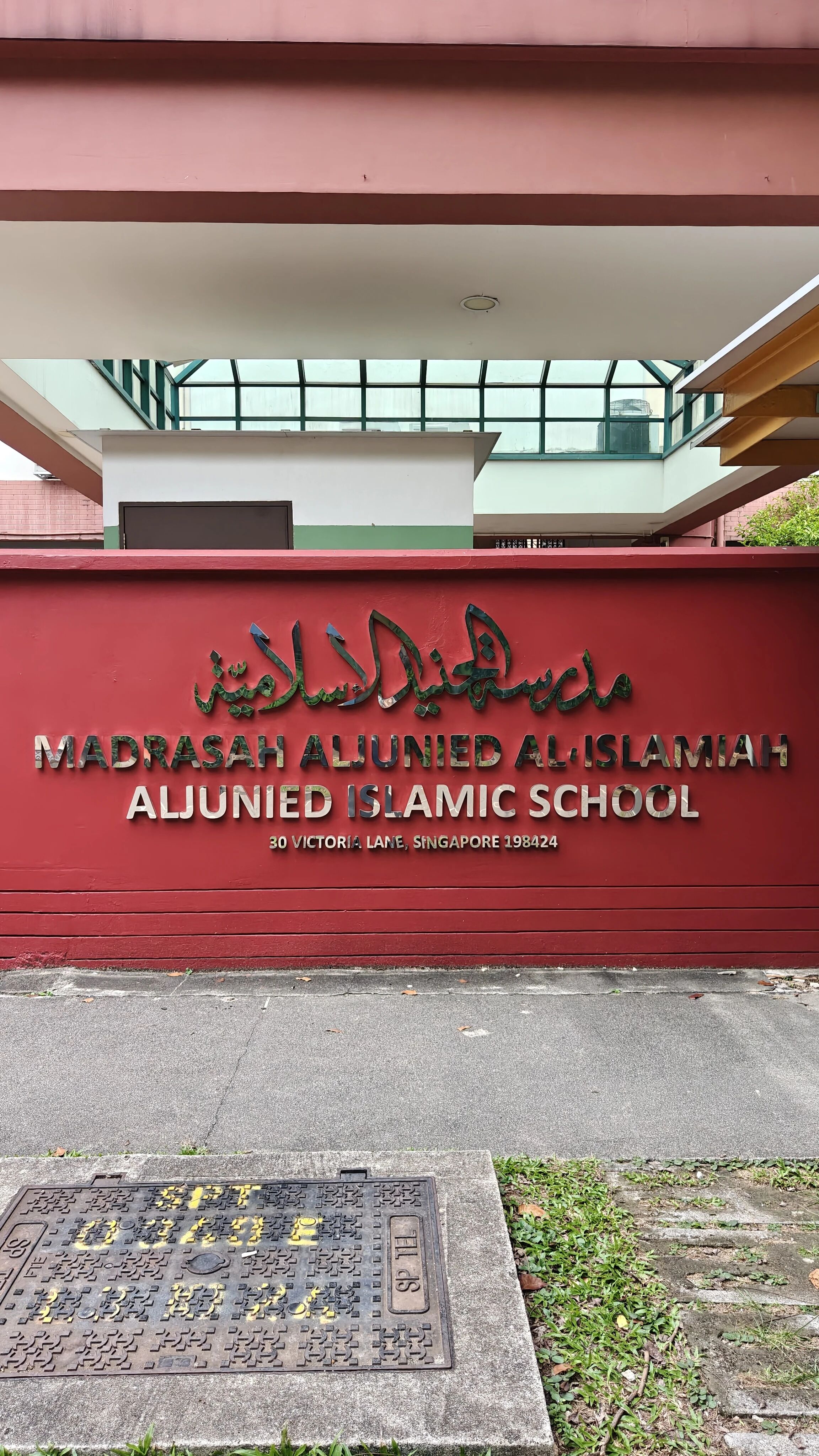
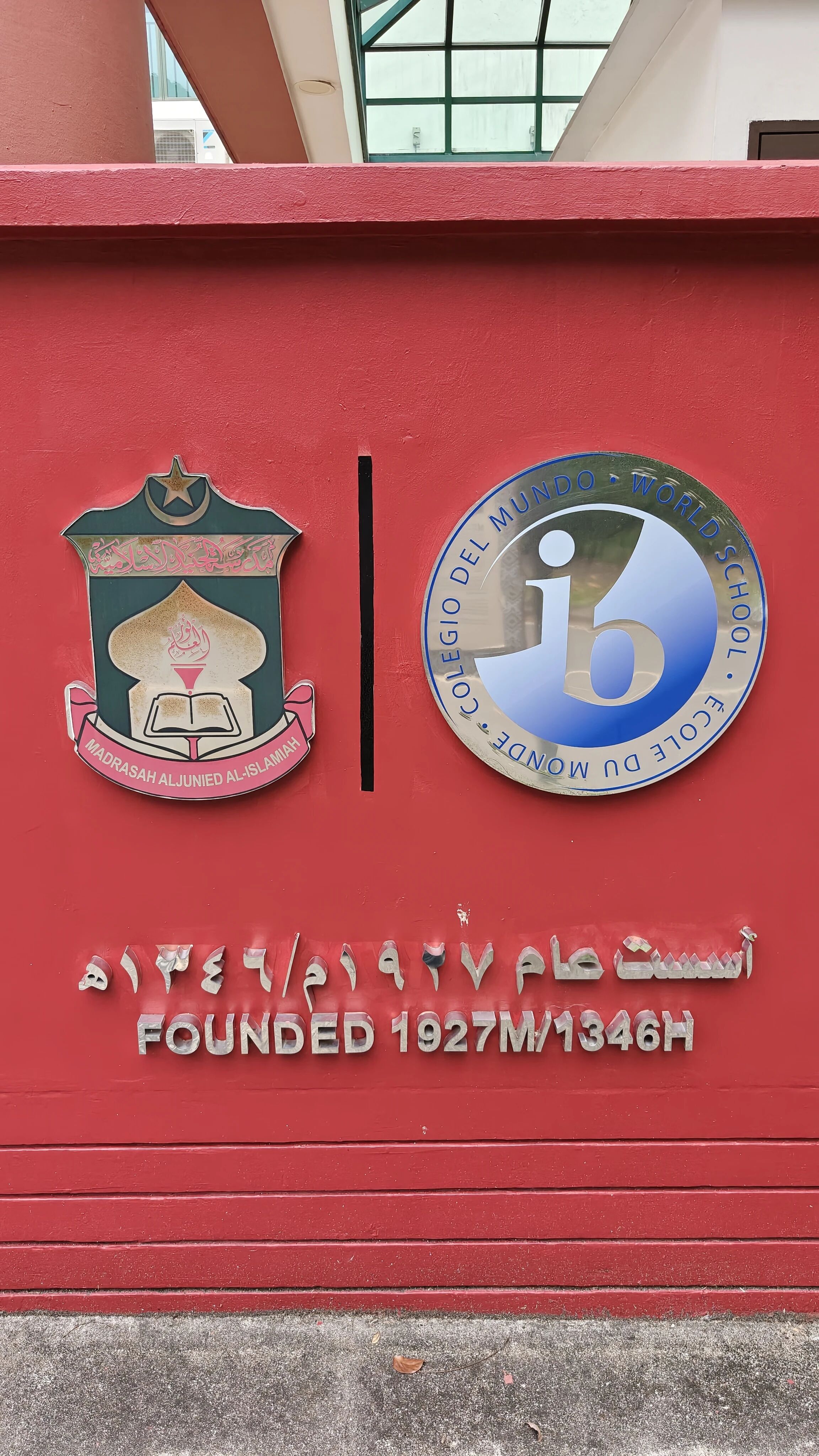
After walking a few steps, I came across an Islamic seminary with an English introduction at the door: This seminary was founded in 1927 and is one of the earliest Islamic seminaries in Singapore.
In the 1920s, after the British colonial government no longer used this land as a cemetery, some people began to propose the establishment of a seminary here, which mainly taught Malay, Arabic and religious knowledge.
In the 1950s, new subjects such as English, mathematics, science, history, and geography were added to the seminary. Today, the seminary can accommodate 1,000 students and attracts students from Singapore and surrounding countries.
Leaving here, I walked towards the Little India neighborhood, where there was another mosque built by Muslims from South India waiting for me.
Collapse Read »
Summary: This Singapore Muslim travel guide visits Malabar Mosque, the blue mosque built by South Indian Muslims from Kerala, with Malayalam on the wall, the women's prayer room, Indian-style architecture, graves, community history, and a nearby historic seminary.
Not far from the Sultan Mosque, there is a small blue mosque called the Malabar Mosque. On its outer wall, beside Arabic, there is also a South Indian script called Malayalam (Picture 2).
This is because the mosque itself was founded by the Malabar Muslim community in the South Indian state of Kerala.
There is an explanation of the origin of this mosque at the door of the mosque (Picture 4). Here is a summary of the translation for you: "The Malabar Mosque on Victoria Street was built and managed by the Malabar Muslim Community. Malabar Muslims come from the southern Indian state of Kerala.
At the beginning of the 20th century, they came to Singapore to work and earn a living. Later, they started a catering business and sold food here. In 1927, in order to keep each other warm, they formed the Malabar Muslim Community Association. In 1950, they began to raise funds to build the mosque.
In 1963, Singapore's first president Yusuf bin Ishaq officially opened the mosque. In 1995, the facade of the mosque was paved with blue tiles, turning it into what we see today.
This mosque has a women's prayer room and a prayer room on the third floor of the mosque.
Although it is a mosque for South Indian Muslims, the designer is a North Indian, so the overall mosque is still in the North Indian style with a rounded onion dome + rain-shielding eaves. South Indian style mosques can also be found in Singapore, I will update this soon.
Let's take a look at the prayer hall. The interior area of the prayer hall is not small, and it is also high. Most of the worshippers in the mosque are of Indian origin, and there are also some Malays. There is a tomb pavilion next to the prayer hall, where their community leaders should be buried.
There is a large open space outside the mosque with many graves (Pictures 13 and 14), which are densely packed. The people buried here are probably the first people who came to Singapore to make a living.
After walking a few steps, I came across an Islamic seminary with an English introduction at the door: This seminary was founded in 1927 and is one of the earliest Islamic seminaries in Singapore.
In the 1920s, after the British colonial government no longer used this land as a cemetery, some people began to propose the establishment of a seminary here, which mainly taught Malay, Arabic and religious knowledge.
In the 1950s, new subjects such as English, mathematics, science, history, and geography were added to the seminary. Today, the seminary can accommodate 1,000 students and attracts students from Singapore and surrounding countries.
Leaving here, I walked towards the Little India neighborhood, where there was another mosque built by Muslims from South India waiting for me.
Collapse Read »
Muslim Travel Guide Singapore: Sultan Mosque, Kampong Glam, Prayer Hall and Muslim Heritage
Reposted from the web
Summary: This Singapore Muslim travel guide visits Sultan Mosque around Arab Street and Kampong Glam, covering the golden domes, Turkish halal restaurants nearby, the prayer hall, mihrab design, prayer time screens, humility reminders, and visible signs of daily worship.
The Sultan Mosque is a symbol of Singapore's multiculturalism, and this mosque is indispensable in tourist brochures. So I went here on the first day I landed in Singapore.
From the main road, you can see that the Sultan Mosque actually has two exaggeratedly large golden domes (Picture 4), one in front of the other and about the same size. There is a minaret on the left and right of the two large domes, a total of four.
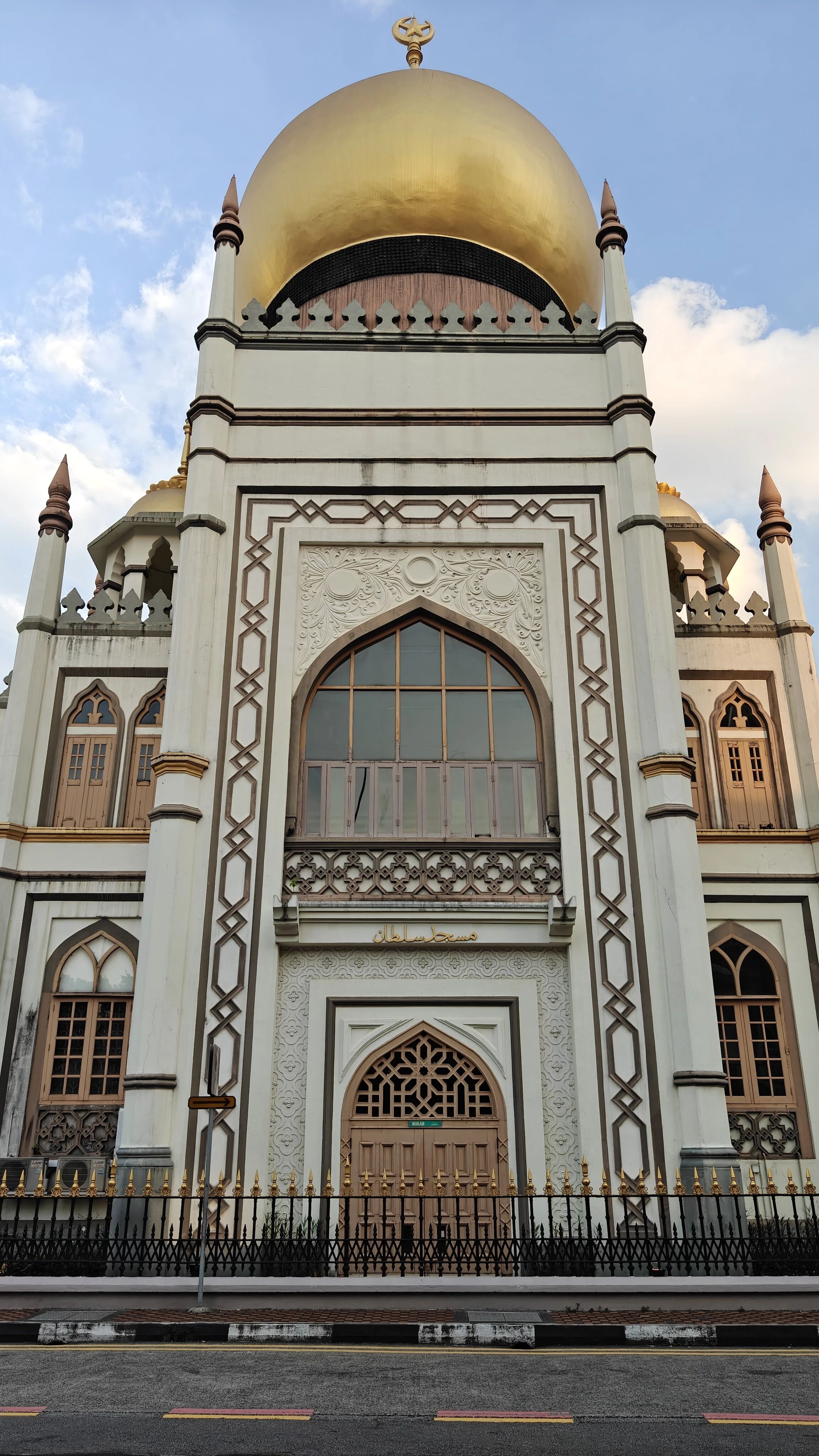
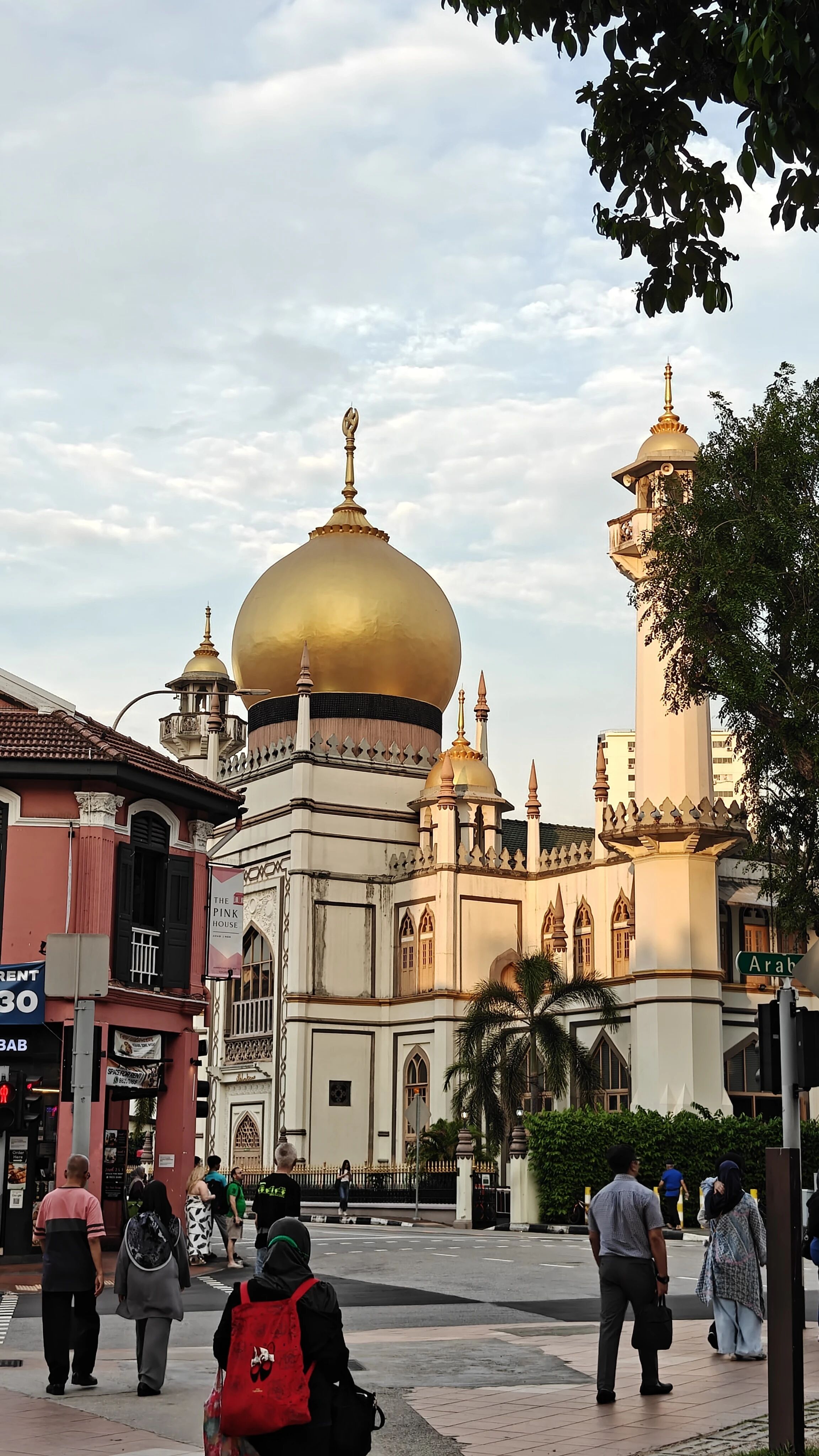
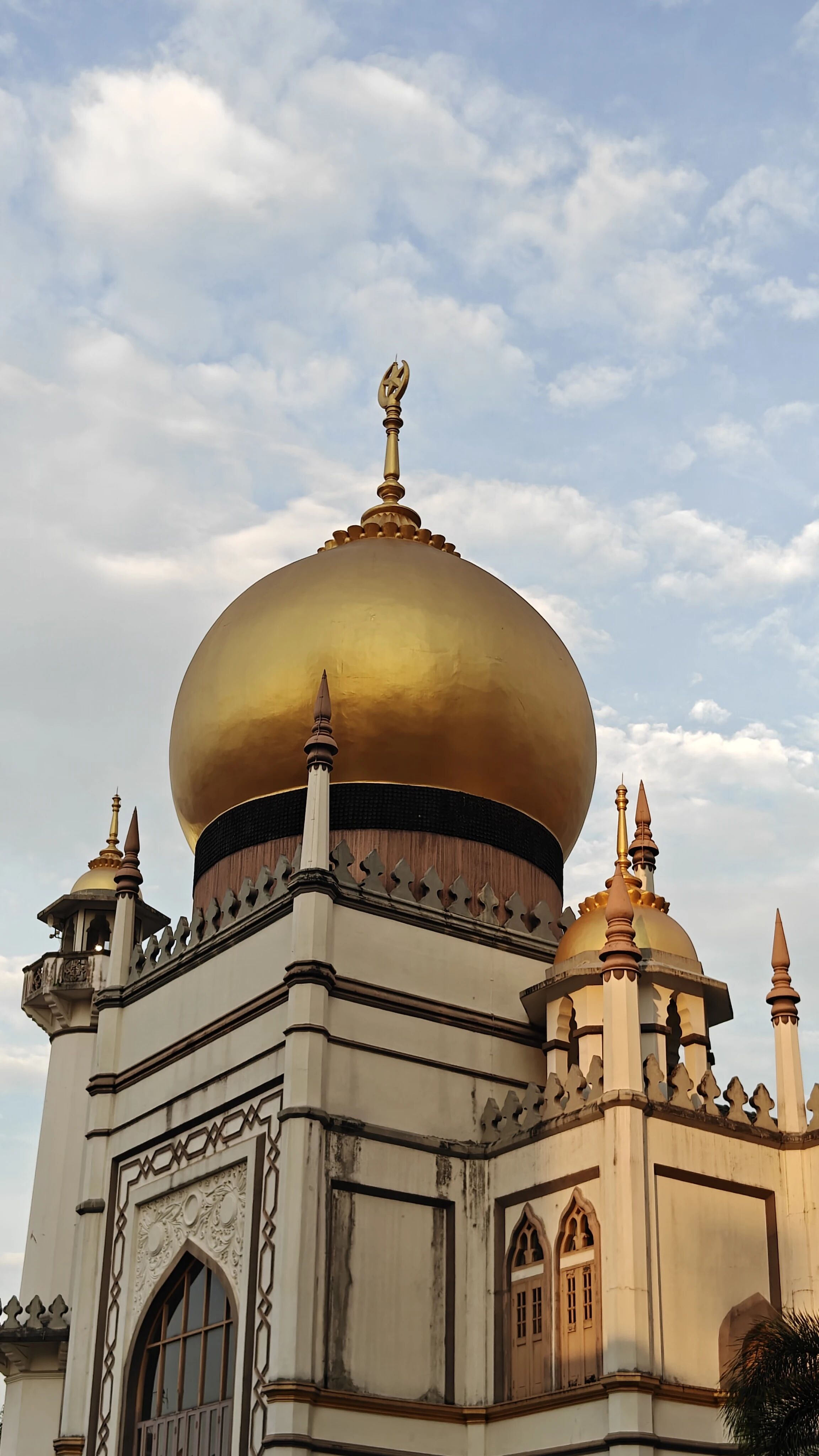
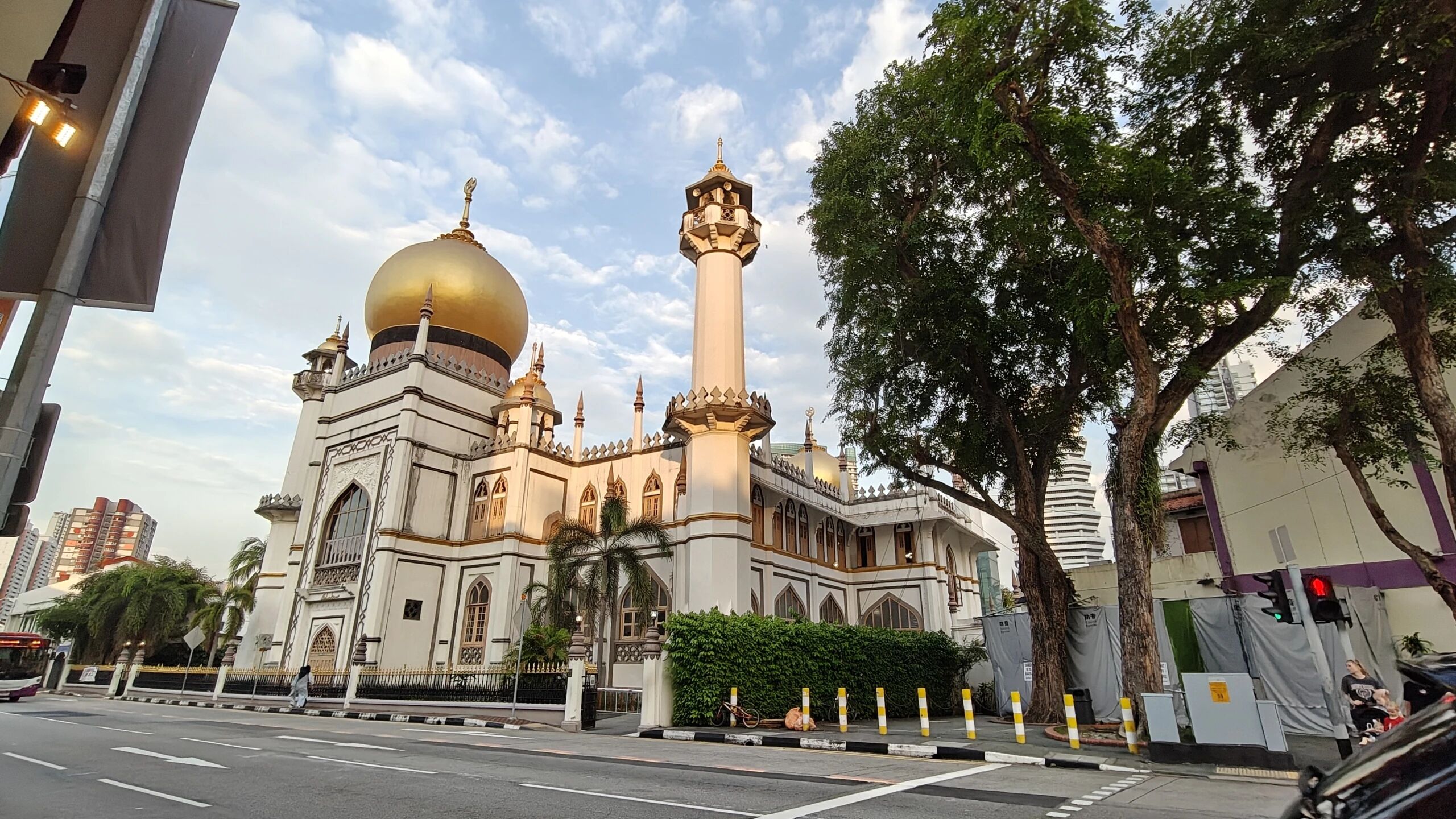
Before I came here, I thought there was only one dome, because it couldn’t be clearly seen from the photos in the travel guide. Seeing it in person really matters.
The entrance to the mosque (Picture 6) is not on the side of the road, but in a pedestrian street called Arab Street. There are murals depicting Malay family life at the entrance (Picture 7). There are many Turkish halal restaurants on the street (Picture 8), as well as souvenir shops. You can buy a refrigerator magnet with two Singapore dollars (10 yuan).
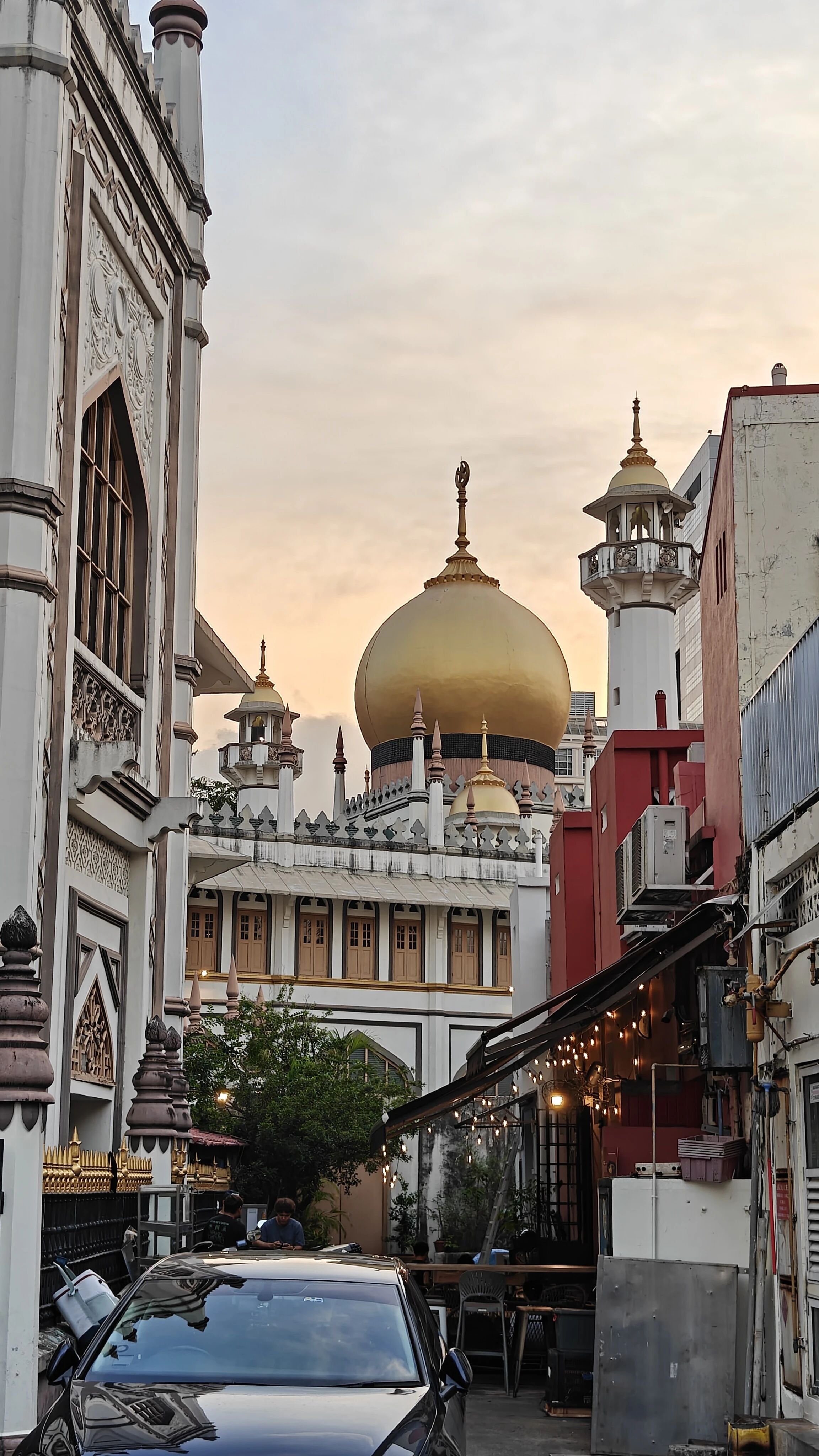
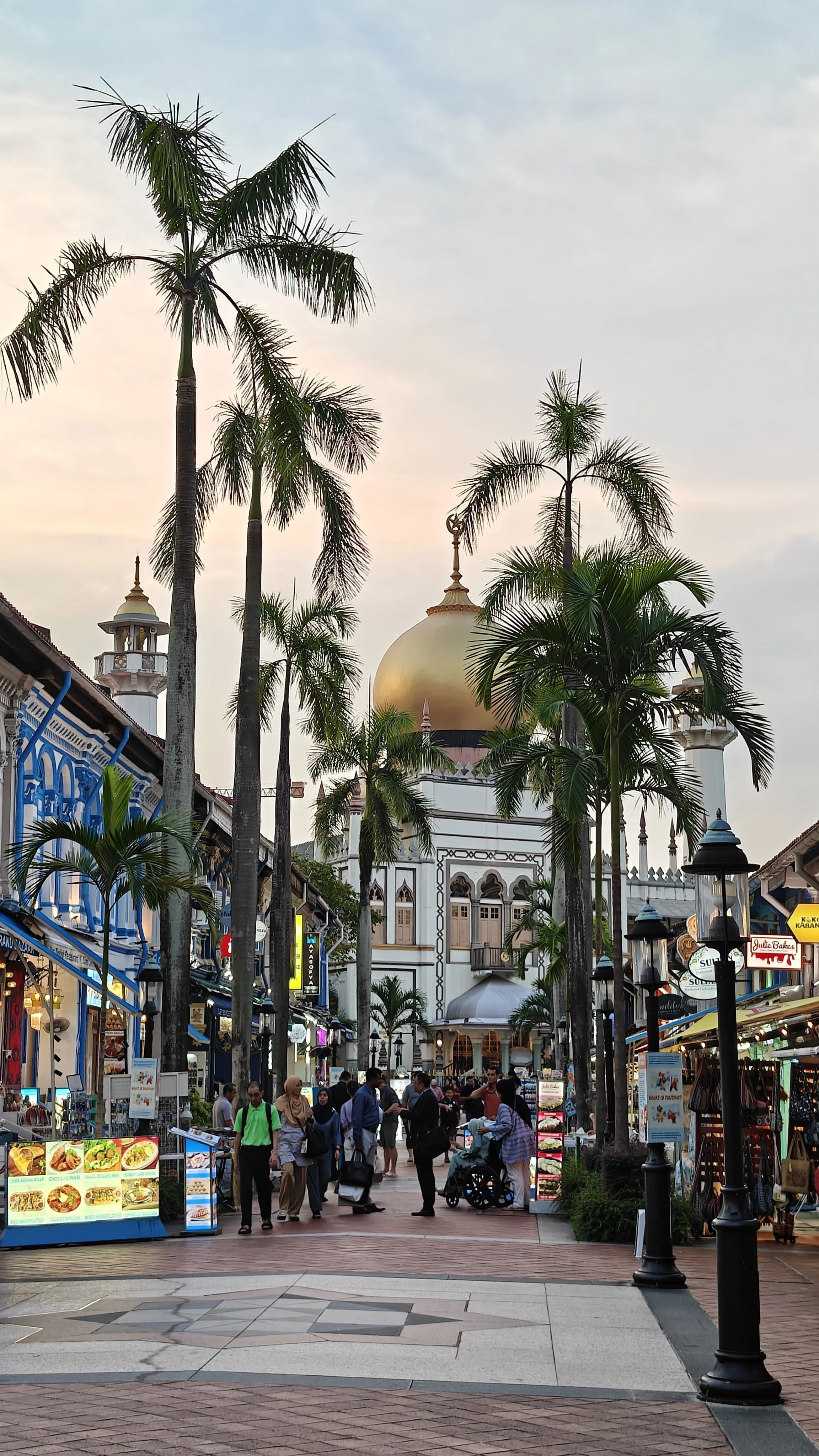
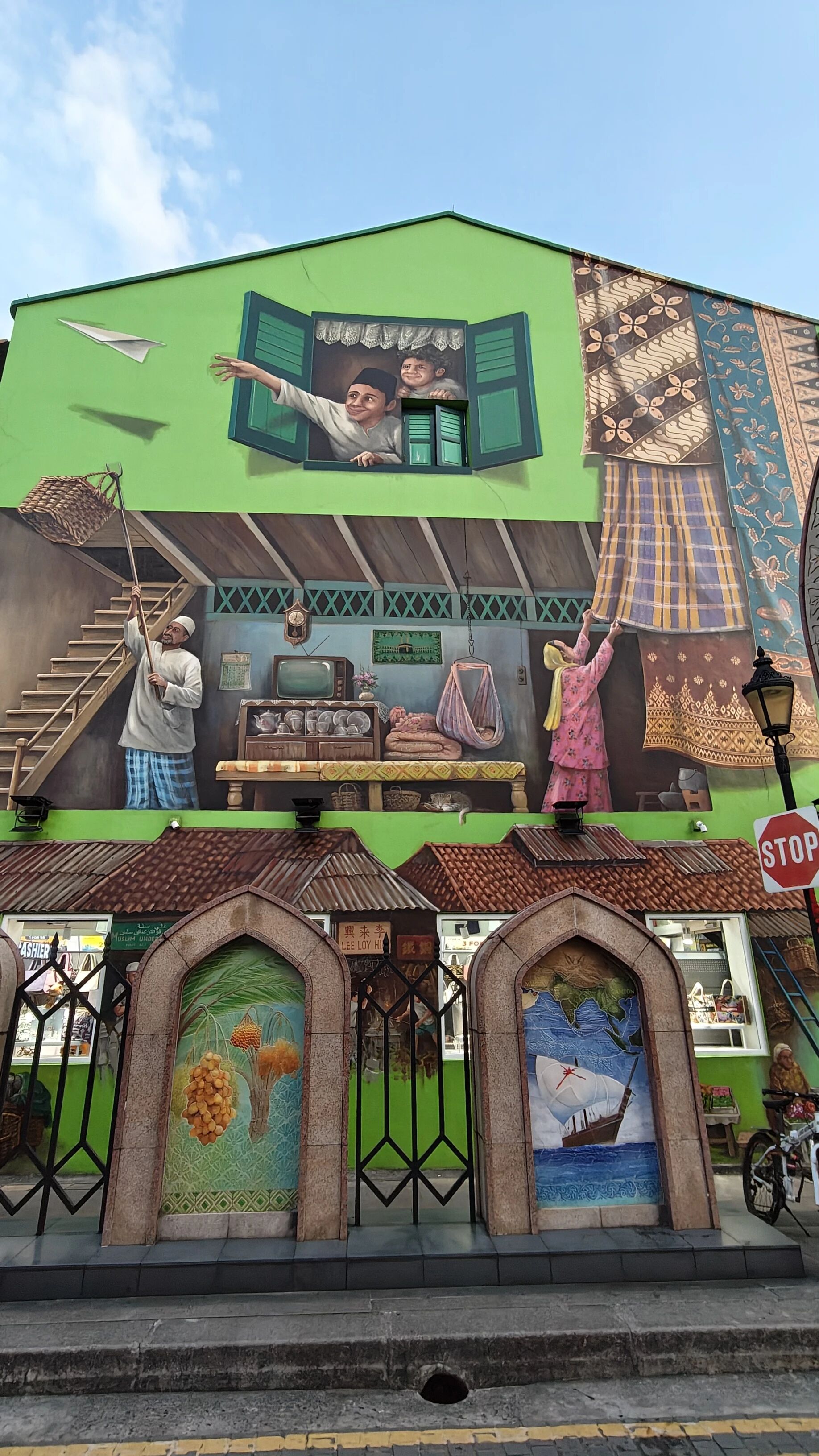
As dusk approached, I found an Indonesian restaurant and ordered a portion of fish balls, a piece of fish, a portion of rice, and a bottle of herbal tea, which cost about fifty yuan in total (Picture 9). In Singapore, you have to put away your tableware and put it in the designated area after eating (Picture 10).
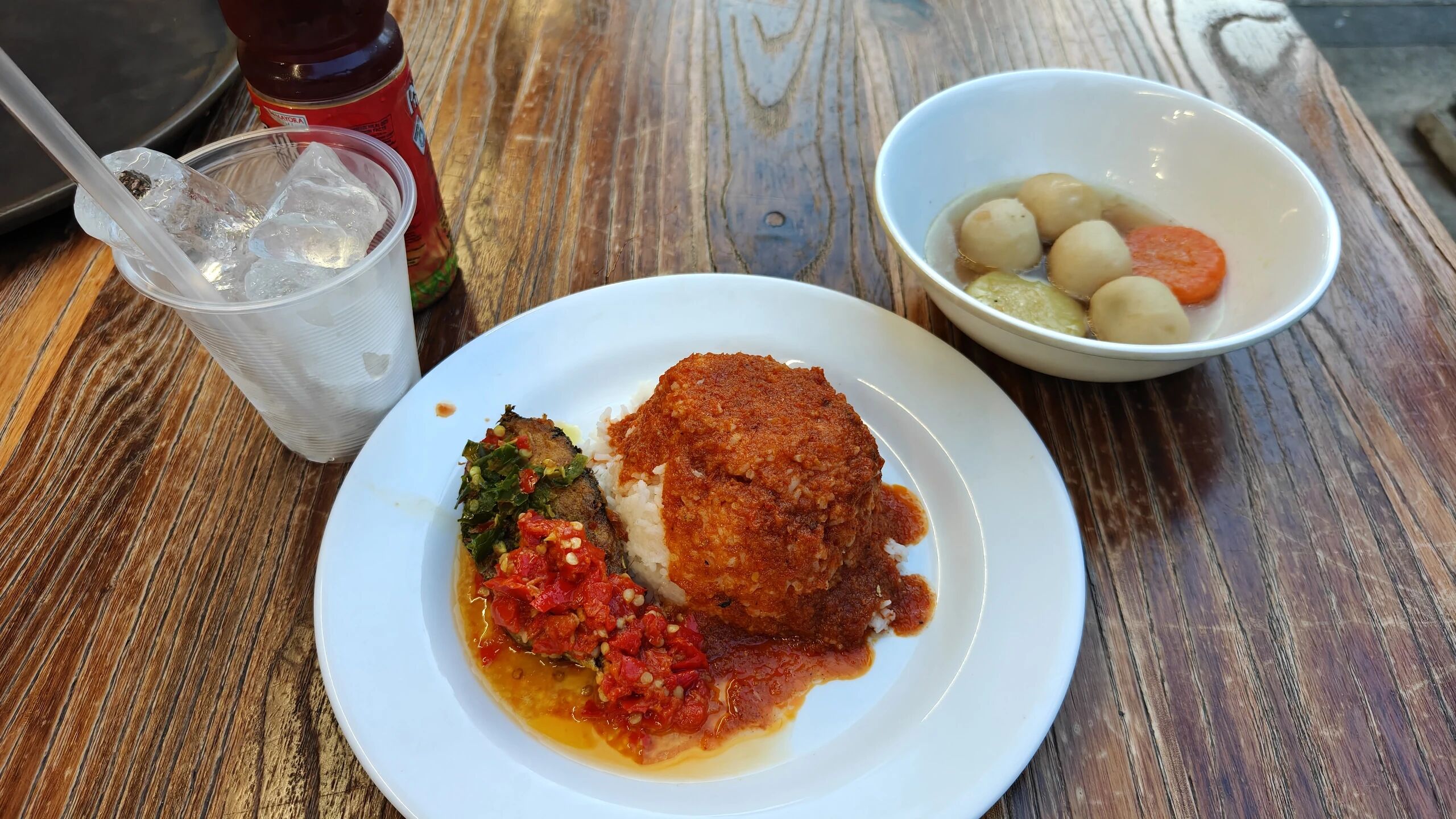
Picture 11 shows the front of the mosque, which is very similar to the back. When entering the prayer hall, you have to enter from the right side. The interior of the prayer hall is quite large and the ceiling is very good. The mihrab niche is also decorated with Malay-style mosaic and leaf patterns, which looks very distinctive (Figures 13 and 14).
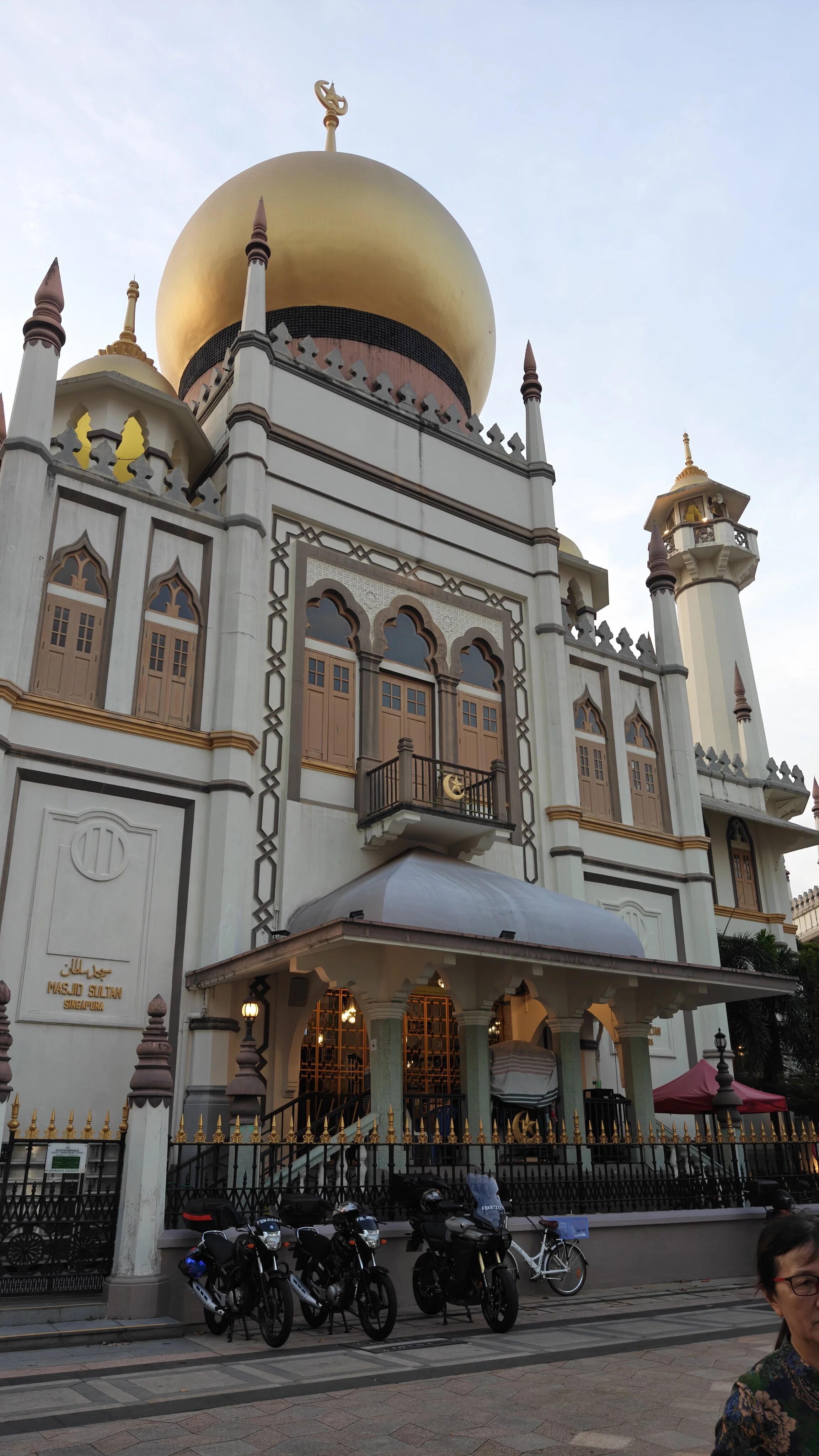
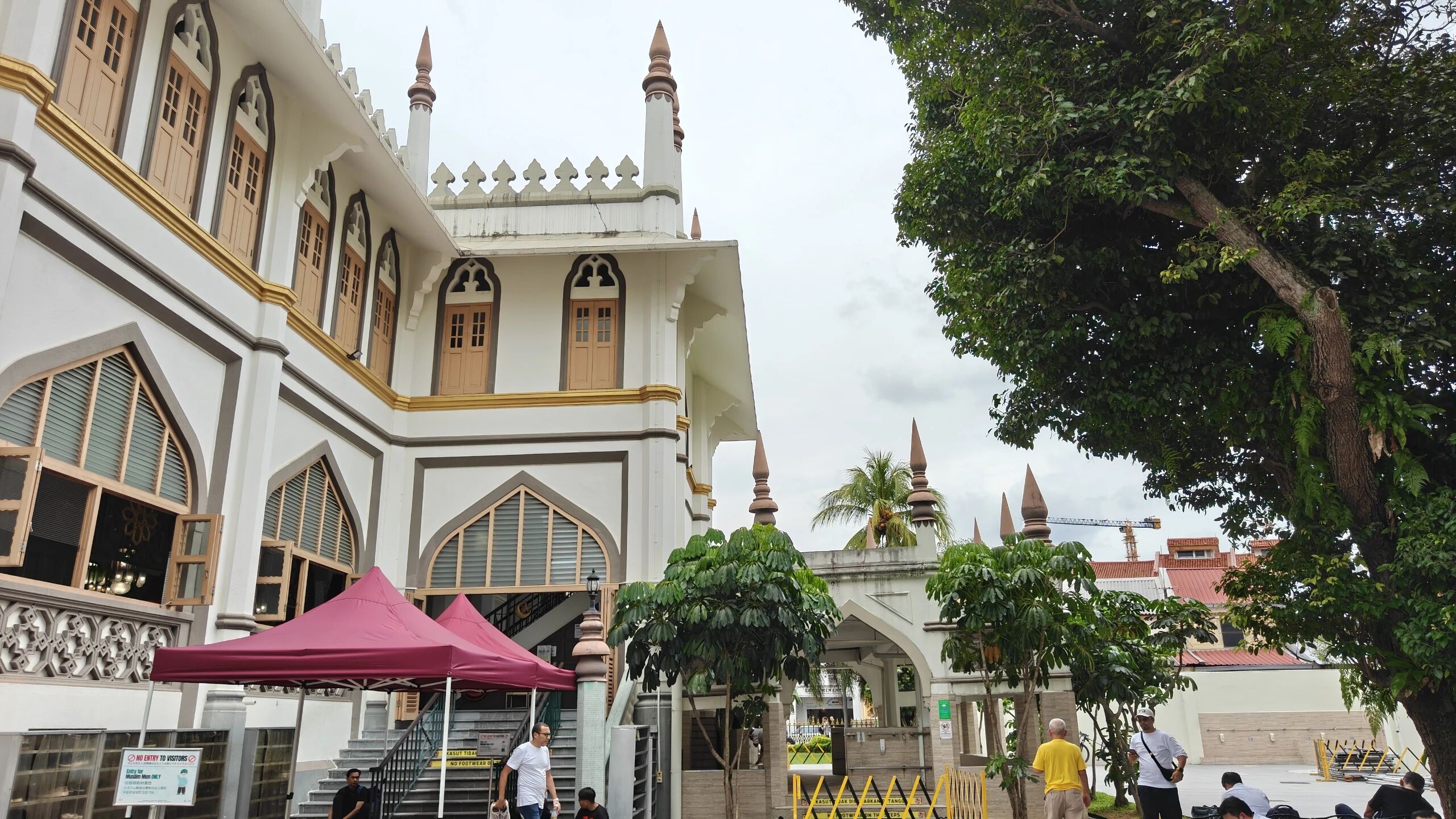
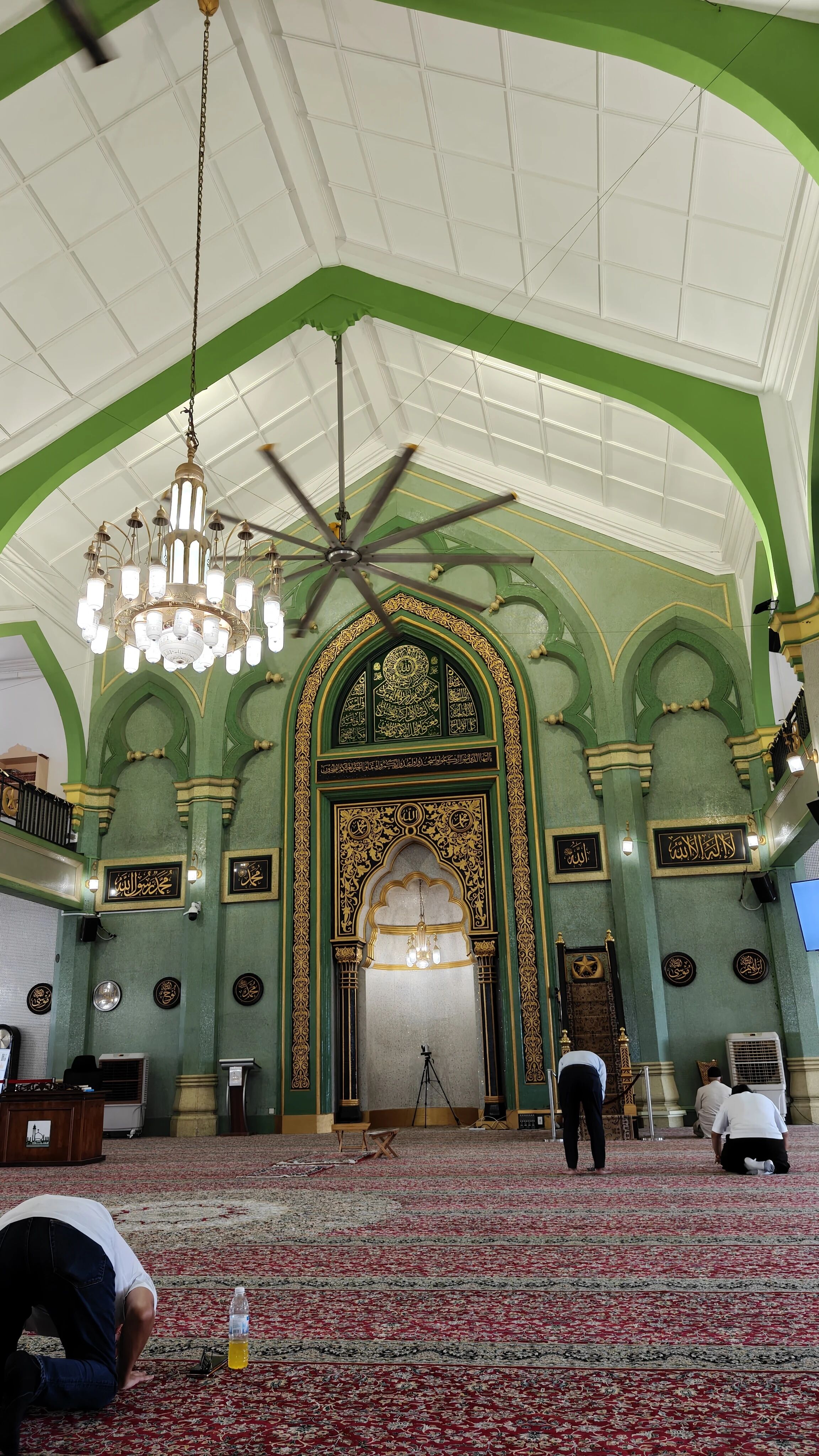
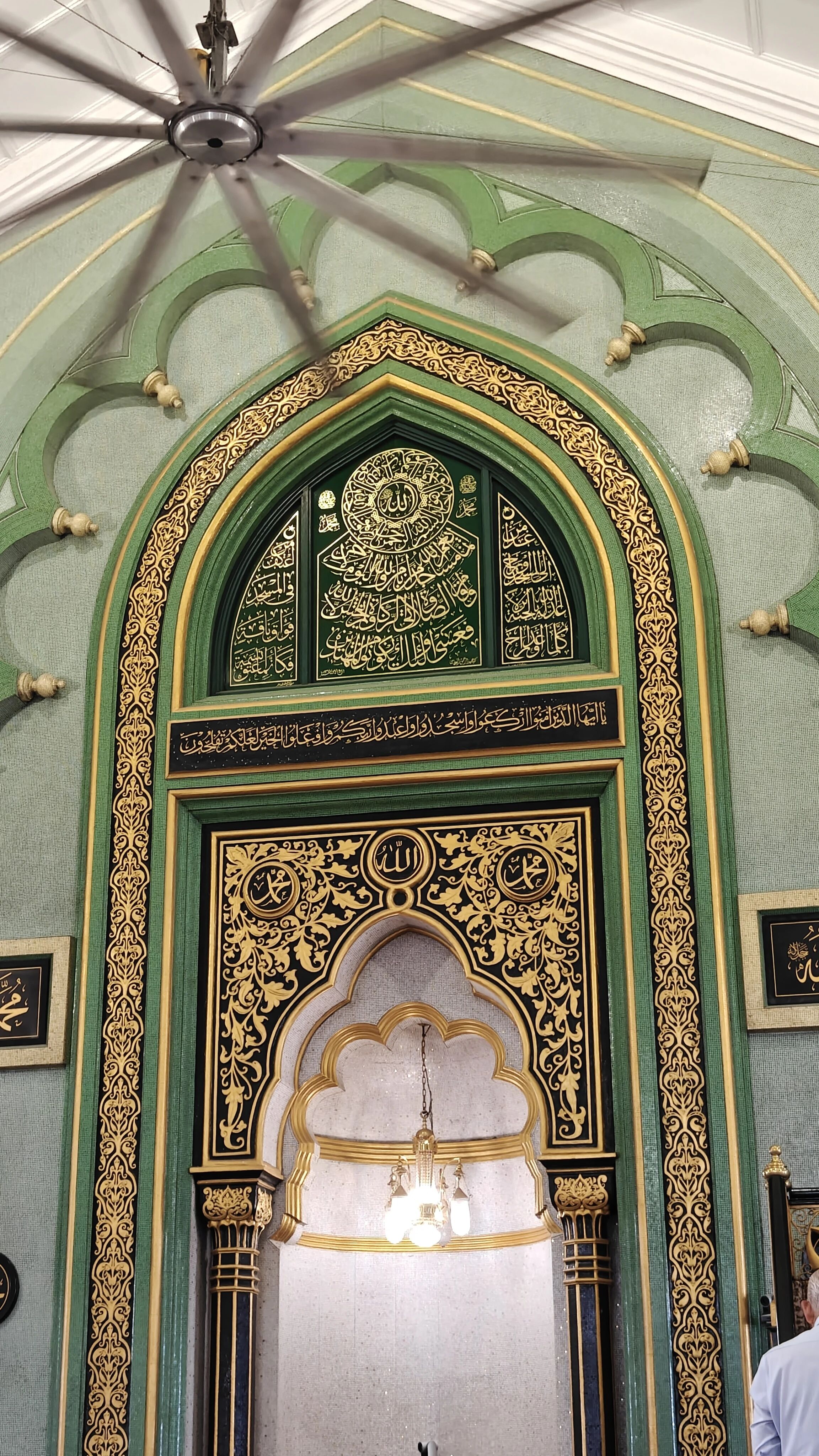
The shape of minbar is relatively simple (Picture 15).
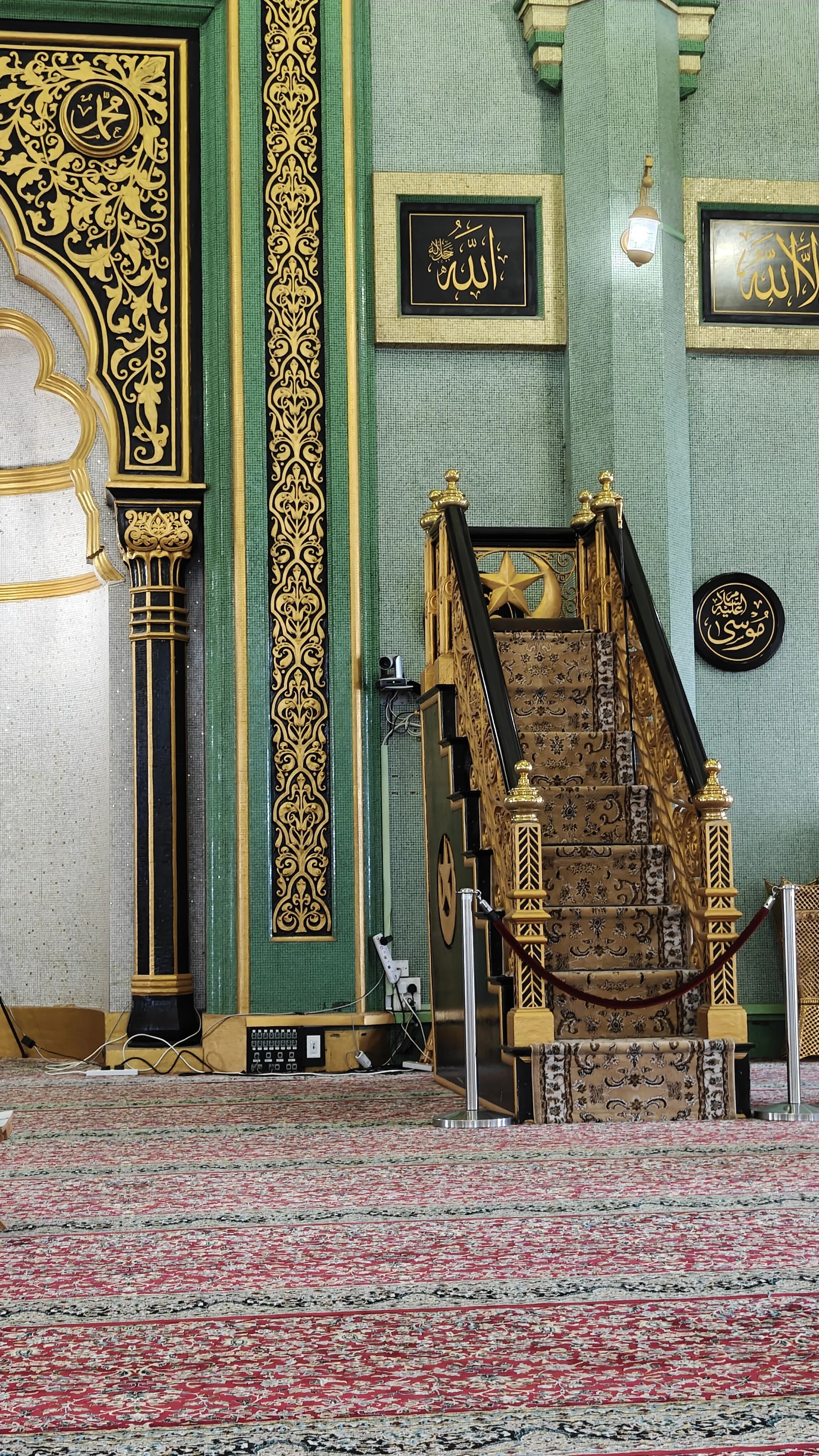
There is also a prayer space on the second floor (Figures 16 and 17).
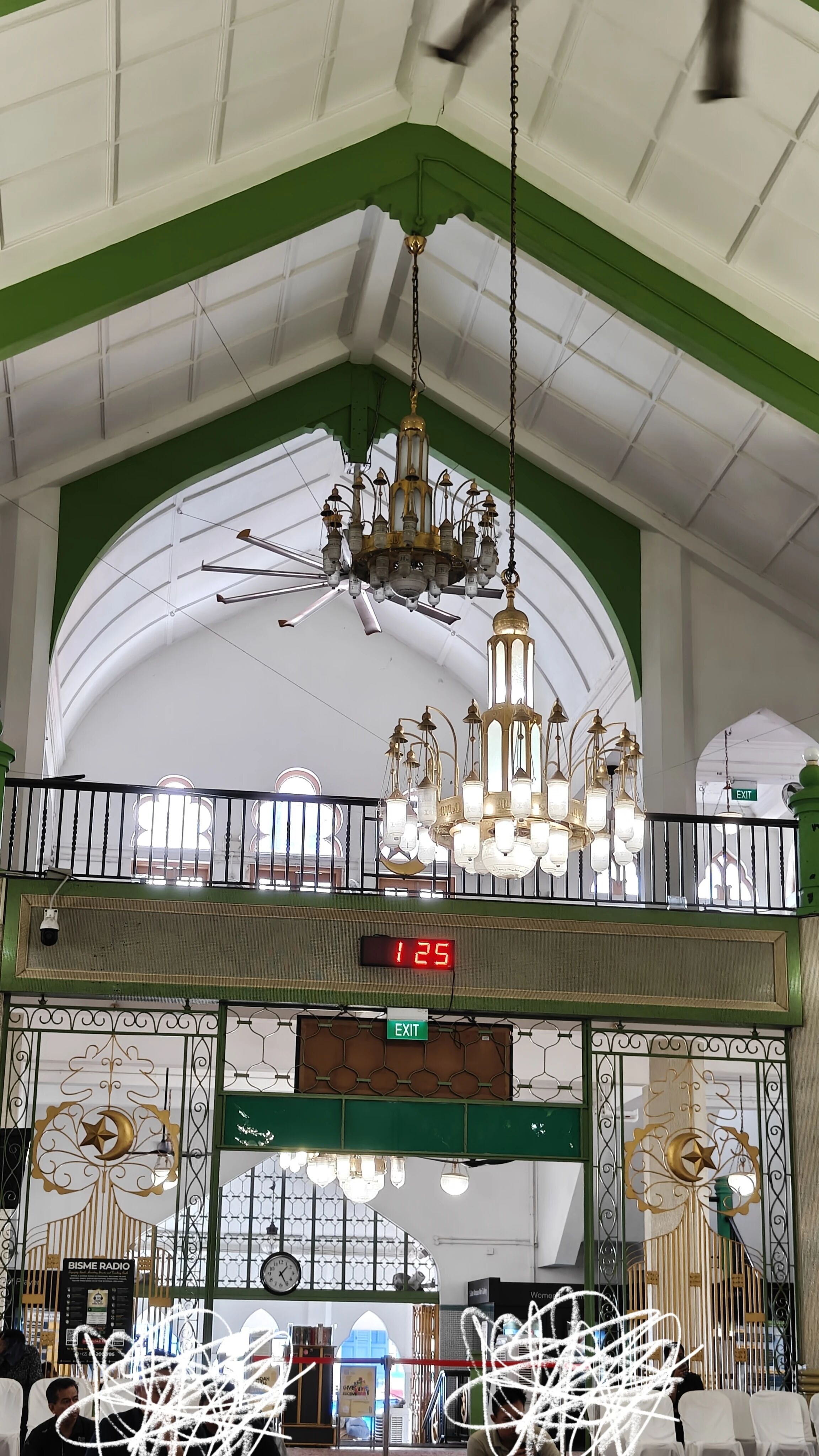
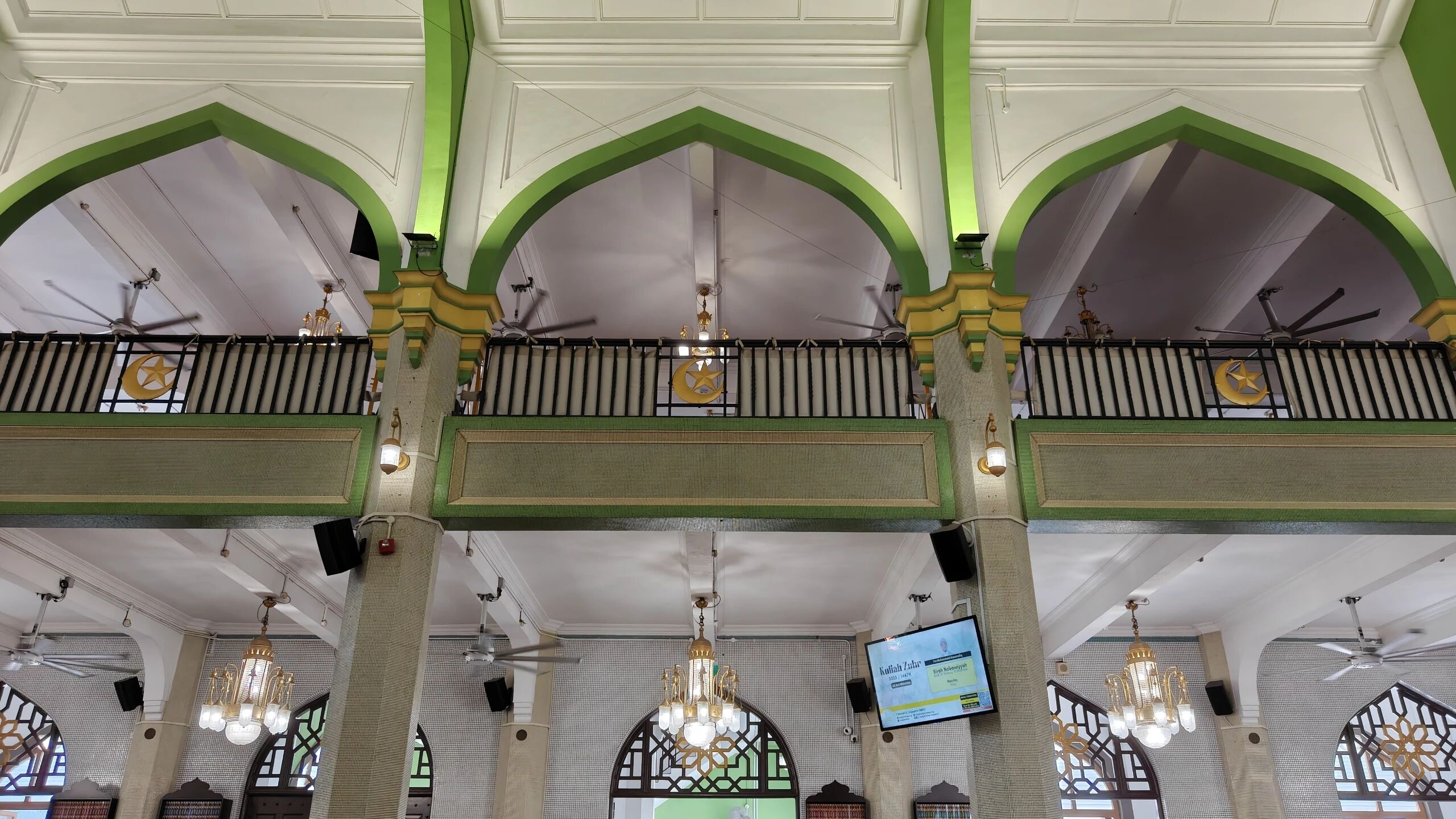
In Singapore's prayer halls, you can often see a display screen, which loops through some notices, recent activities, prayer times, etc. (Figures 18 and 19). The English notices in Picture 19 explain the importance of humility in faith and advocate that believers should be humble.
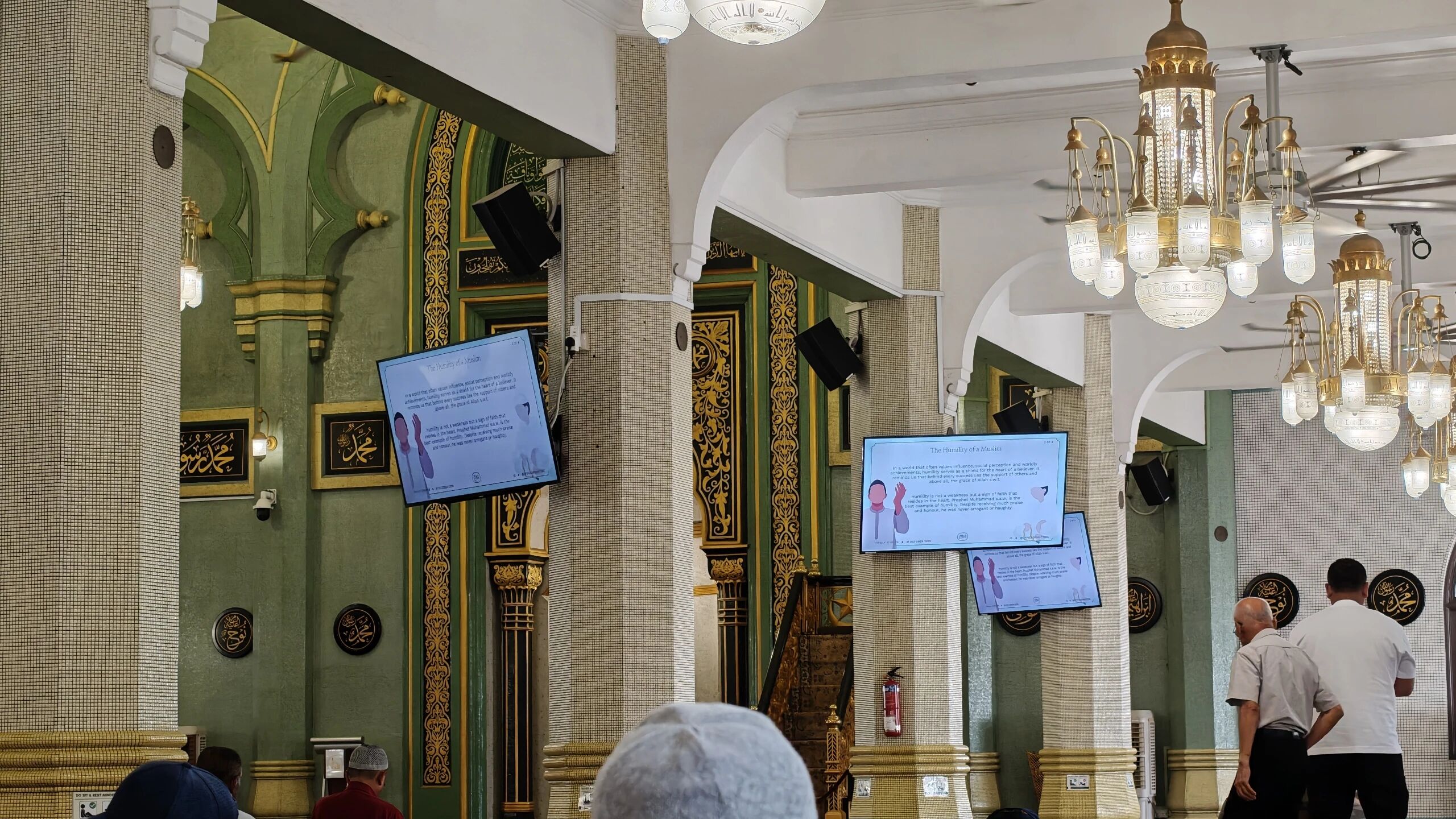
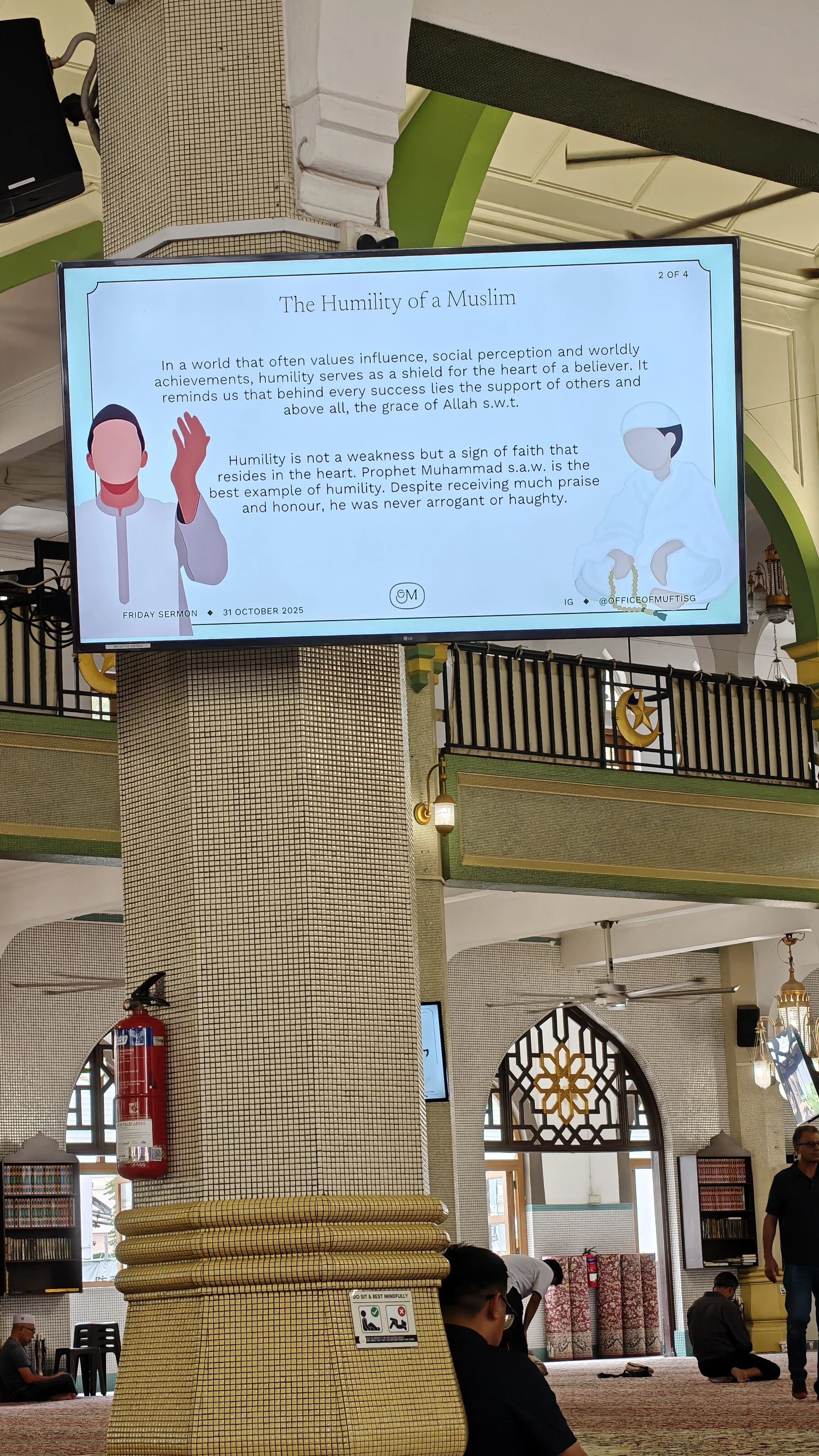
When I left the prayer hall, I noticed that the paint on the handrail on the right hand side had been worn down by worshippers (Picture 20).
Collapse Read »
Summary: This Singapore Muslim travel guide visits Sultan Mosque around Arab Street and Kampong Glam, covering the golden domes, Turkish halal restaurants nearby, the prayer hall, mihrab design, prayer time screens, humility reminders, and visible signs of daily worship.
The Sultan Mosque is a symbol of Singapore's multiculturalism, and this mosque is indispensable in tourist brochures. So I went here on the first day I landed in Singapore.
From the main road, you can see that the Sultan Mosque actually has two exaggeratedly large golden domes (Picture 4), one in front of the other and about the same size. There is a minaret on the left and right of the two large domes, a total of four.
Before I came here, I thought there was only one dome, because it couldn’t be clearly seen from the photos in the travel guide. Seeing it in person really matters.
The entrance to the mosque (Picture 6) is not on the side of the road, but in a pedestrian street called Arab Street. There are murals depicting Malay family life at the entrance (Picture 7). There are many Turkish halal restaurants on the street (Picture 8), as well as souvenir shops. You can buy a refrigerator magnet with two Singapore dollars (10 yuan).
As dusk approached, I found an Indonesian restaurant and ordered a portion of fish balls, a piece of fish, a portion of rice, and a bottle of herbal tea, which cost about fifty yuan in total (Picture 9). In Singapore, you have to put away your tableware and put it in the designated area after eating (Picture 10).
Picture 11 shows the front of the mosque, which is very similar to the back. When entering the prayer hall, you have to enter from the right side. The interior of the prayer hall is quite large and the ceiling is very good. The mihrab niche is also decorated with Malay-style mosaic and leaf patterns, which looks very distinctive (Figures 13 and 14).
The shape of minbar is relatively simple (Picture 15).
There is also a prayer space on the second floor (Figures 16 and 17).
In Singapore's prayer halls, you can often see a display screen, which loops through some notices, recent activities, prayer times, etc. (Figures 18 and 19). The English notices in Picture 19 explain the importance of humility in faith and advocate that believers should be humble.
When I left the prayer hall, I noticed that the paint on the handrail on the right hand side had been worn down by worshippers (Picture 20).
Collapse Read »
Muslim Travel Guide Vietnam Ho Chi Minh City: Al-Rahim Mosque, Ben Thanh Halal Food and Cham Community
Reposted from the web
Summary: This Vietnam Muslim travel guide visits Al-Rahim Mosque near Ben Thanh Market in Ho Chi Minh City, with nearby halal restaurants, the mosque entrance, prayer hall, wudu area, Arabic calligraphy, Qur'an study, and the Cham Muslim community around the city.
This mosque, called Al-Rahim (Mercy), is not far from Ho Chi Minh Ben Thanh Market, and it takes only five or six minutes to walk.
There is a street with halal restaurants at the entrance of Ben Thanh Market (see pictures 9 to 12). After eating there, I took a walk to Al-Rahim Mosque (Zhici Mosque, Mercy Mosque) and found that there are halal restaurants in front of the mosque (see picture 2). There is a restaurant on the left and right, and there are some diners sitting there.
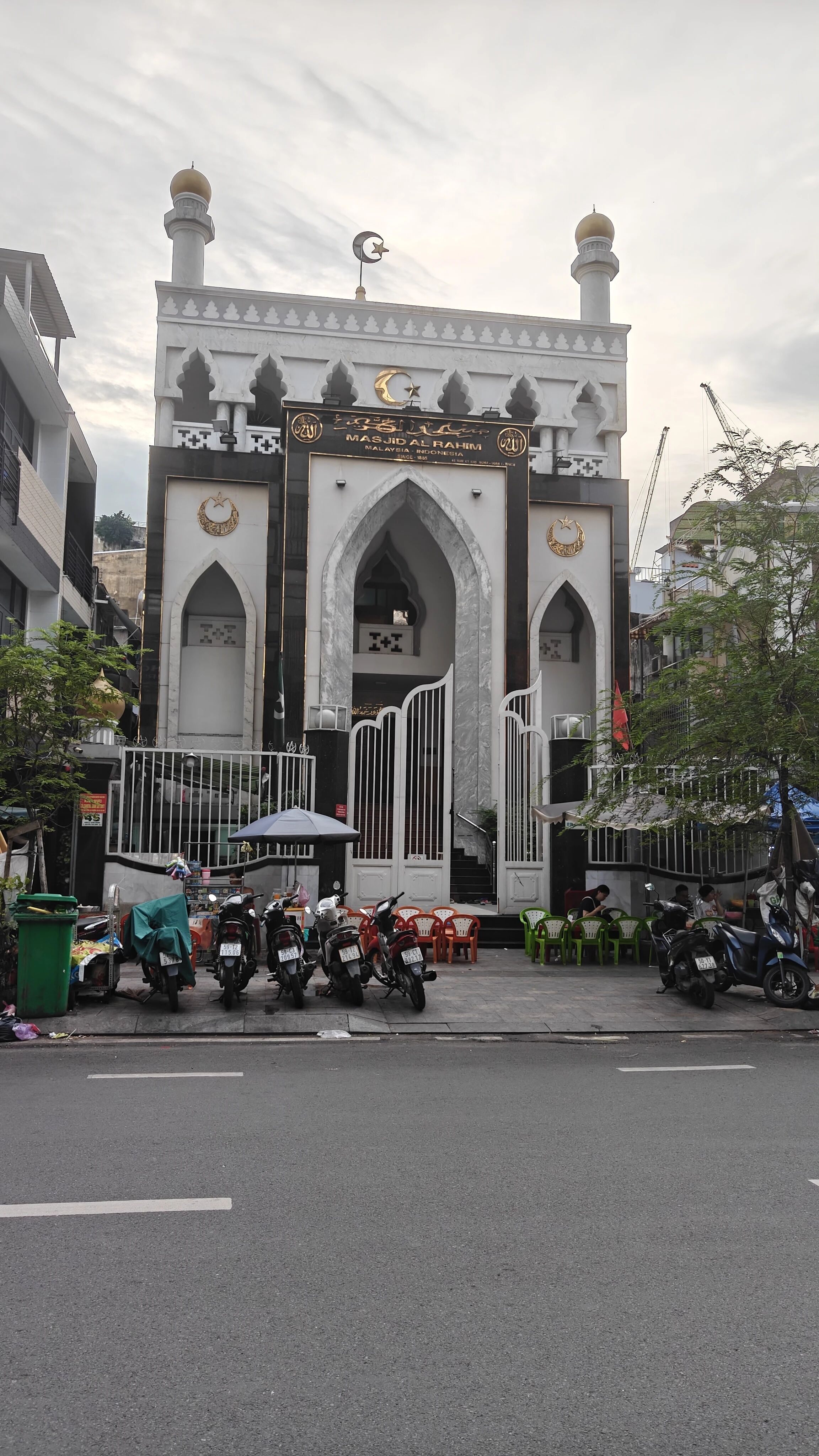
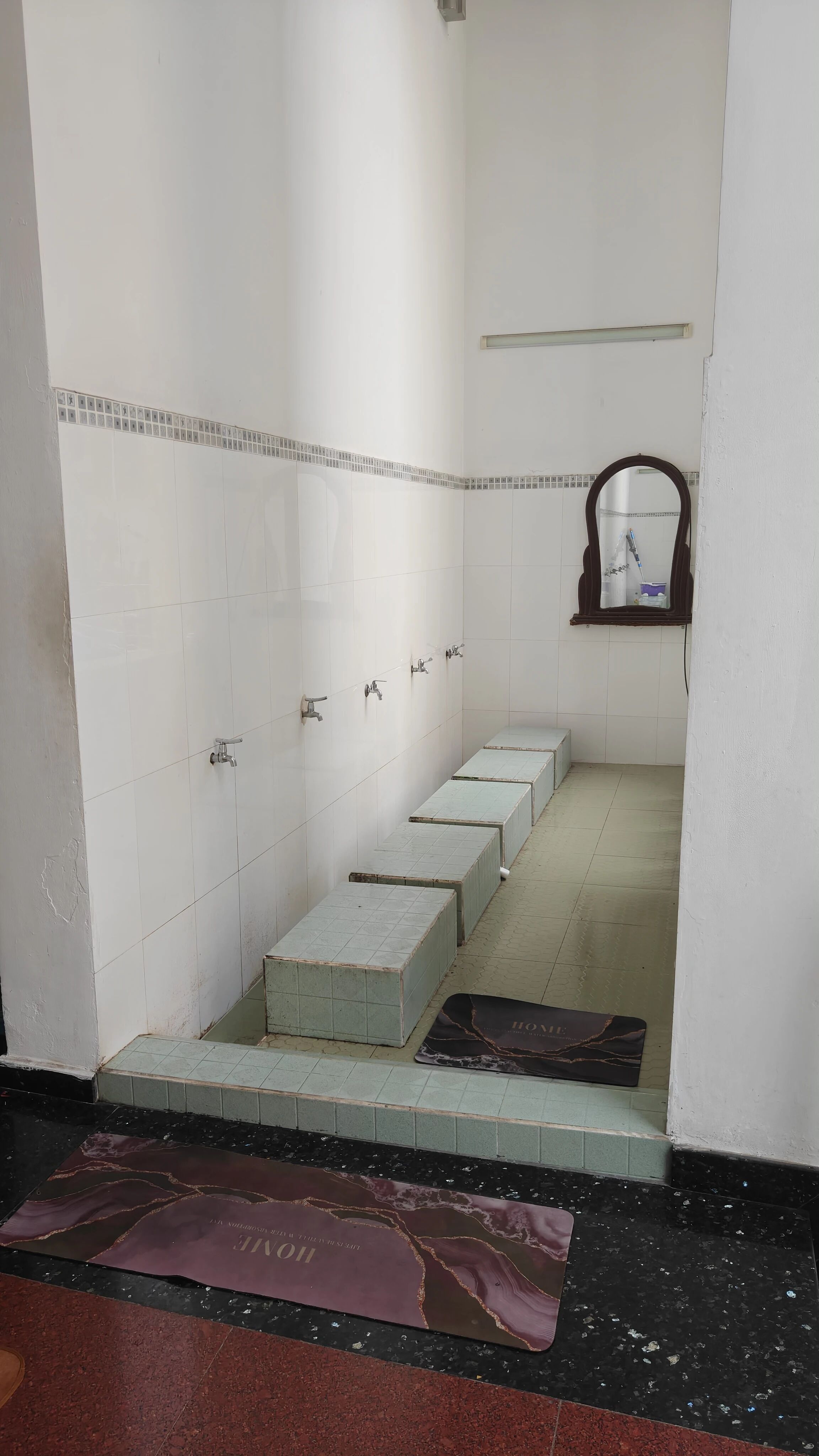
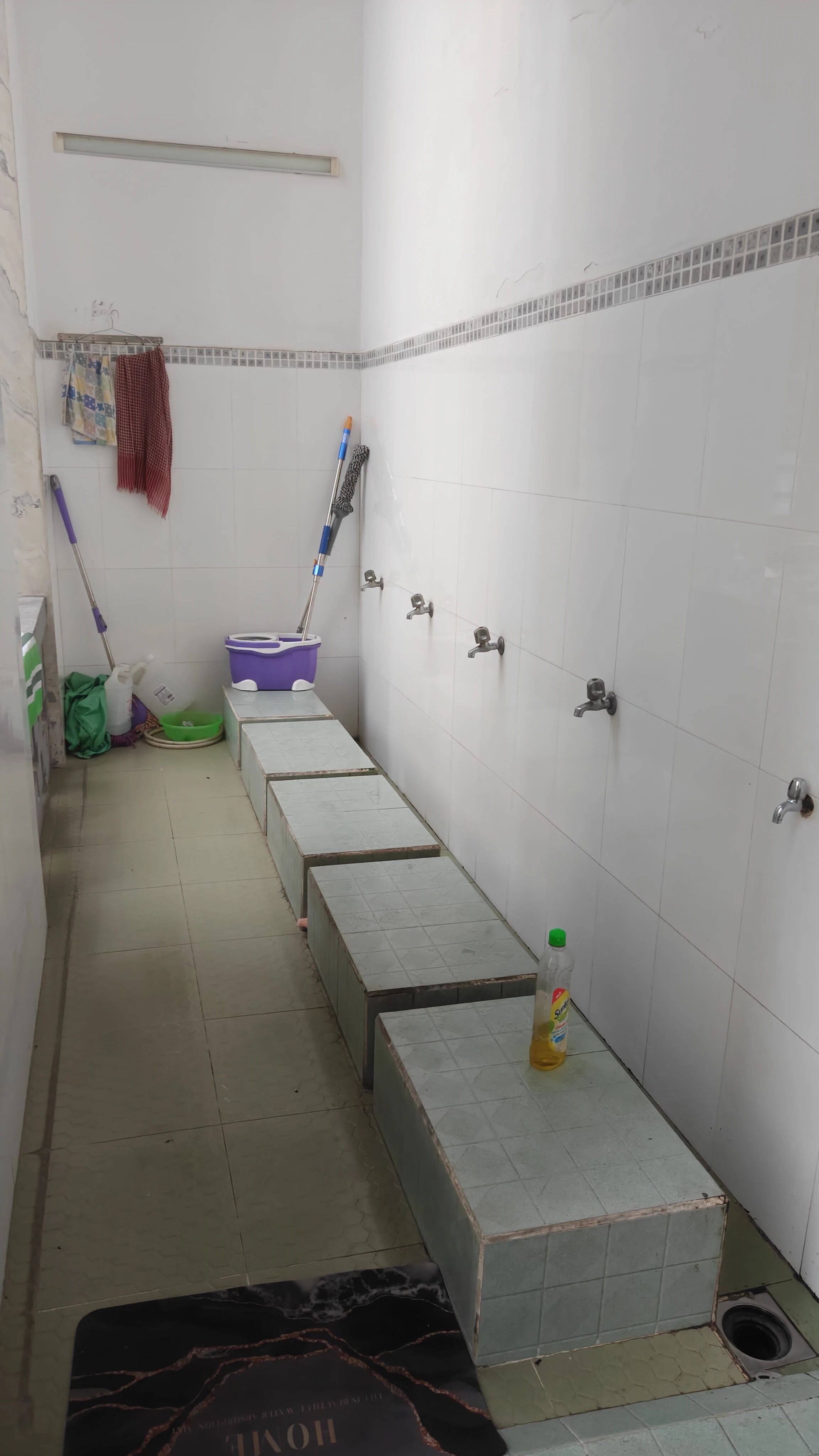
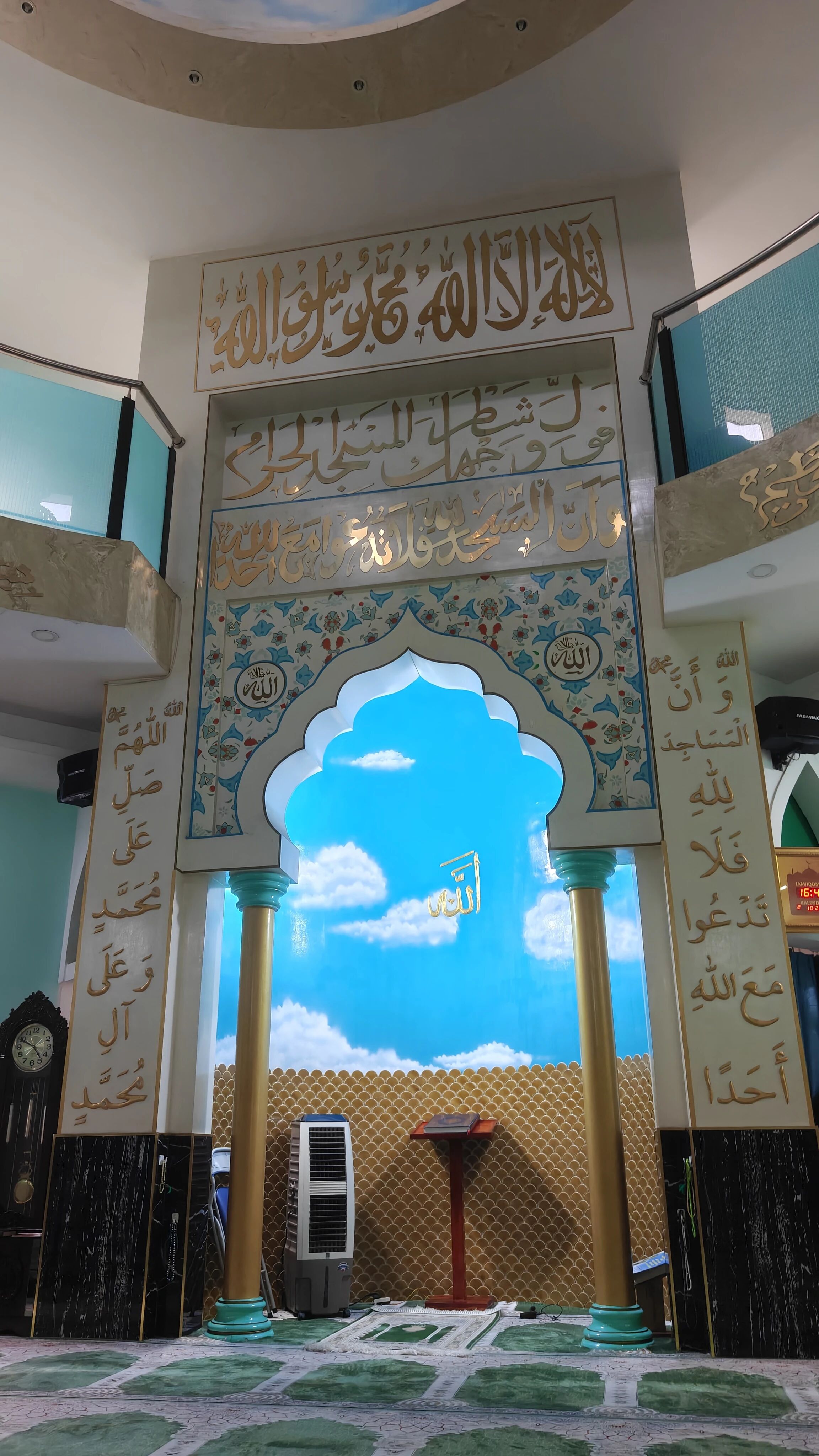
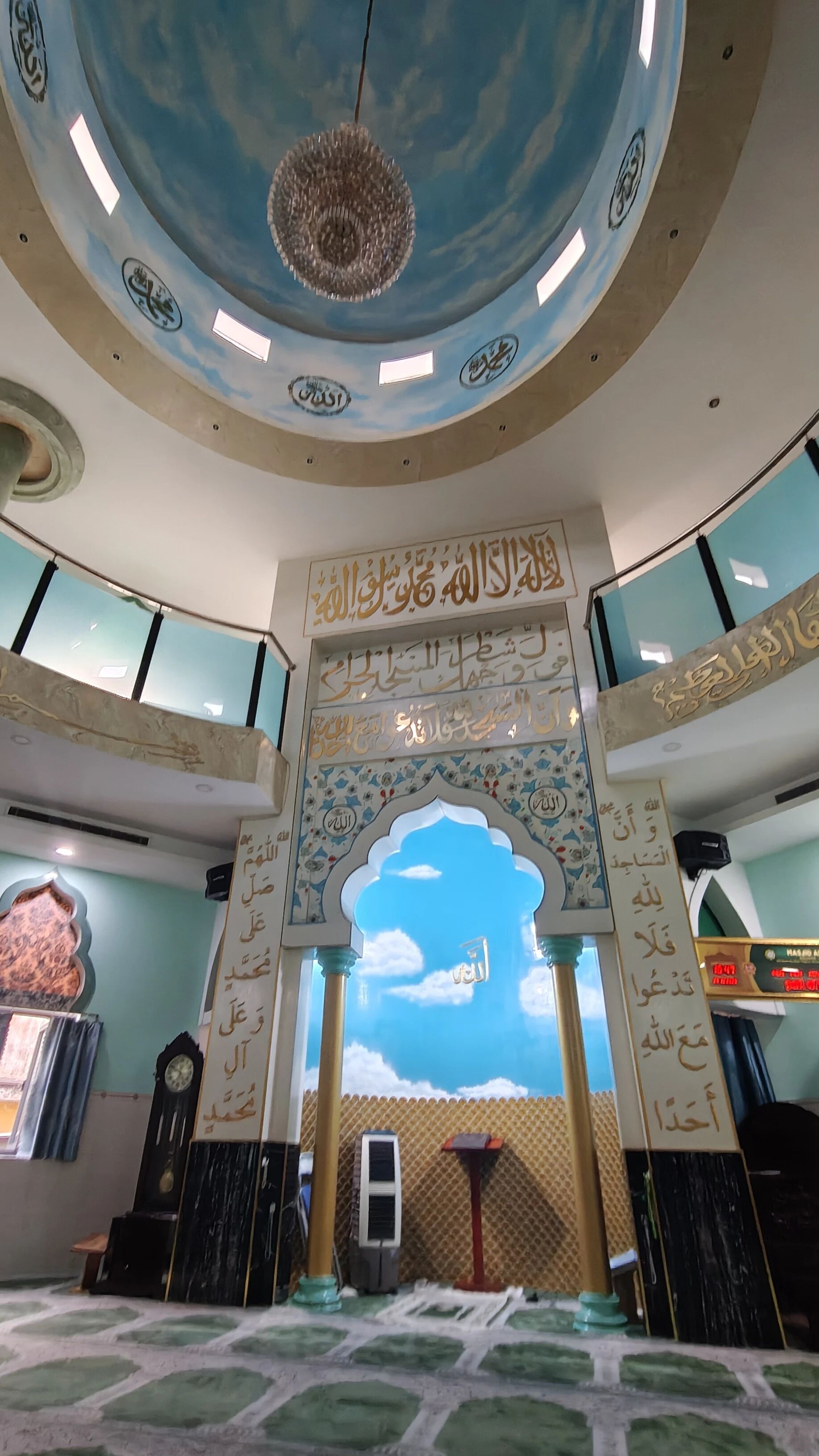
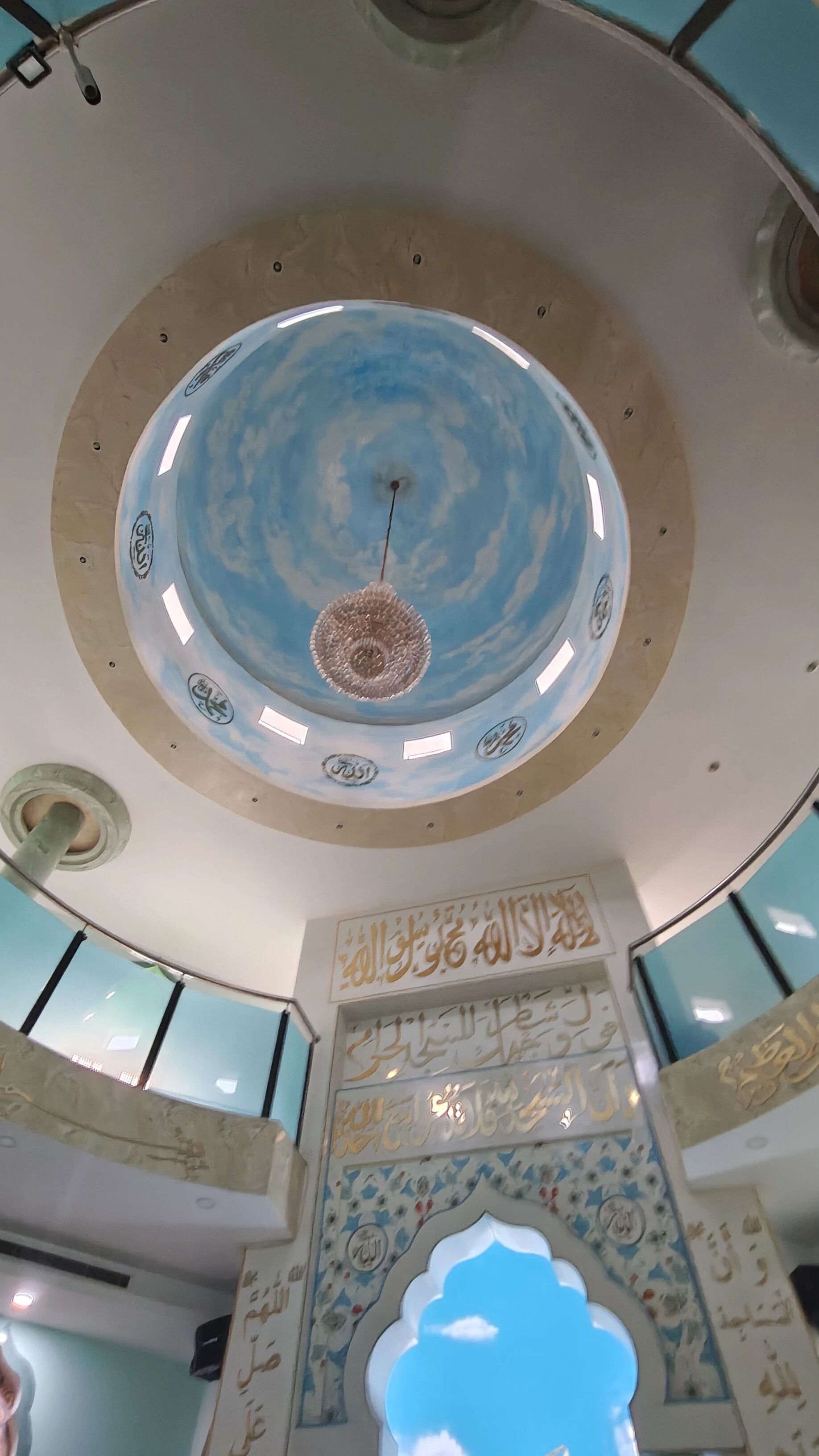
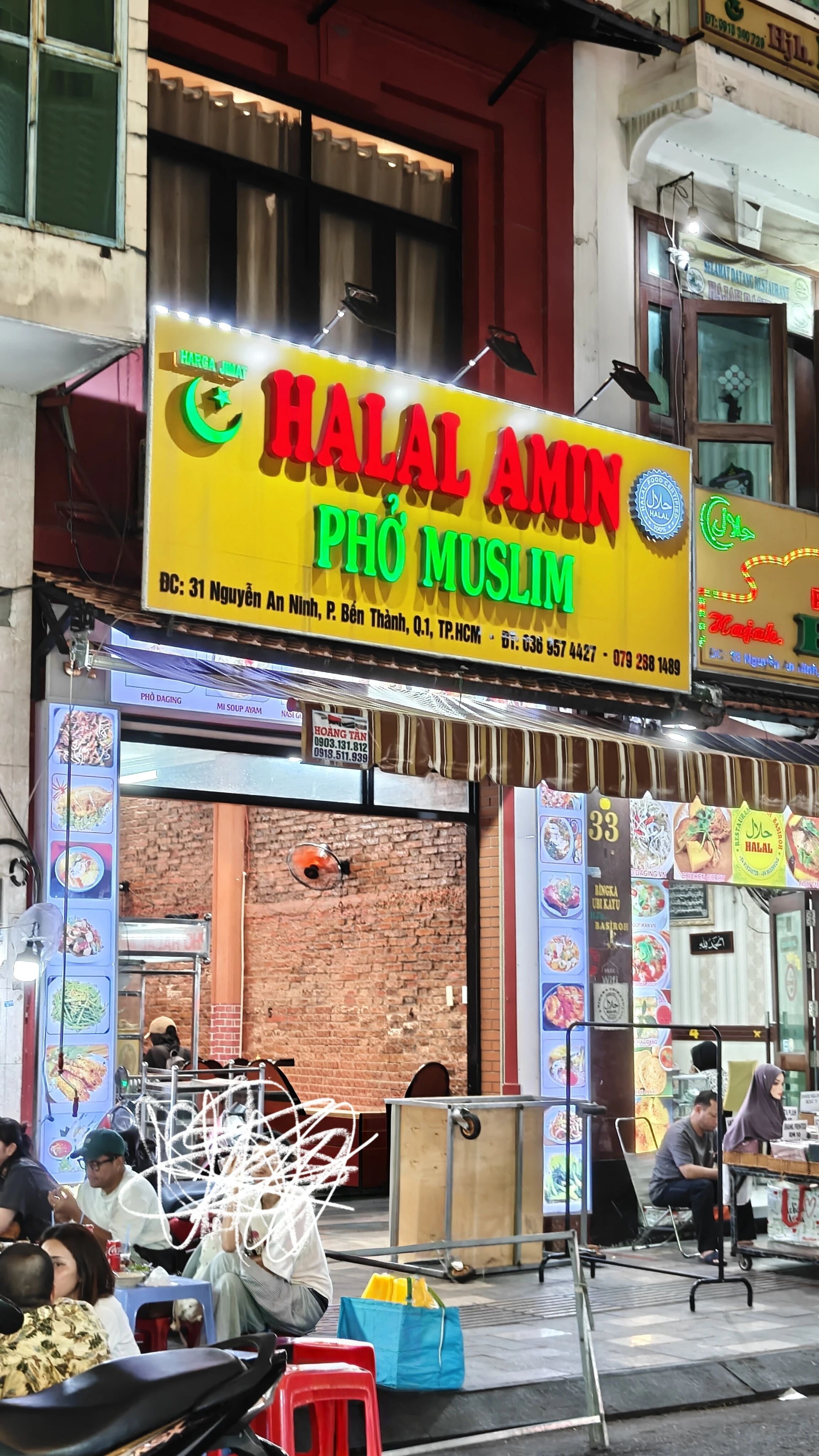
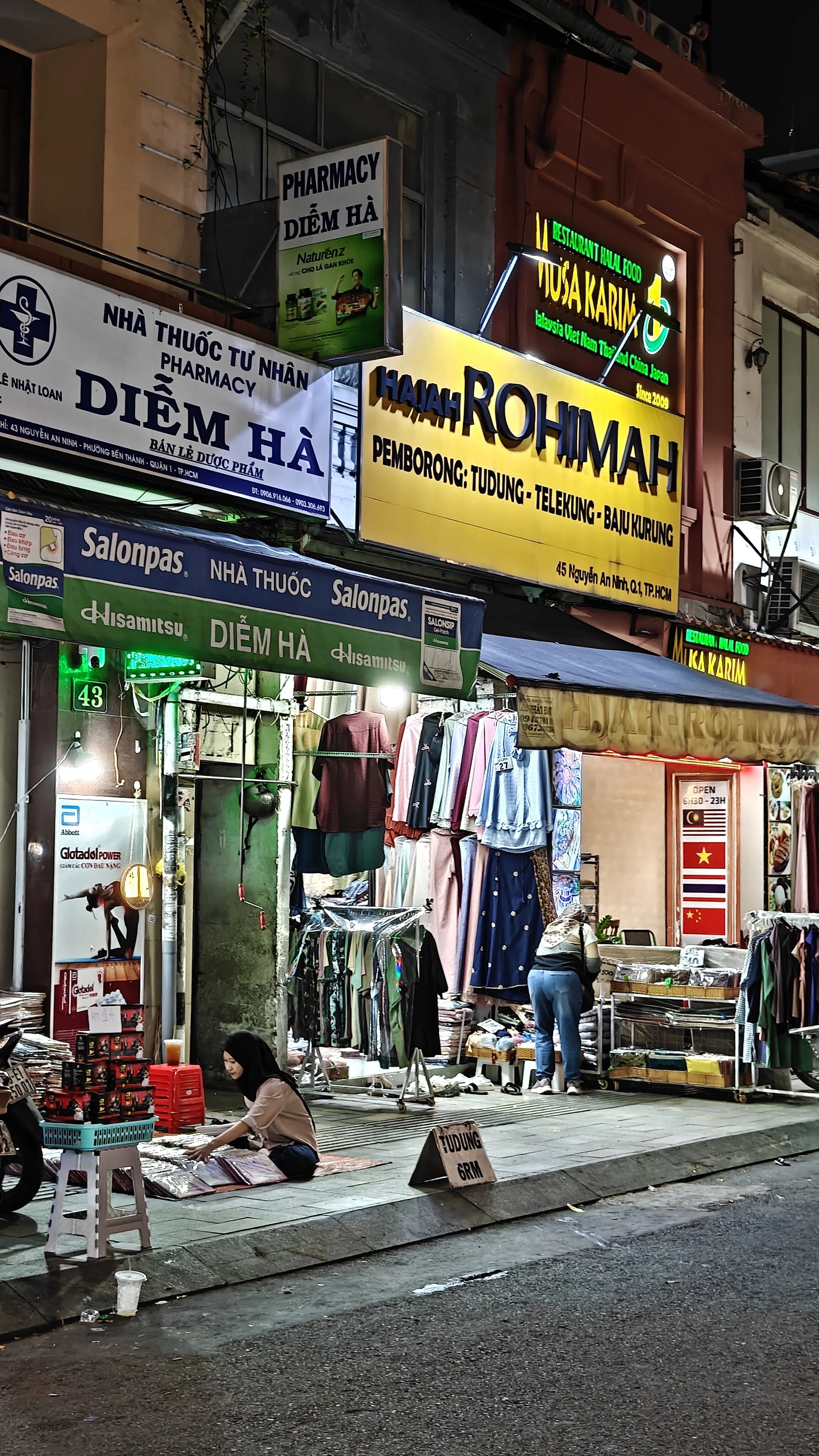
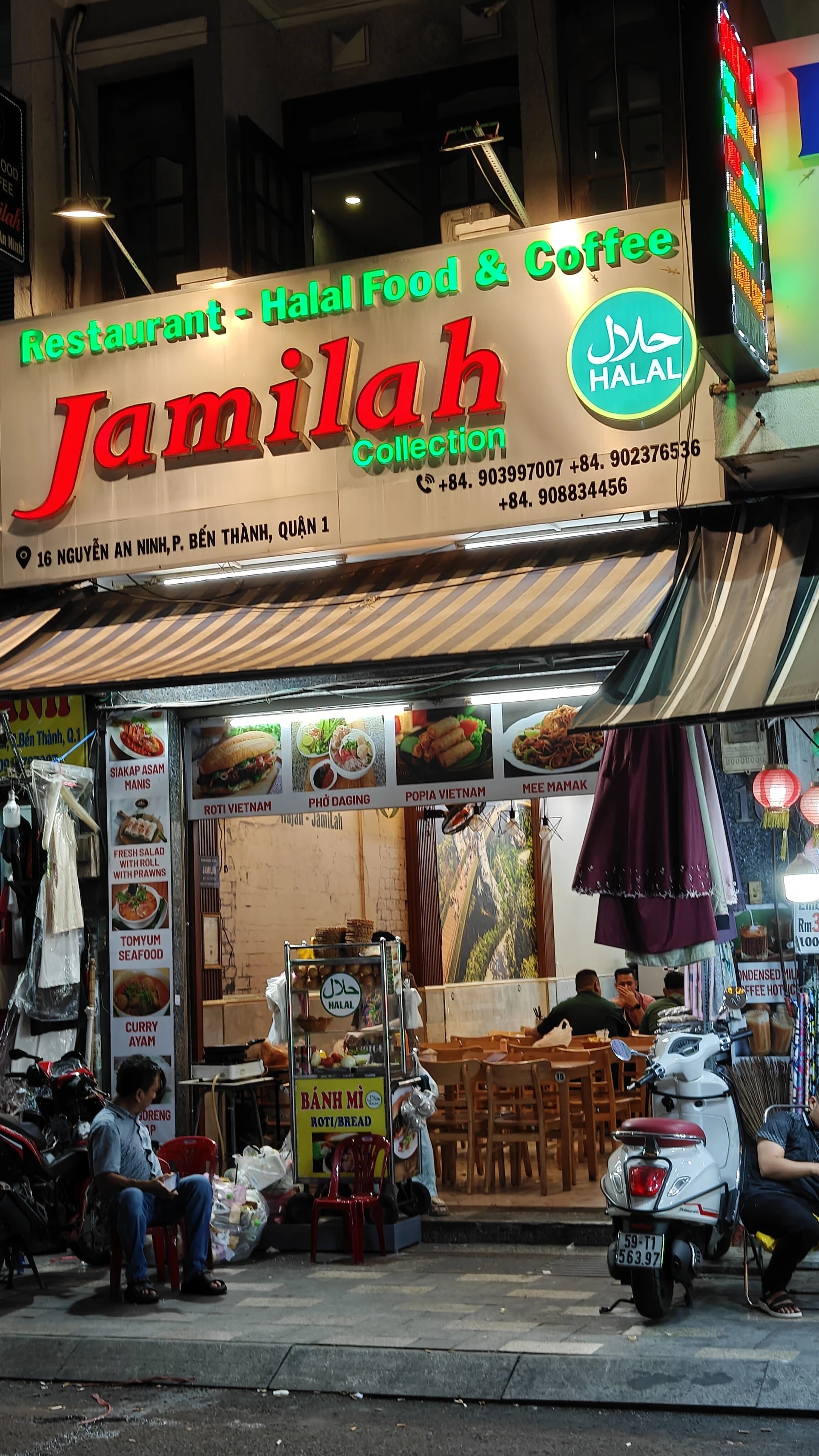
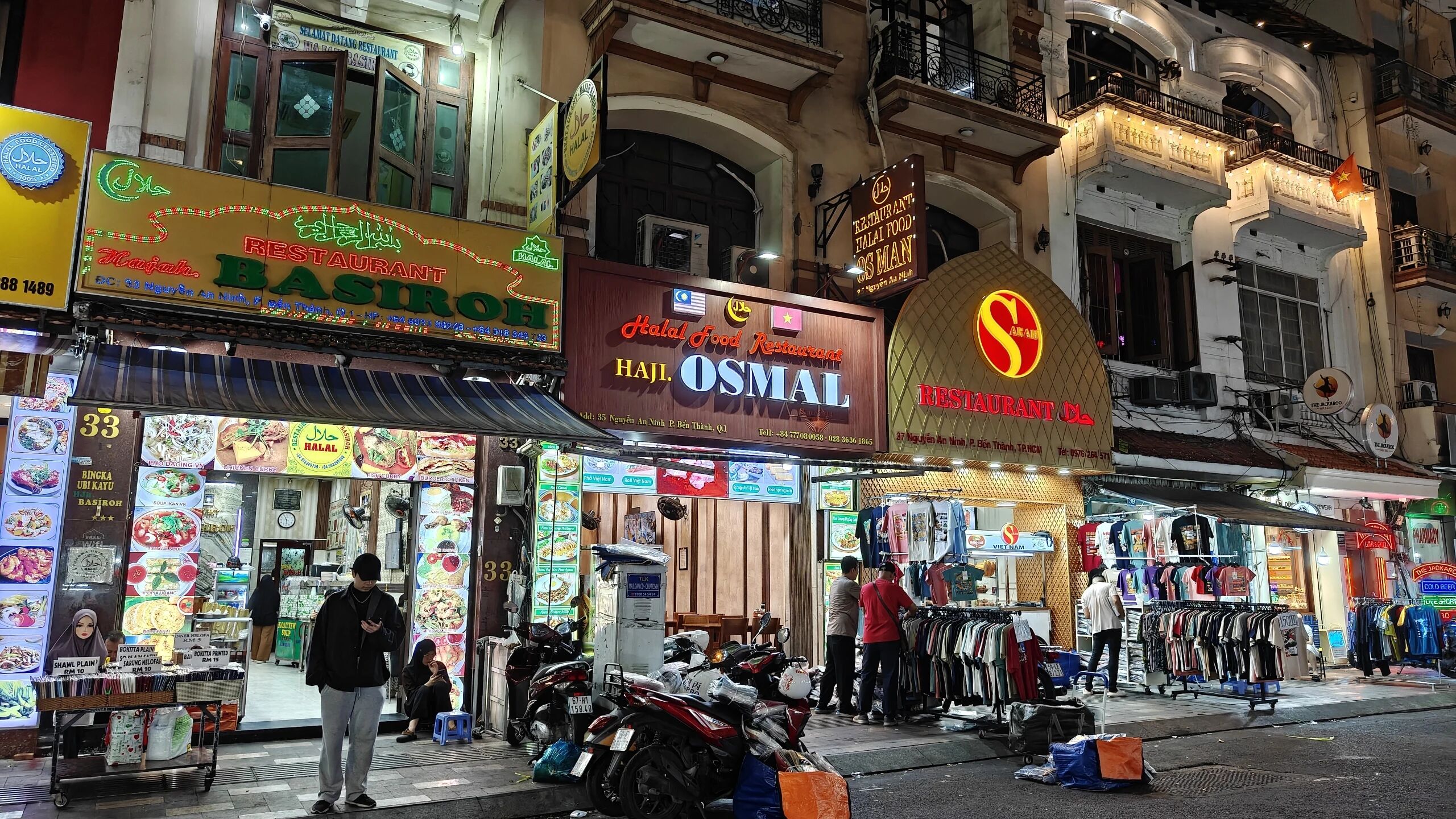
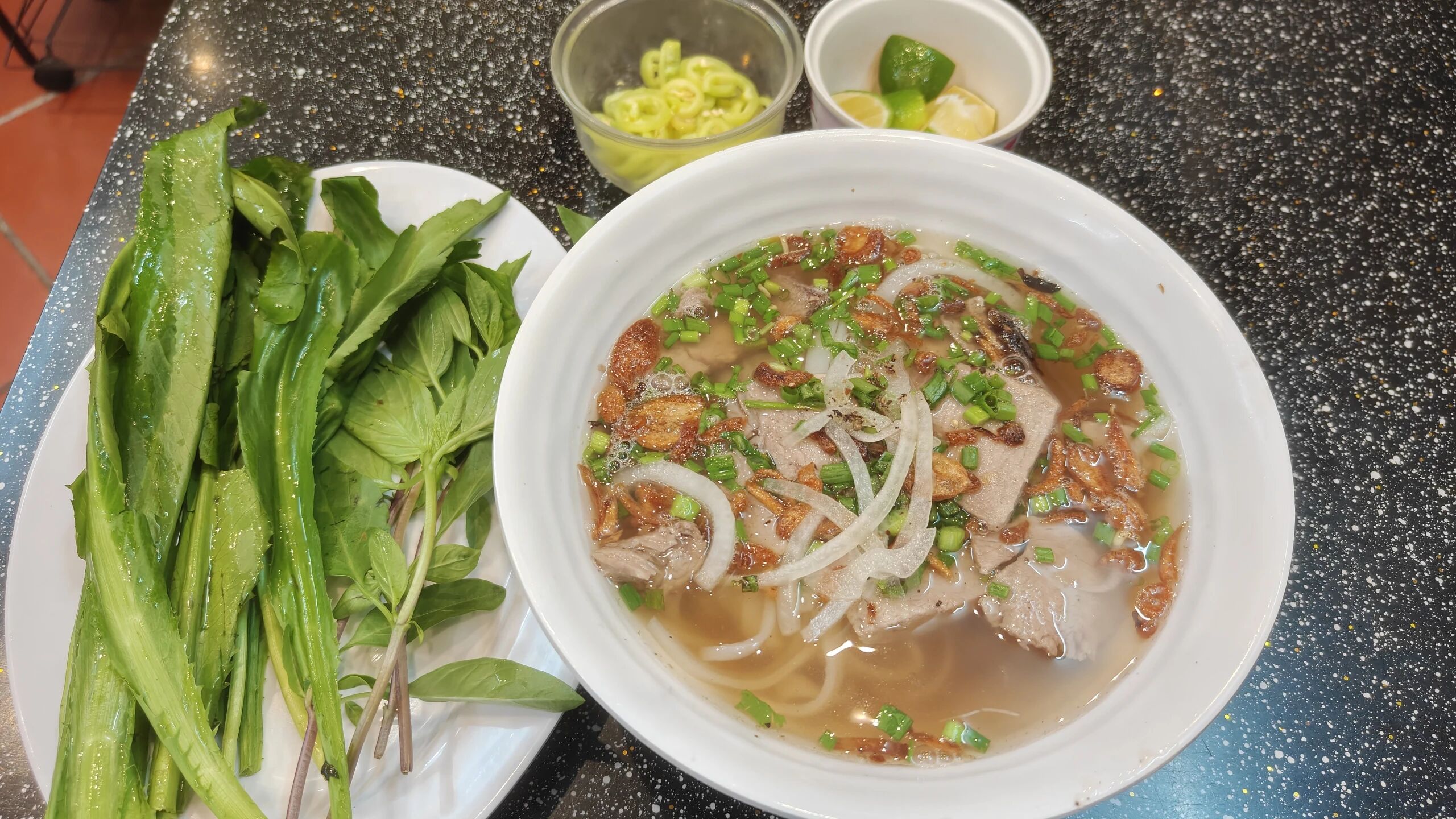
When entering the mosque gate, as usual, take off your shoes before stepping onto the steps of the prayer hall. Because the weather was extremely hot, the door on the first floor was left open and two or three fans were blowing. There were three or four people sitting in the hall, one of whom looked like an imam and was teaching the rest of the people how to study the Qur'an.
He told me in English that the prayer room is on the second floor. I exited the hall and found the wudu area on the porch outside the hall. (See Picture 3 and Picture 4)
After going upstairs, we found the main prayer hall (Pictures 5, 6 and 7). There is a dome painted with white clouds and blue sky directly above the main hall. Moreover, there is a prayer space on the third floor, so that the prayer hall can accommodate more people without making it appear cramped.
The location of the mihrab and the Arabic calligraphy layout on the left and right are very similar to the couplets of ancient buildings. I wonder if they were influenced by the couplets. It's very possible, because there are also many couplets in Vietnam.
After coming out of this mosque, I felt that this mosque was popular and alive. Why do I say that? Because I saw Muslims running businesses around the mosque, and there were people studying the Qur'an inside the mosque.
There are also gathering places for Cham Muslims around Ho Chi Minh, and there are also some mosques there. I will take photos for everyone to see if I have a chance in the future.
Collapse Read »
Summary: This Vietnam Muslim travel guide visits Al-Rahim Mosque near Ben Thanh Market in Ho Chi Minh City, with nearby halal restaurants, the mosque entrance, prayer hall, wudu area, Arabic calligraphy, Qur'an study, and the Cham Muslim community around the city.
This mosque, called Al-Rahim (Mercy), is not far from Ho Chi Minh Ben Thanh Market, and it takes only five or six minutes to walk.
There is a street with halal restaurants at the entrance of Ben Thanh Market (see pictures 9 to 12). After eating there, I took a walk to Al-Rahim Mosque (Zhici Mosque, Mercy Mosque) and found that there are halal restaurants in front of the mosque (see picture 2). There is a restaurant on the left and right, and there are some diners sitting there.
When entering the mosque gate, as usual, take off your shoes before stepping onto the steps of the prayer hall. Because the weather was extremely hot, the door on the first floor was left open and two or three fans were blowing. There were three or four people sitting in the hall, one of whom looked like an imam and was teaching the rest of the people how to study the Qur'an.
He told me in English that the prayer room is on the second floor. I exited the hall and found the wudu area on the porch outside the hall. (See Picture 3 and Picture 4)
After going upstairs, we found the main prayer hall (Pictures 5, 6 and 7). There is a dome painted with white clouds and blue sky directly above the main hall. Moreover, there is a prayer space on the third floor, so that the prayer hall can accommodate more people without making it appear cramped.
The location of the mihrab and the Arabic calligraphy layout on the left and right are very similar to the couplets of ancient buildings. I wonder if they were influenced by the couplets. It's very possible, because there are also many couplets in Vietnam.
After coming out of this mosque, I felt that this mosque was popular and alive. Why do I say that? Because I saw Muslims running businesses around the mosque, and there were people studying the Qur'an inside the mosque.
There are also gathering places for Cham Muslims around Ho Chi Minh, and there are also some mosques there. I will take photos for everyone to see if I have a chance in the future.
Collapse Read »
Best Halal Food Vietnam Ho Chi Minh City: Ben Thanh Market, Saigon Muslim Street and Cham Food Stalls
Reposted from the web
Summary: This Ho Chi Minh City halal food guide follows Ben Thanh Market and the nearby Muslim street in Saigon, showing halal restaurants, Malay and Cham food, lemon noodles, a Cham stall owner, market scenes, and the Muslim food life around the city center.
Ho Chi Minh City, formerly known as Saigon. This is the largest and most developed city in Vietnam. There is a clear development gap between the capital Hanoi and here.
One of the landmarks of Ho Chi Minh City is the Ben Thanh Market (Picture 1). Photos of the market when it was first completed are still posted outside the market. Looking around, the location here is excellent, with popular attractions such as Ho Chi Minh City Hall, Independence Palace, and Grand Theater not far away (Picture 4).
The market is bustling with tourists from all over the world. The products inside are also dazzling, ranging from souvenirs to clothes and bags, and all kinds of small commodities. Everyone who saw it was dazzled. The merchants inside are packed one after another, so densely packed that they all enthusiastically attract passing travelers.
If you don’t want to buy, you can refuse politely, and they won’t pester you for nothing. They want business, but they have boundaries and know how to exercise restraint. I like this very much. And there are also various snack stalls here, which are colorfully decorated.
After going out, there is a street dedicated to halal restaurants. Not only that, there are also prayer clothing stores, travel agencies for Muslim tourists, etc.
During the two or three days I was in Ho Chi Minh, I basically ate here. The food here is very characteristic of Southeast Asia, including coconut milk (Picture 12), grilled fish with rice (Picture 13). I ordered a beef pho, and the lady boss brought a side dish, which had a faint fishy smell when I chewed it.
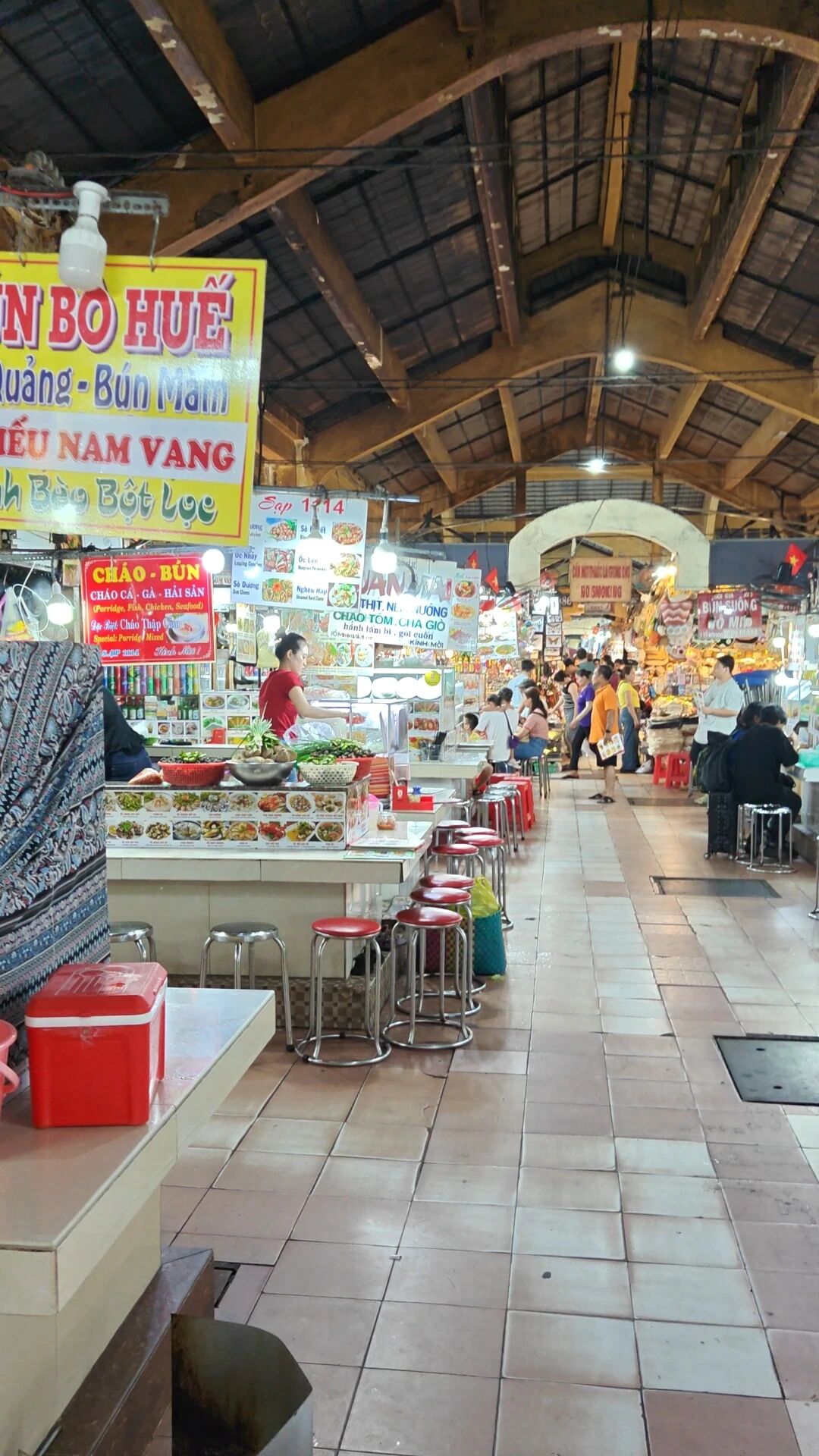
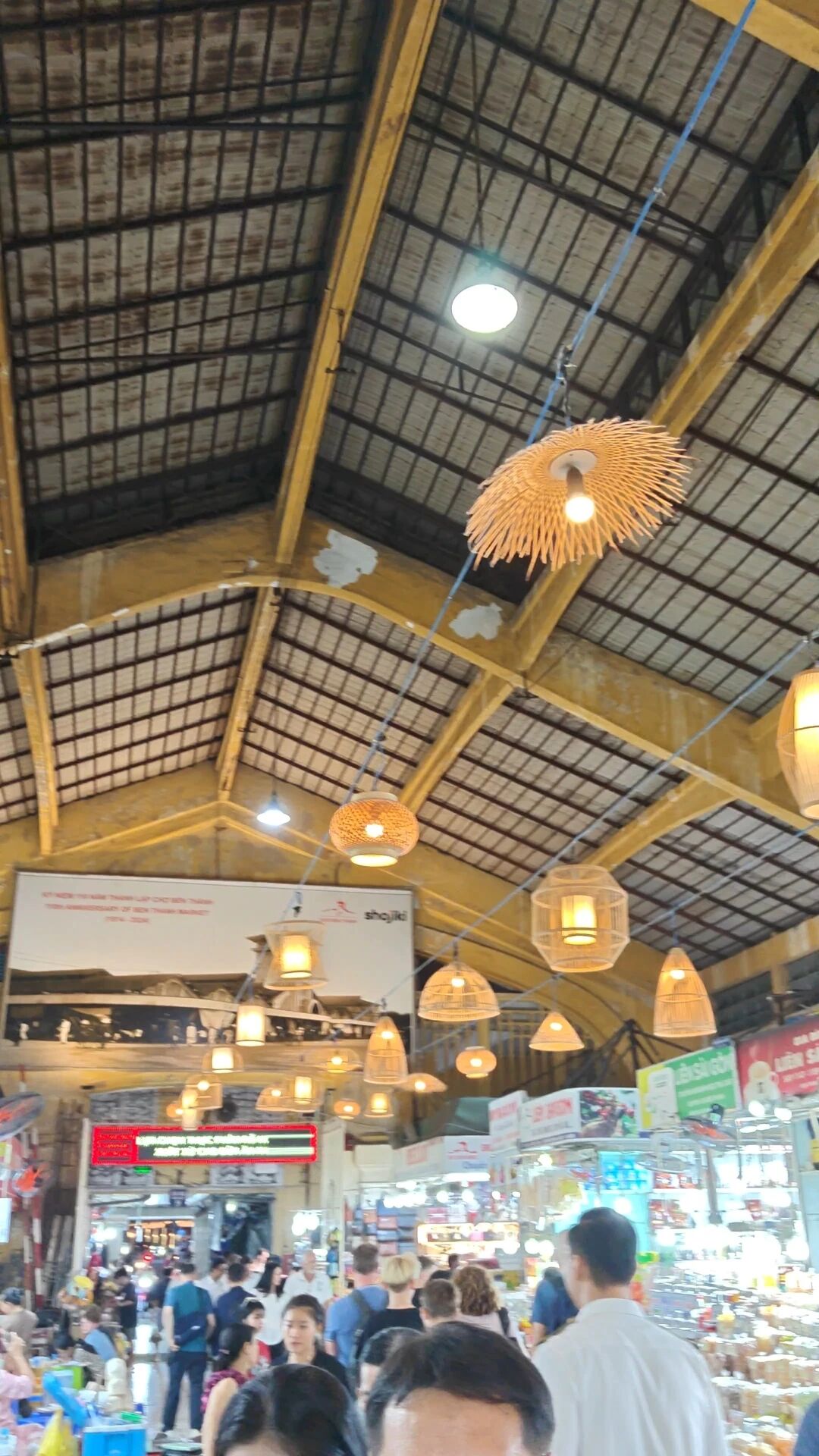
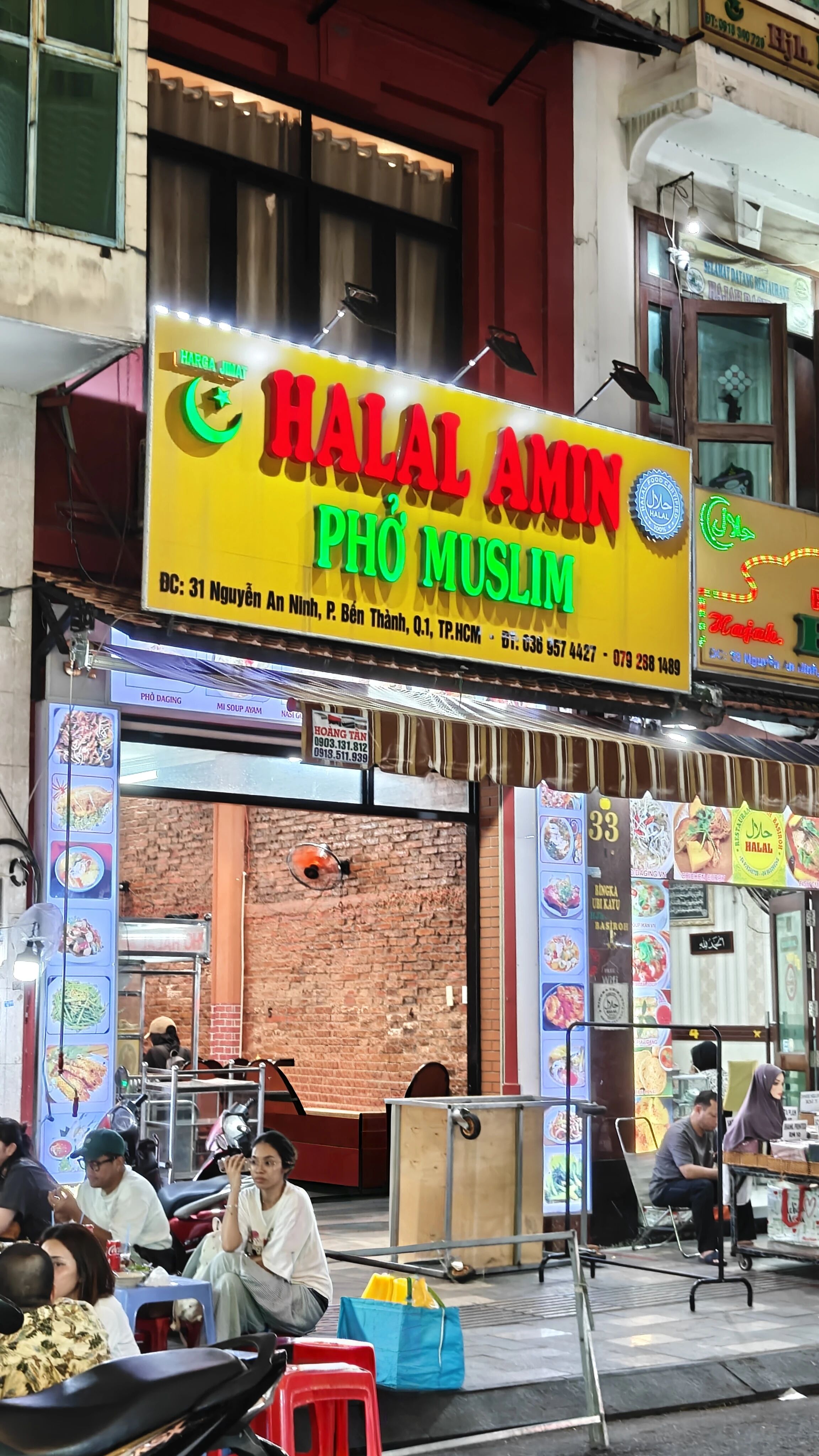
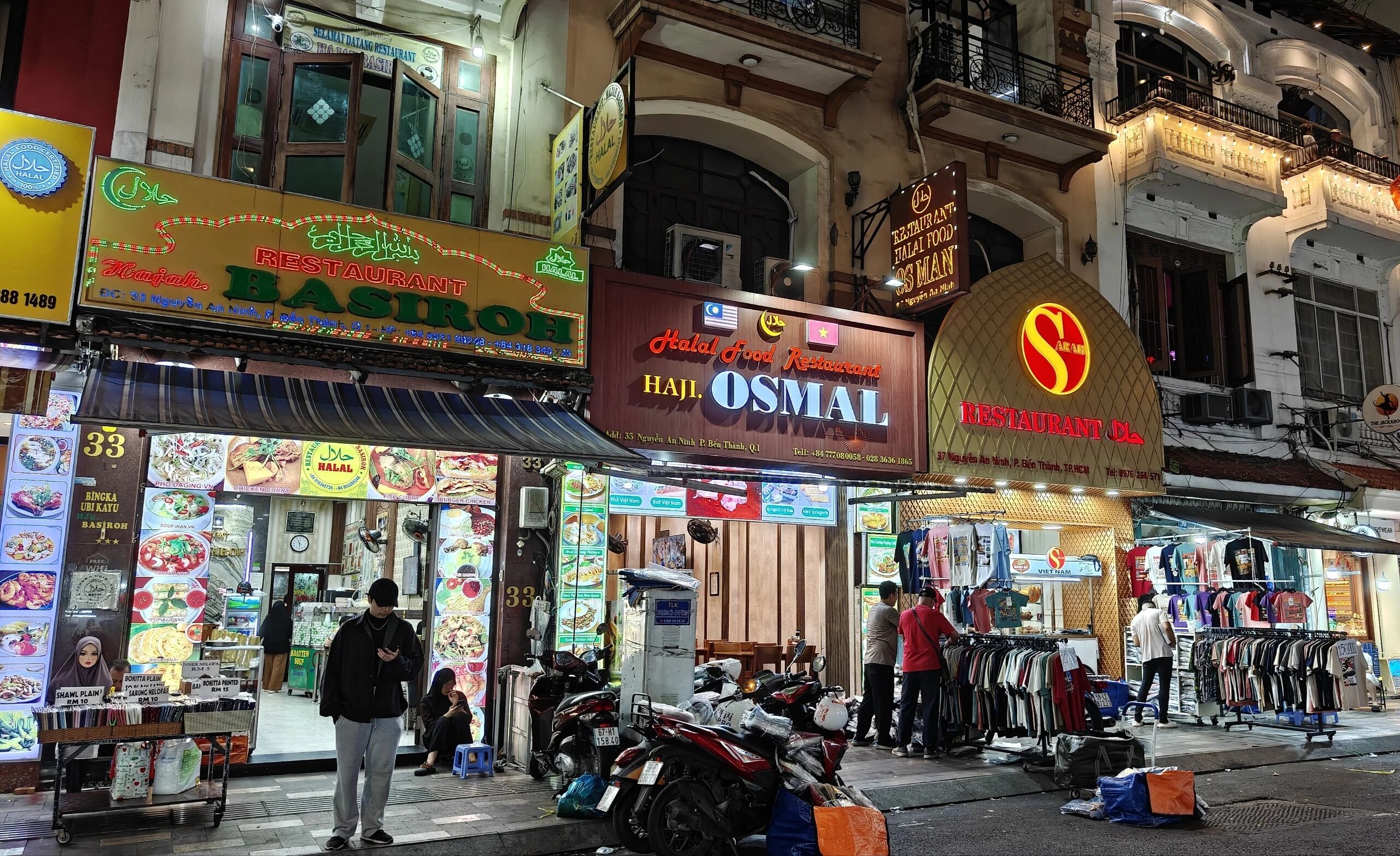
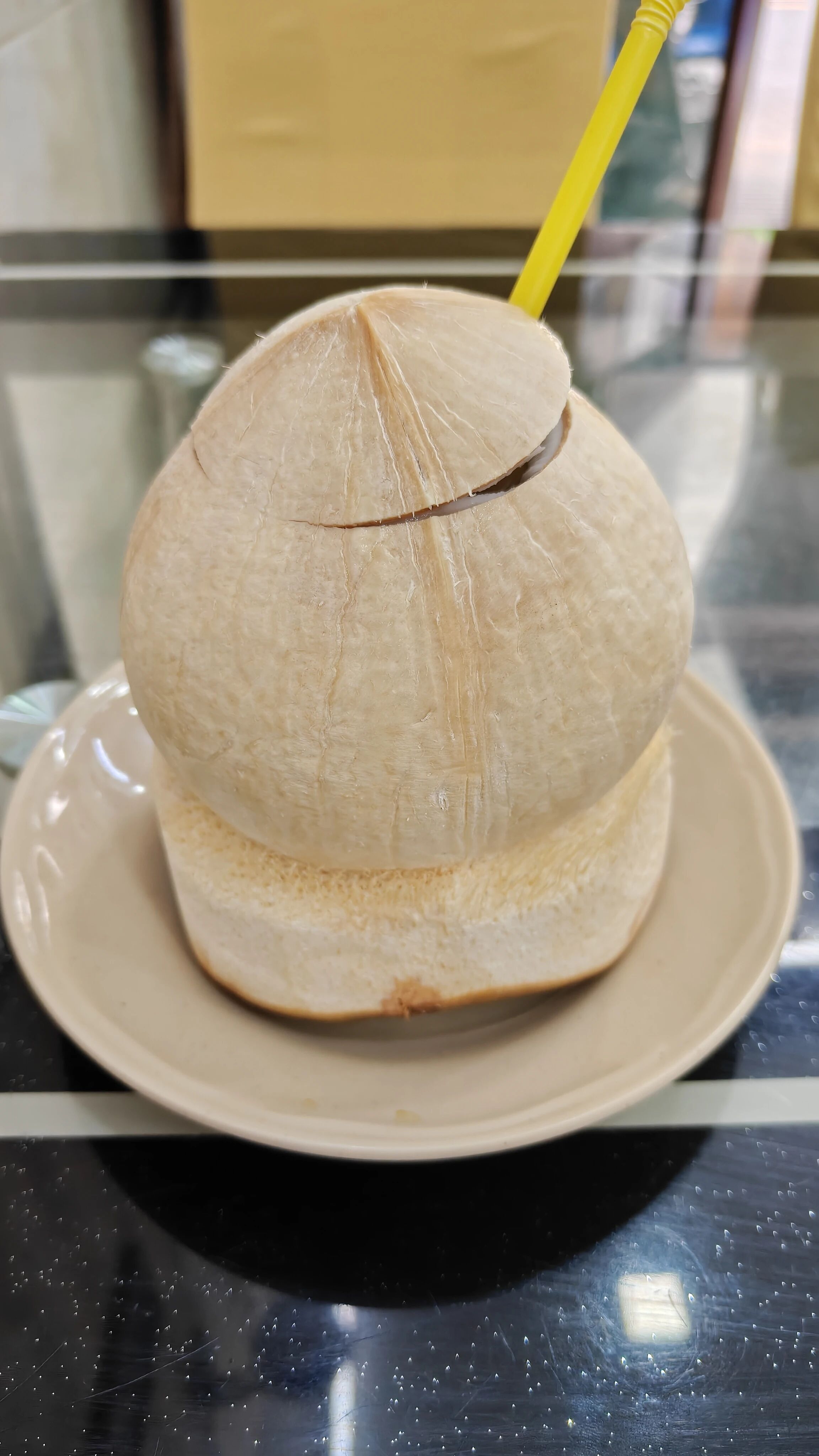
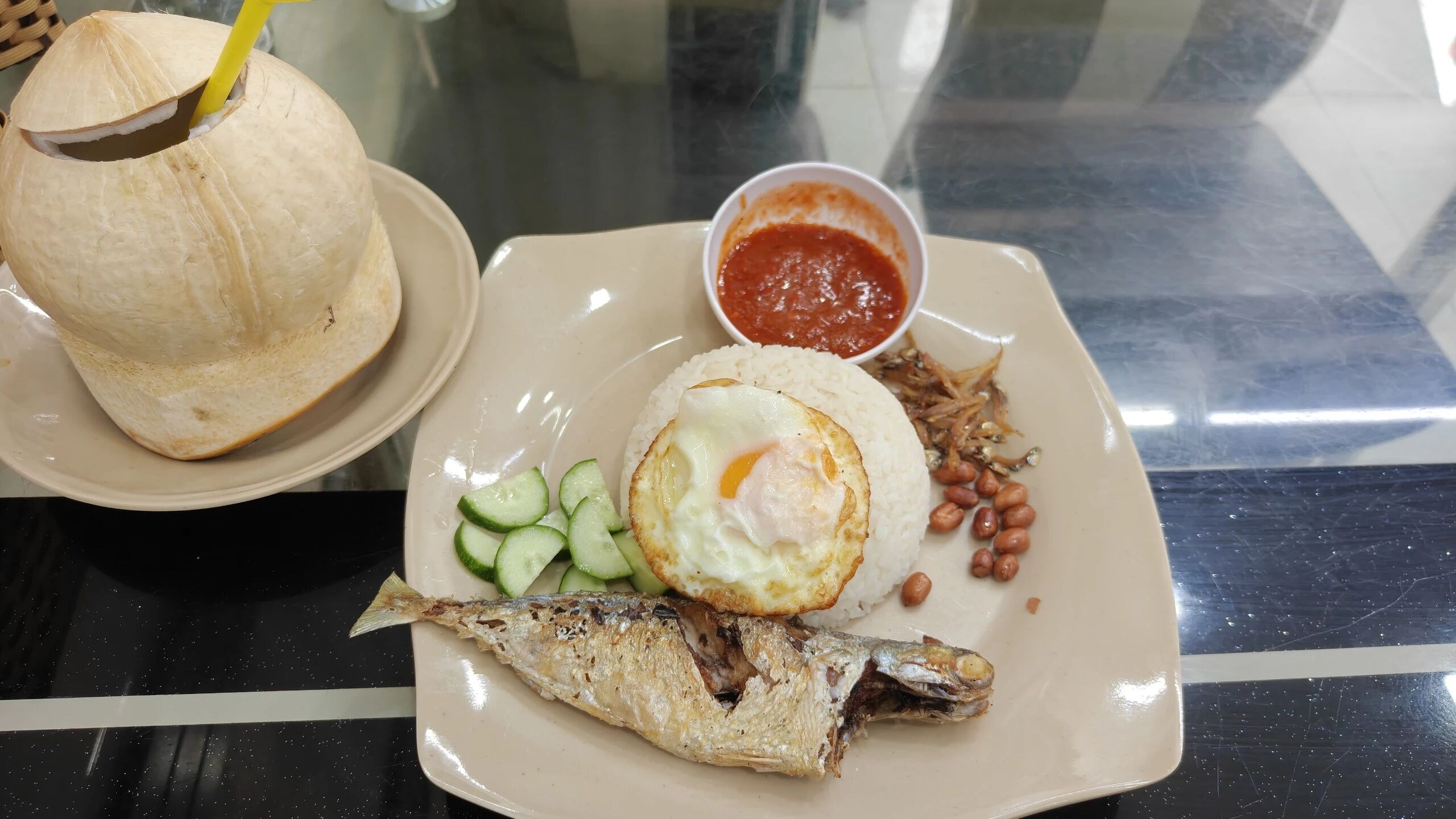
Halfway through eating the noodles, I squeezed some lemon juice into it, which not only increased the flavor, but also smelled more like lemon.
There is a Cham man named Maieryan who sets up a food stall at the door, and the stove is on the back seat of his motorcycle. After a brief chat with the stall owner, she knew that I was going to Tay Ninh Province (there is also Tay Ninh in Vietnam, but theirs is Tay Ninh Province, not far to the west of Ho Chi Minh) and told me that she also had relatives living there.
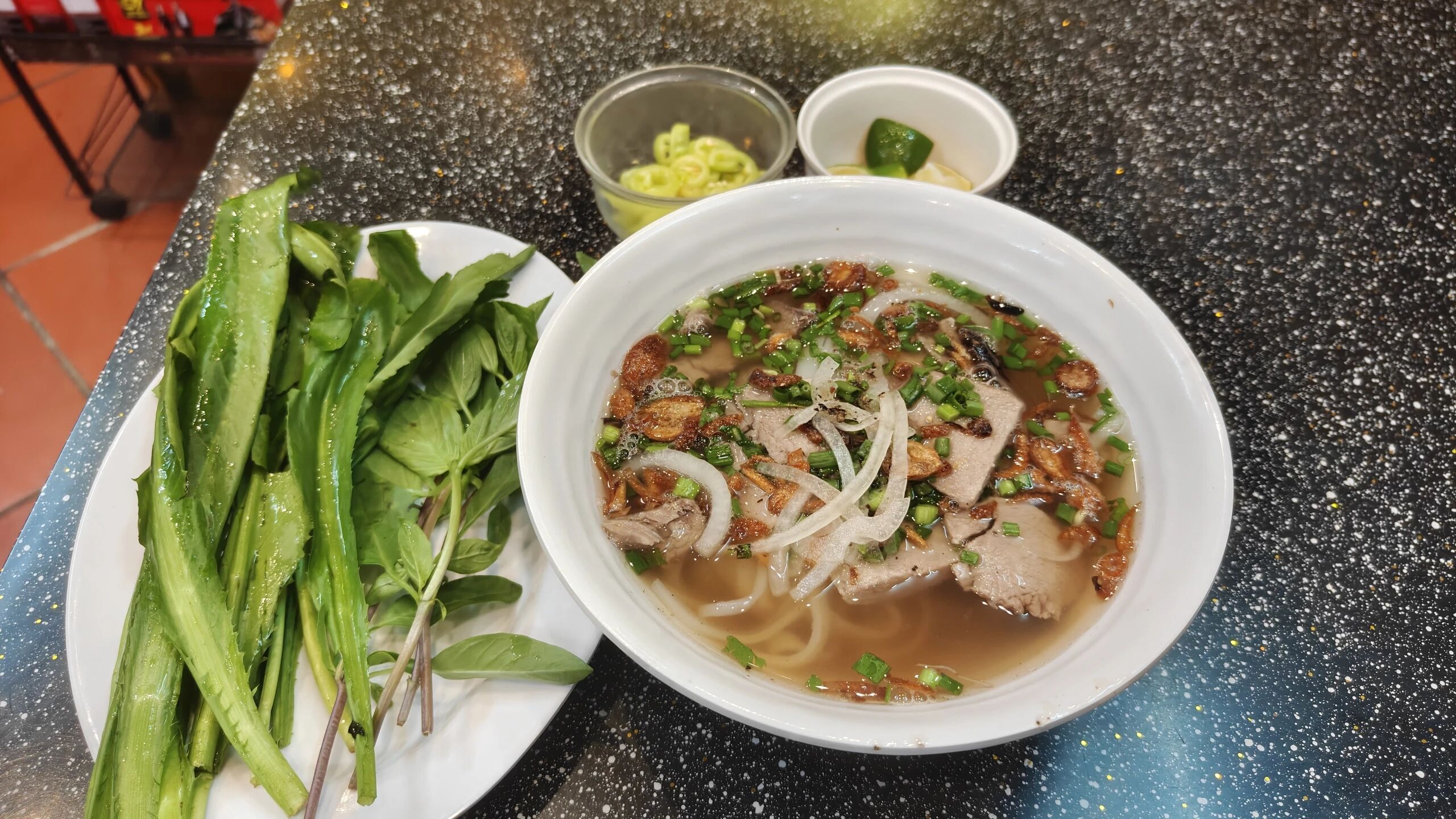
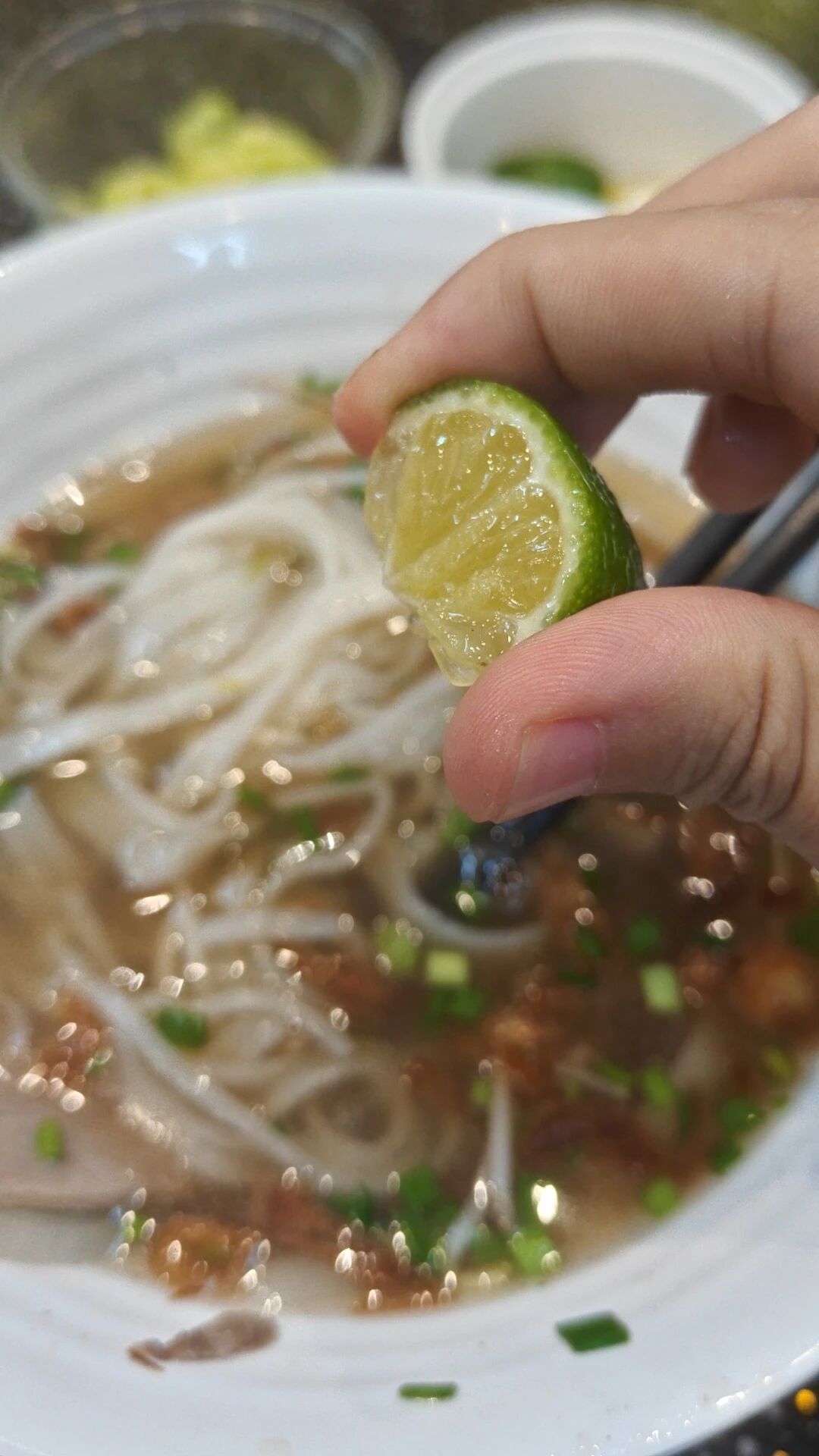
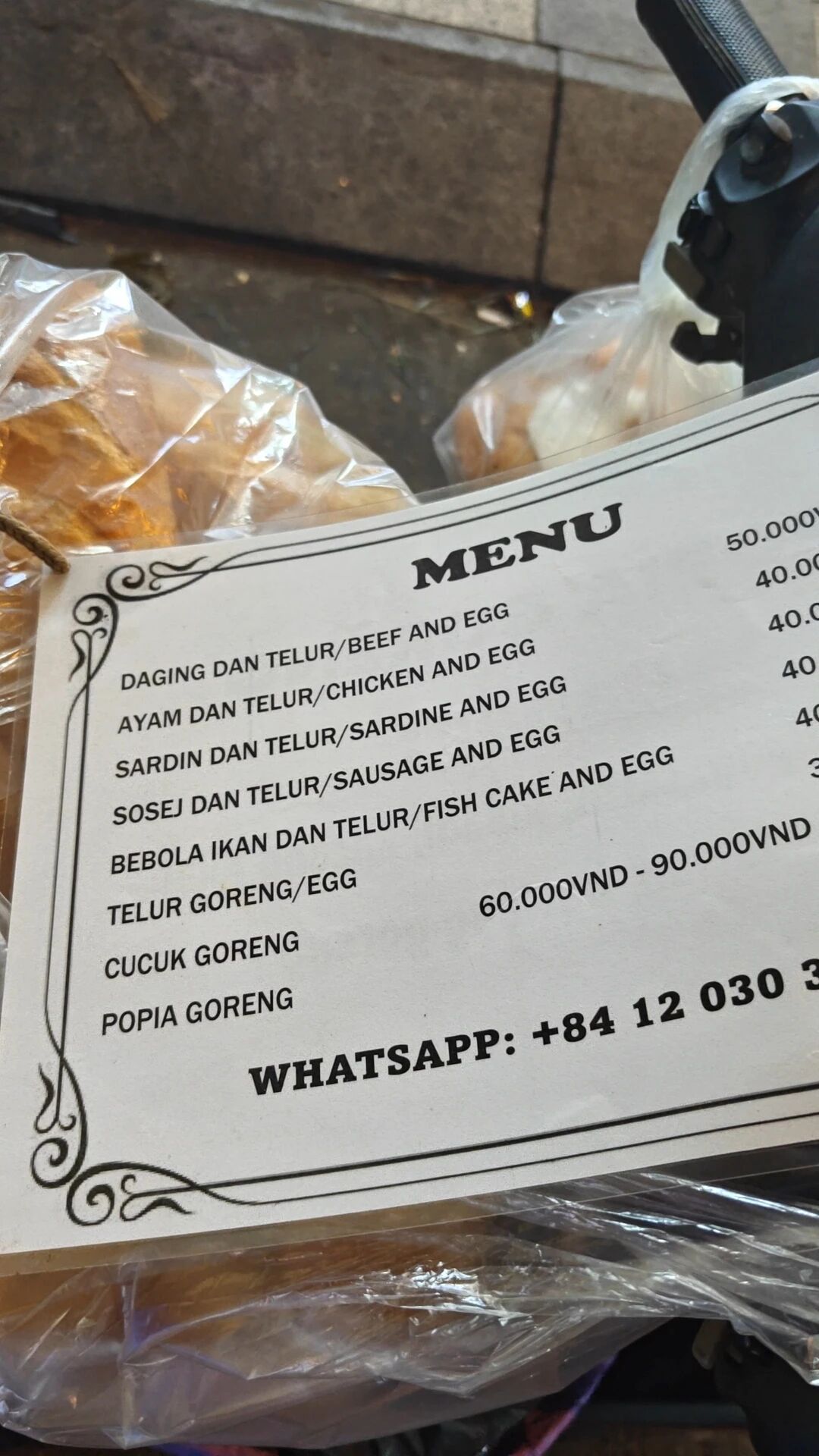
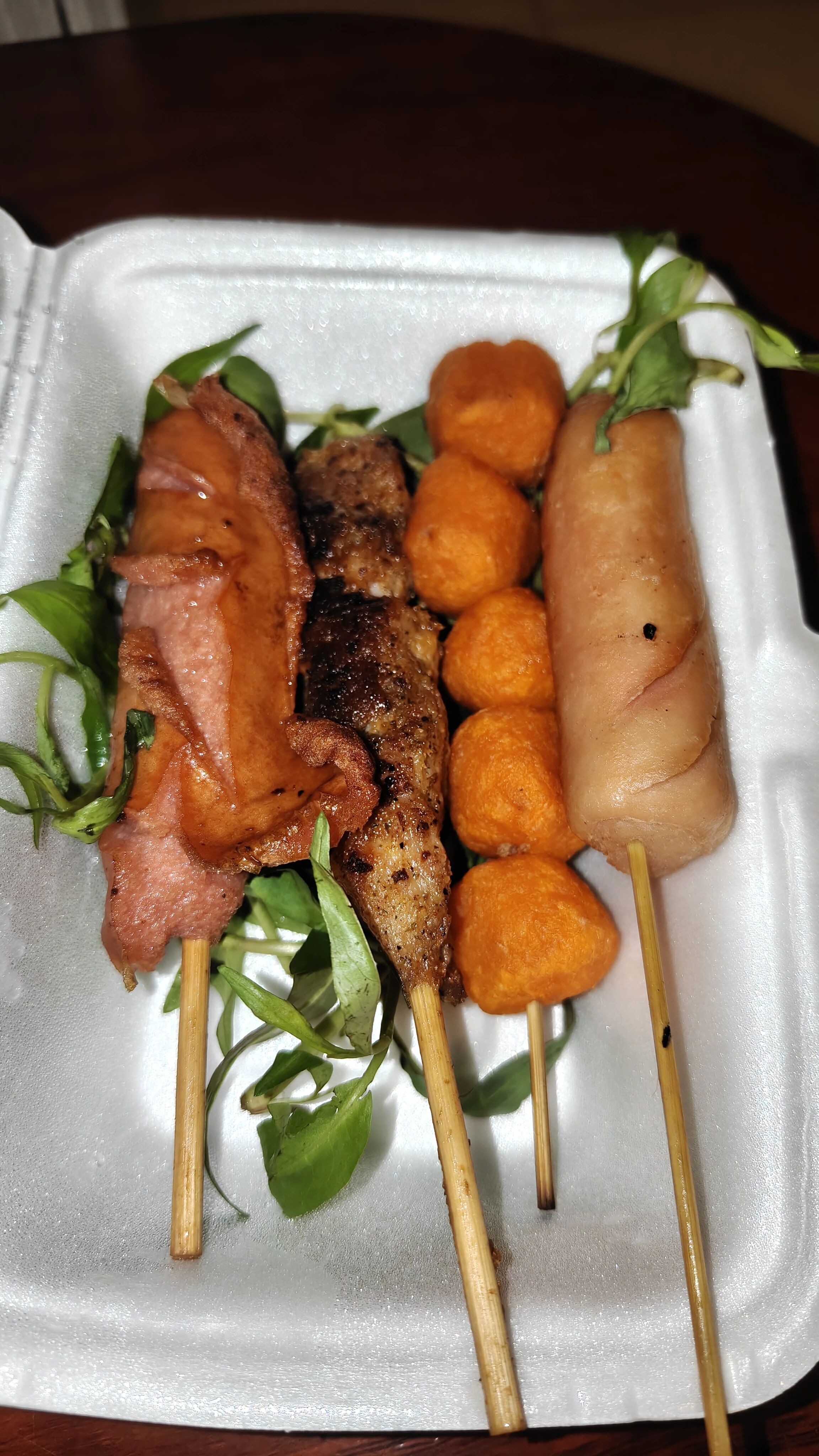
Collapse Read »
Summary: This Ho Chi Minh City halal food guide follows Ben Thanh Market and the nearby Muslim street in Saigon, showing halal restaurants, Malay and Cham food, lemon noodles, a Cham stall owner, market scenes, and the Muslim food life around the city center.
Ho Chi Minh City, formerly known as Saigon. This is the largest and most developed city in Vietnam. There is a clear development gap between the capital Hanoi and here.
One of the landmarks of Ho Chi Minh City is the Ben Thanh Market (Picture 1). Photos of the market when it was first completed are still posted outside the market. Looking around, the location here is excellent, with popular attractions such as Ho Chi Minh City Hall, Independence Palace, and Grand Theater not far away (Picture 4).
The market is bustling with tourists from all over the world. The products inside are also dazzling, ranging from souvenirs to clothes and bags, and all kinds of small commodities. Everyone who saw it was dazzled. The merchants inside are packed one after another, so densely packed that they all enthusiastically attract passing travelers.
If you don’t want to buy, you can refuse politely, and they won’t pester you for nothing. They want business, but they have boundaries and know how to exercise restraint. I like this very much. And there are also various snack stalls here, which are colorfully decorated.
After going out, there is a street dedicated to halal restaurants. Not only that, there are also prayer clothing stores, travel agencies for Muslim tourists, etc.
During the two or three days I was in Ho Chi Minh, I basically ate here. The food here is very characteristic of Southeast Asia, including coconut milk (Picture 12), grilled fish with rice (Picture 13). I ordered a beef pho, and the lady boss brought a side dish, which had a faint fishy smell when I chewed it.
Halfway through eating the noodles, I squeezed some lemon juice into it, which not only increased the flavor, but also smelled more like lemon.
There is a Cham man named Maieryan who sets up a food stall at the door, and the stove is on the back seat of his motorcycle. After a brief chat with the stall owner, she knew that I was going to Tay Ninh Province (there is also Tay Ninh in Vietnam, but theirs is Tay Ninh Province, not far to the west of Ho Chi Minh) and told me that she also had relatives living there.
Collapse Read »
Muslim Travel Guide Japan Tokyo: Japan Muslim Association, Islamic Heritage Hall and Ginza Food
Reposted from the web
Summary: This Japan Muslim travel guide visits the Japan Muslim Association in Tokyo, also called the Nihon Islam Culture Exchange Hall, then follows Imam Sato to a Ginza restaurant with a Muslim-friendly menu, tempura, fried ice cream, and local Japanese Muslims.
Last year, I was lucky enough to visit the Japan Muslim Association in Tokyo. I had been in Japan for a week at that time. The scene in the streets and alleys of Japan really made my eyes shine in the first day or two, but now it has gradually lost its novelty.
Fortunately, the mosque I was looking for arrived quickly after following the navigation. After walking a few sections in the alley, I saw a small building that was not much different from the surrounding residential buildings. (Pictures 1 and 2), the top of the sign at the door is in Japanese: Nihon Islam Culture Exchange Hall.
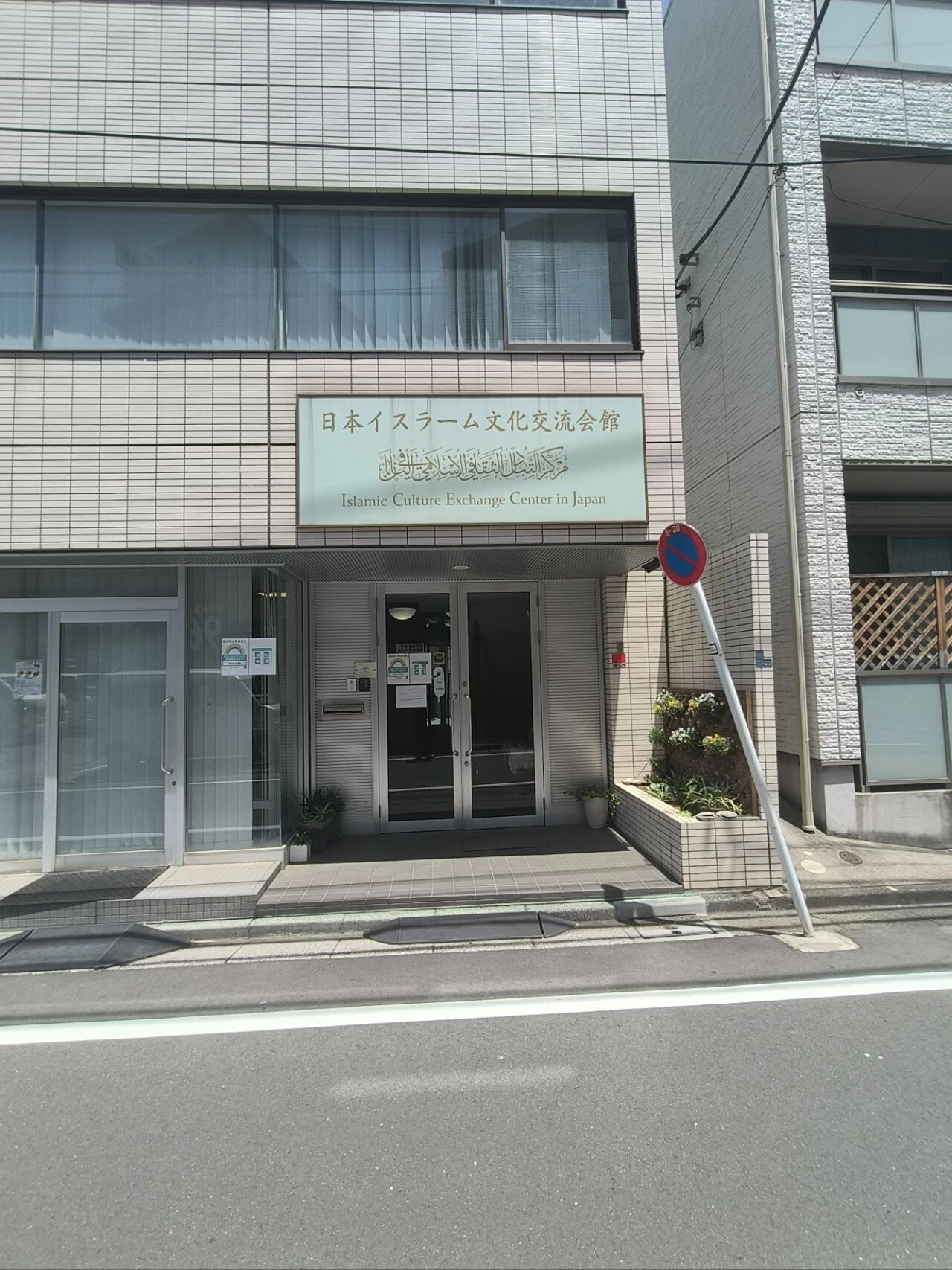
Isuramu is the transliteration of the Japanese transliteration of Islam. In the middle is Arabic Thuluth calligraphy. The bottom is in English.
There is a more prominent sign on the left window. Zoom in and look at the logo. The crescent moon surrounds the cherry blossoms, and the circular layout of the text is "Japan Muslim Association" in Japanese, English and Arabic.
When I opened the door, I found that the first floor was not a place for worship, and neither was the place for ablution. I informed the person inside that I was there, and she asked me to go upstairs. There is a place to change shoes on the first floor. You have to change into slippers before going upstairs, which is quite Japanese. (Picture 3)
Upstairs is the prayer room and wudooing area. I found that the imam who gave the speech was none other than Imam Sato, whom I had followed on social media before. During his speech, he first summarized the main idea in Japanese and then in English. After the service, I went up to chat with him. He happened to have guests, so he invited me to have dinner with him later.
I'm waiting downstairs and taking a look around:
A part of the Kaaba curtain in Mecca is mounted on the wall on the first floor (Picture 4)
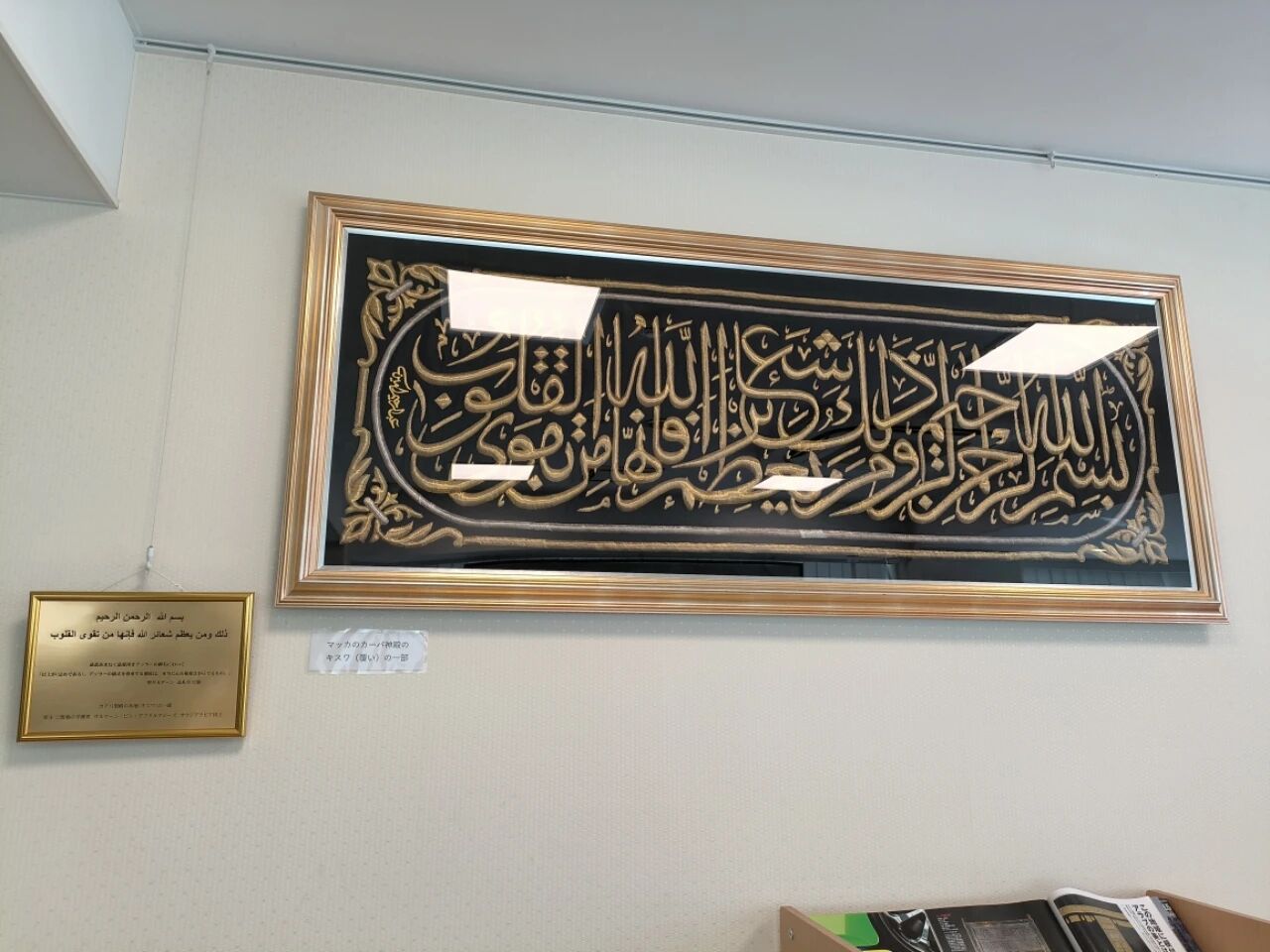
There are also some religious books at the entrance (Picture 5), and a comparison table of Arabic calligraphy and Japanese Kanji calligraphy (Picture 6)
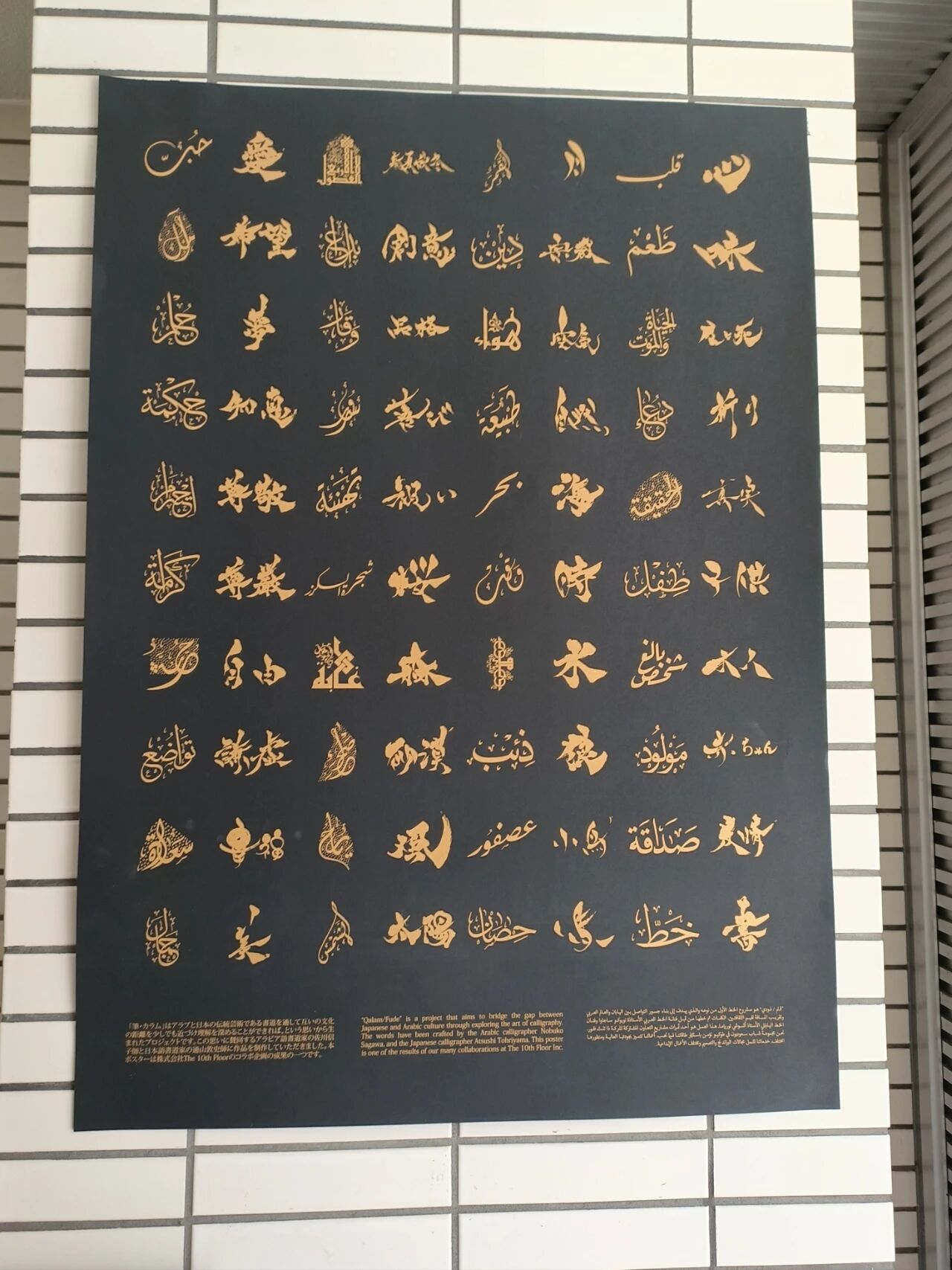
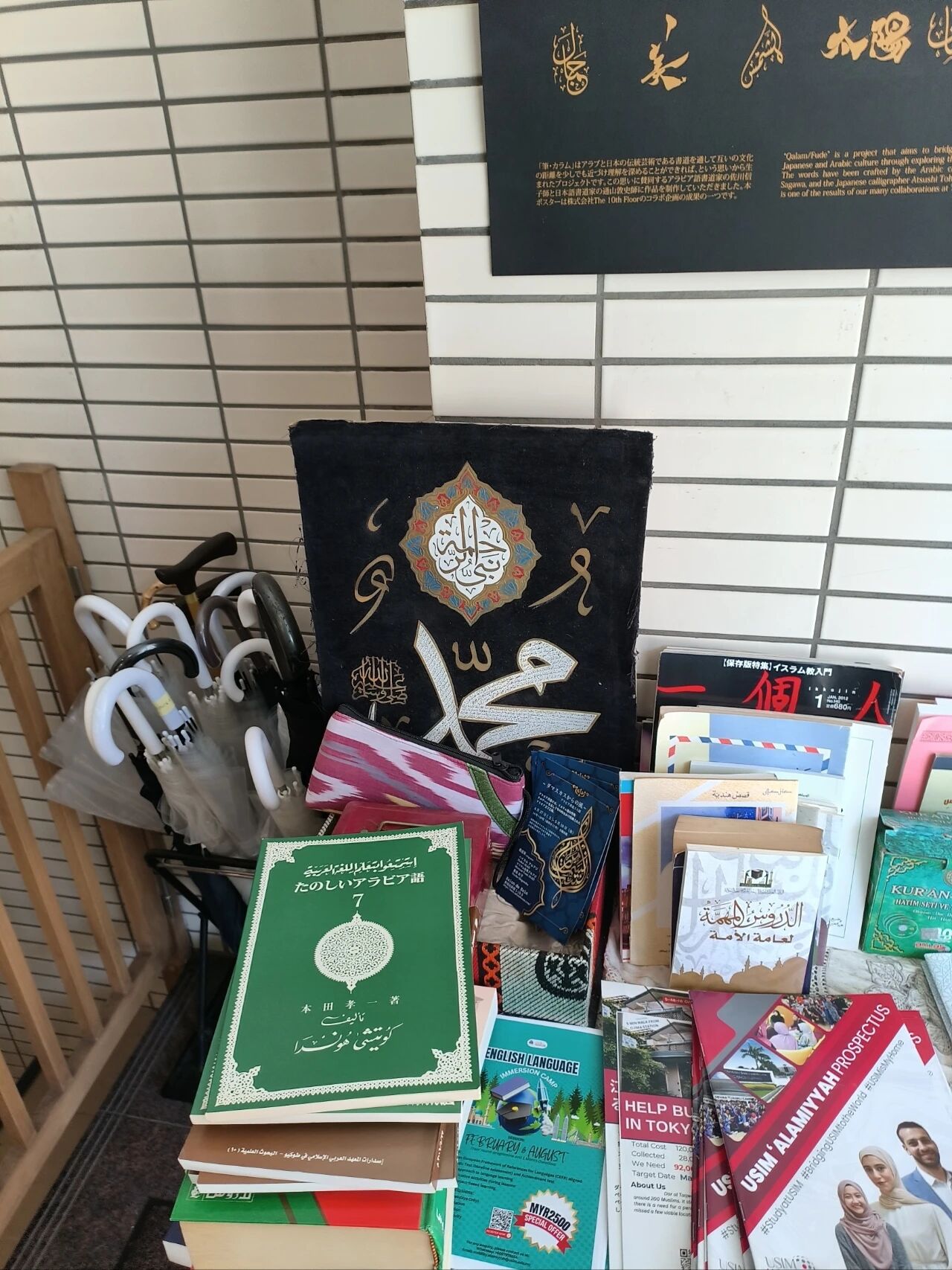
Then I found a place to sit down and rest in the cafeteria. I found that after the prayer, most of the foreign Muslims had left, leaving only the local Muslims waiting for their meals. At that time, the whole room was full of Japanese Muslims, except for the one holding a red bag (Picture 7).
Although this place is not big, it is well decorated.
After a while, the imam came and we went to a restaurant in Ginza, but it was different from the traditional halal restaurant. It was a regular restaurant, but it had a Muslim-friendly menu.
I ordered a tempura set meal. Tempura is actually vegetables and seafood wrapped in batter and fried. I ordered another fried ice cream (Picture 8). Imam Sato is Japanese, but his English is very good, and we chatted a lot.
Collapse Read »
Summary: This Japan Muslim travel guide visits the Japan Muslim Association in Tokyo, also called the Nihon Islam Culture Exchange Hall, then follows Imam Sato to a Ginza restaurant with a Muslim-friendly menu, tempura, fried ice cream, and local Japanese Muslims.
Last year, I was lucky enough to visit the Japan Muslim Association in Tokyo. I had been in Japan for a week at that time. The scene in the streets and alleys of Japan really made my eyes shine in the first day or two, but now it has gradually lost its novelty.
Fortunately, the mosque I was looking for arrived quickly after following the navigation. After walking a few sections in the alley, I saw a small building that was not much different from the surrounding residential buildings. (Pictures 1 and 2), the top of the sign at the door is in Japanese: Nihon Islam Culture Exchange Hall.
Isuramu is the transliteration of the Japanese transliteration of Islam. In the middle is Arabic Thuluth calligraphy. The bottom is in English.
There is a more prominent sign on the left window. Zoom in and look at the logo. The crescent moon surrounds the cherry blossoms, and the circular layout of the text is "Japan Muslim Association" in Japanese, English and Arabic.
When I opened the door, I found that the first floor was not a place for worship, and neither was the place for ablution. I informed the person inside that I was there, and she asked me to go upstairs. There is a place to change shoes on the first floor. You have to change into slippers before going upstairs, which is quite Japanese. (Picture 3)
Upstairs is the prayer room and wudooing area. I found that the imam who gave the speech was none other than Imam Sato, whom I had followed on social media before. During his speech, he first summarized the main idea in Japanese and then in English. After the service, I went up to chat with him. He happened to have guests, so he invited me to have dinner with him later.
I'm waiting downstairs and taking a look around:
A part of the Kaaba curtain in Mecca is mounted on the wall on the first floor (Picture 4)
There are also some religious books at the entrance (Picture 5), and a comparison table of Arabic calligraphy and Japanese Kanji calligraphy (Picture 6)
Then I found a place to sit down and rest in the cafeteria. I found that after the prayer, most of the foreign Muslims had left, leaving only the local Muslims waiting for their meals. At that time, the whole room was full of Japanese Muslims, except for the one holding a red bag (Picture 7).
Although this place is not big, it is well decorated.
After a while, the imam came and we went to a restaurant in Ginza, but it was different from the traditional halal restaurant. It was a regular restaurant, but it had a Muslim-friendly menu.
I ordered a tempura set meal. Tempura is actually vegetables and seafood wrapped in batter and fried. I ordered another fried ice cream (Picture 8). Imam Sato is Japanese, but his English is very good, and we chatted a lot.
Collapse Read »
Muslim Travel Guide Korea Busan: Busan Mosque, Turkish Imam, Friday Prayer and Muslim Community
Reposted from the web
Summary: This Korea Muslim travel guide visits Busan Mosque, describing the quiet neighborhood, Turkish-style interior, TIKA renovation note, conversations with the imam from Turkiye, Friday prayer, Muslims from Uzbekistan, Korean converts, and a later stop by the sea.
After staying in Seoul for about eight days, I planned to visit other places in Korea. I took a train from Seoul Station and arrived in Busan, the second largest city in Korea, in a few hours. Although it is the second largest, there is indeed a lot of difference between the second largest and the first largest.
Busan does not look very big, it can only be said to be a medium-sized city. If Seoul is equivalent to Beijing or Shanghai, then Busan can only be said to be equivalent to Qingdao.
I checked into a hotel in downtown Busan. At the same price, the accommodation environment was much better than in Seoul. After that, I set off to the largest mosque in Busan. This mosque is a little far from the actual city. In fact, there are mosques in Busan city, but they are very small.
After taking the subway for several stops, we almost arrived at the Busan Mosque. The environment here is quiet and quiet, without the hustle and bustle of the city. You can also see Islamic-themed wall paintings around the mosque (picture 2). There is also a kindergarten in the courtyard of the mosque, but I later learned that it has nothing to do with the mosque.
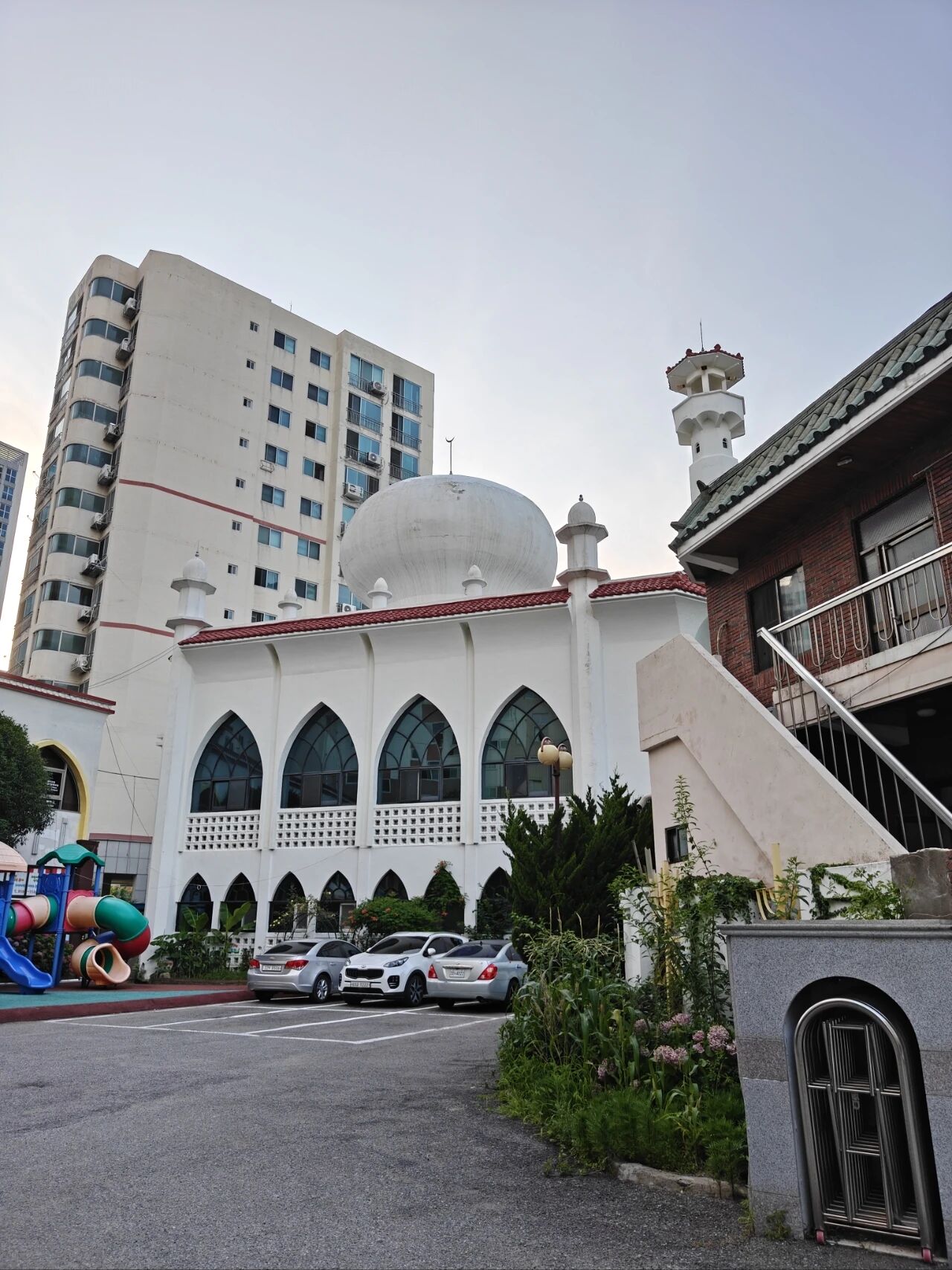
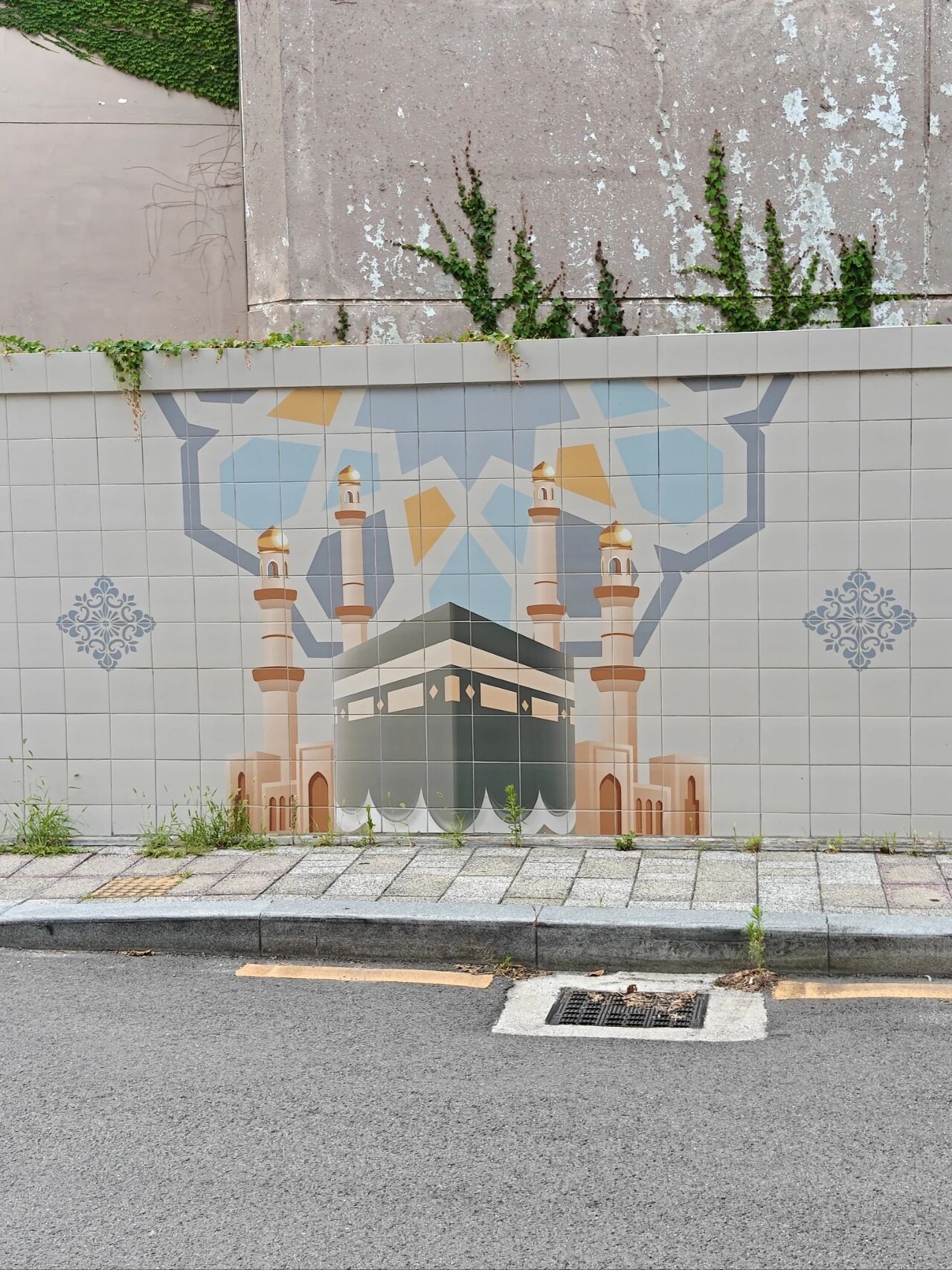
The wudu area and toilet are on the first floor, just below the steps from the mosque into the prayer hall. the prayer hall is also painted in Turkish style. On the door of the prayer hall, it is written in Korean, Turkish and English that "TIKA maintains and updates the interior decoration of the Busan Mosque on behalf of Turkiye."
So what kind of organization is this TIKA? I found out it was the Turkish Cooperation and Coordination Agency, which is Turkiye's overseas aid organization.
The full name of the place is also written on the door of the mosque (Picture 8): Busan Fateh (Beginning) Mosque.
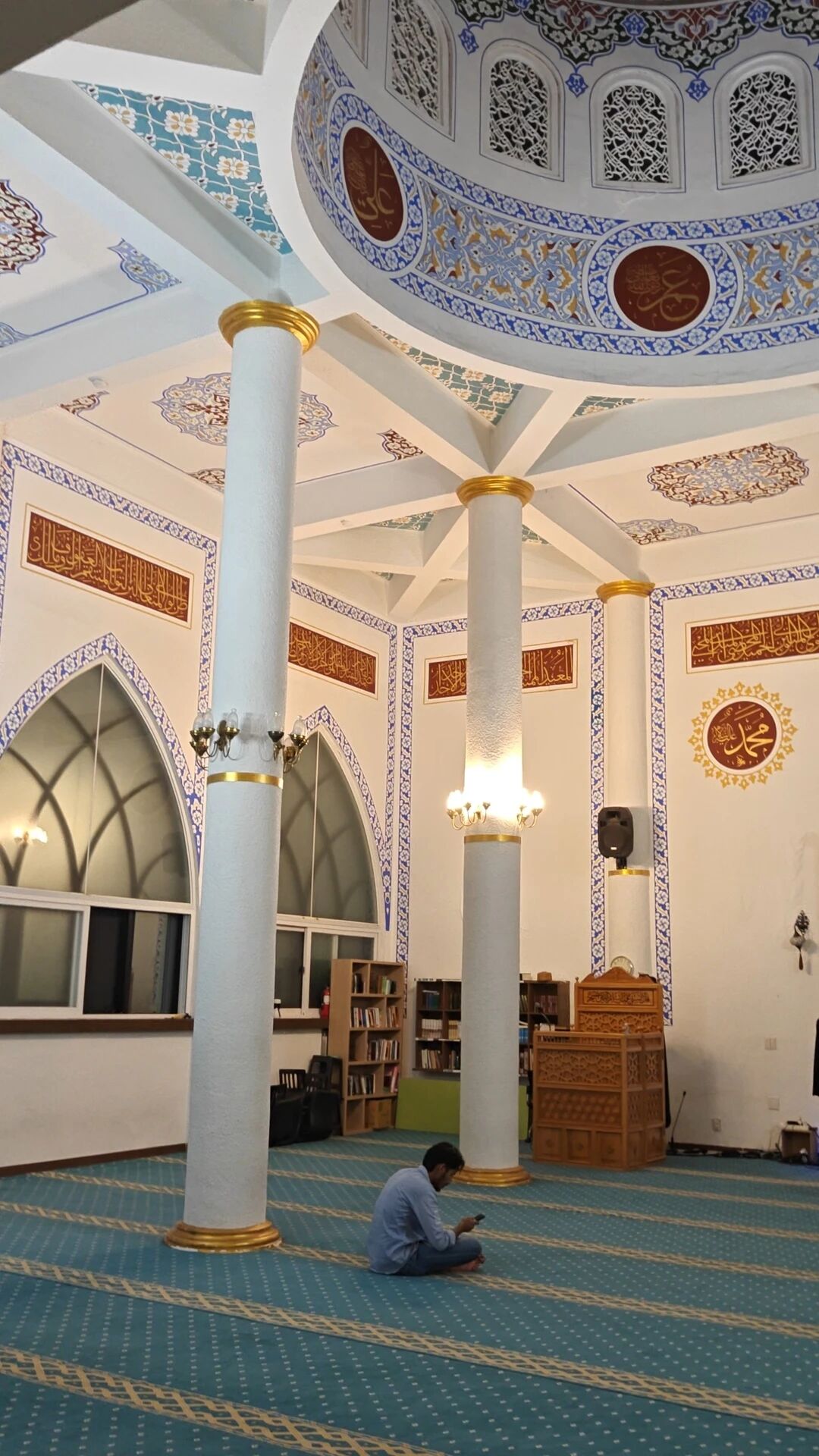
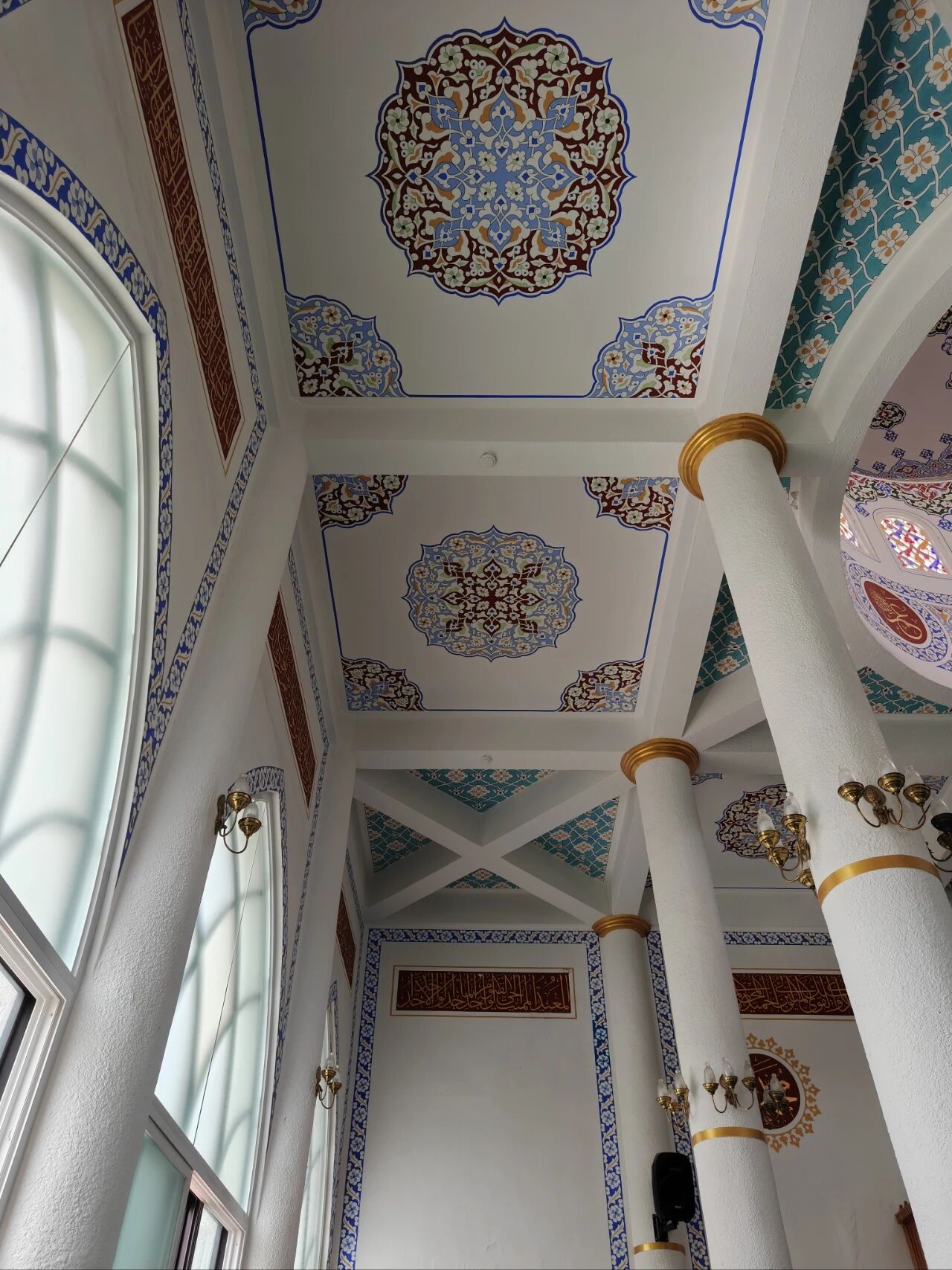
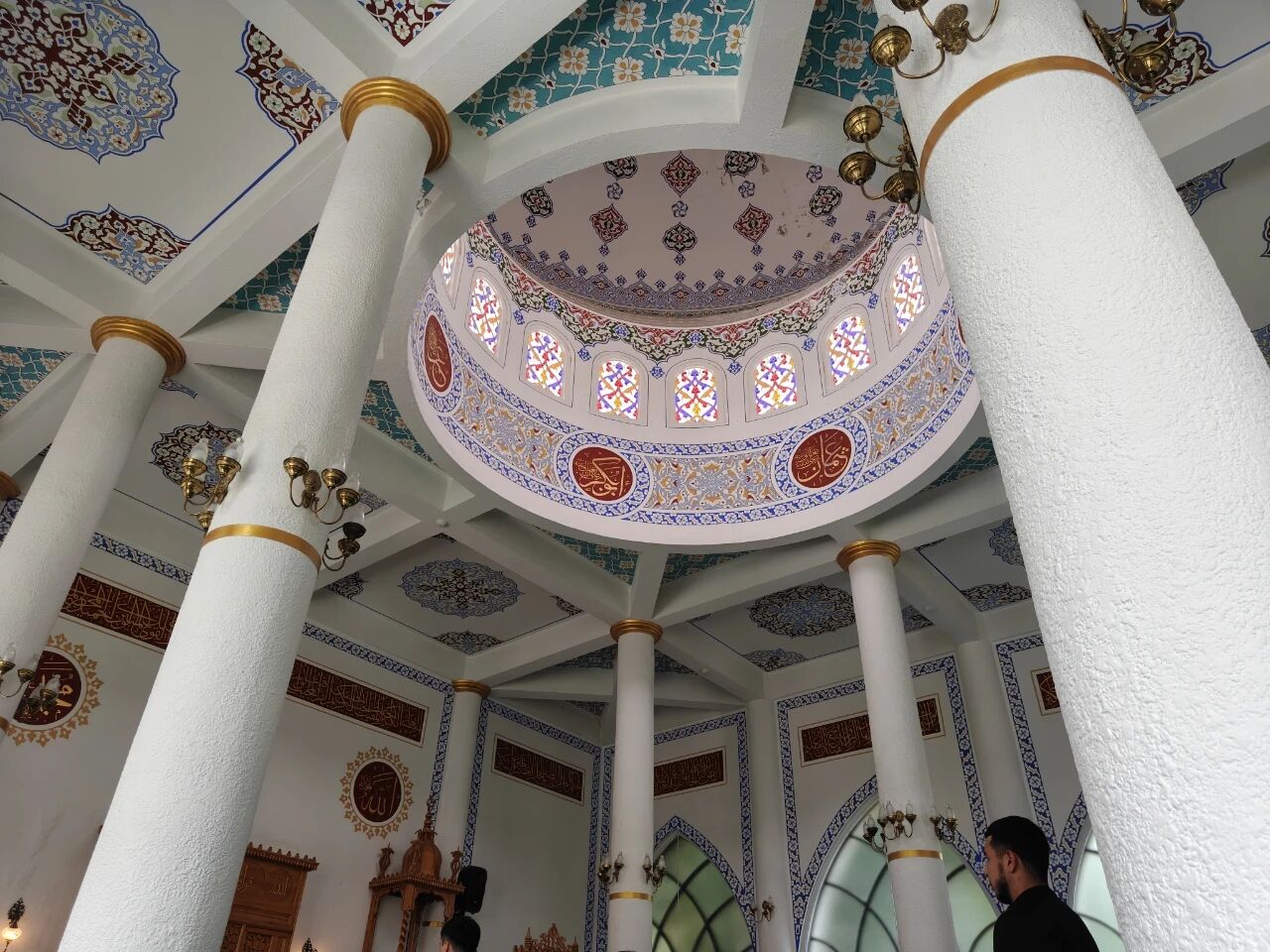
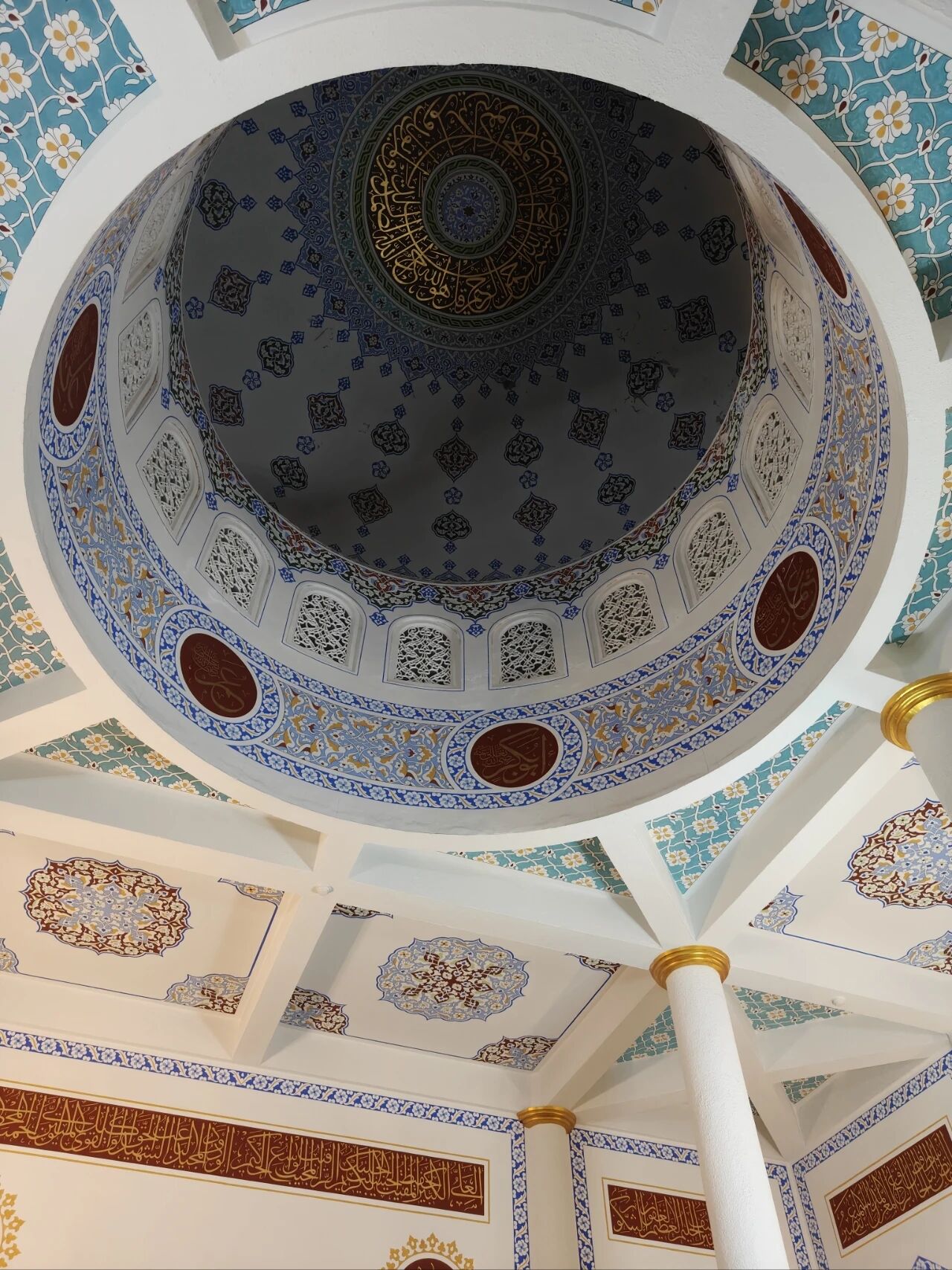
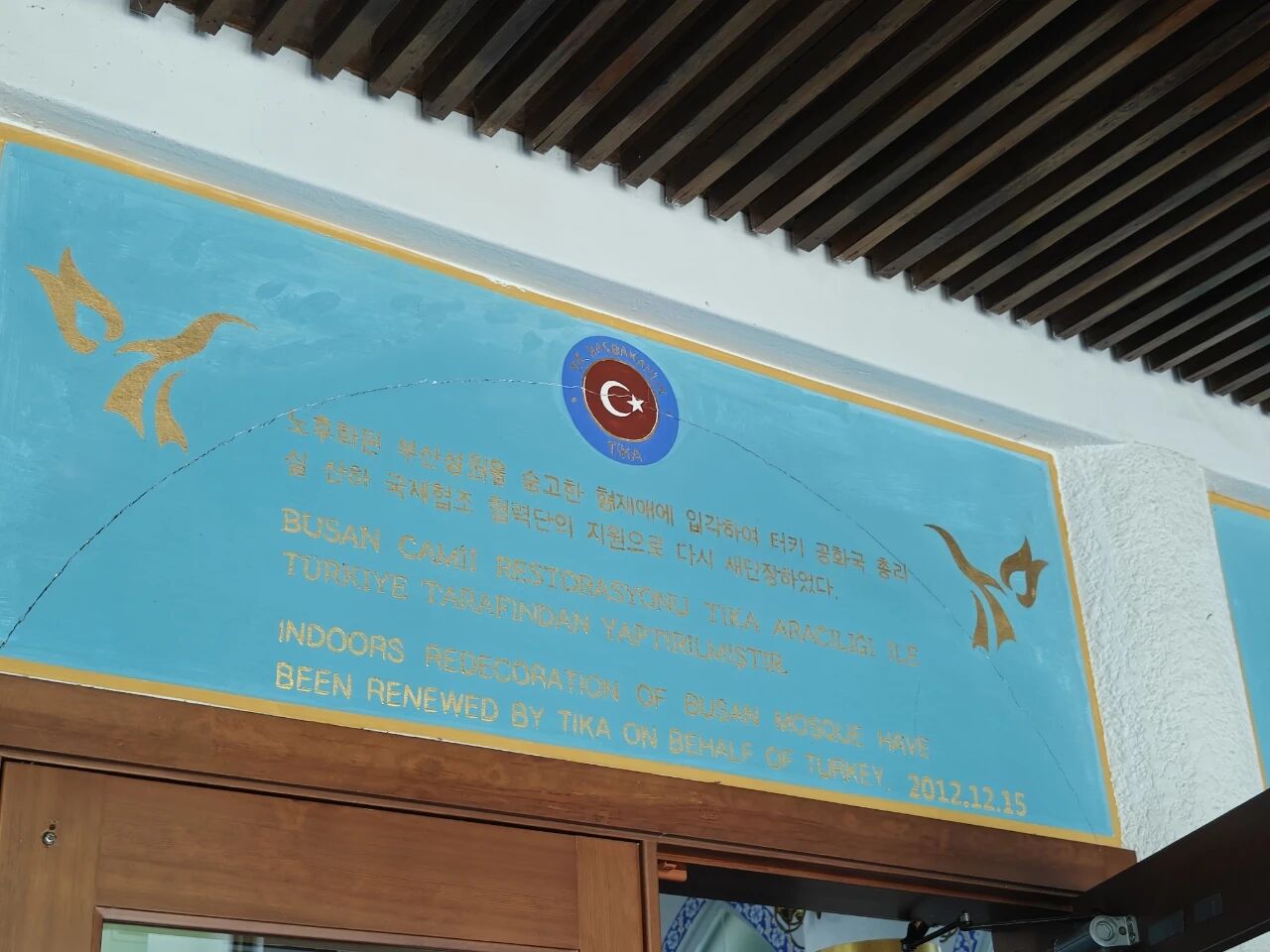
There were not many people in the prayer hall, except for a Korean uncle, and most of them did not have East Asian faces, so I seemed a bit conspicuous. The imam who was born in Turkiye asked me where I was from, and I answered China. After salah he asked me to sit in his office for a while.
When we arrived at the office, we started chatting using translation software. As we chatted about politics, the imam said that there are two big countries in the world, one is the United States and the other is China, and China is gaining the upper hand.
Then the imam asked me some information about China, such as the average salary in Shanghai. He said it turned out to be similar to Turkiye. Maybe he thought the Chinese earned higher wages than the Turks. It was getting late at that time, and we separated after chatting for more than an hour.
The next day was Friday prayer day, and I came to the Busan Mosque again. Because it was a gathering day, there were many people in the prayer hall. The imam said that most of the people who came here were from Uzbekistan and other countries. There are some Koreans who have accepted Islam, but not many.
After the prayer, I left the Busan Mosque and went to the famous Mipo in Busan to watch the sea.
Collapse Read »
Summary: This Korea Muslim travel guide visits Busan Mosque, describing the quiet neighborhood, Turkish-style interior, TIKA renovation note, conversations with the imam from Turkiye, Friday prayer, Muslims from Uzbekistan, Korean converts, and a later stop by the sea.
After staying in Seoul for about eight days, I planned to visit other places in Korea. I took a train from Seoul Station and arrived in Busan, the second largest city in Korea, in a few hours. Although it is the second largest, there is indeed a lot of difference between the second largest and the first largest.
Busan does not look very big, it can only be said to be a medium-sized city. If Seoul is equivalent to Beijing or Shanghai, then Busan can only be said to be equivalent to Qingdao.
I checked into a hotel in downtown Busan. At the same price, the accommodation environment was much better than in Seoul. After that, I set off to the largest mosque in Busan. This mosque is a little far from the actual city. In fact, there are mosques in Busan city, but they are very small.
After taking the subway for several stops, we almost arrived at the Busan Mosque. The environment here is quiet and quiet, without the hustle and bustle of the city. You can also see Islamic-themed wall paintings around the mosque (picture 2). There is also a kindergarten in the courtyard of the mosque, but I later learned that it has nothing to do with the mosque.
The wudu area and toilet are on the first floor, just below the steps from the mosque into the prayer hall. the prayer hall is also painted in Turkish style. On the door of the prayer hall, it is written in Korean, Turkish and English that "TIKA maintains and updates the interior decoration of the Busan Mosque on behalf of Turkiye."
So what kind of organization is this TIKA? I found out it was the Turkish Cooperation and Coordination Agency, which is Turkiye's overseas aid organization.
The full name of the place is also written on the door of the mosque (Picture 8): Busan Fateh (Beginning) Mosque.
There were not many people in the prayer hall, except for a Korean uncle, and most of them did not have East Asian faces, so I seemed a bit conspicuous. The imam who was born in Turkiye asked me where I was from, and I answered China. After salah he asked me to sit in his office for a while.
When we arrived at the office, we started chatting using translation software. As we chatted about politics, the imam said that there are two big countries in the world, one is the United States and the other is China, and China is gaining the upper hand.
Then the imam asked me some information about China, such as the average salary in Shanghai. He said it turned out to be similar to Turkiye. Maybe he thought the Chinese earned higher wages than the Turks. It was getting late at that time, and we separated after chatting for more than an hour.
The next day was Friday prayer day, and I came to the Busan Mosque again. Because it was a gathering day, there were many people in the prayer hall. The imam said that most of the people who came here were from Uzbekistan and other countries. There are some Koreans who have accepted Islam, but not many.
After the prayer, I left the Busan Mosque and went to the famous Mipo in Busan to watch the sea.
Collapse Read »
Best Halal Food Korea Seoul Itaewon: Punjab Restaurant, Halal Lamb Chops, Muslim Street and Seoul Central Mosque
Reposted from the web
Summary: This Seoul halal food guide looks beyond Itaewon's nightlife and follows the Muslim street around Seoul Central Mosque, with Punjab restaurant, curry lamb chops, Korean halal bibimbap, halal meat shops, food prices, and the local Muslim community.
When people think of Itaewon, they may think of the nightlife and party scene there. But few people would have thought that this is also the location of the first mosque in modern Korea. It is surrounded by a large number of halal restaurants from various countries, as well as beef and mutton shops and halal supermarkets.
The Punjab restaurant in the second picture is what I would recommend. The Pakistani brother I met here took me there. It is located near the mosque. There are Indian and Pakistani flags on the facade, indicating that this is a restaurant that specializes in South Asian Indian and Pakistani cuisine.
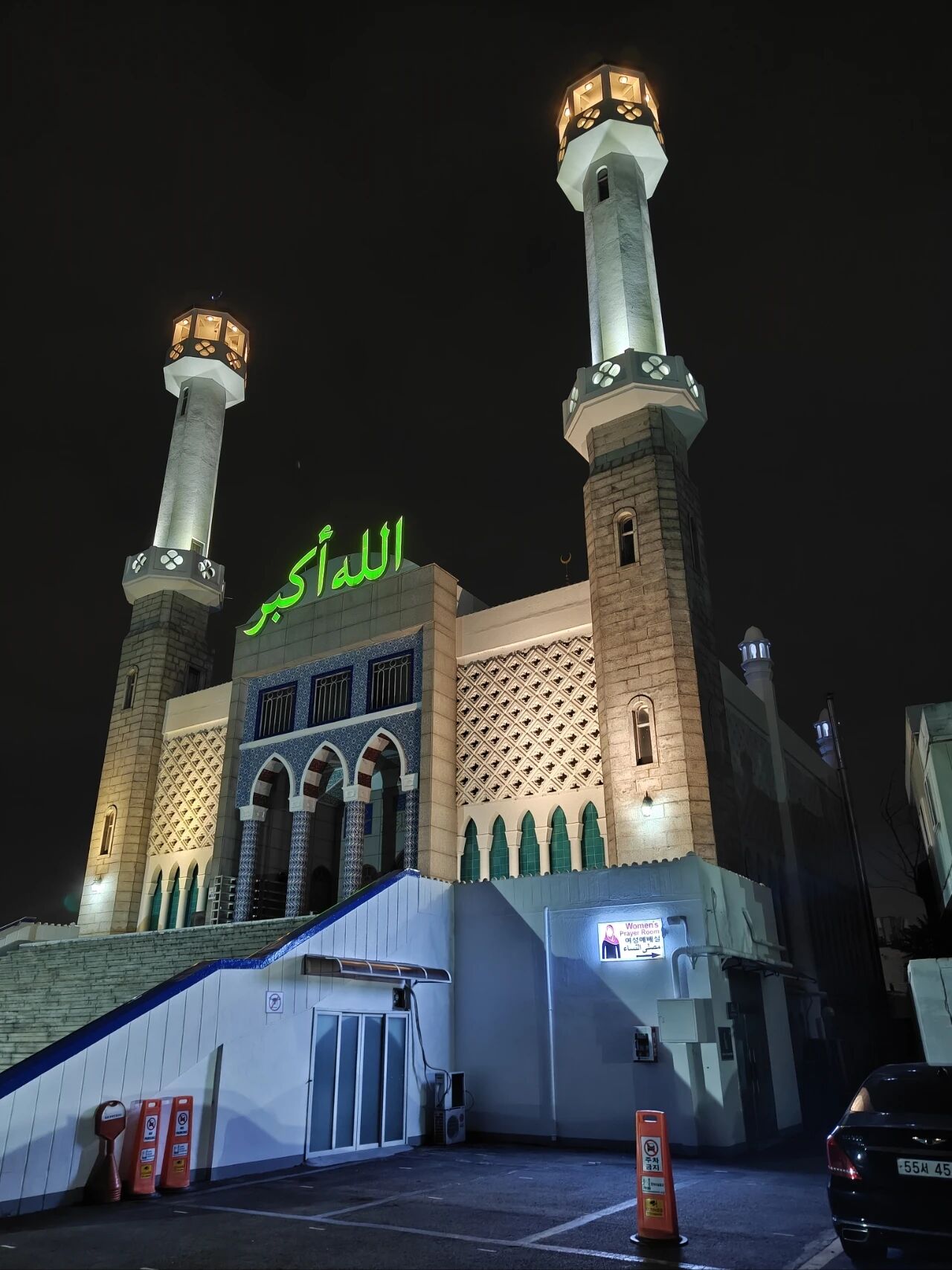
I most recommend the curry lamb chops (picture 3). It is full of spices and soft in the mouth. It is worth trying. It is also served with vegetables and eaten rolled in naan bread, which has a rich taste.
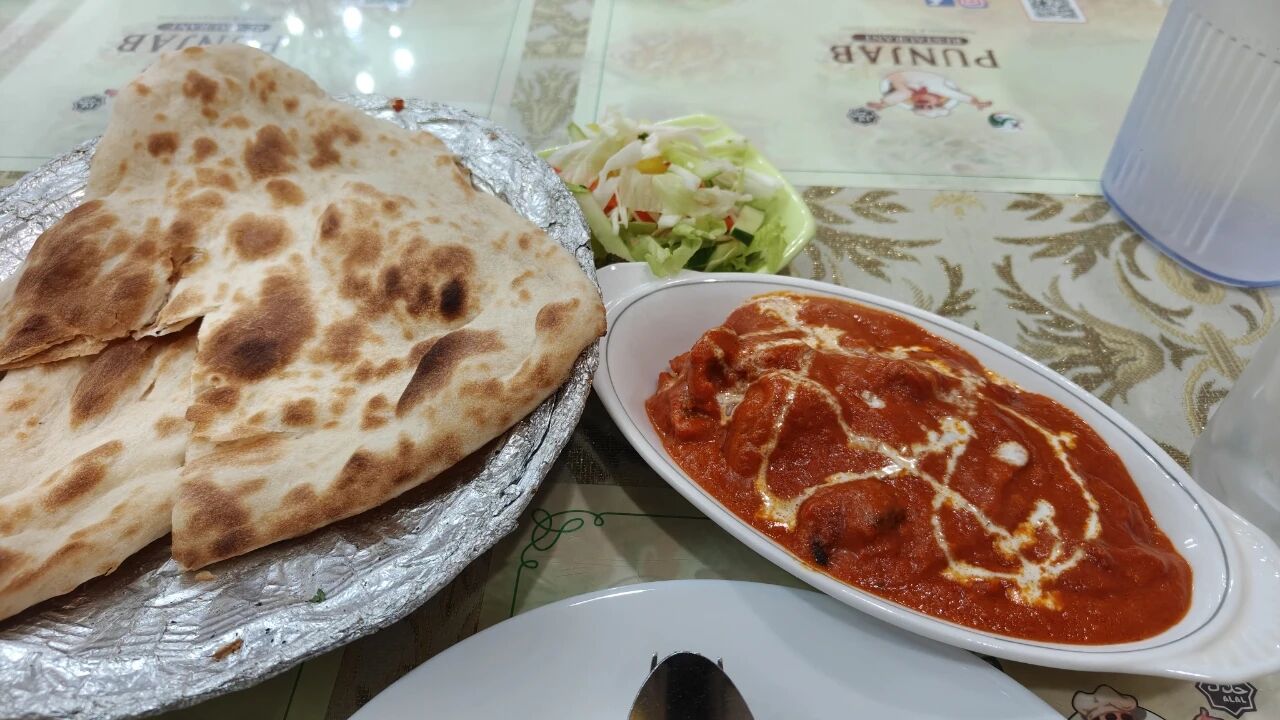
Picture 4 is a Korean halal restaurant called Eid, where I ordered a bibimbap (Picture 5). There was a table full of side dishes, including spicy cabbage, dried fish, shredded cabbage, etc.
On top of the white rice in the copper bowl was another pile of vegetables, including bracken, cooked pumpkin, oyster mushrooms, bean sprouts, and beef. There's a fried egg on top. You have to mix them together when eating, but I'm really not used to iron chopsticks.
I had a big appetite and was still not full even after finishing the meal, so I ordered another plate of squid (Picture 6).
When I was about to leave Seoul, I went to a Malaysian restaurant (Picture 7) and ordered a bowl of stewed chicken. However, it was not as delicious as I expected. Also, the chili sauce that comes with it is too spicy. Is this the spiciness of Southeast Asia?
Pictures 8, 9 and 10 show the halal beef and mutton shop and halal ingredients shop over there. I have also researched the prices of beef and mutton here. Steak costs about 82.5 yuan per kilogram. Frozen lamb chops and lamb neck cost about 50 yuan per kilogram. Chicken is about 35 yuan per kilogram.
I don’t know if everyone thinks this price is expensive.
Picture 11, as I mentioned in the previous picture and article, there is a Muslim school in the Seoul Central Mosque, and there is also a school bus parked there. It shows that some Korean Muslims send their children here to receive some basic education. Picture 11 is a clothing store, and the owner is a Muslim.
When walking around the mosque, you can also see some old Muslim people sitting in front of the shop chatting. This shows that South Korea has formed a certain size of Muslim community, and the pattern of living around the mosque has been formed.
Collapse Read »
Summary: This Seoul halal food guide looks beyond Itaewon's nightlife and follows the Muslim street around Seoul Central Mosque, with Punjab restaurant, curry lamb chops, Korean halal bibimbap, halal meat shops, food prices, and the local Muslim community.
When people think of Itaewon, they may think of the nightlife and party scene there. But few people would have thought that this is also the location of the first mosque in modern Korea. It is surrounded by a large number of halal restaurants from various countries, as well as beef and mutton shops and halal supermarkets.
The Punjab restaurant in the second picture is what I would recommend. The Pakistani brother I met here took me there. It is located near the mosque. There are Indian and Pakistani flags on the facade, indicating that this is a restaurant that specializes in South Asian Indian and Pakistani cuisine.
I most recommend the curry lamb chops (picture 3). It is full of spices and soft in the mouth. It is worth trying. It is also served with vegetables and eaten rolled in naan bread, which has a rich taste.
Picture 4 is a Korean halal restaurant called Eid, where I ordered a bibimbap (Picture 5). There was a table full of side dishes, including spicy cabbage, dried fish, shredded cabbage, etc.
On top of the white rice in the copper bowl was another pile of vegetables, including bracken, cooked pumpkin, oyster mushrooms, bean sprouts, and beef. There's a fried egg on top. You have to mix them together when eating, but I'm really not used to iron chopsticks.
I had a big appetite and was still not full even after finishing the meal, so I ordered another plate of squid (Picture 6).
When I was about to leave Seoul, I went to a Malaysian restaurant (Picture 7) and ordered a bowl of stewed chicken. However, it was not as delicious as I expected. Also, the chili sauce that comes with it is too spicy. Is this the spiciness of Southeast Asia?
Pictures 8, 9 and 10 show the halal beef and mutton shop and halal ingredients shop over there. I have also researched the prices of beef and mutton here. Steak costs about 82.5 yuan per kilogram. Frozen lamb chops and lamb neck cost about 50 yuan per kilogram. Chicken is about 35 yuan per kilogram.
I don’t know if everyone thinks this price is expensive.
Picture 11, as I mentioned in the previous picture and article, there is a Muslim school in the Seoul Central Mosque, and there is also a school bus parked there. It shows that some Korean Muslims send their children here to receive some basic education. Picture 11 is a clothing store, and the owner is a Muslim.
When walking around the mosque, you can also see some old Muslim people sitting in front of the shop chatting. This shows that South Korea has formed a certain size of Muslim community, and the pattern of living around the mosque has been formed.
Collapse Read »
Muslim Travel Guide Korea Seoul: Seoul Central Mosque, Friday Prayer, Muslim School and Itaewon Community
Reposted from the web
Summary: This Korea Muslim travel guide visits Seoul Central Mosque in Itaewon, showing its hillside location, Turkish-style prayer hall, Friday prayer lunch boxes, Korean Muslims, mosque classes, a school bus, and the history of the first modern mosque in Korea.
Seoul is a city built on hills. The terrain here is uneven, and you can often see various settlements built on small hills. Seoul Central Mosque is located at the eastern foot of Namsan Mountain. After climbing up the high steps shown in Picture 2, you still have to walk uphill for a while to reach it.
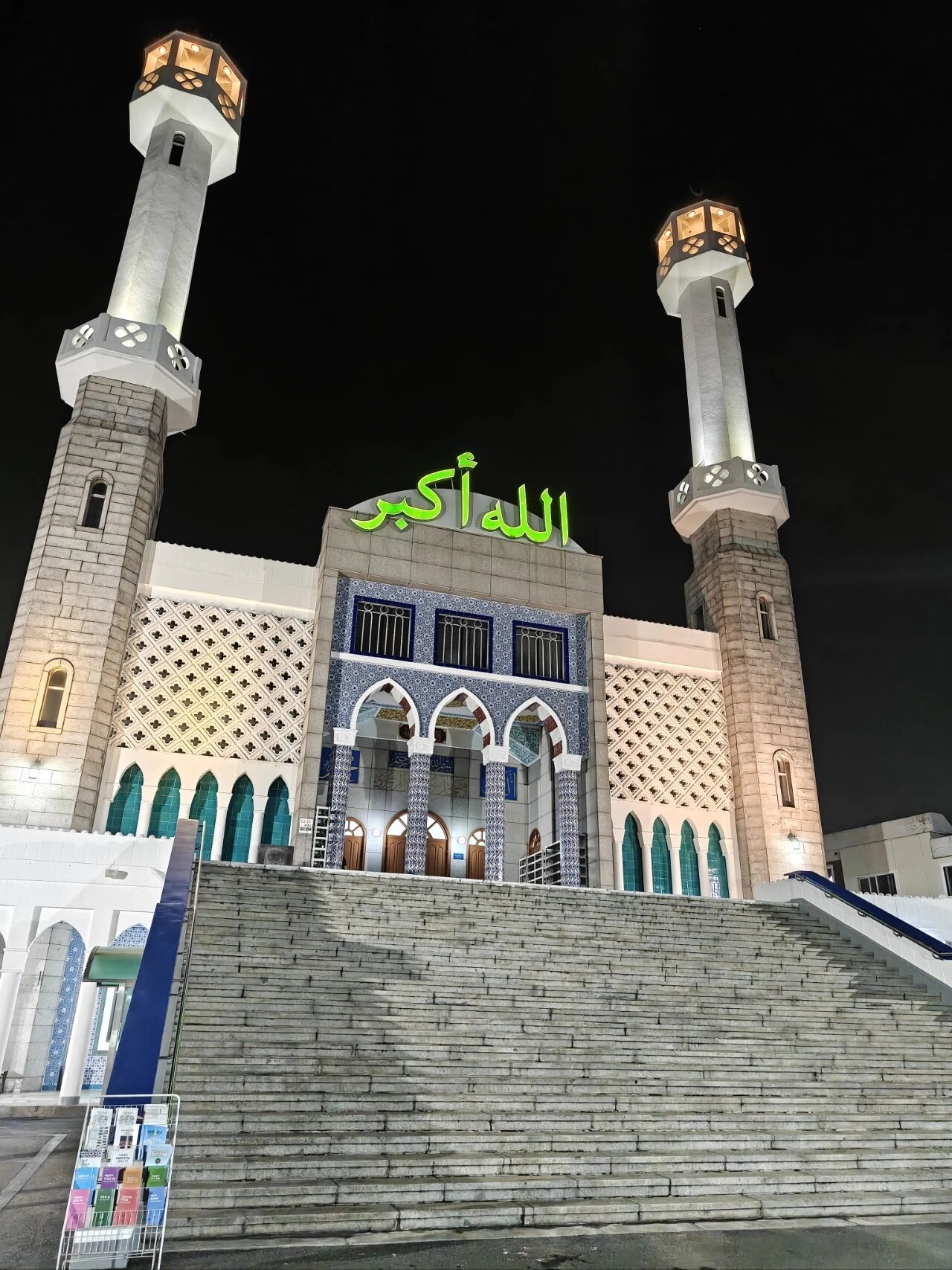
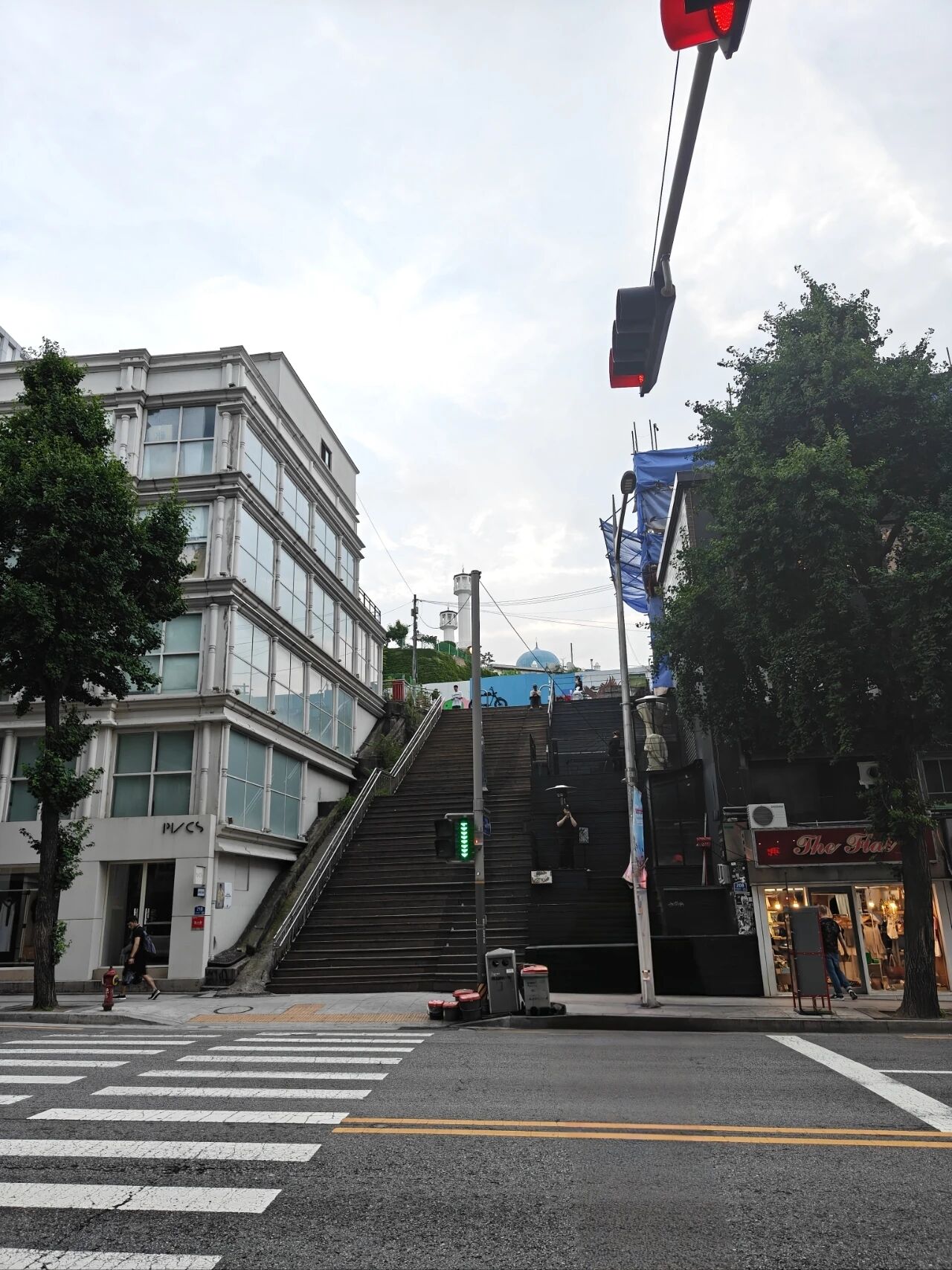
As you can see in Picture 1, there is a set of steps leading to the prayer hall. In fact, there is another set of steps on the other side of the prayer hall.
Picture 3: There are some introductory Islam materials placed next to the steps of the prayer hall, all of which are in Korean. There is no translation in English or Chinese.
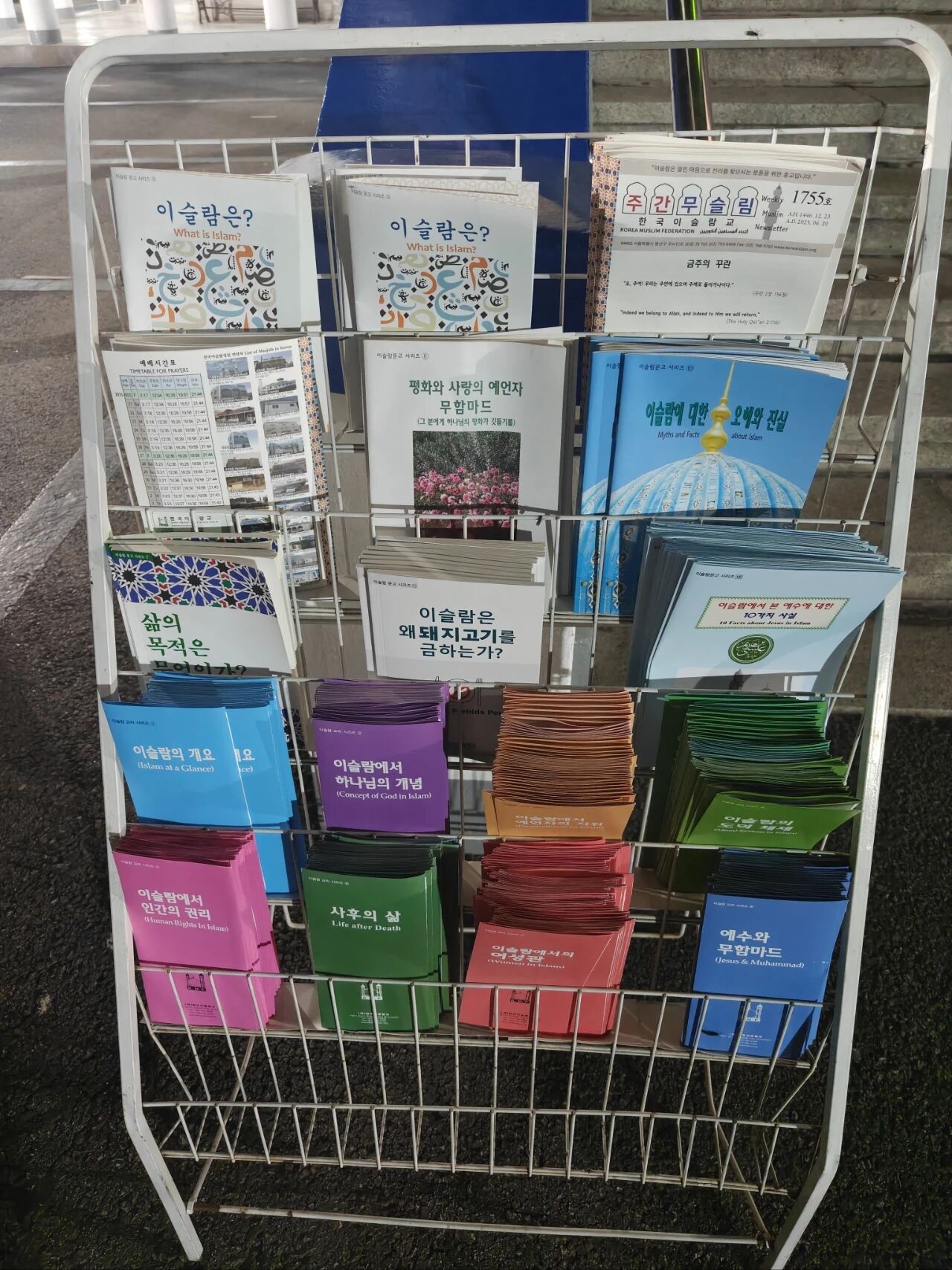
Picture 4: Entering the prayer hall, you will find that it is also in Turkish style. This was originally the location of the military camp of the Turkish army stationed in South Korea.
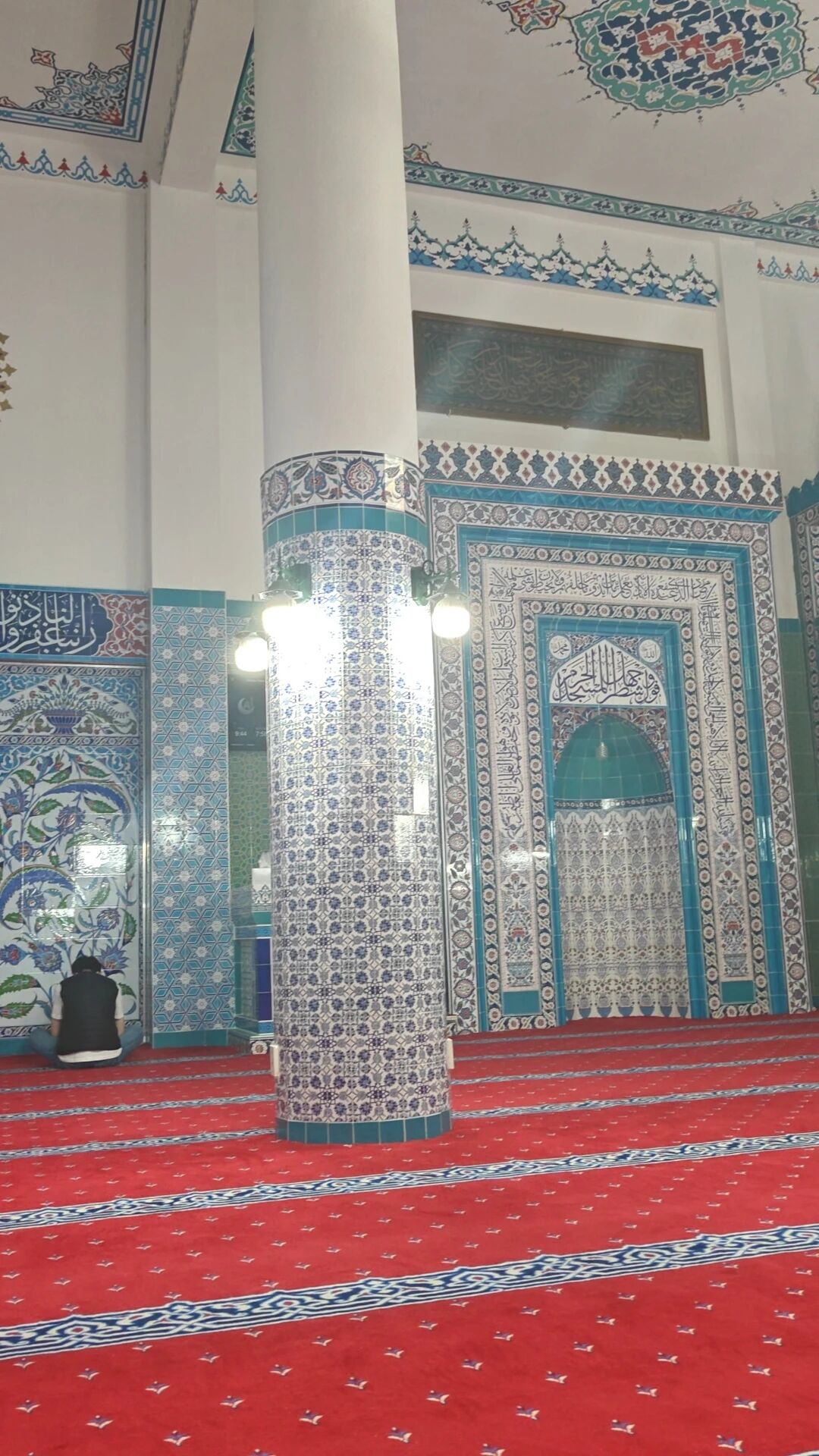
Picture 5: You can overlook the surrounding area from the mosque courtyard, but if you want to see the whole of Seoul, it is recommended to go to Seoul Namsan Tower not far away.
Picture 6: After Friday prayers, free lunch boxes will be distributed in the mosque’s cafeteria, conference room and museum. I tasted it for everyone and it tasted good. There is beef, kimchi, dried fish, and something similar to tofu skin.
In the cafeteria I met some Korean Muslims who had accepted Islam. I briefly communicated with one of them using a translator. He said that he had read about the Hui Muslims in China before in books, and today was the first time he saw them. There is also an old woman who is originally from Jilin and wears a headscarf.
But she only speaks Korean.
Picture 7: There is a school bus parked in the courtyard, and there are several classrooms nearby. It seems that some Korean Muslims (mainly foreigners) will send their children here to receive some basic education.
Picture 8: The canteen just now is also the exhibition room of the mosque. The photos on the wall record the history of this first mosque in modern Korea.
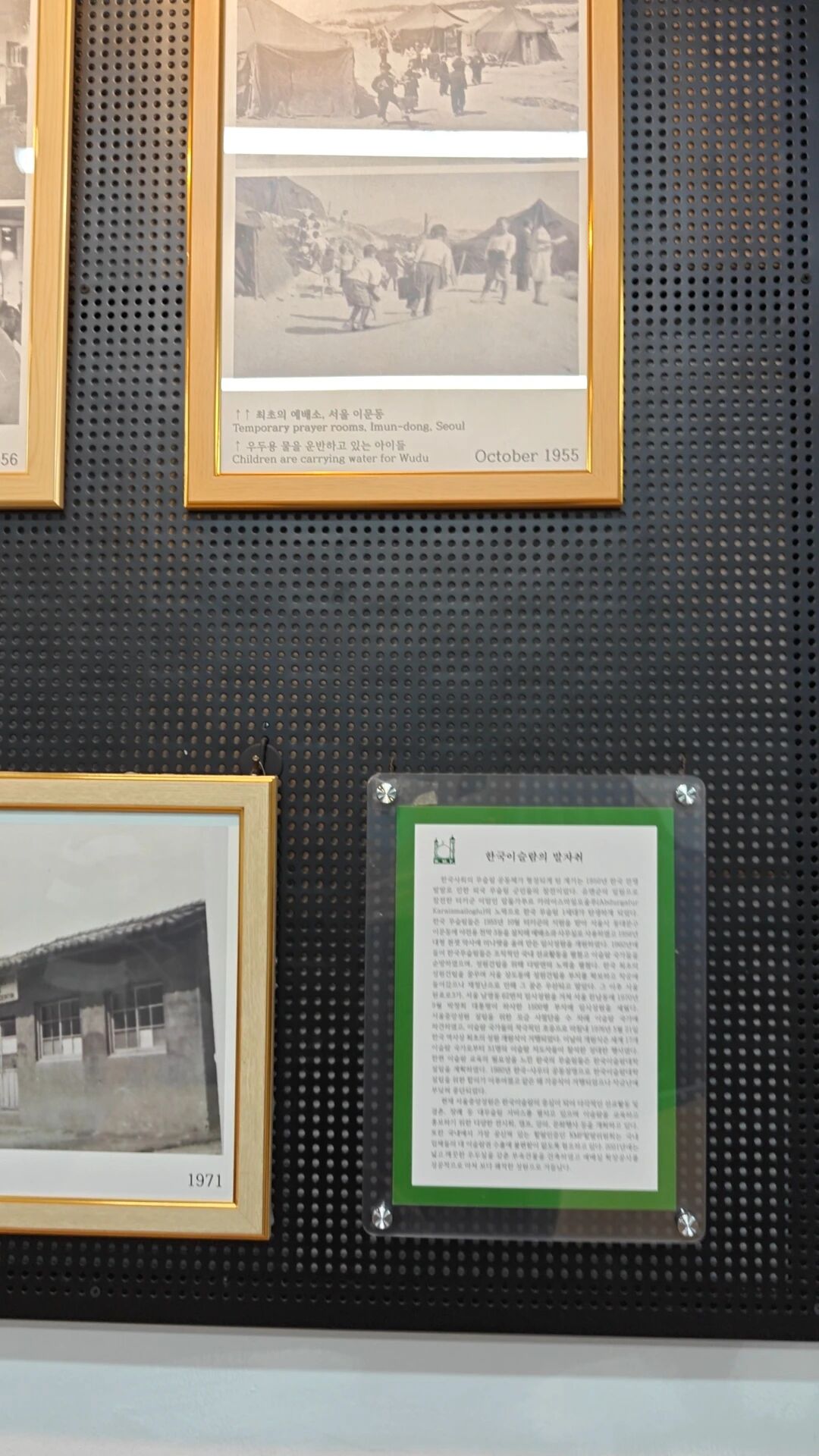
Collapse Read »
Summary: This Korea Muslim travel guide visits Seoul Central Mosque in Itaewon, showing its hillside location, Turkish-style prayer hall, Friday prayer lunch boxes, Korean Muslims, mosque classes, a school bus, and the history of the first modern mosque in Korea.
Seoul is a city built on hills. The terrain here is uneven, and you can often see various settlements built on small hills. Seoul Central Mosque is located at the eastern foot of Namsan Mountain. After climbing up the high steps shown in Picture 2, you still have to walk uphill for a while to reach it.
As you can see in Picture 1, there is a set of steps leading to the prayer hall. In fact, there is another set of steps on the other side of the prayer hall.
Picture 3: There are some introductory Islam materials placed next to the steps of the prayer hall, all of which are in Korean. There is no translation in English or Chinese.
Picture 4: Entering the prayer hall, you will find that it is also in Turkish style. This was originally the location of the military camp of the Turkish army stationed in South Korea.
Picture 5: You can overlook the surrounding area from the mosque courtyard, but if you want to see the whole of Seoul, it is recommended to go to Seoul Namsan Tower not far away.
Picture 6: After Friday prayers, free lunch boxes will be distributed in the mosque’s cafeteria, conference room and museum. I tasted it for everyone and it tasted good. There is beef, kimchi, dried fish, and something similar to tofu skin.
In the cafeteria I met some Korean Muslims who had accepted Islam. I briefly communicated with one of them using a translator. He said that he had read about the Hui Muslims in China before in books, and today was the first time he saw them. There is also an old woman who is originally from Jilin and wears a headscarf.
But she only speaks Korean.
Picture 7: There is a school bus parked in the courtyard, and there are several classrooms nearby. It seems that some Korean Muslims (mainly foreigners) will send their children here to receive some basic education.
Picture 8: The canteen just now is also the exhibition room of the mosque. The photos on the wall record the history of this first mosque in modern Korea.
Collapse Read »
Muslim Travel Guide Japan Tokyo: Yoyogi Mosque, Friday Prayer, Turkish Market and Muslim Community
Reposted from the web
Summary: This Japan Muslim travel guide follows two visits to Yoyogi Mosque in Tokyo, covering Friday prayer, the Turkish-style prayer hall, the halal supermarket, the small museum, local Muslims, non-Muslim visitors, and a touching scene of people accepting Islam.
The first time I went to Yoyogi Mosque (Tokyo Camii) (Tokyo Camii) (Tokyo Camii) (Tokyo Camii) was the day I first arrived in Japan. The subway line was very complicated, but I still found the place smoothly.
That day was Friday, and many Muslims could be seen near the mosque. When we arrived at the mosque, the terrace on the second floor was already full, and the sun made the marble floor hot, making it impossible to stay. After a while, the insulation cloth was handed over, and I sat on it, but it wasn't hot anymore.
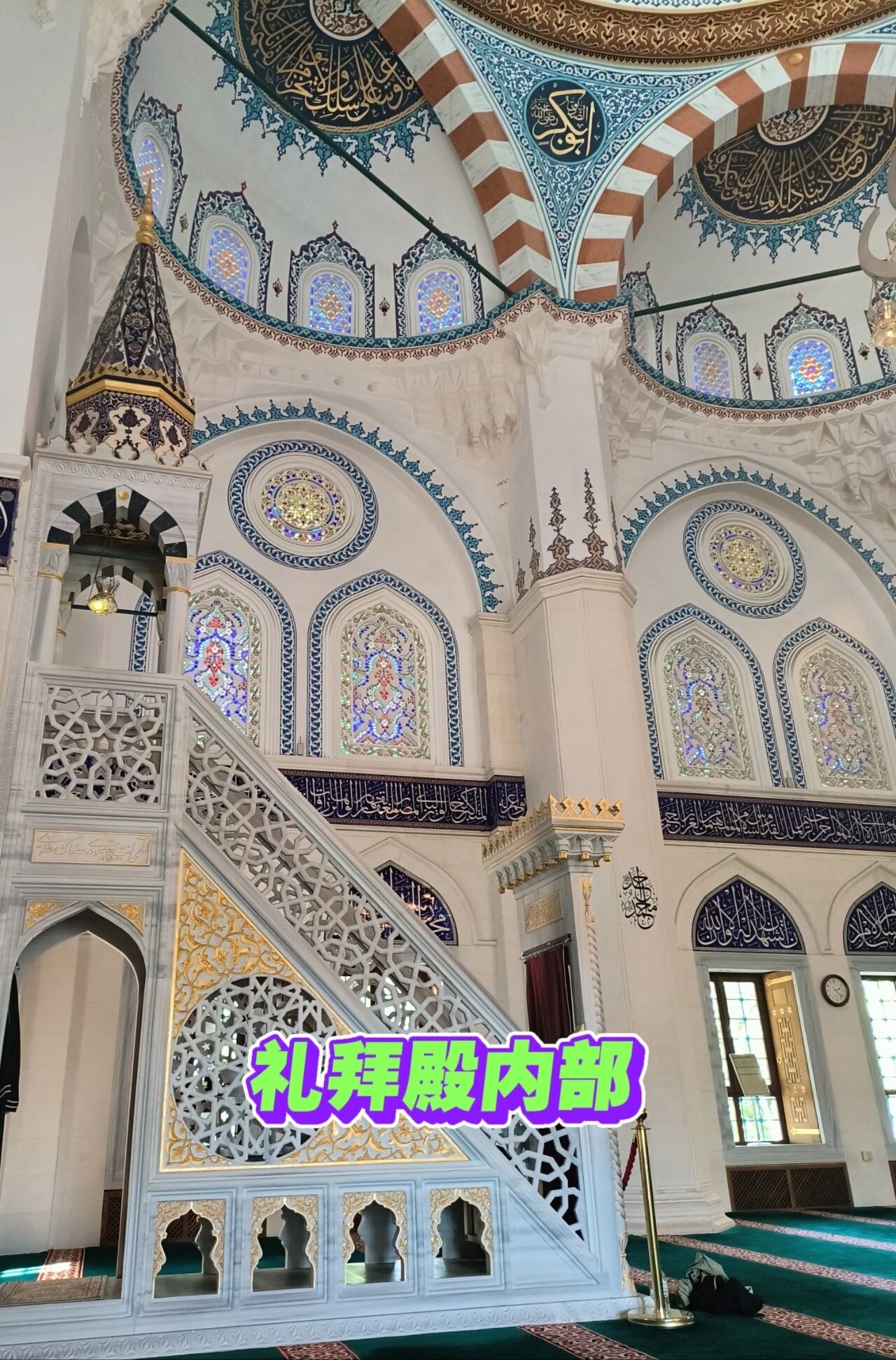
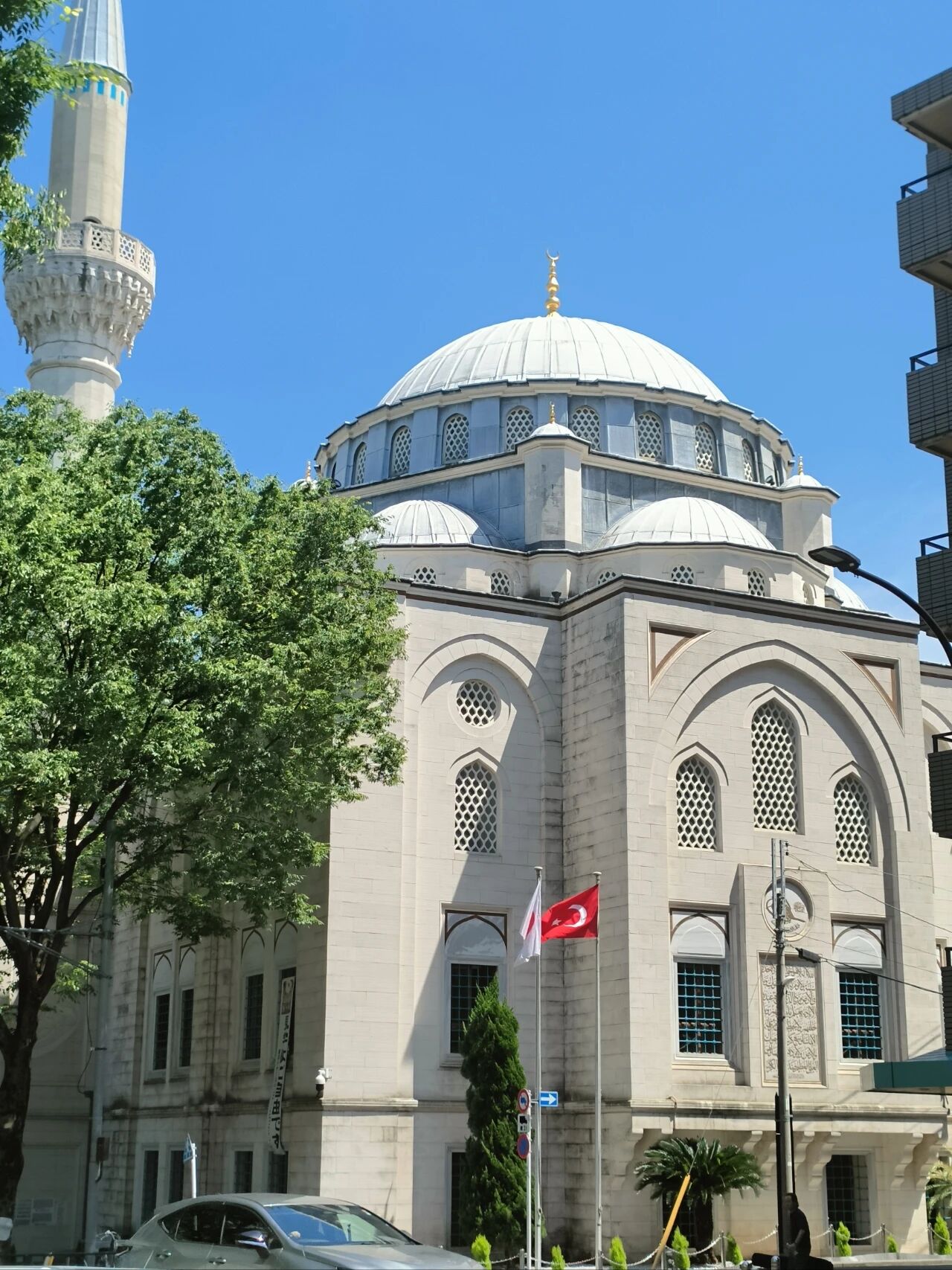
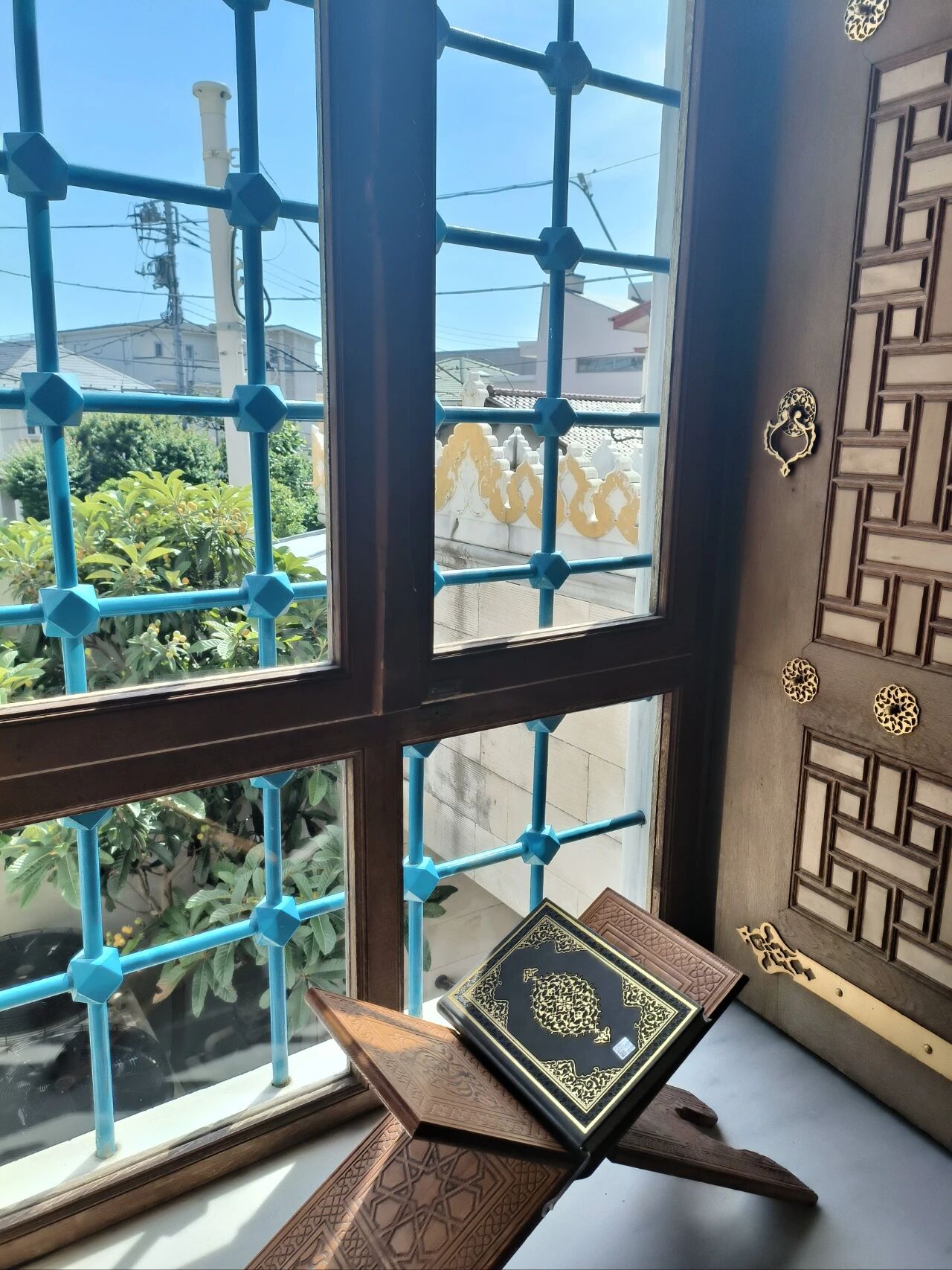
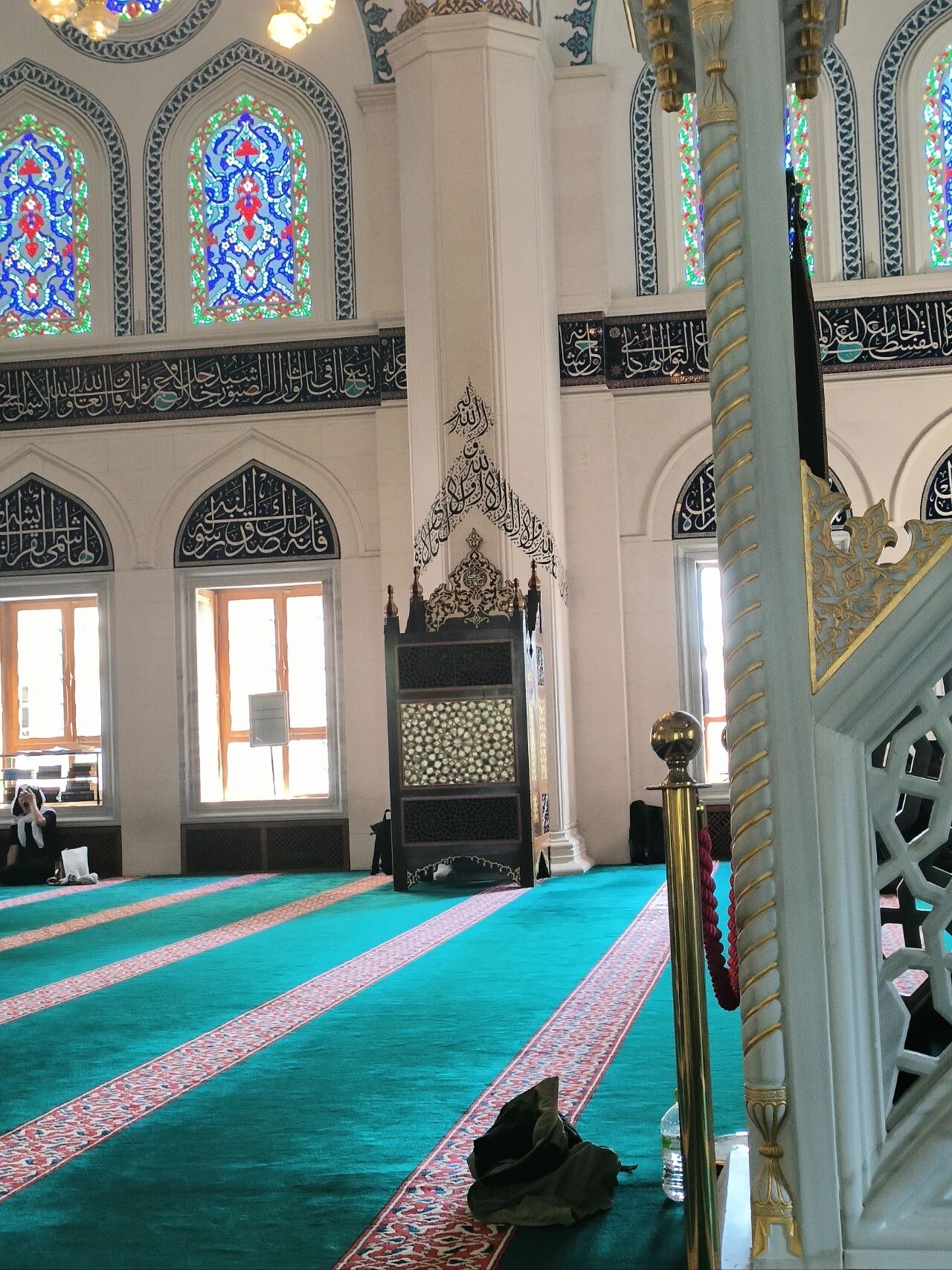
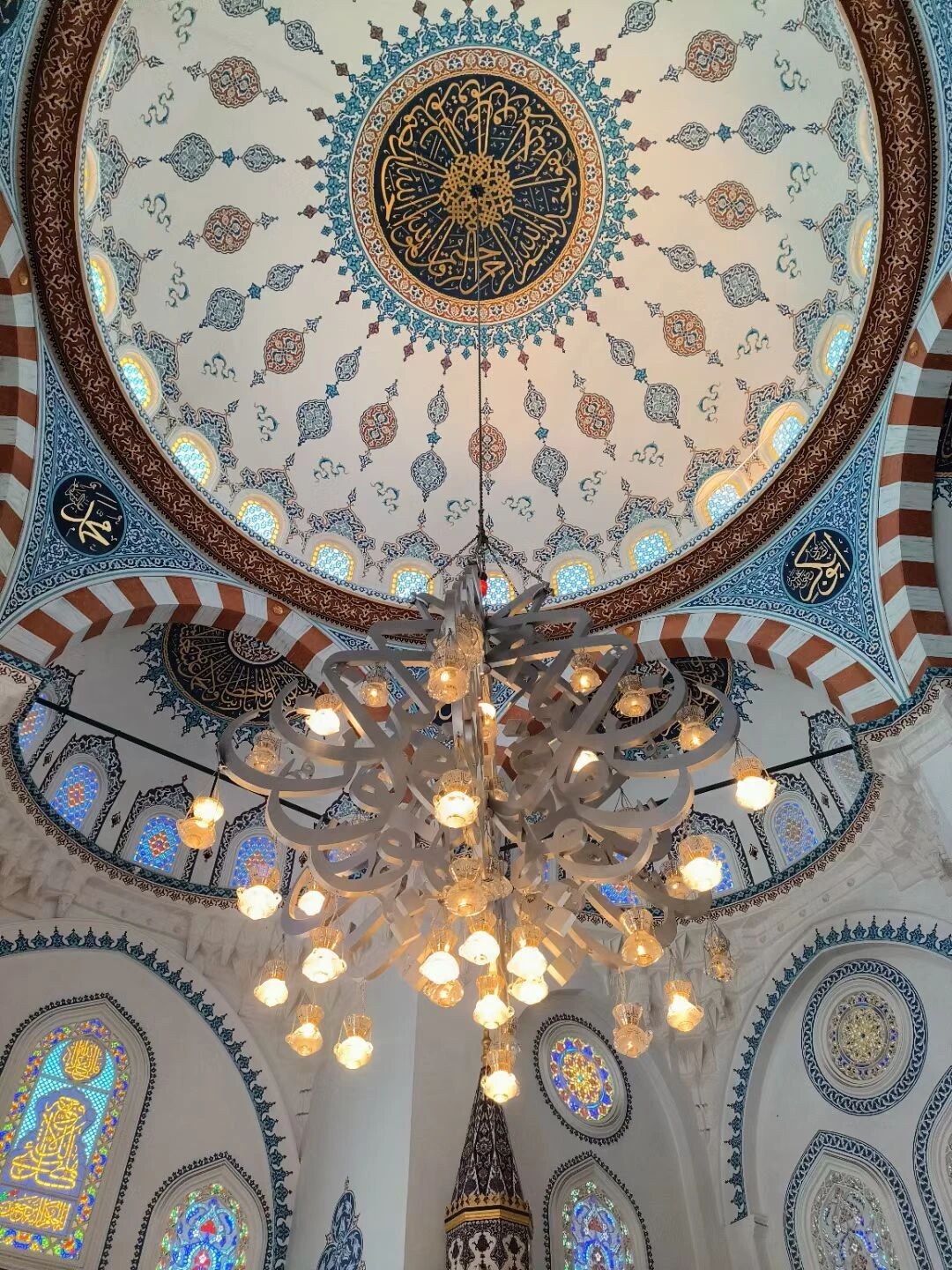
After a while, a piece of paper was handed over, with the general content of the imam's speech that day written on it in Arabic, English and Japanese. This is quite fresh.
After salah, people filed out of the main hall, and I finally had a chance to go in and take a look. The inside is in the Turkish style, with beautiful paintings.
There was a halal food supermarket on the first floor of the mosque. I still remember the people working there, a Japanese woman wearing a headscarf, and two or three Uzbeks. next next next next to the supermarket, there is also an exquisite small fireplace on the first floor.
After salah, I stayed on the terrace on the second floor for a while and met two Chinese people. One was a man from Qinghai. He advised me to develop here. But traveling abroad and working are two different things. The latter has too many things to consider and costs to pay.
The other was an old man. He said that he was a professor at a university here and had written books. If I remember correctly, he seems to be from Beijing. He came to Japan when he was young. Now he is married and has children in Japan and has lived in Japan for many years.
After that I left the mosque and went to Meguro and Shinjuku.
The second time I went to Yoyogi Mosque (Tokyo Camii) (Tokyo Camii) (Tokyo Camii) (Tokyo Camii) was eight days later. I was on a flight back to my country that night, so I took the opportunity to go to Yoyogi while I was last in Tokyo.
I visited the halal supermarket again. The weather was hot at that time, so I bought a box of ice cream to eat. This ice cream is a special kind of ice cream from Turkey. It is very tough and chewy. There are three architectural models placed near the supermarket, which are what Yoyogi Mosque (Tokyo Camii) (Tokyo Camii) (Tokyo Camii) (Tokyo Camii) looked like in history.
The first-generation mosques were no different from traditional Japanese huts from the Edo period. The second generation has a dome and a minaret. Although the configuration is the same as the current mosque, the style is different. Now this building is in typical Turkish style.
There is an elevator on the right side of the model. When I went upstairs, I saw a teacher teaching Qur'an recitation to the children. After that, I went to the museum at the mosque here. To be honest, apart from some old photos, there were no other exhibits in this museum.
Moreover, these photos seem to have no fixed theme and have nothing to do with the mosque.
After leaving the museum, we came to the main hall. Here I saw a scene that touched me very much. At that time, I noticed a young man and woman at the front of the prayer hall, sitting opposite the imam of the mosque.
After listening to their words, I later realized that they were accepting Islam. I had only seen others accepting Islam on the Internet before, but I didn’t expect to see it in person today. This is the first time I have seen someone accept Islam.
Before I left, I saw some non-Muslim visitors coming in and sitting in the main hall. An imam who spoke Japanese was introducing the mosque and Islam to them. I just exchanged a few words with him, so he knew that I was from China.
Seeing that I was about to leave, he pulled me and introduced to the tourists that this person was from China. I sheepishly said hello to the tourists, konnichiwa, and then left.
Collapse Read »
Summary: This Japan Muslim travel guide follows two visits to Yoyogi Mosque in Tokyo, covering Friday prayer, the Turkish-style prayer hall, the halal supermarket, the small museum, local Muslims, non-Muslim visitors, and a touching scene of people accepting Islam.
The first time I went to Yoyogi Mosque (Tokyo Camii) (Tokyo Camii) (Tokyo Camii) (Tokyo Camii) was the day I first arrived in Japan. The subway line was very complicated, but I still found the place smoothly.
That day was Friday, and many Muslims could be seen near the mosque. When we arrived at the mosque, the terrace on the second floor was already full, and the sun made the marble floor hot, making it impossible to stay. After a while, the insulation cloth was handed over, and I sat on it, but it wasn't hot anymore.
After a while, a piece of paper was handed over, with the general content of the imam's speech that day written on it in Arabic, English and Japanese. This is quite fresh.
After salah, people filed out of the main hall, and I finally had a chance to go in and take a look. The inside is in the Turkish style, with beautiful paintings.
There was a halal food supermarket on the first floor of the mosque. I still remember the people working there, a Japanese woman wearing a headscarf, and two or three Uzbeks. next next next next to the supermarket, there is also an exquisite small fireplace on the first floor.
After salah, I stayed on the terrace on the second floor for a while and met two Chinese people. One was a man from Qinghai. He advised me to develop here. But traveling abroad and working are two different things. The latter has too many things to consider and costs to pay.
The other was an old man. He said that he was a professor at a university here and had written books. If I remember correctly, he seems to be from Beijing. He came to Japan when he was young. Now he is married and has children in Japan and has lived in Japan for many years.
After that I left the mosque and went to Meguro and Shinjuku.
The second time I went to Yoyogi Mosque (Tokyo Camii) (Tokyo Camii) (Tokyo Camii) (Tokyo Camii) was eight days later. I was on a flight back to my country that night, so I took the opportunity to go to Yoyogi while I was last in Tokyo.
I visited the halal supermarket again. The weather was hot at that time, so I bought a box of ice cream to eat. This ice cream is a special kind of ice cream from Turkey. It is very tough and chewy. There are three architectural models placed near the supermarket, which are what Yoyogi Mosque (Tokyo Camii) (Tokyo Camii) (Tokyo Camii) (Tokyo Camii) looked like in history.
The first-generation mosques were no different from traditional Japanese huts from the Edo period. The second generation has a dome and a minaret. Although the configuration is the same as the current mosque, the style is different. Now this building is in typical Turkish style.
There is an elevator on the right side of the model. When I went upstairs, I saw a teacher teaching Qur'an recitation to the children. After that, I went to the museum at the mosque here. To be honest, apart from some old photos, there were no other exhibits in this museum.
Moreover, these photos seem to have no fixed theme and have nothing to do with the mosque.
After leaving the museum, we came to the main hall. Here I saw a scene that touched me very much. At that time, I noticed a young man and woman at the front of the prayer hall, sitting opposite the imam of the mosque.
After listening to their words, I later realized that they were accepting Islam. I had only seen others accepting Islam on the Internet before, but I didn’t expect to see it in person today. This is the first time I have seen someone accept Islam.
Before I left, I saw some non-Muslim visitors coming in and sitting in the main hall. An imam who spoke Japanese was introducing the mosque and Islam to them. I just exchanged a few words with him, so he knew that I was from China.
Seeing that I was about to leave, he pulled me and introduced to the tourists that this person was from China. I sheepishly said hello to the tourists, konnichiwa, and then left.
Collapse Read »
Halal Food in China: Halal Rules, Shrimp Debate, Anti-Muslim Hate Speech and Muslim Community Unity
Reposted from the web
Summary: This essay contrasts heated internal arguments over whether shrimp is halal with more serious anti-Muslim hate speech online, urging Muslims to stay alert to real threats, protect community unity, and avoid wasting energy on hostile infighting.
Originally I didn't plan to write this tweet. Firstly, it's because I'm too busy at home, and secondly, I think people nowadays always pretend to be asleep no matter how loud you scream. Not only will you not be able to wake them up, they will actually think you are disturbing their nap!
"Can shrimp be eaten?" This topic in domestic Muslim circles always has endless topics, endless questions, unsolvable knots and unavoidable ups and downs. Today we won’t talk about whether shrimps can be eaten, because it’s not a big deal at all. If you want to eat it, just eat it. If you don’t want to eat it, don’t eat it. It’s not a big deal. The evidence is there, you can just check it out for yourself. In other words, when you ask this question, you actually know better than the person who answers the question whether you can eat it!
Today I will show you some screenshots from Weibo to let you know what kind of public opinion environment we are facing today. Stop clinging to those miserable "shrimps". Whether you eat them or not will not have any substantial impact on you. However, if these remarks are implemented by extreme people, they will have an immeasurable impact on our group and even the peace and stability of the entire country.

Scary, right? This is just the first one. Also, do you still think "shrimp" is important? unimportant! Not important at all! It's nothing compared to this. Seeing this, I guess there are still many people who don’t understand the purpose of my tweet today. In fact, the purpose of my tweet today is to let everyone stop those insignificant "controversies", return to the great mission of "unity" taught by revelation and precepts, and abandon all prejudices to truly realize the call of "all believers are brothers".

Of course, another purpose of my tweet is that when we meet such people on the Internet or in real life, we don’t have to defend ourselves with them, because these people have twisted psychology. If you encounter such a person, call the police if you are able. The police will punish such people accordingly, and they will also receive the punishment they deserve for their arrogance! However, if you are unable to do anything, then just click on a complaint on the online platform where you encountered such remarks, and I believe that the online platform will handle them accordingly.

"Shrimp" is not a big problem. The big problem of our group now is the insensitivity of the vast majority of people, the carping of some "self-appointed self-appointed self-appointed religious police", and the carnival of some young people. This is the fundamental problem. Are you afraid of eating a shrimp when someone dares to break many serious laws? You sing and dance every day and still care about whether crabs are legal? Let's put aside these insignificant controversies and let's work together to fight against anti-Muslim hate accounts. Don't let another "shrimp" make our group fall apart and become a mess!

Collapse Read »
Summary: This essay contrasts heated internal arguments over whether shrimp is halal with more serious anti-Muslim hate speech online, urging Muslims to stay alert to real threats, protect community unity, and avoid wasting energy on hostile infighting.
Originally I didn't plan to write this tweet. Firstly, it's because I'm too busy at home, and secondly, I think people nowadays always pretend to be asleep no matter how loud you scream. Not only will you not be able to wake them up, they will actually think you are disturbing their nap!
"Can shrimp be eaten?" This topic in domestic Muslim circles always has endless topics, endless questions, unsolvable knots and unavoidable ups and downs. Today we won’t talk about whether shrimps can be eaten, because it’s not a big deal at all. If you want to eat it, just eat it. If you don’t want to eat it, don’t eat it. It’s not a big deal. The evidence is there, you can just check it out for yourself. In other words, when you ask this question, you actually know better than the person who answers the question whether you can eat it!
Today I will show you some screenshots from Weibo to let you know what kind of public opinion environment we are facing today. Stop clinging to those miserable "shrimps". Whether you eat them or not will not have any substantial impact on you. However, if these remarks are implemented by extreme people, they will have an immeasurable impact on our group and even the peace and stability of the entire country.
Scary, right? This is just the first one. Also, do you still think "shrimp" is important? unimportant! Not important at all! It's nothing compared to this. Seeing this, I guess there are still many people who don’t understand the purpose of my tweet today. In fact, the purpose of my tweet today is to let everyone stop those insignificant "controversies", return to the great mission of "unity" taught by revelation and precepts, and abandon all prejudices to truly realize the call of "all believers are brothers".
Of course, another purpose of my tweet is that when we meet such people on the Internet or in real life, we don’t have to defend ourselves with them, because these people have twisted psychology. If you encounter such a person, call the police if you are able. The police will punish such people accordingly, and they will also receive the punishment they deserve for their arrogance! However, if you are unable to do anything, then just click on a complaint on the online platform where you encountered such remarks, and I believe that the online platform will handle them accordingly.
"Shrimp" is not a big problem. The big problem of our group now is the insensitivity of the vast majority of people, the carping of some "self-appointed self-appointed self-appointed religious police", and the carnival of some young people. This is the fundamental problem. Are you afraid of eating a shrimp when someone dares to break many serious laws? You sing and dance every day and still care about whether crabs are legal? Let's put aside these insignificant controversies and let's work together to fight against anti-Muslim hate accounts. Don't let another "shrimp" make our group fall apart and become a mess!
Collapse Read »
Muslim Life Guide China: Muslim Community, Anti-Muslim Hate Accounts and Social Media Timeline
Reposted from the web
Summary: This timeline explains how anti-Muslim hate accounts developed online, from early forum culture to major social media platforms, showing how rumors, selective incidents, and algorithm-driven outrage shaped a hostile online environment.
Based on my many years of experience fighting anti-Muslim hate accounts, I will summarize the development and growth process of anti-Muslim hate accounts.
We use 2010 as a dividing line. The Internet was not perfect 10 years ago, and the spread was not as fast as it is today, so we ignored it 10 years ago. Black dogs really began to appear on a large scale on the Internet probably around 2012. At that time, they mainly appeared in forums and Baidu Tieba, because these two platforms are more disseminating than one-to-one real-time chat tools such as QQ. At that time, the editor was mainly active on Baidu Tieba. At that time, the more famous anti-Muslim hate accounts included [Old Monster of Deep Sorrow], [Old Man of Iron-Blooded Justice], [Dream of Devon], [Sky of Central Asia] and other anti-Muslim hate accounts who spent all day on Tieba. To be honest, among these people, I admire [Old Weird] quite a lot. This person is not like other anti-Muslim hate accounts who will throw tantrums, cry and scold their mothers if they can't argue. This person should have real talent and knowledge. No matter whether you win or lose in an argument with him, he will not behave like a mad dog and will even argue with you politely. Then [The Sky of Central Asia] is slightly inferior. As for [The Iron-Blooded Righteous Old Man], [Dream of the Devonian] and other little ones, they are just the kind of people who just debate, post pornographic pictures, and post all kinds of disgusting pictures on the forum floor...
After the Kunming Railway Station incident in 2014, anti-Muslim hate account ushered in an explosive growth. Every day when I opened Tieba, anti-Muslim hate account’s replies were 99+. At that time, anti-Muslim hate account gradually became large-scale and had precise goals. After the Wei Zexi Incident in 2016, Baidu Tieba began to decline, and netizens began to move to platforms such as [Sina Weibo] and [WeChat public pages] that were more timely and spread to a wider audience. A group of people named [Xi Wuyi], [Yang Liulang], [Tao Lina], and [Shen Dianqi] gradually became popular on Weibo, and these people basically have various titles - scholars from the Academy of Social Sciences, doctors from a certain hospital, well-known travel bloggers, etc. As a result, their anti-Muslim hate account remarks were widely disseminated as "facts" by some netizens who did not know the truth, leading to the current chaos on the Internet.
Now as the short video industry breaks out, anti-Muslim hate accounts are also timely switching to short video platforms. This time, many anti-Muslim hate accounts are just behind the scenes, supporting some mouthpieces to act as facades. If something goes wrong, just push those facades out, they can still escape and sit firmly on Diaoyutai.
This is what I have summarized about the development and growth of anti-Muslim hate account over the past ten years of fighting with anti-Muslim hate account. Of course, there must be many characters or events that have not been included, but the general development path is like this. You can just take a look at it for your after-dinner entertainment.
Collapse Read »
Summary: This timeline explains how anti-Muslim hate accounts developed online, from early forum culture to major social media platforms, showing how rumors, selective incidents, and algorithm-driven outrage shaped a hostile online environment.
Based on my many years of experience fighting anti-Muslim hate accounts, I will summarize the development and growth process of anti-Muslim hate accounts.
We use 2010 as a dividing line. The Internet was not perfect 10 years ago, and the spread was not as fast as it is today, so we ignored it 10 years ago. Black dogs really began to appear on a large scale on the Internet probably around 2012. At that time, they mainly appeared in forums and Baidu Tieba, because these two platforms are more disseminating than one-to-one real-time chat tools such as QQ. At that time, the editor was mainly active on Baidu Tieba. At that time, the more famous anti-Muslim hate accounts included [Old Monster of Deep Sorrow], [Old Man of Iron-Blooded Justice], [Dream of Devon], [Sky of Central Asia] and other anti-Muslim hate accounts who spent all day on Tieba. To be honest, among these people, I admire [Old Weird] quite a lot. This person is not like other anti-Muslim hate accounts who will throw tantrums, cry and scold their mothers if they can't argue. This person should have real talent and knowledge. No matter whether you win or lose in an argument with him, he will not behave like a mad dog and will even argue with you politely. Then [The Sky of Central Asia] is slightly inferior. As for [The Iron-Blooded Righteous Old Man], [Dream of the Devonian] and other little ones, they are just the kind of people who just debate, post pornographic pictures, and post all kinds of disgusting pictures on the forum floor...
After the Kunming Railway Station incident in 2014, anti-Muslim hate account ushered in an explosive growth. Every day when I opened Tieba, anti-Muslim hate account’s replies were 99+. At that time, anti-Muslim hate account gradually became large-scale and had precise goals. After the Wei Zexi Incident in 2016, Baidu Tieba began to decline, and netizens began to move to platforms such as [Sina Weibo] and [WeChat public pages] that were more timely and spread to a wider audience. A group of people named [Xi Wuyi], [Yang Liulang], [Tao Lina], and [Shen Dianqi] gradually became popular on Weibo, and these people basically have various titles - scholars from the Academy of Social Sciences, doctors from a certain hospital, well-known travel bloggers, etc. As a result, their anti-Muslim hate account remarks were widely disseminated as "facts" by some netizens who did not know the truth, leading to the current chaos on the Internet.
Now as the short video industry breaks out, anti-Muslim hate accounts are also timely switching to short video platforms. This time, many anti-Muslim hate accounts are just behind the scenes, supporting some mouthpieces to act as facades. If something goes wrong, just push those facades out, they can still escape and sit firmly on Diaoyutai.
This is what I have summarized about the development and growth of anti-Muslim hate account over the past ten years of fighting with anti-Muslim hate account. Of course, there must be many characters or events that have not been included, but the general development path is like this. You can just take a look at it for your after-dinner entertainment.
Collapse Read »
Halal Food in China Shanghai: Pork Bun Incident, Halal Restaurant Respect and Muslim Community Rights
Reposted from the web
Summary: This article responds to a Shanghai halal restaurant pork bun incident and an influencer's comments, arguing that halal food spaces, Muslim dignity, national symbols, legal boundaries, and ethnic unity should not be turned into tools for provocation.
I haven’t written a book in a long, long time. It’s been so long that I almost forgot that I had registered this account. Actually, it’s not that I’m lazy, it’s mainly because I have too many things to do this year. The rice I grow at home is about to mature, and I’m also building a small shelter to protect myself from the wind and rain, so I haven’t had time to write.
A lot of things have happened on the Internet during this period, such as the renaming of the halal canteens of Tsinghua University and Peking University some time ago, and the incident in the past two days where a certain blogger [Vaccine and Science] ate his own pork buns in a halal restaurant in Xuhui District, Shanghai, made a video and uploaded it to the Internet. These things have caused a great psychological contrast among the Hui Muslim compatriots in China, especially the behavior of this extremely royal V. Typical of this is deliberately provoking trouble, and then if there is any physical conflict with him in the restaurant, he will pretend to be a victim and exaggerate the publicity. When someone pointed out his immoral behavior, he said I can eat whatever I want! What I eat is my freedom!
This certain influencer can be regarded as an extremely royal man who has been famous for a long time. He has repeatedly worn his own clothes with words printed with hostility to halal food in Tiananmen Square and other solemn occasions. He is also suspected of tampering with the national anthem of the People's Republic of China. Any citizen of the People's Republic of China should have an attitude of respect and awe when facing the national anthem, national flag, and national emblem. Playing and playing when the national anthem is played or sung is absolutely not allowed, and our country also has a special corresponding " The laws and regulations of the National Flag Law, National Anthem Law, and National Emblem Law, and once suspected insults to the national flag, national emblem, or suspected tampering of the national anthem are confirmed, the highest level of personnel can be dealt with in accordance with Article 299 of the Criminal Law of the People's Republic of China. The influencer’s deliberate provocation of trouble clearly violated the crime of “picking quarrels and provoking troubles.” Refer to Article 293 of the Criminal Law. Anyone who commits one of the following acts of provoking troubles is punishable by up to five years in prison, criminal detention, or surveillance.
This influencer was originally an angel in white, and it was his job to treat illnesses and save people. For some unknown reason, he embarked on the path of being extremely imperial and extremely hostile to Muslim compatriots. I guess he was stimulated by something, maybe there was something wrong with his brain, and then he set up "imaginary enemies" among the compatriots around him.
The influencer’s highly publicized incident of eating pork buns in a Shanghai halal restaurant revealed the influencer’s distorted humanity and absurd behavior of extreme hatred of the Muslim community and halal food. People like them claim to be "opposing extremism" but at the same time engage in the dirty behavior of extreme Han nationalists, and then they also pretend to be "victims" and make irresponsible remarks from the moral high ground.

The Constitution guarantees citizens' freedom of speech, but no freedom is absolute and must not harm national, social, collective interests or the legitimate freedoms and rights of other citizens. Uploading such provocative videos online with the intention of expanding the negative impact is an abuse of freedom of speech and cyberspace. This kind of behavior destroys social harmony and stability, may trigger antagonism between social groups, and interfere with the country's normal ethnic work order.
Through this incident, we hope that relevant departments or organizations such as the Shanghai Municipal Religious Committee, the Shanghai Islamic Association, and the restaurant concerned will hold the influencer accountable for the corresponding legal responsibilities, and that the behavior of illegal criminals will not be allowed to undermine the country's national policy of "national unity"! Of course, every one of us citizens of the People's Republic of China should abide by the laws and regulations of the country, be able to "know the law", "understand the law" and use the law to protect our legitimate rights and interests, so that we can become a qualified and law-abiding good citizen! If you encounter illegal criminals, you must report and report them to the relevant departments as soon as possible. Let us work together to build a solid Chinese dream and complete the sacred mission of the great rejuvenation of the Chinese nation!

Collapse Read »
Summary: This article responds to a Shanghai halal restaurant pork bun incident and an influencer's comments, arguing that halal food spaces, Muslim dignity, national symbols, legal boundaries, and ethnic unity should not be turned into tools for provocation.
I haven’t written a book in a long, long time. It’s been so long that I almost forgot that I had registered this account. Actually, it’s not that I’m lazy, it’s mainly because I have too many things to do this year. The rice I grow at home is about to mature, and I’m also building a small shelter to protect myself from the wind and rain, so I haven’t had time to write.
A lot of things have happened on the Internet during this period, such as the renaming of the halal canteens of Tsinghua University and Peking University some time ago, and the incident in the past two days where a certain blogger [Vaccine and Science] ate his own pork buns in a halal restaurant in Xuhui District, Shanghai, made a video and uploaded it to the Internet. These things have caused a great psychological contrast among the Hui Muslim compatriots in China, especially the behavior of this extremely royal V. Typical of this is deliberately provoking trouble, and then if there is any physical conflict with him in the restaurant, he will pretend to be a victim and exaggerate the publicity. When someone pointed out his immoral behavior, he said I can eat whatever I want! What I eat is my freedom!
This certain influencer can be regarded as an extremely royal man who has been famous for a long time. He has repeatedly worn his own clothes with words printed with hostility to halal food in Tiananmen Square and other solemn occasions. He is also suspected of tampering with the national anthem of the People's Republic of China. Any citizen of the People's Republic of China should have an attitude of respect and awe when facing the national anthem, national flag, and national emblem. Playing and playing when the national anthem is played or sung is absolutely not allowed, and our country also has a special corresponding " The laws and regulations of the National Flag Law, National Anthem Law, and National Emblem Law, and once suspected insults to the national flag, national emblem, or suspected tampering of the national anthem are confirmed, the highest level of personnel can be dealt with in accordance with Article 299 of the Criminal Law of the People's Republic of China. The influencer’s deliberate provocation of trouble clearly violated the crime of “picking quarrels and provoking troubles.” Refer to Article 293 of the Criminal Law. Anyone who commits one of the following acts of provoking troubles is punishable by up to five years in prison, criminal detention, or surveillance.
This influencer was originally an angel in white, and it was his job to treat illnesses and save people. For some unknown reason, he embarked on the path of being extremely imperial and extremely hostile to Muslim compatriots. I guess he was stimulated by something, maybe there was something wrong with his brain, and then he set up "imaginary enemies" among the compatriots around him.
The influencer’s highly publicized incident of eating pork buns in a Shanghai halal restaurant revealed the influencer’s distorted humanity and absurd behavior of extreme hatred of the Muslim community and halal food. People like them claim to be "opposing extremism" but at the same time engage in the dirty behavior of extreme Han nationalists, and then they also pretend to be "victims" and make irresponsible remarks from the moral high ground.
The Constitution guarantees citizens' freedom of speech, but no freedom is absolute and must not harm national, social, collective interests or the legitimate freedoms and rights of other citizens. Uploading such provocative videos online with the intention of expanding the negative impact is an abuse of freedom of speech and cyberspace. This kind of behavior destroys social harmony and stability, may trigger antagonism between social groups, and interfere with the country's normal ethnic work order.
Through this incident, we hope that relevant departments or organizations such as the Shanghai Municipal Religious Committee, the Shanghai Islamic Association, and the restaurant concerned will hold the influencer accountable for the corresponding legal responsibilities, and that the behavior of illegal criminals will not be allowed to undermine the country's national policy of "national unity"! Of course, every one of us citizens of the People's Republic of China should abide by the laws and regulations of the country, be able to "know the law", "understand the law" and use the law to protect our legitimate rights and interests, so that we can become a qualified and law-abiding good citizen! If you encounter illegal criminals, you must report and report them to the relevant departments as soon as possible. Let us work together to build a solid Chinese dream and complete the sacred mission of the great rejuvenation of the Chinese nation!
Collapse Read »
China Muslim Travel Tips: Hui Muslim Community, Extreme Han Nationalism and Ethnic Unity
Reposted from the web
Summary: This essay looks at why extreme Han nationalists show hostility toward minority groups, tracing the problem through historical memory, modern identity anxiety, online nationalism, prejudice, and the need to protect China's ethnic unity.
In recent years, "extreme Han nationalism", as an exclusive nationalist trend of thought, has frequently caused controversy. Its core feature is to regard the Han nationality as the only orthodox representative of Chinese civilization, and belittle or even be hostile to the historical contributions and cultural legitimacy of ethnic minorities. The formation of this kind of thinking not only stems from a one-sided interpretation of history, but is also mixed with realistic contradictions and ideological biases. This article will analyze the logical dilemma and harm of the extreme Han nationalists from the three dimensions of historical narrative, realistic conflicts, and ideological roots.
1. Distortion of historical narrative: one-dimensional "Han-centered" perspective
Extreme Han imperialists often use the "Hua-Yi debate" as a banner to simplify the ethnic relations in ancient China into the opposition of "Han and non-Han". They one-sidedly emphasized the historical slogan of "Expelling the Hu barbarians and restoring China" (such as Zhu Yuanzhang's "Edict to the Central Plains"), but selectively ignored the complex process of national integration. For example:
1. Peace and war during the Qin and Han Dynasties: The relationship between Han and Hungary was not simply hostility. Before Emperor Wu of the Han Dynasty, peace was maintained through peace and marriage for a long time. Emperor Xuan of the Han Dynasty finally established the Western Region Protectorate to achieve multi-ethnic co-governance through political integration.
2. The diverse interactions between the Yuan and Qing dynasties: The Yuan Dynasty implemented the policy of "Inner Mongolia and Foreign Han", and the Qing Dynasty implemented the "Inner Han and Foreign Manchu" policy. Although each had its own emphasis, both promoted cultural integration. For example, the Qing Dynasty managed its borders through the alliance flag system and the Lifan Yuan, and at the same time absorbed Confucian governance concepts to form a "diversified unity" pattern.
3. The normality of ethnic integration: The sinicization of the barbarians during the Southern and Northern Dynasties and the mixed blood of Hu and Han in the Sui and Tang Dynasties all prove that the development of Chinese civilization is inseparable from multi-ethnic interaction. The extreme Han nationalists regard "Han culture" as a static and pure entity, but in fact it goes against the dynamic nature of history.
The root cause of historical misinterpretation: extreme Han nationalists tend to focus on the "victim narrative", exaggerating the "oppressiveness" of the rule of ethnic minority regimes (such as the Yuan and Qing Dynasties), but downplaying the assimilation and conquest of other ethnic groups by the Han regime (such as Qin Shihuang's conquest of southwestern barbarians, and Emperor Wu of Han's border wars). The essence of this double standard is an escape from historical complexity.
2. Projection of realistic contradictions: status anxiety and competition for resources
The hostility of extreme Han nationalism is not only a biased view of history, but also closely related to contemporary social contradictions:
1. Economic disparity and policy disputes: Some ethnic areas enjoy special policies (such as extra points in college entrance examinations and financial subsidies) due to historical and geographical factors, which are regarded as "reverse discrimination" by extreme Han nationalists. They ignore the original intention of these policies to compensate for uneven development and instead attribute them to "national privileges."
2. Misunderstanding of cultural conflicts: The promotion of Mandarin is misinterpreted as "eliminating minority languages", and ethnic autonomy is stigmatized as a "hidden danger of separatism". For example, the National Ethnic Affairs Commission clearly emphasizes that "the promotion of Mandarin and the protection of national languages go hand in hand." However, extreme remarks are often taken out of context to create confrontation.
3. Identity anxiety in the context of globalization: Under the impact of the Western "national self-determination" trend, some Han groups worry that "Han subjectivity" will be weakened, and turn to extreme nationalism to seek security. This anxiety is projected as hostility towards minorities.
Typical case: After the fall of the Qing Dynasty, some Han intellectuals attributed the weakness of modern China to "Manchu rule" and then denied the legitimacy of Manchus and other ethnic minorities. This logic ignores the Qing Dynasty’s contribution to territorial integration (such as the establishment of the Yili General and the Lifan Yuan), and also ignores the complex reasons for the failure of modernization.
3. Intolerance at the root of thought: racism and cultural chauvinism
The essence of extreme Han nationalism is a disguised form of racism, and its theoretical construction relies on the following fallacies:
1. The myth of bloodline theory: Defining the “Han” as a pure-blood group denies the objective fact of ethnic integration. For example, molecular anthropology research shows that modern Han genes contain a large number of elements from ancient ethnic minorities (such as Xianbei and Xiongnu).
2. Cultural hierarchy theory: treating Han culture as the only “advanced civilization” and belittling the cultural value of nomadic and mountainous peoples. For example, the Qing Dynasty's alliance flag system and Tibet's theocratic system were both adaptive governance based on local social forms, but they were denounced as "backward" by extreme Han nationalists.
3. Historical nihilism: denying the contribution of ethnic minority regimes to Chinese civilization. For example, the Yuan Dynasty promoted exchanges between the East and the West and the Qing Dynasty established the territory of modern China, both of which were simplified as "alien colonization."
Harmful: This kind of thinking not only destroys national unity, but also encourages populism. For example, the "extreme Han nationalist" group on the Internet often attacks ethnic minority compatriots in the name of "expelling the Tatars", and even beautifies ethnic cleansing in history (for example, the "shaving of hair and changing clothes" in the early Qing Dynasty was one-sidedly interpreted as "Han resistance", but ignored its violent nature).
4. Ways to break the situation: Reconstructing an inclusive national narrative
To resolve the hostility of extreme Han nationalism, we need to start from three aspects: historical education, institutional protection, and cultural dialogue:
1. Correction of historical education: Emphasize the "diversity and unity" characteristics of Chinese civilization and face up to the historical role of ethnic minorities. For example, textbooks should add details on border management during the Yuan and Qing dynasties, rather than just focusing on war conflicts.
2. Balance between laws and policies: On the premise of adhering to ethnic equality, optimize regional development policies and reduce misunderstandings caused by resource allocation. For example, promoting the development of ethnic minority areas through economic collaboration rather than one-way subsidies.
3. Deepening of cultural dialogue: Encourage mutual learning between Han culture and minority cultures. For example, the ecological wisdom of the Mongolian people and the religious art of the Tibetan people can provide inspiration for modern society, rather than simply being regarded as "others".
Conclusion: The hostility of the extreme Han nationalists is essentially a one-sided and emotional response to history and reality. The greatness of Chinese civilization lies precisely in its inclusiveness - from King Wuling of Zhao's "riding and shooting in Hufu" to Emperor Xiaowen's Sinicization reforms of the Northern Wei Dynasty, from the "Khan of Heaven" in the Tang Dynasty to regional ethnic autonomy in New China, all are witnesses of the symbiosis of diversity. Only by transcending narrow nationalism can we protect true cultural confidence. As an official from the Ethnic Affairs Commission said: "Promoting Mandarin and protecting national languages are not either/or, but symbiotic and co-prosperous." Abandoning hostility and moving toward reconciliation is the future path for a multi-ethnic country.
Collapse Read »
Summary: This essay looks at why extreme Han nationalists show hostility toward minority groups, tracing the problem through historical memory, modern identity anxiety, online nationalism, prejudice, and the need to protect China's ethnic unity.
In recent years, "extreme Han nationalism", as an exclusive nationalist trend of thought, has frequently caused controversy. Its core feature is to regard the Han nationality as the only orthodox representative of Chinese civilization, and belittle or even be hostile to the historical contributions and cultural legitimacy of ethnic minorities. The formation of this kind of thinking not only stems from a one-sided interpretation of history, but is also mixed with realistic contradictions and ideological biases. This article will analyze the logical dilemma and harm of the extreme Han nationalists from the three dimensions of historical narrative, realistic conflicts, and ideological roots.
1. Distortion of historical narrative: one-dimensional "Han-centered" perspective
Extreme Han imperialists often use the "Hua-Yi debate" as a banner to simplify the ethnic relations in ancient China into the opposition of "Han and non-Han". They one-sidedly emphasized the historical slogan of "Expelling the Hu barbarians and restoring China" (such as Zhu Yuanzhang's "Edict to the Central Plains"), but selectively ignored the complex process of national integration. For example:
1. Peace and war during the Qin and Han Dynasties: The relationship between Han and Hungary was not simply hostility. Before Emperor Wu of the Han Dynasty, peace was maintained through peace and marriage for a long time. Emperor Xuan of the Han Dynasty finally established the Western Region Protectorate to achieve multi-ethnic co-governance through political integration.
2. The diverse interactions between the Yuan and Qing dynasties: The Yuan Dynasty implemented the policy of "Inner Mongolia and Foreign Han", and the Qing Dynasty implemented the "Inner Han and Foreign Manchu" policy. Although each had its own emphasis, both promoted cultural integration. For example, the Qing Dynasty managed its borders through the alliance flag system and the Lifan Yuan, and at the same time absorbed Confucian governance concepts to form a "diversified unity" pattern.
3. The normality of ethnic integration: The sinicization of the barbarians during the Southern and Northern Dynasties and the mixed blood of Hu and Han in the Sui and Tang Dynasties all prove that the development of Chinese civilization is inseparable from multi-ethnic interaction. The extreme Han nationalists regard "Han culture" as a static and pure entity, but in fact it goes against the dynamic nature of history.
The root cause of historical misinterpretation: extreme Han nationalists tend to focus on the "victim narrative", exaggerating the "oppressiveness" of the rule of ethnic minority regimes (such as the Yuan and Qing Dynasties), but downplaying the assimilation and conquest of other ethnic groups by the Han regime (such as Qin Shihuang's conquest of southwestern barbarians, and Emperor Wu of Han's border wars). The essence of this double standard is an escape from historical complexity.
2. Projection of realistic contradictions: status anxiety and competition for resources
The hostility of extreme Han nationalism is not only a biased view of history, but also closely related to contemporary social contradictions:
1. Economic disparity and policy disputes: Some ethnic areas enjoy special policies (such as extra points in college entrance examinations and financial subsidies) due to historical and geographical factors, which are regarded as "reverse discrimination" by extreme Han nationalists. They ignore the original intention of these policies to compensate for uneven development and instead attribute them to "national privileges."
2. Misunderstanding of cultural conflicts: The promotion of Mandarin is misinterpreted as "eliminating minority languages", and ethnic autonomy is stigmatized as a "hidden danger of separatism". For example, the National Ethnic Affairs Commission clearly emphasizes that "the promotion of Mandarin and the protection of national languages go hand in hand." However, extreme remarks are often taken out of context to create confrontation.
3. Identity anxiety in the context of globalization: Under the impact of the Western "national self-determination" trend, some Han groups worry that "Han subjectivity" will be weakened, and turn to extreme nationalism to seek security. This anxiety is projected as hostility towards minorities.
Typical case: After the fall of the Qing Dynasty, some Han intellectuals attributed the weakness of modern China to "Manchu rule" and then denied the legitimacy of Manchus and other ethnic minorities. This logic ignores the Qing Dynasty’s contribution to territorial integration (such as the establishment of the Yili General and the Lifan Yuan), and also ignores the complex reasons for the failure of modernization.
3. Intolerance at the root of thought: racism and cultural chauvinism
The essence of extreme Han nationalism is a disguised form of racism, and its theoretical construction relies on the following fallacies:
1. The myth of bloodline theory: Defining the “Han” as a pure-blood group denies the objective fact of ethnic integration. For example, molecular anthropology research shows that modern Han genes contain a large number of elements from ancient ethnic minorities (such as Xianbei and Xiongnu).
2. Cultural hierarchy theory: treating Han culture as the only “advanced civilization” and belittling the cultural value of nomadic and mountainous peoples. For example, the Qing Dynasty's alliance flag system and Tibet's theocratic system were both adaptive governance based on local social forms, but they were denounced as "backward" by extreme Han nationalists.
3. Historical nihilism: denying the contribution of ethnic minority regimes to Chinese civilization. For example, the Yuan Dynasty promoted exchanges between the East and the West and the Qing Dynasty established the territory of modern China, both of which were simplified as "alien colonization."
Harmful: This kind of thinking not only destroys national unity, but also encourages populism. For example, the "extreme Han nationalist" group on the Internet often attacks ethnic minority compatriots in the name of "expelling the Tatars", and even beautifies ethnic cleansing in history (for example, the "shaving of hair and changing clothes" in the early Qing Dynasty was one-sidedly interpreted as "Han resistance", but ignored its violent nature).
4. Ways to break the situation: Reconstructing an inclusive national narrative
To resolve the hostility of extreme Han nationalism, we need to start from three aspects: historical education, institutional protection, and cultural dialogue:
1. Correction of historical education: Emphasize the "diversity and unity" characteristics of Chinese civilization and face up to the historical role of ethnic minorities. For example, textbooks should add details on border management during the Yuan and Qing dynasties, rather than just focusing on war conflicts.
2. Balance between laws and policies: On the premise of adhering to ethnic equality, optimize regional development policies and reduce misunderstandings caused by resource allocation. For example, promoting the development of ethnic minority areas through economic collaboration rather than one-way subsidies.
3. Deepening of cultural dialogue: Encourage mutual learning between Han culture and minority cultures. For example, the ecological wisdom of the Mongolian people and the religious art of the Tibetan people can provide inspiration for modern society, rather than simply being regarded as "others".
Conclusion: The hostility of the extreme Han nationalists is essentially a one-sided and emotional response to history and reality. The greatness of Chinese civilization lies precisely in its inclusiveness - from King Wuling of Zhao's "riding and shooting in Hufu" to Emperor Xiaowen's Sinicization reforms of the Northern Wei Dynasty, from the "Khan of Heaven" in the Tang Dynasty to regional ethnic autonomy in New China, all are witnesses of the symbiosis of diversity. Only by transcending narrow nationalism can we protect true cultural confidence. As an official from the Ethnic Affairs Commission said: "Promoting Mandarin and protecting national languages are not either/or, but symbiotic and co-prosperous." Abandoning hostility and moving toward reconciliation is the future path for a multi-ethnic country.
Collapse Read »
China Muslim Travel Tips: Anti-Muslim Online Hate, Hui Muslim Safety and Community Awareness
Reposted from the web
Summary: This analysis explains why anti-Muslim online hate is dangerous, arguing that it damages ethnic unity, distorts Islam, increases social tension, stigmatizes Hui Muslims and other Muslim groups, and can be used by hostile forces to divide society.
In a contemporary society where globalization and informatization are intertwined, the concept of "anti-Muslim hate", which is obviously discriminatory and inflammatory, is quietly spreading through the Internet. The so-called "anti-Muslim hate" mainly refers to remarks and behaviors that stigmatize and demonize Islam and the Muslim community. On the surface, such remarks are made under the banner of "maintaining national security" and "exposing religious extremism". In fact, they directly link specific religions to terrorism and social conflicts by confusing concepts and overgeneralizing, posing a deep threat to the unity of a multi-ethnic country, social stability and national unity. This article will systematically analyze the harmfulness of "anti-Muslim hate account's" remarks from three aspects: national unity, social stability, and national unity.
1. Destroying national unity: dissolving the identity of the national community
The foundation of national unity lies in the identification of all ethnic groups with the "Chinese nation community". As a multi-ethnic country with 56 ethnic groups, China has a Muslim population of more than 20 million, and 10 ethnic minorities including the Hui and Uyghurs have Islam as their main belief. Historically, after Islam was introduced to China in the Tang Dynasty, it completed its localization transformation through methods such as "interpreting revelation through Confucianism" and formed a tradition of patriotism and religion. For example, Qing Dynasty scholar Liu Zhi interpreted Islamic classics through Confucianism, which promoted the deep integration of the two civilizations; After the founding of New China, national leaders visited mosques many times to emphasize equality and unity of all ethnic groups.
However, the "anti-Muslim hate account" remarks deliberately sever this historical bond, and its core logic contains four major misunderstandings: first, equating extremism with religion itself, ignoring differences within Islam and the reality that moderate Muslims are the mainstream in China; The second is to use individual extreme cases to generalize the whole situation and confuse terrorist organizations with ordinary believers; The third is to promote racist thinking and incite opposition with the idea that "those who are not of my group must have different motives"; The fourth is to transplant conflicts from other countries, copy religious conflicts in the Middle East and Europe to China, and fabricate the "Islamic threat theory." If such remarks are widely disseminated, they will shake the sense of belonging of ethnic minorities to the country, and may even be used by foreign forces as a tool to split China. For example, some politicians in the United States use the so-called "human rights issues in Xinjiang" as an excuse to try to undermine the stability of Xinjiang by stigmatizing China's Muslim groups, thereby curbing China's development.
2. Threaten social stability: intensify contradictions and induce conflicts
Social stability requires rational dialogue and inclusive coexistence among different groups. At present, the proliferation of "anti-Muslim hate account" remarks is closely related to the lack of supervision of social media and the irrational voices of some scholars. For example, the controversy over the "generalization of halal" on online platforms has expanded religious symbols to the realm of public life (such as "halal aisles" and "halal tissues"), exaggerating the anxiety of "special group privileges" and causing non-Muslim groups to feel excluded. Once this oppositional sentiment is extreme, it may trigger mass incidents. Egypt's lesson is particularly profound: after the Morsi government was overthrown by the military in 2013, the suppression of the Muslim Brotherhood led to severe social divisions and frequent violent conflicts. The death toll in Port Said alone reached 25 people in a single day. Looking at China, if the "anti-Muslim hate account" rhetoric is allowed to spread, it may repeat the tragedy of religious confrontation similar to Egypt.
What is even more alarming is that “anti-Muslim hate” remarks are often intertwined with regional discrimination. For example, Muslim-inhabited areas in Ningxia, Henan and other places are stigmatized as "so-and-so-stan", implying that there is a "separatist tendency" in these areas. Such labeling narratives not only ignore the reality of harmonious coexistence of local ethnic groups (such as the prevalence of Hui-Han intermarriage and frequent economic mutual assistance), but also exacerbate regional barriers and provide extremists with an excuse to incite violence. In recent years, gang-related cases heard by the Huating Court have shown that criminal organizations often carry out violence under the guise of religion or national identity. If the "anti-Muslim hate" rhetoric encourages social prejudice against specific groups, it may provide a breeding ground for gangs and evil forces.
3. Disintegration of national unity: splitting the cultural foundation of diversity and unity
National unity is the lifeline of a multi-ethnic country. The "harmony without difference" relationship that has been established between Chinese Muslims and non-Muslims for thousands of years is a reflection of the inclusiveness of Chinese culture. For example, the Shadian Hui Muslims in Yunnan and the Han people jointly develop the economy, and the Hui Han people in Linxia, Gansu cooperate to promote poverty alleviation projects, both of which show examples of ethnic mutual assistance. The "anti-Muslim hate" rhetoric destroys this symbiotic relationship by creating cultural opposition. Typical manifestations include:
1. Strengthening religious boundaries: Misinterpreting Muslims’ daily religious practices (such as worshiping and fasting) as “refusal to integrate into mainstream society” and ignoring the fact that most Muslims also practice traditional Chinese culture.
2. Stigmatizing national customs: stigmatizing halal dietary norms as "economic privileges" and ignoring its basic right attribute of freedom of religious belief.
3. Inciting historical nihilism: One-sidedly citing ethnic conflicts in history and tampering with historical facts to reflect the present, such as distorting the reasons for the transformation of Shaanxi-Gansu in the Qing Dynasty and covering up the nature of its socio-economic contradictions.
Once this narrative becomes mainstream, it will lead to the collapse of trust among ethnic groups. India’s post-independence lessons are worth warning: the differences between the Congress Party and the Muslim League eventually led to the partition of India and Pakistan, tens of millions of people were displaced, and the Kashmir issue remains unresolved. If China allows the "anti-Muslim hate account" ideological trend to spread, it may repeat the same mistakes and plunge ethnic relations into a "self-fulfilling prophecy" trap.
4. Response path: Rule of law and civilization go hand in hand
To curb the harm of "anti-Muslim hate account", it is necessary to build a double line of defense of the rule of law and civilization. At the legal level, laws such as the Constitution and Regulations on Religious Affairs should be strictly followed to protect legitimate religious activities and combat extremism and illegal speech. For example, we need to strengthen supervision over the dissemination of discriminatory content on social media platforms, and hold accounts that deliberately create ethnic antagonism accountable in accordance with the law. At the civilization level, it is necessary to strengthen the education of "Chinese nation community", explore historical cases of exchanges and integration of various ethnic groups (such as the cultural integration of Hui Confucianism in the Yuan Dynasty, and the Hui Han Dynasty to jointly resist foreign aggression during the Anti-Japanese War), and eliminate prejudice through cultural identity.
International experience is also worth learning from: after Germany accepted Syrian refugees, it failed to effectively deal with religious and cultural conflicts, which led to the intensification of social conflicts; China's policy of guiding Islam to adapt to Chinese society has successfully avoided similar dilemmas by guiding religion to adapt to socialist society. This practice shows that only by adhering to ethnic relations of equality, unity, and mutual assistance can we build a solid foundation for long-term peace and stability in the country.
The harm of "anti-Muslim hate account" remarks is by no means limited to quarrels in cyberspace, but is related to core issues related to national unity, social stability and national unity. History has repeatedly proven that stigmatizing a specific religion or ethnic group will eventually tear apart society and breed violence. Within the framework of a pluralistic and integrated Chinese civilization, only by settling disputes under the rule of law and building consensus through culture can we completely eradicate the breeding ground for "anti-Muslim hate" and protect the prosperity and dignity of the Chinese nation.
Collapse Read »
Summary: This analysis explains why anti-Muslim online hate is dangerous, arguing that it damages ethnic unity, distorts Islam, increases social tension, stigmatizes Hui Muslims and other Muslim groups, and can be used by hostile forces to divide society.
In a contemporary society where globalization and informatization are intertwined, the concept of "anti-Muslim hate", which is obviously discriminatory and inflammatory, is quietly spreading through the Internet. The so-called "anti-Muslim hate" mainly refers to remarks and behaviors that stigmatize and demonize Islam and the Muslim community. On the surface, such remarks are made under the banner of "maintaining national security" and "exposing religious extremism". In fact, they directly link specific religions to terrorism and social conflicts by confusing concepts and overgeneralizing, posing a deep threat to the unity of a multi-ethnic country, social stability and national unity. This article will systematically analyze the harmfulness of "anti-Muslim hate account's" remarks from three aspects: national unity, social stability, and national unity.
1. Destroying national unity: dissolving the identity of the national community
The foundation of national unity lies in the identification of all ethnic groups with the "Chinese nation community". As a multi-ethnic country with 56 ethnic groups, China has a Muslim population of more than 20 million, and 10 ethnic minorities including the Hui and Uyghurs have Islam as their main belief. Historically, after Islam was introduced to China in the Tang Dynasty, it completed its localization transformation through methods such as "interpreting revelation through Confucianism" and formed a tradition of patriotism and religion. For example, Qing Dynasty scholar Liu Zhi interpreted Islamic classics through Confucianism, which promoted the deep integration of the two civilizations; After the founding of New China, national leaders visited mosques many times to emphasize equality and unity of all ethnic groups.
However, the "anti-Muslim hate account" remarks deliberately sever this historical bond, and its core logic contains four major misunderstandings: first, equating extremism with religion itself, ignoring differences within Islam and the reality that moderate Muslims are the mainstream in China; The second is to use individual extreme cases to generalize the whole situation and confuse terrorist organizations with ordinary believers; The third is to promote racist thinking and incite opposition with the idea that "those who are not of my group must have different motives"; The fourth is to transplant conflicts from other countries, copy religious conflicts in the Middle East and Europe to China, and fabricate the "Islamic threat theory." If such remarks are widely disseminated, they will shake the sense of belonging of ethnic minorities to the country, and may even be used by foreign forces as a tool to split China. For example, some politicians in the United States use the so-called "human rights issues in Xinjiang" as an excuse to try to undermine the stability of Xinjiang by stigmatizing China's Muslim groups, thereby curbing China's development.
2. Threaten social stability: intensify contradictions and induce conflicts
Social stability requires rational dialogue and inclusive coexistence among different groups. At present, the proliferation of "anti-Muslim hate account" remarks is closely related to the lack of supervision of social media and the irrational voices of some scholars. For example, the controversy over the "generalization of halal" on online platforms has expanded religious symbols to the realm of public life (such as "halal aisles" and "halal tissues"), exaggerating the anxiety of "special group privileges" and causing non-Muslim groups to feel excluded. Once this oppositional sentiment is extreme, it may trigger mass incidents. Egypt's lesson is particularly profound: after the Morsi government was overthrown by the military in 2013, the suppression of the Muslim Brotherhood led to severe social divisions and frequent violent conflicts. The death toll in Port Said alone reached 25 people in a single day. Looking at China, if the "anti-Muslim hate account" rhetoric is allowed to spread, it may repeat the tragedy of religious confrontation similar to Egypt.
What is even more alarming is that “anti-Muslim hate” remarks are often intertwined with regional discrimination. For example, Muslim-inhabited areas in Ningxia, Henan and other places are stigmatized as "so-and-so-stan", implying that there is a "separatist tendency" in these areas. Such labeling narratives not only ignore the reality of harmonious coexistence of local ethnic groups (such as the prevalence of Hui-Han intermarriage and frequent economic mutual assistance), but also exacerbate regional barriers and provide extremists with an excuse to incite violence. In recent years, gang-related cases heard by the Huating Court have shown that criminal organizations often carry out violence under the guise of religion or national identity. If the "anti-Muslim hate" rhetoric encourages social prejudice against specific groups, it may provide a breeding ground for gangs and evil forces.
3. Disintegration of national unity: splitting the cultural foundation of diversity and unity
National unity is the lifeline of a multi-ethnic country. The "harmony without difference" relationship that has been established between Chinese Muslims and non-Muslims for thousands of years is a reflection of the inclusiveness of Chinese culture. For example, the Shadian Hui Muslims in Yunnan and the Han people jointly develop the economy, and the Hui Han people in Linxia, Gansu cooperate to promote poverty alleviation projects, both of which show examples of ethnic mutual assistance. The "anti-Muslim hate" rhetoric destroys this symbiotic relationship by creating cultural opposition. Typical manifestations include:
1. Strengthening religious boundaries: Misinterpreting Muslims’ daily religious practices (such as worshiping and fasting) as “refusal to integrate into mainstream society” and ignoring the fact that most Muslims also practice traditional Chinese culture.
2. Stigmatizing national customs: stigmatizing halal dietary norms as "economic privileges" and ignoring its basic right attribute of freedom of religious belief.
3. Inciting historical nihilism: One-sidedly citing ethnic conflicts in history and tampering with historical facts to reflect the present, such as distorting the reasons for the transformation of Shaanxi-Gansu in the Qing Dynasty and covering up the nature of its socio-economic contradictions.
Once this narrative becomes mainstream, it will lead to the collapse of trust among ethnic groups. India’s post-independence lessons are worth warning: the differences between the Congress Party and the Muslim League eventually led to the partition of India and Pakistan, tens of millions of people were displaced, and the Kashmir issue remains unresolved. If China allows the "anti-Muslim hate account" ideological trend to spread, it may repeat the same mistakes and plunge ethnic relations into a "self-fulfilling prophecy" trap.
4. Response path: Rule of law and civilization go hand in hand
To curb the harm of "anti-Muslim hate account", it is necessary to build a double line of defense of the rule of law and civilization. At the legal level, laws such as the Constitution and Regulations on Religious Affairs should be strictly followed to protect legitimate religious activities and combat extremism and illegal speech. For example, we need to strengthen supervision over the dissemination of discriminatory content on social media platforms, and hold accounts that deliberately create ethnic antagonism accountable in accordance with the law. At the civilization level, it is necessary to strengthen the education of "Chinese nation community", explore historical cases of exchanges and integration of various ethnic groups (such as the cultural integration of Hui Confucianism in the Yuan Dynasty, and the Hui Han Dynasty to jointly resist foreign aggression during the Anti-Japanese War), and eliminate prejudice through cultural identity.
International experience is also worth learning from: after Germany accepted Syrian refugees, it failed to effectively deal with religious and cultural conflicts, which led to the intensification of social conflicts; China's policy of guiding Islam to adapt to Chinese society has successfully avoided similar dilemmas by guiding religion to adapt to socialist society. This practice shows that only by adhering to ethnic relations of equality, unity, and mutual assistance can we build a solid foundation for long-term peace and stability in the country.
The harm of "anti-Muslim hate account" remarks is by no means limited to quarrels in cyberspace, but is related to core issues related to national unity, social stability and national unity. History has repeatedly proven that stigmatizing a specific religion or ethnic group will eventually tear apart society and breed violence. Within the framework of a pluralistic and integrated Chinese civilization, only by settling disputes under the rule of law and building consensus through culture can we completely eradicate the breeding ground for "anti-Muslim hate" and protect the prosperity and dignity of the Chinese nation.
Collapse Read »
Muslim Life Guide China Ramadan: Suhoor, Dialysis, Qur'an and the First Day of Fasting
Reposted from the web
Summary: This Ramadan diary records the author's first day of fasting while dealing with serious illness, dialysis, suhoor, thirst, iftar, Qur'an reminders, and the mixed pain and gratitude of trying to fast for Allah when the body is weak.
Many people probably started to curse when they saw this topic. Today is already at least two days of fasting. How can I fast on the first day? Yes, I don’t have any excuses, because today is indeed my first day of fasting this year. I didn’t fast yesterday because my whole body felt weak due to low blood sugar, and my hands and feet were numb as if I’d been electrocuted, so I didn’t fast yesterday. Also, I would suffer from severe hypoglycemia during and after dialysis, so I had to eat something during dialysis. Also, I would be weak after dialysis, and I would have to eat a little bit to recover. Therefore, insha'Allah, I plan not to go to the hospital for dialysis like last year. As long as my body does not feel particularly severe discomfort, I will try my best to hold on to it every day.
I didn’t fast yesterday. To be honest, I was too embarrassed to go out to bask in the sun or feel shy when I met anyone. It was really just like what the verse said, “They were so out of date that they felt that although although the earth was vast, it felt too tight for them.” [9:118] I felt as soon as I stepped out the door, even the wind was asking me why I wasn't fasting.
This morning, I woke up my wife and told her to get up and make suhoor. My wife started to get busy, but I lay in bed and kept wondering whether I should get up and try to see if my body could bear it. Finally, I decided to get up and give it a try. My wife said something to me in a distressed and reproachful tone, but I said firmly: "I tried to take the whole day's medicine at once this morning, and then I tried to see if my body can stand it. If I can't stand it, I will still choose to break the fast." "The wife didn't say anything else, because she knew it would be useless.
Around nine o'clock in the morning, my stomach started to feel uncomfortable. It is estimated that the contents in the stomach have been digested, but the effects of the medicine have not worn off. I can't explain the uncomfortable feeling, but it is uncomfortable. Around 1 p.m., my hands and feet began to feel numb. Uremic patients know that this is a sign of elevated potassium, or potassium poisoning. But fortunately, it was just a slight numbness, and it was not particularly severe. A particularly severe potassium overdose would cause numbness of the limbs, vomiting, shock, or even death. By about five o'clock in the afternoon, the numbness was a little better, but there was still a little numbness. I don't know if it was because of hunger, the efficacy of the medicine, or the increase in potassium. Anyway, my limbs were still soft and I didn't have much strength, so I continued to lie on the sofa with a fire.
When it was close to breaking the fast, this discomfort became particularly obvious. My stomach kept rumbling, my ears began to hold my breath, and the numbness in my limbs became more serious than at noon. However, I also experienced these discomforts last year, and I can overcome them with a little persistence.
The first day of fasting is so difficult, especially for people like us who are seriously ill. Only we know the hardship. This is also like what is said in the Qur'an: “Indeed, with hardship comes ease. Indeed, with hardship comes ease. (94:5-6)” That way. If we give up, then the day will pass, but if we persist, the day will actually be completed easily.
I completed today's fast, but I can’t fast tomorrow because I have to go to the hospital for dialysis! However, I will try my best to fast every day.
Collapse Read »
Summary: This Ramadan diary records the author's first day of fasting while dealing with serious illness, dialysis, suhoor, thirst, iftar, Qur'an reminders, and the mixed pain and gratitude of trying to fast for Allah when the body is weak.
Many people probably started to curse when they saw this topic. Today is already at least two days of fasting. How can I fast on the first day? Yes, I don’t have any excuses, because today is indeed my first day of fasting this year. I didn’t fast yesterday because my whole body felt weak due to low blood sugar, and my hands and feet were numb as if I’d been electrocuted, so I didn’t fast yesterday. Also, I would suffer from severe hypoglycemia during and after dialysis, so I had to eat something during dialysis. Also, I would be weak after dialysis, and I would have to eat a little bit to recover. Therefore, insha'Allah, I plan not to go to the hospital for dialysis like last year. As long as my body does not feel particularly severe discomfort, I will try my best to hold on to it every day.
I didn’t fast yesterday. To be honest, I was too embarrassed to go out to bask in the sun or feel shy when I met anyone. It was really just like what the verse said, “They were so out of date that they felt that although although the earth was vast, it felt too tight for them.” [9:118] I felt as soon as I stepped out the door, even the wind was asking me why I wasn't fasting.
This morning, I woke up my wife and told her to get up and make suhoor. My wife started to get busy, but I lay in bed and kept wondering whether I should get up and try to see if my body could bear it. Finally, I decided to get up and give it a try. My wife said something to me in a distressed and reproachful tone, but I said firmly: "I tried to take the whole day's medicine at once this morning, and then I tried to see if my body can stand it. If I can't stand it, I will still choose to break the fast." "The wife didn't say anything else, because she knew it would be useless.
Around nine o'clock in the morning, my stomach started to feel uncomfortable. It is estimated that the contents in the stomach have been digested, but the effects of the medicine have not worn off. I can't explain the uncomfortable feeling, but it is uncomfortable. Around 1 p.m., my hands and feet began to feel numb. Uremic patients know that this is a sign of elevated potassium, or potassium poisoning. But fortunately, it was just a slight numbness, and it was not particularly severe. A particularly severe potassium overdose would cause numbness of the limbs, vomiting, shock, or even death. By about five o'clock in the afternoon, the numbness was a little better, but there was still a little numbness. I don't know if it was because of hunger, the efficacy of the medicine, or the increase in potassium. Anyway, my limbs were still soft and I didn't have much strength, so I continued to lie on the sofa with a fire.
When it was close to breaking the fast, this discomfort became particularly obvious. My stomach kept rumbling, my ears began to hold my breath, and the numbness in my limbs became more serious than at noon. However, I also experienced these discomforts last year, and I can overcome them with a little persistence.
The first day of fasting is so difficult, especially for people like us who are seriously ill. Only we know the hardship. This is also like what is said in the Qur'an: “Indeed, with hardship comes ease. Indeed, with hardship comes ease. (94:5-6)” That way. If we give up, then the day will pass, but if we persist, the day will actually be completed easily.
I completed today's fast, but I can’t fast tomorrow because I have to go to the hospital for dialysis! However, I will try my best to fast every day.
Collapse Read »
Muslim Knowledge Guide China: Qur'an, Ancestor Worship, Hui Muslim Tradition and Faith Reform
Reposted from the web
Summary: This reflection uses Qur'an 2:170 to criticize blind ancestor worship and blind loyalty to old customs, especially when Hui Muslim communities repeat inherited practices without measuring them against revelation, truth, and sound religious understanding.
Someone advised them: “You should obey the revelation sent down by the Allah. They said, "Otherwise, we must abide by the teachings of our ancestors." ” Even if their ancestors were ignorant and did not follow the right path (should they still abide by their legacy)? [2:170] Today we are going to talk about a rather heart-wrenching topic. This topic may be rarely mentioned by imams and scholars, because the most talked about topics are "recognition, etiquette, fasting, classes, and pilgrimage," "filial piety to parents," "husband and wife love," "raising children," and "supporting the elderly." Very few imams and scholars emphasize the topic of "ancestor worship" alone, so today I, a "dying man" lying on the hospital bed, will say a few words. Due to my limited knowledge and the torture of illness over the past few months, the article may not be very smooth. Please just read it. If this article offends you, please don't worry about it.
In our country, when people are free, they always brag about how glorious their ancestors were. They were either powerful officials or wealthy merchants, or they were extremely talented and knowledgeable super-literati... In short, "My ancestors are very good, so I am superior to you!" "A few friends said this while exchanging cups at the barbecue stall, a group of friends said the same while sitting at the dinner table, and the neighbors still said the same when they "set up a dragon gate formation" on the road, as if any family without particularly awesome ancestors would be looked down upon by others. In fact, what I want to say is: "In China, as long as the family can have a genealogy passed down, then the ancestors of this family were once prominent bosses. There is no need for everyone to always talk about their ancestors every day!" "I would like to say: "No matter how great your ancestor is, where are they now? Is he still there? In fact, these are just a speck of dust in the long river of history. People always have to look further afield, instead of relying on the protection of their ancestors to stay green forever! no matter how great your ancestors’ achievements were, it was already many years ago. Is the influence of your ancestors still useful today? Your ancestor was an honest and careless person, but you, a complete rotten person who eats, drinks, whores, gambles, cheats, beats the blind, scolds the deaf and chases the lame, what qualifications do you have to brag in the name of your ancestors? If the ancestor could come back in a dream, he would definitely give you, this unworthy descendant, a few big slaps in his dream! "...
In fact, ancestor worship is also a common phenomenon among our Hui Muslims, especially the blind worship of previous scholars. Whenever young imams or scholars ask questions about controversial teachings [such as when to break the fast and enter the fast, when is "Gedler", whether shrimps can be eaten...] and other questions, people will always say: "How old are you?" You only have so much knowledge, but you can’t do this or that! Is he more knowledgeable than ‘elder baba scholars’? This has been done since the days of ‘elder baba scholars’. If you say this is not okay and that is not right today, we won’t listen anyway! We have to do it the way the ‘Old Babas’ do! "It is necessary to respect the old scholars, but the living and learning environment of the old timers at that time was completely different from now. In order to pass on the flame of faith from generation to generation, the old timers chose many "compromise" methods. But today we have no worries about food and clothing, and can access any information and books on various channels, including a lot of information that the "old Babas" have never seen or heard of. When someone comes up with conclusive and correct evidence, what are we objecting to? Are we against the teachings of Allah, or are we against the fear in our hearts after others use true knowledge to break our thousands of years of ancestor worship?
Ancestor worship is a major sin for us Muslims, and it is a sin that will destroy the world. You can refer to the Chinese translation of Kitab al-Kaba'ir as "The Book of Major Sins", which is also translated as "The Seventy Deadly Sins". I won't say more about how serious ancestor worship is. Those who are interested can read the book I mentioned for themselves. Of course, no matter how much you tell someone who is not interested, they will only think that you are "challenging inherited authority" just to gain traffic. Another thing is that the old-timers are modest and cautious. If they see that they are being mythologized by future generations, I wonder if the old-timers will stand in court with us unscrupulous descendants in the court of Allah in the days to come!
My article today is not to tell you to abandon the fine traditions of your ancestors, but to tell you that when someone can produce accurate evidence, some of the things we have passed down from generation to generation need to be improved. Instead of standing there stubbornly, mumbling, "My ancestors did it this way, so I will do it too!" ”, then this goes back to the scripture quoted at the beginning of my article. If our ancestors were unlearned and unskilled people, would you still follow them like this?
Our nation has reached this embarrassing situation today. to the influence of the general environment, it is actually more about people's rigidity and unwillingness to accept things that are inconsistent with their subconscious minds [even if these things are the truth], and then these conventional things are passed down from generation to generation. This reminds me of the fable "The Little Hedgehog Carrying a Watermelon" that I learned when I was studying. Does the sentence "My mother never taught me that" sound like what we say today, "It was like this in the 'elder baba scholars' period"! Today, our bodies are living in the 21st century, but our minds are still stuck in the feudal society. It is completely in the stage of "I will learn whatever the teacher teaches." There are not many people who can calm down and think about the future of this nation and the truth. Anyway, they all have an attitude of going with the flow and having no desires or desires. I just follow what my ancestors did, regardless of whether it’s right or wrong. To quote an internet buzzword, I just do it!
At the end of the article, I still want to pray to Allah to bless the seniors with a generous and everlasting paradise, and to improve the level of the seniors in paradise! Also pray to Allah to enhance our faith and change our rigid thinking! Aminai!
Collapse Read »
Summary: This reflection uses Qur'an 2:170 to criticize blind ancestor worship and blind loyalty to old customs, especially when Hui Muslim communities repeat inherited practices without measuring them against revelation, truth, and sound religious understanding.
Someone advised them: “You should obey the revelation sent down by the Allah. They said, "Otherwise, we must abide by the teachings of our ancestors." ” Even if their ancestors were ignorant and did not follow the right path (should they still abide by their legacy)? [2:170] Today we are going to talk about a rather heart-wrenching topic. This topic may be rarely mentioned by imams and scholars, because the most talked about topics are "recognition, etiquette, fasting, classes, and pilgrimage," "filial piety to parents," "husband and wife love," "raising children," and "supporting the elderly." Very few imams and scholars emphasize the topic of "ancestor worship" alone, so today I, a "dying man" lying on the hospital bed, will say a few words. Due to my limited knowledge and the torture of illness over the past few months, the article may not be very smooth. Please just read it. If this article offends you, please don't worry about it.
In our country, when people are free, they always brag about how glorious their ancestors were. They were either powerful officials or wealthy merchants, or they were extremely talented and knowledgeable super-literati... In short, "My ancestors are very good, so I am superior to you!" "A few friends said this while exchanging cups at the barbecue stall, a group of friends said the same while sitting at the dinner table, and the neighbors still said the same when they "set up a dragon gate formation" on the road, as if any family without particularly awesome ancestors would be looked down upon by others. In fact, what I want to say is: "In China, as long as the family can have a genealogy passed down, then the ancestors of this family were once prominent bosses. There is no need for everyone to always talk about their ancestors every day!" "I would like to say: "No matter how great your ancestor is, where are they now? Is he still there? In fact, these are just a speck of dust in the long river of history. People always have to look further afield, instead of relying on the protection of their ancestors to stay green forever! no matter how great your ancestors’ achievements were, it was already many years ago. Is the influence of your ancestors still useful today? Your ancestor was an honest and careless person, but you, a complete rotten person who eats, drinks, whores, gambles, cheats, beats the blind, scolds the deaf and chases the lame, what qualifications do you have to brag in the name of your ancestors? If the ancestor could come back in a dream, he would definitely give you, this unworthy descendant, a few big slaps in his dream! "...
In fact, ancestor worship is also a common phenomenon among our Hui Muslims, especially the blind worship of previous scholars. Whenever young imams or scholars ask questions about controversial teachings [such as when to break the fast and enter the fast, when is "Gedler", whether shrimps can be eaten...] and other questions, people will always say: "How old are you?" You only have so much knowledge, but you can’t do this or that! Is he more knowledgeable than ‘elder baba scholars’? This has been done since the days of ‘elder baba scholars’. If you say this is not okay and that is not right today, we won’t listen anyway! We have to do it the way the ‘Old Babas’ do! "It is necessary to respect the old scholars, but the living and learning environment of the old timers at that time was completely different from now. In order to pass on the flame of faith from generation to generation, the old timers chose many "compromise" methods. But today we have no worries about food and clothing, and can access any information and books on various channels, including a lot of information that the "old Babas" have never seen or heard of. When someone comes up with conclusive and correct evidence, what are we objecting to? Are we against the teachings of Allah, or are we against the fear in our hearts after others use true knowledge to break our thousands of years of ancestor worship?
Ancestor worship is a major sin for us Muslims, and it is a sin that will destroy the world. You can refer to the Chinese translation of Kitab al-Kaba'ir as "The Book of Major Sins", which is also translated as "The Seventy Deadly Sins". I won't say more about how serious ancestor worship is. Those who are interested can read the book I mentioned for themselves. Of course, no matter how much you tell someone who is not interested, they will only think that you are "challenging inherited authority" just to gain traffic. Another thing is that the old-timers are modest and cautious. If they see that they are being mythologized by future generations, I wonder if the old-timers will stand in court with us unscrupulous descendants in the court of Allah in the days to come!
My article today is not to tell you to abandon the fine traditions of your ancestors, but to tell you that when someone can produce accurate evidence, some of the things we have passed down from generation to generation need to be improved. Instead of standing there stubbornly, mumbling, "My ancestors did it this way, so I will do it too!" ”, then this goes back to the scripture quoted at the beginning of my article. If our ancestors were unlearned and unskilled people, would you still follow them like this?
Our nation has reached this embarrassing situation today. to the influence of the general environment, it is actually more about people's rigidity and unwillingness to accept things that are inconsistent with their subconscious minds [even if these things are the truth], and then these conventional things are passed down from generation to generation. This reminds me of the fable "The Little Hedgehog Carrying a Watermelon" that I learned when I was studying. Does the sentence "My mother never taught me that" sound like what we say today, "It was like this in the 'elder baba scholars' period"! Today, our bodies are living in the 21st century, but our minds are still stuck in the feudal society. It is completely in the stage of "I will learn whatever the teacher teaches." There are not many people who can calm down and think about the future of this nation and the truth. Anyway, they all have an attitude of going with the flow and having no desires or desires. I just follow what my ancestors did, regardless of whether it’s right or wrong. To quote an internet buzzword, I just do it!
At the end of the article, I still want to pray to Allah to bless the seniors with a generous and everlasting paradise, and to improve the level of the seniors in paradise! Also pray to Allah to enhance our faith and change our rigid thinking! Aminai!
Collapse Read »
Muslim History Guide China: Hui Muslim Community, Anti-Muslim Rumors and Online Hate Speech
Reposted from the web
Summary: This essay analyzes why anti-Muslim online voices spread rumors about Muslims, looking at prejudice, scapegoating, social media echo chambers, political manipulation, and the harm these rumors bring to social trust, Muslim communities, and ethnic unity.
In today's online environment, anti-Muslim hate speech against Muslims are common. They deliberately distort the image of Islam and the Muslim community by taking quotes out of context, fabricating facts, and inciting hatred. This phenomenon not only destroys social harmony, but also encourages extreme oppositional sentiments. So, why are the “anti-Muslim hate account” groups so keen on spreading rumors to smear Muslims? This article will conduct an in-depth analysis from the aspects of psychological motivation, social background, political factors and media influence to reveal the logic and harm behind it.
1. Psychological motivations: driven by prejudice and hatred
1. Cognitive bias leads to generalization
The human brain tends to simplify complex information and form stereotypes. Due to a lack of understanding of Islam, some people are prejudiced against the entire Muslim community based on individual extreme cases (such as terrorist attacks). This "overgeneralization" thinking mode causes them to ignore the fact that the vast majority of Muslims are peaceful and law-abiding.
2. The sense of group identity brought about by hate speech
The "anti-Muslim hate account" group often attacks Muslims to gain recognition from their peers. In closed online communities (such as some extreme forums), they reinforce each other's prejudices and form an "echo chamber effect", which causes extreme speech to continue to escalate. This sense of group identity makes them more brazen in attacking Muslims.
3. Vent emotions and find scapegoats
Social conflicts (such as economic pressure, unemployment issues) may make some people feel dissatisfied, and the Muslim community is wrongly used as a "scapegoat." By attacking Muslims, they deflect their own anxieties and gain false psychological satisfaction.
2. Social background: Extremist ideas and online anonymity fuel rumors
1. Penetration of extreme ideas
In recent years, international extremism (such as "Islamophobia") has spread through the Internet, affecting some domestic netizens. Some "anti-Muslim hate accounts" do not really understand Islam, but are influenced by Western far-right ideas and blindly follow the trend to attack Muslims.
2. online anonymity reduces the cost of spreading rumors
The anonymity of the Internet allows rumormongers to run wild. They can make up absurd statements such as "Halal food is poisonous" and "Muslim reproductive aggression" at will without taking legal responsibility. Even if you are exposed, you can change your account and continue spreading rumors.
3. Algorithm recommendation exacerbates information cocoon
Social media platforms recommend content based on users' interests, which has led to anti-Muslim hate accounts being immersed in hate speech for a long time, further deepening prejudice. All they see is "negative news about Muslims" but they turn a blind eye to the positive information.
3. Political factors: manipulation by people with ulterior motives
1. Foreign forces incite religious opposition
Some anti-China forces try to undermine China's social stability by inciting ethnic and religious conflicts. They fund extremist accounts, concoct false news (such as "Xinjiang persecutes Muslims"), incite domestic "anti-Muslim hate account" sentiments, and create social divisions.
2. Fueled by ultra-nationalists
Some ultra-nationalists mistakenly associate "anti-Muslim" with "patriotism" and believe that attacking Muslims is "preserving Chinese culture." This twisted logic allows them to become spreaders of rumors and even actively fabricate false information.
3. Political instrumentalization: exploiting religious contradictions to seek benefits
Some self-media and Internet influencers deliberately create controversial topics for the sake of traffic. They are well aware that "anti-Muslim commentators" can quickly trigger confrontation and discussion, so they do not hesitate to fabricate rumors to attract attention and earn economic benefits.
4. Media Influence: Selective Reporting Exacerbates Stigma
1. Double standards of Western media
When Western media reports on Muslims, they often highlight extreme cases (such as terrorist attacks) but ignore the positive contributions of the Muslim community. This selective reporting creates the wrong impression that "Muslims = violence" and affects the perception of some domestic netizens.
2. Domestic self-media follow suit and hype
In order to gain traffic, some domestic self-media copy the biased reports of Western media and even add fuel to the fire. For example, ordinary criminal cases are deliberately linked to religion to create the illusion that "Muslims have a high crime rate."
3. Lack of authoritative rumor refuting mechanism
Although officials and scholars have repeatedly clarified the true teachings of Islam, information dispelling rumors is far less powerful than rumors. Some netizens are only willing to believe content that conforms to their own prejudices, causing rumors to persist for a long time.
5. The harm of spreading rumors and smearing
1. Undermining national unity
China is a multi-ethnic country, and Muslims (such as Hui, Uyghur, etc.) are an important part of the Chinese nation. Spreading rumors and smearing will aggravate ethnic gaps and affect social stability.
2. Promoting extremism
"anti-Muslim hate account's" hate speech may stimulate a small number of extremists, form a vicious cycle of "reacting violence with violence", and even trigger actual conflicts.
3. Damage the country’s image
The international community often attacks China on the grounds of "religious freedom", and the extreme remarks of domestic "anti-Muslim hate accounts" may be used by foreign forces to become "evidence" to discredit China.
6. How to deal with the "anti-Muslim hate" rumors?
1. Strengthen the popularization of religious knowledge: let the public understand the true teachings of Islam and reduce prejudice caused by ignorance.
2. Strictly crack down on online rumors: punish rumor mongers in accordance with the law and increase the cost of spreading rumors.
3. Promote positive publicity: The media should objectively report the contributions of the Muslim community instead of focusing only on negative events.
4. Promote rational dialogue: encourage exchanges between different faiths and nationalities and eliminate misunderstandings.
Conclusion: "anti-Muslim hate account" is keen to spread rumors and smear Muslims, which is the result of the combined effect of prejudice, political manipulation, media misinformation and the online environment. This behavior not only goes against the facts, but also harms social harmony. We should remain rational, refuse to be incited by extreme remarks, and jointly safeguard national unity and social stability.
Collapse Read »
Summary: This essay analyzes why anti-Muslim online voices spread rumors about Muslims, looking at prejudice, scapegoating, social media echo chambers, political manipulation, and the harm these rumors bring to social trust, Muslim communities, and ethnic unity.
In today's online environment, anti-Muslim hate speech against Muslims are common. They deliberately distort the image of Islam and the Muslim community by taking quotes out of context, fabricating facts, and inciting hatred. This phenomenon not only destroys social harmony, but also encourages extreme oppositional sentiments. So, why are the “anti-Muslim hate account” groups so keen on spreading rumors to smear Muslims? This article will conduct an in-depth analysis from the aspects of psychological motivation, social background, political factors and media influence to reveal the logic and harm behind it.
1. Psychological motivations: driven by prejudice and hatred
1. Cognitive bias leads to generalization
The human brain tends to simplify complex information and form stereotypes. Due to a lack of understanding of Islam, some people are prejudiced against the entire Muslim community based on individual extreme cases (such as terrorist attacks). This "overgeneralization" thinking mode causes them to ignore the fact that the vast majority of Muslims are peaceful and law-abiding.
2. The sense of group identity brought about by hate speech
The "anti-Muslim hate account" group often attacks Muslims to gain recognition from their peers. In closed online communities (such as some extreme forums), they reinforce each other's prejudices and form an "echo chamber effect", which causes extreme speech to continue to escalate. This sense of group identity makes them more brazen in attacking Muslims.
3. Vent emotions and find scapegoats
Social conflicts (such as economic pressure, unemployment issues) may make some people feel dissatisfied, and the Muslim community is wrongly used as a "scapegoat." By attacking Muslims, they deflect their own anxieties and gain false psychological satisfaction.
2. Social background: Extremist ideas and online anonymity fuel rumors
1. Penetration of extreme ideas
In recent years, international extremism (such as "Islamophobia") has spread through the Internet, affecting some domestic netizens. Some "anti-Muslim hate accounts" do not really understand Islam, but are influenced by Western far-right ideas and blindly follow the trend to attack Muslims.
2. online anonymity reduces the cost of spreading rumors
The anonymity of the Internet allows rumormongers to run wild. They can make up absurd statements such as "Halal food is poisonous" and "Muslim reproductive aggression" at will without taking legal responsibility. Even if you are exposed, you can change your account and continue spreading rumors.
3. Algorithm recommendation exacerbates information cocoon
Social media platforms recommend content based on users' interests, which has led to anti-Muslim hate accounts being immersed in hate speech for a long time, further deepening prejudice. All they see is "negative news about Muslims" but they turn a blind eye to the positive information.
3. Political factors: manipulation by people with ulterior motives
1. Foreign forces incite religious opposition
Some anti-China forces try to undermine China's social stability by inciting ethnic and religious conflicts. They fund extremist accounts, concoct false news (such as "Xinjiang persecutes Muslims"), incite domestic "anti-Muslim hate account" sentiments, and create social divisions.
2. Fueled by ultra-nationalists
Some ultra-nationalists mistakenly associate "anti-Muslim" with "patriotism" and believe that attacking Muslims is "preserving Chinese culture." This twisted logic allows them to become spreaders of rumors and even actively fabricate false information.
3. Political instrumentalization: exploiting religious contradictions to seek benefits
Some self-media and Internet influencers deliberately create controversial topics for the sake of traffic. They are well aware that "anti-Muslim commentators" can quickly trigger confrontation and discussion, so they do not hesitate to fabricate rumors to attract attention and earn economic benefits.
4. Media Influence: Selective Reporting Exacerbates Stigma
1. Double standards of Western media
When Western media reports on Muslims, they often highlight extreme cases (such as terrorist attacks) but ignore the positive contributions of the Muslim community. This selective reporting creates the wrong impression that "Muslims = violence" and affects the perception of some domestic netizens.
2. Domestic self-media follow suit and hype
In order to gain traffic, some domestic self-media copy the biased reports of Western media and even add fuel to the fire. For example, ordinary criminal cases are deliberately linked to religion to create the illusion that "Muslims have a high crime rate."
3. Lack of authoritative rumor refuting mechanism
Although officials and scholars have repeatedly clarified the true teachings of Islam, information dispelling rumors is far less powerful than rumors. Some netizens are only willing to believe content that conforms to their own prejudices, causing rumors to persist for a long time.
5. The harm of spreading rumors and smearing
1. Undermining national unity
China is a multi-ethnic country, and Muslims (such as Hui, Uyghur, etc.) are an important part of the Chinese nation. Spreading rumors and smearing will aggravate ethnic gaps and affect social stability.
2. Promoting extremism
"anti-Muslim hate account's" hate speech may stimulate a small number of extremists, form a vicious cycle of "reacting violence with violence", and even trigger actual conflicts.
3. Damage the country’s image
The international community often attacks China on the grounds of "religious freedom", and the extreme remarks of domestic "anti-Muslim hate accounts" may be used by foreign forces to become "evidence" to discredit China.
6. How to deal with the "anti-Muslim hate" rumors?
1. Strengthen the popularization of religious knowledge: let the public understand the true teachings of Islam and reduce prejudice caused by ignorance.
2. Strictly crack down on online rumors: punish rumor mongers in accordance with the law and increase the cost of spreading rumors.
3. Promote positive publicity: The media should objectively report the contributions of the Muslim community instead of focusing only on negative events.
4. Promote rational dialogue: encourage exchanges between different faiths and nationalities and eliminate misunderstandings.
Conclusion: "anti-Muslim hate account" is keen to spread rumors and smear Muslims, which is the result of the combined effect of prejudice, political manipulation, media misinformation and the online environment. This behavior not only goes against the facts, but also harms social harmony. We should remain rational, refuse to be incited by extreme remarks, and jointly safeguard national unity and social stability.
Collapse Read »
China Mosque Travel Guide Yunnan: Children in Mosques, Muslim Youth and Community Revival
Reposted from the web
Summary: This old essay argues that a community begins to decline when children are no longer heard in the mosque, using Yunnan mosque education, khalifa students, family responsibility, and youth learning to show why Muslim community life needs the next generation.
In the past few days, I have seen many Muslim self-media writers in WeChat Moments focusing on the same issue - children playing in mosques. Everyone's views are surprisingly consistent, which is an excellent phenomenon, but in the current environment, everyone's concerns are becoming reality step by step.
Today I will also take advantage of the popularity of this type of tweets. The title of my tweet today is "The decline of religious communities started when there were no children's voices in the mosque!" ". I remember when I was a child, every winter and summer vacation, friends in the village would bring their holiday homework to the mosque, because the mosque would invite Hui college students to tutor the children's homework every holiday. The children also used each holiday to learn a lot of religious knowledge. At that time, in almost every place, many children who could not continue studying for various reasons came to mosques to recite the Qur'an and study. At that time, almost all mosques were full of books.
Today, almost everywhere in the country, religious communities are experiencing a cliff-like decline. To sum up, the root cause is that most mosques are empty because of some policy tightening, and young people are affected by the current social and economic wave. There are no students in many places. Only a few old people come during prayers. Otherwise, more often than not, imams and wives guard the mosques. Time passed slowly, and some of the old people who came to pray passed away, and some were unable to come to the mosque to pray due to physical reasons. Only the imam and the wife of the mosque guarded the empty mosque. Occasionally, one or two birds fell in the yard and they were considered "visitors." Even those mosques that are still working hard to run schools are basically "living on". The mosques have offered many favorable conditions for enrollment, such as the school providing free books and free meals, giving students hundreds of yuan in subsidies every month, and learning motor vehicle driving licenses for free during school... However, they still cannot attract many students. People are saying privately: “Hey, why is it getting harder and harder to recruit students now? ".
I saw a tweet in the past few days, saying that on the first four or five days of Ramadan this year, a mosque in a certain place was praying "Huo Futan", and someone brought a child to the mosque. The adults went in to pray, but the children were playing around outside. As soon as the Imam came out to pray with his eyes open, the old man shouted loudly: "You brought children here, please don't bring any more children. We can't pray quietly because of the noise!" ”, saying that from that night on, there were many fewer children who stopped praying. Children are the future of a nation. If children are completely cut off from contact and learning a little bit of religious knowledge, then this nation will soon disappear in the long river of history!
If the "khalifa students" (we here in Yunnan are accustomed to calling the students who recite the Qur'an in mosques "khalifa students") is the hope of a local religion, then children are the foundation of this local religion. The old people will eventually perish quickly, while the children will thrive, and the children are also the cradle of talent for the "khalifa students". If the roots of the religion are not rooted in the hearts of children, then when the children grow up, they will most likely send us to the crematorium after our death!
If the decline of religious communities in a place begins when there is no "khalifa students", then the decline of religious communities across the country begins when there are no children entering the mosque to cause trouble! Fellow citizens, please do not scold the children who are playing in the mosque! Taking advantage of the opportunity to bring your children to the mosque now, take your children to the mosque more times. I’m afraid you won’t have the chance in the future!
PS: I published this article on the public account four years ago, but I was bitten by a anti-Muslim hate account and complained, and then the post was deleted by Tencent. Today I am re-posting an old article with a new one, hoping to resonate with everyone.
Collapse Read »
Summary: This old essay argues that a community begins to decline when children are no longer heard in the mosque, using Yunnan mosque education, khalifa students, family responsibility, and youth learning to show why Muslim community life needs the next generation.
In the past few days, I have seen many Muslim self-media writers in WeChat Moments focusing on the same issue - children playing in mosques. Everyone's views are surprisingly consistent, which is an excellent phenomenon, but in the current environment, everyone's concerns are becoming reality step by step.
Today I will also take advantage of the popularity of this type of tweets. The title of my tweet today is "The decline of religious communities started when there were no children's voices in the mosque!" ". I remember when I was a child, every winter and summer vacation, friends in the village would bring their holiday homework to the mosque, because the mosque would invite Hui college students to tutor the children's homework every holiday. The children also used each holiday to learn a lot of religious knowledge. At that time, in almost every place, many children who could not continue studying for various reasons came to mosques to recite the Qur'an and study. At that time, almost all mosques were full of books.
Today, almost everywhere in the country, religious communities are experiencing a cliff-like decline. To sum up, the root cause is that most mosques are empty because of some policy tightening, and young people are affected by the current social and economic wave. There are no students in many places. Only a few old people come during prayers. Otherwise, more often than not, imams and wives guard the mosques. Time passed slowly, and some of the old people who came to pray passed away, and some were unable to come to the mosque to pray due to physical reasons. Only the imam and the wife of the mosque guarded the empty mosque. Occasionally, one or two birds fell in the yard and they were considered "visitors." Even those mosques that are still working hard to run schools are basically "living on". The mosques have offered many favorable conditions for enrollment, such as the school providing free books and free meals, giving students hundreds of yuan in subsidies every month, and learning motor vehicle driving licenses for free during school... However, they still cannot attract many students. People are saying privately: “Hey, why is it getting harder and harder to recruit students now? ".
I saw a tweet in the past few days, saying that on the first four or five days of Ramadan this year, a mosque in a certain place was praying "Huo Futan", and someone brought a child to the mosque. The adults went in to pray, but the children were playing around outside. As soon as the Imam came out to pray with his eyes open, the old man shouted loudly: "You brought children here, please don't bring any more children. We can't pray quietly because of the noise!" ”, saying that from that night on, there were many fewer children who stopped praying. Children are the future of a nation. If children are completely cut off from contact and learning a little bit of religious knowledge, then this nation will soon disappear in the long river of history!
If the "khalifa students" (we here in Yunnan are accustomed to calling the students who recite the Qur'an in mosques "khalifa students") is the hope of a local religion, then children are the foundation of this local religion. The old people will eventually perish quickly, while the children will thrive, and the children are also the cradle of talent for the "khalifa students". If the roots of the religion are not rooted in the hearts of children, then when the children grow up, they will most likely send us to the crematorium after our death!
If the decline of religious communities in a place begins when there is no "khalifa students", then the decline of religious communities across the country begins when there are no children entering the mosque to cause trouble! Fellow citizens, please do not scold the children who are playing in the mosque! Taking advantage of the opportunity to bring your children to the mosque now, take your children to the mosque more times. I’m afraid you won’t have the chance in the future!
PS: I published this article on the public account four years ago, but I was bitten by a anti-Muslim hate account and complained, and then the post was deleted by Tencent. Today I am re-posting an old article with a new one, hoping to resonate with everyone.
Collapse Read »
Muslim Knowledge Guide China: Mosque Teachers, Prayer Unity and Youth Islamic Education
Reposted from the web
Summary: This essay gives direct advice to mosque teachers and imams as students return home, asking them to protect young Muslims from factional hostility, keep fiqh differences in proportion, and guide students with humility, knowledge, and unity for Allah.
This tweet was supposed to be written on the last Sunday, but it has been delayed for another Sunday. Last week, when my cousin came to my house for tea, my cousin and I were having tea with a neighbor. Suddenly my cousin said "Hey" for a long time. The neighbor and I asked him what was wrong. He said, "My precious son is here. He wants to cut off relations with me!" ", and then we were both shocked on the outside and tender on the inside by my cousin's words.
It turned out that my cousin’s son was studying and reciting Qur'an texts at a famous mosque in southern Yunnan. This was originally a very good thing, but they had a holiday there some time ago. After returning home, my cousin took him to our mosque to pray. After returning home, he told my cousin, "Our teacher said, your kind of salah behavior is wrong, and only our posture is correct!" ", and then my cousin argued with him. The result was that the more the two fathers and sons argued, the more they both felt that the other was wrong, and then there was the scene that my cousin said at the beginning.
In fact, what I want to say is that some problems are originally very simple, but in the end we make them complicated. I don't care about "raising the hands three times" or "raising the hands once", nor do I care about "Gedimu" or "Ikhwani", nor do I care about "Jahriyya" or "Khufiyya" or other factions. In fact, these are just branches on the big tree of Islam. Everyone should do their own thing and don't point fingers or even malicious attacks on behaviors that are different from themselves.
What I want to say to all the imams at the beginning of the school year is that students are pure blank slates. How the imams educate their children will be remembered by the students. This is a process that every student will go through on their way to school, whether they are in secular schools or schools of various religions. No matter what knowledge the teacher teaches the students, the students will implement what the teacher said as the truth. Originally, our nation and this group are now in a troubled era. If our teachers and imams still convey some remarks to the students that are not conducive to local unity, then when the students enter the society and return to their hometowns, they will be out of tune with the elders in their hometowns, and even abuse each other. Is this the result you want to see, all our teachers and imams?
"Unity" is the main command. As for how many times we raise our hands or "opening prayers and eating meals" that we have been arguing about in northeastern Yunnan for hundreds of years, these issues are just some Sunnah and some are not even Sunnah, just some customary things, so such disputes are completely meaningless. If the unity of a place is destroyed because of these weightless disputes, then the gain is not worth the loss. I am not belittling the Sunnah. If we were asked to choose between giving up one commandment and giving up a hundred Sunnah, then we should not hesitate to choose to give up a hundred Sunnah. But how can we today give up the great commandment of "unity" for these trivial things? Doesn’t the root cause of this problem have nothing to do with our teachers?
Students are too naive, so I think when our teacher teaches students knowledge, no matter what faction or movements you teach in class, please emphasize to the students at the end: "If you go back to your hometown, the factions and movements in your hometown are different from ours. If you can persuade the people in your hometown, do so. If the people in your hometown do not support the behaviors you have learned, then give up decisively and follow the factions and movements in your hometown!" "Only by emphasizing this sentence to the students over and over again will their eyes be able to tolerate behaviors that are different from their own. And these behaviors are inherently dispensable, light or serious.
when our teachers teach students, please do not interpret knowledge mixed with personal emotions. Instead, we should abandon our own personal emotions and interpret it realistically, without misinterpreting or over-interpreting it. Only in this way will students learn real knowledge, and when they enter society, they will be able to tolerate behaviors different from their own.
If the philosophy our teacher’s teaching platform conveys to students is just “everyone else is a heretic, only we are correct!” ”, then you yourself are the beginning of the heresy. The most taboo thing for us Muslims is the statement "I am the only one who is right", because whenever such words as "I am the only one who is correct" appear, it is actually a sign of arrogance. Arrogance is the most annoying behavior of Allah. It was because of arrogance that Iblis fell into eternal hell. He was just because Allah asked him to bless the Prophet Adam, and he said, "You created me from fire, and he was created by you from the clay, why should I bow to him?" Because in Iblis' view, he who was created from the fire must be nobler than the Prophet Adam who was created from the clay, so he refused to bow to Adam. This is the result of arrogance and arrogance. Isn’t it enough to alert every knowledgeable imam among us?
Humility is the virtue of saints throughout the ages, and we should carry it forward. Therefore, I hope that each of us at our mosque teaching circle, when teaching students, please establish a correct outlook on life and values for students. When each of us at our mosque teaching circle teaches students, please do not interpret knowledge with personal emotions. Otherwise, students will definitely learn biased things, and in the end, only our nation and this group will be harmed. There are countless lessons that have happened due to different factions in history. Have you forgotten it?
Collapse Read »
Summary: This essay gives direct advice to mosque teachers and imams as students return home, asking them to protect young Muslims from factional hostility, keep fiqh differences in proportion, and guide students with humility, knowledge, and unity for Allah.
This tweet was supposed to be written on the last Sunday, but it has been delayed for another Sunday. Last week, when my cousin came to my house for tea, my cousin and I were having tea with a neighbor. Suddenly my cousin said "Hey" for a long time. The neighbor and I asked him what was wrong. He said, "My precious son is here. He wants to cut off relations with me!" ", and then we were both shocked on the outside and tender on the inside by my cousin's words.
It turned out that my cousin’s son was studying and reciting Qur'an texts at a famous mosque in southern Yunnan. This was originally a very good thing, but they had a holiday there some time ago. After returning home, my cousin took him to our mosque to pray. After returning home, he told my cousin, "Our teacher said, your kind of salah behavior is wrong, and only our posture is correct!" ", and then my cousin argued with him. The result was that the more the two fathers and sons argued, the more they both felt that the other was wrong, and then there was the scene that my cousin said at the beginning.
In fact, what I want to say is that some problems are originally very simple, but in the end we make them complicated. I don't care about "raising the hands three times" or "raising the hands once", nor do I care about "Gedimu" or "Ikhwani", nor do I care about "Jahriyya" or "Khufiyya" or other factions. In fact, these are just branches on the big tree of Islam. Everyone should do their own thing and don't point fingers or even malicious attacks on behaviors that are different from themselves.
What I want to say to all the imams at the beginning of the school year is that students are pure blank slates. How the imams educate their children will be remembered by the students. This is a process that every student will go through on their way to school, whether they are in secular schools or schools of various religions. No matter what knowledge the teacher teaches the students, the students will implement what the teacher said as the truth. Originally, our nation and this group are now in a troubled era. If our teachers and imams still convey some remarks to the students that are not conducive to local unity, then when the students enter the society and return to their hometowns, they will be out of tune with the elders in their hometowns, and even abuse each other. Is this the result you want to see, all our teachers and imams?
"Unity" is the main command. As for how many times we raise our hands or "opening prayers and eating meals" that we have been arguing about in northeastern Yunnan for hundreds of years, these issues are just some Sunnah and some are not even Sunnah, just some customary things, so such disputes are completely meaningless. If the unity of a place is destroyed because of these weightless disputes, then the gain is not worth the loss. I am not belittling the Sunnah. If we were asked to choose between giving up one commandment and giving up a hundred Sunnah, then we should not hesitate to choose to give up a hundred Sunnah. But how can we today give up the great commandment of "unity" for these trivial things? Doesn’t the root cause of this problem have nothing to do with our teachers?
Students are too naive, so I think when our teacher teaches students knowledge, no matter what faction or movements you teach in class, please emphasize to the students at the end: "If you go back to your hometown, the factions and movements in your hometown are different from ours. If you can persuade the people in your hometown, do so. If the people in your hometown do not support the behaviors you have learned, then give up decisively and follow the factions and movements in your hometown!" "Only by emphasizing this sentence to the students over and over again will their eyes be able to tolerate behaviors that are different from their own. And these behaviors are inherently dispensable, light or serious.
when our teachers teach students, please do not interpret knowledge mixed with personal emotions. Instead, we should abandon our own personal emotions and interpret it realistically, without misinterpreting or over-interpreting it. Only in this way will students learn real knowledge, and when they enter society, they will be able to tolerate behaviors different from their own.
If the philosophy our teacher’s teaching platform conveys to students is just “everyone else is a heretic, only we are correct!” ”, then you yourself are the beginning of the heresy. The most taboo thing for us Muslims is the statement "I am the only one who is right", because whenever such words as "I am the only one who is correct" appear, it is actually a sign of arrogance. Arrogance is the most annoying behavior of Allah. It was because of arrogance that Iblis fell into eternal hell. He was just because Allah asked him to bless the Prophet Adam, and he said, "You created me from fire, and he was created by you from the clay, why should I bow to him?" Because in Iblis' view, he who was created from the fire must be nobler than the Prophet Adam who was created from the clay, so he refused to bow to Adam. This is the result of arrogance and arrogance. Isn’t it enough to alert every knowledgeable imam among us?
Humility is the virtue of saints throughout the ages, and we should carry it forward. Therefore, I hope that each of us at our mosque teaching circle, when teaching students, please establish a correct outlook on life and values for students. When each of us at our mosque teaching circle teaches students, please do not interpret knowledge with personal emotions. Otherwise, students will definitely learn biased things, and in the end, only our nation and this group will be harmed. There are countless lessons that have happened due to different factions in history. Have you forgotten it?
Collapse Read »
