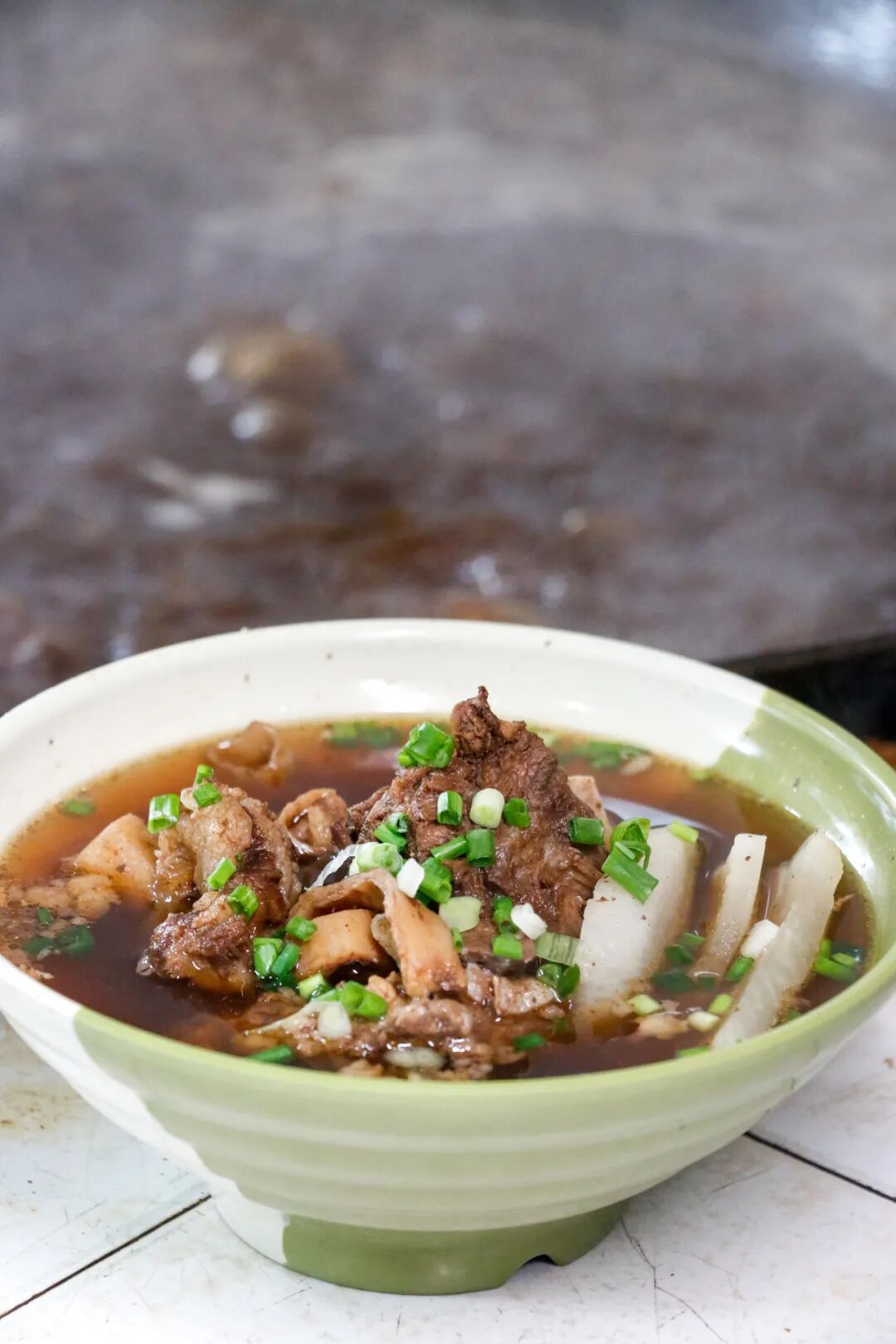
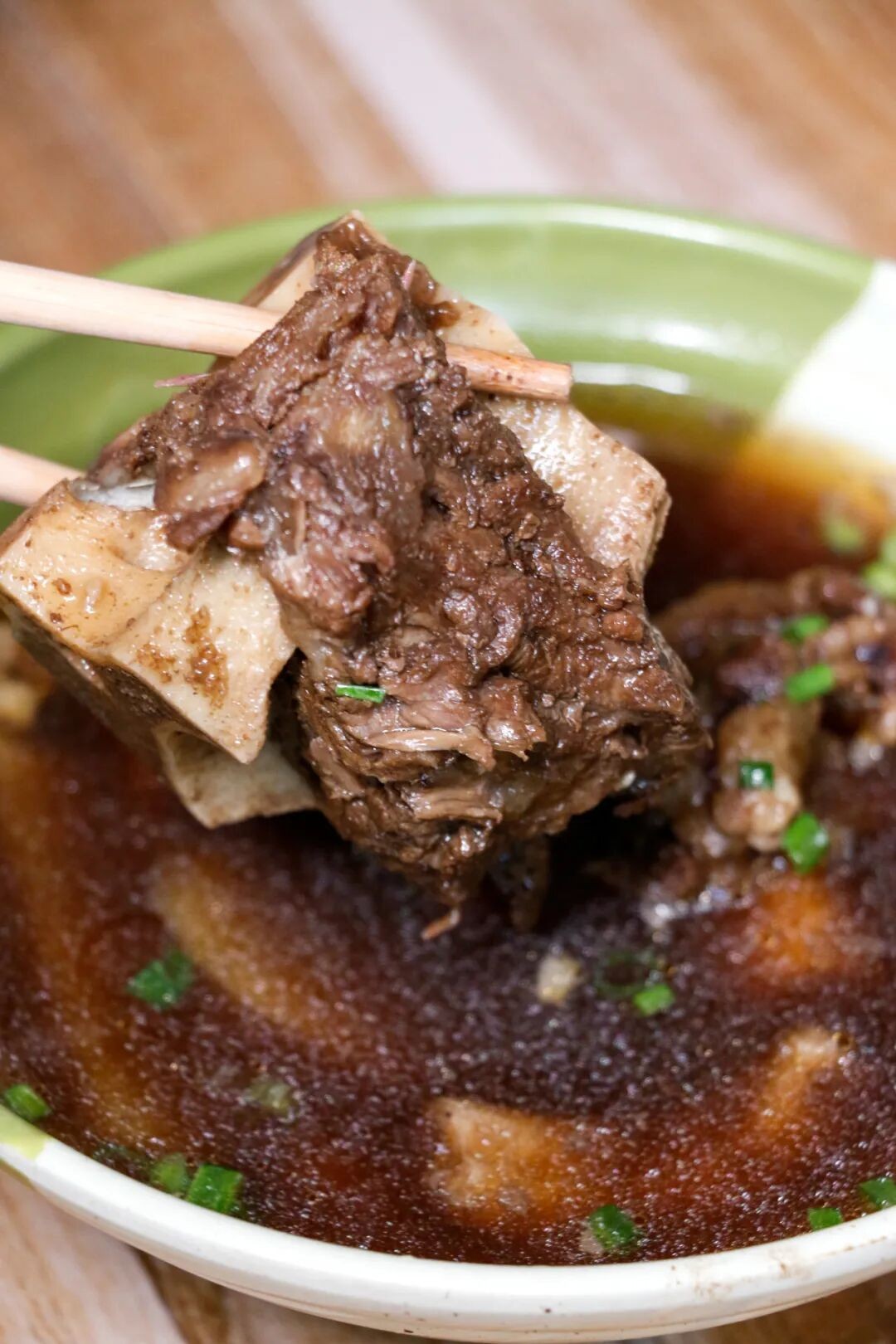
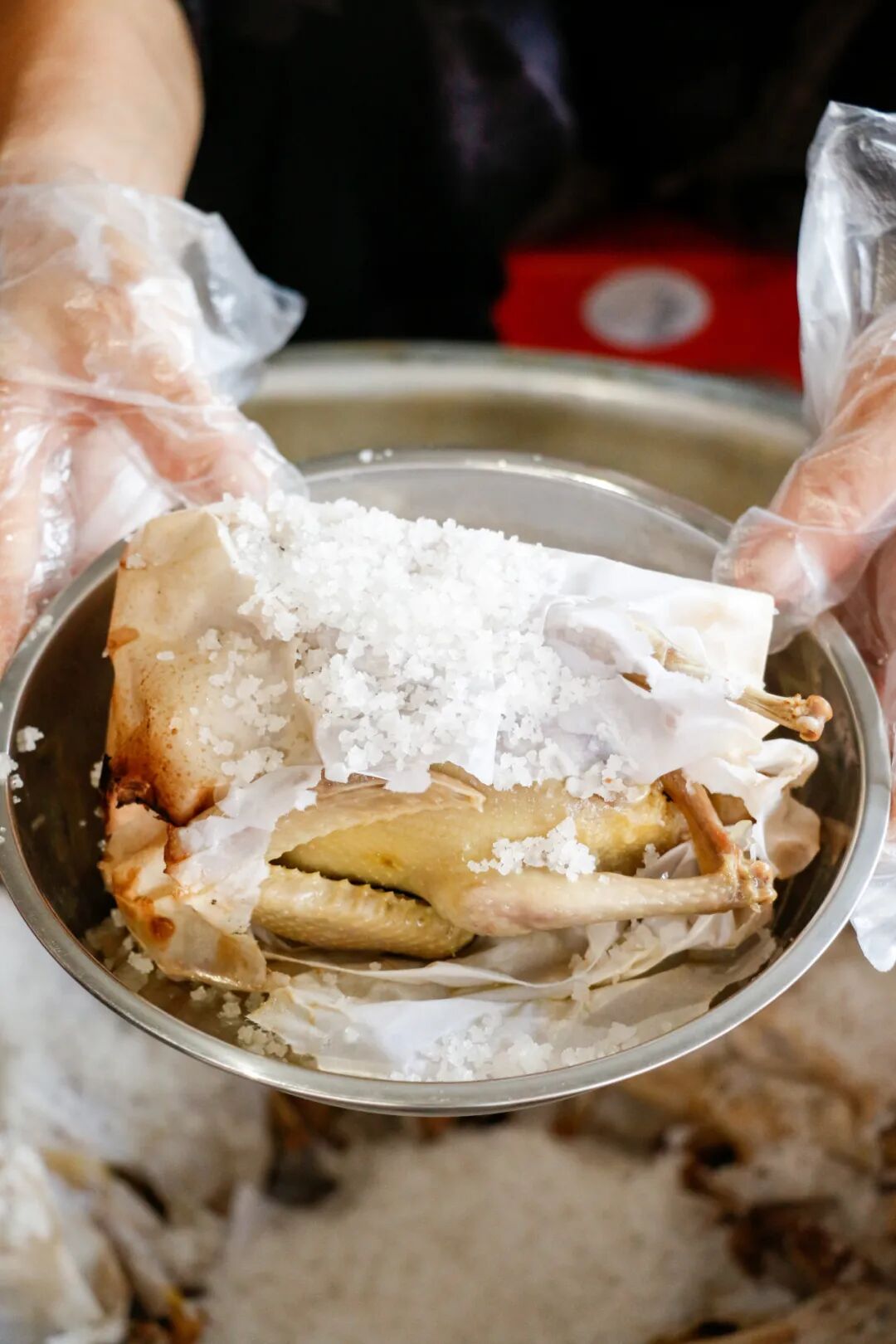
Hidden Halal Restaurants Beijing: Niujie Beef Noodles, Hopson One Fried Chicken and Local Hot Pot
Reposted from the web
Summary: This hidden halal restaurants guide for Beijing covers issue 33, featuring Hopson One halal fried chicken, Niujie beef noodles, Xingyuexuan hot pot, local barbecue, and practical restaurant notes for Muslim diners.
Beijing Halal Food Map (33) is presented here as a firsthand travel account in clear English, beginning with this scene: In the days right after Eid al-Fitr, I was still getting used to eating during the day and my appetite was much smaller. The account keeps its focus on Beijing Halal Food, Muslim Travel, Middle Eastern Food while preserving the names, places, food, and historical details from the Chinese source.
In the days right after Eid al-Fitr, I was still getting used to eating during the day and my appetite was much smaller. My weight dropped below 70kg and hasn't bounced back. Actually, it is quite good to get into the habit of eating only two meals a day. Skipping lunch helps me stay clear-headed and awake in the afternoon.
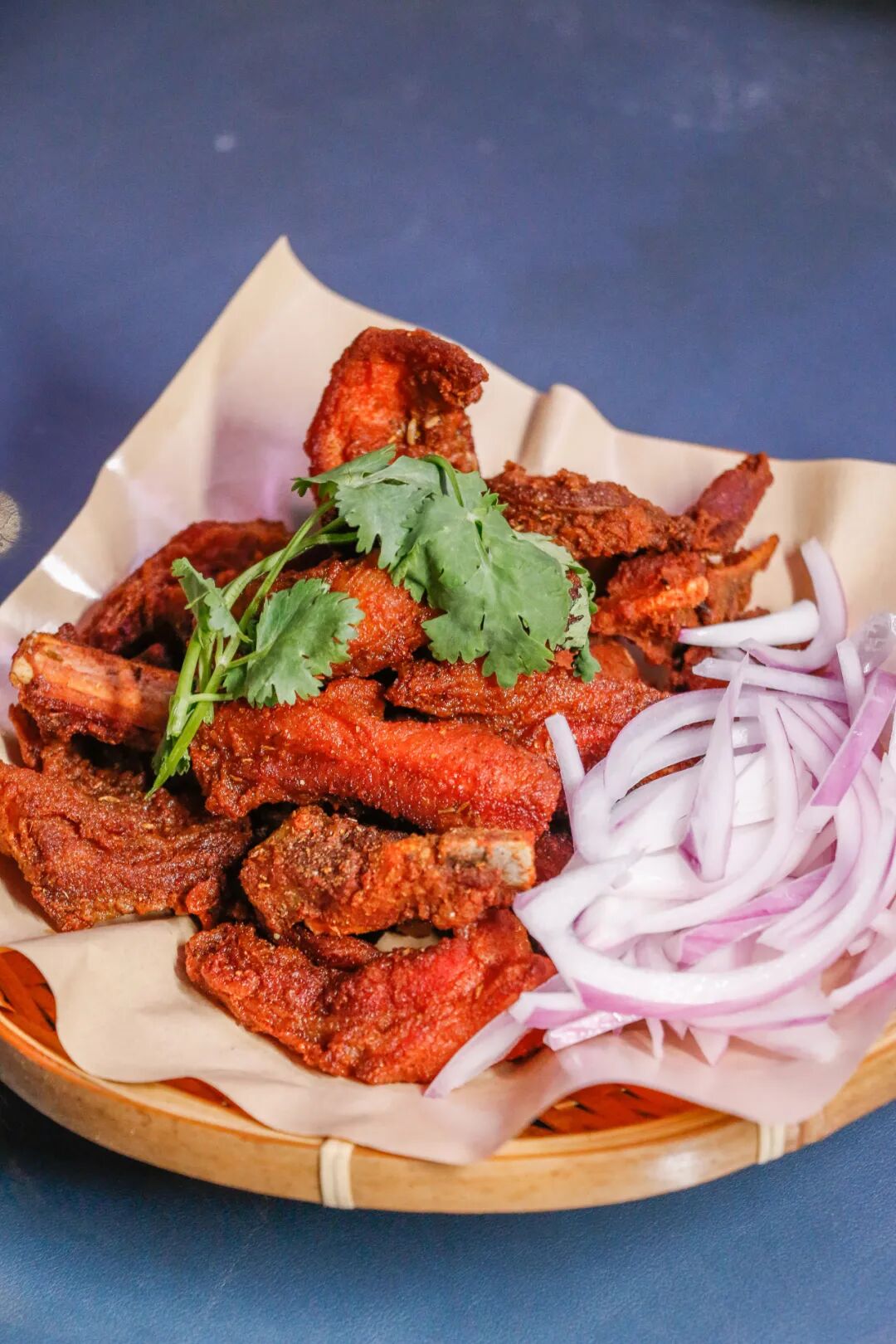
1. Chicken Tender Master (Jiliu Daren)

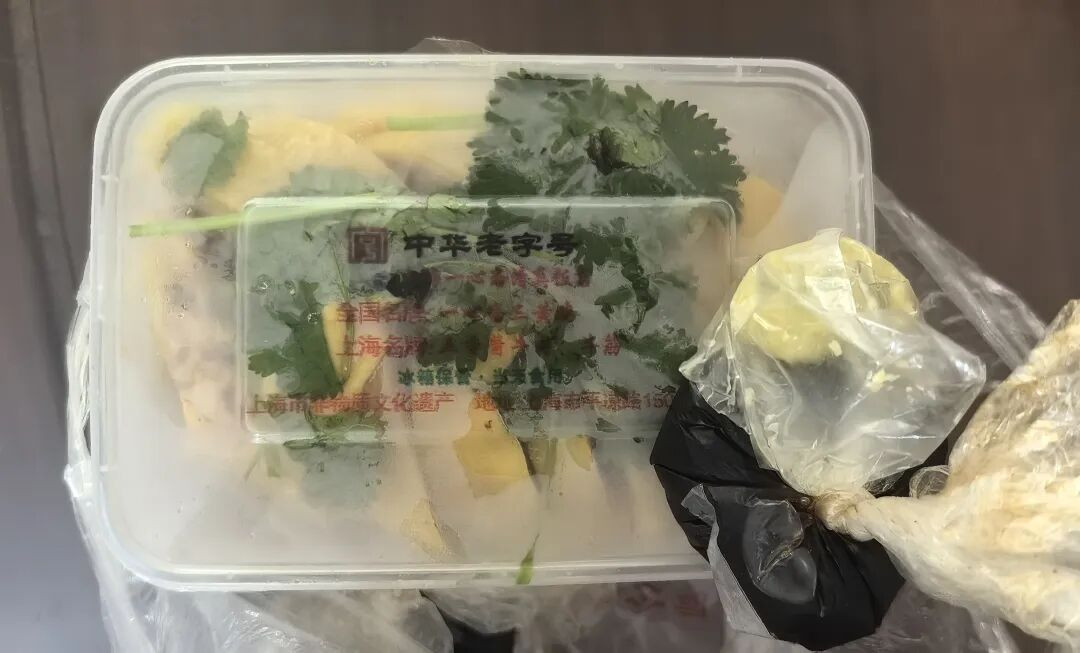
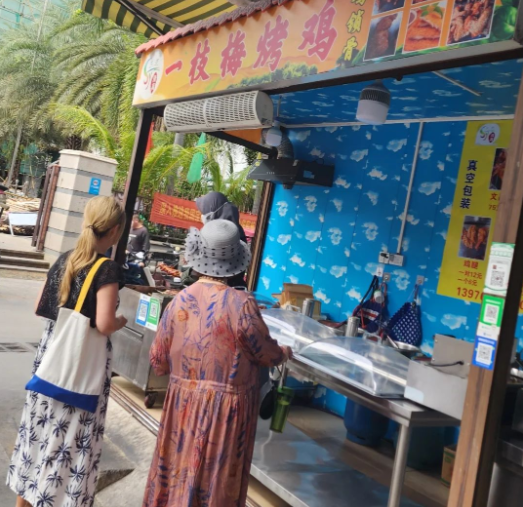
Chicken Tender Master is a chain brand, but only this Hopson One (Hesheng Hui) branch is guaranteed to be halal. The owner is a friend (dosti) from Tongliao who studied in Egypt, and his parents are both Hajjis. So, please make sure to choose the Hopson One branch when eating at Chicken Tender Master. I suggested to the owner that he place a subtle halal sign in front of the register to make it easier for friends (dosti) to confirm.

Jiuxing Chicken is a very reliable halal food factory in Hebei, and many friends (dosti) have said it is trustworthy.

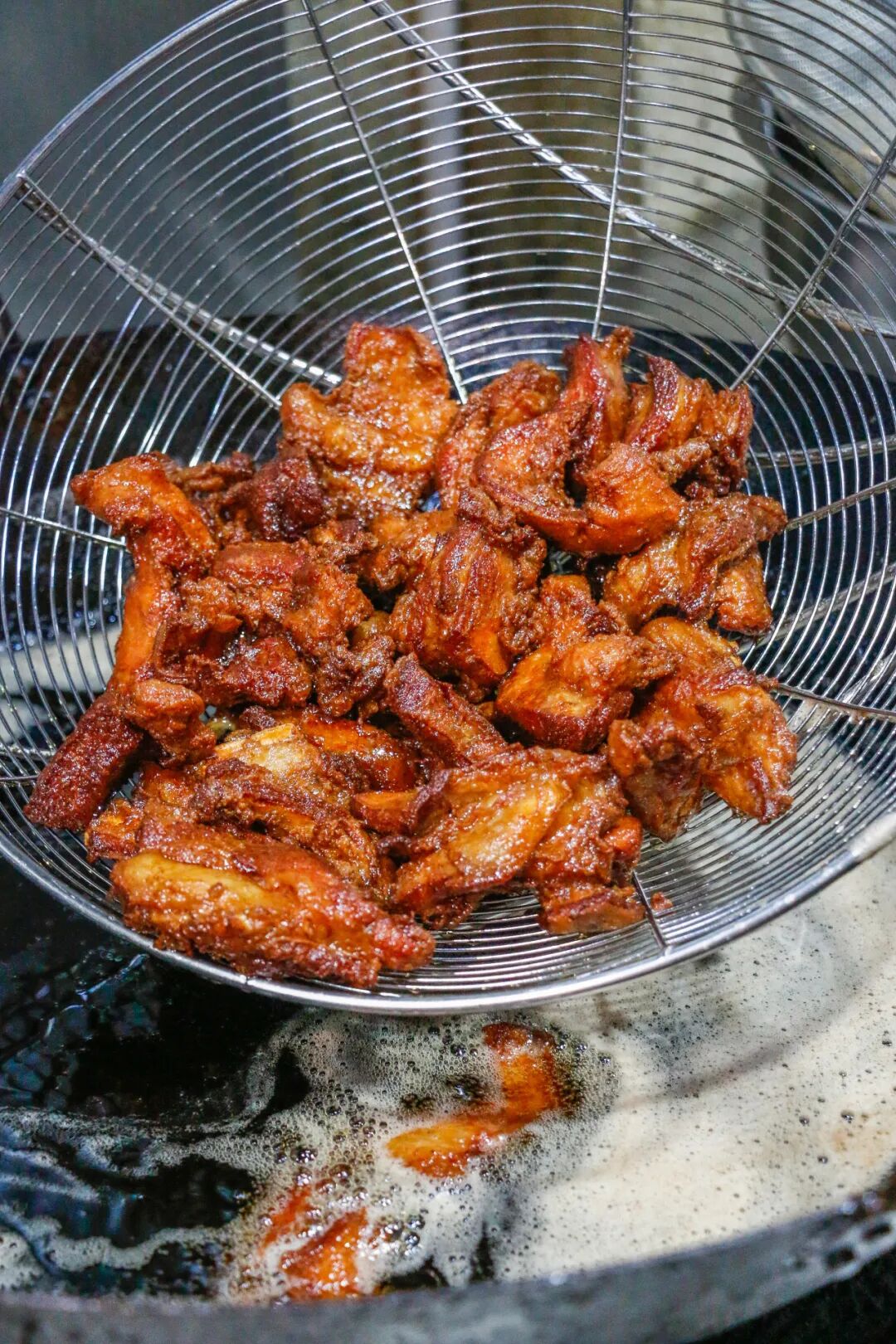
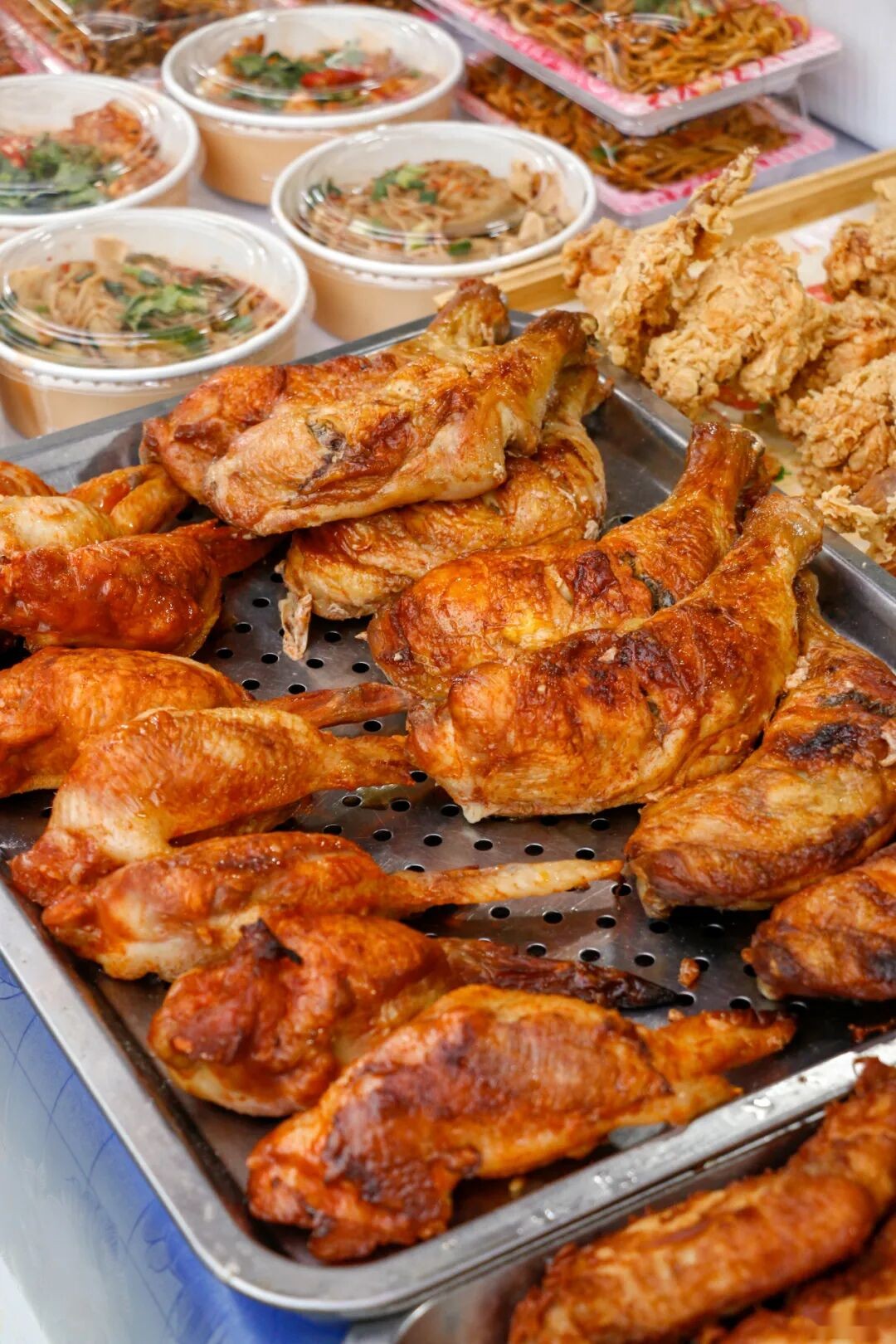
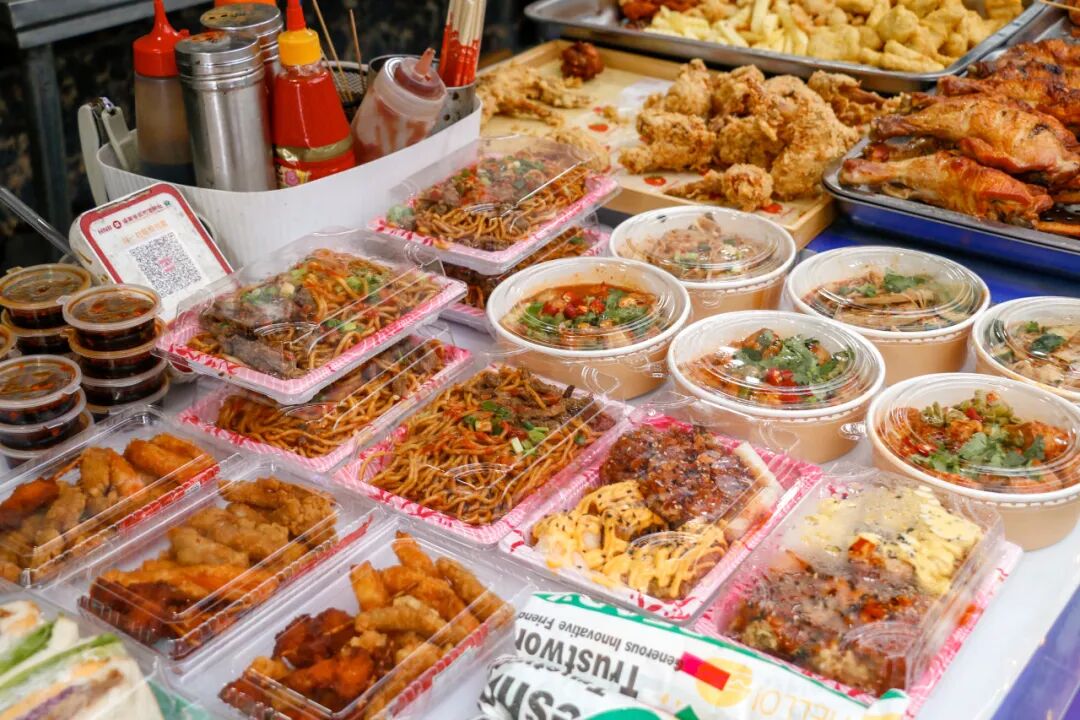
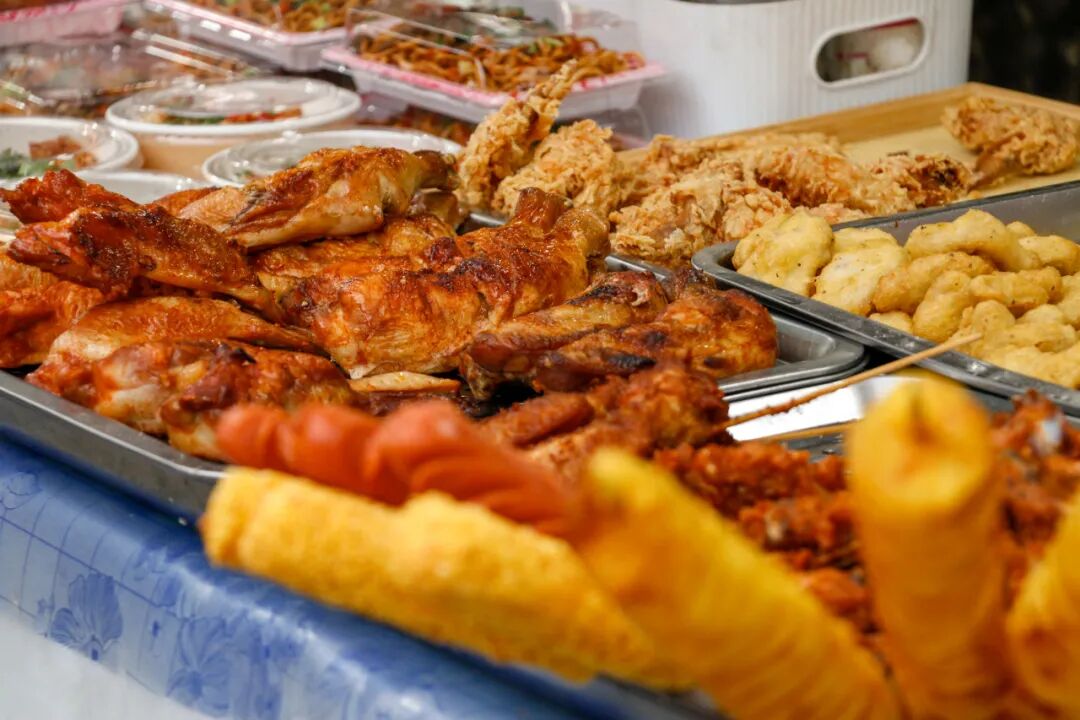
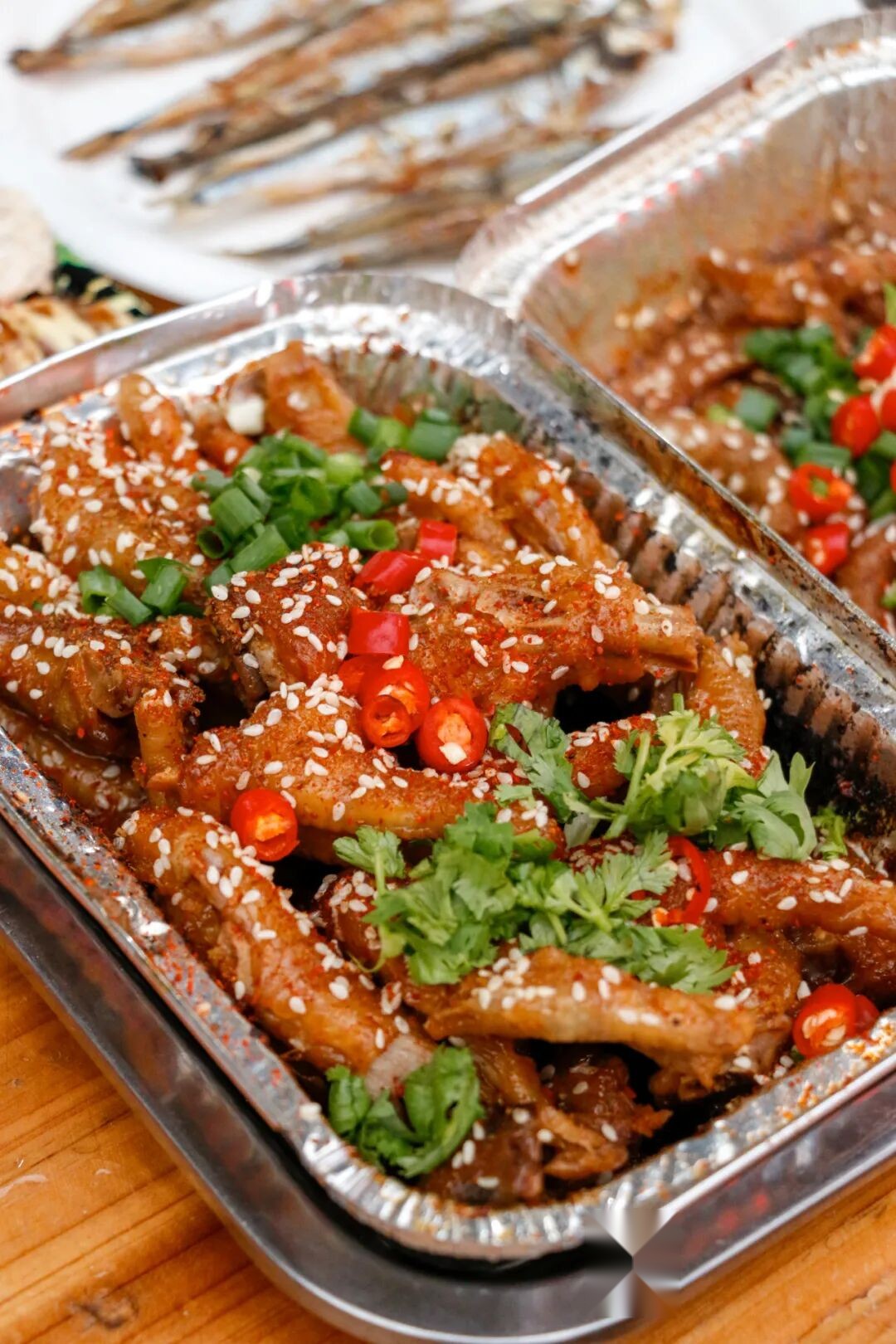
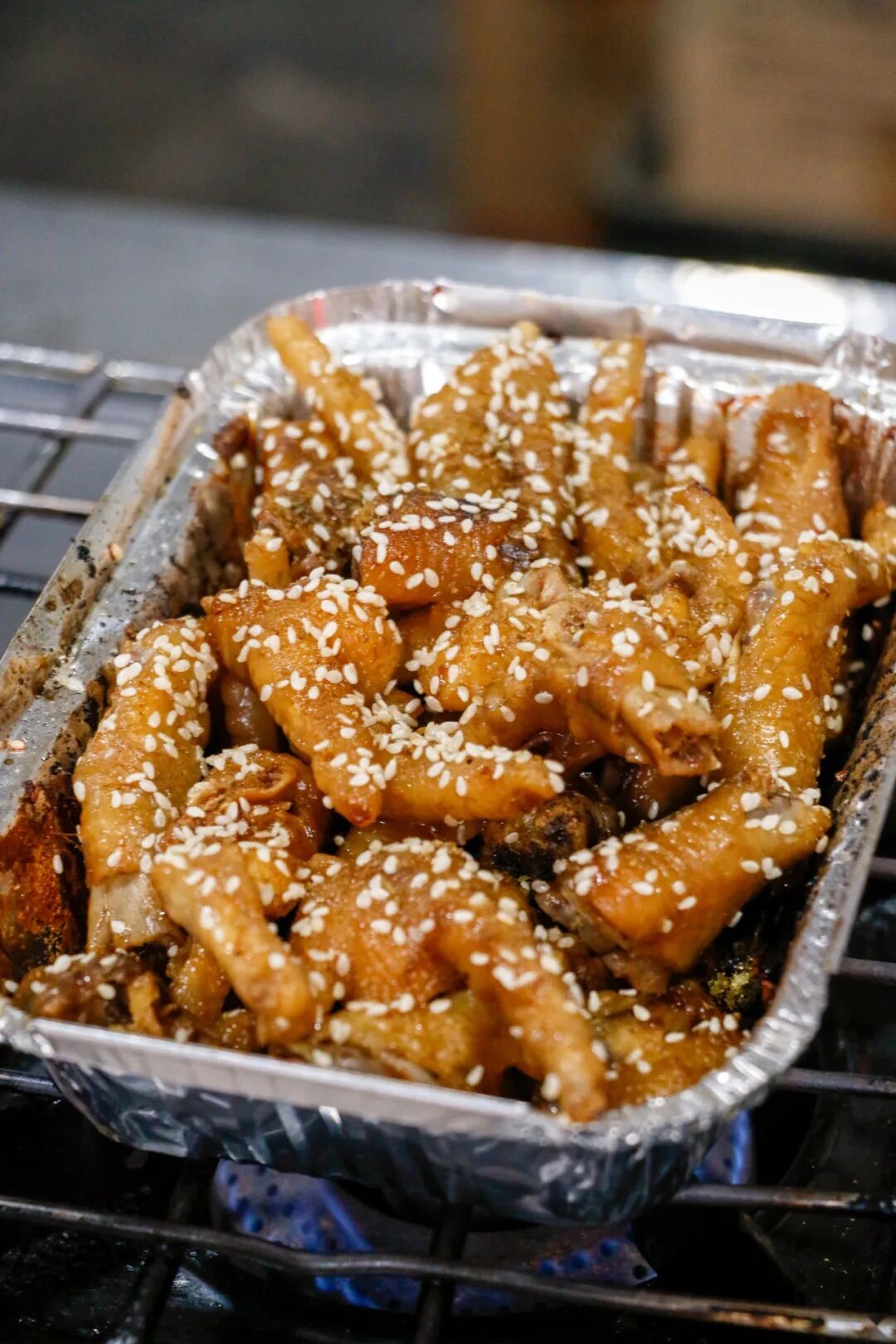
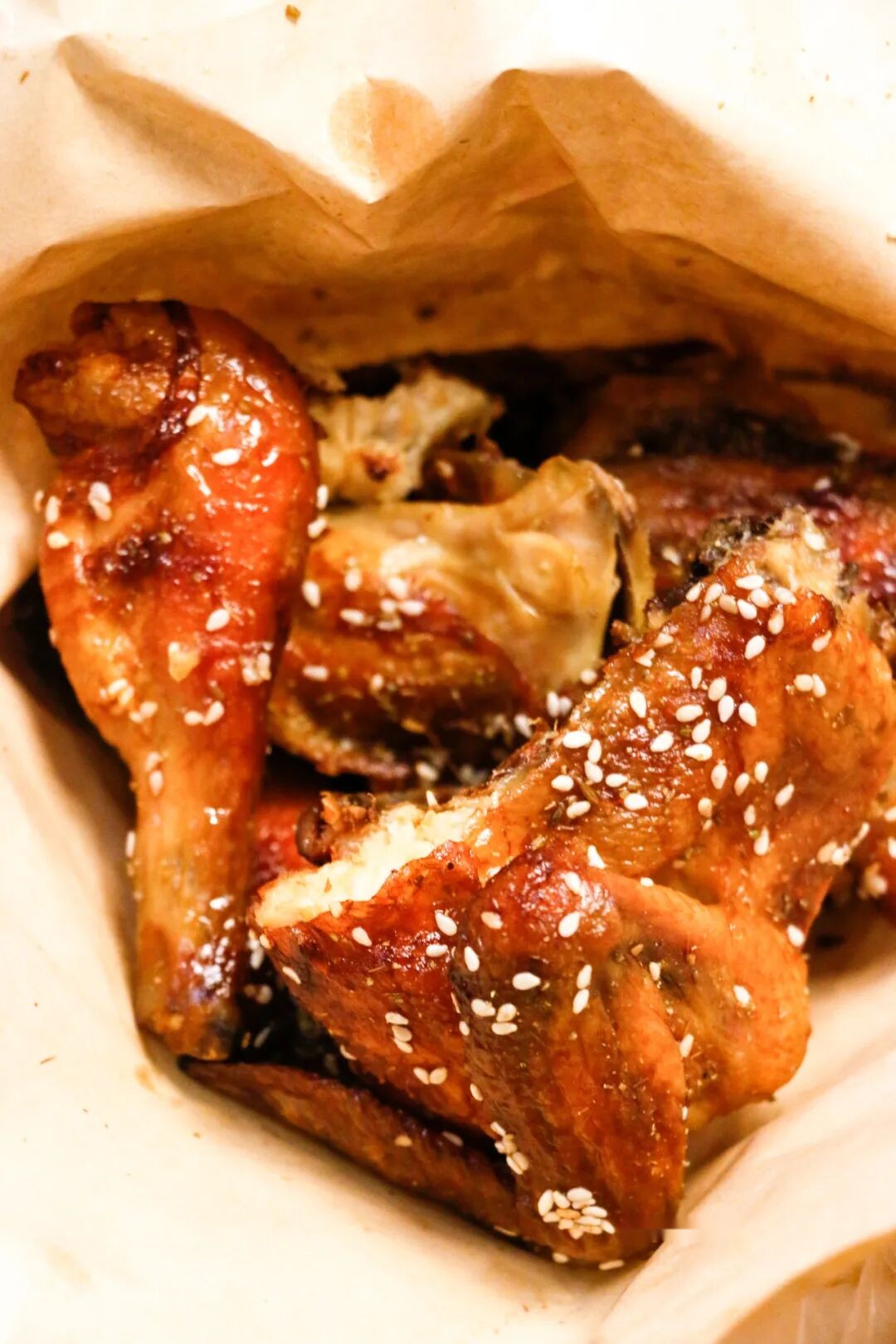
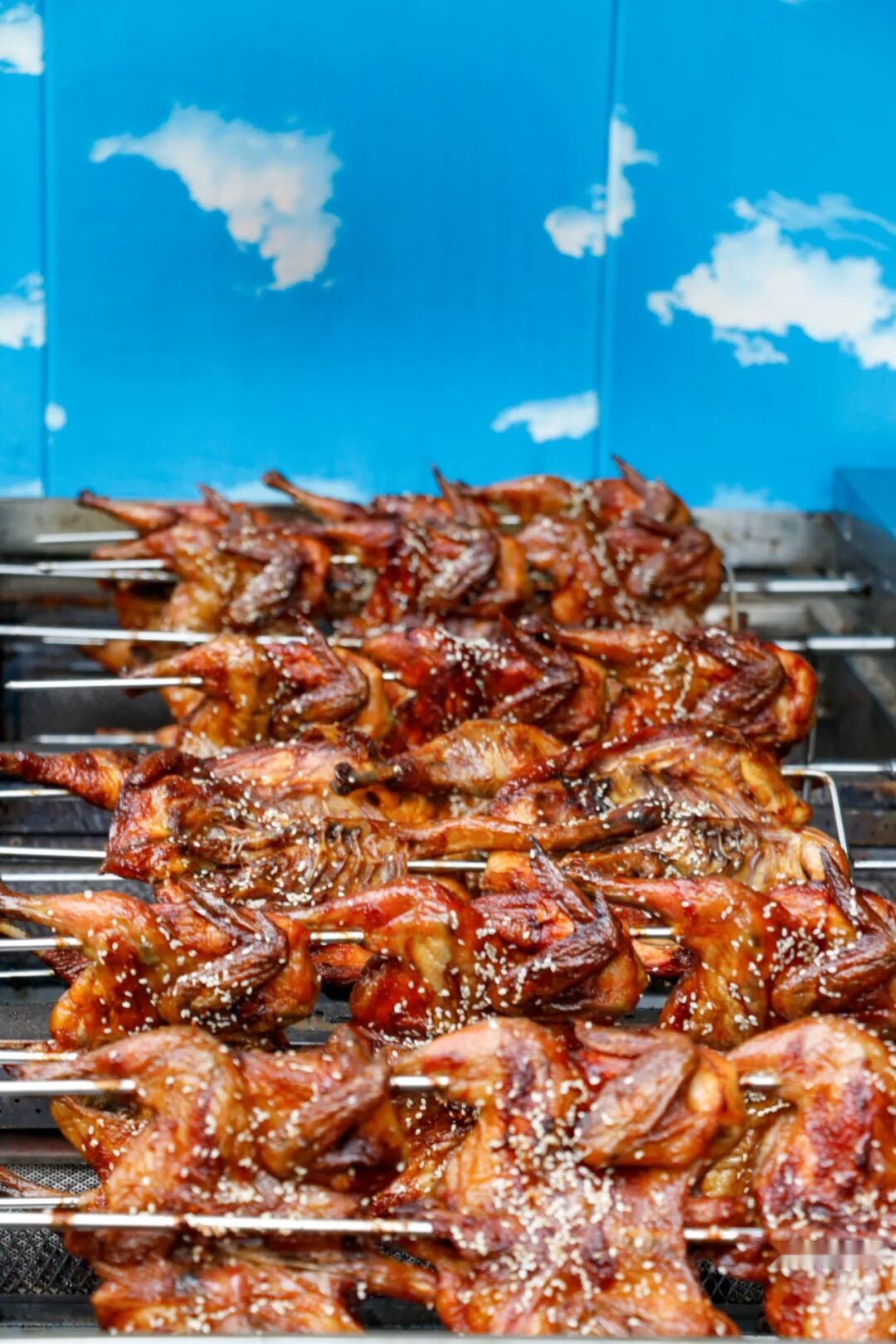
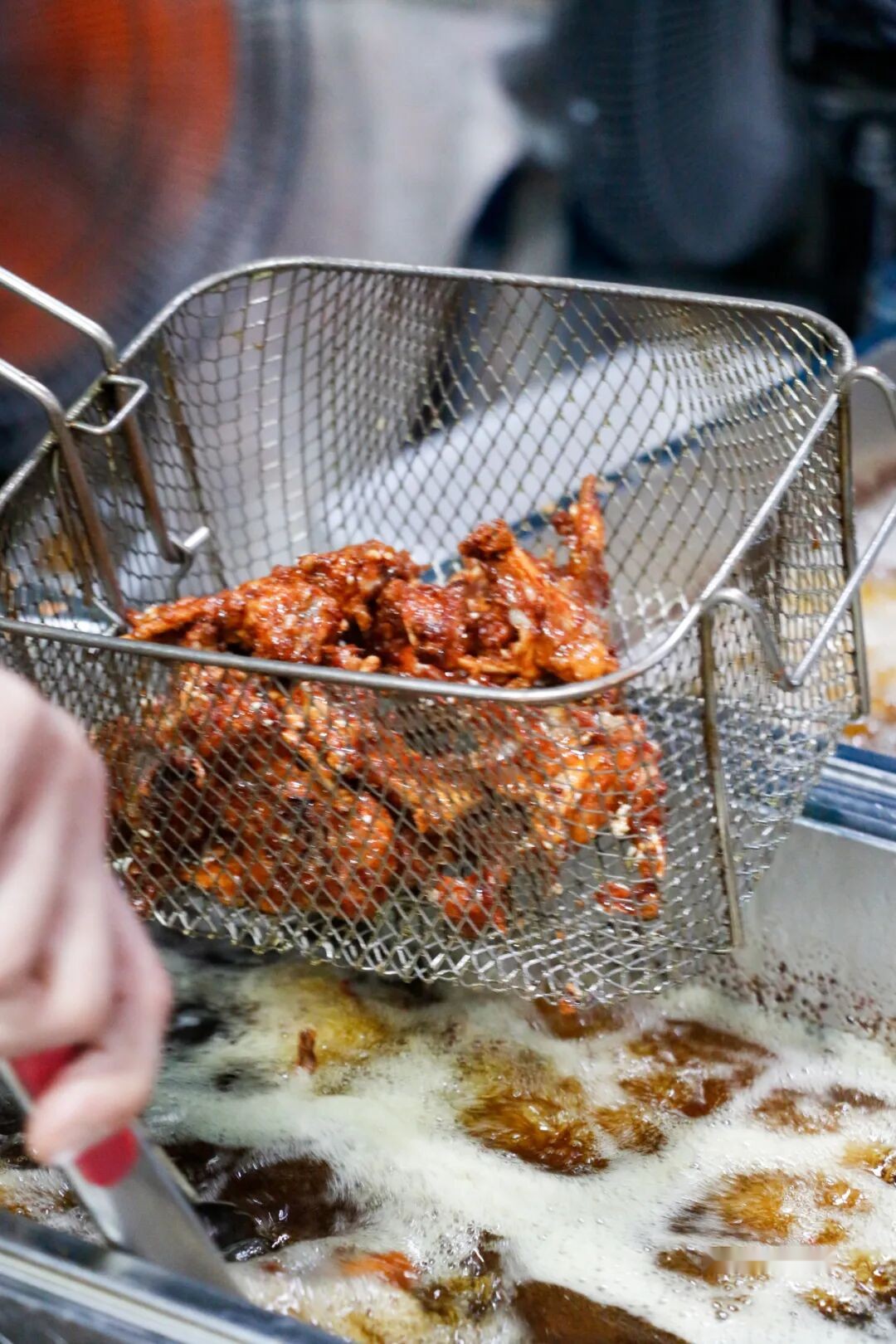
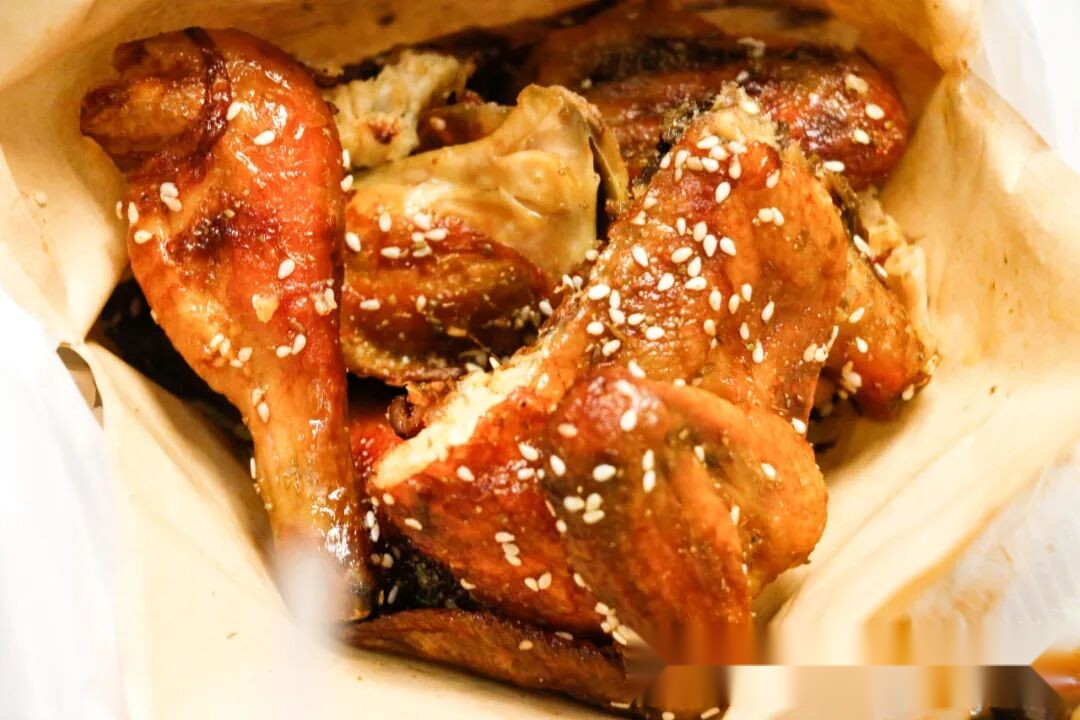
They only sell three things: chicken tenders, rice cakes (niangao), and french fries. They guarantee fresh oil every day, so the fried food comes out golden and very fresh.

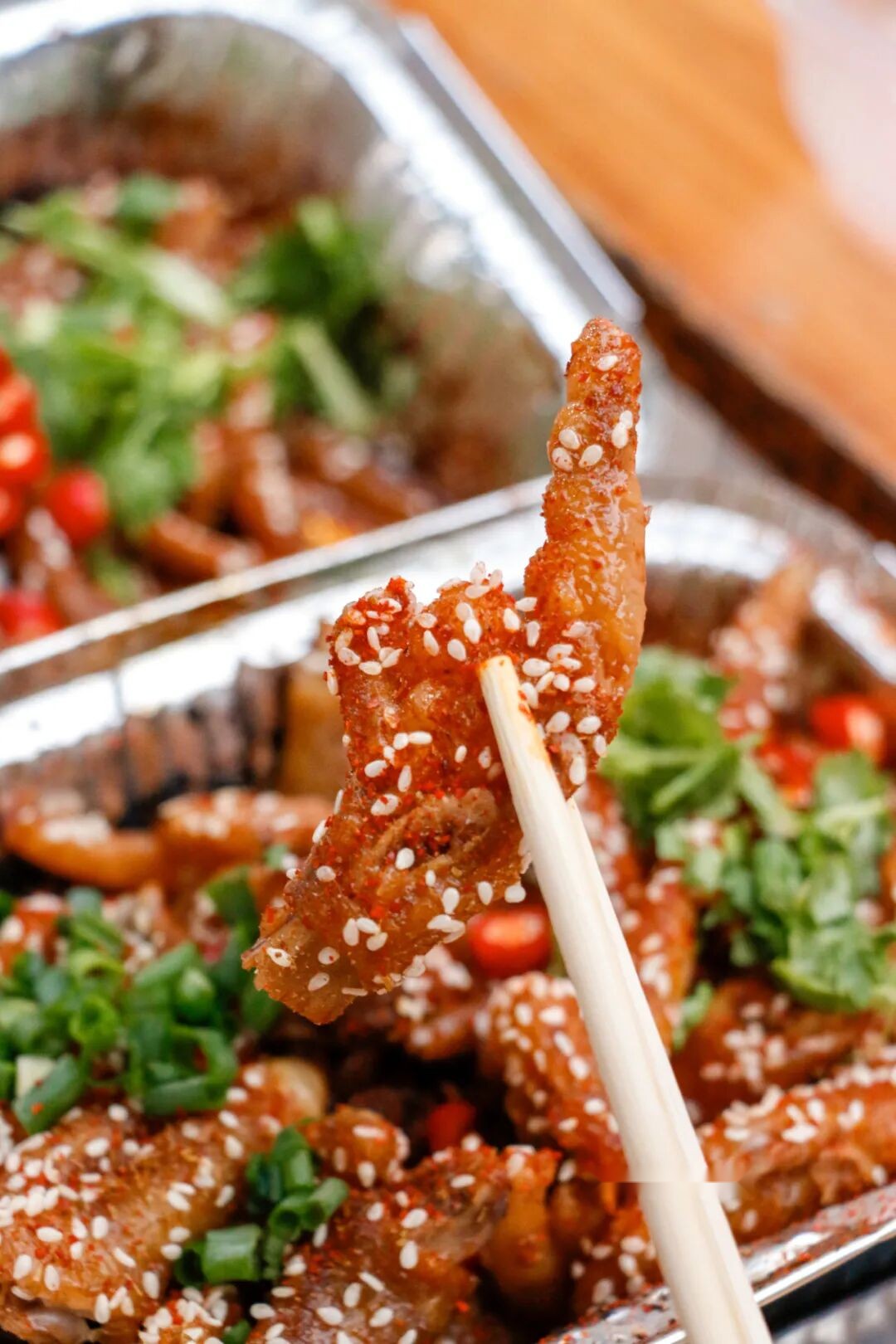
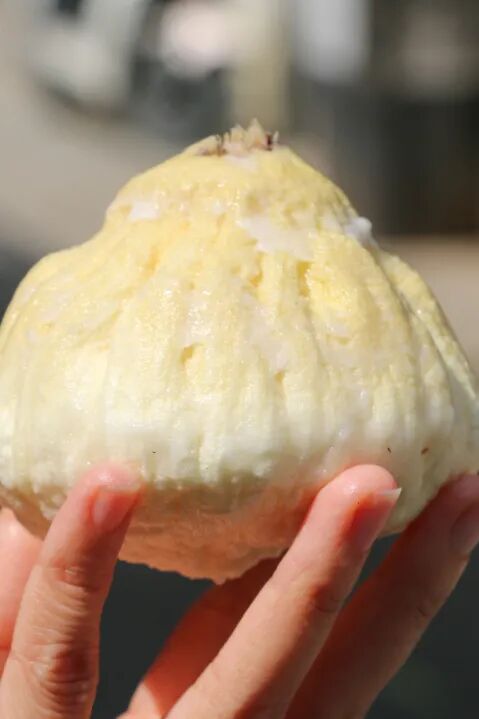
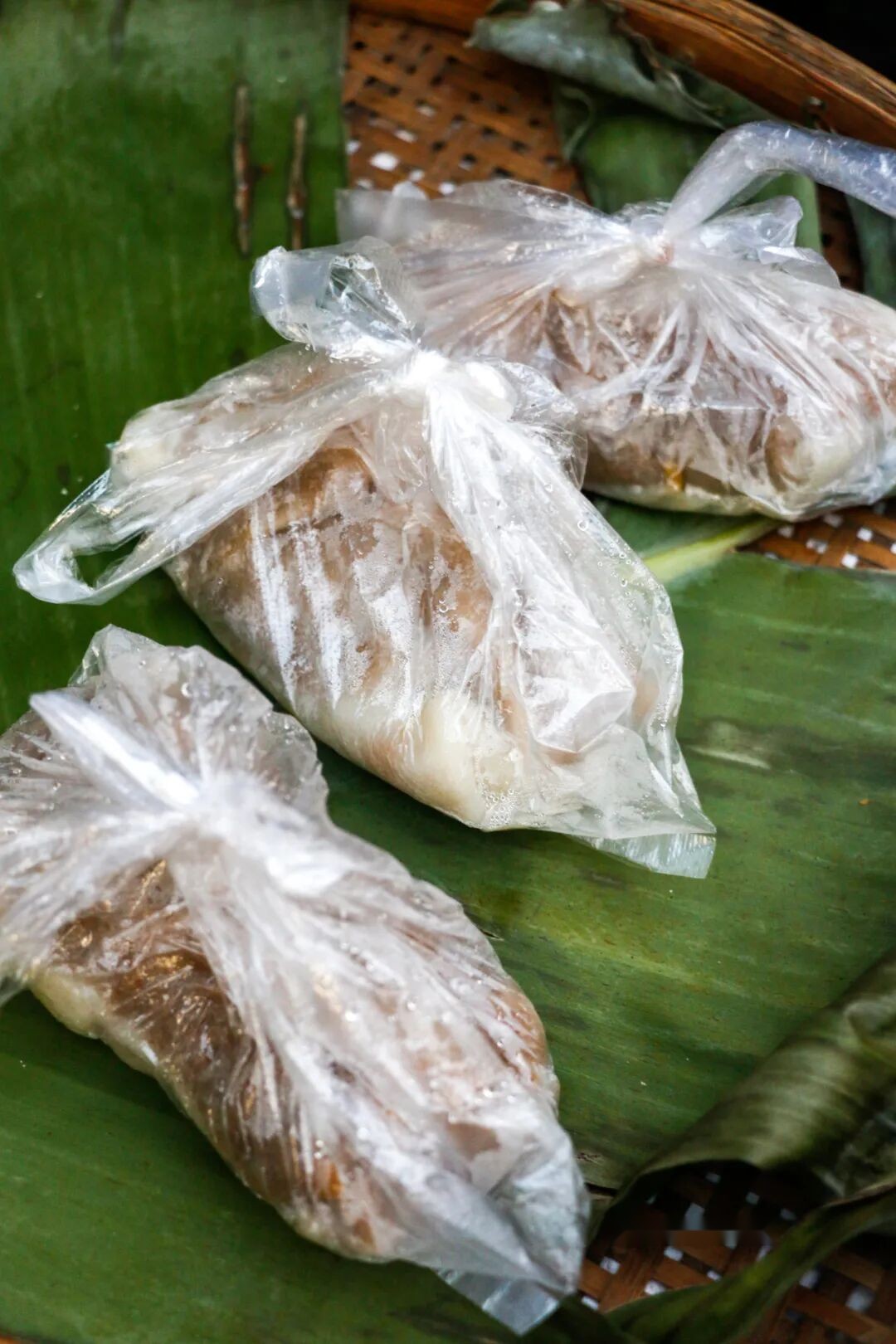
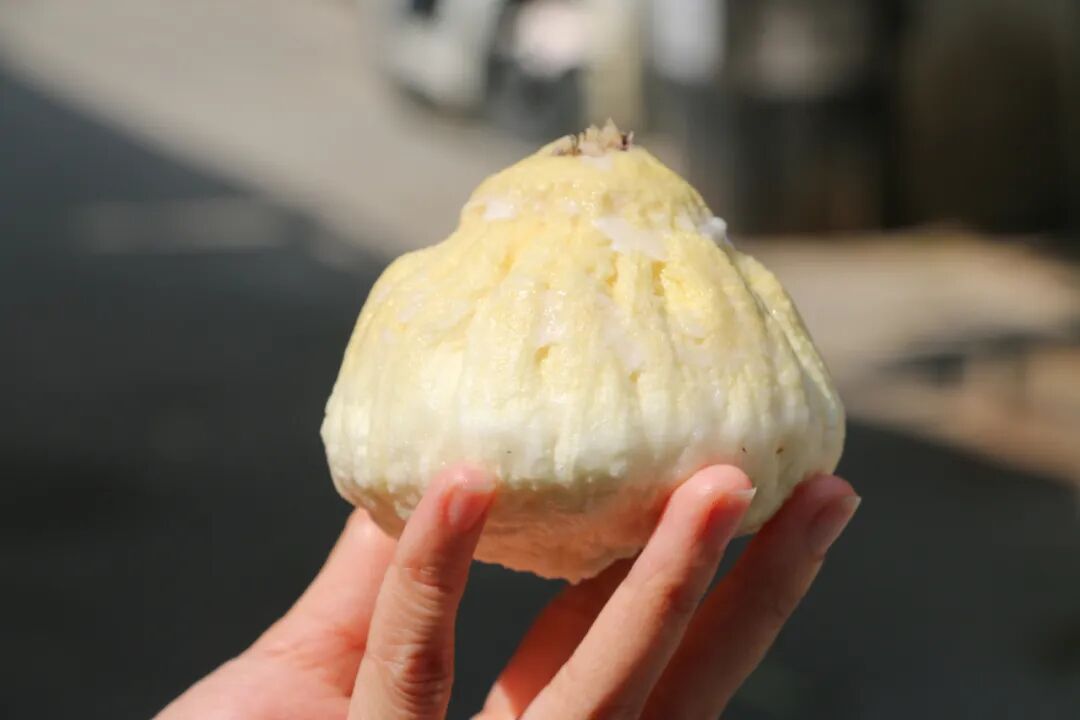
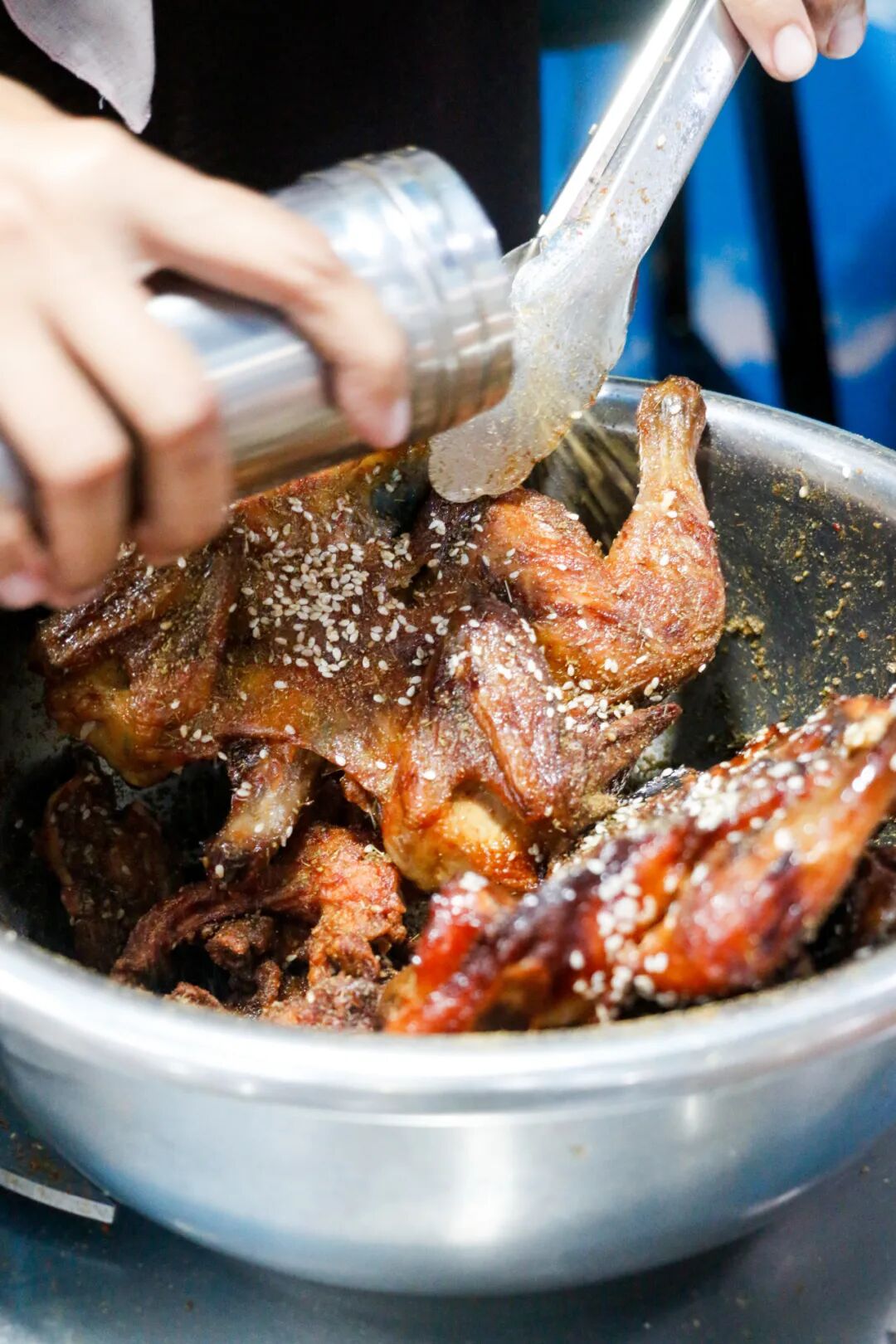
The fried rice cakes puff up and are hollow inside. The seasoning powder sprinkled on top is a secret recipe and the highlight of this shop.

The owner says this fried food is best eaten right out of the fryer. He does not recommend takeout because it affects the texture. The freshly fried chicken tenders are crispy and delicious, and the rice cakes are crispy on the outside and tender on the inside, which really satisfies a craving. This kind of small stall does not involve selling alcohol, so the money earned is clean and wholesome.

The address is Shop 168, 21 Block, Basement Level 2, Hopson One.
2. Wei's Big Bowl Noodles (Weiji Dawanmian)

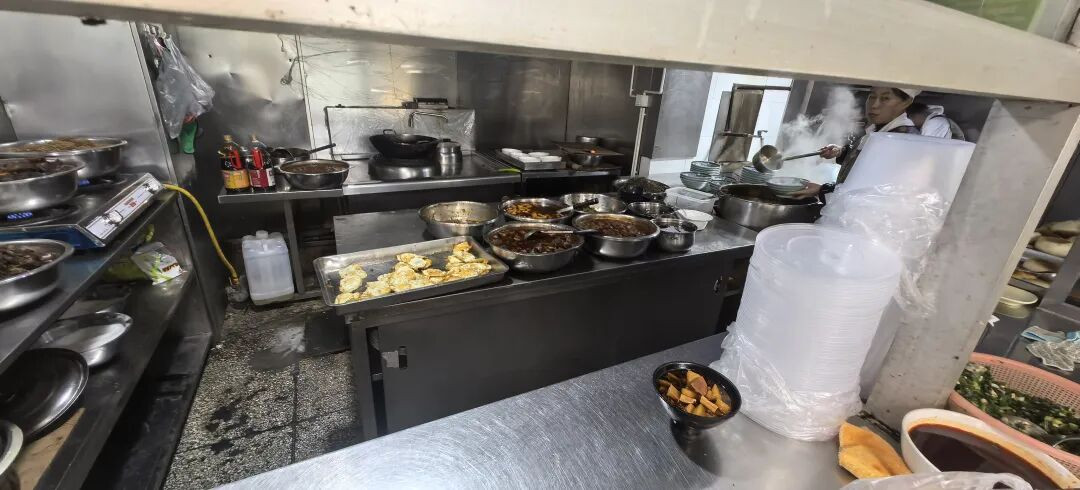
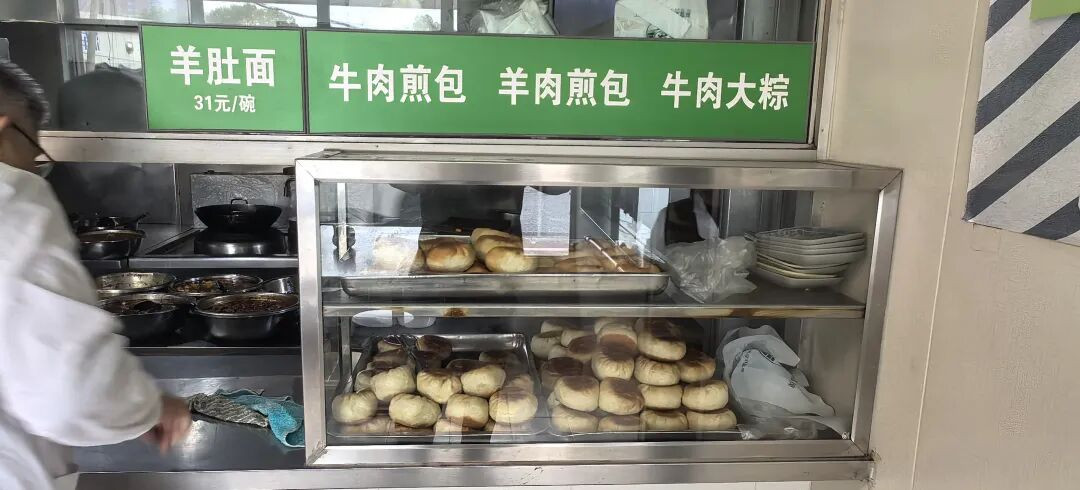
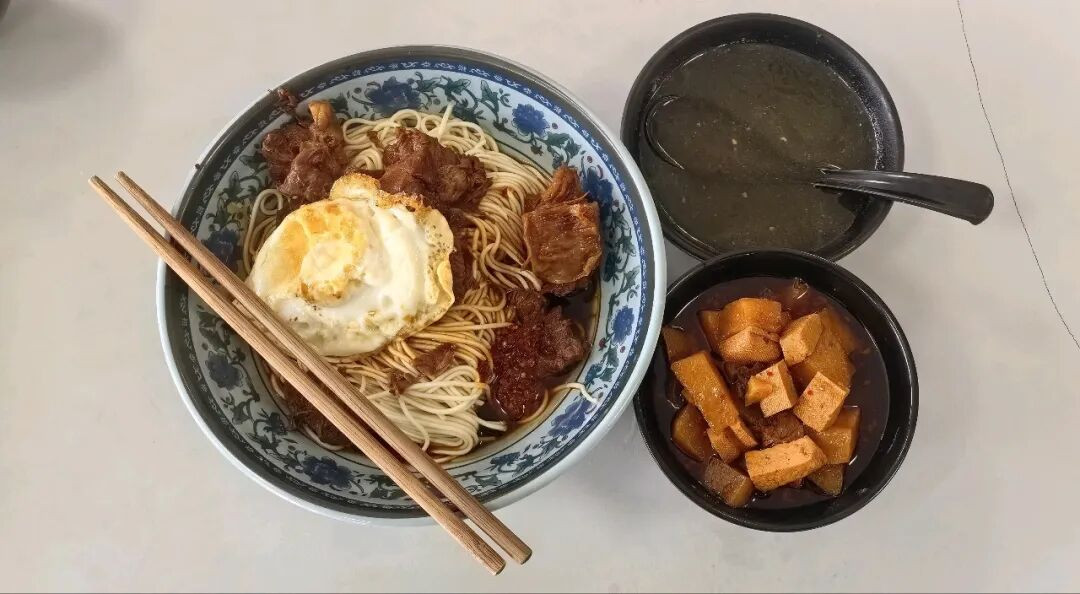
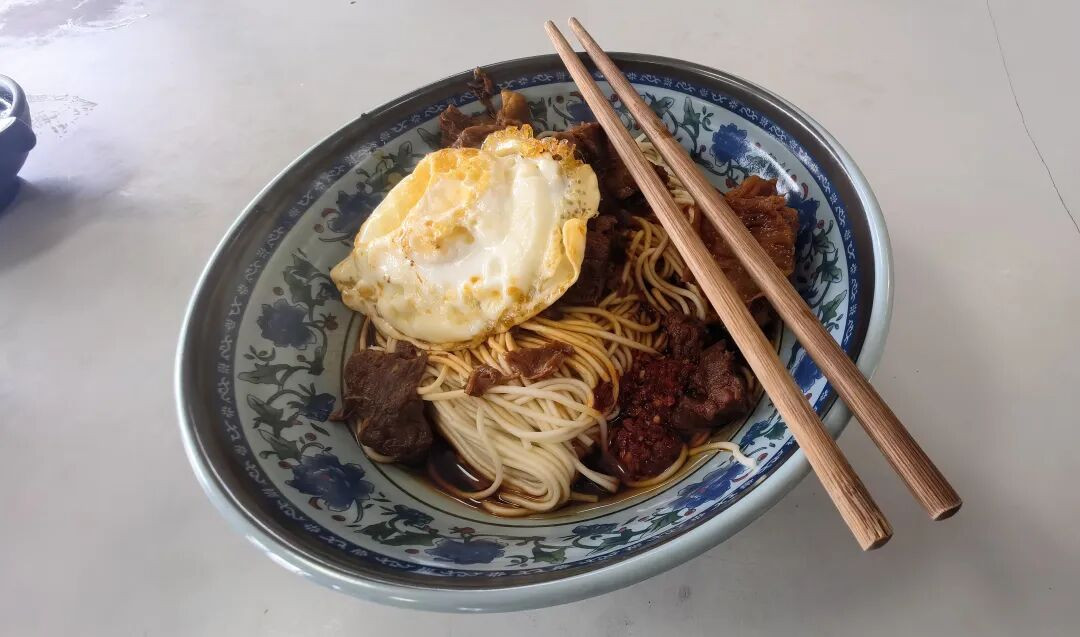
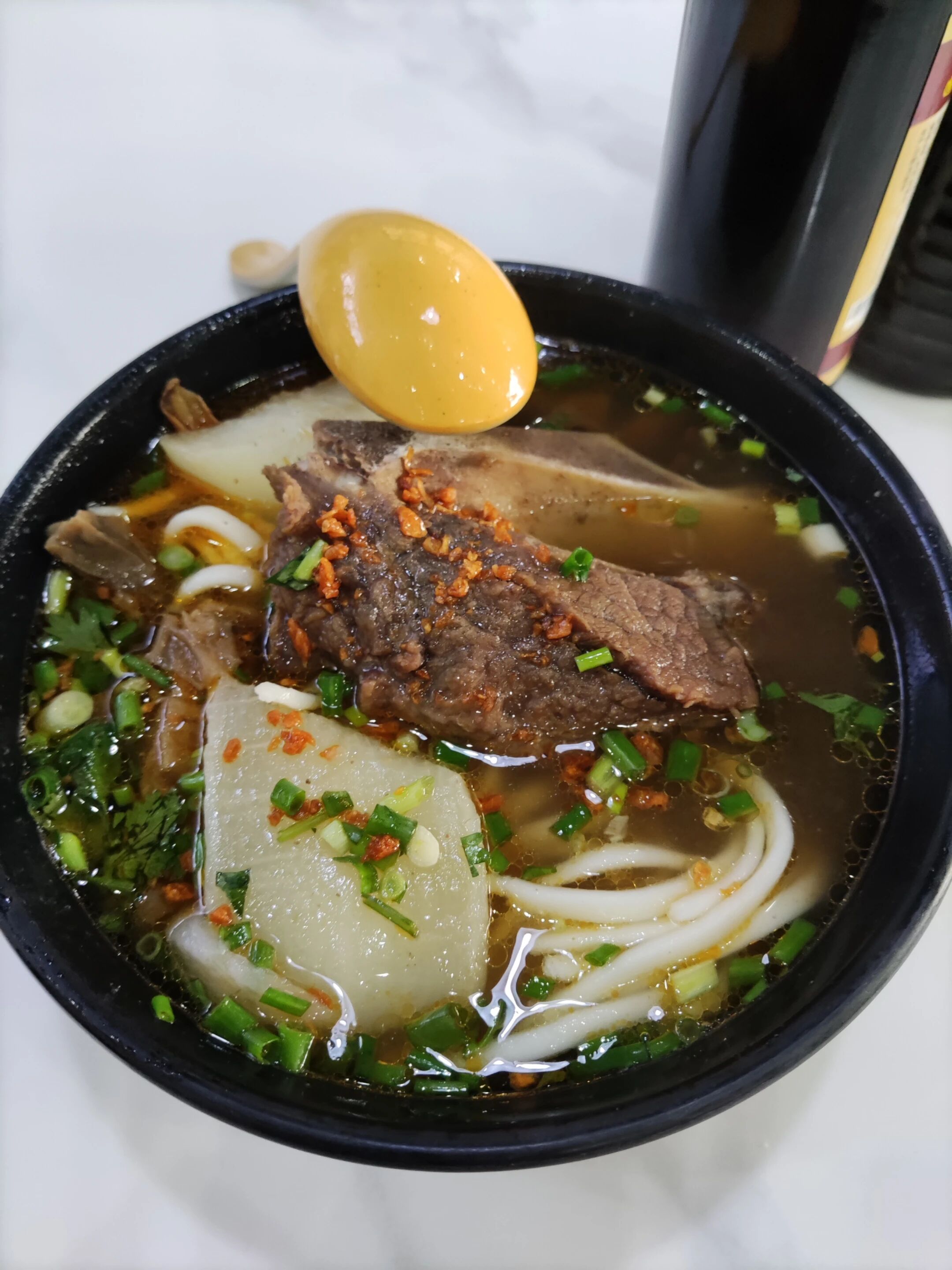
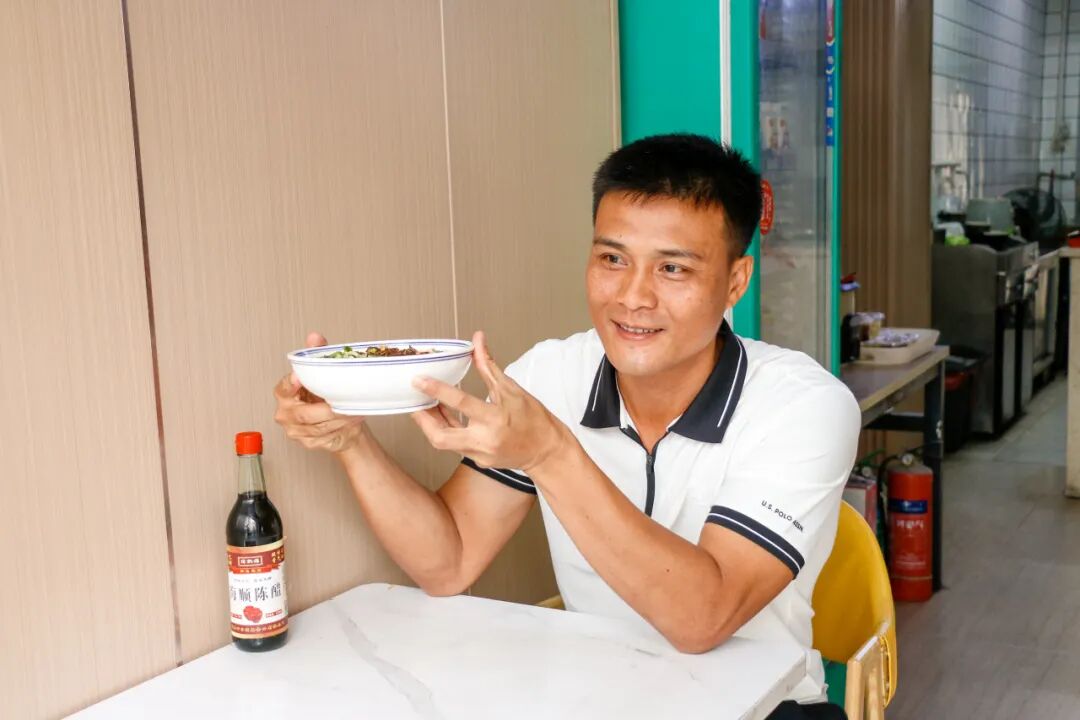
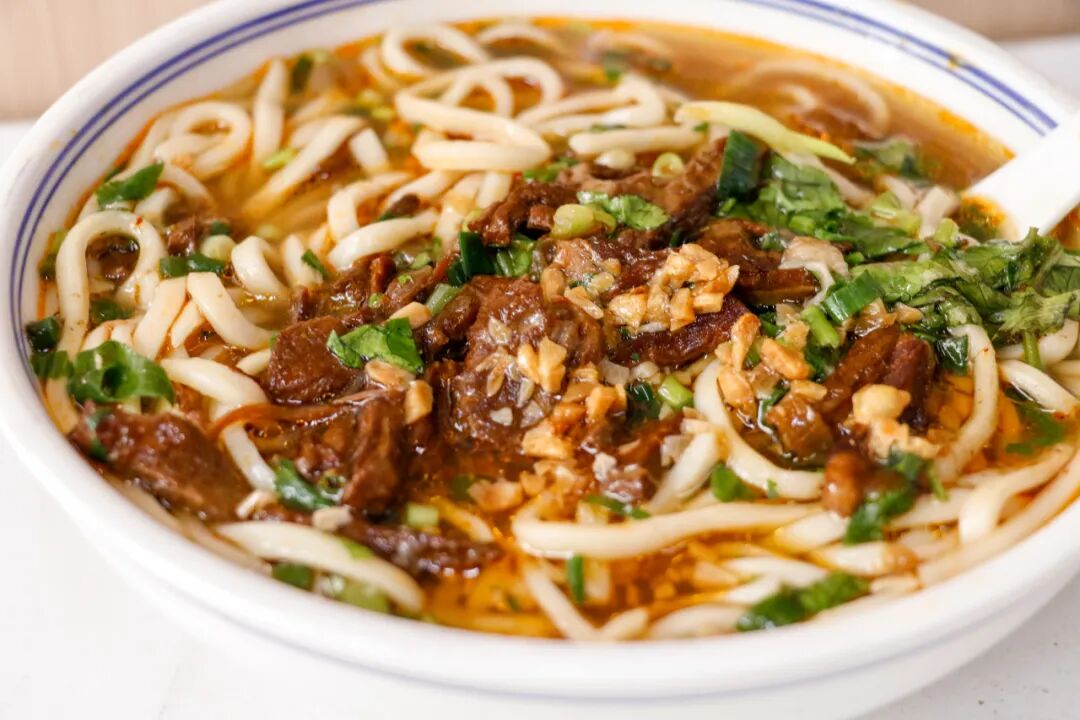
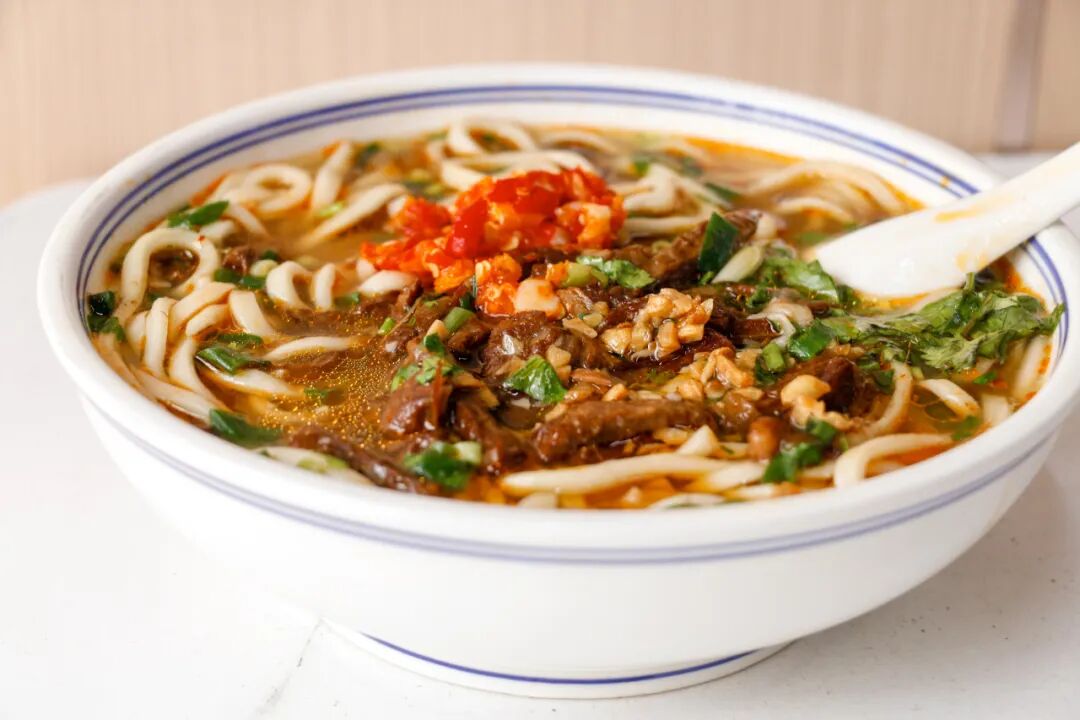
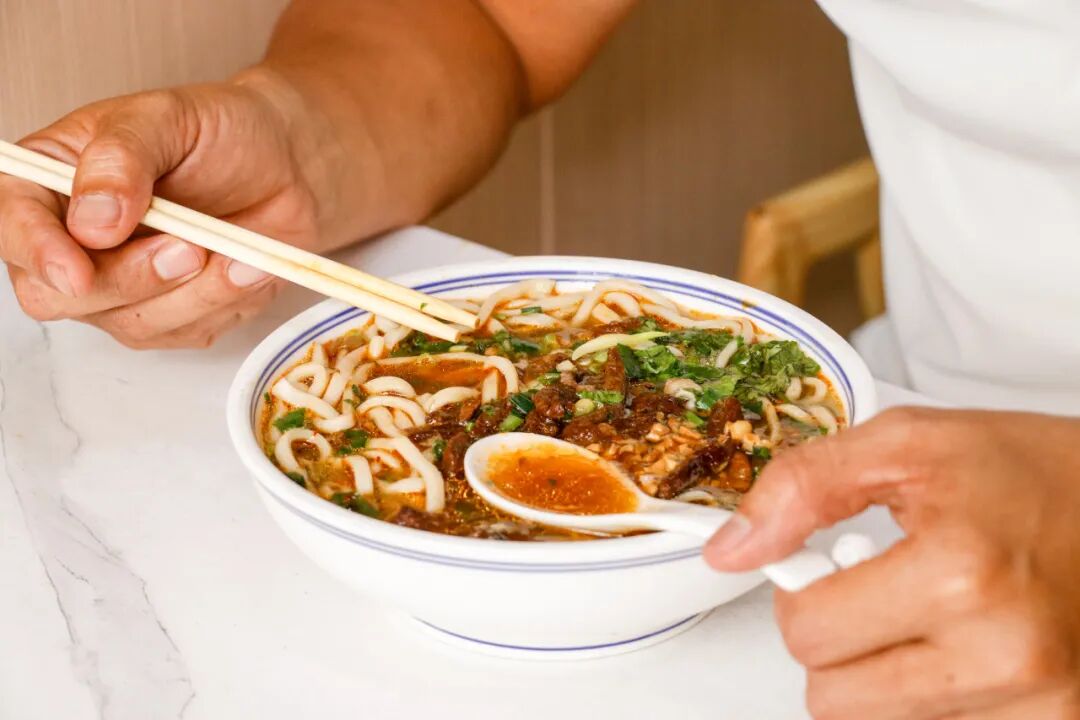
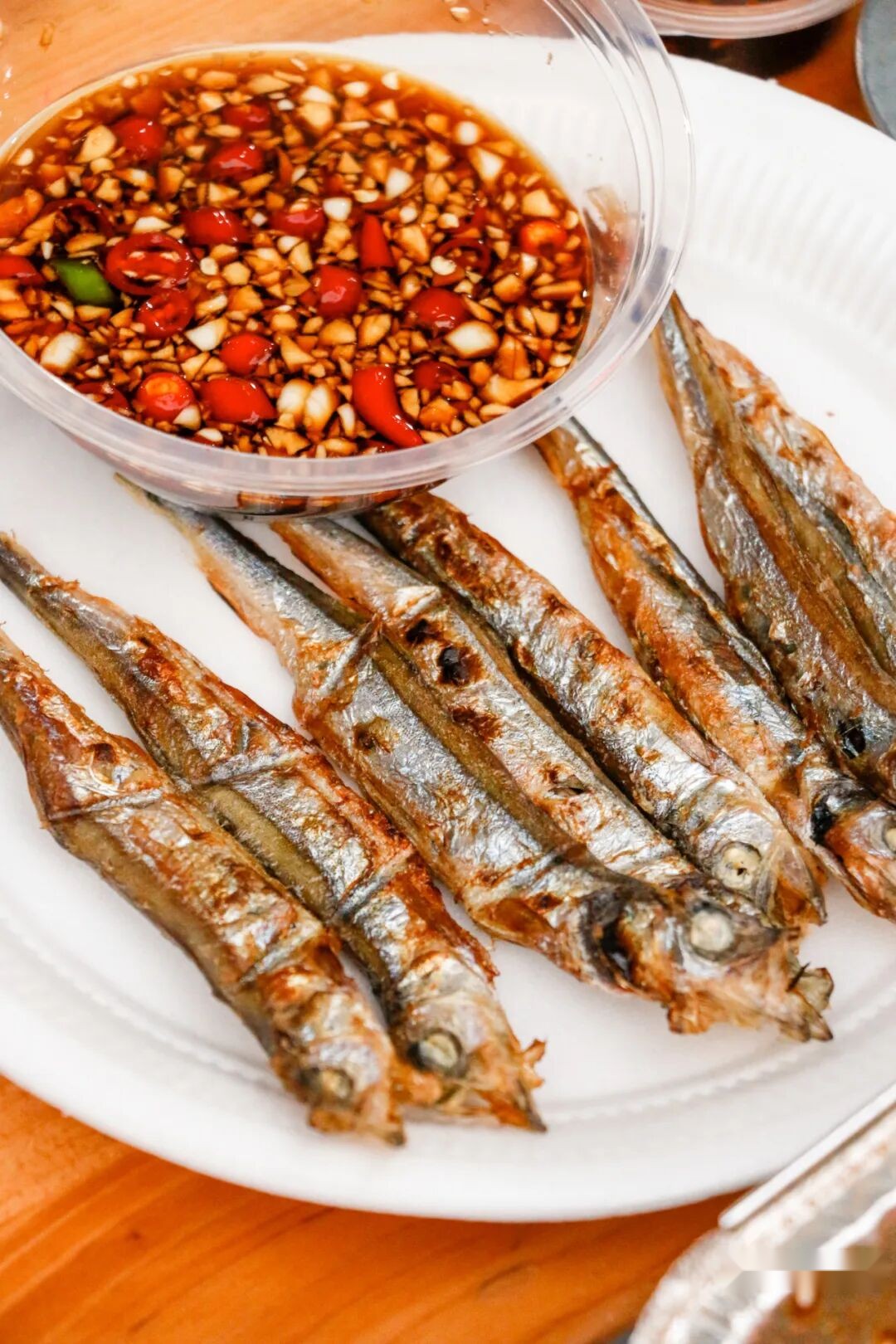
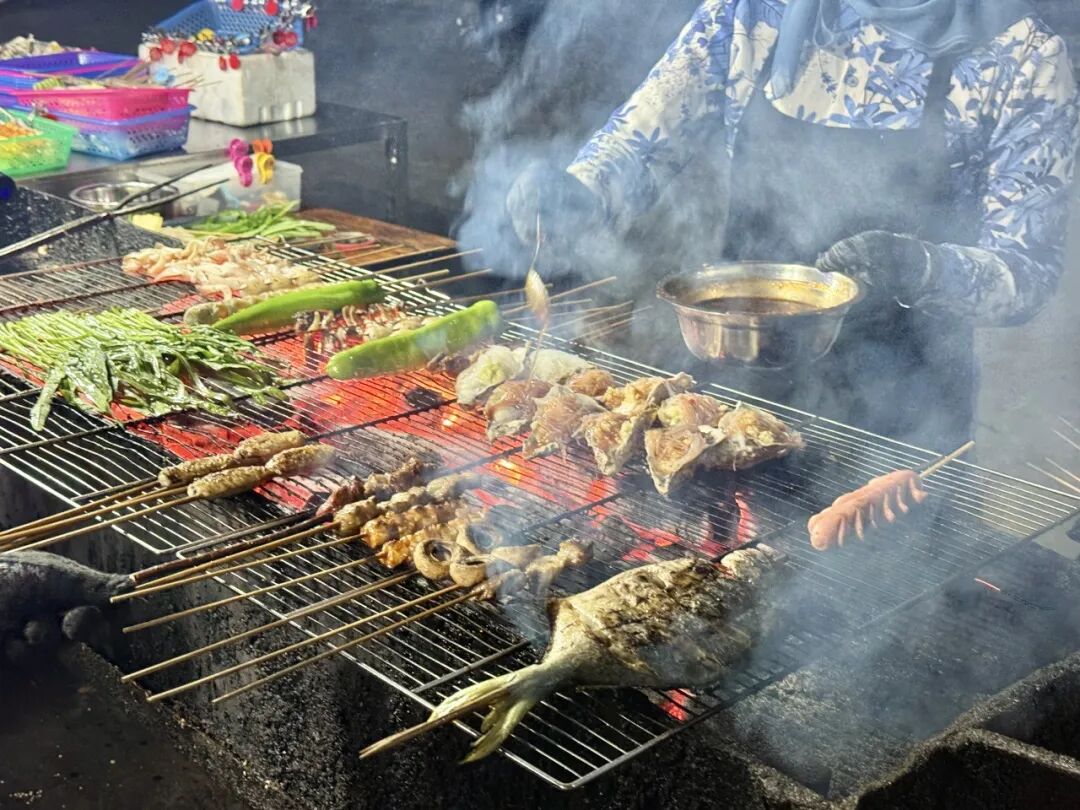
Wei's is a new small beef noodle shop on Zaolin Front Street in Niujie. They have grilled skewers, stir-fried dishes, and grilled fish.

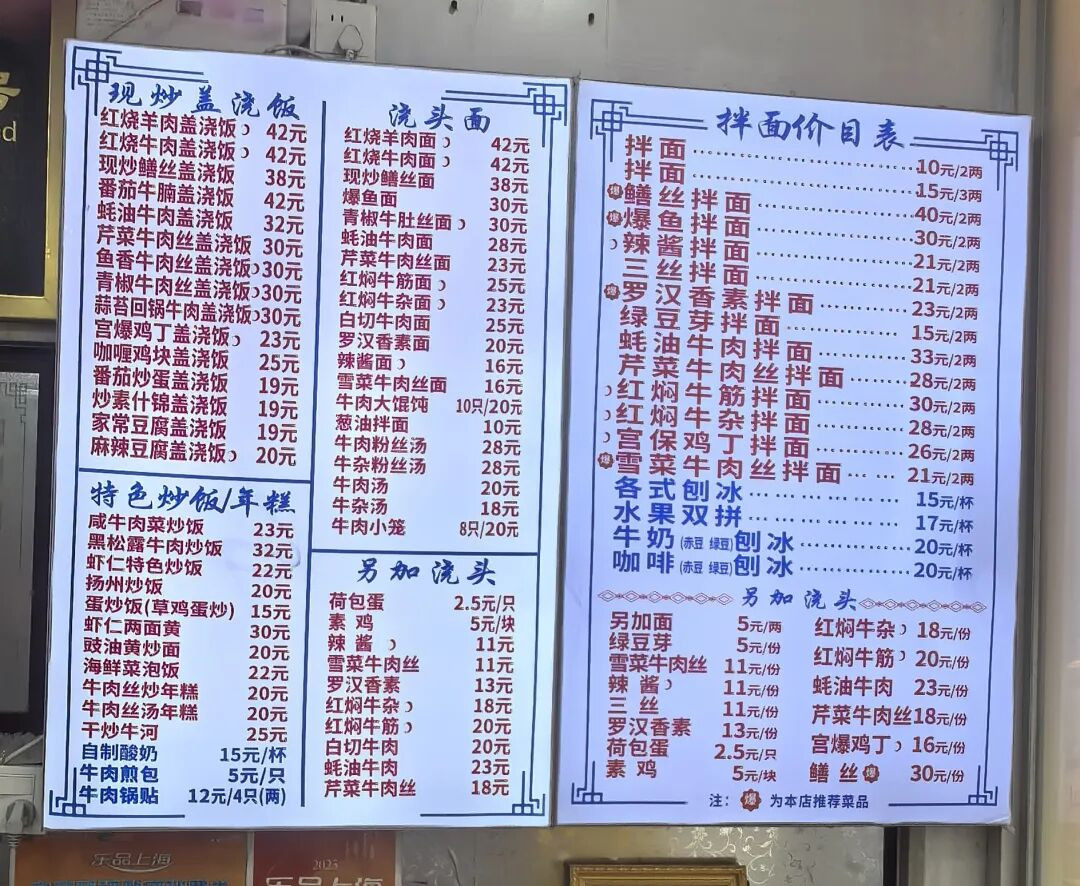
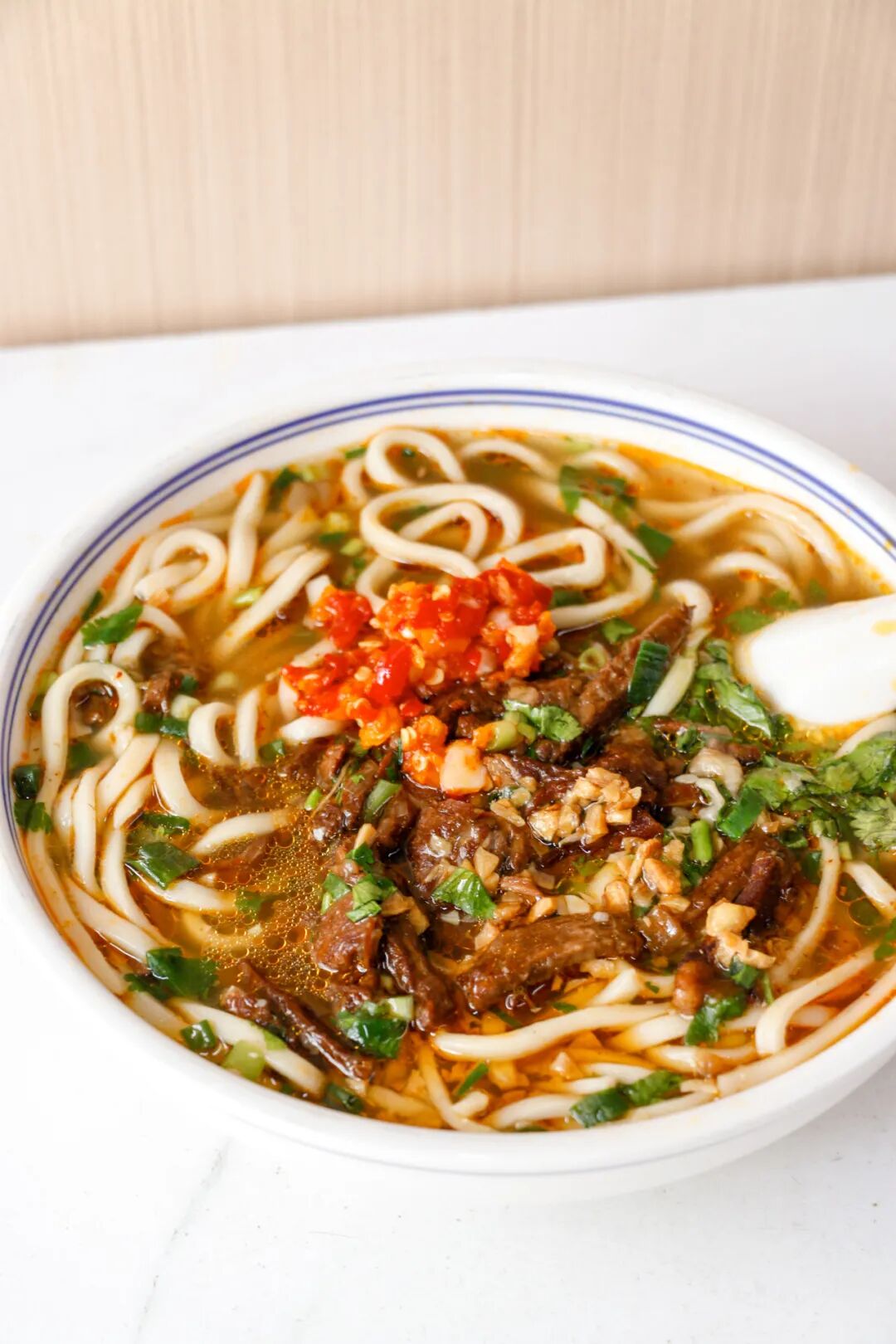
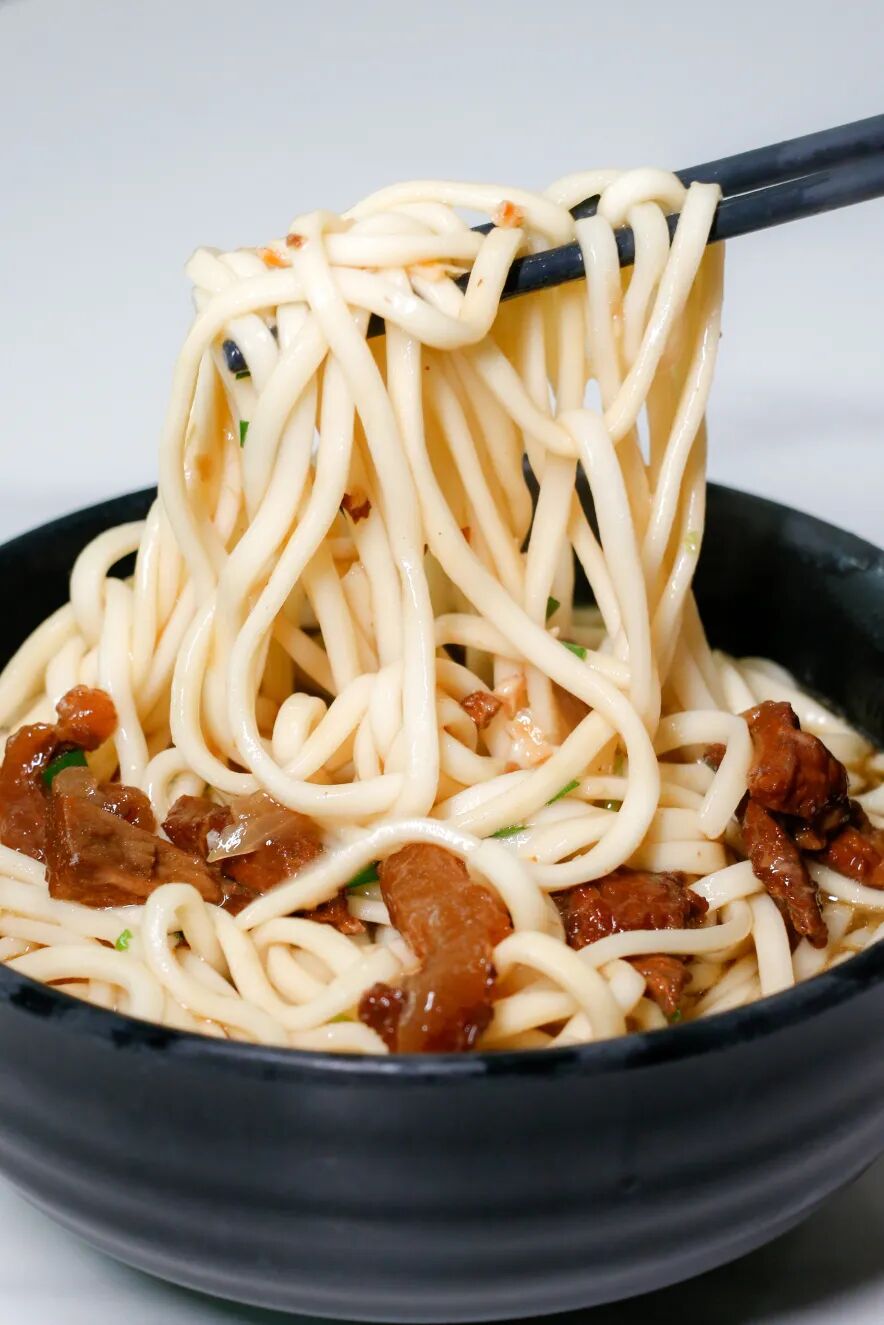
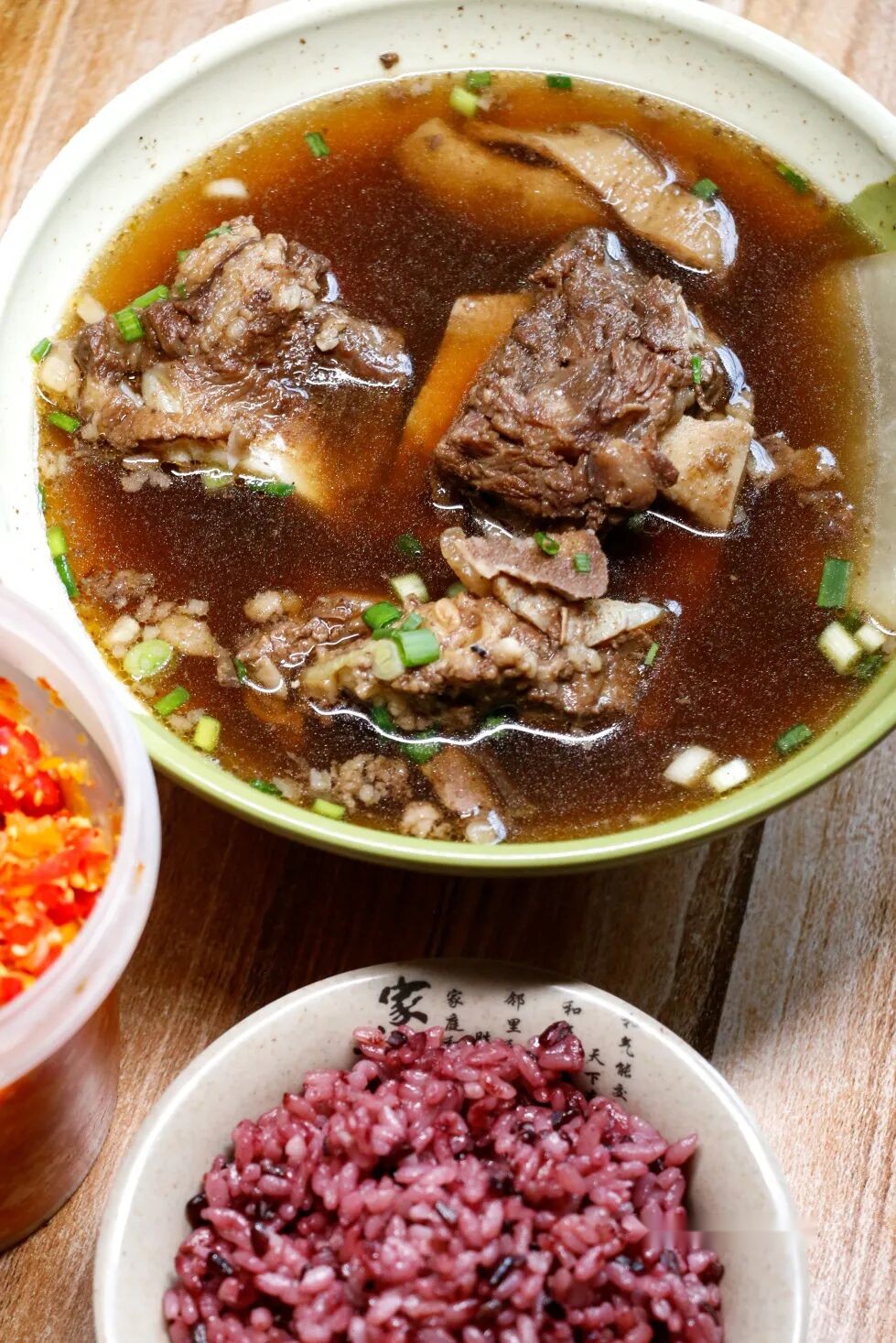
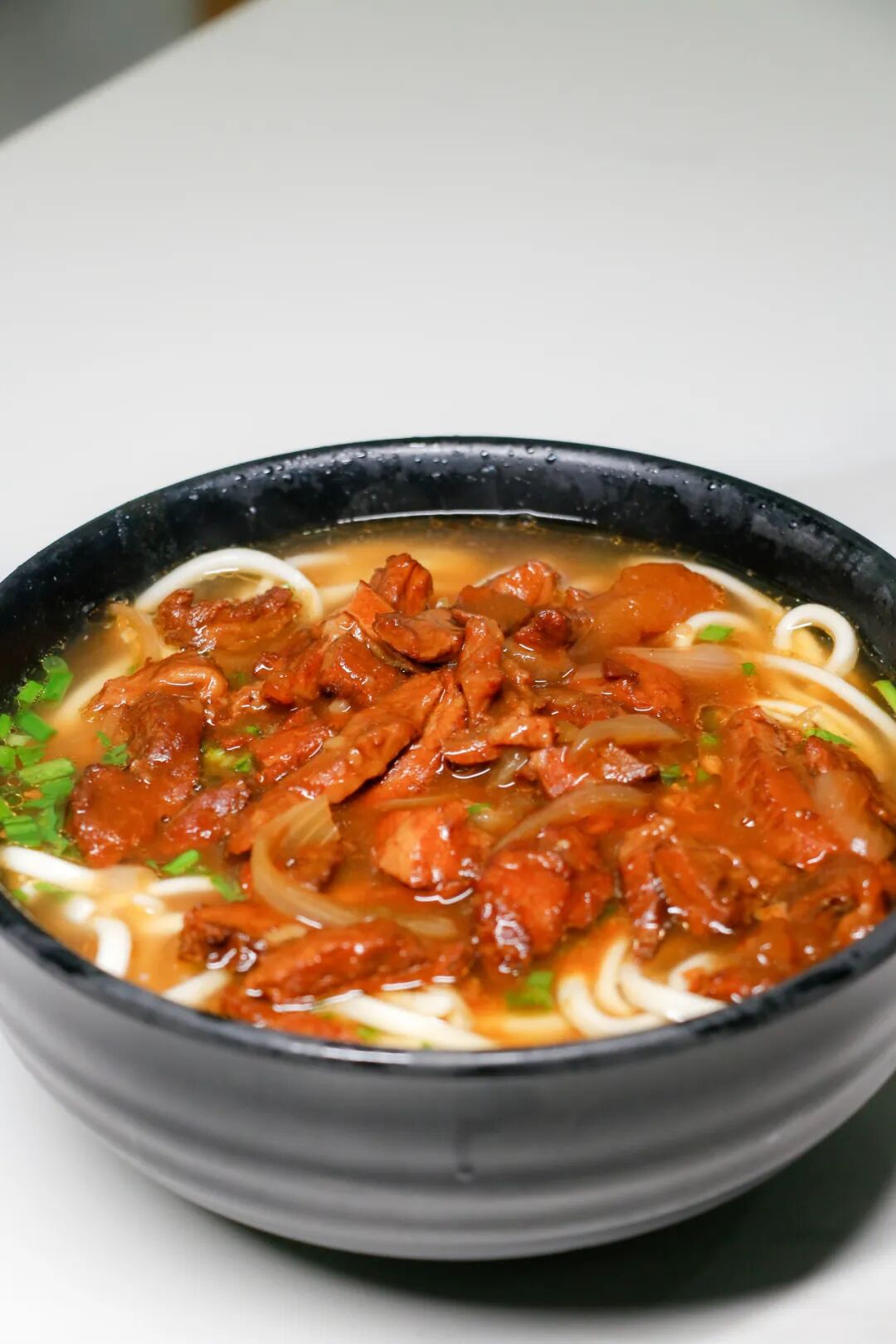
We didn't get to eat the grilled fish that day, so we just ordered a bowl of beef noodles. This Beijing-style beef noodle soup is what we call soup-poured beef noodles (jiaotang niuroumian). It is just like Chai-style beef noodles, except Chai-style sells the noodles and beef separately.

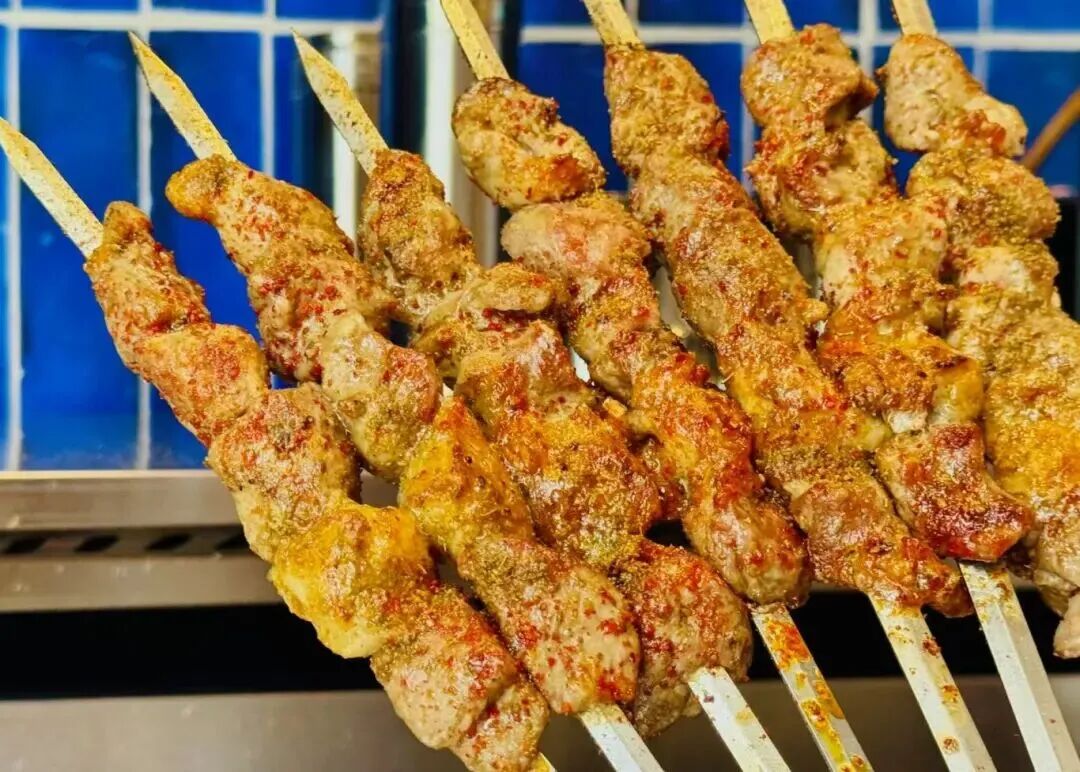
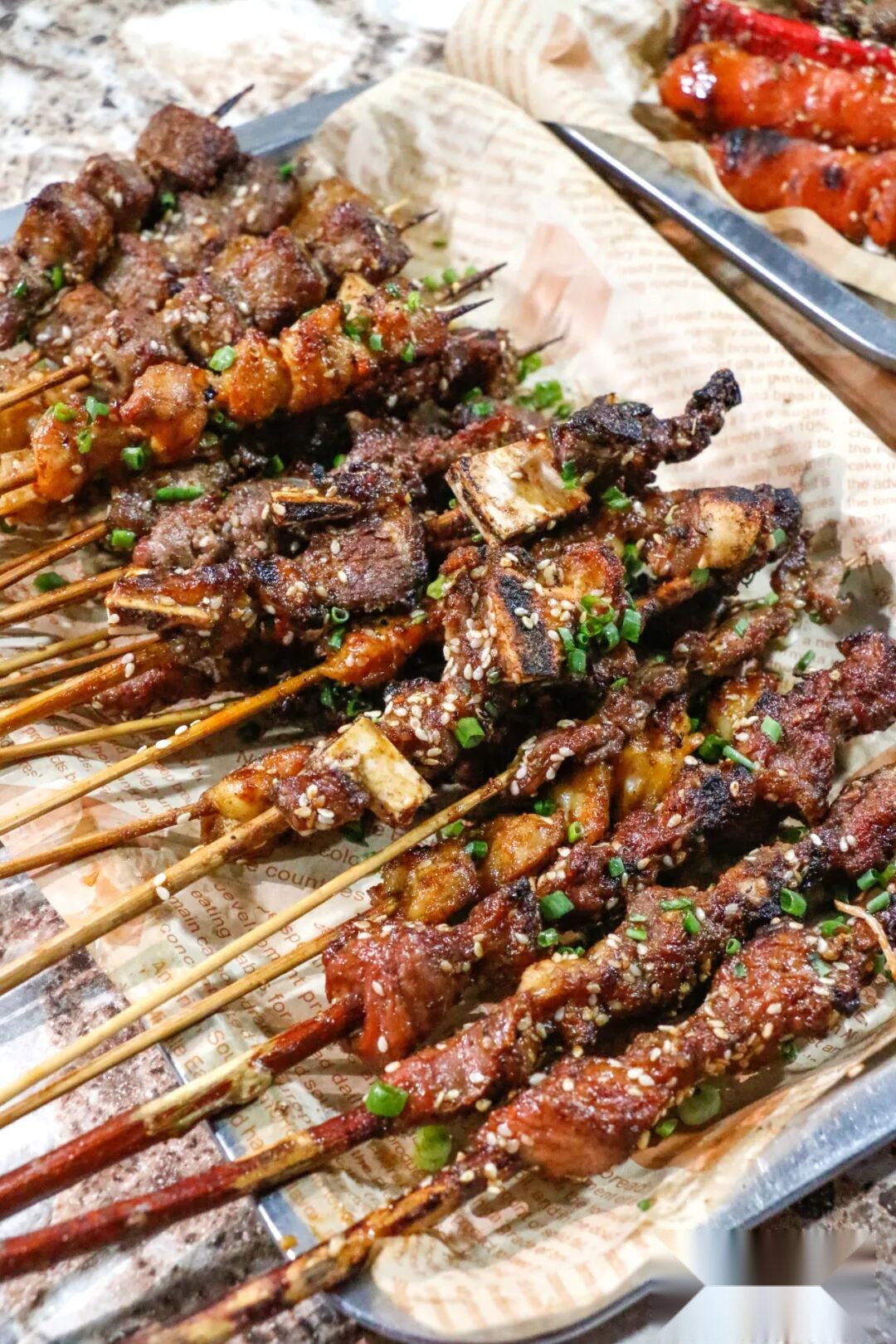
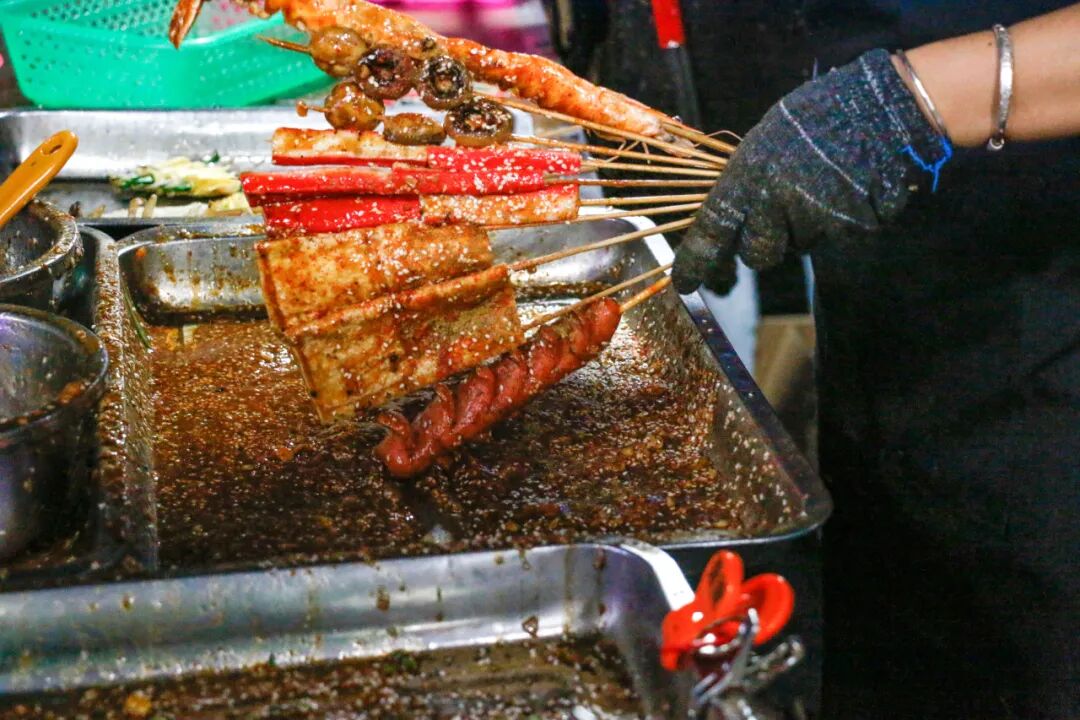
Small skewers on bamboo sticks are also a traditional Beijing-style barbecue. The skewers tasted average, so I still prefer the beef noodles.

3. Xingyuexuan Four Seasons Hot Pot

Xingyuexuan used to be Liankexuan on Niujie Street. It has a new owner now, the same person who owns the Lan Dayouxian beef and mutton shop on Shuru Hutong. Since the change in ownership, the meat quality has improved. The meat quality at the old Liankexuan was not good.

Lan Da's meat is high quality and all comes from Inner Mongolia. This shop hasn't been open long, so you usually don't have to wait in line. If you can't wait at Jubaoyuan, you can come here instead; the taste is about the same.


A highlight of Xingyuexuan is that they sell Haagen-Dazs ice cream for about 30 yuan a serving. It happened to be Eid al-Fitr that day, and the manager gave it to us for free.

4. Tianqiao Lao Jin Hot Pot

This is a branch of Tianqiao Lao Jin located on Jiaozihutong in Niujie. They spent a long time preparing, and it finally opened during Ramadan.


They focus on large, affordable portions. The mutton has a strong gamey flavor, and it lacks the refinement of a big restaurant, but the prices are cheap.

There is no fancy plating; you just eat for the rustic experience.

The chess-piece-shaped flatbread (qizi shaobing) is also very ordinary. Their specialty is a dipping sauce with vinegar. I guess most people aren't used to such sour sauce, so you can also choose the non-sour sesame paste dipping sauce.

4. Jingyi Farmhouse

Jingyi Farmhouse is a courtyard run by Teacher Chen Hui from the former Halal Bookstore. It covers several acres at the foot of the mountain near Xiguanshi Village in Changping. The yard is full of fruit trees, and it is filled with birdsong and flowers when you visit in April.


The yard has chickens and sheep raised in a completely natural, eco-friendly way. You can book ahead if you want to eat here. We held our Eid al-Fitr gathering here this year, with over forty people meeting at the farmhouse to barbecue, drink tea, and chat under the open sky.

Teacher Chen's wife prepared Xinjiang-style noodle soup (fentang) and rice pilaf (zhuafan) for us, along with fresh fruit and vegetable salad.


We cooked over a fire in the yard. Food cooked with firewood has a down-to-earth, delicious flavor.

With over forty young people, two big pots of rice were not enough, so we started an outdoor barbecue.

The grilled fish was very popular. The smoky flavor from charcoal grilling cannot be matched by electric grills.


I usually do the grilling at our events, and the skewers are snatched up as soon as they are ready. The mountain behind me is Fushan Cemetery. The grave of the famous writer Wang Xiaobo is in the new section eight of Fushan Cemetery. Anyone who likes literature will know Wang Xiaobo.

5. Ruizi Dumpling Restaurant

At Ruizi Dumpling Restaurant in Xiguanshi, Changping, the signature dish is dumplings, but I think their steamed dumplings (shaomai) and meat pies (roubing) are even better.

We came at noon and it was very crowded. Everything with a filling is wrapped to order, so the wait is a bit long.

The taste did not disappoint, especially the beef steamed dumplings and the meat pie. Their meat pie is huge, just like a Shandong thick pancake (zhuangmo). Two people definitely cannot finish it; one pie is enough for four people, so be careful with how much you order.

The dumplings taste good too. They have many kinds of fillings, and I love the beef and green onion ones.

6. Beizi shop at Xiguanshi Market

In the Xiguanshi market, we found a baked flatbread (beizi) shop that has been open for many years. We asked the owner, and he is indeed from Hohhot. This baked flatbread is a specialty of Hohhot and is also found in Baotou. It is a food unique to Hui Muslims.

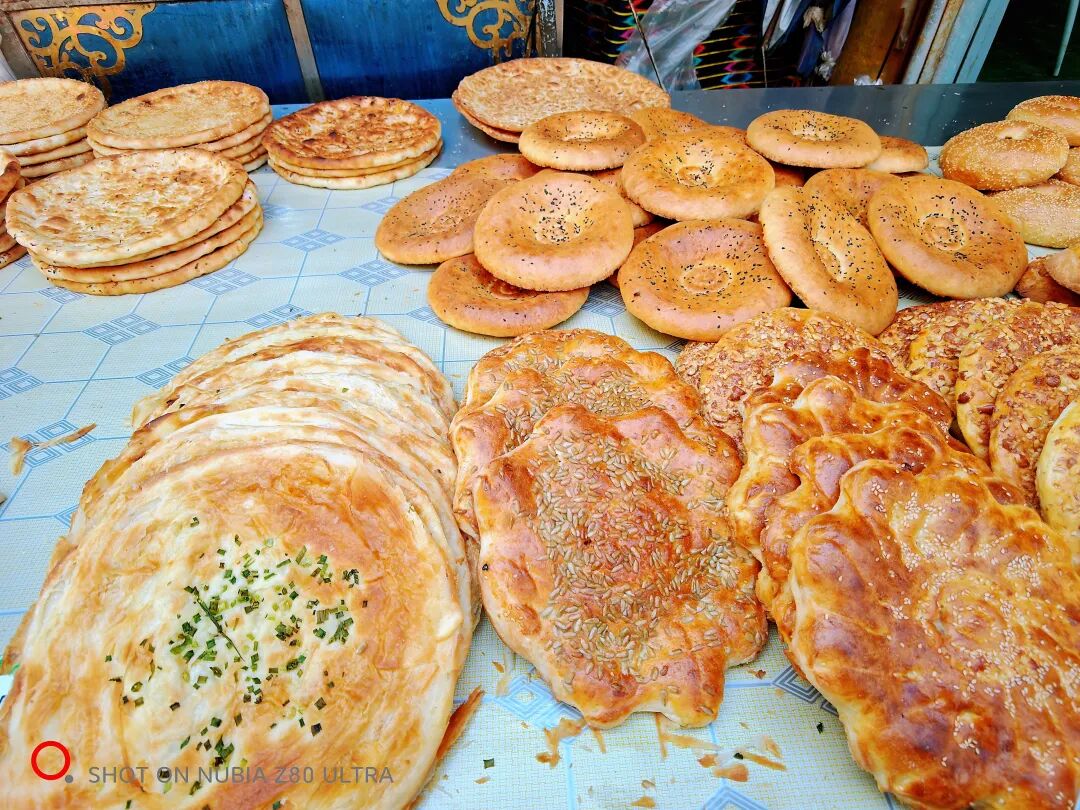
We bought a few sugar-filled baked flatbreads (beizi) to go. They also have savory baked flatbreads and sesame flatbreads (shaobing), and they fry dough fritters (youxiang) every day at 4:00 PM. Baked flatbreads (beizi) and flatbreads (nang) are staple foods that are easy for Muslims to carry when traveling.

We found a few unique small shops in Xiguanshi village. We did not have time to eat there, but we look forward to trying them one by one next time.

This flatbread (nang) shop is great. It is run by a Uyghur young man. He only sells flatbreads and nothing else. We have bought from there twice.

Jia County buckwheat noodles (heluo mian) from Henan

Hai Family beef covered pancakes (niurou zhaobing) in Baoding

Clam vermicelli (huajia fen)
8. Maidebao (Niujie branch)

Maidebao opened another branch on Niujie. This shop used to be called Lebangke, and the address still shows Lebangke, but it has actually changed to Maidebao. It is an alcohol-free fast-food restaurant, suitable for couples on dates.

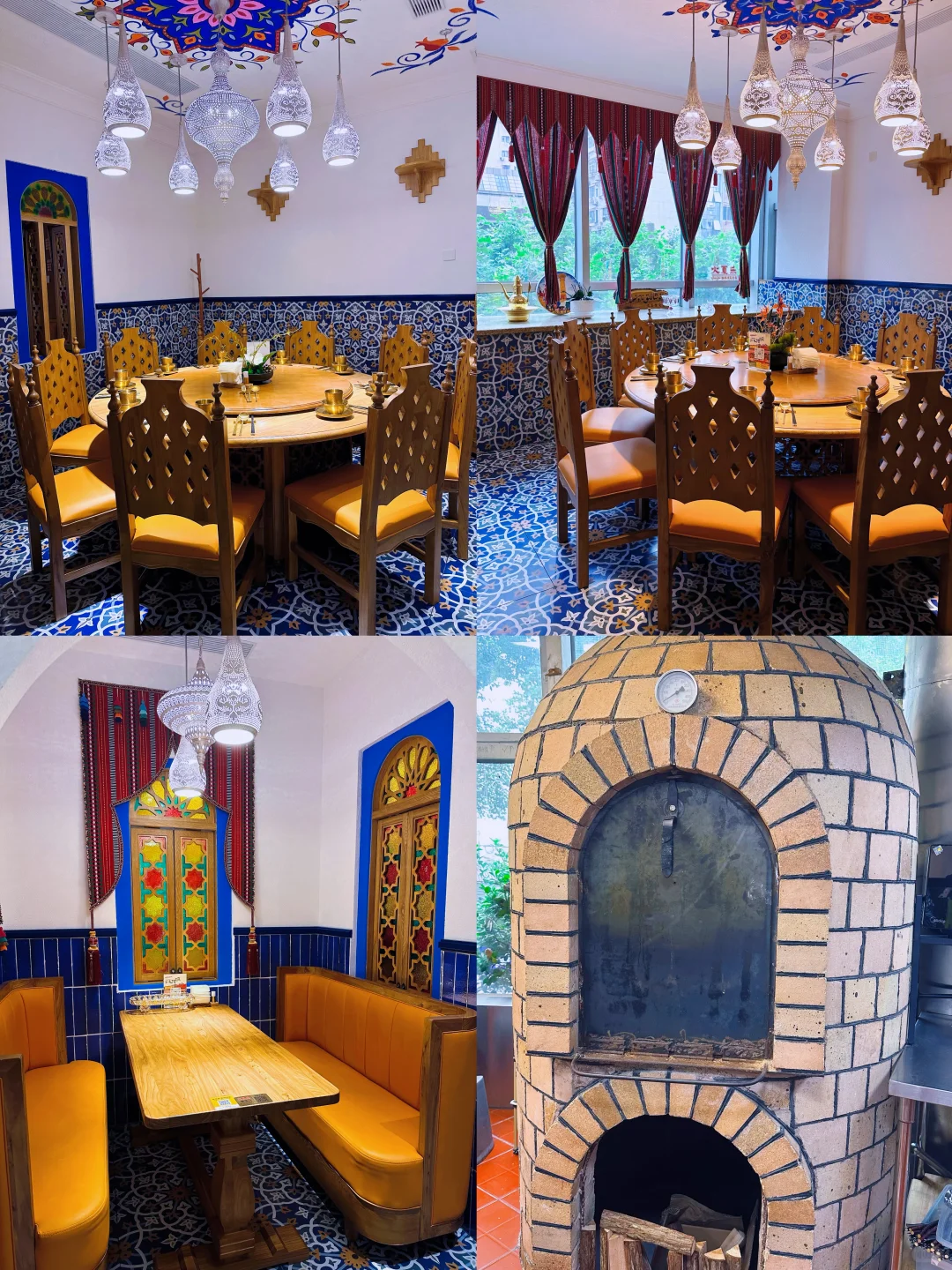
The Niujie branch features many Islamic design elements.

Arabic calligraphy calendars hang on the walls.

The tables hold Arabic novels and tea from Zhengxingde.

Small Islamic-themed ornaments sit on the dining tables.


The burger menu now includes a double beef patty option.

Besides burgers, they offer a variety of pizzas.

I think the pizza tastes better. I had the Margherita pizza this time and will try other flavors next time. Their french fries and chicken nuggets are also delicious.

Margherita pizza
9. Pakistan Truck Art Festival

The Embassy of Pakistan in China is hosting a truck art festival at the Silk Road International Arts Center in Langfang from April 28 to July 24.


Truck art is a traditional part of Pakistani culture. These beautiful hand-painted truck bodies were created by the Pakistani truck art group Phool Patti.

The Phool Patti group commercialized truck art, which helps protect this cultural heritage while creating income for local artisans.

Truck art started as a traditional painting style used on horse harnesses and carriages. As industrial transport grew across the country, many types of imported trucks came into use. During this time, artists and truck owners began putting a lot of effort into decorating these new vehicles. These carefully decorated trucks drove into remote areas and quickly became eye-catching symbols on the road.


There was a free buffet on the opening day, but I am not sure if they will have it later.

I had dinner with a beautiful Pakistani host.

The big festival cake was cut into small pieces and eaten up in an instant.


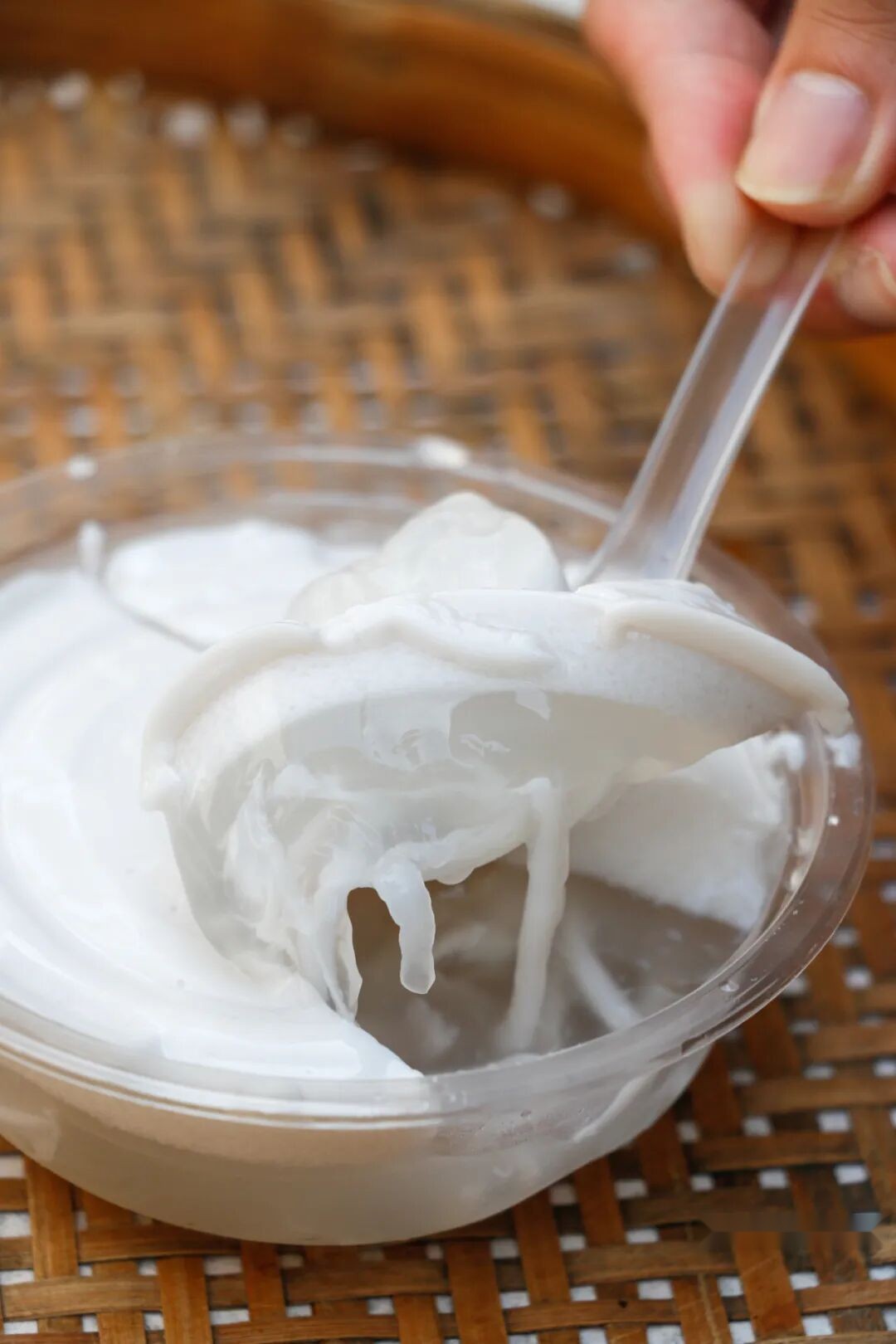
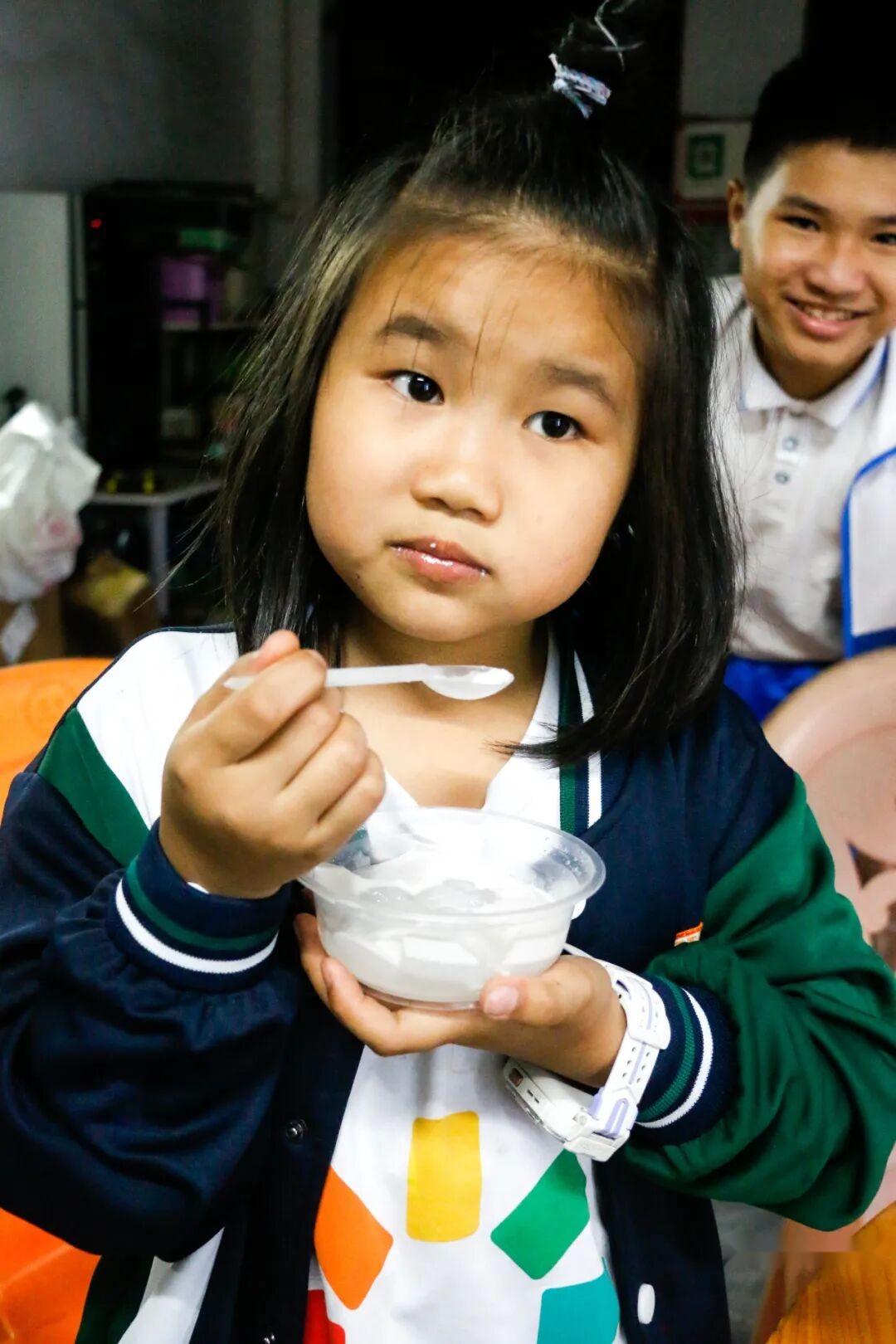
The main courses and dessert tables were set up on both sides of the exhibition hall. This was my first time eating these cold cheese sweet rice balls (tangyuan), and I really liked them.


We took a bus from the Pakistani embassy to get there and back. The bus broke down on the highway on the way over, but it did not affect the mood of our Pakistani friends at all. Everyone kept laughing and talking. Luckily, we were not late for the opening ceremony, and the event started on time.
Collapse Read »
Summary: This hidden halal restaurants guide for Beijing covers issue 33, featuring Hopson One halal fried chicken, Niujie beef noodles, Xingyuexuan hot pot, local barbecue, and practical restaurant notes for Muslim diners.
Beijing Halal Food Map (33) is presented here as a firsthand travel account in clear English, beginning with this scene: In the days right after Eid al-Fitr, I was still getting used to eating during the day and my appetite was much smaller. The account keeps its focus on Beijing Halal Food, Muslim Travel, Middle Eastern Food while preserving the names, places, food, and historical details from the Chinese source.
In the days right after Eid al-Fitr, I was still getting used to eating during the day and my appetite was much smaller. My weight dropped below 70kg and hasn't bounced back. Actually, it is quite good to get into the habit of eating only two meals a day. Skipping lunch helps me stay clear-headed and awake in the afternoon.
1. Chicken Tender Master (Jiliu Daren)

Chicken Tender Master is a chain brand, but only this Hopson One (Hesheng Hui) branch is guaranteed to be halal. The owner is a friend (dosti) from Tongliao who studied in Egypt, and his parents are both Hajjis. So, please make sure to choose the Hopson One branch when eating at Chicken Tender Master. I suggested to the owner that he place a subtle halal sign in front of the register to make it easier for friends (dosti) to confirm.

Jiuxing Chicken is a very reliable halal food factory in Hebei, and many friends (dosti) have said it is trustworthy.

They only sell three things: chicken tenders, rice cakes (niangao), and french fries. They guarantee fresh oil every day, so the fried food comes out golden and very fresh.

The fried rice cakes puff up and are hollow inside. The seasoning powder sprinkled on top is a secret recipe and the highlight of this shop.

The owner says this fried food is best eaten right out of the fryer. He does not recommend takeout because it affects the texture. The freshly fried chicken tenders are crispy and delicious, and the rice cakes are crispy on the outside and tender on the inside, which really satisfies a craving. This kind of small stall does not involve selling alcohol, so the money earned is clean and wholesome.

The address is Shop 168, 21 Block, Basement Level 2, Hopson One.
2. Wei's Big Bowl Noodles (Weiji Dawanmian)

Wei's is a new small beef noodle shop on Zaolin Front Street in Niujie. They have grilled skewers, stir-fried dishes, and grilled fish.

We didn't get to eat the grilled fish that day, so we just ordered a bowl of beef noodles. This Beijing-style beef noodle soup is what we call soup-poured beef noodles (jiaotang niuroumian). It is just like Chai-style beef noodles, except Chai-style sells the noodles and beef separately.

Small skewers on bamboo sticks are also a traditional Beijing-style barbecue. The skewers tasted average, so I still prefer the beef noodles.

3. Xingyuexuan Four Seasons Hot Pot

Xingyuexuan used to be Liankexuan on Niujie Street. It has a new owner now, the same person who owns the Lan Dayouxian beef and mutton shop on Shuru Hutong. Since the change in ownership, the meat quality has improved. The meat quality at the old Liankexuan was not good.

Lan Da's meat is high quality and all comes from Inner Mongolia. This shop hasn't been open long, so you usually don't have to wait in line. If you can't wait at Jubaoyuan, you can come here instead; the taste is about the same.


A highlight of Xingyuexuan is that they sell Haagen-Dazs ice cream for about 30 yuan a serving. It happened to be Eid al-Fitr that day, and the manager gave it to us for free.

4. Tianqiao Lao Jin Hot Pot

This is a branch of Tianqiao Lao Jin located on Jiaozihutong in Niujie. They spent a long time preparing, and it finally opened during Ramadan.


They focus on large, affordable portions. The mutton has a strong gamey flavor, and it lacks the refinement of a big restaurant, but the prices are cheap.

There is no fancy plating; you just eat for the rustic experience.

The chess-piece-shaped flatbread (qizi shaobing) is also very ordinary. Their specialty is a dipping sauce with vinegar. I guess most people aren't used to such sour sauce, so you can also choose the non-sour sesame paste dipping sauce.

4. Jingyi Farmhouse

Jingyi Farmhouse is a courtyard run by Teacher Chen Hui from the former Halal Bookstore. It covers several acres at the foot of the mountain near Xiguanshi Village in Changping. The yard is full of fruit trees, and it is filled with birdsong and flowers when you visit in April.


The yard has chickens and sheep raised in a completely natural, eco-friendly way. You can book ahead if you want to eat here. We held our Eid al-Fitr gathering here this year, with over forty people meeting at the farmhouse to barbecue, drink tea, and chat under the open sky.

Teacher Chen's wife prepared Xinjiang-style noodle soup (fentang) and rice pilaf (zhuafan) for us, along with fresh fruit and vegetable salad.


We cooked over a fire in the yard. Food cooked with firewood has a down-to-earth, delicious flavor.

With over forty young people, two big pots of rice were not enough, so we started an outdoor barbecue.

The grilled fish was very popular. The smoky flavor from charcoal grilling cannot be matched by electric grills.


I usually do the grilling at our events, and the skewers are snatched up as soon as they are ready. The mountain behind me is Fushan Cemetery. The grave of the famous writer Wang Xiaobo is in the new section eight of Fushan Cemetery. Anyone who likes literature will know Wang Xiaobo.

5. Ruizi Dumpling Restaurant

At Ruizi Dumpling Restaurant in Xiguanshi, Changping, the signature dish is dumplings, but I think their steamed dumplings (shaomai) and meat pies (roubing) are even better.

We came at noon and it was very crowded. Everything with a filling is wrapped to order, so the wait is a bit long.

The taste did not disappoint, especially the beef steamed dumplings and the meat pie. Their meat pie is huge, just like a Shandong thick pancake (zhuangmo). Two people definitely cannot finish it; one pie is enough for four people, so be careful with how much you order.

The dumplings taste good too. They have many kinds of fillings, and I love the beef and green onion ones.

6. Beizi shop at Xiguanshi Market

In the Xiguanshi market, we found a baked flatbread (beizi) shop that has been open for many years. We asked the owner, and he is indeed from Hohhot. This baked flatbread is a specialty of Hohhot and is also found in Baotou. It is a food unique to Hui Muslims.

We bought a few sugar-filled baked flatbreads (beizi) to go. They also have savory baked flatbreads and sesame flatbreads (shaobing), and they fry dough fritters (youxiang) every day at 4:00 PM. Baked flatbreads (beizi) and flatbreads (nang) are staple foods that are easy for Muslims to carry when traveling.

We found a few unique small shops in Xiguanshi village. We did not have time to eat there, but we look forward to trying them one by one next time.

This flatbread (nang) shop is great. It is run by a Uyghur young man. He only sells flatbreads and nothing else. We have bought from there twice.

Jia County buckwheat noodles (heluo mian) from Henan

Hai Family beef covered pancakes (niurou zhaobing) in Baoding

Clam vermicelli (huajia fen)
8. Maidebao (Niujie branch)

Maidebao opened another branch on Niujie. This shop used to be called Lebangke, and the address still shows Lebangke, but it has actually changed to Maidebao. It is an alcohol-free fast-food restaurant, suitable for couples on dates.

The Niujie branch features many Islamic design elements.

Arabic calligraphy calendars hang on the walls.

The tables hold Arabic novels and tea from Zhengxingde.

Small Islamic-themed ornaments sit on the dining tables.


The burger menu now includes a double beef patty option.

Besides burgers, they offer a variety of pizzas.

I think the pizza tastes better. I had the Margherita pizza this time and will try other flavors next time. Their french fries and chicken nuggets are also delicious.

Margherita pizza
9. Pakistan Truck Art Festival

The Embassy of Pakistan in China is hosting a truck art festival at the Silk Road International Arts Center in Langfang from April 28 to July 24.


Truck art is a traditional part of Pakistani culture. These beautiful hand-painted truck bodies were created by the Pakistani truck art group Phool Patti.

The Phool Patti group commercialized truck art, which helps protect this cultural heritage while creating income for local artisans.

Truck art started as a traditional painting style used on horse harnesses and carriages. As industrial transport grew across the country, many types of imported trucks came into use. During this time, artists and truck owners began putting a lot of effort into decorating these new vehicles. These carefully decorated trucks drove into remote areas and quickly became eye-catching symbols on the road.


There was a free buffet on the opening day, but I am not sure if they will have it later.

I had dinner with a beautiful Pakistani host.

The big festival cake was cut into small pieces and eaten up in an instant.


The main courses and dessert tables were set up on both sides of the exhibition hall. This was my first time eating these cold cheese sweet rice balls (tangyuan), and I really liked them.


We took a bus from the Pakistani embassy to get there and back. The bus broke down on the highway on the way over, but it did not affect the mood of our Pakistani friends at all. Everyone kept laughing and talking. Luckily, we were not late for the opening ceremony, and the event started on time.
Collapse Read »
Best Halal Food Beijing: Chongqing Hot Pot, Temple of Heaven Snacks and Beef Ball Noodles
Reposted from the web
Summary: This Beijing halal food guide maps issue 32 of the series, including Chongqing hot pot, Temple of Heaven halal fast food, beef ball noodles, Beijing style snacks, and Ramadan iftar notes from Niujie Mosque.
Beijing Halal Food Map (32) is presented here as a firsthand travel account in clear English, beginning with this scene: I have been too busy to go out and explore shops during Ramadan. After breaking my fast in the evening, I soon have to start the Tarawih prayers. The account keeps its focus on Beijing Halal Food, Muslim Travel, Middle Eastern Food while preserving the names, places, food, and historical details from the Chinese source.
I have been too busy to go out and explore shops during Ramadan. After breaking my fast in the evening, I soon have to start the Tarawih prayers. I mostly break my fast at the Niujie Mosque. The mosque now provides tea and snacks every day for iftar. The main meals are usually boxed lunches provided by different elders in turns. It does not matter if the boxed lunch tastes good or not; what matters is the blessing inside. Providing an iftar meal for someone fasting earns the same reward. I hope those who are able will invite more friends (dosti) around them who are fasting to break their fast.
1. Hongxiaolu Authentic Chongqing Hot Pot

This is a newly opened Chongqing hot pot restaurant in Beijing, owned by a person from Zhangjiachuan, Gansu. According to the owner, they originally planned to join the Niububi franchise, but Niububi does not accept franchises, no matter how much money is offered.

The style of this shop is slightly different from Niububi. Niububi is a Sichuan clear oil hot pot, which is different from Chongqing hot pot in terms of the soup base. Also, the prices here are cheaper than Niububi, and the dishes are slightly inferior to Niububi as well.


The shop is located on Xiaoying North Road in the Datun Subdistrict of the Asian Games Village. Next door is a hand-pulled noodle shop (lamian guan), and both are owned by the same person.

2. Ya'er Liji Small Restaurant

Ya'er Liji has opened a new fast-food spot at the south gate of the Temple of Heaven. They do not sell hot pot meat, only fast food and snacks.

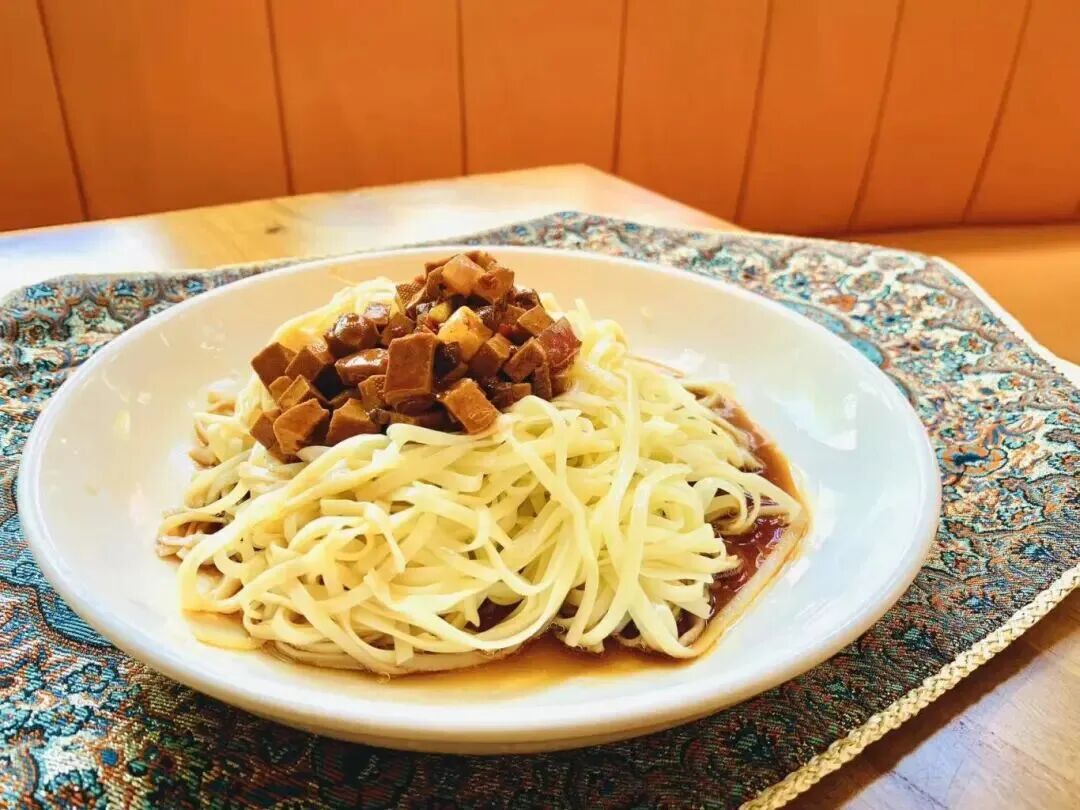
The highlights of their menu are Luxi beef rice, braised chicken rice (huangmenji mifan), and beautifully plated soybean paste noodles (zhajiangmian).

Luxi beef rice
Since the owner of Ya'er Liji is from Dezhou, Shandong, it makes sense that they make Luxi beef and braised chicken well, as braised chicken is also a Shandong specialty.

Braised chicken rice
Few ordinary restaurants make soybean paste noodles with much care, but this small shop puts effort into the vegetable toppings and provides a good variety. The only downside is that the noodles are not hand-rolled, so the texture is a bit lacking.

Soybean paste noodles (zhajiangmian)
3. Xiangqing Beef Ball Noodles

Xiangqing Beef Ball Noodles is a new brand at the Qingxiangge Tuanjiehu branch. This spot used to be Anhui beef flat noodles (banmian), but the sign has changed again.


This noodle shop doesn't look like much from the outside, but the food is actually quite good. The spicy beef noodles with beef balls and a small bowl of beef are especially fragrant and affordable.

The small bowl of beef and the beef balls are stewed until very soft and tender, melting in your mouth with plenty of flavor.

Small bowl of beef

Beef balls

4. Annei Laoma Steamed Dumplings (Dongba Branch)

This is a branch of Annei Laoma Steamed Dumplings (shaomai) in Dongba. The menu is slightly different, and I think it tastes better than the main store.

Besides the classic beef and lamb steamed dumplings, this branch serves Inner Mongolian-style lamb offal (yangza) and small hot pots, which the main store does not have.


Pan-fried steamed dumplings (youjian shaomai)

Their lamb offal is just the Inner Mongolian style I like. It comes in a full bowl with plenty of finely sliced tripe, just like what I ate in Inner Mongolia.

5. MULU

Mulu is a private Malaysian restaurant specializing in Southeast Asian flavors. It is the most expensive restaurant I have ever visited. You must book three days in advance and pay a deposit. They charge per person: 988 yuan for four main courses or 1488 yuan for six. They serve the dishes in order, just like a Western-style meal.

The menu for Monday through Friday.
The restaurant is located in a hutong in the Dongcheng District. You need a reservation. The owner and head chef is a Malaysian Chinese person who mainly provides custom catering for various Southeast Asian embassies. Because of this, the ingredients are guaranteed to be halal, and the chef showed me where they come from.

It is a private kitchen with a very intimate atmosphere. The only downside is that parking is difficult. There is only one parking space, and you need good driving skills to navigate a car into the hutong.


Before serving each dish, the chef explains the ingredients and the cooking process. Every guest gets an individual portion, and the chef brings out the raw ingredients to show us.

The portions are small. I can finish one in two or three bites, but it is perfect for women who want to eat elegantly and savor the flavors.

The Friday menu features Nyonya cuisine. Nyonya is another name for Malaysian Chinese people. It is very rare to find a halal version of this in Beijing.

This is the white asparagus the chef showed us. You rarely see this in a regular market.

To improve the taste, the chef adds sauce to some dishes right at the table.


The creamy veal ribs have a strong milky aroma and are tender and juicy. There is no denying that their ingredients are very fresh.

This turtle-shell-shaped dessert is made from beetroot and has a soft, chewy texture.

A small serving of sago dessert (ximilu) comes in a stone pot. The pot feels ice-cold to the touch, and the dessert is refreshing, sweet, and cool.
6. Dexiangshun Halal Restaurant

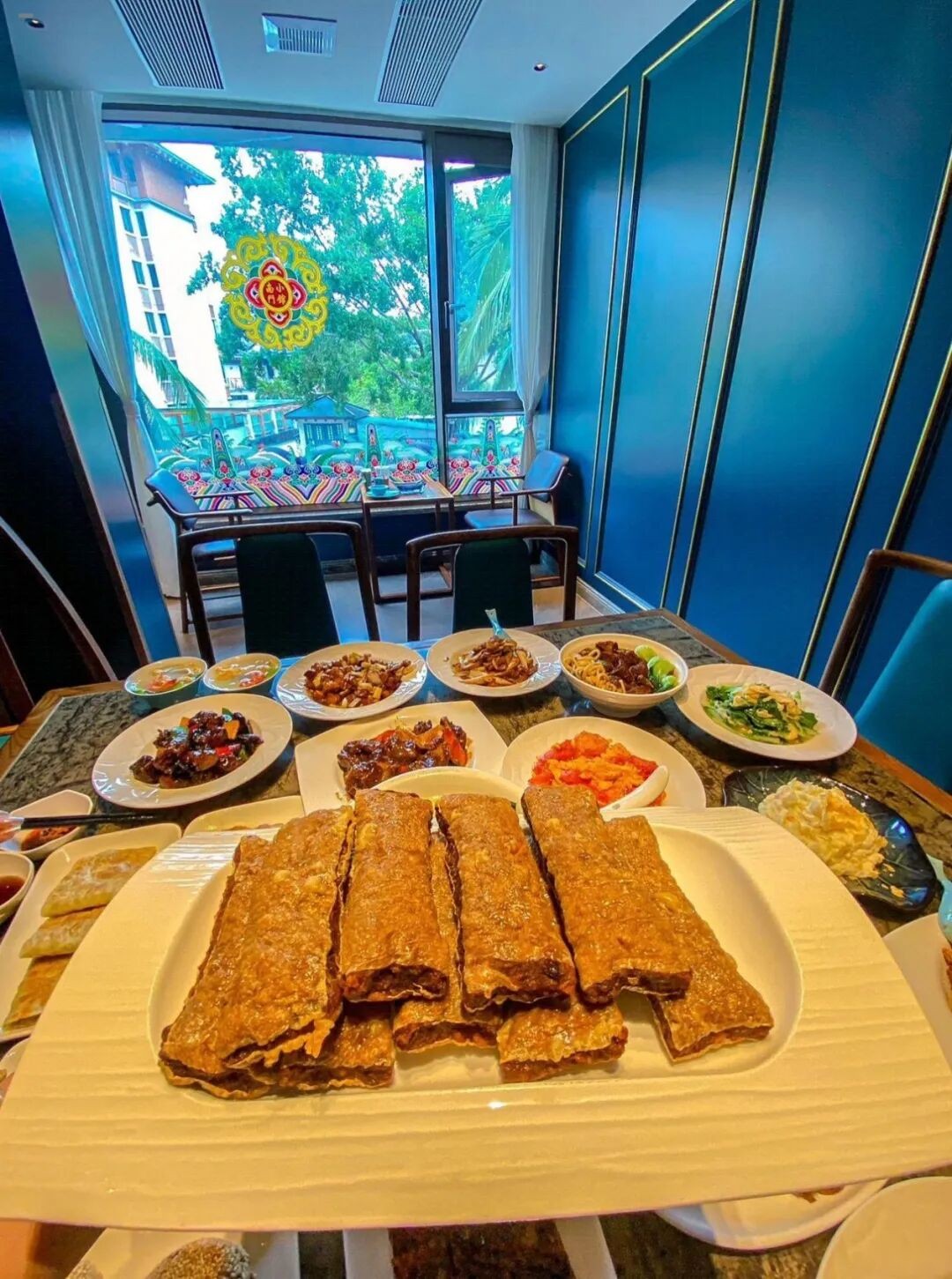
This new little restaurant on Jiaozihutong in Niujie looks plain from the outside, but the stir-fried dishes are quite tasty.

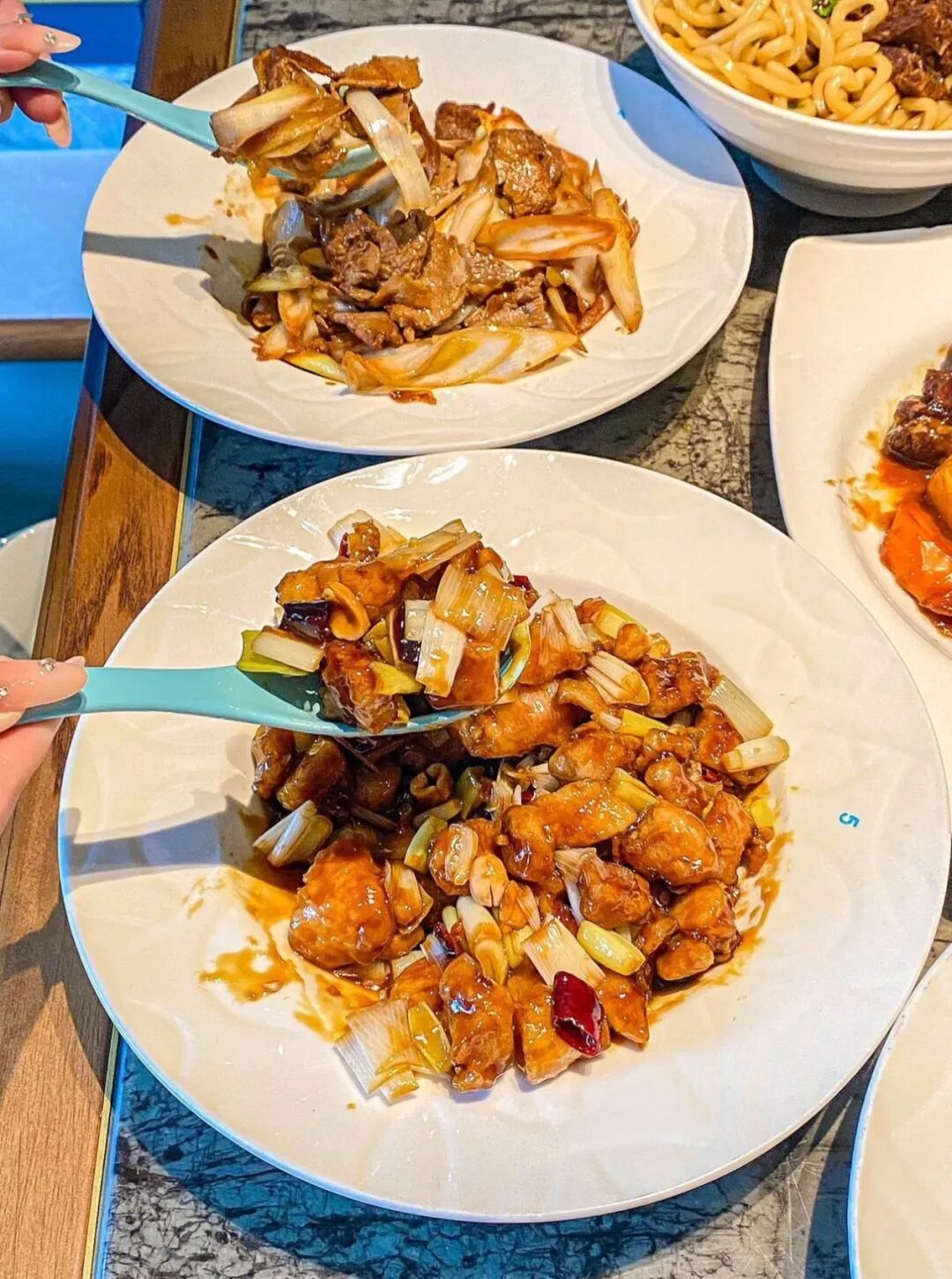
The kung pao chicken (gongbao jiding) is a standout. It tastes just like the version I had as a kid and goes perfectly with rice.

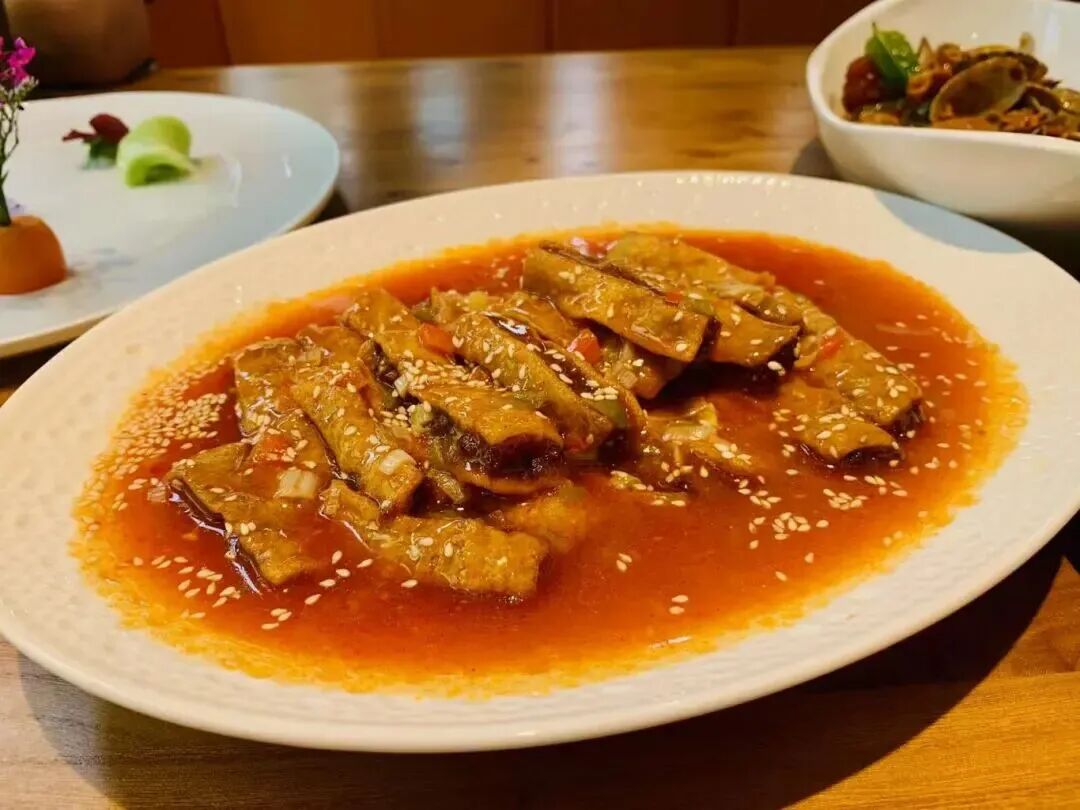
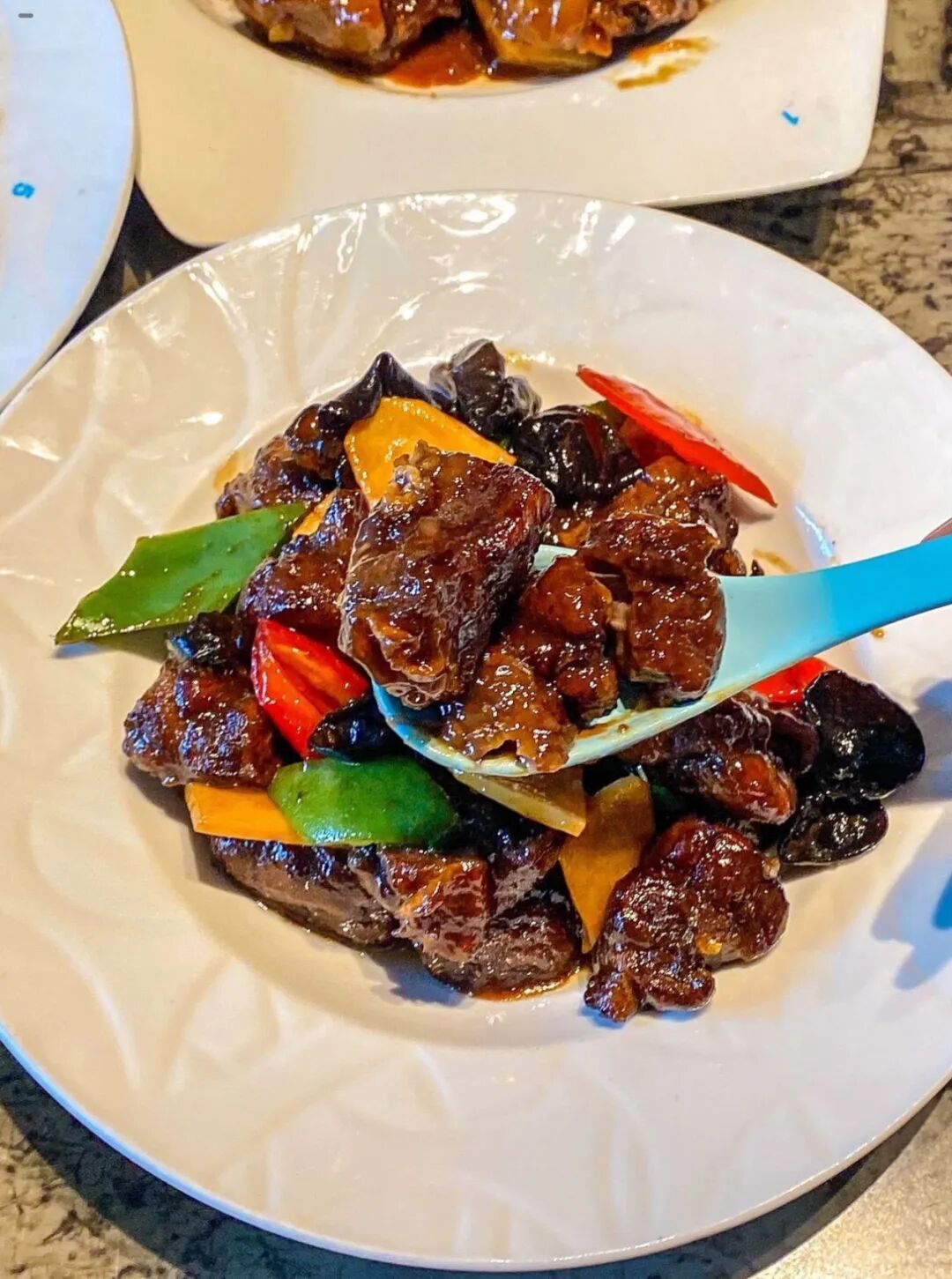
The stir-fried mixed vegetables (chaohecai) are also good. They have some off-menu items too, like the braised eggplant (shaoqiezi), which is delicious.

We tried almost everything on the menu and didn't find a single bad dish. It cost three of us less than 100 yuan, making it a great value.

7. 99th Arabic Barbecue

This shop is on the basement level of Euro Plaza in Shunyi. Even though it is called Arabic Barbecue, it has nothing to do with Arabia; it is run by Hui Muslims from Beijing.

The owner is also preparing a music barbecue restaurant next door, but it has not opened yet.

Their barbecue rice is really just a mixed rice bowl and has nothing to do with Arabic pilaf (zhuafan), but it tastes okay.

The barbecue wrap has a hint of Middle Eastern shawarma, but it still leans more toward a Chinese style.

This is the only halal shop on the basement level of Euro Plaza. I chatted with the manager and offered some suggestions for improvement.

8. Dastaan Indian Restaurant

A South Asian restaurant opened on the third floor of Sanlitun SOHO Mall Building 5. The chef and servers are from Bangladesh. This year, April 14th was both Jumu'ah and the Bengali New Year. The restaurant prepared a special buffet for 248 yuan per person, featuring Bengali dishes and South Asian snacks, available only on that day.

These are Bengali-style mixed vegetable fritters. The fried bitter melon was very unique, and the thin crispy cracker on top was truly thin, crunchy, and delicious.

Phuchka (panipuri)
This snack of crispy balls filled with sour soup is panipuri, which appeared in the Indian movie Dangal. It is found in India, Pakistan, and Bangladesh. You must eat these balls immediately after they are filled with the soup, or they will get soggy and lose their texture.

The Bengali server wearing a turban only speaks English.

Three types of pilaf served with roasted chicken or beef are among my favorite South Asian foods.

South Asian style salads include Kolkata-style potato and black chickpea salad and Bengali-style chili salad. Be warned, the chili is very spicy and I could barely handle it.

Kolkata soft white cheese, rose and nut sweet millet porridge, semolina with coconut-flavored sweet balls, and traditional Bengali rice porridge.

Bengali-style mixed spinach masala

Indian white cheese chicken gravy with fried potatoes

Bengali-style with coconut and raisins

Kolkata slow-cooked lamb masala

Yogurt and nut sauce chicken

Fried carp with mustard and yogurt sauce

A colorful display of various spices.

Lime-flavored yogurt drink and mango-flavored drink

Bengali-style popcorn

The host wears traditional clothing and speaks with a thick Indian accent to celebrate the arrival of the new year.

There is a dance performance during the meal, and the young lady dances very beautifully.
That is all for this collection. The text and photos are original, and you may not repost them without permission. Collapse Read »
Summary: This Beijing halal food guide maps issue 32 of the series, including Chongqing hot pot, Temple of Heaven halal fast food, beef ball noodles, Beijing style snacks, and Ramadan iftar notes from Niujie Mosque.
Beijing Halal Food Map (32) is presented here as a firsthand travel account in clear English, beginning with this scene: I have been too busy to go out and explore shops during Ramadan. After breaking my fast in the evening, I soon have to start the Tarawih prayers. The account keeps its focus on Beijing Halal Food, Muslim Travel, Middle Eastern Food while preserving the names, places, food, and historical details from the Chinese source.
I have been too busy to go out and explore shops during Ramadan. After breaking my fast in the evening, I soon have to start the Tarawih prayers. I mostly break my fast at the Niujie Mosque. The mosque now provides tea and snacks every day for iftar. The main meals are usually boxed lunches provided by different elders in turns. It does not matter if the boxed lunch tastes good or not; what matters is the blessing inside. Providing an iftar meal for someone fasting earns the same reward. I hope those who are able will invite more friends (dosti) around them who are fasting to break their fast.
1. Hongxiaolu Authentic Chongqing Hot Pot

This is a newly opened Chongqing hot pot restaurant in Beijing, owned by a person from Zhangjiachuan, Gansu. According to the owner, they originally planned to join the Niububi franchise, but Niububi does not accept franchises, no matter how much money is offered.

The style of this shop is slightly different from Niububi. Niububi is a Sichuan clear oil hot pot, which is different from Chongqing hot pot in terms of the soup base. Also, the prices here are cheaper than Niububi, and the dishes are slightly inferior to Niububi as well.


The shop is located on Xiaoying North Road in the Datun Subdistrict of the Asian Games Village. Next door is a hand-pulled noodle shop (lamian guan), and both are owned by the same person.

2. Ya'er Liji Small Restaurant

Ya'er Liji has opened a new fast-food spot at the south gate of the Temple of Heaven. They do not sell hot pot meat, only fast food and snacks.

The highlights of their menu are Luxi beef rice, braised chicken rice (huangmenji mifan), and beautifully plated soybean paste noodles (zhajiangmian).

Luxi beef rice
Since the owner of Ya'er Liji is from Dezhou, Shandong, it makes sense that they make Luxi beef and braised chicken well, as braised chicken is also a Shandong specialty.

Braised chicken rice
Few ordinary restaurants make soybean paste noodles with much care, but this small shop puts effort into the vegetable toppings and provides a good variety. The only downside is that the noodles are not hand-rolled, so the texture is a bit lacking.

Soybean paste noodles (zhajiangmian)
3. Xiangqing Beef Ball Noodles

Xiangqing Beef Ball Noodles is a new brand at the Qingxiangge Tuanjiehu branch. This spot used to be Anhui beef flat noodles (banmian), but the sign has changed again.


This noodle shop doesn't look like much from the outside, but the food is actually quite good. The spicy beef noodles with beef balls and a small bowl of beef are especially fragrant and affordable.

The small bowl of beef and the beef balls are stewed until very soft and tender, melting in your mouth with plenty of flavor.

Small bowl of beef

Beef balls

4. Annei Laoma Steamed Dumplings (Dongba Branch)

This is a branch of Annei Laoma Steamed Dumplings (shaomai) in Dongba. The menu is slightly different, and I think it tastes better than the main store.

Besides the classic beef and lamb steamed dumplings, this branch serves Inner Mongolian-style lamb offal (yangza) and small hot pots, which the main store does not have.


Pan-fried steamed dumplings (youjian shaomai)

Their lamb offal is just the Inner Mongolian style I like. It comes in a full bowl with plenty of finely sliced tripe, just like what I ate in Inner Mongolia.

5. MULU

Mulu is a private Malaysian restaurant specializing in Southeast Asian flavors. It is the most expensive restaurant I have ever visited. You must book three days in advance and pay a deposit. They charge per person: 988 yuan for four main courses or 1488 yuan for six. They serve the dishes in order, just like a Western-style meal.

The menu for Monday through Friday.
The restaurant is located in a hutong in the Dongcheng District. You need a reservation. The owner and head chef is a Malaysian Chinese person who mainly provides custom catering for various Southeast Asian embassies. Because of this, the ingredients are guaranteed to be halal, and the chef showed me where they come from.

It is a private kitchen with a very intimate atmosphere. The only downside is that parking is difficult. There is only one parking space, and you need good driving skills to navigate a car into the hutong.


Before serving each dish, the chef explains the ingredients and the cooking process. Every guest gets an individual portion, and the chef brings out the raw ingredients to show us.

The portions are small. I can finish one in two or three bites, but it is perfect for women who want to eat elegantly and savor the flavors.

The Friday menu features Nyonya cuisine. Nyonya is another name for Malaysian Chinese people. It is very rare to find a halal version of this in Beijing.

This is the white asparagus the chef showed us. You rarely see this in a regular market.

To improve the taste, the chef adds sauce to some dishes right at the table.


The creamy veal ribs have a strong milky aroma and are tender and juicy. There is no denying that their ingredients are very fresh.

This turtle-shell-shaped dessert is made from beetroot and has a soft, chewy texture.

A small serving of sago dessert (ximilu) comes in a stone pot. The pot feels ice-cold to the touch, and the dessert is refreshing, sweet, and cool.
6. Dexiangshun Halal Restaurant

This new little restaurant on Jiaozihutong in Niujie looks plain from the outside, but the stir-fried dishes are quite tasty.

The kung pao chicken (gongbao jiding) is a standout. It tastes just like the version I had as a kid and goes perfectly with rice.

The stir-fried mixed vegetables (chaohecai) are also good. They have some off-menu items too, like the braised eggplant (shaoqiezi), which is delicious.

We tried almost everything on the menu and didn't find a single bad dish. It cost three of us less than 100 yuan, making it a great value.

7. 99th Arabic Barbecue

This shop is on the basement level of Euro Plaza in Shunyi. Even though it is called Arabic Barbecue, it has nothing to do with Arabia; it is run by Hui Muslims from Beijing.

The owner is also preparing a music barbecue restaurant next door, but it has not opened yet.

Their barbecue rice is really just a mixed rice bowl and has nothing to do with Arabic pilaf (zhuafan), but it tastes okay.

The barbecue wrap has a hint of Middle Eastern shawarma, but it still leans more toward a Chinese style.

This is the only halal shop on the basement level of Euro Plaza. I chatted with the manager and offered some suggestions for improvement.

8. Dastaan Indian Restaurant

A South Asian restaurant opened on the third floor of Sanlitun SOHO Mall Building 5. The chef and servers are from Bangladesh. This year, April 14th was both Jumu'ah and the Bengali New Year. The restaurant prepared a special buffet for 248 yuan per person, featuring Bengali dishes and South Asian snacks, available only on that day.

These are Bengali-style mixed vegetable fritters. The fried bitter melon was very unique, and the thin crispy cracker on top was truly thin, crunchy, and delicious.

Phuchka (panipuri)
This snack of crispy balls filled with sour soup is panipuri, which appeared in the Indian movie Dangal. It is found in India, Pakistan, and Bangladesh. You must eat these balls immediately after they are filled with the soup, or they will get soggy and lose their texture.

The Bengali server wearing a turban only speaks English.

Three types of pilaf served with roasted chicken or beef are among my favorite South Asian foods.

South Asian style salads include Kolkata-style potato and black chickpea salad and Bengali-style chili salad. Be warned, the chili is very spicy and I could barely handle it.

Kolkata soft white cheese, rose and nut sweet millet porridge, semolina with coconut-flavored sweet balls, and traditional Bengali rice porridge.

Bengali-style mixed spinach masala

Indian white cheese chicken gravy with fried potatoes

Bengali-style with coconut and raisins

Kolkata slow-cooked lamb masala

Yogurt and nut sauce chicken

Fried carp with mustard and yogurt sauce

A colorful display of various spices.

Lime-flavored yogurt drink and mango-flavored drink

Bengali-style popcorn

The host wears traditional clothing and speaks with a thick Indian accent to celebrate the arrival of the new year.

There is a dance performance during the meal, and the young lady dances very beautifully.
That is all for this collection. The text and photos are original, and you may not repost them without permission. Collapse Read »
Beijing Halal Street Food Guide: Shaomai, Savory Guobaorou, Stewed Pigeon and Shrimp Hotpot
Reposted from the web
Summary: This Beijing halal street food guide covers issue 29 of the author’s map, including shaomai, savory Hui-style guobaorou, stewed pigeon, grilled fish, pepper chicken, and shrimp hotpot.
Beijing Halal Food Map (29) is presented here as a firsthand travel account in clear English, beginning with this scene: I have found many new restaurants in Beijing over the past month. Friends complain that the places I write about are getting further from the city center, often in far suburbs like Fangshan or Daxing. The account keeps its focus on Beijing Halal Food, Muslim Travel, Middle Eastern Food while preserving the names, places, food, and historical details from the Chinese source.
I have found many new restaurants in Beijing over the past month. Friends complain that the places I write about are getting further from the city center, often in far suburbs like Fangshan or Daxing. This is because it is hard to find new, unique restaurants inside the Fourth Ring Road. Lower rents and a quieter environment in the suburbs help many small shops survive. These shops far from the city center usually have more consistent flavors and more 'wok hei' (the smoky flavor from high-heat stir-frying), with less artificial additives.
1. Traditional Steamed Dumpling (shaomai) Restaurant

This is a Northeast Chinese restaurant. It has been open for three years, but I only just discovered it. It is located in the South District of Jindi Green Garden in Tongzhou District. What drew me here is that they can make savory-style stir-fried meat in batter (guobaorou). You need to tell the chef when you place your order.

Savory-style stir-fried meat in batter is a specialty of Hui Muslims in Harbin, which is different from the sweet version made with pork.

Northeast-style starch noodles (lapi)
For our main course, we tried the beef and lamb steamed dumplings (shaomai), but they were not as good as the ones in Inner Mongolia.

Beef and lamb steamed dumplings (shaomai)
The method for making savory-style stir-fried meat in batter is quite particular, and it is hard for most families to recreate the restaurant flavor. The best savory-style stir-fried meat in batter I have ever had was in Harbin.

Savory stir-fried meat in batter (guobaorou)
Besides Northeast Chinese food, this restaurant also serves some Southern dishes. We tried the chopped chili fish head, a Hunan dish. It tasted pretty good, but for authentic halal Hunan food, you have to go to Shaoyang. Shaoyang has the best halal Hunan restaurants I have ever eaten at.

Chopped chili fish head (duojiao yutou)
2. Yilan Pavilion (Yilan Ge)

We noticed Yilan Pavilion while looking for the Daxing Tongying Mosque. The shop is right across from the mosque.

Stewed pigeon
This large restaurant in the village serves delicious stewed pigeon and grilled fish. It was a pleasant surprise.

Grilled fish

Chive pockets (jiucai hezi)

Deep-fried shredded meat (zha songrou)
The deep-fried shredded meat was fresh out of the fryer, and the owner invited me to try some. In my experience, it is hard to find good versions of this Hui Muslim home-style dish in restaurants because they usually skimp on the meat. One bite confirmed my suspicion.
3. Yanfu Restaurant

Yanfu is not far from Tongying Village. It is another large halal restaurant where I unexpectedly found they could make savory-style stir-fried meat in batter (guobaorou).

Beef tendon and brisket stew (jintou banao)
Experience shows that if you order stir-fried meat in batter at a non-Northeastern restaurant, you should be ready for a disappointment. Currently, the only place in Beijing that makes authentic savory-style stir-fried meat in batter is Uncle Oyster's Iron Pot Stew (Houshu Tieguo Dun).

Dry-fried green beans (ganbian doujiao)

Homestyle griddle-baked flatbread (jiachang laobing)

Savory stir-fried meat in batter (guobaorou)
4. Daquan Feizai Braised Beef Noodles

This is a chain restaurant specializing in old Beijing-style beef noodle soup (jiaotang niuroumian). The beef noodles are quite tasty, and you can choose to add extra meat.

Beef noodle soup (jiaotang niuroumian)
5. Muhelan Ningxia Tanyang Hand-Grabbed Lamb

The owner of Huiwei Palace invested heavily to open this new Ningxia cuisine flagship store. They brought all the local specialties from Ningxia to Beijing.

During the soft opening, the restaurant is giving away steamed lamb (zheng yanggaorou). It is steamed to order, which is quite unique for Beijing.

Steamed Ningxia salt-lake lamb (longzheng tanyangrou)
Ningxia salt-lake lamb (tanyang) has become very popular in Beijing over the last few years. The meat is tender and has a perfect balance of fat and lean, making it great for grilling or hot pot.

Peppery and numbing lamb tripe (jiaoma yangdu)
I am most looking forward to their upcoming Wuzhong morning tea, which should arrive by the end of the year. Wuzhong morning tea has only been around for 20 years, but it has already become a local cultural staple that deserves to be shared. Halal breakfasts in Beijing are limited and not very healthy, so I hope Muhelan's Wuzhong morning tea can fill that gap.

Yinchuan cold skin noodles (niangpi)

Jingyuan yellow beef (huang niurou)

Cold hand-grabbed lamb (liang shouzhuo)

Bowl dishes (wancai)
6. Habibi Arabic Food

My team found this Arabic takeout spot near Jiugong. I happened to be nearby, so I went to check it out right away. Since they only do takeout and have no seating, and I couldn't get into the market, I had to order and pick it up at the door. The food was surprisingly delicious and very affordable.

Corn tacos, Turkish kebab, and hummus (humusi jiang)
7. Daqi Stewed Meat Noodles

Their stewed beef over rice is better than their beef noodles. The best part is that they do not sell alcohol. Honestly, it is rare to find a traditional Beijing restaurant that doesn't serve alcohol; this is the only one I have seen, which really surprised me as a local. You can also get free soup and noodle refills, so I highly recommend it.


Beef noodles

Stewed meat over rice

8. Fatty's Classic Quality Pan-Fried Buns (shuijianbao)

This Henan spicy soup (hulatang) shop in Dayuan Village, Liangxiang, is run by people from Zhengzhou. Everything from the shop's style to the taste is very Zhengzhou.

They are only open for half a day, closing at 2 p.m. They serve classic Henan breakfasts like spicy soup (hulatang), pan-fried buns (shuijianbao), fried dough strips (youmotou), and fried vegetable pockets (caijiao), along with Anhui flat noodles (banmian).

The flavors are very authentic and the prices are affordable. They have been in the village for five or six years with steady business.

Fried vegetable pockets (caijiao) and fried dough strips (youmotou)

Pan-fried buns (shuijianbao)

Flat noodles (banmian)

Beef spicy soup (hulatang)
9. Bayi Laoye Workers' Stadium Flagship Store

This flagship store next to the Workers' Stadium is the most spacious and has the best environment of all the Bayi Laoye locations.

The private rooms are beautifully decorated, the food is delicious, and there is free parking at the entrance. Business is booming.

Hand-torn cabbage

Hand-grabbed rice (shouzhua fan)

Hot pot lamb offal (guozai yangza)

Xinjiang spicy chicken (Xinjiang lazi ji)

We arrived on Wednesday at noon. Every seat filled up quickly, which shows people really love Xinjiang food. Bayi Laoye stands out as a top brand among the many Xinjiang restaurants.

10. Heiyaochang sugar oil pancake (tangyoubing) and lamb spine hot pot (yangxiezi)

Heiyaochang recently added lamb spine hot pot in their basement. You have to wait in line at the door to buy the sugar oil pancake, but if you eat the lamb spine hot pot in the basement, you can order the pancake directly.

The lamb spine tastes good, but there is not much meat on the bones. We also ordered the crispy stir-fried meat (xiaosurou) and small fennel fried dough sticks (huixiang xiaoyoutiao). The dough sticks were delicious.

Crispy stir-fried meat (xiaosurou)

Small fennel fried dough sticks (huixiang xiaoyoutiao)
11. Ritan Hot Pot (Financial Street branch)

I work out in Financial Street and always felt there were not enough halal restaurants nearby. Recently, I found that Tofu Burger started using imported Australian halal meat again, and this Ritan Hot Pot branch opened right across from the Financial Street Shopping Center. Now I do not have to worry about where to eat after training.


Ritan Hot Pot uses individual small pots. Even though it lacks the charcoal flavor, the meat quality is excellent. Their small sesame flatbreads (shaobing) taste just like the ones at Jubao Yuan, and their various Beijing-style snacks are very well-made.


12. Huainan Beef Scald (niuroutang)

I used to think the Huainan Beef Scald shop in Shunyi had a typo and should have been called Huainan Beef Soup (niurutang). I only realized it was actually called Beef Scald after seeing this shop in Fangshan. The two shops are run by a brother and sister. The owner in Fangshan is the younger brother, a Hui Muslim from Anhui.


Mixed beef tendon

Beef soup (niurutang)

Sesame flatbread (shaobing) with beef
13. Northwest Station: Salt-lake lamb (tanyang)

This is a new salt-lake lamb restaurant opened by people from Gansu. They also have Uyghur staff who prepare Xinjiang-style dishes.

They have all kinds of Gansu snacks here. Among the hand-grabbed lamb (shouzhuayangrou) from the five northwestern provinces, I like the texture of the Dongxiang style from Gansu the best.

Hand-grabbed lamb (shouzhuayangrou)

Roasted potato (kaoyangyu)
Roasted potato served with pickled chives, a unique way of eating in the Northwest.

Stewed yak meat with Chinese yam

Hezhou steamed buns (Hezhou baozi)

Dingxi wide glass noodles (Dingxi kuanfen)
Our friends from Gansu and Qinghai gave this place a thumbs up. The prices are fair and the service is very friendly. The waiter even told me which dishes weren't good and advised me not to order them. You don't see staff that honest very often.
14. Western Regions Yipinxian Hot Pot (Xiyu Yipinxian Huoguo)

This place is listed as Chongqing-style hot pot on Dazhong Dianping, so it caught my eye and I came to check it out right away.

Duck intestines, beef tripe, marbled beef, brown sugar rice cakes (hongtang ciba), and a sesame oil dipping sauce are my go-to order for Sichuan and Chongqing hot pot.

Duck intestines

Beef tripe

Yellow rice cakes (huangmi ciba)

Small fennel fried dough sticks (huixiang xiaoyoutiao)

Marbled beef
Overall, the food here is delicious and the ingredients are fresh. The dipping sauces are very flavorful. It is a bit quiet since it just opened, and the location on Fengyi South Road in Fengtai is a bit out of the way.

15. Wanping Li's Snacks

After visiting the Museum of the War of Chinese People's Resistance Against Japanese Aggression, we saw this Wanping Li's nearby. It has a huge sign and includes a snack shop, a beef and mutton shop, and a hot pot restaurant. The snack shop caught our eye.

Wanping Li's is famous for its beef noodles, but I think their rice dishes are even better. We chose the abalone sauce steak rice and the seafood sauce fried rice. Both tasted great and were made with Wuchang rice. The seafood sauce fried rice was especially fragrant.

Cold tossed okra

Braised beef noodles

Mutton jelly noodles (liangfen)

Seafood sauce fried rice

Abalone sauce steak rice
16. Heqingzhai Wang Po Shrimp

Heqingzhai brought in Wang Po Shrimp. I have eaten the halal version of Wang Po Shrimp in Hangzhou before. I have always loved shrimp, and this shrimp pot serves large, fresh shrimp that taste very good.

After finishing the shrimp, you can add broth to cook vegetables. Heqingzhai is a brand from Yangfang Town in Changping, and their lamb spine hot pot (yangxiezi) is also delicious.


Yellow rice sticky cake (ciba) as a staple food

Large shrimp and squid pot (daxia youyu guo)
That is all for this collection. The text and photos are original, and you are welcome to share them.
Collapse Read »
Summary: This Beijing halal street food guide covers issue 29 of the author’s map, including shaomai, savory Hui-style guobaorou, stewed pigeon, grilled fish, pepper chicken, and shrimp hotpot.
Beijing Halal Food Map (29) is presented here as a firsthand travel account in clear English, beginning with this scene: I have found many new restaurants in Beijing over the past month. Friends complain that the places I write about are getting further from the city center, often in far suburbs like Fangshan or Daxing. The account keeps its focus on Beijing Halal Food, Muslim Travel, Middle Eastern Food while preserving the names, places, food, and historical details from the Chinese source.
I have found many new restaurants in Beijing over the past month. Friends complain that the places I write about are getting further from the city center, often in far suburbs like Fangshan or Daxing. This is because it is hard to find new, unique restaurants inside the Fourth Ring Road. Lower rents and a quieter environment in the suburbs help many small shops survive. These shops far from the city center usually have more consistent flavors and more 'wok hei' (the smoky flavor from high-heat stir-frying), with less artificial additives.
1. Traditional Steamed Dumpling (shaomai) Restaurant

This is a Northeast Chinese restaurant. It has been open for three years, but I only just discovered it. It is located in the South District of Jindi Green Garden in Tongzhou District. What drew me here is that they can make savory-style stir-fried meat in batter (guobaorou). You need to tell the chef when you place your order.

Savory-style stir-fried meat in batter is a specialty of Hui Muslims in Harbin, which is different from the sweet version made with pork.

Northeast-style starch noodles (lapi)
For our main course, we tried the beef and lamb steamed dumplings (shaomai), but they were not as good as the ones in Inner Mongolia.

Beef and lamb steamed dumplings (shaomai)
The method for making savory-style stir-fried meat in batter is quite particular, and it is hard for most families to recreate the restaurant flavor. The best savory-style stir-fried meat in batter I have ever had was in Harbin.

Savory stir-fried meat in batter (guobaorou)
Besides Northeast Chinese food, this restaurant also serves some Southern dishes. We tried the chopped chili fish head, a Hunan dish. It tasted pretty good, but for authentic halal Hunan food, you have to go to Shaoyang. Shaoyang has the best halal Hunan restaurants I have ever eaten at.

Chopped chili fish head (duojiao yutou)
2. Yilan Pavilion (Yilan Ge)

We noticed Yilan Pavilion while looking for the Daxing Tongying Mosque. The shop is right across from the mosque.

Stewed pigeon
This large restaurant in the village serves delicious stewed pigeon and grilled fish. It was a pleasant surprise.

Grilled fish

Chive pockets (jiucai hezi)

Deep-fried shredded meat (zha songrou)
The deep-fried shredded meat was fresh out of the fryer, and the owner invited me to try some. In my experience, it is hard to find good versions of this Hui Muslim home-style dish in restaurants because they usually skimp on the meat. One bite confirmed my suspicion.
3. Yanfu Restaurant

Yanfu is not far from Tongying Village. It is another large halal restaurant where I unexpectedly found they could make savory-style stir-fried meat in batter (guobaorou).

Beef tendon and brisket stew (jintou banao)
Experience shows that if you order stir-fried meat in batter at a non-Northeastern restaurant, you should be ready for a disappointment. Currently, the only place in Beijing that makes authentic savory-style stir-fried meat in batter is Uncle Oyster's Iron Pot Stew (Houshu Tieguo Dun).

Dry-fried green beans (ganbian doujiao)

Homestyle griddle-baked flatbread (jiachang laobing)

Savory stir-fried meat in batter (guobaorou)
4. Daquan Feizai Braised Beef Noodles

This is a chain restaurant specializing in old Beijing-style beef noodle soup (jiaotang niuroumian). The beef noodles are quite tasty, and you can choose to add extra meat.

Beef noodle soup (jiaotang niuroumian)
5. Muhelan Ningxia Tanyang Hand-Grabbed Lamb

The owner of Huiwei Palace invested heavily to open this new Ningxia cuisine flagship store. They brought all the local specialties from Ningxia to Beijing.

During the soft opening, the restaurant is giving away steamed lamb (zheng yanggaorou). It is steamed to order, which is quite unique for Beijing.

Steamed Ningxia salt-lake lamb (longzheng tanyangrou)
Ningxia salt-lake lamb (tanyang) has become very popular in Beijing over the last few years. The meat is tender and has a perfect balance of fat and lean, making it great for grilling or hot pot.

Peppery and numbing lamb tripe (jiaoma yangdu)
I am most looking forward to their upcoming Wuzhong morning tea, which should arrive by the end of the year. Wuzhong morning tea has only been around for 20 years, but it has already become a local cultural staple that deserves to be shared. Halal breakfasts in Beijing are limited and not very healthy, so I hope Muhelan's Wuzhong morning tea can fill that gap.

Yinchuan cold skin noodles (niangpi)

Jingyuan yellow beef (huang niurou)

Cold hand-grabbed lamb (liang shouzhuo)

Bowl dishes (wancai)
6. Habibi Arabic Food

My team found this Arabic takeout spot near Jiugong. I happened to be nearby, so I went to check it out right away. Since they only do takeout and have no seating, and I couldn't get into the market, I had to order and pick it up at the door. The food was surprisingly delicious and very affordable.

Corn tacos, Turkish kebab, and hummus (humusi jiang)
7. Daqi Stewed Meat Noodles

Their stewed beef over rice is better than their beef noodles. The best part is that they do not sell alcohol. Honestly, it is rare to find a traditional Beijing restaurant that doesn't serve alcohol; this is the only one I have seen, which really surprised me as a local. You can also get free soup and noodle refills, so I highly recommend it.


Beef noodles

Stewed meat over rice

8. Fatty's Classic Quality Pan-Fried Buns (shuijianbao)

This Henan spicy soup (hulatang) shop in Dayuan Village, Liangxiang, is run by people from Zhengzhou. Everything from the shop's style to the taste is very Zhengzhou.

They are only open for half a day, closing at 2 p.m. They serve classic Henan breakfasts like spicy soup (hulatang), pan-fried buns (shuijianbao), fried dough strips (youmotou), and fried vegetable pockets (caijiao), along with Anhui flat noodles (banmian).

The flavors are very authentic and the prices are affordable. They have been in the village for five or six years with steady business.

Fried vegetable pockets (caijiao) and fried dough strips (youmotou)

Pan-fried buns (shuijianbao)

Flat noodles (banmian)

Beef spicy soup (hulatang)
9. Bayi Laoye Workers' Stadium Flagship Store

This flagship store next to the Workers' Stadium is the most spacious and has the best environment of all the Bayi Laoye locations.

The private rooms are beautifully decorated, the food is delicious, and there is free parking at the entrance. Business is booming.

Hand-torn cabbage

Hand-grabbed rice (shouzhua fan)

Hot pot lamb offal (guozai yangza)

Xinjiang spicy chicken (Xinjiang lazi ji)

We arrived on Wednesday at noon. Every seat filled up quickly, which shows people really love Xinjiang food. Bayi Laoye stands out as a top brand among the many Xinjiang restaurants.

10. Heiyaochang sugar oil pancake (tangyoubing) and lamb spine hot pot (yangxiezi)

Heiyaochang recently added lamb spine hot pot in their basement. You have to wait in line at the door to buy the sugar oil pancake, but if you eat the lamb spine hot pot in the basement, you can order the pancake directly.

The lamb spine tastes good, but there is not much meat on the bones. We also ordered the crispy stir-fried meat (xiaosurou) and small fennel fried dough sticks (huixiang xiaoyoutiao). The dough sticks were delicious.

Crispy stir-fried meat (xiaosurou)

Small fennel fried dough sticks (huixiang xiaoyoutiao)
11. Ritan Hot Pot (Financial Street branch)

I work out in Financial Street and always felt there were not enough halal restaurants nearby. Recently, I found that Tofu Burger started using imported Australian halal meat again, and this Ritan Hot Pot branch opened right across from the Financial Street Shopping Center. Now I do not have to worry about where to eat after training.


Ritan Hot Pot uses individual small pots. Even though it lacks the charcoal flavor, the meat quality is excellent. Their small sesame flatbreads (shaobing) taste just like the ones at Jubao Yuan, and their various Beijing-style snacks are very well-made.


12. Huainan Beef Scald (niuroutang)

I used to think the Huainan Beef Scald shop in Shunyi had a typo and should have been called Huainan Beef Soup (niurutang). I only realized it was actually called Beef Scald after seeing this shop in Fangshan. The two shops are run by a brother and sister. The owner in Fangshan is the younger brother, a Hui Muslim from Anhui.


Mixed beef tendon

Beef soup (niurutang)

Sesame flatbread (shaobing) with beef
13. Northwest Station: Salt-lake lamb (tanyang)

This is a new salt-lake lamb restaurant opened by people from Gansu. They also have Uyghur staff who prepare Xinjiang-style dishes.

They have all kinds of Gansu snacks here. Among the hand-grabbed lamb (shouzhuayangrou) from the five northwestern provinces, I like the texture of the Dongxiang style from Gansu the best.

Hand-grabbed lamb (shouzhuayangrou)

Roasted potato (kaoyangyu)
Roasted potato served with pickled chives, a unique way of eating in the Northwest.

Stewed yak meat with Chinese yam

Hezhou steamed buns (Hezhou baozi)

Dingxi wide glass noodles (Dingxi kuanfen)
Our friends from Gansu and Qinghai gave this place a thumbs up. The prices are fair and the service is very friendly. The waiter even told me which dishes weren't good and advised me not to order them. You don't see staff that honest very often.
14. Western Regions Yipinxian Hot Pot (Xiyu Yipinxian Huoguo)

This place is listed as Chongqing-style hot pot on Dazhong Dianping, so it caught my eye and I came to check it out right away.

Duck intestines, beef tripe, marbled beef, brown sugar rice cakes (hongtang ciba), and a sesame oil dipping sauce are my go-to order for Sichuan and Chongqing hot pot.

Duck intestines

Beef tripe

Yellow rice cakes (huangmi ciba)

Small fennel fried dough sticks (huixiang xiaoyoutiao)

Marbled beef
Overall, the food here is delicious and the ingredients are fresh. The dipping sauces are very flavorful. It is a bit quiet since it just opened, and the location on Fengyi South Road in Fengtai is a bit out of the way.

15. Wanping Li's Snacks

After visiting the Museum of the War of Chinese People's Resistance Against Japanese Aggression, we saw this Wanping Li's nearby. It has a huge sign and includes a snack shop, a beef and mutton shop, and a hot pot restaurant. The snack shop caught our eye.

Wanping Li's is famous for its beef noodles, but I think their rice dishes are even better. We chose the abalone sauce steak rice and the seafood sauce fried rice. Both tasted great and were made with Wuchang rice. The seafood sauce fried rice was especially fragrant.

Cold tossed okra

Braised beef noodles

Mutton jelly noodles (liangfen)

Seafood sauce fried rice

Abalone sauce steak rice
16. Heqingzhai Wang Po Shrimp

Heqingzhai brought in Wang Po Shrimp. I have eaten the halal version of Wang Po Shrimp in Hangzhou before. I have always loved shrimp, and this shrimp pot serves large, fresh shrimp that taste very good.

After finishing the shrimp, you can add broth to cook vegetables. Heqingzhai is a brand from Yangfang Town in Changping, and their lamb spine hot pot (yangxiezi) is also delicious.


Yellow rice sticky cake (ciba) as a staple food

Large shrimp and squid pot (daxia youyu guo)
That is all for this collection. The text and photos are original, and you are welcome to share them.
Collapse Read »
Halal Cantonese Food Guangzhou: Muslim-Friendly Yum Cha, Xinjiang Building and Local Dim Sum
Reposted from the web
Summary: This Guangzhou halal food guide compares Muslim-friendly Cantonese morning tea, including Xinjiang Building yum cha, local dim sum, halal Cantonese dishes, and practical food notes for Muslim travelers.
A Halal Food Tour in Guangzhou: Where to Find the Best Cantonese Morning Tea (Yum Cha)? is presented here as a firsthand travel account in clear English, beginning with this scene: I wrote a halal travel map for Guangzhou in 2019, mainly introducing all the mosques in the city. The account keeps its focus on Halal Travel, Yiwu Food, Mosque Travel while preserving the names, places, food, and historical details from the Chinese source.
I wrote a halal travel map for Guangzhou in 2019, mainly introducing all the mosques in the city. The food section was a bit thin because I traveled alone back then. I visited Guangzhou again in 2022. First, I wanted to treat my team in Guangzhou, whom I had never met in person. I manage an insurance brokerage team with members across the country, and Guangzhou is our second-largest branch after Beijing. Second, I wanted to visit many of Guangzhou's unique halal restaurants. When I traveled alone, I couldn't eat much, but with the team, we could order all the big dishes we wanted without wasting food.
1
Xinjiang Building Bazaar Food

When people talk about having morning tea (yum cha) in Guangzhou, many recommend the Huimin Restaurant. But if I had to choose, I prefer the morning tea at the Xinjiang Building. Although they haven't been serving Cantonese morning tea for very long, they do better than the Huimin Restaurant in terms of variety, environment, and service.

Their morning tea menu includes both traditional Cantonese dishes and some creative options, especially those combined with Xinjiang ingredients. This is easier for northern tourists to accept, as many authentic local snacks can be hard for outsiders to get used to.

Morning tea originally just meant coming to drink tea in the morning. However, people started pairing it with snacks, and these snacks became so rich that they eventually became the soul of the morning tea experience.

After sitting down, the waiter will follow the custom and ask what tea you want. You can choose from black tea, green tea, flower tea, or pu-erh tea. You are even welcome to bring your own tea bags. Then, they give you a menu to check off the snacks you want.

The first step of having morning tea is washing the tea set. The basin in the top right corner is not for trash, but for washing the tableware. Even though the tea sets are already clean, Guangzhou locals are used to scalding them with hot water again. I follow the local customs and do the same, even though I don't really worry about whether the tableware is clean.

Cordyceps flower and Qingyuan chicken porridge
Breakfast in Beijing, specifically in Niujie, is always soy milk, fried dough cakes (youbing), lamb offal soup (yangza), fried tofu soup (doupaotang), and baked flatbread with fried dough (huoshao jia youbing). For someone like me who goes to the gym every day, this isn't very friendly. I like to change things up for every meal, so breakfast is the biggest headache for me. If I want a nutritionally balanced breakfast, I have to make it myself.

Steamed chicken feet with golden garlic sauce (jinjiang suanxiang zheng fengzhua)
If you eat morning tea alone in Guangzhou, you can usually manage about three dishes based on the portion sizes. You can eat something different every day for about half a month. After that, you can start the cycle over again, which gives you a reason to get up early every day.

Qingyuan chicken bun
Cantonese morning tea is mostly light and not spicy, making it perfect for kids or people with sensitive stomachs.

Beef short ribs in black pepper sauce
Morning tea is served from 7:00 a.m. to 11:30 a.m. If you visit on a weekday, you will mostly see locals drinking tea. These locals have both money and time. As my Guangzhou friends say, they do not care much about how they dress. They might head out in a worn-out tank top and flip-flops, but they are very picky about their food. They believe that what you put in your stomach is what really matters, which shows the practical nature of Guangzhou people.

Shrimp and chicken dumpling (shaomai)
My taste has changed over the years. I do not have much of an appetite for large portions or heavy flavors anymore. I focus more on healthy eating and prefer light, small, and delicate food. My love for Cantonese morning tea grows every day, but unfortunately, you cannot find it in Beijing yet.

Mango coconut milk cake
I had Wuzhong morning tea in Wuzhong, Ningxia, last year and thought it was a very promising and innovative way to do breakfast. The Muhelan restaurant, which is opening soon in Beijing, plans to bring Wuzhong morning tea to the city. I hope it can take root and grow here.

Pan-fried curry beef bun
If it is your first time having Cantonese morning tea, I think you must order the barbecue pork bun (char siu bao) and the pan-fried bun (shengjian bao). Also, rice noodle rolls (changfen), shrimp dumplings (xiajiao), and steamed chicken feet are the best dishes to represent Cantonese cuisine. You might not know if you will like them, but you should definitely give them a try.

Thai-style chilled durian mochi
You should also try the small Cantonese desserts. They are made with care and look beautiful. They come in portions of three, which is a hint that you should bring two friends along.

Swan-shaped durian pastry (tian'e liulian su)
This swan-shaped durian pastry is a new addition. When I visited last time, they only had the regular gold-medal durian pastry, so they really put effort into the design this time.

Pan-fried water chestnut cake (xiangjian mati gao)
On this trip to Guangzhou, I ate dim sum for three days in a row, twice at the Xinjiang Building and once at the Hui Muslim Restaurant. My experience at the Xinjiang Building was even better than my last visit. I even ran into some fellow villagers from Shadian there and learned that Guangzhou and Sanya are the favorite vacation spots for people from Shadian.

Beef brisket egg noodle soup (niunan tang danmian)
Cantonese-style noodle soup and rice noodle rolls (changfen) have a fresh, slightly sweet taste that many girls love. I don't particularly like them, as I prefer the salty and savory style of Northwest Chinese noodles. But since I am in Guangzhou, it is worth trying.

Chestnut and mushroom chicken rice noodle rolls (jinli xianggu jirou changfen)
The yogurt cake and egg tarts are a creative fusion dish because they use dairy products from Xinjiang. Green vegetables hold an important place in Cantonese cuisine. For Guangzhou locals, a meal must include green vegetables, which specifically refers to leafy greens; gourds and root vegetables do not count.

Xinjiang smooth yogurt cake (Xinjiang xianghua suannai gao)

Xinjiang milk Portuguese-style egg tart (Xinjiang niunai puta)

Blanched Ningxia flowering cabbage (baizhuo Ningxia caixin)
Guangzhou people place great importance on food as medicine. They demand fresh ingredients and a balanced diet, using everything from land, sea, and air in their cooking. You can even find these in dim sum. Dim sum can last until lunchtime, then you take a break, have afternoon tea, and once it gets dark and cool outside, there is a late-night snack culture. You can spend the entire day just eating.

Original flavor bamboo shoot tip shrimp dumpling (shrimp dumpling)

Mango pomelo sago (yangzhi ganlu)

Malaysian satay beef tripe

Dried fish and peanut congee

Healthy sesame cake

Southeast Asian fresh shrimp red rice noodle roll
2
Hui Muslim Restaurant

Hui Muslim Restaurant is a long-standing state-run spot in Guangzhou that has been open for over half a century. Most people eating here are local Guangzhou residents from the neighborhood. I asked my local friends in Guangzhou, and they approve of the food quality here. They serve morning tea, afternoon tea, and regular meals, and there is a discount for morning tea on weekdays.

Inside the restaurant, there is a sign saying they welcome Hui Muslim brothers and sisters before 9 a.m. However, when I arrived before 9 a.m., I mostly saw local residents of all backgrounds. The restaurant has a strong state-run vibe, and the service is decent. The tea set is not as fancy as the one at Xinjiang Mansion; it is just one teacup and one teapot. The environment is also noisier because the space is small.

Lamb barbecue pork bun (char siu bao)
For Cantonese dim sum, the Hui Muslim restaurant makes it more authentic. Take this lamb barbecue pork bun (chashao bao), for example; it is unique to Guangzhou. Barbecue pork (chashao) means meat roasted on a fork, then wrapped using the bun-making technique, which is why it is called a chashao bao. The top of the bun naturally splits open after steaming. I eat this every time I visit, as it is hard to find such authentic and delicious chashao bao once I leave the Hui Muslim restaurant.

Chicken broth soup dumplings (xiaolongbao)
Soup dumplings (xiaolongbao) are one of my favorite breakfasts. When my appetite is not fully awake in the morning, I prefer delicate flour-based snacks. I might not have the appetite to finish a large steamed bun.

Job's tears and beef tripe porridge (yizhao niudu zhou)
Being able to drink various nutritious porridges for breakfast is something I dare not expect in Beijing. However, I have to complain about the porridge at the Hui Muslim restaurant. It does not taste like it was freshly cooked this morning; it tastes like a pre-made product that was heated up. Freshly cooked porridge has a thicker texture, and in this regard, it is not as good as the Xinjiang Building.

Coconut sticky rice cake (yexiang nuomici)
The taste of the dim sum is quite good, but the appearance is plain. It is not as delicate as the ones made at the Xinjiang Building, so it is not suitable for taking photos to post on social media. Many friends have told me that the service at the Hui Muslim restaurant is poor. Although I did not experience this myself, in terms of small details, the dining comfort at the Xinjiang Building is slightly better.

Curry beef rice noodle rolls (gali niurou changfen)

Salad shrimp dumplings (shali mingxia jiao)
The dim sum trio platter I ate today tasted a bit salty. It was not this salty when I had it before.

Dim sum trio platter (diansin sanshi pinpan)

3
Ma Xiaohuo Handmade Pulled Noodles (lamian)

I found this place by accident. I was catching up with a friend at a cafe, but they felt the air conditioning was too cold, so we moved outside. Suddenly, a storm hit Guangzhou. We ducked into this little shop to escape the rain, ordered some food, and were surprised by how good it tasted.

My friend had a bowl of pulled noodles, and I ordered a portion of Xinjiang rice noodles (mifen). The rice noodles came with plenty of toppings and tasted great. The shop is clean and bright. It is small, but the dining experience is very comfortable. This is a chain, and there are currently three branches in Guangzhou.

4
ANTALYA Turkish Restaurant

The Antalya restaurant in Liede was the first place we chose for our team building. The second floor has Central Asian-style decor where you take off your shoes and sit on rugs. You used to be able to experience this at Rumi's Secret in Beijing, but unfortunately, that location has closed. I heard a new Rumi's Secret opened in Urumqi, and I hope they do well.

For Middle Eastern cuisine, black tea and the pastry baklava are must-haves. I also had my favorite Turkish coffee. No matter if it is day or night, I always have a cup when I eat Turkish food.


Besides being thick and containing coffee grounds, the coffee cup is a highlight of Turkish coffee. It must not be served in a clear glass; it has to be in an exquisite porcelain cup to be authentic.

Hummus
The overall feel of this restaurant is just like Rumi's Secret, and the prices are similar, averaging about 200 yuan per person. The flavors are a bit localized and milder, which suits Chinese tastes better.

Chicken leg with Arabic rice

Hollow balloon bread

Chicken and beef mixed kebab platter

Cheese flatbread (pide)

Lamb pie served with yogurt
I have to say a few words about this final ice cream. It is not as good as Kubei in Beijing. Kubei's ice cream comes from MADO, a Turkish ice cream shop that uses goat milk as its main ingredient. I will introduce the MADO ice cream shop in Guangzhou specifically later.

Ice cream
5
MADO Turkish Ice Cream and Coffee Shop

MADO is very famous and I had heard of it for a long time. I kept thinking about the rich milky flavor of the MADO ice cream I ate in Beijing. Before coming here this time, I checked and found that there are two branches in Guangzhou. We ate at MADO twice because most of the members of our Guangzhou team are women who love it, so I had to arrange it.

The ice cream shop has a wide variety of sweets and also serves main courses of Turkish cuisine. However, the quality of the main courses is not as good as the ice cream, so I suggest only eating ice cream there.

When you enter the shop, you can order ice cream first. You can mix and match from over twenty flavors. You can order a four-layer serving with four different flavors, which is the best value.

You can also sprinkle various toppings on the ice cream. I like the original handmade ice cream the best. It has the silkiest texture and is full of milky flavor. None of the other flavored ice creams are as good as the original.

The girls love the raspberry flavor. Raspberries are red, sweet, and tart, and Lu Xun even mentioned them in his writing.

The customers at the Turkish restaurants in Guangzhou are mostly foreigners. They like to chat and smoke shisha in the cafes.

Sultan's Ship
If you see the colorful ice cream on the menu and don't know what to pick, I suggest the handmade ice cream. The original flavor is the best, so don't add any extra toppings.

Handmade ice cream

The Turkish coffee is made so delicately and even comes with a small flower for decoration. I felt happy the moment I walked into this shop, and eating dessert always puts me in a good mood. I really hope they open a branch in Beijing, where many people still love eating ice cream even in the winter.

Shepherd's salad
The main courses are just average and don't taste as good as those at Turkish restaurants that specialize in full meals. It is better to come here for afternoon tea or a late-night snack to have ice cream and desserts.

Mexican grilled meat wrap

Turkish stuffed pie
6
Pandan Indonesian

The highlight of my Guangzhou trip is this Indonesian restaurant. Since all the Southeast Asian halal restaurants in Beijing closed down, I haven't had authentic Nanyang-style food near home. The last time I had Indonesian food was in Indonesia before the pandemic, but I didn't even find food this good there.

First, it is recommended because it made the Michelin Bib Gourmand list. This is Michelin's list for affordable restaurants, with an average cost per person under 100 yuan. Being on this list in a food city like Guangzhou really says something.

I think everything on their menu is a specialty. Basically every dish is delicious, including the drinks. I don't know how the owner and chef manage to hit the mark so perfectly for every diner's taste buds.

Fresh lime and lemongrass soda and pandan coconut custard cake (xianglan ruanxin yezhigao).
Many friends highly recommended this place before I even arrived in Guangzhou. My taste matches the general public's, so I had high expectations, but it was only after tasting it myself that I realized it truly lives up to its reputation.

Bali crispy duck (balidao zangzangya).
Although the menu is large, the portions are small, which is perfect for someone like me who wants to try new things without wasting food. The restaurant doesn't sell alcohol, so I feel comfortable eating here. The staff mentioned the owner is an Indonesian Chinese.

Black nut beef soup with rice (heirouguo niurou tangfan).
Because I have traveled in Indonesia, I know traditional Indonesian food doesn't usually focus on presentation. This restaurant clearly adapted to the local Guangzhou market, paying close attention to color combinations in every dish, which makes them look great in photos.

Rambutan beef fried rice (hongmaodan niurou chaofan).
Xianglan Indonesian restaurant has two locations in Guangzhou. Both have the same taste, and you have to wait in line during meal times.

Seafood stew with turmeric rice (haixian hui huangjiangfan).

Roasted chicken with candlenut and garlic sauce

Deep-fried free-range chicken with lemongrass and turmeric

Toast with kaya jam and avocado

Snack platter
7
Sabah Restaurant

The name suggests a Southeast Asian style, but they also serve Middle Eastern dishes. My friend and I chose this place because we once traveled to Sabah together and have many great memories. Meeting up in Guangzhou now, it feels just like old times.

Inside, the restaurant was playing Quran recitations, and there is no alcohol served. I was surprised to see that most of the diners were Black. Since my first visit to Guangzhou in 2015, I noticed that over 80 percent of the brothers (dost) at Friday prayers (Jumu'ah) were Black. Today, the number of Black people in Guangzhou has dropped significantly, and it is rare to see them even on Jumu'ah.

Tom yum soup
The menu starts with Thai food, followed by Chinese and Western dishes. I chose the tom yum soup, and they actually served it in a small hot pot.

Pineapple fried rice
I loved eating pineapple fried rice when I traveled in Malaysia. The taste here was just average. Maybe the setting was wrong, so it didn't feel right. Sometimes, enjoying good food requires the right state of mind.

Lemon tilapia
I chose dishes we ate while traveling in Thailand and Malaysia. I haven't been abroad for nearly three years, so I'm reminiscing about the days when I wandered the world.
8
AL MANARA Lebanese Restaurant

There used to be two Lebanese restaurants in Guangzhou. I went to the other one only to find it had closed. This shop is a roadside storefront with no main dining hall, just a few tables set up at the entrance. It is very simple.

Hummus with Arabic flatbread (khubz)
A lady from Northeast China works here and speaks fluent Arabic. The person grilling the meat is a Lebanese Arab.

Falafel chicken wrap
Although this Lebanese restaurant doesn't have as nice an environment as Alameen in Beijing, the taste is quite authentic and the prices are affordable. Overall, it is not as good as the Lebanese restaurants in Beijing, which makes me feel a bit better.

Lemon mint drink
9
AMADA Turkish Middle Eastern Cuisine

Most halal Western restaurants in Guangzhou are run by Turkish people. This place, Amanda, is one of them. It is near Xiaobei, a neighborhood where many Muslims live. One alley there is full of small Muslim shops, mostly run by people from Northwest China.

Assorted flavor soup (baiwei tang)
My friends in Guangzhou had never been to this restaurant, so I brought them here to check it out. Once inside, I noticed the waitresses wore headscarves. It is an alcohol-free restaurant, just like most foreign halal restaurants in Guangzhou.

Shepherd's salad

Rose black tea

The ladies loved the rose black tea. I saw a Moroccan specialty, tagine (tajiguo), on the menu and ordered it. Guangzhou used to have a Moroccan restaurant, but it closed during the pandemic.

Chicken and eggplant tagine (jirou qiezi tajiguo)
The grilled meat and meals here are delicious, better than the main courses at MADO. MADO is nearby, so after we finished eating, we strolled over there for ice cream.

Mixed grilled meat platter

Cheese and tenderloin pizza
After dessert, we walked around Xiaobei. The street is lined with small halal shops, making it feel just like Dongguan in Xining.

As a shantytown area in Guangzhou, this street in Xiaobei is reportedly slated for demolition and renovation. It will be hard to find such a lively, authentic neighborhood in a first-tier city in the future; Beijing no longer has any.


My friend led me to a shop that sells shaved ice yogurt (baobing suannai). We bought two cups. The taste was exactly the same as the one sold at the Grand Bazaar in Urumqi. The original flavor is very sour, but you can add sugar. I heard that people have to line up to buy it during peak hours.

Our halal team-building trip in Guangzhou has come to an end. My next stop is Zhaoqing, Guangdong. Zhaoqing has two mosques, one local halal restaurant, and a large ancient cemetery for Hui Muslims. I will share more details in my next article.
Collapse Read »
Summary: This Guangzhou halal food guide compares Muslim-friendly Cantonese morning tea, including Xinjiang Building yum cha, local dim sum, halal Cantonese dishes, and practical food notes for Muslim travelers.
A Halal Food Tour in Guangzhou: Where to Find the Best Cantonese Morning Tea (Yum Cha)? is presented here as a firsthand travel account in clear English, beginning with this scene: I wrote a halal travel map for Guangzhou in 2019, mainly introducing all the mosques in the city. The account keeps its focus on Halal Travel, Yiwu Food, Mosque Travel while preserving the names, places, food, and historical details from the Chinese source.
I wrote a halal travel map for Guangzhou in 2019, mainly introducing all the mosques in the city. The food section was a bit thin because I traveled alone back then. I visited Guangzhou again in 2022. First, I wanted to treat my team in Guangzhou, whom I had never met in person. I manage an insurance brokerage team with members across the country, and Guangzhou is our second-largest branch after Beijing. Second, I wanted to visit many of Guangzhou's unique halal restaurants. When I traveled alone, I couldn't eat much, but with the team, we could order all the big dishes we wanted without wasting food.
1
Xinjiang Building Bazaar Food

When people talk about having morning tea (yum cha) in Guangzhou, many recommend the Huimin Restaurant. But if I had to choose, I prefer the morning tea at the Xinjiang Building. Although they haven't been serving Cantonese morning tea for very long, they do better than the Huimin Restaurant in terms of variety, environment, and service.

Their morning tea menu includes both traditional Cantonese dishes and some creative options, especially those combined with Xinjiang ingredients. This is easier for northern tourists to accept, as many authentic local snacks can be hard for outsiders to get used to.

Morning tea originally just meant coming to drink tea in the morning. However, people started pairing it with snacks, and these snacks became so rich that they eventually became the soul of the morning tea experience.

After sitting down, the waiter will follow the custom and ask what tea you want. You can choose from black tea, green tea, flower tea, or pu-erh tea. You are even welcome to bring your own tea bags. Then, they give you a menu to check off the snacks you want.

The first step of having morning tea is washing the tea set. The basin in the top right corner is not for trash, but for washing the tableware. Even though the tea sets are already clean, Guangzhou locals are used to scalding them with hot water again. I follow the local customs and do the same, even though I don't really worry about whether the tableware is clean.

Cordyceps flower and Qingyuan chicken porridge
Breakfast in Beijing, specifically in Niujie, is always soy milk, fried dough cakes (youbing), lamb offal soup (yangza), fried tofu soup (doupaotang), and baked flatbread with fried dough (huoshao jia youbing). For someone like me who goes to the gym every day, this isn't very friendly. I like to change things up for every meal, so breakfast is the biggest headache for me. If I want a nutritionally balanced breakfast, I have to make it myself.

Steamed chicken feet with golden garlic sauce (jinjiang suanxiang zheng fengzhua)
If you eat morning tea alone in Guangzhou, you can usually manage about three dishes based on the portion sizes. You can eat something different every day for about half a month. After that, you can start the cycle over again, which gives you a reason to get up early every day.

Qingyuan chicken bun
Cantonese morning tea is mostly light and not spicy, making it perfect for kids or people with sensitive stomachs.

Beef short ribs in black pepper sauce
Morning tea is served from 7:00 a.m. to 11:30 a.m. If you visit on a weekday, you will mostly see locals drinking tea. These locals have both money and time. As my Guangzhou friends say, they do not care much about how they dress. They might head out in a worn-out tank top and flip-flops, but they are very picky about their food. They believe that what you put in your stomach is what really matters, which shows the practical nature of Guangzhou people.

Shrimp and chicken dumpling (shaomai)
My taste has changed over the years. I do not have much of an appetite for large portions or heavy flavors anymore. I focus more on healthy eating and prefer light, small, and delicate food. My love for Cantonese morning tea grows every day, but unfortunately, you cannot find it in Beijing yet.

Mango coconut milk cake
I had Wuzhong morning tea in Wuzhong, Ningxia, last year and thought it was a very promising and innovative way to do breakfast. The Muhelan restaurant, which is opening soon in Beijing, plans to bring Wuzhong morning tea to the city. I hope it can take root and grow here.

Pan-fried curry beef bun
If it is your first time having Cantonese morning tea, I think you must order the barbecue pork bun (char siu bao) and the pan-fried bun (shengjian bao). Also, rice noodle rolls (changfen), shrimp dumplings (xiajiao), and steamed chicken feet are the best dishes to represent Cantonese cuisine. You might not know if you will like them, but you should definitely give them a try.

Thai-style chilled durian mochi
You should also try the small Cantonese desserts. They are made with care and look beautiful. They come in portions of three, which is a hint that you should bring two friends along.

Swan-shaped durian pastry (tian'e liulian su)
This swan-shaped durian pastry is a new addition. When I visited last time, they only had the regular gold-medal durian pastry, so they really put effort into the design this time.

Pan-fried water chestnut cake (xiangjian mati gao)
On this trip to Guangzhou, I ate dim sum for three days in a row, twice at the Xinjiang Building and once at the Hui Muslim Restaurant. My experience at the Xinjiang Building was even better than my last visit. I even ran into some fellow villagers from Shadian there and learned that Guangzhou and Sanya are the favorite vacation spots for people from Shadian.

Beef brisket egg noodle soup (niunan tang danmian)
Cantonese-style noodle soup and rice noodle rolls (changfen) have a fresh, slightly sweet taste that many girls love. I don't particularly like them, as I prefer the salty and savory style of Northwest Chinese noodles. But since I am in Guangzhou, it is worth trying.

Chestnut and mushroom chicken rice noodle rolls (jinli xianggu jirou changfen)
The yogurt cake and egg tarts are a creative fusion dish because they use dairy products from Xinjiang. Green vegetables hold an important place in Cantonese cuisine. For Guangzhou locals, a meal must include green vegetables, which specifically refers to leafy greens; gourds and root vegetables do not count.

Xinjiang smooth yogurt cake (Xinjiang xianghua suannai gao)

Xinjiang milk Portuguese-style egg tart (Xinjiang niunai puta)

Blanched Ningxia flowering cabbage (baizhuo Ningxia caixin)
Guangzhou people place great importance on food as medicine. They demand fresh ingredients and a balanced diet, using everything from land, sea, and air in their cooking. You can even find these in dim sum. Dim sum can last until lunchtime, then you take a break, have afternoon tea, and once it gets dark and cool outside, there is a late-night snack culture. You can spend the entire day just eating.

Original flavor bamboo shoot tip shrimp dumpling (shrimp dumpling)

Mango pomelo sago (yangzhi ganlu)

Malaysian satay beef tripe

Dried fish and peanut congee

Healthy sesame cake

Southeast Asian fresh shrimp red rice noodle roll
2
Hui Muslim Restaurant

Hui Muslim Restaurant is a long-standing state-run spot in Guangzhou that has been open for over half a century. Most people eating here are local Guangzhou residents from the neighborhood. I asked my local friends in Guangzhou, and they approve of the food quality here. They serve morning tea, afternoon tea, and regular meals, and there is a discount for morning tea on weekdays.

Inside the restaurant, there is a sign saying they welcome Hui Muslim brothers and sisters before 9 a.m. However, when I arrived before 9 a.m., I mostly saw local residents of all backgrounds. The restaurant has a strong state-run vibe, and the service is decent. The tea set is not as fancy as the one at Xinjiang Mansion; it is just one teacup and one teapot. The environment is also noisier because the space is small.

Lamb barbecue pork bun (char siu bao)
For Cantonese dim sum, the Hui Muslim restaurant makes it more authentic. Take this lamb barbecue pork bun (chashao bao), for example; it is unique to Guangzhou. Barbecue pork (chashao) means meat roasted on a fork, then wrapped using the bun-making technique, which is why it is called a chashao bao. The top of the bun naturally splits open after steaming. I eat this every time I visit, as it is hard to find such authentic and delicious chashao bao once I leave the Hui Muslim restaurant.

Chicken broth soup dumplings (xiaolongbao)
Soup dumplings (xiaolongbao) are one of my favorite breakfasts. When my appetite is not fully awake in the morning, I prefer delicate flour-based snacks. I might not have the appetite to finish a large steamed bun.

Job's tears and beef tripe porridge (yizhao niudu zhou)
Being able to drink various nutritious porridges for breakfast is something I dare not expect in Beijing. However, I have to complain about the porridge at the Hui Muslim restaurant. It does not taste like it was freshly cooked this morning; it tastes like a pre-made product that was heated up. Freshly cooked porridge has a thicker texture, and in this regard, it is not as good as the Xinjiang Building.

Coconut sticky rice cake (yexiang nuomici)
The taste of the dim sum is quite good, but the appearance is plain. It is not as delicate as the ones made at the Xinjiang Building, so it is not suitable for taking photos to post on social media. Many friends have told me that the service at the Hui Muslim restaurant is poor. Although I did not experience this myself, in terms of small details, the dining comfort at the Xinjiang Building is slightly better.

Curry beef rice noodle rolls (gali niurou changfen)

Salad shrimp dumplings (shali mingxia jiao)
The dim sum trio platter I ate today tasted a bit salty. It was not this salty when I had it before.

Dim sum trio platter (diansin sanshi pinpan)

3
Ma Xiaohuo Handmade Pulled Noodles (lamian)

I found this place by accident. I was catching up with a friend at a cafe, but they felt the air conditioning was too cold, so we moved outside. Suddenly, a storm hit Guangzhou. We ducked into this little shop to escape the rain, ordered some food, and were surprised by how good it tasted.

My friend had a bowl of pulled noodles, and I ordered a portion of Xinjiang rice noodles (mifen). The rice noodles came with plenty of toppings and tasted great. The shop is clean and bright. It is small, but the dining experience is very comfortable. This is a chain, and there are currently three branches in Guangzhou.

4
ANTALYA Turkish Restaurant

The Antalya restaurant in Liede was the first place we chose for our team building. The second floor has Central Asian-style decor where you take off your shoes and sit on rugs. You used to be able to experience this at Rumi's Secret in Beijing, but unfortunately, that location has closed. I heard a new Rumi's Secret opened in Urumqi, and I hope they do well.

For Middle Eastern cuisine, black tea and the pastry baklava are must-haves. I also had my favorite Turkish coffee. No matter if it is day or night, I always have a cup when I eat Turkish food.


Besides being thick and containing coffee grounds, the coffee cup is a highlight of Turkish coffee. It must not be served in a clear glass; it has to be in an exquisite porcelain cup to be authentic.

Hummus
The overall feel of this restaurant is just like Rumi's Secret, and the prices are similar, averaging about 200 yuan per person. The flavors are a bit localized and milder, which suits Chinese tastes better.

Chicken leg with Arabic rice

Hollow balloon bread

Chicken and beef mixed kebab platter

Cheese flatbread (pide)

Lamb pie served with yogurt
I have to say a few words about this final ice cream. It is not as good as Kubei in Beijing. Kubei's ice cream comes from MADO, a Turkish ice cream shop that uses goat milk as its main ingredient. I will introduce the MADO ice cream shop in Guangzhou specifically later.

Ice cream
5
MADO Turkish Ice Cream and Coffee Shop

MADO is very famous and I had heard of it for a long time. I kept thinking about the rich milky flavor of the MADO ice cream I ate in Beijing. Before coming here this time, I checked and found that there are two branches in Guangzhou. We ate at MADO twice because most of the members of our Guangzhou team are women who love it, so I had to arrange it.

The ice cream shop has a wide variety of sweets and also serves main courses of Turkish cuisine. However, the quality of the main courses is not as good as the ice cream, so I suggest only eating ice cream there.

When you enter the shop, you can order ice cream first. You can mix and match from over twenty flavors. You can order a four-layer serving with four different flavors, which is the best value.

You can also sprinkle various toppings on the ice cream. I like the original handmade ice cream the best. It has the silkiest texture and is full of milky flavor. None of the other flavored ice creams are as good as the original.

The girls love the raspberry flavor. Raspberries are red, sweet, and tart, and Lu Xun even mentioned them in his writing.

The customers at the Turkish restaurants in Guangzhou are mostly foreigners. They like to chat and smoke shisha in the cafes.

Sultan's Ship
If you see the colorful ice cream on the menu and don't know what to pick, I suggest the handmade ice cream. The original flavor is the best, so don't add any extra toppings.

Handmade ice cream

The Turkish coffee is made so delicately and even comes with a small flower for decoration. I felt happy the moment I walked into this shop, and eating dessert always puts me in a good mood. I really hope they open a branch in Beijing, where many people still love eating ice cream even in the winter.

Shepherd's salad
The main courses are just average and don't taste as good as those at Turkish restaurants that specialize in full meals. It is better to come here for afternoon tea or a late-night snack to have ice cream and desserts.

Mexican grilled meat wrap

Turkish stuffed pie
6
Pandan Indonesian

The highlight of my Guangzhou trip is this Indonesian restaurant. Since all the Southeast Asian halal restaurants in Beijing closed down, I haven't had authentic Nanyang-style food near home. The last time I had Indonesian food was in Indonesia before the pandemic, but I didn't even find food this good there.

First, it is recommended because it made the Michelin Bib Gourmand list. This is Michelin's list for affordable restaurants, with an average cost per person under 100 yuan. Being on this list in a food city like Guangzhou really says something.

I think everything on their menu is a specialty. Basically every dish is delicious, including the drinks. I don't know how the owner and chef manage to hit the mark so perfectly for every diner's taste buds.

Fresh lime and lemongrass soda and pandan coconut custard cake (xianglan ruanxin yezhigao).
Many friends highly recommended this place before I even arrived in Guangzhou. My taste matches the general public's, so I had high expectations, but it was only after tasting it myself that I realized it truly lives up to its reputation.

Bali crispy duck (balidao zangzangya).
Although the menu is large, the portions are small, which is perfect for someone like me who wants to try new things without wasting food. The restaurant doesn't sell alcohol, so I feel comfortable eating here. The staff mentioned the owner is an Indonesian Chinese.

Black nut beef soup with rice (heirouguo niurou tangfan).
Because I have traveled in Indonesia, I know traditional Indonesian food doesn't usually focus on presentation. This restaurant clearly adapted to the local Guangzhou market, paying close attention to color combinations in every dish, which makes them look great in photos.

Rambutan beef fried rice (hongmaodan niurou chaofan).
Xianglan Indonesian restaurant has two locations in Guangzhou. Both have the same taste, and you have to wait in line during meal times.

Seafood stew with turmeric rice (haixian hui huangjiangfan).

Roasted chicken with candlenut and garlic sauce

Deep-fried free-range chicken with lemongrass and turmeric

Toast with kaya jam and avocado

Snack platter
7
Sabah Restaurant

The name suggests a Southeast Asian style, but they also serve Middle Eastern dishes. My friend and I chose this place because we once traveled to Sabah together and have many great memories. Meeting up in Guangzhou now, it feels just like old times.

Inside, the restaurant was playing Quran recitations, and there is no alcohol served. I was surprised to see that most of the diners were Black. Since my first visit to Guangzhou in 2015, I noticed that over 80 percent of the brothers (dost) at Friday prayers (Jumu'ah) were Black. Today, the number of Black people in Guangzhou has dropped significantly, and it is rare to see them even on Jumu'ah.

Tom yum soup
The menu starts with Thai food, followed by Chinese and Western dishes. I chose the tom yum soup, and they actually served it in a small hot pot.

Pineapple fried rice
I loved eating pineapple fried rice when I traveled in Malaysia. The taste here was just average. Maybe the setting was wrong, so it didn't feel right. Sometimes, enjoying good food requires the right state of mind.

Lemon tilapia
I chose dishes we ate while traveling in Thailand and Malaysia. I haven't been abroad for nearly three years, so I'm reminiscing about the days when I wandered the world.
8
AL MANARA Lebanese Restaurant

There used to be two Lebanese restaurants in Guangzhou. I went to the other one only to find it had closed. This shop is a roadside storefront with no main dining hall, just a few tables set up at the entrance. It is very simple.

Hummus with Arabic flatbread (khubz)
A lady from Northeast China works here and speaks fluent Arabic. The person grilling the meat is a Lebanese Arab.

Falafel chicken wrap
Although this Lebanese restaurant doesn't have as nice an environment as Alameen in Beijing, the taste is quite authentic and the prices are affordable. Overall, it is not as good as the Lebanese restaurants in Beijing, which makes me feel a bit better.

Lemon mint drink
9
AMADA Turkish Middle Eastern Cuisine

Most halal Western restaurants in Guangzhou are run by Turkish people. This place, Amanda, is one of them. It is near Xiaobei, a neighborhood where many Muslims live. One alley there is full of small Muslim shops, mostly run by people from Northwest China.

Assorted flavor soup (baiwei tang)
My friends in Guangzhou had never been to this restaurant, so I brought them here to check it out. Once inside, I noticed the waitresses wore headscarves. It is an alcohol-free restaurant, just like most foreign halal restaurants in Guangzhou.

Shepherd's salad

Rose black tea

The ladies loved the rose black tea. I saw a Moroccan specialty, tagine (tajiguo), on the menu and ordered it. Guangzhou used to have a Moroccan restaurant, but it closed during the pandemic.

Chicken and eggplant tagine (jirou qiezi tajiguo)
The grilled meat and meals here are delicious, better than the main courses at MADO. MADO is nearby, so after we finished eating, we strolled over there for ice cream.

Mixed grilled meat platter

Cheese and tenderloin pizza
After dessert, we walked around Xiaobei. The street is lined with small halal shops, making it feel just like Dongguan in Xining.

As a shantytown area in Guangzhou, this street in Xiaobei is reportedly slated for demolition and renovation. It will be hard to find such a lively, authentic neighborhood in a first-tier city in the future; Beijing no longer has any.


My friend led me to a shop that sells shaved ice yogurt (baobing suannai). We bought two cups. The taste was exactly the same as the one sold at the Grand Bazaar in Urumqi. The original flavor is very sour, but you can add sugar. I heard that people have to line up to buy it during peak hours.

Our halal team-building trip in Guangzhou has come to an end. My next stop is Zhaoqing, Guangdong. Zhaoqing has two mosques, one local halal restaurant, and a large ancient cemetery for Hui Muslims. I will share more details in my next article.
Collapse Read »
Muslim Knowledge Guide China: Is Car Insurance or a Mortgage Halal? Riba and Islamic Insurance Ethics
Reposted from the web
Summary: This Islamic finance article translates Ibrahim Khan’s discussion on car insurance and mortgage loans, explaining riba, necessity, transaction responsibility, and Sharia reasoning in plain English.
This is my translation of the third article in Ibrahim Khan's series on the Islamic law of insurance. The first article discussed the basic legal principles of insurance: Ibrahim Khan: Is Insurance Halal? The second article specifically discussed the unique nature of life insurance within insurance categories: Ibrahim Khan: Is Life Insurance Halal? Although this third article is titled Car Insurance, the reasoning method explained in the text applies to all financial fields. It is not limited to car insurance or home mortgage loans; it applies to any financial area involving interest or other unlawful gains.
Before starting the main text, I will briefly summarize the main point in plain language: when we trade with others, as long as the transaction itself is legal, it does not matter to us if the person we are trading with turns around and does something illegal. It is just like how we cannot refuse to let non-Muslims eat at a halal restaurant.
Is Car Insurance Equivalent to a Riba-Based Mortgage?
Author: Ibrahim Khan
Translated by Yahya
About the author: Ibrahim Khan holds a bachelor's degree in Philosophy, Politics, and Economics from the University of Oxford and a master's degree in Islamic Finance from the Al Salam Institute. He previously worked as a private equity/venture capital lawyer in New York City and is a co-founder of Islamic Finance Guru.
In a seminar I recently attended with Shaykh Akram Nadwi, the discussion turned to the Islamic stance on conventional mortgage loans. Shaykh Akram argued that he now agrees with Shaykh al-Qaradawi's famous fatwa on mortgages, which states that if long-term renting is not feasible for a family, they are permitted to apply for a conventional mortgage.
In this blog post, I do not want to discuss the specific situations where long-term renting is not possible, as I have discussed that before. I want to discuss some interesting arguments used by Shaykh Akram Nadwi that inspired me. This first set of arguments is:
1. Someone cannot rent long-term and needs to buy a house now;
2. Islamic mortgages are just a form of conventional mortgages;
3. To buy a house, someone must apply for a mortgage;
4. Therefore, someone can obtain a conventional mortgage that includes interest because it is necessary—just as car insurance is permitted because it is also necessary.
I want to focus on point 4 for further analysis.
Shaykh Akram Nadwi points out that the nature of a home mortgage is not consistent with car insurance. Buying car insurance is a necessary condition for driving a car, but a home mortgage is not a necessary condition for buying a house, even though buying a house is sometimes considered a necessity.
Some very important points
Because there are many positions on these issues, this argument is an important deciding factor for which camp you join. The second set of arguments:
1. Some say that conventional mortgages and car insurance are allowed based on life needs (for example, Sh. Akram and Sh. Suhaib Hasan).
2. Some say traditional mortgages are haram, but car insurance is allowed due to necessity (most Muslim scholars, such as the AlQalam Shariah Panel and Sh. Wahba
Zuhayli).
3. Some say both traditional mortgages and car insurance are haram (I do not know who).
4. Some say traditional mortgages are halal, but car insurance is haram (I do not know who).
So, which of these two sets of views is actually correct?
The argument for allowing car insurance is that people need cars to get around in the UK, since we cannot be expected to use public transport and taxis all the time. Therefore, we need to buy insurance for legal reasons, and under Islamic law, we are also permitted to buy car insurance.
Sheikh Akram Nadwi and some others argue that no one forces us to buy car insurance since we could walk or take public transport, so it is not strictly necessary. Likewise, we do not have to buy a house because we can just rent, so that is not strictly required either. The problem is that living without a car or a house is very difficult today, so is it appropriate for us to live that way? The second group believes car insurance is halal while mortgages are haram, but Sheikh Akram Nadwi and some scholars believe both are halal.
Let us discuss this further.
The second group might argue that because a rented property is exactly the same as a property bought with a mortgage, you would not face any major hardship if you kept renting. Public transport or taxis are very different from owning your own car, so it is difficult to get around if you have to rely on them all the time.
I think this is a good point, especially outside city centers like London. Once we talk about London, the benefits of public transport or taxis are not as clear because of the constant availability of taxis, Uber, and tube stations, plus the usual hassles of owning a car like parking and traffic jams. Even in a place like London, people still end up using cars for good reasons. They are convenient, and a woman traveling to her mother's house at night is much safer in her own car than in a taxi. These two options are still very different.
A second point the second group could make is that every form of transport in the UK must legally have some level of insurance, whether it is public transport or a taxi. Since you cannot avoid supporting insurance indirectly anyway, you might as well buy insurance for your own car. However, not every house in the UK has a mortgage. The one you happen to rent might have one, but that is not always the case. So, renting is not necessarily tied to a standard mortgage, while any type of public transport, taxi, or your own car involves insurance. This is another difference between mortgages and car insurance, and it explains why some people think mortgages are not halal, while car insurance is.
To me, this is not a new idea. In Islamic law, the business practices of a landlord, taxi driver, bus company, or subway operator generally do not concern you. You are just doing business with them, just like you would with shops like Tesco or Lidl. No one can suddenly claim that shopping at these places is haram just because the owners do something that is not permitted in Islam. In both cases, your transaction is completely halal, whether you are renting a property or paying for a transport service. I feel the same logic applies to car insurance and mortgages, as there is no fundamental difference between them.
Conclusion
The first group of scholars makes a solid point that conventional mortgages and car insurance should be allowed due to necessity in some cases, since they are similar. However, for the reasons discussed above, I think their argument is wrong, so the second group is more convincing to me.
It is important to remember that the first group of scholars was pushed toward allowing conventional mortgages because they believe Islamic mortgages are the same as or even worse than traditional ones. Therefore, to them, there is no real Islamic mortgage alternative other than leasing. However, many scholars in the second group are happy to declare that traditional mortgages are haram because there are other viable alternatives besides leasing, such as Islamic mortgages, which we will discuss in another article.
Of course, there is another school of thought: those who believe all insurance is fine, not because it is necessary, but because of the nature of insurance itself, but we will discuss that another time. Collapse Read »
Summary: This Islamic finance article translates Ibrahim Khan’s discussion on car insurance and mortgage loans, explaining riba, necessity, transaction responsibility, and Sharia reasoning in plain English.
This is my translation of the third article in Ibrahim Khan's series on the Islamic law of insurance. The first article discussed the basic legal principles of insurance: Ibrahim Khan: Is Insurance Halal? The second article specifically discussed the unique nature of life insurance within insurance categories: Ibrahim Khan: Is Life Insurance Halal? Although this third article is titled Car Insurance, the reasoning method explained in the text applies to all financial fields. It is not limited to car insurance or home mortgage loans; it applies to any financial area involving interest or other unlawful gains.
Before starting the main text, I will briefly summarize the main point in plain language: when we trade with others, as long as the transaction itself is legal, it does not matter to us if the person we are trading with turns around and does something illegal. It is just like how we cannot refuse to let non-Muslims eat at a halal restaurant.
Is Car Insurance Equivalent to a Riba-Based Mortgage?
Author: Ibrahim Khan
Translated by Yahya
About the author: Ibrahim Khan holds a bachelor's degree in Philosophy, Politics, and Economics from the University of Oxford and a master's degree in Islamic Finance from the Al Salam Institute. He previously worked as a private equity/venture capital lawyer in New York City and is a co-founder of Islamic Finance Guru.
In a seminar I recently attended with Shaykh Akram Nadwi, the discussion turned to the Islamic stance on conventional mortgage loans. Shaykh Akram argued that he now agrees with Shaykh al-Qaradawi's famous fatwa on mortgages, which states that if long-term renting is not feasible for a family, they are permitted to apply for a conventional mortgage.
In this blog post, I do not want to discuss the specific situations where long-term renting is not possible, as I have discussed that before. I want to discuss some interesting arguments used by Shaykh Akram Nadwi that inspired me. This first set of arguments is:
1. Someone cannot rent long-term and needs to buy a house now;
2. Islamic mortgages are just a form of conventional mortgages;
3. To buy a house, someone must apply for a mortgage;
4. Therefore, someone can obtain a conventional mortgage that includes interest because it is necessary—just as car insurance is permitted because it is also necessary.
I want to focus on point 4 for further analysis.
Shaykh Akram Nadwi points out that the nature of a home mortgage is not consistent with car insurance. Buying car insurance is a necessary condition for driving a car, but a home mortgage is not a necessary condition for buying a house, even though buying a house is sometimes considered a necessity.
Some very important points
Because there are many positions on these issues, this argument is an important deciding factor for which camp you join. The second set of arguments:
1. Some say that conventional mortgages and car insurance are allowed based on life needs (for example, Sh. Akram and Sh. Suhaib Hasan).
2. Some say traditional mortgages are haram, but car insurance is allowed due to necessity (most Muslim scholars, such as the AlQalam Shariah Panel and Sh. Wahba
Zuhayli).
3. Some say both traditional mortgages and car insurance are haram (I do not know who).
4. Some say traditional mortgages are halal, but car insurance is haram (I do not know who).
So, which of these two sets of views is actually correct?
The argument for allowing car insurance is that people need cars to get around in the UK, since we cannot be expected to use public transport and taxis all the time. Therefore, we need to buy insurance for legal reasons, and under Islamic law, we are also permitted to buy car insurance.
Sheikh Akram Nadwi and some others argue that no one forces us to buy car insurance since we could walk or take public transport, so it is not strictly necessary. Likewise, we do not have to buy a house because we can just rent, so that is not strictly required either. The problem is that living without a car or a house is very difficult today, so is it appropriate for us to live that way? The second group believes car insurance is halal while mortgages are haram, but Sheikh Akram Nadwi and some scholars believe both are halal.
Let us discuss this further.
The second group might argue that because a rented property is exactly the same as a property bought with a mortgage, you would not face any major hardship if you kept renting. Public transport or taxis are very different from owning your own car, so it is difficult to get around if you have to rely on them all the time.
I think this is a good point, especially outside city centers like London. Once we talk about London, the benefits of public transport or taxis are not as clear because of the constant availability of taxis, Uber, and tube stations, plus the usual hassles of owning a car like parking and traffic jams. Even in a place like London, people still end up using cars for good reasons. They are convenient, and a woman traveling to her mother's house at night is much safer in her own car than in a taxi. These two options are still very different.
A second point the second group could make is that every form of transport in the UK must legally have some level of insurance, whether it is public transport or a taxi. Since you cannot avoid supporting insurance indirectly anyway, you might as well buy insurance for your own car. However, not every house in the UK has a mortgage. The one you happen to rent might have one, but that is not always the case. So, renting is not necessarily tied to a standard mortgage, while any type of public transport, taxi, or your own car involves insurance. This is another difference between mortgages and car insurance, and it explains why some people think mortgages are not halal, while car insurance is.
To me, this is not a new idea. In Islamic law, the business practices of a landlord, taxi driver, bus company, or subway operator generally do not concern you. You are just doing business with them, just like you would with shops like Tesco or Lidl. No one can suddenly claim that shopping at these places is haram just because the owners do something that is not permitted in Islam. In both cases, your transaction is completely halal, whether you are renting a property or paying for a transport service. I feel the same logic applies to car insurance and mortgages, as there is no fundamental difference between them.
Conclusion
The first group of scholars makes a solid point that conventional mortgages and car insurance should be allowed due to necessity in some cases, since they are similar. However, for the reasons discussed above, I think their argument is wrong, so the second group is more convincing to me.
It is important to remember that the first group of scholars was pushed toward allowing conventional mortgages because they believe Islamic mortgages are the same as or even worse than traditional ones. Therefore, to them, there is no real Islamic mortgage alternative other than leasing. However, many scholars in the second group are happy to declare that traditional mortgages are haram because there are other viable alternatives besides leasing, such as Islamic mortgages, which we will discuss in another article.
Of course, there is another school of thought: those who believe all insurance is fine, not because it is necessary, but because of the nature of insurance itself, but we will discuss that another time. Collapse Read »
Beijing Halal Street Food Guide: Korean BBQ, Turkish Food and Local Hui Restaurants
Reposted from the web
Summary: This Beijing halal food map covers new Muslim-friendly restaurants opened around Ramadan, including Korean-style barbecue, Yanji cold noodles, Anhui banmian, Turkish food, Indian food, and local Hui Muslim dining.

— Hello, Travel —
This is the third Ramadan I have spent during the pandemic. In March, I was locked down for nearly a month in Dachang, which had zero confirmed cases. I could only move around within the community, so I could not go out to visit restaurants. When Langfang lifted the lockdown in early April, I immediately packed my bags and took my family back to our home in Beijing overnight.
Back in the capital after a long absence, I was greeted by many halal restaurants that had just opened. I had only been away for half a year, but halal restaurants in Beijing were opening one after another. Overall, although some shops closed, the speed of new openings was slightly faster than the closures, so I do not have to worry about having nothing to write for my official account.
During Ramadan, we visited a new restaurant almost every night. Sometimes I treated everyone to iftar, and sometimes others treated me. There is a reward for feeding someone who is fasting, so everyone scrambled to pay the bill. The thrilling part was that just as I finished visiting the new restaurants on my list, Beijing suspended dine-in services during the May Day holiday.
This issue (the 25th issue) is very rich in content, with new additions including halal versions of Yanji cold noodles (lengmian), Anhui flat noodles (banmian), Northeast-style barbecue, Turkish food, Indian food, Korean barbecue, and new-style Chinese cuisine.
1
Korean-style Xiaohuiniu Barbecue

Xiaohuiniu Barbecue is located in the ground-floor shops of Maying Village in Zhangjiawan Town, Tongzhou. It is near a residential area for Hui Muslims and close to Universal Studios, so there are many halal restaurants nearby. We even saw a barbecue night market on the roadside with stalls selling halal deep-fried stinky tofu and grilled skewers. This kind of lively atmosphere is hard to find in Beijing nowadays.

We bought a 4-person set meal on Dazhong Dianping for 288 yuan, which is 70 yuan per person. Overall, the price is cheaper than in the city center. The quality of the beef in the set is good, there are servers to help grill the meat, and the restaurant environment is spacious, making for a comfortable dining experience.

The set includes a portion of Hui beef belly and thick-cut beef tongue, as well as lamb butterfly chops and Orleans-style chicken wings. Paired with some cold dishes, it basically satisfies the appetites of four people.

The main courses are a portion of cold noodles (lengmian) and a portion of stone pot bibimbap. These two are the standard main course pairings for Korean barbecue. Both are quite delicious, and the portions are not too large, so there is no waste.

A major highlight of this place is the self-service sauce bar, which offers many flavor options. There are various dry and wet dipping sauces, and I suggest trying each one. I personally prefer the dry dipping sauces.

I have tried grilling meat at home, but a drawback is that the smoke fills the whole room. So, whenever I want to eat barbecue, I still recommend going to a restaurant. There are now several halal Korean barbecue restaurants in Beijing, such as Toupiqi and Qingu in Changying, as well as Japanese-style places like Chidao Yakiniku and Niushi, all of which are good restaurants.

Address: Shop 5, Ground Floor, Maying Village, Zhangjiawan Town
Phone: 17610562606
2
Taihe beef flat noodles (banmian) from Anhui.

We originally planned to break our fast at Xiaohuiniu, but when we arrived at Zhangjiawan, we stumbled upon this halal Anhui flat noodle shop. It is located right at the entrance of the street where the Zhangjiawan mosque stands. The guys and I agreed immediately to eat our noodles here to break our fast before heading off for barbecue. Sometimes plans just cannot keep up with changes.

Taihe beef flat noodles are a specialty snack from Anhui that originated during the Jiaqing reign of the Qing Dynasty. Taihe is a place in Fuyang, Anhui. The name flat noodles comes from the way the dough is flattened with a rolling pin and slapped against a cutting board.

To save room for the barbecue at Xiaohuiniu, we each ordered a small bowl of noodles. The small bowl was actually quite large and cost 10 yuan. The beef broth was rich and the wide noodles were chewy. My teammates could not stop praising them. It was everyone's first time having halal flat noodles, and we all felt the trip was worth it.
3
New Chinese-style pastries: Tanggusu and Guiyizhai.

Tanggusu and Guiyizhai are the same business, located right next to each other with an interior connection. Tanggusu is the takeout window, while you can walk into Guiyizhai to shop. Young people who are not used to traditional pastries can find new flavors here.

They have halal meat floss cakes (xiaobei), egg tarts, jujube cakes, chocolate pies, muffins, Napoleon cakes, and sweetheart cakes (laopobing), as well as sugar-free cakes.

The chocolate pie is their best-selling dessert and is cheap at 8 yuan each. Given the limited options for halal desserts, this shop is quite affordable, even if it is not as good as what my wife makes.

The chocolate pie was packed with filling. Since I was still fasting, I did not get to taste it; my wife ate it all (nursing mothers do not have to fast).

Napoleon cake.
Address: Bungalow 1, Courtyard 2, Jiaomen Road.
Phone: 01067532366.
4
New-style Beijing cuisine: Yimanxuan.

One evening, Tiantian had the intention (niyyah) to treat everyone to break their fast. Since we wanted to keep the cost per person reasonable, I specifically chose this newly opened restaurant near Xidan.

Qianlong cabbage.
Qianlong cabbage (qianlong baicai) is a cold dish made with Chinese cabbage, sesame paste, honey, and sugar.

Dry-fried young chicken (ganbian ziji).
This Sichuan-style dry-fried young chicken is deep-fried first, so it is crispy on the outside and tender on the inside. It is topped with dried chili strips for a spicy, fragrant flavor that is just right.

Stir-fried lamb (baohu).
Baohu is basically stir-fried lamb, but cooked over higher heat for a longer time. You eat it with sesame flatbread (shaobing), which is soft enough to stuff the meat inside. This dish is quite popular.

Fried cornmeal buns with stinky tofu (zha wotou choudoufu).
This is a favorite among old Beijingers. You spread stinky tofu on fried cornmeal buns. Don't smell it; just hold your breath and eat it, and you won't notice the smell.

Noodles with thick gravy (dalu mian).
We chose these noodles with thick gravy as our main course. One big bowl serves three people. The handmade noodles and the gravy are both carefully prepared and highly recommended.
5
Northwest cuisine at Lili Yangke.

During Ramadan, Lili Yangke provides dates for those fasting to break their fast. They also prioritize serving food to guests breaking their fast; just tell the server it is an iftar meal, and the chef will serve it on time.

The waitresses at Lili Yangke wear headscarves, and I saw them performing namaz after breaking their fast.

We use boiled dates to break our fast, following the Sunnah.

The deluxe version of eight-treasure tea (babao cha), also known as three-cannon tea (sanpaotai) in Lanzhou, is always filled to the brim when you visit a home in the Northwest.

Hezhou steamed buns (Hezhou baozi) are not a main course here; in the Northwest, they are served as an appetizer before the meal.

Milk and egg fermented rice soup (niunai jidan laozao) is a Northwest dessert that can be eaten before or after a meal.

Their Dongxiang free-range chicken (Dongxiang liuda ji) is excellent. The meat is tender and has a great texture that is clearly different from regular chicken.

The golden bread roasted lamb leg (huangjin mianbao kao yangtui) is their signature dish. You need to order it an hour in advance because it is baked to order. Once the bread is cut open, it is filled with pre-cut pieces of lamb, and the quality of the meat is excellent.

The small fried dough (youxiang) is fluffy and delicious, and you can eat it like a snack. Many places do not fry youxiang regularly, only on important days, which makes the food feel sacred. There is even a custom that you must break it by hand to eat it. These are local traditions that do not come from the Quran or Hadith. We respect these traditions, but we should also know where they come from.
Address: No. 15 Guangqu Jiayuan, Guangqumen Outer Street.
Phone: 13777836511.
6
Xinjiang Cuisine: Ziyuan.

There are Xinjiang restaurants everywhere in Beijing now, but this one stands out for its decor. People say they hired the famous Japanese designer Shuhei Aoyama. The master's design fee was as high as 2,000 yuan per square meter, which shows the owner has very high standards for aesthetics.

Since they hired a master designer, they are naturally careful about choosing ingredients. The owner is a Hui Muslim from Xinjiang, so the ingredients come directly from Xinjiang.

We saw a note on the menu: 'The restaurant's chefs all come from ethnic minority regions in Xinjiang.' This description speaks for itself. Those who know, know. This is how ethnic restaurants from Xinjiang write it these days.

Actually, before eating at Ziyuan, we had already broken our fast at a nearby Yunnan restaurant called Dianxinyuan. We just happened to pass by here and thought, since we came all this way, we might as well go in and sit for a while.

We ordered a meat-filled flatbread (rou nang). Even though we were very full, we still thought it was delicious. It had plenty of filling and lots of meat.

We also ordered a skewer of grilled lamb liver and a skewer of red willow grilled meat (hongliu kaorou). The ingredients were all very fresh and satisfying.

Address: Block B, Podium Building, AVIC Plaza, Ronghua South Road.
Phone: 13511041942.
7
Turkish Cuisine: SIMIT PALACE.

This is a newly opened Turkish restaurant in the Asian Games Village. The owner is a Turkish man from Istanbul, and his wife is from Beijing. In 2005, they opened a Turkish restaurant called Osman on Lucky Street.

The restaurant has only one floor, with the kitchen on the second floor. The first floor serves desserts, bread, and coffee, making it a great spot for a casual afternoon tea.

I bought some bread to try. It was made very delicately, and after my wife checked it, she said it was quite good.

I love drinking coffee and enjoy the feeling of relaxing in a cafe. Since we cannot drink water during the day in Ramadan, we went at night. I couldn't resist ordering a cup of strong Turkish coffee, even if it meant I might not sleep well later.

The coffee cups here are very delicate and decorated with patterns of dragon robes.

Rice pudding (sutlac) is a small dessert that originated in the Middle East, made by baking cooked rice with milk and butter.

Usually, you should eat Turkish food at a Turkish restaurant, but I saw fried chicken, french fries, and burgers on the menu and couldn't resist. After all, halal Western-style fast food is not as common in Beijing as Turkish restaurants, and we consider Turkish food to be Western cuisine anyway.

The fries and burgers are made to order. The cheese and meat patty in the burger were delicious. This burger combo costs over 50 yuan.
Address: First floor, Building 17, Courtyard 5, Anding Road.
Phone: 13718618634.
8
Yanji Cuisine: Xiangyu Jubinyuan.

This place also opened recently. They serve halal Yanji cold noodles (lengmian) and double-stir-fried meat (guobaorou), which my friends from Northeast China will recognize.

The double-stir-fried meat is sweet and sour, and it is eaten as a side dish with the cold noodles.

Although this is the first restaurant to focus on halal Yanji cold noodles, many barbecue restaurants in Beijing serve halal cold noodles that taste just as good.

Spicy shredded pollock (ban mingtaiyu si).
Spicy shredded pollock is a specialty snack of the Korean ethnic group. It is mixed with Korean chili paste and has a salty, sweet, and slightly spicy taste.

Spicy mixed beef (la ban niurou).
Spicy mixed beef is also a common cold dish for the Korean ethnic group, but they usually use dog meat. Since we cannot eat dog meat, we use beef instead.
Address: No. 1 Beicaochang Hutong, a century-old classic.
Phone: 18501952822
9
Fusion cuisine, Qingxiangge Crayfish, and Anhui Flat Noodles King.

Qingxiangge opened a crayfish shop in Tuanjiehu, specializing in fresh, spicy crayfish. They also opened an Anhui Flat Noodles King (Anhui banmian wang) next door. The iron pot stew (tieguo dun) upstairs and the two shops downstairs all belong to Qingxiangge.

As usual, we couldn't resist ordering a bowl of beef flat noodles (niurou banmian) from next door. Coincidentally, they also sell hot dry noodles (reganmian), so we brought both bowls over to the crayfish shop to break our fast.

Hot dry noodles (reganmian)
In my opinion, the hot dry noodles are better than the beef flat noodles. The hot dry noodles are a bit spicy but very fragrant, similar to what I ate in Wuhan. For beef flat noodles, I prefer the place in Zhangjiawan.

Beef flat noodles (niurou banmian)

The crayfish are fresh, and you can taste it. You must order at least two jin (one kilogram). The price is a bit high, but the chef can help peel the shrimp. You can add noodles to the leftover sauce after eating the shrimp. It is very fragrant but also quite spicy. If you cannot handle spice, I suggest choosing the thirteen-spice (shisanxiang) flavor.

The hand-rolled noodles mixed with the sauce are delicious. The texture of the noodles is similar to noodles with stir-fried meat (guoyourou banmian).

Spicy chicken (lazi ji)
The spicy chicken at this shop is very delicious. The chili peppers are especially fragrant, and it is worth recommending.

Spanish mackerel dumplings (bayu shuijiao)
Qingxiangge started by selling Dalian seafood, so their menu naturally includes Spanish mackerel dumplings. The filling is made of whole mackerel meat, which is pure, soft, and savory.
Address: Five single-story houses on the south side of Building 20, Baijiazhuang Dongli.
Phone: 18911210255
10
Indian Cuisine: Love in Curry

This shop is tucked away. It has been in the basement of Hongqiao Market for five years, but I only found out about it this year.

The space is small, just a stall in the basement food court, but it is clean and hygienic. They do not sell alcohol. Honestly, I have never seen an Indian or Pakistani brother run a restaurant that sells alcohol.

When eating Indian food, curry and naan bread (nangbing) are must-haves. If I want more options, I add fried rice or roasted chicken. Naan and curry come in many flavors, but I recommend the butter naan and lamb curry.

Indian and Pakistani barbecue has bright colors because it is marinated with spices. The green dipping sauce is made from spinach juice.

Deep-fried vegetable curry puffs (samosa)
Address: B1 Food Court, Hongqiao Market, Chongwenmen Outer Street
Phone: 15210944043
11
Beijing Cuisine: Yuelangzhai

In Xiguanshi Village, Changping, there is a halal restaurant with a famous history. Before I arrived, I learned that the restaurant was once an Imperial Escort Agency (yushan biaoju), named for protecting Empress Dowager Cixi during her escape to Xi'an.
Yuelangzhai Restaurant started in 2014. The Li family ancestors were professional escorts. Although that trade no longer exists, the descendants of the Li family are good cooks. Using their ancestral property, they decided to open a restaurant.

At the entrance, a screen wall is carved with the four characters for Imperial Escort Agency. Research confirms it was indeed bestowed by the emperor. The Imperial Escort Agency was originally called Xiguangyu Escort Agency. To protect Empress Dowager Cixi as she left Beijing, the owner Li Entao recommended Yang Juchuan to accompany her all the way to Xi'an and back to Beijing.

The front hall has a dragon chair with a yellow robe hanging nearby. In the center hangs a plaque that reads Yuelangzhai, showing that this shop once served the royal family.

Walking through the porch into the main hall, the space is wide. The interior uses a traditional Chinese style that is simple and elegant. The restaurant has two floors: the first floor has open seating, and the second floor has private rooms.

Inside a private room, the decor remains traditional Chinese with square tables and wooden stools. Calligraphy and ink paintings hang on the walls, creating an atmosphere that feels like traveling back to the late Qing Dynasty.

Vinegar-fried wood-ear and egg (culiu muxu) is a common Beijing home-style dish found in many restaurants. It should be called culiu muxi because the fried eggs look like osmanthus flowers (muxi). It requires high culinary skill; it looks simple, but it is not easy to make well.

Manager Li highly recommended these beef meatballs. He said he usually avoids ordering this dish at other restaurants because they often use too many fillers and not enough beef, but the beef meatballs at Yuelangzhai are made with real, quality ingredients. I picked one up and took a bite. It was just as Manager Li said, full of beef flavor with no taste of starch or other fillers. The meatballs were soft, delicious, and melted in my mouth.

Pan-seared tofu (guota doufu) is a classic Beijing-Shandong dish. You cut the tofu into 5-centimeter squares, mince shrimp into a paste, and mix it with egg wash. Dip the tofu in the egg mixture, pan-fry it over low heat, and when the oil is about 60 percent hot, slide the tofu into the pan. Fry both sides until golden brown, then cover and simmer until the sauce reduces.

For the main course, we had grilled noodles (zhizi kaomian). I had heard of grilled meat (zhizi kaorou) before, but never grilled noodles. Manager Li said he invented this dish. He seasons hand-rolled noodles and stir-fries them on a hot iron grill, similar to stir-fried noodles. The high heat of the grill adds a lot of aroma and texture, and it is very popular with diners.
Address: No. 8, Houchang Street, Xiguanshi Village, Yangfang Town
Phone: 01069760863
12
Northeast Chinese Cuisine: Baixiaobei Northeast Barbecue

This is the only halal Northeast-style barbecue restaurant in Beijing. It just opened, so we organized a group of friends to visit during the trial period. Northeast barbecue is known for small skewers, which is different from Northeast stir-fry dishes that come in large portions.

Boiled beef tripe (shuan niudu)
I don't mind small portions because it lets me try more flavors and helps avoid food waste.

Stir-fried screw snails (baochao dingluo)
Once the tips of the screw snails are broken off, you just suck on them to pull the meat out. The texture is crisp, tender, and chewy.

Fruit cold noodles (shuiguo lengmian). I have to say, the cold noodles here are quite authentic and taste much better than the halal Yanji cold noodles I mentioned earlier.

The skewers are called 'Five Elements Lacking Skewers' (wuxing que chuan). I don't know what that means, but I can tell it's beef, and the yellow part is cheese.

This dish is called 'Super Big Salad' (wocao chaoji da shala) because it is served on a huge plate. People from the Northeast love eating raw vegetables, and the owner gave us this cold salad for free.

Grilled oysters and scallops are a must. The ingredients are very fresh, but they are not cheap.

Deep-sea turbot head (shenhai dieyutou). This fish has sharp teeth and a fierce temperament. The more aggressive the fish, the firmer and tastier the meat.

The cold-tossed fish skin (liangban yupi) has no fishy smell, which shows it is very fresh, and it tastes crisp and refreshing. Cold-tossed fish skin is a classic home-style dish in Northeast China. I wanted to try the roasted silkworm pupae (kao canyong), but my friend talked me out of it because they were scared.

Shenyang chicken rack (jijia) is also a very famous local specialty in the Northeast. The chicken rack is fried until it is golden and crispy, and you can even chew the bones. This shop has a wide variety of small skewers, covering almost all the signature barbecue dishes of the Northeast. The prices are a bit high, with an average cost of over 150 yuan per person.
Address: Ground floor shops on the east side of Dajiaoting International Business Hotel, Guangqu Road.
Phone: 13041118808
13
Beijing Cuisine · Xingyuanzhai Halal Restaurant

It is not easy to find a halal restaurant near the Mutianyu Great Wall in Huairou. Fortunately, there are two halal restaurants right next to each other in Sanduhe Village. I introduced one before, called Sudan Pakistan Restaurant, and the other is this Xingyuanzhai. Xingyuanzhai is a farmhouse-style restaurant with a spacious, two-story layout. In the summer, you can also sit in the courtyard to eat barbecue.

The owner is a Hui Muslim from Shunyi. This shop was originally located in Shunyi and is related to the famous Fushouzhai Hot Pot Restaurant in Shunyi. They just moved to Huairou during the pandemic.

A must-eat in Huairou is the roasted rainbow trout (kao hongzunyu), which is a local farmhouse specialty. Rainbow trout is a cold-water fish with teeth in its mouth. It has a fierce nature and requires high water quality, so its meat is quite delicious.

I originally said I wanted to eat small skewers, but the owner recommended that they have freshly slaughtered lamb, so I could have a pound of freshly grilled large skewers, which are even more fragrant.

Cornmeal flatbread (hubing) stuffed with chives and eggs.

Address: Sanduhe Village, Bohai Town, Huairou District.
Phone: 18910316080
14
Fusion Cuisine · Sayierier

Sayierier Silk Road Cuisine focuses on food from the Silk Road, so it should not be seen as just Xinjiang-style. It also features Mediterranean specialties, as well as Sichuan, Huaiyang, Hunan, Cantonese, and seafood dishes, making it a fusion restaurant.

The environment is upscale and the prices are not cheap, with an average cost of around 200 yuan per person.

There is free ice cream and snacks you can help yourself to while waiting for a table.

The complimentary bread and spicy onion salad (pilahong) served before the meal are also delicious, not just some thrown-together freebie.

For the Mediterranean salad, the dragon fruit and mango are shaped like roses.

Four of us shared a classic grilled meat platter for 328 yuan, which included beef, lamb, vegetables, and seafood. Adding a few carb-heavy sides was plenty. The food tasted great and the service was attentive. I plan to bring more people next time to try other dishes.
Address: 1st Floor, No. F2 Huayuan Road
Phone: 13161344588
Collapse Read »
Summary: This Beijing halal food map covers new Muslim-friendly restaurants opened around Ramadan, including Korean-style barbecue, Yanji cold noodles, Anhui banmian, Turkish food, Indian food, and local Hui Muslim dining.

— Hello, Travel —
This is the third Ramadan I have spent during the pandemic. In March, I was locked down for nearly a month in Dachang, which had zero confirmed cases. I could only move around within the community, so I could not go out to visit restaurants. When Langfang lifted the lockdown in early April, I immediately packed my bags and took my family back to our home in Beijing overnight.
Back in the capital after a long absence, I was greeted by many halal restaurants that had just opened. I had only been away for half a year, but halal restaurants in Beijing were opening one after another. Overall, although some shops closed, the speed of new openings was slightly faster than the closures, so I do not have to worry about having nothing to write for my official account.
During Ramadan, we visited a new restaurant almost every night. Sometimes I treated everyone to iftar, and sometimes others treated me. There is a reward for feeding someone who is fasting, so everyone scrambled to pay the bill. The thrilling part was that just as I finished visiting the new restaurants on my list, Beijing suspended dine-in services during the May Day holiday.
This issue (the 25th issue) is very rich in content, with new additions including halal versions of Yanji cold noodles (lengmian), Anhui flat noodles (banmian), Northeast-style barbecue, Turkish food, Indian food, Korean barbecue, and new-style Chinese cuisine.
1
Korean-style Xiaohuiniu Barbecue

Xiaohuiniu Barbecue is located in the ground-floor shops of Maying Village in Zhangjiawan Town, Tongzhou. It is near a residential area for Hui Muslims and close to Universal Studios, so there are many halal restaurants nearby. We even saw a barbecue night market on the roadside with stalls selling halal deep-fried stinky tofu and grilled skewers. This kind of lively atmosphere is hard to find in Beijing nowadays.

We bought a 4-person set meal on Dazhong Dianping for 288 yuan, which is 70 yuan per person. Overall, the price is cheaper than in the city center. The quality of the beef in the set is good, there are servers to help grill the meat, and the restaurant environment is spacious, making for a comfortable dining experience.

The set includes a portion of Hui beef belly and thick-cut beef tongue, as well as lamb butterfly chops and Orleans-style chicken wings. Paired with some cold dishes, it basically satisfies the appetites of four people.

The main courses are a portion of cold noodles (lengmian) and a portion of stone pot bibimbap. These two are the standard main course pairings for Korean barbecue. Both are quite delicious, and the portions are not too large, so there is no waste.

A major highlight of this place is the self-service sauce bar, which offers many flavor options. There are various dry and wet dipping sauces, and I suggest trying each one. I personally prefer the dry dipping sauces.

I have tried grilling meat at home, but a drawback is that the smoke fills the whole room. So, whenever I want to eat barbecue, I still recommend going to a restaurant. There are now several halal Korean barbecue restaurants in Beijing, such as Toupiqi and Qingu in Changying, as well as Japanese-style places like Chidao Yakiniku and Niushi, all of which are good restaurants.

Address: Shop 5, Ground Floor, Maying Village, Zhangjiawan Town
Phone: 17610562606
2
Taihe beef flat noodles (banmian) from Anhui.

We originally planned to break our fast at Xiaohuiniu, but when we arrived at Zhangjiawan, we stumbled upon this halal Anhui flat noodle shop. It is located right at the entrance of the street where the Zhangjiawan mosque stands. The guys and I agreed immediately to eat our noodles here to break our fast before heading off for barbecue. Sometimes plans just cannot keep up with changes.

Taihe beef flat noodles are a specialty snack from Anhui that originated during the Jiaqing reign of the Qing Dynasty. Taihe is a place in Fuyang, Anhui. The name flat noodles comes from the way the dough is flattened with a rolling pin and slapped against a cutting board.

To save room for the barbecue at Xiaohuiniu, we each ordered a small bowl of noodles. The small bowl was actually quite large and cost 10 yuan. The beef broth was rich and the wide noodles were chewy. My teammates could not stop praising them. It was everyone's first time having halal flat noodles, and we all felt the trip was worth it.
3
New Chinese-style pastries: Tanggusu and Guiyizhai.

Tanggusu and Guiyizhai are the same business, located right next to each other with an interior connection. Tanggusu is the takeout window, while you can walk into Guiyizhai to shop. Young people who are not used to traditional pastries can find new flavors here.

They have halal meat floss cakes (xiaobei), egg tarts, jujube cakes, chocolate pies, muffins, Napoleon cakes, and sweetheart cakes (laopobing), as well as sugar-free cakes.

The chocolate pie is their best-selling dessert and is cheap at 8 yuan each. Given the limited options for halal desserts, this shop is quite affordable, even if it is not as good as what my wife makes.

The chocolate pie was packed with filling. Since I was still fasting, I did not get to taste it; my wife ate it all (nursing mothers do not have to fast).

Napoleon cake.
Address: Bungalow 1, Courtyard 2, Jiaomen Road.
Phone: 01067532366.
4
New-style Beijing cuisine: Yimanxuan.

One evening, Tiantian had the intention (niyyah) to treat everyone to break their fast. Since we wanted to keep the cost per person reasonable, I specifically chose this newly opened restaurant near Xidan.

Qianlong cabbage.
Qianlong cabbage (qianlong baicai) is a cold dish made with Chinese cabbage, sesame paste, honey, and sugar.

Dry-fried young chicken (ganbian ziji).
This Sichuan-style dry-fried young chicken is deep-fried first, so it is crispy on the outside and tender on the inside. It is topped with dried chili strips for a spicy, fragrant flavor that is just right.

Stir-fried lamb (baohu).
Baohu is basically stir-fried lamb, but cooked over higher heat for a longer time. You eat it with sesame flatbread (shaobing), which is soft enough to stuff the meat inside. This dish is quite popular.

Fried cornmeal buns with stinky tofu (zha wotou choudoufu).
This is a favorite among old Beijingers. You spread stinky tofu on fried cornmeal buns. Don't smell it; just hold your breath and eat it, and you won't notice the smell.

Noodles with thick gravy (dalu mian).
We chose these noodles with thick gravy as our main course. One big bowl serves three people. The handmade noodles and the gravy are both carefully prepared and highly recommended.
5
Northwest cuisine at Lili Yangke.

During Ramadan, Lili Yangke provides dates for those fasting to break their fast. They also prioritize serving food to guests breaking their fast; just tell the server it is an iftar meal, and the chef will serve it on time.

The waitresses at Lili Yangke wear headscarves, and I saw them performing namaz after breaking their fast.

We use boiled dates to break our fast, following the Sunnah.

The deluxe version of eight-treasure tea (babao cha), also known as three-cannon tea (sanpaotai) in Lanzhou, is always filled to the brim when you visit a home in the Northwest.

Hezhou steamed buns (Hezhou baozi) are not a main course here; in the Northwest, they are served as an appetizer before the meal.

Milk and egg fermented rice soup (niunai jidan laozao) is a Northwest dessert that can be eaten before or after a meal.

Their Dongxiang free-range chicken (Dongxiang liuda ji) is excellent. The meat is tender and has a great texture that is clearly different from regular chicken.

The golden bread roasted lamb leg (huangjin mianbao kao yangtui) is their signature dish. You need to order it an hour in advance because it is baked to order. Once the bread is cut open, it is filled with pre-cut pieces of lamb, and the quality of the meat is excellent.

The small fried dough (youxiang) is fluffy and delicious, and you can eat it like a snack. Many places do not fry youxiang regularly, only on important days, which makes the food feel sacred. There is even a custom that you must break it by hand to eat it. These are local traditions that do not come from the Quran or Hadith. We respect these traditions, but we should also know where they come from.
Address: No. 15 Guangqu Jiayuan, Guangqumen Outer Street.
Phone: 13777836511.
6
Xinjiang Cuisine: Ziyuan.

There are Xinjiang restaurants everywhere in Beijing now, but this one stands out for its decor. People say they hired the famous Japanese designer Shuhei Aoyama. The master's design fee was as high as 2,000 yuan per square meter, which shows the owner has very high standards for aesthetics.

Since they hired a master designer, they are naturally careful about choosing ingredients. The owner is a Hui Muslim from Xinjiang, so the ingredients come directly from Xinjiang.

We saw a note on the menu: 'The restaurant's chefs all come from ethnic minority regions in Xinjiang.' This description speaks for itself. Those who know, know. This is how ethnic restaurants from Xinjiang write it these days.

Actually, before eating at Ziyuan, we had already broken our fast at a nearby Yunnan restaurant called Dianxinyuan. We just happened to pass by here and thought, since we came all this way, we might as well go in and sit for a while.

We ordered a meat-filled flatbread (rou nang). Even though we were very full, we still thought it was delicious. It had plenty of filling and lots of meat.

We also ordered a skewer of grilled lamb liver and a skewer of red willow grilled meat (hongliu kaorou). The ingredients were all very fresh and satisfying.

Address: Block B, Podium Building, AVIC Plaza, Ronghua South Road.
Phone: 13511041942.
7
Turkish Cuisine: SIMIT PALACE.

This is a newly opened Turkish restaurant in the Asian Games Village. The owner is a Turkish man from Istanbul, and his wife is from Beijing. In 2005, they opened a Turkish restaurant called Osman on Lucky Street.

The restaurant has only one floor, with the kitchen on the second floor. The first floor serves desserts, bread, and coffee, making it a great spot for a casual afternoon tea.

I bought some bread to try. It was made very delicately, and after my wife checked it, she said it was quite good.

I love drinking coffee and enjoy the feeling of relaxing in a cafe. Since we cannot drink water during the day in Ramadan, we went at night. I couldn't resist ordering a cup of strong Turkish coffee, even if it meant I might not sleep well later.

The coffee cups here are very delicate and decorated with patterns of dragon robes.

Rice pudding (sutlac) is a small dessert that originated in the Middle East, made by baking cooked rice with milk and butter.

Usually, you should eat Turkish food at a Turkish restaurant, but I saw fried chicken, french fries, and burgers on the menu and couldn't resist. After all, halal Western-style fast food is not as common in Beijing as Turkish restaurants, and we consider Turkish food to be Western cuisine anyway.

The fries and burgers are made to order. The cheese and meat patty in the burger were delicious. This burger combo costs over 50 yuan.
Address: First floor, Building 17, Courtyard 5, Anding Road.
Phone: 13718618634.
8
Yanji Cuisine: Xiangyu Jubinyuan.

This place also opened recently. They serve halal Yanji cold noodles (lengmian) and double-stir-fried meat (guobaorou), which my friends from Northeast China will recognize.

The double-stir-fried meat is sweet and sour, and it is eaten as a side dish with the cold noodles.

Although this is the first restaurant to focus on halal Yanji cold noodles, many barbecue restaurants in Beijing serve halal cold noodles that taste just as good.

Spicy shredded pollock (ban mingtaiyu si).
Spicy shredded pollock is a specialty snack of the Korean ethnic group. It is mixed with Korean chili paste and has a salty, sweet, and slightly spicy taste.

Spicy mixed beef (la ban niurou).
Spicy mixed beef is also a common cold dish for the Korean ethnic group, but they usually use dog meat. Since we cannot eat dog meat, we use beef instead.
Address: No. 1 Beicaochang Hutong, a century-old classic.
Phone: 18501952822
9
Fusion cuisine, Qingxiangge Crayfish, and Anhui Flat Noodles King.

Qingxiangge opened a crayfish shop in Tuanjiehu, specializing in fresh, spicy crayfish. They also opened an Anhui Flat Noodles King (Anhui banmian wang) next door. The iron pot stew (tieguo dun) upstairs and the two shops downstairs all belong to Qingxiangge.

As usual, we couldn't resist ordering a bowl of beef flat noodles (niurou banmian) from next door. Coincidentally, they also sell hot dry noodles (reganmian), so we brought both bowls over to the crayfish shop to break our fast.

Hot dry noodles (reganmian)
In my opinion, the hot dry noodles are better than the beef flat noodles. The hot dry noodles are a bit spicy but very fragrant, similar to what I ate in Wuhan. For beef flat noodles, I prefer the place in Zhangjiawan.

Beef flat noodles (niurou banmian)

The crayfish are fresh, and you can taste it. You must order at least two jin (one kilogram). The price is a bit high, but the chef can help peel the shrimp. You can add noodles to the leftover sauce after eating the shrimp. It is very fragrant but also quite spicy. If you cannot handle spice, I suggest choosing the thirteen-spice (shisanxiang) flavor.

The hand-rolled noodles mixed with the sauce are delicious. The texture of the noodles is similar to noodles with stir-fried meat (guoyourou banmian).

Spicy chicken (lazi ji)
The spicy chicken at this shop is very delicious. The chili peppers are especially fragrant, and it is worth recommending.

Spanish mackerel dumplings (bayu shuijiao)
Qingxiangge started by selling Dalian seafood, so their menu naturally includes Spanish mackerel dumplings. The filling is made of whole mackerel meat, which is pure, soft, and savory.
Address: Five single-story houses on the south side of Building 20, Baijiazhuang Dongli.
Phone: 18911210255
10
Indian Cuisine: Love in Curry

This shop is tucked away. It has been in the basement of Hongqiao Market for five years, but I only found out about it this year.

The space is small, just a stall in the basement food court, but it is clean and hygienic. They do not sell alcohol. Honestly, I have never seen an Indian or Pakistani brother run a restaurant that sells alcohol.

When eating Indian food, curry and naan bread (nangbing) are must-haves. If I want more options, I add fried rice or roasted chicken. Naan and curry come in many flavors, but I recommend the butter naan and lamb curry.

Indian and Pakistani barbecue has bright colors because it is marinated with spices. The green dipping sauce is made from spinach juice.

Deep-fried vegetable curry puffs (samosa)
Address: B1 Food Court, Hongqiao Market, Chongwenmen Outer Street
Phone: 15210944043
11
Beijing Cuisine: Yuelangzhai

In Xiguanshi Village, Changping, there is a halal restaurant with a famous history. Before I arrived, I learned that the restaurant was once an Imperial Escort Agency (yushan biaoju), named for protecting Empress Dowager Cixi during her escape to Xi'an.
Yuelangzhai Restaurant started in 2014. The Li family ancestors were professional escorts. Although that trade no longer exists, the descendants of the Li family are good cooks. Using their ancestral property, they decided to open a restaurant.

At the entrance, a screen wall is carved with the four characters for Imperial Escort Agency. Research confirms it was indeed bestowed by the emperor. The Imperial Escort Agency was originally called Xiguangyu Escort Agency. To protect Empress Dowager Cixi as she left Beijing, the owner Li Entao recommended Yang Juchuan to accompany her all the way to Xi'an and back to Beijing.

The front hall has a dragon chair with a yellow robe hanging nearby. In the center hangs a plaque that reads Yuelangzhai, showing that this shop once served the royal family.

Walking through the porch into the main hall, the space is wide. The interior uses a traditional Chinese style that is simple and elegant. The restaurant has two floors: the first floor has open seating, and the second floor has private rooms.

Inside a private room, the decor remains traditional Chinese with square tables and wooden stools. Calligraphy and ink paintings hang on the walls, creating an atmosphere that feels like traveling back to the late Qing Dynasty.

Vinegar-fried wood-ear and egg (culiu muxu) is a common Beijing home-style dish found in many restaurants. It should be called culiu muxi because the fried eggs look like osmanthus flowers (muxi). It requires high culinary skill; it looks simple, but it is not easy to make well.

Manager Li highly recommended these beef meatballs. He said he usually avoids ordering this dish at other restaurants because they often use too many fillers and not enough beef, but the beef meatballs at Yuelangzhai are made with real, quality ingredients. I picked one up and took a bite. It was just as Manager Li said, full of beef flavor with no taste of starch or other fillers. The meatballs were soft, delicious, and melted in my mouth.

Pan-seared tofu (guota doufu) is a classic Beijing-Shandong dish. You cut the tofu into 5-centimeter squares, mince shrimp into a paste, and mix it with egg wash. Dip the tofu in the egg mixture, pan-fry it over low heat, and when the oil is about 60 percent hot, slide the tofu into the pan. Fry both sides until golden brown, then cover and simmer until the sauce reduces.

For the main course, we had grilled noodles (zhizi kaomian). I had heard of grilled meat (zhizi kaorou) before, but never grilled noodles. Manager Li said he invented this dish. He seasons hand-rolled noodles and stir-fries them on a hot iron grill, similar to stir-fried noodles. The high heat of the grill adds a lot of aroma and texture, and it is very popular with diners.
Address: No. 8, Houchang Street, Xiguanshi Village, Yangfang Town
Phone: 01069760863
12
Northeast Chinese Cuisine: Baixiaobei Northeast Barbecue

This is the only halal Northeast-style barbecue restaurant in Beijing. It just opened, so we organized a group of friends to visit during the trial period. Northeast barbecue is known for small skewers, which is different from Northeast stir-fry dishes that come in large portions.

Boiled beef tripe (shuan niudu)
I don't mind small portions because it lets me try more flavors and helps avoid food waste.

Stir-fried screw snails (baochao dingluo)
Once the tips of the screw snails are broken off, you just suck on them to pull the meat out. The texture is crisp, tender, and chewy.

Fruit cold noodles (shuiguo lengmian). I have to say, the cold noodles here are quite authentic and taste much better than the halal Yanji cold noodles I mentioned earlier.

The skewers are called 'Five Elements Lacking Skewers' (wuxing que chuan). I don't know what that means, but I can tell it's beef, and the yellow part is cheese.

This dish is called 'Super Big Salad' (wocao chaoji da shala) because it is served on a huge plate. People from the Northeast love eating raw vegetables, and the owner gave us this cold salad for free.

Grilled oysters and scallops are a must. The ingredients are very fresh, but they are not cheap.

Deep-sea turbot head (shenhai dieyutou). This fish has sharp teeth and a fierce temperament. The more aggressive the fish, the firmer and tastier the meat.

The cold-tossed fish skin (liangban yupi) has no fishy smell, which shows it is very fresh, and it tastes crisp and refreshing. Cold-tossed fish skin is a classic home-style dish in Northeast China. I wanted to try the roasted silkworm pupae (kao canyong), but my friend talked me out of it because they were scared.

Shenyang chicken rack (jijia) is also a very famous local specialty in the Northeast. The chicken rack is fried until it is golden and crispy, and you can even chew the bones. This shop has a wide variety of small skewers, covering almost all the signature barbecue dishes of the Northeast. The prices are a bit high, with an average cost of over 150 yuan per person.
Address: Ground floor shops on the east side of Dajiaoting International Business Hotel, Guangqu Road.
Phone: 13041118808
13
Beijing Cuisine · Xingyuanzhai Halal Restaurant

It is not easy to find a halal restaurant near the Mutianyu Great Wall in Huairou. Fortunately, there are two halal restaurants right next to each other in Sanduhe Village. I introduced one before, called Sudan Pakistan Restaurant, and the other is this Xingyuanzhai. Xingyuanzhai is a farmhouse-style restaurant with a spacious, two-story layout. In the summer, you can also sit in the courtyard to eat barbecue.

The owner is a Hui Muslim from Shunyi. This shop was originally located in Shunyi and is related to the famous Fushouzhai Hot Pot Restaurant in Shunyi. They just moved to Huairou during the pandemic.

A must-eat in Huairou is the roasted rainbow trout (kao hongzunyu), which is a local farmhouse specialty. Rainbow trout is a cold-water fish with teeth in its mouth. It has a fierce nature and requires high water quality, so its meat is quite delicious.

I originally said I wanted to eat small skewers, but the owner recommended that they have freshly slaughtered lamb, so I could have a pound of freshly grilled large skewers, which are even more fragrant.

Cornmeal flatbread (hubing) stuffed with chives and eggs.

Address: Sanduhe Village, Bohai Town, Huairou District.
Phone: 18910316080
14
Fusion Cuisine · Sayierier

Sayierier Silk Road Cuisine focuses on food from the Silk Road, so it should not be seen as just Xinjiang-style. It also features Mediterranean specialties, as well as Sichuan, Huaiyang, Hunan, Cantonese, and seafood dishes, making it a fusion restaurant.

The environment is upscale and the prices are not cheap, with an average cost of around 200 yuan per person.

There is free ice cream and snacks you can help yourself to while waiting for a table.

The complimentary bread and spicy onion salad (pilahong) served before the meal are also delicious, not just some thrown-together freebie.

For the Mediterranean salad, the dragon fruit and mango are shaped like roses.

Four of us shared a classic grilled meat platter for 328 yuan, which included beef, lamb, vegetables, and seafood. Adding a few carb-heavy sides was plenty. The food tasted great and the service was attentive. I plan to bring more people next time to try other dishes.
Address: 1st Floor, No. F2 Huayuan Road
Phone: 13161344588
Collapse Read »
China Mosque Travel Guide: Beijing Public Transport Routes to 70 Historic Mosques for Muslim Visitors
Reposted from the web
Summary: This Beijing mosque guide gives public transport routes, addresses, and visiting details for 70 mosques, helping Muslim travelers find historic prayer places across the city.
The author Shi Wenbo gave me this travel guide before he passed away. He hoped it would add to my work on existing and lost mosques in Beijing. The article lists transport details for 70 mosques in Beijing, which was missing from my original text.
About the author:
Shi Wenbo (1989-2022) was born in Shenyang, Liaoning Province. In September 2006, he was admitted to the Basic Science Class of Mathematics and Physics at Tsinghua University without an entrance exam. He transferred to the Department of Materials Science at Tsinghua in 2007 and earned his bachelor's degree in engineering in 2010. In 2010, he was admitted to the Department of Chemistry at Tsinghua University to pursue a doctorate in inorganic chemistry without an entrance exam.
1 Xicheng District (formerly Xuanwu District)
1.1 Niujie Mosque
The oldest and most famous mosque in Beijing.
Address: Niujie, Xicheng District (facing the main road).
Transport:
(1) Take Subway Line 7 to Guang'anmennei Station (Exit C). Walk east along Guang'anmennei Street to the north entrance of Niujie, then turn right and walk straight south along Niujie to reach it.
(2) Take bus 10, 48, 88, or 717 to the Niujie Mosque stop. Or take bus 5, 6, 38, 57, 109, 381, 477, or Te 5 to the Niujie Lukou Xi stop, then walk straight south along Niujie to reach it.

1.2 Houheyan Mosque
Address: Houheyan, Changchun Street, Xicheng District (inside the residential compound).
Transport:
(1) Take Subway Line 2 to Changchun Jie Station (Exit C1). Walk along the west wall of Building 12 on Xuanwumen West Street to enter the compound. The mosque is in the alley opposite the Sanmiao Community Residents' Committee.
(2) Take bus 9, 67, 337, 673, Te 2, Te 7, Te 13, or Te 14 to the Changchun Jie Lukou Dong stop. Walk along the west wall of Building 12 on Xuanwumen West Street to enter the compound. The mosque is in the alley opposite the Sanmiao Community Residents' Committee.

1.3 Qianmen Mosque
Also known as the "Saozhu Hutong Mosque."
Address: Saozhu Hutong, Qianmen, Xicheng District (inside the hutong).
Transport:
(1) Take Subway Line 2 to Qianmen Station (Exit C). Walk south along Meishi Street on the west side of Tiananmen Square to Beihuoshan Hutong. Turn right, follow Beihuoshan Hutong to the intersection, then turn left to arrive.
(2) Take bus 5, 8, 17, 20, 22, 48, 59, 66, 69, 71, 82, 93, 120, 622, 623, Te 4, Te 7, or Te 11 to Qianmen Station. Alternatively, take bus 9, 22, 44 (inner), 44 (outer), 67, 337, 608, 901 (express), or Te 2 to Qianmen West Station. Walk south along Meishi Street on the west side of Tiananmen Square to Beihuoshan Hutong. Turn right, follow Beihuoshan Hutong to the intersection, then turn left to arrive.

2 Xicheng District
2.1 Sanlihe Mosque
Address: Yuetan South Street, Xicheng District (inside the residential compound).
Transport:
(1) Take Subway Line 1 to Muxidi Station (Exit A1). Walk north along Sanlihe Road to Yuetan South Street. Turn right, walk east along Yuetan South Street to the Everbright Bank, then turn left into the residential compound.
(2) Take bus 13, 21, 32, 65, or 68 to Sanlihe East Entrance Station. Walk west along Yuetan South Street to the Everbright Bank, then turn right into the residential compound to arrive.

2.2 Fayuan Mosque
Also known as the Deshengmen Outer Mosque.
Address: Northeast corner of Deshengmen Bridge, North Second Ring Road, Xicheng District (by the road).
Transport:
(1) Take Subway Line 2 to Jishuitan Station (Exit A). Walk east along the North Second Ring Road to Deshengmen Bridge to arrive.
(2) Take bus 5, 55, 305, 625, 670, 909, or Te 13 to Deshengmen Outer Station. Alternatively, take bus 27, 44 (outer), 315, 380, 409, 872, 880, 880 (express), 880 (section), 883 (express), 885, 919, 919 (express), or Te 13 to Deshengmen Station. You can also take bus 44 (inner), 344 (express), 345, 345 (express), 881, 883, 886, 888, 888 (express), 888 (section), 889, Te 12 (inner), or Te 12 (outer) to Deshengmen West Station to arrive.

2.3 Zhengyuan Mosque
Address: Dongguanying Hutong, Xicheng District (inside the residential compound).
Transport:
Take Subway Line 4 to Xinjiekou Station (Exit C). Walk south along Zhaodengyu Road to Dongguanying Hutong. Turn right into Dongguanying Hutong and you will arrive at the residential complex.
Take bus 7 or 47 to Baochan Hutong Station. Walk north along Zhaodengyu Road to Dongguanying Hutong. Turn left into Dongguanying Hutong and you will arrive at the residential complex.

2.4 Jinshifang Street Mosque
Also known as the Qingzhen Pushou Mosque, it was originally located on Jinshifang Street in Xicheng District, next to Beijing No. 159 Middle School. It has been demolished and rebuilt.

3 Dongcheng District (formerly Chongwen District)
3.1 Huashi Mosque
Address: West Huashi Street, Dongcheng District (along the road)
Transport:
Take Subway Line 2 or 5 to Chongwenmen Station (Exit C2). Walk south along Chongwenmen Outer Street to West Huashi Street. Turn left and walk straight east along West Huashi Street to arrive.
Take bus 8, 12, or 525 to Yangshikou Station. Walk east along West Huashi Street to arrive.

3.2 Shazikou Mosque
Address: Anlelin Road, Shazikou, Dongcheng District (inside the residential complex)
Transport:
Take bus 7 or 986 to Shazikou East Station, or bus 2, 17, 40, 69, 71, 72, 93, 504, 622, 821, 828, 849, 849 (Express), 943, 943 (Express), 943 (Section), 997, or BRT 1 to Shazikou Station. The mosque is inside the residential complex on the south side of Anlelin Road.

4 Dongcheng District
4.1 Dongsi Mosque
Address: Dongsi South Street, Dongcheng District (along the road)
Transport:
Take Subway Line 5 or Line 6 to Dongsi Station (Exit D) and walk south along Dongsi South Street.
Take bus 106, 110, 116, 684, or 685 to the Dongsi Lukou South stop.

4.2 Dongzhimenwai Mosque
Address: Dongwai Xiejie, Dongcheng District (along the road).
Transport:
Take Subway Line 2 or Line 13 to Dongzhimen Station (Exit B), walk east along Dongzhimenwai Street to Dongwai Xiejie, then turn left and walk north along Dongwai Xiejie.
Take bus 855, 934, 935, or 935 (Express) to the Dongzhimenwai stop, or take bus 3, 24, 106, 107, 110, 117, 120, 123, 131, 132, 401, 404, 413, 416, 418, 536, 635, 659, 675, 688, 850, 850 (Express), 866, 867, 909, 915, 915 (Express), 915 (Section), 916, 916 (Express), 918, 918 (Express), 936, 942, 942 (Express), 942 (Section), 942 (Branch), 955, 955 (Express), 966, 974, 980, or 980 (Express) to the Dongzhimen stop. Walk east along Dongzhimenwai Street to Dongwai Xiejie, then turn left and walk north along Dongwai Xiejie.

4.3 Douban Hutong Mosque
Commonly known as the Bean Sprout Mosque (Douyacai Qingzhensi).
Address: Douban Hutong, Chaoyangmen, Dongcheng District (along the road).
Transport:
Take Subway Line 2 or Line 6 to Chaoyangmen Station (Exit H) and walk north along Douban Hutong.
Take bus 58, 101, 109, 110, 112, or 420 to the Chaoyangmennei stop and walk north along Douban Hutong.

4.4 Andingmenwai Mosque
Also called the Ditan Mosque (Ditan Qingzhensi).
Address: Shanglong Xili Community, Andingmenwai, Dongcheng District (inside the residential area).
Transport:
Take Subway Line 2 to Andingmen Station (Exit A). Walk north along Andingmen Outer Street to Ande Road. Turn left and walk west along Ande Road to Shanglong Xili. Enter the residential area between buildings 31 and 33 to arrive.
Take bus 27, 119, 125, 301, 407, 426, 430, 909, Bus Rapid Transit (BRT) 3, or BRT 3 (Section) to Andingmen Outer Street Station. Walk north along Andingmen Outer Street to Ande Road. Turn left and walk west along Ande Road to Shanglong Xili. Enter the residential area between buildings 31 and 33 to arrive.

5 Chaoyang District
5.1 Changying Mosque
Address: Changying Hui Muslim Township, Chaoyang North Road, Chaoyang District (next to the road).
Transport:
Take Subway Line 6 to Huangqu Station (Exit B). Walk east along Chaoyang North Road to arrive.
Take bus 364, 488, 499, 499 (Express), 506, 517, 583, 585, 586, 911, or Special 115 to Changying Station. Walk south along Guanzhuang Road to Chaoyang North Road. Turn right and walk west along Chaoyang North Road to arrive.

5.2 Nanxiapo Mosque
Also known as Yabaolu Mosque.
Address: Chaowai West Street, Yabaolu, Chaoyang District (inside the residential area).
Transport:
Take Subway Line 2 or 6 to Chaoyangmen Station (Exit A). Walk south along Chaoyangmen South Street to Yabaolu. Turn left and walk east along Yabaolu to Chaowai West Street. Turn left and walk north along Chaowai West Street to arrive.
Take bus 44 (Inner), 44 (Outer), 58, 650, Special 2, Special 12 (Inner), or Special 12 (Outer) to Yabaolu Station. Walk east along Yabaolu to Chaowai West Street. Turn left and walk north along Chaowai West Street to arrive.

5.3 Guanzhuang Mosque
One of the mosques with the smallest land area in Beijing.
Address: Guanzhuang Road, Chaoyang District (inside the residential area).
Transport:
(1) Take Subway Batong Line to Guanzhuang Station (Exit B). Walk north along Shuangqiao East Road to Yangzha Roundabout. Turn left and walk west along Chaoyang Road to Guanzhuang Road. Turn right and walk north along Guanzhuang Road. The mosque is inside the residential area on the east side of the road.
(2) Take bus 364, 488, 506, 583, 639, or Zhuan 115 to Guanzhuang Lukou North Station. Walk south along Guanzhuang Road. The mosque is inside the residential area on the east side of the road.

5.4 Yangzha Mosque
Address: Inside Yangzha Village, Shuangqiao East Road, Chaoyang District.
Transport:
(1) Take Subway Batong Line to Guanzhuang Station (Exit B). Walk north along Shuangqiao East Road to reach it.
(2) Take bus 442, 583, 648 to Yangzha Roundabout East Station, or bus 532, BRT 2, BRT 2 (Section), or Zhuan 115 to Yangzha Station. Walk south along Shuangqiao East Road to the entrance of Yangzha Village. Turn left into the village to reach it.

5.5 Xihui Mosque
Address: Inside Xihui Village, west side, Chaoyang District.
Transport:
(1) Take Subway Batong Line to Guanzhuang Station (Exit D). Walk west along Jianguo Road to the entrance of Xihui Village. Turn left and walk south into the village to reach it.
(2) Take bus 312 or 666 to Yangzha Lukou West Station. Walk west along Jianguo Road to the entrance of Xihui Village. Turn left and walk south into the village to reach it.

5.6 Dongbalizhuang Mosque
Address: Inside the residential area at the southeast corner of Honglingjin Bridge, East Fourth Ring Road, Chaoyang District.
Transport:
(1) Take bus 450, 496, 657, 690, 740 (Inner), 740 (Outer), or Te 9 (Outer) to Honglingjin Bridge South Station. Walk east along the road on the north side of the canal to enter the residential area.

5.7 Xiaohongmen Mosque
Address: Inside the residential area on Hongfang Road, Xiaohongmen, Chaoyang District.
Transport:
(1) Take Subway Yizhuang Line to Xiaohongmen Station (Exit D). Walk west along Xiaohongmen East Road to Xiaohongmen Road. Turn left and walk south along the main road of Xiaohongmen Road to Hongfang Road. Turn left and walk east along Hongfang Road to the Xiaohongmen Stainless Steel City. Turn right into the residential area and take the left fork at the three-way intersection to arrive. [Note: The side road of Xiaohongmen Road is closed due to demolition.]
(2) Take Bus 985 to Hongfang Road West Entrance Station. Walk west along Hongfang Road to the Xiaohongmen Stainless Steel City. Turn left into the residential area and take the left fork at the three-way intersection to arrive.

5.8 Wanziying Mosque
Address: Inside Wanziying Village, Heizhuanghu Township, Chaoyang District
Transport:
(1) Take Bus 397 to Wanziying Station. Walk west into the village and go straight to arrive.

5.9 Kangying Mosque
Address: Inside Kangying Village, Sunhe Township, Chaoyang District
Transport:
(1) Take Subway Line 15 to Sunhe Station (Exit D). Walk south along Jingshen Road (G101), pass the Jingping Expressway intersection, and continue south to Kangying Avenue. Turn left and walk east along Kangying Avenue to Lanhua Yuan East Road. Turn right and walk south along Lanhua Yuan East Road to Kangying South Road. Turn right and walk west along Kangying South Road to arrive.
(2) Take Bus 405, 415, 538, 586, 847, 854, 923, or 991 to Sunhe Bus Terminal, or Bus 696, 850, 857, 867, 915, 915 (branch), 916, 918, 934, 936, 942, 942 (branch), 942 (sub-branch), or 980 to Sunhe Station. Walk east along Kangying Avenue to Lanhua Yuan East Road. Turn right and walk south along Lanhua Yuan East Road to Kangying South Road. Turn right and walk west along Kangying South Road to arrive.

6 Haidian District
6.1 Haidian Mosque
Address: Suzhou Street, Haidian District (by the road)
Transport:
(1) Take Subway Line 10 to Suzhou Street Station (Exit A). Walk north along Suzhou Street to arrive.
(2) Take Bus 26, 302, 374, 528, Yuntong 110, Yuntong 114, Yuntong 118, or Yuntong 124 to Beijing Seismological Bureau Station. Walk south along Suzhou Street to arrive.

6.2 Madian Mosque
Address: Northwest corner of Madian Bridge, North Third Ring Road, Haidian District (along the road)
Transport:
(1) Take bus 123, 344 (Express), 345, 361, 367, 671, 695, 847, 848, 881, 883, 889, Yuntong 101, Yuntong 104, or Yuntong 201 to Madianqiao West Station. Head east along the North Third Ring Road to Madian East Road, then turn left and head north along Madian East Road to arrive.

6.3 Anheqiao Mosque
Address: Xiangshan Road, Haidian District (by the road)
Transport:
(1) Take bus 331, 563, 563 (Section), Te 5, or Yuntong 112 to Qinglongqiao Station. Head west along Xiangshan Road to arrive.

6.4 Shucun Mosque
Address: Shucun Road, Haidian District (by the road)
Transport:
(1) Take bus 393, 636, Te 4, Yuntong 118, or Yuntong 123 to Shucun Dongkou Station. Head west along Nongda South Road to Shucun Road, then turn left and head south along Shucun Road to arrive.

6.5 Qinghe Mosque
Address: Xiaoqinghe Road, Haidian District (inside the village)
Transport:
(1) Take bus 305, 307, 315, 328, 333 (Inner), 345, 355, 379, 392, 398, 407, 478, 490, 518, 577, 606, 607, 609, 618, 625, 632, 670, 693, 753, 909, Yuntong 103, or Yuntong 109 to Qinghe North Station. Follow the Beijing-Tibet Expressway (G6) frontage road to Xiaoqinghe Road on the north side of Qinghe, then turn right and head west along Xiaoqinghe Road to arrive.

6.6 Landianchang Mosque
Address: Century City Cultural Plaza, Landianchang Middle Road, Haidian District (inside the Cultural Plaza)
Transport:
(1) Take Subway Line 10 to Huoqiying Station (Exit A). Walk west along Landianchang Road to Landianchang Middle Road. Turn left and walk south along Landianchang Middle Road to the Century City Cultural Plaza. The destination is on your left.
(2) Take bus 360, 365, 425, or 539 to Landianchang Middle Road Station. Walk north along Landianchang Middle Road to the Century City Cultural Plaza. The destination is on your right.

6.7 Siwangfu Mosque
Address: Inside Pingxi Siwangfu Village, Haidian District.
Transport:
(1) Take bus 331, 505, 563, 563 (branch), 696, Special 5, or Yuntong 112 to Xiangquan Roundabout Station. Walk west along Xiangshan Road to the gas station. Turn right and head north into Pingxi Siwangfu Village. Go straight to the fork and take the right path. Follow the village road to the T-junction, then turn left. The destination is inside the alley.

7 Fengtai District
7.1 Fengtai Mosque
Address: Along Wenti Road, Beidadi, Fengtai District.
Transport:
(1) Take bus 77, 83, 310, 313, 340, 349, 351, 354, 480, 602, 658, 694, 736, 740 (inner), 740 (outer), 840, 845, 959, 967, 969, Special 7, Special 9 (inner), Special 9 (outer), or Yuntong 115 to Beidadi Station. Walk south along the West Fourth Ring Road to the Postal Savings Bank. Turn left and head east to Wenti Road. Turn right and walk south along Wenti Road to reach the destination.

7.2 Nanyuan Mosque
Address: Inside Nanyuan Xinhua Road, Fengtai District.
Transport:
(1) Take bus 343, 353, 353 (branch), 556, 610, 954, or Yuntong 115 to Xinhua Road South Entrance Station. Walk east along Jingbei West Road to Xinhua Road. Turn left and follow Xinhua Road into the village to West First Alley (Xi Toudao Jie). Turn left and walk west along West First Alley to reach the destination.

7.3 Changxindian Mosque
Address: Inside Changxindian Town, Fengtai District.
Transport:
(1) Take bus 329, 339, 391, 459, 662, 837, 896, 897, 952, or 983 to Changxindian Nankou Station. Walk north along Zhoukoudian Road to Jiaotang Hutong. Turn left into the village and walk west along Jiaotang Hutong until you reach Changxindian Main Street.

8 Shijingshan District
8.1 Moshikou Mosque
Address: Moshikou Nanli, Shijingshan District (inside the residential compound)
Transport:
(1) Take bus 489, 597, 961, or 972 to Moshikou Nanli Station. Walk west along Jinding North Road to the Moshikou Nanli residential compound. Enter the compound, walk straight to Building 21, and turn right to arrive.

9 Daxing District
9.1 Huangcun Mosque
Address: Sanzhong Lane, Xingfeng Street, Daxing District (by the road)
Transport:
(1) Take the Daxing Line subway to Huangcun Xidajie Station (Exit B). Walk east along Huangcun West Street to Xingfeng Street. Turn left and walk north along Xingfeng Street to arrive.
(2) Take bus 842, 848, 937, Daxing 12, Daxing 26, Daxing 36, or Daxing 59 to Sanzhong Lane Station to arrive.

9.2 Xihongmen Mosque
Address: Xihongmen Town, Daxing District (by the road)
Transport:
(1) Take the Daxing Line subway to Xihongmen Station (Exit B1). Walk north along Xinning Street to Hongfu Road. Turn right and walk east along Hongfu Road, passing Xinwang Street to arrive.
(2) Take bus 474, 631, 646, 829, or Zhuan 169 to Hongfu Road East Entrance Station to arrive.

9.3 Langgezhuang Mosque
Address: Langgezhuang West Village, Daxing District (inside the village)
Transport:
(1) Take bus 827, 844, 844 (short route), Daxing 23, Daxing 24, or Daxing 45 to Langgezhuang Station, then head north into the village and go straight to reach it.

9.4 Xueying Mosque
Address: Xueying Village, Panggezhuang Town, Daxing District (inside the village)
Transport:
(1) Take bus 842, 937, Daxing 28, or Daxing 46 to Xueying Station, then follow Qingzheng Road into the village and go straight west to reach it.

9.5 Liushizhuang Mosque
Address: Liushizhuang Village, Daxing District (inside the village)
Transport:
(1) Take bus 842 to Likecun Station, head east to Liushizhuang Village, and go straight into the village to reach it.

9.6 Yufa Mosque
Address: Yufa Old Village, Yufa Town, Daxing District (inside the village)
Transport:
(1) Take bus 842 or 937 to Jinrong Street Station, head north along Jinrong Street, cross Yuxiang Road, and continue straight to reach it. [Note: Yufa Old Village has been demolished]

9.7 Xin'anzhuang Mosque
Address: Xin'anzhuang Village, Daxing District (inside the village)
Transport:
Take bus Daxing 28 to Xinzhuang Village station, then head east along the village road to arrive.

9.8 Cuizhihuiying Mosque
Address: Cuizhihuiying Village, Daxing District (inside the village).
Transport:
Take bus Daxing 27 to Cuizhihuiying station to arrive.

9.9 Lixian Mosque
Address: Lixian Town, Daxing District (next to the road).
Transport:
Take bus Daxing 24 to Lixian West Gate station to arrive.

9.10 Tianying Mosque
Address: Tianjiaying Village, Daxing District (inside the village).
Transport:
Take bus Daxing 24 to Tianjiaying station, head south into the village to the fork, take the left path, then turn right at the T-junction to arrive.

9.11 Tongying Mosque
Address: Tongying Hui Muslim Township, Anding Town, Daxing District (inside the village).
Transport:
Take bus Daxing 24 to Tongying station, head east into the village to the fork, take the left path and go straight to arrive.

9.12 Dongbaita Mosque
Address: Dongbaita Village, Daxing District (inside the village)
Transport:
(1) Take bus Daxing 23 to Xichang Station, head east along Xidong Road, pass Baida Road, and keep going straight to arrive.

9.13 Qingyundian Mosque
Address: Sici Village, Qingyundian Town, Daxing District (inside the village)
Transport:
(1) Take bus 940 to Qingyundian Wucun Station, or bus Daxing 17 or Daxing 20 to Qingyundian Hospital Station. Head north into the village to the fork, take the left path, and go straight west to arrive.

9.14 Caiyu Mosque
Address: Xiyi Village, Caiyu Town, Daxing District (inside the village)
Transport:
(1) Take bus 940 or Daxing 20 to Caiyu Xiyi Village Station. Head west along Caixin Road to the entrance of Caiyu Xiyi Village, turn left, and head south into the village to arrive.

10 Tongzhou District
10.1 Tongxian Mosque
Address: Huimin Hutong, Tongzhou District (inside the alley)
Transport:
(1) Take bus 322, 342, 435, 626, 648, 666, 667, 804, 806, 808, Tongzhou 6, Tongzhou 12, Tongzhou 19, or Tongzhou 46 to Xinhua Street Station. Head east along Xinhua East Street to South Street, turn right and head south along South Street to Huimin Hutong, then turn left and head east along Huimin Hutong to arrive.

10.2 Tongzhou Xiguan Mosque
The original site was on Yudaihe West Street in Beiyuan, Tongzhou, but it has been demolished and rebuilt.

10.3 Beiguan Mosque in Tongzhou
The original site was on Xinhua North Road in Beiguan, Tongzhou, but it has been demolished and rebuilt.

10.4 Zhangjiawan Mosque
Address: Inside the village in Zhangjiawan Town, Tongzhou District.
Transport:
Take bus 801, 801 (short route), 802, 806, or Tongzhou bus 14 to Zhangjiawan Town Station. Go east into the village and walk straight to reach it.

10.5 Zaolinzhuang Mosque
Address: Inside the village in Zaolinzhuang Village, Tongzhou District.
Transport:
Take Tongzhou bus 14 to Zaolinzhuang South Entrance Station. Go east into the village to the T-junction, then turn left and head north to reach it.

10.6 Fatou Mosque
Address: Inside the village in Fatou Village, Tongzhou District.
Transport:
Take Tongzhou bus 14 to Zhangjiawan Town Fatou Station. Go west into the village to the Hualian Supermarket intersection, then turn right and head north to reach it.

10.7 Yujiawu Mosque
Address: Inside the village in Yujiawu Hui Ethnic Township, Tongzhou District.
Transport:
Take bus 801 or 801 (short route) to Yujiawu Dongkou station. Walk west along Tongfang Road to the intersection, then turn right and head north into the village.

10.8 Yongledian Mosque
Address: Yongledian Town, Tongzhou District (by the road)
Transport:
Take bus 801 or 801 (short route) to Yongledian Cun Xikou station. Walk west along Tongfang Road to reach it.

10.9 Majuqiao Mosque
Address: Majuqiao, Tongzhou District (inside the residential area)
Transport:
Take bus 927 to Majuqiao Beimen station. Walk south along the old Huoma Road line to the T-junction, turn left into the residential area, and head east to reach it.

11 Shunyi District
11.1 Huiminying Mosque
Address: West of Kuliushu Roundabout, Shunping Road, Shunyi District (by the road)
Transport:
Take bus 855 to Qinglan Xiaozhen station and walk north along Yuan Road to reach it.

11.2 Gaoliying Mosque
Address: Qicun, Gaoliying Town, Shunyi District (inside the village)
Transport:
Take bus 942, 942 (express), 945, Shunyi 13, Changping 27, or Konggang 6 to Gaoliying station. Head north into the village, go straight past Gaoliying Town Bacun, head northeast past Gaoliying Town Qicun, pass the Qicun health clinic in a northeasterly direction, and continue north to reach it.

11.3 Niulanshan Mosque
Address: Niulanshan Town, Shunyi District (by the road)
Transport:
(1) Take bus 856, Shunyi 14, or Shunyi 34 to Niulanshan Dongkou Station.

11.4 Yangzhen Mosque
Address: Yangzhen Third Street, Shunyi District (inside the village)
Transport:
(1) Take bus 918, 918 (Express), Shunyi 18, 19, 20, 23, 33, 39, 40, 45, or Konggang 7 to Yangzhen Third Street Station. Walk north along Mubei Road into the village to the T-junction, then turn left and head west to reach it.

12 Miyun County
12.1 Miyun Mosque
Address: Nanggeng Street, Miyun County (by the road)
Transport:
(1) Take bus Miyun 1, 2, 5, 6, 8, 8 (Branch), 9, 11, 25, 26, 28, 29, 30, 31, 32, 33, 35, or 36 to Miyun County Government Station. Walk west along Gulou West Street to Nanggeng Street, then turn left and head south to reach it.

12.2 Mujiayu Mosque
Address: North Mujiayu Hui Muslim Village, Miyun County (by the road)
Transport:
(1) Take bus Miyun 2 to Nan Mujiayu Station, then head north along Mujiu Road to reach it.

13 Changping District
13.1 Heying Mosque
Also known as Changping Mosque.
Address: Inside the residential area on Mosque Alley (Qingzhensi Hutong), Gulou South Street, Changping District.
Transport:
Take bus 326, 345, 376, 376 (short route), 559, 884, Changping 13, Changping 21, Changping 55, Changping 57, Changping 57 (branch), Special 105, or Special 106 to Changping Central Park Station. Walk north along Gulou South Street to Sanguanmiao Alley, then turn left and walk west along Sanguanmiao Alley to reach Mosque Alley.

13.2 Shahe Mosque
Also known as Nanyicun Mosque.
Address: Nanyi Village, Shahe, Changping District (next to the road).
Transport:
Take bus 922, Changping 19, Changping 21, Changping 22, Changping 58, Special 49, Special 53, or Special 66 to Shahe South Bridge Station.

13.3 Xiaoxinzhuang Mosque
Address: Inside Xiaoxinzhuang Village, Changping District.
Transport:
Take bus 478 to Xiaoxinzhuang Village Station, or bus 428 or Special 21 to Xiaoxinzhuang Station, then walk straight north along the village road.

13.4 Xiguanshi Mosque
Address: Inside Xiguan Village, Yangfang Town, Changping District.
Transport:
Take bus Changping 20 to Xiguan Village Station, walk north along Yangdong Road into the village, cross the open canal, and turn left along the village road.

14 Mentougou District
14.1 Chengzi Mosque
Address: Chengzi Main Street, Mentougou District (by the road)
Transport:
(1) Take bus 336, 383, 890, 892, 941, 959, 961, 964, 972, 977, Yuntong 101, Yuntong 112, Yuntong 116, or Mentougou 19 to Chengzi Vocational High School station, then head south along Chengzi Main Street to arrive.

15 Fangshan District
15.1 Changzhuang Mosque
Address: Changzhuang, Liangxiang, Fangshan District (by the road)
Transport:
(1) Take the Fangshan Subway Line to Liangxiang University Town West station (Exit B), head west along Huangliang Road to Liangguan Highway, then turn left and go straight south along Liangguan Highway to arrive.
(2) Take bus Fangshan 33 to Changzhuang Intersection station, then head south along Liangguan Highway to arrive.

15.2 Xinjie Mosque
Address: Xinjie Village, Fangshan District (inside the village)
Transport:
(1) Take bus Fangshan 12, 16, 18, 19, 31, or 31 (branch line) to Xinjie station, then head east into the village and go straight to arrive.

15.3 Doudian Mosque
One of the largest mosques by area in Beijing.
Address: Doudian Town, Fangshan District (by the road)
Transport:
Take bus 993 to Doudian Bus Station, Fangshan 27, or Fangshan 39 to Doudian East Station, or Fangshan 28 to Doudian Central Primary School Station.

Author's Afterword
I offer endless praise to Allah. With His help, this Beijing Mosque Transportation Guide (referred to as the Guide) is now complete.
This Guide details the addresses and transportation for 70 mosques in Beijing, aiming to make it easier for Hui Muslims living and working in the city to reach a mosque for namaz.
I spent over two years visiting every mosque in person to record and organize the geographical information for this Guide. The transportation section covers subway and bus routes. The maps show the nearest subway station (including the exit) or bus stop, along with directions to the mosque. For mosques not directly accessible by subway, the maps show the bus stops and routes to take. I tried to ensure readers can follow these recommendations to reach every mosque smoothly.
The level of detail for the geographical information varies, and the map scales are different. For mosques that are easy to spot because they are on main roads, such as Fayuan Mosque at Deshengmenwai, Dongsi Mosque, and Changying Mosque, the transportation details are brief. For mosques that are harder to find, such as those inside residential areas or villages like the Qianmen Saozhou Hutong Mosque, Siwangfu Mosque, and Xiaohongmen Mosque, the transportation details are thorough.
Of course, this Guide still has some shortcomings, as the transportation information is not fully complete. Take the famous Niujie Mosque as an example. For subway travel, it is near both Guang'anmennei Station and Caishikou Station. To keep things simple, I only included the more convenient Guang'anmennei Station and left out Caishikou Station. For bus travel, you can take bus 10, 48, 88, or 717 to the Niujie Mosque stop. To keep it brief, I did not list the full routes for these buses, so you will need to find that information elsewhere.
Finally, I praise Allah again for His help and thank all the Hui Muslim brothers and sisters who supported me in completing this work over the past two years. Amin!
Amin
February 2015 Collapse Read »
Summary: This Beijing mosque guide gives public transport routes, addresses, and visiting details for 70 mosques, helping Muslim travelers find historic prayer places across the city.
The author Shi Wenbo gave me this travel guide before he passed away. He hoped it would add to my work on existing and lost mosques in Beijing. The article lists transport details for 70 mosques in Beijing, which was missing from my original text.
About the author:
Shi Wenbo (1989-2022) was born in Shenyang, Liaoning Province. In September 2006, he was admitted to the Basic Science Class of Mathematics and Physics at Tsinghua University without an entrance exam. He transferred to the Department of Materials Science at Tsinghua in 2007 and earned his bachelor's degree in engineering in 2010. In 2010, he was admitted to the Department of Chemistry at Tsinghua University to pursue a doctorate in inorganic chemistry without an entrance exam.
1 Xicheng District (formerly Xuanwu District)
1.1 Niujie Mosque
The oldest and most famous mosque in Beijing.
Address: Niujie, Xicheng District (facing the main road).
Transport:
(1) Take Subway Line 7 to Guang'anmennei Station (Exit C). Walk east along Guang'anmennei Street to the north entrance of Niujie, then turn right and walk straight south along Niujie to reach it.
(2) Take bus 10, 48, 88, or 717 to the Niujie Mosque stop. Or take bus 5, 6, 38, 57, 109, 381, 477, or Te 5 to the Niujie Lukou Xi stop, then walk straight south along Niujie to reach it.

1.2 Houheyan Mosque
Address: Houheyan, Changchun Street, Xicheng District (inside the residential compound).
Transport:
(1) Take Subway Line 2 to Changchun Jie Station (Exit C1). Walk along the west wall of Building 12 on Xuanwumen West Street to enter the compound. The mosque is in the alley opposite the Sanmiao Community Residents' Committee.
(2) Take bus 9, 67, 337, 673, Te 2, Te 7, Te 13, or Te 14 to the Changchun Jie Lukou Dong stop. Walk along the west wall of Building 12 on Xuanwumen West Street to enter the compound. The mosque is in the alley opposite the Sanmiao Community Residents' Committee.

1.3 Qianmen Mosque
Also known as the "Saozhu Hutong Mosque."
Address: Saozhu Hutong, Qianmen, Xicheng District (inside the hutong).
Transport:
(1) Take Subway Line 2 to Qianmen Station (Exit C). Walk south along Meishi Street on the west side of Tiananmen Square to Beihuoshan Hutong. Turn right, follow Beihuoshan Hutong to the intersection, then turn left to arrive.
(2) Take bus 5, 8, 17, 20, 22, 48, 59, 66, 69, 71, 82, 93, 120, 622, 623, Te 4, Te 7, or Te 11 to Qianmen Station. Alternatively, take bus 9, 22, 44 (inner), 44 (outer), 67, 337, 608, 901 (express), or Te 2 to Qianmen West Station. Walk south along Meishi Street on the west side of Tiananmen Square to Beihuoshan Hutong. Turn right, follow Beihuoshan Hutong to the intersection, then turn left to arrive.

2 Xicheng District
2.1 Sanlihe Mosque
Address: Yuetan South Street, Xicheng District (inside the residential compound).
Transport:
(1) Take Subway Line 1 to Muxidi Station (Exit A1). Walk north along Sanlihe Road to Yuetan South Street. Turn right, walk east along Yuetan South Street to the Everbright Bank, then turn left into the residential compound.
(2) Take bus 13, 21, 32, 65, or 68 to Sanlihe East Entrance Station. Walk west along Yuetan South Street to the Everbright Bank, then turn right into the residential compound to arrive.

2.2 Fayuan Mosque
Also known as the Deshengmen Outer Mosque.
Address: Northeast corner of Deshengmen Bridge, North Second Ring Road, Xicheng District (by the road).
Transport:
(1) Take Subway Line 2 to Jishuitan Station (Exit A). Walk east along the North Second Ring Road to Deshengmen Bridge to arrive.
(2) Take bus 5, 55, 305, 625, 670, 909, or Te 13 to Deshengmen Outer Station. Alternatively, take bus 27, 44 (outer), 315, 380, 409, 872, 880, 880 (express), 880 (section), 883 (express), 885, 919, 919 (express), or Te 13 to Deshengmen Station. You can also take bus 44 (inner), 344 (express), 345, 345 (express), 881, 883, 886, 888, 888 (express), 888 (section), 889, Te 12 (inner), or Te 12 (outer) to Deshengmen West Station to arrive.

2.3 Zhengyuan Mosque
Address: Dongguanying Hutong, Xicheng District (inside the residential compound).
Transport:
Take Subway Line 4 to Xinjiekou Station (Exit C). Walk south along Zhaodengyu Road to Dongguanying Hutong. Turn right into Dongguanying Hutong and you will arrive at the residential complex.
Take bus 7 or 47 to Baochan Hutong Station. Walk north along Zhaodengyu Road to Dongguanying Hutong. Turn left into Dongguanying Hutong and you will arrive at the residential complex.

2.4 Jinshifang Street Mosque
Also known as the Qingzhen Pushou Mosque, it was originally located on Jinshifang Street in Xicheng District, next to Beijing No. 159 Middle School. It has been demolished and rebuilt.

3 Dongcheng District (formerly Chongwen District)
3.1 Huashi Mosque
Address: West Huashi Street, Dongcheng District (along the road)
Transport:
Take Subway Line 2 or 5 to Chongwenmen Station (Exit C2). Walk south along Chongwenmen Outer Street to West Huashi Street. Turn left and walk straight east along West Huashi Street to arrive.
Take bus 8, 12, or 525 to Yangshikou Station. Walk east along West Huashi Street to arrive.

3.2 Shazikou Mosque
Address: Anlelin Road, Shazikou, Dongcheng District (inside the residential complex)
Transport:
Take bus 7 or 986 to Shazikou East Station, or bus 2, 17, 40, 69, 71, 72, 93, 504, 622, 821, 828, 849, 849 (Express), 943, 943 (Express), 943 (Section), 997, or BRT 1 to Shazikou Station. The mosque is inside the residential complex on the south side of Anlelin Road.

4 Dongcheng District
4.1 Dongsi Mosque
Address: Dongsi South Street, Dongcheng District (along the road)
Transport:
Take Subway Line 5 or Line 6 to Dongsi Station (Exit D) and walk south along Dongsi South Street.
Take bus 106, 110, 116, 684, or 685 to the Dongsi Lukou South stop.

4.2 Dongzhimenwai Mosque
Address: Dongwai Xiejie, Dongcheng District (along the road).
Transport:
Take Subway Line 2 or Line 13 to Dongzhimen Station (Exit B), walk east along Dongzhimenwai Street to Dongwai Xiejie, then turn left and walk north along Dongwai Xiejie.
Take bus 855, 934, 935, or 935 (Express) to the Dongzhimenwai stop, or take bus 3, 24, 106, 107, 110, 117, 120, 123, 131, 132, 401, 404, 413, 416, 418, 536, 635, 659, 675, 688, 850, 850 (Express), 866, 867, 909, 915, 915 (Express), 915 (Section), 916, 916 (Express), 918, 918 (Express), 936, 942, 942 (Express), 942 (Section), 942 (Branch), 955, 955 (Express), 966, 974, 980, or 980 (Express) to the Dongzhimen stop. Walk east along Dongzhimenwai Street to Dongwai Xiejie, then turn left and walk north along Dongwai Xiejie.

4.3 Douban Hutong Mosque
Commonly known as the Bean Sprout Mosque (Douyacai Qingzhensi).
Address: Douban Hutong, Chaoyangmen, Dongcheng District (along the road).
Transport:
Take Subway Line 2 or Line 6 to Chaoyangmen Station (Exit H) and walk north along Douban Hutong.
Take bus 58, 101, 109, 110, 112, or 420 to the Chaoyangmennei stop and walk north along Douban Hutong.

4.4 Andingmenwai Mosque
Also called the Ditan Mosque (Ditan Qingzhensi).
Address: Shanglong Xili Community, Andingmenwai, Dongcheng District (inside the residential area).
Transport:
Take Subway Line 2 to Andingmen Station (Exit A). Walk north along Andingmen Outer Street to Ande Road. Turn left and walk west along Ande Road to Shanglong Xili. Enter the residential area between buildings 31 and 33 to arrive.
Take bus 27, 119, 125, 301, 407, 426, 430, 909, Bus Rapid Transit (BRT) 3, or BRT 3 (Section) to Andingmen Outer Street Station. Walk north along Andingmen Outer Street to Ande Road. Turn left and walk west along Ande Road to Shanglong Xili. Enter the residential area between buildings 31 and 33 to arrive.

5 Chaoyang District
5.1 Changying Mosque
Address: Changying Hui Muslim Township, Chaoyang North Road, Chaoyang District (next to the road).
Transport:
Take Subway Line 6 to Huangqu Station (Exit B). Walk east along Chaoyang North Road to arrive.
Take bus 364, 488, 499, 499 (Express), 506, 517, 583, 585, 586, 911, or Special 115 to Changying Station. Walk south along Guanzhuang Road to Chaoyang North Road. Turn right and walk west along Chaoyang North Road to arrive.

5.2 Nanxiapo Mosque
Also known as Yabaolu Mosque.
Address: Chaowai West Street, Yabaolu, Chaoyang District (inside the residential area).
Transport:
Take Subway Line 2 or 6 to Chaoyangmen Station (Exit A). Walk south along Chaoyangmen South Street to Yabaolu. Turn left and walk east along Yabaolu to Chaowai West Street. Turn left and walk north along Chaowai West Street to arrive.
Take bus 44 (Inner), 44 (Outer), 58, 650, Special 2, Special 12 (Inner), or Special 12 (Outer) to Yabaolu Station. Walk east along Yabaolu to Chaowai West Street. Turn left and walk north along Chaowai West Street to arrive.

5.3 Guanzhuang Mosque
One of the mosques with the smallest land area in Beijing.
Address: Guanzhuang Road, Chaoyang District (inside the residential area).
Transport:
(1) Take Subway Batong Line to Guanzhuang Station (Exit B). Walk north along Shuangqiao East Road to Yangzha Roundabout. Turn left and walk west along Chaoyang Road to Guanzhuang Road. Turn right and walk north along Guanzhuang Road. The mosque is inside the residential area on the east side of the road.
(2) Take bus 364, 488, 506, 583, 639, or Zhuan 115 to Guanzhuang Lukou North Station. Walk south along Guanzhuang Road. The mosque is inside the residential area on the east side of the road.

5.4 Yangzha Mosque
Address: Inside Yangzha Village, Shuangqiao East Road, Chaoyang District.
Transport:
(1) Take Subway Batong Line to Guanzhuang Station (Exit B). Walk north along Shuangqiao East Road to reach it.
(2) Take bus 442, 583, 648 to Yangzha Roundabout East Station, or bus 532, BRT 2, BRT 2 (Section), or Zhuan 115 to Yangzha Station. Walk south along Shuangqiao East Road to the entrance of Yangzha Village. Turn left into the village to reach it.

5.5 Xihui Mosque
Address: Inside Xihui Village, west side, Chaoyang District.
Transport:
(1) Take Subway Batong Line to Guanzhuang Station (Exit D). Walk west along Jianguo Road to the entrance of Xihui Village. Turn left and walk south into the village to reach it.
(2) Take bus 312 or 666 to Yangzha Lukou West Station. Walk west along Jianguo Road to the entrance of Xihui Village. Turn left and walk south into the village to reach it.

5.6 Dongbalizhuang Mosque
Address: Inside the residential area at the southeast corner of Honglingjin Bridge, East Fourth Ring Road, Chaoyang District.
Transport:
(1) Take bus 450, 496, 657, 690, 740 (Inner), 740 (Outer), or Te 9 (Outer) to Honglingjin Bridge South Station. Walk east along the road on the north side of the canal to enter the residential area.

5.7 Xiaohongmen Mosque
Address: Inside the residential area on Hongfang Road, Xiaohongmen, Chaoyang District.
Transport:
(1) Take Subway Yizhuang Line to Xiaohongmen Station (Exit D). Walk west along Xiaohongmen East Road to Xiaohongmen Road. Turn left and walk south along the main road of Xiaohongmen Road to Hongfang Road. Turn left and walk east along Hongfang Road to the Xiaohongmen Stainless Steel City. Turn right into the residential area and take the left fork at the three-way intersection to arrive. [Note: The side road of Xiaohongmen Road is closed due to demolition.]
(2) Take Bus 985 to Hongfang Road West Entrance Station. Walk west along Hongfang Road to the Xiaohongmen Stainless Steel City. Turn left into the residential area and take the left fork at the three-way intersection to arrive.

5.8 Wanziying Mosque
Address: Inside Wanziying Village, Heizhuanghu Township, Chaoyang District
Transport:
(1) Take Bus 397 to Wanziying Station. Walk west into the village and go straight to arrive.

5.9 Kangying Mosque
Address: Inside Kangying Village, Sunhe Township, Chaoyang District
Transport:
(1) Take Subway Line 15 to Sunhe Station (Exit D). Walk south along Jingshen Road (G101), pass the Jingping Expressway intersection, and continue south to Kangying Avenue. Turn left and walk east along Kangying Avenue to Lanhua Yuan East Road. Turn right and walk south along Lanhua Yuan East Road to Kangying South Road. Turn right and walk west along Kangying South Road to arrive.
(2) Take Bus 405, 415, 538, 586, 847, 854, 923, or 991 to Sunhe Bus Terminal, or Bus 696, 850, 857, 867, 915, 915 (branch), 916, 918, 934, 936, 942, 942 (branch), 942 (sub-branch), or 980 to Sunhe Station. Walk east along Kangying Avenue to Lanhua Yuan East Road. Turn right and walk south along Lanhua Yuan East Road to Kangying South Road. Turn right and walk west along Kangying South Road to arrive.

6 Haidian District
6.1 Haidian Mosque
Address: Suzhou Street, Haidian District (by the road)
Transport:
(1) Take Subway Line 10 to Suzhou Street Station (Exit A). Walk north along Suzhou Street to arrive.
(2) Take Bus 26, 302, 374, 528, Yuntong 110, Yuntong 114, Yuntong 118, or Yuntong 124 to Beijing Seismological Bureau Station. Walk south along Suzhou Street to arrive.

6.2 Madian Mosque
Address: Northwest corner of Madian Bridge, North Third Ring Road, Haidian District (along the road)
Transport:
(1) Take bus 123, 344 (Express), 345, 361, 367, 671, 695, 847, 848, 881, 883, 889, Yuntong 101, Yuntong 104, or Yuntong 201 to Madianqiao West Station. Head east along the North Third Ring Road to Madian East Road, then turn left and head north along Madian East Road to arrive.

6.3 Anheqiao Mosque
Address: Xiangshan Road, Haidian District (by the road)
Transport:
(1) Take bus 331, 563, 563 (Section), Te 5, or Yuntong 112 to Qinglongqiao Station. Head west along Xiangshan Road to arrive.

6.4 Shucun Mosque
Address: Shucun Road, Haidian District (by the road)
Transport:
(1) Take bus 393, 636, Te 4, Yuntong 118, or Yuntong 123 to Shucun Dongkou Station. Head west along Nongda South Road to Shucun Road, then turn left and head south along Shucun Road to arrive.

6.5 Qinghe Mosque
Address: Xiaoqinghe Road, Haidian District (inside the village)
Transport:
(1) Take bus 305, 307, 315, 328, 333 (Inner), 345, 355, 379, 392, 398, 407, 478, 490, 518, 577, 606, 607, 609, 618, 625, 632, 670, 693, 753, 909, Yuntong 103, or Yuntong 109 to Qinghe North Station. Follow the Beijing-Tibet Expressway (G6) frontage road to Xiaoqinghe Road on the north side of Qinghe, then turn right and head west along Xiaoqinghe Road to arrive.

6.6 Landianchang Mosque
Address: Century City Cultural Plaza, Landianchang Middle Road, Haidian District (inside the Cultural Plaza)
Transport:
(1) Take Subway Line 10 to Huoqiying Station (Exit A). Walk west along Landianchang Road to Landianchang Middle Road. Turn left and walk south along Landianchang Middle Road to the Century City Cultural Plaza. The destination is on your left.
(2) Take bus 360, 365, 425, or 539 to Landianchang Middle Road Station. Walk north along Landianchang Middle Road to the Century City Cultural Plaza. The destination is on your right.

6.7 Siwangfu Mosque
Address: Inside Pingxi Siwangfu Village, Haidian District.
Transport:
(1) Take bus 331, 505, 563, 563 (branch), 696, Special 5, or Yuntong 112 to Xiangquan Roundabout Station. Walk west along Xiangshan Road to the gas station. Turn right and head north into Pingxi Siwangfu Village. Go straight to the fork and take the right path. Follow the village road to the T-junction, then turn left. The destination is inside the alley.

7 Fengtai District
7.1 Fengtai Mosque
Address: Along Wenti Road, Beidadi, Fengtai District.
Transport:
(1) Take bus 77, 83, 310, 313, 340, 349, 351, 354, 480, 602, 658, 694, 736, 740 (inner), 740 (outer), 840, 845, 959, 967, 969, Special 7, Special 9 (inner), Special 9 (outer), or Yuntong 115 to Beidadi Station. Walk south along the West Fourth Ring Road to the Postal Savings Bank. Turn left and head east to Wenti Road. Turn right and walk south along Wenti Road to reach the destination.

7.2 Nanyuan Mosque
Address: Inside Nanyuan Xinhua Road, Fengtai District.
Transport:
(1) Take bus 343, 353, 353 (branch), 556, 610, 954, or Yuntong 115 to Xinhua Road South Entrance Station. Walk east along Jingbei West Road to Xinhua Road. Turn left and follow Xinhua Road into the village to West First Alley (Xi Toudao Jie). Turn left and walk west along West First Alley to reach the destination.

7.3 Changxindian Mosque
Address: Inside Changxindian Town, Fengtai District.
Transport:
(1) Take bus 329, 339, 391, 459, 662, 837, 896, 897, 952, or 983 to Changxindian Nankou Station. Walk north along Zhoukoudian Road to Jiaotang Hutong. Turn left into the village and walk west along Jiaotang Hutong until you reach Changxindian Main Street.

8 Shijingshan District
8.1 Moshikou Mosque
Address: Moshikou Nanli, Shijingshan District (inside the residential compound)
Transport:
(1) Take bus 489, 597, 961, or 972 to Moshikou Nanli Station. Walk west along Jinding North Road to the Moshikou Nanli residential compound. Enter the compound, walk straight to Building 21, and turn right to arrive.

9 Daxing District
9.1 Huangcun Mosque
Address: Sanzhong Lane, Xingfeng Street, Daxing District (by the road)
Transport:
(1) Take the Daxing Line subway to Huangcun Xidajie Station (Exit B). Walk east along Huangcun West Street to Xingfeng Street. Turn left and walk north along Xingfeng Street to arrive.
(2) Take bus 842, 848, 937, Daxing 12, Daxing 26, Daxing 36, or Daxing 59 to Sanzhong Lane Station to arrive.

9.2 Xihongmen Mosque
Address: Xihongmen Town, Daxing District (by the road)
Transport:
(1) Take the Daxing Line subway to Xihongmen Station (Exit B1). Walk north along Xinning Street to Hongfu Road. Turn right and walk east along Hongfu Road, passing Xinwang Street to arrive.
(2) Take bus 474, 631, 646, 829, or Zhuan 169 to Hongfu Road East Entrance Station to arrive.

9.3 Langgezhuang Mosque
Address: Langgezhuang West Village, Daxing District (inside the village)
Transport:
(1) Take bus 827, 844, 844 (short route), Daxing 23, Daxing 24, or Daxing 45 to Langgezhuang Station, then head north into the village and go straight to reach it.

9.4 Xueying Mosque
Address: Xueying Village, Panggezhuang Town, Daxing District (inside the village)
Transport:
(1) Take bus 842, 937, Daxing 28, or Daxing 46 to Xueying Station, then follow Qingzheng Road into the village and go straight west to reach it.

9.5 Liushizhuang Mosque
Address: Liushizhuang Village, Daxing District (inside the village)
Transport:
(1) Take bus 842 to Likecun Station, head east to Liushizhuang Village, and go straight into the village to reach it.

9.6 Yufa Mosque
Address: Yufa Old Village, Yufa Town, Daxing District (inside the village)
Transport:
(1) Take bus 842 or 937 to Jinrong Street Station, head north along Jinrong Street, cross Yuxiang Road, and continue straight to reach it. [Note: Yufa Old Village has been demolished]

9.7 Xin'anzhuang Mosque
Address: Xin'anzhuang Village, Daxing District (inside the village)
Transport:
Take bus Daxing 28 to Xinzhuang Village station, then head east along the village road to arrive.

9.8 Cuizhihuiying Mosque
Address: Cuizhihuiying Village, Daxing District (inside the village).
Transport:
Take bus Daxing 27 to Cuizhihuiying station to arrive.

9.9 Lixian Mosque
Address: Lixian Town, Daxing District (next to the road).
Transport:
Take bus Daxing 24 to Lixian West Gate station to arrive.

9.10 Tianying Mosque
Address: Tianjiaying Village, Daxing District (inside the village).
Transport:
Take bus Daxing 24 to Tianjiaying station, head south into the village to the fork, take the left path, then turn right at the T-junction to arrive.

9.11 Tongying Mosque
Address: Tongying Hui Muslim Township, Anding Town, Daxing District (inside the village).
Transport:
Take bus Daxing 24 to Tongying station, head east into the village to the fork, take the left path and go straight to arrive.

9.12 Dongbaita Mosque
Address: Dongbaita Village, Daxing District (inside the village)
Transport:
(1) Take bus Daxing 23 to Xichang Station, head east along Xidong Road, pass Baida Road, and keep going straight to arrive.

9.13 Qingyundian Mosque
Address: Sici Village, Qingyundian Town, Daxing District (inside the village)
Transport:
(1) Take bus 940 to Qingyundian Wucun Station, or bus Daxing 17 or Daxing 20 to Qingyundian Hospital Station. Head north into the village to the fork, take the left path, and go straight west to arrive.

9.14 Caiyu Mosque
Address: Xiyi Village, Caiyu Town, Daxing District (inside the village)
Transport:
(1) Take bus 940 or Daxing 20 to Caiyu Xiyi Village Station. Head west along Caixin Road to the entrance of Caiyu Xiyi Village, turn left, and head south into the village to arrive.

10 Tongzhou District
10.1 Tongxian Mosque
Address: Huimin Hutong, Tongzhou District (inside the alley)
Transport:
(1) Take bus 322, 342, 435, 626, 648, 666, 667, 804, 806, 808, Tongzhou 6, Tongzhou 12, Tongzhou 19, or Tongzhou 46 to Xinhua Street Station. Head east along Xinhua East Street to South Street, turn right and head south along South Street to Huimin Hutong, then turn left and head east along Huimin Hutong to arrive.

10.2 Tongzhou Xiguan Mosque
The original site was on Yudaihe West Street in Beiyuan, Tongzhou, but it has been demolished and rebuilt.

10.3 Beiguan Mosque in Tongzhou
The original site was on Xinhua North Road in Beiguan, Tongzhou, but it has been demolished and rebuilt.

10.4 Zhangjiawan Mosque
Address: Inside the village in Zhangjiawan Town, Tongzhou District.
Transport:
Take bus 801, 801 (short route), 802, 806, or Tongzhou bus 14 to Zhangjiawan Town Station. Go east into the village and walk straight to reach it.

10.5 Zaolinzhuang Mosque
Address: Inside the village in Zaolinzhuang Village, Tongzhou District.
Transport:
Take Tongzhou bus 14 to Zaolinzhuang South Entrance Station. Go east into the village to the T-junction, then turn left and head north to reach it.

10.6 Fatou Mosque
Address: Inside the village in Fatou Village, Tongzhou District.
Transport:
Take Tongzhou bus 14 to Zhangjiawan Town Fatou Station. Go west into the village to the Hualian Supermarket intersection, then turn right and head north to reach it.

10.7 Yujiawu Mosque
Address: Inside the village in Yujiawu Hui Ethnic Township, Tongzhou District.
Transport:
Take bus 801 or 801 (short route) to Yujiawu Dongkou station. Walk west along Tongfang Road to the intersection, then turn right and head north into the village.

10.8 Yongledian Mosque
Address: Yongledian Town, Tongzhou District (by the road)
Transport:
Take bus 801 or 801 (short route) to Yongledian Cun Xikou station. Walk west along Tongfang Road to reach it.

10.9 Majuqiao Mosque
Address: Majuqiao, Tongzhou District (inside the residential area)
Transport:
Take bus 927 to Majuqiao Beimen station. Walk south along the old Huoma Road line to the T-junction, turn left into the residential area, and head east to reach it.

11 Shunyi District
11.1 Huiminying Mosque
Address: West of Kuliushu Roundabout, Shunping Road, Shunyi District (by the road)
Transport:
Take bus 855 to Qinglan Xiaozhen station and walk north along Yuan Road to reach it.

11.2 Gaoliying Mosque
Address: Qicun, Gaoliying Town, Shunyi District (inside the village)
Transport:
Take bus 942, 942 (express), 945, Shunyi 13, Changping 27, or Konggang 6 to Gaoliying station. Head north into the village, go straight past Gaoliying Town Bacun, head northeast past Gaoliying Town Qicun, pass the Qicun health clinic in a northeasterly direction, and continue north to reach it.

11.3 Niulanshan Mosque
Address: Niulanshan Town, Shunyi District (by the road)
Transport:
(1) Take bus 856, Shunyi 14, or Shunyi 34 to Niulanshan Dongkou Station.

11.4 Yangzhen Mosque
Address: Yangzhen Third Street, Shunyi District (inside the village)
Transport:
(1) Take bus 918, 918 (Express), Shunyi 18, 19, 20, 23, 33, 39, 40, 45, or Konggang 7 to Yangzhen Third Street Station. Walk north along Mubei Road into the village to the T-junction, then turn left and head west to reach it.

12 Miyun County
12.1 Miyun Mosque
Address: Nanggeng Street, Miyun County (by the road)
Transport:
(1) Take bus Miyun 1, 2, 5, 6, 8, 8 (Branch), 9, 11, 25, 26, 28, 29, 30, 31, 32, 33, 35, or 36 to Miyun County Government Station. Walk west along Gulou West Street to Nanggeng Street, then turn left and head south to reach it.

12.2 Mujiayu Mosque
Address: North Mujiayu Hui Muslim Village, Miyun County (by the road)
Transport:
(1) Take bus Miyun 2 to Nan Mujiayu Station, then head north along Mujiu Road to reach it.

13 Changping District
13.1 Heying Mosque
Also known as Changping Mosque.
Address: Inside the residential area on Mosque Alley (Qingzhensi Hutong), Gulou South Street, Changping District.
Transport:
Take bus 326, 345, 376, 376 (short route), 559, 884, Changping 13, Changping 21, Changping 55, Changping 57, Changping 57 (branch), Special 105, or Special 106 to Changping Central Park Station. Walk north along Gulou South Street to Sanguanmiao Alley, then turn left and walk west along Sanguanmiao Alley to reach Mosque Alley.

13.2 Shahe Mosque
Also known as Nanyicun Mosque.
Address: Nanyi Village, Shahe, Changping District (next to the road).
Transport:
Take bus 922, Changping 19, Changping 21, Changping 22, Changping 58, Special 49, Special 53, or Special 66 to Shahe South Bridge Station.

13.3 Xiaoxinzhuang Mosque
Address: Inside Xiaoxinzhuang Village, Changping District.
Transport:
Take bus 478 to Xiaoxinzhuang Village Station, or bus 428 or Special 21 to Xiaoxinzhuang Station, then walk straight north along the village road.

13.4 Xiguanshi Mosque
Address: Inside Xiguan Village, Yangfang Town, Changping District.
Transport:
Take bus Changping 20 to Xiguan Village Station, walk north along Yangdong Road into the village, cross the open canal, and turn left along the village road.

14 Mentougou District
14.1 Chengzi Mosque
Address: Chengzi Main Street, Mentougou District (by the road)
Transport:
(1) Take bus 336, 383, 890, 892, 941, 959, 961, 964, 972, 977, Yuntong 101, Yuntong 112, Yuntong 116, or Mentougou 19 to Chengzi Vocational High School station, then head south along Chengzi Main Street to arrive.

15 Fangshan District
15.1 Changzhuang Mosque
Address: Changzhuang, Liangxiang, Fangshan District (by the road)
Transport:
(1) Take the Fangshan Subway Line to Liangxiang University Town West station (Exit B), head west along Huangliang Road to Liangguan Highway, then turn left and go straight south along Liangguan Highway to arrive.
(2) Take bus Fangshan 33 to Changzhuang Intersection station, then head south along Liangguan Highway to arrive.

15.2 Xinjie Mosque
Address: Xinjie Village, Fangshan District (inside the village)
Transport:
(1) Take bus Fangshan 12, 16, 18, 19, 31, or 31 (branch line) to Xinjie station, then head east into the village and go straight to arrive.

15.3 Doudian Mosque
One of the largest mosques by area in Beijing.
Address: Doudian Town, Fangshan District (by the road)
Transport:
Take bus 993 to Doudian Bus Station, Fangshan 27, or Fangshan 39 to Doudian East Station, or Fangshan 28 to Doudian Central Primary School Station.

Author's Afterword
I offer endless praise to Allah. With His help, this Beijing Mosque Transportation Guide (referred to as the Guide) is now complete.
This Guide details the addresses and transportation for 70 mosques in Beijing, aiming to make it easier for Hui Muslims living and working in the city to reach a mosque for namaz.
I spent over two years visiting every mosque in person to record and organize the geographical information for this Guide. The transportation section covers subway and bus routes. The maps show the nearest subway station (including the exit) or bus stop, along with directions to the mosque. For mosques not directly accessible by subway, the maps show the bus stops and routes to take. I tried to ensure readers can follow these recommendations to reach every mosque smoothly.
The level of detail for the geographical information varies, and the map scales are different. For mosques that are easy to spot because they are on main roads, such as Fayuan Mosque at Deshengmenwai, Dongsi Mosque, and Changying Mosque, the transportation details are brief. For mosques that are harder to find, such as those inside residential areas or villages like the Qianmen Saozhou Hutong Mosque, Siwangfu Mosque, and Xiaohongmen Mosque, the transportation details are thorough.
Of course, this Guide still has some shortcomings, as the transportation information is not fully complete. Take the famous Niujie Mosque as an example. For subway travel, it is near both Guang'anmennei Station and Caishikou Station. To keep things simple, I only included the more convenient Guang'anmennei Station and left out Caishikou Station. For bus travel, you can take bus 10, 48, 88, or 717 to the Niujie Mosque stop. To keep it brief, I did not list the full routes for these buses, so you will need to find that information elsewhere.
Finally, I praise Allah again for His help and thank all the Hui Muslim brothers and sisters who supported me in completing this work over the past two years. Amin!
Amin
February 2015 Collapse Read »
Muslim Life Guide China: Faith, Halal Life, Work Skills and Safe Community Influence
Reposted from the web
Summary: This reflection discusses Muslim faith, halal daily life, public speech, useful professional skills, and the need to build positive community influence while staying practical and responsible.
Some of my old articles on my public account were recently deleted. This might be because they touched on new internet media regulations coming in March. Are we not allowed to preach in public without a permit? I have been using the internet for over twenty years, and this is the first time my posts have been deleted. I have been active on several other social media platforms for years and have never had a post deleted or an account banned for posting extreme comments. I have always been a law-abiding internet user.


Since the articles are gone, I cannot remember exactly what I said that was considered inappropriate. I want to reassure the authorities that I have no interest in preaching. From the day I started learning about the faith (din), I never thought about making a living as a religious professional. My interest in religious knowledge is purely personal. I learned from Al-Ghazali's The Revival of the Religious Sciences (Ihya Ulum al-Din) that in his medieval times, local jurists were as common as hair on an ox. We lacked experts and scientists like doctors and architects, and we often had to rely on non-believers for professional skills. This embarrassing situation has not changed to this day.
Even in the time of the Prophet, expanding influence required strong external help and the support of powerful people, including but not limited to manpower, material resources, and financial backing. Many famous medieval scholars held multiple jobs. They were doctors and merchants, and being a religious scholar was just one of many labels they carried. Ibn Sina seemed to study religious philosophy in his spare time, and many of us know him because he wrote The Canon of Medicine, a textbook used by the Western medical community for hundreds of years.
According to the Prophet's prophecy, knowledge will gradually disappear as scholars pass away, and then ignorant people will pose as scholars and mislead the public. The knowledge here refers mainly to religious knowledge, not scientific knowledge. Scientific knowledge can be continuously discovered and accumulated, but religious knowledge cannot. Religious knowledge only comes from revelation. After the Messenger received the revelation, he passed the knowledge to the companions and their followers. During this transmission, some information is inevitably lost. When scholars who hold religious knowledge pass away, if the younger generation has not fully mastered it, that knowledge disappears. It is like electricity; there is energy loss during transmission. In the religious field, there is nothing new. Everything we know today does not go beyond the scope of the Quran and Sunnah. In our era and beyond, it is impossible to produce great scholars who surpass those of the past. So, stop rushing to become local internet-famous religious experts. Making a living by spreading religious knowledge for profit is shameful; you would be better off working in a factory.
If we are not allowed to talk about the faith in public, we can find many flexible ways to do it, because our faith is already integrated into many details of our lives. 'For people who think, there are indeed many signs in this.' Isn't it better to show the excellence of a Muslim without preaching? Dry lectures probably only attract people who are already believers and do nothing to reach a wider audience. In my article 'An Indonesian Halal Journey: An Indonesian Trip Through the Eyes of a Chinese Hui Muslim,' I mentioned the history of how the faith spread in Southeast Asia. It relied on Sufi preaching. Sufis loved their non-believer neighbors from the heart and treated their illnesses, touching them deeply. Once the upper classes of the Malay Peninsula accepted the Islam taught by the Sufis, the peaceful transformation of all of Southeast Asia was just a matter of time.
My articles about halal food have never been deleted, and the comments on these articles are generally very friendly. This shows that writing about food and travel is safe. These articles attract many ethnic minorities who follow the faith, as well as those who do not. Of course, they also attract many people from the majority ethnic group. I often include my own personal views in these articles, and rational people can certainly sense the message I want to convey. Collapse Read »
Summary: This reflection discusses Muslim faith, halal daily life, public speech, useful professional skills, and the need to build positive community influence while staying practical and responsible.
Some of my old articles on my public account were recently deleted. This might be because they touched on new internet media regulations coming in March. Are we not allowed to preach in public without a permit? I have been using the internet for over twenty years, and this is the first time my posts have been deleted. I have been active on several other social media platforms for years and have never had a post deleted or an account banned for posting extreme comments. I have always been a law-abiding internet user.


Since the articles are gone, I cannot remember exactly what I said that was considered inappropriate. I want to reassure the authorities that I have no interest in preaching. From the day I started learning about the faith (din), I never thought about making a living as a religious professional. My interest in religious knowledge is purely personal. I learned from Al-Ghazali's The Revival of the Religious Sciences (Ihya Ulum al-Din) that in his medieval times, local jurists were as common as hair on an ox. We lacked experts and scientists like doctors and architects, and we often had to rely on non-believers for professional skills. This embarrassing situation has not changed to this day.
Even in the time of the Prophet, expanding influence required strong external help and the support of powerful people, including but not limited to manpower, material resources, and financial backing. Many famous medieval scholars held multiple jobs. They were doctors and merchants, and being a religious scholar was just one of many labels they carried. Ibn Sina seemed to study religious philosophy in his spare time, and many of us know him because he wrote The Canon of Medicine, a textbook used by the Western medical community for hundreds of years.
According to the Prophet's prophecy, knowledge will gradually disappear as scholars pass away, and then ignorant people will pose as scholars and mislead the public. The knowledge here refers mainly to religious knowledge, not scientific knowledge. Scientific knowledge can be continuously discovered and accumulated, but religious knowledge cannot. Religious knowledge only comes from revelation. After the Messenger received the revelation, he passed the knowledge to the companions and their followers. During this transmission, some information is inevitably lost. When scholars who hold religious knowledge pass away, if the younger generation has not fully mastered it, that knowledge disappears. It is like electricity; there is energy loss during transmission. In the religious field, there is nothing new. Everything we know today does not go beyond the scope of the Quran and Sunnah. In our era and beyond, it is impossible to produce great scholars who surpass those of the past. So, stop rushing to become local internet-famous religious experts. Making a living by spreading religious knowledge for profit is shameful; you would be better off working in a factory.
If we are not allowed to talk about the faith in public, we can find many flexible ways to do it, because our faith is already integrated into many details of our lives. 'For people who think, there are indeed many signs in this.' Isn't it better to show the excellence of a Muslim without preaching? Dry lectures probably only attract people who are already believers and do nothing to reach a wider audience. In my article 'An Indonesian Halal Journey: An Indonesian Trip Through the Eyes of a Chinese Hui Muslim,' I mentioned the history of how the faith spread in Southeast Asia. It relied on Sufi preaching. Sufis loved their non-believer neighbors from the heart and treated their illnesses, touching them deeply. Once the upper classes of the Malay Peninsula accepted the Islam taught by the Sufis, the peaceful transformation of all of Southeast Asia was just a matter of time.
My articles about halal food have never been deleted, and the comments on these articles are generally very friendly. This shows that writing about food and travel is safe. These articles attract many ethnic minorities who follow the faith, as well as those who do not. Of course, they also attract many people from the majority ethnic group. I often include my own personal views in these articles, and rational people can certainly sense the message I want to convey. Collapse Read »
Best Halal Restaurant Beijing: Hotpot, Pakistani Food, Ningxia Cuisine and Hui Restaurants
Reposted from the web
Summary: This Beijing halal food guide highlights new Muslim-friendly restaurants across the city, from Henan huimian and Pakistani masala dishes to Ningxia cuisine, hotpot, and other authentic Hui Muslim food spots.

— Hello, Travel —
This article is a bit late. First, my son is about to be born, so I have been staying by my wife's side almost every moment and going out less. Second, I have been waiting for news that the famous Chengdu halal hotpot brand Niububi is opening in Beijing. Now that Niububi is here, Beijing truly lives up to its reputation as a world capital of halal food.
1
Henan-style: Old Yao's Secret Braised Noodles (huimian).

Old Yao runs two Henan braised noodle shops in Daxing. The one in the photo is not far from the Xihongmen Joy Breeze (Huiju) mall. For breakfast, they serve spicy pepper soup (hulatang) and pan-fried buns (shuijianbao). Note that these two Henan specialties are only sold as breakfast in the morning; after noon, you can only order braised noodles.

The cold dishes at this Henan braised noodle shop are a highlight. There is a wide variety, and they give you a plate to help yourself. Whether it is a good deal depends on how much food you can pile onto that one plate.

If you come in the afternoon or evening, the shop only serves beef bone and nourishing lamb braised noodles. Of course, both taste very authentic.

There are more halal Henan restaurants in Beijing now. For higher-end stir-fry, there is Yufu Shenchu; for snack stalls, there is Guhuaijie Mawu; in Huilongguan, there is Liangji Braised Noodles; and near Caoqiao, there is Xuyiwani Braised Noodles.
2
Indian-Pakistani Cuisine: Sultan Pakistan Restaurant.

A new Indian-Pakistani halal courtyard restaurant has opened in Huatai Village, Sanduhe, Huairou. The courtyard is very spacious with easy parking. I like the style of this place; it is bright, airy, clean, and tidy.

The chef is from Pakistan, and the owner is a local from Huairou. I asked her why she decided to open an Indian-Pakistani restaurant in an area crowded with farmhouse-style eateries. She said she has spent years with Pakistani friends and has long followed a halal lifestyle. She also has another chain store in Huairou county called Masala Pakistan Restaurant.

Many people ask me what masala actually tastes like. Masala is just a general term for Indian spices; a mixture of many Indian spices is called masala.

Because there are not many halal restaurants in the Huairou area, and even fewer with unique features, friends visiting the Mutianyu Great Wall, Hongluo Mosque, or Yanqi Lake scenic areas can stop by this Indian-Pakistani restaurant for a meal.

When I eat Indian-Pakistani food, I must have butter naan and chicken curry. One piece of naan is never enough. The most I have ever eaten was four pieces at an Indian-Pakistani restaurant in Nha Trang, Vietnam. I really love the smell of toasted wheat.

In my heart, Khan Baba ranks first for Indian-Pakistani food in Beijing, followed by Shalimar Indian-Pakistani Restaurant in Shunyi. While some other Indian restaurants are labeled halal, I have doubts about the owners' faith, and the decor has obvious Hindu features, so they do not feel as reliable to eat at as these two.

Curry puffs (gali jiao).
3
Tunisian Cuisine at La Medina

This Tunisian-style restaurant is actually the Mesa Restaurant that opened last year. The location last year was not ideal and the space was small, so this year they moved near the Armenian Embassy.

The white man in profile in the photo is the head chef, a Tunisian Arab. We met him last year, and I even asked him to confirm that the restaurant is halal because they did not have a halal sign hanging up.

In Beijing now, if a restaurant wants to hang a halal sign with Chinese characters, it must be approved by the Ethnic and Religious Affairs Committee. Otherwise, you have to rely on word of mouth to confirm, which feels like going back to the time of the Prophet.

I took a photo of the restaurant's restroom and posted it on WeChat Moments. Many Han Chinese friends asked me why I posted a picture of a toilet. Actually, those who know will understand that the sprayer in this restroom is a facility specifically for Muslims.

Tunisia is in North Africa and has always been a popular vacation spot for Europeans. Tunisian food is also very unique.

Vegetable salad

Tunisian couscous (couscous)
This Tunisian couscous looks like millet and tastes like millet, but it is actually made from ground wheat grains. To us, it looks just like millet. On top of the couscous is Tunisian sausage made of beef. It is a bit salty and goes well with roasted peppers.

Moroccan bean soup
4
Inner Mongolian flavor at Qingcheng Restaurant (Changping Xihuan Road Branch)

Qingcheng Restaurant started in 1994 and is located in Changping District. I think it is the most authentic Inner Mongolian restaurant in Beijing. I have introduced the old shop before, and today I am introducing this branch. You can eat pot-wrapped beef (guobao niurou) at the main store, and at this branch, you can eat beef tripe hot pot and steamed dumplings (shaomai).

Beef tripe hot pot
A full pot of beef tripe costs only a little over 100 yuan, and the average cost per person is no more than 70 yuan. Prices in Changping are much lower than in the city center.

The steamed dumplings are also the most authentic Inner Mongolian flavor I have found in Beijing.

Sheep head meat
5
Qiqihar Flavor: Three Brothers Barbecue

Located on the first floor of Xingmei Building on Qinghe Heiquan Road, this is a Qiqihar-style barbecue restaurant.

We bought a set meal for two on Dazhong Dianping for 198 yuan.

The set meal had a good variety, but the taste was just average. It was cheap, though. There is a Northwest-style restaurant next door, and the two businesses operate together.

This iron plate barbecue is typical of the Qiqihar style. Since a new Qiqihar barbecue place just opened near Changying, there are now three halal Qiqihar barbecue restaurants in Beijing.

Cold noodles (lengmian), which every Qiqihar barbecue restaurant serves.
6
Qiqihar Flavor: Toupiqi

This shop is in Guanzhuang and opened recently. It is the third halal Qiqihar barbecue restaurant in Beijing.

The quality here is much better than at Three Brothers. Since it is located in the Changying area, it would be hard to survive if the meat quality were not good.

The shop has two floors, plenty of space, and convenient parking at the entrance, making it great for small gatherings with friends.

If I had to rank the three big Qiqihar barbecue spots in Beijing, I would put this one in second place and Dajinggai Barbecue Company in first. Dajinggai’s environment is designed to look like a street-side barbecue tent in Qiqihar, which feels more authentic, and their cold noodles and fried rice are delicious.


Three of us could not even finish this big table of food. The group-buy price was 191 yuan, which is very affordable.
7
Heilongjiang Flavor: Uncle Oyster Iron Pot Stew

A newly opened Northeast iron pot stew (tieguo dun) restaurant near Jiande Bridge, located in the basement of Qingxiangge Dalian Seafood.

Ever since the halal Erjie Earth Pot Stew (diguo dun) in Xueying, Daxing closed, I have not had authentic Northeast earth pot stew.

So, I invited three or four friends from the group to come and try it. We had to order the iron pot stewed goose, as you need a group to eat it.

This dish is called mashed garlic egg (suandaodan). It is a home-style specialty from Northeast China made with eggs and has a salty, savory flavor.

For raw vegetables with dipping sauce (zhanjiangcai), I love the cucumbers and green onions. I have loved eating green onions with soybean paste (dajiang) since I was a kid, especially with a hot, freshly steamed white bun (mantou).

To eat iron pot stewed goose (tieguo dun da'e), first put the chopped goose into the bottom of the pot, then add your choice of side dishes. We chose golden beans, tofu, shiitake mushrooms, and potatoes. Cover the pot and stew for 15 minutes. Place steamed flower rolls (huajuan) and griddle cakes (tiebingzi) on top. When the time is up, the meat below is stewed and the staples on top are steamed. Everything is fresh and delicious.

This pot of stewed goose was enough for 6 of us. We finished every bit, and it cost 60 yuan per person.

8
Pingliang Flavor: Longxiang Hui Lamb Pita Bread Soup (yangrou paomo)

A lamb pita bread soup shop opened on Dongsi Street. People usually think of Xi'an style when they hear about pita bread soup, but this shop has the character 'Long' in its name, so I guessed it was Pingliang style.

I have many friends from Pingliang, and they often talk about the difference between Pingliang and Xi'an pita bread soup. Pingliang pita bread soup is its own thing; it has more broth, and the bread is fully cooked. Unlike the Xi'an version where the bread is only 70% cooked, you don't need to break the Pingliang bread into tiny pieces. Keep them in larger chunks. It is best to serve the broth and bread separately and soak the bread as you eat.

The owner told me the chef comes from the famous Chunhua Restaurant in Pingliang, which all the local elders know. The master chef has spent most of his life cooking and knows his craft well. Besides pita bread soup, you can also get Gansu-style hand-grabbed lamb (shouzhuayangrou) and cold-tossed beef.

I heard they recently added cat-ear noodles (mashi) and cold noodles (liangpi). These are Gansu specialties that are tasty and affordable.

9
Lanzhou Flavor: Silk Road Yilan Spicy Hot Pot (malatang)

Silk Road Yilan, the only place on Niujie Street that doesn't sell alcohol, recently added spicy hot pot inside their noodle shop. The flavor is great, and it is served in individual pots, making it clean and hygienic.

If you don't want noodles and want to eat more vegetables, you should come and try it.


10
Inner Mongolia Flavor: Mengdameng Specialty Roasted Lamb Leg

A small Mongolian-style barbecue shop near the Xihongmen Mosque.

I didn't come here for their roasted lamb leg. I eat too much meat usually, so I wanted something light.


My favorite dish here is the Mongolian big bowl noodles (menggu dawan mian). The noodles are wide and the soup is a bit spicy, but the noodles are chewy. Many friends say it tastes great.

You can order the roasted lamb ribs (kao yangpai) by the jin. These are small lamb ribs.

Roasted sweet potato slices (kao digua pian)
11
Sichuan-style Niububi clear oil tripe hot pot

I first ate at Niububi in Chengdu in 2016. That was my first time having authentic halal Chengdu hot pot. I waited in line for over two hours, but it was worth it. I later ate at their Xining branch, but it is a pity that Beijing has never had a truly authentic halal Sichuan hot pot restaurant, only a few cold pot skewer shops.

The restaurant is on the second floor of Quanpin Jinsha in Mudanyuan. The space is large, and the interior design was reportedly done by a Hui Muslim designer.

Niububi gets its ingredients from the Tangjiasi Hui Muslim community under Chengdu's jurisdiction, which is the largest livestock trading area in the southwest. The owner of Niububi is a local Sichuan Hui Muslim, and the head chef is also a Sichuan Hui Muslim who is skilled at making Sichuan cuisine.

Iced jelly (bingfen)
Iced jelly is a must-have dessert for Sichuan hot pot. It is mainly used to cool down the spice, and it is cold, sour, and sweet.

Duck intestines (ya chang)
Duck intestines and tripe are essential dishes for Chengdu hot pot. Duck intestines cook as soon as you dip them in the water.

Shabu-shabu tripe (mao du) is their signature specialty. Fresh beef tripe only needs a few seconds in the pot, commonly known as 'seven up, eight down,' otherwise the texture will get tough.

Freshly fried crispy beef (xiao su rou) is also a standard snack for Sichuan hot pot. The beef is tender, fresh, and crispy.

Brown sugar sticky rice cake (hongtang ciba)
Unlike some shops that buy pre-made brown sugar sticky rice cakes to heat up, Niububi makes theirs on the spot to ensure the best texture.

The shop is called Niububi, which means their beef quality is so good it does not need to be compared to anyone else's. The name also sounds like a slang term for awesome. Niububi really is awesome among my friends, and it is the most authentic Sichuan hot pot I have ever had. I am so happy to find the same taste in Beijing as in Chengdu; it gives us one less reason to travel to Chengdu.

From this Sunday the 19th through the 30th, Niububi is holding a soft opening promotion with 32% off everything. Usually, there are no discounts and the average cost is about 150 to 200 yuan per person, so you can save quite a bit with this deal. Don't miss out on these dates.
Collapse Read »
Summary: This Beijing halal food guide highlights new Muslim-friendly restaurants across the city, from Henan huimian and Pakistani masala dishes to Ningxia cuisine, hotpot, and other authentic Hui Muslim food spots.

— Hello, Travel —
This article is a bit late. First, my son is about to be born, so I have been staying by my wife's side almost every moment and going out less. Second, I have been waiting for news that the famous Chengdu halal hotpot brand Niububi is opening in Beijing. Now that Niububi is here, Beijing truly lives up to its reputation as a world capital of halal food.
1
Henan-style: Old Yao's Secret Braised Noodles (huimian).

Old Yao runs two Henan braised noodle shops in Daxing. The one in the photo is not far from the Xihongmen Joy Breeze (Huiju) mall. For breakfast, they serve spicy pepper soup (hulatang) and pan-fried buns (shuijianbao). Note that these two Henan specialties are only sold as breakfast in the morning; after noon, you can only order braised noodles.

The cold dishes at this Henan braised noodle shop are a highlight. There is a wide variety, and they give you a plate to help yourself. Whether it is a good deal depends on how much food you can pile onto that one plate.

If you come in the afternoon or evening, the shop only serves beef bone and nourishing lamb braised noodles. Of course, both taste very authentic.

There are more halal Henan restaurants in Beijing now. For higher-end stir-fry, there is Yufu Shenchu; for snack stalls, there is Guhuaijie Mawu; in Huilongguan, there is Liangji Braised Noodles; and near Caoqiao, there is Xuyiwani Braised Noodles.
2
Indian-Pakistani Cuisine: Sultan Pakistan Restaurant.

A new Indian-Pakistani halal courtyard restaurant has opened in Huatai Village, Sanduhe, Huairou. The courtyard is very spacious with easy parking. I like the style of this place; it is bright, airy, clean, and tidy.

The chef is from Pakistan, and the owner is a local from Huairou. I asked her why she decided to open an Indian-Pakistani restaurant in an area crowded with farmhouse-style eateries. She said she has spent years with Pakistani friends and has long followed a halal lifestyle. She also has another chain store in Huairou county called Masala Pakistan Restaurant.

Many people ask me what masala actually tastes like. Masala is just a general term for Indian spices; a mixture of many Indian spices is called masala.

Because there are not many halal restaurants in the Huairou area, and even fewer with unique features, friends visiting the Mutianyu Great Wall, Hongluo Mosque, or Yanqi Lake scenic areas can stop by this Indian-Pakistani restaurant for a meal.

When I eat Indian-Pakistani food, I must have butter naan and chicken curry. One piece of naan is never enough. The most I have ever eaten was four pieces at an Indian-Pakistani restaurant in Nha Trang, Vietnam. I really love the smell of toasted wheat.

In my heart, Khan Baba ranks first for Indian-Pakistani food in Beijing, followed by Shalimar Indian-Pakistani Restaurant in Shunyi. While some other Indian restaurants are labeled halal, I have doubts about the owners' faith, and the decor has obvious Hindu features, so they do not feel as reliable to eat at as these two.

Curry puffs (gali jiao).
3
Tunisian Cuisine at La Medina

This Tunisian-style restaurant is actually the Mesa Restaurant that opened last year. The location last year was not ideal and the space was small, so this year they moved near the Armenian Embassy.

The white man in profile in the photo is the head chef, a Tunisian Arab. We met him last year, and I even asked him to confirm that the restaurant is halal because they did not have a halal sign hanging up.

In Beijing now, if a restaurant wants to hang a halal sign with Chinese characters, it must be approved by the Ethnic and Religious Affairs Committee. Otherwise, you have to rely on word of mouth to confirm, which feels like going back to the time of the Prophet.

I took a photo of the restaurant's restroom and posted it on WeChat Moments. Many Han Chinese friends asked me why I posted a picture of a toilet. Actually, those who know will understand that the sprayer in this restroom is a facility specifically for Muslims.

Tunisia is in North Africa and has always been a popular vacation spot for Europeans. Tunisian food is also very unique.

Vegetable salad

Tunisian couscous (couscous)
This Tunisian couscous looks like millet and tastes like millet, but it is actually made from ground wheat grains. To us, it looks just like millet. On top of the couscous is Tunisian sausage made of beef. It is a bit salty and goes well with roasted peppers.

Moroccan bean soup
4
Inner Mongolian flavor at Qingcheng Restaurant (Changping Xihuan Road Branch)

Qingcheng Restaurant started in 1994 and is located in Changping District. I think it is the most authentic Inner Mongolian restaurant in Beijing. I have introduced the old shop before, and today I am introducing this branch. You can eat pot-wrapped beef (guobao niurou) at the main store, and at this branch, you can eat beef tripe hot pot and steamed dumplings (shaomai).

Beef tripe hot pot
A full pot of beef tripe costs only a little over 100 yuan, and the average cost per person is no more than 70 yuan. Prices in Changping are much lower than in the city center.

The steamed dumplings are also the most authentic Inner Mongolian flavor I have found in Beijing.

Sheep head meat
5
Qiqihar Flavor: Three Brothers Barbecue

Located on the first floor of Xingmei Building on Qinghe Heiquan Road, this is a Qiqihar-style barbecue restaurant.

We bought a set meal for two on Dazhong Dianping for 198 yuan.

The set meal had a good variety, but the taste was just average. It was cheap, though. There is a Northwest-style restaurant next door, and the two businesses operate together.

This iron plate barbecue is typical of the Qiqihar style. Since a new Qiqihar barbecue place just opened near Changying, there are now three halal Qiqihar barbecue restaurants in Beijing.

Cold noodles (lengmian), which every Qiqihar barbecue restaurant serves.
6
Qiqihar Flavor: Toupiqi

This shop is in Guanzhuang and opened recently. It is the third halal Qiqihar barbecue restaurant in Beijing.

The quality here is much better than at Three Brothers. Since it is located in the Changying area, it would be hard to survive if the meat quality were not good.

The shop has two floors, plenty of space, and convenient parking at the entrance, making it great for small gatherings with friends.

If I had to rank the three big Qiqihar barbecue spots in Beijing, I would put this one in second place and Dajinggai Barbecue Company in first. Dajinggai’s environment is designed to look like a street-side barbecue tent in Qiqihar, which feels more authentic, and their cold noodles and fried rice are delicious.


Three of us could not even finish this big table of food. The group-buy price was 191 yuan, which is very affordable.
7
Heilongjiang Flavor: Uncle Oyster Iron Pot Stew

A newly opened Northeast iron pot stew (tieguo dun) restaurant near Jiande Bridge, located in the basement of Qingxiangge Dalian Seafood.

Ever since the halal Erjie Earth Pot Stew (diguo dun) in Xueying, Daxing closed, I have not had authentic Northeast earth pot stew.

So, I invited three or four friends from the group to come and try it. We had to order the iron pot stewed goose, as you need a group to eat it.

This dish is called mashed garlic egg (suandaodan). It is a home-style specialty from Northeast China made with eggs and has a salty, savory flavor.

For raw vegetables with dipping sauce (zhanjiangcai), I love the cucumbers and green onions. I have loved eating green onions with soybean paste (dajiang) since I was a kid, especially with a hot, freshly steamed white bun (mantou).

To eat iron pot stewed goose (tieguo dun da'e), first put the chopped goose into the bottom of the pot, then add your choice of side dishes. We chose golden beans, tofu, shiitake mushrooms, and potatoes. Cover the pot and stew for 15 minutes. Place steamed flower rolls (huajuan) and griddle cakes (tiebingzi) on top. When the time is up, the meat below is stewed and the staples on top are steamed. Everything is fresh and delicious.

This pot of stewed goose was enough for 6 of us. We finished every bit, and it cost 60 yuan per person.

8
Pingliang Flavor: Longxiang Hui Lamb Pita Bread Soup (yangrou paomo)

A lamb pita bread soup shop opened on Dongsi Street. People usually think of Xi'an style when they hear about pita bread soup, but this shop has the character 'Long' in its name, so I guessed it was Pingliang style.

I have many friends from Pingliang, and they often talk about the difference between Pingliang and Xi'an pita bread soup. Pingliang pita bread soup is its own thing; it has more broth, and the bread is fully cooked. Unlike the Xi'an version where the bread is only 70% cooked, you don't need to break the Pingliang bread into tiny pieces. Keep them in larger chunks. It is best to serve the broth and bread separately and soak the bread as you eat.

The owner told me the chef comes from the famous Chunhua Restaurant in Pingliang, which all the local elders know. The master chef has spent most of his life cooking and knows his craft well. Besides pita bread soup, you can also get Gansu-style hand-grabbed lamb (shouzhuayangrou) and cold-tossed beef.

I heard they recently added cat-ear noodles (mashi) and cold noodles (liangpi). These are Gansu specialties that are tasty and affordable.

9
Lanzhou Flavor: Silk Road Yilan Spicy Hot Pot (malatang)

Silk Road Yilan, the only place on Niujie Street that doesn't sell alcohol, recently added spicy hot pot inside their noodle shop. The flavor is great, and it is served in individual pots, making it clean and hygienic.

If you don't want noodles and want to eat more vegetables, you should come and try it.


10
Inner Mongolia Flavor: Mengdameng Specialty Roasted Lamb Leg

A small Mongolian-style barbecue shop near the Xihongmen Mosque.

I didn't come here for their roasted lamb leg. I eat too much meat usually, so I wanted something light.


My favorite dish here is the Mongolian big bowl noodles (menggu dawan mian). The noodles are wide and the soup is a bit spicy, but the noodles are chewy. Many friends say it tastes great.

You can order the roasted lamb ribs (kao yangpai) by the jin. These are small lamb ribs.

Roasted sweet potato slices (kao digua pian)
11
Sichuan-style Niububi clear oil tripe hot pot

I first ate at Niububi in Chengdu in 2016. That was my first time having authentic halal Chengdu hot pot. I waited in line for over two hours, but it was worth it. I later ate at their Xining branch, but it is a pity that Beijing has never had a truly authentic halal Sichuan hot pot restaurant, only a few cold pot skewer shops.

The restaurant is on the second floor of Quanpin Jinsha in Mudanyuan. The space is large, and the interior design was reportedly done by a Hui Muslim designer.

Niububi gets its ingredients from the Tangjiasi Hui Muslim community under Chengdu's jurisdiction, which is the largest livestock trading area in the southwest. The owner of Niububi is a local Sichuan Hui Muslim, and the head chef is also a Sichuan Hui Muslim who is skilled at making Sichuan cuisine.

Iced jelly (bingfen)
Iced jelly is a must-have dessert for Sichuan hot pot. It is mainly used to cool down the spice, and it is cold, sour, and sweet.

Duck intestines (ya chang)
Duck intestines and tripe are essential dishes for Chengdu hot pot. Duck intestines cook as soon as you dip them in the water.

Shabu-shabu tripe (mao du) is their signature specialty. Fresh beef tripe only needs a few seconds in the pot, commonly known as 'seven up, eight down,' otherwise the texture will get tough.

Freshly fried crispy beef (xiao su rou) is also a standard snack for Sichuan hot pot. The beef is tender, fresh, and crispy.

Brown sugar sticky rice cake (hongtang ciba)
Unlike some shops that buy pre-made brown sugar sticky rice cakes to heat up, Niububi makes theirs on the spot to ensure the best texture.

The shop is called Niububi, which means their beef quality is so good it does not need to be compared to anyone else's. The name also sounds like a slang term for awesome. Niububi really is awesome among my friends, and it is the most authentic Sichuan hot pot I have ever had. I am so happy to find the same taste in Beijing as in Chengdu; it gives us one less reason to travel to Chengdu.

From this Sunday the 19th through the 30th, Niububi is holding a soft opening promotion with 32% off everything. Usually, there are no discounts and the average cost is about 150 to 200 yuan per person, so you can save quite a bit with this deal. Don't miss out on these dates.
Collapse Read »
China Mosque Travel Guide: Dachang Hui Muslim Mosques, Halal Food and Community Heritage
Reposted from the web
Summary: This mosque travel guide follows a halal trip east of Beijing through Yanjiao and Dachang, covering traditional Hui Muslim mosques, local halal food, village communities, and practical travel details.
When we mention Jingdong, we usually mean the area east of Beijing, typically referring to Langfang in Hebei. This is the birthplace of meat pie (roubing). Yanjiao and Dachang both belong to Langfang, about 50 kilometers east of Beijing's city center by car. Dachang is an autonomous county for Hui Muslims, where the Hui Muslim population makes up 20 percent, or about 20,000 people.
To get to Dachang from Beijing, you pass through Yanjiao first. Yanjiao is a small town bordering Dachang and is the most densely populated area in Langfang. Most people here work in Beijing, and nearly half the cars on the street have Beijing license plates. Yanjiao follows the same traffic restriction policies as Beijing, so if your car is restricted in Beijing, it is also restricted in Yanjiao. Friends (dosti), please take note if you are driving.
This article is a bit long. We will introduce the mosque first, then the halal restaurants.
Yanjiao
Starting from Beijing, you first reach Yanjiao Town. Currently, Yanjiao has only one mosque, located on Qingyuan Street in Sanjie Village. The original mosque was built in the Qing Dynasty but was destroyed.
Yanjiao Mosque

Yanjiao Mosque
The newly built mosque is very small and can hold 20 to 30 people for Jumu'ah. Next to the mosque are a few scattered halal restaurants with small storefronts selling traditional snacks. Although Yanjiao is crowded, there are few Hui Muslims. Aside from noodle shops, halal restaurants with local specialties are rare in the town.


However, I did find a few delicious places in Yanjiao, such as the halal light meal shop below.
Yanjiao Halal Food
Yunshang Light Meal

Beijing does not have halal light meal shops yet. This shop is run by Hui Muslims from Zhengzhou and is located in the commercial area at the bottom of the Shangshangcheng Phase 3 building on Yanshun Road. It has been open for over three years and business is stable. Light meals are low-calorie, simply cooked, and nutritionally balanced foods suitable for people who are dieting or exercising. This shop does not serve alcohol.


Chicken steak rice, buckwheat noodles, and black pepper beef sets are all around 20 yuan each, and you can add sauces yourself.

The drinks in the shop are also homemade soy milk and fruit tea, and you can taste the real ingredients with one sip.
Yezi Barbecue

Yezi Barbecue is a halal Qiqihar-style restaurant. It is quite popular in Yanjiao. Many people from Northeast China live in Yanjiao, but this is the only halal Northeast-style barbecue place.

People from Qiqihar are said to start eating barbecue from the day they are born and keep eating it until they are old.

After trying it, I found the meat quality and dipping sauces here are excellent. The steak and beef cubes are very tender. You come to a Qiqihar barbecue shop to eat beef, as grilled beef is the core of the meal.

Of course, a busy restaurant is not just about good barbecue; the seafood, fried rice, and cold noodles are also worth recommending.

Yanjiao is separated from Tongzhou, Beijing, only by the Chaobai River, but the prices are much cheaper. A hearty barbecue feast like this costs less than 100 yuan per person.


Mengxiang Steamed Dumplings (shaomai) / Hohhot Steamed Dumplings (shaomai)

These are two shops opened by people from Inner Mongolia. The Hohhot steamed dumplings here basically recreate the authentic Inner Mongolian taste, especially the lamb offal soup (yangza), which feels no different from what I have eaten in Inner Mongolia. Mengxiang Steamed Dumplings is the first shop, and Hohhot Steamed Dumplings is the second. I have been to both, but I think Mengxiang is better. The owner says the ingredients and seasonings are the same, so if you think the taste is different, it might be due to the preparation technique.


Inner Mongolian lamb offal soup is a clear broth with very generous portions. A bowl is packed with offal, and it feels like there is more meat than soup. It makes you feel warm all over after eating.

Authentic Hohhot steamed dumplings can be eaten in two ways: steamed or pan-fried. I love both, but pan-fried dumplings are not easy to find. Locals seem to prefer the pan-fried ones, and I recommend trying both.


Oat noodles (youmian) are also a specialty of Inner Mongolia. They are made from naked oats. The noodles are quite sticky, so you pick them up and mix them with sauce while eating.
These are the halal elements I have seen in Yanjiao so far, but there is much more to eat and explore in Dachang. After all, it is a Hui Muslim county, and it is a 15-kilometer drive from Yanjiao to Dachang.

Records show there are 16 mosques in Dachang, but a new one was built in Xiadian Village, so there are actually 17. I have visited all of them except for the North Wu Women's Mosque.
Dachang
1. Xiadian Mosque

Xiadian Mosque was first built during the Wanli period of the Ming Dynasty and rebuilt in 1995. Xiadian Village is a village where Hui Muslims and Han people live together.


2. Xiadian Village Mosque

The imam of Xiadian told us about the hardships he faced while preaching in Xiadian. Fortunately, after years of effort, he managed to secure two mosques for Xiadian.


3. Xiaochang Mosque

Xiaochang Village Mosque was first built during the Ming Dynasty by Chang Yuchun and Hu Dahai under imperial order. It was rebuilt in 2006.

The imam at Xiaochang Village is from Yunnan. He is young but is said to be a very talented preacher. He has helped many villagers who were drifting away from their faith become firm in their beliefs, and he is highly respected by everyone in the area.


4. Dachang Mosque

Dachang Mosque was first built during the Yongle period of the Ming Dynasty. It did not look like this when I visited in 2017. It was recently renovated, and the dome was removed. Now, all 17 mosques in Dachang are built in a traditional style.


Dachang Mosque before 2017

Dachang Mosque before 2017
5. Dongchang Mosque

Dongchang Mosque in Dongchang Village was first built during the Daoguang period of the Qing Dynasty. This "Dongchang" is not the same "Dongchang" run by the eunuchs in history.

The mosque is currently undergoing repairs. I met the resident imam, who is from Cangzhou.


6. Nanwangzhuang Mosque

Nanwangzhuang Mosque was first built during the Jianwen period of the Ming Dynasty by the Wang brothers, who followed the Prince of Yan on his northern military campaign. It was rebuilt in 2009.


7. Yangxinzhuang Mosque

Yangxinzhuang Mosque was first built in the second year of the Tongzhi period of the Qing Dynasty and reopened in 1983.


8. Weizizhuang Mosque

The mosque in Weizizhuang Village was first built during the Guangxu period of the Qing Dynasty and rebuilt in 1997.


9. Chenxinzhuang Mosque

Chenxinzhuang Mosque was first built during the Ming Dynasty. It was rebuilt in 2004 and is currently undergoing repairs again.


10. Manxingying Mosque

Manxingying Mosque was first built in 1927 and rebuilt in 1992.


11. Liangzhuang Village Mosque

Liangzhuang Village Mosque was first built during the Yongzheng reign of the Qing Dynasty and rebuilt in 2002.


12. Huogezhuang Mosque

Huogezhuang Mosque was first built in the early years of the Republic of China. It was destroyed in the Tangshan earthquake and rebuilt in 1992.


13. Luzhuang Mosque

Luzhuang Mosque was first built during the Zhengde reign of the Ming Dynasty and rebuilt in 1999.


14. Damazhuang Mosque

Damazhuang Mosque was first built in the early Ming Dynasty and rebuilt in 1995.


15. Nantitou Mosque

Nantitou Mosque was first built in 1403, funded by the Yang family of Muslims. It is currently undergoing renovations, so the main prayer hall is closed and namaz has been moved to the side hall.


16. Beiwu Mosque

Beiwu Mosque was first built during the Wanli reign of the Ming Dynasty, as proven by the stone inscriptions inside. It covers 6,000 square meters. Beiwu is a village for Hui Muslims. Several imams at the Niujie Mosque came from Beiwu, so the tone of their chanting here is passed down from the same tradition as Niujie.


The Beiwu women's mosque is right next to the men's main hall.

Beiwu Women's Mosque
Dachang Halal Food
Zhenwei Grilled Fish Bar

Zhenwei Grilled Fish is at the entrance of Nansitou Village. I went for lunch and they grill live fish to order, so it is very fresh.

You can choose two flavors for the grilled fish: spicy or scallion-scented. The Qingjiang fish costs 48 yuan per jin. Besides the fish, their freshly baked scallion pancakes (cong huabing) are also delicious.

TR Pizza Master

I have tried three pizza shops in Dachang County and think Pizza Master is the best. The shop is on the west side of Rongchang South Street, near the Dachang Mosque.


I personally tested the chicken cutlet rice and it is very tasty and cheap. We tried two pizza flavors, and I liked the Margherita beef sausage pizza better.

Margherita beef sausage pizza

Durian pizza
Meizhoujia Pizza

Meizhoujia Pizza is in the ground-floor shops of the Yongxiangyuan residential area on Yongan Road. Their pizza crust is thicker and has more toppings than Pizza Master, but the flavor is stronger and saltier.

Three-topping pizza

Chicken cutlet rice
Guozhiyi Italian Handmade Pizza

Guozhiyi Pizza is not far from Pizza Master, located on Yanling Road. This shop has the lowest prices, with a fruit pizza costing only 9.9 yuan.


Super Supreme Pizza
The pizza ingredient list specifically notes the use of Yuehua beef sausage. Yuehua is a well-known Hui Muslim enterprise in Dachang, and it is said the owner is very devout.

Halal Dicos
There is a halal Dicos near the street where Pizza Master is located. I ordered takeout, and I can confirm it tastes just as good as the Dicos in Xining.
Yuehuachun Barbecue City

Yuehuachun and Yuehua are different brands. A young owner started Yuehuachun, and it is the most popular barbecue brand in Dachang. If you come to Dachang for barbecue, Yuehuachun is the top choice.

Marbled beef steak (xuehua niupai)
The beef quality at Yuehuachun is truly good, and the barbecue dipping sauce is fragrant. There is a reason why business is so good.

Cold noodles (lengmian)
Cold noodles are also a signature dish at Yuehuachun. People in Dachang love cold noodles, and they even eat them for breakfast, though they use hot soup for the breakfast version.

Blooming steamed bun (kaihuamo)
For staples, I also recommend the stone pot bibimbap (shiguo banfan) and the blooming steamed bun. The blooming steamed bun is soft and fluffy, with a texture like bread. It is rare to find a restaurant that makes both its signature dishes and snacks taste so delicious.

Stone pot bibimbap (shiguo banfan)
Nanyuan Beijiao Chongqing Hot Pot

Dachang netizens recommended this place to me. When I said I wanted to eat something special, they suggested Chongqing hot pot.

This restaurant is also very popular in Dachang, and you need to wait for a table during meal times.

I chose a two-person set meal called the "Mercedes-Benz Pot" (benchi guo) for 135 yuan, and the taste was good.

This restaurant offers great value for money. It still cannot compare to the Huiwei Chuanyu hot pot I had in Chongqing, but since you cannot quench your thirst with water from afar, coming to Dachang for halal Chongqing hot pot is a good local option.

Tongxingshun Snack Shop

To try a traditional Dachang breakfast, I specifically met up with a Dachang friend (dost) and came to this old shop just to eat a bowl of hot cold noodles.

The cold noodles are topped with hot soup, and the noodles are quite chewy. Pair them with two sesame flatbreads (shaobing); the lighter-colored one has a meat filling. This is the standard breakfast for a person from Dachang.

Dehaozhai Snacks

You have to eat Jingdong meat pie (Jingdong roubing) when you visit Jingdong, but how do you choose from so many small shops? I heard the viral shop Damaqi charges 100 yuan per jin for their meat pie. My friend told me that place is just a trap for Beijingers, so I was not going to walk right into it.

We went to this old shop called Dehaozhai that locals visit often. People say it has been around for over ten years.

We ordered two pies, one beef and green onion and one chive and egg. The meat pies cost 15 yuan each. They had thin crusts and plenty of filling. The taste was just right and it was a great value.

My trip to Dachang helped me meet several devout friends (dosti). They invited me to their home for dinner. The host prepared a wonderful meal for us. A home-cooked meal like this means more than spending money at a restaurant. After dinner, we talked about the current state of the faith in Dachang. The locals are generally not very optimistic, but I am not pessimistic. Dachang is a lot like Niujie. If some people abandon their faith (imani), others will pick it up. This will happen over and over until the Day of Judgment, when everyone will be rewarded for their actions.

Beiwo Home Feast Collapse Read »
Summary: This mosque travel guide follows a halal trip east of Beijing through Yanjiao and Dachang, covering traditional Hui Muslim mosques, local halal food, village communities, and practical travel details.
When we mention Jingdong, we usually mean the area east of Beijing, typically referring to Langfang in Hebei. This is the birthplace of meat pie (roubing). Yanjiao and Dachang both belong to Langfang, about 50 kilometers east of Beijing's city center by car. Dachang is an autonomous county for Hui Muslims, where the Hui Muslim population makes up 20 percent, or about 20,000 people.
To get to Dachang from Beijing, you pass through Yanjiao first. Yanjiao is a small town bordering Dachang and is the most densely populated area in Langfang. Most people here work in Beijing, and nearly half the cars on the street have Beijing license plates. Yanjiao follows the same traffic restriction policies as Beijing, so if your car is restricted in Beijing, it is also restricted in Yanjiao. Friends (dosti), please take note if you are driving.
This article is a bit long. We will introduce the mosque first, then the halal restaurants.
Yanjiao
Starting from Beijing, you first reach Yanjiao Town. Currently, Yanjiao has only one mosque, located on Qingyuan Street in Sanjie Village. The original mosque was built in the Qing Dynasty but was destroyed.
Yanjiao Mosque

Yanjiao Mosque
The newly built mosque is very small and can hold 20 to 30 people for Jumu'ah. Next to the mosque are a few scattered halal restaurants with small storefronts selling traditional snacks. Although Yanjiao is crowded, there are few Hui Muslims. Aside from noodle shops, halal restaurants with local specialties are rare in the town.


However, I did find a few delicious places in Yanjiao, such as the halal light meal shop below.
Yanjiao Halal Food
Yunshang Light Meal

Beijing does not have halal light meal shops yet. This shop is run by Hui Muslims from Zhengzhou and is located in the commercial area at the bottom of the Shangshangcheng Phase 3 building on Yanshun Road. It has been open for over three years and business is stable. Light meals are low-calorie, simply cooked, and nutritionally balanced foods suitable for people who are dieting or exercising. This shop does not serve alcohol.


Chicken steak rice, buckwheat noodles, and black pepper beef sets are all around 20 yuan each, and you can add sauces yourself.

The drinks in the shop are also homemade soy milk and fruit tea, and you can taste the real ingredients with one sip.
Yezi Barbecue

Yezi Barbecue is a halal Qiqihar-style restaurant. It is quite popular in Yanjiao. Many people from Northeast China live in Yanjiao, but this is the only halal Northeast-style barbecue place.

People from Qiqihar are said to start eating barbecue from the day they are born and keep eating it until they are old.

After trying it, I found the meat quality and dipping sauces here are excellent. The steak and beef cubes are very tender. You come to a Qiqihar barbecue shop to eat beef, as grilled beef is the core of the meal.

Of course, a busy restaurant is not just about good barbecue; the seafood, fried rice, and cold noodles are also worth recommending.

Yanjiao is separated from Tongzhou, Beijing, only by the Chaobai River, but the prices are much cheaper. A hearty barbecue feast like this costs less than 100 yuan per person.


Mengxiang Steamed Dumplings (shaomai) / Hohhot Steamed Dumplings (shaomai)

These are two shops opened by people from Inner Mongolia. The Hohhot steamed dumplings here basically recreate the authentic Inner Mongolian taste, especially the lamb offal soup (yangza), which feels no different from what I have eaten in Inner Mongolia. Mengxiang Steamed Dumplings is the first shop, and Hohhot Steamed Dumplings is the second. I have been to both, but I think Mengxiang is better. The owner says the ingredients and seasonings are the same, so if you think the taste is different, it might be due to the preparation technique.


Inner Mongolian lamb offal soup is a clear broth with very generous portions. A bowl is packed with offal, and it feels like there is more meat than soup. It makes you feel warm all over after eating.

Authentic Hohhot steamed dumplings can be eaten in two ways: steamed or pan-fried. I love both, but pan-fried dumplings are not easy to find. Locals seem to prefer the pan-fried ones, and I recommend trying both.


Oat noodles (youmian) are also a specialty of Inner Mongolia. They are made from naked oats. The noodles are quite sticky, so you pick them up and mix them with sauce while eating.
These are the halal elements I have seen in Yanjiao so far, but there is much more to eat and explore in Dachang. After all, it is a Hui Muslim county, and it is a 15-kilometer drive from Yanjiao to Dachang.

Records show there are 16 mosques in Dachang, but a new one was built in Xiadian Village, so there are actually 17. I have visited all of them except for the North Wu Women's Mosque.
Dachang
1. Xiadian Mosque

Xiadian Mosque was first built during the Wanli period of the Ming Dynasty and rebuilt in 1995. Xiadian Village is a village where Hui Muslims and Han people live together.


2. Xiadian Village Mosque

The imam of Xiadian told us about the hardships he faced while preaching in Xiadian. Fortunately, after years of effort, he managed to secure two mosques for Xiadian.


3. Xiaochang Mosque

Xiaochang Village Mosque was first built during the Ming Dynasty by Chang Yuchun and Hu Dahai under imperial order. It was rebuilt in 2006.

The imam at Xiaochang Village is from Yunnan. He is young but is said to be a very talented preacher. He has helped many villagers who were drifting away from their faith become firm in their beliefs, and he is highly respected by everyone in the area.


4. Dachang Mosque

Dachang Mosque was first built during the Yongle period of the Ming Dynasty. It did not look like this when I visited in 2017. It was recently renovated, and the dome was removed. Now, all 17 mosques in Dachang are built in a traditional style.


Dachang Mosque before 2017

Dachang Mosque before 2017
5. Dongchang Mosque

Dongchang Mosque in Dongchang Village was first built during the Daoguang period of the Qing Dynasty. This "Dongchang" is not the same "Dongchang" run by the eunuchs in history.

The mosque is currently undergoing repairs. I met the resident imam, who is from Cangzhou.


6. Nanwangzhuang Mosque

Nanwangzhuang Mosque was first built during the Jianwen period of the Ming Dynasty by the Wang brothers, who followed the Prince of Yan on his northern military campaign. It was rebuilt in 2009.


7. Yangxinzhuang Mosque

Yangxinzhuang Mosque was first built in the second year of the Tongzhi period of the Qing Dynasty and reopened in 1983.


8. Weizizhuang Mosque

The mosque in Weizizhuang Village was first built during the Guangxu period of the Qing Dynasty and rebuilt in 1997.


9. Chenxinzhuang Mosque

Chenxinzhuang Mosque was first built during the Ming Dynasty. It was rebuilt in 2004 and is currently undergoing repairs again.


10. Manxingying Mosque

Manxingying Mosque was first built in 1927 and rebuilt in 1992.


11. Liangzhuang Village Mosque

Liangzhuang Village Mosque was first built during the Yongzheng reign of the Qing Dynasty and rebuilt in 2002.


12. Huogezhuang Mosque

Huogezhuang Mosque was first built in the early years of the Republic of China. It was destroyed in the Tangshan earthquake and rebuilt in 1992.


13. Luzhuang Mosque

Luzhuang Mosque was first built during the Zhengde reign of the Ming Dynasty and rebuilt in 1999.


14. Damazhuang Mosque

Damazhuang Mosque was first built in the early Ming Dynasty and rebuilt in 1995.


15. Nantitou Mosque

Nantitou Mosque was first built in 1403, funded by the Yang family of Muslims. It is currently undergoing renovations, so the main prayer hall is closed and namaz has been moved to the side hall.


16. Beiwu Mosque

Beiwu Mosque was first built during the Wanli reign of the Ming Dynasty, as proven by the stone inscriptions inside. It covers 6,000 square meters. Beiwu is a village for Hui Muslims. Several imams at the Niujie Mosque came from Beiwu, so the tone of their chanting here is passed down from the same tradition as Niujie.


The Beiwu women's mosque is right next to the men's main hall.

Beiwu Women's Mosque
Dachang Halal Food
Zhenwei Grilled Fish Bar

Zhenwei Grilled Fish is at the entrance of Nansitou Village. I went for lunch and they grill live fish to order, so it is very fresh.

You can choose two flavors for the grilled fish: spicy or scallion-scented. The Qingjiang fish costs 48 yuan per jin. Besides the fish, their freshly baked scallion pancakes (cong huabing) are also delicious.

TR Pizza Master

I have tried three pizza shops in Dachang County and think Pizza Master is the best. The shop is on the west side of Rongchang South Street, near the Dachang Mosque.


I personally tested the chicken cutlet rice and it is very tasty and cheap. We tried two pizza flavors, and I liked the Margherita beef sausage pizza better.

Margherita beef sausage pizza

Durian pizza
Meizhoujia Pizza

Meizhoujia Pizza is in the ground-floor shops of the Yongxiangyuan residential area on Yongan Road. Their pizza crust is thicker and has more toppings than Pizza Master, but the flavor is stronger and saltier.

Three-topping pizza

Chicken cutlet rice
Guozhiyi Italian Handmade Pizza

Guozhiyi Pizza is not far from Pizza Master, located on Yanling Road. This shop has the lowest prices, with a fruit pizza costing only 9.9 yuan.


Super Supreme Pizza
The pizza ingredient list specifically notes the use of Yuehua beef sausage. Yuehua is a well-known Hui Muslim enterprise in Dachang, and it is said the owner is very devout.

Halal Dicos
There is a halal Dicos near the street where Pizza Master is located. I ordered takeout, and I can confirm it tastes just as good as the Dicos in Xining.
Yuehuachun Barbecue City

Yuehuachun and Yuehua are different brands. A young owner started Yuehuachun, and it is the most popular barbecue brand in Dachang. If you come to Dachang for barbecue, Yuehuachun is the top choice.

Marbled beef steak (xuehua niupai)
The beef quality at Yuehuachun is truly good, and the barbecue dipping sauce is fragrant. There is a reason why business is so good.

Cold noodles (lengmian)
Cold noodles are also a signature dish at Yuehuachun. People in Dachang love cold noodles, and they even eat them for breakfast, though they use hot soup for the breakfast version.

Blooming steamed bun (kaihuamo)
For staples, I also recommend the stone pot bibimbap (shiguo banfan) and the blooming steamed bun. The blooming steamed bun is soft and fluffy, with a texture like bread. It is rare to find a restaurant that makes both its signature dishes and snacks taste so delicious.

Stone pot bibimbap (shiguo banfan)
Nanyuan Beijiao Chongqing Hot Pot

Dachang netizens recommended this place to me. When I said I wanted to eat something special, they suggested Chongqing hot pot.

This restaurant is also very popular in Dachang, and you need to wait for a table during meal times.

I chose a two-person set meal called the "Mercedes-Benz Pot" (benchi guo) for 135 yuan, and the taste was good.

This restaurant offers great value for money. It still cannot compare to the Huiwei Chuanyu hot pot I had in Chongqing, but since you cannot quench your thirst with water from afar, coming to Dachang for halal Chongqing hot pot is a good local option.

Tongxingshun Snack Shop

To try a traditional Dachang breakfast, I specifically met up with a Dachang friend (dost) and came to this old shop just to eat a bowl of hot cold noodles.

The cold noodles are topped with hot soup, and the noodles are quite chewy. Pair them with two sesame flatbreads (shaobing); the lighter-colored one has a meat filling. This is the standard breakfast for a person from Dachang.

Dehaozhai Snacks

You have to eat Jingdong meat pie (Jingdong roubing) when you visit Jingdong, but how do you choose from so many small shops? I heard the viral shop Damaqi charges 100 yuan per jin for their meat pie. My friend told me that place is just a trap for Beijingers, so I was not going to walk right into it.

We went to this old shop called Dehaozhai that locals visit often. People say it has been around for over ten years.

We ordered two pies, one beef and green onion and one chive and egg. The meat pies cost 15 yuan each. They had thin crusts and plenty of filling. The taste was just right and it was a great value.

My trip to Dachang helped me meet several devout friends (dosti). They invited me to their home for dinner. The host prepared a wonderful meal for us. A home-cooked meal like this means more than spending money at a restaurant. After dinner, we talked about the current state of the faith in Dachang. The locals are generally not very optimistic, but I am not pessimistic. Dachang is a lot like Niujie. If some people abandon their faith (imani), others will pick it up. This will happen over and over until the Day of Judgment, when everyone will be rewarded for their actions.

Beiwo Home Feast Collapse Read »
Authentic Hui Muslim Food in Beijing: Speed Pizza, Fujian Beef and Turkish Qubbe
Reposted from the web
Summary: This Beijing halal food guide maps real restaurants visited by the author, including a Hui Muslim-run Speed Pizza, Fujian beef dishes, and Turkish Qubbe, with practical notes for Muslim travelers looking for authentic halal food in Beijing.

— Hello, Travel —
As usual, before I share restaurant details, I want to answer some questions I get asked often:
1. The Yahya official account is not a marketing page. I have no team; I run it myself. Yahya is my religious name, and it is a name specifically for Muslim men (so, to clear up the rumors, I am not a young lady).
2. I am not a professional food critic. My job has nothing to do with travel or food. I list my profession at the end of my articles, and writing about halal food is just a hobby.
3. I only write about restaurants I have actually visited. Even if a place is famous, I won't write about it if I haven't eaten there. Just because I write about a restaurant doesn't mean I think it is delicious. Taste is very subjective, so I rarely praise or criticize dishes.
4. If you want to find a restaurant address, use Gaode Maps, Baidu Maps, or Dazhong Dianping to search for the name to get the address and phone number. I only add notes about the address if you cannot find it online.
5. Unless otherwise noted, halal restaurants in Beijing sell alcohol. There are only a handful of restaurants that do not serve alcohol.
6. I am from Beijing.
1
Western-style fast food: Speed Pizza

The Joy Breeze (Huiju) mall in Daxing District has had many surprises lately, and this Speed Pizza is one of them. Speed Pizza is a chain brand, and their other locations are not halal. Only this shop on the second floor of Joy Breeze is run by Hui Muslims. At first, when I heard the owner was a Hui Muslim, I was a bit worried—you know why. When I came to check, the server brought out the ingredient packaging from the kitchen that had the halal label on it, and that put my mind at ease.

Coincidentally, the owner of this shop is the son and daughter-in-law of the family behind the Jingnan No. 1 Hot Pot (Jingnan Diyi Shuan) in the Xueying Hui Muslim village. I know the family, and their hot pot place is quite famous in the southern part of the city. The ingredients for the Speed Pizza at Joy Breeze come from their family.

Screenshot of my chat with the owner
After adding the owner on WeChat, I learned they run three shops in Joy Breeze. Besides Speed Pizza, Lou Sanshao and Niujiufen are also halal. Because they are chain brands, they don't display a halal sign, but the ingredients are delivered separately.

Signature cheese pizza
Following the staff's recommendation, I ordered the cheese pizza. The crust is thin, and they are generous with the cheese, which has a rich milky flavor. The pizza comes with a small cup of honey. You can add it if you like, but don't add too much or it will be too sweet.

Pan-seared salmon salad

Honey-glazed rice cake boneless fried chicken
The restaurant has good food and service. It is great to see halal restaurants moving toward this business model. By copying the management style of famous restaurant brands and just focusing on controlling the quality of ingredients, they have a real chance to grow and succeed.

Lou Sanshao
Both Lou Sanshao and Niu Jiufen are on the third floor of the Joy City mall. Lou Sanshao is a modern Beijing-style restaurant, and Niu Jiufen is a Fujian beef restaurant.
2
Fujian Cuisine: Niu Jiufen

Niu Jiufen is a chain restaurant serving Fujian cuisine. Only this location on the third floor of Joy City is halal. There is no halal sign in the shop, but the ingredients come from their own farm in Xueying.

As far as I know, there are no halal Fujian restaurants even in Fujian. Fujian cuisine has always been a blank spot on my halal food map, so I was lucky to satisfy my taste buds at Niu Jiufen.

Looking at the Niu Jiufen menu, they only serve beef dishes and vegetarian food. You must order their signature Chinese-style beef ribs.

The beef ribs come in small and large portions. I ordered the small one because I was afraid of wasting food, but it turns out two people could easily finish the large portion.

Seaweed jelly (shihuagao)
Seaweed jelly (shihuagao) is a specialty drink from Fujian and a Quanzhou intangible cultural heritage. It is made by boiling seaweed powder. It has a light, slightly sweet taste and is great for cooling down in the summer.

Grapefruit sparkling water

Beef ribs for two
The beef ribs are soft and tender, showing the skill of Hui Muslims in stewing beef. You can take the big bones home, and you do not have to worry about the meat being tough. The beef broth is delicious mixed with rice; a young man could eat three bowls of rice with it.

Lettuce with scallion oil and fried shallots
Lettuce with scallion oil and fried shallots is the most popular vegetable dish recommended by the restaurant. If you were in the south, they would definitely use lard, but here they use beef fat.

Spicy beef rib pot
The spicy beef rib pot has dried bean curd sticks (fuzhu) and fried tofu puffs (doupao) on top, with beef underneath. The chili is quite spicy but very fragrant. It is another dish that goes well with rice. When I shared the photos on social media, even friends from Shaxian, Fujian, agreed that it looked very authentic to Fujian.
3
Turkish Cuisine · Qubbe

The head chef from the Turkish Embassy opened a new Turkish restaurant near Xinyuanli. I organized over twenty friends (dosti) to visit and try the food.

As more people signed up for the dinner, I worried there wouldn't be enough space. Once I arrived, I realized I worried for nothing. The restaurant is very large and can seat 100 people at once.

Mixed Grilled Meat
This signature mixed grilled meat platter is the longest one I have ever eaten, nearly a meter long. The menu says it serves 10 people for 2,228 yuan, but I tested it myself and found it is plenty for 20 people. Some netizens complained about why the chili peppers were charred. Actually, this is a traditional way to eat them. In the Middle East, Mexico, and Sichuan, China, people char peppers because it lowers the heat and brings out the flavor. There is scientific evidence for this, so peppers must be charred to be fragrant.

Filet Mignon
They have filet mignon here for 388 yuan a serving. The meat is very tender, and you can choose how you want it cooked.

Hollow Bread
They have a special oven, and all the bread is baked to order, so the service is a bit slow. When the bread arrives, steaming hot and smelling of fresh wheat, you realize the wait is worth it.

Sweet Potato Fries

Rotating Grilled Beef Burger
This is the famous Turkish kebab. The meat is stacked on a spit and rotates constantly on the grill. It is sliced off and tucked into bread. Students who have studied in Europe will find this very familiar.

Cheese Pita Bread
My favorite pita bread flavor is cheese. Pita bread is like a boat-shaped stuffed pie, made the same way.

Feta Cheese Salad
We ate four types of salad, including arugula salad, shepherd's salad, and feta cheese salad. The cheese salad is the most unique because the cheese is sour.

MADO ice cream
For dessert, we had MADO ice cream. It comes from Turkey and is made with pure goat milk. It tastes much better than Haagen-Dazs. It costs 38 yuan per scoop, and my friends loved it.

Kubei Turkish Restaurant really captures the authentic flavors of Turkey. The restaurant has a strong Turkish style, and even the tableware is flown in from Turkey. Ambassadors from Central Asian and Middle Eastern countries attended the opening, which shows the quality is reliable.
4
Turkish Cuisine: Istanbul Restaurant

Istanbul Restaurant has reopened. It operated in Jianguomen for over ten years before closing for more than two years. This place is special to me because we used to go on dates here before we got married. The new location is near Sanlitun.

Compared to Kubei, this place is more affordable. Kubei costs about 300 yuan per person, while this place is just over 100 yuan.

The restaurant still has a blue Mediterranean style, but it is much more spacious and brighter than before.

Turkish coffee
Turkish coffee is boiled and very strong. Turkish people often tell fortunes based on the patterns the coffee grounds leave at the bottom of the cup. Of course, this is just a custom left over from the age of ignorance.

Doner kebab (donaer kaorou)
This is a mix of chicken and lamb, and you need to eat it wrapped in bread.

Beef pita bread

Rice pudding
Rice pudding is a dessert that originated in the Middle East. It is made with rice, butter, and milk, and it is a bit like a thick, dehydrated porridge.
5
Arabic Cuisine: ZAYTON Restaurant in the Village

Zaitun is the transliteration of the Arabic word for olive tree. The restaurant is in Sanlitun, and both the chef and the owner are Palestinian.

Arabic chicken wrap
This place is very good. The Arabic chicken wrap tastes just as good as the ones I had abroad, and the price is quite affordable at 50 yuan per person. This is likely because they share space with the bar next door and don't have their own dining room, just a small kitchen, so you have to sit outside, which keeps costs low.

Arabic coffee
Arabic coffee is more bitter than Turkish coffee and has a sour taste. People who don't like coffee might find it hard to drink, but I can handle it.

The Arabic grilled meat wrap is also very fragrant. I told the chef it was delicious, and he said it wasn't the best yet, and that it would be even better when I come back next time to eat it fresh off the grill.
6
Ningxia Cuisine: Huiweigong Silk Road Food

I have recommended Ali Restaurant's Ningxia dishes before, but I recently found another Ningxia-style restaurant. The owner is from Jingyuan, and the lamb in the shop comes from Yanchi tan sheep in Ningxia.

Huiweigong is a family chain with four locations in Qingniancheng, Xiguomao, Yayuncun, and Sanyuanqiao.

Dawukou cold noodles (liangpi)
Dawukou cold noodles are quite famous in Ningxia and are a must-order cold dish at any Ningxia restaurant.

Clear-stewed lamb chops
Clear-stewed lamb chops are all about the quality of the meat. You only need to add a little salt to stew them, and Ningxia lamb has no gamey smell.

Homemade farm-style vermicelli
Stir-fried vermicelli with minced meat is a common home-cooked dish in the Xihaigu region. The local specialty is potatoes, and vermicelli made from high-quality potato starch tastes great.

Hand-pulled noodle pieces (mianpian)
After finishing the dishes, end the meal with a bowl of noodle pieces to feel full.
7
Pangasius fish hot pot (suobianyu huoguo) and Bobo fish

Pangasius fish hot pot has been very popular in Beijing for the past few years. A Bobo fish restaurant opened in Xiguanshi Village in Changping, specializing in this dish. Pangasius fish has smooth skin, tender meat, and very few bones. It has no small bones, making it easy and delicious to eat.

The restaurant features Hello Kitty decorations and a pink color scheme throughout. I guess the owner's daughter designed it.

You can help yourself to the dipping sauces, with eight different flavors to mix and match.

The shop is currently running a promotion where vegetable dishes are free.

Two people can easily finish a large pot of fish. The fish is already cooked when it arrives, and you can add vegetables to the pot after you finish the fish. I recommend the spicy flavor.

Xinxin Cake Shop
If you think Xiguanshi in Changping is too far to travel for just one restaurant, you are wrong. Xiguanshi is a village for Hui Muslims, and there is plenty of halal food there. Please look at the photos below.


Northeast-style barbecue (dongbei shaokao)

Sister Hong's beef sesame flatbread (hongjie niurou shaobing)

Door-nail meat pie (mending roubing)

Knife-cut noodles (daoxiaomian)

Xiaoqi Skewer Hot Pot (xiaoqi chuanchuanxiang)

Pan-fried buns (shuijianbao)

Halal supermarket

Huashunzhai meat pie (huashunzhai roubing)
That is all for this episode. Next time, we plan to cover halal food around Beijing, insha'sha'Allah. Collapse Read »
Summary: This Beijing halal food guide maps real restaurants visited by the author, including a Hui Muslim-run Speed Pizza, Fujian beef dishes, and Turkish Qubbe, with practical notes for Muslim travelers looking for authentic halal food in Beijing.

— Hello, Travel —
As usual, before I share restaurant details, I want to answer some questions I get asked often:
1. The Yahya official account is not a marketing page. I have no team; I run it myself. Yahya is my religious name, and it is a name specifically for Muslim men (so, to clear up the rumors, I am not a young lady).
2. I am not a professional food critic. My job has nothing to do with travel or food. I list my profession at the end of my articles, and writing about halal food is just a hobby.
3. I only write about restaurants I have actually visited. Even if a place is famous, I won't write about it if I haven't eaten there. Just because I write about a restaurant doesn't mean I think it is delicious. Taste is very subjective, so I rarely praise or criticize dishes.
4. If you want to find a restaurant address, use Gaode Maps, Baidu Maps, or Dazhong Dianping to search for the name to get the address and phone number. I only add notes about the address if you cannot find it online.
5. Unless otherwise noted, halal restaurants in Beijing sell alcohol. There are only a handful of restaurants that do not serve alcohol.
6. I am from Beijing.
1
Western-style fast food: Speed Pizza

The Joy Breeze (Huiju) mall in Daxing District has had many surprises lately, and this Speed Pizza is one of them. Speed Pizza is a chain brand, and their other locations are not halal. Only this shop on the second floor of Joy Breeze is run by Hui Muslims. At first, when I heard the owner was a Hui Muslim, I was a bit worried—you know why. When I came to check, the server brought out the ingredient packaging from the kitchen that had the halal label on it, and that put my mind at ease.

Coincidentally, the owner of this shop is the son and daughter-in-law of the family behind the Jingnan No. 1 Hot Pot (Jingnan Diyi Shuan) in the Xueying Hui Muslim village. I know the family, and their hot pot place is quite famous in the southern part of the city. The ingredients for the Speed Pizza at Joy Breeze come from their family.

Screenshot of my chat with the owner
After adding the owner on WeChat, I learned they run three shops in Joy Breeze. Besides Speed Pizza, Lou Sanshao and Niujiufen are also halal. Because they are chain brands, they don't display a halal sign, but the ingredients are delivered separately.

Signature cheese pizza
Following the staff's recommendation, I ordered the cheese pizza. The crust is thin, and they are generous with the cheese, which has a rich milky flavor. The pizza comes with a small cup of honey. You can add it if you like, but don't add too much or it will be too sweet.

Pan-seared salmon salad

Honey-glazed rice cake boneless fried chicken
The restaurant has good food and service. It is great to see halal restaurants moving toward this business model. By copying the management style of famous restaurant brands and just focusing on controlling the quality of ingredients, they have a real chance to grow and succeed.

Lou Sanshao
Both Lou Sanshao and Niu Jiufen are on the third floor of the Joy City mall. Lou Sanshao is a modern Beijing-style restaurant, and Niu Jiufen is a Fujian beef restaurant.
2
Fujian Cuisine: Niu Jiufen

Niu Jiufen is a chain restaurant serving Fujian cuisine. Only this location on the third floor of Joy City is halal. There is no halal sign in the shop, but the ingredients come from their own farm in Xueying.

As far as I know, there are no halal Fujian restaurants even in Fujian. Fujian cuisine has always been a blank spot on my halal food map, so I was lucky to satisfy my taste buds at Niu Jiufen.

Looking at the Niu Jiufen menu, they only serve beef dishes and vegetarian food. You must order their signature Chinese-style beef ribs.

The beef ribs come in small and large portions. I ordered the small one because I was afraid of wasting food, but it turns out two people could easily finish the large portion.

Seaweed jelly (shihuagao)
Seaweed jelly (shihuagao) is a specialty drink from Fujian and a Quanzhou intangible cultural heritage. It is made by boiling seaweed powder. It has a light, slightly sweet taste and is great for cooling down in the summer.

Grapefruit sparkling water

Beef ribs for two
The beef ribs are soft and tender, showing the skill of Hui Muslims in stewing beef. You can take the big bones home, and you do not have to worry about the meat being tough. The beef broth is delicious mixed with rice; a young man could eat three bowls of rice with it.

Lettuce with scallion oil and fried shallots
Lettuce with scallion oil and fried shallots is the most popular vegetable dish recommended by the restaurant. If you were in the south, they would definitely use lard, but here they use beef fat.

Spicy beef rib pot
The spicy beef rib pot has dried bean curd sticks (fuzhu) and fried tofu puffs (doupao) on top, with beef underneath. The chili is quite spicy but very fragrant. It is another dish that goes well with rice. When I shared the photos on social media, even friends from Shaxian, Fujian, agreed that it looked very authentic to Fujian.
3
Turkish Cuisine · Qubbe

The head chef from the Turkish Embassy opened a new Turkish restaurant near Xinyuanli. I organized over twenty friends (dosti) to visit and try the food.

As more people signed up for the dinner, I worried there wouldn't be enough space. Once I arrived, I realized I worried for nothing. The restaurant is very large and can seat 100 people at once.

Mixed Grilled Meat
This signature mixed grilled meat platter is the longest one I have ever eaten, nearly a meter long. The menu says it serves 10 people for 2,228 yuan, but I tested it myself and found it is plenty for 20 people. Some netizens complained about why the chili peppers were charred. Actually, this is a traditional way to eat them. In the Middle East, Mexico, and Sichuan, China, people char peppers because it lowers the heat and brings out the flavor. There is scientific evidence for this, so peppers must be charred to be fragrant.

Filet Mignon
They have filet mignon here for 388 yuan a serving. The meat is very tender, and you can choose how you want it cooked.

Hollow Bread
They have a special oven, and all the bread is baked to order, so the service is a bit slow. When the bread arrives, steaming hot and smelling of fresh wheat, you realize the wait is worth it.

Sweet Potato Fries

Rotating Grilled Beef Burger
This is the famous Turkish kebab. The meat is stacked on a spit and rotates constantly on the grill. It is sliced off and tucked into bread. Students who have studied in Europe will find this very familiar.

Cheese Pita Bread
My favorite pita bread flavor is cheese. Pita bread is like a boat-shaped stuffed pie, made the same way.

Feta Cheese Salad
We ate four types of salad, including arugula salad, shepherd's salad, and feta cheese salad. The cheese salad is the most unique because the cheese is sour.

MADO ice cream
For dessert, we had MADO ice cream. It comes from Turkey and is made with pure goat milk. It tastes much better than Haagen-Dazs. It costs 38 yuan per scoop, and my friends loved it.

Kubei Turkish Restaurant really captures the authentic flavors of Turkey. The restaurant has a strong Turkish style, and even the tableware is flown in from Turkey. Ambassadors from Central Asian and Middle Eastern countries attended the opening, which shows the quality is reliable.
4
Turkish Cuisine: Istanbul Restaurant

Istanbul Restaurant has reopened. It operated in Jianguomen for over ten years before closing for more than two years. This place is special to me because we used to go on dates here before we got married. The new location is near Sanlitun.

Compared to Kubei, this place is more affordable. Kubei costs about 300 yuan per person, while this place is just over 100 yuan.

The restaurant still has a blue Mediterranean style, but it is much more spacious and brighter than before.

Turkish coffee
Turkish coffee is boiled and very strong. Turkish people often tell fortunes based on the patterns the coffee grounds leave at the bottom of the cup. Of course, this is just a custom left over from the age of ignorance.

Doner kebab (donaer kaorou)
This is a mix of chicken and lamb, and you need to eat it wrapped in bread.

Beef pita bread

Rice pudding
Rice pudding is a dessert that originated in the Middle East. It is made with rice, butter, and milk, and it is a bit like a thick, dehydrated porridge.
5
Arabic Cuisine: ZAYTON Restaurant in the Village

Zaitun is the transliteration of the Arabic word for olive tree. The restaurant is in Sanlitun, and both the chef and the owner are Palestinian.

Arabic chicken wrap
This place is very good. The Arabic chicken wrap tastes just as good as the ones I had abroad, and the price is quite affordable at 50 yuan per person. This is likely because they share space with the bar next door and don't have their own dining room, just a small kitchen, so you have to sit outside, which keeps costs low.

Arabic coffee
Arabic coffee is more bitter than Turkish coffee and has a sour taste. People who don't like coffee might find it hard to drink, but I can handle it.

The Arabic grilled meat wrap is also very fragrant. I told the chef it was delicious, and he said it wasn't the best yet, and that it would be even better when I come back next time to eat it fresh off the grill.
6
Ningxia Cuisine: Huiweigong Silk Road Food

I have recommended Ali Restaurant's Ningxia dishes before, but I recently found another Ningxia-style restaurant. The owner is from Jingyuan, and the lamb in the shop comes from Yanchi tan sheep in Ningxia.

Huiweigong is a family chain with four locations in Qingniancheng, Xiguomao, Yayuncun, and Sanyuanqiao.

Dawukou cold noodles (liangpi)
Dawukou cold noodles are quite famous in Ningxia and are a must-order cold dish at any Ningxia restaurant.

Clear-stewed lamb chops
Clear-stewed lamb chops are all about the quality of the meat. You only need to add a little salt to stew them, and Ningxia lamb has no gamey smell.

Homemade farm-style vermicelli
Stir-fried vermicelli with minced meat is a common home-cooked dish in the Xihaigu region. The local specialty is potatoes, and vermicelli made from high-quality potato starch tastes great.

Hand-pulled noodle pieces (mianpian)
After finishing the dishes, end the meal with a bowl of noodle pieces to feel full.
7
Pangasius fish hot pot (suobianyu huoguo) and Bobo fish

Pangasius fish hot pot has been very popular in Beijing for the past few years. A Bobo fish restaurant opened in Xiguanshi Village in Changping, specializing in this dish. Pangasius fish has smooth skin, tender meat, and very few bones. It has no small bones, making it easy and delicious to eat.

The restaurant features Hello Kitty decorations and a pink color scheme throughout. I guess the owner's daughter designed it.

You can help yourself to the dipping sauces, with eight different flavors to mix and match.

The shop is currently running a promotion where vegetable dishes are free.

Two people can easily finish a large pot of fish. The fish is already cooked when it arrives, and you can add vegetables to the pot after you finish the fish. I recommend the spicy flavor.

Xinxin Cake Shop
If you think Xiguanshi in Changping is too far to travel for just one restaurant, you are wrong. Xiguanshi is a village for Hui Muslims, and there is plenty of halal food there. Please look at the photos below.


Northeast-style barbecue (dongbei shaokao)

Sister Hong's beef sesame flatbread (hongjie niurou shaobing)

Door-nail meat pie (mending roubing)

Knife-cut noodles (daoxiaomian)

Xiaoqi Skewer Hot Pot (xiaoqi chuanchuanxiang)

Pan-fried buns (shuijianbao)

Halal supermarket

Huashunzhai meat pie (huashunzhai roubing)
That is all for this episode. Next time, we plan to cover halal food around Beijing, insha'sha'Allah. Collapse Read »
Muslim Knowledge Guide China: Is Insurance Halal or Haram? Takaful, Riba and Gharar Explained
Reposted from the web
Summary: Muslim Knowledge Guide China: Is Insurance Halal or Haram? Takaful, Riba and Gharar Explained is presented here as a clear English Islamic finance essay for Muslim readers, starting with this scene: I translated this article today from the Islamic Finance Guru website . The original is in English. Interestingly, many of the points in the article match what I have written before, and I swear I had never read this piece until now. It keeps the original names, numbers, mosque details, food notes, photographs, and cultural context while focusing on Islamic Finance, Takaful, Halal Insurance.
I translated this article today from the Islamic Finance Guru website . The original is in English. Interestingly, many of the points in the article match what I have written before, and I swear I had never read this piece until now.

In today's world, there are countless sheikhs who are experts in scripture, and many elites who are good at finance. However, it is rare to find a scholar who understands both. This makes it hard for many jurists to make accurate judgments on new, cutting-edge issues. The author of this article, Ibrahim Khan, has both a background in financial theory and practical experience. He holds a bachelor's degree in philosophy, politics, and economics from Oxford University and worked as a private equity and venture capital lawyer in New York City. He also has a solid education in scripture, holding a degree in Islamic studies from the Al Salam Institute and a master's degree in Islamic finance. He is a rare talent in the field of contemporary Islamic finance.
Insurance: Is it Haram or Halal?
(Insurance: Is it halal?)
Author: Ibrahim Khan
Translator: Yehya
Main text:
I suspect this is the most controversial article to appear on IFG. Why do I say that? Most of my views on Islamic finance align with the mainstream, but as I have researched the insurance industry more deeply, I have found myself changing some of my ideas. Here are my preliminary views. I believe most types of insurance should be considered permissible (compliant with Sharia).
I would also add, perhaps you do not realize, that a minority of scholars, both living and deceased, believe insurance is compliant with Sharia. Although the view that insurance is forbidden is common, the view that it is permissible is not new. These scholars who believe insurance is permissible include Sheikh Mustafa Zarqa, Sheikh Ali Al-Khafeef, and Nejatullah Siddiqi. There are also some quite prominent modern scholars, but I have not held academic discussions with them. If they feel it is necessary, they can state their own views.
Basic premise
The basic premise I want everyone to remember is that Islamic Sharia does allow us to use forms of financing to help those who suffer losses due to unknown risks. Traditionally, in the Arab region, if someone in a tribe needed to pay blood money (a large sum of money), everyone in the tribe would contribute a small amount to make up that large sum. They did this as an act of charity, so that none of their members would be crushed by a huge compensation payment. Related to this is halal insurance, a form of mutual aid that I will explain in detail later. For now, remember that pooling wealth to reduce loss is a completely legitimate act. The debate focuses on how it operates and the conditions and framework under which it is conducted.
Uncertainty (gharar)
Arguments against traditional insurance claim it involves interest (riba), uncertainty (gharar), and gambling (maisir). In this article, I will focus on the strongest and most central of these objections: uncertainty.
For this article, let us define insurance as common types like car, home, pet, medical, and business insurance, rather than more complex products like life insurance or reinsurance.
The traditional view holds that Islam forbids uncertain transactions. In insurance, you do not know when a risk will occur after buying a policy. Most people pay premiums without getting a return, so it is considered impermissible because you are unsure if you will ever have an accident.
On the other hand, halal insurance or mutual insurance is allowed because it is fundamentally compensation for loss. Although it looks like traditional insurance, it is actually a good deed. The compensation received might be more or less than the actual loss, similar to how tribal members pool money to pay blood money (diya) for someone, which is considered a virtuous act.
After studying the argument that traditional insurance is illegal due to uncertainty, I concluded that it is not the type of uncertain transaction the Hadith intended to forbid. Let me tell you why.
Hadith involving uncertain transactions:
Sahih Muslim records: Abu Hurairah reported that the Messenger of Allah (peace and blessings of Allah be upon him) forbade speculative sales (bai al-gharar).
Jami` at-Tirmidhi records that the Prophet said: Do not sell what you do not have.
Sahih al-Bukhari and Sahih Muslim record: Ibn Umar reported that the Messenger of Allah (peace and blessings of Allah be upon him) forbade the sale of fruit until it is ripe and free from disease.
Musnad Ahmad and Sunan Ibn Majah record: The Prophet forbade buying an unborn animal in its mother's womb, selling milk in the udder without weighing it in a container, buying war booty before it is distributed, giving charity before receiving the booty, and buying the catch of a diver.
Musnad Ahmad records: The Prophet forbade buying a runaway slave.
Ibn al-Athir al-Ansari records: The Prophet forbade selling fruit before it is ripe.
Sahih al-Bukhari and Sahih Muslim record: The Messenger of Allah allowed the transaction of 'Araya (gifting a date palm to someone, who can then trade the fresh dates on the tree for dried dates by estimation) for amounts less than 5 awsaq (about 653 kilograms), meaning it is allowed to sell fresh dates on the tree in exchange for old dried dates.
Aisha reported: I said, O Messenger of Allah, people borrow bread and yeast from their neighbors and return more or less than what they borrowed. Is this allowed? He said: This does no harm. This is the normal state for people, and they do not want increases or decreases. (Mentioned in Financial Transactions in Islamic Jurisprudence by Zuhayli, page 254). Another narration from Muadh ibn Jabal says: Take the larger and give the smaller, or take the smaller and give the larger; the best among you is the one who is best at repaying debts.
Sahih Muslim records that Ibn Abbas (may Allah be pleased with them) reported that when the Prophet of Allah (peace and blessings of Allah be upon him) came to Medina, they were paying in advance for fruit for one or two years, so he said: Whoever pays in advance must do so for a specified weight and a determined time.
From (1) we can see, as we have already discussed, that transactions with uncertainty are forbidden. But from hadiths (2)-(6) we can analyze why this is done: in each of these cases, the goal is to have a clear, definite contract that leaves no room for dispute, and secondly, the reason for the prohibition is that the harm of the transaction is greater than its benefit.
My view is that traditional insurance is not such a contract because it is clear enough.
Let us look at hadiths (7)-(9): these are just some hadiths where the Prophet allowed some uncertainty in contracts to make things easier for people and merchants, or because it is a custom of the people, and the benefits of the transaction outweigh the harms.
Therefore, we can clearly see that Islam does support some uncertainty in money matters. Thus, the benefits and trading customs of traditional insurance are enough to make it analogous, rather than a forbidden form of uncertainty.
Finally, I find that when people examine the rulings on modern transactions, these are seen as involving a degree of uncertainty, and it is hard for people to define exactly how these rulings, which are seen as legal like Islamic insurance, differ from traditional insurance which is seen as illegal.
Arguments for the negative
The fundamental issue is whether what is bought in an insurance contract is tangible and certain enough to make the contract valid. The Prophet forbade a person from buying a diver's catch until he actually received the catch, returned, and began selling the tangible fish, because it was not clear what was being bought or sold. The subject of the contract must be certain.
But let us imagine the modern era, where big data and historical statistics allow us to model average catches very accurately. In this case, I think there is no problem for Tesco, for example, to sign a one-year contract with a fishing company to provide whatever it catches, as the quantity of the catch is predictable based on known historical averages.
In the insurance industry, insurance companies use big data to gain certainty about their revenue. The question is, do consumers get that same level of certainty? In a competitive market, this helps companies price the product they sell to customers: safety or peace of mind.
Safety or peace of mind might sound like intangible goals. Think of a security guard who gets paid to provide safety. What does that look like? He stands there waiting for the one day a year he is needed, and he stays on call the rest of the time. His job is not just waiting, but also handling any other requests the client might have. Similarly, insurance companies sign contracts, have agents talk to you, provide documents when you need them, and investigate when you file a claim. They are not asked to pay claims every day, but they provide clear and practical services.
A property manager who arranges services for a landlord is another example. If a property needs repairs, the manager handles them. A law firm hired to handle legal requirements is another. Both the property manager and the law firm want to profit from the deal. This is similar to a car or home insurance contract, where the insurance company covers the cost of any damage or theft that might happen.
In short, insurance is a clear contract in our time.
A positive view
Insurance provides certainty, which is important for the business world and for people's daily lives. The Prophet specifically allowed bai salam (letting farmers sell their crops in advance so they can raise money now) because it truly helps people live more easily. As seen in Hadith 9, he weighed the uncertainty of the trade against the benefits and decided the benefits were greater.
I also find the charm in Hadith 7 and 8. They do not apply perfectly here, but they show that unequal exchanges in business deals are sometimes acceptable. In the case of 7, it helps ease business in an area where date palms are the main crop. In the case of 8, it allows for the repayment of debt in a flexible way. Usually, a person must repay a debt exactly, without even adding a gift, to avoid it being seen as interest. However, in this case, maintaining community unity is more important than anything else.
Notice how the Prophet set a simple standard for what is allowed in 7. 650 kilograms is a large measurement, and the Prophet allowed araya trades for amounts less than that. For example, he could have set the weight at 10 kilograms, but his intention was to make business and life easier, not to create difficulties.
Insurance is vital for businesses to maintain steady shipping every month and prevent crises. It also helps help large deals because insurance companies often participate by underwriting the risk of failed transactions or acting as guarantors for all parties. These are all important lubricants for our economy. insurance creates a large amount of wealth, which is then invested throughout society—this is also an important part of a healthy economy.
Insurance has many other benefits, and this article outlines some of them well. In short, the focus is on insurance. While it may have a degree of uncertainty, it is still reasonable because it has great benefits, and our Sharia historically does allow for some beneficial uncertain transactions if the pros outweigh the cons.
Arguments for Muslim insurance.
The concept of blood money mutual aid (diya) is the inspiration for the Muslim insurance models proposed in our time. The basic concept is that a group of people pools their money together, not for profit, but to support each other. I like the cooperative model, and if such a model exists nearby, I would be happy to encourage people to use it—essentially, it is more like a charitable public welfare cause.
But fundamentally, the Muslim insurance model is the same as the traditional model in its important structural elements. The goal of both organizations is to create a surplus, pay the salaries of employees and managers, pool the participants' cash, and then pay claims with that cash. In the Muslim insurance model, there is also a mutual benefit element similar to an exchange contract. It is not just about donating money and ending it there; rather, there is an expectation when donating that the Muslim insurance pool will provide dividends if the donor is in need.
Secondly, if we go back to the blood money situation that Muslim insurance is often compared to, the money was not actually pooled and then invested by the tribe. When disaster struck, the individual tribe would still pay the price, so in a way, this is a purer form of gift (hiba) because there was no contract between the tribes. However, in today's non-tribal and atomized society, this is impractical, so the Muslim insurance model allows people to receive payments in advance. This certainly creates an expectation—and that expectation is profit. So my point is that the Muslim insurance industry has already compromised on the pure blood money setup for practical purposes. Doing so makes it almost identical to traditional insurance companies. If this is acknowledged, then there is actually almost no other substantive difference between the two models.
Yes, the traditional model can be said to be more profit-driven, does not pay any dividends to participants, and charges higher fees. But in reality, from the perspective of the 21st century, we live in a world of free capital flow. International finance and financial institutions span multiple continents, and the population size is incomparable to that of a thousand years ago. We need large-scale Muslim insurance companies to function, and that requires incredible effort. It is unrealistic to expect anyone to handle all this without a profit motive, and existing Muslim insurance companies are also for-profit. The main insurance providers are those who set them up and fund them through Islamic windows—essentially the only entities that can help start a Muslim insurance company—and they will make money from it just like traditional insurance businesses. The only difference is the structure, but the profit motive is exactly the same. They price risks and solve funding shortages just like traditional insurance companies, although in a pure Muslim insurance model, dividends might be distributed based on how much a person contributes because it is a charity, and if there is a loss, other members share it.
Finally, the Cooperative company in the UK is a great model; I learned more about them and actually participated in projects during my research, and they return profits to members and offer discounts in their stores. Interestingly, they performed very poorly before they became commercialized, but after commercialization, they now run very efficiently.
Concluding remarks
This is the longest article I have published on IFG because I need to elaborate more on the arguments presented, as this is a minority position. Please note that this article is just a summary of my views. A more comprehensive analysis would extend to tens of thousands of words. For example, every hadith mentioned has had countless pages written about it over the centuries, and fully analyzing them would require a small book, not to mention all the other relevant hadith that were not mentioned.
A few final points need to be briefly emphasized.
In my view, the legitimacy of Muslim insurance and traditional insurance is almost identical, except for the following points.
Insurance companies invest in haram areas, and if you get a certain return at the end, such as with life insurance, I need to think about this further, but at first glance, the same ruling applies to any fund stock you invest in that has haram components.
In cases where you buy insurance related to property loss, such as car insurance, rather than for any investment motive, I initially think there is no problem because you are signing a contract with the insurance company, and you do not need to worry about what they do with the money.
Life insurance may have special problems compared to other types of insurance, and I cannot comment on this until further research.
Regarding mandatory insurance like car insurance or employer liability insurance, this is certainly fine from the perspective of Sharia, even if all my arguments above are wrong.
Also, as I said at the beginning, my thinking on this topic is still maturing as I research it more deeply. I really want to hear what others think about what is written here, including your ideas and criticisms, so we can learn more from each other.
More resources:
Uncertainty in contracts and its impact on modern applications – Dr. Muhammad Al-Ameen Ad-Dareer [Arabic]
The insurance system – its reality and legal implications – SH. Mustafa Zarqa [Arabic]
Radd al-Muhtaar ala al-Durr al-Mukhtaar Sharh Tanweer al-Absaar – Muhammad Ameen ibn Abideen [Arabic]
Collapse Read »
Summary: Muslim Knowledge Guide China: Is Insurance Halal or Haram? Takaful, Riba and Gharar Explained is presented here as a clear English Islamic finance essay for Muslim readers, starting with this scene: I translated this article today from the Islamic Finance Guru website . The original is in English. Interestingly, many of the points in the article match what I have written before, and I swear I had never read this piece until now. It keeps the original names, numbers, mosque details, food notes, photographs, and cultural context while focusing on Islamic Finance, Takaful, Halal Insurance.
I translated this article today from the Islamic Finance Guru website . The original is in English. Interestingly, many of the points in the article match what I have written before, and I swear I had never read this piece until now.

In today's world, there are countless sheikhs who are experts in scripture, and many elites who are good at finance. However, it is rare to find a scholar who understands both. This makes it hard for many jurists to make accurate judgments on new, cutting-edge issues. The author of this article, Ibrahim Khan, has both a background in financial theory and practical experience. He holds a bachelor's degree in philosophy, politics, and economics from Oxford University and worked as a private equity and venture capital lawyer in New York City. He also has a solid education in scripture, holding a degree in Islamic studies from the Al Salam Institute and a master's degree in Islamic finance. He is a rare talent in the field of contemporary Islamic finance.
Insurance: Is it Haram or Halal?
(Insurance: Is it halal?)
Author: Ibrahim Khan
Translator: Yehya
Main text:
I suspect this is the most controversial article to appear on IFG. Why do I say that? Most of my views on Islamic finance align with the mainstream, but as I have researched the insurance industry more deeply, I have found myself changing some of my ideas. Here are my preliminary views. I believe most types of insurance should be considered permissible (compliant with Sharia).
I would also add, perhaps you do not realize, that a minority of scholars, both living and deceased, believe insurance is compliant with Sharia. Although the view that insurance is forbidden is common, the view that it is permissible is not new. These scholars who believe insurance is permissible include Sheikh Mustafa Zarqa, Sheikh Ali Al-Khafeef, and Nejatullah Siddiqi. There are also some quite prominent modern scholars, but I have not held academic discussions with them. If they feel it is necessary, they can state their own views.
Basic premise
The basic premise I want everyone to remember is that Islamic Sharia does allow us to use forms of financing to help those who suffer losses due to unknown risks. Traditionally, in the Arab region, if someone in a tribe needed to pay blood money (a large sum of money), everyone in the tribe would contribute a small amount to make up that large sum. They did this as an act of charity, so that none of their members would be crushed by a huge compensation payment. Related to this is halal insurance, a form of mutual aid that I will explain in detail later. For now, remember that pooling wealth to reduce loss is a completely legitimate act. The debate focuses on how it operates and the conditions and framework under which it is conducted.
Uncertainty (gharar)
Arguments against traditional insurance claim it involves interest (riba), uncertainty (gharar), and gambling (maisir). In this article, I will focus on the strongest and most central of these objections: uncertainty.
For this article, let us define insurance as common types like car, home, pet, medical, and business insurance, rather than more complex products like life insurance or reinsurance.
The traditional view holds that Islam forbids uncertain transactions. In insurance, you do not know when a risk will occur after buying a policy. Most people pay premiums without getting a return, so it is considered impermissible because you are unsure if you will ever have an accident.
On the other hand, halal insurance or mutual insurance is allowed because it is fundamentally compensation for loss. Although it looks like traditional insurance, it is actually a good deed. The compensation received might be more or less than the actual loss, similar to how tribal members pool money to pay blood money (diya) for someone, which is considered a virtuous act.
After studying the argument that traditional insurance is illegal due to uncertainty, I concluded that it is not the type of uncertain transaction the Hadith intended to forbid. Let me tell you why.
Hadith involving uncertain transactions:
Sahih Muslim records: Abu Hurairah reported that the Messenger of Allah (peace and blessings of Allah be upon him) forbade speculative sales (bai al-gharar).
Jami` at-Tirmidhi records that the Prophet said: Do not sell what you do not have.
Sahih al-Bukhari and Sahih Muslim record: Ibn Umar reported that the Messenger of Allah (peace and blessings of Allah be upon him) forbade the sale of fruit until it is ripe and free from disease.
Musnad Ahmad and Sunan Ibn Majah record: The Prophet forbade buying an unborn animal in its mother's womb, selling milk in the udder without weighing it in a container, buying war booty before it is distributed, giving charity before receiving the booty, and buying the catch of a diver.
Musnad Ahmad records: The Prophet forbade buying a runaway slave.
Ibn al-Athir al-Ansari records: The Prophet forbade selling fruit before it is ripe.
Sahih al-Bukhari and Sahih Muslim record: The Messenger of Allah allowed the transaction of 'Araya (gifting a date palm to someone, who can then trade the fresh dates on the tree for dried dates by estimation) for amounts less than 5 awsaq (about 653 kilograms), meaning it is allowed to sell fresh dates on the tree in exchange for old dried dates.
Aisha reported: I said, O Messenger of Allah, people borrow bread and yeast from their neighbors and return more or less than what they borrowed. Is this allowed? He said: This does no harm. This is the normal state for people, and they do not want increases or decreases. (Mentioned in Financial Transactions in Islamic Jurisprudence by Zuhayli, page 254). Another narration from Muadh ibn Jabal says: Take the larger and give the smaller, or take the smaller and give the larger; the best among you is the one who is best at repaying debts.
Sahih Muslim records that Ibn Abbas (may Allah be pleased with them) reported that when the Prophet of Allah (peace and blessings of Allah be upon him) came to Medina, they were paying in advance for fruit for one or two years, so he said: Whoever pays in advance must do so for a specified weight and a determined time.
From (1) we can see, as we have already discussed, that transactions with uncertainty are forbidden. But from hadiths (2)-(6) we can analyze why this is done: in each of these cases, the goal is to have a clear, definite contract that leaves no room for dispute, and secondly, the reason for the prohibition is that the harm of the transaction is greater than its benefit.
My view is that traditional insurance is not such a contract because it is clear enough.
Let us look at hadiths (7)-(9): these are just some hadiths where the Prophet allowed some uncertainty in contracts to make things easier for people and merchants, or because it is a custom of the people, and the benefits of the transaction outweigh the harms.
Therefore, we can clearly see that Islam does support some uncertainty in money matters. Thus, the benefits and trading customs of traditional insurance are enough to make it analogous, rather than a forbidden form of uncertainty.
Finally, I find that when people examine the rulings on modern transactions, these are seen as involving a degree of uncertainty, and it is hard for people to define exactly how these rulings, which are seen as legal like Islamic insurance, differ from traditional insurance which is seen as illegal.
Arguments for the negative
The fundamental issue is whether what is bought in an insurance contract is tangible and certain enough to make the contract valid. The Prophet forbade a person from buying a diver's catch until he actually received the catch, returned, and began selling the tangible fish, because it was not clear what was being bought or sold. The subject of the contract must be certain.
But let us imagine the modern era, where big data and historical statistics allow us to model average catches very accurately. In this case, I think there is no problem for Tesco, for example, to sign a one-year contract with a fishing company to provide whatever it catches, as the quantity of the catch is predictable based on known historical averages.
In the insurance industry, insurance companies use big data to gain certainty about their revenue. The question is, do consumers get that same level of certainty? In a competitive market, this helps companies price the product they sell to customers: safety or peace of mind.
Safety or peace of mind might sound like intangible goals. Think of a security guard who gets paid to provide safety. What does that look like? He stands there waiting for the one day a year he is needed, and he stays on call the rest of the time. His job is not just waiting, but also handling any other requests the client might have. Similarly, insurance companies sign contracts, have agents talk to you, provide documents when you need them, and investigate when you file a claim. They are not asked to pay claims every day, but they provide clear and practical services.
A property manager who arranges services for a landlord is another example. If a property needs repairs, the manager handles them. A law firm hired to handle legal requirements is another. Both the property manager and the law firm want to profit from the deal. This is similar to a car or home insurance contract, where the insurance company covers the cost of any damage or theft that might happen.
In short, insurance is a clear contract in our time.
A positive view
Insurance provides certainty, which is important for the business world and for people's daily lives. The Prophet specifically allowed bai salam (letting farmers sell their crops in advance so they can raise money now) because it truly helps people live more easily. As seen in Hadith 9, he weighed the uncertainty of the trade against the benefits and decided the benefits were greater.
I also find the charm in Hadith 7 and 8. They do not apply perfectly here, but they show that unequal exchanges in business deals are sometimes acceptable. In the case of 7, it helps ease business in an area where date palms are the main crop. In the case of 8, it allows for the repayment of debt in a flexible way. Usually, a person must repay a debt exactly, without even adding a gift, to avoid it being seen as interest. However, in this case, maintaining community unity is more important than anything else.
Notice how the Prophet set a simple standard for what is allowed in 7. 650 kilograms is a large measurement, and the Prophet allowed araya trades for amounts less than that. For example, he could have set the weight at 10 kilograms, but his intention was to make business and life easier, not to create difficulties.
Insurance is vital for businesses to maintain steady shipping every month and prevent crises. It also helps help large deals because insurance companies often participate by underwriting the risk of failed transactions or acting as guarantors for all parties. These are all important lubricants for our economy. insurance creates a large amount of wealth, which is then invested throughout society—this is also an important part of a healthy economy.
Insurance has many other benefits, and this article outlines some of them well. In short, the focus is on insurance. While it may have a degree of uncertainty, it is still reasonable because it has great benefits, and our Sharia historically does allow for some beneficial uncertain transactions if the pros outweigh the cons.
Arguments for Muslim insurance.
The concept of blood money mutual aid (diya) is the inspiration for the Muslim insurance models proposed in our time. The basic concept is that a group of people pools their money together, not for profit, but to support each other. I like the cooperative model, and if such a model exists nearby, I would be happy to encourage people to use it—essentially, it is more like a charitable public welfare cause.
But fundamentally, the Muslim insurance model is the same as the traditional model in its important structural elements. The goal of both organizations is to create a surplus, pay the salaries of employees and managers, pool the participants' cash, and then pay claims with that cash. In the Muslim insurance model, there is also a mutual benefit element similar to an exchange contract. It is not just about donating money and ending it there; rather, there is an expectation when donating that the Muslim insurance pool will provide dividends if the donor is in need.
Secondly, if we go back to the blood money situation that Muslim insurance is often compared to, the money was not actually pooled and then invested by the tribe. When disaster struck, the individual tribe would still pay the price, so in a way, this is a purer form of gift (hiba) because there was no contract between the tribes. However, in today's non-tribal and atomized society, this is impractical, so the Muslim insurance model allows people to receive payments in advance. This certainly creates an expectation—and that expectation is profit. So my point is that the Muslim insurance industry has already compromised on the pure blood money setup for practical purposes. Doing so makes it almost identical to traditional insurance companies. If this is acknowledged, then there is actually almost no other substantive difference between the two models.
Yes, the traditional model can be said to be more profit-driven, does not pay any dividends to participants, and charges higher fees. But in reality, from the perspective of the 21st century, we live in a world of free capital flow. International finance and financial institutions span multiple continents, and the population size is incomparable to that of a thousand years ago. We need large-scale Muslim insurance companies to function, and that requires incredible effort. It is unrealistic to expect anyone to handle all this without a profit motive, and existing Muslim insurance companies are also for-profit. The main insurance providers are those who set them up and fund them through Islamic windows—essentially the only entities that can help start a Muslim insurance company—and they will make money from it just like traditional insurance businesses. The only difference is the structure, but the profit motive is exactly the same. They price risks and solve funding shortages just like traditional insurance companies, although in a pure Muslim insurance model, dividends might be distributed based on how much a person contributes because it is a charity, and if there is a loss, other members share it.
Finally, the Cooperative company in the UK is a great model; I learned more about them and actually participated in projects during my research, and they return profits to members and offer discounts in their stores. Interestingly, they performed very poorly before they became commercialized, but after commercialization, they now run very efficiently.
Concluding remarks
This is the longest article I have published on IFG because I need to elaborate more on the arguments presented, as this is a minority position. Please note that this article is just a summary of my views. A more comprehensive analysis would extend to tens of thousands of words. For example, every hadith mentioned has had countless pages written about it over the centuries, and fully analyzing them would require a small book, not to mention all the other relevant hadith that were not mentioned.
A few final points need to be briefly emphasized.
In my view, the legitimacy of Muslim insurance and traditional insurance is almost identical, except for the following points.
Insurance companies invest in haram areas, and if you get a certain return at the end, such as with life insurance, I need to think about this further, but at first glance, the same ruling applies to any fund stock you invest in that has haram components.
In cases where you buy insurance related to property loss, such as car insurance, rather than for any investment motive, I initially think there is no problem because you are signing a contract with the insurance company, and you do not need to worry about what they do with the money.
Life insurance may have special problems compared to other types of insurance, and I cannot comment on this until further research.
Regarding mandatory insurance like car insurance or employer liability insurance, this is certainly fine from the perspective of Sharia, even if all my arguments above are wrong.
Also, as I said at the beginning, my thinking on this topic is still maturing as I research it more deeply. I really want to hear what others think about what is written here, including your ideas and criticisms, so we can learn more from each other.
More resources:
Uncertainty in contracts and its impact on modern applications – Dr. Muhammad Al-Ameen Ad-Dareer [Arabic]
The insurance system – its reality and legal implications – SH. Mustafa Zarqa [Arabic]
Radd al-Muhtaar ala al-Durr al-Mukhtaar Sharh Tanweer al-Absaar – Muhammad Ameen ibn Abideen [Arabic]
Collapse Read »
Muslim Life Guide Qinghai: Salar Eid al-Adha, Qurban and Real Halal Family Traditions
Reposted from the web
Summary: Muslim Life Guide Qinghai: Salar Eid al-Adha, Qurban and Real Halal Family Traditions is presented here as a clear English account for Muslim readers, starting with this scene: I spent this year's Eid al-Adha in my wife's hometown, Xunhua Salar Autonomous County in Qinghai. I wanted to slaughter a sheep myself to fulfill this emphasized Sunnah, as it is not possible in Beijing. It was a very happy. It keeps the original names, food details, mosque details, photographs, and cultural context while focusing on Salar Muslims, Eid al-Adha, Qinghai Muslims.
I spent this year's Eid al-Adha in my wife's hometown, Xunhua Salar Autonomous County in Qinghai. I wanted to slaughter a sheep myself to fulfill this emphasized Sunnah, as it is not possible in Beijing. It was a very happy experience to see many Salar relatives in Xunhua and personally give them the lamb I slaughtered.

My wife's relatives are very traditional and take their faith seriously. At first, they worried that marrying their daughter to a Hui Muslim from Beijing might mean he lacked proper religious knowledge and would affect the faith of the next generation. I just smiled. After getting to know me, they realized their worries were unnecessary. My Salar elders are very keen to learn about the faith, but they are not very literate, so they sometimes ask me for advice on religious matters. I think I did the Beijing Hui community proud. (Facepalm)
I felt very relaxed with my Salar relatives in Xunhua. They spoke the Salar language, which I don't understand, so I just kept my head down and ate the food they served. Xunhua is a place where many ethnic groups live together. Besides the common Salar language, there is also Tibetan and the Qinghai dialect. I don't understand any of these three. I could only barely understand them when they asked about my background in their thick northwestern-accented Mandarin, and sometimes I still needed my father-in-law to translate.
My Salar relatives, led by my father-in-law, admire my work. Years ago, before I was married, my father-in-law told me that working for others has no future, lacks freedom, and makes it hard to pray on time. He suggested I become my own boss and open a restaurant. In his view, a good career is one that earns clean money while allowing for freedom of faith. I completely agree with that. I wasn't in the insurance industry then, but later I became an insurance broker and achieved good results. My father-in-law changed his mind and admitted that my job has more of a future than running his restaurant.

I bought snacks for the children at the small shop on the mountain run by a mute person and told them to pick whatever they wanted. Each child chose a snack worth 50 cents or one yuan.
Every time my father-in-law met a relative, he would tell them my job is good, has flexible hours, and isn't limited by location, encouraging them to buy insurance from me. The relatives were quite willing, which comforted me. Although I have clients all over the country, very few people from the Northwest buy insurance from me. Some imams say insurance is not halal, even though they cannot provide evidence from the Quran or Hadith.
My Salar relatives have suffered from not having insurance. My wife's young cousin died of cancer last year. Her aunt's eyes turned red when she told me about it. When the child was brought to Beijing for treatment, the costs were over 100,000 yuan. A fundraiser from a crowdfunding platform came to the hospital room and said they could raise money online. Although the aunt was not wealthy, she refused. She felt online fundraising is like begging and harms the dignity of Muslims. The Prophet Muhammad repeatedly emphasized that Muslims should not beg.
Since the cousin was in the late stages when diagnosed with cancer, she passed away after a few months. I told her aunt not to be too sad. The child is happier than us living adults. We adults still have to face the test of our deeds, and whether we enter Paradise or Hell is unknown. A child who dies young goes directly to Paradise and is cared for by the Prophet Ibrahim.
I have written many articles before about the legality of insurance, and recently I found more scholars who support the view of insurance.

Translated into English, the general idea is that some scholars oppose equating insurance with gambling. In gambling, there is no transfer of risk, and no loss is reduced. Gambling is just a game, and participants can control the outcome. When an insurance event occurs, both the insurance company and the client suffer a loss. Insurance companies use probability and statistical methods to accurately calculate the balance between profit and loss, so the claim that insurance is uncertain does not hold up.

Death benefit clauses in Malaysian Muslim insurance policies.
(This example is to refute those who say Muslims cannot buy life insurance.)
Actually, the harm of gambling is not its uncertainty, and the result of gambling is not necessarily uncertain. Theoretically, as long as you have all the data, the result of gambling can be calculated. The harm of gambling is that it allows people to gain without working and can even lead to bankruptcy. Insurance does not have these harms. Life insurance is based on human health; you have to pay the price of health or even life to receive a claim. buying insurance requires health and financial audits of the policyholder. People with few assets cannot buy high-leverage life insurance, and malicious insurance fraud is a criminal offense. Gambling harms society, while insurance is a stabilizer for society. These are fundamentally different from gambling.

Islamic insurance companies in Malaysia also note the relevant religious basis on their life insurance contracts.
I worked in financial credit for nearly ten years. As my understanding of my faith deepened, I increasingly felt that a Muslim working in a bank to lend money and collect interest was not earning a halal income. I felt very uneasy, which is why I traveled frequently in the past few years—I wanted to escape the depression my job brought me. Until I transitioned into the insurance brokerage industry and gained the approval of my relatives.

These sheep all belong to my wife's grandfather. There has been little rain in Xunhua this year, and the grass on the mountain has not grown well, so the sheep are thin. I wish we could share the rain from Henan with Qinghai. My uncle asked me to pick one from the flock, so I chose a black-headed white sheep. My uncle praised me for knowing how to pick a sheep, saying I chose the best one. I said I don't know much about sheep, I just remembered that the Prophet Muhammad slaughtered black and white sheep.
Narrated by Anas: The Prophet Muhammad personally slaughtered two horned, black and white sheep. He mentioned the name of Allah and recited the Takbir. Umm Salama reported that the Prophet said: 'When you see the new moon of Dhu al-Hijjah, those of you who intend to perform the sacrifice should not cut their hair or trim their nails.' The phrase 'intend to perform the sacrifice' in this hadith shows that the sacrifice is a sunnah, not a mandatory duty.

When slaughtering a sheep, we cover its eyes with a white towel, recite the takbir and tasmiyah, and slaughter it in the name of Allah. We dig a pit in the ground so the blood flows into it and can be buried. We let the blood drain for twenty minutes. This ensures the animal receives blessings in the afterlife. This is why we Salar people eat halal-slaughtered meat; we must not kill living things without cause.
Aisha reported that the Prophet said: 'On the day of Eid al-Adha, there is no deed more beloved to Allah than the shedding of blood.' In the afterlife, the sacrificial animal will appear with its horns, hair, and hooves. Before the blood of the sacrifice hits the ground, it has already reached a high status with Allah, so you should perform the sacrifice with a happy and willing heart. — Islamic Sharia, page 877

By that afternoon, my sheep had become lamb skewers (yangrou chuan). We all sat in the courtyard eating them. Grandpa asked me how much money I earned a month. I told him the number. He didn't react at first, but after a pause, his eyes went wide. I laughed and asked him how much he would make if he sold all his hundreds of sheep.

On the afternoon of Eid al-Adha, some Tibetan people came to visit our home. The two people in the photo are the Tibetans who help Grandpa herd his sheep. Behind Mengda Mountain village in Xunhua is the Tibetan region. The Salar elders have a good relationship with the Tibetan people. Both Grandma and Grandpa speak Tibetan, and since the Tibetans are very skilled at herding, the Salar people of Mengda Mountain hire them to look after their sheep.
I sat to the side, unable to understand their conversation, and watched the Tibetans eat skewers. Grandma turned around and asked if I felt bored. I said no, it was interesting to hear them speak Tibetan. It is rare to see such a scene of ethnic unity.
Collapse Read »
Summary: Muslim Life Guide Qinghai: Salar Eid al-Adha, Qurban and Real Halal Family Traditions is presented here as a clear English account for Muslim readers, starting with this scene: I spent this year's Eid al-Adha in my wife's hometown, Xunhua Salar Autonomous County in Qinghai. I wanted to slaughter a sheep myself to fulfill this emphasized Sunnah, as it is not possible in Beijing. It was a very happy. It keeps the original names, food details, mosque details, photographs, and cultural context while focusing on Salar Muslims, Eid al-Adha, Qinghai Muslims.
I spent this year's Eid al-Adha in my wife's hometown, Xunhua Salar Autonomous County in Qinghai. I wanted to slaughter a sheep myself to fulfill this emphasized Sunnah, as it is not possible in Beijing. It was a very happy experience to see many Salar relatives in Xunhua and personally give them the lamb I slaughtered.

My wife's relatives are very traditional and take their faith seriously. At first, they worried that marrying their daughter to a Hui Muslim from Beijing might mean he lacked proper religious knowledge and would affect the faith of the next generation. I just smiled. After getting to know me, they realized their worries were unnecessary. My Salar elders are very keen to learn about the faith, but they are not very literate, so they sometimes ask me for advice on religious matters. I think I did the Beijing Hui community proud. (Facepalm)
I felt very relaxed with my Salar relatives in Xunhua. They spoke the Salar language, which I don't understand, so I just kept my head down and ate the food they served. Xunhua is a place where many ethnic groups live together. Besides the common Salar language, there is also Tibetan and the Qinghai dialect. I don't understand any of these three. I could only barely understand them when they asked about my background in their thick northwestern-accented Mandarin, and sometimes I still needed my father-in-law to translate.
My Salar relatives, led by my father-in-law, admire my work. Years ago, before I was married, my father-in-law told me that working for others has no future, lacks freedom, and makes it hard to pray on time. He suggested I become my own boss and open a restaurant. In his view, a good career is one that earns clean money while allowing for freedom of faith. I completely agree with that. I wasn't in the insurance industry then, but later I became an insurance broker and achieved good results. My father-in-law changed his mind and admitted that my job has more of a future than running his restaurant.

I bought snacks for the children at the small shop on the mountain run by a mute person and told them to pick whatever they wanted. Each child chose a snack worth 50 cents or one yuan.
Every time my father-in-law met a relative, he would tell them my job is good, has flexible hours, and isn't limited by location, encouraging them to buy insurance from me. The relatives were quite willing, which comforted me. Although I have clients all over the country, very few people from the Northwest buy insurance from me. Some imams say insurance is not halal, even though they cannot provide evidence from the Quran or Hadith.
My Salar relatives have suffered from not having insurance. My wife's young cousin died of cancer last year. Her aunt's eyes turned red when she told me about it. When the child was brought to Beijing for treatment, the costs were over 100,000 yuan. A fundraiser from a crowdfunding platform came to the hospital room and said they could raise money online. Although the aunt was not wealthy, she refused. She felt online fundraising is like begging and harms the dignity of Muslims. The Prophet Muhammad repeatedly emphasized that Muslims should not beg.
Since the cousin was in the late stages when diagnosed with cancer, she passed away after a few months. I told her aunt not to be too sad. The child is happier than us living adults. We adults still have to face the test of our deeds, and whether we enter Paradise or Hell is unknown. A child who dies young goes directly to Paradise and is cared for by the Prophet Ibrahim.
I have written many articles before about the legality of insurance, and recently I found more scholars who support the view of insurance.

Translated into English, the general idea is that some scholars oppose equating insurance with gambling. In gambling, there is no transfer of risk, and no loss is reduced. Gambling is just a game, and participants can control the outcome. When an insurance event occurs, both the insurance company and the client suffer a loss. Insurance companies use probability and statistical methods to accurately calculate the balance between profit and loss, so the claim that insurance is uncertain does not hold up.

Death benefit clauses in Malaysian Muslim insurance policies.
(This example is to refute those who say Muslims cannot buy life insurance.)
Actually, the harm of gambling is not its uncertainty, and the result of gambling is not necessarily uncertain. Theoretically, as long as you have all the data, the result of gambling can be calculated. The harm of gambling is that it allows people to gain without working and can even lead to bankruptcy. Insurance does not have these harms. Life insurance is based on human health; you have to pay the price of health or even life to receive a claim. buying insurance requires health and financial audits of the policyholder. People with few assets cannot buy high-leverage life insurance, and malicious insurance fraud is a criminal offense. Gambling harms society, while insurance is a stabilizer for society. These are fundamentally different from gambling.

Islamic insurance companies in Malaysia also note the relevant religious basis on their life insurance contracts.
I worked in financial credit for nearly ten years. As my understanding of my faith deepened, I increasingly felt that a Muslim working in a bank to lend money and collect interest was not earning a halal income. I felt very uneasy, which is why I traveled frequently in the past few years—I wanted to escape the depression my job brought me. Until I transitioned into the insurance brokerage industry and gained the approval of my relatives.

These sheep all belong to my wife's grandfather. There has been little rain in Xunhua this year, and the grass on the mountain has not grown well, so the sheep are thin. I wish we could share the rain from Henan with Qinghai. My uncle asked me to pick one from the flock, so I chose a black-headed white sheep. My uncle praised me for knowing how to pick a sheep, saying I chose the best one. I said I don't know much about sheep, I just remembered that the Prophet Muhammad slaughtered black and white sheep.
Narrated by Anas: The Prophet Muhammad personally slaughtered two horned, black and white sheep. He mentioned the name of Allah and recited the Takbir. Umm Salama reported that the Prophet said: 'When you see the new moon of Dhu al-Hijjah, those of you who intend to perform the sacrifice should not cut their hair or trim their nails.' The phrase 'intend to perform the sacrifice' in this hadith shows that the sacrifice is a sunnah, not a mandatory duty.

When slaughtering a sheep, we cover its eyes with a white towel, recite the takbir and tasmiyah, and slaughter it in the name of Allah. We dig a pit in the ground so the blood flows into it and can be buried. We let the blood drain for twenty minutes. This ensures the animal receives blessings in the afterlife. This is why we Salar people eat halal-slaughtered meat; we must not kill living things without cause.
Aisha reported that the Prophet said: 'On the day of Eid al-Adha, there is no deed more beloved to Allah than the shedding of blood.' In the afterlife, the sacrificial animal will appear with its horns, hair, and hooves. Before the blood of the sacrifice hits the ground, it has already reached a high status with Allah, so you should perform the sacrifice with a happy and willing heart. — Islamic Sharia, page 877

By that afternoon, my sheep had become lamb skewers (yangrou chuan). We all sat in the courtyard eating them. Grandpa asked me how much money I earned a month. I told him the number. He didn't react at first, but after a pause, his eyes went wide. I laughed and asked him how much he would make if he sold all his hundreds of sheep.

On the afternoon of Eid al-Adha, some Tibetan people came to visit our home. The two people in the photo are the Tibetans who help Grandpa herd his sheep. Behind Mengda Mountain village in Xunhua is the Tibetan region. The Salar elders have a good relationship with the Tibetan people. Both Grandma and Grandpa speak Tibetan, and since the Tibetans are very skilled at herding, the Salar people of Mengda Mountain hire them to look after their sheep.
I sat to the side, unable to understand their conversation, and watched the Tibetans eat skewers. Grandma turned around and asked if I felt bored. I said no, it was interesting to hear them speak Tibetan. It is rare to see such a scene of ethnic unity.
Collapse Read »
Muslim History Guide China: Linxia Gannan Xidaotang, Gongbei Mosques and Silk Road Faith
Reposted from the web
Summary: Muslim History Guide China: Linxia Gannan Xidaotang, Gongbei Mosques and Silk Road Faith is presented here as a clear English account for Muslim readers, starting with this scene: Before Eid al-Adha (Qurban Jie), I took my wife and father-in-law on a road trip starting from Xunhua. We passed through Linxia, Xiahe, and Hezuo, ending in Lintan County in Gannan. The scenery along the way was beautiful, even. It keeps the original names, food details, mosque details, photographs, and cultural context while focusing on Linxia Travel, Xidaotang, Muslim History.
Before Eid al-Adha (Qurban Jie), I took my wife and father-in-law on a road trip starting from Xunhua. We passed through Linxia, Xiahe, and Hezuo, ending in Lintan County in Gannan. The scenery along the way was beautiful, even better than the paid tourist spots we visited.
Gannan is part of the greater Tibetan region with an average altitude of 3,000 meters, and some places go over 3,500 meters. Some people get altitude sickness, so prepare before you leave. I suggest keeping a simple oxygen canister in the car; they cost a few dozen yuan and are good to have just in case.
Also, watch out for the sun. The UV rays and sunlight at high altitudes are very strong and can make it hard to keep your eyes open. There is a big temperature difference between morning and night, so wear long sleeves and don't forget your sunglasses and sunscreen.
Itinerary: Xunhua - Linxia - Xiahe - Sangke Grassland - Hezuo - Meiren Grassland - Yeliguan - Lintan - Xunhua
(Three days total)
The three of us drove one car from Xunhua and reached Linxia in about two hours. We stayed in Linxia for one day. On the second day at noon, we arrived in Xiahe County for lunch and Jumuah prayer. We passed through Sangke Grassland, went through Hezuo City in the afternoon, passed Meiren Grassland, and arrived at Yeliguan in the evening. We stayed another night in Yeliguan. On the third morning, we visited Yeliguan National Forest Park and reached Lintan County by noon. We visited Xidaotang and in the afternoon went to the Galutian Big House, ten kilometers from Lintan County, as the end of our trip. That night, we drove over four hours back to Xunhua. The whole trip took one tank of gas.
Most tourists start from Lanzhou, which is only a two-hour drive from Linxia, so their route is similar to ours. You could skip Lintan County and head south to the Zhagana scenic area. I heard the scenery there is nice, but friends in Linxia said there are few Hui Muslims there, so it is just for taking photos, and we decided not to go.
Day 1: Linxia

I visited Linxia in 2016 and toured the famous Eight Neighborhoods and Thirteen Alleys. The Eight Neighborhoods are: 1. Dasi Fang, 2. Qisi Fang, 3. Xisi Fang, 4. Beisi Fang, 5. Tiejia Si Fang, 6. Qianheyan Si Fang, 7. Laowang Si Fang, 8. Xinwang Si Fang.
The Thirteen Alleys are: 1. Daga Alley, 2. Xiaonan Alley, 3. Bakou Alley, 4. Bei Alley, 5. Shagale Alley, 6. Zhuanyuan Alley, 7. Danan Alley, 8. Renyi Alley, 9. Xi Alley, 10. Yongzheng Alley, 11. Tiejia Si Alley, 12. Wangsi Alley, 13. Shiqiao Alley.
I mainly came to see the mosques and gongbei (shrines). Nearby are Tiejia Mosque, Laohua Mosque, Xinhua Mosque, Laowang Mosque, Beisi Mosque, Xisi Mosque, Daqi Mosque, Chengjiao Mosque, Nanguan Grand Mosque, Qianheyan Mosque, Guo Gongbei, and Da Gongbei.

Guo Gongbei
There are two gongbei in Hongyuan Square in Linxia, both belonging to the Qadiriyya menhuan (Sufi order). One is Guo Gongbei and the other is Da Gongbei. They are right next to each other. The master of Guo Gongbei was named Chen Yiming (1646—1718). People called him Chen Baoguo because he once protected the Qing Emperor Kangxi and was granted the surname Chen. Legend says his original surname was Hu. Although he was Qadiriyya, he was not under the control of Da Gongbei. After he passed away, the Qing court ordered the construction of the gongbei. The master of the gongbei did not preach. The followers at Guo Gongbei used to wear slanted-collar robes for a long time, but later the Da Gongbei council decided they should change their style of dress.

Da Gongbei is the shrine of Qi Jingyi, the founder of the Qadiriyya order. It is called Da Gongbei because it was built larger than the shrines of other menhuan. I have visited several important Qadiriyya gongbei. Compared to the styles of other menhuan, the architecture of Qadiriyya gongbei has more classical Chinese features and looks very similar to Taoist temples.


Linxia: Accommodation

Baishun Zhongtian Banquet Hotel
We chose to stay at the Baishun Zhongtian Banquet Hotel. Accommodation in Linxia is quite cheap; you can find a great hotel for two or three hundred yuan. This hotel is halal, has a comfortable environment, is near the river, and the breakfast is delicious.


Before arriving in Linxia, I posted on WeChat asking where to eat. I got dozens of replies, and no one recommended the same place twice. People suggested Dongxiang hand-grabbed lamb (shouzhuar), steamed buns (baozi), river-side noodle slices (heyan mianpian), Muqing Manor, sausage-stuffed intestines (fazi mianchang), Yinxing Restaurant, Maogou boiled chicken, and more. I didn't know what to do, so Brother Ma from Linxia decided for me and took me to the very famous farmhouse restaurants in Zheqiaowan.

Zheqiaowan is a place name. The local farmhouse-style restaurants are very popular, and they say you can't go wrong with any of them. It turns out the people in Linxia really know how to cook. Many of the noodle masters in the restaurants in neighboring Lanzhou are from Linxia, so noodle dishes are one of the specialties here.

The farmhouse restaurants are quite large and serve big portions. I suggest that if you are eating with a group, you can order one dish less than the number of people. For three people, two dishes are enough. Ordering too much is wasteful. We were four people and ordered five dishes, but we couldn't finish them and ended up packing the leftovers to go.

Three-treasure tea (sanpaotai)

Pan-fried potatoes with lamb chops (kang yangyu yangpai)

Hand-torn flatbread (shousi bing)

Chive buns (jiucai baozi)

Stir-stir-fried meat with vermicelli (fentiao chaorou)
Day 2: Xiahe County

The drive from Linxia to Xiahe takes over two hours. Xiahe is famous for the Tibetan Buddhist Labrang Monastery, but we only visited the Labrang Mosque. The two are not far apart, and since it was Jumu'ah, we were able to attend the congregational prayer there.

The Labrang Mosque is also called the Xiahe Mosque. It is the only mosque in the area, but it is quite large and its architectural style incorporates elements of Tibetan design.

The Labrang Mosque was founded in 1854. Before building it, they had to get permission from the Labrang Monastery. At first, the mosque was just a temporary place for namaz, but as the number of local Hui Muslims grew, the mosque needed to expand. However, the Tibetans would not allow a large-scale construction, so they could only expand it slightly.
By 1936 (the 25th year of the Republic of China), a large number of refugees from Hezhou had flooded into Labrang following the Ma Zhongying incident of 1928. The mosque was clearly too small, so school board member Ma Letian and others held several talks with Huang Zhengqing, the commander of the Labrang Tibetan security forces (and brother of the 5th Jamyang), and finally secured a promise that they could fully expand the mosque without interference.
The newly built mosque covered a total area of 639 square meters. It featured a main prayer hall with a brick-and-wood structure consisting of five main rooms and three side rooms, a three-story pavilion-style minaret, 24 rooms for the east, north, and south wings, and 12 rooms for storage and bathing facilities. That was before the Reform and Opening-up period, though; the current building dates back to 1981.


Once you reach Xiahe, you have entered the greater Tibetan region, so you can see the Tibetan style in the local residential architecture.


Although Xiahe County is a Tibetan area, there are halal restaurants everywhere. We chose a large restaurant called Jiusheng. This place does not sell alcohol and also offers lodging, so friends who need a place to stay can consider booking a room here. The dining area at Jiusheng is very spacious, and the dishes have a strong local character. I ordered a dish called Kekexili, which is made with wheat kernels. It was delicious, but the portion was huge. I didn't finish it, so I packed it up and ate the rest as a snack on the road.


Stir-fried beef with tiger skin peppers (hupi lazi shao niurou)

Rustic farmhouse-style dishes (fengwei nongjia cai)

Kekexili (a dish made with wheat kernels)
Leaving Xiahe County and heading south, our grassland road trip began. Along both sides of the road lies the endless Sangke Grassland. The Gannan region has many grasslands, and Sangke is the first large one we passed through.


Prayer flag tunnel (jingfan suidao)

Along the way, we saw some nice scenery by the road and stopped to take photos. Just as we were about to leave, a child and an elderly person, both dressed in Tibetan clothing, blocked us to demand money. Of course, I didn't pay because I had heard about this behavior before. I stepped on the gas, left them behind, and drove off. I suggest everyone take photos at public viewing platforms to avoid any unpleasant situations.

Hezuo City

Hezuo Grand Mosque
Hezuo Grand Mosque was first built in 1834. It now serves over 10,000 congregants, most of whom are followers of the Huasi menhuan, though others belong to different menhuan. The current building was constructed in 1995.


We stopped briefly in Hezuo to pray and rest before heading south. Along the way, we passed a sea of rapeseed flowers right next to the Hezuo highway. Against the backdrop of blue skies and white clouds, the golden flowers were truly beautiful.


Meiren Grassland

Meiren Grassland
The Meiren Grassland sits at an altitude of over 3,600 meters. It features the alpine meadow landscape unique to the Qinghai-Tibet Plateau. I first thought the rounded mounds of grass were man-made, but after walking closer, I realized they formed naturally. This landscape forms in low-lying, poorly drained areas of the grassland where marshes develop, shaped by plants, soil, weathering, and freezing.


Prayer flag tunnel (jingfan suidao)
Be careful: while the prayer flag tunnels on the highway are beautiful, do not stop to take photos, as it is dangerous.

The figure in the distance is my father-in-law praying by the side of the road.

Yeliguan Town

Yelinguan Hotel
We arrived in Yeliguan Town that evening and checked into the Yelinguan Hotel. It is one of the better hotels in town, costing over 200 yuan. It is a halal hotel and serves halal breakfast. There are very few halal restaurants in Yeliguan, and there is not much to do in town, so I suggest considering other places to stay overnight.
Day 3: Yeliguan National Forest Park

A filming location for Journey to the West
You can drive into Yeliguan National Forest Park. Tickets are 78 yuan. If you do not have a car, you need to take the park's cable car. There is not much special scenery inside, though there are some farmed deer. To reach the top of the mountain, you need to take another cable car, which costs 20 yuan one way or 40 yuan round trip. If you do not want to pay, you have to hike up for over an hour.

When I was walking in the woods, I did not know it was a filming location for Journey to the West. It just felt familiar, like I had seen it on TV. When I visited Jiuzhaigou in March this year, I checked out one of the filming locations there. I did not expect the 1983 version of Journey to the West to have put so much effort into choosing its outdoor locations.

I do not think Yeliguan Forest Park offers good value for money. If you are struggling to choose between many Gannan attractions, I suggest skipping this one.

After driving for nearly two hours from Yeliguan, we arrived in Lintan County. The small county town in the distance in the photo is Lintan.

The first shop at the entrance of Lintan County is Mayongcheng Laochao. Laochao refers to stir-fried noodle slices (laochao mianpian). Lintan County is full of halal restaurants, and none of them sell alcohol.

Restaurants in the Northwest provide free tea. The server will bring a tea platter, and you can add whatever you like to your cup.

Stir-fried noodle slices (laochao mianpian)
The noodle slices come in a huge bowl; unless you are very hungry, you really cannot finish it. They also sell whole free-range chickens (tu ji) at a cheap price, and they taste great.

A plate of stir-fried free-range chicken pieces
There are a few large, prominent mosques in Lintan County, including the Upper Mosque (Qingzhen Shangsi) and the Grand Huasi Mosque (Qingzhen Huadasi).

Upper Mosque (Shangsi).
The Upper Mosque and the Hua Great Mosque (Hua Da Si) sit next to each other. Both were built in 1380. Records show that the Hui Muslims in Lintan originally came from Zhusi Lane in Nanjing. They were part of the Hui Muslim group that followed Mu Ying on his western military campaign during the Ming Dynasty's Hongwu era. The Ming History records that the construction of the mosque was suggested by the Marquis of Xiping, Mu Ying, and approved by the Ming court. It was modeled after the Huajue Mosque in Chang'an and covers an area of 15 mu. To encourage the soldiers stationed in the area, the Ming court often awarded them plaques to honor their service.


The Lintan County Hua Great Mosque was first built in 1380 (the 13th year of the Hongwu era of the Ming Dynasty). By the early 21st century, it had a history of over 600 years. The Taozhou Prefecture Gazetteer records: 'Mu Ying, the Ming General who conquered the West, arrived in 1380 (the 13th year of Hongwu). The eighteen tribes of Taozhou and three deputy envoys rebelled and occupied the Nalin Seven Stations area. Following the Emperor's orders, Mu Ying led his army to the old city. The rebels fled, but he pursued and captured the three deputy envoys. He built a city at Donglong Mountain and stationed troops there. He returned his army in the sixth month and was named Marquis of Xiping for his achievements.' Historical records state: 'The old Taozhou mosque was in the old city and was renovated in the Dingwei year of the Ming Hongwu era.' At that time, Taozhou only had the Gedimu tradition, but now it follows the Huasi menhuan. The current building was designed by the Architectural Design and Research Institute of Tongji University and was completed in 2019.


Western Hall (Xidaotang) Mosque.
The Western Hall was the main focus of my trip. It originated in Lintan County, Gansu Province. Its founder, Ma Qixi, was skilled at teaching in Chinese. He used Chinese-language classics like Liu Jielian's 'The Nature of Islam' (Tianfang Xingli), 'The Rites of Islam' (Tianfang Dianli), and 'The True Record of the Prophet of Islam' (Tianfang Zhisheng Shilu) for his teachings, which is why it is called the 'Chinese School'.
The founder of the Huasi menhuan, Ma Laichi, spread the teachings of the Khufiyya order. Lintan initially accepted the Khufiyya. When the Huasi menhuan reached the third generation leader Ma Guangzong (known as Beichuan Taiye), his student Ma Baozhen left the Huasi menhuan. He adopted the teachings of the Ishan school from Shache, Xinjiang, and started his own group in Beizhuang, Dongxiang, which became known as the Beizhuang menhuan. Ma Baozhen's student, Min Shangli, served as the 'muleti' (religious leader) for the Beizhuang group stationed in the old city. After Min Shangli passed away, he was buried at the Dazigou gongbei (shrine). His son, Min Yonglu, succeeded him as the 'muleti' in Lintan. After Min Yonglu passed away, he was also buried at the Dazigou gongbei. His son, Min Shida, succeeded him. Min Shida only had two daughters. One daughter married Ma Yuan, who had two sons. One of them was Ma Qixi, which is why Ma Qixi originally belonged to the Beizhuang menhuan.

Ma Qixi was smart and loved to learn. He did well in school from a young age and passed the imperial exam to become a scholar (xiucai). He opened a private school in his hometown of Xifeng Mountain. In 1898, Ma Qixi began teaching in a scripture hall at the Beizhuang gongbei. One faction of the Beizhuang menhuan insisted that people should take off their shoes when performing namaz, while the other faction believed it was not necessary. The Beizhuang 'muleti' Min Yonglu said: 'It is best to take them off, but not taking them off does not violate religious rules.' Ma Qixi thought Min Yonglu was being indecisive and should clearly state whether shoes should be removed or not. This led to a disagreement, and Ma Qixi left the Beizhuang group to start his own.

Ma Qixi had a rational mindset. He strongly advocated for changing old customs, such as cutting off men's long braids, opposing foot-binding for women, and encouraging girls to go to school. In terms of religion, he only considered the 'Five Pillars of Islam' as the complete practice, whereas the Beizhuang menhuan also required the morning and evening recitation of 'dhikr' and quiet meditation.
Ma Qixi realized that to develop education, they needed an economic foundation. Therefore, the Western Hall placed great importance on business and farming. The followers of the Western Hall treated the hall as their home and lived a collective life, creating the prototype of the Western Hall 'Ummah' family.

The Western Hall founded the Lintan Puci Primary School. All children in the hall over the age of 7 were enrolled for free, and they also accepted over 100 children from other local ethnic groups. To solve the problem of girls' education, the Western Hall founded the Lintan Old City Private Qixi Girls' School in 1943, which was free for all girls regardless of their ethnicity.

The Gansu Hui Muslim general Ma Anliang was a follower of the Huasi menhuan. He wanted to use Ma Qixi to attack the Beizhuang menhuan, but Ma Qixi refused, and the two parted on bad terms.
In 1914, Ma Anliang sent his subordinate Zhang Shunyuan to execute Ma Qixi, claiming he had 'colluded with Bai Lang to kill innocent Hui and Han people in the old city.' After Ma Qixi was killed, Ding Quangong succeeded him. The Western Hall did not use a hereditary system; the leader was chosen by public vote and served for life.
In 1917, Ding Quangong and his group were passing through Lintao to visit the grave of the martyred student Ma Wanzhang. They were surrounded by Ma Ying, a local commander appointed by Ma Anliang. Ding Quangong was killed, and Ma Mingren succeeded him as the third leader.
In 1919, Ma Anliang was promoted to Governor of Gansu. While traveling to take up his post, he fell ill at Suonanba in Dongxiang, returned home, and passed away.

The prayer hall of Xidaotang, which looks like the Temple of Heaven.
Ma Mingren mentored Ding Zhengxi. Ding graduated from the Chinese Department of Peking University in 1929, becoming the first university student in Xidaotang history. After graduation, he returned to Xidaotang to handle diplomatic affairs and later served as the magistrate of Hezheng County.

In Guzhan Town, about 10 kilometers from Lintan County, stands the Galutian Big House. It is the only one remaining of the 13 large houses built by Xidaotang and is now a national-level cultural heritage site.

The Galutian Big House is a Tibetan-style building. A key feature of Tibetan architecture is that you cannot see the wood from the outside or the earth from the inside. The house was built to meet the needs of the collective life of the Uma.

There are long benches in front of the main hall for elders to study scriptures and discuss matters, serving as a place for democratic consultation.

Every Xidaotang member living here has their food, clothing, housing, transportation, family education, weddings, funerals, and support provided by the collective.

The Xidaotang constitution states regarding economic management: all income and expenses from collective farming, commerce, forestry, animal husbandry, and sideline businesses are managed, operated, and distributed centrally. The organization has one manager and one deputy manager.

Trade with Tibetan areas was the foundation of Xidaotang's economic development, so the group placed great importance on its relationship with Tibetan people. Most Xidaotang members could speak Tibetan, and the Tibetan people called them 'Qusuoma,' meaning 'new religious friends'. After the Xidaotang elders Ma Mingren and Min Zhidao passed away, hundreds of Tibetan people came to attend their funerals.

The Sixth Jamyang Living Buddha of Labrang Monastery once visited Xidaotang and placed a white silk scarf (hada) on the grave of Elder Ma Qixi, who is buried at the foot of Xifeng Mountain.

Xidaotang is a model for the Sinicization of Islam. To adapt to the social environment of the time, it took many pioneering steps, especially in prioritizing education, particularly for women. This provided continuous momentum for the overall growth of Xidaotang and is worth learning from by other groups.

Ending our trip to Lintan, we drove for four hours that afternoon to return to Xunhua to prepare for Eid al-Adha (Guerbang Jie).
Collapse Read »
Summary: Muslim History Guide China: Linxia Gannan Xidaotang, Gongbei Mosques and Silk Road Faith is presented here as a clear English account for Muslim readers, starting with this scene: Before Eid al-Adha (Qurban Jie), I took my wife and father-in-law on a road trip starting from Xunhua. We passed through Linxia, Xiahe, and Hezuo, ending in Lintan County in Gannan. The scenery along the way was beautiful, even. It keeps the original names, food details, mosque details, photographs, and cultural context while focusing on Linxia Travel, Xidaotang, Muslim History.
Before Eid al-Adha (Qurban Jie), I took my wife and father-in-law on a road trip starting from Xunhua. We passed through Linxia, Xiahe, and Hezuo, ending in Lintan County in Gannan. The scenery along the way was beautiful, even better than the paid tourist spots we visited.
Gannan is part of the greater Tibetan region with an average altitude of 3,000 meters, and some places go over 3,500 meters. Some people get altitude sickness, so prepare before you leave. I suggest keeping a simple oxygen canister in the car; they cost a few dozen yuan and are good to have just in case.
Also, watch out for the sun. The UV rays and sunlight at high altitudes are very strong and can make it hard to keep your eyes open. There is a big temperature difference between morning and night, so wear long sleeves and don't forget your sunglasses and sunscreen.
Itinerary: Xunhua - Linxia - Xiahe - Sangke Grassland - Hezuo - Meiren Grassland - Yeliguan - Lintan - Xunhua
(Three days total)
The three of us drove one car from Xunhua and reached Linxia in about two hours. We stayed in Linxia for one day. On the second day at noon, we arrived in Xiahe County for lunch and Jumuah prayer. We passed through Sangke Grassland, went through Hezuo City in the afternoon, passed Meiren Grassland, and arrived at Yeliguan in the evening. We stayed another night in Yeliguan. On the third morning, we visited Yeliguan National Forest Park and reached Lintan County by noon. We visited Xidaotang and in the afternoon went to the Galutian Big House, ten kilometers from Lintan County, as the end of our trip. That night, we drove over four hours back to Xunhua. The whole trip took one tank of gas.
Most tourists start from Lanzhou, which is only a two-hour drive from Linxia, so their route is similar to ours. You could skip Lintan County and head south to the Zhagana scenic area. I heard the scenery there is nice, but friends in Linxia said there are few Hui Muslims there, so it is just for taking photos, and we decided not to go.
Day 1: Linxia

I visited Linxia in 2016 and toured the famous Eight Neighborhoods and Thirteen Alleys. The Eight Neighborhoods are: 1. Dasi Fang, 2. Qisi Fang, 3. Xisi Fang, 4. Beisi Fang, 5. Tiejia Si Fang, 6. Qianheyan Si Fang, 7. Laowang Si Fang, 8. Xinwang Si Fang.
The Thirteen Alleys are: 1. Daga Alley, 2. Xiaonan Alley, 3. Bakou Alley, 4. Bei Alley, 5. Shagale Alley, 6. Zhuanyuan Alley, 7. Danan Alley, 8. Renyi Alley, 9. Xi Alley, 10. Yongzheng Alley, 11. Tiejia Si Alley, 12. Wangsi Alley, 13. Shiqiao Alley.
I mainly came to see the mosques and gongbei (shrines). Nearby are Tiejia Mosque, Laohua Mosque, Xinhua Mosque, Laowang Mosque, Beisi Mosque, Xisi Mosque, Daqi Mosque, Chengjiao Mosque, Nanguan Grand Mosque, Qianheyan Mosque, Guo Gongbei, and Da Gongbei.

Guo Gongbei
There are two gongbei in Hongyuan Square in Linxia, both belonging to the Qadiriyya menhuan (Sufi order). One is Guo Gongbei and the other is Da Gongbei. They are right next to each other. The master of Guo Gongbei was named Chen Yiming (1646—1718). People called him Chen Baoguo because he once protected the Qing Emperor Kangxi and was granted the surname Chen. Legend says his original surname was Hu. Although he was Qadiriyya, he was not under the control of Da Gongbei. After he passed away, the Qing court ordered the construction of the gongbei. The master of the gongbei did not preach. The followers at Guo Gongbei used to wear slanted-collar robes for a long time, but later the Da Gongbei council decided they should change their style of dress.

Da Gongbei is the shrine of Qi Jingyi, the founder of the Qadiriyya order. It is called Da Gongbei because it was built larger than the shrines of other menhuan. I have visited several important Qadiriyya gongbei. Compared to the styles of other menhuan, the architecture of Qadiriyya gongbei has more classical Chinese features and looks very similar to Taoist temples.


Linxia: Accommodation

Baishun Zhongtian Banquet Hotel
We chose to stay at the Baishun Zhongtian Banquet Hotel. Accommodation in Linxia is quite cheap; you can find a great hotel for two or three hundred yuan. This hotel is halal, has a comfortable environment, is near the river, and the breakfast is delicious.


Before arriving in Linxia, I posted on WeChat asking where to eat. I got dozens of replies, and no one recommended the same place twice. People suggested Dongxiang hand-grabbed lamb (shouzhuar), steamed buns (baozi), river-side noodle slices (heyan mianpian), Muqing Manor, sausage-stuffed intestines (fazi mianchang), Yinxing Restaurant, Maogou boiled chicken, and more. I didn't know what to do, so Brother Ma from Linxia decided for me and took me to the very famous farmhouse restaurants in Zheqiaowan.

Zheqiaowan is a place name. The local farmhouse-style restaurants are very popular, and they say you can't go wrong with any of them. It turns out the people in Linxia really know how to cook. Many of the noodle masters in the restaurants in neighboring Lanzhou are from Linxia, so noodle dishes are one of the specialties here.

The farmhouse restaurants are quite large and serve big portions. I suggest that if you are eating with a group, you can order one dish less than the number of people. For three people, two dishes are enough. Ordering too much is wasteful. We were four people and ordered five dishes, but we couldn't finish them and ended up packing the leftovers to go.

Three-treasure tea (sanpaotai)

Pan-fried potatoes with lamb chops (kang yangyu yangpai)

Hand-torn flatbread (shousi bing)

Chive buns (jiucai baozi)

Stir-stir-fried meat with vermicelli (fentiao chaorou)
Day 2: Xiahe County

The drive from Linxia to Xiahe takes over two hours. Xiahe is famous for the Tibetan Buddhist Labrang Monastery, but we only visited the Labrang Mosque. The two are not far apart, and since it was Jumu'ah, we were able to attend the congregational prayer there.

The Labrang Mosque is also called the Xiahe Mosque. It is the only mosque in the area, but it is quite large and its architectural style incorporates elements of Tibetan design.

The Labrang Mosque was founded in 1854. Before building it, they had to get permission from the Labrang Monastery. At first, the mosque was just a temporary place for namaz, but as the number of local Hui Muslims grew, the mosque needed to expand. However, the Tibetans would not allow a large-scale construction, so they could only expand it slightly.
By 1936 (the 25th year of the Republic of China), a large number of refugees from Hezhou had flooded into Labrang following the Ma Zhongying incident of 1928. The mosque was clearly too small, so school board member Ma Letian and others held several talks with Huang Zhengqing, the commander of the Labrang Tibetan security forces (and brother of the 5th Jamyang), and finally secured a promise that they could fully expand the mosque without interference.
The newly built mosque covered a total area of 639 square meters. It featured a main prayer hall with a brick-and-wood structure consisting of five main rooms and three side rooms, a three-story pavilion-style minaret, 24 rooms for the east, north, and south wings, and 12 rooms for storage and bathing facilities. That was before the Reform and Opening-up period, though; the current building dates back to 1981.


Once you reach Xiahe, you have entered the greater Tibetan region, so you can see the Tibetan style in the local residential architecture.


Although Xiahe County is a Tibetan area, there are halal restaurants everywhere. We chose a large restaurant called Jiusheng. This place does not sell alcohol and also offers lodging, so friends who need a place to stay can consider booking a room here. The dining area at Jiusheng is very spacious, and the dishes have a strong local character. I ordered a dish called Kekexili, which is made with wheat kernels. It was delicious, but the portion was huge. I didn't finish it, so I packed it up and ate the rest as a snack on the road.


Stir-fried beef with tiger skin peppers (hupi lazi shao niurou)

Rustic farmhouse-style dishes (fengwei nongjia cai)

Kekexili (a dish made with wheat kernels)
Leaving Xiahe County and heading south, our grassland road trip began. Along both sides of the road lies the endless Sangke Grassland. The Gannan region has many grasslands, and Sangke is the first large one we passed through.


Prayer flag tunnel (jingfan suidao)

Along the way, we saw some nice scenery by the road and stopped to take photos. Just as we were about to leave, a child and an elderly person, both dressed in Tibetan clothing, blocked us to demand money. Of course, I didn't pay because I had heard about this behavior before. I stepped on the gas, left them behind, and drove off. I suggest everyone take photos at public viewing platforms to avoid any unpleasant situations.

Hezuo City

Hezuo Grand Mosque
Hezuo Grand Mosque was first built in 1834. It now serves over 10,000 congregants, most of whom are followers of the Huasi menhuan, though others belong to different menhuan. The current building was constructed in 1995.


We stopped briefly in Hezuo to pray and rest before heading south. Along the way, we passed a sea of rapeseed flowers right next to the Hezuo highway. Against the backdrop of blue skies and white clouds, the golden flowers were truly beautiful.


Meiren Grassland

Meiren Grassland
The Meiren Grassland sits at an altitude of over 3,600 meters. It features the alpine meadow landscape unique to the Qinghai-Tibet Plateau. I first thought the rounded mounds of grass were man-made, but after walking closer, I realized they formed naturally. This landscape forms in low-lying, poorly drained areas of the grassland where marshes develop, shaped by plants, soil, weathering, and freezing.


Prayer flag tunnel (jingfan suidao)
Be careful: while the prayer flag tunnels on the highway are beautiful, do not stop to take photos, as it is dangerous.

The figure in the distance is my father-in-law praying by the side of the road.

Yeliguan Town

Yelinguan Hotel
We arrived in Yeliguan Town that evening and checked into the Yelinguan Hotel. It is one of the better hotels in town, costing over 200 yuan. It is a halal hotel and serves halal breakfast. There are very few halal restaurants in Yeliguan, and there is not much to do in town, so I suggest considering other places to stay overnight.
Day 3: Yeliguan National Forest Park

A filming location for Journey to the West
You can drive into Yeliguan National Forest Park. Tickets are 78 yuan. If you do not have a car, you need to take the park's cable car. There is not much special scenery inside, though there are some farmed deer. To reach the top of the mountain, you need to take another cable car, which costs 20 yuan one way or 40 yuan round trip. If you do not want to pay, you have to hike up for over an hour.

When I was walking in the woods, I did not know it was a filming location for Journey to the West. It just felt familiar, like I had seen it on TV. When I visited Jiuzhaigou in March this year, I checked out one of the filming locations there. I did not expect the 1983 version of Journey to the West to have put so much effort into choosing its outdoor locations.

I do not think Yeliguan Forest Park offers good value for money. If you are struggling to choose between many Gannan attractions, I suggest skipping this one.

After driving for nearly two hours from Yeliguan, we arrived in Lintan County. The small county town in the distance in the photo is Lintan.

The first shop at the entrance of Lintan County is Mayongcheng Laochao. Laochao refers to stir-fried noodle slices (laochao mianpian). Lintan County is full of halal restaurants, and none of them sell alcohol.

Restaurants in the Northwest provide free tea. The server will bring a tea platter, and you can add whatever you like to your cup.

Stir-fried noodle slices (laochao mianpian)
The noodle slices come in a huge bowl; unless you are very hungry, you really cannot finish it. They also sell whole free-range chickens (tu ji) at a cheap price, and they taste great.

A plate of stir-fried free-range chicken pieces
There are a few large, prominent mosques in Lintan County, including the Upper Mosque (Qingzhen Shangsi) and the Grand Huasi Mosque (Qingzhen Huadasi).

Upper Mosque (Shangsi).
The Upper Mosque and the Hua Great Mosque (Hua Da Si) sit next to each other. Both were built in 1380. Records show that the Hui Muslims in Lintan originally came from Zhusi Lane in Nanjing. They were part of the Hui Muslim group that followed Mu Ying on his western military campaign during the Ming Dynasty's Hongwu era. The Ming History records that the construction of the mosque was suggested by the Marquis of Xiping, Mu Ying, and approved by the Ming court. It was modeled after the Huajue Mosque in Chang'an and covers an area of 15 mu. To encourage the soldiers stationed in the area, the Ming court often awarded them plaques to honor their service.


The Lintan County Hua Great Mosque was first built in 1380 (the 13th year of the Hongwu era of the Ming Dynasty). By the early 21st century, it had a history of over 600 years. The Taozhou Prefecture Gazetteer records: 'Mu Ying, the Ming General who conquered the West, arrived in 1380 (the 13th year of Hongwu). The eighteen tribes of Taozhou and three deputy envoys rebelled and occupied the Nalin Seven Stations area. Following the Emperor's orders, Mu Ying led his army to the old city. The rebels fled, but he pursued and captured the three deputy envoys. He built a city at Donglong Mountain and stationed troops there. He returned his army in the sixth month and was named Marquis of Xiping for his achievements.' Historical records state: 'The old Taozhou mosque was in the old city and was renovated in the Dingwei year of the Ming Hongwu era.' At that time, Taozhou only had the Gedimu tradition, but now it follows the Huasi menhuan. The current building was designed by the Architectural Design and Research Institute of Tongji University and was completed in 2019.


Western Hall (Xidaotang) Mosque.
The Western Hall was the main focus of my trip. It originated in Lintan County, Gansu Province. Its founder, Ma Qixi, was skilled at teaching in Chinese. He used Chinese-language classics like Liu Jielian's 'The Nature of Islam' (Tianfang Xingli), 'The Rites of Islam' (Tianfang Dianli), and 'The True Record of the Prophet of Islam' (Tianfang Zhisheng Shilu) for his teachings, which is why it is called the 'Chinese School'.
The founder of the Huasi menhuan, Ma Laichi, spread the teachings of the Khufiyya order. Lintan initially accepted the Khufiyya. When the Huasi menhuan reached the third generation leader Ma Guangzong (known as Beichuan Taiye), his student Ma Baozhen left the Huasi menhuan. He adopted the teachings of the Ishan school from Shache, Xinjiang, and started his own group in Beizhuang, Dongxiang, which became known as the Beizhuang menhuan. Ma Baozhen's student, Min Shangli, served as the 'muleti' (religious leader) for the Beizhuang group stationed in the old city. After Min Shangli passed away, he was buried at the Dazigou gongbei (shrine). His son, Min Yonglu, succeeded him as the 'muleti' in Lintan. After Min Yonglu passed away, he was also buried at the Dazigou gongbei. His son, Min Shida, succeeded him. Min Shida only had two daughters. One daughter married Ma Yuan, who had two sons. One of them was Ma Qixi, which is why Ma Qixi originally belonged to the Beizhuang menhuan.

Ma Qixi was smart and loved to learn. He did well in school from a young age and passed the imperial exam to become a scholar (xiucai). He opened a private school in his hometown of Xifeng Mountain. In 1898, Ma Qixi began teaching in a scripture hall at the Beizhuang gongbei. One faction of the Beizhuang menhuan insisted that people should take off their shoes when performing namaz, while the other faction believed it was not necessary. The Beizhuang 'muleti' Min Yonglu said: 'It is best to take them off, but not taking them off does not violate religious rules.' Ma Qixi thought Min Yonglu was being indecisive and should clearly state whether shoes should be removed or not. This led to a disagreement, and Ma Qixi left the Beizhuang group to start his own.

Ma Qixi had a rational mindset. He strongly advocated for changing old customs, such as cutting off men's long braids, opposing foot-binding for women, and encouraging girls to go to school. In terms of religion, he only considered the 'Five Pillars of Islam' as the complete practice, whereas the Beizhuang menhuan also required the morning and evening recitation of 'dhikr' and quiet meditation.
Ma Qixi realized that to develop education, they needed an economic foundation. Therefore, the Western Hall placed great importance on business and farming. The followers of the Western Hall treated the hall as their home and lived a collective life, creating the prototype of the Western Hall 'Ummah' family.

The Western Hall founded the Lintan Puci Primary School. All children in the hall over the age of 7 were enrolled for free, and they also accepted over 100 children from other local ethnic groups. To solve the problem of girls' education, the Western Hall founded the Lintan Old City Private Qixi Girls' School in 1943, which was free for all girls regardless of their ethnicity.

The Gansu Hui Muslim general Ma Anliang was a follower of the Huasi menhuan. He wanted to use Ma Qixi to attack the Beizhuang menhuan, but Ma Qixi refused, and the two parted on bad terms.
In 1914, Ma Anliang sent his subordinate Zhang Shunyuan to execute Ma Qixi, claiming he had 'colluded with Bai Lang to kill innocent Hui and Han people in the old city.' After Ma Qixi was killed, Ding Quangong succeeded him. The Western Hall did not use a hereditary system; the leader was chosen by public vote and served for life.
In 1917, Ding Quangong and his group were passing through Lintao to visit the grave of the martyred student Ma Wanzhang. They were surrounded by Ma Ying, a local commander appointed by Ma Anliang. Ding Quangong was killed, and Ma Mingren succeeded him as the third leader.
In 1919, Ma Anliang was promoted to Governor of Gansu. While traveling to take up his post, he fell ill at Suonanba in Dongxiang, returned home, and passed away.

The prayer hall of Xidaotang, which looks like the Temple of Heaven.
Ma Mingren mentored Ding Zhengxi. Ding graduated from the Chinese Department of Peking University in 1929, becoming the first university student in Xidaotang history. After graduation, he returned to Xidaotang to handle diplomatic affairs and later served as the magistrate of Hezheng County.

In Guzhan Town, about 10 kilometers from Lintan County, stands the Galutian Big House. It is the only one remaining of the 13 large houses built by Xidaotang and is now a national-level cultural heritage site.

The Galutian Big House is a Tibetan-style building. A key feature of Tibetan architecture is that you cannot see the wood from the outside or the earth from the inside. The house was built to meet the needs of the collective life of the Uma.

There are long benches in front of the main hall for elders to study scriptures and discuss matters, serving as a place for democratic consultation.

Every Xidaotang member living here has their food, clothing, housing, transportation, family education, weddings, funerals, and support provided by the collective.

The Xidaotang constitution states regarding economic management: all income and expenses from collective farming, commerce, forestry, animal husbandry, and sideline businesses are managed, operated, and distributed centrally. The organization has one manager and one deputy manager.

Trade with Tibetan areas was the foundation of Xidaotang's economic development, so the group placed great importance on its relationship with Tibetan people. Most Xidaotang members could speak Tibetan, and the Tibetan people called them 'Qusuoma,' meaning 'new religious friends'. After the Xidaotang elders Ma Mingren and Min Zhidao passed away, hundreds of Tibetan people came to attend their funerals.

The Sixth Jamyang Living Buddha of Labrang Monastery once visited Xidaotang and placed a white silk scarf (hada) on the grave of Elder Ma Qixi, who is buried at the foot of Xifeng Mountain.

Xidaotang is a model for the Sinicization of Islam. To adapt to the social environment of the time, it took many pioneering steps, especially in prioritizing education, particularly for women. This provided continuous momentum for the overall growth of Xidaotang and is worth learning from by other groups.

Ending our trip to Lintan, we drove for four hours that afternoon to return to Xunhua to prepare for Eid al-Adha (Guerbang Jie).
Collapse Read »
Muslim Friendly Sichuan: Mianyang Halal Food, Jiangyou Mosque and Li Bai Hometown Travel
Reposted from the web
Summary: Muslim Friendly Sichuan: Mianyang Halal Food, Jiangyou Mosque and Li Bai Hometown Travel is presented here as a clear English account for Muslim readers, starting with this scene: This trip to Mianyang started because I have clients there. A while ago, they found me online to set up insurance for their family. My company happened to schedule me for training in Chongqing, and since it only takes two hours. It keeps the original names, food details, mosque details, photographs, and cultural context while focusing on Mianyang Travel, Jiangyou Mosque, Halal Food.
This trip to Mianyang started because I have clients there. A while ago, they found me online to set up insurance for their family. My company happened to schedule me for training in Chongqing, and since it only takes two hours by high-speed train from Chongqing to Mianyang, I decided to take advantage of the work trip to visit.
It was past six in the evening when I arrived in Mianyang. Brother Mu and his family invited me to Yitianyuan, a very famous local halal restaurant, to welcome me.

Yitianyuan has been operating in Huagai Town for nearly twenty years and is considered a local institution. Huagai beef is one of the area's culinary calling cards. I have mentioned before that I love Sichuan-style stir-fries. Since there are no authentic halal Sichuan restaurants in Beijing, I really cherish the chance to eat them here in the land of Shu.
When we arrived at Yitianyuan, the owner, Mr. Ma, and his family had already arranged the menu. Every dish was a specialty of the chef and full of local character. Brother Mu has known the owner's family for years, so we sat around the table and listened to Mr. Ma share stories about his time running the restaurant.

Interestingly, Yitianyuan occasionally hosts Hui Muslims from Northwest China. Some friends (dost) who are unfamiliar with the level of religious practice among Sichuan Hui Muslims sometimes doubt if the ingredients are truly halal. In fact, Mr. Ma and his family are devout Muslims. They raise their own cattle and hire an imam to perform the slaughter, ensuring everything is halal. We all laughed when we heard this. The religious dedication of Sichuan Hui Muslims is often severely underestimated by outsiders, yet they make up a significant portion of the annual Hajj pilgrimage groups to Mecca.

The landlady mentioned that the painting of the Sacred Mosque in Mecca hanging on the wall was bought over ten years ago during a trip to Niujie in Beijing. It has been on that wall since the restaurant opened. During the Wenchuan earthquake, other walls in the shop cracked and items fell everywhere, but the wall with the painting remained completely undamaged.

Sichuan-style small barbecue, this is grilled fish.

Fragrant braised beef shank (xianglu jianzi niurou).
Huagai is a place name. The beef here is very famous in the Mianyang area. Locals know to go to Huagai Town to buy beef from Hui Muslims. People often wonder why beef and lamb from Hui sources are of such high quality. It is not because of some secret recipe, but because Hui Muslims insist on slaughtering live animals. They never use meat from animals that died of illness or other non-slaughter causes. They also ensure the blood is drained, as residual blood affects the quality of the meat.

Cold tossed beef (liangban niurou).

Tofu pudding beef (douhua niurou).

Boiled fish (shuizhu yu).
Boiled fish is a classic Sichuan dish. The key is to use fresh, live fish paired with fragrant and spicy Sichuan peppercorns and chili peppers. I could eat a whole basin of this alone. After finishing the fish, there are crunchy bean sprouts underneath. Although many halal restaurants in Beijing serve boiled fish, it is hard to replicate the authentic Sichuan flavor.

Sticky rice dumplings (zongzi).
I happened to be in Mianyang during the Dragon Boat Festival and was lucky enough to eat local zongzi. They are similar to sticky rice cakes (ciba), sprinkled with brown sugar powder and quite sweet.

Mute rabbit (yaba tu).
Why is this dish called mute rabbit? It is because the dish is incredibly spicy and numbing, making people so hot they cannot speak, hence the name. Of course, becoming mute is an exaggeration; it is not actually that spicy, though it was still quite hot for me. A friend from Mianyang sitting next to me said he did not feel the heat at all.
Besides beef, rabbit meat prepared by Hui Muslims is a major local specialty in Sichuan. Some Hui Muslims in other provinces do not eat rabbit, believing it is not halal because rabbits do not ruminate. I have already clarified this in my article about which foods are not halal according to scripture. The concept of rumination is not part of Islamic teaching, but rather comes from the Old Testament of Judaism.

Young ginger braised duck (zijiang shaoya).
Young ginger (zijiang) usually refers to fresh ginger. This is a famous Sichuan dish. The preparation is complex and requires high culinary skill, especially in selecting local ginger and duck, and marinating the duck beforehand to ensure the flavor penetrates the meat.

Dongpo Mian-style pork trotter (Dongpo mianti).
The traditional way to make Dongpo cotton trotters (dongpo mianti) uses pork, but Hui Muslims have improved it by using beef trotters. You must steam the beef trotters first to make them soft and tender. After steaming, you pour sauce over them. They are full of collagen and melt in your mouth.

Sour soup beef tripe (suantang niudu)
I have eaten sour soup beef tripe at restaurants in Beijing, but this is my first time having authentic sour soup beef tripe in Sichuan. The taste is truly different. Sichuan food really tastes best when made locally in Sichuan. Some large halal restaurants in Beijing serve Sichuan dishes, but I always feel that Sichuan cuisine is very home-style. You can find Sichuan restaurants wherever there are Chinese people, so it is best to eat Sichuan food at small, home-style shops for the best flavor.

The next day, we arrived at the mosque in downtown Mianyang. The Mianyang mosque is currently under renovation, so all the shops on the ground floor are closed until the work is finished. I saw many local specialty shops there.


Luckily, there is still a breakfast shop run by local Hui Muslims. Brother Mu strongly suggested I try the Mianyang specialty breakfast, rice noodles (mifen).

Beef bun (niurou bao)

Mianyang rice noodles (mianyang mifen)
Mianyang rice noodles are unique in the Sichuan region. The noodles are thin, and the soup is rich in oil and salt with a strong flavor. Mianyang locals love them for breakfast. This small shop was packed with diners in the morning, and many customers even squeezed into the hallway behind the shop to eat. It felt very lively.

In 2001, an imam was murdered at the Mianyang mosque. The killer was a migrant worker who was unhappy with the imam's work. He killed the imam while he was sleeping, fled to Xinjiang, and was later arrested by the police. He was executed in 2004.
Similar incidents have happened more than once in China. The profession of imam is actually a vulnerable group in many parts of our country. They do not have high incomes and are rarely valued, yet they are indispensable mentors in our daily lives. Especially when a loved one passes away, imagine how a family would give them a dignified burial without the help of an imam.

The renovation of the mosque is not finished yet. I hope it is completed soon so the snack shops downstairs can reopen. I want to come back and taste the food next time.

After breakfast, we drove 50 minutes to Jiangyou City, the hometown of Li Bai. Jiangyou is under the jurisdiction of Mianyang. What attracts me here is not the so-called hometown of Li Bai, because Li Bai has many hometowns. What attracts me most is the mosque located on Zhongba Street in Jiangyou.


Taibai Hall (taibai tang)

Du Fu Hall (dufu tang)

The Li Bai Memorial Hall is a park built in the style of the Tang Dynasty. It is free to visit, and nearby residents come here to cool off in the summer. It is only one kilometer away from the Jiangyou Zhongba Mosque.

Jiangyou Mosque is the only mosque in Jiangyou. It is located in the area where Hui Muslims are concentrated near the North Gate of Zhongba Town, Jiangyou. The mosque was first built in the second year of the Jiaqing reign of the Qing Dynasty (1797 AD).

It is Jumuah today, and hundreds of people have gathered in the mosque. Most of them are local Hui Muslims. There are not many outsiders here, and you can tell the faith is strong by the number of people attending Jumuah.

The imam spoke in a local dialect, so I could not understand much, but I am used to it. Outside of North China and the Northeast, there are not many dialects I can understand.


Brother Mu's hometown is Jiangyou. After the Jumuah prayer, I saw his father and relatives there, which shows he comes from a family with a long tradition of faith and good family education.

The main building of the mosque is an old structure and has been designated as a municipal-level cultural relic protection unit.


The plaque reading 'True Spirit Lively' (zhenji huopo) was inscribed by Xia Yuxiu, a military commander from Songpan, Sichuan. The couplet was inscribed by Shao Bingwen of the Songpan Prefecture.

In the summer of 1935, the Red Fourth Front Army passed through Jiangyou during the Long March. Imam Xiao Fuzhen joined the Red Army and later died heroically in battle against enemy forces by the Suomo River in Jinchuan. In the summer of 1945, a massive flood hit Jiangyou. People used boats to ferry others on Zhongba Street. Because the mosque was on higher ground, the flood did not enter the main hall, and hundreds of Hui and Han compatriots took refuge in the mosque.

The prayer hall and the announcement hall were built during the Guangxu reign. The plaques inside, inscribed with phrases like 'Zhenji Huopo,' 'Guangda Jingwei,' 'Hunlun Haohan,' 'Erwu Zhi Jing,' and 'Qingzhen Yazheng,' are all artifacts from the Guangxu period.

Mianyang Science and Technology Museum
After leaving the Jiangyou mosque, we returned to Mianyang city. Brother Mu took me to the Mianyang Science and Technology Museum. This place is quite mysterious and few people outside know about it. Mianyang is China's only science and technology city and serves as a research base for nuclear weapons. The Mianyang Science and Technology Museum is a nuclear weapons museum that is not open to foreign nationals. Visitors cannot record audio or video, and mobile phones must be handed over. Inside, there are introductions to nuclear weapons research and exhibits of retired nuclear weapons, which is very impressive.
Collapse Read »
Summary: Muslim Friendly Sichuan: Mianyang Halal Food, Jiangyou Mosque and Li Bai Hometown Travel is presented here as a clear English account for Muslim readers, starting with this scene: This trip to Mianyang started because I have clients there. A while ago, they found me online to set up insurance for their family. My company happened to schedule me for training in Chongqing, and since it only takes two hours. It keeps the original names, food details, mosque details, photographs, and cultural context while focusing on Mianyang Travel, Jiangyou Mosque, Halal Food.
This trip to Mianyang started because I have clients there. A while ago, they found me online to set up insurance for their family. My company happened to schedule me for training in Chongqing, and since it only takes two hours by high-speed train from Chongqing to Mianyang, I decided to take advantage of the work trip to visit.
It was past six in the evening when I arrived in Mianyang. Brother Mu and his family invited me to Yitianyuan, a very famous local halal restaurant, to welcome me.

Yitianyuan has been operating in Huagai Town for nearly twenty years and is considered a local institution. Huagai beef is one of the area's culinary calling cards. I have mentioned before that I love Sichuan-style stir-fries. Since there are no authentic halal Sichuan restaurants in Beijing, I really cherish the chance to eat them here in the land of Shu.
When we arrived at Yitianyuan, the owner, Mr. Ma, and his family had already arranged the menu. Every dish was a specialty of the chef and full of local character. Brother Mu has known the owner's family for years, so we sat around the table and listened to Mr. Ma share stories about his time running the restaurant.

Interestingly, Yitianyuan occasionally hosts Hui Muslims from Northwest China. Some friends (dost) who are unfamiliar with the level of religious practice among Sichuan Hui Muslims sometimes doubt if the ingredients are truly halal. In fact, Mr. Ma and his family are devout Muslims. They raise their own cattle and hire an imam to perform the slaughter, ensuring everything is halal. We all laughed when we heard this. The religious dedication of Sichuan Hui Muslims is often severely underestimated by outsiders, yet they make up a significant portion of the annual Hajj pilgrimage groups to Mecca.

The landlady mentioned that the painting of the Sacred Mosque in Mecca hanging on the wall was bought over ten years ago during a trip to Niujie in Beijing. It has been on that wall since the restaurant opened. During the Wenchuan earthquake, other walls in the shop cracked and items fell everywhere, but the wall with the painting remained completely undamaged.

Sichuan-style small barbecue, this is grilled fish.

Fragrant braised beef shank (xianglu jianzi niurou).
Huagai is a place name. The beef here is very famous in the Mianyang area. Locals know to go to Huagai Town to buy beef from Hui Muslims. People often wonder why beef and lamb from Hui sources are of such high quality. It is not because of some secret recipe, but because Hui Muslims insist on slaughtering live animals. They never use meat from animals that died of illness or other non-slaughter causes. They also ensure the blood is drained, as residual blood affects the quality of the meat.

Cold tossed beef (liangban niurou).

Tofu pudding beef (douhua niurou).

Boiled fish (shuizhu yu).
Boiled fish is a classic Sichuan dish. The key is to use fresh, live fish paired with fragrant and spicy Sichuan peppercorns and chili peppers. I could eat a whole basin of this alone. After finishing the fish, there are crunchy bean sprouts underneath. Although many halal restaurants in Beijing serve boiled fish, it is hard to replicate the authentic Sichuan flavor.

Sticky rice dumplings (zongzi).
I happened to be in Mianyang during the Dragon Boat Festival and was lucky enough to eat local zongzi. They are similar to sticky rice cakes (ciba), sprinkled with brown sugar powder and quite sweet.

Mute rabbit (yaba tu).
Why is this dish called mute rabbit? It is because the dish is incredibly spicy and numbing, making people so hot they cannot speak, hence the name. Of course, becoming mute is an exaggeration; it is not actually that spicy, though it was still quite hot for me. A friend from Mianyang sitting next to me said he did not feel the heat at all.
Besides beef, rabbit meat prepared by Hui Muslims is a major local specialty in Sichuan. Some Hui Muslims in other provinces do not eat rabbit, believing it is not halal because rabbits do not ruminate. I have already clarified this in my article about which foods are not halal according to scripture. The concept of rumination is not part of Islamic teaching, but rather comes from the Old Testament of Judaism.

Young ginger braised duck (zijiang shaoya).
Young ginger (zijiang) usually refers to fresh ginger. This is a famous Sichuan dish. The preparation is complex and requires high culinary skill, especially in selecting local ginger and duck, and marinating the duck beforehand to ensure the flavor penetrates the meat.

Dongpo Mian-style pork trotter (Dongpo mianti).
The traditional way to make Dongpo cotton trotters (dongpo mianti) uses pork, but Hui Muslims have improved it by using beef trotters. You must steam the beef trotters first to make them soft and tender. After steaming, you pour sauce over them. They are full of collagen and melt in your mouth.

Sour soup beef tripe (suantang niudu)
I have eaten sour soup beef tripe at restaurants in Beijing, but this is my first time having authentic sour soup beef tripe in Sichuan. The taste is truly different. Sichuan food really tastes best when made locally in Sichuan. Some large halal restaurants in Beijing serve Sichuan dishes, but I always feel that Sichuan cuisine is very home-style. You can find Sichuan restaurants wherever there are Chinese people, so it is best to eat Sichuan food at small, home-style shops for the best flavor.

The next day, we arrived at the mosque in downtown Mianyang. The Mianyang mosque is currently under renovation, so all the shops on the ground floor are closed until the work is finished. I saw many local specialty shops there.


Luckily, there is still a breakfast shop run by local Hui Muslims. Brother Mu strongly suggested I try the Mianyang specialty breakfast, rice noodles (mifen).

Beef bun (niurou bao)

Mianyang rice noodles (mianyang mifen)
Mianyang rice noodles are unique in the Sichuan region. The noodles are thin, and the soup is rich in oil and salt with a strong flavor. Mianyang locals love them for breakfast. This small shop was packed with diners in the morning, and many customers even squeezed into the hallway behind the shop to eat. It felt very lively.

In 2001, an imam was murdered at the Mianyang mosque. The killer was a migrant worker who was unhappy with the imam's work. He killed the imam while he was sleeping, fled to Xinjiang, and was later arrested by the police. He was executed in 2004.
Similar incidents have happened more than once in China. The profession of imam is actually a vulnerable group in many parts of our country. They do not have high incomes and are rarely valued, yet they are indispensable mentors in our daily lives. Especially when a loved one passes away, imagine how a family would give them a dignified burial without the help of an imam.

The renovation of the mosque is not finished yet. I hope it is completed soon so the snack shops downstairs can reopen. I want to come back and taste the food next time.

After breakfast, we drove 50 minutes to Jiangyou City, the hometown of Li Bai. Jiangyou is under the jurisdiction of Mianyang. What attracts me here is not the so-called hometown of Li Bai, because Li Bai has many hometowns. What attracts me most is the mosque located on Zhongba Street in Jiangyou.


Taibai Hall (taibai tang)

Du Fu Hall (dufu tang)

The Li Bai Memorial Hall is a park built in the style of the Tang Dynasty. It is free to visit, and nearby residents come here to cool off in the summer. It is only one kilometer away from the Jiangyou Zhongba Mosque.

Jiangyou Mosque is the only mosque in Jiangyou. It is located in the area where Hui Muslims are concentrated near the North Gate of Zhongba Town, Jiangyou. The mosque was first built in the second year of the Jiaqing reign of the Qing Dynasty (1797 AD).

It is Jumuah today, and hundreds of people have gathered in the mosque. Most of them are local Hui Muslims. There are not many outsiders here, and you can tell the faith is strong by the number of people attending Jumuah.

The imam spoke in a local dialect, so I could not understand much, but I am used to it. Outside of North China and the Northeast, there are not many dialects I can understand.


Brother Mu's hometown is Jiangyou. After the Jumuah prayer, I saw his father and relatives there, which shows he comes from a family with a long tradition of faith and good family education.

The main building of the mosque is an old structure and has been designated as a municipal-level cultural relic protection unit.


The plaque reading 'True Spirit Lively' (zhenji huopo) was inscribed by Xia Yuxiu, a military commander from Songpan, Sichuan. The couplet was inscribed by Shao Bingwen of the Songpan Prefecture.

In the summer of 1935, the Red Fourth Front Army passed through Jiangyou during the Long March. Imam Xiao Fuzhen joined the Red Army and later died heroically in battle against enemy forces by the Suomo River in Jinchuan. In the summer of 1945, a massive flood hit Jiangyou. People used boats to ferry others on Zhongba Street. Because the mosque was on higher ground, the flood did not enter the main hall, and hundreds of Hui and Han compatriots took refuge in the mosque.

The prayer hall and the announcement hall were built during the Guangxu reign. The plaques inside, inscribed with phrases like 'Zhenji Huopo,' 'Guangda Jingwei,' 'Hunlun Haohan,' 'Erwu Zhi Jing,' and 'Qingzhen Yazheng,' are all artifacts from the Guangxu period.

Mianyang Science and Technology Museum
After leaving the Jiangyou mosque, we returned to Mianyang city. Brother Mu took me to the Mianyang Science and Technology Museum. This place is quite mysterious and few people outside know about it. Mianyang is China's only science and technology city and serves as a research base for nuclear weapons. The Mianyang Science and Technology Museum is a nuclear weapons museum that is not open to foreign nationals. Visitors cannot record audio or video, and mobile phones must be handed over. Inside, there are introductions to nuclear weapons research and exhibits of retired nuclear weapons, which is very impressive.
Collapse Read »
Muslim Friendly Chongqing: Bashu's Largest Mosque, Halal Travel and Hui Muslim Food
Reposted from the web
Summary: Muslim Friendly Chongqing: Bashu's Largest Mosque, Halal Travel and Hui Muslim Food is presented here as a clear English account for Muslim readers, starting with this scene: The first quarter of 2021 ended, and I received a promotion notice from headquarters. Starting in the second quarter, I was promoted to sales manager. Our company's basic rules are divided into two tracks: an individual track and. It keeps the original names, food details, mosque details, photographs, and cultural context while focusing on Chongqing Mosques, Halal Travel, Hui Muslim Food.

The first quarter of 2021 ended, and I received a promotion notice from headquarters. Starting in the second quarter, I was promoted to sales manager. Our company's basic rules are divided into two tracks: an individual track and a management track. In the individual track, I am a partner, similar to the ranking system in a law firm. The management track is divided into sales manager and sales director. Becoming a sales manager means the team I lead now has an official designation within the company.

Mingya organizational chart
According to company arrangements, newly promoted sales managers must attend executive MBA training. This training was held at the Chongqing Marriott Hotel, so I had the chance to visit the mountain city again. Outside of training, I could continue exploring the places I had visited in Chongqing before.

After arriving in Chongqing from Beijing, I suggested to another friend (dosti) that we share a room to make it easier to perform namaz. Our company culture is very inclusive. The chairman once mentioned in a speech that he received a WeChat message from a former colleague who said, 'Thank Allah for making Mingya better and better.' When this colleague was still working here, he shared the gospel with many of us. Even after leaving, he often prayed for Allah's forgiveness and blessings for Mingya. After joining Mingya, I discovered that there are many Christians and Catholics throughout the company. Now, with my arrival, there are more Muslim partners as well. People with faith pursue freedom of body and mind, and I think that is why the company attracts them.

My roommate performing namaz in the hotel room
Of course, freedom alone is not enough. People have to eat, and the ability to earn a high income is a major reason why the company attracts so many elite partners. Our average income is higher than that of most employees at large tech companies. During the 2020 pandemic, more than 400 of our agents earned over one million annually, and three even reached the ten-million level.

Mingya average monthly income
Our team currently has 17 people: one in Jiangsu, two in Anhui, one in Guangzhou, two in Yinchuan, one in Japan, and ten in Beijing. 100% have a bachelor's degree or higher. Some are part-time and some are full-time. The team communicates online daily. Since buying insurance and processing claims are now digitized, our clients are spread across the country and can purchase insurance online without leaving home.
On the first day of arriving in Chongqing, the company arranged free time. I took several other team leaders to the most authentic halal hot pot restaurant in Chongqing, Huiwei Chuanyu
for a meal. The quality of this restaurant is definitely among the best of all halal restaurants in Chongqing, and it has won awards in Chongqing hot pot competitions many times. If you ask me which restaurant to visit if you only go to one in Chongqing? I would recommend you come to Huiwei Chuanyu.

The owner, Brother Yang, is originally from Xinjiang and has lived in Chongqing for nearly twenty years. He speaks fluent Chongqing dialect. The restaurant is smoke-free and alcohol-free, which is unique among local Chongqing hot pot places. I introduced this restaurant in my previous article, 'Chongqing Halal Food Tour—Turns out Tripe Hot Pot is also related to Hui Muslims.' This time, because of the team dinner, I was able to taste more dishes.

Awards received
In Chongqing, a city of hot pot, it is quite rare for a halal hot pot restaurant to be recognized by judges. Brother Yang invests heavily in the research and development of hot pot soup bases and is very confident in the taste of his hot pot. For this dinner, I chose dishes based on the manager's recommendations, and every one of them was praised by my colleagues.

Yuan-yang pot (split pot with two flavors)
The yuan-yang pot is how Chongqing people show respect to outsiders. Based on my experience, I am not great with spicy food, but I can handle the mild spicy base. Because the soup base is so flavorful, the clear soup pot was ignored by everyone. You can skip the clear soup pot when you come here and just choose mild or medium spicy. The spiciest nine-grid pot is for those who like strong flavors.

The plaque hanging on the wall says: 'O mankind!' Eat from whatever is on earth [that is] lawful and good.' (Quran, Surah Al-Baqarah, Verse 168)

The restaurant provides tips on how Chongqing people mix their oil dipping sauce. The top recommendation is the garlic and sesame oil dip: minced garlic + sesame oil + chopped green onions + fried peanuts + toasted sesame seeds.

Ice jelly (bingfen)

Brown sugar sticky rice cake (hongtang ciba)
Iced jelly (bingfen) and brown sugar sticky rice cake (hongtang ciba) are essential sweet desserts for hotpot.

The manager's recommended spicy big pot

Square bamboo shoots (fangzhusun)

Huiwei signature beef liver
Chongqing people love eating beef liver, but at non-halal shops, they usually eat pork liver. They cook it by dipping it repeatedly in the pot, then take it out and skip the oil dip, choosing instead to dip it in dry chili powder. The raw egg on the beef liver is actually there to make it smooth, and it is safe to eat.

A major feature of this hotpot restaurant is the live vegetables. These are all grown in a culture medium, and when guests want to eat them, the server harvests them on the spot. They are incredibly fresh, and naturally, the taste is tender and juicy.

Organic live pea shoots (wandou miao)

Organic peanut sprouts (huasheng ya)

Organic golden needle mushrooms (jinzhengu)

Ecological bean sprouts (douya)

Shrimp paste (xiahua)

Boneless fresh fish slices

Huiwei signature tripe (maodu)

Huiwei tender beef

Taking a photo with supervisors from different teams
After the meal, my companion and I went to the Chongqing Muslim Building for namaz. Upon arrival, we learned that the Muslim Building had been renamed, and the new name is still being discussed. The prayer hall on the top floor has also been closed, and Muslims needing to pray must go to the newly built Jiulongpo Mosque.

The Chongqing Muslim Building is currently owned by the Islamic Association and will be used for commercial purposes. In the future, it will be developed into a new popular social media landmark. The famous Shibati in Chongqing is about to be rebuilt, similar to Qianmen Street in Beijing, and is expected to open at the end of September this year.

The abandoned prayer hall where I once stood.

The dome on the top floor

The minaret that was never used and will never be used again

Standing on the top floor overlooking the Shibati project
From Jiaochangkou, where the Muslim Building is located, you can take the subway and reach Fengqi Road Station in half an hour. After walking a few hundred meters, you will arrive at the newly built Chongqing Grand Mosque. This grand mosque opened to the public last year. It covers an area of 10,000 square meters and has complete supporting facilities, including an underground parking lot. It belongs to the same batch of projects as the newly built grand mosque in Hangzhou.


The good news is that after several inspections by relevant leaders, the main building of the Great Mosque was deemed not to need large-scale renovations. It only needs some added Chinese-style elements to stay as it is. I applaud the wise decision made by the Chongqing leadership.

From the outside, the Great Mosque of Chongqing looks similar to the Great Mosque of Shadian.


The mihrab, shaped like an open Quran, is modeled after the style of the Faisal Mosque in Pakistan.


The Core Socialist Values hanging above are the result of later renovations, and the auspicious cloud patterns also count as added Chinese elements.

Four-Character Scripture for Muslim Women (Qingzhen Nuzi Sizi Jing)

Women's Prayer Hall


Just one wall away is the Chongqing Hui Muslim Cemetery.
This Great Mosque is located some distance from the city center, and the surrounding area is not yet developed, so there are not many Muslims coming for namaz. However, given Chongqing's current super-fast development speed, I believe this area will soon be bustling with people.
After visiting the Great Mosque of Chongqing, we returned to the hotel and started an MBA training course the next day. After several days of closed-door training, I set off on a journey to visit the oldest mosque in the Chongqing area, the Fengjie Mosque.
Fengjie is very far from downtown Chongqing, over 400 kilometers away. You can take a long-distance bus from the Chongqing North Station bus terminal and arrive in Fengjie County in 6 hours. Alternatively, you can take a high-speed train to Wanzhou, which takes about two hours, and then take a bus from Wanzhou to Fengjie, which takes another two hours.

Fengjie is the starting point of Bashu culture and the location of White Emperor City (Baidi Cheng). White Emperor City is a major historical and cultural site protected at the national level, and it is a must-visit spot when traveling the Yangtze River by boat. Friends who love Bashu history and culture should not miss it. Students who have been to school can surely recite Li Bai's poem 'Departing from White Emperor City in the Morning'.

Enjoying the night view of the Yangtze River at Kuimen Square.
According to historical records, the Fengjie Mosque is also one of the earliest mosques in the Bashu region, and it is said to have been built in the Yuan Dynasty. Due to the construction of the Three Gorges Project, the main building of the prayer hall was moved as a whole to its current location, and all the bricks and tiles were restored.

The mosque is currently undergoing construction of commercial storefronts on the ground floor. These shops will be rented out as mosque property, with plans to support the mosque through its own income. Huiwei Chuanyu hopes to open a branch here, which would meet the dietary needs of friends (dost) traveling to Fengjie, as there is currently only one halal ramen shop in Fengjie.


The few remaining stone tablets in the mosque continue to write its history. In the evening, I spoke with the imam and learned that there are about 600 local Hui Muslims in Fengjie. Only eleven or twelve come for namaz on Jumu'ah, and only three people insist on performing the five daily prayers. They are all elderly. Most local Hui Muslims know nothing about Islam, which leads to many awkward situations during weddings and funerals, making it very difficult for the imam to carry out his work here.

In the evening, the imam asked his wife to cook me a hearty meal with Linxia flavors. It was the most delicious meal I had eaten in days. During the meal, I listened to the imam talk about the hardships of his missionary work, but he remained resilient and optimistic, viewing the difficulties he encountered as a test from Allah. I am full of respect for him and wish that all scholars striving on the path of the Lord may receive blessings in both worlds.

The only halal ramen shop in Fengjie, located at Kuimen Square.
After the evening prayer (maghrib), I said goodbye to the imam and returned to Beijing the next day. My study tour in Chongqing has come to an end. I hope that when I come back next time, I will see a branch of Huiwei Chuanyu opened in Fengjie. The Islamic culture of Bashu will surely regain its former glory, insha'Allah.

Collapse Read »
Summary: Muslim Friendly Chongqing: Bashu's Largest Mosque, Halal Travel and Hui Muslim Food is presented here as a clear English account for Muslim readers, starting with this scene: The first quarter of 2021 ended, and I received a promotion notice from headquarters. Starting in the second quarter, I was promoted to sales manager. Our company's basic rules are divided into two tracks: an individual track and. It keeps the original names, food details, mosque details, photographs, and cultural context while focusing on Chongqing Mosques, Halal Travel, Hui Muslim Food.

The first quarter of 2021 ended, and I received a promotion notice from headquarters. Starting in the second quarter, I was promoted to sales manager. Our company's basic rules are divided into two tracks: an individual track and a management track. In the individual track, I am a partner, similar to the ranking system in a law firm. The management track is divided into sales manager and sales director. Becoming a sales manager means the team I lead now has an official designation within the company.

Mingya organizational chart
According to company arrangements, newly promoted sales managers must attend executive MBA training. This training was held at the Chongqing Marriott Hotel, so I had the chance to visit the mountain city again. Outside of training, I could continue exploring the places I had visited in Chongqing before.

After arriving in Chongqing from Beijing, I suggested to another friend (dosti) that we share a room to make it easier to perform namaz. Our company culture is very inclusive. The chairman once mentioned in a speech that he received a WeChat message from a former colleague who said, 'Thank Allah for making Mingya better and better.' When this colleague was still working here, he shared the gospel with many of us. Even after leaving, he often prayed for Allah's forgiveness and blessings for Mingya. After joining Mingya, I discovered that there are many Christians and Catholics throughout the company. Now, with my arrival, there are more Muslim partners as well. People with faith pursue freedom of body and mind, and I think that is why the company attracts them.

My roommate performing namaz in the hotel room
Of course, freedom alone is not enough. People have to eat, and the ability to earn a high income is a major reason why the company attracts so many elite partners. Our average income is higher than that of most employees at large tech companies. During the 2020 pandemic, more than 400 of our agents earned over one million annually, and three even reached the ten-million level.

Mingya average monthly income
Our team currently has 17 people: one in Jiangsu, two in Anhui, one in Guangzhou, two in Yinchuan, one in Japan, and ten in Beijing. 100% have a bachelor's degree or higher. Some are part-time and some are full-time. The team communicates online daily. Since buying insurance and processing claims are now digitized, our clients are spread across the country and can purchase insurance online without leaving home.
On the first day of arriving in Chongqing, the company arranged free time. I took several other team leaders to the most authentic halal hot pot restaurant in Chongqing, Huiwei Chuanyu
for a meal. The quality of this restaurant is definitely among the best of all halal restaurants in Chongqing, and it has won awards in Chongqing hot pot competitions many times. If you ask me which restaurant to visit if you only go to one in Chongqing? I would recommend you come to Huiwei Chuanyu.

The owner, Brother Yang, is originally from Xinjiang and has lived in Chongqing for nearly twenty years. He speaks fluent Chongqing dialect. The restaurant is smoke-free and alcohol-free, which is unique among local Chongqing hot pot places. I introduced this restaurant in my previous article, 'Chongqing Halal Food Tour—Turns out Tripe Hot Pot is also related to Hui Muslims.' This time, because of the team dinner, I was able to taste more dishes.

Awards received
In Chongqing, a city of hot pot, it is quite rare for a halal hot pot restaurant to be recognized by judges. Brother Yang invests heavily in the research and development of hot pot soup bases and is very confident in the taste of his hot pot. For this dinner, I chose dishes based on the manager's recommendations, and every one of them was praised by my colleagues.

Yuan-yang pot (split pot with two flavors)
The yuan-yang pot is how Chongqing people show respect to outsiders. Based on my experience, I am not great with spicy food, but I can handle the mild spicy base. Because the soup base is so flavorful, the clear soup pot was ignored by everyone. You can skip the clear soup pot when you come here and just choose mild or medium spicy. The spiciest nine-grid pot is for those who like strong flavors.

The plaque hanging on the wall says: 'O mankind!' Eat from whatever is on earth [that is] lawful and good.' (Quran, Surah Al-Baqarah, Verse 168)

The restaurant provides tips on how Chongqing people mix their oil dipping sauce. The top recommendation is the garlic and sesame oil dip: minced garlic + sesame oil + chopped green onions + fried peanuts + toasted sesame seeds.

Ice jelly (bingfen)

Brown sugar sticky rice cake (hongtang ciba)
Iced jelly (bingfen) and brown sugar sticky rice cake (hongtang ciba) are essential sweet desserts for hotpot.

The manager's recommended spicy big pot

Square bamboo shoots (fangzhusun)

Huiwei signature beef liver
Chongqing people love eating beef liver, but at non-halal shops, they usually eat pork liver. They cook it by dipping it repeatedly in the pot, then take it out and skip the oil dip, choosing instead to dip it in dry chili powder. The raw egg on the beef liver is actually there to make it smooth, and it is safe to eat.

A major feature of this hotpot restaurant is the live vegetables. These are all grown in a culture medium, and when guests want to eat them, the server harvests them on the spot. They are incredibly fresh, and naturally, the taste is tender and juicy.

Organic live pea shoots (wandou miao)

Organic peanut sprouts (huasheng ya)

Organic golden needle mushrooms (jinzhengu)

Ecological bean sprouts (douya)

Shrimp paste (xiahua)

Boneless fresh fish slices

Huiwei signature tripe (maodu)

Huiwei tender beef

Taking a photo with supervisors from different teams
After the meal, my companion and I went to the Chongqing Muslim Building for namaz. Upon arrival, we learned that the Muslim Building had been renamed, and the new name is still being discussed. The prayer hall on the top floor has also been closed, and Muslims needing to pray must go to the newly built Jiulongpo Mosque.

The Chongqing Muslim Building is currently owned by the Islamic Association and will be used for commercial purposes. In the future, it will be developed into a new popular social media landmark. The famous Shibati in Chongqing is about to be rebuilt, similar to Qianmen Street in Beijing, and is expected to open at the end of September this year.

The abandoned prayer hall where I once stood.

The dome on the top floor

The minaret that was never used and will never be used again

Standing on the top floor overlooking the Shibati project
From Jiaochangkou, where the Muslim Building is located, you can take the subway and reach Fengqi Road Station in half an hour. After walking a few hundred meters, you will arrive at the newly built Chongqing Grand Mosque. This grand mosque opened to the public last year. It covers an area of 10,000 square meters and has complete supporting facilities, including an underground parking lot. It belongs to the same batch of projects as the newly built grand mosque in Hangzhou.


The good news is that after several inspections by relevant leaders, the main building of the Great Mosque was deemed not to need large-scale renovations. It only needs some added Chinese-style elements to stay as it is. I applaud the wise decision made by the Chongqing leadership.

From the outside, the Great Mosque of Chongqing looks similar to the Great Mosque of Shadian.


The mihrab, shaped like an open Quran, is modeled after the style of the Faisal Mosque in Pakistan.


The Core Socialist Values hanging above are the result of later renovations, and the auspicious cloud patterns also count as added Chinese elements.

Four-Character Scripture for Muslim Women (Qingzhen Nuzi Sizi Jing)

Women's Prayer Hall


Just one wall away is the Chongqing Hui Muslim Cemetery.
This Great Mosque is located some distance from the city center, and the surrounding area is not yet developed, so there are not many Muslims coming for namaz. However, given Chongqing's current super-fast development speed, I believe this area will soon be bustling with people.
After visiting the Great Mosque of Chongqing, we returned to the hotel and started an MBA training course the next day. After several days of closed-door training, I set off on a journey to visit the oldest mosque in the Chongqing area, the Fengjie Mosque.
Fengjie is very far from downtown Chongqing, over 400 kilometers away. You can take a long-distance bus from the Chongqing North Station bus terminal and arrive in Fengjie County in 6 hours. Alternatively, you can take a high-speed train to Wanzhou, which takes about two hours, and then take a bus from Wanzhou to Fengjie, which takes another two hours.

Fengjie is the starting point of Bashu culture and the location of White Emperor City (Baidi Cheng). White Emperor City is a major historical and cultural site protected at the national level, and it is a must-visit spot when traveling the Yangtze River by boat. Friends who love Bashu history and culture should not miss it. Students who have been to school can surely recite Li Bai's poem 'Departing from White Emperor City in the Morning'.

Enjoying the night view of the Yangtze River at Kuimen Square.
According to historical records, the Fengjie Mosque is also one of the earliest mosques in the Bashu region, and it is said to have been built in the Yuan Dynasty. Due to the construction of the Three Gorges Project, the main building of the prayer hall was moved as a whole to its current location, and all the bricks and tiles were restored.

The mosque is currently undergoing construction of commercial storefronts on the ground floor. These shops will be rented out as mosque property, with plans to support the mosque through its own income. Huiwei Chuanyu hopes to open a branch here, which would meet the dietary needs of friends (dost) traveling to Fengjie, as there is currently only one halal ramen shop in Fengjie.


The few remaining stone tablets in the mosque continue to write its history. In the evening, I spoke with the imam and learned that there are about 600 local Hui Muslims in Fengjie. Only eleven or twelve come for namaz on Jumu'ah, and only three people insist on performing the five daily prayers. They are all elderly. Most local Hui Muslims know nothing about Islam, which leads to many awkward situations during weddings and funerals, making it very difficult for the imam to carry out his work here.

In the evening, the imam asked his wife to cook me a hearty meal with Linxia flavors. It was the most delicious meal I had eaten in days. During the meal, I listened to the imam talk about the hardships of his missionary work, but he remained resilient and optimistic, viewing the difficulties he encountered as a test from Allah. I am full of respect for him and wish that all scholars striving on the path of the Lord may receive blessings in both worlds.

The only halal ramen shop in Fengjie, located at Kuimen Square.
After the evening prayer (maghrib), I said goodbye to the imam and returned to Beijing the next day. My study tour in Chongqing has come to an end. I hope that when I come back next time, I will see a branch of Huiwei Chuanyu opened in Fengjie. The Islamic culture of Bashu will surely regain its former glory, insha'Allah.

Collapse Read »
Muslim Life Guide China: Ramadan Career Wins, Faith-Friendly Work and Islamic Insurance
Reposted from the web
Summary: Muslim Life Guide China: Ramadan Career Wins, Faith-Friendly Work and Islamic Insurance is presented here as a clear English account for Muslim readers, starting with this scene: Ramadan is a month of harvest, and good deeds performed during this time receive double the reward. April was also a month of professional harvest for me. Due to the recurring pandemic last year, our company's 2020 awards. It keeps the original names, food details, mosque details, photographs, and cultural context while focusing on Ramadan Life, Muslim Careers, Islamic Insurance.
Ramadan is a month of harvest, and good deeds performed during this time receive double the reward. April was also a month of professional harvest for me. Due to the recurring pandemic last year, our company's 2020 awards ceremonies were delayed until this month.
At the recent 2020 annual meeting, I was honored to receive a promotion certificate and become a company partner. Our career ranks go from consultant to agent, senior agent, veteran agent, and finally partner. Reaching the partner level means a significant income increase and eligibility for year-end dividends, which is rare among top brokerage firms.

Me on stage receiving the award.
I also won an award for being in the top ten for annual insurance policy volume in our business department. I feel very honored to achieve this among nearly a thousand people. In 2020, I sold over 200 insurance policies, covering medical, critical illness, accident, and group insurance from more than twenty companies. My clients are across the country, with the furthest in Xinjiang and Guangdong. Thanks to the rapid development of internet insurance, we can complete applications without leaving home.

Top ten in annual policy volume.
I was also invited by the training department to be a guest lecturer for new recruits, sharing my work experience multiple times. Mingya has many talented people, so becoming a lecturer is an honor.

Promotional poster made by the training department.
Of course, I often used these training opportunities to sneak in some basic knowledge I teach.

Promotional poster made by the training department.
Reporting my work results to you, I want to say that work and faith can be combined organically. Faith has not been a burden on my work; instead, it has improved my efficiency to some extent. This year's Ramadan has been extra easy. My work is flexible with no need to clock in, and I do most of it at home on my computer. Also, Ramadan is shifting toward winter, so days are shorter and the weather is cooler. It is not like a few years ago when Ramadan was in midsummer, so fasting is stress-free.
In my previous job, I always had to find excuses to slip out for Friday namaz. Company social events always involved drinking, and I felt out of place sitting there, forced to put on a fake smile. Now I have no such worries. My work does not require me to suck up to leaders; all promotions and awards are based on performance. No one interferes with anyone else. My relationship with colleagues is more like college classmates; we hang out if we want, or we can be alone. Even when I achieve results, if I attend a team-building event, the organizer arranges halal food for me, even if I am the only Hui Muslim there. Now, the Hongbinlou restaurant downstairs has become one of our designated spots for team building.

Many colleagues started following my public account after my training sessions and learned about halal food. For most Han Chinese colleagues, it opened a new world. Some have even become interested in fasting and joined our activities to experience hunger, though their current motivation is mostly to lose weight.
I think I have found a career for life. It is a sunrise industry. Many people are just starting to understand insurance brokers. The definition of an insurance broker was written into the Insurance Law of the People's Republic of China long ago. It has been around for over a hundred years abroad, but only seventeen years in China. Seventeen years is also our company's age, as we were the first to introduce the brokerage model to China.

This profession has no ceiling and unlimited income, which is important for ambitious people. Many jobs hit a wall after 35, with no room for promotion or salary growth. Insurance brokers can keep moving up; your career grows as high as your ability allows.
I have told my team many times that being an insurance broker with a million-yuan annual salary in China is the happiest thing. You do not need to suck up to the powerful, there is no complex office politics, your income is clean, you live freely, and you can balance family and career. In 2019, our company had 179 brokers earning over a million. In 2020, even with the severe pandemic, that number grew to 208. This is the advantage of being an insurance broker. We use online methods to compare products and get the best insurance plans for clients, so the pandemic is not scary for us.
This year, my direct team has grown to 17 members in Ningxia, Jiangsu, Anhui, and Beijing. I have not met the ones in other cities, but that does not stop us from being a team. Our company's basic law encourages building teams across regions, and I have introduced some outstanding team members on my public account.
Team member 1: The slash-career life of Shadian Duosi.
Team member 2: The Plan B of a Hui Muslim master's student from Minzu University of China.
Team member 3: This Hui Muslim girl from Hohhot is truly excellent.
Insurance brokers need high personal standards. People who cannot think for themselves or learn quickly are not suited for this job. The 80/20 rule applies here, but our situation is a bit better. About half of the people who join stay in the industry for at least a year. Please learn more about the job before you contact me. Please read the two articles I posted earlier for details on the job duties and requirements.
1. Islamic insurance and my career
2. Salaam, what can I do for you?

The regions listed above are provinces where we have branch offices. If you live in these areas, you can contact me for an interview and assessment. If you are in a place where we do not have a branch yet, do not worry. Our company will open new offices throughout the year. Tibet might be the only province-level area without a branch by the end.

Collapse Read »
Summary: Muslim Life Guide China: Ramadan Career Wins, Faith-Friendly Work and Islamic Insurance is presented here as a clear English account for Muslim readers, starting with this scene: Ramadan is a month of harvest, and good deeds performed during this time receive double the reward. April was also a month of professional harvest for me. Due to the recurring pandemic last year, our company's 2020 awards. It keeps the original names, food details, mosque details, photographs, and cultural context while focusing on Ramadan Life, Muslim Careers, Islamic Insurance.
Ramadan is a month of harvest, and good deeds performed during this time receive double the reward. April was also a month of professional harvest for me. Due to the recurring pandemic last year, our company's 2020 awards ceremonies were delayed until this month.
At the recent 2020 annual meeting, I was honored to receive a promotion certificate and become a company partner. Our career ranks go from consultant to agent, senior agent, veteran agent, and finally partner. Reaching the partner level means a significant income increase and eligibility for year-end dividends, which is rare among top brokerage firms.

Me on stage receiving the award.
I also won an award for being in the top ten for annual insurance policy volume in our business department. I feel very honored to achieve this among nearly a thousand people. In 2020, I sold over 200 insurance policies, covering medical, critical illness, accident, and group insurance from more than twenty companies. My clients are across the country, with the furthest in Xinjiang and Guangdong. Thanks to the rapid development of internet insurance, we can complete applications without leaving home.

Top ten in annual policy volume.
I was also invited by the training department to be a guest lecturer for new recruits, sharing my work experience multiple times. Mingya has many talented people, so becoming a lecturer is an honor.

Promotional poster made by the training department.
Of course, I often used these training opportunities to sneak in some basic knowledge I teach.

Promotional poster made by the training department.
Reporting my work results to you, I want to say that work and faith can be combined organically. Faith has not been a burden on my work; instead, it has improved my efficiency to some extent. This year's Ramadan has been extra easy. My work is flexible with no need to clock in, and I do most of it at home on my computer. Also, Ramadan is shifting toward winter, so days are shorter and the weather is cooler. It is not like a few years ago when Ramadan was in midsummer, so fasting is stress-free.
In my previous job, I always had to find excuses to slip out for Friday namaz. Company social events always involved drinking, and I felt out of place sitting there, forced to put on a fake smile. Now I have no such worries. My work does not require me to suck up to leaders; all promotions and awards are based on performance. No one interferes with anyone else. My relationship with colleagues is more like college classmates; we hang out if we want, or we can be alone. Even when I achieve results, if I attend a team-building event, the organizer arranges halal food for me, even if I am the only Hui Muslim there. Now, the Hongbinlou restaurant downstairs has become one of our designated spots for team building.

Many colleagues started following my public account after my training sessions and learned about halal food. For most Han Chinese colleagues, it opened a new world. Some have even become interested in fasting and joined our activities to experience hunger, though their current motivation is mostly to lose weight.
I think I have found a career for life. It is a sunrise industry. Many people are just starting to understand insurance brokers. The definition of an insurance broker was written into the Insurance Law of the People's Republic of China long ago. It has been around for over a hundred years abroad, but only seventeen years in China. Seventeen years is also our company's age, as we were the first to introduce the brokerage model to China.

This profession has no ceiling and unlimited income, which is important for ambitious people. Many jobs hit a wall after 35, with no room for promotion or salary growth. Insurance brokers can keep moving up; your career grows as high as your ability allows.
I have told my team many times that being an insurance broker with a million-yuan annual salary in China is the happiest thing. You do not need to suck up to the powerful, there is no complex office politics, your income is clean, you live freely, and you can balance family and career. In 2019, our company had 179 brokers earning over a million. In 2020, even with the severe pandemic, that number grew to 208. This is the advantage of being an insurance broker. We use online methods to compare products and get the best insurance plans for clients, so the pandemic is not scary for us.
This year, my direct team has grown to 17 members in Ningxia, Jiangsu, Anhui, and Beijing. I have not met the ones in other cities, but that does not stop us from being a team. Our company's basic law encourages building teams across regions, and I have introduced some outstanding team members on my public account.
Team member 1: The slash-career life of Shadian Duosi.
Team member 2: The Plan B of a Hui Muslim master's student from Minzu University of China.
Team member 3: This Hui Muslim girl from Hohhot is truly excellent.
Insurance brokers need high personal standards. People who cannot think for themselves or learn quickly are not suited for this job. The 80/20 rule applies here, but our situation is a bit better. About half of the people who join stay in the industry for at least a year. Please learn more about the job before you contact me. Please read the two articles I posted earlier for details on the job duties and requirements.
1. Islamic insurance and my career
2. Salaam, what can I do for you?

The regions listed above are provinces where we have branch offices. If you live in these areas, you can contact me for an interview and assessment. If you are in a place where we do not have a branch yet, do not worry. Our company will open new offices throughout the year. Tibet might be the only province-level area without a branch by the end.

Collapse Read »
Muslim Travel Guide China 2026: Songpan Jiuzhaigou Mosques, Hui Muslims and Tea Horse Road History
Reposted from the web
Summary: Muslim Travel Guide China 2026: Songpan Jiuzhaigou Mosques, Hui Muslims and Tea Horse Road History is presented here as a clear English account for Muslim readers, starting with this scene: Today is the third day of Ramadan in Beijing's Niujie. I won't be running around during this month. I want to stay calm, focus on my worship, keep studying the Quran and Hadith to enrich myself, and do some writing. It keeps the original names, food details, mosque details, photographs, and cultural context while focusing on Jiuzhaigou Travel, Sichuan Muslims, Mosque History.
Today is the third day of Ramadan in Beijing's Niujie. I won't be running around during this month. I want to stay calm, focus on my worship, keep studying the Quran and Hadith to enrich myself, and do some writing.
This doesn't mean you can't travel during Ramadan. The Prophet encouraged travel. Allah created a beautiful world, and people need to reflect on it and feel the power of Allah.
Abu Hurairah narrated that the Prophet said: Travel, and you will be healthy and safe. Go on expeditions, and you will become wealthy.
However, your intentions for travel must be right. Dangerous trips, like those taken just for the thrill, do not have the protection of Allah. In my view, they only satisfy personal desires and are meaningless. If an accident happens because of this, it is a sad thing.
Abu Imran narrated that some companions of the Prophet told me: Whoever sleeps on a flat roof and falls to their death does not have the protection of Allah. Whoever drowns while crossing the sea during a storm does not have the protection of Allah.
Abu Hurairah narrated that the Prophet said: Whoever leaves home has two flags at their door. One flag is held by an angel. The other flag is held by a devil. If someone leaves to seek the pleasure of Allah, the angel carries the flag and follows them. They remain under the protection of the angel until they return home. If someone leaves home and angers Allah, the devil carries the flag and follows them. They remain under the flag of the devil until they return home.
Therefore, we should try to avoid traveling to areas where the epidemic is severe.

—— Hello, Travel ——
In March, I went to Jiuzhaigou and Songpan County in the Aba Tibetan and Qiang Autonomous Prefecture of Sichuan. There were many reasons to visit Sichuan. First, Sichuan cuisine is one of my favorite styles. Halal Sichuan restaurants are rare in Beijing, where you mostly find hot pot skewers (chuanchuan huoguo). But hot pot alone doesn't capture the essence of Sichuan food. To eat authentic halal Sichuan cuisine, you have to come to Sichuan.
Second, Sichuan has a diverse human and geographical environment. It has Tibetan areas, Qiang autonomous counties, and other minority settlements. The scenery is pleasant, and the cities have a rich atmosphere of daily life. Of course, what attracts me most is the long history of Hui Muslim culture in Sichuan. Many old mosques in Sichuan were built during the Ming and Qing dynasties and still retain their ancient style. The level of religious practice in Sichuan is actually severely underestimated by outsiders. Many fellow Muslims don't know that there are Hui Muslims in Sichuan, and they are very devout. Every year, many Muslims (dosti) from Sichuan are among those who go on the Hajj.
The history of Hui Muslims in Sichuan began in the Yuan Dynasty. Sayyid Ajjal Shams al-Din served as the administrator of the Sichuan Branch Secretariat for nine years. His third son, Husayn, and fourth son, Shams al-Din Umari, both served as officials in Sichuan. During the Ming Dynasty, many Hui soldiers and merchants from Gansu, Shaanxi, and Yunnan moved to Sichuan. Currently, Hui Muslims in Sichuan are mainly concentrated in Chengdu, Guangyuan, Langzhong, Xichang, and Songpan. There are 133 mosques in Sichuan today.
Sichuan is a major tourist province with many beautiful sights. The most famous is Jiuzhaigou. However, my interest is entirely in halal travel. Beautiful scenery alone wouldn't make me visit. The focus of this halal trip is Songzhou Ancient City in Songpan County, about 50 kilometers from Jiuzhaigou. Songpan is a place where many Hui Muslims live, and there are many mosques with traditional architectural styles that attract me. Of course, there is also halal Sichuan food.

You can take a plane or a bus from Chengdu to Jiuzhaigou. I recommend the bus. It saves money, as the ticket is only a little over 100 yuan, and the trip takes about 7-8 hours. If you fly, the flight time is 1 hour, but when you add the time to get to and from the airport, it isn't much faster than the bus. The Jiuzhaigou airport is built between Songpan and Jiuzhaigou, far from the scenic area. You still need to take a taxi, which usually costs 200-300 yuan in peak season, and there are long lines.
If we take the halal route, we pass through Wenchuan and Songpan on the way from Chengdu to Jiuzhaigou. After the Wenchuan earthquake, the area was rebuilt and is even more prosperous than before. On the road, I saw the Wenchuan Grand Mosque, which is a new mosque with a dome style.
Songzhou Ancient City

From Chengdu Chadianzi Bus Station
Take a bus to Songpan County Songzhou Bus Station
The trip takes about 6 hours. Songzhou Ancient City in the county is a famous historical and cultural city in Sichuan. It was an important frontier town and the gateway to western Sichuan. There is no entrance fee for the ancient city, and there is plenty of halal food inside.

Looking around, 90 percent of the restaurants inside and outside Songzhou Ancient City are halal. They mostly serve local Sichuan flavors, with some Northwest Chinese dishes. Prices in the ancient city are quite cheap, costing about 50 to 60 yuan per person for a meal, which is much cheaper than Jiuzhaigou.

This shop is one of the popular restaurants recommended by locals. It specializes in yak beef soup pot (yaoniurou tangguo), but we were interested in home-style Sichuan dishes, so we didn't eat there.

The minaret (xuanlita) by the river in the distance is the Songpan North Mosque (Songpan Qingzhen Beisi), about one kilometer away from Songzhou Ancient City on foot.
Songpan North Mosque

The North Mosque was built in the 22nd year of the Guangxu reign (1896) with funds donated by the Hui Muslim tea merchant Ma Jian. It was destroyed in the third year of the Xuantong reign and rebuilt with collected funds in the eighth year of the Republic of China. The prayer hall was rebuilt in 2005. A plaque with the inscription 'Promote Religion and Build the Nation' by Bai Chongxi hangs in the middle of the Moon-Watching Pavilion (Wangyuelou). The mihrab inside the hall features wood carvings and paintings in the decorative style of the Gansu region. It was not damaged during the 2008 Wenchuan earthquake.


Screenshot from 'Architectural Art of Chinese Islam, Volume 2'.
A comparison of the original appearance of the North Mosque and its current state. The plaque in the middle inscribed by Bai Chongxi is no longer there.


Guangzhaoting Gongbei

Guangzhaoting Gongbei was built to commemorate the 29th-generation descendant of the Prophet, Huazhe Abudonglaxi. It is located at the foot of the mountain in the north corner of Dongyu Village, east of Songpan County, one kilometer from Songpan Ancient City. Huazhe Abudonglaxi came to China from Mecca in the early Qing Dynasty to spread the Qadiriyya (Gaderenye) school, a history spanning nearly 400 years. At that time, the sage and his companions traveled by sea to spread the faith in Guangdong, Guangxi, Hunan, Hubei, Yunnan, Guizhou, Sichuan, and the five Northwest provinces. They spent two years in Songpan and left in the 18th year of the Kangxi reign (1679). During the Xianfeng reign, Ma Daojin, the sixth-generation successor of the Great Gongbei, presided over the construction of the Gongbei at the place where he lived. The current main building was rebuilt in 1994 with a total investment of over 1.4 million yuan.
I filmed a short video of my visit to Guangzhaoting Gongbei.

Among the many Qadiriyya Gongbei, I have visited the National Gongbei in Linxia, Luling Mosque in Xixiang, Shaanxi, and Baba Mosque in Langzhong, Sichuan. I have written articles about two of them:
Luling Mosque: The Resting Place of the Qadiriyya Grand Master.
A Halal Travel Guide to Langzhong Ancient City, Sichuan.

There are several other Qadiriyya Gongbei in Sichuan, namely the Houxi Gongbei and Qianxi Gongbei in Wuping, the Datanjing Gongbei in Guangyuan, and the Erlangshan Gongbei in Guangyuan.


Lighting incense is very important in the Qadiriyya menhuan. It is usually done morning and evening. Practitioners must follow five rules: diligent study of precepts, begging for food, diligent practice, frequent bathing, and lighting incense.


On the mountain behind Guangzhaoting Gongbei, there is another Gongbei called Yinxian Gongbei, also known as Yinxian Pavilion or the Upper Gongbei. It is located on the east bank of the Minjiang River, 3 li from Songpan city, and is the tomb of the Arab Nuh Runjini (Chinese name Ma Guangzu). It is usually closed and requires someone from the Gongbei to bring a key to open it. There was no one at the Gongbei when we arrived, so we did not go.
Xiashuiguan Halal Street

Halal Street is inside the ancient city of Songzhou. It is easy to find on foot because the ancient city is small. Since there are halal restaurants everywhere, Halal Street does not feel particularly special, though it does house the Chengguan Mosque.


On Halal Street, there is a halal beef and mutton market along with several snack shops, most of which are run by merchants from Northwest China.
Chengguan Mosque


Songzhou Chengguan Mosque was formed by merging the Upper Mosque and the Lower Mosque. The Lower Mosque was built during the Hongwu reign of the Ming Dynasty (1379), and the Upper Mosque was built in the first year of the Xianfeng reign (1851). The Upper Mosque was once occupied by the Minshan Village collective, and the Lower Mosque was used as a canteen for the Zhongjiang No. 2 Village before being taken over by the Chengguan Kindergarten. In 1987, the land for the Chengguan Mosque was returned. It covers 4 mu of land with a building area of over 2,400 square meters.


There are many Sichuan-style halal restaurants in the ancient city. We walked into a tea restaurant and ordered a few local specialties. The shop was full of Tibetan people. Eating in the ancient city felt like being in Lhasa; the whole atmosphere was very similar.


Cold-tossed diced rabbit (lengchi tuding)
Cold-tossed diced rabbit is a famous Sichuan dish. The rabbit meat is diced, cooked, and then cooled. Although it looks full of chili peppers, you can eat the peppers as a vegetable. It is not spicy at all, but very fragrant and goes well with rice.

Green pepper chicken (qingjiao laziji)
Spicy chicken is another Sichuan specialty. The chicken is paired with the aroma of chili and Sichuan peppercorns, making it hard to stop eating.
Jiuzhaigou Scenic Area

You can reach the outside of Jiuzhaigou Scenic Area by bus from Songpan in two hours. You can stay near the scenic area that night. There are three halal restaurants outside the scenic area, a few hundred meters apart. Two are noodle shops, and one is a Sichuan restaurant called Huixiangzhai, run by Hui Muslims from Songpan.

Huixiangzhai
Huixiangzhai serves yak feasts and home-style Sichuan dishes, but the prices are on the high side, averaging about 100 yuan per person. If you eat the yak beef hot pot, the price is even higher, around 200 yuan per person. However, since it is in a scenic area where logistics are difficult, this is understandable.


Twice-cooked yak beef (huiguo yaoniurou)
Twice-cooked yak beef is the best Sichuan dish at this restaurant. We ordered it twice. You must eat twice-cooked beef when you come to Sichuan.

Stir-fried wild mushrooms (chao yeshengjun)
The weather in Jiuzhaigou in early March is still quite cool, so there are not many wild mushrooms. After May or June, a large amount of fresh mushrooms will be on the market.

Jiuzhaigou is a 5A-level scenic area. Tickets booked online are 192 yuan per person. The day we arrived was International Women's Day, so women were admitted for free. We took a sightseeing bus from the entrance to the top of the mountain and then toured from the top down. The whole trip was comfortable, and we did not have to walk too much, though hiking enthusiasts can also walk.

In 2017, a 7.0-magnitude earthquake hit Jiuzhaigou, causing some damage to the scenic area. After several years of restoration, it has mostly recovered. 80% of the scenic area has reopened, and we did not see any traces of earthquake damage during our visit. However, this reminds us that if you want to visit, you should go early, as you never know when an accident might happen.

Nuorilang Waterfall
Nuorilang Waterfall was a filming location for the ending of the 1986 version of Journey to the West, where the monk Tang Seng and his disciples walked above the falls. I loved watching that show as a kid, and standing at the foot of the waterfall today felt like traveling back to my childhood. It was a wonderful experience.


Jiuzhaigou is in a Tibetan area filled with Tibetan villages you can visit. There are no halal restaurants there, so you need to bring your own food. I think one day is enough to explore from morning until night. It is a bit cold and the altitude is high on the mountain, so be prepared.

These photos are original shots from my phone with no editing. The blue you see with your own eyes is even deeper than in the pictures. Jiuzhaigou is one of the top ten scenic spots in China and a World Natural Heritage site. It is definitely worth a visit.

It was still snowing in Jiuzhaigou in March, and the scenery after the snow was beautiful. There are fewer tourists in the off-season, and you can visit Jiuzhaigou in any season. However, the park gets extremely crowded during the peak summer season, and hotel prices skyrocket. I suggest traveling during the off-peak season so you have a better experience.
My wife made a short video featuring both of us briefly.
Collapse Read »
Summary: Muslim Travel Guide China 2026: Songpan Jiuzhaigou Mosques, Hui Muslims and Tea Horse Road History is presented here as a clear English account for Muslim readers, starting with this scene: Today is the third day of Ramadan in Beijing's Niujie. I won't be running around during this month. I want to stay calm, focus on my worship, keep studying the Quran and Hadith to enrich myself, and do some writing. It keeps the original names, food details, mosque details, photographs, and cultural context while focusing on Jiuzhaigou Travel, Sichuan Muslims, Mosque History.
Today is the third day of Ramadan in Beijing's Niujie. I won't be running around during this month. I want to stay calm, focus on my worship, keep studying the Quran and Hadith to enrich myself, and do some writing.
This doesn't mean you can't travel during Ramadan. The Prophet encouraged travel. Allah created a beautiful world, and people need to reflect on it and feel the power of Allah.
Abu Hurairah narrated that the Prophet said: Travel, and you will be healthy and safe. Go on expeditions, and you will become wealthy.
However, your intentions for travel must be right. Dangerous trips, like those taken just for the thrill, do not have the protection of Allah. In my view, they only satisfy personal desires and are meaningless. If an accident happens because of this, it is a sad thing.
Abu Imran narrated that some companions of the Prophet told me: Whoever sleeps on a flat roof and falls to their death does not have the protection of Allah. Whoever drowns while crossing the sea during a storm does not have the protection of Allah.
Abu Hurairah narrated that the Prophet said: Whoever leaves home has two flags at their door. One flag is held by an angel. The other flag is held by a devil. If someone leaves to seek the pleasure of Allah, the angel carries the flag and follows them. They remain under the protection of the angel until they return home. If someone leaves home and angers Allah, the devil carries the flag and follows them. They remain under the flag of the devil until they return home.
Therefore, we should try to avoid traveling to areas where the epidemic is severe.

—— Hello, Travel ——
In March, I went to Jiuzhaigou and Songpan County in the Aba Tibetan and Qiang Autonomous Prefecture of Sichuan. There were many reasons to visit Sichuan. First, Sichuan cuisine is one of my favorite styles. Halal Sichuan restaurants are rare in Beijing, where you mostly find hot pot skewers (chuanchuan huoguo). But hot pot alone doesn't capture the essence of Sichuan food. To eat authentic halal Sichuan cuisine, you have to come to Sichuan.
Second, Sichuan has a diverse human and geographical environment. It has Tibetan areas, Qiang autonomous counties, and other minority settlements. The scenery is pleasant, and the cities have a rich atmosphere of daily life. Of course, what attracts me most is the long history of Hui Muslim culture in Sichuan. Many old mosques in Sichuan were built during the Ming and Qing dynasties and still retain their ancient style. The level of religious practice in Sichuan is actually severely underestimated by outsiders. Many fellow Muslims don't know that there are Hui Muslims in Sichuan, and they are very devout. Every year, many Muslims (dosti) from Sichuan are among those who go on the Hajj.
The history of Hui Muslims in Sichuan began in the Yuan Dynasty. Sayyid Ajjal Shams al-Din served as the administrator of the Sichuan Branch Secretariat for nine years. His third son, Husayn, and fourth son, Shams al-Din Umari, both served as officials in Sichuan. During the Ming Dynasty, many Hui soldiers and merchants from Gansu, Shaanxi, and Yunnan moved to Sichuan. Currently, Hui Muslims in Sichuan are mainly concentrated in Chengdu, Guangyuan, Langzhong, Xichang, and Songpan. There are 133 mosques in Sichuan today.
Sichuan is a major tourist province with many beautiful sights. The most famous is Jiuzhaigou. However, my interest is entirely in halal travel. Beautiful scenery alone wouldn't make me visit. The focus of this halal trip is Songzhou Ancient City in Songpan County, about 50 kilometers from Jiuzhaigou. Songpan is a place where many Hui Muslims live, and there are many mosques with traditional architectural styles that attract me. Of course, there is also halal Sichuan food.

You can take a plane or a bus from Chengdu to Jiuzhaigou. I recommend the bus. It saves money, as the ticket is only a little over 100 yuan, and the trip takes about 7-8 hours. If you fly, the flight time is 1 hour, but when you add the time to get to and from the airport, it isn't much faster than the bus. The Jiuzhaigou airport is built between Songpan and Jiuzhaigou, far from the scenic area. You still need to take a taxi, which usually costs 200-300 yuan in peak season, and there are long lines.
If we take the halal route, we pass through Wenchuan and Songpan on the way from Chengdu to Jiuzhaigou. After the Wenchuan earthquake, the area was rebuilt and is even more prosperous than before. On the road, I saw the Wenchuan Grand Mosque, which is a new mosque with a dome style.
Songzhou Ancient City

From Chengdu Chadianzi Bus Station
Take a bus to Songpan County Songzhou Bus Station
The trip takes about 6 hours. Songzhou Ancient City in the county is a famous historical and cultural city in Sichuan. It was an important frontier town and the gateway to western Sichuan. There is no entrance fee for the ancient city, and there is plenty of halal food inside.

Looking around, 90 percent of the restaurants inside and outside Songzhou Ancient City are halal. They mostly serve local Sichuan flavors, with some Northwest Chinese dishes. Prices in the ancient city are quite cheap, costing about 50 to 60 yuan per person for a meal, which is much cheaper than Jiuzhaigou.

This shop is one of the popular restaurants recommended by locals. It specializes in yak beef soup pot (yaoniurou tangguo), but we were interested in home-style Sichuan dishes, so we didn't eat there.

The minaret (xuanlita) by the river in the distance is the Songpan North Mosque (Songpan Qingzhen Beisi), about one kilometer away from Songzhou Ancient City on foot.
Songpan North Mosque

The North Mosque was built in the 22nd year of the Guangxu reign (1896) with funds donated by the Hui Muslim tea merchant Ma Jian. It was destroyed in the third year of the Xuantong reign and rebuilt with collected funds in the eighth year of the Republic of China. The prayer hall was rebuilt in 2005. A plaque with the inscription 'Promote Religion and Build the Nation' by Bai Chongxi hangs in the middle of the Moon-Watching Pavilion (Wangyuelou). The mihrab inside the hall features wood carvings and paintings in the decorative style of the Gansu region. It was not damaged during the 2008 Wenchuan earthquake.


Screenshot from 'Architectural Art of Chinese Islam, Volume 2'.
A comparison of the original appearance of the North Mosque and its current state. The plaque in the middle inscribed by Bai Chongxi is no longer there.


Guangzhaoting Gongbei

Guangzhaoting Gongbei was built to commemorate the 29th-generation descendant of the Prophet, Huazhe Abudonglaxi. It is located at the foot of the mountain in the north corner of Dongyu Village, east of Songpan County, one kilometer from Songpan Ancient City. Huazhe Abudonglaxi came to China from Mecca in the early Qing Dynasty to spread the Qadiriyya (Gaderenye) school, a history spanning nearly 400 years. At that time, the sage and his companions traveled by sea to spread the faith in Guangdong, Guangxi, Hunan, Hubei, Yunnan, Guizhou, Sichuan, and the five Northwest provinces. They spent two years in Songpan and left in the 18th year of the Kangxi reign (1679). During the Xianfeng reign, Ma Daojin, the sixth-generation successor of the Great Gongbei, presided over the construction of the Gongbei at the place where he lived. The current main building was rebuilt in 1994 with a total investment of over 1.4 million yuan.
I filmed a short video of my visit to Guangzhaoting Gongbei.

Among the many Qadiriyya Gongbei, I have visited the National Gongbei in Linxia, Luling Mosque in Xixiang, Shaanxi, and Baba Mosque in Langzhong, Sichuan. I have written articles about two of them:
Luling Mosque: The Resting Place of the Qadiriyya Grand Master.
A Halal Travel Guide to Langzhong Ancient City, Sichuan.

There are several other Qadiriyya Gongbei in Sichuan, namely the Houxi Gongbei and Qianxi Gongbei in Wuping, the Datanjing Gongbei in Guangyuan, and the Erlangshan Gongbei in Guangyuan.


Lighting incense is very important in the Qadiriyya menhuan. It is usually done morning and evening. Practitioners must follow five rules: diligent study of precepts, begging for food, diligent practice, frequent bathing, and lighting incense.


On the mountain behind Guangzhaoting Gongbei, there is another Gongbei called Yinxian Gongbei, also known as Yinxian Pavilion or the Upper Gongbei. It is located on the east bank of the Minjiang River, 3 li from Songpan city, and is the tomb of the Arab Nuh Runjini (Chinese name Ma Guangzu). It is usually closed and requires someone from the Gongbei to bring a key to open it. There was no one at the Gongbei when we arrived, so we did not go.
Xiashuiguan Halal Street

Halal Street is inside the ancient city of Songzhou. It is easy to find on foot because the ancient city is small. Since there are halal restaurants everywhere, Halal Street does not feel particularly special, though it does house the Chengguan Mosque.


On Halal Street, there is a halal beef and mutton market along with several snack shops, most of which are run by merchants from Northwest China.
Chengguan Mosque


Songzhou Chengguan Mosque was formed by merging the Upper Mosque and the Lower Mosque. The Lower Mosque was built during the Hongwu reign of the Ming Dynasty (1379), and the Upper Mosque was built in the first year of the Xianfeng reign (1851). The Upper Mosque was once occupied by the Minshan Village collective, and the Lower Mosque was used as a canteen for the Zhongjiang No. 2 Village before being taken over by the Chengguan Kindergarten. In 1987, the land for the Chengguan Mosque was returned. It covers 4 mu of land with a building area of over 2,400 square meters.


There are many Sichuan-style halal restaurants in the ancient city. We walked into a tea restaurant and ordered a few local specialties. The shop was full of Tibetan people. Eating in the ancient city felt like being in Lhasa; the whole atmosphere was very similar.


Cold-tossed diced rabbit (lengchi tuding)
Cold-tossed diced rabbit is a famous Sichuan dish. The rabbit meat is diced, cooked, and then cooled. Although it looks full of chili peppers, you can eat the peppers as a vegetable. It is not spicy at all, but very fragrant and goes well with rice.

Green pepper chicken (qingjiao laziji)
Spicy chicken is another Sichuan specialty. The chicken is paired with the aroma of chili and Sichuan peppercorns, making it hard to stop eating.
Jiuzhaigou Scenic Area

You can reach the outside of Jiuzhaigou Scenic Area by bus from Songpan in two hours. You can stay near the scenic area that night. There are three halal restaurants outside the scenic area, a few hundred meters apart. Two are noodle shops, and one is a Sichuan restaurant called Huixiangzhai, run by Hui Muslims from Songpan.

Huixiangzhai
Huixiangzhai serves yak feasts and home-style Sichuan dishes, but the prices are on the high side, averaging about 100 yuan per person. If you eat the yak beef hot pot, the price is even higher, around 200 yuan per person. However, since it is in a scenic area where logistics are difficult, this is understandable.


Twice-cooked yak beef (huiguo yaoniurou)
Twice-cooked yak beef is the best Sichuan dish at this restaurant. We ordered it twice. You must eat twice-cooked beef when you come to Sichuan.

Stir-fried wild mushrooms (chao yeshengjun)
The weather in Jiuzhaigou in early March is still quite cool, so there are not many wild mushrooms. After May or June, a large amount of fresh mushrooms will be on the market.

Jiuzhaigou is a 5A-level scenic area. Tickets booked online are 192 yuan per person. The day we arrived was International Women's Day, so women were admitted for free. We took a sightseeing bus from the entrance to the top of the mountain and then toured from the top down. The whole trip was comfortable, and we did not have to walk too much, though hiking enthusiasts can also walk.

In 2017, a 7.0-magnitude earthquake hit Jiuzhaigou, causing some damage to the scenic area. After several years of restoration, it has mostly recovered. 80% of the scenic area has reopened, and we did not see any traces of earthquake damage during our visit. However, this reminds us that if you want to visit, you should go early, as you never know when an accident might happen.

Nuorilang Waterfall
Nuorilang Waterfall was a filming location for the ending of the 1986 version of Journey to the West, where the monk Tang Seng and his disciples walked above the falls. I loved watching that show as a kid, and standing at the foot of the waterfall today felt like traveling back to my childhood. It was a wonderful experience.


Jiuzhaigou is in a Tibetan area filled with Tibetan villages you can visit. There are no halal restaurants there, so you need to bring your own food. I think one day is enough to explore from morning until night. It is a bit cold and the altitude is high on the mountain, so be prepared.

These photos are original shots from my phone with no editing. The blue you see with your own eyes is even deeper than in the pictures. Jiuzhaigou is one of the top ten scenic spots in China and a World Natural Heritage site. It is definitely worth a visit.

It was still snowing in Jiuzhaigou in March, and the scenery after the snow was beautiful. There are fewer tourists in the off-season, and you can visit Jiuzhaigou in any season. However, the park gets extremely crowded during the peak summer season, and hotel prices skyrocket. I suggest traveling during the off-peak season so you have a better experience.
My wife made a short video featuring both of us briefly.
Collapse Read »
Muslim Knowledge Guide: Women in Islam, Judaism and Christianity Across the Muslim World
Reposted from the web
Summary: Muslim Knowledge Guide: Women in Islam, Judaism and Christianity Across the Muslim World is presented here as a clear English account for Muslim readers, beginning with this scene: I have adjusted and shortened the order of the chapters. I am sharing this book not to attack followers of other religions. The content is objective, and the parts about Judaism and Christianity cite their own. The article keeps the original names, food details, mosque details, photographs, and cultural context while focusing on Women in Islam, Religious Comparison, Muslim Knowledge.
This article is an excerpt from a book by Canadian Muslim scholar Sherif Abdel Azeem.
The book is titled "
Women in Islam (Compared to Women in Judaism and Christianity)."
I have adjusted and shortened the order of the chapters. I am sharing this book not to attack followers of other religions. The content is objective, and the parts about Judaism and Christianity cite their own traditional scriptures, so there is no fabrication. Dr. Azeem wrote this book with a very humble and friendly attitude, and his citations are quite gentle.
I have always believed that Muslims should live among non-Muslims. The Quran allows Muslims to have friendly exchanges with non-Muslims. This helps us make comparisons and see our own strengths. If we only live among Muslims, many things become routine, just like air. We stop noticing them and forget to cherish them. Living with non-Muslims also promotes religious dialogue and encourages people to follow the right path, which is something the Quran allows us to do. "Invite to the way of your Lord with wisdom and good instruction, and argue with them in a way that is best. "(16:125)

The content is a screenshot from Islamic Law (Sharia).
The law clearly states that Muslims cannot interfere with the lives of non-Muslims. This includes not pouring out their wine, not stopping them from eating pork, and certainly not tearing down their churches. As long as both sides follow their own principles, we can communicate with their wise people.
Today, most Jews, Christians, and even Muslims do not practice their religion exactly as written in their scriptures. They choose what to believe based on their own understanding. Therefore, comparing the individual actions of believers from different religions is not representative and cannot be done. However, we can study the scriptures of these religions to trace their roots and compare how they describe certain topics. This article selects the most controversial issue, the status of women, for comparison.
Women in Islam (Compared to Women in Judaism and Christianity)
The status of women in Jewish and Christian traditions is undoubtedly shocking when measured by the standards of the late 20th century. However, it must be viewed within its proper historical context. This means that any objective evaluation of the status of women in Jewish and Christian traditions must take into account the historical circumstances in which these traditions developed.
There is no doubt that the views of Jewish legal scholars and church fathers on women were influenced by the ideas common in the societies where they lived. The Bible itself was written by different authors in different eras. These authors could not help but be influenced by the values and lifestyles of the people around them. For example, the extreme bias against women in the Old Testament laws regarding adultery is hard for us to explain with our way of thinking. However, if we consider the fact that early Jewish tribes cared deeply about their lineage, they had an extreme desire to define themselves as distinct from the surrounding tribes. In this context, only the sexual misconduct of married women could threaten the desire they valued so much. Considering this, we can understand this bias. Similarly, the various condemnations of women by church fathers cannot be separated from the misogynistic Greco-Roman cultural background of their lives. Therefore, it is unfair to evaluate Jewish and Christian cultural heritage without considering the relevant historical background. In fact, correctly understanding the historical background of Judaism and Christianity is also extremely important for understanding the significance of Islam's contribution to world history and human civilization.
1. The Sin of Eve
When Allah condemned Adam's actions, he pushed all the blame onto Eve: 'The man said, The woman you put here with me—she gave me some fruit from the tree, and I ate it.' (Old Testament, Genesis 3:12) Allah then said to Eve: 'I will make your pains in childbearing very severe; with painful labor you will give birth to children.' 'Your desire will be for your husband, and he will rule over you.' He then said to Adam: 'Because you listened to your wife and ate fruit from the tree about which I commanded you, You must not eat from it, cursed is the ground because of you.' 'Through painful toil you will eat food from it all the days of your life.' (Old Testament, Genesis 3:16-17) In the Islamic faith, the story of how humans were first created is mentioned many times, such as: 'O Adam!' Dwell with your wife in Paradise, and eat from it wherever you wish. But do not approach this tree; otherwise, you will become among the wrongdoers. ' But Satan whispered to them to reveal that which was hidden of their private parts.
He said: 'Your Lord did not forbid you from this tree except that you might become angels or become among the immortals.' ' And he swore to them: 'I am indeed a sincere advisor to you both.' ' He misled them with deception. When they tasted the fruit of the tree, their private parts became apparent to them, and they began to cover themselves with the leaves of Paradise. Their Lord called to them: 'Did I not forbid you from that tree?' Did I not tell you that Satan is a clear enemy to you both? ' They said: 'Our Lord!' We have wronged ourselves, and if You do not forgive us and have mercy upon us, we will surely be among the losers. ' (Quran 7:19-23) If you look closely at these two stories, you will find a clear difference. Unlike the Bible, the Quran treats the mistake made by Adam and Hawa equally. There is no hint in the Quran that Hawa ate the forbidden fruit before Adam, and she never tempted, incited, or deceived him. Also, the pain of childbirth for Eve (Hawa) is not a punishment from Allah. According to the Quran, Allah never punishes one person for the mistakes of another. Adam and Eve both committed the same sin, then they both asked Allah for forgiveness, and Allah forgave them.
2. The inheritance of Eve
In the Bible, Eve is portrayed as a temptress, and this negative image has deeply influenced traditional Jewish and Christian views. They believe all women inherited the traits of their first mother: sinfulness and deceit. Therefore, women are seen as untrustworthy, morally inferior, and evil. Menstruation, pregnancy, and childbirth are considered permanent punishments for women because of that sin. To better understand how this negative image of Eve affects all women, we need to look back at the accounts in some important Jewish and Christian scriptures.
First, let us look at an account from the ancient Bible: I found something more bitter than death: the woman who is a snare, whose heart is a trap and whose hands are chains. The man who pleases God will escape her. But the sinner is caught by her. The preacher says, look, among a thousand men, I found one upright man. But among all the women, I did not find one. I compared these things one by one to find the reason, and while my heart was still searching, I did not find it. (Old Testament, Ecclesiastes 7:26-28) In the Catholic Bible, we can read these sentences: Any wickedness is bearable, but not the wickedness of a woman... Any wickedness is small compared to the wickedness of a woman. (Ecclesiasticus 25:19, 26)
Jewish legal scholars list nine curses women suffer because they caused humanity to be expelled from paradise: a woman must endure nine curses and death throughout her life: menstrual bleeding, bleeding on her wedding night, the hardship of pregnancy, the pain of childbirth, the labor of raising children, covering her head as if in mourning, wearing earrings like a slave, having her testimony rejected in court, and finally, death. To this day, the daily morning prayer of Orthodox Jewish men includes this sentence: "Praise Allah, the King of the Universe, thank you for not creating me a woman." Jewish women, on the other hand, praise Allah in their morning prayer for "creating me according to your will."
Another dua found in many Jewish dua books says: "Praise Allah, who did not create me a non-Jew;" Praise Allah, who did not create me a woman; Praise Allah, who did not create me an ignorant person.
Let us hear what Saint Paul says: "A woman should learn in quietness and full submission." I do not permit a woman to teach or to assume authority over a man; she must be quiet. For Adam was formed first, then Eve. And Adam was not the one deceived; it was the woman who was deceived and became a sinner. (1 Timothy 2:11-14)
Saint Tertullian was even harsher than Saint Paul. When speaking to his "most beloved sisters" about faith, he said: "Do you know that each of you is Eve?" As long as the gender Allah ordained for you continues, the sin you committed will also continue. You are the gateway of the devil; You broke the seal of the forbidden tree. You were the first to disobey the command of Allah. You tempted Adam to sin—the devil originally did not dare to approach him. You destroyed the image of Allah—man—so easily. What is more, the death of the Son of Allah was also due to your rebellion.
Saint Augustine supported his predecessors. In a letter to a friend, he wrote: 'Whether wife or mother, they are no different as women; they are all the temptress Eve. We must be wary of any woman... I see no use for a woman to a man other than bearing children.'
Centuries later, Saint Thomas Aquinas still viewed women as a defect: 'Woman is defective and contemptible.' Man was created perfect, so his perfect attributes were able to continue. Woman was defective from the start, so her errors and defects will remain forever.
Finally, the famous reformer Martin Luther believed women were useless except for bearing as many children as possible: 'If they become exhausted or even die, it does not matter.' Let them die from childbirth; that is the task they came into this world for.
Because Eve existed as a temptress from the beginning, all women have been slandered time and time again. In short, in Jewish and Christian concepts, Eve and her female descendants have a sinful nature. Now, if we turn our attention to the Quran to see how it describes women, we will quickly find that the Islamic concept of women is fundamentally different from that of Judaism and Christianity.
Let us look at what the Quran says: 'Indeed, the Muslim men and Muslim women, the believing men and believing women, the obedient men and obedient women, the truthful men and truthful women, the patient men and patient women, the humble men and humble women, the charitable men and charitable women, the fasting men and fasting women, the men who guard their private parts and the women who do so, and the men who remember Allah often and the women who do so—for them Allah has prepared forgiveness and a great reward.' (Quran 33:35) 'The believing men and believing women are allies of one another. They enjoin what is right and forbid what is wrong and establish prayer and give zakat and obey Allah and His Messenger. Those—Allah will have mercy upon them.' Indeed, Allah is Exalted in Might and Wise. (Quran 9:71) Their Lord answered them: I will never let the work of any worker among you go to waste, whether male or female—you are one from another. (Quran 3:195) Whoever does evil will be repaid with the same evil. Any man or woman who does good and believes will enter Paradise and receive endless provision. (Quran 40:40) Whoever does good, whether male or female, and is a believer, I will surely give them a good life, and I will surely reward them for the best of what they have done. (Quran 16:97)
It is clear that the Quran makes no distinction when mentioning men and women. Allah created them to worship Him on earth, to do good deeds, and to avoid sin. Both men and women will be judged fairly by Allah. The Quran never says that women are a gateway for the devil or that they have a deceptive and seductive nature. The Quran also never says that men are created in the image of Allah. Both men and women are simply creations of Allah, nothing more.
According to the Quran, a woman's role on earth is not just to give birth; she is required to do as many good deeds as men. The Quran does not say that righteous women do not exist. Instead, it commands all believers to take pure women like the Virgin Maryam (Mary) and the wife of Pharaoh as role models: Allah sets the wife of Pharaoh as an example for those who believe. She said: My Lord! Build for me a house in Paradise near You. Save me from Pharaoh and his evil deeds. Save me from the unjust people, O Allah. Allah also sets an example for the believers in Maryam (Mary), the daughter of Imran. She guarded her chastity, so I breathed into her through My spirit. She believed in the words of her Lord and His scriptures, and she was one of the obedient. (Quran 66:11-12)
3. The shameful daughter
In fact, the views on women in the Bible and the Quran are completely different from the moment a girl is born. The Bible states that the period of ritual impurity for a mother after giving birth to a girl is two weeks, which is twice as long as the seven days required after giving birth to a boy (Old Testament, Leviticus 12:2-5). The Catholic Bible explicitly states: 'A daughter is a loss to her father' (Sirach 22:3). In sharp contrast to this shocking statement, boys receive special praise: 'He who instructs his son will make his enemy jealous' (Sirach 30:3).
Jewish legal scholars urged Jews to have as many children as possible to strengthen their people. At the same time, they did not hide their clear preference for boys: 'Even the father of a bad boy is better than the father of a girl,' 'When a boy is born, everyone is happy... when a girl is born, everyone is sad,' and 'When a boy comes into the world, peace comes with him... when a girl comes, she brings nothing.'
A daughter is considered a painful burden and a source of shame for her father: 'Keep a strict watch on a headstrong daughter, lest she make you a laughingstock to your enemies, a byword in the city and the assembly of the people, and put you to shame in public.' (Sirach 42:11) 'Keep a strict watch on a shameless daughter, lest she find an opportunity and indulge herself.' Be careful not to yield to a shameless eye; otherwise, do not be surprised if she offends you. (Sirach 26:13-14) This view of daughters as a source of shame is very similar to the views of the ignorant Arabs who buried infant girls alive before the rise of Islam. The Quran strictly condemns this heinous act: 'When one of them is told that his wife has given birth to a daughter, his face darkens and he is full of complaints.' He hides from his clan because of this bad news, wondering if he should keep her in shame or bury her in the dirt. Or should he bury her alive in the ground? Truly, their judgment is evil. (Quran 16:58-59)
If the Quran had not repeatedly condemned this ugly crime (Quran 16:59, 43:17, 81:8-9), this behavior of the ancient Arabs might never have changed. the Quran treats sons and daughters equally without any difference. Unlike the Bible, the Quran considers the birth of a girl to be a gift and blessing from Allah, just like the birth of a boy. The Quran even mentions the gift of daughters first: "To Allah belongs the dominion of the heavens and the earth. He creates what He wills; He gives to whom He wills female children; and He gives to whom He wills male children. " (Quran 42:49)
In the early days of Islam, to completely end the crime of burying baby girls alive, the Prophet Muhammad promised a great reward to those who were given daughters and raised them well: "Whoever raises daughters and treats them well, he will be protected from the punishment of Hellfire. (Sahih Bukhari and Sahih Muslim) "Whoever raises two girls until they reach adulthood, the distance between him and me on the Day of Resurrection will be like this; saying this, the Prophet held his fingers together. " (Sahih Muslim)
4. Education for women
The core foundation of Judaism is the Torah, or the Book of Law. However, according to the Jewish Talmud, women are exempt from studying the Torah. Some Jewish legal scholars claimed that it is better to burn the Torah than to let women touch it, and that whoever teaches his daughter the Torah is like teaching her lewdness and evil. St. Paul’s attitude in the New Testament was not enlightened either: Women should keep silent in the meetings, just as in all the churches of the saints. Because they are not allowed to speak. They must be submissive, just as the law says. If they want to learn anything, they can ask their husbands at home. Because it is shameful for women to speak in the meeting. (New Testament, 1 Corinthians 14:34-35)
Now, for the sake of fairness, let us ask: Does the Quran have a different view on this? The following story mentioned in the Quran can help us understand this. Khawla was a Muslim woman. Once, her husband Aws got angry and said to her: You are to me like the back of my mother. This was a way for Arabs in the pre-Islamic period to divorce their wives. The husband would cut off all marital relations and responsibilities, but the woman was not allowed to leave his house or marry anyone else. When Khawla heard this from her husband, she was extremely distressed. She went straight to the Prophet Muhammad to pour out her heart. The Prophet told her she should be patient, because there seemed to be no solution for such a matter. However, Khawla argued her case reasonably, trying to save this suspended marriage. Soon, verses from the Quran were revealed. Khawla’s appeal was granted, and Allah abolished this terrible custom. The 58th chapter of the Quran related to this is named Al-Mujadila, meaning 'The Pleading Woman': 'Allah has certainly heard the speech of the one who argues with you, [O Muhammad], concerning her husband and directs her complaint to Allah.' Allah hears your dialogue. Indeed, Allah is All-Hearing and All-Seeing. ' (Quran 58:1) In the Quran, women have the right to debate—even with the Prophet of Islam himself. No one has the right to order her to be silent. She is also not limited to only obtaining knowledge and religion from her husband.
5. Unclean women
Jewish laws and regulations are extremely restrictive and binding for women during their menstrual period. The Old Testament considers any menstruating woman to be unclean and defiled, and her impurity is even 'contagious.' Anyone or anything she touches becomes unclean until evening: 'When a woman has a discharge, if her discharge in her body is blood, she shall continue in her menstrual impurity for seven days; and whoever touches her shall be unclean until evening.' Everything on which she lies during her menstrual impurity shall be unclean, and everything on which she sits shall be unclean. Anyone who touches her bed shall be unclean until evening, and he shall wash his clothes and bathe in water and remain unclean until evening. Anyone who touches any object on which she has sat shall be unclean until evening. ' (Old Testament, Leviticus 15:19-23)
Because of her 'contagiousness,' to avoid any possibility of contact with her, a menstruating woman is sometimes 'banished.' She is sent to a special room called the 'house of uncleanness' to spend her entire menstrual period. The Talmud even suggests that a menstruating woman is 'deadly,' even without any contact: 'Our rabbis taught: If a menstruating woman passes between two men, if it is at the beginning of her period, she will cause one of them to die;' If she is at the end of her period, she will cause a dispute between them. (Talmud b Pes. 111a)
What is more, if the husband of a menstruating woman is contaminated—even by the dust on her feet—he is forbidden from entering the synagogue. A rabbi cannot preach in the synagogue if his wife, daughter, or mother is menstruating. 10. It is no wonder that many Jewish women still call menstruation a "curse" today. In Islamic belief, a menstruating woman is never considered "contagiously unclean," nor is she "untouchable" or a "curse." She goes about her daily life as usual, with only one exception: married couples avoid sexual intercourse during menstruation. Other than that, any physical contact between husband and wife is allowed. During this time, a menstruating woman is exempt from certain religious duties, such as namaz and fasting.
6. Giving testimony
Another issue where the Quran and the Bible differ is the matter of women giving testimony. The Quran commands believers to have two men, or one man and two women, as witnesses when drawing up contracts for business transactions (see Quran 2:282). However, the Quran accepts the testimony of men and women equally in other situations. In fact, a woman's testimony can overturn a man's: if a man accuses his wife of adultery without other evidence, the Quran requires him to swear solemnly five times to prove his words are true. However, if his wife denies it and swears solemnly five times to prove her innocence, she is not found guilty, and the marriage is dissolved (Quran 24:6-11).
On the other hand, in early Jewish society, women were not allowed to give testimony. Jewish jurists listed nine curses women suffered after humans were expelled from Paradise, and one of them is the inability to provide testimony (see Chapter 2). In Israel today, women are not allowed to provide evidence in Jewish religious courts. Jewish jurists explain that this is because the Bible records that Sarah, the wife of Abraham (Ibrahim), told a lie (Old Testament, Genesis 18:9-16). Jewish jurists use this event as evidence that women are not qualified to testify. This story from the Bible is mentioned more than once in the Quran, yet the Quran does not record Sarah lying at all (Quran 11:69-74, 51:24-30). In Western Christian societies, both church law and civil law prohibited women from providing any testimony until the end of the nineteenth century. If a man accuses his wife of adultery, her testimony is not considered according to the Bible. The accused woman must undergo a harsh examination. To confirm her guilt or innocence, she faces many complex and humiliating rituals during this examination (Old Testament, Numbers 5:11-31). After the examination, if she is proven guilty, she will be sentenced to death. If she is proven innocent, her husband does not suffer any punishment for this.
At the same time, if a man marries a woman and then accuses her of not being a virgin, her testimony is not accepted. Her parents must bring evidence of her virginity before the elders of the town. If the parents cannot prove their daughter's innocence, the woman will be stoned to death at the door of her father's house. If her parents can prove her innocence, her husband only needs to pay a fine of one hundred shekels of silver and is never allowed to divorce her: If a man takes a wife, and after sleeping with her hates her, and makes up charges against her, giving her a bad name, and says, I took this woman, and when I slept with her, I did not find proof of her virginity. The woman's parents shall bring the proof of the woman's virginity to the elders of the city. The woman's father will say to the elders, I gave my daughter to this man as his wife, but he hates her and has made false accusations, saying, I did not find proof of your daughter's virginity. But here is the proof of my daughter's virginity. The parents will then spread the cloth out before the elders of the city. The elders of the city will take the man and punish him, and fine him one hundred shekels of silver to give to the woman's father, because he brought a bad name upon a virgin of Israel. The woman will remain his wife, and he may never divorce her for as long as he lives. But if this matter is true and the woman has no proof of her virginity, they will bring the woman to the door of her father's house, and the men of her city will stone her to death. Because she committed a shameful act in Israel by acting promiscuously while in her father's house. In this way, you will purge the evil from among you. (Old Testament, Deuteronomy 22:13-21)
7. Adultery
Adultery is considered a crime by all religions. The Bible sentences men and women who commit adultery to death (Old Testament, Leviticus 20:10). Islam also punishes men and women who commit adultery equally (Quran 24:2). However, the Quran's definition of adultery is very different from the Bible's: according to the Quran, adultery refers to extramarital sexual relations involving a married man or a married woman. The Bible only defines extramarital sexual relations involving a married woman as adultery (Old Testament, Leviticus 20:10, Deuteronomy 22:22, Proverbs 6:20-7:27). If a man is found lying with a woman married to another man, both the man who lay with the woman and the woman must die. In this way, you must purge the evil from Israel. If a man is found sleeping with another man's wife, both the man who slept with her and the woman must die. (Old Testament, Deuteronomy 22:22) (Old Testament, Leviticus 20:10)
According to the definition in the Bible, if a married man sleeps with an unmarried woman, it is not considered a crime at all. The married man who has sex with an unmarried woman is not an adulterer, and the unmarried woman who has sex with him is not an adulteress. Adultery refers to a man—whether he is married or single—sleeping with a married woman. In this case, the man is considered an adulterer regardless of his marital status, and the woman is considered an adulteress. Simply put, adultery refers to improper sexual behavior involving a married woman. Extramarital behavior by a married man is not defined as a crime in the Bible.
Why is there this double standard of morality? According to the Encyclopedia Judaica, a wife is considered the private property of her husband, and adultery means an infringement on the husband's exclusive rights. As the husband's property, the wife has no right to infringe upon his rights. This means that if a man has sex with a married woman, he has infringed upon another man's property and is therefore punished. In Israel today, if a married man has an extramarital affair with an unmarried woman, the child born to them is considered legitimate. However, if a married woman has sex with another man—regardless of whether he is married—the child she has with that man is not only considered illegitimate, but as a bastard, is not allowed to marry any Jew, unless it is with an apostate or another bastard. This prohibition will continue for ten generations among their descendants until the stain of adultery gradually fades.
On the other hand, the Quran does not define any woman as a man's property. The Quran describes the relationship between husband and wife movingly: 'And of His signs is that He created for you from yourselves mates that you may find tranquility in them; and He placed between you affection and mercy.' Indeed in that are signs for a people who give thought. ' (Quran 30:21) This is the concept of marriage in the Quran: love, mercy, and peace, without any ownership or double standards.
8. Vows
According to the Bible, a man must fulfill the vows he makes in the name of Allah and cannot break his word. However, a woman's vows are not her own to make. If she is unmarried, her vow must have her father's consent. If she is married, she must get her husband's consent. If a father or husband disagrees with his daughter's or wife's vow, all her vows become invalid: 'But if her father expresses disapproval on the day he hears about any of her vows or her pledges by which she bound herself, then none of her vows shall stand... Any vow or binding pledge she makes to deny herself, her husband may confirm or nullify.' ' (Old Testament, Numbers 30:2-15)
Why can a woman not decide for herself? The answer is simple: because before marriage she is her father's property, and after marriage she is owned by her husband. A father has absolute control over his daughter, and if he wants to, he can even sell her! Jewish legal scholars point out: 'A man can sell his daughter, but a woman cannot sell her daughter;' a man can betroth his daughter to others, but a woman has no right to betroth her daughter.'
Jewish legal writings also point out that marriage shifts the power of control from the father to the husband: Marriage makes a woman the sacred and inviolable property of her husband. Clearly, if a woman is considered someone's property, she cannot make any promises without the permission of her master. The instructions in the Bible regarding women's vows had a deep negative impact on Jewish and Christian women until the early twentieth century. In the Western Christian world, a married woman had no legal status, and none of her actions had legal value. Her husband had the right to veto any contract, sale, or transaction she made.
In the West, the greatest inheritor of this Judeo-Christian legacy, women could not enter into any treaties because they were effectively someone's property. Because of the biblical view that women belonged to their fathers or husbands, women in the Western world suffered nearly two thousand years of enslavement. In Islam, every Muslim—whether man or woman—is responsible for their own vows, and no one has the right to negate the vows of others. If a man or woman fails to fulfill a solemn vow, according to the Quran, he or she must pay a penalty: Allah will not hold you accountable for your unintentional oaths, but He will hold you accountable for your intentional oaths. The penalty for breaking an oath is to feed ten poor people with the average food you provide for your own family, or to clothe them, or to free a slave. Those who cannot afford to feed the poor or free a slave must fast for three days. This is the penalty for breaking your oaths after you have sworn them. You should keep your oaths. Allah thus explains His signs to you so that you may be grateful to Him. (Quran 5:89)
The companions of the Prophet Muhammad, both men and women, often came before him to swear their allegiance. Women, just like men, came to the Prophet on their own to take an oath: "O Prophet!" If believing women come to you to pledge that they will not associate anything with Allah, will not steal, will not commit adultery, will not kill their children, will not falsely claim that someone else's son is their husband's, and will not disobey your reasonable commands, then accept their pledge and ask Allah to forgive them. Allah is truly the Most Forgiving, the Most Merciful. " (Quran 60:12) A man cannot take an oath on behalf of his daughter or wife, nor can he cancel the oath of any of his female relatives.
9. Headscarf
According to Dr. Menachem Brayer, a professor of biblical literature at Yeshiva University, Jewish law includes a custom where women cover their heads in public. Sometimes they even covered their faces, leaving only one eye visible. He quotes famous ancient Jewish legal scholars who said, "The daughters of Israel must not go out without their heads covered," and "A man who lets his wife's hair be seen by others is cursed... a woman who uses her hair as a decoration will bring poverty upon herself." If a married woman is present with her head uncovered, Jewish law forbids reciting blessings or dua in that space, because her hair is considered "nakedness."
Dr. Brayer also notes: "In the Tannaic era, a woman who failed to cover her head was considered immodest." She might be fined four hundred zuzim for this mistake. Dr. Brayer explains that a Jewish woman's headscarf was not just a sign of modesty; it was sometimes a symbol of status and luxury, representing the nobility and superiority of a high-ranking lady. At the same time, it represented a woman's inviolability, as she was considered the sacred private property of her husband. The headscarf signified a woman's self-respect and social standing. Women of lower social status often wore headscarves to try to give the impression of being noble. Since the headscarf was a sign of honor, it is easy to understand why ancient Jewish society forbade prostitutes from covering their hair. However, to look more respectable, prostitutes would often wear a special type of head covering. Jewish women in Europe kept the tradition of wearing head coverings until the 19th century. By then, their lives were mixed with a lot of the surrounding secular culture, and the outside pressures of European life forced many of them to stop wearing head coverings. Some Jewish women found that wigs were a more convenient way to cover their hair instead of a head covering. Today, most observant Jewish women no longer wear any head covering except when they are at the synagogue. But some of them, such as Hasidic women, still wear wigs.
What about Christian traditions? Everyone knows that Catholic nuns have covered their hair for hundreds of years. However, there is more to it than that. Saint Paul made some very interesting statements about head coverings in the New Testament: I want you to know that Christ is the head of every man, man is the head of woman, and God is the head of Christ. Every man who prays or prophesies with his head covered dishonors his head. Every woman who prays or prophesies with her head uncovered dishonors her head, because it is just like having her hair shaved off. If a woman does not cover her head, she should have her hair cut off. If it is a shame for a woman to have her hair cut or shaved off, then she should cover her head. A man ought not to cover his head, since he is the image and glory of God, but woman is the glory of man. For man did not come from woman, but woman came from man. Neither was man created for woman, but woman was created for man. For this reason, a woman should have a sign of authority on her head because of the angels. (New Testament, 1 Corinthians 11:3-10) Saint Paul's theory on women wearing headscarves is that man is the image and glory of Allah, while the headscarf symbolizes man's authority over woman—woman was created for man.
In his famous book The Veiling of Virgins, Tertullian wrote: "Young women, wear your headscarves when you go out on the street, wear them in church, wear them among strangers, and wear them among your brothers..." In today's Catholic canon law, there is a rule requiring women to cover their heads in church. Certain Christian denominations, such as the Amish and Mennonites, still have women wear headscarves today. The reason, as their church leaders say, is that "covering the head is a symbol of a woman's submission to man and to Allah," which follows the same logic as Saint Paul in the New Testament.
From the evidence above, it is clear that the headscarf was not invented by Islam. However, Islam does support wearing a headscarf. The Quran requires both male and female believers to lower their gaze and cover their private parts, and it requires female believers to extend their headscarves to cover their necks and chests: "Tell the believing men to lower their gaze and guard their private parts; that is purer for them... And tell the believing women to lower their gaze and guard their private parts, and not to display their adornment except what is naturally exposed, and let them draw their veils over their chests and not display their adornment..." (Quran 24:30, 31)
The Quran clearly states that the headscarf is essential for modest and proper dress. But why is modesty important? The Quran remains very clear: "O Prophet! Tell your wives, your daughters, and the women of the believers to draw their outer garments over their bodies. This is more likely to make them recognized and not be harassed. " (Quran 33:59)
10. Polygamy
Now, let us address the important issue of polygamy. Polygamy is an ancient practice in many human societies. The Bible never condemns polygamy. On the contrary, the Old Testament and the writings of Jewish legal scholars repeatedly prove the legality of polygamy. People say King Solomon had more than 700 wives and 300 concubines (1 Kings 11:3). At the same time, King David is also said to have had many wives and concubines (2 Samuel 5:13). The Old Testament contains many instructions on how a man should distribute property to the sons born to his different wives (Deuteronomy 21:15-17). The only restriction on polygamy is the prohibition against marrying two sisters at the same time (Leviticus 18:18).
The Talmud suggests not taking more than four wives. European Jews maintained the practice of polygamy until the 16th century. Eastern Jews maintained polygamy until they set foot on the land of Israel (Israeli civil law now prohibits polygamy). However, polygamy is still permitted under religious law, which stands above civil law.
So, what is the view of the New Testament? According to Father Eugene Hillman in his insightful book, polygamy should be reconsidered: "In the New Testament, there is no explicit command requiring monogamy, nor is there any explicit command prohibiting polygamy." Moreover, in the time of Jesus, polygamy was prevalent in Jewish society, yet Jesus never said anything against it. Father Hillman emphasized the fact that the Roman Church prohibited polygamy by following the customs of Greco-Roman culture (establishing one legal wife while tolerating illegal cohabitation and prostitution). He cited the words of Saint Augustine: "Now, in our time, in order to maintain Roman tradition, it is no longer permitted to take another wife."
Churches and Christians in Africa often remind their European brothers that the Roman Catholic ban on polygamy is just a cultural tradition, not a true Christian prohibition.
The Quran also allows polygamy, but not without limits: "If you fear that you will not deal justly with the orphans, then marry those that please you of other women, two or three or four;" "but if you fear that you will not be just, then marry only one." (Quran 4:3)
11. Mother
Many parts of the Old Testament command people to honor their parents and condemn those who disobey them. For example: "Everyone who curses his father or his mother shall surely be put to death" (Old Testament, Leviticus 20:9) and "A wise son makes a father glad, but a foolish man despises his mother." (Old Testament, Proverbs 15:20) However, in some places, only the father is mentioned, such as "A wise son hears his father's instruction" (Old Testament, Proverbs 13:1), while the mother is never mentioned alone. the great hardship a mother endures through pregnancy, childbirth, and nursing is never highlighted as a reason to thank or treat her with special favor. a father can inherit from his children, but a mother cannot. It is difficult to find verses in the New Testament that require people to respect their mothers. On the contrary, the New Testament gives the impression that honoring one's mother is an obstacle on the path to Allah. According to the New Testament, a person is not worthy of being a disciple of Christ unless they hate their own mother. Jesus said: "If anyone comes to me and does not hate his own father and mother and wife and children and brothers and sisters, yes, and even his own life, he cannot be my disciple." (New Testament, Luke 14:26)
Moreover, the image of Jesus portrayed in the New Testament is one who is indifferent, or even disrespectful, to his mother. For example, when he was preaching among the crowd, his mother came to call him, but he did not care and did not go out to see her: "Then Jesus' mother and brothers came, stood outside, and sent someone to call him. There were many people sitting around Jesus, and they told him, 'Look, your mother and your brothers are looking for you outside.' Jesus replied, 'Who is my mother, and who are my brothers?' He looked around at those sitting in a circle and said, 'Look, my mother and my brothers!' Whoever does the will of Allah is my brother, sister, and mother.' " (New Testament, Gospel of Mark 3:31-35)
Some might argue that Jesus did this to teach people that religious bonds are not weaker than family bonds. However, if that were the case, he could have taught his audience without showing such indifference toward his mother. When a woman in his audience blessed the mother who gave birth to and raised him, Jesus did not agree and again showed the same disrespectful attitude: "As Jesus was saying these things, a woman in the crowd called out, 'Blessed is the mother who gave you birth and nursed you.' Jesus said, 'Blessed rather are those who hear the word of Allah and obey it.' " (New Testament, Gospel of Luke 11:27-28) If a mother with the status of the Virgin Mary was treated so rudely by her son Jesus Christ—as described in the New Testament—then how could an ordinary Christian mother expect to be treated well by her ordinary Christian son?
In Islam, honor, respect, and reverence are uniquely linked to the title of 'mother'. The Quran places the importance of honoring parents second only to the worship of Allah: "Your Lord has decreed that you worship none but Him, and that you be kind to your parents. If one or both of them reach old age in your care, do not say to them, 'Ugh!' ' Do not scold them, but speak to them with polite words. You should serve them with humility and say, 'My Lord!' Have mercy on them both, just as they raised me when I was young. ” (Quran 17:23-24)
The Quran emphasizes the great role of the mother as the one who gives birth and nurtures in many places: “I have commanded people to be kind to their parents—his mother carried him through weakness upon weakness, and his weaning is in two years—I said: ‘You should be grateful to Me and to your parents; to Me is the final destination.” ” (Quran 31:14) Prophet Muhammad once movingly described the special status of mothers in Islam: “A man came to the Prophet and asked: ‘O Messenger of Allah! Who among the people should I treat with the most kindness? ’ The Prophet said: ‘Your mother.’ ’ The man said: ‘And then?’ ’ The Prophet replied: ‘Your mother.’ ’ The man asked again: ‘And then?’ ’ The Prophet replied: ‘Still your mother.’ ’ The man continued to ask: ‘And what about after that?’ ’ The Prophet replied: ‘Next is your father.’ ’ (Sahih al-Bukhari and Sahih Muslim) One of the few Islamic maxims that Muslims still faithfully follow today is: be considerate to your mother. The honor that Muslim mothers receive from their children is exemplary. The sincere, warm relationship between Muslim mothers and their children, and the deep respect that Muslim men show their mothers, often surprise Westerners.
12. Divorce
The three major religions have very different views on divorce. Christianity completely hates divorce. The New Testament clearly supports the idea that marriage cannot be broken. Jesus said: "But I tell you that anyone who divorces his wife, except for sexual immorality, makes her the victim of adultery;" and anyone who marries a divorced woman commits adultery. (New Testament, Matthew 5:32) This firm wish is clearly unrealistic. It asks for a society with a level of moral perfection that humans have never reached. When a couple realizes their marriage cannot be saved, a ban on divorce does not help them at all. Forcing a couple with serious problems to stay together against their will is neither effective nor reasonable. It is not surprising that the entire Christian world now has to allow divorce.
Judaism is the exact opposite. It even allows divorce for no reason at all. The Old Testament gives a husband the right to divorce his wife if he finds something he does not like about her: "If a man marries a woman who becomes displeasing to him because he finds something indecent about her, and he writes her a certificate of divorce, gives it to her and sends her from his house," and if after she leaves his house she becomes the wife of another man, and her second husband dislikes her and writes her a certificate of divorce, gives it to her and sends her from his house, or if he dies, then her first husband, who divorced her, is not allowed to marry her again after she has been defiled, because that would be detestable in the eyes of the Lord. (Old Testament, Deuteronomy 24:1-4) These verses caused a lot of debate among Jewish scholars because they disagreed on the meaning of the words "indecent," "displeasing," and "dislikes." The Talmud records this disagreement: "The School of Shammai says a man cannot divorce his wife unless he finds her guilty of sexual immorality;" The School of Hillel says a man can divorce his wife even if she just breaks a plate." The jurist Akiba believed that a man could divorce his wife if he found a woman more beautiful than her. (Talmud, Gittin 90 a-b)
The New Testament follows the views of the School of Shammai, while Jewish law follows the views of the School of Hillel and the jurist Akiba. After the views of the School of Hillel became dominant, giving a husband the right to divorce his wife freely became an unbreakable tradition in Jewish law. The Old Testament not only gives a husband the right to divorce a wife who does not please him, it even considers it necessary to divorce a 'wicked woman': 'A wicked woman makes a man's spirit dejected, his face gloomy, and his heart wounded.' A husband's hands are weak and his knees are soft because his wife makes him miserable. Sin originated from a woman; because of her, we all must die. Do not leave a leak for water, not even a tiny one, and do not give a wicked woman any freedom. If she does not follow your instructions, you should cut her off from your side. (Sirach 25:31-36)
The Talmud records several behaviors of a wife that, if discovered by her husband, require him to divorce her: 'If she eats in the street, if she drinks water greedily in the street, or if she nurses her baby in the street, in any of these cases, the jurist Meir believes she must be divorced by her husband.' (Talmud, Git. 89 a) The Talmud also stipulates that a wife who has not given birth after ten years of marriage must be divorced: 'Our jurists teach us: if a man marries a wife and lives with her for ten years, and she still has not borne a child, he should divorce his wife.' (Talmud, Yeb. 64 a)
On the other hand, in Jewish law, a wife cannot initiate a divorce from her husband. She can only present sufficient reasons to a Jewish court and request the court's support. The reasons allowed for a woman to file for divorce are extremely limited, including her husband having physical defects or skin diseases, or her husband being unable to fulfill his marital duties. The court might support a wife's divorce petition, but it cannot dissolve the marriage because only the husband can write a letter of divorce to end it. The court can use persuasion, fines, detention, and excommunication to force a husband to write a letter of divorce for his wife. However, if a husband is particularly stubborn and refuses to give his wife a letter of divorce, he can keep her bound permanently, and no one can do anything about it.
Even worse, a husband can abandon his wife without giving her a letter of divorce, leaving her in a state of limbo where she is neither married nor divorced. In this situation, the husband can marry another woman, or even live with a single, unmarried woman and have children (who are considered legitimate under Jewish law). On the other hand, the abandoned wife cannot marry any other man because she is still legally a married woman. At the same time, she cannot live with another man because it would be considered adultery, and if she did so, her descendants for ten generations would be considered illegitimate. Women in this state of limbo are called agunah, which means a chained woman. 34 Today, there are about 1,000 to 1,500 agunah Jewish women in the United States, and as many as 16,000 in Israel. These women are blackmailed by their husbands and must pay them tens of thousands of dollars to get a letter of divorce.
Islamic rulings on divorce fall between those of Christianity and Judaism. In Islam, marriage is a sacred bond that should not be easily broken unless there are compelling reasons. When cracks appear in a marriage, both the husband and wife are taught to try their best to save and repair it. If all efforts fail, divorce is the last resort. Simply put, Islam allows divorce but tries to avoid it as much as possible.
Islam gives husbands the right to divorce their wives. However, unlike in Judaism, Islam also gives wives a right to divorce called khula, which allows them to end the marriage. If a husband divorces his wife, he cannot take back any dowry (mahr) he gave her, no matter how expensive it was: "If you want to replace one wife with another, and you have given one of them a great amount of gold, do not take any of it back." Would you take it back by slandering her and committing a clear sin? (Quran 4:20)
But if the wife chooses to end the marriage herself, she can return the dowry to her husband. Returning the dowry is a fair compensation for the husband, because he wanted to keep the marriage, but since she chose to end it, he must let her go. The Quran teaches Muslim men that they cannot take back any gifts given to their wives, unless the wife chooses to initiate the divorce: "It is not lawful for you to take back anything you have given them, unless both fear they cannot keep the limits set by Allah." If you fear they cannot keep the limits of Allah, then there is no sin if she gives something back to free herself. These are the limits of Allah, so do not cross them. (Quran 2:229) A woman came to the Prophet Muhammad and asked to end her marriage. She told the Prophet that she had no complaints about her husband's character or personality, but her only problem was that she no longer loved him and did not want to live with him anymore. The Prophet asked, "Will you return his garden (the dowry her husband gave her) to him?" She replied, "Yes." The Prophet then ordered her husband to take back the garden and accepted their divorce. (Sahih al-Bukhari)
In some cases, a Muslim woman may have to file for divorce for strong reasons, such as abuse by her husband, being abandoned without cause, or her husband failing to fulfill his marital duties. In these situations, a Muslim court will grant the divorce. In short, Islam gives Muslim women unmatched rights: she can end a marriage by returning her dowry, or she can seek a divorce through the courts. A Muslim woman will never be trapped by an abusive husband. Jewish women living in early Islamic society during the seventh century were drawn to these rights and often went to Muslim courts to ask for a ruling when seeking a divorce. However, Jewish legal scholars declared that divorces granted in Muslim courts were invalid. To stop this from happening, Jewish scholars gave Jewish women certain rights and treatment, trying to make Muslim courts less attractive to them.
Jewish women living in Christian countries did not get similar rights and treatment, because the divorce clauses in Roman law were not more attractive than those in Jewish law. Now, let us turn our attention to how Islam avoids divorce. The Prophet of Islam once warned believers: Of all lawful things, the one Allah hates most is divorce. (Sunan Abu Dawood)
A Muslim man cannot divorce his wife simply because he dislikes her. The Quran teaches Muslim men to treat their wives well, even if they do not like or even hate them: You should treat them well. If you dislike them, you should endure them, because perhaps you dislike a thing, and Allah has placed much good in that thing. (Quran 4:19)
Prophet Muhammad gave a similar instruction: A male believer should not dislike a female believer. If he dislikes her character, other aspects will make you like her. (Sahih Muslim) The Prophet also emphasized that the best Muslims are those who treat their wives well: The believer with the most perfect faith is the one with the best character; The best among you are those who treat their wives the best. (Jami at-Tirmidhi)
However, Islam is a realistic religion, and it recognizes that there are situations where a marriage may be on the verge of collapse. In such a state, kind words alone will not work. So, what should be done in this situation to save the marriage? The Quran provides some truly effective advice for couples facing marital problems caused by the misconduct of one partner. For husbands facing marital problems due to a wife's misconduct, the Quran gives four suggestions: As for those women whose stubbornness you fear, you may advise them, you may forsake them in bed, and you may strike them. If they obey you, then do not seek a way against them. Allah is indeed Exalted and Great. If you fear a breach between the two, then appoint an arbitrator from his family and an arbitrator from her family. If they both desire reconciliation, Allah will cause harmony between them. (Quran 4:34-35)
Try the first three suggestions first. If they are ineffective, then seek the intervention of both families. As mentioned in the text above, for a stubborn wife, striking her is a third, temporary measure that a husband may use as a last resort when he hopes to correct her wrong behavior (striking must not be heavy, and it is not permitted to strike the face or other sensitive areas). If this works, as the scripture says, the husband is not allowed to bully her in any way. If this does not work, the husband is not allowed to use the same method again, but should seek the final path, which is mediation by relatives.
Prophet Muhammad taught Muslim husbands that they must not use hitting as a method, except in extreme cases such as when a wife shows clear lewd behavior (not adultery). Even in such cases, it must only be a light tap. If the wife stops the lewd behavior, the husband is not allowed to cause her pain: If they show clear lewd behavior, you may sleep apart from them and hit them, but do not hit them hard. If they obey, you must not seek any way to make them suffer. (Jami at-Tirmidhi)
Beyond this, the Prophet of Islam forbids any unreasonable beating. Some Muslim women once complained to the Prophet that their husbands had hit them. Hearing this, the Prophet said firmly: Those who do this (hit their wives) are not the best among you (the Muslim community). (Sunan Abu Dawood) At the same time, the Prophet also pointed out: The best among you are those who treat their families well, and I am the best among you in treating my family. (Jami at-Tirmidhi)
The Prophet once advised a Muslim woman named Fatima bint Qais not to marry a certain man because he was known for hitting his wives. This woman narrated: I went to the Prophet and told him: Muawiyah ibn Abi Sufyan and Abu Jahm both want to marry me. The Prophet (advised) saying: Muawiyah is penniless, and Abu Jahm hits his wives. " (Sahih Muslim)
The Jewish Talmud mentions that hitting a wife can be a way to educate her. A husband does not have to limit hitting his wife to extreme cases like infidelity; he is allowed to hit her even if she simply refuses to do housework. he is not limited to light hitting; he can use methods like whipping or withholding food to force his wife to submit. For marital rifts caused by a husband's poor behavior, the Quran offers this advice: If a woman fears her husband's neglect or desertion, there is no sin on them if they reconcile. Reconciliation is better. (Quran 4:128)
In this situation, the wife is advised to seek reconciliation with her husband, whether or not family members get involved. It is clear that the Quran does not suggest the wife use the methods of sleeping apart from her husband or hitting him. The reason for this difference may be to protect the wife and prevent her from facing even stronger retaliation from a husband who is already in the wrong. If such violence occurs, it will only make the wife's situation and the marriage worse.
Some Muslim scholars suggest that a court can take these disciplinary measures against a husband on behalf of the wife. This means the court first admonishes the stubborn husband, then forbids him from sharing a bed with his wife, and finally administers a light physical correction. In summary, Islam provides Muslim couples with many effective suggestions to save troubled or failing marriages. If one spouse damages the marital relationship, the Quran requires the other to take effective measures to save this sacred bond whenever possible. If all measures ultimately fail, Islam allows both parties to divorce peacefully.
Collapse Read »
Summary: Muslim Knowledge Guide: Women in Islam, Judaism and Christianity Across the Muslim World is presented here as a clear English account for Muslim readers, beginning with this scene: I have adjusted and shortened the order of the chapters. I am sharing this book not to attack followers of other religions. The content is objective, and the parts about Judaism and Christianity cite their own. The article keeps the original names, food details, mosque details, photographs, and cultural context while focusing on Women in Islam, Religious Comparison, Muslim Knowledge.
This article is an excerpt from a book by Canadian Muslim scholar Sherif Abdel Azeem.
The book is titled "
Women in Islam (Compared to Women in Judaism and Christianity)."
I have adjusted and shortened the order of the chapters. I am sharing this book not to attack followers of other religions. The content is objective, and the parts about Judaism and Christianity cite their own traditional scriptures, so there is no fabrication. Dr. Azeem wrote this book with a very humble and friendly attitude, and his citations are quite gentle.
I have always believed that Muslims should live among non-Muslims. The Quran allows Muslims to have friendly exchanges with non-Muslims. This helps us make comparisons and see our own strengths. If we only live among Muslims, many things become routine, just like air. We stop noticing them and forget to cherish them. Living with non-Muslims also promotes religious dialogue and encourages people to follow the right path, which is something the Quran allows us to do. "Invite to the way of your Lord with wisdom and good instruction, and argue with them in a way that is best. "(16:125)

The content is a screenshot from Islamic Law (Sharia).
The law clearly states that Muslims cannot interfere with the lives of non-Muslims. This includes not pouring out their wine, not stopping them from eating pork, and certainly not tearing down their churches. As long as both sides follow their own principles, we can communicate with their wise people.
Today, most Jews, Christians, and even Muslims do not practice their religion exactly as written in their scriptures. They choose what to believe based on their own understanding. Therefore, comparing the individual actions of believers from different religions is not representative and cannot be done. However, we can study the scriptures of these religions to trace their roots and compare how they describe certain topics. This article selects the most controversial issue, the status of women, for comparison.
Women in Islam (Compared to Women in Judaism and Christianity)
The status of women in Jewish and Christian traditions is undoubtedly shocking when measured by the standards of the late 20th century. However, it must be viewed within its proper historical context. This means that any objective evaluation of the status of women in Jewish and Christian traditions must take into account the historical circumstances in which these traditions developed.
There is no doubt that the views of Jewish legal scholars and church fathers on women were influenced by the ideas common in the societies where they lived. The Bible itself was written by different authors in different eras. These authors could not help but be influenced by the values and lifestyles of the people around them. For example, the extreme bias against women in the Old Testament laws regarding adultery is hard for us to explain with our way of thinking. However, if we consider the fact that early Jewish tribes cared deeply about their lineage, they had an extreme desire to define themselves as distinct from the surrounding tribes. In this context, only the sexual misconduct of married women could threaten the desire they valued so much. Considering this, we can understand this bias. Similarly, the various condemnations of women by church fathers cannot be separated from the misogynistic Greco-Roman cultural background of their lives. Therefore, it is unfair to evaluate Jewish and Christian cultural heritage without considering the relevant historical background. In fact, correctly understanding the historical background of Judaism and Christianity is also extremely important for understanding the significance of Islam's contribution to world history and human civilization.
1. The Sin of Eve
When Allah condemned Adam's actions, he pushed all the blame onto Eve: 'The man said, The woman you put here with me—she gave me some fruit from the tree, and I ate it.' (Old Testament, Genesis 3:12) Allah then said to Eve: 'I will make your pains in childbearing very severe; with painful labor you will give birth to children.' 'Your desire will be for your husband, and he will rule over you.' He then said to Adam: 'Because you listened to your wife and ate fruit from the tree about which I commanded you, You must not eat from it, cursed is the ground because of you.' 'Through painful toil you will eat food from it all the days of your life.' (Old Testament, Genesis 3:16-17) In the Islamic faith, the story of how humans were first created is mentioned many times, such as: 'O Adam!' Dwell with your wife in Paradise, and eat from it wherever you wish. But do not approach this tree; otherwise, you will become among the wrongdoers. ' But Satan whispered to them to reveal that which was hidden of their private parts.
He said: 'Your Lord did not forbid you from this tree except that you might become angels or become among the immortals.' ' And he swore to them: 'I am indeed a sincere advisor to you both.' ' He misled them with deception. When they tasted the fruit of the tree, their private parts became apparent to them, and they began to cover themselves with the leaves of Paradise. Their Lord called to them: 'Did I not forbid you from that tree?' Did I not tell you that Satan is a clear enemy to you both? ' They said: 'Our Lord!' We have wronged ourselves, and if You do not forgive us and have mercy upon us, we will surely be among the losers. ' (Quran 7:19-23) If you look closely at these two stories, you will find a clear difference. Unlike the Bible, the Quran treats the mistake made by Adam and Hawa equally. There is no hint in the Quran that Hawa ate the forbidden fruit before Adam, and she never tempted, incited, or deceived him. Also, the pain of childbirth for Eve (Hawa) is not a punishment from Allah. According to the Quran, Allah never punishes one person for the mistakes of another. Adam and Eve both committed the same sin, then they both asked Allah for forgiveness, and Allah forgave them.
2. The inheritance of Eve
In the Bible, Eve is portrayed as a temptress, and this negative image has deeply influenced traditional Jewish and Christian views. They believe all women inherited the traits of their first mother: sinfulness and deceit. Therefore, women are seen as untrustworthy, morally inferior, and evil. Menstruation, pregnancy, and childbirth are considered permanent punishments for women because of that sin. To better understand how this negative image of Eve affects all women, we need to look back at the accounts in some important Jewish and Christian scriptures.
First, let us look at an account from the ancient Bible: I found something more bitter than death: the woman who is a snare, whose heart is a trap and whose hands are chains. The man who pleases God will escape her. But the sinner is caught by her. The preacher says, look, among a thousand men, I found one upright man. But among all the women, I did not find one. I compared these things one by one to find the reason, and while my heart was still searching, I did not find it. (Old Testament, Ecclesiastes 7:26-28) In the Catholic Bible, we can read these sentences: Any wickedness is bearable, but not the wickedness of a woman... Any wickedness is small compared to the wickedness of a woman. (Ecclesiasticus 25:19, 26)
Jewish legal scholars list nine curses women suffer because they caused humanity to be expelled from paradise: a woman must endure nine curses and death throughout her life: menstrual bleeding, bleeding on her wedding night, the hardship of pregnancy, the pain of childbirth, the labor of raising children, covering her head as if in mourning, wearing earrings like a slave, having her testimony rejected in court, and finally, death. To this day, the daily morning prayer of Orthodox Jewish men includes this sentence: "Praise Allah, the King of the Universe, thank you for not creating me a woman." Jewish women, on the other hand, praise Allah in their morning prayer for "creating me according to your will."
Another dua found in many Jewish dua books says: "Praise Allah, who did not create me a non-Jew;" Praise Allah, who did not create me a woman; Praise Allah, who did not create me an ignorant person.
Let us hear what Saint Paul says: "A woman should learn in quietness and full submission." I do not permit a woman to teach or to assume authority over a man; she must be quiet. For Adam was formed first, then Eve. And Adam was not the one deceived; it was the woman who was deceived and became a sinner. (1 Timothy 2:11-14)
Saint Tertullian was even harsher than Saint Paul. When speaking to his "most beloved sisters" about faith, he said: "Do you know that each of you is Eve?" As long as the gender Allah ordained for you continues, the sin you committed will also continue. You are the gateway of the devil; You broke the seal of the forbidden tree. You were the first to disobey the command of Allah. You tempted Adam to sin—the devil originally did not dare to approach him. You destroyed the image of Allah—man—so easily. What is more, the death of the Son of Allah was also due to your rebellion.
Saint Augustine supported his predecessors. In a letter to a friend, he wrote: 'Whether wife or mother, they are no different as women; they are all the temptress Eve. We must be wary of any woman... I see no use for a woman to a man other than bearing children.'
Centuries later, Saint Thomas Aquinas still viewed women as a defect: 'Woman is defective and contemptible.' Man was created perfect, so his perfect attributes were able to continue. Woman was defective from the start, so her errors and defects will remain forever.
Finally, the famous reformer Martin Luther believed women were useless except for bearing as many children as possible: 'If they become exhausted or even die, it does not matter.' Let them die from childbirth; that is the task they came into this world for.
Because Eve existed as a temptress from the beginning, all women have been slandered time and time again. In short, in Jewish and Christian concepts, Eve and her female descendants have a sinful nature. Now, if we turn our attention to the Quran to see how it describes women, we will quickly find that the Islamic concept of women is fundamentally different from that of Judaism and Christianity.
Let us look at what the Quran says: 'Indeed, the Muslim men and Muslim women, the believing men and believing women, the obedient men and obedient women, the truthful men and truthful women, the patient men and patient women, the humble men and humble women, the charitable men and charitable women, the fasting men and fasting women, the men who guard their private parts and the women who do so, and the men who remember Allah often and the women who do so—for them Allah has prepared forgiveness and a great reward.' (Quran 33:35) 'The believing men and believing women are allies of one another. They enjoin what is right and forbid what is wrong and establish prayer and give zakat and obey Allah and His Messenger. Those—Allah will have mercy upon them.' Indeed, Allah is Exalted in Might and Wise. (Quran 9:71) Their Lord answered them: I will never let the work of any worker among you go to waste, whether male or female—you are one from another. (Quran 3:195) Whoever does evil will be repaid with the same evil. Any man or woman who does good and believes will enter Paradise and receive endless provision. (Quran 40:40) Whoever does good, whether male or female, and is a believer, I will surely give them a good life, and I will surely reward them for the best of what they have done. (Quran 16:97)
It is clear that the Quran makes no distinction when mentioning men and women. Allah created them to worship Him on earth, to do good deeds, and to avoid sin. Both men and women will be judged fairly by Allah. The Quran never says that women are a gateway for the devil or that they have a deceptive and seductive nature. The Quran also never says that men are created in the image of Allah. Both men and women are simply creations of Allah, nothing more.
According to the Quran, a woman's role on earth is not just to give birth; she is required to do as many good deeds as men. The Quran does not say that righteous women do not exist. Instead, it commands all believers to take pure women like the Virgin Maryam (Mary) and the wife of Pharaoh as role models: Allah sets the wife of Pharaoh as an example for those who believe. She said: My Lord! Build for me a house in Paradise near You. Save me from Pharaoh and his evil deeds. Save me from the unjust people, O Allah. Allah also sets an example for the believers in Maryam (Mary), the daughter of Imran. She guarded her chastity, so I breathed into her through My spirit. She believed in the words of her Lord and His scriptures, and she was one of the obedient. (Quran 66:11-12)
3. The shameful daughter
In fact, the views on women in the Bible and the Quran are completely different from the moment a girl is born. The Bible states that the period of ritual impurity for a mother after giving birth to a girl is two weeks, which is twice as long as the seven days required after giving birth to a boy (Old Testament, Leviticus 12:2-5). The Catholic Bible explicitly states: 'A daughter is a loss to her father' (Sirach 22:3). In sharp contrast to this shocking statement, boys receive special praise: 'He who instructs his son will make his enemy jealous' (Sirach 30:3).
Jewish legal scholars urged Jews to have as many children as possible to strengthen their people. At the same time, they did not hide their clear preference for boys: 'Even the father of a bad boy is better than the father of a girl,' 'When a boy is born, everyone is happy... when a girl is born, everyone is sad,' and 'When a boy comes into the world, peace comes with him... when a girl comes, she brings nothing.'
A daughter is considered a painful burden and a source of shame for her father: 'Keep a strict watch on a headstrong daughter, lest she make you a laughingstock to your enemies, a byword in the city and the assembly of the people, and put you to shame in public.' (Sirach 42:11) 'Keep a strict watch on a shameless daughter, lest she find an opportunity and indulge herself.' Be careful not to yield to a shameless eye; otherwise, do not be surprised if she offends you. (Sirach 26:13-14) This view of daughters as a source of shame is very similar to the views of the ignorant Arabs who buried infant girls alive before the rise of Islam. The Quran strictly condemns this heinous act: 'When one of them is told that his wife has given birth to a daughter, his face darkens and he is full of complaints.' He hides from his clan because of this bad news, wondering if he should keep her in shame or bury her in the dirt. Or should he bury her alive in the ground? Truly, their judgment is evil. (Quran 16:58-59)
If the Quran had not repeatedly condemned this ugly crime (Quran 16:59, 43:17, 81:8-9), this behavior of the ancient Arabs might never have changed. the Quran treats sons and daughters equally without any difference. Unlike the Bible, the Quran considers the birth of a girl to be a gift and blessing from Allah, just like the birth of a boy. The Quran even mentions the gift of daughters first: "To Allah belongs the dominion of the heavens and the earth. He creates what He wills; He gives to whom He wills female children; and He gives to whom He wills male children. " (Quran 42:49)
In the early days of Islam, to completely end the crime of burying baby girls alive, the Prophet Muhammad promised a great reward to those who were given daughters and raised them well: "Whoever raises daughters and treats them well, he will be protected from the punishment of Hellfire. (Sahih Bukhari and Sahih Muslim) "Whoever raises two girls until they reach adulthood, the distance between him and me on the Day of Resurrection will be like this; saying this, the Prophet held his fingers together. " (Sahih Muslim)
4. Education for women
The core foundation of Judaism is the Torah, or the Book of Law. However, according to the Jewish Talmud, women are exempt from studying the Torah. Some Jewish legal scholars claimed that it is better to burn the Torah than to let women touch it, and that whoever teaches his daughter the Torah is like teaching her lewdness and evil. St. Paul’s attitude in the New Testament was not enlightened either: Women should keep silent in the meetings, just as in all the churches of the saints. Because they are not allowed to speak. They must be submissive, just as the law says. If they want to learn anything, they can ask their husbands at home. Because it is shameful for women to speak in the meeting. (New Testament, 1 Corinthians 14:34-35)
Now, for the sake of fairness, let us ask: Does the Quran have a different view on this? The following story mentioned in the Quran can help us understand this. Khawla was a Muslim woman. Once, her husband Aws got angry and said to her: You are to me like the back of my mother. This was a way for Arabs in the pre-Islamic period to divorce their wives. The husband would cut off all marital relations and responsibilities, but the woman was not allowed to leave his house or marry anyone else. When Khawla heard this from her husband, she was extremely distressed. She went straight to the Prophet Muhammad to pour out her heart. The Prophet told her she should be patient, because there seemed to be no solution for such a matter. However, Khawla argued her case reasonably, trying to save this suspended marriage. Soon, verses from the Quran were revealed. Khawla’s appeal was granted, and Allah abolished this terrible custom. The 58th chapter of the Quran related to this is named Al-Mujadila, meaning 'The Pleading Woman': 'Allah has certainly heard the speech of the one who argues with you, [O Muhammad], concerning her husband and directs her complaint to Allah.' Allah hears your dialogue. Indeed, Allah is All-Hearing and All-Seeing. ' (Quran 58:1) In the Quran, women have the right to debate—even with the Prophet of Islam himself. No one has the right to order her to be silent. She is also not limited to only obtaining knowledge and religion from her husband.
5. Unclean women
Jewish laws and regulations are extremely restrictive and binding for women during their menstrual period. The Old Testament considers any menstruating woman to be unclean and defiled, and her impurity is even 'contagious.' Anyone or anything she touches becomes unclean until evening: 'When a woman has a discharge, if her discharge in her body is blood, she shall continue in her menstrual impurity for seven days; and whoever touches her shall be unclean until evening.' Everything on which she lies during her menstrual impurity shall be unclean, and everything on which she sits shall be unclean. Anyone who touches her bed shall be unclean until evening, and he shall wash his clothes and bathe in water and remain unclean until evening. Anyone who touches any object on which she has sat shall be unclean until evening. ' (Old Testament, Leviticus 15:19-23)
Because of her 'contagiousness,' to avoid any possibility of contact with her, a menstruating woman is sometimes 'banished.' She is sent to a special room called the 'house of uncleanness' to spend her entire menstrual period. The Talmud even suggests that a menstruating woman is 'deadly,' even without any contact: 'Our rabbis taught: If a menstruating woman passes between two men, if it is at the beginning of her period, she will cause one of them to die;' If she is at the end of her period, she will cause a dispute between them. (Talmud b Pes. 111a)
What is more, if the husband of a menstruating woman is contaminated—even by the dust on her feet—he is forbidden from entering the synagogue. A rabbi cannot preach in the synagogue if his wife, daughter, or mother is menstruating. 10. It is no wonder that many Jewish women still call menstruation a "curse" today. In Islamic belief, a menstruating woman is never considered "contagiously unclean," nor is she "untouchable" or a "curse." She goes about her daily life as usual, with only one exception: married couples avoid sexual intercourse during menstruation. Other than that, any physical contact between husband and wife is allowed. During this time, a menstruating woman is exempt from certain religious duties, such as namaz and fasting.
6. Giving testimony
Another issue where the Quran and the Bible differ is the matter of women giving testimony. The Quran commands believers to have two men, or one man and two women, as witnesses when drawing up contracts for business transactions (see Quran 2:282). However, the Quran accepts the testimony of men and women equally in other situations. In fact, a woman's testimony can overturn a man's: if a man accuses his wife of adultery without other evidence, the Quran requires him to swear solemnly five times to prove his words are true. However, if his wife denies it and swears solemnly five times to prove her innocence, she is not found guilty, and the marriage is dissolved (Quran 24:6-11).
On the other hand, in early Jewish society, women were not allowed to give testimony. Jewish jurists listed nine curses women suffered after humans were expelled from Paradise, and one of them is the inability to provide testimony (see Chapter 2). In Israel today, women are not allowed to provide evidence in Jewish religious courts. Jewish jurists explain that this is because the Bible records that Sarah, the wife of Abraham (Ibrahim), told a lie (Old Testament, Genesis 18:9-16). Jewish jurists use this event as evidence that women are not qualified to testify. This story from the Bible is mentioned more than once in the Quran, yet the Quran does not record Sarah lying at all (Quran 11:69-74, 51:24-30). In Western Christian societies, both church law and civil law prohibited women from providing any testimony until the end of the nineteenth century. If a man accuses his wife of adultery, her testimony is not considered according to the Bible. The accused woman must undergo a harsh examination. To confirm her guilt or innocence, she faces many complex and humiliating rituals during this examination (Old Testament, Numbers 5:11-31). After the examination, if she is proven guilty, she will be sentenced to death. If she is proven innocent, her husband does not suffer any punishment for this.
At the same time, if a man marries a woman and then accuses her of not being a virgin, her testimony is not accepted. Her parents must bring evidence of her virginity before the elders of the town. If the parents cannot prove their daughter's innocence, the woman will be stoned to death at the door of her father's house. If her parents can prove her innocence, her husband only needs to pay a fine of one hundred shekels of silver and is never allowed to divorce her: If a man takes a wife, and after sleeping with her hates her, and makes up charges against her, giving her a bad name, and says, I took this woman, and when I slept with her, I did not find proof of her virginity. The woman's parents shall bring the proof of the woman's virginity to the elders of the city. The woman's father will say to the elders, I gave my daughter to this man as his wife, but he hates her and has made false accusations, saying, I did not find proof of your daughter's virginity. But here is the proof of my daughter's virginity. The parents will then spread the cloth out before the elders of the city. The elders of the city will take the man and punish him, and fine him one hundred shekels of silver to give to the woman's father, because he brought a bad name upon a virgin of Israel. The woman will remain his wife, and he may never divorce her for as long as he lives. But if this matter is true and the woman has no proof of her virginity, they will bring the woman to the door of her father's house, and the men of her city will stone her to death. Because she committed a shameful act in Israel by acting promiscuously while in her father's house. In this way, you will purge the evil from among you. (Old Testament, Deuteronomy 22:13-21)
7. Adultery
Adultery is considered a crime by all religions. The Bible sentences men and women who commit adultery to death (Old Testament, Leviticus 20:10). Islam also punishes men and women who commit adultery equally (Quran 24:2). However, the Quran's definition of adultery is very different from the Bible's: according to the Quran, adultery refers to extramarital sexual relations involving a married man or a married woman. The Bible only defines extramarital sexual relations involving a married woman as adultery (Old Testament, Leviticus 20:10, Deuteronomy 22:22, Proverbs 6:20-7:27). If a man is found lying with a woman married to another man, both the man who lay with the woman and the woman must die. In this way, you must purge the evil from Israel. If a man is found sleeping with another man's wife, both the man who slept with her and the woman must die. (Old Testament, Deuteronomy 22:22) (Old Testament, Leviticus 20:10)
According to the definition in the Bible, if a married man sleeps with an unmarried woman, it is not considered a crime at all. The married man who has sex with an unmarried woman is not an adulterer, and the unmarried woman who has sex with him is not an adulteress. Adultery refers to a man—whether he is married or single—sleeping with a married woman. In this case, the man is considered an adulterer regardless of his marital status, and the woman is considered an adulteress. Simply put, adultery refers to improper sexual behavior involving a married woman. Extramarital behavior by a married man is not defined as a crime in the Bible.
Why is there this double standard of morality? According to the Encyclopedia Judaica, a wife is considered the private property of her husband, and adultery means an infringement on the husband's exclusive rights. As the husband's property, the wife has no right to infringe upon his rights. This means that if a man has sex with a married woman, he has infringed upon another man's property and is therefore punished. In Israel today, if a married man has an extramarital affair with an unmarried woman, the child born to them is considered legitimate. However, if a married woman has sex with another man—regardless of whether he is married—the child she has with that man is not only considered illegitimate, but as a bastard, is not allowed to marry any Jew, unless it is with an apostate or another bastard. This prohibition will continue for ten generations among their descendants until the stain of adultery gradually fades.
On the other hand, the Quran does not define any woman as a man's property. The Quran describes the relationship between husband and wife movingly: 'And of His signs is that He created for you from yourselves mates that you may find tranquility in them; and He placed between you affection and mercy.' Indeed in that are signs for a people who give thought. ' (Quran 30:21) This is the concept of marriage in the Quran: love, mercy, and peace, without any ownership or double standards.
8. Vows
According to the Bible, a man must fulfill the vows he makes in the name of Allah and cannot break his word. However, a woman's vows are not her own to make. If she is unmarried, her vow must have her father's consent. If she is married, she must get her husband's consent. If a father or husband disagrees with his daughter's or wife's vow, all her vows become invalid: 'But if her father expresses disapproval on the day he hears about any of her vows or her pledges by which she bound herself, then none of her vows shall stand... Any vow or binding pledge she makes to deny herself, her husband may confirm or nullify.' ' (Old Testament, Numbers 30:2-15)
Why can a woman not decide for herself? The answer is simple: because before marriage she is her father's property, and after marriage she is owned by her husband. A father has absolute control over his daughter, and if he wants to, he can even sell her! Jewish legal scholars point out: 'A man can sell his daughter, but a woman cannot sell her daughter;' a man can betroth his daughter to others, but a woman has no right to betroth her daughter.'
Jewish legal writings also point out that marriage shifts the power of control from the father to the husband: Marriage makes a woman the sacred and inviolable property of her husband. Clearly, if a woman is considered someone's property, she cannot make any promises without the permission of her master. The instructions in the Bible regarding women's vows had a deep negative impact on Jewish and Christian women until the early twentieth century. In the Western Christian world, a married woman had no legal status, and none of her actions had legal value. Her husband had the right to veto any contract, sale, or transaction she made.
In the West, the greatest inheritor of this Judeo-Christian legacy, women could not enter into any treaties because they were effectively someone's property. Because of the biblical view that women belonged to their fathers or husbands, women in the Western world suffered nearly two thousand years of enslavement. In Islam, every Muslim—whether man or woman—is responsible for their own vows, and no one has the right to negate the vows of others. If a man or woman fails to fulfill a solemn vow, according to the Quran, he or she must pay a penalty: Allah will not hold you accountable for your unintentional oaths, but He will hold you accountable for your intentional oaths. The penalty for breaking an oath is to feed ten poor people with the average food you provide for your own family, or to clothe them, or to free a slave. Those who cannot afford to feed the poor or free a slave must fast for three days. This is the penalty for breaking your oaths after you have sworn them. You should keep your oaths. Allah thus explains His signs to you so that you may be grateful to Him. (Quran 5:89)
The companions of the Prophet Muhammad, both men and women, often came before him to swear their allegiance. Women, just like men, came to the Prophet on their own to take an oath: "O Prophet!" If believing women come to you to pledge that they will not associate anything with Allah, will not steal, will not commit adultery, will not kill their children, will not falsely claim that someone else's son is their husband's, and will not disobey your reasonable commands, then accept their pledge and ask Allah to forgive them. Allah is truly the Most Forgiving, the Most Merciful. " (Quran 60:12) A man cannot take an oath on behalf of his daughter or wife, nor can he cancel the oath of any of his female relatives.
9. Headscarf
According to Dr. Menachem Brayer, a professor of biblical literature at Yeshiva University, Jewish law includes a custom where women cover their heads in public. Sometimes they even covered their faces, leaving only one eye visible. He quotes famous ancient Jewish legal scholars who said, "The daughters of Israel must not go out without their heads covered," and "A man who lets his wife's hair be seen by others is cursed... a woman who uses her hair as a decoration will bring poverty upon herself." If a married woman is present with her head uncovered, Jewish law forbids reciting blessings or dua in that space, because her hair is considered "nakedness."
Dr. Brayer also notes: "In the Tannaic era, a woman who failed to cover her head was considered immodest." She might be fined four hundred zuzim for this mistake. Dr. Brayer explains that a Jewish woman's headscarf was not just a sign of modesty; it was sometimes a symbol of status and luxury, representing the nobility and superiority of a high-ranking lady. At the same time, it represented a woman's inviolability, as she was considered the sacred private property of her husband. The headscarf signified a woman's self-respect and social standing. Women of lower social status often wore headscarves to try to give the impression of being noble. Since the headscarf was a sign of honor, it is easy to understand why ancient Jewish society forbade prostitutes from covering their hair. However, to look more respectable, prostitutes would often wear a special type of head covering. Jewish women in Europe kept the tradition of wearing head coverings until the 19th century. By then, their lives were mixed with a lot of the surrounding secular culture, and the outside pressures of European life forced many of them to stop wearing head coverings. Some Jewish women found that wigs were a more convenient way to cover their hair instead of a head covering. Today, most observant Jewish women no longer wear any head covering except when they are at the synagogue. But some of them, such as Hasidic women, still wear wigs.
What about Christian traditions? Everyone knows that Catholic nuns have covered their hair for hundreds of years. However, there is more to it than that. Saint Paul made some very interesting statements about head coverings in the New Testament: I want you to know that Christ is the head of every man, man is the head of woman, and God is the head of Christ. Every man who prays or prophesies with his head covered dishonors his head. Every woman who prays or prophesies with her head uncovered dishonors her head, because it is just like having her hair shaved off. If a woman does not cover her head, she should have her hair cut off. If it is a shame for a woman to have her hair cut or shaved off, then she should cover her head. A man ought not to cover his head, since he is the image and glory of God, but woman is the glory of man. For man did not come from woman, but woman came from man. Neither was man created for woman, but woman was created for man. For this reason, a woman should have a sign of authority on her head because of the angels. (New Testament, 1 Corinthians 11:3-10) Saint Paul's theory on women wearing headscarves is that man is the image and glory of Allah, while the headscarf symbolizes man's authority over woman—woman was created for man.
In his famous book The Veiling of Virgins, Tertullian wrote: "Young women, wear your headscarves when you go out on the street, wear them in church, wear them among strangers, and wear them among your brothers..." In today's Catholic canon law, there is a rule requiring women to cover their heads in church. Certain Christian denominations, such as the Amish and Mennonites, still have women wear headscarves today. The reason, as their church leaders say, is that "covering the head is a symbol of a woman's submission to man and to Allah," which follows the same logic as Saint Paul in the New Testament.
From the evidence above, it is clear that the headscarf was not invented by Islam. However, Islam does support wearing a headscarf. The Quran requires both male and female believers to lower their gaze and cover their private parts, and it requires female believers to extend their headscarves to cover their necks and chests: "Tell the believing men to lower their gaze and guard their private parts; that is purer for them... And tell the believing women to lower their gaze and guard their private parts, and not to display their adornment except what is naturally exposed, and let them draw their veils over their chests and not display their adornment..." (Quran 24:30, 31)
The Quran clearly states that the headscarf is essential for modest and proper dress. But why is modesty important? The Quran remains very clear: "O Prophet! Tell your wives, your daughters, and the women of the believers to draw their outer garments over their bodies. This is more likely to make them recognized and not be harassed. " (Quran 33:59)
10. Polygamy
Now, let us address the important issue of polygamy. Polygamy is an ancient practice in many human societies. The Bible never condemns polygamy. On the contrary, the Old Testament and the writings of Jewish legal scholars repeatedly prove the legality of polygamy. People say King Solomon had more than 700 wives and 300 concubines (1 Kings 11:3). At the same time, King David is also said to have had many wives and concubines (2 Samuel 5:13). The Old Testament contains many instructions on how a man should distribute property to the sons born to his different wives (Deuteronomy 21:15-17). The only restriction on polygamy is the prohibition against marrying two sisters at the same time (Leviticus 18:18).
The Talmud suggests not taking more than four wives. European Jews maintained the practice of polygamy until the 16th century. Eastern Jews maintained polygamy until they set foot on the land of Israel (Israeli civil law now prohibits polygamy). However, polygamy is still permitted under religious law, which stands above civil law.
So, what is the view of the New Testament? According to Father Eugene Hillman in his insightful book, polygamy should be reconsidered: "In the New Testament, there is no explicit command requiring monogamy, nor is there any explicit command prohibiting polygamy." Moreover, in the time of Jesus, polygamy was prevalent in Jewish society, yet Jesus never said anything against it. Father Hillman emphasized the fact that the Roman Church prohibited polygamy by following the customs of Greco-Roman culture (establishing one legal wife while tolerating illegal cohabitation and prostitution). He cited the words of Saint Augustine: "Now, in our time, in order to maintain Roman tradition, it is no longer permitted to take another wife."
Churches and Christians in Africa often remind their European brothers that the Roman Catholic ban on polygamy is just a cultural tradition, not a true Christian prohibition.
The Quran also allows polygamy, but not without limits: "If you fear that you will not deal justly with the orphans, then marry those that please you of other women, two or three or four;" "but if you fear that you will not be just, then marry only one." (Quran 4:3)
11. Mother
Many parts of the Old Testament command people to honor their parents and condemn those who disobey them. For example: "Everyone who curses his father or his mother shall surely be put to death" (Old Testament, Leviticus 20:9) and "A wise son makes a father glad, but a foolish man despises his mother." (Old Testament, Proverbs 15:20) However, in some places, only the father is mentioned, such as "A wise son hears his father's instruction" (Old Testament, Proverbs 13:1), while the mother is never mentioned alone. the great hardship a mother endures through pregnancy, childbirth, and nursing is never highlighted as a reason to thank or treat her with special favor. a father can inherit from his children, but a mother cannot. It is difficult to find verses in the New Testament that require people to respect their mothers. On the contrary, the New Testament gives the impression that honoring one's mother is an obstacle on the path to Allah. According to the New Testament, a person is not worthy of being a disciple of Christ unless they hate their own mother. Jesus said: "If anyone comes to me and does not hate his own father and mother and wife and children and brothers and sisters, yes, and even his own life, he cannot be my disciple." (New Testament, Luke 14:26)
Moreover, the image of Jesus portrayed in the New Testament is one who is indifferent, or even disrespectful, to his mother. For example, when he was preaching among the crowd, his mother came to call him, but he did not care and did not go out to see her: "Then Jesus' mother and brothers came, stood outside, and sent someone to call him. There were many people sitting around Jesus, and they told him, 'Look, your mother and your brothers are looking for you outside.' Jesus replied, 'Who is my mother, and who are my brothers?' He looked around at those sitting in a circle and said, 'Look, my mother and my brothers!' Whoever does the will of Allah is my brother, sister, and mother.' " (New Testament, Gospel of Mark 3:31-35)
Some might argue that Jesus did this to teach people that religious bonds are not weaker than family bonds. However, if that were the case, he could have taught his audience without showing such indifference toward his mother. When a woman in his audience blessed the mother who gave birth to and raised him, Jesus did not agree and again showed the same disrespectful attitude: "As Jesus was saying these things, a woman in the crowd called out, 'Blessed is the mother who gave you birth and nursed you.' Jesus said, 'Blessed rather are those who hear the word of Allah and obey it.' " (New Testament, Gospel of Luke 11:27-28) If a mother with the status of the Virgin Mary was treated so rudely by her son Jesus Christ—as described in the New Testament—then how could an ordinary Christian mother expect to be treated well by her ordinary Christian son?
In Islam, honor, respect, and reverence are uniquely linked to the title of 'mother'. The Quran places the importance of honoring parents second only to the worship of Allah: "Your Lord has decreed that you worship none but Him, and that you be kind to your parents. If one or both of them reach old age in your care, do not say to them, 'Ugh!' ' Do not scold them, but speak to them with polite words. You should serve them with humility and say, 'My Lord!' Have mercy on them both, just as they raised me when I was young. ” (Quran 17:23-24)
The Quran emphasizes the great role of the mother as the one who gives birth and nurtures in many places: “I have commanded people to be kind to their parents—his mother carried him through weakness upon weakness, and his weaning is in two years—I said: ‘You should be grateful to Me and to your parents; to Me is the final destination.” ” (Quran 31:14) Prophet Muhammad once movingly described the special status of mothers in Islam: “A man came to the Prophet and asked: ‘O Messenger of Allah! Who among the people should I treat with the most kindness? ’ The Prophet said: ‘Your mother.’ ’ The man said: ‘And then?’ ’ The Prophet replied: ‘Your mother.’ ’ The man asked again: ‘And then?’ ’ The Prophet replied: ‘Still your mother.’ ’ The man continued to ask: ‘And what about after that?’ ’ The Prophet replied: ‘Next is your father.’ ’ (Sahih al-Bukhari and Sahih Muslim) One of the few Islamic maxims that Muslims still faithfully follow today is: be considerate to your mother. The honor that Muslim mothers receive from their children is exemplary. The sincere, warm relationship between Muslim mothers and their children, and the deep respect that Muslim men show their mothers, often surprise Westerners.
12. Divorce
The three major religions have very different views on divorce. Christianity completely hates divorce. The New Testament clearly supports the idea that marriage cannot be broken. Jesus said: "But I tell you that anyone who divorces his wife, except for sexual immorality, makes her the victim of adultery;" and anyone who marries a divorced woman commits adultery. (New Testament, Matthew 5:32) This firm wish is clearly unrealistic. It asks for a society with a level of moral perfection that humans have never reached. When a couple realizes their marriage cannot be saved, a ban on divorce does not help them at all. Forcing a couple with serious problems to stay together against their will is neither effective nor reasonable. It is not surprising that the entire Christian world now has to allow divorce.
Judaism is the exact opposite. It even allows divorce for no reason at all. The Old Testament gives a husband the right to divorce his wife if he finds something he does not like about her: "If a man marries a woman who becomes displeasing to him because he finds something indecent about her, and he writes her a certificate of divorce, gives it to her and sends her from his house," and if after she leaves his house she becomes the wife of another man, and her second husband dislikes her and writes her a certificate of divorce, gives it to her and sends her from his house, or if he dies, then her first husband, who divorced her, is not allowed to marry her again after she has been defiled, because that would be detestable in the eyes of the Lord. (Old Testament, Deuteronomy 24:1-4) These verses caused a lot of debate among Jewish scholars because they disagreed on the meaning of the words "indecent," "displeasing," and "dislikes." The Talmud records this disagreement: "The School of Shammai says a man cannot divorce his wife unless he finds her guilty of sexual immorality;" The School of Hillel says a man can divorce his wife even if she just breaks a plate." The jurist Akiba believed that a man could divorce his wife if he found a woman more beautiful than her. (Talmud, Gittin 90 a-b)
The New Testament follows the views of the School of Shammai, while Jewish law follows the views of the School of Hillel and the jurist Akiba. After the views of the School of Hillel became dominant, giving a husband the right to divorce his wife freely became an unbreakable tradition in Jewish law. The Old Testament not only gives a husband the right to divorce a wife who does not please him, it even considers it necessary to divorce a 'wicked woman': 'A wicked woman makes a man's spirit dejected, his face gloomy, and his heart wounded.' A husband's hands are weak and his knees are soft because his wife makes him miserable. Sin originated from a woman; because of her, we all must die. Do not leave a leak for water, not even a tiny one, and do not give a wicked woman any freedom. If she does not follow your instructions, you should cut her off from your side. (Sirach 25:31-36)
The Talmud records several behaviors of a wife that, if discovered by her husband, require him to divorce her: 'If she eats in the street, if she drinks water greedily in the street, or if she nurses her baby in the street, in any of these cases, the jurist Meir believes she must be divorced by her husband.' (Talmud, Git. 89 a) The Talmud also stipulates that a wife who has not given birth after ten years of marriage must be divorced: 'Our jurists teach us: if a man marries a wife and lives with her for ten years, and she still has not borne a child, he should divorce his wife.' (Talmud, Yeb. 64 a)
On the other hand, in Jewish law, a wife cannot initiate a divorce from her husband. She can only present sufficient reasons to a Jewish court and request the court's support. The reasons allowed for a woman to file for divorce are extremely limited, including her husband having physical defects or skin diseases, or her husband being unable to fulfill his marital duties. The court might support a wife's divorce petition, but it cannot dissolve the marriage because only the husband can write a letter of divorce to end it. The court can use persuasion, fines, detention, and excommunication to force a husband to write a letter of divorce for his wife. However, if a husband is particularly stubborn and refuses to give his wife a letter of divorce, he can keep her bound permanently, and no one can do anything about it.
Even worse, a husband can abandon his wife without giving her a letter of divorce, leaving her in a state of limbo where she is neither married nor divorced. In this situation, the husband can marry another woman, or even live with a single, unmarried woman and have children (who are considered legitimate under Jewish law). On the other hand, the abandoned wife cannot marry any other man because she is still legally a married woman. At the same time, she cannot live with another man because it would be considered adultery, and if she did so, her descendants for ten generations would be considered illegitimate. Women in this state of limbo are called agunah, which means a chained woman. 34 Today, there are about 1,000 to 1,500 agunah Jewish women in the United States, and as many as 16,000 in Israel. These women are blackmailed by their husbands and must pay them tens of thousands of dollars to get a letter of divorce.
Islamic rulings on divorce fall between those of Christianity and Judaism. In Islam, marriage is a sacred bond that should not be easily broken unless there are compelling reasons. When cracks appear in a marriage, both the husband and wife are taught to try their best to save and repair it. If all efforts fail, divorce is the last resort. Simply put, Islam allows divorce but tries to avoid it as much as possible.
Islam gives husbands the right to divorce their wives. However, unlike in Judaism, Islam also gives wives a right to divorce called khula, which allows them to end the marriage. If a husband divorces his wife, he cannot take back any dowry (mahr) he gave her, no matter how expensive it was: "If you want to replace one wife with another, and you have given one of them a great amount of gold, do not take any of it back." Would you take it back by slandering her and committing a clear sin? (Quran 4:20)
But if the wife chooses to end the marriage herself, she can return the dowry to her husband. Returning the dowry is a fair compensation for the husband, because he wanted to keep the marriage, but since she chose to end it, he must let her go. The Quran teaches Muslim men that they cannot take back any gifts given to their wives, unless the wife chooses to initiate the divorce: "It is not lawful for you to take back anything you have given them, unless both fear they cannot keep the limits set by Allah." If you fear they cannot keep the limits of Allah, then there is no sin if she gives something back to free herself. These are the limits of Allah, so do not cross them. (Quran 2:229) A woman came to the Prophet Muhammad and asked to end her marriage. She told the Prophet that she had no complaints about her husband's character or personality, but her only problem was that she no longer loved him and did not want to live with him anymore. The Prophet asked, "Will you return his garden (the dowry her husband gave her) to him?" She replied, "Yes." The Prophet then ordered her husband to take back the garden and accepted their divorce. (Sahih al-Bukhari)
In some cases, a Muslim woman may have to file for divorce for strong reasons, such as abuse by her husband, being abandoned without cause, or her husband failing to fulfill his marital duties. In these situations, a Muslim court will grant the divorce. In short, Islam gives Muslim women unmatched rights: she can end a marriage by returning her dowry, or she can seek a divorce through the courts. A Muslim woman will never be trapped by an abusive husband. Jewish women living in early Islamic society during the seventh century were drawn to these rights and often went to Muslim courts to ask for a ruling when seeking a divorce. However, Jewish legal scholars declared that divorces granted in Muslim courts were invalid. To stop this from happening, Jewish scholars gave Jewish women certain rights and treatment, trying to make Muslim courts less attractive to them.
Jewish women living in Christian countries did not get similar rights and treatment, because the divorce clauses in Roman law were not more attractive than those in Jewish law. Now, let us turn our attention to how Islam avoids divorce. The Prophet of Islam once warned believers: Of all lawful things, the one Allah hates most is divorce. (Sunan Abu Dawood)
A Muslim man cannot divorce his wife simply because he dislikes her. The Quran teaches Muslim men to treat their wives well, even if they do not like or even hate them: You should treat them well. If you dislike them, you should endure them, because perhaps you dislike a thing, and Allah has placed much good in that thing. (Quran 4:19)
Prophet Muhammad gave a similar instruction: A male believer should not dislike a female believer. If he dislikes her character, other aspects will make you like her. (Sahih Muslim) The Prophet also emphasized that the best Muslims are those who treat their wives well: The believer with the most perfect faith is the one with the best character; The best among you are those who treat their wives the best. (Jami at-Tirmidhi)
However, Islam is a realistic religion, and it recognizes that there are situations where a marriage may be on the verge of collapse. In such a state, kind words alone will not work. So, what should be done in this situation to save the marriage? The Quran provides some truly effective advice for couples facing marital problems caused by the misconduct of one partner. For husbands facing marital problems due to a wife's misconduct, the Quran gives four suggestions: As for those women whose stubbornness you fear, you may advise them, you may forsake them in bed, and you may strike them. If they obey you, then do not seek a way against them. Allah is indeed Exalted and Great. If you fear a breach between the two, then appoint an arbitrator from his family and an arbitrator from her family. If they both desire reconciliation, Allah will cause harmony between them. (Quran 4:34-35)
Try the first three suggestions first. If they are ineffective, then seek the intervention of both families. As mentioned in the text above, for a stubborn wife, striking her is a third, temporary measure that a husband may use as a last resort when he hopes to correct her wrong behavior (striking must not be heavy, and it is not permitted to strike the face or other sensitive areas). If this works, as the scripture says, the husband is not allowed to bully her in any way. If this does not work, the husband is not allowed to use the same method again, but should seek the final path, which is mediation by relatives.
Prophet Muhammad taught Muslim husbands that they must not use hitting as a method, except in extreme cases such as when a wife shows clear lewd behavior (not adultery). Even in such cases, it must only be a light tap. If the wife stops the lewd behavior, the husband is not allowed to cause her pain: If they show clear lewd behavior, you may sleep apart from them and hit them, but do not hit them hard. If they obey, you must not seek any way to make them suffer. (Jami at-Tirmidhi)
Beyond this, the Prophet of Islam forbids any unreasonable beating. Some Muslim women once complained to the Prophet that their husbands had hit them. Hearing this, the Prophet said firmly: Those who do this (hit their wives) are not the best among you (the Muslim community). (Sunan Abu Dawood) At the same time, the Prophet also pointed out: The best among you are those who treat their families well, and I am the best among you in treating my family. (Jami at-Tirmidhi)
The Prophet once advised a Muslim woman named Fatima bint Qais not to marry a certain man because he was known for hitting his wives. This woman narrated: I went to the Prophet and told him: Muawiyah ibn Abi Sufyan and Abu Jahm both want to marry me. The Prophet (advised) saying: Muawiyah is penniless, and Abu Jahm hits his wives. " (Sahih Muslim)
The Jewish Talmud mentions that hitting a wife can be a way to educate her. A husband does not have to limit hitting his wife to extreme cases like infidelity; he is allowed to hit her even if she simply refuses to do housework. he is not limited to light hitting; he can use methods like whipping or withholding food to force his wife to submit. For marital rifts caused by a husband's poor behavior, the Quran offers this advice: If a woman fears her husband's neglect or desertion, there is no sin on them if they reconcile. Reconciliation is better. (Quran 4:128)
In this situation, the wife is advised to seek reconciliation with her husband, whether or not family members get involved. It is clear that the Quran does not suggest the wife use the methods of sleeping apart from her husband or hitting him. The reason for this difference may be to protect the wife and prevent her from facing even stronger retaliation from a husband who is already in the wrong. If such violence occurs, it will only make the wife's situation and the marriage worse.
Some Muslim scholars suggest that a court can take these disciplinary measures against a husband on behalf of the wife. This means the court first admonishes the stubborn husband, then forbids him from sharing a bed with his wife, and finally administers a light physical correction. In summary, Islam provides Muslim couples with many effective suggestions to save troubled or failing marriages. If one spouse damages the marital relationship, the Quran requires the other to take effective measures to save this sacred bond whenever possible. If all measures ultimately fail, Islam allows both parties to divorce peacefully.
Collapse Read »
Muslim Friendly Yunnan: Ruili Mosque, Myanmar Muslims and Real Halal Street Food
Reposted from the web
Summary: Muslim Friendly Yunnan: Ruili Mosque, Myanmar Muslims and Real Halal Street Food is presented here as a clear English travel account for Muslim readers, beginning with this scene: Ruili is a small border town on the border between Yunnan and Myanmar, but it is the largest inland port and jewelry trading center in southwest my country. Most people here are engaged in jade and other. The article keeps the original place names, food details, photographs, and cultural context while focusing on Ruili Mosque, Myanmar Muslims, Halal Street.

Ruili is a small border town on the border between Yunnan and Myanmar, but it is the largest inland port and jewelry trading center in southwest my country. Most people here are engaged in jade and other jewelry trading activities. It is the only border trade zone in China that implements special management according to the "internal customs and external customs" model. The so-called internal and external customs means that within the territory of our country, the customs has set up a special area, and the incoming and outgoing goods are equivalent to imports and exports.
Although buying things in the duty-free shops in Ruili is much cheaper than in the mainland airport duty-free shops, buying jade is also cheap, and even gas is a few yuan cheaper than in the mainland, but these are not what attract me. What interests me is that there are many Burmese Muslims living here, including Rohingyas.
Because Ruili is located on the border of Yunnan, the most preferred way to start from Kunming is by plane. The flight time is one hour. The round-trip air ticket from Kunming to Ruili is about 500 yuan, which is about the same as the price I paid to fly from Kunming to Xishuangbanna a few years ago.
From Kunming to Ruili, you can only choose to fly from Kunming to Mangshi Airport first. Mangshi is the capital of Dehong Dai and Jingpo Autonomous Prefecture in Yunnan Province. It is about an hour's drive from Ruili. There is a taxi from the airport to Ruili, and the price is 70 yuan per person.

China Ruili Port
Due to the impact of the epidemic, the three ports in Ruili have been temporarily closed. Passing through here is Myanmar, which is usually busy and bustling with traffic.

The people's lifestyle in Ruili's private houses is very similar to that in Myanmar. Some people are Burmese, but they have settled in Ruili for a long time, and it is difficult to tell them apart from the appearance.

Main Street
There is a famous scenic spot in Ruili called Yizhai Liangguang. It is close to Myanmar. Many streets are divided into two with a guardrail in the middle. You can see the life of the Burmese people on the opposite side.

Chinese and Burmese translation
The stone slabs paved on the road are engraved with some common translations between Burmese and Chinese.

Two wells in one village
The other end of this well leads to Myanmar, and the Burmese people on the opposite side can use long poles to draw water from this well.

One of the local snacks is raw mango. This kind of mango is not yet ripe and tastes sour and tastes like eating green apple. Ruili people eat raw mango dipped in condiments such as chili pepper.

Bloody BMW
I met a young man from Inner Mongolia who raised horses in the mountains of Ruili. He raised horses purely because he loved horses. He sold all his belongings and came to Ruili to settle down with his two beloved BMWs because of the good water and grass here. I heard him say that sweat-blooded BMWs are not called sweat-blooded BMWs because they sweat red, but because they have made great contributions to their owners in history and paid a bloody price, so they are called sweat-blooded BMWs.

Delong Jewelry Trading City
Ruili’s jewelry trading market is considered the largest in the southwest. It mainly sells jade jewelry and the prices are unimaginably low. Almost every stall sells goods live on Douyin. Before the epidemic, it was possible to make a lot of money every day. However, due to the epidemic, the China-Myanmar port has been closed, and business has been difficult recently.

Ruili’s Maldives
There is a place in Ruili called the Maldives. When I arrived, I saw this river. There were many people picnicking on the bank. I don’t know why they called it the Maldives, but People say this is a place where locals often go on vacation.

The shrimps caught in the river are quite big, and there are swarms of fish and shrimps in the river here.

Fish caught in the river.

passion fruit tree
The first time I saw fresh passion fruit on the roadside, I thought it was a tomato from a distance. When the green fruit was opened, there were yellow seeds inside, which tasted sour.
The fireflies I caught in the garden at night emitted very bright light, so I released them immediately after recording the video.

Take a walk on the bank of the border river between China and Myanmar. Myanmar is on the other side of the river, and there are guards guarding the bank.

Ruili Christian Church
Ruili Christian Church is not far from the new site of the current mosque.

Ramen restaurant with 786 logo
South Asian Muslims habitually use 786 to express the meaning of halal. It comes from the sentence (بسم الله الرحمن الرحيم) 'bismillāh al-Raḥmān al-Raḥīm in the name of Allah, the most merciful and merciful'. According to the Arabic counting method, each letter represents a number. The numbers represented by all the letters in this sentence add up to 786.

786’s strong noodles

Halal flavor garden
This is the first restaurant I ate at when I arrived in Ruili in the morning. It is a non-alcoholic rice noodle shop located on Ruijiang Road.

The highlight is the Burmese prompts in the store, which immediately made me feel the fun of the border.

I really like eating fragrant vegetables like mint, so I grabbed a lot of them and put them in rice noodles.

Ma Yun Muslim Hotel
It's not a restaurant opened by Ma in Hangzhou, but a restaurant with Yunnan specialties opened by Ma in Yunnan.

It says Ma Yun Halal Restaurant on the outside, but the sign inside is still Tengchong Halal Restaurant. Tengchong is also a place name in Yunnan, a tourist city with pleasant scenery. The restaurant is located on Ruihong Road.

Copper Ladle Beef
I came here to eat the Tonglao Beef. I have known about the Tonglao Hotpot, one of Yunnan's special delicacies, since I was in Beijing. After eating it this time, I was very satisfied. You can choose the amount of beef and it can be paired with many fresh vegetables and fungi.

This season in Yunnan is when a large number of fungi are on the market, with many varieties and delicious tastes.

A dipping sauce for copper ladle hot pot.

Tengrui Muslim Hotel
As soon as you look at the name, you can tell that it is a restaurant opened by the Muslims from Tengchong in Ruili, because there are very few Muslims in Ruili, and most of the residents here have immigrated from surrounding areas.

I ate wild bitter melon here, which looks like the one on the left in the picture above. It tastes a bit bitter, similar to bitter melon, but has a crisper texture.

Yunnan's specialty white-cut chicken can be served with dipping water as a cold dish.

The picture above is fried pine buns, which are fruits grown on pine trees. They are all wild ingredients and have a crispy texture. I like them very much.

Weishan Halal Restaurant
This old restaurant has been operating in Ruili for more than 20 years. Many friends who have been to Ruili have eaten here. I think the food in this restaurant is the best among several Yunnan-style restaurants. It is located on Ruijiang Road.

Weishan is a Yi and Hui Autonomous County below Dali. The local Hui Muslims are famous for their delicious cooking.

The dried beef in oil is a special dish that I must eat when I come to Yunnan. The dried beef is chewy and goes very well with rice.

Lemon fish is also one of the signature features. The fish meat is tender and has no fishy smell.

Boiled okra, this is the largest okra I have ever eaten, crisp and delicious.

Huiliguo snack bar
I have basically been around Ruili city with my friends. This is one of the only restaurants opened by Burmese Muslims. I have seen a post about Ruili Burmese Muslim Street written by Douban Wang. This time I learned that this street no longer exists because the original old mosque was moved to an open space near the highway entrance. Once the mosque was moved, Dosti who was doing small business around the mosque also followed. There are no restaurants in the old Main Street now.

Huiliguo Snack Bar is a restaurant run entirely by Burmese people. No Chinese is spoken in the store, and the waiters and diners are all Burmese at first sight.

We couldn't communicate in words, but we could make gestures with our hands. The clerk was a young man who looked at us and smiled silly. I pointed at the dishes on the display, and he understood what I wanted to eat.

The staple food is curry chicken and beef, as well as fish and eggs, and the drink is Burmese coffee.

The taste is a bit spicy, but you can still try it for a fresh taste.

After dinner, we asked the boy to pay the bill. They only accepted cash here, and WeChat was not available. We took out all the money in our pockets and slapped it on the table for the boy to look at and take. In the end, he took away 35 yuan, and the price was still very cheap.

Hindu Hot Spring Hotel Muslim Buffet Restaurant
It is recommended to stay here. There is a Muslim buffet restaurant on the first floor of Xingdu Hot Spring Hotel, which is available from breakfast. There is also a halal hotel in Ruili called Lahar, where you can also stay.

Breakfast is 15 yuan, lunch and dinner are 25 yuan, and the restaurant has Yunnan-style and northwest-style dishes to choose from.

If you want rice noodles and noodles for breakfast, just ask the window chef.

Since I had eaten rice noodles for breakfast in Yunnan for many days in a row, this time I had other choices and wanted to change my taste.

Ruili Hui Service Station
The Ruili City Hui Service Station is where the new mosque is now located. The new mosque is much larger than the old mosque. You can find it by searching the police courtyard community on the map. It is about three kilometers away from the old mosque. The imam in the mosque received me. The imam is from Zhangjiachuan, Gansu Province. He married a daughter-in-law from Yunnan and settled in Ruili.

It is understood that there can be 3,000 people attending the Ruili Mosque ceremony, and more than 2,000 of them are Burmese Muslims who hold border immigration certificates. At each ceremony, the Ruili imam will first speak waltz in Chinese, and then the Burmese imam will speak it again in Burmese. Each person takes 15 minutes.

My friend is doing business in Ruili and often interacts with Burmese Muslims. He has a very good impression of the Burmese people and thinks they are relatively reliable.

I believe you can only see the signboards in Chinese, Burmese and Arabic languages only in Ruili.

The new mosque is divided into two floors and is much more spacious than the original old mosque. However, due to the epidemic, only a few local Muslims come to worship in the mosque, and most Myanmar Muslims are not allowed to enter.

The new mosque covers a total area of 17 acres, and the surrounding open space has not yet been planned. I believe that after the epidemic, this place will prosper and a new Lao-Myanmar food street will be re-formed.
Collapse Read »
Summary: Muslim Friendly Yunnan: Ruili Mosque, Myanmar Muslims and Real Halal Street Food is presented here as a clear English travel account for Muslim readers, beginning with this scene: Ruili is a small border town on the border between Yunnan and Myanmar, but it is the largest inland port and jewelry trading center in southwest my country. Most people here are engaged in jade and other. The article keeps the original place names, food details, photographs, and cultural context while focusing on Ruili Mosque, Myanmar Muslims, Halal Street.

Ruili is a small border town on the border between Yunnan and Myanmar, but it is the largest inland port and jewelry trading center in southwest my country. Most people here are engaged in jade and other jewelry trading activities. It is the only border trade zone in China that implements special management according to the "internal customs and external customs" model. The so-called internal and external customs means that within the territory of our country, the customs has set up a special area, and the incoming and outgoing goods are equivalent to imports and exports.
Although buying things in the duty-free shops in Ruili is much cheaper than in the mainland airport duty-free shops, buying jade is also cheap, and even gas is a few yuan cheaper than in the mainland, but these are not what attract me. What interests me is that there are many Burmese Muslims living here, including Rohingyas.
Because Ruili is located on the border of Yunnan, the most preferred way to start from Kunming is by plane. The flight time is one hour. The round-trip air ticket from Kunming to Ruili is about 500 yuan, which is about the same as the price I paid to fly from Kunming to Xishuangbanna a few years ago.
From Kunming to Ruili, you can only choose to fly from Kunming to Mangshi Airport first. Mangshi is the capital of Dehong Dai and Jingpo Autonomous Prefecture in Yunnan Province. It is about an hour's drive from Ruili. There is a taxi from the airport to Ruili, and the price is 70 yuan per person.

China Ruili Port
Due to the impact of the epidemic, the three ports in Ruili have been temporarily closed. Passing through here is Myanmar, which is usually busy and bustling with traffic.

The people's lifestyle in Ruili's private houses is very similar to that in Myanmar. Some people are Burmese, but they have settled in Ruili for a long time, and it is difficult to tell them apart from the appearance.

Main Street
There is a famous scenic spot in Ruili called Yizhai Liangguang. It is close to Myanmar. Many streets are divided into two with a guardrail in the middle. You can see the life of the Burmese people on the opposite side.

Chinese and Burmese translation
The stone slabs paved on the road are engraved with some common translations between Burmese and Chinese.

Two wells in one village
The other end of this well leads to Myanmar, and the Burmese people on the opposite side can use long poles to draw water from this well.

One of the local snacks is raw mango. This kind of mango is not yet ripe and tastes sour and tastes like eating green apple. Ruili people eat raw mango dipped in condiments such as chili pepper.

Bloody BMW
I met a young man from Inner Mongolia who raised horses in the mountains of Ruili. He raised horses purely because he loved horses. He sold all his belongings and came to Ruili to settle down with his two beloved BMWs because of the good water and grass here. I heard him say that sweat-blooded BMWs are not called sweat-blooded BMWs because they sweat red, but because they have made great contributions to their owners in history and paid a bloody price, so they are called sweat-blooded BMWs.

Delong Jewelry Trading City
Ruili’s jewelry trading market is considered the largest in the southwest. It mainly sells jade jewelry and the prices are unimaginably low. Almost every stall sells goods live on Douyin. Before the epidemic, it was possible to make a lot of money every day. However, due to the epidemic, the China-Myanmar port has been closed, and business has been difficult recently.

Ruili’s Maldives
There is a place in Ruili called the Maldives. When I arrived, I saw this river. There were many people picnicking on the bank. I don’t know why they called it the Maldives, but People say this is a place where locals often go on vacation.

The shrimps caught in the river are quite big, and there are swarms of fish and shrimps in the river here.

Fish caught in the river.

passion fruit tree
The first time I saw fresh passion fruit on the roadside, I thought it was a tomato from a distance. When the green fruit was opened, there were yellow seeds inside, which tasted sour.
The fireflies I caught in the garden at night emitted very bright light, so I released them immediately after recording the video.

Take a walk on the bank of the border river between China and Myanmar. Myanmar is on the other side of the river, and there are guards guarding the bank.

Ruili Christian Church
Ruili Christian Church is not far from the new site of the current mosque.

Ramen restaurant with 786 logo
South Asian Muslims habitually use 786 to express the meaning of halal. It comes from the sentence (بسم الله الرحمن الرحيم) 'bismillāh al-Raḥmān al-Raḥīm in the name of Allah, the most merciful and merciful'. According to the Arabic counting method, each letter represents a number. The numbers represented by all the letters in this sentence add up to 786.

786’s strong noodles

Halal flavor garden
This is the first restaurant I ate at when I arrived in Ruili in the morning. It is a non-alcoholic rice noodle shop located on Ruijiang Road.

The highlight is the Burmese prompts in the store, which immediately made me feel the fun of the border.

I really like eating fragrant vegetables like mint, so I grabbed a lot of them and put them in rice noodles.

Ma Yun Muslim Hotel
It's not a restaurant opened by Ma in Hangzhou, but a restaurant with Yunnan specialties opened by Ma in Yunnan.

It says Ma Yun Halal Restaurant on the outside, but the sign inside is still Tengchong Halal Restaurant. Tengchong is also a place name in Yunnan, a tourist city with pleasant scenery. The restaurant is located on Ruihong Road.

Copper Ladle Beef
I came here to eat the Tonglao Beef. I have known about the Tonglao Hotpot, one of Yunnan's special delicacies, since I was in Beijing. After eating it this time, I was very satisfied. You can choose the amount of beef and it can be paired with many fresh vegetables and fungi.

This season in Yunnan is when a large number of fungi are on the market, with many varieties and delicious tastes.

A dipping sauce for copper ladle hot pot.

Tengrui Muslim Hotel
As soon as you look at the name, you can tell that it is a restaurant opened by the Muslims from Tengchong in Ruili, because there are very few Muslims in Ruili, and most of the residents here have immigrated from surrounding areas.

I ate wild bitter melon here, which looks like the one on the left in the picture above. It tastes a bit bitter, similar to bitter melon, but has a crisper texture.

Yunnan's specialty white-cut chicken can be served with dipping water as a cold dish.

The picture above is fried pine buns, which are fruits grown on pine trees. They are all wild ingredients and have a crispy texture. I like them very much.

Weishan Halal Restaurant
This old restaurant has been operating in Ruili for more than 20 years. Many friends who have been to Ruili have eaten here. I think the food in this restaurant is the best among several Yunnan-style restaurants. It is located on Ruijiang Road.

Weishan is a Yi and Hui Autonomous County below Dali. The local Hui Muslims are famous for their delicious cooking.

The dried beef in oil is a special dish that I must eat when I come to Yunnan. The dried beef is chewy and goes very well with rice.

Lemon fish is also one of the signature features. The fish meat is tender and has no fishy smell.

Boiled okra, this is the largest okra I have ever eaten, crisp and delicious.

Huiliguo snack bar
I have basically been around Ruili city with my friends. This is one of the only restaurants opened by Burmese Muslims. I have seen a post about Ruili Burmese Muslim Street written by Douban Wang. This time I learned that this street no longer exists because the original old mosque was moved to an open space near the highway entrance. Once the mosque was moved, Dosti who was doing small business around the mosque also followed. There are no restaurants in the old Main Street now.

Huiliguo Snack Bar is a restaurant run entirely by Burmese people. No Chinese is spoken in the store, and the waiters and diners are all Burmese at first sight.

We couldn't communicate in words, but we could make gestures with our hands. The clerk was a young man who looked at us and smiled silly. I pointed at the dishes on the display, and he understood what I wanted to eat.

The staple food is curry chicken and beef, as well as fish and eggs, and the drink is Burmese coffee.

The taste is a bit spicy, but you can still try it for a fresh taste.

After dinner, we asked the boy to pay the bill. They only accepted cash here, and WeChat was not available. We took out all the money in our pockets and slapped it on the table for the boy to look at and take. In the end, he took away 35 yuan, and the price was still very cheap.

Hindu Hot Spring Hotel Muslim Buffet Restaurant
It is recommended to stay here. There is a Muslim buffet restaurant on the first floor of Xingdu Hot Spring Hotel, which is available from breakfast. There is also a halal hotel in Ruili called Lahar, where you can also stay.

Breakfast is 15 yuan, lunch and dinner are 25 yuan, and the restaurant has Yunnan-style and northwest-style dishes to choose from.

If you want rice noodles and noodles for breakfast, just ask the window chef.

Since I had eaten rice noodles for breakfast in Yunnan for many days in a row, this time I had other choices and wanted to change my taste.

Ruili Hui Service Station
The Ruili City Hui Service Station is where the new mosque is now located. The new mosque is much larger than the old mosque. You can find it by searching the police courtyard community on the map. It is about three kilometers away from the old mosque. The imam in the mosque received me. The imam is from Zhangjiachuan, Gansu Province. He married a daughter-in-law from Yunnan and settled in Ruili.

It is understood that there can be 3,000 people attending the Ruili Mosque ceremony, and more than 2,000 of them are Burmese Muslims who hold border immigration certificates. At each ceremony, the Ruili imam will first speak waltz in Chinese, and then the Burmese imam will speak it again in Burmese. Each person takes 15 minutes.

My friend is doing business in Ruili and often interacts with Burmese Muslims. He has a very good impression of the Burmese people and thinks they are relatively reliable.

I believe you can only see the signboards in Chinese, Burmese and Arabic languages only in Ruili.

The new mosque is divided into two floors and is much more spacious than the original old mosque. However, due to the epidemic, only a few local Muslims come to worship in the mosque, and most Myanmar Muslims are not allowed to enter.

The new mosque covers a total area of 17 acres, and the surrounding open space has not yet been planned. I believe that after the epidemic, this place will prosper and a new Lao-Myanmar food street will be re-formed.
Collapse Read »
Best Halal Restaurant Beijing 2020: Muslim Food Survivors and Local Hui Dining
Reposted from the web
Summary: Best Halal Restaurant Beijing 2020: Muslim Food Survivors and Local Hui Dining is presented here as a clear English travel account for Muslim readers, beginning with this scene: In 2018, I published an article "A Comprehensive Collection of Specialty Halal Food in Imperial City", which introduced the types of halal restaurants in Beijing. The main purpose was to highlight the. The article keeps the original place names, food details, photographs, and cultural context while focusing on Beijing Halal Food, Muslim Restaurants, Hui Dining.
In 2018, I published an article "A Comprehensive Collection of Specialty Halal Food in Imperial City", which introduced the types of halal restaurants in Beijing. The main purpose was to highlight the diversity of halal food in Imperial City, and received a lot of feedback.
Two years later, and due to the epidemic, Beijing's catering industry has suffered a major blow. Many restaurants have been unable to operate and were forced to close. However, at the same time, some halal restaurants with new flavors have been opened one after another, so the content of the post needs to be updated.
As usual, this article selects the restaurants of each cuisine that I think are worth visiting, covering local Chinese cuisines and foreign halal restaurants. In order to control the length, only one of the most representative restaurants of each cuisine is selected for the list. The pictures and texts are original and the ranking is in no particular order.
I will make a special statement if the restaurant does not sell alcohol, otherwise it is a restaurant that does.
1.
Wagas potato chips (Lanzhou specialty)

Wangusi Potato Chips at Shimao Gongsan B1 in Sanlitun is a Lanzhou snack bar that has a variety of common snacks in Lanzhou.

This is Lanzhou Crystal Cake, made of glutinous rice, much like a zongzi, with jujubes wrapped inside.

This is noodle soup. Noodle soup is called a bowl of food in Qinghai, and it is also called naonao. It contains jelly, radish, potatoes and beef. It is usually served to the imam and guests after the wedding recitation ceremony in Qinghai.

This bowl of Dongxiang noodles is my favorite staple food. The noodles are made with a northwest flavor. I recommend it with five stars.

This is their signature potato slices. The spicy pepper on top is from the northwest. It is mainly seasoning and not spicy, but it is not as delicious as expected. I still prefer to eat this Dongxiang handmade noodle slice.
Address: B1, Shimao International Center, Gongti North Road
2.
Ali Restaurant

There are several Ningxia-style halal restaurants in Beijing that are good, such as Ningxia Building, Yinchuan Beijing Office Restaurant, Ningweixiayu
, but my favorite and the one where I eat the most is Ali Restaurant, because Ali Restaurant not only makes delicious food, but also has a good environment and a unique decoration style.

The owner of Ali Restaurant is from Jingyuan in southern Ningxia. Anyone who knows Jingyuan knows that the yellow beef in Jingyuan is particularly delicious. Southern Ningxia is also a place where beef is eaten more than mutton. You can also order Jingyuan steamed chicken here, which is one of the characteristics of Jingyuan Farmhouse.

Tan Sheep is hand-caught. The beef and mutton ingredients in the store come from Ningxia. Ningxia's Tan Sheep has always been well received.

Spicy stir-fried yellow beef. Central Ningxia eats more mutton, while southern Ningxia eats more beef. When you come to Ali Restaurant, you must try the yellow beef from Jingyuan.
Address: Beijing
No. 58, Jiaotong University East Road
3.
Taoran Garden Hotel·Baoyue Building

Baoyuelou is a theme restaurant launched by Beijing Taoran Garden Hotel to commemorate the love story of Emperor Qianlong and Concubine Xiang. It specializes in halal Cantonese cuisine, fusion cuisine, and Beijing cuisine.
In the 22nd year of Qianlong's reign, the Qing government put down the Hezhuo rebellion, and Xiangfei's family was recruited into Beijing. Qianlong built the Huihuiying Mosque at Xinhuamen for Xiangfei. In the 23rd year of Qianlong's reign, he built Baoyue Tower for Xiangfei. Qianlong specially prepared Hui cooks for Xiangfei.

The Baoyuelou restaurant is very large, with private rooms that can accommodate 30 people for dinner.
The waiters in the restaurant are Korean girls in uniforms. They are all professionally trained foreign-related personnel. They have distinctive looks, fluent Chinese, and considerate service, so much so that I didn't realize they were Koreans at first.
The waiter didn't understand me until I asked for some special snacks. When I asked, I found out that they were not Chinese. The North Korean girl also said that there were no Muslims in North Korea. In fact, as far as I know, there is a mosque in Pyongyang, North Korea. Maybe the North Korean girl didn't know.

The menu is thick, with a rich variety of dishes, mainly Cantonese cuisine and palace cuisine. The price is relatively expensive, with per capita consumption of about 150 yuan.
But the food tastes great, with both color, flavor and flavor, which is worthy of the price.
address:
Taoran Garden Hotel, No. 19 Taiping Street, close to the east gate of Taoranting Park.
4.
Xiaolou Hotel

Xiaolou Hotel is the largest time-honored halal restaurant in Tongzhou.
The characteristics of Xiaolou Restaurant are quite obvious, and it is best at cooking grilled catfish, which has not been seen in other restaurants in Beijing. There are also camel meat and venison to try. Next door to the Xiaolou Hotel is the Tongzhou Mosque, where you can hold your wedding ceremony if you are in Tongzhou.

I tried the roasted catfish and steamed dumplings. I had eaten catfish when I was a kid, but I always had a bad impression. I thought it had a strong earthy smell. This time I ate the roasted catfish in the small building without the earthy smell, and I saw that the guests at the next table also came here specially to eat the roasted catfish.

The steamed dumplings were very delicious, but a bit small. The waiter said they were sold in two trays. I thought I wouldn't be able to eat them, but they were actually about the same size as ordinary dumplings.
Address: No. 12, Xinhua Street, Tongzhou District
5.
Qingcheng Hotel

I found an Inner Mongolian-style restaurant in Changping that has been operating for many years. The owner is from Hohhot, which means the green city in Mongolian.
Because the eastern part of Inner Mongolia also belongs to Manchuria, the food style is similar. Here you can eat Inner Mongolia shaomai and sweet and sour pot dumplings.

The wall is hung with a banner presented by the Changping Mosque. There is also an authentic Hohhot restaurant in Beijing called Anne Majia Shaomai Restaurant.
, although the boss is also a Hui from Hohhot, I think the taste is not very authentic. If you want to eat delicious shaomai, I suggest you go to Huayunlou Shaomai Restaurant in Changping.
Or Yixing and Shaomai Restaurant in Daxing District

Halal Guobao Pork is not easy to eat in Beijing. I miss this bite all the time after leaving Northeast China.

There are also pot stickers here, which are traditional snacks from Inner Mongolia.

Oatmeal wowo is a home-cooked noodle dish from Inner Mongolia, which needs to be dipped in the mutton soup on the side.
address:
No. 14, Donghuan Road, Changping District
6.
Khan Baba Pakistani Restaurant

Khan Baba is a very famous Pakistani chain restaurant. There were two original restaurants in Beijing. The Sanlitun store has been closed, and now only the Wudaokou one remains.

Khan Baba does not sell alcohol
Batie is very reliable in this regard, and Khan Baba’s cooking is also delicious. Their freshly baked naan bread is particularly satisfying when dipped in curry chicken.

There are many halal Indian and Pakistani restaurants in Beijing, but I heard that some of them have questionable ingredients, but you can rest assured that Khan Baba’s ingredients are delicious. There is a buffet here at noon, and there are especially many foreigners who come to break their fast in the evening of Ramadan.
address:
2nd floor, north side of Jixin Building, Wudaokou
7.
Hong Yun Lou Hong Kong style tea meal

Hongyunlou was originally a halal Beijing cuisine restaurant in Tuanjie Lake. Recently, a new style halal restaurant opened in Zizhuang, Nanlou, which serves both Beijing cuisine and Hong Kong-style tea meals.

After looking at their menu, I wanted to try a lot of Cantonese tea snacks, so I made an appointment with 10 friends to have a dinner party.

Shrimp Wonton Noodles

Steamed steak with pickled vegetables

Hong Kong Style Shrimp Dumplings

Leek and shrimp rice rolls

We basically ordered all the signature Cantonese tea meals in the store, and there was no one that was too bad, and the preparations were very particular.
I have previously recommended a Nanpai Muslim noodle restaurant called Shangzi Street next to the Nanxiapo Mosque.
, sells southern noodles like Guangzhou Bamboo Noodles, but later changed its style and switched to selling haggis soup and siu mai. The taste has also changed, so now this is the only restaurant in Beijing that serves traditional Cantonese cuisine.
Address: Exit C from Zizhuang, South Building of Metro Line 7, walk 100 meters, inside Kuche Town.
8.
Huaxi
Reform and Clearing
Real hot pot

The original Yilao Baiwei dipping hotpot in Changying has changed its sign, and the boss is still the same team. Now they are making a new style hotpot, and the recipes are slightly different from the original.

This store has a nice environment, with two floors and private rooms. The waiters are quite polite and will greet customers proactively. The snacks are self-service, with a complete range, suitable for people of all tastes. There are also unlimited fruits and snacks available.

You can choose a small pot for single person, which is more hygienic. I tried mushroom pot and VC tomato nutritious pot, and I could also order braised beef brisket and some snacks.

Seeing Baoding's famous snack Beef Cake on the menu, I asked the boss and he was indeed from Hebei.
Address: No. 13B, Changying National Homeland
9.
special wealth
Burger

Tefucker Burger is an American chain brand. It has two branches in Beijing, one in Liangmaqiao and the other in Financial Street. The Financial Street branch is the same Irish sandwich shop. There is no alcohol here.

The ingredients are Australian halal meat, and the store hangs a halal certification certificate.

Chicken and beef are all halal meat. Buy eight burgers and get one free. If you collect eight consumption records, you can exchange for a burger.

The fries are available in thick and thin styles, and the burgers are available in one, two, or three layers of beef, plus cheese. The Fook Burger is the best burger I've ever had.

Note that the opening hours of Financial Street are short, only open until 8pm, closed on Saturdays and Sundays, and the Liangmahe store has longer opening hours.

The chicken salad sold at the Irish sandwich shop next door is very large.
Address: B1, Building B, Financial Street Center, Xicheng District.
10
Biteapitta Jewish Restaurant

The owner of this store is a Middle Eastern Jew, but the ingredients are halal. There is a halal certification certificate on the boss's desk. There is only one restaurant in Beijing that uses kosher certified ingredients on Jiangtai Road, but it is currently only open to Jews and is no longer open to the public.

There are many Hebrew books in the store, and the diners are mainly foreigners.

Bata bread is very soft, and eating it with hummus is a traditional way of eating in the Middle East.

The dishes are carefully prepared and delicious, and the per capita consumption is about 100 yuan.
Address: 2nd floor, Tongli Building, Sanlitun North Street
1
1.
ASHRAF Arabic Restaurant

There is a Palestinian Arab restaurant near the Shunyi International Exhibition Center. There are now two Palestinian restaurants in Beijing. The other one is called AL Safir Arab Restaurant in Liangmaqiao.
, neither store sells alcohol.
But this Ashraf is probably the best Arabic restaurant I have ever eaten in Beijing, but it is far away from the city. The business license shows that the owner's name is Aseraf, which is the name of the restaurant, and the average consumption per person is 70 yuan.

Most of the diners are foreigners, and most of the residents in the nearby community are foreigners.

The adzuki bean soup is rich in flavor.

Kaipusai Chicken Rice, the chicken is fragrant and rotten, and the rice has a moderate texture. It is the signature of this restaurant.
Address: Next to Chaoshan Beef Hot Pot in Rongxiang Plaza, Shunyi, it cannot be found on the map.
12. Xifentang Xinjiang Rice Noodles

A very exquisite Xinjiang rice noodle shop. In recent years, I have discovered that many Xinjiang restaurants have fashionable names and decoration styles, full of creativity, and will whet your appetite.

There are many halal rice noodle shops in Beijing now, such as Ah Zhen Rice Noodles
, has opened several branches now, but I am more accustomed to eating the noodles from Xifentang, and I don’t think they are particularly spicy.
Xifentang is a chain store with four branches located in Chaowai, Fengke, Wangjing and Shangdi.
Address: Building 0189B, Chaowai SOHOD, No. 6 B, Chaowai Street
13. FIRESIDE (French Halal)

There is a fashionable halal restaurant called Rongshi in Building E of Tianjie World City. It serves French food and other Western food. It is said to be cooked by a Michelin chef. The business is booming and the environment is elegant. It is suitable for dates and dinner parties. However, the price is slightly expensive, with per capita consumption of about 200 yuan.

There is a halal reminder at the door, and there is also a halal sign in the store.

The Australian beef roasted with squid ink and green onions looks like an ink painting. The black stuff on top is the squid ink, which is edible. The Australian beef is really delicious, tender and juicy.

Foie gras Italian rice. Foie gras is a common and precious ingredient in French cuisine. It has a tender texture and melts in your mouth.

There are also roasted clams with tiger prawns, asparagus, and duck with whole grains and glutinous rice. The taste is hard to say. They are relatively niche tastes. Eat these to feel fresh.
Address: 1st Floor, Building E, No. 9 Jinhui Road
14. The hotpot is called spicy hotpot

The name of the halal spicy hotpot restaurant near Gaomi Store in Daxing District says it is the first halal hotpot in Beijing, but as far as I know, at least before 2014, the halal canteen of Beijing University of Posts and Telecommunications sold halal spicy hotpot.

Next to it is the Starlight Film and Television Base. The environment is pretty good, relatively spacious, and the incense pot tastes good.
Address: No. 107, Unit 3, Building 1, No. 39 Chunhe Road, Daxing District
15. Guhuai Street Mawu Hu Spicy Soup Pan-fried Buns

There are hot and spicy soup and noodle restaurants everywhere in Henan, and most of them are halal. However, it is not easy to eat halal hot and spicy soup in Beijing. This time I can finally satisfy my appetite.
Guhuai Street Mawu Hu Spicy Soup is a well-known brand in Xuchang, and the taste of this store is also very authentic.

The fried buns are crispy on the outside and filled with beef filling.

Hu spicy soup is slightly spicy, and there are chunks of beef in it. Currently, Guhuai Street has opened three branches in Beijing. And the restaurants in Beijing where you can eat halal Henan spicy soup and braised noodles include Jingchang Liangji Braised Noodles and Xu Yiwan Braised Noodles.
Address: Phase II, Shibao Street, Zhongguancun, Haidian District
16. Hu Ji Original Beef Soup

A beef soup shop run by Huainan Muslims in Anhui Province. This shop has been open for more than five years and has a similar style to Huai'an.
The taste is stronger. One beef soup can be paired with two special sesame cakes. The sesame cakes have chopped green onions and cost only 2 yuan each. A bowl of beef soup costs 18. You can add noodles or rice noodles. The sesame cakes are crispy.
The store is decorated with Hui style characteristics, clean and tidy, and the service is attentive.

I often order their takeout set, which includes a beef soup with a sesame seed pancake and a bottle of Wahaha AD calcium milk.

You can choose to add rice noodles or noodles to the beef soup.
Address: 1st Floor, Shuangtian Building, No. 30, North Third Ring West Road
17. Hailie Yunnan Halal Restaurant

Hailie Yunnan Restaurant does not sell alcohol
, the environment and taste are all good. I tried Zhaotong potato chicken, crispy beef, black goat milk cake, beef rice noodles, and passion lemon juice. They all tasted delicious and are suitable for dates. The average consumption per person is 60 yuan.

Existing Yunnan restaurants in Beijing include Dian Xinyuan and Yingfeng in Yizhuang.
Yunnan Grilled Bait Nuggets and Ayi Dian Chang Halal Yunnan Dishes
, Hailie is the most authentic and halal, and is worth recommending.

Black goat breast fan
Address: First Floor, World Financial Center
18. Xi’an Jia San Baozi

It is the Beijing branch of Xi'an's time-honored Jia San Guan Tang Baozi. It has been operating in Beijing for more than ten years. Various Xi'an halal snacks are sold inside, including steamed buns, barbecue, steamed beef, etc.

When filling soup dumplings, you need to take a small bite first, drink the soup, and then eat the dumplings.

I prefer eating this stew. Xi’an delicacies in Beijing include old Xi’an restaurants
and Lao Yang’s family in Xi’an
Restaurants, and the newly opened Huifang Snack City in Bai Rong
, but in terms of taste, I prefer Jia San.
Address: No. 1, Baiyunguan Street, Xicheng District
19. Eating noodles in Drum Tower

I discovered an internet celebrity restaurant on Dianping. I initially thought it was a misclassification by Dianping because the restaurant did not have an obvious halal label. Later, I found out through reviews that this restaurant was a halal restaurant.
The boss is a Hui from Beijing, and is the wife of the lead singer of the band Mi San Dao. She lives in Niujie Xili, and the halal mark is in a particularly inconspicuous place in the store. It is a Western-style rock music restaurant.

The name of the menu is more unique, a grilled chicken leg, but the name is Badahammer.

The name is Gold Medal Bolognese Noodles. When I serve it, it looks like fried noodles.
Address: No. 25, Donggong Street, Gulou East Street
20. Chengji Shanxian Sheep Soup Restaurant

I didn’t expect to be able to drink delicious mutton soup in Beijing. Shan County is the name of a place in Shandong and is famous for its mutton soup.

Oil and salt sesame cakes are hollow inside and are used to soak in mutton soup and eat beef with soy sauce.

The soup is milky white in color, a natural color made from sheep bones.
Address: Sanzhong Lane (near Xingfeng Street), Daxing District, about 525 meters away from Huangcun West Street Station
21. Suzhou Muslim Restaurant

Many friends thought this restaurant was a Suzhou-style halal restaurant when they saw the name. In fact, it is not. This restaurant is located in the Suzhou community near Beijing Station. It is an authentic old Beijing restaurant.

Every time someone asks me where to buy authentic old Beijing noodles in Beijing, I will recommend this restaurant. I also love the noodles in this store. If I take the bus from Beijing Station on a business trip, I will go here for a bowl of noodles.
Address: No. 36, Suzhou Hutong, Dongcheng District
22. Oliya Halal Bakery

This is a mid-to-high-end halal pastry shop. There are very few halal pastry shops in Beijing. to Olia, there is also Changying’s Mai Lianshi.

A variety of exquisite desserts are made with cream imported from New Zealand. Niujie Halal Supermarket also has a counter and sells a variety of Western fast food, such as pizza, hot dogs, and burgers.
Address: No. 06, Building 56, Changying National Homeland, Changying Middle Road, Chaoyang District
23. Take care of Halal Korean charcoal barbecue

This restaurant was originally described as Korean BBQ, but due to the THAAD incident, the business was affected, so the boss removed the word "Korean". After all, the boss is from Changying and has nothing to do with Korea.
Go up the stairs to the second floor, and there is a unique cave inside. The entire building was bought by the boss himself, and the next door was rented to the three Chang Ying brothers.

There are waiters helping you grill the meat throughout the process, so you don’t have to do it yourself. You can also eat egg custard and cheese from the grill.

There are halal miso soup, bibimbap, and cold noodles. This restaurant is my favorite barbecue restaurant. I have to have a meal here every once in a while.
There is also a Korean halal barbecue restaurant in Shunyi called Flame Space
, the taste is not as good as taking care of it in person.
Address: Next to the Yunding Billiards Club opposite the south gate of Minzujiayuan Community, Changying Middle Road (west side of Minzu Primary School)
24. Shandong silly thick pancakes

The name "Si Da Chou" may come from the fact that the guy who makes pancakes looks relatively honest.
The pancakes from Shandong are completely different from those in Beijing. They taste crisper, but the store can also make traditional pancakes from Beijing, and later added a lot of flavors.

This store was originally located in Jiaozi Hutong. Later, due to the demolition of the wall and the construction of holes, it was moved to the vegetable market in Input Hutong. Several new flavors were added, but I still like the classic version the best.
Address: Enter the entrance of the Hutong Muslim Market
25. KAVKAZ Caucasus Russian style restaurant

There is a Caucasian-style restaurant on Chaoyang Shenlu Street. There used to be an Azerbaijani restaurant called Buckley next door with a similar style, but it closed. Another halal Russian-style restaurant NAIL also closed. It is not easy for this restaurant to survive today.

Russia's famous dish, red cabbage soup, is drunk before the main meal as an appetizer.

Azerbaijani dumplings. Historically, people in the Caucasus have been eating dumplings for a long time. The dumplings they make are much smaller.

Azerbaijani soup dumplings, maybe because the boss is Azerbaijani, so most of the waiters in the store are Azerbaijani, and their Chinese is not very good, but their Chinese skills have improved in recent years.
Address: East of Shenlu Street, Chaoyang District, Beijing
26. Iranian Food

It used to be called Persepolis, but now it is renamed Iranian Cuisine. The cooking style has not changed. It is a relatively high-end halal Iranian restaurant.

I have been here many times. There is a buffet at noon, and I have eaten their saffron rice and barbecue.
Address: No. 1-3, Tuanjie Lake Workers Stadium North Road, Chaoyang District
27. Alameen Lebanese Restaurant

The only Lebanese food restaurant in Beijing. Middle Eastern restaurants in Beijing are all called Arabic restaurants, but the flavor is slightly different. The owner is Lebanese, married to a wife from Xianghe, and has settled in Beijing. The restaurant is located next to the German Embassy in Sanlitun. 10% off on all events during Ramadan.

Lebanese grilled lamb chops, among Middle Eastern cuisines, excluding Turkish cuisine, is the most exquisite Lebanese cuisine and is a model of combining East and West.

The very popular Mexican chicken burrito is made by wrapping chicken in a tortilla.
Address: Next to the German Embassy in Sanlitun
28. Moon Tower Shenyang Muslim Old Restaurant

Moon House is a new halal restaurant opened by the Shenyang Hui Muslims in Beijing. You can enjoy authentic Shenyang-style pot roast pork and siu mai.

The beef siu mai tastes basically the same as what I had in Shenyang, and it gets good reviews.

The sweet and sour Guobao Pork is also from Shenyang. I hope that one day I can eat the salty Guobao Pork in Beijing.

The famous Northeastern dish is chicken stewed with mushrooms. The store also has Northeastern specialty barbecue, seafood, river fresh food, etc. The overall level is excellent.
Address: Building 44-2, Heng7tiao, Songjiazhuang
29. Desert Rose Turkish Restaurant

Due to the impact of the epidemic, the Dardaniel restaurant on Shenlu Street has closed. The only large-scale Turkish restaurants in Beijing are Desert Rose and a Turkish fast food restaurant called Doner.
Fortunately, the quality of Desert Rose is not much worse than that of Dardanelle, and it is also a non-alcoholic restaurant.

Türkiye BBQ set with fries and rice.

Türkiye pizza, similar to pizza, except that the pizza is round, is my favorite Turkish staple food.

Pan-fried salmon, I used to eat salmon a lot in Dardanelle, the taste is the same.

Spaghetti, Turkish cuisine is closer to Western food, so spaghetti is also delicious.
Address: Shenlu Street, Chaoyang District
30. Qingxiangge Dalian Seafood

A halal restaurant chain in Beijing that specializes in Dalian seafood. It has been in business for more than ten years. It has stores in Fuchengmen, Dongdaqiao, and Jiande Bridge, as well as takeout windows.

Scallops with garlic vermicelli, as well as various oysters and mackerel dumplings are a bit expensive but taste good.

Address: Next to Dongdaqiao Subway Station, Chaoyang District
31. Hongbin Building

Although Hongbin Building was moved from Tianjin to Beijing at the request of Premier Zhou, more than half a century later, Hongbin Building is now completely localized and is one of the representative brands of halal catering in Beijing. It is known as the first halal building in Beijing.

Someone asked me to recommend which halal roast duck is delicious in Beijing. If you don’t care about the budget, I would recommend the roast duck in Hongbinlou, and of course the cheaper Dashuntang.
Roast duck, Chuxianglou’s new creative cuisine
Roast duck with caviar.

Hongbin Building is known as "river seafood, whole sheep banquet", where you can eat all kinds of seafood and whole sheep banquet.
Address: 2nd Floor, United Building, Building 1, No. 20 Chaoyangmenwai Street
32. Tang Ma Xiaojun Liver Skewers Hot Pot

This is the second حلال Chuanchuan hot pot restaurant in Beijing, the first one is Yin Ma Steng
, the advantage of this restaurant is that it makes delicious snacks.

You can pick up the skewers and pay with your signature after you finish eating. Sichuan hot pot is quite spicy, so you can also choose Yuanyang hot pot here.

When eating Sichuan hot pot, remember to use sesame oil and garlic paste as dipping sauce. The sesame oil and garlic paste can cool down the food without being too salty. This is the Sichuan way of eating.

Ice powder is a must-have for hot pot. It can relieve the spiciness. It tastes like jelly and is very refreshing.

Brown sugar glutinous rice cake is also one of the common desserts in Sichuan hot pot restaurants. One bite of spicy oil skewers and one bite of brown sugar glutinous rice cake will fully stimulate your taste buds.

Fennel twists, this is the first time I tasted this. I was amazed by the taste. It can be sold as a snack on its own.

The short crispy pork is also in line with my taste. It is crispy and delicious. The snacks in this skewers shop are really delicious.
Address: B1, First Phase Outlets, Fangshan District
33. Jubaoyuan Shabu-Shabu Pork

There are so many copper pot charcoal shabu-shabu restaurants in Beijing. I have eaten here and there, but my favorite is Jubaoyuan.
Because Jubaoyuan not only has good meat quality, but also the toppings, side dishes, sour plum soup, and sesame cakes that go with the hot-boiled meat are all delicious. The only drawback is the long queue time.

The queuing problem has eased during the epidemic, but the takeout window on the first floor of Jubaoyuan still has long queues every day, even during the Spring Festival.
Now Jubaoyuan has four or five branches. They are all directly operated and do not accept franchises. The taste is not much different. The Niujie store is the most popular.

Jubaoyuan’s signature biscuits are basically liked by everyone who has eaten them. Many people come to Jubaoyuan just to eat these biscuits. In the past, the purchase limit of sesame biscuits per person during peak hours was three, but now you can buy them as you like and take them away.
Address: Niujie Xili, Xicheng District
34. White Diamond Xinjiang Food

There are a lot of Xinjiang restaurants in Beijing now, and the overall quality is good. There are a few brands that stand out. My favorite is White Diamond Food.
Bai Diamond does not sell alcohol, but the owner is from southern Xinjiang. Most of the people who come to eat in the store are from Xinjiang. The grilled naan here is freshly baked, and the soaked milk is particularly fragrant. In the summer, they also sell homemade ice cream.

Whether it's noodles or rice, it's delicious. There's also barbecue and pigeon soup, which is very exciting.

There are very few Xinjiang restaurants in Beijing now that are purely run by Uyghur brothers, and they are so authentic that my Xinjiang friends also said they are delicious.
Address: Walk 500 meters northeast from Exit B of Shilihe Metro, Chaoyang District
35. Hansanshi beef soup

A new beef soup shop with Baoding characteristics has opened on the third floor of the Capital Outlet in Changyang Town, Fangshan. This shop is a sub-brand co-founded by Yiqingzhai, a time-honored brand in Laishui, and Han Lei, the famous singer. Han Lei was the same Han Lei who sang the theme song "Borrow from Heaven for Another Five Hundred Years" during the Kangxi Dynasty.

Yiqingzhai started in 1979. The founder Fu Zhenzhong opened the first local halal restaurant in Laishui, Baoding. Han Sanshi comes from the name of the singer Han Lei. It is the first catering project of Han Lei's company. Han Lei is Mongolian and a native of Hohhot.

Beef soup, beef noodles, and beef cakes are the signatures of this shop. Since Yiqingzhai is famous for making beef soup, you can use this beef soup to make noodles and cakes.

When drinking beef soup, you should pair it with their chubby biscuits, which are very fragrant. The chubby biscuits taste like bread, and when mixed with beef, they taste almost like hamburgers.
Address: First, Changyang Town, Fangshan
Outlet
Sri Lanka
Three layers 3-E05
The outbreak of this epidemic has indeed caused a heavy blow to Beijing's catering industry, but there is also good news...
Recently, the dostis of my Muslim insurance brokerage team and I have frequently broken fast on Shenlu Street, and unexpectedly discovered that a new store was being renovated...

This is the "Rumi's Secret" pictured above. Rumi is the world-famous Sufi master Rumi. This is an international chain brand with 97 branches in the Middle East and Europe. It has been launched in Beijing and will expand to other cities in the future. The Beijing store will open on June 1. We are very much looking forward to the surprises this restaurant can bring us.
This seems to be a good sign, indicating that the halal catering market in Beijing will continue to flourish...
Collapse Read »
Summary: Best Halal Restaurant Beijing 2020: Muslim Food Survivors and Local Hui Dining is presented here as a clear English travel account for Muslim readers, beginning with this scene: In 2018, I published an article "A Comprehensive Collection of Specialty Halal Food in Imperial City", which introduced the types of halal restaurants in Beijing. The main purpose was to highlight the. The article keeps the original place names, food details, photographs, and cultural context while focusing on Beijing Halal Food, Muslim Restaurants, Hui Dining.
In 2018, I published an article "A Comprehensive Collection of Specialty Halal Food in Imperial City", which introduced the types of halal restaurants in Beijing. The main purpose was to highlight the diversity of halal food in Imperial City, and received a lot of feedback.
Two years later, and due to the epidemic, Beijing's catering industry has suffered a major blow. Many restaurants have been unable to operate and were forced to close. However, at the same time, some halal restaurants with new flavors have been opened one after another, so the content of the post needs to be updated.
As usual, this article selects the restaurants of each cuisine that I think are worth visiting, covering local Chinese cuisines and foreign halal restaurants. In order to control the length, only one of the most representative restaurants of each cuisine is selected for the list. The pictures and texts are original and the ranking is in no particular order.
I will make a special statement if the restaurant does not sell alcohol, otherwise it is a restaurant that does.
1.
Wagas potato chips (Lanzhou specialty)

Wangusi Potato Chips at Shimao Gongsan B1 in Sanlitun is a Lanzhou snack bar that has a variety of common snacks in Lanzhou.

This is Lanzhou Crystal Cake, made of glutinous rice, much like a zongzi, with jujubes wrapped inside.

This is noodle soup. Noodle soup is called a bowl of food in Qinghai, and it is also called naonao. It contains jelly, radish, potatoes and beef. It is usually served to the imam and guests after the wedding recitation ceremony in Qinghai.

This bowl of Dongxiang noodles is my favorite staple food. The noodles are made with a northwest flavor. I recommend it with five stars.

This is their signature potato slices. The spicy pepper on top is from the northwest. It is mainly seasoning and not spicy, but it is not as delicious as expected. I still prefer to eat this Dongxiang handmade noodle slice.
Address: B1, Shimao International Center, Gongti North Road
2.
Ali Restaurant

There are several Ningxia-style halal restaurants in Beijing that are good, such as Ningxia Building, Yinchuan Beijing Office Restaurant, Ningweixiayu
, but my favorite and the one where I eat the most is Ali Restaurant, because Ali Restaurant not only makes delicious food, but also has a good environment and a unique decoration style.

The owner of Ali Restaurant is from Jingyuan in southern Ningxia. Anyone who knows Jingyuan knows that the yellow beef in Jingyuan is particularly delicious. Southern Ningxia is also a place where beef is eaten more than mutton. You can also order Jingyuan steamed chicken here, which is one of the characteristics of Jingyuan Farmhouse.

Tan Sheep is hand-caught. The beef and mutton ingredients in the store come from Ningxia. Ningxia's Tan Sheep has always been well received.

Spicy stir-fried yellow beef. Central Ningxia eats more mutton, while southern Ningxia eats more beef. When you come to Ali Restaurant, you must try the yellow beef from Jingyuan.
Address: Beijing
No. 58, Jiaotong University East Road
3.
Taoran Garden Hotel·Baoyue Building

Baoyuelou is a theme restaurant launched by Beijing Taoran Garden Hotel to commemorate the love story of Emperor Qianlong and Concubine Xiang. It specializes in halal Cantonese cuisine, fusion cuisine, and Beijing cuisine.
In the 22nd year of Qianlong's reign, the Qing government put down the Hezhuo rebellion, and Xiangfei's family was recruited into Beijing. Qianlong built the Huihuiying Mosque at Xinhuamen for Xiangfei. In the 23rd year of Qianlong's reign, he built Baoyue Tower for Xiangfei. Qianlong specially prepared Hui cooks for Xiangfei.

The Baoyuelou restaurant is very large, with private rooms that can accommodate 30 people for dinner.
The waiters in the restaurant are Korean girls in uniforms. They are all professionally trained foreign-related personnel. They have distinctive looks, fluent Chinese, and considerate service, so much so that I didn't realize they were Koreans at first.
The waiter didn't understand me until I asked for some special snacks. When I asked, I found out that they were not Chinese. The North Korean girl also said that there were no Muslims in North Korea. In fact, as far as I know, there is a mosque in Pyongyang, North Korea. Maybe the North Korean girl didn't know.

The menu is thick, with a rich variety of dishes, mainly Cantonese cuisine and palace cuisine. The price is relatively expensive, with per capita consumption of about 150 yuan.
But the food tastes great, with both color, flavor and flavor, which is worthy of the price.
address:
Taoran Garden Hotel, No. 19 Taiping Street, close to the east gate of Taoranting Park.
4.
Xiaolou Hotel

Xiaolou Hotel is the largest time-honored halal restaurant in Tongzhou.
The characteristics of Xiaolou Restaurant are quite obvious, and it is best at cooking grilled catfish, which has not been seen in other restaurants in Beijing. There are also camel meat and venison to try. Next door to the Xiaolou Hotel is the Tongzhou Mosque, where you can hold your wedding ceremony if you are in Tongzhou.

I tried the roasted catfish and steamed dumplings. I had eaten catfish when I was a kid, but I always had a bad impression. I thought it had a strong earthy smell. This time I ate the roasted catfish in the small building without the earthy smell, and I saw that the guests at the next table also came here specially to eat the roasted catfish.

The steamed dumplings were very delicious, but a bit small. The waiter said they were sold in two trays. I thought I wouldn't be able to eat them, but they were actually about the same size as ordinary dumplings.
Address: No. 12, Xinhua Street, Tongzhou District
5.
Qingcheng Hotel

I found an Inner Mongolian-style restaurant in Changping that has been operating for many years. The owner is from Hohhot, which means the green city in Mongolian.
Because the eastern part of Inner Mongolia also belongs to Manchuria, the food style is similar. Here you can eat Inner Mongolia shaomai and sweet and sour pot dumplings.

The wall is hung with a banner presented by the Changping Mosque. There is also an authentic Hohhot restaurant in Beijing called Anne Majia Shaomai Restaurant.
, although the boss is also a Hui from Hohhot, I think the taste is not very authentic. If you want to eat delicious shaomai, I suggest you go to Huayunlou Shaomai Restaurant in Changping.
Or Yixing and Shaomai Restaurant in Daxing District

Halal Guobao Pork is not easy to eat in Beijing. I miss this bite all the time after leaving Northeast China.

There are also pot stickers here, which are traditional snacks from Inner Mongolia.

Oatmeal wowo is a home-cooked noodle dish from Inner Mongolia, which needs to be dipped in the mutton soup on the side.
address:
No. 14, Donghuan Road, Changping District
6.
Khan Baba Pakistani Restaurant

Khan Baba is a very famous Pakistani chain restaurant. There were two original restaurants in Beijing. The Sanlitun store has been closed, and now only the Wudaokou one remains.

Khan Baba does not sell alcohol
Batie is very reliable in this regard, and Khan Baba’s cooking is also delicious. Their freshly baked naan bread is particularly satisfying when dipped in curry chicken.

There are many halal Indian and Pakistani restaurants in Beijing, but I heard that some of them have questionable ingredients, but you can rest assured that Khan Baba’s ingredients are delicious. There is a buffet here at noon, and there are especially many foreigners who come to break their fast in the evening of Ramadan.
address:
2nd floor, north side of Jixin Building, Wudaokou
7.
Hong Yun Lou Hong Kong style tea meal

Hongyunlou was originally a halal Beijing cuisine restaurant in Tuanjie Lake. Recently, a new style halal restaurant opened in Zizhuang, Nanlou, which serves both Beijing cuisine and Hong Kong-style tea meals.

After looking at their menu, I wanted to try a lot of Cantonese tea snacks, so I made an appointment with 10 friends to have a dinner party.

Shrimp Wonton Noodles

Steamed steak with pickled vegetables

Hong Kong Style Shrimp Dumplings

Leek and shrimp rice rolls

We basically ordered all the signature Cantonese tea meals in the store, and there was no one that was too bad, and the preparations were very particular.
I have previously recommended a Nanpai Muslim noodle restaurant called Shangzi Street next to the Nanxiapo Mosque.
, sells southern noodles like Guangzhou Bamboo Noodles, but later changed its style and switched to selling haggis soup and siu mai. The taste has also changed, so now this is the only restaurant in Beijing that serves traditional Cantonese cuisine.
Address: Exit C from Zizhuang, South Building of Metro Line 7, walk 100 meters, inside Kuche Town.
8.
Huaxi
Reform and Clearing
Real hot pot

The original Yilao Baiwei dipping hotpot in Changying has changed its sign, and the boss is still the same team. Now they are making a new style hotpot, and the recipes are slightly different from the original.

This store has a nice environment, with two floors and private rooms. The waiters are quite polite and will greet customers proactively. The snacks are self-service, with a complete range, suitable for people of all tastes. There are also unlimited fruits and snacks available.

You can choose a small pot for single person, which is more hygienic. I tried mushroom pot and VC tomato nutritious pot, and I could also order braised beef brisket and some snacks.

Seeing Baoding's famous snack Beef Cake on the menu, I asked the boss and he was indeed from Hebei.
Address: No. 13B, Changying National Homeland
9.
special wealth
Burger

Tefucker Burger is an American chain brand. It has two branches in Beijing, one in Liangmaqiao and the other in Financial Street. The Financial Street branch is the same Irish sandwich shop. There is no alcohol here.

The ingredients are Australian halal meat, and the store hangs a halal certification certificate.

Chicken and beef are all halal meat. Buy eight burgers and get one free. If you collect eight consumption records, you can exchange for a burger.

The fries are available in thick and thin styles, and the burgers are available in one, two, or three layers of beef, plus cheese. The Fook Burger is the best burger I've ever had.

Note that the opening hours of Financial Street are short, only open until 8pm, closed on Saturdays and Sundays, and the Liangmahe store has longer opening hours.

The chicken salad sold at the Irish sandwich shop next door is very large.
Address: B1, Building B, Financial Street Center, Xicheng District.
10
Biteapitta Jewish Restaurant

The owner of this store is a Middle Eastern Jew, but the ingredients are halal. There is a halal certification certificate on the boss's desk. There is only one restaurant in Beijing that uses kosher certified ingredients on Jiangtai Road, but it is currently only open to Jews and is no longer open to the public.

There are many Hebrew books in the store, and the diners are mainly foreigners.

Bata bread is very soft, and eating it with hummus is a traditional way of eating in the Middle East.

The dishes are carefully prepared and delicious, and the per capita consumption is about 100 yuan.
Address: 2nd floor, Tongli Building, Sanlitun North Street
1
1.
ASHRAF Arabic Restaurant

There is a Palestinian Arab restaurant near the Shunyi International Exhibition Center. There are now two Palestinian restaurants in Beijing. The other one is called AL Safir Arab Restaurant in Liangmaqiao.
, neither store sells alcohol.
But this Ashraf is probably the best Arabic restaurant I have ever eaten in Beijing, but it is far away from the city. The business license shows that the owner's name is Aseraf, which is the name of the restaurant, and the average consumption per person is 70 yuan.

Most of the diners are foreigners, and most of the residents in the nearby community are foreigners.

The adzuki bean soup is rich in flavor.

Kaipusai Chicken Rice, the chicken is fragrant and rotten, and the rice has a moderate texture. It is the signature of this restaurant.
Address: Next to Chaoshan Beef Hot Pot in Rongxiang Plaza, Shunyi, it cannot be found on the map.
12. Xifentang Xinjiang Rice Noodles

A very exquisite Xinjiang rice noodle shop. In recent years, I have discovered that many Xinjiang restaurants have fashionable names and decoration styles, full of creativity, and will whet your appetite.

There are many halal rice noodle shops in Beijing now, such as Ah Zhen Rice Noodles
, has opened several branches now, but I am more accustomed to eating the noodles from Xifentang, and I don’t think they are particularly spicy.
Xifentang is a chain store with four branches located in Chaowai, Fengke, Wangjing and Shangdi.
Address: Building 0189B, Chaowai SOHOD, No. 6 B, Chaowai Street
13. FIRESIDE (French Halal)

There is a fashionable halal restaurant called Rongshi in Building E of Tianjie World City. It serves French food and other Western food. It is said to be cooked by a Michelin chef. The business is booming and the environment is elegant. It is suitable for dates and dinner parties. However, the price is slightly expensive, with per capita consumption of about 200 yuan.

There is a halal reminder at the door, and there is also a halal sign in the store.

The Australian beef roasted with squid ink and green onions looks like an ink painting. The black stuff on top is the squid ink, which is edible. The Australian beef is really delicious, tender and juicy.

Foie gras Italian rice. Foie gras is a common and precious ingredient in French cuisine. It has a tender texture and melts in your mouth.

There are also roasted clams with tiger prawns, asparagus, and duck with whole grains and glutinous rice. The taste is hard to say. They are relatively niche tastes. Eat these to feel fresh.
Address: 1st Floor, Building E, No. 9 Jinhui Road
14. The hotpot is called spicy hotpot

The name of the halal spicy hotpot restaurant near Gaomi Store in Daxing District says it is the first halal hotpot in Beijing, but as far as I know, at least before 2014, the halal canteen of Beijing University of Posts and Telecommunications sold halal spicy hotpot.

Next to it is the Starlight Film and Television Base. The environment is pretty good, relatively spacious, and the incense pot tastes good.
Address: No. 107, Unit 3, Building 1, No. 39 Chunhe Road, Daxing District
15. Guhuai Street Mawu Hu Spicy Soup Pan-fried Buns

There are hot and spicy soup and noodle restaurants everywhere in Henan, and most of them are halal. However, it is not easy to eat halal hot and spicy soup in Beijing. This time I can finally satisfy my appetite.
Guhuai Street Mawu Hu Spicy Soup is a well-known brand in Xuchang, and the taste of this store is also very authentic.

The fried buns are crispy on the outside and filled with beef filling.

Hu spicy soup is slightly spicy, and there are chunks of beef in it. Currently, Guhuai Street has opened three branches in Beijing. And the restaurants in Beijing where you can eat halal Henan spicy soup and braised noodles include Jingchang Liangji Braised Noodles and Xu Yiwan Braised Noodles.
Address: Phase II, Shibao Street, Zhongguancun, Haidian District
16. Hu Ji Original Beef Soup

A beef soup shop run by Huainan Muslims in Anhui Province. This shop has been open for more than five years and has a similar style to Huai'an.
The taste is stronger. One beef soup can be paired with two special sesame cakes. The sesame cakes have chopped green onions and cost only 2 yuan each. A bowl of beef soup costs 18. You can add noodles or rice noodles. The sesame cakes are crispy.
The store is decorated with Hui style characteristics, clean and tidy, and the service is attentive.

I often order their takeout set, which includes a beef soup with a sesame seed pancake and a bottle of Wahaha AD calcium milk.

You can choose to add rice noodles or noodles to the beef soup.
Address: 1st Floor, Shuangtian Building, No. 30, North Third Ring West Road
17. Hailie Yunnan Halal Restaurant

Hailie Yunnan Restaurant does not sell alcohol
, the environment and taste are all good. I tried Zhaotong potato chicken, crispy beef, black goat milk cake, beef rice noodles, and passion lemon juice. They all tasted delicious and are suitable for dates. The average consumption per person is 60 yuan.

Existing Yunnan restaurants in Beijing include Dian Xinyuan and Yingfeng in Yizhuang.
Yunnan Grilled Bait Nuggets and Ayi Dian Chang Halal Yunnan Dishes
, Hailie is the most authentic and halal, and is worth recommending.

Black goat breast fan
Address: First Floor, World Financial Center
18. Xi’an Jia San Baozi

It is the Beijing branch of Xi'an's time-honored Jia San Guan Tang Baozi. It has been operating in Beijing for more than ten years. Various Xi'an halal snacks are sold inside, including steamed buns, barbecue, steamed beef, etc.

When filling soup dumplings, you need to take a small bite first, drink the soup, and then eat the dumplings.

I prefer eating this stew. Xi’an delicacies in Beijing include old Xi’an restaurants
and Lao Yang’s family in Xi’an
Restaurants, and the newly opened Huifang Snack City in Bai Rong
, but in terms of taste, I prefer Jia San.
Address: No. 1, Baiyunguan Street, Xicheng District
19. Eating noodles in Drum Tower

I discovered an internet celebrity restaurant on Dianping. I initially thought it was a misclassification by Dianping because the restaurant did not have an obvious halal label. Later, I found out through reviews that this restaurant was a halal restaurant.
The boss is a Hui from Beijing, and is the wife of the lead singer of the band Mi San Dao. She lives in Niujie Xili, and the halal mark is in a particularly inconspicuous place in the store. It is a Western-style rock music restaurant.

The name of the menu is more unique, a grilled chicken leg, but the name is Badahammer.

The name is Gold Medal Bolognese Noodles. When I serve it, it looks like fried noodles.
Address: No. 25, Donggong Street, Gulou East Street
20. Chengji Shanxian Sheep Soup Restaurant

I didn’t expect to be able to drink delicious mutton soup in Beijing. Shan County is the name of a place in Shandong and is famous for its mutton soup.

Oil and salt sesame cakes are hollow inside and are used to soak in mutton soup and eat beef with soy sauce.

The soup is milky white in color, a natural color made from sheep bones.
Address: Sanzhong Lane (near Xingfeng Street), Daxing District, about 525 meters away from Huangcun West Street Station
21. Suzhou Muslim Restaurant

Many friends thought this restaurant was a Suzhou-style halal restaurant when they saw the name. In fact, it is not. This restaurant is located in the Suzhou community near Beijing Station. It is an authentic old Beijing restaurant.

Every time someone asks me where to buy authentic old Beijing noodles in Beijing, I will recommend this restaurant. I also love the noodles in this store. If I take the bus from Beijing Station on a business trip, I will go here for a bowl of noodles.
Address: No. 36, Suzhou Hutong, Dongcheng District
22. Oliya Halal Bakery

This is a mid-to-high-end halal pastry shop. There are very few halal pastry shops in Beijing. to Olia, there is also Changying’s Mai Lianshi.

A variety of exquisite desserts are made with cream imported from New Zealand. Niujie Halal Supermarket also has a counter and sells a variety of Western fast food, such as pizza, hot dogs, and burgers.
Address: No. 06, Building 56, Changying National Homeland, Changying Middle Road, Chaoyang District
23. Take care of Halal Korean charcoal barbecue

This restaurant was originally described as Korean BBQ, but due to the THAAD incident, the business was affected, so the boss removed the word "Korean". After all, the boss is from Changying and has nothing to do with Korea.
Go up the stairs to the second floor, and there is a unique cave inside. The entire building was bought by the boss himself, and the next door was rented to the three Chang Ying brothers.

There are waiters helping you grill the meat throughout the process, so you don’t have to do it yourself. You can also eat egg custard and cheese from the grill.

There are halal miso soup, bibimbap, and cold noodles. This restaurant is my favorite barbecue restaurant. I have to have a meal here every once in a while.
There is also a Korean halal barbecue restaurant in Shunyi called Flame Space
, the taste is not as good as taking care of it in person.
Address: Next to the Yunding Billiards Club opposite the south gate of Minzujiayuan Community, Changying Middle Road (west side of Minzu Primary School)
24. Shandong silly thick pancakes

The name "Si Da Chou" may come from the fact that the guy who makes pancakes looks relatively honest.
The pancakes from Shandong are completely different from those in Beijing. They taste crisper, but the store can also make traditional pancakes from Beijing, and later added a lot of flavors.

This store was originally located in Jiaozi Hutong. Later, due to the demolition of the wall and the construction of holes, it was moved to the vegetable market in Input Hutong. Several new flavors were added, but I still like the classic version the best.
Address: Enter the entrance of the Hutong Muslim Market
25. KAVKAZ Caucasus Russian style restaurant

There is a Caucasian-style restaurant on Chaoyang Shenlu Street. There used to be an Azerbaijani restaurant called Buckley next door with a similar style, but it closed. Another halal Russian-style restaurant NAIL also closed. It is not easy for this restaurant to survive today.

Russia's famous dish, red cabbage soup, is drunk before the main meal as an appetizer.

Azerbaijani dumplings. Historically, people in the Caucasus have been eating dumplings for a long time. The dumplings they make are much smaller.

Azerbaijani soup dumplings, maybe because the boss is Azerbaijani, so most of the waiters in the store are Azerbaijani, and their Chinese is not very good, but their Chinese skills have improved in recent years.
Address: East of Shenlu Street, Chaoyang District, Beijing
26. Iranian Food

It used to be called Persepolis, but now it is renamed Iranian Cuisine. The cooking style has not changed. It is a relatively high-end halal Iranian restaurant.

I have been here many times. There is a buffet at noon, and I have eaten their saffron rice and barbecue.
Address: No. 1-3, Tuanjie Lake Workers Stadium North Road, Chaoyang District
27. Alameen Lebanese Restaurant

The only Lebanese food restaurant in Beijing. Middle Eastern restaurants in Beijing are all called Arabic restaurants, but the flavor is slightly different. The owner is Lebanese, married to a wife from Xianghe, and has settled in Beijing. The restaurant is located next to the German Embassy in Sanlitun. 10% off on all events during Ramadan.

Lebanese grilled lamb chops, among Middle Eastern cuisines, excluding Turkish cuisine, is the most exquisite Lebanese cuisine and is a model of combining East and West.

The very popular Mexican chicken burrito is made by wrapping chicken in a tortilla.
Address: Next to the German Embassy in Sanlitun
28. Moon Tower Shenyang Muslim Old Restaurant

Moon House is a new halal restaurant opened by the Shenyang Hui Muslims in Beijing. You can enjoy authentic Shenyang-style pot roast pork and siu mai.

The beef siu mai tastes basically the same as what I had in Shenyang, and it gets good reviews.

The sweet and sour Guobao Pork is also from Shenyang. I hope that one day I can eat the salty Guobao Pork in Beijing.

The famous Northeastern dish is chicken stewed with mushrooms. The store also has Northeastern specialty barbecue, seafood, river fresh food, etc. The overall level is excellent.
Address: Building 44-2, Heng7tiao, Songjiazhuang
29. Desert Rose Turkish Restaurant

Due to the impact of the epidemic, the Dardaniel restaurant on Shenlu Street has closed. The only large-scale Turkish restaurants in Beijing are Desert Rose and a Turkish fast food restaurant called Doner.
Fortunately, the quality of Desert Rose is not much worse than that of Dardanelle, and it is also a non-alcoholic restaurant.

Türkiye BBQ set with fries and rice.

Türkiye pizza, similar to pizza, except that the pizza is round, is my favorite Turkish staple food.

Pan-fried salmon, I used to eat salmon a lot in Dardanelle, the taste is the same.

Spaghetti, Turkish cuisine is closer to Western food, so spaghetti is also delicious.
Address: Shenlu Street, Chaoyang District
30. Qingxiangge Dalian Seafood

A halal restaurant chain in Beijing that specializes in Dalian seafood. It has been in business for more than ten years. It has stores in Fuchengmen, Dongdaqiao, and Jiande Bridge, as well as takeout windows.

Scallops with garlic vermicelli, as well as various oysters and mackerel dumplings are a bit expensive but taste good.

Address: Next to Dongdaqiao Subway Station, Chaoyang District
31. Hongbin Building

Although Hongbin Building was moved from Tianjin to Beijing at the request of Premier Zhou, more than half a century later, Hongbin Building is now completely localized and is one of the representative brands of halal catering in Beijing. It is known as the first halal building in Beijing.

Someone asked me to recommend which halal roast duck is delicious in Beijing. If you don’t care about the budget, I would recommend the roast duck in Hongbinlou, and of course the cheaper Dashuntang.
Roast duck, Chuxianglou’s new creative cuisine
Roast duck with caviar.

Hongbin Building is known as "river seafood, whole sheep banquet", where you can eat all kinds of seafood and whole sheep banquet.
Address: 2nd Floor, United Building, Building 1, No. 20 Chaoyangmenwai Street
32. Tang Ma Xiaojun Liver Skewers Hot Pot

This is the second حلال Chuanchuan hot pot restaurant in Beijing, the first one is Yin Ma Steng
, the advantage of this restaurant is that it makes delicious snacks.

You can pick up the skewers and pay with your signature after you finish eating. Sichuan hot pot is quite spicy, so you can also choose Yuanyang hot pot here.

When eating Sichuan hot pot, remember to use sesame oil and garlic paste as dipping sauce. The sesame oil and garlic paste can cool down the food without being too salty. This is the Sichuan way of eating.

Ice powder is a must-have for hot pot. It can relieve the spiciness. It tastes like jelly and is very refreshing.

Brown sugar glutinous rice cake is also one of the common desserts in Sichuan hot pot restaurants. One bite of spicy oil skewers and one bite of brown sugar glutinous rice cake will fully stimulate your taste buds.

Fennel twists, this is the first time I tasted this. I was amazed by the taste. It can be sold as a snack on its own.

The short crispy pork is also in line with my taste. It is crispy and delicious. The snacks in this skewers shop are really delicious.
Address: B1, First Phase Outlets, Fangshan District
33. Jubaoyuan Shabu-Shabu Pork

There are so many copper pot charcoal shabu-shabu restaurants in Beijing. I have eaten here and there, but my favorite is Jubaoyuan.
Because Jubaoyuan not only has good meat quality, but also the toppings, side dishes, sour plum soup, and sesame cakes that go with the hot-boiled meat are all delicious. The only drawback is the long queue time.

The queuing problem has eased during the epidemic, but the takeout window on the first floor of Jubaoyuan still has long queues every day, even during the Spring Festival.
Now Jubaoyuan has four or five branches. They are all directly operated and do not accept franchises. The taste is not much different. The Niujie store is the most popular.

Jubaoyuan’s signature biscuits are basically liked by everyone who has eaten them. Many people come to Jubaoyuan just to eat these biscuits. In the past, the purchase limit of sesame biscuits per person during peak hours was three, but now you can buy them as you like and take them away.
Address: Niujie Xili, Xicheng District
34. White Diamond Xinjiang Food

There are a lot of Xinjiang restaurants in Beijing now, and the overall quality is good. There are a few brands that stand out. My favorite is White Diamond Food.
Bai Diamond does not sell alcohol, but the owner is from southern Xinjiang. Most of the people who come to eat in the store are from Xinjiang. The grilled naan here is freshly baked, and the soaked milk is particularly fragrant. In the summer, they also sell homemade ice cream.

Whether it's noodles or rice, it's delicious. There's also barbecue and pigeon soup, which is very exciting.

There are very few Xinjiang restaurants in Beijing now that are purely run by Uyghur brothers, and they are so authentic that my Xinjiang friends also said they are delicious.
Address: Walk 500 meters northeast from Exit B of Shilihe Metro, Chaoyang District
35. Hansanshi beef soup

A new beef soup shop with Baoding characteristics has opened on the third floor of the Capital Outlet in Changyang Town, Fangshan. This shop is a sub-brand co-founded by Yiqingzhai, a time-honored brand in Laishui, and Han Lei, the famous singer. Han Lei was the same Han Lei who sang the theme song "Borrow from Heaven for Another Five Hundred Years" during the Kangxi Dynasty.

Yiqingzhai started in 1979. The founder Fu Zhenzhong opened the first local halal restaurant in Laishui, Baoding. Han Sanshi comes from the name of the singer Han Lei. It is the first catering project of Han Lei's company. Han Lei is Mongolian and a native of Hohhot.

Beef soup, beef noodles, and beef cakes are the signatures of this shop. Since Yiqingzhai is famous for making beef soup, you can use this beef soup to make noodles and cakes.

When drinking beef soup, you should pair it with their chubby biscuits, which are very fragrant. The chubby biscuits taste like bread, and when mixed with beef, they taste almost like hamburgers.
Address: First, Changyang Town, Fangshan
Outlet
Sri Lanka
Three layers 3-E05
The outbreak of this epidemic has indeed caused a heavy blow to Beijing's catering industry, but there is also good news...
Recently, the dostis of my Muslim insurance brokerage team and I have frequently broken fast on Shenlu Street, and unexpectedly discovered that a new store was being renovated...

This is the "Rumi's Secret" pictured above. Rumi is the world-famous Sufi master Rumi. This is an international chain brand with 97 branches in the Middle East and Europe. It has been launched in Beijing and will expand to other cities in the future. The Beijing store will open on June 1. We are very much looking forward to the surprises this restaurant can bring us.
This seems to be a good sign, indicating that the halal catering market in Beijing will continue to flourish...
Collapse Read »
Muslim Knowledge Guide: Al-Albani, Hadith Scholarship and the Modern Muslim World
Reposted from the web
Summary: Muslim Knowledge Guide: Al-Albani, Hadith Scholarship and the Modern Muslim World is presented here as a clear English travel account for Muslim readers, beginning with this scene: This article was originally written by me on Weibo. I don’t know where the sensitivity has been restricted. The article mainly refers to the book "Islamic Emerging Religious Movement-Global Salafiye". The article keeps the original place names, food details, photographs, and cultural context while focusing on Hadith Scholarship, Al-Albani, Islamic History.
This article was originally written by me on Weibo. I don’t know where the sensitivity has been restricted. The article mainly refers to the book "Islamic Emerging Religious Movement-Global Salafiye".
Albani’s ideological enlightenment came from the Hadith school that emerged in Delhi, India in the 19th century. Its founders were Nazr Hussain of Delhi and Sadiq Hassan Khan of Bhopal. Two Indian veterans met Salafiyeh people on the way to Mecca for Hajj. The two groups had a good chat. The Arab Salafiye Dosti was brain-controlled by the Indian old man. Later, the Arab Salafiye went to India to study and brought the ideas of the Hadith school back to the Arab world.

I collected the "Tirmidhi Hadith" that Albanika had ordered. This book is now difficult to buy.
The turning point in Albani's life was when he met Abdul Aziz ibn Baz, then vice-president of the University of Madinah, during his missionary work in Syria. Baz recommended Albani to teach at the University of Medina. Saudi official scholars have brought considerable pressure, because Albani openly criticized Saudi Wahhabism. The word "Wahhabi" originally has a derogatory connotation. They prefer to call themselves Salafiyya, but Salafiyyah includes many forms, and Wahhab's thoughts are just A kind of Salafiya, I use "Wahhab thought" instead. The basic principle of Wahhab thought is that the judgment of Islamic law is based on the Qur'an, the Hadith and the public opinions of the sages. Theoretically, it is not limited to the four major legal schools. In fact, Wahhab has never published any Albani believes that he should not stick to any legal school. In this way, it seems that Albani is the purest Wahhabist.
As Albani's influence in Saudi Arabia expanded year by year, it aroused dissatisfaction among some forces. In 1963, Albani was terminated from his contract by the school because of his public opposition to women wearing veils, and he left Saudi Arabia.
After Albani returned to Syria, he was detained many times by the Syrian authorities. In 1975, Ibn Baz, the chief justice and Grand Imam of the Holy Mosque, who was already living in Riyadh, once again recommended him to serve as the director of the Institute of Advanced Studies in the Islamic Faculty of Law in Mecca, but he was opposed by the Saudi authorities. After being stranded, Albani moved to Jordan. He liked the Hashemite Kingdom of Jordan. Because the King of Jordan was a descendant of the Holy Spirit, Albani believed that only people from the Quraysh tribe were qualified to be leaders. He settled in Jordan until his death in 1999 at the age of 85.
Albani has great influence and has many followers. Every time he goes to a country, he can cause quite a stir. Albani has criticized the Muslim Brotherhood and Said Qutob. He opposes the use of violent means to carry out movements and believes that the people of the Muslim Brotherhood pay too much attention to politics and do not understand religion. Albani also issued a fatwa calling on Palestinians to leave Gaza and the West Bank, which he believed were no longer suitable for Muslims to live.

"Collection of Hadith of Abu Dawud's Weakness" examined by Albani
Albani encouraged students to examine the authenticity of hadiths, which influenced almost all contemporary sects. Some people described the academic atmosphere at that time: when a scholar throws out a hadith, students will question whether the quoted hadith is reliable? Does Alebani approve? Albani even proposed weak hadiths collected from the two major authoritative hadiths of Bukhari and Muslim, which subverted traditional understanding.
The main content of this article is referenced from "Islam's New Religious Movement - Global Salafi", which is the only book available online.

Collapse Read »
Summary: Muslim Knowledge Guide: Al-Albani, Hadith Scholarship and the Modern Muslim World is presented here as a clear English travel account for Muslim readers, beginning with this scene: This article was originally written by me on Weibo. I don’t know where the sensitivity has been restricted. The article mainly refers to the book "Islamic Emerging Religious Movement-Global Salafiye". The article keeps the original place names, food details, photographs, and cultural context while focusing on Hadith Scholarship, Al-Albani, Islamic History.
This article was originally written by me on Weibo. I don’t know where the sensitivity has been restricted. The article mainly refers to the book "Islamic Emerging Religious Movement-Global Salafiye".
Albani’s ideological enlightenment came from the Hadith school that emerged in Delhi, India in the 19th century. Its founders were Nazr Hussain of Delhi and Sadiq Hassan Khan of Bhopal. Two Indian veterans met Salafiyeh people on the way to Mecca for Hajj. The two groups had a good chat. The Arab Salafiye Dosti was brain-controlled by the Indian old man. Later, the Arab Salafiye went to India to study and brought the ideas of the Hadith school back to the Arab world.

I collected the "Tirmidhi Hadith" that Albanika had ordered. This book is now difficult to buy.
The turning point in Albani's life was when he met Abdul Aziz ibn Baz, then vice-president of the University of Madinah, during his missionary work in Syria. Baz recommended Albani to teach at the University of Medina. Saudi official scholars have brought considerable pressure, because Albani openly criticized Saudi Wahhabism. The word "Wahhabi" originally has a derogatory connotation. They prefer to call themselves Salafiyya, but Salafiyyah includes many forms, and Wahhab's thoughts are just A kind of Salafiya, I use "Wahhab thought" instead. The basic principle of Wahhab thought is that the judgment of Islamic law is based on the Qur'an, the Hadith and the public opinions of the sages. Theoretically, it is not limited to the four major legal schools. In fact, Wahhab has never published any Albani believes that he should not stick to any legal school. In this way, it seems that Albani is the purest Wahhabist.
As Albani's influence in Saudi Arabia expanded year by year, it aroused dissatisfaction among some forces. In 1963, Albani was terminated from his contract by the school because of his public opposition to women wearing veils, and he left Saudi Arabia.
After Albani returned to Syria, he was detained many times by the Syrian authorities. In 1975, Ibn Baz, the chief justice and Grand Imam of the Holy Mosque, who was already living in Riyadh, once again recommended him to serve as the director of the Institute of Advanced Studies in the Islamic Faculty of Law in Mecca, but he was opposed by the Saudi authorities. After being stranded, Albani moved to Jordan. He liked the Hashemite Kingdom of Jordan. Because the King of Jordan was a descendant of the Holy Spirit, Albani believed that only people from the Quraysh tribe were qualified to be leaders. He settled in Jordan until his death in 1999 at the age of 85.
Albani has great influence and has many followers. Every time he goes to a country, he can cause quite a stir. Albani has criticized the Muslim Brotherhood and Said Qutob. He opposes the use of violent means to carry out movements and believes that the people of the Muslim Brotherhood pay too much attention to politics and do not understand religion. Albani also issued a fatwa calling on Palestinians to leave Gaza and the West Bank, which he believed were no longer suitable for Muslims to live.

"Collection of Hadith of Abu Dawud's Weakness" examined by Albani
Albani encouraged students to examine the authenticity of hadiths, which influenced almost all contemporary sects. Some people described the academic atmosphere at that time: when a scholar throws out a hadith, students will question whether the quoted hadith is reliable? Does Alebani approve? Albani even proposed weak hadiths collected from the two major authoritative hadiths of Bukhari and Muslim, which subverted traditional understanding.
The main content of this article is referenced from "Islam's New Religious Movement - Global Salafi", which is the only book available online.

Collapse Read »
Muslim Friendly Indonesia: A Chinese Hui Muslim Travel Account with Mosques and Halal Food
Reposted from the web
Summary: Muslim Friendly Indonesia: A Chinese Hui Muslim Travel Account with Mosques and Halal Food is presented here as a clear English travel account for Muslim readers, beginning with this scene: Indonesia is the country with the largest Muslim population in the world. The Muslim population exceeds 200 million. They mainly believe in the Shafi'i school of law. However, Indonesian Muslims have always. The article keeps the original place names, food details, photographs, and cultural context while focusing on Indonesia Travel, Hui Muslims, Halal Food.
Indonesia is the country with the largest Muslim population in the world. The Muslim population exceeds 200 million. They mainly believe in the Shafi'i school of law. However, Indonesian Muslims have always been marginalized in the Muslim world. However, since Indonesia became independent from the colonizers in 1945, this marginalized situation has gradually improved. Nowadays, hundreds of thousands of people in Indonesia go to Mecca for pilgrimage every year. They are called "the rice of Hijaz". Hijaz is Mecca and Medina.
Indonesia is currently visa-free for mainland China. You only need to bring your passport to enter the country by air. There is no need to apply in advance and it does not cost a penny. However, I saw many netizens complaining on the Internet about being asked for tips by the customs when entering Indonesia. I flew from Beijing to Jakarta and was not asked for tips. Maybe It is an isolated phenomenon. My consistent principle is that I will never give any customs tips. This kind of bribery and bribery are not allowed to be done by Muslims. The worst is the worst. Although the tip is only ten or twenty yuan, the issue of principle cannot be compromised. Moreover, this phenomenon only targets Chinese people, and we cannot encourage this unhealthy trend of discrimination.
When I went to Vietnam before, I heard that tipping was required, but I never encountered it. My approach was to prepare round-trip air tickets and hotel reservations in advance, print them out, and when I entered the country, the customs asked me what I was doing. I showed him the itinerary I had already prepared, which showed that my purpose of travel was clear. The customs officer knew immediately that he was an experienced driver, so he had no reason to ask for a tip before letting me enter the country.
Most of the online guides look at Indonesia from the perspective of non-Muslims. I read a lot of them and feel that they all use colored glasses to judge the main ethnic groups in Indonesia, which is neither superficial nor objective. Now I will introduce my halal trip to Indonesia from the perspective of a Chinese Hui.
Things you need to prepare before leaving for Indonesia:
1. Round-trip air tickets and hotel orders
, print it out for later use in case customs checks and asks for tips;
2. Mobile WiFi
, can be rented on all major travel websites, and the cost is about 10 yuan a day. Renting WiFi is more convenient than buying a local phone card. According to my past experience, mobile phone signals on many islands are not as good as WiFi. International roaming can be activated in advance, but its use is limited to receiving text messages. International roaming still cannot access websites such as Google when abroad, but mobile WiFi can. Google Maps is very important abroad;
3. Power conversion socket
, the power plug in Indonesia is wider than that in China and needs to be converted. You can buy a globally accepted multi-functional conversion power supply online;
4. Grab
, a popular taxi-hailing software APP in Southeast Asia, you must have this one, it is very easy to use, you can bind a credit card for payment, no cash is required, otherwise the probability of getting ripped off when taking a taxi is almost 100%;
5. Sunscreen, mosquito repellent, sunglasses, slippers
, are all necessities of tropical life.
6. Indonesian rupiah cash
, you can exchange it domestically or at the Indonesian airport. Indonesian money is relatively rough, 10,000 Indonesian rupiah is equivalent to about 5 yuan in RMB.
First stop Jakarta
Jakarta is the capital of Indonesia and the largest city in Indonesia. Many people only use Jakarta as a transit point for a short stay. In fact, there are many places to visit and play in Jakarta. It is a microcosm of Indonesia and you can experience various Indonesian cultures. If your schedule is not tight, you can choose to stay in Jakarta for a few more days. But for me, a food blogger, the most attractive thing about Jakarta is that you can eat halal versions of food from all over the world.

Xiamen Airlines halal meals
I need to praise Xiamen Airlines’ halal meals, which are better than the halal meals I’ve had on other domestic airlines. Here is a reminder: I did not book a halal meal in advance when I bought the Xiamen Airlines ticket this time. However, Xiamen Airlines will proactively provide halal and non-halal meal options for flights to Jakarta, so there is no need to book in advance.
In fact, except for low-cost airlines that do not actively provide catering services, almost all airlines have meal reservation services. There is no additional charge for reservations of religious meals, and the fees are included in the ticket. However, you need to make a reservation at least 24 hours in advance. You can use the airline's app to make reservations, you can also make reservations through the airline's customer service phone number, or you can also make reservations through the customer service of the platform where you buy air tickets. If you are not sure about the airline’s ingredients, you can also order a vegetarian meal. Some airlines can set food preferences in the app, so that whenever you buy a ticket from that company in the future, the system will automatically reserve halal meals.

DIGITAL AIRPORT CAPSULE HOTEL
After flying during the day, it was already 10pm when I arrived in Jakarta. My plan was to fly from Jakarta to Komodo Island early the day after tomorrow. In order to save time and money, I chose the capsule hotel on the first floor of Terminal 3 of the airport. This way I didn’t have to take a car to the city when I landed that night, and I didn’t have to get up early to catch the flight the day after tomorrow. It turned out that my choice was very correct. Although the capsule hotel is small and can only accommodate one person, the facilities inside are complete and clean, including bottled water, towels, lockers, charging power, and TVs. It is like lying in a space warehouse.

The lights in the space can be adjusted to change color, and there is also air conditioning.
The capsule hotel has a public bathroom. Although it is a public area, each room for bathing and washing is separate. The door is locked and it is like a separate bathroom. It does not feel awkward at all. I am very satisfied with my first experience in a capsule hotel. I hope this model can be promoted.

MALACCA TOAST airport fast food restaurant

egg sandwich

Halal paper in the bathroom
But it cannot be said that you cannot eat non-halal food in Indonesia. There are some restaurants in Indonesia run by non-Muslims such as Catholics and Hindus that sell alcohol, but they will prompt that the restaurant is a pork-free restaurant. There are also some hijab girls eating in such restaurants. I have only seen Chinese restaurants in Surabaya that sell pork. You will never see anyone wearing a hijab in such a restaurant. If the restaurant door is clearly marked with the HALAL certification mark, it must be a restaurant that does not sell alcohol.

Indonesian Halal Certification Mark
It looks like the picture above. The common halal certification mark in Indonesia is written in Arabic and Latin alphabet transliterations. HALAL also means halal in Indonesian. If the mark of some packaging is particularly small, it is better to simplify it and not write the letters HALAL, but also write حلال
, to help the identification of dostis in various countries.

SHABURI self-service Japanese hot pot restaurant
Located on the third floor of Soekarno Airport T3 terminal, a set meal costs RMB 60. It only has one plate of meat, vegetables, fruits, sushi, etc. You can eat as you like.

The service in Indonesian restaurants is generally warm and considerate, especially the waiters’ sweet smiles.


The single-person pot is very similar to the domestic Xiabuxiabu.

Indonesian restaurant in Terminal 2

Indonesian fried rice
The most popular fried rice in Indonesia is this kind of fried rice, which is also one of my favorite Indonesian delicacies. It can be eaten for breakfast. The price ranges from 6 yuan to 30 yuan. It is very popular in Southeast Asia. The method is to add sweet soy sauce, tamarind, shrimp, etc. to white rice and fry it. It is served with a variety of ingredients, including satay skewers, cucumbers, Indonesian shrimp cakes and fried eggs.
Istiqlal Mosque (MASJID ISTIQLAL)

Jakarta's Istiqlal Mosque (Indonesian: Masjid Istiqlal, Arabic for "Independence") was built to celebrate Indonesia's independence. The foundation stone was laid on August 24, 1961, and it was opened on February 22, 1978. The architect Frederic Siraban was a Christian. the mosque was built next to the Jakarta Cathedral to symbolize the peaceful coexistence of religions.

When I came here, the whole place was under repair. It was the rainy season in Indonesia, and Jakarta had just experienced a flood. Many places were flooded. However, after the flood, everything was as usual. What impressed me most was that on the way the driver took me here, he talked about the floods in Jakarta. He pointed at the traces of water on both sides of the street and smiled stupidly. I was surprised that they could be so optimistic. The love of laughter is my deepest impression of Indonesians. Although Indonesians are poor, they have a high sense of happiness.

It is free to enter the mosque, but you need to take off your shoes and store them. The uncle at the door warmly welcomed me into the mosque and asked me to write down which country I came from and my religious belief in the registration book.

I have learned about this mosque on TV before. It is considered the largest mosque in Southeast Asia and cost a huge amount of money to build. However, after visiting it on site, I did not find it as beautiful as I imagined. It turns out that during subsequent trips, I saw more unique Indonesian mosques.

old jakarta
(Kota Tua Jakarta)

The Old City of Jakarta covers an area of only 1.3 square kilometers, equivalent to the size of a square. There are many Dutch buildings in the Old City of Jakarta that were built in the 17th century. At that time, Jakarta was the headquarters of the Dutch East India Company for spice and other trade in Asia.

Let’s talk about the colonial history of Indonesia. A friend once asked me that there are so many Muslims in Indonesia. Why are their voices rarely heard in the world? The reason is that Indonesia has been colonized for a long time. From the 16th century to the 20th century, Indonesia has been colonized by the Netherlands. During World War II, the Japanese came and drove away the Dutch. Indonesia was colonized by Japan for several years. It was not until 1945 that Indonesia declared independence. Before that, Indonesia’s actual ruling class had never been Muslim, so Indonesian Muslims were marginalized internationally.

Jakarta old city street scene
Although Indonesia is considered a Muslim country, with more than 80% of the population being Muslims, it cannot be considered an Islamic country. Only countries whose state religion is Islam can be called Islamic countries, and Indonesia does not have a state religion. From this, we can also see the marginalized status of Indonesian Muslims in the history of the country. A country with 87% of the population being Muslim cannot actually establish Islam as the state religion. This can be done by Malaysia next door. The Muslim population in Malaysia is only 60%, but the state religion in Malaysia is Islam, so Malaysia is considered an Islamic country.

Performance in the Old Town Square
Indonesia’s constitution stipulates that citizens must have religious beliefs. The Jakarta Charter issued in 1905 clearly stated: “This country must be founded on the following principles: Believe in Shinto, and believers in Islam have the obligation to implement Sharia law in accordance with correct and moral humanitarian principles.
Indonesian citizens cannot believe in anything, otherwise they will be treated as materialistic XXists. You know, this is related to what people often say about anti-Chinese in Indonesia, because at that time, most Chinese in Indonesia were associated with that doctrine. The pro-Western Major General Suharto overthrew the pro-German Sukarno government, and then began the anti-German purge. When the incident occurred, it was against XXists, not specifically Chinese, so blindly emphasizing anti-Chinese ignores the background of the incident.
The Banda Aceh Special Administrative Region in Indonesia has implemented the second half of the "Jakarta Charter" and implemented Islamic law. Banda Aceh is in the northwest corner of Indonesia and is the city closest to Mecca in Indonesia. Indonesian people worship to the northwest, but it is not directly accessible by plane. Otherwise, I really want to go there to experience the atmosphere of Sharia.

Street food in the old town
There are a lot of street snacks in the old city. I am not used to eating these unfamiliar foods on the roadside. Friends who are interested can try it, but according to my guess, it will not taste too delicious. We may not be used to eating many specialties in Southeast Asia, and the hot weather may cause stomach upset.

Some poor toilets in Indonesia will put a mineral water bottle on the urinal. This bottle is used to flush the penis.
Grand Indonesia

Grand Indonesia is the largest shopping mall in Jakarta. It is really very big and is second to none in Asia. The mall has everything you need, including farmers' markets, and many restaurants and snacks. You can spend a day shopping here. If you don't want to walk around in the scorching sun, it is recommended to come here for shopping and leisure.

Supermarket on the ground floor

Indonesian specialty cat poop coffee beans
I carefully observed the products of various internationally renowned brands in the supermarket, and almost all the products I saw had halal certification marks.

Halal Yoshinoya

Japanese food in the mall
Japanese food is relatively common in Indonesia and is very popular among Indonesians. Often, you have to queue up to eat at such restaurants. The Japanese food in Indonesia is mostly related to Indonesia’s colonization by Japan during World War II. After the war, many Japanese companies still developed in Indonesia, bringing a large number of Japanese.

bookstore in shopping mall
There is a large section of the bookstore in the mall devoted to religious books. All major religious books are available. Islamic books are the most numerous, but they are mainly in Indonesian and cannot be read. Otherwise, I would buy a few books and take them back.

Italian Restaurant Popolamama
Among the Italian restaurants in shopping malls, Beijing has never seen a halal Italian restaurant, while the level of Western restaurants in Jakarta is world-famous.

italian pizza
A pizza, a salad, and a glass of juice cost about 60 yuan. This consumption level is relatively high in Indonesia. In some other small cities in Indonesia, the consumption will be even lower.
Second stop Komodo Island
Komodo Island is an important destination of my trip. I came here to fulfill my childhood wish as a natural science enthusiast. When I was in elementary school, my family gave me a set of natural encyclopedias. There are four volumes in total. The one I read the most is the natural science volume. I am deeply impressed by the various species of animals and plants in the world introduced in it. Komodo Island is a place with diverse species and frequently appears in animal world programs.

Komodo Island is located in the southeastern corner of Indonesia, and a little further south is Australia. It can be said that it is across the sea from Oceania. There is no direct flight to Komodo Island from China. You can only transfer from Jakarta or Bali. I took more than three hours of flight from Jakarta to reach the nearest Labuan Airport to Komodo Island. If I transfer from Bali to Lower Labuan, it only takes one hour.


The main road of Labuan Bajo town
From Labuan Airport, it takes half an hour to take a taxi to the town of Labuan Bajo, which is the most prosperous place in the surrounding area. The picture above shows the busiest neighborhood of this town. The town is sparsely populated and has backward commerce. It covers an area of only two square kilometers. Many residents still retain their original lifestyle. Most of the residents make a living from fishing and tourism. The most common shops on both sides of the street are diving shops. Komodo Island has many high-quality diving spots, but the ocean currents are complex and suitable for professional divers. Beginners are not recommended to go there.

Sylvia Hotel & Resort Komodo Komodo Sylvia Resort Hotel
The hotel I stayed in has a private beach. There are many hotels with private beaches here. The price is cheap and the environment is beautiful. You can stay in a very nice hotel for two to three hundred yuan a night. However, I do not recommend this hotel because it is far from the center of the town. There are no businesses or public transportation around. You can't go out for a walk at night. I suggest staying in the town next time is more convenient.

hotel swimming pool

The only restaurant in the hotel

A steak set
A steak costs less than RMB 100. There are no decent restaurants in Labuan Bajo Town. Most of them are street shops. It needs to be emphasized that there are many Christians living in this town. Most of the restaurants on the island are opened by Christians. They will also mark it as halal and do not have pork, but they sell alcohol.

MASJID AGUNG NURUL FALAQ LABUAN BAJO Mosque
I took a taxi from the hotel and asked the driver to take me to the largest mosque in the town. The driver took me here. This mosque is not comparable to other places in Indonesia. The distribution density of Muslims in Indonesia decreases from northwest to southeast. The Aceh Special Administrative Region in the northwest is the most halal, and Bali in the southeast is the territory of Hindus.

Muslims in Southeast Asia are mainly followers of the Shafi'i school. Their prayer movements can be seen with three hand raises, but whether it is three or one hand raises, there is a correct basis for the hadith.

Indonesian BBQ
The simple Indonesian meal on the island is grilled chicken skewers with rice. The chili seasoning is very spicy. The chili in Indonesia is comparable to that in Hunan.

After passing through a residential area, I found a small mosque in the village. The conditions were very simple, surrounded by villagers' houses and chickens eating bugs.

What’s interesting is that there is a Catholic tomb built next to this mosque. It is pink in color. This is the first time I have seen this combination.

The tombstone depicts the Virgin Mary and Jesus

After a night of rest, I reported a one-day tour on Ctrip for the next day. The itinerary included Padar Island, Komodo Island, Pink Beach, Takamakasa Island, Manta Ray Snorkeling Spot, and Kanawa Island. It included lunch, hotel pick-up and drop-off, and an English-speaking tour guide. The cost was 789 RMB.

Masks provided with the tour
Departing at 5:30 in the morning, the driver arrived at the hotel on time to pick up people. Before leaving, the tour guide distributed a mask to each tourist. It was 2020-01-27, and an epidemic had broken out in China, but Indonesia was not affected in any way, so the tourists did not care. The traveling groups came from various countries, including Japanese, Koreans, Sichuanese, Taiwanese, Europeans and Americans.
Padar Island

View from the top of Padar Island
It takes about an hour to take a boat to Padar Island. There are no residents on this island and it is in a primitive state. You can climb all the way to the top of the mountain along the seaside and overlook the entire territory. Some tourists have brought drones for aerial photography.

Panorama of Padar Island
After a short stay on the island, continue by boat to the small island of Takamakasa.

Takamakasa Island
The island is a crescent-shaped island, which may be submerged when the tide rises, but the island is very beautiful, with blue water. When viewed from the air, it looks like a gem set in the sea. The sand on the island can already be seen in light pink, which is a characteristic of the Komodo area.

Takamakasa Island
You can snorkel around, it's very shallow, because the water is too clear, you can't see many fish, so be careful about sun protection.

pink sand beach
The beaches around Komodo Island are generally pink because they contain tiny coral particles. Since it was developed here relatively late, it has always maintained its original natural state and the water is crystal clear.


fine pink sand

The sea view of Komodo Island is endlessly beautiful.
Underwater fishing video I took with GoPro
KOMODO NATIONAL PARK

Next, continue to Komodo National Park. When we are about to land, we see a dark cloud floating over Komodo Island from a distance, making the atmosphere on the island even more eerie. This island is home to the world's largest venomous reptile - the Komodo dragon.

Komodo National Park consists of many islands, the larger ones including Padar Island, Rinca Island and Komodo Island. There are about 3,000 monitor lizards living on the islands. Indonesia established a national park to protect the Komodo monitor lizards, and it was then listed as a World Heritage Site by UNESCO.

Entering the forest must be led by the park's ranger. Visitors cannot move alone, because all the monitor lizards on the island are wild, and the monitor lizards are poisonous and very dangerous. The long stick in the hand of the ranger can block the attack of the monitor lizards. It is said online that dragons like to eat carrion, so their saliva contains a lot of poisonous bacteria, which can cause infection and death after prey is bitten. This statement has been denied by scientists. In fact, Komodo dragons are born with venom glands, and it is the venom that kills their prey.

There was a reminder to keep quiet at the entrance of the park. Our group was cautious along the way, with our eyes wide open as we stared at the surrounding plants and trees.

The dead tree trunk, I imagined a picture of a dinosaur knocking down the tree trunk.

Komodo dragon nest
The tour guide reminded us that the dirt bag in the distance is the nest of the Komodo dragon, which is about one meter high and five or six meters wide. This scene looks too much like a scene from Jurassic Park.

Near a waterhole, the tour guide stopped and told everyone that monitor lizards often come here to drink water. Then I saw a deer limping towards the waterhole in the distance. The deer's head had been injured, probably by a monitor lizard. The tour guide said that deer are the main food of monitor lizards. This deer should die soon after being attacked.

monitor lizard in bush
We continued walking forward, and suddenly the tour guide stopped and reminded us that there was a monitor lizard in the bushes not far away. I followed the direction he pointed and took a photo of the back of the first monitor lizard I saw. This monitor lizard was about two meters long and lay motionless in the bushes. The panting of the monitor lizard could be clearly heard.

Then we saw three more monitor lizards in the rest area, lying in the corner of the pavilion where tourists were drinking tea. The crowd suddenly became commotion, and some people excitedly approached to take photos with the monitor lizards. At this time, the tour guide also became obviously vigilant and warned tourists in a stern tone not to get too close.

Komodo dragons are hermaphrodites and can reproduce parthenogenetically. They live in trees when they are young and move on the plains as adults. They can dive and run at a speed of 20 kilometers per hour. The mitochondria of Komodo dragons are different from ordinary cold-blooded animals. They can accelerate metabolism to the level of mammals, and then have amazing speed and endurance. It is rare for monitor lizards to attack people on the island. There have been cases of fishermen being attacked and killed by monitor lizards. Monitor lizards have no natural enemies on the island, but they will not attack humans when there is sufficient food.

The adult monitor lizard is more than 3 meters long. It uses its tongue to identify odors and can smell the smell of blood within a radius of 10 kilometers. For small prey, the monitor lizard will bite it directly to death. For larger prey, the monitor lizard will bite and release it until the prey is poisoned and dies. The monitor lizard will then find the body by following the smell of blood.
After leaving Komodo Forest Park, we headed to the next scenic spot to prepare for snorkeling. The snorkeling area was home to another ancient giant beast, the manta ray, which was the same generation as the dinosaurs. Its scientific name is the ghost bat. It is the largest of its kind and can be up to eight meters long. It is said to be uncommon. Whether you can see it depends on luck, but we were very lucky to see a group of about four or five on the bottom of the sea, swimming back and forth under our feet.

Giant, weird-looking creatures like ghost bats have not grown according to the rules of evolution. They have been what they are today since the age of dinosaurs. They are absolute living fossils. These ancient strange creatures are what attracts me the most about Komodo Island. Creatures that were once only seen in the animal world are now alive in front of me. This feeling is so exciting.
The actual effect you see is roughly what it looks like in the photo. The water quality in the water where manta rays appear is not particularly clear. If the water is clear, there will be no fish. The brother in the video is more courageous and dares to get close to manta rays. In fact, it is still a bit dangerous. Although manta rays have a gentle temperament, they are afraid of divers when they lose their temper. Its two wings can break the diver's ribs.

Komodo Island is only an hour's flight from Bali, an Indonesian Internet celebrity tourist destination. To travel from Komodo Island to other cities in Indonesia, you have to transfer from Bali. Although I am not very interested in Bali, since I am here, I still decided to go to the island.
Third stop Bali

The Hindu-style gate in Bali symbolizes the transition from the secular to the sacred.
Bali is the only Hindu-dominated island in Indonesia, and Hindu gods can be seen everywhere on the island. Since we are on a halal trip, we are not very interested in these pagan cultural relics. We come here mainly to eat a decent halal seafood meal. If Dosti plans to go to Bali for vacation, he does not need to worry too much about eating. Halal restaurants on the island are relatively easy to find. The indigenous residents here have the habit of eating roasted suckling pig. Most restaurants sell wine and the consumption is very high.

Jimbaran Beach
Bali Airport is about three kilometers from Jimbaran Beach. In Indonesia, you must be careful not to talk to the drivers around the airport. The probability of being ripped off is almost 100%. There are two options for taking a taxi. One is that there are regular taxi ticketing points at the airport. The fare is prepaid. Just tell the staff your destination. That’s it. After paying, you can get a slip. You can take the slip and follow the staff’s instructions to find a driver to take the bus. There will be no arbitrary charges. you can use Grab to call a taxi. I strongly recommend using this software. The price is cheaper, and you don’t have to pay cash. You don’t have to worry about language barriers, just like Didi Taxi.

Exterior view of Jimbaran beach restaurant
Since I just came from the pristine Komodo Island, when I saw these commercial beaches, I felt that the gap was a bit big visually, and the water was far less clear than Komodo.

Freshly picked crabs
I told a Hindu driver to take me to a halal restaurant. He took me to this restaurant and charged me more than 100 yuan for less than five kilometers. Before I got in the car, I listened to the 100 he said and interpreted it as 10 yuan, so I got on the bus. I was in a hurry and didn't bother with him. I only regretted that I didn't install the grab software in China earlier. As a result, I couldn't log in to download the software when I was in Indonesia. I could only install the software through a VPN.

A squid weighing more than one kilogram

This seafood meal costs about RMB 500. The price is clearly marked, but it is obviously not as affordable as eating in China. Rice and side dishes are provided, and the taste is average. The seafood is boiled in plain flavor. You can add some weird seasonings, or squeeze a little lemon juice and mix it with the rice.

The residents of the island like to grow flowers.
The reason why I don’t recommend Bali is that it really doesn’t live up to its name. Prices on the island are more than double that of other places in Indonesia, and it is heavily commercialized. Many friends around me don’t think highly of Bali after visiting it, so I think it is suitable for people who only like to vacation in hotels, commonly known as hotel partying. But everyone has their own ambitions. Compared with Komodo Island, the hotel quality in Bali is much higher. As long as you are not afraid of spending money, you can find a good hotel here to stay for a few days.
Fourth stop Yogyakarta
I temporarily added a trip to Yogyakarta and Surabaya because of the sudden outbreak of the epidemic and the extension of the holiday, and my flight back to my country was cancelled. I heard a sister who was traveling with me praise Yogyakarta and Surabaya as fun. Her family of three had just come over there and strongly suggested that I go to Yogyakarta to experience the Javanese culture. So I simply bought a flight ticket from Bali to Yogyakarta and arrived in Yogyakarta in about an hour.
Yogyakarta is a famous historical and cultural city in Indonesia. Its status is roughly equivalent to ancient capitals such as Nanjing and Xi'an in my country. All the court arts in Java originated here. Historically, Yogyakarta was ruled by the Sultan. After Indonesia became independent in 1945, the Sultan of Yogyakarta declared his allegiance to Indonesia. The Sultanate of Yogyakarta was changed to the Yogyakarta Special Zone under Indonesia. The Sultan served as the governor of Yogyakarta and retained the hereditary system.

Hotel gardens and swimming pool
It was really a comfortable journey from landing to checking into the hotel, and everyone I met was very friendly. I remember I was sitting in a taxi, staring at the road outside the window in a daze. At this time, the car drove slowly past two girls. I was not sure if one of them was a shemale, but she felt like a transvestite. This person saw me looking at her, and she gave me a look.

I came for breakfast in the morning and it seemed that I was the only guest. The waiter greeted me very warmly and asked me what kind of breakfast I would like to have. There were two options: Western style and Indonesian style. Of course I chose the Indonesian style.

While dining, enjoy the scenery outside the window. The spire in the distance is Prambanan, a famous Hindu resort in Yogyakarta.

I always eat Indonesian fried rice for breakfast. The hotel breakfast is included in the room rate. All kinds of consumption in Yogyakarta are very cheap. A five-star resort hotel only costs more than 300 yuan a night.

Some TV stations in Indonesia will automatically broadcast Bunker during church hours.
MASJID RAYA ALMUTTAQUN Mosque

MASJID RAYA ALMUTTAQUN Mosque
I originally planned to go to nearby Prambanan, but when I walked to the entrance of the mosque, I saw a traditional Javanese mosque across the road. My attention was completely attracted by this mosque, so I decisively gave up going to Prambanan and started my Javanese halal journey.

The interior of the mosque is made of wood. The disadvantage of this dark-colored wood is that it makes the hall look dark. I have observed this problem in several other mosques.

Since Indonesian worship faces northwest, but buildings generally face north and south, the carpets in the main hall are laid along the direction of Mecca, which looks diagonal.

The main hall of the mosque is on the second floor, and the first floor is a classroom. The children are learning Arabic under the guidance of the teacher. It is raining outside. January and February are the rainy season in Indonesia. It rains almost every day, but it is always a thunderstorm and stops after a while.
Candi Prambanan

Prambanan Ruins
Yogyakarta has two internet celebrity check-in attractions. One is Borobudur, the world's largest Buddhist architectural complex, and the other is Prambanan, the largest Hindu architectural complex in Southeast Asia. Both are world cultural heritage sites and were built at the same time. They were built around the 9th century AD. The builders were both ominous and were abandoned after completion. Prambanan People say Nan was probably built by the second king of the Mataram dynasty. Both building complexes were re-excavated and rebuilt in the early 20th century, so most of the buildings were newly built. Prambanan charges a 170 RMB entrance fee, and Borobudur is hundreds of kilometers away from me, so I only walked around at the entrance of Prambanan Temple.

You can see many tourists on the Internet taking some pictures of themselves in the temple, which I think is not good. After all, this is a religious holy place, and taking such pictures is a bit nondescript. A girl wrote in the guide that she was asked to take photos by many Indonesian girls in Prambanan. She felt that the Indonesian girls were interested in her hairstyle because they were envious of her freedom to show her hair. I really want to say, girl, you are overthinking. This is as ridiculous as some domestic rumors saying that the Hui Muslims envy the Han people for eating pork. Don’t you know that Indonesia does not force women to wear headscarves?
MASJID MATARAM

The cemetery of Suta Wijaya Senapati, the sultan of the Kingdom of Mataram, was found in Kota Gede, a suburb of Yogyakarta. Next to it was a mosque that combined Hindu architectural style and Javanese architectural style. The Kingdom of Mataram was the first Islamic kingdom established in Central Java, Indonesia.

Because the faith in Java was converted from Hinduism to Islam, the ancient buildings on the island retain many traces of Hinduism. The gate of this mosque is a type of Hindu architectural style.

It is said on the Internet that the Matalan Mosque charges an entrance fee, which is about 10 yuan. Anyway, I have not met anyone who asked me for entrance tickets. The mosque really should not charge tourists.

In the vestibule of the mosque, some tourists are taking a break from the summer heat. The main hall of the Matalan Mosque still adopts the Javanese architectural style. There is an vestibule, a main hall, and no minaret. Drums are played instead of the adhan.

Adhan drum
The muanli drum is usually played during gatherings or gatherings, and has distinctive Javanese characteristics.

Although the lights are turned on in the main hall, the light is actually very dark. I adjusted the photo to be brighter. This is indeed not as good as the lighting in a dome-shaped building.

The ritual of laying flowers in memory of the deceased is inherited from the Hindu tradition.

There is also a pond next to the cemetery, which is used as a bathhouse for washing and washing. It is probably no longer in use. There are many huge catfish in the pond, both black and white.
Yogyakarta Grand Mosque (Masjid Gedhe Kauman)

Yogyakarta Grand Mosque
The Yogyakarta Mosque (Masjid Gedhe Kauman) was built in 1773. It is located next to the Yogyakarta Royal Palace. It is a traditional Javanese-style building. When I went there, I happened to catch up with a bunch of students coming here to do activities. The teacher led the students to pray, and I followed him.

This architectural style in Java should also be influenced by the ancient Chinese architectural style. During the Ming Dynasty, Zheng He made many voyages to the West and came to Java Island, bringing many craftsmen with him and spreading Islamic culture and Chinese civilization.

lobby of the main hall

There is a sign in Javanese on the wall.


A group of religious school students worshiped, led by their teacher, with the boys in the front and the girls in a designated area at the back.

This is a place reserved for the Sultan to worship, and ordinary civilians cannot enter. By the way, this kind of privileged behavior is not advocated by Islam. Even the king should stand in a row with the people.

The Minbaer podium has a typical Javanese style pattern and is golden in color, the same color as the Thai Royal Palace.

Southeast Asian royal mihrab
Next to the mosque is the Royal Palace of Yogyakarta. The palace is divided into the South District and the North District. You have to buy tickets separately. Each ticket costs about three yuan. I went to the North District and I felt that it was not like the Royal Palace at all. It was too simple. There were only a few greenhouse-like buildings. I once doubted that this was really the Royal Palace?

Yogyakarta Royal Palace
Masjid Soko Tunggal Mosque

Masjid Soko Tunggal Mosque
Yogyakarta One Pillar Mosque (Masjid Soko Tunggal), Soko Tunggal means pillar in Indonesian, was built in 1972. The designer of this mosque was also the designer of Yogyakarta Royal Palace R. Ngabehi Mintobudoyo.

The main hall is supported by one pillar and four pillars, five in total, symbolizing the temptations of the five evil spirits from all directions. This is one of the characteristics of Javanese architecture. The flower patterns carved on the pillars indicate that praying in the mosque can obtain Allah's grace.

A pillar in the main hall
Yogyakarta is a city with a strong religious atmosphere. This can be felt from the hotel I stayed in in the suburbs. Every day when it is time to pray, the sound of bunker will be heard one after another around me. The sound can last for ten minutes intermittently. It may be because the clocks of various mosques are fast or slow.

I casually walked into a nearby village and wandered around. The sign at the head of the village said Selamat Datang. I thought it was the name of the village at first, but I thought it was wrong. I seemed to have seen this word in many places. After asking the villagers, I found out that it means welcome in Indonesian and is commonly used in Southeast Asia.

Masjid Nurul Falaq
The people in this village are very friendly. Everyone I meet on the road, regardless of gender, old or young, will smile and nod to say hello when they see me. The village loudspeaker was broadcasting the imam's sermon. I followed the sound and found the mosque. the mosque was not open. Before I could say anything, a villager next to me came over and opened the door for me. It turned out that the key was at the door.

Mosque nameplates, no matter how small the mosque is, are officially registered.

The details of the post are the same as those of Chinese temples.

BAITUSSALAM MADRAZA SCHOOL

BAITUSSALAM MADRAZA SCHOOL IN THE VILLAGE
There are many religious schools of this kind in Yogyakarta. The children inside look like primary school students. During class, the children are chasing each other and playing around, and some children are surrounding the teacher doing homework.

school main entrance

playground

Mosque inside the school

School mosque appearance

Masjid Nurul Iman Mosque in the same village
If this small mosque is in the city center, it can only be regarded as a Musholla, which means a dua room. Every mosque here has an official registration.


Masjid Jogokariyan Mosque

Masjid Jogokariyan Mosque
The mosque was built in 1967. Most people in this area are engaged in batik work, so the colors of the mosque are relatively bright. Note that the name of the mosque on the right side of the photo uses a variety of colors.

No matter what time of day, you can see people reading the Quran in the mosque, mostly women.

When I was sitting in a taxi heading to the mosque, the driver saw that I was only looking at the mosques along the way to take pictures, so he asked me if I was a Muslim. I blurted out Sailiang Mu, and he laughed when he replied, and then pointed at my beard and said that I looked like a Muslim. I said of course, having a beard is Sunni.

You don’t need to emphasize your Muslim identity when traveling in Indonesia. From my experience, even if the other person only knows that you are from China, you still won’t feel any difference. Anti-Chinese is too alarmist. There are still a large number of ethnic Chinese living in Indonesia today. Many of them have ancestors who settled in Indonesia hundreds of years ago. They have been intermarried for generations. It is difficult to distinguish the ethnic groups in appearance.

SIX SENSES Spanish Restaurant
I saw on TripAdvisor that there is a very beautiful Spanish restaurant nearby. The environment is really beautiful. The interior is a manor, with fountains and gardens. There is no halal Spanish restaurant in China. This taste bud gap needs to be filled in Yogyakarta.

restaurant front porch

restaurant interior

Creamy Mushroom Soup
I originally wanted to have a Spanish paella, but after looking at the menu, the paella required a large portion. It couldn't be eaten by one person, and I didn't want to waste it. After all, the weather was hot and people's appetites were smaller, so I ordered a cream of mushroom soup and salmon salad.

Salmon salad, salmon on the bottom of the plate
The tableware in this store is particularly exquisite, and the waiters are very gentlemanly.

Lemon juice, the small cup on the side is honey
For such a high-end restaurant, the checkout, including service charge and tax, is less than 100 yuan, which is considered high consumption in the local area. Yogyakarta is so down-to-earth.

Fried chicken set next to the mosque
This portion costs about 5 yuan. Indonesians love to eat fried food, and all kinds of things can be fried. The waiter gave me a set meal without tableware, because everyone eats it with their hands, so I followed suit and finished it.
Fifth stop Surabaya
It takes one hour to fly to Surabaya from Yogyakarta, but afterwards I suggested that it would be better to take a train or bus. The ticket I bought was canceled once, and then I experienced delays when I bought a new ticket. The weather on Java Island is unpredictable, so it is really better to take the land route from the beginning, and the land transportation only costs a few dozen yuan, while the air ticket costs more than 300.
Surabaya is the second largest city in Indonesia. Indonesians call it Surabaya. Remember this name to help you ask for directions. Zheng He landed here when he sailed to the West and reached Java Island. Now this is also the place with the largest number of Chinese in Indonesia.
In 1520, the first Islamic dynasty that arose in central Java, Indonesia, was called the Demak Dynasty. Sultan Laden Bada (1475-1518) was a Chinese and the ancestor of the fourth president of Indonesia, Wahid. His surname was Chen. Wahid said that he had Chinese ancestry. His ancestor, Chen Jinhan, went to Java Island in Indonesia with a fleet during Zheng He's fifth voyage to the West in the 15th year of Yongle in the Ming Dynasty (1417), and settled in Surabaya.
MASJID NASIONAL AL-AKBAR SURABAYA

akbar national mosque
The landmark building in Surabaya feels bigger and more beautiful than the Istiqlal Mosque in Jakarta. The foundation of the mosque was laid in 1995. Construction was suspended for two years during the 1997 Asian financial crisis. It was completed in 2000. The then Indonesian President Wahid presided over the inauguration ceremony. President Wahid was also the chairman of the Indonesian Islamic Federation and was considered a leader in the Indonesian religious community. The fact that a descendant of a Chinese ancestor could achieve such achievements in Indonesia is enough to explain a lot of problems.

A cat in the hall


Mihrab

Minbaer

Adhan drum

Sunan Ampel Arch
north(
Sunan Ampel Tomb

Sunan Ampere (1401-1481) Gongbei
The Sunan Ampel (1401-1481) Mosque in Surabaya was built in 1421. Sunan Ampel was one of the important founders of the spread of Islam in Java. He had a prominent status, roughly equivalent to my country's Hudengzhou Baba. His ancestor was the famous Sufi master Ahmed Muhaji, an Iraqi. Ampel once married a Chinese woman Nyi Gede Manila, and they had two sons and two daughters. After Ampel passed away in 1481, he was buried in the mosque. Now it has become a place of pilgrimage for believers. When I came, I happened to catch up with a school organizing a tomb tour, so I followed the students to Ermaili and listened to their hymns in various tones. Although this is a holy tomb, it looks very simple. There is no tomb, and it is not as luxurious as the Gongbei of our country.

Sunan Ampel Mosque Main Hall
As early as the 13th century AD, Islam had been introduced to Indonesia. Marco Polo mentioned in his travel notes that when he stayed in the Kingdom of Basak in Sumatra and the Kingdom of Balara in the Malay Peninsula in 1292, he found that the people there believed in Islam. At the same time, Chinese historian Ma Huan recorded what Zheng He saw in Sumatra during his voyage to the West. He said that at that time in Palembang, West Sumatra, Aceh and other places on the northeastern coast of Sumatra, "all the people in the king's country were Hui people", as well as businessmen from Guangzhou, Zhangzhou, Quanzhou and other places in China.

The students came one after another to sit on the floor and praise the Lord and Saints under the leadership of the teacher.
Indonesia established the first Islamic sultanate in the 13th century, on the island of Sumatra, named Samudera Pasai. The founder, Mirah Silau, was a descendant of the royal family and converted to Islam under the influence of the Arab businessman Sheikh Ismail and the South Indian mentor Sultan Muhammad.

After the boys finish reciting, the girls continue to recite

No matter whose tombstone it is, it is such a small space.
Zhenghe Mosque
There is a Zheng He Mosque named after Zheng He in Surabaya, which was built by Chinese Indonesians. There are more than 200,000 Chinese Indonesian Muslims. More Chinese Muslims have already integrated into the Indonesian community. Some have changed their Indonesian surnames and are difficult to distinguish from the outside. These phenomena show that it is difficult to succeed and unpopular in both theory and practice to exclude Chinese in Indonesia.

Zhenghe Mosque
The architectural style of the Zheng He Mosque was based on the style of the Niujie Mosque in Beijing. Since then, seven more Zheng He Mosques have been built in Indonesia. The groundbreaking ceremony was held on October 15, 2001, the day of the night walk to the sky.

Islam mainly spreads in Indonesia in a peaceful way. At present, academic circles believe that there are several main channels. The first is that Arab, Indian, and Chinese merchants brought Islam into Indonesia through business. On May 22, 2006, the British "Daily Telegraph" reported that after 18 months of salvage, Europe and Indonesia discovered about 250,000 cultural relics in an ancient shipwreck in the Java Sea. They came from China during the Tang and Song Dynasties. The cultural relics contained a large number of Islamic items. It can be seen that China has exerted an important influence on the Islamization of Indonesia. Zheng He had frequent activities in Southeast Asia, actively engaged in Islamic activities there, built mosques, and established Chinese Muslim communities. Even today, Chinese Muslims in Indonesia still commemorate Zheng He.

The second missionary channel is Sufi preaching. Sufi mysticism is easily accepted by local residents who believe in Hinduism. Before the introduction of Islam, Hinduism was the mainstream in Indonesia. As the activities of Sufi scholars became more frequent, a large number of residents and the upper-class ruling class gave up their original polytheistic worship and converted to Islam, which recognizes one God.

The red lanterns and muanja drums are a perfect combination of Chinese and Indian culture.


Collapse Read »
Summary: Muslim Friendly Indonesia: A Chinese Hui Muslim Travel Account with Mosques and Halal Food is presented here as a clear English travel account for Muslim readers, beginning with this scene: Indonesia is the country with the largest Muslim population in the world. The Muslim population exceeds 200 million. They mainly believe in the Shafi'i school of law. However, Indonesian Muslims have always. The article keeps the original place names, food details, photographs, and cultural context while focusing on Indonesia Travel, Hui Muslims, Halal Food.
Indonesia is the country with the largest Muslim population in the world. The Muslim population exceeds 200 million. They mainly believe in the Shafi'i school of law. However, Indonesian Muslims have always been marginalized in the Muslim world. However, since Indonesia became independent from the colonizers in 1945, this marginalized situation has gradually improved. Nowadays, hundreds of thousands of people in Indonesia go to Mecca for pilgrimage every year. They are called "the rice of Hijaz". Hijaz is Mecca and Medina.
Indonesia is currently visa-free for mainland China. You only need to bring your passport to enter the country by air. There is no need to apply in advance and it does not cost a penny. However, I saw many netizens complaining on the Internet about being asked for tips by the customs when entering Indonesia. I flew from Beijing to Jakarta and was not asked for tips. Maybe It is an isolated phenomenon. My consistent principle is that I will never give any customs tips. This kind of bribery and bribery are not allowed to be done by Muslims. The worst is the worst. Although the tip is only ten or twenty yuan, the issue of principle cannot be compromised. Moreover, this phenomenon only targets Chinese people, and we cannot encourage this unhealthy trend of discrimination.
When I went to Vietnam before, I heard that tipping was required, but I never encountered it. My approach was to prepare round-trip air tickets and hotel reservations in advance, print them out, and when I entered the country, the customs asked me what I was doing. I showed him the itinerary I had already prepared, which showed that my purpose of travel was clear. The customs officer knew immediately that he was an experienced driver, so he had no reason to ask for a tip before letting me enter the country.
Most of the online guides look at Indonesia from the perspective of non-Muslims. I read a lot of them and feel that they all use colored glasses to judge the main ethnic groups in Indonesia, which is neither superficial nor objective. Now I will introduce my halal trip to Indonesia from the perspective of a Chinese Hui.
Things you need to prepare before leaving for Indonesia:
1. Round-trip air tickets and hotel orders
, print it out for later use in case customs checks and asks for tips;
2. Mobile WiFi
, can be rented on all major travel websites, and the cost is about 10 yuan a day. Renting WiFi is more convenient than buying a local phone card. According to my past experience, mobile phone signals on many islands are not as good as WiFi. International roaming can be activated in advance, but its use is limited to receiving text messages. International roaming still cannot access websites such as Google when abroad, but mobile WiFi can. Google Maps is very important abroad;
3. Power conversion socket
, the power plug in Indonesia is wider than that in China and needs to be converted. You can buy a globally accepted multi-functional conversion power supply online;
4. Grab
, a popular taxi-hailing software APP in Southeast Asia, you must have this one, it is very easy to use, you can bind a credit card for payment, no cash is required, otherwise the probability of getting ripped off when taking a taxi is almost 100%;
5. Sunscreen, mosquito repellent, sunglasses, slippers
, are all necessities of tropical life.
6. Indonesian rupiah cash
, you can exchange it domestically or at the Indonesian airport. Indonesian money is relatively rough, 10,000 Indonesian rupiah is equivalent to about 5 yuan in RMB.
First stop Jakarta
Jakarta is the capital of Indonesia and the largest city in Indonesia. Many people only use Jakarta as a transit point for a short stay. In fact, there are many places to visit and play in Jakarta. It is a microcosm of Indonesia and you can experience various Indonesian cultures. If your schedule is not tight, you can choose to stay in Jakarta for a few more days. But for me, a food blogger, the most attractive thing about Jakarta is that you can eat halal versions of food from all over the world.

Xiamen Airlines halal meals
I need to praise Xiamen Airlines’ halal meals, which are better than the halal meals I’ve had on other domestic airlines. Here is a reminder: I did not book a halal meal in advance when I bought the Xiamen Airlines ticket this time. However, Xiamen Airlines will proactively provide halal and non-halal meal options for flights to Jakarta, so there is no need to book in advance.
In fact, except for low-cost airlines that do not actively provide catering services, almost all airlines have meal reservation services. There is no additional charge for reservations of religious meals, and the fees are included in the ticket. However, you need to make a reservation at least 24 hours in advance. You can use the airline's app to make reservations, you can also make reservations through the airline's customer service phone number, or you can also make reservations through the customer service of the platform where you buy air tickets. If you are not sure about the airline’s ingredients, you can also order a vegetarian meal. Some airlines can set food preferences in the app, so that whenever you buy a ticket from that company in the future, the system will automatically reserve halal meals.

DIGITAL AIRPORT CAPSULE HOTEL
After flying during the day, it was already 10pm when I arrived in Jakarta. My plan was to fly from Jakarta to Komodo Island early the day after tomorrow. In order to save time and money, I chose the capsule hotel on the first floor of Terminal 3 of the airport. This way I didn’t have to take a car to the city when I landed that night, and I didn’t have to get up early to catch the flight the day after tomorrow. It turned out that my choice was very correct. Although the capsule hotel is small and can only accommodate one person, the facilities inside are complete and clean, including bottled water, towels, lockers, charging power, and TVs. It is like lying in a space warehouse.

The lights in the space can be adjusted to change color, and there is also air conditioning.
The capsule hotel has a public bathroom. Although it is a public area, each room for bathing and washing is separate. The door is locked and it is like a separate bathroom. It does not feel awkward at all. I am very satisfied with my first experience in a capsule hotel. I hope this model can be promoted.

MALACCA TOAST airport fast food restaurant

egg sandwich

Halal paper in the bathroom
But it cannot be said that you cannot eat non-halal food in Indonesia. There are some restaurants in Indonesia run by non-Muslims such as Catholics and Hindus that sell alcohol, but they will prompt that the restaurant is a pork-free restaurant. There are also some hijab girls eating in such restaurants. I have only seen Chinese restaurants in Surabaya that sell pork. You will never see anyone wearing a hijab in such a restaurant. If the restaurant door is clearly marked with the HALAL certification mark, it must be a restaurant that does not sell alcohol.

Indonesian Halal Certification Mark
It looks like the picture above. The common halal certification mark in Indonesia is written in Arabic and Latin alphabet transliterations. HALAL also means halal in Indonesian. If the mark of some packaging is particularly small, it is better to simplify it and not write the letters HALAL, but also write حلال
, to help the identification of dostis in various countries.

SHABURI self-service Japanese hot pot restaurant
Located on the third floor of Soekarno Airport T3 terminal, a set meal costs RMB 60. It only has one plate of meat, vegetables, fruits, sushi, etc. You can eat as you like.

The service in Indonesian restaurants is generally warm and considerate, especially the waiters’ sweet smiles.


The single-person pot is very similar to the domestic Xiabuxiabu.

Indonesian restaurant in Terminal 2

Indonesian fried rice
The most popular fried rice in Indonesia is this kind of fried rice, which is also one of my favorite Indonesian delicacies. It can be eaten for breakfast. The price ranges from 6 yuan to 30 yuan. It is very popular in Southeast Asia. The method is to add sweet soy sauce, tamarind, shrimp, etc. to white rice and fry it. It is served with a variety of ingredients, including satay skewers, cucumbers, Indonesian shrimp cakes and fried eggs.
Istiqlal Mosque (MASJID ISTIQLAL)

Jakarta's Istiqlal Mosque (Indonesian: Masjid Istiqlal, Arabic for "Independence") was built to celebrate Indonesia's independence. The foundation stone was laid on August 24, 1961, and it was opened on February 22, 1978. The architect Frederic Siraban was a Christian. the mosque was built next to the Jakarta Cathedral to symbolize the peaceful coexistence of religions.

When I came here, the whole place was under repair. It was the rainy season in Indonesia, and Jakarta had just experienced a flood. Many places were flooded. However, after the flood, everything was as usual. What impressed me most was that on the way the driver took me here, he talked about the floods in Jakarta. He pointed at the traces of water on both sides of the street and smiled stupidly. I was surprised that they could be so optimistic. The love of laughter is my deepest impression of Indonesians. Although Indonesians are poor, they have a high sense of happiness.

It is free to enter the mosque, but you need to take off your shoes and store them. The uncle at the door warmly welcomed me into the mosque and asked me to write down which country I came from and my religious belief in the registration book.

I have learned about this mosque on TV before. It is considered the largest mosque in Southeast Asia and cost a huge amount of money to build. However, after visiting it on site, I did not find it as beautiful as I imagined. It turns out that during subsequent trips, I saw more unique Indonesian mosques.

old jakarta
(Kota Tua Jakarta)

The Old City of Jakarta covers an area of only 1.3 square kilometers, equivalent to the size of a square. There are many Dutch buildings in the Old City of Jakarta that were built in the 17th century. At that time, Jakarta was the headquarters of the Dutch East India Company for spice and other trade in Asia.

Let’s talk about the colonial history of Indonesia. A friend once asked me that there are so many Muslims in Indonesia. Why are their voices rarely heard in the world? The reason is that Indonesia has been colonized for a long time. From the 16th century to the 20th century, Indonesia has been colonized by the Netherlands. During World War II, the Japanese came and drove away the Dutch. Indonesia was colonized by Japan for several years. It was not until 1945 that Indonesia declared independence. Before that, Indonesia’s actual ruling class had never been Muslim, so Indonesian Muslims were marginalized internationally.

Jakarta old city street scene
Although Indonesia is considered a Muslim country, with more than 80% of the population being Muslims, it cannot be considered an Islamic country. Only countries whose state religion is Islam can be called Islamic countries, and Indonesia does not have a state religion. From this, we can also see the marginalized status of Indonesian Muslims in the history of the country. A country with 87% of the population being Muslim cannot actually establish Islam as the state religion. This can be done by Malaysia next door. The Muslim population in Malaysia is only 60%, but the state religion in Malaysia is Islam, so Malaysia is considered an Islamic country.

Performance in the Old Town Square
Indonesia’s constitution stipulates that citizens must have religious beliefs. The Jakarta Charter issued in 1905 clearly stated: “This country must be founded on the following principles: Believe in Shinto, and believers in Islam have the obligation to implement Sharia law in accordance with correct and moral humanitarian principles.
Indonesian citizens cannot believe in anything, otherwise they will be treated as materialistic XXists. You know, this is related to what people often say about anti-Chinese in Indonesia, because at that time, most Chinese in Indonesia were associated with that doctrine. The pro-Western Major General Suharto overthrew the pro-German Sukarno government, and then began the anti-German purge. When the incident occurred, it was against XXists, not specifically Chinese, so blindly emphasizing anti-Chinese ignores the background of the incident.
The Banda Aceh Special Administrative Region in Indonesia has implemented the second half of the "Jakarta Charter" and implemented Islamic law. Banda Aceh is in the northwest corner of Indonesia and is the city closest to Mecca in Indonesia. Indonesian people worship to the northwest, but it is not directly accessible by plane. Otherwise, I really want to go there to experience the atmosphere of Sharia.

Street food in the old town
There are a lot of street snacks in the old city. I am not used to eating these unfamiliar foods on the roadside. Friends who are interested can try it, but according to my guess, it will not taste too delicious. We may not be used to eating many specialties in Southeast Asia, and the hot weather may cause stomach upset.

Some poor toilets in Indonesia will put a mineral water bottle on the urinal. This bottle is used to flush the penis.
Grand Indonesia

Grand Indonesia is the largest shopping mall in Jakarta. It is really very big and is second to none in Asia. The mall has everything you need, including farmers' markets, and many restaurants and snacks. You can spend a day shopping here. If you don't want to walk around in the scorching sun, it is recommended to come here for shopping and leisure.

Supermarket on the ground floor

Indonesian specialty cat poop coffee beans
I carefully observed the products of various internationally renowned brands in the supermarket, and almost all the products I saw had halal certification marks.

Halal Yoshinoya

Japanese food in the mall
Japanese food is relatively common in Indonesia and is very popular among Indonesians. Often, you have to queue up to eat at such restaurants. The Japanese food in Indonesia is mostly related to Indonesia’s colonization by Japan during World War II. After the war, many Japanese companies still developed in Indonesia, bringing a large number of Japanese.

bookstore in shopping mall
There is a large section of the bookstore in the mall devoted to religious books. All major religious books are available. Islamic books are the most numerous, but they are mainly in Indonesian and cannot be read. Otherwise, I would buy a few books and take them back.

Italian Restaurant Popolamama
Among the Italian restaurants in shopping malls, Beijing has never seen a halal Italian restaurant, while the level of Western restaurants in Jakarta is world-famous.

italian pizza
A pizza, a salad, and a glass of juice cost about 60 yuan. This consumption level is relatively high in Indonesia. In some other small cities in Indonesia, the consumption will be even lower.
Second stop Komodo Island
Komodo Island is an important destination of my trip. I came here to fulfill my childhood wish as a natural science enthusiast. When I was in elementary school, my family gave me a set of natural encyclopedias. There are four volumes in total. The one I read the most is the natural science volume. I am deeply impressed by the various species of animals and plants in the world introduced in it. Komodo Island is a place with diverse species and frequently appears in animal world programs.

Komodo Island is located in the southeastern corner of Indonesia, and a little further south is Australia. It can be said that it is across the sea from Oceania. There is no direct flight to Komodo Island from China. You can only transfer from Jakarta or Bali. I took more than three hours of flight from Jakarta to reach the nearest Labuan Airport to Komodo Island. If I transfer from Bali to Lower Labuan, it only takes one hour.


The main road of Labuan Bajo town
From Labuan Airport, it takes half an hour to take a taxi to the town of Labuan Bajo, which is the most prosperous place in the surrounding area. The picture above shows the busiest neighborhood of this town. The town is sparsely populated and has backward commerce. It covers an area of only two square kilometers. Many residents still retain their original lifestyle. Most of the residents make a living from fishing and tourism. The most common shops on both sides of the street are diving shops. Komodo Island has many high-quality diving spots, but the ocean currents are complex and suitable for professional divers. Beginners are not recommended to go there.

Sylvia Hotel & Resort Komodo Komodo Sylvia Resort Hotel
The hotel I stayed in has a private beach. There are many hotels with private beaches here. The price is cheap and the environment is beautiful. You can stay in a very nice hotel for two to three hundred yuan a night. However, I do not recommend this hotel because it is far from the center of the town. There are no businesses or public transportation around. You can't go out for a walk at night. I suggest staying in the town next time is more convenient.

hotel swimming pool

The only restaurant in the hotel

A steak set
A steak costs less than RMB 100. There are no decent restaurants in Labuan Bajo Town. Most of them are street shops. It needs to be emphasized that there are many Christians living in this town. Most of the restaurants on the island are opened by Christians. They will also mark it as halal and do not have pork, but they sell alcohol.

MASJID AGUNG NURUL FALAQ LABUAN BAJO Mosque
I took a taxi from the hotel and asked the driver to take me to the largest mosque in the town. The driver took me here. This mosque is not comparable to other places in Indonesia. The distribution density of Muslims in Indonesia decreases from northwest to southeast. The Aceh Special Administrative Region in the northwest is the most halal, and Bali in the southeast is the territory of Hindus.

Muslims in Southeast Asia are mainly followers of the Shafi'i school. Their prayer movements can be seen with three hand raises, but whether it is three or one hand raises, there is a correct basis for the hadith.

Indonesian BBQ
The simple Indonesian meal on the island is grilled chicken skewers with rice. The chili seasoning is very spicy. The chili in Indonesia is comparable to that in Hunan.

After passing through a residential area, I found a small mosque in the village. The conditions were very simple, surrounded by villagers' houses and chickens eating bugs.

What’s interesting is that there is a Catholic tomb built next to this mosque. It is pink in color. This is the first time I have seen this combination.

The tombstone depicts the Virgin Mary and Jesus

After a night of rest, I reported a one-day tour on Ctrip for the next day. The itinerary included Padar Island, Komodo Island, Pink Beach, Takamakasa Island, Manta Ray Snorkeling Spot, and Kanawa Island. It included lunch, hotel pick-up and drop-off, and an English-speaking tour guide. The cost was 789 RMB.

Masks provided with the tour
Departing at 5:30 in the morning, the driver arrived at the hotel on time to pick up people. Before leaving, the tour guide distributed a mask to each tourist. It was 2020-01-27, and an epidemic had broken out in China, but Indonesia was not affected in any way, so the tourists did not care. The traveling groups came from various countries, including Japanese, Koreans, Sichuanese, Taiwanese, Europeans and Americans.
Padar Island

View from the top of Padar Island
It takes about an hour to take a boat to Padar Island. There are no residents on this island and it is in a primitive state. You can climb all the way to the top of the mountain along the seaside and overlook the entire territory. Some tourists have brought drones for aerial photography.

Panorama of Padar Island
After a short stay on the island, continue by boat to the small island of Takamakasa.

Takamakasa Island
The island is a crescent-shaped island, which may be submerged when the tide rises, but the island is very beautiful, with blue water. When viewed from the air, it looks like a gem set in the sea. The sand on the island can already be seen in light pink, which is a characteristic of the Komodo area.

Takamakasa Island
You can snorkel around, it's very shallow, because the water is too clear, you can't see many fish, so be careful about sun protection.

pink sand beach
The beaches around Komodo Island are generally pink because they contain tiny coral particles. Since it was developed here relatively late, it has always maintained its original natural state and the water is crystal clear.


fine pink sand

The sea view of Komodo Island is endlessly beautiful.
Underwater fishing video I took with GoPro
KOMODO NATIONAL PARK

Next, continue to Komodo National Park. When we are about to land, we see a dark cloud floating over Komodo Island from a distance, making the atmosphere on the island even more eerie. This island is home to the world's largest venomous reptile - the Komodo dragon.

Komodo National Park consists of many islands, the larger ones including Padar Island, Rinca Island and Komodo Island. There are about 3,000 monitor lizards living on the islands. Indonesia established a national park to protect the Komodo monitor lizards, and it was then listed as a World Heritage Site by UNESCO.

Entering the forest must be led by the park's ranger. Visitors cannot move alone, because all the monitor lizards on the island are wild, and the monitor lizards are poisonous and very dangerous. The long stick in the hand of the ranger can block the attack of the monitor lizards. It is said online that dragons like to eat carrion, so their saliva contains a lot of poisonous bacteria, which can cause infection and death after prey is bitten. This statement has been denied by scientists. In fact, Komodo dragons are born with venom glands, and it is the venom that kills their prey.

There was a reminder to keep quiet at the entrance of the park. Our group was cautious along the way, with our eyes wide open as we stared at the surrounding plants and trees.

The dead tree trunk, I imagined a picture of a dinosaur knocking down the tree trunk.

Komodo dragon nest
The tour guide reminded us that the dirt bag in the distance is the nest of the Komodo dragon, which is about one meter high and five or six meters wide. This scene looks too much like a scene from Jurassic Park.

Near a waterhole, the tour guide stopped and told everyone that monitor lizards often come here to drink water. Then I saw a deer limping towards the waterhole in the distance. The deer's head had been injured, probably by a monitor lizard. The tour guide said that deer are the main food of monitor lizards. This deer should die soon after being attacked.

monitor lizard in bush
We continued walking forward, and suddenly the tour guide stopped and reminded us that there was a monitor lizard in the bushes not far away. I followed the direction he pointed and took a photo of the back of the first monitor lizard I saw. This monitor lizard was about two meters long and lay motionless in the bushes. The panting of the monitor lizard could be clearly heard.

Then we saw three more monitor lizards in the rest area, lying in the corner of the pavilion where tourists were drinking tea. The crowd suddenly became commotion, and some people excitedly approached to take photos with the monitor lizards. At this time, the tour guide also became obviously vigilant and warned tourists in a stern tone not to get too close.

Komodo dragons are hermaphrodites and can reproduce parthenogenetically. They live in trees when they are young and move on the plains as adults. They can dive and run at a speed of 20 kilometers per hour. The mitochondria of Komodo dragons are different from ordinary cold-blooded animals. They can accelerate metabolism to the level of mammals, and then have amazing speed and endurance. It is rare for monitor lizards to attack people on the island. There have been cases of fishermen being attacked and killed by monitor lizards. Monitor lizards have no natural enemies on the island, but they will not attack humans when there is sufficient food.

The adult monitor lizard is more than 3 meters long. It uses its tongue to identify odors and can smell the smell of blood within a radius of 10 kilometers. For small prey, the monitor lizard will bite it directly to death. For larger prey, the monitor lizard will bite and release it until the prey is poisoned and dies. The monitor lizard will then find the body by following the smell of blood.
After leaving Komodo Forest Park, we headed to the next scenic spot to prepare for snorkeling. The snorkeling area was home to another ancient giant beast, the manta ray, which was the same generation as the dinosaurs. Its scientific name is the ghost bat. It is the largest of its kind and can be up to eight meters long. It is said to be uncommon. Whether you can see it depends on luck, but we were very lucky to see a group of about four or five on the bottom of the sea, swimming back and forth under our feet.

Giant, weird-looking creatures like ghost bats have not grown according to the rules of evolution. They have been what they are today since the age of dinosaurs. They are absolute living fossils. These ancient strange creatures are what attracts me the most about Komodo Island. Creatures that were once only seen in the animal world are now alive in front of me. This feeling is so exciting.
The actual effect you see is roughly what it looks like in the photo. The water quality in the water where manta rays appear is not particularly clear. If the water is clear, there will be no fish. The brother in the video is more courageous and dares to get close to manta rays. In fact, it is still a bit dangerous. Although manta rays have a gentle temperament, they are afraid of divers when they lose their temper. Its two wings can break the diver's ribs.

Komodo Island is only an hour's flight from Bali, an Indonesian Internet celebrity tourist destination. To travel from Komodo Island to other cities in Indonesia, you have to transfer from Bali. Although I am not very interested in Bali, since I am here, I still decided to go to the island.
Third stop Bali

The Hindu-style gate in Bali symbolizes the transition from the secular to the sacred.
Bali is the only Hindu-dominated island in Indonesia, and Hindu gods can be seen everywhere on the island. Since we are on a halal trip, we are not very interested in these pagan cultural relics. We come here mainly to eat a decent halal seafood meal. If Dosti plans to go to Bali for vacation, he does not need to worry too much about eating. Halal restaurants on the island are relatively easy to find. The indigenous residents here have the habit of eating roasted suckling pig. Most restaurants sell wine and the consumption is very high.

Jimbaran Beach
Bali Airport is about three kilometers from Jimbaran Beach. In Indonesia, you must be careful not to talk to the drivers around the airport. The probability of being ripped off is almost 100%. There are two options for taking a taxi. One is that there are regular taxi ticketing points at the airport. The fare is prepaid. Just tell the staff your destination. That’s it. After paying, you can get a slip. You can take the slip and follow the staff’s instructions to find a driver to take the bus. There will be no arbitrary charges. you can use Grab to call a taxi. I strongly recommend using this software. The price is cheaper, and you don’t have to pay cash. You don’t have to worry about language barriers, just like Didi Taxi.

Exterior view of Jimbaran beach restaurant
Since I just came from the pristine Komodo Island, when I saw these commercial beaches, I felt that the gap was a bit big visually, and the water was far less clear than Komodo.

Freshly picked crabs
I told a Hindu driver to take me to a halal restaurant. He took me to this restaurant and charged me more than 100 yuan for less than five kilometers. Before I got in the car, I listened to the 100 he said and interpreted it as 10 yuan, so I got on the bus. I was in a hurry and didn't bother with him. I only regretted that I didn't install the grab software in China earlier. As a result, I couldn't log in to download the software when I was in Indonesia. I could only install the software through a VPN.

A squid weighing more than one kilogram

This seafood meal costs about RMB 500. The price is clearly marked, but it is obviously not as affordable as eating in China. Rice and side dishes are provided, and the taste is average. The seafood is boiled in plain flavor. You can add some weird seasonings, or squeeze a little lemon juice and mix it with the rice.

The residents of the island like to grow flowers.
The reason why I don’t recommend Bali is that it really doesn’t live up to its name. Prices on the island are more than double that of other places in Indonesia, and it is heavily commercialized. Many friends around me don’t think highly of Bali after visiting it, so I think it is suitable for people who only like to vacation in hotels, commonly known as hotel partying. But everyone has their own ambitions. Compared with Komodo Island, the hotel quality in Bali is much higher. As long as you are not afraid of spending money, you can find a good hotel here to stay for a few days.
Fourth stop Yogyakarta
I temporarily added a trip to Yogyakarta and Surabaya because of the sudden outbreak of the epidemic and the extension of the holiday, and my flight back to my country was cancelled. I heard a sister who was traveling with me praise Yogyakarta and Surabaya as fun. Her family of three had just come over there and strongly suggested that I go to Yogyakarta to experience the Javanese culture. So I simply bought a flight ticket from Bali to Yogyakarta and arrived in Yogyakarta in about an hour.
Yogyakarta is a famous historical and cultural city in Indonesia. Its status is roughly equivalent to ancient capitals such as Nanjing and Xi'an in my country. All the court arts in Java originated here. Historically, Yogyakarta was ruled by the Sultan. After Indonesia became independent in 1945, the Sultan of Yogyakarta declared his allegiance to Indonesia. The Sultanate of Yogyakarta was changed to the Yogyakarta Special Zone under Indonesia. The Sultan served as the governor of Yogyakarta and retained the hereditary system.

Hotel gardens and swimming pool
It was really a comfortable journey from landing to checking into the hotel, and everyone I met was very friendly. I remember I was sitting in a taxi, staring at the road outside the window in a daze. At this time, the car drove slowly past two girls. I was not sure if one of them was a shemale, but she felt like a transvestite. This person saw me looking at her, and she gave me a look.

I came for breakfast in the morning and it seemed that I was the only guest. The waiter greeted me very warmly and asked me what kind of breakfast I would like to have. There were two options: Western style and Indonesian style. Of course I chose the Indonesian style.

While dining, enjoy the scenery outside the window. The spire in the distance is Prambanan, a famous Hindu resort in Yogyakarta.

I always eat Indonesian fried rice for breakfast. The hotel breakfast is included in the room rate. All kinds of consumption in Yogyakarta are very cheap. A five-star resort hotel only costs more than 300 yuan a night.

Some TV stations in Indonesia will automatically broadcast Bunker during church hours.
MASJID RAYA ALMUTTAQUN Mosque

MASJID RAYA ALMUTTAQUN Mosque
I originally planned to go to nearby Prambanan, but when I walked to the entrance of the mosque, I saw a traditional Javanese mosque across the road. My attention was completely attracted by this mosque, so I decisively gave up going to Prambanan and started my Javanese halal journey.

The interior of the mosque is made of wood. The disadvantage of this dark-colored wood is that it makes the hall look dark. I have observed this problem in several other mosques.

Since Indonesian worship faces northwest, but buildings generally face north and south, the carpets in the main hall are laid along the direction of Mecca, which looks diagonal.

The main hall of the mosque is on the second floor, and the first floor is a classroom. The children are learning Arabic under the guidance of the teacher. It is raining outside. January and February are the rainy season in Indonesia. It rains almost every day, but it is always a thunderstorm and stops after a while.
Candi Prambanan

Prambanan Ruins
Yogyakarta has two internet celebrity check-in attractions. One is Borobudur, the world's largest Buddhist architectural complex, and the other is Prambanan, the largest Hindu architectural complex in Southeast Asia. Both are world cultural heritage sites and were built at the same time. They were built around the 9th century AD. The builders were both ominous and were abandoned after completion. Prambanan People say Nan was probably built by the second king of the Mataram dynasty. Both building complexes were re-excavated and rebuilt in the early 20th century, so most of the buildings were newly built. Prambanan charges a 170 RMB entrance fee, and Borobudur is hundreds of kilometers away from me, so I only walked around at the entrance of Prambanan Temple.

You can see many tourists on the Internet taking some pictures of themselves in the temple, which I think is not good. After all, this is a religious holy place, and taking such pictures is a bit nondescript. A girl wrote in the guide that she was asked to take photos by many Indonesian girls in Prambanan. She felt that the Indonesian girls were interested in her hairstyle because they were envious of her freedom to show her hair. I really want to say, girl, you are overthinking. This is as ridiculous as some domestic rumors saying that the Hui Muslims envy the Han people for eating pork. Don’t you know that Indonesia does not force women to wear headscarves?
MASJID MATARAM

The cemetery of Suta Wijaya Senapati, the sultan of the Kingdom of Mataram, was found in Kota Gede, a suburb of Yogyakarta. Next to it was a mosque that combined Hindu architectural style and Javanese architectural style. The Kingdom of Mataram was the first Islamic kingdom established in Central Java, Indonesia.

Because the faith in Java was converted from Hinduism to Islam, the ancient buildings on the island retain many traces of Hinduism. The gate of this mosque is a type of Hindu architectural style.

It is said on the Internet that the Matalan Mosque charges an entrance fee, which is about 10 yuan. Anyway, I have not met anyone who asked me for entrance tickets. The mosque really should not charge tourists.

In the vestibule of the mosque, some tourists are taking a break from the summer heat. The main hall of the Matalan Mosque still adopts the Javanese architectural style. There is an vestibule, a main hall, and no minaret. Drums are played instead of the adhan.

Adhan drum
The muanli drum is usually played during gatherings or gatherings, and has distinctive Javanese characteristics.

Although the lights are turned on in the main hall, the light is actually very dark. I adjusted the photo to be brighter. This is indeed not as good as the lighting in a dome-shaped building.

The ritual of laying flowers in memory of the deceased is inherited from the Hindu tradition.

There is also a pond next to the cemetery, which is used as a bathhouse for washing and washing. It is probably no longer in use. There are many huge catfish in the pond, both black and white.
Yogyakarta Grand Mosque (Masjid Gedhe Kauman)

Yogyakarta Grand Mosque
The Yogyakarta Mosque (Masjid Gedhe Kauman) was built in 1773. It is located next to the Yogyakarta Royal Palace. It is a traditional Javanese-style building. When I went there, I happened to catch up with a bunch of students coming here to do activities. The teacher led the students to pray, and I followed him.

This architectural style in Java should also be influenced by the ancient Chinese architectural style. During the Ming Dynasty, Zheng He made many voyages to the West and came to Java Island, bringing many craftsmen with him and spreading Islamic culture and Chinese civilization.

lobby of the main hall

There is a sign in Javanese on the wall.


A group of religious school students worshiped, led by their teacher, with the boys in the front and the girls in a designated area at the back.

This is a place reserved for the Sultan to worship, and ordinary civilians cannot enter. By the way, this kind of privileged behavior is not advocated by Islam. Even the king should stand in a row with the people.

The Minbaer podium has a typical Javanese style pattern and is golden in color, the same color as the Thai Royal Palace.

Southeast Asian royal mihrab
Next to the mosque is the Royal Palace of Yogyakarta. The palace is divided into the South District and the North District. You have to buy tickets separately. Each ticket costs about three yuan. I went to the North District and I felt that it was not like the Royal Palace at all. It was too simple. There were only a few greenhouse-like buildings. I once doubted that this was really the Royal Palace?

Yogyakarta Royal Palace
Masjid Soko Tunggal Mosque

Masjid Soko Tunggal Mosque
Yogyakarta One Pillar Mosque (Masjid Soko Tunggal), Soko Tunggal means pillar in Indonesian, was built in 1972. The designer of this mosque was also the designer of Yogyakarta Royal Palace R. Ngabehi Mintobudoyo.

The main hall is supported by one pillar and four pillars, five in total, symbolizing the temptations of the five evil spirits from all directions. This is one of the characteristics of Javanese architecture. The flower patterns carved on the pillars indicate that praying in the mosque can obtain Allah's grace.

A pillar in the main hall
Yogyakarta is a city with a strong religious atmosphere. This can be felt from the hotel I stayed in in the suburbs. Every day when it is time to pray, the sound of bunker will be heard one after another around me. The sound can last for ten minutes intermittently. It may be because the clocks of various mosques are fast or slow.

I casually walked into a nearby village and wandered around. The sign at the head of the village said Selamat Datang. I thought it was the name of the village at first, but I thought it was wrong. I seemed to have seen this word in many places. After asking the villagers, I found out that it means welcome in Indonesian and is commonly used in Southeast Asia.

Masjid Nurul Falaq
The people in this village are very friendly. Everyone I meet on the road, regardless of gender, old or young, will smile and nod to say hello when they see me. The village loudspeaker was broadcasting the imam's sermon. I followed the sound and found the mosque. the mosque was not open. Before I could say anything, a villager next to me came over and opened the door for me. It turned out that the key was at the door.

Mosque nameplates, no matter how small the mosque is, are officially registered.

The details of the post are the same as those of Chinese temples.

BAITUSSALAM MADRAZA SCHOOL

BAITUSSALAM MADRAZA SCHOOL IN THE VILLAGE
There are many religious schools of this kind in Yogyakarta. The children inside look like primary school students. During class, the children are chasing each other and playing around, and some children are surrounding the teacher doing homework.

school main entrance

playground

Mosque inside the school

School mosque appearance

Masjid Nurul Iman Mosque in the same village
If this small mosque is in the city center, it can only be regarded as a Musholla, which means a dua room. Every mosque here has an official registration.


Masjid Jogokariyan Mosque

Masjid Jogokariyan Mosque
The mosque was built in 1967. Most people in this area are engaged in batik work, so the colors of the mosque are relatively bright. Note that the name of the mosque on the right side of the photo uses a variety of colors.

No matter what time of day, you can see people reading the Quran in the mosque, mostly women.

When I was sitting in a taxi heading to the mosque, the driver saw that I was only looking at the mosques along the way to take pictures, so he asked me if I was a Muslim. I blurted out Sailiang Mu, and he laughed when he replied, and then pointed at my beard and said that I looked like a Muslim. I said of course, having a beard is Sunni.

You don’t need to emphasize your Muslim identity when traveling in Indonesia. From my experience, even if the other person only knows that you are from China, you still won’t feel any difference. Anti-Chinese is too alarmist. There are still a large number of ethnic Chinese living in Indonesia today. Many of them have ancestors who settled in Indonesia hundreds of years ago. They have been intermarried for generations. It is difficult to distinguish the ethnic groups in appearance.

SIX SENSES Spanish Restaurant
I saw on TripAdvisor that there is a very beautiful Spanish restaurant nearby. The environment is really beautiful. The interior is a manor, with fountains and gardens. There is no halal Spanish restaurant in China. This taste bud gap needs to be filled in Yogyakarta.

restaurant front porch

restaurant interior

Creamy Mushroom Soup
I originally wanted to have a Spanish paella, but after looking at the menu, the paella required a large portion. It couldn't be eaten by one person, and I didn't want to waste it. After all, the weather was hot and people's appetites were smaller, so I ordered a cream of mushroom soup and salmon salad.

Salmon salad, salmon on the bottom of the plate
The tableware in this store is particularly exquisite, and the waiters are very gentlemanly.

Lemon juice, the small cup on the side is honey
For such a high-end restaurant, the checkout, including service charge and tax, is less than 100 yuan, which is considered high consumption in the local area. Yogyakarta is so down-to-earth.

Fried chicken set next to the mosque
This portion costs about 5 yuan. Indonesians love to eat fried food, and all kinds of things can be fried. The waiter gave me a set meal without tableware, because everyone eats it with their hands, so I followed suit and finished it.
Fifth stop Surabaya
It takes one hour to fly to Surabaya from Yogyakarta, but afterwards I suggested that it would be better to take a train or bus. The ticket I bought was canceled once, and then I experienced delays when I bought a new ticket. The weather on Java Island is unpredictable, so it is really better to take the land route from the beginning, and the land transportation only costs a few dozen yuan, while the air ticket costs more than 300.
Surabaya is the second largest city in Indonesia. Indonesians call it Surabaya. Remember this name to help you ask for directions. Zheng He landed here when he sailed to the West and reached Java Island. Now this is also the place with the largest number of Chinese in Indonesia.
In 1520, the first Islamic dynasty that arose in central Java, Indonesia, was called the Demak Dynasty. Sultan Laden Bada (1475-1518) was a Chinese and the ancestor of the fourth president of Indonesia, Wahid. His surname was Chen. Wahid said that he had Chinese ancestry. His ancestor, Chen Jinhan, went to Java Island in Indonesia with a fleet during Zheng He's fifth voyage to the West in the 15th year of Yongle in the Ming Dynasty (1417), and settled in Surabaya.
MASJID NASIONAL AL-AKBAR SURABAYA

akbar national mosque
The landmark building in Surabaya feels bigger and more beautiful than the Istiqlal Mosque in Jakarta. The foundation of the mosque was laid in 1995. Construction was suspended for two years during the 1997 Asian financial crisis. It was completed in 2000. The then Indonesian President Wahid presided over the inauguration ceremony. President Wahid was also the chairman of the Indonesian Islamic Federation and was considered a leader in the Indonesian religious community. The fact that a descendant of a Chinese ancestor could achieve such achievements in Indonesia is enough to explain a lot of problems.

A cat in the hall


Mihrab

Minbaer

Adhan drum

Sunan Ampel Arch
north(
Sunan Ampel Tomb

Sunan Ampere (1401-1481) Gongbei
The Sunan Ampel (1401-1481) Mosque in Surabaya was built in 1421. Sunan Ampel was one of the important founders of the spread of Islam in Java. He had a prominent status, roughly equivalent to my country's Hudengzhou Baba. His ancestor was the famous Sufi master Ahmed Muhaji, an Iraqi. Ampel once married a Chinese woman Nyi Gede Manila, and they had two sons and two daughters. After Ampel passed away in 1481, he was buried in the mosque. Now it has become a place of pilgrimage for believers. When I came, I happened to catch up with a school organizing a tomb tour, so I followed the students to Ermaili and listened to their hymns in various tones. Although this is a holy tomb, it looks very simple. There is no tomb, and it is not as luxurious as the Gongbei of our country.

Sunan Ampel Mosque Main Hall
As early as the 13th century AD, Islam had been introduced to Indonesia. Marco Polo mentioned in his travel notes that when he stayed in the Kingdom of Basak in Sumatra and the Kingdom of Balara in the Malay Peninsula in 1292, he found that the people there believed in Islam. At the same time, Chinese historian Ma Huan recorded what Zheng He saw in Sumatra during his voyage to the West. He said that at that time in Palembang, West Sumatra, Aceh and other places on the northeastern coast of Sumatra, "all the people in the king's country were Hui people", as well as businessmen from Guangzhou, Zhangzhou, Quanzhou and other places in China.

The students came one after another to sit on the floor and praise the Lord and Saints under the leadership of the teacher.
Indonesia established the first Islamic sultanate in the 13th century, on the island of Sumatra, named Samudera Pasai. The founder, Mirah Silau, was a descendant of the royal family and converted to Islam under the influence of the Arab businessman Sheikh Ismail and the South Indian mentor Sultan Muhammad.

After the boys finish reciting, the girls continue to recite

No matter whose tombstone it is, it is such a small space.
Zhenghe Mosque
There is a Zheng He Mosque named after Zheng He in Surabaya, which was built by Chinese Indonesians. There are more than 200,000 Chinese Indonesian Muslims. More Chinese Muslims have already integrated into the Indonesian community. Some have changed their Indonesian surnames and are difficult to distinguish from the outside. These phenomena show that it is difficult to succeed and unpopular in both theory and practice to exclude Chinese in Indonesia.

Zhenghe Mosque
The architectural style of the Zheng He Mosque was based on the style of the Niujie Mosque in Beijing. Since then, seven more Zheng He Mosques have been built in Indonesia. The groundbreaking ceremony was held on October 15, 2001, the day of the night walk to the sky.

Islam mainly spreads in Indonesia in a peaceful way. At present, academic circles believe that there are several main channels. The first is that Arab, Indian, and Chinese merchants brought Islam into Indonesia through business. On May 22, 2006, the British "Daily Telegraph" reported that after 18 months of salvage, Europe and Indonesia discovered about 250,000 cultural relics in an ancient shipwreck in the Java Sea. They came from China during the Tang and Song Dynasties. The cultural relics contained a large number of Islamic items. It can be seen that China has exerted an important influence on the Islamization of Indonesia. Zheng He had frequent activities in Southeast Asia, actively engaged in Islamic activities there, built mosques, and established Chinese Muslim communities. Even today, Chinese Muslims in Indonesia still commemorate Zheng He.

The second missionary channel is Sufi preaching. Sufi mysticism is easily accepted by local residents who believe in Hinduism. Before the introduction of Islam, Hinduism was the mainstream in Indonesia. As the activities of Sufi scholars became more frequent, a large number of residents and the upper-class ruling class gave up their original polytheistic worship and converted to Islam, which recognizes one God.

The red lanterns and muanja drums are a perfect combination of Chinese and Indian culture.


Collapse Read »
Halal Certified Food China: What Muslims Avoid in Quran, Hadith and Daily Eating
Reposted from the web
Summary: Halal Certified Food China: What Muslims Avoid in Quran, Hadith and Daily Eating is presented here as a clear English travel account for Muslim readers, beginning with this scene: Because in the WeChat group chat, I was often asked whether a certain food was halal. In order to speak rationally, I had to look through the screenshots of the information to explain every time. I was asked. The article keeps the original place names, food details, photographs, and cultural context while focusing on Halal Food Rules, Hadith, Muslim Diet.
Because in the WeChat group chat, I was often asked whether a certain food was halal. In order to speak rationally, I had to look through the screenshots of the information to explain every time. I was asked too many questions. For the sake of convenience, I felt it was necessary to open a special post to share with Dosti what I know about the teachings on halal food.
Islamic knowledge involves all aspects of life, but the teachings on eating only account for a very small part. There is no mention of "eating" in the prayers, rituals, fasting, lessons, and the Five Pillars of Hajj. Many teachings and books do not even touch on the issue of eating. Most of the content talks about merit and morality. However, as a Chinese, eating is a top priority. Chinese Muslims pay more attention to eating because of the influence of the environment, so it is very necessary to learn more about food teachings.
First of all, I would like to clarify a few questions. In daily life, you can always hear people say that the Hui Muslims only eat ruminant animals. Some popular science materials also introduce it this way. However, in my reading process, I did not find the Quran or the Six Sunni Hadiths, or even any book on Islamic law mentioned the concept of "rumination". I have only seen this concept in the "Bible Old Testament":
[You may eat any animal that has a split hoof and chews the cud... A camel, because it chews the cud without a split hoof, is unclean to you... A rabbit, because it chews the cud without a split hoof, is unclean to you. The pig is unclean to you because it has a two-parted hoof but does not chew the cud. (Leviticus 11:3)]
The previous passage clearly shows that rumination is a dietary taboo requirement for Jews. As for why it is so popular among the Hui Muslims in the mainland, I think it has something to do with the history of the Jews settling in China. Jews were once called Blue Hat Hui Hui in China. Later, some Jews integrated into the Hui Muslims. There are still synagogues in Tianjin, Kaifeng, Harbin and other places, so it is not surprising that the Hui Muslims in the mainland have this understanding. Similar content includes: Don’t eat fish without scales:
[Anything with fins and scales in the water, whether in the sea or in the river, can be eaten. (Leviticus 11:9)]
This is also the content of the Old Testament of the Bible. It is certain that this also comes from the dietary taboos of the Jews, but there is no relevant content in Islam.
Another common question is whether seafood such as shrimps and crabs can be eaten? Can horse meat be eaten? I want to answer whether food is legal or not. It should be based on scriptures. If there is no basis in scriptures, you can follow knowledgeable and rational scholars, but you cannot arbitrarily judge legal foods as illegal. Now I will use scriptures to explain which foods cannot be eaten?

△The six major hadiths of Sunniism, the content of the six major hadiths mentioned in the article all come from here
Pork, blood and animals that have not been slaughtered are not allowed to be eaten.
“It is forbidden for you to eat dead animals, blood, pork, and animals that have been killed for chanting names other than Allah’s name, strangled, hammered, fallen, gored, and leftovers eaten by wild animals. However, you may still eat animals that have died after being slaughtered. ” (Quranic Sura: 3)
Animals killed without reciting the name of Allah cannot be eaten.
Ibn Abbas (may Allah be pleased with him and his son) said: “If you forget to recite the name of Allah when you sacrifice the animal, then there is no harm.
Do not eat that which has been slaughtered without reciting the name of Allah, for that is indeed a sin. (Quran Surah: 121)
Whoever is forced by famine and has no intention of committing a sin, even if he eats forbidden food, does not commit any sin, for indeed Allah is Forgiving and Merciful. (Quranic Sura: 3)
Note: The above scriptures clearly state that meat that is not halal, even beef and mutton, cannot be eaten, so don’t go to halal restaurants to eat beef and mutton.
Niantai Simin can be eaten when you have doubts about the way the meat was slaughtered.
Aisha (may Allah be pleased with her) narrated that a group of people came to the Prophet (peace and blessings of Allah be upon him) and said: "Some people bring us meat, but we don't know whether the name of Allah is recited when slaughtering it. The Prophet said: "Recite the name of the Lord before it, and you can eat it." Ayesha said: "Those people are new to Christianity." ” (Bukhari, Nasa’i Hadith)
Note: This assumes that you know that the person serving the meat is a Muslim, but you are not sure whether he slaughtered the meat in a halal way.
Jews, Christians, etc. can eat meat that has been slaughtered by others
Today, you are allowed to eat all good food; What is lawful for you is food from those who were given the Book; Your food is also lawful for them. (Quranic Sura: 5)
"There is no harm in eating food that has been slaughtered by Arab Christians," Zuhri said. If you hear him chanting a name other than Allah's, don't eat it. If one does not hear, Allah has given permission to eat the food they have killed, and Allah knows that they will not believe. ” (Sahih Bukhari)
Hassan and Ibrahim said: “There is no harm in eating food that has been slaughtered by an uncircumcised person. ” (Sahih Bukhari)
You can cook with the utensils of a wise person
It was narrated by Abu Idris that Abu Sa'alaibai al-Husayni (may Allah be pleased with him) said: "O Prophet of Allah! We live in the land of the People of the Scripture (Jews and Christians). Can we eat from their utensils? We live in a hunting area and I hunt with a bow, an untrained dog and a trained dog, what should I do? The prophet said: "If you find someone else besides the Jews among the people you mentioned, do not use Jewish utensils to eat." If no other utensil can be found, wash it and eat from it. Eat what you have hunted with your bow, while you have recited the name of Allah; You may eat what you have hunted with a trained dog while you have recited the name of Allah. If you catch an untrained dog and kill it, you may eat it. ” (Sahih Bukhari)
Rabbits are edible
According to Anas ibn Malik (may Allah be pleased with him), when we were passing by Manlin Daran, we found a rabbit that was frightened and ran away. People hurriedly chased it until everyone was tired. I stepped forward and caught it and brought it to Abu Talha. He gave the Prophet (peace and blessings of Allah be upon him) two rabbit legs, and the Prophet accepted it. (Bukhari, Tirmidhi)
Locusts can be eaten
Narrated Ibn Abi Aufa: We fought seven wars with the Messenger of Allah (peace be upon him), and we ate locusts. [Sound](Tirmiz)
Non-potent, non-intoxicating juices are allowed
They ask you about drinking and gambling, and you say: "Both of these things involve great sins and have many benefits for the world, but the sins are greater than the benefits. (Quran 2:219)”
Ibn Abbas narrated: Someone once made juice for the Holy Prophet, and the Holy Prophet drank it for three days. If there is any leftover at noon on the third day, either give it to the servant to drink or pour it out. (Muslim hadith)
Abu Deirdah said of a drink made of wine, salt and fish: “The fish and the sun evaporate the flavor of the wine. ” (Sahih Bukhari)
The trace amount of alcohol contained in natural substances does not affect their halal properties. However, using alcohol as a food raw material is not allowed. According to the American Islamic Food and Nutrition Association’s argument, the alcohol content of the final product must evaporate to less than 0.1%. This conclusion has been allowed by most halal food certification agencies. (Page 139 of "Halal Food Production")
Note: Alcohol is absolutely prohibited. Those who drink alcohol and those who sell alcohol should be punished, and they should not even sit with people who drink alcohol. However, in today's society, it is not easy for Muslims to find restaurants that do not sell alcohol when they go out, especially in big cities such as Beijing and Shanghai. There are only a few ramen restaurants that do not sell alcohol. For this reason, Teacher Gerdawe mentioned in "Selected Contemporary Teaching Methods" that "the prerequisite for sharing a table with drinkers is to unite and help each other with other people, strengthen connections, and prevent isolation. In this case, you can participate in activities with alcohol.
But when most of the people in the environment are Muslims and there are alcohol-free halal restaurants everywhere, such as Xining, Lhasa, Linxia and other places, it is not right to eat in restaurants with alcohol.
Wild donkeys can be eaten
According to the narration of Abu Qatadai (may Allah be pleased with him), one time, I was traveling with the Prophet (peace and blessings of Allah be upon him) to Mecca and Medina. At that time, people were observing ihram, and I was the only person riding a horse who was not ihram. I was climbing a mountain, and suddenly I saw people looking up at something. When I went over, I saw it was a wild donkey, and I asked them: "What is this?" "We don't know," they said. "I said: "This is a wild donkey. "We can't help you hunt it down," they said. "I came down with a whip and chased it, and finally killed it. I came and said to them, “Go and carry it here. "We can't touch it," they said. "I had to drag it over. Some of them did not eat and some did. I said, “I will wait to ask the Prophet (peace be upon him). "Later, when we caught up with the Prophet, I told what happened, and he said to me: "That was a picnic hosted by Allah for you. ” (Sahih Bukhari)
Don't eat domestic donkeys
It was narrated by Selamat ibn Akwal (may Allah be pleased with him) that on the night of the capture of Khaybar, they lit a fire, and the Prophet (peace and blessings of Allah be upon him) asked: "What are you doing lighting the fire?" They said: "Cook donkey meat." He said: "Pour out the meat in the pot and smash the pot." "One of them stood up and said, "Shall we dump the meat out of the pot and wash it out? ” The Prophet (peace and blessings of Allaah be upon him) said: “It can also be done that way. ” (Sahih Bukhari)
Horse meat is edible
According to Jaber bin Abdullah (may Allah be pleased with him and his son), on the day of the Battle of Khaybar, the Prophet (peace and blessings of Allah be upon him) forbade the eating of donkey meat, but he allowed the eating of horse meat. (Sahih Bukhari)
Note: I have seen some information mentioning that some scholars prohibit eating horse meat. The reason is that the Quran mentions that Allah created horses for people to ride on, so horses are not for eating. I doubt this, because the Quran and Hadith also mention camels for people to ride, and the importance of camels to nomadic people is stronger than horses, but eating camels is a very common phenomenon and is not prohibited, so there is no reason to abstain from horse meat.
It is forbidden to eat animals with fangs
It was narrated by Abu Sa'alaba (may Allah be pleased with him) that the Messenger of Allah (peace and blessings of Allah be upon him) forbade eating any animal with canine teeth (tusks). (Collected Hadith of Bukhari and Abu Daoud)
Note: Beasts with fangs include tigers, lions, wolves, leopards, dogs, etc.
Lizards are edible
It was narrated by Ibn 'Umar (may Allah be pleased with him and his son) that the Prophet (peace and blessings of Allah be upon him) said: "I do not eat lizards, nor do I forbid the eating of them. ” (Bukhari, Abu Daoud’s Hadith Collection)
Frogs cannot be eaten
Abd al-Rahman bin Uthman narrated: A doctor mentioned in front of the Holy Prophet that he used frogs to prepare medicine. Therefore, the Holy Prophet prohibited the killing of frogs. (Nasa’i Hadith)
amphibians
Ibn Arabi said: “It is forbidden to eat amphibians because the evidence of prohibition and the evidence of permission exist at the same time. But as a precaution, eating amphibians is illegal.
Some scholars argue: "All amphibians living in the sea are legal, even if they can live on land. However, killing frogs is prohibited. ” (Islamic Law, p. 864)
Note: For controversial issues, you can act according to your own choice and follow the precedents you recognize. This kind of disagreement is not a serious issue and should not be taken to the line.
Hedgehogs are not edible
Someone asked Ibn Umar whether he could eat hedgehogs. He recited the following verses: "You said: In the revelation I received, I could not find any food that is forbidden for people to eat... (6:145)" Then, an elder beside him said: I heard Abu Hull say: Someone mentioned it in front of the Holy Prophet, and the Holy Prophet said that it is a dirty thing. Ibn Umar said: If the Holy Prophet said this, then follow the words of the Holy Prophet. ("Hadith of Ahmed")
Do not eat earthworms, snakes, rats and other poisonous insects
Shafir, Hanafi and other scholars advocate that eating earthworms, snakes, rats and other poisonous insects is not allowed. However, Malik maintained that there is no harm in eating earthworms, scorpions, larvae, bee eggs, cheese maggots and maggots born in dates, based on the hadith passed down by Ibn Anbas. Ahmed advocated: I think it is best not to eat broad beans that are infested with worms. He also suggested that there is no harm in picking up wormy dates. People say someone brought Chen dates to the Holy Prophet. The Holy Prophet checked out the worms in the dates, cleaned them and ate them. (Sharia, page 865)
It is forbidden to eat livestock and poultry that eat feces
Ibn al-Abbas narrated: The Holy Prophet strictly prohibited drinking the milk of livestock with feces. Amr, son of Shulbu, narrated: The Prophet prohibited eating the meat of domestic donkeys, and prohibited riding and eating the meat of livestock that eat dung. If an animal is forced to stop eating excrement and is allowed to eat clean feed, after a period of time, when the meat tastes normal, it is legal to eat its meat. (Sharia, page 867)
Animals that are killed under the command of fasting
Some scholars advocate that it is forbidden to eat animals that the Holy Prophet advocated and prohibited from destroying. There are five types of animals that the Holy Prophet ordered to be destroyed: crows, harriers, scorpions, rats, and vicious dogs. Narrated by Aisha: The Holy Prophet said: “Five kinds of pests can be killed even in forbidden places. Crows, harriers, scorpions, rats, and vicious dogs.
The animals prohibited by the Holy Prophet from being destroyed are ants, bees, hoopoe birds, and sparrow hawks. Ibn Ambas reported: The Holy Prophet strictly prohibited the killing of four animals: ants, bees, hoopoe birds, and sparrowhawks.
Shao Kani commented: The Prophet ordered the elimination of five pests and geckos, and prohibited the killing of five beneficial insects, ants, bees, hoopoe birds, sparrows, and frogs. It did not explain that the mere order of the Prophet to kill or prohibit could become evidence of fasting. If the animals that are ordered or forbidden to be killed are not unclean, then it is legal to eat them.
(Sharia, page 868)
Non-Muslims can eat vegetables
Aisha said: "Do not eat what is slaughtered on that day, but you may eat their (non-Muslims) vegetables." (Commentary on the Qur'an, al-Qalt Bin 2:224)
Note: Non-Muslims include people of scripture and polytheists, so there is no problem in eating Buddhist vegetarian food in places where halal restaurants are not available.
All animals in the sea are edible
The animals and food of the sea are lawful for you and may be enjoyed by you and the travelers. (Quranic Sura: 96)
Umar said: “Animals in the sea are those caught by people. Sea food refers to food thrown out by the sea.
Abu Bakr said: “It is also lawful to float.
Ibn Abbas said: “The food of the sea refers to the dead fish in the sea. Unless you find some of them dirty. Jews don’t eat eel, but we can eat it.
Shuraih, the companion of the Prophet (peace and blessings of Allaah be upon him), said: “Every animal in the sea has been slaughtered.
Ibn Jurayj said, I asked Atta: “Are the animals in the pits of rivers and tributaries considered animals in the sea? He said: "Forget it." Then he recited: "This sea is very sweet and delicious fresh water, and that sea is very bitter salt water." You may eat fresh meat from every sea. ” (Quran, Surah the Creator: 12)
Hassan thought there was no harm in eating the turtle.
Ibn Abbas said: “You may eat animals from the sea, whether caught by Christians, Jews, or Zoroastrians.
According to Jaber (may Allah be pleased with him), Abu Ubaid led our Thorn Army on an expedition. We were very hungry, and then a dead whale that we had never seen was thrown out of the sea, which fed us for half a month. Abu Ubaid lifted up one of its ribs, and a man rode a camel from underneath. (Sahih Bukhari)
Note: The above content about seafood comes from the Hadith of Bukhari. It can be seen that aquatic products such as shrimps and crabs are edible. However, scholars in some areas consider shrimps and crabs illegal. This may be related to the fact that the environment in which they live does not have a sea. Therefore, when they see shrimps and crabs, they will think they look strange. Muslims who live by the sea, such as Southeast Asian Muslims covered by Shafi’i teachings, regard seafood as their main food.
People who eat garlic should not enter the mosque
It was narrated by Abdul Aziz that Anas (may Allah be pleased with him) was asked: “Have you ever heard what the Prophet (peace and blessings of Allah be upon him) said about garlic? Anais said: "The prophet said that people who have eaten garlic should never approach our mosque."

△"Halal Food Production", one of the reference documents, introduces the process of halal food production in great detail, as well as the halal status of some molecular structure ingredients.
Collapse Read »
Summary: Halal Certified Food China: What Muslims Avoid in Quran, Hadith and Daily Eating is presented here as a clear English travel account for Muslim readers, beginning with this scene: Because in the WeChat group chat, I was often asked whether a certain food was halal. In order to speak rationally, I had to look through the screenshots of the information to explain every time. I was asked. The article keeps the original place names, food details, photographs, and cultural context while focusing on Halal Food Rules, Hadith, Muslim Diet.
Because in the WeChat group chat, I was often asked whether a certain food was halal. In order to speak rationally, I had to look through the screenshots of the information to explain every time. I was asked too many questions. For the sake of convenience, I felt it was necessary to open a special post to share with Dosti what I know about the teachings on halal food.
Islamic knowledge involves all aspects of life, but the teachings on eating only account for a very small part. There is no mention of "eating" in the prayers, rituals, fasting, lessons, and the Five Pillars of Hajj. Many teachings and books do not even touch on the issue of eating. Most of the content talks about merit and morality. However, as a Chinese, eating is a top priority. Chinese Muslims pay more attention to eating because of the influence of the environment, so it is very necessary to learn more about food teachings.
First of all, I would like to clarify a few questions. In daily life, you can always hear people say that the Hui Muslims only eat ruminant animals. Some popular science materials also introduce it this way. However, in my reading process, I did not find the Quran or the Six Sunni Hadiths, or even any book on Islamic law mentioned the concept of "rumination". I have only seen this concept in the "Bible Old Testament":
[You may eat any animal that has a split hoof and chews the cud... A camel, because it chews the cud without a split hoof, is unclean to you... A rabbit, because it chews the cud without a split hoof, is unclean to you. The pig is unclean to you because it has a two-parted hoof but does not chew the cud. (Leviticus 11:3)]
The previous passage clearly shows that rumination is a dietary taboo requirement for Jews. As for why it is so popular among the Hui Muslims in the mainland, I think it has something to do with the history of the Jews settling in China. Jews were once called Blue Hat Hui Hui in China. Later, some Jews integrated into the Hui Muslims. There are still synagogues in Tianjin, Kaifeng, Harbin and other places, so it is not surprising that the Hui Muslims in the mainland have this understanding. Similar content includes: Don’t eat fish without scales:
[Anything with fins and scales in the water, whether in the sea or in the river, can be eaten. (Leviticus 11:9)]
This is also the content of the Old Testament of the Bible. It is certain that this also comes from the dietary taboos of the Jews, but there is no relevant content in Islam.
Another common question is whether seafood such as shrimps and crabs can be eaten? Can horse meat be eaten? I want to answer whether food is legal or not. It should be based on scriptures. If there is no basis in scriptures, you can follow knowledgeable and rational scholars, but you cannot arbitrarily judge legal foods as illegal. Now I will use scriptures to explain which foods cannot be eaten?

△The six major hadiths of Sunniism, the content of the six major hadiths mentioned in the article all come from here
Pork, blood and animals that have not been slaughtered are not allowed to be eaten.
“It is forbidden for you to eat dead animals, blood, pork, and animals that have been killed for chanting names other than Allah’s name, strangled, hammered, fallen, gored, and leftovers eaten by wild animals. However, you may still eat animals that have died after being slaughtered. ” (Quranic Sura: 3)
Animals killed without reciting the name of Allah cannot be eaten.
Ibn Abbas (may Allah be pleased with him and his son) said: “If you forget to recite the name of Allah when you sacrifice the animal, then there is no harm.
Do not eat that which has been slaughtered without reciting the name of Allah, for that is indeed a sin. (Quran Surah: 121)
Whoever is forced by famine and has no intention of committing a sin, even if he eats forbidden food, does not commit any sin, for indeed Allah is Forgiving and Merciful. (Quranic Sura: 3)
Note: The above scriptures clearly state that meat that is not halal, even beef and mutton, cannot be eaten, so don’t go to halal restaurants to eat beef and mutton.
Niantai Simin can be eaten when you have doubts about the way the meat was slaughtered.
Aisha (may Allah be pleased with her) narrated that a group of people came to the Prophet (peace and blessings of Allah be upon him) and said: "Some people bring us meat, but we don't know whether the name of Allah is recited when slaughtering it. The Prophet said: "Recite the name of the Lord before it, and you can eat it." Ayesha said: "Those people are new to Christianity." ” (Bukhari, Nasa’i Hadith)
Note: This assumes that you know that the person serving the meat is a Muslim, but you are not sure whether he slaughtered the meat in a halal way.
Jews, Christians, etc. can eat meat that has been slaughtered by others
Today, you are allowed to eat all good food; What is lawful for you is food from those who were given the Book; Your food is also lawful for them. (Quranic Sura: 5)
"There is no harm in eating food that has been slaughtered by Arab Christians," Zuhri said. If you hear him chanting a name other than Allah's, don't eat it. If one does not hear, Allah has given permission to eat the food they have killed, and Allah knows that they will not believe. ” (Sahih Bukhari)
Hassan and Ibrahim said: “There is no harm in eating food that has been slaughtered by an uncircumcised person. ” (Sahih Bukhari)
You can cook with the utensils of a wise person
It was narrated by Abu Idris that Abu Sa'alaibai al-Husayni (may Allah be pleased with him) said: "O Prophet of Allah! We live in the land of the People of the Scripture (Jews and Christians). Can we eat from their utensils? We live in a hunting area and I hunt with a bow, an untrained dog and a trained dog, what should I do? The prophet said: "If you find someone else besides the Jews among the people you mentioned, do not use Jewish utensils to eat." If no other utensil can be found, wash it and eat from it. Eat what you have hunted with your bow, while you have recited the name of Allah; You may eat what you have hunted with a trained dog while you have recited the name of Allah. If you catch an untrained dog and kill it, you may eat it. ” (Sahih Bukhari)
Rabbits are edible
According to Anas ibn Malik (may Allah be pleased with him), when we were passing by Manlin Daran, we found a rabbit that was frightened and ran away. People hurriedly chased it until everyone was tired. I stepped forward and caught it and brought it to Abu Talha. He gave the Prophet (peace and blessings of Allah be upon him) two rabbit legs, and the Prophet accepted it. (Bukhari, Tirmidhi)
Locusts can be eaten
Narrated Ibn Abi Aufa: We fought seven wars with the Messenger of Allah (peace be upon him), and we ate locusts. [Sound](Tirmiz)
Non-potent, non-intoxicating juices are allowed
They ask you about drinking and gambling, and you say: "Both of these things involve great sins and have many benefits for the world, but the sins are greater than the benefits. (Quran 2:219)”
Ibn Abbas narrated: Someone once made juice for the Holy Prophet, and the Holy Prophet drank it for three days. If there is any leftover at noon on the third day, either give it to the servant to drink or pour it out. (Muslim hadith)
Abu Deirdah said of a drink made of wine, salt and fish: “The fish and the sun evaporate the flavor of the wine. ” (Sahih Bukhari)
The trace amount of alcohol contained in natural substances does not affect their halal properties. However, using alcohol as a food raw material is not allowed. According to the American Islamic Food and Nutrition Association’s argument, the alcohol content of the final product must evaporate to less than 0.1%. This conclusion has been allowed by most halal food certification agencies. (Page 139 of "Halal Food Production")
Note: Alcohol is absolutely prohibited. Those who drink alcohol and those who sell alcohol should be punished, and they should not even sit with people who drink alcohol. However, in today's society, it is not easy for Muslims to find restaurants that do not sell alcohol when they go out, especially in big cities such as Beijing and Shanghai. There are only a few ramen restaurants that do not sell alcohol. For this reason, Teacher Gerdawe mentioned in "Selected Contemporary Teaching Methods" that "the prerequisite for sharing a table with drinkers is to unite and help each other with other people, strengthen connections, and prevent isolation. In this case, you can participate in activities with alcohol.
But when most of the people in the environment are Muslims and there are alcohol-free halal restaurants everywhere, such as Xining, Lhasa, Linxia and other places, it is not right to eat in restaurants with alcohol.
Wild donkeys can be eaten
According to the narration of Abu Qatadai (may Allah be pleased with him), one time, I was traveling with the Prophet (peace and blessings of Allah be upon him) to Mecca and Medina. At that time, people were observing ihram, and I was the only person riding a horse who was not ihram. I was climbing a mountain, and suddenly I saw people looking up at something. When I went over, I saw it was a wild donkey, and I asked them: "What is this?" "We don't know," they said. "I said: "This is a wild donkey. "We can't help you hunt it down," they said. "I came down with a whip and chased it, and finally killed it. I came and said to them, “Go and carry it here. "We can't touch it," they said. "I had to drag it over. Some of them did not eat and some did. I said, “I will wait to ask the Prophet (peace be upon him). "Later, when we caught up with the Prophet, I told what happened, and he said to me: "That was a picnic hosted by Allah for you. ” (Sahih Bukhari)
Don't eat domestic donkeys
It was narrated by Selamat ibn Akwal (may Allah be pleased with him) that on the night of the capture of Khaybar, they lit a fire, and the Prophet (peace and blessings of Allah be upon him) asked: "What are you doing lighting the fire?" They said: "Cook donkey meat." He said: "Pour out the meat in the pot and smash the pot." "One of them stood up and said, "Shall we dump the meat out of the pot and wash it out? ” The Prophet (peace and blessings of Allaah be upon him) said: “It can also be done that way. ” (Sahih Bukhari)
Horse meat is edible
According to Jaber bin Abdullah (may Allah be pleased with him and his son), on the day of the Battle of Khaybar, the Prophet (peace and blessings of Allah be upon him) forbade the eating of donkey meat, but he allowed the eating of horse meat. (Sahih Bukhari)
Note: I have seen some information mentioning that some scholars prohibit eating horse meat. The reason is that the Quran mentions that Allah created horses for people to ride on, so horses are not for eating. I doubt this, because the Quran and Hadith also mention camels for people to ride, and the importance of camels to nomadic people is stronger than horses, but eating camels is a very common phenomenon and is not prohibited, so there is no reason to abstain from horse meat.
It is forbidden to eat animals with fangs
It was narrated by Abu Sa'alaba (may Allah be pleased with him) that the Messenger of Allah (peace and blessings of Allah be upon him) forbade eating any animal with canine teeth (tusks). (Collected Hadith of Bukhari and Abu Daoud)
Note: Beasts with fangs include tigers, lions, wolves, leopards, dogs, etc.
Lizards are edible
It was narrated by Ibn 'Umar (may Allah be pleased with him and his son) that the Prophet (peace and blessings of Allah be upon him) said: "I do not eat lizards, nor do I forbid the eating of them. ” (Bukhari, Abu Daoud’s Hadith Collection)
Frogs cannot be eaten
Abd al-Rahman bin Uthman narrated: A doctor mentioned in front of the Holy Prophet that he used frogs to prepare medicine. Therefore, the Holy Prophet prohibited the killing of frogs. (Nasa’i Hadith)
amphibians
Ibn Arabi said: “It is forbidden to eat amphibians because the evidence of prohibition and the evidence of permission exist at the same time. But as a precaution, eating amphibians is illegal.
Some scholars argue: "All amphibians living in the sea are legal, even if they can live on land. However, killing frogs is prohibited. ” (Islamic Law, p. 864)
Note: For controversial issues, you can act according to your own choice and follow the precedents you recognize. This kind of disagreement is not a serious issue and should not be taken to the line.
Hedgehogs are not edible
Someone asked Ibn Umar whether he could eat hedgehogs. He recited the following verses: "You said: In the revelation I received, I could not find any food that is forbidden for people to eat... (6:145)" Then, an elder beside him said: I heard Abu Hull say: Someone mentioned it in front of the Holy Prophet, and the Holy Prophet said that it is a dirty thing. Ibn Umar said: If the Holy Prophet said this, then follow the words of the Holy Prophet. ("Hadith of Ahmed")
Do not eat earthworms, snakes, rats and other poisonous insects
Shafir, Hanafi and other scholars advocate that eating earthworms, snakes, rats and other poisonous insects is not allowed. However, Malik maintained that there is no harm in eating earthworms, scorpions, larvae, bee eggs, cheese maggots and maggots born in dates, based on the hadith passed down by Ibn Anbas. Ahmed advocated: I think it is best not to eat broad beans that are infested with worms. He also suggested that there is no harm in picking up wormy dates. People say someone brought Chen dates to the Holy Prophet. The Holy Prophet checked out the worms in the dates, cleaned them and ate them. (Sharia, page 865)
It is forbidden to eat livestock and poultry that eat feces
Ibn al-Abbas narrated: The Holy Prophet strictly prohibited drinking the milk of livestock with feces. Amr, son of Shulbu, narrated: The Prophet prohibited eating the meat of domestic donkeys, and prohibited riding and eating the meat of livestock that eat dung. If an animal is forced to stop eating excrement and is allowed to eat clean feed, after a period of time, when the meat tastes normal, it is legal to eat its meat. (Sharia, page 867)
Animals that are killed under the command of fasting
Some scholars advocate that it is forbidden to eat animals that the Holy Prophet advocated and prohibited from destroying. There are five types of animals that the Holy Prophet ordered to be destroyed: crows, harriers, scorpions, rats, and vicious dogs. Narrated by Aisha: The Holy Prophet said: “Five kinds of pests can be killed even in forbidden places. Crows, harriers, scorpions, rats, and vicious dogs.
The animals prohibited by the Holy Prophet from being destroyed are ants, bees, hoopoe birds, and sparrow hawks. Ibn Ambas reported: The Holy Prophet strictly prohibited the killing of four animals: ants, bees, hoopoe birds, and sparrowhawks.
Shao Kani commented: The Prophet ordered the elimination of five pests and geckos, and prohibited the killing of five beneficial insects, ants, bees, hoopoe birds, sparrows, and frogs. It did not explain that the mere order of the Prophet to kill or prohibit could become evidence of fasting. If the animals that are ordered or forbidden to be killed are not unclean, then it is legal to eat them.
(Sharia, page 868)
Non-Muslims can eat vegetables
Aisha said: "Do not eat what is slaughtered on that day, but you may eat their (non-Muslims) vegetables." (Commentary on the Qur'an, al-Qalt Bin 2:224)
Note: Non-Muslims include people of scripture and polytheists, so there is no problem in eating Buddhist vegetarian food in places where halal restaurants are not available.
All animals in the sea are edible
The animals and food of the sea are lawful for you and may be enjoyed by you and the travelers. (Quranic Sura: 96)
Umar said: “Animals in the sea are those caught by people. Sea food refers to food thrown out by the sea.
Abu Bakr said: “It is also lawful to float.
Ibn Abbas said: “The food of the sea refers to the dead fish in the sea. Unless you find some of them dirty. Jews don’t eat eel, but we can eat it.
Shuraih, the companion of the Prophet (peace and blessings of Allaah be upon him), said: “Every animal in the sea has been slaughtered.
Ibn Jurayj said, I asked Atta: “Are the animals in the pits of rivers and tributaries considered animals in the sea? He said: "Forget it." Then he recited: "This sea is very sweet and delicious fresh water, and that sea is very bitter salt water." You may eat fresh meat from every sea. ” (Quran, Surah the Creator: 12)
Hassan thought there was no harm in eating the turtle.
Ibn Abbas said: “You may eat animals from the sea, whether caught by Christians, Jews, or Zoroastrians.
According to Jaber (may Allah be pleased with him), Abu Ubaid led our Thorn Army on an expedition. We were very hungry, and then a dead whale that we had never seen was thrown out of the sea, which fed us for half a month. Abu Ubaid lifted up one of its ribs, and a man rode a camel from underneath. (Sahih Bukhari)
Note: The above content about seafood comes from the Hadith of Bukhari. It can be seen that aquatic products such as shrimps and crabs are edible. However, scholars in some areas consider shrimps and crabs illegal. This may be related to the fact that the environment in which they live does not have a sea. Therefore, when they see shrimps and crabs, they will think they look strange. Muslims who live by the sea, such as Southeast Asian Muslims covered by Shafi’i teachings, regard seafood as their main food.
People who eat garlic should not enter the mosque
It was narrated by Abdul Aziz that Anas (may Allah be pleased with him) was asked: “Have you ever heard what the Prophet (peace and blessings of Allah be upon him) said about garlic? Anais said: "The prophet said that people who have eaten garlic should never approach our mosque."

△"Halal Food Production", one of the reference documents, introduces the process of halal food production in great detail, as well as the halal status of some molecular structure ingredients.
Collapse Read »
Hidden Halal Food in China: Chongqing Maodu Hotpot, Hui Muslims and Real Local Restaurants
Reposted from the web
Summary: Hidden Halal Food in China: Chongqing Maodu Hotpot, Hui Muslims and Real Local Restaurants is presented here as a clear English travel account for Muslim readers, beginning with this scene: The Hui Muslims are one of the ethnic minorities who have lived in Chongqing for a long time. They settled in Chongqing long before the Yuan Dynasty. The oldest existing mosque in Chongqing, the Fengjie. The article keeps the original place names, food details, photographs, and cultural context while focusing on Chongqing Halal Food, Maodu Hotpot, Hui Muslims.
The Hui Muslims are one of the ethnic minorities who have lived in Chongqing for a long time. They settled in Chongqing long before the Yuan Dynasty. The oldest existing mosque in Chongqing, the Fengjie Mosque, was built in the Yuan Dynasty.
When I revisited Chongqing this time, I not only tasted authentic Chongqing halal food, but also learned about the history of Chongqing hot pot. It turns out that the emergence of Chongqing hot pot is closely related to the Hui Muslims.
cattle were an important production tool in Chinese history and could not be slaughtered at will. This tradition continued until the end of the Qing Dynasty. According to the historical data of Nanchuan County, Chongqing in the early Republic of China, "Revisiting Nanchuan County Chronicles": "In the Qing Dynasty, cattle slaughter was often prohibited, and no one dared to openly set up an operation. However, the place name Diaobuzhu, two miles outside the east gate, was the place where cattle were slaughtered despite the ban. Officials sent messengers to investigate and arrest people, but they were bribed and indulged in bribes. Even if he is arrested and flogged, he will return to his old profession after being released from the shackles. Exceptions include Catholicism and Islam. Before and after the Republic of China, the ban on collecting donations was relaxed, and beef was everywhere in the streets after autumn and before summer. If cattle are not allowed to be slaughtered, there will be more theft and farmers will suffer. This is not just a treacherous Buddha.
What I mentioned above is the ban on cattle slaughter in Chongqing. Because the Hui Muslims have long settled in Chongqing, the government specifically allowed the Hui Muslims to slaughter some weak cattle in order to maintain the livelihood of the Hui Muslims.
On December 4, 1931, there was a news article in Chongqing's "Xin Shu News", "The Hui Muslims of this city have requested that the Municipal Finance Bureau has forwarded a letter to the Ba County Government for inspection." The main content of the news was that some criminals took advantage of the loophole and slaughtered strong cattle privately, resulting in the reduction of fine cattle breeds. In order to save the cattle market, the government has strengthened the regulations prohibiting the slaughter of cattle, and the lives of the Hui Muslims in Chongqing have also been affected. The Hui Muslims specifically requested the Municipal Finance Bureau to request the magistrate and county government to change the restrictions on the slaughter of cattle. Otherwise, the livelihood of the local Hui Muslims will be difficult to maintain.
Therefore, during the Republic of China, the first people who could eat beef tripe and butter among the people were the Hui Muslims. These two ingredients were the main ingredients of Chongqing hot pot. Traditional Chongqing hot pot uses butter as the bottom of the pot. Existing information shows that the history of Chongqing hot pot is only a hundred years old, and the Chongqing riverside wharves during the Republic of China were all places where Hui Muslims slaughtered cattle. In the 15th year of the Republic of China, the Ma brothers introduced the simple hot pot "Shui Ba Kuai" to the restaurant in Zaifang Street (now under the sill of the Yangtze River Bridge). It was the prototype of Chongqing hot pot, similar to today's Jiugongge. A pot is divided into eight compartments, and each compartment can be used to prepare different dishes. At that time, this division was just to help the guests to share a table. After all, the diners were mostly poor boatmen on the riverside, and it was impossible to have the luxury of one pot per person. In this way, until the Anti-Japanese War, there was still an old lady surnamed Ma running an authentic tripe hot pot on the street in Jiaochangkou, which specialized in beef tripe.
There is an article saying that the Hui Muslims in Chaotianmen slaughtered cows and kept only the meat, and did not put it into the water. They threw the water away and let the boatmen pick it up and make tripe hot pot. This is obviously not in line with common sense. I guess the Hui Muslims are regarded as some foreigners who do not eat offal. In fact, the Hui Muslims are very good at eating tripe and beef offal. The fried tripe and mutton offal soup in old Beijing were first sold by the Hui Muslims. As poor people, the Hui Muslims regard cattle and sheep as good food.
However, with the Japanese invasion of China, Chongqing, as the capital of the Nationalist Government, suffered six years of bombing by the Japanese army. All mosques in Chongqing were not spared and suffered serious damage. As a result, many Hui Muslims in Chongqing left their homes and found other livelihoods. In the following years, it was difficult to find traces of halal hairy tripe hot pot in Chongqing.
It wasn't until the 1980s that hot pot re-emerged in Chongqing, but there were no halal restaurants anymore.
I remember my first visit to Chongqing in 2016. I wanted to try the authentic halal Chongqing hot pot but there was no one. Only the Ningxia Huixiangzhai restaurant opposite the Jiaochangkou Mosque also sold Chongqing hot pot. Because it was the only one, it was difficult to compare and evaluate. But when I came to Chongqing again in 2020, the situation had changed a lot, and halal Chongqing hot pot was blooming everywhere.
Currently, the halal restaurants in Chongqing are mainly concentrated in two places. The first is Jiaochangkou and the second is Songpai Road. Let’s talk about Songpai Road first.
Before setting off, I had saved several hot pot restaurants on my phone that I planned to try. When I followed the navigation to find one of the highly rated Halal Chongqing Hot Pots on Songpai Road, my eyes lit up when I arrived at my destination. There were actually several Halal restaurants densely packed together on this street, which can be called a Halal Food Street.
Songpai Road Halal Food Street

△Songpai Road

△Zhen Yishun is a chain brand with many branches in Chongqing, but its main features are different. This one is for Chongqing hot pot.

△Hand grab at Northwest Tower

△The second branch of Zhen Yishun is next to the third branch, but its main business is Xinjiang cuisine

△Xinjiang Bosten Manor, specializing in Xinjiang cuisine

△Aftertaste of Sichuan and Chongqing Halal Chongqing Hot Pot
The store I would like to introduce to you on Songpai Road is Huiwei Sichuan and Chongqing Halal Chongqing Hot Pot (Youssef Store)
, the boss is from Lanzhou, and the store is a chain store with branches in Lanzhou and other places.
The reason why I recommend this restaurant is first of all because it is the first non-smoking hot pot restaurant in Chongqing. Feeling safe while eating is more important than anything else. Secondly, this restaurant has a high five-star rating on Dianping. I am a very popular person with a down-to-earth taste. Generally, restaurants that everyone thinks are delicious, I also think they are delicious, and I think delicious restaurants are easily accepted by others.

I felt a halal atmosphere as soon as I entered the door. There was an event in the store that day. Imams and village elders were being entertained on the first floor. The lobby was full of dustis. I came alone and said selan to the boss and waiter. The boss enthusiastically led me to the private room on the second floor and asked the waiter to prepare some dishes suitable for one person.

△The vegetable rack placed at the entrance of the store, please note that the green vegetables are all freshly cultivated and are only pulled out when eating.

△The restaurant’s private room can accommodate 20 people dining at the same time.

△Single pot
The boss said that the most enjoyable thing about eating Chongqing hot pot is the nine-square grid of the big pot, which allows you to taste different flavors. But I am only one person, so I can only choose a small pot to avoid waste. Compared with Chengdu hot pot, Chongqing hot pot is older and has a spicier taste. Chengdu hot pot is an improved version.
Chongqing people think that the longer the hot pot is cooked, the more fragrant it becomes. The hot pot soup is repeatedly simmered and the flavor becomes richer, so they are accustomed to calling it old hot pot. The soup in old hot pot is the leftover soup from the previous guests. There are really local people who eat hot pot and don’t mind eating the leftover old soup from the table. They enjoy it. It is delicious, but this is limited to the way of eating in non-halal restaurants. Halal restaurants will not use old soup, and halal restaurants have not been open in Chongqing for a long time, so it is impossible to have old soup. there are no favorites of Chongqing people such as duck blood and pig brains, so halal restaurants are not very popular among old Chongqing people.

△Fairy hairy belly
The tripe is a must-have ingredient for Chongqing hot pot. You can eat the tripe in a red oil pan for three to five seconds. After being scalded by the spicy butter soup, the smell of the tripe is gone.

△Fresh cut beef tenderloin
Beijing's mutton-shabu-shabu mainly uses sheep, while Chongqing's hot pot focuses on beef. I suggest that when you come to Chongqing, you should mainly eat beef. Shabu-shabu beef in butter will have a unified taste.

△Vegetable platter
What’s worth noting is the vegetable platter in Chongqing hot pot. I only realized after eating it that there were no green leafy vegetables in the vegetable platter, only soy products such as bean sprouts. As for the reason, experienced hot pot eaters should have guessed that green leafy vegetables cooked in spicy red oil will taste spicier and most people can’t stand it. However, light ingredients such as bean sprouts and tofu are more fragrant and more flavorful after being rolled in red oil, so those who want to try spicy food can just order the green vegetables.

The dipping sauce of Chongqing hot pot is traditionally sesame oil and minced garlic, which mainly plays the role of cooling the hairy belly. Chengdu hot pot has made some innovations in the dipping sauce, adding sweet flavors such as oyster sauce. The dipping sauces here can be mixed as you like.
Jiaochangkou Muslim Building
Jiaochangkou is the only mosque in the central city of Chongqing. The original mosque was bombed by the Japanese army. Now a Muslim building has been built. The 14th and 15th floors are used as mosques, and the other floors are rented out to hotels. Currently, Chongqing has built a mosque similar to Hangzhou Xinda Mosque in the southern section of Erlangfeng West Road, but it has not yet been opened.

△Chongqing West mosque

△The Monument of Promoting Religion and Saving the Nation


△The photo was taken in 2016, when the underground was not yet open.

△Now the first floor and the basement have become a hotpot city.

△Qingjuzhai Halal Restaurant
All three restaurants are owned by a Xinjiang owner. I specifically asked the waiter about the differences between the three restaurants and learned that the Magic 8D Chongqing Hot Pot on the basement floor is a sauce-flavored hot pot, the Zhen Yishun Chongqing Hot Pot on the first floor specializes in spicy and spicy hot pot, and the Qingjuzhai on the first floor specializes in Northwest Xinjiang stir-fry dishes, as well as Sichuan cuisine.

△This must be the boss.
After eating Sichuan and Chongqing hot pot at noon, I really can’t eat hot pot again in the evening. I came here mainly to eat halal Chongqing noodles.

△You can buy halal Chongqing hot pot base here.
I ate the halal Chongqing hot pot base from a friend in Beijing, and I can use an induction cooker to cook it at home. The advantage is that I can add different concentrations of ingredients according to my own taste. I can eat five meals of the base that locals would eat in one meal, because the taste is mainly numb and spicy. If the ingredients are the same, it will not be affected by the region, and I can taste it at home like in a store.

△Still open at 10pm.
It was about 10 o'clock when I came to Magic 8D. The waiter said that we can go upstairs to eat hot pot. The upstairs is open until 11 o'clock and the current floor was about to close. But I said I just wanted to have a bowl of noodles, and they still made me a bowl. The waiters in the store are all Yaomei from Chongqing and have a very good attitude.

△Chongqing noodles
Finally, I was able to eat halal noodles in Chongqing. To be honest, the taste did not disappoint me. I ate the whole bowl. Of course, I didn’t finish the soup. The noodles here are not particularly spicy, just like the waiter said they have a special sauce flavor. The basic version of authentic Chongqing noodles is spicy plain noodles, but various toppings can be added. Chongqing noodles are one of the most important daily noodles for Chongqing people. People eat them since morning. Although they are plain noodles, it does not mean that you can go to halal restaurants to eat them, because they will add lard to them, so you must cherish the opportunity to eat halal noodles.

△Huixiangzhai, a northwest restaurant that also serves Chongqing hot pot.
Opposite the Muslim Building is Huixiangzhai. I had my first meal here when I came to Chongqing in 2016. It has basically remained unchanged in four years. This restaurant should be the first restaurant in Chongqing to start making Halal Chongqing hot pot in the past 10 years, although it is not the main dish.

△Chongqing hot pot at Huixiangzhai
Next to the Muslim Building, there are several halal restaurants selling Chongqing hot pot nearby. They should have only opened in the past two years. Forgive me for not trying them all. If I eat spicy hot pot all the time, I'm afraid I won't be able to return to Beijing normally.

△Irquba halal hot pot, smoke-free wine restaurant.

△Captain Ma Halal Hot Pot
About 900 meters away from Jiaochangkou, there is a night market. The first stall at the entrance of the night market is Huawei Yipin, which sells halal snacks.
The food truck is also the only halal stall in this night market.

△30 Degree Street Bar in Lime City

△Aftertaste of Yipin
Huiwei Yipin mainly sells snacks such as beef noodles, beef steamed buns, hot and sour noodles, fried chicken, and cold noodles. It also sells Chongqing noodles. It is run by a couple from Liaocheng, Shandong. We exchanged words about selan. The young man seemed to be in a good mood and was laughing. Narrowly, he said that he has been doing business in Chongqing for more than 20 years and has settled in Chongqing. During the chat, I heard him communicating with Chongqing guests in Chongqing dialect with a pure accent. He said that locals in his Chongqing accent generally can't tell the difference.
I asked him about the situation of local hot pot in Chongqing. I said that the hot pot restaurants in Chongqing seemed to be doing very well, and I often saw long lines of people queuing up to eat hot pot. He told me that many of the queuing restaurants paid people to queue up. Generally, traditional Chongqing people would not queue up to eat hot pot. They would eat the familiar taste in small alleys near their homes. There is no need to queue up in such small shops.

△Aftertaste Yipin’s menu

△Beef steamed buns
The Roujiamo they make is really delicious. I had just finished eating the spicy hot pot, so a hot Roujiamo saved my stomach. The buns are all heated on the pan. I believe that friends who can't eat spicy food will want to have a Roujiamo to resist the burning of their stomach after eating spicy hot pot.
Weiyijia·Ethnic Specialty Restaurant
The biggest gain from my trip to Chongqing this time was to find an authentic Chongqing restaurant in Hechuan District run by local Muslims in Chongqing. The location of Hechuan District in Chongqing is roughly equivalent to the outer suburbs of Yanqing and Huairou in Beijing. You need to take a train from Chongqing North Railway Station. The journey takes about half an hour and there are many trains.

△Fujiang River in Hechuan District
Weiyijia Restaurant is located in a street shop along the Fujiang River. On the opposite bank is Wenfeng Ancient City, a famous scenic spot in Hechuan District. I have visited the ancient city for you and found no halal restaurants, but there are vegetarian restaurants.

Weiyijia Ethnic Specialty Restaurant is the only Chongqing-style halal restaurant in Hechuan District. The owner is a Chongqing native and the director of the Hechuan Mosque. This restaurant is a non-smoking and alcoholic restaurant, and all the meat in the restaurant comes from Lanzhou. This is simply perfect and must be highly recommended.

The signboard placed at the entrance not only introduces the concept of halal food and emphasizes that alcohol is prohibited, but also clearly states that the ingredients come from Lanzhou, emphasizing that the ingredients are of high quality and can be eaten with confidence. In fact, Lanzhou is not too far from Chongqing. There are some areas in Gansu where the food taste is closer to Sichuan, such as the Longnan area. Halal Sichuan hot pot restaurants can be found everywhere in Lanzhou, and the taste is basically the same as that in Sichuan and Chongqing.

△Not only is the meat good, but the rice is also imported from Thailand.

△Steamed mutton with rice flour
Steamed pork is popular in many southern provinces and is one of the top ten famous dishes in Chongqing. It is steamed with rice noodles, meat and other materials. The Hui Muslims use beef and mutton as the main ingredients, and then put sweet potato cubes on the bottom. Eat the steamed pork on top first, and then eat the ground pork on the bottom. The role of the melon, rice noodles and sweet potatoes may be to absorb the mutton smell of the meat. This Lanzhou mutton has no mutton smell, but I underestimated the amount of dishes in Chongqing restaurants. This portion is probably enough for two or three people. It is a pity that I can't finish them all.

△Sauerkraut and Vermicelli Soup
The most inconvenient thing about traveling alone is that my food intake is limited and I can’t eat more. I had a premonition before ordering that I might not be able to finish it all, so I only ordered one portion of steamed pork with rice flour and another portion of soup. I didn’t expect that the soup came in a big bowl, which shocked me, and it only cost 12 yuan. This time I tasted Chongqing sauerkraut. The texture is very different from northern sauerkraut. It is more sour and has a more complex taste, which is very appetizing.

The waitress at Weiyijia’s kimchi is a native of Hechuan with a strong accent. She saw that I was very interested in this kimchi and said she could give it to me to try. However, the kimchi was not yet ripe (carelessness). I ate some and thought it was quite delicious. The people of Bashu are very good at making pickled food.

△A bowl of rice
Eating rice in both pots and buckets is a specialty of the Sichuan and Chongqing regions. You have to get used to this. In fact, I also want to try Weiyijia's twice-cooked beef or something, but I don't have the energy to do it. I will come again in the future if I have the opportunity.
Hechuan Mosque

△Hechuan Mosque
Qingzhuwan Street, about 1 kilometer away from Weiyijia Restaurant, is where the Hechuan Mosque is located. The mosque was built in 1748 and was built with funds raised by the Hui Muslims from Shaanxi who came to Hechuan for business. During the Guangxu period of the Qing Dynasty, a Hui named Yin from Fengjie, Chongqing, became the general manager of the Yamen of Hechuan County and was elected as the village elder of the mosque, which improved the status of the Hui Muslims in Hechuan. The Republic of China was the most prosperous period for the religious community in Hechuan County, with more than 150 Hui Muslims. Su Weixin, who was the imam of the Hechuan Mosque at that time, was employed as a teacher at the Hechuan Martial Arts Hall.


△Overall view of the yard


△The worship hall is very small.

△The ancient trees in the yard
There are currently 6 mosques in use in Chongqing, namely Jiaochangkou Mosque, Hechuan Mosque, Fengjie Mosque, Rongchang Mosque, Wanzhou Mosque and Kaixian Mosque.
, each mosque belongs to different districts and counties, and they are all very far apart, so you need to take a train to get there.
Dunhuang Tower Northwest Restaurant

Dunhuang Lou is the first northwest halal restaurant in Chongqing. It is not the same as Dunhuang Lou in Shanghai. It is located in the food court on B1 of Shin Kong Place Department Store. I like the overall decoration style and service of this store, and you can also eat halal Chongqing stir-fry here.


△Hand-shredded cakes

△Sweet and Sour Pork

△Balancai in soup

△Steamed pork with rice flour
The steamed pork here is wrapped in rice dumpling leaves and tastes delicious. The mutton is steamed to perfection and there is a snack stall at the entrance of the restaurant.
Silk Road Xiangfei·Xinjiang Restaurant
Silk Road Xiangfei Xinjiang Restaurant is the largest halal restaurant in Chongqing. It is located in Area A of Liujia Wharf on the edge of the Jialing River. Opposite is the popular Jiangjing business district in Chongqing, and you can overlook Hongya Cave.


△There will be ethnic song and dance performances in the evening.

△Iron barbecue

△Steamed beef brisket with sprouts
This Xinjiang restaurant also has local Chongqing recipes, but the taste of the Chongqing dishes is a little less interesting. It is not as delicious as the Chongqing dishes in Dunhuang House. It should not be difficult to find a chef in Chongqing who can cook local dishes.

△Exploded tripe

△Naan grilled pizza
If you don’t want to eat something too spicy and want to have a dinner together, I recommend Silu Xiangfei.
Longxing Tower
When returning to Beijing, I departed from the domestic terminal of Chongqing Jiangbei Airport T3. After passing the security check, I could see this halal ramen restaurant.

△Longxinglou·Lanzhou Beef Ramen
It is another alcohol-free restaurant. The proportion of non-alcohol restaurants in Chongqing seems to be more than half. It is really gratifying to have such a proportion in an area where halal catering is not developed. I hope that these restaurants can have a prosperous business and caterers will have good luck in their lifetime.
Collapse Read »
Summary: Hidden Halal Food in China: Chongqing Maodu Hotpot, Hui Muslims and Real Local Restaurants is presented here as a clear English travel account for Muslim readers, beginning with this scene: The Hui Muslims are one of the ethnic minorities who have lived in Chongqing for a long time. They settled in Chongqing long before the Yuan Dynasty. The oldest existing mosque in Chongqing, the Fengjie. The article keeps the original place names, food details, photographs, and cultural context while focusing on Chongqing Halal Food, Maodu Hotpot, Hui Muslims.
The Hui Muslims are one of the ethnic minorities who have lived in Chongqing for a long time. They settled in Chongqing long before the Yuan Dynasty. The oldest existing mosque in Chongqing, the Fengjie Mosque, was built in the Yuan Dynasty.
When I revisited Chongqing this time, I not only tasted authentic Chongqing halal food, but also learned about the history of Chongqing hot pot. It turns out that the emergence of Chongqing hot pot is closely related to the Hui Muslims.
cattle were an important production tool in Chinese history and could not be slaughtered at will. This tradition continued until the end of the Qing Dynasty. According to the historical data of Nanchuan County, Chongqing in the early Republic of China, "Revisiting Nanchuan County Chronicles": "In the Qing Dynasty, cattle slaughter was often prohibited, and no one dared to openly set up an operation. However, the place name Diaobuzhu, two miles outside the east gate, was the place where cattle were slaughtered despite the ban. Officials sent messengers to investigate and arrest people, but they were bribed and indulged in bribes. Even if he is arrested and flogged, he will return to his old profession after being released from the shackles. Exceptions include Catholicism and Islam. Before and after the Republic of China, the ban on collecting donations was relaxed, and beef was everywhere in the streets after autumn and before summer. If cattle are not allowed to be slaughtered, there will be more theft and farmers will suffer. This is not just a treacherous Buddha.
What I mentioned above is the ban on cattle slaughter in Chongqing. Because the Hui Muslims have long settled in Chongqing, the government specifically allowed the Hui Muslims to slaughter some weak cattle in order to maintain the livelihood of the Hui Muslims.
On December 4, 1931, there was a news article in Chongqing's "Xin Shu News", "The Hui Muslims of this city have requested that the Municipal Finance Bureau has forwarded a letter to the Ba County Government for inspection." The main content of the news was that some criminals took advantage of the loophole and slaughtered strong cattle privately, resulting in the reduction of fine cattle breeds. In order to save the cattle market, the government has strengthened the regulations prohibiting the slaughter of cattle, and the lives of the Hui Muslims in Chongqing have also been affected. The Hui Muslims specifically requested the Municipal Finance Bureau to request the magistrate and county government to change the restrictions on the slaughter of cattle. Otherwise, the livelihood of the local Hui Muslims will be difficult to maintain.
Therefore, during the Republic of China, the first people who could eat beef tripe and butter among the people were the Hui Muslims. These two ingredients were the main ingredients of Chongqing hot pot. Traditional Chongqing hot pot uses butter as the bottom of the pot. Existing information shows that the history of Chongqing hot pot is only a hundred years old, and the Chongqing riverside wharves during the Republic of China were all places where Hui Muslims slaughtered cattle. In the 15th year of the Republic of China, the Ma brothers introduced the simple hot pot "Shui Ba Kuai" to the restaurant in Zaifang Street (now under the sill of the Yangtze River Bridge). It was the prototype of Chongqing hot pot, similar to today's Jiugongge. A pot is divided into eight compartments, and each compartment can be used to prepare different dishes. At that time, this division was just to help the guests to share a table. After all, the diners were mostly poor boatmen on the riverside, and it was impossible to have the luxury of one pot per person. In this way, until the Anti-Japanese War, there was still an old lady surnamed Ma running an authentic tripe hot pot on the street in Jiaochangkou, which specialized in beef tripe.
There is an article saying that the Hui Muslims in Chaotianmen slaughtered cows and kept only the meat, and did not put it into the water. They threw the water away and let the boatmen pick it up and make tripe hot pot. This is obviously not in line with common sense. I guess the Hui Muslims are regarded as some foreigners who do not eat offal. In fact, the Hui Muslims are very good at eating tripe and beef offal. The fried tripe and mutton offal soup in old Beijing were first sold by the Hui Muslims. As poor people, the Hui Muslims regard cattle and sheep as good food.
However, with the Japanese invasion of China, Chongqing, as the capital of the Nationalist Government, suffered six years of bombing by the Japanese army. All mosques in Chongqing were not spared and suffered serious damage. As a result, many Hui Muslims in Chongqing left their homes and found other livelihoods. In the following years, it was difficult to find traces of halal hairy tripe hot pot in Chongqing.
It wasn't until the 1980s that hot pot re-emerged in Chongqing, but there were no halal restaurants anymore.
I remember my first visit to Chongqing in 2016. I wanted to try the authentic halal Chongqing hot pot but there was no one. Only the Ningxia Huixiangzhai restaurant opposite the Jiaochangkou Mosque also sold Chongqing hot pot. Because it was the only one, it was difficult to compare and evaluate. But when I came to Chongqing again in 2020, the situation had changed a lot, and halal Chongqing hot pot was blooming everywhere.
Currently, the halal restaurants in Chongqing are mainly concentrated in two places. The first is Jiaochangkou and the second is Songpai Road. Let’s talk about Songpai Road first.
Before setting off, I had saved several hot pot restaurants on my phone that I planned to try. When I followed the navigation to find one of the highly rated Halal Chongqing Hot Pots on Songpai Road, my eyes lit up when I arrived at my destination. There were actually several Halal restaurants densely packed together on this street, which can be called a Halal Food Street.
Songpai Road Halal Food Street

△Songpai Road

△Zhen Yishun is a chain brand with many branches in Chongqing, but its main features are different. This one is for Chongqing hot pot.

△Hand grab at Northwest Tower

△The second branch of Zhen Yishun is next to the third branch, but its main business is Xinjiang cuisine

△Xinjiang Bosten Manor, specializing in Xinjiang cuisine

△Aftertaste of Sichuan and Chongqing Halal Chongqing Hot Pot
The store I would like to introduce to you on Songpai Road is Huiwei Sichuan and Chongqing Halal Chongqing Hot Pot (Youssef Store)
, the boss is from Lanzhou, and the store is a chain store with branches in Lanzhou and other places.
The reason why I recommend this restaurant is first of all because it is the first non-smoking hot pot restaurant in Chongqing. Feeling safe while eating is more important than anything else. Secondly, this restaurant has a high five-star rating on Dianping. I am a very popular person with a down-to-earth taste. Generally, restaurants that everyone thinks are delicious, I also think they are delicious, and I think delicious restaurants are easily accepted by others.

I felt a halal atmosphere as soon as I entered the door. There was an event in the store that day. Imams and village elders were being entertained on the first floor. The lobby was full of dustis. I came alone and said selan to the boss and waiter. The boss enthusiastically led me to the private room on the second floor and asked the waiter to prepare some dishes suitable for one person.

△The vegetable rack placed at the entrance of the store, please note that the green vegetables are all freshly cultivated and are only pulled out when eating.

△The restaurant’s private room can accommodate 20 people dining at the same time.

△Single pot
The boss said that the most enjoyable thing about eating Chongqing hot pot is the nine-square grid of the big pot, which allows you to taste different flavors. But I am only one person, so I can only choose a small pot to avoid waste. Compared with Chengdu hot pot, Chongqing hot pot is older and has a spicier taste. Chengdu hot pot is an improved version.
Chongqing people think that the longer the hot pot is cooked, the more fragrant it becomes. The hot pot soup is repeatedly simmered and the flavor becomes richer, so they are accustomed to calling it old hot pot. The soup in old hot pot is the leftover soup from the previous guests. There are really local people who eat hot pot and don’t mind eating the leftover old soup from the table. They enjoy it. It is delicious, but this is limited to the way of eating in non-halal restaurants. Halal restaurants will not use old soup, and halal restaurants have not been open in Chongqing for a long time, so it is impossible to have old soup. there are no favorites of Chongqing people such as duck blood and pig brains, so halal restaurants are not very popular among old Chongqing people.

△Fairy hairy belly
The tripe is a must-have ingredient for Chongqing hot pot. You can eat the tripe in a red oil pan for three to five seconds. After being scalded by the spicy butter soup, the smell of the tripe is gone.

△Fresh cut beef tenderloin
Beijing's mutton-shabu-shabu mainly uses sheep, while Chongqing's hot pot focuses on beef. I suggest that when you come to Chongqing, you should mainly eat beef. Shabu-shabu beef in butter will have a unified taste.

△Vegetable platter
What’s worth noting is the vegetable platter in Chongqing hot pot. I only realized after eating it that there were no green leafy vegetables in the vegetable platter, only soy products such as bean sprouts. As for the reason, experienced hot pot eaters should have guessed that green leafy vegetables cooked in spicy red oil will taste spicier and most people can’t stand it. However, light ingredients such as bean sprouts and tofu are more fragrant and more flavorful after being rolled in red oil, so those who want to try spicy food can just order the green vegetables.

The dipping sauce of Chongqing hot pot is traditionally sesame oil and minced garlic, which mainly plays the role of cooling the hairy belly. Chengdu hot pot has made some innovations in the dipping sauce, adding sweet flavors such as oyster sauce. The dipping sauces here can be mixed as you like.
Jiaochangkou Muslim Building
Jiaochangkou is the only mosque in the central city of Chongqing. The original mosque was bombed by the Japanese army. Now a Muslim building has been built. The 14th and 15th floors are used as mosques, and the other floors are rented out to hotels. Currently, Chongqing has built a mosque similar to Hangzhou Xinda Mosque in the southern section of Erlangfeng West Road, but it has not yet been opened.

△Chongqing West mosque

△The Monument of Promoting Religion and Saving the Nation


△The photo was taken in 2016, when the underground was not yet open.

△Now the first floor and the basement have become a hotpot city.

△Qingjuzhai Halal Restaurant
All three restaurants are owned by a Xinjiang owner. I specifically asked the waiter about the differences between the three restaurants and learned that the Magic 8D Chongqing Hot Pot on the basement floor is a sauce-flavored hot pot, the Zhen Yishun Chongqing Hot Pot on the first floor specializes in spicy and spicy hot pot, and the Qingjuzhai on the first floor specializes in Northwest Xinjiang stir-fry dishes, as well as Sichuan cuisine.

△This must be the boss.
After eating Sichuan and Chongqing hot pot at noon, I really can’t eat hot pot again in the evening. I came here mainly to eat halal Chongqing noodles.

△You can buy halal Chongqing hot pot base here.
I ate the halal Chongqing hot pot base from a friend in Beijing, and I can use an induction cooker to cook it at home. The advantage is that I can add different concentrations of ingredients according to my own taste. I can eat five meals of the base that locals would eat in one meal, because the taste is mainly numb and spicy. If the ingredients are the same, it will not be affected by the region, and I can taste it at home like in a store.

△Still open at 10pm.
It was about 10 o'clock when I came to Magic 8D. The waiter said that we can go upstairs to eat hot pot. The upstairs is open until 11 o'clock and the current floor was about to close. But I said I just wanted to have a bowl of noodles, and they still made me a bowl. The waiters in the store are all Yaomei from Chongqing and have a very good attitude.

△Chongqing noodles
Finally, I was able to eat halal noodles in Chongqing. To be honest, the taste did not disappoint me. I ate the whole bowl. Of course, I didn’t finish the soup. The noodles here are not particularly spicy, just like the waiter said they have a special sauce flavor. The basic version of authentic Chongqing noodles is spicy plain noodles, but various toppings can be added. Chongqing noodles are one of the most important daily noodles for Chongqing people. People eat them since morning. Although they are plain noodles, it does not mean that you can go to halal restaurants to eat them, because they will add lard to them, so you must cherish the opportunity to eat halal noodles.

△Huixiangzhai, a northwest restaurant that also serves Chongqing hot pot.
Opposite the Muslim Building is Huixiangzhai. I had my first meal here when I came to Chongqing in 2016. It has basically remained unchanged in four years. This restaurant should be the first restaurant in Chongqing to start making Halal Chongqing hot pot in the past 10 years, although it is not the main dish.

△Chongqing hot pot at Huixiangzhai
Next to the Muslim Building, there are several halal restaurants selling Chongqing hot pot nearby. They should have only opened in the past two years. Forgive me for not trying them all. If I eat spicy hot pot all the time, I'm afraid I won't be able to return to Beijing normally.

△Irquba halal hot pot, smoke-free wine restaurant.

△Captain Ma Halal Hot Pot
About 900 meters away from Jiaochangkou, there is a night market. The first stall at the entrance of the night market is Huawei Yipin, which sells halal snacks.
The food truck is also the only halal stall in this night market.

△30 Degree Street Bar in Lime City

△Aftertaste of Yipin
Huiwei Yipin mainly sells snacks such as beef noodles, beef steamed buns, hot and sour noodles, fried chicken, and cold noodles. It also sells Chongqing noodles. It is run by a couple from Liaocheng, Shandong. We exchanged words about selan. The young man seemed to be in a good mood and was laughing. Narrowly, he said that he has been doing business in Chongqing for more than 20 years and has settled in Chongqing. During the chat, I heard him communicating with Chongqing guests in Chongqing dialect with a pure accent. He said that locals in his Chongqing accent generally can't tell the difference.
I asked him about the situation of local hot pot in Chongqing. I said that the hot pot restaurants in Chongqing seemed to be doing very well, and I often saw long lines of people queuing up to eat hot pot. He told me that many of the queuing restaurants paid people to queue up. Generally, traditional Chongqing people would not queue up to eat hot pot. They would eat the familiar taste in small alleys near their homes. There is no need to queue up in such small shops.

△Aftertaste Yipin’s menu

△Beef steamed buns
The Roujiamo they make is really delicious. I had just finished eating the spicy hot pot, so a hot Roujiamo saved my stomach. The buns are all heated on the pan. I believe that friends who can't eat spicy food will want to have a Roujiamo to resist the burning of their stomach after eating spicy hot pot.
Weiyijia·Ethnic Specialty Restaurant
The biggest gain from my trip to Chongqing this time was to find an authentic Chongqing restaurant in Hechuan District run by local Muslims in Chongqing. The location of Hechuan District in Chongqing is roughly equivalent to the outer suburbs of Yanqing and Huairou in Beijing. You need to take a train from Chongqing North Railway Station. The journey takes about half an hour and there are many trains.

△Fujiang River in Hechuan District
Weiyijia Restaurant is located in a street shop along the Fujiang River. On the opposite bank is Wenfeng Ancient City, a famous scenic spot in Hechuan District. I have visited the ancient city for you and found no halal restaurants, but there are vegetarian restaurants.

Weiyijia Ethnic Specialty Restaurant is the only Chongqing-style halal restaurant in Hechuan District. The owner is a Chongqing native and the director of the Hechuan Mosque. This restaurant is a non-smoking and alcoholic restaurant, and all the meat in the restaurant comes from Lanzhou. This is simply perfect and must be highly recommended.

The signboard placed at the entrance not only introduces the concept of halal food and emphasizes that alcohol is prohibited, but also clearly states that the ingredients come from Lanzhou, emphasizing that the ingredients are of high quality and can be eaten with confidence. In fact, Lanzhou is not too far from Chongqing. There are some areas in Gansu where the food taste is closer to Sichuan, such as the Longnan area. Halal Sichuan hot pot restaurants can be found everywhere in Lanzhou, and the taste is basically the same as that in Sichuan and Chongqing.

△Not only is the meat good, but the rice is also imported from Thailand.

△Steamed mutton with rice flour
Steamed pork is popular in many southern provinces and is one of the top ten famous dishes in Chongqing. It is steamed with rice noodles, meat and other materials. The Hui Muslims use beef and mutton as the main ingredients, and then put sweet potato cubes on the bottom. Eat the steamed pork on top first, and then eat the ground pork on the bottom. The role of the melon, rice noodles and sweet potatoes may be to absorb the mutton smell of the meat. This Lanzhou mutton has no mutton smell, but I underestimated the amount of dishes in Chongqing restaurants. This portion is probably enough for two or three people. It is a pity that I can't finish them all.

△Sauerkraut and Vermicelli Soup
The most inconvenient thing about traveling alone is that my food intake is limited and I can’t eat more. I had a premonition before ordering that I might not be able to finish it all, so I only ordered one portion of steamed pork with rice flour and another portion of soup. I didn’t expect that the soup came in a big bowl, which shocked me, and it only cost 12 yuan. This time I tasted Chongqing sauerkraut. The texture is very different from northern sauerkraut. It is more sour and has a more complex taste, which is very appetizing.

The waitress at Weiyijia’s kimchi is a native of Hechuan with a strong accent. She saw that I was very interested in this kimchi and said she could give it to me to try. However, the kimchi was not yet ripe (carelessness). I ate some and thought it was quite delicious. The people of Bashu are very good at making pickled food.

△A bowl of rice
Eating rice in both pots and buckets is a specialty of the Sichuan and Chongqing regions. You have to get used to this. In fact, I also want to try Weiyijia's twice-cooked beef or something, but I don't have the energy to do it. I will come again in the future if I have the opportunity.
Hechuan Mosque

△Hechuan Mosque
Qingzhuwan Street, about 1 kilometer away from Weiyijia Restaurant, is where the Hechuan Mosque is located. The mosque was built in 1748 and was built with funds raised by the Hui Muslims from Shaanxi who came to Hechuan for business. During the Guangxu period of the Qing Dynasty, a Hui named Yin from Fengjie, Chongqing, became the general manager of the Yamen of Hechuan County and was elected as the village elder of the mosque, which improved the status of the Hui Muslims in Hechuan. The Republic of China was the most prosperous period for the religious community in Hechuan County, with more than 150 Hui Muslims. Su Weixin, who was the imam of the Hechuan Mosque at that time, was employed as a teacher at the Hechuan Martial Arts Hall.


△Overall view of the yard


△The worship hall is very small.

△The ancient trees in the yard
There are currently 6 mosques in use in Chongqing, namely Jiaochangkou Mosque, Hechuan Mosque, Fengjie Mosque, Rongchang Mosque, Wanzhou Mosque and Kaixian Mosque.
, each mosque belongs to different districts and counties, and they are all very far apart, so you need to take a train to get there.
Dunhuang Tower Northwest Restaurant

Dunhuang Lou is the first northwest halal restaurant in Chongqing. It is not the same as Dunhuang Lou in Shanghai. It is located in the food court on B1 of Shin Kong Place Department Store. I like the overall decoration style and service of this store, and you can also eat halal Chongqing stir-fry here.


△Hand-shredded cakes

△Sweet and Sour Pork

△Balancai in soup

△Steamed pork with rice flour
The steamed pork here is wrapped in rice dumpling leaves and tastes delicious. The mutton is steamed to perfection and there is a snack stall at the entrance of the restaurant.
Silk Road Xiangfei·Xinjiang Restaurant
Silk Road Xiangfei Xinjiang Restaurant is the largest halal restaurant in Chongqing. It is located in Area A of Liujia Wharf on the edge of the Jialing River. Opposite is the popular Jiangjing business district in Chongqing, and you can overlook Hongya Cave.


△There will be ethnic song and dance performances in the evening.

△Iron barbecue

△Steamed beef brisket with sprouts
This Xinjiang restaurant also has local Chongqing recipes, but the taste of the Chongqing dishes is a little less interesting. It is not as delicious as the Chongqing dishes in Dunhuang House. It should not be difficult to find a chef in Chongqing who can cook local dishes.

△Exploded tripe

△Naan grilled pizza
If you don’t want to eat something too spicy and want to have a dinner together, I recommend Silu Xiangfei.
Longxing Tower
When returning to Beijing, I departed from the domestic terminal of Chongqing Jiangbei Airport T3. After passing the security check, I could see this halal ramen restaurant.

△Longxinglou·Lanzhou Beef Ramen
It is another alcohol-free restaurant. The proportion of non-alcohol restaurants in Chongqing seems to be more than half. It is really gratifying to have such a proportion in an area where halal catering is not developed. I hope that these restaurants can have a prosperous business and caterers will have good luck in their lifetime.
Collapse Read »
Mosque Near Me in Shanghai: Xiaotaoyuan, Huxi and Authentic Halal Food Map
Reposted from the web
Summary: Mosque Near Me in Shanghai: Xiaotaoyuan, Huxi and Authentic Halal Food Map is presented here as a clear English travel account for Muslim readers, beginning with this scene: Shanghai currently has 7+1 mosques, one of which is the Female Mosque in Xiaotaoyuan. Except for the Jinshan Mosque in Jinshan District, which is far away from the city, the other seven mosques are all within. The article keeps the original place names, food details, photographs, and cultural context while focusing on Shanghai Mosques, Halal Food, Muslim Travel.
Shanghai currently has 7+1 mosques, one of which is the Female Mosque in Xiaotaoyuan. Except for the Jinshan Mosque in Jinshan District, which is far away from the city, the other seven mosques are all within a radius of ten kilometers. The transportation is convenient and very easy to find.
As an international metropolis, Shanghai has added more and more types of halal restaurants in recent years. I remember that five years ago when I came to Shanghai, there were not many flavor restaurants to choose from. Now I am spoiled for choice. Japanese, Korean, Southeast Asian, Middle Eastern, Western, local, etc. all have halal versions, and the richness is second only to Beijing.
For Muslims who come to Shanghai for travel and accommodation, I recommend the Pearl Hotel near Jiashan Road, because this is a halal hotel invested by the Ethnic and Religious Affairs Commission. It has halal breakfast and dinner. It has an excellent location. Jiashan Road subway station is just outside the door, and it is very close to bustling areas such as Nanjing Road Pedestrian Street. The price is not expensive.
Table of contents
Part One Catering
1. Pearl Hotel
2. Yelishali
3. Ma Kee beef fried buns
4. MAKAN Dubai Restaurant
5. Yang Tongxing
6. Shunhe Restaurant
7. Yixinzhai
8. Guan Guanji
9. Hong Changxing
10. Lebanese food
11. Efes Turkish Restaurant
12. BALI Indonesian Restaurant
13. Mizutani Japanese Restaurant
Part 2 Mosque
1. Huxi Mosque
2. Xiaotaoyuan Mosque
3. Songjiang Mosque
4. Pudong Mosque
5. Jiangwan Mosque
6. Jinshan Mosque
7. Fuyou Road Mosque
1. Pearl Hotel


Atlantic Restaurant is located on the third floor of the Pearl Hotel. It is a high-end halal restaurant serving Shanghai-style cuisine. The Pearl Hotel is on Muslim Road. In the past, there was a Rihuigang Mosque where the hotel was located, nicknamed "Moslem Villa". Nearby was the Huihui Cemetery. After Shanghai was liberated, it was placed under the management of the Shanghai Islamic Association. Later, the mosque was demolished. Therefore, there was no Muslim on the Muslim Road. The Pearl Hotel was later built with compensation.

The cafeteria on the fourth floor was being renovated when I went there, and breakfast was on the fifth floor.


The room is decorated in the style of an old state-owned hotel, and even the smell is familiar. There is a sign with the direction of Mecca inside, which is rare in China.

The buffet breakfast on the fifth floor costs 50 yuan per person. The variety is less than that of a five-star hotel. After all, this is a three-star hotel.


Both Chinese and Western flavors are available. The dishes are vegetarian and taste pretty good.


Dinner is served at the Atlantic Restaurant on the third floor. You can also order food in the room and ask the waiter to deliver it.

There is a lobby and private rooms. The environment is very good and quiet. Most of the people who come to eat are local Shanghainese.


Shanghai-style cuisine, you can eat all kinds of precious seafood.


The beef in local sauce is tender and the sauce is slightly sweet.

The signature dish is plum lemon shrimp. People say locals like this cold dish very much.

The salt and pepper fish fillet is not spicy at all and is still slightly sweet.

Red dates and peach gum stewed in peach gum. It was the first time I ate peach gum. It was the sticky gelatinous substance that flows from peach trees and tasted like white fungus.

Scallion pancakes are crispy and one of my favorite snacks.

Green onion lamb chops, made in Shanghai style, is still a bit sweet, so you can try it if you haven’t tried it before.

Serve asparagus in soup, the soup is chicken stock. This calculation works out to 180 yuan per capita.
2. Yelishali

Yelishali Xinjiang Restaurant has been open in Shanghai for more than ten years. There are more than ten chain stores. It is the most popular place for dusty dinners in Shanghai. It is comparable to Bayi Master in Beijing.


The decoration style is slightly more Western-style than Mr. Bayi's (although the word "foreign-style" sounds tacky).

Yelishali's dishes are more exquisite and slightly innovative than traditional Xinjiang dishes.

Grilled lamb chops in tin foil, with hot stones underneath.

Burqin pike, Burqin is a place name in Xinjiang, close to Kanas, where eating pike is popular.

The spicy chicken is actually not spicy and tastes very fragrant.
3. Ma Kee beef fried buns

There is a Henan snack window very close to the Huxi Mosque. Just search for Maji Beef Fried Buns on the map. Hu spicy soup and fried buns are only sold in the morning.


At noon, there are only this kind of sesame cakes and tofu cakes. This is a kind of sesame cakes that I like to eat very much. It is best if they are freshly baked. There are two kinds, sweet and salty. I like to eat salty ones, which have chopped green onions in them.
4. MAKAN

MAKAN is an Arabic restaurant in Dubai recommended by the Dubai Tourism Bureau. Shanghai has added many halal foreign food brands in recent years.

The restaurant is located on the 2nd floor of the base office building near Xujiahui Subway Station.

Fatuxu salad, topped with fried crunch similar to Hui snacks.

The name is Royal Dessert, which is probably how it was eaten in the palace. Desserts from the Western Regions are too sweet.

Okra and mutton, the soup is rich in flavor.

Arabic fragrant rice sprinkled with coriander powder.

Charcoal grilled half chicken is half a chicken. You can squeeze lemon juice on the chicken and serve it with French fries.

Cream of Mushroom Soup is one of the famous Arab dishes in the Middle East. According to the Jewish dietary precepts of the Old Testament, milk and mutton cannot be eaten together, but Muslims do not have to do this.

Arabic toast with hummus is my favorite Arabic dish and probably the most popular Arabic food. It is one of the staple dishes that must be ordered in Arabic restaurants.

Hummus drizzled with olive oil and dipped in freshly toasted Arabic bread, I could eat three in one meal. The price of MANKAN is relatively expensive. It should be said that the overall level of catering consumption in Shanghai is higher than that in Beijing. You can buy set meals in groups on Dianping. The per capita consumption is about 160 yuan.
5. Yang Tongxing

Yang Tongxing is a time-honored halal brand in Shanghai. It is located on Shimen 2nd Road near the Natural History Museum. It specializes in various local snacks and hot pots, but I recommend his snacks.


The old store reopened and a well-known designer was hired to decorate it.

Breakfast is available from 7:00, and there are many kinds, including pasta, steamed buns, pot stickers, steamed dumplings, etc.

I tried a bowl of beef wontons, the soup was thicker, the skin was thin and the fillings were big, with the flavor of five-spice powder.
6. Shunhe Restaurant

This is a local noodle restaurant run by a Shanghai Hui couple. It has been open for more than ten years and has a good reputation among nearby residents.

There are several local halal noodle restaurants like this in Shanghai, but some of them have questionable halal issues.

You can choose beef noodle soup ranging from 2 liang to 3 liang, and add toppings. The toppings are the side dishes placed in the noodles. I recommend the orchid dried tofu, which is eaten by the most people.

This noodle soup can be regarded as an improved version of ramen. The recipe is the same as ramen, but the taste is different. The soup of Shanghai noodle soup is sweet. There are all Shanghainese eating in the store. The diners seem to be familiar with the food. The old lady is too busy, and the diners even help to greet the customers.
7. Yixinzhai

If you come to Shanghai and want to eat authentic local snacks, but are afraid of stepping into the trap, I recommend Yi Xin Zhai, which contains halal versions of the main Shanghai snacks.

There are many certificates hanging at the door of the store, especially the beef fried buns that have won many awards.


Basically, Shanghainese eat breakfast in the store. To buy fried buns, you have to queue outside. However, the elderly have the privilege of having the waiter deliver it directly to their seat.

Beef offal soup tastes good and has a light texture.

There are many kinds of steamed buns. These are steamed buns. They are big and you will be full after eating one. In fact, I prefer Xiaolongbao, but the Xiaolongbao at Yixinzhai is only available after 9 o'clock in the morning. If you come early, you can only eat steamed buns and fried buns.

Most of the people queuing up are here for the beef fried dumplings. The fried dumplings are huge and not as small as Henan fried dumplings. If you come to Isshinsai in the summer, you can also eat shaved ice and stir-fry dishes for dinner. There are many chain stores in Isshinsai. You can search the address online.
8. Guan Guanji

Guan Guanji is very famous in Shanghai, specializing in northwest cuisine, but the breakfast is a combination of Cantonese and northwest cuisine, which is also an innovation. This restaurant is non-smoking and alcohol-free, and it tastes very solid.


The waitresses all wear headscarves and look friendly.

There was beef soup and beef noodles for breakfast. I had beef soup.

Beef pot stickers, the cooking method is very southern, and it is an excellent combination with northwest ingredients.
9. Hong Changxing

Hong Changxing is a well-known time-honored restaurant in Shanghai run by Ma Lianliang's relatives. It has a history of 100 years. It was originally Ma's kitchen, specializing in hot pot, as well as cooking and pastries for takeout.

The main store is located in the core area of Nanjing Road Pedestrian Street, and there are also branches.


I came to Hong Changxing specially to buy halal pastries to take back to Beijing. There are many varieties here.

There are also granules such as sesame and walnut powder, which the elderly like.

I bought golden sand cakes, minced beef cakes, coconut tarts, rose cakes, etc. The waiter was an enthusiastic old Shanghai auntie, and she even helped me write out the names of each snack so that I could introduce them when I went back.

After eating them all, I liked the shredded coconut tart the best.
10. Lebanese food

There is a Lebanese restaurant in Beijing called Alameen, which is very good. I didn’t expect that you can also eat extremely delicious Lebanese food in Shanghai. The name of this restaurant is “Lebanese Food” and it is located near People’s Square.

The area is small, but the decoration is exquisite and warm. The waiters are Chinese and the boss is a Lebanese Muslim.

Lebanese cuisine is second to none in the Middle East and is a perfect example of combining East and West.

Halal tips are written on the menu, and the ingredients include no alcohol, no pork, no bacon, no ham, etc.

Barbeque platter, the white one is garlic sauce.

Quinoa Salad

The Arabic flatbread comes with a sauce platter, and you can try four dipping sauces at once.

Chicken pizza, thick cheese is my favorite.

After-dinner ice cream, there are a variety of flavors to choose from. It has a rich milky flavor and can be eaten without ice. The price is not expensive, about 100 yuan per person, and the most important thing is that it tastes good.
11. Efes Turkish Restaurant

A Turkish restaurant one kilometer away from the Pudong Mosque. The environment is really nice and there is a fountain at the door.

Like some unlisted restaurants in Xinjiang, some Turkish restaurants do not have halal certification. It is better to ask before eating. However, this restaurant has a certificate and you can eat with confidence.

Won an award on TripAdvisor, a popular foreign review software.


This time I came alone to eat, and I had to rush to eat. I only ate one pide. The taste was okay, but not amazing. I still miss the Turkish restaurants in Yiwu more.

The bread is given as a gift before the meal. The service in this store is very attentive. Of course, the price is not cheap. The per capita consumption is more than 150 yuan. I am used to the low price level in the imperial capital, but I feel that the price is still high when I come to Shanghai.
12. BALI Indonesian style restaurant

Southeast Asian halal restaurants in Beijing such as Nanyang Festival Walk in Malaysia, Batang Indonesian Cuisine, and Sukhothai Thai Restaurant have all been closed, but they made up for my loss of taste in Shanghai.

BALI is Bali, this is a fast food restaurant, clean and tidy.

There are several tables on the second floor, and the waiter is Indonesian and can speak Chinese.


Indonesian black tea.

Fruit served before meal.

A signature fried rice set includes grilled skewers, satay sauce, vegetable salad, and shrimp crackers. Indonesians like to eat fried things. The taste is okay, and the per capita consumption is about 60 yuan.
13. Mizutani House

You can’t go wrong eating halal Japanese food in Shanghai. Shanghai is influenced by Japanese culture. Walking on the streets of Shanghai feels like walking in Tokyo. eating seafood in Shanghai is convenient and the ingredients can be kept fresh. This is very important for Japanese people who are used to raw food.

The location is on Yuyao Road. When I walked in and asked if it was halal, the waiter immediately looked at me and showed me the certification mark. I felt at ease now. I heard that the owner is from Henan, and when it opened, he went to the Huxi Mosque to ask the imam to help promote it.

The space in the store is very large. You can eat alone at the bar on the first floor, or you can go to a private room on the second floor.


Spicy snail meat, just slightly spicy.

Tuna and Avocado Salad.

Samurai Chicken Nuggets.

Sushi platter.

Octopus sashimi.

Snow Beef Roll, the picture shows raw beef, the waiter will tell you whether it is cooked or cooked.

Nagoya grilled chicken wings.

Seafood steamed egg, mini small portion. The overall evaluation of Mizutani House is very good. The level of Japanese food in Shanghai is still good. The price is not expensive compared to the level in Shanghai. The per capita consumption is 160 yuan, which is not expensive in the Japanese food industry.
1. Huxi Mosque

Huxi Mosque, formerly known as "Yashui Nong Mosque" and commonly known as "Old Mosque", is located at No. 3, Lane 1328, Changde Road. In 1914, it was initiated by the Hubei Hui Muslims to rent a small house in Yaoshui Lane and use it as a temporary place of worship. In the 10th year of the Republic of China, Jin Zhi'an, Ma Yitang, Jiang Xingjie and the Shanghai Muslim Board of Directors decided to donate 2,000 yuan to build the mosque. In 1992, it moved to Changde Road. The current imam is Bai Runsheng.

When the Huxi Mosque was built in 1990, the Putuo District Government required that the new mosque should have Islamic architectural features and comply with modern architectural standards that are consistent with the new district's layout.


Huxi Mosque has a Zhuma Bazaar on Friday, and it is very large. I came here once five years ago. The Zhuma Bazaar was only one street in size, but now it has developed into two streets.
2. Xiaotaoyuan Mosque

Xiaotaoyuan Mosque, commonly known as "Xicheng Mosque", is located at No. 52 Xiaotaoyuan Street, Huangpu District. In 1917, Shanghai Muslim Board of Directors Jin Ziyun invested 12,000 silver dollars, and with the support of Ha Shaofu, Ma Yitang and others, funds were raised from various places and the construction was completed.

The mosque is in a West Asian style, with a verse from the Koran embedded across the door, which translates as "The religion that pleases Allah is indeed Islam."


The Xiaotaoyuan Mosque once housed an Islamic Normal School, a Muslim National Primary School, a Mingcheng Primary School, a Chongben Primary School, and a Shanghai Muslim Orphan Correctional Institution. During the Republic of China, it served as a transit point for pilgrims traveling abroad by sea. Da Pusheng, Hade Cheng and Zong Ditang followed the example of Liu Guan and Zhang Taoyuan and became sworn sworn brothers here. They were called the Xiaotaoyuan Three Brothers.


Next to the Xiaotaoyuan Mosque is the Mosque for Girls. It was founded in 1933 as a Shanghai Muslim Kunning Tongde Girls’ School funded by the Kunning Tongde Association.

3. Songjiang Mosque

Songjiang Mosque was built in the Zhizheng period of the Yuan Dynasty (1341-1368). It is the oldest mosque in Shanghai and the most worth visiting. Songjiang was originally part of Jiangsu Province and was placed under Shanghai City in 1958. There are no traces of Huihui descendants who settled in Songjiang during the Yuan Dynasty. It is known that the first Muslims to settle in Shanghai were after the opening of Shanghai, that is, on November 17, 1843. According to the provisions of the "Treaty of Nanjing" and the "Five-port Trade Charter", Shanghai was officially opened as a port. Since then, Shanghai has transformed from a small county into an international metropolis.


The original mosque was surrounded by Huihui cemeteries. Now the mosque is also a combination of temples and tombs, including the tomb of Daru Huachi, the governor of Yuan County. There are 4 inscriptions from past dynasties preserved in the mosque, including the "Inscription of the Reconstruction of the Zhenjiao Mosque" from the 16th year of Kangxi's reign, written by Yang Caigui, a professor of Songjiang Fuxue and a scholar in Huai'an, and erected by Sai Yinchang, the dean of the mosque.


One of the highlights is the Kiln Hall without Beams, which has both Chinese and Western characteristics.


4. Pudong Mosque

The Pudong Mosque was founded in 1935. Hong Changjin, a Shandong Muslim, rented a house in Lannidu, Pudong as a temporary place of worship. The current Pudong Mosque was built in 1999. There is also a bazaar in front of the main Mari Mosque, and the scale is not small.


The bazaar in front of Pudong Mosque is only open on Fridays and mainly sells Xinjiang specialties and delicacies.
5. Jiangwan Mosque

Jiangwan Mosque in Shanghai, commonly known as Jiangsu Mosque, was named after the construction initiated by Muslims from Northern Jiangsu. It was built in 1928. It was built by Huaiyin and Siyang Muslims in Jiangsu Province in the early days. Imam Dai Yiheng from Jiangyin presided over the teaching affairs. Later, Imam Zhou Shizhao, a Zhehe Renyemen eunuch, presided over the teaching affairs.


6. Jinshan Mosque

Shanghai Jinshan Mosque is actually a fixed place. The Islamic Association purchased and renovated the health products waste warehouse of Jinshan Petrochemical Pharmaceutical Company, and opened it in 2010. This is the first mosque approved to be established in Shanghai since its reform and opening up.

Jinshan Mosque is far away from downtown Shanghai. You need to take a one-hour subway ride from Shanghai South Railway Station. It is very close to the only beach in Shanghai. You can come here to watch the sea in summer.


7. Fuyou Road Mosque

The Fuyou Road Mosque, commonly known as the North Mosque, was built in 1870 and was spearheaded by the Hui Muslims of Nanjing. It was once the location of the first Muslim school in Shanghai, namely Wuben Primary School, and the Shanghai Halal Board of Directors was also established here. Imam Dapu Sheng once served as the imam.


Collapse Read »
Summary: Mosque Near Me in Shanghai: Xiaotaoyuan, Huxi and Authentic Halal Food Map is presented here as a clear English travel account for Muslim readers, beginning with this scene: Shanghai currently has 7+1 mosques, one of which is the Female Mosque in Xiaotaoyuan. Except for the Jinshan Mosque in Jinshan District, which is far away from the city, the other seven mosques are all within. The article keeps the original place names, food details, photographs, and cultural context while focusing on Shanghai Mosques, Halal Food, Muslim Travel.
Shanghai currently has 7+1 mosques, one of which is the Female Mosque in Xiaotaoyuan. Except for the Jinshan Mosque in Jinshan District, which is far away from the city, the other seven mosques are all within a radius of ten kilometers. The transportation is convenient and very easy to find.
As an international metropolis, Shanghai has added more and more types of halal restaurants in recent years. I remember that five years ago when I came to Shanghai, there were not many flavor restaurants to choose from. Now I am spoiled for choice. Japanese, Korean, Southeast Asian, Middle Eastern, Western, local, etc. all have halal versions, and the richness is second only to Beijing.
For Muslims who come to Shanghai for travel and accommodation, I recommend the Pearl Hotel near Jiashan Road, because this is a halal hotel invested by the Ethnic and Religious Affairs Commission. It has halal breakfast and dinner. It has an excellent location. Jiashan Road subway station is just outside the door, and it is very close to bustling areas such as Nanjing Road Pedestrian Street. The price is not expensive.
Table of contents
Part One Catering
1. Pearl Hotel
2. Yelishali
3. Ma Kee beef fried buns
4. MAKAN Dubai Restaurant
5. Yang Tongxing
6. Shunhe Restaurant
7. Yixinzhai
8. Guan Guanji
9. Hong Changxing
10. Lebanese food
11. Efes Turkish Restaurant
12. BALI Indonesian Restaurant
13. Mizutani Japanese Restaurant
Part 2 Mosque
1. Huxi Mosque
2. Xiaotaoyuan Mosque
3. Songjiang Mosque
4. Pudong Mosque
5. Jiangwan Mosque
6. Jinshan Mosque
7. Fuyou Road Mosque
1. Pearl Hotel


Atlantic Restaurant is located on the third floor of the Pearl Hotel. It is a high-end halal restaurant serving Shanghai-style cuisine. The Pearl Hotel is on Muslim Road. In the past, there was a Rihuigang Mosque where the hotel was located, nicknamed "Moslem Villa". Nearby was the Huihui Cemetery. After Shanghai was liberated, it was placed under the management of the Shanghai Islamic Association. Later, the mosque was demolished. Therefore, there was no Muslim on the Muslim Road. The Pearl Hotel was later built with compensation.

The cafeteria on the fourth floor was being renovated when I went there, and breakfast was on the fifth floor.


The room is decorated in the style of an old state-owned hotel, and even the smell is familiar. There is a sign with the direction of Mecca inside, which is rare in China.

The buffet breakfast on the fifth floor costs 50 yuan per person. The variety is less than that of a five-star hotel. After all, this is a three-star hotel.


Both Chinese and Western flavors are available. The dishes are vegetarian and taste pretty good.


Dinner is served at the Atlantic Restaurant on the third floor. You can also order food in the room and ask the waiter to deliver it.

There is a lobby and private rooms. The environment is very good and quiet. Most of the people who come to eat are local Shanghainese.


Shanghai-style cuisine, you can eat all kinds of precious seafood.


The beef in local sauce is tender and the sauce is slightly sweet.

The signature dish is plum lemon shrimp. People say locals like this cold dish very much.

The salt and pepper fish fillet is not spicy at all and is still slightly sweet.

Red dates and peach gum stewed in peach gum. It was the first time I ate peach gum. It was the sticky gelatinous substance that flows from peach trees and tasted like white fungus.

Scallion pancakes are crispy and one of my favorite snacks.

Green onion lamb chops, made in Shanghai style, is still a bit sweet, so you can try it if you haven’t tried it before.

Serve asparagus in soup, the soup is chicken stock. This calculation works out to 180 yuan per capita.
2. Yelishali

Yelishali Xinjiang Restaurant has been open in Shanghai for more than ten years. There are more than ten chain stores. It is the most popular place for dusty dinners in Shanghai. It is comparable to Bayi Master in Beijing.


The decoration style is slightly more Western-style than Mr. Bayi's (although the word "foreign-style" sounds tacky).

Yelishali's dishes are more exquisite and slightly innovative than traditional Xinjiang dishes.

Grilled lamb chops in tin foil, with hot stones underneath.

Burqin pike, Burqin is a place name in Xinjiang, close to Kanas, where eating pike is popular.

The spicy chicken is actually not spicy and tastes very fragrant.
3. Ma Kee beef fried buns

There is a Henan snack window very close to the Huxi Mosque. Just search for Maji Beef Fried Buns on the map. Hu spicy soup and fried buns are only sold in the morning.


At noon, there are only this kind of sesame cakes and tofu cakes. This is a kind of sesame cakes that I like to eat very much. It is best if they are freshly baked. There are two kinds, sweet and salty. I like to eat salty ones, which have chopped green onions in them.
4. MAKAN

MAKAN is an Arabic restaurant in Dubai recommended by the Dubai Tourism Bureau. Shanghai has added many halal foreign food brands in recent years.

The restaurant is located on the 2nd floor of the base office building near Xujiahui Subway Station.

Fatuxu salad, topped with fried crunch similar to Hui snacks.

The name is Royal Dessert, which is probably how it was eaten in the palace. Desserts from the Western Regions are too sweet.

Okra and mutton, the soup is rich in flavor.

Arabic fragrant rice sprinkled with coriander powder.

Charcoal grilled half chicken is half a chicken. You can squeeze lemon juice on the chicken and serve it with French fries.

Cream of Mushroom Soup is one of the famous Arab dishes in the Middle East. According to the Jewish dietary precepts of the Old Testament, milk and mutton cannot be eaten together, but Muslims do not have to do this.

Arabic toast with hummus is my favorite Arabic dish and probably the most popular Arabic food. It is one of the staple dishes that must be ordered in Arabic restaurants.

Hummus drizzled with olive oil and dipped in freshly toasted Arabic bread, I could eat three in one meal. The price of MANKAN is relatively expensive. It should be said that the overall level of catering consumption in Shanghai is higher than that in Beijing. You can buy set meals in groups on Dianping. The per capita consumption is about 160 yuan.
5. Yang Tongxing

Yang Tongxing is a time-honored halal brand in Shanghai. It is located on Shimen 2nd Road near the Natural History Museum. It specializes in various local snacks and hot pots, but I recommend his snacks.


The old store reopened and a well-known designer was hired to decorate it.

Breakfast is available from 7:00, and there are many kinds, including pasta, steamed buns, pot stickers, steamed dumplings, etc.

I tried a bowl of beef wontons, the soup was thicker, the skin was thin and the fillings were big, with the flavor of five-spice powder.
6. Shunhe Restaurant

This is a local noodle restaurant run by a Shanghai Hui couple. It has been open for more than ten years and has a good reputation among nearby residents.

There are several local halal noodle restaurants like this in Shanghai, but some of them have questionable halal issues.

You can choose beef noodle soup ranging from 2 liang to 3 liang, and add toppings. The toppings are the side dishes placed in the noodles. I recommend the orchid dried tofu, which is eaten by the most people.

This noodle soup can be regarded as an improved version of ramen. The recipe is the same as ramen, but the taste is different. The soup of Shanghai noodle soup is sweet. There are all Shanghainese eating in the store. The diners seem to be familiar with the food. The old lady is too busy, and the diners even help to greet the customers.
7. Yixinzhai

If you come to Shanghai and want to eat authentic local snacks, but are afraid of stepping into the trap, I recommend Yi Xin Zhai, which contains halal versions of the main Shanghai snacks.

There are many certificates hanging at the door of the store, especially the beef fried buns that have won many awards.


Basically, Shanghainese eat breakfast in the store. To buy fried buns, you have to queue outside. However, the elderly have the privilege of having the waiter deliver it directly to their seat.

Beef offal soup tastes good and has a light texture.

There are many kinds of steamed buns. These are steamed buns. They are big and you will be full after eating one. In fact, I prefer Xiaolongbao, but the Xiaolongbao at Yixinzhai is only available after 9 o'clock in the morning. If you come early, you can only eat steamed buns and fried buns.

Most of the people queuing up are here for the beef fried dumplings. The fried dumplings are huge and not as small as Henan fried dumplings. If you come to Isshinsai in the summer, you can also eat shaved ice and stir-fry dishes for dinner. There are many chain stores in Isshinsai. You can search the address online.
8. Guan Guanji

Guan Guanji is very famous in Shanghai, specializing in northwest cuisine, but the breakfast is a combination of Cantonese and northwest cuisine, which is also an innovation. This restaurant is non-smoking and alcohol-free, and it tastes very solid.


The waitresses all wear headscarves and look friendly.

There was beef soup and beef noodles for breakfast. I had beef soup.

Beef pot stickers, the cooking method is very southern, and it is an excellent combination with northwest ingredients.
9. Hong Changxing

Hong Changxing is a well-known time-honored restaurant in Shanghai run by Ma Lianliang's relatives. It has a history of 100 years. It was originally Ma's kitchen, specializing in hot pot, as well as cooking and pastries for takeout.

The main store is located in the core area of Nanjing Road Pedestrian Street, and there are also branches.


I came to Hong Changxing specially to buy halal pastries to take back to Beijing. There are many varieties here.

There are also granules such as sesame and walnut powder, which the elderly like.

I bought golden sand cakes, minced beef cakes, coconut tarts, rose cakes, etc. The waiter was an enthusiastic old Shanghai auntie, and she even helped me write out the names of each snack so that I could introduce them when I went back.

After eating them all, I liked the shredded coconut tart the best.
10. Lebanese food

There is a Lebanese restaurant in Beijing called Alameen, which is very good. I didn’t expect that you can also eat extremely delicious Lebanese food in Shanghai. The name of this restaurant is “Lebanese Food” and it is located near People’s Square.

The area is small, but the decoration is exquisite and warm. The waiters are Chinese and the boss is a Lebanese Muslim.

Lebanese cuisine is second to none in the Middle East and is a perfect example of combining East and West.

Halal tips are written on the menu, and the ingredients include no alcohol, no pork, no bacon, no ham, etc.

Barbeque platter, the white one is garlic sauce.

Quinoa Salad

The Arabic flatbread comes with a sauce platter, and you can try four dipping sauces at once.

Chicken pizza, thick cheese is my favorite.

After-dinner ice cream, there are a variety of flavors to choose from. It has a rich milky flavor and can be eaten without ice. The price is not expensive, about 100 yuan per person, and the most important thing is that it tastes good.
11. Efes Turkish Restaurant

A Turkish restaurant one kilometer away from the Pudong Mosque. The environment is really nice and there is a fountain at the door.

Like some unlisted restaurants in Xinjiang, some Turkish restaurants do not have halal certification. It is better to ask before eating. However, this restaurant has a certificate and you can eat with confidence.

Won an award on TripAdvisor, a popular foreign review software.


This time I came alone to eat, and I had to rush to eat. I only ate one pide. The taste was okay, but not amazing. I still miss the Turkish restaurants in Yiwu more.

The bread is given as a gift before the meal. The service in this store is very attentive. Of course, the price is not cheap. The per capita consumption is more than 150 yuan. I am used to the low price level in the imperial capital, but I feel that the price is still high when I come to Shanghai.
12. BALI Indonesian style restaurant

Southeast Asian halal restaurants in Beijing such as Nanyang Festival Walk in Malaysia, Batang Indonesian Cuisine, and Sukhothai Thai Restaurant have all been closed, but they made up for my loss of taste in Shanghai.

BALI is Bali, this is a fast food restaurant, clean and tidy.

There are several tables on the second floor, and the waiter is Indonesian and can speak Chinese.


Indonesian black tea.

Fruit served before meal.

A signature fried rice set includes grilled skewers, satay sauce, vegetable salad, and shrimp crackers. Indonesians like to eat fried things. The taste is okay, and the per capita consumption is about 60 yuan.
13. Mizutani House

You can’t go wrong eating halal Japanese food in Shanghai. Shanghai is influenced by Japanese culture. Walking on the streets of Shanghai feels like walking in Tokyo. eating seafood in Shanghai is convenient and the ingredients can be kept fresh. This is very important for Japanese people who are used to raw food.

The location is on Yuyao Road. When I walked in and asked if it was halal, the waiter immediately looked at me and showed me the certification mark. I felt at ease now. I heard that the owner is from Henan, and when it opened, he went to the Huxi Mosque to ask the imam to help promote it.

The space in the store is very large. You can eat alone at the bar on the first floor, or you can go to a private room on the second floor.


Spicy snail meat, just slightly spicy.

Tuna and Avocado Salad.

Samurai Chicken Nuggets.

Sushi platter.

Octopus sashimi.

Snow Beef Roll, the picture shows raw beef, the waiter will tell you whether it is cooked or cooked.

Nagoya grilled chicken wings.

Seafood steamed egg, mini small portion. The overall evaluation of Mizutani House is very good. The level of Japanese food in Shanghai is still good. The price is not expensive compared to the level in Shanghai. The per capita consumption is 160 yuan, which is not expensive in the Japanese food industry.
1. Huxi Mosque

Huxi Mosque, formerly known as "Yashui Nong Mosque" and commonly known as "Old Mosque", is located at No. 3, Lane 1328, Changde Road. In 1914, it was initiated by the Hubei Hui Muslims to rent a small house in Yaoshui Lane and use it as a temporary place of worship. In the 10th year of the Republic of China, Jin Zhi'an, Ma Yitang, Jiang Xingjie and the Shanghai Muslim Board of Directors decided to donate 2,000 yuan to build the mosque. In 1992, it moved to Changde Road. The current imam is Bai Runsheng.

When the Huxi Mosque was built in 1990, the Putuo District Government required that the new mosque should have Islamic architectural features and comply with modern architectural standards that are consistent with the new district's layout.


Huxi Mosque has a Zhuma Bazaar on Friday, and it is very large. I came here once five years ago. The Zhuma Bazaar was only one street in size, but now it has developed into two streets.
2. Xiaotaoyuan Mosque

Xiaotaoyuan Mosque, commonly known as "Xicheng Mosque", is located at No. 52 Xiaotaoyuan Street, Huangpu District. In 1917, Shanghai Muslim Board of Directors Jin Ziyun invested 12,000 silver dollars, and with the support of Ha Shaofu, Ma Yitang and others, funds were raised from various places and the construction was completed.

The mosque is in a West Asian style, with a verse from the Koran embedded across the door, which translates as "The religion that pleases Allah is indeed Islam."


The Xiaotaoyuan Mosque once housed an Islamic Normal School, a Muslim National Primary School, a Mingcheng Primary School, a Chongben Primary School, and a Shanghai Muslim Orphan Correctional Institution. During the Republic of China, it served as a transit point for pilgrims traveling abroad by sea. Da Pusheng, Hade Cheng and Zong Ditang followed the example of Liu Guan and Zhang Taoyuan and became sworn sworn brothers here. They were called the Xiaotaoyuan Three Brothers.


Next to the Xiaotaoyuan Mosque is the Mosque for Girls. It was founded in 1933 as a Shanghai Muslim Kunning Tongde Girls’ School funded by the Kunning Tongde Association.

3. Songjiang Mosque

Songjiang Mosque was built in the Zhizheng period of the Yuan Dynasty (1341-1368). It is the oldest mosque in Shanghai and the most worth visiting. Songjiang was originally part of Jiangsu Province and was placed under Shanghai City in 1958. There are no traces of Huihui descendants who settled in Songjiang during the Yuan Dynasty. It is known that the first Muslims to settle in Shanghai were after the opening of Shanghai, that is, on November 17, 1843. According to the provisions of the "Treaty of Nanjing" and the "Five-port Trade Charter", Shanghai was officially opened as a port. Since then, Shanghai has transformed from a small county into an international metropolis.


The original mosque was surrounded by Huihui cemeteries. Now the mosque is also a combination of temples and tombs, including the tomb of Daru Huachi, the governor of Yuan County. There are 4 inscriptions from past dynasties preserved in the mosque, including the "Inscription of the Reconstruction of the Zhenjiao Mosque" from the 16th year of Kangxi's reign, written by Yang Caigui, a professor of Songjiang Fuxue and a scholar in Huai'an, and erected by Sai Yinchang, the dean of the mosque.


One of the highlights is the Kiln Hall without Beams, which has both Chinese and Western characteristics.


4. Pudong Mosque

The Pudong Mosque was founded in 1935. Hong Changjin, a Shandong Muslim, rented a house in Lannidu, Pudong as a temporary place of worship. The current Pudong Mosque was built in 1999. There is also a bazaar in front of the main Mari Mosque, and the scale is not small.


The bazaar in front of Pudong Mosque is only open on Fridays and mainly sells Xinjiang specialties and delicacies.
5. Jiangwan Mosque

Jiangwan Mosque in Shanghai, commonly known as Jiangsu Mosque, was named after the construction initiated by Muslims from Northern Jiangsu. It was built in 1928. It was built by Huaiyin and Siyang Muslims in Jiangsu Province in the early days. Imam Dai Yiheng from Jiangyin presided over the teaching affairs. Later, Imam Zhou Shizhao, a Zhehe Renyemen eunuch, presided over the teaching affairs.


6. Jinshan Mosque

Shanghai Jinshan Mosque is actually a fixed place. The Islamic Association purchased and renovated the health products waste warehouse of Jinshan Petrochemical Pharmaceutical Company, and opened it in 2010. This is the first mosque approved to be established in Shanghai since its reform and opening up.

Jinshan Mosque is far away from downtown Shanghai. You need to take a one-hour subway ride from Shanghai South Railway Station. It is very close to the only beach in Shanghai. You can come here to watch the sea in summer.


7. Fuyou Road Mosque

The Fuyou Road Mosque, commonly known as the North Mosque, was built in 1870 and was spearheaded by the Hui Muslims of Nanjing. It was once the location of the first Muslim school in Shanghai, namely Wuben Primary School, and the Shanghai Halal Board of Directors was also established here. Imam Dapu Sheng once served as the imam.


Collapse Read »
Muslim Friendly Hangzhou: Historic Mosques, Halal Food and Local Travel Guide
Reposted from the web
Summary: Muslim Friendly Hangzhou: Historic Mosques, Halal Food and Local Travel Guide is presented here as a clear English travel account for Muslim readers, beginning with this scene: I have been to Hangzhou many times. This city in the south of the Yangtze River has left a very good impression on me. The citizens are polite and courteous, the girls are nice to talk to, and the vehicles. The article keeps the original place names, food details, photographs, and cultural context while focusing on Hangzhou Mosques, Halal Food, Muslim Travel.
I have been to Hangzhou many times. This city in the south of the Yangtze River has left a very good impression on me. The citizens are polite and courteous, the girls are nice to talk to, and the vehicles will actively yield to pedestrians. This has only been experienced abroad before. Hangzhou is the first city in China to implement "cars to let people". As early as 2010, Hangzhou included "cars to let people" into traffic regulations for mandatory promotion. Vehicles that violate the rules will be deducted 3 points and fined 100 yuan.
As a pedestrian, of course I feel that this measure is very popular with me, but after listening to the complaints from several drivers in Hangzhou, I realized that the force is not sweet. The drivers believe that some pedestrians are unscrupulous when crossing the road because they are protected by traffic regulations. They lower their heads, play with their mobile phones, and cross the road slowly, making passing vehicles angry and afraid to speak. In fact, the improvement of quality should be from the inside out. Vehicles should give way to pedestrians out of courtesy, and pedestrians should also express their gratitude. This is a naturally civilized behavior. If it is forced to give way, it seems that the quality has been rapidly improved, but it is unwilling to do so. Instead, it will lead to resentment. Once there is no supervision, it will immediately return to its original shape.
None of the above is the reason why I like Hangzhou the most. What attracts me most about Hangzhou is that it has the Phoenix Mosque, one of the four ancient mosques in the south of the Yangtze River, a mosque that can be traced back to the Yuan Dynasty, and several ancient tombs of Hui sages close to the West Lake. These extremely precious ancient cultural relics silently record the glorious history of Islam in Hangzhou.
1. Halal snacks

The name of this shop is "Halal Snacks". Halal Snacks have been operating in Hangzhou for at least 7 years. It is located at the back door of the Phoenix Mosque. The owner is a local Hui in Hangzhou, and I heard from the village elders in the mosque that he has a good religious background. The shop is non-smoking and alcohol-free. It specializes in various Jiangnan specialty snacks and some northwest delicacies, because most of the shop staff are from the northwest, and the waitresses also wear headscarves.


The beef fried buns in Hangzhou are relatively large and have thick skin, and are not as small as the fried buns in Henan and Shandong.

I recommend trying the steamed beef dumplings, which are more delicate than the fried dumplings.

Casserole comes in many flavors and tastes good.

Beef vermicelli soup, this is closer to Nanjing’s beef vermicelli soup.

The mutton siomai is my favorite snack in this store. It has a nice shape and the meat is fresh and tender. It should be the mutton purchased from the northwest.
2. Northwest people

If you want to eat authentic Halal Hangzhou cuisine, I recommend you to go to Northwest Restaurant by the West Lake. Although it is owned by Northwest, this restaurant opened in Hangzhou in 1992. It has been deeply rooted in Hangzhou for more than 20 years, and the Hangzhou cuisine they make is really delicious.

West Lake Fish in Vinegar is a famous dish in Hangzhou, and it is quite satisfying to be able to eat the halal version next to the West Lake.

West Lake Beef Soup is one of the must-try dishes in Hangzhou. Although I have had it in restaurants in Beijing since I was a child, when I drink it in Hangzhou, it feels thicker.

Blanched chicken is also one of the common dishes in the south. The chicken in the south is more delicious than the chicken in the north.

Fruit shrimp
3. Gulanxuan

Gulanxuan is a halal Northeastern restaurant in Hangzhou. The owner is a Hui from Qiqihar. The store is relatively large and specializes in Northeastern-style stir-fries, hot pot, and seafood. It ranks first in Northeastern cuisine in Jianggan District on Dianping.com.


When eating shredded sweet potatoes, the shreds will come out. Dip them in the water on the side. The shreds will break. Eat them while they are hot.

Braised beef, with pancakes wrapped around various side dishes like roast duck, very fragrant.


Sticky bean buns are a Northeastern home-cooked snack that is always mentioned by actors in Northeastern film and television dramas.
4. Maizhou·Yilongxuan

This restaurant is also a Northeastern restaurant opened by the Hui Muslims of Qiqihar. After asking, I found out that this restaurant is related to Gulanxuan.


This store is located on the Wen 1st Road of Gaoxin Cultural and Educational District, far away from the West Lake. The store often receives African students, as you can tell by looking at the event photos on the wall.


The roasted lamb trotters have received good reviews. Northeastern barbecue has never let me down.

The leek box is also one of the more popular staple foods in the store.

Guobaorou, a famous Northeastern dish, is made in almost every Northeastern restaurant. However, the meat slices in the Guobaorou here are too thin, making it unsatisfying and tastes sour and sweet.
5. Huaidian Wangpo prawns

The owner of Huaidian Wangpo Prawns in Hangzhou is a Hui nationality in Sanmenxia, Henan. It is a chain brand with its head office in Huaidian Hui Town, Shenqiu, Zhoukou, Henan. The shrimp frying technique there has also been registered as an intangible cultural heritage.

Brown sugar glutinous rice cake

It is served in a small pot, and the amount is very sufficient. You can eat the shrimp directly and rinse the vegetables after eating.
6. Majia Shaomai·Xiaoshan Airport Store

If you are flying from Hangzhou, you can go to Majia Shaomai near Gate 14 on the domestic arrivals floor of Xiaoshan International Airport. It tastes pretty good and is the same as the Majia Shaomai in Capital Airport T3. A set meal of 48 yuan includes two drawers of Shaomai, one meat and one vegetarian, and a bowl of beef offal soup.


The above is the information on the more distinctive halal restaurants in Hangzhou. It should also be emphasized that some Xinjiang restaurants in Hangzhou are not halal. Although these restaurants do not sell large amounts of meat, the sources of ingredients are questionable. I know of Beijiang Restaurant and Seven Guests. More and more Xinjiang restaurants are opening now, but there are fewer and fewer halal restaurants. For example, the Quality Yili Xinjiang Restaurant in Beijing does not have halal certification, and according to their chef, they will add some halal things when grilling, so be careful when eating.
7. Phoenix Mosque


The location of Phoenix Mosque is very advantageous. It is the first ancient building at the north entrance of Nansong Royal Street, a famous pedestrian street in Hangzhou. There are currently two mosques in Hangzhou, and the other newly built one is called Hangzhou Mosque, located on Yunhe East Road, Jianggan District. To the northeast of Phoenix Mosque, there was a mosque called Huihui Worship Hall in history. The original site of Huihui Worship Hall was next to Huihui New Bridge. Now the mosque has been demolished, and only the place name "Huihui New Bridge" remains.


The back hall of Fenghuang Mosque is the essence of the mosque. It was built in the Yuan Dynasty and was built using the beamless hall technique and has a West Asian architectural style.


Phoenix Mosque is currently not open to tourists. It is only used for daily worship by Dosti. It is closed on Fridays. It is arranged to gather at the newly built Hangzhou Mosque for worship. Friends traveling to Hangzhou must pay attention to the time.


8. Tomb of Buhe Tiar, the sage of heaven

There are two ancient tombs on the edge of the West Lake in Hangzhou. One of them is that of a Persian named Bhotiyar. He came to China to practice medicine and preach in the Southern Song Dynasty. He returned to life here and his two followers were also buried with him.
Bukhtiyar, whose full name is Emil Bukhtiyar Selonia Naronik, died in 1329 (the second year of the Yuan Dynasty). He was a native of Bukhara, located in present-day Uzbekistan. The epitaph records that his family had been officials for generations and had a prominent status.

The cemetery is usually closed, but there is a contact number at the door. The administrator lives nearby and is not a Muslim. He will open the door soon.


9. Ding Henian’s Tomb Pavilion

Another Huihui ancient tomb beside the West Lake is the tomb of Ding Henian. Ding Henian (1335-1424) was a very famous Huihui poet in the Yuan Dynasty and the founder of Heniantang Pharmacy in Beijing. Heniantang was founded in 1405-1408, more than 200 years earlier than Tongrentang, and even earlier than the Forbidden City and the Temple of Heaven.

Ding Henian also came from a wealthy family and had been officials for generations. His father was Wuchang Daru Huachi. The Ding family had spent huge sums of money to support the founder of the Yuan Dynasty, so he was entrusted with important tasks. Ding He settled in Hangzhou in his later years and studied the teachings until his death at the age of 89.


Heniantang is located in Caishikou, Beijing, where beheadings were done in ancient times. According to legend, during the Ming and Qing Dynasties, before the execution, some family members of the prisoners bribed the executioner in advance and asked him to stuff the deceased with steamed buns when the head fell to the ground. This may be the origin of what Lu Xun said about "human blood steamed buns". He Niantang first provided human blood steamed buns, but they were not for eating. Later, it was said that human blood steamed buns can cure diseases, and people started to snatch them. He Niantang will also provide funds for the burial of prisoners who have no family members, which is of a charitable nature.
When I was a child, I heard an old man tell another legend about Heniantang. Someone knocked on the door in the middle of the night and asked for medicine for a knife wound. The clerk found out the next day that he was given a ghost coin, and then he realized that he had seen a ghost last night. Therefore, there is a saying in old Beijing: "Go to Heniantang to ask for medicine for a knife wound - death is imminent." If it is explained from the Islamic point of view, what the clerk saw may not be a ghost, but may be a nun...
Collapse Read »
Summary: Muslim Friendly Hangzhou: Historic Mosques, Halal Food and Local Travel Guide is presented here as a clear English travel account for Muslim readers, beginning with this scene: I have been to Hangzhou many times. This city in the south of the Yangtze River has left a very good impression on me. The citizens are polite and courteous, the girls are nice to talk to, and the vehicles. The article keeps the original place names, food details, photographs, and cultural context while focusing on Hangzhou Mosques, Halal Food, Muslim Travel.
I have been to Hangzhou many times. This city in the south of the Yangtze River has left a very good impression on me. The citizens are polite and courteous, the girls are nice to talk to, and the vehicles will actively yield to pedestrians. This has only been experienced abroad before. Hangzhou is the first city in China to implement "cars to let people". As early as 2010, Hangzhou included "cars to let people" into traffic regulations for mandatory promotion. Vehicles that violate the rules will be deducted 3 points and fined 100 yuan.
As a pedestrian, of course I feel that this measure is very popular with me, but after listening to the complaints from several drivers in Hangzhou, I realized that the force is not sweet. The drivers believe that some pedestrians are unscrupulous when crossing the road because they are protected by traffic regulations. They lower their heads, play with their mobile phones, and cross the road slowly, making passing vehicles angry and afraid to speak. In fact, the improvement of quality should be from the inside out. Vehicles should give way to pedestrians out of courtesy, and pedestrians should also express their gratitude. This is a naturally civilized behavior. If it is forced to give way, it seems that the quality has been rapidly improved, but it is unwilling to do so. Instead, it will lead to resentment. Once there is no supervision, it will immediately return to its original shape.
None of the above is the reason why I like Hangzhou the most. What attracts me most about Hangzhou is that it has the Phoenix Mosque, one of the four ancient mosques in the south of the Yangtze River, a mosque that can be traced back to the Yuan Dynasty, and several ancient tombs of Hui sages close to the West Lake. These extremely precious ancient cultural relics silently record the glorious history of Islam in Hangzhou.
1. Halal snacks

The name of this shop is "Halal Snacks". Halal Snacks have been operating in Hangzhou for at least 7 years. It is located at the back door of the Phoenix Mosque. The owner is a local Hui in Hangzhou, and I heard from the village elders in the mosque that he has a good religious background. The shop is non-smoking and alcohol-free. It specializes in various Jiangnan specialty snacks and some northwest delicacies, because most of the shop staff are from the northwest, and the waitresses also wear headscarves.


The beef fried buns in Hangzhou are relatively large and have thick skin, and are not as small as the fried buns in Henan and Shandong.

I recommend trying the steamed beef dumplings, which are more delicate than the fried dumplings.

Casserole comes in many flavors and tastes good.

Beef vermicelli soup, this is closer to Nanjing’s beef vermicelli soup.

The mutton siomai is my favorite snack in this store. It has a nice shape and the meat is fresh and tender. It should be the mutton purchased from the northwest.
2. Northwest people

If you want to eat authentic Halal Hangzhou cuisine, I recommend you to go to Northwest Restaurant by the West Lake. Although it is owned by Northwest, this restaurant opened in Hangzhou in 1992. It has been deeply rooted in Hangzhou for more than 20 years, and the Hangzhou cuisine they make is really delicious.

West Lake Fish in Vinegar is a famous dish in Hangzhou, and it is quite satisfying to be able to eat the halal version next to the West Lake.

West Lake Beef Soup is one of the must-try dishes in Hangzhou. Although I have had it in restaurants in Beijing since I was a child, when I drink it in Hangzhou, it feels thicker.

Blanched chicken is also one of the common dishes in the south. The chicken in the south is more delicious than the chicken in the north.

Fruit shrimp
3. Gulanxuan

Gulanxuan is a halal Northeastern restaurant in Hangzhou. The owner is a Hui from Qiqihar. The store is relatively large and specializes in Northeastern-style stir-fries, hot pot, and seafood. It ranks first in Northeastern cuisine in Jianggan District on Dianping.com.


When eating shredded sweet potatoes, the shreds will come out. Dip them in the water on the side. The shreds will break. Eat them while they are hot.

Braised beef, with pancakes wrapped around various side dishes like roast duck, very fragrant.


Sticky bean buns are a Northeastern home-cooked snack that is always mentioned by actors in Northeastern film and television dramas.
4. Maizhou·Yilongxuan

This restaurant is also a Northeastern restaurant opened by the Hui Muslims of Qiqihar. After asking, I found out that this restaurant is related to Gulanxuan.


This store is located on the Wen 1st Road of Gaoxin Cultural and Educational District, far away from the West Lake. The store often receives African students, as you can tell by looking at the event photos on the wall.


The roasted lamb trotters have received good reviews. Northeastern barbecue has never let me down.

The leek box is also one of the more popular staple foods in the store.

Guobaorou, a famous Northeastern dish, is made in almost every Northeastern restaurant. However, the meat slices in the Guobaorou here are too thin, making it unsatisfying and tastes sour and sweet.
5. Huaidian Wangpo prawns

The owner of Huaidian Wangpo Prawns in Hangzhou is a Hui nationality in Sanmenxia, Henan. It is a chain brand with its head office in Huaidian Hui Town, Shenqiu, Zhoukou, Henan. The shrimp frying technique there has also been registered as an intangible cultural heritage.

Brown sugar glutinous rice cake

It is served in a small pot, and the amount is very sufficient. You can eat the shrimp directly and rinse the vegetables after eating.
6. Majia Shaomai·Xiaoshan Airport Store

If you are flying from Hangzhou, you can go to Majia Shaomai near Gate 14 on the domestic arrivals floor of Xiaoshan International Airport. It tastes pretty good and is the same as the Majia Shaomai in Capital Airport T3. A set meal of 48 yuan includes two drawers of Shaomai, one meat and one vegetarian, and a bowl of beef offal soup.


The above is the information on the more distinctive halal restaurants in Hangzhou. It should also be emphasized that some Xinjiang restaurants in Hangzhou are not halal. Although these restaurants do not sell large amounts of meat, the sources of ingredients are questionable. I know of Beijiang Restaurant and Seven Guests. More and more Xinjiang restaurants are opening now, but there are fewer and fewer halal restaurants. For example, the Quality Yili Xinjiang Restaurant in Beijing does not have halal certification, and according to their chef, they will add some halal things when grilling, so be careful when eating.
7. Phoenix Mosque


The location of Phoenix Mosque is very advantageous. It is the first ancient building at the north entrance of Nansong Royal Street, a famous pedestrian street in Hangzhou. There are currently two mosques in Hangzhou, and the other newly built one is called Hangzhou Mosque, located on Yunhe East Road, Jianggan District. To the northeast of Phoenix Mosque, there was a mosque called Huihui Worship Hall in history. The original site of Huihui Worship Hall was next to Huihui New Bridge. Now the mosque has been demolished, and only the place name "Huihui New Bridge" remains.


The back hall of Fenghuang Mosque is the essence of the mosque. It was built in the Yuan Dynasty and was built using the beamless hall technique and has a West Asian architectural style.


Phoenix Mosque is currently not open to tourists. It is only used for daily worship by Dosti. It is closed on Fridays. It is arranged to gather at the newly built Hangzhou Mosque for worship. Friends traveling to Hangzhou must pay attention to the time.


8. Tomb of Buhe Tiar, the sage of heaven

There are two ancient tombs on the edge of the West Lake in Hangzhou. One of them is that of a Persian named Bhotiyar. He came to China to practice medicine and preach in the Southern Song Dynasty. He returned to life here and his two followers were also buried with him.
Bukhtiyar, whose full name is Emil Bukhtiyar Selonia Naronik, died in 1329 (the second year of the Yuan Dynasty). He was a native of Bukhara, located in present-day Uzbekistan. The epitaph records that his family had been officials for generations and had a prominent status.

The cemetery is usually closed, but there is a contact number at the door. The administrator lives nearby and is not a Muslim. He will open the door soon.


9. Ding Henian’s Tomb Pavilion

Another Huihui ancient tomb beside the West Lake is the tomb of Ding Henian. Ding Henian (1335-1424) was a very famous Huihui poet in the Yuan Dynasty and the founder of Heniantang Pharmacy in Beijing. Heniantang was founded in 1405-1408, more than 200 years earlier than Tongrentang, and even earlier than the Forbidden City and the Temple of Heaven.

Ding Henian also came from a wealthy family and had been officials for generations. His father was Wuchang Daru Huachi. The Ding family had spent huge sums of money to support the founder of the Yuan Dynasty, so he was entrusted with important tasks. Ding He settled in Hangzhou in his later years and studied the teachings until his death at the age of 89.


Heniantang is located in Caishikou, Beijing, where beheadings were done in ancient times. According to legend, during the Ming and Qing Dynasties, before the execution, some family members of the prisoners bribed the executioner in advance and asked him to stuff the deceased with steamed buns when the head fell to the ground. This may be the origin of what Lu Xun said about "human blood steamed buns". He Niantang first provided human blood steamed buns, but they were not for eating. Later, it was said that human blood steamed buns can cure diseases, and people started to snatch them. He Niantang will also provide funds for the burial of prisoners who have no family members, which is of a charitable nature.
When I was a child, I heard an old man tell another legend about Heniantang. Someone knocked on the door in the middle of the night and asked for medicine for a knife wound. The clerk found out the next day that he was given a ghost coin, and then he realized that he had seen a ghost last night. Therefore, there is a saying in old Beijing: "Go to Heniantang to ask for medicine for a knife wound - death is imminent." If it is explained from the Islamic point of view, what the clerk saw may not be a ghost, but may be a nun...
Collapse Read »
Muslim Travel Guide China 2026: Manchuria Mosques in Chifeng, Jilin, Acheng and Qiqihar
Reposted from the web
Summary: This Manchuria Muslim travel guide keeps the original route through Chifeng, Jilin, Acheng, and Qiqihar, including mosques, mihrab details, food stops, and photos. It preserves the source order for readers following Muslim heritage in northeast China.
The Manchuria region generally refers to the four northeastern provinces and regions. Besides Liaoning, Jilin, and Heilongjiang provinces, it also includes Chifeng, Hinggan League, Tongliao, Xilin Gol League, and Hulunbuir in eastern Inner Mongolia. People in these places have similar accents, which sound like the Northeast accent to people from the eighteen provinces of the interior.
I have written halal food maps for Changchun, Harbin, and Shenyang before. This time, I am adding Chifeng, Jilin City, Acheng in Harbin, and Qiqihar.
1. Chifeng City

I came to Chifeng because it has an ancient mosque that is a Major Historical and Cultural Site Protected at the National Level. The Chifeng North Mosque (Beidasi) was built in the fourth year of the Qianlong reign of the Qing Dynasty (1739). It was modeled after the style of the Shenyang South Mosque (Fengtian Qingzhen Nansi) at that time.


The North Mosque is the largest mosque in the Chifeng area. Not far from the North Mosque, there is also a South Mosque (Nandasi), which is a newly built mosque.


I saw carved phoenixes on both sides of the main prayer hall.

Under the eaves in front of the main hall, there are wooden dragon heads. Since Islam forbids drawing animal patterns and idols, these mythical creature symbols rarely appear in mosques.

The wood used for this mosque comes from the red wood of Nanshan in Chifeng.


Mihrab


The patterns on the windows are all plants and flowers, which look quite beautiful.

When you arrive in the Manchuria region, you will notice that halal restaurants here like to use blue signs. Following the logic of some, you might call them followers of the Blue Religion.

There is a lamb offal soup (yangza tang) shop next to the North Mosque. You cannot go wrong eating lamb offal when you come to Inner Mongolia.

It was still breakfast time, so I ordered a bowl of lamb offal soup (yangza) and a sesame flatbread (shaobing). It was delicious.

The owner chatted with me for a while. He is a local Hui Muslim from Chifeng. He said the Hui Muslims in Chifeng are not as 'pure' as those in Hohhot, and compared to the Hui Muslims in Hohhot, they are like 'second-tier' Hui Muslims. I have been to Hohhot and have very good Hui Muslim friends there. There are eight mosques in the urban area of Hohhot. They left a great impression on me; they are the type of people who focus equally on both this life and the afterlife.

I saw this small shop on my walk to the South Great Mosque (Qingzhen Nandasi). These halal shops are spread widely across Chifeng. There are 26 mosques in the Chifeng area, so it is quite convenient for Hui Muslims to find food here.


The Chifeng South Great Mosque was first built in the sixth year of the Jiaqing reign (1801). It was occupied in 1958 and converted into the current Changqing Park, then rebuilt at a new site in 1997.


A small shop on the side of South Mosque Street (Nansi Jie), also run by locals.


I saw more than one seafood barbecue place on the streets of Chifeng. Perhaps because they are so far from the sea, I feel the people of Inner Mongolia have a special attachment to the ocean.


Seeing the familiar Arabic calligraphy hanging outside gave me a lot of comfort.

I chose to eat at Lao Tan Spicy Pot Chicken. This shop has been open for many years, but you cannot find much information on the Dazhong Dianping app, just a few photos. In third or fourth-tier cities and below, there are very few users on Dazhong Dianping, so you cannot find much dining information. In these cases, you can use the WeChat search function, which can find a lot of information that Baidu cannot, or you can just ask the locals.


This crispy chicken is served as a whole bird, enough for four people to eat. It is very fragrant and crispy. I suggest finding a few people to travel with when visiting Inner Mongolia, otherwise, it is hard to know what to eat.

This dish is called kuli. It is made with naked oat noodles (youmian) mixed with sesame oil. The more sesame oil, the better it tastes.

About 200 kilometers from Chifeng City, in Hexigten Banner, there is a mosque with a traditional style called Jingpeng Mosque. It was built in the Renzi year of the Xianfeng reign of the Qing Dynasty (1852) and is located on Jingpeng Street in Hexigten Banner. This mosque does not appear on maps, and Jingpeng Street is a residential area for Hui Muslims in Hexigten Banner.

After a four-hour drive, I reached Jingpeng Street. Seeing this beautiful mosque made me feel very grateful. I even think it is prettier than the North Mosque in Chifeng, as it lacks the traditional roof ornaments.

The second floor is the office area, and the first floor is the washroom.


The towels in the washroom are quite refined; they have the words for hand towel and foot towel embroidered on them.


Jingpeng Street is currently being demolished and renovated, and the Hui Muslims have all moved across the river to live in apartment buildings.

There are not many shops on the west side of the river, as most have moved to the east side.

A local driver took me to a halal restaurant that has been in business for many years, saying that this place, Chengxinzhai, makes good food.

The two of us chose a pot of lamb neck bones and two jin (one kilogram) of boiled dumplings (shuijiao).

We ate in a private room.

The lamb neck bones were stewed until tender and very flavorful, and the beef and green onion dumplings were also delicious. The driver told me his ancestors came from Shandong. Many locals have ancestral roots in Shandong, so it is normal that they love eating boiled dumplings.

2. Jilin City

Jilin City in Jilin Province is considered the place with the highest concentration of Hui Muslims in Northeast China. There are four mosques just near Beiji Street in the city center. In the Manchu town of Wula Street, there is also the Wula Street Mosque, which is a major historical and cultural site protected at the national level. However, the focus of my trip was to see the Chuanchang Gongbei.

The Chuanchang Gongbei is the shrine for Ma Datian (1757–1817), the third-generation leader of the Jahriyya menhuan. The Qing government had exiled Ma Datian to Bukui in Heilongjiang (modern-day Qiqihar). When he reached the Jilin shipyard, he passed away at the age of 60. The twelve followers who had voluntarily followed him into exile were still sent to Bukui. They settled and multiplied there, forming a community. This is the origin of the Jahriyya in the Northeast. I will mention meeting Jahriyya followers in Qiqihar later.

Before coming to the Chuanchang gongbei, I learned from a close friend whose ancestors were among the twelve families that followed the elder Ma Datian that her family helped build this gongbei. Some of her family members still guard the site today.


Every year, many descendants of the Northwest Zhe school come here to visit the graves.

The Chuanchang gongbei is now a municipal-level cultural heritage site, and a mosque has been built right next to it.


Leaving the Chuanchang gongbei, you can walk south along the road to reach the North Great Mosque, or take the bus for two stops and get off at the mosque station.


The minaret of the North Great Mosque towers into the clouds.

The Jilin North Great Mosque was first built in the 25th year of the Qianlong reign of the Qing Dynasty (1760). The mosque houses an imperial decree tablet bestowed by the Daoguang Emperor.


I met people in the mosque reciting scriptures for the deceased, with family members wearing traditional mourning clothes. This is rare; I remember seeing it once at a mosque in Shijiazhuang.


Less than two kilometers from the North Great Mosque is the Jilin West Mosque.

The West Mosque was first built in the 2nd year of the Qianlong reign of the Qing Dynasty (1737) and was rebuilt in 2004.


Banning tobacco was not without controversy. Sultan Murad IV once ordered a ban on coffee and tobacco and executed many people. After long debates between supporters and opponents, the Grand Mufti Mehmed Bahai Efendi declared tobacco legal in a fatwa. Mehmed Bahai Efendi was a heavy smoker himself; he had been fired and exiled in 1634 for smoking. His principle for issuing fatwas was that everything not explicitly forbidden is legal, while also considering what is most suitable for the people.
Of course, smoking is harmful to health and is a form of slow suicide. Today, the vast majority of Islamic countries have declared smoking illegal.


In the sixth month of the 33rd year of the Kangxi Emperor's reign, the imperial decree stated: I have reviewed the great classics of the Han and Hui people from ancient times to the present, which represent the grand path from the beginning. There are seventy-two sects claiming to cultivate immortality and become Buddhas, leading the righteous astray into evil, and all sorts of lawless heresies have emerged. Past offenses will not be punished, but anyone who violates this again will be beheaded. The Han officials have their duties, enjoy the emperor's salary, and attend court daily. Yet the Hui Muslims pray to Allah and honor the Prophet five times a day, and although they do not eat my salary, they know how to show gratitude, which the Han people do not do as well as the Hui. Let all provinces know: if officials or commoners use minor grievances as an excuse to falsely report that the Hui Muslims are plotting a rebellion, the responsible official shall be executed first and reported later. Hui Muslims across the land must each uphold their faith, do not disobey this order, and do not fail my kindness in showing love for the path. Respect this and follow it.

The time here in Bangda has already reached past two in the morning, and People say at the mosque in Arctic Village, Mohe, Heilongjiang, the sky is already bright after one in the morning.


The West Mosque seems to value education highly and has study groups.


Leaving the West Mosque, it only takes a few hundred meters of walking to reach the East Mosque.

The East Mosque was first built during the Yongzheng period of the Qing Dynasty and was rebuilt in 2000, completing my visit to the four mosques in Jilin City.


After leaving the East Mosque (Dongsi), I returned to Mosque Street (Qingzhensi Jie), which is a large residential area for Hui Muslims.

There are many breakfast stalls selling tofu pudding (doufunao), soy milk, lamb bone broth (yangtang), and steamed buns (baozi), much like in Beijing.

There are also many snack shops.

There is a large Hui Muslim supermarket that is long and narrow, with both sides connected.


I bought some halal meat floss cake and raisin cake at the supermarket for a very cheap price.


I bought half a jin of chewy flatbread (jinbing) at Xing Noodle Shop; it tastes a lot like hand-torn bread (shoushibing) and costs 3 yuan for half a jin.


For breakfast, I had beef steamed buns (baozi) and porridge. The buns were delicious and looked great too.


I ate three buns but wasn't full, so I went across the street for a bowl of tofu pudding (doufunao) and a fried dough stick (guozi). People in Jilin call fried dough sticks (youtiao) guozi.


Before leaving, I went to a burger shop and bought a chicken leg burger combo to go. It cost 18 yuan for a cola, two chicken wings, and a chicken leg burger.


Looking at these barbecue stalls, I bet this street gets really lively at night. It is hard to find this kind of down-to-earth night market in Beijing now.
3. Acheng, Harbin

Acheng is a far suburb of Harbin, about 40 kilometers from the city center. It is home to the Acheng Ancient Mosque (Acheng Qingzhen Gusi), which is a Major Historical and Cultural Site Protected at the National Level.

There is a leisure square in front of the Acheng Mosque gate where many children play in the evening.

The area around the mosque is a neighborhood for Hui Muslims, filled mostly with restaurants run by local Hui Muslims.


Acheng Mosque is the oldest mosque in the Harbin area, built during the Qianlong reign of the Qing Dynasty in 1777.


This mosque looks a lot like the Niujie Mosque. The Arabic calligraphy on the main hall's beams and the plaque on Datianjun Road are both similar to those at Niujie.

There is only one caretaker at the mosque who calls himself the lamplighter. I asked to turn on the lights to see better, but the caretaker said he could not because the mosque is a national heritage site. They keep the power off to prevent fires, only turning it on during Ramadan. The imam leaves work every day at 5:00 PM.

I had to use my phone's flashlight to take pictures.

The minbar inside the mosque is an antique.

I left Acheng for the Harbin Xiangfang Railway Station and had dinner at Dingniu Barbecue near the station.


I ordered a bottle of Qiulin kvass (qiulin gewasi). Once you have tried Qiulin, you can really taste the difference compared to other brands like Wahaha; Qiulin is definitely the best.

The owner recommended the beef bones. A huge platter arrived and surprised me, but there was not much meat on it. This big plate cost 38 yuan, and it is mostly for eating the beef bone marrow inside using a straw.
4. Qiqihar

To the people of Qiqihar, Harbin is considered the south.

There is a Mosque Road in Qiqihar.

Both sides of the street have several large halal restaurants that mainly serve Northeast Chinese cuisine.


The tea house next to the mosque is also a protected cultural heritage site.

Bukui Mosque was built in 1684, the 23rd year of the Kangxi reign of the Qing Dynasty. It is older than the city of Qiqihar itself, which is why people say, 'First came the mosque, then came Bukui City.' The East Mosque was built first for the Gedimu tradition, and later the West Mosque was built for the Jahriyya (Zheherenye) order. Together they are called Bukui Mosque. Today, when I arrived, it was time for the prayer service (pesh). The two halls held prayers separately; after the East Mosque finished bowing, the West Mosque was still collectively chanting praises to the Prophet.


Next to Bukui Mosque is the shrine (gongbei), where the ancestors of the twelve families who were exiled to Bukui along with the shipyard master are buried.


The main hall is currently being renovated, so the congregants of the East and West mosques are each praying in a temporary prayer hall.

A halal nursing home in Qiqihar.

I went to eat at Yuxiangzhai. Since the restaurant is so big, I wanted to check for recommended dishes on Dazhong Dianping first, but the waiter said there is nothing online and I should look at the murals on the wall to order.


I really love eating Northeast Chinese food, especially steamed dumplings (shaomai) and double-cooked pork slices (guobaorou). I never get tired of them.

The beef steamed dumplings (shaomai) cost 20 yuan per steamer and have thin skins with lots of filling.


The sweet and sour double-cooked pork slices (guobaorou) served with Northeast rice are delicious. The portion is just too big; two people couldn't finish such a large plate of meat. I ate until I was stuffed, but the amount of food didn't seem to go down, so I had to pack it up.
On my way to Bukui Mosque, I saw a small shop called Yangxuan Guolao that sells pan-fried dumplings (guolao). They look like potstickers (guotie) and seem delicious. Once the renovations at Bukui Mosque are finished, I want to come back and try them.
This concludes my tour of mosques in Manchuria. Here is a look back at previous posts:
A map of halal food in Changchun, Harbin, and Shenyang.
Collapse Read »
Summary: This Manchuria Muslim travel guide keeps the original route through Chifeng, Jilin, Acheng, and Qiqihar, including mosques, mihrab details, food stops, and photos. It preserves the source order for readers following Muslim heritage in northeast China.
The Manchuria region generally refers to the four northeastern provinces and regions. Besides Liaoning, Jilin, and Heilongjiang provinces, it also includes Chifeng, Hinggan League, Tongliao, Xilin Gol League, and Hulunbuir in eastern Inner Mongolia. People in these places have similar accents, which sound like the Northeast accent to people from the eighteen provinces of the interior.
I have written halal food maps for Changchun, Harbin, and Shenyang before. This time, I am adding Chifeng, Jilin City, Acheng in Harbin, and Qiqihar.
1. Chifeng City

I came to Chifeng because it has an ancient mosque that is a Major Historical and Cultural Site Protected at the National Level. The Chifeng North Mosque (Beidasi) was built in the fourth year of the Qianlong reign of the Qing Dynasty (1739). It was modeled after the style of the Shenyang South Mosque (Fengtian Qingzhen Nansi) at that time.


The North Mosque is the largest mosque in the Chifeng area. Not far from the North Mosque, there is also a South Mosque (Nandasi), which is a newly built mosque.


I saw carved phoenixes on both sides of the main prayer hall.

Under the eaves in front of the main hall, there are wooden dragon heads. Since Islam forbids drawing animal patterns and idols, these mythical creature symbols rarely appear in mosques.

The wood used for this mosque comes from the red wood of Nanshan in Chifeng.


Mihrab


The patterns on the windows are all plants and flowers, which look quite beautiful.

When you arrive in the Manchuria region, you will notice that halal restaurants here like to use blue signs. Following the logic of some, you might call them followers of the Blue Religion.

There is a lamb offal soup (yangza tang) shop next to the North Mosque. You cannot go wrong eating lamb offal when you come to Inner Mongolia.

It was still breakfast time, so I ordered a bowl of lamb offal soup (yangza) and a sesame flatbread (shaobing). It was delicious.

The owner chatted with me for a while. He is a local Hui Muslim from Chifeng. He said the Hui Muslims in Chifeng are not as 'pure' as those in Hohhot, and compared to the Hui Muslims in Hohhot, they are like 'second-tier' Hui Muslims. I have been to Hohhot and have very good Hui Muslim friends there. There are eight mosques in the urban area of Hohhot. They left a great impression on me; they are the type of people who focus equally on both this life and the afterlife.

I saw this small shop on my walk to the South Great Mosque (Qingzhen Nandasi). These halal shops are spread widely across Chifeng. There are 26 mosques in the Chifeng area, so it is quite convenient for Hui Muslims to find food here.


The Chifeng South Great Mosque was first built in the sixth year of the Jiaqing reign (1801). It was occupied in 1958 and converted into the current Changqing Park, then rebuilt at a new site in 1997.


A small shop on the side of South Mosque Street (Nansi Jie), also run by locals.


I saw more than one seafood barbecue place on the streets of Chifeng. Perhaps because they are so far from the sea, I feel the people of Inner Mongolia have a special attachment to the ocean.


Seeing the familiar Arabic calligraphy hanging outside gave me a lot of comfort.

I chose to eat at Lao Tan Spicy Pot Chicken. This shop has been open for many years, but you cannot find much information on the Dazhong Dianping app, just a few photos. In third or fourth-tier cities and below, there are very few users on Dazhong Dianping, so you cannot find much dining information. In these cases, you can use the WeChat search function, which can find a lot of information that Baidu cannot, or you can just ask the locals.


This crispy chicken is served as a whole bird, enough for four people to eat. It is very fragrant and crispy. I suggest finding a few people to travel with when visiting Inner Mongolia, otherwise, it is hard to know what to eat.

This dish is called kuli. It is made with naked oat noodles (youmian) mixed with sesame oil. The more sesame oil, the better it tastes.

About 200 kilometers from Chifeng City, in Hexigten Banner, there is a mosque with a traditional style called Jingpeng Mosque. It was built in the Renzi year of the Xianfeng reign of the Qing Dynasty (1852) and is located on Jingpeng Street in Hexigten Banner. This mosque does not appear on maps, and Jingpeng Street is a residential area for Hui Muslims in Hexigten Banner.

After a four-hour drive, I reached Jingpeng Street. Seeing this beautiful mosque made me feel very grateful. I even think it is prettier than the North Mosque in Chifeng, as it lacks the traditional roof ornaments.

The second floor is the office area, and the first floor is the washroom.


The towels in the washroom are quite refined; they have the words for hand towel and foot towel embroidered on them.


Jingpeng Street is currently being demolished and renovated, and the Hui Muslims have all moved across the river to live in apartment buildings.

There are not many shops on the west side of the river, as most have moved to the east side.

A local driver took me to a halal restaurant that has been in business for many years, saying that this place, Chengxinzhai, makes good food.

The two of us chose a pot of lamb neck bones and two jin (one kilogram) of boiled dumplings (shuijiao).

We ate in a private room.

The lamb neck bones were stewed until tender and very flavorful, and the beef and green onion dumplings were also delicious. The driver told me his ancestors came from Shandong. Many locals have ancestral roots in Shandong, so it is normal that they love eating boiled dumplings.

2. Jilin City

Jilin City in Jilin Province is considered the place with the highest concentration of Hui Muslims in Northeast China. There are four mosques just near Beiji Street in the city center. In the Manchu town of Wula Street, there is also the Wula Street Mosque, which is a major historical and cultural site protected at the national level. However, the focus of my trip was to see the Chuanchang Gongbei.

The Chuanchang Gongbei is the shrine for Ma Datian (1757–1817), the third-generation leader of the Jahriyya menhuan. The Qing government had exiled Ma Datian to Bukui in Heilongjiang (modern-day Qiqihar). When he reached the Jilin shipyard, he passed away at the age of 60. The twelve followers who had voluntarily followed him into exile were still sent to Bukui. They settled and multiplied there, forming a community. This is the origin of the Jahriyya in the Northeast. I will mention meeting Jahriyya followers in Qiqihar later.

Before coming to the Chuanchang gongbei, I learned from a close friend whose ancestors were among the twelve families that followed the elder Ma Datian that her family helped build this gongbei. Some of her family members still guard the site today.


Every year, many descendants of the Northwest Zhe school come here to visit the graves.

The Chuanchang gongbei is now a municipal-level cultural heritage site, and a mosque has been built right next to it.


Leaving the Chuanchang gongbei, you can walk south along the road to reach the North Great Mosque, or take the bus for two stops and get off at the mosque station.


The minaret of the North Great Mosque towers into the clouds.

The Jilin North Great Mosque was first built in the 25th year of the Qianlong reign of the Qing Dynasty (1760). The mosque houses an imperial decree tablet bestowed by the Daoguang Emperor.


I met people in the mosque reciting scriptures for the deceased, with family members wearing traditional mourning clothes. This is rare; I remember seeing it once at a mosque in Shijiazhuang.


Less than two kilometers from the North Great Mosque is the Jilin West Mosque.

The West Mosque was first built in the 2nd year of the Qianlong reign of the Qing Dynasty (1737) and was rebuilt in 2004.


Banning tobacco was not without controversy. Sultan Murad IV once ordered a ban on coffee and tobacco and executed many people. After long debates between supporters and opponents, the Grand Mufti Mehmed Bahai Efendi declared tobacco legal in a fatwa. Mehmed Bahai Efendi was a heavy smoker himself; he had been fired and exiled in 1634 for smoking. His principle for issuing fatwas was that everything not explicitly forbidden is legal, while also considering what is most suitable for the people.
Of course, smoking is harmful to health and is a form of slow suicide. Today, the vast majority of Islamic countries have declared smoking illegal.


In the sixth month of the 33rd year of the Kangxi Emperor's reign, the imperial decree stated: I have reviewed the great classics of the Han and Hui people from ancient times to the present, which represent the grand path from the beginning. There are seventy-two sects claiming to cultivate immortality and become Buddhas, leading the righteous astray into evil, and all sorts of lawless heresies have emerged. Past offenses will not be punished, but anyone who violates this again will be beheaded. The Han officials have their duties, enjoy the emperor's salary, and attend court daily. Yet the Hui Muslims pray to Allah and honor the Prophet five times a day, and although they do not eat my salary, they know how to show gratitude, which the Han people do not do as well as the Hui. Let all provinces know: if officials or commoners use minor grievances as an excuse to falsely report that the Hui Muslims are plotting a rebellion, the responsible official shall be executed first and reported later. Hui Muslims across the land must each uphold their faith, do not disobey this order, and do not fail my kindness in showing love for the path. Respect this and follow it.

The time here in Bangda has already reached past two in the morning, and People say at the mosque in Arctic Village, Mohe, Heilongjiang, the sky is already bright after one in the morning.


The West Mosque seems to value education highly and has study groups.


Leaving the West Mosque, it only takes a few hundred meters of walking to reach the East Mosque.

The East Mosque was first built during the Yongzheng period of the Qing Dynasty and was rebuilt in 2000, completing my visit to the four mosques in Jilin City.


After leaving the East Mosque (Dongsi), I returned to Mosque Street (Qingzhensi Jie), which is a large residential area for Hui Muslims.

There are many breakfast stalls selling tofu pudding (doufunao), soy milk, lamb bone broth (yangtang), and steamed buns (baozi), much like in Beijing.

There are also many snack shops.

There is a large Hui Muslim supermarket that is long and narrow, with both sides connected.


I bought some halal meat floss cake and raisin cake at the supermarket for a very cheap price.


I bought half a jin of chewy flatbread (jinbing) at Xing Noodle Shop; it tastes a lot like hand-torn bread (shoushibing) and costs 3 yuan for half a jin.


For breakfast, I had beef steamed buns (baozi) and porridge. The buns were delicious and looked great too.


I ate three buns but wasn't full, so I went across the street for a bowl of tofu pudding (doufunao) and a fried dough stick (guozi). People in Jilin call fried dough sticks (youtiao) guozi.


Before leaving, I went to a burger shop and bought a chicken leg burger combo to go. It cost 18 yuan for a cola, two chicken wings, and a chicken leg burger.


Looking at these barbecue stalls, I bet this street gets really lively at night. It is hard to find this kind of down-to-earth night market in Beijing now.
3. Acheng, Harbin

Acheng is a far suburb of Harbin, about 40 kilometers from the city center. It is home to the Acheng Ancient Mosque (Acheng Qingzhen Gusi), which is a Major Historical and Cultural Site Protected at the National Level.

There is a leisure square in front of the Acheng Mosque gate where many children play in the evening.

The area around the mosque is a neighborhood for Hui Muslims, filled mostly with restaurants run by local Hui Muslims.


Acheng Mosque is the oldest mosque in the Harbin area, built during the Qianlong reign of the Qing Dynasty in 1777.


This mosque looks a lot like the Niujie Mosque. The Arabic calligraphy on the main hall's beams and the plaque on Datianjun Road are both similar to those at Niujie.

There is only one caretaker at the mosque who calls himself the lamplighter. I asked to turn on the lights to see better, but the caretaker said he could not because the mosque is a national heritage site. They keep the power off to prevent fires, only turning it on during Ramadan. The imam leaves work every day at 5:00 PM.

I had to use my phone's flashlight to take pictures.

The minbar inside the mosque is an antique.

I left Acheng for the Harbin Xiangfang Railway Station and had dinner at Dingniu Barbecue near the station.


I ordered a bottle of Qiulin kvass (qiulin gewasi). Once you have tried Qiulin, you can really taste the difference compared to other brands like Wahaha; Qiulin is definitely the best.

The owner recommended the beef bones. A huge platter arrived and surprised me, but there was not much meat on it. This big plate cost 38 yuan, and it is mostly for eating the beef bone marrow inside using a straw.
4. Qiqihar

To the people of Qiqihar, Harbin is considered the south.

There is a Mosque Road in Qiqihar.

Both sides of the street have several large halal restaurants that mainly serve Northeast Chinese cuisine.


The tea house next to the mosque is also a protected cultural heritage site.

Bukui Mosque was built in 1684, the 23rd year of the Kangxi reign of the Qing Dynasty. It is older than the city of Qiqihar itself, which is why people say, 'First came the mosque, then came Bukui City.' The East Mosque was built first for the Gedimu tradition, and later the West Mosque was built for the Jahriyya (Zheherenye) order. Together they are called Bukui Mosque. Today, when I arrived, it was time for the prayer service (pesh). The two halls held prayers separately; after the East Mosque finished bowing, the West Mosque was still collectively chanting praises to the Prophet.


Next to Bukui Mosque is the shrine (gongbei), where the ancestors of the twelve families who were exiled to Bukui along with the shipyard master are buried.


The main hall is currently being renovated, so the congregants of the East and West mosques are each praying in a temporary prayer hall.

A halal nursing home in Qiqihar.

I went to eat at Yuxiangzhai. Since the restaurant is so big, I wanted to check for recommended dishes on Dazhong Dianping first, but the waiter said there is nothing online and I should look at the murals on the wall to order.


I really love eating Northeast Chinese food, especially steamed dumplings (shaomai) and double-cooked pork slices (guobaorou). I never get tired of them.

The beef steamed dumplings (shaomai) cost 20 yuan per steamer and have thin skins with lots of filling.


The sweet and sour double-cooked pork slices (guobaorou) served with Northeast rice are delicious. The portion is just too big; two people couldn't finish such a large plate of meat. I ate until I was stuffed, but the amount of food didn't seem to go down, so I had to pack it up.
On my way to Bukui Mosque, I saw a small shop called Yangxuan Guolao that sells pan-fried dumplings (guolao). They look like potstickers (guotie) and seem delicious. Once the renovations at Bukui Mosque are finished, I want to come back and try them.
This concludes my tour of mosques in Manchuria. Here is a look back at previous posts:
A map of halal food in Changchun, Harbin, and Shenyang.
Collapse Read »
Best Halal Food Beijing: Niujie, Chaoyang, Daxing and District-by-District Muslim Restaurant Map
Reposted from the web
Summary: Best Halal Food Beijing: Niujie, Chaoyang, Daxing and District-by-District Muslim Restaurant Map is presented here as a firsthand travel account in clear English, beginning with this scene: This is the final part of my Beijing halal food map series. Following suggestions from friends and family, I have organized the restaurant information by district to make it easier to find. The account keeps its focus on Beijing Halal Food, Muslim Travel, Middle Eastern Food while preserving the names, places, food, and historical details from the Chinese source.
This is the final part of my Beijing halal food map series. Following suggestions from friends and family, I have organized the restaurant information by district to make it easier to find. Due to space limits, I have included only one photo for each restaurant, with the address listed below it. This list does not include restaurants in Yanqing, Mentougou, or Pinggu districts, and some very famous spots were left out. I have focused on restaurants with local character, covering China's eight major cuisines and flavors from many countries around the world. I have personally visited and gathered information on nearly two hundred restaurants.
Xicheng District
Houweiju Old Beijing Griddle Barbecue (zhizi kaorou)

No. 31 Nanwei Road, Xicheng District (west of the first traffic light south of Xiaoxiang Building)
Xi'an Jasan Steamed Buns (baozi)

No. 1A Baiyunguan Street, Xicheng District
Dahuo Paper-Grilled Barbecue

Nanheng West Street, next to Beijing Health Vocational College
Zhizi Revolution

No. 25 Lingdang Hutong, Jiugulou Street (Gulou branch)
Octopus Balls (takoyaki)

First floor, Qianmen Laozhalan Mall
Nailao Wei Dairy Shop

Room 107, No. 202 Guang'anmen Inner Street (west side of Dazhong Electronics)
Jubaoyuan

No. 5-2 Niujie, Xuanwu District
Hongsheng Hao Charcoal Grilled Lamb Leg

Left side of the main gate of the Health Vocational College, Nanheng West Street
Baodu Feng (Caishikou branch)

Lianhua Hutong, southwest of Caishikou intersection (west side of Fenghua Haojing)
Shandong Shada-cu Savory Crepe (jianbing)

Entrance of the Shuru Hutong Halal Food Market
Niujie Baoji Mung Bean Milk (douzhi)

Entrance of Shuru Hutong, Niujie
Muyixuan lamb spine hot pot (yangxiezi)

East of the Niujie Road intersection
Meisi Coffee (Western-style light meals)

100 meters south of the main gate of the Niujie Mosque
Laochengyi lamb spine hot pot (yangxiezi)

No. 3 Commercial Street, Niujie North Entrance
Dashuntang

Building Jia 4, No. 5 Fayuansi Xili, Jiaozihutong, Xicheng District.
Halal dumpling restaurant

South gate of Niujie Xili Zone 2, Xicheng District
Xi'an Palace crispy beef pie (xiangsu niuroubing)

East of the Niujie Road intersection, Xicheng District
Kaorouji

Qianhai East Bank, Shichahai, Xicheng District
Hongbinlou (traditional Beijing cuisine)

No. 11 Zhanlanguan Road, Xicheng District
Lazi Indian Music Restaurant

No. 31 Gulou West Street, Xicheng District
Hongfuda Restaurant (Sichuan and Beijing cuisine)

4th Floor, Diaoyutai Wanfang Xidan Shopping Mall
Yaoji tripe-wrapped meat (dubao rou)

Room 107, Building 11, Niujie Xili Zone 2
Gaolaosi lamb soup (yangtang)

Inside the courtyard of Home Inn, Guang'anmen Inner Street
Old Neighborhood Beef Noodles (Lao Jie Fang Niu Rou Mian)

Ground floor shops on the west side of Jiaozihutong
Tiankelai (traditional Beijing-style dishes)

Jiaozihutong, Niujie
Hongji Halal Snack Shop

Across from the Niujie Halal Supermarket
Chuxianglou (high-end Northwest fusion cuisine)

Second floor of SOGO Department Store, Xuanwumen
Zhangji Hot Pot (Zhangji Shuanrou)

95 Meishijie, Xicheng District, near the McDonald's at Qianmen
Xinjiang Bing Tuan Restaurant

Building 2, Courtyard 6, Malian Dao South Street, Xicheng District (west of Carrefour)
Dongcheng District
Baikui Laohao Restaurant

195 Andingmen Inner Street
Yuezhen Yayuan (high-end Northwest cuisine)

55 Andingmen East Street, Dongcheng District
Gulou Noodle Shop (modern fusion cuisine)

25 Donggongjie, Gulou East Street
Tangdou Conveyor Belt Buffet Hot Pot

8th floor, north side of Souxiu City Shopping Plaza, Chongwenmen Outer Street (across from Phase 2 of the New World Department Store)
Suzhou Hui Muslim Restaurant (traditional Beijing cuisine)

36 Suzhou Hutong, Dongcheng District
Longtan Hot Pot (Longtan Shuanrou)

16 Zuo'anmen Inner Street, next to the northwest gate of Longtan Lake Park
Alan Restaurant (traditional Beijing flavor)

West of Building 2, Tiantan Dongli South District, Dongcheng District (1 Yongdingmen East Street)
Jinghumenshuanyan Hot Pot

Qumen Subway Station, second floor of Hongdu Building
Annei Laoma Steamed Dumplings (shaomai)

112 Andingmen Inner Street, Dongcheng District
Saduli Indian Restaurant

Second floor, 70A Beiluoguxiang
Dashi (Beijing, Cantonese, and Sichuan-Hunan cuisine)

Address: No. 277 Dongzhimen Inner Street, Dongcheng District, Beijing, near Beixinqiao Subway Station.
Chaoyang District
Jinjiang Xiyu Restaurant

411, Area 4, Huizhong Beili, Asian Games Village, Chaoyang District
Döner Turkish Coffee (Turkish cafe)

Ground floor shops next to Xiushui Street, Chaoyang District
Qingxiangge Dalian Seafood

Next to Dongdaqiao Subway Station, Chaoyang District
Jianghu No. 80

Ground floor shops, Chaoyang Road Entrepreneurship Park
Hemeizhai Roast Duck Restaurant

Shenlu Street, Chaoyang District
Baizuan Xinjiang Restaurant

116 Luying Street, Chaoyang District
Wangas Muslim Restaurant

Ground floor shop, Wanda Plaza, Guomao, Chaoyang District
Indian Kitchen (Yindu Xiaochu)

2nd Floor, No. 2 Sanlitun North Small Street
Silk Road Station (new-style Xinjiang restaurant)

West Gate of Lido Park, No. 6 Fangyuan West Road (near Lido)
Ningxia Flavors (Ningxia cuisine)

2F, Fenglian Plaza, No. 18 Chaoyangmen Outer Street, Chaoyang District
Eliya Halal Bakery

Shop 06, Building 56, Changying Ethnic Homeland, Changying Middle Road, Chaoyang District
Xingu Halal Charcoal BBQ (Korean cuisine)

Next to Yunding Billiards Club, opposite the south gate of Ethnic Homeland residential area, Changying Middle Road (west side of Ethnic Primary School)
One Thousand and One Nights (Arabian cuisine)

No. 6 Chaoyang Park Road, Solana, Chaoyang District
Alameen
Lebanese Restaurant

Next to the German Embassy in Sanlitun
Khan Baba Pakistani Restaurant

Room 511, 5th Floor, Building 2, Sanlitun SOHO, No. 8 Gongti North Road, Chaoyang District
Hefeng Banquet (Hefeng no Utage)

1st Floor, Shaanxi Mansion, Shilihe, Chaoyang District
Istanbul Turkish Restaurant

No. B7 Xiushui South Street (north side of International Building, back street of Friendship Store)
Benjamin Indian-Afghan Restaurant

The second floor of Haoyun Street in Chaoyang District.
Dardanelles Turkish Restaurant.

Units 1-21-22, Courtyard 39, Shenlu Street, Ritan North Road, Chaoyang District.
Persepolis Restaurant (Iranian cuisine).

Exit A of Tuanjiehu Subway Station in Chaoyang District.
Turkish Mama Restaurant.

Exit A of Tuanjiehu Subway Station in Chaoyang District.
Huawei Meat Pie Shop.

No. 11 Songyu North Road.
Xifentang.

Unit 0189B, Block D, Chaowai SOHO, No. 6 Chaowai Street.
Musafir Xinjiang Restaurant.

No. 27 Xidawang Road, Chaoyang District, right outside Pingle Yuan Station on Subway Line 14.
Fireside (French halal restaurant).

First floor, Block E, No. 9 Jinhui Road.
Yan Hot Pot (Sichuan-style hot pot).

Fourth floor of Kuntai Mall, Chaoyang District, Yanlanlou Chaowai Street branch.
A-Gong Noodle House.

Late Night Canteen, basement level of Hopson One, Chaoyang District.
Hailiye Yunnan Halal Restaurant.

First floor of the World Financial Centre.
Xinjiang-style meatball soup.

Second floor of Chaowai SOHO Block B.
NAIL.
Russian-style Western restaurant

Shenlu Street, Chaoyang District, opposite Desert Rose Restaurant
Shangzi Street Clear Beef Brisket Noodles (Cantonese halal restaurant)

West side of the intersection at Yabaolu South Slope Mosque
Shuyuan Small Restaurant

Ground floor shops of Ritan International Trade Center
Changying Three Brothers

Changying Middle Road, Chaoyang District
36 Degrees North Latitude Hot Pot

B1, Wangjing Huacai Commercial Center
Yilao Baiwei Dipping Sauce Hot Pot (Chaoshan hot pot)

No. 13 Changying Guanzhuang Road
Yueshengguan (Korean-style barbecue)

Ground floor shops of Yabaocheng, No. 19 Ritan North Road, Chaoyang District
Caravan Moroccan Halal Restaurant and Bar

No. 44 Guanghua Road, Jianguomenwai
Zhongfayuan Northwest Feast (high-end Northwest fusion cuisine)

2nd Floor, Building C, Oriental Media Center, No. 4 Guanghua Road, Chaoyang District
Yiyuan Gourmet Tea House (high-end fusion cuisine)

Ground floor of Xincheng International, Chaoyang District
Yijinyuan (high-end Northwest fusion cuisine)

Inside the east gate of Longze Yuyue Scenic Area, Yuan Dadu City Wall Ruins Park, Beitucheng East Road, Chaoyang District
Badao Noodles (Chongqing small noodles)

No. 4 Jiuxianqiao Road, 798 Art Zone (opposite UCCA Center for Contemporary Art)
Haitian Yise (sashimi, Cantonese cuisine, Fujian cuisine)

No. 13 Guanzhuang Road, Chaoyang District
Jingmen Laobao San

Building 212, Baiziwan Jiayuan, Chaoyang District
Yongchang Laoguanzi

West side of the ground floor shops at Haitian Yise, No. 13 Guanzhuang Road
Xinyuezhai

Next to Nandouya Mosque, Douban Hutong, Chaoyang District
Ritan Shuanrou

East side of Ritan Park
Gutong Laoyuan Shuanrou

Baihuanyuan, Chaoyang District
Zitengxuan Restaurant (traditional Beijing cuisine)

300 meters east of Tuanjiehu Bridge
Yinmadeng Chuanchuan Market (cold pot skewers)

Northeast corner of Pingle Yuan Subway Station
Fengtai District
Jufuyuan Shuanrou

No. 14 Huxili, 100 meters south of Dazhong Electrical Appliance
Xuezhan Dapanji

Second floor of Ruihai Building next to the West Railway Station
Asiya Restaurant (Northwest cuisine)

No. 45A Fengtai North Road, Lize Bridge
Tanguoju

Shop 23, Building 8, Courtyard 7, Fengqiao Road
Yuanxie Hot Pot Restaurant

Nanxiaojie South Road, Fengtai District
Laomenkuang Baodu Fangzhuang Branch 2

No. 157 Yujiafen, Fangzhuang South Road, Fengtai District
Changping District
Huayunlou Steamed Dumpling (shaomai) Restaurant

No. 2 Zhanqian Road, Shahe Town, Changping District
Chongqing Xiangchangzui Old Stove Hot Pot

Room 201, Building 16, Jiayuan District 1, North Street, Shahe Higher Education Park, Changping District
Liangji Braised Noodles (huimian)

Unit 104, Ganglong Commercial Area, No. 18 Huilongguan West Street, Changping District (east side of Industrial and Commercial Bank of China) (Huilong Surplus Goods Market)
Laikebi Happy Pizza (Western-style light meal)

No. 17 Songyuan Road, Changping District
Aiyidian Halal Yunnan Cuisine

Ground floor, north section of the commercial area on the west side of Fenyayuan District 2, Huilongguan Town, axes 19-21
Old Yang Family Halal Restaurant (New-style fusion cuisine)

No. 30, West Lane 1, Xiguanshi Village, Yangfang Town, Changping District
Yangfang Shengli Lamb Hot Pot

Xiguanshi Village, Yangfang Town, Changping District
Fangshan District
Ailifu Lamb Hot Pot

Chaoyang North Road, Fangshan District
Tongshunzhai Restaurant

South entrance of Doudian Village, Fangshan District
Quran Family (dipped beef tripe, roasted rabbit head)

50 meters north of the 993 bus terminal, south of Doudian Village, on the west side of the road
Zhang's Big Poplar Tree Restaurant (farmhouse dishes)

Directly opposite the Doudian Mosque
Asian Tribe 7 (Indian food)

Room 207, 2nd Floor, Building 1, Jinjie, Changyang Peninsula, Fangshan District
Wanzhenlou Restaurant (Korean-style barbecue buffet)

Zhuochen Building, 12 Xilu South Street, Liangxiang, Fangshan District
Yingbinlou Restaurant (Beijing cuisine)

Next to the Doudian Mosque, Fangshan District
Haidian District
Yilanlou (Northwest Chinese cuisine)

5 Zaojunmiao Road, Haidian District
Ganges Indian Restaurant

6th Floor, Wudaokou Shopping Center
HI HELLO
Western-style grilled rice

Shop 4, Ground Floor, Building 2, Weibohao Garden
Ma Wu Spicy Soup (hulatang) and Pan-fried Buns (shuijianbao) on Guhuai Street

Phase II, Shibao Street, Zhongguancun, Haidian District
Hu's Original Beef Soup (Huainan cuisine)

1st Floor, Shuangtian Building, 30 North Third Ring West Road
Qinshengxuan Xi'an Mutton Pita Soup (yangrou paomo)

40-10 North Third Ring Middle Road (near Taipingzhuang Bridge)
Sijiqing Jinxiang Spring Water Hot Pot (Sijiqing Jinxiang Shuanshuorou Guan)

West of Sijiqing Bridge, Haidian District (southwest corner of Nanpingzhuang intersection)
Yanlanlou (high-end Northwest Chinese cuisine)

Opposite the National Library
Bayi Laoye

Building 23, Weigongcun Residential Area, 22 Minzu University West Road, Haidian District
Daxing District
Dianxinyuan New-Style Yunnan Halal Cuisine

Ground floor shops on the north side of Yongkang Apartment, 18 Kangding Street (100 meters west of Exit A, Tongjinan Road Subway Station)
Xueying Heshunzhai Lamb Spine Hot Pot (Yangxiezi)

No. 10, Lane 16, Qingzheng South Road, Xueying Village, Panggezhuang Town, Daxing District
Chengji Shanxian Lamb Soup Restaurant (Yangtang Guan)

Sanzhong Lane (near Xingfeng Street), about 525 meters from Huangcun West Street Station
Erjie Earth Pot Stew (Diguo Dun)

No. 6, Lane 4, Qingren Road, Daxing District
Jingnan No. 1 Hot Pot (Shuan)

No. 1-A, Qingzheng Road, Xueying Village, Panggezhuang, Daxing District
Rundexuan Halal Restaurant

No. 14 Hongsheng Road, North Second Street, Xihongmen, Daxing District (300 meters north of Xihongmen Subway Station, east side of the road)
Guoguojiao Spicy Dry Pot (Malaxiangguo)

Unit 107, Unit 3, Building 1, Courtyard 39, Chunhe Road, Daxing District
Xinjiang Happy Restaurant

Exit at Xihongmen Station on Subway Line 4, third floor of the Joy Breeze (Huiju) Shopping Center
Yanlan Renjia (Northwest fusion cuisine)

Qingyuan Road, Daxing District
Juewei Duck Neck

Xueying Village, Daxing District
Tongzhou District
Jujingyuan (traditional Beijing cuisine)

Lvyou Xincun, Tongzhou District
Ziguangyuan

Zhongshan Street, Tongzhou District
Zhangji Potstickers (Zhangji Guotie)

70 meters west of Beixiaoyuan Station on Yudaihe East Street, north side of the road
Baixingju (traditional Beijing cuisine)

Baixingju Restaurant, Xiguan Mosque, Yudaihe West Street, Tongzhou District
Shunyi District
Huguosi Snacks (Airport branch)

B1, Terminal 2, Capital Airport
Majia Steamed Dumplings (Majia Shaomai) (now open)

Departure Hall, Terminal 3, Capital Airport
Fushouzhai

Chuangzhan branch, Shunyi District
Huoyan Kongjian Korean BBQ

No. 38 Yumin Street, Shunyi District
Shali Ma Indian and Pakistani Cuisine

Shunyi District
Room 104, Floor 1, Building 8, 16 Yufeng Road (Xinguozhan Huizhan Yujing)
Shijingshan District
Original Flavor Braised Dough Bits (yuanwei huimashi)

Street-level shop, 22 Yinhe Street, Lugu Subdistrict, Hanhai Changcheng Building
Miyun District
Shixiangxuan Small Seafood

Nangeng Street, Miyun District
Tanghe Halal Restaurant

Shop 011, Huanjie, Gubei Water Town Square, Miyun
For detailed introductions to each restaurant, please browse the links from previous posts:
[Beijing Specialty Halal Dining Guide (Including the most complete list of foreign restaurants)] (Part 1)
[Beijing Specialty Halal Dining Guide (Including the most complete list of foreign restaurants)] (Part 2)
[Beijing Specialty Halal Dining Guide (Including the most complete list of foreign restaurants)] (Part 3)
Beijing Specialty Halal Dining Guide (Part 4)
Beijing Specialty Halal Dining Guide (Part 5)
Beijing Specialty Halal Dining Guide (Part 6)
Beijing Specialty Halal Dining Guide (Part 7)
Beijing Specialty Halal Dining Guide (Part 8)
Beijing Specialty Halal Dining Guide (Part 9)
Beijing Specialty Halal Dining Guide (Part 10)
Beijing Specialty Halal Dining Guide (Part 11)
Beijing Specialty Halal Dining Guide (Part 12)
A Map of Specialty Halal Food in Beijing (Part 13) Collapse Read »
Summary: Best Halal Food Beijing: Niujie, Chaoyang, Daxing and District-by-District Muslim Restaurant Map is presented here as a firsthand travel account in clear English, beginning with this scene: This is the final part of my Beijing halal food map series. Following suggestions from friends and family, I have organized the restaurant information by district to make it easier to find. The account keeps its focus on Beijing Halal Food, Muslim Travel, Middle Eastern Food while preserving the names, places, food, and historical details from the Chinese source.
This is the final part of my Beijing halal food map series. Following suggestions from friends and family, I have organized the restaurant information by district to make it easier to find. Due to space limits, I have included only one photo for each restaurant, with the address listed below it. This list does not include restaurants in Yanqing, Mentougou, or Pinggu districts, and some very famous spots were left out. I have focused on restaurants with local character, covering China's eight major cuisines and flavors from many countries around the world. I have personally visited and gathered information on nearly two hundred restaurants.
Xicheng District
Houweiju Old Beijing Griddle Barbecue (zhizi kaorou)

No. 31 Nanwei Road, Xicheng District (west of the first traffic light south of Xiaoxiang Building)
Xi'an Jasan Steamed Buns (baozi)

No. 1A Baiyunguan Street, Xicheng District
Dahuo Paper-Grilled Barbecue

Nanheng West Street, next to Beijing Health Vocational College
Zhizi Revolution

No. 25 Lingdang Hutong, Jiugulou Street (Gulou branch)
Octopus Balls (takoyaki)

First floor, Qianmen Laozhalan Mall
Nailao Wei Dairy Shop

Room 107, No. 202 Guang'anmen Inner Street (west side of Dazhong Electronics)
Jubaoyuan

No. 5-2 Niujie, Xuanwu District
Hongsheng Hao Charcoal Grilled Lamb Leg

Left side of the main gate of the Health Vocational College, Nanheng West Street
Baodu Feng (Caishikou branch)

Lianhua Hutong, southwest of Caishikou intersection (west side of Fenghua Haojing)
Shandong Shada-cu Savory Crepe (jianbing)

Entrance of the Shuru Hutong Halal Food Market
Niujie Baoji Mung Bean Milk (douzhi)

Entrance of Shuru Hutong, Niujie
Muyixuan lamb spine hot pot (yangxiezi)

East of the Niujie Road intersection
Meisi Coffee (Western-style light meals)

100 meters south of the main gate of the Niujie Mosque
Laochengyi lamb spine hot pot (yangxiezi)

No. 3 Commercial Street, Niujie North Entrance
Dashuntang

Building Jia 4, No. 5 Fayuansi Xili, Jiaozihutong, Xicheng District.
Halal dumpling restaurant

South gate of Niujie Xili Zone 2, Xicheng District
Xi'an Palace crispy beef pie (xiangsu niuroubing)

East of the Niujie Road intersection, Xicheng District
Kaorouji

Qianhai East Bank, Shichahai, Xicheng District
Hongbinlou (traditional Beijing cuisine)

No. 11 Zhanlanguan Road, Xicheng District
Lazi Indian Music Restaurant

No. 31 Gulou West Street, Xicheng District
Hongfuda Restaurant (Sichuan and Beijing cuisine)

4th Floor, Diaoyutai Wanfang Xidan Shopping Mall
Yaoji tripe-wrapped meat (dubao rou)

Room 107, Building 11, Niujie Xili Zone 2
Gaolaosi lamb soup (yangtang)

Inside the courtyard of Home Inn, Guang'anmen Inner Street
Old Neighborhood Beef Noodles (Lao Jie Fang Niu Rou Mian)

Ground floor shops on the west side of Jiaozihutong
Tiankelai (traditional Beijing-style dishes)

Jiaozihutong, Niujie
Hongji Halal Snack Shop

Across from the Niujie Halal Supermarket
Chuxianglou (high-end Northwest fusion cuisine)

Second floor of SOGO Department Store, Xuanwumen
Zhangji Hot Pot (Zhangji Shuanrou)

95 Meishijie, Xicheng District, near the McDonald's at Qianmen
Xinjiang Bing Tuan Restaurant

Building 2, Courtyard 6, Malian Dao South Street, Xicheng District (west of Carrefour)
Dongcheng District
Baikui Laohao Restaurant

195 Andingmen Inner Street
Yuezhen Yayuan (high-end Northwest cuisine)

55 Andingmen East Street, Dongcheng District
Gulou Noodle Shop (modern fusion cuisine)

25 Donggongjie, Gulou East Street
Tangdou Conveyor Belt Buffet Hot Pot

8th floor, north side of Souxiu City Shopping Plaza, Chongwenmen Outer Street (across from Phase 2 of the New World Department Store)
Suzhou Hui Muslim Restaurant (traditional Beijing cuisine)

36 Suzhou Hutong, Dongcheng District
Longtan Hot Pot (Longtan Shuanrou)

16 Zuo'anmen Inner Street, next to the northwest gate of Longtan Lake Park
Alan Restaurant (traditional Beijing flavor)

West of Building 2, Tiantan Dongli South District, Dongcheng District (1 Yongdingmen East Street)
Jinghumenshuanyan Hot Pot

Qumen Subway Station, second floor of Hongdu Building
Annei Laoma Steamed Dumplings (shaomai)

112 Andingmen Inner Street, Dongcheng District
Saduli Indian Restaurant

Second floor, 70A Beiluoguxiang
Dashi (Beijing, Cantonese, and Sichuan-Hunan cuisine)

Address: No. 277 Dongzhimen Inner Street, Dongcheng District, Beijing, near Beixinqiao Subway Station.
Chaoyang District
Jinjiang Xiyu Restaurant

411, Area 4, Huizhong Beili, Asian Games Village, Chaoyang District
Döner Turkish Coffee (Turkish cafe)

Ground floor shops next to Xiushui Street, Chaoyang District
Qingxiangge Dalian Seafood

Next to Dongdaqiao Subway Station, Chaoyang District
Jianghu No. 80

Ground floor shops, Chaoyang Road Entrepreneurship Park
Hemeizhai Roast Duck Restaurant

Shenlu Street, Chaoyang District
Baizuan Xinjiang Restaurant

116 Luying Street, Chaoyang District
Wangas Muslim Restaurant

Ground floor shop, Wanda Plaza, Guomao, Chaoyang District
Indian Kitchen (Yindu Xiaochu)

2nd Floor, No. 2 Sanlitun North Small Street
Silk Road Station (new-style Xinjiang restaurant)

West Gate of Lido Park, No. 6 Fangyuan West Road (near Lido)
Ningxia Flavors (Ningxia cuisine)

2F, Fenglian Plaza, No. 18 Chaoyangmen Outer Street, Chaoyang District
Eliya Halal Bakery

Shop 06, Building 56, Changying Ethnic Homeland, Changying Middle Road, Chaoyang District
Xingu Halal Charcoal BBQ (Korean cuisine)

Next to Yunding Billiards Club, opposite the south gate of Ethnic Homeland residential area, Changying Middle Road (west side of Ethnic Primary School)
One Thousand and One Nights (Arabian cuisine)

No. 6 Chaoyang Park Road, Solana, Chaoyang District
Alameen
Lebanese Restaurant

Next to the German Embassy in Sanlitun
Khan Baba Pakistani Restaurant

Room 511, 5th Floor, Building 2, Sanlitun SOHO, No. 8 Gongti North Road, Chaoyang District
Hefeng Banquet (Hefeng no Utage)

1st Floor, Shaanxi Mansion, Shilihe, Chaoyang District
Istanbul Turkish Restaurant

No. B7 Xiushui South Street (north side of International Building, back street of Friendship Store)
Benjamin Indian-Afghan Restaurant

The second floor of Haoyun Street in Chaoyang District.
Dardanelles Turkish Restaurant.

Units 1-21-22, Courtyard 39, Shenlu Street, Ritan North Road, Chaoyang District.
Persepolis Restaurant (Iranian cuisine).

Exit A of Tuanjiehu Subway Station in Chaoyang District.
Turkish Mama Restaurant.

Exit A of Tuanjiehu Subway Station in Chaoyang District.
Huawei Meat Pie Shop.

No. 11 Songyu North Road.
Xifentang.

Unit 0189B, Block D, Chaowai SOHO, No. 6 Chaowai Street.
Musafir Xinjiang Restaurant.

No. 27 Xidawang Road, Chaoyang District, right outside Pingle Yuan Station on Subway Line 14.
Fireside (French halal restaurant).

First floor, Block E, No. 9 Jinhui Road.
Yan Hot Pot (Sichuan-style hot pot).

Fourth floor of Kuntai Mall, Chaoyang District, Yanlanlou Chaowai Street branch.
A-Gong Noodle House.

Late Night Canteen, basement level of Hopson One, Chaoyang District.
Hailiye Yunnan Halal Restaurant.

First floor of the World Financial Centre.
Xinjiang-style meatball soup.

Second floor of Chaowai SOHO Block B.
NAIL.
Russian-style Western restaurant

Shenlu Street, Chaoyang District, opposite Desert Rose Restaurant
Shangzi Street Clear Beef Brisket Noodles (Cantonese halal restaurant)

West side of the intersection at Yabaolu South Slope Mosque
Shuyuan Small Restaurant

Ground floor shops of Ritan International Trade Center
Changying Three Brothers

Changying Middle Road, Chaoyang District
36 Degrees North Latitude Hot Pot

B1, Wangjing Huacai Commercial Center
Yilao Baiwei Dipping Sauce Hot Pot (Chaoshan hot pot)

No. 13 Changying Guanzhuang Road
Yueshengguan (Korean-style barbecue)

Ground floor shops of Yabaocheng, No. 19 Ritan North Road, Chaoyang District
Caravan Moroccan Halal Restaurant and Bar

No. 44 Guanghua Road, Jianguomenwai
Zhongfayuan Northwest Feast (high-end Northwest fusion cuisine)

2nd Floor, Building C, Oriental Media Center, No. 4 Guanghua Road, Chaoyang District
Yiyuan Gourmet Tea House (high-end fusion cuisine)

Ground floor of Xincheng International, Chaoyang District
Yijinyuan (high-end Northwest fusion cuisine)

Inside the east gate of Longze Yuyue Scenic Area, Yuan Dadu City Wall Ruins Park, Beitucheng East Road, Chaoyang District
Badao Noodles (Chongqing small noodles)

No. 4 Jiuxianqiao Road, 798 Art Zone (opposite UCCA Center for Contemporary Art)
Haitian Yise (sashimi, Cantonese cuisine, Fujian cuisine)

No. 13 Guanzhuang Road, Chaoyang District
Jingmen Laobao San

Building 212, Baiziwan Jiayuan, Chaoyang District
Yongchang Laoguanzi

West side of the ground floor shops at Haitian Yise, No. 13 Guanzhuang Road
Xinyuezhai

Next to Nandouya Mosque, Douban Hutong, Chaoyang District
Ritan Shuanrou

East side of Ritan Park
Gutong Laoyuan Shuanrou

Baihuanyuan, Chaoyang District
Zitengxuan Restaurant (traditional Beijing cuisine)

300 meters east of Tuanjiehu Bridge
Yinmadeng Chuanchuan Market (cold pot skewers)

Northeast corner of Pingle Yuan Subway Station
Fengtai District
Jufuyuan Shuanrou

No. 14 Huxili, 100 meters south of Dazhong Electrical Appliance
Xuezhan Dapanji

Second floor of Ruihai Building next to the West Railway Station
Asiya Restaurant (Northwest cuisine)

No. 45A Fengtai North Road, Lize Bridge
Tanguoju

Shop 23, Building 8, Courtyard 7, Fengqiao Road
Yuanxie Hot Pot Restaurant

Nanxiaojie South Road, Fengtai District
Laomenkuang Baodu Fangzhuang Branch 2

No. 157 Yujiafen, Fangzhuang South Road, Fengtai District
Changping District
Huayunlou Steamed Dumpling (shaomai) Restaurant

No. 2 Zhanqian Road, Shahe Town, Changping District
Chongqing Xiangchangzui Old Stove Hot Pot

Room 201, Building 16, Jiayuan District 1, North Street, Shahe Higher Education Park, Changping District
Liangji Braised Noodles (huimian)

Unit 104, Ganglong Commercial Area, No. 18 Huilongguan West Street, Changping District (east side of Industrial and Commercial Bank of China) (Huilong Surplus Goods Market)
Laikebi Happy Pizza (Western-style light meal)

No. 17 Songyuan Road, Changping District
Aiyidian Halal Yunnan Cuisine

Ground floor, north section of the commercial area on the west side of Fenyayuan District 2, Huilongguan Town, axes 19-21
Old Yang Family Halal Restaurant (New-style fusion cuisine)

No. 30, West Lane 1, Xiguanshi Village, Yangfang Town, Changping District
Yangfang Shengli Lamb Hot Pot

Xiguanshi Village, Yangfang Town, Changping District
Fangshan District
Ailifu Lamb Hot Pot

Chaoyang North Road, Fangshan District
Tongshunzhai Restaurant

South entrance of Doudian Village, Fangshan District
Quran Family (dipped beef tripe, roasted rabbit head)

50 meters north of the 993 bus terminal, south of Doudian Village, on the west side of the road
Zhang's Big Poplar Tree Restaurant (farmhouse dishes)

Directly opposite the Doudian Mosque
Asian Tribe 7 (Indian food)

Room 207, 2nd Floor, Building 1, Jinjie, Changyang Peninsula, Fangshan District
Wanzhenlou Restaurant (Korean-style barbecue buffet)

Zhuochen Building, 12 Xilu South Street, Liangxiang, Fangshan District
Yingbinlou Restaurant (Beijing cuisine)

Next to the Doudian Mosque, Fangshan District
Haidian District
Yilanlou (Northwest Chinese cuisine)

5 Zaojunmiao Road, Haidian District
Ganges Indian Restaurant

6th Floor, Wudaokou Shopping Center
HI HELLO
Western-style grilled rice

Shop 4, Ground Floor, Building 2, Weibohao Garden
Ma Wu Spicy Soup (hulatang) and Pan-fried Buns (shuijianbao) on Guhuai Street

Phase II, Shibao Street, Zhongguancun, Haidian District
Hu's Original Beef Soup (Huainan cuisine)

1st Floor, Shuangtian Building, 30 North Third Ring West Road
Qinshengxuan Xi'an Mutton Pita Soup (yangrou paomo)

40-10 North Third Ring Middle Road (near Taipingzhuang Bridge)
Sijiqing Jinxiang Spring Water Hot Pot (Sijiqing Jinxiang Shuanshuorou Guan)

West of Sijiqing Bridge, Haidian District (southwest corner of Nanpingzhuang intersection)
Yanlanlou (high-end Northwest Chinese cuisine)

Opposite the National Library
Bayi Laoye

Building 23, Weigongcun Residential Area, 22 Minzu University West Road, Haidian District
Daxing District
Dianxinyuan New-Style Yunnan Halal Cuisine

Ground floor shops on the north side of Yongkang Apartment, 18 Kangding Street (100 meters west of Exit A, Tongjinan Road Subway Station)
Xueying Heshunzhai Lamb Spine Hot Pot (Yangxiezi)

No. 10, Lane 16, Qingzheng South Road, Xueying Village, Panggezhuang Town, Daxing District
Chengji Shanxian Lamb Soup Restaurant (Yangtang Guan)

Sanzhong Lane (near Xingfeng Street), about 525 meters from Huangcun West Street Station
Erjie Earth Pot Stew (Diguo Dun)

No. 6, Lane 4, Qingren Road, Daxing District
Jingnan No. 1 Hot Pot (Shuan)

No. 1-A, Qingzheng Road, Xueying Village, Panggezhuang, Daxing District
Rundexuan Halal Restaurant

No. 14 Hongsheng Road, North Second Street, Xihongmen, Daxing District (300 meters north of Xihongmen Subway Station, east side of the road)
Guoguojiao Spicy Dry Pot (Malaxiangguo)

Unit 107, Unit 3, Building 1, Courtyard 39, Chunhe Road, Daxing District
Xinjiang Happy Restaurant

Exit at Xihongmen Station on Subway Line 4, third floor of the Joy Breeze (Huiju) Shopping Center
Yanlan Renjia (Northwest fusion cuisine)

Qingyuan Road, Daxing District
Juewei Duck Neck

Xueying Village, Daxing District
Tongzhou District
Jujingyuan (traditional Beijing cuisine)

Lvyou Xincun, Tongzhou District
Ziguangyuan

Zhongshan Street, Tongzhou District
Zhangji Potstickers (Zhangji Guotie)

70 meters west of Beixiaoyuan Station on Yudaihe East Street, north side of the road
Baixingju (traditional Beijing cuisine)

Baixingju Restaurant, Xiguan Mosque, Yudaihe West Street, Tongzhou District
Shunyi District
Huguosi Snacks (Airport branch)

B1, Terminal 2, Capital Airport
Majia Steamed Dumplings (Majia Shaomai) (now open)

Departure Hall, Terminal 3, Capital Airport
Fushouzhai

Chuangzhan branch, Shunyi District
Huoyan Kongjian Korean BBQ

No. 38 Yumin Street, Shunyi District
Shali Ma Indian and Pakistani Cuisine

Shunyi District
Room 104, Floor 1, Building 8, 16 Yufeng Road (Xinguozhan Huizhan Yujing)
Shijingshan District
Original Flavor Braised Dough Bits (yuanwei huimashi)

Street-level shop, 22 Yinhe Street, Lugu Subdistrict, Hanhai Changcheng Building
Miyun District
Shixiangxuan Small Seafood

Nangeng Street, Miyun District
Tanghe Halal Restaurant

Shop 011, Huanjie, Gubei Water Town Square, Miyun
For detailed introductions to each restaurant, please browse the links from previous posts:
[Beijing Specialty Halal Dining Guide (Including the most complete list of foreign restaurants)] (Part 1)
[Beijing Specialty Halal Dining Guide (Including the most complete list of foreign restaurants)] (Part 2)
[Beijing Specialty Halal Dining Guide (Including the most complete list of foreign restaurants)] (Part 3)
Beijing Specialty Halal Dining Guide (Part 4)
Beijing Specialty Halal Dining Guide (Part 5)
Beijing Specialty Halal Dining Guide (Part 6)
Beijing Specialty Halal Dining Guide (Part 7)
Beijing Specialty Halal Dining Guide (Part 8)
Beijing Specialty Halal Dining Guide (Part 9)
Beijing Specialty Halal Dining Guide (Part 10)
Beijing Specialty Halal Dining Guide (Part 11)
Beijing Specialty Halal Dining Guide (Part 12)
A Map of Specialty Halal Food in Beijing (Part 13) Collapse Read »
Best Halal Restaurant Beijing: Dashi, Huawei Meat Pie, Xinjiang Rice Noodles and Mosque-Area Hot Pot
Reposted from the web
Summary: Best Halal Restaurant Beijing: Dashi, Huawei Meat Pie, Xinjiang Rice Noodles and Mosque-Area Hot Pot is presented here as a firsthand travel account in clear English, beginning with this scene: I have gathered a few more halal restaurants in Beijing to share with you over the past few days. The account keeps its focus on Beijing Halal Food, Muslim Travel, Middle Eastern Food while preserving the names, places, food, and historical details from the Chinese source.
I have gathered a few more halal restaurants in Beijing to share with you over the past few days. As always, I only share places I have personally eaten at. There are a few others on my wishlist that I haven't tried yet, so I won't recommend them for now. Including the last few spots in my collection, my map of Beijing's specialty halal food should be complete once I reach 200 entries. I hope some wealthy entrepreneurs will open new halal restaurants in Beijing soon.
179. Dashí

The name is quite vintage, as Dashí was the ancient Chinese term for the Arab Empire. In reality, this is a fusion restaurant serving Cantonese, Jiangnan, Sichuan-Hunan, and Beijing-style dishes. The owner is a Hui Muslim from Beijing.


I came here for the Cantonese-style deep-well roasted goose (shenjing shao'e). The meat was a bit fatty, and the skin was on the tougher side.

Jiangnan bamboo steamer taro (zhulong yutou), which is a sweet dish.

Almond-scented beef cubes with chrysanthemum (xingxiang zhenju niuzaili), the beef was tender.

For the main course, I had beef dumplings (shuijiao). These were delicious, with thin skins and plenty of filling.
Address: No. 277 Dongzhimen Inner Street, Dongcheng District, Beijing, near Beixinqiao Subway Station.
180. Huawei Meat Pie Shop

This place is very famous. It is always 100% full during meal times, so you have to wait in line. Everyone comes here for the meat pies (roubing).


Besides meat pies, they also serve traditional old Beijing foods like grilled meat on a round iron plate (zhizi kaorou).

The meat pie skin is thin and soft, though I personally prefer a pie with a crispy skin and tender meat.
180. Peking University Tongyuan Halal Restaurant

The halal restaurant at Peking University is quite small and gets very crowded during peak hours. To ensure minority students can get a meal, the canteen only serves them during the day since they rely on halal food, while other students can choose non-halal canteens. However, the restaurant opens to all students and faculty after 6:00 PM, and many students come here at night for barbecue.

Lamb rice noodles (yangrou fen).

Spiced beef (jiang niurou), lamb chops, and lamb skewers (yangrou chuan).
Address: Opposite the Peking University tennis courts.
181. Xifentang

This is a very refined Xinjiang rice noodle shop. In recent years, I have noticed that many Xinjiang restaurants have stylish, creative decor that really makes you hungry.

Xinjiang's signature drink, kvass (kawasi), which is a non-alcoholic, beer-flavored beverage.

Chicken rice noodles (jirou mifun), which you need to mix well before eating.

The ingredients look fresh and clean.

Xifentang is a chain with four locations in Beijing, spread across Chaowai, Fengke, Wangjing, and Shangdi.
Address: Unit 0189B, Tower B, Chaowai SOHO, No. 6 Chaowai Street.
182. Jujingyuan

A small Beijing-style restaurant next to the Tongzhou Xiguan Mosque.


The shop specializes in Beijing-style meat pies (jingdong roubing) and flatbreads (hubing). I really like their meat pies; they are crispy on the outside and tender on the inside.

The chive-filled flatbread (hubing) comes in a very large piece.

Be careful not to burn your mouth when eating the door-nail meat pies (mending roubing).
183. Xiao Baza

This is a new-style Xinjiang restaurant that opened recently. It does not have a halal sign hanging up, but when I went with my Uyghur friends, we asked the kitchen staff. They were all young Uyghur men who confirmed the food is indeed halal, but for certain reasons, they haven't put up the sign. We decided to trust our fellow brothers and went ahead and ate there.


I have mentioned before that many new Xinjiang restaurants have moved away from traditional ethnic decor. This place follows a modern, minimalist style.


The meat is fresh and tender, and the red willow skewer barbecue (hongliu kao) is delicious.

This is their improved version of planet big plate chicken (xingqiu dapanji). It looks very spicy because of the peppers, but it is actually quite mild.

Xiao Baza is a chain, and there are at least five branches in Beijing now.
Address: B1, Phase 2, U-Town Shopping Center, No. 7 Sanfeng Hutong, Chaoyang District, Beijing.
184. Fushouzhai

A famous hot pot restaurant in Shunyi. They have three branches, all located close to each other within Shunyi, and every one of them is packed with customers.

The Qinglan branch is right next to a mosque.


The meat and tripe are very fresh. Overall, it is just as good as the old-fashioned hot pot restaurants in the city center.
Address: Second Floor, Halal Street, Qinglan Garden, Houshayu Town, Shunyi District.
185. Yuanwei

I came here specifically for the braised cat-ear noodles (hui mashi).

Besides the braised cat-ear noodles, they also serve barbecue and Northwest-style home-cooked flour dishes like pita bread in soup (paomo) and hand-pulled noodles (lamian).


Braised cat-ear noodles are a Shaanxi specialty. They are sour and spicy. They are served piping hot, making them perfect for warming you up in the winter.
Address: Street-level shop, Hanhai Changcheng Building, No. 22 Yinhe Street, Lugu Subdistrict.
I am quite lazy. When I write food maps, I usually avoid writing subjective opinions because everyone has different tastes, and I even want to skip the addresses since the restaurant names are provided and you can easily find them with a map app. You can also find detailed information on Dazhong Dianping. Later, I realized many people are lazier than me; they want to find the restaurant and order the food just by looking at my post, and they might even want me to pay the bill for them too. Collapse Read »
Summary: Best Halal Restaurant Beijing: Dashi, Huawei Meat Pie, Xinjiang Rice Noodles and Mosque-Area Hot Pot is presented here as a firsthand travel account in clear English, beginning with this scene: I have gathered a few more halal restaurants in Beijing to share with you over the past few days. The account keeps its focus on Beijing Halal Food, Muslim Travel, Middle Eastern Food while preserving the names, places, food, and historical details from the Chinese source.
I have gathered a few more halal restaurants in Beijing to share with you over the past few days. As always, I only share places I have personally eaten at. There are a few others on my wishlist that I haven't tried yet, so I won't recommend them for now. Including the last few spots in my collection, my map of Beijing's specialty halal food should be complete once I reach 200 entries. I hope some wealthy entrepreneurs will open new halal restaurants in Beijing soon.
179. Dashí

The name is quite vintage, as Dashí was the ancient Chinese term for the Arab Empire. In reality, this is a fusion restaurant serving Cantonese, Jiangnan, Sichuan-Hunan, and Beijing-style dishes. The owner is a Hui Muslim from Beijing.


I came here for the Cantonese-style deep-well roasted goose (shenjing shao'e). The meat was a bit fatty, and the skin was on the tougher side.

Jiangnan bamboo steamer taro (zhulong yutou), which is a sweet dish.

Almond-scented beef cubes with chrysanthemum (xingxiang zhenju niuzaili), the beef was tender.

For the main course, I had beef dumplings (shuijiao). These were delicious, with thin skins and plenty of filling.
Address: No. 277 Dongzhimen Inner Street, Dongcheng District, Beijing, near Beixinqiao Subway Station.
180. Huawei Meat Pie Shop

This place is very famous. It is always 100% full during meal times, so you have to wait in line. Everyone comes here for the meat pies (roubing).


Besides meat pies, they also serve traditional old Beijing foods like grilled meat on a round iron plate (zhizi kaorou).

The meat pie skin is thin and soft, though I personally prefer a pie with a crispy skin and tender meat.
180. Peking University Tongyuan Halal Restaurant

The halal restaurant at Peking University is quite small and gets very crowded during peak hours. To ensure minority students can get a meal, the canteen only serves them during the day since they rely on halal food, while other students can choose non-halal canteens. However, the restaurant opens to all students and faculty after 6:00 PM, and many students come here at night for barbecue.

Lamb rice noodles (yangrou fen).

Spiced beef (jiang niurou), lamb chops, and lamb skewers (yangrou chuan).
Address: Opposite the Peking University tennis courts.
181. Xifentang

This is a very refined Xinjiang rice noodle shop. In recent years, I have noticed that many Xinjiang restaurants have stylish, creative decor that really makes you hungry.

Xinjiang's signature drink, kvass (kawasi), which is a non-alcoholic, beer-flavored beverage.

Chicken rice noodles (jirou mifun), which you need to mix well before eating.

The ingredients look fresh and clean.

Xifentang is a chain with four locations in Beijing, spread across Chaowai, Fengke, Wangjing, and Shangdi.
Address: Unit 0189B, Tower B, Chaowai SOHO, No. 6 Chaowai Street.
182. Jujingyuan

A small Beijing-style restaurant next to the Tongzhou Xiguan Mosque.


The shop specializes in Beijing-style meat pies (jingdong roubing) and flatbreads (hubing). I really like their meat pies; they are crispy on the outside and tender on the inside.

The chive-filled flatbread (hubing) comes in a very large piece.

Be careful not to burn your mouth when eating the door-nail meat pies (mending roubing).
183. Xiao Baza

This is a new-style Xinjiang restaurant that opened recently. It does not have a halal sign hanging up, but when I went with my Uyghur friends, we asked the kitchen staff. They were all young Uyghur men who confirmed the food is indeed halal, but for certain reasons, they haven't put up the sign. We decided to trust our fellow brothers and went ahead and ate there.


I have mentioned before that many new Xinjiang restaurants have moved away from traditional ethnic decor. This place follows a modern, minimalist style.


The meat is fresh and tender, and the red willow skewer barbecue (hongliu kao) is delicious.

This is their improved version of planet big plate chicken (xingqiu dapanji). It looks very spicy because of the peppers, but it is actually quite mild.

Xiao Baza is a chain, and there are at least five branches in Beijing now.
Address: B1, Phase 2, U-Town Shopping Center, No. 7 Sanfeng Hutong, Chaoyang District, Beijing.
184. Fushouzhai

A famous hot pot restaurant in Shunyi. They have three branches, all located close to each other within Shunyi, and every one of them is packed with customers.

The Qinglan branch is right next to a mosque.


The meat and tripe are very fresh. Overall, it is just as good as the old-fashioned hot pot restaurants in the city center.
Address: Second Floor, Halal Street, Qinglan Garden, Houshayu Town, Shunyi District.
185. Yuanwei

I came here specifically for the braised cat-ear noodles (hui mashi).

Besides the braised cat-ear noodles, they also serve barbecue and Northwest-style home-cooked flour dishes like pita bread in soup (paomo) and hand-pulled noodles (lamian).


Braised cat-ear noodles are a Shaanxi specialty. They are sour and spicy. They are served piping hot, making them perfect for warming you up in the winter.
Address: Street-level shop, Hanhai Changcheng Building, No. 22 Yinhe Street, Lugu Subdistrict.
I am quite lazy. When I write food maps, I usually avoid writing subjective opinions because everyone has different tastes, and I even want to skip the addresses since the restaurant names are provided and you can easily find them with a map app. You can also find detailed information on Dazhong Dianping. Later, I realized many people are lazier than me; they want to find the restaurant and order the food just by looking at my post, and they might even want me to pay the bill for them too. Collapse Read »