

Exploring Siliangzi Gongbei in Wuzhong: History of Jahriyya Sufi Shrine in Ningxia
[Internet Repost]
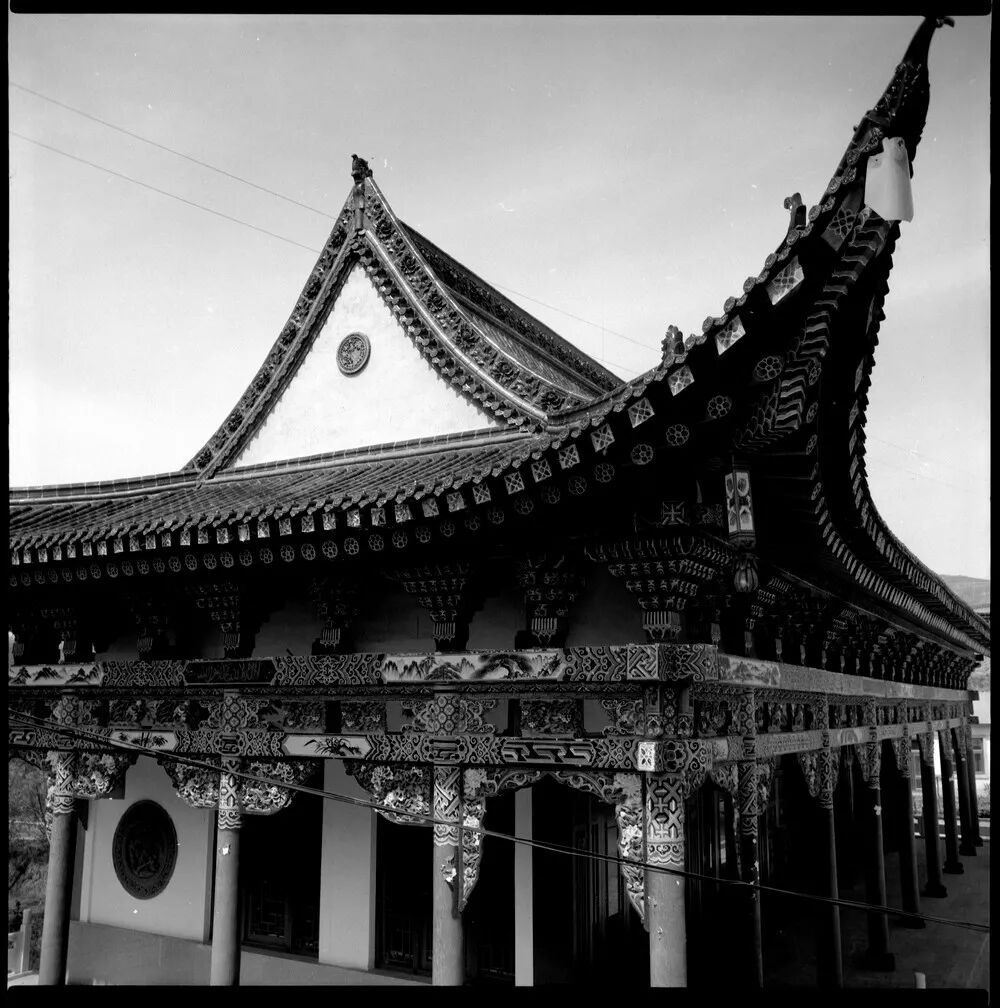
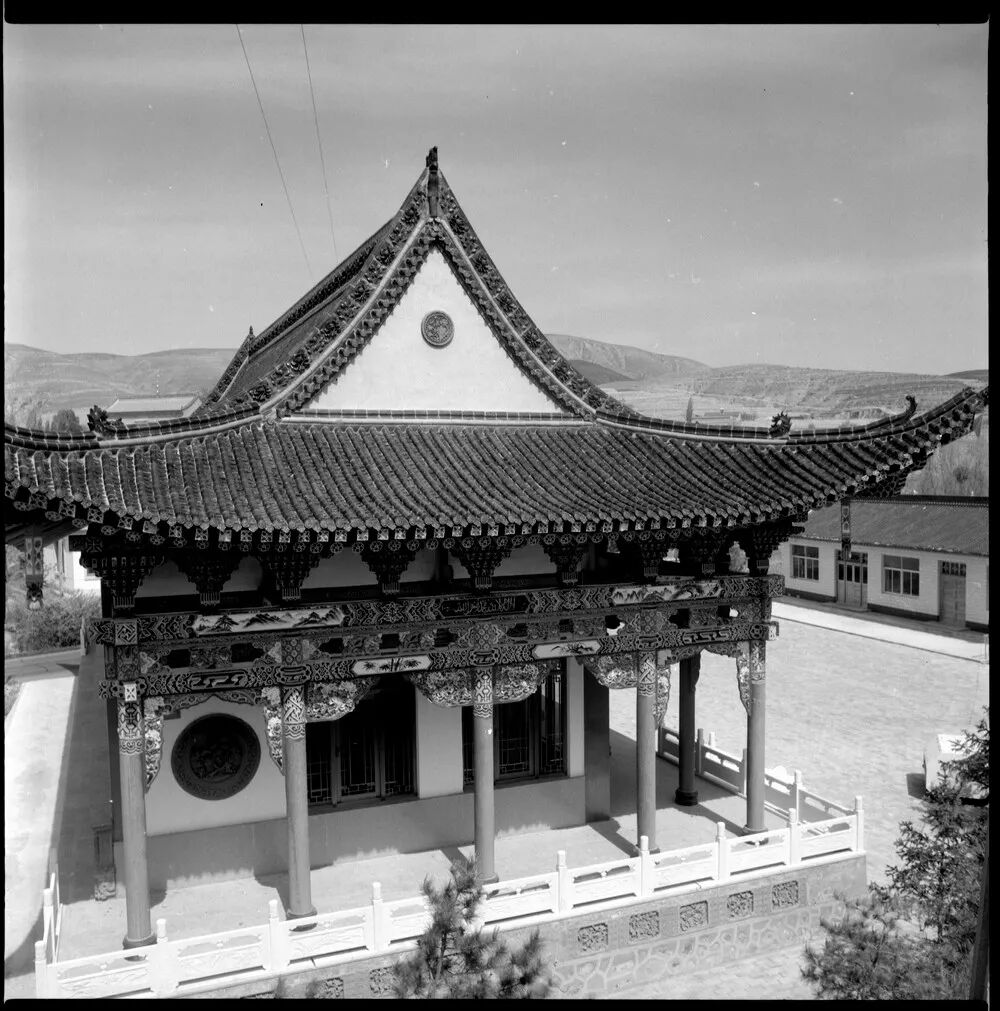
The Protected Heritage Architecture of Siliangzi Gongbei in Wuzhong: A Study of the Final Resting Place of Master Ma Hualong and Its Hexagonal Double-Eaved Design

Abstract:

A deep dive into the Siliangzi Gongbei, a key cultural heritage site under protection in Wuzhong City. This explores its history—originally built in the fourth year of the Republic of China (1915) and rebuilt in 1992—along with its striking 24-meter-tall main structure featuring an intricate hexagonal pyramidal double-eaved design symbolizing the hexagonal cap of the Jahriyya order.

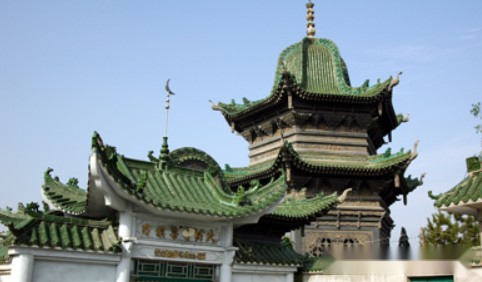
The Siliangzi Gongbei is a key cultural relic protection unit in Wuzhong City, Ningxia, serving as the final resting place and commemorative shrine of Ma Hualong, the fifth-generation master of the Jahriyya Sufi order (whom followers respectfully call the "Thirteenth Grandfather").

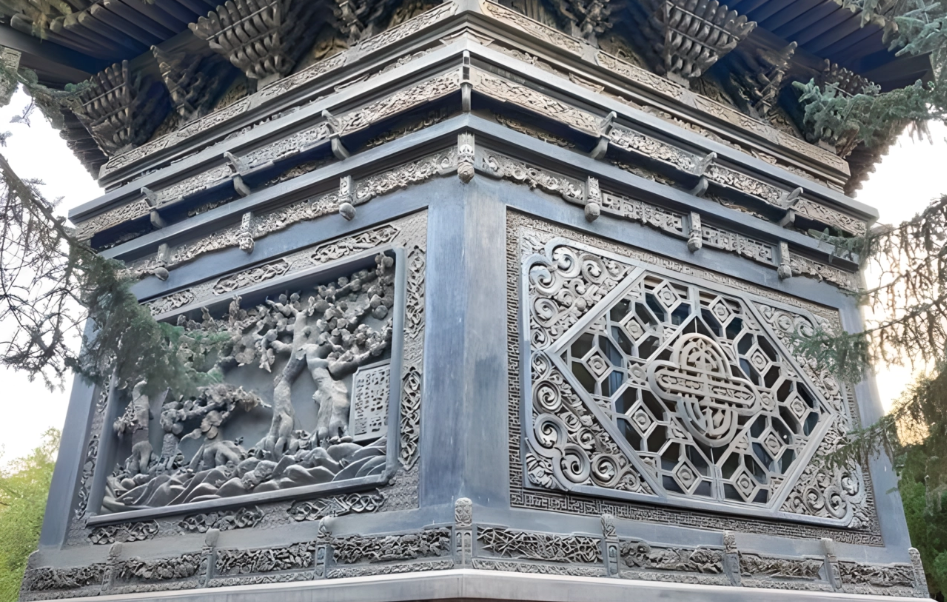
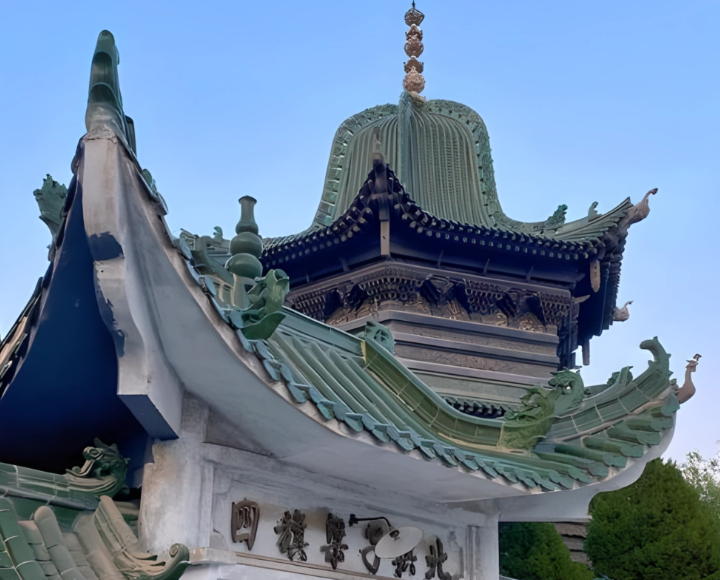
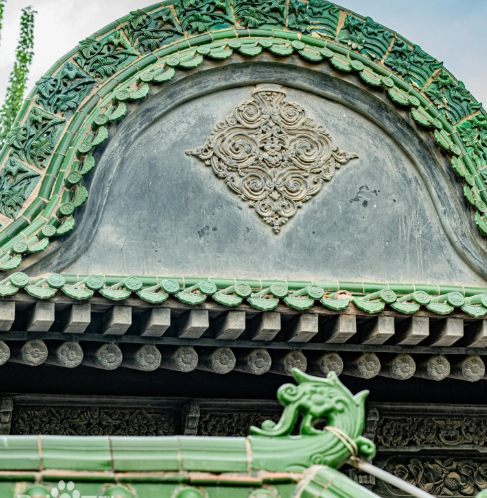
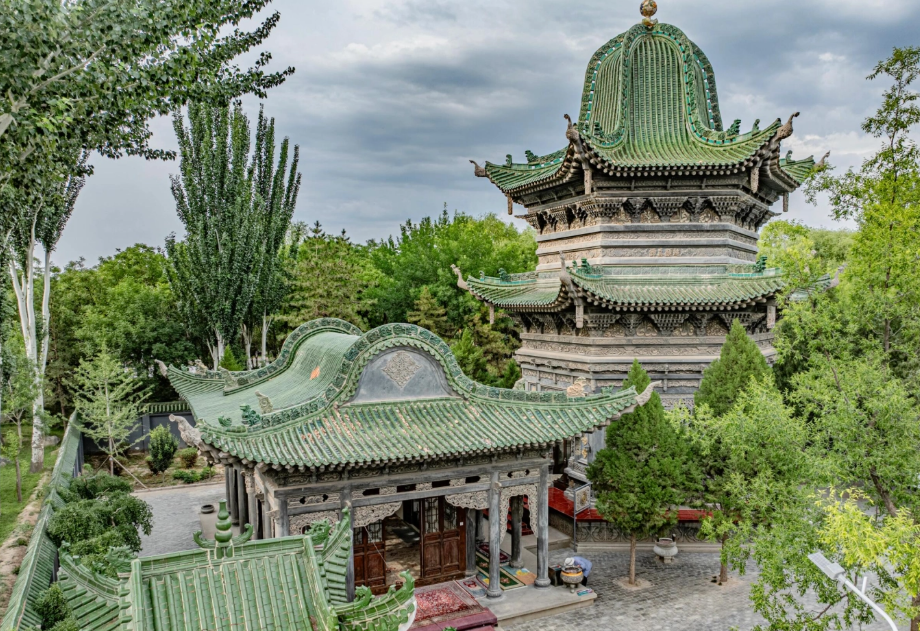
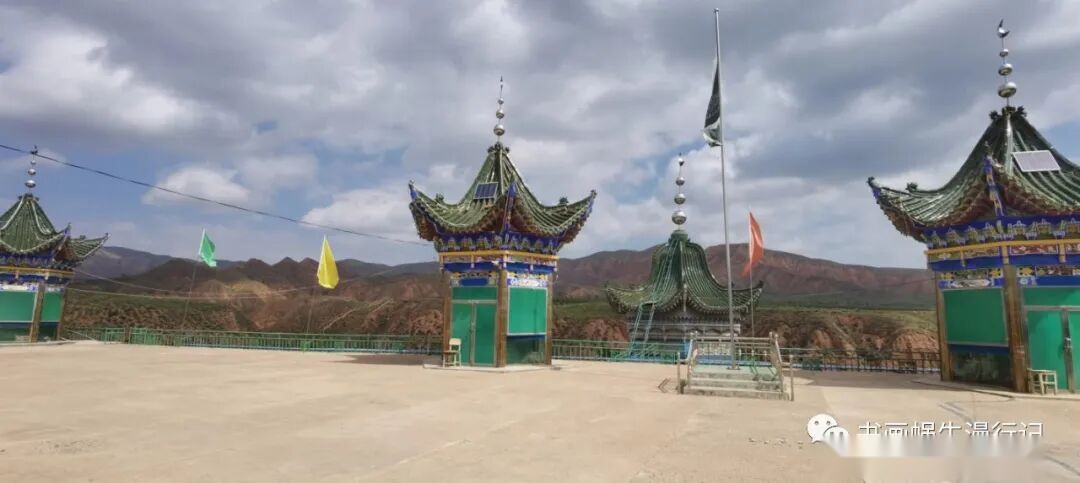
Originally built in 1915 (the fourth year of the Republic of China) and later rebuilt in 1992, the gongbei is now an ancient-style, reinforced concrete structure featuring a hexagonal pyramidal double-eaved roof. Standing 24 meters tall, the main structure symbolizes the hexagonal hat of the Jahriyya and the six core articles of faith in Islam. The exterior is decked out in dark gray bricks and green glazed tiles, while the interior is inlaid with pristine white marble. The craftsmanship is seriously stunning, holding massive religious and artistic value.

The architectural details are totally packed with symbolism:

The nine-tier base represents the "nine layers of empty clouds";

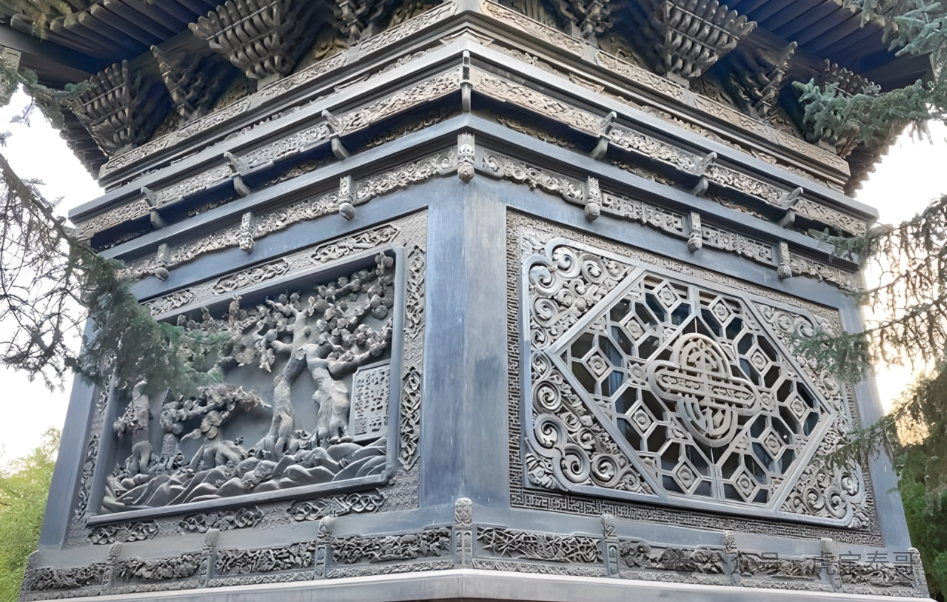
The east-facing facade features carvings of the "Five Elders Observing Taiji," blending traditional philosophical imagery;

The eaves corners are shaped like six phoenixes spreading their wings, symbolizing good fortune and spiritual ascension.


 Collapse Read »
The Protected Heritage Architecture of Siliangzi Gongbei in Wuzhong: A Study of the Final Resting Place of Master Ma Hualong and Its Hexagonal Double-Eaved Design
Abstract:
A deep dive into the Siliangzi Gongbei, a key cultural heritage site under protection in Wuzhong City. This explores its history—originally built in the fourth year of the Republic of China (1915) and rebuilt in 1992—along with its striking 24-meter-tall main structure featuring an intricate hexagonal pyramidal double-eaved design symbolizing the hexagonal cap of the Jahriyya order.
The Siliangzi Gongbei is a key cultural relic protection unit in Wuzhong City, Ningxia, serving as the final resting place and commemorative shrine of Ma Hualong, the fifth-generation master of the Jahriyya Sufi order (whom followers respectfully call the "Thirteenth Grandfather").
Originally built in 1915 (the fourth year of the Republic of China) and later rebuilt in 1992, the gongbei is now an ancient-style, reinforced concrete structure featuring a hexagonal pyramidal double-eaved roof. Standing 24 meters tall, the main structure symbolizes the hexagonal hat of the Jahriyya and the six core articles of faith in Islam. The exterior is decked out in dark gray bricks and green glazed tiles, while the interior is inlaid with pristine white marble. The craftsmanship is seriously stunning, holding massive religious and artistic value.
The architectural details are totally packed with symbolism:
The nine-tier base represents the "nine layers of empty clouds";
The east-facing facade features carvings of the "Five Elders Observing Taiji," blending traditional philosophical imagery;
The eaves corners are shaped like six phoenixes spreading their wings, symbolizing good fortune and spiritual ascension.
Collapse Read »
Sacred Hui Muslim Heritage in Ningxia: The History of Siliangzi Gongbei and Ma Hualong's Martyrdom
[Internet Repost]
Sacred Hui Muslim Heritage in Ningxia: Historical Origins of the Siliangzi Gongbei in Wuzhong and a Historical Analysis of Ma Hualong's Martyrdom Site
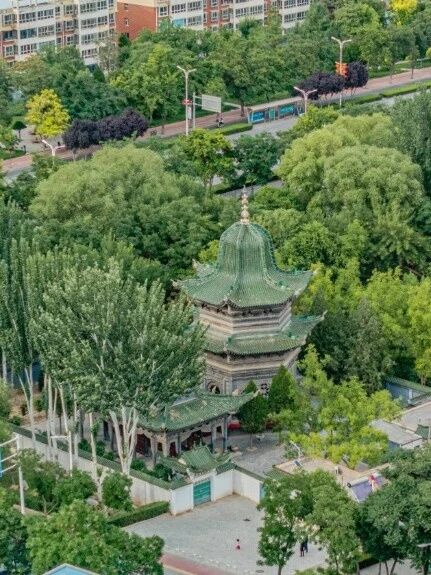
Abstract:
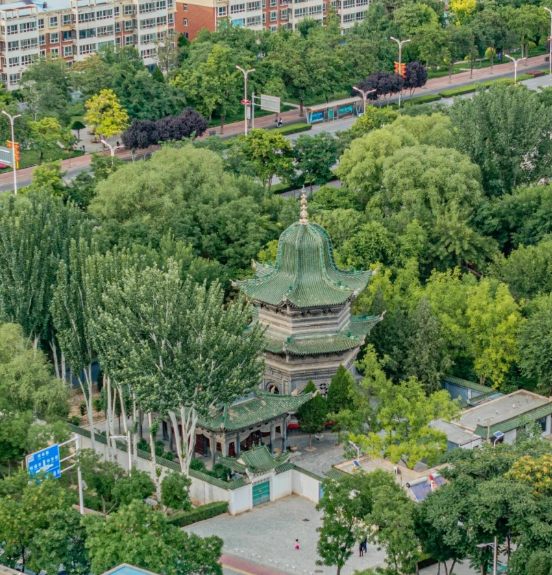
An investigative study tracking the historical context of Ma Hualong's martyrdom and burial at Siliangzi on the 13th day of the first lunar month in the tenth year of Tongzhi. It tells the touching story of how believers pooled a massive sum of money in 1925 to buy back the historic site and build a gongbei (Sufi shrine / mausoleum complex), showcasing the century-long ups and downs of this Sufi sacred site.
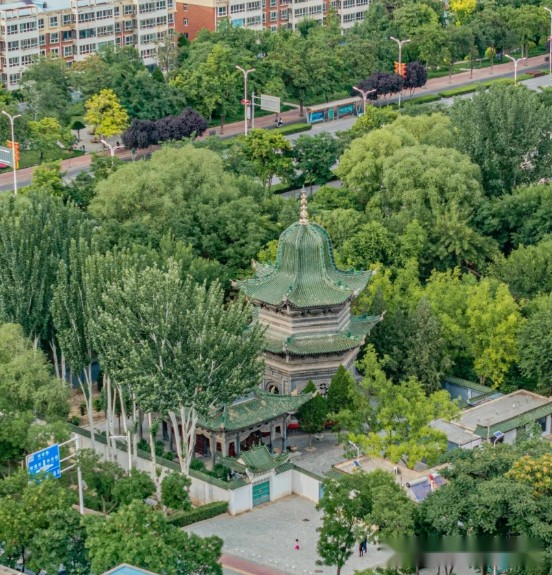
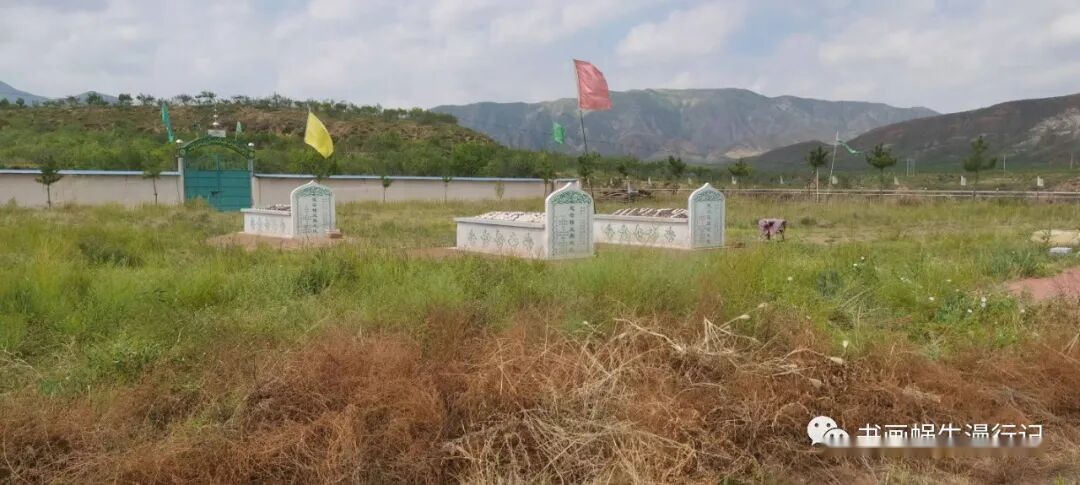
The Siliangzi Gongbei is the site of Ma Hualong's martyrdom and burial, located on the east side of the north gate in Wuzhong City. After the failure of the Northwest Muslim uprisings during the Tongzhi era of the Qing Dynasty, Ma Hualong was executed by lingchi (slow slicing) at Siliangzi on the 13th day of the first lunar month in the 10th year of Tongzhi (1871). Muslim followers buried his remains here in remembrance. In 1925, Ma Xuezhen, a leader of the Jahriyya (Jahriyya Sufi order), bought back the land with a huge sum of money and built the gongbei. The shrine was dismantled during the Cultural Revolution, but it has now been restored with special government funding.
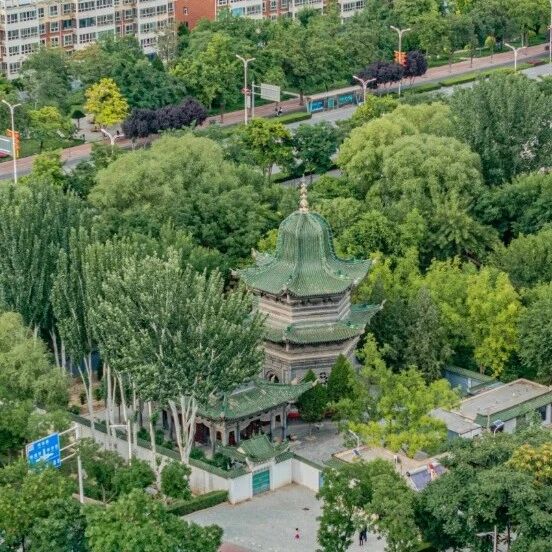
[On-Site Showcase]

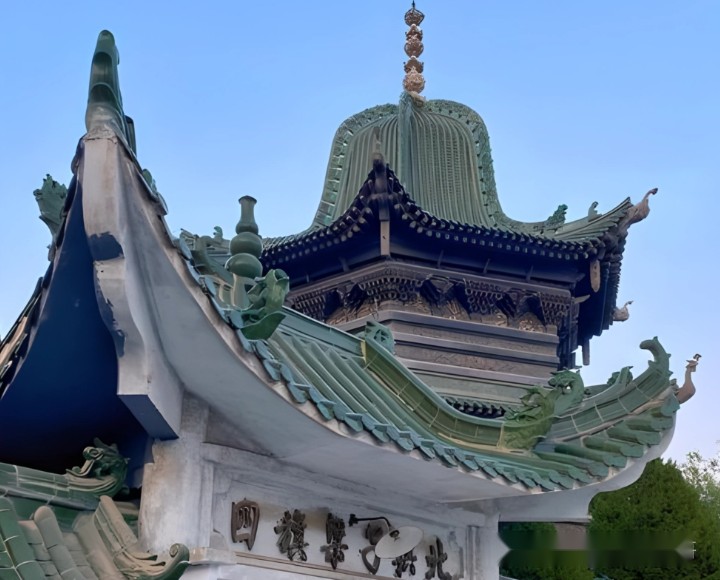
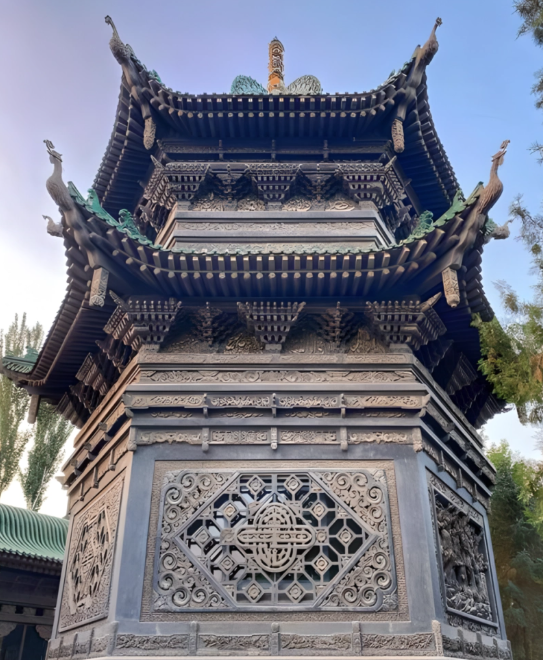
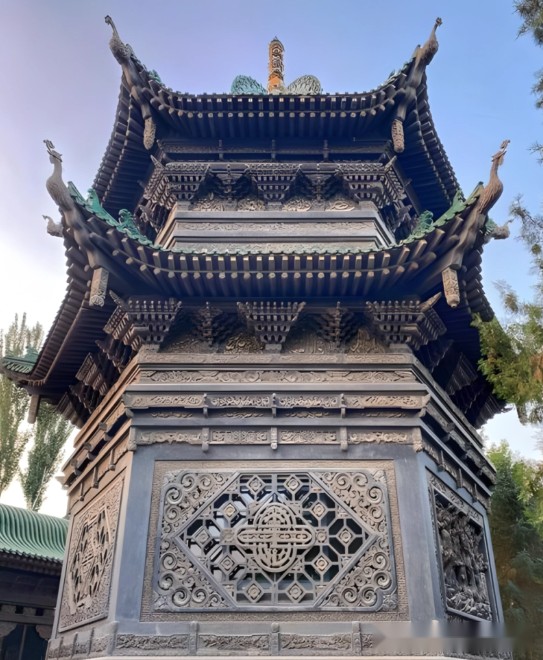

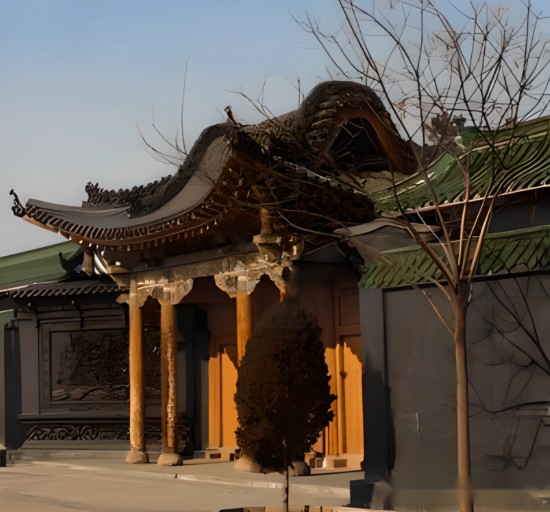

 Collapse Read »
Sacred Hui Muslim Heritage in Ningxia: Historical Origins of the Siliangzi Gongbei in Wuzhong and a Historical Analysis of Ma Hualong's Martyrdom Site
Abstract:
An investigative study tracking the historical context of Ma Hualong's martyrdom and burial at Siliangzi on the 13th day of the first lunar month in the tenth year of Tongzhi. It tells the touching story of how believers pooled a massive sum of money in 1925 to buy back the historic site and build a gongbei (Sufi shrine / mausoleum complex), showcasing the century-long ups and downs of this Sufi sacred site.
The Siliangzi Gongbei is the site of Ma Hualong's martyrdom and burial, located on the east side of the north gate in Wuzhong City. After the failure of the Northwest Muslim uprisings during the Tongzhi era of the Qing Dynasty, Ma Hualong was executed by lingchi (slow slicing) at Siliangzi on the 13th day of the first lunar month in the 10th year of Tongzhi (1871). Muslim followers buried his remains here in remembrance. In 1925, Ma Xuezhen, a leader of the Jahriyya (Jahriyya Sufi order), bought back the land with a huge sum of money and built the gongbei. The shrine was dismantled during the Cultural Revolution, but it has now been restored with special government funding.
[On-Site Showcase]
Collapse Read »
Helan Mountain Cultural & Geographic Expedition: Western Xia Ruins & Sufi Gongbei Shrines in Ningxia
[Internet Repost]
Helan Mountain Cultural & Geographic Expedition: The Rare Coexistence of Western Xia Ruins and Arab Saint Gongbei Shrines Under Bijiashan Peak
Abstract:

Hike through the unique landscape of Helan Mountain's 'three mountains enclosing two valleys.' Uncover the rare cultural landscape where mysterious Western Xia ruins on the northern slope of Lianhuashan coexist with Arab saint gongbei (Sufi shrine / mausoleum complex), documenting the millennial codes of civilization where Danxia sandstone cliffs, Taoist temples, Buddhist monasteries, and mosques face each other across the mountains.
Within the unique terrain of three mountains enclosing two valleys,

The crumbling walls of the Western Xia dynasty share space with Arab saint gongbei (Sufi shrines / mausoleum complexes),
Taoist temples, Buddhist monasteries, and mosques stand facing each other across the peaks,

Even the rocks are dyed in vibrant rainbow Danxia colors,
And the entire sky is yours alone on this hike!

✨ Top 3 Must-See Cultural Wonders ✨
❶ [The Vanished Western Xia Dynasty] Mysterious ruins are tucked away on the northern slope of Lianhuashan. Look closely to spot the man-made chisel marks on the massive boulders and touch a mysterious civilization from a thousand years ago.

❷ [China's Mecca] A Ming-dynasty Arab elder's gongbei (Sufi shrine / mausoleum complex) quietly stands amidst the mountains. Every year on the 13th day of the 7th lunar month, tens of thousands gather here for commemorative events.
❸ [The Fusion of Faiths] The three-tiered pavilions of Helan Temple are insanely photogenic! We recommend looking back from Sanguan Temple at dawn, when the morning mist makes the architectural complex look like a celestial palace.

♀ Insider Hiking Route
Enter via Left Valley (Cultural Route) → White Stupa → Exit via Right Valley (Nature Route) → Lianhuashan → Return via the same way

✅ First half takes you past Ming and Qing dynasty architectural complexes
✅ Second half challenges you with riverbed boulder fields and a summit climb for panoramic views

⚠ The riverbed can be dangerous after summer flash floods! Keep an eye on the weather. Perfect for hiking year-round.
Photo Ops Guide

▫ Low-angle shots of the three-tiered pavilions at Helan Temple
▫ White stupas and prayer flags framed against colorful rock strata

▫ Catching the sunrise from the mountaintop in the early morning
Practical Tips
▫ Navigation: Gunchongkou Scenic Area (Parking: 5 RMB for 24 hours)
▫ Admission: 30 RMB (included in the Ningxia Tourism All-In-One Pass; sightseeing bus is extra)
▫ Tips: Helan Mountain Villa is closed every Wednesday! We recommend bringing your own snacks, and please remember to pack out all your trash.
Those fragments of civilization hidden in rock crevices
Rustle softly whenever the mountain wind blows
Perhaps this is the most touching side of Helan Mountain Collapse Read »
Helan Mountain Cultural & Geographic Expedition: The Rare Coexistence of Western Xia Ruins and Arab Saint Gongbei Shrines Under Bijiashan Peak
Abstract:
Hike through the unique landscape of Helan Mountain's 'three mountains enclosing two valleys.' Uncover the rare cultural landscape where mysterious Western Xia ruins on the northern slope of Lianhuashan coexist with Arab saint gongbei (Sufi shrine / mausoleum complex), documenting the millennial codes of civilization where Danxia sandstone cliffs, Taoist temples, Buddhist monasteries, and mosques face each other across the mountains.
Within the unique terrain of three mountains enclosing two valleys,
The crumbling walls of the Western Xia dynasty share space with Arab saint gongbei (Sufi shrines / mausoleum complexes),
Taoist temples, Buddhist monasteries, and mosques stand facing each other across the peaks,
Even the rocks are dyed in vibrant rainbow Danxia colors,
And the entire sky is yours alone on this hike!
✨ Top 3 Must-See Cultural Wonders ✨
❶ [The Vanished Western Xia Dynasty] Mysterious ruins are tucked away on the northern slope of Lianhuashan. Look closely to spot the man-made chisel marks on the massive boulders and touch a mysterious civilization from a thousand years ago.
❷ [China's Mecca] A Ming-dynasty Arab elder's gongbei (Sufi shrine / mausoleum complex) quietly stands amidst the mountains. Every year on the 13th day of the 7th lunar month, tens of thousands gather here for commemorative events.
❸ [The Fusion of Faiths] The three-tiered pavilions of Helan Temple are insanely photogenic! We recommend looking back from Sanguan Temple at dawn, when the morning mist makes the architectural complex look like a celestial palace.
♀ Insider Hiking Route
Enter via Left Valley (Cultural Route) → White Stupa → Exit via Right Valley (Nature Route) → Lianhuashan → Return via the same way
✅ First half takes you past Ming and Qing dynasty architectural complexes
✅ Second half challenges you with riverbed boulder fields and a summit climb for panoramic views
⚠ The riverbed can be dangerous after summer flash floods! Keep an eye on the weather. Perfect for hiking year-round.
Photo Ops Guide
▫ Low-angle shots of the three-tiered pavilions at Helan Temple
▫ White stupas and prayer flags framed against colorful rock strata
▫ Catching the sunrise from the mountaintop in the early morning
Practical Tips
▫ Navigation: Gunchongkou Scenic Area (Parking: 5 RMB for 24 hours)
▫ Admission: 30 RMB (included in the Ningxia Tourism All-In-One Pass; sightseeing bus is extra)
▫ Tips: Helan Mountain Villa is closed every Wednesday! We recommend bringing your own snacks, and please remember to pack out all your trash.
Those fragments of civilization hidden in rock crevices
Rustle softly whenever the mountain wind blows
Perhaps this is the most touching side of Helan Mountain Collapse Read »
Wuzhong Siliangzi Gongbei: Exploring Ningxia's Sino-Arabic Sufi Shrine
[Internet Repost]
Visual Documentation of Siliangzi Gongbei in Wuzhong: A Municipal-Level Protected Sufi Shrine Blending Chinese and Arabic Styles

Abstract:

Documenting the elegant style of the Siliangzi Gongbei in Wuzhong, Ningxia. Showcasing its unique double-eaved hexagonal architecture, green-tiled flying eaves, and intricate reliefs, it reveals the perfect fusion of traditional Chinese pavilion craftsmanship and Islamic aesthetics in a Northwest sacred site.

Ningxia • Wuzhong

The Siliangzi Gongbei is the final resting place of Ma Hualong, a revered elder of the Jahriyya menhuan (Sufi order). The original gongbei was first built in 1915 and later destroyed, while the structure you see today was rebuilt in 1992 and is now a Wuzhong municipal-level cultural heritage site. The architecture features a distinctive double-eaved hexagonal design, blending traditional Chinese pavilion styles with Islamic aesthetics. With its green tiles, flying eaves, and delicate reliefs, it carries the heavy modern history of the Northwest alongside a unique Hui Muslim religious culture, all set in a serene and solemn environment. Collapse Read »
Visual Documentation of Siliangzi Gongbei in Wuzhong: A Municipal-Level Protected Sufi Shrine Blending Chinese and Arabic Styles
Abstract:
Documenting the elegant style of the Siliangzi Gongbei in Wuzhong, Ningxia. Showcasing its unique double-eaved hexagonal architecture, green-tiled flying eaves, and intricate reliefs, it reveals the perfect fusion of traditional Chinese pavilion craftsmanship and Islamic aesthetics in a Northwest sacred site.
Ningxia • Wuzhong
The Siliangzi Gongbei is the final resting place of Ma Hualong, a revered elder of the Jahriyya menhuan (Sufi order). The original gongbei was first built in 1915 and later destroyed, while the structure you see today was rebuilt in 1992 and is now a Wuzhong municipal-level cultural heritage site. The architecture features a distinctive double-eaved hexagonal design, blending traditional Chinese pavilion styles with Islamic aesthetics. With its green tiles, flying eaves, and delicate reliefs, it carries the heavy modern history of the Northwest alongside a unique Hui Muslim religious culture, all set in a serene and solemn environment. Collapse Read »
Exploring Helan Mountain's Hidden Gongbei and Mosque: A Unique Oasis of Three Faiths in Ningxia
[Internet Repost]
Exploring the Hidden Mosque and Gongbei in Helan Mountain's Gungzhongkou: A Historic Tale of Three Religions Coexisting in a Scenic Canyon

Abstract:

A field visit to the serene mosque tucked inside the Gungzhongkou (Xiaokouzi) scenic area in Yinchuan's Helan Mountain. We explore the unique origin story of 'the gongbei first, followed by the mosque,' showcasing a harmonious model where Buddhism, Taoism, and Islam share the same mountain.

Tucked away in the Helan Mountains, this mosque holds a history that many people don't know.

1. Location and Vibe

The Gungzhongkou Mosque is located inside the Gungzhongkou (also known as Xiaokouzi) scenic area in Yinchuan's Helan Mountain. The courtyard is modest in size, serene, and quiet, serving as one of the landmark structures where Buddhism, Taoism, and Islam peacefully coexist on the same mountain.

2. The Gongbei Came First, Followed by the Mosque

The most unique thing about this mosque: it wasn't built as a standalone masjid first; rather, the holy figure's gongbei (Sufi shrine / mausoleum complex) came first. Legend has it that in the late Ming dynasty, a Yemeni Islamic missionary named Kemarenting came to China to spread Islam, preaching in the Yinchuan area for over thirty years. After his passing (return to Allah), he was buried in the mountains of Gungzhongkou, and local believers built a gongbei in his honor.

3. History of Construction

According to tradition, in the first year of the Shunzhi reign of the Qing dynasty (1644), a masjid was built right next to the gongbei. During the Guangxu reign of the Qing dynasty, the main prayer hall was expanded, creating a traditional Chinese siheyuan (quadrangle courtyard) layout. After surviving wars and undergoing reconstructions, it was thoroughly renovated in 1980 to become the structure we see today.
4. The Mosque Today
Spanning about one mu (roughly one-sixth of an acre), the complex features a three-bay main prayer hall built in traditional Chinese classical architectural style. While it lacks elaborate carvings or wall murals, it has gained a quiet reputation thanks to its tranquil mountain setting and deep historical roots.
5. Commemorative Events
Around the 13th day of the seventh lunar month each year—marking the anniversary of the elder's return to Allah—local Hui Muslims gather here to hold commemorative services.
Travel Tips: The mosque is located inside the scenic area, so you will need to buy a ticket to enter the mountain; please keep quiet when visiting and respect local customs. Collapse Read »
Exploring the Hidden Mosque and Gongbei in Helan Mountain's Gungzhongkou: A Historic Tale of Three Religions Coexisting in a Scenic Canyon
Abstract:
A field visit to the serene mosque tucked inside the Gungzhongkou (Xiaokouzi) scenic area in Yinchuan's Helan Mountain. We explore the unique origin story of 'the gongbei first, followed by the mosque,' showcasing a harmonious model where Buddhism, Taoism, and Islam share the same mountain.
Tucked away in the Helan Mountains, this mosque holds a history that many people don't know.
1. Location and Vibe
The Gungzhongkou Mosque is located inside the Gungzhongkou (also known as Xiaokouzi) scenic area in Yinchuan's Helan Mountain. The courtyard is modest in size, serene, and quiet, serving as one of the landmark structures where Buddhism, Taoism, and Islam peacefully coexist on the same mountain.
2. The Gongbei Came First, Followed by the Mosque
The most unique thing about this mosque: it wasn't built as a standalone masjid first; rather, the holy figure's gongbei (Sufi shrine / mausoleum complex) came first. Legend has it that in the late Ming dynasty, a Yemeni Islamic missionary named Kemarenting came to China to spread Islam, preaching in the Yinchuan area for over thirty years. After his passing (return to Allah), he was buried in the mountains of Gungzhongkou, and local believers built a gongbei in his honor.
3. History of Construction
According to tradition, in the first year of the Shunzhi reign of the Qing dynasty (1644), a masjid was built right next to the gongbei. During the Guangxu reign of the Qing dynasty, the main prayer hall was expanded, creating a traditional Chinese siheyuan (quadrangle courtyard) layout. After surviving wars and undergoing reconstructions, it was thoroughly renovated in 1980 to become the structure we see today.
4. The Mosque Today
Spanning about one mu (roughly one-sixth of an acre), the complex features a three-bay main prayer hall built in traditional Chinese classical architectural style. While it lacks elaborate carvings or wall murals, it has gained a quiet reputation thanks to its tranquil mountain setting and deep historical roots.
5. Commemorative Events
Around the 13th day of the seventh lunar month each year—marking the anniversary of the elder's return to Allah—local Hui Muslims gather here to hold commemorative services.
Travel Tips: The mosque is located inside the scenic area, so you will need to buy a ticket to enter the mountain; please keep quiet when visiting and respect local customs. Collapse Read »
Tracing the Roots of Ningxia's Sufi Heritage: The History and Architecture of the Zhongwan Liye Gongbei
[Internet Repost]
Tracing the History of the Zhongwan Liye Gongbei in Ningxia: The Spiritual Seat and Architectural Record of the Khufiyya Sufi Order Predecessors

Abstract:

A 54-photo and text documentation diving deep into the exploration of the Zhongwan Liye Gongbei and Honggang Gangzi Gongbei. Tracing the historical lineage of the Khufiyya Sufi order taking root and preaching in Ningxia, documenting the solemn gongbei mausoleums, scripture hall brick carvings, and the cultural landscape of surrounding Hui Muslim villages.

Zhongwan Liye Gongbei (Khufiyya Sufi Order)
The Honggang Gangzi Gongbei (associated with Master Hong Shoulin) is the first-generation missionary of the Ningxia Khufiyya Sufi order. Amin!

Zhongwan Liye Religious Activity Venue Registration Certificate
Introduction to Liye:

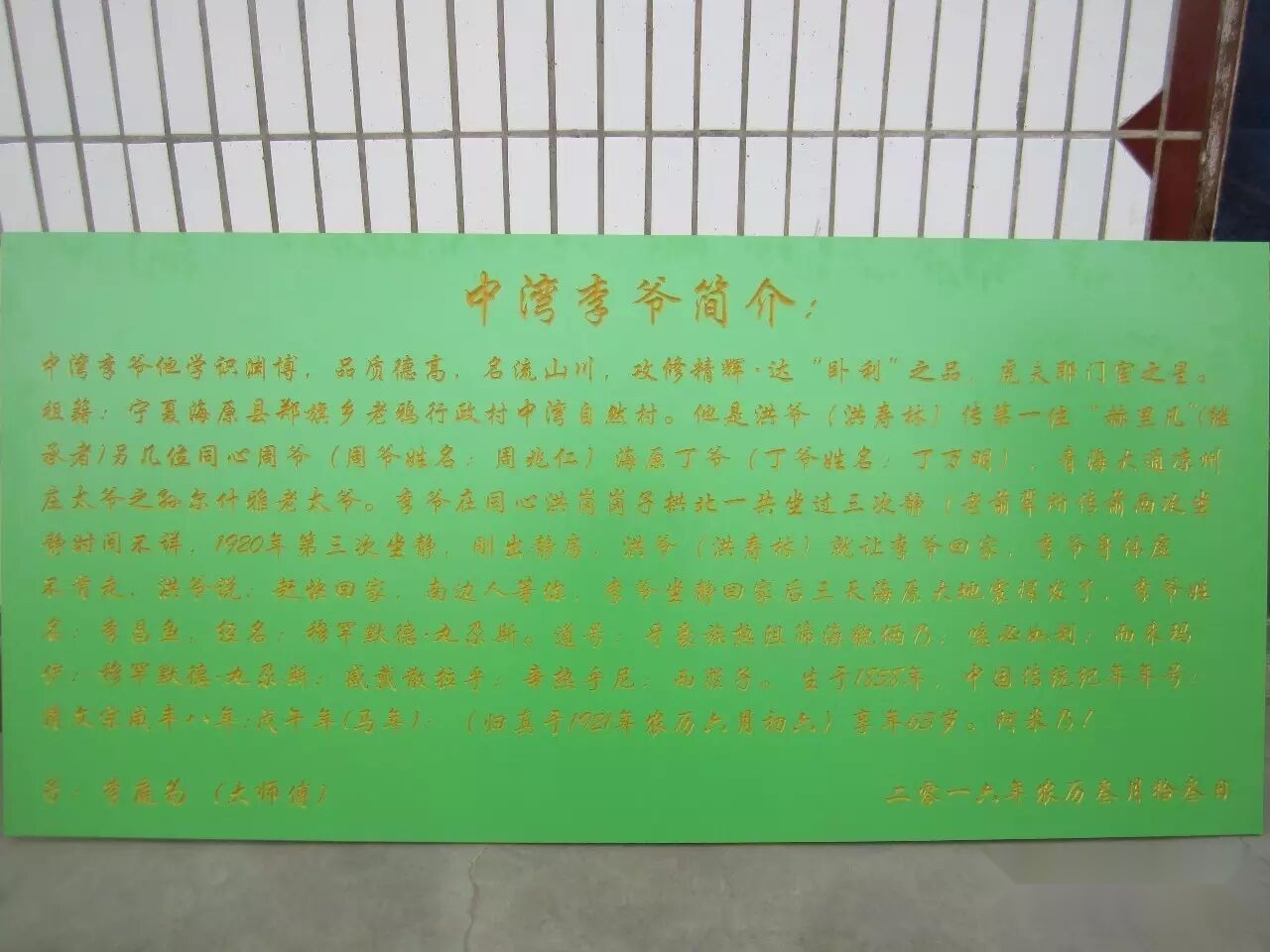
Liye was profoundly knowledgeable; his character was of the highest virtue, renowned across mountains and rivers. His spiritual cultivation reached the rank of a 'wali' (friend of Allah), a shining star of the Khufiyya Sufi order. Liye's given name: Li Changyu, Islamic name: Muhammad Wangas. Religious title: Yahaozu Rezu Sheih Maolainai, Kebiliuli; and Laimayi, Muhammad Wangas; praise be to Allah; Xinrehfuni; and Zui Zi. Ancestral home: Zhongwan Natural Village, Laoya Administrative Village, Zhengqi Township, Haiyuan County, Ningxia. He was the first 'khalifa' (successor) appointed by Master Hong (Hong Shoulin). Other appointed successors included Master Zhou of Tongxin (name: Zhou Zhaoren), Master Ding of Haiyuan (name: Ding Wanming), and Old Master Ershiya—the grandson of Old Master Liangzhouzhuang of Datong, Qinghai (Old Master Ershiya only initiated slightly over 100 people in his lifetime, including the grandson of Zhongwan Liye: Master Li Wenli, Master Li Wenjie, Li Wenshan, and Li Wenlu). Liye completed three periods of spiritual seclusion ('chilla') at Honggang Gangzi in Tongxin; (according to the historical tracking of our editor, passed down by senior elders, the exact dates of the first two seclusions are unknown). In 1920, during his third seclusion, right as he emerged from the seclusion room, Master Hong (Hong Shoulin) told Liye to return home. Liye was physically weak and reluctant to leave, but Master Hong said: 'Hurry home, people in the south are waiting for you.' Three days after Liye returned home, the great Haiyuan earthquake struck. Liye was born in 1858, in the traditional Chinese imperial year: the 8th year of Xianfeng under the Qing dynasty, the Wuwu year (Year of the Horse). He returned to the truth (passed away) in 1921 on the 6th day of the 6th lunar month, living to the age of 63. Amin!

Our editor has excerpted records from the internet of the Quranic texts studied by Liye; Amin!

Liye's Hat (According to oral history passed down by elders: this hat was brought back from Mecca by the Seventh Old Master and distributed to Liye)

The knife used by Zhongwan Liye for slaughtering cattle

Liye's stationary box used for writing scripture scrolls

Liye's sajda mat (used for prayer/salah)

Liye Gongbei Bronze Incense Burner: Distributed by Li Yanqing (Haji)

Liye's Bagua Pavilion

Do you recognize all of these old masters (preachers)? Amin!

A commemorative photo of Master Hong Weizong and Master Li Wenjie taken in 1992 (Master Hong came to Laoya to preach). Photographed by Shuangwa on the South Mountain.

Master Bai Geda and Master Li Yanxue of Zhongwan at the 2007 completion celebration of the Liye Gongbei

Group photo of the Seventh Master and the Zhongwan Liye family on the 6th day of the 6th lunar month in 2007

In 2012, Li Cungui, researchers from the Second Northwest University for Nationalities and the Ningda Institute of Social and Ethnic Sciences came together to Mullah Li Wenjiang's home to trace the history of Zhongwan Liye. Photographed by Li Chengyu

Li Cungui, Professor Ma Jianfu from the University for Nationalities; Ningda graduate student; Master Li Yanxue, Mullah Li Xinghui, and Li Chenggang came to Zhou's home to trace the history of Zhongwan Liye. Hearing that Master Li Yanxue—the great-grandson of Zhongwan Liye—had come to visit, Zhou's granddaughter-in-law (who is blind) repeatedly said: 'Liye is the senior martial brother of Master Zhou.' She then reached into her clothes and shook out over one hundred yuan in saved-up money, giving it all to Master Li, the great-grandson of Liye.

Lecturing on the missionary journeys of Liye, Master Zhou, and Master Ding.

The 2012 Liye History Tracking Team visiting the Zhou Gongbei

Professor Ma Jianfu lecturing his students on the Khufiyya Sufi order at the Zhou Gongbei. Photographed in 2012 by Li Chengyu

The grandson of Master Zhou and Master Li Yanxue (grandson of Liye), along with Li Chenggang, exchanging stories about the history of Masters Li, Zhou, and Ding after completing an 'ayliya/meal prayer' (Dua/Dhikr gathering). Photographed in 2011 by Li Chengyu

In 2011, Master Li Yanxue (grandson of Zhongwan Liye) and Li Chenggang finished an ayliya gathering at the home of Master Ding's grandfather, and asked him about the history of Old Masters Li, Zhou, and Ding. Li Chenggang asked Master Ding's grandfather: 'Some people nowadays refuse to acknowledge that Zhongwan Liye was appointed as a 'khalifa' by Master Hong Shoulin.' Master Ding's grandfather replied: 'Children must not talk nonsense; whoever makes such claims is responsible for them. In our Khufiyya order, the Master of Liangzhouzhuang appointed two khalifas in Tongxin and Haiyuan counties: Liye of Haiyuan; while Master Hong of Tongxin appointed three khalifas: Zhongwan Liye of Haiyuan, Master Zhou of Tongxin, and Master Ding of Haiyuan. Before Master Hong returned to the truth, he said that religious teachings were reaching a time of weakness, and that we would stop with Ding. Master Hong sent his personal seal to the Daliang Gongbei, saying that forty years later someone would come to retrieve it. Forty years later, Master Weizong went to Daliang Gongbei to claim the seal.' Master Ding also said: 'In 1982, Master Li Wenjie and I were eating youxiang (traditional golden fried dough cakes) in Jiatang and discussing how the two of us should sort out and write down some history, but then he got sick, and we never saw each other again.'

Searching for historical truth is so difficult!! Amin!

Professor Ma Jianfu, Master Li Yanxue, Mullah Li Xinghui, and the graduate students from the University for Nationalities and Ningda tracing Liye's history at the home of Haji Li Yanqing. According to Haji Li Yanqing, he was serving as an accountant in Laoya Administrative Village at the time, and a working group dispatched by Haiyuan County stayed at his house and confiscated Zhongwan Liye's seal (the missionary seal).

Master Li Yanxue prepared a lavish plate of dapanji (spicy big plate chicken) for the Liye History Tracking Team

In 2012, led by Professor Ma Jianfu, visiting the Liye Gongbei for academic inspection and grave visitation

Professor Ma Jianfu and Li Cungui paying their respects at the Liye Gongbei (Sufi shrine / mausoleum complex). Photographed by Li Chengyu in 2012.

After the Cultural Revolution, masters Li Wenlin, Li Wenjie, Li Wenshan, and Li Wenlu rebuilt the gongbei (Sufi shrine / mausoleum complex) for their grandfather, Elder Li.

After finishing the *amal* (religious service / good deeds) at Liye Gongbei, Professor Ma and many students (*studani* / religious seekers) went to study the history of Liye's missionary work.

Students from the Second Ethnic Minority Normal School and graduate students from Ningxia University taking photos at Liye Gongbei.

Holding an *amal* (religious service / good deeds) at the Zhongwan Daotang (Sufi teaching hall) on the sixth day of the sixth lunar month in 2016.

Visiting and paying respects at Liye Gongbei.

The president of the Ningxia Yiguang Alumni Association and Master Li Yanxue posing for a commemorative photo at the Zhongwan Liye Gongbei.

Imam He from Xishan visiting the Zhongwan Daotang (Sufi teaching hall).

On the sixth day of the sixth lunar month in 2016, Master Li Yanxue (great-grandson of Liye) and imams from the Yiguang Association went to the gongbei (Sufi shrine / mausoleum complex) to pay their respects.

Master Li Yanxue and the imams visiting the Zhongwan Liye Gongbei to pay their respects. Amin! (Amen!)


 Collapse Read »
Tracing the History of the Zhongwan Liye Gongbei in Ningxia: The Spiritual Seat and Architectural Record of the Khufiyya Sufi Order Predecessors
Abstract:
A 54-photo and text documentation diving deep into the exploration of the Zhongwan Liye Gongbei and Honggang Gangzi Gongbei. Tracing the historical lineage of the Khufiyya Sufi order taking root and preaching in Ningxia, documenting the solemn gongbei mausoleums, scripture hall brick carvings, and the cultural landscape of surrounding Hui Muslim villages.
Zhongwan Liye Gongbei (Khufiyya Sufi Order)
The Honggang Gangzi Gongbei (associated with Master Hong Shoulin) is the first-generation missionary of the Ningxia Khufiyya Sufi order. Amin!
Zhongwan Liye Religious Activity Venue Registration Certificate
Introduction to Liye:
Liye was profoundly knowledgeable; his character was of the highest virtue, renowned across mountains and rivers. His spiritual cultivation reached the rank of a 'wali' (friend of Allah), a shining star of the Khufiyya Sufi order. Liye's given name: Li Changyu, Islamic name: Muhammad Wangas. Religious title: Yahaozu Rezu Sheih Maolainai, Kebiliuli; and Laimayi, Muhammad Wangas; praise be to Allah; Xinrehfuni; and Zui Zi. Ancestral home: Zhongwan Natural Village, Laoya Administrative Village, Zhengqi Township, Haiyuan County, Ningxia. He was the first 'khalifa' (successor) appointed by Master Hong (Hong Shoulin). Other appointed successors included Master Zhou of Tongxin (name: Zhou Zhaoren), Master Ding of Haiyuan (name: Ding Wanming), and Old Master Ershiya—the grandson of Old Master Liangzhouzhuang of Datong, Qinghai (Old Master Ershiya only initiated slightly over 100 people in his lifetime, including the grandson of Zhongwan Liye: Master Li Wenli, Master Li Wenjie, Li Wenshan, and Li Wenlu). Liye completed three periods of spiritual seclusion ('chilla') at Honggang Gangzi in Tongxin; (according to the historical tracking of our editor, passed down by senior elders, the exact dates of the first two seclusions are unknown). In 1920, during his third seclusion, right as he emerged from the seclusion room, Master Hong (Hong Shoulin) told Liye to return home. Liye was physically weak and reluctant to leave, but Master Hong said: 'Hurry home, people in the south are waiting for you.' Three days after Liye returned home, the great Haiyuan earthquake struck. Liye was born in 1858, in the traditional Chinese imperial year: the 8th year of Xianfeng under the Qing dynasty, the Wuwu year (Year of the Horse). He returned to the truth (passed away) in 1921 on the 6th day of the 6th lunar month, living to the age of 63. Amin!
Our editor has excerpted records from the internet of the Quranic texts studied by Liye; Amin!
Liye's Hat (According to oral history passed down by elders: this hat was brought back from Mecca by the Seventh Old Master and distributed to Liye)
The knife used by Zhongwan Liye for slaughtering cattle
Liye's stationary box used for writing scripture scrolls
Liye's sajda mat (used for prayer/salah)
Liye Gongbei Bronze Incense Burner: Distributed by Li Yanqing (Haji)
Liye's Bagua Pavilion
Do you recognize all of these old masters (preachers)? Amin!
A commemorative photo of Master Hong Weizong and Master Li Wenjie taken in 1992 (Master Hong came to Laoya to preach). Photographed by Shuangwa on the South Mountain.
Master Bai Geda and Master Li Yanxue of Zhongwan at the 2007 completion celebration of the Liye Gongbei
Group photo of the Seventh Master and the Zhongwan Liye family on the 6th day of the 6th lunar month in 2007
In 2012, Li Cungui, researchers from the Second Northwest University for Nationalities and the Ningda Institute of Social and Ethnic Sciences came together to Mullah Li Wenjiang's home to trace the history of Zhongwan Liye. Photographed by Li Chengyu
Li Cungui, Professor Ma Jianfu from the University for Nationalities; Ningda graduate student; Master Li Yanxue, Mullah Li Xinghui, and Li Chenggang came to Zhou's home to trace the history of Zhongwan Liye. Hearing that Master Li Yanxue—the great-grandson of Zhongwan Liye—had come to visit, Zhou's granddaughter-in-law (who is blind) repeatedly said: 'Liye is the senior martial brother of Master Zhou.' She then reached into her clothes and shook out over one hundred yuan in saved-up money, giving it all to Master Li, the great-grandson of Liye.
Lecturing on the missionary journeys of Liye, Master Zhou, and Master Ding.
The 2012 Liye History Tracking Team visiting the Zhou Gongbei
Professor Ma Jianfu lecturing his students on the Khufiyya Sufi order at the Zhou Gongbei. Photographed in 2012 by Li Chengyu
The grandson of Master Zhou and Master Li Yanxue (grandson of Liye), along with Li Chenggang, exchanging stories about the history of Masters Li, Zhou, and Ding after completing an 'ayliya/meal prayer' (Dua/Dhikr gathering). Photographed in 2011 by Li Chengyu
In 2011, Master Li Yanxue (grandson of Zhongwan Liye) and Li Chenggang finished an ayliya gathering at the home of Master Ding's grandfather, and asked him about the history of Old Masters Li, Zhou, and Ding. Li Chenggang asked Master Ding's grandfather: 'Some people nowadays refuse to acknowledge that Zhongwan Liye was appointed as a 'khalifa' by Master Hong Shoulin.' Master Ding's grandfather replied: 'Children must not talk nonsense; whoever makes such claims is responsible for them. In our Khufiyya order, the Master of Liangzhouzhuang appointed two khalifas in Tongxin and Haiyuan counties: Liye of Haiyuan; while Master Hong of Tongxin appointed three khalifas: Zhongwan Liye of Haiyuan, Master Zhou of Tongxin, and Master Ding of Haiyuan. Before Master Hong returned to the truth, he said that religious teachings were reaching a time of weakness, and that we would stop with Ding. Master Hong sent his personal seal to the Daliang Gongbei, saying that forty years later someone would come to retrieve it. Forty years later, Master Weizong went to Daliang Gongbei to claim the seal.' Master Ding also said: 'In 1982, Master Li Wenjie and I were eating youxiang (traditional golden fried dough cakes) in Jiatang and discussing how the two of us should sort out and write down some history, but then he got sick, and we never saw each other again.'
Searching for historical truth is so difficult!! Amin!
Professor Ma Jianfu, Master Li Yanxue, Mullah Li Xinghui, and the graduate students from the University for Nationalities and Ningda tracing Liye's history at the home of Haji Li Yanqing. According to Haji Li Yanqing, he was serving as an accountant in Laoya Administrative Village at the time, and a working group dispatched by Haiyuan County stayed at his house and confiscated Zhongwan Liye's seal (the missionary seal).
Master Li Yanxue prepared a lavish plate of dapanji (spicy big plate chicken) for the Liye History Tracking Team
In 2012, led by Professor Ma Jianfu, visiting the Liye Gongbei for academic inspection and grave visitation
Professor Ma Jianfu and Li Cungui paying their respects at the Liye Gongbei (Sufi shrine / mausoleum complex). Photographed by Li Chengyu in 2012.
After the Cultural Revolution, masters Li Wenlin, Li Wenjie, Li Wenshan, and Li Wenlu rebuilt the gongbei (Sufi shrine / mausoleum complex) for their grandfather, Elder Li.
After finishing the *amal* (religious service / good deeds) at Liye Gongbei, Professor Ma and many students (*studani* / religious seekers) went to study the history of Liye's missionary work.
Students from the Second Ethnic Minority Normal School and graduate students from Ningxia University taking photos at Liye Gongbei.
Holding an *amal* (religious service / good deeds) at the Zhongwan Daotang (Sufi teaching hall) on the sixth day of the sixth lunar month in 2016.
Visiting and paying respects at Liye Gongbei.
The president of the Ningxia Yiguang Alumni Association and Master Li Yanxue posing for a commemorative photo at the Zhongwan Liye Gongbei.
Imam He from Xishan visiting the Zhongwan Daotang (Sufi teaching hall).
On the sixth day of the sixth lunar month in 2016, Master Li Yanxue (great-grandson of Liye) and imams from the Yiguang Association went to the gongbei (Sufi shrine / mausoleum complex) to pay their respects.
Master Li Yanxue and the imams visiting the Zhongwan Liye Gongbei to pay their respects. Amin! (Amen!)
Collapse Read »
Exploring Ningxia Muslim Heritage: Ancient Mosques, Sufi Gongbei & Hui Culture
[Internet Repost]
Tracing Muslim Roots in Northern China: The Traditional Architecture and Mountain Retreat Memories of Laorengou Gongbei
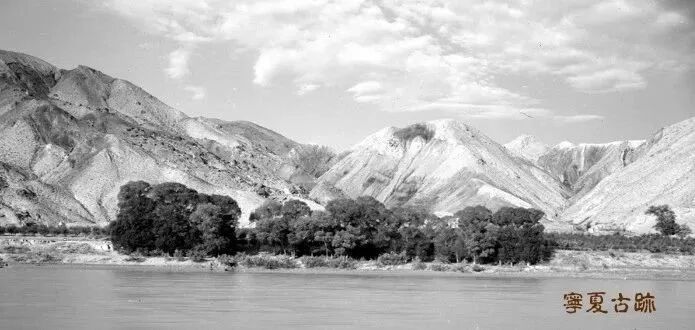
Abstract:
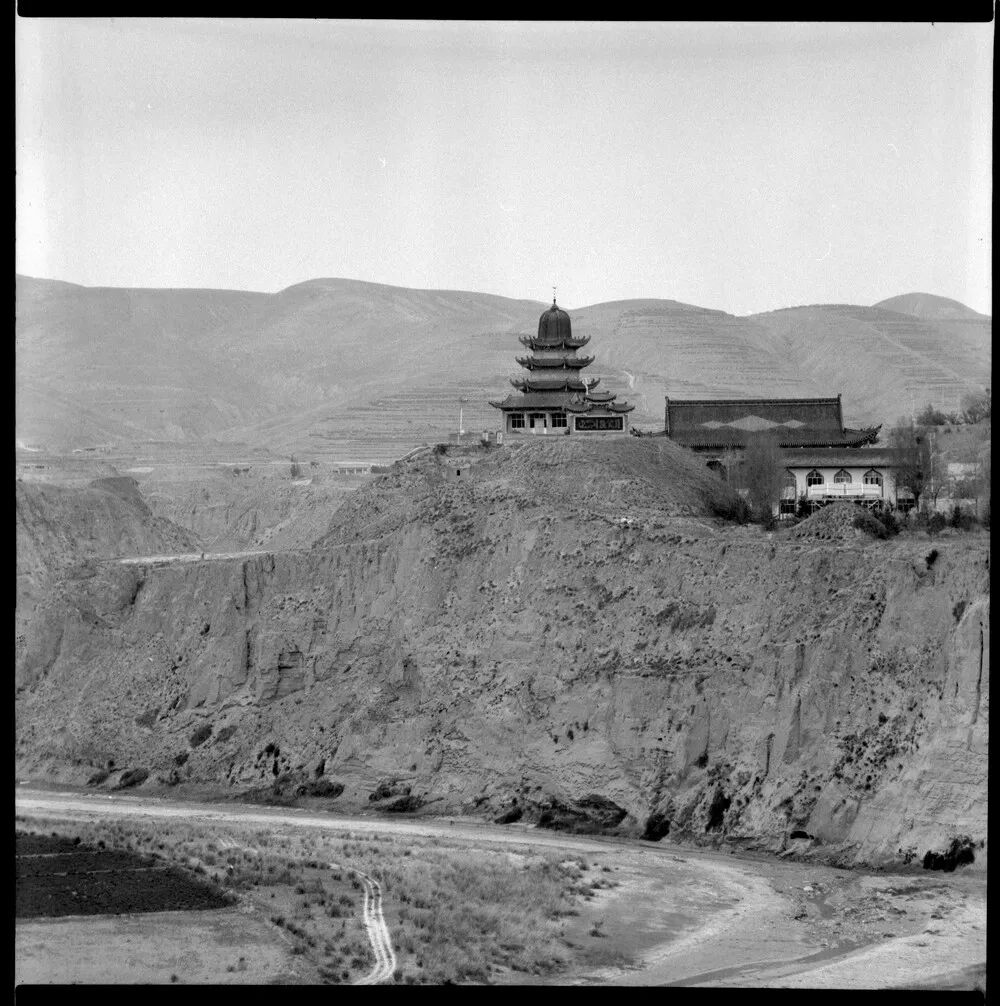
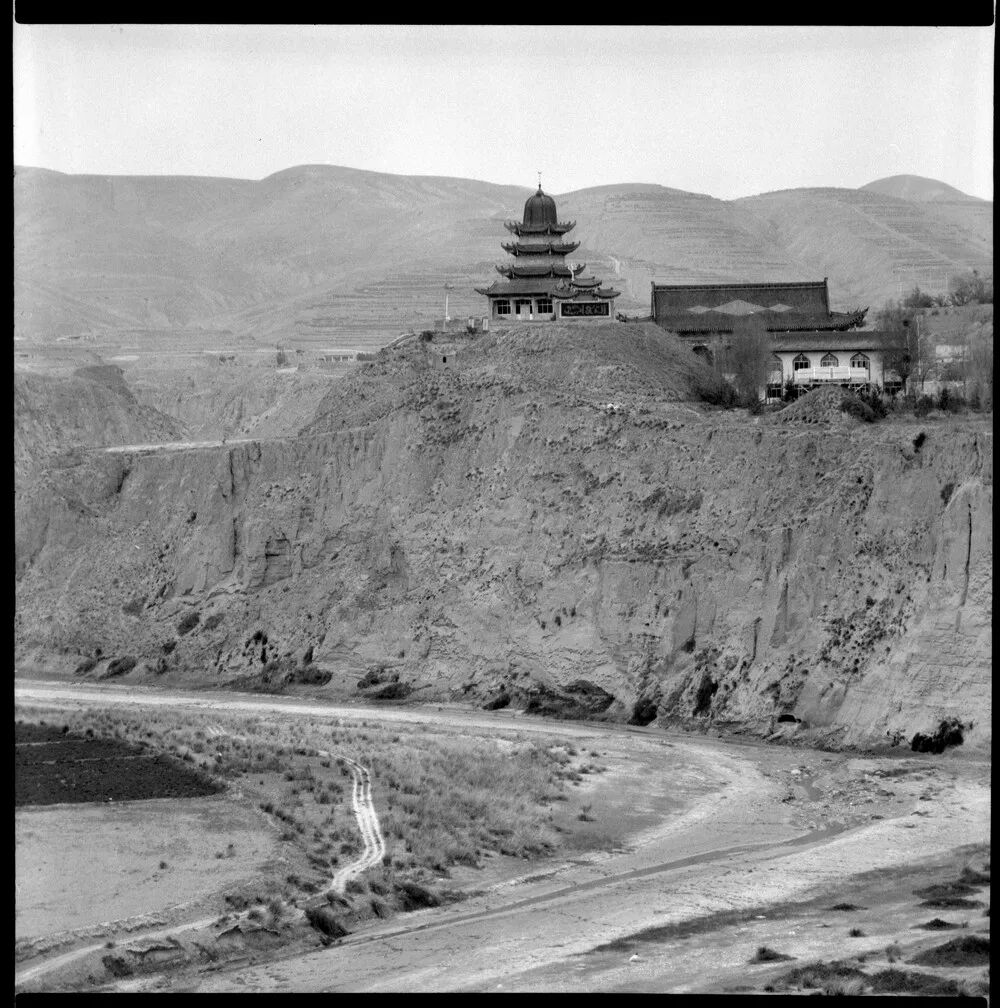
Visiting Laorengou Gongbei, hidden deep within the mountain canyons of Ningxia. Set to the evocative tunes of classical silk-and-bamboo melodies, we capture the traditional blue-brick and gray-tile mausoleum architecture against vast, earthy loess mountain ranges, documenting the tranquil atmosphere of the spiritual legacies and ascetic hermitages left by Northwest China's Muslim forebears.
Selected from Minoru Miki's 'Koto Ballads Collection Vol. 4 - Autumn / Akemi Yamada': Coming from the East (Live Recording, Performed by Suzuko Kimura). Minoru Miki: Japanese composer and master of Japanese traditional music, born on March 16, 1930, in Tokushima City, Tokushima Prefecture. He studied composition under seniors like Tomojiro Ikeuchi and Akira Ifukube, co-founded Pro Musica Nipponia with fourteen members in 1964, and dedicated his life to developing and spreading Japanese traditional music until his passing in 2011 in Mitaka City, Tokyo. Japanese Koto: An important traditional instrument of Japanese music, originating from the guzheng of China's Sui and Tang dynasties. Early koto players were predominantly blind monks, branching into the Yamada and Ikuta schools. In modern times, koto players are mainly professional artists........
The term 'gongbei' is a transliteration of the Arabic word Qubbah, originally referring to religious architectural styles in Arab, Persian, and Central Asian regions. In Central Asia, Persia, and China's Xinjiang region, they are known as 'mazar'. Ningxia gongbei architecture mainly falls into three categories: Gutubu gongbei, where 'Gutubu' means axis, extreme point, or leader, considered a special 'Wali' hidden among humanity and an important figure beloved by Allah; Menhuan Laorenjia and Murshed gongbei, where the founders and spiritual guides of Sufi orders are generally called 'Laorenjia' (Elder), 'Daozu' (Patriarch), or 'Murshed' (Guide); and Hailifan gongbei, where 'Hailifan' means successor, referring to the senior disciples, successors, or deputies of the Murshed. There are also a few other types of gongbei. The gongbei is a primary religious characteristic of Ningxia's Sufi orders and an important cultural heritage of the Hui people in Ningxia.
Laorengou Gongbei is located near Nanping Village, alongside National Highway 203 in Yuanzhou District, Guyuan City, Ningxia. With a long and ancient history, it is very likely the oldest gongbei in Ningxia, and was rebuilt in the 1990s.
Excerpts from the stele inscription at the ancient Gutubu Gongbei in Laorengou are recorded by hand as follows:
......
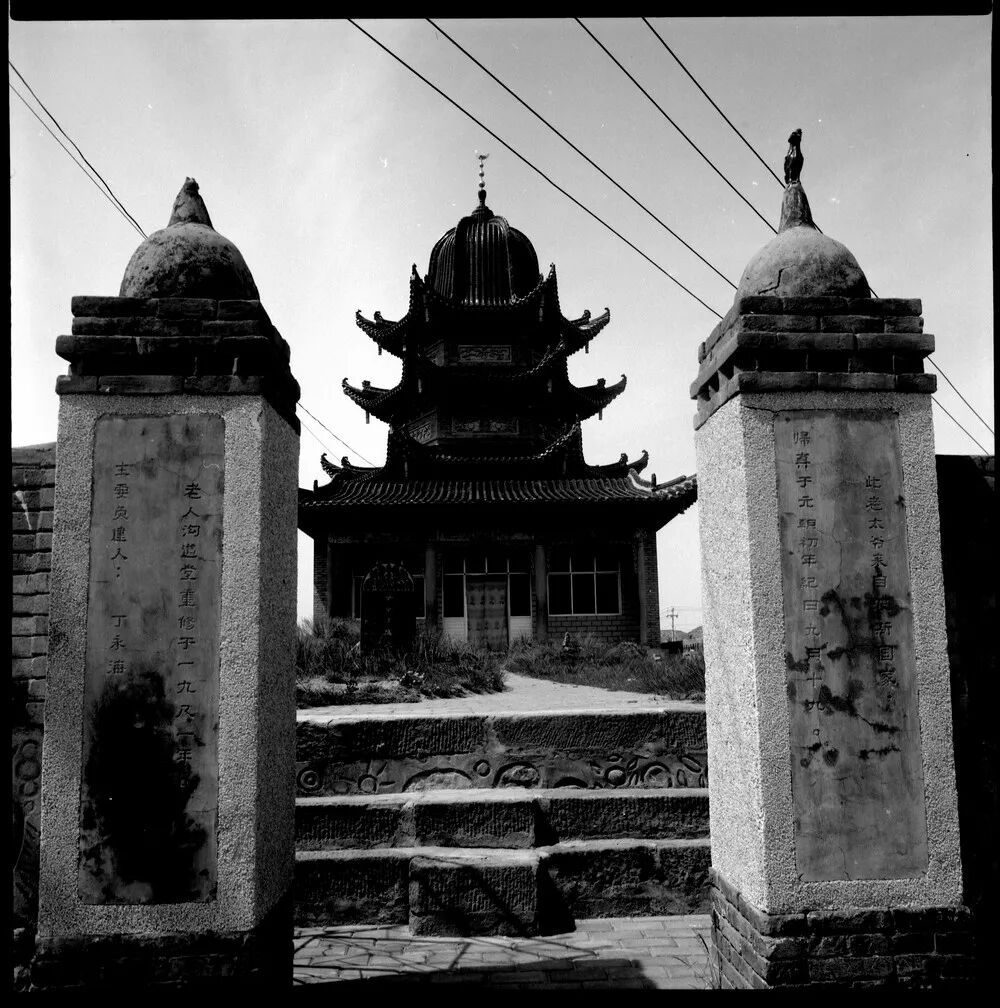
II. Spiritual Trajectory
Through the changing tides of time, the ancient Gutubu Gongbei at Laorengou has weathered immense hardships, with devoted 'dostans' (companions/followers) performing moving stories to protect this sacred spiritual sanctuary. Once upon a time, countless dedicated individuals tirelessly worked to repair and purify this holy ground, with Ding Sheh standing out foremost among the most meritorious contributors. Sheh, whose surname was Ding and personal name Yonghai, was born in 1947 and passed away on the 25th day of the 11th lunar month in 2004. Since childhood, Sheh studied religious texts, and by his teens, he devoted himself wholeheartedly to the faith, working day and night without sleep. He journeyed to the tombs of numerous sages and repeatedly sought out renowned masters to absorb the essence of their teachings. Guided by religious teachers, he underwent multiple sessions of 'zuojing' (silent meditation and retreat), clearing his mind, sharpening his resolve, wisdom, and insight to truly grasp the divine truths. He constantly sought to transcend the mundane and undergo a profound spiritual rebirth. Throughout his self-cultivation, he especially benefited from the spiritual guidance of the elder masters, holding them in lifelong reverence and guarding them like the apples of his eyes. He spent forty years repeatedly repairing the gongbei, often single-handedly undertaking difficult tasks in pursuit of perfection. Hauling stones up steep, isolated hills to build walls was a staggering challenge; carrying construction materials to the top of Yangjiao Mountain to pave roads required superhuman willpower. Yet even more demanding was the construction of the present gongbei, carried out during times of extreme shortage of funds and food; working at dangerous heights with his life hanging on the scaffolding beams; Sheh stood alone and carried the burden through grueling days and nights. Finally, on the 19th day of the 9th lunar month in 2004, the grand project was successfully completed, bringing immense relief to his heart. Having exhausted his physical and mental energy, Sheh fell seriously ill from overwork. Just over two months after the completion of his monumental work, he passed away to join the forebears, his heart returning to Allah.
......
Shot using a Mamaiya C330 Sekor lens on black-and-white film, with self-developed negatives scanned directly into digital files
Note: Traditional photography captures clear images by letting external light pass through a lens onto the flat film surface inside a sealed camera back. When exposed, the image transforms into a silver halide latent image. Developing chemicals are then used to wash and clear the silver halide particles, reducing the latent image back into silver particles on the film, creating the original negative. To produce a print, the silver salt particles on the negative are projected via an enlarger system onto photographic paper in a darkroom.
The charm of black-and-white film remains irreplaceable by any digital equipment since the birth of photography. The wide exposure latitude of black-and-white film is significantly superior to color film. Using different darkroom techniques, silver-salt works with rich tonal ranges, soft contrasts, and sharp details can be created. Today's digitally output large-format black-and-white photos still fall quite short in detail compared to traditional silver-salt works. Darkroom craftsmanship is unrepeatable, and every single photograph made is unique—which is precisely where its magic lies. Collapse Read »
Tracing Muslim Roots in Northern China: The Traditional Architecture and Mountain Retreat Memories of Laorengou Gongbei
Abstract:
Visiting Laorengou Gongbei, hidden deep within the mountain canyons of Ningxia. Set to the evocative tunes of classical silk-and-bamboo melodies, we capture the traditional blue-brick and gray-tile mausoleum architecture against vast, earthy loess mountain ranges, documenting the tranquil atmosphere of the spiritual legacies and ascetic hermitages left by Northwest China's Muslim forebears.
Selected from Minoru Miki's 'Koto Ballads Collection Vol. 4 - Autumn / Akemi Yamada': Coming from the East (Live Recording, Performed by Suzuko Kimura). Minoru Miki: Japanese composer and master of Japanese traditional music, born on March 16, 1930, in Tokushima City, Tokushima Prefecture. He studied composition under seniors like Tomojiro Ikeuchi and Akira Ifukube, co-founded Pro Musica Nipponia with fourteen members in 1964, and dedicated his life to developing and spreading Japanese traditional music until his passing in 2011 in Mitaka City, Tokyo. Japanese Koto: An important traditional instrument of Japanese music, originating from the guzheng of China's Sui and Tang dynasties. Early koto players were predominantly blind monks, branching into the Yamada and Ikuta schools. In modern times, koto players are mainly professional artists........
The term 'gongbei' is a transliteration of the Arabic word Qubbah, originally referring to religious architectural styles in Arab, Persian, and Central Asian regions. In Central Asia, Persia, and China's Xinjiang region, they are known as 'mazar'. Ningxia gongbei architecture mainly falls into three categories: Gutubu gongbei, where 'Gutubu' means axis, extreme point, or leader, considered a special 'Wali' hidden among humanity and an important figure beloved by Allah; Menhuan Laorenjia and Murshed gongbei, where the founders and spiritual guides of Sufi orders are generally called 'Laorenjia' (Elder), 'Daozu' (Patriarch), or 'Murshed' (Guide); and Hailifan gongbei, where 'Hailifan' means successor, referring to the senior disciples, successors, or deputies of the Murshed. There are also a few other types of gongbei. The gongbei is a primary religious characteristic of Ningxia's Sufi orders and an important cultural heritage of the Hui people in Ningxia.
Laorengou Gongbei is located near Nanping Village, alongside National Highway 203 in Yuanzhou District, Guyuan City, Ningxia. With a long and ancient history, it is very likely the oldest gongbei in Ningxia, and was rebuilt in the 1990s.
Excerpts from the stele inscription at the ancient Gutubu Gongbei in Laorengou are recorded by hand as follows:
......
II. Spiritual Trajectory
Through the changing tides of time, the ancient Gutubu Gongbei at Laorengou has weathered immense hardships, with devoted 'dostans' (companions/followers) performing moving stories to protect this sacred spiritual sanctuary. Once upon a time, countless dedicated individuals tirelessly worked to repair and purify this holy ground, with Ding Sheh standing out foremost among the most meritorious contributors. Sheh, whose surname was Ding and personal name Yonghai, was born in 1947 and passed away on the 25th day of the 11th lunar month in 2004. Since childhood, Sheh studied religious texts, and by his teens, he devoted himself wholeheartedly to the faith, working day and night without sleep. He journeyed to the tombs of numerous sages and repeatedly sought out renowned masters to absorb the essence of their teachings. Guided by religious teachers, he underwent multiple sessions of 'zuojing' (silent meditation and retreat), clearing his mind, sharpening his resolve, wisdom, and insight to truly grasp the divine truths. He constantly sought to transcend the mundane and undergo a profound spiritual rebirth. Throughout his self-cultivation, he especially benefited from the spiritual guidance of the elder masters, holding them in lifelong reverence and guarding them like the apples of his eyes. He spent forty years repeatedly repairing the gongbei, often single-handedly undertaking difficult tasks in pursuit of perfection. Hauling stones up steep, isolated hills to build walls was a staggering challenge; carrying construction materials to the top of Yangjiao Mountain to pave roads required superhuman willpower. Yet even more demanding was the construction of the present gongbei, carried out during times of extreme shortage of funds and food; working at dangerous heights with his life hanging on the scaffolding beams; Sheh stood alone and carried the burden through grueling days and nights. Finally, on the 19th day of the 9th lunar month in 2004, the grand project was successfully completed, bringing immense relief to his heart. Having exhausted his physical and mental energy, Sheh fell seriously ill from overwork. Just over two months after the completion of his monumental work, he passed away to join the forebears, his heart returning to Allah.
......
Shot using a Mamaiya C330 Sekor lens on black-and-white film, with self-developed negatives scanned directly into digital files
Note: Traditional photography captures clear images by letting external light pass through a lens onto the flat film surface inside a sealed camera back. When exposed, the image transforms into a silver halide latent image. Developing chemicals are then used to wash and clear the silver halide particles, reducing the latent image back into silver particles on the film, creating the original negative. To produce a print, the silver salt particles on the negative are projected via an enlarger system onto photographic paper in a darkroom.
The charm of black-and-white film remains irreplaceable by any digital equipment since the birth of photography. The wide exposure latitude of black-and-white film is significantly superior to color film. Using different darkroom techniques, silver-salt works with rich tonal ranges, soft contrasts, and sharp details can be created. Today's digitally output large-format black-and-white photos still fall quite short in detail compared to traditional silver-salt works. Darkroom craftsmanship is unrepeatable, and every single photograph made is unique—which is precisely where its magic lies. Collapse Read »
Exploring Ningxia Muslim Culture: Siqiliangzi Gongbei Shrines & Hui Heritage
[Internet Repost]
Tracking Sacred Relics Above the Yellow River: A Panoramic Look at the Siqiliangzi Gongbei and the Spiritual Homeland of Hui Muslims
Abstract:

27 real-life photos and write-ups showcase the magnificent aura of the Siqiliangzi gongbei (Sufi shrine / mausoleum complex) in Wuzhong. From the grand hexagonal archways and towering main hall domes to the blue-brick reliefs and engraved Quranic verses, we take a heartfelt look back at the historical scroll of Hui Muslim forebears who sacrificed everything for their faith and people.

Selected from The orchard's 'Pir Sultan Abdal'dan Aşık Veysel' e 1000 Yılın Türküleri Thousand Years Of Anatolia' (Anatolian Millennia): 'Karşıki Karlı Dağda Bülbül' (The Nightingale on the Opposite Snowy Mountain). Aşık Veysel was a representative Turkish minstrel, baglama (traditional stringed instrument) player, and folk music master who lost his sight at age 7 and passed away at 79 (in 1973). This is the source of muqam (classical Islamic musical tradition). Turkey's Âsiklik (minstrelsy) tradition is listed on the UNESCO Intangible Cultural Heritage list.

The word gongbei is a transliteration of the Arabic 'Qubbah', originally referring to religious architectural styles in Arabia, Persia, and Central Asia. In Central Asia, Persia, and China's Xinjiang region, they are called 'mazars'. Gongbei architecture in Ningxia is mainly divided into three types: Qutubu gongbei, where 'Qutubu' means axis, pole, or leader, considered a special 'wali' hidden among humanity and a VIP in the eyes of Allah; menhuan (Sufi order / brotherhood) elders' and Murshid gongbei, where Sufi order founders and spiritual guides are generally called 'Elder', 'Daozu', or 'Murshid'; and Halifan gongbei, where 'Halifan' means successor, referring to the senior disciples, successors, or deputies of a Murshid. There are also several other types of gongbei. Gongbei are the primary religious feature of Ningxia's Sufi orders and an important cultural heritage of the Hui Muslims in Ningxia.

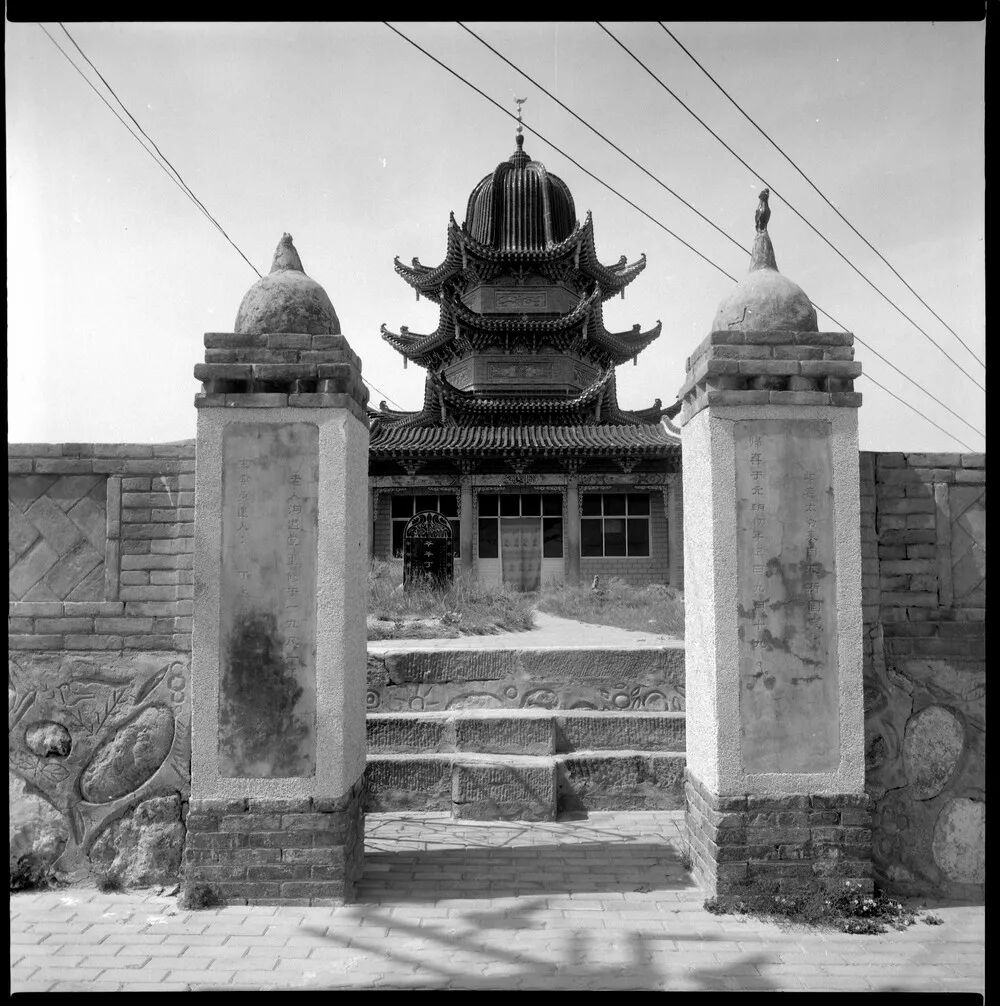
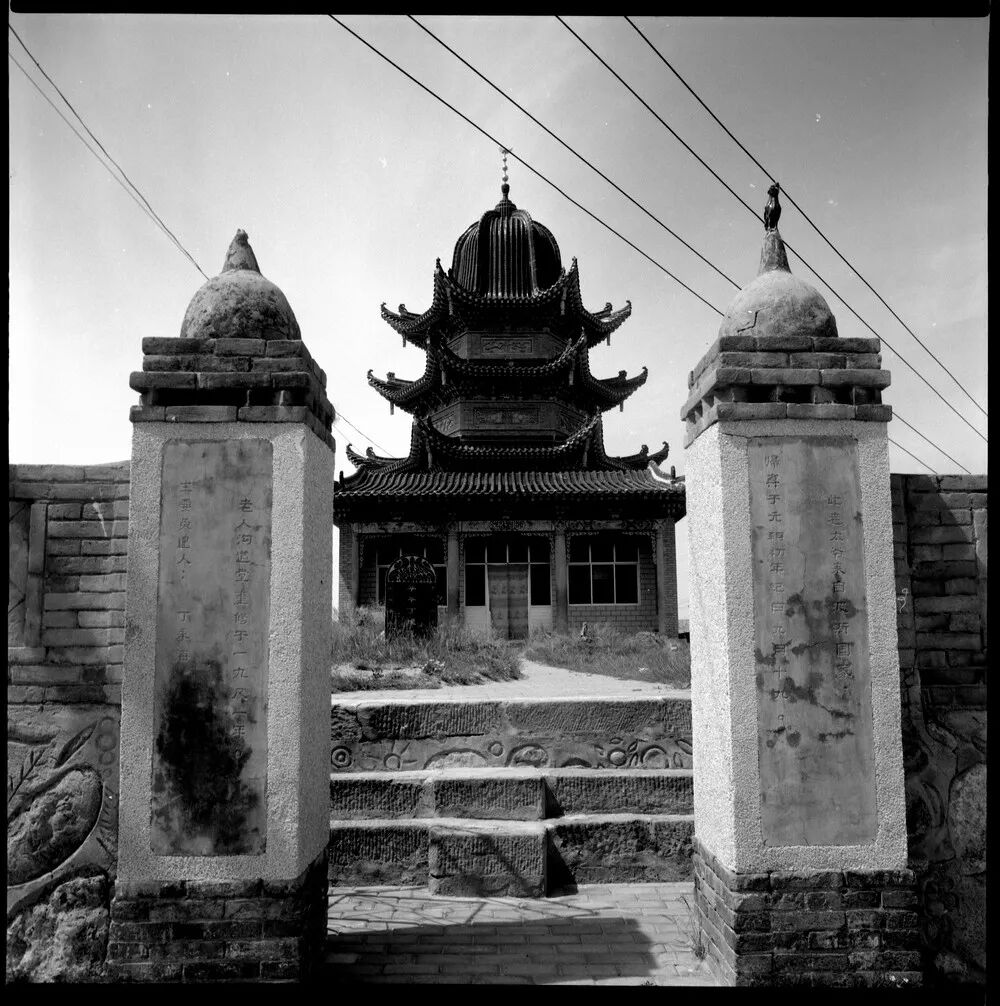
Located at the intersection of Kaiyuan Avenue and Wenwei North Street in Litong District, Wuzhong City, Ningxia, this is the site of martyrdom and final resting place of Ma Hualong (reverenced in the religious community as 'Thirteenth Grandfather'), the fifth-generation spiritual guide of the Jahriyya menhuan (Sufi order / brotherhood). Following the failure of the Jinjibao Hui Muslim uprising, on the 13th day of the first lunar month in the tenth year of the Tongzhi Emperor's reign (1871), Ma Hualong and his son, among many others, were subjected to death by a thousand cuts at Siqiliangzi. Belonging to the Jahriyya gongbei, it covers nearly 3 mu of land, features an overall bluish-gray tone, and follows the classic Chinese hexagonal gongbei style. The hexagonal tower shape holds deep symbolic meaning, stands 24 meters tall, and is inlaid with white marble on the inside. It was rebuilt in 1984 and listed as a county-level key cultural relic protection unit by the Wuzhong Municipal People's Government in 1994.

Shot using a Mamiya C330 Sekor camera lens, with self-developed film scanned directly into digital files.

Note: Traditional photography refers to using a camera lens to focus external light rays to form a clear image on the film plane inside a sealed camera back. After exposure, the image turns into a silver halide latent image. Developing chemicals then wash and rinse the film to clear the silver halide grains, reducing the latent image back into silver particles on the negative, creating the master negative. To make prints, an enlarger projects the film's silver salt particles onto photographic paper in a darkroom.

The charm of black-and-white film has remained irreplaceable by any digital equipment since the birth of photography. The wide exposure latitude of black-and-white film is clearly superior to color film, and using different darkroom printing techniques allows for silver-gelatin works with rich tonal ranges, soft contrast, and crisp details. Today's large-format black-and-white prints produced via digital output still lag significantly behind traditional silver-gelatin works when it comes to fine details. Darkroom craftsmanship is unrepeatable—every single print made is unique, and that is precisely where its magic lies.


 Collapse Read »
Tracking Sacred Relics Above the Yellow River: A Panoramic Look at the Siqiliangzi Gongbei and the Spiritual Homeland of Hui Muslims
Abstract:
27 real-life photos and write-ups showcase the magnificent aura of the Siqiliangzi gongbei (Sufi shrine / mausoleum complex) in Wuzhong. From the grand hexagonal archways and towering main hall domes to the blue-brick reliefs and engraved Quranic verses, we take a heartfelt look back at the historical scroll of Hui Muslim forebears who sacrificed everything for their faith and people.
Selected from The orchard's 'Pir Sultan Abdal'dan Aşık Veysel' e 1000 Yılın Türküleri Thousand Years Of Anatolia' (Anatolian Millennia): 'Karşıki Karlı Dağda Bülbül' (The Nightingale on the Opposite Snowy Mountain). Aşık Veysel was a representative Turkish minstrel, baglama (traditional stringed instrument) player, and folk music master who lost his sight at age 7 and passed away at 79 (in 1973). This is the source of muqam (classical Islamic musical tradition). Turkey's Âsiklik (minstrelsy) tradition is listed on the UNESCO Intangible Cultural Heritage list.
The word gongbei is a transliteration of the Arabic 'Qubbah', originally referring to religious architectural styles in Arabia, Persia, and Central Asia. In Central Asia, Persia, and China's Xinjiang region, they are called 'mazars'. Gongbei architecture in Ningxia is mainly divided into three types: Qutubu gongbei, where 'Qutubu' means axis, pole, or leader, considered a special 'wali' hidden among humanity and a VIP in the eyes of Allah; menhuan (Sufi order / brotherhood) elders' and Murshid gongbei, where Sufi order founders and spiritual guides are generally called 'Elder', 'Daozu', or 'Murshid'; and Halifan gongbei, where 'Halifan' means successor, referring to the senior disciples, successors, or deputies of a Murshid. There are also several other types of gongbei. Gongbei are the primary religious feature of Ningxia's Sufi orders and an important cultural heritage of the Hui Muslims in Ningxia.
Located at the intersection of Kaiyuan Avenue and Wenwei North Street in Litong District, Wuzhong City, Ningxia, this is the site of martyrdom and final resting place of Ma Hualong (reverenced in the religious community as 'Thirteenth Grandfather'), the fifth-generation spiritual guide of the Jahriyya menhuan (Sufi order / brotherhood). Following the failure of the Jinjibao Hui Muslim uprising, on the 13th day of the first lunar month in the tenth year of the Tongzhi Emperor's reign (1871), Ma Hualong and his son, among many others, were subjected to death by a thousand cuts at Siqiliangzi. Belonging to the Jahriyya gongbei, it covers nearly 3 mu of land, features an overall bluish-gray tone, and follows the classic Chinese hexagonal gongbei style. The hexagonal tower shape holds deep symbolic meaning, stands 24 meters tall, and is inlaid with white marble on the inside. It was rebuilt in 1984 and listed as a county-level key cultural relic protection unit by the Wuzhong Municipal People's Government in 1994.
Shot using a Mamiya C330 Sekor camera lens, with self-developed film scanned directly into digital files.
Note: Traditional photography refers to using a camera lens to focus external light rays to form a clear image on the film plane inside a sealed camera back. After exposure, the image turns into a silver halide latent image. Developing chemicals then wash and rinse the film to clear the silver halide grains, reducing the latent image back into silver particles on the negative, creating the master negative. To make prints, an enlarger projects the film's silver salt particles onto photographic paper in a darkroom.
The charm of black-and-white film has remained irreplaceable by any digital equipment since the birth of photography. The wide exposure latitude of black-and-white film is clearly superior to color film, and using different darkroom printing techniques allows for silver-gelatin works with rich tonal ranges, soft contrast, and crisp details. Today's large-format black-and-white prints produced via digital output still lag significantly behind traditional silver-gelatin works when it comes to fine details. Darkroom craftsmanship is unrepeatable—every single print made is unique, and that is precisely where its magic lies.
Collapse Read »
Exploring Jiucaiping Gongbei: Sufi Shrines, Great Wall Ruins & Hui Muslim Heritage in Haiyuan, Ningxia
[Internet Repost]
Wandering Through Jiucaiping Gongbei in Haiyuan County: Sufi Domes and Northwest Vibes Beneath the Ming Great Wall Beacons
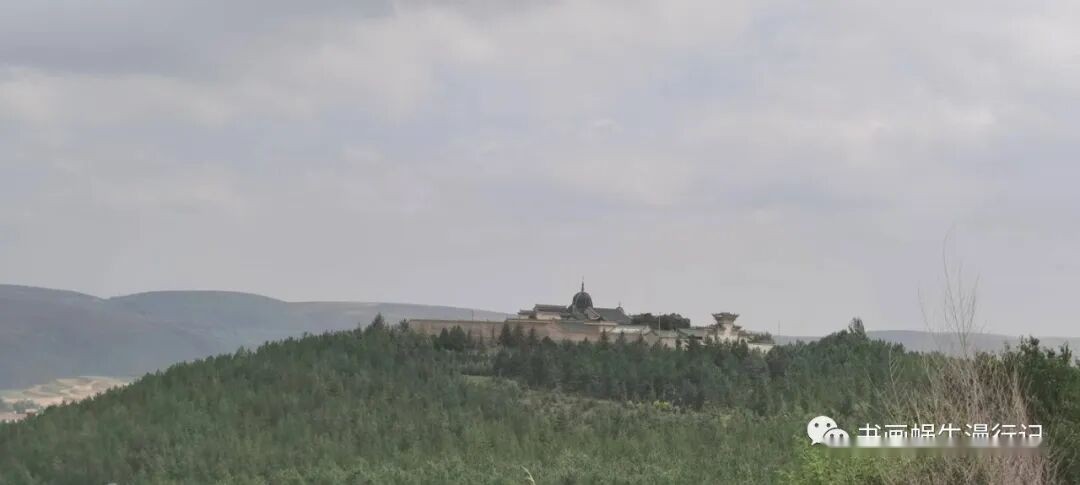
Abstract:
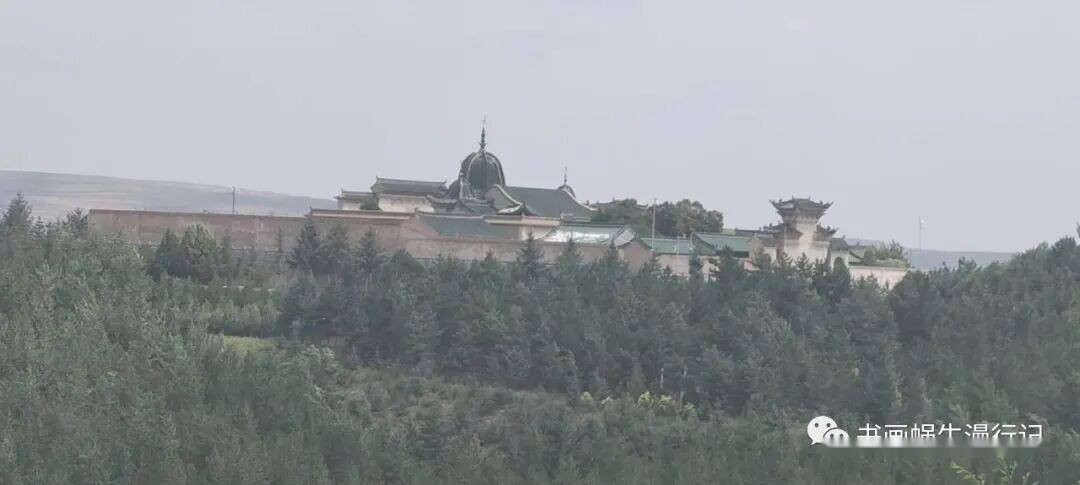
A visual and travel diary documenting a journey to Jiucaiping Gongbei in Haiyuan County, Ningxia. Explore Islamic domed architecture set against the vast Loess Plateau and ancient Ming Great Wall ruins, while diving into the architectural design of gongbei (Sufi shrine / mausoleum complex) and the deep-rooted devotion of Hui Muslims honoring their spiritual ancestors.
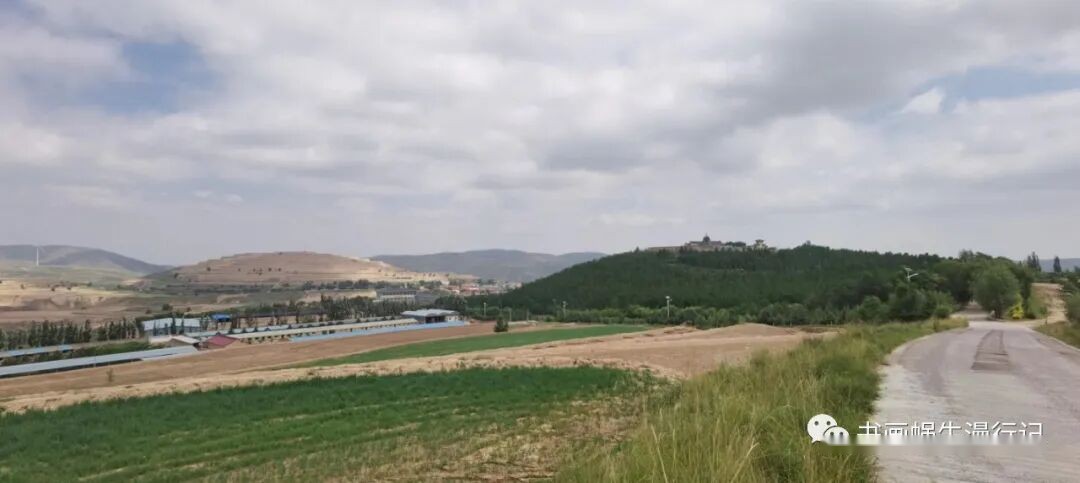
August 20, 2022 | Jiucaiping Gongbei, Haiyuan County
The word gongbei comes from the Arabic for "dome," and over time it came to refer to the round structures built over mosques or the tombs of Sufi masters.

In Ningxia, gongbei refers specifically to the mausoleums of masters from the Qadiriyya and Jahriyya menhuan (Sufi orders / brotherhoods), serving as sacred spaces where Hui Muslims gather to honor ancestors and practice their faith.
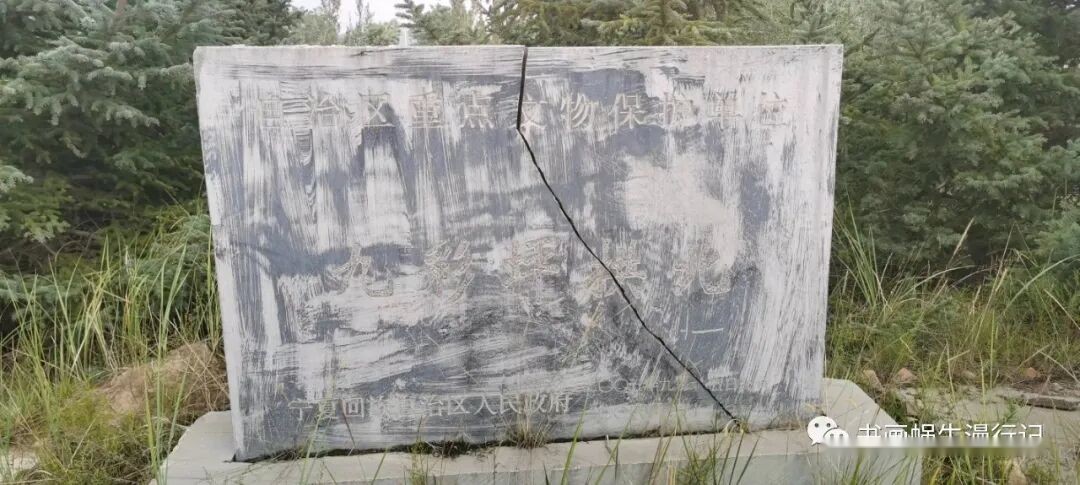
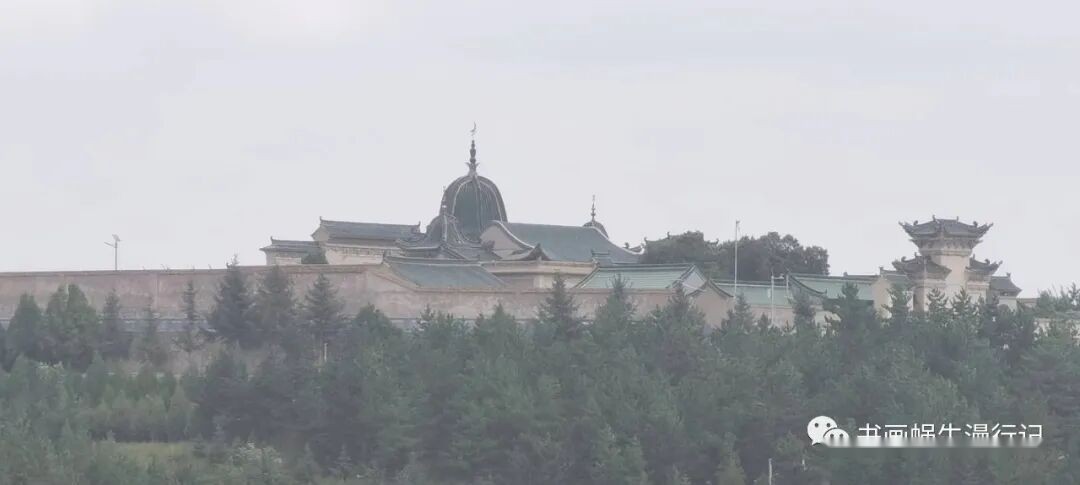
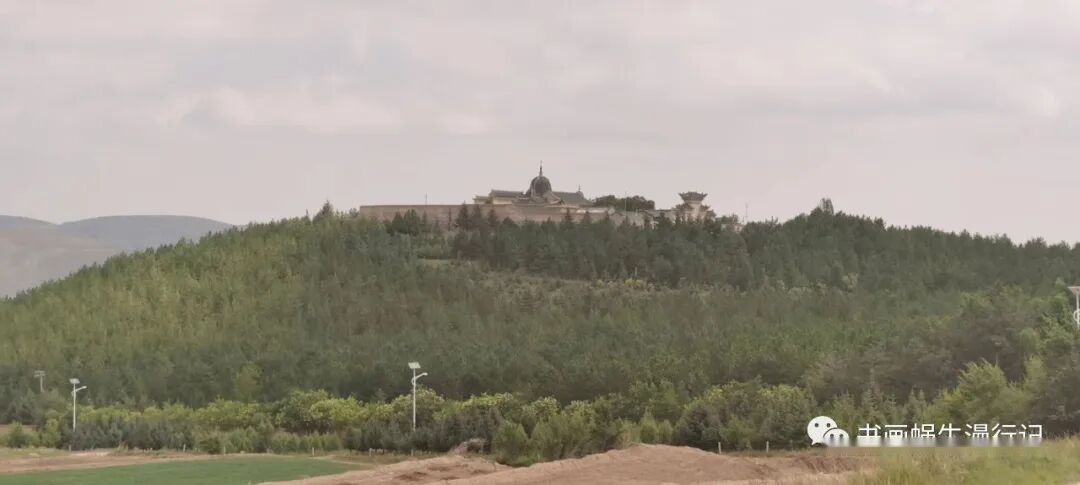
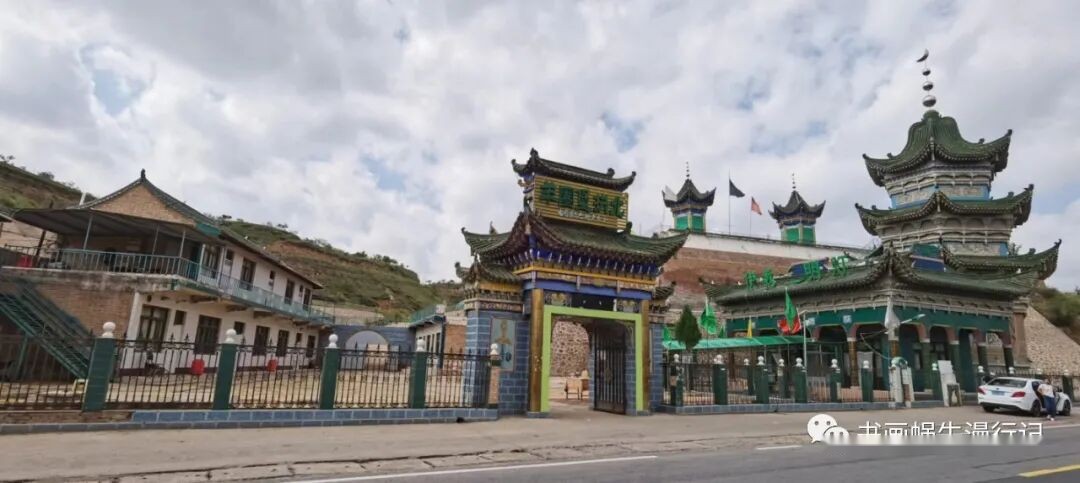
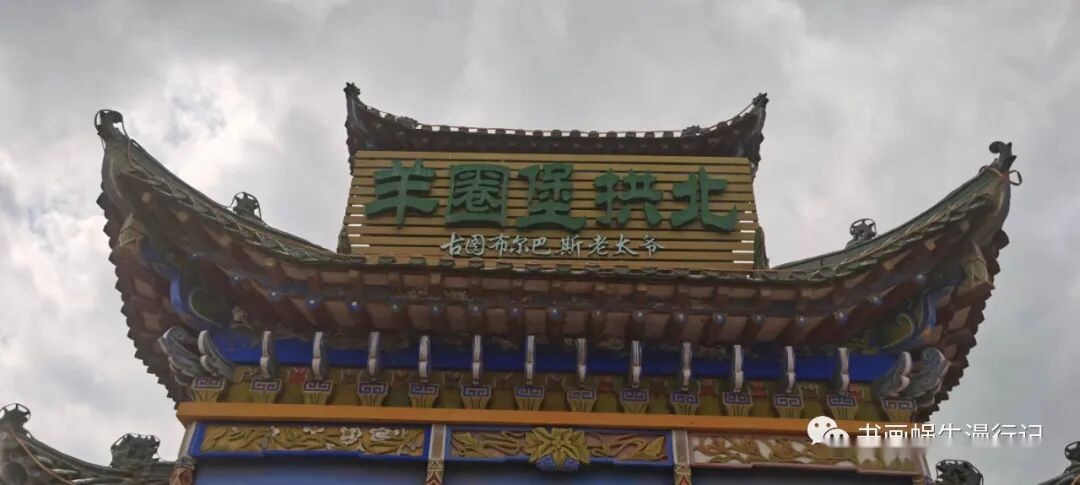
Perched on a small hill in Haiyuan County, Jiucaiping Gongbei is a majestic mausoleum complex housing sixteen Sufi masters. According to local Hui Muslims, it boasts a history spanning a thousand years. The name "Jiucaiping" (Nine Colors Terrace) comes from the legend that the site was surveyed nine times before the final resting place was chosen.
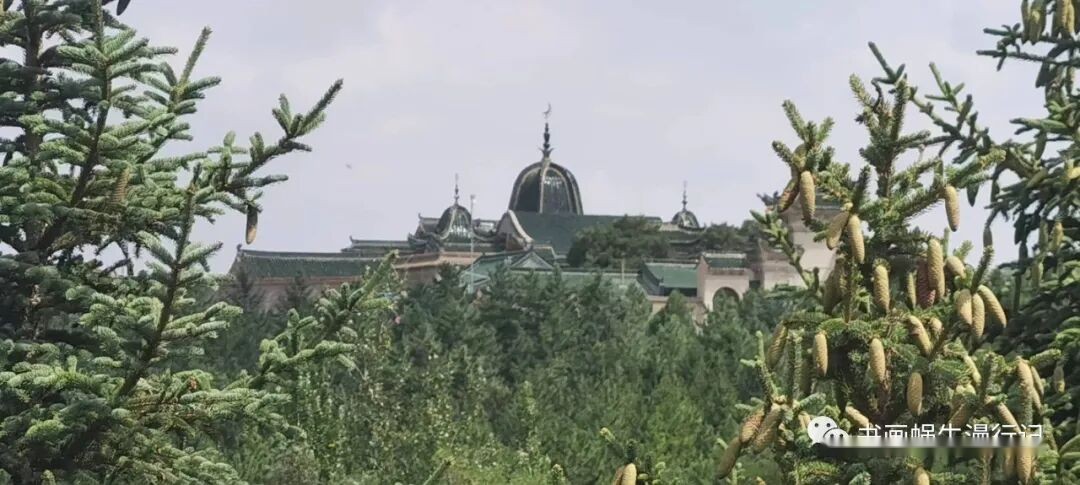
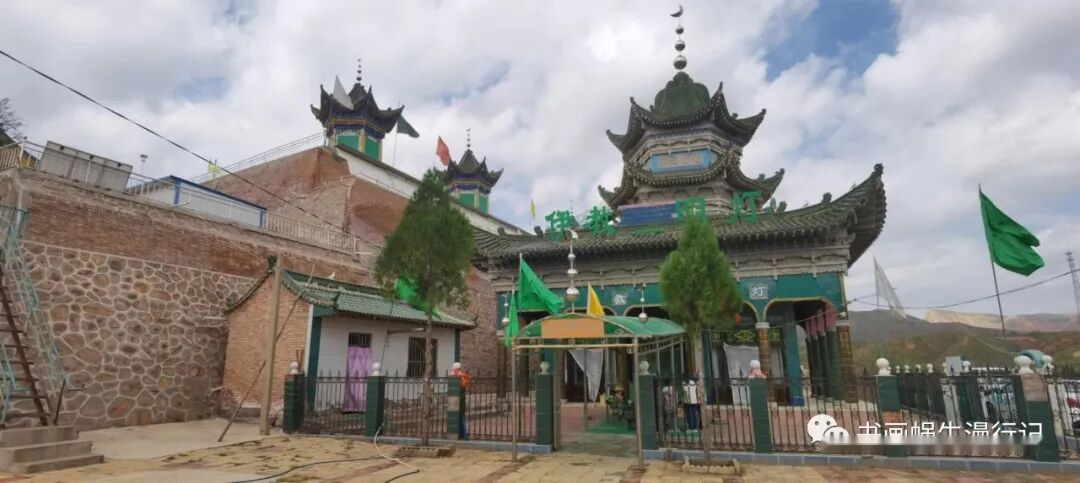
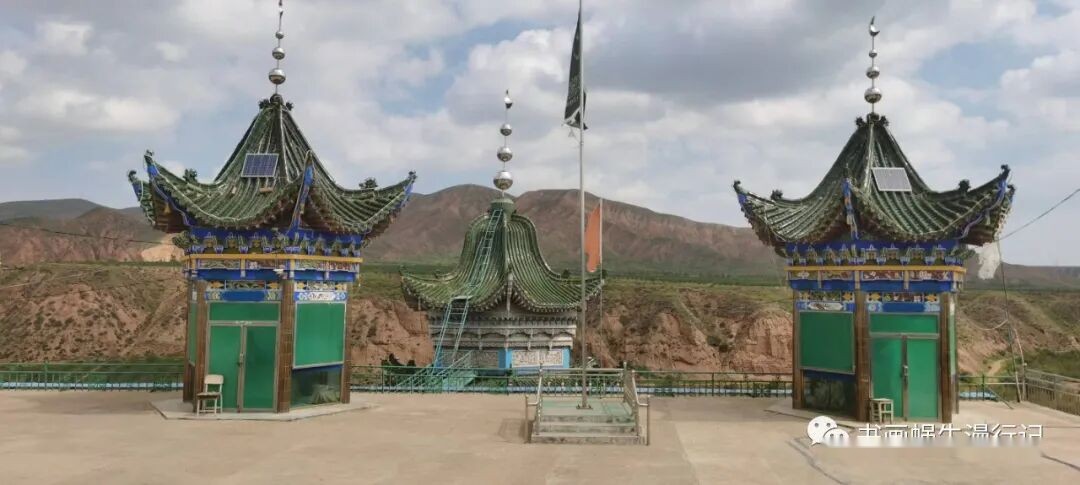
The architecture of the gongbei is breathtakingly ornate, featuring emerald-green tiled domes and exquisite craftsmanship, all tucked away amidst lush groves of trees.
Along the way, we also stumbled upon a smaller shrine: the Yangquanbao Gongbei. Though modest in size, it boasts striking and distinct architectural details.
Dislike

 Collapse Read »
Wandering Through Jiucaiping Gongbei in Haiyuan County: Sufi Domes and Northwest Vibes Beneath the Ming Great Wall Beacons
Abstract:
A visual and travel diary documenting a journey to Jiucaiping Gongbei in Haiyuan County, Ningxia. Explore Islamic domed architecture set against the vast Loess Plateau and ancient Ming Great Wall ruins, while diving into the architectural design of gongbei (Sufi shrine / mausoleum complex) and the deep-rooted devotion of Hui Muslims honoring their spiritual ancestors.
August 20, 2022 | Jiucaiping Gongbei, Haiyuan County
The word gongbei comes from the Arabic for "dome," and over time it came to refer to the round structures built over mosques or the tombs of Sufi masters.
In Ningxia, gongbei refers specifically to the mausoleums of masters from the Qadiriyya and Jahriyya menhuan (Sufi orders / brotherhoods), serving as sacred spaces where Hui Muslims gather to honor ancestors and practice their faith.
Perched on a small hill in Haiyuan County, Jiucaiping Gongbei is a majestic mausoleum complex housing sixteen Sufi masters. According to local Hui Muslims, it boasts a history spanning a thousand years. The name "Jiucaiping" (Nine Colors Terrace) comes from the legend that the site was surveyed nine times before the final resting place was chosen.
The architecture of the gongbei is breathtakingly ornate, featuring emerald-green tiled domes and exquisite craftsmanship, all tucked away amidst lush groves of trees.
Along the way, we also stumbled upon a smaller shrine: the Yangquanbao Gongbei. Though modest in size, it boasts striking and distinct architectural details.
Dislike
Collapse Read »
Exploring Shatan Gongbei & Diannong River: A Journey Through Yinchuan's Sufi Heritage and Yellow River Scenery
[Internet Repost]
Exploring Yinchuan's Shatan Gongbei and Diannong River: Ancient Waterwheels and Sufi Shrines Along Binhe Avenue
Abstract:
Exploring Shatan Gongbei, nestled along the banks of Yinchuan's Diannong River. Documenting the breathtaking wetlands and giant ancient waterwheels along the summer Yellow River Golden Bank Binhe Avenue, blending natural ecological waterscapes with solemn Sufi historical landmarks.
Waterwheels

Summer scenery of the Lingwu section of Yinchuan Binhe Avenue, featuring waterwheels. The Ningxia Yellow River Golden Bank Binhe Avenue, officially known as the Yellow River Standardized Embankment Binhe Avenue, spans a total length of 508 kilometers. Fully connected in July 2010, it links ten cities, counties, and districts within the Yellow River irrigation area. The crest road is fully constructed to Class-1 highway standards as a two-way six-lane road with a 24-meter roadbed width.
Shot on Rolleiflex 3.5F Planar 75MM F3.5, home-developed film directly scanned.

Stone Lions
Stone lions beneath the Zhenhe Pagoda in Lingwu, standing over one meter tall. They look adorable yet show some wear and tear, and are estimated to date back to the Qing Dynasty.

Linhof Technika Wollensak 162MM F4.5, home-developed film directly scanned.
Lingzhou Ancient City Wall Ruins

Located in the urban area of present-day Lingwu. Rebuilt after the devastating 1738 Ningxia earthquake (the third year of the Qianlong era), with subsequent modern repairs and reinforcements. Listed as an Autonomous Region-level Key Cultural Relic Protection Unit in December 2010.
Rolleiflex 3.5F Planar 75MM F3.5, home-developed film directly scanned.

Summer Diannong River
Yinchuan's Diannong River (an ancient Han Dynasty name) in summer, with swaying reeds and rippling waters.
On September 17, 2018, Ningxia officially renamed the 'Aiyi River' back to 'Diannong River' (originally named Aiyi River in 2004, renamed Aiyi River [with a different Chinese character] in 2008, changed back to Aiyi River in 2015, and renamed Diannong River again in 2018). The characters 'Diannong' are derived from the ancient local name Diannong City in the Yinchuan region, which was first built in the fifth year of the Yuanding era of the Western Han Dynasty (112 BCE), boasting a history of over 2,000 years.
The Diannong River stretches from the Xinqiao flood retention basin in Yongning County to the south, flowing north into the Yellow River at the Binhe Plaza in Shizuizi Park, Yuanying Town, Huinong District, Shizuishan. It spans six counties and districts—Yongning County, Xingqing District, Jinfeng District, Helan County, Pingluo County, and Huinong District—covering a total length of 180.5 kilometers.
Linhof Technika Schneider Symmar 240MM F5.6, home-developed film directly scanned.
Shatan Gongbei
Located inside the Shatan Mosque in Xingqing District, Yinchuan. It features a stone monument inscribed with the prominent characters 'Yuanweng Na Laotye' (Elder Yuanweng Na) and his religious name 'Haoke Menlaxi'. Flanking inscriptions are weathered and hard to make out, erected in the third year of the Qianlong era (1737). According to relevant cultural authorities, it was originally built during the Yuan Dynasty.
Gongbei (Sufi shrine / mausoleum complex): Originally referring to a dome-shaped building, it is translated to mean the dome over a Sufi master's mausoleum. By extension, it refers to the burial architecture of Sufi masters, menhuan (Sufi orders / brotherhoods) founders, spiritual ancestors, and revered sages. Collapse Read »
Exploring Yinchuan's Shatan Gongbei and Diannong River: Ancient Waterwheels and Sufi Shrines Along Binhe Avenue
Abstract:
Exploring Shatan Gongbei, nestled along the banks of Yinchuan's Diannong River. Documenting the breathtaking wetlands and giant ancient waterwheels along the summer Yellow River Golden Bank Binhe Avenue, blending natural ecological waterscapes with solemn Sufi historical landmarks.
Waterwheels
Summer scenery of the Lingwu section of Yinchuan Binhe Avenue, featuring waterwheels. The Ningxia Yellow River Golden Bank Binhe Avenue, officially known as the Yellow River Standardized Embankment Binhe Avenue, spans a total length of 508 kilometers. Fully connected in July 2010, it links ten cities, counties, and districts within the Yellow River irrigation area. The crest road is fully constructed to Class-1 highway standards as a two-way six-lane road with a 24-meter roadbed width.
Shot on Rolleiflex 3.5F Planar 75MM F3.5, home-developed film directly scanned.
Stone Lions
Stone lions beneath the Zhenhe Pagoda in Lingwu, standing over one meter tall. They look adorable yet show some wear and tear, and are estimated to date back to the Qing Dynasty.
Linhof Technika Wollensak 162MM F4.5, home-developed film directly scanned.
Lingzhou Ancient City Wall Ruins
Located in the urban area of present-day Lingwu. Rebuilt after the devastating 1738 Ningxia earthquake (the third year of the Qianlong era), with subsequent modern repairs and reinforcements. Listed as an Autonomous Region-level Key Cultural Relic Protection Unit in December 2010.
Rolleiflex 3.5F Planar 75MM F3.5, home-developed film directly scanned.
Summer Diannong River
Yinchuan's Diannong River (an ancient Han Dynasty name) in summer, with swaying reeds and rippling waters.
On September 17, 2018, Ningxia officially renamed the 'Aiyi River' back to 'Diannong River' (originally named Aiyi River in 2004, renamed Aiyi River [with a different Chinese character] in 2008, changed back to Aiyi River in 2015, and renamed Diannong River again in 2018). The characters 'Diannong' are derived from the ancient local name Diannong City in the Yinchuan region, which was first built in the fifth year of the Yuanding era of the Western Han Dynasty (112 BCE), boasting a history of over 2,000 years.
The Diannong River stretches from the Xinqiao flood retention basin in Yongning County to the south, flowing north into the Yellow River at the Binhe Plaza in Shizuizi Park, Yuanying Town, Huinong District, Shizuishan. It spans six counties and districts—Yongning County, Xingqing District, Jinfeng District, Helan County, Pingluo County, and Huinong District—covering a total length of 180.5 kilometers.
Linhof Technika Schneider Symmar 240MM F5.6, home-developed film directly scanned.
Shatan Gongbei
Located inside the Shatan Mosque in Xingqing District, Yinchuan. It features a stone monument inscribed with the prominent characters 'Yuanweng Na Laotye' (Elder Yuanweng Na) and his religious name 'Haoke Menlaxi'. Flanking inscriptions are weathered and hard to make out, erected in the third year of the Qianlong era (1737). According to relevant cultural authorities, it was originally built during the Yuan Dynasty.
Gongbei (Sufi shrine / mausoleum complex): Originally referring to a dome-shaped building, it is translated to mean the dome over a Sufi master's mausoleum. By extension, it refers to the burial architecture of Sufi masters, menhuan (Sufi orders / brotherhoods) founders, spiritual ancestors, and revered sages. Collapse Read »
Tracing Sanya's Utsul Muslim Roots: Ancient Cham Migration & Halal Heritage in Hainan
[Internet Repost]
Tracing the Cham People in Ninh Thuận Province, Vietnam: Uncovering the Trans-Oceanic Migration of Sanya's Utsul Muslims and Their Historic Roots in the Ancient Champa Kingdom

Abstract:

A deep dive into the historical roots and folk traditions of Cham villages in Ninh Thuận Province, Vietnam. Investigating the history of Sanya's Utsul Muslims as descendants of Islamic refugees from the ancient Champa kingdom who migrated across the sea, highlighting the deep cultural bonds between Southeast Asia's Maritime Silk Road and island-based Hui Muslim communities.

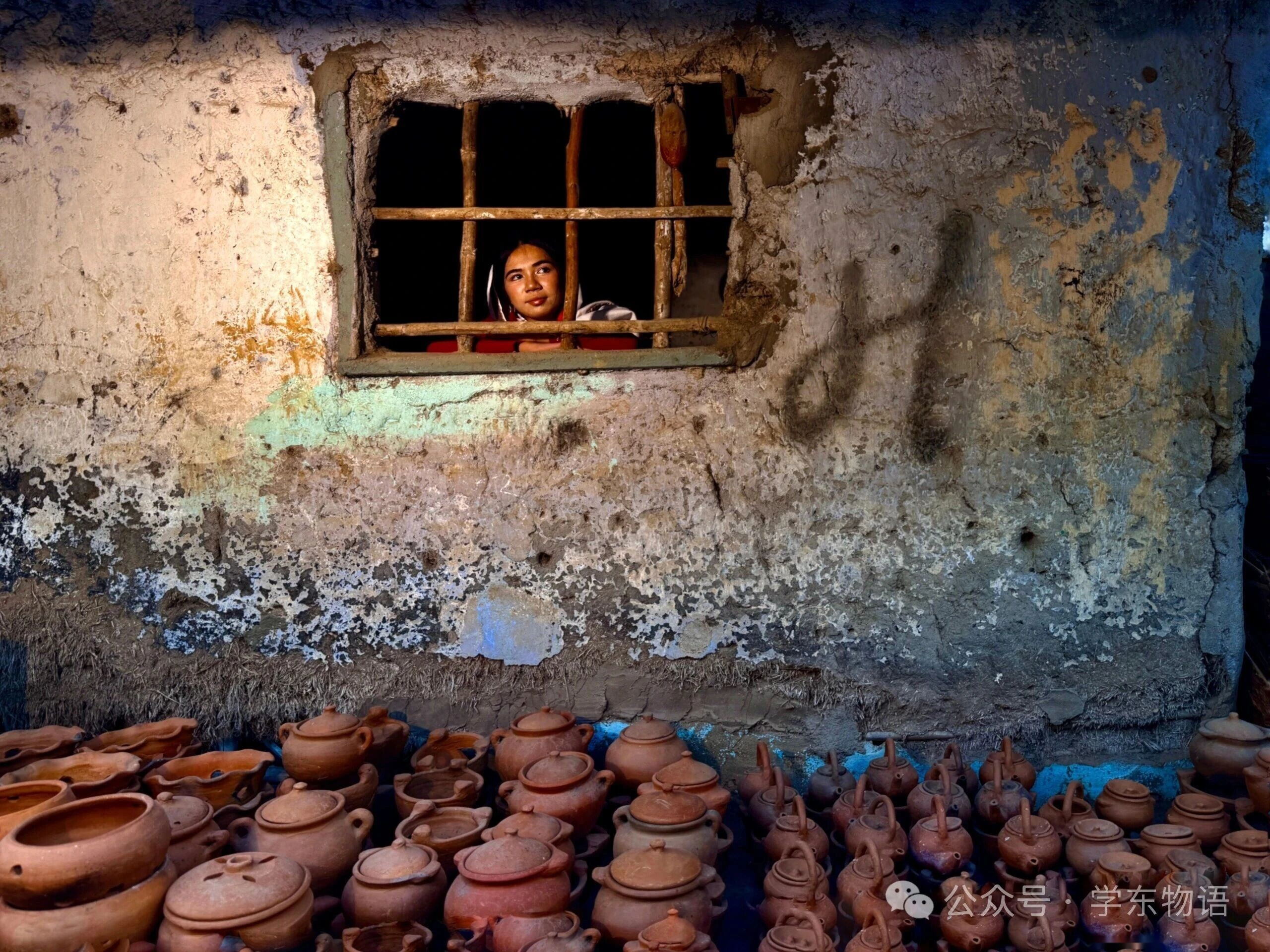
—Cham villagers in Ninh Thuận Province, Vietnam, are said to be the ancestors of Sanya's Utsul Muslims, hailing from the vanished Champa kingdom. From the Song and Yuan to the Ming and Qing dynasties, the Champa Kingdom was annexed by Annam (Vietnam). Cham Muslims who practiced Islam fled by boat in waves, and some ended up settling in Sanya's Yazhou Bay, forming the Utsul community. Given that the descendants of these ancient Islamized Chams make up a unique branch of the Hui ethnic group, China's official classification groups the Utsul people under the Hui nationality based on their bloodline and cultural origins. Residents in Sanya's Yanglan Huihui Village (Huihui Muslim Village) and Huixin Village (Huixin Muslim Village) all share this background, and their official ID cards list their ethnicity uniformly as Hui. The Utsul people have their own distinct language; their faith, dietary habits, and religious observances are basically similar to mainstream Islam, but their clothing and festival traditions still retain heavy traces of Cham heritage.

[Live Showcase]




 Collapse Read »
Tracing the Cham People in Ninh Thuận Province, Vietnam: Uncovering the Trans-Oceanic Migration of Sanya's Utsul Muslims and Their Historic Roots in the Ancient Champa Kingdom
Abstract:
A deep dive into the historical roots and folk traditions of Cham villages in Ninh Thuận Province, Vietnam. Investigating the history of Sanya's Utsul Muslims as descendants of Islamic refugees from the ancient Champa kingdom who migrated across the sea, highlighting the deep cultural bonds between Southeast Asia's Maritime Silk Road and island-based Hui Muslim communities.
—Cham villagers in Ninh Thuận Province, Vietnam, are said to be the ancestors of Sanya's Utsul Muslims, hailing from the vanished Champa kingdom. From the Song and Yuan to the Ming and Qing dynasties, the Champa Kingdom was annexed by Annam (Vietnam). Cham Muslims who practiced Islam fled by boat in waves, and some ended up settling in Sanya's Yazhou Bay, forming the Utsul community. Given that the descendants of these ancient Islamized Chams make up a unique branch of the Hui ethnic group, China's official classification groups the Utsul people under the Hui nationality based on their bloodline and cultural origins. Residents in Sanya's Yanglan Huihui Village (Huihui Muslim Village) and Huixin Village (Huixin Muslim Village) all share this background, and their official ID cards list their ethnicity uniformly as Hui. The Utsul people have their own distinct language; their faith, dietary habits, and religious observances are basically similar to mainstream Islam, but their clothing and festival traditions still retain heavy traces of Cham heritage.
[Live Showcase]
Collapse Read »
Sanya's Utsul Muslims: Maritime Silk Road History, Halal Cuisine & Culture
[Internet Repost]
Tracing the Genetic and Linguistic Origins of Hainan's Sanya Hui Muslims: The Unique Tones of the Utsul Language and the Paternal History of Maritime Silk Road Migrations
Abstract:
A deep dive into the mystery of the origins of the Hui Muslim community in Sanya, Hainan, from the perspectives of molecular anthropology and linguistics. This explores the evolutionary history of the Utsul language—which possesses distinct Austronesian characteristics—while combining genetic haplogroup data to reconstruct the history of integration among ancient Arab, Persian, and Champa Muslims.
When people talk about China's Muslim communities, they usually think first of the Northwest—Shaanxi, Gansu, Ningxia, Qinghai—and Xinjiang. Yet down at the southernmost tip of Hainan Island in Sanya, tucked away in the coastal villages of Huihui Village (Huihui Muslim Village) and Huixin Village (Huixin Muslim Village), lives a unique group of people who have practiced Islam for generations. They never bow to Buddha, never step foot inside ancestral shrines, and strictly avoid pork. The most prominent landmarks in their villages are mosques (masjids), and their daily diet, weddings, funerals, and festivals all strictly adhere to Islamic sharia law. Even more fascinating is their language: it's neither standard Hainanese nor the Hlai language spoken by the island's indigenous Hlai people. Outsiders cannot understand a single word. Academics call it the Utsul language (Huihui language). While officially classified under the Hui ethnic group during ethnic identification, these people are completely distinct from mainland Hui Muslims in both their historical origins and the language they speak.
Most ancestors of mainland Hui Muslims traveled via the overland Silk Road, closely tied to Muslim merchants and accompanying soldiers from Central Asia, Arabia, and Persia. So, from which body of water did the paternal lineage of Hainan's community actually come? Was it the famous Arabian Peninsula, the Persian Gulf, or some mysterious ancient kingdom on the eastern coast of the Indochina Peninsula that has long since vanished? Linguistics, historical records, and ancient DNA each offer clues. Piecing them together reveals a surprising truth: the answer is far more twists-and-turns than any simple guess. It proves that while religion and culture can indeed cross oceans to spread, chromosomes don't necessarily follow along for the ride.
To figure out the exact origins of the Utsul people, we must first understand the kingdom of Champa. In ancient Chinese historical texts, Champa was successively known as Linyi, Huanwang, and Champa. Established around 192 CE—the late Eastern Han Dynasty—it was an ancient maritime kingdom built by Austronesian-speaking peoples in what is now the central to southern coastal region of Vietnam. The Cham people were exceptionally skilled at navigation and trade, and their territory happened to control the maritime bottleneck connecting China to India and Arabia. Chinese merchant ships heading south and Arab merchant ships heading east frequently docked in Champa's ports to take on supplies. The famous Song Dynasty scholar Zhou Qufei listed Champa in his book Lingwai Daida as a major metropolis among the southwestern nations. It was a maritime kingdom that lived by the sea and thrived by the sea.
Champa was initially deeply influenced by Indian culture, with Hinduism long serving as its primary religion. Coastal brick-built towers in the Cham style still stand today. By the late 9th century, residential quarters composed of Arab and Persian Muslim merchants had already emerged in southern Champa. Islam quietly spread there alongside maritime trade, and by the 10th century, the number of believers had steadily grown. Right up until the 17th century, Champa's royal family chose to convert to Islam. In other words, before Champa's official demise, this vast land had been dyed with thick Islamic colors layer upon layer, built atop a deep foundation of Hinduism.
However, Champa's northern neighbor, Vietnam, continuously expanded southward after declaring independence—an event known in history as the Nam Tien (Southward March). The two countries engaged in a tug-of-war lasting centuries. In 982 CE, Champa's capital was briefly breached by enemy forces, and even then, some Cham refugees chose to cross the sea and flee northward. The heaviest blow came in 1471, when the Vietnamese Later Le Dynasty led a massive army to capture Champa's strategic stronghold of Vijaya, leaving Champa existing in name only. Afterward, the Nguyen Dynasty kept up its southern pressure. Facing the desperate peril of a destroyed nation and shattered homes, the Cham people boarded boats and fled into the open sea. One group traveled south along the Indochina Peninsula, while another caught tailwinds and headed north, eventually arriving at Yazhou at the southern tip of Hainan Island—today's Sanya area. An ancient maritime kingdom that had stood for over a thousand years was ultimately squeezed step-by-step into the boundless ocean by its neighbor.
According to oral folklore, a Champa prince once led about 1,000 clansmen across the sea to Hainan, where they were properly settled by the Ming Dynasty government. In fact, official Chinese historical records of Cham people entering Hainan date back even further, appearing as early as the Song Dynasty. Aside from Champa refugees, Arab and foreign merchants (fanke) who arrived via the Maritime Silk Road during the Tang and Song dynasties and settled in Hainan's ports represent another source of Hainan's Muslim community. Tang Dynasty Muslim cemeteries discovered in the coastal areas of Lingshui and Sanya serve as physical proof of these early maritime visitors. The exiled refugees from fallen Champa, combined with the foreign merchants who had docked and settled here even earlier, blended through several waves of convergence to finally form today's unique Utsul people—themselves a wondrous confluence of multiple maritime migration streams.
The most indisputable proof of identity carried by the Utsul people is their language. The Utsul language belongs to the Chamic branch of the Malayo-Polynesian subgroup of the Austronesian language family, sharing a common origin with the Cham language spoken by surviving Cham people in Vietnam today, and bearing a particularly close resemblance to its northern branch. The Austronesian language family spans from Madagascar in the west to distant Easter Island in the east, and as far south as New Zealand, making it one of the most widely distributed language families in the world. Yet the Utsul language is the only Austronesian tongue actually spoken on the Chinese mainland today, and the Utsul people are the sole branch of the Hui nationality across all of China to possess their own independent language—Hui Muslims in other regions having long since adopted Chinese for general communication. Based solely on this unique language, they occupy a lonely and extremely distinctive position on the ethnic distribution map of the Chinese mainland.
Even more intriguing is that within the vast Austronesian language family, the Utsul language is a rare outlier. Because typical Austronesian languages are mostly multisyllabic without tonal distinctions—relying solely on various affixes to express grammatical details—the Utsul language instead evolved into a predominantly monosyllabic form complete with its own fully developed tonal system. Linguistically, it grew increasingly similar to the surrounding Chinese and Hlai languages widely spoken in the region. Linguists view it as a classic research sample for tone genesis in language contact studies. This happened because the descendants of the Cham people lived generation after generation as neighbors to Chinese- and Kra-Dai-speaking populations on Hainan Island, and their native tongue was reshaped step-by-step through extremely lengthy mutual contact. Although the surface framework of the language changed into a new shape, its core vocabulary still corresponds with related sister languages. Like an isolated island drifting alone on the ocean, it stubbornly preserves the final lingering hometown sounds left behind by the Champa refugees. Based solely on this language set and their profound faith, academics concluded long ago that the Utsul people are the surviving descendants of the Champa.
According to conventional imagination, the paternal lineage of these Muslims should perhaps trace directly back to the distant Arabian Peninsula, or at the very least be local Cham people from Champa. However, a 2013 study published by Li Dongna, Wang Chuanchao, and others from Fudan University overturned this assumption. They tested 102 Utsul individuals—including 72 males and 30 females—analyzing both paternal Y-chromosomes and maternal mitochondrial DNA. The final conclusion was unexpectedly astonishing: although language and faith securely pointed the clues back to the former kingdom of Champa, the chromosome data told a completely different story, and both the paternal and maternal test results agreed with eerie consistency.
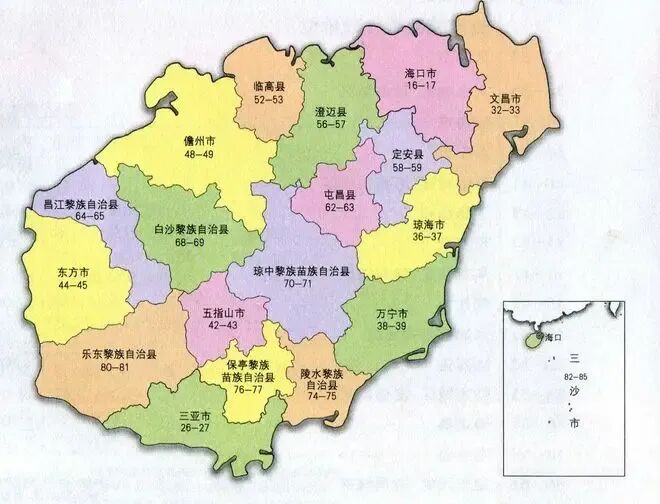
First, regarding the paternal side: the most frequent Y-chromosome haplogroup among Utsul males turned out to be O1a, specifically designated as M119, which accounted for roughly 58.1% in earlier smaller-sample statistics. The problem, however, is that the primary paternal lineage carried by today's Vietnamese Cham males is O2a1 (specifically M95), whereas this branch accounts for a mere 4.17% among the Utsul. The paternal structures of the two groups fundamentally do not match. If they were truly direct refugees of Champa faithfully passing down their paternal lines, the high-frequency lineage appearing among the Utsul should naturally have been M95, absolutely not M119. This single set of extremely misaligned data alone is enough to arouse great skepticism toward the narrative of direct Champa descent.
Researchers subsequently used Y-chromosome short tandem repeats (STRs) to construct complex network diagrams. The results revealed that almost all O1a lineages carried by the Utsul fell directly into the specific branches native to Hainan's indigenous inhabitants—the Hlai and other Kra-Dai-speaking populations—rather than clustering with Vietnamese Cham or Indochinese populations. Within this network, the indigenous Hainan O1a spontaneously formed several clusters almost exclusive to the locality, and the Utsul samples were nearly all deeply embedded within these clusters. This clearly demonstrates that the primary paternal lineage of the Utsul did not arrive from afar with the Champa refugees, but was instead acquired from the local populations of Hainan after successfully landing on the island. The only relative their Y-chromosomes recognize is the native people of Hainan Island, not the Cham people across the vast sea.
The maternal pattern is an exact carbon copy of the paternal side. The maternal haplogroups of the Utsul are predominantly D4 and F2a, accounting for roughly 16.67% and 15.69% respectively, alongside downstream sub-lineages such as F1b, F1a1, B5a, M8a, D5, and B4a. Analyzing these individual sub-lineages at the network level reveals that these maternal lines either cluster with Hainan's indigenous inhabitants or with southern Chinese populations. Not a single Utsul sample could be found clustering directly with the Cham people. These two mutually independent, rock-solid pieces of evidence—paternal and maternal—jointly point to a final conclusion: genetically speaking, the Utsul people are much closer to Hainan's native Hlai people and the broader southern Chinese population than to the Cham of Vietnam. If the localization of the paternal line could still be barely explained by customs like matrilocal marriage (taking a husband into the wife's family), then the fact that even the maternal line shows an overall shift toward the local population can only fully prove that the biological core of these people truly grew anew and took root right here on the island.
This study also made the pleasant discovery that among the Utsul people, there are moderate frequencies of haplogroup C (designated M130) and haplogroup F (designated M89). These quite ancient Southeast Asian lineages very likely originate from genetic drift occurring in small populations during the foundation period. In addition, there is about 4.17% of O3a2c1a (designated M117), a typical Sino-Tibetan characteristic lineage, which most likely stems from genetic inflow from neighboring Han Chinese populations in more recent times. Meanwhile, the Arab J lineage or Central Asian R lineage that people originally expected to occupy a place failed to form any considerable proportion. In other words, within the gene pool, one can neither find large-scale Arab bloodlines nor large-scale Champa paternal lines; all that can be definitively found is a superposition of local Hainan, southern Chinese, and small amounts of Sino-Tibetan components.
Based on this, researchers directly titled their paper "Genetic Replacement of Local Hainan Lineages in the Utsul." They agreed that the ultimate formation of the Utsul community must have undergone a process of large-scale assimilation and absorption of Hainan's native populations. Although the Cham language and Islamic faith brought by the Champa exiles were stubbornly preserved, their biological core was thoroughly and step-by-step replaced by local Hainan lineages after successfully landing on the island. This differs significantly from the classic historical pattern where paternal lines are foreign and maternal lines are local; the Utsul exhibit a high degree of localization on both paternal and maternal fronts. What was genuinely and completely carried forward from the old Champa homeland was primarily that language and that faith, rather than deep chromosomes. One might say this was a group of people who successfully kept their hometown speech and the scriptures they brought, yet swapped their original bloodline for the bloodline of the very island upon which their feet stood.
Some people might wonder: since the Cham had converted to Islam long ago, surely their own paternal lines must contain quite a few Arab components? A study on Cham paternal lineages published in 2012 in the journal PLoS ONE by He Jiandong, Peng Minsheng, and others—in cooperation with Vietnamese scholars and led by Zhang Yaping's team at the Kunming Institute of Zoology of the Chinese Academy of Sciences—similarly offered a very sobering medical answer. This study clearly showed that the primary paternal genetic components of the Cham population trace their origins to Southeast Asia. Part of it can be traced to the Malay Archipelago, and part to the Indochinese Peninsula. A deep mixture of populations from these two regions shaped today's Cham people, and their core consists precisely of the various branches of O2a1 designated as M95, closely linked to the numerous farming and seafaring populations widely distributed across Southeast Asia.
The foreign components truly worthy of attention actually originate from South Asia rather than Arabia. Roughly 18.6% of Cham paternal lines can be directly traced to South Asia. Yet almost no corresponding South Asian maternal lineages can be found among them. Researchers made a logical deduction regarding this: during historical periods when Hinduism flourished immensely, large numbers of Indian merchants and sailors successfully arrived in Champa along the thriving Maritime Silk Road. Most of them were single men who subsequently formed unions with local women, thereby leaving significant imprints solely within the paternal gene pool while remaining completely untraceable in the maternal gene pool. This is the most typical sex-biased admixture phenomenon: men who traveled to cross-sea businesses started families in foreign ports, successfully leaving behind characteristic Y-chromosomes without bringing in batch-scale Indian wives. Consequently, this massive influx of foreign blood could only be inscribed along the single-track paternal line.
To put it another way, even back in their Champa homeland, the Cham displayed a typical Southeast Asian genetic foundation, merely superimposing a small number of Indian merchant paternal lines. Bloodlines from the Arabian Peninsula were inherently very limited. Islam largely arrived there following frequent trade and religious propagation, which did not necessarily entail large-scale Arab population migration inward. Understanding this logic makes it feel not at all surprising when looking back at why no scale-forming Arab paternal lineages can be found among Hainan's Utsul. The cross-ocean spread of religion and large-scale migration of bloodlines have always been two entirely different matters. A weighty Quran could completely spread across oceans following merchant vessels, but the descendants of the scripture's propagators might not necessarily keep pace with the scripture's distant forward journey.
When the Champa exiles landed back then, their numbers amounted to merely a few thousand. Placed among the indigenous Hlai residents of Hainan Island and the constantly migrating Han Chinese population, they were merely a tiny, tiny fraction. Furthermore, exile and cruel sea voyages often drastically depleted massive numbers of male populations, and after settling down, they had to intermarry with surrounding populations just to gain a foothold and survive. After a mere few generations of reproduction, those foreign Cham paternal and maternal lines were thoroughly diluted into the immensely vast local population pool. Meanwhile, locally dominant lineages like O1a turned the tables to become the primary lineage of the Utsul community. This is precisely the most common genetic outcome when a tiny group deeply embeds itself into a massive population. For people forced to cross the sea after their nation fell, being fortunate enough to save their lives and successfully safeguard their inherited faith was already a supreme blessing; they simply had no surplus population available to maintain a completely independent bloodline.
What truly bound these people tightly together for a millennium without being completely assimilated by the surrounding environment are two things that do not rely on bloodlines for transmission: one is that unique Utsul language, which allows the Champa descendants to consistently maintain a shared hometown voice internally—even though it grew distinctive tones under the influence of external dominant languages—and the other is that Islamic faith. The laws established by the religion penetrated deeply into marriage, property inheritance, daily diet, and post-mortem funeral rites, drawing an extremely clear boundary of identity that successfully distinguished them from the surrounding Han and Hlai populations who worshipped Buddha and ancestors. This shared faith and ancient language fostered a high degree of internal group identity and a strong tendency toward endogamy, enabling the Utsul to persist as an independent community down to the present day—even though the majority of their chromosomes now belong locally to Hainan. The words spoken in the mouths of the villagers remain the tongue of the old Champa homeland, and the Lord worshipped in their hearts remains the One God worshipped in the later periods of Champa. It was these two invisible things that firmly knit them into a tight-knit community.
Things like language can be learned, and concepts like faith can be inherited. Neither fundamentally relies on physical bloodlines. Meanwhile, physical biological integration must simply bow to the ruthless laws of population numbers and intermarriage ratios. Thus emerged a historical scenario that seems full of contradictions yet is entirely logical: culturally they are still Cham, while genetically they are infinitely close to the Hlai. Once this is understood, there is no need to feel any confusion over the Utsul's complex identity. They are neither fake Champa descendants nor simply Hlai people who changed their faith, but rather a resilient group of people who thoroughly rooted their bloodlines into a new land while stubbornly guarding their origins in culture.
Returning to the question posed at the very beginning of the article—from which body of water did the Utsul paternal line primarily come? It comes primarily not from the distant and unfamiliar Arabian Sea, nor mainly from the coastal waters near Champa, but rather from Hainan Island's own vast South China Sea bays and ancient Hlai settlements, originating from those Kra-Dai indigenous ancestors who had lived on this beautiful island for tens of thousands of years. After Champa suffered the misfortune of national destruction, some Cham people were forced to flee northward across the sea. They brought precious Cham language and the Quran, but could not bring a resilient paternal main stem capable of surviving to the present day. They put down new roots on Hainan Island, extensively intermarried and integrated with locals, and ultimately surrendered their physical bodies entirely to this brand-new land, while deeply leaving that hometown speech and faith behind within their community. Today, next to the towering mosques of Huihui Village, this Austronesian language—which counts as truly unique across the Chinese mainland—still echoes from time to time. It constantly reminds people behind them that what the ancient Maritime Silk Road left behind was never merely those exquisite porcelains and rich spices, but also a group of suffering descendants bearing the pain of a fallen nation, along with a story of language and faith crossing vast oceans while bloodlines grew anew in a strange land. The survival of a civilization sometimes relies not on the so-called purity of bloodlines, but precisely on that bit of precious resilience that relentlessly guards its own language and faith amidst continuous integration. Collapse Read »
Tracing the Genetic and Linguistic Origins of Hainan's Sanya Hui Muslims: The Unique Tones of the Utsul Language and the Paternal History of Maritime Silk Road Migrations
Abstract:
A deep dive into the mystery of the origins of the Hui Muslim community in Sanya, Hainan, from the perspectives of molecular anthropology and linguistics. This explores the evolutionary history of the Utsul language—which possesses distinct Austronesian characteristics—while combining genetic haplogroup data to reconstruct the history of integration among ancient Arab, Persian, and Champa Muslims.
When people talk about China's Muslim communities, they usually think first of the Northwest—Shaanxi, Gansu, Ningxia, Qinghai—and Xinjiang. Yet down at the southernmost tip of Hainan Island in Sanya, tucked away in the coastal villages of Huihui Village (Huihui Muslim Village) and Huixin Village (Huixin Muslim Village), lives a unique group of people who have practiced Islam for generations. They never bow to Buddha, never step foot inside ancestral shrines, and strictly avoid pork. The most prominent landmarks in their villages are mosques (masjids), and their daily diet, weddings, funerals, and festivals all strictly adhere to Islamic sharia law. Even more fascinating is their language: it's neither standard Hainanese nor the Hlai language spoken by the island's indigenous Hlai people. Outsiders cannot understand a single word. Academics call it the Utsul language (Huihui language). While officially classified under the Hui ethnic group during ethnic identification, these people are completely distinct from mainland Hui Muslims in both their historical origins and the language they speak.
Most ancestors of mainland Hui Muslims traveled via the overland Silk Road, closely tied to Muslim merchants and accompanying soldiers from Central Asia, Arabia, and Persia. So, from which body of water did the paternal lineage of Hainan's community actually come? Was it the famous Arabian Peninsula, the Persian Gulf, or some mysterious ancient kingdom on the eastern coast of the Indochina Peninsula that has long since vanished? Linguistics, historical records, and ancient DNA each offer clues. Piecing them together reveals a surprising truth: the answer is far more twists-and-turns than any simple guess. It proves that while religion and culture can indeed cross oceans to spread, chromosomes don't necessarily follow along for the ride.
To figure out the exact origins of the Utsul people, we must first understand the kingdom of Champa. In ancient Chinese historical texts, Champa was successively known as Linyi, Huanwang, and Champa. Established around 192 CE—the late Eastern Han Dynasty—it was an ancient maritime kingdom built by Austronesian-speaking peoples in what is now the central to southern coastal region of Vietnam. The Cham people were exceptionally skilled at navigation and trade, and their territory happened to control the maritime bottleneck connecting China to India and Arabia. Chinese merchant ships heading south and Arab merchant ships heading east frequently docked in Champa's ports to take on supplies. The famous Song Dynasty scholar Zhou Qufei listed Champa in his book Lingwai Daida as a major metropolis among the southwestern nations. It was a maritime kingdom that lived by the sea and thrived by the sea.
Champa was initially deeply influenced by Indian culture, with Hinduism long serving as its primary religion. Coastal brick-built towers in the Cham style still stand today. By the late 9th century, residential quarters composed of Arab and Persian Muslim merchants had already emerged in southern Champa. Islam quietly spread there alongside maritime trade, and by the 10th century, the number of believers had steadily grown. Right up until the 17th century, Champa's royal family chose to convert to Islam. In other words, before Champa's official demise, this vast land had been dyed with thick Islamic colors layer upon layer, built atop a deep foundation of Hinduism.
However, Champa's northern neighbor, Vietnam, continuously expanded southward after declaring independence—an event known in history as the Nam Tien (Southward March). The two countries engaged in a tug-of-war lasting centuries. In 982 CE, Champa's capital was briefly breached by enemy forces, and even then, some Cham refugees chose to cross the sea and flee northward. The heaviest blow came in 1471, when the Vietnamese Later Le Dynasty led a massive army to capture Champa's strategic stronghold of Vijaya, leaving Champa existing in name only. Afterward, the Nguyen Dynasty kept up its southern pressure. Facing the desperate peril of a destroyed nation and shattered homes, the Cham people boarded boats and fled into the open sea. One group traveled south along the Indochina Peninsula, while another caught tailwinds and headed north, eventually arriving at Yazhou at the southern tip of Hainan Island—today's Sanya area. An ancient maritime kingdom that had stood for over a thousand years was ultimately squeezed step-by-step into the boundless ocean by its neighbor.
According to oral folklore, a Champa prince once led about 1,000 clansmen across the sea to Hainan, where they were properly settled by the Ming Dynasty government. In fact, official Chinese historical records of Cham people entering Hainan date back even further, appearing as early as the Song Dynasty. Aside from Champa refugees, Arab and foreign merchants (fanke) who arrived via the Maritime Silk Road during the Tang and Song dynasties and settled in Hainan's ports represent another source of Hainan's Muslim community. Tang Dynasty Muslim cemeteries discovered in the coastal areas of Lingshui and Sanya serve as physical proof of these early maritime visitors. The exiled refugees from fallen Champa, combined with the foreign merchants who had docked and settled here even earlier, blended through several waves of convergence to finally form today's unique Utsul people—themselves a wondrous confluence of multiple maritime migration streams.
The most indisputable proof of identity carried by the Utsul people is their language. The Utsul language belongs to the Chamic branch of the Malayo-Polynesian subgroup of the Austronesian language family, sharing a common origin with the Cham language spoken by surviving Cham people in Vietnam today, and bearing a particularly close resemblance to its northern branch. The Austronesian language family spans from Madagascar in the west to distant Easter Island in the east, and as far south as New Zealand, making it one of the most widely distributed language families in the world. Yet the Utsul language is the only Austronesian tongue actually spoken on the Chinese mainland today, and the Utsul people are the sole branch of the Hui nationality across all of China to possess their own independent language—Hui Muslims in other regions having long since adopted Chinese for general communication. Based solely on this unique language, they occupy a lonely and extremely distinctive position on the ethnic distribution map of the Chinese mainland.
Even more intriguing is that within the vast Austronesian language family, the Utsul language is a rare outlier. Because typical Austronesian languages are mostly multisyllabic without tonal distinctions—relying solely on various affixes to express grammatical details—the Utsul language instead evolved into a predominantly monosyllabic form complete with its own fully developed tonal system. Linguistically, it grew increasingly similar to the surrounding Chinese and Hlai languages widely spoken in the region. Linguists view it as a classic research sample for tone genesis in language contact studies. This happened because the descendants of the Cham people lived generation after generation as neighbors to Chinese- and Kra-Dai-speaking populations on Hainan Island, and their native tongue was reshaped step-by-step through extremely lengthy mutual contact. Although the surface framework of the language changed into a new shape, its core vocabulary still corresponds with related sister languages. Like an isolated island drifting alone on the ocean, it stubbornly preserves the final lingering hometown sounds left behind by the Champa refugees. Based solely on this language set and their profound faith, academics concluded long ago that the Utsul people are the surviving descendants of the Champa.
According to conventional imagination, the paternal lineage of these Muslims should perhaps trace directly back to the distant Arabian Peninsula, or at the very least be local Cham people from Champa. However, a 2013 study published by Li Dongna, Wang Chuanchao, and others from Fudan University overturned this assumption. They tested 102 Utsul individuals—including 72 males and 30 females—analyzing both paternal Y-chromosomes and maternal mitochondrial DNA. The final conclusion was unexpectedly astonishing: although language and faith securely pointed the clues back to the former kingdom of Champa, the chromosome data told a completely different story, and both the paternal and maternal test results agreed with eerie consistency.
First, regarding the paternal side: the most frequent Y-chromosome haplogroup among Utsul males turned out to be O1a, specifically designated as M119, which accounted for roughly 58.1% in earlier smaller-sample statistics. The problem, however, is that the primary paternal lineage carried by today's Vietnamese Cham males is O2a1 (specifically M95), whereas this branch accounts for a mere 4.17% among the Utsul. The paternal structures of the two groups fundamentally do not match. If they were truly direct refugees of Champa faithfully passing down their paternal lines, the high-frequency lineage appearing among the Utsul should naturally have been M95, absolutely not M119. This single set of extremely misaligned data alone is enough to arouse great skepticism toward the narrative of direct Champa descent.
Researchers subsequently used Y-chromosome short tandem repeats (STRs) to construct complex network diagrams. The results revealed that almost all O1a lineages carried by the Utsul fell directly into the specific branches native to Hainan's indigenous inhabitants—the Hlai and other Kra-Dai-speaking populations—rather than clustering with Vietnamese Cham or Indochinese populations. Within this network, the indigenous Hainan O1a spontaneously formed several clusters almost exclusive to the locality, and the Utsul samples were nearly all deeply embedded within these clusters. This clearly demonstrates that the primary paternal lineage of the Utsul did not arrive from afar with the Champa refugees, but was instead acquired from the local populations of Hainan after successfully landing on the island. The only relative their Y-chromosomes recognize is the native people of Hainan Island, not the Cham people across the vast sea.
The maternal pattern is an exact carbon copy of the paternal side. The maternal haplogroups of the Utsul are predominantly D4 and F2a, accounting for roughly 16.67% and 15.69% respectively, alongside downstream sub-lineages such as F1b, F1a1, B5a, M8a, D5, and B4a. Analyzing these individual sub-lineages at the network level reveals that these maternal lines either cluster with Hainan's indigenous inhabitants or with southern Chinese populations. Not a single Utsul sample could be found clustering directly with the Cham people. These two mutually independent, rock-solid pieces of evidence—paternal and maternal—jointly point to a final conclusion: genetically speaking, the Utsul people are much closer to Hainan's native Hlai people and the broader southern Chinese population than to the Cham of Vietnam. If the localization of the paternal line could still be barely explained by customs like matrilocal marriage (taking a husband into the wife's family), then the fact that even the maternal line shows an overall shift toward the local population can only fully prove that the biological core of these people truly grew anew and took root right here on the island.
This study also made the pleasant discovery that among the Utsul people, there are moderate frequencies of haplogroup C (designated M130) and haplogroup F (designated M89). These quite ancient Southeast Asian lineages very likely originate from genetic drift occurring in small populations during the foundation period. In addition, there is about 4.17% of O3a2c1a (designated M117), a typical Sino-Tibetan characteristic lineage, which most likely stems from genetic inflow from neighboring Han Chinese populations in more recent times. Meanwhile, the Arab J lineage or Central Asian R lineage that people originally expected to occupy a place failed to form any considerable proportion. In other words, within the gene pool, one can neither find large-scale Arab bloodlines nor large-scale Champa paternal lines; all that can be definitively found is a superposition of local Hainan, southern Chinese, and small amounts of Sino-Tibetan components.
Based on this, researchers directly titled their paper "Genetic Replacement of Local Hainan Lineages in the Utsul." They agreed that the ultimate formation of the Utsul community must have undergone a process of large-scale assimilation and absorption of Hainan's native populations. Although the Cham language and Islamic faith brought by the Champa exiles were stubbornly preserved, their biological core was thoroughly and step-by-step replaced by local Hainan lineages after successfully landing on the island. This differs significantly from the classic historical pattern where paternal lines are foreign and maternal lines are local; the Utsul exhibit a high degree of localization on both paternal and maternal fronts. What was genuinely and completely carried forward from the old Champa homeland was primarily that language and that faith, rather than deep chromosomes. One might say this was a group of people who successfully kept their hometown speech and the scriptures they brought, yet swapped their original bloodline for the bloodline of the very island upon which their feet stood.
Some people might wonder: since the Cham had converted to Islam long ago, surely their own paternal lines must contain quite a few Arab components? A study on Cham paternal lineages published in 2012 in the journal PLoS ONE by He Jiandong, Peng Minsheng, and others—in cooperation with Vietnamese scholars and led by Zhang Yaping's team at the Kunming Institute of Zoology of the Chinese Academy of Sciences—similarly offered a very sobering medical answer. This study clearly showed that the primary paternal genetic components of the Cham population trace their origins to Southeast Asia. Part of it can be traced to the Malay Archipelago, and part to the Indochinese Peninsula. A deep mixture of populations from these two regions shaped today's Cham people, and their core consists precisely of the various branches of O2a1 designated as M95, closely linked to the numerous farming and seafaring populations widely distributed across Southeast Asia.
The foreign components truly worthy of attention actually originate from South Asia rather than Arabia. Roughly 18.6% of Cham paternal lines can be directly traced to South Asia. Yet almost no corresponding South Asian maternal lineages can be found among them. Researchers made a logical deduction regarding this: during historical periods when Hinduism flourished immensely, large numbers of Indian merchants and sailors successfully arrived in Champa along the thriving Maritime Silk Road. Most of them were single men who subsequently formed unions with local women, thereby leaving significant imprints solely within the paternal gene pool while remaining completely untraceable in the maternal gene pool. This is the most typical sex-biased admixture phenomenon: men who traveled to cross-sea businesses started families in foreign ports, successfully leaving behind characteristic Y-chromosomes without bringing in batch-scale Indian wives. Consequently, this massive influx of foreign blood could only be inscribed along the single-track paternal line.
To put it another way, even back in their Champa homeland, the Cham displayed a typical Southeast Asian genetic foundation, merely superimposing a small number of Indian merchant paternal lines. Bloodlines from the Arabian Peninsula were inherently very limited. Islam largely arrived there following frequent trade and religious propagation, which did not necessarily entail large-scale Arab population migration inward. Understanding this logic makes it feel not at all surprising when looking back at why no scale-forming Arab paternal lineages can be found among Hainan's Utsul. The cross-ocean spread of religion and large-scale migration of bloodlines have always been two entirely different matters. A weighty Quran could completely spread across oceans following merchant vessels, but the descendants of the scripture's propagators might not necessarily keep pace with the scripture's distant forward journey.
When the Champa exiles landed back then, their numbers amounted to merely a few thousand. Placed among the indigenous Hlai residents of Hainan Island and the constantly migrating Han Chinese population, they were merely a tiny, tiny fraction. Furthermore, exile and cruel sea voyages often drastically depleted massive numbers of male populations, and after settling down, they had to intermarry with surrounding populations just to gain a foothold and survive. After a mere few generations of reproduction, those foreign Cham paternal and maternal lines were thoroughly diluted into the immensely vast local population pool. Meanwhile, locally dominant lineages like O1a turned the tables to become the primary lineage of the Utsul community. This is precisely the most common genetic outcome when a tiny group deeply embeds itself into a massive population. For people forced to cross the sea after their nation fell, being fortunate enough to save their lives and successfully safeguard their inherited faith was already a supreme blessing; they simply had no surplus population available to maintain a completely independent bloodline.
What truly bound these people tightly together for a millennium without being completely assimilated by the surrounding environment are two things that do not rely on bloodlines for transmission: one is that unique Utsul language, which allows the Champa descendants to consistently maintain a shared hometown voice internally—even though it grew distinctive tones under the influence of external dominant languages—and the other is that Islamic faith. The laws established by the religion penetrated deeply into marriage, property inheritance, daily diet, and post-mortem funeral rites, drawing an extremely clear boundary of identity that successfully distinguished them from the surrounding Han and Hlai populations who worshipped Buddha and ancestors. This shared faith and ancient language fostered a high degree of internal group identity and a strong tendency toward endogamy, enabling the Utsul to persist as an independent community down to the present day—even though the majority of their chromosomes now belong locally to Hainan. The words spoken in the mouths of the villagers remain the tongue of the old Champa homeland, and the Lord worshipped in their hearts remains the One God worshipped in the later periods of Champa. It was these two invisible things that firmly knit them into a tight-knit community.
Things like language can be learned, and concepts like faith can be inherited. Neither fundamentally relies on physical bloodlines. Meanwhile, physical biological integration must simply bow to the ruthless laws of population numbers and intermarriage ratios. Thus emerged a historical scenario that seems full of contradictions yet is entirely logical: culturally they are still Cham, while genetically they are infinitely close to the Hlai. Once this is understood, there is no need to feel any confusion over the Utsul's complex identity. They are neither fake Champa descendants nor simply Hlai people who changed their faith, but rather a resilient group of people who thoroughly rooted their bloodlines into a new land while stubbornly guarding their origins in culture.
Returning to the question posed at the very beginning of the article—from which body of water did the Utsul paternal line primarily come? It comes primarily not from the distant and unfamiliar Arabian Sea, nor mainly from the coastal waters near Champa, but rather from Hainan Island's own vast South China Sea bays and ancient Hlai settlements, originating from those Kra-Dai indigenous ancestors who had lived on this beautiful island for tens of thousands of years. After Champa suffered the misfortune of national destruction, some Cham people were forced to flee northward across the sea. They brought precious Cham language and the Quran, but could not bring a resilient paternal main stem capable of surviving to the present day. They put down new roots on Hainan Island, extensively intermarried and integrated with locals, and ultimately surrendered their physical bodies entirely to this brand-new land, while deeply leaving that hometown speech and faith behind within their community. Today, next to the towering mosques of Huihui Village, this Austronesian language—which counts as truly unique across the Chinese mainland—still echoes from time to time. It constantly reminds people behind them that what the ancient Maritime Silk Road left behind was never merely those exquisite porcelains and rich spices, but also a group of suffering descendants bearing the pain of a fallen nation, along with a story of language and faith crossing vast oceans while bloodlines grew anew in a strange land. The survival of a civilization sometimes relies not on the so-called purity of bloodlines, but precisely on that bit of precious resilience that relentlessly guards its own language and faith amidst continuous integration. Collapse Read »
Exploring China's Southernmost Muslim Villages: Sanya's Huihui & Huixin, Halal Cuisine, and Historic Mosques
[Internet Repost]
Exploring China's Southernmost Muslim Villages: The Unique Geography and Culture of Sanya's Huihui and Huixin Villages
Abstract:
A systematic look at the history and current landscape of the Muslim villages in Sanya, sitting right at China's southernmost tip. We break down how the Utsul Muslims preserve their Islamic faith, distinct linguistic system, and strict dietary laws in this tropical seaside city, serving as a living specimen of Maritime Silk Road culture.
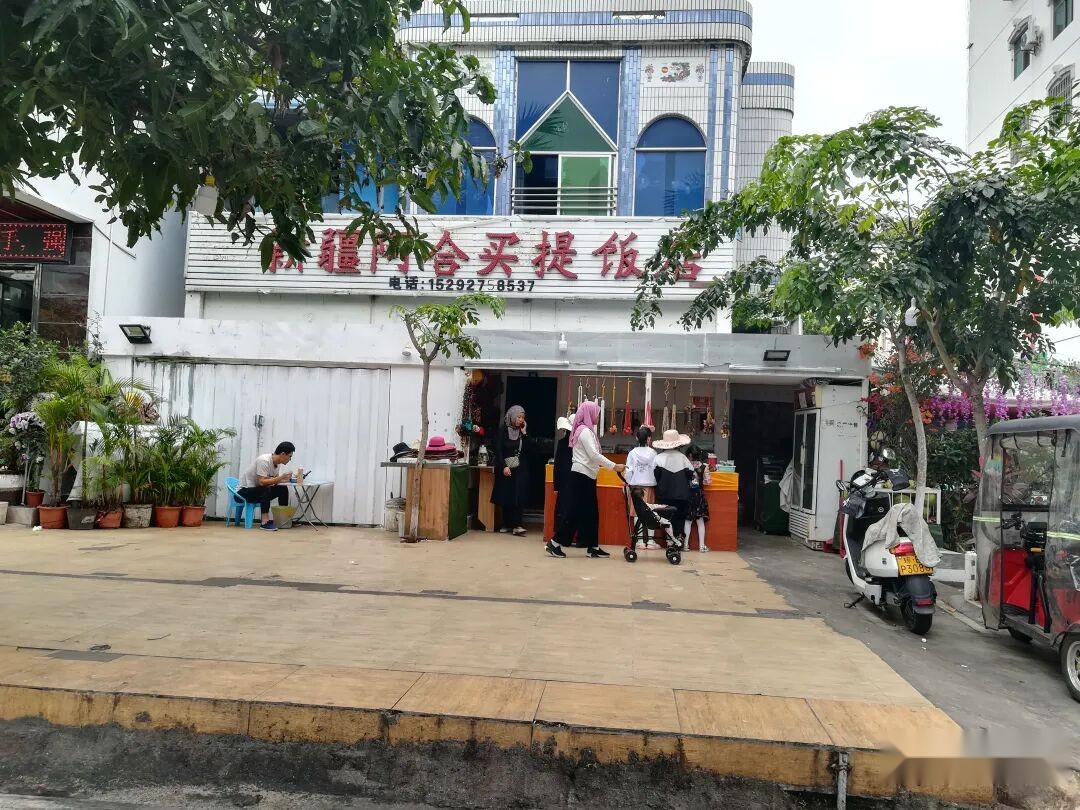
February 22, 2022
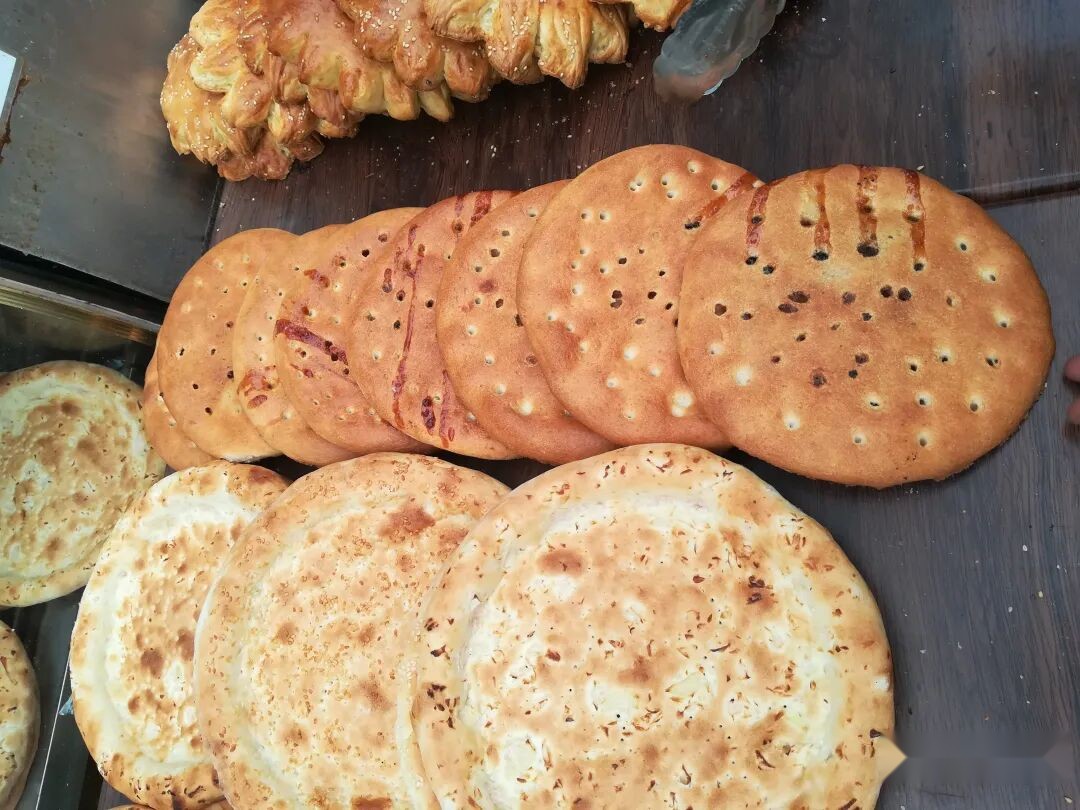
The sky was still a bit overcast. Yesterday's forecast promised clear skies, but today it flipped to cloudy. Whatever, at least it's finally not raining. Decided to head out for a stroll. The original plan was to hit Linchunling Forest Park for some hiking and panoramic views of Sanya.
Checked the map and saw that Bus Route 50 from the Sanya Railway Station goes straight there. Somehow, I ended up at Phoenix International Airport instead—didn't take the wrong bus, alright, I just got on heading the complete opposite direction.
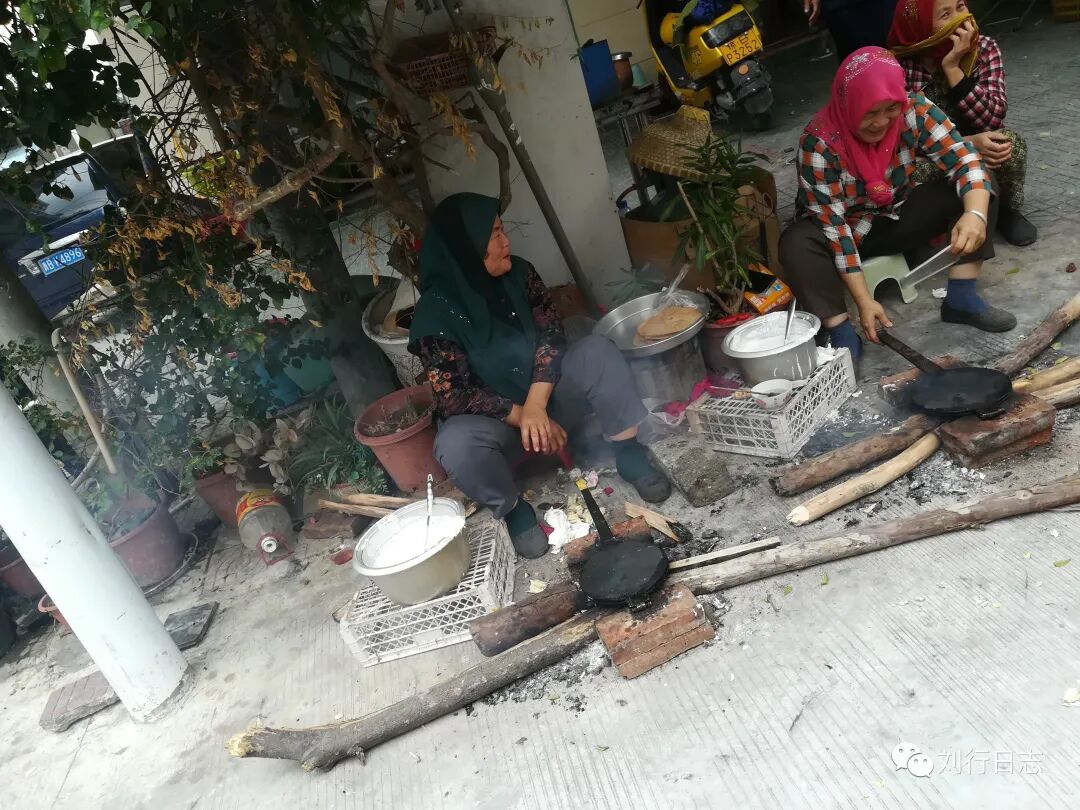
On the way, we passed Huihui Village (Huihui Muslim Village). I'd looked it up online a few days ago—it’s hyped as China's southernmost Muslim village. It was only three stops away from the airport. After hanging out at the airport for a bit, I caught Bus Route 24 and hopped off right at the Beautiful Phoenix Hotel, which drops you right into Huihui Village. My first vibe? Honestly felt like stumbling into a Uyghur village.
Freshly baked nan (traditional Uyghur flatbread) in Xinjiang usually has to be made at designated nan industrial parks, but here you see plenty of freshly baked nan stalls all over. Saw one of these syrup-dripping nan fresh out of the oven and couldn't resist grabbing one for 5 RMB. Munched on it while walking—super tasty.
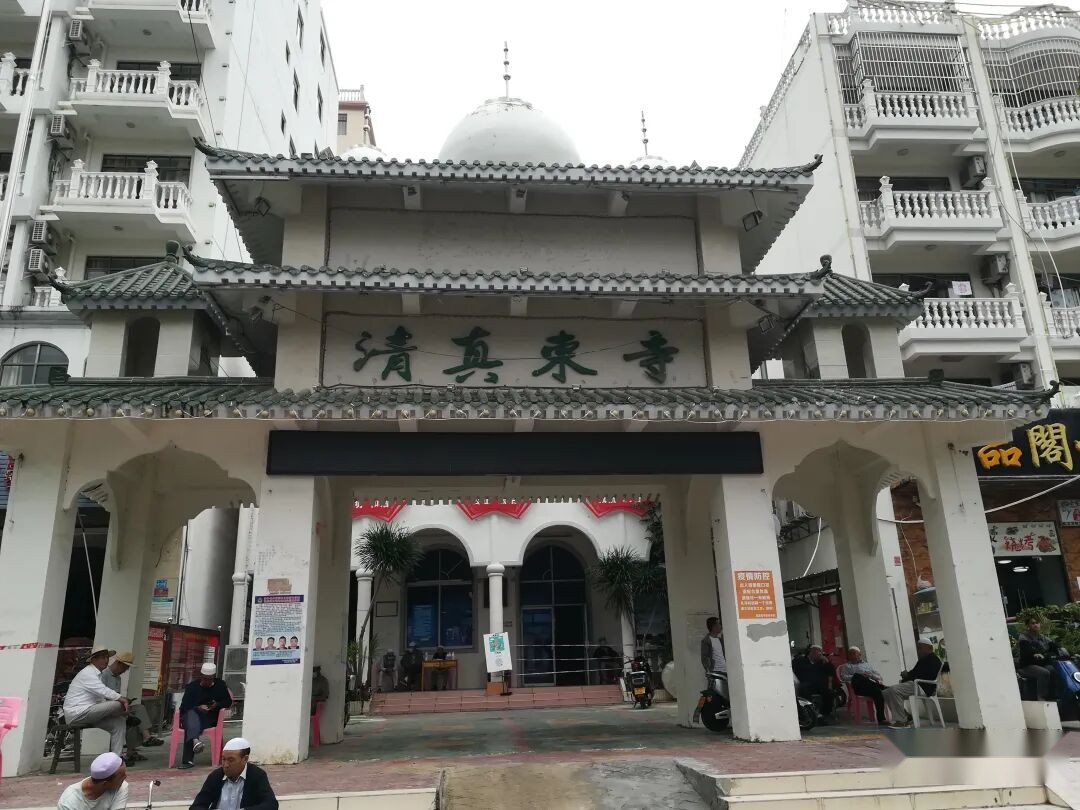
Thought I spotted a weird dog breed at first, but looking closer, the little guy just got a fresh haircut. Gotta say, the grooming skills aren't bad at all. Shaved super smooth, even the fur on its paws was trimmed clean.
Found an older sister making pancakes in the alleyway with a vibe totally giving Gansu-Shaanxi Hui Muslim style. Using wood fuel, she pours the batter into this little black pan, closes the lid, and adds fire underneath. This pan can be heated from both sides, and the finished pancakes get tossed onto the iron tray right in the middle. The lady on the side said they're 2 RMB each, but when I asked the lady actually cooking them on the left, she said they aren't for sale. Pretty unique way of cooking, right?
A green house in the village—looks like a women's beauty salon. Even the building is painted green, and the color combo is super coordinated and easy on the eyes.
Qingzhen Dongsi (Sanya East Mosque). So, is there a Qingzhen Xisi (West Mosque)? Sure enough, there is! Not just a West Mosque, but a South Mosque and North Mosque too. There are six mosques in total, with the other two being the Sanya Ancient Mosque and Nankai Mosque.
Huihui Civilization Farmers Market. Not super big, and strictly sells halal food.
Killing a duck, getting it ready. This local sister just slaughtered a duck and is cleaning it up right there. Usually, whatever you buy at the market is already prepped, so this one must have been home-raised.
An airplane over the treetops.
A 'flying chicken' under the treetops.
Little kids working hard.
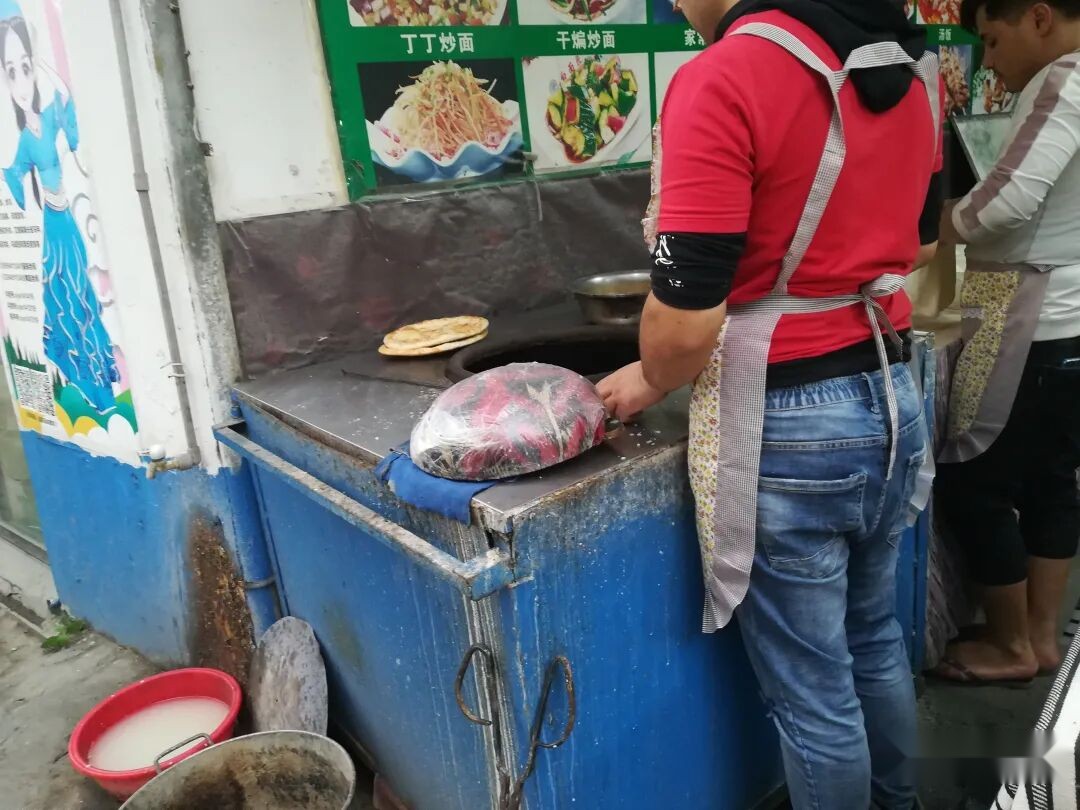
The village isn't far from Sanya Bay—just a little over two kilometers—so I ditched the mountain hike and went for a stroll by the ocean instead. It was overcast, but the waves were huge. Sat by the beach watching the surf and the crowds walking by. A few pretty girls walked past every now and then, and of course, plenty of not-so-pretty ones too.
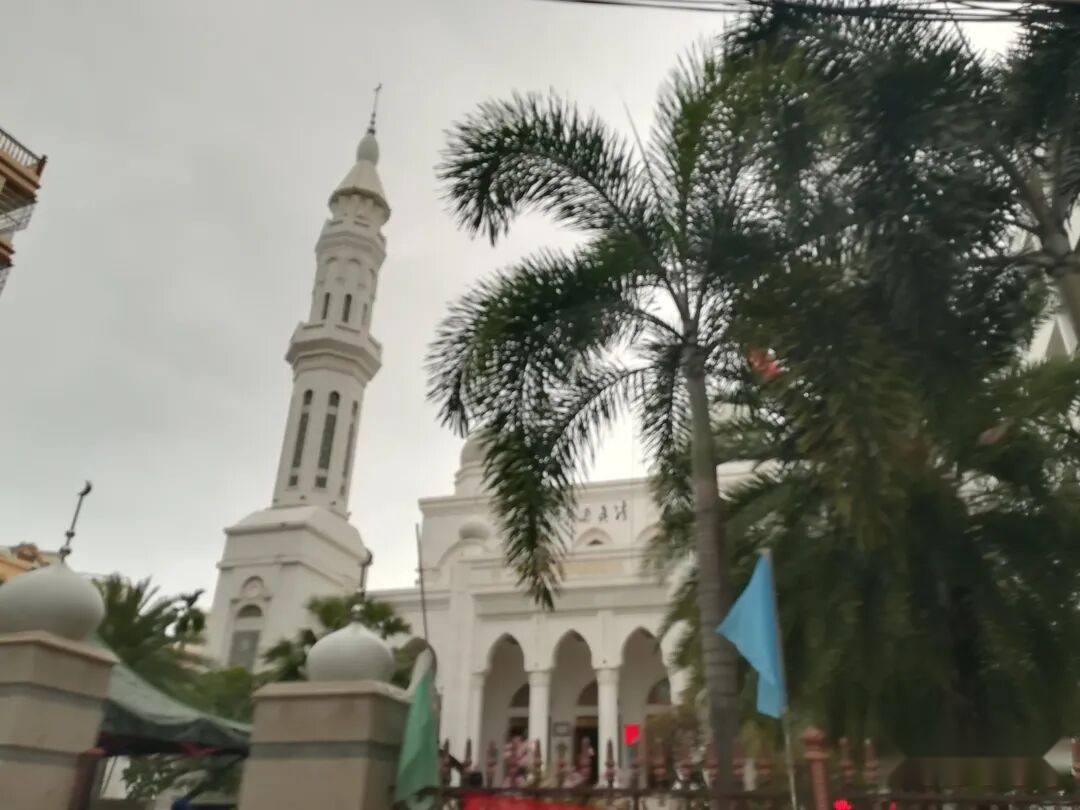
A jellyfish washed ashore by the waves. Wonder if this one is edible—making a cold tossed jellyfish skin salad with it would be pretty awesome.
Two kids playing a real-life Jingwei (mythological bird trying to fill the sea with pebbles), using little plastic shovels trying to fill up the ocean. You guys got this!
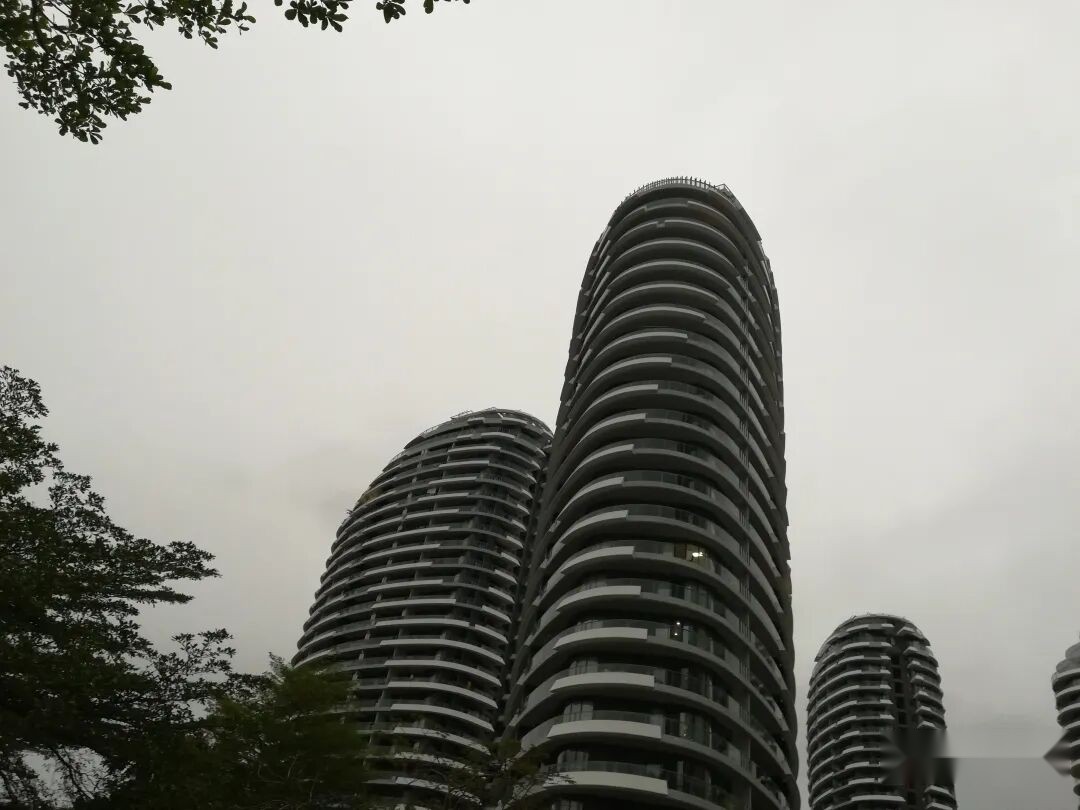
There are two Muslim villages. The other one is Huixin Village (Huixin Muslim Village), just over four kilometers from Huihui Village, and you can just walk along the coast to get there. There are tons of little shops in this village; two small streets are packed with vendors selling stuff, mostly street food. A lot of houses in the village also have homestay signs hanging outside. Saw another batch of fresh, plain nan just out of the oven. Grabbed one, though honestly, this one wasn't as good as the ones in Xinjiang. There were small street stalls selling home-grown produce, like dragon fruit going for 10 RMB for four jin (about 4 lbs), and watermelons for 5 RMB each.
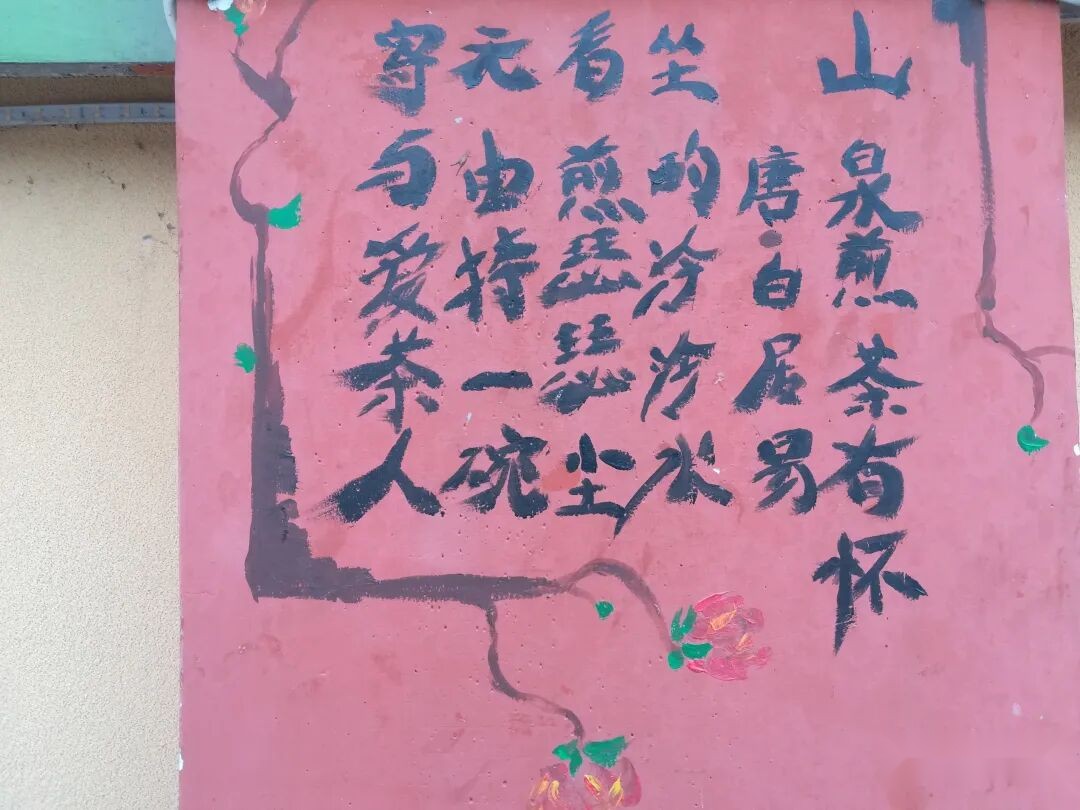
Qingzhen Nansi (Sanya South Mosque). The architecture is super new, looks like it was recently renovated. Just happened to pass by Nankai Mosque too, didn't make a special trip for it though.
Walking back from Huixin Village is also over four kilometers, and the bus stop is a good two kilometers away. Might as well just walk all the way back since I'm not in a rush anyway, plus I get to check out the street views.
Sanya has a ton of gorgeous architecture. This cluster of four buildings has a really unique vibe.
Not sure how my calligraphy skills are, but I feel like it's pretty much on par with mine. Guess it must just be my lack of skill that I couldn't appreciate their profound artistic depth.
Sanya River in the evening twilight.
This kid in a red jacket chased me for a long way while the adults yelled from behind, 'Keep running and the old man up ahead is gonna grab you!' Well, I had to play along, so I yelled back for him to come with me, and he immediately ran back. Walked all day and felt pretty beat, so I grabbed some water and hit the sack. Collapse Read »
Exploring China's Southernmost Muslim Villages: The Unique Geography and Culture of Sanya's Huihui and Huixin Villages
Abstract:
A systematic look at the history and current landscape of the Muslim villages in Sanya, sitting right at China's southernmost tip. We break down how the Utsul Muslims preserve their Islamic faith, distinct linguistic system, and strict dietary laws in this tropical seaside city, serving as a living specimen of Maritime Silk Road culture.
February 22, 2022
The sky was still a bit overcast. Yesterday's forecast promised clear skies, but today it flipped to cloudy. Whatever, at least it's finally not raining. Decided to head out for a stroll. The original plan was to hit Linchunling Forest Park for some hiking and panoramic views of Sanya.
Checked the map and saw that Bus Route 50 from the Sanya Railway Station goes straight there. Somehow, I ended up at Phoenix International Airport instead—didn't take the wrong bus, alright, I just got on heading the complete opposite direction.
On the way, we passed Huihui Village (Huihui Muslim Village). I'd looked it up online a few days ago—it’s hyped as China's southernmost Muslim village. It was only three stops away from the airport. After hanging out at the airport for a bit, I caught Bus Route 24 and hopped off right at the Beautiful Phoenix Hotel, which drops you right into Huihui Village. My first vibe? Honestly felt like stumbling into a Uyghur village.
Freshly baked nan (traditional Uyghur flatbread) in Xinjiang usually has to be made at designated nan industrial parks, but here you see plenty of freshly baked nan stalls all over. Saw one of these syrup-dripping nan fresh out of the oven and couldn't resist grabbing one for 5 RMB. Munched on it while walking—super tasty.
Thought I spotted a weird dog breed at first, but looking closer, the little guy just got a fresh haircut. Gotta say, the grooming skills aren't bad at all. Shaved super smooth, even the fur on its paws was trimmed clean.
Found an older sister making pancakes in the alleyway with a vibe totally giving Gansu-Shaanxi Hui Muslim style. Using wood fuel, she pours the batter into this little black pan, closes the lid, and adds fire underneath. This pan can be heated from both sides, and the finished pancakes get tossed onto the iron tray right in the middle. The lady on the side said they're 2 RMB each, but when I asked the lady actually cooking them on the left, she said they aren't for sale. Pretty unique way of cooking, right?
A green house in the village—looks like a women's beauty salon. Even the building is painted green, and the color combo is super coordinated and easy on the eyes.
Qingzhen Dongsi (Sanya East Mosque). So, is there a Qingzhen Xisi (West Mosque)? Sure enough, there is! Not just a West Mosque, but a South Mosque and North Mosque too. There are six mosques in total, with the other two being the Sanya Ancient Mosque and Nankai Mosque.
Huihui Civilization Farmers Market. Not super big, and strictly sells halal food.
Killing a duck, getting it ready. This local sister just slaughtered a duck and is cleaning it up right there. Usually, whatever you buy at the market is already prepped, so this one must have been home-raised.
An airplane over the treetops.
A 'flying chicken' under the treetops.
Little kids working hard.
The village isn't far from Sanya Bay—just a little over two kilometers—so I ditched the mountain hike and went for a stroll by the ocean instead. It was overcast, but the waves were huge. Sat by the beach watching the surf and the crowds walking by. A few pretty girls walked past every now and then, and of course, plenty of not-so-pretty ones too.
A jellyfish washed ashore by the waves. Wonder if this one is edible—making a cold tossed jellyfish skin salad with it would be pretty awesome.
Two kids playing a real-life Jingwei (mythological bird trying to fill the sea with pebbles), using little plastic shovels trying to fill up the ocean. You guys got this!
There are two Muslim villages. The other one is Huixin Village (Huixin Muslim Village), just over four kilometers from Huihui Village, and you can just walk along the coast to get there. There are tons of little shops in this village; two small streets are packed with vendors selling stuff, mostly street food. A lot of houses in the village also have homestay signs hanging outside. Saw another batch of fresh, plain nan just out of the oven. Grabbed one, though honestly, this one wasn't as good as the ones in Xinjiang. There were small street stalls selling home-grown produce, like dragon fruit going for 10 RMB for four jin (about 4 lbs), and watermelons for 5 RMB each.
Qingzhen Nansi (Sanya South Mosque). The architecture is super new, looks like it was recently renovated. Just happened to pass by Nankai Mosque too, didn't make a special trip for it though.
Walking back from Huixin Village is also over four kilometers, and the bus stop is a good two kilometers away. Might as well just walk all the way back since I'm not in a rush anyway, plus I get to check out the street views.
Sanya has a ton of gorgeous architecture. This cluster of four buildings has a really unique vibe.
Not sure how my calligraphy skills are, but I feel like it's pretty much on par with mine. Guess it must just be my lack of skill that I couldn't appreciate their profound artistic depth.
Sanya River in the evening twilight.
This kid in a red jacket chased me for a long way while the adults yelled from behind, 'Keep running and the old man up ahead is gonna grab you!' Well, I had to play along, so I yelled back for him to come with me, and he immediately ran back. Walked all day and felt pretty beat, so I grabbed some water and hit the sack. Collapse Read »
Sanya Muslim Guide: Halal Seafood, Historic Mosques & Utsul Culture in Hainan
[Internet Repost]
Talking About Muslims at the Ends of the Earth: Strolling Along the Sanya Coastline and Reflecting on the Human Touch and Islamic Culture of Huihui and Huixin Muslims
Abstract:
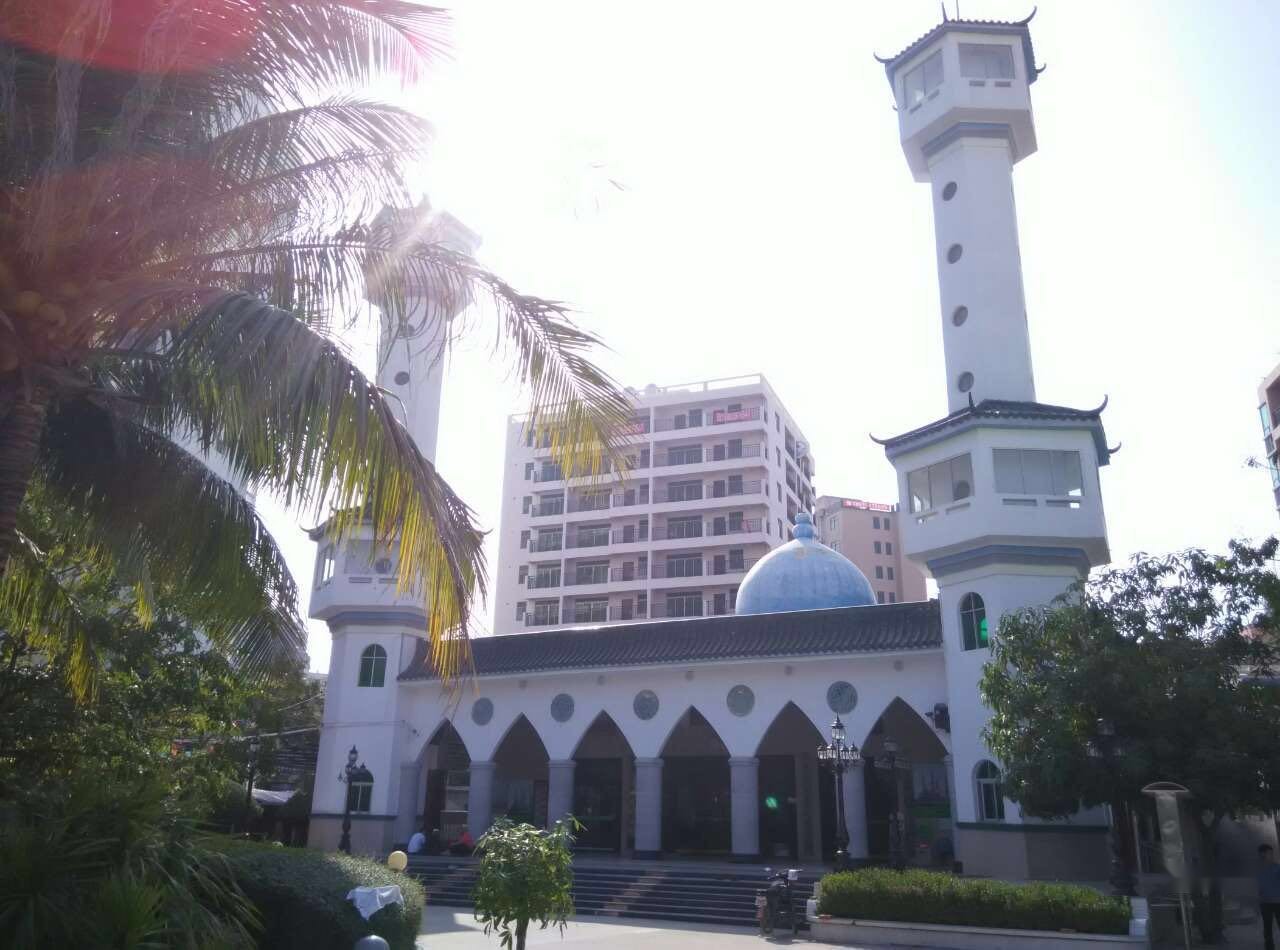
Through a poetic lens, this article chronicles the life philosophy and spiritual world of our Muslim compatriots living at the edge of the world. Set against the backdrop of tropical coconut groves and sandy beaches, it showcases the island Muslims' pious adherence to religious traditions, mutual aid, honesty, integrity, and their profound reflections on Maritime Silk Road history.
"Facing the Sea, Spring Flowers Blooming"
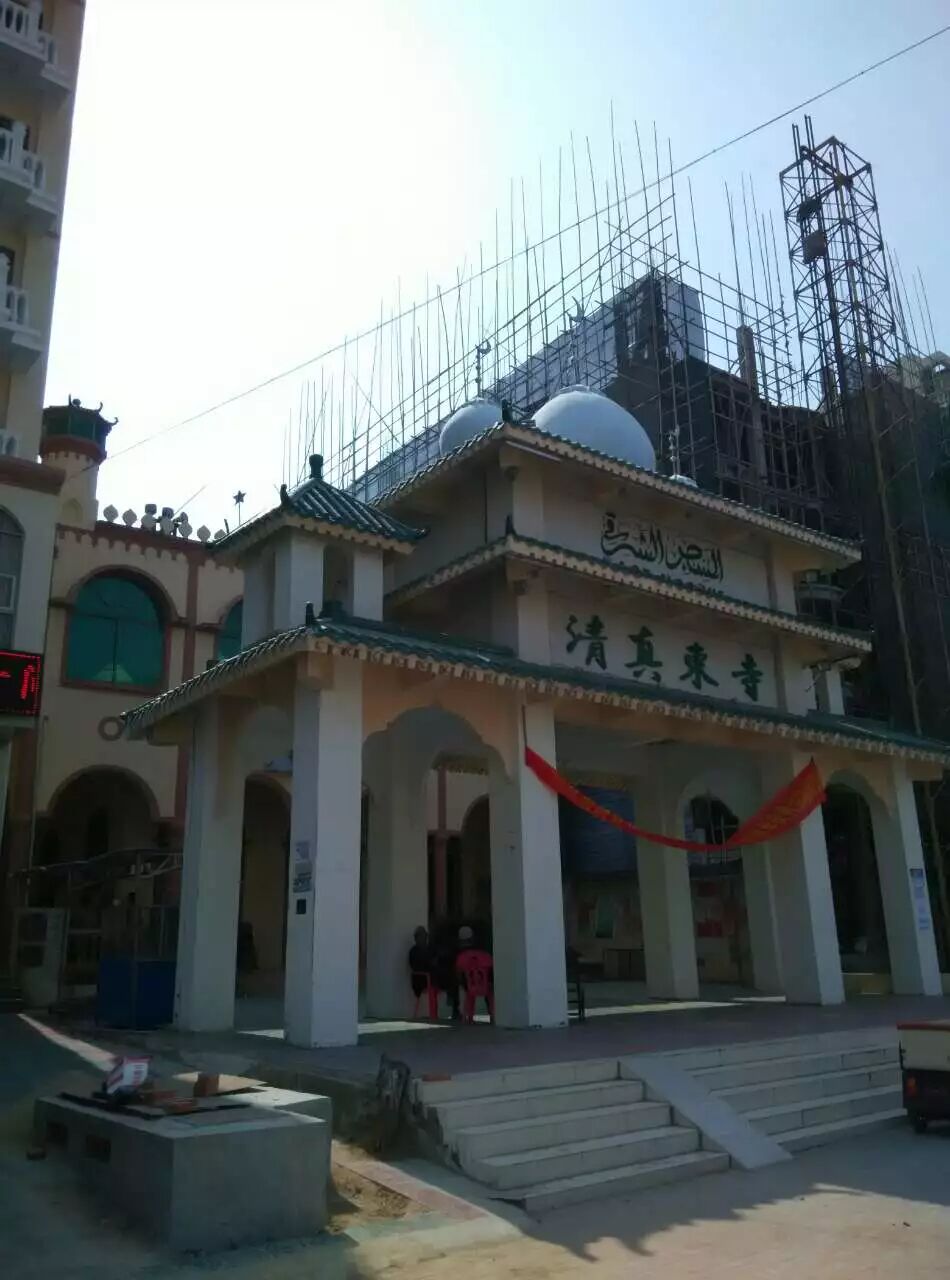
Starting tomorrow, I will be a grateful person,
Worshiping Allah, loving others, and spreading virtue...
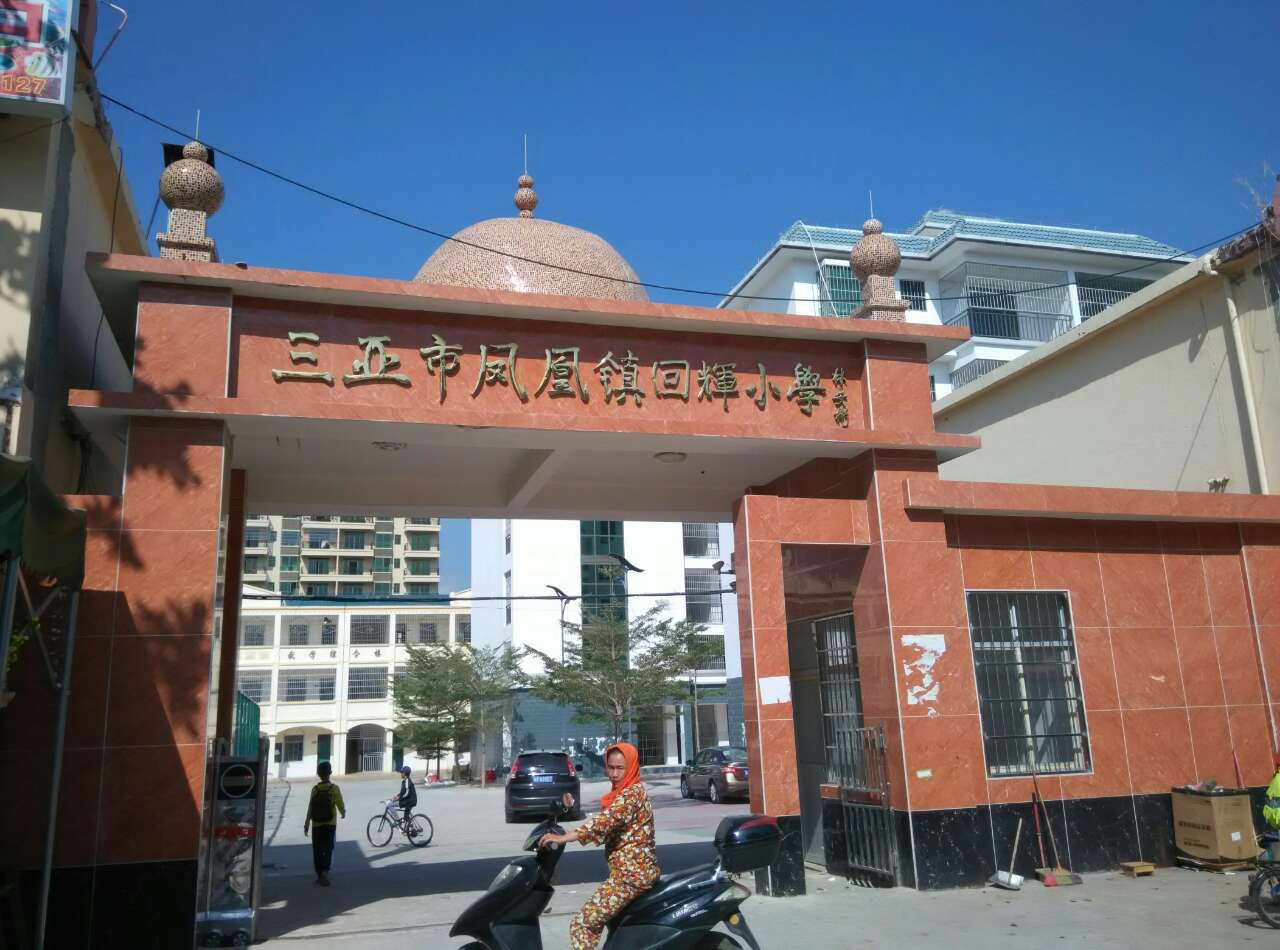
Starting tomorrow, I will care for the poor and orphans.
I wish I had a house,
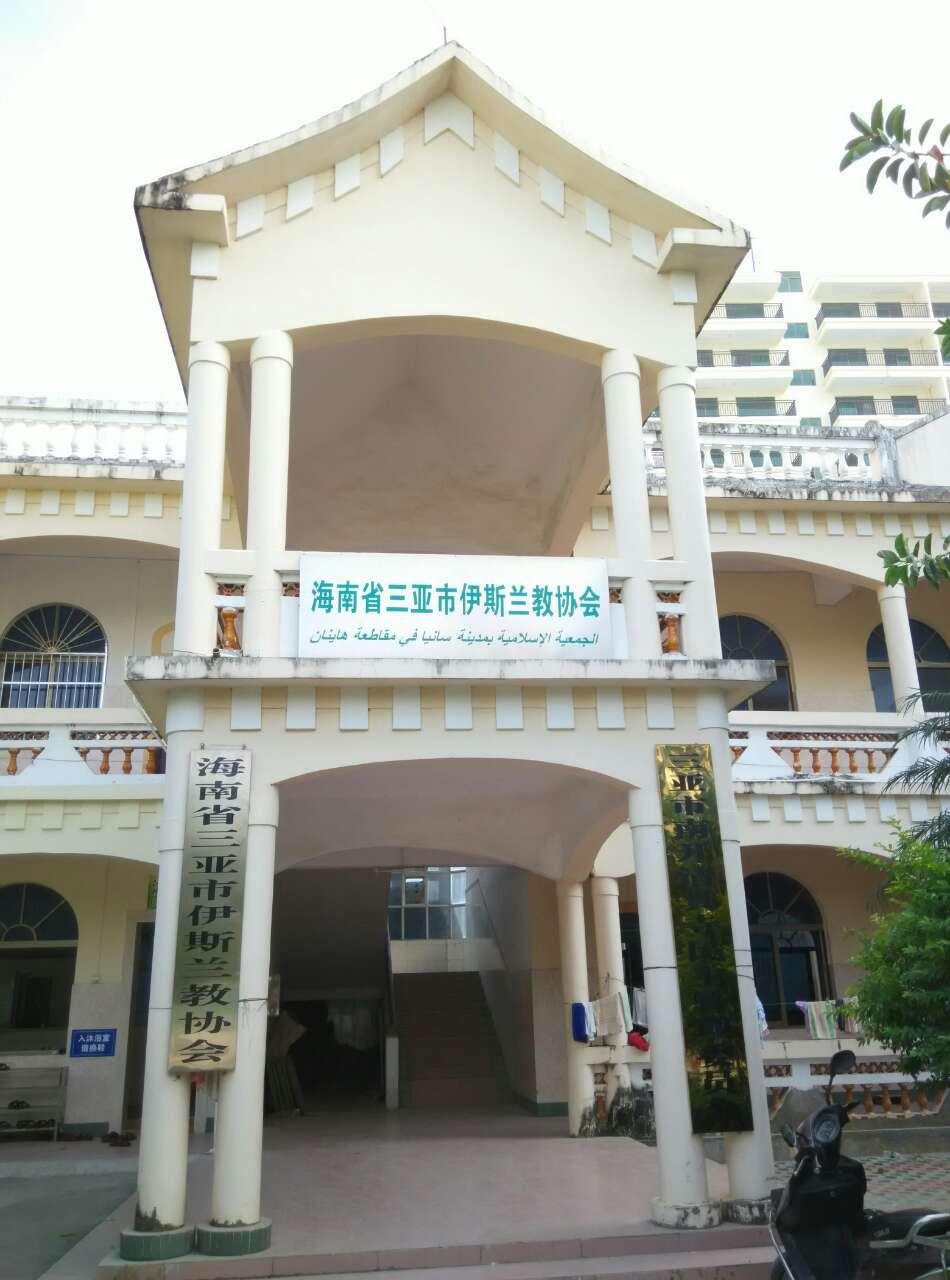
Facing the mosque, listening to the melodic recitation of the Quran.
Starting tomorrow, I will greet everyone with peace,
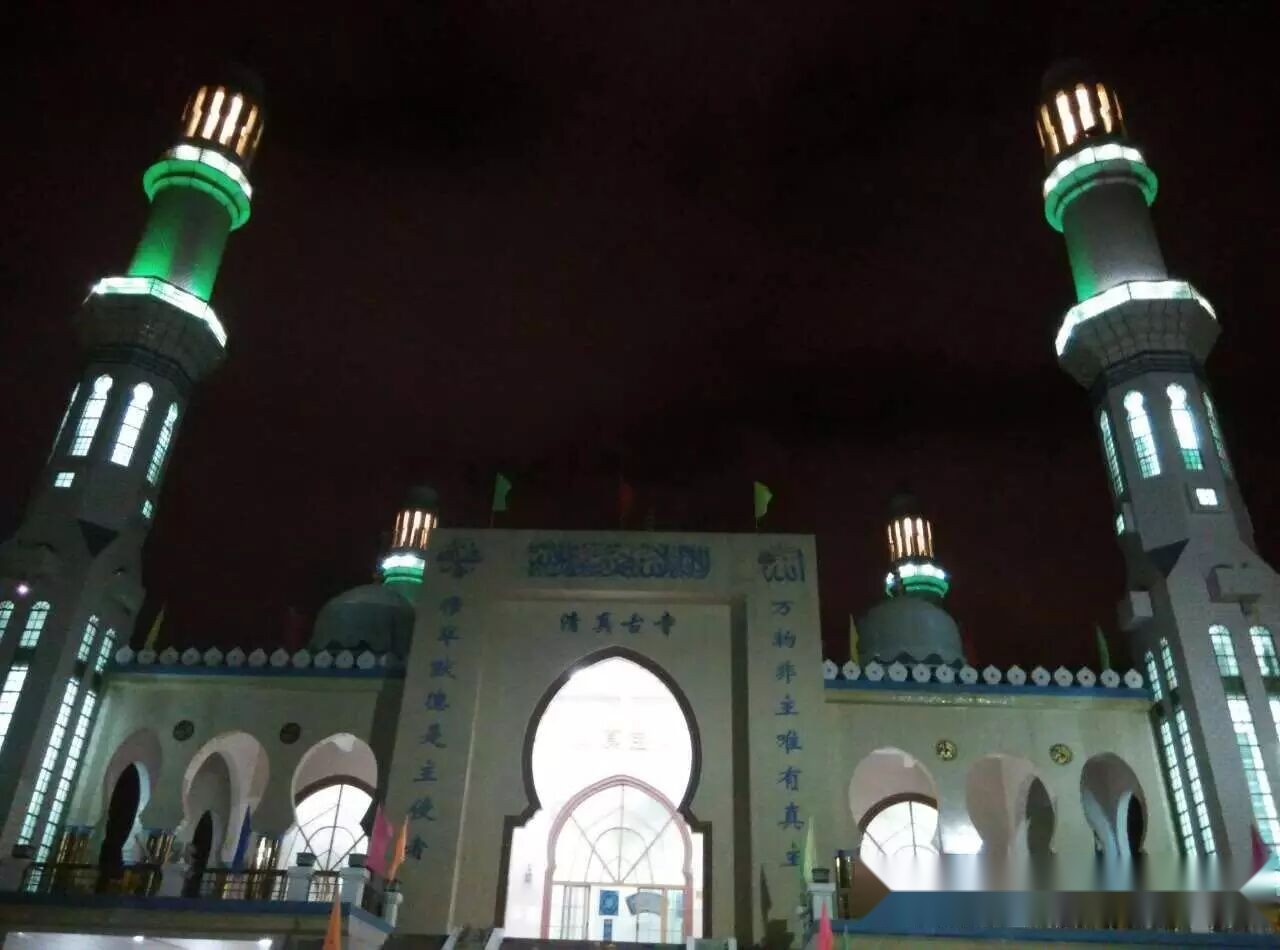
Telling them about my faith,
What the truth of that faith has taught me,
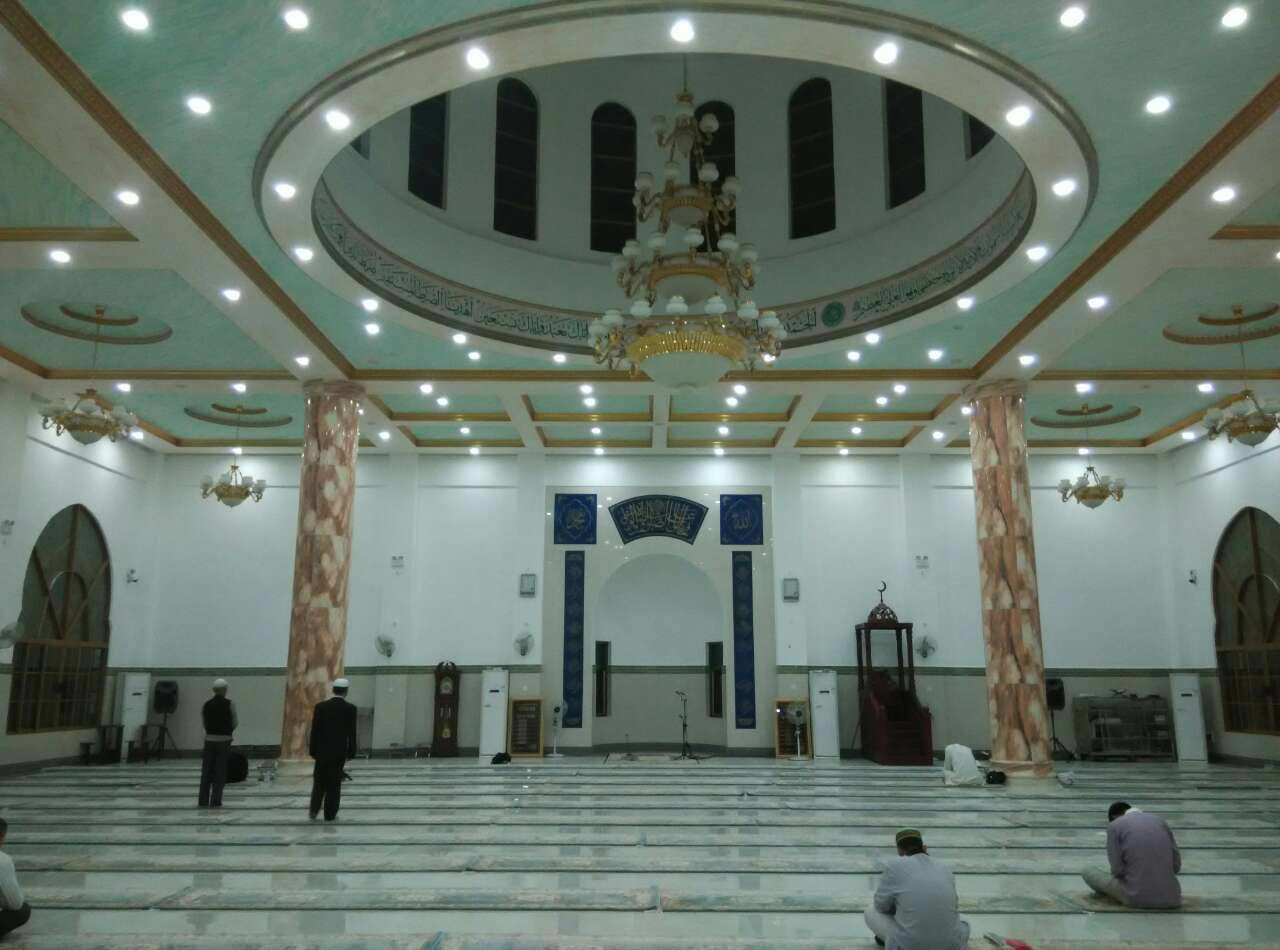
I will tell everyone.
Giving every river and every mountain a warm name: Abdullah—the servant of Allah.
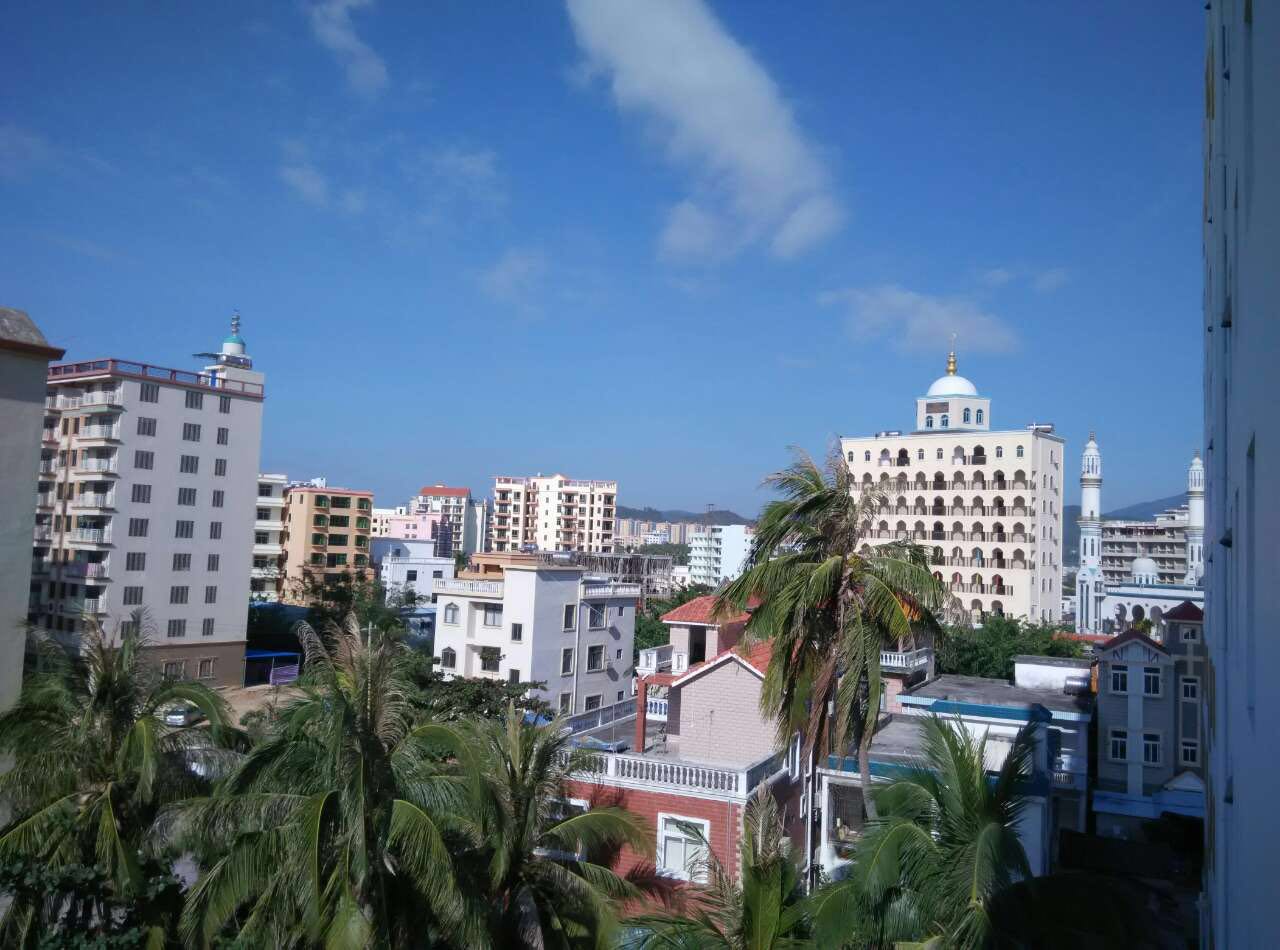
Stranger, I pray for you as well,
May you have a beautiful soul,
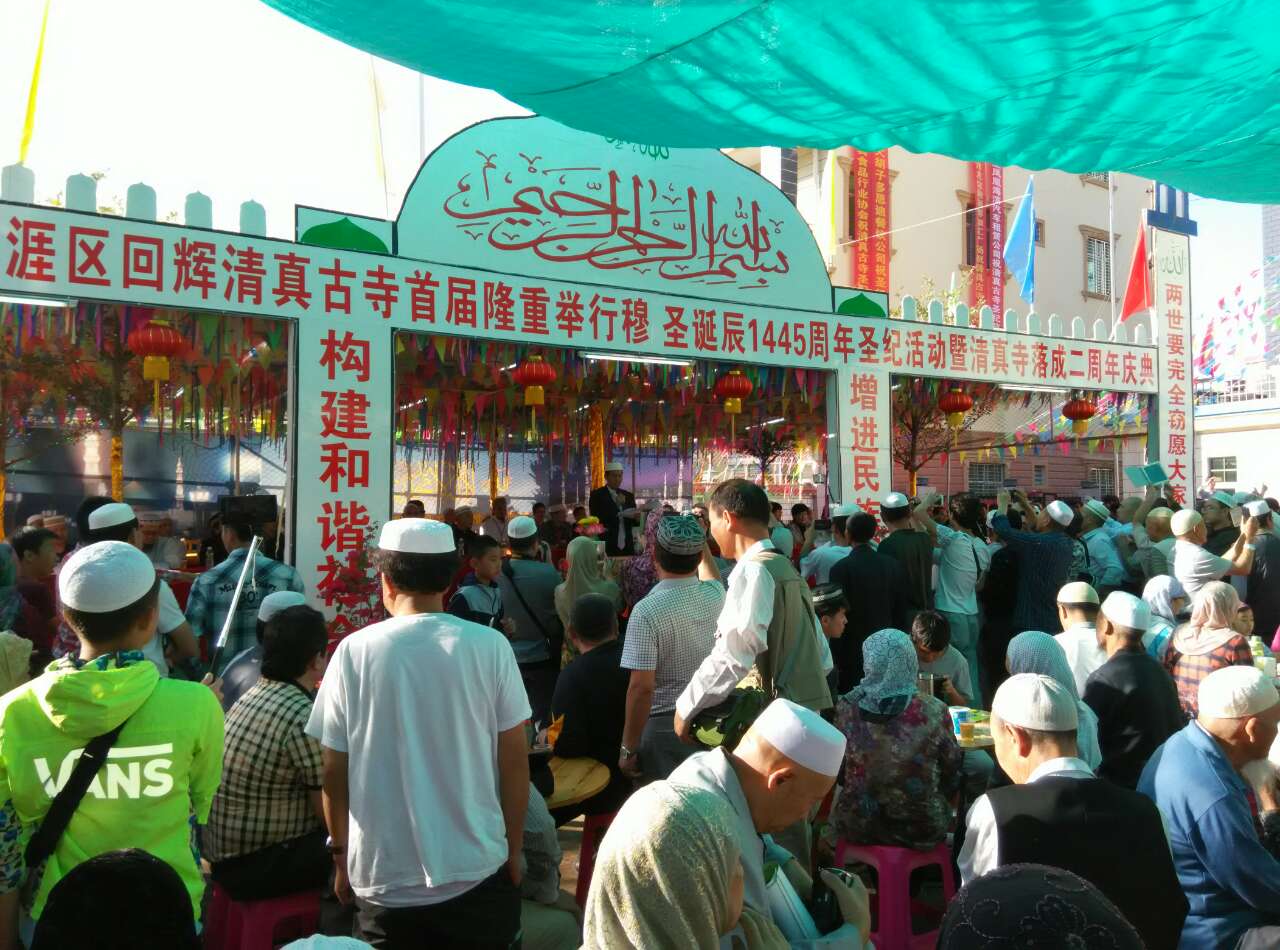
May you be guided to walk upon the straight path,
May you attain happiness in both worlds,
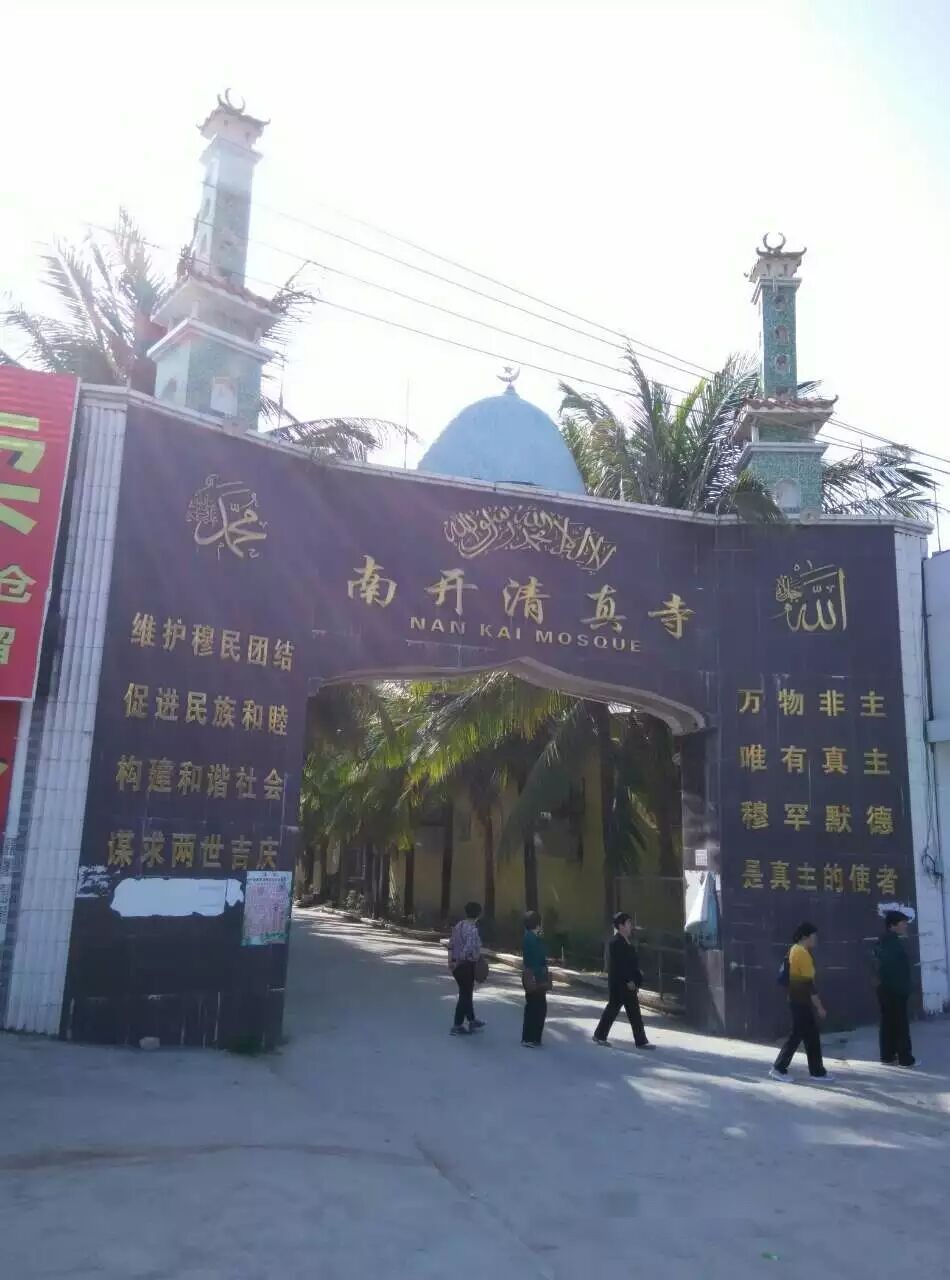
I only wish to face the mosque, where the adhan calls me to prayer: 'Come to success~ Come to success~'
These are the words I adapted from Mr. Haizi's poem as I was leaving Sanya. Because although I live in a city with a large Muslim population, there isn't a mosque near my home; in Sanya, however, it's completely the opposite. Being rather ignorant, I used to think Hainan's Muslims were merely historical passersby in textbooks. It wasn't until a few years ago, when I connected with a Hui Muslim brother from Sanya on Weibo, that I saw through his photos and blog posts that a group of devout Muslims is still active right here at China's southernmost tip. It felt both distant and intimate, and subconsciously, I made a niyyah (personal intention) to go see it for myself. Earlier this year, Allah answered that prayer, and our whole family was blessed to make the journey there.
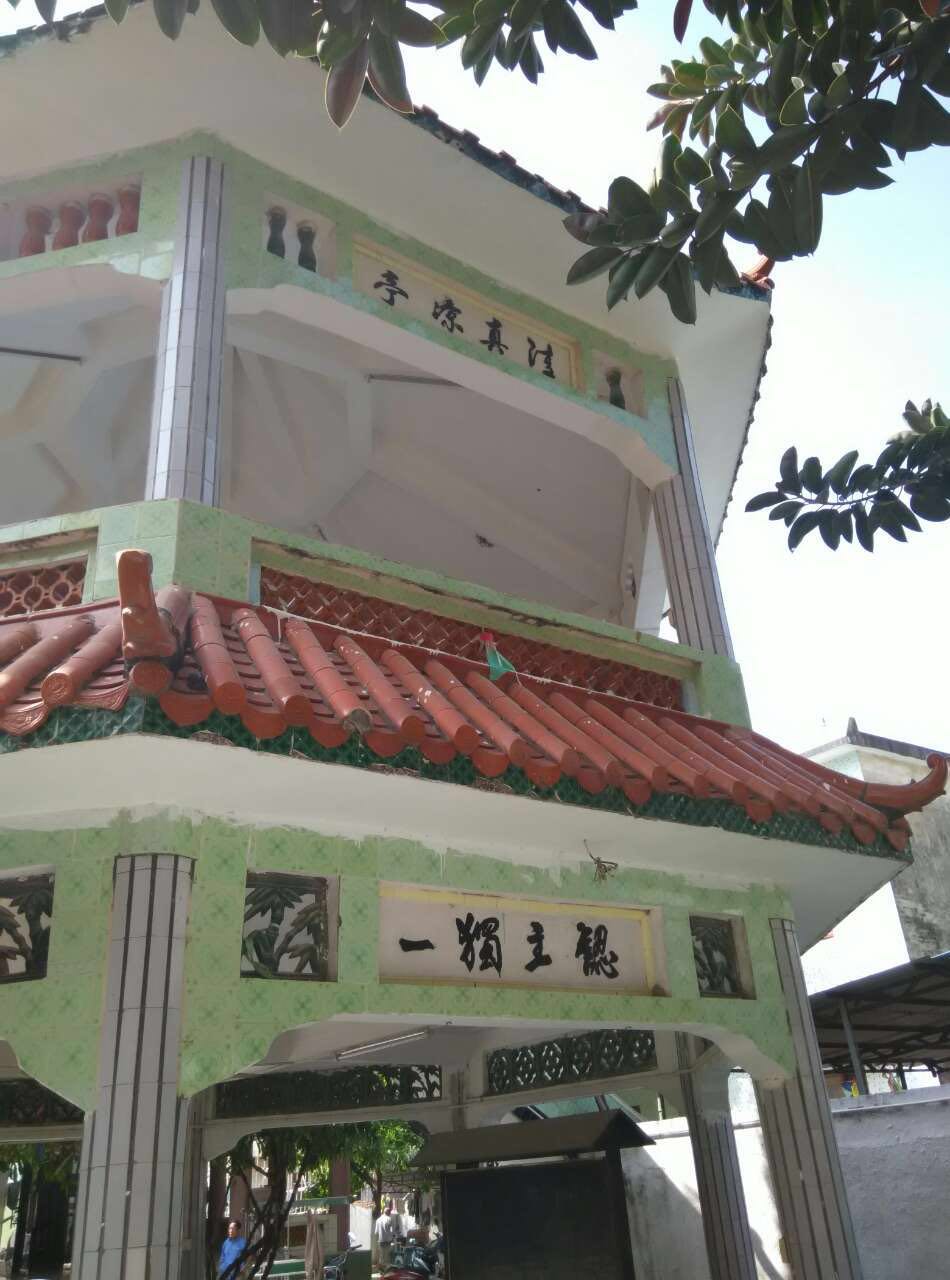
The residential areas of the Sanya Hui Muslims are the two villages of Huihui Village (Huihui Muslim Village) and Huixin Village (Huixin Muslim Village), located just outside the downtown area. As many imams and scholars mentioned during our stay in Sanya: if it weren't for these two villages of our Muslim brothers, so many Muslims from mainland China would never come to Sanya. Even if they came for a vacation, they wouldn't stay in this neighborhood; even if they stayed, they wouldn't stay for months at a time, let alone return year after year.
Let me think about the reasons. First, it solves the dietary issues everyone has to face; second, the presence of six mosques gives the religious life of out-of-town Muslims a settled anchor; and third, that sense of emotional comfort you get when you are surrounded entirely by fellow Muslims.
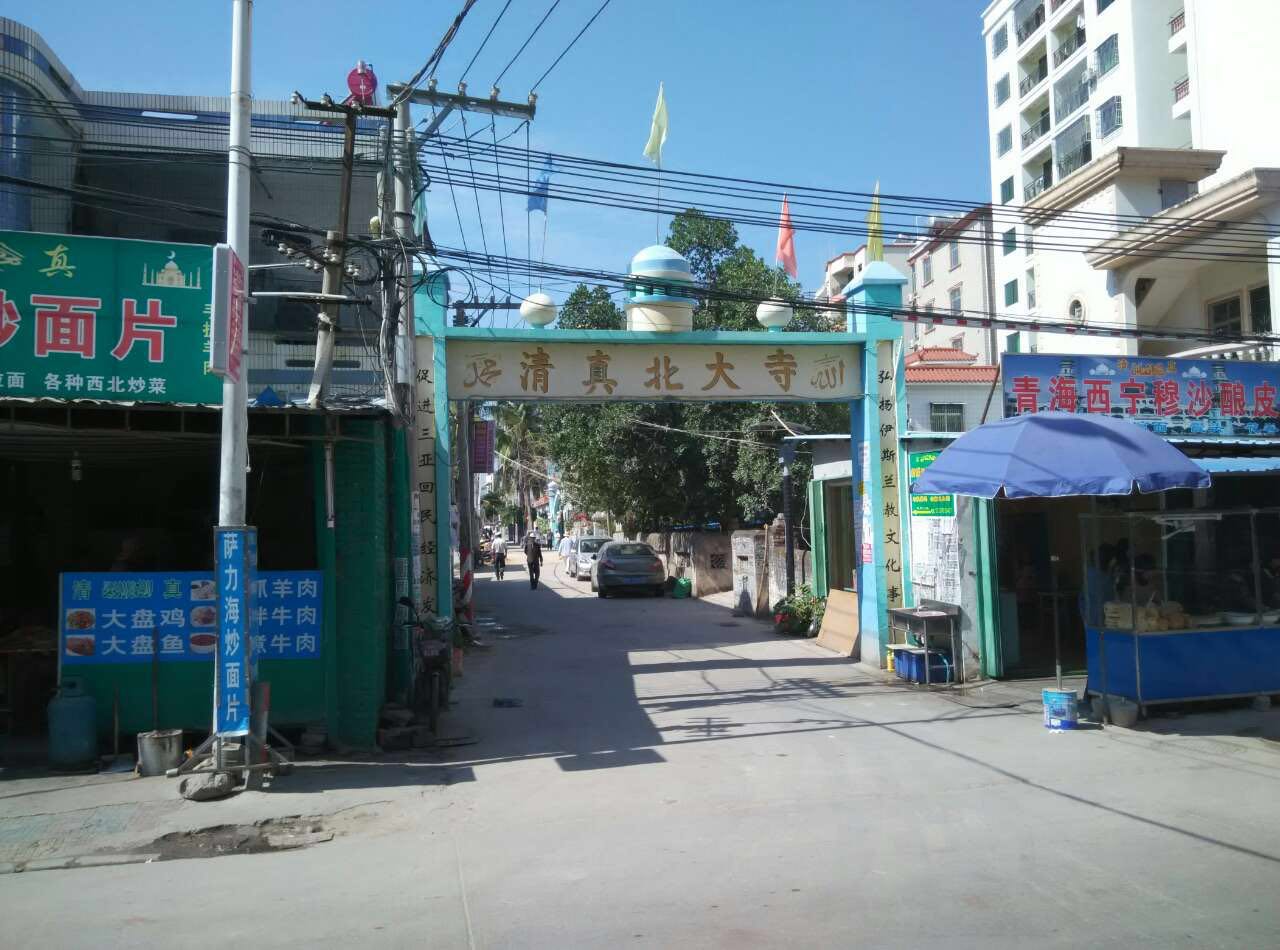
Even though these two villages might have airplane noise, crowing roosters, and quacking ducks, when you can wake up every day to the sound of the adhan, and hear the mosque broadcasting the Quran and salawat (praises upon the Prophet) daily, the former becomes completely negligible. Yes, the melodious adhan, Quranic verses, and praises echoing from the loudspeakers are enough to make Muslims in too many places across the mainland envious. No one will complain that the Fajr prayer disturbs their sweet sleep, and no one will feel that the call to prayer is an annoying noise, because everyone here is a Muslim. You won't feel like wearing a thawb or hijab while walking down the street draws extra looks, and sisters who lack the courage to wear a headscarf back home can wear it here without attracting a single sideways glance, because everyone here is a Muslim. You don't have to worry about which vendor is selling fake Halal food, nor do you need to be afraid that a restaurant with a 'Halal' sign not only sells alcohol but also puts cooking wine and meat of unknown origin into the dishes, because everyone here is a devout Muslim.
Perhaps when you first arrive in Sanya, you might feel unaccustomed to these special brothers and sisters who differ from the stereotypical physical features of 'Hui people' in your mind, who even have their own language, and whose men, women, and children chew betel nut in ways you can't quite understand. I know some people even cast doubt on the level of religious practice of these Sanya Hui Muslims because of this. That's because we've developed too many bad habits on the mainland, where our standard for judging whether someone is a good Muslim stops at how long their beard is, how long their robe is, how long the taqiyah (prayer cap) on their head is, and how long the tasbih (prayer beads) in their hand is. Granted, it's a good thing for someone to have these Islamic sartorial features, but judging a book by its cover is a problem. When you find that the proportion of people going to the mosque for the five daily prayers here is higher than in the Hui community where you live, when you find that women here wear headscarves whether they are going to work, school, or even when they are still infants in arms, when you find that local merchants never shortchange you and will never cheat you, and when you walk down the street and pass by a very elderly but spirited local grandmother—while you walk right past her blankly, that elderly woman takes the initiative to greet you with a less-than-standard Arabic 'As-salamu alaykum'—my mainland compatriots, have you ever reflected for even a moment, or felt a sense of shame?
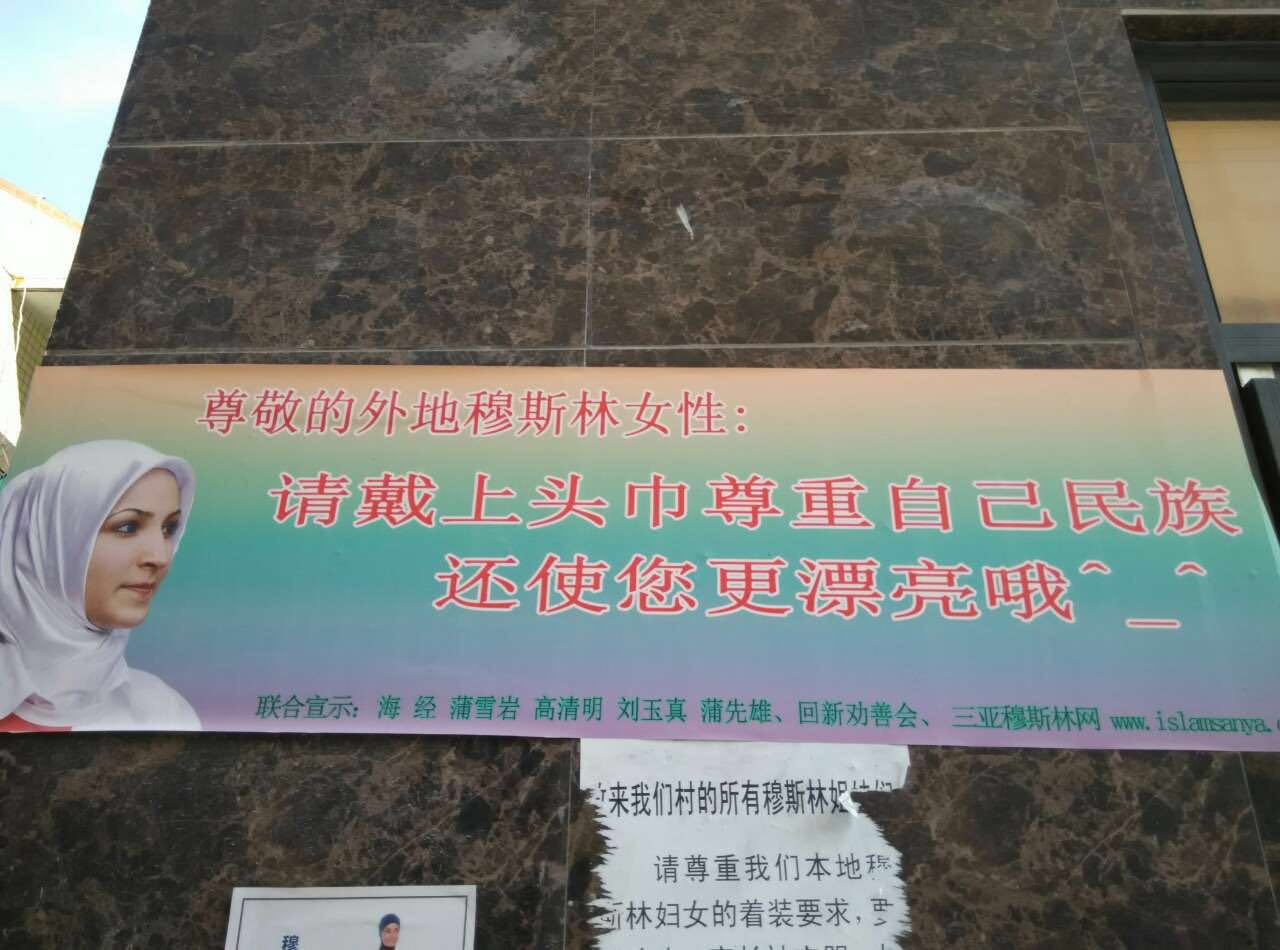
During my stay in Sanya, I happened to witness and participate from start to finish in the Mawlid (Prophet's Birthday celebration) hosted by the Sanya Ancient Mosque, with all the other mosques co-hosting. The relations among the mosques here are exceptionally good—so good that it feels as if they are simply six branch locations of the very same mosque. The Mawlid event is held every year, rotating hosts among the mosques annually to avoid wasting resources and putting a financial burden on the people. By combining everyone's efforts once a year, the event becomes grand and massive through sheer concentration. I also learned that the Eid al-Fitr and Eid al-Adha congregational prayers alternate locations: one year they are held in Huihui, and the next year they must be held in Huixin. Everyone strives for fairness advocated by Islam in all matters and details, and it is precisely because they unremittingly put this into practice that inter-mosque and inter-village conflicts do not arise. The Mawlid here is not just a single day's event; it spans over ten days of various activities leading up to the official Mawlid banquet—such as the easily anticipated speech contests, Quran recitation competitions, and Islamic knowledge quizzes, alongside various sports tournaments that people might not immediately associate with it, including basketball, volleyball, table tennis, and more. Moreover, the competition venues are right in the courtyards behind the main prayer halls, and the matches are fiercely competitive, showcasing the robust physical fitness that local Muslims have developed from swimming in the sea since childhood.
What is truly worth noting is that I saw the imams of several mosques among the spectators and team players! This is unimaginable in some regions of the Northwest, where imams must maintain a very 'stiff and solemn' image. For an imam to participate in such sports activities without being declared un-Islamic would be a miracle—let alone watching or playing a game. I saw the young and promising Imam Li of the Sanya Ancient Mosque fighting hard on the basketball court in his jersey. As soon as the adhan sounded, he rushed back to the mosque to make wudu (ablution), slipped a long robe over his jersey, and devoutly and solemnly led everyone in prayer. These Muslim brothers sweating and laughing heartily on the sports court while praying to Allah with heartfelt devotion in the main hall showed me what normal Muslims truly look like. Muslims are not grim, tight-lipped ascetics rushing forward with lowered heads; a Muslim should be a sunny image full of distinct personality, happiness, and vitality. If your faith cannot even bring you joy, then there is undoubtedly some deviation in your faith.
In the courtyards of the mosques here, people chat and chew betel nut, others lie down on both sides outside the main hall to catch a cool breeze, and children chase and play. Everyone treats the mosque as a place they love, unlike mosques in many other places where people only go during prayer time and bolt the second prayer is over, or places filled with foot odor and backbiting gossip. Here, everyone holds the mosque close to their hearts and loves it. The mosques here don't just belong to the imams and the mosque management committee; every single Muslim feels that 'this is our mosque.' Words are pale and make it sound ordinary, but the actual difference is worlds apart.
In addition, I must mention two people. One is an older brother who invited us to Sanya, helped us find a place to stay, took us to tourist spots, and went out of his way every single day. We felt very embarrassed, but he said, 'Please don't be so polite. We are extremely happy that you could come; we share the relationship of the Muhajirun and the Ansar.' This sentence deeply moved us and made us feel ashamed of our own shortcomings. Although we are far from deserving it, he truly possesses the generous heart and selfless spirit of an Ansar. He is not a man of many words, but he teaches us a lesson through his actions every single day. The another person is one of the first local Hui Muslims who traveled to the Northwest to study Islamic knowledge; he even speaks our local dialect and slang. He said his religious foundation was learned from our region, but every time he visits there, he also sees many things that break his heart. He has seen many young men who just arrived in the city from rural areas go astray, wearing white caps specifically while pickpocketing and stealing. When he saw this, his blood would boil, and after praying to Allah for help, he would step forward to stop the theft, offer the Islamic greeting of peace, and say, 'If you really must steal, take my phone, it's fine; but if you steal from non-Muslims, people will say all Hui people are thieves.' Naturally, those young men wouldn't take his phone, and then he would insist on treating them to a meal, advising them over food to abide by the law, work hard, and build a livelihood through honesty.
A similar incident happened to him on a long-distance bus in the Northwest. Although he successfully stopped a theft that time as well, he was mocked because he doesn't look like a stereotypical Hui Muslim, and the thieves thought he couldn't understand the local dialect. Shamelessly discussing it amongst themselves while acting as pickpockets, they muttered, 'I wonder if this guy is even a real Hui Muslim; he said As-salamu alaykum, but he doesn't look like one at all.' Sigh, as if *they* looked the part?! And there were so many total strangers among the locals who left unforgettable impressions on us. For example, when we first arrived and didn't know how to pick out local fruits, vegetables, or seafood, shoppers standing next to you would take the initiative to help you pick them out and even help you bargain with the vendors. Or once, when we bought a bunch of coconuts to drink at home and realized we didn't have straws, we sent a child downstairs to the supermarket, but they didn't have any. The child saw a nearby drink stall and asked if they sold straws. The stall owner said, 'I don't sell them, but just take however many you need,' and so on. It reminds me of a saying by Hasan al-Basri: 'True humility is when you step outside and feel that every single Muslim you meet is better than you.' In Sanya, in Huihui Village, when I stepped outside, it wasn't a matter of me being humble—truly, every single person *was* better than me!
May Allah help, protect, and bless our Muslim brothers and sisters living far away by the South China Sea. Collapse Read »
Talking About Muslims at the Ends of the Earth: Strolling Along the Sanya Coastline and Reflecting on the Human Touch and Islamic Culture of Huihui and Huixin Muslims
Abstract:
Through a poetic lens, this article chronicles the life philosophy and spiritual world of our Muslim compatriots living at the edge of the world. Set against the backdrop of tropical coconut groves and sandy beaches, it showcases the island Muslims' pious adherence to religious traditions, mutual aid, honesty, integrity, and their profound reflections on Maritime Silk Road history.
"Facing the Sea, Spring Flowers Blooming"
Starting tomorrow, I will be a grateful person,
Worshiping Allah, loving others, and spreading virtue...
Starting tomorrow, I will care for the poor and orphans.
I wish I had a house,
Facing the mosque, listening to the melodic recitation of the Quran.
Starting tomorrow, I will greet everyone with peace,
Telling them about my faith,
What the truth of that faith has taught me,
I will tell everyone.
Giving every river and every mountain a warm name: Abdullah—the servant of Allah.
Stranger, I pray for you as well,
May you have a beautiful soul,
May you be guided to walk upon the straight path,
May you attain happiness in both worlds,
I only wish to face the mosque, where the adhan calls me to prayer: 'Come to success~ Come to success~'
These are the words I adapted from Mr. Haizi's poem as I was leaving Sanya. Because although I live in a city with a large Muslim population, there isn't a mosque near my home; in Sanya, however, it's completely the opposite. Being rather ignorant, I used to think Hainan's Muslims were merely historical passersby in textbooks. It wasn't until a few years ago, when I connected with a Hui Muslim brother from Sanya on Weibo, that I saw through his photos and blog posts that a group of devout Muslims is still active right here at China's southernmost tip. It felt both distant and intimate, and subconsciously, I made a niyyah (personal intention) to go see it for myself. Earlier this year, Allah answered that prayer, and our whole family was blessed to make the journey there.
The residential areas of the Sanya Hui Muslims are the two villages of Huihui Village (Huihui Muslim Village) and Huixin Village (Huixin Muslim Village), located just outside the downtown area. As many imams and scholars mentioned during our stay in Sanya: if it weren't for these two villages of our Muslim brothers, so many Muslims from mainland China would never come to Sanya. Even if they came for a vacation, they wouldn't stay in this neighborhood; even if they stayed, they wouldn't stay for months at a time, let alone return year after year.
Let me think about the reasons. First, it solves the dietary issues everyone has to face; second, the presence of six mosques gives the religious life of out-of-town Muslims a settled anchor; and third, that sense of emotional comfort you get when you are surrounded entirely by fellow Muslims.
Even though these two villages might have airplane noise, crowing roosters, and quacking ducks, when you can wake up every day to the sound of the adhan, and hear the mosque broadcasting the Quran and salawat (praises upon the Prophet) daily, the former becomes completely negligible. Yes, the melodious adhan, Quranic verses, and praises echoing from the loudspeakers are enough to make Muslims in too many places across the mainland envious. No one will complain that the Fajr prayer disturbs their sweet sleep, and no one will feel that the call to prayer is an annoying noise, because everyone here is a Muslim. You won't feel like wearing a thawb or hijab while walking down the street draws extra looks, and sisters who lack the courage to wear a headscarf back home can wear it here without attracting a single sideways glance, because everyone here is a Muslim. You don't have to worry about which vendor is selling fake Halal food, nor do you need to be afraid that a restaurant with a 'Halal' sign not only sells alcohol but also puts cooking wine and meat of unknown origin into the dishes, because everyone here is a devout Muslim.
Perhaps when you first arrive in Sanya, you might feel unaccustomed to these special brothers and sisters who differ from the stereotypical physical features of 'Hui people' in your mind, who even have their own language, and whose men, women, and children chew betel nut in ways you can't quite understand. I know some people even cast doubt on the level of religious practice of these Sanya Hui Muslims because of this. That's because we've developed too many bad habits on the mainland, where our standard for judging whether someone is a good Muslim stops at how long their beard is, how long their robe is, how long the taqiyah (prayer cap) on their head is, and how long the tasbih (prayer beads) in their hand is. Granted, it's a good thing for someone to have these Islamic sartorial features, but judging a book by its cover is a problem. When you find that the proportion of people going to the mosque for the five daily prayers here is higher than in the Hui community where you live, when you find that women here wear headscarves whether they are going to work, school, or even when they are still infants in arms, when you find that local merchants never shortchange you and will never cheat you, and when you walk down the street and pass by a very elderly but spirited local grandmother—while you walk right past her blankly, that elderly woman takes the initiative to greet you with a less-than-standard Arabic 'As-salamu alaykum'—my mainland compatriots, have you ever reflected for even a moment, or felt a sense of shame?
During my stay in Sanya, I happened to witness and participate from start to finish in the Mawlid (Prophet's Birthday celebration) hosted by the Sanya Ancient Mosque, with all the other mosques co-hosting. The relations among the mosques here are exceptionally good—so good that it feels as if they are simply six branch locations of the very same mosque. The Mawlid event is held every year, rotating hosts among the mosques annually to avoid wasting resources and putting a financial burden on the people. By combining everyone's efforts once a year, the event becomes grand and massive through sheer concentration. I also learned that the Eid al-Fitr and Eid al-Adha congregational prayers alternate locations: one year they are held in Huihui, and the next year they must be held in Huixin. Everyone strives for fairness advocated by Islam in all matters and details, and it is precisely because they unremittingly put this into practice that inter-mosque and inter-village conflicts do not arise. The Mawlid here is not just a single day's event; it spans over ten days of various activities leading up to the official Mawlid banquet—such as the easily anticipated speech contests, Quran recitation competitions, and Islamic knowledge quizzes, alongside various sports tournaments that people might not immediately associate with it, including basketball, volleyball, table tennis, and more. Moreover, the competition venues are right in the courtyards behind the main prayer halls, and the matches are fiercely competitive, showcasing the robust physical fitness that local Muslims have developed from swimming in the sea since childhood.
What is truly worth noting is that I saw the imams of several mosques among the spectators and team players! This is unimaginable in some regions of the Northwest, where imams must maintain a very 'stiff and solemn' image. For an imam to participate in such sports activities without being declared un-Islamic would be a miracle—let alone watching or playing a game. I saw the young and promising Imam Li of the Sanya Ancient Mosque fighting hard on the basketball court in his jersey. As soon as the adhan sounded, he rushed back to the mosque to make wudu (ablution), slipped a long robe over his jersey, and devoutly and solemnly led everyone in prayer. These Muslim brothers sweating and laughing heartily on the sports court while praying to Allah with heartfelt devotion in the main hall showed me what normal Muslims truly look like. Muslims are not grim, tight-lipped ascetics rushing forward with lowered heads; a Muslim should be a sunny image full of distinct personality, happiness, and vitality. If your faith cannot even bring you joy, then there is undoubtedly some deviation in your faith.
In the courtyards of the mosques here, people chat and chew betel nut, others lie down on both sides outside the main hall to catch a cool breeze, and children chase and play. Everyone treats the mosque as a place they love, unlike mosques in many other places where people only go during prayer time and bolt the second prayer is over, or places filled with foot odor and backbiting gossip. Here, everyone holds the mosque close to their hearts and loves it. The mosques here don't just belong to the imams and the mosque management committee; every single Muslim feels that 'this is our mosque.' Words are pale and make it sound ordinary, but the actual difference is worlds apart.
In addition, I must mention two people. One is an older brother who invited us to Sanya, helped us find a place to stay, took us to tourist spots, and went out of his way every single day. We felt very embarrassed, but he said, 'Please don't be so polite. We are extremely happy that you could come; we share the relationship of the Muhajirun and the Ansar.' This sentence deeply moved us and made us feel ashamed of our own shortcomings. Although we are far from deserving it, he truly possesses the generous heart and selfless spirit of an Ansar. He is not a man of many words, but he teaches us a lesson through his actions every single day. The another person is one of the first local Hui Muslims who traveled to the Northwest to study Islamic knowledge; he even speaks our local dialect and slang. He said his religious foundation was learned from our region, but every time he visits there, he also sees many things that break his heart. He has seen many young men who just arrived in the city from rural areas go astray, wearing white caps specifically while pickpocketing and stealing. When he saw this, his blood would boil, and after praying to Allah for help, he would step forward to stop the theft, offer the Islamic greeting of peace, and say, 'If you really must steal, take my phone, it's fine; but if you steal from non-Muslims, people will say all Hui people are thieves.' Naturally, those young men wouldn't take his phone, and then he would insist on treating them to a meal, advising them over food to abide by the law, work hard, and build a livelihood through honesty.
A similar incident happened to him on a long-distance bus in the Northwest. Although he successfully stopped a theft that time as well, he was mocked because he doesn't look like a stereotypical Hui Muslim, and the thieves thought he couldn't understand the local dialect. Shamelessly discussing it amongst themselves while acting as pickpockets, they muttered, 'I wonder if this guy is even a real Hui Muslim; he said As-salamu alaykum, but he doesn't look like one at all.' Sigh, as if *they* looked the part?! And there were so many total strangers among the locals who left unforgettable impressions on us. For example, when we first arrived and didn't know how to pick out local fruits, vegetables, or seafood, shoppers standing next to you would take the initiative to help you pick them out and even help you bargain with the vendors. Or once, when we bought a bunch of coconuts to drink at home and realized we didn't have straws, we sent a child downstairs to the supermarket, but they didn't have any. The child saw a nearby drink stall and asked if they sold straws. The stall owner said, 'I don't sell them, but just take however many you need,' and so on. It reminds me of a saying by Hasan al-Basri: 'True humility is when you step outside and feel that every single Muslim you meet is better than you.' In Sanya, in Huihui Village, when I stepped outside, it wasn't a matter of me being humble—truly, every single person *was* better than me!
May Allah help, protect, and bless our Muslim brothers and sisters living far away by the South China Sea. Collapse Read »
Tracing Maritime Silk Road History & Halal Food in Sanya's Utsul Muslim Villages
[Internet Repost]
Tracing the Maritime Silk Road Descendants in Sanya's Tianya District: The Legend of Tang Dynasty Arab and Persian Merchant Ships and the Modern Continuation of Hui Muslim Trading Traditions
Abstract:
An on-the-ground exploration of the ancient Silk Road bloodline flowing through Sanya's Tianya District Hui Muslim communities. Unraveling the historical context of Arab and Persian merchants doing business and settling down in Yazhou during the flourishing Tang Dynasty, and investigating the cultural roots behind why Sanya Hui Muslim women excel at commerce and trade while running industrious households.
A Fascinating Historical Trace: The Lingering Echoes of the Silk Road
Are there Hui Muslims in Sanya? Where did they come from? And why is it always the women running the businesses in Sanya's Hui communities?
In Sanya, Hainan, they are heavily concentrated in two villages within Tianya District: Huihui Village (Huihui Muslim Village) and Huixin Village (Huixin Muslim Village). So how did these Hui Muslim compatriots end up migrating and settling down in Sanya, a city otherwise dominated by Han, Miao, and Li ethnic groups?
First, back in the Tang Dynasty, Hainan Island was a mandatory stop along the maritime spice and silk trade routes. Along the long coastline at the southern tip of Hainan Island, there was already active Muslim presence. At the time, Muslim merchants traveling from Persian and Arab regions into China via the islands—heading toward ports like Guangzhou and Quanzhou—had a portion of their members come ashore and settle in Sanya.
Second, by the Song and Yuan dynasties, Muslims from Vietnam successively migrated to Sanya.
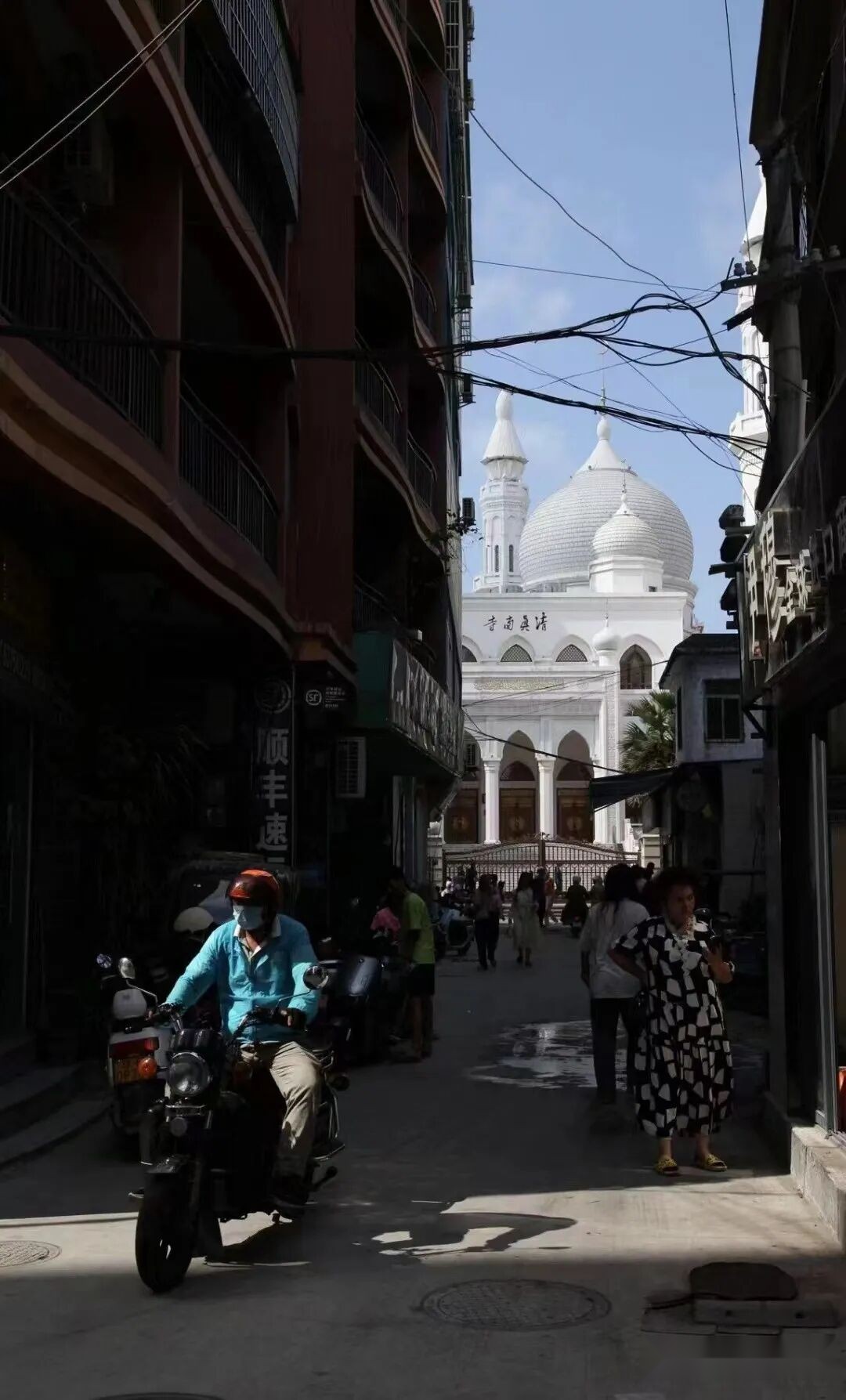
Third, Muslims migrated down from the Chinese mainland and established villages.
Within China's big family of Hui Muslims, the Hainan Hui Muslims are a uniquely distinct sub-group.
In terms of surnames, language, attire, art, and facial features, they differ quite a bit from mainland Hui Muslims. Surnames like Pu and Hai trace their roots back to Persia, while others originate from Arabia. Linguistically, the Sanya Hui dialect is also known as the Huihui language, and it doesn't sound like any other language in China.
Tracing back a millennium, the men used to head out to sea to fish while the women stayed home to manage business. That's how the tradition of Hui Muslim women taking charge and running trade operations was formed and preserved to this day.
Let's recite a poem to set the mood:
Heading all the way south into the distance
Right to the edge of the world at Tianya Haijiao
It's not just about ocean breezes and coconut vibes
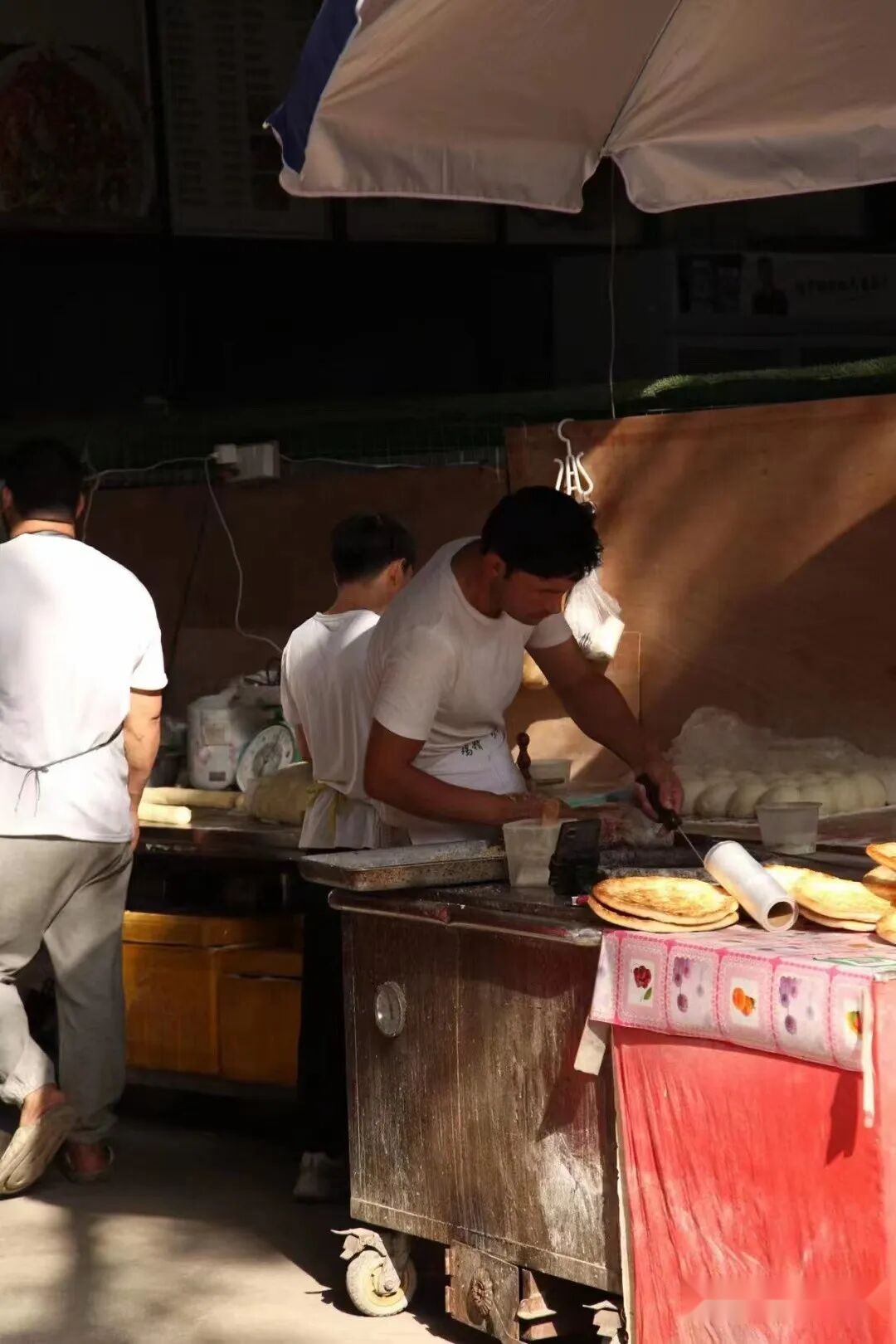
There are also lingering echoes of the Tang Dynasty
As if stepping back onto the Silk Road once again
And experiencing a joyful, surprising reunion with the descendants of Arabs and Persians
Right here
Is Huihui Village and Huixin Village in Sanya's Tianya District...
Photo by Zheng Chunlai (Tea House); Poem by Andre. On the way to Nanshan Mosque
Morning in Sanya
Bustling, lively, and full of energy
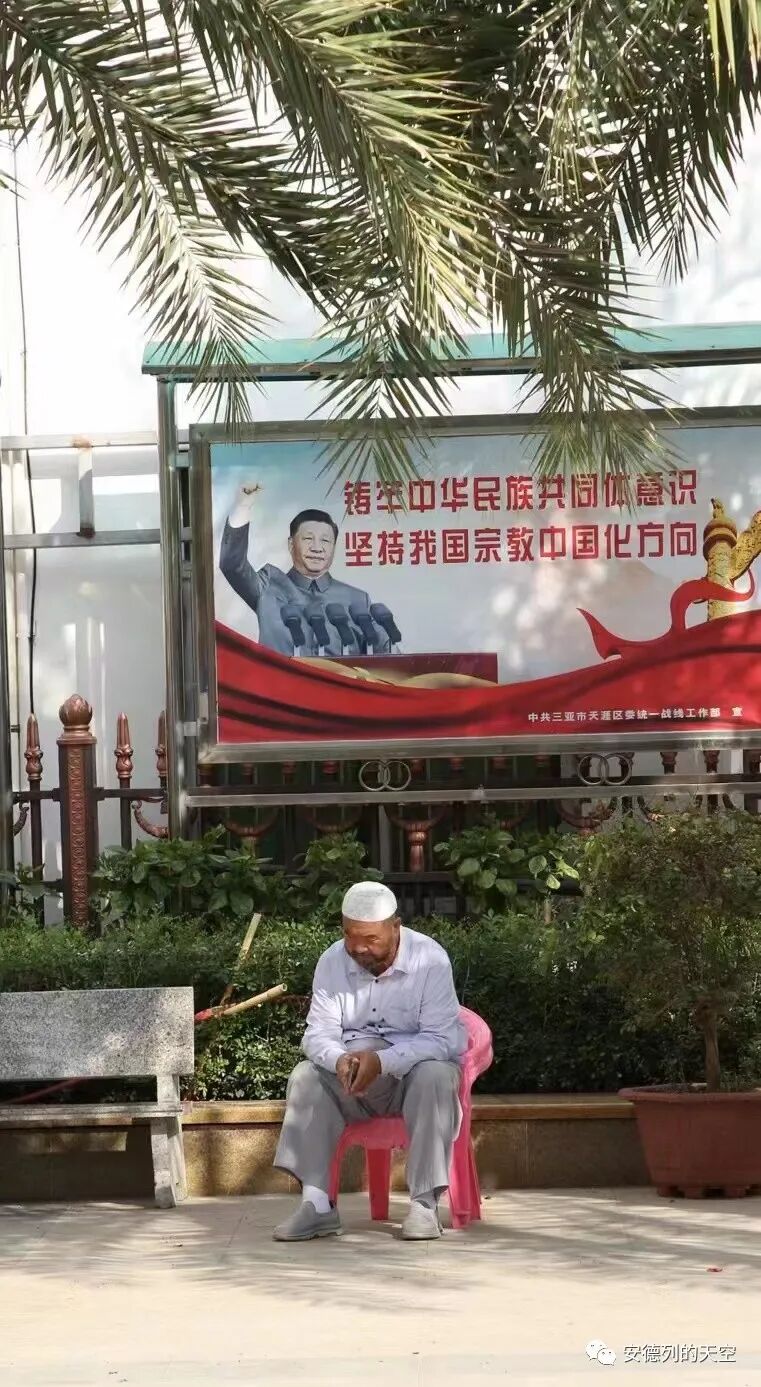
Along the stretch of road leading to Nanshan Mosque
The moment you step in here
The light and shadows shift, time and space transform
It's like walking right into another era
Into another world
With naan flatbreads carrying a subtle hint of coconut flavor
Step onto a certain street in Huihui Village (Huihui Muslim Village) in Sanya's Tianya District,
and it feels like you've suddenly teleported to Xinjiang.
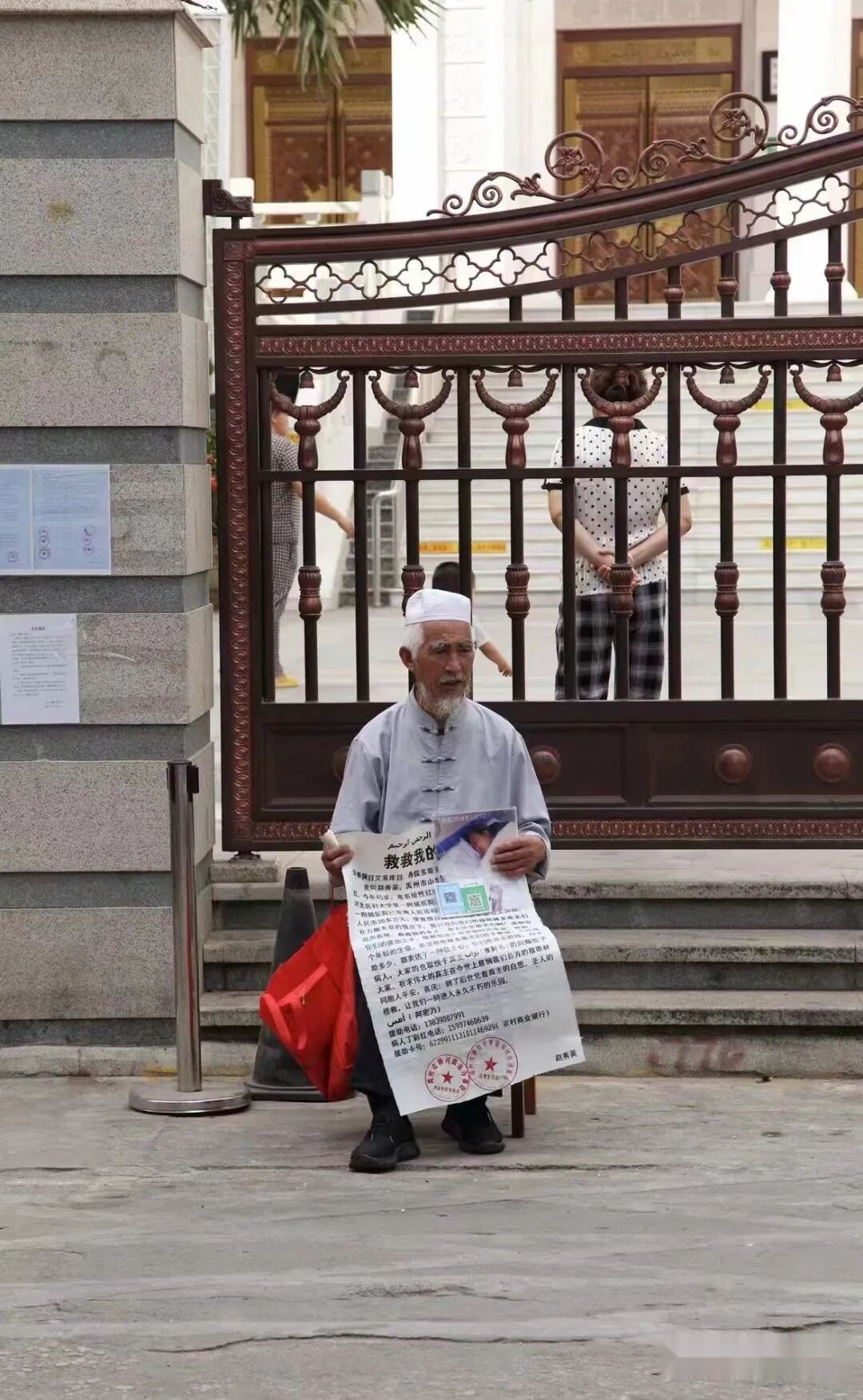
Nang (traditional Xinjiang flatbread) vendors are set up everywhere,
with eye-catching signs and booming businesses,
though they've got their own unique local twist—
these nang are packed with rich, aromatic coconut milk flavor.
Lost in deep contemplation,
with banners and signs right behind him,
he knows these carry profound meaning.
Amidst the ocean breeze and coconut vibes, he sinks into deep personal prayer,
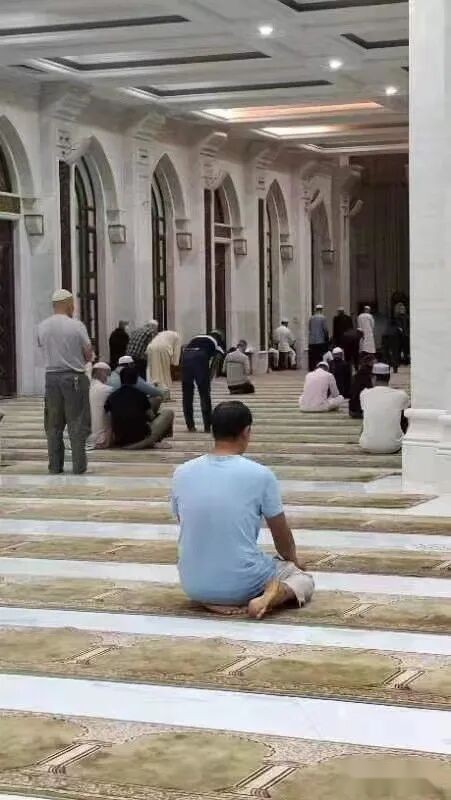
asking his own heart:
Can you hear what Allah is saying?
An elder offering dua,
wearing a white taqiyah cap, with white sideburns and a white beard, looking fresh and full of vitality.
This respected elder sits at the entrance of Nanshan Mosque (Sanya's largest masjid) making dua,
not praying for himself,
but wholeheartedly dedicating his supplications to helping community members going through hard times.
A pious silhouette,
ever since he was a kid,
he heads to the mosque every single day,
performing salah five times a day,
washing up barefoot for ritual purity, overflowing with sincere devotion.
Hui Muslim women run the household economies,
an age-old tradition passed down all the way from the Tang Dynasty Silk Road.
Hui Muslim women hold up more than half the sky here, totally crushing it at business.
This female vendor makes her living selling betel nuts and coconuts,
her deft hands wrapping betel nuts in green leaves.
This Hui Muslim grandma, somewhere in her seventies or eighties, has the sunniest disposition.
Living life at total ease, with a heart full of joy,
when she smiles, her eyes still sparkle with the vibrant energy of a youth.
Never for our age, never for our health
Do we need to worry or stress.
Let me share a little wisdom with you:
Darling, please don't ever fret about tomorrow.
Look at these two dear elderly sisters, taking their sweet time,
Comparing notes on their smartphones,
Carefully picking out a catchy title for their digital photo album.
Setting up a street stall just for the joy of active aging,
They couldn't care less about how much money they make,
Or whether anyone even stops by to buy.
Honestly, they truly don't care at all.
An octogenarian Hui Muslim grandma
Running a little stall purely for the joy of retirement life.
Grandma says:
Alhamdulillah, everything is in Allah's best hands.
Photographer Profile
Zheng Chunlai, Member of the China Workers' Photographers Association
Member of the Shanghai Art Photography Association
Member of the China Senior Photographers Association
Member of the Shanghai Senior Photographers Association
Special Contributor Photographer for Travel World magazine
Former reporter for Labor Daily's "Shanghai Labor Movement"
END
______________________________________________ Collapse Read »
Tracing the Maritime Silk Road Descendants in Sanya's Tianya District: The Legend of Tang Dynasty Arab and Persian Merchant Ships and the Modern Continuation of Hui Muslim Trading Traditions
Abstract:
An on-the-ground exploration of the ancient Silk Road bloodline flowing through Sanya's Tianya District Hui Muslim communities. Unraveling the historical context of Arab and Persian merchants doing business and settling down in Yazhou during the flourishing Tang Dynasty, and investigating the cultural roots behind why Sanya Hui Muslim women excel at commerce and trade while running industrious households.
A Fascinating Historical Trace: The Lingering Echoes of the Silk Road
Are there Hui Muslims in Sanya? Where did they come from? And why is it always the women running the businesses in Sanya's Hui communities?
In Sanya, Hainan, they are heavily concentrated in two villages within Tianya District: Huihui Village (Huihui Muslim Village) and Huixin Village (Huixin Muslim Village). So how did these Hui Muslim compatriots end up migrating and settling down in Sanya, a city otherwise dominated by Han, Miao, and Li ethnic groups?
First, back in the Tang Dynasty, Hainan Island was a mandatory stop along the maritime spice and silk trade routes. Along the long coastline at the southern tip of Hainan Island, there was already active Muslim presence. At the time, Muslim merchants traveling from Persian and Arab regions into China via the islands—heading toward ports like Guangzhou and Quanzhou—had a portion of their members come ashore and settle in Sanya.
Second, by the Song and Yuan dynasties, Muslims from Vietnam successively migrated to Sanya.
Third, Muslims migrated down from the Chinese mainland and established villages.
Within China's big family of Hui Muslims, the Hainan Hui Muslims are a uniquely distinct sub-group.
In terms of surnames, language, attire, art, and facial features, they differ quite a bit from mainland Hui Muslims. Surnames like Pu and Hai trace their roots back to Persia, while others originate from Arabia. Linguistically, the Sanya Hui dialect is also known as the Huihui language, and it doesn't sound like any other language in China.
Tracing back a millennium, the men used to head out to sea to fish while the women stayed home to manage business. That's how the tradition of Hui Muslim women taking charge and running trade operations was formed and preserved to this day.
Let's recite a poem to set the mood:
Heading all the way south into the distance
Right to the edge of the world at Tianya Haijiao
It's not just about ocean breezes and coconut vibes
There are also lingering echoes of the Tang Dynasty
As if stepping back onto the Silk Road once again
And experiencing a joyful, surprising reunion with the descendants of Arabs and Persians
Right here
Is Huihui Village and Huixin Village in Sanya's Tianya District...
Photo by Zheng Chunlai (Tea House); Poem by Andre. On the way to Nanshan Mosque
Morning in Sanya
Bustling, lively, and full of energy
Along the stretch of road leading to Nanshan Mosque
The moment you step in here
The light and shadows shift, time and space transform
It's like walking right into another era
Into another world
With naan flatbreads carrying a subtle hint of coconut flavor
Step onto a certain street in Huihui Village (Huihui Muslim Village) in Sanya's Tianya District,
and it feels like you've suddenly teleported to Xinjiang.
Nang (traditional Xinjiang flatbread) vendors are set up everywhere,
with eye-catching signs and booming businesses,
though they've got their own unique local twist—
these nang are packed with rich, aromatic coconut milk flavor.
Lost in deep contemplation,
with banners and signs right behind him,
he knows these carry profound meaning.
Amidst the ocean breeze and coconut vibes, he sinks into deep personal prayer,
asking his own heart:
Can you hear what Allah is saying?
An elder offering dua,
wearing a white taqiyah cap, with white sideburns and a white beard, looking fresh and full of vitality.
This respected elder sits at the entrance of Nanshan Mosque (Sanya's largest masjid) making dua,
not praying for himself,
but wholeheartedly dedicating his supplications to helping community members going through hard times.
A pious silhouette,
ever since he was a kid,
he heads to the mosque every single day,
performing salah five times a day,
washing up barefoot for ritual purity, overflowing with sincere devotion.
Hui Muslim women run the household economies,
an age-old tradition passed down all the way from the Tang Dynasty Silk Road.
Hui Muslim women hold up more than half the sky here, totally crushing it at business.
This female vendor makes her living selling betel nuts and coconuts,
her deft hands wrapping betel nuts in green leaves.
This Hui Muslim grandma, somewhere in her seventies or eighties, has the sunniest disposition.
Living life at total ease, with a heart full of joy,
when she smiles, her eyes still sparkle with the vibrant energy of a youth.
Never for our age, never for our health
Do we need to worry or stress.
Let me share a little wisdom with you:
Darling, please don't ever fret about tomorrow.
Look at these two dear elderly sisters, taking their sweet time,
Comparing notes on their smartphones,
Carefully picking out a catchy title for their digital photo album.
Setting up a street stall just for the joy of active aging,
They couldn't care less about how much money they make,
Or whether anyone even stops by to buy.
Honestly, they truly don't care at all.
An octogenarian Hui Muslim grandma
Running a little stall purely for the joy of retirement life.
Grandma says:
Alhamdulillah, everything is in Allah's best hands.
Photographer Profile
Zheng Chunlai, Member of the China Workers' Photographers Association
Member of the Shanghai Art Photography Association
Member of the China Senior Photographers Association
Member of the Shanghai Senior Photographers Association
Special Contributor Photographer for Travel World magazine
Former reporter for Labor Daily's "Shanghai Labor Movement"
END
______________________________________________ Collapse Read »
Halal Guangzhou Food Guide: Iconic Hui Restaurants, Dim Sum & Maritime Silk Road Heritage
[Internet Repost]
Exploring Guangzhou's Halal Food Scene: Hui Restaurants, Halal Dim Sum, and the Diverse Flavors of the City of Rams
Abstract:

A detailed guide highlighting the unique Halal culinary map within 'Eating in Guangzhou.' Spanning legendary century-old Hui restaurants, authentic Cantonese Halal dim sum, and premium Halal eateries blending northern and southern flavors, this guide showcases the profound depth of Lingnan's Halal gastronomy.
Image source via Xiaohongshu: Jiu Dang Yi Ben Shu
Let's get down to business—our food journey today brings us to the beautiful metropolis of Guangzhou.
As the millennium-old starting point of the Maritime Silk Road and a renowned 'millennium commercial capital,' Guangzhou blends old-school Lingnan charm in its historic alleys with modern skyscrapers, creating a seamless fusion of past and present. It is one of China's most economically developed and inclusive cities.

Thanks to its time-honored culinary culture, Guangzhou has earned the title 'World City of Gastronomy' certified by UNESCO, living up to the saying, 'Eat in Guangzhou.'
Here, specialty Halal dim sum, authentic Cantonese Halal dishes, and genuine Xinjiang cuisine offer a staggering variety beyond imagination.
You'll never have to stress about what to eat here! There's simply too much good food. Come follow our cafeteria guide to unlock an exclusive feast for your taste buds in Guangzhou~
What's the absolute must-do when you visit Guangzhou? Savoring a leisurely dim sum breakfast, of course! For locals, morning tea is never just a quick meal to fill your stomach—it's a daily morning ritual.
Tucked away in the historic district on Zhongshan 6th Road is Guangzhou's oldest and most iconic Halal spot: Guangzhou Muslim Restaurant (Huimin Restaurant). Established in 1956, it's a quintessential local Halal institution. Unlike the rich, heavy profiles of Northwest Chinese cuisine, the Cantonese style here blends clean, fresh sweetness with Halal cooking techniques. The restaurant still maintains its traditional 'three teas and two meals' operating model, serving both classic Cantonese dim sum and authentic Halal Cantonese dishes.
1. Dim Sum Recommendations
1. Dim Sum Trio Platter (Black Pepper Beef Short Ribs, Lamb Ribs, Chicken Feet)
Image source via Dazhong Dianping
Hit three crowd-pleasers in one go! The must-order steamed chicken feet are the soul of Cantonese dim sum; deep-fried first and then steamed, they're stewed until soft and gelatinous, falling off the bone with a gentle nudge. Ranking right up there with the chicken feet in popularity are the black pepper beef short ribs—completely tender, packed with black pepper aroma, and resting on a bed of taro that soaks up all the rich meat juices, making them creamy and sweet. Paired with tender and flavorful lamb ribs, it's three times the joy in a single platter!
2. Huimin Crystal Shrimp Dumplings (Haixian Jiao)
Image source via Xiaohongshu: Taozi
It's rare to find such authentic texture at a Halal teahouse. Thin, translucent dumpling wrappers encase whole, plump, springy prawns that burst with fresh, sweet juices in every bite.
3. Mixed Veggie Beef Meatballs (Niurou Wan)
Image source via Xiaohongshu: Yan Xi Jie Jie Chao Ai Chi Ya
These handmade beef meatballs are made to order, so expect a slightly longer wait. Hand-beaten fresh beef mixed with crisp vegetables gives them a sweet, crunchy, palate-cleansing, and bouncy texture that completely redefined my view of meatballs!
4. Pan-Fried Radish Cake (Luobo Gao)
Image source via Dazhong Dianping
Another house specialty packed with shredded radish and blended with fish paste, giving it a subtle, delightful crunch.
5. Lamb Char Siu Buns
Image source via Dazhong Dianping
A uniquely creative Halal fusion dish. The dough is pillow-soft, and the filling features savory lamb paired with salted egg yolk, creating a rich flavor profile with a hint of milky aroma and sweetness.
The bustling, vibrant neighborhood dim sum vibe paired with the restaurant's refreshing, palate-cleansing tea makes the experience a solid 10/10, whether you're a first-timer trying dim sum or a seasoned foodie!
An authentic morning tea experience wouldn't be complete without equally delicious main meals, and Guangzhou Muslim Restaurant (Huimin Restaurant) is China's largest Halal Cantonese restaurant.
II. Main Course Recommendations

1. Crispy Roasted Pigeon
Photo source: Dazhong Dianping
Honestly the best pigeon I've ever had. The skin is super crispy, the meat is tender and juicy, and every bite bursts with flavor without feeling dry at all!
2. Signature Stir-Fried Xiaochao Huang (Cantonese Golden Stir-Fry)
Photo source: Xiaohongshu (Saeed's Flavor Journey)
A classic Cantonese staple that captures the elusive wok hei (breath of the wok). Packed with shrimp, squid, and fresh chive flowers, it's got that amazing crunch and a savory, refreshing flavor profile.
3. White-Cut Dongshan Mutton
Photo source: Dazhong Dianping
A total standout! It’s all about keeping things clean, original, and light, served with a signature ginger-scallion dipping sauce that instantly amps up the aroma and flavor. The mutton is super tender, zero gamey smell, totally retaining its natural sweetness. It melts in your mouth and is a total crowd-pleaser for all ages.
4. Garlic-Mashed Duck
Photo source: Xiaohongshu (Naiping Loves to Eat)
The duck meat is firm, sweet, and incredibly tender without being dry. Dressed in a secret savory garlic sauce, it's punchy and packed with flavor. Tossing the leftover sauce with white rice is an absolute game-changer—simple cooking, but insanely addictive the more you eat it.
5. Offal Beef Soup (Niurou Tang / Beef Offal Soup)
Photo source: Dazhong Dianping
A massive bowl packed with generous toppings. The beef offal is super fresh, impeccably cleaned with zero weird funk, and simmered until melt-in-your-mouth tender. The broth is clean, naturally sweet, and savory. You get a subtle hit of white pepper upfront, followed by a lingering sweetness with tons of flavor depth. The pickled white radish in the soup is the ultimate finishing touch—refreshing and crisp, perfectly cutting through the rich, hearty beef offal.
Guangzhou Muslim Restaurant (Huimin Restaurant)
Guangzhou Huimin Restaurant
Where you can grab traditional Cantonese zaocha / yum cha (Cantonese morning tea / dim sum) in the morning and authentic Xinjiang hearties at night. As the official food landmark representing Xinjiang in Guangzhou, Xinjiang Building is a rare Halal gem that seamlessly balances Cantonese and Silk Road Central Asian flavors. Unlike standard neighborhood joints, they skip the over-localization, staying fiercely faithful to Xinjiang's authentic ingredients, techniques, and flavor profiles. It's the ultimate spot to satisfy your morning dim sum cravings while diving into heavy-hitting Xinjiang specialties.
Part I: Morning Dim Sum Recommendations
1. Stir-Fried Rice Noodles with Beef (Gan Chao Niu He)
Photo source: Xiaohongshu (ellipticalgoing)
Finally had a truly authentic plate of Cantonese dry-fried beef ho fun! Packed with wok hei and totally grease-free. The rice noodles are slick and chewy, the beef is tender and packed with flavor, and the portion size is insanely generous. Pro-tip from Junjun: Save the gan chao niu he for the very end, otherwise you'll get stuffed too fast and won't have room for all the incredible dishes coming your way!
2. Pineapple Bun (Boluobao)
Photo source: Xiaohongshu (Sister Yanxi Loves Eating)
At first glance, it looked totally average and I had zero expectations, but one bite completely blew my mind! The crust is baked to a golden crisp that shatters and drops sweet crumbs everywhere, and when you tear it open, it actually oozes with a rich, sweet-and-tangy real pineapple fruit filling! As a northerner, my mind was seriously blown—turns out a real authentic pineapple bun actually has real pineapple inside, taking the texture and flavor game to a whole new level!
3. Southeast Asian-Style Crispy Red Rice Cheung Fun (Steamed Rice Rolls with Shrimp)

Photo source: Xiaohongshu (Sister Yanxi Loves Eating)
An absolute must-order at every single table! Totally different from your average cheung fun (steamed rice rolls), these are wrapped around a golden, crispy net spring roll wrapper in the center, giving it an amazing crispy-on-the-outside, tender-on-the-inside texture. Real talk though: the crispy layer can lean just a tiny bit oily, so if you're not big on deep-fried textures, feel free to order according to your preference.
4. Wonton Tossed Egg Noodles
Photo source: Xiaohongshu (Sister Yanxi Loves Eating)
It's got that classic Cantonese flavor down pat. The noodles have an amazing bounce and chew, staying perfectly springy without clumping together, paired with plump, savory wontons. It's simple, totally authentic, and screams old-school Guangzhou taste!
5. Shredded Chicken Congee with Century Egg
Image source: Xiaohongshu user Yanxi-jiejie-chao-ai-chi-ya
You foodies have definitely heard of Guangzhou's legendary clay pot congee, right? This spot serves up an exclusive Halal version! The rice base is cooked down to a silky, velvety smoothness packed with rich, savory flavor that totally holds its own against traditional clay pot congee. Having a hot bowl first thing in the morning warms up your soul and tastes incredible.
Image source: Xiaohongshu user Yanxi-jiejie-chao-ai-chi-ya
Tea service is 6 RMB per person with options like Tieguanyin, Pu'er, and chrysanthemum. You should definitely try the Xinjiang snow chrysanthemum tea—it pairs amazingly well with the dishes to cut through any richness, plus it's a true Xinjiang specialty.
When lunchtime rolls around, the restaurant completely transforms into a lively slice of Xinjiang culture with a special midday song and dance performance.
Part 2: Lunch & Dinner Recommendations
1. Maimaiti - Charcoal-Grilled Mutton Skewers
Image source: Xiaohongshu user Li-Hao-Niu
The lamb is super tender with zero heavy gamey odor—just pure, fragrant goodness. With the perfect ratio of lean meat to fat, every bite gives you that glorious combo of melting sheep fat and juicy meat.
2. Xinjiang Stir-Fried Rice Noodles

Image source: Xiaohongshu user Li-Hao-Niu
Hailed by many foodies as the absolute best Xinjiang stir-fried rice noodles in Guangzhou! The sauce is super rich and thick, and the noodles have an incredible chew to them. Every single strand is thoroughly coated in that spicy, savory sauce, and the portion size is massive.
3. Hand-Pulled Noodles with Spicy Lapizi Peppers and Meat
Image source: Xiaohongshu user Zhao-Zhao-Bu-Zou
The noodles have an incredible, bouncy chew. The lapizi peppers aren't burn-your-face-off spicy, but totally manageable. Best of all, they are ridiculously generous with the meat portions.
4. Traditional Gangzi Rou (Enamel Mug Mutton Soup)
Image source: Xiaohongshu user Zhao-Zhao-Bu-Zou
Absolute love at first bite! Mutton soup simmered right in a vintage enamel mug, loaded with huge chunks of bone-in mutton. The broth is crystal clear and packed with flavor, and the radishes are simmered down until they're translucent. So good!
5. Artisanal Xinjiang Yogurt
Image source: Xiaohongshu user Gang-Fuhua-de-Yuzi
The ultimate palate cleanser after a heavy meal! It's as thick and rich as cream cheese, topped with a luscious skin of milk and dusted with raisins and honey. It hits that sweet-and-tangy spot just right with a melt-in-your-mouth texture!
Catch the live Xinjiang song and dance performances every single day at lunch and dinner! Gorgeous Xinjiang dancers perform traditional folk dances and even pull guests into the fun—the vibe is insanely joyful. Make sure to book your table in advance because those performance hours get super packed!
Silk Road Banquet - Xinjiang Cuisine
Silk Road Banquet - Western Regions Melody Xinjiang Cuisine (Xinjiang Building Branch)
Guangzhou is seriously such an endlessly inclusive city! So many niche, exotic Halal gems are quietly tucked away in its neighborhoods. Otan Restaurant is an absolute must-try. Push open the doors and you'll instantly feel like you've been dropped straight into the unique romance of Istanbul. Exotic decor details are everywhere you look, and even the air carries a faint, lovely trace of Middle Eastern spices.
1. Lebanese Crunchy Salad
The ultimate starter! Built on a crisp vinaigrette base, it's fresh and palate-cleansing with a super unique textural crunch. The more you eat it, the more you taste that subtle, appetizing tang—the perfect antidote to rich, meaty dishes.
It’s one of their standout signature heavy dishes. The lamb is tender and firmly textured; while the overall vibe is comforting and home-style, the real highlight is the seasoning! The secret Middle Eastern spice blend completely masks any gaminess, building layers of aroma that sink deep into every bite.
3. Mixed Meat Shawarma
Juicy, tender grilled meat paired with crisp, palate-cleansing pickles, all wrapped up in a special signature dipping sauce. The punch of garlic mixes with a fresh, citrusy lemon zing, creating a sweet, sour, salty, and savory flavor bomb with incredible texture and maximum exotic vibes.
Here’s a super helpful tip for first-timers! The cooking style here is totally authentic, meaning a lot of the meats and sauces naturally lean a bit tangy—that’s just how the regional specialty tastes. If you aren't big on sweet-and-sour flavor profiles, just chat with the restaurant manager before ordering and they'll hook you up with recommendations tailored to your taste buds.
Otantik Restaurant
Otantik Restaurant (GZ Tianhe, Tianhe Sports Center Branch)
Otantik Restaurant (GZ Liwan, Liwan Branch)
Otantik Restaurant (GZ Yima, Yima Branch)
I can't believe a place like this exists in Guangzhou! Head straight to Baohan Direct Street near Xiaobei—it's basically Guangzhou's very own "Little Xinjiang." The street isn't super long, just two or three hundred meters, but it's packed with lively Northwest vibes that make you feel like you've teleported to the streets of Xinjiang in a split second! The whole strip is lined with legit Northwest halal street eats. You can wander around and grab whatever looks good—you basically can't go wrong, and every single spot is a total crowd favorite.
Spot #1 Recommendation: Salande Xinjiang Cuisine
1. Diced Meat Shouzhua Fan (Hand-grabbed Rice / Pilaf)
Every single grain of rice is soaked in rich, fragrant mutton fat, paired with sweet, soft carrots, and topped with massive chunks of hearty lamb. One oil-slicked, super-savory bite and you'll be hooked instantly!
2. Dapan Ji (Big Plate Chicken)
The portion size is seriously mind-blowing. The chicken is tender and packed with flavor, and the veggies soak up all that incredible sauce. If you're rolling with a small crew, definitely just order a medium plate, otherwise you'll never finish it!
Salande Xinjiang Cuisine
Salande Xinjiang Halal Cuisine (Xiaobei Flagship Branch)
Spot #2 Recommendation: Malajiu
Ice Cream + Malajiu
This is totally not your average ice cream texture. A massive shoutout to the rose flavor, which has this subtle floral note and a gentle sweetness that isn't cloying at all. The sweet-and-tart, refreshing apricot flavor is super unique, too.
Malajiu Artisanal Ice Cream
Malajiu
Spot #3 Recommendation: Xinjiang Grand Bazaar Food
Shawarma
The freshly baked wrap has this slight, smoky char on the outside and is stuffed to the max with thick slices of grilled meat, fresh veggies, and a drizzle of secret sauce. The texture is amazing, and one of these will fill you right up.
Xinjiang Grand Bazaar Cuisine
Spotlight Spot #4: Laoshandong Mutton Soup
Mutton Soup
Photo source: Xiaohongshu user 'Chaoshan Mei Chuang Guangzhou Baiyun -- Hexiang'
The mutton quality is legit. The broth isn't a heavy milky white, but clear and translucent. The meat is stewed until tender and melt-in-your-mouth, bursting with umami with a sweet aftertaste, completely free of any gamey mutton funk. Pair it with a freshly griddled scallion pancake (congayoubing), crispy and flaky, getting more addictive with every bite. Check online platforms for set meal deals to save some cash.
Laoshandong Mutton Soup
Laoshandong Mutton Soup (Baohan Direct Street Branch)
Spotlight Spot #5: Hezhou Laochao
1. Laochao Paozhang (Handmade Firecracker Noodles)
Photo source: Xiaohongshu user 'Rich Everyday Food Feeder'
Minced mutton topping paired with chewy handmade noodles and glass noodles. The black pepper kick is strong—definitely don't miss this if you love bold, heavy flavors.
2. Dry-Fried Chow Mein
Photo source: Xiaohongshu user 'Rich Everyday Food Feeder'
The whole bowl looks and smells amazing. The dried chilies pack a bit of heat, but totally manageable. Their flavor profile leans heavy across the board. Tossed with fresh garlic chives and sliced meat, it’s savory and deeply flavorful. The noodles are freshly hand-rolled and super chewy.
Hezhou Laochao
Hezhou Laochao (Baohan Direct Street Branch)
Spotlight Spot #6: Salta Dongxiang Hand-Grabbed Restaurant
Shouzhua yangrou (Hand-grabbed lamb)
Photo source: Xiaohongshu user 'Xxuaner~'
If you're craving lamb, make a straight shot for this place! Their signature hand-grabbed lamb is tender, juicy, and seasoned spot-on. Unforgettable on the first bite, and so good you'll want to come back for seconds!
Salta Dongxiang Hand-Grabbed Restaurant
Salta Dongxiang Hand-Grabbed Restaurant (Baohan Direct Street Branch)
Spotlight Spot #7: Yiguang Yunnan Rice Noodles
1. Braised Rice Noodles
Photo source: Dianping user 'Chen Baige'
The chili oil looks fiery red and glossy, but it’s actually fragrant rather than burning hot. The owner is a authentic Yunnan local who has been running this spot for over a decade.
2. Fried Ersi (Yunnan Rice Cakes)
Photo source: Dianping
Fried ersi is a Yunnan classic. The rice cakes are soft, chewy, and bouncy (Q). Stir-fried over roaring high heat, the wok hei (breath of the wok) carries a subtle rice aroma—easily the MVP of the menu!
Yiguang Yunnan Braised Rice Noodles
Spotlight Pick #8: Nang Balang
This is one of the most popular, high-energy spot on the street for freshly baked nang (baked flatbread), where the master baker whips up dough right on the spot and pulls them piping hot straight out of the traditional clay oven. They’ve got a massive flavor lineup: classic plain, sesame, sunflower seed, spicy chili skin (lazi pi), sweet rose, and raisin nang. Straight out of the oven, the crust is deeply charred, flaky, and crispy, while the inside stays soft with a great chew and rich, earthy wheat flavor.
Chicken Leg kao baozi (crispy baked lamb buns / samsas)
Photo source: Dazhong Dianping
The pastry shell is baked to a gorgeous golden crunch, packed with a juicy, tender filling. When you bite into it, the soup just bursts out—honestly way better than the mutton ones (just my personal take!)
Nang Balang
Nang Balang (Xiaobei Branch)
Honestly, every single spot on this street is totally worth checking out. Foodies can just vibe, wander around at their own pace, and pop into whatever catches their eye. Tucked tightly together down here, every little specialty joint is hiding its own signature master dish.
City Notebook
Guangzhou always keeps its arms wide open with this soft, endless embrace, welcoming flavors from every corner of the map while letting its own signature cultural vibe settle deep. Delicate zaocha / yum cha (Cantonese morning tea / dim sum), claypot rice (baozaifan) roaring with wok hei (breath of the wok), sweet and juicy lychees and longans... all these different tastes weave together seamlessly. Guangzhou holds a thousand-year-old heritage that keeps flowing, from the Legend of the Five Rams to its year-round greenery. It’s buzzing with endless life and total, vibrant energy.
Given our length limits, there's still way too much good food we couldn't squeeze in. The rest of the food adventure is totally up to you guys—drop your personal hidden-gem spots in the comments! Collapse Read »
Exploring Guangzhou's Halal Food Scene: Hui Restaurants, Halal Dim Sum, and the Diverse Flavors of the City of Rams
Abstract:
A detailed guide highlighting the unique Halal culinary map within 'Eating in Guangzhou.' Spanning legendary century-old Hui restaurants, authentic Cantonese Halal dim sum, and premium Halal eateries blending northern and southern flavors, this guide showcases the profound depth of Lingnan's Halal gastronomy.
Image source via Xiaohongshu: Jiu Dang Yi Ben Shu
Let's get down to business—our food journey today brings us to the beautiful metropolis of Guangzhou.
As the millennium-old starting point of the Maritime Silk Road and a renowned 'millennium commercial capital,' Guangzhou blends old-school Lingnan charm in its historic alleys with modern skyscrapers, creating a seamless fusion of past and present. It is one of China's most economically developed and inclusive cities.
Thanks to its time-honored culinary culture, Guangzhou has earned the title 'World City of Gastronomy' certified by UNESCO, living up to the saying, 'Eat in Guangzhou.'
Here, specialty Halal dim sum, authentic Cantonese Halal dishes, and genuine Xinjiang cuisine offer a staggering variety beyond imagination.
You'll never have to stress about what to eat here! There's simply too much good food. Come follow our cafeteria guide to unlock an exclusive feast for your taste buds in Guangzhou~
What's the absolute must-do when you visit Guangzhou? Savoring a leisurely dim sum breakfast, of course! For locals, morning tea is never just a quick meal to fill your stomach—it's a daily morning ritual.
Tucked away in the historic district on Zhongshan 6th Road is Guangzhou's oldest and most iconic Halal spot: Guangzhou Muslim Restaurant (Huimin Restaurant). Established in 1956, it's a quintessential local Halal institution. Unlike the rich, heavy profiles of Northwest Chinese cuisine, the Cantonese style here blends clean, fresh sweetness with Halal cooking techniques. The restaurant still maintains its traditional 'three teas and two meals' operating model, serving both classic Cantonese dim sum and authentic Halal Cantonese dishes.
1. Dim Sum Recommendations
1. Dim Sum Trio Platter (Black Pepper Beef Short Ribs, Lamb Ribs, Chicken Feet)
Image source via Dazhong Dianping
Hit three crowd-pleasers in one go! The must-order steamed chicken feet are the soul of Cantonese dim sum; deep-fried first and then steamed, they're stewed until soft and gelatinous, falling off the bone with a gentle nudge. Ranking right up there with the chicken feet in popularity are the black pepper beef short ribs—completely tender, packed with black pepper aroma, and resting on a bed of taro that soaks up all the rich meat juices, making them creamy and sweet. Paired with tender and flavorful lamb ribs, it's three times the joy in a single platter!
2. Huimin Crystal Shrimp Dumplings (Haixian Jiao)
Image source via Xiaohongshu: Taozi
It's rare to find such authentic texture at a Halal teahouse. Thin, translucent dumpling wrappers encase whole, plump, springy prawns that burst with fresh, sweet juices in every bite.
3. Mixed Veggie Beef Meatballs (Niurou Wan)
Image source via Xiaohongshu: Yan Xi Jie Jie Chao Ai Chi Ya
These handmade beef meatballs are made to order, so expect a slightly longer wait. Hand-beaten fresh beef mixed with crisp vegetables gives them a sweet, crunchy, palate-cleansing, and bouncy texture that completely redefined my view of meatballs!
4. Pan-Fried Radish Cake (Luobo Gao)
Image source via Dazhong Dianping
Another house specialty packed with shredded radish and blended with fish paste, giving it a subtle, delightful crunch.
5. Lamb Char Siu Buns
Image source via Dazhong Dianping
A uniquely creative Halal fusion dish. The dough is pillow-soft, and the filling features savory lamb paired with salted egg yolk, creating a rich flavor profile with a hint of milky aroma and sweetness.
The bustling, vibrant neighborhood dim sum vibe paired with the restaurant's refreshing, palate-cleansing tea makes the experience a solid 10/10, whether you're a first-timer trying dim sum or a seasoned foodie!
An authentic morning tea experience wouldn't be complete without equally delicious main meals, and Guangzhou Muslim Restaurant (Huimin Restaurant) is China's largest Halal Cantonese restaurant.
II. Main Course Recommendations
1. Crispy Roasted Pigeon
Photo source: Dazhong Dianping
Honestly the best pigeon I've ever had. The skin is super crispy, the meat is tender and juicy, and every bite bursts with flavor without feeling dry at all!
2. Signature Stir-Fried Xiaochao Huang (Cantonese Golden Stir-Fry)
Photo source: Xiaohongshu (Saeed's Flavor Journey)
A classic Cantonese staple that captures the elusive wok hei (breath of the wok). Packed with shrimp, squid, and fresh chive flowers, it's got that amazing crunch and a savory, refreshing flavor profile.
3. White-Cut Dongshan Mutton
Photo source: Dazhong Dianping
A total standout! It’s all about keeping things clean, original, and light, served with a signature ginger-scallion dipping sauce that instantly amps up the aroma and flavor. The mutton is super tender, zero gamey smell, totally retaining its natural sweetness. It melts in your mouth and is a total crowd-pleaser for all ages.
4. Garlic-Mashed Duck
Photo source: Xiaohongshu (Naiping Loves to Eat)
The duck meat is firm, sweet, and incredibly tender without being dry. Dressed in a secret savory garlic sauce, it's punchy and packed with flavor. Tossing the leftover sauce with white rice is an absolute game-changer—simple cooking, but insanely addictive the more you eat it.
5. Offal Beef Soup (Niurou Tang / Beef Offal Soup)
Photo source: Dazhong Dianping
A massive bowl packed with generous toppings. The beef offal is super fresh, impeccably cleaned with zero weird funk, and simmered until melt-in-your-mouth tender. The broth is clean, naturally sweet, and savory. You get a subtle hit of white pepper upfront, followed by a lingering sweetness with tons of flavor depth. The pickled white radish in the soup is the ultimate finishing touch—refreshing and crisp, perfectly cutting through the rich, hearty beef offal.
Guangzhou Muslim Restaurant (Huimin Restaurant)
Guangzhou Huimin Restaurant
Where you can grab traditional Cantonese zaocha / yum cha (Cantonese morning tea / dim sum) in the morning and authentic Xinjiang hearties at night. As the official food landmark representing Xinjiang in Guangzhou, Xinjiang Building is a rare Halal gem that seamlessly balances Cantonese and Silk Road Central Asian flavors. Unlike standard neighborhood joints, they skip the over-localization, staying fiercely faithful to Xinjiang's authentic ingredients, techniques, and flavor profiles. It's the ultimate spot to satisfy your morning dim sum cravings while diving into heavy-hitting Xinjiang specialties.
Part I: Morning Dim Sum Recommendations
1. Stir-Fried Rice Noodles with Beef (Gan Chao Niu He)
Photo source: Xiaohongshu (ellipticalgoing)
Finally had a truly authentic plate of Cantonese dry-fried beef ho fun! Packed with wok hei and totally grease-free. The rice noodles are slick and chewy, the beef is tender and packed with flavor, and the portion size is insanely generous. Pro-tip from Junjun: Save the gan chao niu he for the very end, otherwise you'll get stuffed too fast and won't have room for all the incredible dishes coming your way!
2. Pineapple Bun (Boluobao)
Photo source: Xiaohongshu (Sister Yanxi Loves Eating)
At first glance, it looked totally average and I had zero expectations, but one bite completely blew my mind! The crust is baked to a golden crisp that shatters and drops sweet crumbs everywhere, and when you tear it open, it actually oozes with a rich, sweet-and-tangy real pineapple fruit filling! As a northerner, my mind was seriously blown—turns out a real authentic pineapple bun actually has real pineapple inside, taking the texture and flavor game to a whole new level!
3. Southeast Asian-Style Crispy Red Rice Cheung Fun (Steamed Rice Rolls with Shrimp)
Photo source: Xiaohongshu (Sister Yanxi Loves Eating)
An absolute must-order at every single table! Totally different from your average cheung fun (steamed rice rolls), these are wrapped around a golden, crispy net spring roll wrapper in the center, giving it an amazing crispy-on-the-outside, tender-on-the-inside texture. Real talk though: the crispy layer can lean just a tiny bit oily, so if you're not big on deep-fried textures, feel free to order according to your preference.
4. Wonton Tossed Egg Noodles
Photo source: Xiaohongshu (Sister Yanxi Loves Eating)
It's got that classic Cantonese flavor down pat. The noodles have an amazing bounce and chew, staying perfectly springy without clumping together, paired with plump, savory wontons. It's simple, totally authentic, and screams old-school Guangzhou taste!
5. Shredded Chicken Congee with Century Egg
Image source: Xiaohongshu user Yanxi-jiejie-chao-ai-chi-ya
You foodies have definitely heard of Guangzhou's legendary clay pot congee, right? This spot serves up an exclusive Halal version! The rice base is cooked down to a silky, velvety smoothness packed with rich, savory flavor that totally holds its own against traditional clay pot congee. Having a hot bowl first thing in the morning warms up your soul and tastes incredible.
Image source: Xiaohongshu user Yanxi-jiejie-chao-ai-chi-ya
Tea service is 6 RMB per person with options like Tieguanyin, Pu'er, and chrysanthemum. You should definitely try the Xinjiang snow chrysanthemum tea—it pairs amazingly well with the dishes to cut through any richness, plus it's a true Xinjiang specialty.
When lunchtime rolls around, the restaurant completely transforms into a lively slice of Xinjiang culture with a special midday song and dance performance.
Part 2: Lunch & Dinner Recommendations
1. Maimaiti - Charcoal-Grilled Mutton Skewers
Image source: Xiaohongshu user Li-Hao-Niu
The lamb is super tender with zero heavy gamey odor—just pure, fragrant goodness. With the perfect ratio of lean meat to fat, every bite gives you that glorious combo of melting sheep fat and juicy meat.
2. Xinjiang Stir-Fried Rice Noodles
Image source: Xiaohongshu user Li-Hao-Niu
Hailed by many foodies as the absolute best Xinjiang stir-fried rice noodles in Guangzhou! The sauce is super rich and thick, and the noodles have an incredible chew to them. Every single strand is thoroughly coated in that spicy, savory sauce, and the portion size is massive.
3. Hand-Pulled Noodles with Spicy Lapizi Peppers and Meat
Image source: Xiaohongshu user Zhao-Zhao-Bu-Zou
The noodles have an incredible, bouncy chew. The lapizi peppers aren't burn-your-face-off spicy, but totally manageable. Best of all, they are ridiculously generous with the meat portions.
4. Traditional Gangzi Rou (Enamel Mug Mutton Soup)
Image source: Xiaohongshu user Zhao-Zhao-Bu-Zou
Absolute love at first bite! Mutton soup simmered right in a vintage enamel mug, loaded with huge chunks of bone-in mutton. The broth is crystal clear and packed with flavor, and the radishes are simmered down until they're translucent. So good!
5. Artisanal Xinjiang Yogurt
Image source: Xiaohongshu user Gang-Fuhua-de-Yuzi
The ultimate palate cleanser after a heavy meal! It's as thick and rich as cream cheese, topped with a luscious skin of milk and dusted with raisins and honey. It hits that sweet-and-tangy spot just right with a melt-in-your-mouth texture!
Catch the live Xinjiang song and dance performances every single day at lunch and dinner! Gorgeous Xinjiang dancers perform traditional folk dances and even pull guests into the fun—the vibe is insanely joyful. Make sure to book your table in advance because those performance hours get super packed!
Silk Road Banquet - Xinjiang Cuisine
Silk Road Banquet - Western Regions Melody Xinjiang Cuisine (Xinjiang Building Branch)
Guangzhou is seriously such an endlessly inclusive city! So many niche, exotic Halal gems are quietly tucked away in its neighborhoods. Otan Restaurant is an absolute must-try. Push open the doors and you'll instantly feel like you've been dropped straight into the unique romance of Istanbul. Exotic decor details are everywhere you look, and even the air carries a faint, lovely trace of Middle Eastern spices.
1. Lebanese Crunchy Salad
The ultimate starter! Built on a crisp vinaigrette base, it's fresh and palate-cleansing with a super unique textural crunch. The more you eat it, the more you taste that subtle, appetizing tang—the perfect antidote to rich, meaty dishes.
It’s one of their standout signature heavy dishes. The lamb is tender and firmly textured; while the overall vibe is comforting and home-style, the real highlight is the seasoning! The secret Middle Eastern spice blend completely masks any gaminess, building layers of aroma that sink deep into every bite.
3. Mixed Meat Shawarma
Juicy, tender grilled meat paired with crisp, palate-cleansing pickles, all wrapped up in a special signature dipping sauce. The punch of garlic mixes with a fresh, citrusy lemon zing, creating a sweet, sour, salty, and savory flavor bomb with incredible texture and maximum exotic vibes.
Here’s a super helpful tip for first-timers! The cooking style here is totally authentic, meaning a lot of the meats and sauces naturally lean a bit tangy—that’s just how the regional specialty tastes. If you aren't big on sweet-and-sour flavor profiles, just chat with the restaurant manager before ordering and they'll hook you up with recommendations tailored to your taste buds.
Otantik Restaurant
Otantik Restaurant (GZ Tianhe, Tianhe Sports Center Branch)
Otantik Restaurant (GZ Liwan, Liwan Branch)
Otantik Restaurant (GZ Yima, Yima Branch)
I can't believe a place like this exists in Guangzhou! Head straight to Baohan Direct Street near Xiaobei—it's basically Guangzhou's very own "Little Xinjiang." The street isn't super long, just two or three hundred meters, but it's packed with lively Northwest vibes that make you feel like you've teleported to the streets of Xinjiang in a split second! The whole strip is lined with legit Northwest halal street eats. You can wander around and grab whatever looks good—you basically can't go wrong, and every single spot is a total crowd favorite.
Spot #1 Recommendation: Salande Xinjiang Cuisine
1. Diced Meat Shouzhua Fan (Hand-grabbed Rice / Pilaf)
Every single grain of rice is soaked in rich, fragrant mutton fat, paired with sweet, soft carrots, and topped with massive chunks of hearty lamb. One oil-slicked, super-savory bite and you'll be hooked instantly!
2. Dapan Ji (Big Plate Chicken)
The portion size is seriously mind-blowing. The chicken is tender and packed with flavor, and the veggies soak up all that incredible sauce. If you're rolling with a small crew, definitely just order a medium plate, otherwise you'll never finish it!
Salande Xinjiang Cuisine
Salande Xinjiang Halal Cuisine (Xiaobei Flagship Branch)
Spot #2 Recommendation: Malajiu
Ice Cream + Malajiu
This is totally not your average ice cream texture. A massive shoutout to the rose flavor, which has this subtle floral note and a gentle sweetness that isn't cloying at all. The sweet-and-tart, refreshing apricot flavor is super unique, too.
Malajiu Artisanal Ice Cream
Malajiu
Spot #3 Recommendation: Xinjiang Grand Bazaar Food
Shawarma
The freshly baked wrap has this slight, smoky char on the outside and is stuffed to the max with thick slices of grilled meat, fresh veggies, and a drizzle of secret sauce. The texture is amazing, and one of these will fill you right up.
Xinjiang Grand Bazaar Cuisine
Spotlight Spot #4: Laoshandong Mutton Soup
Mutton Soup
Photo source: Xiaohongshu user 'Chaoshan Mei Chuang Guangzhou Baiyun -- Hexiang'
The mutton quality is legit. The broth isn't a heavy milky white, but clear and translucent. The meat is stewed until tender and melt-in-your-mouth, bursting with umami with a sweet aftertaste, completely free of any gamey mutton funk. Pair it with a freshly griddled scallion pancake (congayoubing), crispy and flaky, getting more addictive with every bite. Check online platforms for set meal deals to save some cash.
Laoshandong Mutton Soup
Laoshandong Mutton Soup (Baohan Direct Street Branch)
Spotlight Spot #5: Hezhou Laochao
1. Laochao Paozhang (Handmade Firecracker Noodles)
Photo source: Xiaohongshu user 'Rich Everyday Food Feeder'
Minced mutton topping paired with chewy handmade noodles and glass noodles. The black pepper kick is strong—definitely don't miss this if you love bold, heavy flavors.
2. Dry-Fried Chow Mein
Photo source: Xiaohongshu user 'Rich Everyday Food Feeder'
The whole bowl looks and smells amazing. The dried chilies pack a bit of heat, but totally manageable. Their flavor profile leans heavy across the board. Tossed with fresh garlic chives and sliced meat, it’s savory and deeply flavorful. The noodles are freshly hand-rolled and super chewy.
Hezhou Laochao
Hezhou Laochao (Baohan Direct Street Branch)
Spotlight Spot #6: Salta Dongxiang Hand-Grabbed Restaurant
Shouzhua yangrou (Hand-grabbed lamb)
Photo source: Xiaohongshu user 'Xxuaner~'
If you're craving lamb, make a straight shot for this place! Their signature hand-grabbed lamb is tender, juicy, and seasoned spot-on. Unforgettable on the first bite, and so good you'll want to come back for seconds!
Salta Dongxiang Hand-Grabbed Restaurant
Salta Dongxiang Hand-Grabbed Restaurant (Baohan Direct Street Branch)
Spotlight Spot #7: Yiguang Yunnan Rice Noodles
1. Braised Rice Noodles
Photo source: Dianping user 'Chen Baige'
The chili oil looks fiery red and glossy, but it’s actually fragrant rather than burning hot. The owner is a authentic Yunnan local who has been running this spot for over a decade.
2. Fried Ersi (Yunnan Rice Cakes)
Photo source: Dianping
Fried ersi is a Yunnan classic. The rice cakes are soft, chewy, and bouncy (Q). Stir-fried over roaring high heat, the wok hei (breath of the wok) carries a subtle rice aroma—easily the MVP of the menu!
Yiguang Yunnan Braised Rice Noodles
Spotlight Pick #8: Nang Balang
This is one of the most popular, high-energy spot on the street for freshly baked nang (baked flatbread), where the master baker whips up dough right on the spot and pulls them piping hot straight out of the traditional clay oven. They’ve got a massive flavor lineup: classic plain, sesame, sunflower seed, spicy chili skin (lazi pi), sweet rose, and raisin nang. Straight out of the oven, the crust is deeply charred, flaky, and crispy, while the inside stays soft with a great chew and rich, earthy wheat flavor.
Chicken Leg kao baozi (crispy baked lamb buns / samsas)
Photo source: Dazhong Dianping
The pastry shell is baked to a gorgeous golden crunch, packed with a juicy, tender filling. When you bite into it, the soup just bursts out—honestly way better than the mutton ones (just my personal take!)
Nang Balang
Nang Balang (Xiaobei Branch)
Honestly, every single spot on this street is totally worth checking out. Foodies can just vibe, wander around at their own pace, and pop into whatever catches their eye. Tucked tightly together down here, every little specialty joint is hiding its own signature master dish.
City Notebook
Guangzhou always keeps its arms wide open with this soft, endless embrace, welcoming flavors from every corner of the map while letting its own signature cultural vibe settle deep. Delicate zaocha / yum cha (Cantonese morning tea / dim sum), claypot rice (baozaifan) roaring with wok hei (breath of the wok), sweet and juicy lychees and longans... all these different tastes weave together seamlessly. Guangzhou holds a thousand-year-old heritage that keeps flowing, from the Legend of the Five Rams to its year-round greenery. It’s buzzing with endless life and total, vibrant energy.
Given our length limits, there's still way too much good food we couldn't squeeze in. The rest of the food adventure is totally up to you guys—drop your personal hidden-gem spots in the comments! Collapse Read »
Ultimate Halal Dim Sum Guide to Guangzhou: Beyond Huimin Restaurant for Muslim Travelers
[Internet Repost]
The Ultimate Guide to Halal Dim Sum in Guangzhou: Beyond the Classic Huimin Restaurant, Discover These Hidden Gem Spots in the City of Rams
Abstract:
Deep-dive into the rich variety of halal dim sum options in Guangzhou. Breaking the stereotype that "halal dim sum only exists at Huimin Restaurant," we explore several popular halal dim sum spots, testing out classic tea-time treats like signature beef shrimp dumplings, steamed beef siu mai, and beef short ribs in black bean sauce.
As an authentic foodie from Northern China raised on heavy-handed, bold northern flavors loaded with oil, salt, chili, and Sichuan peppercorns, moving to Guangzhou for college was a massive culture shock. After taking my very first bite of southern-style sweet stir-fried tomatoes and eggs—which almost made me hurl—I harbored a deep hostility toward southern cuisine for a long time. I vowed to bury myself in the warm embrace of Lanzhou beef noodles and never come out.
Life, however, is full of those ironic moments where you eventually eat your words. Not long after, I got totally sick of the unchanging taste of Lanzhou noodles and finally mustered the courage to give Cantonese food another shot. Huh? The taste actually wasn't bad, um... I guess you could say it was pretty delicious! So, whenever I had free time, I'd drag my friends and local Guangzhou grandpas and grandmas to grab zaocha / yum cha (Cantonese morning tea / dim sum) together and gossip.
Although Guangzhou has quite a few ethnic Hui Muslims, most of them are international visitors or folks from Northwest China. The local Muslim population is tiny to begin with, which means halal Cantonese cuisine is sadly scarce. Having lived in Guangzhou for seven years, I only knew of two halal dim sum spots: Guangzhou Muslim Restaurant (Huimin Restaurant) and the Xinjiang Building Restaurant.
Guangzhou Muslim Restaurant (Huimin Restaurant) is easily the most famous halal dim sum joint in Guangzhou. Located on Zhongshan 6th Road, it boasts a history of nearly 60 years. The flavor is totally authentic; a local Guangzhou friend who came with me said it tastes practically identical to non-halal Cantonese dim sum. Since our food blog has already covered Guangzhou Muslim Restaurant (Huimin Restaurant) before, this time I'll mainly focus on the dim sum at the Xinjiang Building's Bazaar cuisine, while also comparing the dim sum between these two spots~
Xinjiang Building is located at Linhexi. If you're taking the subway, take Exit B, walk straight, and you'll be there in two or three minutes. The main entrance looks like this:
Turn left as you walk in, take the elevator to the second floor, and you've arrived at your destination~ The interior decoration features a classic Xinjiang vibe, offering both Cantonese dim sum and traditional Xinjiang dishes. Cantonese chefs and Xinjiang guys run the kitchens here, so the flavors are relatively authentic. It gets pretty packed inside—mostly older folks, along with a few foreigners. Young foodies like yours truly are relatively scarce (since I snapped these photos right around noon as I was leaving, the crowd had already thinned out).
Let's check out the menu first: even though it's a Cantonese dim sum spot, it still hides quite a few Xinjiang-style pastries inside.
Next up is the solo show:
① Southeast Asian Crispy Red Rice Cheung Fun (Steamed Rice Rolls): As the absolute star of the show, this dim sum uses a classic red-and-green color combo that delivers a striking visual punch. Ahem, its aesthetic game is definitely strong. The wrapper of this cheung fun is made from red rice, with a layer of fried crispy yellow beancurd skin inside, wrapped around crab sticks and whole shrimp, accompanied by blanched choy sum on the side. It also comes with a small dipping sauce primarily offering a savory kick. Because the rice rolls themselves have a very mild flavor, northern foodies who love heavy flavors should definitely remember to dip them. Take a bite, and the rice rolls are soft and chewy, the yellow beancurd skin is crispy, the shrimp and crab sticks are savory and fresh, and the dipping sauce adds a hint of saltiness that cuts right through the oiliness of the beancurd skin. So many textures melting together in your mouth yet balanced to absolute perfection. Take a sip of black tea right after swallowing—tsk tsk, as a foodie, I thoroughly enjoyed this. Guangzhou Muslim Restaurant (Huimin Restaurant) doesn't carry this red rice roll, so you can only get it right here~
Recommendation Rating: ⭐⭐⭐⭐⭐
② Steamed Beef Short Ribs with Garlic and Black Bean Sauce: The beef short ribs are melt-in-your-mouth tender with just a subtle kick of spice; they're stewed alongside potatoes that soak up the rich broth completely, making them a tiny bit greasy. But pairing them with black tea completely solves that issue! This steamed dim sum is pretty much identical to the one at Guangzhou Muslim Restaurant (Huimin Restaurant).
Recommendation Rating: ⭐⭐⭐⭐
③ Pan-Fried Beef Pastries & Yunnan Vegetarian Chicken Shreds Spring Rolls:
The beef pastries have a soft, smooth, and slightly springy texture. Inside, you'll find water chestnuts, beef, and cilantro (heads up! If you hate cilantro, steer clear!). Guangzhou Muslim Restaurant (Huimin Restaurant) doesn't have a matching version of this, so cilantro lovers definitely need to drop by here~
Recommendation Rating: ⭐⭐⭐
The spring rolls have a crispy exterior packed with shredded veggies and chicken, keeping the overall flavor pretty light. The taste of these spring rolls is very similar to the ones at Guangzhou Muslim Restaurant (Huimin Restaurant).
Recommendation Rating: ⭐⭐⭐
Both of these pan-fried and deep-fried dim sum items lean a bit oily overall, so I usually pair them with the dipping sauce to cut the grease.
④ Spicy Tossed Shrimp Wontons & Stir-Fried Beef Noodles:
Wontons are basically northern huntun (dumplings in soup). The wontons themselves are savory and fresh. Although they're called shrimp wontons, they don't contain whole shrimp inside. The wontons are drizzled with a spicy sauce, giving them a bold, savory, and spicy flavor profile. This is another exclusive item you can only get here~
Recommendation Rating: ⭐⭐⭐⭐⭐
The stir-fried noodles have a relatively light overall flavor. The noodles are super soft while still maintaining a nice chew, and the beef is exceptionally tender and smooth. Because the flavor is quite mild, it struggles a bit to cut through the grease. I usually add chili oil or dip them to balance things out (yep, I'm genuinely terrified of oiliness...). The stir-fried noodles made at Guangzhou Muslim Restaurant (Huimin Restaurant) aren't as oily, so I personally recommend those more.
Recommendation Rating: ⭐⭐⭐⭐
⑤ Shrimp and Chicken Xiaolongbao (Soup Dumplings) & Oyster Sauce Mutton Char Siu Bao (Barbecue Mutton Buns):
The xiaolongbao filling is tight and compact with tender meat. While they don't burst with a ton of soup juice, the flavor is still reasonably savory and fresh. However, they pale slightly in comparison to Guangzhou Muslim Restaurant (Huimin Restaurant).
Recommendation Rating: ⭐⭐⭐⭐
The mutton char siu buns lean sweet on the inside with a subtle hint of saltiness. Compared to the ones at Guangzhou Muslim Restaurant (Huimin Restaurant), though, they fall way short overall: the filling is scarcer, there's too much dough, and the flavor is sweeter while lacking that deep savory punch. So if you're craving mutton char siu buns, definitely make sure to hit up Guangzhou Muslim Restaurant (Huimin Restaurant).
Rating: ❤❤
⑥ Golden Garlic Steamed Chicken Feet & Spicy Soaked Chicken Feet:
This steamed chicken foot dish is totally amazing! The chicken feet are super tender and fall-off-the-bone, wrapped in a rich, savory sauce. With every bite, you get a mouthful of garlic flavor—sweet, spicy, salty, and umami—which actually tastes better than the Zijin steamed chicken feet at Guangzhou Muslim Restaurant (Huimin Restaurant)!
Rating: ❤❤❤❤❤
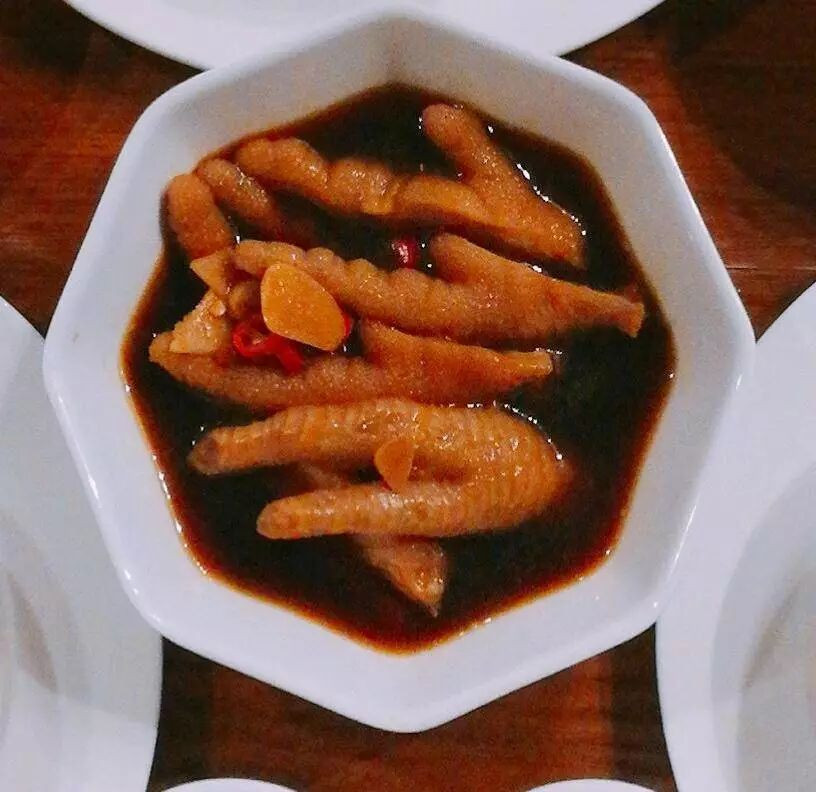
The spicy soaked chicken feet are way more refreshing; they live up to their name and pack a mild kick. But compared to the steamed chicken feet, they definitely fall a bit short—overall, the flavor doesn't soak in deeply enough, and they pale in comparison to the sweet vinegar ginger chicken feet at Guangzhou Muslim Restaurant (Huimin Restaurant).
Rating: ❤❤❤
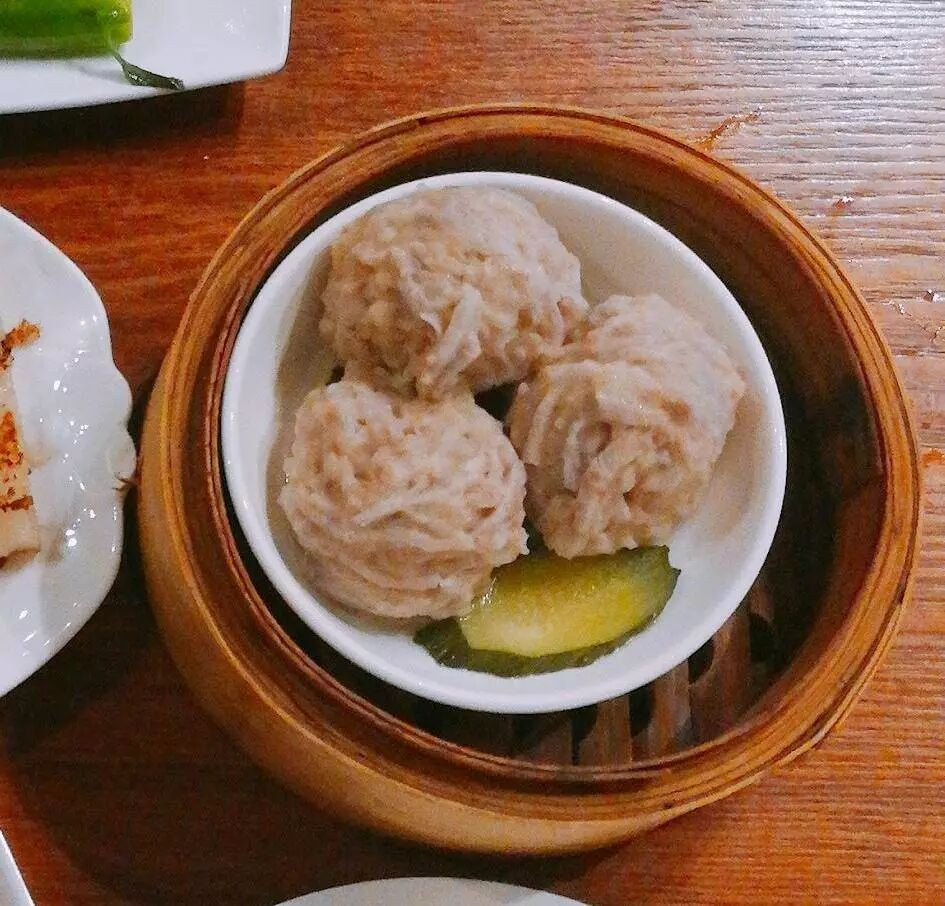
⑦ Steamed Taro and Chicken Meatballs: The overall flavor of the meatballs is very mild, and both the taro and chicken are super soft. You definitely need to dip them in sauce while eating. This steamed dim sum item is also unique to this spot.
Rating: ❤❤❤
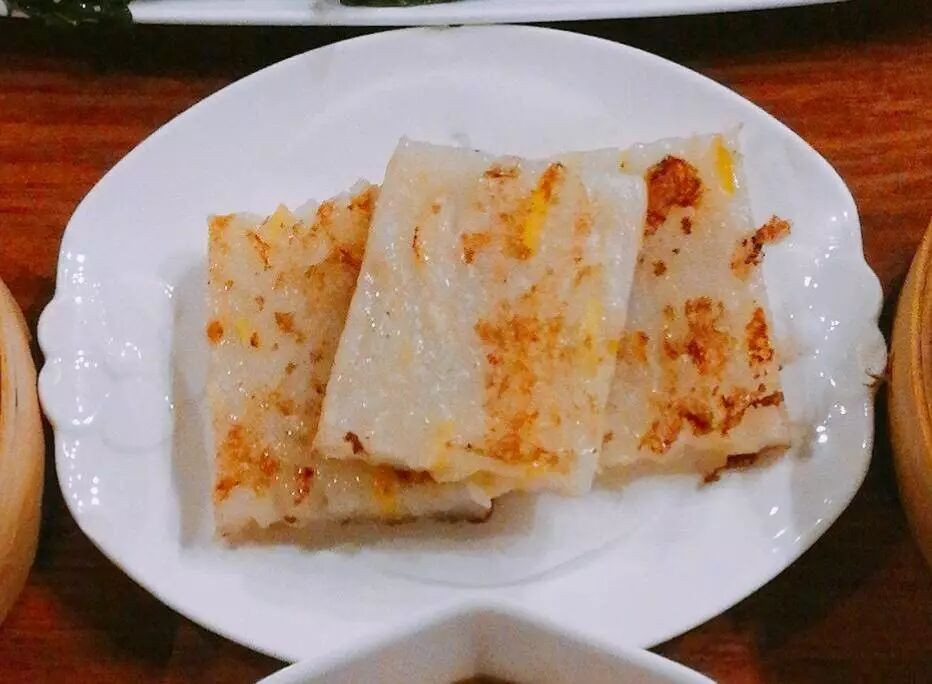
⑧ Original Pan-Fried Turnip Cake: The turnip cake leans pretty oily and has a very mild taste. It’s packed with whole strips of shredded radish inside. You have to pair it with dipping sauce when eating, otherwise it gets super greasy.
Rating: ❤❤❤
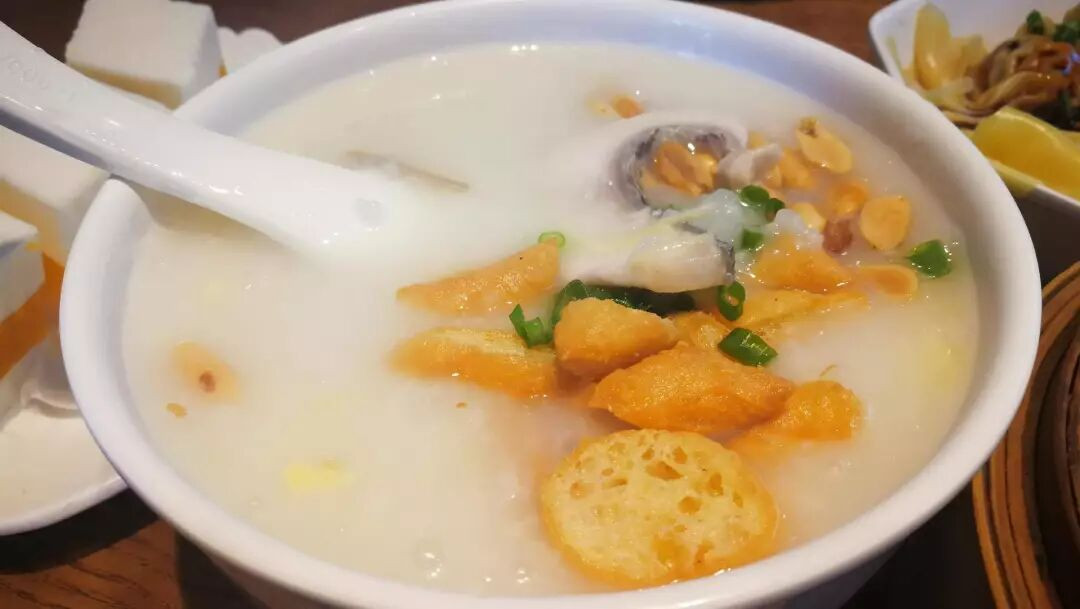
⑨ Sampan Congee (Tingzai zhou): When talking about Guangzhou zaocha / yum cha (Cantonese morning tea / dim sum), you absolutely cannot miss freshly boiled congee, and sampan congee has the most loaded ingredients—mini youtiao (crispy fried dough sticks), peanuts, beef, fish slices, and little meatballs are all in there. Unlike northern congee, southern congee is savory. Northerners might find it a bit weird the first time they try it, but after a few bites, you'll discover how amazing it is. The congee at both of these dim sum spots is flawless—absolute must-orders!
Rating: ❤❤❤❤❤
⑩ Mango Coconut Milk Jelly & Signature Durian Pastry:
I am seriously obsessed with the mango coconut milk jelly!!! I’m someone who doesn't usually love desserts because they always feel too heavy, but the sweetness level on this coconut jelly is spot-on—not cloying at all. The white part has this rich, creamy coconut flavor, while the orange part brings a sweet-and-tangy mango punch. The combo is absolute perfection! Best of all, you can only get this here, so you've gotta order it when you come!
Rating: ❤❤❤❤❤
The durian pastry has a crispy, flaky crust, and the durian inside melts into a molten lava texture from being heated. But it's overall quite sweet, so you pretty much need to sip some black tea after every bite to cut through the richness. That said, if you're a total sweet tooth, I highly recommend it~
Rating: ❤❤❤
As a landmark foodie hotspot for halal eats in Guangzhou, Guangzhou Muslim Restaurant (Huimin Restaurant) isn't just famous for its long history; its flavors also represent the most traditional Cantonese dim sum style (verified by my local Cantonese foodie friends). Meanwhile, the new-school representative, Xinjiang Building Bazaar's Cantonese dim sum, blends some Xinjiang twists into the traditionally light Cantonese flavor profile, making it a huge hit with non-Cantonese folks—though its flavors are still totally authentic. When you guys want to try them out in the future, just pick based on your own preferences, because at the end of the day, whatever suits your taste is best~
Bazaar Eats
Recommended Dishes: Southeast Asian Fresh Shrimp Red Rice Noodle Rolls, Pan-Fried Beef Patties, Golden Garlic Black Bean Steamed Lamb Ribs
Average Cost per Person: 60 RMB
Address: 2nd and 3rd Floors, Xinjiang Building, No. 76 Tianhebei Road (near Times Square)
Phone: 020-38782778, 020-38782781
PS: All photos in this article were shot by yours truly, and some filters were used strictly to restore the true colors of the food.
End-of-article surprise!!! If you pay the bill at the dim sum spots before 11:30 AM, you get a discount! Xinjiang Building offers 15% off, and that applies even on holidays and weekends. Guangzhou Muslim Restaurant (Huimin Restaurant) offers 12% off, but no holiday discounts apply. Collapse Read »
The Ultimate Guide to Halal Dim Sum in Guangzhou: Beyond the Classic Huimin Restaurant, Discover These Hidden Gem Spots in the City of Rams
Abstract:
Deep-dive into the rich variety of halal dim sum options in Guangzhou. Breaking the stereotype that "halal dim sum only exists at Huimin Restaurant," we explore several popular halal dim sum spots, testing out classic tea-time treats like signature beef shrimp dumplings, steamed beef siu mai, and beef short ribs in black bean sauce.
As an authentic foodie from Northern China raised on heavy-handed, bold northern flavors loaded with oil, salt, chili, and Sichuan peppercorns, moving to Guangzhou for college was a massive culture shock. After taking my very first bite of southern-style sweet stir-fried tomatoes and eggs—which almost made me hurl—I harbored a deep hostility toward southern cuisine for a long time. I vowed to bury myself in the warm embrace of Lanzhou beef noodles and never come out.
Life, however, is full of those ironic moments where you eventually eat your words. Not long after, I got totally sick of the unchanging taste of Lanzhou noodles and finally mustered the courage to give Cantonese food another shot. Huh? The taste actually wasn't bad, um... I guess you could say it was pretty delicious! So, whenever I had free time, I'd drag my friends and local Guangzhou grandpas and grandmas to grab zaocha / yum cha (Cantonese morning tea / dim sum) together and gossip.
Although Guangzhou has quite a few ethnic Hui Muslims, most of them are international visitors or folks from Northwest China. The local Muslim population is tiny to begin with, which means halal Cantonese cuisine is sadly scarce. Having lived in Guangzhou for seven years, I only knew of two halal dim sum spots: Guangzhou Muslim Restaurant (Huimin Restaurant) and the Xinjiang Building Restaurant.
Guangzhou Muslim Restaurant (Huimin Restaurant) is easily the most famous halal dim sum joint in Guangzhou. Located on Zhongshan 6th Road, it boasts a history of nearly 60 years. The flavor is totally authentic; a local Guangzhou friend who came with me said it tastes practically identical to non-halal Cantonese dim sum. Since our food blog has already covered Guangzhou Muslim Restaurant (Huimin Restaurant) before, this time I'll mainly focus on the dim sum at the Xinjiang Building's Bazaar cuisine, while also comparing the dim sum between these two spots~
Xinjiang Building is located at Linhexi. If you're taking the subway, take Exit B, walk straight, and you'll be there in two or three minutes. The main entrance looks like this:
Turn left as you walk in, take the elevator to the second floor, and you've arrived at your destination~ The interior decoration features a classic Xinjiang vibe, offering both Cantonese dim sum and traditional Xinjiang dishes. Cantonese chefs and Xinjiang guys run the kitchens here, so the flavors are relatively authentic. It gets pretty packed inside—mostly older folks, along with a few foreigners. Young foodies like yours truly are relatively scarce (since I snapped these photos right around noon as I was leaving, the crowd had already thinned out).
Let's check out the menu first: even though it's a Cantonese dim sum spot, it still hides quite a few Xinjiang-style pastries inside.
Next up is the solo show:
① Southeast Asian Crispy Red Rice Cheung Fun (Steamed Rice Rolls): As the absolute star of the show, this dim sum uses a classic red-and-green color combo that delivers a striking visual punch. Ahem, its aesthetic game is definitely strong. The wrapper of this cheung fun is made from red rice, with a layer of fried crispy yellow beancurd skin inside, wrapped around crab sticks and whole shrimp, accompanied by blanched choy sum on the side. It also comes with a small dipping sauce primarily offering a savory kick. Because the rice rolls themselves have a very mild flavor, northern foodies who love heavy flavors should definitely remember to dip them. Take a bite, and the rice rolls are soft and chewy, the yellow beancurd skin is crispy, the shrimp and crab sticks are savory and fresh, and the dipping sauce adds a hint of saltiness that cuts right through the oiliness of the beancurd skin. So many textures melting together in your mouth yet balanced to absolute perfection. Take a sip of black tea right after swallowing—tsk tsk, as a foodie, I thoroughly enjoyed this. Guangzhou Muslim Restaurant (Huimin Restaurant) doesn't carry this red rice roll, so you can only get it right here~
Recommendation Rating: ⭐⭐⭐⭐⭐
② Steamed Beef Short Ribs with Garlic and Black Bean Sauce: The beef short ribs are melt-in-your-mouth tender with just a subtle kick of spice; they're stewed alongside potatoes that soak up the rich broth completely, making them a tiny bit greasy. But pairing them with black tea completely solves that issue! This steamed dim sum is pretty much identical to the one at Guangzhou Muslim Restaurant (Huimin Restaurant).
Recommendation Rating: ⭐⭐⭐⭐
③ Pan-Fried Beef Pastries & Yunnan Vegetarian Chicken Shreds Spring Rolls:
The beef pastries have a soft, smooth, and slightly springy texture. Inside, you'll find water chestnuts, beef, and cilantro (heads up! If you hate cilantro, steer clear!). Guangzhou Muslim Restaurant (Huimin Restaurant) doesn't have a matching version of this, so cilantro lovers definitely need to drop by here~
Recommendation Rating: ⭐⭐⭐
The spring rolls have a crispy exterior packed with shredded veggies and chicken, keeping the overall flavor pretty light. The taste of these spring rolls is very similar to the ones at Guangzhou Muslim Restaurant (Huimin Restaurant).
Recommendation Rating: ⭐⭐⭐
Both of these pan-fried and deep-fried dim sum items lean a bit oily overall, so I usually pair them with the dipping sauce to cut the grease.
④ Spicy Tossed Shrimp Wontons & Stir-Fried Beef Noodles:
Wontons are basically northern huntun (dumplings in soup). The wontons themselves are savory and fresh. Although they're called shrimp wontons, they don't contain whole shrimp inside. The wontons are drizzled with a spicy sauce, giving them a bold, savory, and spicy flavor profile. This is another exclusive item you can only get here~
Recommendation Rating: ⭐⭐⭐⭐⭐
The stir-fried noodles have a relatively light overall flavor. The noodles are super soft while still maintaining a nice chew, and the beef is exceptionally tender and smooth. Because the flavor is quite mild, it struggles a bit to cut through the grease. I usually add chili oil or dip them to balance things out (yep, I'm genuinely terrified of oiliness...). The stir-fried noodles made at Guangzhou Muslim Restaurant (Huimin Restaurant) aren't as oily, so I personally recommend those more.
Recommendation Rating: ⭐⭐⭐⭐
⑤ Shrimp and Chicken Xiaolongbao (Soup Dumplings) & Oyster Sauce Mutton Char Siu Bao (Barbecue Mutton Buns):
The xiaolongbao filling is tight and compact with tender meat. While they don't burst with a ton of soup juice, the flavor is still reasonably savory and fresh. However, they pale slightly in comparison to Guangzhou Muslim Restaurant (Huimin Restaurant).
Recommendation Rating: ⭐⭐⭐⭐
The mutton char siu buns lean sweet on the inside with a subtle hint of saltiness. Compared to the ones at Guangzhou Muslim Restaurant (Huimin Restaurant), though, they fall way short overall: the filling is scarcer, there's too much dough, and the flavor is sweeter while lacking that deep savory punch. So if you're craving mutton char siu buns, definitely make sure to hit up Guangzhou Muslim Restaurant (Huimin Restaurant).
Rating: ❤❤
⑥ Golden Garlic Steamed Chicken Feet & Spicy Soaked Chicken Feet:
This steamed chicken foot dish is totally amazing! The chicken feet are super tender and fall-off-the-bone, wrapped in a rich, savory sauce. With every bite, you get a mouthful of garlic flavor—sweet, spicy, salty, and umami—which actually tastes better than the Zijin steamed chicken feet at Guangzhou Muslim Restaurant (Huimin Restaurant)!
Rating: ❤❤❤❤❤
The spicy soaked chicken feet are way more refreshing; they live up to their name and pack a mild kick. But compared to the steamed chicken feet, they definitely fall a bit short—overall, the flavor doesn't soak in deeply enough, and they pale in comparison to the sweet vinegar ginger chicken feet at Guangzhou Muslim Restaurant (Huimin Restaurant).
Rating: ❤❤❤
⑦ Steamed Taro and Chicken Meatballs: The overall flavor of the meatballs is very mild, and both the taro and chicken are super soft. You definitely need to dip them in sauce while eating. This steamed dim sum item is also unique to this spot.
Rating: ❤❤❤
⑧ Original Pan-Fried Turnip Cake: The turnip cake leans pretty oily and has a very mild taste. It’s packed with whole strips of shredded radish inside. You have to pair it with dipping sauce when eating, otherwise it gets super greasy.
Rating: ❤❤❤
⑨ Sampan Congee (Tingzai zhou): When talking about Guangzhou zaocha / yum cha (Cantonese morning tea / dim sum), you absolutely cannot miss freshly boiled congee, and sampan congee has the most loaded ingredients—mini youtiao (crispy fried dough sticks), peanuts, beef, fish slices, and little meatballs are all in there. Unlike northern congee, southern congee is savory. Northerners might find it a bit weird the first time they try it, but after a few bites, you'll discover how amazing it is. The congee at both of these dim sum spots is flawless—absolute must-orders!
Rating: ❤❤❤❤❤
⑩ Mango Coconut Milk Jelly & Signature Durian Pastry:
I am seriously obsessed with the mango coconut milk jelly!!! I’m someone who doesn't usually love desserts because they always feel too heavy, but the sweetness level on this coconut jelly is spot-on—not cloying at all. The white part has this rich, creamy coconut flavor, while the orange part brings a sweet-and-tangy mango punch. The combo is absolute perfection! Best of all, you can only get this here, so you've gotta order it when you come!
Rating: ❤❤❤❤❤
The durian pastry has a crispy, flaky crust, and the durian inside melts into a molten lava texture from being heated. But it's overall quite sweet, so you pretty much need to sip some black tea after every bite to cut through the richness. That said, if you're a total sweet tooth, I highly recommend it~
Rating: ❤❤❤
As a landmark foodie hotspot for halal eats in Guangzhou, Guangzhou Muslim Restaurant (Huimin Restaurant) isn't just famous for its long history; its flavors also represent the most traditional Cantonese dim sum style (verified by my local Cantonese foodie friends). Meanwhile, the new-school representative, Xinjiang Building Bazaar's Cantonese dim sum, blends some Xinjiang twists into the traditionally light Cantonese flavor profile, making it a huge hit with non-Cantonese folks—though its flavors are still totally authentic. When you guys want to try them out in the future, just pick based on your own preferences, because at the end of the day, whatever suits your taste is best~
Bazaar Eats
Recommended Dishes: Southeast Asian Fresh Shrimp Red Rice Noodle Rolls, Pan-Fried Beef Patties, Golden Garlic Black Bean Steamed Lamb Ribs
Average Cost per Person: 60 RMB
Address: 2nd and 3rd Floors, Xinjiang Building, No. 76 Tianhebei Road (near Times Square)
Phone: 020-38782778, 020-38782781
PS: All photos in this article were shot by yours truly, and some filters were used strictly to restore the true colors of the food.
End-of-article surprise!!! If you pay the bill at the dim sum spots before 11:30 AM, you get a discount! Xinjiang Building offers 15% off, and that applies even on holidays and weekends. Guangzhou Muslim Restaurant (Huimin Restaurant) offers 12% off, but no holiday discounts apply. Collapse Read »
Exploring Guangzhou's Baohan Direct Street: Ultimate Halal Food Guide & Xinjiang Flavors
[Internet Repost]
Exploring Baohan Direct Street Halal Food Street in Guangzhou: Freshly Baked Nang, Charcoal-Grilled Lamb Skewers, and Silk Road Flavors Guide
Summary:
A firsthand walk through the vibrant multicultural neighborhood of Baohan Direct Street in Guangzhou's Yuexiu District. Documenting the steaming specialty baked nang, sizzling Xinjiang charcoal-grilled lamb chops, authentic shouzhua fan (hand-grabbed rice), and fresh beef and mutton butcher shops along the street, experiencing the unique everyday street life and culinary vibe of the City of Rams.
Whenever I need to buy beef and mutton, I definitely head straight to Baohan Direct Street, and every time I visit Baohan, I end up craving to come back for the Halal food again. This endless loop makes you keep coming back to this hidden gem of a Halal street.
Today, we didn't just walk the main street; we also explored the small alleyway nestled between Nangbalang and the fruit shop in front of Kaisewaer. From the outside, you'd never imagine the secret world hidden inside. After turning a corner, a bustling narrow alley suddenly opens up before your eyes.
Hao Liangpi
Address: Northeast of Tuoji Beef and Mutton Shop, Dengfeng, Yuexiu District, Guangzhou (East of Xisheng Street)
Hao Liangpi Flagship Store
Liangpi (cold skin noodles) are usually white, but the owner explained: the yellow color comes from adding gardenia fruit.
Fast food meals are already prepped in the shop. Before 12 PM, all these ingredients are completely sold out and delivered to nearby eateries.
Here are the various toppings mixed right on the spot: gluten, crushed peanuts, soy sauce and vinegar dressing, chili oil, minced garlic, topped off with shredded cucumbers.
I boldly snuck a bite of the owner's nang, so I didn't need to buy one today.
Mamu Food Shop
Address: Opposite No. 41, Dongsheng Street, Yuexiu District, Guangzhou
Mamu Food Shop
Potato buns
Carrot buns
Chive and egg buns
Lye-dough huajuan (twisted steamed rolls)
The yellow huajuan gets its color from added turmeric.
The green huajuan also uses a type of crop—the owner told me the name, but I forgot.
Every single vegetarian bun from this spot is delicious. Today they only had the three varieties mentioned above, whereas the mutton buns were just average, so I didn't take pictures. The huajuan are also amazing, super fluffy, and tearing off little pieces to eat is ridiculously satisfying. Rumors say their fried rice noodles are also top-notch, so I'll come back to try them and review them next time. Also, I didn't get to try the onion buns this trip.
After snacking on two quick bites to line our stomachs, we headed to this spot on the main street for lunch.
Xinteer Sanliang
Address: Unit 1, Floor 1, Lane 4, No. 9 Baohan Direct Street, Yuexiu District, Guangzhou (self-assigned code 1)
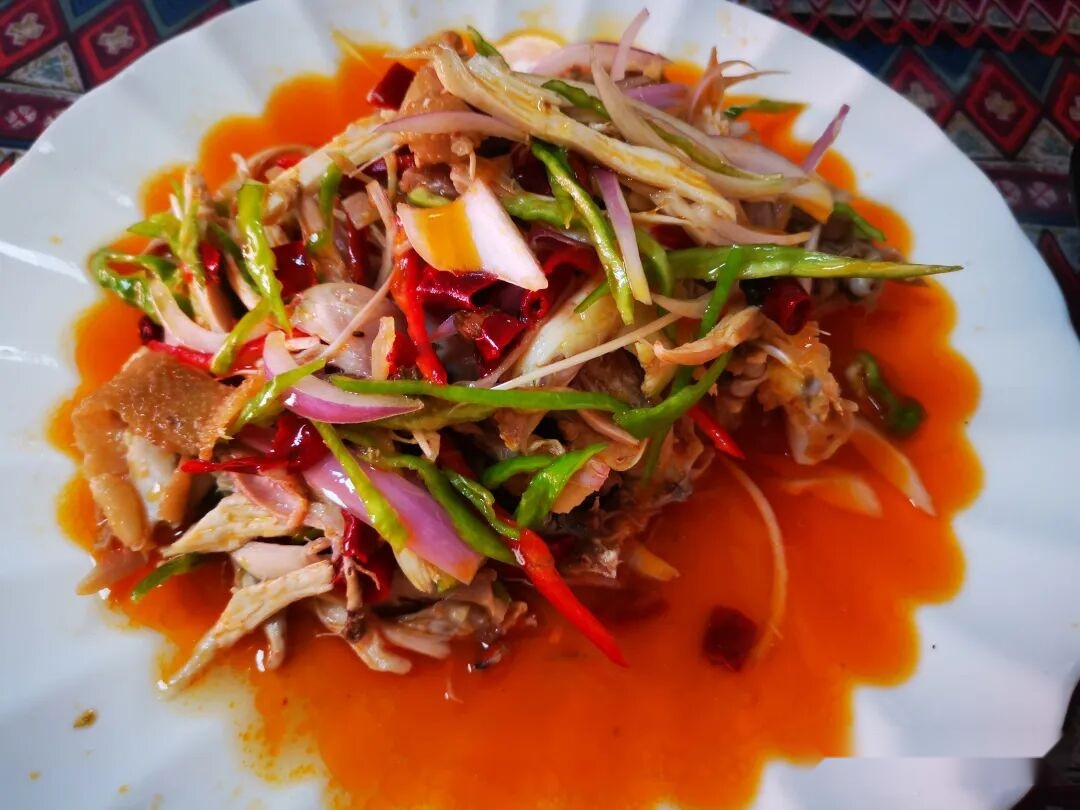
Xinteer Sanliang (Xiaobei Branch)
Arriving at the shop around 11:40 AM, just the two owners were busy handling a massive volume of delivery orders. The owner asked us to wait 20 minutes. Alright, for the sake of good food, we wait. A special reminder to all food lovers: try to dine during off-peak hours or be prepared to wait patiently.
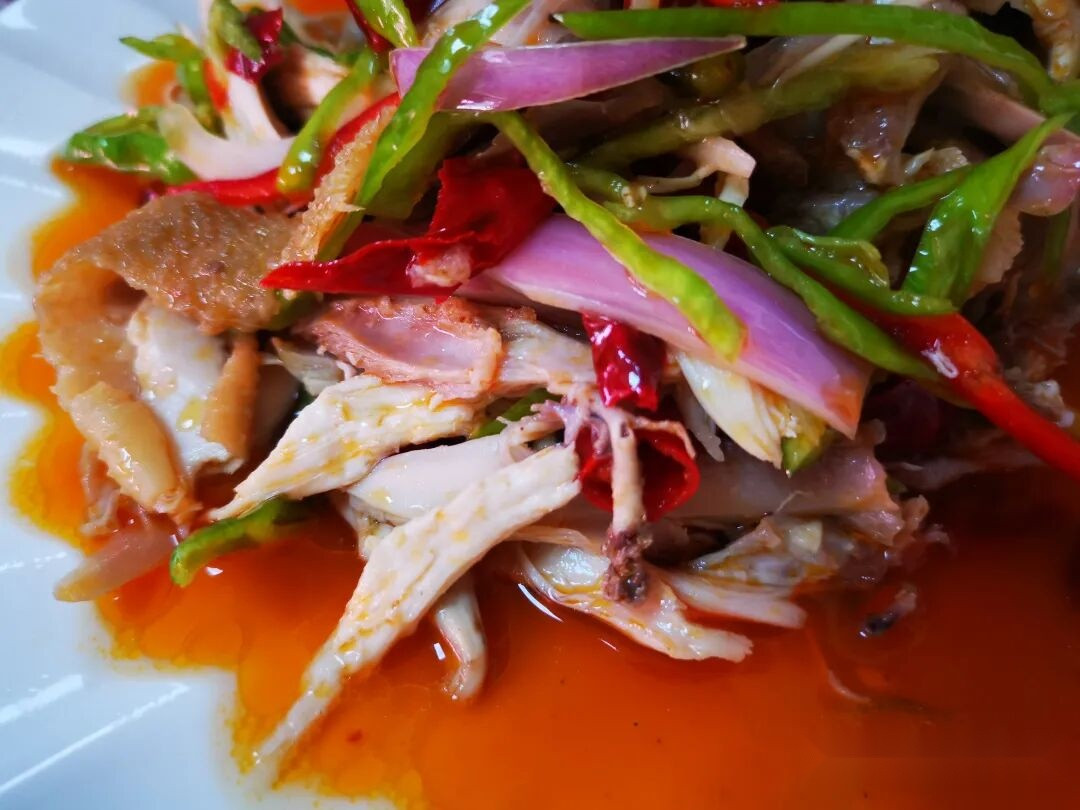
Yak meat sausage, which is a rare find.
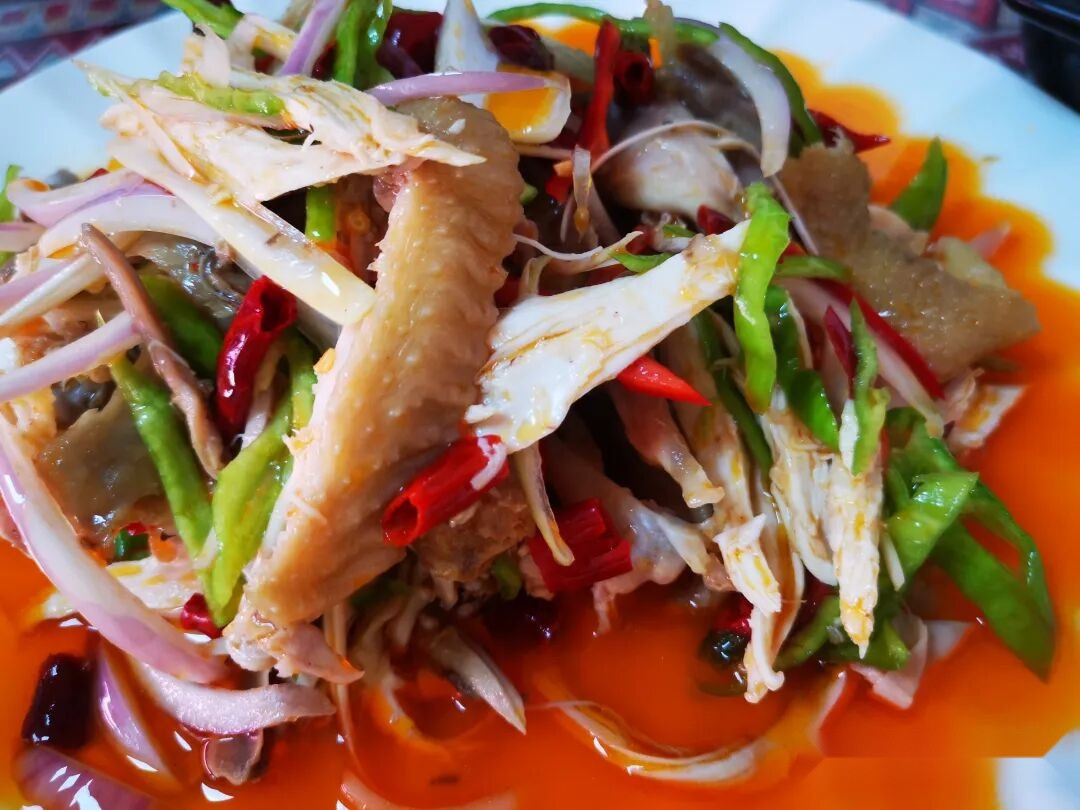
Hand-shredded Sichuan pepper chicken
Visuals: A vibrant base of glossy orange-red chili oil, dotted with green and red chilies, purple-white onions, tender yellow chicken meat, and brown Sichuan peppercorns.
Aroma: The scent of rattan pepper oil and chili oil punches right up your nose, boldly overtaking the chicken's natural aroma.
Flavor: Numbing, spicy, fresh, and savory, with meat that has a great chew—seriously legit.
The chicken is that super crispy-skinned kind with zero fat layer underneath. The meat leans on the firmer side without being dry, making it top-tier for hand-shredded chicken.
The owner asked if I wanted it less spicy? My reply: Make it standard. The raw chilies and raw onions in the dressing are super fresh and totally awesome to eat straight. The dried chilies paired with chili oil, along with whole peppercorns mixed in rattan pepper oil, seriously wake up your mouth and tickle your tastebuds. Personally, I have a huge soft spot for rattan pepper oil—I always add a bit when making my own cold dishes.
Signature Hui Muslim Fen Tang (Sour and Spicy Vermicelli Soup)
Loaded with ingredients: beef, liangfen (clear mung bean jelly), pickles, pickled radishes, vermicelli, wood ear mushrooms, tofu, and greens.
The pickles and pickled radishes bring that umami punch, and combined with the chili oil, give the whole soup a super refreshing, sour-and-spicy vibe that's totally hitting the spot for summer. The beef is pretty average, just using trim cuts. Carrots, greens, and wood ear mushrooms make a red, green, and black tricolor combo, which, along with the yellow of the pickled greens and the white of the mung bean jelly, makes for an eye-catching, mouth-watering palette.
The liangfen has a powdery yet smooth texture and doesn't soak up too much of the sour-and-spicy broth, keeping every bite super crisp and refreshing.
Spicy Beef Gluten Noodles
The beef gluten has a texture that sits right between liangpi (cold skin noodles) and wheat gluten—chewier than liangpi, yet softer and more refreshing than gluten. Sopping up all that sauce, every single bite is pure Xinjiang flavor.
The cold noodles rely mainly on chili oil and vinegar, tossed with cucumber shreds and mung bean sprouts, and topped off with crushed peanuts for crunch and sesame seeds for extra aroma.
Of course, before heading home, I still had to grab some beef and mutton.
I've lost count of how many times I've explored Baohan Street. From dapanji (Xinjiang big plate chicken), guoyou rou banmian (stir-fried pork over pulled noodles), shouzhua yangrou (hand-grabbed lamb), and all kinds of nang (baked flatbread), to this time's liangpi, baozi, and numbing pepper chicken, there's always something new to discover every time. Fingers crossed for more delicious surprises on the next trip. Collapse Read »
Exploring Baohan Direct Street Halal Food Street in Guangzhou: Freshly Baked Nang, Charcoal-Grilled Lamb Skewers, and Silk Road Flavors Guide
Summary:
A firsthand walk through the vibrant multicultural neighborhood of Baohan Direct Street in Guangzhou's Yuexiu District. Documenting the steaming specialty baked nang, sizzling Xinjiang charcoal-grilled lamb chops, authentic shouzhua fan (hand-grabbed rice), and fresh beef and mutton butcher shops along the street, experiencing the unique everyday street life and culinary vibe of the City of Rams.
Whenever I need to buy beef and mutton, I definitely head straight to Baohan Direct Street, and every time I visit Baohan, I end up craving to come back for the Halal food again. This endless loop makes you keep coming back to this hidden gem of a Halal street.
Today, we didn't just walk the main street; we also explored the small alleyway nestled between Nangbalang and the fruit shop in front of Kaisewaer. From the outside, you'd never imagine the secret world hidden inside. After turning a corner, a bustling narrow alley suddenly opens up before your eyes.
Hao Liangpi
Address: Northeast of Tuoji Beef and Mutton Shop, Dengfeng, Yuexiu District, Guangzhou (East of Xisheng Street)
Hao Liangpi Flagship Store
Liangpi (cold skin noodles) are usually white, but the owner explained: the yellow color comes from adding gardenia fruit.
Fast food meals are already prepped in the shop. Before 12 PM, all these ingredients are completely sold out and delivered to nearby eateries.
Here are the various toppings mixed right on the spot: gluten, crushed peanuts, soy sauce and vinegar dressing, chili oil, minced garlic, topped off with shredded cucumbers.
I boldly snuck a bite of the owner's nang, so I didn't need to buy one today.
Mamu Food Shop
Address: Opposite No. 41, Dongsheng Street, Yuexiu District, Guangzhou
Mamu Food Shop
Potato buns
Carrot buns
Chive and egg buns
Lye-dough huajuan (twisted steamed rolls)
The yellow huajuan gets its color from added turmeric.
The green huajuan also uses a type of crop—the owner told me the name, but I forgot.
Every single vegetarian bun from this spot is delicious. Today they only had the three varieties mentioned above, whereas the mutton buns were just average, so I didn't take pictures. The huajuan are also amazing, super fluffy, and tearing off little pieces to eat is ridiculously satisfying. Rumors say their fried rice noodles are also top-notch, so I'll come back to try them and review them next time. Also, I didn't get to try the onion buns this trip.
After snacking on two quick bites to line our stomachs, we headed to this spot on the main street for lunch.
Xinteer Sanliang
Address: Unit 1, Floor 1, Lane 4, No. 9 Baohan Direct Street, Yuexiu District, Guangzhou (self-assigned code 1)
Xinteer Sanliang (Xiaobei Branch)
Arriving at the shop around 11:40 AM, just the two owners were busy handling a massive volume of delivery orders. The owner asked us to wait 20 minutes. Alright, for the sake of good food, we wait. A special reminder to all food lovers: try to dine during off-peak hours or be prepared to wait patiently.
Yak meat sausage, which is a rare find.
Hand-shredded Sichuan pepper chicken
Visuals: A vibrant base of glossy orange-red chili oil, dotted with green and red chilies, purple-white onions, tender yellow chicken meat, and brown Sichuan peppercorns.
Aroma: The scent of rattan pepper oil and chili oil punches right up your nose, boldly overtaking the chicken's natural aroma.
Flavor: Numbing, spicy, fresh, and savory, with meat that has a great chew—seriously legit.
The chicken is that super crispy-skinned kind with zero fat layer underneath. The meat leans on the firmer side without being dry, making it top-tier for hand-shredded chicken.
The owner asked if I wanted it less spicy? My reply: Make it standard. The raw chilies and raw onions in the dressing are super fresh and totally awesome to eat straight. The dried chilies paired with chili oil, along with whole peppercorns mixed in rattan pepper oil, seriously wake up your mouth and tickle your tastebuds. Personally, I have a huge soft spot for rattan pepper oil—I always add a bit when making my own cold dishes.
Signature Hui Muslim Fen Tang (Sour and Spicy Vermicelli Soup)
Loaded with ingredients: beef, liangfen (clear mung bean jelly), pickles, pickled radishes, vermicelli, wood ear mushrooms, tofu, and greens.
The pickles and pickled radishes bring that umami punch, and combined with the chili oil, give the whole soup a super refreshing, sour-and-spicy vibe that's totally hitting the spot for summer. The beef is pretty average, just using trim cuts. Carrots, greens, and wood ear mushrooms make a red, green, and black tricolor combo, which, along with the yellow of the pickled greens and the white of the mung bean jelly, makes for an eye-catching, mouth-watering palette.
The liangfen has a powdery yet smooth texture and doesn't soak up too much of the sour-and-spicy broth, keeping every bite super crisp and refreshing.
Spicy Beef Gluten Noodles
The beef gluten has a texture that sits right between liangpi (cold skin noodles) and wheat gluten—chewier than liangpi, yet softer and more refreshing than gluten. Sopping up all that sauce, every single bite is pure Xinjiang flavor.
The cold noodles rely mainly on chili oil and vinegar, tossed with cucumber shreds and mung bean sprouts, and topped off with crushed peanuts for crunch and sesame seeds for extra aroma.
Of course, before heading home, I still had to grab some beef and mutton.
I've lost count of how many times I've explored Baohan Street. From dapanji (Xinjiang big plate chicken), guoyou rou banmian (stir-fried pork over pulled noodles), shouzhua yangrou (hand-grabbed lamb), and all kinds of nang (baked flatbread), to this time's liangpi, baozi, and numbing pepper chicken, there's always something new to discover every time. Fingers crossed for more delicious surprises on the next trip. Collapse Read »
Guangzhou's Halal Hotspots: Dim Sum, Northwest Flavors & Iconic Muslim Cuisine
[Internet Repost]
Guangzhou's Must-Try Halal Chinese Restaurants: A Delicious Mashup of Cosmopolitan Cantonese Flavors and Northwest Culinary Arts
Here's the scoop:
We're curating Guangzhou's most popular Halal Chinese restaurants, diving into how they maintain strict Halal sourcing while masterfully blending the fresh, delicate techniques of Cantonese cuisine with the rich essence of Northern and Northwestern Chinese beef and lamb cooking. The result? A vibrant, diverse spread of Chinese Halal delicacies for discerning foodies.

Cantonese cuisine, one of China's four major culinary traditions, has, over its long history, not only preserved the traditions of Central Plains culinary culture but also absorbed culinary essences from various external influences. This has shaped a dining experience characterized by an abundance of dishes, refined cooking techniques, and superior flavors.
This time around, for all of you who've been asking, your trusty food guide is finally delivering on Guangzhou's Halal Chinese restaurants!
Zaocha / Yum Cha (Cantonese morning tea / dim sum)
When you talk about Guangzhou food, the first thing that probably comes to mind is zaocha / yum cha (Cantonese morning tea / dim sum), right?! In Guangzhou, sipping zaocha is *the* go-to way for folks to steal a few hours of chill time and escape the daily grind.
Guangzhou actually boasts two super authentic Halal zaocha spots. You probably already know which ones I'm talking about!
Bazar Food Xinjiang Cuisine · Dapanji · Xinjiang Fried Rice Noodles
(Xinjiang Mansion)
Whenever I asked folks on the Halal Life App about must-visit zaocha spots in Guangzhou, everyone kept pointing to the second floor of Xinjiang Mansion. They even made sure to tell me to get there before 11 AM. The reason this place stands out? Seriously authentic zaocha flavors, of course!
Image source: @ChristySin
Southeast Asian-style Fresh Shrimp Red Rice Noodle Rolls (Dongnanya Xianxia Hongmi Changfen)
When I asked my Guangzhou friends what's the absolute *must-have* for zaocha, the dish everyone enthusiastically recommended was the hongmi chang (red rice noodle rolls).
The outer layer is wrapped in those vibrant red rice noodles, and the red yeast rice powder gives it a unique aroma, releasing a fresh, subtle fragrance with every bite. The second layer is a crispy fried wrapper – it tastes kind of like the crunchy skin of a youtiao (Chinese fried dough stick), or even the breading on fried chicken. And the innermost layer? Tender, super fresh shrimp.
Taking a bite, these three layers just merge beautifully. The freshness of the outer and innermost layers perfectly balances out the slight richness of that middle fried bit. If you're craving something a bit bolder, you can dip it in the accompanying sauce for an extra kick of savory.
Signature Har Gow with Bamboo Shoots (Yuanzhi Sunjian Xiajiao Huang)
The skin is so translucent and delicate, just looking at them makes your mouth water! They have a lovely chewiness and springy texture when you bite in.
Inside, they're packed with plump shrimp (your food guide suspects they might have been rinsed with cold water after cooking to get that incredible bouncy, Q-texture!). These are truly the real deal when it comes to shrimp dumplings. With a touch of crisp bamboo shoots, they taste even fresher and more delightful.
Siu Mai with Fresh Shrimp and Chicken (Xianxia Jili Shaomai Huang)
The skin of the siu mai is thin and beautifully textured, not perfectly smooth. It's crimped around the edges like lace, with the filling nestled in the center. As soon as they arrive at your table, you can spot the chicken bits and fresh shrimp peeking out. And that steamy, fragrant sesame oil wafting up? Totally gets your appetite going!
Black Pepper Beef Short Ribs (Heijiao Jiaozhi Niuzai Gu)
Honestly, when this dish first hit the table, I thought it looked pretty standard. But the moment your food guide took the first bite, I was absolutely blown away!
The beef was incredibly tender and cooked to perfection, so soft. A gentle chew after that first bite, and your mouth is flooded with rich beefy flavor. Dipped in the sauce, the meaty juices become even more intense and satisfying. If you're a beef lover, you absolutely cannot skip this!
Beyond these 'heavy hitters' (main savory dishes) we've covered, there's actually a dessert you absolutely can't miss either.
Osmanthus Coconut Jelly (Guihua Yezhi Gao)
The moment the Guihua Yezhi Gao (Osmanthus Coconut Jelly) arrived, I was hit with its incredibly fresh osmanthus fragrance. It's delightfully cool on the palate, and the texture is a bit like a water chestnut cake. The coconut flavor is rich and creamy, blending beautifully with the delicate osmanthus aroma. It leaves you feeling exceptionally refreshed, with that lovely scent lingering long after you've finished.
Just a heads-up: Xinjiang Mansion's zaocha is only served until 11:30 AM. So, if you're planning to go, definitely aim to get there before then! Plus, if you pay before 11:30 AM from Monday to Friday, you score a sweet 20% discount.
Address: Xinjiang Mansion, 2nd-3rd Floor, 76 Tianhe North Road (near Times Square)
Average spend per person: ¥97
Guangzhou Muslim Restaurant (Huimin Restaurant)
The dining area is spacious and comfy with old-school decor. Because it's been around for a long time, you get this awesome nostalgic vibe the second you walk in, but it's kept super clean and tidy.
Photo source: @Eating, Drinking and Having Fun with Little Tomato
Steamed Chicken Feet with Hakka Soy Bean Sauce
These steamed chicken feet are off-the-charts good! The chicken skin is tender and soft, practically melting in your mouth with every bite, loaded with flavor. Wrapped in a rich, sweet, spicy, and savory glaze, the texture of the chicken feet gets even more complex and delicious.
Photo source: Halal Life App @Ya
Beef Offal Soup
It's a huge portion made with total sincerity, packed with beef intestines, beef tripe, and diced white radishes. The broth is super savory and completely free of any gamey smell, and the offal is prepped and cleaned really well.
The best surprise is the diced radish—it's pickled, so it has a nice tangy, sour kick. Even after drinking a massive bowl of soup, you never feel weighed down or greasy because of it!
Photo source: @Jingjing's Brisk Walk
Honey-Glazed Lamb Char Siu
A sweet-style char siu bun bursting with savory juices. The filling is mostly lean meat, and even though these buns are totally packed with lamb, there's zero gamey odor. Plus, they toss in some salted egg yolk, which makes them insanely good~
Photo source: Halal Life APP @YanKee
Lamb Char Siu Pastry
The crust is insanely crispy with gorgeous, flaky layers—totally top-tier pastry work, just like the flaky top crust of a freshly baked egg tart! The meat filling isn't huge, but one bite still gives you a mouthful of rich, meaty goodness.
Photo source: @Fat Mom
Compared to the Xinjiang Building, I lean a bit more toward the former when it comes to flavor and service, but this classic legacy restaurant definitely has its own unique charm~
Address: No. 325, Zhongshan 6th Road (50 meters left of Exit A, Ximenkou Metro Station)
Average price per person: 63 RMB
Hot Pot
What should you eat when it's cold out? Hot pot! What should you eat for a friends' hangout? Hot pot! As one of China's most iconic culinary inventions, hot pot is loved by all generations and holds a massive place in everyone's hearts.
Foodie Individual Hot Pot
If you want to grab hot pot with two or three friends, I totally recommend Foodie Individual Hot Pot~
The space is cozy, and the moment you step inside, you feel this warm, welcoming vibe with everyone sitting together sharing a joyful meal. The first time I went there in the winter, it honestly felt like being at home.
Photo source: @Jennifer
If you prefer lighter flavors, you can go for the triple-delicacy broth—it's super fresh and authentic. If you can handle the heat, spice lovers can roll with the numbing spicy mala broth for an absolute rush.
Photo source: Halal Life APP @Beibeina
The ingredients are super fresh and displayed in chillers where you can pick out whatever you want. Meat and veggies are kept separate, and you take your picks to the counter to be weighed—very clean and hygienic, and having your own individual hot pot is super convenient~
Photo source: @Floating Life Like a Dream
If you're a fan of beef and lamb, you'll find tons of sliced beef and mutton rolls. They taste amazing after a quick swish in the boiling broth—tender, not gamey, and never greasy.
Photo source: @Xiaoxuejoy
If you want something besides the mini hot pot, you can order the dry-pot shrimp with chicken wings—super generous portions and totally worth it.
Photo source: @Xiyangyang
The shrimp are flash-fried in hot oil, making them extra crispy when you bite into them! Tossed with all the seasonings from the dry pot, they pack a spicy, aromatic punch. The chicken wings are super juicy, and there are even little fried dough twists (mahua) mixed in—crunchy at first, then they soften up just a bit. Paired with green and red peppers, onions, and other veggies, the whole dish has an incredible depth of texture and flavor.
Photo source: @OdileDeng
Address: 2nd Floor, No. 97 Baohan Direct Street, Xiaobei Station (second floor across from the Northwest Muslim Restaurant)
Average cost per person: ¥116
Donglaishun Halal Restaurant & Mutton Hot Pot
(Teemall Department Store Aoti Branch)
The vibe is gorgeous, with a sleek, minimalist interior dominated by crisp white tones that make the space look super bright and open. There are even hallway seating spots and tent-style private booths right by the entrance.
Photo source: @Miaodaao
Cloisonné Hot Pot
If you're wondering where to get the tenderest shabu-shabu, it's gotta be Donglaishun~ A classic copper charcoal hot pot is their ultimate trademark: deep fire chambers and roaring heat. Eating mutton hot pot out of a traditional copper pot is the absolute most authentic way to do it!
Photo source: @Wojuededouxing
Traditional Mutton
The lamb is insanely fresh and tender—just dip it in the boiling broth and swish it around seven to eight times, and it's ready to devour. Pair it with their signature dipping sauce for a mouthful of rich flavor, completely game-free.
Photo source: @LemoncubEatsAndDrinks
Donglaishun Lamb Skewers
The skewers are crispy on the outside and tender on the inside, generously dusted with a bold, spicy spice blend. The heavy hit of cumin makes it so you don't taste any gamey mutton flavor at all on the very first bite. Plus, the owner's recommended way of eating them—stuffing the skewers inside a flatbread (kaorou jia bing)—is stellar!
Photo source: Halal Life App @WangDongsiIdris
Overall, Donglaishun's dishes are solid, leaning toward a lighter flavor profile with a fantastic atmosphere, though it's a bit on the pricey side.
Address: Shop F112, 1st Floor, Aoti Utopia, No. 12 Aoti South Road
Average cost per person: ¥152
Xinjiang Cuisine
Xinjiang cuisine blends halal characteristics with the bold, heavily spiced, and aromatic cooking style of Northwest China. Famous dishes include whole roasted lamb (kao quan yang), big plate chicken (dapanji), lamb in baked naan (nang baorou), and hand-grabbed lamb (shouzhua yangrou), leaning toward savory and spicy flavors.
Jiangyue Banquet
The interior is totally drenched in exotic Central Asian vibes. You’ve definitely gotta check out the second floor—every little detail is packed with authentic Xinjiang elements~ There are several paintings on the walls, and as the owner told us, every single scene depicts local folklore and stories straight from Xinjiang.
Photo source: @RoundfacedTemptation
Yogurt
The yogurt is house-made by the owner and is super rich and thick. At first sip, it tastes like regular yogurt, but let it linger on your tongue for a second before swallowing, and you’ll catch a subtle, mellow aroma. It's the perfect balance of sweet and tart with a deeply creamy milk flavor.
Image credit: @xiaoke-4512
Dapanji (Big Plate Chicken)
When we talk about Xinjiang cuisine, Dapanji (Big Plate Chicken) is an absolute must-try. The owner of the restaurant is from Xinjiang, so their Dapanji is super authentic. You can even customize the spice level, and the chicken portion is seriously massive – totally satisfying!
Image credit: @yuanliandeyouhuo
Plus, the potatoes are soft, flavorful, and totally soaked in that rich Dapanji sauce. Seriously, you won't be able to stop at just one bite!!!
When you're having Dapanji, definitely remember to add a serving of latiaozi (hand-pulled "belt" noodles). The noodles are super chewy and absorb all that amazing sauce, making them incredibly flavorful.
Image credit: Halal Life APP @Ishaq0124
Hongliu Kao Yangpai (Red Willow Branch Grilled Lamb Ribs)
Unlike your usual grilled lamb ribs, theirs are all skewered onto bamboo sticks. The lamb has a perfect mix of lean and fatty bits, with a rich, aromatic cumin flavor. Paired with kao nang (baked flatbread), it's absolutely epic!
Image credit: Halal Life APP @WangdongsiIdris
Address: No. 59 Jinjie, Wanda Plaza, Hanxi Avenue East (diagonally opposite Wanda Gate 4)
Average price per person: ¥80
Xinyuexin
Stepping inside, you're immediately greeted by sturdy wooden tables and unique Uyghur patterns and designs. Even the tableware has an ethnic flair. The service is attentive and super warm.
Image credit: @naizuipaopao
Laziji Banmian (Spicy Chicken Mixed Noodles)
This is a signature dish here. The noodles are wonderfully chewy and soak up all that fragrant, spicy chicken juice. The chicken is diced small, fried until crispy, and perfectly seasoned.
They load it with plenty of fiery bird's eye chilies and green peppers, so it's spicy all around. Your lips might turn red after eating, but it's totally thrilling and satisfying! If you're a spice-lover, you absolutely can't miss this one.
Image credit: @caibandao
Jin Pai Kao Yangpai (Signature Grilled Lamb Ribs)
When it first arrives, it's piping hot, and your first bite? Pure crunch! The lamb ribs are grilled to perfection, crispy on the outside and tender on the inside. The lamb fat is incredibly fragrant, and the meat beneath is super tender and smooth, with that lovely cumin aroma – absolutely no gamey taste whatsoever.
Remember to eat it while it's hot, because once it cools down, the fat can harden a bit and affect the texture.
Image credit: @woshidabinzi
Fengwei Nang Bao Rou (Flavored Nang Bread Stewed with Lamb)
The nang bread is a generous piece, and it's totally soaked in the savory juices. But it still keeps its signature chewiness, making every bite extra fragrant. You get that crispy, toasty aroma of baked nang mixed with the rich flavor of the stewed lamb.
This spot is definitely considered super authentic when it comes to Xinjiang cuisine. However, the 'canteen master' (presumably the author's persona) felt it was a little pricey. They also charge for tea refills, so once you're full and happy, you can let the server know you don't need more tea~
Address: Shop 419, 4th Floor, South Zone, Hopson Plaza, No. 168 Diejing Road
Average price per person: ¥98
Nuerbostan
The storefront is a bit on the small side, but the owner is super welcoming and the servers hustle. However, during the peak lunch and dinner rushes, things can get a bit hectic, so if you're in a hurry, it's best to beat the crowds.
Photo source: @Qing庚
Kashgar Gangzi Rou (Kashgar Cup-Braised Mutton)
A clear mutton broth cooked up with some carrots. The soup base is super sweet and savory with ultra-tender meat—definitely the mildest dish of the bunch. If you prefer lighter flavors, you've totally gotta try this soup~
Photo source: Halal Life APP @A Zhong
Yangza Tang (Spicy Mutton Offal Soup)
The portion is massive. Even though it doesn't have a huge variety of offal inside, everything tastes amazing. The broth has a mild kick of spice with zero gamey taste, and it's loaded with crisp veggies and glass noodles in the base.
When the weather gets chilly, is there anything that warms the soul and stomach quite like a comforting bowl of yangza tang (spicy mutton offal soup)?
Photo source: @Little Duck Traveling Around the World
Kao Yangyao (Grilled Lamb Kidneys)
A piece of lamb fat wrapped around a chunk of lamb liver. I was initially worried it might be way too fatty or gamey, but biting into it was surprisingly refreshing! The lamb fat is grilled to a nice crisp without being greasy at all, with a great ratio of lean to fat. It's even better when you eat it with some nang (baked flatbread).
Photo source: @Sunflower Blooming
Address: Ground Floor, North 7, No. 160 Tianhe Zhijie (right next to the Bank of China)
Average cost per person: 94 RMB
Of course, there's tons of other halal food waiting for you in Guangzhou, especially around the Xiaobei area. Hit up the comments and let us know your favorites too~ Collapse Read »
Guangzhou's Must-Try Halal Chinese Restaurants: A Delicious Mashup of Cosmopolitan Cantonese Flavors and Northwest Culinary Arts
Here's the scoop:
We're curating Guangzhou's most popular Halal Chinese restaurants, diving into how they maintain strict Halal sourcing while masterfully blending the fresh, delicate techniques of Cantonese cuisine with the rich essence of Northern and Northwestern Chinese beef and lamb cooking. The result? A vibrant, diverse spread of Chinese Halal delicacies for discerning foodies.
Cantonese cuisine, one of China's four major culinary traditions, has, over its long history, not only preserved the traditions of Central Plains culinary culture but also absorbed culinary essences from various external influences. This has shaped a dining experience characterized by an abundance of dishes, refined cooking techniques, and superior flavors.
This time around, for all of you who've been asking, your trusty food guide is finally delivering on Guangzhou's Halal Chinese restaurants!
Zaocha / Yum Cha (Cantonese morning tea / dim sum)
When you talk about Guangzhou food, the first thing that probably comes to mind is zaocha / yum cha (Cantonese morning tea / dim sum), right?! In Guangzhou, sipping zaocha is *the* go-to way for folks to steal a few hours of chill time and escape the daily grind.
Guangzhou actually boasts two super authentic Halal zaocha spots. You probably already know which ones I'm talking about!
Bazar Food Xinjiang Cuisine · Dapanji · Xinjiang Fried Rice Noodles
(Xinjiang Mansion)
Whenever I asked folks on the Halal Life App about must-visit zaocha spots in Guangzhou, everyone kept pointing to the second floor of Xinjiang Mansion. They even made sure to tell me to get there before 11 AM. The reason this place stands out? Seriously authentic zaocha flavors, of course!
Image source: @ChristySin
Southeast Asian-style Fresh Shrimp Red Rice Noodle Rolls (Dongnanya Xianxia Hongmi Changfen)
When I asked my Guangzhou friends what's the absolute *must-have* for zaocha, the dish everyone enthusiastically recommended was the hongmi chang (red rice noodle rolls).
The outer layer is wrapped in those vibrant red rice noodles, and the red yeast rice powder gives it a unique aroma, releasing a fresh, subtle fragrance with every bite. The second layer is a crispy fried wrapper – it tastes kind of like the crunchy skin of a youtiao (Chinese fried dough stick), or even the breading on fried chicken. And the innermost layer? Tender, super fresh shrimp.
Taking a bite, these three layers just merge beautifully. The freshness of the outer and innermost layers perfectly balances out the slight richness of that middle fried bit. If you're craving something a bit bolder, you can dip it in the accompanying sauce for an extra kick of savory.
Signature Har Gow with Bamboo Shoots (Yuanzhi Sunjian Xiajiao Huang)
The skin is so translucent and delicate, just looking at them makes your mouth water! They have a lovely chewiness and springy texture when you bite in.
Inside, they're packed with plump shrimp (your food guide suspects they might have been rinsed with cold water after cooking to get that incredible bouncy, Q-texture!). These are truly the real deal when it comes to shrimp dumplings. With a touch of crisp bamboo shoots, they taste even fresher and more delightful.
Siu Mai with Fresh Shrimp and Chicken (Xianxia Jili Shaomai Huang)
The skin of the siu mai is thin and beautifully textured, not perfectly smooth. It's crimped around the edges like lace, with the filling nestled in the center. As soon as they arrive at your table, you can spot the chicken bits and fresh shrimp peeking out. And that steamy, fragrant sesame oil wafting up? Totally gets your appetite going!
Black Pepper Beef Short Ribs (Heijiao Jiaozhi Niuzai Gu)
Honestly, when this dish first hit the table, I thought it looked pretty standard. But the moment your food guide took the first bite, I was absolutely blown away!
The beef was incredibly tender and cooked to perfection, so soft. A gentle chew after that first bite, and your mouth is flooded with rich beefy flavor. Dipped in the sauce, the meaty juices become even more intense and satisfying. If you're a beef lover, you absolutely cannot skip this!
Beyond these 'heavy hitters' (main savory dishes) we've covered, there's actually a dessert you absolutely can't miss either.
Osmanthus Coconut Jelly (Guihua Yezhi Gao)
The moment the Guihua Yezhi Gao (Osmanthus Coconut Jelly) arrived, I was hit with its incredibly fresh osmanthus fragrance. It's delightfully cool on the palate, and the texture is a bit like a water chestnut cake. The coconut flavor is rich and creamy, blending beautifully with the delicate osmanthus aroma. It leaves you feeling exceptionally refreshed, with that lovely scent lingering long after you've finished.
Just a heads-up: Xinjiang Mansion's zaocha is only served until 11:30 AM. So, if you're planning to go, definitely aim to get there before then! Plus, if you pay before 11:30 AM from Monday to Friday, you score a sweet 20% discount.
Address: Xinjiang Mansion, 2nd-3rd Floor, 76 Tianhe North Road (near Times Square)
Average spend per person: ¥97
Guangzhou Muslim Restaurant (Huimin Restaurant)
The dining area is spacious and comfy with old-school decor. Because it's been around for a long time, you get this awesome nostalgic vibe the second you walk in, but it's kept super clean and tidy.
Photo source: @Eating, Drinking and Having Fun with Little Tomato
Steamed Chicken Feet with Hakka Soy Bean Sauce
These steamed chicken feet are off-the-charts good! The chicken skin is tender and soft, practically melting in your mouth with every bite, loaded with flavor. Wrapped in a rich, sweet, spicy, and savory glaze, the texture of the chicken feet gets even more complex and delicious.
Photo source: Halal Life App @Ya
Beef Offal Soup
It's a huge portion made with total sincerity, packed with beef intestines, beef tripe, and diced white radishes. The broth is super savory and completely free of any gamey smell, and the offal is prepped and cleaned really well.
The best surprise is the diced radish—it's pickled, so it has a nice tangy, sour kick. Even after drinking a massive bowl of soup, you never feel weighed down or greasy because of it!
Photo source: @Jingjing's Brisk Walk
Honey-Glazed Lamb Char Siu
A sweet-style char siu bun bursting with savory juices. The filling is mostly lean meat, and even though these buns are totally packed with lamb, there's zero gamey odor. Plus, they toss in some salted egg yolk, which makes them insanely good~
Photo source: Halal Life APP @YanKee
Lamb Char Siu Pastry
The crust is insanely crispy with gorgeous, flaky layers—totally top-tier pastry work, just like the flaky top crust of a freshly baked egg tart! The meat filling isn't huge, but one bite still gives you a mouthful of rich, meaty goodness.
Photo source: @Fat Mom
Compared to the Xinjiang Building, I lean a bit more toward the former when it comes to flavor and service, but this classic legacy restaurant definitely has its own unique charm~
Address: No. 325, Zhongshan 6th Road (50 meters left of Exit A, Ximenkou Metro Station)
Average price per person: 63 RMB
Hot Pot
What should you eat when it's cold out? Hot pot! What should you eat for a friends' hangout? Hot pot! As one of China's most iconic culinary inventions, hot pot is loved by all generations and holds a massive place in everyone's hearts.
Foodie Individual Hot Pot
If you want to grab hot pot with two or three friends, I totally recommend Foodie Individual Hot Pot~
The space is cozy, and the moment you step inside, you feel this warm, welcoming vibe with everyone sitting together sharing a joyful meal. The first time I went there in the winter, it honestly felt like being at home.
Photo source: @Jennifer
If you prefer lighter flavors, you can go for the triple-delicacy broth—it's super fresh and authentic. If you can handle the heat, spice lovers can roll with the numbing spicy mala broth for an absolute rush.
Photo source: Halal Life APP @Beibeina
The ingredients are super fresh and displayed in chillers where you can pick out whatever you want. Meat and veggies are kept separate, and you take your picks to the counter to be weighed—very clean and hygienic, and having your own individual hot pot is super convenient~
Photo source: @Floating Life Like a Dream
If you're a fan of beef and lamb, you'll find tons of sliced beef and mutton rolls. They taste amazing after a quick swish in the boiling broth—tender, not gamey, and never greasy.
Photo source: @Xiaoxuejoy
If you want something besides the mini hot pot, you can order the dry-pot shrimp with chicken wings—super generous portions and totally worth it.
Photo source: @Xiyangyang
The shrimp are flash-fried in hot oil, making them extra crispy when you bite into them! Tossed with all the seasonings from the dry pot, they pack a spicy, aromatic punch. The chicken wings are super juicy, and there are even little fried dough twists (mahua) mixed in—crunchy at first, then they soften up just a bit. Paired with green and red peppers, onions, and other veggies, the whole dish has an incredible depth of texture and flavor.
Photo source: @OdileDeng
Address: 2nd Floor, No. 97 Baohan Direct Street, Xiaobei Station (second floor across from the Northwest Muslim Restaurant)
Average cost per person: ¥116
Donglaishun Halal Restaurant & Mutton Hot Pot
(Teemall Department Store Aoti Branch)
The vibe is gorgeous, with a sleek, minimalist interior dominated by crisp white tones that make the space look super bright and open. There are even hallway seating spots and tent-style private booths right by the entrance.
Photo source: @Miaodaao
Cloisonné Hot Pot
If you're wondering where to get the tenderest shabu-shabu, it's gotta be Donglaishun~ A classic copper charcoal hot pot is their ultimate trademark: deep fire chambers and roaring heat. Eating mutton hot pot out of a traditional copper pot is the absolute most authentic way to do it!
Photo source: @Wojuededouxing
Traditional Mutton
The lamb is insanely fresh and tender—just dip it in the boiling broth and swish it around seven to eight times, and it's ready to devour. Pair it with their signature dipping sauce for a mouthful of rich flavor, completely game-free.
Photo source: @LemoncubEatsAndDrinks
Donglaishun Lamb Skewers
The skewers are crispy on the outside and tender on the inside, generously dusted with a bold, spicy spice blend. The heavy hit of cumin makes it so you don't taste any gamey mutton flavor at all on the very first bite. Plus, the owner's recommended way of eating them—stuffing the skewers inside a flatbread (kaorou jia bing)—is stellar!
Photo source: Halal Life App @WangDongsiIdris
Overall, Donglaishun's dishes are solid, leaning toward a lighter flavor profile with a fantastic atmosphere, though it's a bit on the pricey side.
Address: Shop F112, 1st Floor, Aoti Utopia, No. 12 Aoti South Road
Average cost per person: ¥152
Xinjiang Cuisine
Xinjiang cuisine blends halal characteristics with the bold, heavily spiced, and aromatic cooking style of Northwest China. Famous dishes include whole roasted lamb (kao quan yang), big plate chicken (dapanji), lamb in baked naan (nang baorou), and hand-grabbed lamb (shouzhua yangrou), leaning toward savory and spicy flavors.
Jiangyue Banquet
The interior is totally drenched in exotic Central Asian vibes. You’ve definitely gotta check out the second floor—every little detail is packed with authentic Xinjiang elements~ There are several paintings on the walls, and as the owner told us, every single scene depicts local folklore and stories straight from Xinjiang.
Photo source: @RoundfacedTemptation
Yogurt
The yogurt is house-made by the owner and is super rich and thick. At first sip, it tastes like regular yogurt, but let it linger on your tongue for a second before swallowing, and you’ll catch a subtle, mellow aroma. It's the perfect balance of sweet and tart with a deeply creamy milk flavor.
Image credit: @xiaoke-4512
Dapanji (Big Plate Chicken)
When we talk about Xinjiang cuisine, Dapanji (Big Plate Chicken) is an absolute must-try. The owner of the restaurant is from Xinjiang, so their Dapanji is super authentic. You can even customize the spice level, and the chicken portion is seriously massive – totally satisfying!
Image credit: @yuanliandeyouhuo
Plus, the potatoes are soft, flavorful, and totally soaked in that rich Dapanji sauce. Seriously, you won't be able to stop at just one bite!!!
When you're having Dapanji, definitely remember to add a serving of latiaozi (hand-pulled "belt" noodles). The noodles are super chewy and absorb all that amazing sauce, making them incredibly flavorful.
Image credit: Halal Life APP @Ishaq0124
Hongliu Kao Yangpai (Red Willow Branch Grilled Lamb Ribs)
Unlike your usual grilled lamb ribs, theirs are all skewered onto bamboo sticks. The lamb has a perfect mix of lean and fatty bits, with a rich, aromatic cumin flavor. Paired with kao nang (baked flatbread), it's absolutely epic!
Image credit: Halal Life APP @WangdongsiIdris
Address: No. 59 Jinjie, Wanda Plaza, Hanxi Avenue East (diagonally opposite Wanda Gate 4)
Average price per person: ¥80
Xinyuexin
Stepping inside, you're immediately greeted by sturdy wooden tables and unique Uyghur patterns and designs. Even the tableware has an ethnic flair. The service is attentive and super warm.
Image credit: @naizuipaopao
Laziji Banmian (Spicy Chicken Mixed Noodles)
This is a signature dish here. The noodles are wonderfully chewy and soak up all that fragrant, spicy chicken juice. The chicken is diced small, fried until crispy, and perfectly seasoned.
They load it with plenty of fiery bird's eye chilies and green peppers, so it's spicy all around. Your lips might turn red after eating, but it's totally thrilling and satisfying! If you're a spice-lover, you absolutely can't miss this one.
Image credit: @caibandao
Jin Pai Kao Yangpai (Signature Grilled Lamb Ribs)
When it first arrives, it's piping hot, and your first bite? Pure crunch! The lamb ribs are grilled to perfection, crispy on the outside and tender on the inside. The lamb fat is incredibly fragrant, and the meat beneath is super tender and smooth, with that lovely cumin aroma – absolutely no gamey taste whatsoever.
Remember to eat it while it's hot, because once it cools down, the fat can harden a bit and affect the texture.
Image credit: @woshidabinzi
Fengwei Nang Bao Rou (Flavored Nang Bread Stewed with Lamb)
The nang bread is a generous piece, and it's totally soaked in the savory juices. But it still keeps its signature chewiness, making every bite extra fragrant. You get that crispy, toasty aroma of baked nang mixed with the rich flavor of the stewed lamb.
This spot is definitely considered super authentic when it comes to Xinjiang cuisine. However, the 'canteen master' (presumably the author's persona) felt it was a little pricey. They also charge for tea refills, so once you're full and happy, you can let the server know you don't need more tea~
Address: Shop 419, 4th Floor, South Zone, Hopson Plaza, No. 168 Diejing Road
Average price per person: ¥98
Nuerbostan
The storefront is a bit on the small side, but the owner is super welcoming and the servers hustle. However, during the peak lunch and dinner rushes, things can get a bit hectic, so if you're in a hurry, it's best to beat the crowds.
Photo source: @Qing庚
Kashgar Gangzi Rou (Kashgar Cup-Braised Mutton)
A clear mutton broth cooked up with some carrots. The soup base is super sweet and savory with ultra-tender meat—definitely the mildest dish of the bunch. If you prefer lighter flavors, you've totally gotta try this soup~
Photo source: Halal Life APP @A Zhong
Yangza Tang (Spicy Mutton Offal Soup)
The portion is massive. Even though it doesn't have a huge variety of offal inside, everything tastes amazing. The broth has a mild kick of spice with zero gamey taste, and it's loaded with crisp veggies and glass noodles in the base.
When the weather gets chilly, is there anything that warms the soul and stomach quite like a comforting bowl of yangza tang (spicy mutton offal soup)?
Photo source: @Little Duck Traveling Around the World
Kao Yangyao (Grilled Lamb Kidneys)
A piece of lamb fat wrapped around a chunk of lamb liver. I was initially worried it might be way too fatty or gamey, but biting into it was surprisingly refreshing! The lamb fat is grilled to a nice crisp without being greasy at all, with a great ratio of lean to fat. It's even better when you eat it with some nang (baked flatbread).
Photo source: @Sunflower Blooming
Address: Ground Floor, North 7, No. 160 Tianhe Zhijie (right next to the Bank of China)
Average cost per person: 94 RMB
Of course, there's tons of other halal food waiting for you in Guangzhou, especially around the Xiaobei area. Hit up the comments and let us know your favorites too~ Collapse Read »
Uncovering Yunnan Hui Muslim Heritage: The Genealogies of Sayyid Ajjal & Descendants
[Internet Repost]
The Distribution and Organization of the Genealogy of Prince Xianyang Sayyid Ajjal: Yunnan Hui Genealogies, Sayyid Ajjal Descendants, and Family History
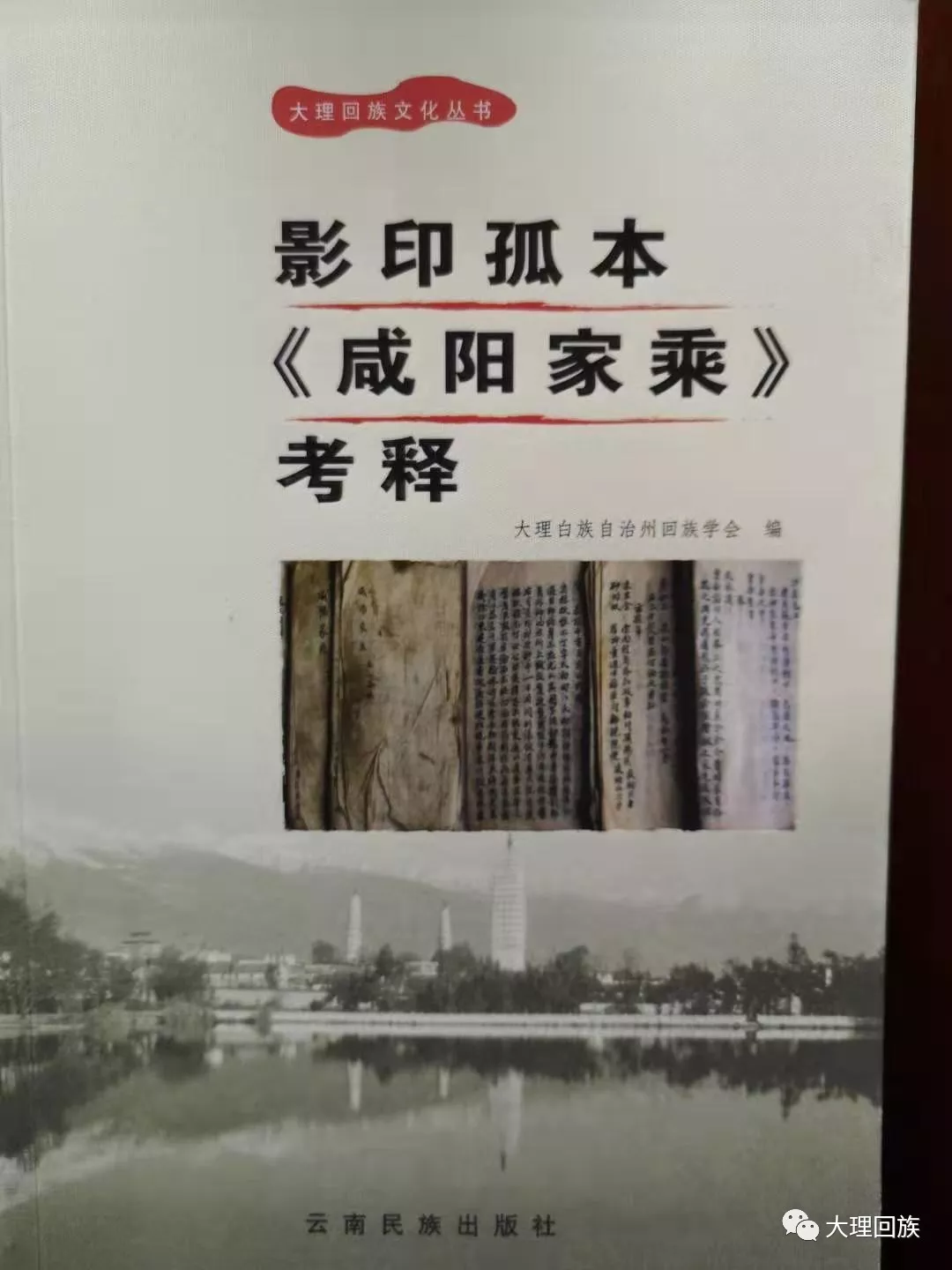
Abstract: This article organizes the key points of the original text "The Distribution and Organization of the Genealogy of Prince Xianyang Sayyid Ajjal: Yunnan Hui Genealogies, Sayyid Ajjal Descendants, and Family History," maintaining the original paragraph and image order. It is suitable for readers and researchers looking for long-tail keywords related to the Sayyid Ajjal genealogy, Yunnan Hui Muslims, and Hui clan records.
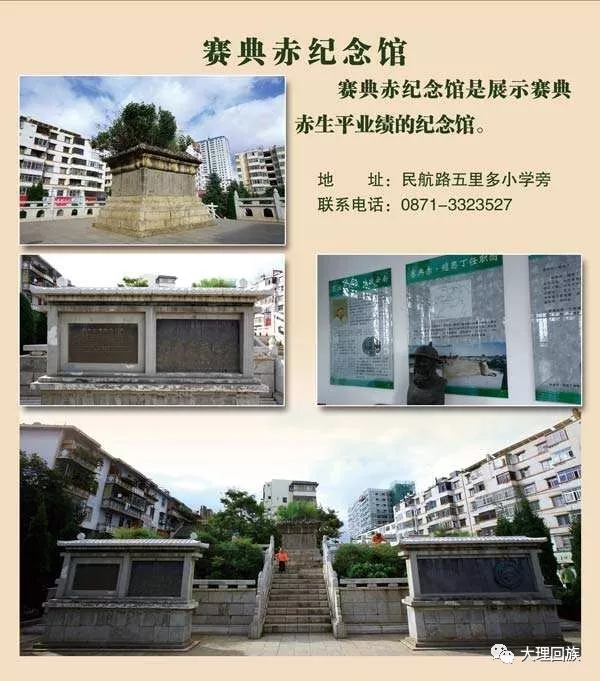
Ma Yingsheng
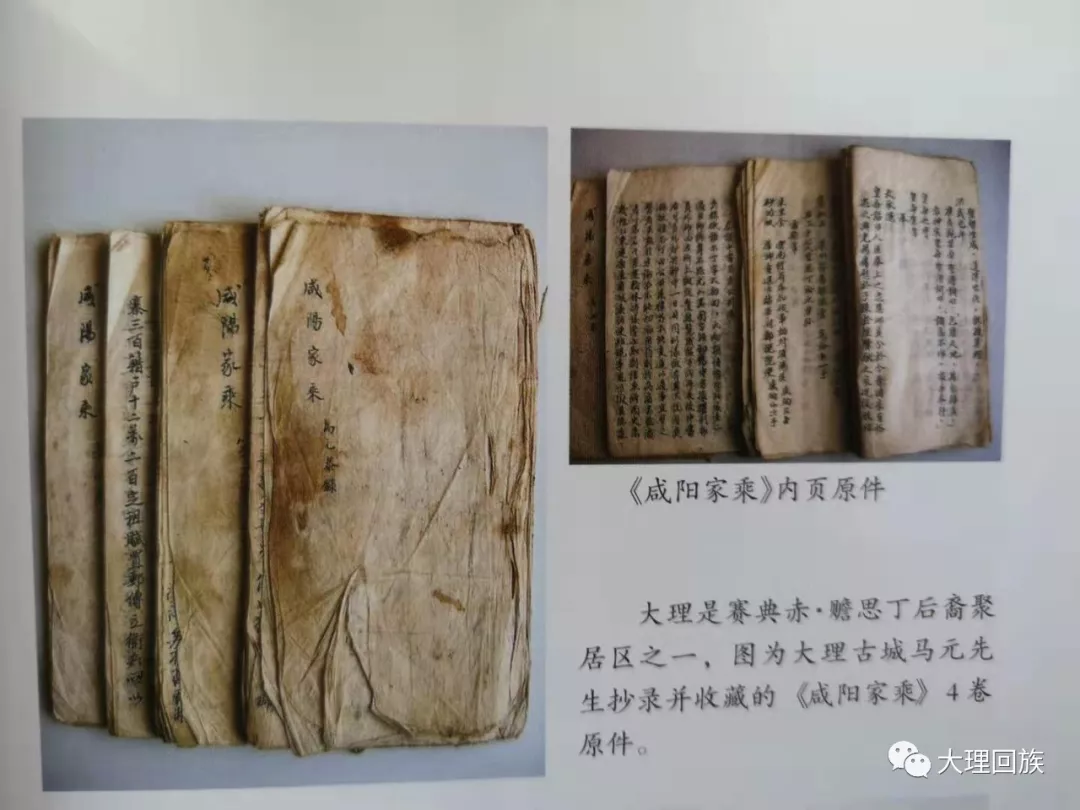
Genealogies are records documenting a single surname's lineage and the significant deeds of its figures. Using a specific format to record the lineage, biographical deeds, living environments, and local customs of a patrilineal blood-related family, they form an essential component of local gazetteers. The genealogy of Sayyid Ajjal records his family lineage along with the important figures and major events within his family. Hui Muslims entered Yunnan as early as the Tang and Song dynasties, but they primarily arrived during the Yuan dynasty alongside Sayyid Ajjal. His descendants spread throughout various regions of Yunnan and beyond the province, mainly comprising 16 surnames: Sha, Ma, Na, Hu, Qi, Jin, Mi, Sai, Ding, Sa, Ha, Su, Shan, Hu, Hai, and Bao. Over successive dynasties, several versions of family genealogies were compiled. A rough count of known versions circulating in Yunnan (excluding those outside the province) totals 9 versions. Below, we focus on introducing 5 versions that have been observed:
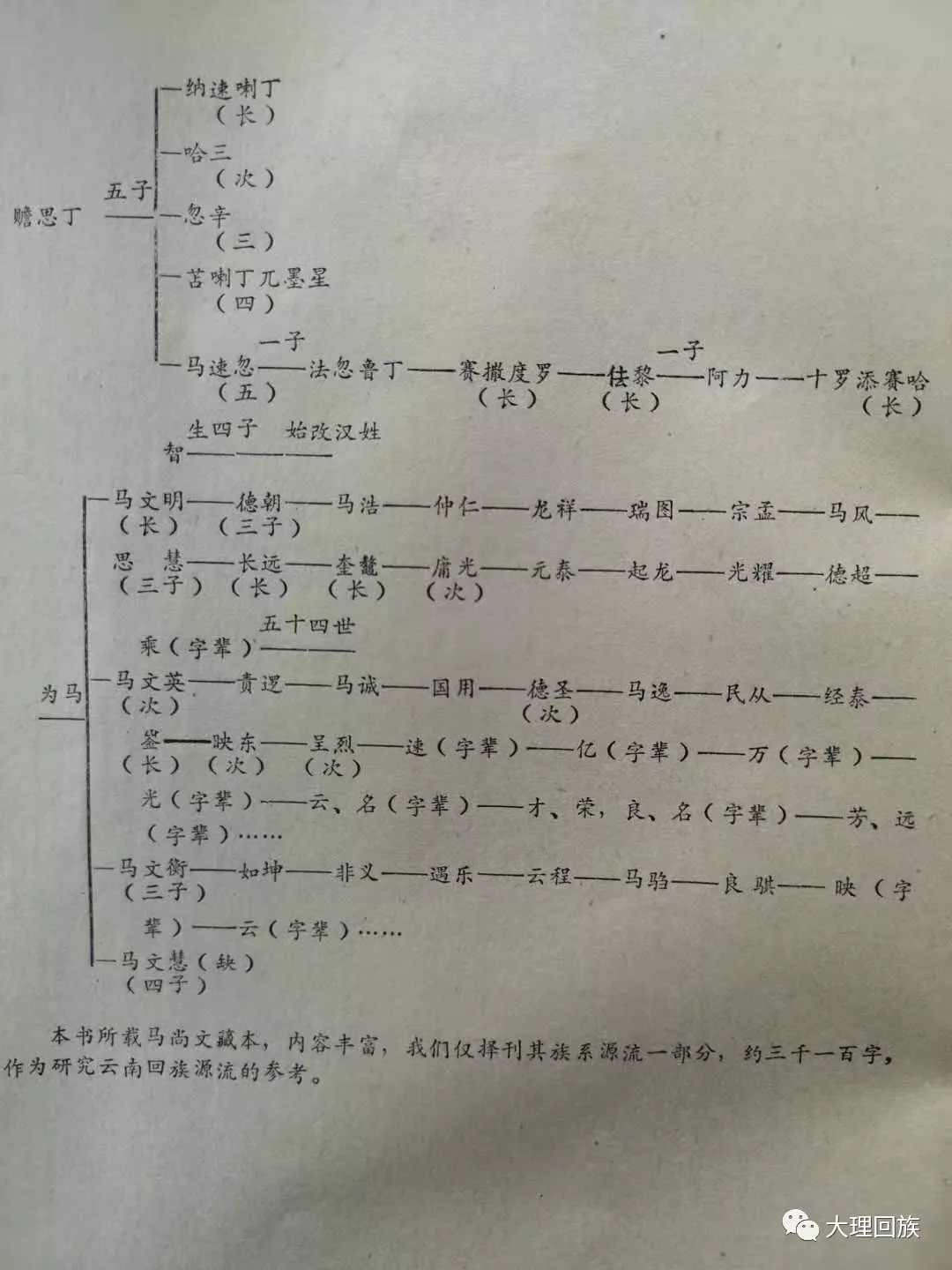
1. "Xianyang Family Genealogy", also known as "Dali Ma Surname Clan Lineage" or "Dali Ma Surname Genealogy"
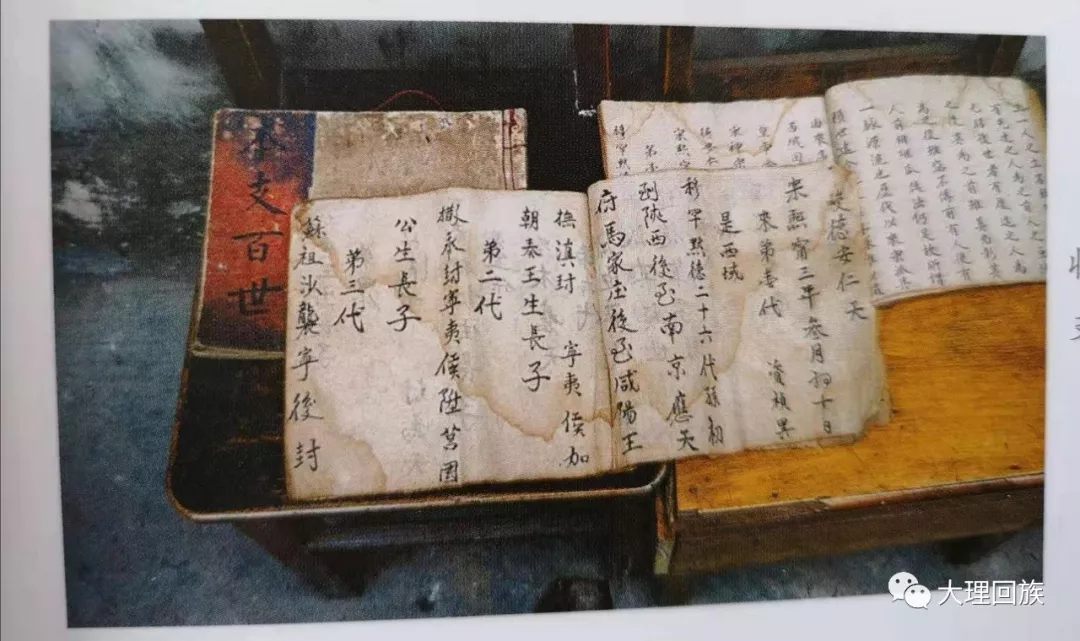
4 volumes; discovery location: Dali Ancient City; collection period: Republic of China era; collector: Mr. Ma Yuan (style name: Yibo), meticulously copied with a writing brush.
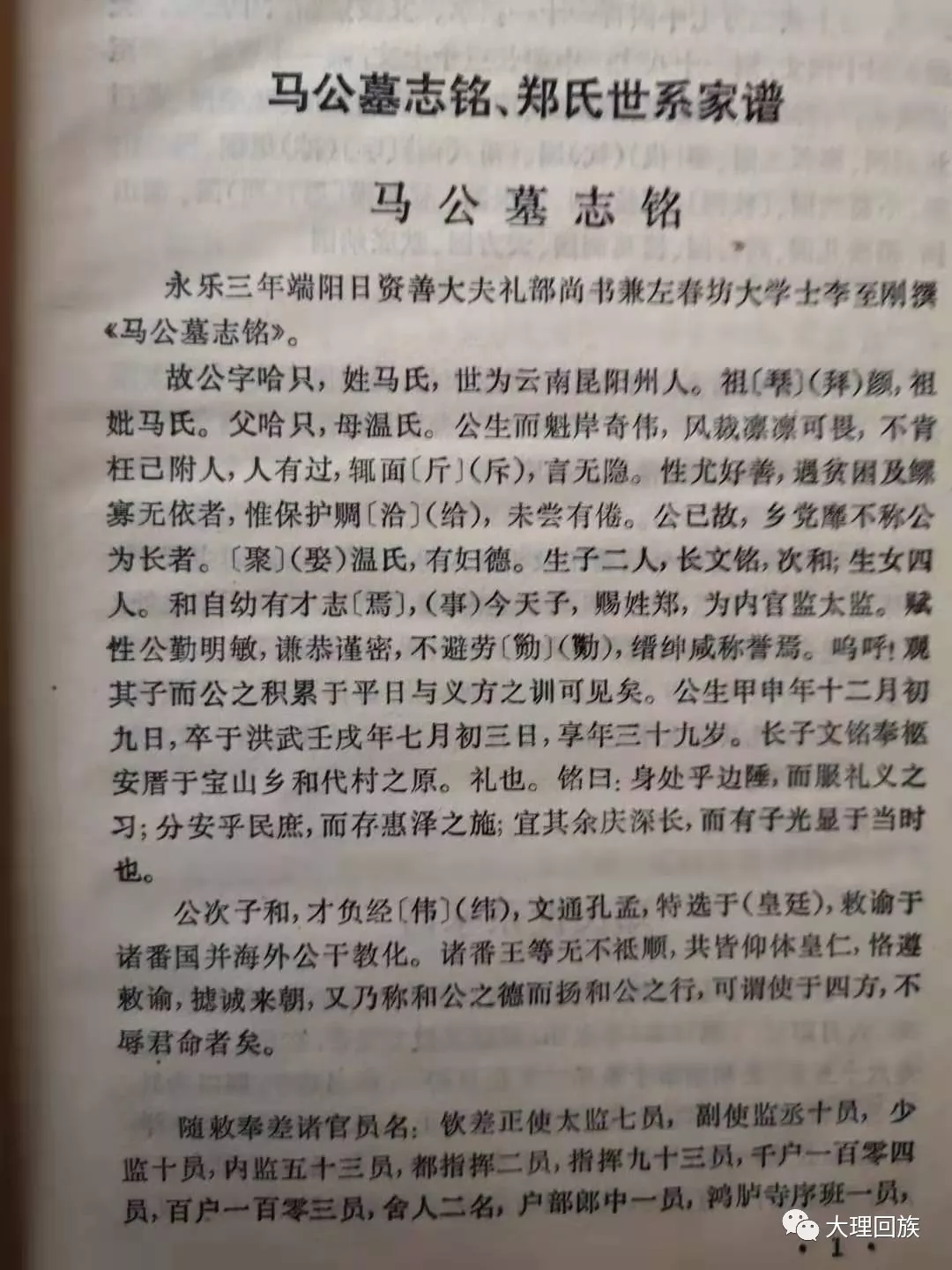
This genealogical record starts from the 26th descendant of the Prophet (Peace Be Upon Him), Suofeier, an Imperial Court Attendant King during the Song dynasty, extends to the 31st descendant, Sayyid Ajjal, in the Yuan dynasty, and continues through the 45th descendant, Ma Zhu, in the early Qing dynasty—compiled over eight generations. Beginning with the first ancestor, the Prophet Muhammad, it traces all the way down to the 47th Qing dynasty descendant, Ma Yingfang, spanning over 1,400 years. Its contents include the lineage from the first ancestor, the Prophet Muhammad, up to the 47th Qing descendant Ma Yingfang; the "General Preface to the Tombstone of Shams al-Din" and "Sayyid Ajjal's Achievements in Governing Yunnan" by the prominent Qing scholar Ma Zhu; eulogies by Emperor Taizong of the Tang and Emperor Taizu of the Ming; 6 imperial edicts from the first year of the Dade era of the Yuan dynasty; the prominent official posts held by Sai and his descendants; the settlement distribution of Sayyid Ajjal's 5 sons and 23 grandsons; and biographies of important figures. It serves as essential literature for studying Sayyid Ajjal, Yunnan history, Yunnan Hui history, and local gazetteers. Its origin is clear and its transmission well-documented; the Ming-dynasty Han scholar Shi Zhongbin recorded this genealogy in his authored book *Zhishen Lu*, demonstrating its authenticity and reliability.
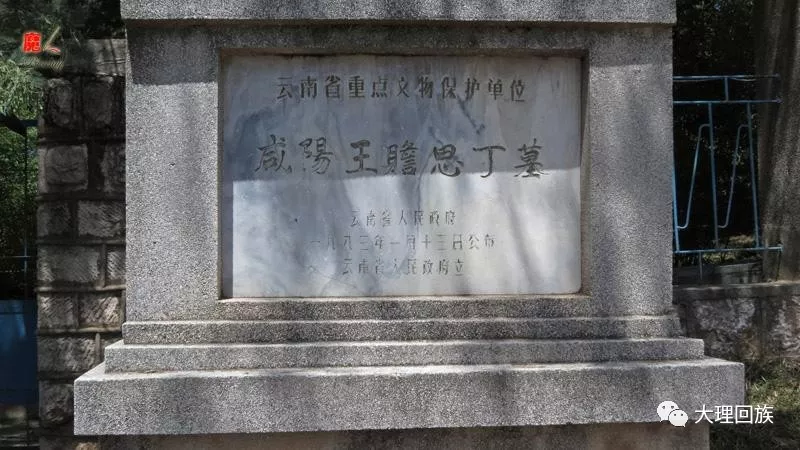
After being organized, collated, and annotated by the author, the "Xianyang Family Genealogy" was included in the Dali Hui Culture Series by the Dali Prefecture Hui Association and officially published in July 2010.
2. "Ma Family Genealogy"
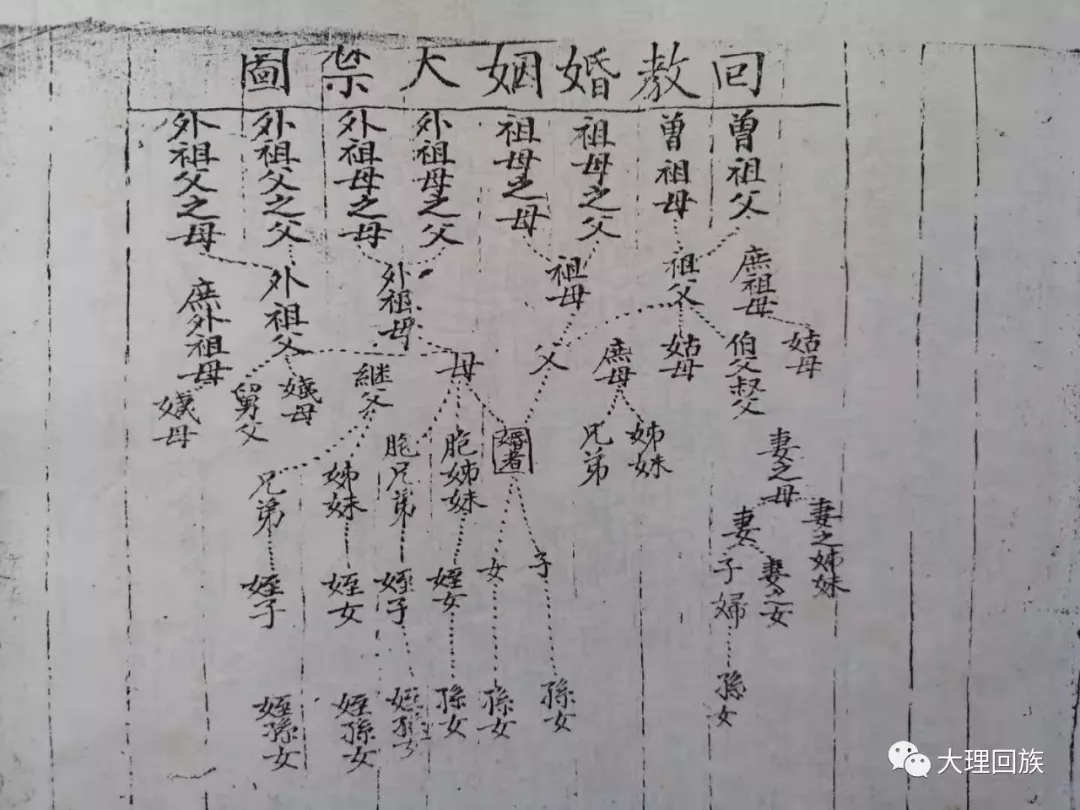
1 volume; discovery location: Dawei Geng, Weishan County; collection period: Republic of China era; collector: Mr. Ma Shangwen, handwritten manuscript with a writing brush. The cover reads: "In the 26th year of the Kangxi era of the Qing dynasty (1687, Dingmao year), the senior elder Ma Zhu of Yongchang took leave from the capital to return to Yunnan, gathering the clan to compile the genealogy." This volume was originally collected by Mr. Ma Yulin (style name: Shisheng) at the South Gate of Dali Ancient City, though it is unknown when it drifted to Weishan. The main contents of this volume include: *Tianfang Zhengxue* (Orthodox Islamic Learning), *Hui Jiao Hunyin Da Jin Tu* (Chart of Major Prohibitions in Islamic Marriage), *Tianfang Shijing Du Zan* (Readings and Praises of Islamic Classics), *Wushi Shi Guang* (Transmission Light of the Fiftieth Generation); lineage charts of the 55th–58th generations of descendants of Muhammad; charts of the ancestral origins of the lineage from Ibrahim to Isa; the Xianyang Family Lineage Record; genealogy lineages; the lineage of Ma Deling; "Sayyid Ajjal's Achievements in Governing Yunnan"; and supplementary notes. This family genealogy was discovered by faculty and students of the Chinese Department of the Yunnan Institute for Nationalities, who sent a photocopy to Mr. Lin Song at the Central University for Nationalities. Mr. Lin Song then passed it on to the Zheng He research expert Mr. Li Shihou, who included it in his edited book *Zheng He Family History Materials*, published by China Communications Press in 1985. Although both of the aforementioned genealogies originated from Dali Ancient City, their contents differ. The "Xianyang Family Genealogy" includes biographies of famous ministers such as Sayyid Ajjal, Nasrudin, Husain, Bayan, Manzilagatai, and Tuotuo, which the "Ma Family Genealogy" does not; conversely, the "Ma Family Genealogy" contains works like *Tianfang Zhengxue*, *Hui Jiao Hunyin Da Jin Tu*, *Tianfang Shijing Du Zan*, *Wushi Shi Guang*, and the origin charts of the lineage from Ibrahim to Isa, which are not included in the "Xianyang Family Genealogy."
3. "Sai Family General Clan Record", also known as "Sai Family Genealogy"
One volume; discovery location: Shiping County; compiled in the 28th year of the Qianlong era of the Qing dynasty (1763) by Sai Yu, the 14th descendant of Sayyid Ajjal, and proofread and supplemented in 1923 by Sai Hongbin; collector: Mr. Sha Rucheng (given name: Guozhen, commonly known by his style name) from Kunming. Main contents: Sayyid Ajjal Family Genealogy Treatise; an appendix on the True Sovereign of the White Emperor; the Sai Family Genealogy; appendices on historical imperial examination degrees and a collection of literary arts; imperial eulogies by Emperor Taizong of the Tang and the hundred-character holy title promulgated by Emperor Taizu of the Ming; the imperial eulogy "Sacrificial Text to Prince Xianyang Zhonghui Sai Gong" composed by Emperor Taizu of the Ming; the imperial eulogy "Sacrificial Text for the Imperial Edict Bestowing Honors on Yuan Pingzhang Political Affairs Official Sayyid Ajjal Shams al-Din" by Emperor Chengzu Wen; the "Sacrificial Text to Prince Xianyang Zhonghui Sai Gong" by the King of Annam; "Temple Inscription for Prince Xianyang" by Wang Chen; "Inscription for the Stele of the Newly Built Baogong Shrine" by Fan Chengxun; original couplets of the royal tomb; and "Record of the Expansion of the Front Pavilion and Rear Offering Hall before the Tomb of Prince Xianyang" by Jiang Yi. This was included in Mr. Li Shihou's book *Zheng He Family History Materials*, published by China Communications Press in 1985.
4. "Sayyid Ajjal Genealogy"
One volume; discovery location: Kunming; the genealogy preserved by Suofeier, the 26th descendant of the Prophet and Imperial Court Attendant King of the Song dynasty (titled *Western Origin Genealogy*), edited and compiled by the 31st descendant Sayyid Ajjal, revised by the 32nd descendant, Prince Zhongjian Husain, recompiled by the 33rd descendant, Prince Zhun Bayan, and revised and proofread four times during the Ming and Qing dynasties. During the Republic of China period, it was treasured in its original edition by Ma Dechao, the 53סט descendant and president of the Menghua (present-day Weishan) Association for Progress, and supplemented and published by the 53rd descendant Ma Yunhua. Collector: Mr. Sha Youxin, also known as Sha Rucheng (given name: Guozhen); "Youxin" is a name Mr. Sha adopted after the founding of the People's Republic of China.
Main contents: Ma Zhu's "General Preface to the Tombstone of Shams al-Din"; eulogies by Emperor Taizong of Tang, Emperor Shenzong of Song, and Emperor Taizu of Ming; Sayyid Ajjal's successive official positions and imperial bestowals; Ma Zhu's "Sayyid Ajjal's Achievements in Governing Yunnan"; supplementary examinations; the Xianyang Family Lineage Record; imperial edicts from successive dynasties; examinations of the western Yunnan branches; biographical sketches of Ma Zhu, Ma Dexin, and Ma Lianyuan; appendix: He Family Genealogy. This was included in *Zheng He Family History Materials* edited by Mr. Li Shihou, published by China Communications Press in 1985.
5. The Genealogy of Zheng He, Sixth-Generation Descendant of Sayyid Ajjal—*Zheng He Genealogy*
One volume; discovery location: Dongying, Beicheng, Yuxi; discovery date: 1936; collectors: Zheng Shaoming, Shaowen, Shaoen, and Shaoqing (four brothers).
In 1936, General Li Hongxiang of Yuxi advocated for the compilation of the county gazetteer and extensively solicited materials for it. Someone copied the *Zheng He Genealogy*—preserved by Zheng Shaoming and his brothers in Dongying Village, Yuxi—and presented it to Li Hongxiang. Recognizing its monumental significance, Li Hongxiang handed it over to the renowned scholar Yuan Jiagu. Yuan Jiagu entrusted it to his top disciple, Li Shihou, who authenticated it as an extant unique manuscript with tremendous historical value. Subsequently, Li Hongxiang, accompanied by Li Shihou, went to Dongying to borrow the original *Genealogy*. Upon authentication, the *Genealogy* was found to be backed with rice paper, printed with vermilion silk column border lines, and showed aged paper color, confirming it to be an artifact from the Ming dynasty.
Following meticulous textual research, Li Shihou authored the book *Textual Research and Commentary on the Zheng He Genealogy*, which was officially published in February 1937. After being photographed, the original *Genealogy* was stored in Wuhashan. In 1938, it was requested back to Yuxi by Zheng Shaoqing, and later borrowed by a man named Zheng Bai—who claimed to be a Zheng He descendant from Shadian—after which it went missing. Fortunately, Mr. Li Shihou retained a blueprint copy of the original *Genealogy*.
In June 2005, to commemorate the 600th anniversary of Zheng He's maritime voyages, Yunnan Chenguang Publishing House published the posthumous work of Mr. Li Shihou, *Facsimile Edition of the Original Zheng He Genealogy with Annotations*, making the blueprint originals and photographs preserved for over 60 years fully available to the public. The academic community was thrilled!
Main contents: The *Genealogy* begins recording from the first ancestor Zheng He, clarifying that Zheng He established his lineage by adopting the son of his elder brother Ma Wenming (named Zheng Ci), and continues all the way down to the 15th generation Zheng Yongsheng of the Qing dynasty, his sons the 16th generation Zheng Xingfu, Xinggui, and Xingwang, the 17th generation comprising the genealogy-preserving brothers Zheng Shaoming, and the 18th generation of contemporary brothers like Zheng Yunliang. This completely preserves the 600-year lineage of Zheng He's family, which is an extraordinary feat. At the same time, it provides a comprehensive interpretation of Zheng He's achievements and virtues, revealing two exclusive historical sources of great value. It represents yet another major discovery following the late-Qing discovery of the Mahazhi Stele in Yunnan.
Among the five Sayyid Ajjal family genealogies mentioned above, aside from Sai Yu's *Sai Family General Clan Record* and the *Zheng He Genealogy*, the *Xianyang Family Genealogy*, *Ma Family Genealogy*, and *Sayyid Ajjal Genealogy* share a common origin with divergent branches. They all stem from the *Western Origin Genealogy* preserved by Suofeier in the Song dynasty, compiled starting from Sayyid Ajjal in the Yuan dynasty, expanded and supplemented by Husain, Bayan, and Ma Zhu of the Ming and Qing dynasties, and finally revised by descendants after the Republic of China era. The difference lies in the varying focal points of their compiled contents, with each genealogy possessing its own unique characteristics. In addition, there is the Na Family Genealogy collected by Associate Professor Na Jufeng of Najaying; the He Family Genealogy of Xiaohui Village, Tonghai; the Sayyid Ajjal genealogy *Root Branches for a Hundred Generations* collected by Ma Saiheng of Dongying, Yuxi; and the *Sha Family Genealogy* of Dali. Whether due to not having seen the original manuscripts or because their contents are brief, they are not detailed here individually. Organizing and researching these genealogies holds great significance for our compilation of local gazetteers, village histories, and our ability to trace our sources and origins today.
Transcribed copy of the Ma Yunhua collection in Yongsheng Collapse Read »
The Distribution and Organization of the Genealogy of Prince Xianyang Sayyid Ajjal: Yunnan Hui Genealogies, Sayyid Ajjal Descendants, and Family History
Abstract: This article organizes the key points of the original text "The Distribution and Organization of the Genealogy of Prince Xianyang Sayyid Ajjal: Yunnan Hui Genealogies, Sayyid Ajjal Descendants, and Family History," maintaining the original paragraph and image order. It is suitable for readers and researchers looking for long-tail keywords related to the Sayyid Ajjal genealogy, Yunnan Hui Muslims, and Hui clan records.
Ma Yingsheng
Genealogies are records documenting a single surname's lineage and the significant deeds of its figures. Using a specific format to record the lineage, biographical deeds, living environments, and local customs of a patrilineal blood-related family, they form an essential component of local gazetteers. The genealogy of Sayyid Ajjal records his family lineage along with the important figures and major events within his family. Hui Muslims entered Yunnan as early as the Tang and Song dynasties, but they primarily arrived during the Yuan dynasty alongside Sayyid Ajjal. His descendants spread throughout various regions of Yunnan and beyond the province, mainly comprising 16 surnames: Sha, Ma, Na, Hu, Qi, Jin, Mi, Sai, Ding, Sa, Ha, Su, Shan, Hu, Hai, and Bao. Over successive dynasties, several versions of family genealogies were compiled. A rough count of known versions circulating in Yunnan (excluding those outside the province) totals 9 versions. Below, we focus on introducing 5 versions that have been observed:
1. "Xianyang Family Genealogy", also known as "Dali Ma Surname Clan Lineage" or "Dali Ma Surname Genealogy"
4 volumes; discovery location: Dali Ancient City; collection period: Republic of China era; collector: Mr. Ma Yuan (style name: Yibo), meticulously copied with a writing brush.
This genealogical record starts from the 26th descendant of the Prophet (Peace Be Upon Him), Suofeier, an Imperial Court Attendant King during the Song dynasty, extends to the 31st descendant, Sayyid Ajjal, in the Yuan dynasty, and continues through the 45th descendant, Ma Zhu, in the early Qing dynasty—compiled over eight generations. Beginning with the first ancestor, the Prophet Muhammad, it traces all the way down to the 47th Qing dynasty descendant, Ma Yingfang, spanning over 1,400 years. Its contents include the lineage from the first ancestor, the Prophet Muhammad, up to the 47th Qing descendant Ma Yingfang; the "General Preface to the Tombstone of Shams al-Din" and "Sayyid Ajjal's Achievements in Governing Yunnan" by the prominent Qing scholar Ma Zhu; eulogies by Emperor Taizong of the Tang and Emperor Taizu of the Ming; 6 imperial edicts from the first year of the Dade era of the Yuan dynasty; the prominent official posts held by Sai and his descendants; the settlement distribution of Sayyid Ajjal's 5 sons and 23 grandsons; and biographies of important figures. It serves as essential literature for studying Sayyid Ajjal, Yunnan history, Yunnan Hui history, and local gazetteers. Its origin is clear and its transmission well-documented; the Ming-dynasty Han scholar Shi Zhongbin recorded this genealogy in his authored book *Zhishen Lu*, demonstrating its authenticity and reliability.
After being organized, collated, and annotated by the author, the "Xianyang Family Genealogy" was included in the Dali Hui Culture Series by the Dali Prefecture Hui Association and officially published in July 2010.
2. "Ma Family Genealogy"
1 volume; discovery location: Dawei Geng, Weishan County; collection period: Republic of China era; collector: Mr. Ma Shangwen, handwritten manuscript with a writing brush. The cover reads: "In the 26th year of the Kangxi era of the Qing dynasty (1687, Dingmao year), the senior elder Ma Zhu of Yongchang took leave from the capital to return to Yunnan, gathering the clan to compile the genealogy." This volume was originally collected by Mr. Ma Yulin (style name: Shisheng) at the South Gate of Dali Ancient City, though it is unknown when it drifted to Weishan. The main contents of this volume include: *Tianfang Zhengxue* (Orthodox Islamic Learning), *Hui Jiao Hunyin Da Jin Tu* (Chart of Major Prohibitions in Islamic Marriage), *Tianfang Shijing Du Zan* (Readings and Praises of Islamic Classics), *Wushi Shi Guang* (Transmission Light of the Fiftieth Generation); lineage charts of the 55th–58th generations of descendants of Muhammad; charts of the ancestral origins of the lineage from Ibrahim to Isa; the Xianyang Family Lineage Record; genealogy lineages; the lineage of Ma Deling; "Sayyid Ajjal's Achievements in Governing Yunnan"; and supplementary notes. This family genealogy was discovered by faculty and students of the Chinese Department of the Yunnan Institute for Nationalities, who sent a photocopy to Mr. Lin Song at the Central University for Nationalities. Mr. Lin Song then passed it on to the Zheng He research expert Mr. Li Shihou, who included it in his edited book *Zheng He Family History Materials*, published by China Communications Press in 1985. Although both of the aforementioned genealogies originated from Dali Ancient City, their contents differ. The "Xianyang Family Genealogy" includes biographies of famous ministers such as Sayyid Ajjal, Nasrudin, Husain, Bayan, Manzilagatai, and Tuotuo, which the "Ma Family Genealogy" does not; conversely, the "Ma Family Genealogy" contains works like *Tianfang Zhengxue*, *Hui Jiao Hunyin Da Jin Tu*, *Tianfang Shijing Du Zan*, *Wushi Shi Guang*, and the origin charts of the lineage from Ibrahim to Isa, which are not included in the "Xianyang Family Genealogy."
3. "Sai Family General Clan Record", also known as "Sai Family Genealogy"
One volume; discovery location: Shiping County; compiled in the 28th year of the Qianlong era of the Qing dynasty (1763) by Sai Yu, the 14th descendant of Sayyid Ajjal, and proofread and supplemented in 1923 by Sai Hongbin; collector: Mr. Sha Rucheng (given name: Guozhen, commonly known by his style name) from Kunming. Main contents: Sayyid Ajjal Family Genealogy Treatise; an appendix on the True Sovereign of the White Emperor; the Sai Family Genealogy; appendices on historical imperial examination degrees and a collection of literary arts; imperial eulogies by Emperor Taizong of the Tang and the hundred-character holy title promulgated by Emperor Taizu of the Ming; the imperial eulogy "Sacrificial Text to Prince Xianyang Zhonghui Sai Gong" composed by Emperor Taizu of the Ming; the imperial eulogy "Sacrificial Text for the Imperial Edict Bestowing Honors on Yuan Pingzhang Political Affairs Official Sayyid Ajjal Shams al-Din" by Emperor Chengzu Wen; the "Sacrificial Text to Prince Xianyang Zhonghui Sai Gong" by the King of Annam; "Temple Inscription for Prince Xianyang" by Wang Chen; "Inscription for the Stele of the Newly Built Baogong Shrine" by Fan Chengxun; original couplets of the royal tomb; and "Record of the Expansion of the Front Pavilion and Rear Offering Hall before the Tomb of Prince Xianyang" by Jiang Yi. This was included in Mr. Li Shihou's book *Zheng He Family History Materials*, published by China Communications Press in 1985.
4. "Sayyid Ajjal Genealogy"
One volume; discovery location: Kunming; the genealogy preserved by Suofeier, the 26th descendant of the Prophet and Imperial Court Attendant King of the Song dynasty (titled *Western Origin Genealogy*), edited and compiled by the 31st descendant Sayyid Ajjal, revised by the 32nd descendant, Prince Zhongjian Husain, recompiled by the 33rd descendant, Prince Zhun Bayan, and revised and proofread four times during the Ming and Qing dynasties. During the Republic of China period, it was treasured in its original edition by Ma Dechao, the 53סט descendant and president of the Menghua (present-day Weishan) Association for Progress, and supplemented and published by the 53rd descendant Ma Yunhua. Collector: Mr. Sha Youxin, also known as Sha Rucheng (given name: Guozhen); "Youxin" is a name Mr. Sha adopted after the founding of the People's Republic of China.
Main contents: Ma Zhu's "General Preface to the Tombstone of Shams al-Din"; eulogies by Emperor Taizong of Tang, Emperor Shenzong of Song, and Emperor Taizu of Ming; Sayyid Ajjal's successive official positions and imperial bestowals; Ma Zhu's "Sayyid Ajjal's Achievements in Governing Yunnan"; supplementary examinations; the Xianyang Family Lineage Record; imperial edicts from successive dynasties; examinations of the western Yunnan branches; biographical sketches of Ma Zhu, Ma Dexin, and Ma Lianyuan; appendix: He Family Genealogy. This was included in *Zheng He Family History Materials* edited by Mr. Li Shihou, published by China Communications Press in 1985.
5. The Genealogy of Zheng He, Sixth-Generation Descendant of Sayyid Ajjal—*Zheng He Genealogy*
One volume; discovery location: Dongying, Beicheng, Yuxi; discovery date: 1936; collectors: Zheng Shaoming, Shaowen, Shaoen, and Shaoqing (four brothers).
In 1936, General Li Hongxiang of Yuxi advocated for the compilation of the county gazetteer and extensively solicited materials for it. Someone copied the *Zheng He Genealogy*—preserved by Zheng Shaoming and his brothers in Dongying Village, Yuxi—and presented it to Li Hongxiang. Recognizing its monumental significance, Li Hongxiang handed it over to the renowned scholar Yuan Jiagu. Yuan Jiagu entrusted it to his top disciple, Li Shihou, who authenticated it as an extant unique manuscript with tremendous historical value. Subsequently, Li Hongxiang, accompanied by Li Shihou, went to Dongying to borrow the original *Genealogy*. Upon authentication, the *Genealogy* was found to be backed with rice paper, printed with vermilion silk column border lines, and showed aged paper color, confirming it to be an artifact from the Ming dynasty.
Following meticulous textual research, Li Shihou authored the book *Textual Research and Commentary on the Zheng He Genealogy*, which was officially published in February 1937. After being photographed, the original *Genealogy* was stored in Wuhashan. In 1938, it was requested back to Yuxi by Zheng Shaoqing, and later borrowed by a man named Zheng Bai—who claimed to be a Zheng He descendant from Shadian—after which it went missing. Fortunately, Mr. Li Shihou retained a blueprint copy of the original *Genealogy*.
In June 2005, to commemorate the 600th anniversary of Zheng He's maritime voyages, Yunnan Chenguang Publishing House published the posthumous work of Mr. Li Shihou, *Facsimile Edition of the Original Zheng He Genealogy with Annotations*, making the blueprint originals and photographs preserved for over 60 years fully available to the public. The academic community was thrilled!
Main contents: The *Genealogy* begins recording from the first ancestor Zheng He, clarifying that Zheng He established his lineage by adopting the son of his elder brother Ma Wenming (named Zheng Ci), and continues all the way down to the 15th generation Zheng Yongsheng of the Qing dynasty, his sons the 16th generation Zheng Xingfu, Xinggui, and Xingwang, the 17th generation comprising the genealogy-preserving brothers Zheng Shaoming, and the 18th generation of contemporary brothers like Zheng Yunliang. This completely preserves the 600-year lineage of Zheng He's family, which is an extraordinary feat. At the same time, it provides a comprehensive interpretation of Zheng He's achievements and virtues, revealing two exclusive historical sources of great value. It represents yet another major discovery following the late-Qing discovery of the Mahazhi Stele in Yunnan.
Among the five Sayyid Ajjal family genealogies mentioned above, aside from Sai Yu's *Sai Family General Clan Record* and the *Zheng He Genealogy*, the *Xianyang Family Genealogy*, *Ma Family Genealogy*, and *Sayyid Ajjal Genealogy* share a common origin with divergent branches. They all stem from the *Western Origin Genealogy* preserved by Suofeier in the Song dynasty, compiled starting from Sayyid Ajjal in the Yuan dynasty, expanded and supplemented by Husain, Bayan, and Ma Zhu of the Ming and Qing dynasties, and finally revised by descendants after the Republic of China era. The difference lies in the varying focal points of their compiled contents, with each genealogy possessing its own unique characteristics. In addition, there is the Na Family Genealogy collected by Associate Professor Na Jufeng of Najaying; the He Family Genealogy of Xiaohui Village, Tonghai; the Sayyid Ajjal genealogy *Root Branches for a Hundred Generations* collected by Ma Saiheng of Dongying, Yuxi; and the *Sha Family Genealogy* of Dali. Whether due to not having seen the original manuscripts or because their contents are brief, they are not detailed here individually. Organizing and researching these genealogies holds great significance for our compilation of local gazetteers, village histories, and our ability to trace our sources and origins today.
Transcribed copy of the Ma Yunhua collection in Yongsheng Collapse Read »
The Early 20th-Century Cultural Movement of Yunnan's Hui Muslims: Education, Print, and Modern Transformation (Part 2)
The translation of the Quran in Yunnan can be traced back as early as the mid-19th century. The famous Qing-dynasty Hui scholar Ma Fuchou and his student Ma Anli jointly translated 'Baoming Zhenjing Zhijie' (Direct Explanation of the Precious Decree Quran). Tradition has it that 20 volumes were translated, but only 5 volumes of the manuscript have survived. These five installments were serialized in 'Qingzhen Duobao' and also published as standalone volumes. In the late 19th century, the renowned Islamic scholar Ma Lianyuan translated a selection of Quranic verses titled 'Haiting Yijie' (Exegesis of Quranic Selections), which was published in Kunming. Entering the 1930s, Mr. Ma Jian, then studying in Shanghai, began experimenting with translating the Quran. The inaugural issue of Shanghai's 'Islamic Student Magazine' published his translation of the first volume, titled 'Guoyu Quran' (Mandarin Quran). After studying in Egypt for eight years and completing his education, Mr. Ma Jian was specially welcomed from Hong Kong to Shanghai by his revered teacher, Grand Imam Ha Decheng, to begin the monumental project of translating the entire Quran. Working in modern Chinese, he translated nine volumes over the course of 14 months. Just then, the Pacific War broke out, and the isolated territory (the Shanghai Foreign Concessions) fell. Mr. Ma Jian was forced to flee Shanghai and return to his hometown of Shadian, where he continued his translation work while teaching. Before long, Grand Imam Ha Decheng also traveled thousands of miles to Shadian specifically for the translation project. During his stay in Shadian, Imam Ha worked alongside teacher Ma Yuanqing every day, with the three of them discussing, deliberating, and refining the Quranic manuscript together. The meticulous scene of their repeated pondering and strict attention to detail remained vivid in the memories of Yangzheng students, becoming a cherished piece of history. By the time Imam Ha passed away (returned to Allah), Mr. Ma Jian had translated 20 volumes. However, the formal publication of Ma's Quran translation by the China Social Sciences Press did not take place until the 1980s. During those intervening years, Mr. Ma Jian poured his heart and soul into the work, expending an immeasurable amount of energy. 'Ten years of arduous and extraordinary labor'—it can be said that among Chinese translations of the Quran, Ma's translation is the one that took the longest to complete, achieved the highest circulation, and exerted the widest influence.
As for the translation of Hadith literature, during the 1920s and 1930s, the Niujie Mosque Bookstore in Beiping published a book titled 'Shengxun Sizhang' (Forty Hadiths). The Capital Ethnic Culture Museum still preserves and exhibits this translation. The translator was Grand Imam Ma Ruitu.
2. Translations of Classical Arabic Masterworks and Religious Texts
During this period, a vast number of classic Arabic masterworks and religious scriptures were continuously translated, published, and introduced to Muslims nationwide through the diligent writing of students who studied in Egypt and prominent imams, with people eagerly competing to buy and read them. At this time, Yunnan's entire translation scene blossomed like spring, bearing abundant fruit. The works of various translators are introduced below.
Mr. Ma Jian translated: 'Huiqiao Zhexue' (Islamic Philosophy, Commercial Press, 1934), 'Huiqiao Zhenxiang' (The Truth of Islam, Commercial Press, 1937), 'Huiqiao Jiduojiao yu Xueshu Wenhua' (Islam, Christianity, and Academic Culture, Shanghai Islamic Bookstore, 1936), 'Huizu Jiaoyushi' (History of Hui Education, Commercial Press, 1941), 'Huizu Zhexueshi' (History of Hui Philosophy, Commercial Press, 1944), 'Quran', Volume 1 (Peking University Press, 1949), and 'Jiaoyixue Dagang' (Outline of Dogmatics, published in Kunming, 1945).
Mr. Na Zhong translated: 'Yisilanjiao' (Islam, Chengda Normal School Publishing Department, 1934), 'Yisilan yu Alatbo Wenming' (Islam and Arab Civilization, Commercial Press, 1937), 'Huiqiao Xueshu Sixiangshi' (History of Islamic Academic Thought, Commercial Press, 1948), 'Alabo Wenmingshi' (History of Arab Civilization, Commercial Press, 1948), and 'Huiqiao Zhuguo Wenhuashi' (Cultural History of Islamic Nations, Kunming Minyi Daily Press, 1948).
Mr. Na Xun translated: 'Tianfang Yetan' (One Thousand and One Nights, Commercial Press, 1947).
Mr. Lin Zhongming translated: 'Huiqiao Lishi Jiaoketu' (Islamic History Textbook, Shanghai China Islamic Bookstore, 1935).
Mr. Ma Junwu translated: 'Alabo Ertong Gushi' (Arab Children's Stories, Shanghai World Book Company).
Mr. Lin Xingzhi translated: 'Huiqiao Jichengfa yu Qita Jichengfa zhi Bijiao' (Comparison of Islamic Inheritance Law with Other Inheritance Laws, Commercial Press, 1946).
The 'Number One Horse of Southern Yunnan' — Grand Imam Ma Ruitu
Grand Imam Ma Ruitu translated: 'Huiqiao Renyilun' (Islamic Monotheism, Zhonghua Book Company, 1931) and 'Muhammede de Moxi' (The Revelations of Muhammad, Zhonghua Book Company, 1934).
3. Research and Publications on Chinese Hui History
During the War of Resistance, the renowned historian and specialist in Hui and Islamic history, Mr. Bai Shouyi, evacuated to Yunnan. In addition to teaching in middle schools and universities, Mr. Bai devoted all his energy to investigating and researching the history of Yunnan's Hui Muslims, achieving remarkable results. He authored 'Zhongguo Huiqiao Xiaoshi' (A Brief History of Chinese Islam, Chongqing Commercial Press, 1944) and 'Zhongguo Yisilanshi Gangyao' (Outline of Chinese Islamic History, Wentong Book Company, 1946).
Additionally, Professor Fu Tongxian from Chengjie, who studied in the United States, authored the book 'Zhongguo Huiqiao Shi' (History of Chinese Islam), published by the Commercial Press in 1940.
Grand Imam Sha Ping'an, along with elderly gentleman Ma Guanzheng and Mr. Ma Shengfeng, collected and organized source materials on the Qing-dynasty Muslim uprisings, providing foundational materials later utilized by Professor Bai Shouyi during the War of Resistance when compiling 'Xiantong Dianbian Jianwenlu' (Records of Seen and Heard Events during the Xianfeng and Tongzhi Eras in Yunnan).
4. Collecting and organizing Chinese Islamic translations and commentaries dating from the Ming and Qing dynasties onwards, such as works by Ma Zhu and Ma Fuchou, including 'Qingzhen Zhinan' (Guide to Purity), 'Sidian Yaohui' (Essential Assemblies of the Four Canons), 'Dahua Zonggui' (The Ultimate Return to the Great Transformation), and 'Zhutian Dazuang' (Grand Praises to the Heavens).
5. Publishing and Distributing Islamic Texts
One of the main missions of the Yunnan Branch of the Zhenxue Society (Islamic Progress Society) was publishing and distributing various Chinese translations and religious texts, with specific sales handled by the Lihechang Leather Shop on Shuncheng Street. Grand Imam Sha Ping'an self-funded the establishment of the Tianfang Bookstore, which published works like *Qianfeiye* (Arabic Grammar), *Mentai Xige* (Islamic jurisprudence), and *Heewayi Tubiao* (Islamic tables and charts), making massive contributions to the educational and cultural development of Hui Muslims.
6. Sending Outstanding Students Abroad to Study
In the early 1930s, an Iranian scholar named Dazhang came to Yunnan and stayed at the Nancheng Mosque in Kunming. This scholar was said to have memorized *Qianfeiye* (Arabic Grammar) and was extremely knowledgeable. After examining the state of traditional *jingtang jiaoyu* (mosque-based education) in Yunnan at the time and finding it lacking, he suggested to the Yunnan Branch of the Zhenxue Society that students be dispatched to the Arab world's highest seat of learning, Al-Azhar University, to cultivate high-level specialized talent. Dazhang also enthusiastically helped write to Al-Azhar to apply for the admission of Chinese students. The university authorities replied promptly, agreeing to admit ten students sent from Yunnan. In November 1931, the Yunnan Branch of the Zhenxue Society selected Na Zhong (style name: Zijizhi), Zhang Youcheng (style name: Ziren), and Lin Zhongming (style name: Zimin), along with Ma Jian (style name: Zishi) from the Shanghai Islamic Normal School. Led by Mr. Sha Rucheng, the disciplinary director of Kunming's Mingde Middle School, these four formed the student delegation to Egypt, traveling via Haiphong in Annam (now Vietnam) and crossing the ocean to study in Egypt. This was China's first batch of students studying in Egypt. Since the Qing Dynasty, Islamic scholars in our province had a tradition of combining the Hajj pilgrimage with studying abroad, such as the elder masters Ma Fuchu and Ma Lianyuan. Following in their footsteps, Chinese students in Egypt formed the Chinese Egyptian Student Hajj Delegation in 1938 to travel to Saudi Arabia and actively carry out anti-Japanese propaganda activities, shattering Japanese imperialist international propaganda and conspiracies. The entire group of students in Egypt thus fulfilled their dual aspirations of studying abroad and performing the Hajj.
The third batch of students sent to Egypt was organized by Yunnan and consisted of three individuals: Na Xun (style name: Heng, in 1934), Lin Xinghua (style name: Gengyu), and Ma Junwu (style name: Xingzhou). That same year, the fifth batch sent by the Shanghai Islamic Normal School included two Yunnan natives among its five members: Lin Xingzhi (Lin Xinghua's younger brother, style name: Fengwu) and Ma Youlian (style name: Jiqing).
In May 1933, the Al-Azhar Chinese Student Department was established, and Sha Rucheng was appointed as its director, taking full charge of administrative affairs concerning Chinese Hui Muslim students studying in Egypt. While in Egypt, Director Sha was admitted to the Department of Education at the American University in Cairo for advanced studies, earning his master's degree in 1938.
From 1931 to 1940, the number of Chinese Hui Muslim students studying in Egypt reached 48. Together with the two directors, Sha Rucheng and Pang Shiqian, the total reached 50. Yunnan accounted for 10 of these students, making up 20%. During their time abroad, Yunnan's students already had translation works published, and upon returning home after completing their studies, they made monumental contributions to the nation and their ethnic community. For instance, while in Egypt, Mr. Ma Jian translated the Confucian classic *The Analects* into Arabic, which was published by the Fugu Bookstore in Cairo, spreading ancient Chinese culture to the Arab world for the first time. Similarly, Mr. Na Xun introduced ancient and modern Chinese literary masterpieces such as *The Collector of Poisonous Snakes*, *The Kite*, and *Thunderstorm* to the Arab people, playing a vital role in bridging Chinese and Arab cultures.
In 1946, Mr. Ma Jian accepted an invitation from Peking University to teach in the Department of Oriental Languages, where he established the Arabic language major. Later on, Mr. Na Zhong, Mr. Lin Zhongming, and Mr. Lin Xinghua joined forces to teach at Beijing Foreign Studies University, where they founded the Arabic Department. They poured their hearts and efforts into establishing Arabic language majors in contemporary Chinese universities, blazing a trail through hardship and becoming the pioneers of new China's Arabic education.
Through the hard work and dedication of Muslims across the province, and by overcoming various challenges, the New Culture Movement among Yunnan's Hui Muslims played a positive role in cultivating talent, spreading ideas, raising cultural standards, promoting Sino-Arab cultural exchange, and enhancing the general public's understanding of Islam.
References
"History of Islam", edited by Jin Yijiu, Jiangsu People's Publishing House
"History of the Hui Muslims in Yunnan", edited by Yang Zhaojun, Yunnan Nationalities Publishing House
"History of the Hui Muslims in Dali", compiled by the Dali Prefecture Hui Muslim Association, Yunnan Nationalities Publishing House
"Islamic Duobao (Islamic Bell Newspaper)"
"Encyclopedia of Islam in China", Sichuan Lexicographical Publishing House
"Dictionary of Chinese Hui Muslims", edited by Qiu Shusen, Jiangsu Ancient Books Publishing House Collapse Read »
As for the translation of Hadith literature, during the 1920s and 1930s, the Niujie Mosque Bookstore in Beiping published a book titled 'Shengxun Sizhang' (Forty Hadiths). The Capital Ethnic Culture Museum still preserves and exhibits this translation. The translator was Grand Imam Ma Ruitu.
2. Translations of Classical Arabic Masterworks and Religious Texts
During this period, a vast number of classic Arabic masterworks and religious scriptures were continuously translated, published, and introduced to Muslims nationwide through the diligent writing of students who studied in Egypt and prominent imams, with people eagerly competing to buy and read them. At this time, Yunnan's entire translation scene blossomed like spring, bearing abundant fruit. The works of various translators are introduced below.
Mr. Ma Jian translated: 'Huiqiao Zhexue' (Islamic Philosophy, Commercial Press, 1934), 'Huiqiao Zhenxiang' (The Truth of Islam, Commercial Press, 1937), 'Huiqiao Jiduojiao yu Xueshu Wenhua' (Islam, Christianity, and Academic Culture, Shanghai Islamic Bookstore, 1936), 'Huizu Jiaoyushi' (History of Hui Education, Commercial Press, 1941), 'Huizu Zhexueshi' (History of Hui Philosophy, Commercial Press, 1944), 'Quran', Volume 1 (Peking University Press, 1949), and 'Jiaoyixue Dagang' (Outline of Dogmatics, published in Kunming, 1945).
Mr. Na Zhong translated: 'Yisilanjiao' (Islam, Chengda Normal School Publishing Department, 1934), 'Yisilan yu Alatbo Wenming' (Islam and Arab Civilization, Commercial Press, 1937), 'Huiqiao Xueshu Sixiangshi' (History of Islamic Academic Thought, Commercial Press, 1948), 'Alabo Wenmingshi' (History of Arab Civilization, Commercial Press, 1948), and 'Huiqiao Zhuguo Wenhuashi' (Cultural History of Islamic Nations, Kunming Minyi Daily Press, 1948).
Mr. Na Xun translated: 'Tianfang Yetan' (One Thousand and One Nights, Commercial Press, 1947).
Mr. Lin Zhongming translated: 'Huiqiao Lishi Jiaoketu' (Islamic History Textbook, Shanghai China Islamic Bookstore, 1935).
Mr. Ma Junwu translated: 'Alabo Ertong Gushi' (Arab Children's Stories, Shanghai World Book Company).
Mr. Lin Xingzhi translated: 'Huiqiao Jichengfa yu Qita Jichengfa zhi Bijiao' (Comparison of Islamic Inheritance Law with Other Inheritance Laws, Commercial Press, 1946).
The 'Number One Horse of Southern Yunnan' — Grand Imam Ma Ruitu
Grand Imam Ma Ruitu translated: 'Huiqiao Renyilun' (Islamic Monotheism, Zhonghua Book Company, 1931) and 'Muhammede de Moxi' (The Revelations of Muhammad, Zhonghua Book Company, 1934).
3. Research and Publications on Chinese Hui History
During the War of Resistance, the renowned historian and specialist in Hui and Islamic history, Mr. Bai Shouyi, evacuated to Yunnan. In addition to teaching in middle schools and universities, Mr. Bai devoted all his energy to investigating and researching the history of Yunnan's Hui Muslims, achieving remarkable results. He authored 'Zhongguo Huiqiao Xiaoshi' (A Brief History of Chinese Islam, Chongqing Commercial Press, 1944) and 'Zhongguo Yisilanshi Gangyao' (Outline of Chinese Islamic History, Wentong Book Company, 1946).
Additionally, Professor Fu Tongxian from Chengjie, who studied in the United States, authored the book 'Zhongguo Huiqiao Shi' (History of Chinese Islam), published by the Commercial Press in 1940.
Grand Imam Sha Ping'an, along with elderly gentleman Ma Guanzheng and Mr. Ma Shengfeng, collected and organized source materials on the Qing-dynasty Muslim uprisings, providing foundational materials later utilized by Professor Bai Shouyi during the War of Resistance when compiling 'Xiantong Dianbian Jianwenlu' (Records of Seen and Heard Events during the Xianfeng and Tongzhi Eras in Yunnan).
4. Collecting and organizing Chinese Islamic translations and commentaries dating from the Ming and Qing dynasties onwards, such as works by Ma Zhu and Ma Fuchou, including 'Qingzhen Zhinan' (Guide to Purity), 'Sidian Yaohui' (Essential Assemblies of the Four Canons), 'Dahua Zonggui' (The Ultimate Return to the Great Transformation), and 'Zhutian Dazuang' (Grand Praises to the Heavens).
5. Publishing and Distributing Islamic Texts
One of the main missions of the Yunnan Branch of the Zhenxue Society (Islamic Progress Society) was publishing and distributing various Chinese translations and religious texts, with specific sales handled by the Lihechang Leather Shop on Shuncheng Street. Grand Imam Sha Ping'an self-funded the establishment of the Tianfang Bookstore, which published works like *Qianfeiye* (Arabic Grammar), *Mentai Xige* (Islamic jurisprudence), and *Heewayi Tubiao* (Islamic tables and charts), making massive contributions to the educational and cultural development of Hui Muslims.
6. Sending Outstanding Students Abroad to Study
In the early 1930s, an Iranian scholar named Dazhang came to Yunnan and stayed at the Nancheng Mosque in Kunming. This scholar was said to have memorized *Qianfeiye* (Arabic Grammar) and was extremely knowledgeable. After examining the state of traditional *jingtang jiaoyu* (mosque-based education) in Yunnan at the time and finding it lacking, he suggested to the Yunnan Branch of the Zhenxue Society that students be dispatched to the Arab world's highest seat of learning, Al-Azhar University, to cultivate high-level specialized talent. Dazhang also enthusiastically helped write to Al-Azhar to apply for the admission of Chinese students. The university authorities replied promptly, agreeing to admit ten students sent from Yunnan. In November 1931, the Yunnan Branch of the Zhenxue Society selected Na Zhong (style name: Zijizhi), Zhang Youcheng (style name: Ziren), and Lin Zhongming (style name: Zimin), along with Ma Jian (style name: Zishi) from the Shanghai Islamic Normal School. Led by Mr. Sha Rucheng, the disciplinary director of Kunming's Mingde Middle School, these four formed the student delegation to Egypt, traveling via Haiphong in Annam (now Vietnam) and crossing the ocean to study in Egypt. This was China's first batch of students studying in Egypt. Since the Qing Dynasty, Islamic scholars in our province had a tradition of combining the Hajj pilgrimage with studying abroad, such as the elder masters Ma Fuchu and Ma Lianyuan. Following in their footsteps, Chinese students in Egypt formed the Chinese Egyptian Student Hajj Delegation in 1938 to travel to Saudi Arabia and actively carry out anti-Japanese propaganda activities, shattering Japanese imperialist international propaganda and conspiracies. The entire group of students in Egypt thus fulfilled their dual aspirations of studying abroad and performing the Hajj.
The third batch of students sent to Egypt was organized by Yunnan and consisted of three individuals: Na Xun (style name: Heng, in 1934), Lin Xinghua (style name: Gengyu), and Ma Junwu (style name: Xingzhou). That same year, the fifth batch sent by the Shanghai Islamic Normal School included two Yunnan natives among its five members: Lin Xingzhi (Lin Xinghua's younger brother, style name: Fengwu) and Ma Youlian (style name: Jiqing).
In May 1933, the Al-Azhar Chinese Student Department was established, and Sha Rucheng was appointed as its director, taking full charge of administrative affairs concerning Chinese Hui Muslim students studying in Egypt. While in Egypt, Director Sha was admitted to the Department of Education at the American University in Cairo for advanced studies, earning his master's degree in 1938.
From 1931 to 1940, the number of Chinese Hui Muslim students studying in Egypt reached 48. Together with the two directors, Sha Rucheng and Pang Shiqian, the total reached 50. Yunnan accounted for 10 of these students, making up 20%. During their time abroad, Yunnan's students already had translation works published, and upon returning home after completing their studies, they made monumental contributions to the nation and their ethnic community. For instance, while in Egypt, Mr. Ma Jian translated the Confucian classic *The Analects* into Arabic, which was published by the Fugu Bookstore in Cairo, spreading ancient Chinese culture to the Arab world for the first time. Similarly, Mr. Na Xun introduced ancient and modern Chinese literary masterpieces such as *The Collector of Poisonous Snakes*, *The Kite*, and *Thunderstorm* to the Arab people, playing a vital role in bridging Chinese and Arab cultures.
In 1946, Mr. Ma Jian accepted an invitation from Peking University to teach in the Department of Oriental Languages, where he established the Arabic language major. Later on, Mr. Na Zhong, Mr. Lin Zhongming, and Mr. Lin Xinghua joined forces to teach at Beijing Foreign Studies University, where they founded the Arabic Department. They poured their hearts and efforts into establishing Arabic language majors in contemporary Chinese universities, blazing a trail through hardship and becoming the pioneers of new China's Arabic education.
Through the hard work and dedication of Muslims across the province, and by overcoming various challenges, the New Culture Movement among Yunnan's Hui Muslims played a positive role in cultivating talent, spreading ideas, raising cultural standards, promoting Sino-Arab cultural exchange, and enhancing the general public's understanding of Islam.
References
"History of Islam", edited by Jin Yijiu, Jiangsu People's Publishing House
"History of the Hui Muslims in Yunnan", edited by Yang Zhaojun, Yunnan Nationalities Publishing House
"History of the Hui Muslims in Dali", compiled by the Dali Prefecture Hui Muslim Association, Yunnan Nationalities Publishing House
"Islamic Duobao (Islamic Bell Newspaper)"
"Encyclopedia of Islam in China", Sichuan Lexicographical Publishing House
"Dictionary of Chinese Hui Muslims", edited by Qiu Shusen, Jiangsu Ancient Books Publishing House Collapse Read »
The Early 20th-Century Cultural Movement of Yunnan's Hui Muslims: Education, Print, and Modern Transformation (Part 1)
[Internet Repost]
The Early 20th-Century Cultural Movement of Yunnan's Hui Muslims: Education, Print, and Modern Transformation
Abstract: This article compiles the key points of the original text regarding "The Cultural Movement of Yunnan's Hui Muslims in the First Half of the 20th Century: Education, Publications, and the Modern Transformation of Chinese Muslims," preserving the original paragraph and image sequence. It is suitable for readers and researchers interested in long-tail keywords such as Yunnan Hui Muslims, the New Culture Movement, and Muslim education.
Mr. Ma Yunliang
Ma Yunliang
Abstract: In the first half of the 20th century, influenced by the May Fourth New Culture Movement, pioneering figures among Yunnan's Hui Muslims launched their own cultural movement. Championed by these leaders, the cultural self-awareness of the province's Muslim community was fully brought to light. This paper provides a preliminary review of this cultural movement and its historical role across six aspects, including the formation of associations and the reform of traditional mosque education (Jingtang Jiaoyu). Its purpose is to ground ourselves in reality while reviewing history, inspiring future generations to carry on the fine traditions of the predecessors—who loved their country and their faith, and enthusiastically supported ethnic culture and education—and to strive to make new contributions to promoting Islamic culture and advancing Hui education.
Keywords: First half of the 20th century; Yunnan Hui Muslims; New Culture Movement
In the first half of the 20th century, driven by the wave of the May Fourth Movement, a group of intellectuals and social elites among our province's Hui ancestors took up the burden of national crisis, harbored a profound sense of anxiety for the country, and went with the flow of history by tirelessly launching a new cultural movement. This movement took self-strengthening and self-salvation as its ultimate purpose, with awakening the public and invigorating the national spirit as its primary themes. Spanning half a century, it possessed a uniquely robust vitality. The movement's core activities included establishing Islamic associations, reforming traditional mosque education, founding new religious schools as well as regular primary and secondary schools, publishing religious and academic journals, organizing religious and academic cultural events, publishing and distributing scriptures, and selecting outstanding students to study abroad for advanced degrees. These initiatives laid a solid foundation for raising the overall quality of the ethnic group and promoted the development of Islamic cultural education. As Gu Jiegang noted, this was "the first cultural movement consciously initiated by Muslims in modern China" ("The Cultural Movement of Islam"). Spanning religion, culture, and education, this movement profoundly demonstrated the great spirit of keeping pace with the times shared by the vast majority of our province's Muslims. Its significance is profound, far-reaching, and its achievements will go down in history. Today, history has entered the 21st century. Rooted in the present and looking back at history, every single Hui person should seriously ponder the current circumstances and challenges facing Hui cultural education, and consider how to inherit our predecessors' precious spirit of daring to be the first in the world, actively seeking the development of our ethnic cultural and educational endeavors, and preserving the roots of our ethnic culture so as to achieve true ethnic cultural self-awareness. Bearing this consideration in mind, and despite my own limitations, I have organized this article after extensive reading of historical materials, careful verification, and meticulous selection. I intend to offer a preliminary perspective on the New Culture Movement of our province's Hui Muslims and its historical role in the first half of the 20th century, providing a modest reference for those enthusiastic about ethnic culture and education, while welcoming correction from experts in the field.
The content of the New Culture Movement among Yunnan Hui Muslims in the first half of the 20th century is as follows.
I. Establishment of Islamic Associations
In 1911, following the conclusion of the Xinhai Revolution and the dawn of the Republic of China, the principle of the Republic of Five Nationalities was established, and the Provisional Constitution was promulgated. It stipulated that people of all ethnic groups enjoyed the rights of freedom of belief, freedom of speech, and freedom of association and assembly, embedding the ideology of democratic republicanism deeply in the public consciousness. Consequently, in July 1912, championed by the pioneer of Hui new-style education, Grand Imam Wang Haoran, China's first national religious organization—the China Islamic Progress Association (Zhongguo Huijiao Jujinhui)—was established in Beijing. The headquarters of the Progress Association was located inside the Xidan Mosque (Xidan Qingzhensi). Ma Linyi was elected as the inaugural president, and Wang Haoran served as vice president. With the guiding mission of "promoting education, consolidating organizations, and fostering close harmony between Hui and Han people," the Progress Association widely connected prominent figures from all walks of Hui society, jointly committing to promoting new-style education and revitalizing various Hui community endeavors. The association's headquarters issued circular telegrams nationwide urging all provinces to establish branch chapters, with county and district chapters to follow. Yunnan's Hui Muslims responded enthusiastically, establishing the Yunnan Branch of the China Islamic Progress Association in October of the same year. The headquarters of the branch was set up at the Nancheng Mosque (Nancheng Qingzhensi) in Kunming. Ma Qixiang, general manager of the Yuxi Xinghunhe firm, was elected as the first branch president. Parts of the province where Hui communities were concentrated successively established branch chapters as well, totaling over 50 branch chapters across the province. In 1915, the Yunnan branch was reorganized, and second-term leadership was elected: Wang Tingzhi (from Kunming) was chosen as president, with Sai Fuchu (from Shiping) and Sun Guoxi (from Kunming) as vice presidents, alongside 83 other departmental staff members. In the 1917 re-election, Ma Dianxuan (from Yiling) became the third-term president, with He Tingdong (from Kunming) and Ma Xinpei serving as vice presidents. In April 1928, Ma Dianxuan passed away (guiyin). In May, Ma Cong (style name Bo'an, from Kunming) was elected as the fourth-term president, with He Tingdong and Zhao Zhongqi (style name Yuheng, from Dali) as vice presidents, alongside 42 departmental staff members. Until the outbreak of the War of Resistance Against Japanese Aggression, the Yunnan Branch of the Progress Association was renamed the Yunnan Provincial Branch of the China Islamic National Salvation Association, with Ma Cong continuing to serve as president.
The Yunnan Branch of the Progress Association was an important organization during the Republican period that enhanced internal ethnic unity and revitalized the community, playing a tremendous driving force in the political, economic, and cultural-educational endeavors of Yunnan's Hui people at that time.
In April 1915, initiated by Sha Pingan, Ma Xitang, Bai Yaoming, Zi Liangcheng, and others under the leadership of Ma Qixiang, the Zhenxue Society (Zhenxueshe)—the first cultural and educational organization in the history of Yunnan's Hui Muslims—was established at the Nancheng Mosque in Kunming. Initially, Sha Pingan served as president, followed later by Ma Guanzheng as president and Ma Shengfeng as vice president. The Zhenxue Society started as an independent organization, but was later incorporated by the Yunnan Branch of the Progress Association, becoming its specialized organ overseeing culture and education. It was tasked with "the establishment and management of schools, the popularization of education, the study of doctrines, the translation of classics, and the publication and distribution of scriptures. Due to the heavy workload, it was divided into four divisions: Education, Translation, and Publication." ("Yunnan Branch Regulations")
The establishment of the Yunnan Branch of the Progress Association and the Zhenxue Society laid massive groundwork for the rapid development of cultural education among Yunnan's Hui Muslims. Their efforts included founding publications such as the *Qingzhen Monthly* (*Qingzhen Yuebao*) and the *Qingzhen Duo Bao* (*Qingzhen Duo Bao*), publishing and distributing scriptures, running new-style religious schools—such as the Yunnan Higher Islamic Scriptural and Secular Combined School—as well as regular primary and secondary schools, and sending students to study in Egypt. These endeavors held profound significance and far-reaching influence. Mr. Bai Shouyi once commented: "The beginning of China's modern Islamic cultural movement has two prominent hallmarks: one is the publication of journals, and the other is the founding of schools. The earliest Islamic publication in our country was *Xinghuipian*, initiated by Hui students studying in Japan. Aside from Mr. Huang Zhenpan and Mr. Ma Zongsui, the contributors to the inaugural issue were Mr. Bao Tingdong, Mr. Wang Tingzhi, and Mr. Zhao Zhongqi from Yunnan. Aside from the Niujie Primary School advocated by Imam Wang Haoran in Beijing, our earliest new-style religious school was the Yunnan Higher Islamic Scriptural and Secular Combined School in Kunming. Therefore, in the modern Islamic cultural movement, Yunnan still occupies a very important position." ("The Historical Contributions of Yunnan's Muslim Compatriots") Looking back at the history of Yunnan's Hui Muslims, we can say that the brilliant achievements forged by the Yunnan Branch and the Zhenxue Society not only opened the prelude to the New Culture Movement of Yunnan's Hui Muslims, but also propelled the movement toward its climax.
II. Founding New-Style Religious Schools and Regular Primary and Secondary Schools
In 1921, our province's first new-style religious school, the Yunnan Higher Islamic Scriptural and Secular Combined School, was established at the provincial capital's Nancheng Mosque. This was a major initiative by the Yunnan Branch and the Zhenxue Society to reform traditional mosque education (Jingtang Jiaoyu). The years 1921 to 1922 marked the trial phase of the school. The renowned scriptural scholar Master Ma Jianzhi (Sanwu) was invited as the primary lecturer, with his son, Master Ma Ruitu, serving as teaching assistant. Students included Na Ruzhang, Ma Yuanqing, Xu Zibin, Ma Huiting, and Ma Lanting. In 1923, after officially enrolling students, the school invited Masters Tian Jiapei, Sha Pingan, and Na Ming'an as full-time instructors for Arabic and Persian scriptural courses, while inviting four scholars—Ma Pinan (a provincial graduate (bagong) of the late Qing Dynasty who once served as the Guangdong Circuit Intendant), Bai Yaoming (style name Liangcheng), Li Fangbo, and Yang Wenbo—to respectively teach the Four Books, classical Chinese annotations, national literature, the Three Principles of the People (Sanmin Zhuyi), and civics courses. History, geography, physics, and chemistry were taught by visiting teachers from the private Chengde Middle School. The curriculum comprised a total of 14 courses, including 5 Arabic and Persian scriptural courses and 9 Chinese courses. Scriptural classes were scheduled in the morning, while Chinese courses took place in the afternoon.
The first class enrolled five students: He Liancheng, Li Shoufu, Lin Yaoxi, Lin Xinghua, and Lin Zhongshu. These students studied for a full five years, graduating in May 1928. Rigorous examinations were held prior to graduation. All five students achieved outstanding, remarkable results. Five years of bitter winter and cold summer studies laid a profound foundation in both Chinese and Arabic literature, winning widespread praise from the Muslim community. Upon the graduation of the first cohort, the Zhenxue Society specially edited and published a *Graduation Commemorative Special Issue*, featuring the principal's address, branch congratulatory remarks, teachers' admonitions, students' graduation exam questions, answers, and evaluations. This special issue was distributed to mosques across the country. After reading the *Graduation Special Issue* published by the Higher Scriptural and Secular Combined School, Grand Imam Wang Jingzhai of Tianjin sent a letter offering high praise: "Upon reading the several translated questions in the *Graduation Special Issue* published by your esteemed school, I could not help but slam the table in admiration, deeply celebrating that Yunnan has capable, studious people. Their future attainments are truly boundless."
In 1926, the second cohort of students enrolled, admitting six individuals: Zhang Yunkui, Sai Antai, Ma Zhongming, Ma Jingbo, Ma Junyou, and Ma Pingxi. This cohort graduated in 1930. Immediately following that, a third cohort was recruited that same year. This class had an ample enrollment of 44 students, including Na Zhong, Na Xun, Ma Junwu, Ma Zhiguang, Ma Xinsan, Ma Shizhen, and Yang Tinghou. Shortly after admission, some students from this class transferred into the middle school division of the Mingde Middle School, which was publicly run by the Progress Association, becoming the inaugural class of the middle school division. The Higher Scriptural and Secular Combined School of the Yunnan Branch and Zhenxue Society operated for a total of nine years—one trial year and three officially enrolled cohorts, with two cohorts (totaling 11 individuals) graduating. It wrote a brilliant page in the history of Yunnan Hui education.
Reviewing the history of the new-style religious schools founded by the Yunnan Branch and the Zhenxue Society, the author believes there are two successful experiences worth summarizing and learning from.
First, by conforming to the needs of social development and implementing a teaching model that combined scriptural and secular studies, the schools cultivated a batch of talents proficient in both Chinese and Arabic. While traditional mosque schools had relatively singular teaching contents, the new-style religious schools emphasized both Arabic and Chinese equally, going hand in hand. The students they cultivated understood both Arabic and Chinese, possessed writing and translation skills, and made outstanding contributions to the exchange and dissemination of Sino-Arabic culture and the propagation of sacred truths.
Second, the schools pooled the human and financial resources of various mosque communities (fang) in the Kunming area, breaking away from the past pattern of decentralized operation among individual mosques. By integrating and optimizing teaching resources and reversing the old single-teacher, single-school system in favor of a multi-teacher system, students were able to learn from multiple masters and draw upon the strengths of various schools. Kunming, as the provincial capital of Yunnan, was the province's cultural center, gathering exceptional talents and enjoying unique advantages where teaching resources could be shared and local talent recruited. Figures like Ma Pinan, Bai Yaoming, Li Fangbo, and Yang Wenbo were seasoned scholars and erudite men. Scriptural masters like Ma Jianzhi, Tian Jiapei, Sha Pingan, and Na Ming'an were all renowned modern grand imams of Yunnan. Teachers from the private Chengde Middle School could also be invited to teach. All of these were vital conditions for running a successful school.
In 1929, the private Yunnan Mingde Middle School was established. The Yunnan Branch merged the Higher Scriptural and Secular Combined School into "Mingzhong," converting it into the Arabic Department of Mingde Middle School, which continued to hold classes at the Yongning Mosque. The middle school campus of Mingde Middle School was located in the back courtyard of the Nancheng Mosque, while its primary school division was set up inside the Shuncheng Street Mosque (Shuncheng Street Mosque) located in the Hui residential area. The middle school division later attached a simplified normal school class and a teacher training class. The inaugural principal of Mingde Middle School was Mr. Yang Wenbo.
In April 1940, yet another new-style religious school was born: the Shadian Yangzheng School in Shadian, a Hui-concentrated area in southern Yunnan. The full name of the Yangzheng School was the Shadian Private Yangzheng School of the Loyal and Frutiful Duke's Estate. The Loyal and Fruitful Duke's Estate was the mansion of the Shadian Hui Military General Bai. General Bai referred to Bai Jinzhu, a Qing Dynasty military commander in Yunnan who rose through the ranks to become the Military Intendant of Kaihua Town and was conferred the title of General of Mighty Vows. Having rendered distinguished military service, he was posthumously granted the title of Loyal and Fruitful Duke, and Shadian Hui residents generally referred to him as General Bai. The Yangzheng School was initiated by his third son, Bai Yaoming (style name Liangcheng). The school was set up right inside General Bai's mansion. The meaning of the two characters "Yangzheng" (Nurturing Uprightness) was "to nurture outstanding talents to revitalize the sacred path, and to properly cultivate virtuous capabilities to illuminate the divine light." To reform traditional mosque education to meet the needs of the times, Mr. Bai Liangcheng founded this new-style religious school characterized by "combined Chinese and Arabic instruction with graded progression." He personally served as principal and specially invited Professor Bai Shouyi to the school to convene a meeting with relevant personnel to jointly determine the educational goals and formulate the curriculum. The school system was provisionally set for eight years, with four years each for intermediate and advanced levels. Through eight years of study, students were required to master the Arabic language and script, be able to read Islamic classics, and possess self-study capabilities. Upon graduation, students were sponsored by the school to study abroad in Egypt. The school facilities were arranged in the side hall inside the left main gate of the Loyal and Fruitful Duke's Estate. The prayer hall, classrooms, offices, teachers' dormitories, and bathing facilities were all located within this side hall. Student dormitories were arranged in the floral parlor of the second courtyard. The cafeteria was located in the right wing room of the fifth courtyard. Once all preparations were completed, the private Kunming Mingde Middle School was asked to assist with student recruitment. Over 80 applicants registered for the entrance exams, and 7 were admitted based on qualification: Ma Enrong (Luxixi), Yan Zhonggui (Panxi), Jin Shuquan (Shadian), Ma Qin (Panxi), Ma Yuncai (Panxi), Ma Lianfang (Xinzhai), and Lin Zhengxiong (Shadian). Four years later—actually four months later—another group of 7 students was recruited: Ma Yuncong (Yuxi), Ma Chunwen (Dabaiyi), Ma Yunliang (Yuxi), Lin Song (Shadian), Ma Weiyi (Yuxi), Ma Chonghua (Yuxi), and Yang Dunhua (Xichang). These students were provided with meals and uniforms by the school. Later, more than 20 self-funded students were recruited. These students were younger and entirely local to Shadian, including both boys and girls. Their Chinese classes were taught by Ms. Ma Cunzhen, wife of teacher Ma Jian, using regular upper-primary textbooks. In addition, doctrinal readers (compiled by Mr. Ma Yuanqing) and Arabic were taught. These two courses were taught by advanced class students Ma Yuncong and Ma Chunwen respectively.
The school successively employed several full-time and part-time teachers. Because the school's founder, Principal Bai Liangcheng, was serving as the manager of the Yunnan Sipu Enterprise Bureau and could not attend to school affairs full-time, he specially appointed Teacher Zhang Ziyin as acting principal, alongside Teacher Ma Yuanqing as director of studies, Imam Na Xiangting as director of general affairs, the late-Qing provincial graduate (bagong) Mr. Gao Boli for Chinese literature, and Mr. Wu Shiqi for teaching methods. Imam Wang Chengqi, Teacher Bai Kunzhi, along with Professor Zheng Xin, Professor Cao Liwu from Southwest Associated University (Xinan Lianada) who were then teaching at Shadian's Yufeng Middle School, and three students from Associated University, were hired as part-time teachers. At the end of 1941, Mr. Ma Jian returned from Shanghai to his hometown of Shadian to continue translating the Quran. Every day after breakfast, he spent two precious hours teaching at the Yangzheng School. By the end of the following year, Grand Imam Ha Dacheng also traveled thousands of miles from Japanese-occupied Shanghai through various hardships to arrive in Shadian, staying at Principal Bai's home. Aside from discussing and reviewing Mr. Ma Jian's Quran translation manuscript daily with Teacher Ma Yuanqing, Imam Ha taught two Quranic recitation (Tajweed) classes per week to the students of Yangzheng School. For a period, the renowned historian Mr. Bai Shouyi came to Shadian for historical investigations. The school authorities seized the opportunity to invite Mr. Bai to lecture at the school. Mr. Bai's lectures were profound yet accessible, and his amiable attitude left a deep impression on the students.
The Yangzheng School gathered a constellation of renowned teachers and abundant talent back then. Nourished by so many teachers, the students felt as if they were sitting in a gentle spring breeze, studying diligently with remarkable academic achievements. The school arranged its curriculum according to a teaching plan and provided tailored instruction based on students' aptitudes. In the initial stage, Arabic courses were taught in two classes, Class A and Class B. The two Class A students, Ma Yuncong and Ma Chunwen, had studied in traditional mosque schools for several years and possessed a certain foundation in Arabic, so their Arabic classes were taught separately, while their Chinese and Quranic recitation classes were combined with Class B. Teacher Zhang Ziyin taught Class A a book titled *Islam*, authored by Hassan Mansour (vice president of Cairo University) and others. This book had been translated into Chinese by Mr. Na Zhong and published by the Beiping Chengdac Normal School. Teacher Zhang also taught Class A the literary masterpiece *Kalila wa Dimna*, translated and adapted by the 8th-century Arab literary figure Ibn al-Muqaffa. This book had been translated into Chinese by Mr. Lin Xinghua and introduced to readers in our country. For Class B, Teacher Zhang Ziyin taught the Quran and Hadith. Mr. Ma Jian taught Class A *Outlines of Dogmatics* (Al-Aqa'id), Egyptian middle school Arabic readers, and concise grammar. To cultivate students' Arabic reading comprehension and interest, Mr. Ma also assigned extracurricular reading such as youth publications published in Egypt, an Arabic edition of a French romantic novel *Maztouri*, and an Arabic edition of *The Analects of Confucius*. Mr. Ma Jian taught Class B Egyptian upper-primary Arabic readers and concise grammar. Teacher Ma Yuanqing taught Class A *Admonitions for Believers* (Mawa'iz al-Mu'minin). This text was chosen as a textbook upon the suggestion of Mr. Ma Jian. Teacher Yuanqing taught Class B *Mutual Love of Ritual Laws* (Mustaq). Imam Wang Chengqi taught Class B *Muntai Grammar*. When the two classes combined for Chinese courses, they studied *The Book of Songs* (*Shijing*), Tang poetry and Song lyrics, *Ancient Prose Anthology* (*Guwen Guanzhi*), middle school national literature, history, mathematics, and music.
Several teachers at the Yangzheng School possessed teaching methods with unique characteristics that are worth summarizing and promoting. They are briefly summarized and introduced below:
1. Emphasizing the cultivation of students' self-learning ability and interest in learning. There is an old Chinese saying: "Give a man a fish, and you feed him for a day; teach a man to fish, and you feed him for a lifetime." Applied to teaching, this means that imparting knowledge to students is inferior to teaching them the methods of self-learning. Mr. Ma Jian taught Arabic classes precisely in this manner. In the initial stage, lasting about a year or so, he personally explained the lessons. During class, he would first write Arabic vocabulary definitions on the blackboard for students to copy into their vocabulary notebooks. Then he would meticulously explain the text, striving for profound and thorough explanations of word meanings, distinctions, and grammar. Later, when the students had acquired a basic foundation, he had everyone prepare their lessons in advance before class. He distributed Wang Jingzhai's *Sino-Arabic New Dictionary* to the students; any unfamiliar words encountered while previewing the text had to be looked up in the dictionary and copied into a vocabulary notebook. During Arabic class, students took turns reading aloud line by line while everyone listened attentively. Where there were errors, Mr. Ma pointed them out on the spot, offering appropriate praise and encouragement for good performances.
2. Face-to-face grading of assignments. Mr. Ma Jian's *Concise Grammar* exercises and homework were corrected line by line. Before returning them to the students, the students were called to the teacher's desk where he provided one-on-one reviews for each question before handing them back. Such personal, direct guidance benefited the students immensely.
3. Combining theory with practice. While in Shanghai, Grand Imam Ha Dacheng served as the Imam of the Zhejiang Road Mosque. He was well-versed in Quranic phonology and phonetics (Tajweed), routinely praying alongside teachers and students in the school's small prayer hall, and attending Friday congregational prayers at the Shadian Grand Mosque together on Fridays. At the school and the mosque, he was frequently invited to serve as Imam, leading everyone in prayer. Not only were his prayer postures serious and standardized, but his melodic rhythm in reciting the Quran strictly adhered to the requirements of the scriptural text, rising and falling with inflection that fully manifested the acoustic beauty of the Quran. When he taught recitation classes to our students, his teaching method was highly distinctive. In class, he would first explain a few recitation rules, then provide a demonstration reading, and finally have students imitate the reading one by one. Everyone found this theory-combined-with-practice teaching method deeply engaging.
4. Principal Bai's affectionate exhortations. Principal Bai Liangcheng returned home once every year. During each return, he would convene teachers and students to deliver speeches. He encouraged students to study diligently and strive to become successors to the sacred path. A poem he composed, titled *Song of Joyful Learning*, played a major role in boosting students' interest in learning. The full text of the *Song of Joyful Learning* is: "Study is studying this joy, joy is enjoying this study; without joy it is not study, without study it is not joy. Joy is study, study is joy—alas, what learning in the world is like this joy, what joy in the world is like this study."
The advanced class of the Yangzheng School was later relocated to Kunming for a period of time. According to the original educational system, it should have taken eight years to graduate. Later, due to the political situation, it graduated two years early at the end of 1946. Although the advanced class students only studied for six years, they achieved tremendous results, cultivating a batch of talents for the ethnic group and the sacred path. For example, contemporary internationally renowned Quranic translator and Muslim scholar Professor Lin Song, and Grand Imam Ma Yuncong—who served as a delegate to the sixth and seventh National People's Congresses—were both elites who walked out of the Yangzheng School.
The intermediate class continued to hold classes in Shadian even after the advanced class relocated to Kunming, operating until the liberation in 1950.
In the spring of 1943, the private Xingjian Middle School Arabic Department was established in Menghua County, western Yunnan (now Weishan Yi and Hui Autonomous County). The campus was located inside the Yanqichang Mosque. As enrollment and the scale of the school grew year by year, the original site could no longer accommodate everyone, so in the autumn of 1948, it relocated to the Daiweigen Mosque. From its founding in 1943 until the liberation of Yunnan at the end of 1949—a period of about six and a half years—the Arabic Department had five classes (from Arabic Class 1 to Arabic Class 5) and over 90 students, all of whom were young Hui Muslim men from across the province and the local county.
The name of Xingjian Middle School, 'Xingjian', carries the meaning of 'reviving education to build the nation.' These two words embody the school's founding mission: to cultivate Muslim talent capable of revitalizing the religion and serving national construction. Ma Yaotang, chairman of the Menghua Hui Educational Salvation Association, served as chairman of the board, and Na Runzhang, a prominent grand imam, was invited to serve as principal. With extraordinary courage and talent, Principal Na cast a wide net for talent, inviting scholars from both inside and outside the Islamic faith to teach at the school. Emphasizing reform in education, the school centered its curriculum on religious studies while also offering courses in Chinese language and literature, history, geography, music, and physical education. Principal Na personally taught advanced courses in Quranic exegesis (Tafsir), Islamic jurisprudence (Fiqh), and theology (Aqidah). Other veteran imams taught alongside him, including Ma Haocheng, Ma Shizhen, Yang Tinghou, Na Guangyun, Ma Hanqing, Ma Guoliang, and Ma Fuchen from Guangxi. The Chinese literature classes were taught by Gao Kemin, He Guangwen, and Ma Shaoxiong; music was taught by Na Wenbo; art by Na Guangheng; mathematics by Ma Shangzhou; and military physical education by Mai Zhusan and Zhang Quanli. Truly, it was a gathering of brilliant minds.
In addition to their core studies, the students at the Xingjian Middle School Arabic Department placed great importance on cultural and athletic activities. During their free time every day, they played basketball, volleyball, and table tennis, holding inter-class and inter-school competitions to build friendships. Weekend events—such as 'One Thousand and One Nights' storytelling sessions, current affairs briefings, cultural performances, speech contests, and educational activities during Ramadan—made the students' school life rich and vibrant, perfectly blending academics with extracurricular pursuits for well-rounded development. The establishment of Xingjian Middle School cultivated a batch of dual-talented individuals needed for both religious life and national development in the Weishan region and various counties across Yunnan. It won the recognition and warm welcome of the broader Muslim community, earning praise as 'a glowing beacon of Hui culture ignited in western Yunnan' (History of Yunnan Hui Muslims).
Building upon the development of mosque education (Jingtang Jiaoyu) and new-style religious schooling, Muslims across Yunnan also actively promoted regular primary and secondary education. Private Hui middle and primary schools sprang up like bamboo shoots after a spring rain. In addition to Mingde Middle School and Mingde Primary School in the provincial capital, there were Shadian Yufeng Primary and Middle School, Dazhuang Xinmin Middle School, Tonghai Yuanwu Primary School, Yuxi Yucai Primary School, Yongping Hui Minjian Normal School, Dali Kelizhuang Primary School, Menghua Chongshi and Chongde Primary Schools, as well as various branch campuses of Mingde Primary Schools across different counties and cities. The establishment of these regular primary and secondary schools nurtured a large number of talented individuals, laid a solid foundation for the economic and cultural development of the province's Hui Muslims, and made an undeniable contribution to the advancement of ethnic education in Yunnan.
3. Publishing Religious and Academic Periodicals
Press and media serve as crucial frontlines for education and outreach, and religious academic periodicals published by Hui Muslims acted as the mouthpiece of Islam. The flourishing or stagnation of Islamic culture was intimately tied to them. Media publications played a massive role in awakening the public, enlightening minds, and promoting social progress. Therefore, as early as the late Guangxu period of the Qing dynasty (1908), Chinese Hui students studying in Japan—including Zhao Zhongqi (from Yunnan), Huang Zhenpan (from Hubei), Wang Tingzhi (from Yunnan), and Bao Tingliang—founded the publication 'Xinghui Pian' (Awaken the Hui Writings) in Tokyo, Japan, setting a precedent for Chinese Muslim periodicals. Although this publication only ran for a single issue, it carried a strong enlightenment ethos and was praised by contemporaries as 'sounding the horn of modern Hui intellectual and cultural thought.' Afterward, in 1915, 1917, 1922, and 1929, Yunnan Muslims successively launched four more periodicals: 'Qingzhen Yuebao' (Islamic Monthly, edited by Sha Ping'an, Xie Jikang, and Ma Degui, running for five issues); 'Qingzhen Huibao' (Islamic Report, edited by Bao Tingliang and others, running for one issue); 'Qingzhen Xunkan' (Islamic Decadal, edited by Ma Pin-san, Ma Zhenbang, and Sha Ping'an, running for over 50 issues); and 'Qingzhen Duobao' (Islamic Bell, edited by Bai Mengyu, Ma Shiqing, Ma Muqing, Ma Jian, Na Zhong, Na Xun, and others, which ran for several issues). During and after the War of Resistance Against Japanese Aggression, our province also saw the publication of several other periodicals, such as 'Xin Mumin' (The New Muslims, edited by Southwest Associated University students Wang Pei and Wang Hao, running for three issues); 'Qingzhen Duobao Fukan' (Islamic Bell Supplement, edited by Sha Dezhen and Na Zhongming); and 'Dimeimen' (Sisters and Brothers, edited by Lin Song, running for one issue). Among these publications, 'Qingzhen Duobao' had the longest run and the deepest impact. It can be said that 'Qingzhen Duobao' stood shoulder-to-shoulder with other academically rigorous contemporary journals such as 'Yuhua', 'The Chinese Islamic Association Monthly', and 'Yiguang'.
In 1929, the Yunnan branch of the Islamic Progressive Association established a propaganda department, and Bai Mengyu and others initiated the founding of 'Qingzhen Duobao'. Ma Shiqing and Ma Muqing served as editors-in-chief, while Na Zhong took charge of actual editorial operations. After publishing about 15 or 16 issues, the publication was suspended for many years because the editors and editorial staff left Kunming for official duties or traveled overseas for their studies. It wasn't until 1940, as the staff of 'Duobao' returned one after another, that the Islamic Association decided to resume publication. Ma Jian, Na Zhong, Na Xun, Sha Dezhen, and Na Zhongming served as editors-in-chief. During the War of Resistance, the wartime safe haven of Kunming gathered numerous Hui university professors, scholars, and Muslim university students who became contributors to 'Duobao', including esteemed figures like Mr. Bai Shouyi, Mr. Yang Zhijiu, and Ma Shouxian. Thanks to an abundant supply of submissions, 'Qingzhen Duobao' thrived remarkably during this period, and its circulation surged dramatically.
Regarding the name and guiding mission of 'Qingzhen Duobao', Mr. Ma Pin-san wrote in the inaugural issue: '...Our pure religion originated with Adam, with the purpose of recognizing Allah, worshiping Him, and aiding humanity and the world. The prophets succeeded one another in an unbroken lineage until the Most Exalted Prophet Muhammad appeared, gathering the perfections of all prophets, serving as the ultimate guide for mankind, and receiving thirty divisions of heavenly scriptures. He elucidated the profound mysteries of the seen and unseen, established the moral laws governing heaven and earth, awakened the deaf and enlightened the blind, and guided people toward goodness while deterring evil—truly standing as a great warning bell [duobao] for all ages past and present.' Mr. Na Zhong summarized the publication's mission into three points: 1. Promote the religious consciousness of believers; 2. Improve Islamic education; and 3. Foster a sense of national consciousness among believers. In his 'Editorial on Resuming Publication', Mr. Ma Bo'an pointed out in accordance with the needs of the War of Resistance that 'Duobao' must hold high the banner of patriotism, calling upon Hui and Han compatriots to 'truly unite and face the national crisis together,' and 'exhaust their utmost efforts to strive for the independence, freedom, and equality of our nation and people.'
Each issue of 'Qingzhen Duobao' featured editorials, Islamic news, dispatches, academic and cultural essays, and historical materials, among other contents. A brief overview includes: 1. Islamic doctrine and ethics; 2. The truths of Islam; 3. Historical research on the Hui community; 4. Reports supporting the War of Resistance and the patriotic democratic movement; 5. Coverage of friendly Sino-Arabic relations and support for the anti-imperialist struggles of Arab peoples; 6. Biographies of prophets, virtuous predecessors, and prominent Muslim visitors; 7. News and updates on Muslims from various regions; and 8. Reports on the affairs of the Progressive Association and the Islamic Association, to name just a few.
4. Engaging in Religious, Academic, and Cultural Activities
Along with the vigorous development of Hui education and the robust growth of a specialized generation of religious scholars, Islamic academic and cultural activities in Yunnan during the Republican era presented a remarkably bright prospect, with academic research proceeding smoothly and yielding impressive results. These are summarized and briefly described below.
1. Translations of the Quran and Hadith. Collapse Read »
The Early 20th-Century Cultural Movement of Yunnan's Hui Muslims: Education, Print, and Modern Transformation
Abstract: This article compiles the key points of the original text regarding "The Cultural Movement of Yunnan's Hui Muslims in the First Half of the 20th Century: Education, Publications, and the Modern Transformation of Chinese Muslims," preserving the original paragraph and image sequence. It is suitable for readers and researchers interested in long-tail keywords such as Yunnan Hui Muslims, the New Culture Movement, and Muslim education.
Mr. Ma Yunliang
Ma Yunliang
Abstract: In the first half of the 20th century, influenced by the May Fourth New Culture Movement, pioneering figures among Yunnan's Hui Muslims launched their own cultural movement. Championed by these leaders, the cultural self-awareness of the province's Muslim community was fully brought to light. This paper provides a preliminary review of this cultural movement and its historical role across six aspects, including the formation of associations and the reform of traditional mosque education (Jingtang Jiaoyu). Its purpose is to ground ourselves in reality while reviewing history, inspiring future generations to carry on the fine traditions of the predecessors—who loved their country and their faith, and enthusiastically supported ethnic culture and education—and to strive to make new contributions to promoting Islamic culture and advancing Hui education.
Keywords: First half of the 20th century; Yunnan Hui Muslims; New Culture Movement
In the first half of the 20th century, driven by the wave of the May Fourth Movement, a group of intellectuals and social elites among our province's Hui ancestors took up the burden of national crisis, harbored a profound sense of anxiety for the country, and went with the flow of history by tirelessly launching a new cultural movement. This movement took self-strengthening and self-salvation as its ultimate purpose, with awakening the public and invigorating the national spirit as its primary themes. Spanning half a century, it possessed a uniquely robust vitality. The movement's core activities included establishing Islamic associations, reforming traditional mosque education, founding new religious schools as well as regular primary and secondary schools, publishing religious and academic journals, organizing religious and academic cultural events, publishing and distributing scriptures, and selecting outstanding students to study abroad for advanced degrees. These initiatives laid a solid foundation for raising the overall quality of the ethnic group and promoted the development of Islamic cultural education. As Gu Jiegang noted, this was "the first cultural movement consciously initiated by Muslims in modern China" ("The Cultural Movement of Islam"). Spanning religion, culture, and education, this movement profoundly demonstrated the great spirit of keeping pace with the times shared by the vast majority of our province's Muslims. Its significance is profound, far-reaching, and its achievements will go down in history. Today, history has entered the 21st century. Rooted in the present and looking back at history, every single Hui person should seriously ponder the current circumstances and challenges facing Hui cultural education, and consider how to inherit our predecessors' precious spirit of daring to be the first in the world, actively seeking the development of our ethnic cultural and educational endeavors, and preserving the roots of our ethnic culture so as to achieve true ethnic cultural self-awareness. Bearing this consideration in mind, and despite my own limitations, I have organized this article after extensive reading of historical materials, careful verification, and meticulous selection. I intend to offer a preliminary perspective on the New Culture Movement of our province's Hui Muslims and its historical role in the first half of the 20th century, providing a modest reference for those enthusiastic about ethnic culture and education, while welcoming correction from experts in the field.
The content of the New Culture Movement among Yunnan Hui Muslims in the first half of the 20th century is as follows.
I. Establishment of Islamic Associations
In 1911, following the conclusion of the Xinhai Revolution and the dawn of the Republic of China, the principle of the Republic of Five Nationalities was established, and the Provisional Constitution was promulgated. It stipulated that people of all ethnic groups enjoyed the rights of freedom of belief, freedom of speech, and freedom of association and assembly, embedding the ideology of democratic republicanism deeply in the public consciousness. Consequently, in July 1912, championed by the pioneer of Hui new-style education, Grand Imam Wang Haoran, China's first national religious organization—the China Islamic Progress Association (Zhongguo Huijiao Jujinhui)—was established in Beijing. The headquarters of the Progress Association was located inside the Xidan Mosque (Xidan Qingzhensi). Ma Linyi was elected as the inaugural president, and Wang Haoran served as vice president. With the guiding mission of "promoting education, consolidating organizations, and fostering close harmony between Hui and Han people," the Progress Association widely connected prominent figures from all walks of Hui society, jointly committing to promoting new-style education and revitalizing various Hui community endeavors. The association's headquarters issued circular telegrams nationwide urging all provinces to establish branch chapters, with county and district chapters to follow. Yunnan's Hui Muslims responded enthusiastically, establishing the Yunnan Branch of the China Islamic Progress Association in October of the same year. The headquarters of the branch was set up at the Nancheng Mosque (Nancheng Qingzhensi) in Kunming. Ma Qixiang, general manager of the Yuxi Xinghunhe firm, was elected as the first branch president. Parts of the province where Hui communities were concentrated successively established branch chapters as well, totaling over 50 branch chapters across the province. In 1915, the Yunnan branch was reorganized, and second-term leadership was elected: Wang Tingzhi (from Kunming) was chosen as president, with Sai Fuchu (from Shiping) and Sun Guoxi (from Kunming) as vice presidents, alongside 83 other departmental staff members. In the 1917 re-election, Ma Dianxuan (from Yiling) became the third-term president, with He Tingdong (from Kunming) and Ma Xinpei serving as vice presidents. In April 1928, Ma Dianxuan passed away (guiyin). In May, Ma Cong (style name Bo'an, from Kunming) was elected as the fourth-term president, with He Tingdong and Zhao Zhongqi (style name Yuheng, from Dali) as vice presidents, alongside 42 departmental staff members. Until the outbreak of the War of Resistance Against Japanese Aggression, the Yunnan Branch of the Progress Association was renamed the Yunnan Provincial Branch of the China Islamic National Salvation Association, with Ma Cong continuing to serve as president.
The Yunnan Branch of the Progress Association was an important organization during the Republican period that enhanced internal ethnic unity and revitalized the community, playing a tremendous driving force in the political, economic, and cultural-educational endeavors of Yunnan's Hui people at that time.
In April 1915, initiated by Sha Pingan, Ma Xitang, Bai Yaoming, Zi Liangcheng, and others under the leadership of Ma Qixiang, the Zhenxue Society (Zhenxueshe)—the first cultural and educational organization in the history of Yunnan's Hui Muslims—was established at the Nancheng Mosque in Kunming. Initially, Sha Pingan served as president, followed later by Ma Guanzheng as president and Ma Shengfeng as vice president. The Zhenxue Society started as an independent organization, but was later incorporated by the Yunnan Branch of the Progress Association, becoming its specialized organ overseeing culture and education. It was tasked with "the establishment and management of schools, the popularization of education, the study of doctrines, the translation of classics, and the publication and distribution of scriptures. Due to the heavy workload, it was divided into four divisions: Education, Translation, and Publication." ("Yunnan Branch Regulations")
The establishment of the Yunnan Branch of the Progress Association and the Zhenxue Society laid massive groundwork for the rapid development of cultural education among Yunnan's Hui Muslims. Their efforts included founding publications such as the *Qingzhen Monthly* (*Qingzhen Yuebao*) and the *Qingzhen Duo Bao* (*Qingzhen Duo Bao*), publishing and distributing scriptures, running new-style religious schools—such as the Yunnan Higher Islamic Scriptural and Secular Combined School—as well as regular primary and secondary schools, and sending students to study in Egypt. These endeavors held profound significance and far-reaching influence. Mr. Bai Shouyi once commented: "The beginning of China's modern Islamic cultural movement has two prominent hallmarks: one is the publication of journals, and the other is the founding of schools. The earliest Islamic publication in our country was *Xinghuipian*, initiated by Hui students studying in Japan. Aside from Mr. Huang Zhenpan and Mr. Ma Zongsui, the contributors to the inaugural issue were Mr. Bao Tingdong, Mr. Wang Tingzhi, and Mr. Zhao Zhongqi from Yunnan. Aside from the Niujie Primary School advocated by Imam Wang Haoran in Beijing, our earliest new-style religious school was the Yunnan Higher Islamic Scriptural and Secular Combined School in Kunming. Therefore, in the modern Islamic cultural movement, Yunnan still occupies a very important position." ("The Historical Contributions of Yunnan's Muslim Compatriots") Looking back at the history of Yunnan's Hui Muslims, we can say that the brilliant achievements forged by the Yunnan Branch and the Zhenxue Society not only opened the prelude to the New Culture Movement of Yunnan's Hui Muslims, but also propelled the movement toward its climax.
II. Founding New-Style Religious Schools and Regular Primary and Secondary Schools
In 1921, our province's first new-style religious school, the Yunnan Higher Islamic Scriptural and Secular Combined School, was established at the provincial capital's Nancheng Mosque. This was a major initiative by the Yunnan Branch and the Zhenxue Society to reform traditional mosque education (Jingtang Jiaoyu). The years 1921 to 1922 marked the trial phase of the school. The renowned scriptural scholar Master Ma Jianzhi (Sanwu) was invited as the primary lecturer, with his son, Master Ma Ruitu, serving as teaching assistant. Students included Na Ruzhang, Ma Yuanqing, Xu Zibin, Ma Huiting, and Ma Lanting. In 1923, after officially enrolling students, the school invited Masters Tian Jiapei, Sha Pingan, and Na Ming'an as full-time instructors for Arabic and Persian scriptural courses, while inviting four scholars—Ma Pinan (a provincial graduate (bagong) of the late Qing Dynasty who once served as the Guangdong Circuit Intendant), Bai Yaoming (style name Liangcheng), Li Fangbo, and Yang Wenbo—to respectively teach the Four Books, classical Chinese annotations, national literature, the Three Principles of the People (Sanmin Zhuyi), and civics courses. History, geography, physics, and chemistry were taught by visiting teachers from the private Chengde Middle School. The curriculum comprised a total of 14 courses, including 5 Arabic and Persian scriptural courses and 9 Chinese courses. Scriptural classes were scheduled in the morning, while Chinese courses took place in the afternoon.
The first class enrolled five students: He Liancheng, Li Shoufu, Lin Yaoxi, Lin Xinghua, and Lin Zhongshu. These students studied for a full five years, graduating in May 1928. Rigorous examinations were held prior to graduation. All five students achieved outstanding, remarkable results. Five years of bitter winter and cold summer studies laid a profound foundation in both Chinese and Arabic literature, winning widespread praise from the Muslim community. Upon the graduation of the first cohort, the Zhenxue Society specially edited and published a *Graduation Commemorative Special Issue*, featuring the principal's address, branch congratulatory remarks, teachers' admonitions, students' graduation exam questions, answers, and evaluations. This special issue was distributed to mosques across the country. After reading the *Graduation Special Issue* published by the Higher Scriptural and Secular Combined School, Grand Imam Wang Jingzhai of Tianjin sent a letter offering high praise: "Upon reading the several translated questions in the *Graduation Special Issue* published by your esteemed school, I could not help but slam the table in admiration, deeply celebrating that Yunnan has capable, studious people. Their future attainments are truly boundless."
In 1926, the second cohort of students enrolled, admitting six individuals: Zhang Yunkui, Sai Antai, Ma Zhongming, Ma Jingbo, Ma Junyou, and Ma Pingxi. This cohort graduated in 1930. Immediately following that, a third cohort was recruited that same year. This class had an ample enrollment of 44 students, including Na Zhong, Na Xun, Ma Junwu, Ma Zhiguang, Ma Xinsan, Ma Shizhen, and Yang Tinghou. Shortly after admission, some students from this class transferred into the middle school division of the Mingde Middle School, which was publicly run by the Progress Association, becoming the inaugural class of the middle school division. The Higher Scriptural and Secular Combined School of the Yunnan Branch and Zhenxue Society operated for a total of nine years—one trial year and three officially enrolled cohorts, with two cohorts (totaling 11 individuals) graduating. It wrote a brilliant page in the history of Yunnan Hui education.
Reviewing the history of the new-style religious schools founded by the Yunnan Branch and the Zhenxue Society, the author believes there are two successful experiences worth summarizing and learning from.
First, by conforming to the needs of social development and implementing a teaching model that combined scriptural and secular studies, the schools cultivated a batch of talents proficient in both Chinese and Arabic. While traditional mosque schools had relatively singular teaching contents, the new-style religious schools emphasized both Arabic and Chinese equally, going hand in hand. The students they cultivated understood both Arabic and Chinese, possessed writing and translation skills, and made outstanding contributions to the exchange and dissemination of Sino-Arabic culture and the propagation of sacred truths.
Second, the schools pooled the human and financial resources of various mosque communities (fang) in the Kunming area, breaking away from the past pattern of decentralized operation among individual mosques. By integrating and optimizing teaching resources and reversing the old single-teacher, single-school system in favor of a multi-teacher system, students were able to learn from multiple masters and draw upon the strengths of various schools. Kunming, as the provincial capital of Yunnan, was the province's cultural center, gathering exceptional talents and enjoying unique advantages where teaching resources could be shared and local talent recruited. Figures like Ma Pinan, Bai Yaoming, Li Fangbo, and Yang Wenbo were seasoned scholars and erudite men. Scriptural masters like Ma Jianzhi, Tian Jiapei, Sha Pingan, and Na Ming'an were all renowned modern grand imams of Yunnan. Teachers from the private Chengde Middle School could also be invited to teach. All of these were vital conditions for running a successful school.
In 1929, the private Yunnan Mingde Middle School was established. The Yunnan Branch merged the Higher Scriptural and Secular Combined School into "Mingzhong," converting it into the Arabic Department of Mingde Middle School, which continued to hold classes at the Yongning Mosque. The middle school campus of Mingde Middle School was located in the back courtyard of the Nancheng Mosque, while its primary school division was set up inside the Shuncheng Street Mosque (Shuncheng Street Mosque) located in the Hui residential area. The middle school division later attached a simplified normal school class and a teacher training class. The inaugural principal of Mingde Middle School was Mr. Yang Wenbo.
In April 1940, yet another new-style religious school was born: the Shadian Yangzheng School in Shadian, a Hui-concentrated area in southern Yunnan. The full name of the Yangzheng School was the Shadian Private Yangzheng School of the Loyal and Frutiful Duke's Estate. The Loyal and Fruitful Duke's Estate was the mansion of the Shadian Hui Military General Bai. General Bai referred to Bai Jinzhu, a Qing Dynasty military commander in Yunnan who rose through the ranks to become the Military Intendant of Kaihua Town and was conferred the title of General of Mighty Vows. Having rendered distinguished military service, he was posthumously granted the title of Loyal and Fruitful Duke, and Shadian Hui residents generally referred to him as General Bai. The Yangzheng School was initiated by his third son, Bai Yaoming (style name Liangcheng). The school was set up right inside General Bai's mansion. The meaning of the two characters "Yangzheng" (Nurturing Uprightness) was "to nurture outstanding talents to revitalize the sacred path, and to properly cultivate virtuous capabilities to illuminate the divine light." To reform traditional mosque education to meet the needs of the times, Mr. Bai Liangcheng founded this new-style religious school characterized by "combined Chinese and Arabic instruction with graded progression." He personally served as principal and specially invited Professor Bai Shouyi to the school to convene a meeting with relevant personnel to jointly determine the educational goals and formulate the curriculum. The school system was provisionally set for eight years, with four years each for intermediate and advanced levels. Through eight years of study, students were required to master the Arabic language and script, be able to read Islamic classics, and possess self-study capabilities. Upon graduation, students were sponsored by the school to study abroad in Egypt. The school facilities were arranged in the side hall inside the left main gate of the Loyal and Fruitful Duke's Estate. The prayer hall, classrooms, offices, teachers' dormitories, and bathing facilities were all located within this side hall. Student dormitories were arranged in the floral parlor of the second courtyard. The cafeteria was located in the right wing room of the fifth courtyard. Once all preparations were completed, the private Kunming Mingde Middle School was asked to assist with student recruitment. Over 80 applicants registered for the entrance exams, and 7 were admitted based on qualification: Ma Enrong (Luxixi), Yan Zhonggui (Panxi), Jin Shuquan (Shadian), Ma Qin (Panxi), Ma Yuncai (Panxi), Ma Lianfang (Xinzhai), and Lin Zhengxiong (Shadian). Four years later—actually four months later—another group of 7 students was recruited: Ma Yuncong (Yuxi), Ma Chunwen (Dabaiyi), Ma Yunliang (Yuxi), Lin Song (Shadian), Ma Weiyi (Yuxi), Ma Chonghua (Yuxi), and Yang Dunhua (Xichang). These students were provided with meals and uniforms by the school. Later, more than 20 self-funded students were recruited. These students were younger and entirely local to Shadian, including both boys and girls. Their Chinese classes were taught by Ms. Ma Cunzhen, wife of teacher Ma Jian, using regular upper-primary textbooks. In addition, doctrinal readers (compiled by Mr. Ma Yuanqing) and Arabic were taught. These two courses were taught by advanced class students Ma Yuncong and Ma Chunwen respectively.
The school successively employed several full-time and part-time teachers. Because the school's founder, Principal Bai Liangcheng, was serving as the manager of the Yunnan Sipu Enterprise Bureau and could not attend to school affairs full-time, he specially appointed Teacher Zhang Ziyin as acting principal, alongside Teacher Ma Yuanqing as director of studies, Imam Na Xiangting as director of general affairs, the late-Qing provincial graduate (bagong) Mr. Gao Boli for Chinese literature, and Mr. Wu Shiqi for teaching methods. Imam Wang Chengqi, Teacher Bai Kunzhi, along with Professor Zheng Xin, Professor Cao Liwu from Southwest Associated University (Xinan Lianada) who were then teaching at Shadian's Yufeng Middle School, and three students from Associated University, were hired as part-time teachers. At the end of 1941, Mr. Ma Jian returned from Shanghai to his hometown of Shadian to continue translating the Quran. Every day after breakfast, he spent two precious hours teaching at the Yangzheng School. By the end of the following year, Grand Imam Ha Dacheng also traveled thousands of miles from Japanese-occupied Shanghai through various hardships to arrive in Shadian, staying at Principal Bai's home. Aside from discussing and reviewing Mr. Ma Jian's Quran translation manuscript daily with Teacher Ma Yuanqing, Imam Ha taught two Quranic recitation (Tajweed) classes per week to the students of Yangzheng School. For a period, the renowned historian Mr. Bai Shouyi came to Shadian for historical investigations. The school authorities seized the opportunity to invite Mr. Bai to lecture at the school. Mr. Bai's lectures were profound yet accessible, and his amiable attitude left a deep impression on the students.
The Yangzheng School gathered a constellation of renowned teachers and abundant talent back then. Nourished by so many teachers, the students felt as if they were sitting in a gentle spring breeze, studying diligently with remarkable academic achievements. The school arranged its curriculum according to a teaching plan and provided tailored instruction based on students' aptitudes. In the initial stage, Arabic courses were taught in two classes, Class A and Class B. The two Class A students, Ma Yuncong and Ma Chunwen, had studied in traditional mosque schools for several years and possessed a certain foundation in Arabic, so their Arabic classes were taught separately, while their Chinese and Quranic recitation classes were combined with Class B. Teacher Zhang Ziyin taught Class A a book titled *Islam*, authored by Hassan Mansour (vice president of Cairo University) and others. This book had been translated into Chinese by Mr. Na Zhong and published by the Beiping Chengdac Normal School. Teacher Zhang also taught Class A the literary masterpiece *Kalila wa Dimna*, translated and adapted by the 8th-century Arab literary figure Ibn al-Muqaffa. This book had been translated into Chinese by Mr. Lin Xinghua and introduced to readers in our country. For Class B, Teacher Zhang Ziyin taught the Quran and Hadith. Mr. Ma Jian taught Class A *Outlines of Dogmatics* (Al-Aqa'id), Egyptian middle school Arabic readers, and concise grammar. To cultivate students' Arabic reading comprehension and interest, Mr. Ma also assigned extracurricular reading such as youth publications published in Egypt, an Arabic edition of a French romantic novel *Maztouri*, and an Arabic edition of *The Analects of Confucius*. Mr. Ma Jian taught Class B Egyptian upper-primary Arabic readers and concise grammar. Teacher Ma Yuanqing taught Class A *Admonitions for Believers* (Mawa'iz al-Mu'minin). This text was chosen as a textbook upon the suggestion of Mr. Ma Jian. Teacher Yuanqing taught Class B *Mutual Love of Ritual Laws* (Mustaq). Imam Wang Chengqi taught Class B *Muntai Grammar*. When the two classes combined for Chinese courses, they studied *The Book of Songs* (*Shijing*), Tang poetry and Song lyrics, *Ancient Prose Anthology* (*Guwen Guanzhi*), middle school national literature, history, mathematics, and music.
Several teachers at the Yangzheng School possessed teaching methods with unique characteristics that are worth summarizing and promoting. They are briefly summarized and introduced below:
1. Emphasizing the cultivation of students' self-learning ability and interest in learning. There is an old Chinese saying: "Give a man a fish, and you feed him for a day; teach a man to fish, and you feed him for a lifetime." Applied to teaching, this means that imparting knowledge to students is inferior to teaching them the methods of self-learning. Mr. Ma Jian taught Arabic classes precisely in this manner. In the initial stage, lasting about a year or so, he personally explained the lessons. During class, he would first write Arabic vocabulary definitions on the blackboard for students to copy into their vocabulary notebooks. Then he would meticulously explain the text, striving for profound and thorough explanations of word meanings, distinctions, and grammar. Later, when the students had acquired a basic foundation, he had everyone prepare their lessons in advance before class. He distributed Wang Jingzhai's *Sino-Arabic New Dictionary* to the students; any unfamiliar words encountered while previewing the text had to be looked up in the dictionary and copied into a vocabulary notebook. During Arabic class, students took turns reading aloud line by line while everyone listened attentively. Where there were errors, Mr. Ma pointed them out on the spot, offering appropriate praise and encouragement for good performances.
2. Face-to-face grading of assignments. Mr. Ma Jian's *Concise Grammar* exercises and homework were corrected line by line. Before returning them to the students, the students were called to the teacher's desk where he provided one-on-one reviews for each question before handing them back. Such personal, direct guidance benefited the students immensely.
3. Combining theory with practice. While in Shanghai, Grand Imam Ha Dacheng served as the Imam of the Zhejiang Road Mosque. He was well-versed in Quranic phonology and phonetics (Tajweed), routinely praying alongside teachers and students in the school's small prayer hall, and attending Friday congregational prayers at the Shadian Grand Mosque together on Fridays. At the school and the mosque, he was frequently invited to serve as Imam, leading everyone in prayer. Not only were his prayer postures serious and standardized, but his melodic rhythm in reciting the Quran strictly adhered to the requirements of the scriptural text, rising and falling with inflection that fully manifested the acoustic beauty of the Quran. When he taught recitation classes to our students, his teaching method was highly distinctive. In class, he would first explain a few recitation rules, then provide a demonstration reading, and finally have students imitate the reading one by one. Everyone found this theory-combined-with-practice teaching method deeply engaging.
4. Principal Bai's affectionate exhortations. Principal Bai Liangcheng returned home once every year. During each return, he would convene teachers and students to deliver speeches. He encouraged students to study diligently and strive to become successors to the sacred path. A poem he composed, titled *Song of Joyful Learning*, played a major role in boosting students' interest in learning. The full text of the *Song of Joyful Learning* is: "Study is studying this joy, joy is enjoying this study; without joy it is not study, without study it is not joy. Joy is study, study is joy—alas, what learning in the world is like this joy, what joy in the world is like this study."
The advanced class of the Yangzheng School was later relocated to Kunming for a period of time. According to the original educational system, it should have taken eight years to graduate. Later, due to the political situation, it graduated two years early at the end of 1946. Although the advanced class students only studied for six years, they achieved tremendous results, cultivating a batch of talents for the ethnic group and the sacred path. For example, contemporary internationally renowned Quranic translator and Muslim scholar Professor Lin Song, and Grand Imam Ma Yuncong—who served as a delegate to the sixth and seventh National People's Congresses—were both elites who walked out of the Yangzheng School.
The intermediate class continued to hold classes in Shadian even after the advanced class relocated to Kunming, operating until the liberation in 1950.
In the spring of 1943, the private Xingjian Middle School Arabic Department was established in Menghua County, western Yunnan (now Weishan Yi and Hui Autonomous County). The campus was located inside the Yanqichang Mosque. As enrollment and the scale of the school grew year by year, the original site could no longer accommodate everyone, so in the autumn of 1948, it relocated to the Daiweigen Mosque. From its founding in 1943 until the liberation of Yunnan at the end of 1949—a period of about six and a half years—the Arabic Department had five classes (from Arabic Class 1 to Arabic Class 5) and over 90 students, all of whom were young Hui Muslim men from across the province and the local county.
The name of Xingjian Middle School, 'Xingjian', carries the meaning of 'reviving education to build the nation.' These two words embody the school's founding mission: to cultivate Muslim talent capable of revitalizing the religion and serving national construction. Ma Yaotang, chairman of the Menghua Hui Educational Salvation Association, served as chairman of the board, and Na Runzhang, a prominent grand imam, was invited to serve as principal. With extraordinary courage and talent, Principal Na cast a wide net for talent, inviting scholars from both inside and outside the Islamic faith to teach at the school. Emphasizing reform in education, the school centered its curriculum on religious studies while also offering courses in Chinese language and literature, history, geography, music, and physical education. Principal Na personally taught advanced courses in Quranic exegesis (Tafsir), Islamic jurisprudence (Fiqh), and theology (Aqidah). Other veteran imams taught alongside him, including Ma Haocheng, Ma Shizhen, Yang Tinghou, Na Guangyun, Ma Hanqing, Ma Guoliang, and Ma Fuchen from Guangxi. The Chinese literature classes were taught by Gao Kemin, He Guangwen, and Ma Shaoxiong; music was taught by Na Wenbo; art by Na Guangheng; mathematics by Ma Shangzhou; and military physical education by Mai Zhusan and Zhang Quanli. Truly, it was a gathering of brilliant minds.
In addition to their core studies, the students at the Xingjian Middle School Arabic Department placed great importance on cultural and athletic activities. During their free time every day, they played basketball, volleyball, and table tennis, holding inter-class and inter-school competitions to build friendships. Weekend events—such as 'One Thousand and One Nights' storytelling sessions, current affairs briefings, cultural performances, speech contests, and educational activities during Ramadan—made the students' school life rich and vibrant, perfectly blending academics with extracurricular pursuits for well-rounded development. The establishment of Xingjian Middle School cultivated a batch of dual-talented individuals needed for both religious life and national development in the Weishan region and various counties across Yunnan. It won the recognition and warm welcome of the broader Muslim community, earning praise as 'a glowing beacon of Hui culture ignited in western Yunnan' (History of Yunnan Hui Muslims).
Building upon the development of mosque education (Jingtang Jiaoyu) and new-style religious schooling, Muslims across Yunnan also actively promoted regular primary and secondary education. Private Hui middle and primary schools sprang up like bamboo shoots after a spring rain. In addition to Mingde Middle School and Mingde Primary School in the provincial capital, there were Shadian Yufeng Primary and Middle School, Dazhuang Xinmin Middle School, Tonghai Yuanwu Primary School, Yuxi Yucai Primary School, Yongping Hui Minjian Normal School, Dali Kelizhuang Primary School, Menghua Chongshi and Chongde Primary Schools, as well as various branch campuses of Mingde Primary Schools across different counties and cities. The establishment of these regular primary and secondary schools nurtured a large number of talented individuals, laid a solid foundation for the economic and cultural development of the province's Hui Muslims, and made an undeniable contribution to the advancement of ethnic education in Yunnan.
3. Publishing Religious and Academic Periodicals
Press and media serve as crucial frontlines for education and outreach, and religious academic periodicals published by Hui Muslims acted as the mouthpiece of Islam. The flourishing or stagnation of Islamic culture was intimately tied to them. Media publications played a massive role in awakening the public, enlightening minds, and promoting social progress. Therefore, as early as the late Guangxu period of the Qing dynasty (1908), Chinese Hui students studying in Japan—including Zhao Zhongqi (from Yunnan), Huang Zhenpan (from Hubei), Wang Tingzhi (from Yunnan), and Bao Tingliang—founded the publication 'Xinghui Pian' (Awaken the Hui Writings) in Tokyo, Japan, setting a precedent for Chinese Muslim periodicals. Although this publication only ran for a single issue, it carried a strong enlightenment ethos and was praised by contemporaries as 'sounding the horn of modern Hui intellectual and cultural thought.' Afterward, in 1915, 1917, 1922, and 1929, Yunnan Muslims successively launched four more periodicals: 'Qingzhen Yuebao' (Islamic Monthly, edited by Sha Ping'an, Xie Jikang, and Ma Degui, running for five issues); 'Qingzhen Huibao' (Islamic Report, edited by Bao Tingliang and others, running for one issue); 'Qingzhen Xunkan' (Islamic Decadal, edited by Ma Pin-san, Ma Zhenbang, and Sha Ping'an, running for over 50 issues); and 'Qingzhen Duobao' (Islamic Bell, edited by Bai Mengyu, Ma Shiqing, Ma Muqing, Ma Jian, Na Zhong, Na Xun, and others, which ran for several issues). During and after the War of Resistance Against Japanese Aggression, our province also saw the publication of several other periodicals, such as 'Xin Mumin' (The New Muslims, edited by Southwest Associated University students Wang Pei and Wang Hao, running for three issues); 'Qingzhen Duobao Fukan' (Islamic Bell Supplement, edited by Sha Dezhen and Na Zhongming); and 'Dimeimen' (Sisters and Brothers, edited by Lin Song, running for one issue). Among these publications, 'Qingzhen Duobao' had the longest run and the deepest impact. It can be said that 'Qingzhen Duobao' stood shoulder-to-shoulder with other academically rigorous contemporary journals such as 'Yuhua', 'The Chinese Islamic Association Monthly', and 'Yiguang'.
In 1929, the Yunnan branch of the Islamic Progressive Association established a propaganda department, and Bai Mengyu and others initiated the founding of 'Qingzhen Duobao'. Ma Shiqing and Ma Muqing served as editors-in-chief, while Na Zhong took charge of actual editorial operations. After publishing about 15 or 16 issues, the publication was suspended for many years because the editors and editorial staff left Kunming for official duties or traveled overseas for their studies. It wasn't until 1940, as the staff of 'Duobao' returned one after another, that the Islamic Association decided to resume publication. Ma Jian, Na Zhong, Na Xun, Sha Dezhen, and Na Zhongming served as editors-in-chief. During the War of Resistance, the wartime safe haven of Kunming gathered numerous Hui university professors, scholars, and Muslim university students who became contributors to 'Duobao', including esteemed figures like Mr. Bai Shouyi, Mr. Yang Zhijiu, and Ma Shouxian. Thanks to an abundant supply of submissions, 'Qingzhen Duobao' thrived remarkably during this period, and its circulation surged dramatically.
Regarding the name and guiding mission of 'Qingzhen Duobao', Mr. Ma Pin-san wrote in the inaugural issue: '...Our pure religion originated with Adam, with the purpose of recognizing Allah, worshiping Him, and aiding humanity and the world. The prophets succeeded one another in an unbroken lineage until the Most Exalted Prophet Muhammad appeared, gathering the perfections of all prophets, serving as the ultimate guide for mankind, and receiving thirty divisions of heavenly scriptures. He elucidated the profound mysteries of the seen and unseen, established the moral laws governing heaven and earth, awakened the deaf and enlightened the blind, and guided people toward goodness while deterring evil—truly standing as a great warning bell [duobao] for all ages past and present.' Mr. Na Zhong summarized the publication's mission into three points: 1. Promote the religious consciousness of believers; 2. Improve Islamic education; and 3. Foster a sense of national consciousness among believers. In his 'Editorial on Resuming Publication', Mr. Ma Bo'an pointed out in accordance with the needs of the War of Resistance that 'Duobao' must hold high the banner of patriotism, calling upon Hui and Han compatriots to 'truly unite and face the national crisis together,' and 'exhaust their utmost efforts to strive for the independence, freedom, and equality of our nation and people.'
Each issue of 'Qingzhen Duobao' featured editorials, Islamic news, dispatches, academic and cultural essays, and historical materials, among other contents. A brief overview includes: 1. Islamic doctrine and ethics; 2. The truths of Islam; 3. Historical research on the Hui community; 4. Reports supporting the War of Resistance and the patriotic democratic movement; 5. Coverage of friendly Sino-Arabic relations and support for the anti-imperialist struggles of Arab peoples; 6. Biographies of prophets, virtuous predecessors, and prominent Muslim visitors; 7. News and updates on Muslims from various regions; and 8. Reports on the affairs of the Progressive Association and the Islamic Association, to name just a few.
4. Engaging in Religious, Academic, and Cultural Activities
Along with the vigorous development of Hui education and the robust growth of a specialized generation of religious scholars, Islamic academic and cultural activities in Yunnan during the Republican era presented a remarkably bright prospect, with academic research proceeding smoothly and yielding impressive results. These are summarized and briefly described below.
1. Translations of the Quran and Hadith. Collapse Read »
Hidden Gem on the Yunnan-Vietnam Railway: Why Young Hui Muslims Are Obsessed with Kaiyuan
[Internet Repost]
Hidden Gem on the Yunnan-Vietnam Railway: Why Young Hui Muslims Are Obsessed with Kaiyuan
Abstract:
As an industrial hub along the historic Yunnan-Vietnam Railway, Kaiyuan in Honghe Prefecture, Yunnan, draws on the rich Halal culinary traditions of Dazhuang Hui Township to spawn a wave of youthful, stylish modern Halal eateries and cafes. This article takes a deep dive into Kaiyuan's evolving Halal food scene, the wave of young Hui entrepreneurs returning home, and a laid-back, livable picture of multi-ethnic harmony.
Kaiyuan is a cozy little county-level city in the Honghe Hani and Yi Autonomous Prefecture of Yunnan Province. Tucked along the historic Yunnan-Vietnam Railway, it's literally a city built by the train tracks.
You could say Kaiyuan is an industrial city, a tropical city, a youthful city, and definitely a delicious city. Everyone says Kaiyuan folks are truly blessed, and honestly, living here just feels amazing.
Dazhuang Township in Kaiyuan is a Hui township, and a huge number of people from Dazhuang have moved into Kaiyuan to build their careers in the restaurant business. That's why Kaiyuan's Halal food scene is completely off the charts—definitely way too massive for just one blog post to cover.
Over the past few years, tons of new Halal spots have popped up across Kaiyuan, though plenty have come and gone, too. But it's exactly this constant wave of new openings and culinary experiments that makes Kaiyuan such an awesome place for young Hui folks to hang out.
Why are Kaiyuan's Halal restaurants getting so youthful?
A huge chunk of Kaiyuan's Halal eateries are run by and geared toward the younger generation. These spots often feature stunning interior design, gorgeous plating, and major photo ops for social media. While these tags totally fit the vibe of modern viral internet-famous shops, what's amazing is that the food at these places actually tastes incredible!
I vaguely remember over a decade ago, one of the very first Halal spots in Kaiyuan to capture young people's attention was Da Rong Shu (The Big Banyan Tree). Back then, their various rice bowl meals, fried rice, and fried street-style snacks felt super fresh and exciting.
As time rolls on, newer spots naturally replace the old classics, but Kaiyuan's youthful Halal scene keeps constantly renewing itself, giving locals that fresh, exciting vibe all the time.
With so many young Hui professionals moving to Kaiyuan for work, these trendy Halal restaurants have naturally multiplied to match their lifestyle, satisfying young urbanites' cravings for a cool weekend vibe and great food.
Take Mousse Xiao Ge, for instance—it's a dessert shop with a gorgeous Halal sign out front. When you take traditional symbols and give them a fresh, modern aesthetic twist like this, it's hard for young people not to fall in love with it.
Even though these places sometimes catch the 'internet-famous' label, I really feel like the owners pour their hearts into building and running these businesses. Young Hui folks choosing to put down roots in Kaiyuan definitely has a lot to do with the rise of these creative spots.
Kaiyuan is seriously becoming more and more magnetic for young Hui Muslims.
Kaiyuan has amazing greenery, and these restaurants really lean into lush plant styling to create gorgeous spaces. Sometimes, even before you know if the food is totally your thing, just walking in and sitting down at one of these places feels like self-care.
Uncle Sai (Sai Dashu) sits right along the banks of the Lujiang River, offering incredible views out the window.
A restaurant that puts real thought into its concept is always going to draw a crowd. Whether it's the interior design or the tiny details, these young entrepreneurs are putting serious work into figuring it out.
Ma Guo Kai Xiao Zuo Traditional Beef Soup Hot Pot is one of those places that nails the details. The owner chose a bunch of local Yunnan cultural elements for the decor: woven bamboo tools, earthen pottery jars, and more. Adding these touches gives the restaurant a ton of creative flair—and that creativity is a huge magnet for the younger crowd.
You can really see that more and more young Hui entrepreneurs are baking aesthetics right into their restaurant concepts from day one.
Of course, gorgeous interior design can never make up for food that doesn't taste good. That's also why these trendy young spots sometimes shut down—at the end of the day, incredible food is the absolute foundation of a lasting restaurant.
Why these specific Halal flavors?
Kaiyuan's Halal food scene basically breaks down into two main categories: first, fresh modern spins on classic local Kaiyuan flavors; and second, Halal adaptations of exotic cuisine.
Fresh Modern Spins on Classic Local Kaiyuan Flavors
Everyone knows that Yunnan's number one food love is rice noodles (mianxian). If you walk into 100 Halal restaurants in Kaiyuan, easily 90 of them are serving up noodles! Beyond the traditional beef soup rice noodles and stir-fried rice noodles at barbecue street stalls, younger foodies are totally hooked on these creative, innovative bowls.
A spot called Nianjiu (Reminiscence) has seriously taken rice noodles to the next level. Their Sichuan pepper and green peppercorn beef noodles (tengjiao niurou mianxian), pickled bamboo shoot beef noodles (suansun niurou mianxian), and super-popular spicy chili oil noodles (huhu lazhi baokuan mianxian) are absolute flavor bombs!
The older generation might argue that rice noodles should only be eaten the classic way to be truly savory, but young people are always chasing fresh flavor profiles—and these creative upgrades totally deliver without any buyer's remorse.
Their porcini mushroom fried rice (niuganjun chaofan) is also a must-try. Wild mushrooms are the ultimate Yunnan specialty, and in recent years, chefs have been loving to fold them into their menus. Porcini mushrooms and green chili peppers are an absolute match made in heaven, and tossing them into fried rice takes it to a whole new level.
Kaiyuan has plenty of local signatures, and beef soup hot pot (niutangguo) is definitely near the top. It’s not just used as a noodle base, but served up family-style as a bubbling hot pot.
Ma Guo Kai Xiao Zuo sources its beef directly from local Dazhuang cattle. 'Dazhuang' is practically a badge of honor for top-tier beef; as soon as a restaurant advertises that their hot pot uses authentic local Dazhuang beef, you can bet it pulls in a massive crowd of hungry diners.
The owner says, "We only sell local beef." Stick to that one hard rule, and you're pretty much guaranteed to crush it. It just shows how insanely high the local respect is for Dazhuang local beef!
Halal twists on exotic global flavors
Dai cuisine, Thai flavors, Vietnamese street eats—you can find Halal versions of all these iconic regional styles right here in Kaiyuan.
Lately, Thai and Dai flavors have been blowing up all over Yunnan. Since Kaiyuan has a huge population of young Hui Muslims, there's a serious appetite for these trending tastes, so naturally, restaurants dishing them out have been popping up back-to-back.
Shi Zhi Qingzhen, located in Jiete Plaza, specializes in Thai and Dai food. It's won a major following because the dishes taste super authentic.
They've got everything from Dai-style oil-splashed dishes to Thai tom yum. You'll spot all the absolute must-have ingredients in these flavor profiles: Myanmar culantro, fresh lime, lemongrass, and tiny, fiery Xiaomi chili peppers...
It kinda reminds us of Uncle Sai, a super trendy Thai spot that blew up recently. Though sadly, the original location isn't open anymore.
Our foodie squad went twice and totally fell in love with it. Regardless of how you judge the exact flavor, Uncle Sai basically set a whole new, innovative high-water mark for Kaiyuan's Halal food scene.
We seriously respect Uncle Sai's spot—they put so much genuine thought into the design, the vibe, and the cooking. Their food genuinely transports you straight back to Thailand, and the aesthetic hits different.
Who wouldn't want to feast on exotic flavors in a gorgeous little spot like this?
Beyond just the exotic food, having exotic interior design to match is an absolute vibe. Our squad is low-key obsessed with retro aesthetics—walking in literally makes you feel like you've jetted off to Chiang Mai~ The warm cocoa tones, indoor greenery, and vintage floor tiles tie everything together so well.
Why are so many young people grinding for the Halal food scene?
In Honghe Prefecture, Kaiyuan feels like a pretty youthful city.
And the power of youth is all about having fresh ideas.
A fast-food joint called Yiran Halal is an absolute obsession for local nine-to-fivers and delivery workers in Kaiyuan. Even though it's just regular fast food—your standard three meat dishes and two veggie sides—their business is ridiculously booming.
The secret sauce behind this regular fast-food spot's massive success is the owner: the Lunchbox Knight.
Packing lunchboxes is the day job, but being a knight is the dream. A young, entrepreneurial boss running a fast-food joint while never losing sight of his dreams.
Running a Douyin (TikTok) account gives this little shop a unique soul—another flex of youth culture. Hui Muslim youth are constantly learning, leveling up, and building something totally unique. That is seriously so important.
Sure, it's just your standard three-meat-and-two-veggie setup, and the cooking is straightforward, but it slaps. Even in a seemingly basic Halal spot like this, the hustle and drive of these young Hui Muslims make the whole place shine bright.
You guys already know 'Maguo' from Maguo's Private Kitchen—yep, the genius behind our convenience store's viral coconut sesame chicken has opened up a hot pot spot right here in Kaiyuan.
Now, Kaiyuan already has tons and tons of hot pot joints in every style imaginable, including Halal Sichuan and Chongqing hot pots, but Maguo decided to focus strictly on local beef soup hot pot.
From the storefront decor to the ingredient curation, you can tell everything is filtered through young brains to keep the spot fresh and vibrant. Infusing modern youth culture into traditional eats is key—after all, only young people truly know what young people want.
When our foodie squad rolled into Kaiyuan, we were instantly hooked by how youthful the city felt. If you're a young Hui Muslim moving here to live, you'll never have to worry about finding a place that keeps you feeling young.
Critics might say these trendy spots won't stand the test of time, and hey, Kaiyuan has countless rock-solid, old-school Halal institutions. Every single year, new joints open up while others close down or relocate.
Yet these new spots are the physical embodiment of the Hui youth's dreams and hopes. If we had to pick anywhere in Honghe Prefecture to settle down, it would be Kaiyuan in a heartbeat. Come to Kaiyuan, and you'll never worry about what to eat, nor will you run out of fresh vibes, youthfulness, and aesthetic joy.
You might not be planning a dedicated trip to Kaiyuan just based on this article, but if you ever get the chance to visit Honghe Prefecture in Yunnan, do yourself a favor and come to Kaiyuan specifically for a food crawl.
The restaurants our squad listed here are just the tip of the iceberg, so let's shout out a few legendary, can't-miss, tried-and-true Halal spots in Kaiyuan!
There's a traditional *chuanguo* (bronze pot hot pot) spot at the Linjiang Farmers' Market, though we hear it's moved to Yingxu Plaza now. The Halal joints on Youth Road have been holding it down for ages, and Changjiu Xiaojuanfen (Changjiu rice noodles) tucked away in a small alley—if you know, you know. Every single Halal restaurant is packed to the brim. Old-school spots like Yingjiang and Dongqiao are absolute classics. And the stir-fry at the Muslim Alcohol-Free Restaurant right next to the Kaiyuan North Bus Station is mind-blowing!
These days, Meituan and Ele.me delivery drivers are zipping all over Kaiyuan, and Halal delivery takes up like half the action. Kaiyuan is a city so vibrant you couldn't possibly capture it all in just a few articles.
Long story short: Kaiyuan is seriously the ultimate vibe for young Hui Muslims! Collapse Read »
Hidden Gem on the Yunnan-Vietnam Railway: Why Young Hui Muslims Are Obsessed with Kaiyuan
Abstract:
As an industrial hub along the historic Yunnan-Vietnam Railway, Kaiyuan in Honghe Prefecture, Yunnan, draws on the rich Halal culinary traditions of Dazhuang Hui Township to spawn a wave of youthful, stylish modern Halal eateries and cafes. This article takes a deep dive into Kaiyuan's evolving Halal food scene, the wave of young Hui entrepreneurs returning home, and a laid-back, livable picture of multi-ethnic harmony.
Kaiyuan is a cozy little county-level city in the Honghe Hani and Yi Autonomous Prefecture of Yunnan Province. Tucked along the historic Yunnan-Vietnam Railway, it's literally a city built by the train tracks.
You could say Kaiyuan is an industrial city, a tropical city, a youthful city, and definitely a delicious city. Everyone says Kaiyuan folks are truly blessed, and honestly, living here just feels amazing.
Dazhuang Township in Kaiyuan is a Hui township, and a huge number of people from Dazhuang have moved into Kaiyuan to build their careers in the restaurant business. That's why Kaiyuan's Halal food scene is completely off the charts—definitely way too massive for just one blog post to cover.
Over the past few years, tons of new Halal spots have popped up across Kaiyuan, though plenty have come and gone, too. But it's exactly this constant wave of new openings and culinary experiments that makes Kaiyuan such an awesome place for young Hui folks to hang out.
Why are Kaiyuan's Halal restaurants getting so youthful?
A huge chunk of Kaiyuan's Halal eateries are run by and geared toward the younger generation. These spots often feature stunning interior design, gorgeous plating, and major photo ops for social media. While these tags totally fit the vibe of modern viral internet-famous shops, what's amazing is that the food at these places actually tastes incredible!
I vaguely remember over a decade ago, one of the very first Halal spots in Kaiyuan to capture young people's attention was Da Rong Shu (The Big Banyan Tree). Back then, their various rice bowl meals, fried rice, and fried street-style snacks felt super fresh and exciting.
As time rolls on, newer spots naturally replace the old classics, but Kaiyuan's youthful Halal scene keeps constantly renewing itself, giving locals that fresh, exciting vibe all the time.
With so many young Hui professionals moving to Kaiyuan for work, these trendy Halal restaurants have naturally multiplied to match their lifestyle, satisfying young urbanites' cravings for a cool weekend vibe and great food.
Take Mousse Xiao Ge, for instance—it's a dessert shop with a gorgeous Halal sign out front. When you take traditional symbols and give them a fresh, modern aesthetic twist like this, it's hard for young people not to fall in love with it.
Even though these places sometimes catch the 'internet-famous' label, I really feel like the owners pour their hearts into building and running these businesses. Young Hui folks choosing to put down roots in Kaiyuan definitely has a lot to do with the rise of these creative spots.
Kaiyuan is seriously becoming more and more magnetic for young Hui Muslims.
Kaiyuan has amazing greenery, and these restaurants really lean into lush plant styling to create gorgeous spaces. Sometimes, even before you know if the food is totally your thing, just walking in and sitting down at one of these places feels like self-care.
Uncle Sai (Sai Dashu) sits right along the banks of the Lujiang River, offering incredible views out the window.
A restaurant that puts real thought into its concept is always going to draw a crowd. Whether it's the interior design or the tiny details, these young entrepreneurs are putting serious work into figuring it out.
Ma Guo Kai Xiao Zuo Traditional Beef Soup Hot Pot is one of those places that nails the details. The owner chose a bunch of local Yunnan cultural elements for the decor: woven bamboo tools, earthen pottery jars, and more. Adding these touches gives the restaurant a ton of creative flair—and that creativity is a huge magnet for the younger crowd.
You can really see that more and more young Hui entrepreneurs are baking aesthetics right into their restaurant concepts from day one.
Of course, gorgeous interior design can never make up for food that doesn't taste good. That's also why these trendy young spots sometimes shut down—at the end of the day, incredible food is the absolute foundation of a lasting restaurant.
Why these specific Halal flavors?
Kaiyuan's Halal food scene basically breaks down into two main categories: first, fresh modern spins on classic local Kaiyuan flavors; and second, Halal adaptations of exotic cuisine.
Fresh Modern Spins on Classic Local Kaiyuan Flavors
Everyone knows that Yunnan's number one food love is rice noodles (mianxian). If you walk into 100 Halal restaurants in Kaiyuan, easily 90 of them are serving up noodles! Beyond the traditional beef soup rice noodles and stir-fried rice noodles at barbecue street stalls, younger foodies are totally hooked on these creative, innovative bowls.
A spot called Nianjiu (Reminiscence) has seriously taken rice noodles to the next level. Their Sichuan pepper and green peppercorn beef noodles (tengjiao niurou mianxian), pickled bamboo shoot beef noodles (suansun niurou mianxian), and super-popular spicy chili oil noodles (huhu lazhi baokuan mianxian) are absolute flavor bombs!
The older generation might argue that rice noodles should only be eaten the classic way to be truly savory, but young people are always chasing fresh flavor profiles—and these creative upgrades totally deliver without any buyer's remorse.
Their porcini mushroom fried rice (niuganjun chaofan) is also a must-try. Wild mushrooms are the ultimate Yunnan specialty, and in recent years, chefs have been loving to fold them into their menus. Porcini mushrooms and green chili peppers are an absolute match made in heaven, and tossing them into fried rice takes it to a whole new level.
Kaiyuan has plenty of local signatures, and beef soup hot pot (niutangguo) is definitely near the top. It’s not just used as a noodle base, but served up family-style as a bubbling hot pot.
Ma Guo Kai Xiao Zuo sources its beef directly from local Dazhuang cattle. 'Dazhuang' is practically a badge of honor for top-tier beef; as soon as a restaurant advertises that their hot pot uses authentic local Dazhuang beef, you can bet it pulls in a massive crowd of hungry diners.
The owner says, "We only sell local beef." Stick to that one hard rule, and you're pretty much guaranteed to crush it. It just shows how insanely high the local respect is for Dazhuang local beef!
Halal twists on exotic global flavors
Dai cuisine, Thai flavors, Vietnamese street eats—you can find Halal versions of all these iconic regional styles right here in Kaiyuan.
Lately, Thai and Dai flavors have been blowing up all over Yunnan. Since Kaiyuan has a huge population of young Hui Muslims, there's a serious appetite for these trending tastes, so naturally, restaurants dishing them out have been popping up back-to-back.
Shi Zhi Qingzhen, located in Jiete Plaza, specializes in Thai and Dai food. It's won a major following because the dishes taste super authentic.
They've got everything from Dai-style oil-splashed dishes to Thai tom yum. You'll spot all the absolute must-have ingredients in these flavor profiles: Myanmar culantro, fresh lime, lemongrass, and tiny, fiery Xiaomi chili peppers...
It kinda reminds us of Uncle Sai, a super trendy Thai spot that blew up recently. Though sadly, the original location isn't open anymore.
Our foodie squad went twice and totally fell in love with it. Regardless of how you judge the exact flavor, Uncle Sai basically set a whole new, innovative high-water mark for Kaiyuan's Halal food scene.
We seriously respect Uncle Sai's spot—they put so much genuine thought into the design, the vibe, and the cooking. Their food genuinely transports you straight back to Thailand, and the aesthetic hits different.
Who wouldn't want to feast on exotic flavors in a gorgeous little spot like this?
Beyond just the exotic food, having exotic interior design to match is an absolute vibe. Our squad is low-key obsessed with retro aesthetics—walking in literally makes you feel like you've jetted off to Chiang Mai~ The warm cocoa tones, indoor greenery, and vintage floor tiles tie everything together so well.
Why are so many young people grinding for the Halal food scene?
In Honghe Prefecture, Kaiyuan feels like a pretty youthful city.
And the power of youth is all about having fresh ideas.
A fast-food joint called Yiran Halal is an absolute obsession for local nine-to-fivers and delivery workers in Kaiyuan. Even though it's just regular fast food—your standard three meat dishes and two veggie sides—their business is ridiculously booming.
The secret sauce behind this regular fast-food spot's massive success is the owner: the Lunchbox Knight.
Packing lunchboxes is the day job, but being a knight is the dream. A young, entrepreneurial boss running a fast-food joint while never losing sight of his dreams.
Running a Douyin (TikTok) account gives this little shop a unique soul—another flex of youth culture. Hui Muslim youth are constantly learning, leveling up, and building something totally unique. That is seriously so important.
Sure, it's just your standard three-meat-and-two-veggie setup, and the cooking is straightforward, but it slaps. Even in a seemingly basic Halal spot like this, the hustle and drive of these young Hui Muslims make the whole place shine bright.
You guys already know 'Maguo' from Maguo's Private Kitchen—yep, the genius behind our convenience store's viral coconut sesame chicken has opened up a hot pot spot right here in Kaiyuan.
Now, Kaiyuan already has tons and tons of hot pot joints in every style imaginable, including Halal Sichuan and Chongqing hot pots, but Maguo decided to focus strictly on local beef soup hot pot.
From the storefront decor to the ingredient curation, you can tell everything is filtered through young brains to keep the spot fresh and vibrant. Infusing modern youth culture into traditional eats is key—after all, only young people truly know what young people want.
When our foodie squad rolled into Kaiyuan, we were instantly hooked by how youthful the city felt. If you're a young Hui Muslim moving here to live, you'll never have to worry about finding a place that keeps you feeling young.
Critics might say these trendy spots won't stand the test of time, and hey, Kaiyuan has countless rock-solid, old-school Halal institutions. Every single year, new joints open up while others close down or relocate.
Yet these new spots are the physical embodiment of the Hui youth's dreams and hopes. If we had to pick anywhere in Honghe Prefecture to settle down, it would be Kaiyuan in a heartbeat. Come to Kaiyuan, and you'll never worry about what to eat, nor will you run out of fresh vibes, youthfulness, and aesthetic joy.
You might not be planning a dedicated trip to Kaiyuan just based on this article, but if you ever get the chance to visit Honghe Prefecture in Yunnan, do yourself a favor and come to Kaiyuan specifically for a food crawl.
The restaurants our squad listed here are just the tip of the iceberg, so let's shout out a few legendary, can't-miss, tried-and-true Halal spots in Kaiyuan!
There's a traditional *chuanguo* (bronze pot hot pot) spot at the Linjiang Farmers' Market, though we hear it's moved to Yingxu Plaza now. The Halal joints on Youth Road have been holding it down for ages, and Changjiu Xiaojuanfen (Changjiu rice noodles) tucked away in a small alley—if you know, you know. Every single Halal restaurant is packed to the brim. Old-school spots like Yingjiang and Dongqiao are absolute classics. And the stir-fry at the Muslim Alcohol-Free Restaurant right next to the Kaiyuan North Bus Station is mind-blowing!
These days, Meituan and Ele.me delivery drivers are zipping all over Kaiyuan, and Halal delivery takes up like half the action. Kaiyuan is a city so vibrant you couldn't possibly capture it all in just a few articles.
Long story short: Kaiyuan is seriously the ultimate vibe for young Hui Muslims! Collapse Read »
The Legend of Najiaying Knives: Exploring Yunnan's Historic Muslim Craftsmanship & Halal Culture
[Internet Repost]
What’s the real deal with the knives from Najiaying, Yunnan?
Summary:
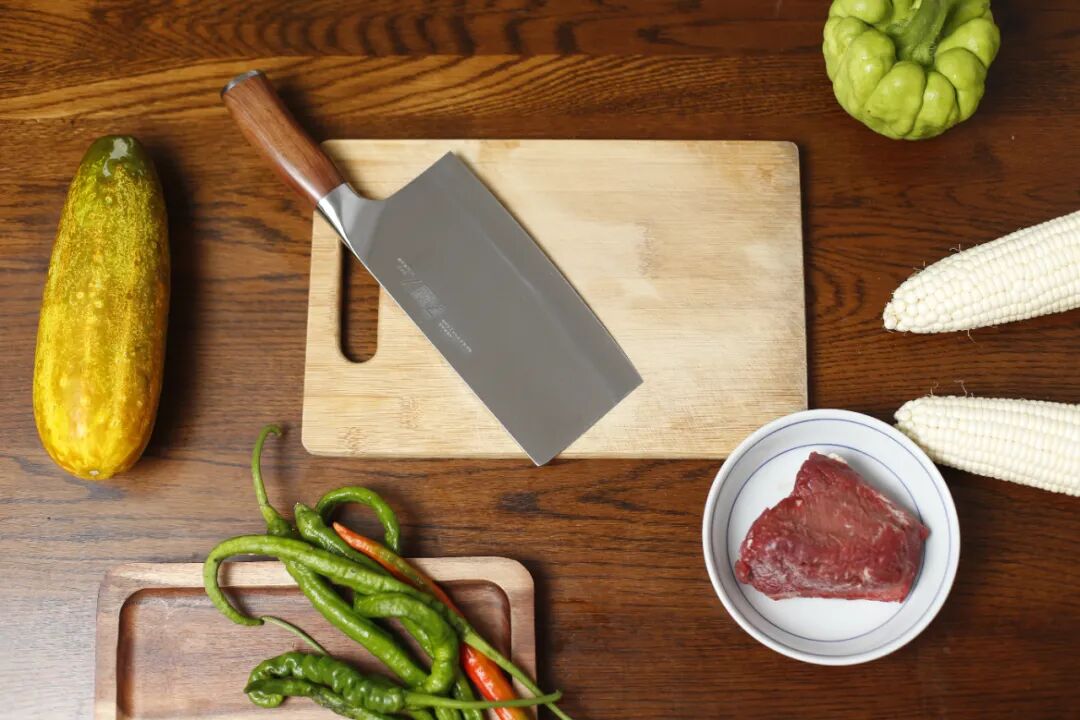
Hey everyone, I'm Chituanjun. July was absolute chaos and I was so swamped I didn't have the time or energy to push out new posts. If you've found any awesome spots to eat or hang out in Kunming or the surrounding areas lately, drop a comment or DM me—I'm totally down to check them out once I'm back in action.
Click the card above to follow me
Hey everyone, I'm Chituanjun, and July had me running around so crazy I barely had a second to breathe.
Found any killer food or fun spots around Kunming lately? Hit me up in the comments or shoot me a DM—I'm dying to go explore once I'm free.
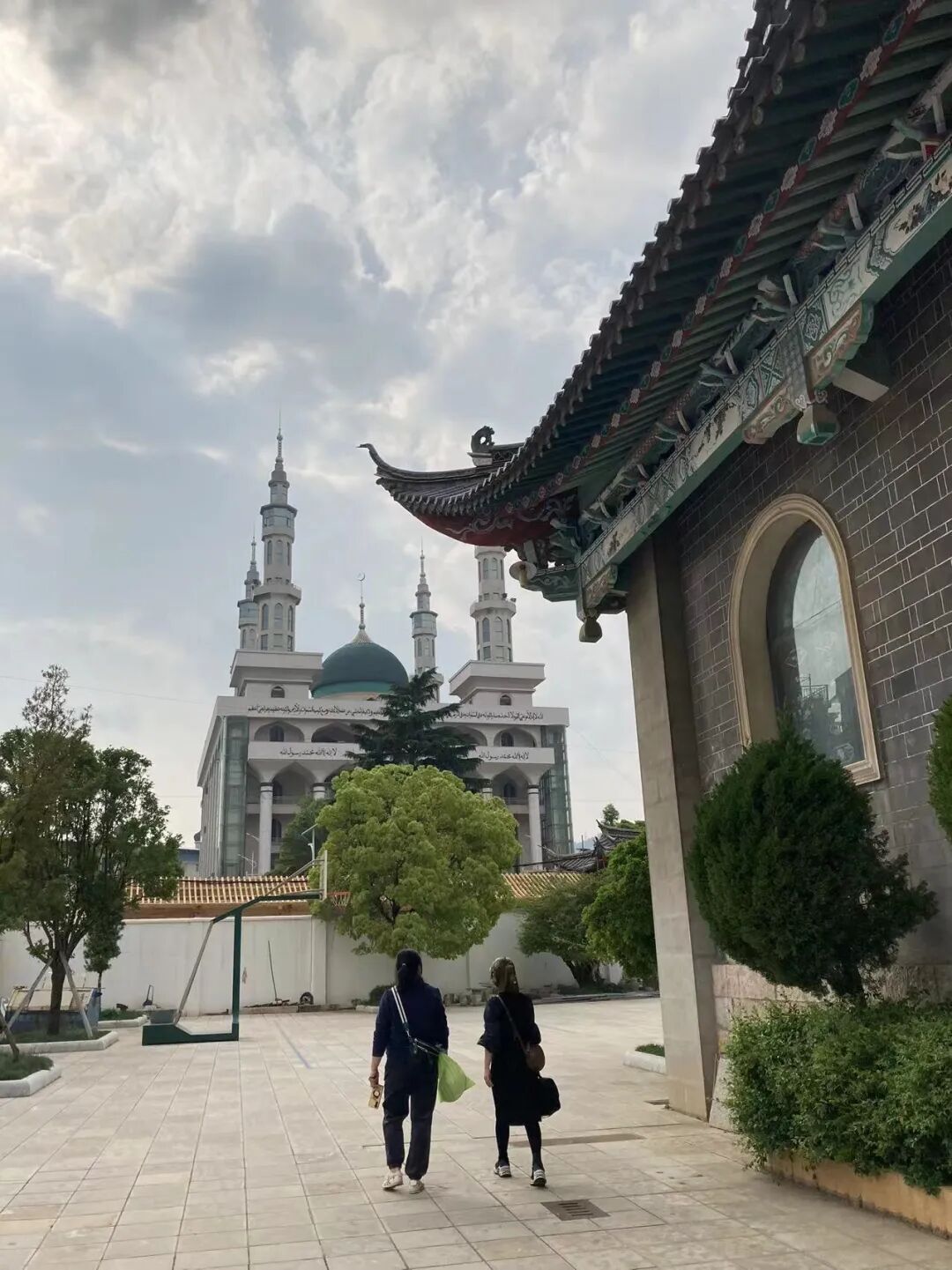
As a local, free-roaming Halal food blogger, I suppose this day was bound to come: I received a few dozen kitchen knives sent over by a PR brand. My inner monologue was running so wild I actually started worrying about my personal safety (kidding... sort of).
True to our professional standards, as soon as we got our hands on them, the foodie squad launched into full-on crazy testing mode. One of our team members even paid for it in blood...
Seriously folks, always be super careful when handling knives, and store them safely when you're not using them!
Besides, being the perfectionists we are, we made a personal trip out to the source—Najiaying, Tonghai County, Yuxi City, Yunnan Province—to bring you this heavy-hitting feature.
Surrounded by "Flash and Gleam of Blades"
1.
Nagu Town sits in the northwest of Tonghai County, a place famously known as a "land of rites and music." It's a renowned "hometown of handicrafts," where the local residents are primarily Hui Muslims and Han Chinese.
According to historical records, the knife-forging craft in Nagu Town dates all the way back to the Yuan Dynasty.
"As part of the 'Tamma' vanguard troops and accompanying military craftsmen, the ancestors of Nagu applied their exquisite skills and unique techniques to forge top-tier creations in military blades, civilian knives, horse gear, and more."
More than 700 years later, local artisans and businesses are still writing their handicraft history today by building on these fine traditions while blending in modern tech and practical everyday needs.
2.
Another little-known and fascinating story is that knives from Najiaying were once shortlisted as national contenders for the Chinese Tri-Service Honor Guard ceremonial swords.
In early 1992, the Central Military Commission issued an order deciding to revamp the ceremonial uniforms for the Honor Guard. Along with the new threads, the executive and platoon commanders of the Honor Guard were switching out their sidearms for ceremonial swords, shifting from a standard unarmed salute to a much more formidable and solemn saber salute. (Note: Paragraph content is excerpted from the China Archives News, total issue No. 3251, titled "Vowing Loyalty to Forge the 'National Saber'").
The task of researching and designing this ceremonial sword was handed over to the Quartermaster Equipment Research Institute of the General Logistics Department of the Chinese People's Liberation Army.
They first headed to the Military Museum of the Chinese People's Revolution to gather reference materials on ceremonial swords from countries like France, Japan, the US, Sweden, and Italy. Based on China's actual national and military conditions as well as ethnic characteristics, they drafted 3 different sword designs and commissioned over 10 military enterprises and knife manufacturers to make sample blades.
Among them were artisans from Najiaying who took part in the production at the time.
It's a real pity that although we tracked down the person involved and visited their home, we couldn't find the key to the display room. So we missed out on seeing more physical evidence related to it—which honestly just gives us a great excuse for another trip.
3.
Walking down the streets of Najiaying today, you see specialty shops for civilian knives of all shapes and sizes everywhere: scissors, tea knives, nail clippers, unsharpened decorative blades...
Rows upon rows of uniquely shaped knives inside the glass counters reflect that chilling metallic gleam, looking totally badass and giving you a serious martial arts-style adrenaline rush.
Drivers and tourists cruising by can't help but pull over and wander into the shops to check things out. When they spot one they like, they pick up a reliable "kitchen weapon" for themselves, family, or friends.
Honestly, once you've got pro-grade gear and that atmosphere, your inner potential just naturally kicks in.
Take me for example: ever since I got my hands on a reliable knife, the frequency of me heading into the kitchen to prep ingredients has seriously shot up.
Looking forward to even more cool stuff ahead
Forged through over 600 years of accumulation and refinement, Najiaying's knives boast battle-tested craftsmanship that is passed down through generations. It's a priceless asset, but one that constantly faces the challenges of a fast-changing market.
After visiting more than a dozen workshops and specialty stores on the ground, my takeaway is this:
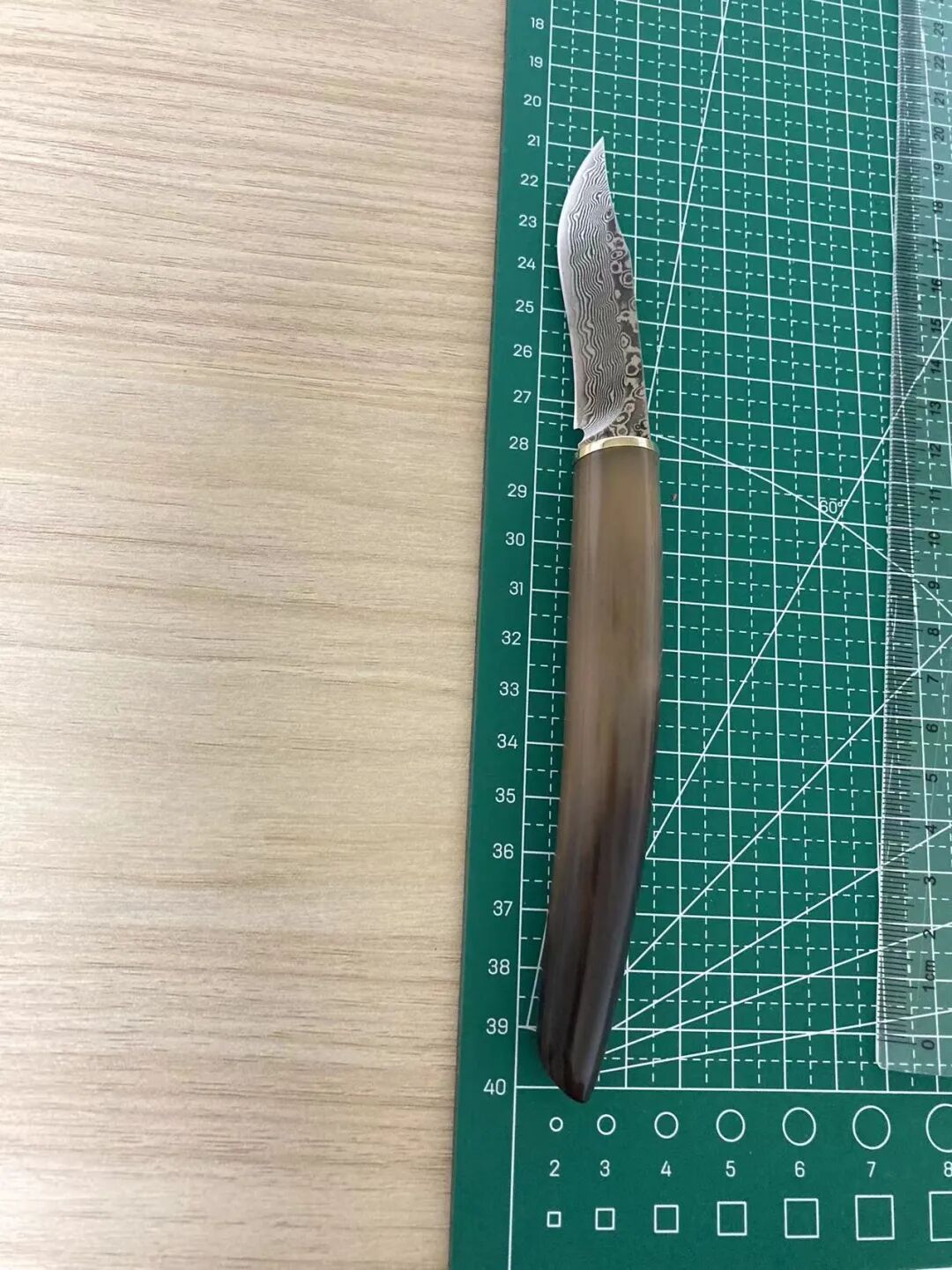
When it comes to tapping into their own cultural resources, telling a compelling brand story, proactively innovating, and connecting with contemporary young consumers, Najiaying's civilian cutlery still has a long road ahead for growth.
Finally, let me shout out an outstanding local Halal restaurant in Najiaying—Jieya Restaurant.
According to a good friend, this spot has been open locally for over 20 years. The quality is solid and the prices are super affordable, making it a great pick whether you're grabbing a casual bite, hanging out with family and friends, or hosting a business dinner.
Our foodie squad tried it out, and everyone was licking their chops.
My personal recommendations: Tom Yum chicken, sliced cold beef, and stir-fried wild mushrooms.
The dipping sauce for the cold beef has a sour and spicy kick—super complex and bursting with authentic Yuxi local flavor.
Until next time, Najiaying~
- Restaurant Info -
Name: Jieya Restaurant
Phone: 13887793491; 13887793492
Average cost: 60 RMB (spend as you like)
- Foodie Squad Perks -
For this issue, our foodie squad handpicked the most frequently used home-style kitchen slicer out of hundreds of knives in Najiaying to recommend to you all.
It has a substantial heft, a razor-sharp blade, and serious performance, totally handling all your daily needs for shredding, slicing, cutting strips, and dicing, while fitting right in with the habits of a Chinese kitchen.
If you want to experience the 600-year knife-making magic of Najiaying, why not start with this one?
Any quality issues under non-violent use within 2 years get a free trade-in for a brand new one.
- More Great Stuff -
Don't rush, 30 is just another beginning
I've been gatekeeping a Halal leisure resort in Xishan District, and I really hate to share it
Without our Zhaotong folks leading the charge, Kunming wouldn't have the Halal food scene it has today Collapse Read »
What’s the real deal with the knives from Najiaying, Yunnan?
Summary:
Hey everyone, I'm Chituanjun. July was absolute chaos and I was so swamped I didn't have the time or energy to push out new posts. If you've found any awesome spots to eat or hang out in Kunming or the surrounding areas lately, drop a comment or DM me—I'm totally down to check them out once I'm back in action.
Click the card above to follow me
Hey everyone, I'm Chituanjun, and July had me running around so crazy I barely had a second to breathe.
Found any killer food or fun spots around Kunming lately? Hit me up in the comments or shoot me a DM—I'm dying to go explore once I'm free.
As a local, free-roaming Halal food blogger, I suppose this day was bound to come: I received a few dozen kitchen knives sent over by a PR brand. My inner monologue was running so wild I actually started worrying about my personal safety (kidding... sort of).
True to our professional standards, as soon as we got our hands on them, the foodie squad launched into full-on crazy testing mode. One of our team members even paid for it in blood...
Seriously folks, always be super careful when handling knives, and store them safely when you're not using them!
Besides, being the perfectionists we are, we made a personal trip out to the source—Najiaying, Tonghai County, Yuxi City, Yunnan Province—to bring you this heavy-hitting feature.
Surrounded by "Flash and Gleam of Blades"
1.
Nagu Town sits in the northwest of Tonghai County, a place famously known as a "land of rites and music." It's a renowned "hometown of handicrafts," where the local residents are primarily Hui Muslims and Han Chinese.
According to historical records, the knife-forging craft in Nagu Town dates all the way back to the Yuan Dynasty.
"As part of the 'Tamma' vanguard troops and accompanying military craftsmen, the ancestors of Nagu applied their exquisite skills and unique techniques to forge top-tier creations in military blades, civilian knives, horse gear, and more."
More than 700 years later, local artisans and businesses are still writing their handicraft history today by building on these fine traditions while blending in modern tech and practical everyday needs.
2.
Another little-known and fascinating story is that knives from Najiaying were once shortlisted as national contenders for the Chinese Tri-Service Honor Guard ceremonial swords.
In early 1992, the Central Military Commission issued an order deciding to revamp the ceremonial uniforms for the Honor Guard. Along with the new threads, the executive and platoon commanders of the Honor Guard were switching out their sidearms for ceremonial swords, shifting from a standard unarmed salute to a much more formidable and solemn saber salute. (Note: Paragraph content is excerpted from the China Archives News, total issue No. 3251, titled "Vowing Loyalty to Forge the 'National Saber'").
The task of researching and designing this ceremonial sword was handed over to the Quartermaster Equipment Research Institute of the General Logistics Department of the Chinese People's Liberation Army.
They first headed to the Military Museum of the Chinese People's Revolution to gather reference materials on ceremonial swords from countries like France, Japan, the US, Sweden, and Italy. Based on China's actual national and military conditions as well as ethnic characteristics, they drafted 3 different sword designs and commissioned over 10 military enterprises and knife manufacturers to make sample blades.
Among them were artisans from Najiaying who took part in the production at the time.
It's a real pity that although we tracked down the person involved and visited their home, we couldn't find the key to the display room. So we missed out on seeing more physical evidence related to it—which honestly just gives us a great excuse for another trip.
3.
Walking down the streets of Najiaying today, you see specialty shops for civilian knives of all shapes and sizes everywhere: scissors, tea knives, nail clippers, unsharpened decorative blades...
Rows upon rows of uniquely shaped knives inside the glass counters reflect that chilling metallic gleam, looking totally badass and giving you a serious martial arts-style adrenaline rush.
Drivers and tourists cruising by can't help but pull over and wander into the shops to check things out. When they spot one they like, they pick up a reliable "kitchen weapon" for themselves, family, or friends.
Honestly, once you've got pro-grade gear and that atmosphere, your inner potential just naturally kicks in.
Take me for example: ever since I got my hands on a reliable knife, the frequency of me heading into the kitchen to prep ingredients has seriously shot up.
Looking forward to even more cool stuff ahead
Forged through over 600 years of accumulation and refinement, Najiaying's knives boast battle-tested craftsmanship that is passed down through generations. It's a priceless asset, but one that constantly faces the challenges of a fast-changing market.
After visiting more than a dozen workshops and specialty stores on the ground, my takeaway is this:
When it comes to tapping into their own cultural resources, telling a compelling brand story, proactively innovating, and connecting with contemporary young consumers, Najiaying's civilian cutlery still has a long road ahead for growth.
Finally, let me shout out an outstanding local Halal restaurant in Najiaying—Jieya Restaurant.
According to a good friend, this spot has been open locally for over 20 years. The quality is solid and the prices are super affordable, making it a great pick whether you're grabbing a casual bite, hanging out with family and friends, or hosting a business dinner.
Our foodie squad tried it out, and everyone was licking their chops.
My personal recommendations: Tom Yum chicken, sliced cold beef, and stir-fried wild mushrooms.
The dipping sauce for the cold beef has a sour and spicy kick—super complex and bursting with authentic Yuxi local flavor.
Until next time, Najiaying~
- Restaurant Info -
Name: Jieya Restaurant
Phone: 13887793491; 13887793492
Average cost: 60 RMB (spend as you like)
- Foodie Squad Perks -
For this issue, our foodie squad handpicked the most frequently used home-style kitchen slicer out of hundreds of knives in Najiaying to recommend to you all.
It has a substantial heft, a razor-sharp blade, and serious performance, totally handling all your daily needs for shredding, slicing, cutting strips, and dicing, while fitting right in with the habits of a Chinese kitchen.
If you want to experience the 600-year knife-making magic of Najiaying, why not start with this one?
Any quality issues under non-violent use within 2 years get a free trade-in for a brand new one.
- More Great Stuff -
Don't rush, 30 is just another beginning
I've been gatekeeping a Halal leisure resort in Xishan District, and I really hate to share it
Without our Zhaotong folks leading the charge, Kunming wouldn't have the Halal food scene it has today Collapse Read »
The Epic Migration of Yunnan Hui Muslims to Northern Thailand: History, Mosques & Family Stories
[Internet Repost]
[Overseas Fieldwork Oral History] Ma Shimei | The Migration Story of a Thai-Northern Yunnanese Muslim Family
Abstract:
Ma Shimei (born 1991), female, master's student in Asian-African Languages and Literature at the School of Southeast Asian Studies, Yunnan Minzu University. Regarding the study of Yunnanese Muslim immigrants in northern Thailand, Suthep Soonthornpasuch categorized Yunnanese Muslim immigrants into five groups based on different migration backgrounds in his doctoral dissertation: First, Muslim merchants engaged in long-distance caravan trade between Yunnan and Southeast Asia in the 19th century; second, Yunnanese Muslims who fled to northern Thailand under Qing government persecution after the failure of the Du Wenxiu Rebellion; third, refugees who escaped from Yunnan to Burma and finally relocated to northern Thailand after the founding of the People's Republic of China in 1949; fourth, Yunnanese individuals loyal to regular Kuomintang troops; fifth, Yunnanese bandits driven out of China after the Chinese Communist Party took power in 1949. [1] Through reading literature and combining it with fieldwork, the author believes that we...
Ma Shimei (born 1991), female, master's student in Asian-African Languages and Literature at the School of Southeast Asian Studies, Yunnan Minzu University
Regarding the study of Yunnanese Muslim immigrants in northern Thailand, Suthep Soonthornpasuch categorized Yunnanese Muslim immigrants into five groups based on different migration backgrounds in his doctoral dissertation: First, Muslim merchants engaged in long-distance caravan trade between Yunnan and Southeast Asia in the 19th century; second, Yunnanese Muslims who fled to northern Thailand under Qing government persecution after the failure of the Du Wenxiu Rebellion; third, refugees who escaped from Yunnan to Burma and finally relocated to northern Thailand after the founding of the People's Republic of China in 1949; fourth, Yunnanese individuals loyal to regular Kuomintang troops; fifth, Yunnanese bandits driven out of China after the Chinese Communist Party took power in 1949. [1] Through reading literature and combining it with fieldwork, the author believes we can no longer fully reconstruct history, but can only explore the migration history of our ancestors through historical relics and oral histories from later generations. Among the immigration categories mentioned above, "Yunnanese bandits" lacks precise historical verification, and the author did not encounter related accounts during the investigation, so the author offers no evaluation of the fifth category, "Yunnanese bandits." However, aside from this, we learn about the migration history and origins of northern Thai Yunnanese Muslims from the other four migration types, which is indispensable material for our current research on local Yunnanese Muslims. Combining oral histories collected during the author's fieldwork and taking the migration experience of ZHGJ's [2] family as an example, this article explores the migration history and living conditions of northern Thai Yunnanese Muslims.
ZHGJ (female, 86 years old) is a native of Dali Ancient City, while her husband, MDH, is a native of Dabaiyi, Yuxi. MDH was the eighth Imam (prayer leader) of the Baan Haw Mosque (serving from 1980–1993 Gregorian calendar) and passed away more than 20 years ago. They had two sons and two daughters. Both sons went to the United States to pursue master's degrees in management. After graduation, the older son began working in Bangkok, married a local non-Muslim Thai woman, and has a daughter currently studying engineering at Chulalongkorn University in Thailand. The younger son works as a manager at a foreign trade company in Chiang Mai and married the sixth daughter of MCL. Both daughters work in administrative roles at Chiang Mai University and married descendants of Yunnanese people. Today, the older daughter has two daughters: one works in the pharmacy of Chiang Mai University's affiliated hospital, and the other is still attending a medical college in another province. The younger son and younger daughter remained childless several years after marriage.
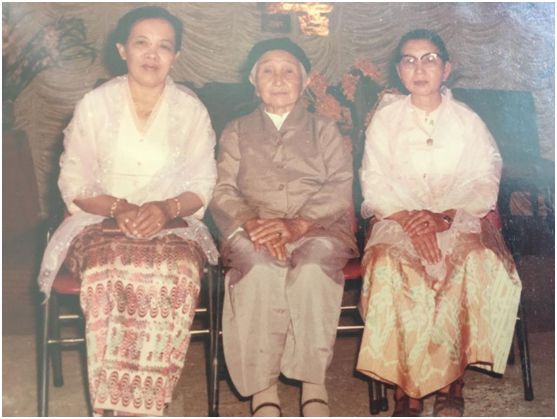
First-Generation Migration: From Dali, China to Panghsang, Burma
ZHGJ told the author that because of the failure of the Du Wenxiu Rebellion, her father's generation of Muslims in Dali suffered persecution and massacres by the Qing government. To escape the slaughter, they fled to the Panghsang area along the China-Myanmar border and settled there. Later, due to turmoil in Panghsang, she and her family fled overnight to Taunggyi, Burma. During the period when Qing troops withdrew from Dali, ZHGJ returned to Dali to stay with her aunt and attend elementary school; after graduating, she returned to her parents' side to attend middle school. Because Burma was under British rule at the time, learning English was mandatory in school. Thus, at an early age, she mastered three languages: Chinese, English, and Burmese. ZHGJ's parents were married in Panghsang, Burma; her mother was also a Hui Muslim who fled from Yunnan to Burma. After marriage, they had three sons and three daughters—the three oldest were daughters and the youngest were three sons—and she was the eldest child in the family. Today, both younger brothers have passed away; only the oldest younger brother is in the United States. One sister married an Indian-descent Muslim and lives in Yangon, Burma, while another sister married a Burmese-descent Muslim in Taunggyi. After her husband passed away a few years ago, she moved to Bangkok, Thailand, to live with her daughter.
ZHGJ in her youth (far left) with her family
(Photographed by the author in 2017 from ZHGJ's photo album; the original photo was taken in Burma)
Second-Generation Migration: From Taunggyi, Burma to Chiang Mai, Thailand
According to ZHGJ, when the airport in Chiang Mai was newly built, she and her female cousins agreed to take a plane ride to experience it. Since she was already working at a bank in Burma at the time, she took leave and flew to Chiang Mai with her cousins to visit for a few days. One of her brothers hosted them in Chiang Mai, and upon meeting her, he formed the intention of introducing her to his cousin. She mentioned that back then, they had only seen each other's photos, and even their engagement was decided jointly by her parents-in-law, with her father-in-law traveling to Burma carrying betrothal gifts. The man who would later become her husband was still away leading horse caravans in business at the time and could not go in person. ZHGJ smiled and added that her father-in-law was very satisfied when he met her, so the marriage was finalized right then and there. Chatting about her and her husband's love story, she also recalled: back then, a very beautiful young woman living in Chiang Mai city also fancied her husband. At the time, her husband's older cousin went to propose marriage to this young woman's family. As a result, the young woman told her family, "The dark one (referring to that cousin), I won't give myself to him (I won't marry him); if it's the fair one (ZHGJ's husband), I'll give myself to him (I am willing to marry him)." [3] ZHGJ said this beautiful young woman was Thai, but her husband didn't want to marry a Thai woman—he was completely set on marrying a Chinese woman. Later, hearing that his cousin had introduced a Chinese girl named ZHGJ, he decided to get married without ever having met her.
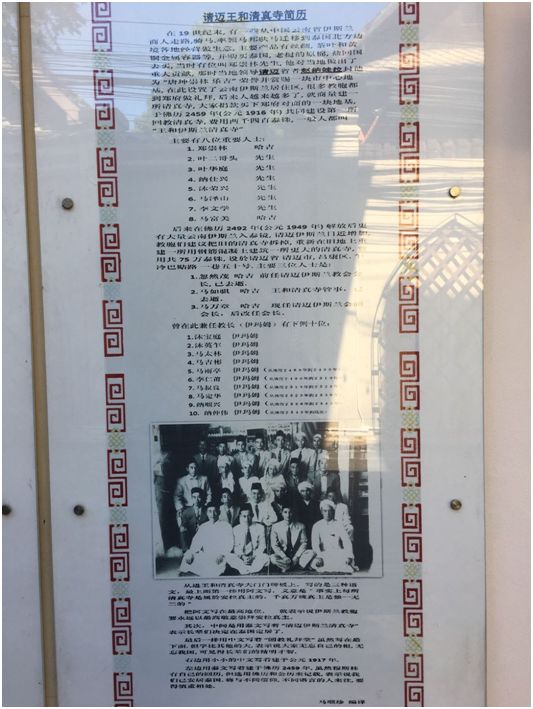
After marriage, ZHGJ stayed behind in Burma while her husband continued leading horse caravans for trade, primarily transporting goods from the Burmese border to sell in Chiang Mai, Chiang Rai, and Bangkok. The goods also included opium. ZHGJ herself told the author without any concealment about transporting opium, saying that back then there were many opium dens in Chiang Mai, and engaging in the opium trade was not illegal. Later, a coup occurred in the Burmese government, plunging the situation into turmoil. ZHGJ's husband was filled with fear over the coup, so in 1964 he fled with his family to Chiang Mai and settled there.
She described it this way: "The Burmese government suddenly announced overnight that 100-yuan banknotes were no longer valid—they were scrapped. The cash in the hands of countless ordinary people instantly vanished into thin air." Her husband panicked, so he tried every possible means to escape. At that time, they already had three children. Her family and her aunt's family (her mother's sister's family) bought two horses and fled outward, while her other siblings and her parents did not come along. We can hardly imagine what they experienced during the month-plus escape. The author asked her, "Weren't you scared escaping from the mountains?" She smiled and said, "Of course we were still scared! The babies were small, and the youngest was still nursing. Coming through mountain trails, passing through those deep mountain wildernesses, resting among those massive trees—we were scared, so scared (Thai people like to use reduplication to heighten emotional color when expressing certain feelings and experiences—Author's note), but we all made it out, so we couldn't worry about much else." The two families had only two horses, which also had to carry food and supplies. The women rode the horses while the men walked, trekking through mountain paths for a full month and a half. Along the way, they encountered who knows how many problems. She said, "Hiking through the big mountains, one minute it was burning hot, the next it was pouring rain. The little kids would get sick, and the roads were so rough—those paths were truly roads only horses could walk out of." After fleeing to Chiang Mai, her husband first settled them in a village in the mountains and only brought them down after finding a house in Chiang Mai city. After arriving in Chiang Mai, they didn't go off to regular jobs; instead, they opened a small shop right at the entrance of the Baan Haw Mosque, selling pastries and dried noodles. After arriving in Chiang Mai, because the government launched a strict crackdown on opium, her husband did not continue the opium business.
Shortly after arriving in Chiang Mai, they caught the Thai government issuing "alien ID cards" (citizenship cards) to outsiders, allowing them to successfully acquire Thai nationality. She said, "The Thai King is so good, and his heart is broad. He is willing to let people from other countries live on his land, and he cares deeply for ordinary people. Thai people respect him very much, and we Yunnanese do too." She shared that the King once told the people: "A flowerpot is only beautiful when it has all kinds of flowers in it; a single variety doesn't look good." That is why he was willing to accept people who fled from China and issue us citizenship cards.
From these two migrations, we understand that ZHGJ's paternal generation fled to Panghsang, Burma, after the failure of the Du Wenxiu Rebellion, marrying and having children locally. Following the marriage of the second generation—herself and her husband—they fled once again to Chiang Mai, Thailand, due to the Burmese government coup. These two migrations neatly formed the migration route of "Yunnan–Burma–Chiang Mai," a trajectory proposed by many scholars in academia early on. During my fieldwork, I encountered a large proportion of Yunnanese Muslims whose ancestors first migrated to Burma and later relocated to Chiang Mai. Some moved to escape political coups, while others shifted to northern Thailand through intermarriage between Yunnanese populations in the two places. Today, these Yunnanese who relocated to Chiang Mai have lived in Thailand for nearly fifty to sixty years, and virtually all have obtained Thai citizenship. I classify these two migrations as "political refugee" movements, whereas the earlier "caravan merchants" trace their origins back to her husband's family's migration.
The "Unreturnable" Caravan Merchants
According to ZHGJ, her husband's family was formerly a prominent, wealthy family known as the "Ma Family of Dabaiyi, Yuxi." The men of the family had been engaged in horse caravan trade from an early age, traveling year-round between Yunnan and Southeast Asia for long-distance caravan commerce, rarely returning home. Only the elderly mother, her husband's first wife, and two children were left behind at home. Her father-in-law took his two sons out on horse caravans for business, leaving the household in the care of the mother-in-law. The money earned from the caravans was brought back home for the mother-in-law to purchase farmland; nearly all the farmland belonging to the nearby Han Chinese was bought up by them. When a mosque was built in their hometown, their family even donated a plot of land. At the time, her husband's family owned vast amounts of farmland, was extremely wealthy, and even had gold buried inside their home. Back then, her husband's family also built a multi-story building in Kunming, which was later destroyed by fire due to careless fire usage by the occupants. Because of various reasons, the father and two sons could not return to China and could only drift in migration between Burma and Thailand. Later, her husband married her in Myanmar, his younger brother married and started a family in Chiang Mai, and her father-in-law eventually passed away in Chiang Mai. After China's reform and opening up, when domestic conditions improved, her husband would split his earnings into two portions: one left for household expenses in Thailand, and the other regularly sent back to China via proxy for his first wife (her husband's senior wife) to raise the children.
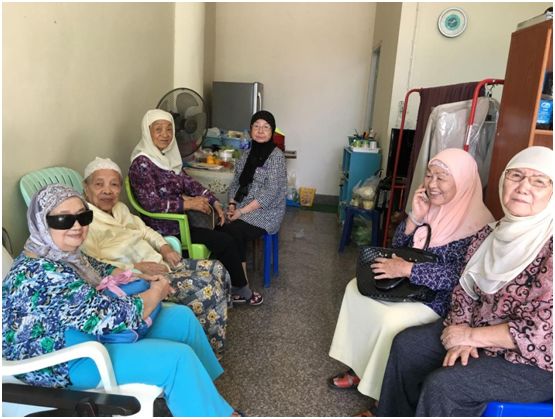
Regarding the migration background of her husband's family, although caravan merchants did not initially settle in northern Thailand, they spent years away from home running caravan businesses and sojourning in northern Thailand. Eventually, due to complex international political factors, they remained permanently in northern Thailand, becoming "unreturnable" caravan merchants. Here, the author categorizes them into the first category of immigration mentioned above: "Yunnanese Muslim merchants engaged in long-distance caravan trade." Although they were not the earliest caravan merchants to settle in northern Thailand, having journeyed back and forth across the Thai-Burmese border year-round to conduct caravan business, they can already be considered part of the early northern Thai Yunnanese Muslim community. Moreover, according to historical literature, the early Yunnanese caravan merchants who settled permanently in northern Thailand were not numerous; the majority were merely sojourning traders traveling back and forth between China, Burma, Thailand, and Laos.
Introduction to the Baan Haw Mosque
(Photographed by the author at the Baan Haw Mosque, 2018)
A Life History of Putting Down Roots
When they first fled from Burma, a relative living in Ban Yang (a refugee village in Chiang Mai) asked them to stay and live in Ban Yang village, saying the living expenses were low and everyone in the village was also from Yunnan. But ZHGJ was unwilling. She told the author: "I was not willing. I wanted to take my children to study in Chiang Mai city. In Ban Yang, you could only learn a bit of Thai and Chinese—and even Chinese had to be studied in hiding and in secret. In the city, you could learn everything." Later, they came to Chiang Mai city, rented a property from the Baan Haw Mosque, and opened a shop at the entrance. Because her husband was already a "Hajj" who had completed the pilgrimage to Mecca before marrying her, upon arriving in Chiang Mai city, her husband was appointed as the Imam (prayer leader) of the mosque. She and her husband placed great emphasis on their children's education. She once told the author that she hoped her children would not wander around everywhere like the older generation, fleeing from place to place. Today, all four of their children have received higher education and hold enviable jobs. From her usual remarks, the author could also feel her pride and satisfaction regarding her children. All four of her children can speak Chinese, but except for the second son, who can read and write, the others cannot. The second son was once sent by his company to work in Shantou for a period of time, which is how he learned to read and write. She said that upon first arriving in Chiang Mai, to quickly adapt to local life, she also went to study Thai with local children for three months, and then gradually used Thai to communicate and conduct business. When the children were sent to school, her husband did not allow them to speak Thai at home after returning from school; they had to speak Chinese. Her husband said: "You speak Thai at school with your teachers and classmates, but at home you must speak your own language (Chinese)." Later, the author learned from her children that another reason her husband forbade them from speaking Thai was because the older generation of Yunnanese who came over was reluctant to learn Thai and thus could not speak it very well themselves, so they demanded that everyone in the household speak Chinese. Today, when she recounts this matter, she is still comforted that all four of her children can still speak Chinese.
Normally, ZHGJ stays at the shop in front of the mosque from Monday to Friday. Before her second son was married, she lived with him and took care of his daily life. Later, after her second son started a family and the children went out to work every day, she was left alone at home with nothing to do. So, she asked her children to rent a small shop adjacent to the side of the mosque for her. During the day, she would spend time at the shop, watch television, and gather or chat with friends at the mosque. Every morning, her second-layer daughter-in-law prepares lunch and drives her to the shop, where she spends time watching TV, performing prayers, and reciting scriptures with her female cousins and many older sisters. At 5:00 PM, her granddaughter finishes work and comes to pick her up to go home. From Monday to Thursday, she stays at her youngest daughter's house, and from Friday to Sunday, she stays at her son's house. Every Friday, her son goes to her daughter's house to pick her up, and the family takes the opportunity to gather together for dinner.
Elderly Yunnanese Muslim women in the Baan Haw community, Chiang Mai
(Photographed by the author at ZHGJ's shop, 2018)
The life history of ZHGJ's family putting down roots in Chiang Mai shows us that the first generation of Yunnanese Muslims who migrated to urban northern Thailand essentially built their livelihoods through commerce. From being "stateless" to gaining Thai citizenship, they experienced countless hardships. The second generation of Yunnanese Muslims in Thailand has largely received formal higher education, and many have completed upward social mobility through education, evolving into the Thai middle class. In the paper "Changes in Ethnic Identity of Chinese Muslims in Northern Thailand" (2012) by scholars Feng Yu and He Fuxiang, the importance of "national education" in the formation of the Chinese Muslim middle class was proposed. Indeed, through fieldwork, the author discovered that Yunnanese Muslims in the urban areas today have basically received national higher education and work across various societal fields. Receiving formal higher education and obtaining advanced degrees is a strategy for their upward social mobility. In other words, pursuing formal higher education is the direct pathway for second-generation Yunnanese Muslims and their descendants to acquire social status and capital. Taking ZHGJ's four children as an example, after completing their bachelor's degrees in Thailand, both sons went on to pursue master's degrees in the United States, while both daughters graduated from Chiang Mai University and stayed on to work there. The recognition and capital they hold today were all earned through educational channels. In the Baan Haw community of Chiang Mai, families like this are not isolated cases; locals frequently mention: "In Chiang Mai, our Yunnanese Hui Muslim doctors number nearly 20." Beyond doctors, professions such as university faculty, bank public servants, government civil servants, and corporate management personnel have all been attained through receiving an education.
Yunnanese Muslims at the 100th-anniversary celebration of the Baan Haw Mosque in Chiang Mai
The man standing on the far right is an outstanding businessman, and the man on the far left is a university professor
During the fieldwork, ZHGJ introduced many locals to the author and shared numerous stories of the past. She is a kind, enthusiastic, and open-minded elder who loves learning, eagerly embraces new things, and is exceptionally proactive and brave. Sometimes the author wonders whether this personality is connected to their migration experiences. Many northern Thai Yunnanese Muslims, after migrating to Chiang Mai, migrated yet again through studies or business to places like the United States, Saudi Arabia, Australia, and Taiwan, achieving high economic standing and social status. From these migration cases, the author finds that a single generation's migration may bring about more than just geographical or cultural shifts; on a deeper level, it shapes the character and horizons of several generations.
This is merely one minor story among the many migration tales of northern Thai Chinese. Beneath every story lies the bitterness, joy, sorrow, and delight of human life. Every fieldwork trip allows the author to encounter diverse life stories and grow considerably—perhaps this is precisely why the author loves the discipline of anthropology.
[1] Suthep Soonthornpasuch. 1977. Islamic identity in Chiang Mai City: A Historical and Structural Comparison of Two Communities. Unpublished Dissertation. University of California at Berkeley. Quoted from Feng Yu and He Fuxiang, "Changes in Ethnic Identity of Chinese Muslims in Northern Thailand" (unpublished).
[2] To respect personal privacy, real names involved in this article are replaced throughout by English letters.
[3] Yunnan dialect, translated as: If the dark-looking one comes to propose, I won't agree; if the fair-looking one comes to propose, I will agree. Collapse Read »
[Overseas Fieldwork Oral History] Ma Shimei | The Migration Story of a Thai-Northern Yunnanese Muslim Family
Abstract:
Ma Shimei (born 1991), female, master's student in Asian-African Languages and Literature at the School of Southeast Asian Studies, Yunnan Minzu University. Regarding the study of Yunnanese Muslim immigrants in northern Thailand, Suthep Soonthornpasuch categorized Yunnanese Muslim immigrants into five groups based on different migration backgrounds in his doctoral dissertation: First, Muslim merchants engaged in long-distance caravan trade between Yunnan and Southeast Asia in the 19th century; second, Yunnanese Muslims who fled to northern Thailand under Qing government persecution after the failure of the Du Wenxiu Rebellion; third, refugees who escaped from Yunnan to Burma and finally relocated to northern Thailand after the founding of the People's Republic of China in 1949; fourth, Yunnanese individuals loyal to regular Kuomintang troops; fifth, Yunnanese bandits driven out of China after the Chinese Communist Party took power in 1949. [1] Through reading literature and combining it with fieldwork, the author believes that we...
Ma Shimei (born 1991), female, master's student in Asian-African Languages and Literature at the School of Southeast Asian Studies, Yunnan Minzu University
Regarding the study of Yunnanese Muslim immigrants in northern Thailand, Suthep Soonthornpasuch categorized Yunnanese Muslim immigrants into five groups based on different migration backgrounds in his doctoral dissertation: First, Muslim merchants engaged in long-distance caravan trade between Yunnan and Southeast Asia in the 19th century; second, Yunnanese Muslims who fled to northern Thailand under Qing government persecution after the failure of the Du Wenxiu Rebellion; third, refugees who escaped from Yunnan to Burma and finally relocated to northern Thailand after the founding of the People's Republic of China in 1949; fourth, Yunnanese individuals loyal to regular Kuomintang troops; fifth, Yunnanese bandits driven out of China after the Chinese Communist Party took power in 1949. [1] Through reading literature and combining it with fieldwork, the author believes we can no longer fully reconstruct history, but can only explore the migration history of our ancestors through historical relics and oral histories from later generations. Among the immigration categories mentioned above, "Yunnanese bandits" lacks precise historical verification, and the author did not encounter related accounts during the investigation, so the author offers no evaluation of the fifth category, "Yunnanese bandits." However, aside from this, we learn about the migration history and origins of northern Thai Yunnanese Muslims from the other four migration types, which is indispensable material for our current research on local Yunnanese Muslims. Combining oral histories collected during the author's fieldwork and taking the migration experience of ZHGJ's [2] family as an example, this article explores the migration history and living conditions of northern Thai Yunnanese Muslims.
ZHGJ (female, 86 years old) is a native of Dali Ancient City, while her husband, MDH, is a native of Dabaiyi, Yuxi. MDH was the eighth Imam (prayer leader) of the Baan Haw Mosque (serving from 1980–1993 Gregorian calendar) and passed away more than 20 years ago. They had two sons and two daughters. Both sons went to the United States to pursue master's degrees in management. After graduation, the older son began working in Bangkok, married a local non-Muslim Thai woman, and has a daughter currently studying engineering at Chulalongkorn University in Thailand. The younger son works as a manager at a foreign trade company in Chiang Mai and married the sixth daughter of MCL. Both daughters work in administrative roles at Chiang Mai University and married descendants of Yunnanese people. Today, the older daughter has two daughters: one works in the pharmacy of Chiang Mai University's affiliated hospital, and the other is still attending a medical college in another province. The younger son and younger daughter remained childless several years after marriage.
First-Generation Migration: From Dali, China to Panghsang, Burma
ZHGJ told the author that because of the failure of the Du Wenxiu Rebellion, her father's generation of Muslims in Dali suffered persecution and massacres by the Qing government. To escape the slaughter, they fled to the Panghsang area along the China-Myanmar border and settled there. Later, due to turmoil in Panghsang, she and her family fled overnight to Taunggyi, Burma. During the period when Qing troops withdrew from Dali, ZHGJ returned to Dali to stay with her aunt and attend elementary school; after graduating, she returned to her parents' side to attend middle school. Because Burma was under British rule at the time, learning English was mandatory in school. Thus, at an early age, she mastered three languages: Chinese, English, and Burmese. ZHGJ's parents were married in Panghsang, Burma; her mother was also a Hui Muslim who fled from Yunnan to Burma. After marriage, they had three sons and three daughters—the three oldest were daughters and the youngest were three sons—and she was the eldest child in the family. Today, both younger brothers have passed away; only the oldest younger brother is in the United States. One sister married an Indian-descent Muslim and lives in Yangon, Burma, while another sister married a Burmese-descent Muslim in Taunggyi. After her husband passed away a few years ago, she moved to Bangkok, Thailand, to live with her daughter.
ZHGJ in her youth (far left) with her family
(Photographed by the author in 2017 from ZHGJ's photo album; the original photo was taken in Burma)
Second-Generation Migration: From Taunggyi, Burma to Chiang Mai, Thailand
According to ZHGJ, when the airport in Chiang Mai was newly built, she and her female cousins agreed to take a plane ride to experience it. Since she was already working at a bank in Burma at the time, she took leave and flew to Chiang Mai with her cousins to visit for a few days. One of her brothers hosted them in Chiang Mai, and upon meeting her, he formed the intention of introducing her to his cousin. She mentioned that back then, they had only seen each other's photos, and even their engagement was decided jointly by her parents-in-law, with her father-in-law traveling to Burma carrying betrothal gifts. The man who would later become her husband was still away leading horse caravans in business at the time and could not go in person. ZHGJ smiled and added that her father-in-law was very satisfied when he met her, so the marriage was finalized right then and there. Chatting about her and her husband's love story, she also recalled: back then, a very beautiful young woman living in Chiang Mai city also fancied her husband. At the time, her husband's older cousin went to propose marriage to this young woman's family. As a result, the young woman told her family, "The dark one (referring to that cousin), I won't give myself to him (I won't marry him); if it's the fair one (ZHGJ's husband), I'll give myself to him (I am willing to marry him)." [3] ZHGJ said this beautiful young woman was Thai, but her husband didn't want to marry a Thai woman—he was completely set on marrying a Chinese woman. Later, hearing that his cousin had introduced a Chinese girl named ZHGJ, he decided to get married without ever having met her.
After marriage, ZHGJ stayed behind in Burma while her husband continued leading horse caravans for trade, primarily transporting goods from the Burmese border to sell in Chiang Mai, Chiang Rai, and Bangkok. The goods also included opium. ZHGJ herself told the author without any concealment about transporting opium, saying that back then there were many opium dens in Chiang Mai, and engaging in the opium trade was not illegal. Later, a coup occurred in the Burmese government, plunging the situation into turmoil. ZHGJ's husband was filled with fear over the coup, so in 1964 he fled with his family to Chiang Mai and settled there.
She described it this way: "The Burmese government suddenly announced overnight that 100-yuan banknotes were no longer valid—they were scrapped. The cash in the hands of countless ordinary people instantly vanished into thin air." Her husband panicked, so he tried every possible means to escape. At that time, they already had three children. Her family and her aunt's family (her mother's sister's family) bought two horses and fled outward, while her other siblings and her parents did not come along. We can hardly imagine what they experienced during the month-plus escape. The author asked her, "Weren't you scared escaping from the mountains?" She smiled and said, "Of course we were still scared! The babies were small, and the youngest was still nursing. Coming through mountain trails, passing through those deep mountain wildernesses, resting among those massive trees—we were scared, so scared (Thai people like to use reduplication to heighten emotional color when expressing certain feelings and experiences—Author's note), but we all made it out, so we couldn't worry about much else." The two families had only two horses, which also had to carry food and supplies. The women rode the horses while the men walked, trekking through mountain paths for a full month and a half. Along the way, they encountered who knows how many problems. She said, "Hiking through the big mountains, one minute it was burning hot, the next it was pouring rain. The little kids would get sick, and the roads were so rough—those paths were truly roads only horses could walk out of." After fleeing to Chiang Mai, her husband first settled them in a village in the mountains and only brought them down after finding a house in Chiang Mai city. After arriving in Chiang Mai, they didn't go off to regular jobs; instead, they opened a small shop right at the entrance of the Baan Haw Mosque, selling pastries and dried noodles. After arriving in Chiang Mai, because the government launched a strict crackdown on opium, her husband did not continue the opium business.
Shortly after arriving in Chiang Mai, they caught the Thai government issuing "alien ID cards" (citizenship cards) to outsiders, allowing them to successfully acquire Thai nationality. She said, "The Thai King is so good, and his heart is broad. He is willing to let people from other countries live on his land, and he cares deeply for ordinary people. Thai people respect him very much, and we Yunnanese do too." She shared that the King once told the people: "A flowerpot is only beautiful when it has all kinds of flowers in it; a single variety doesn't look good." That is why he was willing to accept people who fled from China and issue us citizenship cards.
From these two migrations, we understand that ZHGJ's paternal generation fled to Panghsang, Burma, after the failure of the Du Wenxiu Rebellion, marrying and having children locally. Following the marriage of the second generation—herself and her husband—they fled once again to Chiang Mai, Thailand, due to the Burmese government coup. These two migrations neatly formed the migration route of "Yunnan–Burma–Chiang Mai," a trajectory proposed by many scholars in academia early on. During my fieldwork, I encountered a large proportion of Yunnanese Muslims whose ancestors first migrated to Burma and later relocated to Chiang Mai. Some moved to escape political coups, while others shifted to northern Thailand through intermarriage between Yunnanese populations in the two places. Today, these Yunnanese who relocated to Chiang Mai have lived in Thailand for nearly fifty to sixty years, and virtually all have obtained Thai citizenship. I classify these two migrations as "political refugee" movements, whereas the earlier "caravan merchants" trace their origins back to her husband's family's migration.
The "Unreturnable" Caravan Merchants
According to ZHGJ, her husband's family was formerly a prominent, wealthy family known as the "Ma Family of Dabaiyi, Yuxi." The men of the family had been engaged in horse caravan trade from an early age, traveling year-round between Yunnan and Southeast Asia for long-distance caravan commerce, rarely returning home. Only the elderly mother, her husband's first wife, and two children were left behind at home. Her father-in-law took his two sons out on horse caravans for business, leaving the household in the care of the mother-in-law. The money earned from the caravans was brought back home for the mother-in-law to purchase farmland; nearly all the farmland belonging to the nearby Han Chinese was bought up by them. When a mosque was built in their hometown, their family even donated a plot of land. At the time, her husband's family owned vast amounts of farmland, was extremely wealthy, and even had gold buried inside their home. Back then, her husband's family also built a multi-story building in Kunming, which was later destroyed by fire due to careless fire usage by the occupants. Because of various reasons, the father and two sons could not return to China and could only drift in migration between Burma and Thailand. Later, her husband married her in Myanmar, his younger brother married and started a family in Chiang Mai, and her father-in-law eventually passed away in Chiang Mai. After China's reform and opening up, when domestic conditions improved, her husband would split his earnings into two portions: one left for household expenses in Thailand, and the other regularly sent back to China via proxy for his first wife (her husband's senior wife) to raise the children.
Regarding the migration background of her husband's family, although caravan merchants did not initially settle in northern Thailand, they spent years away from home running caravan businesses and sojourning in northern Thailand. Eventually, due to complex international political factors, they remained permanently in northern Thailand, becoming "unreturnable" caravan merchants. Here, the author categorizes them into the first category of immigration mentioned above: "Yunnanese Muslim merchants engaged in long-distance caravan trade." Although they were not the earliest caravan merchants to settle in northern Thailand, having journeyed back and forth across the Thai-Burmese border year-round to conduct caravan business, they can already be considered part of the early northern Thai Yunnanese Muslim community. Moreover, according to historical literature, the early Yunnanese caravan merchants who settled permanently in northern Thailand were not numerous; the majority were merely sojourning traders traveling back and forth between China, Burma, Thailand, and Laos.
Introduction to the Baan Haw Mosque
(Photographed by the author at the Baan Haw Mosque, 2018)
A Life History of Putting Down Roots
When they first fled from Burma, a relative living in Ban Yang (a refugee village in Chiang Mai) asked them to stay and live in Ban Yang village, saying the living expenses were low and everyone in the village was also from Yunnan. But ZHGJ was unwilling. She told the author: "I was not willing. I wanted to take my children to study in Chiang Mai city. In Ban Yang, you could only learn a bit of Thai and Chinese—and even Chinese had to be studied in hiding and in secret. In the city, you could learn everything." Later, they came to Chiang Mai city, rented a property from the Baan Haw Mosque, and opened a shop at the entrance. Because her husband was already a "Hajj" who had completed the pilgrimage to Mecca before marrying her, upon arriving in Chiang Mai city, her husband was appointed as the Imam (prayer leader) of the mosque. She and her husband placed great emphasis on their children's education. She once told the author that she hoped her children would not wander around everywhere like the older generation, fleeing from place to place. Today, all four of their children have received higher education and hold enviable jobs. From her usual remarks, the author could also feel her pride and satisfaction regarding her children. All four of her children can speak Chinese, but except for the second son, who can read and write, the others cannot. The second son was once sent by his company to work in Shantou for a period of time, which is how he learned to read and write. She said that upon first arriving in Chiang Mai, to quickly adapt to local life, she also went to study Thai with local children for three months, and then gradually used Thai to communicate and conduct business. When the children were sent to school, her husband did not allow them to speak Thai at home after returning from school; they had to speak Chinese. Her husband said: "You speak Thai at school with your teachers and classmates, but at home you must speak your own language (Chinese)." Later, the author learned from her children that another reason her husband forbade them from speaking Thai was because the older generation of Yunnanese who came over was reluctant to learn Thai and thus could not speak it very well themselves, so they demanded that everyone in the household speak Chinese. Today, when she recounts this matter, she is still comforted that all four of her children can still speak Chinese.
Normally, ZHGJ stays at the shop in front of the mosque from Monday to Friday. Before her second son was married, she lived with him and took care of his daily life. Later, after her second son started a family and the children went out to work every day, she was left alone at home with nothing to do. So, she asked her children to rent a small shop adjacent to the side of the mosque for her. During the day, she would spend time at the shop, watch television, and gather or chat with friends at the mosque. Every morning, her second-layer daughter-in-law prepares lunch and drives her to the shop, where she spends time watching TV, performing prayers, and reciting scriptures with her female cousins and many older sisters. At 5:00 PM, her granddaughter finishes work and comes to pick her up to go home. From Monday to Thursday, she stays at her youngest daughter's house, and from Friday to Sunday, she stays at her son's house. Every Friday, her son goes to her daughter's house to pick her up, and the family takes the opportunity to gather together for dinner.
Elderly Yunnanese Muslim women in the Baan Haw community, Chiang Mai
(Photographed by the author at ZHGJ's shop, 2018)
The life history of ZHGJ's family putting down roots in Chiang Mai shows us that the first generation of Yunnanese Muslims who migrated to urban northern Thailand essentially built their livelihoods through commerce. From being "stateless" to gaining Thai citizenship, they experienced countless hardships. The second generation of Yunnanese Muslims in Thailand has largely received formal higher education, and many have completed upward social mobility through education, evolving into the Thai middle class. In the paper "Changes in Ethnic Identity of Chinese Muslims in Northern Thailand" (2012) by scholars Feng Yu and He Fuxiang, the importance of "national education" in the formation of the Chinese Muslim middle class was proposed. Indeed, through fieldwork, the author discovered that Yunnanese Muslims in the urban areas today have basically received national higher education and work across various societal fields. Receiving formal higher education and obtaining advanced degrees is a strategy for their upward social mobility. In other words, pursuing formal higher education is the direct pathway for second-generation Yunnanese Muslims and their descendants to acquire social status and capital. Taking ZHGJ's four children as an example, after completing their bachelor's degrees in Thailand, both sons went on to pursue master's degrees in the United States, while both daughters graduated from Chiang Mai University and stayed on to work there. The recognition and capital they hold today were all earned through educational channels. In the Baan Haw community of Chiang Mai, families like this are not isolated cases; locals frequently mention: "In Chiang Mai, our Yunnanese Hui Muslim doctors number nearly 20." Beyond doctors, professions such as university faculty, bank public servants, government civil servants, and corporate management personnel have all been attained through receiving an education.
Yunnanese Muslims at the 100th-anniversary celebration of the Baan Haw Mosque in Chiang Mai
The man standing on the far right is an outstanding businessman, and the man on the far left is a university professor
During the fieldwork, ZHGJ introduced many locals to the author and shared numerous stories of the past. She is a kind, enthusiastic, and open-minded elder who loves learning, eagerly embraces new things, and is exceptionally proactive and brave. Sometimes the author wonders whether this personality is connected to their migration experiences. Many northern Thai Yunnanese Muslims, after migrating to Chiang Mai, migrated yet again through studies or business to places like the United States, Saudi Arabia, Australia, and Taiwan, achieving high economic standing and social status. From these migration cases, the author finds that a single generation's migration may bring about more than just geographical or cultural shifts; on a deeper level, it shapes the character and horizons of several generations.
This is merely one minor story among the many migration tales of northern Thai Chinese. Beneath every story lies the bitterness, joy, sorrow, and delight of human life. Every fieldwork trip allows the author to encounter diverse life stories and grow considerably—perhaps this is precisely why the author loves the discipline of anthropology.
[1] Suthep Soonthornpasuch. 1977. Islamic identity in Chiang Mai City: A Historical and Structural Comparison of Two Communities. Unpublished Dissertation. University of California at Berkeley. Quoted from Feng Yu and He Fuxiang, "Changes in Ethnic Identity of Chinese Muslims in Northern Thailand" (unpublished).
[2] To respect personal privacy, real names involved in this article are replaced throughout by English letters.
[3] Yunnan dialect, translated as: If the dark-looking one comes to propose, I won't agree; if the fair-looking one comes to propose, I will agree. Collapse Read »
The Ultimate Guide to Yunnan Muslim Culture, Halal Food & Historic Mosques (Part 1)
[Internet Repost]
Overview of Yunnan-Origin Muslims in Taiwan, Thailand, and Myanmar (1): Overview of Homelands and Diaspora
Abstract:
Overview of Yunnan-Origin Muslims in Taiwan, Thailand, and Myanmar. Author: Yu Jiaming. Nestled in China's southwestern corner, Yunnan borders Myanmar, Thailand, Laos, and Vietnam, serving as a historic gateway to Southeast Asia. While the terrain is rugged, the region enjoys year-round spring weather and abundant resources. Home to multiple ethnic minority groups, Yunnan has spent millennia cultivating a rich, diverse cultural tapestry, which naturally includes the historical evolution and developmental journey of its Muslim communities. Section 1: Overview of Homelands and Diaspora. Nestled in China's southwestern corner, Yunnan borders Myanmar, Thailand, Laos, and Vietnam, serving as a historic gateway to Southeast Asia.
Overview of Yunnan-Origin Muslims in Taiwan, Thailand, and Myanmar
Author: Yu Jiaming
Nestled in China's southwestern corner, Yunnan borders Myanmar, Thailand, Laos, and Vietnam, serving as a historic gateway to Southeast Asia. While the terrain is rugged, the region enjoys year-round spring weather and abundant resources. Home to multiple ethnic minority groups, Yunnan has spent millennia cultivating a rich, diverse cultural tapestry, which naturally includes the historical evolution and developmental journey of its Muslim communities.
Section 1: Overview of Homelands and Diaspora
Nestled in China's southwestern corner, Yunnan borders Myanmar, Thailand, Laos, and Vietnam, serving as a historic gateway to Southeast Asia. While the terrain is rugged, the region enjoys year-round spring weather and abundant resources. Home to multiple ethnic minority groups, Yunnan has spent millennia cultivating a rich, diverse cultural tapestry, which naturally includes the historical evolution and developmental journey of its Muslim communities.
Beginning in the 7th century CE, merchants from the Arabian Peninsula and Persia began traveling to China for trade, eventually settling across various regions. Over centuries of development, they became one of the foundational roots of today's Hui Muslim minority in China. Of course, the composition of the Hui Muslims also includes Central Asian Muslim ethnic groups who moved eastward after Genghis Khan's western campaigns, alongside Arabs and Persians. In Yuan Dynasty official records, they were collectively referred to as "Huihui". After arriving in China, these individuals worked as soldiers, artisans, farmers, and merchants, while others entered government service or pursued religious and academic careers. Through intermarriage with locals and their deep integration into the socio-economic fabric, the concept and ethnic structure of the Hui Muslims gradually took shape.
As for the development of Islam in Yunnan, one theory suggests that during the Tang Dynasty, Tang forces allied with the Kingdom of Nanzhao to defeat the Tibetan Empire and the Abbasid army (referred to historically as the "Black-robed Da Shi"). The captured Abbasid soldiers were Muslims, marking the earliest presence of Muslims in Yunnan. Another widely circulated theory attributes their arrival to the Central Asian Huihui who migrated westward following the Mongol conquests, as well as Huihui soldiers in the Mongol army who stayed behind after conquering the "Southwestern Yi" tribes, thereby forming the earliest Muslim communities in Yunnan. [1]
According historical records, from Genghis Khan's western campaigns in 1219 to Hulagu's capture of Baghdad in 1258, the Mongols successively conquered numerous Islamicized nations spanning from Central to West Asia. Large numbers of these Muslims were subsequently relocated eastward, with some military units organized into the "Tamma troops" (frontier garrison forces) as part of Kublai Khan's unified army. In 1253 (the second year of Emperor Mengke's reign), Mengke ordered Kublai Khan and Uriankhadai to lead a 100,000-strong army to attack the Southwest, eventually conquering the Kingdom of Dali. Numerous Huihui generals and soldiers arrived in Yunnan wave after wave to garrison the borderlands and establish military agricultural colonies (tuntian) across various regions. Later, Uyghurs (ancestors of today's Uyghur ethnic group) also established the Wumeng military garrison around Zhaotong, laying a major foundation for today's Zhaotong Hui Muslim population. [2]
In 1274 (the 11th year of the Zhiyuan era under Kublai Khan), the Yuan Emperor appointed Sayyid Ajjal Shams al-Din Omar as the first Pingzhangmingshi (Administrator) of the Yunnan Branch Secretariat. Sayyid Ajjal Shams al-Din was originally from Bukhara in modern-day Central Asia. During his six years in office, he made remarkable achievements in local agriculture, transportation, and education. He introduced knowledge of Islam, the Arabic and Persian languages, artillery manufacturing, and medicine into Yunnan, and commissioned two mosques in Kunming that still stand today. His descendants also achieved prominence in politics and military affairs, continuing to contribute to the governance of Yunnan. His lineage eventually dispersed across China, becoming ancestral roots for many Chinese Muslims. [3]
The Ming Dynasty and early Qing Dynasty also marked critical phases for the development of Yunnan's Muslims. Many Muslim generals served among the founding figures of the Ming Dynasty; most notably, Mu Ying and his descendants were enfeoffed as the "Prince of Qianning" and the "Duke of Qian," governing Yunnan across generations. Additionally, a large contingent of Hui Muslim generals and soldiers from the Central Plains and the Jianghuai region followed Mu Ying to Yunnan. It is said that the Mu family in modern-day Baoshan, Yunnan, are descendants of Mu Ying. [4] Subsequently, even more Muslims arrived with military forces to garrison and reclaim land, forming numerous settlements in places such as modern-day Kunming, Chuxiong, Dali, Weishan, Baoshan, Tengchong, Kaiyuan, Mengzi, Xun甸, and Qujing. As they gradually integrated with various ethnic groups, Yunnan transformed into a major stronghold for Muslims in China, embodying the early spatial pattern of "widely dispersed, closely concentrated." [5]
Because Muslim village communities maintained distinct cultural and religious boundaries with outsiders, we frequently encounter villages bearing names explicitly tied to the Hui Muslims, such as "Huihuiying" (Hui Muslim Camp) or "Huizi Village" (Hui Village). These names immediately reveal that the local residents are Yunnan-origin Muslims. However, not all Muslims lived in exclusively Hui villages; many resided in urban areas. Though they were not the local majority, their homes and businesses clustered within specific Muslim quarters, allowing them to preserve their religious beliefs and ways of life with minimal outside interference. Because they inevitably interacted with Han Chinese in the cities, lifestyle and cultural differences occasionally sparked friction, with Han residents sometimes resorting to verbal insults or physical aggression against Muslims. [6]
Following the dawn of the Qing Dynasty, the development of Muslim communities began to face severe setbacks. For one, many Muslims still held loyalty to the fallen Ming Dynasty; moreover, the Qing court's ethnic policies were deeply inequitable, imposing heavy restrictions and discrimination against Hui Muslims while frequently instigating ethnic conflicts between Hui and Han populations. This fueled resistance among Muslim communities everywhere—not least in Yunnan, which boasted the second-largest Muslim population concentration in China, second only to the Northwest. In 1797 (the second year of the Jiaqing era), a salt-tax dispute erupted in the Dali and Chuxiong regions, serving as the spark for widespread uprisings. Participants spanned the Bai, Han, Yi, and Hui ethnic groups, uniting against corrupt salt administration officials who schemed for personal gain and extorted ordinary citizens. Soon, various conflicts and disputes flared up across regions. Officials routinely stoked divisions and refused to deliver fair judgments, causing public resentment to boil over. By the Daoguang era, the Qing court initiated violent crackdowns, ultimately triggering the major anti-Qing uprisings led by Du Wenxiu, Ma Long, and others. [7]
In 1856, Du Wenxiu established a regime in Dali, vigorously developing local agricultural and mineral economies, encouraging commerce, and fostering trade ties with neighboring Sichuan and Myanmar. By uniting various ethnic minorities, he won widespread popular support. Militarily, Du Wenxiu rallied the populace under slogans such as "Save the people, strike down tyranny," "Unite Hui and Han as one, raise the righteous banner, drive out the Tartars, and restore China..." His insurgent forces fought over two hundred battles against Qing troops, unifying the entire western half of Yunnan within five years. In 1867, they even mobilized a massive army to besiege Kunming. However, after failing to break the city and facing fresh Qing reinforcements mobilized from multiple provinces—combined with the Qing court's divide-and-conquer strategy of using Muslims to fight Muslims—the Dali regime suffered a series of defeats. In 1872, Du Wenxiu was executed, and two years later, Dali fell to Qing forces, bringing the 18-year Yunnan Hui uprising to a tragic end. [8]
By the mid-19th century, Yunnan's local Muslims accounted for one-tenth of the province's total population. Bound by shared historical and cultural symbols as well as common professions, they gradually forged a distinct ethnic identity. This very identity—compounded by their non-Yunnan and non-Han ancestral origins and their Islamic faith—created friction in regional, cultural, and religious spheres, ultimately leading to the tragic outcomes of the Hui uprisings. [9] In the wake of the Qing court's high-handed rule and massacres, the Muslim population inside Yunnan plummeted sharply. Fearing persecution, some Hui residents were forced to flee across the borders into neighboring countries, planting the seeds for the migration of Yunnan-origin Muslims into Southeast Asia. [10]
Yunnan and its surrounding regions feature towering mountain ranges soaring 6,000 meters high, forming the Yunnan-Guizhou Plateau. South of the plateau lie the Shan Plateau of Myanmar, northern Thailand, Laos, and the rugged highlands of Vietnam. Major rivers like the Lancang (Mekong) and Nujiang (Salween) carve deep gorges through the plateau while sculpting numerous mountain basins known locally as *bazi*. Different ethnic minorities settled across these basins. Given this challenging terrain, the most reliable transport for long-distance journeys was the Yunnan pony, giving rise to organized caravans known as *mabang* (horse caravans) that shuttled between mountain basins to handle cargo transport and trade. [11] These horse caravans not only traded goods from market to market but also bartered with highland farmers along the way, injecting vibrant economic life into diverse inter-ethnic regions. [12]
The Muslims of Yunnan province largely concentrated along major transportation arteries and the flat basin lands (bazi) in their immediate suburbs, with very few living deep in the mountainous interior. This settlement pattern was shaped by their long-term historical engagement in military agricultural colonies, commerce, and handicrafts. [13] Because these flat basins and semi-mountainous regions offered limited per capita arable land, relying solely on farming made survival difficult. Consequently, running long-distance transport via horse caravans became an essential avenue for Hui Muslims to make a living in commerce. Ever since the Yuan Dynasty, Hui horse caravans remained a cornerstone of Yunnan's transport network. In Muslim-heavy regions such as Baoshan, Weishan, Tonghai, and Yuxi, countless horse caravans specialized in transport and goods trading, constantly plying the routes between Yunnan, Thailand, and Myanmar. [14] Furthermore, the Qing court's massacres of Yunnan's Hui population plunged many areas into economic depression, which in turn spawned rampant banditry. The devastation of their home villages forced people to venture outward to find a livelihood—proving to be yet another reason why Yunnan Muslims took up the life of caravan traders. [15]
Wealthy Yunnan merchants had long-standing commercial ties extending through Laos, Thailand, Myanmar, and India, while local peddlers transporting goods between prefectures and counties routinely hired Hui-dominated horse caravans. Among all postal and courier routes, the western Yunnan Hui horse caravan route stretching from Dali all the way to Myanmar was the most convenient. Many Hui people sustained their livelihoods through caravanning: some purchased their own mules and horses to organize independent caravans, while others hired themselves out to wealthy merchants who already owned large caravans. This gave rise to the classic description of Yunnan Hui Muslims: "Their livelihood relies on the profits of mules and horses," and "They universally make their living by driving caravans, peddling oil, salt, and rice." [16]
Western Yunnan, bordering Myanmar, served as a crucial stretch of the Yunnan Silk Road and maintained close ties with the outside world since ancient times. Borderland grassroots trade had always been exceptionally active; following the social stability and economic development of the Ming Dynasty, waves of interior merchants flocked to the region seeking fortunes. Northern Myanmar still bears the footprints of these active Chinese merchants. Myanmar's native products like gemstones and cotton were imported into Yunnan, while Myanmar's demand for tea, silk, copper and ironware, ceramics, and salt was supplied outward from Yunnan. This dynamic southwestern corridor stimulated ongoing development and commercial prosperity across numerous regions. [17] Such booming trade also minted many wealthy merchant magnates—such as Ma Mingkui, a prominent Yunnan tycoon during the Xianfeng and Tongshi eras of the Qing Dynasty. Engaged in textiles, trade, and transport, Ma owned over a dozen horse caravans, traveling year-round between Yunnan and Myanmar to handle cross-border commodity trade, while operating multiple storefronts across Sichuan, Yunnan, and Myanmar. When Du Wenxiu established the Dali regime, Ma Mingkui provided robust financial backing as well. [18]
Driven by the thriving trade between Yunnan and Myanmar, numerous Yunnan-origin Muslims opened shops across various parts of Myanmar and eventually settled there. According to Kumiko Kishima's research, between the mid-19th century and the early 20th century, Yunnan Muslims primarily utilized five distinct routes to travel to Myanmar for trade and permanent settlement. [19] They gradually formed clustered communities along these trade arteries leading from Yunnan into Myanmar. Initially, they settled at the various terminal stations along the trade routes or in safe-haven towns near the border. After the onset of the British colonial period, settlements organically emerged along the trade routes, terminal stops, and transit hubs. However, terminal stations located too close to their homeland in Yunnan did not develop distinct ethnic enclaves. [20]
Although caravan trade was dominated primarily by Hui Muslims, a massive influx of Han Chinese began joining the trade in the 19th century. Hui and Han populations clashed not only over commerce but also over mining rights and land use. This inter-ethnic friction, combined with the late 19th-century Muslim anti-Qing uprisings crushed by the Qing government—culminating in the fall of Du Wenxiu's Dali regime in 1872 and the capture of the final insurgent stronghold of Tengyue (modern-day Tengchong) by Qing troops the following year—forced many Muslims to flee into Myanmar under severe political oppression. Shortly thereafter, the Konbaung dynasty of Myanmar collapsed, and Britain established colonial rule there in 1886, providing yet another catalyst for their migration to Myanmar. [21]
The Republican era in China was far from peaceful, marked by multiple brutal military conflicts. Although Yunnan sat in the remote borderlands, it was inevitably swept into the turmoil. In 1937, when Japanese forces invaded China and captured all of the nation's eastern sea ports, the government mobilized immense human labor to construct the 960-kilometer-long Burma Road stretching from Kunming, Yunnan, to Wanting, Myanmar, taking just one year to complete. It became China's sole external lifeline and supply route, channeling vital supplies from the outside world into the southwestern rear base. [22] Throughout the War of Resistance Against Japanese Aggression, Yunnan Hui Muslims enthusiastically enlisted in the military, fighting Japanese invaders across China, fiercely resisting the enemy along the Yunnan border, and reclaiming numerous occupied cities. Members of the Chinese Expeditionary Force that entered Myanmar in 1944 also included many Yunnan-origin Muslims. [23]
In the realm of education and culture, Yunnan's Muslims achieved remarkable development since ancient times, producing a steady stream of renowned scholars and imams. [24] Their translations and religious treatises profoundly influenced Chinese Muslims nationwide. Furthermore, *jingtang jiaoyu* (mosque-based scriptural education) served as a traditional educational format unique to Yunnan's Islamic heritage. Developed during the Ming Dynasty, this system utilized mosque study halls as classrooms where imams taught students using classical religious texts. This wielded widespread influence among local Muslim communities, and the so-called "Yunnan School of Islamic Thought" emerged as one of the three major scriptural educational traditions in China. [25]
With the turning tides of the era, several new organizations, educational institutions, and periodicals were successively established during the Republican period, including the Yunnan Branch of the China Islamic Progressive Association and the Yunnan Branch of the China Islamic National Salvation Association. Both actively responded to and participated in movements to build a democratic nation and resist the Japanese invasion. Additionally, the founding of the "Yunnan Mingde School" in 1929 symbolized the rise of modern Islamic education in Yunnan, which combined general academic subjects with religious knowledge. Periodicals such as the *Yunnan Muslim Monthly* and the *Yunnan Muslim Bell Magazine* were among the earliest regular Islamic publications issued nationwide. Scholars like Ma Jian and Na Zhong traveled to Egypt around 1931 for advanced studies, becoming preeminent experts in religious studies and Arabic linguistics who shaped 20th-century Chinese Islamic scholarship. [26]
As the War of Resistance drew to a close, the Chinese Civil War immediately erupted. In 1949, the Kuomintang (Nationalist) government retreated to the Southwest. At the time, the KMT forces stationed in Kunming consisted of the 8th and 26th Armies, led respectively by Li Mi and Lu Han (note: text says Lu Han / Qiu Qingquan / Yu Chenwan depending on historical context). Later, these armies withdrew toward western Yunnan. After being overtaken by the People's Liberation Army, just over a thousand surviving soldiers from both armies retreated across the border into Myanmar, becoming stranded in a foreign land as the "Lost Army" [27]—immortalized by author Pai Hsien-yung (or Bo Yang) in his book *Alien Land* (Yi Yu). After entering Myanmar, the Lost Army faced relentless combat, repeatedly clashing with the PLA. Ultimately, a portion of the soldiers, civilians, and their families were evacuated to Taiwan through arrangements made by the KMT government, while others entered Thailand, settling in places like Chiang Mai, Chiang Rai, Mae Salong, and Mae Sai.
The Yunnan-origin Muslims who migrated to Myanmar dispersed across the country. Major concentrations formed in Mandalay (formerly known as Wucheng / Mandalay), Yangon, Lashio, Tangyan, Myitkyina, Mogok, Maymyo, and Taunggyi, with most communities taking shape around the mid-19th century onward and establishing local mosques. Today, Mandalay still preserves a mosque ordered and funded by Du Wenxiu, completed in 1868, alongside the surrounding Muslim community settlements. Yunnan-origin Muslims generally refer to themselves as *Huihui* or *Huimin* (Hui people), but the local Burmese people use the term "Panthay"—a distinct ethnonym originally used as a blanket term for Muslims. [28]
When discussing the history of Yunnan-origin Muslims migrating to Myanmar, one cannot overlook "Panlong" (also known as Panglong), located in the Wa State region along the Yunnan-Myanmar border. To this day, Panlong holds a deep, vivid place in the memories of many Yunnan-origin Muslims as the homeland of their forebears. The site originally began as a refugee stronghold established by Ma Lingji, a subordinate commander under Du Wenxiu. Subsequently, numerous Muslims fleeing persecution by the Qing court fled to this location. Because people banded closely together to live there, the place was dubbed *Banlong* ("gathering together"), which eventually evolved into *Panlong* (Banglong). By the early 20th century, the local population grew rapidly and thrived, eventually becoming a dominant force in the Wa State. The people of Panlong proudly referred to their home as Panglong, a name preserved as they later migrated to various parts of Southeast Asia, including Myanmar and Thailand. Thus, the place name "Panglong" is an endonym used by the Panlong people themselves, whereas "Banlong" is the exonym used by surrounding ethnic groups and mainland Chinese Hui Muslims. However, due to the Japanese occupation of Myanmar and raids by other local armed groups, the local Muslim community in Panlong suffered severe devastation, prompting many residents to relocate onward to other Myanmar cities and northern Thailand. [29]
According to the author's field investigations, there are still roughly 1,200 households of Yunnan-origin Muslims living across heavy Muslim concentration areas such as Mandalay, Tangyan, Lashio, Mogok, and Taunggyi today. They continue to preserve their traditional religious culture and place great emphasis on passing down their faith within family life. Alongside family transmission and traditional mosque-based education, there are also well-established schools teaching Arabic and Islamic studies. For instance, the "Zhenguang School" in Maymyo has cultivated multiple imams specializing in Arabic language and religious knowledge, two of whom currently serve religious communities in Taiwan.
As for the Yunnan Muslims living in Thailand, their roots are largely the same as those who migrated to Myanmar. Some settled down along ancient caravan trade routes, but the more massive migrations were driven by the need to escape the Qing dynasty's crackdowns following the failure of the Panthay Rebellion. Traveling south along trade routes, they reached Myanmar as well as Thailand's northern provinces of Chiang Mai and Chiang Rai.
Locally in Thailand, these Yunnan-origin Muslims are called "Chin-Haw" (or Chin-Ho). While this is just a blanket term used by Thai locals for all Chinese people, these Muslims still proudly refer to themselves as Chinese or Hui Muslims. By the late 19th century, several major urban centers in northern Thailand, like Chiang Mai, had already established vibrant Chinese communities anchored by Yunnan Muslims. Keeping ties with long-distance caravan traders and leaning into their mercantile traditions, they carved out new economic niches and even acted as vital middlemen between the Chin-Haw and the ethnic Thai population. [28]
Throughout the 20th century, waves of Yunnan Muslims continued trickling across the border into Thailand—mostly escaping massive upheavals like the Japanese invasion of China and the Chinese Civil War, while others trickled down from Myanmar. Some were commercial travelers caught stranded in Thailand due to the founding of the People's Republic of China, unable to make their way back home, while others fled their homelands following the Nationalist (KMT) forces as mentioned earlier.
In the early 1960s, after two troop withdrawals, a faction of Yunnan-based KMT soldiers still remained in northern Myanmar. In 1961, led by Li Wenxuan and Duan Xiwen, about 2,600 troops split into two columns and headed to northern Thailand, setting up base in Chiang Mai and Chiang Rai provinces. The Thai government was sympathetic to their plight, but also needed their muscle to navigate regional tensions with Burmese and Thai communist forces. At the urging of Li and Duan, the Thai authorities agreed to grant legal residency to these troops and their families. In return, they helped the Thai government crush local communist insurgents. This paved the way for even more Yunnan refugees to stream out of Myanmar and settle down in Chiang Mai and Chiang Rai, creating "refugee villages"—often dubbed "KMT villages" by outsiders. This allowed them to keep their traditional lifestyles and culture alive far from home. By the 1980s, the military units slowly disbanded, and these Yunnan families built permanent roots in northern Thailand, raising generations that preserved their cultural identity while gradually adapting to mainstream Thai society. [29]
Much like Taiwan's iconic military dependents' villages (juancun), early Chinese settlers in northern Thailand lived in these refugee communities. Although the Thai government didn't strip away their right to survive, it essentially left them to fend for themselves. Learning Chinese was heavily restricted; they couldn't buy property or own land, and most lacked official legal status. While those Nationalist soldiers and their families who retreated into Thailand from Myanmar eventually earned Thai citizenship for their service in anti-communist campaigns, everyone else was stuck with mere refugee cards. They only had the right to live within designated refugee villages, and stepping outside those village boundaries was treated as a crime. [30] Through sheer grit and hustle, however, the economic standing of these Yunnan Muslims gradually rose, their access to education improved, and today, the vast majority have finally secured official Thai citizenship. [31]
No matter why they packed up and moved to Thailand, these Yunnan Muslims ended up primarily scattered across the northern provinces of Chiang Mai and Chiang Rai. Some brought their families along, while others married local non-Muslim Chinese or ethnic Thai women, raising all their kids as devoted Muslims. As early as 1917, a mosque primarily serving the Yunnan Muslim community was completed in Chiang Mai's Wiang Phing neighborhood. Over time, more mosques, Islamic schools, and the Chiang Mai chapter of the Thai Muslim Association popped up all over the city, effectively putting Yunnan Muslims at the helm of local Islamic affairs. [32] To this day, the community fiercely holds onto its distinct Yunnan Hui Muslim religious practices, customs, cultural traditions, and even the Yunnan Chinese dialects.
The total Muslim population across northern Thailand tops 20,000, spanning diverse backgrounds including Yunnanese, Burmese, Bengali, and Malay. Out of the 20 local mosques, 13 belong to the Yunnan Muslims, meaning they make up over 70 percent of the total Muslim population in northern Thailand. At the same time, Yunnan Muslims are rooted in 13 tight-knit communities across the region, including Wang He Street in Chiang Mai city, Wanyang Village in Chiang Mai's Fang District, Chiang Rai city, and the village of Mae Salong in Chiang Rai Province. [33] Institutions like the Chiang Mai Islamic Ching Chen School and the Wanyang Islamic Virtue School, founded by Yunnan Muslims for religious education, have equipped younger generations of Chinese Muslims with fluent Arabic and Islamic knowledge, while also giving local Chinese youth a place to learn Mandarin.
For these northern Thai Yunnan Muslims, active participation in religious affairs, mutual aid, and community networking serve as powerful anchors for ethnic cohesion and identity. Even though the community has internal divisions—stemming from different regional dialects, early versus late migration waves, or commercial versus political backgrounds—the strong unifying bonds of their faith, coupled with the external pressures of navigating a majority Buddhist and ethnic Thai society, help them brush aside petty differences and pull together for communal public affairs. [34]
Mainland Chinese scholar Li Xu studied the Ma family, a prominent clan that grew fabulously wealthy through caravan trade and maintained business ties with Thailand and Myanmar well into the 20th century. One family member noted that the overseas Chinese they met in Thailand were relentless, hardworking, and far more industrious than the locals, which is why so many managed to strike it rich. [35] Based on my own field interviews, my informants echoed this exact sentiment. Whether in Thailand or Myanmar, Chinese people—especially Muslims—truly out-hustle the locals. Since their starting line is a lot rougher than those born with local privileges, they have no choice but to grind twice as hard to carve out space for themselves under heavy restrictions.
All in all, ever since Islam was introduced to China during the Tang dynasty, it has ridden the waves of various dynasties. Leaning on the strengths of its culture and social lifestyle, local Muslims have managed to resist total assimilation despite living in heavily multi-ethnic environments. And even when population pressures forced them to migrate elsewhere, they never stopped practicing their faith or maintaining their distinct community structures. [36] Through continuous development, religious education, and the passing down of their heritage, Yunnan remains one of the major heartlands for concentrated Muslim populations in mainland China.
Straddling China's southwestern frontier, northern mainland Southeast Asia, and the northern part of the South Asian subcontinent lies an ancient trade route: the Southwestern Silk Road, historically known as the Shandu Road (Southern Silk Road). Early visits by Persian and Arab Muslims to Yunnan, as well as the later migrations of Yunnan Muslims into Southeast Asia, are deeply tied to this historic trade route. During the Yuan dynasty when Sayyid Ajjal Shams al-Din Omar governed Yunnan, he heavily upgraded and expanded this ancient route, setting up postal relay stations everywhere to encourage merchant travel. This prompted Yunnan Muslims to dive headfirst into caravan trade, doing business all the way down into Southeast Asia and South Asia, which ultimately sparked the earliest migrations into Myanmar and Thailand.
Because the bloody crackdowns of the late Qing dynasty's Panthay Rebellion forced massive numbers of Yunnan Muslims to flee through trade routes to seek refuge in Thailand and Myanmar, many ended up putting down permanent roots there. Later on, from World War II right up to the founding of the PRC, wave after wave of Yunnan Muslims fled China or found themselves stranded because they couldn't return home. Add in Nationalist army troops and their dependents, and even more people poured into Myanmar and Thailand. Over four or five decades, these communities blossomed into third- and even fourth-generation Yunnan Chinese Muslims. Combined with the early merchant migrants, this created a thriving diaspora society of ethnic Yunnan Chinese Muslims living across Thailand and Myanmar. [37]
Whether you call them the "Panthays" in Myanmar or the "Chin-Haw" in northern Thailand, these are two branches of the same Yunnan Hui diaspora tree, sharing identical roots but bearing different local names given by outsiders. [38] They share a common historical memory, religious lifestyle, and ethnic culture. Facing unfamiliar cultures and environments in their adopted homes, they manage to preserve a deep sense of communal kinship, anchoring their settlements around local mosques. At the same time, they keep alive the traditional lifestyle, cultural hallmarks, and tight ethnic solidarity of the Yunnan Hui people. Not only have they resisted assimilation by the mainstream local cultures, but they have also kept their community spirit and heritage thriving and evolving dynamically. [39]
Footnotes:
[1] Yunnan Provincial Editorial Team, eds., Social and Historical Investigation of Yunnan Hui Muslims (Vol. 3), Kunming: Yunnan People's Publishing House, 1986, pp. 4-5.
[2] Ma Weiliang, Research on the History and Culture of Yunnan Hui Muslims, Kunming: Yunnan University Press, November 2007 (3rd printing), pp. 27-28.
[3] Yunnan Provincial Editorial Team, eds., Social and Historical Investigation of Yunnan Hui Muslims (Vol. 3), pp. 5-8.
[4] Ma Weiliang, Research on the History and Culture of Yunnan Hui Muslims, p. 28.
[5] Yunnan Provincial Editorial Team, eds., Social and Historical Investigation of Yunnan Hui Muslims (Vol. 3), pp. 9-10.
[6] David G. Atwill, The Chinese Sultanate: Islam, Ethnicity, and the Panthay Rebellion in Southwest China, 1856-1873. Stanford: Stanford University Press, 2005, pp. 41-42.
[7] Yunnan Provincial Editorial Team, eds., Social and Historical Investigation of Yunnan Hui Muslims (Vol. 3), pp. 11-15.
[8] David G. Atwill, The Chinese Sultanate, pp. 46-47.
[9] Ma bang (caravan): Historically and currently the primary transport method across the rugged mountains of southwest China. Because mountain paths are too treacherous for carts, only packhorses can get through without being blocked. Yunnan merchants organized these horses into caravans to conduct trade all over the southwest, with trade routes extending as far as modern-day Laos, Thailand, and Myanmar.
[10] Yoshimatsu Kumiko, trans. Tu Huazhong, rev. Yao Jide, "A Study on the Yunnan Muslim Trade Routes to Myanmar and Their Settlement Sites: Focusing on the Late 19th to Early 20th Centuries," in Huizu Yanjiu (Journal of Hui Muslim Studies), 2008, No. 2 (Total Issue 70), Ningxia: Editorial Office of Huizu Yanjiu, 2008, p. 11.
[11] Yang Zhaojun, ed., History of Yunnan Hui Muslims, Kunming: Yunnan Nationalities Publishing House, 1989, p. 5.
[12] Wang Mingda and Zhang Xilu, Caravan Culture, Kunming: Yunnan People's Publishing House, 2008, p. 80.
[13] Narrated by Ma Zhishang et al.; Written and photographed by Li Xu, Legendary Families on the Ancient Tea Horse Road, Beijing: Zhonghua Book Company, 2009, p. 33.
[14] Wang Mingda and Zhang Xilu, Caravan Culture, pp. 107-110.
[15] Gu Yongji, "The Impact of Inland Immigrants in Western Yunnan During the Ming Dynasty on China-Myanmar Relations," in China Borderland History and Geography Studies, 2008, No. 3 (Total Issue 69), Beijing: Editorial Office of China Borderland History and Geography Studies, 2008, pp. 13-14.
[16] Ma Yingsheng, "Ma Mingkui: The Wealthy Dali Hui Muslim Merchant During the Xianfeng and Tongzhi Reigns," in Huizu Yanjiu (Journal of Hui Muslim Studies), 2008, No. 2 (Total Issue 70), Ningxia: Editorial Office of Huizu Yanjiu, 2008, pp. 26-28.
[17] According to Kumiko Yoshimatsu's research, the five trade routes passed through Mogaung, Bhamo, Wanting, Panglong, and Kengtung, respectively. These five locations are situated in today's northern Myanmar, commonly referred to as Upper Myanmar, while their starting points included Tengchong, Baoshan, Dali, and Kunming in Yunnan. These five places later became transit hubs for Yunnan-origin Muslims migrating to other regions, or where they settled to form communities.
[18] Written by Kumiko Yoshimatsu, translated by Huazhong Tu, reviewed by Jide Yao, "A Study on the Trade Routes and Settlement Points of Yunnan Hui Muslims Entering Burma: Focusing on the Late 19th to Early 20th Century," p. 15.
[19] Same as above, p. 11.
[20] Authored by Zhenxiao Zhai, "Experience and Identity: Ethnic Composition of Chinese and Burmese Overseas Immigrants," Taipei: Haihua Cultural and Educational Foundation, 2001, p. 25.
[21] Authored by Ruihai Zhou et al., "Draft History of the Chinese Hui People's Anti-Japanese War of Salvation," Beijing: Social Sciences Academic Press, 2006, pp. 318-320.
[22] Imam: A transliteration of the Persian word *akhond*, meaning teacher or scholar. An imam's qualifications require classical Islamic education, possessing religious knowledge related to Islamic doctrine and jurisprudence. Their main duties are leading Muslims in prayer at the mosque, handling various religious affairs, and educating and explaining doctrines to everyday Muslims. Reference: Edited by the Editorial Committee, "Encyclopedia of Islam in China," p. 13.
[23] Authored by Kaineng Ma and Rongkun Li, "Islam in Yunnan," Beijing: Religious Culture Publishing House, 2004, p. 88.
[24] Same as above, pp. 25-27.
[25] Dictated by Xuezhen Gong et al., primary interviewer Shiying Zhang, "The Orphans No Longer Wandering: Interviews of Zhongzhen New Village," Taipei: Academia Historica, 2002, pp. 4-6.
[26] Authored by Chaoqun Ma, "An Analysis of Exonyms for Yunnan Hui People: 'Panse,' 'Panxi,' and 'Paxi,'" included in *Journal of Hui Muslim Studies*, 2003, Issue 3 (Total Issue 51), Ningxia: *Journal of Hui Muslim Studies* Editorial Department, 2003, p. 30.
[27] Authored by Jide Yao, "The Migration of Yunnan Hui Muslims to Southeast Asia," included in *Journal of Hui Muslim Studies*, 2003, Issue 2 (Total Issue 50), Ningxia: *Journal of Hui Muslim Studies* Editorial Department, 2003, pp. 39-40. As stated in the text, Panglong was indeed a preliminary dwelling place for Yunnan-origin Muslims before advancing further to other cities in Myanmar and northern Thailand. According to many interviewees, their ancestors all had experiences living in Panglong. The author has also heard that some Yunnan-origin Muslims regarded Panglong as holding the concept of a state, a "Panglong Country," which seems to coincide with the background of the so-called "Panglong" naming.
[28] Authored by Andrew D. W. Forbes, excerpted and translated by Jide Yao, "Yunnan Muslims in Northern Thailand: The Chin Haw," included in *Journal of Yunnan Ethnology*, 1991, Issue 2 (Total Issue 31), Kunming: Editorial Department of the Journal of Yunnan Nationalities Institute, 1991, pp. 85-55.
[29] Authored by Wenqin Zhang, "The Leap from Refugees to Immigrants: Re-examining the Transformation of Migration Patterns of Former Kuomintang Yunnanese in Northern Thailand," included in *Haihua and Southeast Asia Studies*, Vol. 2, No. 1, Taipei: Haihua and Southeast Asia Studies Journal Agency, 2002, pp. 58-66.
[30] Authored by Shih-chung Hsieh, "The Construction, Categories, and Qualitative Change of the Nation-State: Half a Century of the Republic of China Army 93rd Division in Yunnan, Myanmar, Thailand, and Taiwan," included in his book *Nationalist Discourses: Fields of China and North-Southeast Asia*, Taipei: National Taiwan University Press, 2004, p. 65.
[31] Interview content with Mr. W1, interviewed at the Taipei Mosque on February 8, 2008.
[32] Authored by Andrew D. W. Forbes, excerpted and translated by Jide Yao, "Yunnan Muslims in Northern Thailand: The Chin Haw," p. 90.
[33] Authored by Jide Yao, Rongkun Li, and Zuo Zhang, "History of Islam in Yunnan," Kunming: Yunnan University Press, 2005, p. 199.
[34] Authored by Jide Yao, "Society and Culture of Yunnan-Origin Muslims in Northern Thailand," included in Zongbao Ma (ed.), *Collected Papers on Chinese Hui Muslim Studies (Vol. 1)*, Beijing: Ethnic Publishing House, 2005, pp. 414-416.
[35] Narrated by Zishang Ma et al.; written and photographed by Xu Li, "Legendary Families on the Ancient Tea Horse Road," pp. 79-81. Collapse Read »
Overview of Yunnan-Origin Muslims in Taiwan, Thailand, and Myanmar (1): Overview of Homelands and Diaspora
Abstract:
Overview of Yunnan-Origin Muslims in Taiwan, Thailand, and Myanmar. Author: Yu Jiaming. Nestled in China's southwestern corner, Yunnan borders Myanmar, Thailand, Laos, and Vietnam, serving as a historic gateway to Southeast Asia. While the terrain is rugged, the region enjoys year-round spring weather and abundant resources. Home to multiple ethnic minority groups, Yunnan has spent millennia cultivating a rich, diverse cultural tapestry, which naturally includes the historical evolution and developmental journey of its Muslim communities. Section 1: Overview of Homelands and Diaspora. Nestled in China's southwestern corner, Yunnan borders Myanmar, Thailand, Laos, and Vietnam, serving as a historic gateway to Southeast Asia.
Overview of Yunnan-Origin Muslims in Taiwan, Thailand, and Myanmar
Author: Yu Jiaming
Nestled in China's southwestern corner, Yunnan borders Myanmar, Thailand, Laos, and Vietnam, serving as a historic gateway to Southeast Asia. While the terrain is rugged, the region enjoys year-round spring weather and abundant resources. Home to multiple ethnic minority groups, Yunnan has spent millennia cultivating a rich, diverse cultural tapestry, which naturally includes the historical evolution and developmental journey of its Muslim communities.
Section 1: Overview of Homelands and Diaspora
Nestled in China's southwestern corner, Yunnan borders Myanmar, Thailand, Laos, and Vietnam, serving as a historic gateway to Southeast Asia. While the terrain is rugged, the region enjoys year-round spring weather and abundant resources. Home to multiple ethnic minority groups, Yunnan has spent millennia cultivating a rich, diverse cultural tapestry, which naturally includes the historical evolution and developmental journey of its Muslim communities.
Beginning in the 7th century CE, merchants from the Arabian Peninsula and Persia began traveling to China for trade, eventually settling across various regions. Over centuries of development, they became one of the foundational roots of today's Hui Muslim minority in China. Of course, the composition of the Hui Muslims also includes Central Asian Muslim ethnic groups who moved eastward after Genghis Khan's western campaigns, alongside Arabs and Persians. In Yuan Dynasty official records, they were collectively referred to as "Huihui". After arriving in China, these individuals worked as soldiers, artisans, farmers, and merchants, while others entered government service or pursued religious and academic careers. Through intermarriage with locals and their deep integration into the socio-economic fabric, the concept and ethnic structure of the Hui Muslims gradually took shape.
As for the development of Islam in Yunnan, one theory suggests that during the Tang Dynasty, Tang forces allied with the Kingdom of Nanzhao to defeat the Tibetan Empire and the Abbasid army (referred to historically as the "Black-robed Da Shi"). The captured Abbasid soldiers were Muslims, marking the earliest presence of Muslims in Yunnan. Another widely circulated theory attributes their arrival to the Central Asian Huihui who migrated westward following the Mongol conquests, as well as Huihui soldiers in the Mongol army who stayed behind after conquering the "Southwestern Yi" tribes, thereby forming the earliest Muslim communities in Yunnan. [1]
According historical records, from Genghis Khan's western campaigns in 1219 to Hulagu's capture of Baghdad in 1258, the Mongols successively conquered numerous Islamicized nations spanning from Central to West Asia. Large numbers of these Muslims were subsequently relocated eastward, with some military units organized into the "Tamma troops" (frontier garrison forces) as part of Kublai Khan's unified army. In 1253 (the second year of Emperor Mengke's reign), Mengke ordered Kublai Khan and Uriankhadai to lead a 100,000-strong army to attack the Southwest, eventually conquering the Kingdom of Dali. Numerous Huihui generals and soldiers arrived in Yunnan wave after wave to garrison the borderlands and establish military agricultural colonies (tuntian) across various regions. Later, Uyghurs (ancestors of today's Uyghur ethnic group) also established the Wumeng military garrison around Zhaotong, laying a major foundation for today's Zhaotong Hui Muslim population. [2]
In 1274 (the 11th year of the Zhiyuan era under Kublai Khan), the Yuan Emperor appointed Sayyid Ajjal Shams al-Din Omar as the first Pingzhangmingshi (Administrator) of the Yunnan Branch Secretariat. Sayyid Ajjal Shams al-Din was originally from Bukhara in modern-day Central Asia. During his six years in office, he made remarkable achievements in local agriculture, transportation, and education. He introduced knowledge of Islam, the Arabic and Persian languages, artillery manufacturing, and medicine into Yunnan, and commissioned two mosques in Kunming that still stand today. His descendants also achieved prominence in politics and military affairs, continuing to contribute to the governance of Yunnan. His lineage eventually dispersed across China, becoming ancestral roots for many Chinese Muslims. [3]
The Ming Dynasty and early Qing Dynasty also marked critical phases for the development of Yunnan's Muslims. Many Muslim generals served among the founding figures of the Ming Dynasty; most notably, Mu Ying and his descendants were enfeoffed as the "Prince of Qianning" and the "Duke of Qian," governing Yunnan across generations. Additionally, a large contingent of Hui Muslim generals and soldiers from the Central Plains and the Jianghuai region followed Mu Ying to Yunnan. It is said that the Mu family in modern-day Baoshan, Yunnan, are descendants of Mu Ying. [4] Subsequently, even more Muslims arrived with military forces to garrison and reclaim land, forming numerous settlements in places such as modern-day Kunming, Chuxiong, Dali, Weishan, Baoshan, Tengchong, Kaiyuan, Mengzi, Xun甸, and Qujing. As they gradually integrated with various ethnic groups, Yunnan transformed into a major stronghold for Muslims in China, embodying the early spatial pattern of "widely dispersed, closely concentrated." [5]
Because Muslim village communities maintained distinct cultural and religious boundaries with outsiders, we frequently encounter villages bearing names explicitly tied to the Hui Muslims, such as "Huihuiying" (Hui Muslim Camp) or "Huizi Village" (Hui Village). These names immediately reveal that the local residents are Yunnan-origin Muslims. However, not all Muslims lived in exclusively Hui villages; many resided in urban areas. Though they were not the local majority, their homes and businesses clustered within specific Muslim quarters, allowing them to preserve their religious beliefs and ways of life with minimal outside interference. Because they inevitably interacted with Han Chinese in the cities, lifestyle and cultural differences occasionally sparked friction, with Han residents sometimes resorting to verbal insults or physical aggression against Muslims. [6]
Following the dawn of the Qing Dynasty, the development of Muslim communities began to face severe setbacks. For one, many Muslims still held loyalty to the fallen Ming Dynasty; moreover, the Qing court's ethnic policies were deeply inequitable, imposing heavy restrictions and discrimination against Hui Muslims while frequently instigating ethnic conflicts between Hui and Han populations. This fueled resistance among Muslim communities everywhere—not least in Yunnan, which boasted the second-largest Muslim population concentration in China, second only to the Northwest. In 1797 (the second year of the Jiaqing era), a salt-tax dispute erupted in the Dali and Chuxiong regions, serving as the spark for widespread uprisings. Participants spanned the Bai, Han, Yi, and Hui ethnic groups, uniting against corrupt salt administration officials who schemed for personal gain and extorted ordinary citizens. Soon, various conflicts and disputes flared up across regions. Officials routinely stoked divisions and refused to deliver fair judgments, causing public resentment to boil over. By the Daoguang era, the Qing court initiated violent crackdowns, ultimately triggering the major anti-Qing uprisings led by Du Wenxiu, Ma Long, and others. [7]
In 1856, Du Wenxiu established a regime in Dali, vigorously developing local agricultural and mineral economies, encouraging commerce, and fostering trade ties with neighboring Sichuan and Myanmar. By uniting various ethnic minorities, he won widespread popular support. Militarily, Du Wenxiu rallied the populace under slogans such as "Save the people, strike down tyranny," "Unite Hui and Han as one, raise the righteous banner, drive out the Tartars, and restore China..." His insurgent forces fought over two hundred battles against Qing troops, unifying the entire western half of Yunnan within five years. In 1867, they even mobilized a massive army to besiege Kunming. However, after failing to break the city and facing fresh Qing reinforcements mobilized from multiple provinces—combined with the Qing court's divide-and-conquer strategy of using Muslims to fight Muslims—the Dali regime suffered a series of defeats. In 1872, Du Wenxiu was executed, and two years later, Dali fell to Qing forces, bringing the 18-year Yunnan Hui uprising to a tragic end. [8]
By the mid-19th century, Yunnan's local Muslims accounted for one-tenth of the province's total population. Bound by shared historical and cultural symbols as well as common professions, they gradually forged a distinct ethnic identity. This very identity—compounded by their non-Yunnan and non-Han ancestral origins and their Islamic faith—created friction in regional, cultural, and religious spheres, ultimately leading to the tragic outcomes of the Hui uprisings. [9] In the wake of the Qing court's high-handed rule and massacres, the Muslim population inside Yunnan plummeted sharply. Fearing persecution, some Hui residents were forced to flee across the borders into neighboring countries, planting the seeds for the migration of Yunnan-origin Muslims into Southeast Asia. [10]
Yunnan and its surrounding regions feature towering mountain ranges soaring 6,000 meters high, forming the Yunnan-Guizhou Plateau. South of the plateau lie the Shan Plateau of Myanmar, northern Thailand, Laos, and the rugged highlands of Vietnam. Major rivers like the Lancang (Mekong) and Nujiang (Salween) carve deep gorges through the plateau while sculpting numerous mountain basins known locally as *bazi*. Different ethnic minorities settled across these basins. Given this challenging terrain, the most reliable transport for long-distance journeys was the Yunnan pony, giving rise to organized caravans known as *mabang* (horse caravans) that shuttled between mountain basins to handle cargo transport and trade. [11] These horse caravans not only traded goods from market to market but also bartered with highland farmers along the way, injecting vibrant economic life into diverse inter-ethnic regions. [12]
The Muslims of Yunnan province largely concentrated along major transportation arteries and the flat basin lands (bazi) in their immediate suburbs, with very few living deep in the mountainous interior. This settlement pattern was shaped by their long-term historical engagement in military agricultural colonies, commerce, and handicrafts. [13] Because these flat basins and semi-mountainous regions offered limited per capita arable land, relying solely on farming made survival difficult. Consequently, running long-distance transport via horse caravans became an essential avenue for Hui Muslims to make a living in commerce. Ever since the Yuan Dynasty, Hui horse caravans remained a cornerstone of Yunnan's transport network. In Muslim-heavy regions such as Baoshan, Weishan, Tonghai, and Yuxi, countless horse caravans specialized in transport and goods trading, constantly plying the routes between Yunnan, Thailand, and Myanmar. [14] Furthermore, the Qing court's massacres of Yunnan's Hui population plunged many areas into economic depression, which in turn spawned rampant banditry. The devastation of their home villages forced people to venture outward to find a livelihood—proving to be yet another reason why Yunnan Muslims took up the life of caravan traders. [15]
Wealthy Yunnan merchants had long-standing commercial ties extending through Laos, Thailand, Myanmar, and India, while local peddlers transporting goods between prefectures and counties routinely hired Hui-dominated horse caravans. Among all postal and courier routes, the western Yunnan Hui horse caravan route stretching from Dali all the way to Myanmar was the most convenient. Many Hui people sustained their livelihoods through caravanning: some purchased their own mules and horses to organize independent caravans, while others hired themselves out to wealthy merchants who already owned large caravans. This gave rise to the classic description of Yunnan Hui Muslims: "Their livelihood relies on the profits of mules and horses," and "They universally make their living by driving caravans, peddling oil, salt, and rice." [16]
Western Yunnan, bordering Myanmar, served as a crucial stretch of the Yunnan Silk Road and maintained close ties with the outside world since ancient times. Borderland grassroots trade had always been exceptionally active; following the social stability and economic development of the Ming Dynasty, waves of interior merchants flocked to the region seeking fortunes. Northern Myanmar still bears the footprints of these active Chinese merchants. Myanmar's native products like gemstones and cotton were imported into Yunnan, while Myanmar's demand for tea, silk, copper and ironware, ceramics, and salt was supplied outward from Yunnan. This dynamic southwestern corridor stimulated ongoing development and commercial prosperity across numerous regions. [17] Such booming trade also minted many wealthy merchant magnates—such as Ma Mingkui, a prominent Yunnan tycoon during the Xianfeng and Tongshi eras of the Qing Dynasty. Engaged in textiles, trade, and transport, Ma owned over a dozen horse caravans, traveling year-round between Yunnan and Myanmar to handle cross-border commodity trade, while operating multiple storefronts across Sichuan, Yunnan, and Myanmar. When Du Wenxiu established the Dali regime, Ma Mingkui provided robust financial backing as well. [18]
Driven by the thriving trade between Yunnan and Myanmar, numerous Yunnan-origin Muslims opened shops across various parts of Myanmar and eventually settled there. According to Kumiko Kishima's research, between the mid-19th century and the early 20th century, Yunnan Muslims primarily utilized five distinct routes to travel to Myanmar for trade and permanent settlement. [19] They gradually formed clustered communities along these trade arteries leading from Yunnan into Myanmar. Initially, they settled at the various terminal stations along the trade routes or in safe-haven towns near the border. After the onset of the British colonial period, settlements organically emerged along the trade routes, terminal stops, and transit hubs. However, terminal stations located too close to their homeland in Yunnan did not develop distinct ethnic enclaves. [20]
Although caravan trade was dominated primarily by Hui Muslims, a massive influx of Han Chinese began joining the trade in the 19th century. Hui and Han populations clashed not only over commerce but also over mining rights and land use. This inter-ethnic friction, combined with the late 19th-century Muslim anti-Qing uprisings crushed by the Qing government—culminating in the fall of Du Wenxiu's Dali regime in 1872 and the capture of the final insurgent stronghold of Tengyue (modern-day Tengchong) by Qing troops the following year—forced many Muslims to flee into Myanmar under severe political oppression. Shortly thereafter, the Konbaung dynasty of Myanmar collapsed, and Britain established colonial rule there in 1886, providing yet another catalyst for their migration to Myanmar. [21]
The Republican era in China was far from peaceful, marked by multiple brutal military conflicts. Although Yunnan sat in the remote borderlands, it was inevitably swept into the turmoil. In 1937, when Japanese forces invaded China and captured all of the nation's eastern sea ports, the government mobilized immense human labor to construct the 960-kilometer-long Burma Road stretching from Kunming, Yunnan, to Wanting, Myanmar, taking just one year to complete. It became China's sole external lifeline and supply route, channeling vital supplies from the outside world into the southwestern rear base. [22] Throughout the War of Resistance Against Japanese Aggression, Yunnan Hui Muslims enthusiastically enlisted in the military, fighting Japanese invaders across China, fiercely resisting the enemy along the Yunnan border, and reclaiming numerous occupied cities. Members of the Chinese Expeditionary Force that entered Myanmar in 1944 also included many Yunnan-origin Muslims. [23]
In the realm of education and culture, Yunnan's Muslims achieved remarkable development since ancient times, producing a steady stream of renowned scholars and imams. [24] Their translations and religious treatises profoundly influenced Chinese Muslims nationwide. Furthermore, *jingtang jiaoyu* (mosque-based scriptural education) served as a traditional educational format unique to Yunnan's Islamic heritage. Developed during the Ming Dynasty, this system utilized mosque study halls as classrooms where imams taught students using classical religious texts. This wielded widespread influence among local Muslim communities, and the so-called "Yunnan School of Islamic Thought" emerged as one of the three major scriptural educational traditions in China. [25]
With the turning tides of the era, several new organizations, educational institutions, and periodicals were successively established during the Republican period, including the Yunnan Branch of the China Islamic Progressive Association and the Yunnan Branch of the China Islamic National Salvation Association. Both actively responded to and participated in movements to build a democratic nation and resist the Japanese invasion. Additionally, the founding of the "Yunnan Mingde School" in 1929 symbolized the rise of modern Islamic education in Yunnan, which combined general academic subjects with religious knowledge. Periodicals such as the *Yunnan Muslim Monthly* and the *Yunnan Muslim Bell Magazine* were among the earliest regular Islamic publications issued nationwide. Scholars like Ma Jian and Na Zhong traveled to Egypt around 1931 for advanced studies, becoming preeminent experts in religious studies and Arabic linguistics who shaped 20th-century Chinese Islamic scholarship. [26]
As the War of Resistance drew to a close, the Chinese Civil War immediately erupted. In 1949, the Kuomintang (Nationalist) government retreated to the Southwest. At the time, the KMT forces stationed in Kunming consisted of the 8th and 26th Armies, led respectively by Li Mi and Lu Han (note: text says Lu Han / Qiu Qingquan / Yu Chenwan depending on historical context). Later, these armies withdrew toward western Yunnan. After being overtaken by the People's Liberation Army, just over a thousand surviving soldiers from both armies retreated across the border into Myanmar, becoming stranded in a foreign land as the "Lost Army" [27]—immortalized by author Pai Hsien-yung (or Bo Yang) in his book *Alien Land* (Yi Yu). After entering Myanmar, the Lost Army faced relentless combat, repeatedly clashing with the PLA. Ultimately, a portion of the soldiers, civilians, and their families were evacuated to Taiwan through arrangements made by the KMT government, while others entered Thailand, settling in places like Chiang Mai, Chiang Rai, Mae Salong, and Mae Sai.
The Yunnan-origin Muslims who migrated to Myanmar dispersed across the country. Major concentrations formed in Mandalay (formerly known as Wucheng / Mandalay), Yangon, Lashio, Tangyan, Myitkyina, Mogok, Maymyo, and Taunggyi, with most communities taking shape around the mid-19th century onward and establishing local mosques. Today, Mandalay still preserves a mosque ordered and funded by Du Wenxiu, completed in 1868, alongside the surrounding Muslim community settlements. Yunnan-origin Muslims generally refer to themselves as *Huihui* or *Huimin* (Hui people), but the local Burmese people use the term "Panthay"—a distinct ethnonym originally used as a blanket term for Muslims. [28]
When discussing the history of Yunnan-origin Muslims migrating to Myanmar, one cannot overlook "Panlong" (also known as Panglong), located in the Wa State region along the Yunnan-Myanmar border. To this day, Panlong holds a deep, vivid place in the memories of many Yunnan-origin Muslims as the homeland of their forebears. The site originally began as a refugee stronghold established by Ma Lingji, a subordinate commander under Du Wenxiu. Subsequently, numerous Muslims fleeing persecution by the Qing court fled to this location. Because people banded closely together to live there, the place was dubbed *Banlong* ("gathering together"), which eventually evolved into *Panlong* (Banglong). By the early 20th century, the local population grew rapidly and thrived, eventually becoming a dominant force in the Wa State. The people of Panlong proudly referred to their home as Panglong, a name preserved as they later migrated to various parts of Southeast Asia, including Myanmar and Thailand. Thus, the place name "Panglong" is an endonym used by the Panlong people themselves, whereas "Banlong" is the exonym used by surrounding ethnic groups and mainland Chinese Hui Muslims. However, due to the Japanese occupation of Myanmar and raids by other local armed groups, the local Muslim community in Panlong suffered severe devastation, prompting many residents to relocate onward to other Myanmar cities and northern Thailand. [29]
According to the author's field investigations, there are still roughly 1,200 households of Yunnan-origin Muslims living across heavy Muslim concentration areas such as Mandalay, Tangyan, Lashio, Mogok, and Taunggyi today. They continue to preserve their traditional religious culture and place great emphasis on passing down their faith within family life. Alongside family transmission and traditional mosque-based education, there are also well-established schools teaching Arabic and Islamic studies. For instance, the "Zhenguang School" in Maymyo has cultivated multiple imams specializing in Arabic language and religious knowledge, two of whom currently serve religious communities in Taiwan.
As for the Yunnan Muslims living in Thailand, their roots are largely the same as those who migrated to Myanmar. Some settled down along ancient caravan trade routes, but the more massive migrations were driven by the need to escape the Qing dynasty's crackdowns following the failure of the Panthay Rebellion. Traveling south along trade routes, they reached Myanmar as well as Thailand's northern provinces of Chiang Mai and Chiang Rai.
Locally in Thailand, these Yunnan-origin Muslims are called "Chin-Haw" (or Chin-Ho). While this is just a blanket term used by Thai locals for all Chinese people, these Muslims still proudly refer to themselves as Chinese or Hui Muslims. By the late 19th century, several major urban centers in northern Thailand, like Chiang Mai, had already established vibrant Chinese communities anchored by Yunnan Muslims. Keeping ties with long-distance caravan traders and leaning into their mercantile traditions, they carved out new economic niches and even acted as vital middlemen between the Chin-Haw and the ethnic Thai population. [28]
Throughout the 20th century, waves of Yunnan Muslims continued trickling across the border into Thailand—mostly escaping massive upheavals like the Japanese invasion of China and the Chinese Civil War, while others trickled down from Myanmar. Some were commercial travelers caught stranded in Thailand due to the founding of the People's Republic of China, unable to make their way back home, while others fled their homelands following the Nationalist (KMT) forces as mentioned earlier.
In the early 1960s, after two troop withdrawals, a faction of Yunnan-based KMT soldiers still remained in northern Myanmar. In 1961, led by Li Wenxuan and Duan Xiwen, about 2,600 troops split into two columns and headed to northern Thailand, setting up base in Chiang Mai and Chiang Rai provinces. The Thai government was sympathetic to their plight, but also needed their muscle to navigate regional tensions with Burmese and Thai communist forces. At the urging of Li and Duan, the Thai authorities agreed to grant legal residency to these troops and their families. In return, they helped the Thai government crush local communist insurgents. This paved the way for even more Yunnan refugees to stream out of Myanmar and settle down in Chiang Mai and Chiang Rai, creating "refugee villages"—often dubbed "KMT villages" by outsiders. This allowed them to keep their traditional lifestyles and culture alive far from home. By the 1980s, the military units slowly disbanded, and these Yunnan families built permanent roots in northern Thailand, raising generations that preserved their cultural identity while gradually adapting to mainstream Thai society. [29]
Much like Taiwan's iconic military dependents' villages (juancun), early Chinese settlers in northern Thailand lived in these refugee communities. Although the Thai government didn't strip away their right to survive, it essentially left them to fend for themselves. Learning Chinese was heavily restricted; they couldn't buy property or own land, and most lacked official legal status. While those Nationalist soldiers and their families who retreated into Thailand from Myanmar eventually earned Thai citizenship for their service in anti-communist campaigns, everyone else was stuck with mere refugee cards. They only had the right to live within designated refugee villages, and stepping outside those village boundaries was treated as a crime. [30] Through sheer grit and hustle, however, the economic standing of these Yunnan Muslims gradually rose, their access to education improved, and today, the vast majority have finally secured official Thai citizenship. [31]
No matter why they packed up and moved to Thailand, these Yunnan Muslims ended up primarily scattered across the northern provinces of Chiang Mai and Chiang Rai. Some brought their families along, while others married local non-Muslim Chinese or ethnic Thai women, raising all their kids as devoted Muslims. As early as 1917, a mosque primarily serving the Yunnan Muslim community was completed in Chiang Mai's Wiang Phing neighborhood. Over time, more mosques, Islamic schools, and the Chiang Mai chapter of the Thai Muslim Association popped up all over the city, effectively putting Yunnan Muslims at the helm of local Islamic affairs. [32] To this day, the community fiercely holds onto its distinct Yunnan Hui Muslim religious practices, customs, cultural traditions, and even the Yunnan Chinese dialects.
The total Muslim population across northern Thailand tops 20,000, spanning diverse backgrounds including Yunnanese, Burmese, Bengali, and Malay. Out of the 20 local mosques, 13 belong to the Yunnan Muslims, meaning they make up over 70 percent of the total Muslim population in northern Thailand. At the same time, Yunnan Muslims are rooted in 13 tight-knit communities across the region, including Wang He Street in Chiang Mai city, Wanyang Village in Chiang Mai's Fang District, Chiang Rai city, and the village of Mae Salong in Chiang Rai Province. [33] Institutions like the Chiang Mai Islamic Ching Chen School and the Wanyang Islamic Virtue School, founded by Yunnan Muslims for religious education, have equipped younger generations of Chinese Muslims with fluent Arabic and Islamic knowledge, while also giving local Chinese youth a place to learn Mandarin.
For these northern Thai Yunnan Muslims, active participation in religious affairs, mutual aid, and community networking serve as powerful anchors for ethnic cohesion and identity. Even though the community has internal divisions—stemming from different regional dialects, early versus late migration waves, or commercial versus political backgrounds—the strong unifying bonds of their faith, coupled with the external pressures of navigating a majority Buddhist and ethnic Thai society, help them brush aside petty differences and pull together for communal public affairs. [34]
Mainland Chinese scholar Li Xu studied the Ma family, a prominent clan that grew fabulously wealthy through caravan trade and maintained business ties with Thailand and Myanmar well into the 20th century. One family member noted that the overseas Chinese they met in Thailand were relentless, hardworking, and far more industrious than the locals, which is why so many managed to strike it rich. [35] Based on my own field interviews, my informants echoed this exact sentiment. Whether in Thailand or Myanmar, Chinese people—especially Muslims—truly out-hustle the locals. Since their starting line is a lot rougher than those born with local privileges, they have no choice but to grind twice as hard to carve out space for themselves under heavy restrictions.
All in all, ever since Islam was introduced to China during the Tang dynasty, it has ridden the waves of various dynasties. Leaning on the strengths of its culture and social lifestyle, local Muslims have managed to resist total assimilation despite living in heavily multi-ethnic environments. And even when population pressures forced them to migrate elsewhere, they never stopped practicing their faith or maintaining their distinct community structures. [36] Through continuous development, religious education, and the passing down of their heritage, Yunnan remains one of the major heartlands for concentrated Muslim populations in mainland China.
Straddling China's southwestern frontier, northern mainland Southeast Asia, and the northern part of the South Asian subcontinent lies an ancient trade route: the Southwestern Silk Road, historically known as the Shandu Road (Southern Silk Road). Early visits by Persian and Arab Muslims to Yunnan, as well as the later migrations of Yunnan Muslims into Southeast Asia, are deeply tied to this historic trade route. During the Yuan dynasty when Sayyid Ajjal Shams al-Din Omar governed Yunnan, he heavily upgraded and expanded this ancient route, setting up postal relay stations everywhere to encourage merchant travel. This prompted Yunnan Muslims to dive headfirst into caravan trade, doing business all the way down into Southeast Asia and South Asia, which ultimately sparked the earliest migrations into Myanmar and Thailand.
Because the bloody crackdowns of the late Qing dynasty's Panthay Rebellion forced massive numbers of Yunnan Muslims to flee through trade routes to seek refuge in Thailand and Myanmar, many ended up putting down permanent roots there. Later on, from World War II right up to the founding of the PRC, wave after wave of Yunnan Muslims fled China or found themselves stranded because they couldn't return home. Add in Nationalist army troops and their dependents, and even more people poured into Myanmar and Thailand. Over four or five decades, these communities blossomed into third- and even fourth-generation Yunnan Chinese Muslims. Combined with the early merchant migrants, this created a thriving diaspora society of ethnic Yunnan Chinese Muslims living across Thailand and Myanmar. [37]
Whether you call them the "Panthays" in Myanmar or the "Chin-Haw" in northern Thailand, these are two branches of the same Yunnan Hui diaspora tree, sharing identical roots but bearing different local names given by outsiders. [38] They share a common historical memory, religious lifestyle, and ethnic culture. Facing unfamiliar cultures and environments in their adopted homes, they manage to preserve a deep sense of communal kinship, anchoring their settlements around local mosques. At the same time, they keep alive the traditional lifestyle, cultural hallmarks, and tight ethnic solidarity of the Yunnan Hui people. Not only have they resisted assimilation by the mainstream local cultures, but they have also kept their community spirit and heritage thriving and evolving dynamically. [39]
Footnotes:
[1] Yunnan Provincial Editorial Team, eds., Social and Historical Investigation of Yunnan Hui Muslims (Vol. 3), Kunming: Yunnan People's Publishing House, 1986, pp. 4-5.
[2] Ma Weiliang, Research on the History and Culture of Yunnan Hui Muslims, Kunming: Yunnan University Press, November 2007 (3rd printing), pp. 27-28.
[3] Yunnan Provincial Editorial Team, eds., Social and Historical Investigation of Yunnan Hui Muslims (Vol. 3), pp. 5-8.
[4] Ma Weiliang, Research on the History and Culture of Yunnan Hui Muslims, p. 28.
[5] Yunnan Provincial Editorial Team, eds., Social and Historical Investigation of Yunnan Hui Muslims (Vol. 3), pp. 9-10.
[6] David G. Atwill, The Chinese Sultanate: Islam, Ethnicity, and the Panthay Rebellion in Southwest China, 1856-1873. Stanford: Stanford University Press, 2005, pp. 41-42.
[7] Yunnan Provincial Editorial Team, eds., Social and Historical Investigation of Yunnan Hui Muslims (Vol. 3), pp. 11-15.
[8] David G. Atwill, The Chinese Sultanate, pp. 46-47.
[9] Ma bang (caravan): Historically and currently the primary transport method across the rugged mountains of southwest China. Because mountain paths are too treacherous for carts, only packhorses can get through without being blocked. Yunnan merchants organized these horses into caravans to conduct trade all over the southwest, with trade routes extending as far as modern-day Laos, Thailand, and Myanmar.
[10] Yoshimatsu Kumiko, trans. Tu Huazhong, rev. Yao Jide, "A Study on the Yunnan Muslim Trade Routes to Myanmar and Their Settlement Sites: Focusing on the Late 19th to Early 20th Centuries," in Huizu Yanjiu (Journal of Hui Muslim Studies), 2008, No. 2 (Total Issue 70), Ningxia: Editorial Office of Huizu Yanjiu, 2008, p. 11.
[11] Yang Zhaojun, ed., History of Yunnan Hui Muslims, Kunming: Yunnan Nationalities Publishing House, 1989, p. 5.
[12] Wang Mingda and Zhang Xilu, Caravan Culture, Kunming: Yunnan People's Publishing House, 2008, p. 80.
[13] Narrated by Ma Zhishang et al.; Written and photographed by Li Xu, Legendary Families on the Ancient Tea Horse Road, Beijing: Zhonghua Book Company, 2009, p. 33.
[14] Wang Mingda and Zhang Xilu, Caravan Culture, pp. 107-110.
[15] Gu Yongji, "The Impact of Inland Immigrants in Western Yunnan During the Ming Dynasty on China-Myanmar Relations," in China Borderland History and Geography Studies, 2008, No. 3 (Total Issue 69), Beijing: Editorial Office of China Borderland History and Geography Studies, 2008, pp. 13-14.
[16] Ma Yingsheng, "Ma Mingkui: The Wealthy Dali Hui Muslim Merchant During the Xianfeng and Tongzhi Reigns," in Huizu Yanjiu (Journal of Hui Muslim Studies), 2008, No. 2 (Total Issue 70), Ningxia: Editorial Office of Huizu Yanjiu, 2008, pp. 26-28.
[17] According to Kumiko Yoshimatsu's research, the five trade routes passed through Mogaung, Bhamo, Wanting, Panglong, and Kengtung, respectively. These five locations are situated in today's northern Myanmar, commonly referred to as Upper Myanmar, while their starting points included Tengchong, Baoshan, Dali, and Kunming in Yunnan. These five places later became transit hubs for Yunnan-origin Muslims migrating to other regions, or where they settled to form communities.
[18] Written by Kumiko Yoshimatsu, translated by Huazhong Tu, reviewed by Jide Yao, "A Study on the Trade Routes and Settlement Points of Yunnan Hui Muslims Entering Burma: Focusing on the Late 19th to Early 20th Century," p. 15.
[19] Same as above, p. 11.
[20] Authored by Zhenxiao Zhai, "Experience and Identity: Ethnic Composition of Chinese and Burmese Overseas Immigrants," Taipei: Haihua Cultural and Educational Foundation, 2001, p. 25.
[21] Authored by Ruihai Zhou et al., "Draft History of the Chinese Hui People's Anti-Japanese War of Salvation," Beijing: Social Sciences Academic Press, 2006, pp. 318-320.
[22] Imam: A transliteration of the Persian word *akhond*, meaning teacher or scholar. An imam's qualifications require classical Islamic education, possessing religious knowledge related to Islamic doctrine and jurisprudence. Their main duties are leading Muslims in prayer at the mosque, handling various religious affairs, and educating and explaining doctrines to everyday Muslims. Reference: Edited by the Editorial Committee, "Encyclopedia of Islam in China," p. 13.
[23] Authored by Kaineng Ma and Rongkun Li, "Islam in Yunnan," Beijing: Religious Culture Publishing House, 2004, p. 88.
[24] Same as above, pp. 25-27.
[25] Dictated by Xuezhen Gong et al., primary interviewer Shiying Zhang, "The Orphans No Longer Wandering: Interviews of Zhongzhen New Village," Taipei: Academia Historica, 2002, pp. 4-6.
[26] Authored by Chaoqun Ma, "An Analysis of Exonyms for Yunnan Hui People: 'Panse,' 'Panxi,' and 'Paxi,'" included in *Journal of Hui Muslim Studies*, 2003, Issue 3 (Total Issue 51), Ningxia: *Journal of Hui Muslim Studies* Editorial Department, 2003, p. 30.
[27] Authored by Jide Yao, "The Migration of Yunnan Hui Muslims to Southeast Asia," included in *Journal of Hui Muslim Studies*, 2003, Issue 2 (Total Issue 50), Ningxia: *Journal of Hui Muslim Studies* Editorial Department, 2003, pp. 39-40. As stated in the text, Panglong was indeed a preliminary dwelling place for Yunnan-origin Muslims before advancing further to other cities in Myanmar and northern Thailand. According to many interviewees, their ancestors all had experiences living in Panglong. The author has also heard that some Yunnan-origin Muslims regarded Panglong as holding the concept of a state, a "Panglong Country," which seems to coincide with the background of the so-called "Panglong" naming.
[28] Authored by Andrew D. W. Forbes, excerpted and translated by Jide Yao, "Yunnan Muslims in Northern Thailand: The Chin Haw," included in *Journal of Yunnan Ethnology*, 1991, Issue 2 (Total Issue 31), Kunming: Editorial Department of the Journal of Yunnan Nationalities Institute, 1991, pp. 85-55.
[29] Authored by Wenqin Zhang, "The Leap from Refugees to Immigrants: Re-examining the Transformation of Migration Patterns of Former Kuomintang Yunnanese in Northern Thailand," included in *Haihua and Southeast Asia Studies*, Vol. 2, No. 1, Taipei: Haihua and Southeast Asia Studies Journal Agency, 2002, pp. 58-66.
[30] Authored by Shih-chung Hsieh, "The Construction, Categories, and Qualitative Change of the Nation-State: Half a Century of the Republic of China Army 93rd Division in Yunnan, Myanmar, Thailand, and Taiwan," included in his book *Nationalist Discourses: Fields of China and North-Southeast Asia*, Taipei: National Taiwan University Press, 2004, p. 65.
[31] Interview content with Mr. W1, interviewed at the Taipei Mosque on February 8, 2008.
[32] Authored by Andrew D. W. Forbes, excerpted and translated by Jide Yao, "Yunnan Muslims in Northern Thailand: The Chin Haw," p. 90.
[33] Authored by Jide Yao, Rongkun Li, and Zuo Zhang, "History of Islam in Yunnan," Kunming: Yunnan University Press, 2005, p. 199.
[34] Authored by Jide Yao, "Society and Culture of Yunnan-Origin Muslims in Northern Thailand," included in Zongbao Ma (ed.), *Collected Papers on Chinese Hui Muslim Studies (Vol. 1)*, Beijing: Ethnic Publishing House, 2005, pp. 414-416.
[35] Narrated by Zishang Ma et al.; written and photographed by Xu Li, "Legendary Families on the Ancient Tea Horse Road," pp. 79-81. Collapse Read »
Discovering Yunnan's Unique Zhuang-Hui Muslims: Culture, Food & History
[Internet Repost]
Liping Hu, Yu Feng: A Closer Look at the "Zhuang-Hui" Muslims of Wenshan, Yunnan
Abstract:
The "Zhuang-Hui" are a unique group of Hui Muslims living in Wenshan Prefecture, Yunnan Province. Over the course of history, they have blended elements of Islamic faith with distinct Zhuang cultural traditions, creating a rich, pluralistic ethnic culture.
1. Origins and Overview of the Hui People in Wenshan Prefecture, Yunnan
Wenshan Zhuang and Miao Autonomous Prefecture is home to over 23,000 Hui Muslims, making up about 0.007% of the prefecture's total population of 3.28 million. They are scattered across four counties: Wenshan, Yanshan, Qiubei, and Guangnan. Wenshan city sits at the center, surrounded by Maguan, Xichou, Malipo, Funing, Yanshan, Qiubei, and Guangnan counties. Aside from a few Hui civil servants and temporary residents working in Xichou, Maguan, Malipo, and Funing, those four counties are essentially devoid of resident Hui populations.
The "Zhuang-Hui" are a unique group of Hui Muslims living in Wenshan Prefecture, Yunnan Province. Over the course of history, they have blended elements of Islamic faith with distinct Zhuang cultural traditions, creating a rich, pluralistic ethnic culture.
1. Origins and Overview of the Hui People in Wenshan Prefecture, Yunnan
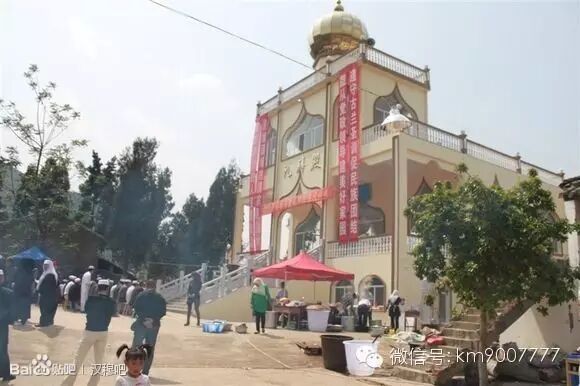
Wenshan Zhuang and Miao Autonomous Prefecture is home to over 23,000 Hui Muslims, making up about 0.007% of the prefecture's total population of 3.28 million. They are scattered across four counties: Wenshan, Yanshan, Qiubei, and Guangnan. Wenshan city sits at the center, surrounded by Maguan, Xichou, Malipo, Funing, Yanshan, Qiubei, and Guangnan counties. Aside from a few Hui civil servants and temporary residents working in Xichou, Maguan, Malipo, and Funing, those four counties are essentially devoid of resident Hui populations.
Wenshan's Hui population primarily lives along highways or in towns, mostly settled in flat valley basins with a small fraction living in mountainous areas. Hui villages tend to be tightly clustered, creating a settlement pattern of "large dispersion, small concentration." Currently, Yanshan has 19 Hui villages: Pingyuan Town includes Tianxin, Pingyuan, Songmaopo, Maolong, Sanjiacun, Xinzhuang, Xiaoyuan Road, Chebaini, Songshancun, and Shangmao Avenue; Jiayi Town includes Laojiaocheng, Xiaoshiqiao, Zhongzhai, Chengda, and Yanshan urban area; Ameng Town includes Ameng, Mifa, Mifa New Village, and Maodichong. Qiubei County has 9 Hui villages: Qiubei urban area, the Ball Manufacturing Plant, Jinping Town's Matoushan, Xincheng, Hewai, and Jiucheng, as well as Yuezhe Township's Yuezhe, Xinzhai, and Fuxing Village. Wenshan County has 9 Hui villages: Wenshan urban area, Matang Township's Huanglongba, Pingba Town's Pingba, Hongdian Hui Ethnic Township's Moke, Bajiazhai, along with self-declared repatriated ancestral villages Wulu Old Village, Wulu New Village, and Mulubai, plus Dehou Township's Kazuo Zhuang village Muslims. Guangnan County has two Hui residential areas in Guangnan urban area and Zhulin. Across the entire prefecture, there are 39 Hui residential villages and towns, housing a total of 40 mosques. Aside from the older mosques in Yuezhe and Guangnan, all other mosques have been successively renovated, expanded, or rebuilt by local villages and towns in recent times.
Generally speaking, the Hui population in Wenshan originated from migrations out of Dali, Kunming, Jianshui, Luliang, and Luxi during the Yongzheng, Qianlong, and Xianfeng reigns of the Qing Dynasty.
2. The Origins of Wenshan's Zhuang-Hui
Han, Hui, and other ethnic groups in Yunnan had historically lived together in harmony. However, the Qing government adopted a divide-and-rule policy of "using Han to control Hui," manufacturing ethnic divides that heightened tensions and damaged relations between the two communities.
In March 1856 (the 6th year of Xianfeng, Bingchen year), Yunnan Governor Shu Ahxing and Provincial Treasurer Qingsheng (a Manchu), acting on orders from the Qing court, commanded all prefectures, departments, sub-prefectures, and counties to "annihilate the Yunnan Hui and sweep them clean across eight hundred miles" (from Ma Minlin's *Records of the Great Calamity in Yunnan in the Fourteenth Year of Xianfeng*) and "gather mobs to slaughter the Hui," giving authorities a green light to kill Hui people with impunity. On April 16 and May 16, 1856, the Qing rulers carried out another brutal massacre of the Hui. Over 10,000 people in Kunming were slaughtered, leaving "almost no survivors" (from the *Inscribed Monument Marking the Reburial of Kunming's Five-Directional Hui Martyrs of the Bingchen Year of Xianfeng*). Today, the back of Jinjiashan in Kunming city serves as a mass grave (pit) for these massacred Hui people.
Before Du Wenxiu’s uprising broke out in western Yunnan in 1856 (the Bingchen year), the "Four Mountains Yi Rebellion" had already erupted around Wenshan and Qiubei. After Du Wenxiu's uprising began, Ma Zunxiang, a Hui from Moke Village in Wenshan, and Ma Jingju, a Hui from Xishan in Wenshan, also raised the banner of anti-Qing resistance. The anti-Qing struggle of Qiubei's Hui was deeply sympathized with and supported by local ethnic brothers. For instance, Yi people from places like Baima Cao secretly supplied grain to the Hui, highlighting the anti-Qing resistance of Hui in the Yuezhe area. As various ethnic groups united against the Qing, the Qing government—pursuing its policy of "gathering mobs to slaughter the Hui, wiping them straight out for eight hundred miles" and "giving permission to execute on sight any rebellious Hui troublemakers"—rolled out chilling slogans such as "First exterminate the Hui, next exterminate the Yi, and skin the Zhuang (Zhuang people) and Miao (Miao people) alive" to threaten anti-Manchu actions. After Du Wenxiu's uprising failed, almost every Hui village in Wenshan Prefecture was subjected to bloody purges and encirclement. Survivors were left destitute and displaced, fleeing to foreign lands. Afterward, Wenshan's Hui accepted pacification by the Qing court, but were forbidden from living in their ancestral homelands. Some Hui (such as those from the Yuezhe area) were escorted by troops to settle in Dazhang and Shadian in Hongju Prefecture.
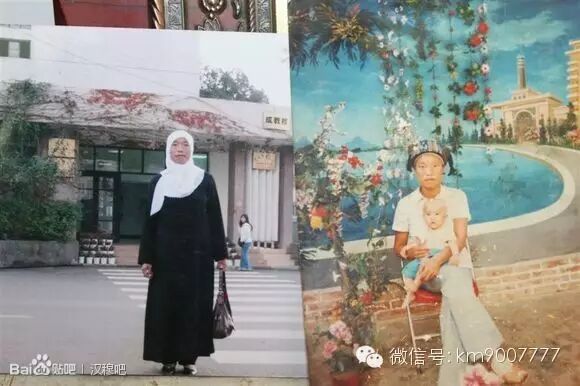
During this period, some Hui who escaped by the skin of their teeth fled from various places into Zhuang villages, where they were sheltered by their Zhuang brothers. They began wearing Zhuang clothing, speaking the Zhuang language, intermarrying with local Zhuang, and raising families. Bingle Township's Wulu Old Village, New Village, Mulubai in Hongdian Township, and Kazuo Village in Dehou Township are entirely Zhuang communities, yet the ancestors of Wulu New Village, Old Village, and Mulubai were descendants of Dazhang Hui bearing the surname Ma and others. Today, New Village has 58 households, out of which 18 households adhere to Islam. Among these 18 households, 16 carry the surname Ma, 1 is surnamed Li, and 1 is surnamed Long. Old Village has over 200 households, with 24 households embracing Islam (18 Ma households, 4 Shen households, 1 Long household, and 1 Tian household). Among these Muslim households, while the Ma families trace their ancestry back to the Hui, the other surnames joined Islam after marrying daughters of the Ma family and becoming influenced by their Muslim relatives.
The ancestors of Kazuo Village originally came from Najiaying in Tonghai, belonging to the Na lineage. Legend has it that during the Bingchen incident of the Qing Dynasty, ancestors of the Ma family fled to Wulu and Mulubai, while ancestors of the Na family fled to Kazuo Village. Through intermarriage with other ethnic groups, they settled down, descendants multiplied, and as older generations passed away, the younger generations became assimilated by the local ethnic groups.
For example, in Wulu Village, Bingle Township, Wenshan Prefecture, there are currently two "Zhuang-Hui" villages known as Old Village and New Village, with New Village developing out of Old Village. According to local oral tradition, the shared male ancestor bearing the surname Ma fled from the Dazhang Hui enclave in Honghe Prefecture after the Bingchen incident and hid out in a Zhuang village. The male ancestor surnamed Ma married a local Zhuang woman, and all their descendants now carry the surname Ma. After the male ancestor passed away, his Dazhang Hui relatives would travel to Wulu every year during Eid al-Fitr to visit his grave. However, according to local recollections in Wulu, prior to 1990, Wulu's Ma villagers only knew that their ancestors were surnamed Ma and were Hui; they knew absolutely nothing about Islam or Hui culture and were practically indistinguishable from the local Zhuang. After 1990, Dazhang Hui people successively traveled to Wulu to preach Islam to the villagers, while also providing economic aid such as rice, sesame oil, and daily necessities. Ahong (Imam) Li Zaitang, who still serves as the religious leader at the Dazhang Mosque, was one of the earliest religious figures in the 1990s to help the villagers of Wulu return to Islam. Recalling how eagerly the villagers requested to "return" to the Hui fold, many memories remain vivid for him. Because local economic conditions were extremely harsh—roads were undeveloped and cars couldn't drive into the village—villagers used an ox cart to transport Ahong Li into the village. Both women and men eagerly studied religious knowledge; during the freezing winter without hot water, they used cold water to perform wudu (ablutions) before learning how to pray. Ahong Li described what he saw back then by saying he "was moved to tears multiple times." The Wulu Muslims who experienced this "return" maintain Islamic religious beliefs, yet they retain many cultural elements of both the Hui and Zhuang in their clothing, language, housing, and even their ethnic psychology.
3. Culture of the Wenshan Zhuang-Hui
(1) Language: Language is not only a marker of group identity and a differentiator from others, but also a social construction of the user group through cultural elements, generating cognitive, psychological, and conscious identification and interpretation. The Hui who migrated to the Zhuang areas of Yunnan embraced Zhuang cultural life and adopted the Zhuang language. The use of Zhuang is not limited to communication with Zhuang people; it is also widely used within the Hui community itself. The adoption of Zhuang has become a major hallmark of the "Zhuang-Hui." On their official ID cards, Wenshan Zhuang-Hui are registered as "Zhuang," and their language usage is identical to that of the local Zhuang. They refer to themselves as "Zhuang Muslims." Ma Guoxin, the current Ahong of the Old Village Mosque, is a local. During an evening of fieldwork, two cows belonging to a Zhuang family in Old Village fought and went missing, prompting them to seek help from the Ahong at the mosque. Ma Guoxin used a loudspeaker in the Zhuang language to help them find the cows. Hui men, women, old, and young in the village all speak and understand Zhuang, a practice the Zhuang refer to as "chatting." For instance, Ahong Ma Guoxin's children speak Mandarin at home with their parents, but speak Zhuang when playing with village playmates. Zhuang is a spoken language without a written script.
(2) Clothing: The attire of the "Zhuang-Hui" is also distinctive because it mirrors Zhuang dress, which is one reason they are called "Zhuang-Hui." During the historical formation of the Zhuang-Hui, this cultural shift of speaking Zhuang and wearing Zhuang clothing happened rapidly. Because the Hui adopted these two identity-marking traits of language and clothing, acquiring the outward cultural features of the Zhuang, outsiders came to call them "Zhuang-Hui." After returning to Islam, Hui men and women still wear clothing identical to that of the local Zhuang. Some elderly women still wear the traditional Zhuang headwrap at home, only switching to the Hui headscarf (hijab) when going out to attend Hui religious holidays.
(3) Diet: The "Zhuang-Hui" have also transitioned toward Zhuang characteristics in their culinary culture. Every year on the 15th day of the first lunar month, the Zhuang dye rice yellow using various flowers, and on the 24th day of the sixth lunar month, they celebrate the Red Rice Festival by dyeing glutinous rice red. The local Hui have likewise adopted these folk dietary customs while steadfastly upholding traditional Hui dietary habits and taboos.
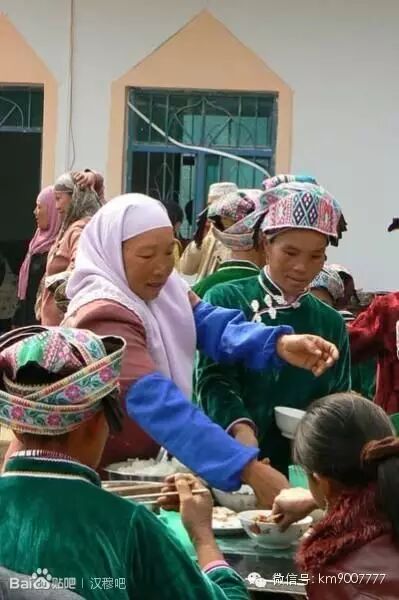
(4) Funeral Customs: The Zhuang practice polytheism, worshipping mountains, rivers, and various aspects of nature. The Zhuang are extremely particular about choosing the right date for a funeral; if the day is wrong, the burial can be postponed for half a month or even a month after a loved one passes away. Wenshan Zhuang Muslims still retain their Zhuang identity status on their ID cards, referring to themselves as "Zhuang Muslims"—changing their religion without changing their official ethnicity. However, in funeral customs, Zhuang Muslims have inherited Hui traditions, handling the deceased according to Hui burial rites: prompt burial, janazah prayers led by an Ahong, and wrapping the body in white shrouds instead of using a coffin. In many families, some members practice Islam while others practice Zhuang polytheism. When a non-Muslim family member passes away, family members generally attend the funeral together, except that the Zhuang Muslims refrain from rituals that violate Islamic etiquette.
4. Pluralistic Cultural Identity
Cultural identity
refers to the social and psychological process by which an individual internalizes the culture and cultural group to which they belong, generating a sense of belonging, and thereby acquiring, maintaining, and innovating their own culture. Cultural identity encompasses identification with social value norms, religious beliefs, customs, language, and art. Cultural identity is also the process of forming the "self."
Wenshan's "Zhuang-Hui" demonstrate identity with local Zhuang in their daily life, economy, clothing, and customs, while primarily identifying as Hui in terms of their ethnic identity, religion, and communal emotional belonging. In Yunnan, there are similar groups identified by academics as "Yi-Hui" (in Xingping, Yuxi), "Tibetan-Hui" (in Shangri-La), and "Bai-Hui" (in Eryuan, Dali). They practice Islam, yet identify with local ethnic minority groups in their customs, habits, and language. Spiritually, they find their homecoming in Islam, even though their daily life paradigms have converged with local ethnic groups.
Due to historical reasons, the "Zhuang-Hui" group lacked sustained social interaction and demographic mobility with the mainstream Hui population for a long time. Instead, they maintained continuous, frequent interpersonal interactions, social contact, and cultural exchanges with the local Zhuang. However, this social process did not dilute their group belonging and identity regarding Hui traditional culture and mainstream emotional ties. Hui identity has persisted throughout the developmental history of the "Zhuang-Hui." An ancestral stele discovered in Wulu, Wenshan, titled *Stele Inscription of the Ma Progenitor*, records: "...yet the principles of the Islamic faith dare not be abandoned... After the ancestors passed away, there were no Hui teachers to guide us through the scriptures, hence later descendants changed their religion." Consequently, amid today's more open and frequent inter-ethnic interactions, some "Zhuang-Hui" have experienced a strong ethnic consciousness, symbolized by a religious return, sparking a series of social, cultural, and ideological revivals of traditional Hui social culture.
During fieldwork interviews, this pluralistic cultural identity of the Zhuang-Hui constantly shone through. Feng LF (female, 48 years old, wife of Ma KT's older brother, from Xiasheshu Village, a Zhuang who married into the Wulu Ma family and converted to Islam in 1990):
"Back then, Xue BJ (from Zhaotong, living in Dazhang) brought a group of about 20 young students from Dazhang to teach us how to perform wudu, pray, and recite scriptures. They told us our ancestors were Hui and that we needed to return to the Hui identity."
"After I became Hui, visiting my maiden family became a bit inconvenient, but I have my own cooking pots and stove. I still have 3 younger brothers and 2 younger sisters in Xiasheshu, and they are all Zhuang. Since I embraced Islam, I can no longer eat pork. I wash my face (perform wudu—author's note) and pray. Now I am Hui, but on my ID card, I still list my ethnicity as Zhuang. Going to the mosque to wash up and pray makes me feel much cleaner. All my kids love studying scriptures. My eldest son, Ma Mingli, is 22 this year. He's very smart, has a deep grasp of scriptural study, and is currently studying scriptures in Iran, funded by a Hui family in Tianxin Village."
"I feel life is better after embracing Islam than before. I don't feel any different from Hui people elsewhere; all Muslims around the world are one family. Whenever we are with Muslims anywhere, we feel like family, with no fear or awkwardness. Now, I still feel a bit shy around Nong people (Zhuang people—author's note), not daring to speak much, but when I see Muslims wearing hijabs, I feel a warm kinship. We live in a Zhuang area, and I wear a Muslim hijab now, but if there are events like accompanying a bride to a Zhuang village for a wedding, I will put on the traditional Nong headwrap and wear Nong clothing. Because if I went wearing a hijab, people would ask a million questions and feel we are different from them. I do feel there is a difference between us and the Nong; our diets are different, and they are busier than us."
Thus, a pluralistic ethnic culture characterized by Zhuang-Hui blending was formed. The transformation of these cultural traits represents a process of cultural acceptance and adaptation, achieving an adaptive integration of two cultures. After encountering Zhuang culture, the Hui borrowed its cultural elements, adapted to local geographic traits, altered their original lifestyle, and integrated Zhuang cultural elements like language, clothing, and housing into the internal structure of Hui culture. This integration primarily remained at the foundational level of daily life, whereas religious consciousness—the core domain constituting ethnic identity—has remained deeply rooted throughout the historical journey of the Zhuang-Hui.
5. Conclusion
The renowned American anthropologist Clifford Geertz
once brilliantly pointed out: "Ethnic identity is actually a group's strategic adjustment and adaptation when facing a certain type of social experience, and changes in ethnic identity are closely related to the 'boundary of ethnic groups.' And we must pay full attention to social boundary interactions because the two sides possess 'territorial counterparts.' For an ethnic group to maintain its identity, it must take into account the interactions between the people of both sides..."
Based on the above perspective, I think this better explains how the Wenshan Wulu Hui Muslims, as an immigrant ethnic minority upon entering the Wenshan Wulu Zhuang villages, developed an identity with the local Zhuang culture, beautifully reflecting the survival wisdom of Hui ancestors and the harmonious coexistence among different ethnic groups in the historical process.
Islam is not only a religion, but a complete way of life. Under the intersection of "faith and pragmatism," a diverse cultural identity concept of "harmony in diversity" has been formed among the Wenshan Hui Muslims. It embodies an open mindset and an enterprising spirit in the process of dialogue with different cultures. "Harmony" actually means seeking common ground while reserving differences, whereas "sameness" would mean eliminating differences for the sake of uniformity. "Harmony in diversity" advocates pursuing harmonious unity on the premise of respecting differences. The main spirit of "harmony" is to coordinate differences, achieve a new harmonious unity, and enable various different things to attain new development and become new, distinct entities.
[This article is a phased achievement of the National Social Science Fund Project: Research on Yunnan's Special Hui Ethnic Groups and Local Inter-Ethnic Social Harmonious Relations (Project No. 13CMZ027)]
References
1. Zhang Lijian, *Ethnic Identity in the Context of Scattered and Mixed Communities*, Ethnic Publishing House, 2009.
2. Yue Daiyun, "Two Dangers in Multicultural Development and the Contributions Culture Can Make," *Literature and Art Daily*, August 28, 2001.
(Hu Liping is a lecturer at the School of Social Management, Kunming University; Feng Yu is a lecturer at the Research Institute for Southwest China Border Ethnic Minorities, Yunnan University) Collapse Read »
Liping Hu, Yu Feng: A Closer Look at the "Zhuang-Hui" Muslims of Wenshan, Yunnan
Abstract:
The "Zhuang-Hui" are a unique group of Hui Muslims living in Wenshan Prefecture, Yunnan Province. Over the course of history, they have blended elements of Islamic faith with distinct Zhuang cultural traditions, creating a rich, pluralistic ethnic culture.
1. Origins and Overview of the Hui People in Wenshan Prefecture, Yunnan
Wenshan Zhuang and Miao Autonomous Prefecture is home to over 23,000 Hui Muslims, making up about 0.007% of the prefecture's total population of 3.28 million. They are scattered across four counties: Wenshan, Yanshan, Qiubei, and Guangnan. Wenshan city sits at the center, surrounded by Maguan, Xichou, Malipo, Funing, Yanshan, Qiubei, and Guangnan counties. Aside from a few Hui civil servants and temporary residents working in Xichou, Maguan, Malipo, and Funing, those four counties are essentially devoid of resident Hui populations.
The "Zhuang-Hui" are a unique group of Hui Muslims living in Wenshan Prefecture, Yunnan Province. Over the course of history, they have blended elements of Islamic faith with distinct Zhuang cultural traditions, creating a rich, pluralistic ethnic culture.
1. Origins and Overview of the Hui People in Wenshan Prefecture, Yunnan
Wenshan Zhuang and Miao Autonomous Prefecture is home to over 23,000 Hui Muslims, making up about 0.007% of the prefecture's total population of 3.28 million. They are scattered across four counties: Wenshan, Yanshan, Qiubei, and Guangnan. Wenshan city sits at the center, surrounded by Maguan, Xichou, Malipo, Funing, Yanshan, Qiubei, and Guangnan counties. Aside from a few Hui civil servants and temporary residents working in Xichou, Maguan, Malipo, and Funing, those four counties are essentially devoid of resident Hui populations.
Wenshan's Hui population primarily lives along highways or in towns, mostly settled in flat valley basins with a small fraction living in mountainous areas. Hui villages tend to be tightly clustered, creating a settlement pattern of "large dispersion, small concentration." Currently, Yanshan has 19 Hui villages: Pingyuan Town includes Tianxin, Pingyuan, Songmaopo, Maolong, Sanjiacun, Xinzhuang, Xiaoyuan Road, Chebaini, Songshancun, and Shangmao Avenue; Jiayi Town includes Laojiaocheng, Xiaoshiqiao, Zhongzhai, Chengda, and Yanshan urban area; Ameng Town includes Ameng, Mifa, Mifa New Village, and Maodichong. Qiubei County has 9 Hui villages: Qiubei urban area, the Ball Manufacturing Plant, Jinping Town's Matoushan, Xincheng, Hewai, and Jiucheng, as well as Yuezhe Township's Yuezhe, Xinzhai, and Fuxing Village. Wenshan County has 9 Hui villages: Wenshan urban area, Matang Township's Huanglongba, Pingba Town's Pingba, Hongdian Hui Ethnic Township's Moke, Bajiazhai, along with self-declared repatriated ancestral villages Wulu Old Village, Wulu New Village, and Mulubai, plus Dehou Township's Kazuo Zhuang village Muslims. Guangnan County has two Hui residential areas in Guangnan urban area and Zhulin. Across the entire prefecture, there are 39 Hui residential villages and towns, housing a total of 40 mosques. Aside from the older mosques in Yuezhe and Guangnan, all other mosques have been successively renovated, expanded, or rebuilt by local villages and towns in recent times.
Generally speaking, the Hui population in Wenshan originated from migrations out of Dali, Kunming, Jianshui, Luliang, and Luxi during the Yongzheng, Qianlong, and Xianfeng reigns of the Qing Dynasty.
2. The Origins of Wenshan's Zhuang-Hui
Han, Hui, and other ethnic groups in Yunnan had historically lived together in harmony. However, the Qing government adopted a divide-and-rule policy of "using Han to control Hui," manufacturing ethnic divides that heightened tensions and damaged relations between the two communities.
In March 1856 (the 6th year of Xianfeng, Bingchen year), Yunnan Governor Shu Ahxing and Provincial Treasurer Qingsheng (a Manchu), acting on orders from the Qing court, commanded all prefectures, departments, sub-prefectures, and counties to "annihilate the Yunnan Hui and sweep them clean across eight hundred miles" (from Ma Minlin's *Records of the Great Calamity in Yunnan in the Fourteenth Year of Xianfeng*) and "gather mobs to slaughter the Hui," giving authorities a green light to kill Hui people with impunity. On April 16 and May 16, 1856, the Qing rulers carried out another brutal massacre of the Hui. Over 10,000 people in Kunming were slaughtered, leaving "almost no survivors" (from the *Inscribed Monument Marking the Reburial of Kunming's Five-Directional Hui Martyrs of the Bingchen Year of Xianfeng*). Today, the back of Jinjiashan in Kunming city serves as a mass grave (pit) for these massacred Hui people.
Before Du Wenxiu’s uprising broke out in western Yunnan in 1856 (the Bingchen year), the "Four Mountains Yi Rebellion" had already erupted around Wenshan and Qiubei. After Du Wenxiu's uprising began, Ma Zunxiang, a Hui from Moke Village in Wenshan, and Ma Jingju, a Hui from Xishan in Wenshan, also raised the banner of anti-Qing resistance. The anti-Qing struggle of Qiubei's Hui was deeply sympathized with and supported by local ethnic brothers. For instance, Yi people from places like Baima Cao secretly supplied grain to the Hui, highlighting the anti-Qing resistance of Hui in the Yuezhe area. As various ethnic groups united against the Qing, the Qing government—pursuing its policy of "gathering mobs to slaughter the Hui, wiping them straight out for eight hundred miles" and "giving permission to execute on sight any rebellious Hui troublemakers"—rolled out chilling slogans such as "First exterminate the Hui, next exterminate the Yi, and skin the Zhuang (Zhuang people) and Miao (Miao people) alive" to threaten anti-Manchu actions. After Du Wenxiu's uprising failed, almost every Hui village in Wenshan Prefecture was subjected to bloody purges and encirclement. Survivors were left destitute and displaced, fleeing to foreign lands. Afterward, Wenshan's Hui accepted pacification by the Qing court, but were forbidden from living in their ancestral homelands. Some Hui (such as those from the Yuezhe area) were escorted by troops to settle in Dazhang and Shadian in Hongju Prefecture.
During this period, some Hui who escaped by the skin of their teeth fled from various places into Zhuang villages, where they were sheltered by their Zhuang brothers. They began wearing Zhuang clothing, speaking the Zhuang language, intermarrying with local Zhuang, and raising families. Bingle Township's Wulu Old Village, New Village, Mulubai in Hongdian Township, and Kazuo Village in Dehou Township are entirely Zhuang communities, yet the ancestors of Wulu New Village, Old Village, and Mulubai were descendants of Dazhang Hui bearing the surname Ma and others. Today, New Village has 58 households, out of which 18 households adhere to Islam. Among these 18 households, 16 carry the surname Ma, 1 is surnamed Li, and 1 is surnamed Long. Old Village has over 200 households, with 24 households embracing Islam (18 Ma households, 4 Shen households, 1 Long household, and 1 Tian household). Among these Muslim households, while the Ma families trace their ancestry back to the Hui, the other surnames joined Islam after marrying daughters of the Ma family and becoming influenced by their Muslim relatives.
The ancestors of Kazuo Village originally came from Najiaying in Tonghai, belonging to the Na lineage. Legend has it that during the Bingchen incident of the Qing Dynasty, ancestors of the Ma family fled to Wulu and Mulubai, while ancestors of the Na family fled to Kazuo Village. Through intermarriage with other ethnic groups, they settled down, descendants multiplied, and as older generations passed away, the younger generations became assimilated by the local ethnic groups.
For example, in Wulu Village, Bingle Township, Wenshan Prefecture, there are currently two "Zhuang-Hui" villages known as Old Village and New Village, with New Village developing out of Old Village. According to local oral tradition, the shared male ancestor bearing the surname Ma fled from the Dazhang Hui enclave in Honghe Prefecture after the Bingchen incident and hid out in a Zhuang village. The male ancestor surnamed Ma married a local Zhuang woman, and all their descendants now carry the surname Ma. After the male ancestor passed away, his Dazhang Hui relatives would travel to Wulu every year during Eid al-Fitr to visit his grave. However, according to local recollections in Wulu, prior to 1990, Wulu's Ma villagers only knew that their ancestors were surnamed Ma and were Hui; they knew absolutely nothing about Islam or Hui culture and were practically indistinguishable from the local Zhuang. After 1990, Dazhang Hui people successively traveled to Wulu to preach Islam to the villagers, while also providing economic aid such as rice, sesame oil, and daily necessities. Ahong (Imam) Li Zaitang, who still serves as the religious leader at the Dazhang Mosque, was one of the earliest religious figures in the 1990s to help the villagers of Wulu return to Islam. Recalling how eagerly the villagers requested to "return" to the Hui fold, many memories remain vivid for him. Because local economic conditions were extremely harsh—roads were undeveloped and cars couldn't drive into the village—villagers used an ox cart to transport Ahong Li into the village. Both women and men eagerly studied religious knowledge; during the freezing winter without hot water, they used cold water to perform wudu (ablutions) before learning how to pray. Ahong Li described what he saw back then by saying he "was moved to tears multiple times." The Wulu Muslims who experienced this "return" maintain Islamic religious beliefs, yet they retain many cultural elements of both the Hui and Zhuang in their clothing, language, housing, and even their ethnic psychology.
3. Culture of the Wenshan Zhuang-Hui
(1) Language: Language is not only a marker of group identity and a differentiator from others, but also a social construction of the user group through cultural elements, generating cognitive, psychological, and conscious identification and interpretation. The Hui who migrated to the Zhuang areas of Yunnan embraced Zhuang cultural life and adopted the Zhuang language. The use of Zhuang is not limited to communication with Zhuang people; it is also widely used within the Hui community itself. The adoption of Zhuang has become a major hallmark of the "Zhuang-Hui." On their official ID cards, Wenshan Zhuang-Hui are registered as "Zhuang," and their language usage is identical to that of the local Zhuang. They refer to themselves as "Zhuang Muslims." Ma Guoxin, the current Ahong of the Old Village Mosque, is a local. During an evening of fieldwork, two cows belonging to a Zhuang family in Old Village fought and went missing, prompting them to seek help from the Ahong at the mosque. Ma Guoxin used a loudspeaker in the Zhuang language to help them find the cows. Hui men, women, old, and young in the village all speak and understand Zhuang, a practice the Zhuang refer to as "chatting." For instance, Ahong Ma Guoxin's children speak Mandarin at home with their parents, but speak Zhuang when playing with village playmates. Zhuang is a spoken language without a written script.
(2) Clothing: The attire of the "Zhuang-Hui" is also distinctive because it mirrors Zhuang dress, which is one reason they are called "Zhuang-Hui." During the historical formation of the Zhuang-Hui, this cultural shift of speaking Zhuang and wearing Zhuang clothing happened rapidly. Because the Hui adopted these two identity-marking traits of language and clothing, acquiring the outward cultural features of the Zhuang, outsiders came to call them "Zhuang-Hui." After returning to Islam, Hui men and women still wear clothing identical to that of the local Zhuang. Some elderly women still wear the traditional Zhuang headwrap at home, only switching to the Hui headscarf (hijab) when going out to attend Hui religious holidays.
(3) Diet: The "Zhuang-Hui" have also transitioned toward Zhuang characteristics in their culinary culture. Every year on the 15th day of the first lunar month, the Zhuang dye rice yellow using various flowers, and on the 24th day of the sixth lunar month, they celebrate the Red Rice Festival by dyeing glutinous rice red. The local Hui have likewise adopted these folk dietary customs while steadfastly upholding traditional Hui dietary habits and taboos.
(4) Funeral Customs: The Zhuang practice polytheism, worshipping mountains, rivers, and various aspects of nature. The Zhuang are extremely particular about choosing the right date for a funeral; if the day is wrong, the burial can be postponed for half a month or even a month after a loved one passes away. Wenshan Zhuang Muslims still retain their Zhuang identity status on their ID cards, referring to themselves as "Zhuang Muslims"—changing their religion without changing their official ethnicity. However, in funeral customs, Zhuang Muslims have inherited Hui traditions, handling the deceased according to Hui burial rites: prompt burial, janazah prayers led by an Ahong, and wrapping the body in white shrouds instead of using a coffin. In many families, some members practice Islam while others practice Zhuang polytheism. When a non-Muslim family member passes away, family members generally attend the funeral together, except that the Zhuang Muslims refrain from rituals that violate Islamic etiquette.
4. Pluralistic Cultural Identity
Cultural identity
refers to the social and psychological process by which an individual internalizes the culture and cultural group to which they belong, generating a sense of belonging, and thereby acquiring, maintaining, and innovating their own culture. Cultural identity encompasses identification with social value norms, religious beliefs, customs, language, and art. Cultural identity is also the process of forming the "self."
Wenshan's "Zhuang-Hui" demonstrate identity with local Zhuang in their daily life, economy, clothing, and customs, while primarily identifying as Hui in terms of their ethnic identity, religion, and communal emotional belonging. In Yunnan, there are similar groups identified by academics as "Yi-Hui" (in Xingping, Yuxi), "Tibetan-Hui" (in Shangri-La), and "Bai-Hui" (in Eryuan, Dali). They practice Islam, yet identify with local ethnic minority groups in their customs, habits, and language. Spiritually, they find their homecoming in Islam, even though their daily life paradigms have converged with local ethnic groups.
Due to historical reasons, the "Zhuang-Hui" group lacked sustained social interaction and demographic mobility with the mainstream Hui population for a long time. Instead, they maintained continuous, frequent interpersonal interactions, social contact, and cultural exchanges with the local Zhuang. However, this social process did not dilute their group belonging and identity regarding Hui traditional culture and mainstream emotional ties. Hui identity has persisted throughout the developmental history of the "Zhuang-Hui." An ancestral stele discovered in Wulu, Wenshan, titled *Stele Inscription of the Ma Progenitor*, records: "...yet the principles of the Islamic faith dare not be abandoned... After the ancestors passed away, there were no Hui teachers to guide us through the scriptures, hence later descendants changed their religion." Consequently, amid today's more open and frequent inter-ethnic interactions, some "Zhuang-Hui" have experienced a strong ethnic consciousness, symbolized by a religious return, sparking a series of social, cultural, and ideological revivals of traditional Hui social culture.
During fieldwork interviews, this pluralistic cultural identity of the Zhuang-Hui constantly shone through. Feng LF (female, 48 years old, wife of Ma KT's older brother, from Xiasheshu Village, a Zhuang who married into the Wulu Ma family and converted to Islam in 1990):
"Back then, Xue BJ (from Zhaotong, living in Dazhang) brought a group of about 20 young students from Dazhang to teach us how to perform wudu, pray, and recite scriptures. They told us our ancestors were Hui and that we needed to return to the Hui identity."
"After I became Hui, visiting my maiden family became a bit inconvenient, but I have my own cooking pots and stove. I still have 3 younger brothers and 2 younger sisters in Xiasheshu, and they are all Zhuang. Since I embraced Islam, I can no longer eat pork. I wash my face (perform wudu—author's note) and pray. Now I am Hui, but on my ID card, I still list my ethnicity as Zhuang. Going to the mosque to wash up and pray makes me feel much cleaner. All my kids love studying scriptures. My eldest son, Ma Mingli, is 22 this year. He's very smart, has a deep grasp of scriptural study, and is currently studying scriptures in Iran, funded by a Hui family in Tianxin Village."
"I feel life is better after embracing Islam than before. I don't feel any different from Hui people elsewhere; all Muslims around the world are one family. Whenever we are with Muslims anywhere, we feel like family, with no fear or awkwardness. Now, I still feel a bit shy around Nong people (Zhuang people—author's note), not daring to speak much, but when I see Muslims wearing hijabs, I feel a warm kinship. We live in a Zhuang area, and I wear a Muslim hijab now, but if there are events like accompanying a bride to a Zhuang village for a wedding, I will put on the traditional Nong headwrap and wear Nong clothing. Because if I went wearing a hijab, people would ask a million questions and feel we are different from them. I do feel there is a difference between us and the Nong; our diets are different, and they are busier than us."
Thus, a pluralistic ethnic culture characterized by Zhuang-Hui blending was formed. The transformation of these cultural traits represents a process of cultural acceptance and adaptation, achieving an adaptive integration of two cultures. After encountering Zhuang culture, the Hui borrowed its cultural elements, adapted to local geographic traits, altered their original lifestyle, and integrated Zhuang cultural elements like language, clothing, and housing into the internal structure of Hui culture. This integration primarily remained at the foundational level of daily life, whereas religious consciousness—the core domain constituting ethnic identity—has remained deeply rooted throughout the historical journey of the Zhuang-Hui.
5. Conclusion
The renowned American anthropologist Clifford Geertz
once brilliantly pointed out: "Ethnic identity is actually a group's strategic adjustment and adaptation when facing a certain type of social experience, and changes in ethnic identity are closely related to the 'boundary of ethnic groups.' And we must pay full attention to social boundary interactions because the two sides possess 'territorial counterparts.' For an ethnic group to maintain its identity, it must take into account the interactions between the people of both sides..."
Based on the above perspective, I think this better explains how the Wenshan Wulu Hui Muslims, as an immigrant ethnic minority upon entering the Wenshan Wulu Zhuang villages, developed an identity with the local Zhuang culture, beautifully reflecting the survival wisdom of Hui ancestors and the harmonious coexistence among different ethnic groups in the historical process.
Islam is not only a religion, but a complete way of life. Under the intersection of "faith and pragmatism," a diverse cultural identity concept of "harmony in diversity" has been formed among the Wenshan Hui Muslims. It embodies an open mindset and an enterprising spirit in the process of dialogue with different cultures. "Harmony" actually means seeking common ground while reserving differences, whereas "sameness" would mean eliminating differences for the sake of uniformity. "Harmony in diversity" advocates pursuing harmonious unity on the premise of respecting differences. The main spirit of "harmony" is to coordinate differences, achieve a new harmonious unity, and enable various different things to attain new development and become new, distinct entities.
[This article is a phased achievement of the National Social Science Fund Project: Research on Yunnan's Special Hui Ethnic Groups and Local Inter-Ethnic Social Harmonious Relations (Project No. 13CMZ027)]
References
1. Zhang Lijian, *Ethnic Identity in the Context of Scattered and Mixed Communities*, Ethnic Publishing House, 2009.
2. Yue Daiyun, "Two Dangers in Multicultural Development and the Contributions Culture Can Make," *Literature and Art Daily*, August 28, 2001.
(Hu Liping is a lecturer at the School of Social Management, Kunming University; Feng Yu is a lecturer at the Research Institute for Southwest China Border Ethnic Minorities, Yunnan University) Collapse Read »
Discover Yunnan's Deep Muslim Culture, Historic Mosques & Halal Food
[Internet Repost]
Mosques and the Ancient Tea Horse Road: How Islamic Culture Took Root and Wove Itself into Southwest China's Diverse Society
Abstract:
A deep dive into how Islamic culture took root and evolved on the Yunnan plateau. Using landmarks like the Najiaying Mosque and Shadian Mosque, and exploring Sayyid Ajjal Shams al-Din Omar's governance in Yunnan during the Yuan dynasty, the Hui Muslim caravan commercial networks along the Ancient Tea Horse Road, and their fusion with Confucian culture, this article examines the 600-plus-year-old roots of Yunnan's Muslim society.
As Friday approaches noon, the streets surrounding Najiaying Mosque start shifting into a different gear. Shopkeepers briefly put their businesses on hold, and Muslims from the village and nearby communities trickle in. Before stepping into the prayer hall, everyone performs wudu (ablution/ritual purification). Inside, there are no idols; the mihrab (prayer niche) right up front points the way to Mecca. People line up shoulder to shoulder in neat rows, standing, bowing, and prostrating under the guidance of an ahong (imam/Islamic teacher) or imam. Folks of all ages, jobs, and family backgrounds are turned toward the exact same direction at the exact same time. Once dua (personal prayer / supplication) and the prayer wrap up, the crowd flows back out onto the street. Some head back to their shops and factories, others jump back into house chores, and some hang out chatting inside and outside the courtyard. Kids study scripture and etiquette, while major milestones like weddings, funerals, Ramadan, holidays, and community charity work are almost always tied right back to the mosque.
That’s how a mosque connects faith to everyday life. If you drop pins on a map of Yunnan for every mosque and Hui Muslim community, you'll realize they're scattered practically all over the province. Kunming and its surrounding areas feature tons of sifang (mosque-centered community units); heading northeast, Xundian, Huize, Zhaotong, and Ludian connect the roads to Sichuan, Guizhou, and Yunnan; traveling south, Yuxi, Tonghai, Nagu, Shadian, Kaiyuan, Jianshui, Shiping, Yanshan, and Pingjie spread out along the basin valleys, mining zones, and the Yunnan-Vietnam railway corridor; and heading west, Dali, Weishan, Yongping, Baoshan, and Tengchong link up with the Ancient Yunnan-Burma Road. Yunnan's Hui Muslims show a classic pattern of being "widely dispersed yet closely clustered": they're spread across a huge area, but they usually form tight-knit communities centered around villages, alleyways, and local mosque districts.
This map brings up a whole string of questions. When exactly did Islam find its way into Yunnan? Were the earliest Muslims soldiers, officials, or merchants? Why do Hui settlements so often pop up near cities, basin valleys, mines, post roads, and markets? How does a single mosque hold scattered families together? Why did massive, grand mosques get built in places like Najiaying and Shadian? What did halal food, caravan trading, traditional mosque education, and cross-border networks leave behind in Yunnan?
In this section, let's face another side of history. Yunnan's Hui Muslims have weathered wars, ethnic clashes, mass migrations, and destroyed homes. The Du Wenxiu Rebellion during the Qing dynasty and the Hui-Han conflicts surrounding it led to heavy casualties across different ethnic groups; meanwhile, the Shadian Incident in the 1970s left deep, lasting trauma on the local community. If we only talk about booming trade and amazing food, history starts to sound way too rosy; but if we only focus on conflict and suffering, we end up boiling centuries of lived life down to a simple disaster movie.
What we really need to talk about is how a group of people arriving in Yunnan from all different directions managed to make a home for themselves amidst these mountains and rivers. They kept their faith alive through mosques, preserved their community through marriage and family, built their livelihoods through military farming, agriculture, craftsmanship, and trade, and—through long-term coexistence with the Han, Yi, Bai, Dai, Hani, and other ethnic groups—forged a unique local culture that stays deeply connected to the global Islamic world while remaining quintessentially Yunnan.
Part 1: When Did Islam Actually Arrive in Yunnan?—Separating Legend from History
Plenty of local stories float around about how Islam first reached Yunnan. Out in western Yunnan, there's the legend of the "three thousand exchanging for eight hundred": back when Tang dynasty troops were campaigning against the Nanchang kingdom, a bunch of soldiers known as "Huihui" came to Yunnan, stayed behind after losing the battle, and married local women. Old stone steles and local gazetteers in some Kunming mosques even trace their founding back to the Tang dynasty. Other legends claim that Arab or Persian elders traveled through Yunnan, with some passing away and getting buried in Kunming.
These stories get passed down generation after generation in Hui communities, expressing a heartfelt wish: that their ancestors arrived here ages ago, and that Islam has deep historical roots in Yunnan. They're worth recording, but we can't just pass them off as verified historical facts without taking a closer look. The reason is simple. The Tang dynasty concept of "Huihui" isn't the exact same thing as the Hui ethnic group that took shape much later, these legends were written down fairly late in history, and matching contemporary historical and archaeological records are super scarce. People definitely traveled back and forth between Yunnan and Tibet, South Asia, and Central Asia during the Tang dynasty, so it's not totally impossible that individual Muslims reached Yunnan; however, we still don't have enough solid evidence to prove that stable Muslim communities, mosques, and continuous generational traditions were already established back then.
The history we can actually trace with some clarity starts around the mid-13th century. In 1253, Mongol armies rolled into Yunnan. Aside from Mongols, the troops included "Huihui" soldiers, artisans, officials, and camp followers hailing from Central Asia, West Asia, and Northwest China. Once the fighting wrapped up, some of these folks stayed behind to garrison troops, farm the land, trade, and start families. For Yunnan, this wasn't just a simple shift in political regime; it brought brand-new ethnic groups and beliefs into the mix.
In 1274, Sayyid Ajjal Shams al-Din Omar stepped up as the Administrator of the Yunnan Branch Secretariat. He was a major Hui political figure during the Yuan dynasty, and his family and entourage left a massive footprint across Yunnan. Most of the specific records about how many mosques he built in Kunming come from later local historical accounts, meaning the founding dates of individual mosques still need to be verified using stone steles and architectural records; that said, there is clear historical backing that Muslims were already active in Kunming during the Yuan dynasty, and that Hui officials, soldiers, and merchants had broken into Yunnan's urban centers and transportation networks.
The Ming dynasty marked the second major chapter. After Ming troops marched into Yunnan, garrisons, military farming colonies (weisuo and tuntian), and post roads spread across the entire province. Hui soldiers, artisans, merchants, and their families from the Northwest, Central China, and the Jiangnan region followed the military into Yunnan, joined later by civilian farming colonies, merchant settlements, and ongoing waves of migration. Retired soldiers settled down as farmers, merchants set up shop near markets and transport hubs, artisans moved into towns and cities, and families clustered around local mosques. By the mid-to-late Ming dynasty, decent-sized Hui communities had popped up all over Kunming, Yuxi, Tonghai, Kaiyuan, Jianshui, Shiping, Xundian, Qujing, Dali, Weishan, Baoshan, and Tengchong.
So, Islam arriving in Yunnan wasn't just a story of a single caravan rolling in with a copy of the Quran and calling it a day. The first wave likely rolled in alongside warfare and imperial governance, while later groups trickled in through military garrisons, immigration, and trade networks. It started with a handful of outsider soldiers, officials, and artisans who, through decades of hanging out, intermarrying, and living side-by-side with local society, slowly shaped the Yunnan Hui people into an ethnic group with shared beliefs, customs, and historical memories.
Part 2: Why Hui Communities Are Always on the Move
At first glance, the distribution of Yunnan's Hui population looks scattered, but it's far from random. You'll usually spot them in four main types of places: military garrison and farming outposts, densely populated cities and basin valleys, buzzing mining and handicraft hubs, and trade routes and border ports connecting the province to the outside world. This ties right back into the history of how they got to Yunnan in the first place. Families who rolled in with the army needed to grab land near their bases, grow food, and build mosques; folks in trade needed to set up close to markets, ferry crossings, post stations, and city gates; people working in transport needed caravan inns (madian), water sources, fodder, and mutual-aid networks with others in the same line of work; and folks heading into the mining districts clustered around copper, silver, tin, salt, and other resources to form communities.
That's why a Hui village often plays a few different roles at the same time. It might have started out as a military farming colony before turning into an agricultural village; it could have popped up as a market town because horse caravans needed a place to rest, only to grow handicrafts as trade picked up; or it might have drawn a crowd during a mining boom, shifting over to transport, food service, and other industries once the mines slowed down. The whole idea of a "prosperous Hui enclave" didn't just happen automatically because of religion—it's the end result of roads, resources, family teamwork, business trust, and long-term hustle.
Faith built an essential social network right into the mix. Muleteers away from home for months at a time needed to know where they could grab halal food, crash for the night, and find backup from fellow travelers on the next leg of the journey; merchants crossing unfamiliar territory had to build up trust and information channels; and families packing up and moving far away needed folks who could handle weddings and funerals, teach scripture, and keep local traditions alive. Mosques and sifang communities gave all these needs a steady, reliable home base.
Along any trade route, as soon as a few spots popped up that could host Muslim travelers, it got way easier for the next wave of folks to keep pushing forward along that exact same trail. Merchants hauled in goods and news, but they also brought kin, scholars, ahongs, and new marriage ties straight to the next stop. In this way, roads didn't just move products—they reproduced the community itself.
Yunnan Hui Muslims are "widely dispersed yet closely clustered" precisely because of this constant movement. They aren't packed into one continuous stretch of land; instead, they've built countless mosque communities across city alleys, basin villages, mining outskirts, and ancient trail pit-stops. These spots are separated by distance—sometimes dozens of miles, sometimes hundreds—yet they're all stitched together into an invisible web powered by religion, family ties, marriage, education, and commerce.
Part 3: How Muslims Pray—Why Everyone Faces the Same Direction
Stepping inside a mosque, you first need to clear up a few concepts that people easily mix up. Islam is all about faith in the one and only Allah. Muslims deeply respect the Prophet Muhammad, but they don't turn the Prophet or anyone else into statues or idols to worship. Because of that, prayer halls in Yunnan mosques usually skip the Buddha statues, deities, and ancestral tablets. The core of the space isn't a visible idol at all—it's the mihrab, pointing the way to Mecca, which locals usually call the "kiln hall" (yaodian).
Before prayer, Muslims purify their bodies. Wudu (ablution) mainly involves washing the hands, mouth, nose, face, arms, head, and feet; under specific conditions, ghusl (full-body ritual bath) is performed. This cleansing isn't just about physical prep—it's the boundary line where you leave daily chores behind and step into a prayer state.
Daily prayers happen at set times. Facing Mecca, the worshiper goes through standing, reciting verses, bowing, prostrating, and sitting in sequence. Individuals can pray wherever it's appropriate, but group prayers are a huge deal. Friday congregational prayers bring nearby Muslims together at the mosque, where an ahong or imam leads the prayer and breaks down religious teachings and ethics.
Why do lines of people stand so straight and neat together? Because prayer stresses facing the exact same direction and moving to the exact same rhythm. Once you step into prayer, your wealth, job, and social status don't get to decide what row you stand in. Everyone stands shoulder to shoulder facing the same direction, symbolizing that every single person shares the exact same responsibility before Allah. Different mosques might set up their men's and women's prayer spaces a bit differently. Some have completely separate areas, while others make special arrangements during massive holidays and Friday gatherings. You definitely can't take how one specific spot does things and call it the universal rule for all Yunnan Muslims.
Prayer is just one piece of Islamic practice. The Five Pillars—commonly known as the confession of faith (Shahada), daily prayers (Salah), fasting during Ramadan (Sawm), charity (Zakah), and making the pilgrimage to Mecca (Hajj) if able—aren't just five separate chores for everyday people. Instead, they form a rhythm that shapes your day, your year, and your whole life.
During Ramadan, folks fast from dawn to sunset, skipping food and water while turning up the dial on self-discipline, charity, and reading scripture; when it's time to break the fast, families and communities gather right back together. Major holidays like Eid al-Fitr (Festival of Breaking the Fast) and Eid al-Adha (Festival of the Sacrifice) turn individual spiritual acts back into shared community life. Weddings, giving kids traditional Arabic names, animal sacrifices, funerals, and memorializing the departed are also handled with backup from local ahongs and mosque communities.
That's how a faith truly takes root: it gets woven right into time itself, with daily prayers, a yearly cycle of Ramadan and holidays, and life-stage rituals covering everything from marriage and duty to death and burial.
Part 4: Why a Mosque is Never Just a Prayer Hall
In traditional Yunnan Hui Muslim culture, communities naturally formed around the local mosque, known as a *sifang* (mosque parish) or *jiaofang* (religious parish). While the mosque represents the spiritual space, the *fang* refers to the surrounding families, homes, and streets.
A mosque isn't just a place for dua (personal prayer / supplication) and congregational worship; it's also the hub for education, ethics, and community organizing. An imam leads religious activities, teaches scripture and moral codes, and officiates at weddings, funerals, and other life events. Meanwhile, mosque administrators and community members pitch in to maintain the building, organize charity work, welcome visitors, and handle everyday public affairs.
Jingtang jiaoyu (traditional mosque education) is especially crucial. Muslims need to study the Quran and basic religious knowledge, but Yunnan Hui Muslims have long spoken Chinese in their daily lives. There's a linguistic gap between the Arabic used in scriptures—along with Persian in certain scholarly traditions—and everyday spoken Chinese. Mosque education serves as the vital bridge connecting these different linguistic worlds.
Students at the mosque learn the Arabic alphabet, scripture recitation, Islamic law (fiqh), ethics, and etiquette. Those who dive deeper receive rigorous training to become *manla* (mullah-in-training), imams, or scholars. Over time, teaching methods birthed a unique style of Chinese mixed with Arabic and Persian loanwords, helping Chinese Muslims truly grasp the scriptures. Ever since the Ming and Qing dynasties, Chinese Islamic mosque education and classical translations have continued to flourish, establishing an important academic tradition right here in Yunnan.
The mosque also functions as a safety net of mutual aid. If someone is traveling far from home, the *sifang* can help pass along news and connections; when a family faces a funeral, neighbors pitch in to help; the poor, the elderly without family, and disaster victims might receive charity and support; and travelers arriving in an unfamiliar place can easily find halal food and familiar cultural norms near the mosque. Still, it’s a mistake to romanticize the traditional parish as some kind of conflict-free utopia. Debates inevitably flare up over how mosque property is managed, how imams are hired, how different sects and educational philosophies get along, and how much financial weight rich families versus ordinary households should pull. A community isn’t harmoniously locked in place by default—it’s constantly sustained through worship, open negotiation, and long-term mutual aid.
Architecture also tells the story of this evolution. Early mosques in Yunnan often featured traditional Chinese courtyards, wooden beam structures, sloped tile roofs, and decorative archway gates (*pailou*). While the orientation for prayer always stayed true to Islamic requirements, the outer aesthetic was shaped entirely by local artisans and building materials. As modern transportation opened up, increasing numbers of people went on the Hajj (pilgrimage), studied abroad, and engaged in international exchanges, introducing domes, minarets, and Arabic-style decor into newly built or expanded mosques. In recent years, some of these mosques have undergone exterior redesigns to lean back into traditional Chinese architectural styles.
So, you can't just look for a dome to decide whether a building is a mosque. What truly defines it is its prayer direction (qibla), spatial function, religious life, and the community that uses it.
Section 5: Nagu and Najiaying—How a Surname Preserves 700 Years of Migration Memory
Nagu in Tonghai, Yuxi, is a key entry point for understanding the localization of Islam in Yunnan. Locals usually treat Najiaying and Gucheng—two neighboring Muslim settlements—as a single entity, known collectively as "Nagu." Many families here trace their lineage straight back to Sayyid Ajjal Shams al-Din Omar and his son Nasr al-Din. Historians have found that after the late Yuan and early Ming dynasties, various branches of the Sayyid family gradually adopted single Han Chinese-style surnames. Among Nasr al-Din’s descendants, some took the surname "Na," while others used La, Ding, and more.
Surnames thus act like a compressed archive of migration. On one hand, they record Central and West Asian Hui families from the Yuan dynasty; on the other, they show that these families had already adopted Chinese surnames and integrated into local Yunnan society. When descendants talk about their ancestors, it’s not just to flex some noble bloodline—it’s to answer the most fundamental questions of any community: Where did we come from, why are we here, and how did our mosque and faith get passed down to today?

The Najiaying Mosque (Najiaying Mosque) has been destroyed, rebuilt, and restored many times over the centuries. It’s not just a space for Friday congregational prayers; it’s also a major hub for mosque education and Islamic scholarship. The educational tradition built around the mosque made Nagu famous not just for trade, but also for producing scholars like Na Zhong and Na Xun, who dedicated themselves to researching Arabic history, language, and culture.
This goes to show that a wealthy community leaves behind much more than just grand architecture. Commerce could financially back the mosque and schools, and in turn, education plugged the community back into a wider world of knowledge. Some people built trade routes along horse caravan trails and modern highways, while others stepped out into the wider world through Arabic and academic research; whenever they returned home, they brought back fresh knowledge, architectural ideas, and social experience.
Nagu’s history also reminds us that ethnic identity isn't an either/or choice between "foreign" and "local." The remote ancestors of these families may have hailed from the distant Western Regions, but for seven centuries, every birth, marriage, day of labor, local accent, and cherished memory has taken place right here in Yunnan. They live in Chinese, practice their rituals through Islam, and are deeply tied to the agriculture, markets, and local culture of the Tonghai basin. The Yunnan Hui ethnic group was forged precisely through this long accumulation of history.
Section 6: From Northeast to Southwest Yunnan—How to Read the Map of Yunnan Hui Settlements
Yunnan’s major Hui Muslim communities each have distinct origins and can't be lumped into one single story.
The Zhaotong and Ludian areas sit right at the border of Yunnan, Sichuan, and Guizhou, connecting the Sichuan Basin, the Wumeng Mountains, and the heart of Yunnan. Military farming colonies (*juntun*), population migrations, mountainous agriculture, and regional trade all worked together to shape Hui settlements here. The local Hui didn't just farm and raise livestock; they also jumped into cattle and sheep trading, transport, and local markets. Places like the Tugu Mosque and settlements in Ludian bear witness to the long-standing ties between the Hui cultures of Northeast Yunnan and Northwest China.
Xundian, Songming, and northeastern Kunming sit squarely along the historic trade route running from Kunming toward Qujing, Zhaotong, and Guizhou. Today, Xundian is an autonomous county for the Hui and Yi peoples, proving that the local Hui population has deep historical roots and a large-scale presence. Mosques, markets, farming villages, and urban jobs all work together to keep these modern communities thriving.
The Yuxi, Tonghai, Huaning, and Eshan regions boast fertile basin lands and sit right on the crossroads from central Yunnan to the south. Nagu, Najiaying, and other Hui villages farm the land while running thriving businesses in trade, logistics, food processing, and modern enterprises. Some villages forged close ties with Myanmar and Thailand back in the era of horse caravan "walking the border lands" (*zou yifang*), eventually evolving into major hometowns of overseas Chinese (*qiaoxiang*).
The Shadian, Kaiyuan, Gejiu, and Mengzi areas are deeply tied to the mining, metallurgy, railway, and market networks of southern Yunnan. The Gejiu tin mines and surrounding operations drew massive populations and capital, with Hui merchants, laborers, and transport workers diving right into the regional economy. Shadian grew from a farming settlement into a bustling hub of commerce, halal dining, food processing, and industry, turning into a standout Hui community in southern Yunnan.
The Pingyuan Street area in Yanshan and the wider Wenshan prefecture sit along the roadways linking Yunnan to Guangxi and Vietnam. Markets, post roads, agriculture, and cross-border trade brought different ethnic groups together for centuries. The local Hui keep up their traditional parish life while sharing street markets and the regional economy with the Zhuang, Miao, Yi, Han, and other groups.
The Dali, Weishan, Yongping, Pengchong, and Tengchong corridor links the ancient western Yunnan trails with Myanmar. Hui villages like Donglianhua in Weishan once boomed thanks to horse caravan trade, and their historic courtyard homes, caravan inns (*madian*), mosques, and village layouts still preserve the memories of those old travelers. Hui merchants in Quodong (Yongping), Baoshan, and Tengchong hauled Yunnan goods over to Myanmar, bringing back cotton, jade, gemstones, and foreign goods.
Whether these communities struck it rich depended heavily on the era and the local industry. You can't just brush off "Hui people are good at business" as some sort of innate ethnic trait. A much more accurate explanation is this: many early Hui ancestors scattered across the region due to military colonies and migrations, facing totally different land conditions and social environments. Halal dietary rules, endogamous marriage, mosque mutual aid networks, and cross-regional kinship ties naturally helped build high-trust business networks. Back when Yunnan's transportation was brutal and markets were scattered far and wide, these networks made it much easier for certain families to break into long-distance transport, cattle trading, the restaurant business, mining, and cross-border trade.
Business savvy isn't some genetic superpower—it’s a survival toolkit forged generation after generation within specific historical environments.
Section 7: When Horse Caravans Crossed the Border—How Faith Followed the Trail
The trade routes of Yunnan's Hui merchants didn't just stop at today's provincial or national borders. From the Ming and Qing dynasties all the way through the Republic era, Hui horse caravans pushed deep into Myanmar, Thailand, Laos, and Vietnam along the Yunnan-Myanmar, Yunnan-Vietnam, and southern Yunnan routes. They hauled tea, salt, fabrics, herbal medicines, and daily goods, while importing raw cotton, jade, and gemstones back from Myanmar. These caravans ran both short local routes and grueling cross-border journeys that lasted months or even longer.
On these grueling trips, religious life had to travel right along with them. Caravaners had to figure out the qibla (prayer direction) and knock out their daily prayers whenever conditions allowed; their food had to strictly follow halal guidelines; and travel companions had to look out for each other when sickness, death, or burial happened on the road. Once a caravan rolled into a permanent market town, they’d hunt down the local Muslim community. If the number of staying traders slowly grew, they’d set up a makeshift place for worship, eventually building a full mosque and establishing a brand-new settlement.
Descendants of these Yunnan Muslims are still living in northern Myanmar and Thailand today. In parts of Myanmar, they're called the "Panthay," while in northern Thailand, terms like "Chin Haw" are used. While these names have a few different origin stories, they all document the history of Yunnan Hui merchants, soldiers, and migrants trekking into Southeast Asia along ancient trade roads.
They didn't just pick up an identical Yunnan village and drop it overseas. Many intermarried with local ethnic groups, picking up Burmese, Thai, Tai, or other local languages. While their homes, clothing, and food absorbed local styles, their mosques kept their faith and memories of their ancestral hometowns alive. Some took on citizenship in their new home countries, yet still traced their spiritual roots right back to Yunnan.
And that is how Yunnan’s Hui Muslims brought much more than just halal food and trading know-how to the table—they built a sprawling social network facing straight toward Southeast Asia. Long before modern ports and expressways ever existed, horse caravans, extended families, and local mosques had already successfully linked Kunming, Dali, Baoshan, Tengchong, Yuxi, and Wenshan with northern Myanmar, Thailand, and beyond.
Because of this, Yunnan didn't just welcome Islam as it poured in from the Northwest and the Central Plains; it also empowered its own homegrown Hui culture to keep spreading further down south.
Section 8: Conflict and Trauma—Why Yunnan's Hui Muslim History Can't Be Reduced to Just a Prosperous Trade Route
Roads bring trade, but they also bring competition. When minerals, land, market access, and local political power aren't distributed fairly, ethnic differences can quickly get blown out of proportion. In the mid-19th century, a massive Hui Muslim uprising broke out in Yunnan. You can't just chalk its background up to a simple "religious conflict." Fights over mining rights and commercial profits, clashes among local strongmen, bungled handling by government officials, decades of accumulated discrimination and retaliation, and the compounding crisis of the Qing Dynasty all combined to escalate localized friction into a province-wide war.
Around 1856, Du Wenxiu revolted in Menghua and subsequently established a regime centered in Dali. The participants weren't just Hui Muslims; they also included Han, Bai, Yi, and other ethnic groups. On the flip side, the Qing imperial forces similarly included diverse ethnic groups alongside Hui military commanders. Du Wenxiu's regime attempted to unite various ethnic groups, overhaul local administration, and revive production, but a protracted war inevitably brought heavy grain levies, military control, retaliation, and social devastation.
The war dragged on for over a decade before ultimately failing. Towns and villages along the way were battered, countless people from all ethnic groups perished, and the demographic and settlement patterns of Yunnan's Hui Muslims underwent drastic shifts. Some people were killed, others changed their surnames and went into hiding, some migrated to the borderlands, and others followed the horse caravan trails into Myanmar and Thailand.
This history can't be neatly framed as proof of an inherent, natural hostility between Hui and Han Chinese. Long before the conflicts erupted, the two groups had lived side by side for centuries; during the war, battle lines weren't drawn strictly along ethnic lines; and after the dust settled, the various ethnic groups still had to rebuild their markets, neighborhoods, and daily lives together. What we really need to examine is how resource competition and unfair governance pushed ordinary differences toward violence—and how we can keep future generations from inheriting that hatred.
In the 1970s, Shadian suffered another profound trauma. During the Cultural Revolution, religious activities took a direct hit, and mosques were shut down or repurposed. When local residents in Shadian demanded the right to resume religious practices, tensions continually escalated amid a toxic mix of political movements, armed factional fighting, and widespread loose weaponry. After the launch of the Reform and Opening-up policy, this tragic incident was thoroughly re-investigated and officially exonerated, with the government stepping in to help locals revive production and rebuild their homes.
Residents rebuilt their homes, mosques, and schools, got business and production back on track, and mended their relationships with the surrounding society. Shadian eventually developed large-scale mosques, Islamic scriptural education, and new industries, while its food scene and bustling markets drew people in from all over. Reconstruction didn't mean forgetting the past; rather, it meant people picking up the pieces of their memories to reorganize their lives.
Section 9: Shadian's Grand Mosque and Food Culture—How a Community Transformed Trauma into a New Chapter
The Shadian Grand Mosque (Shadian Mosque) stands out today as one of the most striking Islamic architectural landmarks in Yunnan. It has experienced numerous cycles of destruction and restoration—having been severely damaged in the 1970s before being rebuilt and later expanded. Public records typically cite it as one of the largest mosques in China's southwestern region, capable of hosting massive congregations for communal prayer.
Grand architecture stems first and foremost from community needs. On ordinary days, people fulfill their religious lives across various neighborhood mosques and prayer spots; but when major occasions roll around—like Friday congregational prayers, Eid al-Fitr, and Eid al-Adha—large crowds need a shared space. The grand mosque doesn't just reflect the sheer size of the local population; it also embodies pooled donations, hard labor, and the enduring memory of post-disaster recovery. Yet Shadian's public identity today extends far beyond just a single mosque. Markets, Halal eateries, beef and mutton processing plants, trading businesses, and other industries now form the backbone of the local economy. Food crawls centered around the tagline "Eating in Shadian" bring together traditional home-cooked dishes, Yunnan local street eats, and outside culinary styles all along a single bustling strip. Roasted beef and mutton, youxiang (crisp fried unleavened flatbreads), pastries, mianxian (rice noodles), juancan (rolled rice noodle sheets), and local drinks no longer serve just the immediate community; they draw in visitors from all surrounding ethnic groups and travelers from afar.
Why can Halal cuisine become such a powerful cultural bridge? Because food has boundaries, yet it's also something that can be shared. Islam has clear, strict guidelines regarding food sources, slaughter methods, and dietary taboos, which help Hui Muslims maintain their communal lifestyle; at the same time, Halal-compliant beef, mutton, wheat-based pastries, and Yunnan regional dishes can be happily enjoyed by people of all different faiths (or no faith at all). People might not step foot inside the prayer hall, but they can sit down at the exact same table to experience for the first time what Halal actually means, why dietary restrictions exist, and how these rules connect to family ethics and commercial trust.
Of course, food festivals aren't the sum total of Islam itself. If you reduce Hui culture down to just beef, barbecue, and youxiang, you completely obscure the scriptural texts, daily prayers, education, history, and spiritual life of the people. To put it more accurately: food opens up an accessible, welcoming front door for outsiders, but once you step inside, there's a vibrant community vastly more complex than mere taste buds. Modernization is also actively reshaping the lives of Yunnan's Hui Muslims.
Horse caravans have faded from the roads, replaced by cars, trains, airplanes, and digital commerce; younger generations are heading off to universities, corporate jobs, and big cities, meaning traditional villages are no longer the only spaces where life unfolds; traditional scriptural schooling and modern formal education must constantly coordinate with one another; the Hajj pilgrimage and international exchanges allow people to plug directly into global Islamic culture; and mosque architecture keeps evolving, constantly recalibrating itself somewhere between local traditions, global aesthetics, and contemporary regulations.
Change doesn't mean faith is inevitably fading away, nor does it mean every single old tradition will be preserved in amber. Some families place a higher priority on religious studies, while the prayer frequency and lifestyles of some young people are shifting; some villages are thriving and growing through industrial development, while other communities face the crunch of youth out-migration. Mosques still pull crowds together, but the community now exists simultaneously across villages, cities, schools, corporations, and the digital web.
Section 10: What Islam Ultimately Left Behind in Yunnan
Islam first made its way into Yunnan alongside armies, officials, artisans, and merchants, but over time it outgrew the label of a purely foreign import. It brought a brand-new sense of rhythm to Yunnan. Daily prayers, weekly Friday services, the annual fasting month of Ramadan, and major holidays folded personal lives into a shared communal beat. It introduced a completely new spatial landscape. Mosques, local temple districts, Halal markets, and cemeteries bound faith, family, education, and community organization tightly together. It also carved out new roads. Hui horse caravans helped link up mountain basins, mines, cities, borderlands, and Southeast Asia, carrying goods and information to the very ends of the earth; human settlements sprouted up along these very routes, enriching Yunnan's commercial map and cross-border relations. On top of all that, it completely transformed Yunnan's food culture. Halal standards established stable traditions in beef and mutton processing, dining, and holiday feasts, while youxiang, niuganba (cured and dried beef jerky), pastries, rice noodles, and local dishes developed distinct regional flavors across different communities. Food preserves distinct cultural boundaries, yet it also serves as the most everyday, natural way different ethnic groups cross paths.
More importantly, it shaped a population blessed with dual or even multiple cultural fluencies. They speak and write in Chinese while also studying Arabic scriptures; they live out their lives in Yunnan's villages and cities while keeping their spiritual compass pointed toward Mecca; and they actively participate in local Chinese society while simultaneously understanding the wider world through pilgrimage, academia, and trade.
Yunnan, in turn, reshaped the local face of Islam. Mosques adopted traditional Yunnan timber framing, courtyard layouts, wood carvings, and local craftsmanship; scriptural education began interpreting religious texts in the Chinese language; Hui cuisine started utilizing Yunnan's rice, teas, spices, and cooking techniques; and local settlements carved out their own harmonious social codes of interaction among Yi, Bai, Dai, Hani, and other neighboring ethnic groups. A faith that journeyed from afar ultimately took root with Yunnan's local accents, architectural styles, and flavors. That's why Yunnan's Hui Muslims are far from being some rootless group of eternal wanderers.
Their ancestors arrived here via military routes, post roads, and trade highways, and through more than 700 years of daily life, they turned those very roads into their homeland. The family surnames of Nagu, the horse-caravan inns of Weishan, the ancient trails leading toward Tengchong, the crowds of worshippers in Shadian, the villages of Zhaotong and Ludian, the bustling markets of Xundian, the bustling traders of Pingyuan Street, and the Halal restaurants scattered across the entire province all bear witness to one undeniable truth: Islam is no longer just an alien symbol on Yunnan's map—it is an inseparable part of Yunnan's history and living reality.
Yet, the story of global world religions entering Yunnan doesn't stop here. While Islam primarily took root since the Yuan and Ming dynasties via military garrisons, population migrations, and trade routes, in more modern times, Catholic missionaries carved out a completely different path into Yunnan. They crossed over the Sichuan-Yunnan border, the Lancang River gorges, and the Hengduan Mountains, establishing churches in villages like Cizhong. This brand-new faith would face fresh linguistic, ethnic, and political landscapes—and once again go through the trials of cultural translation, friction, and localization. Collapse Read »
Mosques and the Ancient Tea Horse Road: How Islamic Culture Took Root and Wove Itself into Southwest China's Diverse Society
Abstract:
A deep dive into how Islamic culture took root and evolved on the Yunnan plateau. Using landmarks like the Najiaying Mosque and Shadian Mosque, and exploring Sayyid Ajjal Shams al-Din Omar's governance in Yunnan during the Yuan dynasty, the Hui Muslim caravan commercial networks along the Ancient Tea Horse Road, and their fusion with Confucian culture, this article examines the 600-plus-year-old roots of Yunnan's Muslim society.
As Friday approaches noon, the streets surrounding Najiaying Mosque start shifting into a different gear. Shopkeepers briefly put their businesses on hold, and Muslims from the village and nearby communities trickle in. Before stepping into the prayer hall, everyone performs wudu (ablution/ritual purification). Inside, there are no idols; the mihrab (prayer niche) right up front points the way to Mecca. People line up shoulder to shoulder in neat rows, standing, bowing, and prostrating under the guidance of an ahong (imam/Islamic teacher) or imam. Folks of all ages, jobs, and family backgrounds are turned toward the exact same direction at the exact same time. Once dua (personal prayer / supplication) and the prayer wrap up, the crowd flows back out onto the street. Some head back to their shops and factories, others jump back into house chores, and some hang out chatting inside and outside the courtyard. Kids study scripture and etiquette, while major milestones like weddings, funerals, Ramadan, holidays, and community charity work are almost always tied right back to the mosque.
That’s how a mosque connects faith to everyday life. If you drop pins on a map of Yunnan for every mosque and Hui Muslim community, you'll realize they're scattered practically all over the province. Kunming and its surrounding areas feature tons of sifang (mosque-centered community units); heading northeast, Xundian, Huize, Zhaotong, and Ludian connect the roads to Sichuan, Guizhou, and Yunnan; traveling south, Yuxi, Tonghai, Nagu, Shadian, Kaiyuan, Jianshui, Shiping, Yanshan, and Pingjie spread out along the basin valleys, mining zones, and the Yunnan-Vietnam railway corridor; and heading west, Dali, Weishan, Yongping, Baoshan, and Tengchong link up with the Ancient Yunnan-Burma Road. Yunnan's Hui Muslims show a classic pattern of being "widely dispersed yet closely clustered": they're spread across a huge area, but they usually form tight-knit communities centered around villages, alleyways, and local mosque districts.
This map brings up a whole string of questions. When exactly did Islam find its way into Yunnan? Were the earliest Muslims soldiers, officials, or merchants? Why do Hui settlements so often pop up near cities, basin valleys, mines, post roads, and markets? How does a single mosque hold scattered families together? Why did massive, grand mosques get built in places like Najiaying and Shadian? What did halal food, caravan trading, traditional mosque education, and cross-border networks leave behind in Yunnan?
In this section, let's face another side of history. Yunnan's Hui Muslims have weathered wars, ethnic clashes, mass migrations, and destroyed homes. The Du Wenxiu Rebellion during the Qing dynasty and the Hui-Han conflicts surrounding it led to heavy casualties across different ethnic groups; meanwhile, the Shadian Incident in the 1970s left deep, lasting trauma on the local community. If we only talk about booming trade and amazing food, history starts to sound way too rosy; but if we only focus on conflict and suffering, we end up boiling centuries of lived life down to a simple disaster movie.
What we really need to talk about is how a group of people arriving in Yunnan from all different directions managed to make a home for themselves amidst these mountains and rivers. They kept their faith alive through mosques, preserved their community through marriage and family, built their livelihoods through military farming, agriculture, craftsmanship, and trade, and—through long-term coexistence with the Han, Yi, Bai, Dai, Hani, and other ethnic groups—forged a unique local culture that stays deeply connected to the global Islamic world while remaining quintessentially Yunnan.
Part 1: When Did Islam Actually Arrive in Yunnan?—Separating Legend from History
Plenty of local stories float around about how Islam first reached Yunnan. Out in western Yunnan, there's the legend of the "three thousand exchanging for eight hundred": back when Tang dynasty troops were campaigning against the Nanchang kingdom, a bunch of soldiers known as "Huihui" came to Yunnan, stayed behind after losing the battle, and married local women. Old stone steles and local gazetteers in some Kunming mosques even trace their founding back to the Tang dynasty. Other legends claim that Arab or Persian elders traveled through Yunnan, with some passing away and getting buried in Kunming.
These stories get passed down generation after generation in Hui communities, expressing a heartfelt wish: that their ancestors arrived here ages ago, and that Islam has deep historical roots in Yunnan. They're worth recording, but we can't just pass them off as verified historical facts without taking a closer look. The reason is simple. The Tang dynasty concept of "Huihui" isn't the exact same thing as the Hui ethnic group that took shape much later, these legends were written down fairly late in history, and matching contemporary historical and archaeological records are super scarce. People definitely traveled back and forth between Yunnan and Tibet, South Asia, and Central Asia during the Tang dynasty, so it's not totally impossible that individual Muslims reached Yunnan; however, we still don't have enough solid evidence to prove that stable Muslim communities, mosques, and continuous generational traditions were already established back then.
The history we can actually trace with some clarity starts around the mid-13th century. In 1253, Mongol armies rolled into Yunnan. Aside from Mongols, the troops included "Huihui" soldiers, artisans, officials, and camp followers hailing from Central Asia, West Asia, and Northwest China. Once the fighting wrapped up, some of these folks stayed behind to garrison troops, farm the land, trade, and start families. For Yunnan, this wasn't just a simple shift in political regime; it brought brand-new ethnic groups and beliefs into the mix.
In 1274, Sayyid Ajjal Shams al-Din Omar stepped up as the Administrator of the Yunnan Branch Secretariat. He was a major Hui political figure during the Yuan dynasty, and his family and entourage left a massive footprint across Yunnan. Most of the specific records about how many mosques he built in Kunming come from later local historical accounts, meaning the founding dates of individual mosques still need to be verified using stone steles and architectural records; that said, there is clear historical backing that Muslims were already active in Kunming during the Yuan dynasty, and that Hui officials, soldiers, and merchants had broken into Yunnan's urban centers and transportation networks.
The Ming dynasty marked the second major chapter. After Ming troops marched into Yunnan, garrisons, military farming colonies (weisuo and tuntian), and post roads spread across the entire province. Hui soldiers, artisans, merchants, and their families from the Northwest, Central China, and the Jiangnan region followed the military into Yunnan, joined later by civilian farming colonies, merchant settlements, and ongoing waves of migration. Retired soldiers settled down as farmers, merchants set up shop near markets and transport hubs, artisans moved into towns and cities, and families clustered around local mosques. By the mid-to-late Ming dynasty, decent-sized Hui communities had popped up all over Kunming, Yuxi, Tonghai, Kaiyuan, Jianshui, Shiping, Xundian, Qujing, Dali, Weishan, Baoshan, and Tengchong.
So, Islam arriving in Yunnan wasn't just a story of a single caravan rolling in with a copy of the Quran and calling it a day. The first wave likely rolled in alongside warfare and imperial governance, while later groups trickled in through military garrisons, immigration, and trade networks. It started with a handful of outsider soldiers, officials, and artisans who, through decades of hanging out, intermarrying, and living side-by-side with local society, slowly shaped the Yunnan Hui people into an ethnic group with shared beliefs, customs, and historical memories.
Part 2: Why Hui Communities Are Always on the Move
At first glance, the distribution of Yunnan's Hui population looks scattered, but it's far from random. You'll usually spot them in four main types of places: military garrison and farming outposts, densely populated cities and basin valleys, buzzing mining and handicraft hubs, and trade routes and border ports connecting the province to the outside world. This ties right back into the history of how they got to Yunnan in the first place. Families who rolled in with the army needed to grab land near their bases, grow food, and build mosques; folks in trade needed to set up close to markets, ferry crossings, post stations, and city gates; people working in transport needed caravan inns (madian), water sources, fodder, and mutual-aid networks with others in the same line of work; and folks heading into the mining districts clustered around copper, silver, tin, salt, and other resources to form communities.
That's why a Hui village often plays a few different roles at the same time. It might have started out as a military farming colony before turning into an agricultural village; it could have popped up as a market town because horse caravans needed a place to rest, only to grow handicrafts as trade picked up; or it might have drawn a crowd during a mining boom, shifting over to transport, food service, and other industries once the mines slowed down. The whole idea of a "prosperous Hui enclave" didn't just happen automatically because of religion—it's the end result of roads, resources, family teamwork, business trust, and long-term hustle.
Faith built an essential social network right into the mix. Muleteers away from home for months at a time needed to know where they could grab halal food, crash for the night, and find backup from fellow travelers on the next leg of the journey; merchants crossing unfamiliar territory had to build up trust and information channels; and families packing up and moving far away needed folks who could handle weddings and funerals, teach scripture, and keep local traditions alive. Mosques and sifang communities gave all these needs a steady, reliable home base.
Along any trade route, as soon as a few spots popped up that could host Muslim travelers, it got way easier for the next wave of folks to keep pushing forward along that exact same trail. Merchants hauled in goods and news, but they also brought kin, scholars, ahongs, and new marriage ties straight to the next stop. In this way, roads didn't just move products—they reproduced the community itself.
Yunnan Hui Muslims are "widely dispersed yet closely clustered" precisely because of this constant movement. They aren't packed into one continuous stretch of land; instead, they've built countless mosque communities across city alleys, basin villages, mining outskirts, and ancient trail pit-stops. These spots are separated by distance—sometimes dozens of miles, sometimes hundreds—yet they're all stitched together into an invisible web powered by religion, family ties, marriage, education, and commerce.
Part 3: How Muslims Pray—Why Everyone Faces the Same Direction
Stepping inside a mosque, you first need to clear up a few concepts that people easily mix up. Islam is all about faith in the one and only Allah. Muslims deeply respect the Prophet Muhammad, but they don't turn the Prophet or anyone else into statues or idols to worship. Because of that, prayer halls in Yunnan mosques usually skip the Buddha statues, deities, and ancestral tablets. The core of the space isn't a visible idol at all—it's the mihrab, pointing the way to Mecca, which locals usually call the "kiln hall" (yaodian).
Before prayer, Muslims purify their bodies. Wudu (ablution) mainly involves washing the hands, mouth, nose, face, arms, head, and feet; under specific conditions, ghusl (full-body ritual bath) is performed. This cleansing isn't just about physical prep—it's the boundary line where you leave daily chores behind and step into a prayer state.
Daily prayers happen at set times. Facing Mecca, the worshiper goes through standing, reciting verses, bowing, prostrating, and sitting in sequence. Individuals can pray wherever it's appropriate, but group prayers are a huge deal. Friday congregational prayers bring nearby Muslims together at the mosque, where an ahong or imam leads the prayer and breaks down religious teachings and ethics.
Why do lines of people stand so straight and neat together? Because prayer stresses facing the exact same direction and moving to the exact same rhythm. Once you step into prayer, your wealth, job, and social status don't get to decide what row you stand in. Everyone stands shoulder to shoulder facing the same direction, symbolizing that every single person shares the exact same responsibility before Allah. Different mosques might set up their men's and women's prayer spaces a bit differently. Some have completely separate areas, while others make special arrangements during massive holidays and Friday gatherings. You definitely can't take how one specific spot does things and call it the universal rule for all Yunnan Muslims.
Prayer is just one piece of Islamic practice. The Five Pillars—commonly known as the confession of faith (Shahada), daily prayers (Salah), fasting during Ramadan (Sawm), charity (Zakah), and making the pilgrimage to Mecca (Hajj) if able—aren't just five separate chores for everyday people. Instead, they form a rhythm that shapes your day, your year, and your whole life.
During Ramadan, folks fast from dawn to sunset, skipping food and water while turning up the dial on self-discipline, charity, and reading scripture; when it's time to break the fast, families and communities gather right back together. Major holidays like Eid al-Fitr (Festival of Breaking the Fast) and Eid al-Adha (Festival of the Sacrifice) turn individual spiritual acts back into shared community life. Weddings, giving kids traditional Arabic names, animal sacrifices, funerals, and memorializing the departed are also handled with backup from local ahongs and mosque communities.
That's how a faith truly takes root: it gets woven right into time itself, with daily prayers, a yearly cycle of Ramadan and holidays, and life-stage rituals covering everything from marriage and duty to death and burial.
Part 4: Why a Mosque is Never Just a Prayer Hall
In traditional Yunnan Hui Muslim culture, communities naturally formed around the local mosque, known as a *sifang* (mosque parish) or *jiaofang* (religious parish). While the mosque represents the spiritual space, the *fang* refers to the surrounding families, homes, and streets.
A mosque isn't just a place for dua (personal prayer / supplication) and congregational worship; it's also the hub for education, ethics, and community organizing. An imam leads religious activities, teaches scripture and moral codes, and officiates at weddings, funerals, and other life events. Meanwhile, mosque administrators and community members pitch in to maintain the building, organize charity work, welcome visitors, and handle everyday public affairs.
Jingtang jiaoyu (traditional mosque education) is especially crucial. Muslims need to study the Quran and basic religious knowledge, but Yunnan Hui Muslims have long spoken Chinese in their daily lives. There's a linguistic gap between the Arabic used in scriptures—along with Persian in certain scholarly traditions—and everyday spoken Chinese. Mosque education serves as the vital bridge connecting these different linguistic worlds.
Students at the mosque learn the Arabic alphabet, scripture recitation, Islamic law (fiqh), ethics, and etiquette. Those who dive deeper receive rigorous training to become *manla* (mullah-in-training), imams, or scholars. Over time, teaching methods birthed a unique style of Chinese mixed with Arabic and Persian loanwords, helping Chinese Muslims truly grasp the scriptures. Ever since the Ming and Qing dynasties, Chinese Islamic mosque education and classical translations have continued to flourish, establishing an important academic tradition right here in Yunnan.
The mosque also functions as a safety net of mutual aid. If someone is traveling far from home, the *sifang* can help pass along news and connections; when a family faces a funeral, neighbors pitch in to help; the poor, the elderly without family, and disaster victims might receive charity and support; and travelers arriving in an unfamiliar place can easily find halal food and familiar cultural norms near the mosque. Still, it’s a mistake to romanticize the traditional parish as some kind of conflict-free utopia. Debates inevitably flare up over how mosque property is managed, how imams are hired, how different sects and educational philosophies get along, and how much financial weight rich families versus ordinary households should pull. A community isn’t harmoniously locked in place by default—it’s constantly sustained through worship, open negotiation, and long-term mutual aid.
Architecture also tells the story of this evolution. Early mosques in Yunnan often featured traditional Chinese courtyards, wooden beam structures, sloped tile roofs, and decorative archway gates (*pailou*). While the orientation for prayer always stayed true to Islamic requirements, the outer aesthetic was shaped entirely by local artisans and building materials. As modern transportation opened up, increasing numbers of people went on the Hajj (pilgrimage), studied abroad, and engaged in international exchanges, introducing domes, minarets, and Arabic-style decor into newly built or expanded mosques. In recent years, some of these mosques have undergone exterior redesigns to lean back into traditional Chinese architectural styles.
So, you can't just look for a dome to decide whether a building is a mosque. What truly defines it is its prayer direction (qibla), spatial function, religious life, and the community that uses it.
Section 5: Nagu and Najiaying—How a Surname Preserves 700 Years of Migration Memory
Nagu in Tonghai, Yuxi, is a key entry point for understanding the localization of Islam in Yunnan. Locals usually treat Najiaying and Gucheng—two neighboring Muslim settlements—as a single entity, known collectively as "Nagu." Many families here trace their lineage straight back to Sayyid Ajjal Shams al-Din Omar and his son Nasr al-Din. Historians have found that after the late Yuan and early Ming dynasties, various branches of the Sayyid family gradually adopted single Han Chinese-style surnames. Among Nasr al-Din’s descendants, some took the surname "Na," while others used La, Ding, and more.
Surnames thus act like a compressed archive of migration. On one hand, they record Central and West Asian Hui families from the Yuan dynasty; on the other, they show that these families had already adopted Chinese surnames and integrated into local Yunnan society. When descendants talk about their ancestors, it’s not just to flex some noble bloodline—it’s to answer the most fundamental questions of any community: Where did we come from, why are we here, and how did our mosque and faith get passed down to today?
The Najiaying Mosque (Najiaying Mosque) has been destroyed, rebuilt, and restored many times over the centuries. It’s not just a space for Friday congregational prayers; it’s also a major hub for mosque education and Islamic scholarship. The educational tradition built around the mosque made Nagu famous not just for trade, but also for producing scholars like Na Zhong and Na Xun, who dedicated themselves to researching Arabic history, language, and culture.
This goes to show that a wealthy community leaves behind much more than just grand architecture. Commerce could financially back the mosque and schools, and in turn, education plugged the community back into a wider world of knowledge. Some people built trade routes along horse caravan trails and modern highways, while others stepped out into the wider world through Arabic and academic research; whenever they returned home, they brought back fresh knowledge, architectural ideas, and social experience.
Nagu’s history also reminds us that ethnic identity isn't an either/or choice between "foreign" and "local." The remote ancestors of these families may have hailed from the distant Western Regions, but for seven centuries, every birth, marriage, day of labor, local accent, and cherished memory has taken place right here in Yunnan. They live in Chinese, practice their rituals through Islam, and are deeply tied to the agriculture, markets, and local culture of the Tonghai basin. The Yunnan Hui ethnic group was forged precisely through this long accumulation of history.
Section 6: From Northeast to Southwest Yunnan—How to Read the Map of Yunnan Hui Settlements
Yunnan’s major Hui Muslim communities each have distinct origins and can't be lumped into one single story.
The Zhaotong and Ludian areas sit right at the border of Yunnan, Sichuan, and Guizhou, connecting the Sichuan Basin, the Wumeng Mountains, and the heart of Yunnan. Military farming colonies (*juntun*), population migrations, mountainous agriculture, and regional trade all worked together to shape Hui settlements here. The local Hui didn't just farm and raise livestock; they also jumped into cattle and sheep trading, transport, and local markets. Places like the Tugu Mosque and settlements in Ludian bear witness to the long-standing ties between the Hui cultures of Northeast Yunnan and Northwest China.
Xundian, Songming, and northeastern Kunming sit squarely along the historic trade route running from Kunming toward Qujing, Zhaotong, and Guizhou. Today, Xundian is an autonomous county for the Hui and Yi peoples, proving that the local Hui population has deep historical roots and a large-scale presence. Mosques, markets, farming villages, and urban jobs all work together to keep these modern communities thriving.
The Yuxi, Tonghai, Huaning, and Eshan regions boast fertile basin lands and sit right on the crossroads from central Yunnan to the south. Nagu, Najiaying, and other Hui villages farm the land while running thriving businesses in trade, logistics, food processing, and modern enterprises. Some villages forged close ties with Myanmar and Thailand back in the era of horse caravan "walking the border lands" (*zou yifang*), eventually evolving into major hometowns of overseas Chinese (*qiaoxiang*).
The Shadian, Kaiyuan, Gejiu, and Mengzi areas are deeply tied to the mining, metallurgy, railway, and market networks of southern Yunnan. The Gejiu tin mines and surrounding operations drew massive populations and capital, with Hui merchants, laborers, and transport workers diving right into the regional economy. Shadian grew from a farming settlement into a bustling hub of commerce, halal dining, food processing, and industry, turning into a standout Hui community in southern Yunnan.
The Pingyuan Street area in Yanshan and the wider Wenshan prefecture sit along the roadways linking Yunnan to Guangxi and Vietnam. Markets, post roads, agriculture, and cross-border trade brought different ethnic groups together for centuries. The local Hui keep up their traditional parish life while sharing street markets and the regional economy with the Zhuang, Miao, Yi, Han, and other groups.
The Dali, Weishan, Yongping, Pengchong, and Tengchong corridor links the ancient western Yunnan trails with Myanmar. Hui villages like Donglianhua in Weishan once boomed thanks to horse caravan trade, and their historic courtyard homes, caravan inns (*madian*), mosques, and village layouts still preserve the memories of those old travelers. Hui merchants in Quodong (Yongping), Baoshan, and Tengchong hauled Yunnan goods over to Myanmar, bringing back cotton, jade, gemstones, and foreign goods.
Whether these communities struck it rich depended heavily on the era and the local industry. You can't just brush off "Hui people are good at business" as some sort of innate ethnic trait. A much more accurate explanation is this: many early Hui ancestors scattered across the region due to military colonies and migrations, facing totally different land conditions and social environments. Halal dietary rules, endogamous marriage, mosque mutual aid networks, and cross-regional kinship ties naturally helped build high-trust business networks. Back when Yunnan's transportation was brutal and markets were scattered far and wide, these networks made it much easier for certain families to break into long-distance transport, cattle trading, the restaurant business, mining, and cross-border trade.
Business savvy isn't some genetic superpower—it’s a survival toolkit forged generation after generation within specific historical environments.
Section 7: When Horse Caravans Crossed the Border—How Faith Followed the Trail
The trade routes of Yunnan's Hui merchants didn't just stop at today's provincial or national borders. From the Ming and Qing dynasties all the way through the Republic era, Hui horse caravans pushed deep into Myanmar, Thailand, Laos, and Vietnam along the Yunnan-Myanmar, Yunnan-Vietnam, and southern Yunnan routes. They hauled tea, salt, fabrics, herbal medicines, and daily goods, while importing raw cotton, jade, and gemstones back from Myanmar. These caravans ran both short local routes and grueling cross-border journeys that lasted months or even longer.
On these grueling trips, religious life had to travel right along with them. Caravaners had to figure out the qibla (prayer direction) and knock out their daily prayers whenever conditions allowed; their food had to strictly follow halal guidelines; and travel companions had to look out for each other when sickness, death, or burial happened on the road. Once a caravan rolled into a permanent market town, they’d hunt down the local Muslim community. If the number of staying traders slowly grew, they’d set up a makeshift place for worship, eventually building a full mosque and establishing a brand-new settlement.
Descendants of these Yunnan Muslims are still living in northern Myanmar and Thailand today. In parts of Myanmar, they're called the "Panthay," while in northern Thailand, terms like "Chin Haw" are used. While these names have a few different origin stories, they all document the history of Yunnan Hui merchants, soldiers, and migrants trekking into Southeast Asia along ancient trade roads.
They didn't just pick up an identical Yunnan village and drop it overseas. Many intermarried with local ethnic groups, picking up Burmese, Thai, Tai, or other local languages. While their homes, clothing, and food absorbed local styles, their mosques kept their faith and memories of their ancestral hometowns alive. Some took on citizenship in their new home countries, yet still traced their spiritual roots right back to Yunnan.
And that is how Yunnan’s Hui Muslims brought much more than just halal food and trading know-how to the table—they built a sprawling social network facing straight toward Southeast Asia. Long before modern ports and expressways ever existed, horse caravans, extended families, and local mosques had already successfully linked Kunming, Dali, Baoshan, Tengchong, Yuxi, and Wenshan with northern Myanmar, Thailand, and beyond.
Because of this, Yunnan didn't just welcome Islam as it poured in from the Northwest and the Central Plains; it also empowered its own homegrown Hui culture to keep spreading further down south.
Section 8: Conflict and Trauma—Why Yunnan's Hui Muslim History Can't Be Reduced to Just a Prosperous Trade Route
Roads bring trade, but they also bring competition. When minerals, land, market access, and local political power aren't distributed fairly, ethnic differences can quickly get blown out of proportion. In the mid-19th century, a massive Hui Muslim uprising broke out in Yunnan. You can't just chalk its background up to a simple "religious conflict." Fights over mining rights and commercial profits, clashes among local strongmen, bungled handling by government officials, decades of accumulated discrimination and retaliation, and the compounding crisis of the Qing Dynasty all combined to escalate localized friction into a province-wide war.
Around 1856, Du Wenxiu revolted in Menghua and subsequently established a regime centered in Dali. The participants weren't just Hui Muslims; they also included Han, Bai, Yi, and other ethnic groups. On the flip side, the Qing imperial forces similarly included diverse ethnic groups alongside Hui military commanders. Du Wenxiu's regime attempted to unite various ethnic groups, overhaul local administration, and revive production, but a protracted war inevitably brought heavy grain levies, military control, retaliation, and social devastation.
The war dragged on for over a decade before ultimately failing. Towns and villages along the way were battered, countless people from all ethnic groups perished, and the demographic and settlement patterns of Yunnan's Hui Muslims underwent drastic shifts. Some people were killed, others changed their surnames and went into hiding, some migrated to the borderlands, and others followed the horse caravan trails into Myanmar and Thailand.
This history can't be neatly framed as proof of an inherent, natural hostility between Hui and Han Chinese. Long before the conflicts erupted, the two groups had lived side by side for centuries; during the war, battle lines weren't drawn strictly along ethnic lines; and after the dust settled, the various ethnic groups still had to rebuild their markets, neighborhoods, and daily lives together. What we really need to examine is how resource competition and unfair governance pushed ordinary differences toward violence—and how we can keep future generations from inheriting that hatred.
In the 1970s, Shadian suffered another profound trauma. During the Cultural Revolution, religious activities took a direct hit, and mosques were shut down or repurposed. When local residents in Shadian demanded the right to resume religious practices, tensions continually escalated amid a toxic mix of political movements, armed factional fighting, and widespread loose weaponry. After the launch of the Reform and Opening-up policy, this tragic incident was thoroughly re-investigated and officially exonerated, with the government stepping in to help locals revive production and rebuild their homes.
Residents rebuilt their homes, mosques, and schools, got business and production back on track, and mended their relationships with the surrounding society. Shadian eventually developed large-scale mosques, Islamic scriptural education, and new industries, while its food scene and bustling markets drew people in from all over. Reconstruction didn't mean forgetting the past; rather, it meant people picking up the pieces of their memories to reorganize their lives.
Section 9: Shadian's Grand Mosque and Food Culture—How a Community Transformed Trauma into a New Chapter
The Shadian Grand Mosque (Shadian Mosque) stands out today as one of the most striking Islamic architectural landmarks in Yunnan. It has experienced numerous cycles of destruction and restoration—having been severely damaged in the 1970s before being rebuilt and later expanded. Public records typically cite it as one of the largest mosques in China's southwestern region, capable of hosting massive congregations for communal prayer.
Grand architecture stems first and foremost from community needs. On ordinary days, people fulfill their religious lives across various neighborhood mosques and prayer spots; but when major occasions roll around—like Friday congregational prayers, Eid al-Fitr, and Eid al-Adha—large crowds need a shared space. The grand mosque doesn't just reflect the sheer size of the local population; it also embodies pooled donations, hard labor, and the enduring memory of post-disaster recovery. Yet Shadian's public identity today extends far beyond just a single mosque. Markets, Halal eateries, beef and mutton processing plants, trading businesses, and other industries now form the backbone of the local economy. Food crawls centered around the tagline "Eating in Shadian" bring together traditional home-cooked dishes, Yunnan local street eats, and outside culinary styles all along a single bustling strip. Roasted beef and mutton, youxiang (crisp fried unleavened flatbreads), pastries, mianxian (rice noodles), juancan (rolled rice noodle sheets), and local drinks no longer serve just the immediate community; they draw in visitors from all surrounding ethnic groups and travelers from afar.
Why can Halal cuisine become such a powerful cultural bridge? Because food has boundaries, yet it's also something that can be shared. Islam has clear, strict guidelines regarding food sources, slaughter methods, and dietary taboos, which help Hui Muslims maintain their communal lifestyle; at the same time, Halal-compliant beef, mutton, wheat-based pastries, and Yunnan regional dishes can be happily enjoyed by people of all different faiths (or no faith at all). People might not step foot inside the prayer hall, but they can sit down at the exact same table to experience for the first time what Halal actually means, why dietary restrictions exist, and how these rules connect to family ethics and commercial trust.
Of course, food festivals aren't the sum total of Islam itself. If you reduce Hui culture down to just beef, barbecue, and youxiang, you completely obscure the scriptural texts, daily prayers, education, history, and spiritual life of the people. To put it more accurately: food opens up an accessible, welcoming front door for outsiders, but once you step inside, there's a vibrant community vastly more complex than mere taste buds. Modernization is also actively reshaping the lives of Yunnan's Hui Muslims.
Horse caravans have faded from the roads, replaced by cars, trains, airplanes, and digital commerce; younger generations are heading off to universities, corporate jobs, and big cities, meaning traditional villages are no longer the only spaces where life unfolds; traditional scriptural schooling and modern formal education must constantly coordinate with one another; the Hajj pilgrimage and international exchanges allow people to plug directly into global Islamic culture; and mosque architecture keeps evolving, constantly recalibrating itself somewhere between local traditions, global aesthetics, and contemporary regulations.
Change doesn't mean faith is inevitably fading away, nor does it mean every single old tradition will be preserved in amber. Some families place a higher priority on religious studies, while the prayer frequency and lifestyles of some young people are shifting; some villages are thriving and growing through industrial development, while other communities face the crunch of youth out-migration. Mosques still pull crowds together, but the community now exists simultaneously across villages, cities, schools, corporations, and the digital web.
Section 10: What Islam Ultimately Left Behind in Yunnan
Islam first made its way into Yunnan alongside armies, officials, artisans, and merchants, but over time it outgrew the label of a purely foreign import. It brought a brand-new sense of rhythm to Yunnan. Daily prayers, weekly Friday services, the annual fasting month of Ramadan, and major holidays folded personal lives into a shared communal beat. It introduced a completely new spatial landscape. Mosques, local temple districts, Halal markets, and cemeteries bound faith, family, education, and community organization tightly together. It also carved out new roads. Hui horse caravans helped link up mountain basins, mines, cities, borderlands, and Southeast Asia, carrying goods and information to the very ends of the earth; human settlements sprouted up along these very routes, enriching Yunnan's commercial map and cross-border relations. On top of all that, it completely transformed Yunnan's food culture. Halal standards established stable traditions in beef and mutton processing, dining, and holiday feasts, while youxiang, niuganba (cured and dried beef jerky), pastries, rice noodles, and local dishes developed distinct regional flavors across different communities. Food preserves distinct cultural boundaries, yet it also serves as the most everyday, natural way different ethnic groups cross paths.
More importantly, it shaped a population blessed with dual or even multiple cultural fluencies. They speak and write in Chinese while also studying Arabic scriptures; they live out their lives in Yunnan's villages and cities while keeping their spiritual compass pointed toward Mecca; and they actively participate in local Chinese society while simultaneously understanding the wider world through pilgrimage, academia, and trade.
Yunnan, in turn, reshaped the local face of Islam. Mosques adopted traditional Yunnan timber framing, courtyard layouts, wood carvings, and local craftsmanship; scriptural education began interpreting religious texts in the Chinese language; Hui cuisine started utilizing Yunnan's rice, teas, spices, and cooking techniques; and local settlements carved out their own harmonious social codes of interaction among Yi, Bai, Dai, Hani, and other neighboring ethnic groups. A faith that journeyed from afar ultimately took root with Yunnan's local accents, architectural styles, and flavors. That's why Yunnan's Hui Muslims are far from being some rootless group of eternal wanderers.
Their ancestors arrived here via military routes, post roads, and trade highways, and through more than 700 years of daily life, they turned those very roads into their homeland. The family surnames of Nagu, the horse-caravan inns of Weishan, the ancient trails leading toward Tengchong, the crowds of worshippers in Shadian, the villages of Zhaotong and Ludian, the bustling markets of Xundian, the bustling traders of Pingyuan Street, and the Halal restaurants scattered across the entire province all bear witness to one undeniable truth: Islam is no longer just an alien symbol on Yunnan's map—it is an inseparable part of Yunnan's history and living reality.
Yet, the story of global world religions entering Yunnan doesn't stop here. While Islam primarily took root since the Yuan and Ming dynasties via military garrisons, population migrations, and trade routes, in more modern times, Catholic missionaries carved out a completely different path into Yunnan. They crossed over the Sichuan-Yunnan border, the Lancang River gorges, and the Hengduan Mountains, establishing churches in villages like Cizhong. This brand-new faith would face fresh linguistic, ethnic, and political landscapes—and once again go through the trials of cultural translation, friction, and localization. Collapse Read »
A Foodie & Traveler's Guide to Yunnan Hui Muslim Culture, Mosques, and Community Life in Dali
[Internet Repost]
Heartfelt Notes from Dali's Hui Quarter: The Unseen Chain of Tradition and the Daily Faith of Elderly Muslims in the Colorful South
Abstract:
Documenting the deep emotional touchpoints experienced while living among local Hui Muslims during my time in Dali. Through the unpretentious, middle-path words and actions of Dali's Hui elders, we explore the spiritual bond passed down through generations that tightly links human hearts and faith, showcasing the genuine hospitality where 'there are no outsiders here.'
Living as a traveler in Dali for nearly a month now, Yunnan isn't unfamiliar to me. My school days as a teenager left an imprint on my soul, and several years of teaching later on forged an unbreakable bond with this land.
This land is brimming with blessings. For outsiders, life here moves at a slow pace with clear blue skies, white clouds, fresh air, a pleasant climate, and down-to-earth folkways, making it a dream destination.
For me, looking past the environment, what has always drawn me in is the intrinsic spirit of this land—an invisible chain of tradition tying human hearts tightly to Islam, especially in some of the elders. Perhaps they aren't highly educated, and they never graduated from a madrasa (Islamic school), but their adherence radiates sincere devotion.
(Two elders holding hands and supporting each other on the way home after prayer)

An uncle from Henan who traveled with us said, 'Back home in my village, going to the mosque for namaz (formal daily prayers) is a struggle; my heart is full of reluctance, and I fear the judgment of worldly eyes.' But here, there's so much momentum driving you to the mosque, and every prayer brings immense joy to the soul. Even though his legs and feet aren't great, he always arrives half an hour early just to sit and wait—even that feels like a treat.
This is the most direct takeaway: whether a community's religious life is thriving or not, outsiders are the best judges because the spiritual experience it delivers is real. If a place is no good, people develop a craving to 'escape this place' and can't bear to stay a single second.
(The mosque where I am staying)
Most mosques in Yunnan practice the Gedimu (traditional Hanafi) tradition, and the village where I live is no exception. After the sunnat (recommended) and fard (obligatory) prayers, they recite Surah Ya-Sin, the Guoquan Zhang, Tawbah (repentance), and Salawat (praising the Prophet) in the local dialect, which sounds remarkably distinct and special.
Every single prayer, the moment the adhan (call to prayer) sounds, people rise to their feet, listen with solemn reverence, and eagerly line up in ranks. From my observation, the worshippers here are intensely dignified. When the prayer ends, almost everyone stays to make dua before leaving the hall. Inside the main prayer hall, virtually no one scrolls through their phones; they either sit quietly or recite the Quran, and you hear zero loud chatter—achieving a true sanctuary of prayer.
Even when chatting casually, they avoid the sacred space of the main hall, choosing instead to sit in a circle outside the mosque gates, laughing and bantering. Their manners exude the very etiquette of the deen (religion).
After every prayer, on the walk back to my lodging, elderly folks always greet me with palpable warmth. When spirits are high, they'll enthusiastically invite you to their homes for tea and treat you to a casual meal. The deen dissolves regional differences; even in a strange land, you never feel like an outsider...

According to locals, if someone passes away, out of empathy for the grieving family, relatives all pitch in to help prepare meals for the guests and host them on behalf of the bereaved. At that moment, the grieving family is emotionally vulnerable, and extending care to their hearts is precisely what Islam encourages:
As the Prophet said: 'You are only given victory and provision because of your weak ones.'
Unlike the Central Plains region, if there is a janazah (funeral prayer), people actively participate to seek forgiveness for the deceased. The grieving family gives a small gift of hadiydh (charity/donation) to everyone attending the funeral as an act of charity, dedicating the spiritual reward (thawab) to the deceased to ease their condition in the grave. This form of mutual aid binds people's hearts together in the most meaningful way, making believers feel much more like a unified community rather than isolated individuals who have nothing to do with one another.
Just as the Prophet said: 'The believers in their mutual kindness, compassion, and sympathy are just like one body. When any limb aches, the whole body responds to it with sleeplessness and fever.' — Sahih Muslim
Of course, just like the struggles elsewhere, those practicing the deen here are mostly older folks. The youth have gone out for work or are running small businesses nearby, making it tough for them to balance religious life. Due to special factors, children cannot step foot inside the mosque for formal religious education. Yet, decades of religious foundation in Yunnan owe a huge debt of gratitude to the early emphasis on foundational faith education for children. Moreover, this educational system is remarkably mature—early childhood upbringing combined with two to three years of mosque scripture study after middle or high school allows iman (faith) to take deep root in the soul. This is a unique hallmark of Yunnan's jingtang jiaoyu (traditional mosque-based education), where classical Islamic scholars laid a profound foundation for widespread education.
The transmission of the deen has completed its relay race in the older generation. In their simple way, they have earnestly lived out the spirit of the deen and fulfilled the mission of their era. But today, the shocks of the modern era are dismantling tradition and tearing apart this lineage, leaving an obvious generational fault line standing right in the middle of our times.
What happens next? That is the test of this era. What kind of report card we will submit is not for us to judge, but one day in the future, someone will look back and evaluate people of our era just as I am evaluating the elders of this one. Collapse Read »
Heartfelt Notes from Dali's Hui Quarter: The Unseen Chain of Tradition and the Daily Faith of Elderly Muslims in the Colorful South
Abstract:
Documenting the deep emotional touchpoints experienced while living among local Hui Muslims during my time in Dali. Through the unpretentious, middle-path words and actions of Dali's Hui elders, we explore the spiritual bond passed down through generations that tightly links human hearts and faith, showcasing the genuine hospitality where 'there are no outsiders here.'
Living as a traveler in Dali for nearly a month now, Yunnan isn't unfamiliar to me. My school days as a teenager left an imprint on my soul, and several years of teaching later on forged an unbreakable bond with this land.
This land is brimming with blessings. For outsiders, life here moves at a slow pace with clear blue skies, white clouds, fresh air, a pleasant climate, and down-to-earth folkways, making it a dream destination.
For me, looking past the environment, what has always drawn me in is the intrinsic spirit of this land—an invisible chain of tradition tying human hearts tightly to Islam, especially in some of the elders. Perhaps they aren't highly educated, and they never graduated from a madrasa (Islamic school), but their adherence radiates sincere devotion.
(Two elders holding hands and supporting each other on the way home after prayer)
An uncle from Henan who traveled with us said, 'Back home in my village, going to the mosque for namaz (formal daily prayers) is a struggle; my heart is full of reluctance, and I fear the judgment of worldly eyes.' But here, there's so much momentum driving you to the mosque, and every prayer brings immense joy to the soul. Even though his legs and feet aren't great, he always arrives half an hour early just to sit and wait—even that feels like a treat.
This is the most direct takeaway: whether a community's religious life is thriving or not, outsiders are the best judges because the spiritual experience it delivers is real. If a place is no good, people develop a craving to 'escape this place' and can't bear to stay a single second.
(The mosque where I am staying)
Most mosques in Yunnan practice the Gedimu (traditional Hanafi) tradition, and the village where I live is no exception. After the sunnat (recommended) and fard (obligatory) prayers, they recite Surah Ya-Sin, the Guoquan Zhang, Tawbah (repentance), and Salawat (praising the Prophet) in the local dialect, which sounds remarkably distinct and special.
Every single prayer, the moment the adhan (call to prayer) sounds, people rise to their feet, listen with solemn reverence, and eagerly line up in ranks. From my observation, the worshippers here are intensely dignified. When the prayer ends, almost everyone stays to make dua before leaving the hall. Inside the main prayer hall, virtually no one scrolls through their phones; they either sit quietly or recite the Quran, and you hear zero loud chatter—achieving a true sanctuary of prayer.
Even when chatting casually, they avoid the sacred space of the main hall, choosing instead to sit in a circle outside the mosque gates, laughing and bantering. Their manners exude the very etiquette of the deen (religion).
After every prayer, on the walk back to my lodging, elderly folks always greet me with palpable warmth. When spirits are high, they'll enthusiastically invite you to their homes for tea and treat you to a casual meal. The deen dissolves regional differences; even in a strange land, you never feel like an outsider...
According to locals, if someone passes away, out of empathy for the grieving family, relatives all pitch in to help prepare meals for the guests and host them on behalf of the bereaved. At that moment, the grieving family is emotionally vulnerable, and extending care to their hearts is precisely what Islam encourages:
As the Prophet said: 'You are only given victory and provision because of your weak ones.'
Unlike the Central Plains region, if there is a janazah (funeral prayer), people actively participate to seek forgiveness for the deceased. The grieving family gives a small gift of hadiydh (charity/donation) to everyone attending the funeral as an act of charity, dedicating the spiritual reward (thawab) to the deceased to ease their condition in the grave. This form of mutual aid binds people's hearts together in the most meaningful way, making believers feel much more like a unified community rather than isolated individuals who have nothing to do with one another.
Just as the Prophet said: 'The believers in their mutual kindness, compassion, and sympathy are just like one body. When any limb aches, the whole body responds to it with sleeplessness and fever.' — Sahih Muslim
Of course, just like the struggles elsewhere, those practicing the deen here are mostly older folks. The youth have gone out for work or are running small businesses nearby, making it tough for them to balance religious life. Due to special factors, children cannot step foot inside the mosque for formal religious education. Yet, decades of religious foundation in Yunnan owe a huge debt of gratitude to the early emphasis on foundational faith education for children. Moreover, this educational system is remarkably mature—early childhood upbringing combined with two to three years of mosque scripture study after middle or high school allows iman (faith) to take deep root in the soul. This is a unique hallmark of Yunnan's jingtang jiaoyu (traditional mosque-based education), where classical Islamic scholars laid a profound foundation for widespread education.
The transmission of the deen has completed its relay race in the older generation. In their simple way, they have earnestly lived out the spirit of the deen and fulfilled the mission of their era. But today, the shocks of the modern era are dismantling tradition and tearing apart this lineage, leaving an obvious generational fault line standing right in the middle of our times.
What happens next? That is the test of this era. What kind of report card we will submit is not for us to judge, but one day in the future, someone will look back and evaluate people of our era just as I am evaluating the elders of this one. Collapse Read »
Tracing Muslim Heritage in Yunnan: A Journey Through Kunming, Najaying, and Shadian Mosques
[Internet Repost]
Tracing Sacred Footsteps in the Land of Colorful Clouds: A Travelogue from Kunming's Shuncheng Mosque and Sayyid Ajjal's Mausoleum to Najaying and Shadian in Tonghai
Abstract:

A deep cultural journey through Yunnan, tracing the footsteps of historical pioneers. Starting from the historic Shuncheng Mosque in downtown Kunming, the author visits the mausoleum of Sayyid Ajjal Shams al-Din (the Yuan dynasty governor who shaped Yunnan), delves into Najaying in Tonghai, Yuxi, and the grand Shadian Mosque in Honghai, experiencing the deep pulse of southwestern Islamic history along the way.
I don't know exactly when the idea of visiting Yunnan first planted itself in my mind. Maybe it was hearing Phoenix Legend's song 'Colorful Clouds of the South' as a child, or perhaps listening to friends rave about Yunnan's endless spring-like weather. Or maybe it was just the dreamy scrolling on short-form video apps showing Erhai Lake and Cangshan Mountain. But what finally made me pull the trigger and book the trip was hearing so many unique stories about Yunnan: Sayyid Ajjal Shams al-Din, Jahriyya, Najaying, Shadian, Du Wenxiu, and so many other legends pulling me forward.

So, by His grace, we set off~~~
Shuncheng Mosque was our first stop. After resting and grabbing a bite to eat, we rented a car and drove straight to Baba Tomb (Sayyid Ajjal's mausoleum). The tomb sits in Majia'an Village, Panlong District, about 40 kilometers north of Kunming. The mountain road twists and turns, buzzing with young motorcycle riders living their best lives. By His decree, the sedan we originally wanted to rent was in the shop, so they upgraded us to an SUV at the last minute—absolute perfection for those winding mountain roads.

When we arrived, we found the mausoleum grounds under construction. Walking the corrugated iron perimeter, I spotted a small path and slipped through. Once inside, I realized the whole area around the Baba Tomb was packed with graves, their headstones carved with Arabic script—undoubtedly old Hui Muslim tombs. I snapped a quick photo through the iron bars and headed back, bidding farewell to Yunnan's very first provincial governor. This was the brilliant statesman and pioneer of ethnic unity who worked absolute miracles in Yuan dynasty Yunnan, stabilizing a region torn apart by separatist conflicts and desperate poverty. His descendants planted glorious flowers across the Chinese mainland, the most famous of which is the Ming dynasty voyager Zheng He (originally surnamed Ma, before being bestowed the surname Zheng by the Yongle Emperor).
We headed back to our hotel by Dianchi Lake. By the time we dropped our bags, dusk was falling. I took a stroll down to the lake shore, looking out over the calm water. It’s hard to imagine just how much mental and physical energy an aging Sayyid Ajjal, well past sixty, poured into taming the flooding Dianchi Lake so it could bring peace and prosperity to the people for centuries.

The next day, we hit the road again, navigating twisting mountain roads until a cluster of villages suddenly popped into view. We had arrived at our second stop: Najaying, a place that birthed two towering academic giants of the Muslim world—Na Zhong and Na Xun. Though they shared the same surname, they weren't actually related. The whole village is full of people surnamed Na, believed to be descendants of Sayyid Ajjal, whose eldest son was Nasr al-Din, leaving behind descendants with the surnames Na, Su, La, and Ding. Na Xun is most famous for translating *One Thousand and One Nights*, opening the door to Arabian tales for generations of Chinese children, while Na Zhong played a pivotal role in developing China's traditional mosque education system (*jingtang jiaoyu*). After grabbing a bowl of local erfen (rice noodles) and liangji (cold rice noodles), and offering a quick prayer, we headed over to the Na Xun Former Residence recommended by a local friend.
To our disappointment, the gates were locked tight when we arrived. I was just reading the stele by the entrance and snapping a few photos before heading back when I suddenly heard voices inside. I gave a tentative knock, stepping back a respectful distance, and to my surprise, the door creaked open. An elderly uncle stood there, wearing glasses, a white vest over a light-colored shirt, looking impeccably neat and clean. When I told him what brought us there, he warmly invited us inside. Stepping across the threshold, the interior was a far cry from what I had pictured. I had imagined a celebrity's former residence preserved with pristine, neatly arranged antiques. Instead, right before my eyes was a weathered, traditional Yunnan-style courtyard (siheyuan) with an open-air central patio and a two-story wooden house wrapped around three sides. The furniture in the central hall was coated in a thin layer of dust. Hanging on the wall right ahead was a massive embroidered tapestry of the Kaaba, flanked on one side by two framed photos and brief biographies—one of Na Xun, the other of Na Zhong. On the other side hung two small pieces of Quranic calligraphy.

Besides the elderly uncle, two of his friends were inside, tasting honey harvested from a beehive that had been sitting untouched for three years. When the two friends learned I was a fellow Muslim traveler (dosdi), they warmly told me to make myself at home. I walked up the creaky wooden stairs to the second floor, where the rooms were stacked with various odds and ends, looking as though they hadn't been tidied in ages. Soon enough, my eyes landed on that very beehive. In *Medicine of the Prophet* (*Tibb al-Nabawi*), honey is praised as one of the ultimate remedies, great for treating diarrhea, stomachaches, and cold stomachs. Back in the day, many Muslim families in the mountainous regions kept bees and sold honey. Heading back downstairs, we saw off the uncle's friends, and he finally sat down with us face-to-face, bringing out two bowls of aged comb honey. We could only take a tiny bite before the intense sweetness overwhelmed us—after three years of aging, the honey had turned a deep, dark yellow tinged with black. Over the honey, the uncle shared his story: he was Na Xun's grandson, well over 80 years old. His son is an Arabic professor at Northwest Minzu University, and the stele outside the Na Xun Former Residence was actually written by him. It gave me chills realizing that Na Xun's great-grandson is carrying on part of his legacy, continuing to contribute to ethnic culture and the development of Arabic studies in China.
Without pausing, we rushed off to my absolute dream destination in Yunnan: Shadian, the hometown of Professor Ma Jian. What you yearn for deeply will always find a way back to you. I had heard ages ago about the incredible vibe here, and with Shadian Mosque holding the title of China's largest mosque, I had been dying to see it with my own eyes. Finally, the stars had aligned.

We checked into a hotel right next to the mosque, rested for a moment, and headed out for Asr prayer. It was still early, and people were lounging leisurely by the main hall entrance. Some were chatting in small groups, others leaning against pillars with their legs stretched straight out, zoning out in quiet remembrance (zikr), each waiting for the call to prayer in their own comfortable way. In that exact moment, there was no worldly hustle, no distracting thoughts—just sitting, waiting, watching. This is a mosque completely free of perimeter walls. You can look out and watch the sparse flow of pedestrians and cars passing by on the street across. I once heard a saying: 'A great university has no walls.'
That made me think: an open, confident, and inclusive mosque has no walls either.

If Gansu's Linxia used to be called the 'Little Mecca' of China, this place feels much more like 'Little Medina.' In front of the main hall is a sprawling plaza with fountains, flanked by Bismarck palms (beiye zong)—it oozes Medina style. It’s not just the trees and the plaza, but the whole atmosphere. It's the kind of vibe where you could sit in literally any corner of the mosque for an entire day, letting the cool breeze gently brush your cheek while the ceaseless praise of birds fills your ears.
Over by the plaza in front of the Zhaozhen Hall, international travelers would pop by every now and then to take photos and check in. I just watched them smiling and lingering, returning their smiles with my own. Pure serenity.

The next day, after finishing Fajr prayer, I didn't feel like going back to sleep, so I took a stroll around the hotel and found a little park tucked away in the back. Older uncles were out walking, and aunties were practicing Baduanjin (traditional qigong exercises) together. Their boundless energy made me feel utterly ashamed of my own laziness. It reminded me that I used to practice Baduanjin for a while before quitting. Our generation has it way too easy, and we haven't suffered enough—our bones just lack a certain resilience.
Speaking of resilience, I couldn't help thinking of the Shadian Martyrs (Shuhada) of the Shadian Incident. During the height of the ultra-leftist madness of the Cultural Revolution, the Shadian Mosque was closed down, normal ethnic and religious policies were trampled, and tensions boiled over. In the early morning hours of July 29, 1975, with the approval of the CPC Central Committee, the Yunnan Provincial Party Committee mobilized the garrison troops to place Shadian and surrounding Hui villages under military siege, launching an operation under the guise of 'suppressing rebellion.'

The battle lasted seven days and seven nights. The military deployed heavy weapons like howitzers, and villages like Shadian and Mouke were utterly devastated. Countless homes were reduced to rubble, resulting in the deaths of roughly 1,600 'rebels' and nearly a thousand injuries, including many innocent civilians.
At the time, the incident was branded as an 'armed counterrevolutionary rebellion.' But after the fall of the Gang of Four, in February 1979, the CPC Yunnan Provincial Committee and the Kunming Military Region Party Committee jointly issued a notice—in line with the spirit of the Third Plenary Session of the 11th CPC Central Committee—completely rehabilitating the 'Shadian Incident.' They acknowledged the severe errors made in implementing ethnic and religious policies, overturned the 'counterrevolutionary rebellion' label, and officially cleared the names of the victims.

On my last day in Shadian, following GPS directions to the Shadian Martyrs' Cemetery, I realized the graveyard held much more than just the martyrs; it was filled with countless Hui graves bearing headstones and epitaphs. But the actual Shadian Martyrs' graves were a quiet cluster of dozens of tiny, simple mounds—no headstones, no inscriptions. An elderly local uncle along the road told me that on the day the disaster struck, it was the dead of summer. With bodies blown to pieces beyond recognition and rotting away in the stifling heat, it was utterly impossible to tell who was who. More importantly, in such a desperate, life-or-death crisis, just giving the dead a hurried burial was already an act of sheer desperation. He added that other martyrs were buried elsewhere, though he had forgotten the exact spots, because his ears were still ringing with tears and his heart was fractured with cracks.
I returned our rental car in Kunming 'commando-style' and boarded the high-speed rail to Dali, home to the last person I wanted to pay my respects to: Du Wenxiu.
An ethnic unity activist and a leader of the anti-Qing uprising. Though his rebellion ultimately failed due to the betrayal of allied forces and subordinates, he tried to trade his single life for the safety of the entire city of Dali. He swallowed a lethal dose of copper trichloride (poisonous peacock gall) and walked proudly to his end, holding his head high with an unyielding spirit. But the cowardly Manchu Qing government wasn't about to spare a single 'unstable element.' In the end, almost everyone in Dali who joined the uprising was put to death; their noses were sliced off and carted back by Qing troops to claim military rewards by head count. Their fresh blood stained a corner of Erhai Lake—the silent, final protest of the grassroots oppressed against tyranny. Collapse Read »
Tracing Sacred Footsteps in the Land of Colorful Clouds: A Travelogue from Kunming's Shuncheng Mosque and Sayyid Ajjal's Mausoleum to Najaying and Shadian in Tonghai
Abstract:
A deep cultural journey through Yunnan, tracing the footsteps of historical pioneers. Starting from the historic Shuncheng Mosque in downtown Kunming, the author visits the mausoleum of Sayyid Ajjal Shams al-Din (the Yuan dynasty governor who shaped Yunnan), delves into Najaying in Tonghai, Yuxi, and the grand Shadian Mosque in Honghai, experiencing the deep pulse of southwestern Islamic history along the way.
I don't know exactly when the idea of visiting Yunnan first planted itself in my mind. Maybe it was hearing Phoenix Legend's song 'Colorful Clouds of the South' as a child, or perhaps listening to friends rave about Yunnan's endless spring-like weather. Or maybe it was just the dreamy scrolling on short-form video apps showing Erhai Lake and Cangshan Mountain. But what finally made me pull the trigger and book the trip was hearing so many unique stories about Yunnan: Sayyid Ajjal Shams al-Din, Jahriyya, Najaying, Shadian, Du Wenxiu, and so many other legends pulling me forward.
So, by His grace, we set off~~~
Shuncheng Mosque was our first stop. After resting and grabbing a bite to eat, we rented a car and drove straight to Baba Tomb (Sayyid Ajjal's mausoleum). The tomb sits in Majia'an Village, Panlong District, about 40 kilometers north of Kunming. The mountain road twists and turns, buzzing with young motorcycle riders living their best lives. By His decree, the sedan we originally wanted to rent was in the shop, so they upgraded us to an SUV at the last minute—absolute perfection for those winding mountain roads.
When we arrived, we found the mausoleum grounds under construction. Walking the corrugated iron perimeter, I spotted a small path and slipped through. Once inside, I realized the whole area around the Baba Tomb was packed with graves, their headstones carved with Arabic script—undoubtedly old Hui Muslim tombs. I snapped a quick photo through the iron bars and headed back, bidding farewell to Yunnan's very first provincial governor. This was the brilliant statesman and pioneer of ethnic unity who worked absolute miracles in Yuan dynasty Yunnan, stabilizing a region torn apart by separatist conflicts and desperate poverty. His descendants planted glorious flowers across the Chinese mainland, the most famous of which is the Ming dynasty voyager Zheng He (originally surnamed Ma, before being bestowed the surname Zheng by the Yongle Emperor).
We headed back to our hotel by Dianchi Lake. By the time we dropped our bags, dusk was falling. I took a stroll down to the lake shore, looking out over the calm water. It’s hard to imagine just how much mental and physical energy an aging Sayyid Ajjal, well past sixty, poured into taming the flooding Dianchi Lake so it could bring peace and prosperity to the people for centuries.
The next day, we hit the road again, navigating twisting mountain roads until a cluster of villages suddenly popped into view. We had arrived at our second stop: Najaying, a place that birthed two towering academic giants of the Muslim world—Na Zhong and Na Xun. Though they shared the same surname, they weren't actually related. The whole village is full of people surnamed Na, believed to be descendants of Sayyid Ajjal, whose eldest son was Nasr al-Din, leaving behind descendants with the surnames Na, Su, La, and Ding. Na Xun is most famous for translating *One Thousand and One Nights*, opening the door to Arabian tales for generations of Chinese children, while Na Zhong played a pivotal role in developing China's traditional mosque education system (*jingtang jiaoyu*). After grabbing a bowl of local erfen (rice noodles) and liangji (cold rice noodles), and offering a quick prayer, we headed over to the Na Xun Former Residence recommended by a local friend.
To our disappointment, the gates were locked tight when we arrived. I was just reading the stele by the entrance and snapping a few photos before heading back when I suddenly heard voices inside. I gave a tentative knock, stepping back a respectful distance, and to my surprise, the door creaked open. An elderly uncle stood there, wearing glasses, a white vest over a light-colored shirt, looking impeccably neat and clean. When I told him what brought us there, he warmly invited us inside. Stepping across the threshold, the interior was a far cry from what I had pictured. I had imagined a celebrity's former residence preserved with pristine, neatly arranged antiques. Instead, right before my eyes was a weathered, traditional Yunnan-style courtyard (siheyuan) with an open-air central patio and a two-story wooden house wrapped around three sides. The furniture in the central hall was coated in a thin layer of dust. Hanging on the wall right ahead was a massive embroidered tapestry of the Kaaba, flanked on one side by two framed photos and brief biographies—one of Na Xun, the other of Na Zhong. On the other side hung two small pieces of Quranic calligraphy.
Besides the elderly uncle, two of his friends were inside, tasting honey harvested from a beehive that had been sitting untouched for three years. When the two friends learned I was a fellow Muslim traveler (dosdi), they warmly told me to make myself at home. I walked up the creaky wooden stairs to the second floor, where the rooms were stacked with various odds and ends, looking as though they hadn't been tidied in ages. Soon enough, my eyes landed on that very beehive. In *Medicine of the Prophet* (*Tibb al-Nabawi*), honey is praised as one of the ultimate remedies, great for treating diarrhea, stomachaches, and cold stomachs. Back in the day, many Muslim families in the mountainous regions kept bees and sold honey. Heading back downstairs, we saw off the uncle's friends, and he finally sat down with us face-to-face, bringing out two bowls of aged comb honey. We could only take a tiny bite before the intense sweetness overwhelmed us—after three years of aging, the honey had turned a deep, dark yellow tinged with black. Over the honey, the uncle shared his story: he was Na Xun's grandson, well over 80 years old. His son is an Arabic professor at Northwest Minzu University, and the stele outside the Na Xun Former Residence was actually written by him. It gave me chills realizing that Na Xun's great-grandson is carrying on part of his legacy, continuing to contribute to ethnic culture and the development of Arabic studies in China.
Without pausing, we rushed off to my absolute dream destination in Yunnan: Shadian, the hometown of Professor Ma Jian. What you yearn for deeply will always find a way back to you. I had heard ages ago about the incredible vibe here, and with Shadian Mosque holding the title of China's largest mosque, I had been dying to see it with my own eyes. Finally, the stars had aligned.
We checked into a hotel right next to the mosque, rested for a moment, and headed out for Asr prayer. It was still early, and people were lounging leisurely by the main hall entrance. Some were chatting in small groups, others leaning against pillars with their legs stretched straight out, zoning out in quiet remembrance (zikr), each waiting for the call to prayer in their own comfortable way. In that exact moment, there was no worldly hustle, no distracting thoughts—just sitting, waiting, watching. This is a mosque completely free of perimeter walls. You can look out and watch the sparse flow of pedestrians and cars passing by on the street across. I once heard a saying: 'A great university has no walls.'
That made me think: an open, confident, and inclusive mosque has no walls either.
If Gansu's Linxia used to be called the 'Little Mecca' of China, this place feels much more like 'Little Medina.' In front of the main hall is a sprawling plaza with fountains, flanked by Bismarck palms (beiye zong)—it oozes Medina style. It’s not just the trees and the plaza, but the whole atmosphere. It's the kind of vibe where you could sit in literally any corner of the mosque for an entire day, letting the cool breeze gently brush your cheek while the ceaseless praise of birds fills your ears.
Over by the plaza in front of the Zhaozhen Hall, international travelers would pop by every now and then to take photos and check in. I just watched them smiling and lingering, returning their smiles with my own. Pure serenity.
The next day, after finishing Fajr prayer, I didn't feel like going back to sleep, so I took a stroll around the hotel and found a little park tucked away in the back. Older uncles were out walking, and aunties were practicing Baduanjin (traditional qigong exercises) together. Their boundless energy made me feel utterly ashamed of my own laziness. It reminded me that I used to practice Baduanjin for a while before quitting. Our generation has it way too easy, and we haven't suffered enough—our bones just lack a certain resilience.
Speaking of resilience, I couldn't help thinking of the Shadian Martyrs (Shuhada) of the Shadian Incident. During the height of the ultra-leftist madness of the Cultural Revolution, the Shadian Mosque was closed down, normal ethnic and religious policies were trampled, and tensions boiled over. In the early morning hours of July 29, 1975, with the approval of the CPC Central Committee, the Yunnan Provincial Party Committee mobilized the garrison troops to place Shadian and surrounding Hui villages under military siege, launching an operation under the guise of 'suppressing rebellion.'
The battle lasted seven days and seven nights. The military deployed heavy weapons like howitzers, and villages like Shadian and Mouke were utterly devastated. Countless homes were reduced to rubble, resulting in the deaths of roughly 1,600 'rebels' and nearly a thousand injuries, including many innocent civilians.
At the time, the incident was branded as an 'armed counterrevolutionary rebellion.' But after the fall of the Gang of Four, in February 1979, the CPC Yunnan Provincial Committee and the Kunming Military Region Party Committee jointly issued a notice—in line with the spirit of the Third Plenary Session of the 11th CPC Central Committee—completely rehabilitating the 'Shadian Incident.' They acknowledged the severe errors made in implementing ethnic and religious policies, overturned the 'counterrevolutionary rebellion' label, and officially cleared the names of the victims.
On my last day in Shadian, following GPS directions to the Shadian Martyrs' Cemetery, I realized the graveyard held much more than just the martyrs; it was filled with countless Hui graves bearing headstones and epitaphs. But the actual Shadian Martyrs' graves were a quiet cluster of dozens of tiny, simple mounds—no headstones, no inscriptions. An elderly local uncle along the road told me that on the day the disaster struck, it was the dead of summer. With bodies blown to pieces beyond recognition and rotting away in the stifling heat, it was utterly impossible to tell who was who. More importantly, in such a desperate, life-or-death crisis, just giving the dead a hurried burial was already an act of sheer desperation. He added that other martyrs were buried elsewhere, though he had forgotten the exact spots, because his ears were still ringing with tears and his heart was fractured with cracks.
I returned our rental car in Kunming 'commando-style' and boarded the high-speed rail to Dali, home to the last person I wanted to pay my respects to: Du Wenxiu.
An ethnic unity activist and a leader of the anti-Qing uprising. Though his rebellion ultimately failed due to the betrayal of allied forces and subordinates, he tried to trade his single life for the safety of the entire city of Dali. He swallowed a lethal dose of copper trichloride (poisonous peacock gall) and walked proudly to his end, holding his head high with an unyielding spirit. But the cowardly Manchu Qing government wasn't about to spare a single 'unstable element.' In the end, almost everyone in Dali who joined the uprising was put to death; their noses were sliced off and carted back by Qing troops to claim military rewards by head count. Their fresh blood stained a corner of Erhai Lake—the silent, final protest of the grassroots oppressed against tyranny. Collapse Read »
