

Exploring Sanya's Halal Food, Utsul Muslim Culture & Historic Mosques in Hainan
[Internet Repost]
Journey into Hainan's Muslim Heritage: Visiting Sanya's Huihui Village Historic Mosque and the Memories of the Utsul Muslims
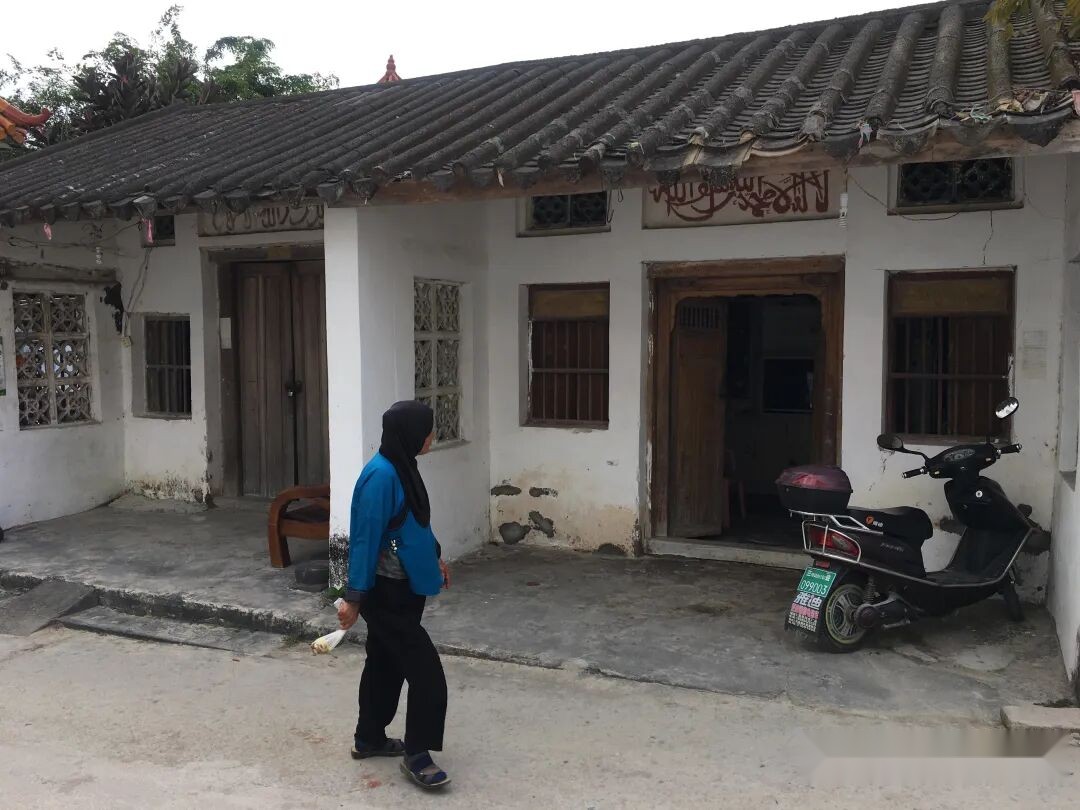
Abstract:
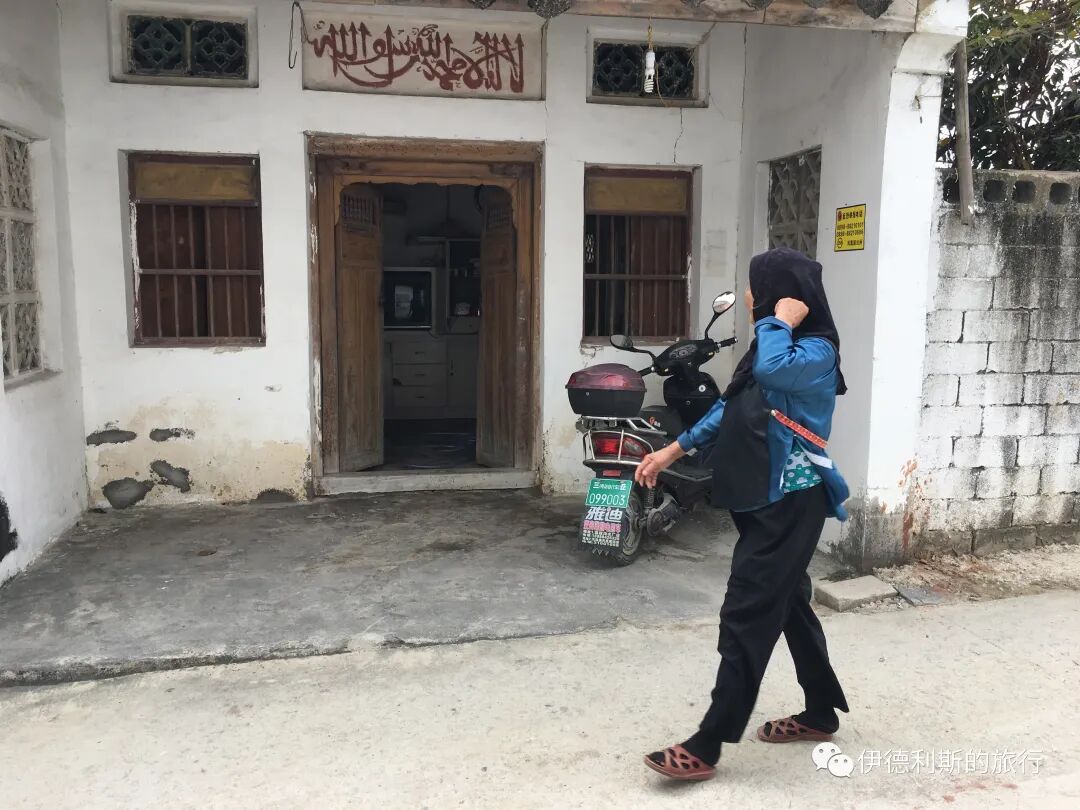
Revisiting a precious photographic and written travel journal from 2017 deep inside Sanya to visit the Utsul Muslims. Strolling through tree-shaded historic masjids, visiting Hui Muslim scholars and everyday local families, and meticulously documenting the customs, rituals, linguistic traits, and generational shifts of the island's Utsul Muslims.
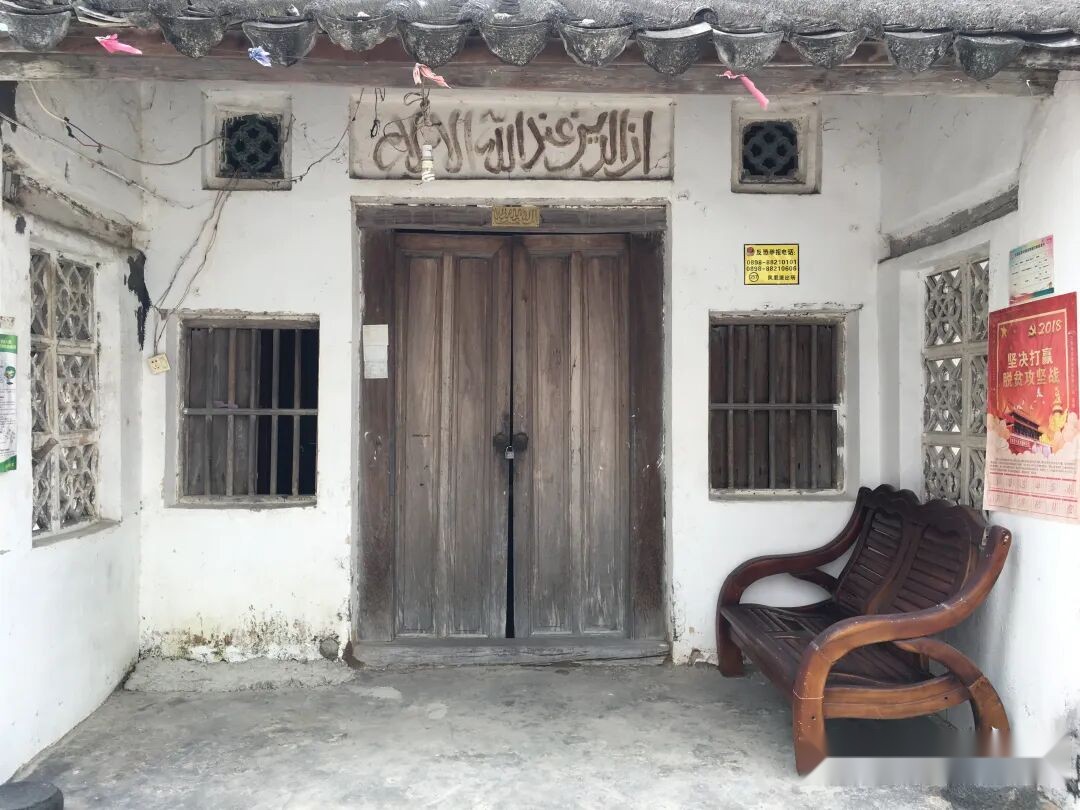
This is a record of my first trip to Sanya, Hainan, in 2017 to visit the Utsul Muslims. For my second trip in 2020, check out the journal entry, 'Celebrating Eid al-Adha in Sanya.'
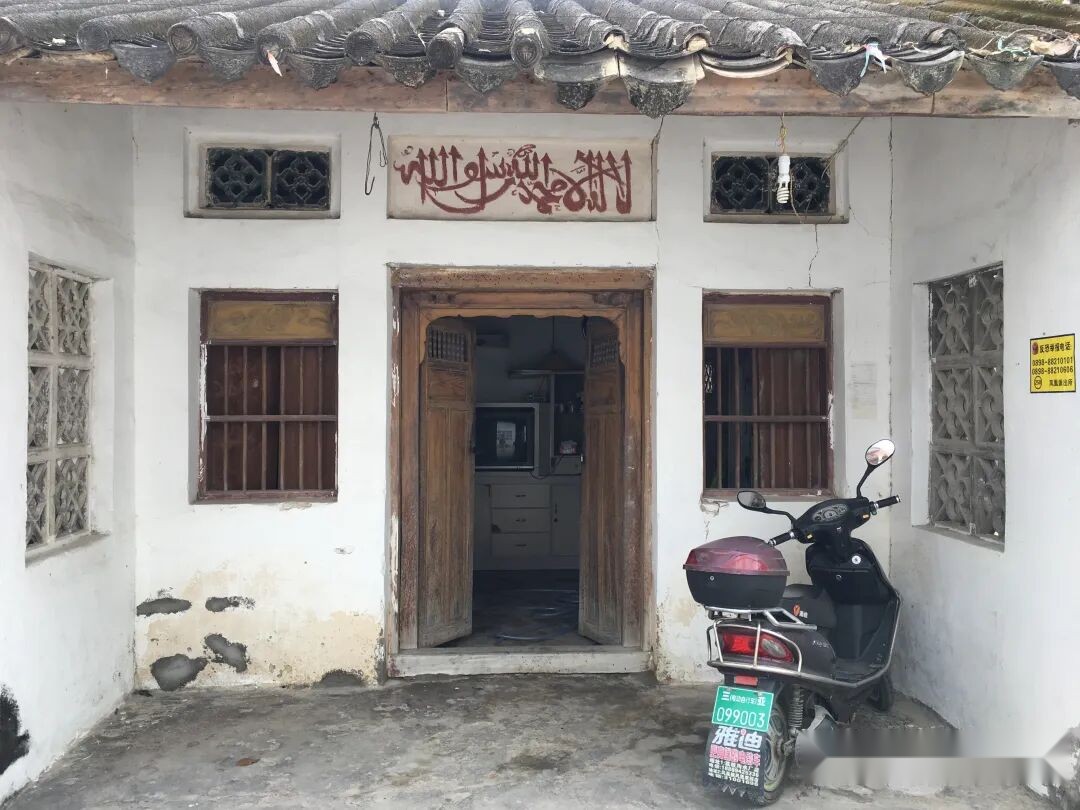
In 'The History of Hainan Muslims,' we discussed how Cham people from southern Vietnam migrated during the Song and Yuan dynasties to settle along the coastline of Hainan Island due to wars or typhoons. These 'foreigners' with customs similar to the 'Huihui' left several coral-stone Muslim ancient tombs along southern Hainan's coastal dunes. During the Ming and Qing dynasties, the 'foreigners' living in Hainan's Qiongzhou, Danzhou, Wanzhou, and Yazhou gradually integrated with local residents, and the remaining population all relocated to Suosanyali Fancun, forming today's Sanya Utsul Muslim community.

In this article, I'll continue sharing stories about the Sanya Utsul Muslims from the late Qing dynasty onward, along with the halal culinary scenes in the Huihui Village (Huihui Muslim Village) and Huixin Village (Huixin Muslim Village) communities.
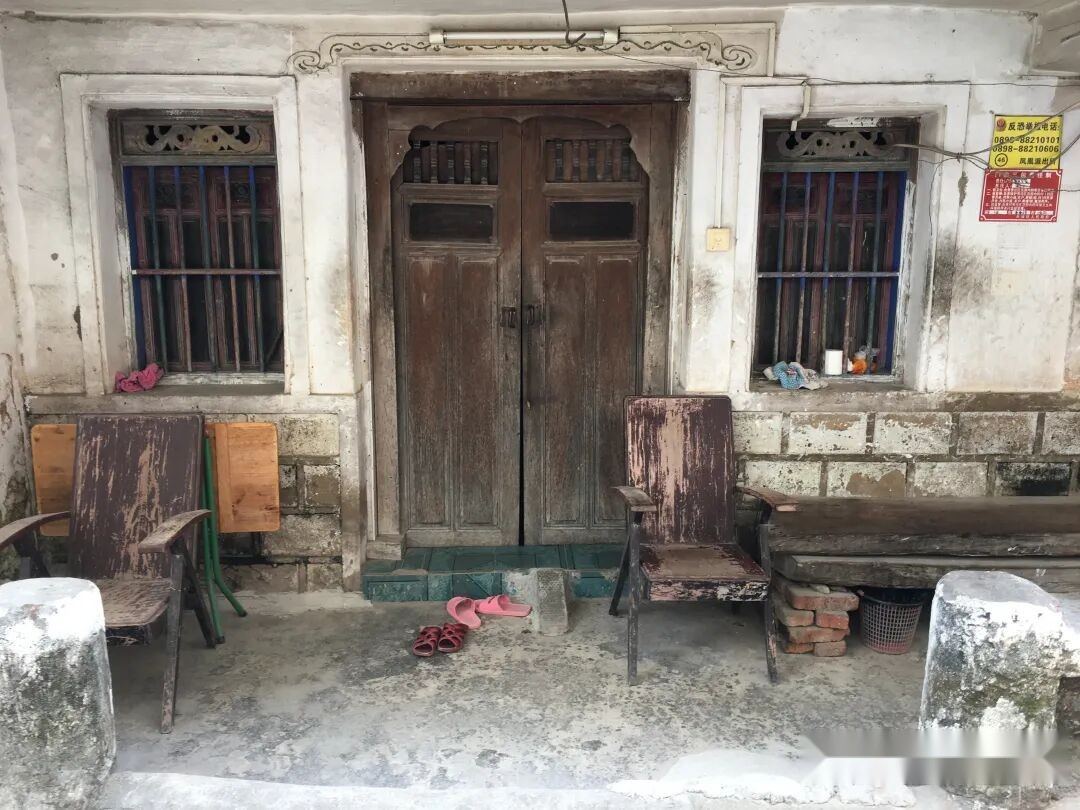
Table of Contents
1. The Utsul Muslims from the Qing Dynasty Onward
1. Heading Down to Nanyang (Southeast Asia)
2. Japanese Military Airport Construction Forces Utsul Relocation

3. From Fishing and Farming to Commerce
4. Traveling Muslims from Across Regions

2. Halal Dining in Huixin Village (Huixin Muslim Village)
3. Halal Dining in Huihui Village (Huihui Muslim Village)
4. The Mosques of the Utsul Muslims
1. The Evolution of Huihui Mosque
2. The Historic Mosque
3. The Northwestern Grand Mosque
4. The Northern Mosque

5. The Eastern Mosque
6. The Southern Mosque
7. Nankai Mosque
1. The Utsul Muslims from the Qing Dynasty Onward
1. Heading Down to Nanyang (Southeast Asia)
According to the 'Genealogy of the Pu Family in Sanya Gangtong Village,' the Utsul Muslims suffered a major catastrophe during the Xianfeng era. In 1858 (the 8th year of Xianfeng), Fancun was burned, killed, and looted by bandits. The surviving Utsul Muslims had no choice but to take shelter in the mountains and forests. The following year, the bandits were wiped out and pacified, allowing the Utsul Muslims to rebuild their homes. However, because of this catastrophe, many Utsul Muslims fled to Southeast Asian destinations like Singapore, Penang, and Vietnam:
'From the reign of Daoguang up to the eighth year of Xianfeng, on the twenty-second day of the tenth month at the卯 (Mao) hour, we tragically suffered at the hands of the Li bandits from Lingshui who colluded with settled Li people to launch an uprising. They slaughtered without stopping, burned everything to the ground, killed countless people, and left corpses strewn across the fields. From back then until this summer, we spent our days resting by the sea slopes and living in the mountain forests, suffering like snake catchers and enduring perils as if walking through fire. The skies grieved and the earth wept with nowhere to voice our grievances. By April of the ninth year, fortunately, the gentry and scholars of the eighth district of Yazhou heard of our plight and felt sorrow. They pooled subscription funds, raising one hundred strings of copper coins, which they lent to the Sanya branches to hire local militia and hunt down the Li bandits. By June, the Li bandits across all the village valleys were terrified and surrendered. Only then could everyone return home, rebuild their houses, and make settling the common people their priority. Yet with a depleted population and scattered refugees fleeing to ports like Singapore, Annam, and foreign lands—over a hundred souls dead or alive—Sanya was left deserted. With poor people and barren land, they returned to their old ways of fishing and harvesting the sea.'
2. Japanese Military Airport Construction Forces Utsul Relocation
After the bandit chaos of the Xianfeng era, the Utsul Muslims in Suosanyali Fancun continued living a peaceful life, relying on fishing for survival. Following the founding of the Republic, Yazhou was renamed Ya County, and Fancun was called Huihui Township, subordinate to the East Second District of Ya County.
At dawn on February 14, 1939, the Japanese navy landed on the waters near Sanya and captured Sanya Bay with almost zero resistance.
In the summer of 1940, the Japanese military decided to build a land-and-water combat training airfield in Suosanyali, forcing all Utsul Muslims to relocate 4 kilometers westward to live in Yanglan. All 350 houses and 4 mosques in Fancun were completely demolished, and the new settlement was named 'Huihui Village (Huihui Muslim Village).'
After the Japanese forces left in 1945, some Utsul Muslims moved back to their former settlement of Fancun, which is why Fancun came to be known as Huixin Village (Huixin Muslim Village) or the Old Village, while the old name Fancun fell out of use.
From then on, the Utsul Muslims established two main communities: Huihui Village (Huihui Muslim Village) and Huixin Village (Huixin Muslim Village).
Huihui Village (Huihui Muslim Village)
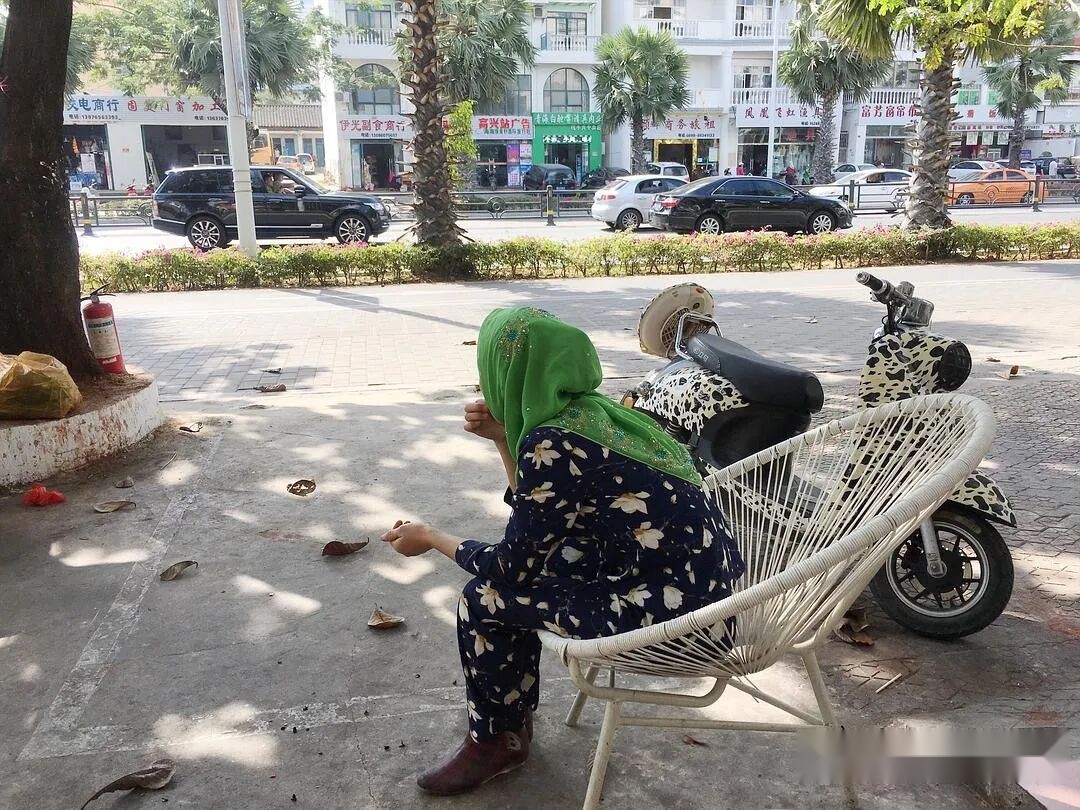
Traditional attire for Huihui women: a dark hijab, a front-crossing tunic fastened with three silver (or cloth) buttons down the front and two under the arms, and split-cuffs on the sleeves. The shirt is split down the center of the chest and back, falling to the hips, paired with dark trousers.
The most distinctive feature of Huihui women's attire is the black bib (cloth panel) worn over their shirts—a unique piece of clothing not found among the neighboring Han or Li ethnic groups.
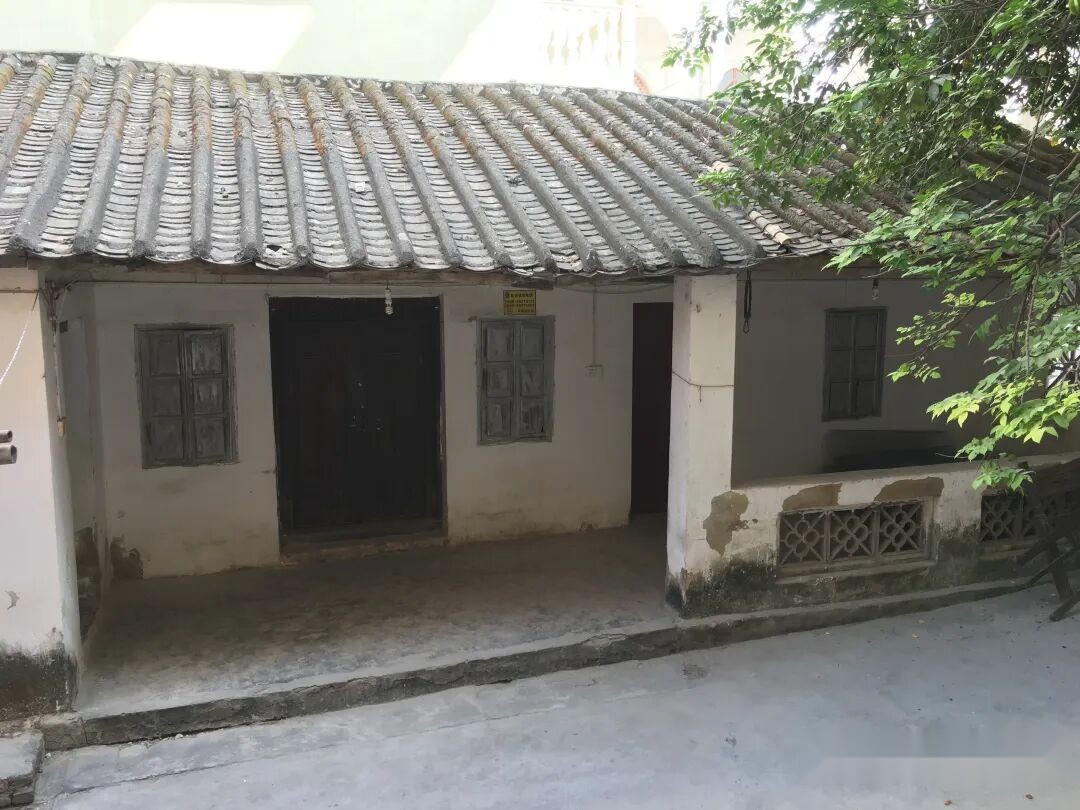
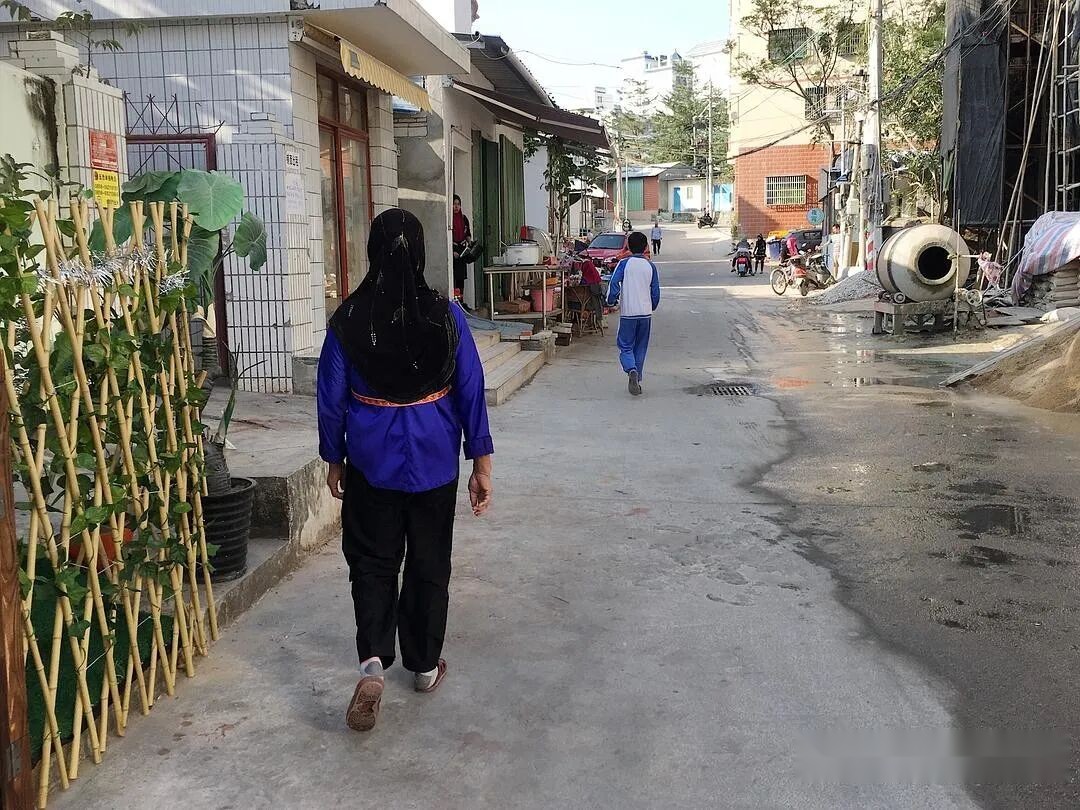
The earliest Utsul Muslims lived in thatched cottages, just like the local Han and Li communities. To withstand typhoons, these houses were built extremely low, to the point where people couldn't even stand up straight inside. In modern times, these thatched homes were gradually replaced by black-tiled brick houses, a style that lasted until the tourism boom in Sanya during the 1990s. Today, those black-tiled brick homes are rare, having been mostly replaced by modern multi-story buildings.
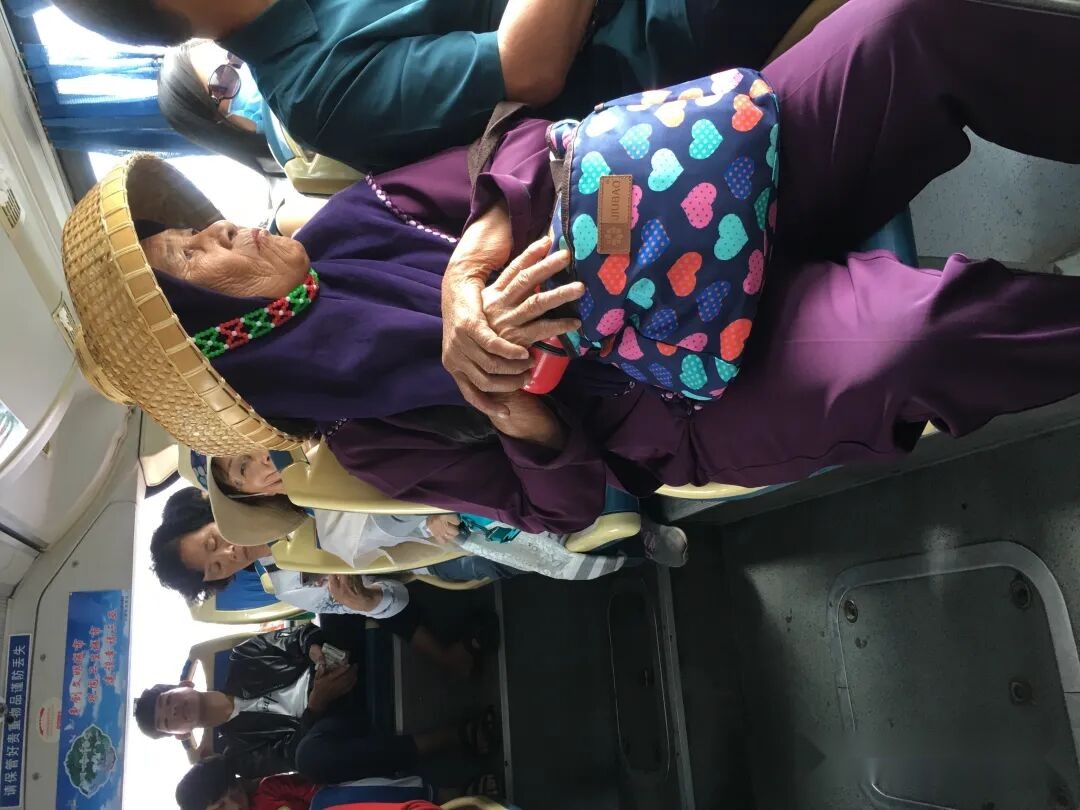
On a local bus running from Huihui Village (Huihui Muslim Village) to Huixin Village (Huixin Muslim Village)

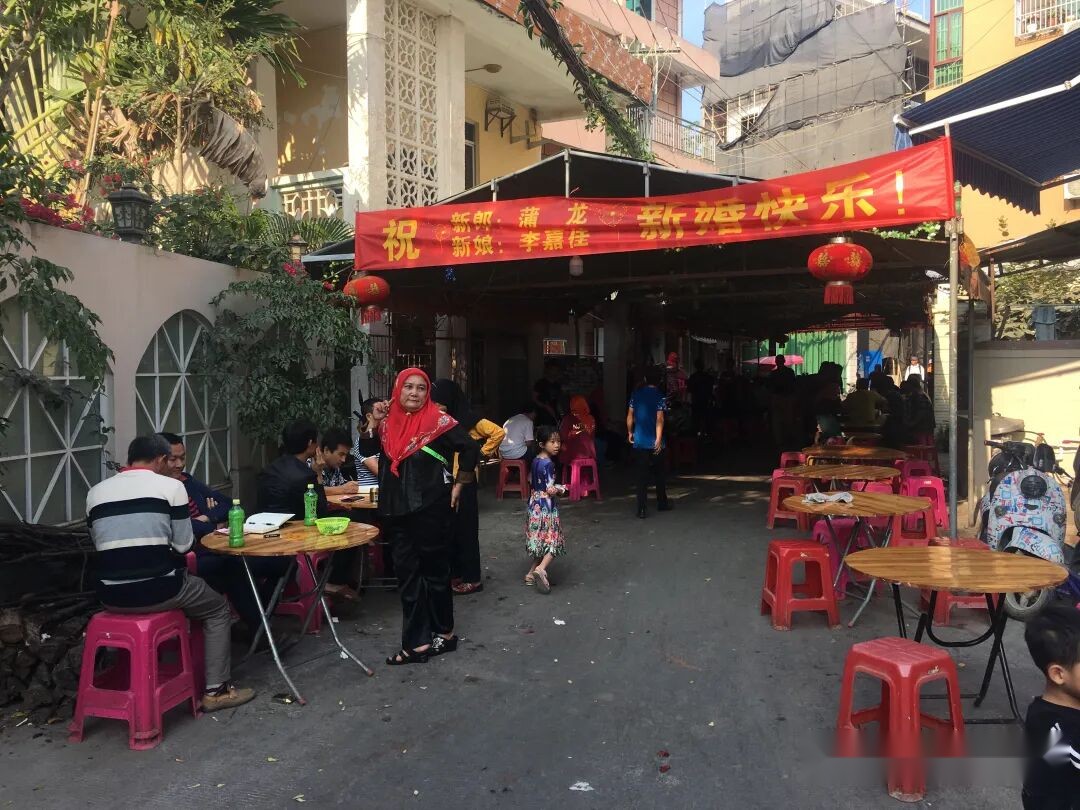
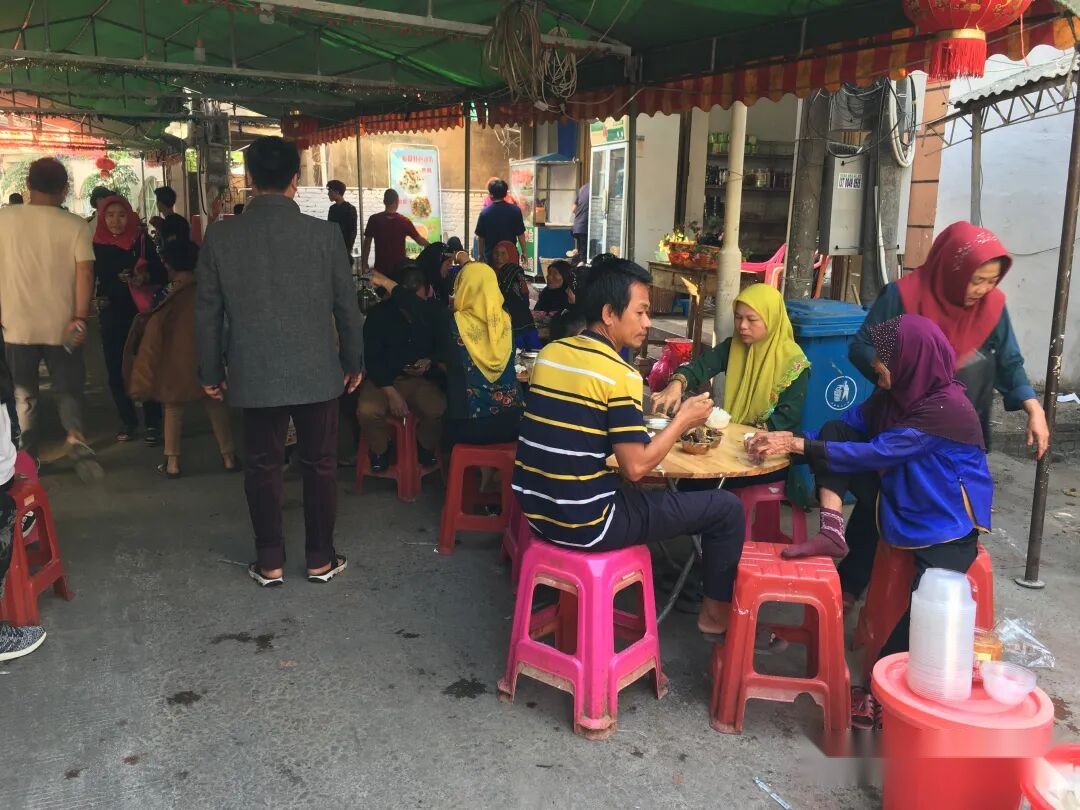
A wedding banquet for Utsul Muslims in Huixin Village (Huixin Muslim Village)
Black-tiled brick houses in Huixin Village (Huixin Muslim Village)
3. From Fishing and Farming to Business
By the 1950s and 60s, Utsul Muslims still made their living mainly through shallow-sea purse-seine fishing. They used bamboo rafts to take fishing nets out to sea and drop them. A fishing crew of 35 people would split into two groups on the shore to haul in the nets. Usually, they went out once a day, pulling in anywhere from 200 to 300 jin (100–150 kg) of fish, with a bountiful catch reaching up to 5,000 jin (2,500 kg) and a lean day yielding only a few dozen jin.
Historically, Utsul Muslims were never big fans of farming, and in the past, they used to rent their land out to the Li people to cultivate. After the establishment of the People's Communes in 1958, the government organized nearby Han and Li locals to teach agricultural techniques to the Utsul Muslims, but the results weren't great. After the 1970s, more than 2,000 mu (about 133 hectares) of the Utsul Muslims' farmland was allocated to neighboring Han and Li villages, leaving the Utsul Muslims with only about 200 mu of garden plots and residential land, primarily used for growing vegetables.
After the 1980s, as shallow-sea resources gradually dwindled and Utsul fishermen lacked the gear for deep-sea fishing, the fishing industry practically ground to a halt, surviving only as a side hustle where people occasionally scooped up small fish and shrimp.
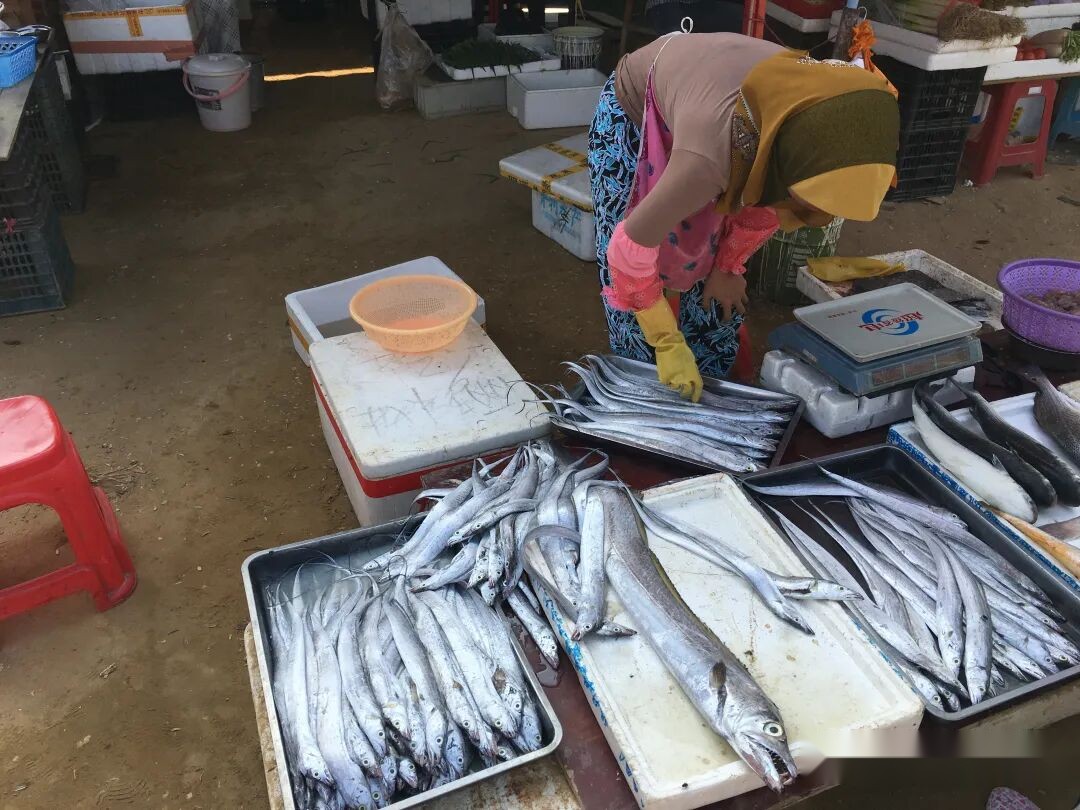
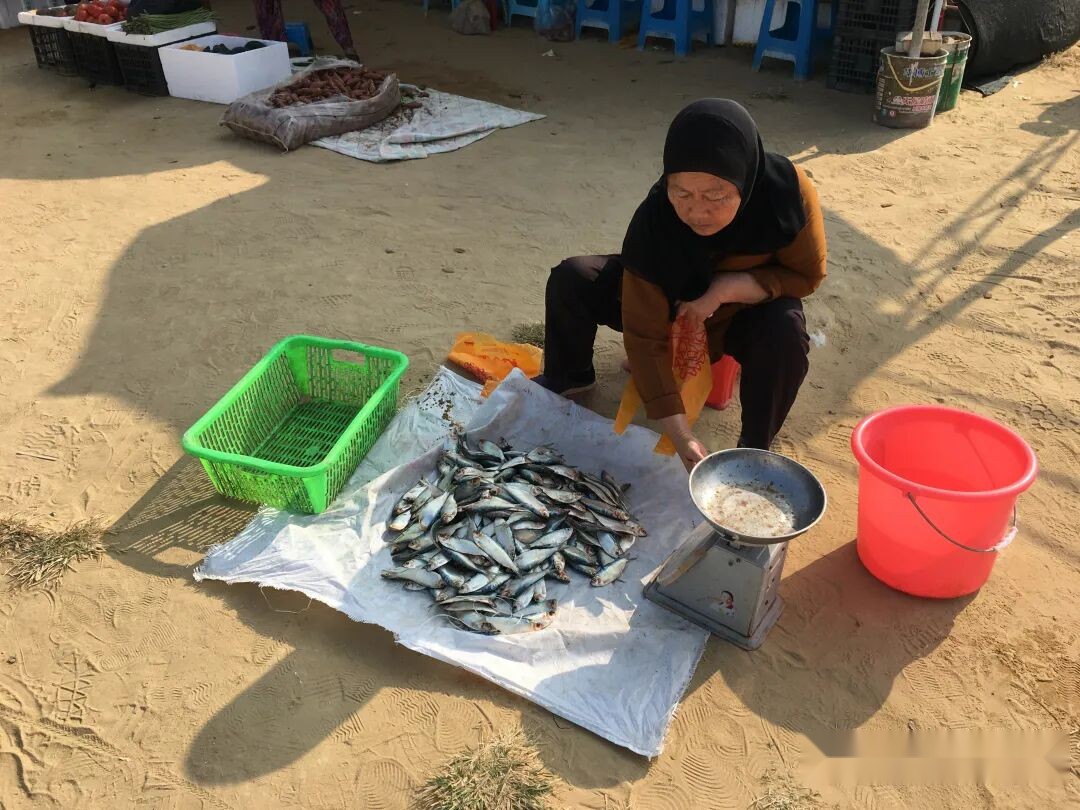
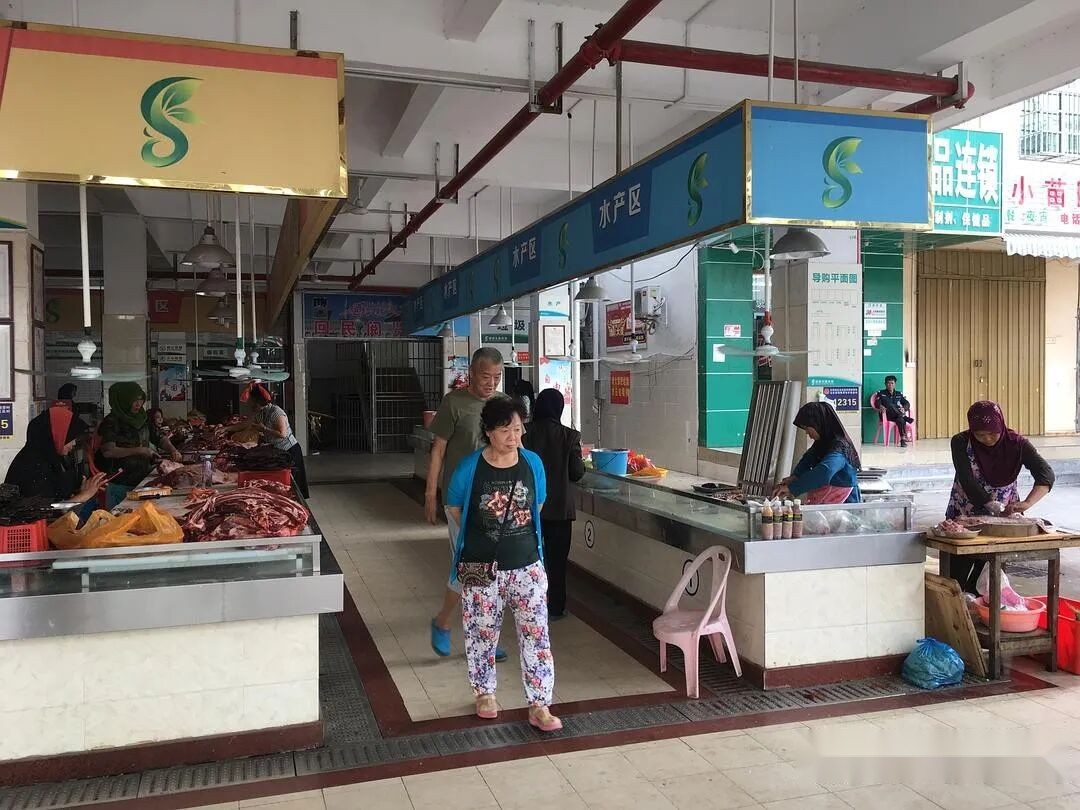
The fish market in Huixin Village (Huixin Muslim Village)
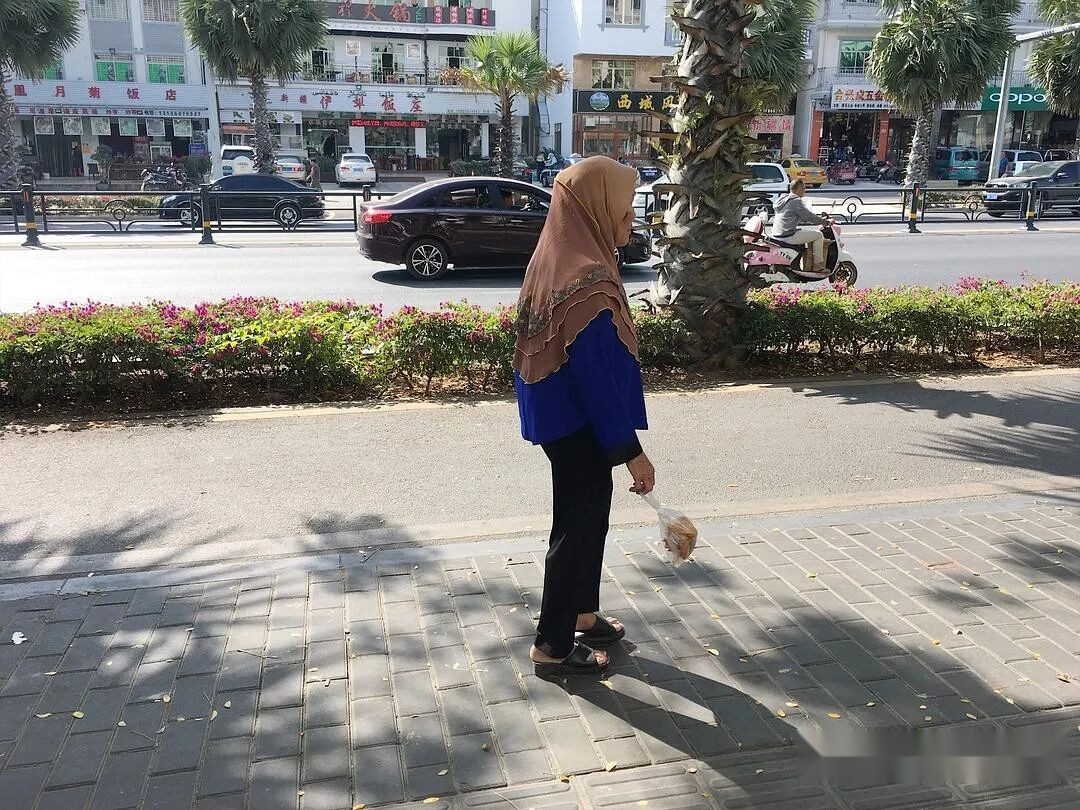
Starting in 1979, some Utsul women, refusing to accept their economic decline, began heading out to start small businesses. By 1982, almost every Utsul household had a woman selling local specialties and tourist souvenirs in towns and scenic spots, and family life for the Utsul Muslims noticeably improved.
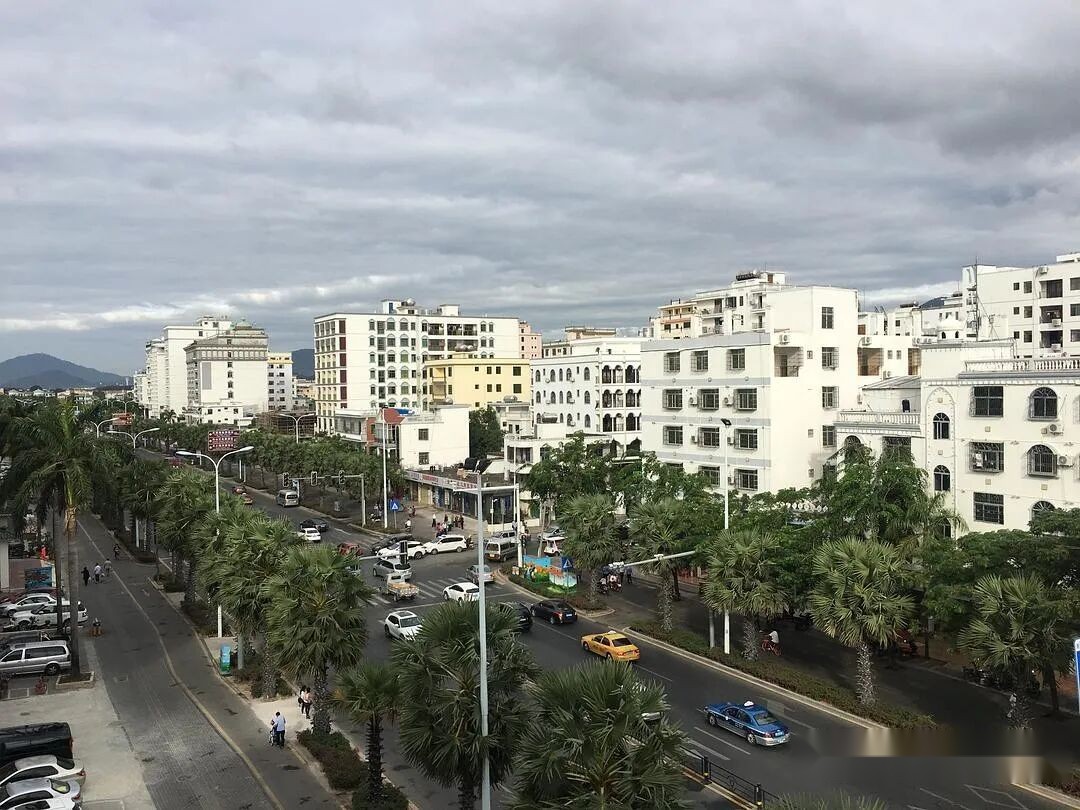
During the 1980s and 90s, Utsul Muslims caught the wave of venturing out into business. Alongside women running stalls at tourist attractions, many men jumped into the passenger transport business. Starting in 1982, lots of Utsul men bought two-wheeled motorcycles or three-wheelers to haul passengers between the city center and tourist spots. After the Sanya Phoenix International Airport was built in 1994, Huihui Village (Huihui Muslim Village)—sitting right next to the airport—became a major transit hub. Utsul locals started buying minivans and minibuses to run routes from the airport to the city center, with the men driving and the women acting as conductors.
4. Muslim Sojourners from All Over
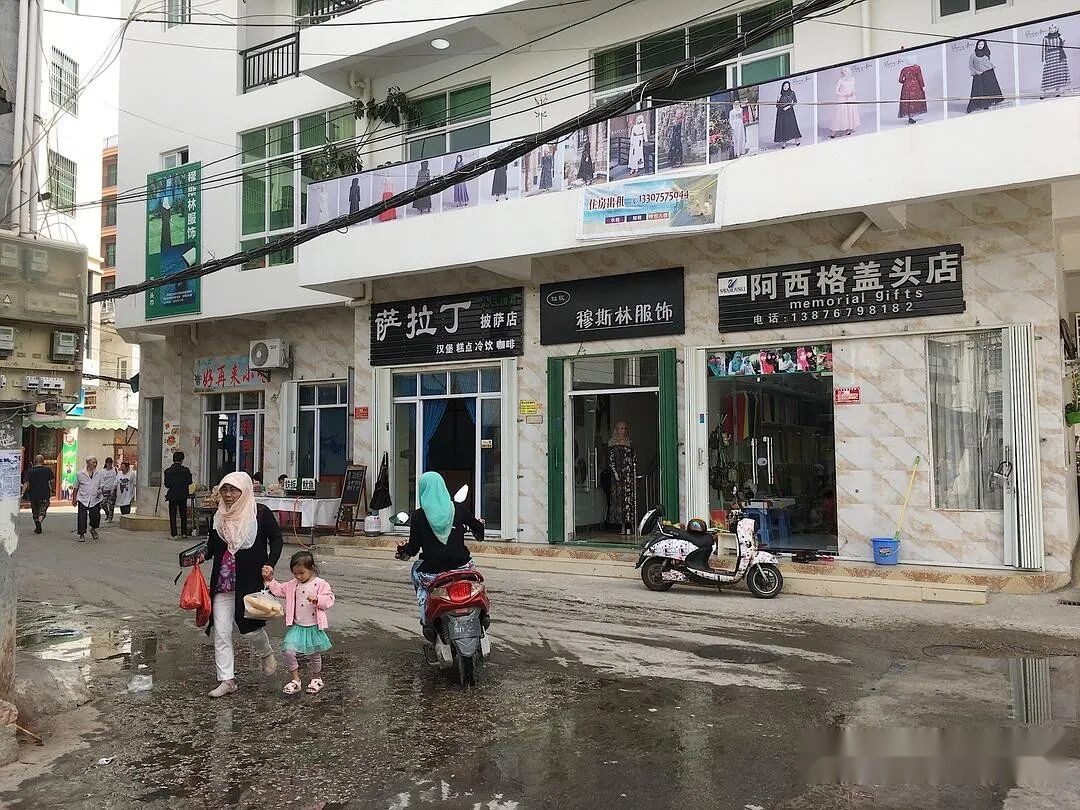
After Sanya's tourism industry boomed in the 1990s, Huihui Village (Huihui Muslim Village) and Huixin Village (Huixin Muslim Village)—as Sanya's only two Muslim communities—became the go-to places to stay for Muslims traveling to Sanya from all over the country. Over time, these Muslim visitors shifted from young and middle-aged short-term vacationers to older folks seeking to escape the winter cold. Starting every October, Huihui Village (Huihui Muslim Village) and Huixin Village (Huixin Muslim Village) fill up with Uyghur, Salar, Dongxiang, and Hui Muslims of all ages coming from Xinjiang, Gansu, Qinghai, Ningxia, and beyond to beat the cold. They live here all winter long, only heading back home around April or May of the following year.
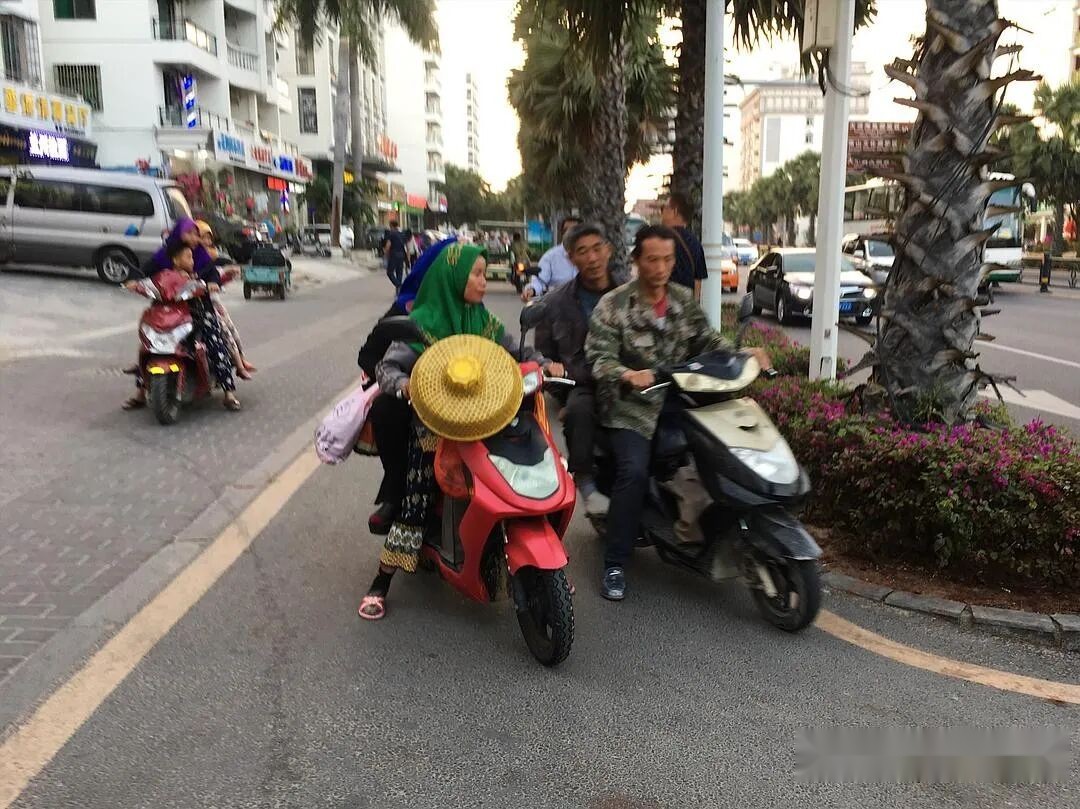
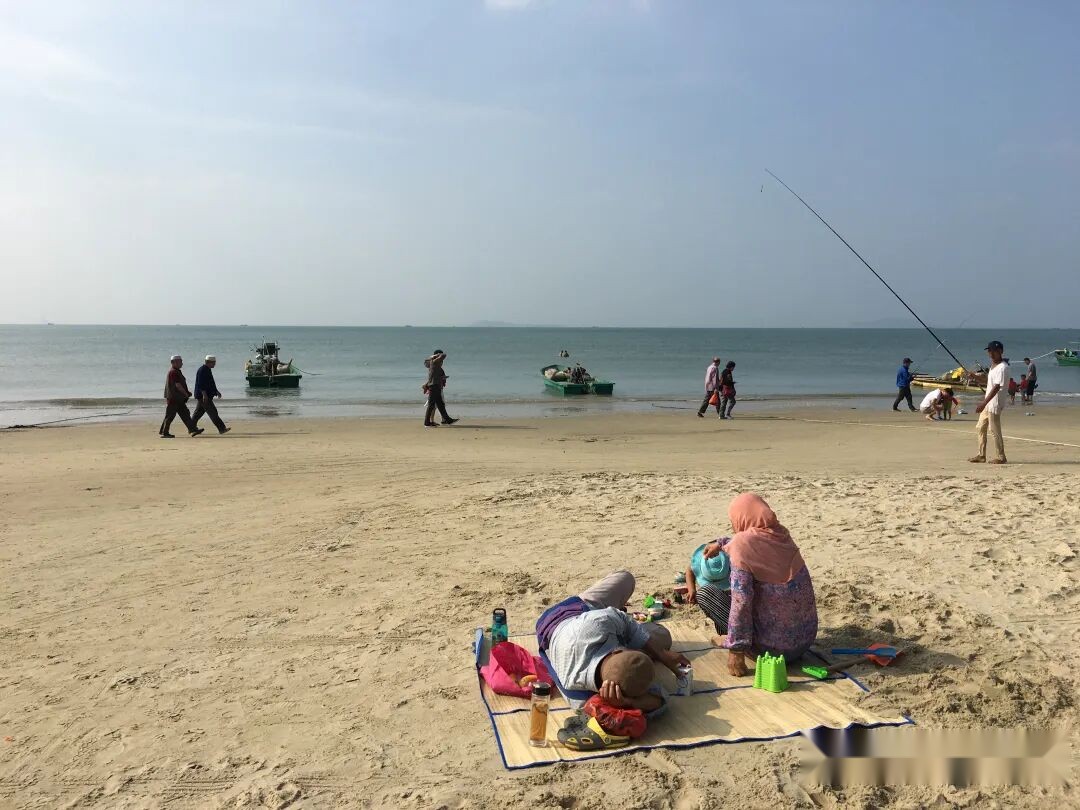
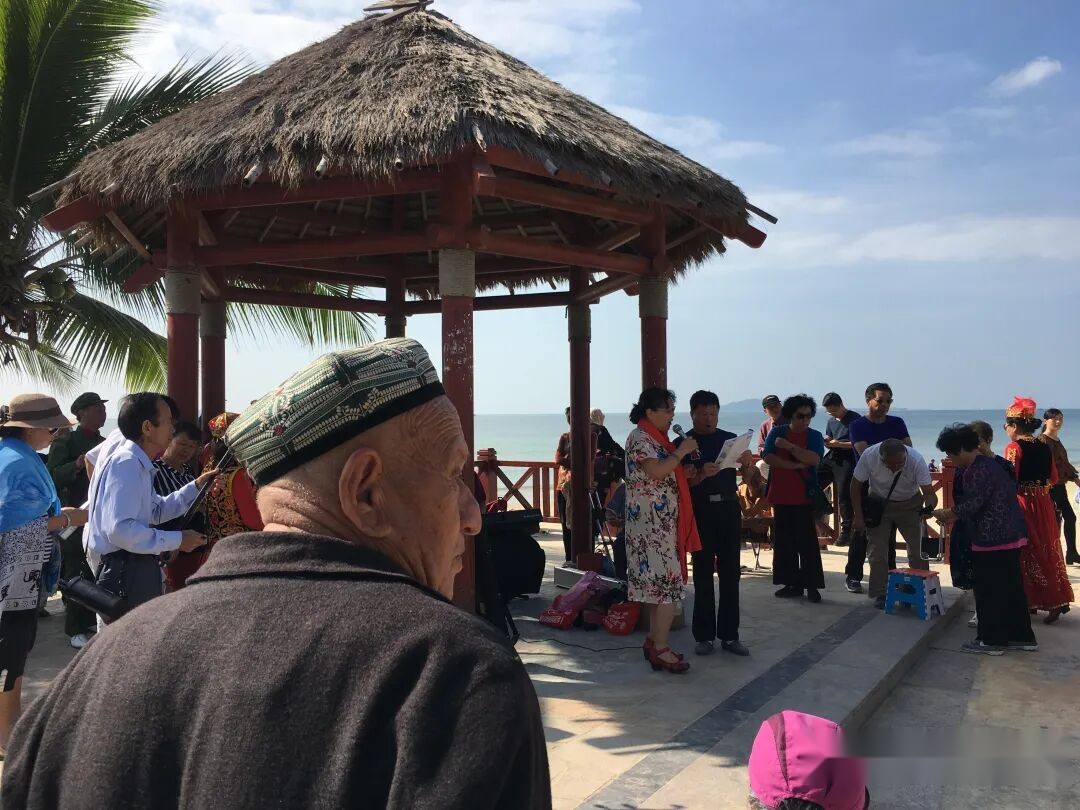
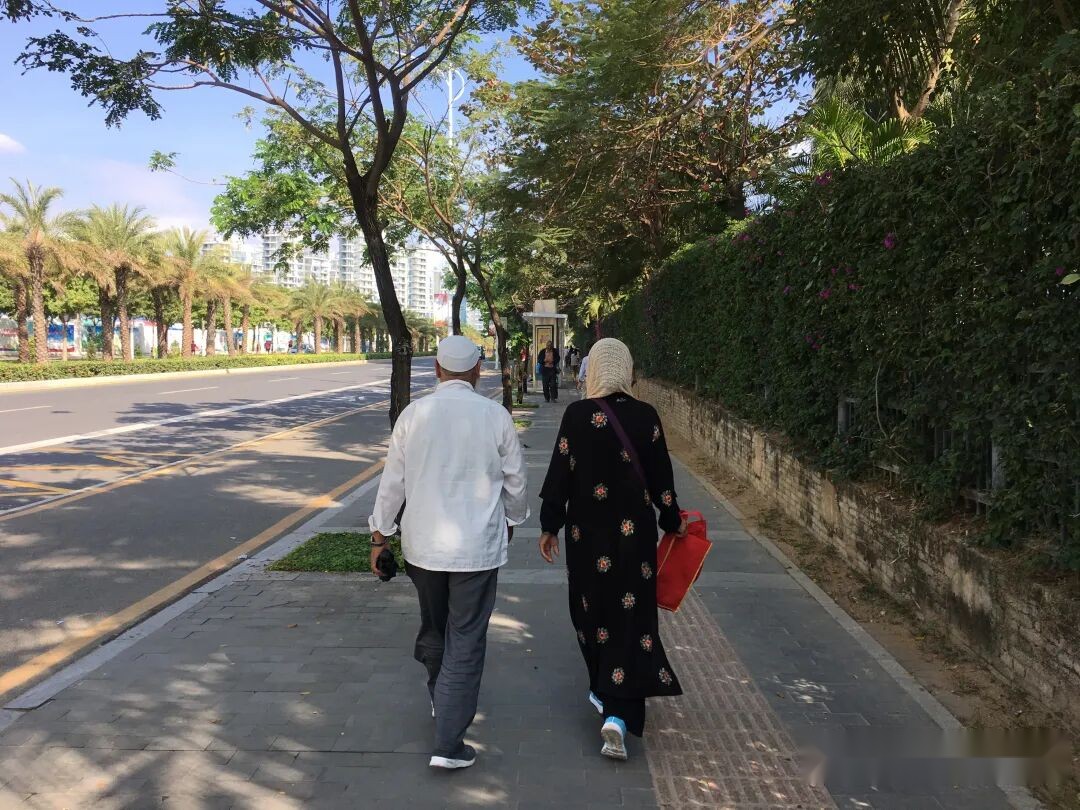
During this time, you'll see Uyghurs wearing doppa embroidered caps and silk scarves mingling with Hehuang Hui Muslims wearing white skullcaps and black hijabs on the bustling streets. Northerners walking around in shorts might make you feel like you're in Shenyang during summer, while Utsul Muslims in colorful patterned trousers and headscarves, speaking the Utsul Cham language, will make you feel like you've landed in Southeast Asia. There's Halal Hainanese cuisine, Ili cuisine, Xining cuisine, Linxia cuisine, and even Xi'an and Henan dishes—making this place feel like a utopian escape far away from winter.
After the reform and opening-up, the first people to open shops in Huihui Village (Huihui Muslim Village) and Huixin Village (Huixin Muslim Village) were Hui, Dongxiang, and Salar Muslims from Gansu and Qinghai. Uyghurs soon followed, opening Uyghur specialty restaurants in Huihui Village (Huihui Muslim Village), and later, Hui Muslims from Yunnan, Henan, and elsewhere arrived to open eateries. Because of this, you can sample Halal food from all corners of China right here.
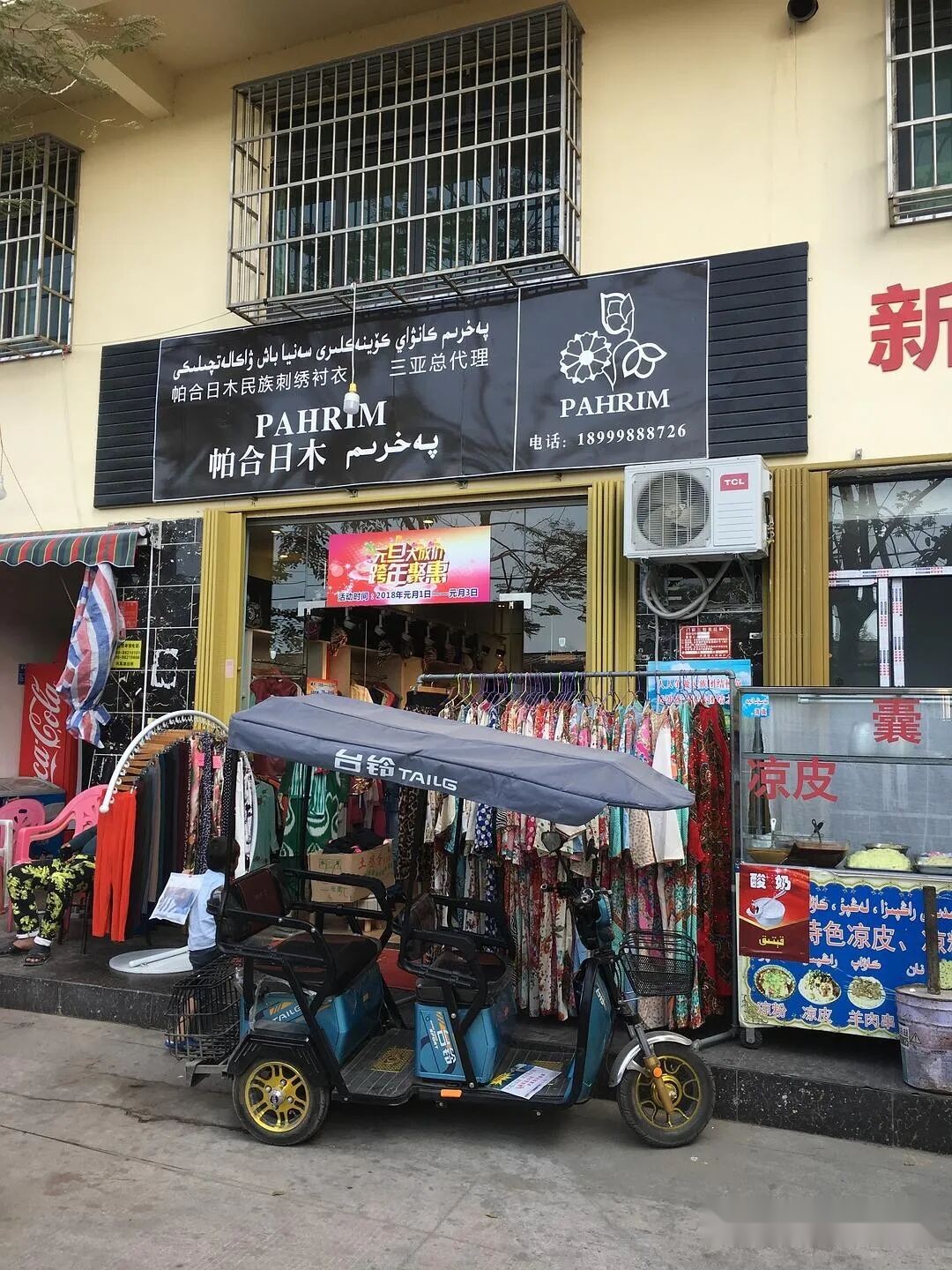
A shop selling Uyghur embroidered clothing
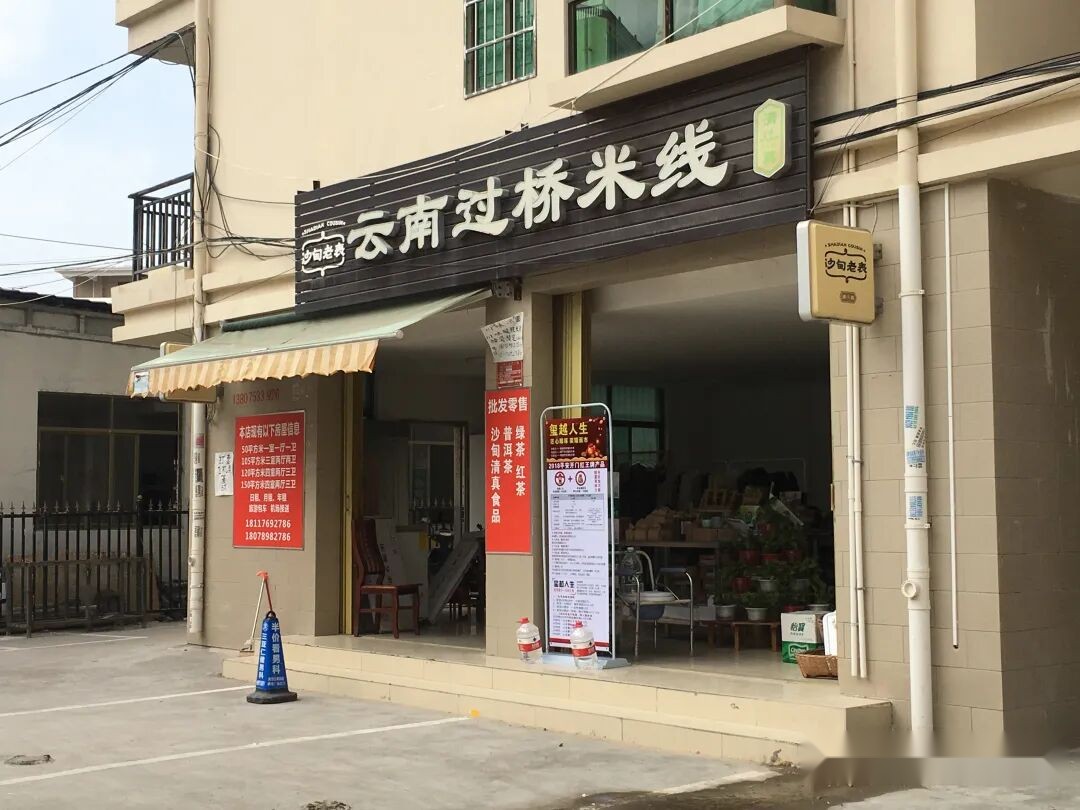
A crossing-the-bridge rice noodles shop run by Shadian Hui Muslims
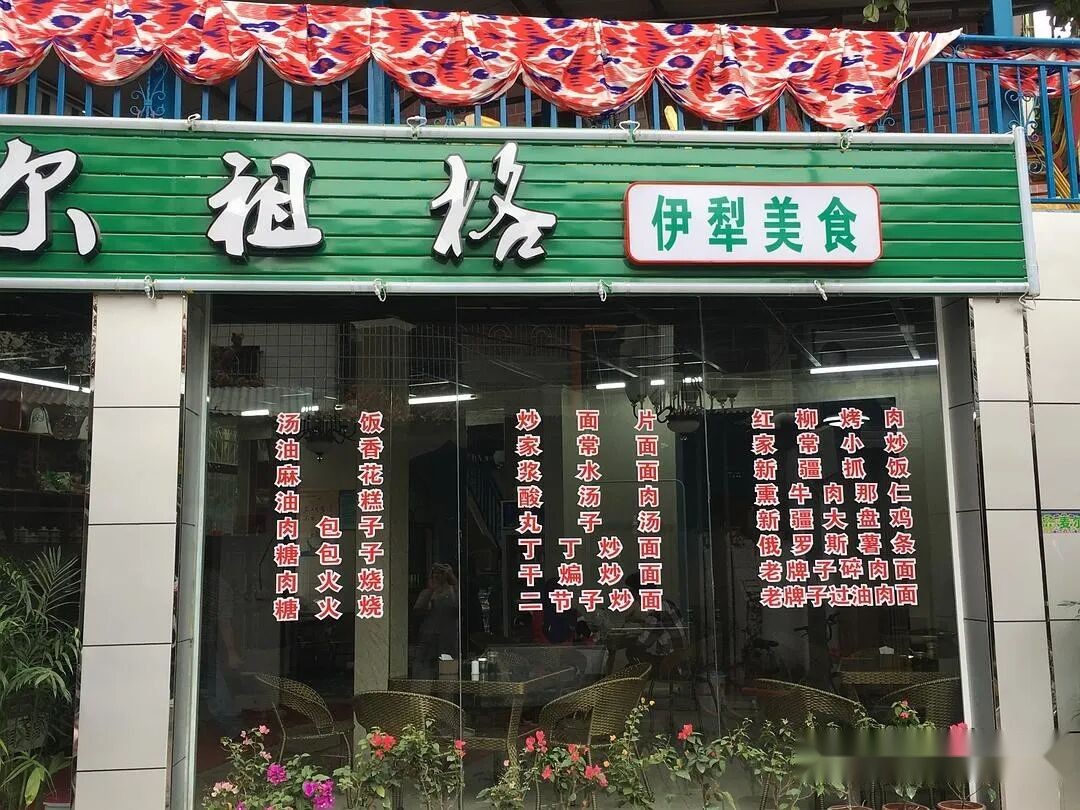
An eatery run by Ili Hui Muslims, where you can get smoked meat narin
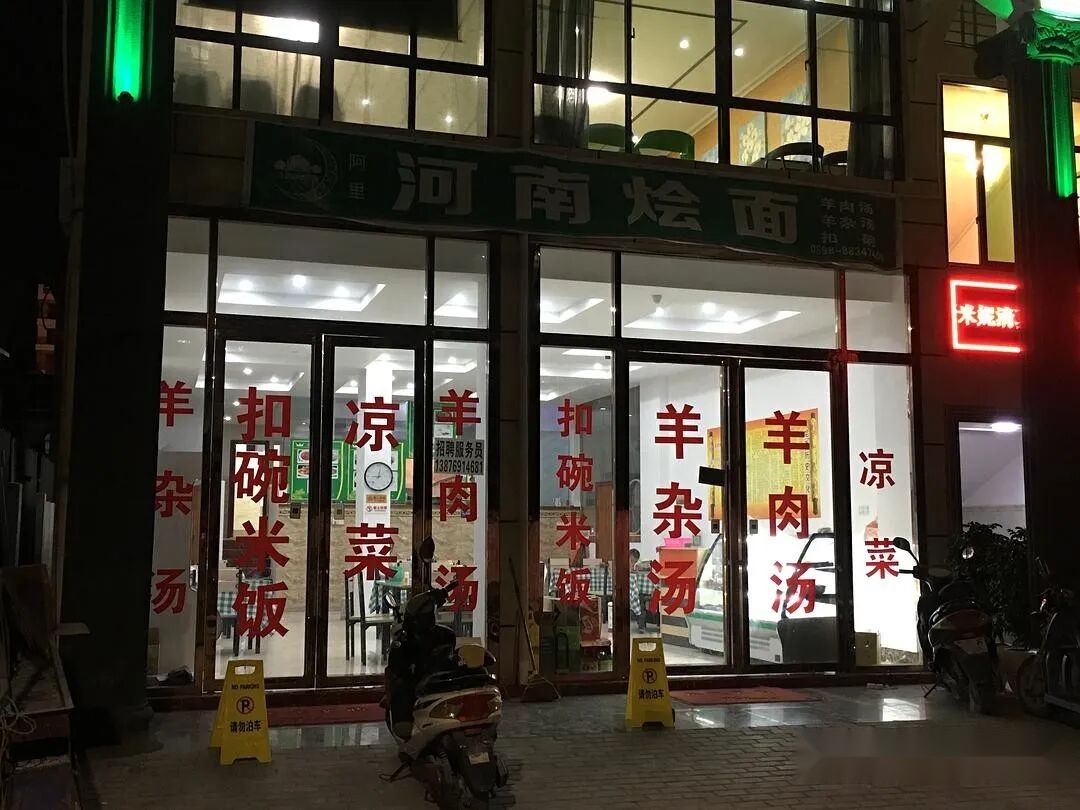
A restaurant run by Henan Hui Muslims, serving braised bowl dishes (kouwan) and braised noodles (huimian)
Part 2: Halal Food in Huixin Village (Huixin Muslim Village)
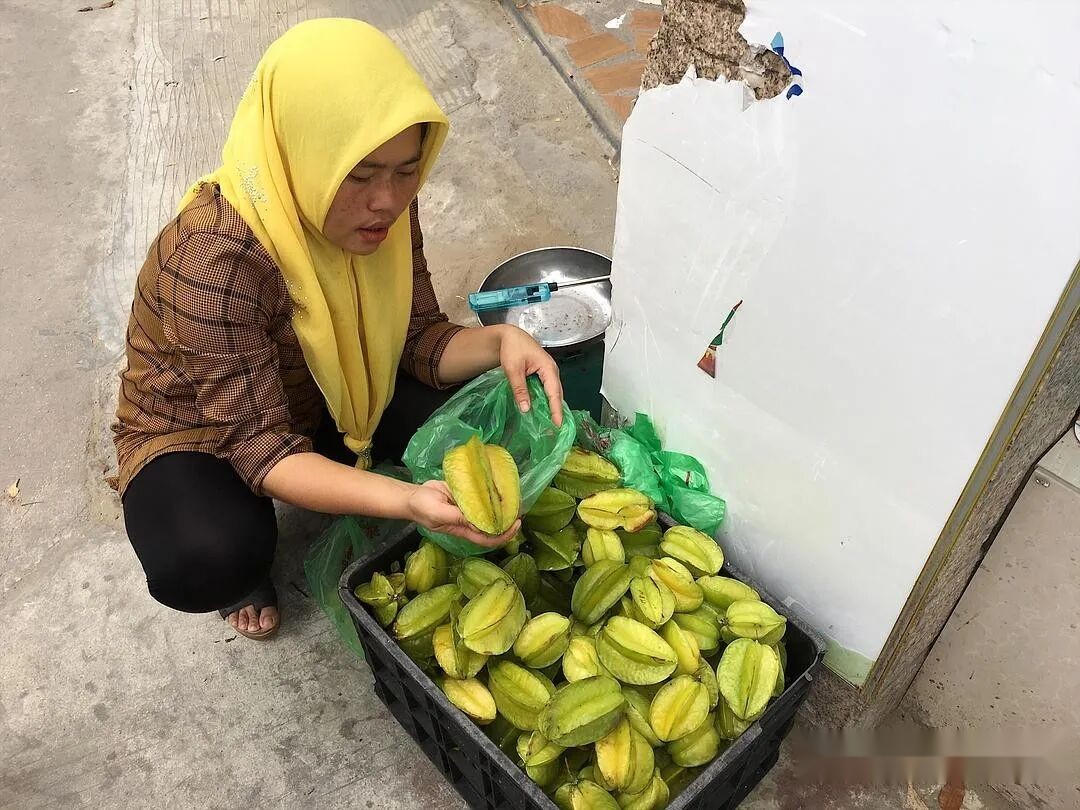
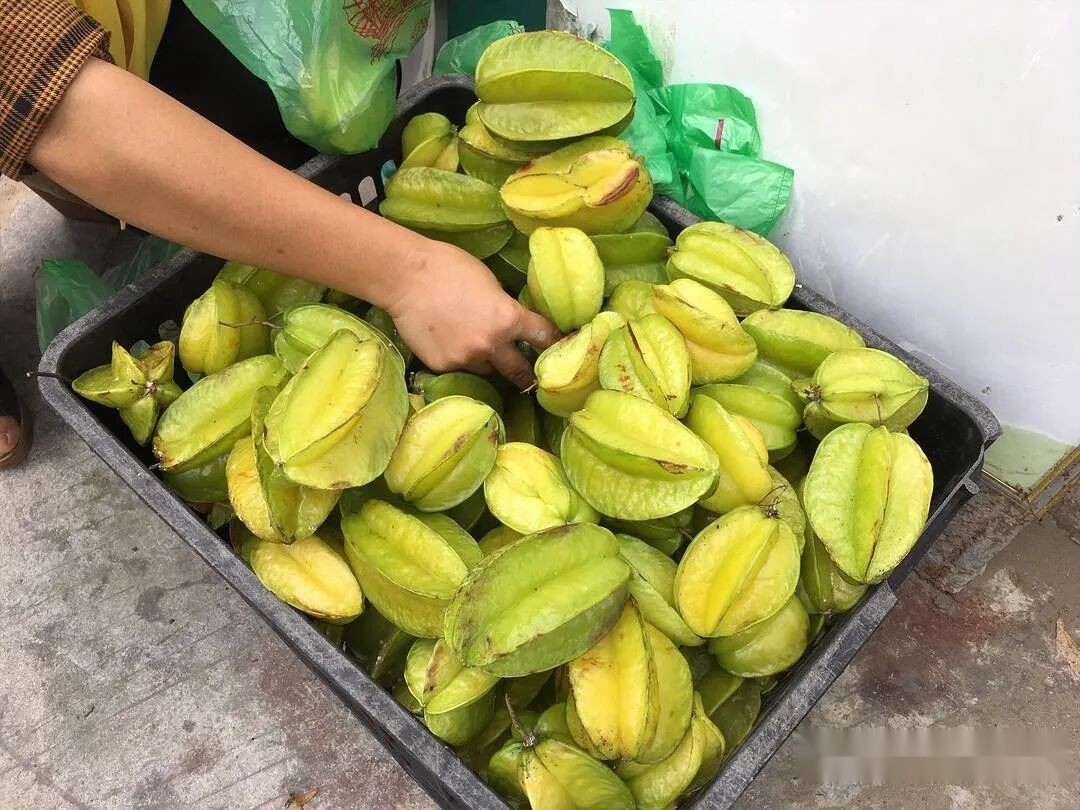
Freshly picked star fruit
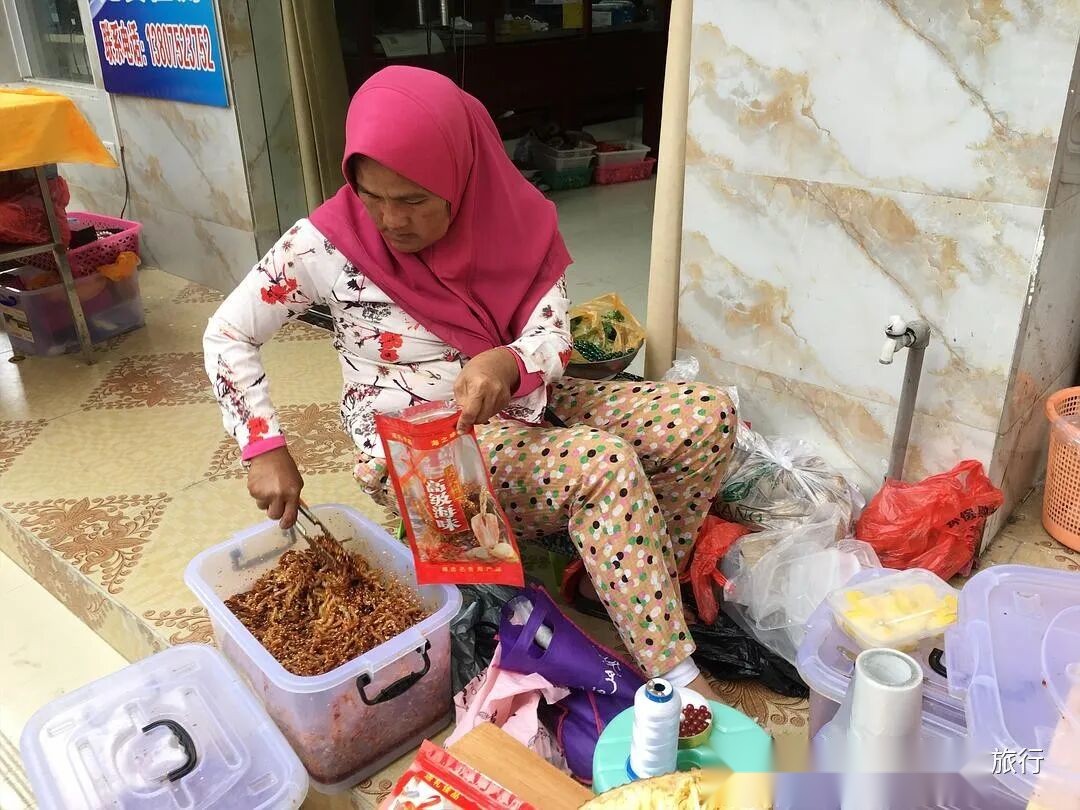
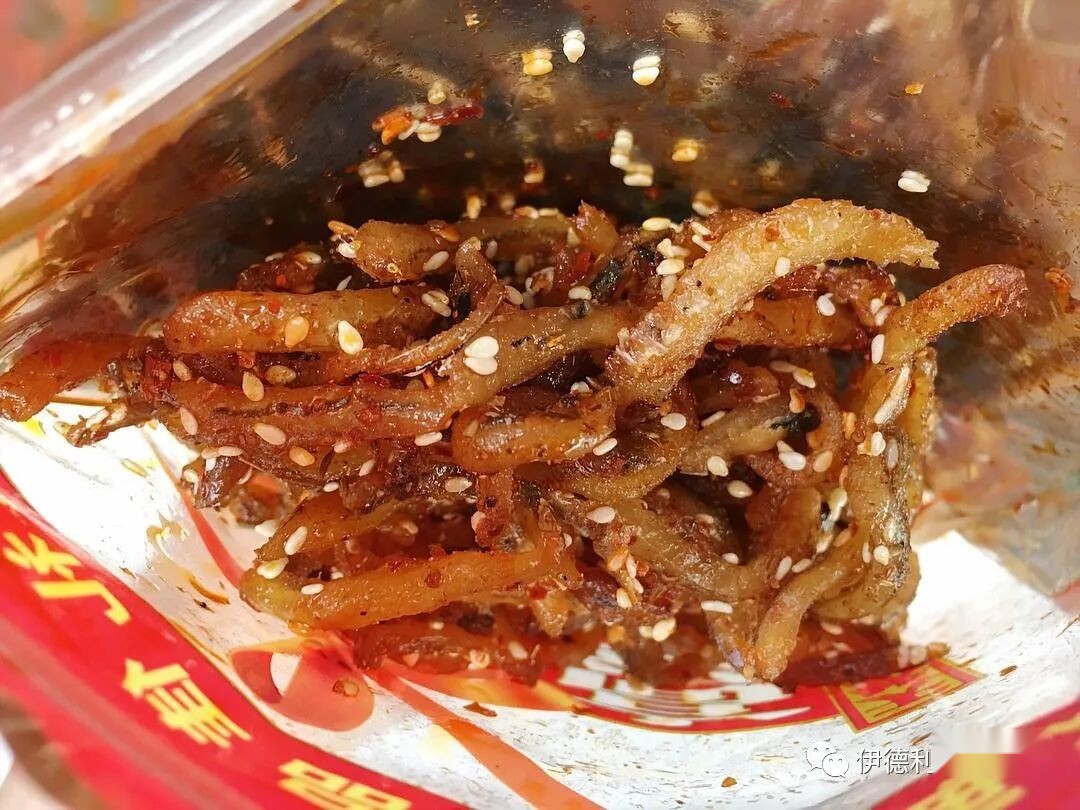
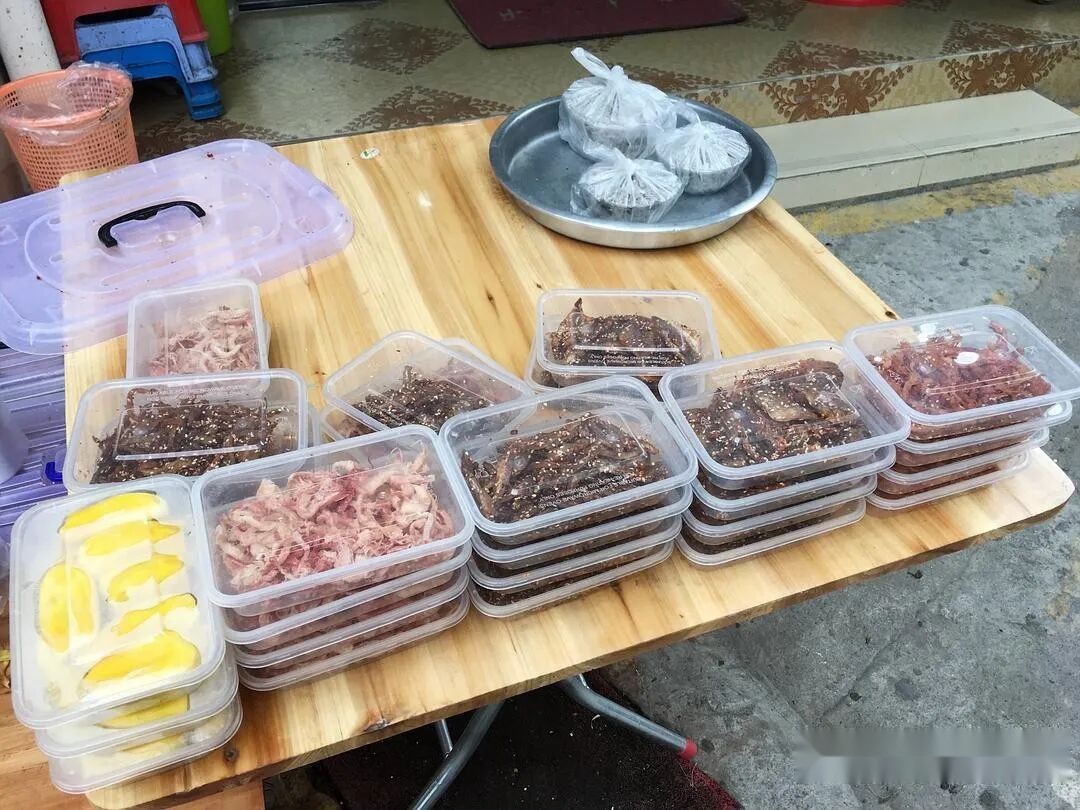
Dried eel made by a Huihui auntie
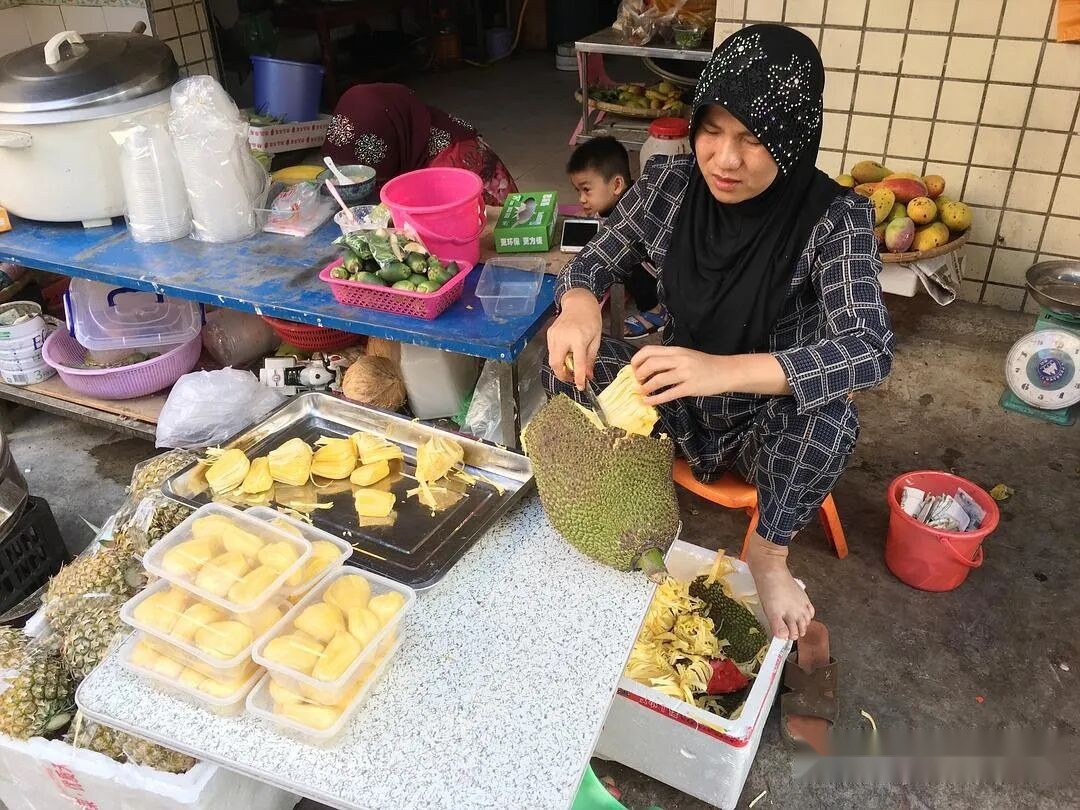
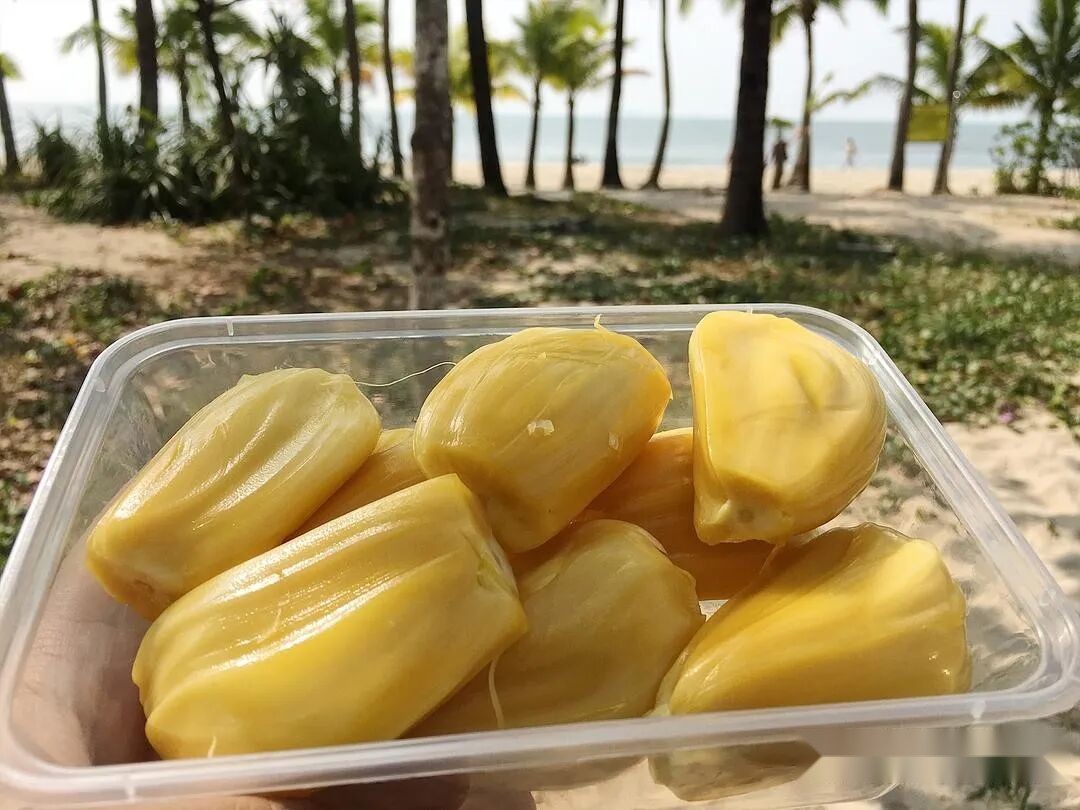
Jackfruit
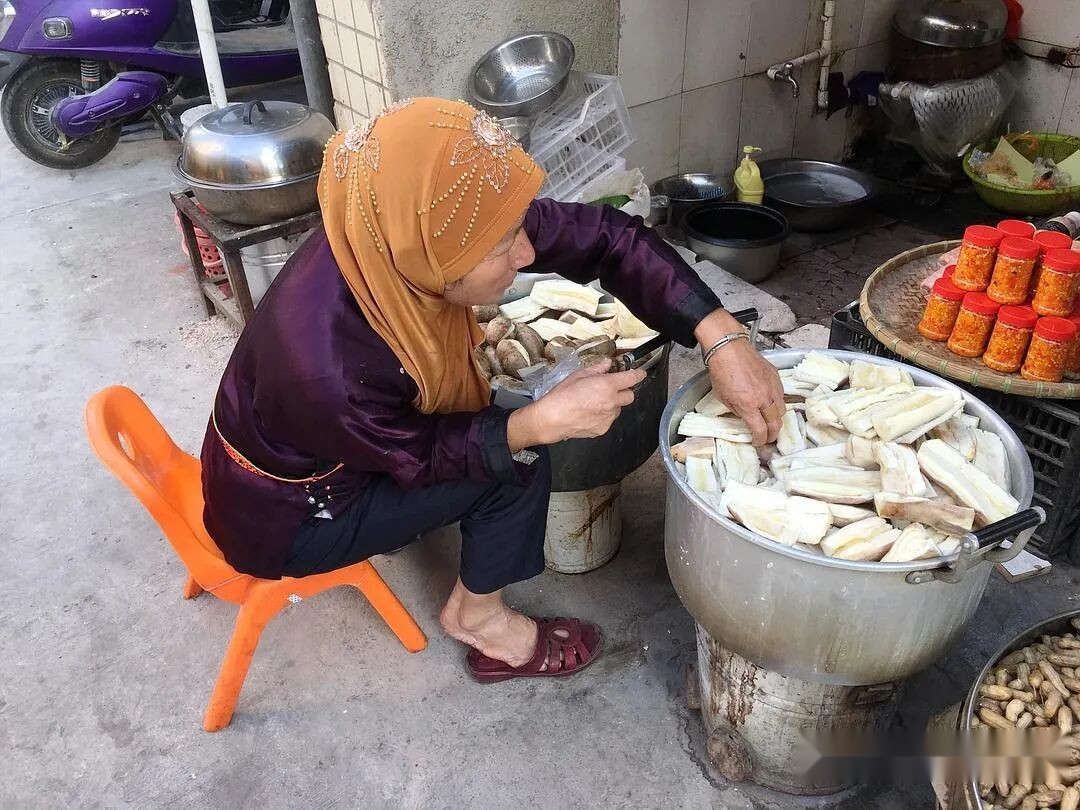
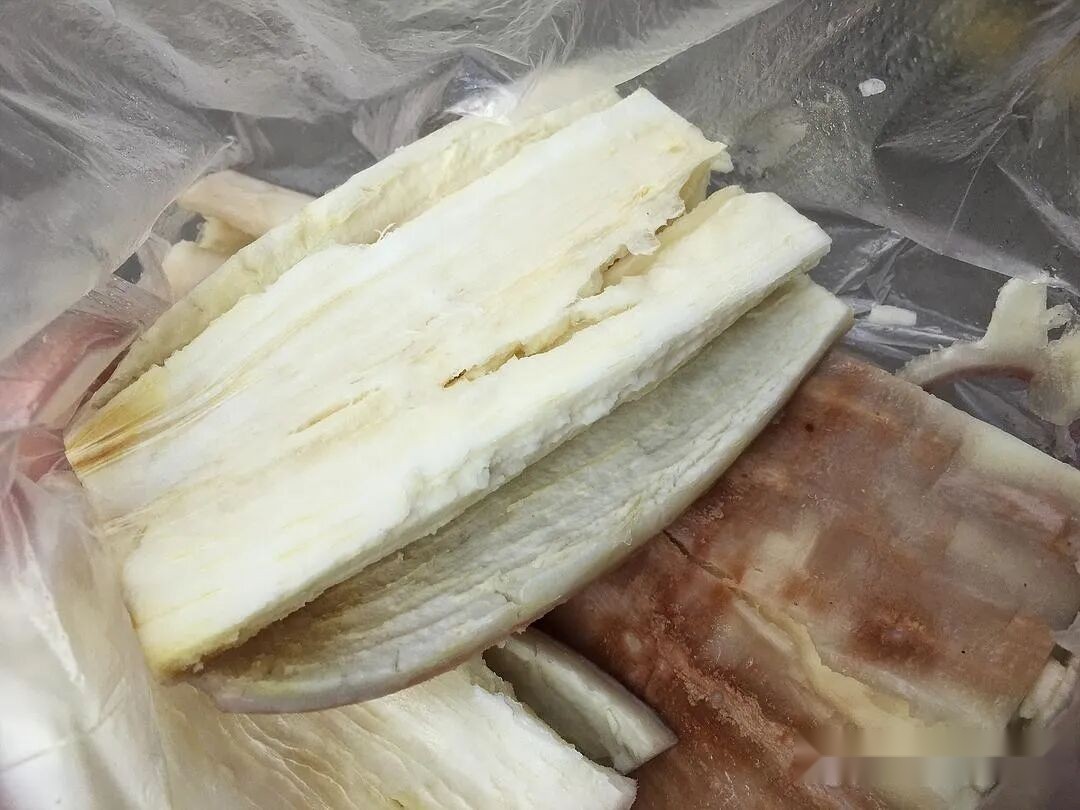
Cassava
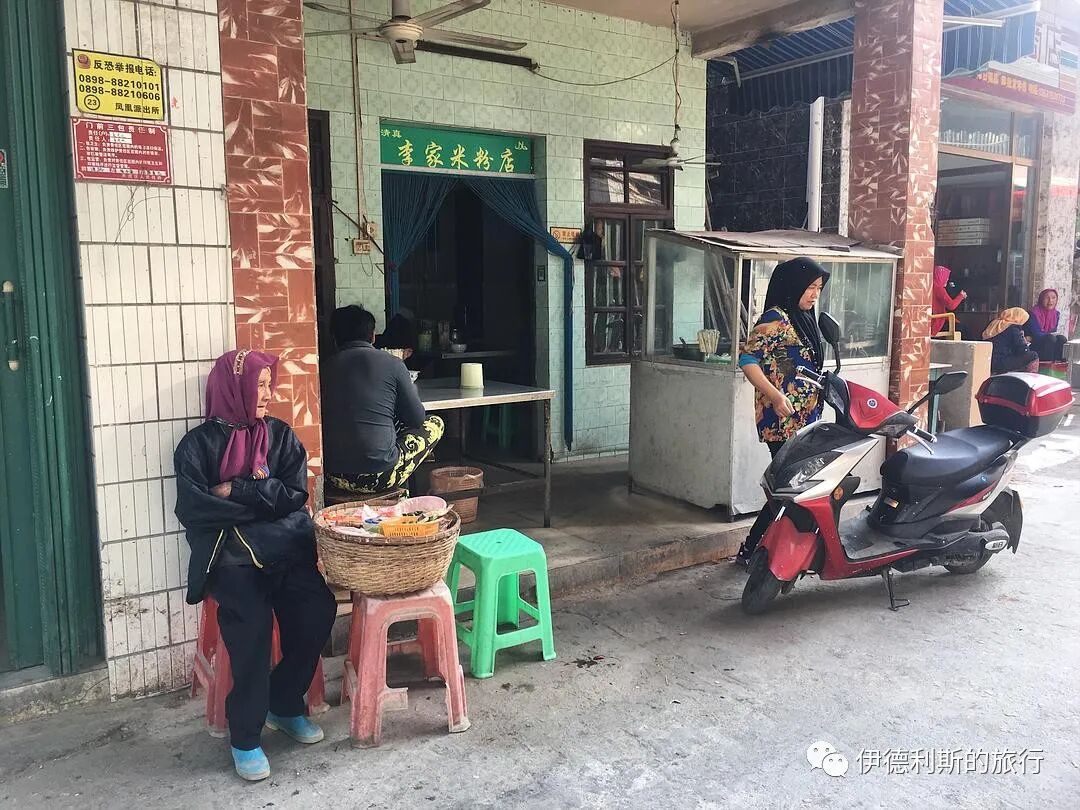
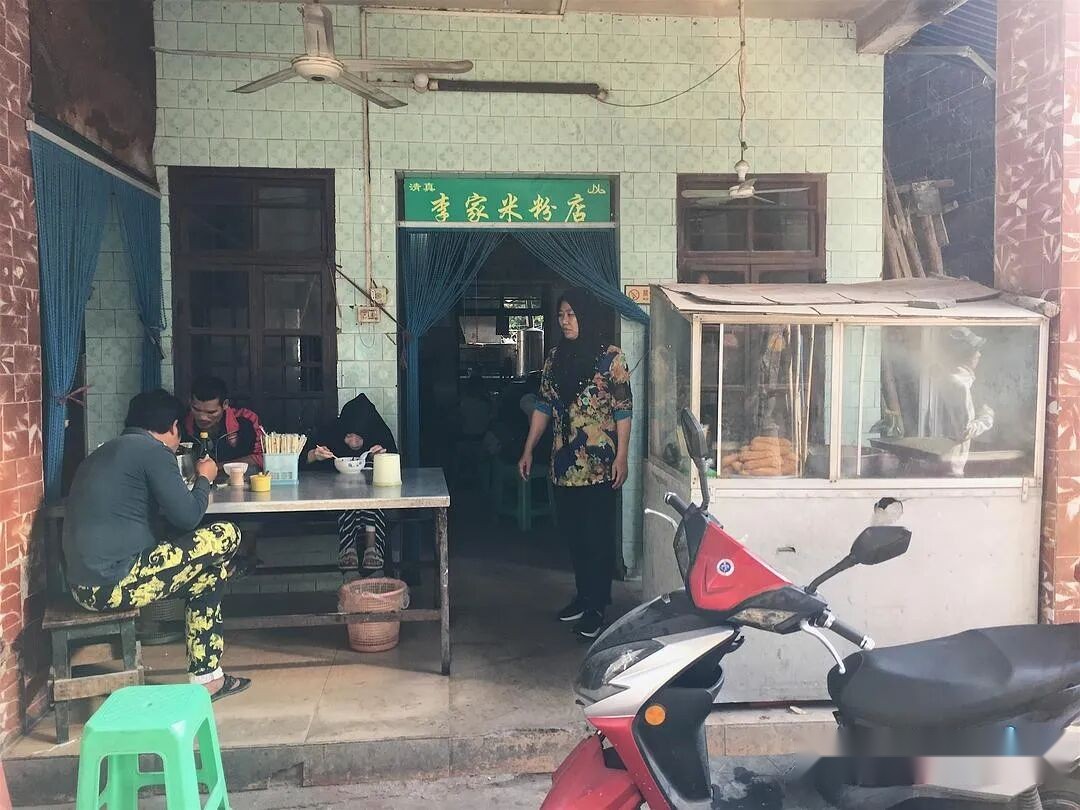
Li's Rice Noodles Shop's beef brisket rice noodles
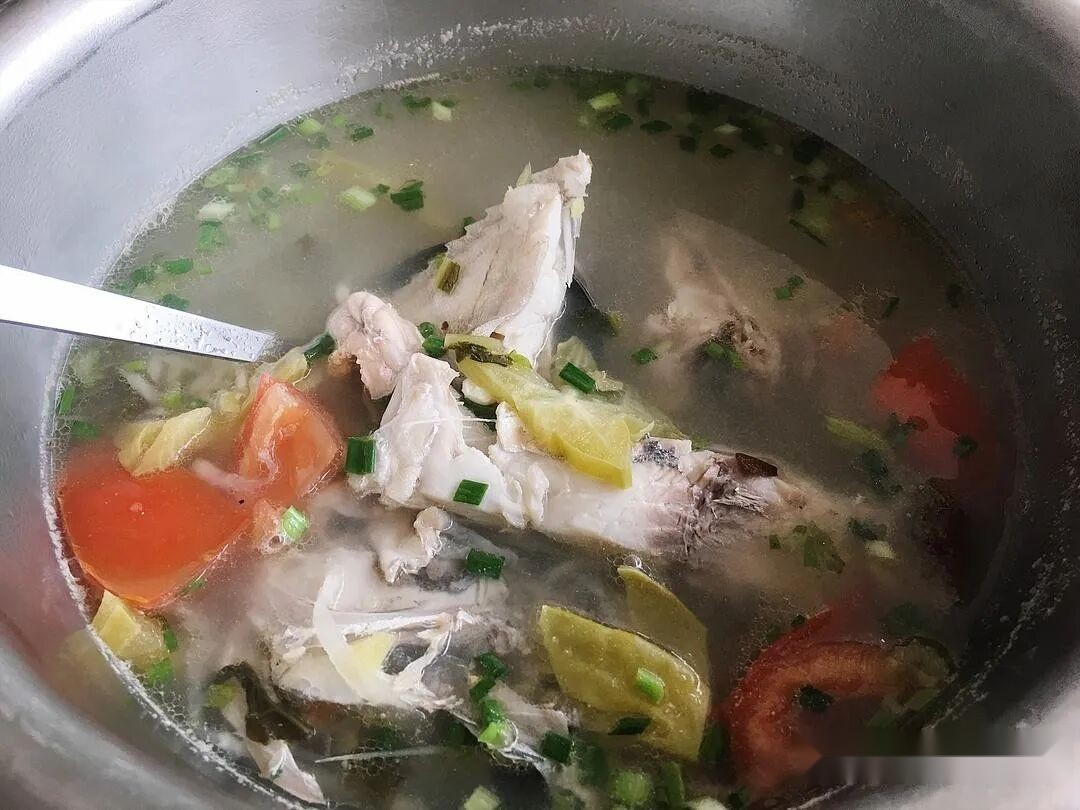
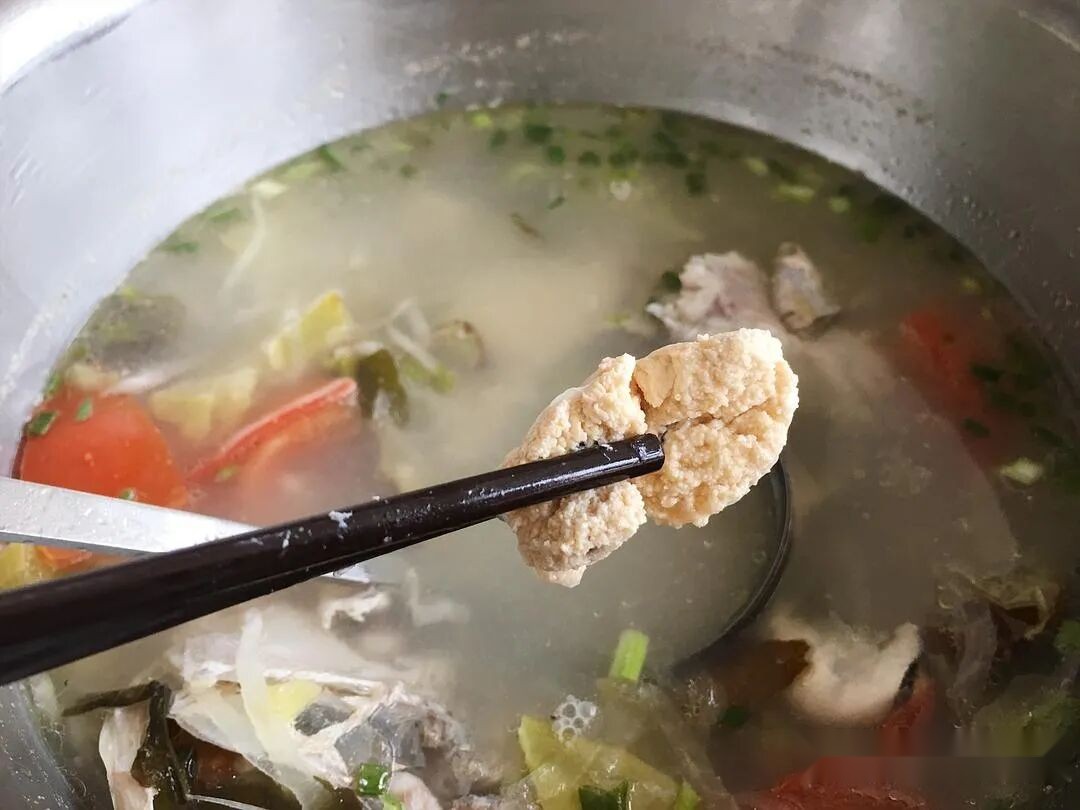
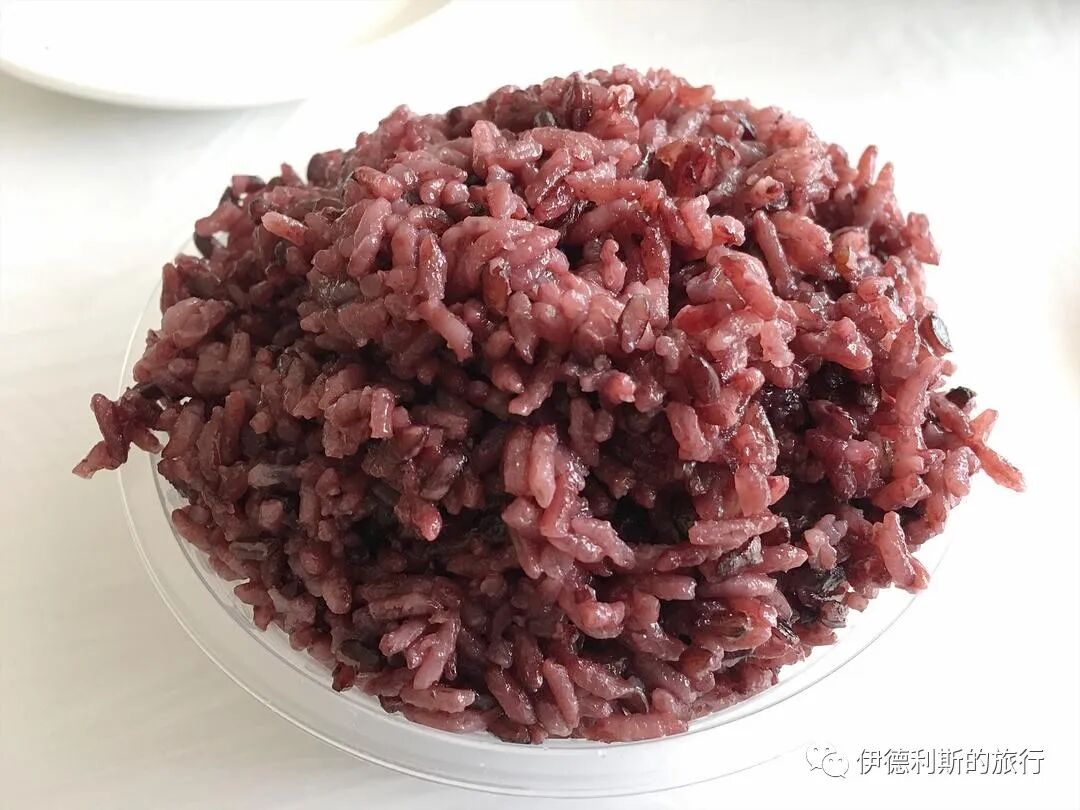
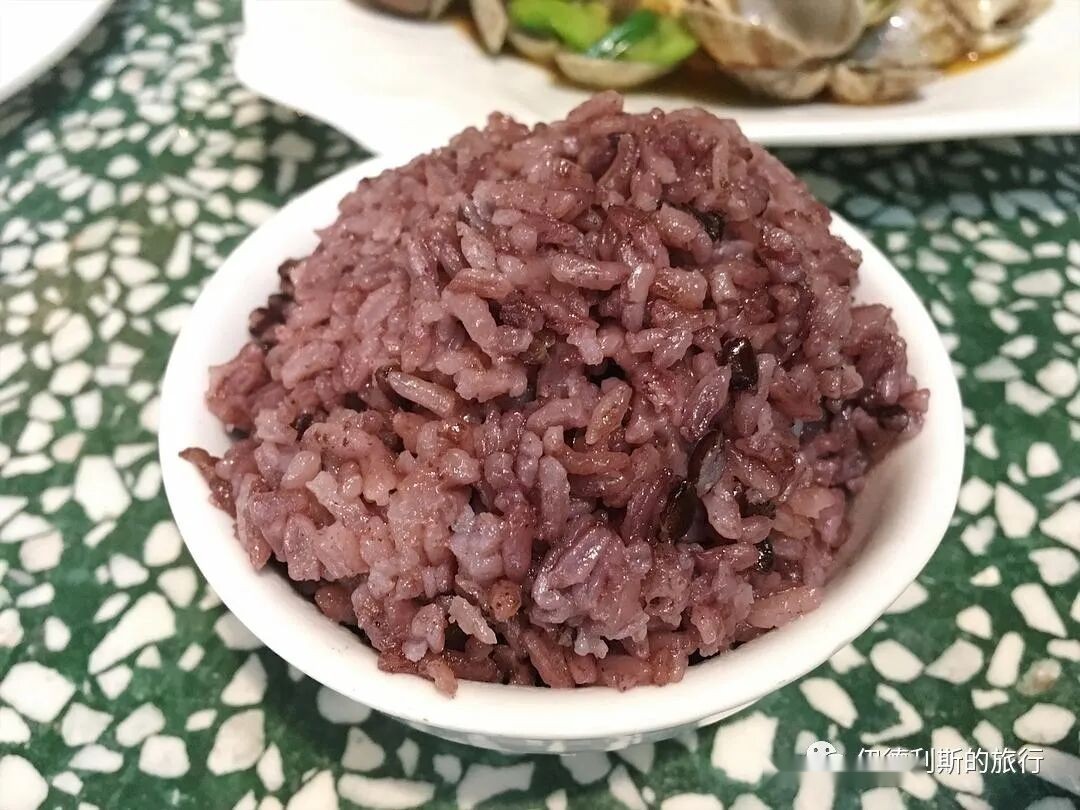
At First Fresh Fish Soup (Diayi Xianyutang), we tried their signature Huihui sour fish soup, ordering an 8-liang (about 400g) Luzai fish. Adding star fruit is what gives Huihui sour fish soup its unique twist, and it comes with complimentary coconut red rice.
3. Halal Dining in Huihui Village
Huihui Village (Huihui Muslim Village) by Day
Huihui Market

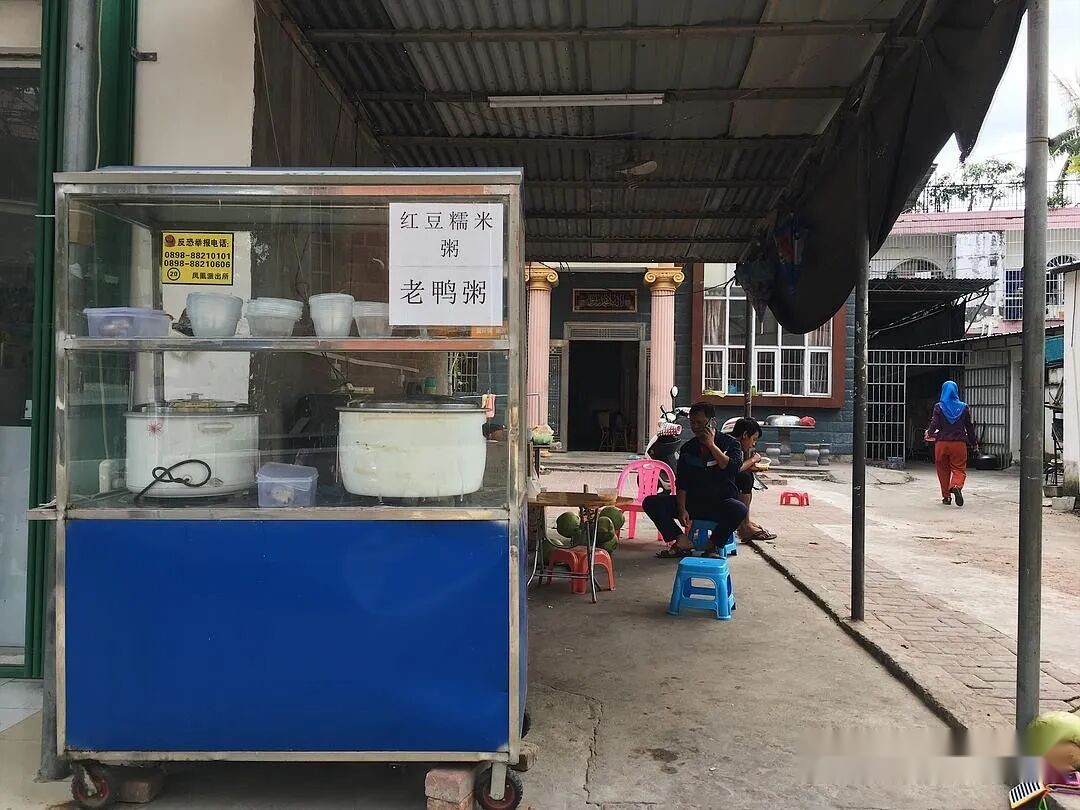
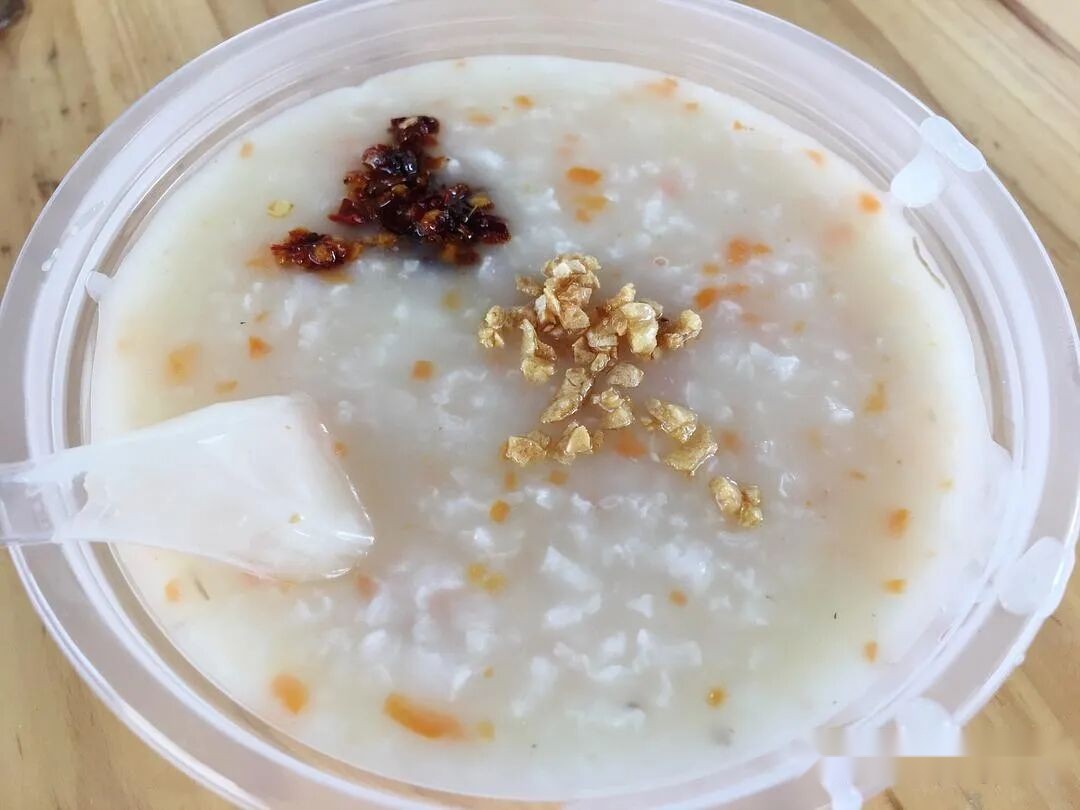
Laoya zhou (Traditional Hainan duck porridge)
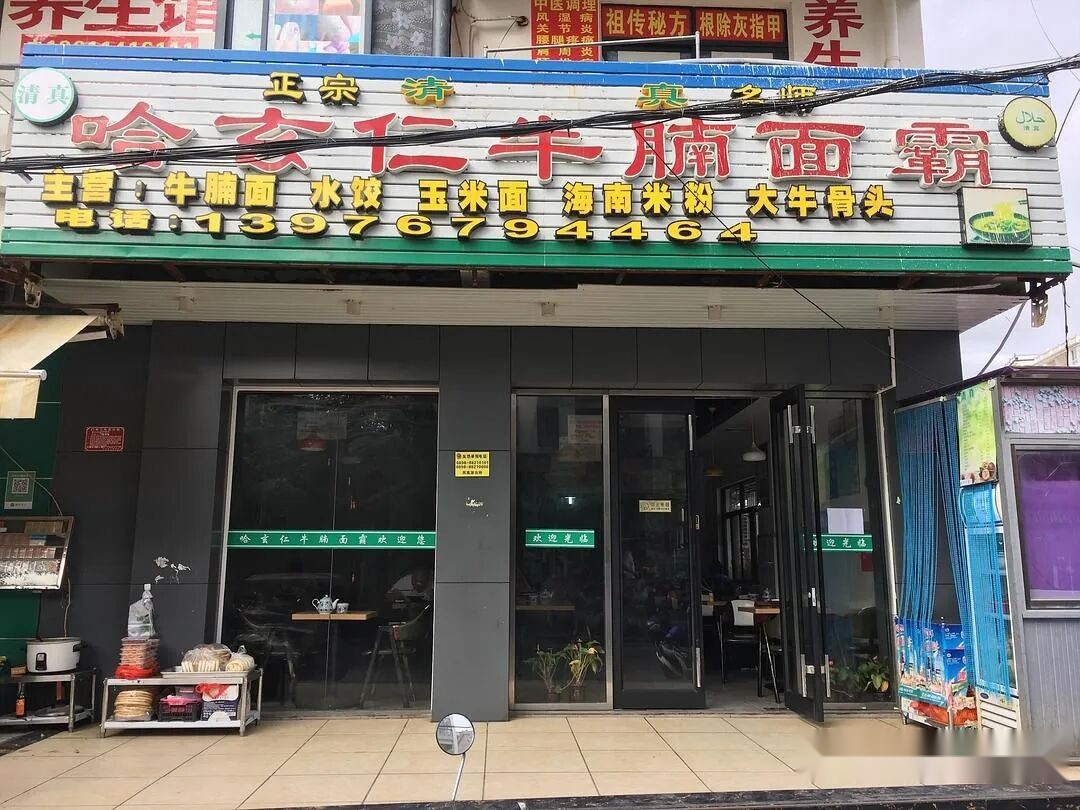
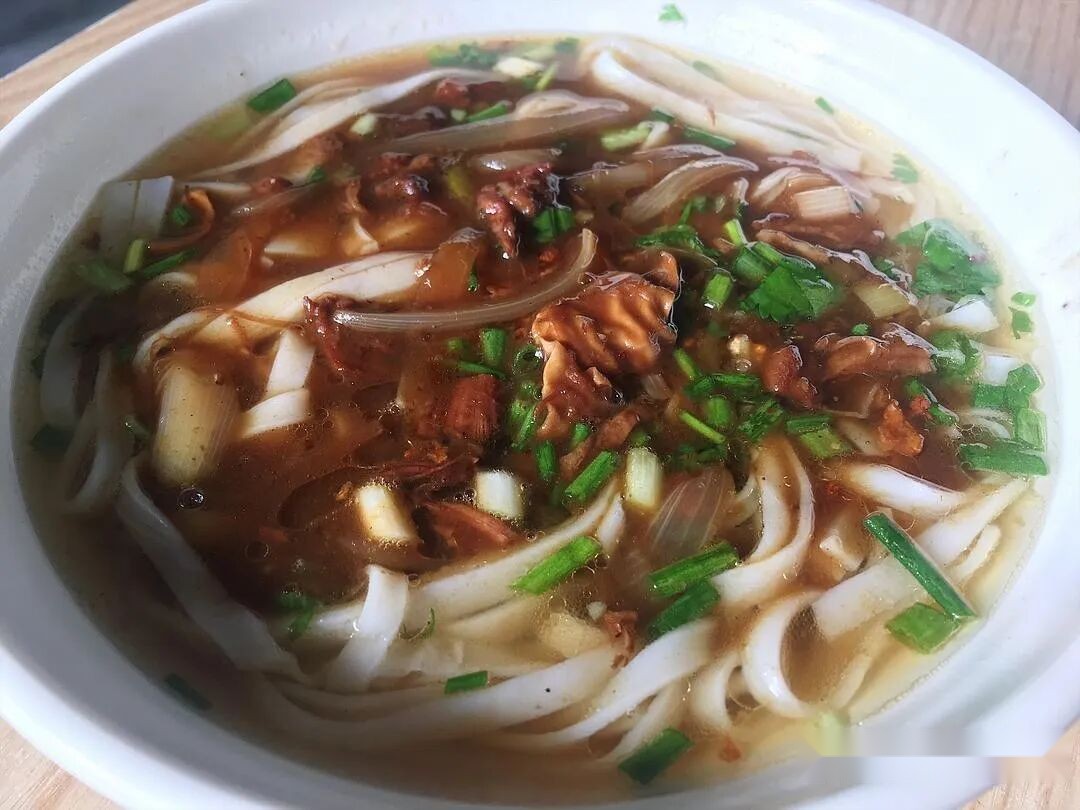
Haxuanren Niunan Mianba's niurou fen (Hainan beef rice noodles)

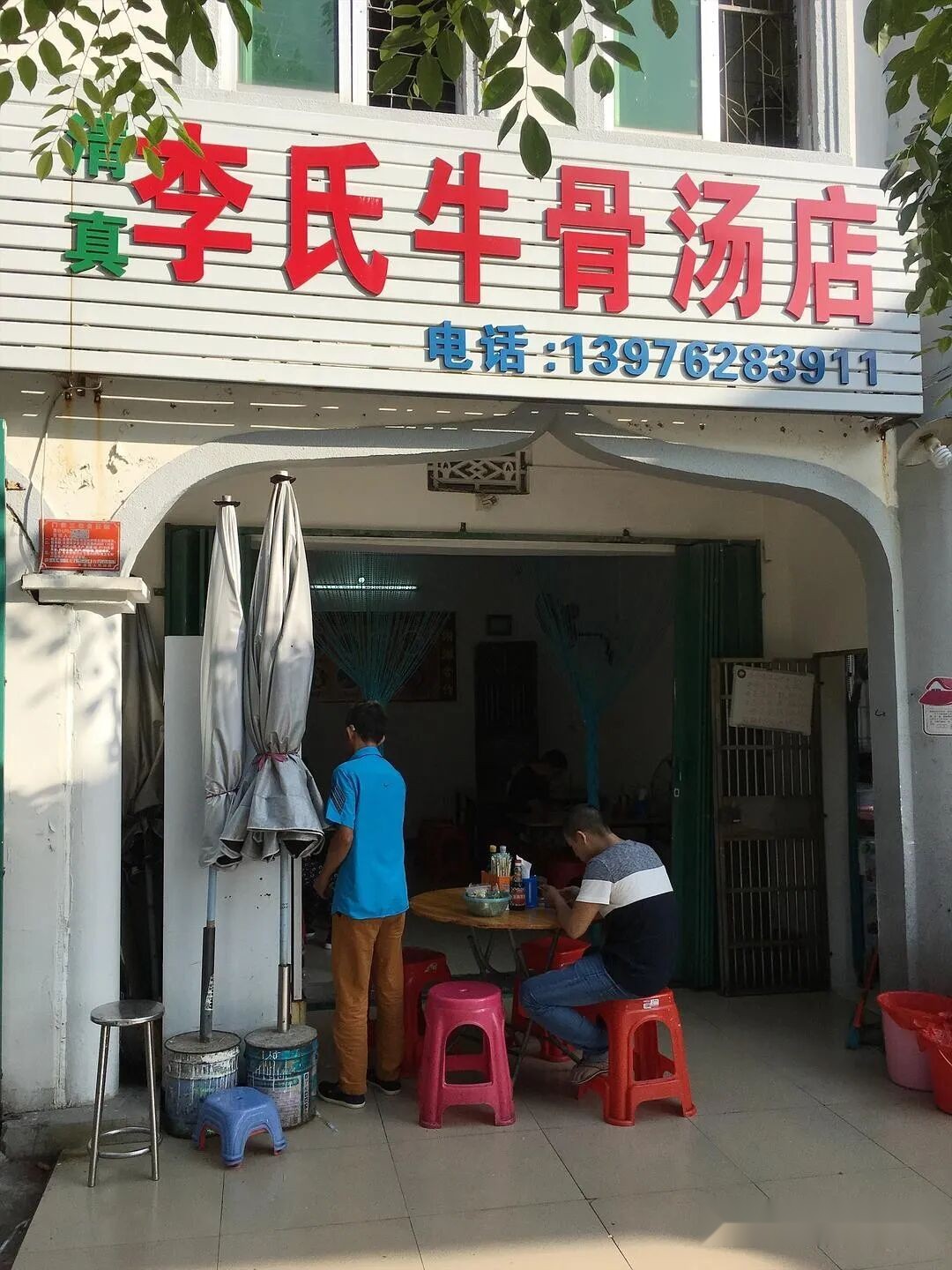
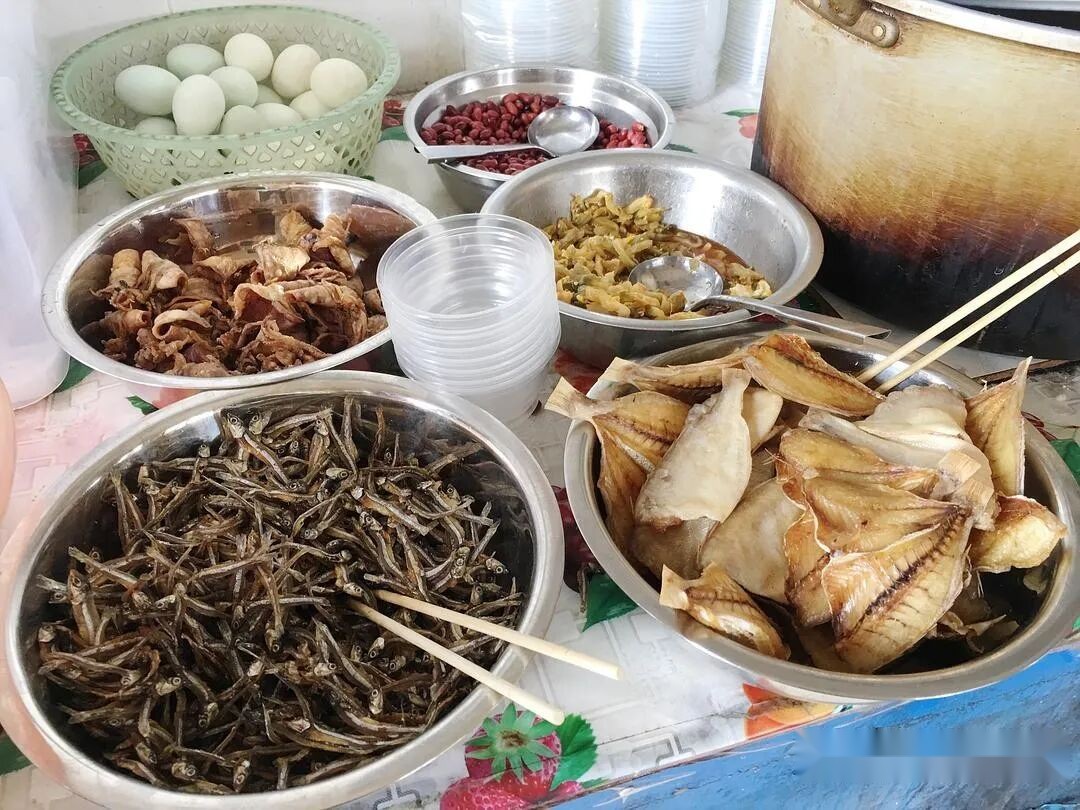
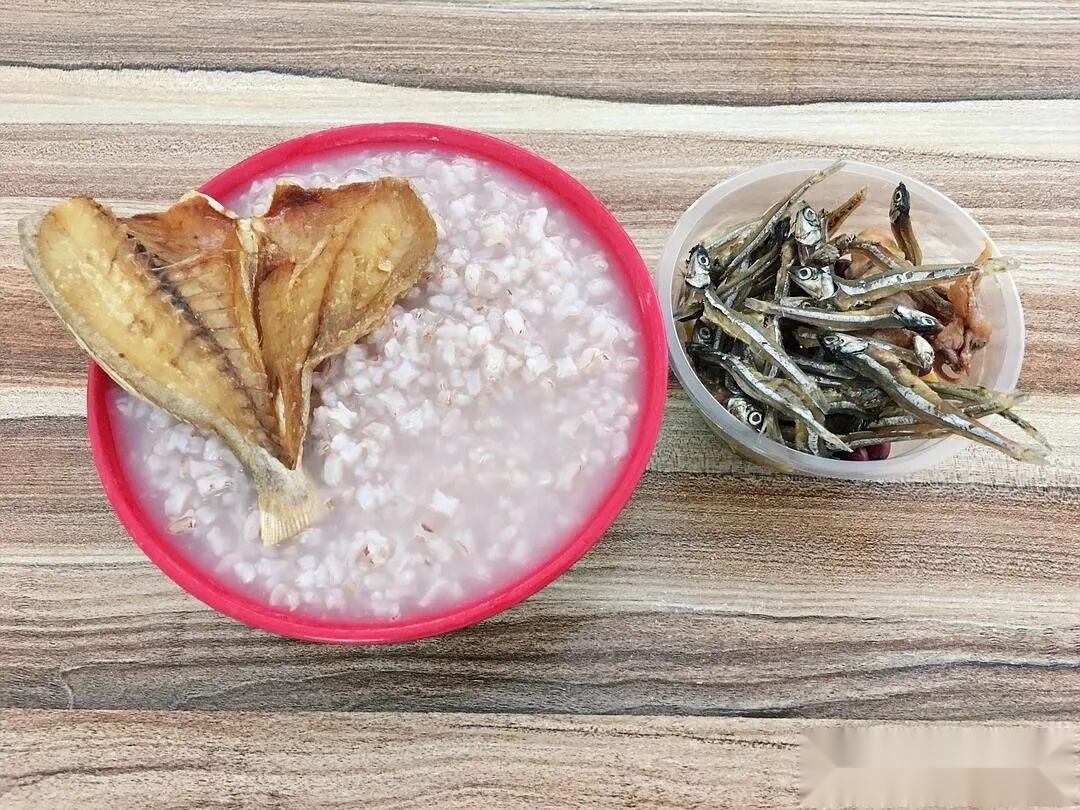
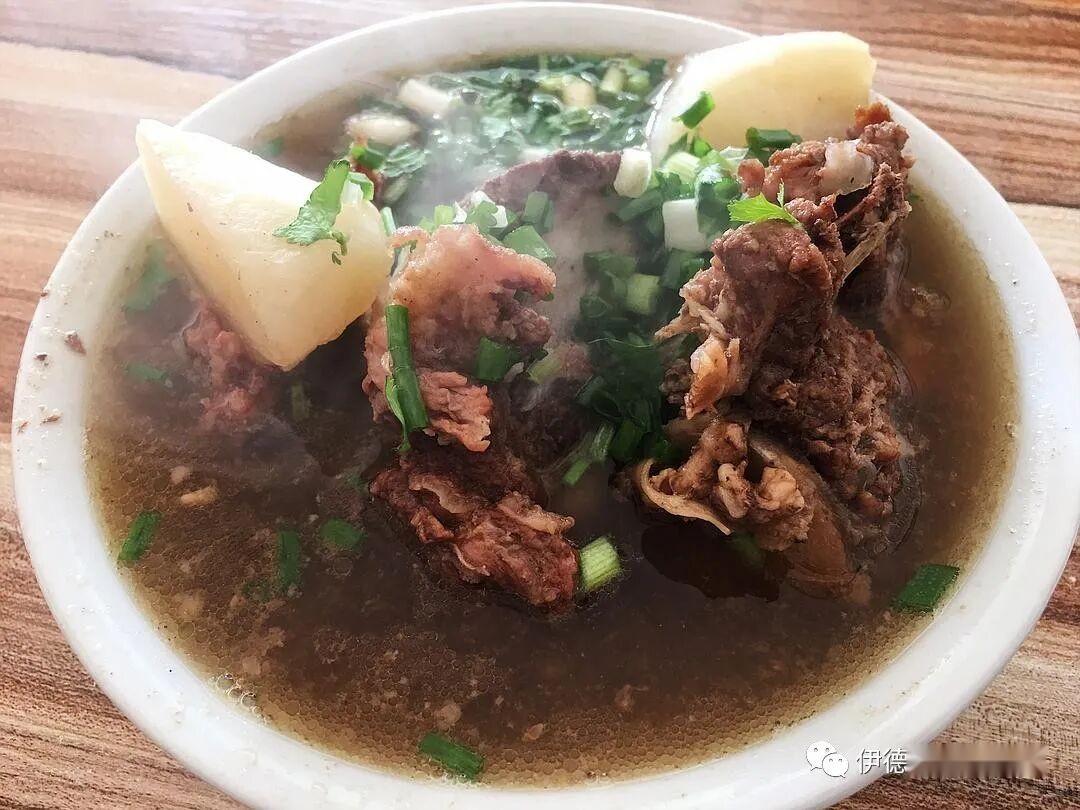
Li's Beef Bone Broth Shop's seafood rice porridge and beef bone soup
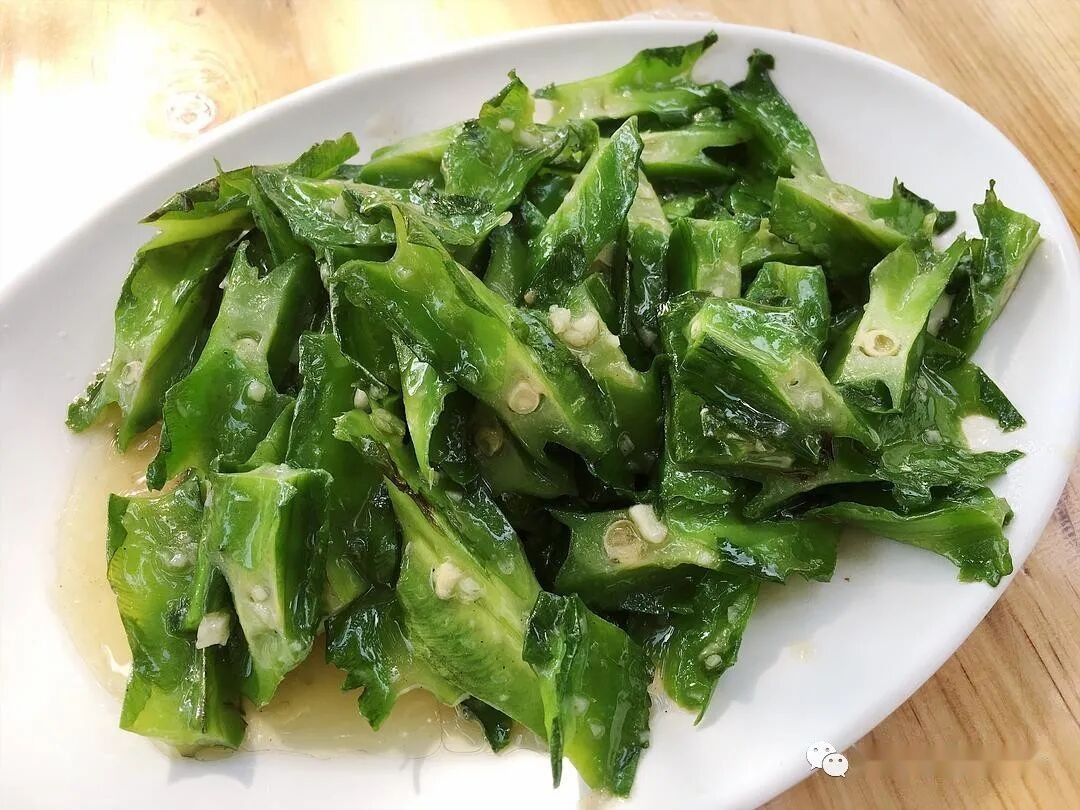
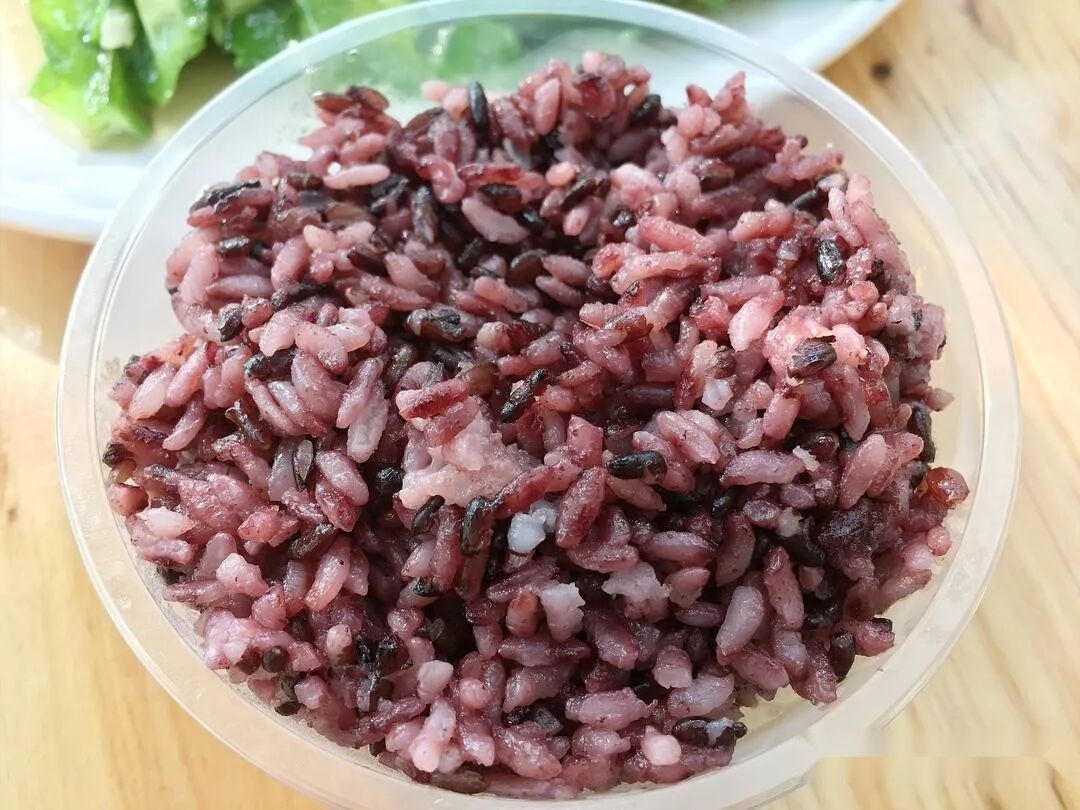
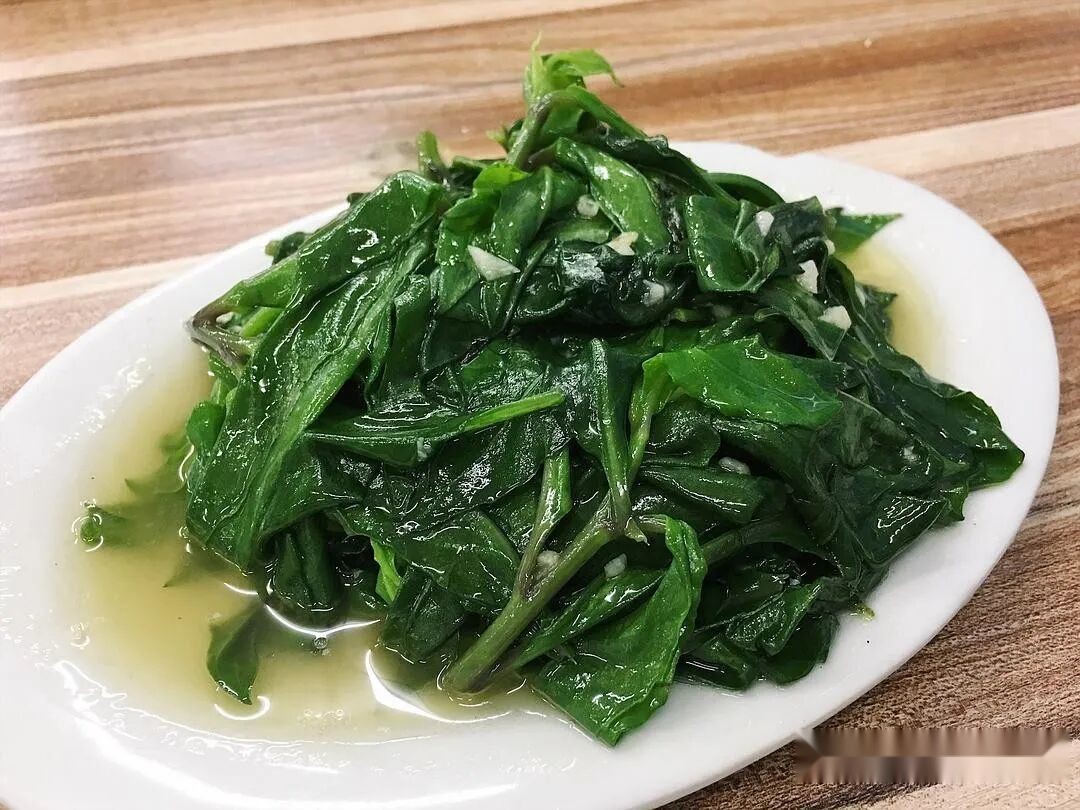
Hualide Restaurant's four-angle beans (winged beans) and shrimp paste-stir-fried pumpkin leaves, served with coconut red rice
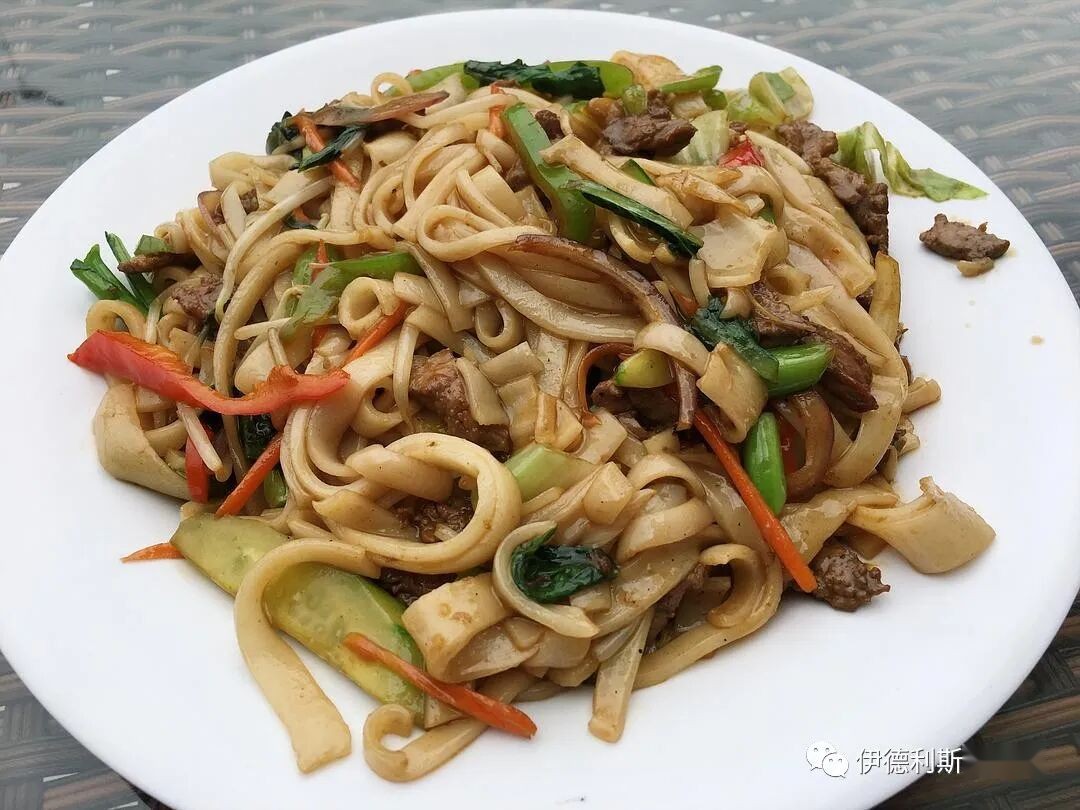
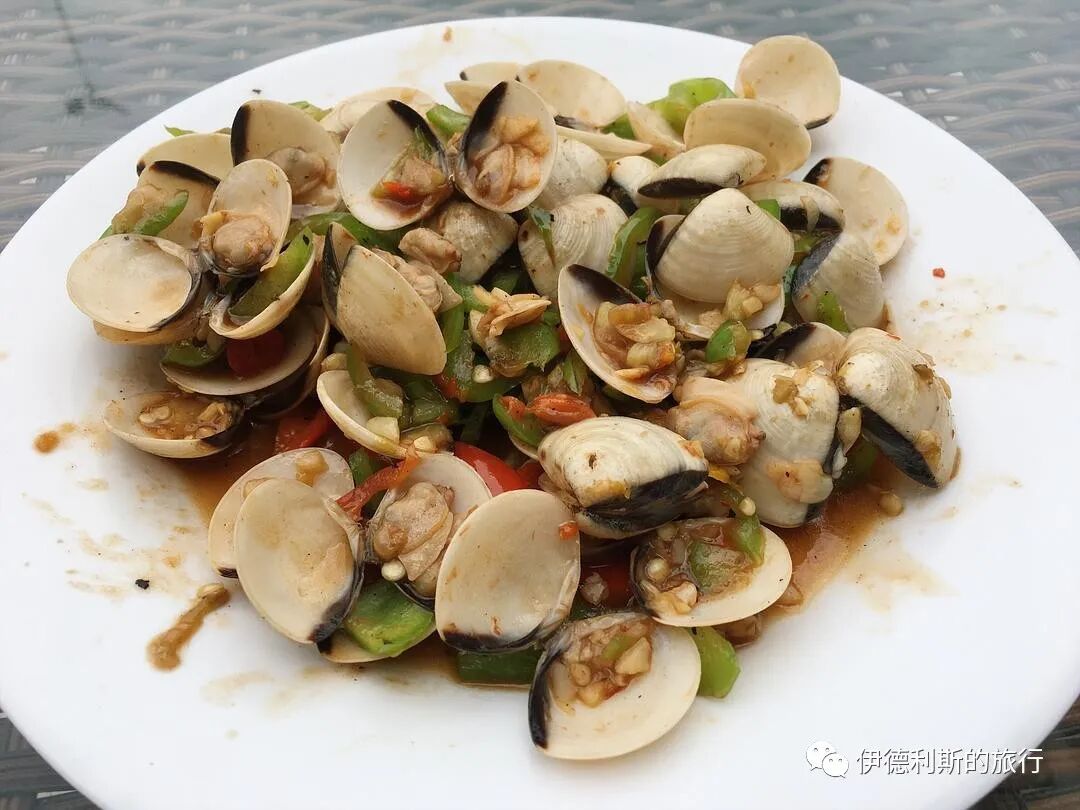
Fenghuang Yueju Restaurant's white clams and stir-fried noodles
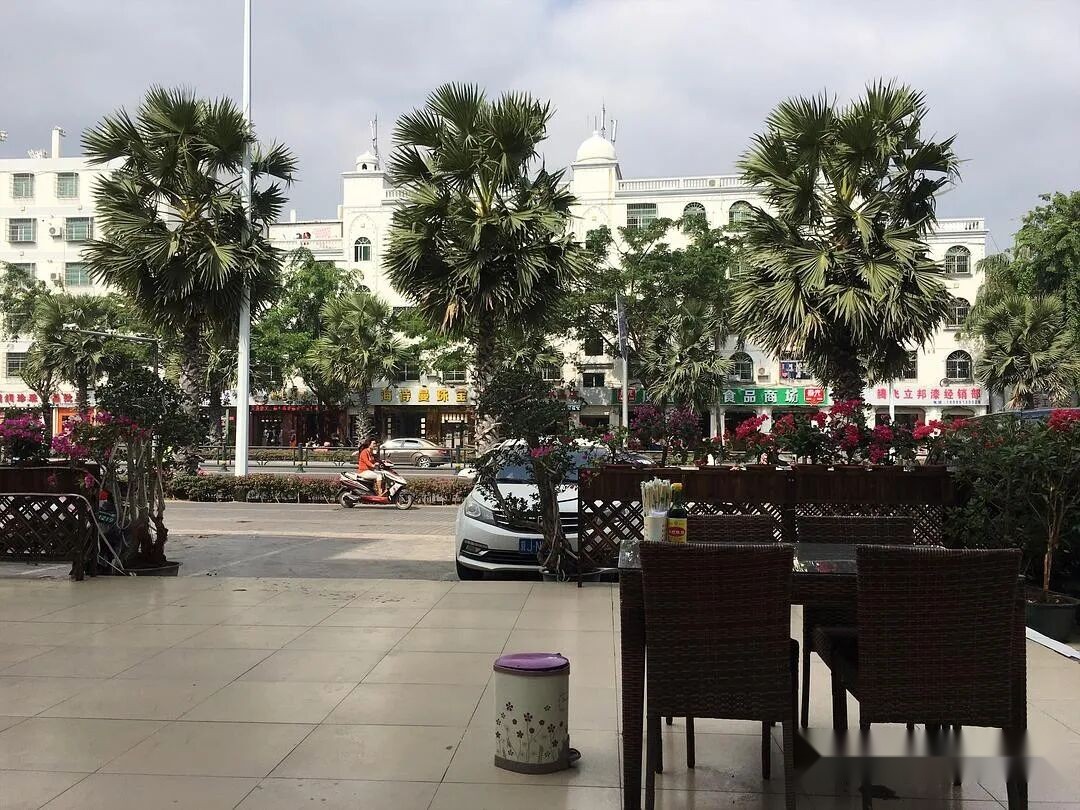
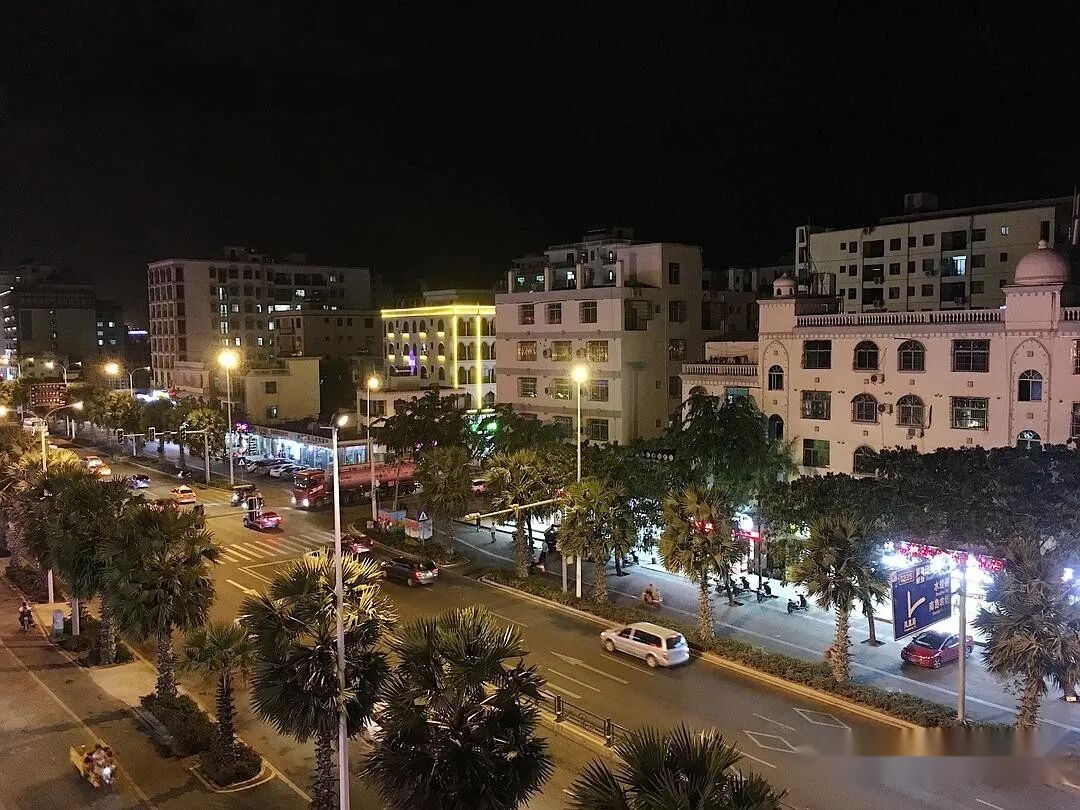
Huihui Village (Huihui Muslim Village) at Night
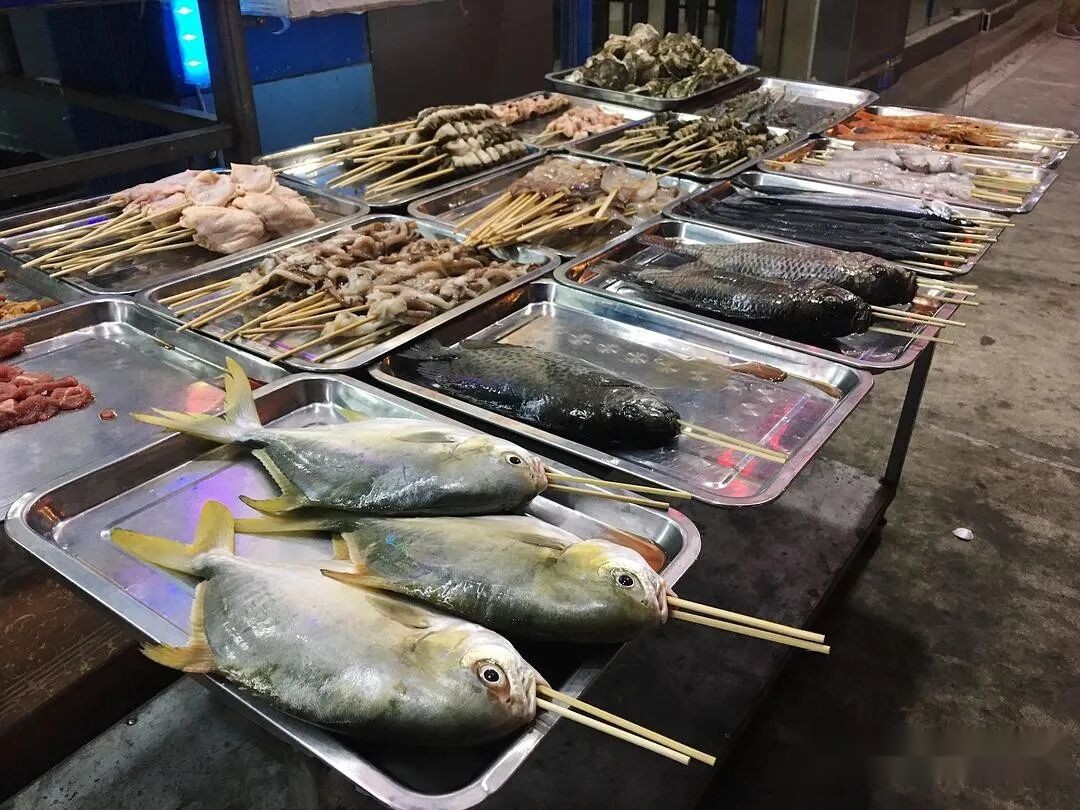
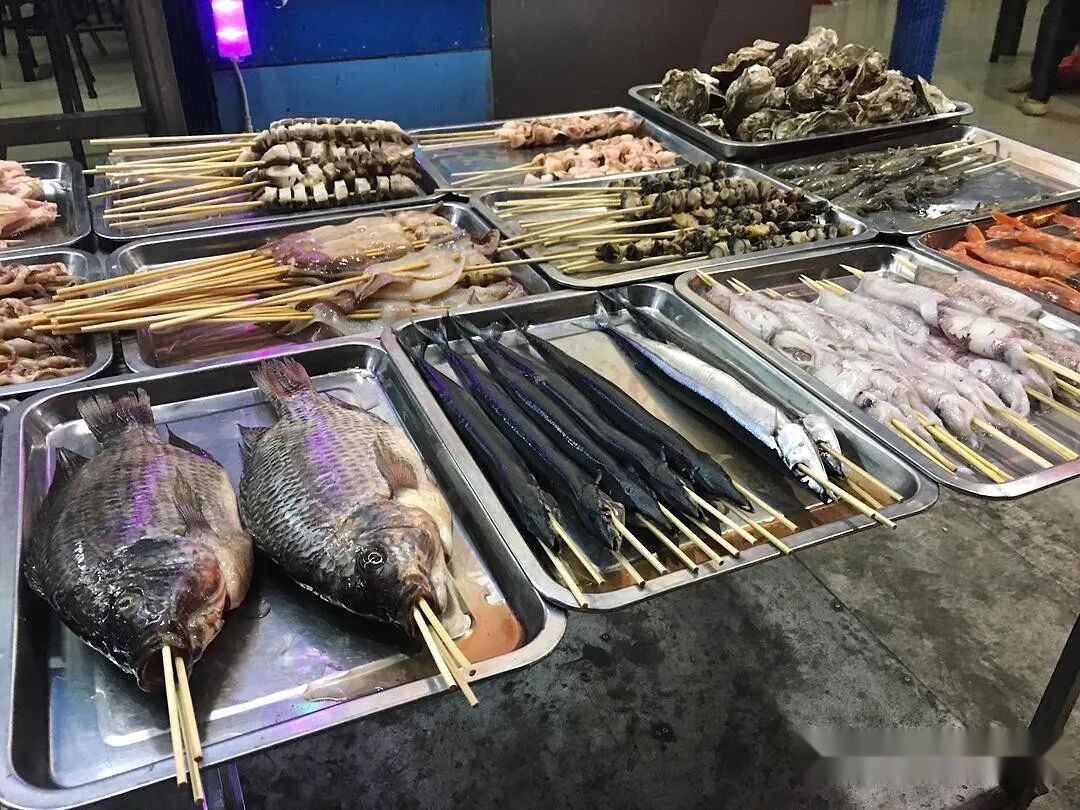
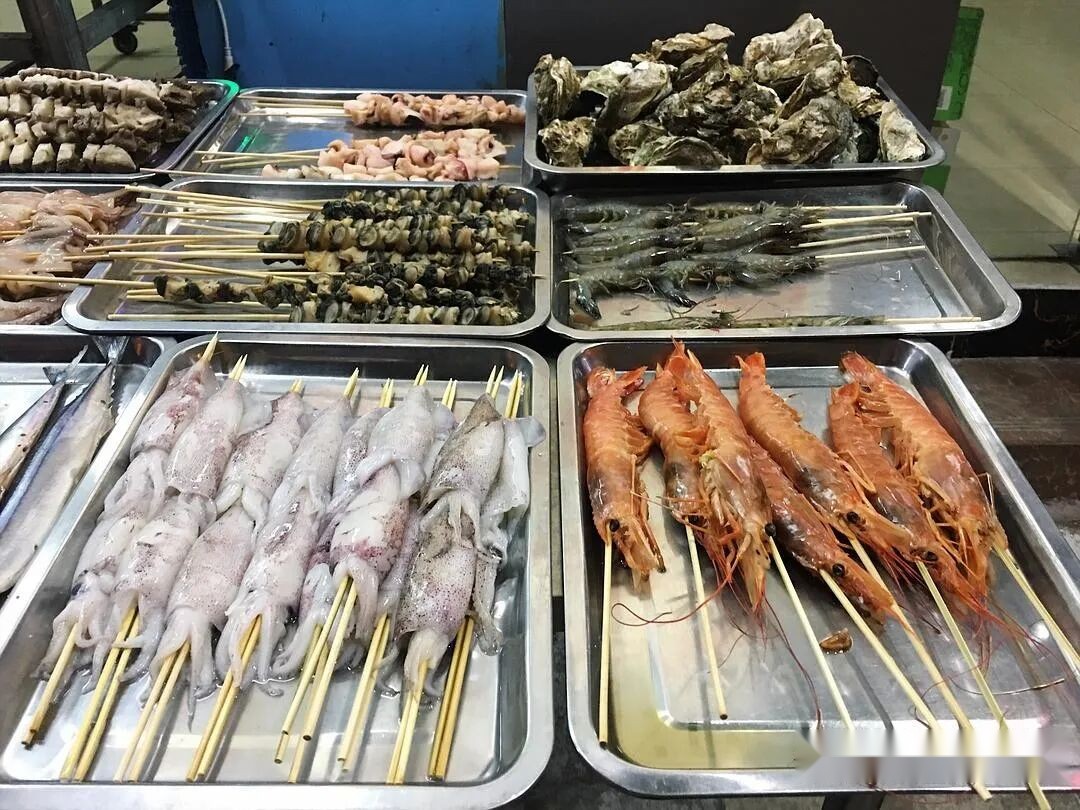
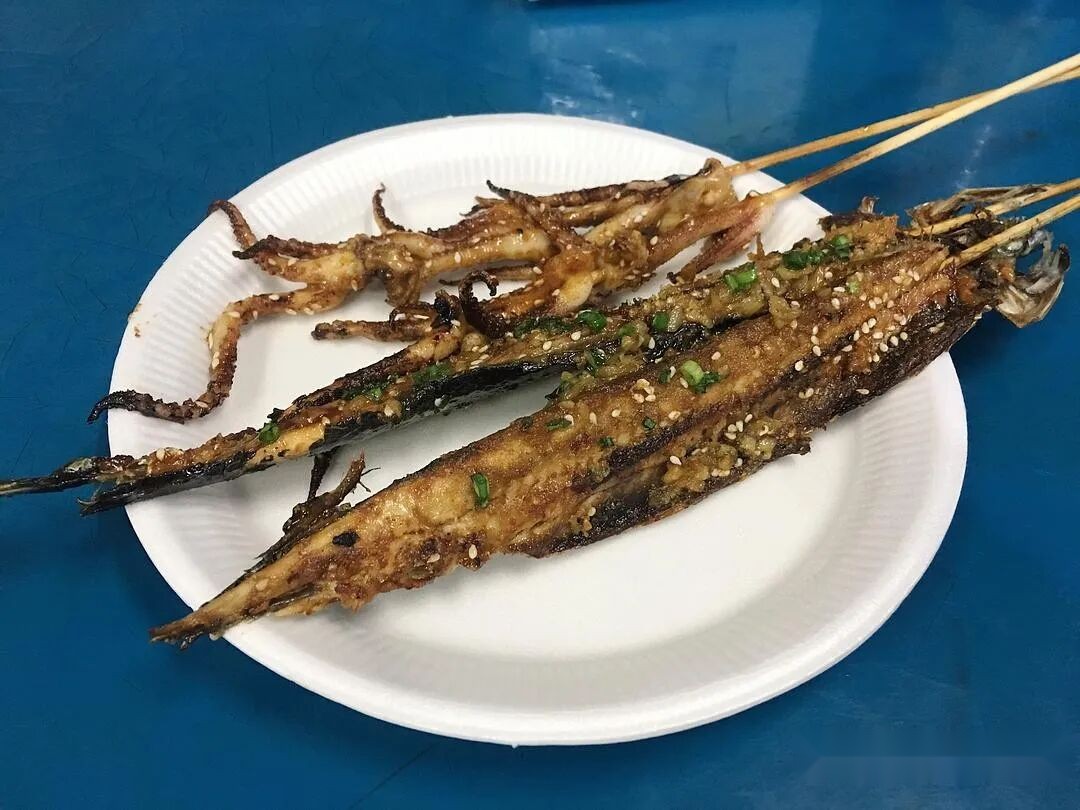
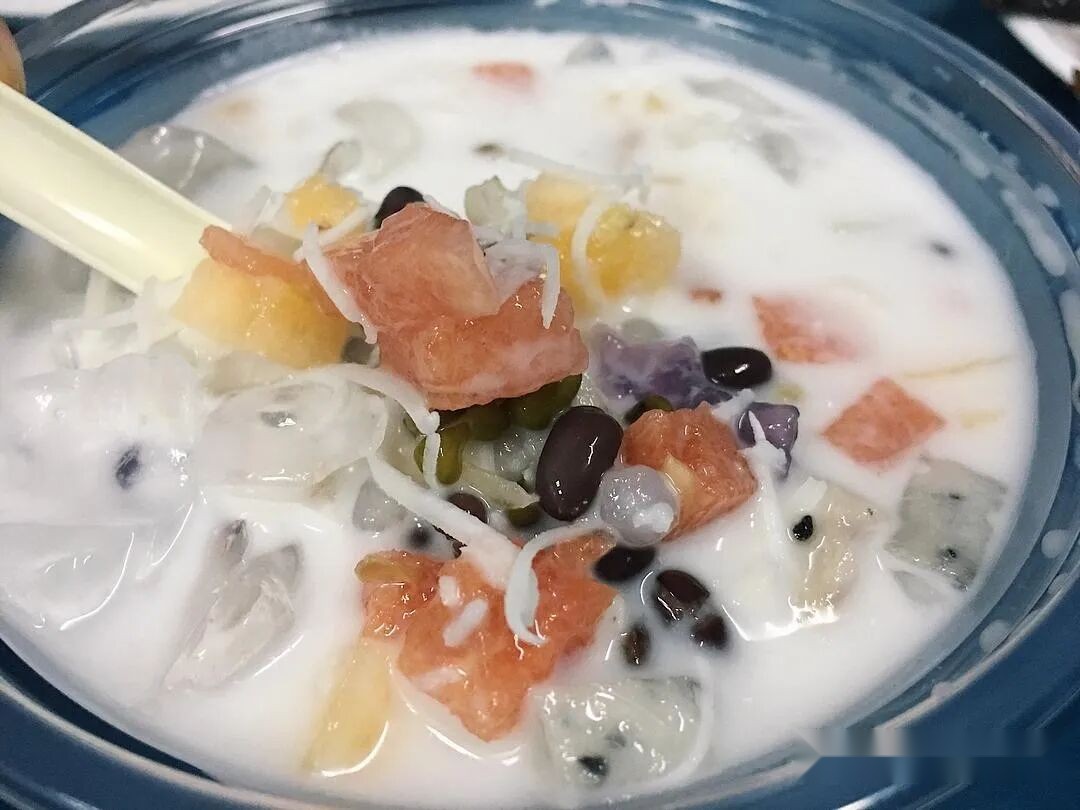
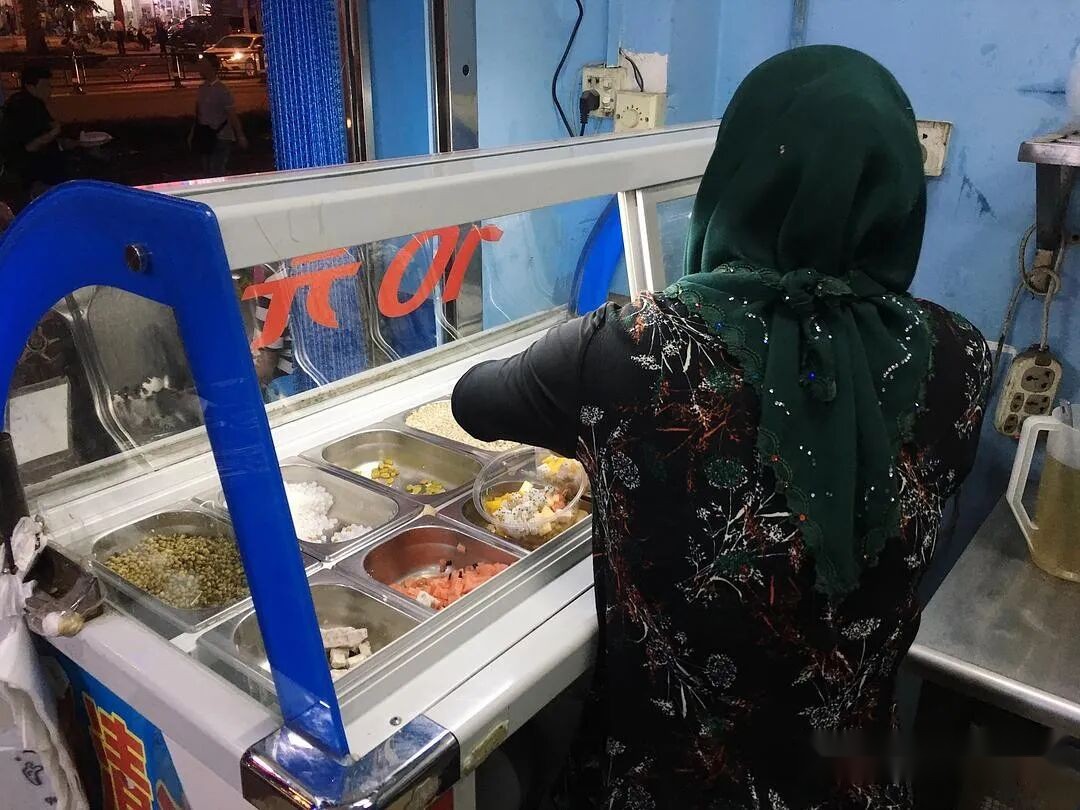
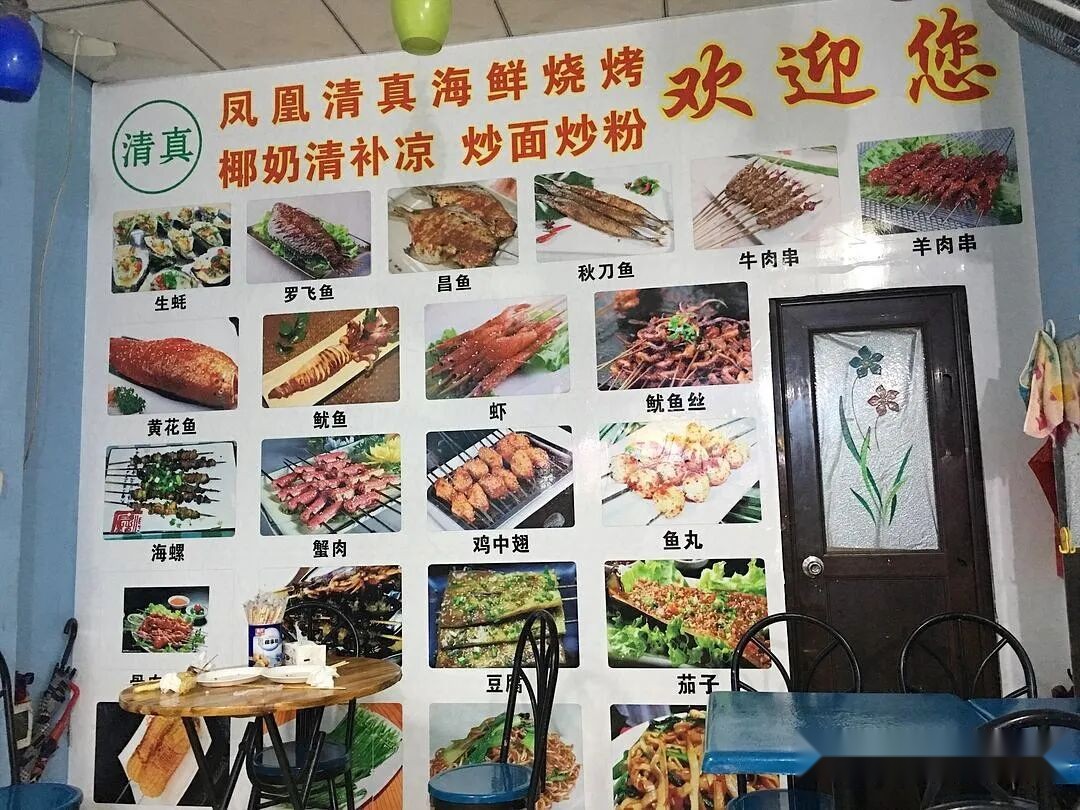
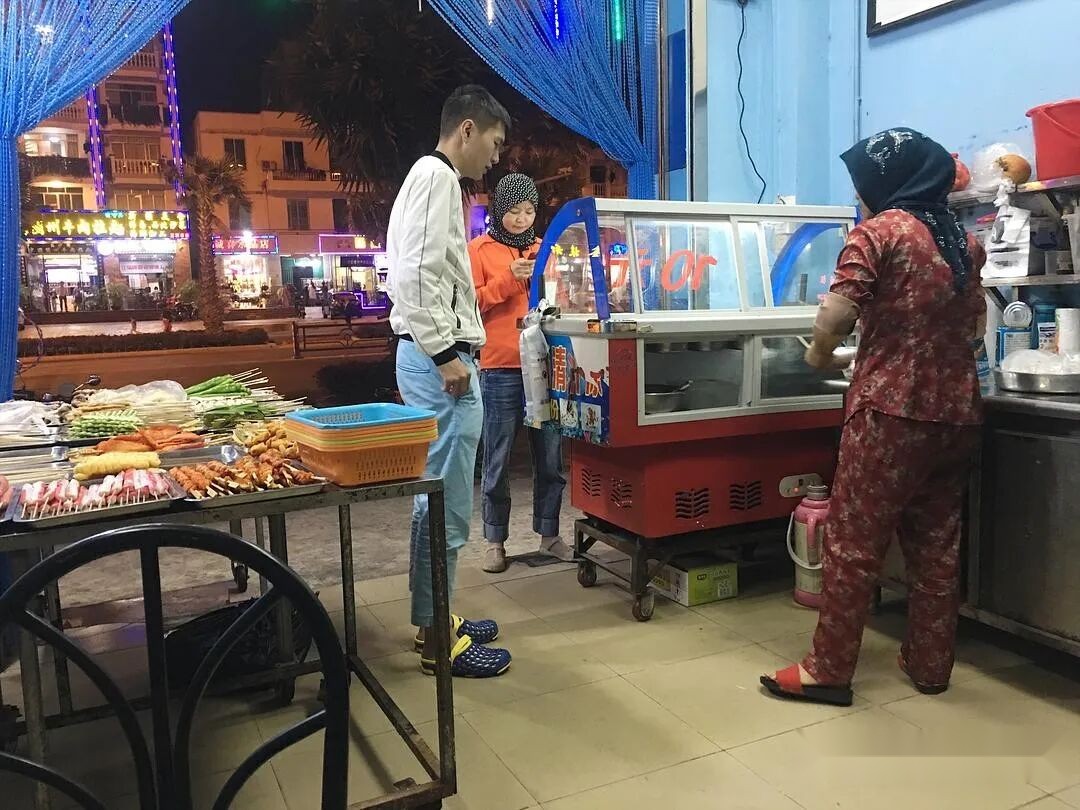
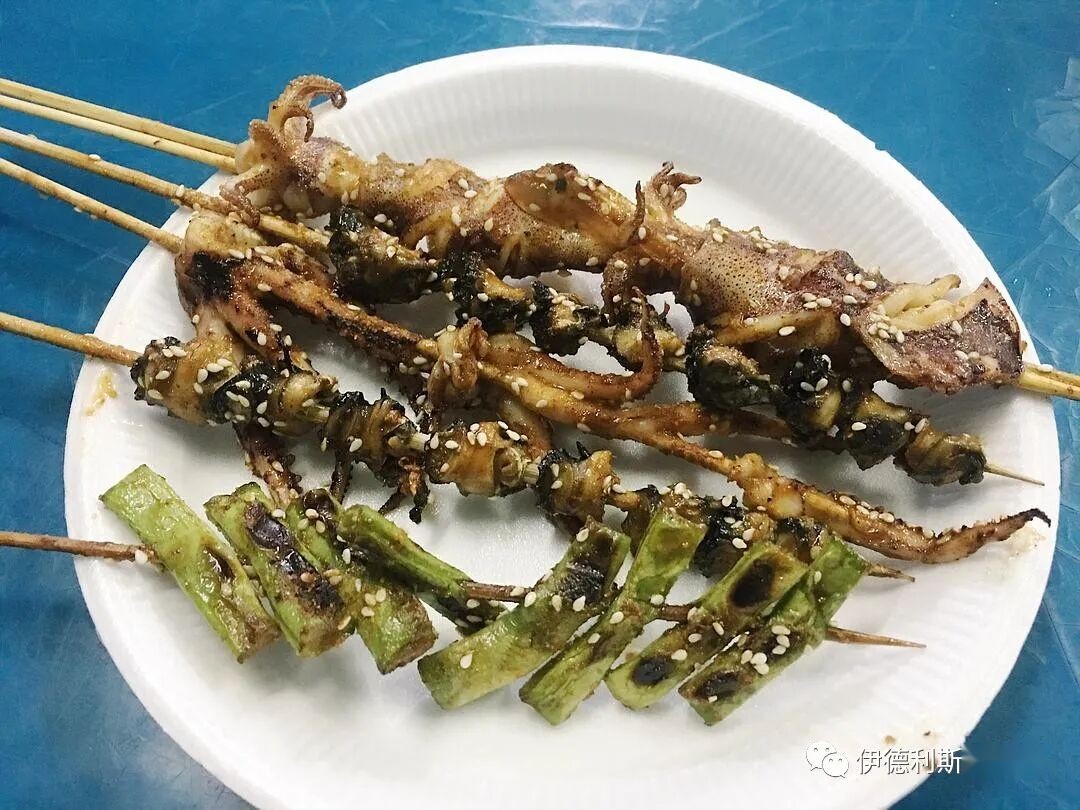
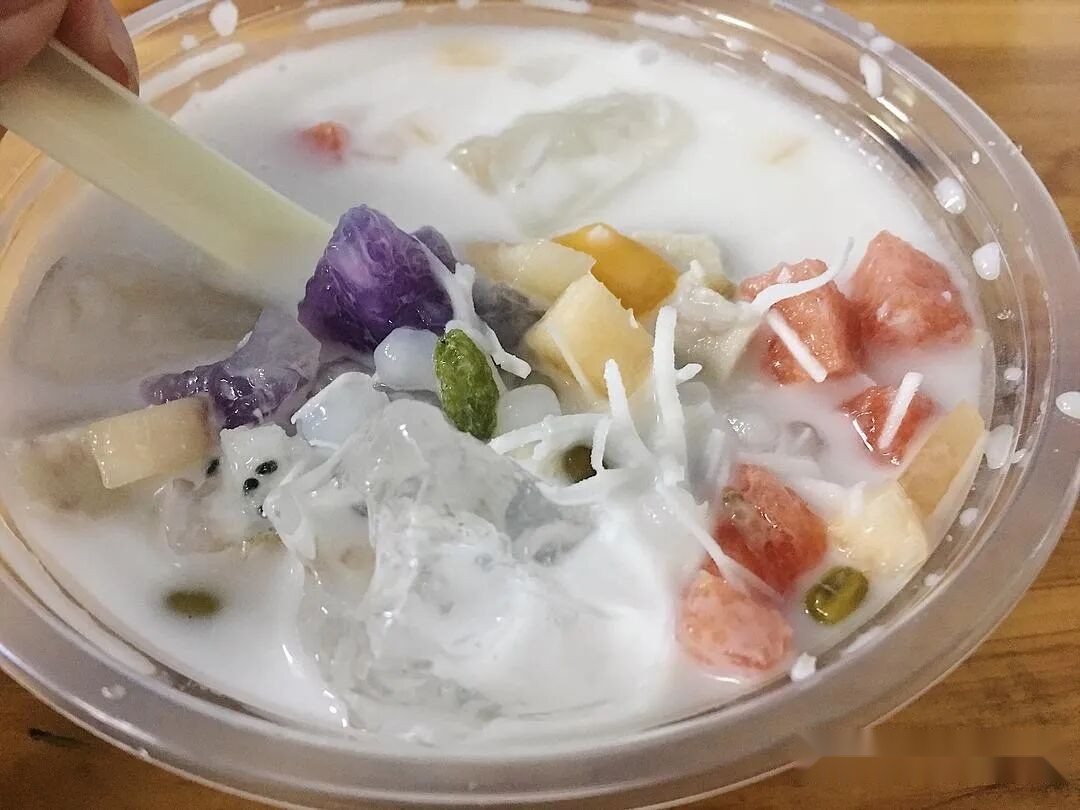
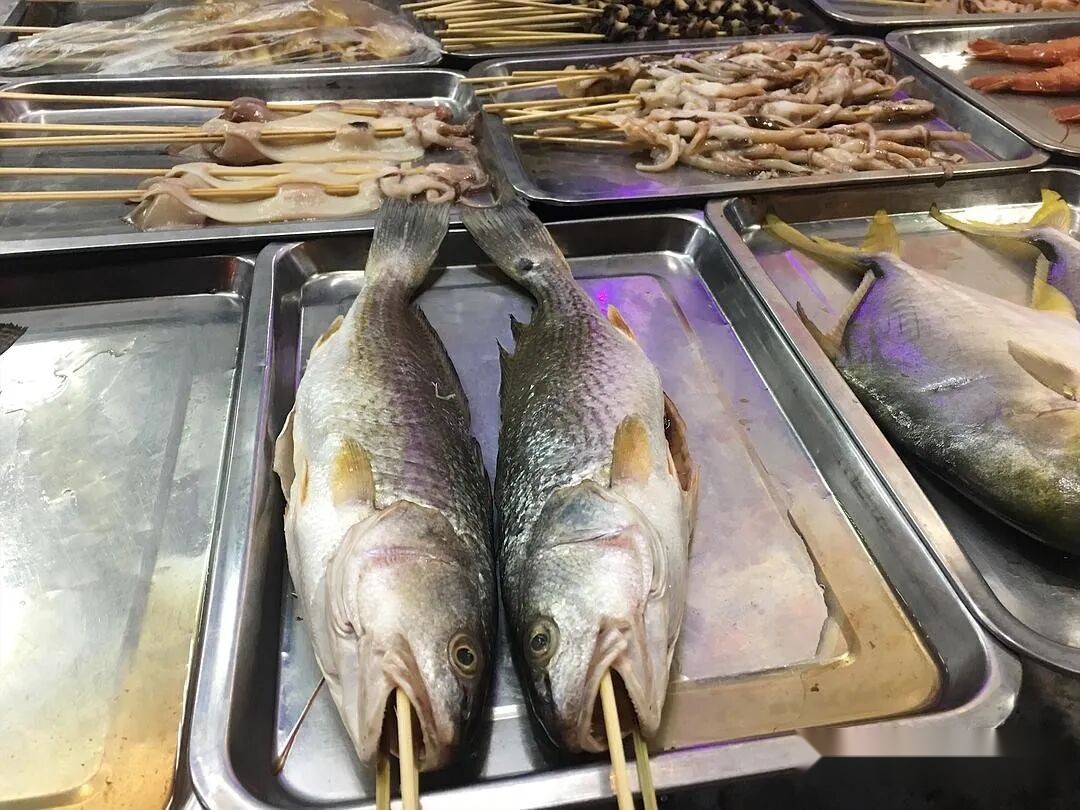
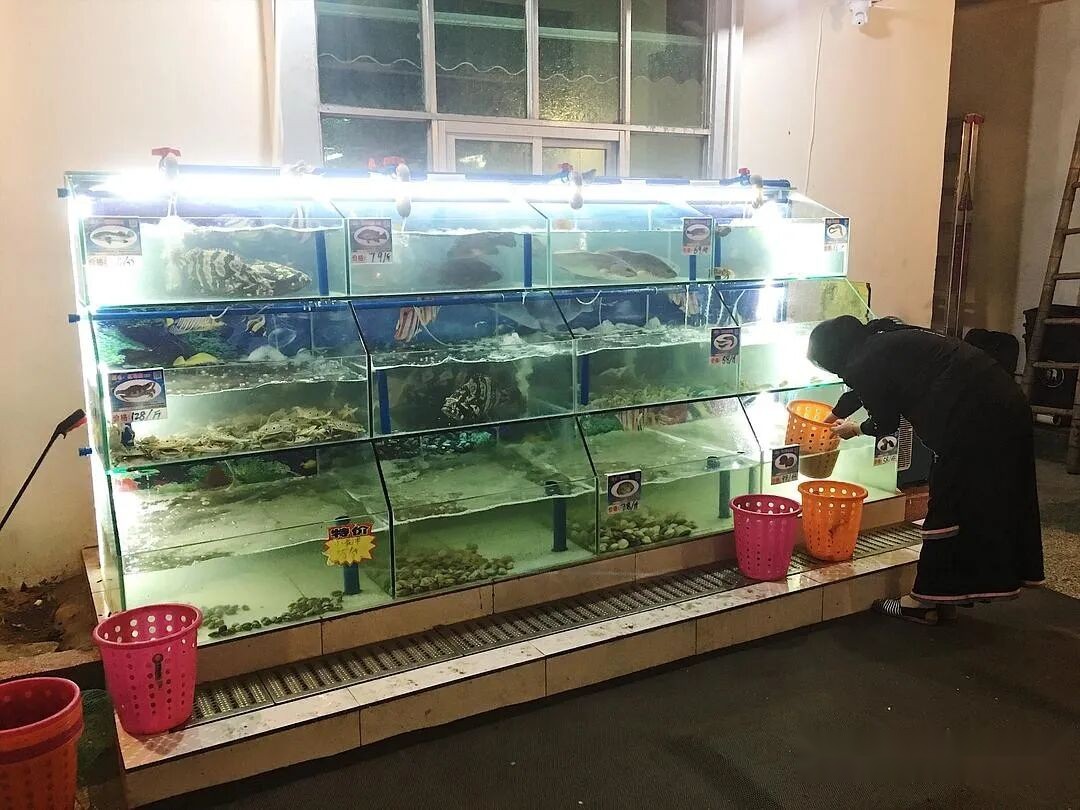
Halal seafood barbecue and coconut milk qingbu-liang (refreshing Hainan sweet dessert soup). We ordered grouper, Pacific saury, and squid tentacles. The qingbu-liang came with a loaded lineup of 12 different toppings—super extravagant!
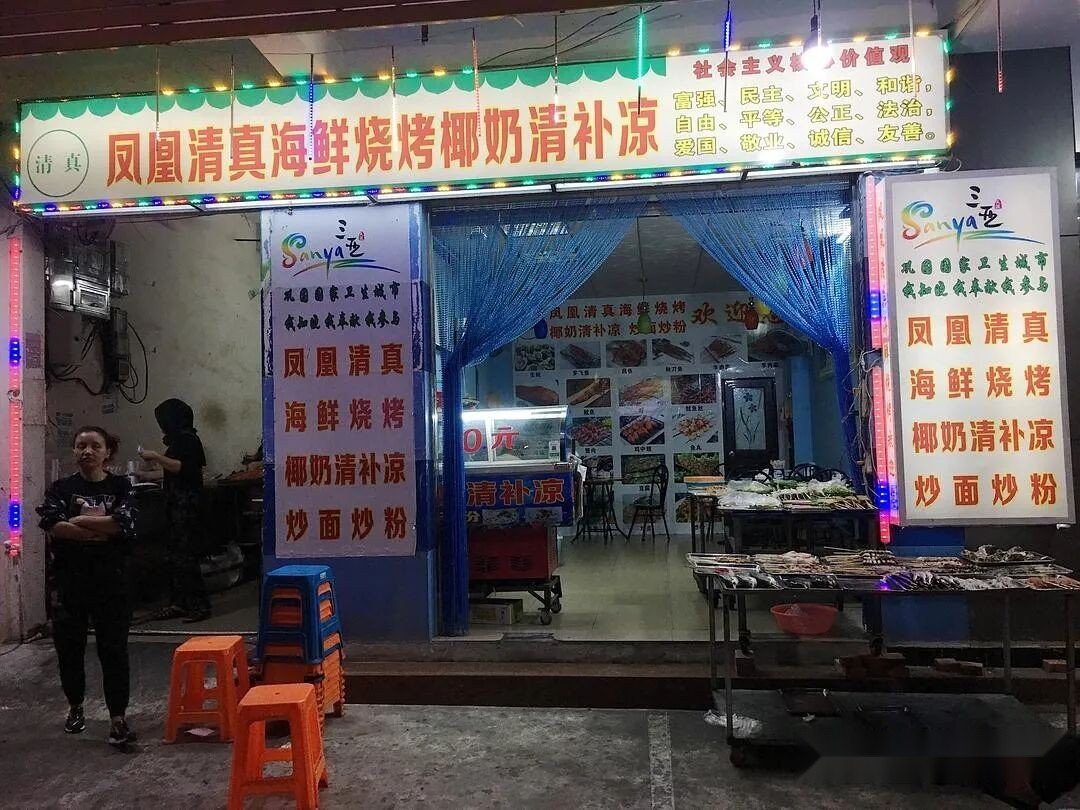
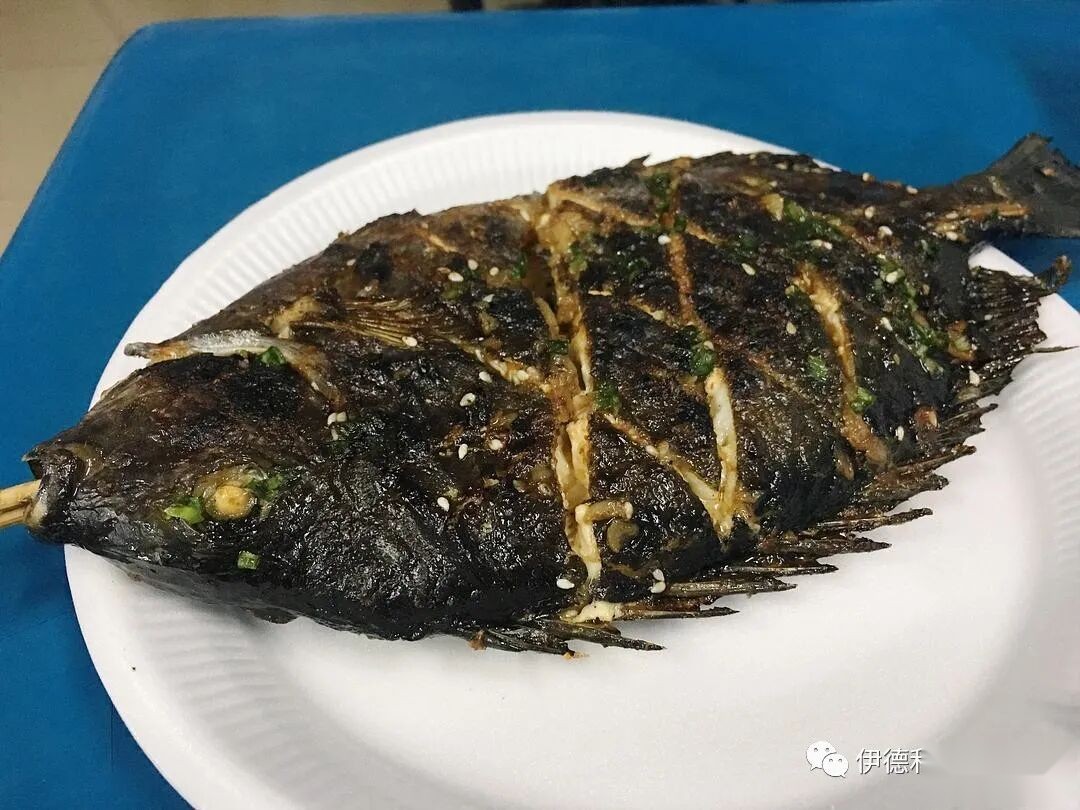
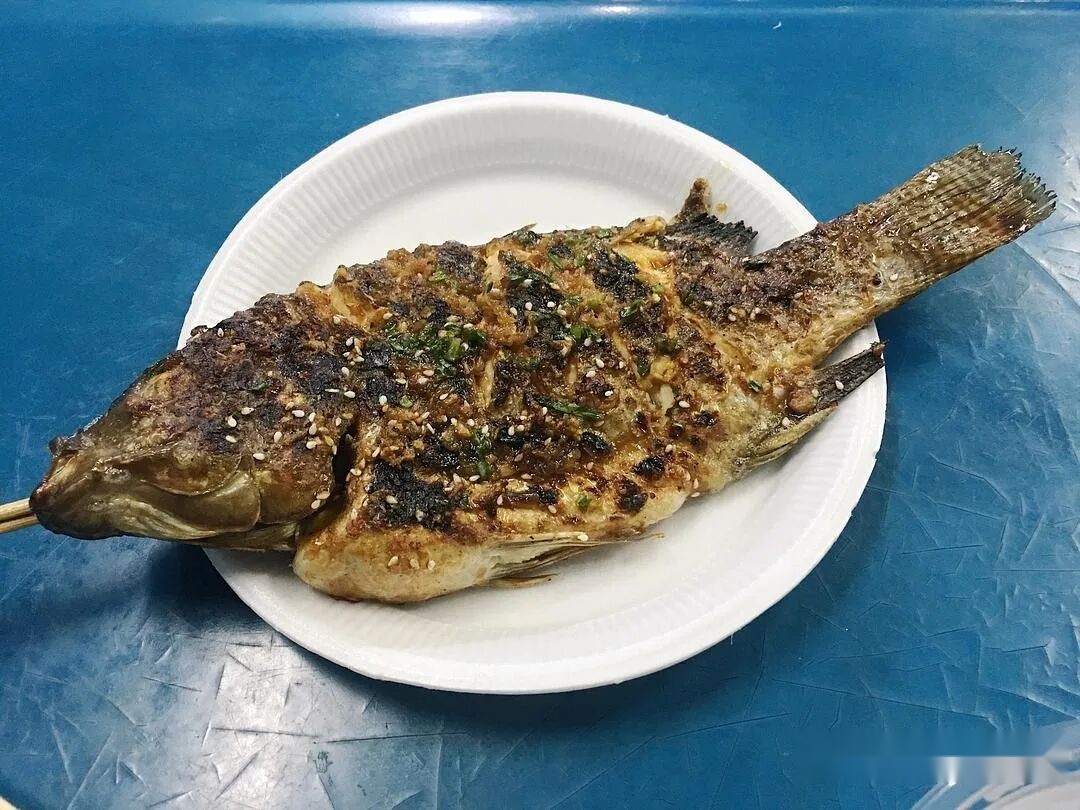
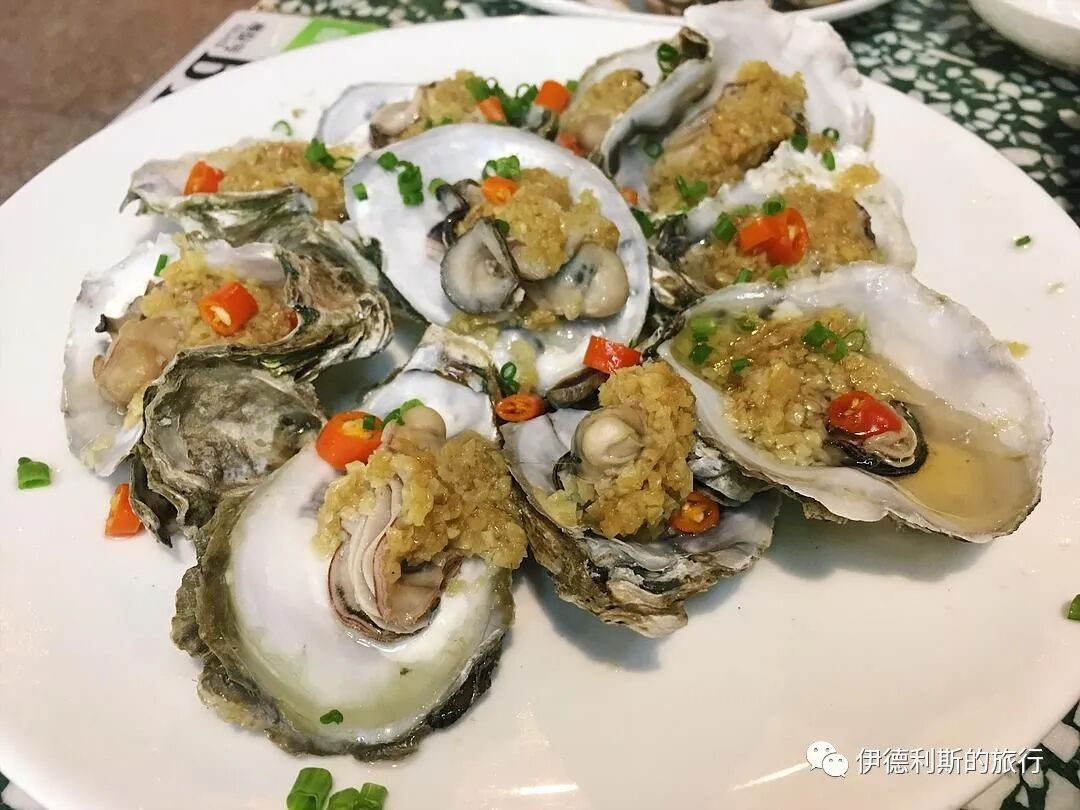
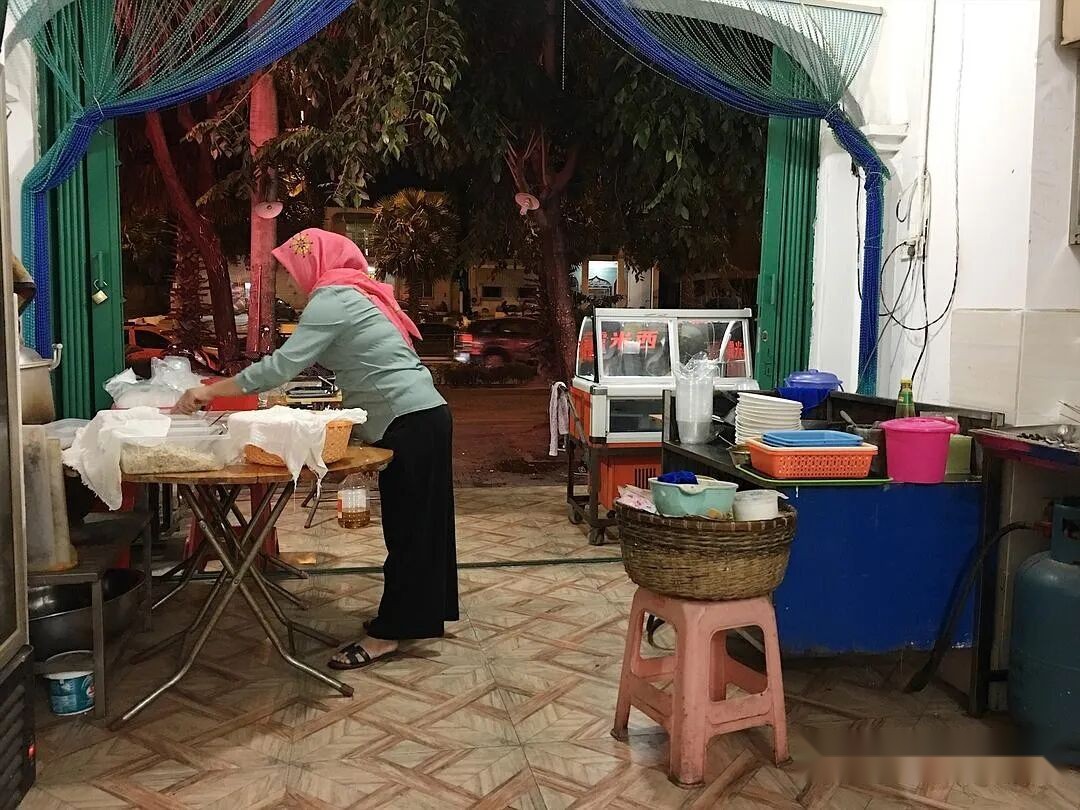
This spot is hands down my favorite late-night halal seafood barbecue joint. I came back the next night to order tilapia, sea snails, cuttlefish, and squid tentacles. A young Li ethnic guy was sipping a coconut milk qingbu-liang, a young Northwest Hui Muslim couple ordered 14 skewers of roasted mantou (steamed buns), and a middle-aged Uyghur couple (or husband and wife) whom we’d bumped into all over the street these past few days ordered a mountain of oysters. The local chengguan (urban management officers) didn't show up tonight, and we all grubbed out and had a blast.
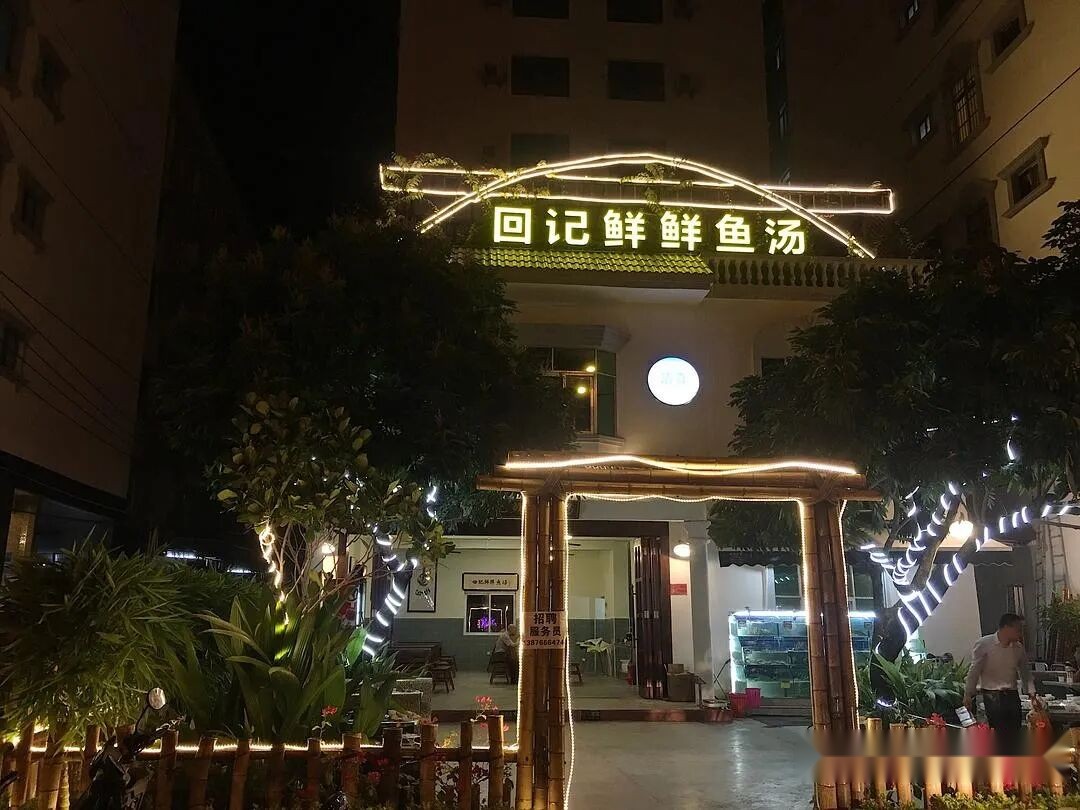
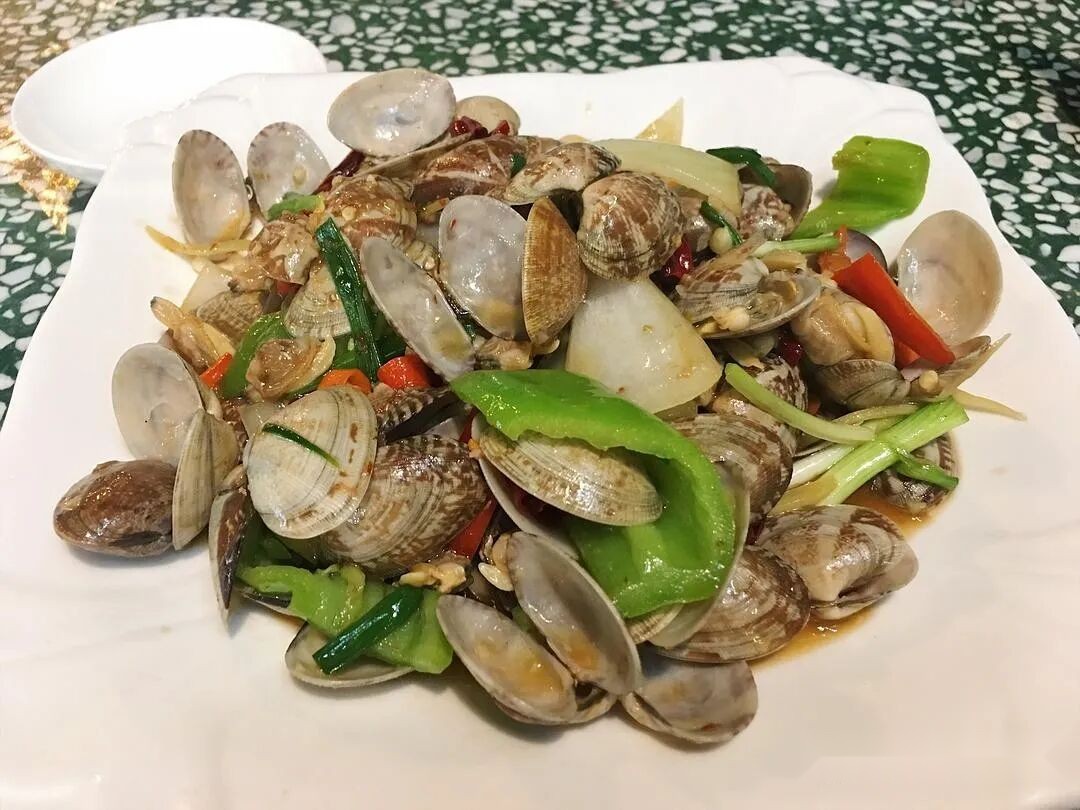
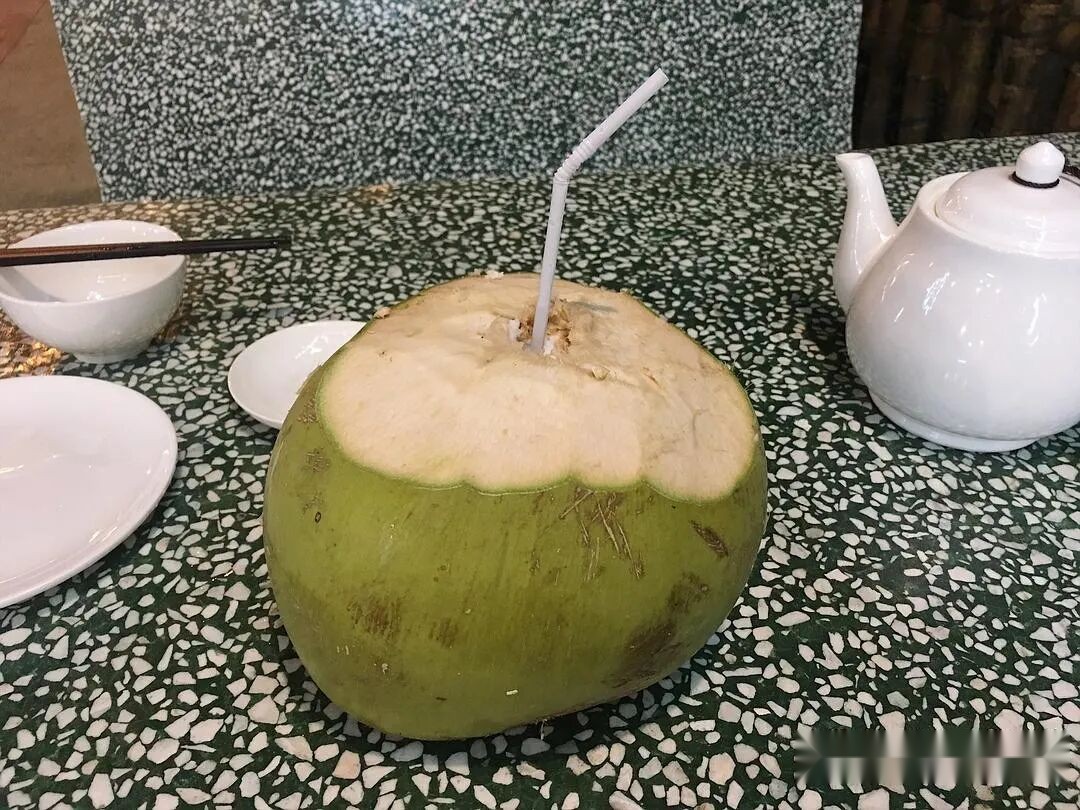
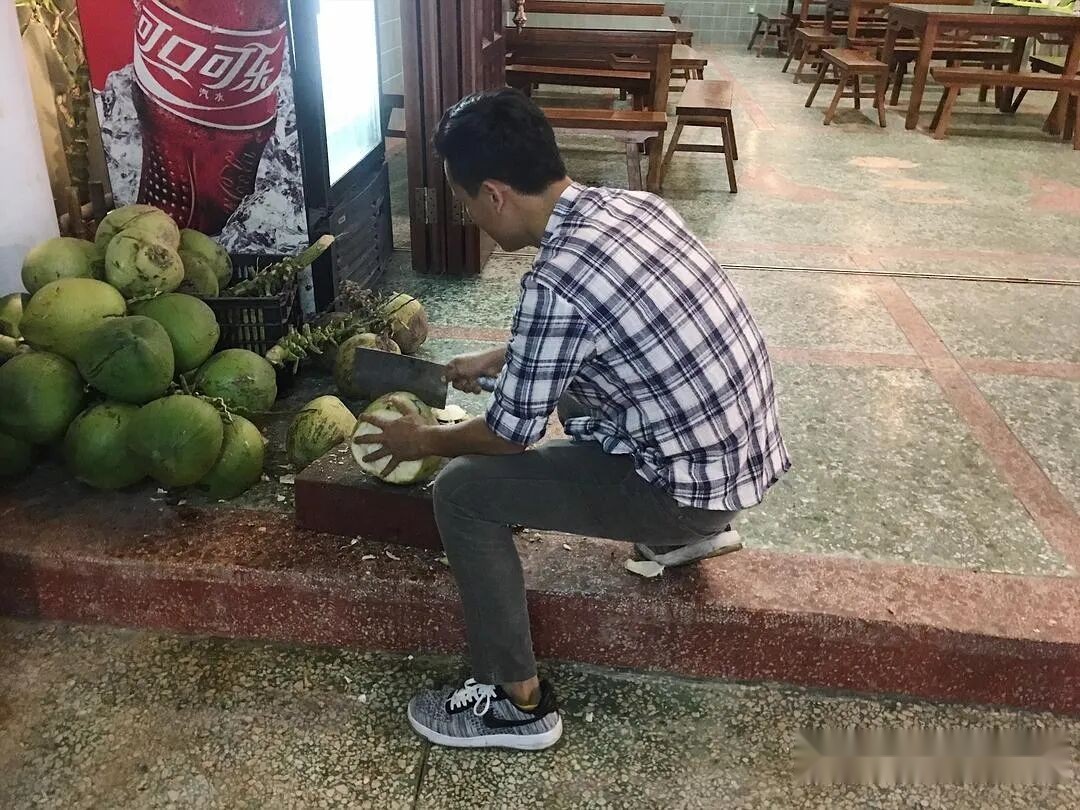
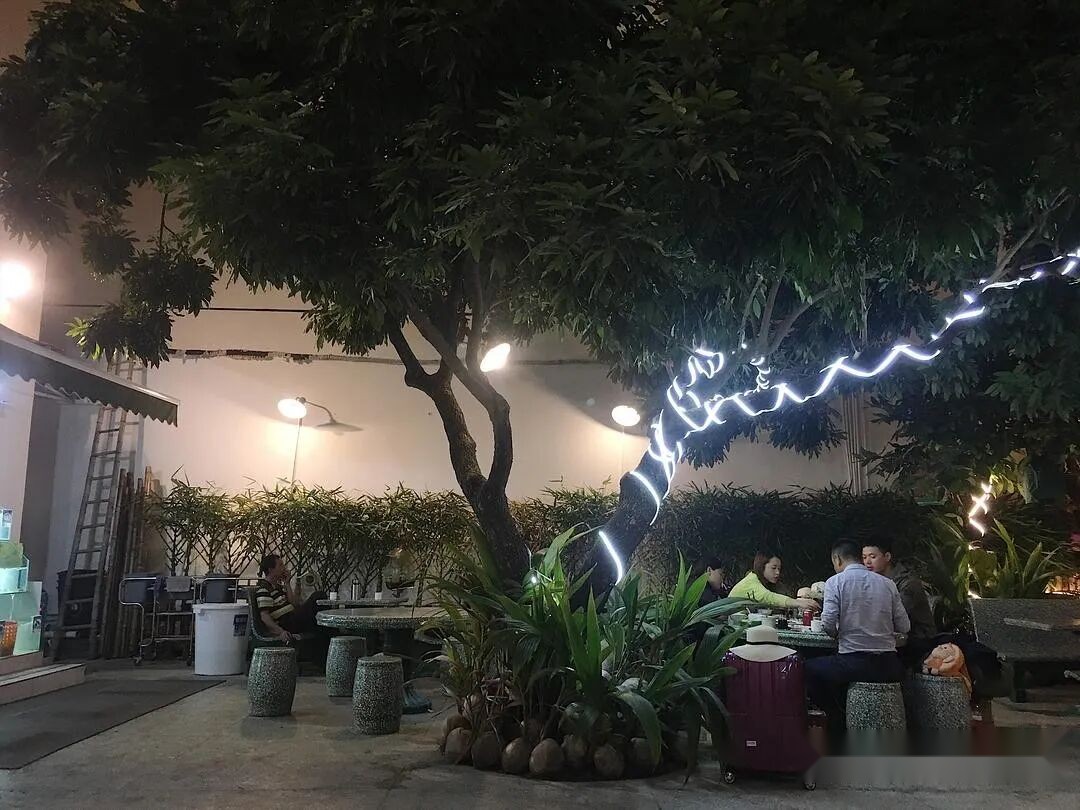
Over at Huiji Fresh Fish Soup, we grabbed Manila clams, oysters, coconut red rice, and fresh coconuts. Among the spots along Phoenix Road's Halal Food Street, this place has a seriously nice vibe. Out front is a cozy little courtyard shaded by two longan trees, and chilling in the 26°C (78°F) evening breeze felt absolute perfection.
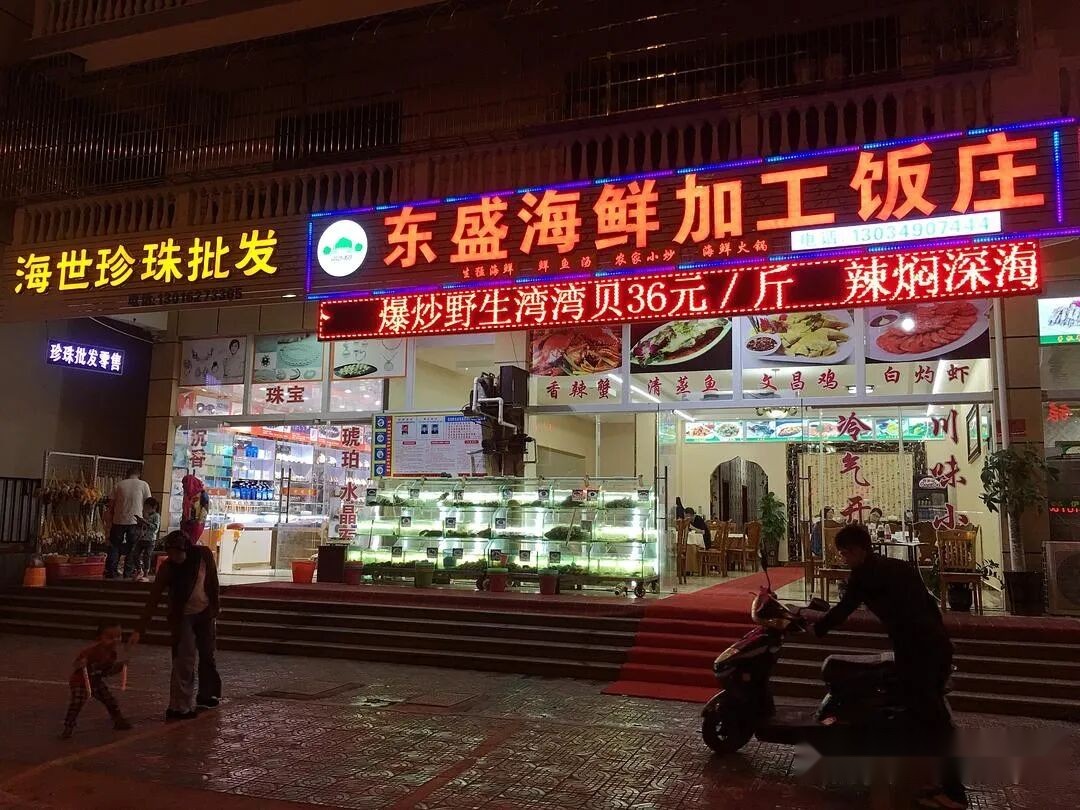
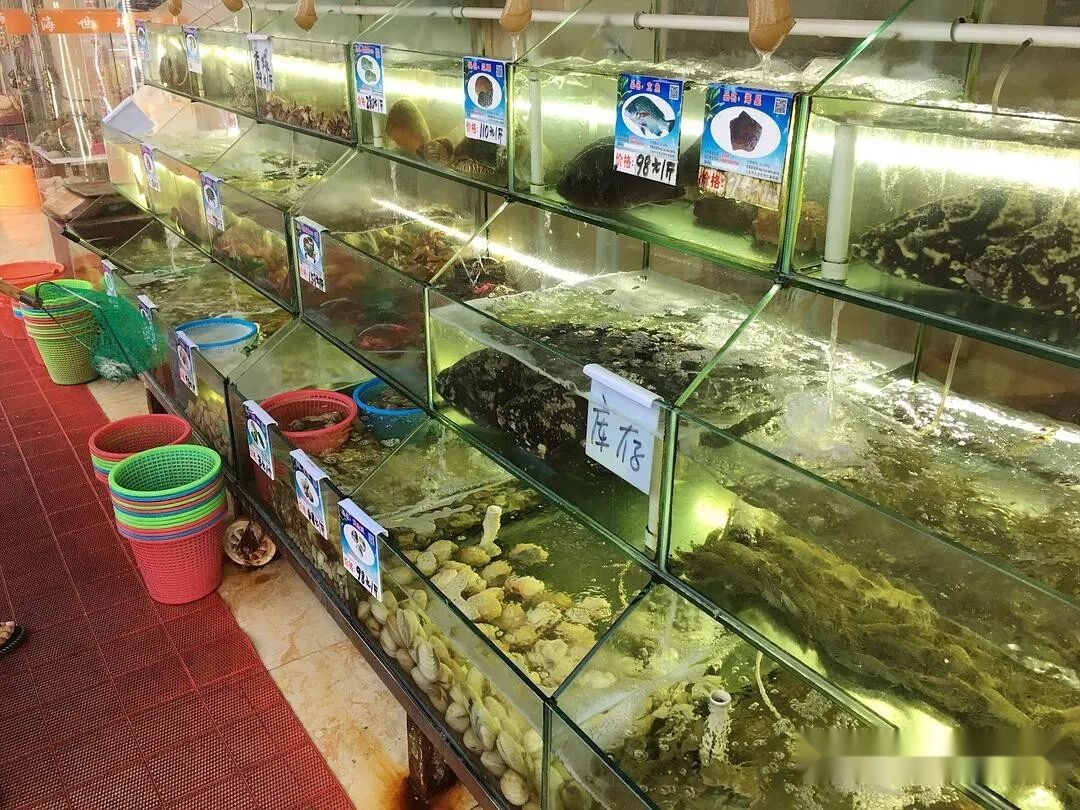
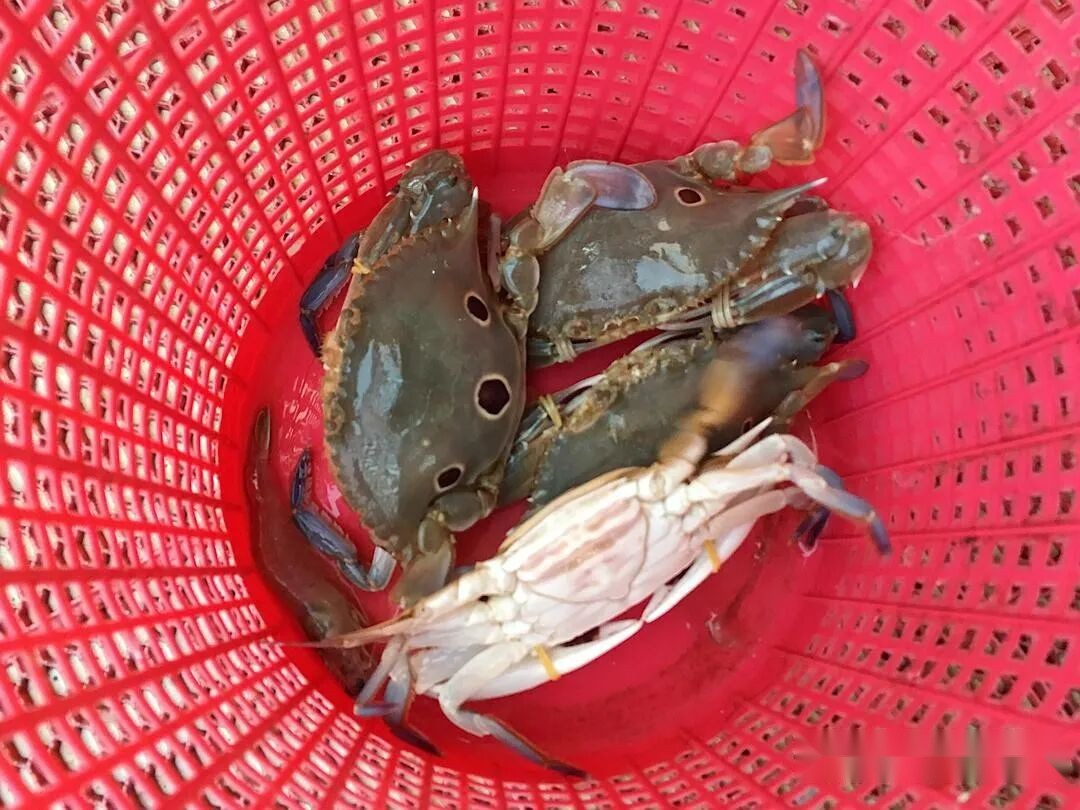
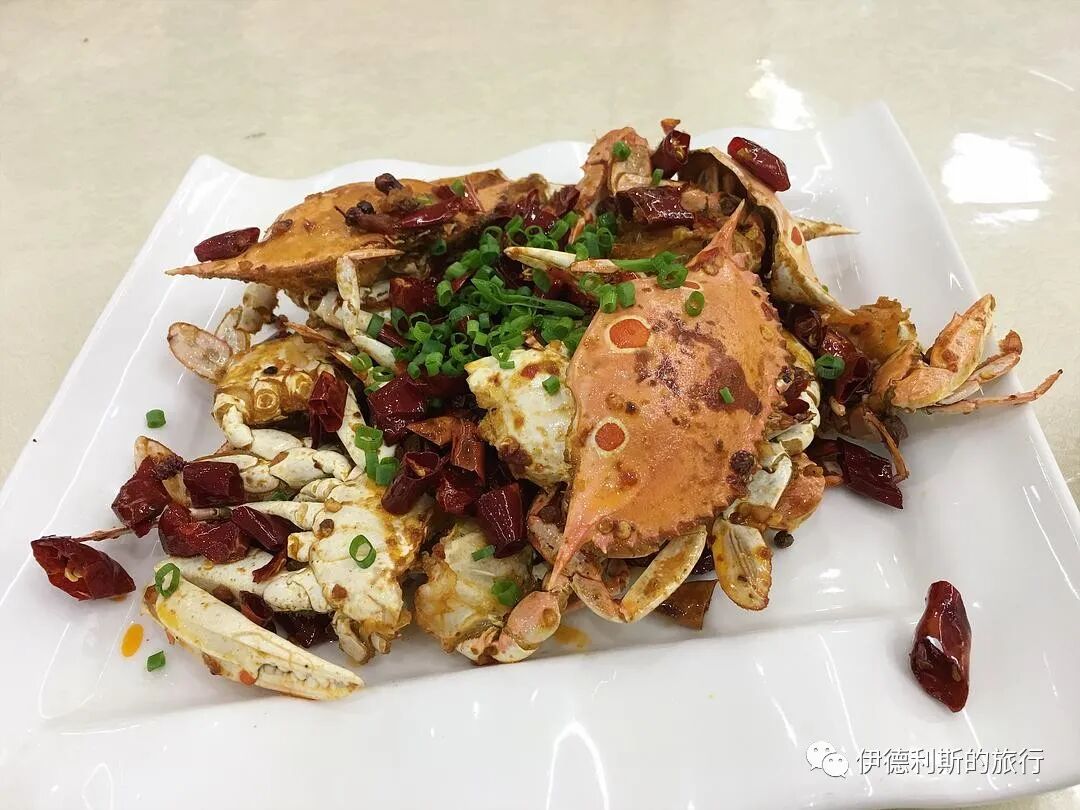
At Dongsheng Seafood Processing Restaurant, we had spicy stir-fried triangle crabs. Triangle crabs are the cheapest type of crab they carry, going for 80 RMB a pound.
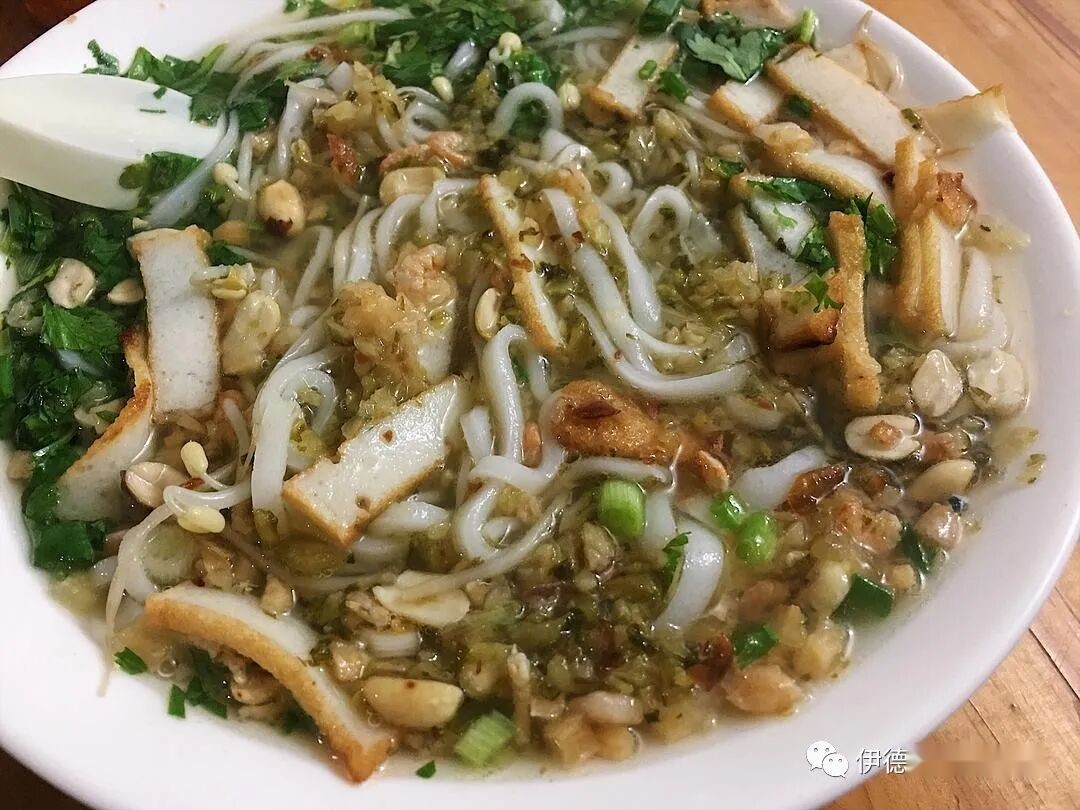
Fatty's Halal Fast Food's seafood fish noodles and coconut milk qingbu-liang
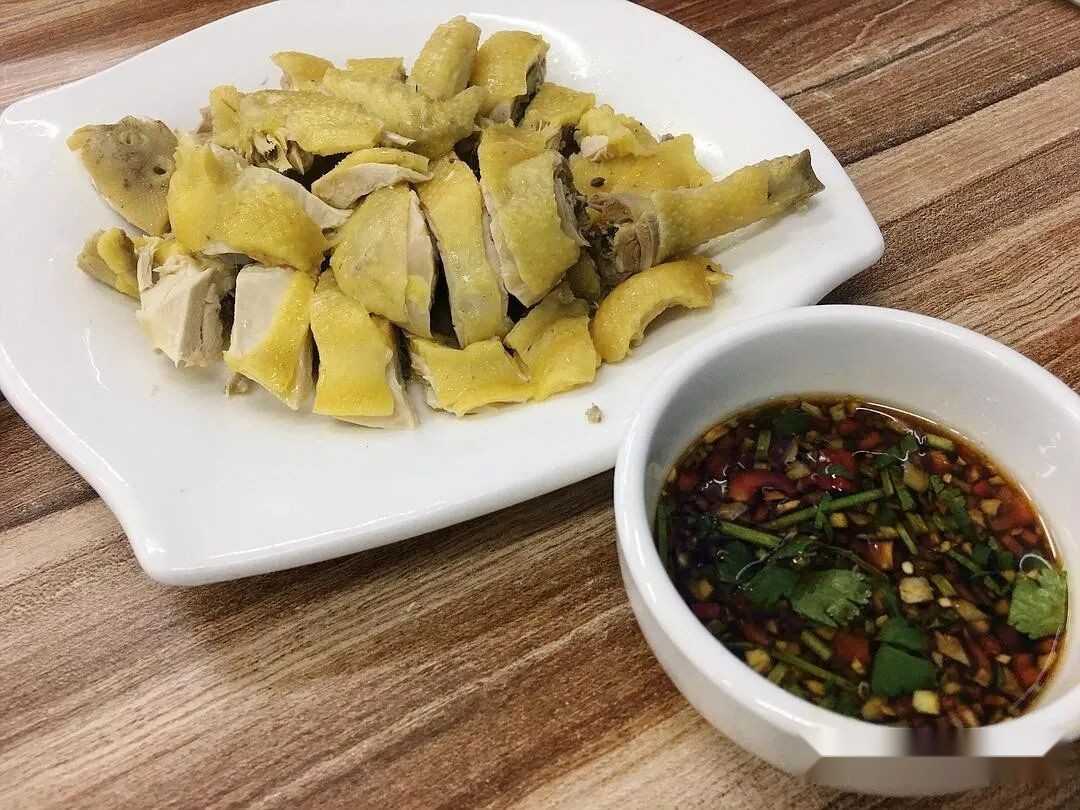
Fenghuang Yuewenwei Seafood Cuisine City's Wenchang chicken and Hainan wild vegetable gemingcai (wild globe thistle / wild jicai)
4. The Mosques of the Utsul People
1. The Evolution of Huihui Village Mosques
During the Ming and Qing dynasties, Suosanyali Fancun Village had four mosques known as the East, West, South, and North mosques. All featured traditional Chinese architectural styles, with the West Mosque being the largest.
In 1931, German ethnologist Hans Stübel visited Sanya twice and documented the mosques and Islamic faith of the Utsul people in his 1937 work, *Die Li-stämme der Insel Hainan, Ein Beitrag zur Volkskunde Südchinas* (*The Li Tribes of Hainan Island: A Contribution to the Ethnography of South China*):
"Sanya has four Islamic mosques. In the largest one, located in the west, we were received with wonderful hospitality by the mosque's respected mullah (an honorific for Islamic scholars) and teachers, who treated us to cakes and eggs soaked in sweet syrup."
"The Islamic mosques are not very large, but they are beautiful, immaculate, and built in the traditional Chinese architectural style just like elsewhere in China. Sanya's Muslims follow the Shafi'i school of jurisprudence and maintain ties with Muslims in Guangzhou, especially those at the Huaisheng Mosque (Light Tower Mosque)."
"According to a prominent Han Chinese merchant in Sanya's harbor, these Muslims are helpful and friendly people. They own land, most of which they rent out; aside from hunting, they also fish and own fishing boats. There are a total of 400 Muslim households in Sanya harbor, numbering around 2,000 people. Their village has been burned down twice."
"These Muslims can be divided into two distinct physical types: one group has narrow faces and long, hooked noses; the other has less prominent yet wider noses with sunken bridges and more pronounced, high cheekbones—the latter type being much more common. Older men there frequently sport striking beards, and men wearing a 'fez' can be seen everywhere. Muslims who have made the pilgrimage to Mecca wear long beards and popular fez turbans. The educated among them speak excellent Mandarin, while the rest speak a very distinct dialect. Most of their numerals are derived from Malay, though apart from that, no other Malay markers seem to be found."
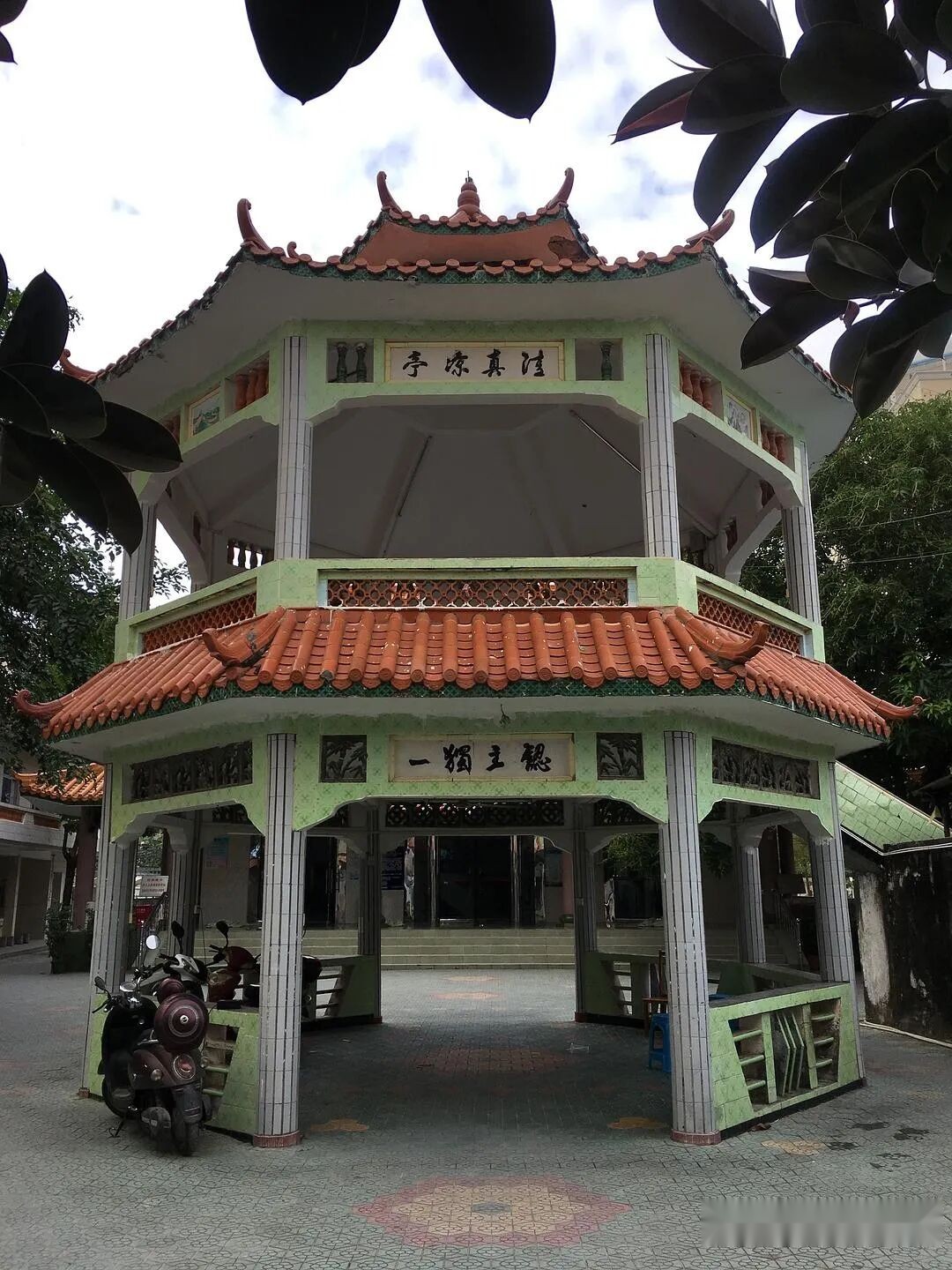
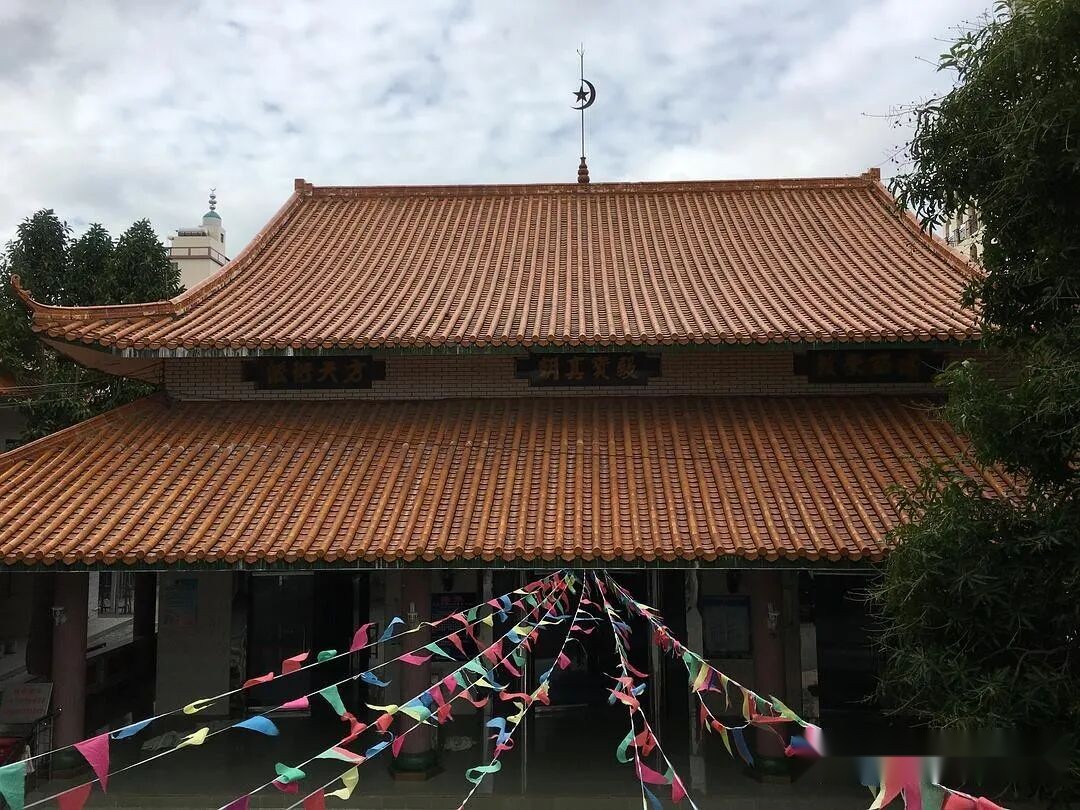
In 1940, the Japanese army built an airfield in Fancun Village, and all four mosques were completely destroyed. After relocating to Yanglan Huihui Township, the Utsul people renamed the East Mosque and rebuilt it as the Gushi Mosque (Sanya Ancient Mosque), while merging the West and North mosques to rebuild the Northwest Great Mosque. These rebuilt mosques closely resembled traditional Huihui black-tiled brick houses, differentiated only by signage above their doorways.
After the Japanese forces left in 1945, some villagers returned to the old village and rebuilt the South Mosque, bringing the total number of mosques back to three.
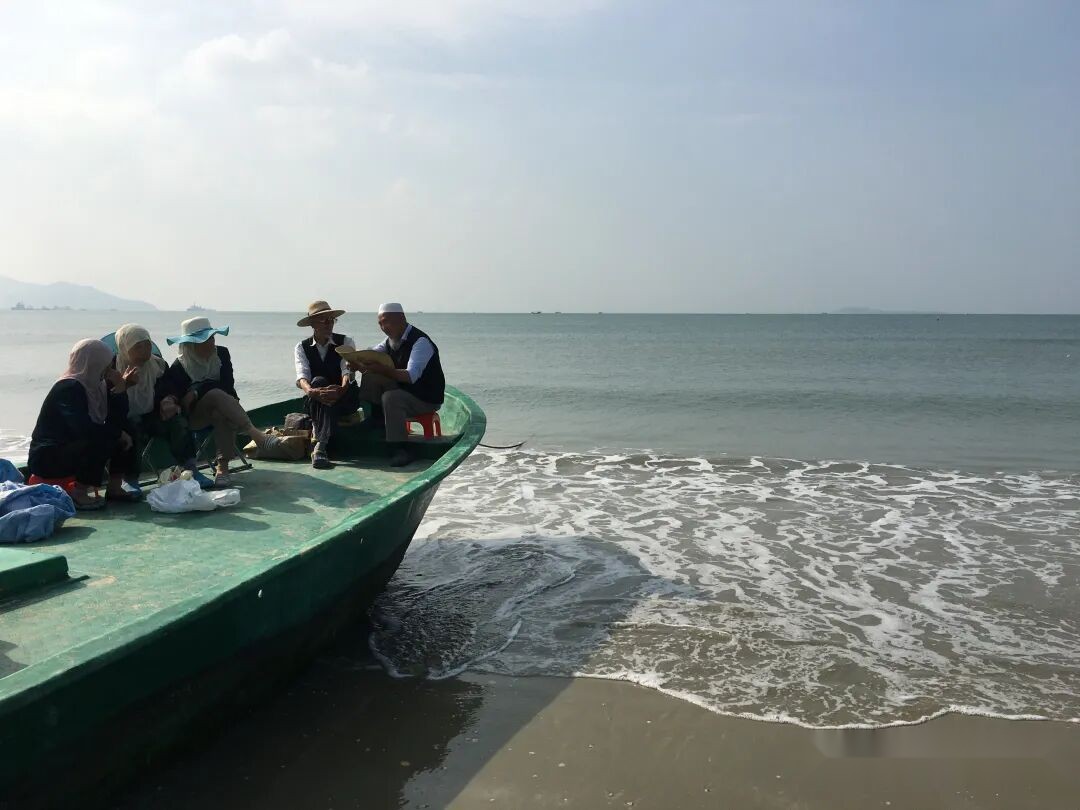
After 1966, Red Guards from Beijing traveled south to Hainan, teaming up with Red Guards from Yaxian Middle School to demolish the Huihui mosques, burn religious texts, and confiscate the robes worn during namaz (ritual prayers). All religious activities were strictly banned. At the time, some imams led the community to secretly perform namaz on the beaches, in air-raid shelters, or inside sugarcane fields. If caught, they were dragged off to study sessions or labor reform. Pu Zongli, an elderly imam from Huihui Village, was dragged off to study sessions as a 'counterrevolutionary element who refused to mend his ways' simply for leading the congregation in secret namaz.
After 1978, the Utsul people resumed normal religious practices and began restoring their mosques. In 1978, the North Great Mosque split off from the Northwest Great Mosque. In 1979, the East Mosque split off from the Gushi Mosque (Sanya Ancient Mosque). In 1990, Huixin Village (Huixin Muslim Village) (the old village) built the new Nankai Mosque. With this, Huihui Village had a total of six mosques.
2. Gushi Mosque (Sanya Ancient Mosque)
The predecessor to the Gushi Mosque (Sanya Ancient Mosque) in Huihui Village was the East Mosque of Suosanyali Fancun Village. Reportedly founded in 1470, it originally featured traditional Chinese architecture.
Back in the 1920s, the East Mosque was rebuilt into an Arabic-style arched reinforced concrete building, featuring an octagonal prayer hall.
After 1940, it was destroyed due to the construction of an airfield by the Japanese army, then relocated and rebuilt in Huihui Village (Huihui Muslim Village) in Yanglan, where it was renamed the Ancient Mosque. It was destroyed again after 1966, and rebuilt once more in 1982 as a black-tiled brick house.
In 1986, funded by a delegation of Muslims from Hong Kong and Macau, it was expanded into an Arabic-style building. After being renovated in 1999, a dome was added.
In 2008 and 2009, the Ancient Mosque was hit by floods twice, so funds were raised to rebuild it into a more modern Arabic-style building just in time for Mawlid (the Prophet's birthday) in 2010.
3. Northwest Mosque
The Northwest Mosque in Huihui Village (Huihui Muslim Village) was formed by the merger of the North Mosque and West Mosque from the old Sanya Lifan Village. The West Mosque was reportedly first built in 1473, but was destroyed in 1940 to make way for a Japanese military airfield. It was later rebuilt in Yanglan's Huihui Village by merging with the North Mosque to form the Northwest Mosque. After being destroyed again after 1966, it was rebuilt in 1978 in the traditional Chinese palatial architectural style.
4. North Mosque
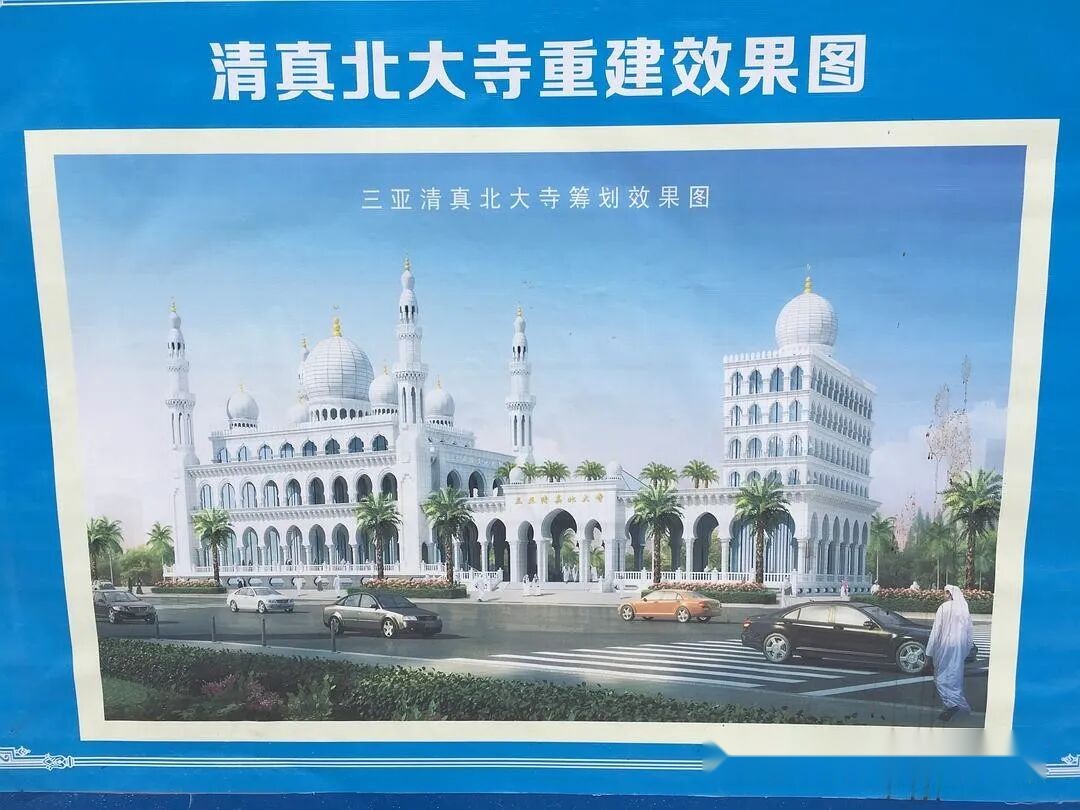
The North Mosque in Huihui Village (Huihui Muslim Village) was originally located in Sanya Lifan Village and is said to have been first built in 1487. It was destroyed in 1940 for the Japanese military airfield, then rebuilt in Yanglan's Huihui Village alongside the North Mosque to form the Northwest Mosque. It was separated from the Northwest Mosque after 1966, rebuilt in 1981 as a Chinese palatial-style building, expanded again in 1993, and is currently undergoing yet another reconstruction.
5. East Mosque

The East Mosque in Sanya Lifan Village is said to have been originally built in 1470. After 1940, it was destroyed by the Japanese military for an airfield, then relocated and rebuilt in Huihui Village (Huihui Muslim Village) in Yanglan, where it was renamed the Ancient Mosque. It was destroyed again after 1966, and eventually split off from the Ancient Mosque in 1979.

6. South Mosque
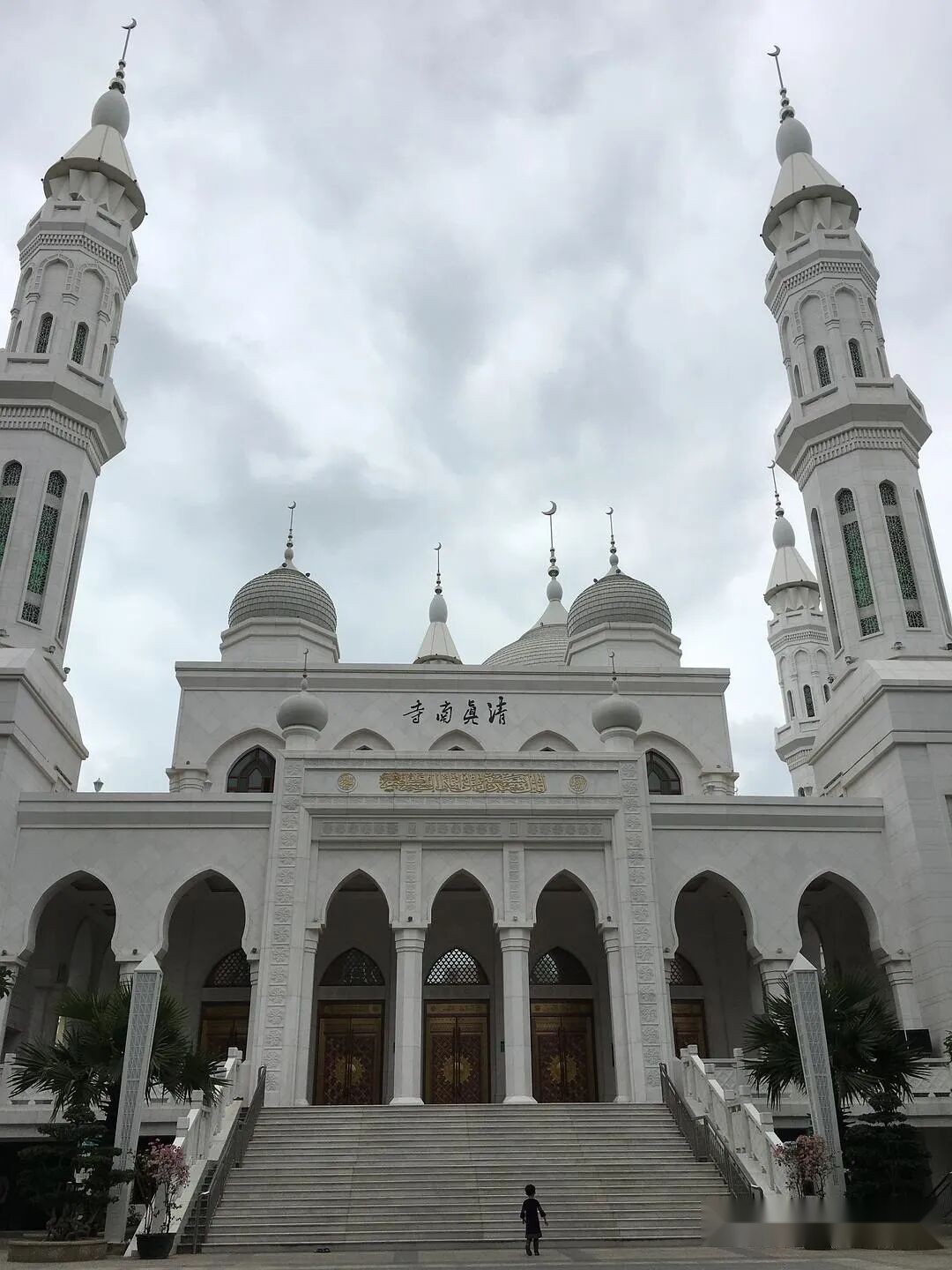
The South Mosque in Huixin Village (Huixin Muslim Village) is said to have been first built in 1487. It was destroyed in 1940 for the Japanese airfield, rebuilt in 1945 after the Japanese forces left as a black-tiled brick building, and destroyed yet again after 1966. It was rebuilt in 1978 as a black-tiled brick structure, underwent several subsequent renovations, and finally reached its current scale in 2016.
7. Nankai Mosque
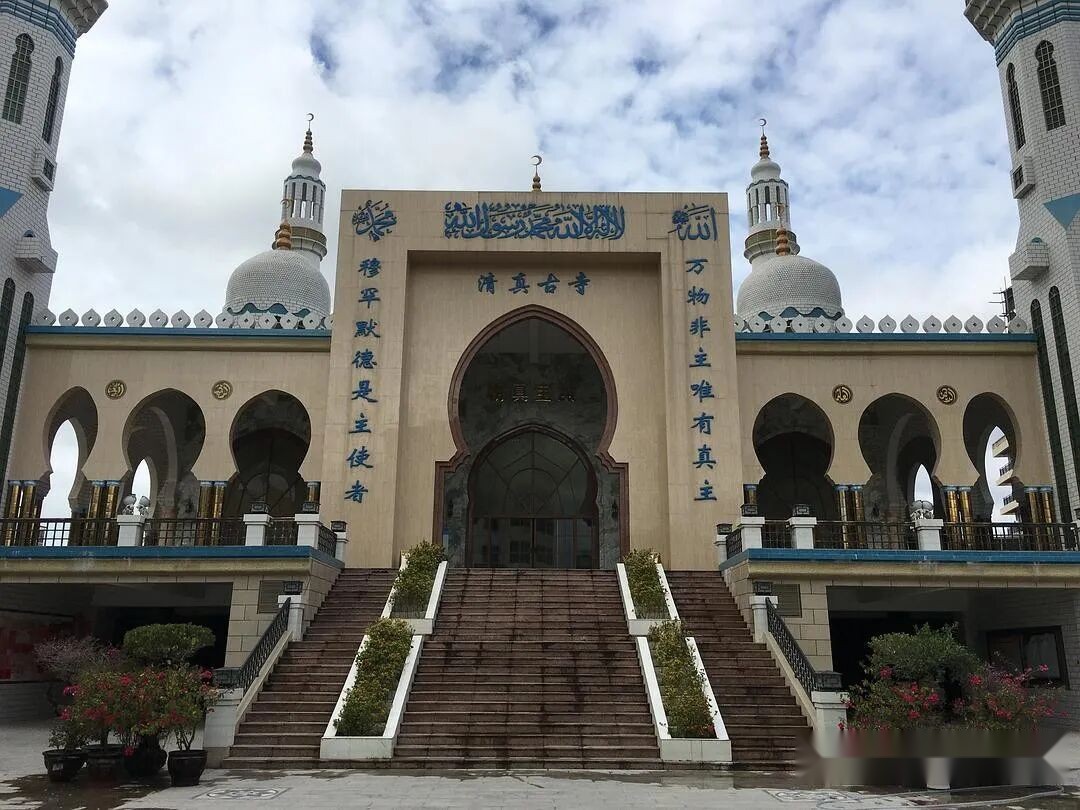
The Nankai Mosque in Huixin Village (Huixin Muslim Village) was built in 1990, with its name meaning 'Open South'.


 Collapse Read »
Journey into Hainan's Muslim Heritage: Visiting Sanya's Huihui Village Historic Mosque and the Memories of the Utsul Muslims
Abstract:
Revisiting a precious photographic and written travel journal from 2017 deep inside Sanya to visit the Utsul Muslims. Strolling through tree-shaded historic masjids, visiting Hui Muslim scholars and everyday local families, and meticulously documenting the customs, rituals, linguistic traits, and generational shifts of the island's Utsul Muslims.
This is a record of my first trip to Sanya, Hainan, in 2017 to visit the Utsul Muslims. For my second trip in 2020, check out the journal entry, 'Celebrating Eid al-Adha in Sanya.'
In 'The History of Hainan Muslims,' we discussed how Cham people from southern Vietnam migrated during the Song and Yuan dynasties to settle along the coastline of Hainan Island due to wars or typhoons. These 'foreigners' with customs similar to the 'Huihui' left several coral-stone Muslim ancient tombs along southern Hainan's coastal dunes. During the Ming and Qing dynasties, the 'foreigners' living in Hainan's Qiongzhou, Danzhou, Wanzhou, and Yazhou gradually integrated with local residents, and the remaining population all relocated to Suosanyali Fancun, forming today's Sanya Utsul Muslim community.
In this article, I'll continue sharing stories about the Sanya Utsul Muslims from the late Qing dynasty onward, along with the halal culinary scenes in the Huihui Village (Huihui Muslim Village) and Huixin Village (Huixin Muslim Village) communities.
Table of Contents
1. The Utsul Muslims from the Qing Dynasty Onward
1. Heading Down to Nanyang (Southeast Asia)
2. Japanese Military Airport Construction Forces Utsul Relocation
3. From Fishing and Farming to Commerce
4. Traveling Muslims from Across Regions
2. Halal Dining in Huixin Village (Huixin Muslim Village)
3. Halal Dining in Huihui Village (Huihui Muslim Village)
4. The Mosques of the Utsul Muslims
1. The Evolution of Huihui Mosque
2. The Historic Mosque
3. The Northwestern Grand Mosque
4. The Northern Mosque
5. The Eastern Mosque
6. The Southern Mosque
7. Nankai Mosque
1. The Utsul Muslims from the Qing Dynasty Onward
1. Heading Down to Nanyang (Southeast Asia)
According to the 'Genealogy of the Pu Family in Sanya Gangtong Village,' the Utsul Muslims suffered a major catastrophe during the Xianfeng era. In 1858 (the 8th year of Xianfeng), Fancun was burned, killed, and looted by bandits. The surviving Utsul Muslims had no choice but to take shelter in the mountains and forests. The following year, the bandits were wiped out and pacified, allowing the Utsul Muslims to rebuild their homes. However, because of this catastrophe, many Utsul Muslims fled to Southeast Asian destinations like Singapore, Penang, and Vietnam:
'From the reign of Daoguang up to the eighth year of Xianfeng, on the twenty-second day of the tenth month at the卯 (Mao) hour, we tragically suffered at the hands of the Li bandits from Lingshui who colluded with settled Li people to launch an uprising. They slaughtered without stopping, burned everything to the ground, killed countless people, and left corpses strewn across the fields. From back then until this summer, we spent our days resting by the sea slopes and living in the mountain forests, suffering like snake catchers and enduring perils as if walking through fire. The skies grieved and the earth wept with nowhere to voice our grievances. By April of the ninth year, fortunately, the gentry and scholars of the eighth district of Yazhou heard of our plight and felt sorrow. They pooled subscription funds, raising one hundred strings of copper coins, which they lent to the Sanya branches to hire local militia and hunt down the Li bandits. By June, the Li bandits across all the village valleys were terrified and surrendered. Only then could everyone return home, rebuild their houses, and make settling the common people their priority. Yet with a depleted population and scattered refugees fleeing to ports like Singapore, Annam, and foreign lands—over a hundred souls dead or alive—Sanya was left deserted. With poor people and barren land, they returned to their old ways of fishing and harvesting the sea.'
2. Japanese Military Airport Construction Forces Utsul Relocation
After the bandit chaos of the Xianfeng era, the Utsul Muslims in Suosanyali Fancun continued living a peaceful life, relying on fishing for survival. Following the founding of the Republic, Yazhou was renamed Ya County, and Fancun was called Huihui Township, subordinate to the East Second District of Ya County.
At dawn on February 14, 1939, the Japanese navy landed on the waters near Sanya and captured Sanya Bay with almost zero resistance.
In the summer of 1940, the Japanese military decided to build a land-and-water combat training airfield in Suosanyali, forcing all Utsul Muslims to relocate 4 kilometers westward to live in Yanglan. All 350 houses and 4 mosques in Fancun were completely demolished, and the new settlement was named 'Huihui Village (Huihui Muslim Village).'
After the Japanese forces left in 1945, some Utsul Muslims moved back to their former settlement of Fancun, which is why Fancun came to be known as Huixin Village (Huixin Muslim Village) or the Old Village, while the old name Fancun fell out of use.
From then on, the Utsul Muslims established two main communities: Huihui Village (Huihui Muslim Village) and Huixin Village (Huixin Muslim Village).
Huihui Village (Huihui Muslim Village)
Traditional attire for Huihui women: a dark hijab, a front-crossing tunic fastened with three silver (or cloth) buttons down the front and two under the arms, and split-cuffs on the sleeves. The shirt is split down the center of the chest and back, falling to the hips, paired with dark trousers.
The most distinctive feature of Huihui women's attire is the black bib (cloth panel) worn over their shirts—a unique piece of clothing not found among the neighboring Han or Li ethnic groups.
The earliest Utsul Muslims lived in thatched cottages, just like the local Han and Li communities. To withstand typhoons, these houses were built extremely low, to the point where people couldn't even stand up straight inside. In modern times, these thatched homes were gradually replaced by black-tiled brick houses, a style that lasted until the tourism boom in Sanya during the 1990s. Today, those black-tiled brick homes are rare, having been mostly replaced by modern multi-story buildings.
On a local bus running from Huihui Village (Huihui Muslim Village) to Huixin Village (Huixin Muslim Village)
A wedding banquet for Utsul Muslims in Huixin Village (Huixin Muslim Village)
Black-tiled brick houses in Huixin Village (Huixin Muslim Village)
3. From Fishing and Farming to Business
By the 1950s and 60s, Utsul Muslims still made their living mainly through shallow-sea purse-seine fishing. They used bamboo rafts to take fishing nets out to sea and drop them. A fishing crew of 35 people would split into two groups on the shore to haul in the nets. Usually, they went out once a day, pulling in anywhere from 200 to 300 jin (100–150 kg) of fish, with a bountiful catch reaching up to 5,000 jin (2,500 kg) and a lean day yielding only a few dozen jin.
Historically, Utsul Muslims were never big fans of farming, and in the past, they used to rent their land out to the Li people to cultivate. After the establishment of the People's Communes in 1958, the government organized nearby Han and Li locals to teach agricultural techniques to the Utsul Muslims, but the results weren't great. After the 1970s, more than 2,000 mu (about 133 hectares) of the Utsul Muslims' farmland was allocated to neighboring Han and Li villages, leaving the Utsul Muslims with only about 200 mu of garden plots and residential land, primarily used for growing vegetables.
After the 1980s, as shallow-sea resources gradually dwindled and Utsul fishermen lacked the gear for deep-sea fishing, the fishing industry practically ground to a halt, surviving only as a side hustle where people occasionally scooped up small fish and shrimp.
The fish market in Huixin Village (Huixin Muslim Village)
Starting in 1979, some Utsul women, refusing to accept their economic decline, began heading out to start small businesses. By 1982, almost every Utsul household had a woman selling local specialties and tourist souvenirs in towns and scenic spots, and family life for the Utsul Muslims noticeably improved.
During the 1980s and 90s, Utsul Muslims caught the wave of venturing out into business. Alongside women running stalls at tourist attractions, many men jumped into the passenger transport business. Starting in 1982, lots of Utsul men bought two-wheeled motorcycles or three-wheelers to haul passengers between the city center and tourist spots. After the Sanya Phoenix International Airport was built in 1994, Huihui Village (Huihui Muslim Village)—sitting right next to the airport—became a major transit hub. Utsul locals started buying minivans and minibuses to run routes from the airport to the city center, with the men driving and the women acting as conductors.
4. Muslim Sojourners from All Over
After Sanya's tourism industry boomed in the 1990s, Huihui Village (Huihui Muslim Village) and Huixin Village (Huixin Muslim Village)—as Sanya's only two Muslim communities—became the go-to places to stay for Muslims traveling to Sanya from all over the country. Over time, these Muslim visitors shifted from young and middle-aged short-term vacationers to older folks seeking to escape the winter cold. Starting every October, Huihui Village (Huihui Muslim Village) and Huixin Village (Huixin Muslim Village) fill up with Uyghur, Salar, Dongxiang, and Hui Muslims of all ages coming from Xinjiang, Gansu, Qinghai, Ningxia, and beyond to beat the cold. They live here all winter long, only heading back home around April or May of the following year.
During this time, you'll see Uyghurs wearing doppa embroidered caps and silk scarves mingling with Hehuang Hui Muslims wearing white skullcaps and black hijabs on the bustling streets. Northerners walking around in shorts might make you feel like you're in Shenyang during summer, while Utsul Muslims in colorful patterned trousers and headscarves, speaking the Utsul Cham language, will make you feel like you've landed in Southeast Asia. There's Halal Hainanese cuisine, Ili cuisine, Xining cuisine, Linxia cuisine, and even Xi'an and Henan dishes—making this place feel like a utopian escape far away from winter.
After the reform and opening-up, the first people to open shops in Huihui Village (Huihui Muslim Village) and Huixin Village (Huixin Muslim Village) were Hui, Dongxiang, and Salar Muslims from Gansu and Qinghai. Uyghurs soon followed, opening Uyghur specialty restaurants in Huihui Village (Huihui Muslim Village), and later, Hui Muslims from Yunnan, Henan, and elsewhere arrived to open eateries. Because of this, you can sample Halal food from all corners of China right here.
A shop selling Uyghur embroidered clothing
A crossing-the-bridge rice noodles shop run by Shadian Hui Muslims
An eatery run by Ili Hui Muslims, where you can get smoked meat narin
A restaurant run by Henan Hui Muslims, serving braised bowl dishes (kouwan) and braised noodles (huimian)
Part 2: Halal Food in Huixin Village (Huixin Muslim Village)
Freshly picked star fruit
Dried eel made by a Huihui auntie
Jackfruit
Cassava
Li's Rice Noodles Shop's beef brisket rice noodles
At First Fresh Fish Soup (Diayi Xianyutang), we tried their signature Huihui sour fish soup, ordering an 8-liang (about 400g) Luzai fish. Adding star fruit is what gives Huihui sour fish soup its unique twist, and it comes with complimentary coconut red rice.
3. Halal Dining in Huihui Village
Huihui Village (Huihui Muslim Village) by Day
Huihui Market
Laoya zhou (Traditional Hainan duck porridge)
Haxuanren Niunan Mianba's niurou fen (Hainan beef rice noodles)
Li's Beef Bone Broth Shop's seafood rice porridge and beef bone soup
Hualide Restaurant's four-angle beans (winged beans) and shrimp paste-stir-fried pumpkin leaves, served with coconut red rice
Fenghuang Yueju Restaurant's white clams and stir-fried noodles
Huihui Village (Huihui Muslim Village) at Night
Halal seafood barbecue and coconut milk qingbu-liang (refreshing Hainan sweet dessert soup). We ordered grouper, Pacific saury, and squid tentacles. The qingbu-liang came with a loaded lineup of 12 different toppings—super extravagant!
This spot is hands down my favorite late-night halal seafood barbecue joint. I came back the next night to order tilapia, sea snails, cuttlefish, and squid tentacles. A young Li ethnic guy was sipping a coconut milk qingbu-liang, a young Northwest Hui Muslim couple ordered 14 skewers of roasted mantou (steamed buns), and a middle-aged Uyghur couple (or husband and wife) whom we’d bumped into all over the street these past few days ordered a mountain of oysters. The local chengguan (urban management officers) didn't show up tonight, and we all grubbed out and had a blast.
Over at Huiji Fresh Fish Soup, we grabbed Manila clams, oysters, coconut red rice, and fresh coconuts. Among the spots along Phoenix Road's Halal Food Street, this place has a seriously nice vibe. Out front is a cozy little courtyard shaded by two longan trees, and chilling in the 26°C (78°F) evening breeze felt absolute perfection.
At Dongsheng Seafood Processing Restaurant, we had spicy stir-fried triangle crabs. Triangle crabs are the cheapest type of crab they carry, going for 80 RMB a pound.
Fatty's Halal Fast Food's seafood fish noodles and coconut milk qingbu-liang
Fenghuang Yuewenwei Seafood Cuisine City's Wenchang chicken and Hainan wild vegetable gemingcai (wild globe thistle / wild jicai)
4. The Mosques of the Utsul People
1. The Evolution of Huihui Village Mosques
During the Ming and Qing dynasties, Suosanyali Fancun Village had four mosques known as the East, West, South, and North mosques. All featured traditional Chinese architectural styles, with the West Mosque being the largest.
In 1931, German ethnologist Hans Stübel visited Sanya twice and documented the mosques and Islamic faith of the Utsul people in his 1937 work, *Die Li-stämme der Insel Hainan, Ein Beitrag zur Volkskunde Südchinas* (*The Li Tribes of Hainan Island: A Contribution to the Ethnography of South China*):
"Sanya has four Islamic mosques. In the largest one, located in the west, we were received with wonderful hospitality by the mosque's respected mullah (an honorific for Islamic scholars) and teachers, who treated us to cakes and eggs soaked in sweet syrup."
"The Islamic mosques are not very large, but they are beautiful, immaculate, and built in the traditional Chinese architectural style just like elsewhere in China. Sanya's Muslims follow the Shafi'i school of jurisprudence and maintain ties with Muslims in Guangzhou, especially those at the Huaisheng Mosque (Light Tower Mosque)."
"According to a prominent Han Chinese merchant in Sanya's harbor, these Muslims are helpful and friendly people. They own land, most of which they rent out; aside from hunting, they also fish and own fishing boats. There are a total of 400 Muslim households in Sanya harbor, numbering around 2,000 people. Their village has been burned down twice."
"These Muslims can be divided into two distinct physical types: one group has narrow faces and long, hooked noses; the other has less prominent yet wider noses with sunken bridges and more pronounced, high cheekbones—the latter type being much more common. Older men there frequently sport striking beards, and men wearing a 'fez' can be seen everywhere. Muslims who have made the pilgrimage to Mecca wear long beards and popular fez turbans. The educated among them speak excellent Mandarin, while the rest speak a very distinct dialect. Most of their numerals are derived from Malay, though apart from that, no other Malay markers seem to be found."
In 1940, the Japanese army built an airfield in Fancun Village, and all four mosques were completely destroyed. After relocating to Yanglan Huihui Township, the Utsul people renamed the East Mosque and rebuilt it as the Gushi Mosque (Sanya Ancient Mosque), while merging the West and North mosques to rebuild the Northwest Great Mosque. These rebuilt mosques closely resembled traditional Huihui black-tiled brick houses, differentiated only by signage above their doorways.
After the Japanese forces left in 1945, some villagers returned to the old village and rebuilt the South Mosque, bringing the total number of mosques back to three.
After 1966, Red Guards from Beijing traveled south to Hainan, teaming up with Red Guards from Yaxian Middle School to demolish the Huihui mosques, burn religious texts, and confiscate the robes worn during namaz (ritual prayers). All religious activities were strictly banned. At the time, some imams led the community to secretly perform namaz on the beaches, in air-raid shelters, or inside sugarcane fields. If caught, they were dragged off to study sessions or labor reform. Pu Zongli, an elderly imam from Huihui Village, was dragged off to study sessions as a 'counterrevolutionary element who refused to mend his ways' simply for leading the congregation in secret namaz.
After 1978, the Utsul people resumed normal religious practices and began restoring their mosques. In 1978, the North Great Mosque split off from the Northwest Great Mosque. In 1979, the East Mosque split off from the Gushi Mosque (Sanya Ancient Mosque). In 1990, Huixin Village (Huixin Muslim Village) (the old village) built the new Nankai Mosque. With this, Huihui Village had a total of six mosques.
2. Gushi Mosque (Sanya Ancient Mosque)
The predecessor to the Gushi Mosque (Sanya Ancient Mosque) in Huihui Village was the East Mosque of Suosanyali Fancun Village. Reportedly founded in 1470, it originally featured traditional Chinese architecture.
Back in the 1920s, the East Mosque was rebuilt into an Arabic-style arched reinforced concrete building, featuring an octagonal prayer hall.
After 1940, it was destroyed due to the construction of an airfield by the Japanese army, then relocated and rebuilt in Huihui Village (Huihui Muslim Village) in Yanglan, where it was renamed the Ancient Mosque. It was destroyed again after 1966, and rebuilt once more in 1982 as a black-tiled brick house.
In 1986, funded by a delegation of Muslims from Hong Kong and Macau, it was expanded into an Arabic-style building. After being renovated in 1999, a dome was added.
In 2008 and 2009, the Ancient Mosque was hit by floods twice, so funds were raised to rebuild it into a more modern Arabic-style building just in time for Mawlid (the Prophet's birthday) in 2010.
3. Northwest Mosque
The Northwest Mosque in Huihui Village (Huihui Muslim Village) was formed by the merger of the North Mosque and West Mosque from the old Sanya Lifan Village. The West Mosque was reportedly first built in 1473, but was destroyed in 1940 to make way for a Japanese military airfield. It was later rebuilt in Yanglan's Huihui Village by merging with the North Mosque to form the Northwest Mosque. After being destroyed again after 1966, it was rebuilt in 1978 in the traditional Chinese palatial architectural style.
4. North Mosque
The North Mosque in Huihui Village (Huihui Muslim Village) was originally located in Sanya Lifan Village and is said to have been first built in 1487. It was destroyed in 1940 for the Japanese military airfield, then rebuilt in Yanglan's Huihui Village alongside the North Mosque to form the Northwest Mosque. It was separated from the Northwest Mosque after 1966, rebuilt in 1981 as a Chinese palatial-style building, expanded again in 1993, and is currently undergoing yet another reconstruction.
5. East Mosque
The East Mosque in Sanya Lifan Village is said to have been originally built in 1470. After 1940, it was destroyed by the Japanese military for an airfield, then relocated and rebuilt in Huihui Village (Huihui Muslim Village) in Yanglan, where it was renamed the Ancient Mosque. It was destroyed again after 1966, and eventually split off from the Ancient Mosque in 1979.
6. South Mosque
The South Mosque in Huixin Village (Huixin Muslim Village) is said to have been first built in 1487. It was destroyed in 1940 for the Japanese airfield, rebuilt in 1945 after the Japanese forces left as a black-tiled brick building, and destroyed yet again after 1966. It was rebuilt in 1978 as a black-tiled brick structure, underwent several subsequent renovations, and finally reached its current scale in 2016.
7. Nankai Mosque
The Nankai Mosque in Huixin Village (Huixin Muslim Village) was built in 1990, with its name meaning 'Open South'.
Collapse Read »
Exploring Sanya's Utsul Cham Muslim Culture, Historic Mosques, and Halal Heritage in Hainan
[Internet Repost]
A Study on Sanya's Utsul Cham Culture and Historical Origins: From Ancient Champa Migrants to the Great Family of the Chinese Nation
Abstract:
An in-depth analysis of the Champa historical roots carried by Sanya's Hui Muslims. Tracing the epic history of ancient Champa kingdom Muslims who sailed south to settle in Yazhou since the Song and Yuan dynasties, this explores how they have integrated Chinese culture over hundreds of years to become a unique cultural treasure of the island.
They are the descendants of the Southeast Asian Champa.
During the Chinese New Year of the Horse, I went to Sanya to visit friends, and after having lunch together, we stopped by a nearby mosque.
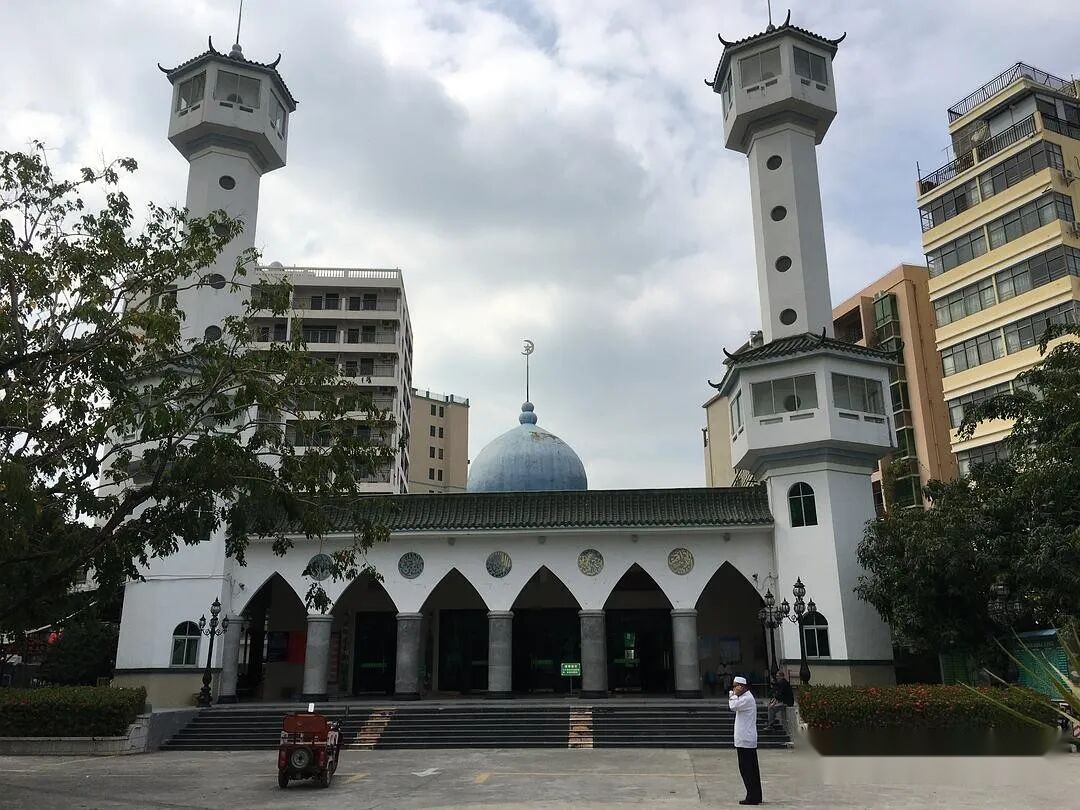
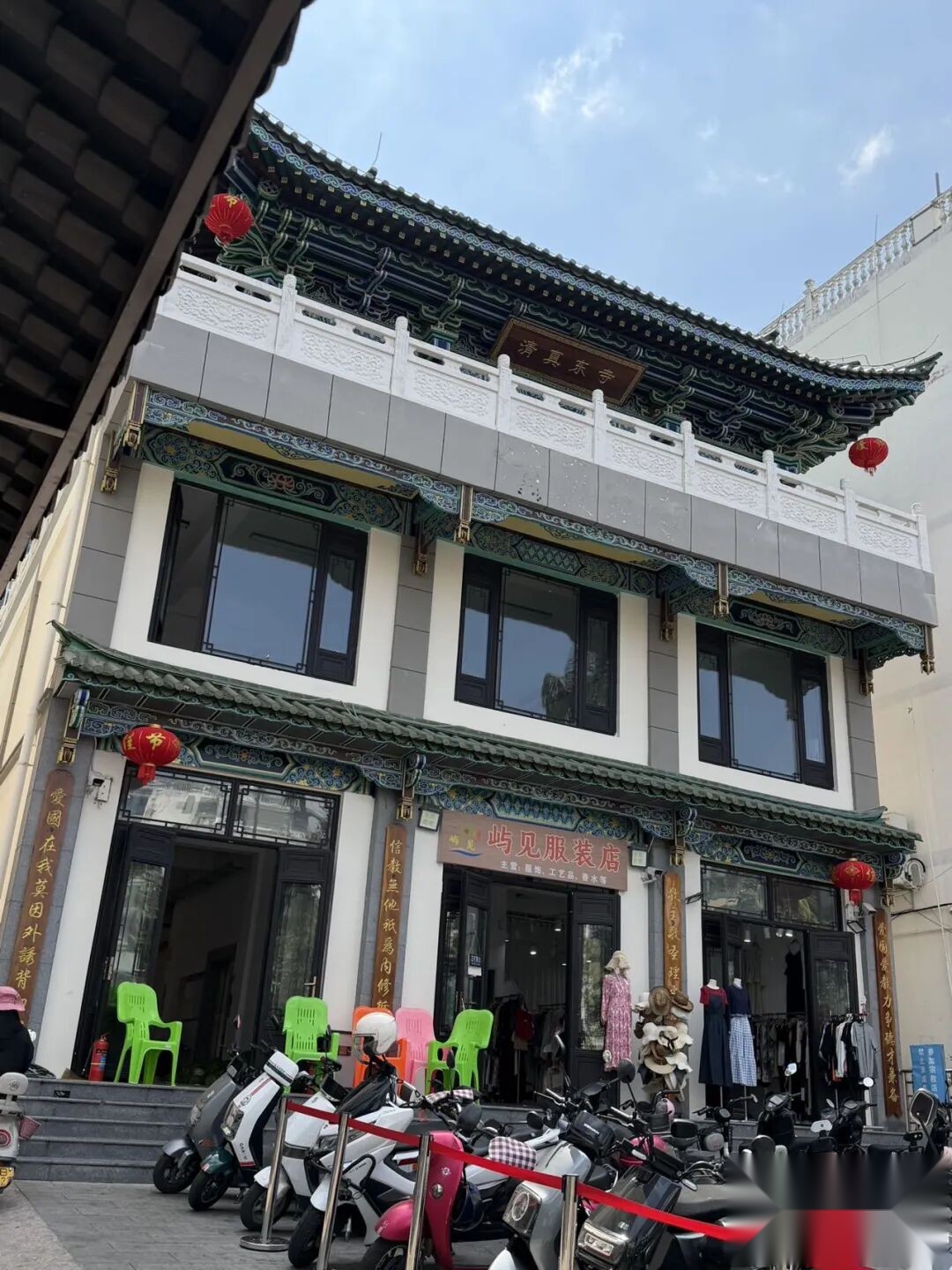
It is said that there are six mosques in Sanya (four in Huihui Village and two in Huixin Village), and this time we visited the East Mosque and the North Mosque.
(Sanya East Mosque)
The East Mosque looked small from the outside, with a shop on the ground floor. Walking inside, however, we found it quite spacious. An electronic screen on the wall displayed the set times for daily prayers. The floor of the main hall was crowded with shoes, and a few men wearing white prayer caps were performing wudu (ablution) by the pool... A Muslim girl told us that wudu is the preparation for the five daily prayers, which can be done either at home or at the mosque.
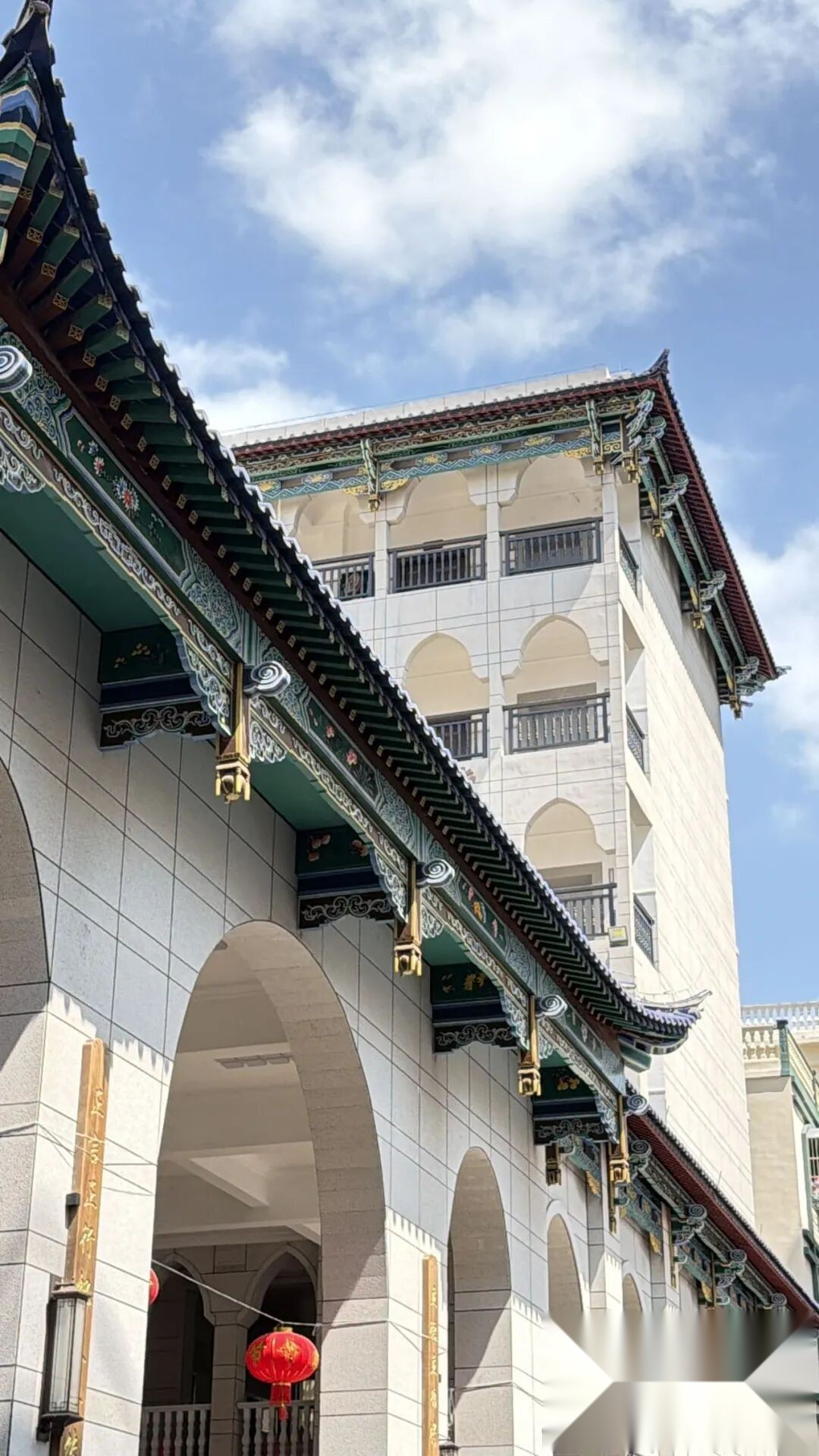
There were very few parking spots in front of the East Mosque, and since we couldn't find anywhere to park, we had to leave in a hurry.
Afterwards, the two of us headed to the North Mosque and found a small parking lot not far away.
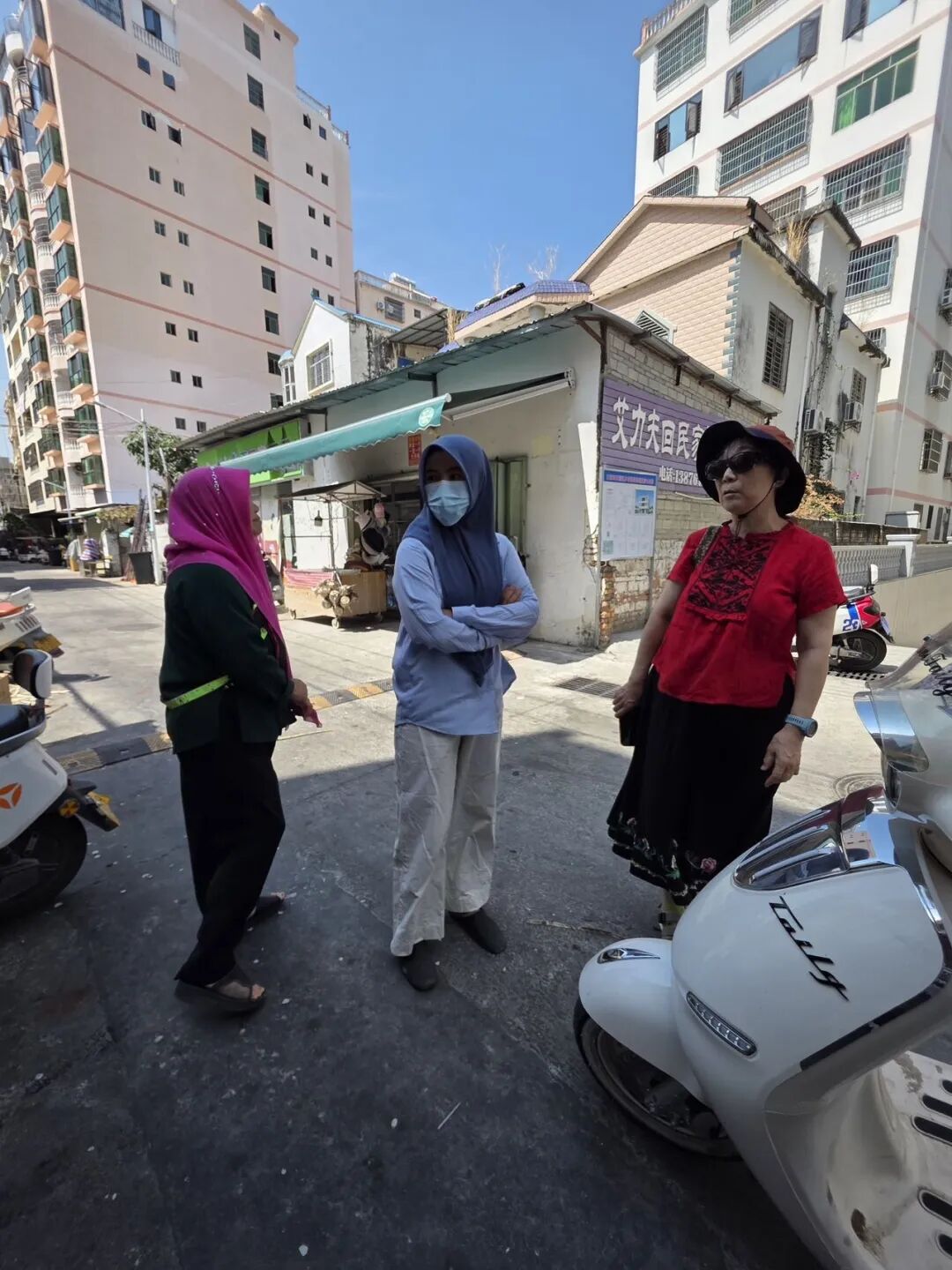
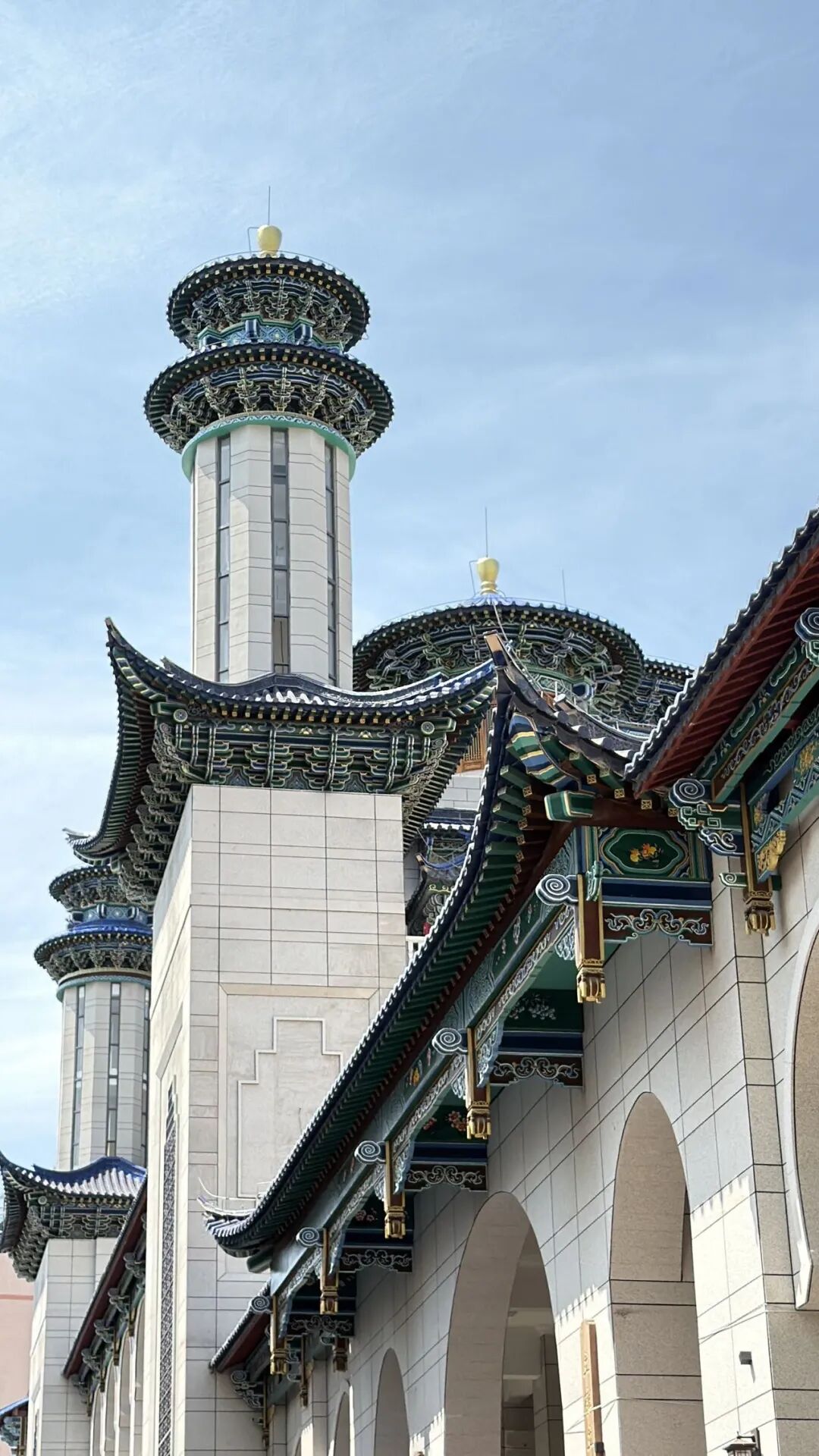
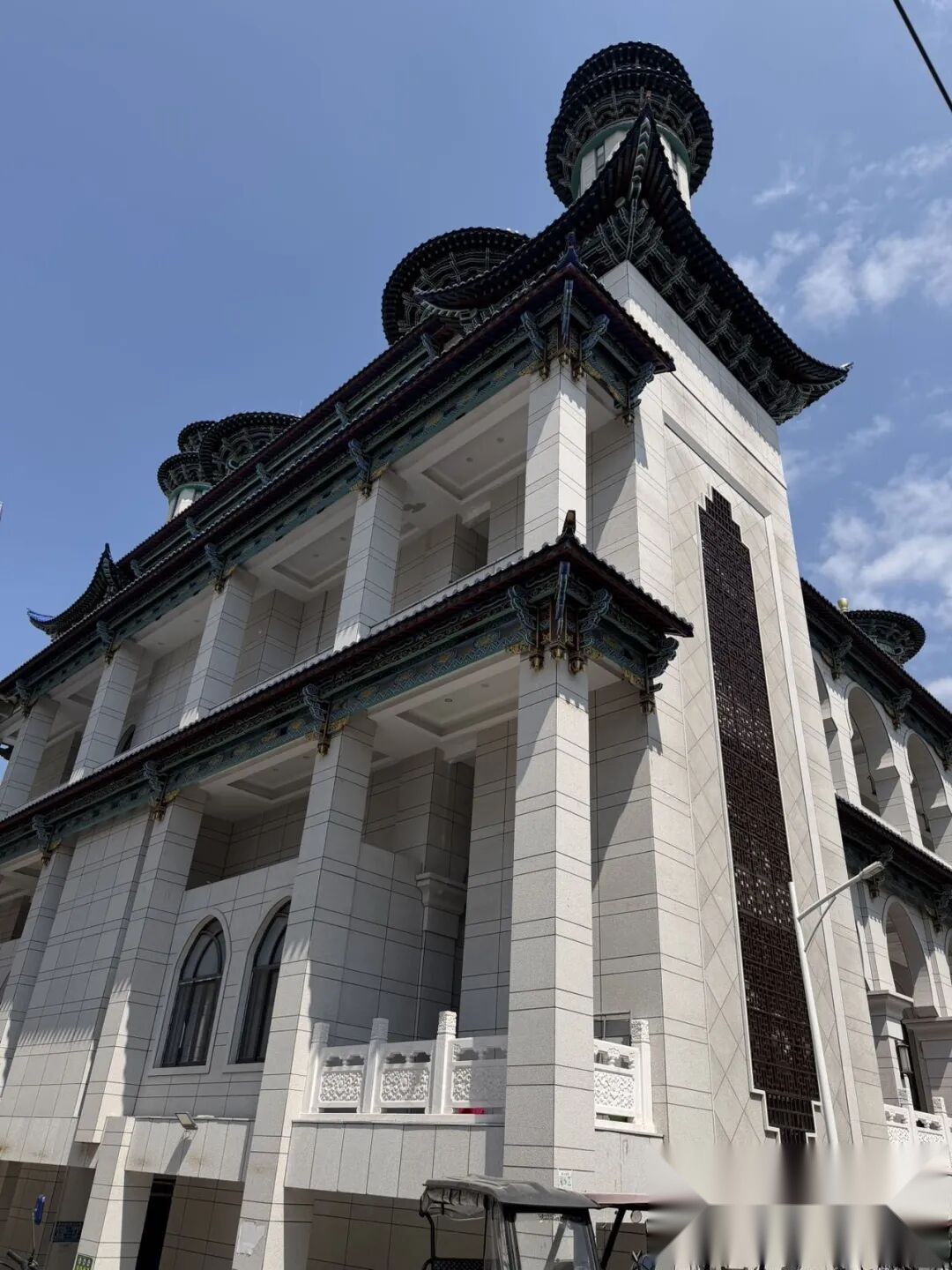
The North Mosque is probably the largest mosque in Sanya, or even Hainan, though the original architecture was destroyed by war and typhoons long ago. The current mosque was built after 2000, and underwent major renovations and remodeling in recent years.
Along the way, we spotted villagers of all ages—women wearing hijabs, and men wearing white caps and white robes, making it feel as if we had suddenly teleported to Southeast Asia...
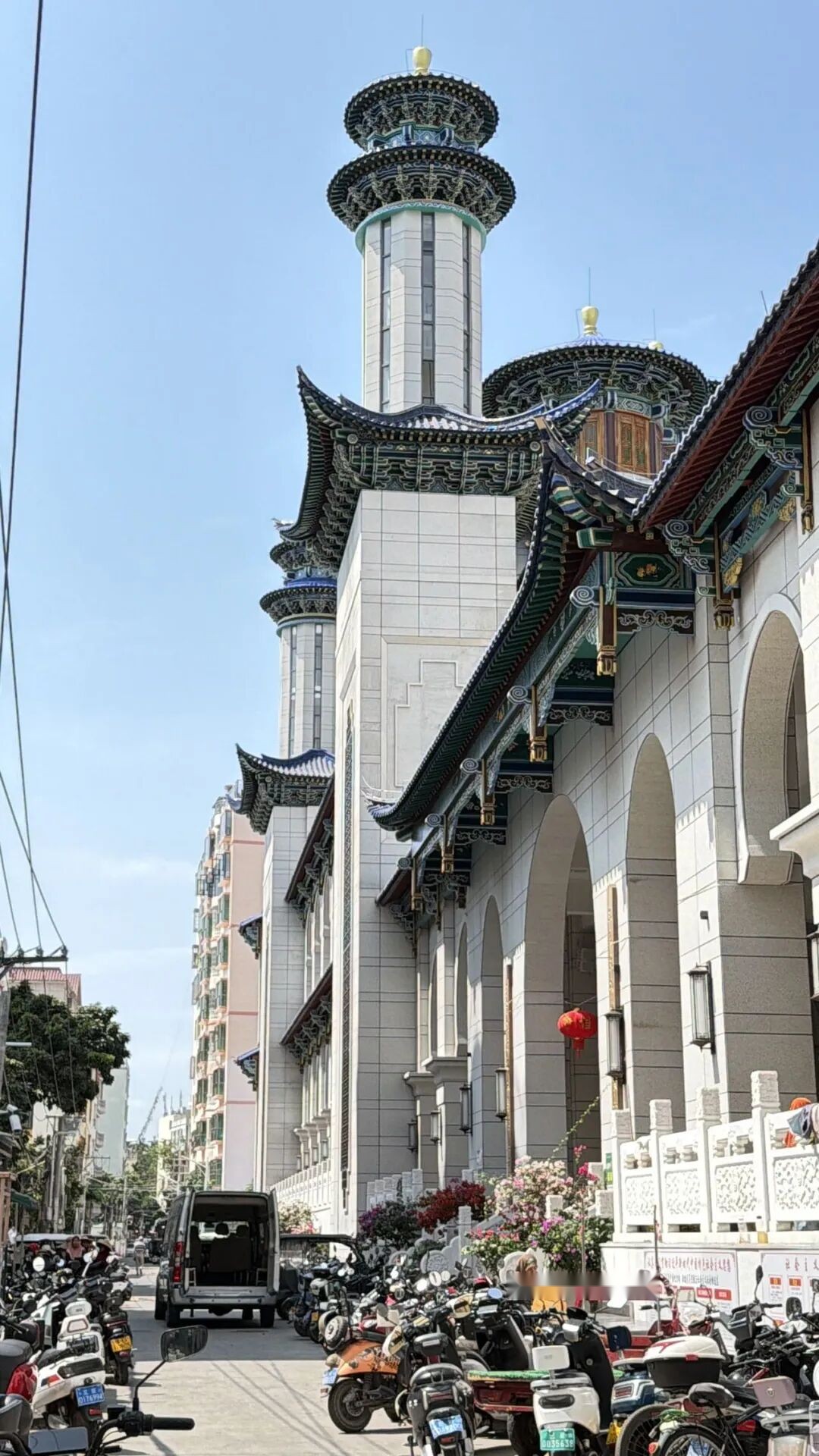
Inside the mosque hall, there was a casket covered with a black cloth; as it turned out, we had stumbled upon a funeral. The deceased's family and friends sat separately in two different areas, divided by gender.
Worshippers who arrived one after another, likely for prayer, gathered in the shade in front of the mosque to chat.
On the stage, a man wearing a white sarong was preaching in three languages. The first was probably the Sanya Utsul language, which the owner of the shop out front described as "the language of the local ethnic minority," noting that even he couldn't understand it.
Afterwards, the man preached again in Hainan Mandarin and English... Since we were outside the doorway, we couldn't catch the exact details.
Today's sunshine was intensely bright, burning our skin, and our phones started overheating as several airplanes flew right above the Chinese-style minarets.
After chatting with a few Muslim villagers for a bit, we left the mosque and headed back to Wanning...
#SanyaUtsul #NorthMosque #SoutheastAsianChampa Collapse Read »
A Study on Sanya's Utsul Cham Culture and Historical Origins: From Ancient Champa Migrants to the Great Family of the Chinese Nation
Abstract:
An in-depth analysis of the Champa historical roots carried by Sanya's Hui Muslims. Tracing the epic history of ancient Champa kingdom Muslims who sailed south to settle in Yazhou since the Song and Yuan dynasties, this explores how they have integrated Chinese culture over hundreds of years to become a unique cultural treasure of the island.
They are the descendants of the Southeast Asian Champa.
During the Chinese New Year of the Horse, I went to Sanya to visit friends, and after having lunch together, we stopped by a nearby mosque.
It is said that there are six mosques in Sanya (four in Huihui Village and two in Huixin Village), and this time we visited the East Mosque and the North Mosque.
(Sanya East Mosque)
The East Mosque looked small from the outside, with a shop on the ground floor. Walking inside, however, we found it quite spacious. An electronic screen on the wall displayed the set times for daily prayers. The floor of the main hall was crowded with shoes, and a few men wearing white prayer caps were performing wudu (ablution) by the pool... A Muslim girl told us that wudu is the preparation for the five daily prayers, which can be done either at home or at the mosque.
There were very few parking spots in front of the East Mosque, and since we couldn't find anywhere to park, we had to leave in a hurry.
Afterwards, the two of us headed to the North Mosque and found a small parking lot not far away.
The North Mosque is probably the largest mosque in Sanya, or even Hainan, though the original architecture was destroyed by war and typhoons long ago. The current mosque was built after 2000, and underwent major renovations and remodeling in recent years.
Along the way, we spotted villagers of all ages—women wearing hijabs, and men wearing white caps and white robes, making it feel as if we had suddenly teleported to Southeast Asia...
Inside the mosque hall, there was a casket covered with a black cloth; as it turned out, we had stumbled upon a funeral. The deceased's family and friends sat separately in two different areas, divided by gender.
Worshippers who arrived one after another, likely for prayer, gathered in the shade in front of the mosque to chat.
On the stage, a man wearing a white sarong was preaching in three languages. The first was probably the Sanya Utsul language, which the owner of the shop out front described as "the language of the local ethnic minority," noting that even he couldn't understand it.
Afterwards, the man preached again in Hainan Mandarin and English... Since we were outside the doorway, we couldn't catch the exact details.
Today's sunshine was intensely bright, burning our skin, and our phones started overheating as several airplanes flew right above the Chinese-style minarets.
After chatting with a few Muslim villagers for a bit, we left the mosque and headed back to Wanning...
#SanyaUtsul #NorthMosque #SoutheastAsianChampa Collapse Read »
Sanya Muslim Culture & Halal Food Guide: Historic Mosques, Utsul Cham Heritage, and Island Vibes
[Internet Repost]
Sanya Cultural Essay: The Interwoven Memories of an Elderly Imam's Island Preaching Years and His Crossover Life
Abstract:
A vivid account of warm personal stories encountered by chance in Sanya. Listen to the reflections of an elderly imam from Changzhi, Shanxi, on his years running a Halal study hall in Sanya, capturing the resilience and open-mindedness behind an ordinary family, and showcasing the diverse and inclusive cultural fabric of Sanya.
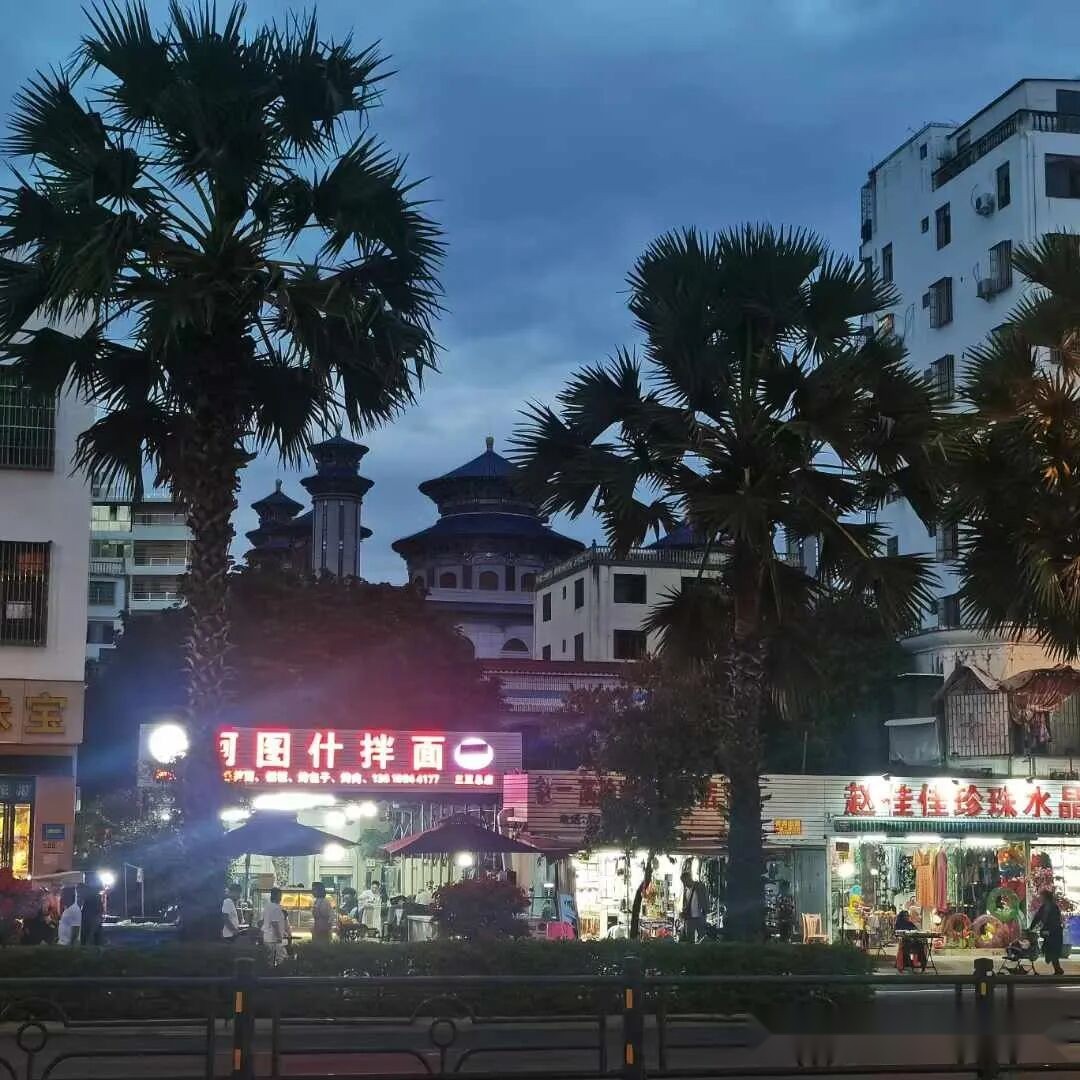
During a few days of business travel to Sanya, I had two casual chats with strangers.
The first conversation took place inside the main hall of the Sanya Ancient Mosque.
The Utsul Muslims have lived in Sanya for over a thousand years. Also known as the 'Sanya Cham', they are descendants of Southeast Asian Hui Muslims who settled together in Sanya. As a result, the compact Sanya urban area features five mosques: the East Mosque, North Great Mosque, and Sanya Ancient Mosque on the western side of the city, along with the Nankai Mosque and South Mosque slightly further east.

This time, I made a special trip into the city to check out the Muslim neighborhoods, visiting the closely situated East Mosque, North Great Mosque, and Sanya Ancient Mosque.
To my surprise, the streets of the Huihui neighborhood in Sanya were totally packed with Uyghur people! Every few steps, you'd spot elderly men in traditional embroidered caps and aunties in gorgeous traditional attire chatting in the Uyghur language. The Uyghur vibe in this neighborhood is honestly higher than the Hunan dialect concentration in Shenzhen!
At the Sanya Ancient Mosque, I chatted for 20 minutes with an elderly gentleman who had just finished the Maghrib prayer.
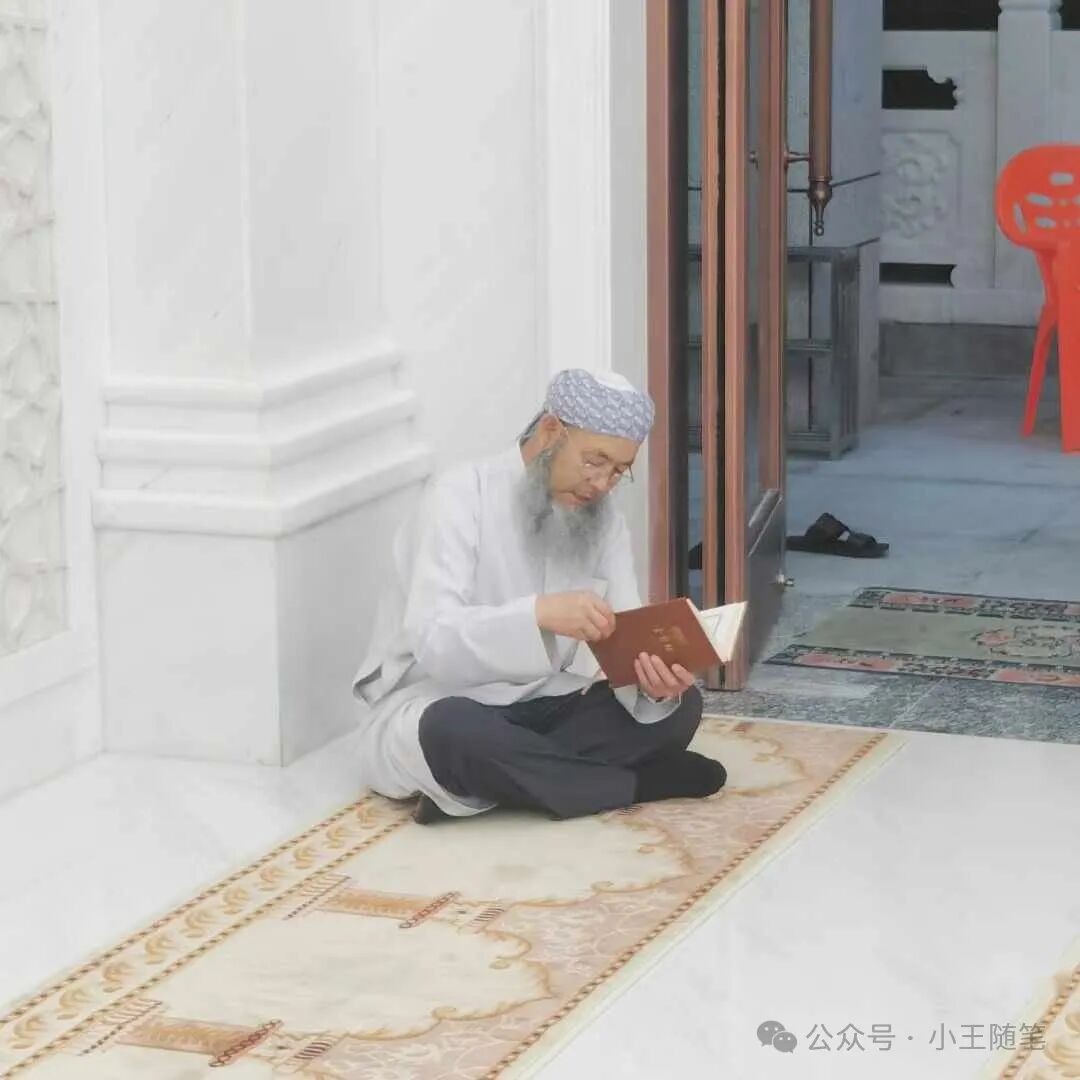
The elder was a white-bearded imam originally from Changzhi, Shanxi province, whose surname was Ma. As the saying goes, 'nine out of ten Huis are surnamed Ma.' Usually, I start with that to break the ice.
This majestic bearded elder wasn't the Imam Ma from the conversation I mentioned earlier, though.
During our chat, Imam Ma mentioned, 'Over here, except for the Nankai Mosque or South Mosque on the east side which are Ikhwan, the other four are Salafiyya.'
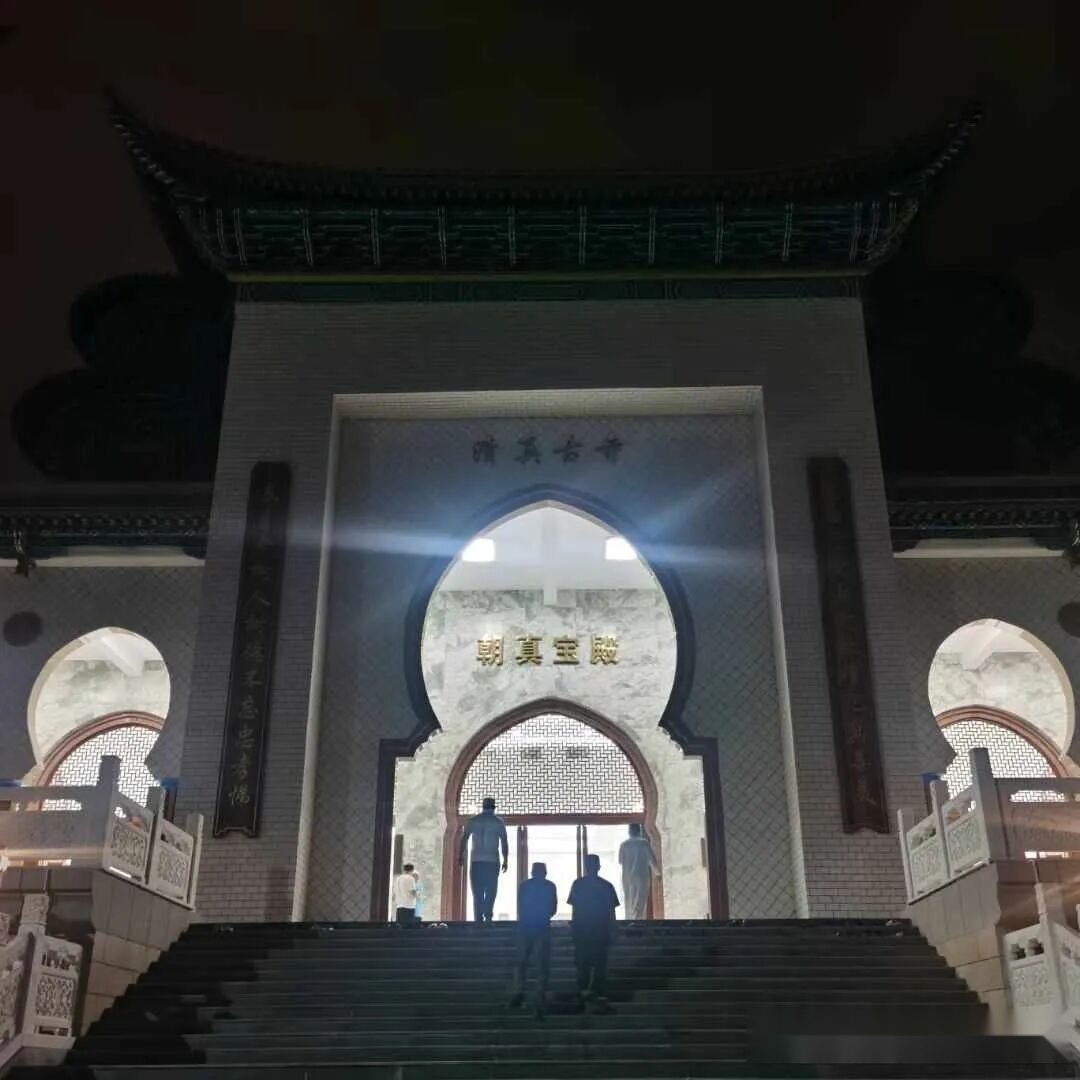
I asked, 'Are there none of our traditional Gedimu followers?'
'Gedimu' means 'old' in Arabic, which is basically the old-school tradition. Gedimu refers to the long-standing traditional Islamic school that has been passed down in China for over a thousand years since the Tang dynasty. Meanwhile, Salafiyya, Ikhwan, and others are newer schools introduced to China in modern times, though not contemporary.
'No. But I'm against making distinctions. Keep the doors open; anyone can come to pray, recite the Shahada (declaration of faith), and declare 'La ilaha illallah' (There is no god but Allah)... and that's all that matters.'
'I completely agree with your view. I think so too.'
Next up was the Isha prayer (the night prayer in Persian), and since I hadn't performed the ritual ablution (wudu), I said goodbye to the elderly imam and stepped down from the main hall.
Written on December 6, 2024, at Phoenix Airport Collapse Read »
Sanya Cultural Essay: The Interwoven Memories of an Elderly Imam's Island Preaching Years and His Crossover Life
Abstract:
A vivid account of warm personal stories encountered by chance in Sanya. Listen to the reflections of an elderly imam from Changzhi, Shanxi, on his years running a Halal study hall in Sanya, capturing the resilience and open-mindedness behind an ordinary family, and showcasing the diverse and inclusive cultural fabric of Sanya.
During a few days of business travel to Sanya, I had two casual chats with strangers.
The first conversation took place inside the main hall of the Sanya Ancient Mosque.
The Utsul Muslims have lived in Sanya for over a thousand years. Also known as the 'Sanya Cham', they are descendants of Southeast Asian Hui Muslims who settled together in Sanya. As a result, the compact Sanya urban area features five mosques: the East Mosque, North Great Mosque, and Sanya Ancient Mosque on the western side of the city, along with the Nankai Mosque and South Mosque slightly further east.
This time, I made a special trip into the city to check out the Muslim neighborhoods, visiting the closely situated East Mosque, North Great Mosque, and Sanya Ancient Mosque.
To my surprise, the streets of the Huihui neighborhood in Sanya were totally packed with Uyghur people! Every few steps, you'd spot elderly men in traditional embroidered caps and aunties in gorgeous traditional attire chatting in the Uyghur language. The Uyghur vibe in this neighborhood is honestly higher than the Hunan dialect concentration in Shenzhen!
At the Sanya Ancient Mosque, I chatted for 20 minutes with an elderly gentleman who had just finished the Maghrib prayer.
The elder was a white-bearded imam originally from Changzhi, Shanxi province, whose surname was Ma. As the saying goes, 'nine out of ten Huis are surnamed Ma.' Usually, I start with that to break the ice.
This majestic bearded elder wasn't the Imam Ma from the conversation I mentioned earlier, though.
During our chat, Imam Ma mentioned, 'Over here, except for the Nankai Mosque or South Mosque on the east side which are Ikhwan, the other four are Salafiyya.'
I asked, 'Are there none of our traditional Gedimu followers?'
'Gedimu' means 'old' in Arabic, which is basically the old-school tradition. Gedimu refers to the long-standing traditional Islamic school that has been passed down in China for over a thousand years since the Tang dynasty. Meanwhile, Salafiyya, Ikhwan, and others are newer schools introduced to China in modern times, though not contemporary.
'No. But I'm against making distinctions. Keep the doors open; anyone can come to pray, recite the Shahada (declaration of faith), and declare 'La ilaha illallah' (There is no god but Allah)... and that's all that matters.'
'I completely agree with your view. I think so too.'
Next up was the Isha prayer (the night prayer in Persian), and since I hadn't performed the ritual ablution (wudu), I said goodbye to the elderly imam and stepped down from the main hall.
Written on December 6, 2024, at Phoenix Airport Collapse Read »
Sanya Halal Food Guide: Hidden Huihui Village Gems & Authentic Hainan Muslim Eats
[Internet Repost]
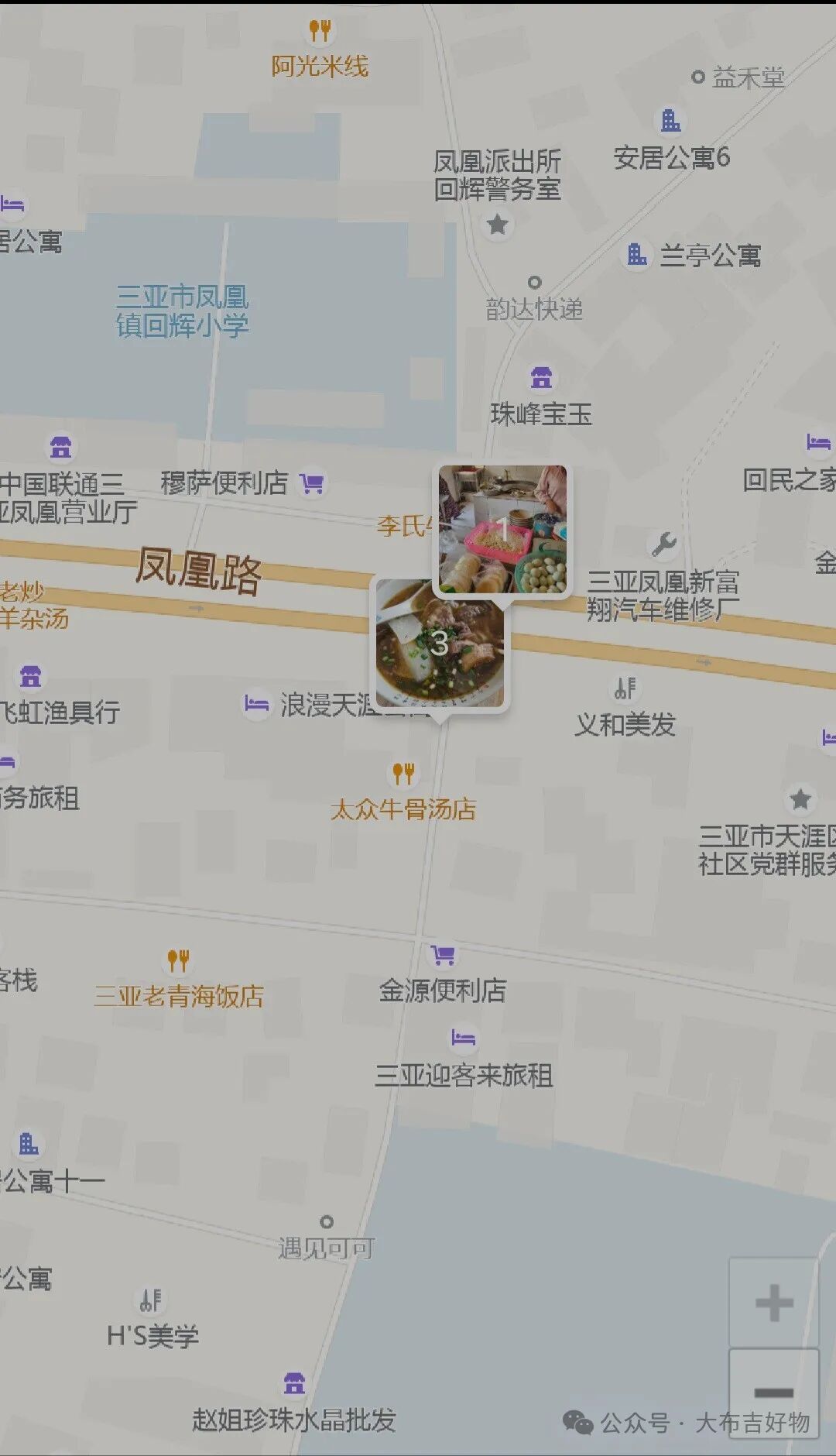
Exploring a Hidden Halal Spot in Sanya's Tianya District: A High-Rated, Budget-Friendly Local Favorite Deep in the Alleys
Summary:

A firsthand discovery of a no-frills little eatery tucked away in the old alleys of Sanya's Tianya District Muslim community. Featuring signature secret pan-fried beef, refreshing pickled vegetable soup, and freshly made staples, this spot delivers genuinely comforting hometown flavors that completely blow you away and offer incredible value despite the humble storefront.
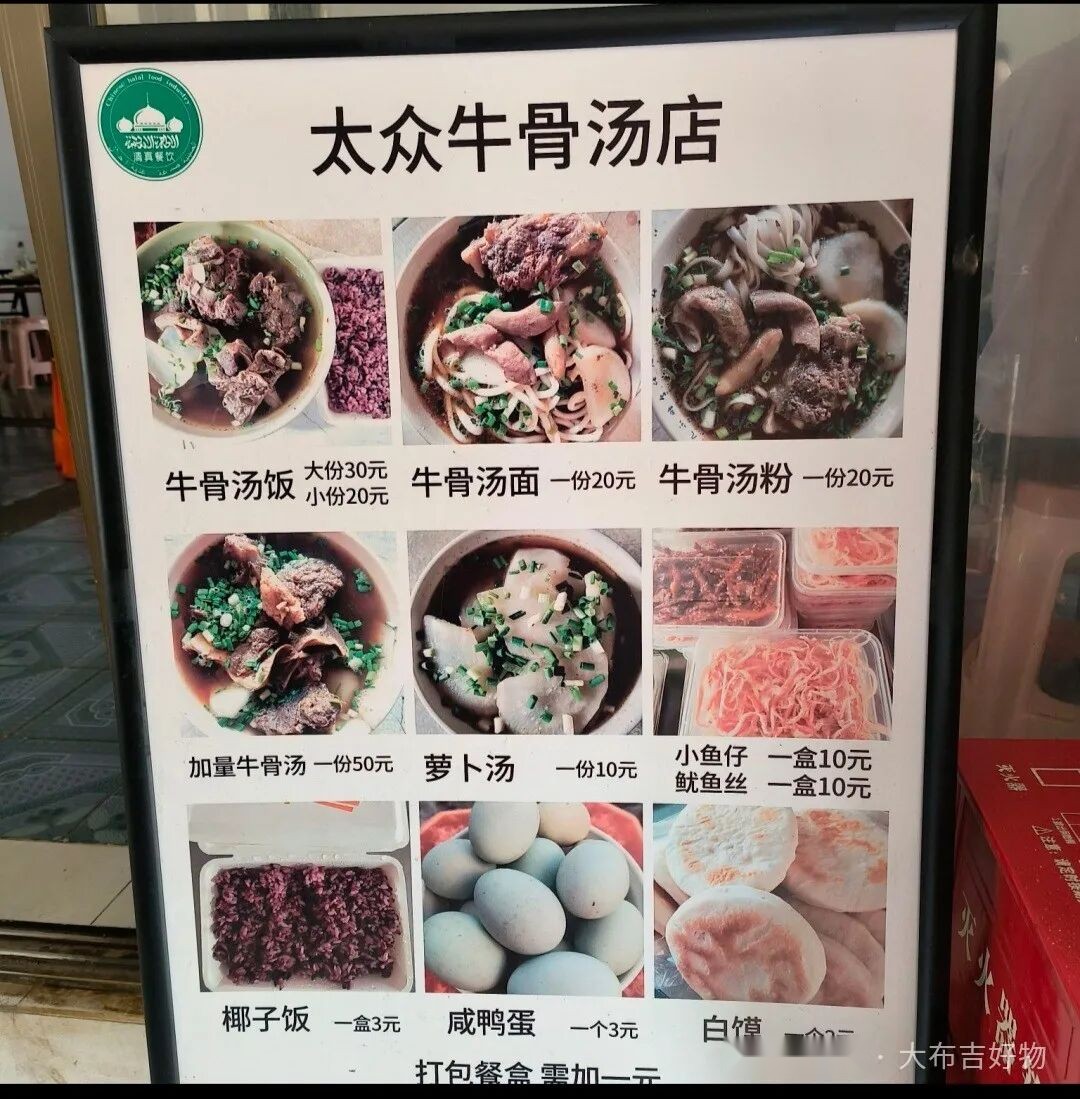
Hey everyone! Today I'm recommending a hidden gem in Sanya's Muslim quarter—Taizhong Beef Bone Soup Shop. It's super rundown and the kind of place you'd easily walk right past if you weren't looking closely. The storefront is crazy unassuming and the inside is pretty beat-up too, but man, the food is so good!
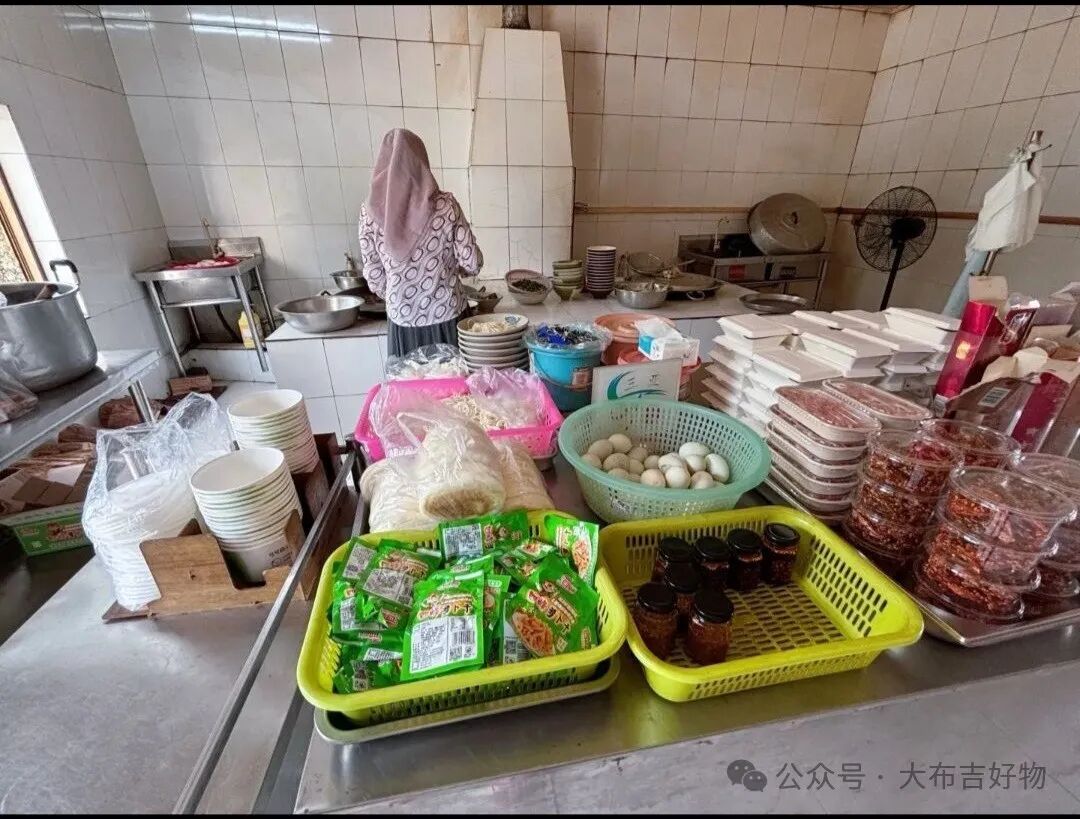
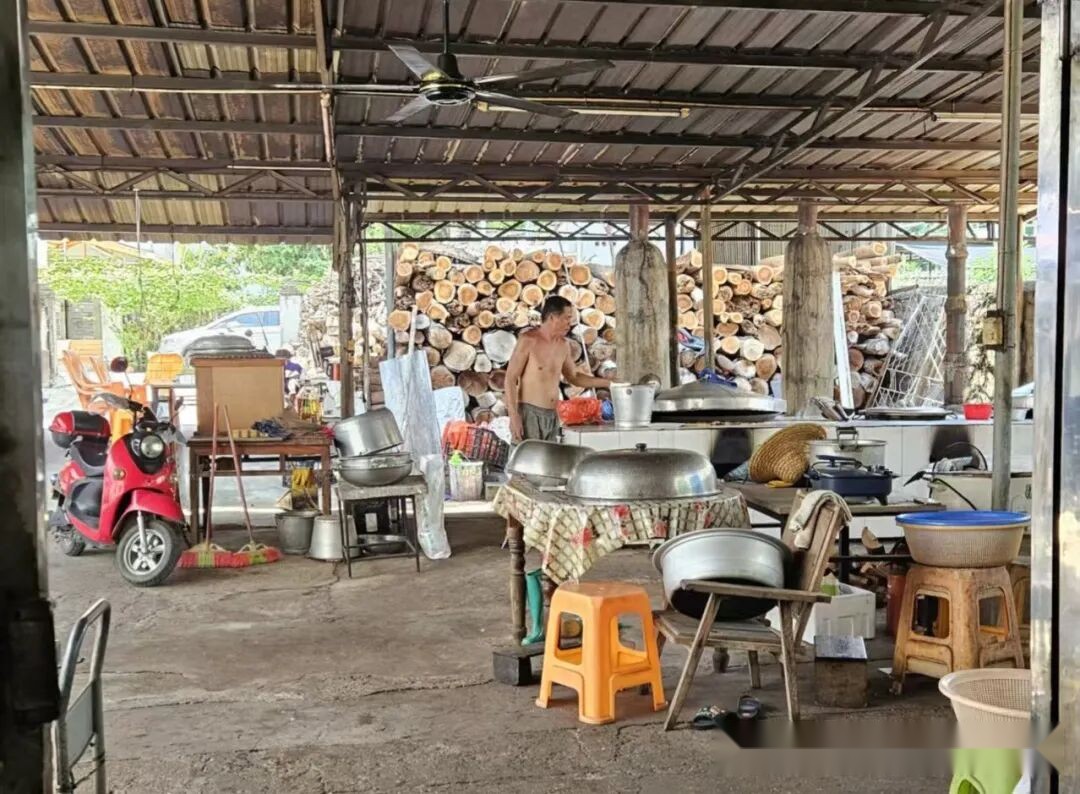
As soon as you walk in, you spot a giant pot filled to the brim with beef bones and beef. This massive pot is wood-fired, and you'll see stacks of firewood piled up in the courtyard.
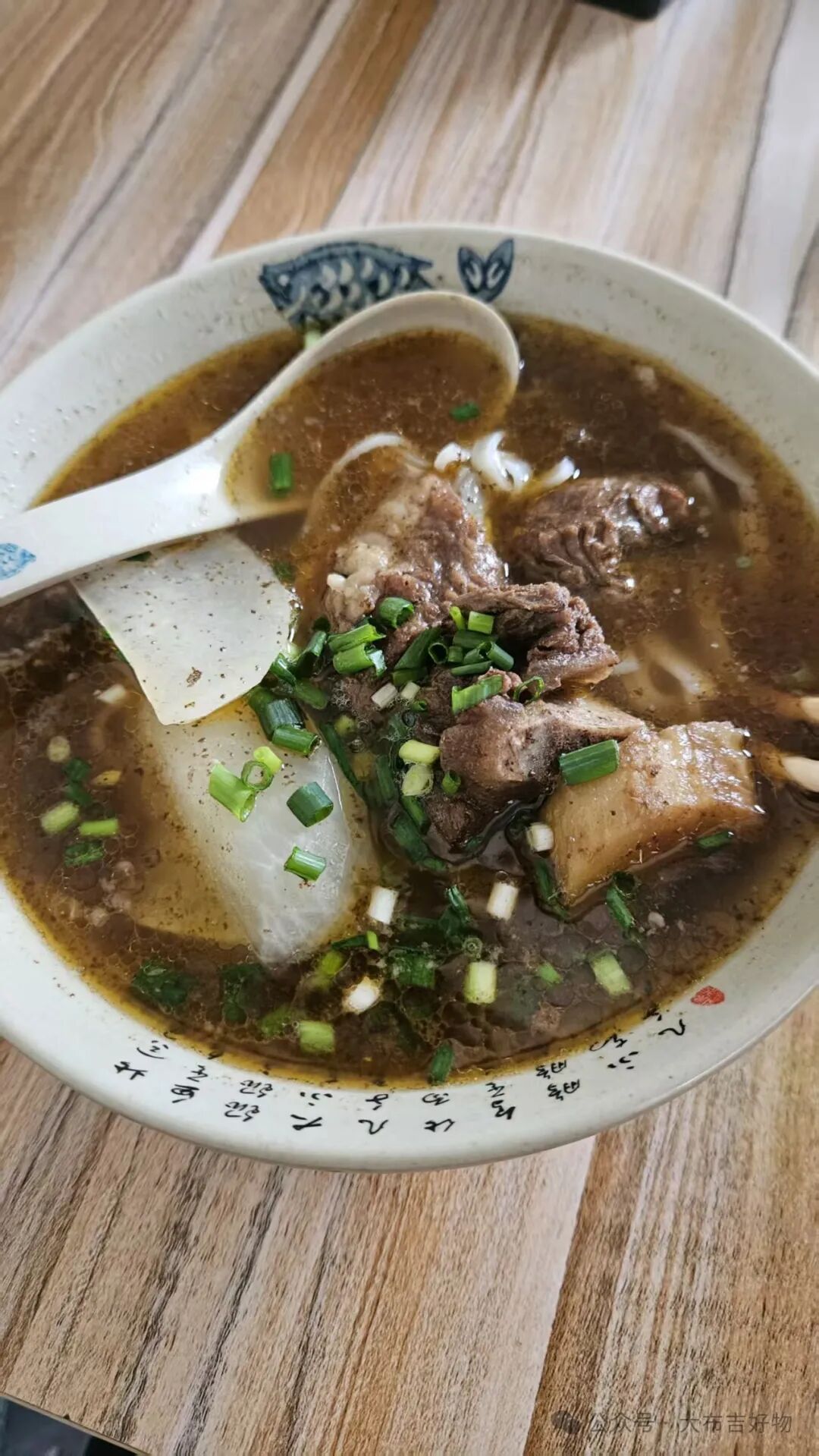
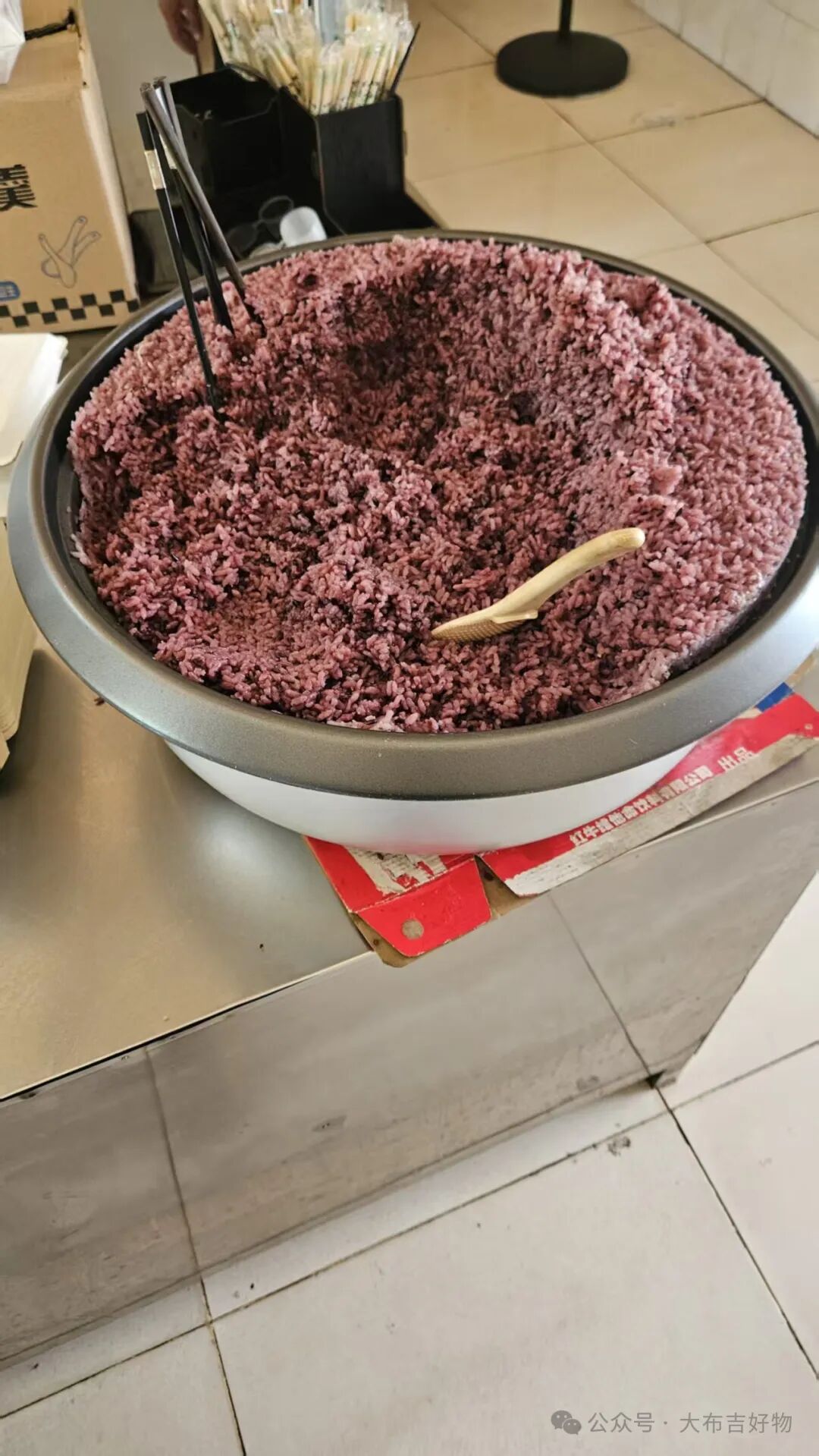
The beef bone soup with rice is an absolute must-order. The soup has a super pure beef flavor without a bunch of extra seasonings—it's just a clean, clear broth. The beef bones have meat on them, though not a ton. The rice is really unique, with a subtle coconut aroma and a touch of saltiness. It's definitely a flavor profile you haven't tried before, and it's seriously delicious. The only downside is the meat portion is a bit small, so serious meat lovers can always order extra. They also serve niurou fen (Hainan beef rice noodles), but personally, I strongly recommend trying that rice dish.
 Collapse Read »
Exploring a Hidden Halal Spot in Sanya's Tianya District: A High-Rated, Budget-Friendly Local Favorite Deep in the Alleys
Summary:
A firsthand discovery of a no-frills little eatery tucked away in the old alleys of Sanya's Tianya District Muslim community. Featuring signature secret pan-fried beef, refreshing pickled vegetable soup, and freshly made staples, this spot delivers genuinely comforting hometown flavors that completely blow you away and offer incredible value despite the humble storefront.
Hey everyone! Today I'm recommending a hidden gem in Sanya's Muslim quarter—Taizhong Beef Bone Soup Shop. It's super rundown and the kind of place you'd easily walk right past if you weren't looking closely. The storefront is crazy unassuming and the inside is pretty beat-up too, but man, the food is so good!
As soon as you walk in, you spot a giant pot filled to the brim with beef bones and beef. This massive pot is wood-fired, and you'll see stacks of firewood piled up in the courtyard.
The beef bone soup with rice is an absolute must-order. The soup has a super pure beef flavor without a bunch of extra seasonings—it's just a clean, clear broth. The beef bones have meat on them, though not a ton. The rice is really unique, with a subtle coconut aroma and a touch of saltiness. It's definitely a flavor profile you haven't tried before, and it's seriously delicious. The only downside is the meat portion is a bit small, so serious meat lovers can always order extra. They also serve niurou fen (Hainan beef rice noodles), but personally, I strongly recommend trying that rice dish.
Collapse Read »
Exploring Omar Halal Sea View Restaurant in Sanya & Hainan Muslim Culture: The Ultimate Guide to Halal Seafood, Historic Mosques, and Utsul Heritage
[Internet Repost]
Exploring Omar Halal Sea View Restaurant in Sanya: First-Line Azure Coconut Ocean Views and Exquisite Halal Delicacies
Abstract:
A comprehensive, photo-rich review of "Omar," a top-tier Halal sea view restaurant in Sanya. Get an up-close look at the comfortable dining space boasting bay sunsets and coconut grove views, and dive into a photo-worthy feast of tropical fruit-infused seafood and premium beef and lamb dishes, delivering a dual feast for the eyes and the taste buds.
Omar Halal Sea View Restaurant
A Bay of Coconut Palms and Ocean Waves, Savoring Exclusive Halal Mountain and Sea Flavors
Coconut breezes sweep the shore, sunsets sink into the sea.
Nestled between the Boao Lighthouse and the coastline,
lies the Boao coastline's
one and only Halal sea view restaurant
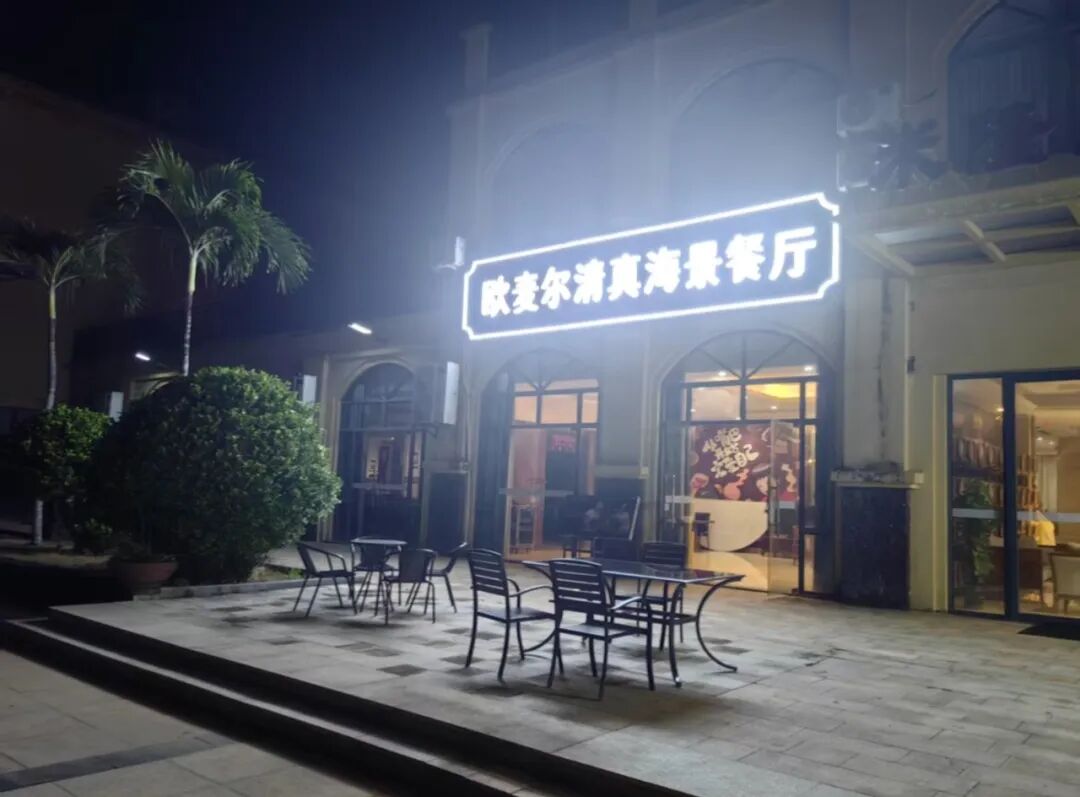
— Omar Halal Sea View Restaurant.
SUMMER
Ocean Breezes and Daydreams
PART.01
As Boao's only authentic Halal sea view restaurant located inside a star-rated hotel,

it fills the gap for Halal dining in coastal tourism.
Sticking strictly to pure Halal dietary standards every step of the way,
with ingredients, cooking techniques, and utensils strictly compliant,

it allows every Muslim guest,
among coconut groves and blue seas,
to fully enjoy a pure, worry-free, and authentic
sea view dining experience.
—— ——
「 The Story of the Sea 」
The restaurant claims nearly one kilometer
of exclusive coconut-fringed coastline,
right next to the viral Instagram hotspot "The Story of the Sea," and
just 3 kilometers from the Boao Forum for Asia.
Gaze out the window at mountains and seas, let the evening breeze accompany the twilight glow,
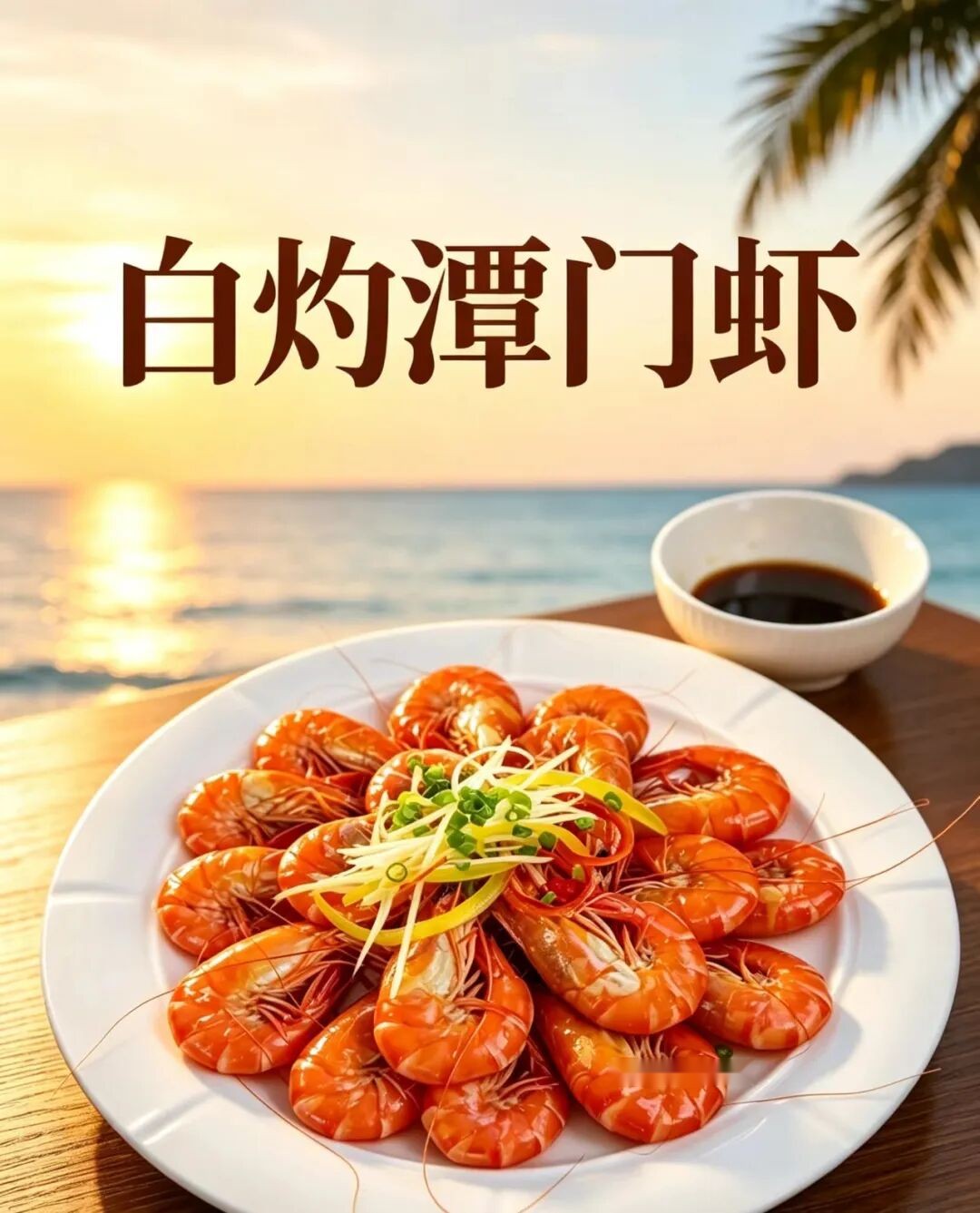
and take in the stunning coastal scenery of Boao to the fullest.
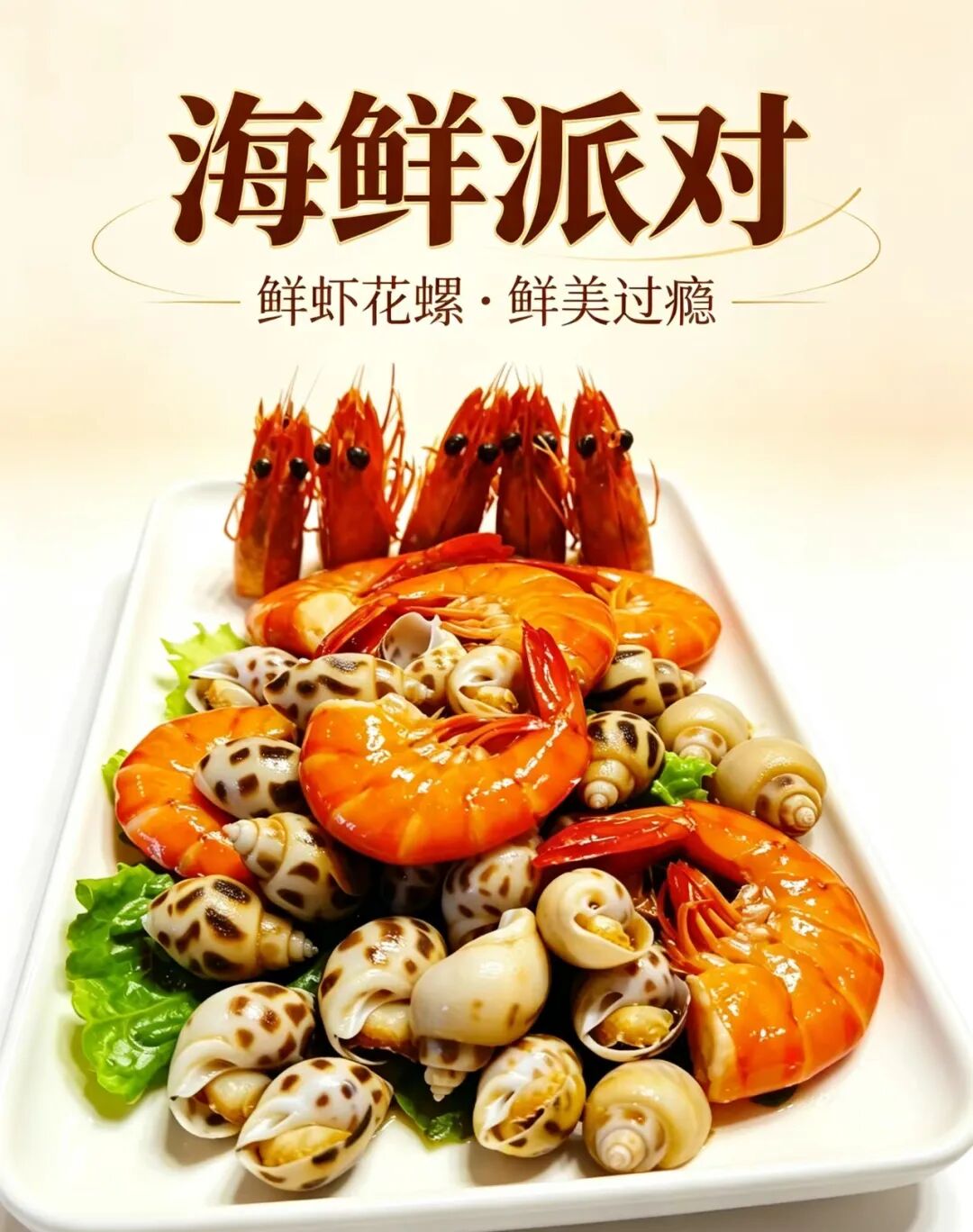
Summer
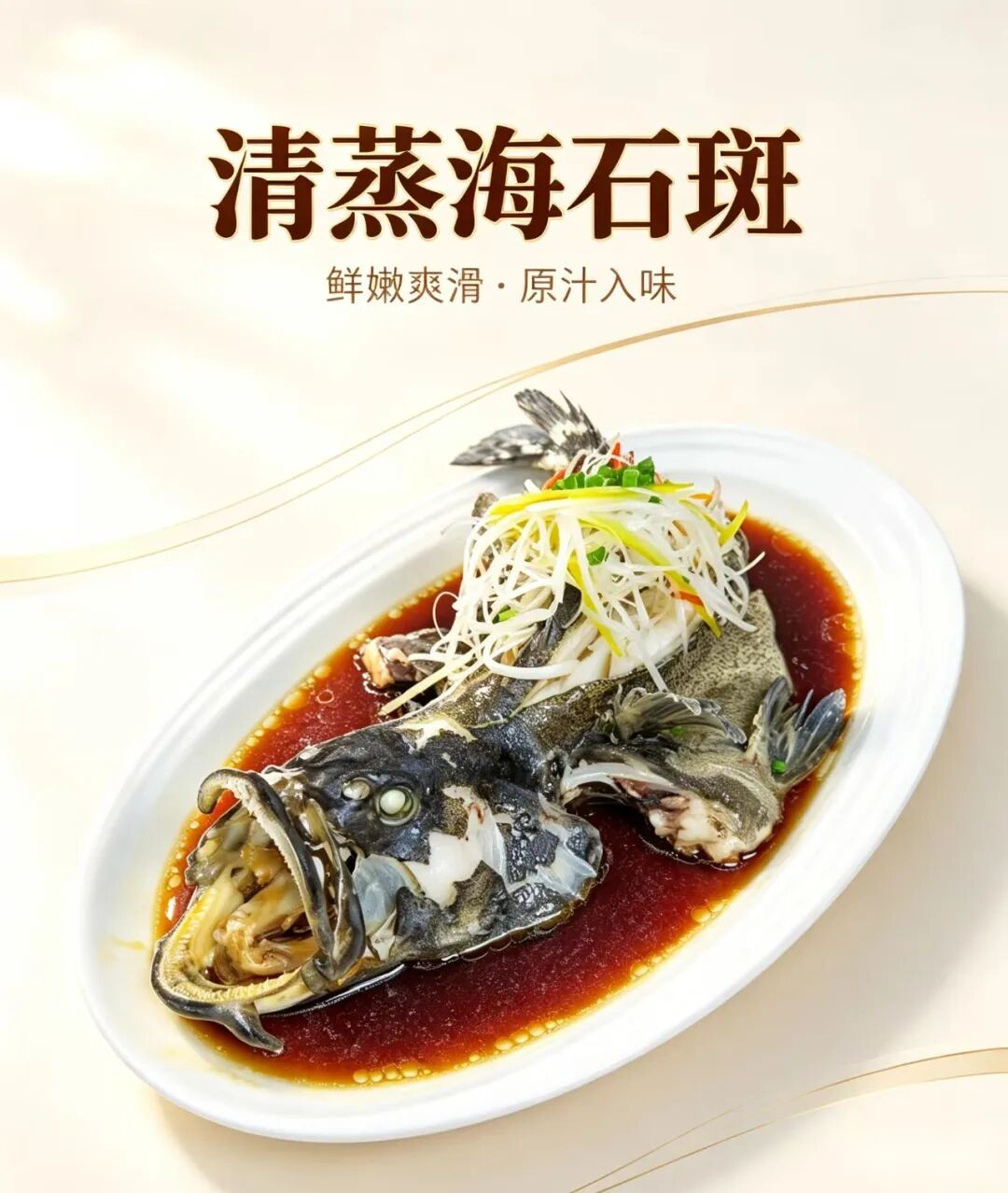
SUMMER
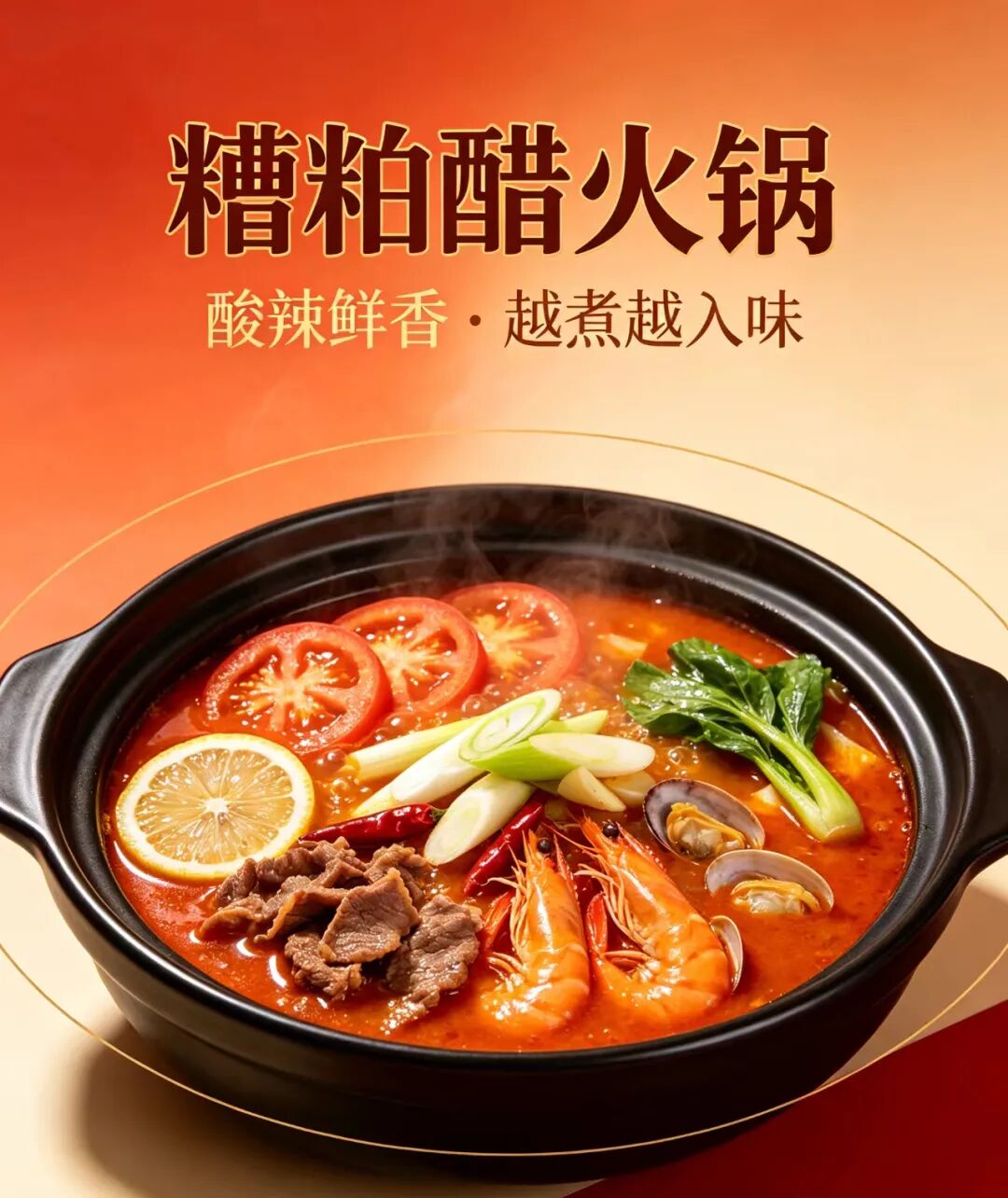
Island Notes of Coconut Groves and Seas
PART.02
SEASIDE HOLIDAY
/ Bringing Together Classic Region-Wide Halal Specialties
Ocean Breeze · Beautiful Sea Days
Where the mountains and sea come to the table, and fresh flavors touch the soul. The restaurant
rigorously selects the catch of the day, live and kicking,
netted and cooked on the spot to lock in the ocean's raw sweetness and freshness;
bringing together classic halal specialties from all over,

crafted with master care and authentic flavors.
A feast of mountains and sea,
blending coastal delicacies with ethnic culinary heritage,
gently healing and easing your travel moments.
COCONUT
COCONUT
BEACH

BEACH
WAVES
WAVES
Listening to the Sea · Healing Moments
Right by the Bo'ao Internet-Famous Lighthouse
☎ Welcome to call: 13215720917
☎ Welcome to call: 13876169160
Douyin ID: 578067898070
SUMMER
Sunsets and Tangerine Seas
PART.03
Welcome to the restaurant
Head to the mountains and sea of Bo'ao, and taste authentic halal food.
This is the only place where you can catch ocean views, chase stunning sunsets,
and feast on the freshest seafood with total peace of mind.
END Collapse Read »
Exploring Omar Halal Sea View Restaurant in Sanya: First-Line Azure Coconut Ocean Views and Exquisite Halal Delicacies
Abstract:
A comprehensive, photo-rich review of "Omar," a top-tier Halal sea view restaurant in Sanya. Get an up-close look at the comfortable dining space boasting bay sunsets and coconut grove views, and dive into a photo-worthy feast of tropical fruit-infused seafood and premium beef and lamb dishes, delivering a dual feast for the eyes and the taste buds.
Omar Halal Sea View Restaurant
A Bay of Coconut Palms and Ocean Waves, Savoring Exclusive Halal Mountain and Sea Flavors
Coconut breezes sweep the shore, sunsets sink into the sea.
Nestled between the Boao Lighthouse and the coastline,
lies the Boao coastline's
one and only Halal sea view restaurant
— Omar Halal Sea View Restaurant.
SUMMER
Ocean Breezes and Daydreams
PART.01
As Boao's only authentic Halal sea view restaurant located inside a star-rated hotel,
it fills the gap for Halal dining in coastal tourism.
Sticking strictly to pure Halal dietary standards every step of the way,
with ingredients, cooking techniques, and utensils strictly compliant,
it allows every Muslim guest,
among coconut groves and blue seas,
to fully enjoy a pure, worry-free, and authentic
sea view dining experience.
—— ——
「 The Story of the Sea 」
The restaurant claims nearly one kilometer
of exclusive coconut-fringed coastline,
right next to the viral Instagram hotspot "The Story of the Sea," and
just 3 kilometers from the Boao Forum for Asia.
Gaze out the window at mountains and seas, let the evening breeze accompany the twilight glow,
and take in the stunning coastal scenery of Boao to the fullest.
Summer
SUMMER
Island Notes of Coconut Groves and Seas
PART.02
SEASIDE HOLIDAY
/ Bringing Together Classic Region-Wide Halal Specialties
Ocean Breeze · Beautiful Sea Days
Where the mountains and sea come to the table, and fresh flavors touch the soul. The restaurant
rigorously selects the catch of the day, live and kicking,
netted and cooked on the spot to lock in the ocean's raw sweetness and freshness;
bringing together classic halal specialties from all over,
crafted with master care and authentic flavors.
A feast of mountains and sea,
blending coastal delicacies with ethnic culinary heritage,
gently healing and easing your travel moments.
COCONUT
COCONUT
BEACH
BEACH
WAVES
WAVES
Listening to the Sea · Healing Moments
Right by the Bo'ao Internet-Famous Lighthouse
☎ Welcome to call: 13215720917
☎ Welcome to call: 13876169160
Douyin ID: 578067898070
SUMMER
Sunsets and Tangerine Seas
PART.03
Welcome to the restaurant
Head to the mountains and sea of Bo'ao, and taste authentic halal food.
This is the only place where you can catch ocean views, chase stunning sunsets,
and feast on the freshest seafood with total peace of mind.
END Collapse Read »
Exploring Sanya's Utsul Cham Muslims & Historic Mosques: A Foodie's Guide to Hainan's Halal Culture
[Internet Repost]
A Comprehensive Deep Dive into the Documentary Short Film 'Huixin Village': The Southeast Asian Maritime Silk Road Genome and Contemporary Evolution of China's Southernmost Hui Muslim Village
Abstract:
An in-depth analysis focusing on the documentary project about Huixin Village (Huixin Muslim Village) in Sanya. It chronicles how this unique Muslim community—China's only one originating from the ancient Cham people of Southeast Asia—has thrived across generations on a tropical island, showcasing the harmonious coexistence of traditional religious practices and modern civilization.
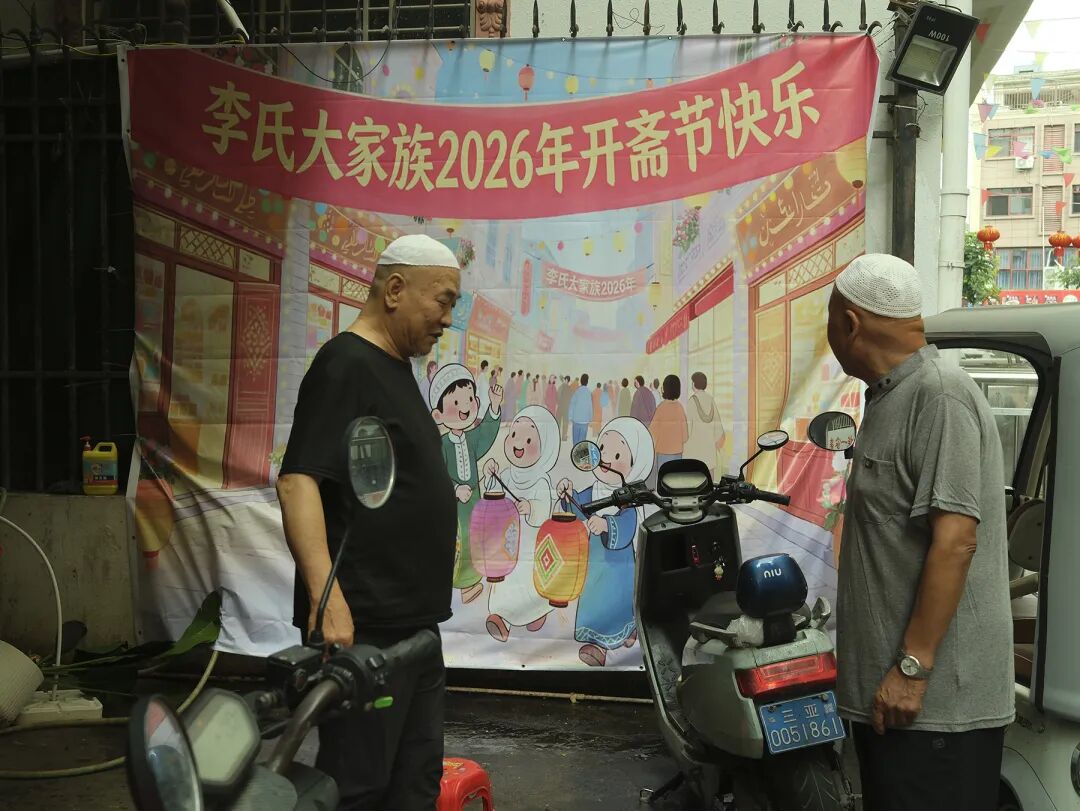
Huixin Village (Huixin Muslim Village) is located in Fenghuang Town, Sanya City, Hainan Province, and stands as China's southernmost Hui Muslim settlement. This community is China's sole Muslim group originating from Southeast Asia, having lived here from generation to generation for over 900 years. Together with the neighboring Huihui Village (Huihui Muslim Village), they are collectively known as the Sanya Hui Muslim villages, with a combined population approaching nearly 10,000.
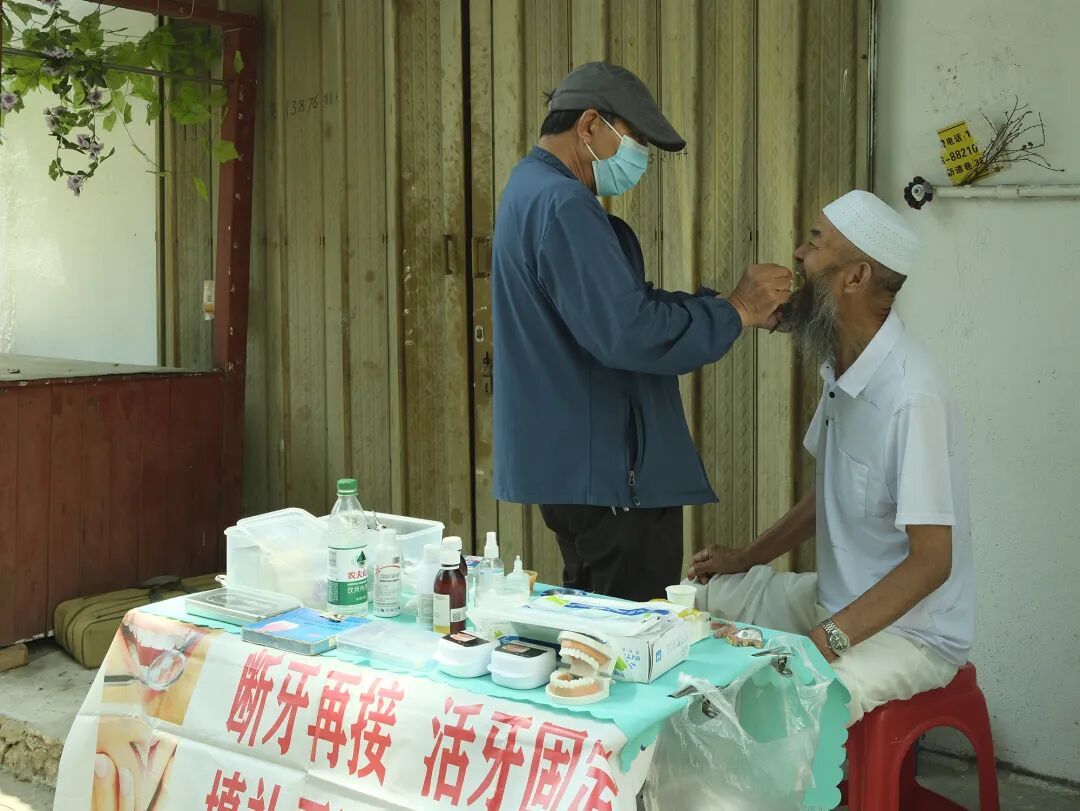
Around the 10th to 11th centuries, Arab and Persian Muslim merchants arrived in Champa (modern-day central Vietnam) via the Maritime Silk Road. While trading, they also introduced Muslim culture. In 1471, the Champa Kingdom was severely battered by the Lê Dynasty, causing a large number of Cham people to flee to the Malay Archipelago. Since the Malay Archipelago region had already widely embraced Islam, the Champa refugees encountered and accepted Islam there before returning to Champa to spread the faith.
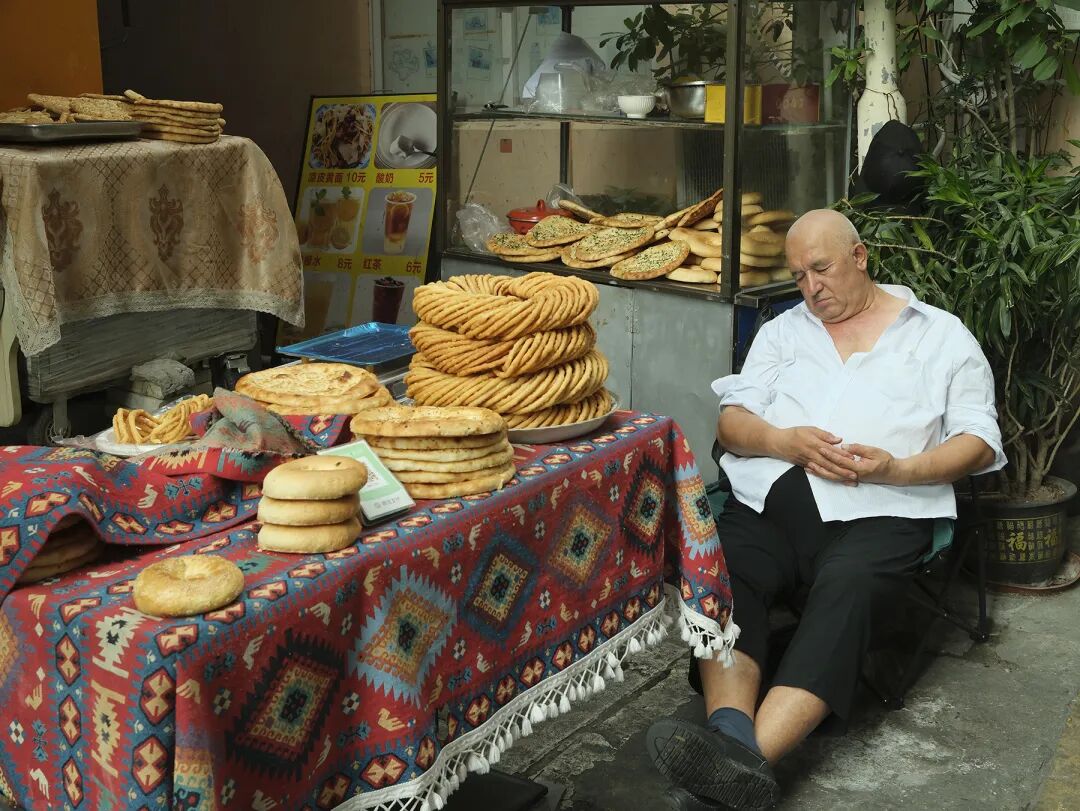
As the Champa Kingdom repeatedly suffered from Vietnamese invasions and territorial encroachment, Cham Muslims migrated in multiple waves by boat from Xiazheng, Vietnam, to Hainan Island to seek refuge, escaping the chaos of war. Historical records date the earliest arrivals as far back as the late Tang Dynasty, with large-scale migrations concentrated during the Song and Yuan Dynasties. These groups partially blended with Arab and Persian foreign guests (fan ke) who had come to China to trade during the Tang and Song Dynasties. After the Ming Dynasty, Hui Muslims from the Fujian and Guangdong regions also continuously migrated to Hainan, ultimately converging during the Qing Dynasty to form the stable Hui Muslim communities of Huixin Village (Huixin Muslim Village) and Huihui Village (Huihui Muslim Village).
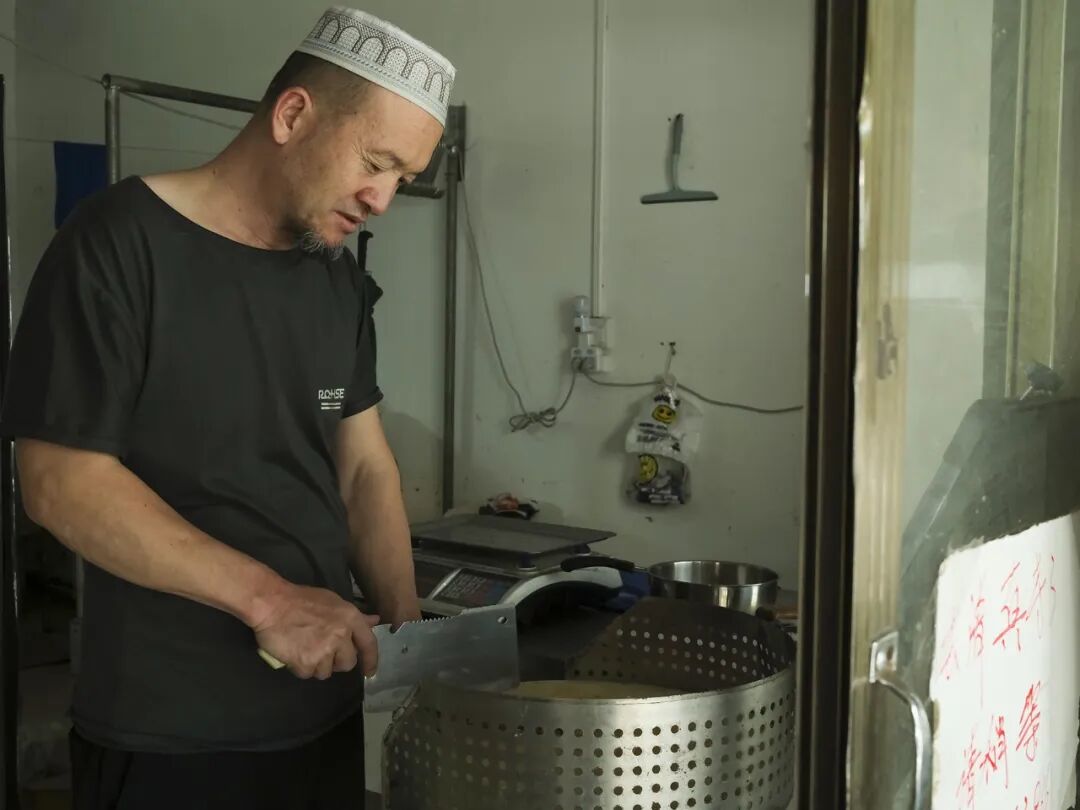
Huixin Village (Huixin Muslim Village) was once under Japanese occupation; the Japanese military built an airfield and drove out the local Hui Muslims living there. Following Japan's defeat and withdrawal, some of the Hui Muslims returned to Huixin Village (Huixin Muslim Village) to rebuild their homes on the original site.

The lifestyle customs of the Hui Muslims in Huixin Village (Huixin Muslim Village) reflect a blend of Islamic doctrine and local adaptability. While they speak Chinese, they still preserve their native language, Huihui speech, for communication. Huihui speech belongs to the Malayo-Polynesian branch of the Austronesian language family and is closely related to the Cham language. It is the only Austronesian-speaking Muslim group in China. Although Huihui speech is the mother tongue of Hainan's Hui Muslims and features a phonetic system—such as 19 initial consonants, 50 to 57 final vowels, and 7 to 10 tones—it has been spoken for a long time without developing its own writing system. In daily life, they use Chinese characters for reading and writing when interacting with the outside world. While some older Hui Muslims in the village cannot understand Chinese, younger generations are using Huihui speech less and less.

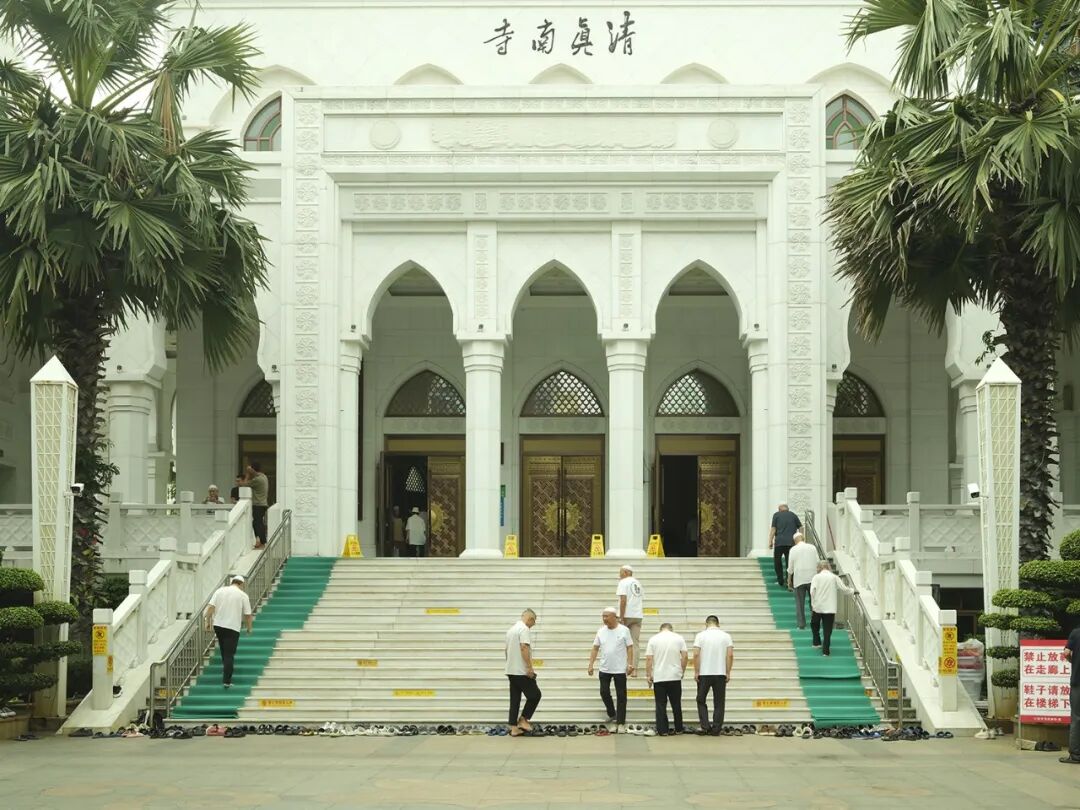
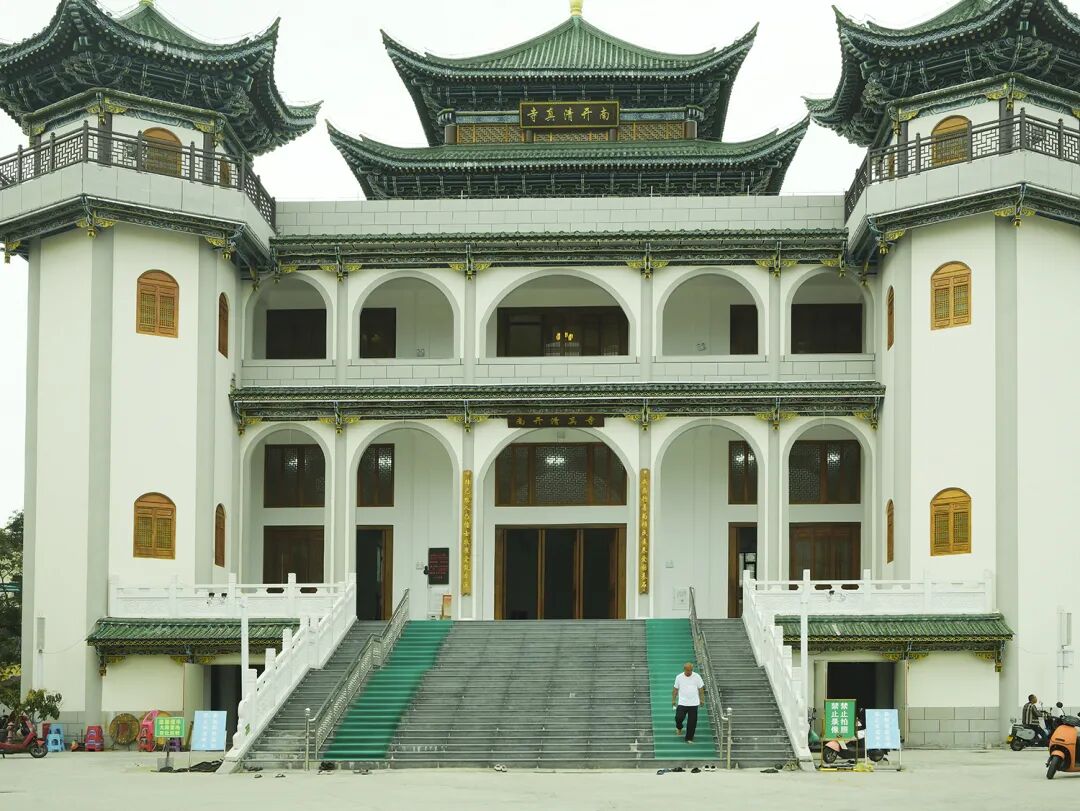
The religious traditions of the Hui Muslims in Huixin Village (Huixin Muslim Village) stem from the history of the Champa Kingdom's conversion to Islam, preserving major holidays such as Eid al-Fitr (Kaizhai Jie), the Mawlid (Shengji Jie), and Eid al-Adha (Guerbang Jie). Huixin Village (Huixin Muslim Village) features two mosques. The Southern Mosque (Qingzhen Nansi) was originally built during the Southern Song Dynasty and is the oldest masjid in ancient Yazhou, boasting a history of over 900 years. Rebuilt in 2013, it serves as a historical testament to the development of Muslims in Sanya. The Nankai Mosque was built during the mid-Ming Dynasty, bombed flat during the War of Resistance Against Japanese Aggression, demolished during the Cultural Revolution, and rebuilt in 1980. Later subjected to ethnic integration, it features distinct Islamic religious characteristics and traditional architectural styles. These two masjids serve as the venues for religious activities among the villagers of Huixin Village (Huixin Muslim Village). During Ramadan, some Muslims go to the masjid to perform their daily dua and prayers five times a day.
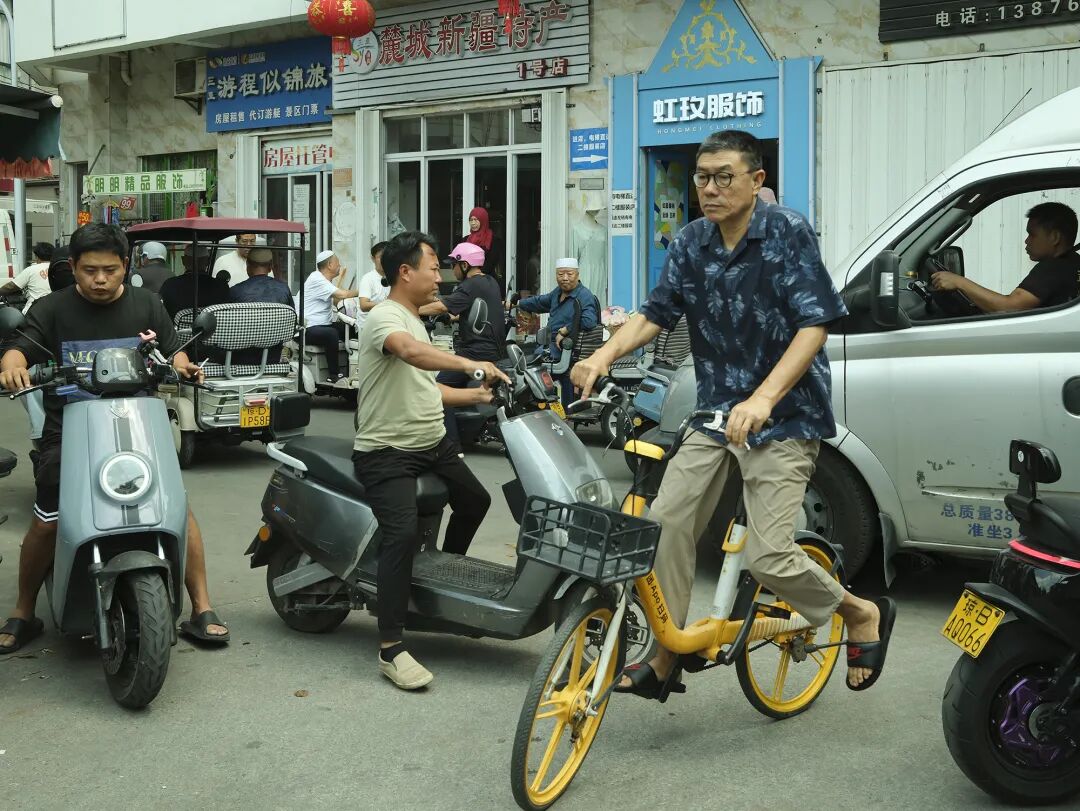
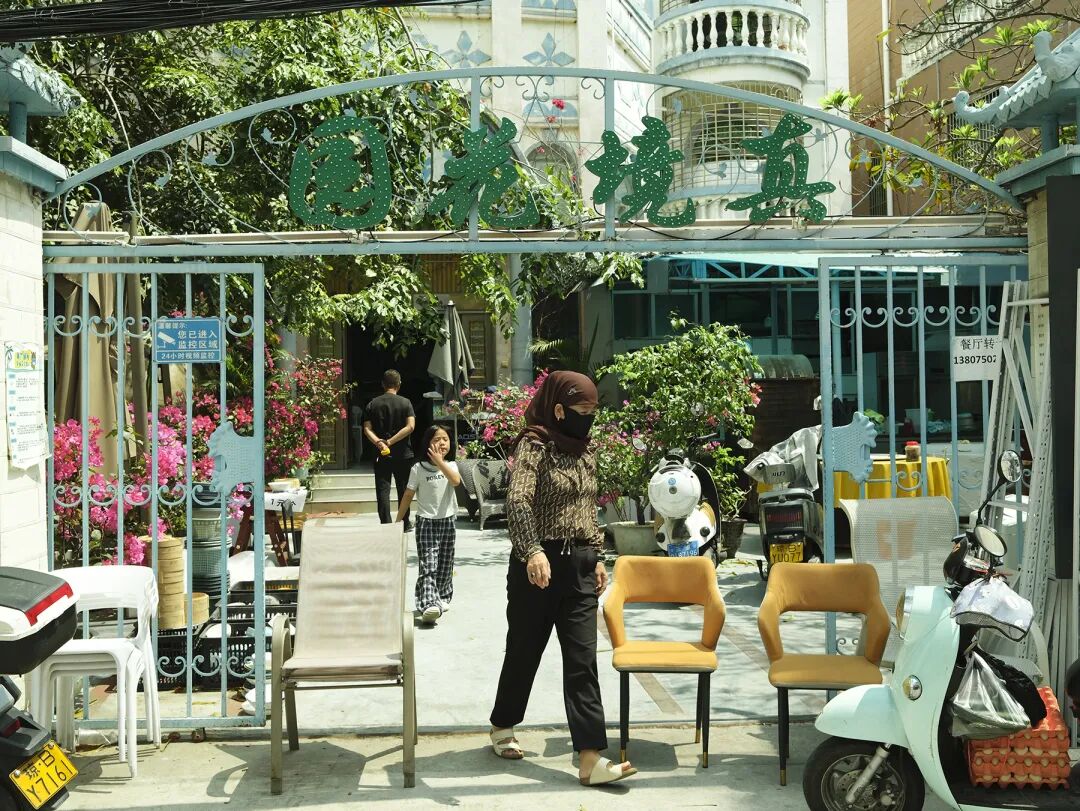
Huixin Village (Huixin Muslim Village) covers an area of 0.4 square kilometers (or its actual community-administered jurisdiction). Several winding, narrow alleys connect densely packed buildings, making it very easy to get lost if you walk around here. Most of the multi-story houses on either side were built in recent years, with some retaining Islamic architectural elements. Due to Hainan's tropical climate, many residential homes intentionally reserve courtyard areas for cooking, eating, and cooling off. Before a large influx of outsiders poured in, villagers in Huixin Village (Huixin Muslim Village) lived with their doors unlocked at night. Because of the favorable Hui Muslim residential environment in Huixin Village (Huixin Muslim Village), a portion of the Hui Muslims who come here to spend the winter each year hail from Gansu Province and the Ningxia Hui Autonomous Region.
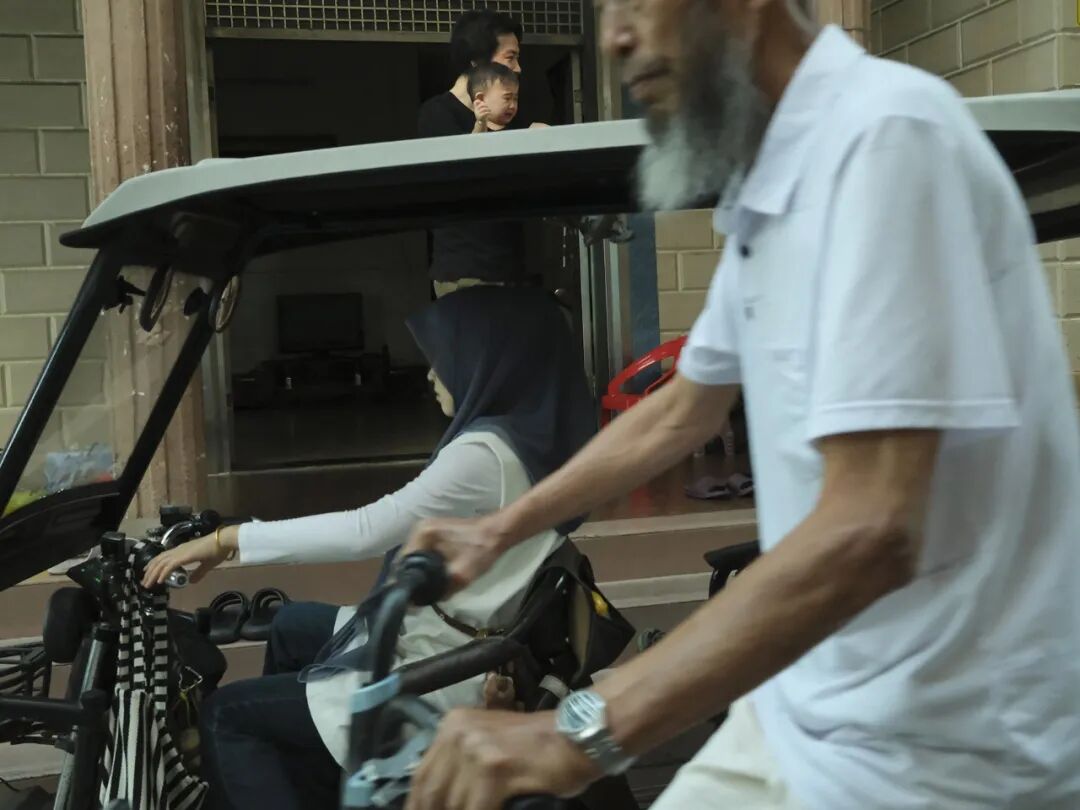
While walking through the alleys during Ramadan, I encountered Hui Muslims going door-to-door handing out festive candies. Historically, Hui Muslims on Hainan Island did not intermarry with other ethnic groups, but modern times have seen a gradual opening up, provided that the non-Hui spouse converts to Islam and follows Hui Muslim customs. I also witnessed a Muslim funeral; photography is strictly prohibited inside the masjid and certain residential areas.
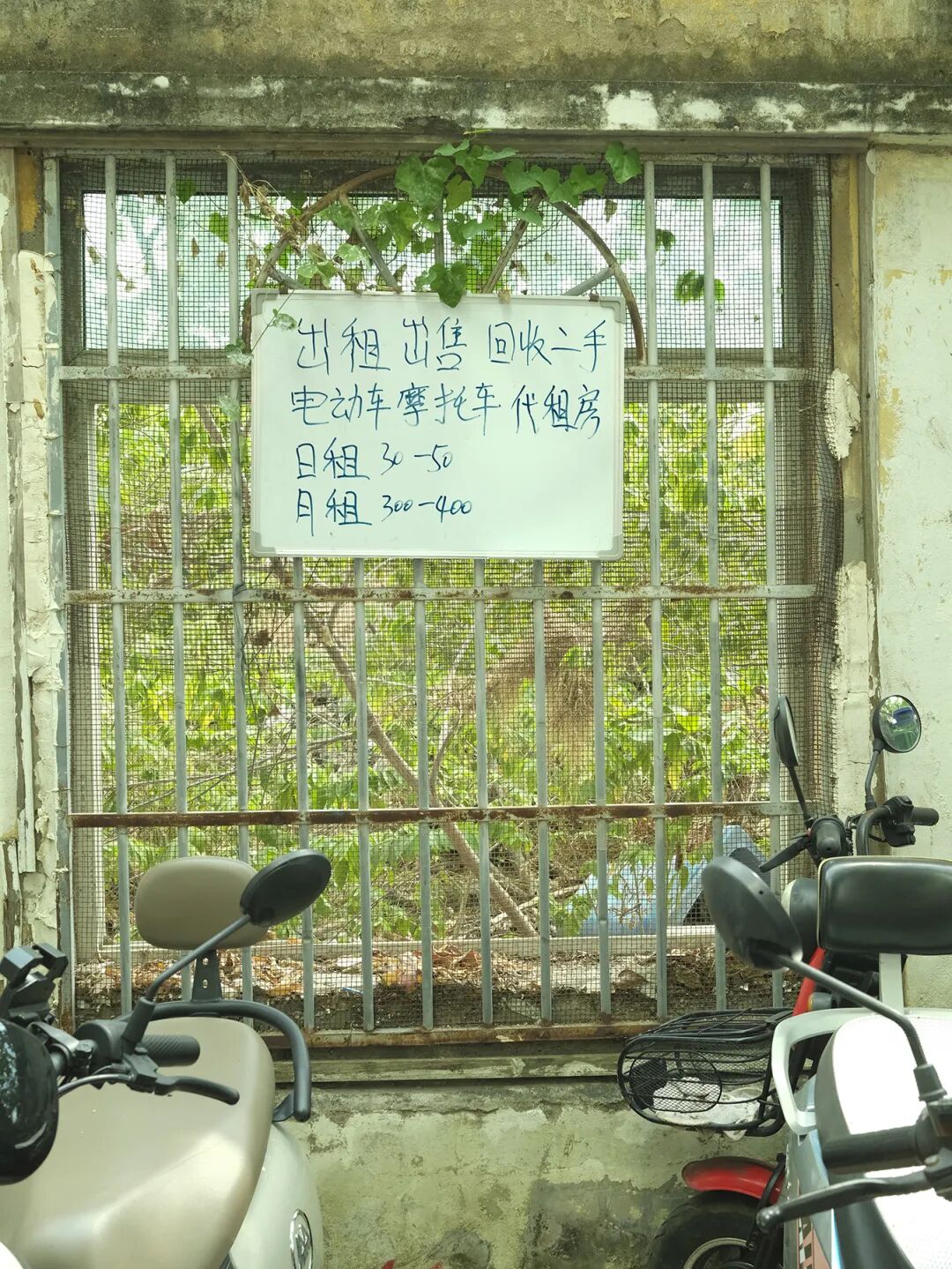
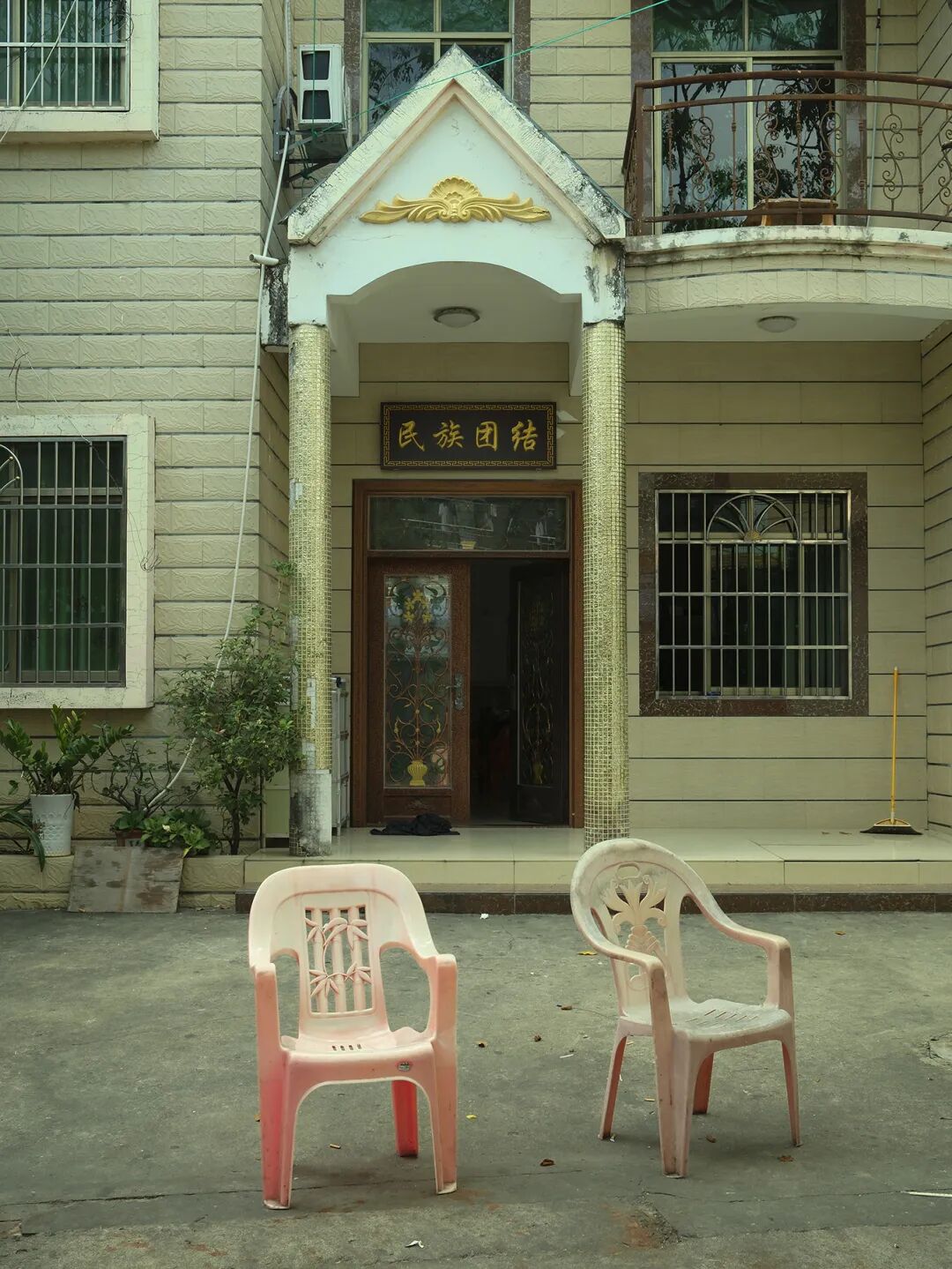
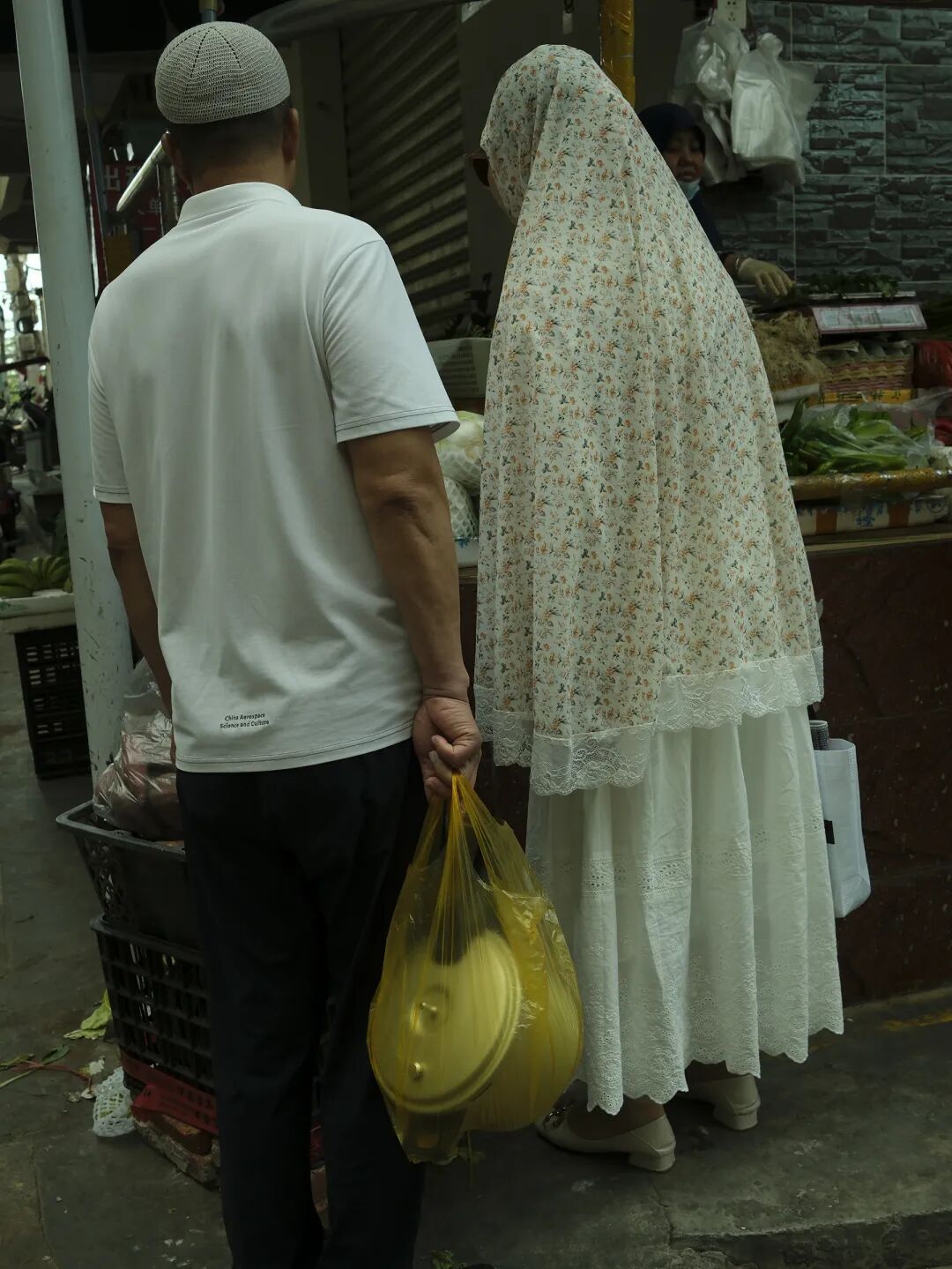
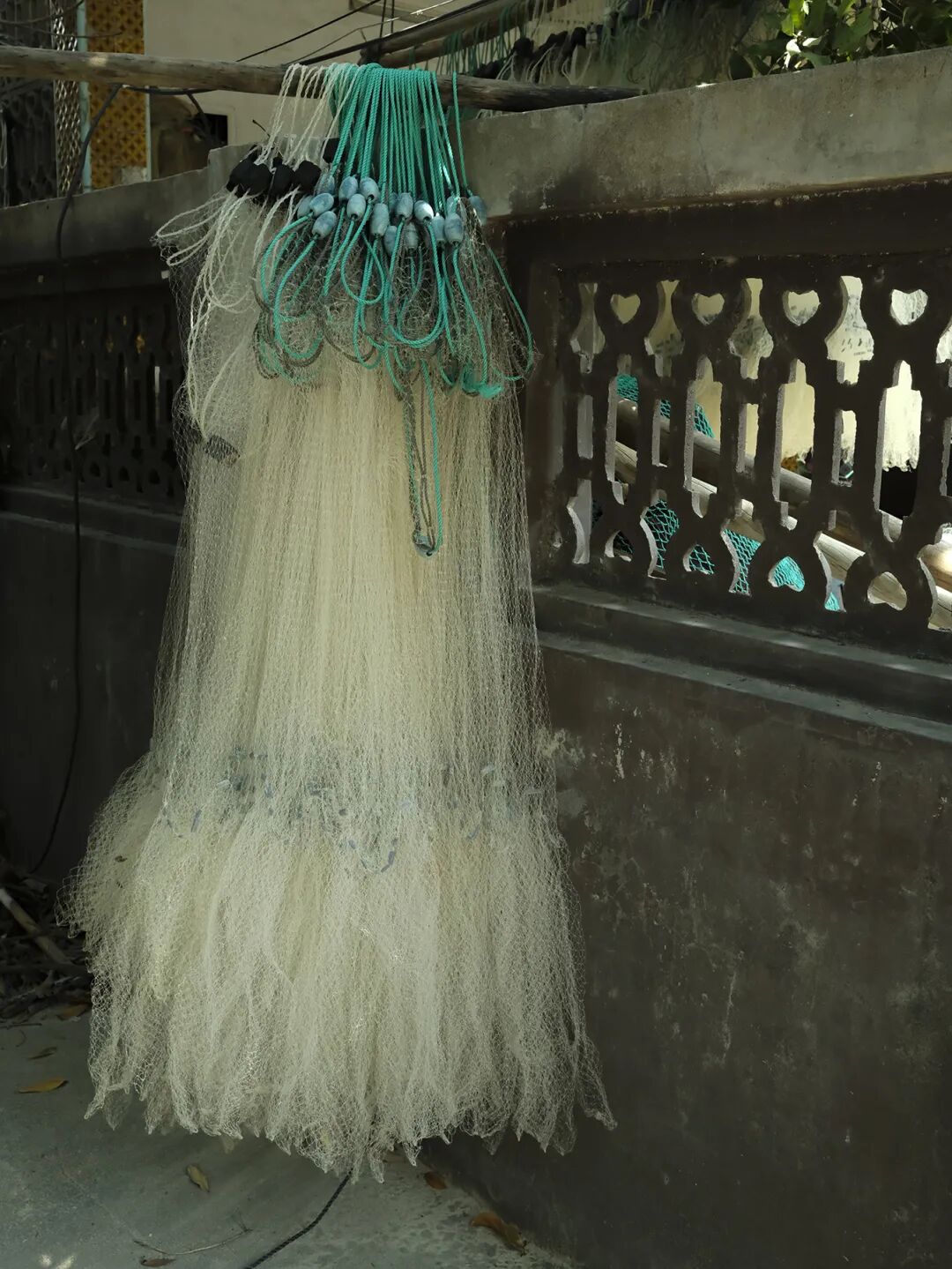
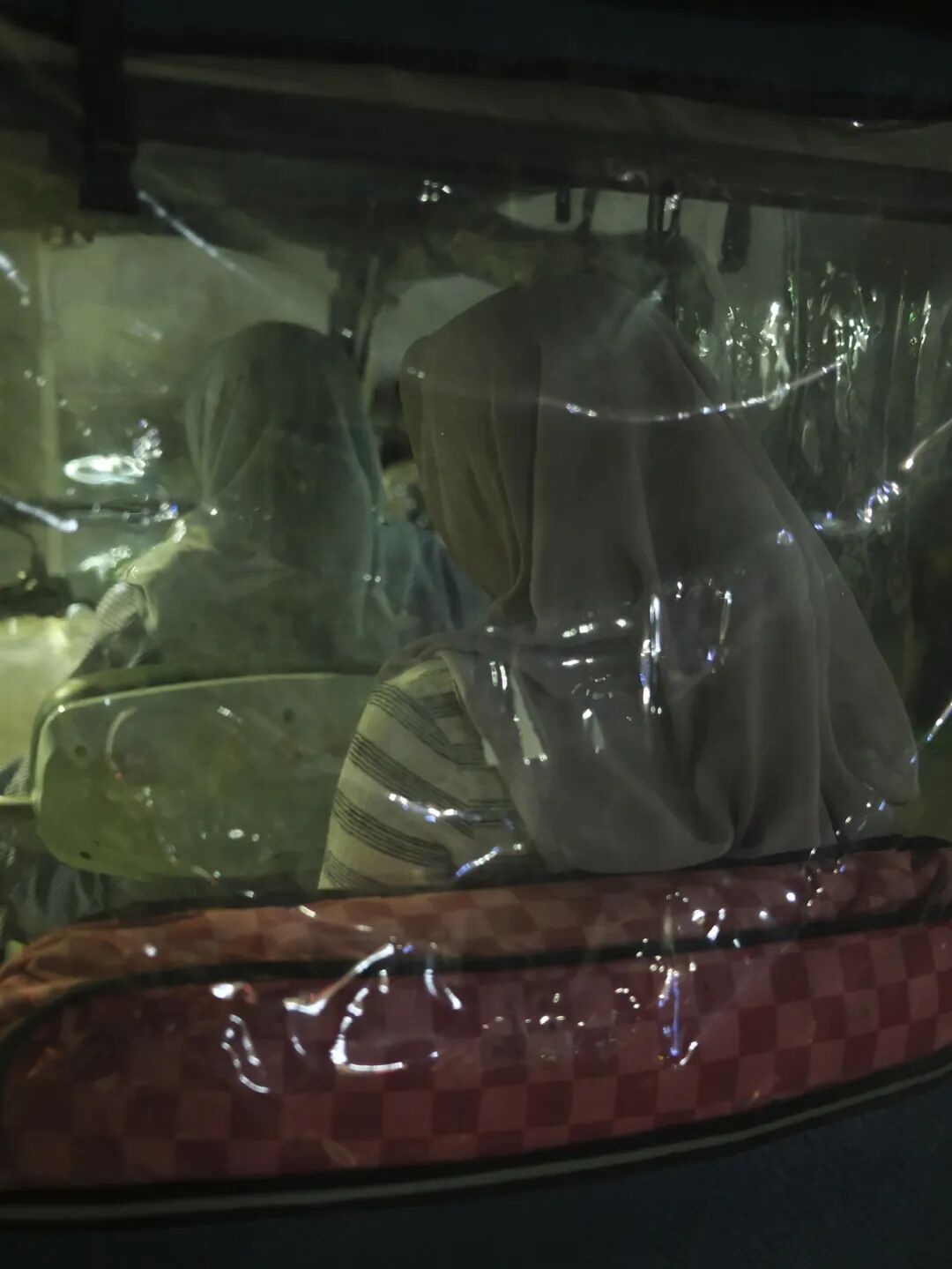
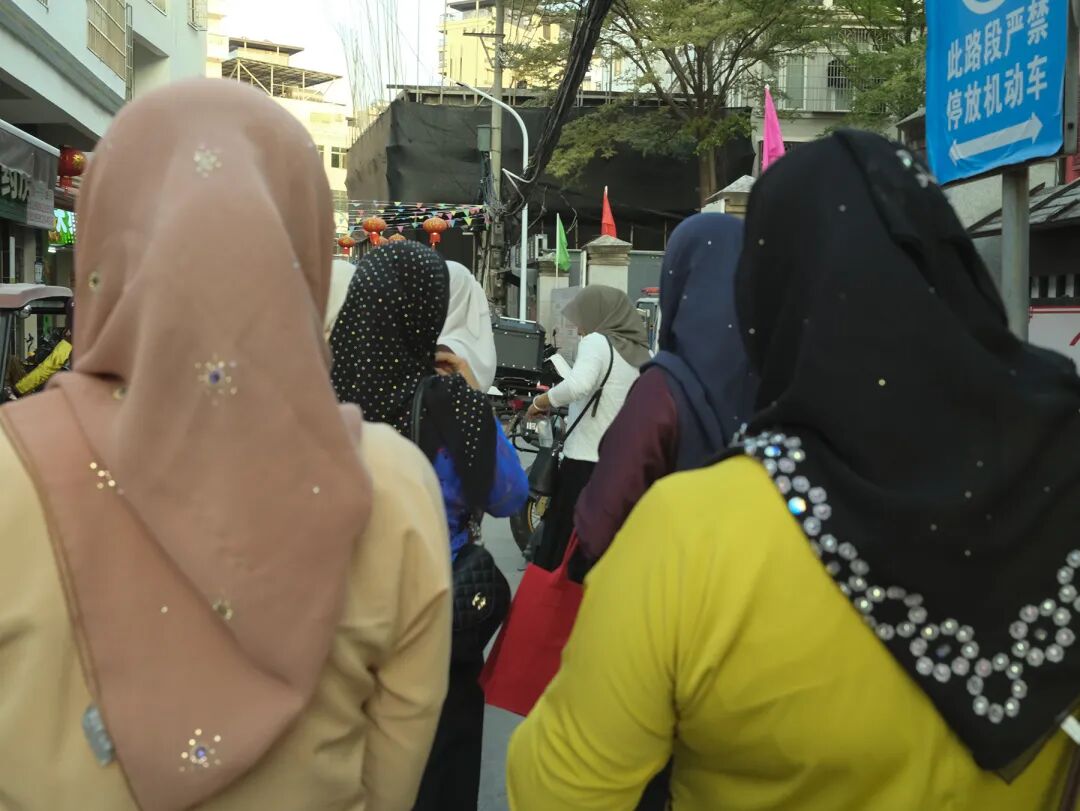
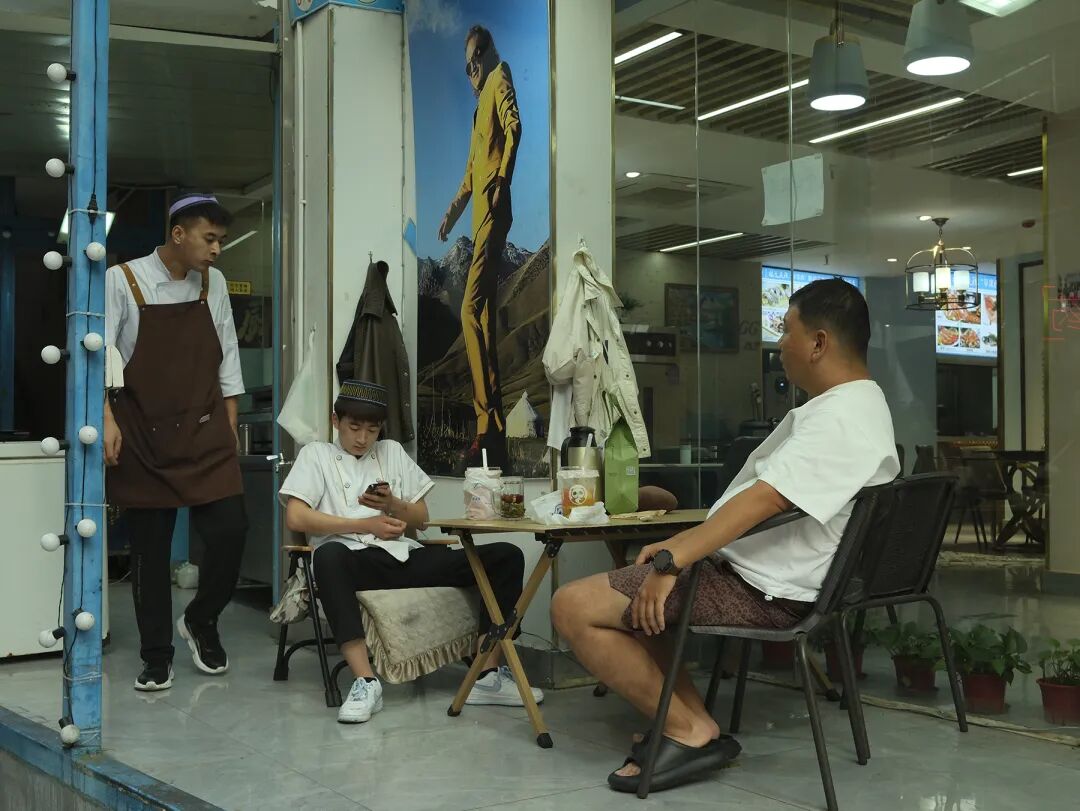
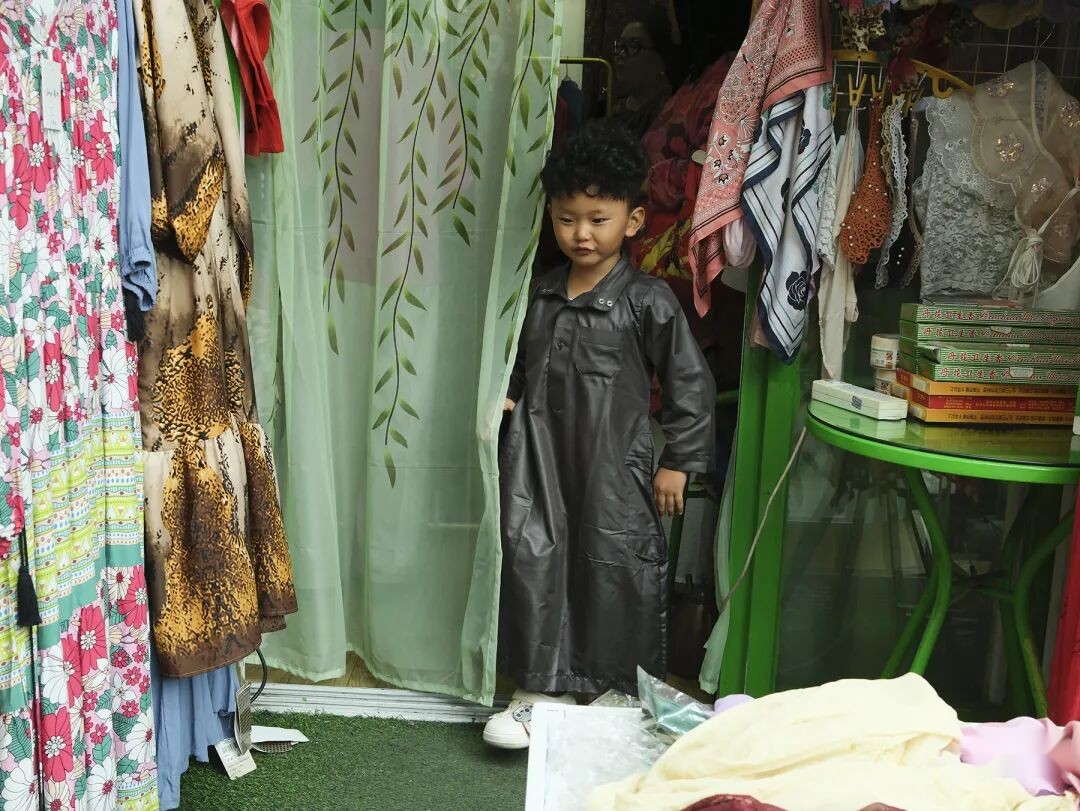
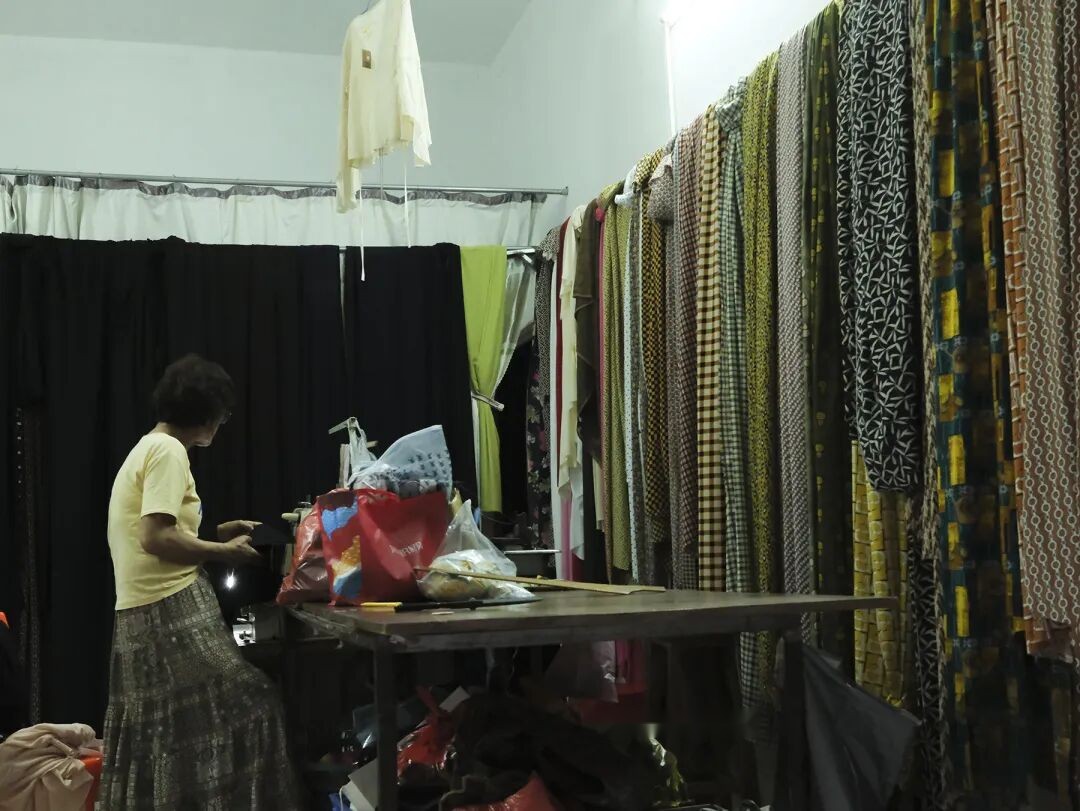
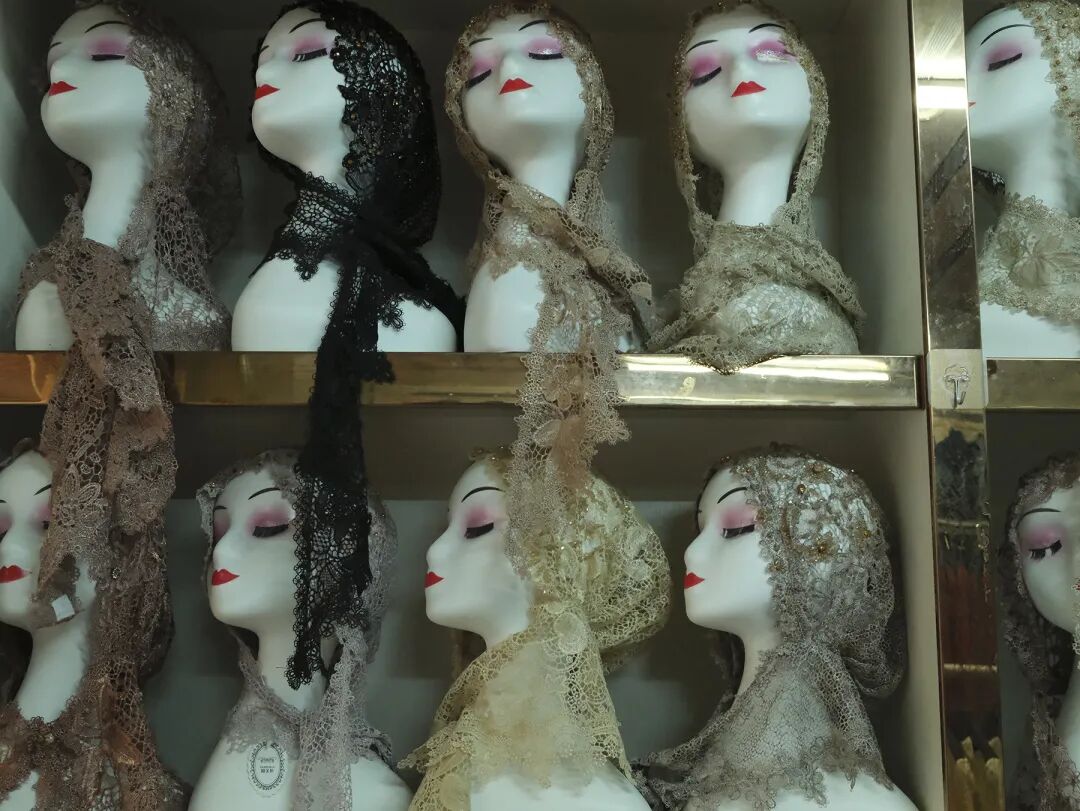
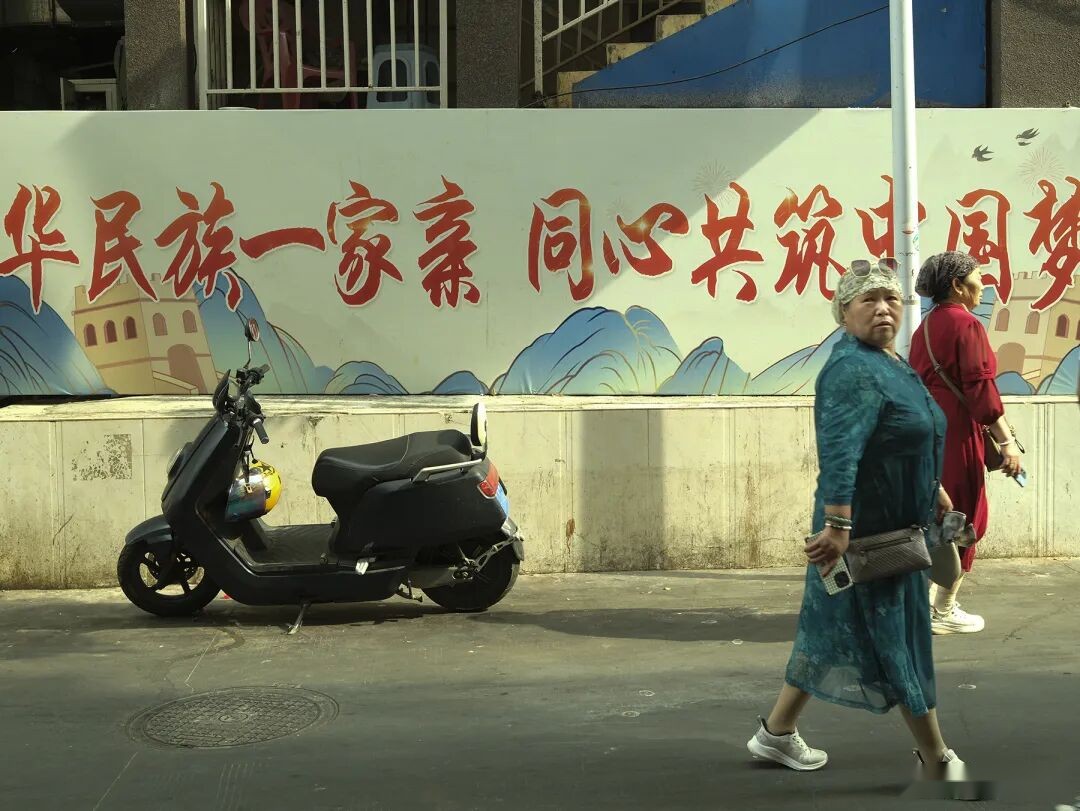
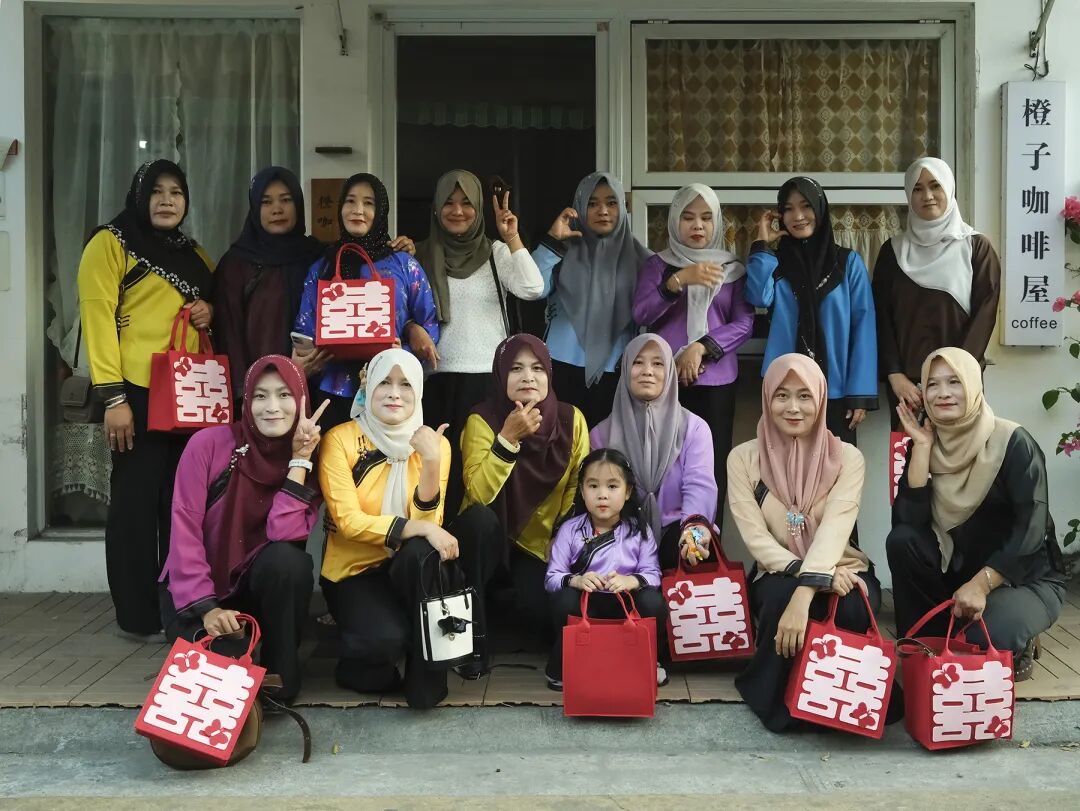
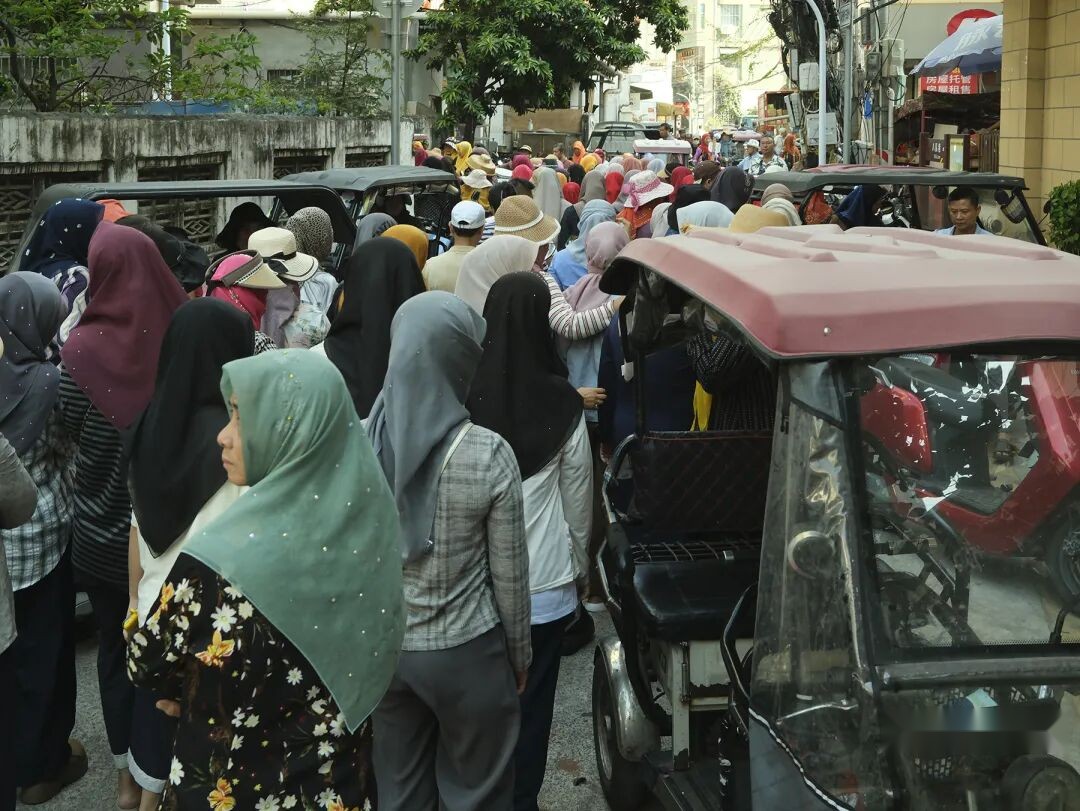
Photographed in Huixin Village (Huixin Muslim Village) during Ramadan, March 2026.
 Collapse Read »
A Comprehensive Deep Dive into the Documentary Short Film 'Huixin Village': The Southeast Asian Maritime Silk Road Genome and Contemporary Evolution of China's Southernmost Hui Muslim Village
Abstract:
An in-depth analysis focusing on the documentary project about Huixin Village (Huixin Muslim Village) in Sanya. It chronicles how this unique Muslim community—China's only one originating from the ancient Cham people of Southeast Asia—has thrived across generations on a tropical island, showcasing the harmonious coexistence of traditional religious practices and modern civilization.
Huixin Village (Huixin Muslim Village) is located in Fenghuang Town, Sanya City, Hainan Province, and stands as China's southernmost Hui Muslim settlement. This community is China's sole Muslim group originating from Southeast Asia, having lived here from generation to generation for over 900 years. Together with the neighboring Huihui Village (Huihui Muslim Village), they are collectively known as the Sanya Hui Muslim villages, with a combined population approaching nearly 10,000.
Around the 10th to 11th centuries, Arab and Persian Muslim merchants arrived in Champa (modern-day central Vietnam) via the Maritime Silk Road. While trading, they also introduced Muslim culture. In 1471, the Champa Kingdom was severely battered by the Lê Dynasty, causing a large number of Cham people to flee to the Malay Archipelago. Since the Malay Archipelago region had already widely embraced Islam, the Champa refugees encountered and accepted Islam there before returning to Champa to spread the faith.
As the Champa Kingdom repeatedly suffered from Vietnamese invasions and territorial encroachment, Cham Muslims migrated in multiple waves by boat from Xiazheng, Vietnam, to Hainan Island to seek refuge, escaping the chaos of war. Historical records date the earliest arrivals as far back as the late Tang Dynasty, with large-scale migrations concentrated during the Song and Yuan Dynasties. These groups partially blended with Arab and Persian foreign guests (fan ke) who had come to China to trade during the Tang and Song Dynasties. After the Ming Dynasty, Hui Muslims from the Fujian and Guangdong regions also continuously migrated to Hainan, ultimately converging during the Qing Dynasty to form the stable Hui Muslim communities of Huixin Village (Huixin Muslim Village) and Huihui Village (Huihui Muslim Village).
Huixin Village (Huixin Muslim Village) was once under Japanese occupation; the Japanese military built an airfield and drove out the local Hui Muslims living there. Following Japan's defeat and withdrawal, some of the Hui Muslims returned to Huixin Village (Huixin Muslim Village) to rebuild their homes on the original site.
The lifestyle customs of the Hui Muslims in Huixin Village (Huixin Muslim Village) reflect a blend of Islamic doctrine and local adaptability. While they speak Chinese, they still preserve their native language, Huihui speech, for communication. Huihui speech belongs to the Malayo-Polynesian branch of the Austronesian language family and is closely related to the Cham language. It is the only Austronesian-speaking Muslim group in China. Although Huihui speech is the mother tongue of Hainan's Hui Muslims and features a phonetic system—such as 19 initial consonants, 50 to 57 final vowels, and 7 to 10 tones—it has been spoken for a long time without developing its own writing system. In daily life, they use Chinese characters for reading and writing when interacting with the outside world. While some older Hui Muslims in the village cannot understand Chinese, younger generations are using Huihui speech less and less.
The religious traditions of the Hui Muslims in Huixin Village (Huixin Muslim Village) stem from the history of the Champa Kingdom's conversion to Islam, preserving major holidays such as Eid al-Fitr (Kaizhai Jie), the Mawlid (Shengji Jie), and Eid al-Adha (Guerbang Jie). Huixin Village (Huixin Muslim Village) features two mosques. The Southern Mosque (Qingzhen Nansi) was originally built during the Southern Song Dynasty and is the oldest masjid in ancient Yazhou, boasting a history of over 900 years. Rebuilt in 2013, it serves as a historical testament to the development of Muslims in Sanya. The Nankai Mosque was built during the mid-Ming Dynasty, bombed flat during the War of Resistance Against Japanese Aggression, demolished during the Cultural Revolution, and rebuilt in 1980. Later subjected to ethnic integration, it features distinct Islamic religious characteristics and traditional architectural styles. These two masjids serve as the venues for religious activities among the villagers of Huixin Village (Huixin Muslim Village). During Ramadan, some Muslims go to the masjid to perform their daily dua and prayers five times a day.
Huixin Village (Huixin Muslim Village) covers an area of 0.4 square kilometers (or its actual community-administered jurisdiction). Several winding, narrow alleys connect densely packed buildings, making it very easy to get lost if you walk around here. Most of the multi-story houses on either side were built in recent years, with some retaining Islamic architectural elements. Due to Hainan's tropical climate, many residential homes intentionally reserve courtyard areas for cooking, eating, and cooling off. Before a large influx of outsiders poured in, villagers in Huixin Village (Huixin Muslim Village) lived with their doors unlocked at night. Because of the favorable Hui Muslim residential environment in Huixin Village (Huixin Muslim Village), a portion of the Hui Muslims who come here to spend the winter each year hail from Gansu Province and the Ningxia Hui Autonomous Region.
While walking through the alleys during Ramadan, I encountered Hui Muslims going door-to-door handing out festive candies. Historically, Hui Muslims on Hainan Island did not intermarry with other ethnic groups, but modern times have seen a gradual opening up, provided that the non-Hui spouse converts to Islam and follows Hui Muslim customs. I also witnessed a Muslim funeral; photography is strictly prohibited inside the masjid and certain residential areas.
Photographed in Huixin Village (Huixin Muslim Village) during Ramadan, March 2026.
Collapse Read »
Experiencing Eid al-Adha in Sanya: Halal Seafood, Ancient Mosques, and Utsul Muslim Culture in Hainan
[Internet Repost]
A Photo Journal of Eid al-Adha in Huihui Village, Sanya: Tropical Island Mosque Prayers, Visiting Family, and Festive Feasts

Summary:
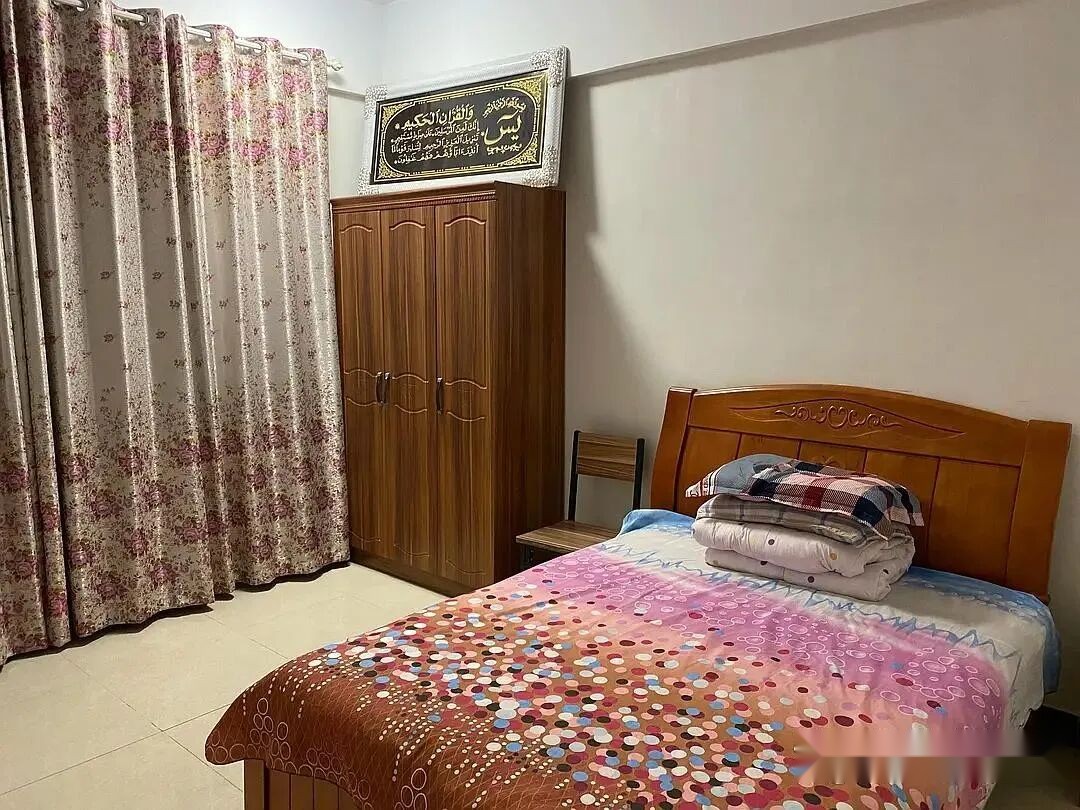
Nearly 200 documentary photos capture the grand celebration of Eid al-Adha in Sanya's Tianya District. From the solemn morning congregational prayers with thousands gathered at the mosque, to families slaughtering and sharing sacrificial meat, exchanging fried sanzi (crispy fried dough twists), and warmly hosting friends and relatives, this vibrant photo essay captures a joyful and peaceful holiday scene.
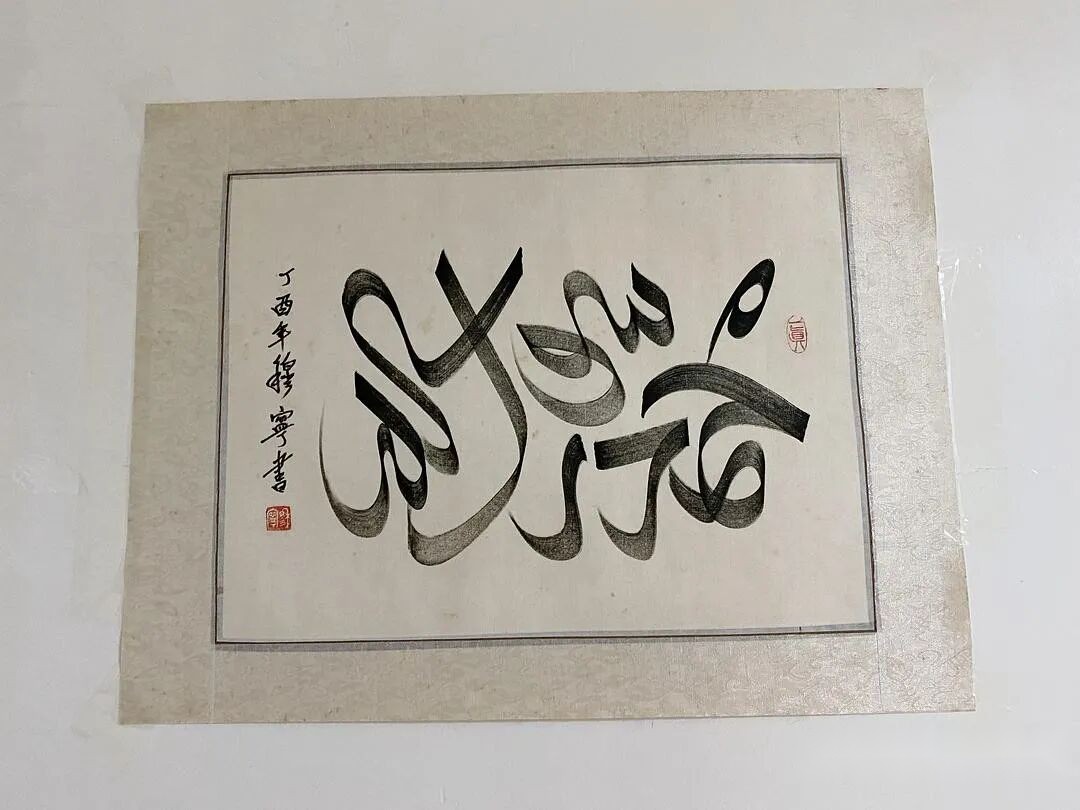
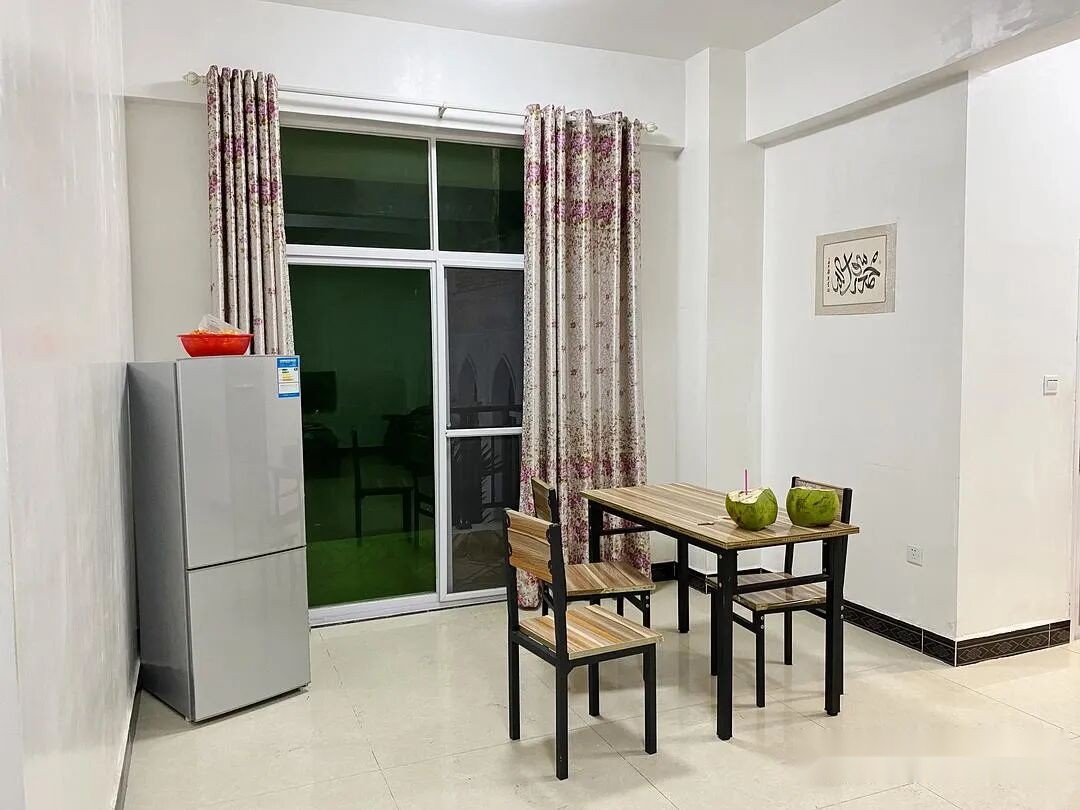
Back in July and August 2020, my wife Zainab and I took our honeymoon trip, and our very first stop was Sanya to celebrate Eid al-Adha. A few years prior, I had visited the local Muslim community here on my own, but this time around, experiencing the holiday with our good friend, young Muslim artist Muning, made it so much more fun and insightful.
July 31
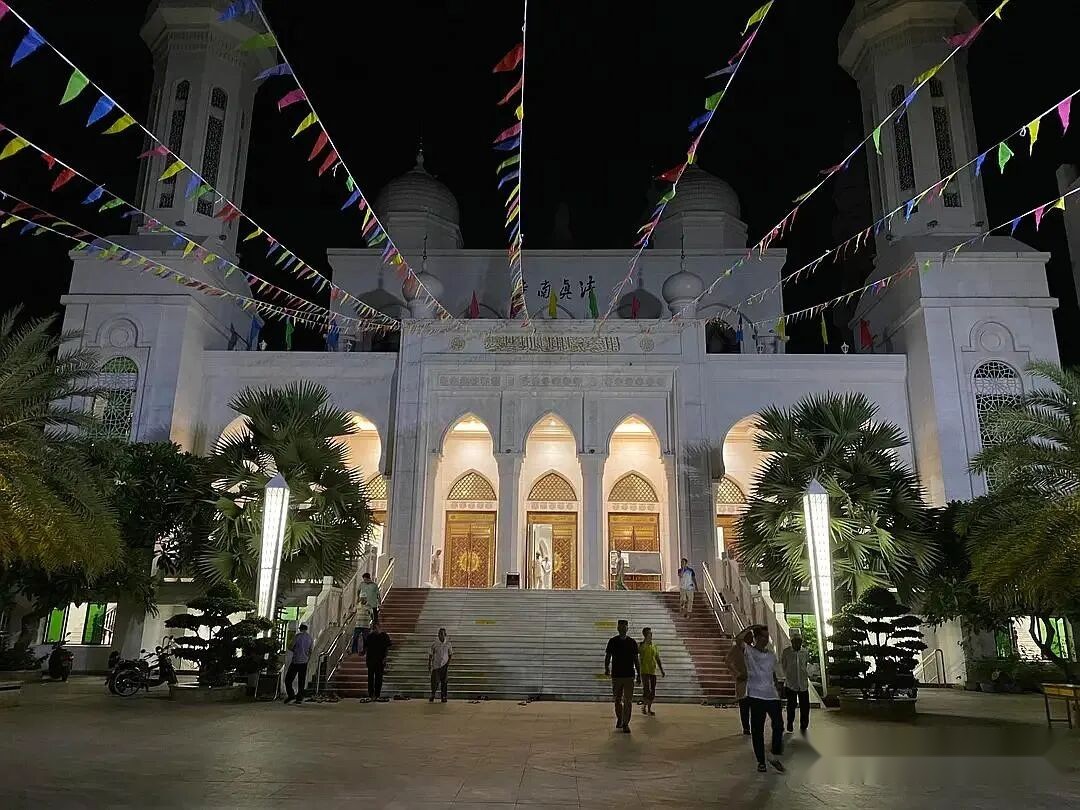
We caught a late-night flight out of Beijing on July 30 and arrived in Sanya in the wee hours of July 31. Muning hooked us up with a place right next to Huixin Mosque (Huixin Muslim Mosque) in Huixin Village (Huixin Muslim Village)—a 100% genuine 'masjid-view room.' During the winter months, Muslims from all over China rent places here for long stays, but come summer, it's practically a ghost town.

Right on the wall hung some Arabic calligraphy by Teacher Muning.
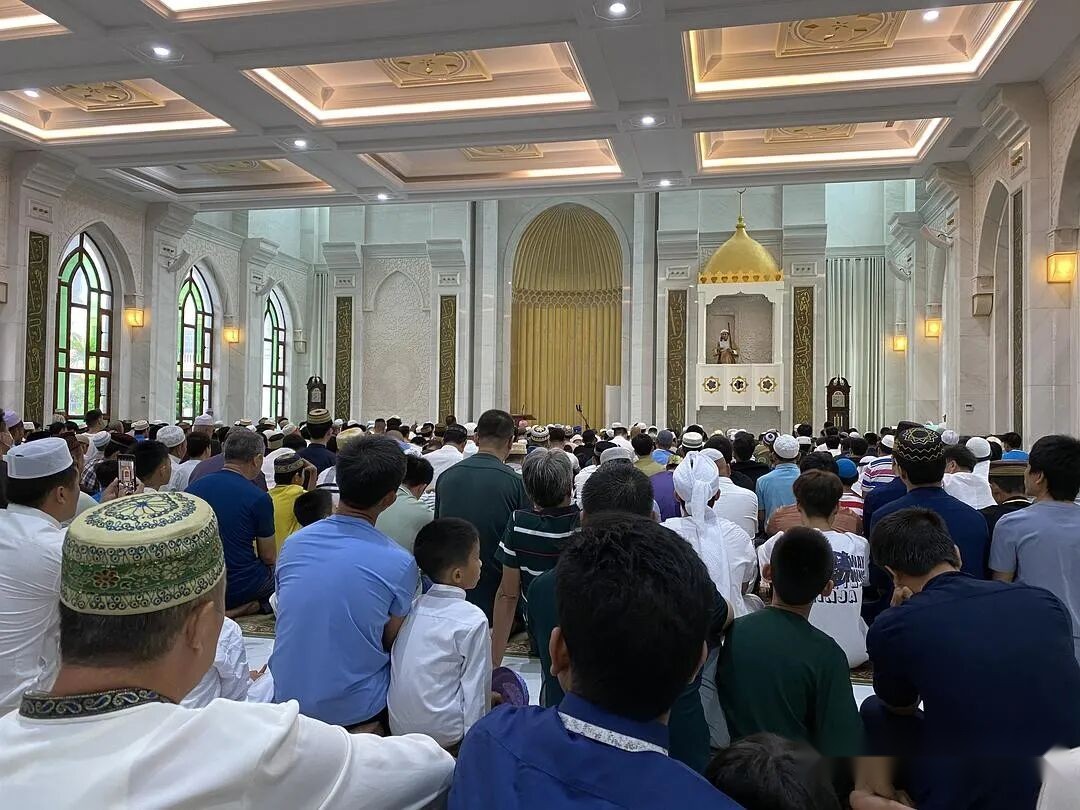
After catching a quick breath, we headed downstairs to Huixin Mosque to pray Fajr.

Following the morning prayer and a short break, we headed back into the main hall a little past 7 AM for the Eid al-Adha congregational prayers (Eid prayer). The imams here are all local Hui Muslims from Huihui Village, and the khutbah (religious sermon) was delivered in the local Utsul language (Tsat language). To someone who doesn't speak Utsul, it sounds like a fascinating blend of Malay, Chinese, and Arabic.
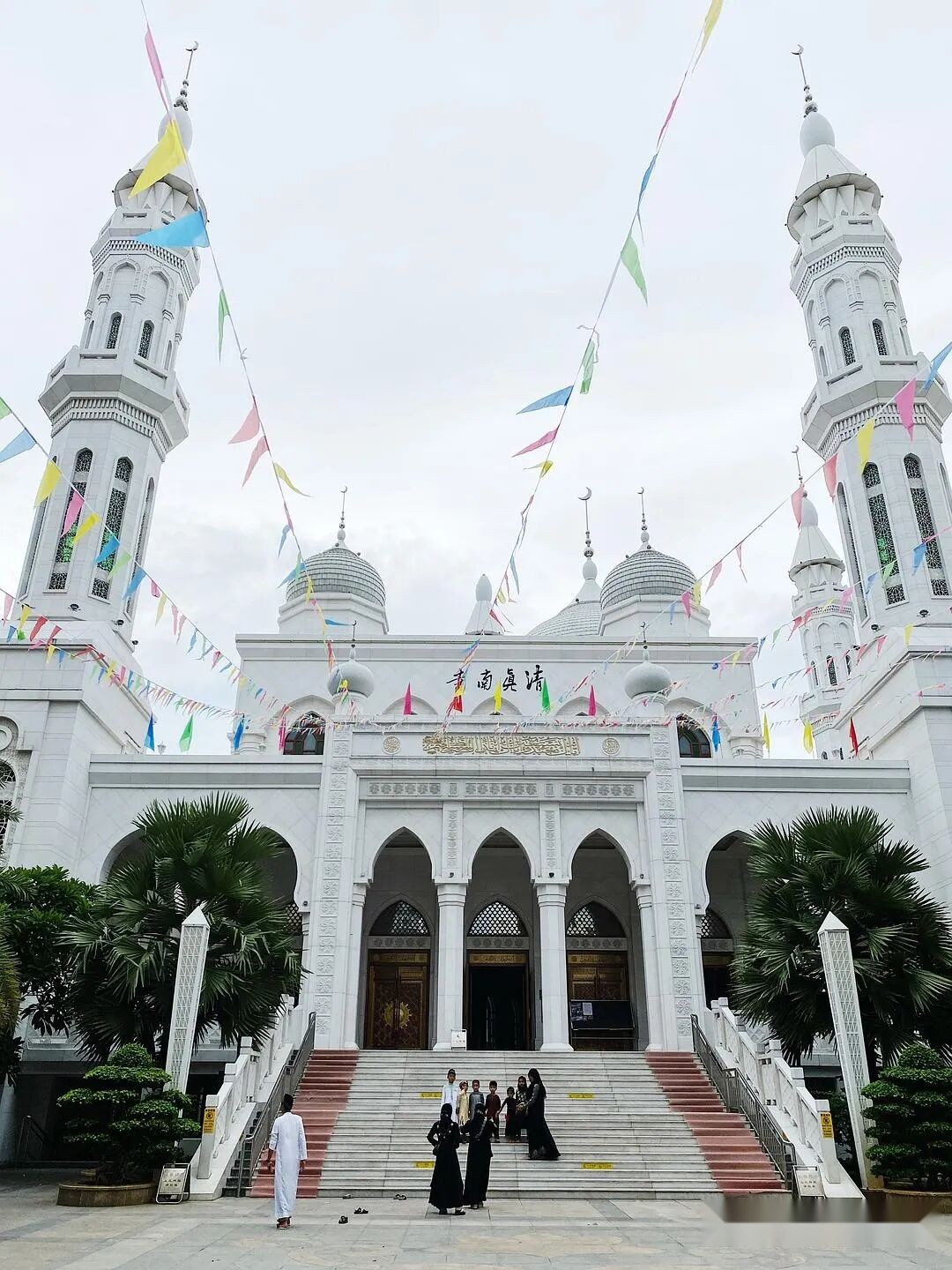
The Utsul language (Tsat language) is currently classified under the Austronesian language family, Malayo-Polynesian branch, Chamic subgroup. It shares the most common ancestry with the Roglai language of southern Vietnam, yet it stands out as the most unique language in the Chamic subgroup due to its heavy incorporation of Sinitic (Chinese-Tibetan) elements. When the Utsul people first arrived on Hainan Island, their language was likely quite close to Proto-Chamic. However, through continuous, close interaction with neighboring Chinese-speaking populations, the Utsul language evolved—its grammar grew closer to Chinese, its Chinese vocabulary expanded massively, and it simultaneously developed monosyllabic, tonal systems that are completely absent in other Austronesian languages.

In her published book 'A Study of the Utsul Language', Professor Zheng Yiqing compares the Utsul language with the Rade language (a Chamic language spoken in the mountainous regions of southern Vietnam) and concludes that the Utsul language and Rade language separated about 1,000 years ago.
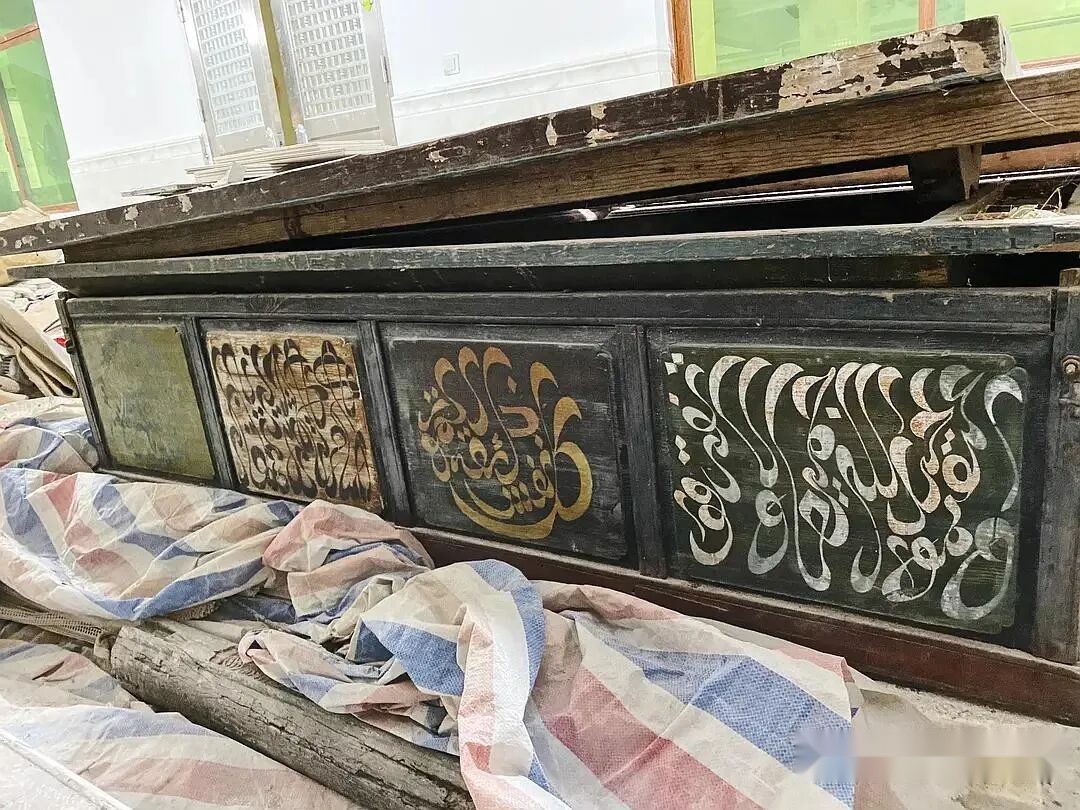
After the Eid prayer wrapped up, Muning showed me some Qing Dynasty roof purlins and inscribed wooden plaques stored away in the warehouse of Huixin Mosque.

The roof purlins of traditional brick-and-tile houses built by the Utsul people of Sanya usually feature exquisite wood carvings of Quranic verses, but as old houses get renovated and rebuilt, precious few of these are left today.
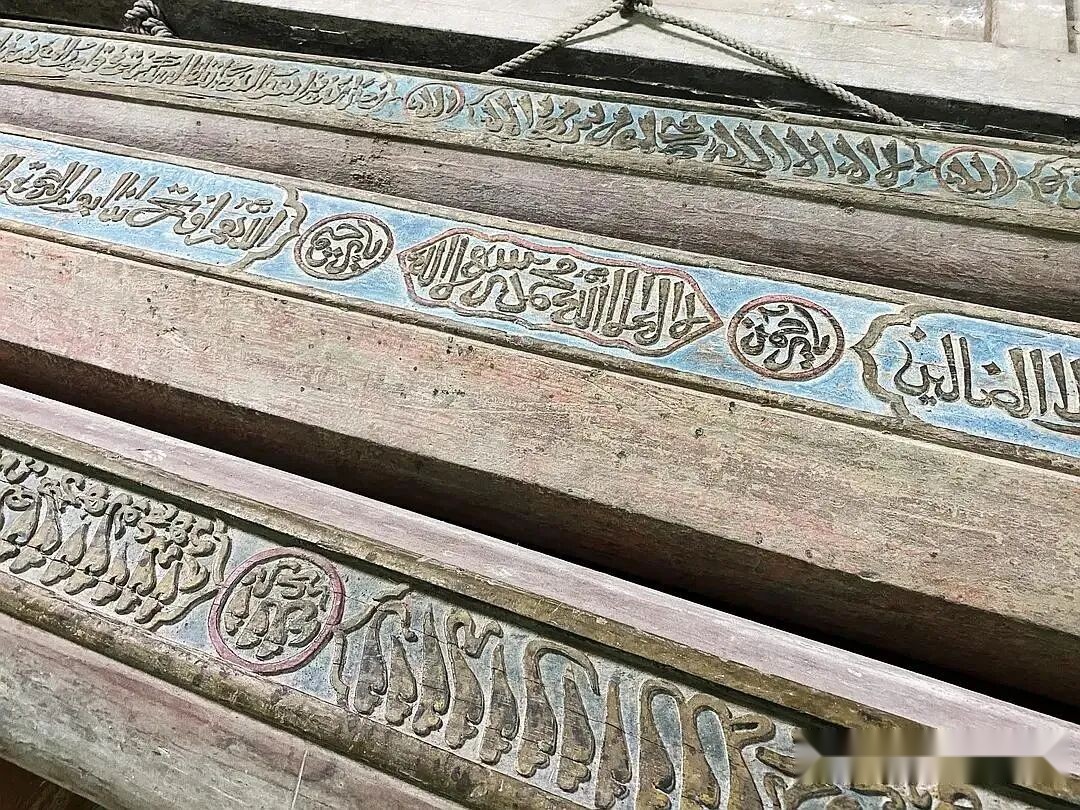
Pieces of minbars (pulpits) and Qing Dynasty tombstones piled up in various corners of Huixin Mosque.
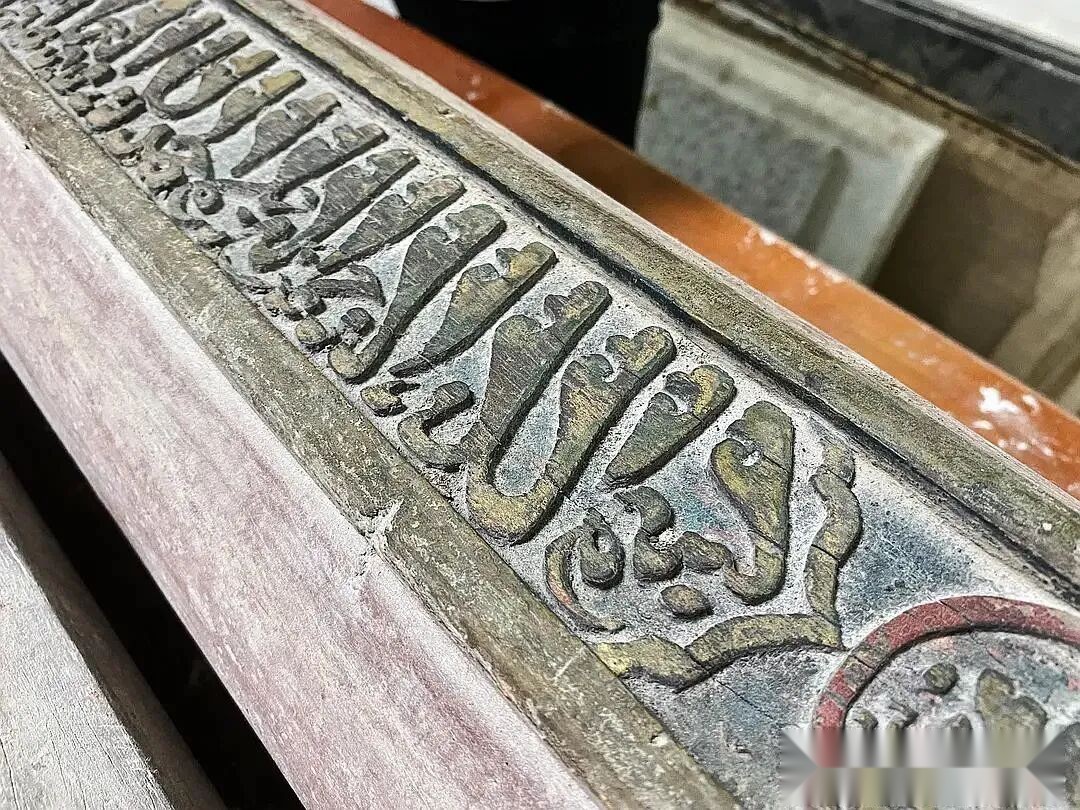
Leaving Huixin Mosque, Muning took me to visit the home of a teacher who collects traditional Utsul houses' roof purlins inscribed with Arabic script. Every single one of these purlins once belonged to a traditional brick-and-tile home built by the Sanya Utsul people.
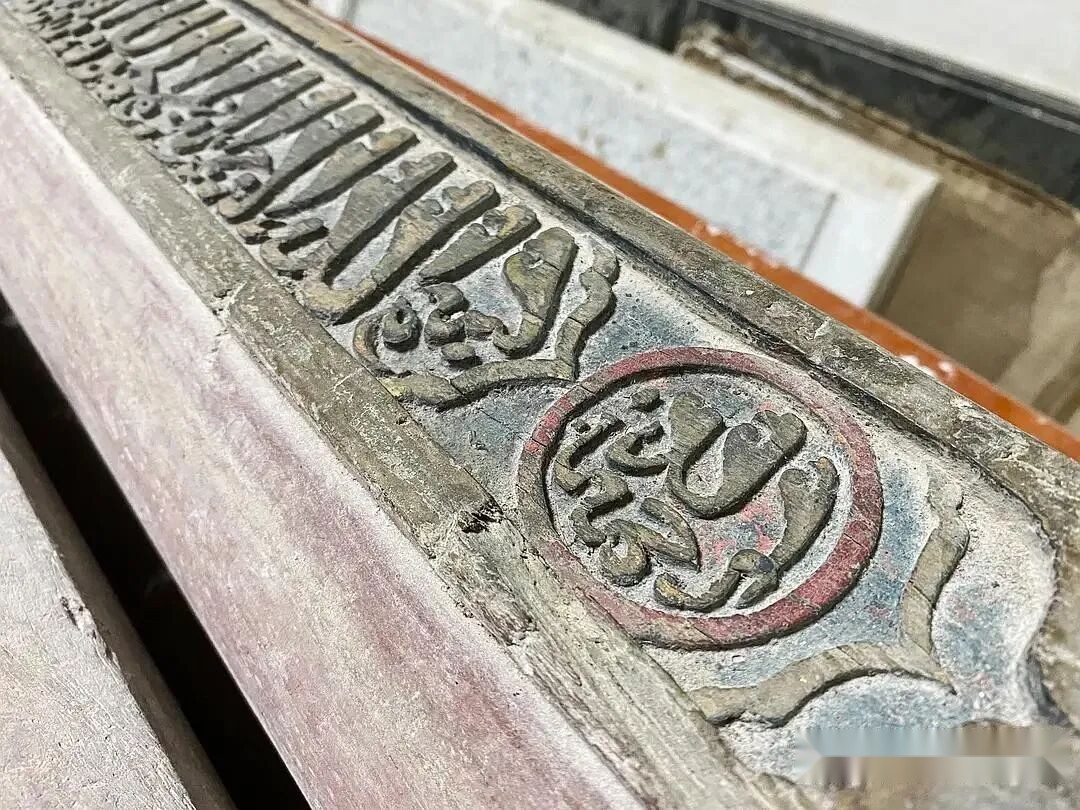
Muning took us out for breakfast, where we ran right into a family throwing a banquet because their kid got accepted into Tsinghua University.
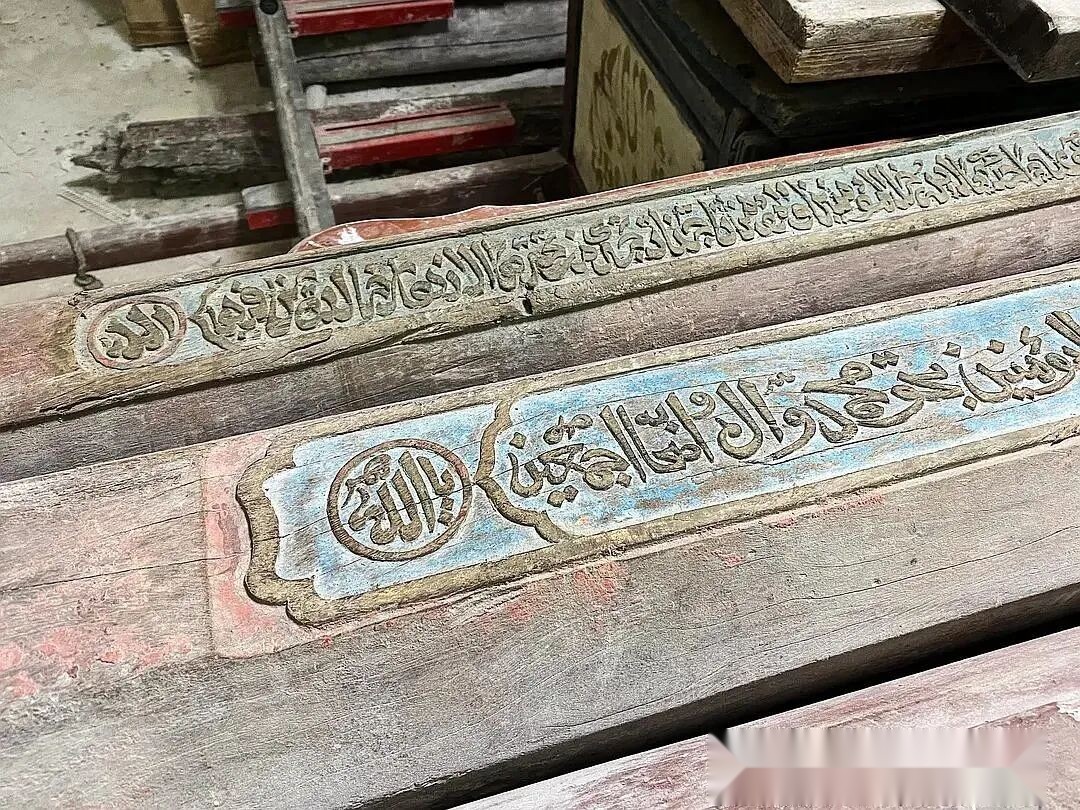
Congee served with chicken.
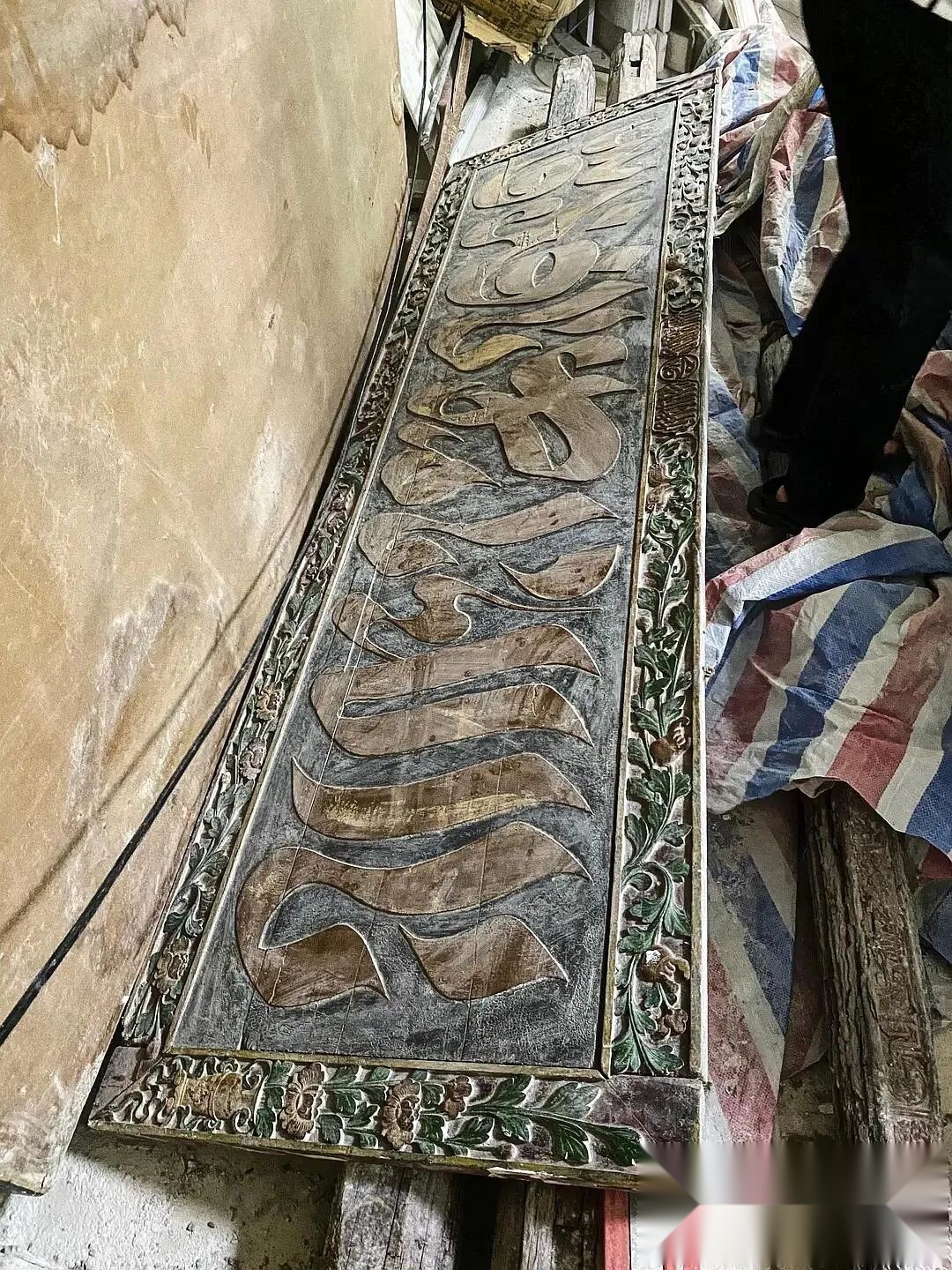
The fermented soybean paste was exceptionally delicious.
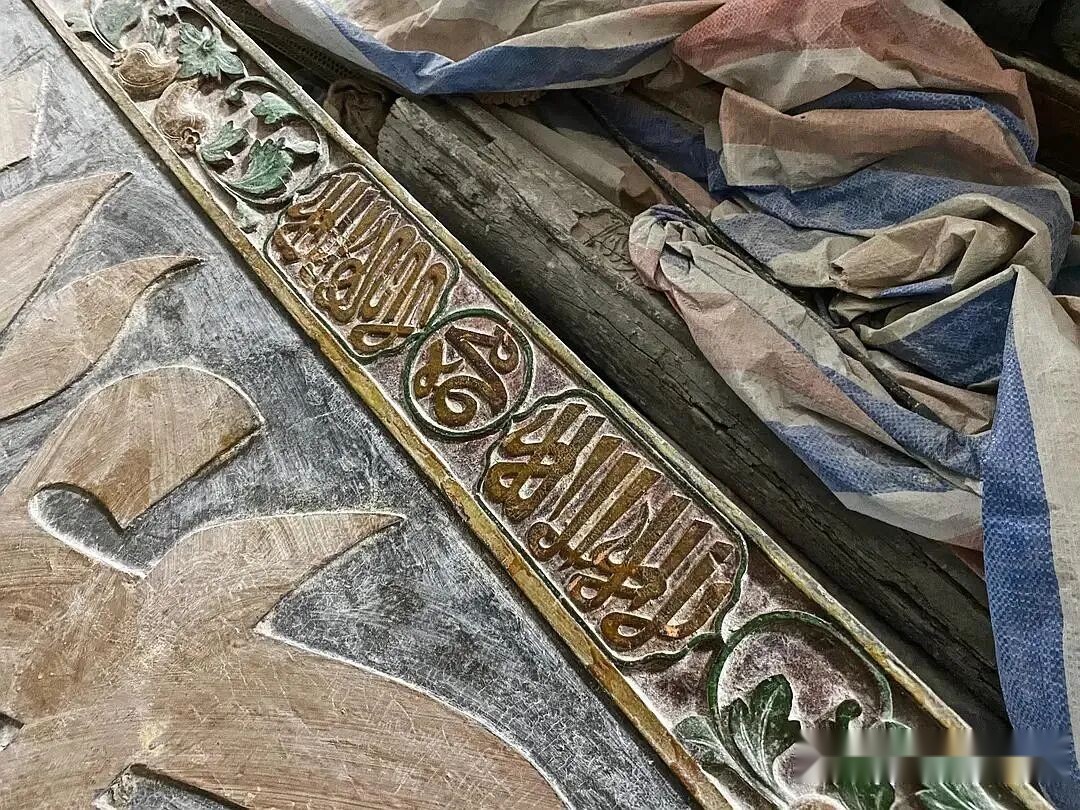
After finishing breakfast, Muning took us to pick out our sheep. One of these sheep was intended as our (Zainab's and my) qurbani (sacrificial offering), and the other was for Muning's family. Muning had bought them locally, picking out authentic Hainan Dongshan mutton sheep.
We led the sheep over to the designated qurbani slaughter site.
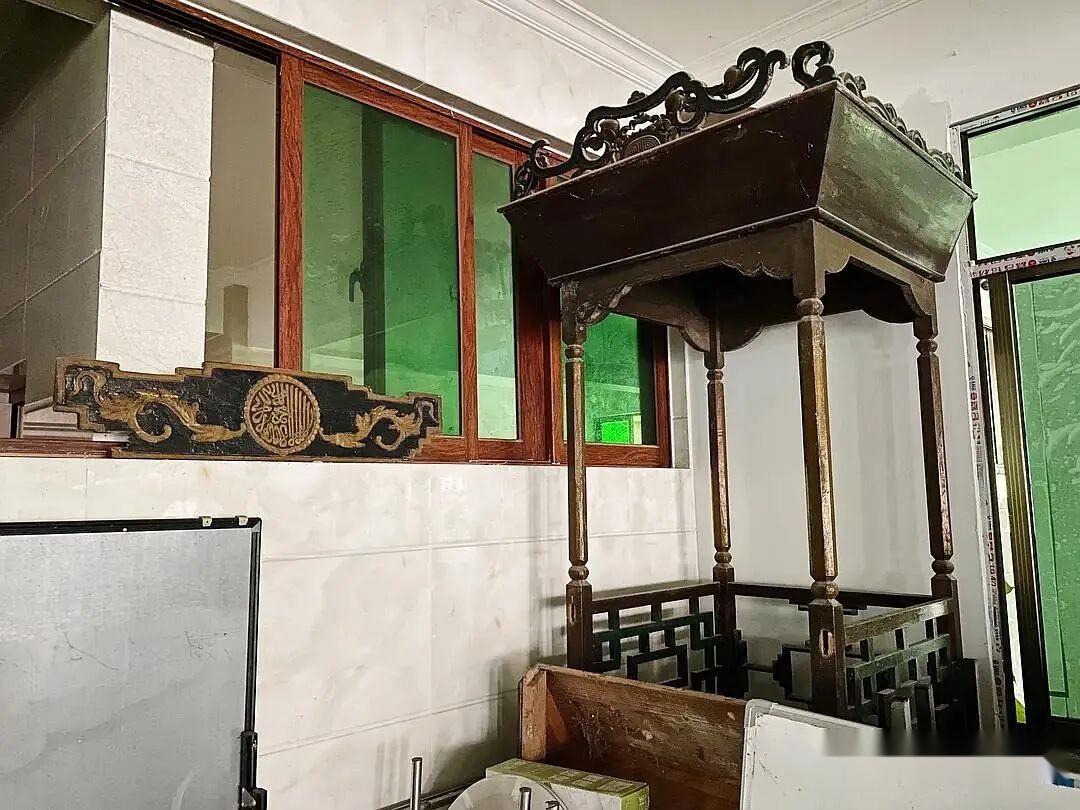
Once the slaughter was complete, the mutton was divided into three portions: one for our own household, one to share with friends, and one to give away to those in need.

Washed sheep tripe and intestines.
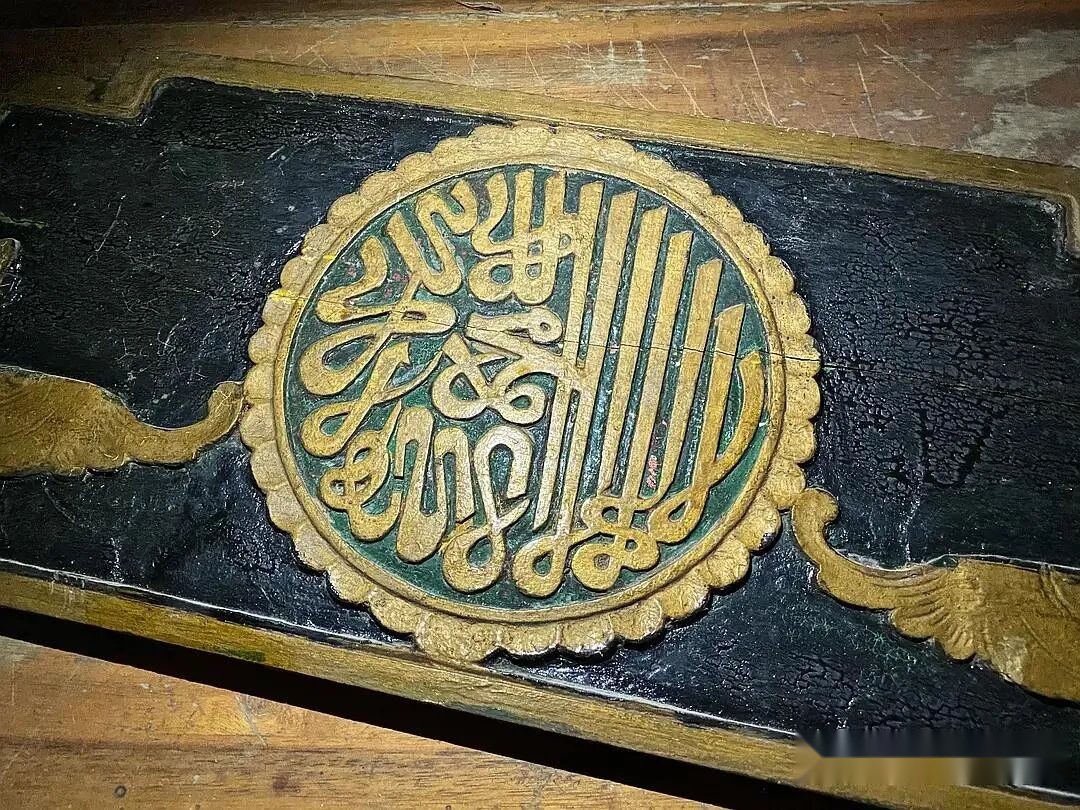
We asked our neighbor to cook up a dish of Sanya-style dry-fried mutton for us. Normally, their family runs a roast duck stall right next to Huixin Mosque, but they were taking a break for the Eid holidays.

The imam who performed our qurbani, who hails from Turpan, Xinjiang, whipped up a signature Xinjiang-style clear-stewed mutton for us. It was out of this world, and the mutton broth was insanely good.
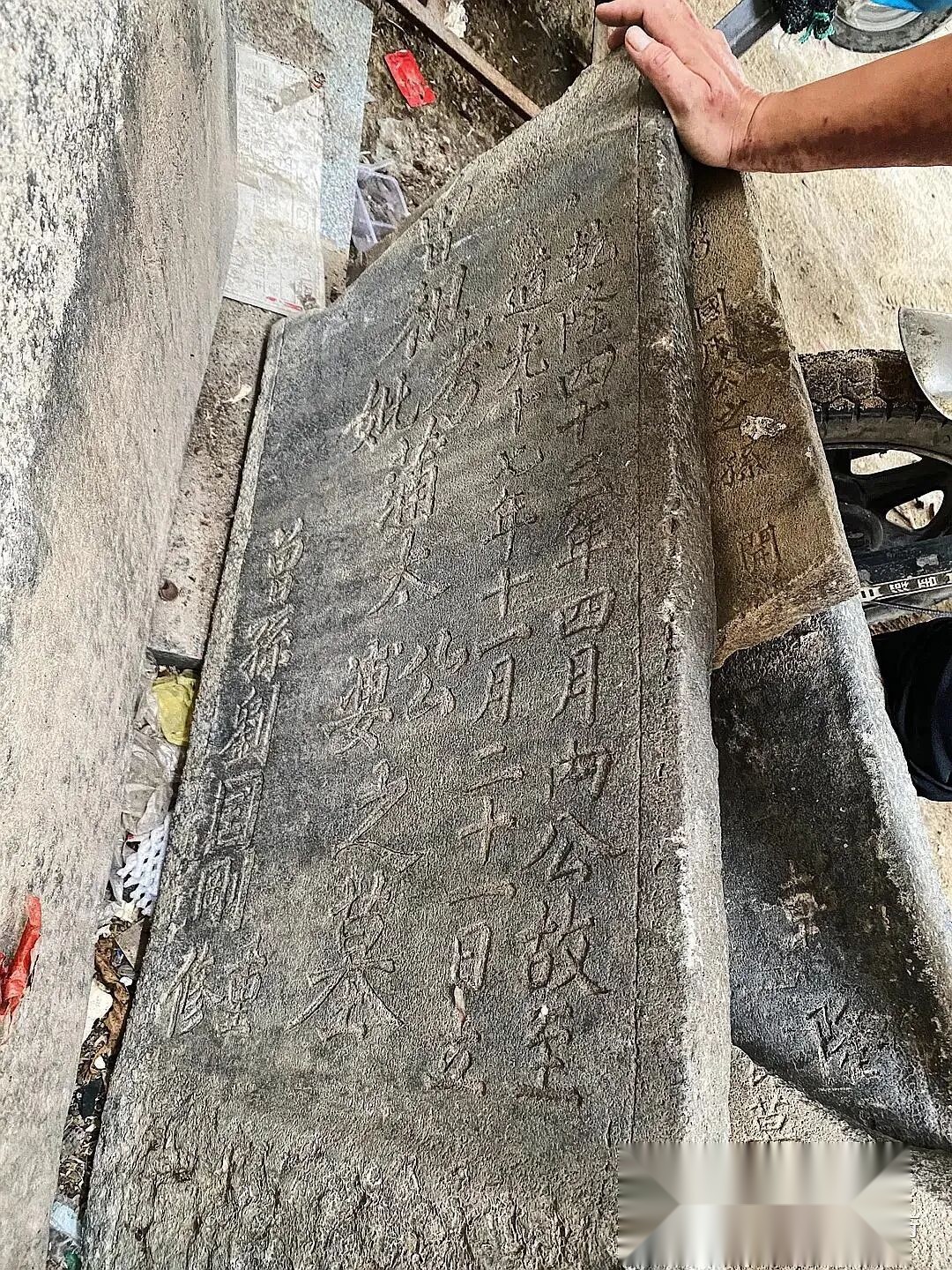
Muning gifted me an Arabic calligraphy art piece he hand-carved out of a coconut shell. It looks stunning.
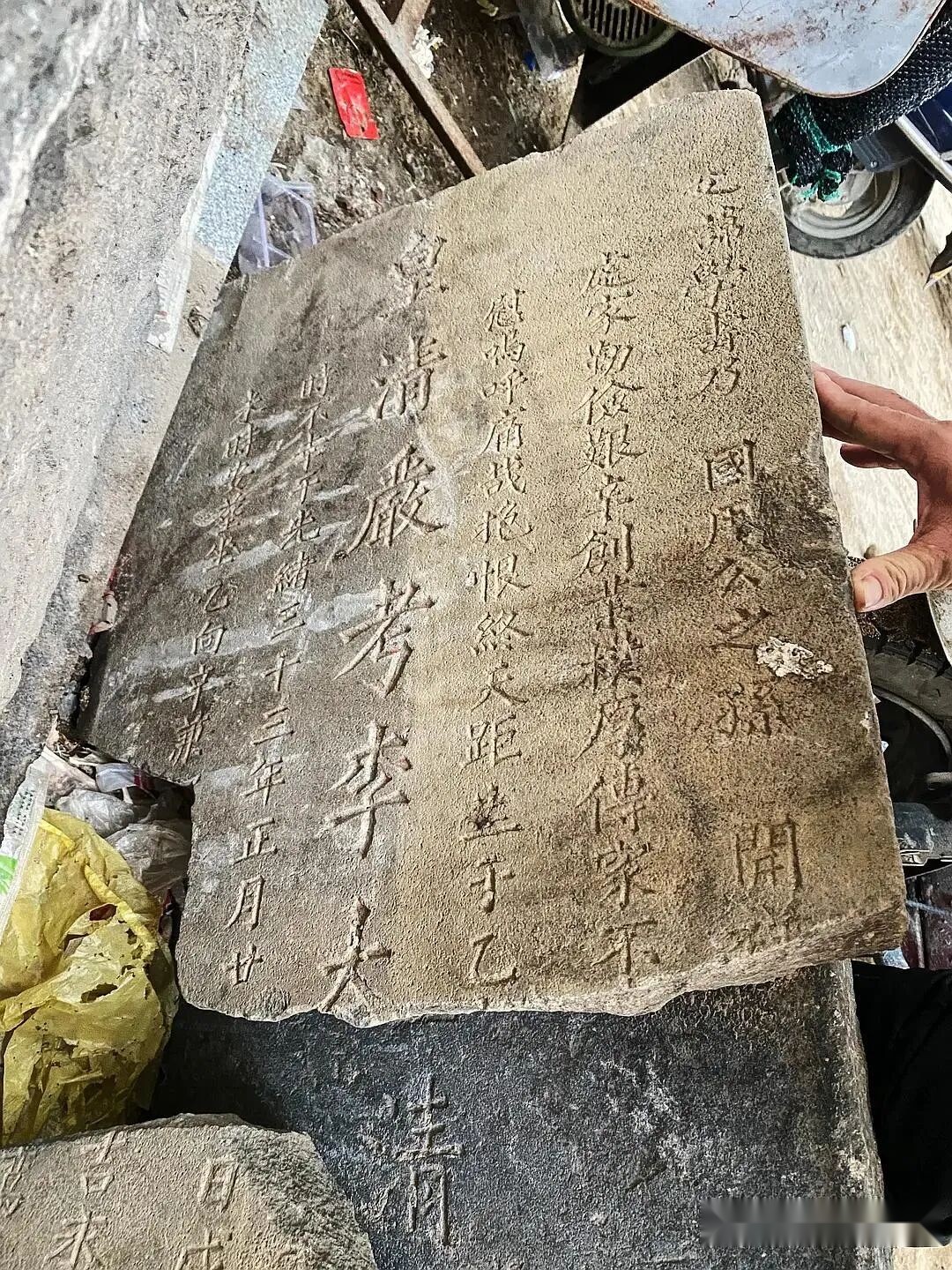
After the meal, Muning and I headed out to deliver another portion of the meat to friends.

We stopped by Nankai Mosque in Huixin Village to pray, where the main hall is lined with straw mats rather than carpet.

In the afternoon, Muning took me to check out the old houses in Huihui Village (Huihui Muslim Village), where I got to lay eyes on old roof purlins inscribed with Arabic script for the very first time.
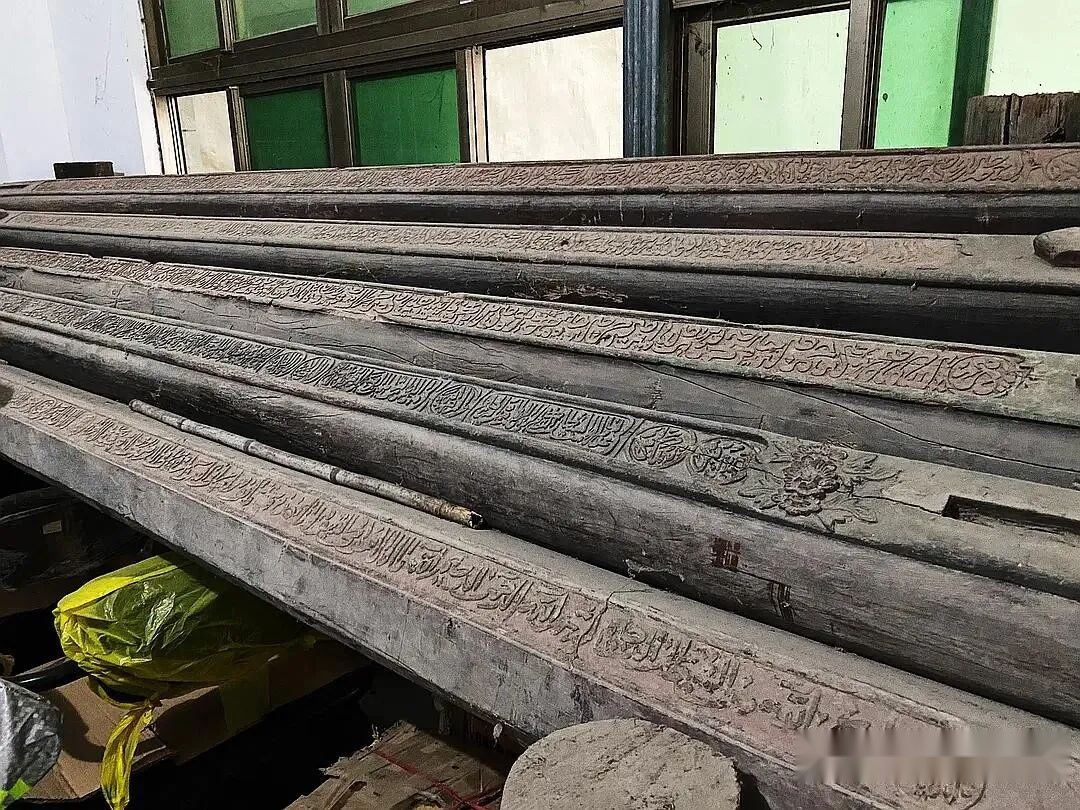
One of the best-preserved and most visually striking inscribed roof purlins still in its original location in Huihui Village, with its gold-leaf Arabic letters gleaming brilliantly in the sunlight.
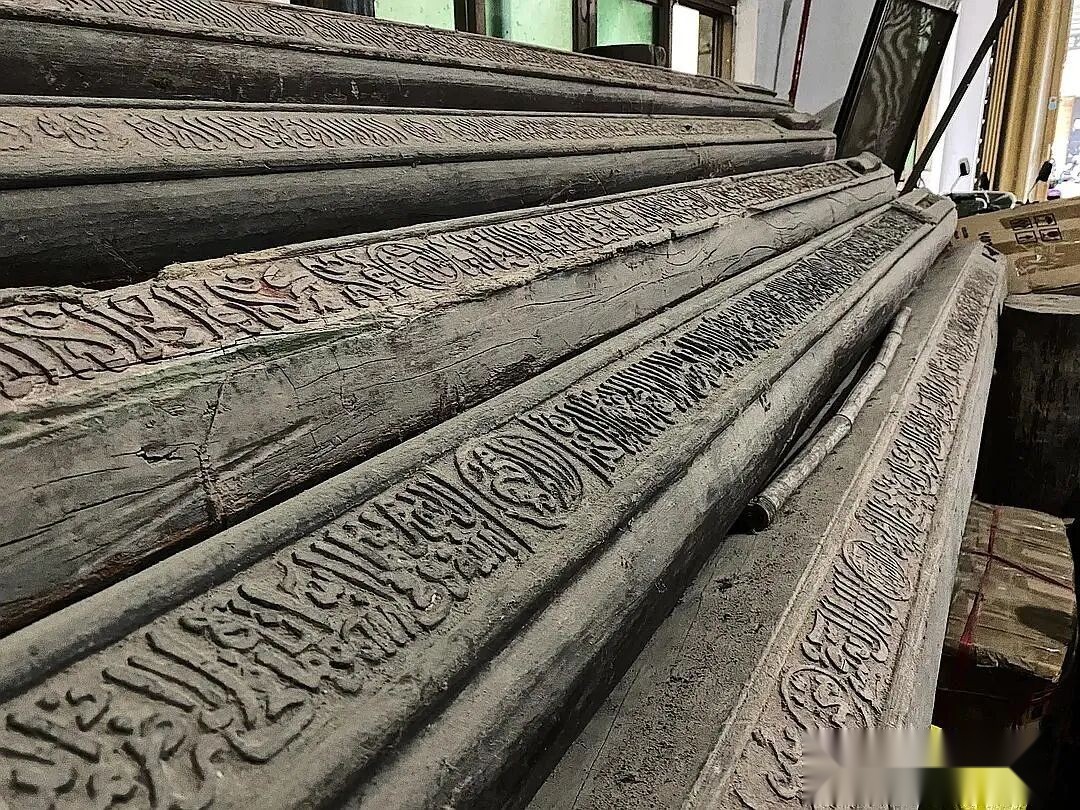
One of the last remaining traditional old houses in Huihui Village.
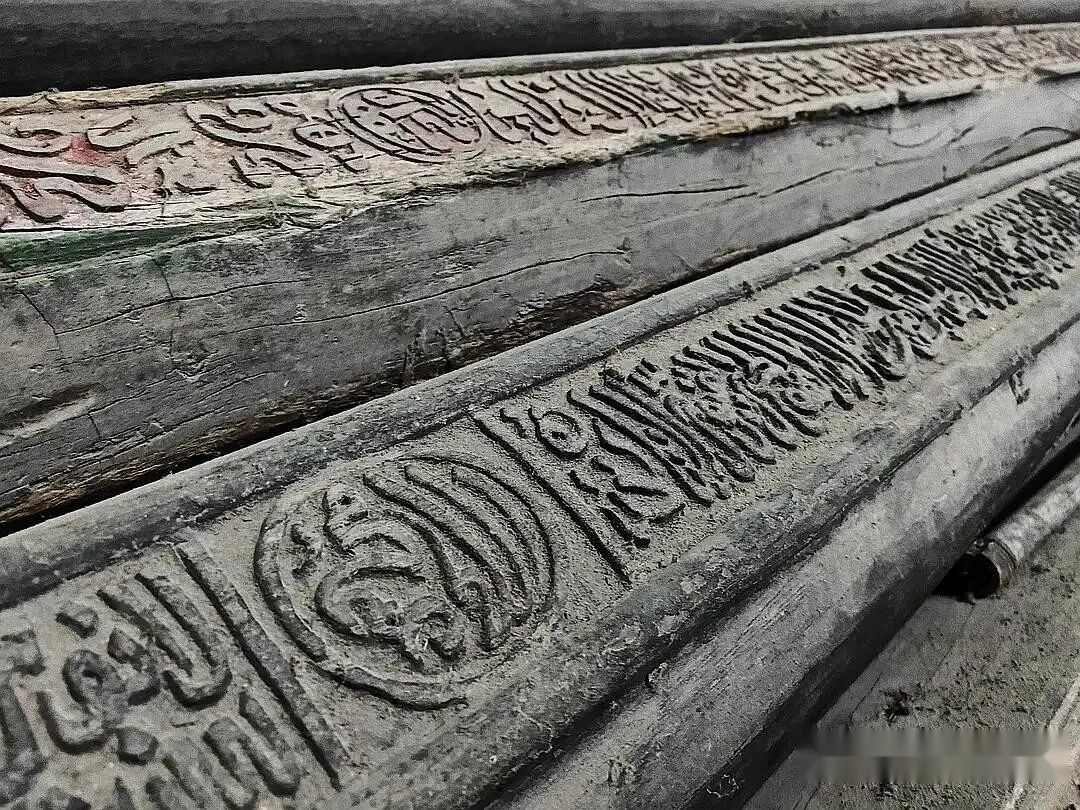
That evening, Muning and her family treated me and Zaynab to a fresh fish soup right at the entrance of Huixin Village (Huixin Muslim Village). The signature fresh fish soup of the Utsul Muslims is made with carambola (star fruit), tamarind, and tomatoes, giving it a super tangy kick. You can pick whatever sea fish you want for it. You’ve also got to mix your own dipping sauce on the side—make sure not to go overboard with the Hainan yellow lantern chili peppers, because they are insanely spicy! We also had red rice cooked in coconut milk, sweet potato greens, and stir-fried squid, all of which hit the spot.
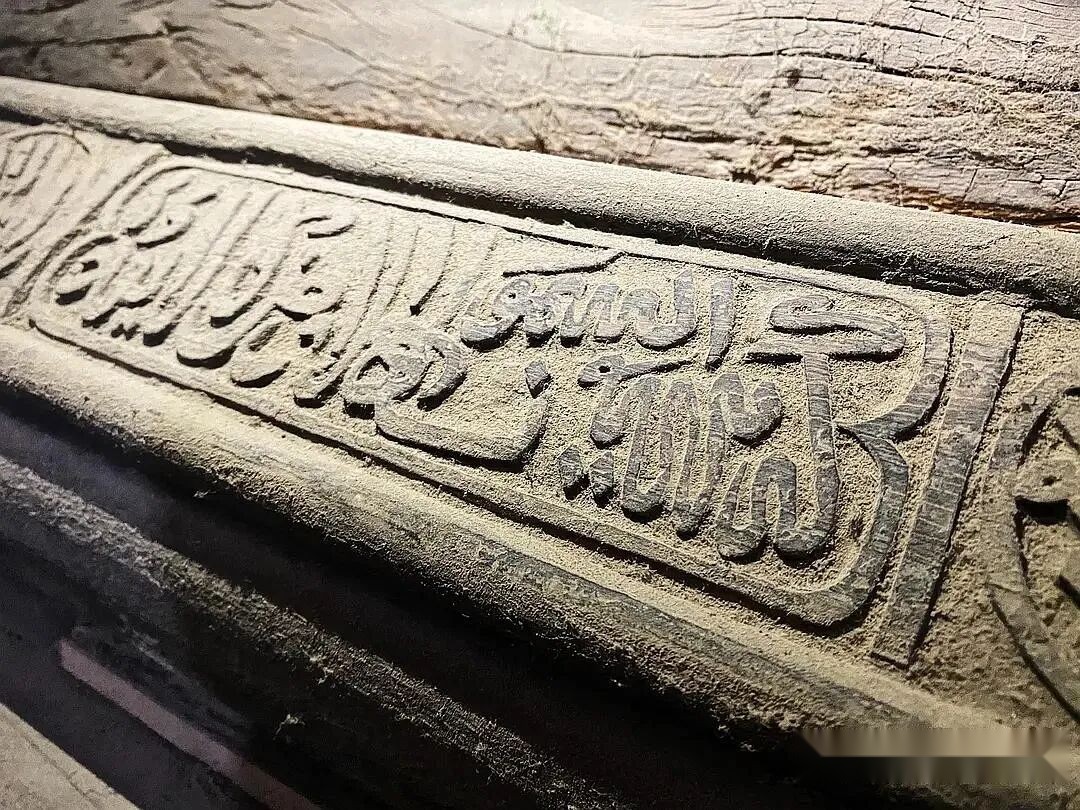
Yellow lantern chili peppers
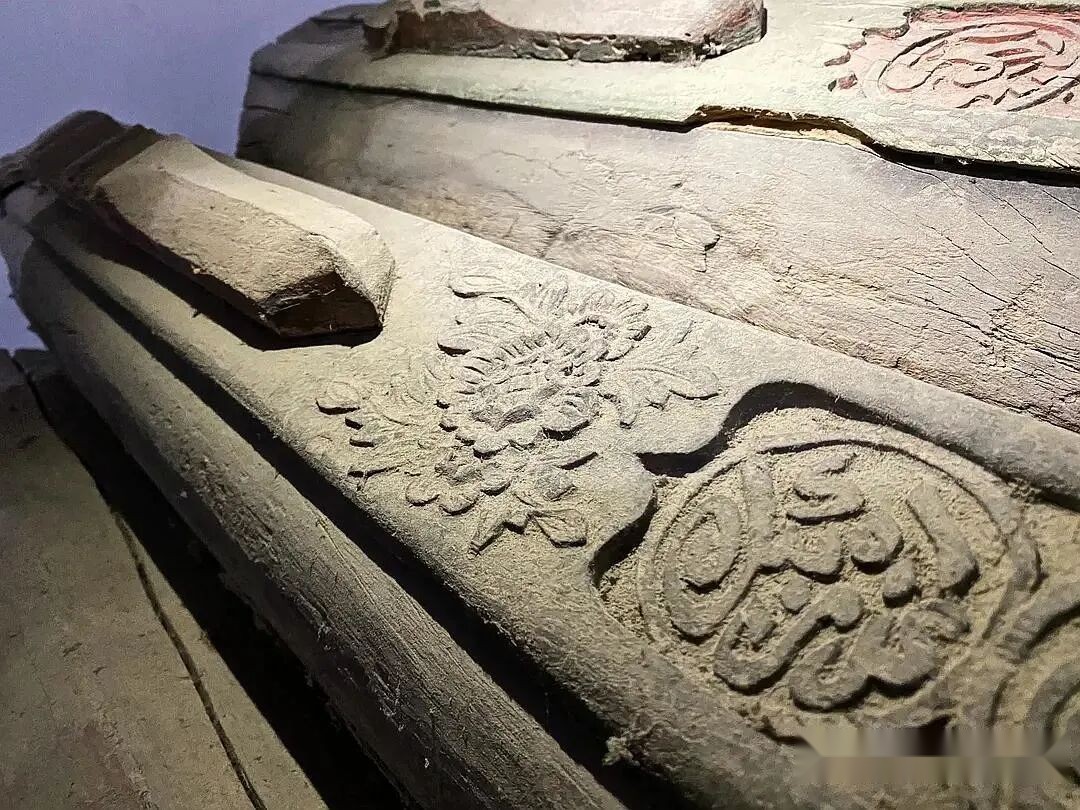
That night, we headed over to the Guangbaina night market right next to Huixin Village (Huixin Muslim Village) to check things out. Ever since the street vendor economy took off this year, Guangbaina has been getting busier and busier. They don’t charge a stall fee here, so a lot of people just sell fruits straight from their own family orchards, meaning prices are the lowest in the area. We grabbed some sugar apples, jackfruit, and mangoes—cheap and delicious.
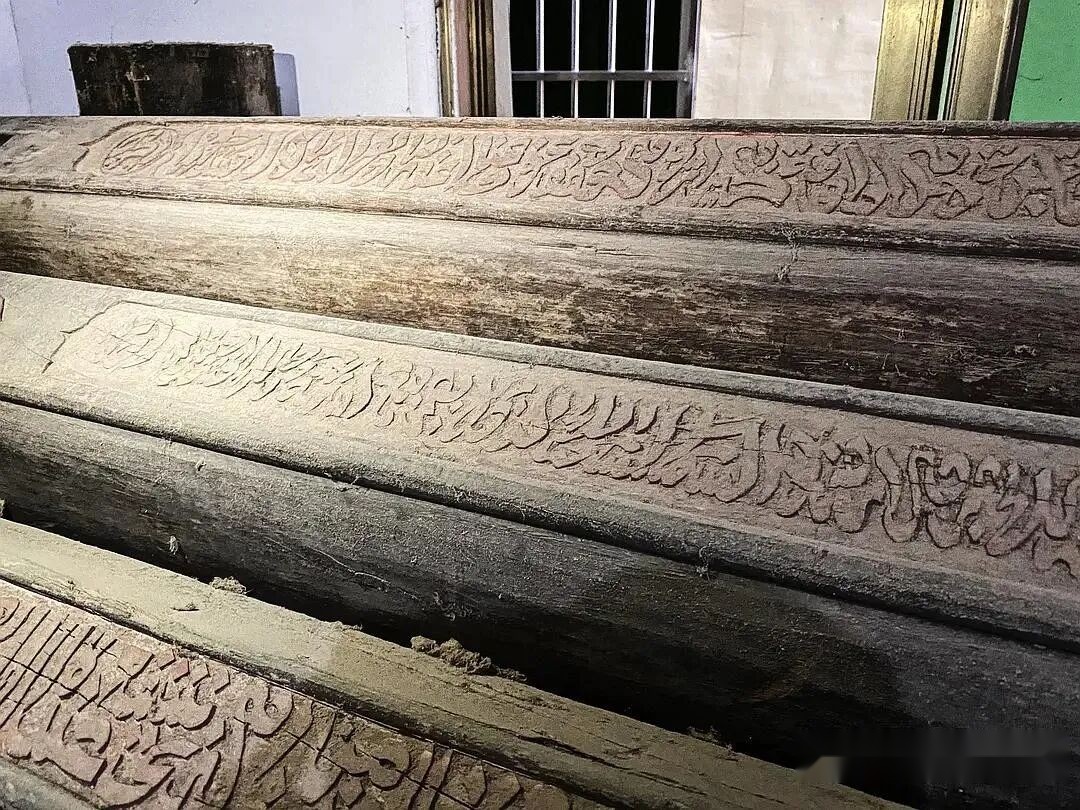
After wandering through the night market, we headed back to Huixin Village (Huixin Muslim Village) for a bowl of qingbuling (Hainan refreshing herbal dessert). Every single spot in Sanya makes qingbuling a little differently, so you really have to try them all to figure out which style you like best.

Still craving a little more adventure, we hopped on an electric scooter for another night ride.

Back at the place, I started flipping through some old books Muning had collected, including one featuring Eid al-Adha back in 1979.

August 1st

Woke up early to grab some niurou fen (Hainan beef rice noodles) made by the Utsul Muslims in Huixin Village (Huixin Muslim Village), then picked up some white fungus and lotus seed porridge and chicken porridge at the South Mosque gates to sip down by the beach. Afterward, we took a lazy stroll through the coconut grove along the shore.
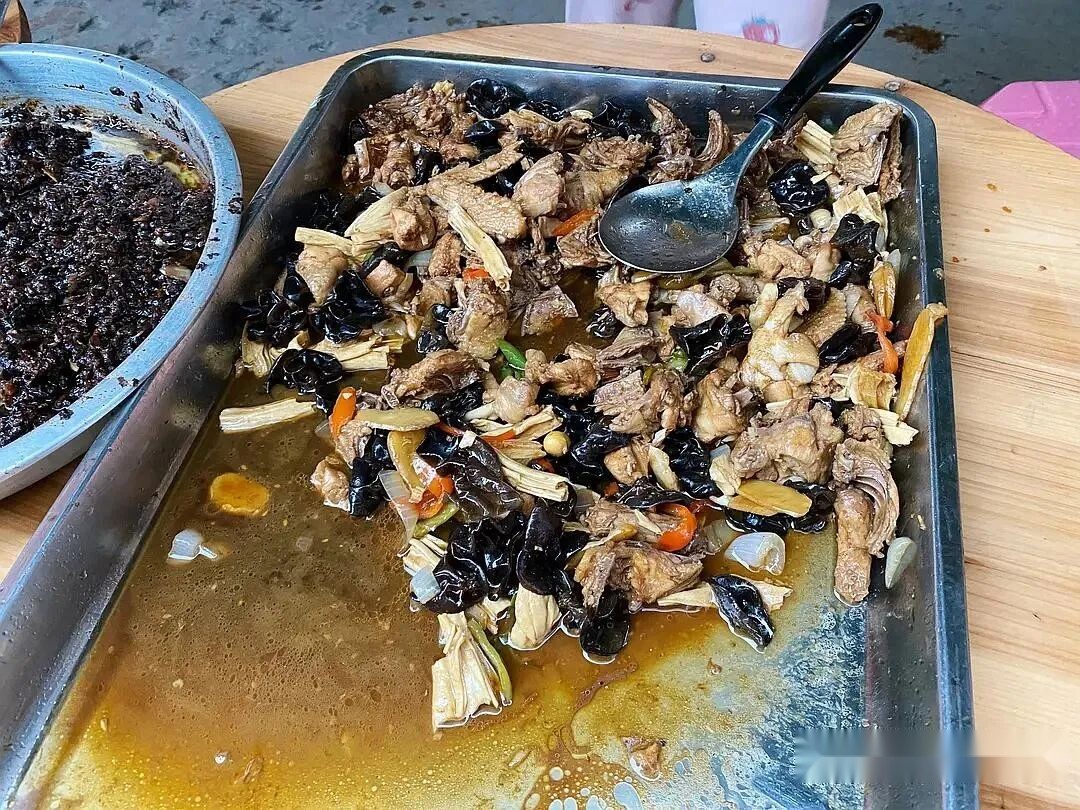
After walking by the beach, we headed over to Huihui Village (Huihui Muslim Village) to sip on some fresh coconut water.
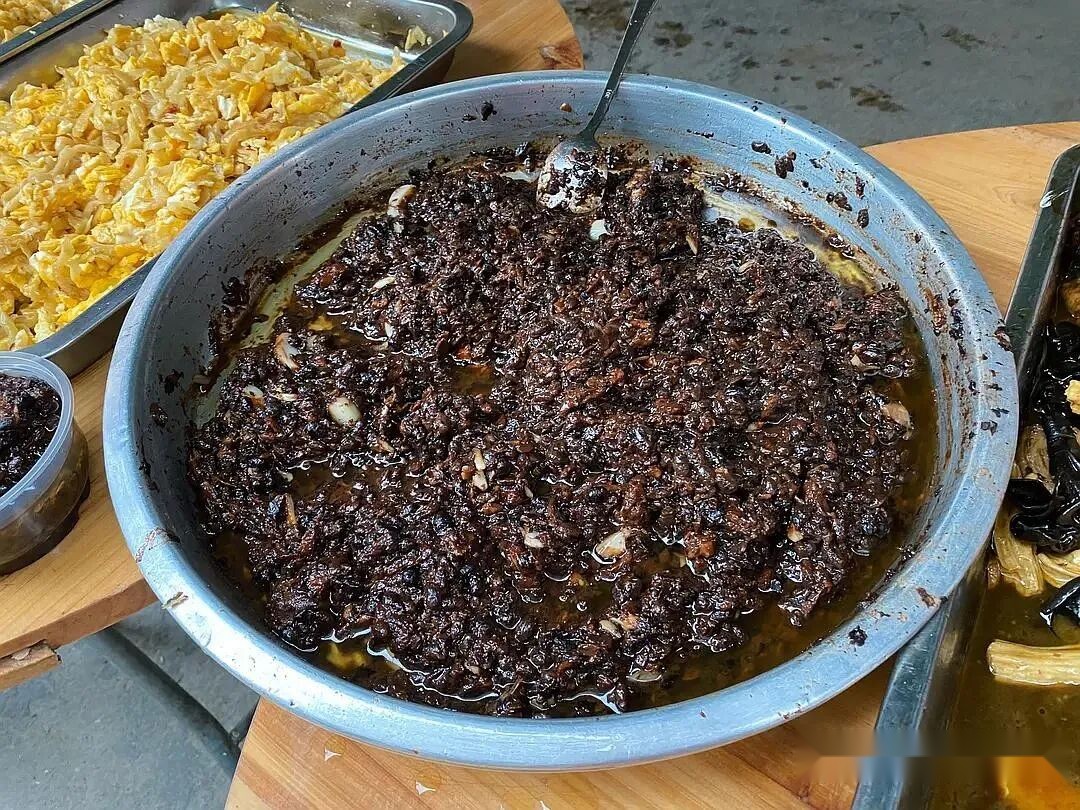
A lazy summer afternoon in Huixin Village (Huixin Muslim Village)—a fresh coconut and a bowl of qingbuling (Hainan refreshing herbal dessert). Could it get any more chill?

Time to kick back and take a break.
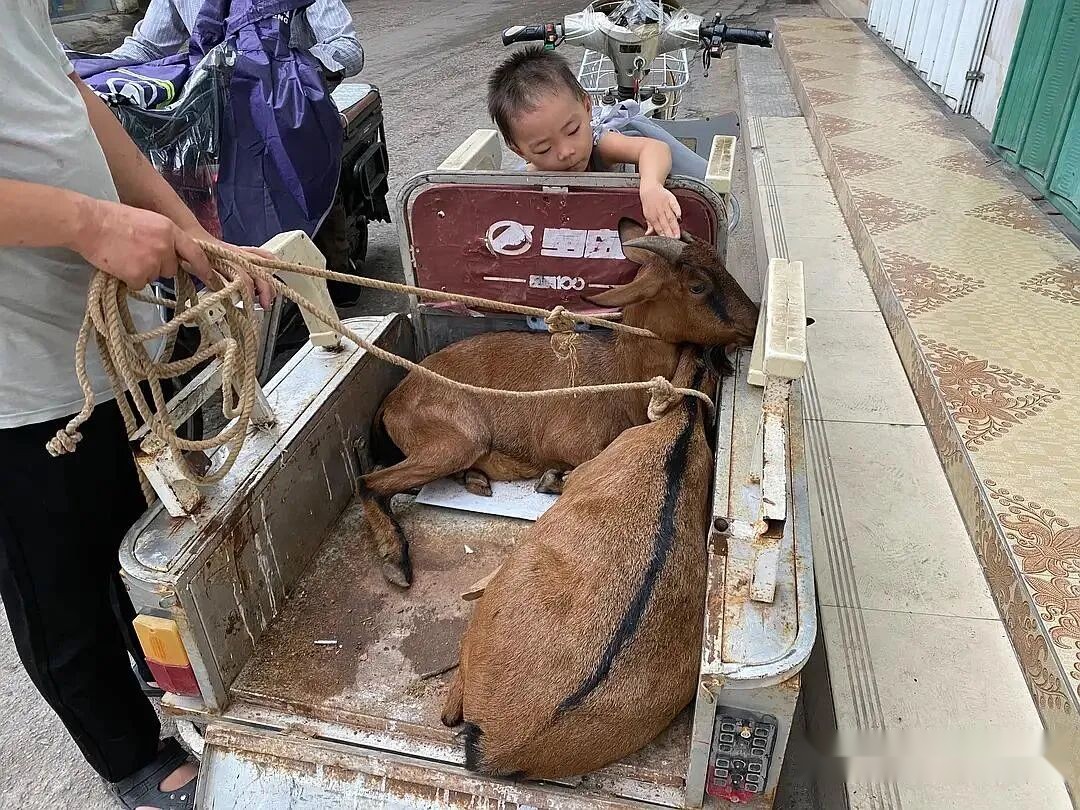
In the afternoon, we headed back to the spot in Zhongzhuangyuan where they were throwing a banquet, watching the Utsul Muslims whip up traditional coconut rice.
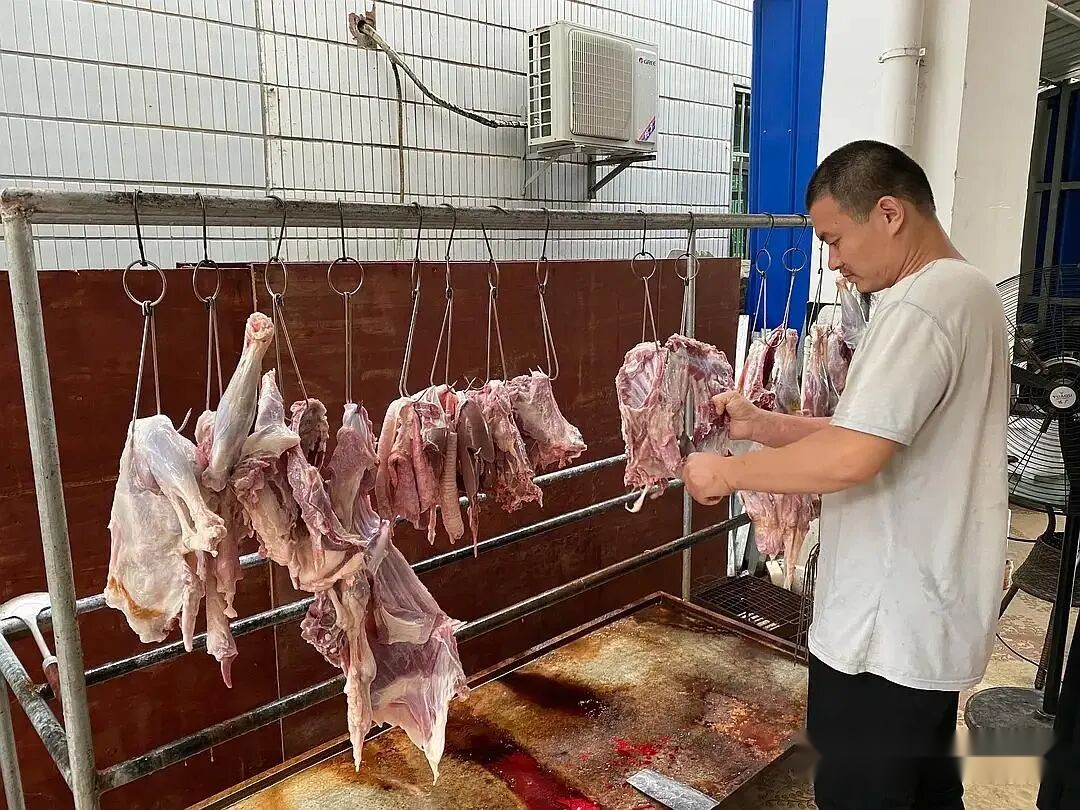
They start with old coconuts that have thick meat, grating all of it into fine shreds, then use cheesecloth to press out all the rich coconut oil.
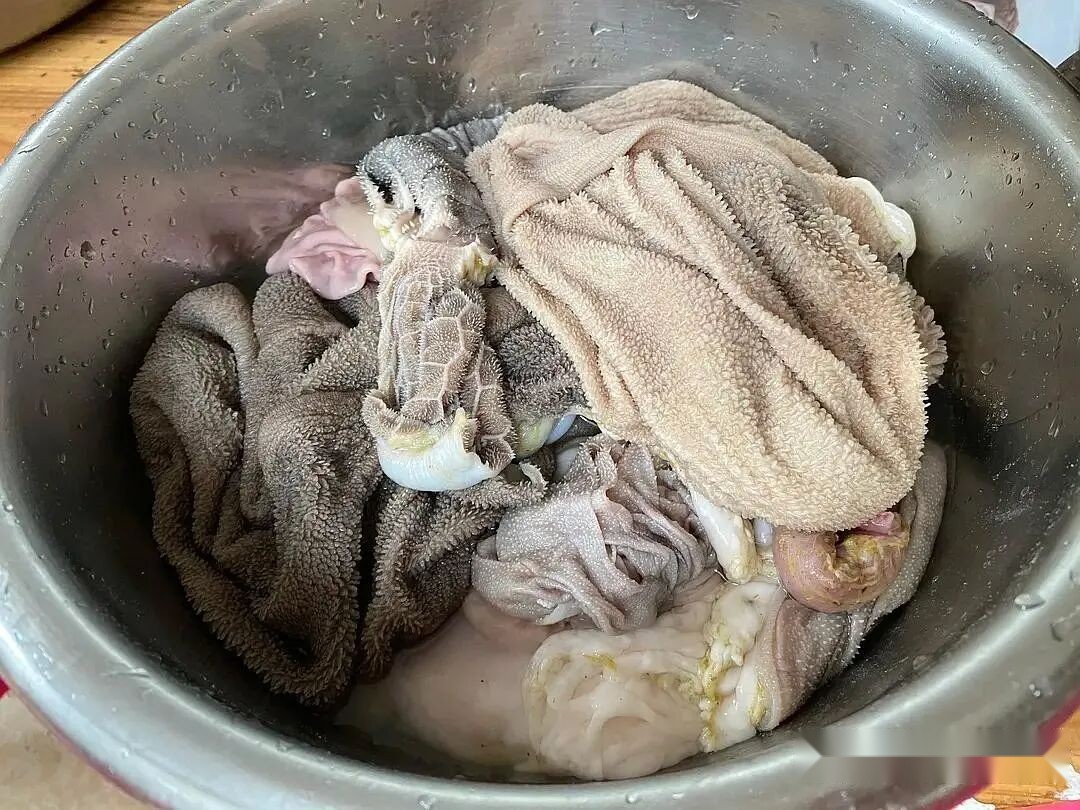
For steaming the rice, they use a traditional Li ethnic pottery steamer called a taozeng. Once the rice is steamed, they thoroughly mix the coconut milk and rice together. At this stage, the coconut rice is super chewy and has a great bite.
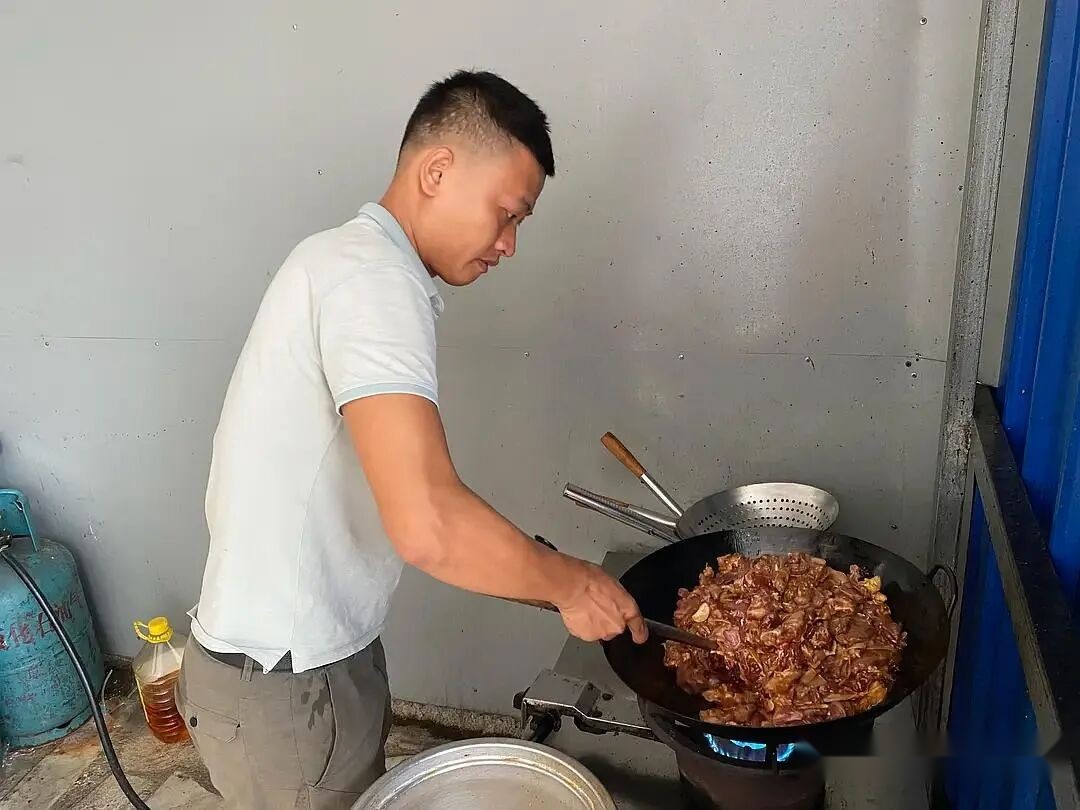
Then, they pop the blended coconut rice back into the pottery steamer for a second round. This time around, the rice comes out way softer and stickier, and the coconut milk and rice melt completely into one another.
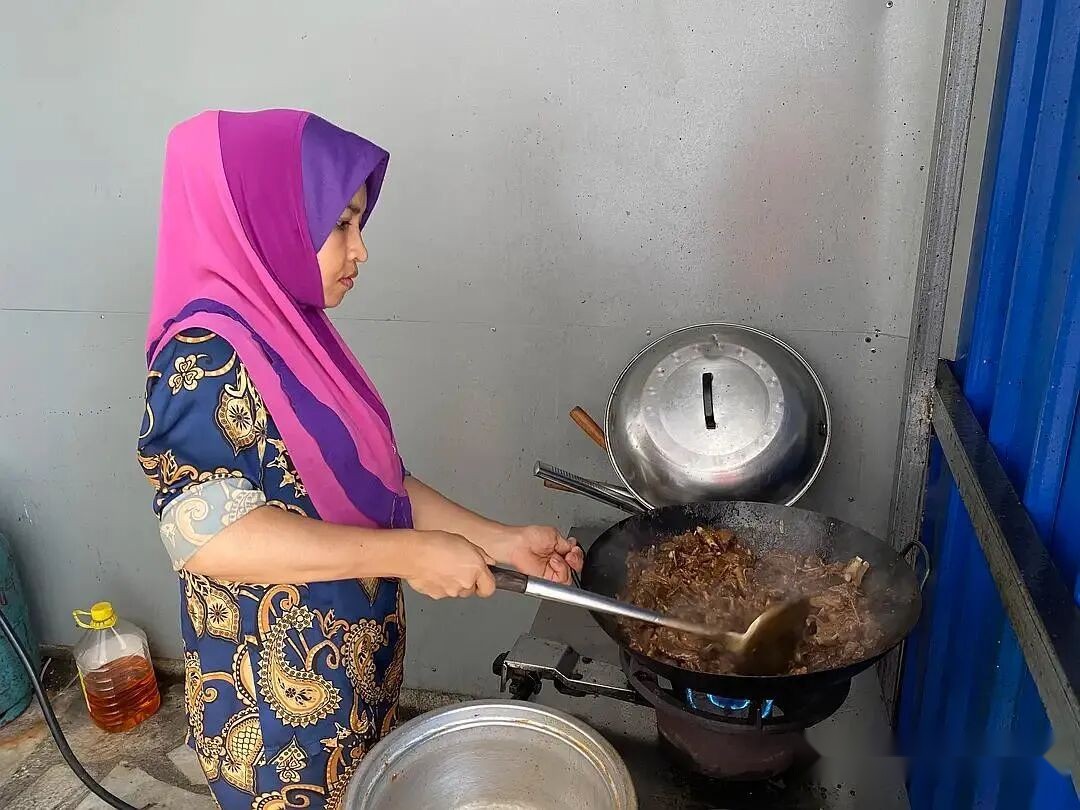
They used beef from the cow sacrificed the day before for Eid al-Adha. First, they stew the beef, then toss in wood ear mushrooms and dried bean curd sticks—a total classic main dish for Utsul Muslim banquets.
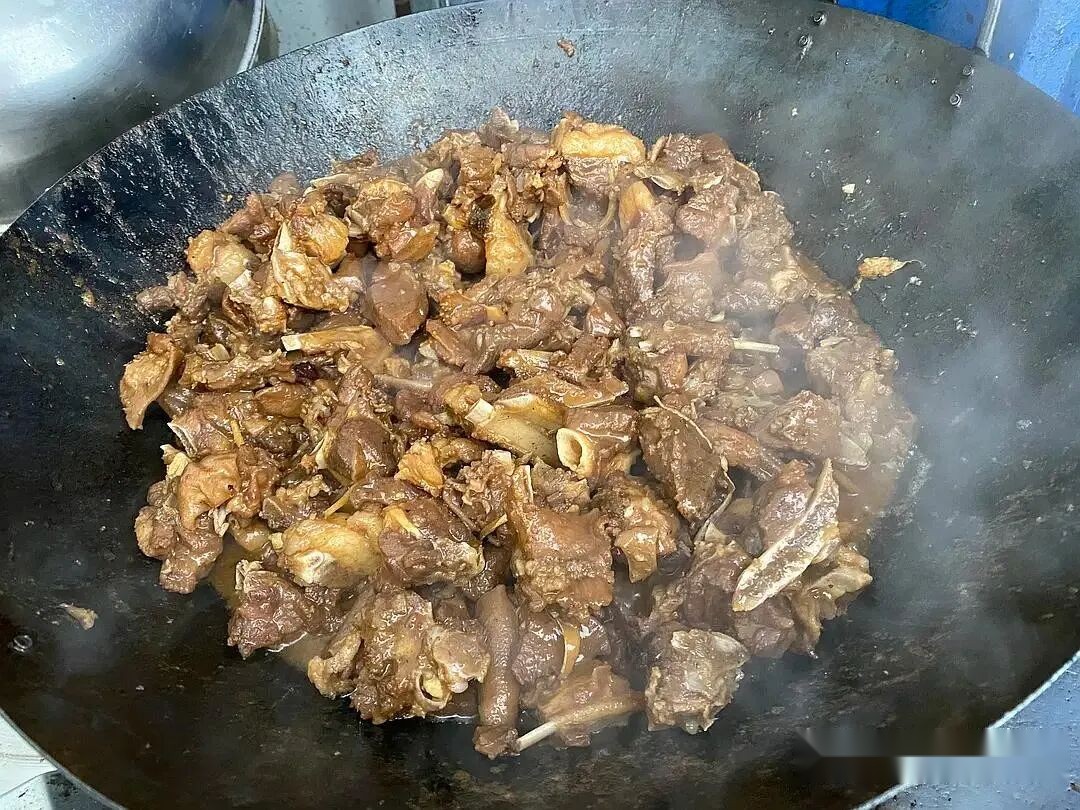
Our downstairs neighbors, a Utsul Muslim family, slaughtered a sheep yesterday, and today they were simmering up a pot of sheep offal soup. Sanya’s Utsul Muslims rarely eat mutton; basically, the only time they eat their own freshly slaughtered Dongshan mutton is during Eid al-Adha. When Utsul Muslims slaughter a sheep, they scrape the hair off the hide because they believe sheepskin-on mutton is where the best flavor is at.
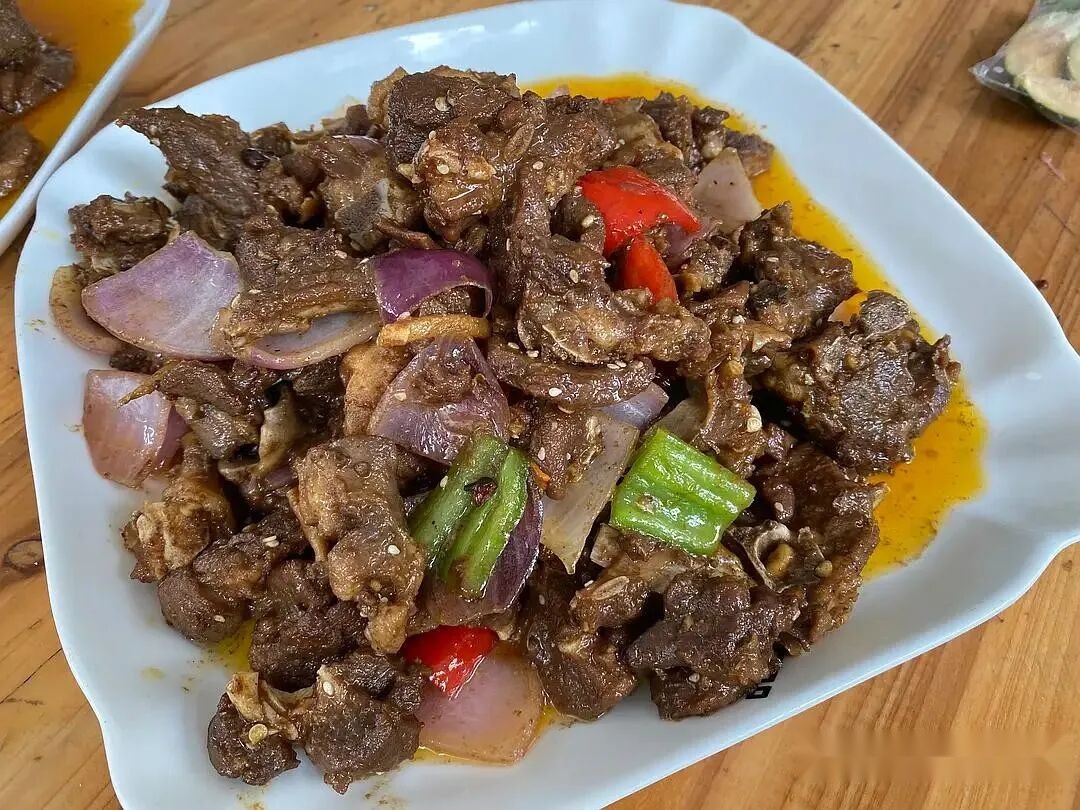
When they stew the offal, they toss in the sheep's trotters too, letting it bubble away from early morning until afternoon while adding all kinds of spice blends. Finally, they drop in radishes, corn, and shiitake mushrooms. The flavor profile is totally different from Northern-style mutton soup—it's its own unique, addictive kind of delicious.
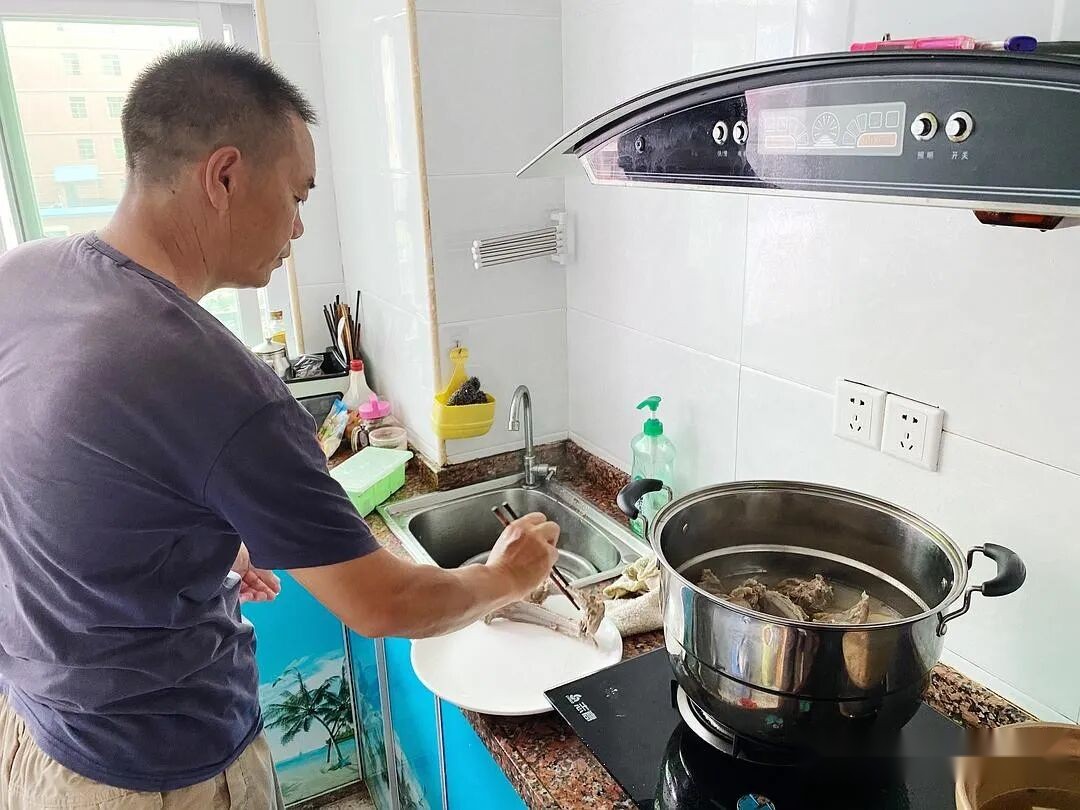
That evening, we grabbed a bowl of niunan mian (braised beef brisket noodles) at Haxuanren in Huihui Village (Huihui Muslim Village), and followed it up with a coconut milk ice jelly right across the street.
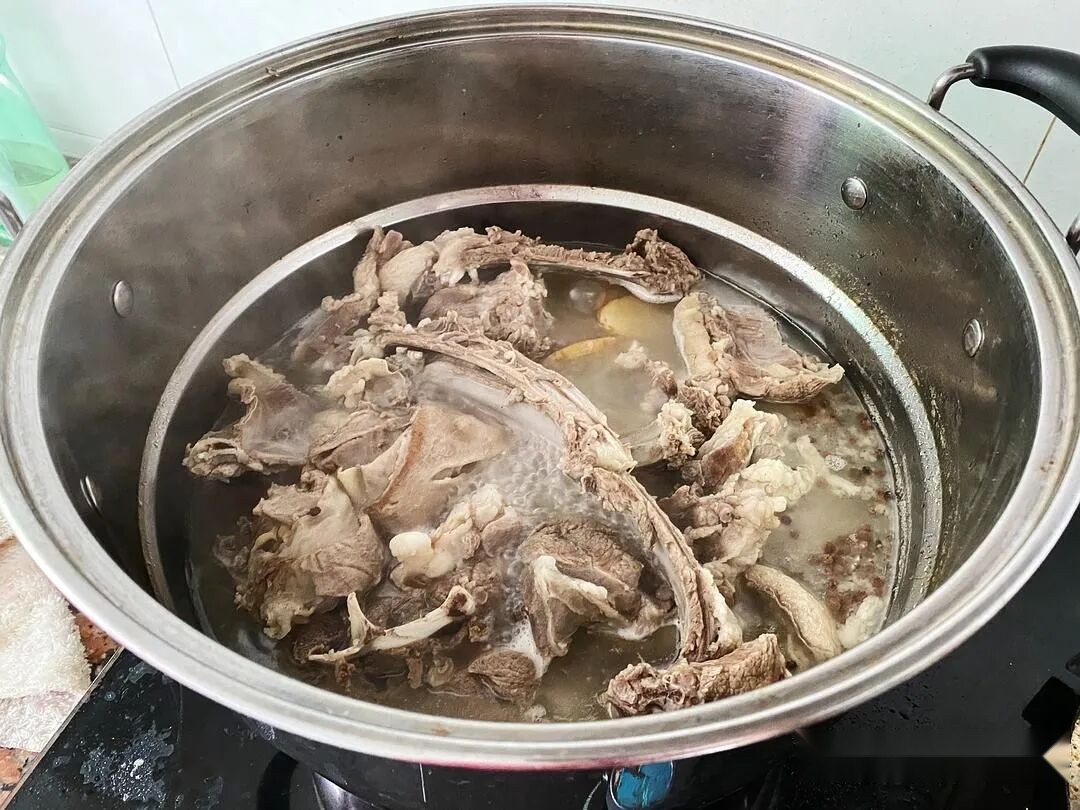
August 2nd

In the morning, we went back to Haxuanren Beef Brisket Noodles in Huihui Village (Huihui Muslim Village) to try their stewed beef trotters. Because it’s the summer off-season and everyone’s still recovering from Eid al-Adha, most eateries in Huihui and Huixin villages were closed. Haxuanren stayed open the whole time, so it was packed with people. After eating, we kept up our routine of strolling through the beach coconut grove.

In the afternoon, we checked out the Guangbaina night market next to Huixin Village (Huixin Muslim Village) again. Papayas, wax apples, papayas, mini pineapples—all the fruit was fresh and delicious. I even picked up some pearl bracelets as gifts for the little ones back home.
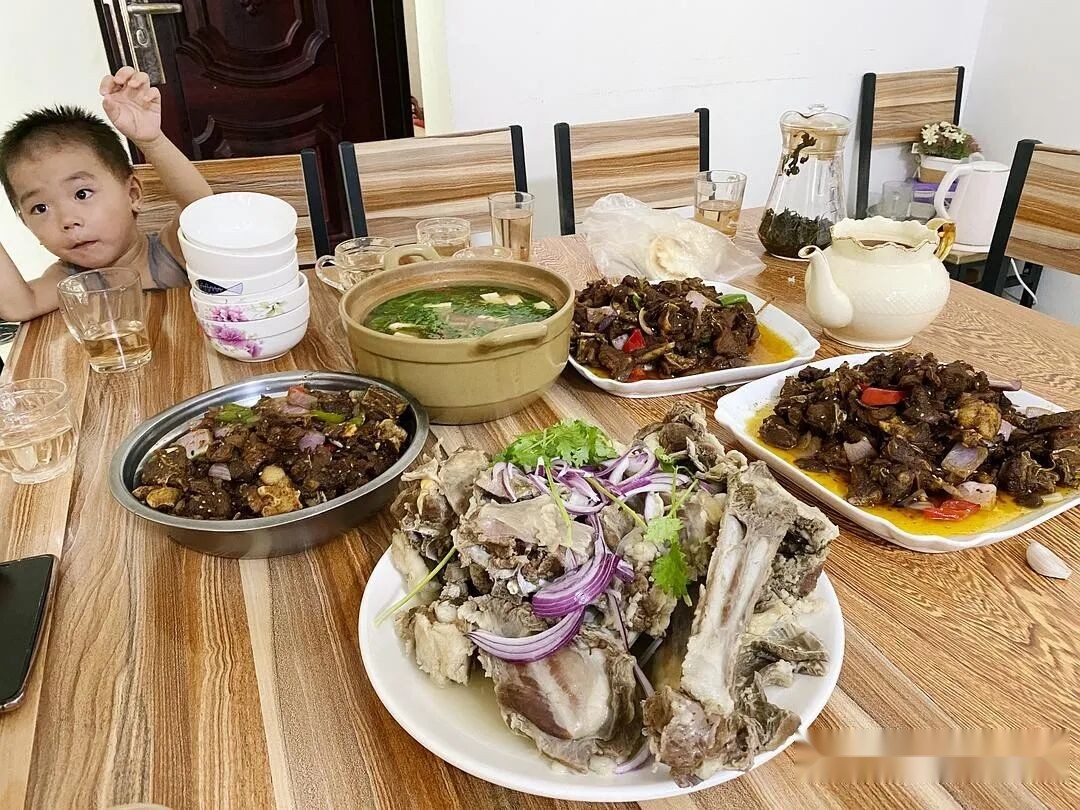
That night, Muning treated us to seafood down at the seafood market near the beach in Huixin Village (Huixin Muslim Village). We ordered crabs, scallops, abalone, clams, octopus, fried squid rings, and the local specialty sijidou (four-angled beans / winged beans). Everything tasted incredible—not a hint of fishiness, just pure, mouth-watering flavor. A special shout-out to their signature dipping sauce made with ketchup, sweet chili sauce, minced garlic, and tamarind. It paired so well with the seafood we just couldn't stop eating.

This seafood market in Huixin Village (Huixin Muslim Village) has got to be the best value for money around. It’s not just the Muslim locals; even the surrounding Han residents love coming here to eat, and business is always booming.
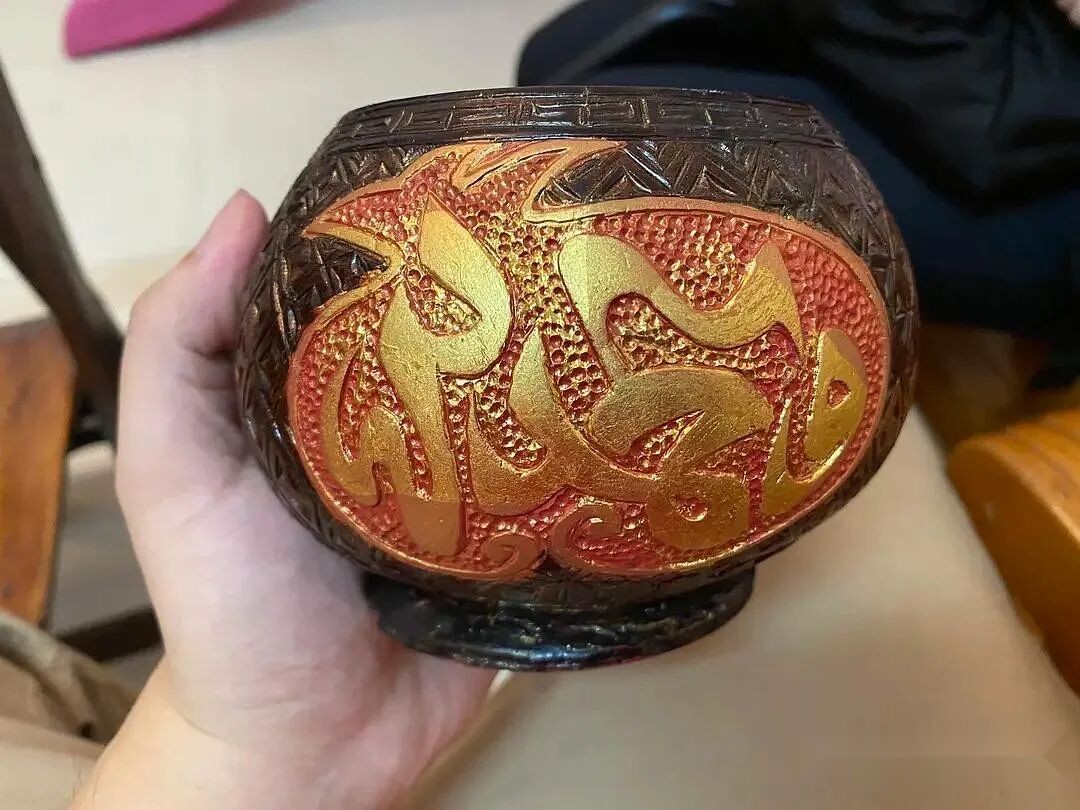
August 3rd

In the morning, we hit up Li's Rice Noodles in Huixin Village (Huixin Muslim Village) for some chicken rice noodles, and they were insanely flavorful! Right after the three-day Eid al-Adha celebration wrapped up, their spot was finally open for business.
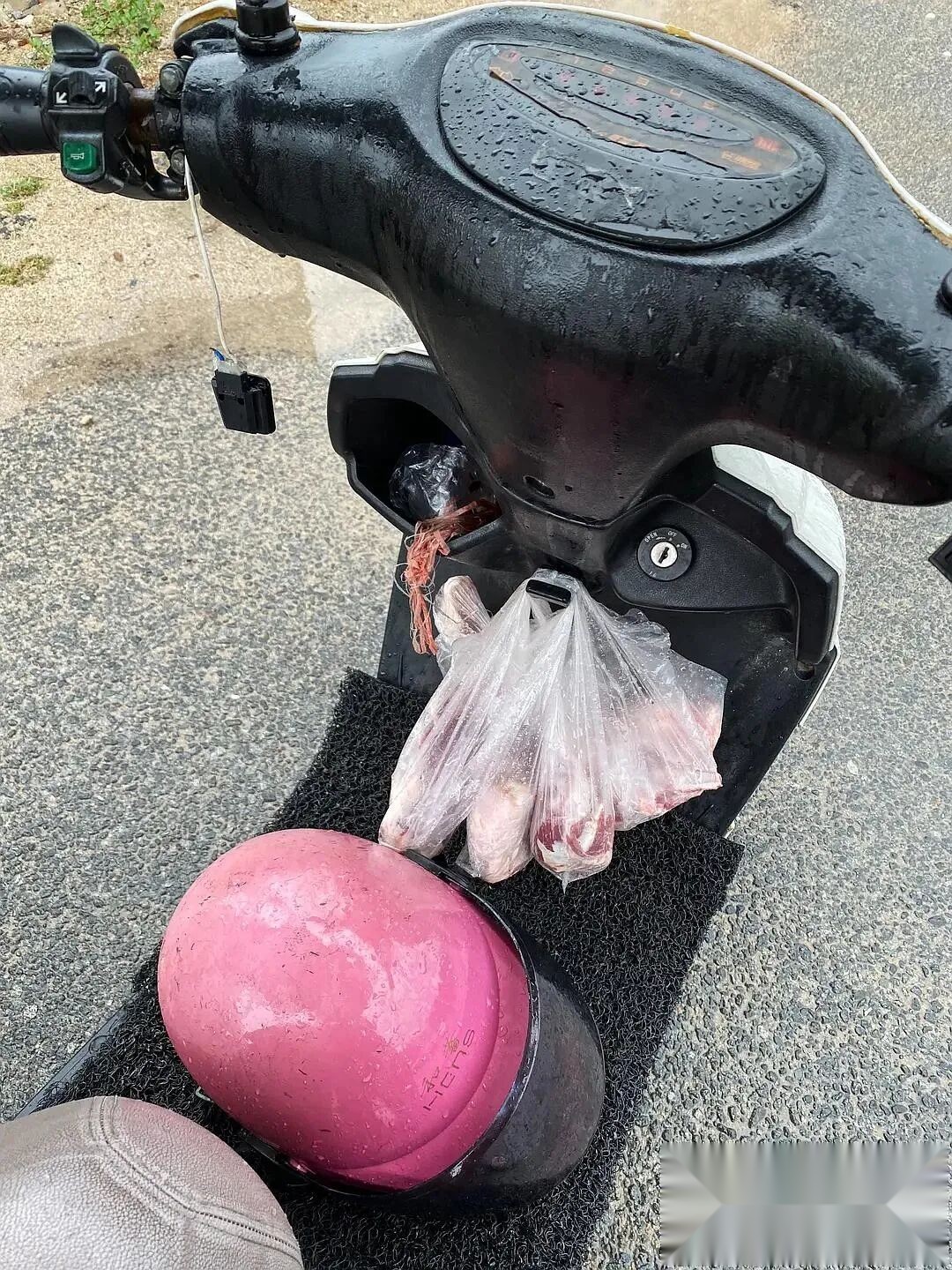
And with that, we reluctantly said goodbye and left Sanya.
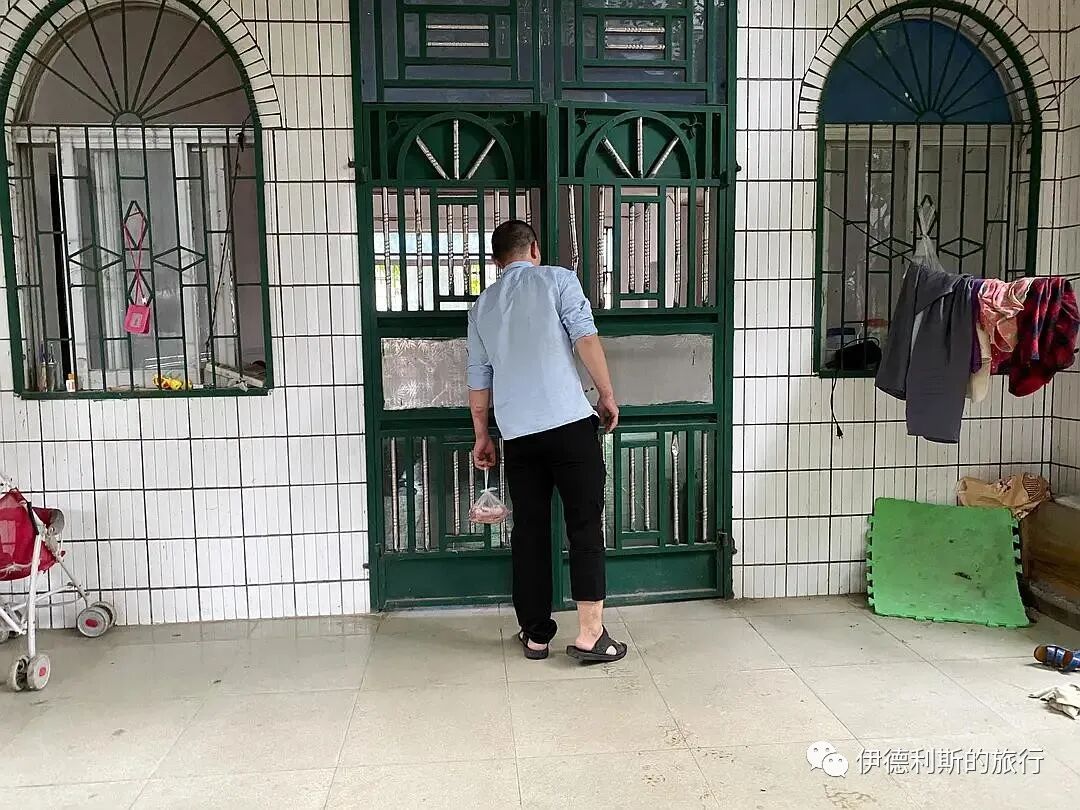
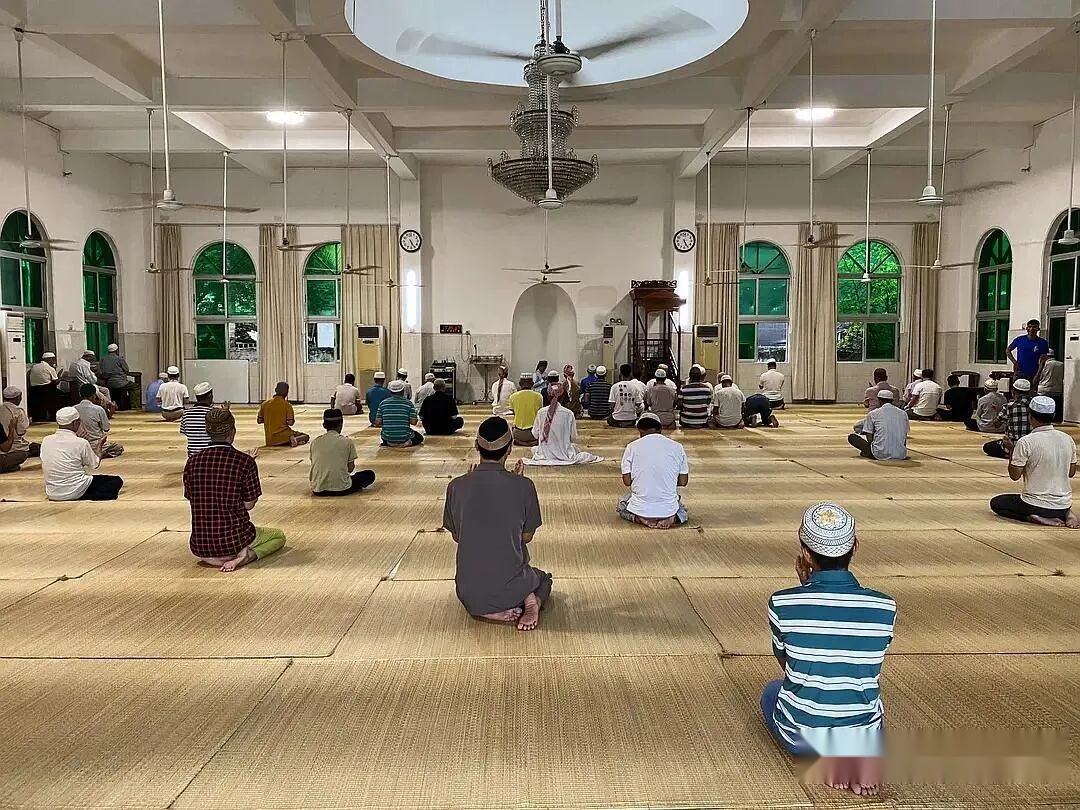
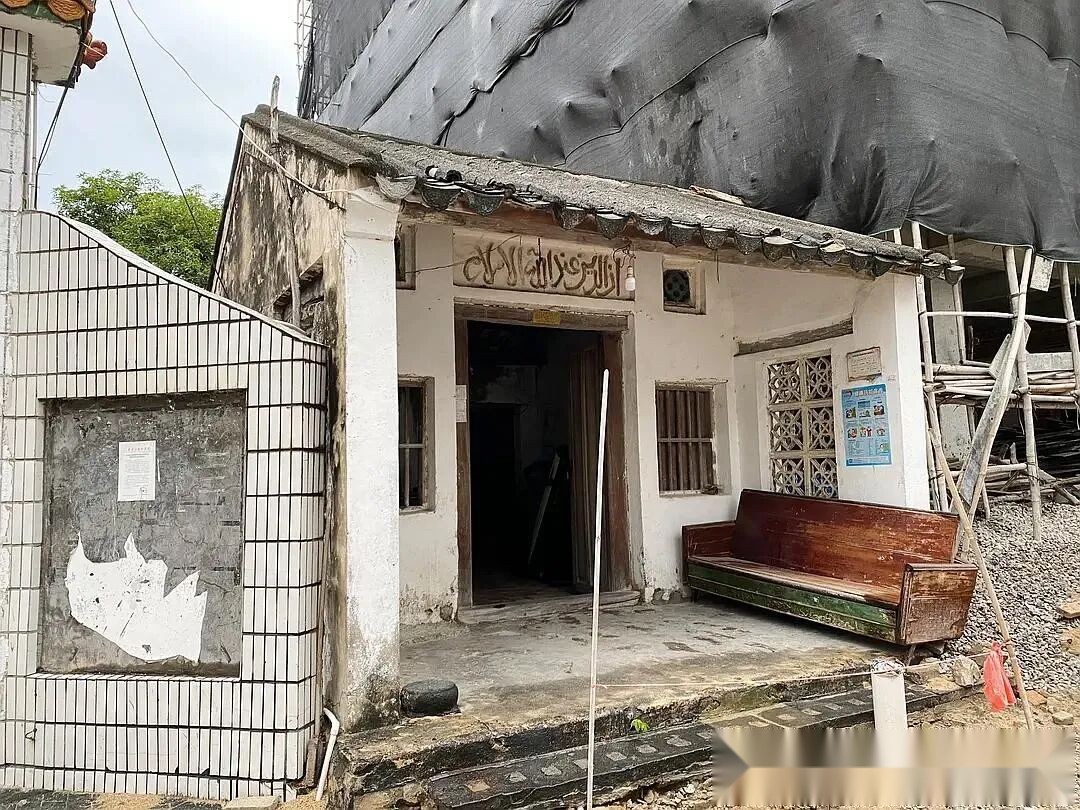
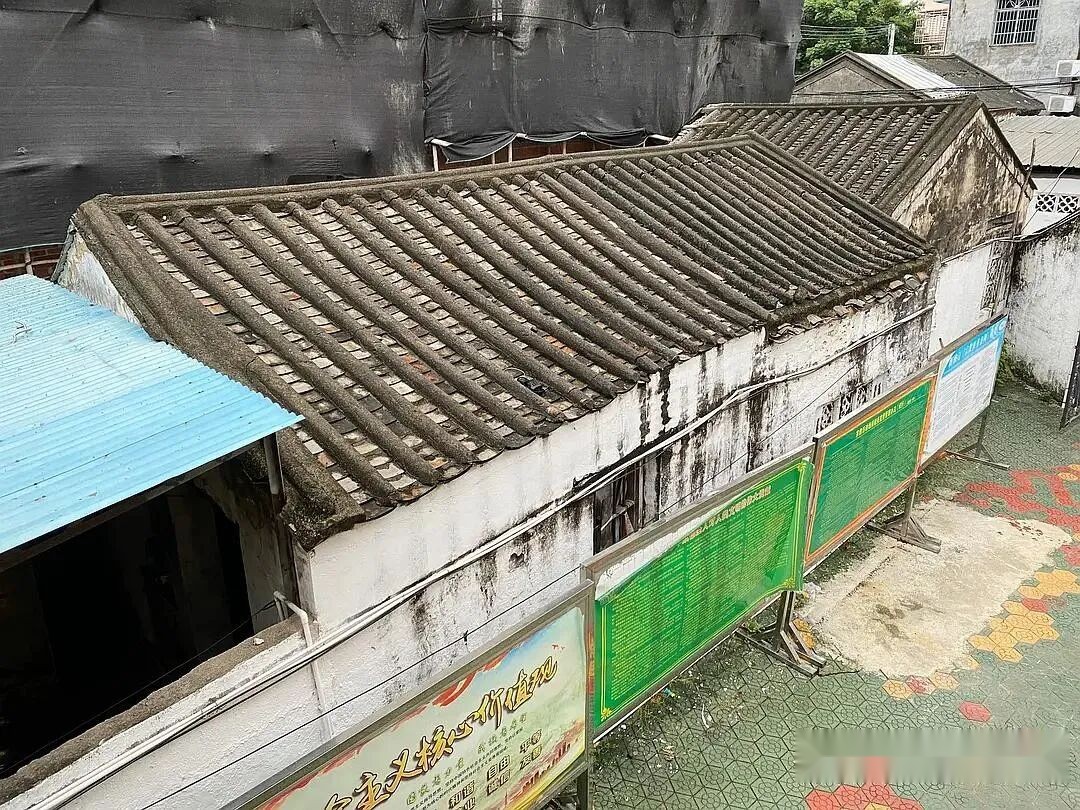
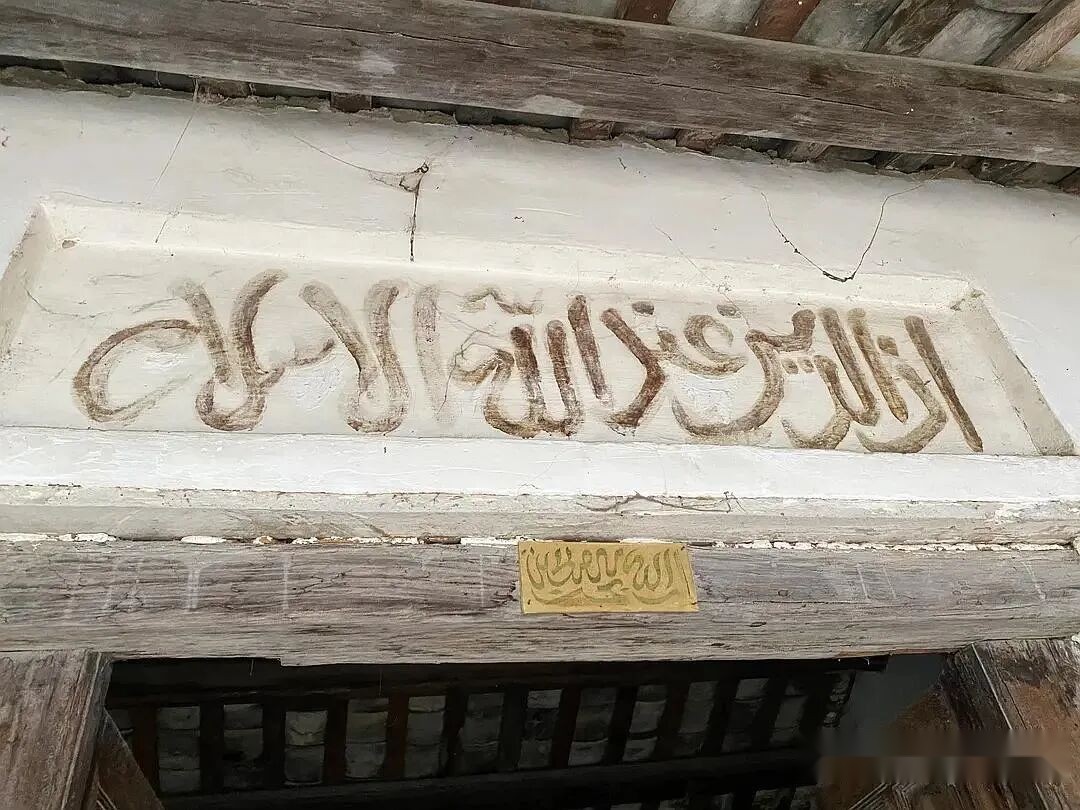
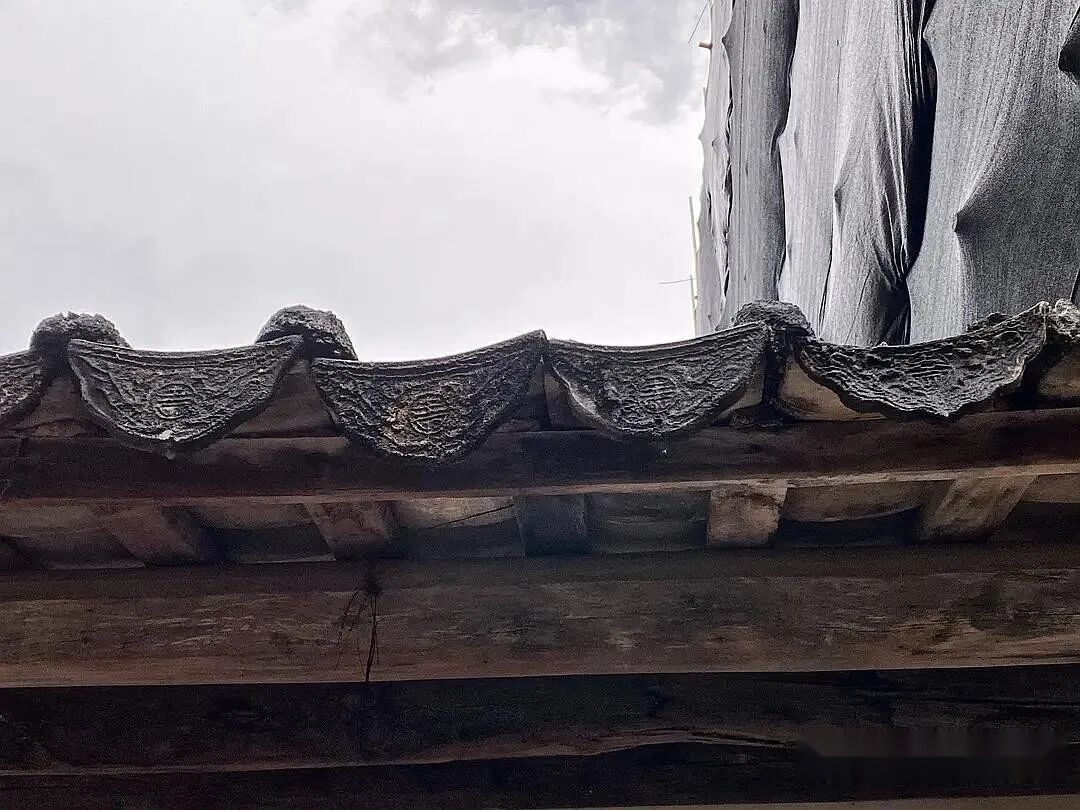
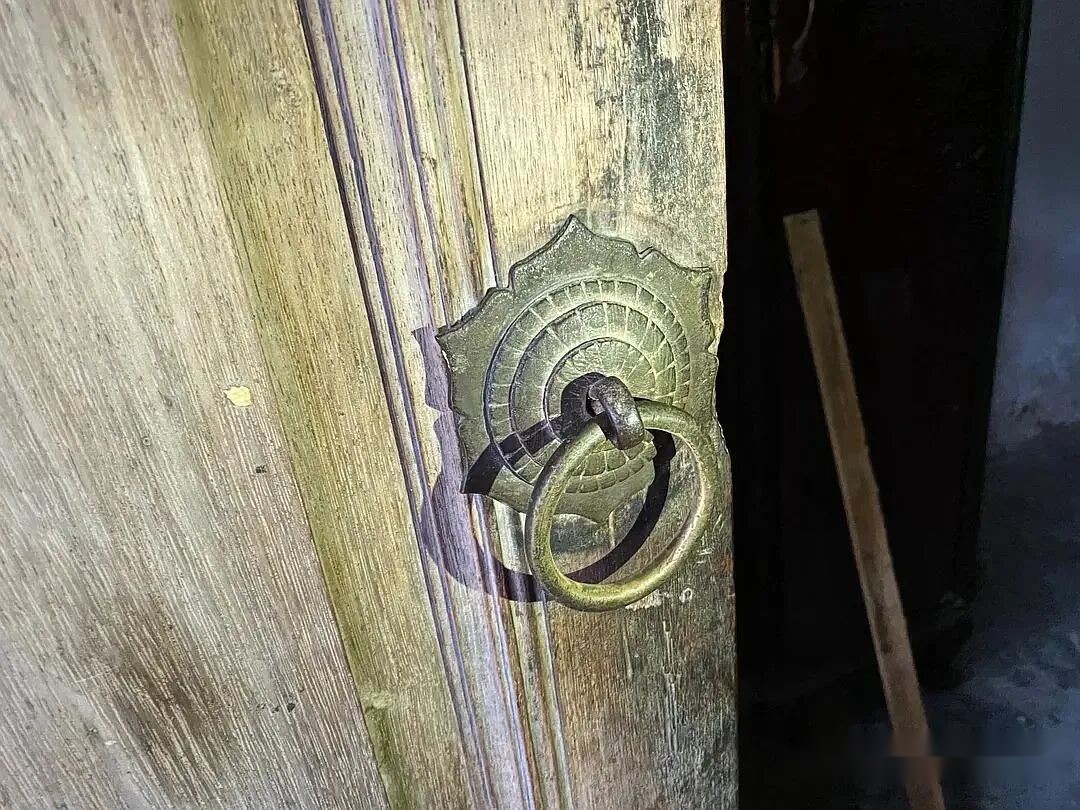
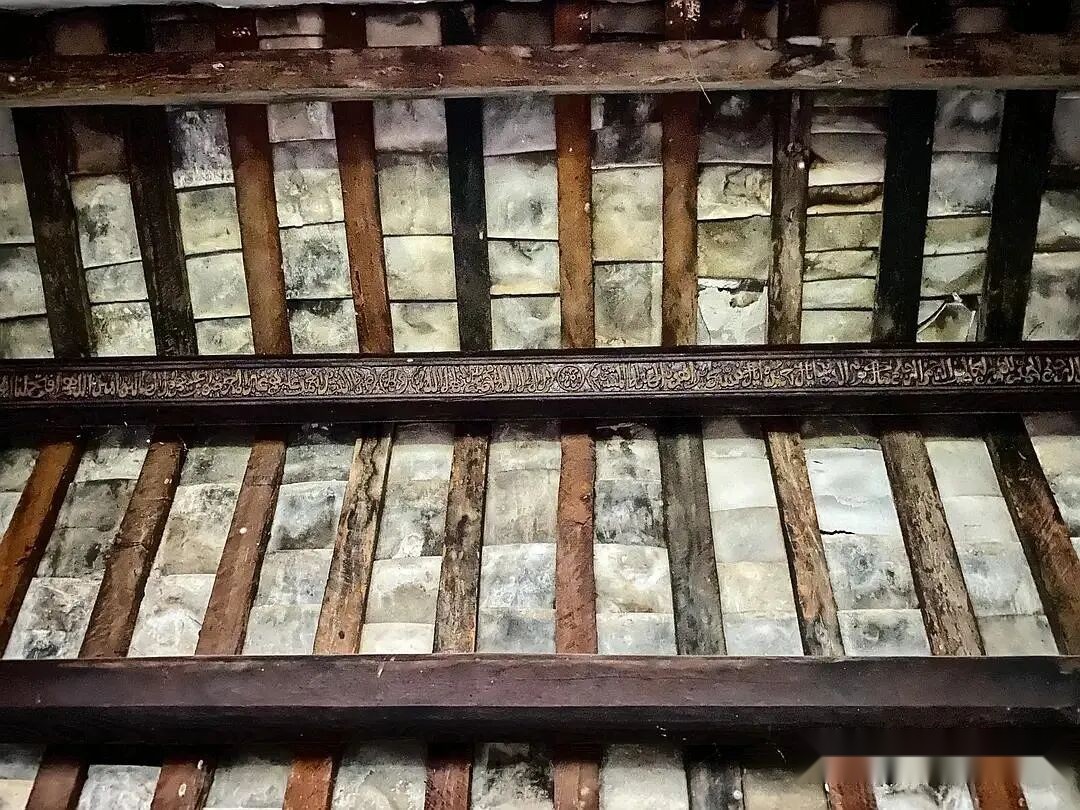
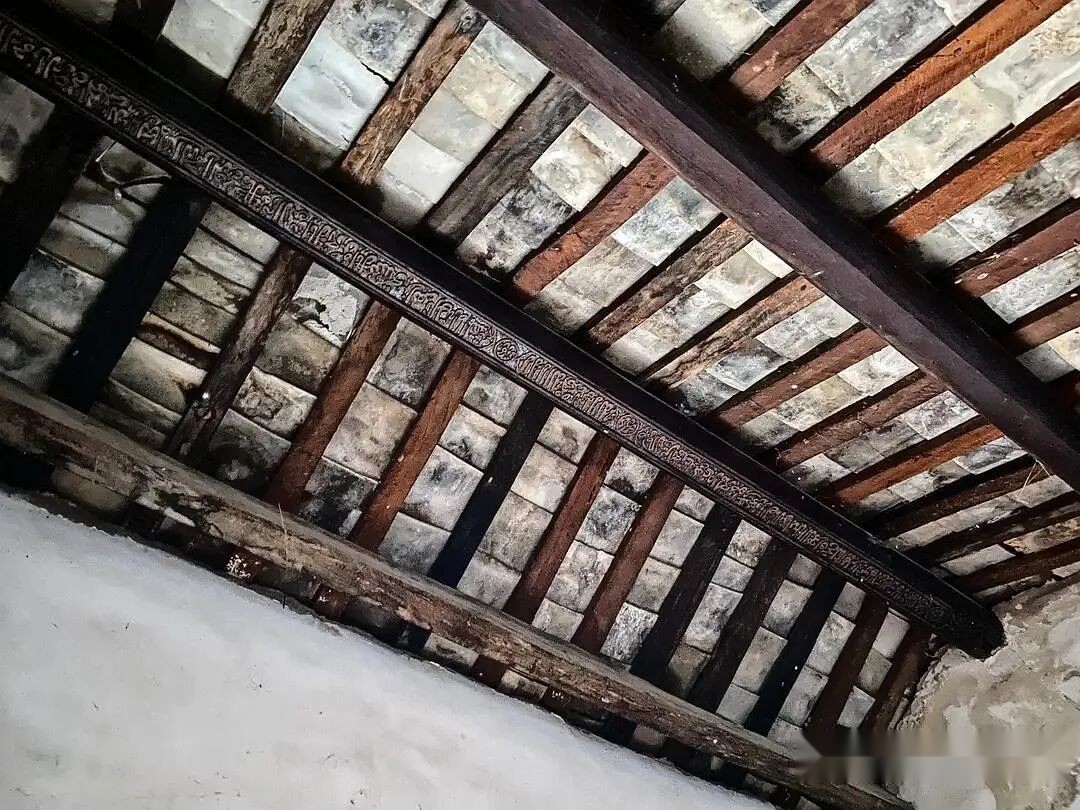

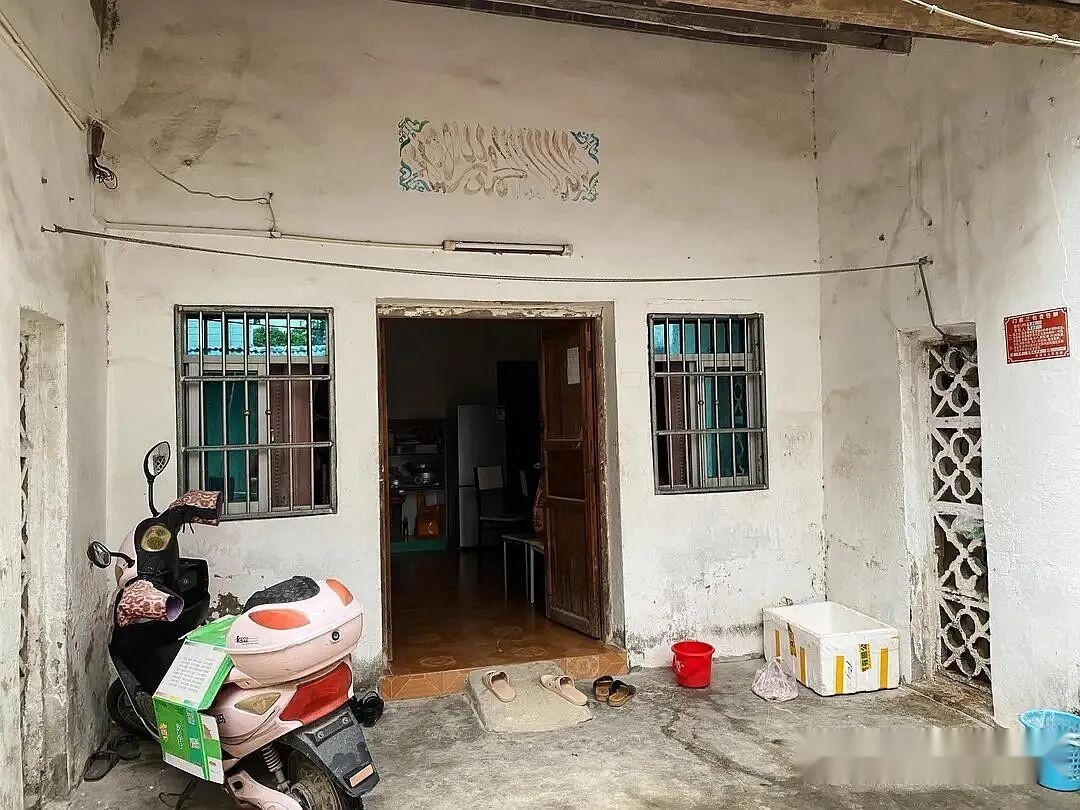
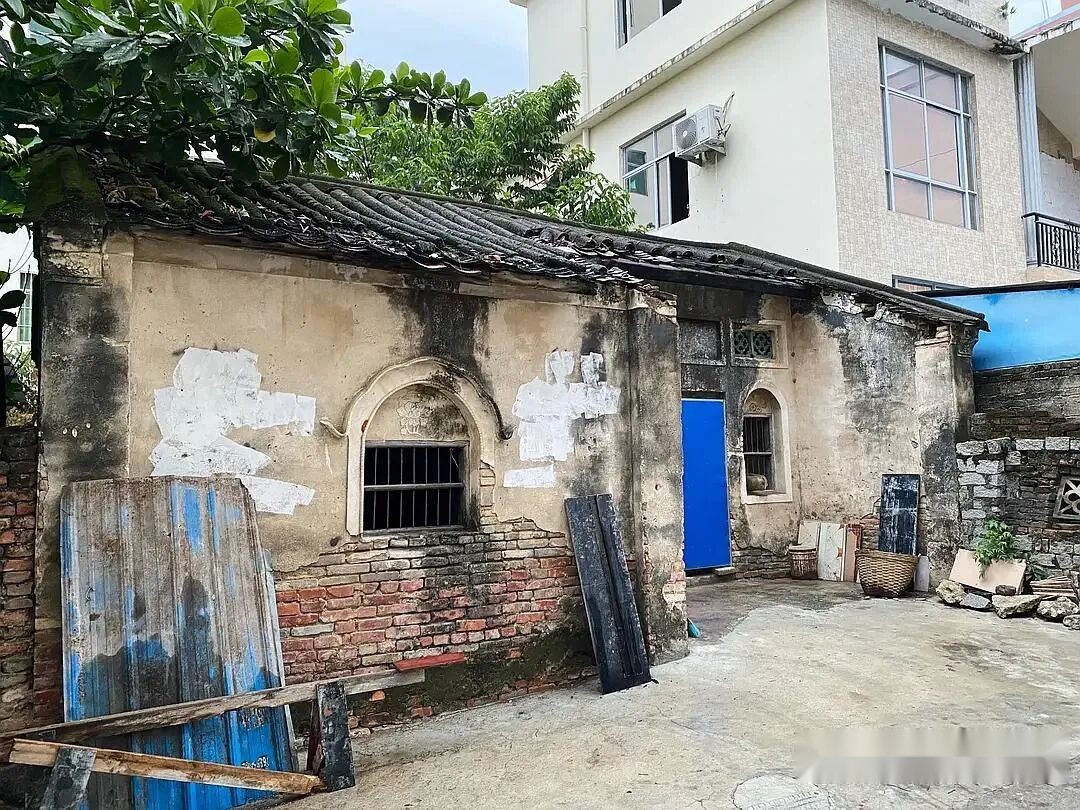
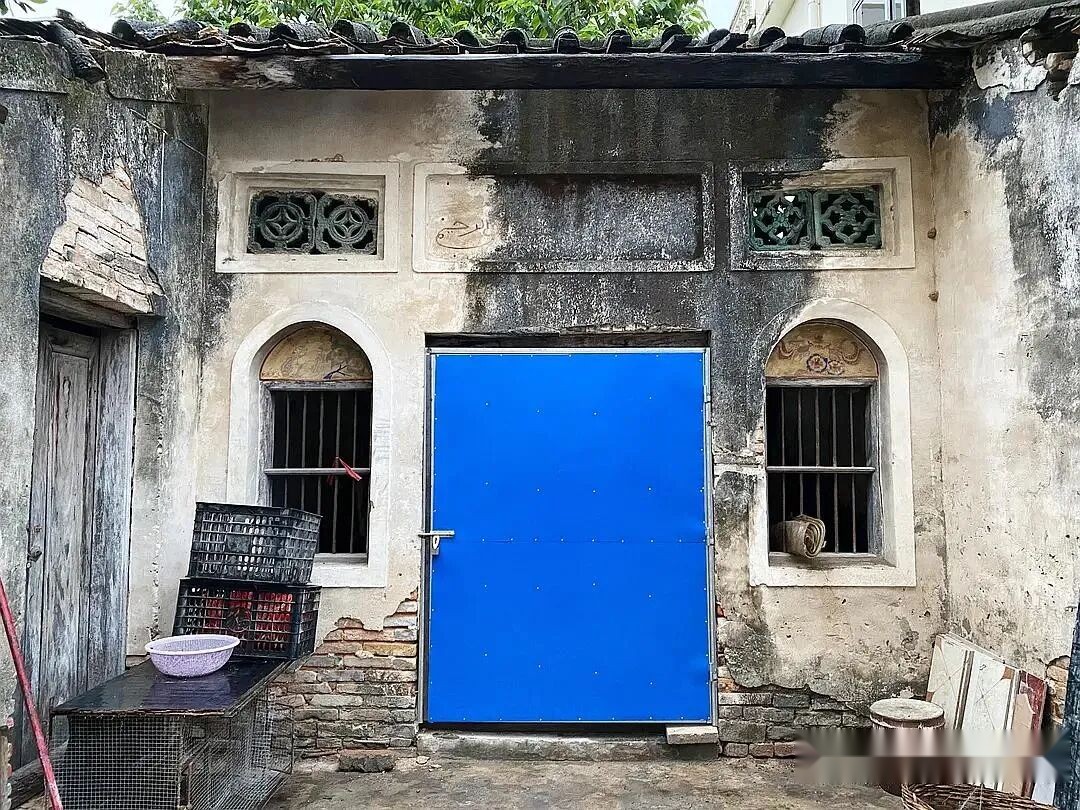
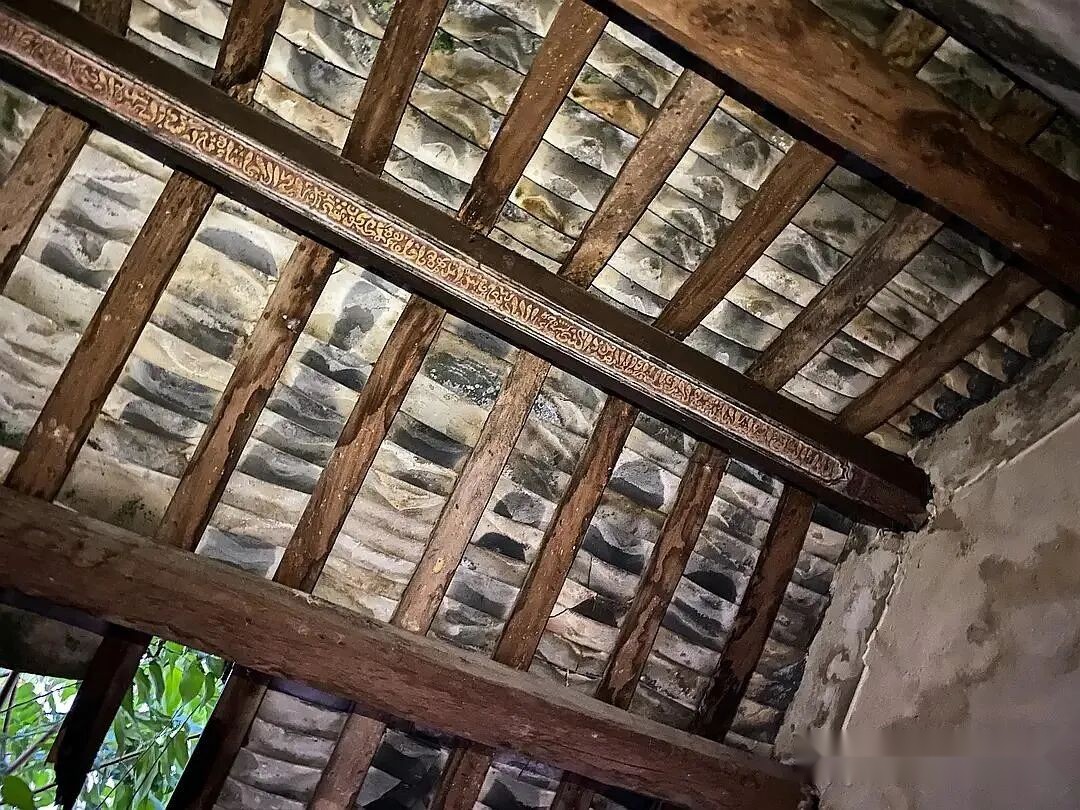
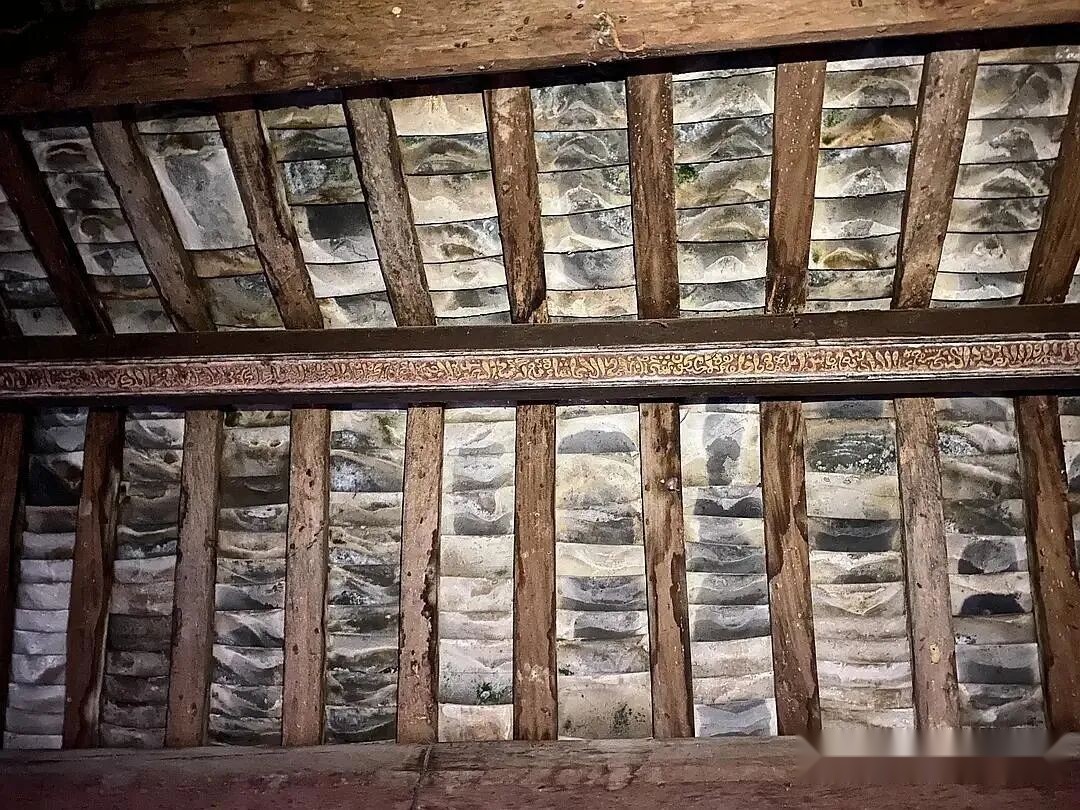
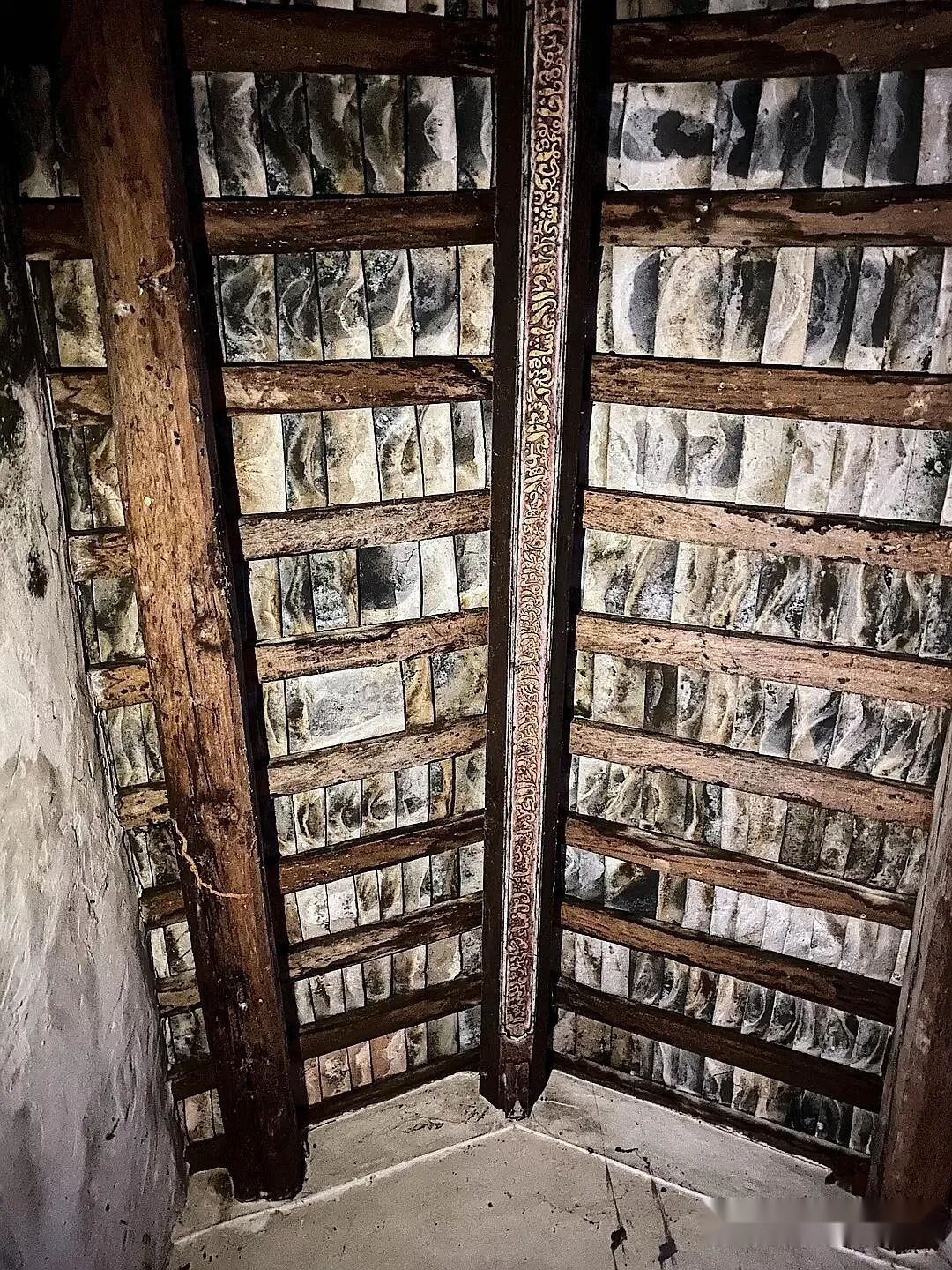
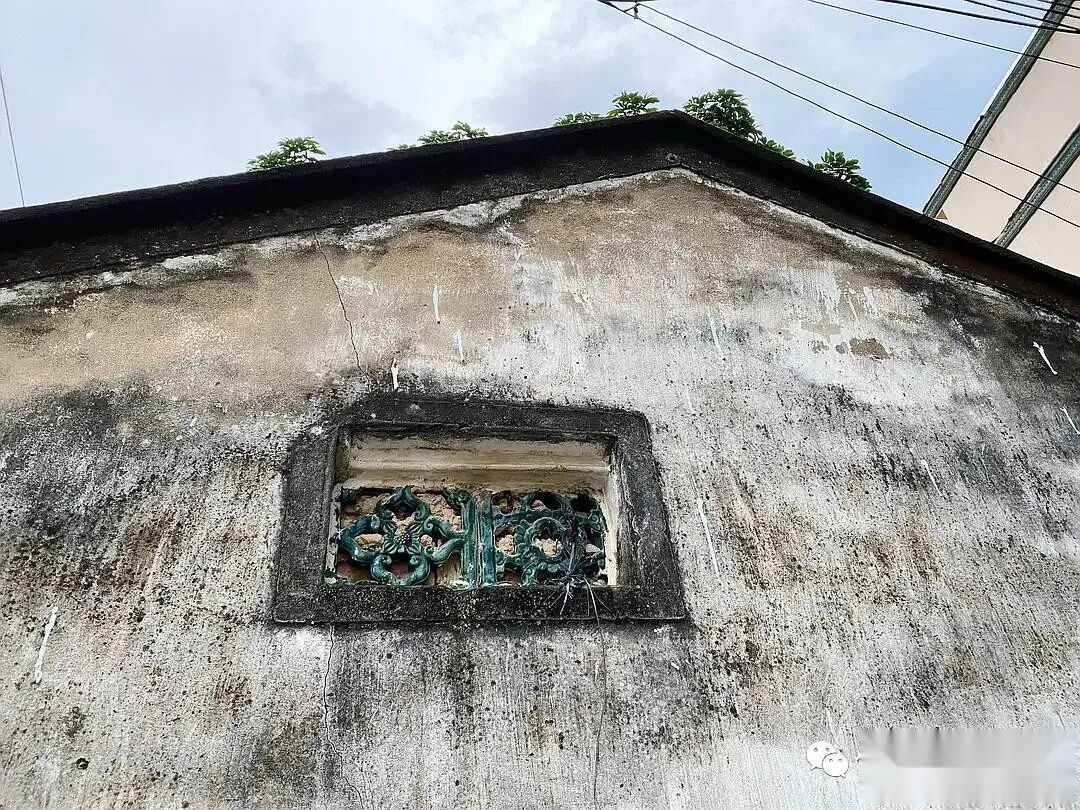


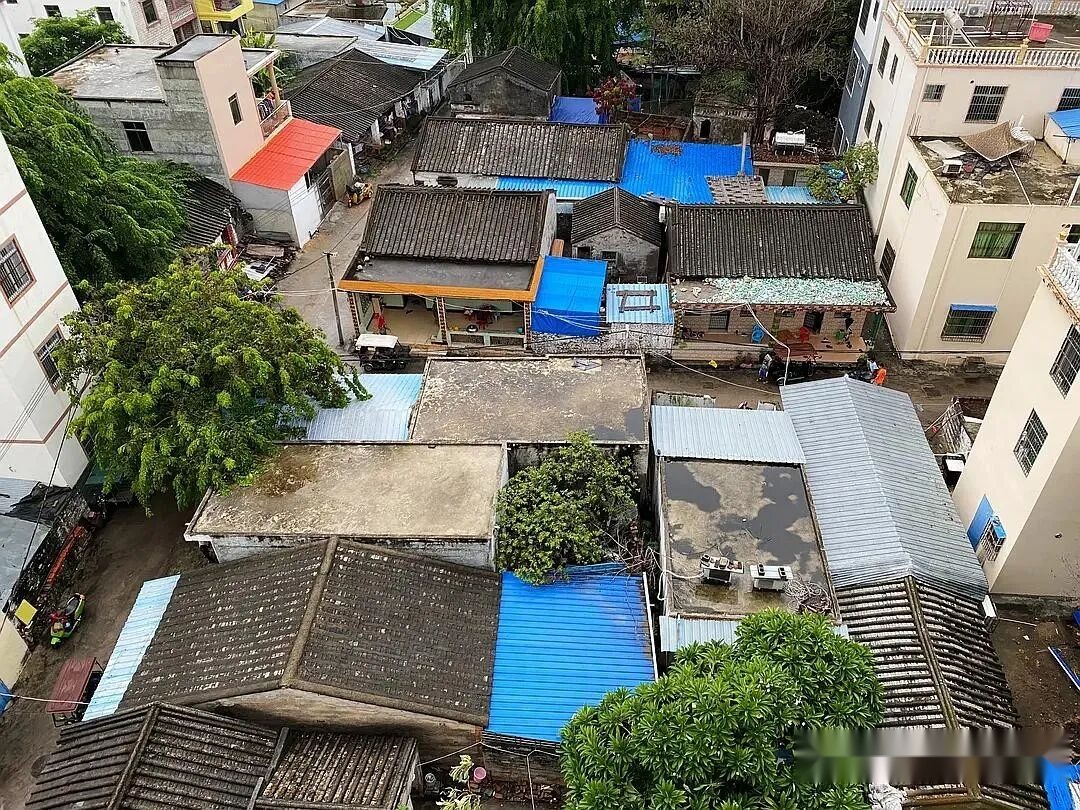
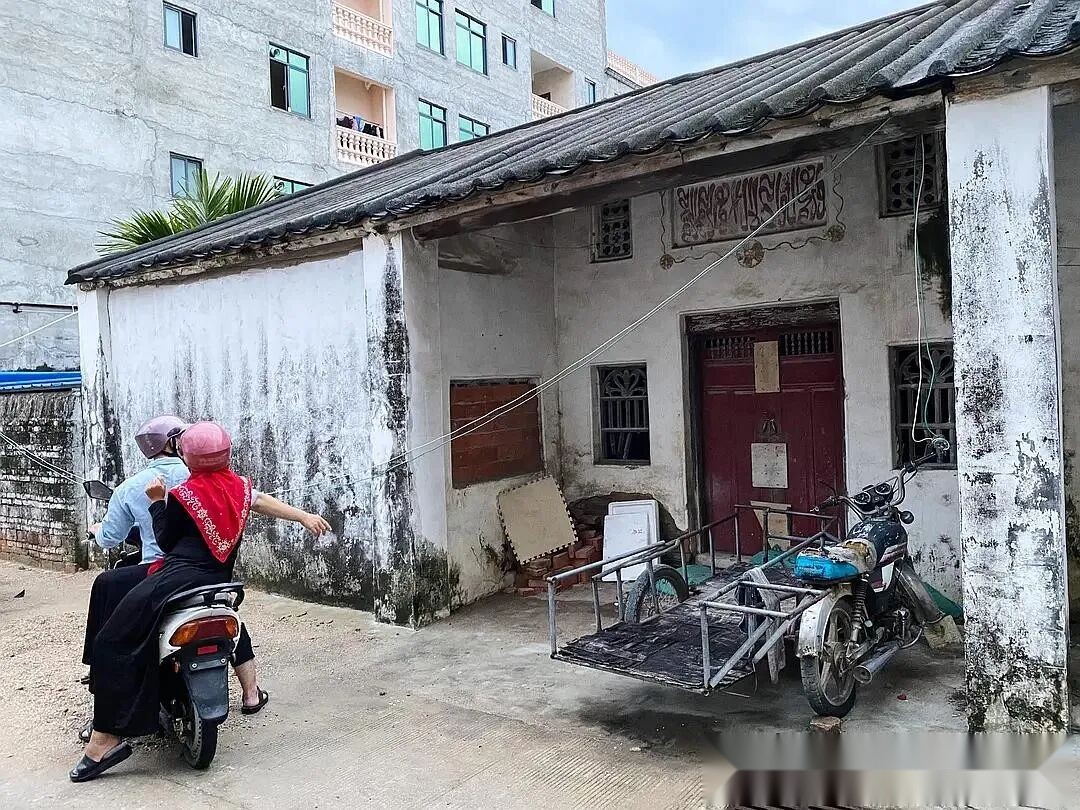
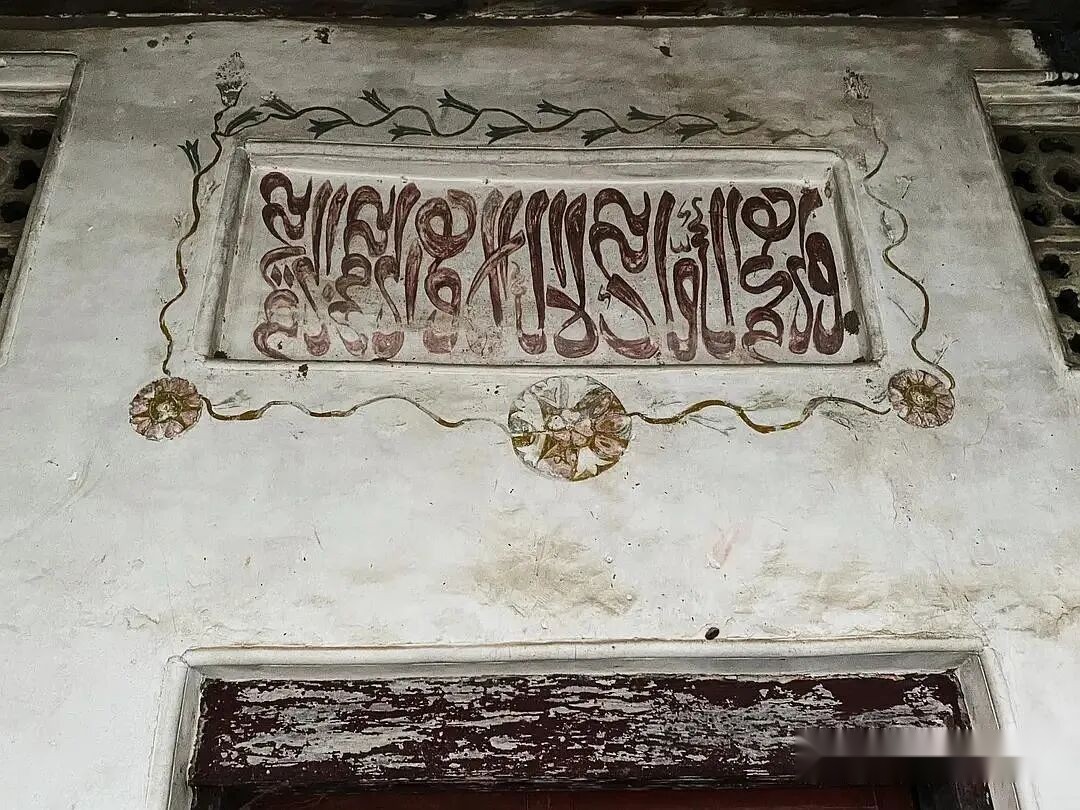
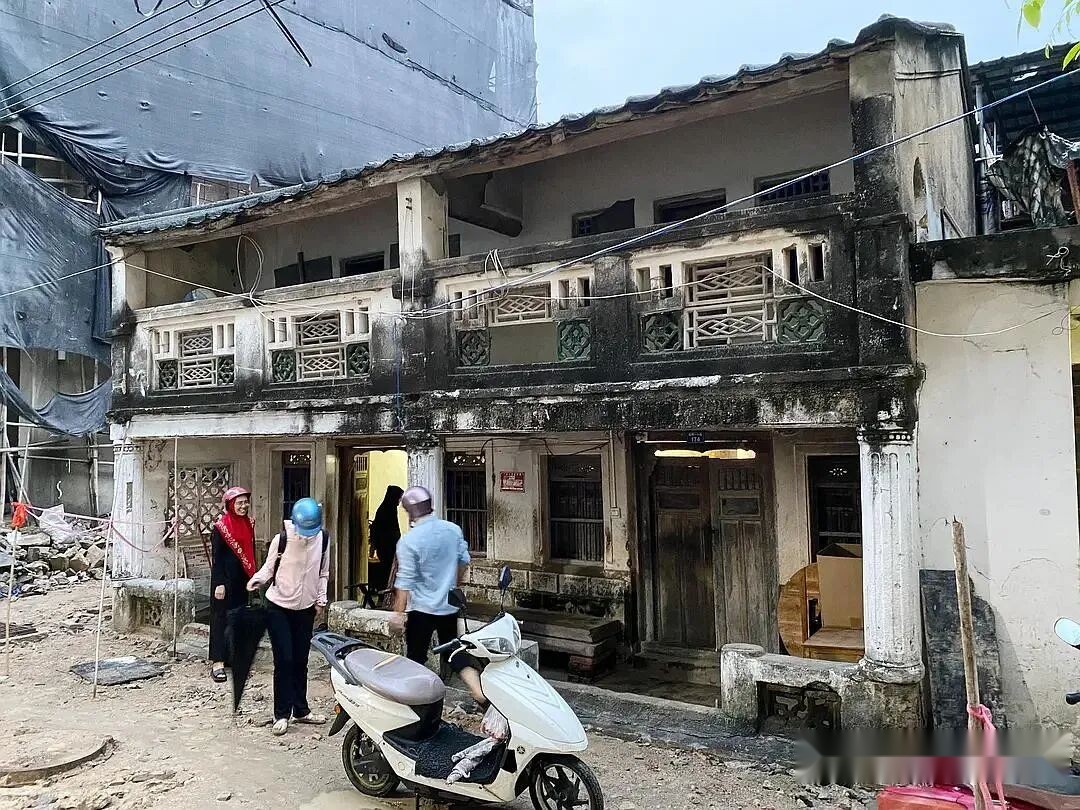
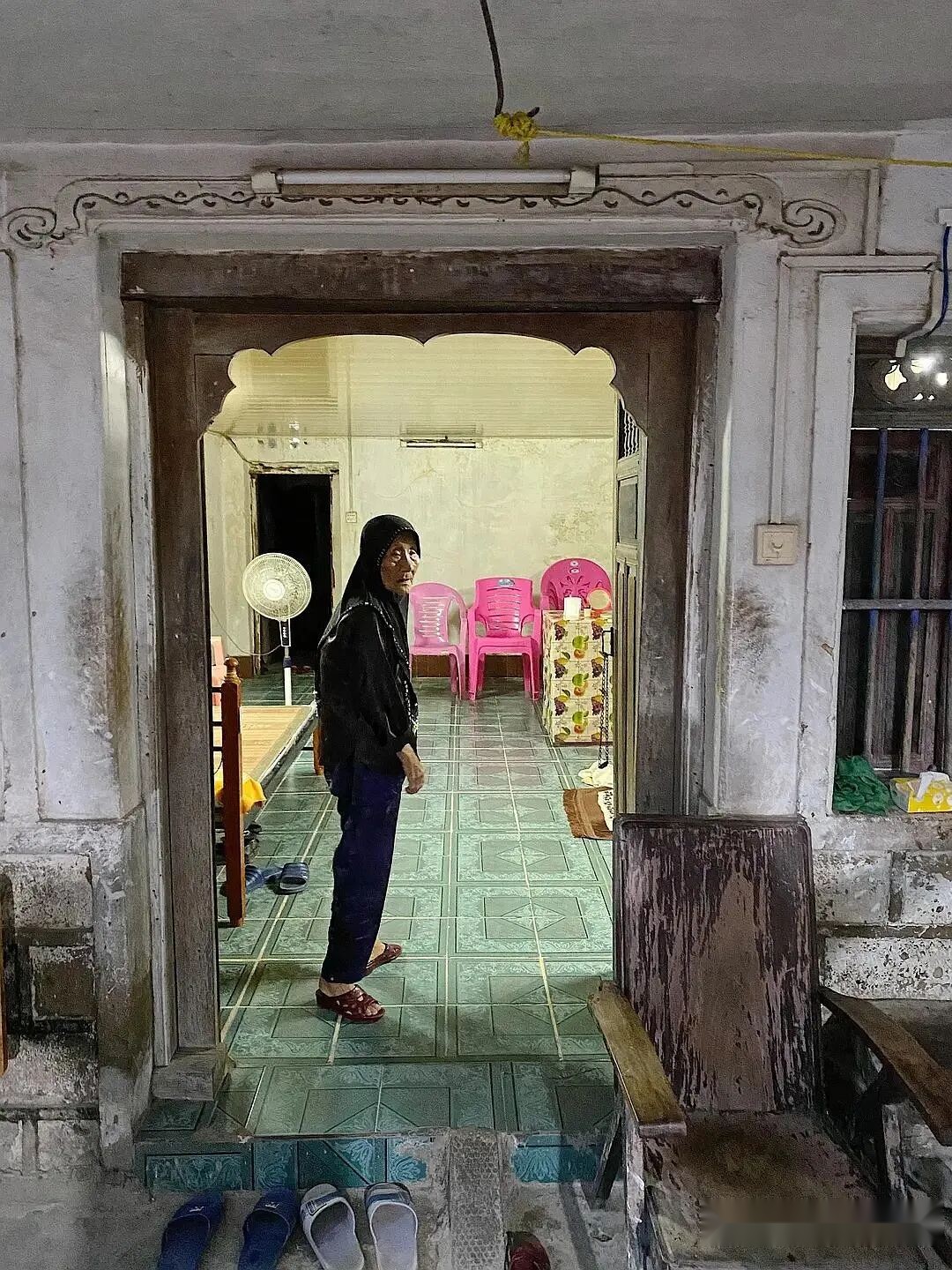
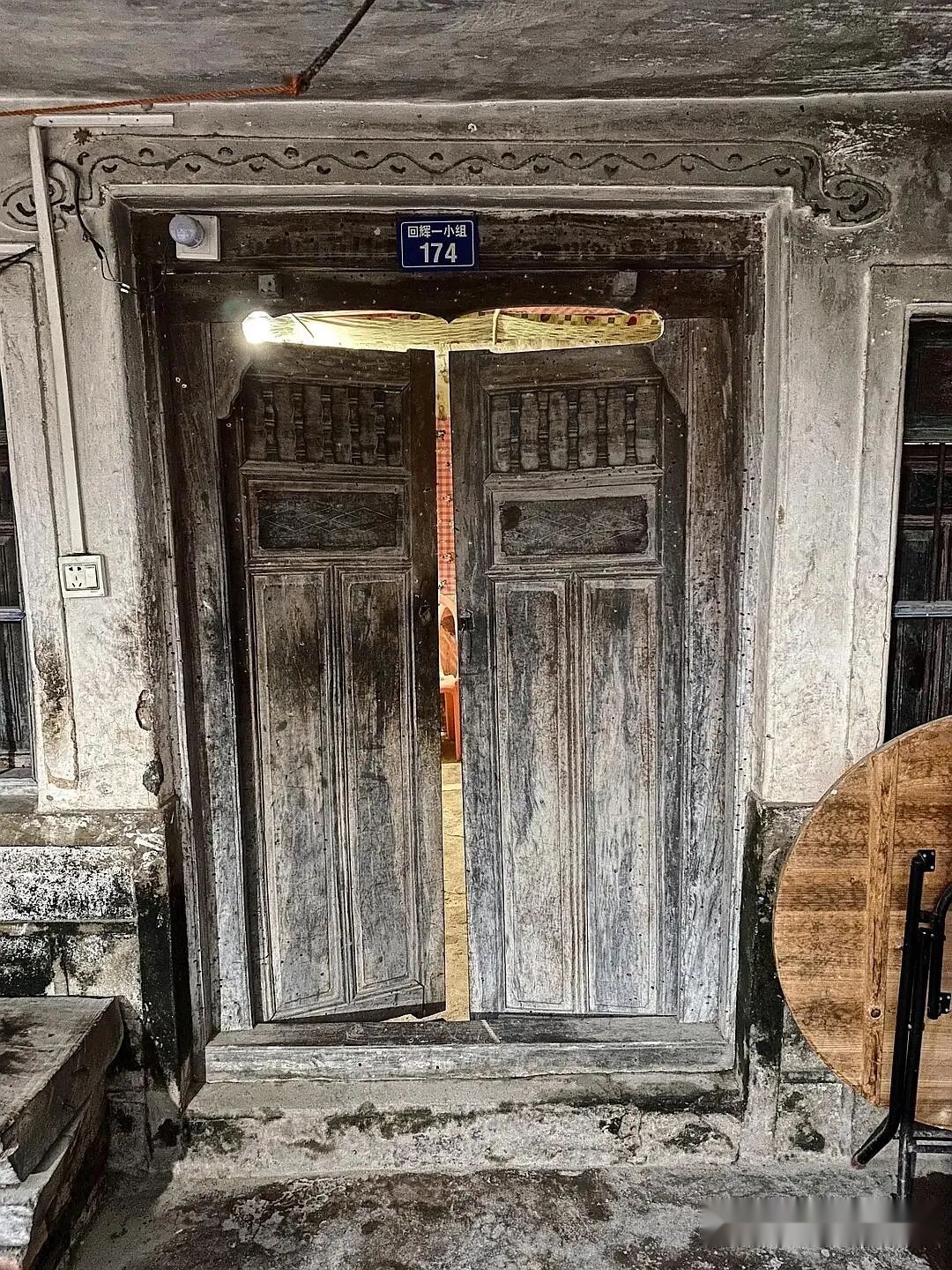
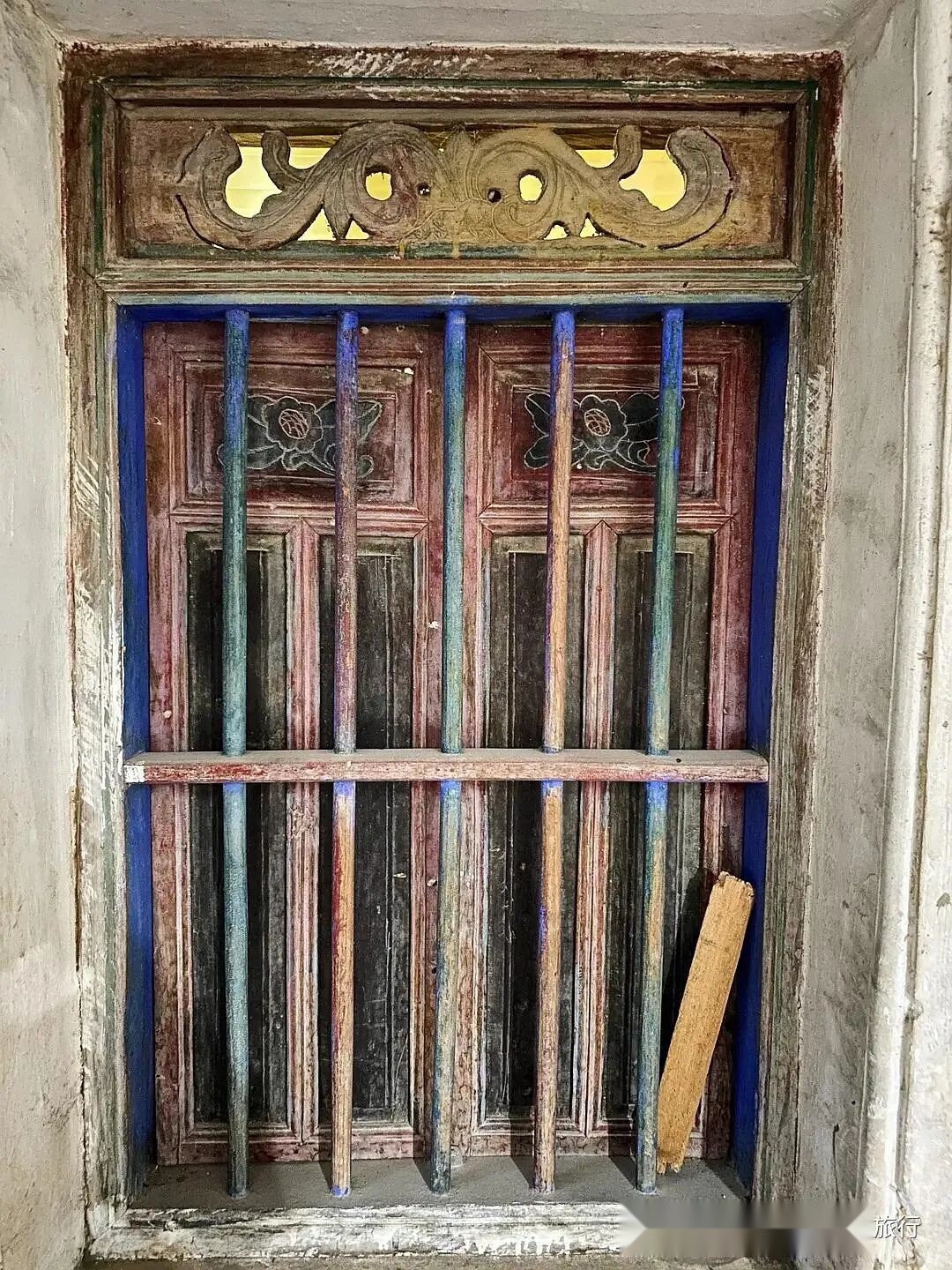
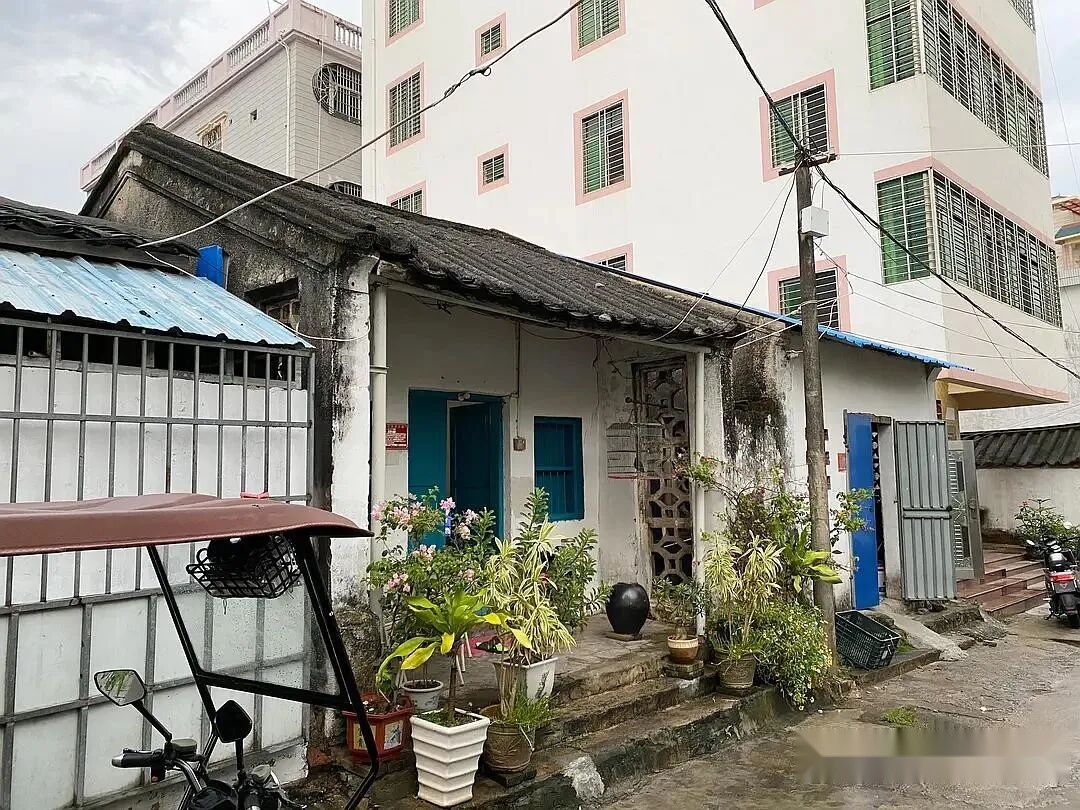
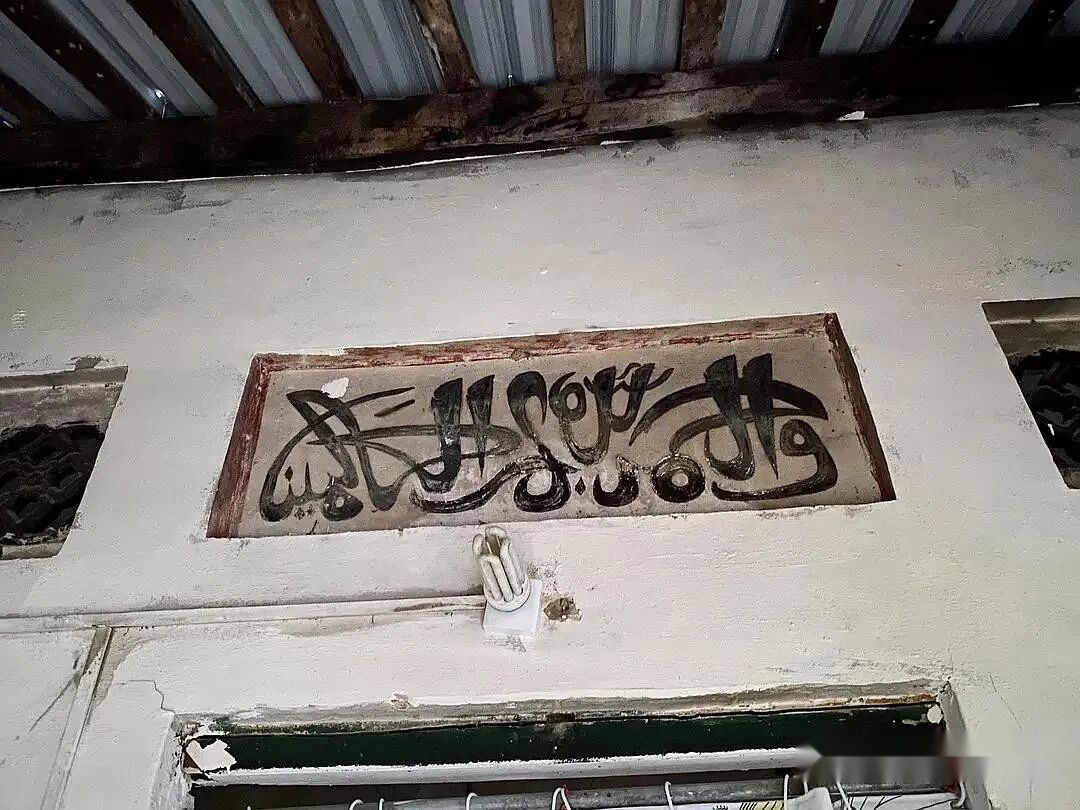

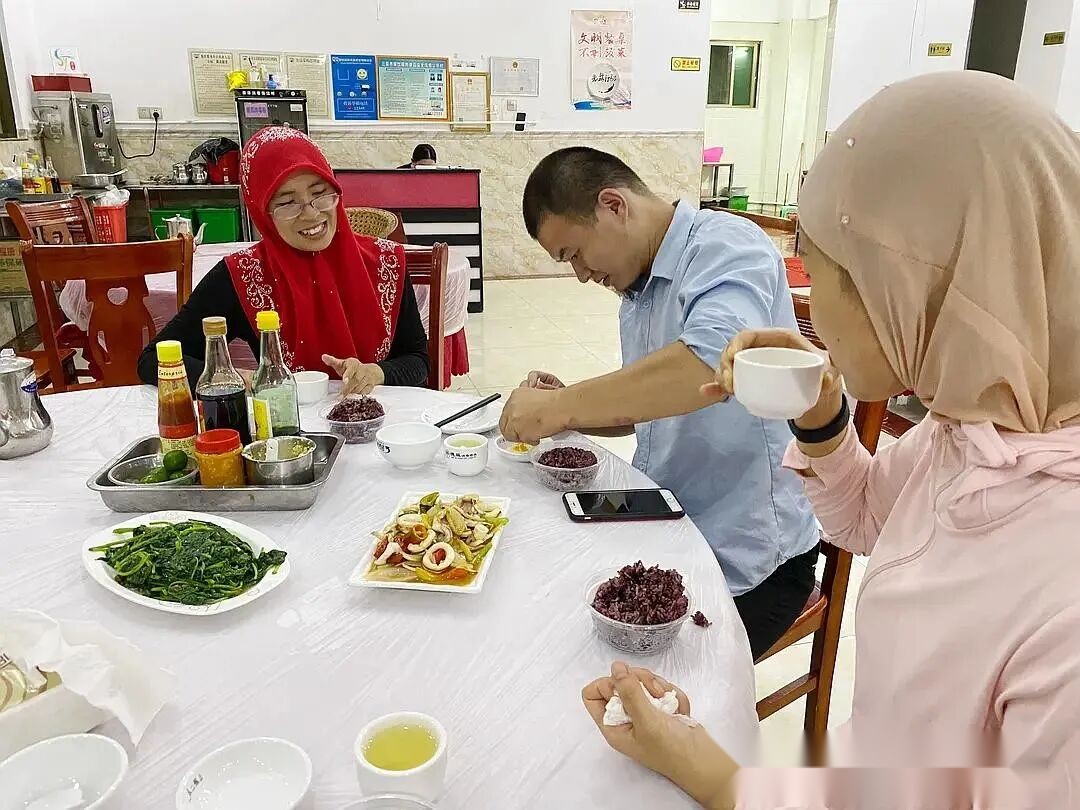
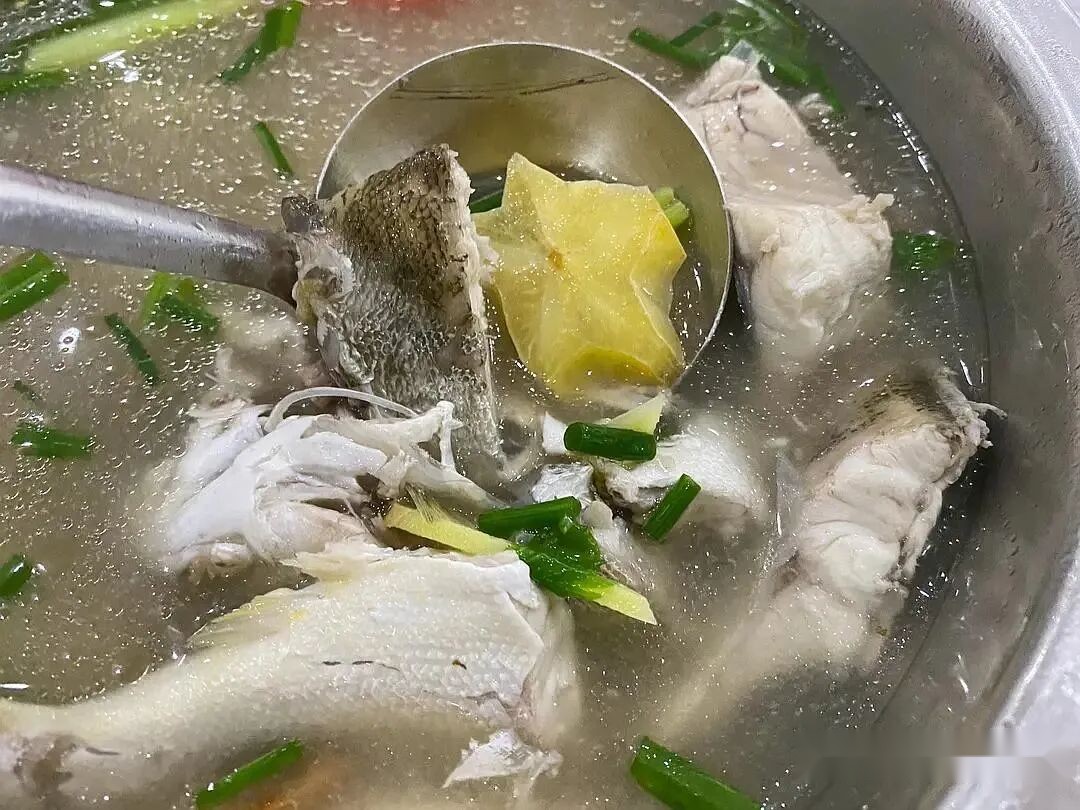
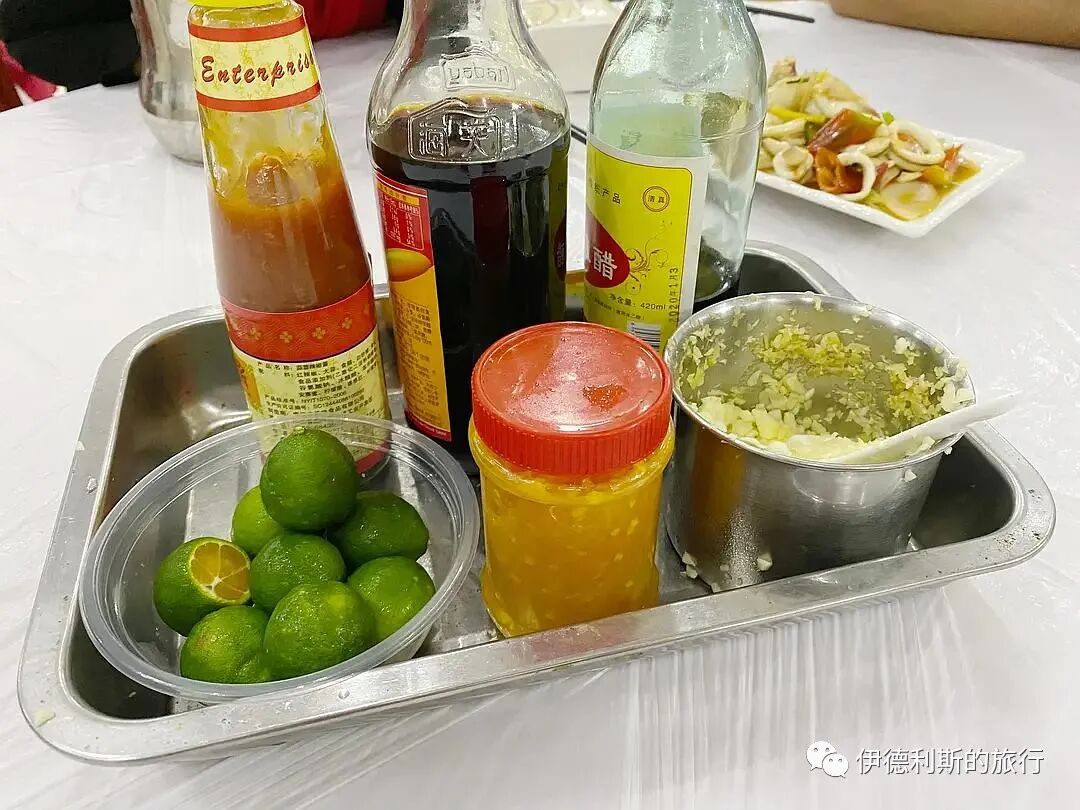
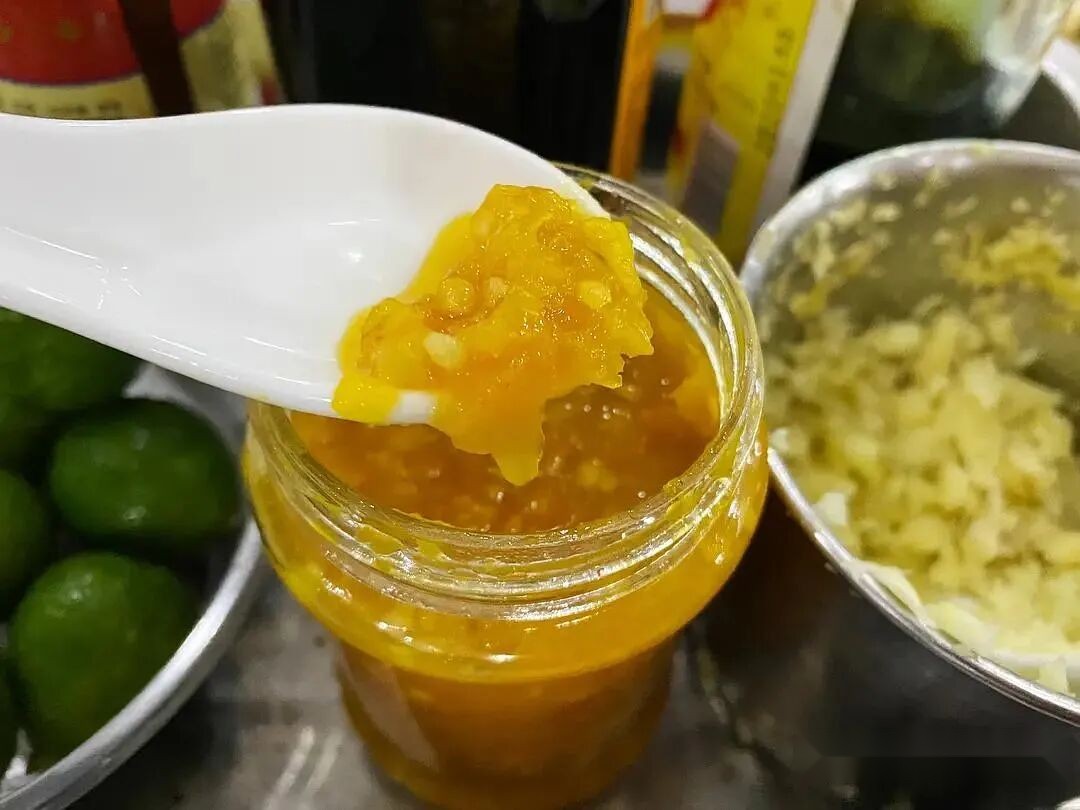
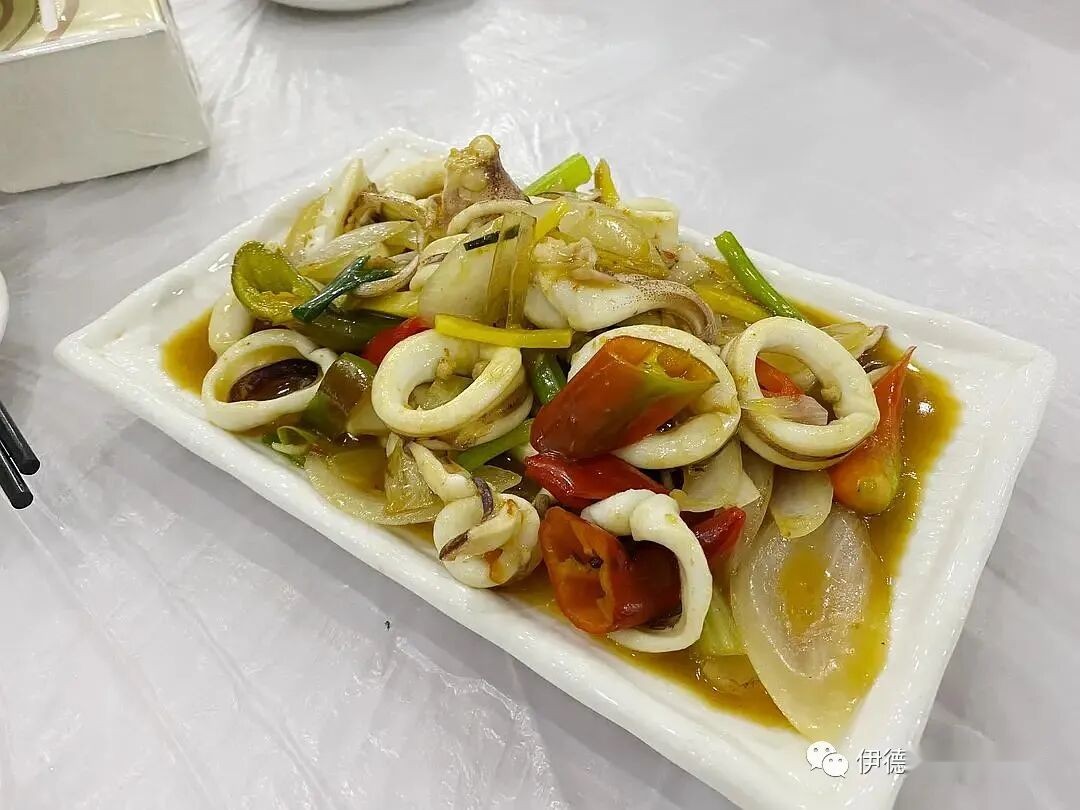
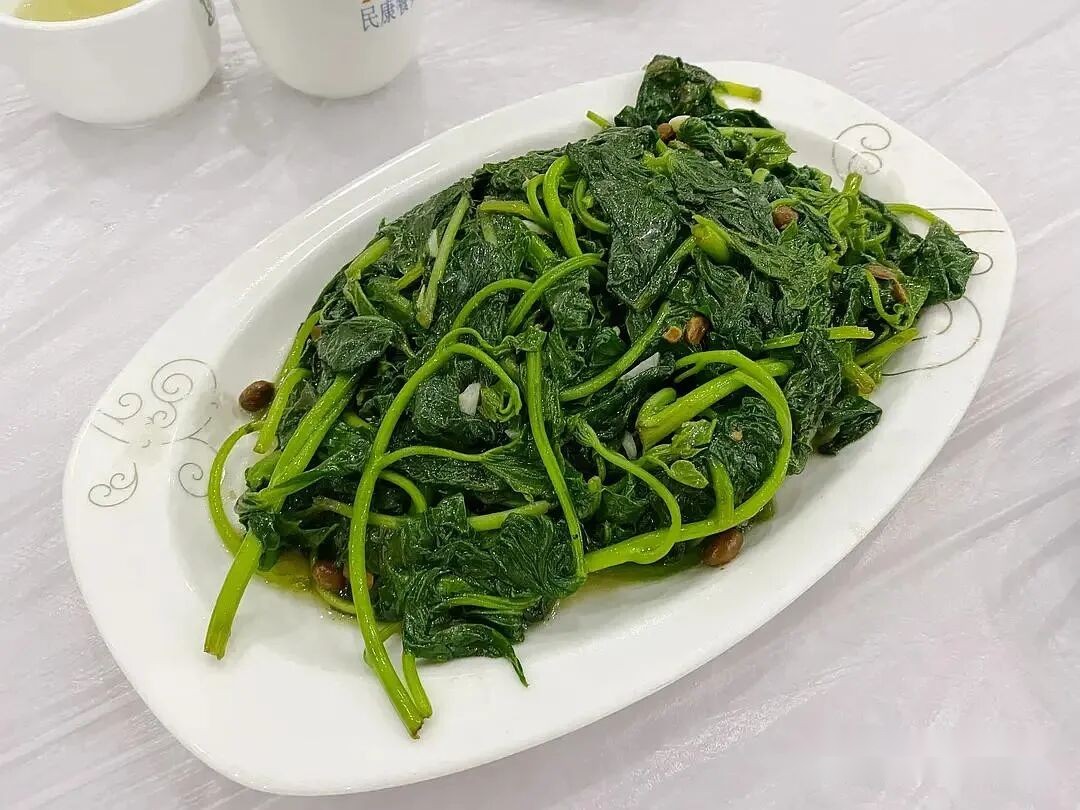
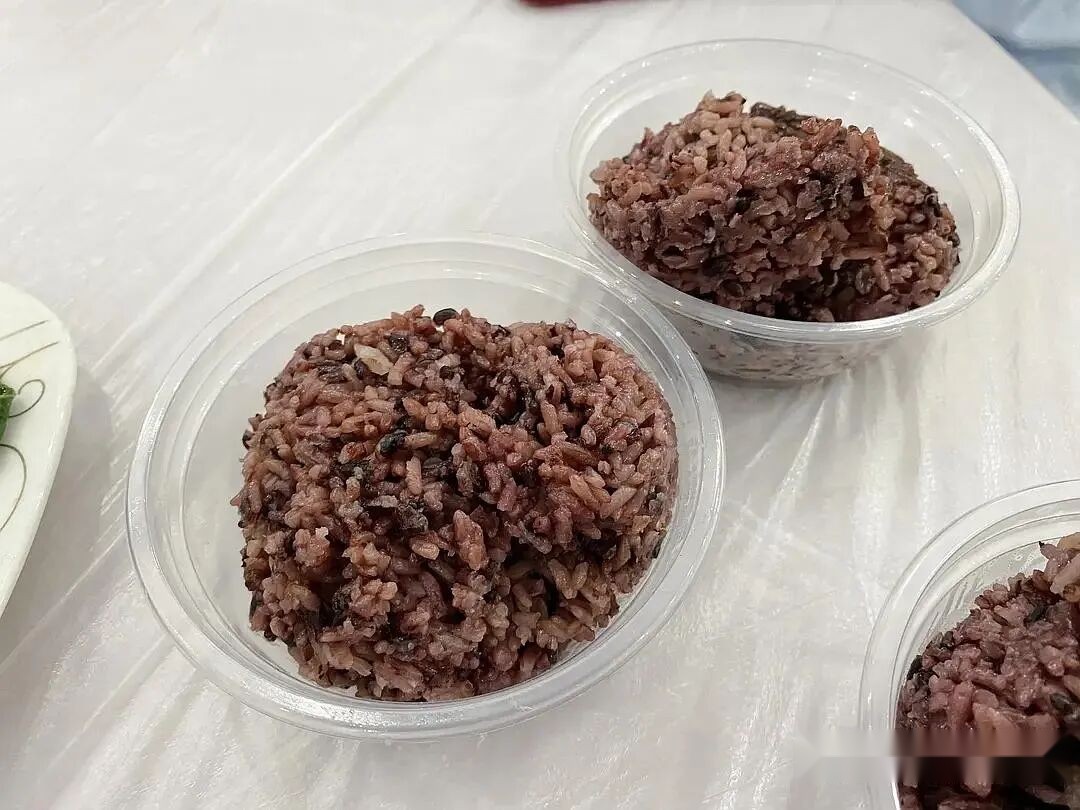
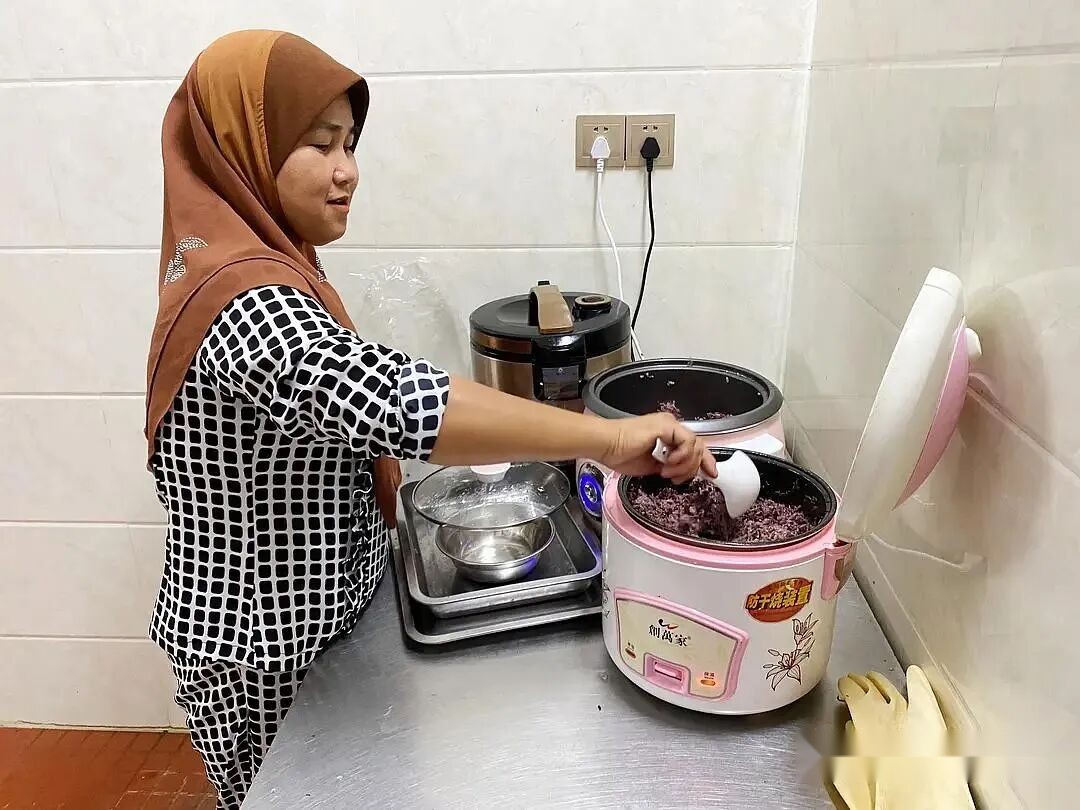

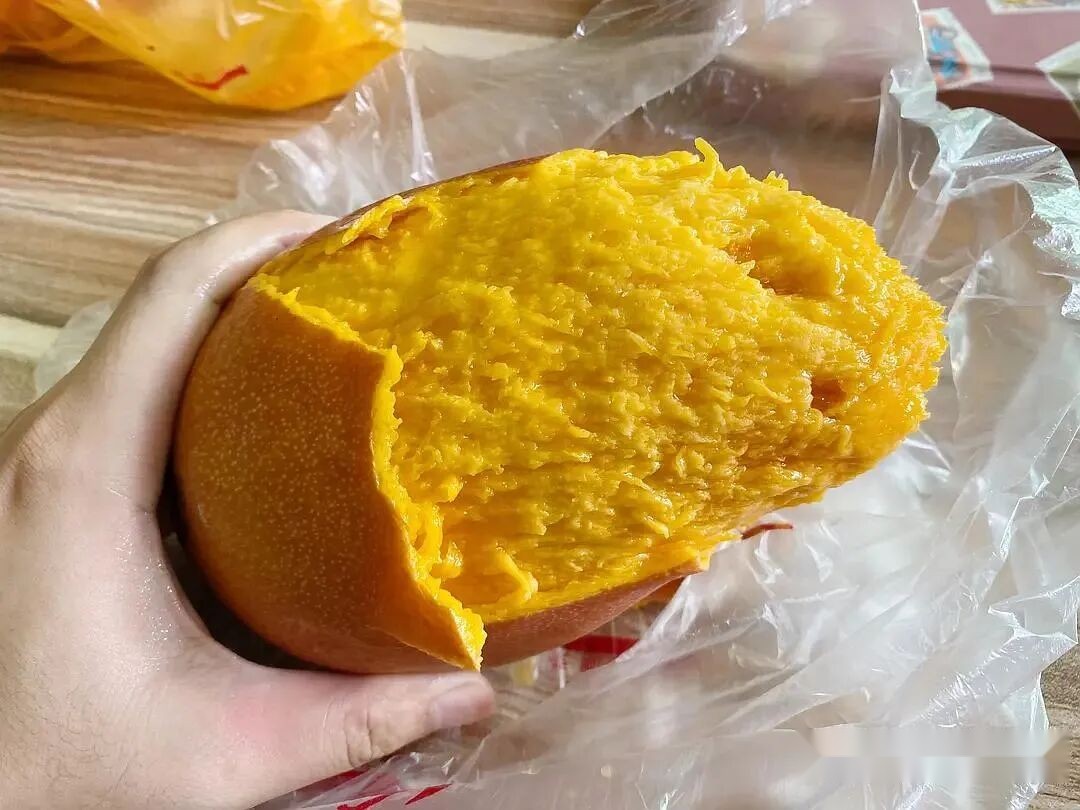
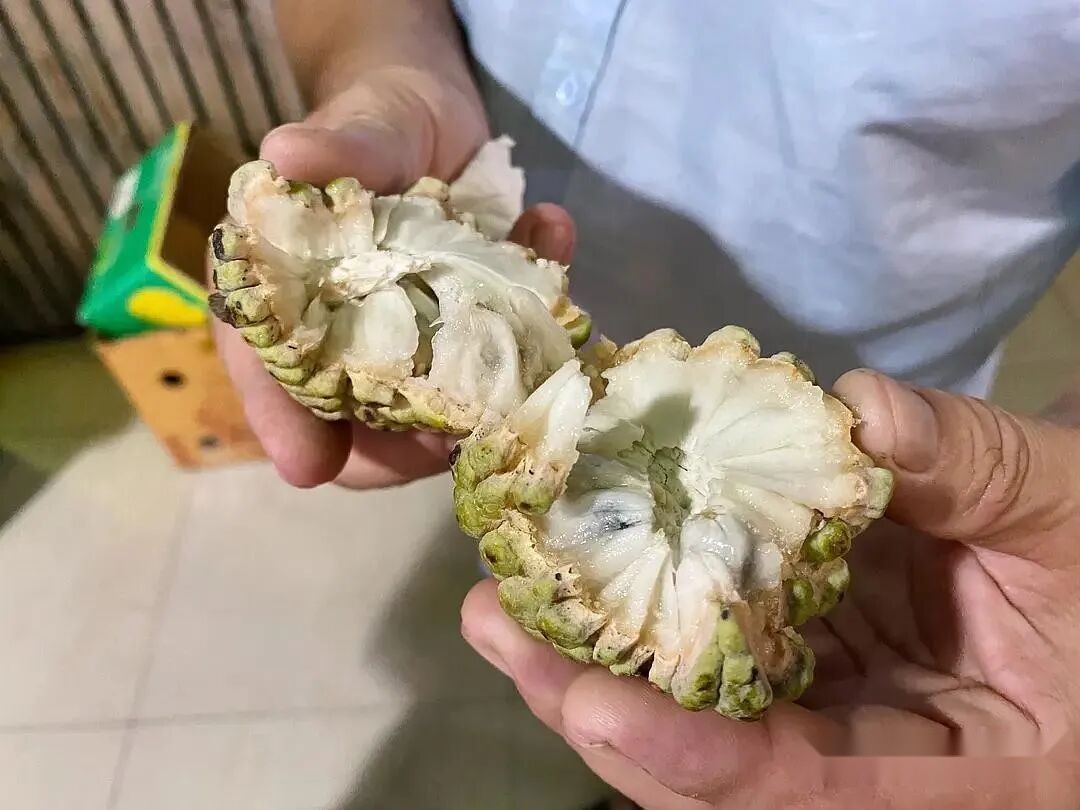
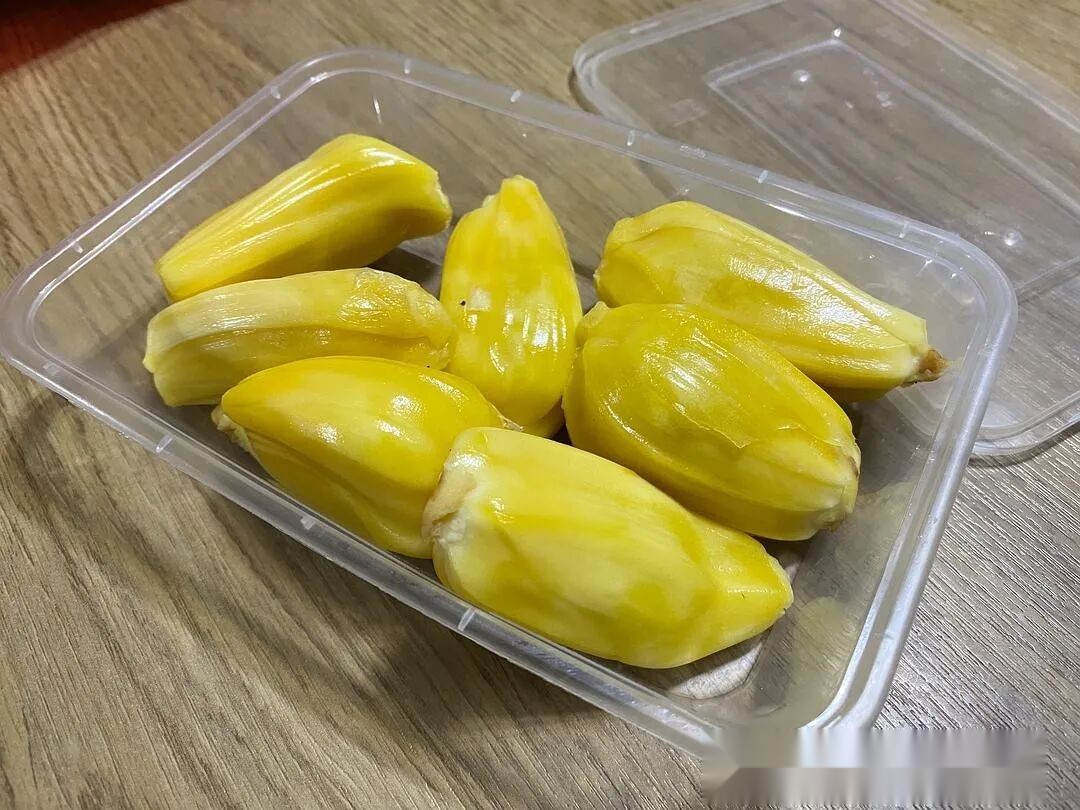
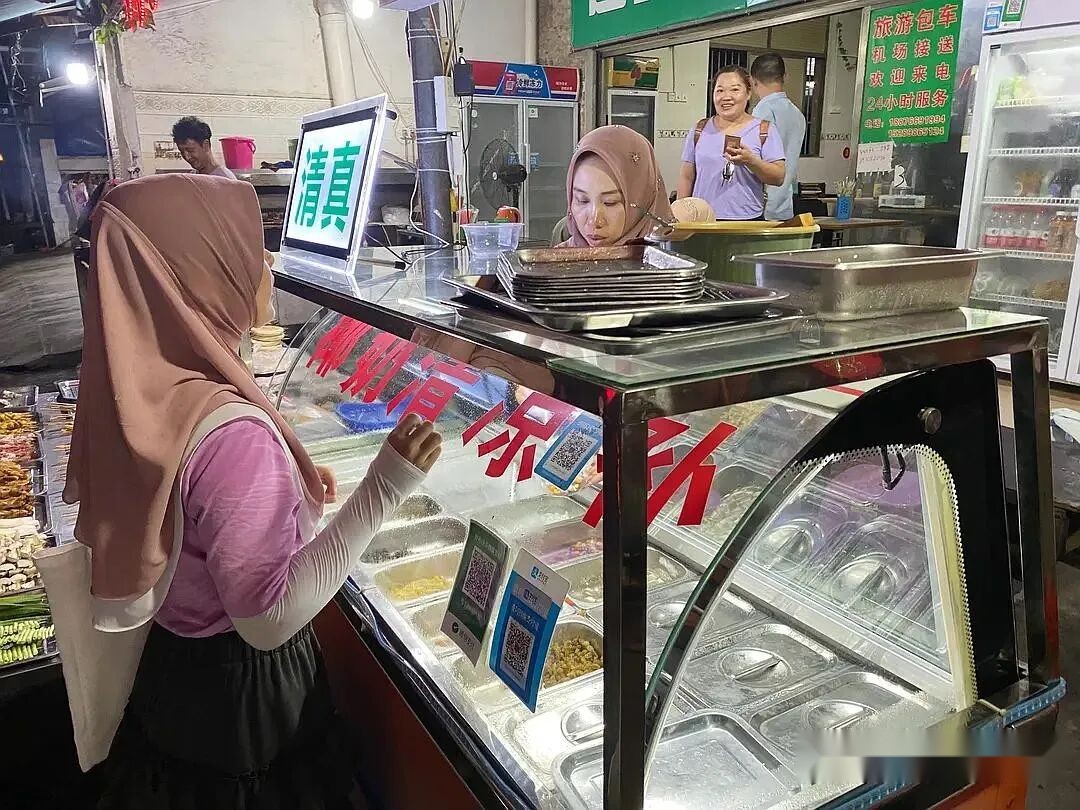
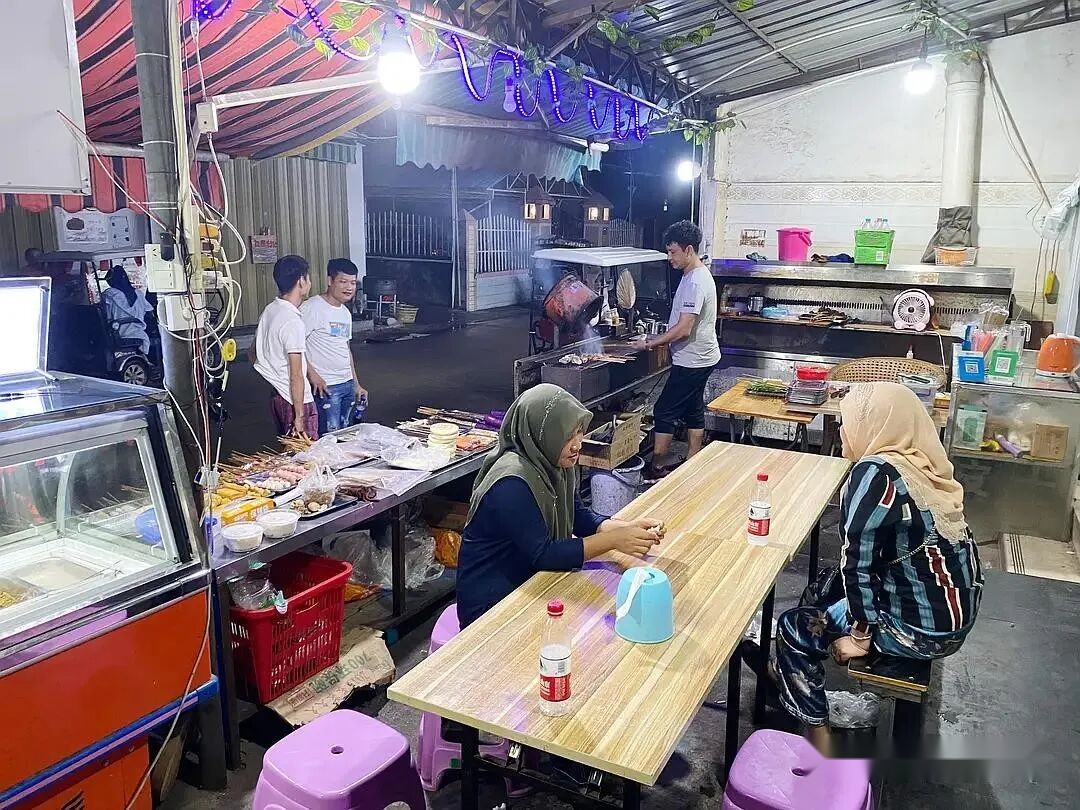
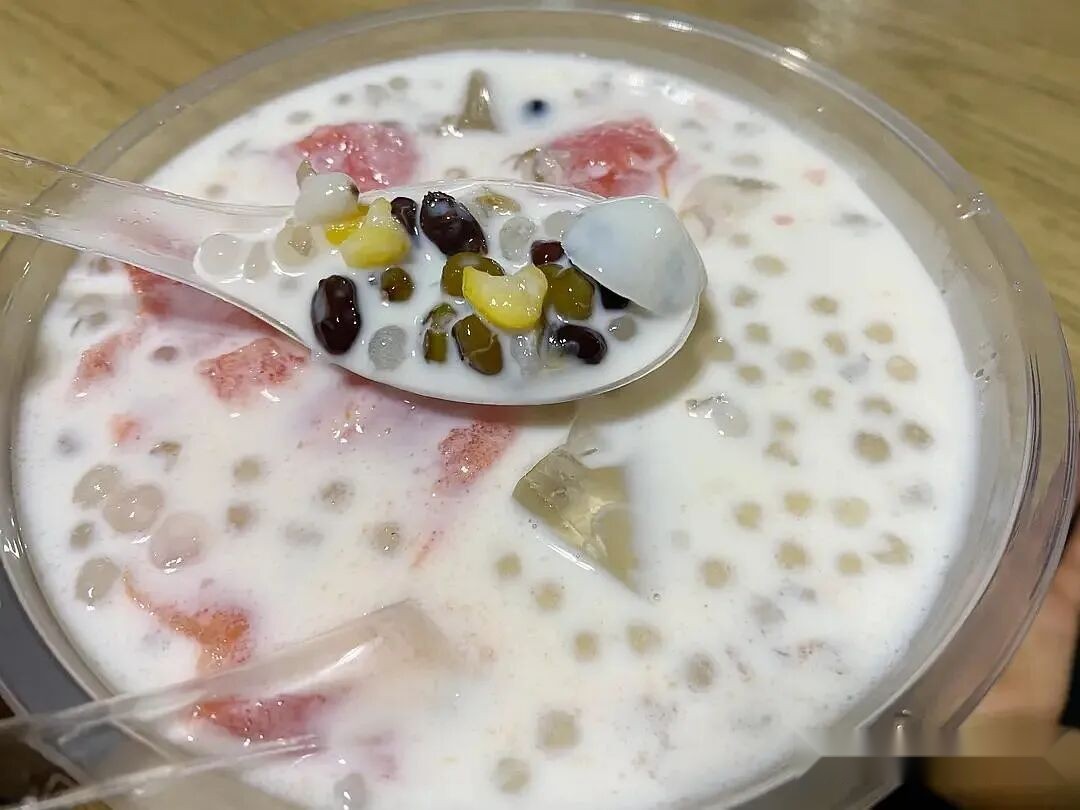
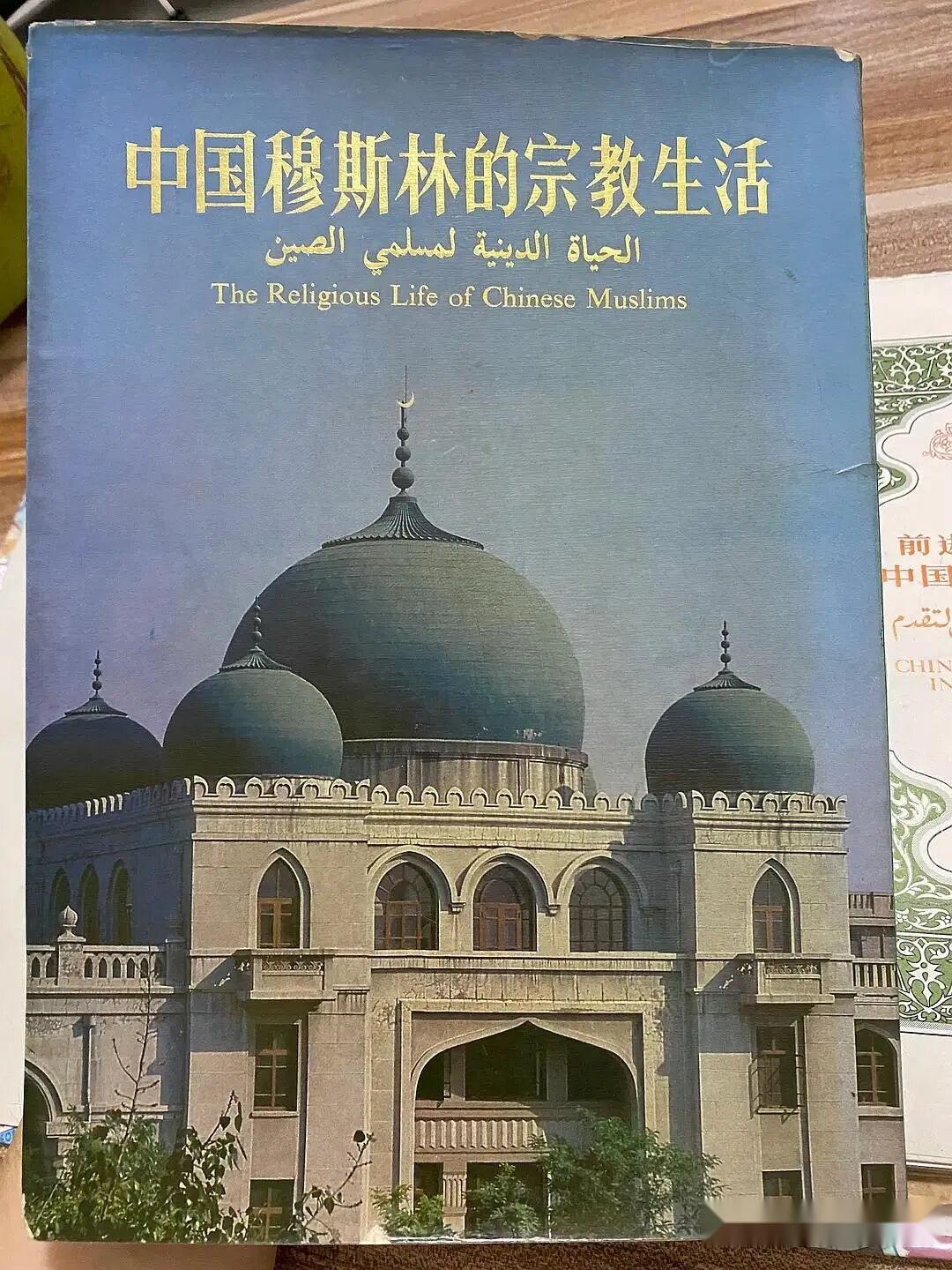
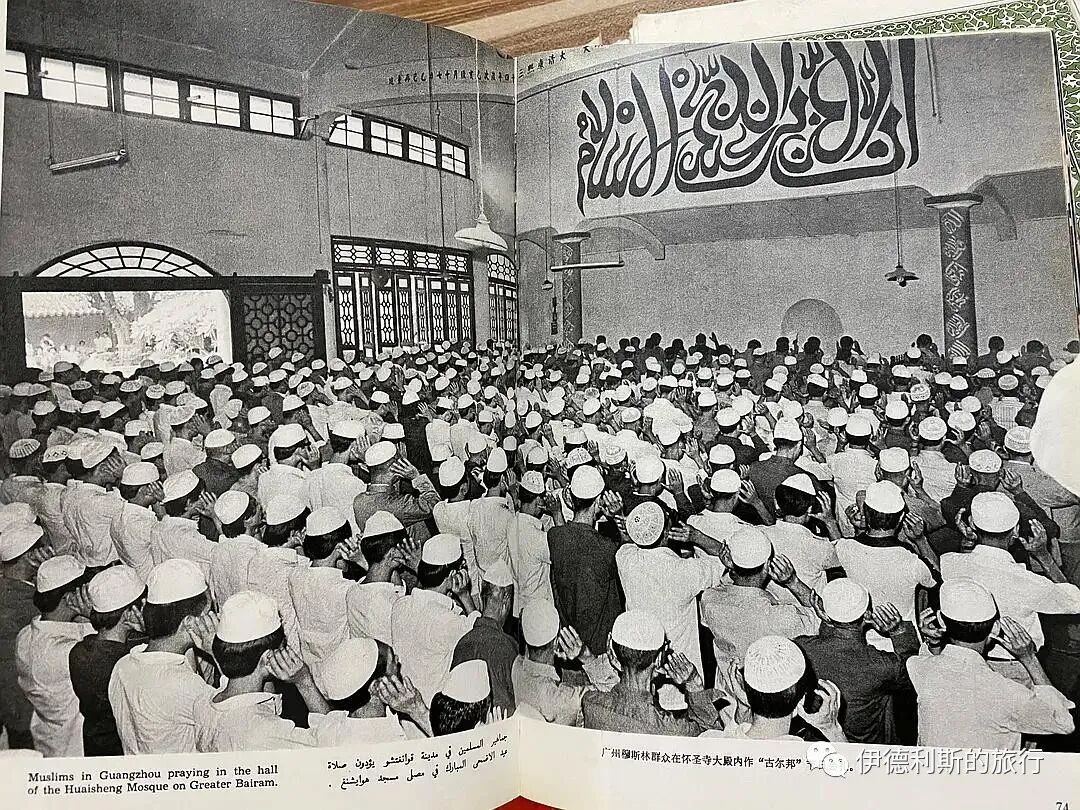
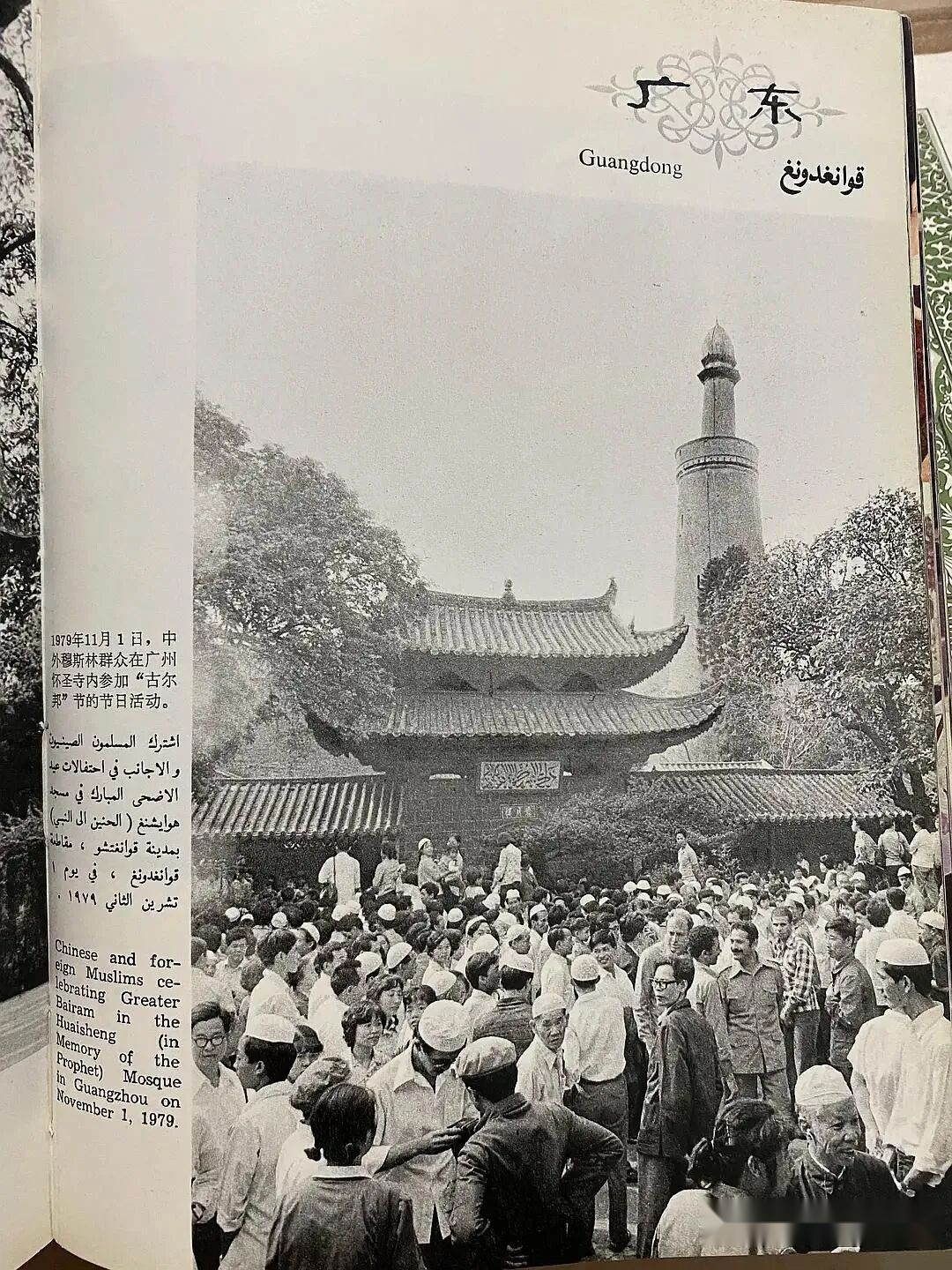
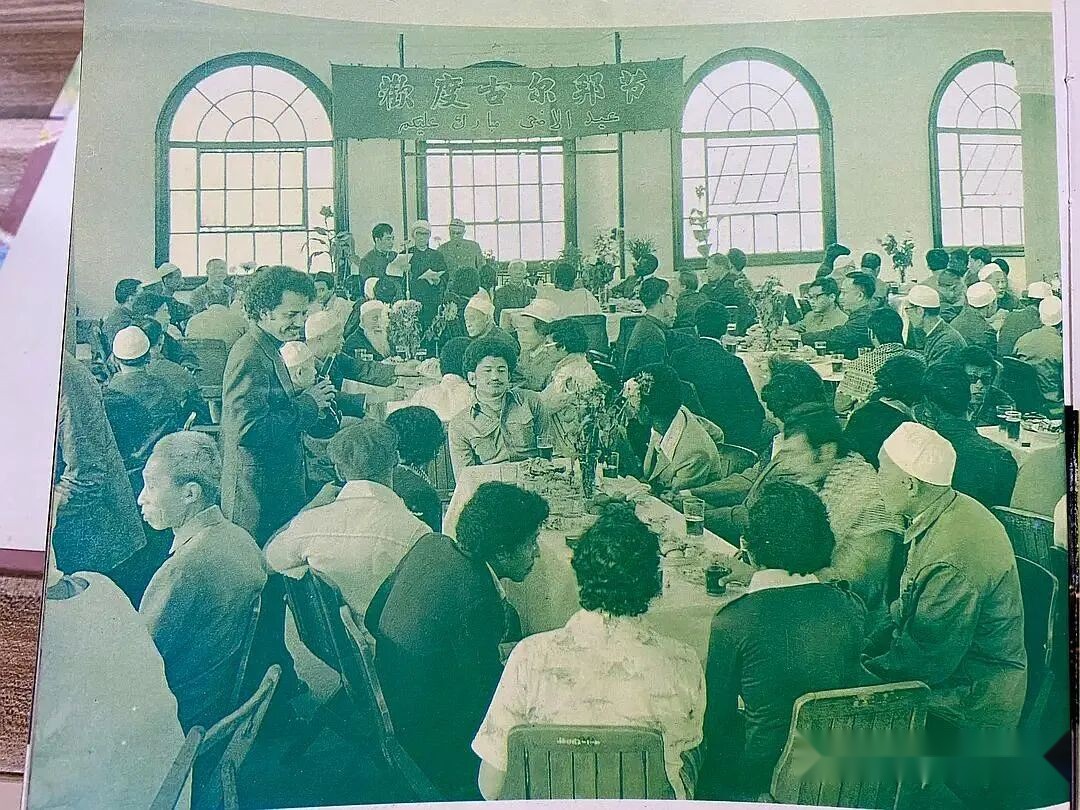
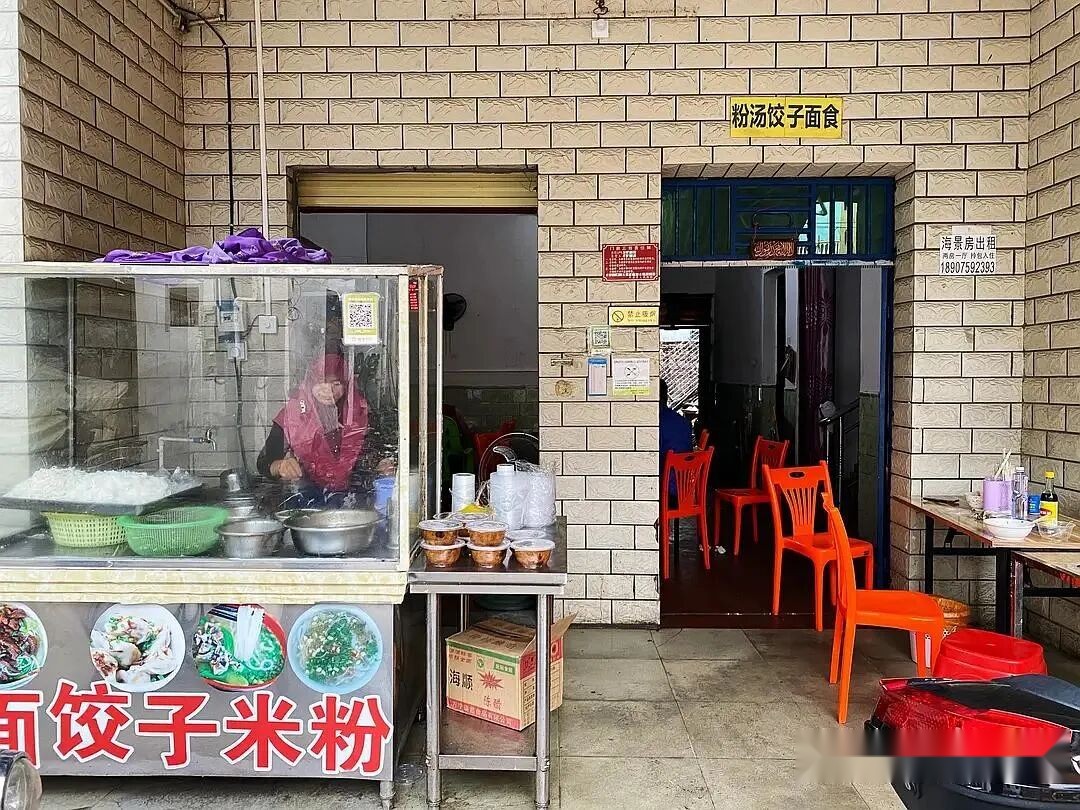
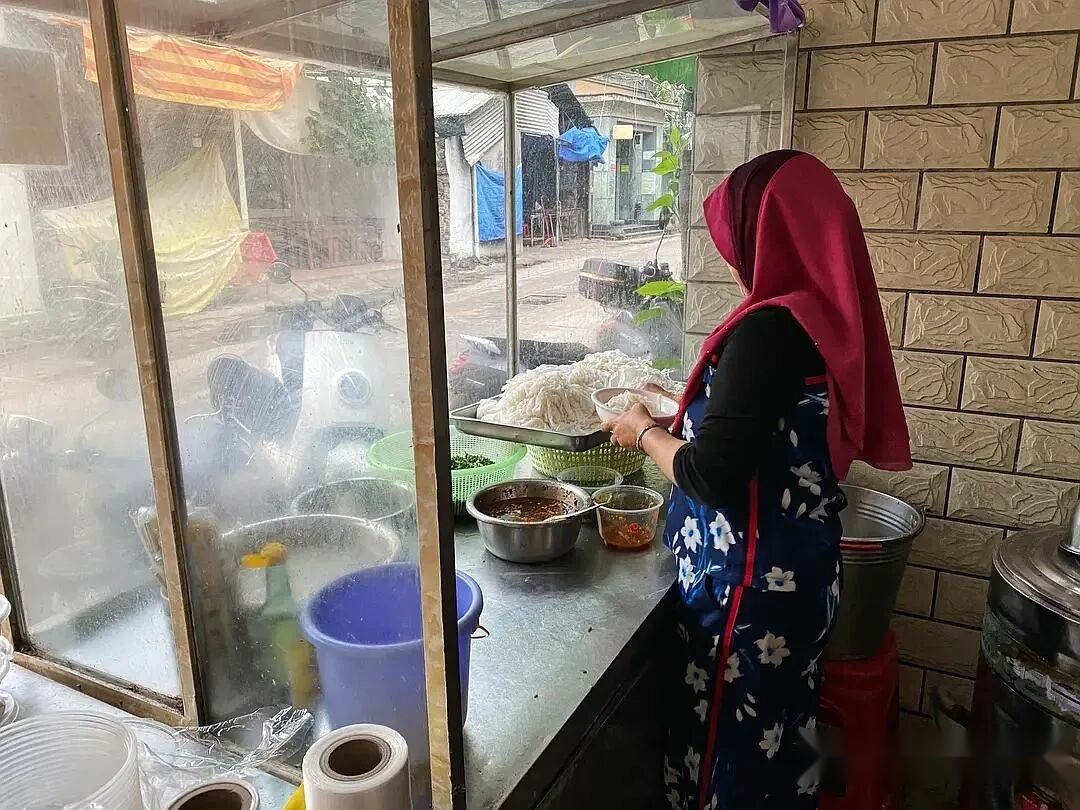
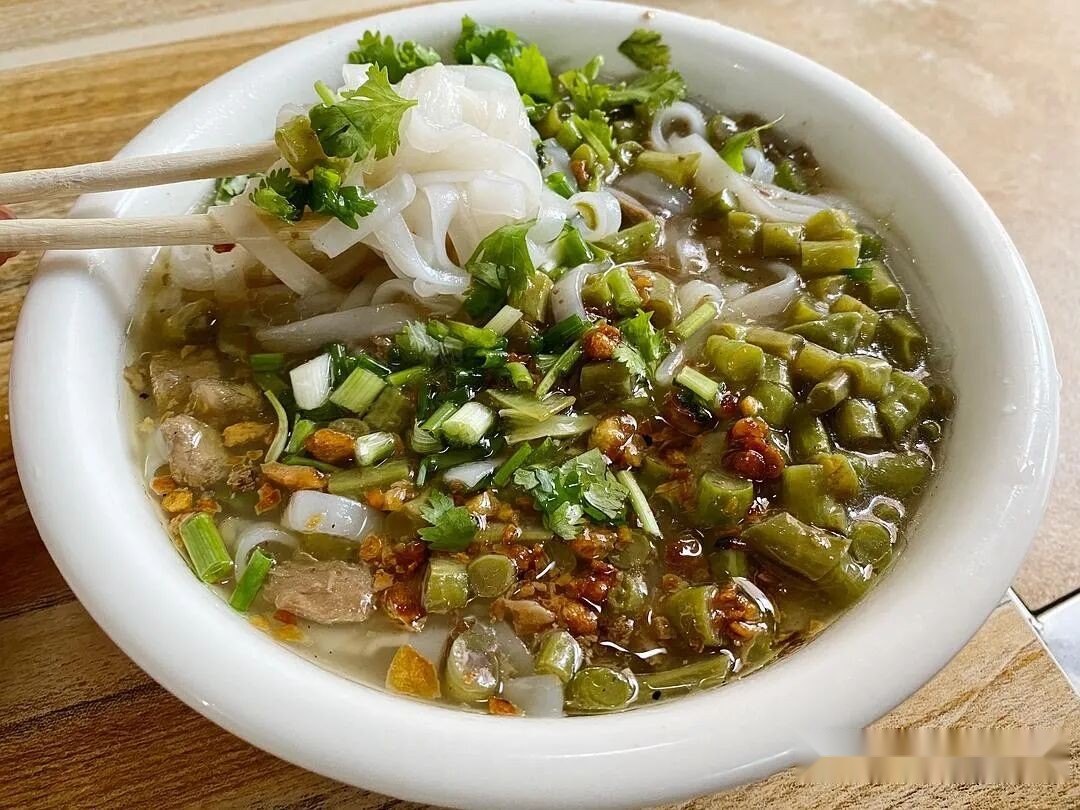
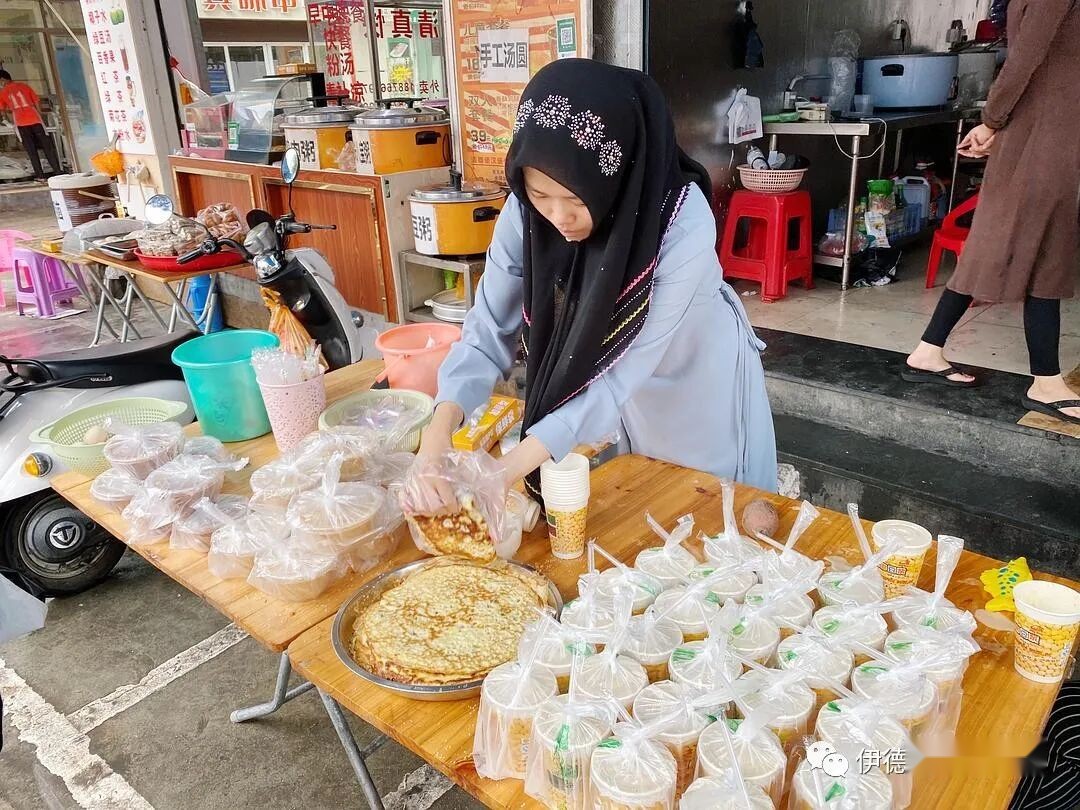
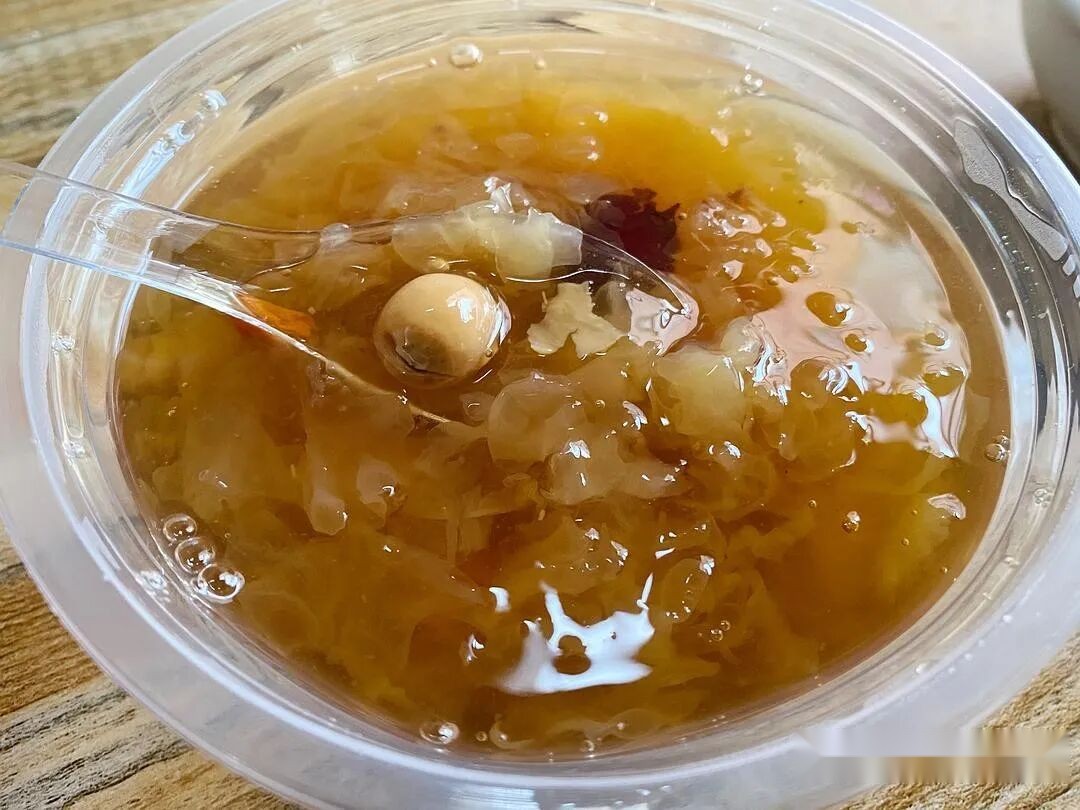


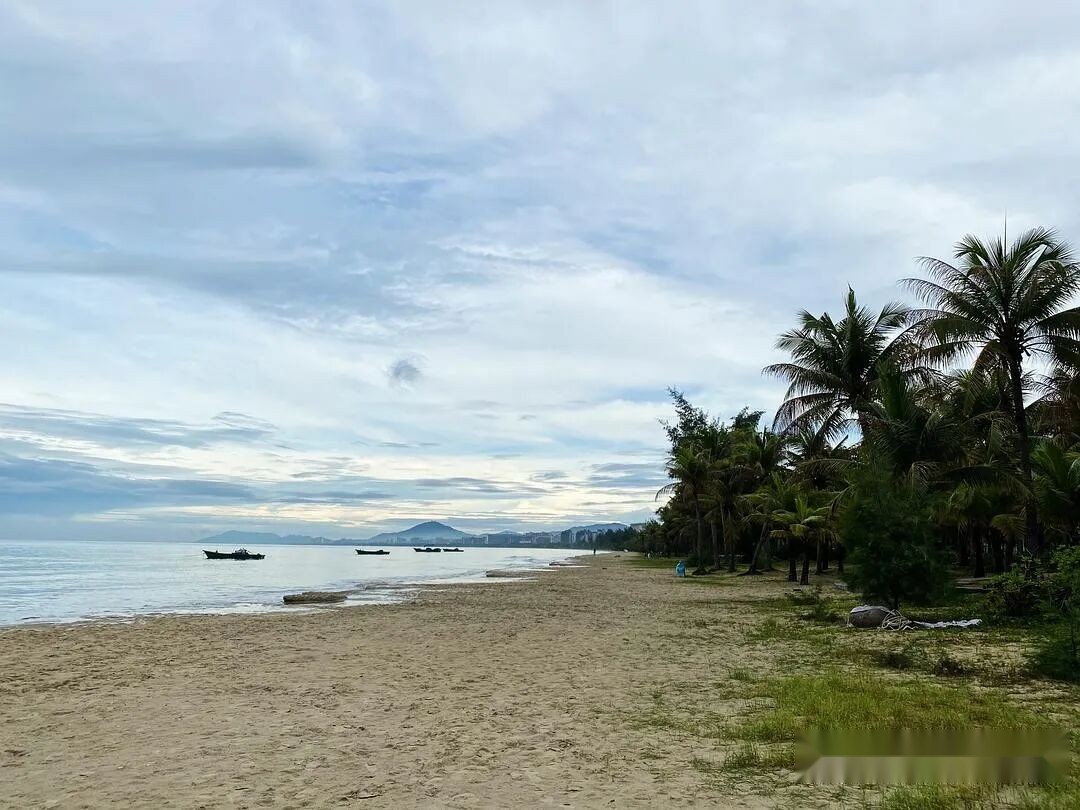
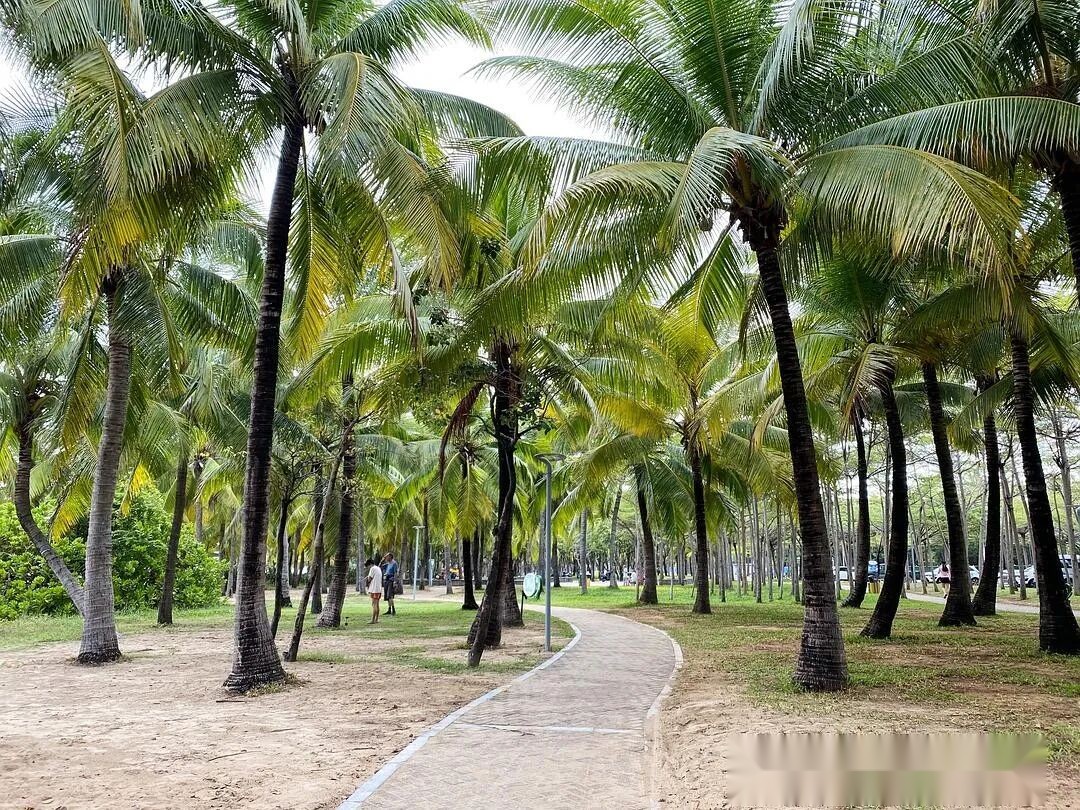
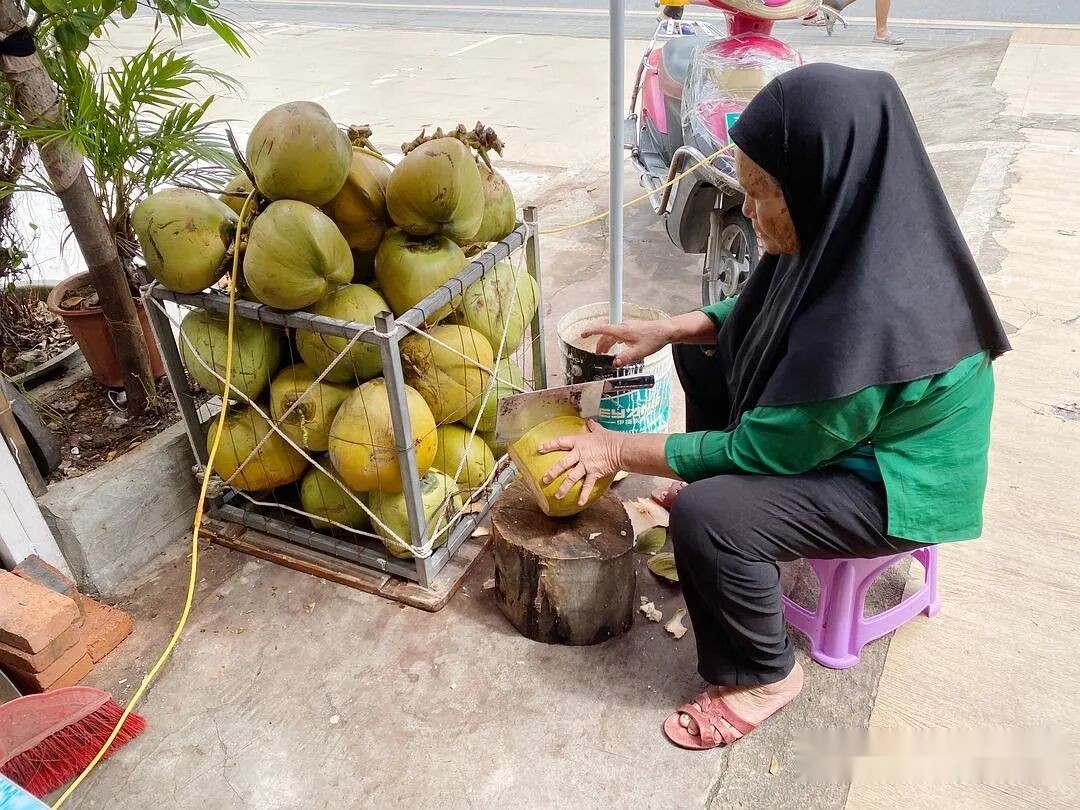
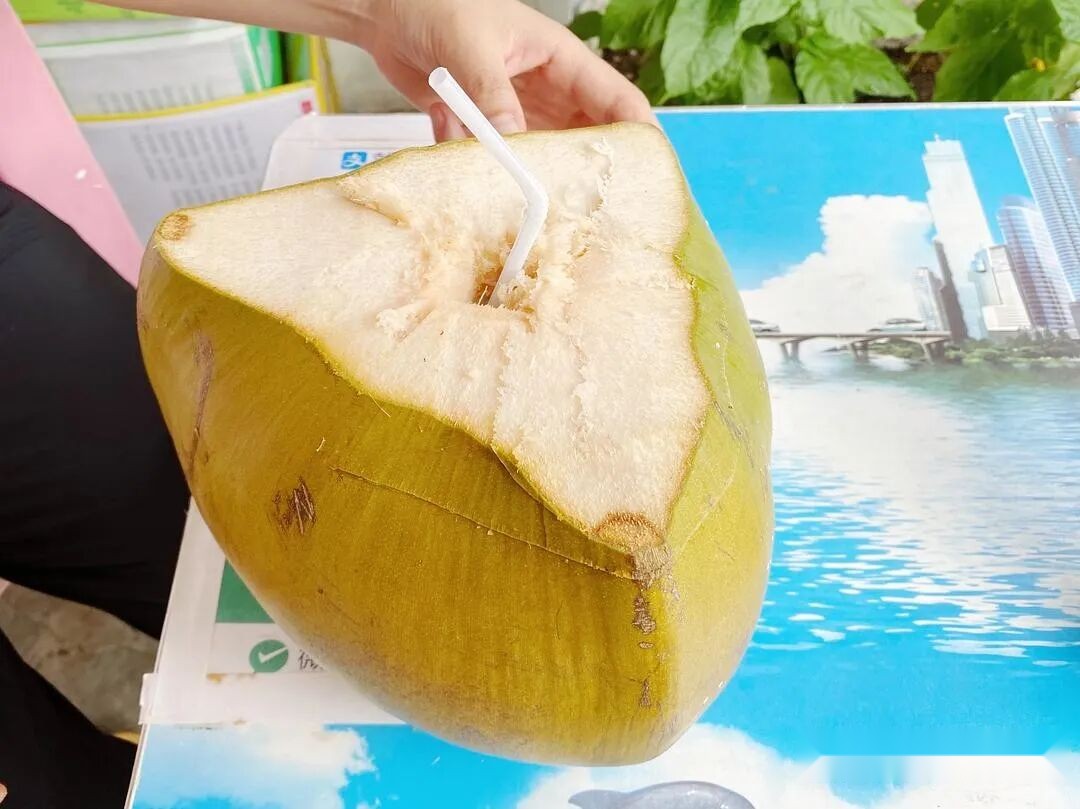


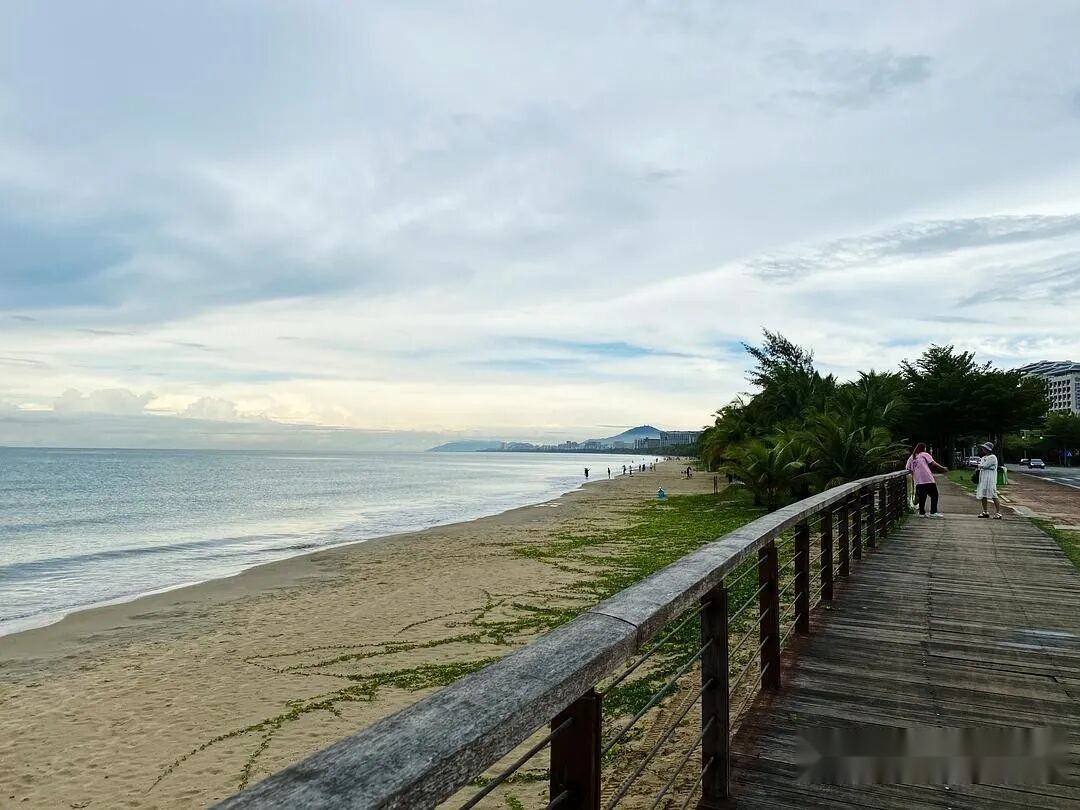
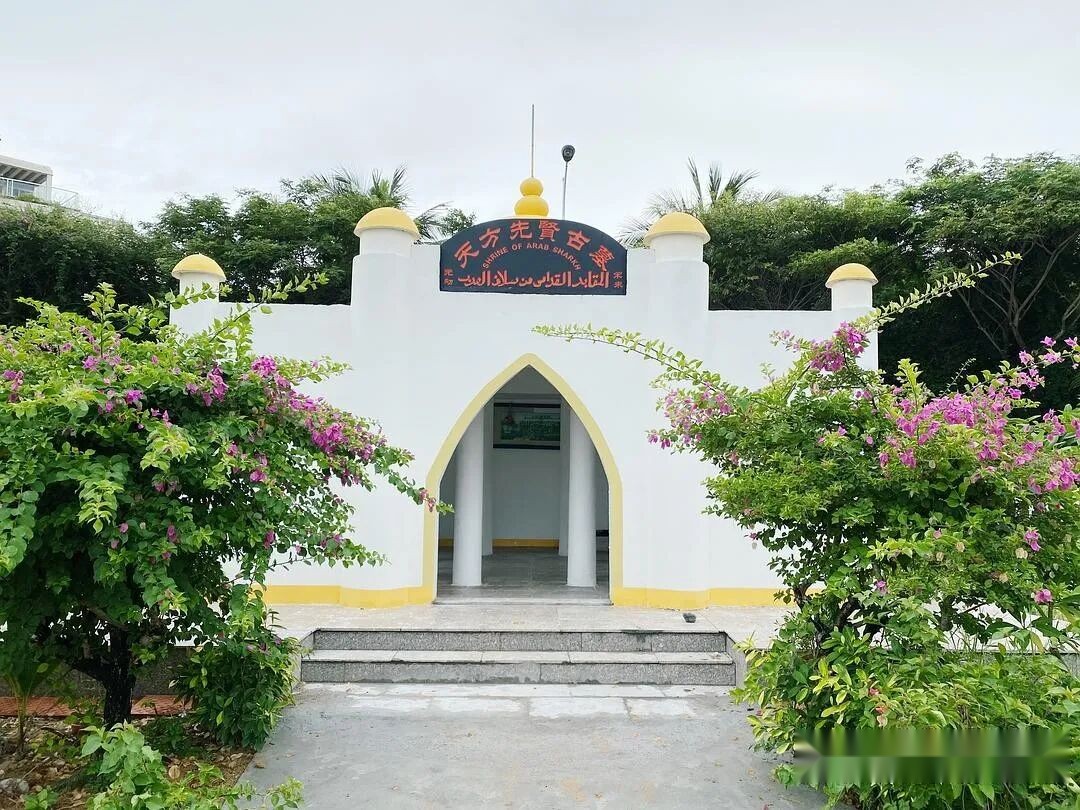
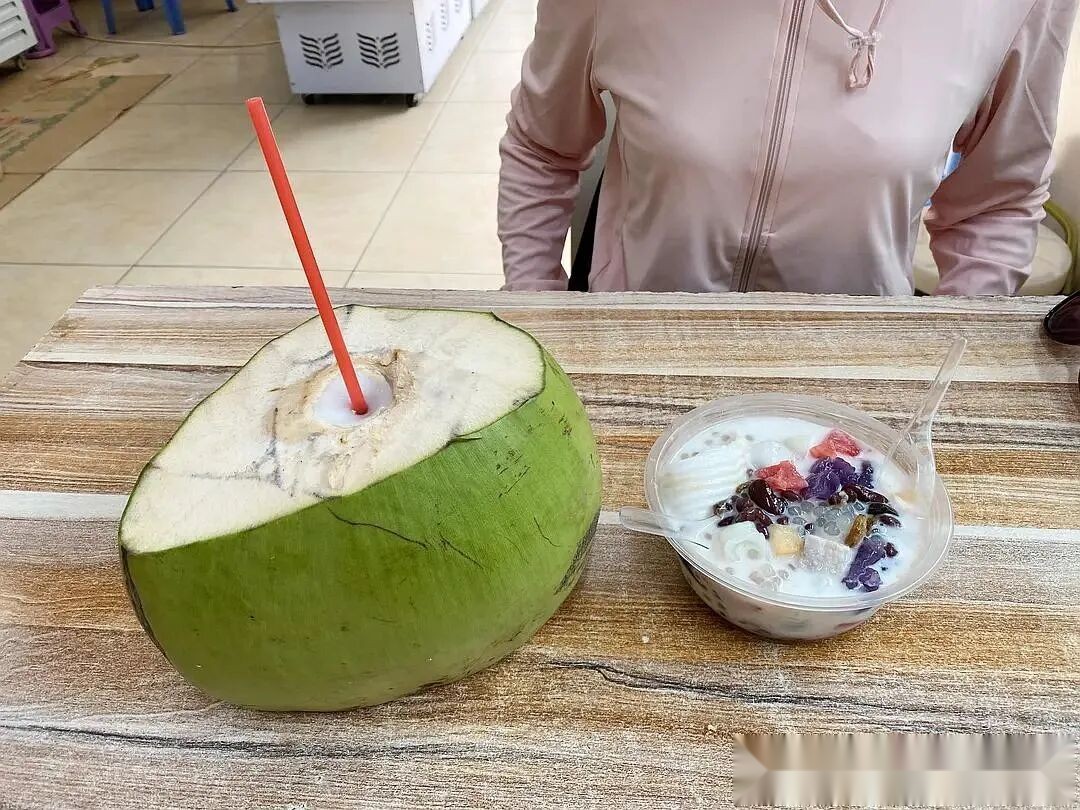
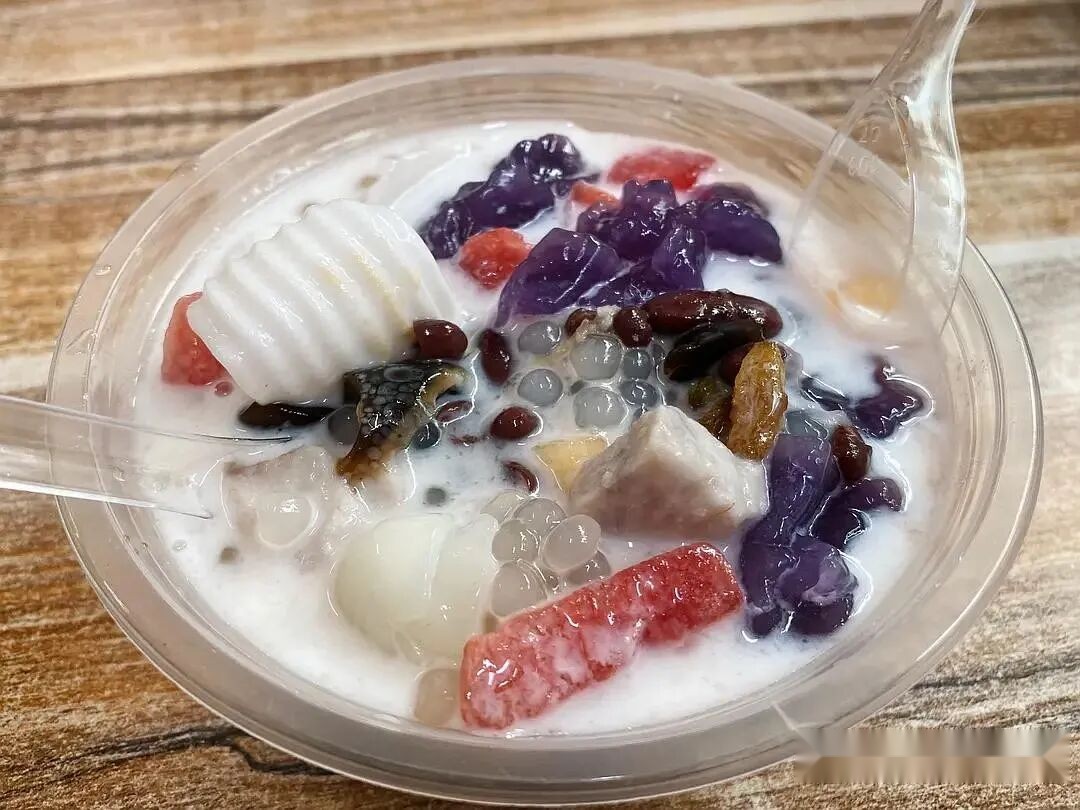
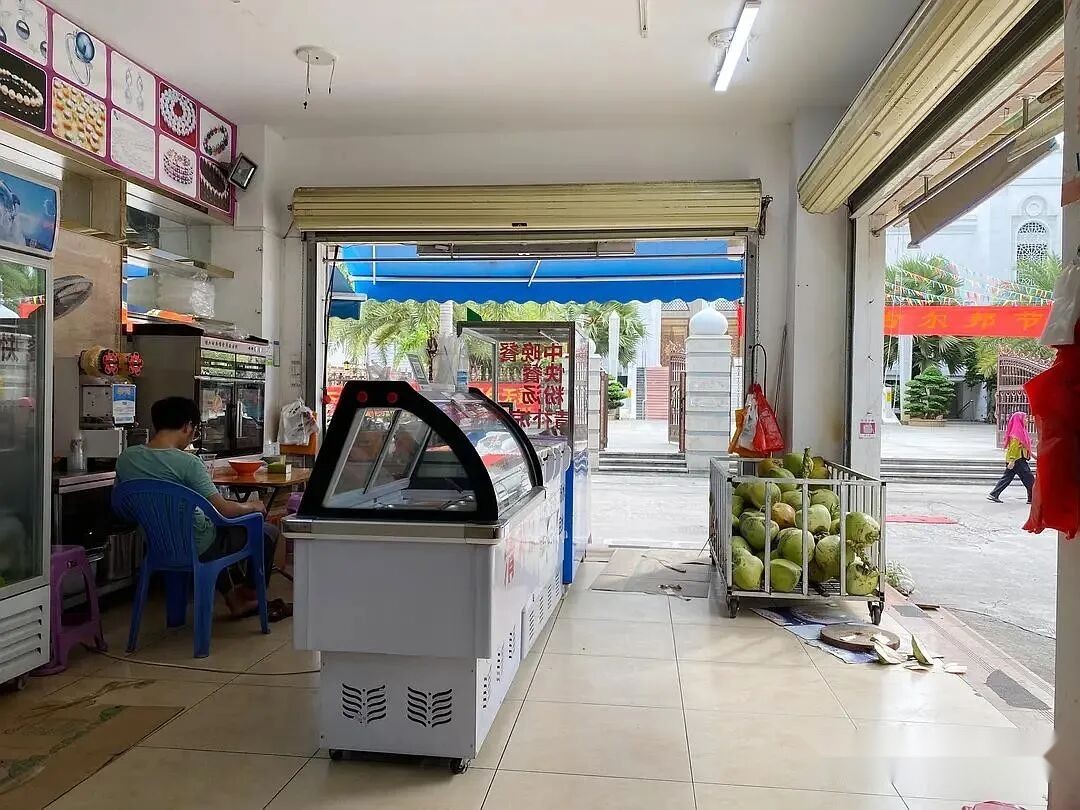
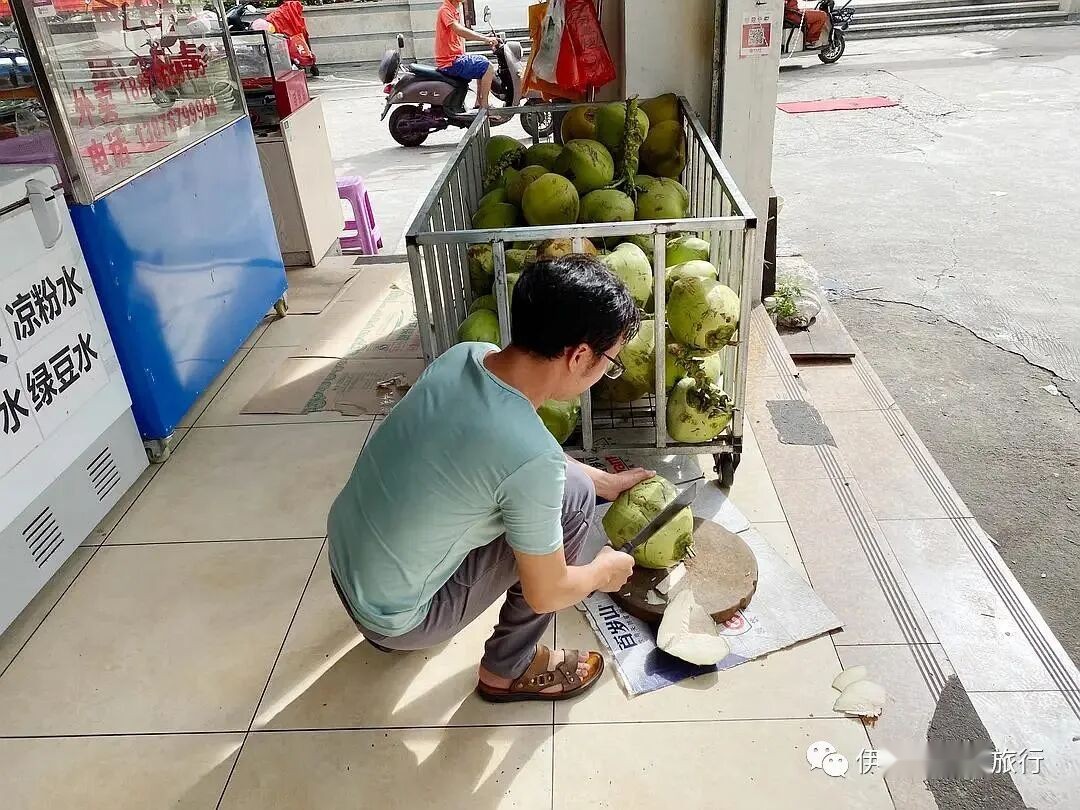
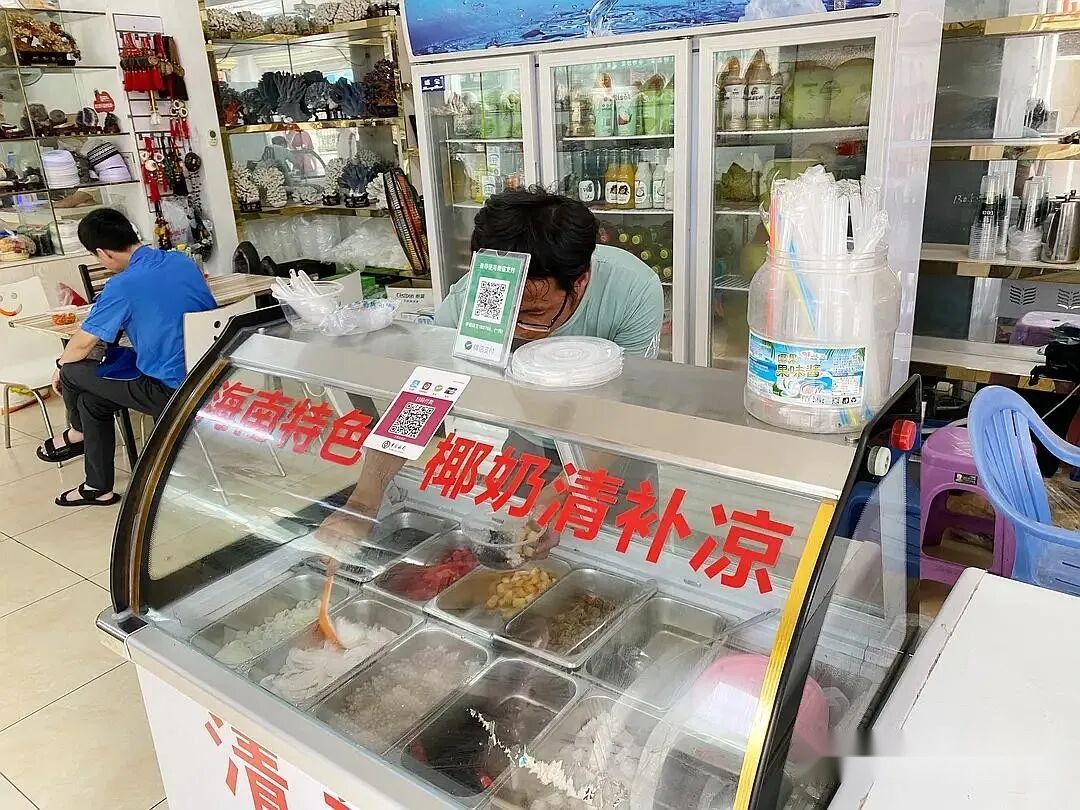

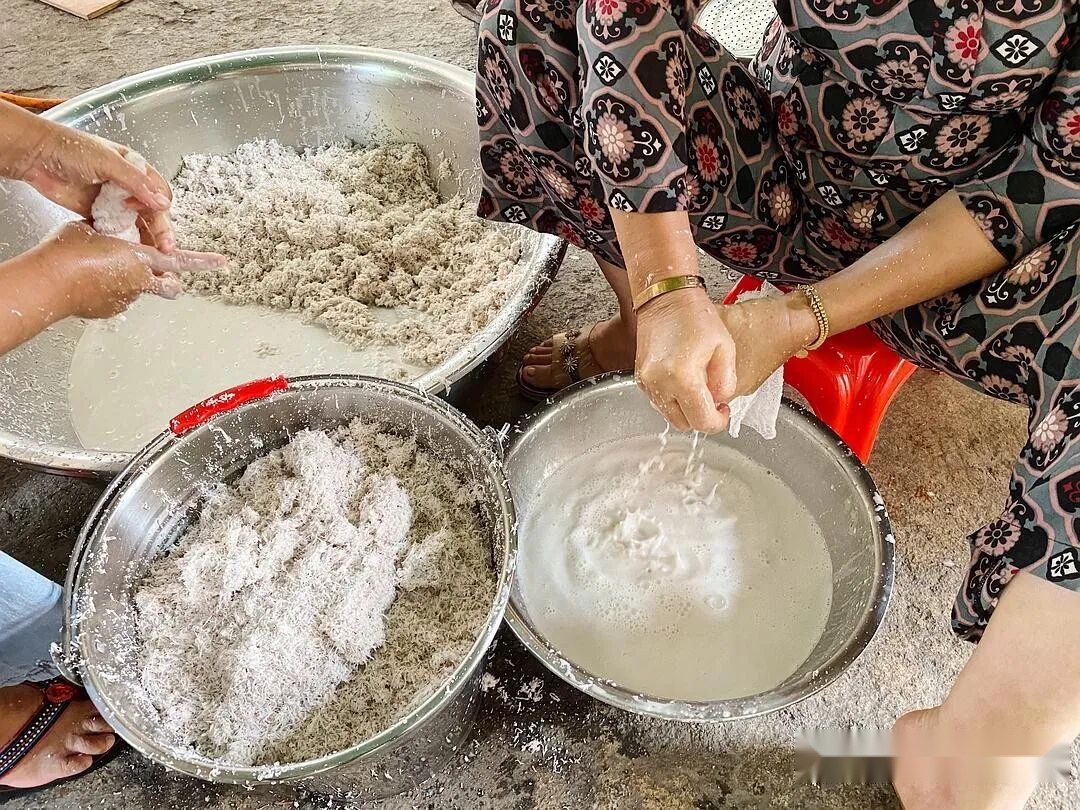

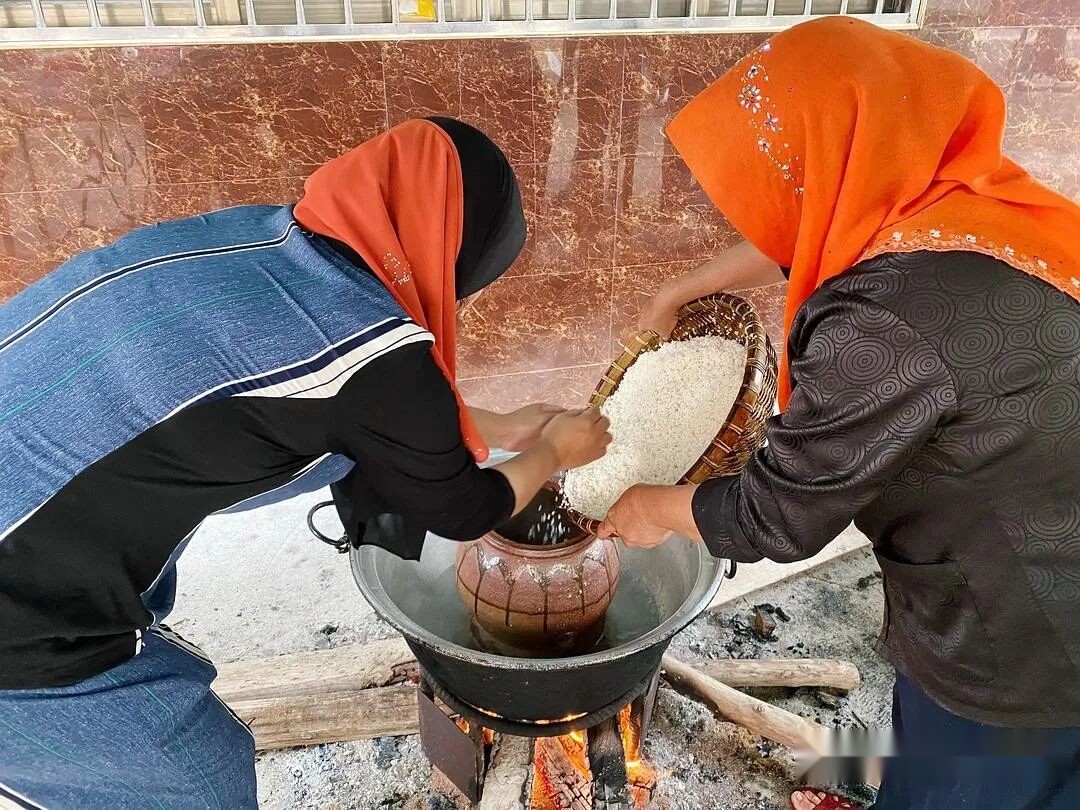
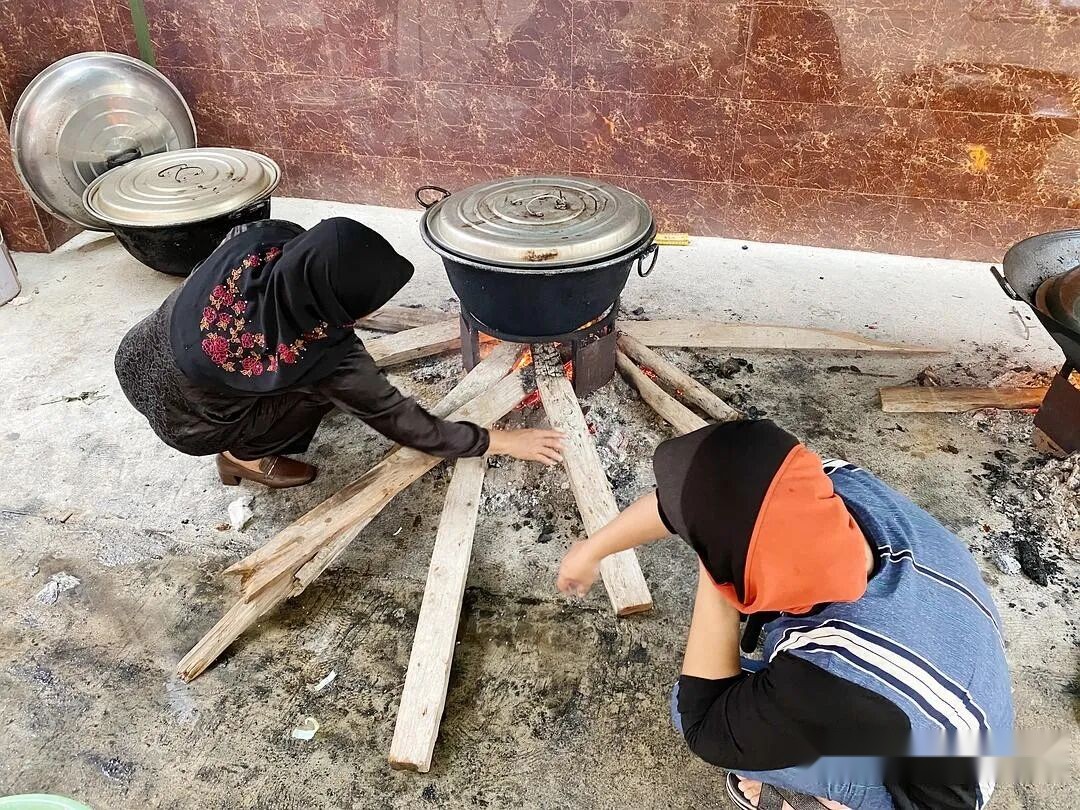
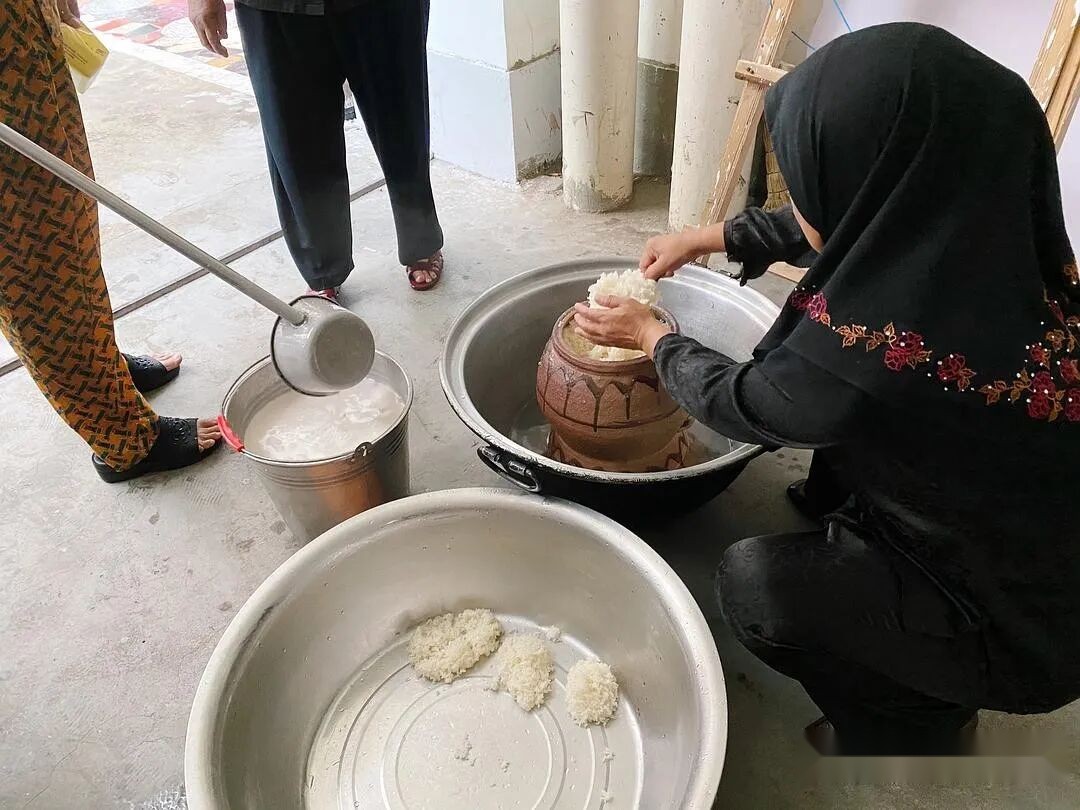
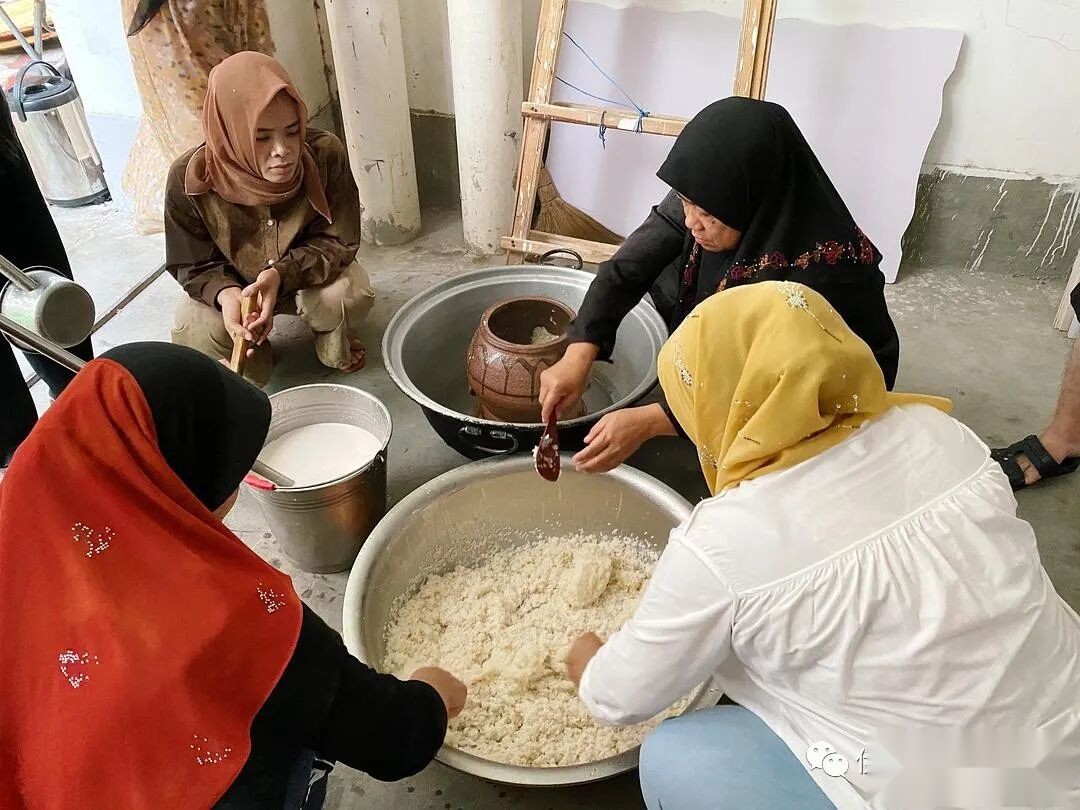
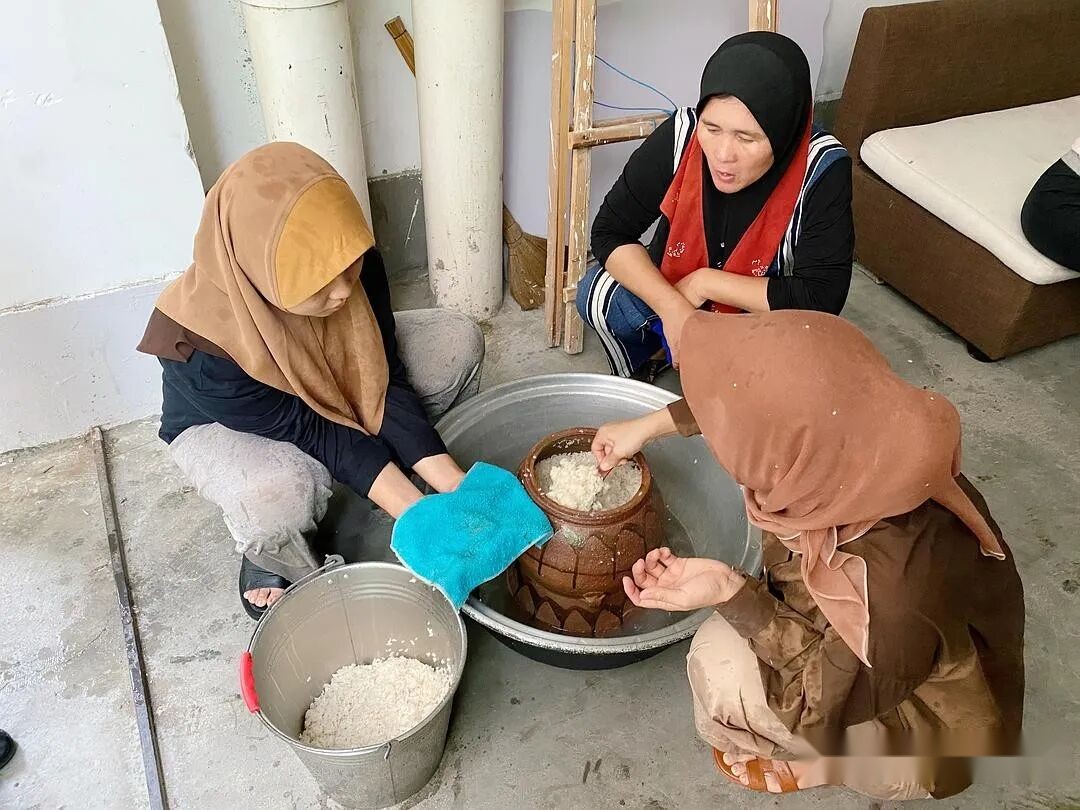
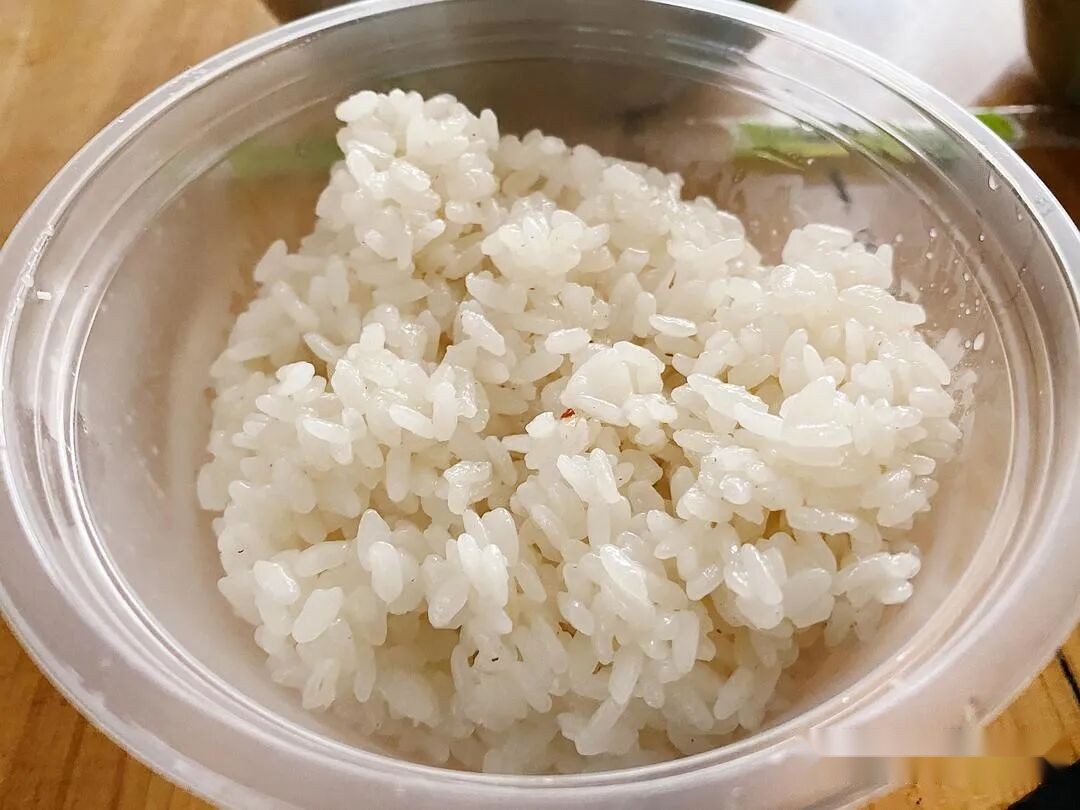
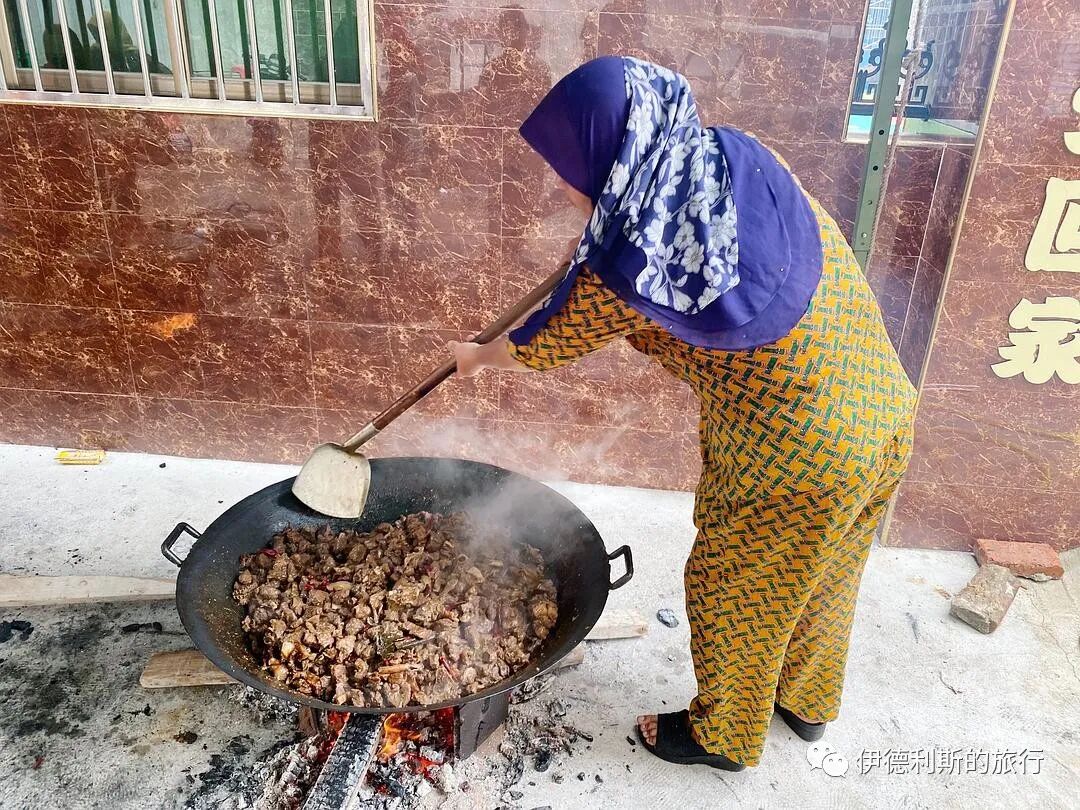
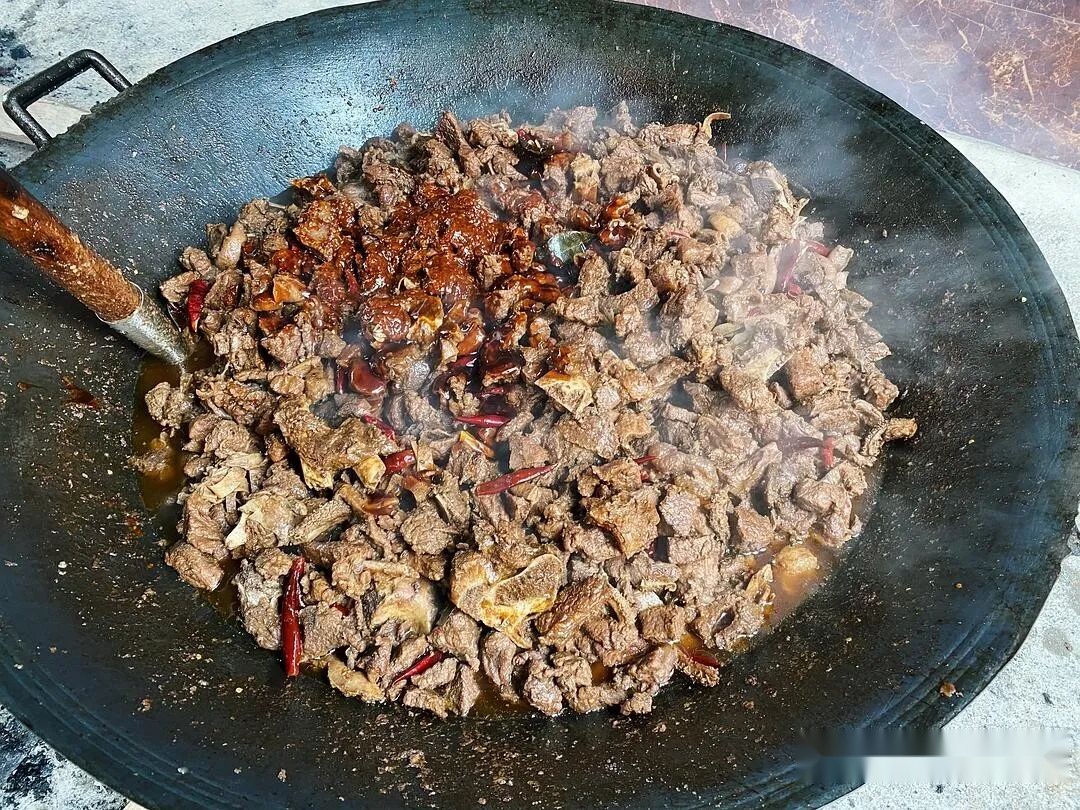
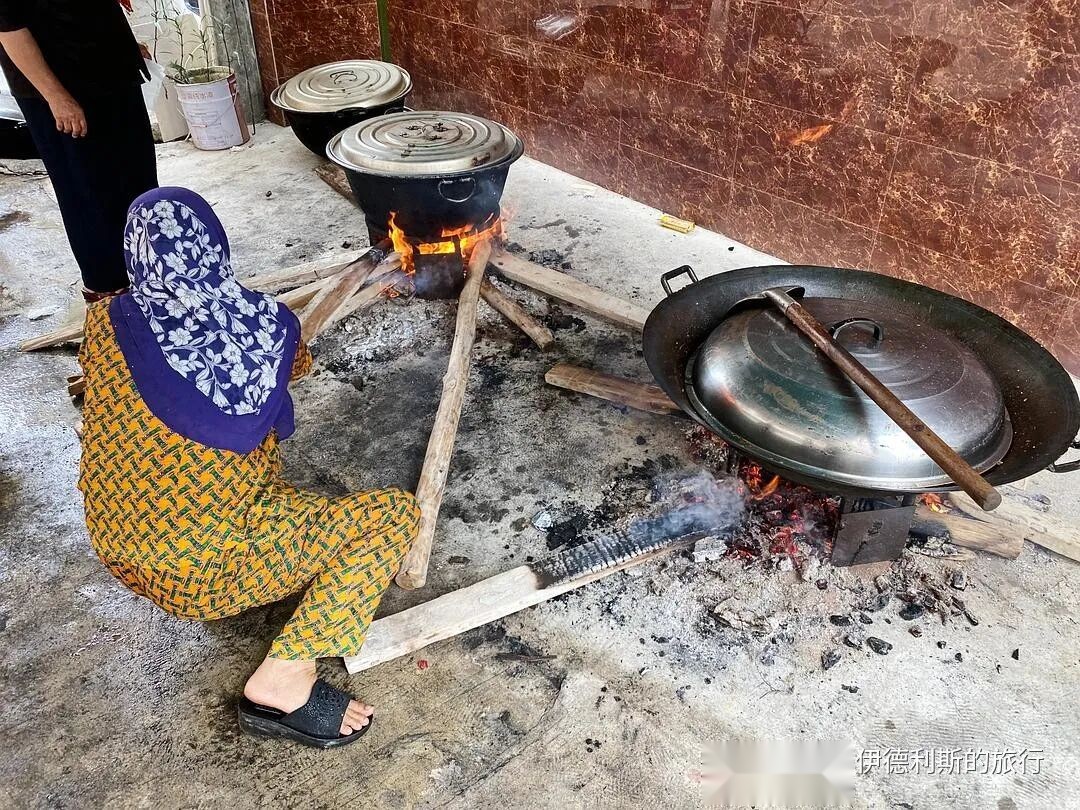
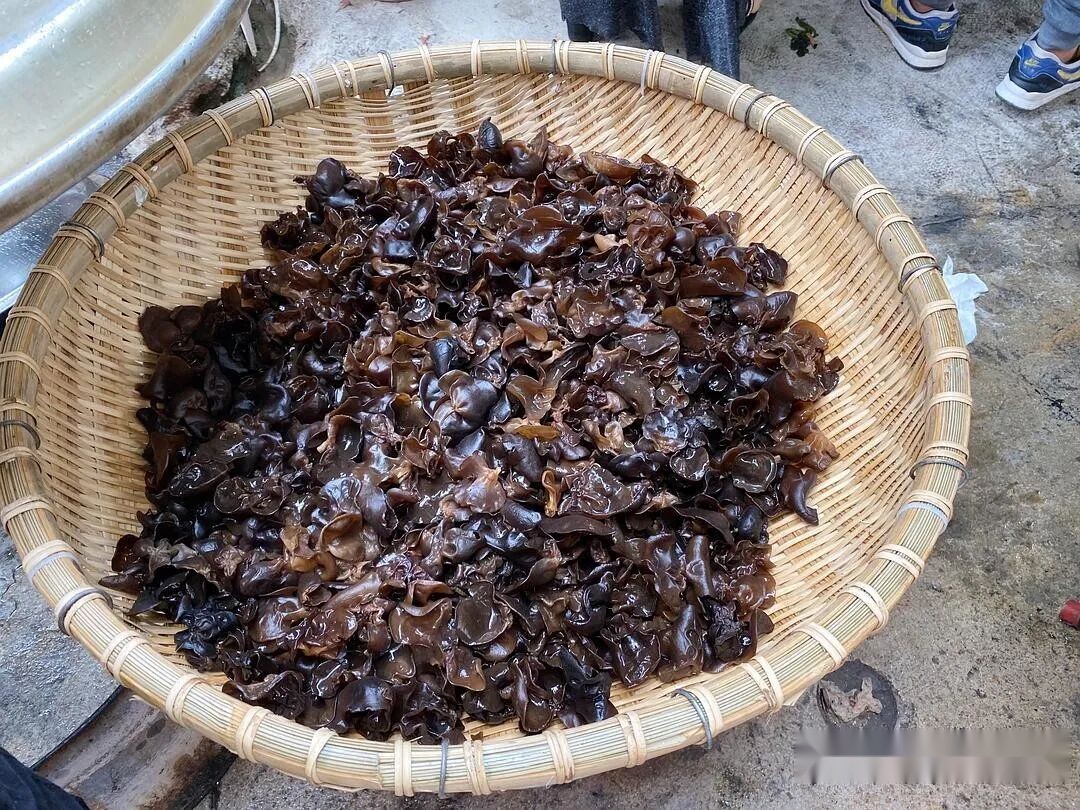
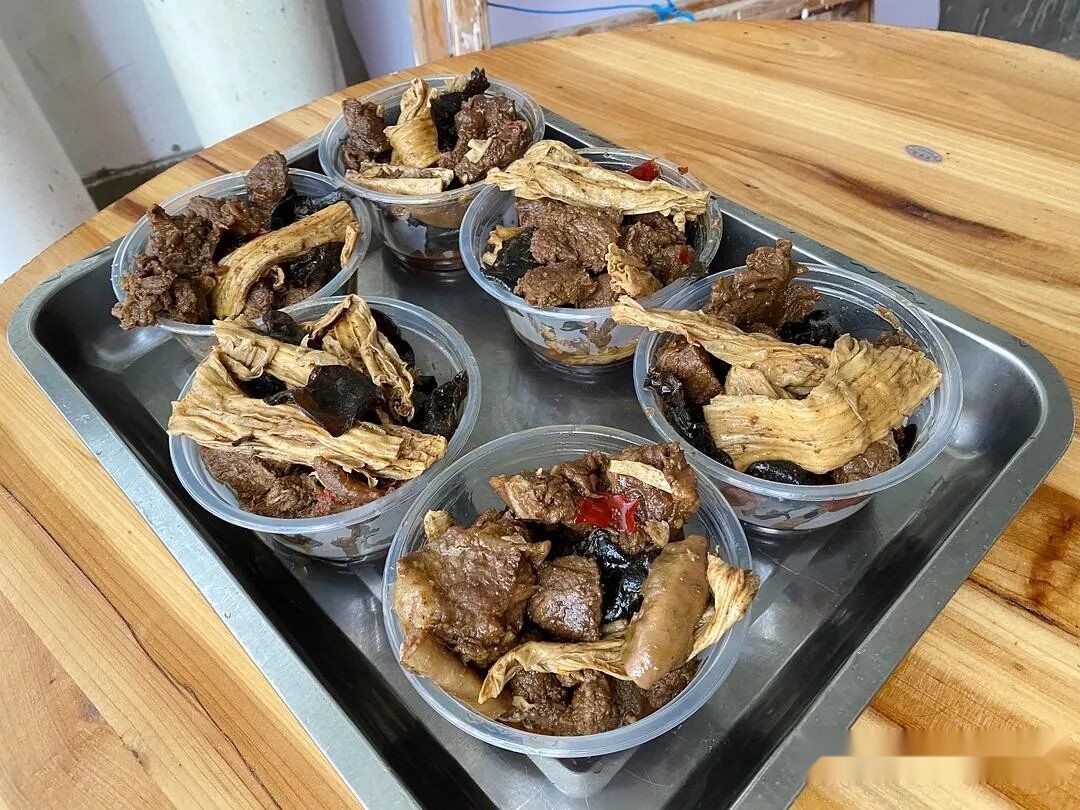
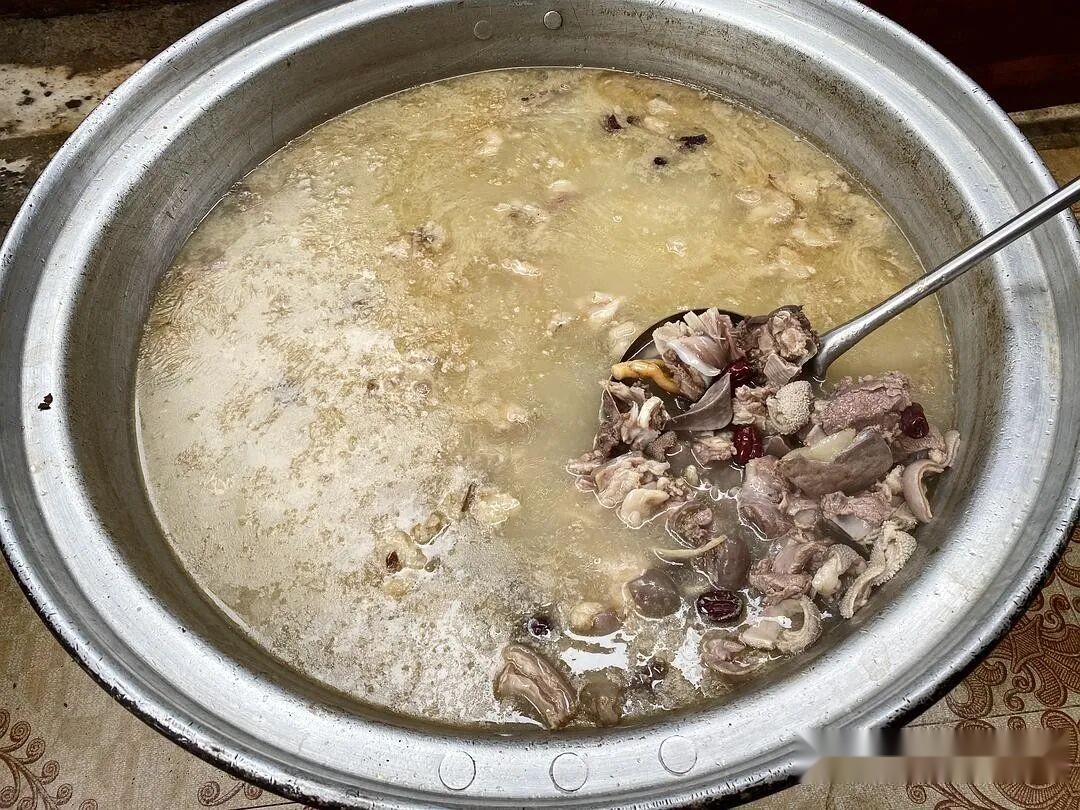
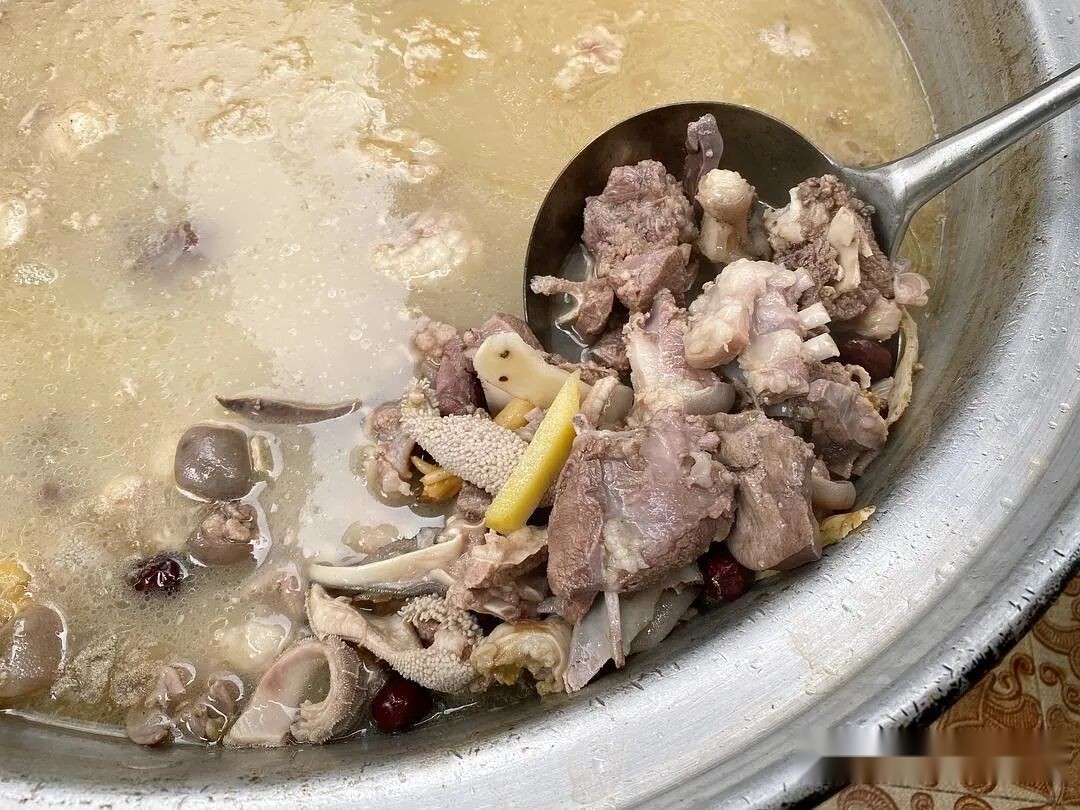
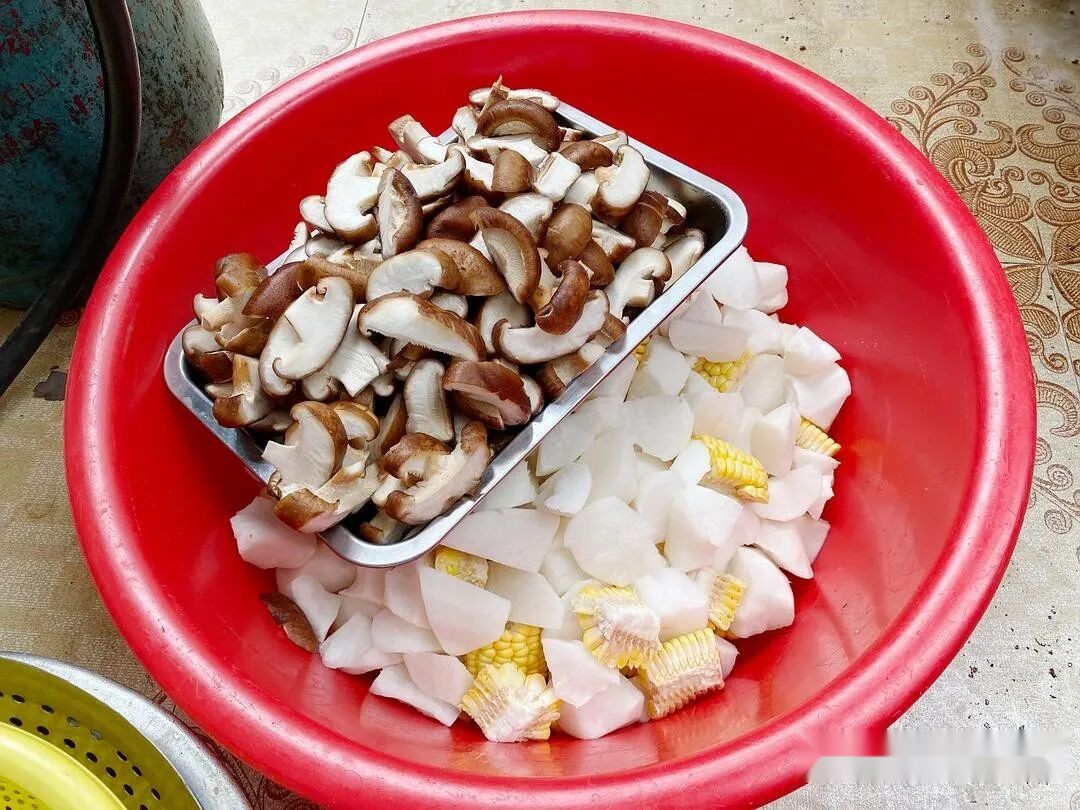
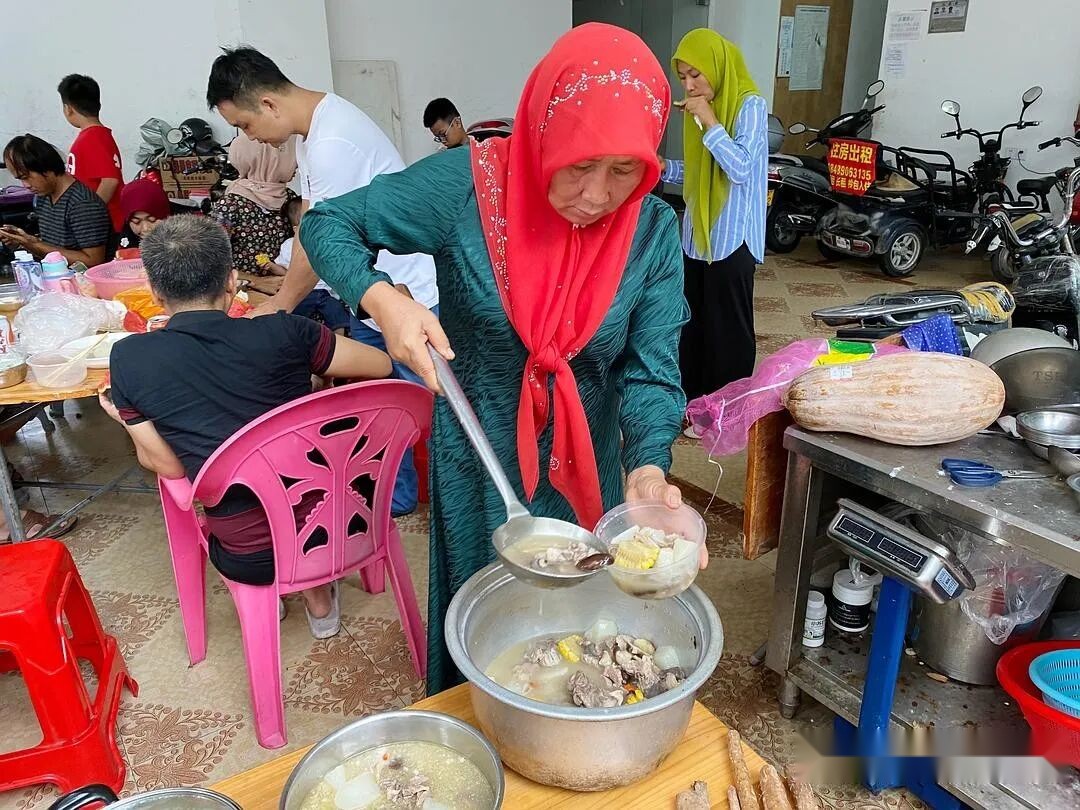
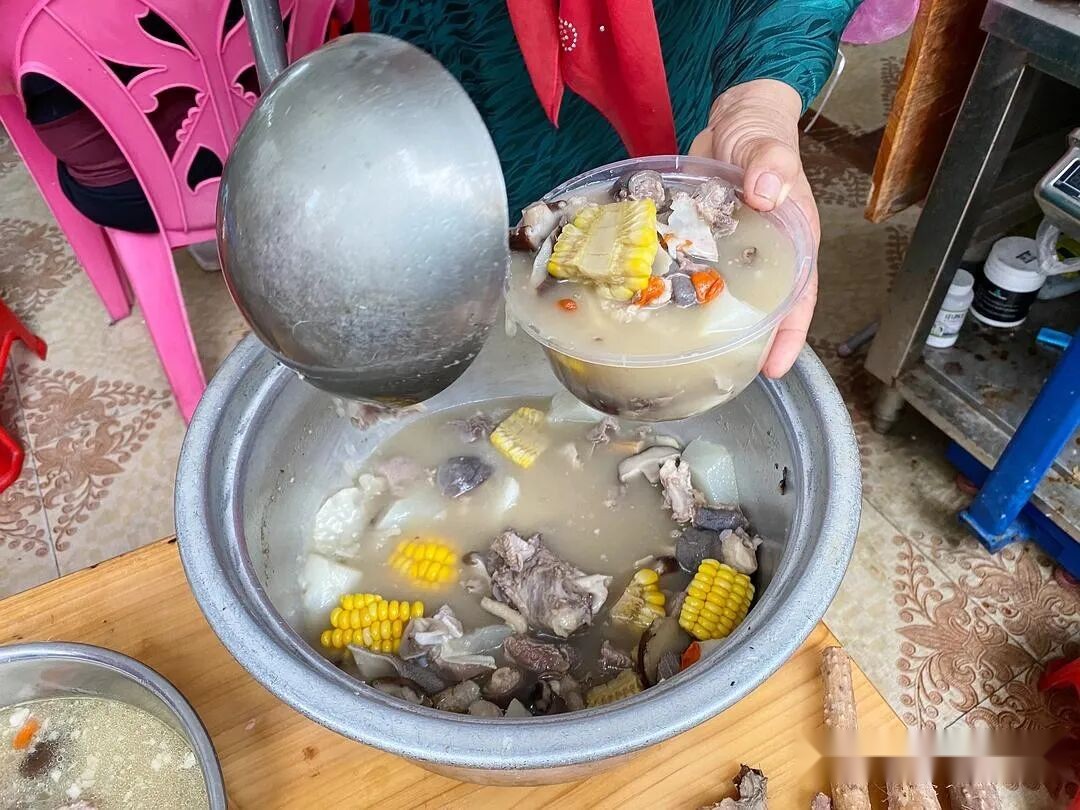
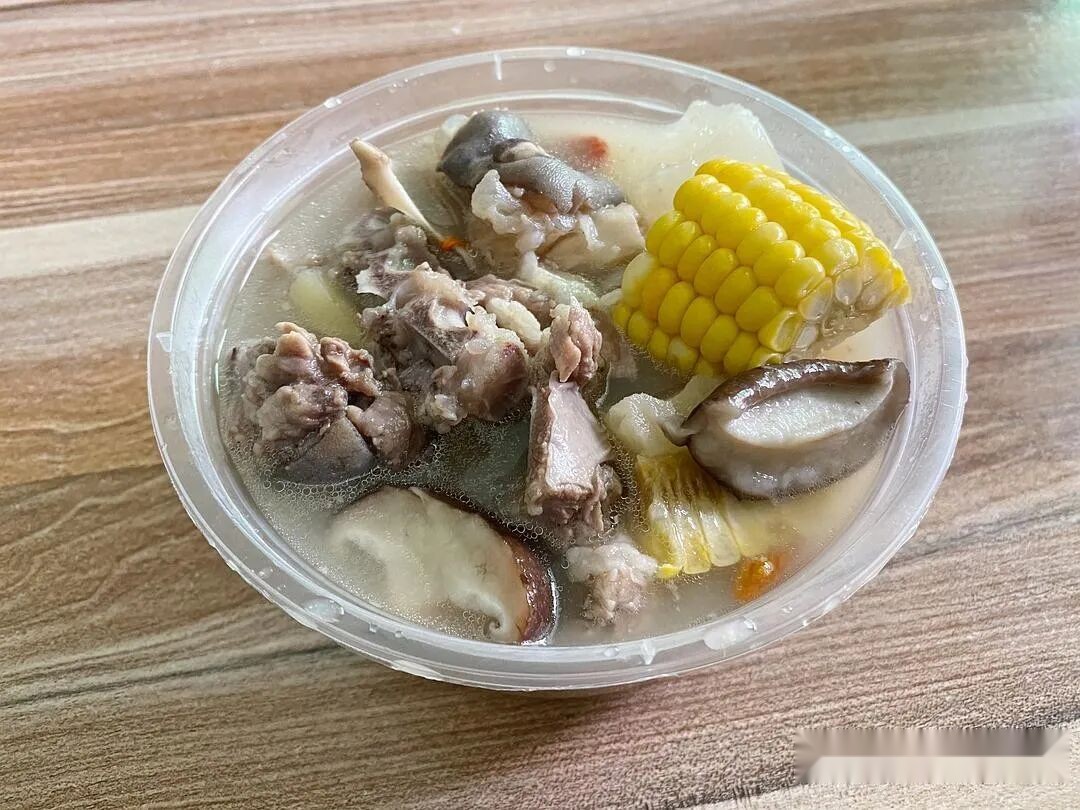
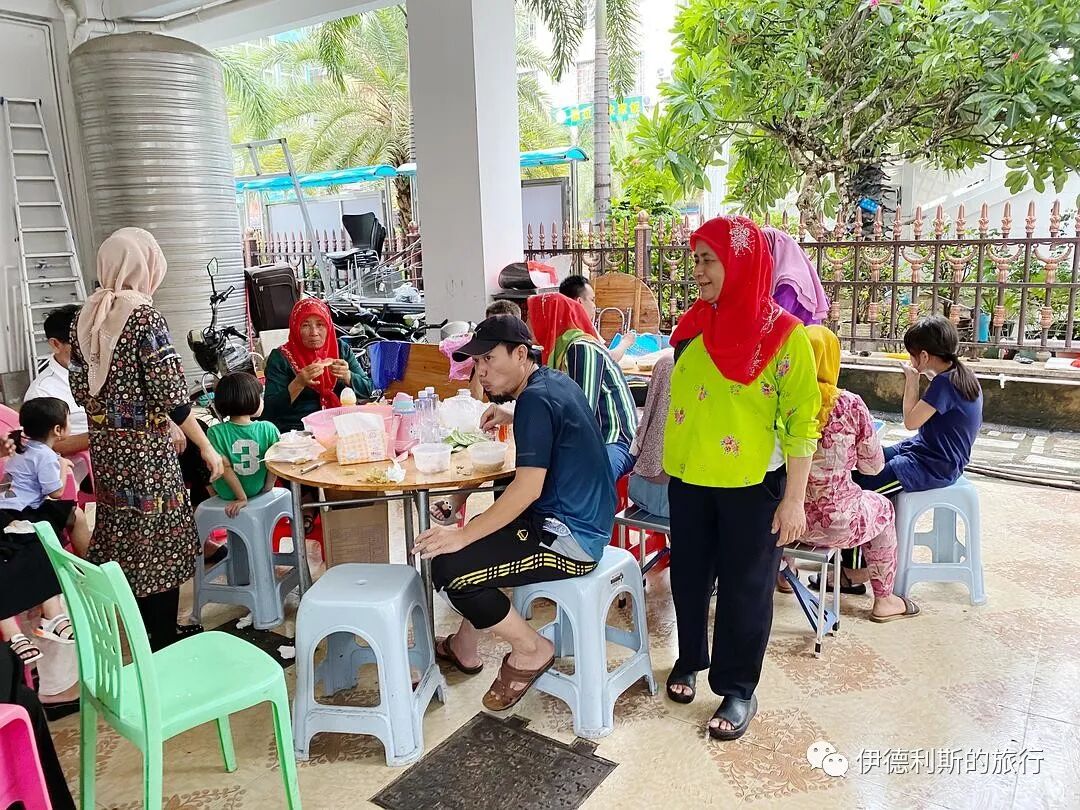
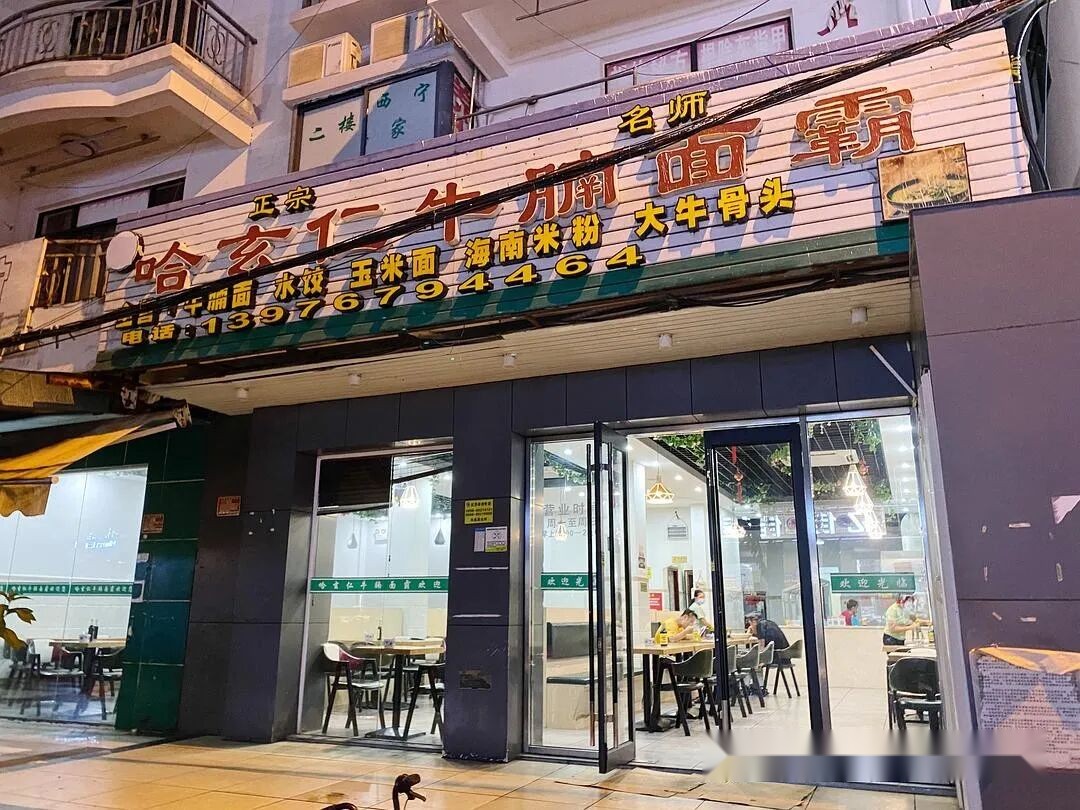
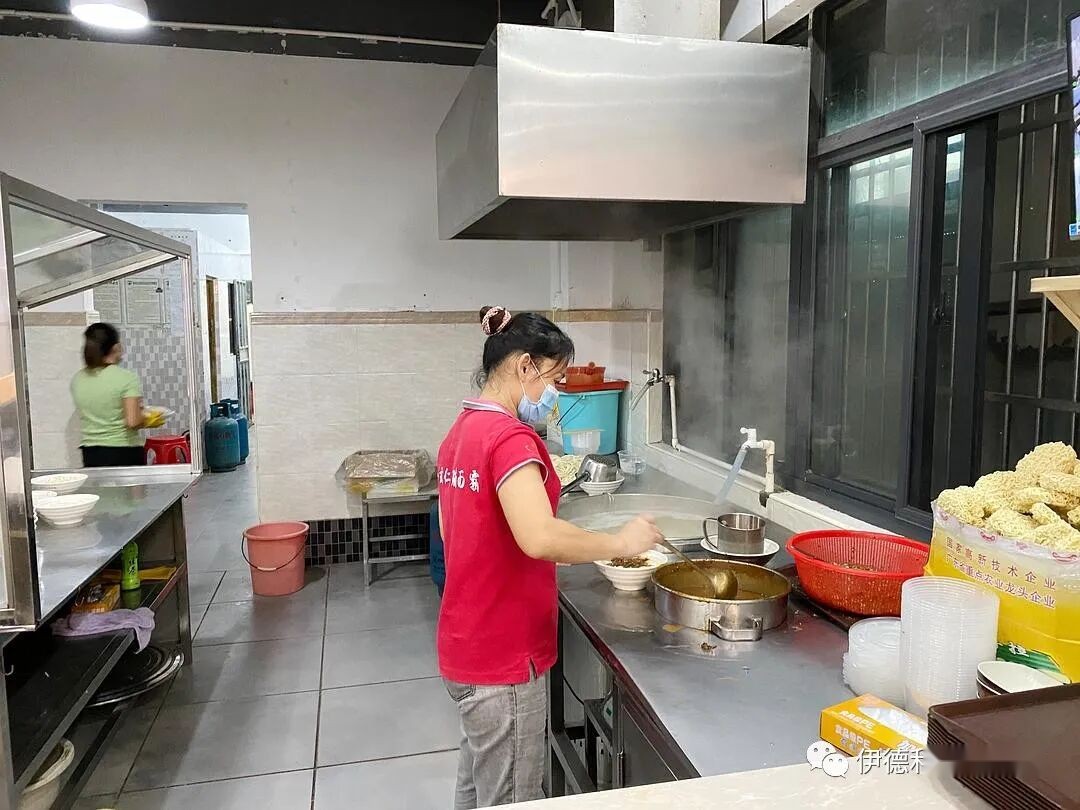
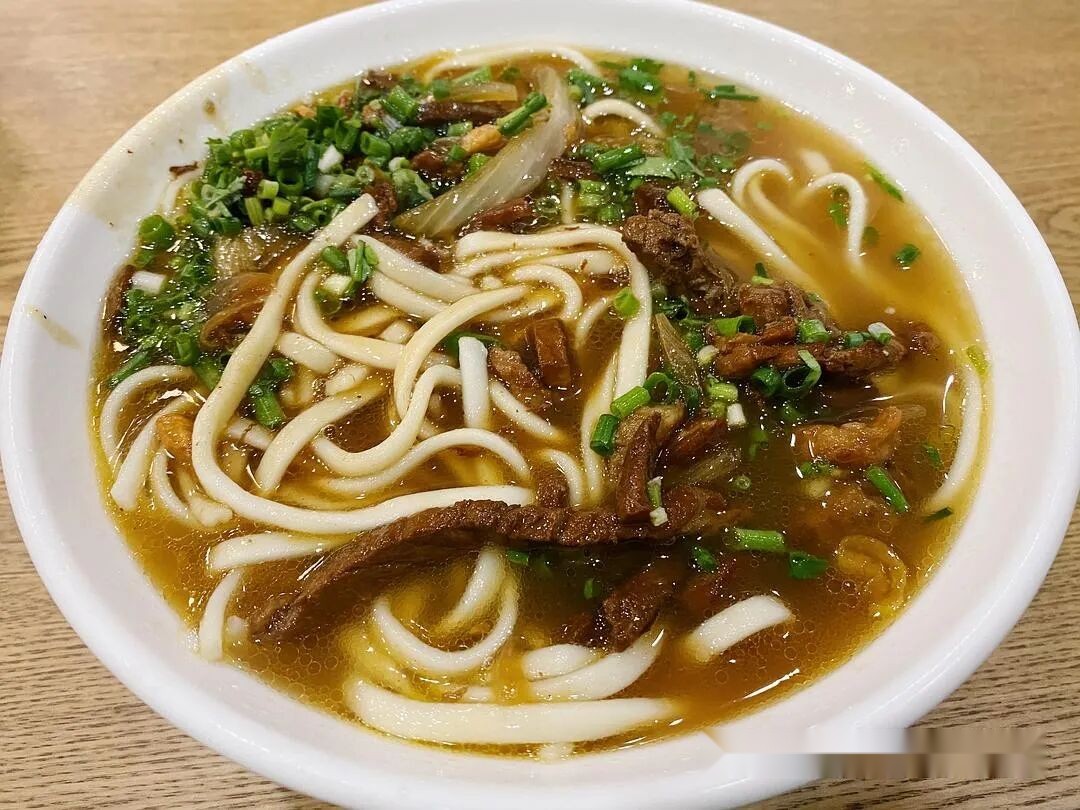
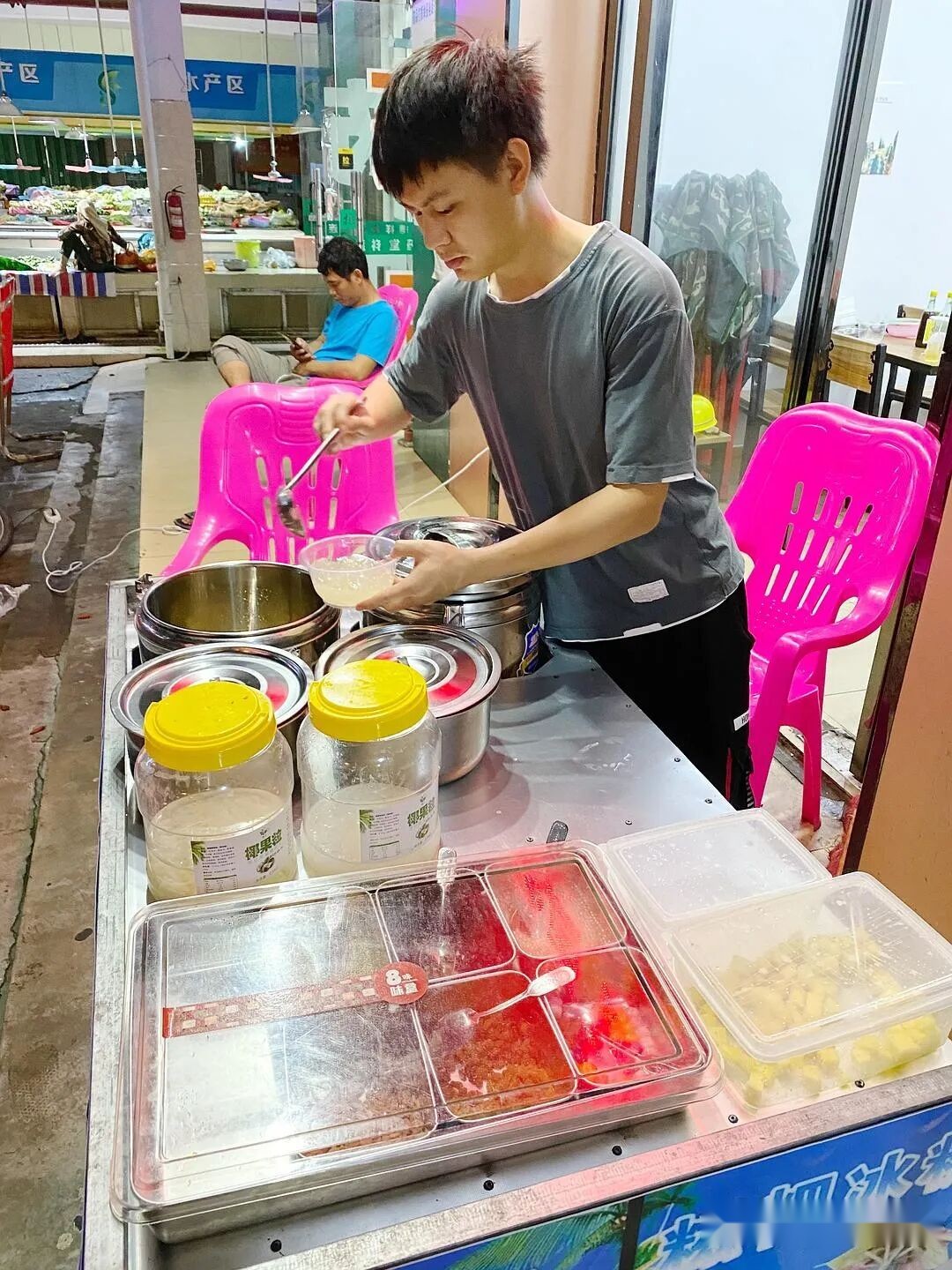
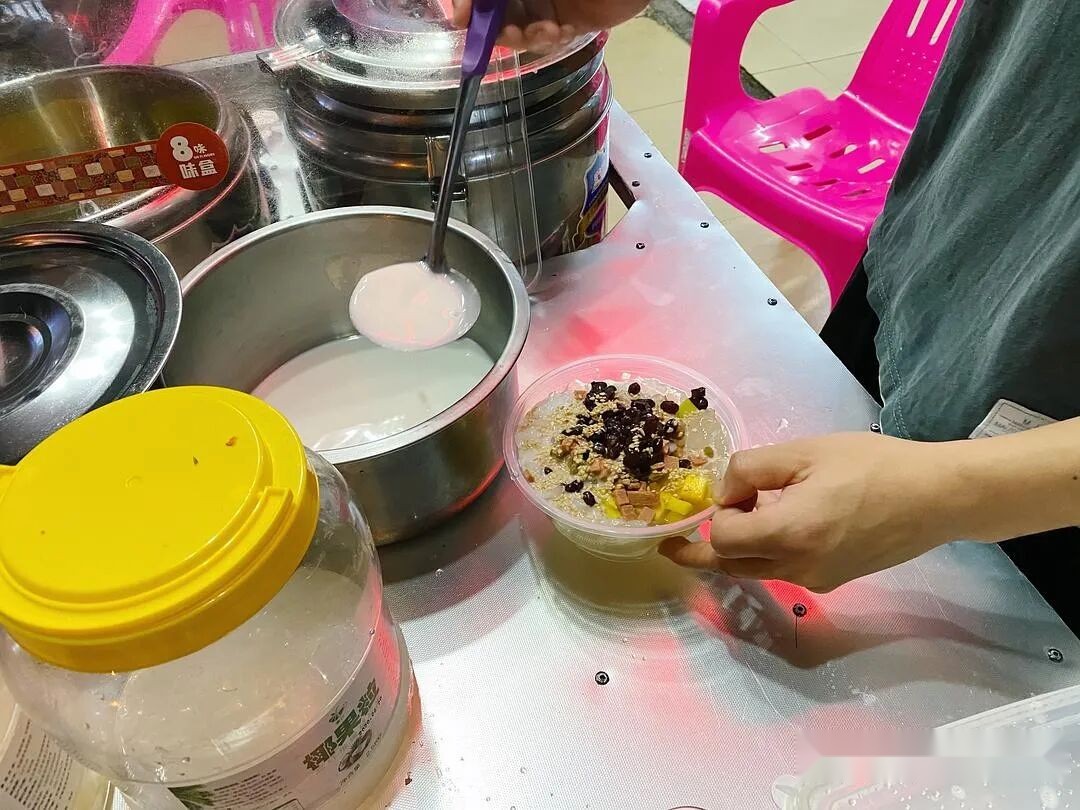

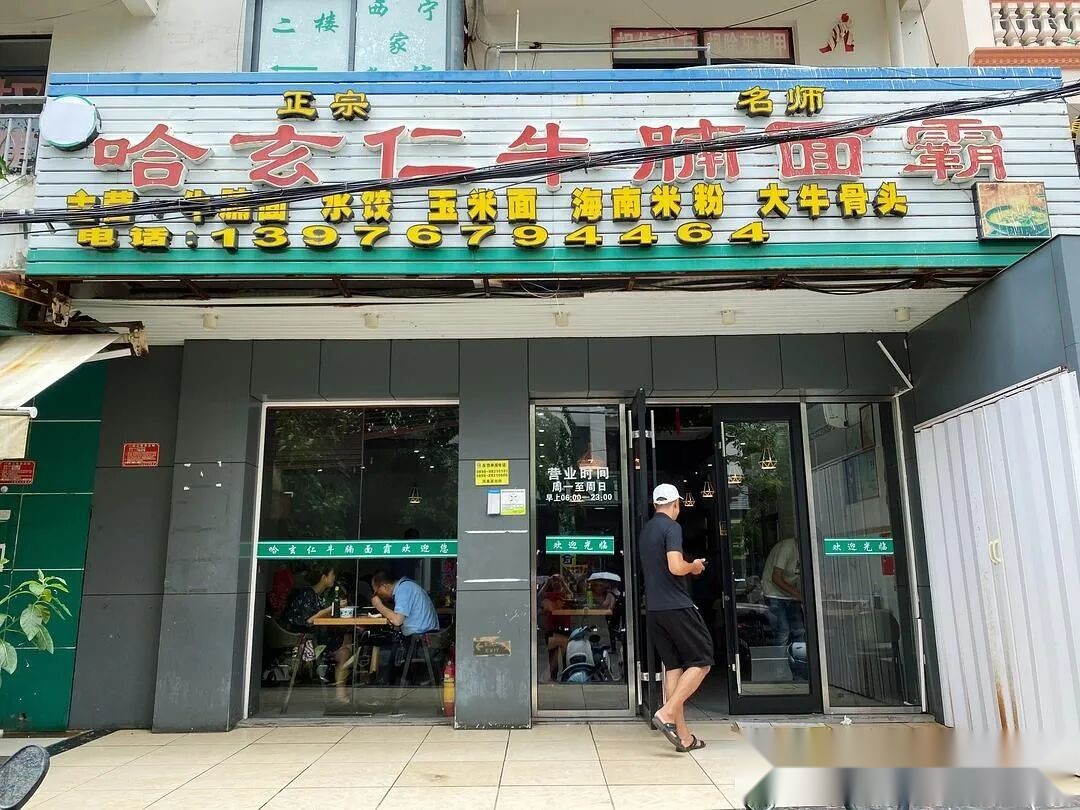


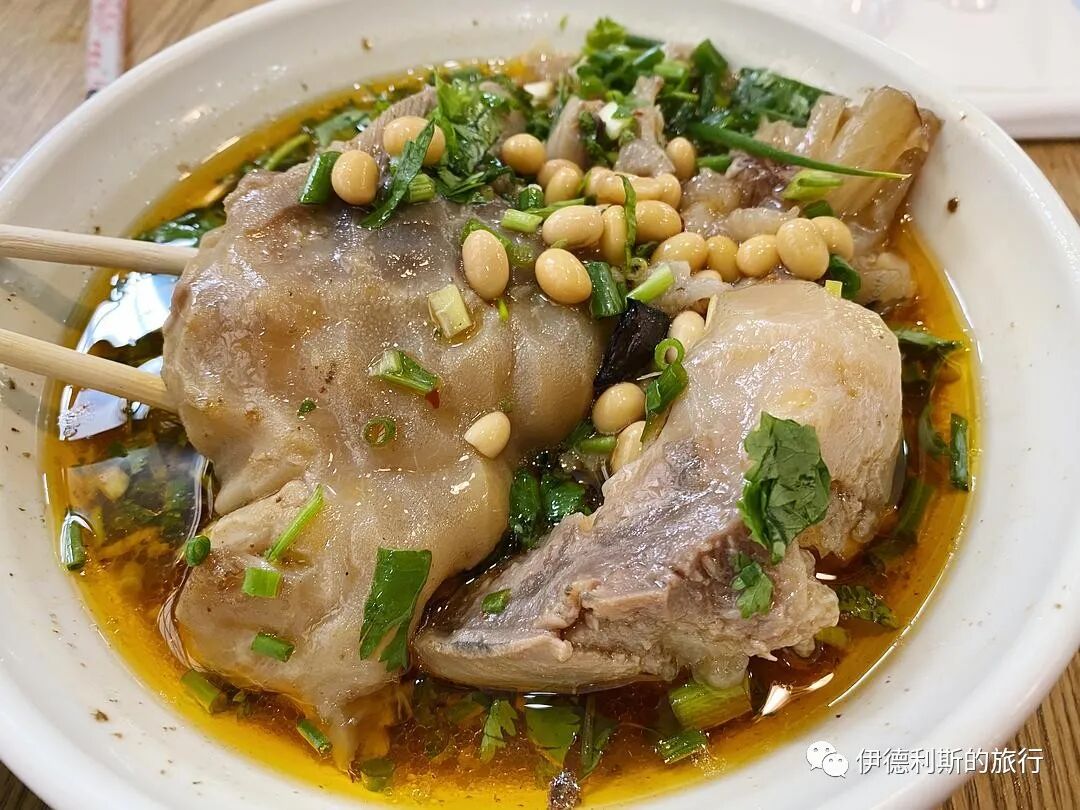

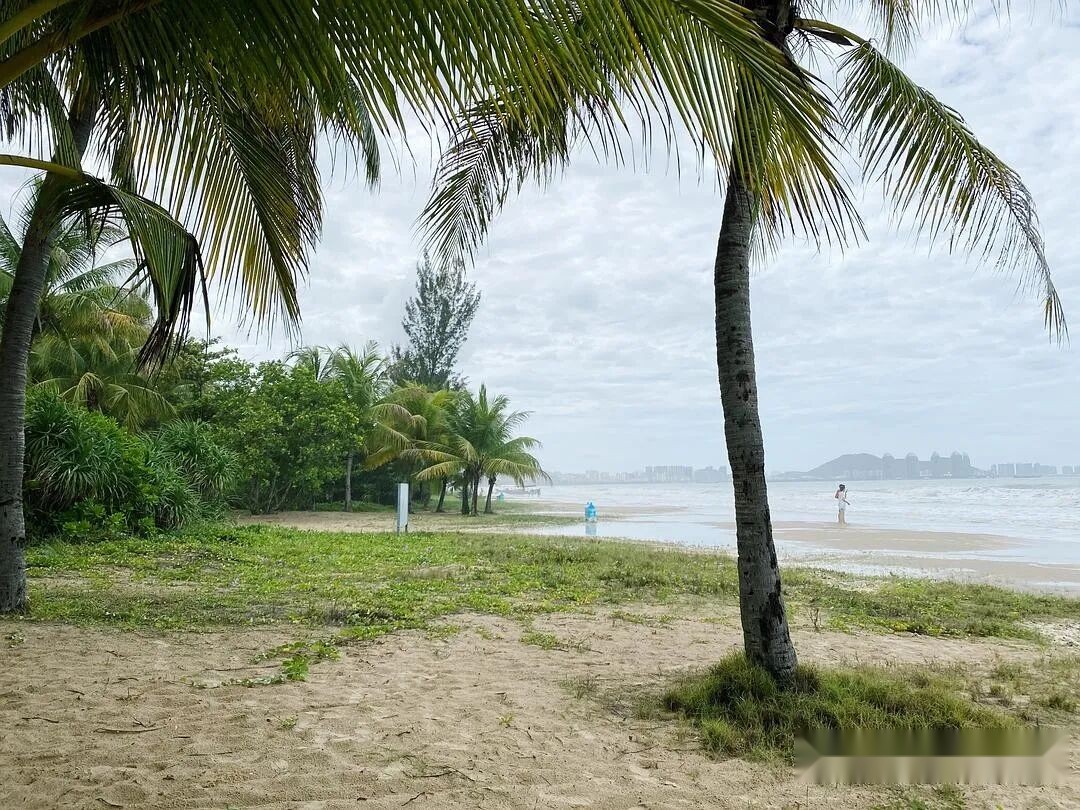
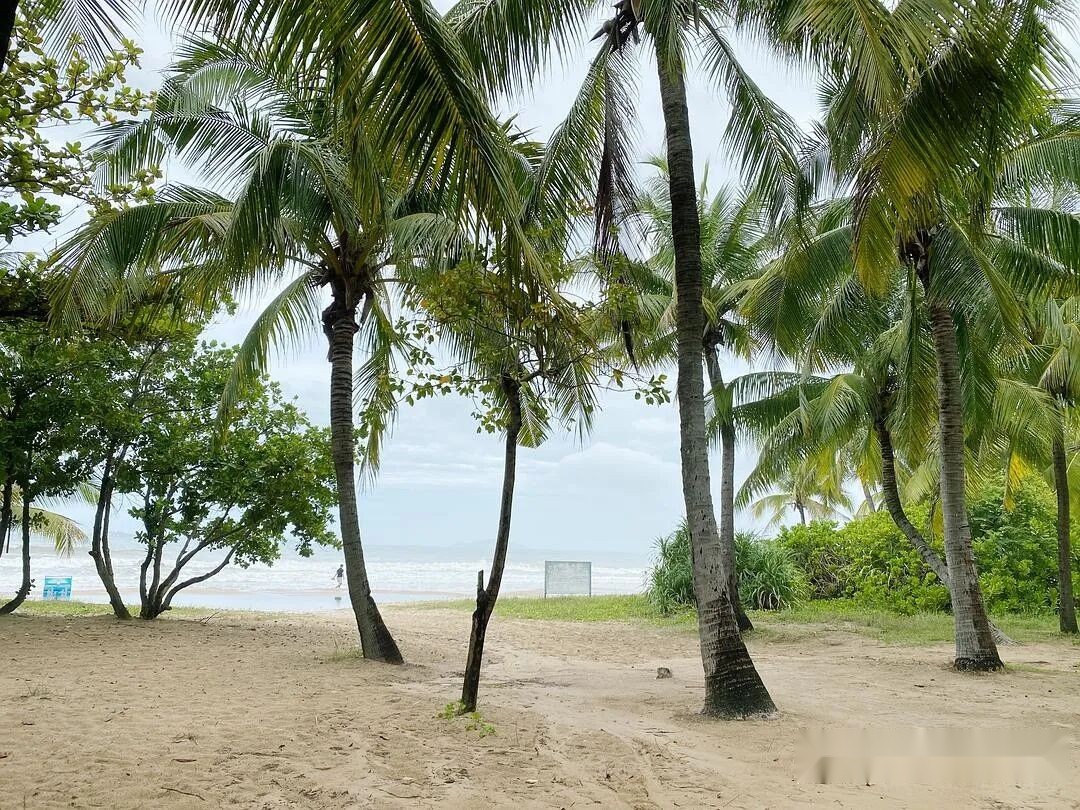
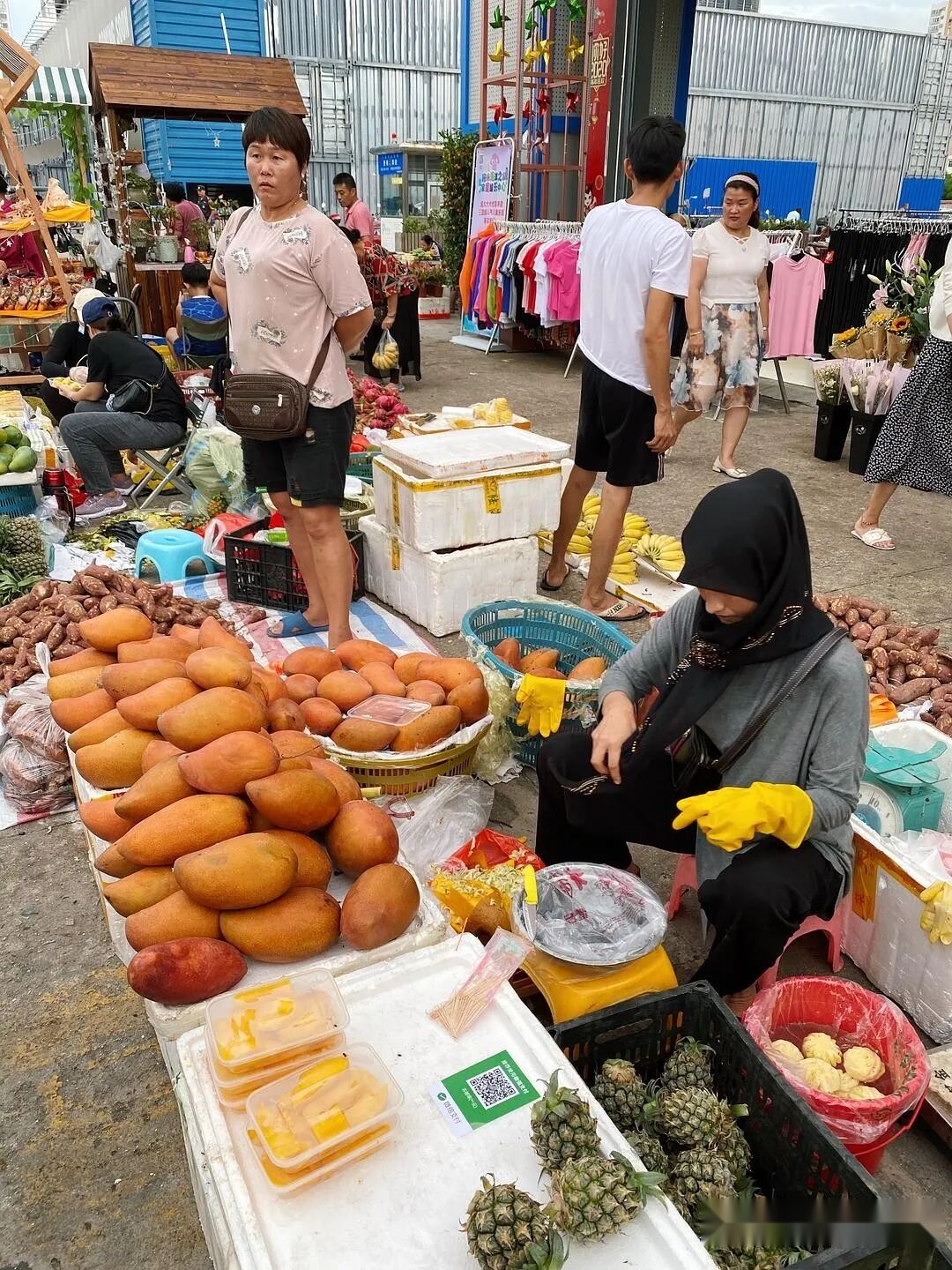


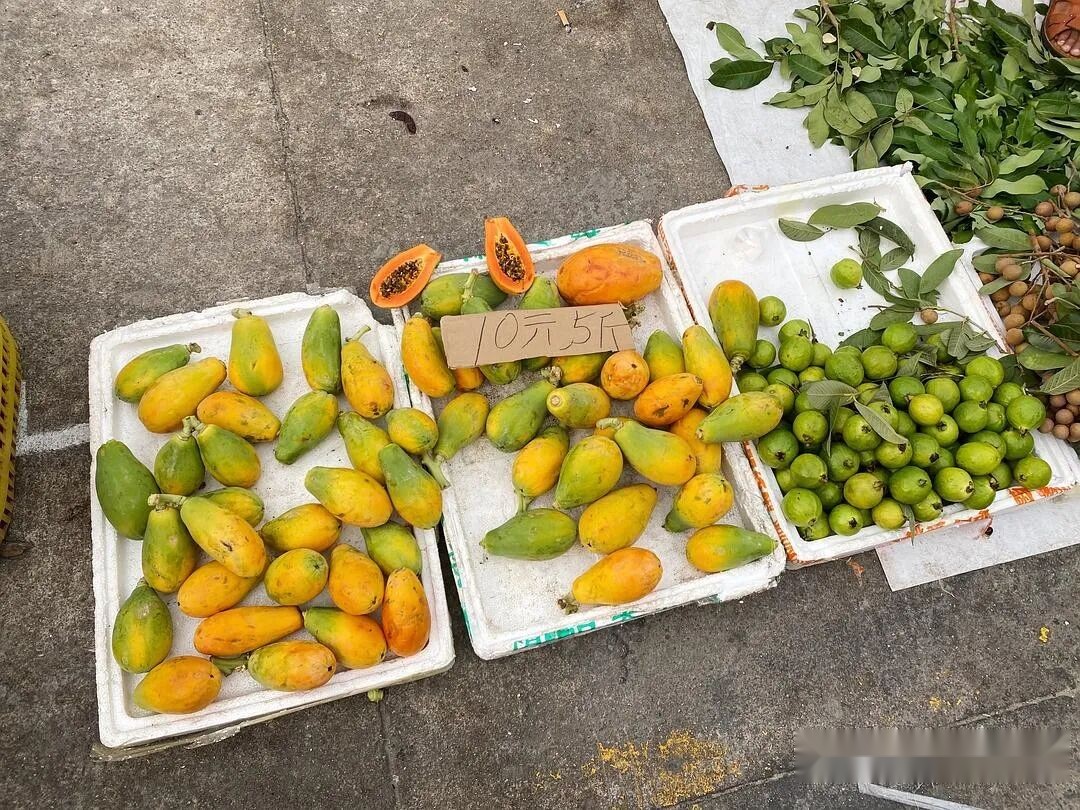

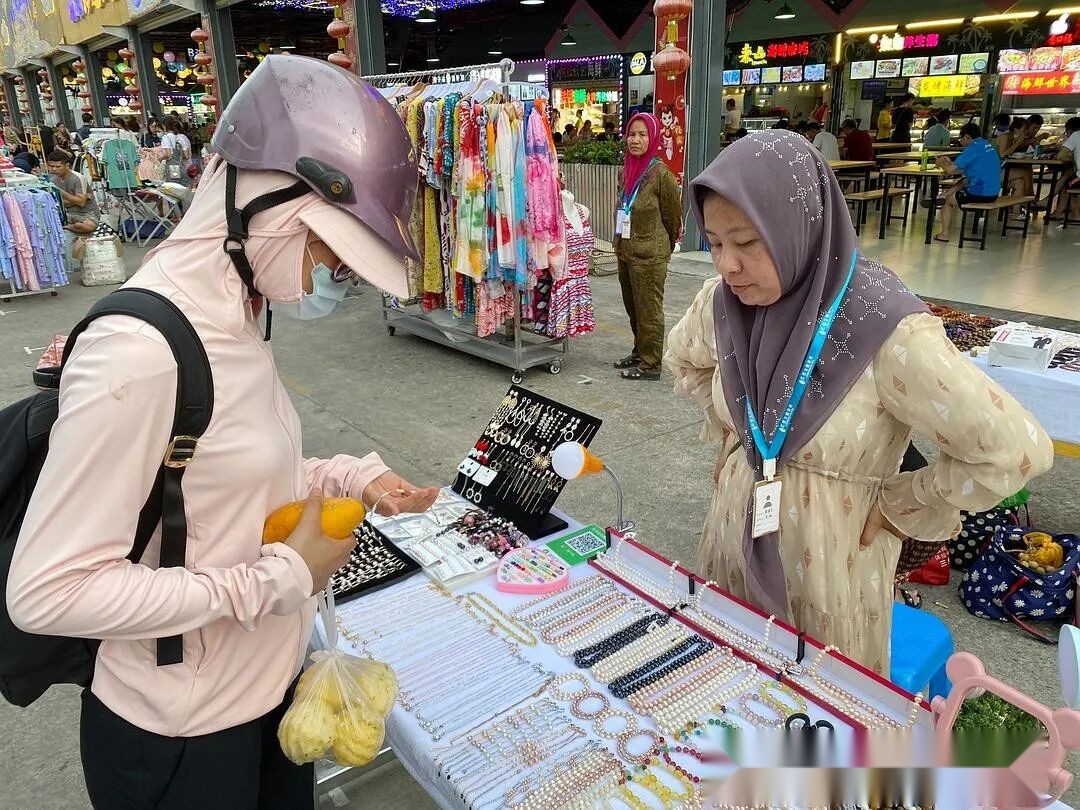
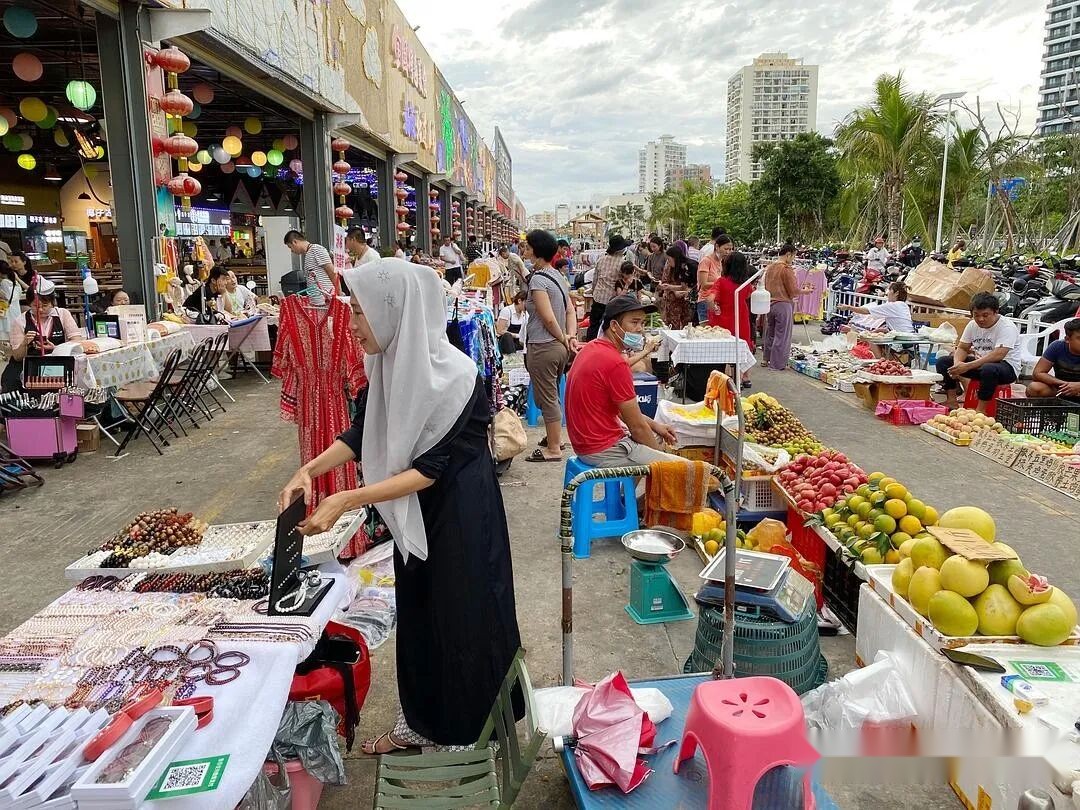

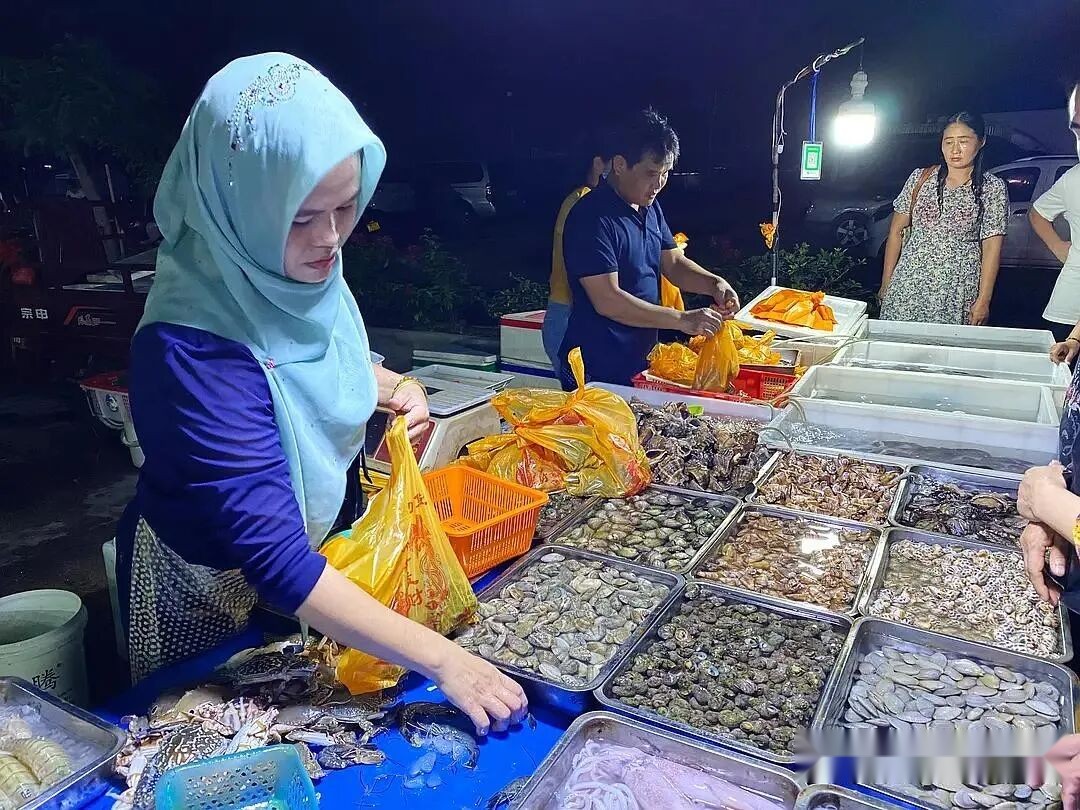
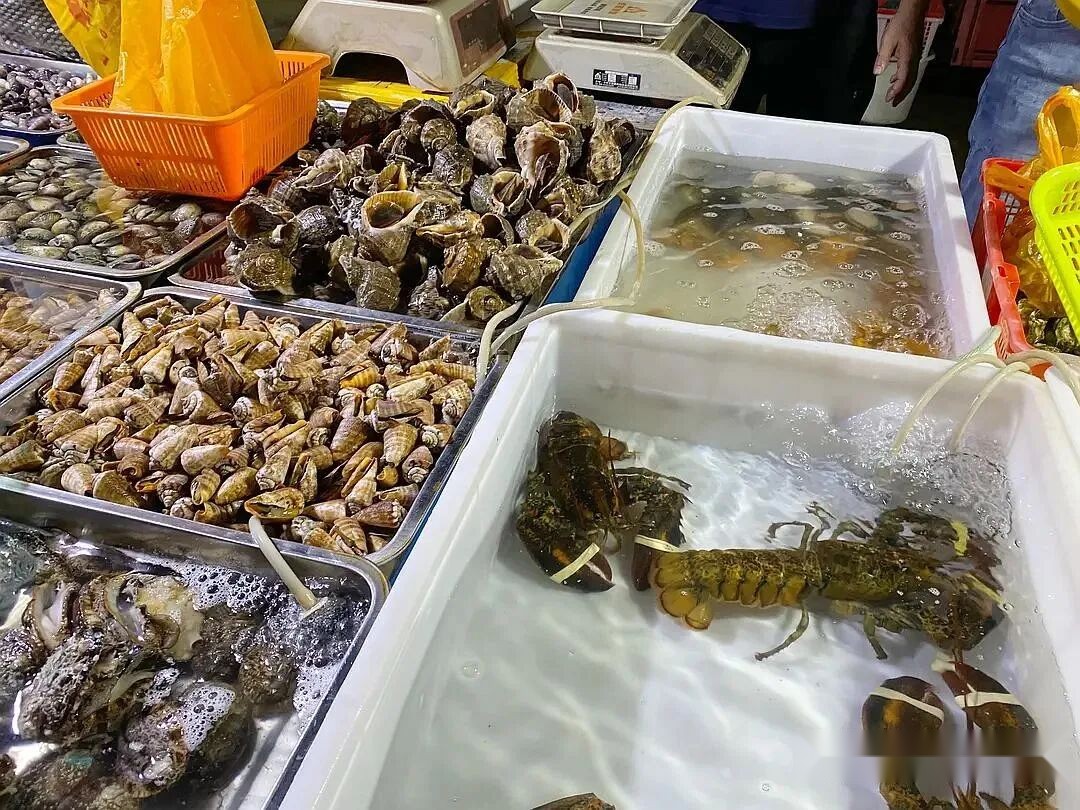
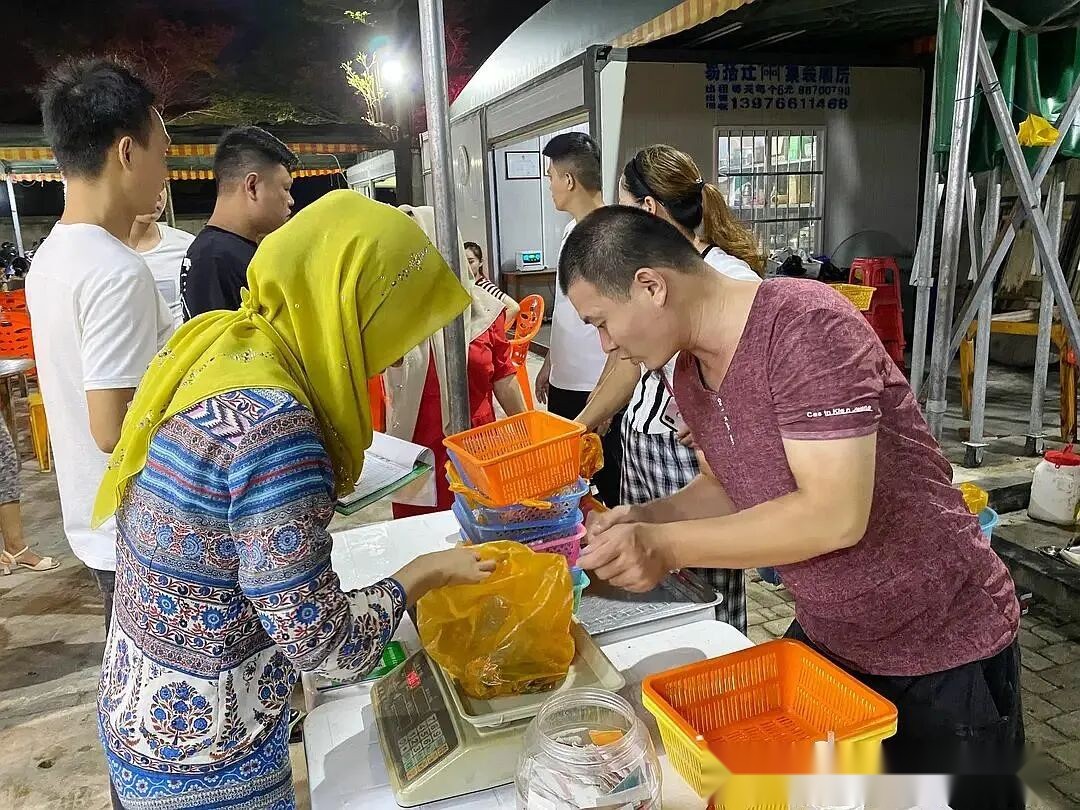
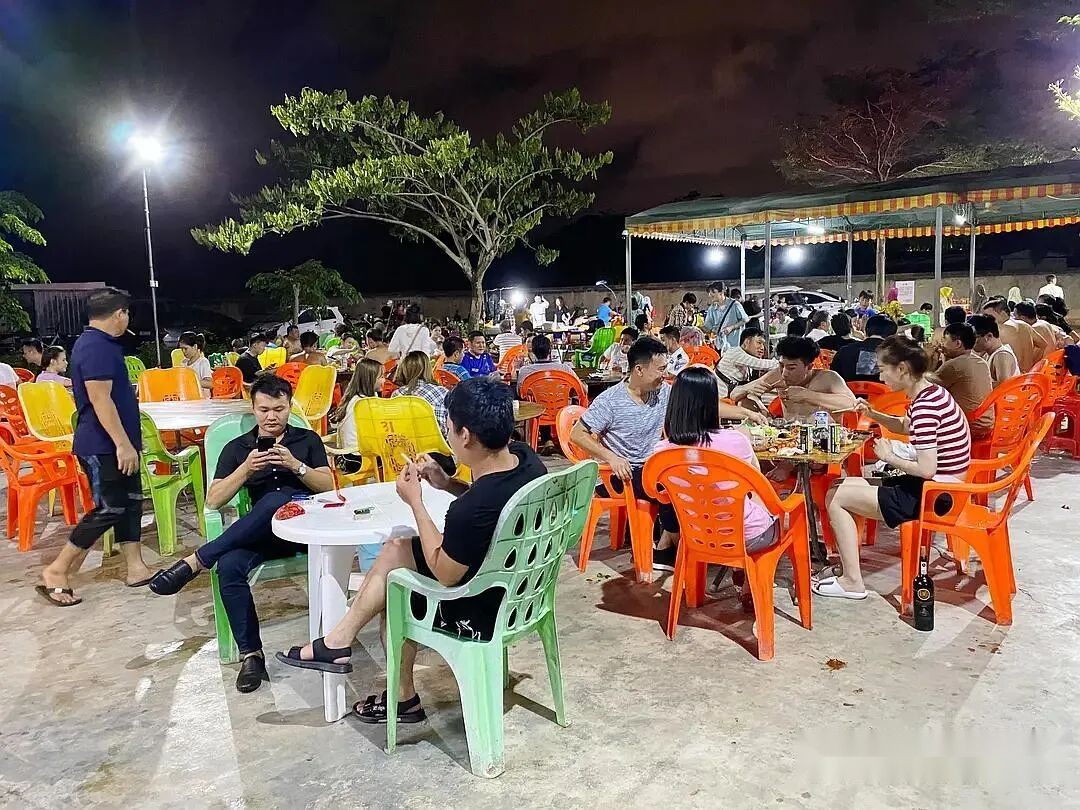
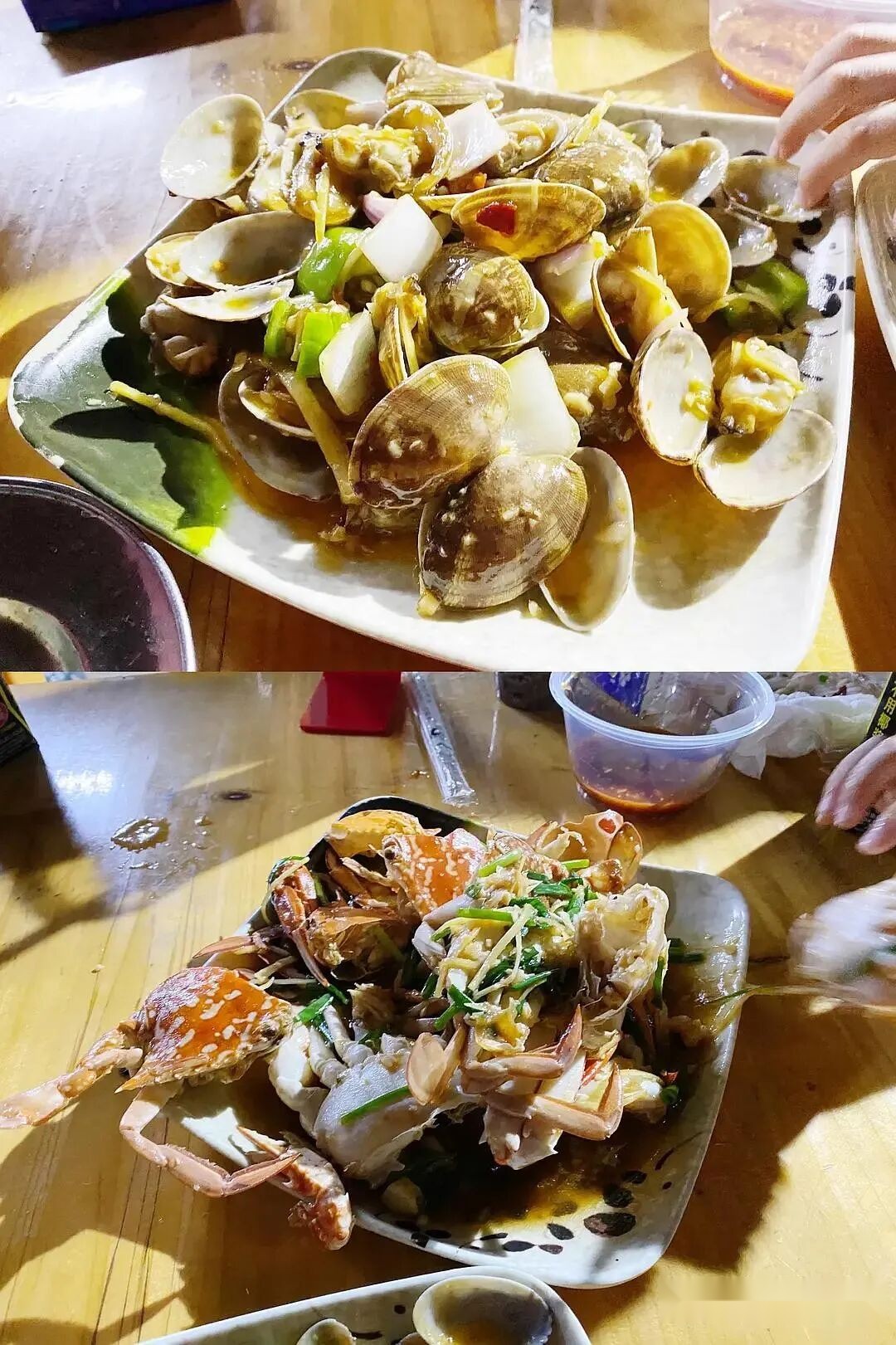
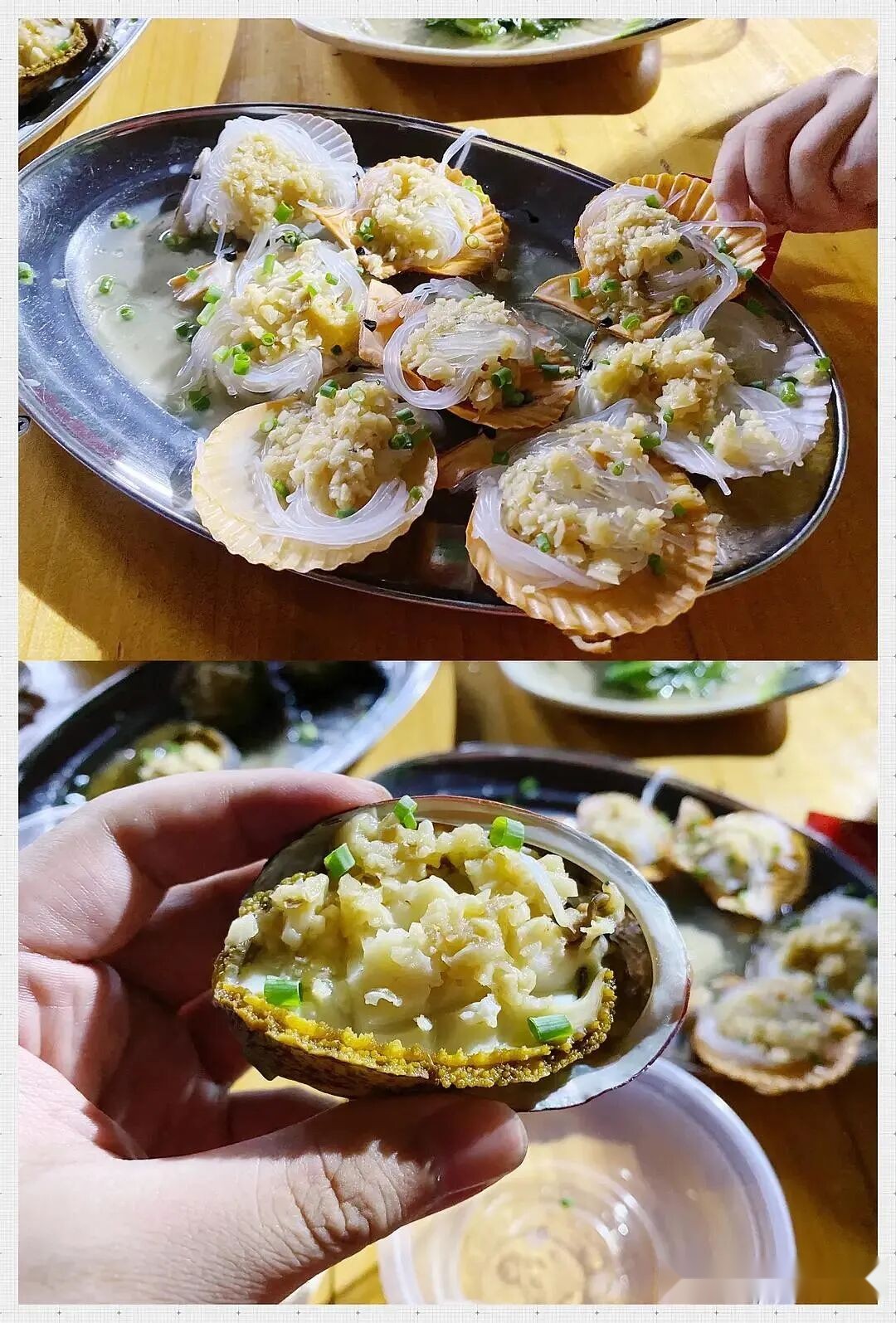

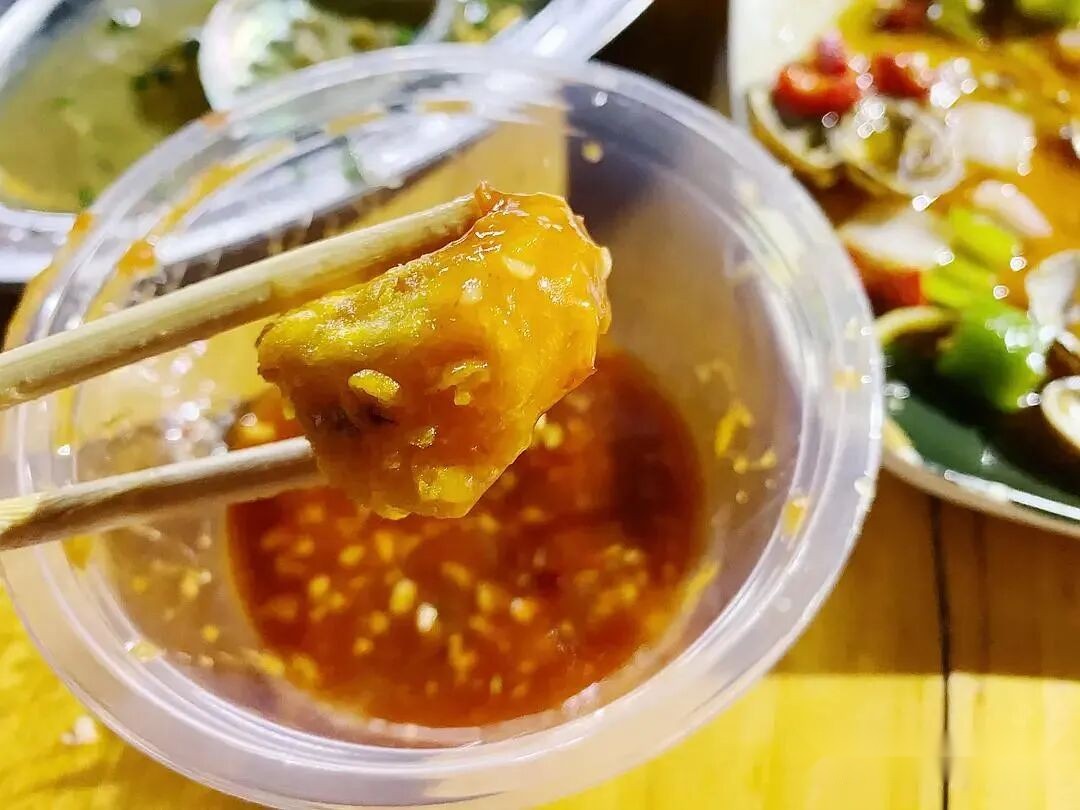
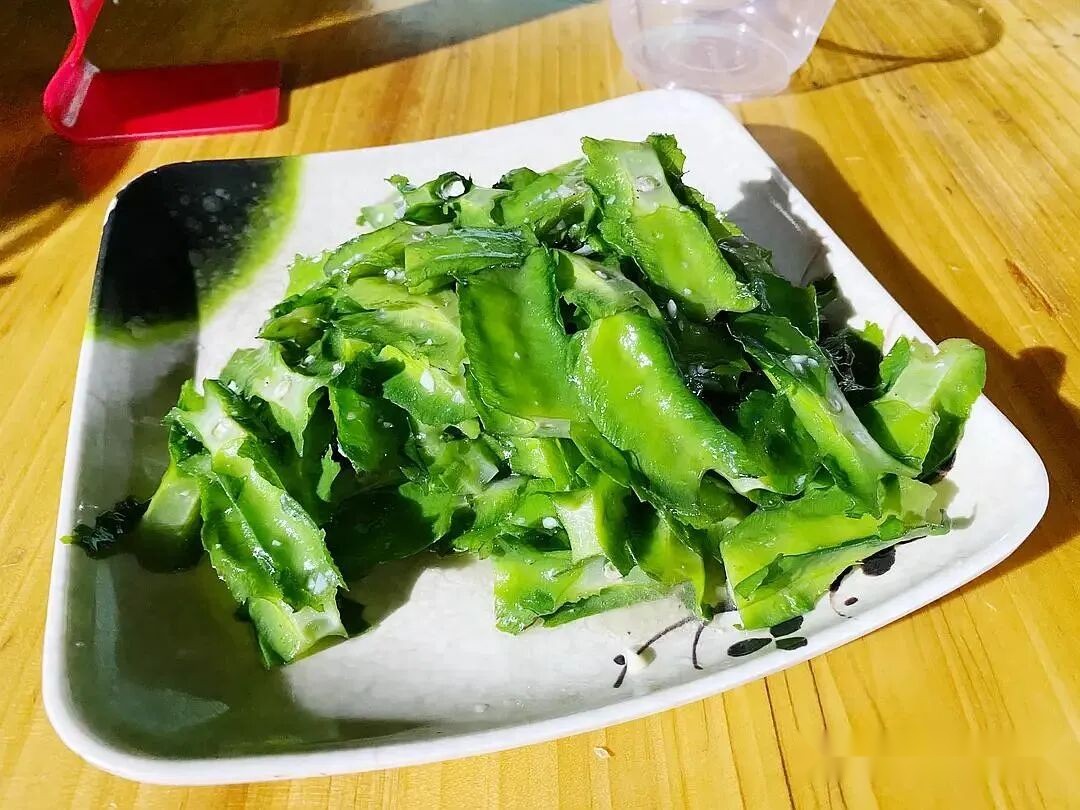
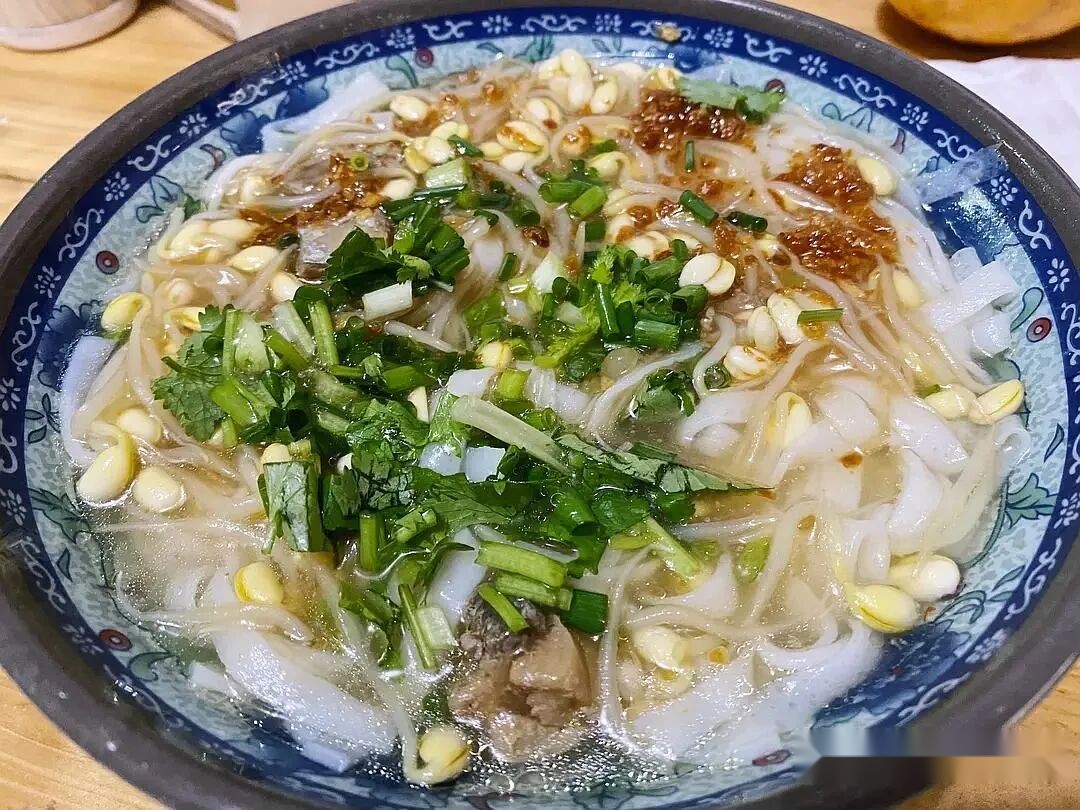
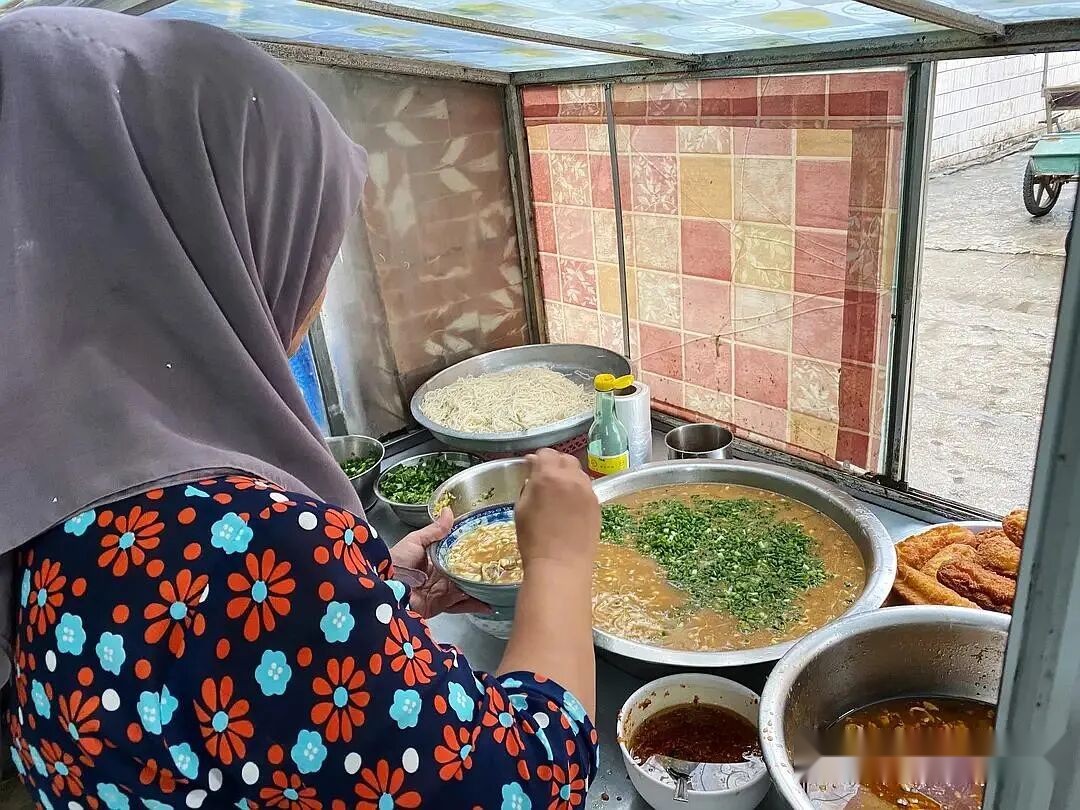
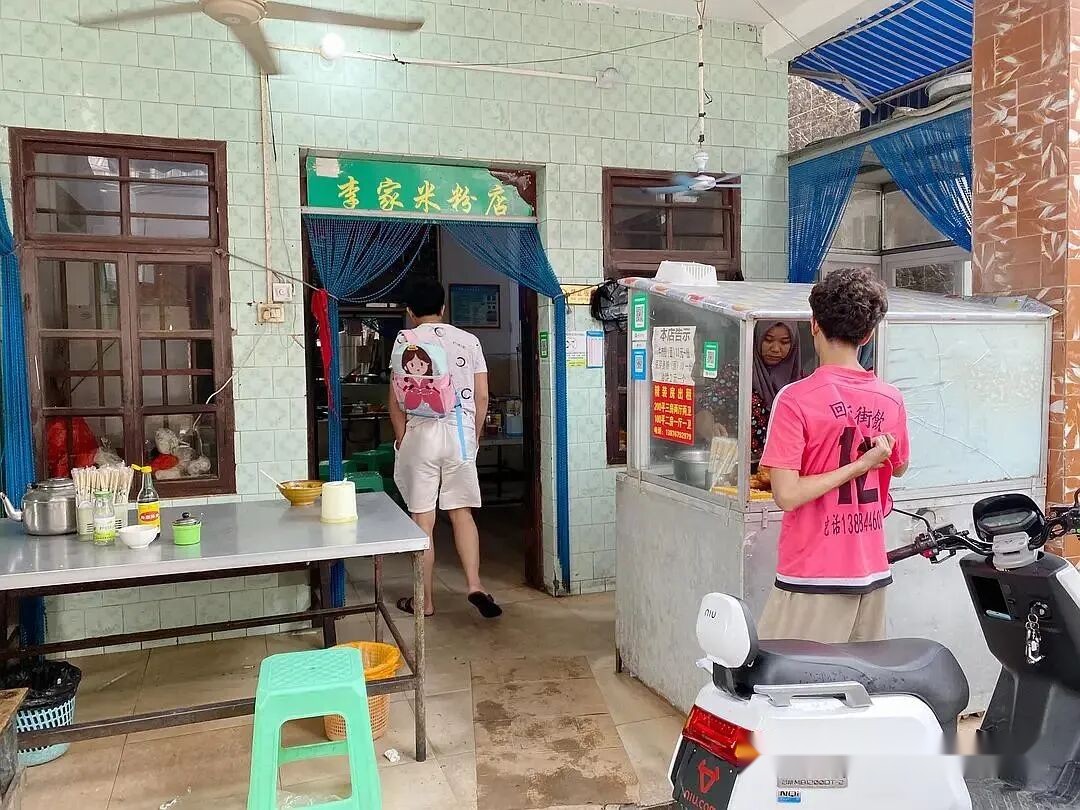 Collapse Read »
A Photo Journal of Eid al-Adha in Huihui Village, Sanya: Tropical Island Mosque Prayers, Visiting Family, and Festive Feasts
Summary:
Nearly 200 documentary photos capture the grand celebration of Eid al-Adha in Sanya's Tianya District. From the solemn morning congregational prayers with thousands gathered at the mosque, to families slaughtering and sharing sacrificial meat, exchanging fried sanzi (crispy fried dough twists), and warmly hosting friends and relatives, this vibrant photo essay captures a joyful and peaceful holiday scene.
Back in July and August 2020, my wife Zainab and I took our honeymoon trip, and our very first stop was Sanya to celebrate Eid al-Adha. A few years prior, I had visited the local Muslim community here on my own, but this time around, experiencing the holiday with our good friend, young Muslim artist Muning, made it so much more fun and insightful.
July 31
We caught a late-night flight out of Beijing on July 30 and arrived in Sanya in the wee hours of July 31. Muning hooked us up with a place right next to Huixin Mosque (Huixin Muslim Mosque) in Huixin Village (Huixin Muslim Village)—a 100% genuine 'masjid-view room.' During the winter months, Muslims from all over China rent places here for long stays, but come summer, it's practically a ghost town.
Right on the wall hung some Arabic calligraphy by Teacher Muning.
After catching a quick breath, we headed downstairs to Huixin Mosque to pray Fajr.
Following the morning prayer and a short break, we headed back into the main hall a little past 7 AM for the Eid al-Adha congregational prayers (Eid prayer). The imams here are all local Hui Muslims from Huihui Village, and the khutbah (religious sermon) was delivered in the local Utsul language (Tsat language). To someone who doesn't speak Utsul, it sounds like a fascinating blend of Malay, Chinese, and Arabic.
The Utsul language (Tsat language) is currently classified under the Austronesian language family, Malayo-Polynesian branch, Chamic subgroup. It shares the most common ancestry with the Roglai language of southern Vietnam, yet it stands out as the most unique language in the Chamic subgroup due to its heavy incorporation of Sinitic (Chinese-Tibetan) elements. When the Utsul people first arrived on Hainan Island, their language was likely quite close to Proto-Chamic. However, through continuous, close interaction with neighboring Chinese-speaking populations, the Utsul language evolved—its grammar grew closer to Chinese, its Chinese vocabulary expanded massively, and it simultaneously developed monosyllabic, tonal systems that are completely absent in other Austronesian languages.
In her published book 'A Study of the Utsul Language', Professor Zheng Yiqing compares the Utsul language with the Rade language (a Chamic language spoken in the mountainous regions of southern Vietnam) and concludes that the Utsul language and Rade language separated about 1,000 years ago.
After the Eid prayer wrapped up, Muning showed me some Qing Dynasty roof purlins and inscribed wooden plaques stored away in the warehouse of Huixin Mosque.
The roof purlins of traditional brick-and-tile houses built by the Utsul people of Sanya usually feature exquisite wood carvings of Quranic verses, but as old houses get renovated and rebuilt, precious few of these are left today.
Pieces of minbars (pulpits) and Qing Dynasty tombstones piled up in various corners of Huixin Mosque.
Leaving Huixin Mosque, Muning took me to visit the home of a teacher who collects traditional Utsul houses' roof purlins inscribed with Arabic script. Every single one of these purlins once belonged to a traditional brick-and-tile home built by the Sanya Utsul people.
Muning took us out for breakfast, where we ran right into a family throwing a banquet because their kid got accepted into Tsinghua University.
Congee served with chicken.
The fermented soybean paste was exceptionally delicious.
After finishing breakfast, Muning took us to pick out our sheep. One of these sheep was intended as our (Zainab's and my) qurbani (sacrificial offering), and the other was for Muning's family. Muning had bought them locally, picking out authentic Hainan Dongshan mutton sheep.
We led the sheep over to the designated qurbani slaughter site.
Once the slaughter was complete, the mutton was divided into three portions: one for our own household, one to share with friends, and one to give away to those in need.
Washed sheep tripe and intestines.
We asked our neighbor to cook up a dish of Sanya-style dry-fried mutton for us. Normally, their family runs a roast duck stall right next to Huixin Mosque, but they were taking a break for the Eid holidays.
The imam who performed our qurbani, who hails from Turpan, Xinjiang, whipped up a signature Xinjiang-style clear-stewed mutton for us. It was out of this world, and the mutton broth was insanely good.
Muning gifted me an Arabic calligraphy art piece he hand-carved out of a coconut shell. It looks stunning.
After the meal, Muning and I headed out to deliver another portion of the meat to friends.
We stopped by Nankai Mosque in Huixin Village to pray, where the main hall is lined with straw mats rather than carpet.
In the afternoon, Muning took me to check out the old houses in Huihui Village (Huihui Muslim Village), where I got to lay eyes on old roof purlins inscribed with Arabic script for the very first time.
One of the best-preserved and most visually striking inscribed roof purlins still in its original location in Huihui Village, with its gold-leaf Arabic letters gleaming brilliantly in the sunlight.
One of the last remaining traditional old houses in Huihui Village.
That evening, Muning and her family treated me and Zaynab to a fresh fish soup right at the entrance of Huixin Village (Huixin Muslim Village). The signature fresh fish soup of the Utsul Muslims is made with carambola (star fruit), tamarind, and tomatoes, giving it a super tangy kick. You can pick whatever sea fish you want for it. You’ve also got to mix your own dipping sauce on the side—make sure not to go overboard with the Hainan yellow lantern chili peppers, because they are insanely spicy! We also had red rice cooked in coconut milk, sweet potato greens, and stir-fried squid, all of which hit the spot.
Yellow lantern chili peppers
That night, we headed over to the Guangbaina night market right next to Huixin Village (Huixin Muslim Village) to check things out. Ever since the street vendor economy took off this year, Guangbaina has been getting busier and busier. They don’t charge a stall fee here, so a lot of people just sell fruits straight from their own family orchards, meaning prices are the lowest in the area. We grabbed some sugar apples, jackfruit, and mangoes—cheap and delicious.
After wandering through the night market, we headed back to Huixin Village (Huixin Muslim Village) for a bowl of qingbuling (Hainan refreshing herbal dessert). Every single spot in Sanya makes qingbuling a little differently, so you really have to try them all to figure out which style you like best.
Still craving a little more adventure, we hopped on an electric scooter for another night ride.
Back at the place, I started flipping through some old books Muning had collected, including one featuring Eid al-Adha back in 1979.
August 1st
Woke up early to grab some niurou fen (Hainan beef rice noodles) made by the Utsul Muslims in Huixin Village (Huixin Muslim Village), then picked up some white fungus and lotus seed porridge and chicken porridge at the South Mosque gates to sip down by the beach. Afterward, we took a lazy stroll through the coconut grove along the shore.
After walking by the beach, we headed over to Huihui Village (Huihui Muslim Village) to sip on some fresh coconut water.
A lazy summer afternoon in Huixin Village (Huixin Muslim Village)—a fresh coconut and a bowl of qingbuling (Hainan refreshing herbal dessert). Could it get any more chill?
Time to kick back and take a break.
In the afternoon, we headed back to the spot in Zhongzhuangyuan where they were throwing a banquet, watching the Utsul Muslims whip up traditional coconut rice.
They start with old coconuts that have thick meat, grating all of it into fine shreds, then use cheesecloth to press out all the rich coconut oil.
For steaming the rice, they use a traditional Li ethnic pottery steamer called a taozeng. Once the rice is steamed, they thoroughly mix the coconut milk and rice together. At this stage, the coconut rice is super chewy and has a great bite.
Then, they pop the blended coconut rice back into the pottery steamer for a second round. This time around, the rice comes out way softer and stickier, and the coconut milk and rice melt completely into one another.
They used beef from the cow sacrificed the day before for Eid al-Adha. First, they stew the beef, then toss in wood ear mushrooms and dried bean curd sticks—a total classic main dish for Utsul Muslim banquets.
Our downstairs neighbors, a Utsul Muslim family, slaughtered a sheep yesterday, and today they were simmering up a pot of sheep offal soup. Sanya’s Utsul Muslims rarely eat mutton; basically, the only time they eat their own freshly slaughtered Dongshan mutton is during Eid al-Adha. When Utsul Muslims slaughter a sheep, they scrape the hair off the hide because they believe sheepskin-on mutton is where the best flavor is at.
When they stew the offal, they toss in the sheep's trotters too, letting it bubble away from early morning until afternoon while adding all kinds of spice blends. Finally, they drop in radishes, corn, and shiitake mushrooms. The flavor profile is totally different from Northern-style mutton soup—it's its own unique, addictive kind of delicious.
That evening, we grabbed a bowl of niunan mian (braised beef brisket noodles) at Haxuanren in Huihui Village (Huihui Muslim Village), and followed it up with a coconut milk ice jelly right across the street.
August 2nd
In the morning, we went back to Haxuanren Beef Brisket Noodles in Huihui Village (Huihui Muslim Village) to try their stewed beef trotters. Because it’s the summer off-season and everyone’s still recovering from Eid al-Adha, most eateries in Huihui and Huixin villages were closed. Haxuanren stayed open the whole time, so it was packed with people. After eating, we kept up our routine of strolling through the beach coconut grove.
In the afternoon, we checked out the Guangbaina night market next to Huixin Village (Huixin Muslim Village) again. Papayas, wax apples, papayas, mini pineapples—all the fruit was fresh and delicious. I even picked up some pearl bracelets as gifts for the little ones back home.
That night, Muning treated us to seafood down at the seafood market near the beach in Huixin Village (Huixin Muslim Village). We ordered crabs, scallops, abalone, clams, octopus, fried squid rings, and the local specialty sijidou (four-angled beans / winged beans). Everything tasted incredible—not a hint of fishiness, just pure, mouth-watering flavor. A special shout-out to their signature dipping sauce made with ketchup, sweet chili sauce, minced garlic, and tamarind. It paired so well with the seafood we just couldn't stop eating.
This seafood market in Huixin Village (Huixin Muslim Village) has got to be the best value for money around. It’s not just the Muslim locals; even the surrounding Han residents love coming here to eat, and business is always booming.
August 3rd
In the morning, we hit up Li's Rice Noodles in Huixin Village (Huixin Muslim Village) for some chicken rice noodles, and they were insanely flavorful! Right after the three-day Eid al-Adha celebration wrapped up, their spot was finally open for business.
And with that, we reluctantly said goodbye and left Sanya.
Collapse Read »
Sanya Halal Seafood Guide: Phoenix Seafood Restaurant Review, Fresh Catch Tips & Must-Try Dishes
[Internet Repost]
Sanya Halal Phoenix Seafood Restaurant Review: Live Giant Prawns, Spicy Stir-Fried Mango Sea Snails, and Smart Dining Tips to Avoid Tourist Traps
Summary:
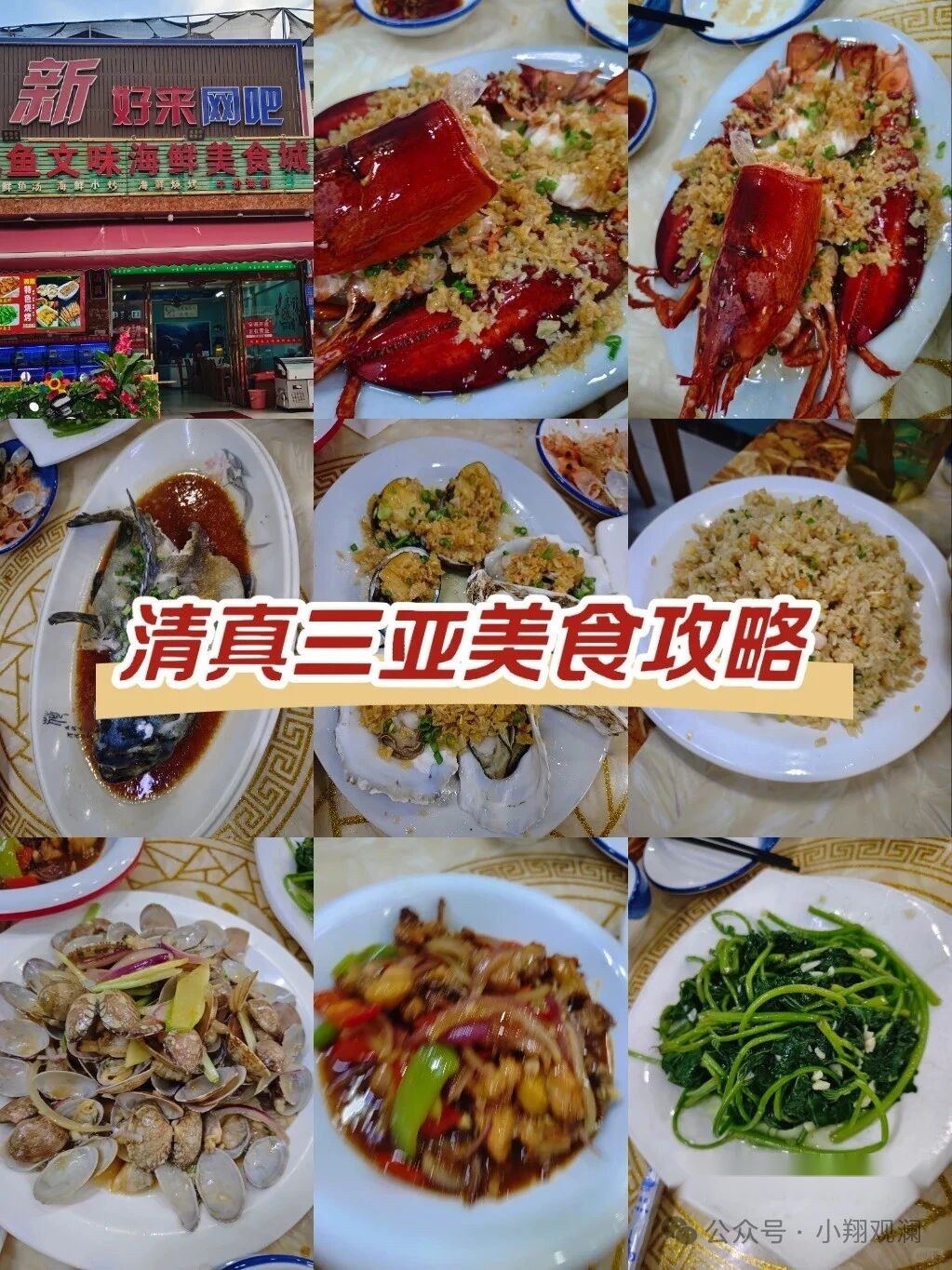
An honest review of the wildly popular Halal Phoenix Seafood Restaurant (Qingzhen Fenghuang Yuwei Haixian Meishi Cheng) in Sanya's Tianya District. We're breaking down how to pick active mantis shrimp, tender coral grouper, and aromatic spicy mango sea snails (mangguo luo), plus custom flavor tips, giving Muslim foodies nationwide a transparent, clear-priced guide to top-tier halal seafood dining.
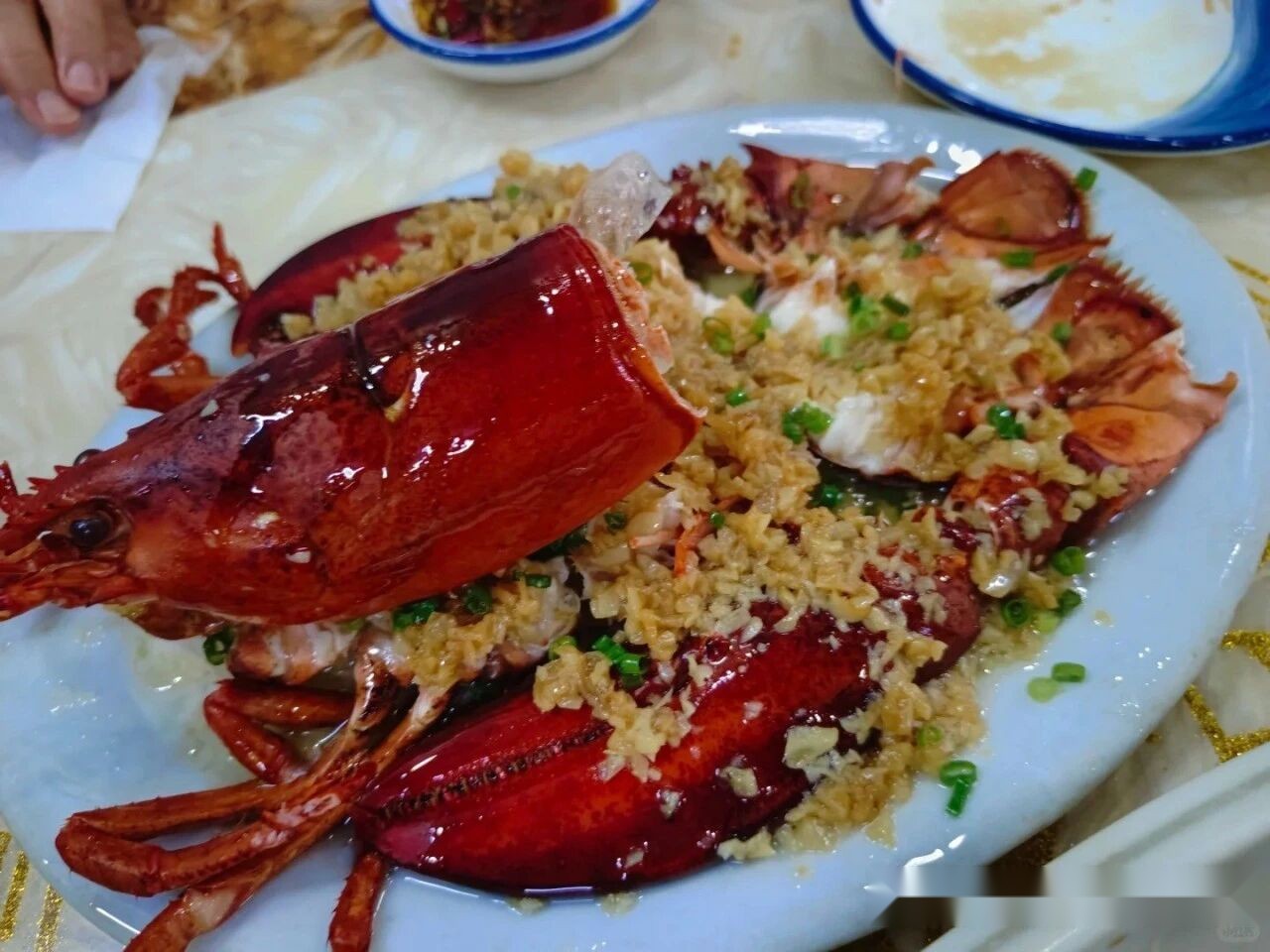
Collapse Read »
Sanya Halal Phoenix Seafood Restaurant Review: Live Giant Prawns, Spicy Stir-Fried Mango Sea Snails, and Smart Dining Tips to Avoid Tourist Traps
Summary:
An honest review of the wildly popular Halal Phoenix Seafood Restaurant (Qingzhen Fenghuang Yuwei Haixian Meishi Cheng) in Sanya's Tianya District. We're breaking down how to pick active mantis shrimp, tender coral grouper, and aromatic spicy mango sea snails (mangguo luo), plus custom flavor tips, giving Muslim foodies nationwide a transparent, clear-priced guide to top-tier halal seafood dining.
Collapse Read »
Exploring Sanya's Halal Food Scene: Northwest Chinese Stir-Fries, Pulled Noodles, and Local Utsul Muslim Culture
[Internet Repost]
Exploring Sanya Qingpinhui Halal Restaurant: A Showcase of Classic Northwest Chinese Stir-Fries, Steaming Handmade Latiaozi (handmade pulled noodles), and Signature BBQ Skewers
Summary:
Real photo documentation and food review highlighting the signature dishes and vibrant dining atmosphere at Sanya Qingpinhui Halal Restaurant. We taste-test their hearty, generously portioned Dapanji (big plate chicken), springy and smooth handmade banmian (mixed noodles), and crispy-on-the-outside, tender-on-the-inside roasted lamb skewers, capturing that warm, comforting, down-home halal flavor during your island getaway.

The Culinary Delights of Sanya Qingpinhui Halal Restaurant
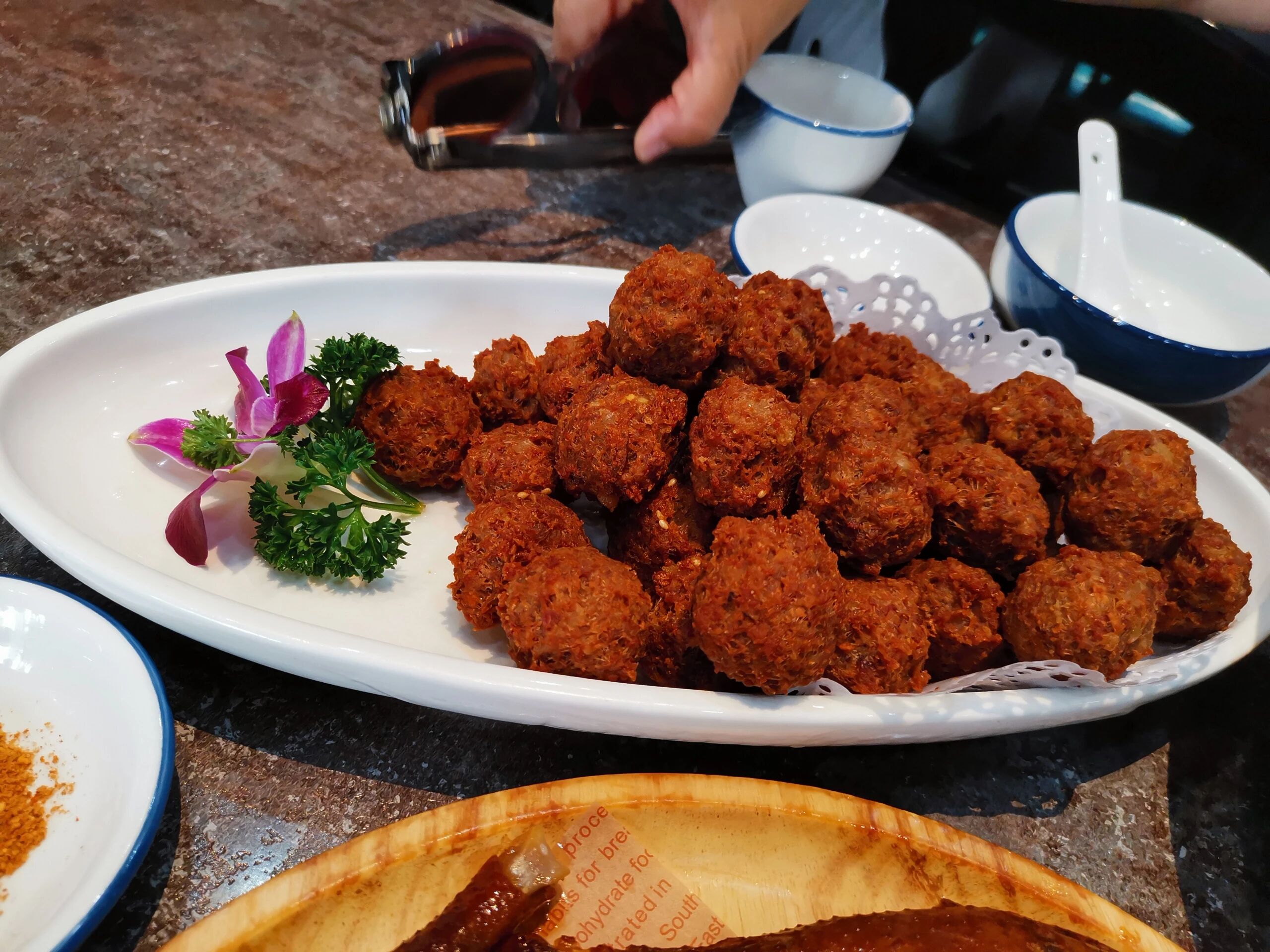
[On-Site Visuals]
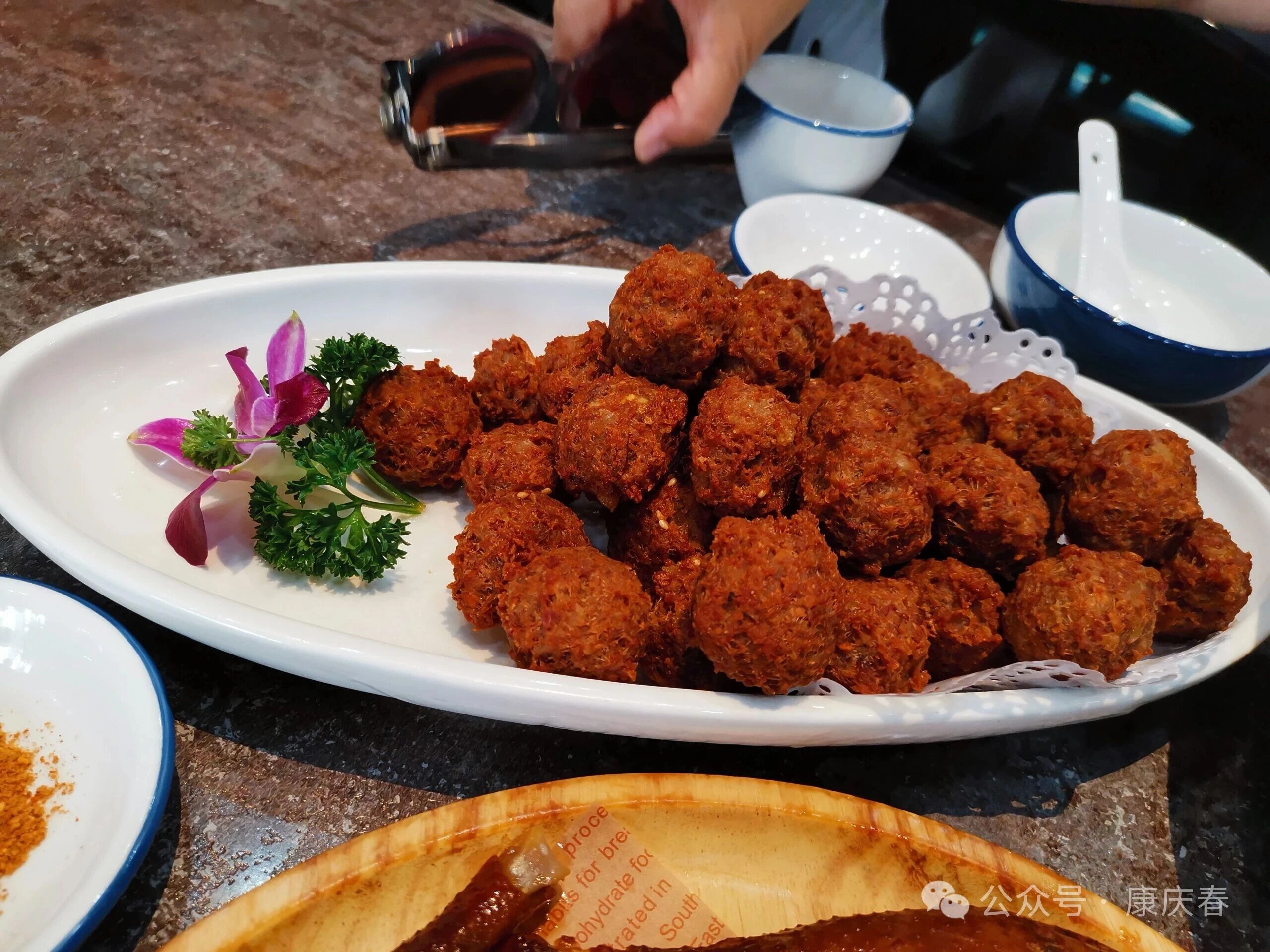
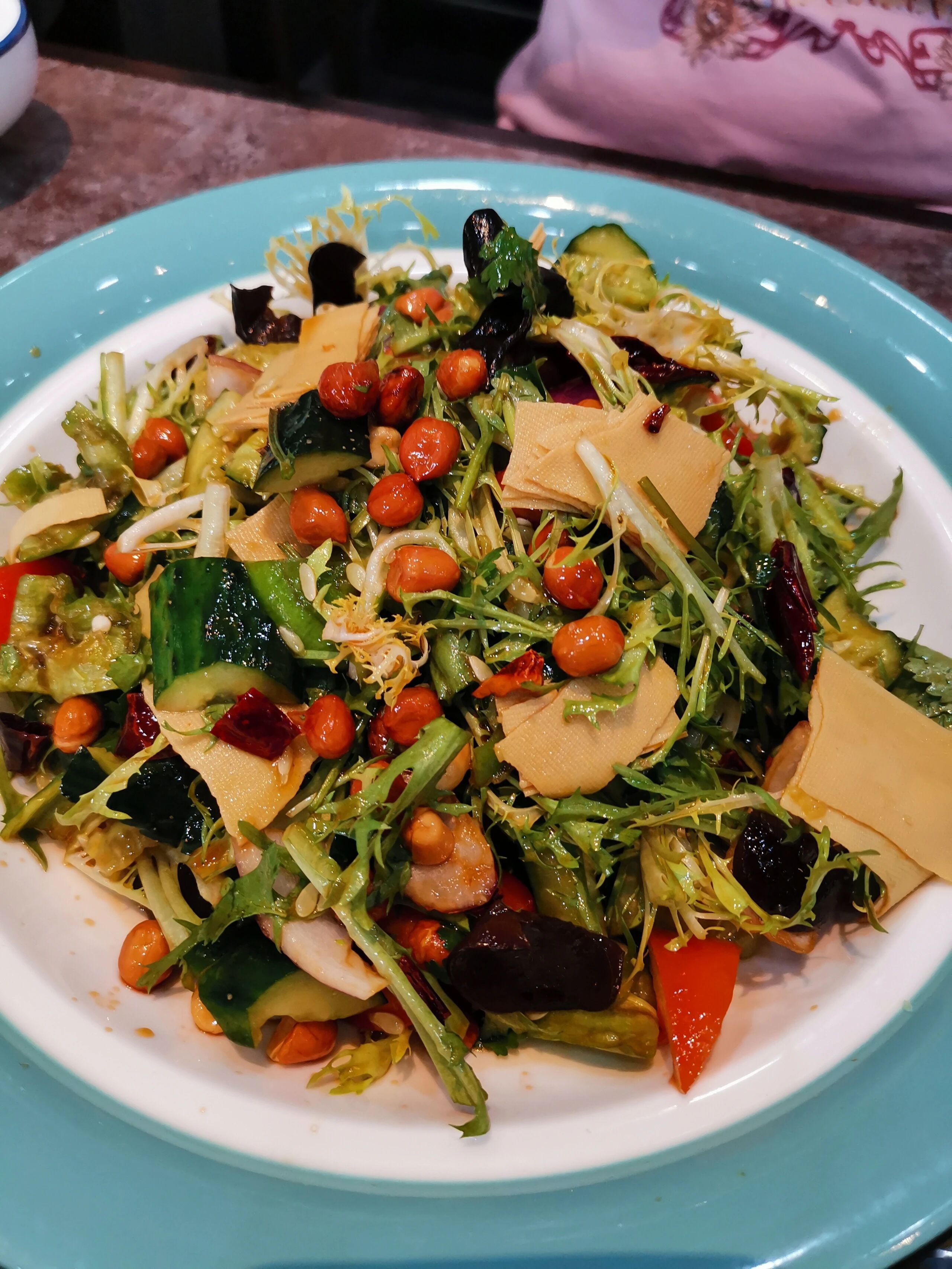
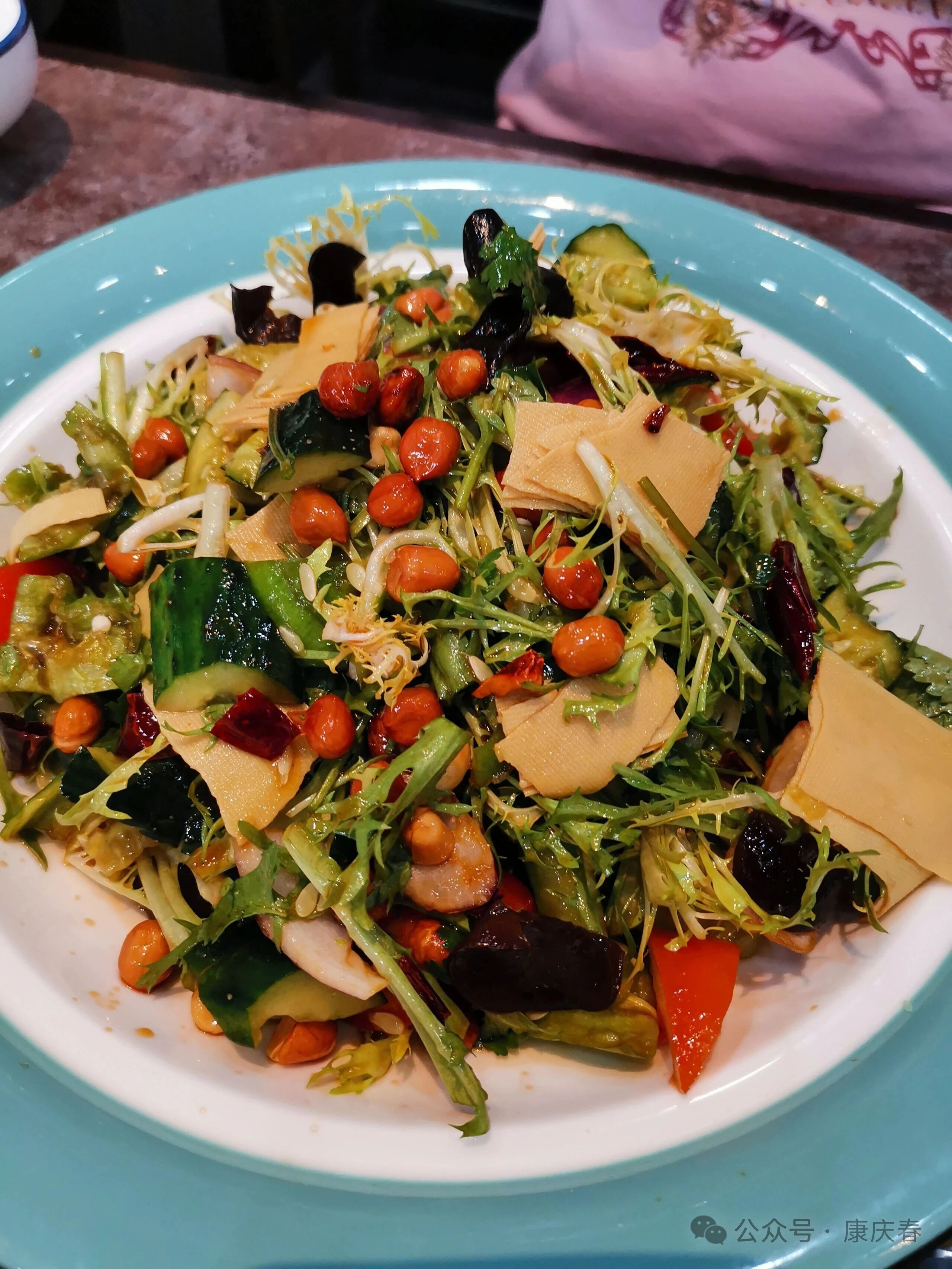
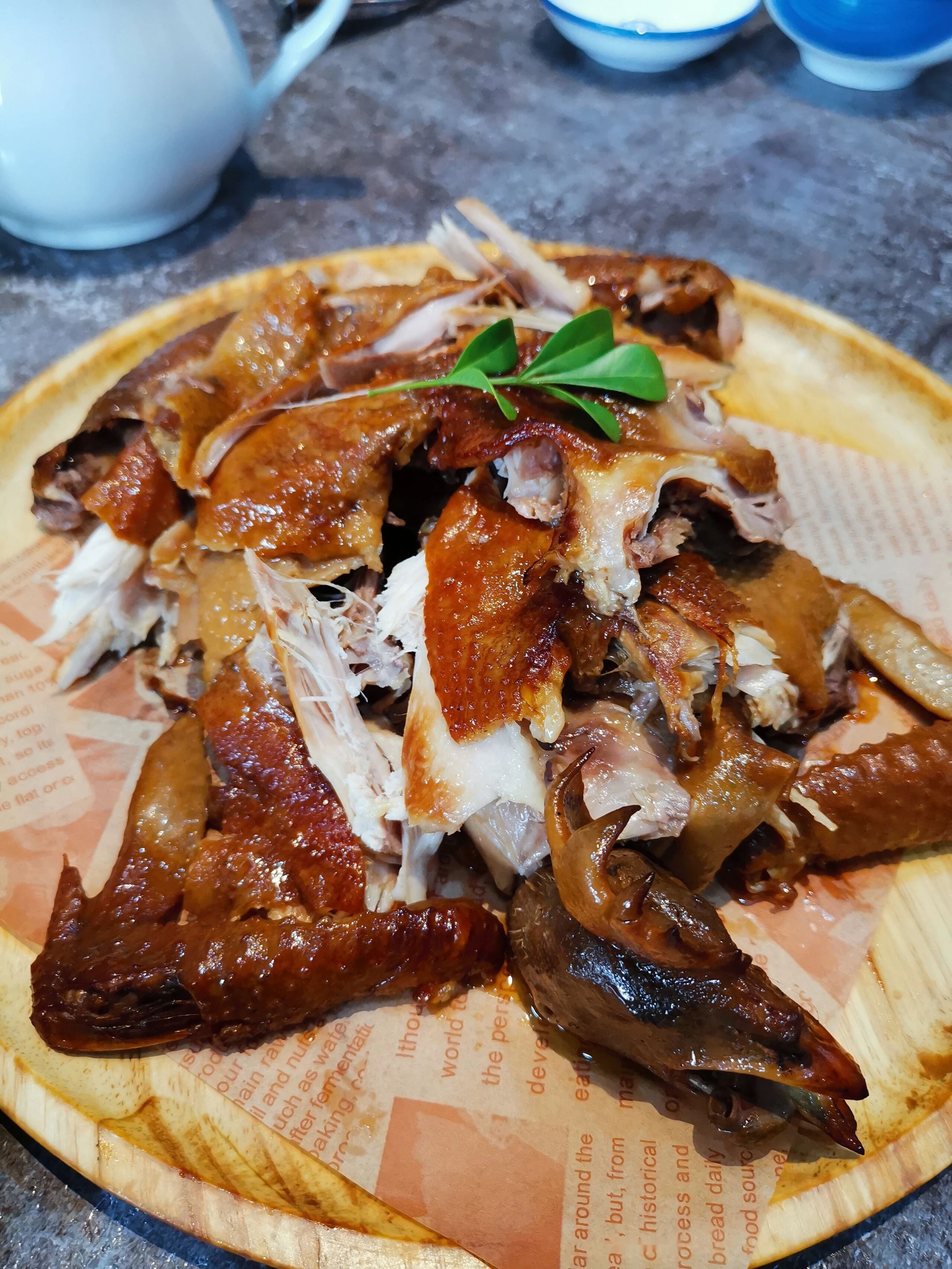
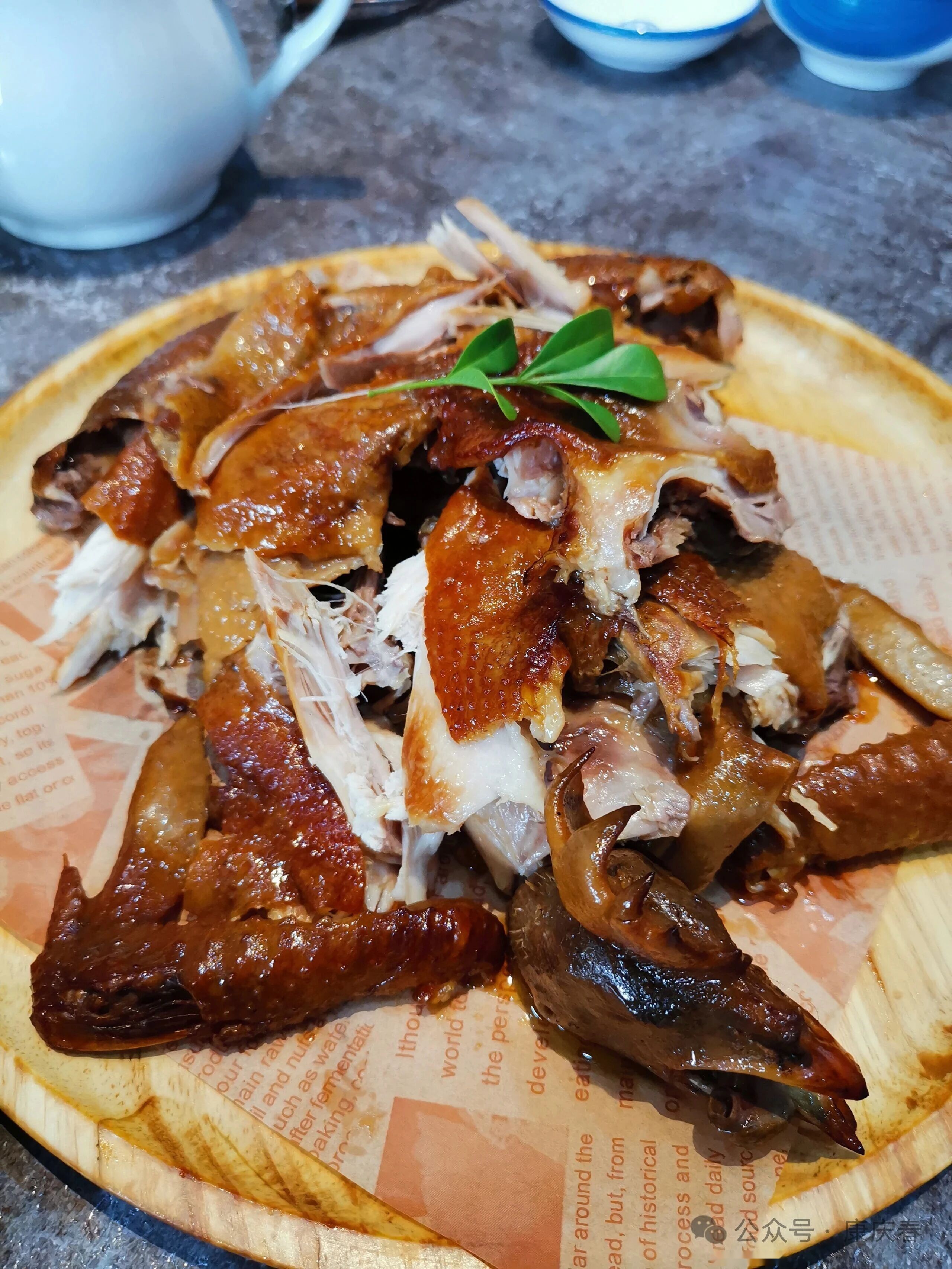

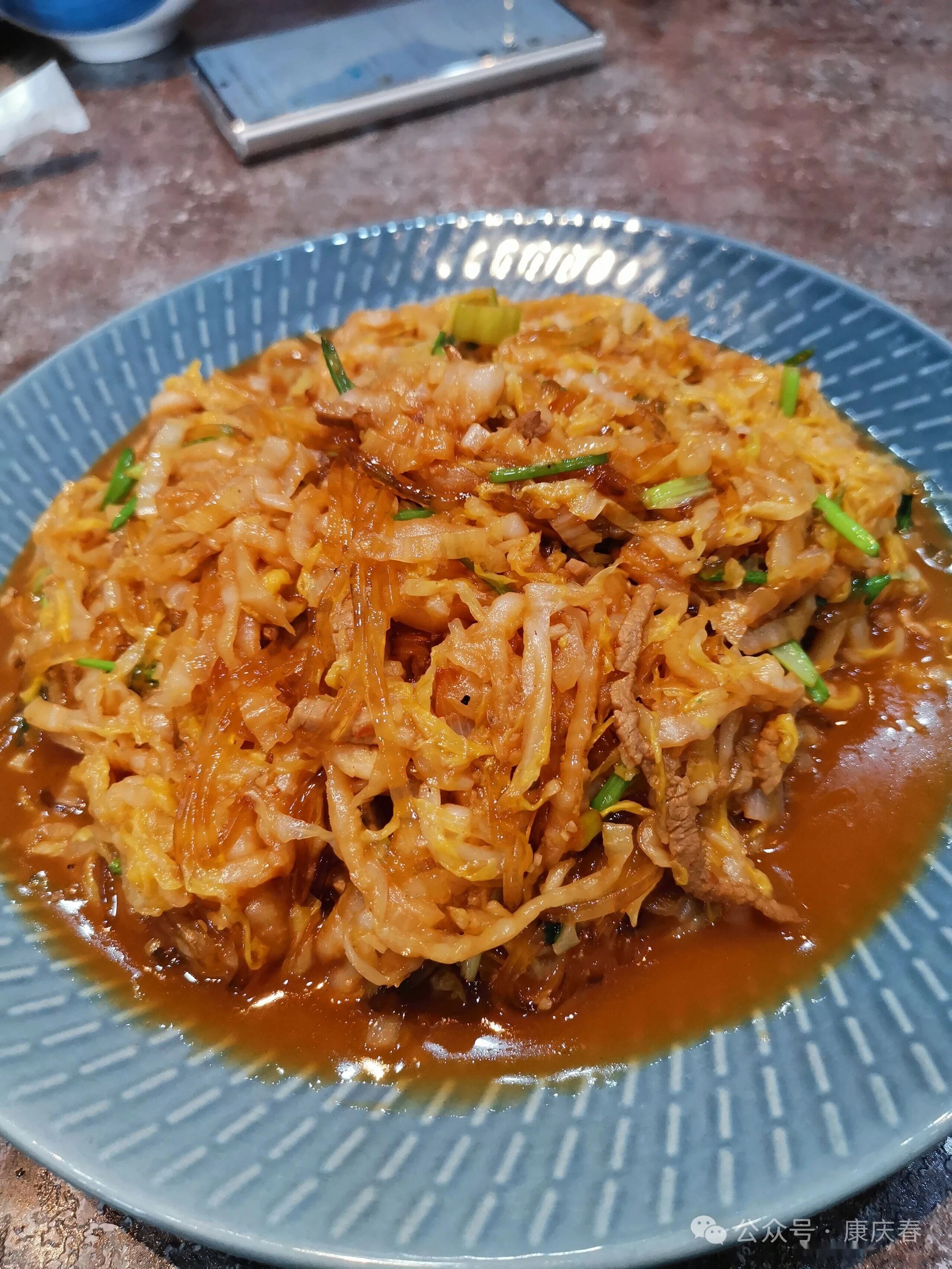
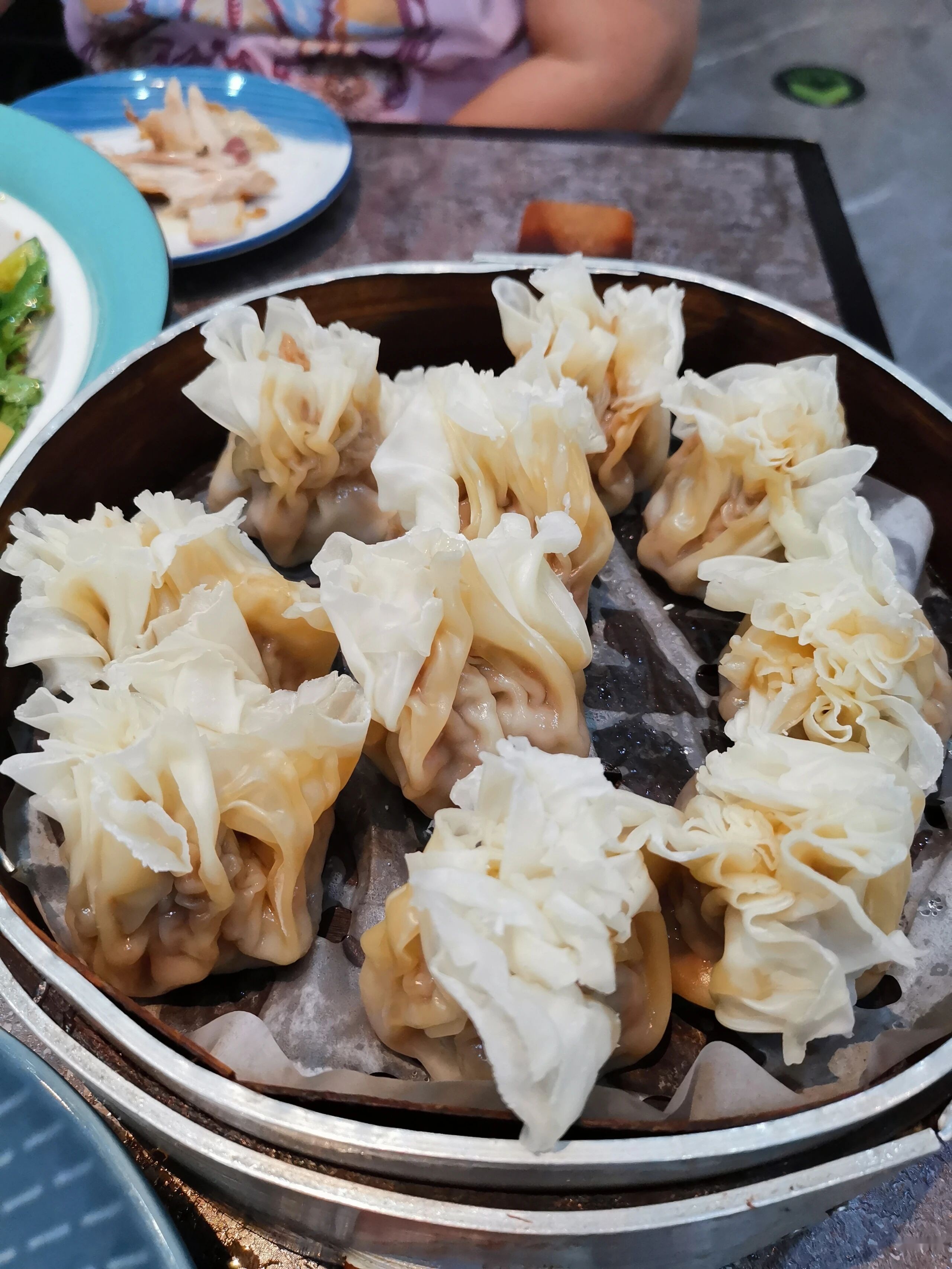
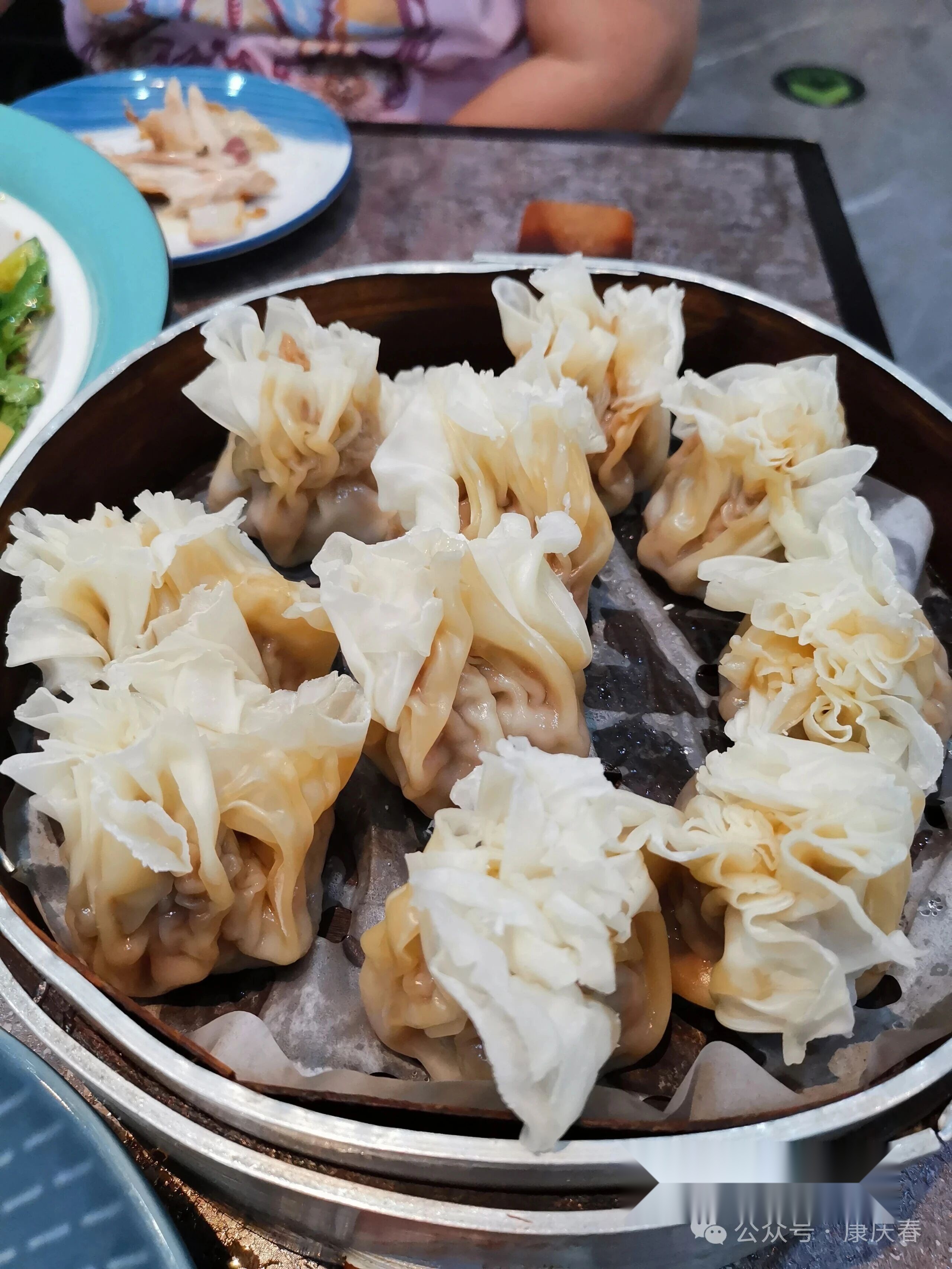
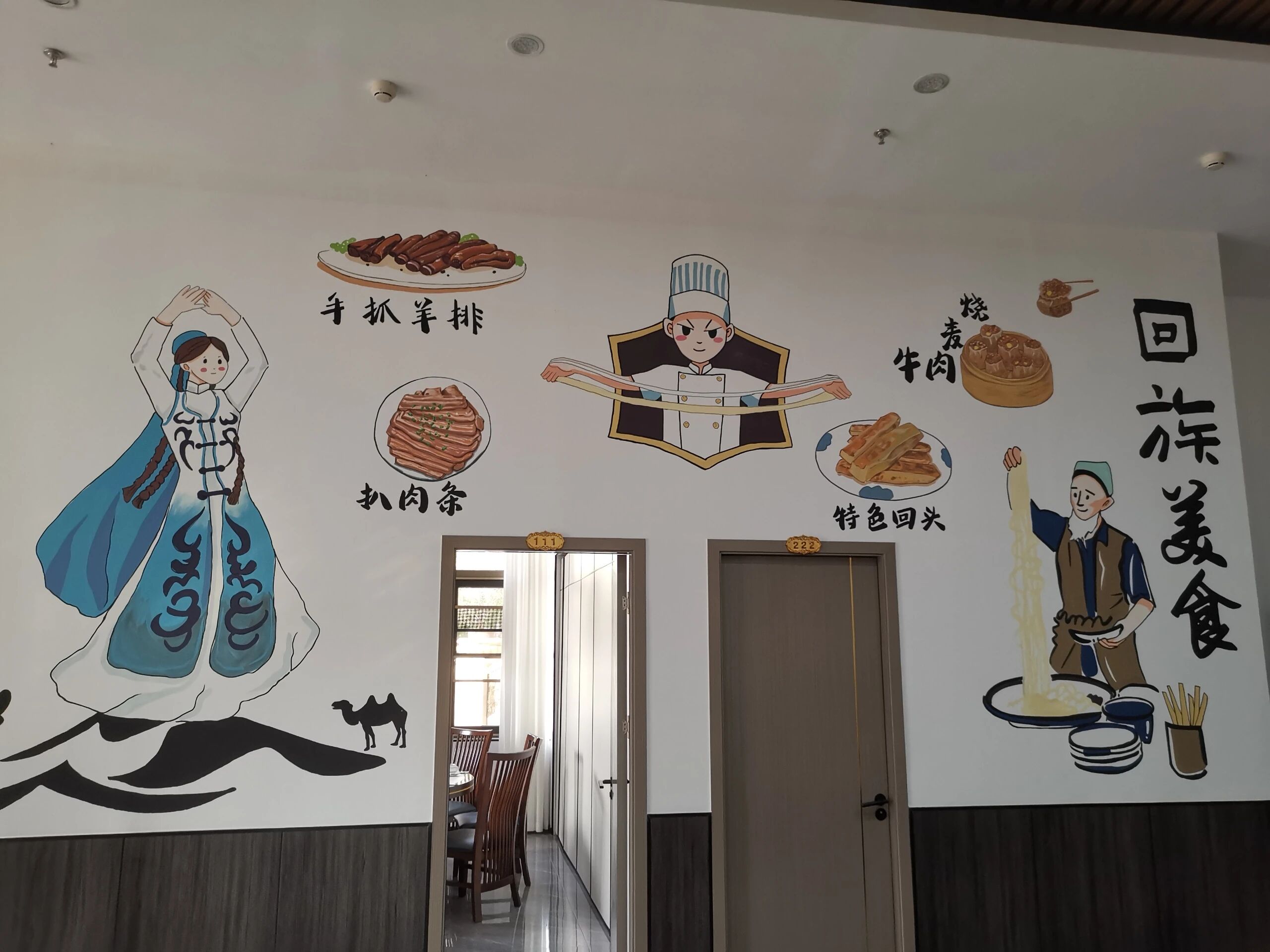
 Collapse Read »
Exploring Sanya Qingpinhui Halal Restaurant: A Showcase of Classic Northwest Chinese Stir-Fries, Steaming Handmade Latiaozi (handmade pulled noodles), and Signature BBQ Skewers
Summary:
Real photo documentation and food review highlighting the signature dishes and vibrant dining atmosphere at Sanya Qingpinhui Halal Restaurant. We taste-test their hearty, generously portioned Dapanji (big plate chicken), springy and smooth handmade banmian (mixed noodles), and crispy-on-the-outside, tender-on-the-inside roasted lamb skewers, capturing that warm, comforting, down-home halal flavor during your island getaway.
The Culinary Delights of Sanya Qingpinhui Halal Restaurant
[On-Site Visuals]
Collapse Read »
Guangzhou Xiaobei Day & Night: Moroccan Cuisine & Halal Dim Sum
[Internet Repost]
Summary: This article explores "Guangzhou Xiaobei's Night and Day: Moroccan Cuisine and Cantonese Morning Tea," perfect for readers interested in Muslim life, halal info, Islamic culture, and Chinese web content.
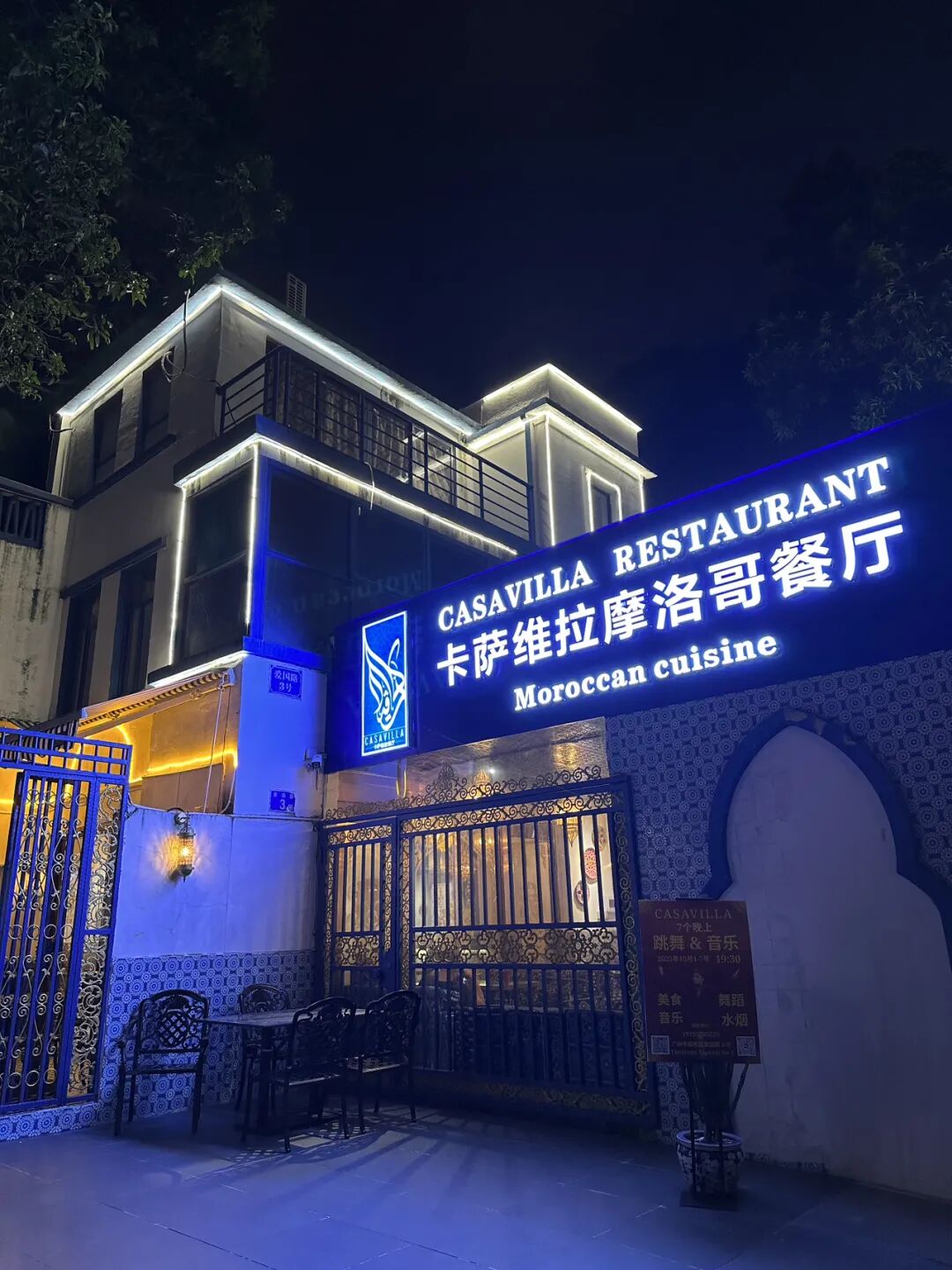
Guangzhou Xiaobei's Night and Day: Moroccan Cuisine and Cantonese Morning Tea
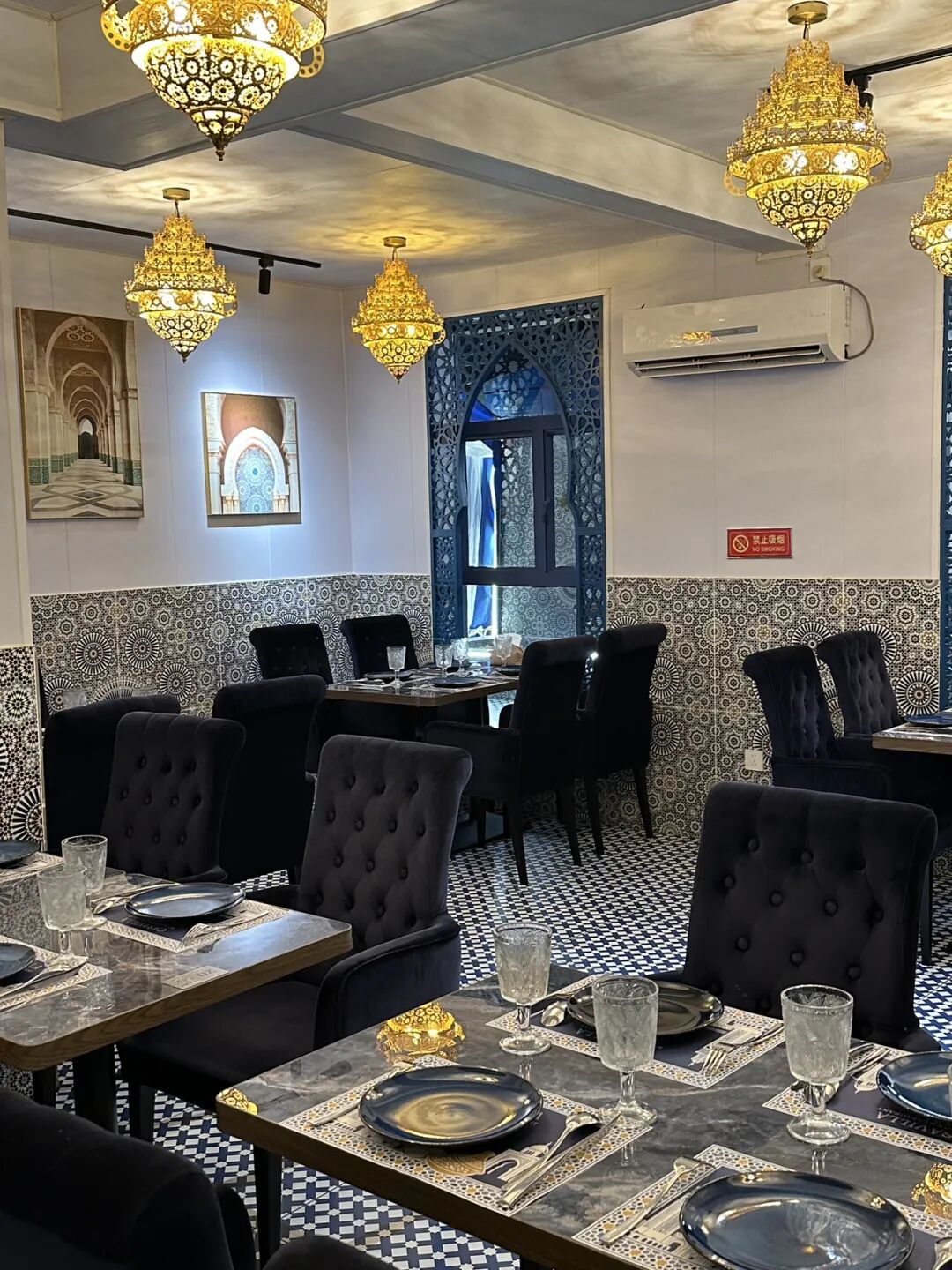
On the first day of the National Day holiday, I arrived in Guangzhou at night, hopped on the subway straight to Taojin near Xiaobei to grab some Moroccan food, and ordered a lamb tagine, avocado and shrimp salad, and Moroccan mint tea. They have chair seating, floor seating, and outdoor areas. The floor seating area has the best vibe, though the shisha smoking at night was a bit harsh on the lungs.
The tagine was super authentic—the lamb was tender and fall-apart, and the pot was quite deep with a generous portion of meat. The large flatbread served with it was fluffy and light, and soaking it in the meat juices was amazing. The iced mint tea was also great; the Magreb region is literally filled with people drinking mint tea everywhere, especially sitting on the street sipping tea and chatting. It’s too bad their salad used Thousand Island dressing though—how can a legit Middle Eastern spot use Thousand Island? Total laziness.
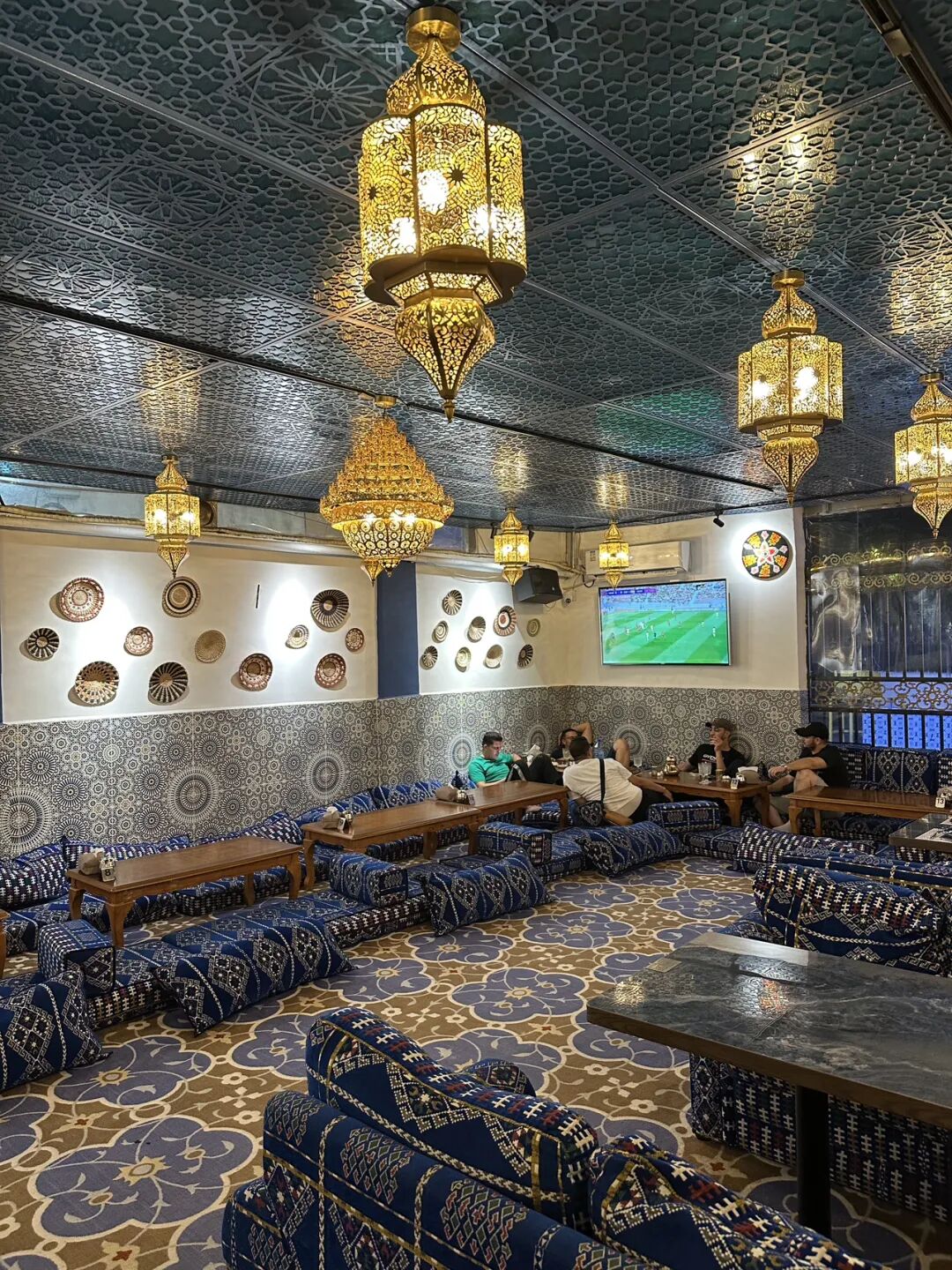
After eating, I took a night stroll around Xiaobei and grabbed some authentic yogurt shaved ice on Baohan Direct Street.
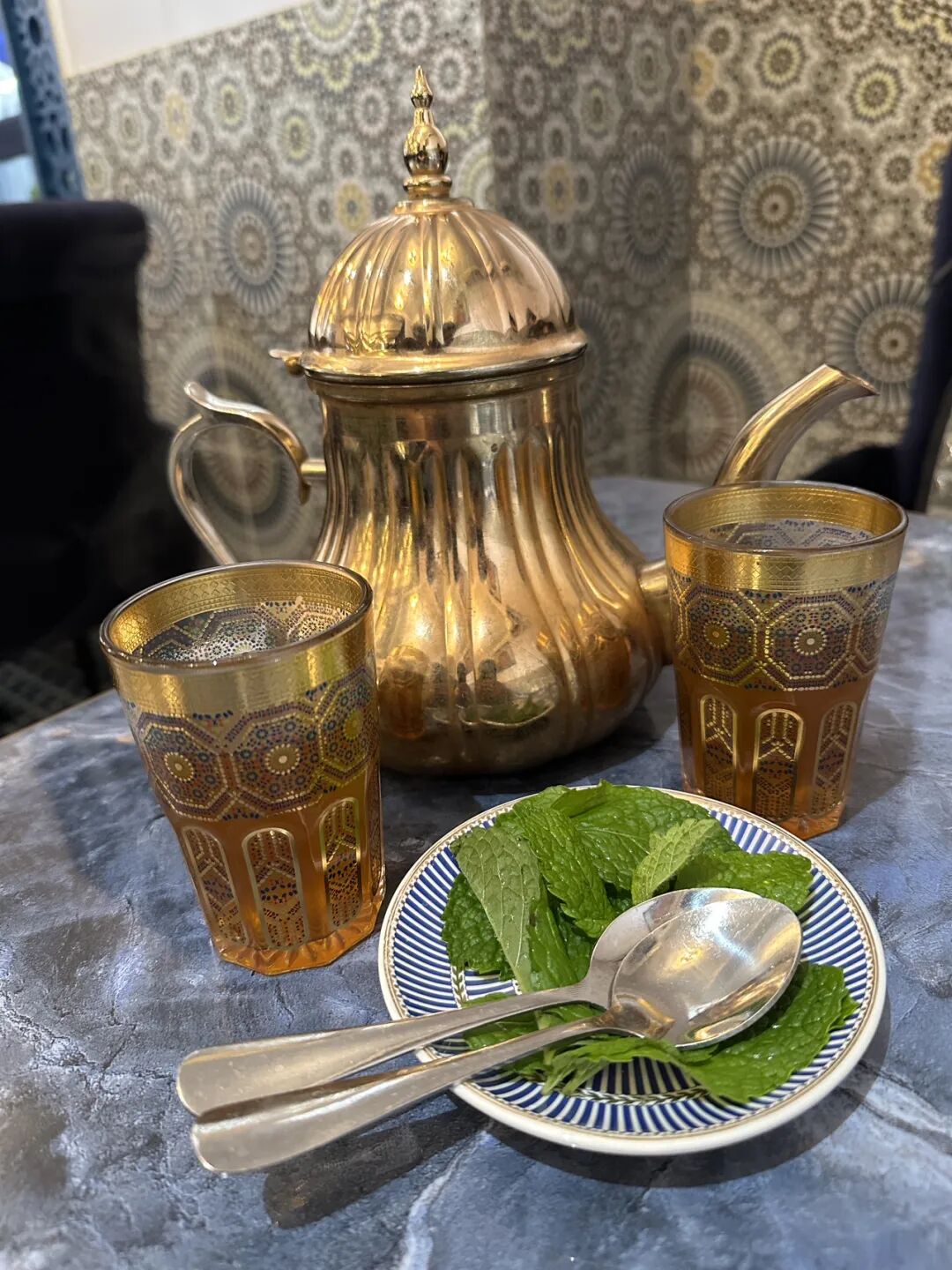
It feels like the number of Africans coming to Xiaobei for trade has bounced back to pre-2020 levels. At 10 PM, the place was brightly lit and buzzing with bustling crowds, plus a ton of new African restaurants have popped up on the streets. By comparison, Guangzhou's Xiaobei seems to attract more African expats, whereas Yiwu has way more Arabs and Turks.
The next morning, I went for zaocha / yum cha (Cantonese morning tea / dim sum) at Yishanggong in Xiaobei. They open as early as 7 AM, but since Xiaobei is an expat neighborhood where people rarely wake up early, breakfast at the foreign-owned spots around here usually doesn't start until 10 or 11 AM.
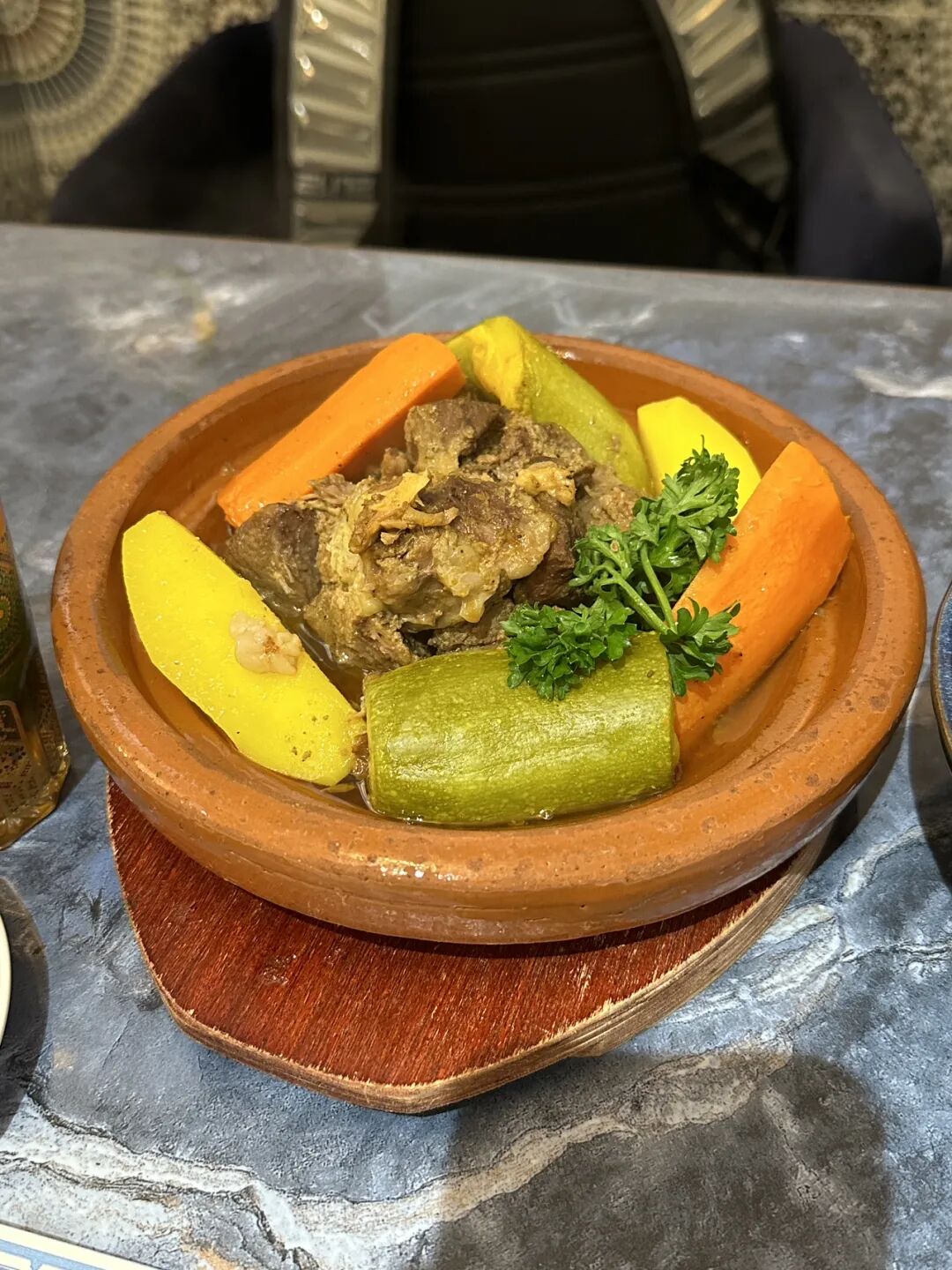
Yishanggong is Guangzhou's third halal Cantonese dim sum spot. The owner is a Hui Muslim from Tianshui, Gansu. At night they serve Korean BBQ and hot pot, but during the day they hire local Cantonese chefs to make dim sum. Their ingredients are more reliable than standard Huimin Restaurant (Muslim restaurant), making it a worry-free eat.
We ordered Pu-erh tea, chicken char siu bao (barbecue chicken buns), crispy red rice noodle rolls, cilantro and beef rice noodle rolls, niurou wan (juicily handmade beef meatballs), sugarcane water water chestnut cake, pan-fried red bean cakes, and salted chicken and dried oyster shredded radish congee. Their portions are way bigger than the ones at Guangzhou Huimin Restaurant and Hong Kong's Ai Qun Centre. Based on our past experience, we ended up over-ordering and were stuffed.
Their stir-fried beef rice noodles were delicious, and the rice noodle rolls had a great texture—you could just slurp them right down, unlike the ones at Hong Kong's Ai Qun which are a bit on the hard side. The savory congee tasted good too; having congee in the morning hits the spot. The red bean cakes were nice and crispy, which was solid. The filling in the char siu bao was way too small though, much worse than the ones at Huimin Restaurant, and the radish cake was on the oily side—Ai Qun Building still does a better job with that.
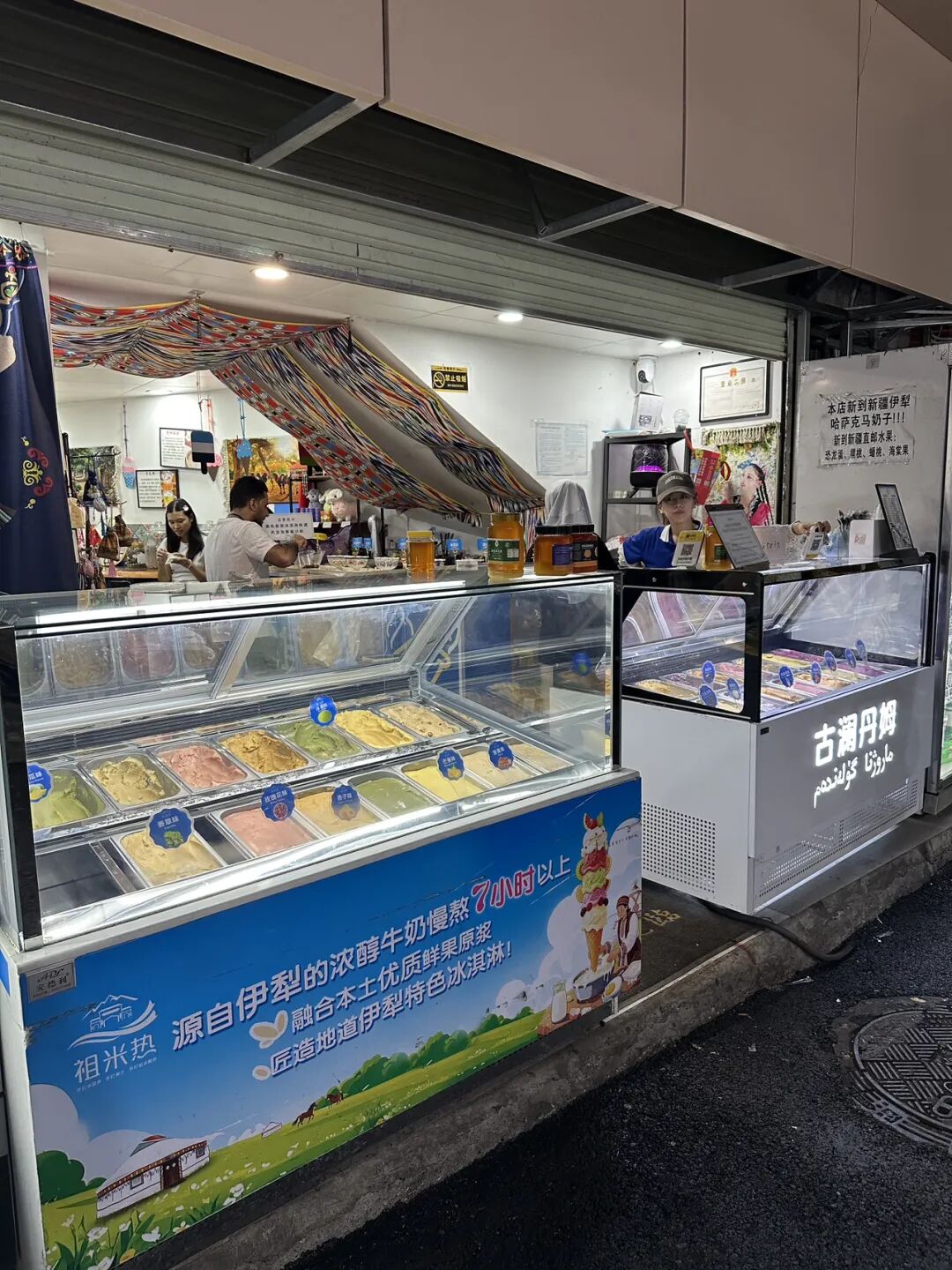
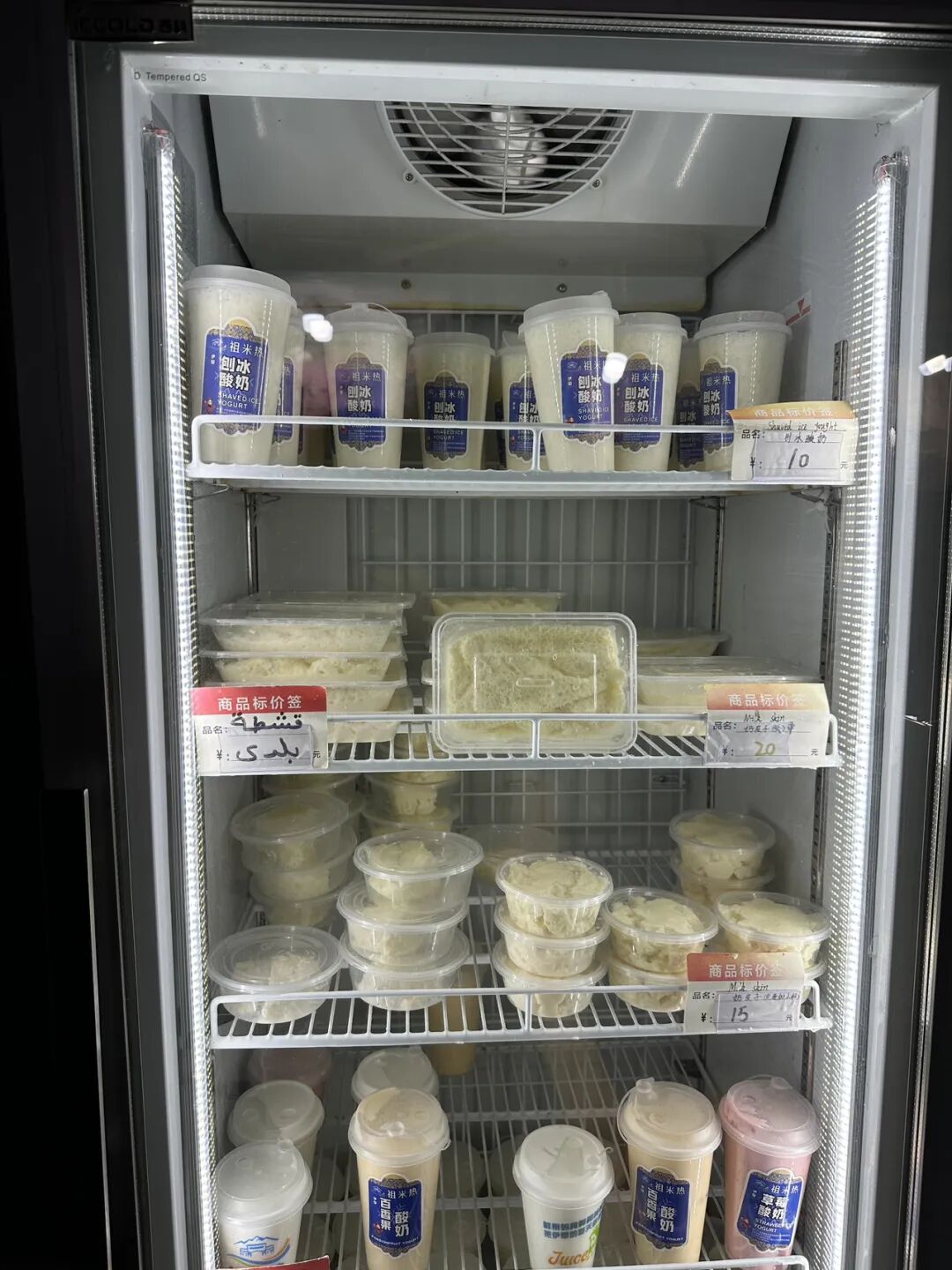
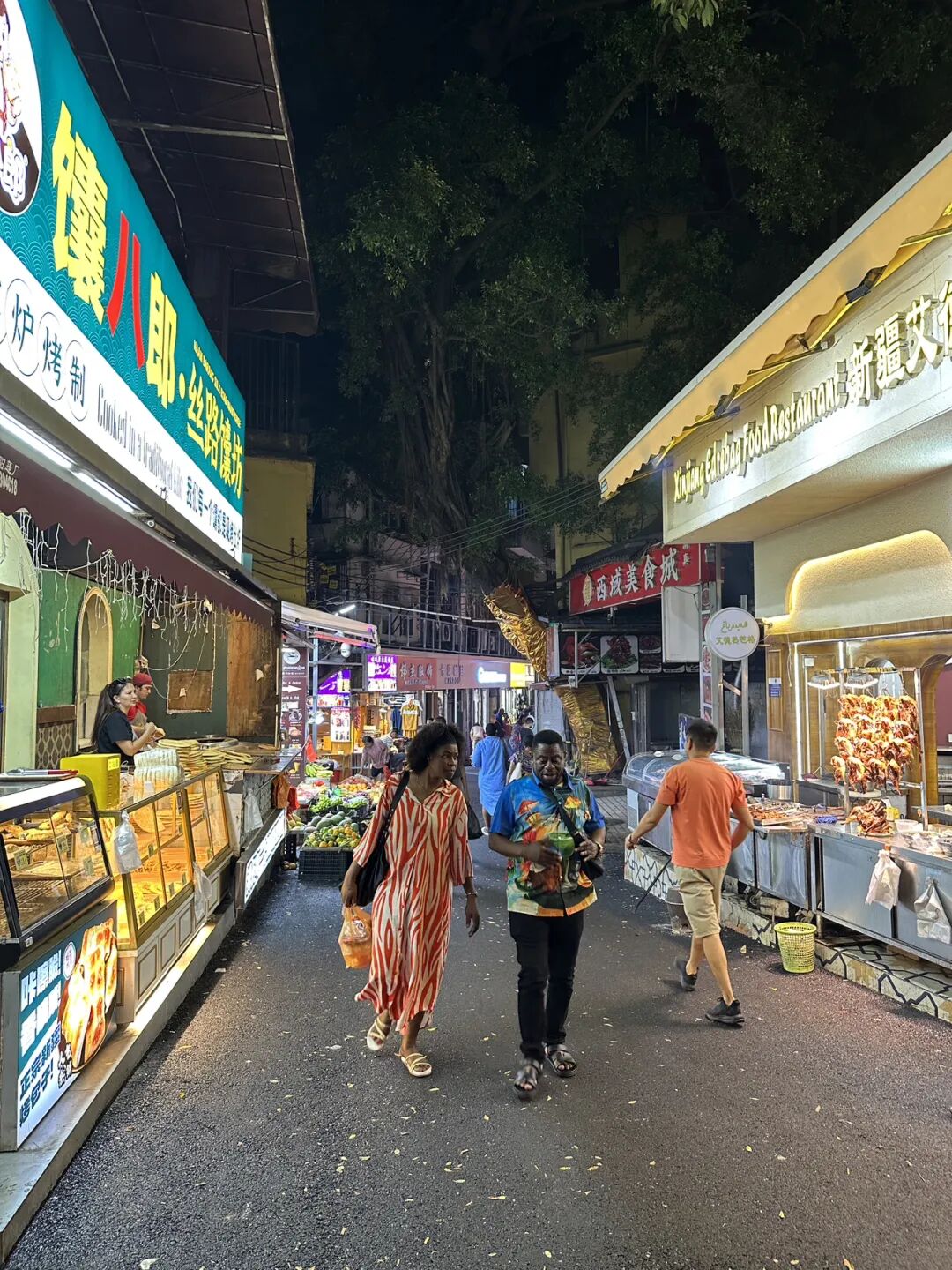
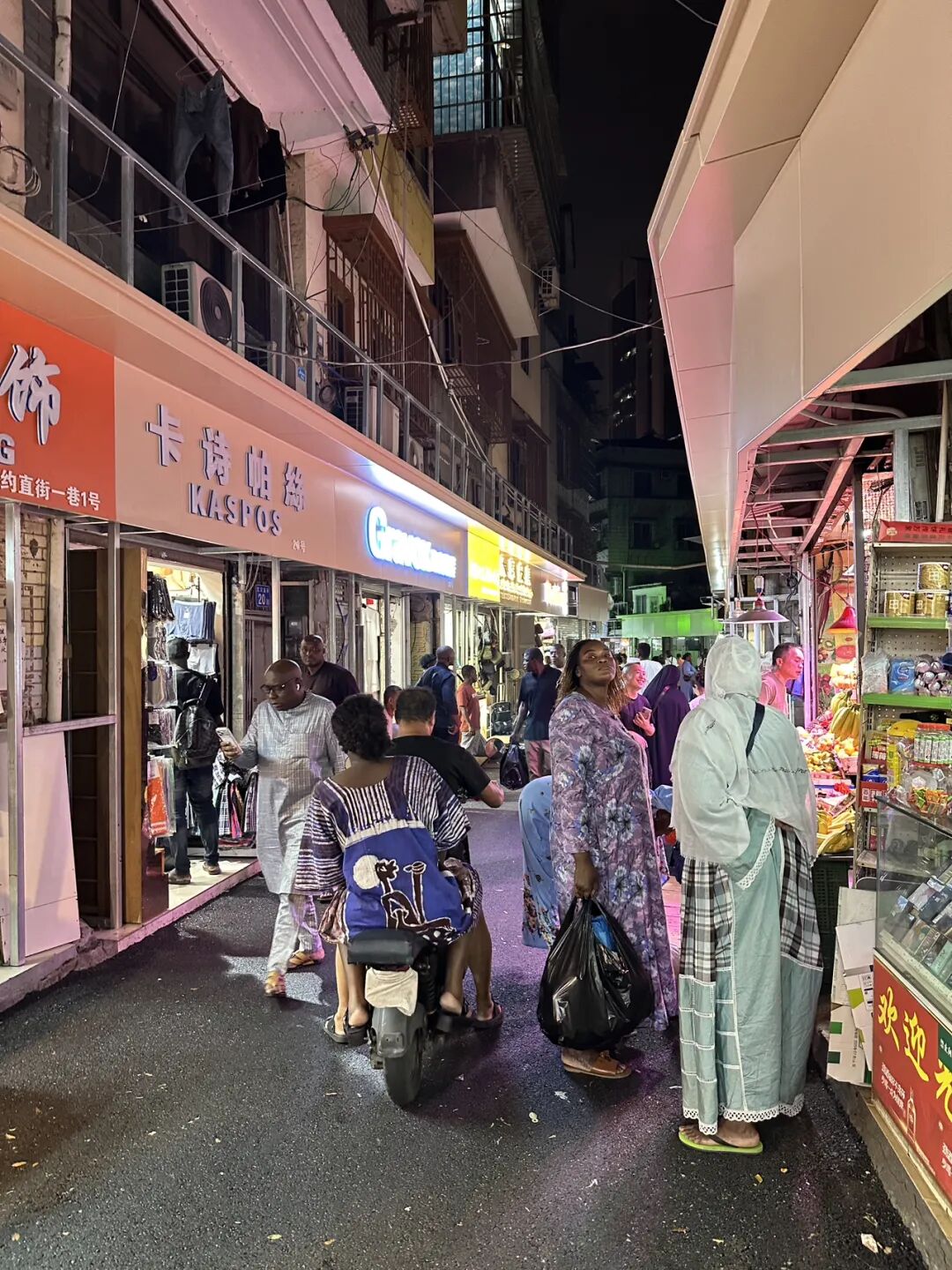
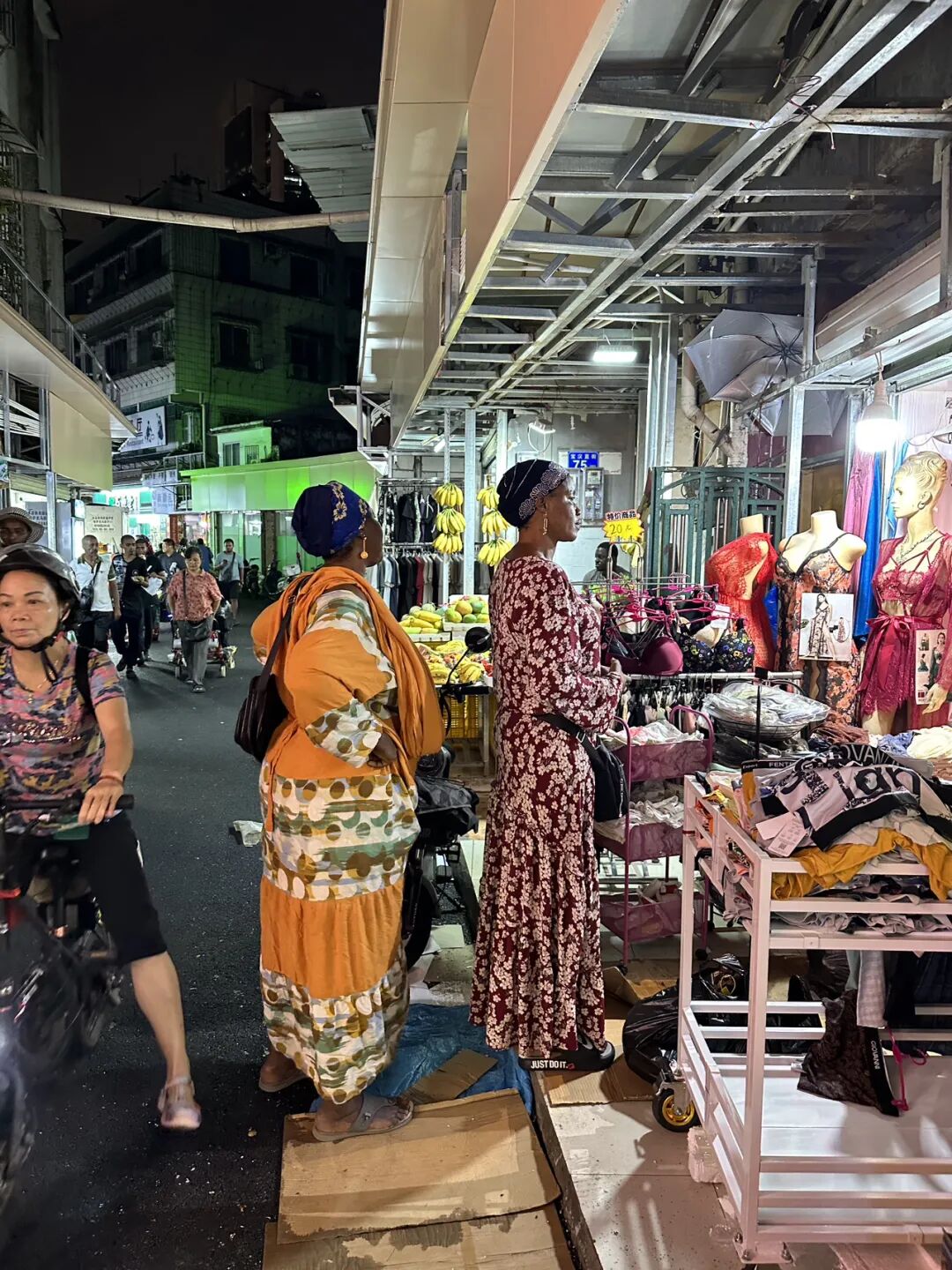
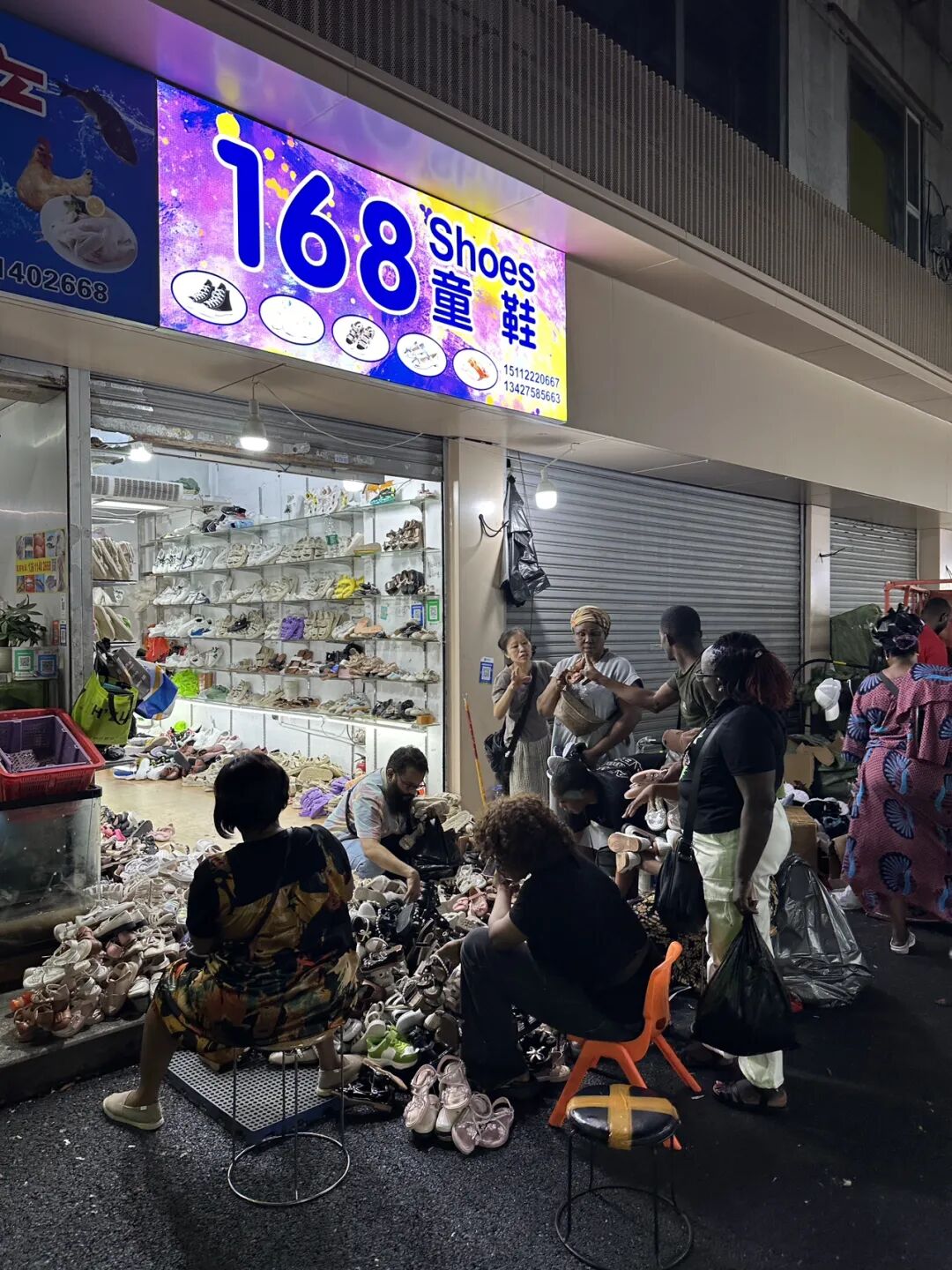
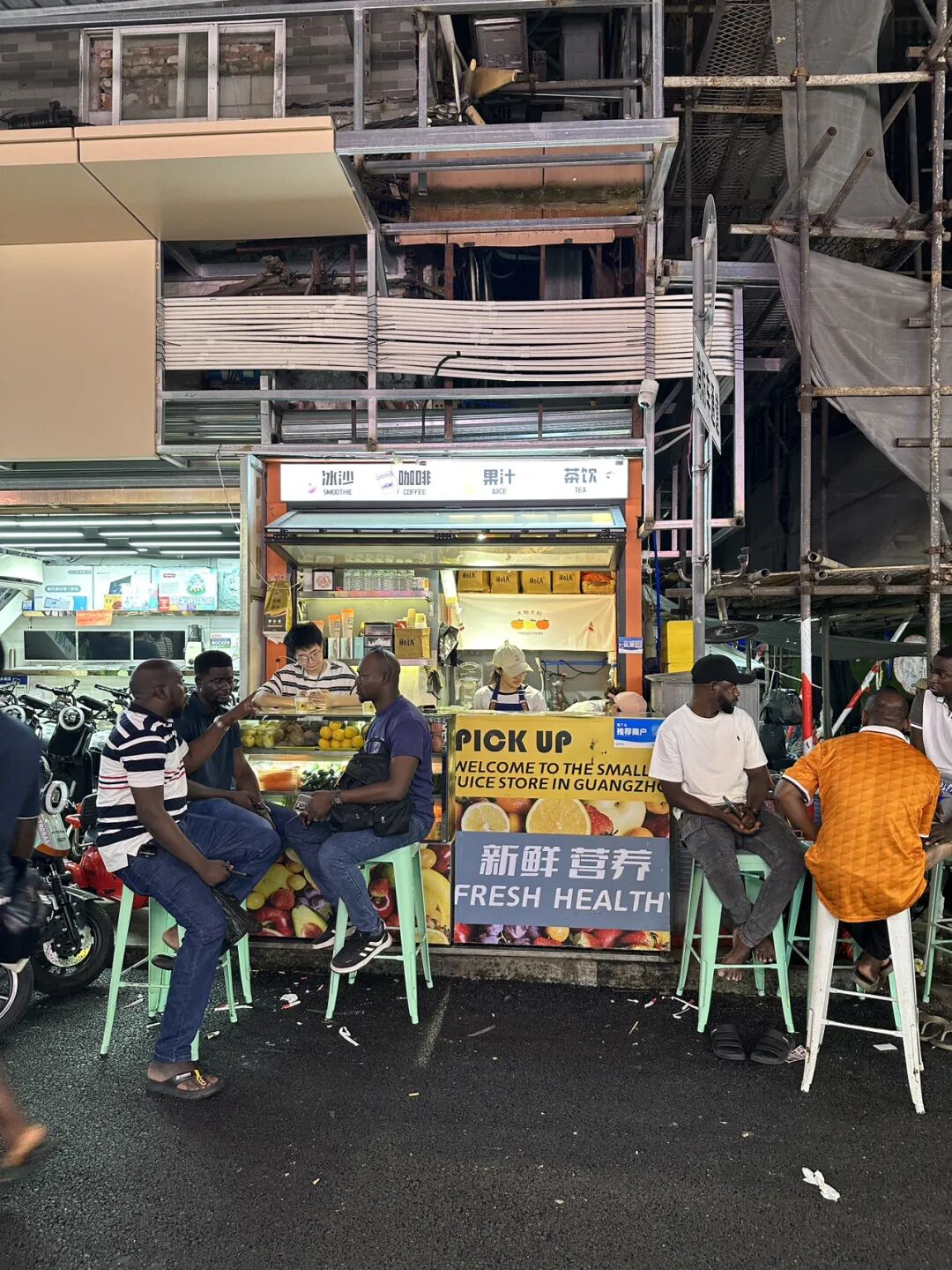
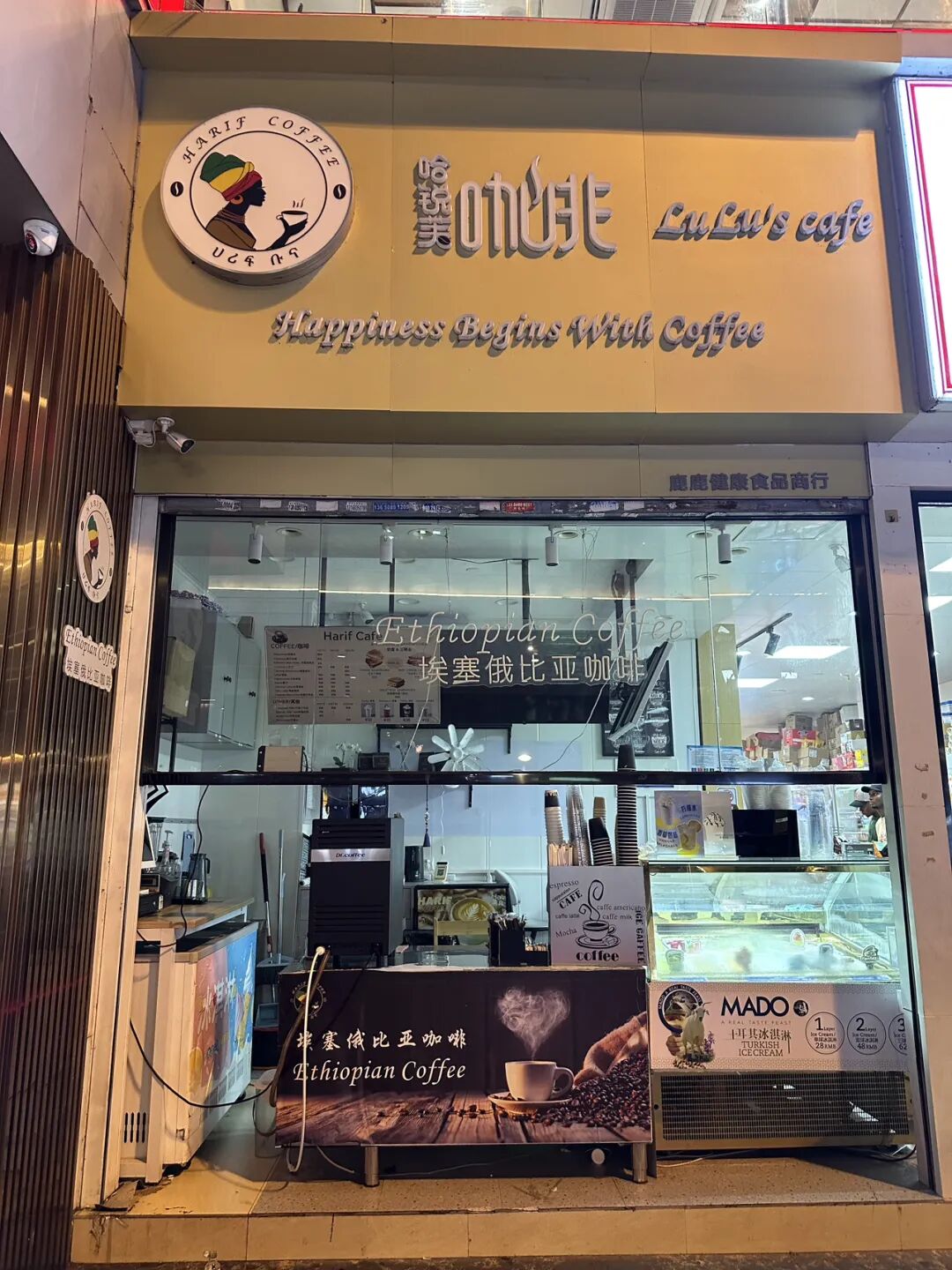
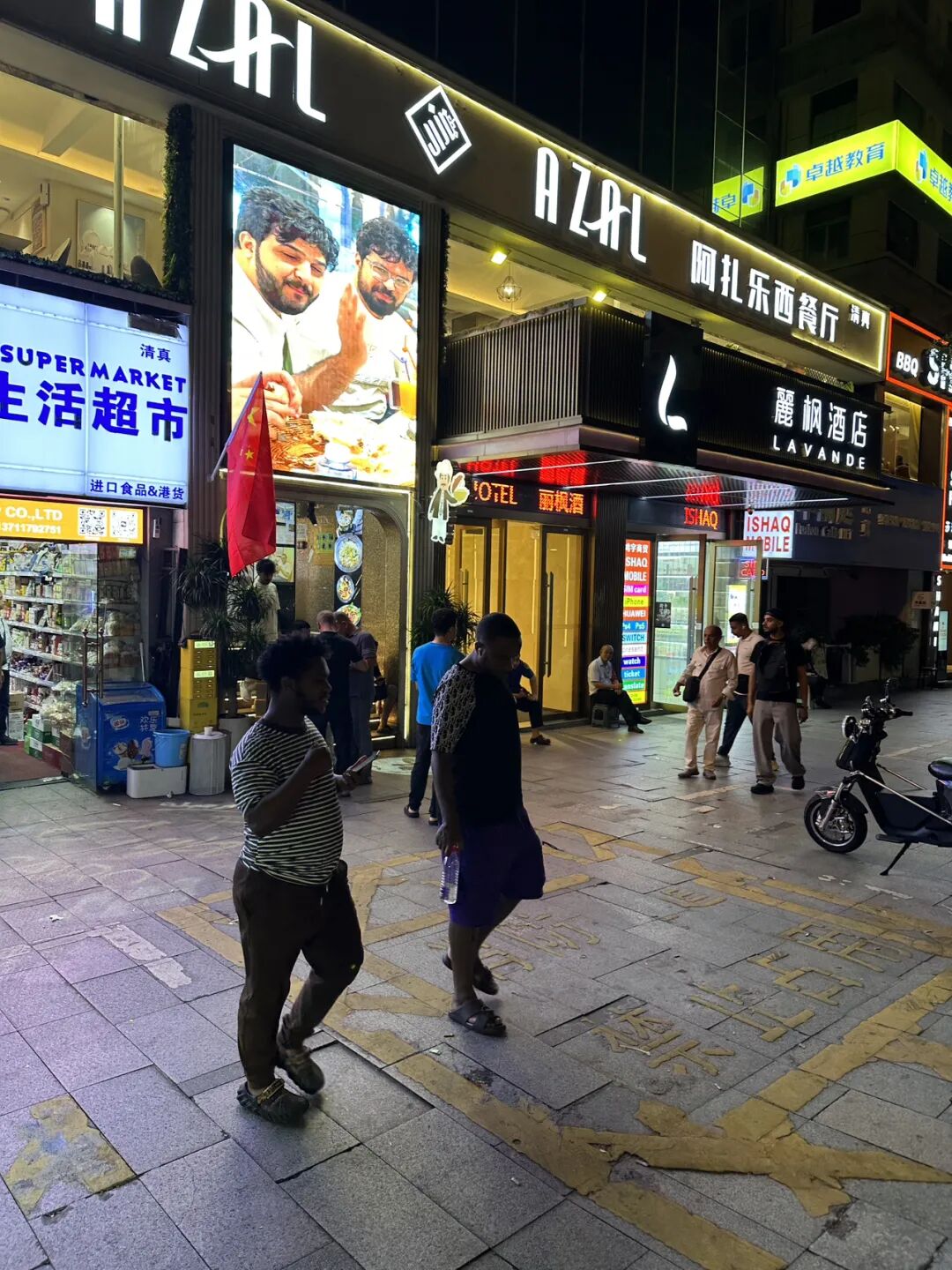
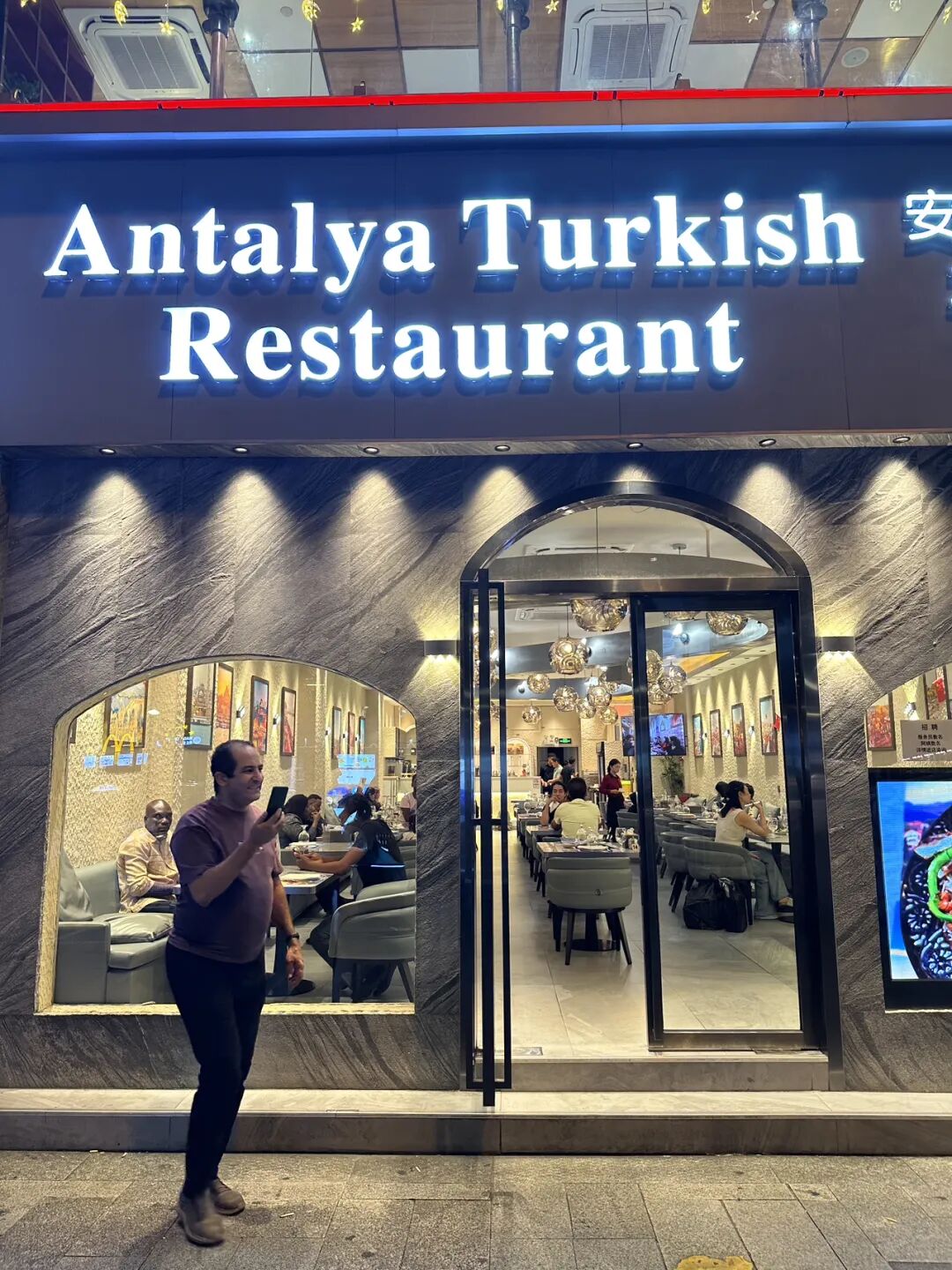
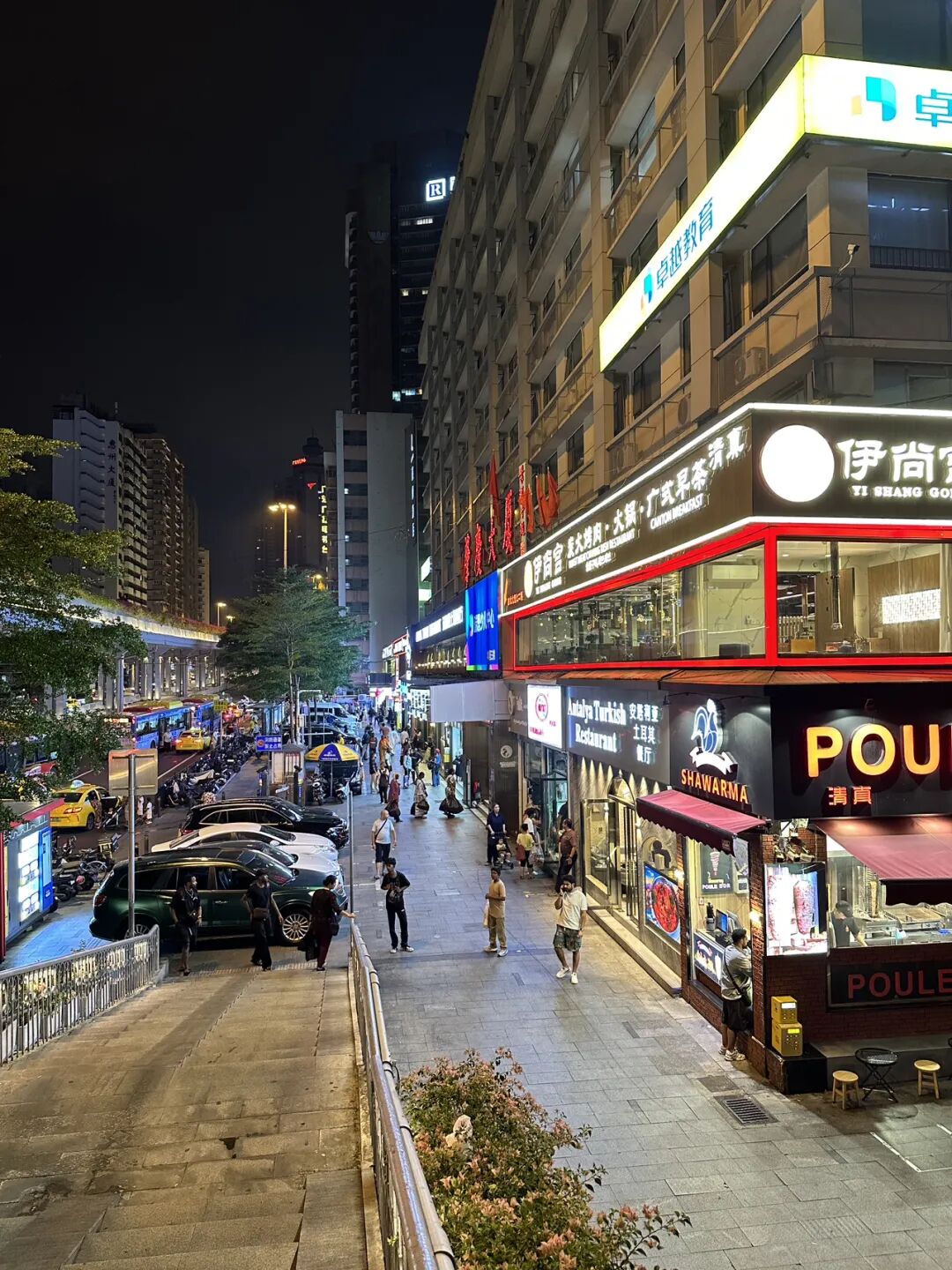
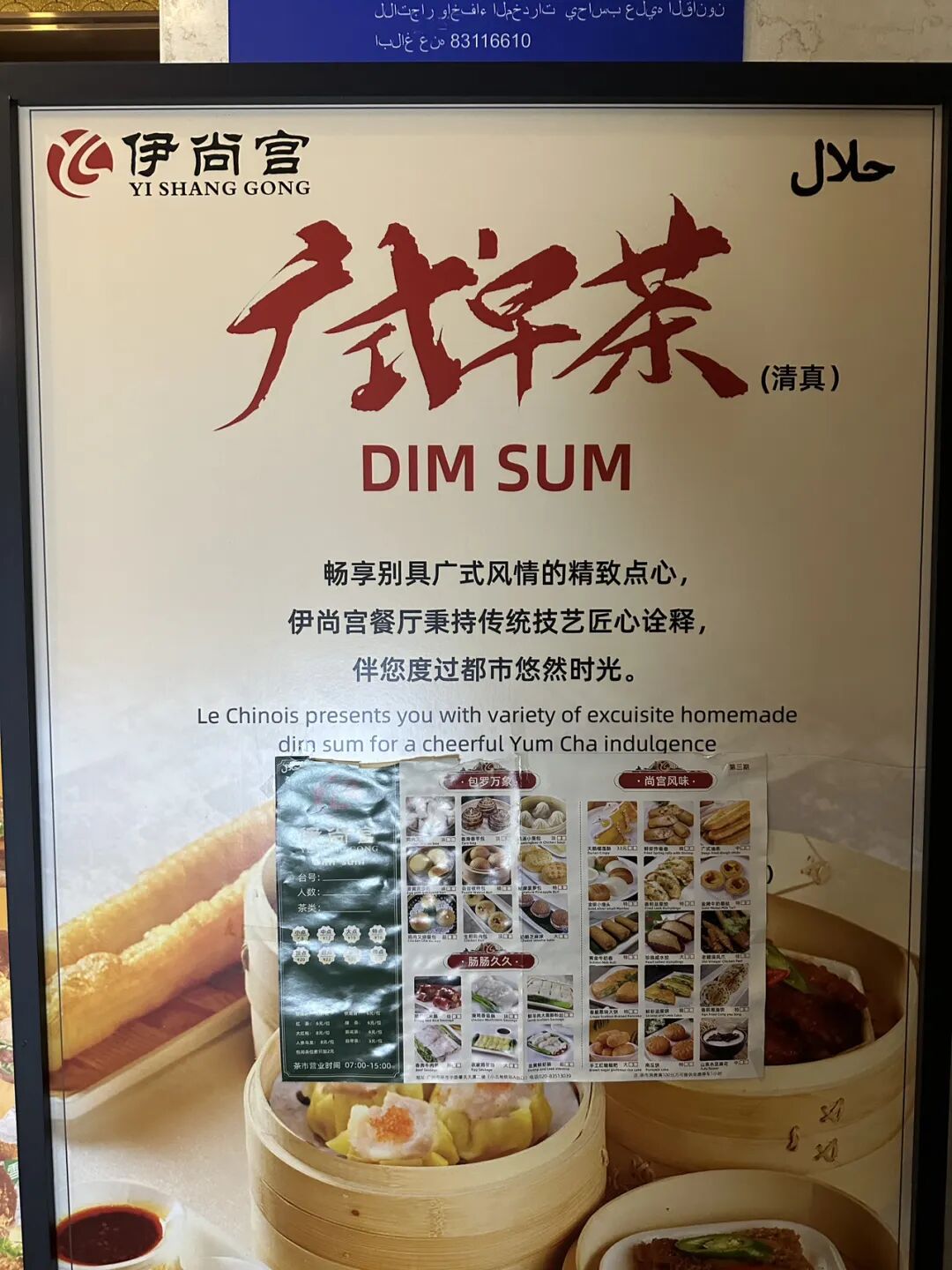
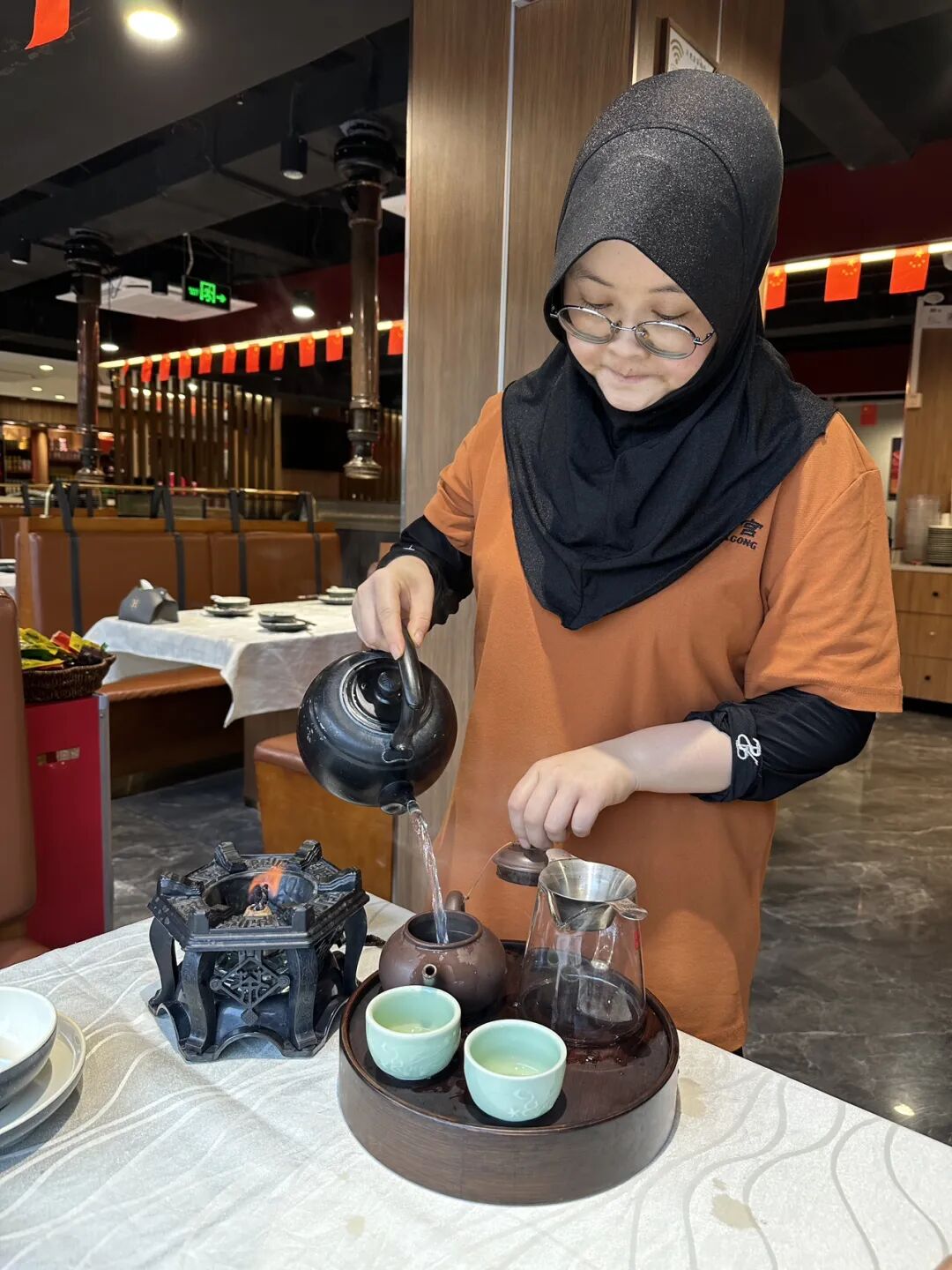
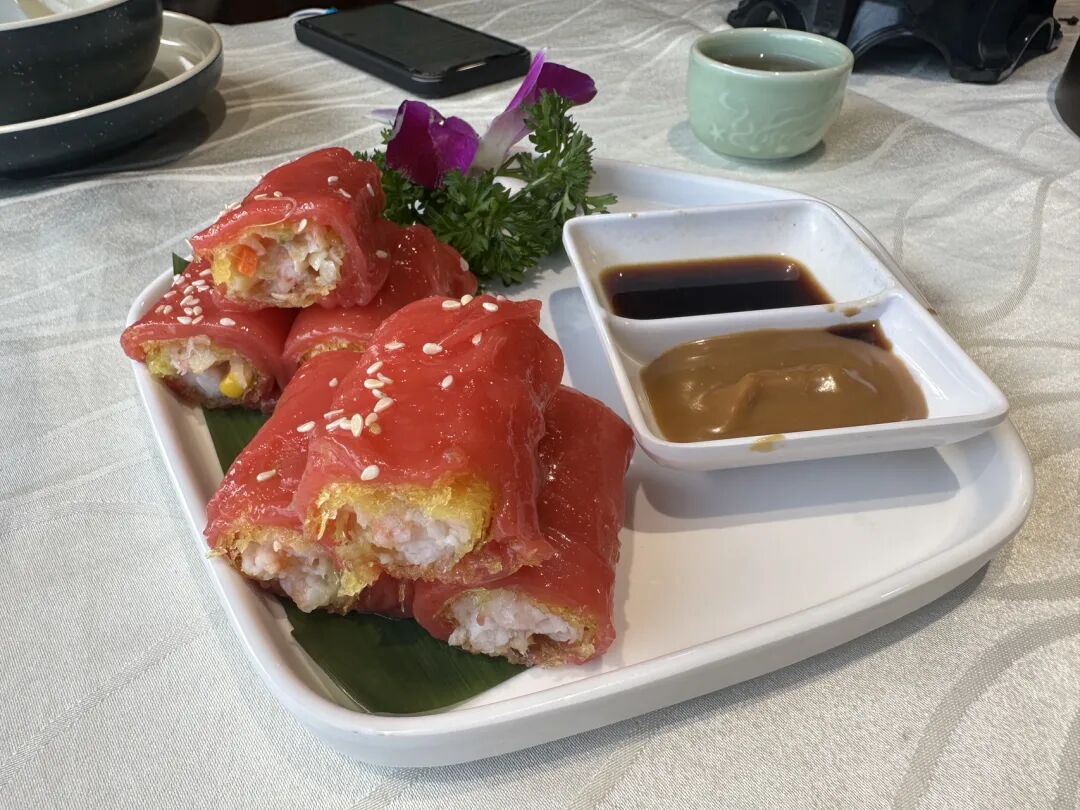
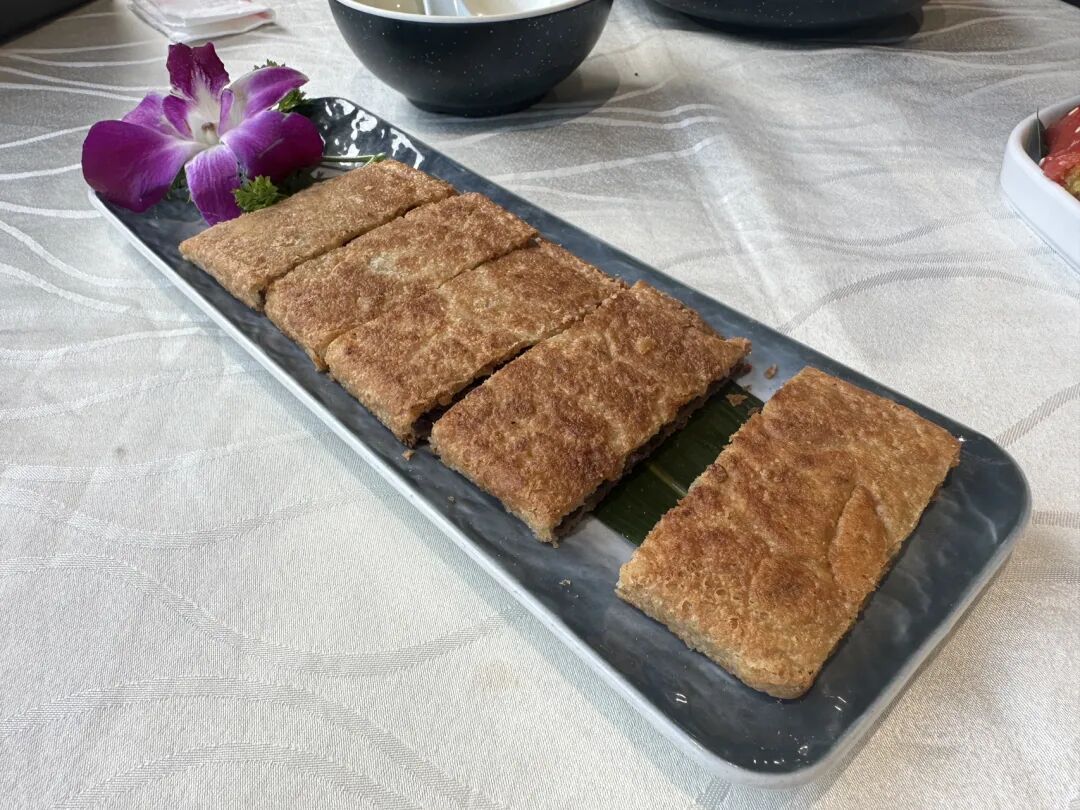
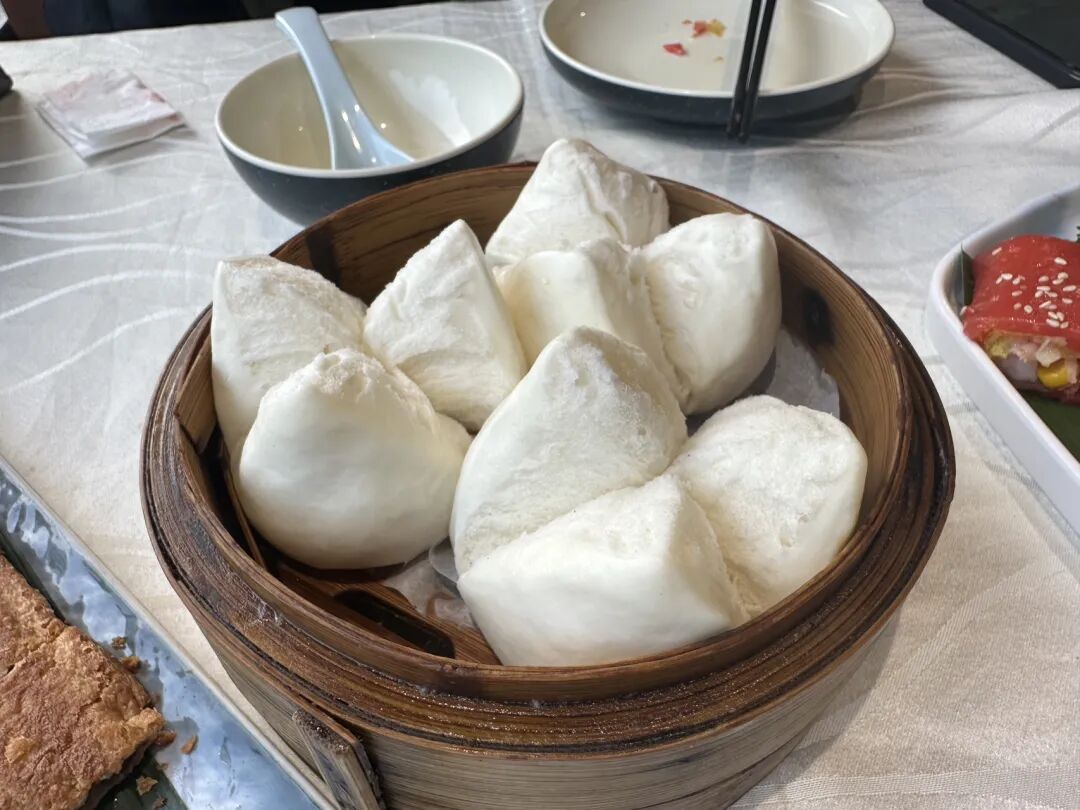
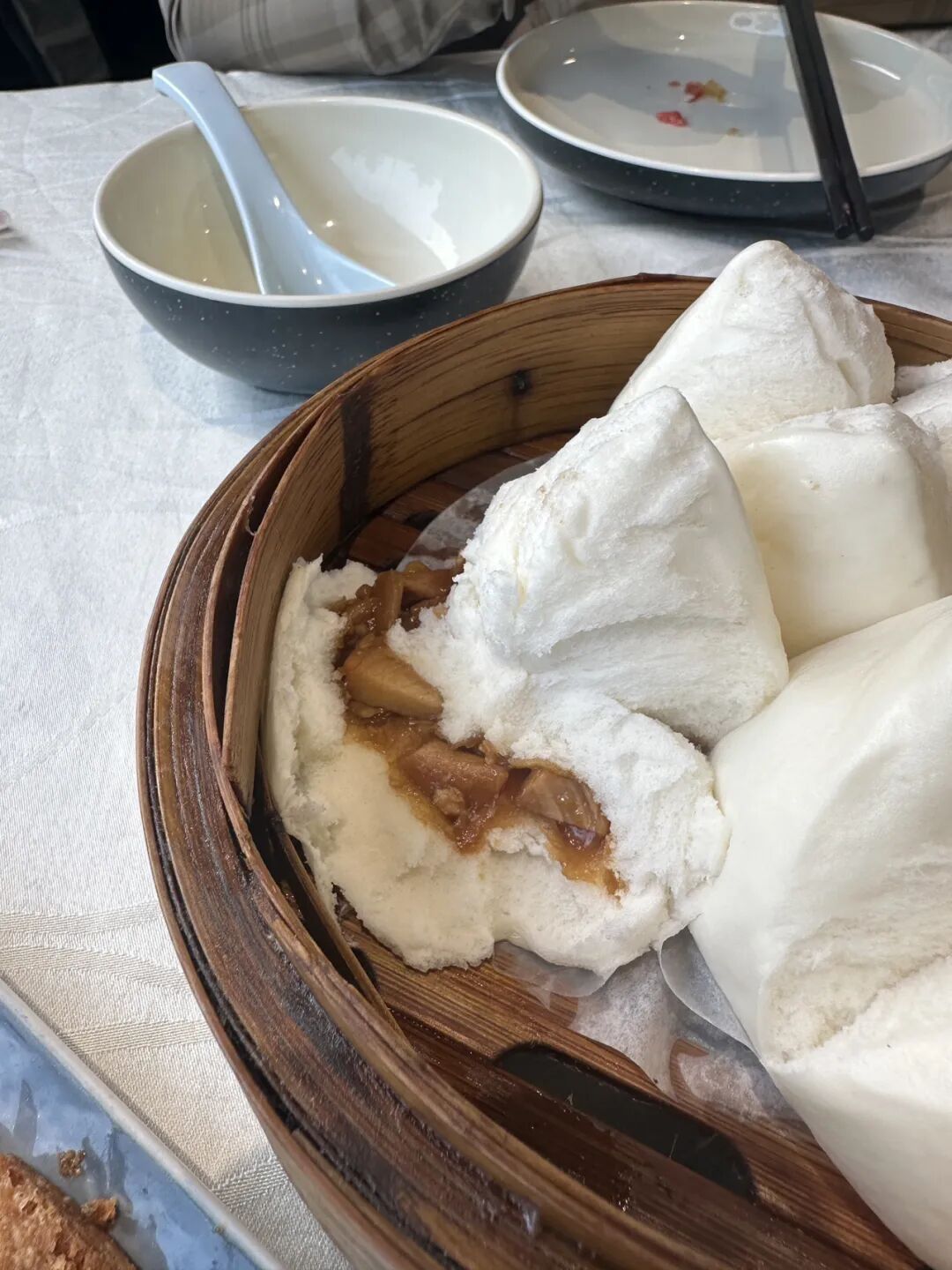
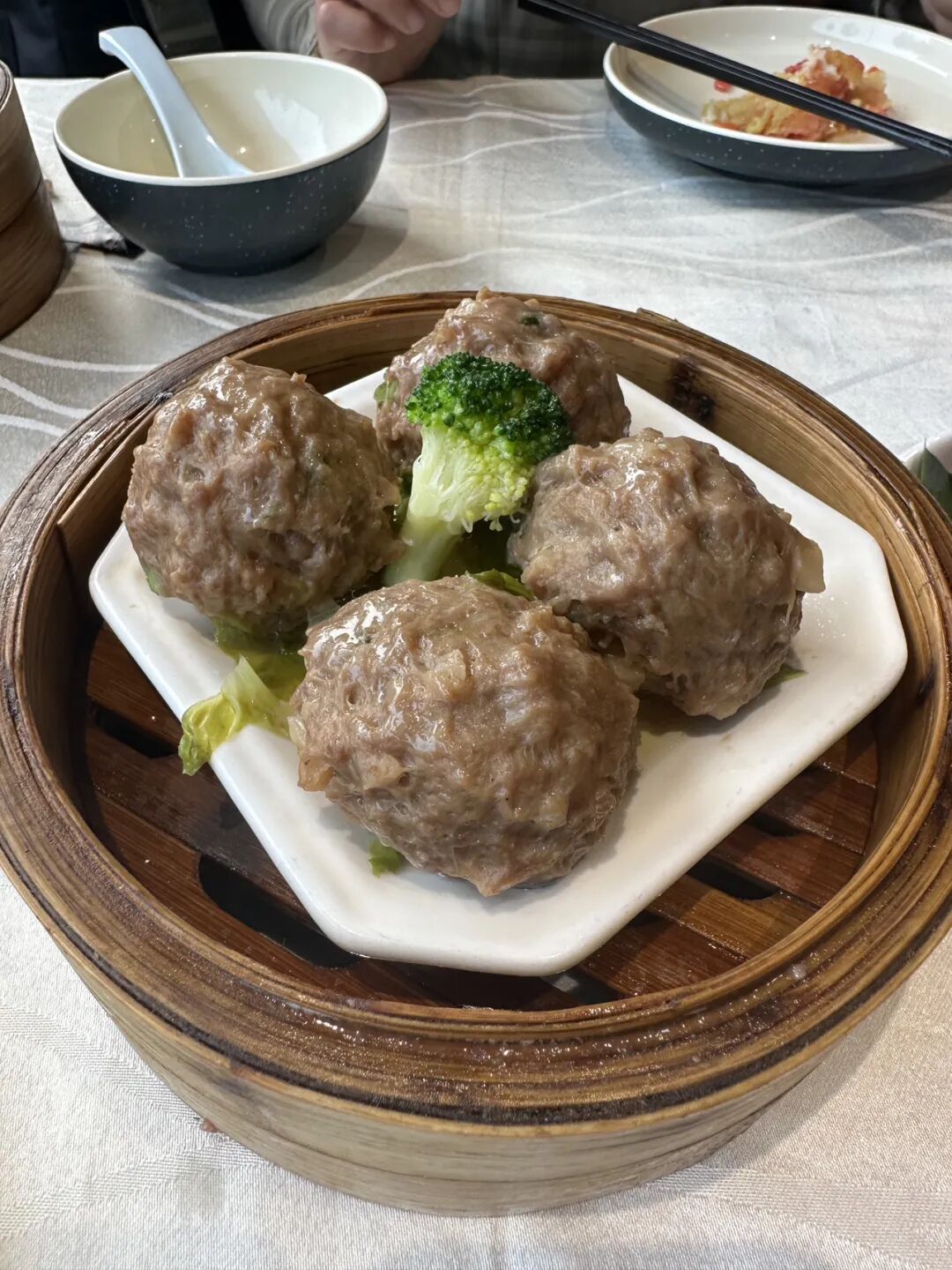
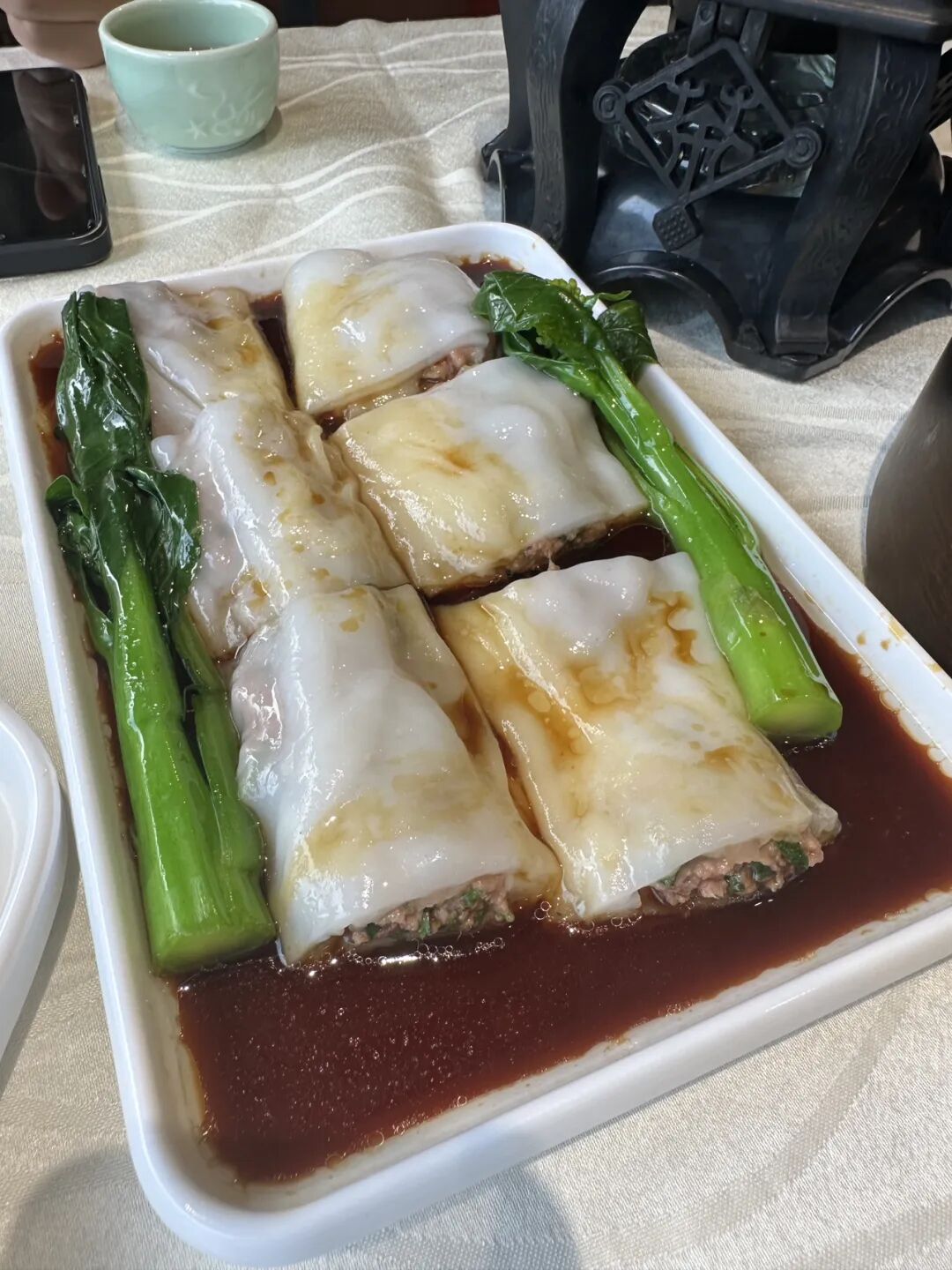
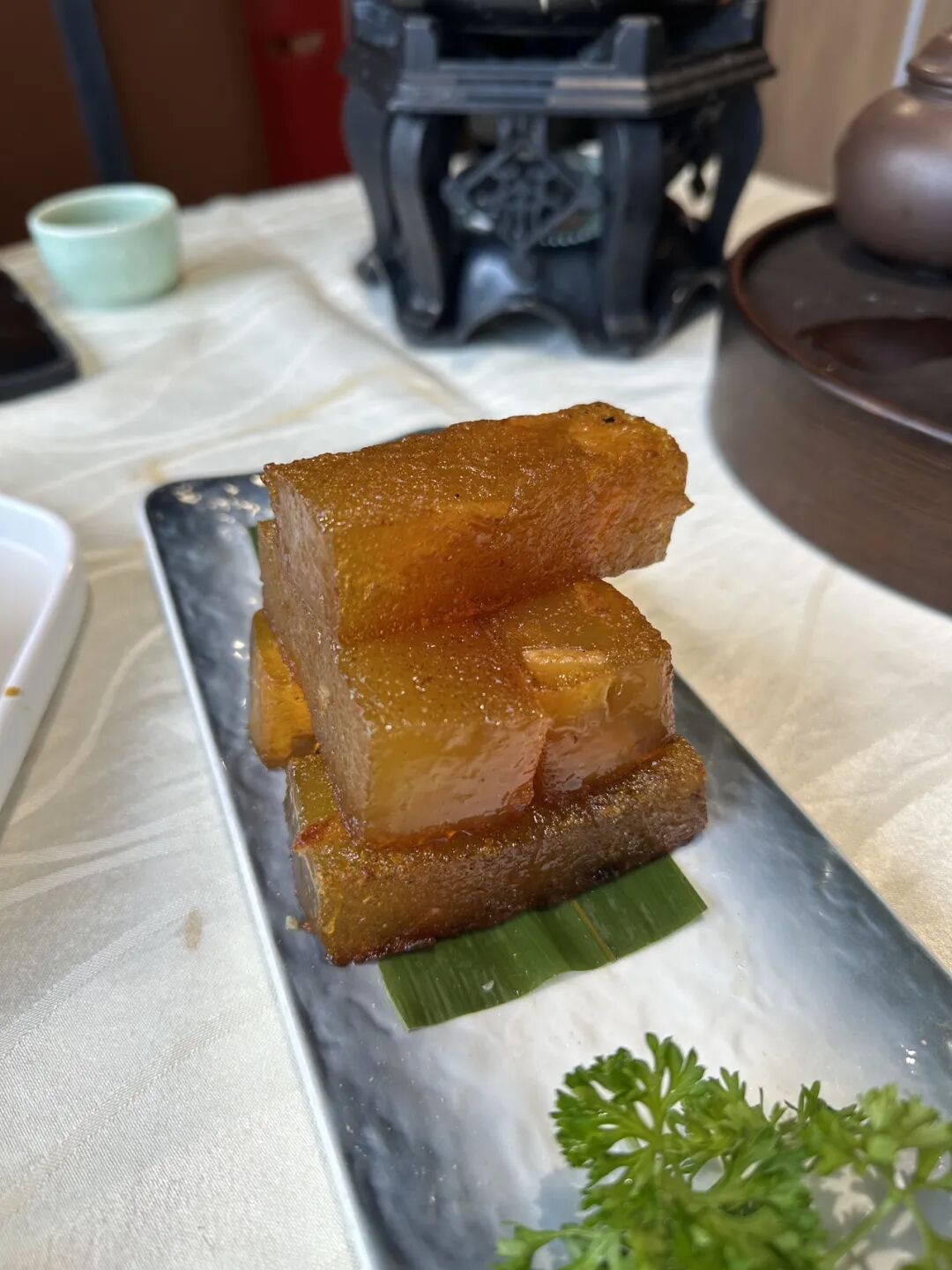
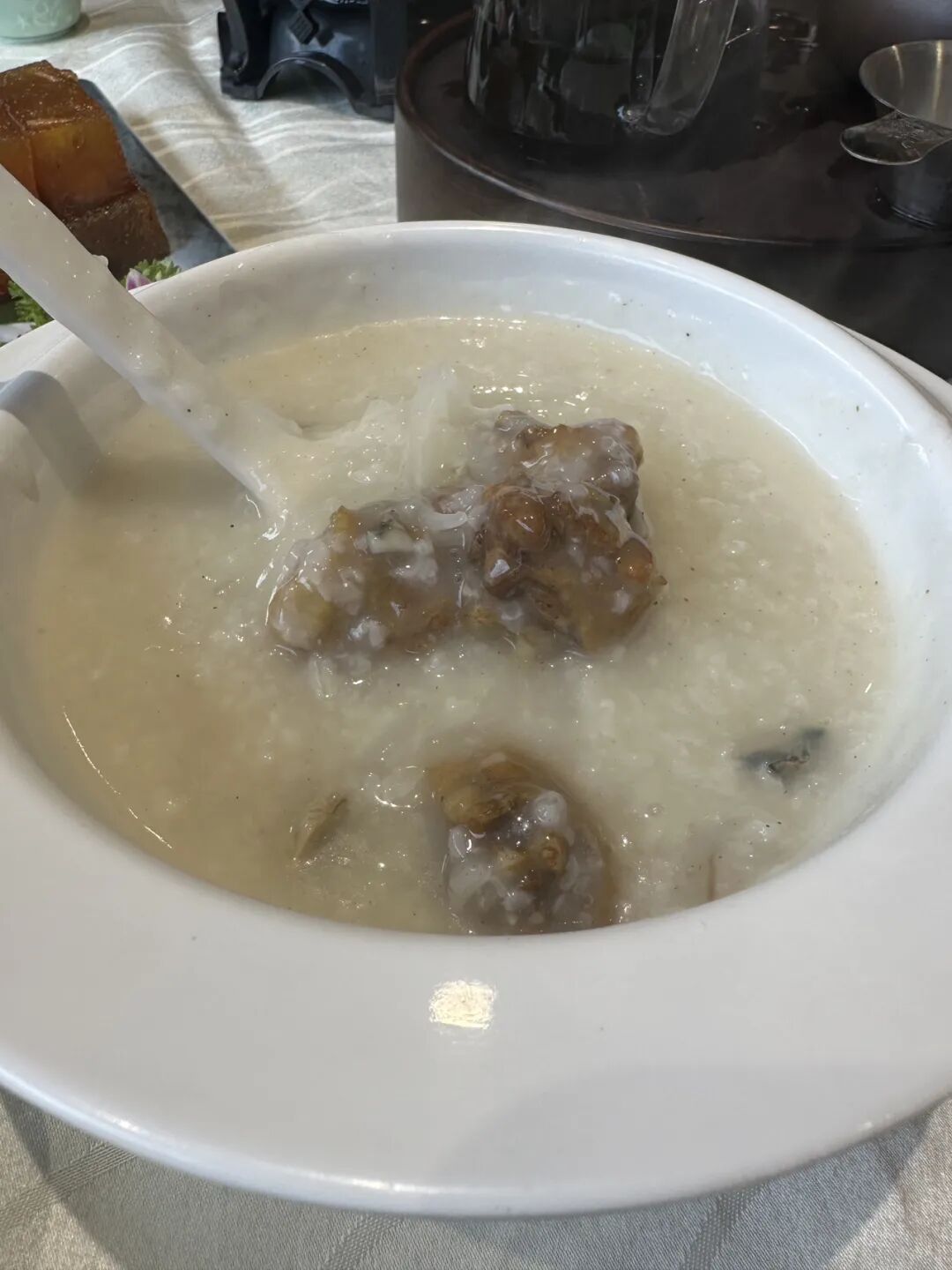 Collapse Read »
Summary: This article explores "Guangzhou Xiaobei's Night and Day: Moroccan Cuisine and Cantonese Morning Tea," perfect for readers interested in Muslim life, halal info, Islamic culture, and Chinese web content.
Guangzhou Xiaobei's Night and Day: Moroccan Cuisine and Cantonese Morning Tea
On the first day of the National Day holiday, I arrived in Guangzhou at night, hopped on the subway straight to Taojin near Xiaobei to grab some Moroccan food, and ordered a lamb tagine, avocado and shrimp salad, and Moroccan mint tea. They have chair seating, floor seating, and outdoor areas. The floor seating area has the best vibe, though the shisha smoking at night was a bit harsh on the lungs.
The tagine was super authentic—the lamb was tender and fall-apart, and the pot was quite deep with a generous portion of meat. The large flatbread served with it was fluffy and light, and soaking it in the meat juices was amazing. The iced mint tea was also great; the Magreb region is literally filled with people drinking mint tea everywhere, especially sitting on the street sipping tea and chatting. It’s too bad their salad used Thousand Island dressing though—how can a legit Middle Eastern spot use Thousand Island? Total laziness.
After eating, I took a night stroll around Xiaobei and grabbed some authentic yogurt shaved ice on Baohan Direct Street.
It feels like the number of Africans coming to Xiaobei for trade has bounced back to pre-2020 levels. At 10 PM, the place was brightly lit and buzzing with bustling crowds, plus a ton of new African restaurants have popped up on the streets. By comparison, Guangzhou's Xiaobei seems to attract more African expats, whereas Yiwu has way more Arabs and Turks.
The next morning, I went for zaocha / yum cha (Cantonese morning tea / dim sum) at Yishanggong in Xiaobei. They open as early as 7 AM, but since Xiaobei is an expat neighborhood where people rarely wake up early, breakfast at the foreign-owned spots around here usually doesn't start until 10 or 11 AM.
Yishanggong is Guangzhou's third halal Cantonese dim sum spot. The owner is a Hui Muslim from Tianshui, Gansu. At night they serve Korean BBQ and hot pot, but during the day they hire local Cantonese chefs to make dim sum. Their ingredients are more reliable than standard Huimin Restaurant (Muslim restaurant), making it a worry-free eat.
We ordered Pu-erh tea, chicken char siu bao (barbecue chicken buns), crispy red rice noodle rolls, cilantro and beef rice noodle rolls, niurou wan (juicily handmade beef meatballs), sugarcane water water chestnut cake, pan-fried red bean cakes, and salted chicken and dried oyster shredded radish congee. Their portions are way bigger than the ones at Guangzhou Huimin Restaurant and Hong Kong's Ai Qun Centre. Based on our past experience, we ended up over-ordering and were stuffed.
Their stir-fried beef rice noodles were delicious, and the rice noodle rolls had a great texture—you could just slurp them right down, unlike the ones at Hong Kong's Ai Qun which are a bit on the hard side. The savory congee tasted good too; having congee in the morning hits the spot. The red bean cakes were nice and crispy, which was solid. The filling in the char siu bao was way too small though, much worse than the ones at Huimin Restaurant, and the radish cake was on the oily side—Ai Qun Building still does a better job with that.
Collapse Read »
Revisiting Haopan Mosque in Guangzhou: Lingnan Islamic Heritage & Hui Muslim History along the Maritime Silk Road
[Internet Repost]
Revisiting Haopan Mosque in Guangzhou: Lingnan Islamic Heritage, Guangzhou Hui Muslims, and Historic Mosques
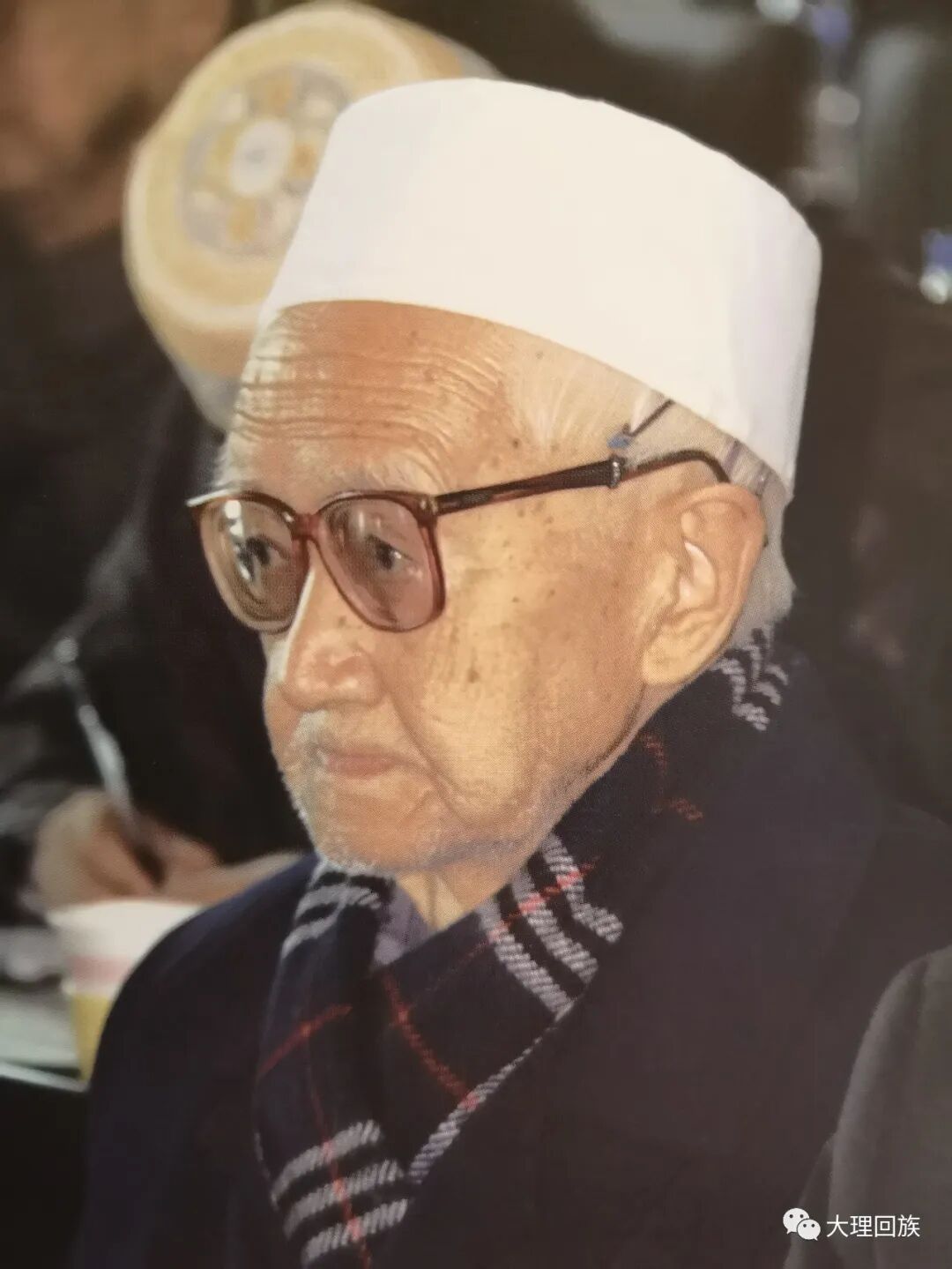
Abstract: This article revisits the historic Haopan Mosque in Guangzhou, highlighting Lingnan Islamic heritage, the history of Guangzhou Hui Muslims, and ancient mosques. It preserves the original paragraph and image sequence, making it a great read for anyone searching for long-tail keywords related to Haopan Mosque, Guangzhou Hui Muslims, and Islamic heritage.
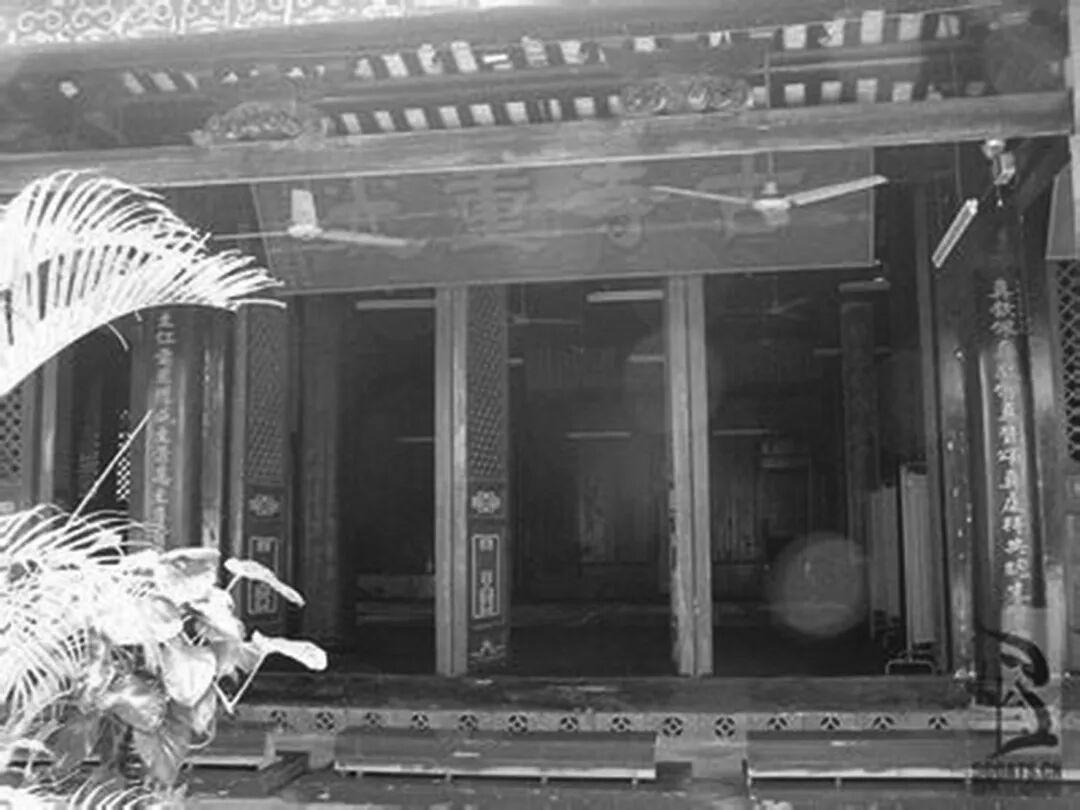
Haji Ma Yunliang, Great-Grandson of Gao Baba (Ma Lianyuan)
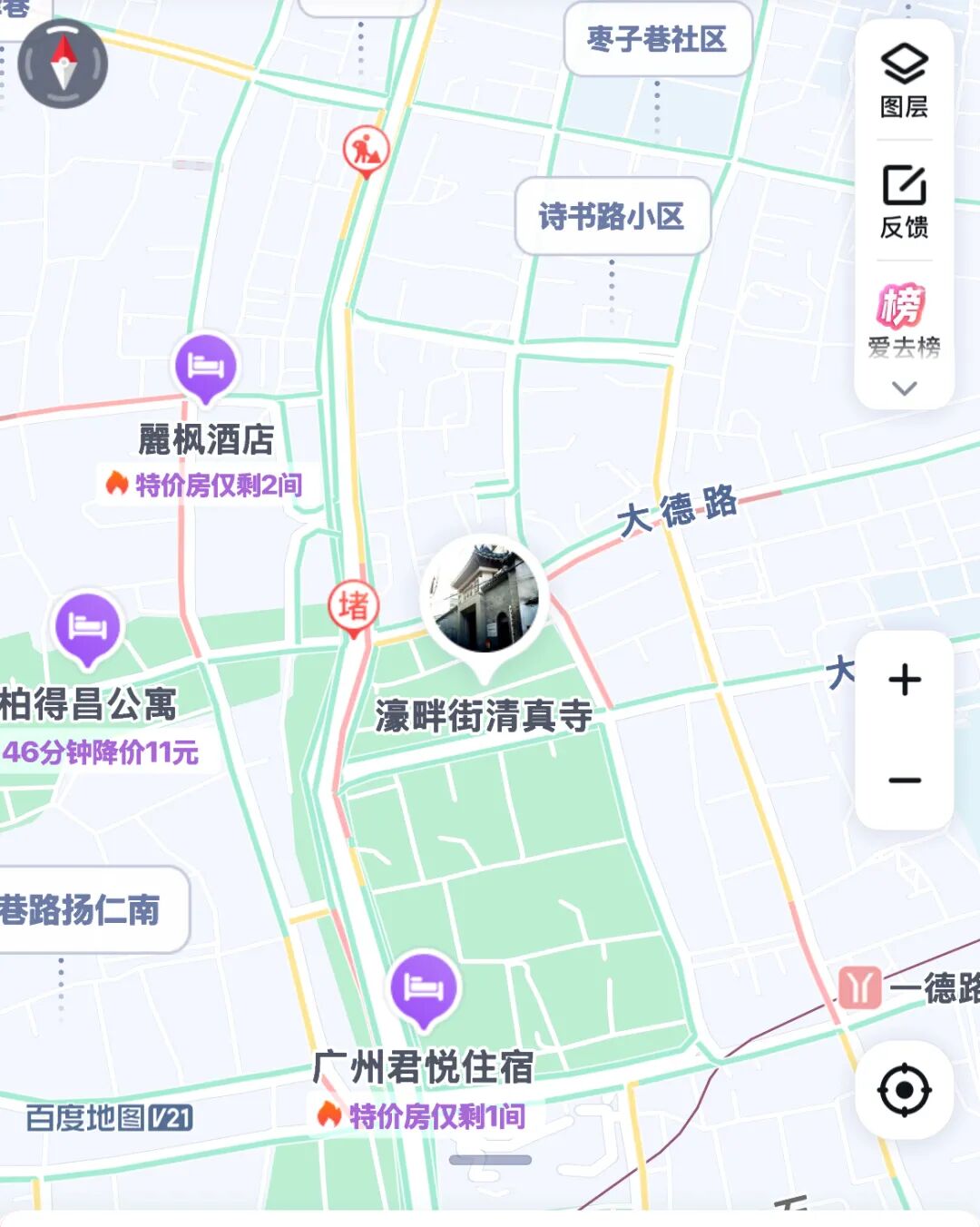
Ma Yunliang
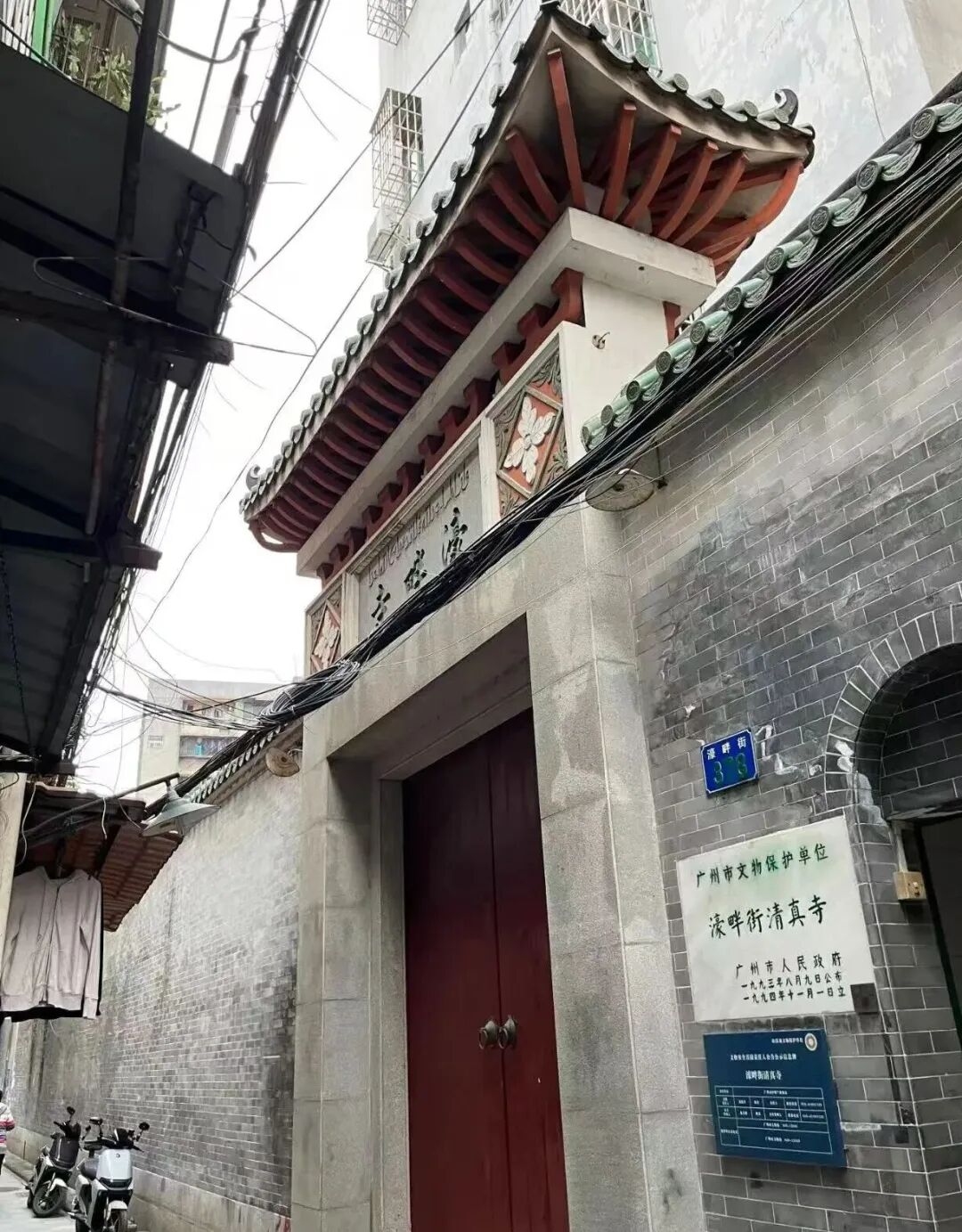
My late father, Grand Imam Ma Ruitu, served as the resident imam at Guangzhou's Haopan Mosque and Nansheng Mosque for 11 years during the Republic of China era. I spent my childhood inside these two masjids. In August 2013, I traveled to Guangzhou to trace my roots and revisit Haopan Mosque.
Haopan Mosque was originally known as the Haopan Street Muslim House of Worship, located on Haopan Street, Tiancheng Road, in the Yuexiu District. The masjid takes its name from the street. It was originally built during the Chenghua reign of the Ming Dynasty (1465–1487 CE), boasting a rich history of over 530 years. Back then, Haopan Mosque was built by more than one thousand Hui Muslim soldiers stationed in Guangzhou. Nansheng Mosque and Dongying Mosque were constructed around the same time. After these Hui Muslim soldiers garrisoned and farmed the land in Guangzhou, settling down for the long haul, they built these three masjids. In the 45th year of the Kangxi reign under the Qing Dynasty (1706 CE), the main halls of Haopan Mosque fell into disrepair. A devout community member named Fu Yunfeng generously stepped in, funding a reconstruction that preserved the original architectural style. Fu was originally of Han Chinese descent; during the Kangxi era, he came to Guangzhou from Jinhua, Zhejiang, to do business. Later, after being rescued from a perilous situation by the imam of Haopan Mosque, he embraced Islam. At the time, a imperial scholar named Wang Zehong presented a plaque inscribed with the characters 'Zhu'en Zhichi' ('Allah's Grace is Close at Hand') to hang inside the masjid in honor of Fu Yunfeng's contributions.
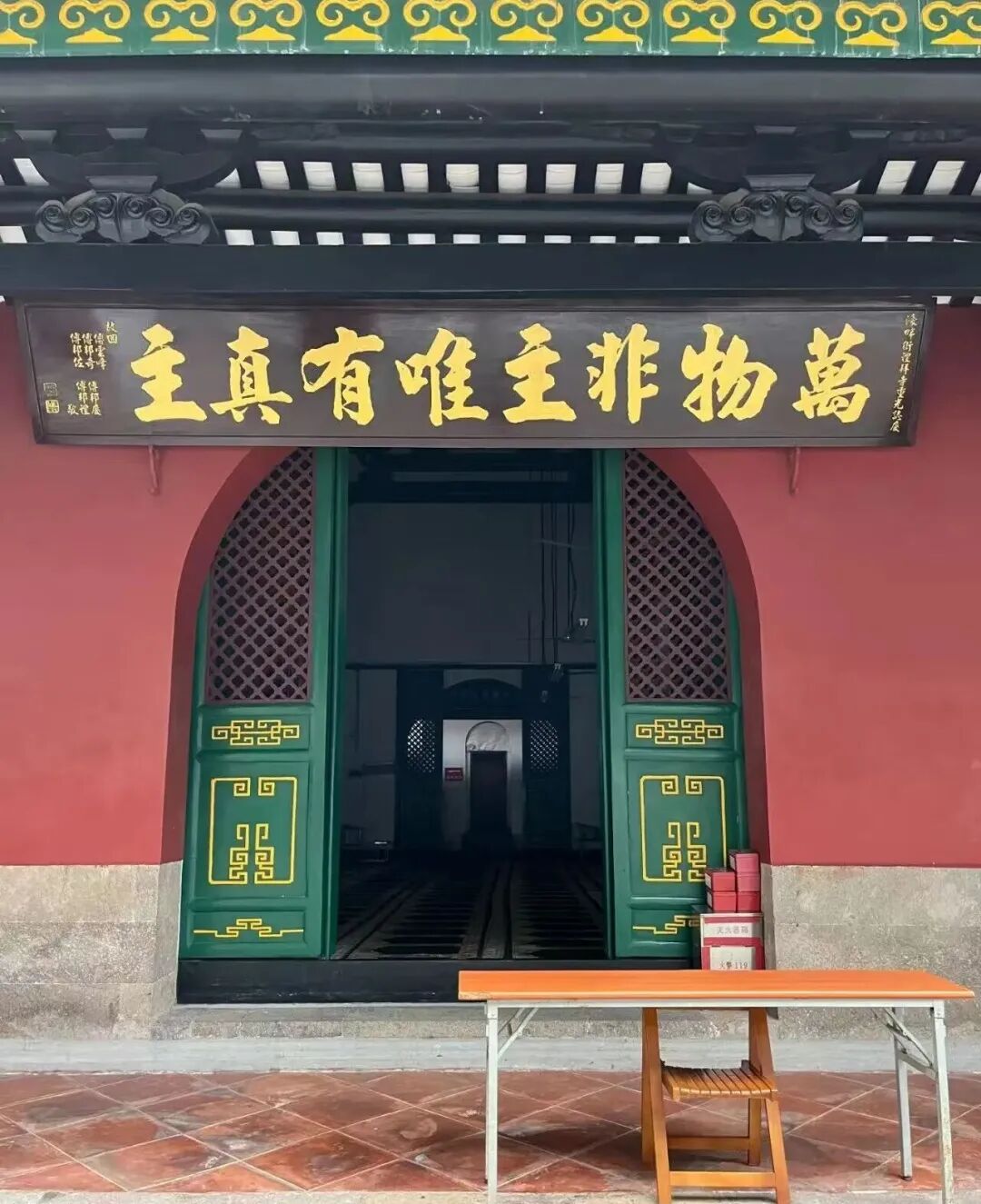
After Liberation, due to historical reasons, religious activities at Haopan Mosque were forced to halt for over 30 years. The masjid buildings were commandeered by factories, the main prayer hall was turned into a warehouse, and the northern and southern wing rooms, the eastern corridor, the moon-sighting tower, and the small attic used as the imam's residence were all completely torn down by the occupying entities to build concrete factory workshops, leaving the masjid completely unrecognizable. It wasn't until after the end of the Cultural Revolution that the state set things right, implementing the policy of freedom of religious belief. Prompted by the demands of local Muslims and representatives from all walks of the Hui community, and driven by the provincial and municipal People's Congresses and Political Consultative Conferences, through multi-party efforts and under the coordination of the Municipal CPPCC, the property rights were finally officially returned to the Guangzhou Islamic Association in March 1993. In 1994, the Municipal Islamic Association established the Haopan Mosque Reconstruction Leading Group, hiring experts to draft a restoration plan. Construction officially began in March 1997 and was completed by the end of that same year. Since then, the ancient masjid has been restored to its former glory and reopened to the public. Having weathered the storms of history and successfully completed its restoration, Haopan Mosque marked a major, joyful milestone for the Muslims of Guangzhou! The masjid has now been listed as a Guangzhou Municipal Key Cultural Relic Protection Unit.
Haopan Mosque faces south, with its back to the north. Its dual red-painted front doors sit at the southeastern corner of the complex; they are usually kept closed, with visitors entering and exiting through a smaller side door to the right of the main entrance. We got off at Tiancheng Road and walked up to the front gate of Haopan Mosque. Standing there, I looked up and saw the three bold, striking calligraphic characters 'Haopan Si' (Haopan Mosque) gleaming on the plaque above the entrance. Wow! After more than 70 years of longing, having finally reached the autumn of my life, I had returned to the place where I spent my childhood playing and studying, separated from it for over seven decades. The sheer emotional wave hitting me was impossible to capture with this worn pen of mine! We took a group photo in front of the gate, then filed through the side door into the courtyard, walking north along the open-air corridor on the eastern side. This corridor is spacious and open, running continuously without dividing walls. A few rooms to the right of the corridor serve as the imam's office, storage room, and restrooms. Bright, airy, and well-ventilated, the corridor is perfectly suited to Guangzhou's sweltering climate. Today, it functions as a multi-purpose space for worshippers to rest, guests to be received, holiday feasts to be held, books and newspapers to be read, and Arabic classes for Guangzhou Muslims to be taught.
I walked around the courtyard, taking everything in. In my memories, Haopan Mosque wasn't quite like this. Traveling through the tunnel of time, my thoughts drifted back to the past.
The old Haopan Mosque had an exquisite, deliberate layout—resembling a traditional southern Chinese garden. Its architecture was stunning, and the surroundings were tranquil and serene. In the flower beds lining the northern, southern, and eastern sides of the courtyard, various plants and flowers were neatly arranged. The moment anyone stepped through the gates, a wave of sweet, soothing floral fragrances would greet them. A small courtyard in the southwestern corner held a towering date palm tree; every year when the dates ripened, bright red dates would carpet the ground. Every morning, the children studying the scriptures at the Islamic primary school would race each other to the small courtyard to pick up and eat the sweet dates, adding endless joy to their school days.
The original northern and southern wings were single-story buildings. The northern wing housed the lecture hall of the Guangzhou Huishuo (Arabic) University, along with the masjid's accounting office, kitchen, dining hall, and restrooms. Outside the northern wing ran a wide, deep drainage ditch—which is actually how Haopan Street got its name. The southern wing served as classrooms, a conference room, and the ablution room for the Islamic primary school.
The historic masjid also featured both a main entrance and a side door. Entering through the side door, you would find a long corridor to the left that faced the main gate, while the side door itself opened directly onto a narrow, elongated courtyard. A wall separated the corridor from the courtyard. Heading north along the courtyard, you’d reach the imam’s residence at the very end. This was a two-story attic. The ground floor contained the imam's bedroom, a small reception parlor, and a modest kitchen. Though small, this parlor was once the exact spot where my father, Grand Imam Ruitu, prepared his lectures, studied scripture, and did his translation and writing while teaching at Haopan Mosque. I can still vividly picture the time when the Indian scholar and contributor to the Islamic journal *Tianfang Xueli* (Islamic Theological Review), Ismail, came to visit. My father engaged him in conversation in fluent Arabic, discussing scripture, theology, and academic matters right there in that room.
As I was completely lost in these fond memories, Imam Zhang of Haopan Mosque rolled his bicycle into the courtyard. Exchanging greetings of 'Salam!', we gathered around a round table to chat. Imam Zhang fetched three sets of treasured classic Han-script Islamic texts (*Hantabu*) from the office for us to browse. All three sets were published using funds raised by Haopan Mosque. One was *Zhengjiao Zhenquan* (The True Explanation of the Orthodox Religion), authored by the early scholar Wang Daiyu and published under the name 'Guangzhou Qingzhentang' (Guangzhou Mosque) in the sixth year of the Jiaqing reign of the Qing Dynasty (1801 CE). Another was *Qingzhen Zhinan* (Guidance to Islam) in nine volumes, written by Ma Zhu Baba of Yunnan and re-engraved and published with funding from Haopan Mosque in the ninth year of the Tongzhi reign of the Qing Dynasty (1871 CE). The third was a posthumous work by Bai Ming'an published in the 20th year of the Republic (1931), titled *Hanyi Guoluogani Haiting Zhenjing* (Selected Han Translations of the Quran). All three scriptures were woodblock editions—exuding a classic, antiquarian charm and holding immense value. Rumor has it that Haopan Mosque also published other texts, such as the *Qingzhensi Sanzi Jing* (Three-Character Classic for Mosques). Over more than 500 years of historical twists and turns, the masjid has made remarkable, widely renowned achievements in spreading the faith, fostering education and nurturing talent, lecturing and preaching, publishing journals, writing books, caring for orphans and the elderly, and running charitable, public-welfare initiatives. Through this, it's easy to see the extraordinary contributions this mosque has made to Islam throughout history and the vital historical role it has played in upholding the faith.
Historically, Haopan Street was home to a community of merchants from Jiangnan (southern China), many of whom were deeply devout Muslims. They frequently made generous donations and charity offerings to the masjid, giving Haopan Mosque abundant property assets and a solid material foundation to run scriptural education programs, publish periodicals, and pursue other public-welfare causes. Starting from the Guangxu reign of the Qing Dynasty onward, Haopan Mosque successively invited numerous renowned domestic and international scholars and imams to come preach and teach, including Mahmud Haji from Turkey, Abdullah from Arabia, the famous Yunnan scripture scholar Ma Fuchu, Imam An Hongliang from Jiangsu, Imam Fa Mingdao from Gansu, local Guangdong imams Yang Zhuping and Chen Shaoqing, Imam Fa Mingde from Gansu, as well as Yunnan imams Ma Yizhi, Tian Jiapei, and Ma Ruitu.
Imam Fa Mingde from Gansu was invited to teach at Haopan Mosque during the late Qing and early Republic era, during which he founded the Guangzhou Huishuo (Arabic) University and served as its first president. In the fourth year of the Republic (1915), Imam Fa resigned to return home. From the ninth to the 14th year of the Republic (1920–1925), Imam Ma Yizhi from Yunnan served as a teacher at Haopan Mosque. Imam Tian Jiapei from Yunnan also taught at the mosque for an unrecorded duration. In the 16th year of the Republic (1927), Grand Imam Ma Ruitu was invited to teach at Haopan Mosque, also serving as the president of Huishuo University. In his early 30s at the time, Imam Ruitu was in the prime of his life and possessed vast scholarship. Every day after the dawn prayer (*Fajr*), after having a light snack and tea, he would begin lecturing on scripture, continuing straight through until noon before taking a break to eat. Once every class finished a section of a subject, students were required to recite and explain it themselves before moving on to the next lesson. Every congregational Friday (*Jumu'ah*) served as a rest day, during which students completed a composition exercise: translating a paragraph from Chinese to Arabic, and another from Arabic to Chinese, which was then handed over to the professor for corrections. On Fridays, students were also required to take turns giving a brief public talk on Quranic teachings and theology right before the sermon (*Khutbah*), giving them practice and helping them hone their preaching skills. In March of the 19th year of the Republic (1930), Haopan Mosque held the graduation ceremony for the first class of Huishuo University, alongside the inauguration ceremony for Mu Anzun.
The Lone Horse of Southern Yunnan — Grand Imam Ma Ruitu
After chatting on the corridor for a couple of hours, we headed over to tour the main prayer hall, accompanied by Imam Zhang. Walking across the courtyard, stepping up the stone steps, and looking up at the plaque reading 'Gujus Chongguang' (The Ancient Mosque Restored to Glory) hanging above the main entrance of the hall, my heart swelled with immense joy. Restored to its original appearance, the main hall looked brand new—a vivid embodiment of the Party and government's implementation of ethnic and religious policies after the smashing of the Gang of Four, winning wholehearted praise from the Muslim community. The main hall is styled after traditional Chinese palatial architecture, wrapped in corridors along the east, north, and south sides, complete with lattice doors that allow worshippers to easily enter and exit. Stepping inside, the floor was covered in clean carpets, while massive chandeliers, electric fans, and sound systems completed the modern setup. Small tables on either side of the *mihrab* (prayer niche) on the western wall held numerous copies of the Quran and other religious texts. In the southwestern corner sat an exceptionally massive cabinet, with the characters 'Haopan Mosque Scripture Cabinet' inscribed on its dual doors. A banner bearing the 'Ninety-Nine Beautiful Names of Allah' hung directly above the prayer niche. Imam Zhang explained that the four massive wooden pillars inside the hall are made of swamp mahogany imported from the Philippines. Other precious building materials were also sourced from overseas, making the craftsmanship and materials remarkably rare compared to other places.
Revisiting Haopan Mosque after more than 70 years has left me with countless unforgettable memories.
(The author is a retired teacher at Weishan County Teachers' Training School, a Haji, and the great-grandson of Ma Lianyuan.) Collapse Read »
Revisiting Haopan Mosque in Guangzhou: Lingnan Islamic Heritage, Guangzhou Hui Muslims, and Historic Mosques
Abstract: This article revisits the historic Haopan Mosque in Guangzhou, highlighting Lingnan Islamic heritage, the history of Guangzhou Hui Muslims, and ancient mosques. It preserves the original paragraph and image sequence, making it a great read for anyone searching for long-tail keywords related to Haopan Mosque, Guangzhou Hui Muslims, and Islamic heritage.
Haji Ma Yunliang, Great-Grandson of Gao Baba (Ma Lianyuan)
Ma Yunliang
My late father, Grand Imam Ma Ruitu, served as the resident imam at Guangzhou's Haopan Mosque and Nansheng Mosque for 11 years during the Republic of China era. I spent my childhood inside these two masjids. In August 2013, I traveled to Guangzhou to trace my roots and revisit Haopan Mosque.
Haopan Mosque was originally known as the Haopan Street Muslim House of Worship, located on Haopan Street, Tiancheng Road, in the Yuexiu District. The masjid takes its name from the street. It was originally built during the Chenghua reign of the Ming Dynasty (1465–1487 CE), boasting a rich history of over 530 years. Back then, Haopan Mosque was built by more than one thousand Hui Muslim soldiers stationed in Guangzhou. Nansheng Mosque and Dongying Mosque were constructed around the same time. After these Hui Muslim soldiers garrisoned and farmed the land in Guangzhou, settling down for the long haul, they built these three masjids. In the 45th year of the Kangxi reign under the Qing Dynasty (1706 CE), the main halls of Haopan Mosque fell into disrepair. A devout community member named Fu Yunfeng generously stepped in, funding a reconstruction that preserved the original architectural style. Fu was originally of Han Chinese descent; during the Kangxi era, he came to Guangzhou from Jinhua, Zhejiang, to do business. Later, after being rescued from a perilous situation by the imam of Haopan Mosque, he embraced Islam. At the time, a imperial scholar named Wang Zehong presented a plaque inscribed with the characters 'Zhu'en Zhichi' ('Allah's Grace is Close at Hand') to hang inside the masjid in honor of Fu Yunfeng's contributions.
After Liberation, due to historical reasons, religious activities at Haopan Mosque were forced to halt for over 30 years. The masjid buildings were commandeered by factories, the main prayer hall was turned into a warehouse, and the northern and southern wing rooms, the eastern corridor, the moon-sighting tower, and the small attic used as the imam's residence were all completely torn down by the occupying entities to build concrete factory workshops, leaving the masjid completely unrecognizable. It wasn't until after the end of the Cultural Revolution that the state set things right, implementing the policy of freedom of religious belief. Prompted by the demands of local Muslims and representatives from all walks of the Hui community, and driven by the provincial and municipal People's Congresses and Political Consultative Conferences, through multi-party efforts and under the coordination of the Municipal CPPCC, the property rights were finally officially returned to the Guangzhou Islamic Association in March 1993. In 1994, the Municipal Islamic Association established the Haopan Mosque Reconstruction Leading Group, hiring experts to draft a restoration plan. Construction officially began in March 1997 and was completed by the end of that same year. Since then, the ancient masjid has been restored to its former glory and reopened to the public. Having weathered the storms of history and successfully completed its restoration, Haopan Mosque marked a major, joyful milestone for the Muslims of Guangzhou! The masjid has now been listed as a Guangzhou Municipal Key Cultural Relic Protection Unit.
Haopan Mosque faces south, with its back to the north. Its dual red-painted front doors sit at the southeastern corner of the complex; they are usually kept closed, with visitors entering and exiting through a smaller side door to the right of the main entrance. We got off at Tiancheng Road and walked up to the front gate of Haopan Mosque. Standing there, I looked up and saw the three bold, striking calligraphic characters 'Haopan Si' (Haopan Mosque) gleaming on the plaque above the entrance. Wow! After more than 70 years of longing, having finally reached the autumn of my life, I had returned to the place where I spent my childhood playing and studying, separated from it for over seven decades. The sheer emotional wave hitting me was impossible to capture with this worn pen of mine! We took a group photo in front of the gate, then filed through the side door into the courtyard, walking north along the open-air corridor on the eastern side. This corridor is spacious and open, running continuously without dividing walls. A few rooms to the right of the corridor serve as the imam's office, storage room, and restrooms. Bright, airy, and well-ventilated, the corridor is perfectly suited to Guangzhou's sweltering climate. Today, it functions as a multi-purpose space for worshippers to rest, guests to be received, holiday feasts to be held, books and newspapers to be read, and Arabic classes for Guangzhou Muslims to be taught.
I walked around the courtyard, taking everything in. In my memories, Haopan Mosque wasn't quite like this. Traveling through the tunnel of time, my thoughts drifted back to the past.
The old Haopan Mosque had an exquisite, deliberate layout—resembling a traditional southern Chinese garden. Its architecture was stunning, and the surroundings were tranquil and serene. In the flower beds lining the northern, southern, and eastern sides of the courtyard, various plants and flowers were neatly arranged. The moment anyone stepped through the gates, a wave of sweet, soothing floral fragrances would greet them. A small courtyard in the southwestern corner held a towering date palm tree; every year when the dates ripened, bright red dates would carpet the ground. Every morning, the children studying the scriptures at the Islamic primary school would race each other to the small courtyard to pick up and eat the sweet dates, adding endless joy to their school days.
The original northern and southern wings were single-story buildings. The northern wing housed the lecture hall of the Guangzhou Huishuo (Arabic) University, along with the masjid's accounting office, kitchen, dining hall, and restrooms. Outside the northern wing ran a wide, deep drainage ditch—which is actually how Haopan Street got its name. The southern wing served as classrooms, a conference room, and the ablution room for the Islamic primary school.
The historic masjid also featured both a main entrance and a side door. Entering through the side door, you would find a long corridor to the left that faced the main gate, while the side door itself opened directly onto a narrow, elongated courtyard. A wall separated the corridor from the courtyard. Heading north along the courtyard, you’d reach the imam’s residence at the very end. This was a two-story attic. The ground floor contained the imam's bedroom, a small reception parlor, and a modest kitchen. Though small, this parlor was once the exact spot where my father, Grand Imam Ruitu, prepared his lectures, studied scripture, and did his translation and writing while teaching at Haopan Mosque. I can still vividly picture the time when the Indian scholar and contributor to the Islamic journal *Tianfang Xueli* (Islamic Theological Review), Ismail, came to visit. My father engaged him in conversation in fluent Arabic, discussing scripture, theology, and academic matters right there in that room.
As I was completely lost in these fond memories, Imam Zhang of Haopan Mosque rolled his bicycle into the courtyard. Exchanging greetings of 'Salam!', we gathered around a round table to chat. Imam Zhang fetched three sets of treasured classic Han-script Islamic texts (*Hantabu*) from the office for us to browse. All three sets were published using funds raised by Haopan Mosque. One was *Zhengjiao Zhenquan* (The True Explanation of the Orthodox Religion), authored by the early scholar Wang Daiyu and published under the name 'Guangzhou Qingzhentang' (Guangzhou Mosque) in the sixth year of the Jiaqing reign of the Qing Dynasty (1801 CE). Another was *Qingzhen Zhinan* (Guidance to Islam) in nine volumes, written by Ma Zhu Baba of Yunnan and re-engraved and published with funding from Haopan Mosque in the ninth year of the Tongzhi reign of the Qing Dynasty (1871 CE). The third was a posthumous work by Bai Ming'an published in the 20th year of the Republic (1931), titled *Hanyi Guoluogani Haiting Zhenjing* (Selected Han Translations of the Quran). All three scriptures were woodblock editions—exuding a classic, antiquarian charm and holding immense value. Rumor has it that Haopan Mosque also published other texts, such as the *Qingzhensi Sanzi Jing* (Three-Character Classic for Mosques). Over more than 500 years of historical twists and turns, the masjid has made remarkable, widely renowned achievements in spreading the faith, fostering education and nurturing talent, lecturing and preaching, publishing journals, writing books, caring for orphans and the elderly, and running charitable, public-welfare initiatives. Through this, it's easy to see the extraordinary contributions this mosque has made to Islam throughout history and the vital historical role it has played in upholding the faith.
Historically, Haopan Street was home to a community of merchants from Jiangnan (southern China), many of whom were deeply devout Muslims. They frequently made generous donations and charity offerings to the masjid, giving Haopan Mosque abundant property assets and a solid material foundation to run scriptural education programs, publish periodicals, and pursue other public-welfare causes. Starting from the Guangxu reign of the Qing Dynasty onward, Haopan Mosque successively invited numerous renowned domestic and international scholars and imams to come preach and teach, including Mahmud Haji from Turkey, Abdullah from Arabia, the famous Yunnan scripture scholar Ma Fuchu, Imam An Hongliang from Jiangsu, Imam Fa Mingdao from Gansu, local Guangdong imams Yang Zhuping and Chen Shaoqing, Imam Fa Mingde from Gansu, as well as Yunnan imams Ma Yizhi, Tian Jiapei, and Ma Ruitu.
Imam Fa Mingde from Gansu was invited to teach at Haopan Mosque during the late Qing and early Republic era, during which he founded the Guangzhou Huishuo (Arabic) University and served as its first president. In the fourth year of the Republic (1915), Imam Fa resigned to return home. From the ninth to the 14th year of the Republic (1920–1925), Imam Ma Yizhi from Yunnan served as a teacher at Haopan Mosque. Imam Tian Jiapei from Yunnan also taught at the mosque for an unrecorded duration. In the 16th year of the Republic (1927), Grand Imam Ma Ruitu was invited to teach at Haopan Mosque, also serving as the president of Huishuo University. In his early 30s at the time, Imam Ruitu was in the prime of his life and possessed vast scholarship. Every day after the dawn prayer (*Fajr*), after having a light snack and tea, he would begin lecturing on scripture, continuing straight through until noon before taking a break to eat. Once every class finished a section of a subject, students were required to recite and explain it themselves before moving on to the next lesson. Every congregational Friday (*Jumu'ah*) served as a rest day, during which students completed a composition exercise: translating a paragraph from Chinese to Arabic, and another from Arabic to Chinese, which was then handed over to the professor for corrections. On Fridays, students were also required to take turns giving a brief public talk on Quranic teachings and theology right before the sermon (*Khutbah*), giving them practice and helping them hone their preaching skills. In March of the 19th year of the Republic (1930), Haopan Mosque held the graduation ceremony for the first class of Huishuo University, alongside the inauguration ceremony for Mu Anzun.
The Lone Horse of Southern Yunnan — Grand Imam Ma Ruitu
After chatting on the corridor for a couple of hours, we headed over to tour the main prayer hall, accompanied by Imam Zhang. Walking across the courtyard, stepping up the stone steps, and looking up at the plaque reading 'Gujus Chongguang' (The Ancient Mosque Restored to Glory) hanging above the main entrance of the hall, my heart swelled with immense joy. Restored to its original appearance, the main hall looked brand new—a vivid embodiment of the Party and government's implementation of ethnic and religious policies after the smashing of the Gang of Four, winning wholehearted praise from the Muslim community. The main hall is styled after traditional Chinese palatial architecture, wrapped in corridors along the east, north, and south sides, complete with lattice doors that allow worshippers to easily enter and exit. Stepping inside, the floor was covered in clean carpets, while massive chandeliers, electric fans, and sound systems completed the modern setup. Small tables on either side of the *mihrab* (prayer niche) on the western wall held numerous copies of the Quran and other religious texts. In the southwestern corner sat an exceptionally massive cabinet, with the characters 'Haopan Mosque Scripture Cabinet' inscribed on its dual doors. A banner bearing the 'Ninety-Nine Beautiful Names of Allah' hung directly above the prayer niche. Imam Zhang explained that the four massive wooden pillars inside the hall are made of swamp mahogany imported from the Philippines. Other precious building materials were also sourced from overseas, making the craftsmanship and materials remarkably rare compared to other places.
Revisiting Haopan Mosque after more than 70 years has left me with countless unforgettable memories.
(The author is a retired teacher at Weishan County Teachers' Training School, a Haji, and the great-grandson of Ma Lianyuan.) Collapse Read »
Halal Guangzhou Guide: Top Halal Food, No-Alcohol Dining & Historic Mosques along the Maritime Silk Road
[Internet Repost]
Halal Food Trails in Guangzhou: A Curated Selection of Alcohol-Free, Sharia-Compliant, and Diverse Halal Eateries
Abstract:
A deep dive into Guangzhou's standout halal restaurants that strictly adhere to Islamic law and maintain a strict alcohol-free, healthy dining philosophy. From authentic Cantonese halal shaola (Cantonese roasted meats / roast duck) to Northwestern shouzhua yangrou (hand-grabbed lamb) and exotic Middle Eastern cuisine, this guide highlights the rigorous integrity and rich flavors of the City of Rams' halal food scene.
Guangzhou offers an incredible variety of halal food, and the fact that these places don't sell alcohol is increasingly rare in this day and age—it definitely deserves a major shoutout.
Guangzhou is a city that never lacks amazing food, long famed for the saying, "Eat in Guangzhou."
As a thousand-year-old trading hub and vital port, Guangzhou has drawn merchants from all over the world, shaping an inclusive, eclectic food culture that ultimately birthed Cantonese cuisine, one of China's Eight Great Culinary Traditions.
Guangzhou is also where Islam first arrived in China, housing the country's very first mosque—Huaisheng Mosque (Light Pagoda Mosque). Hui Muslims originated right here before spreading out across the country.
Today, hundreds of thousands of Muslims from countries worldwide and all across China live here. Through decades of accumulation and deep roots, the halal food scene has grown from scratch—evolving from single-item shops to a rich, diverse culinary landscape, shifting from simply "having something to eat" to "eating exceptionally well."
Personally, I believe that among China's four major tier-one cities (Beijing, Shanghai, Guangzhou, and Shenzhen), Guangzhou does the best job when it comes to the sheer variety of halal food and the pure, alcohol-free commitment of its restaurants. In an era where selling alcohol has become the norm, this is an incredibly rare and precious thing that truly deserves to be shouted from the rooftops.
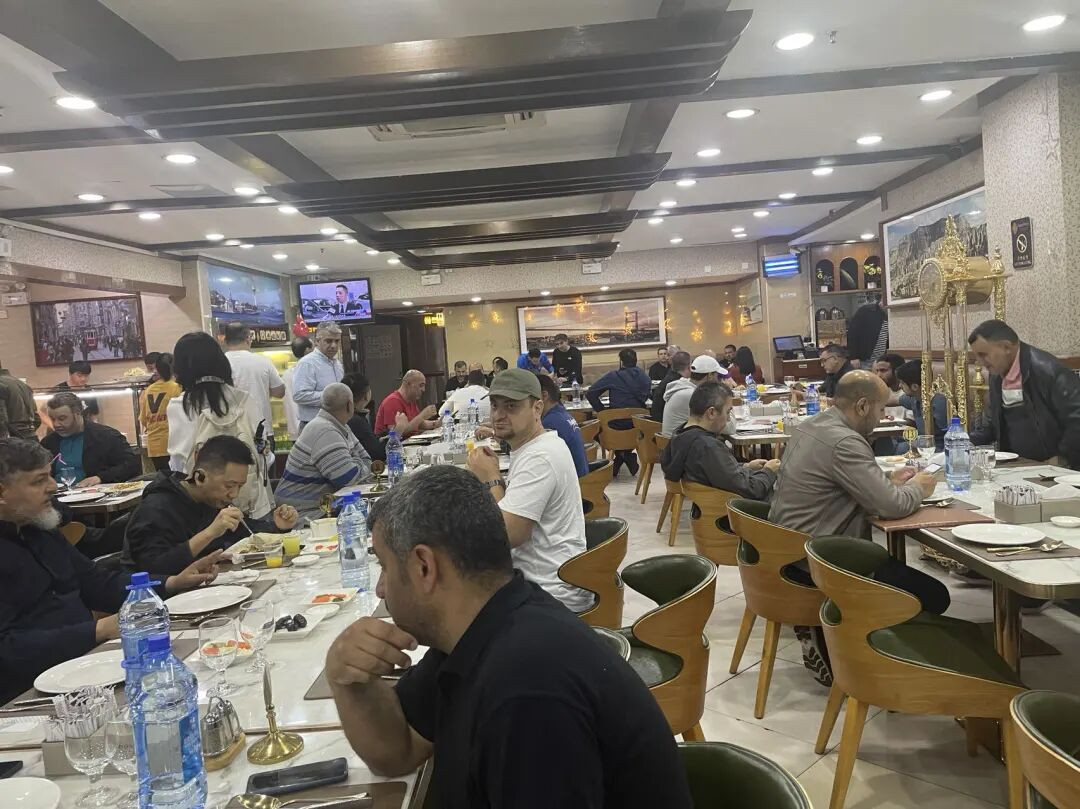
01
Two Major Hubs: From Xiaobai to Shangbu
When talking about halal food in Guangzhou, you simply have to mention Xiaobei and Shangbu. For domestic and international Muslims living in Guangzhou, these two areas hold irreplaceable significance and value.
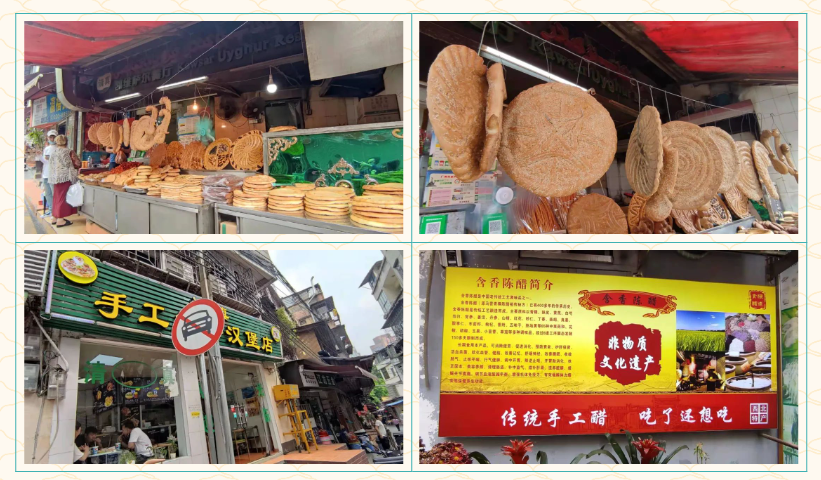
Xiaobei is one of Guangzhou's earliest Hui Muslim enclaves, nestled in the historic Yuexiang District with a prime location. It's close to Xianxian Mosque / Ancient Tomb of Saad ibn Abi Waqqas, Xiaodongying Mosque (Xiaodongying Mosque), and Huaisheng Mosque (Light Pagoda Mosque). Perhaps because of this, early Hui Muslims arriving in Guangzhou chose to gather here and set up food businesses.
↑ Street view of Xiaobei @joho
The primary halal restaurants in the Xiaobei area are centered around Zhaoqing Building (commercial storefronts) and Baohan Direct Street (urban village alleys). Restaurants in Zhaoqing Building are generally larger in scale; since there are many Muslim expat business owners nearby, several Turkish Western-style restaurants take center stage here. The crowd inside is mostly Arab guests, making dining there feel like you've instantly time-traveled to the Middle East.

↑ Bosa Restaurant during Ramadan evening
Stepping across the main road leads you right into Baohan Direct Street. This is a hidden, narrow, winding, uneven, and slightly crowded little alley mainly packed with tiny eateries and snack shops, boasting a super-high shop density.
Some people call this Guangzhou's "Little Africa" (it used to house a massive African population before the government cracked down heavily on illegal immigration, causing the numbers to drop drastically), while others say it gives them major exotic vibes (those local nang (baked flatbread) stands definitely deserve credit for that).
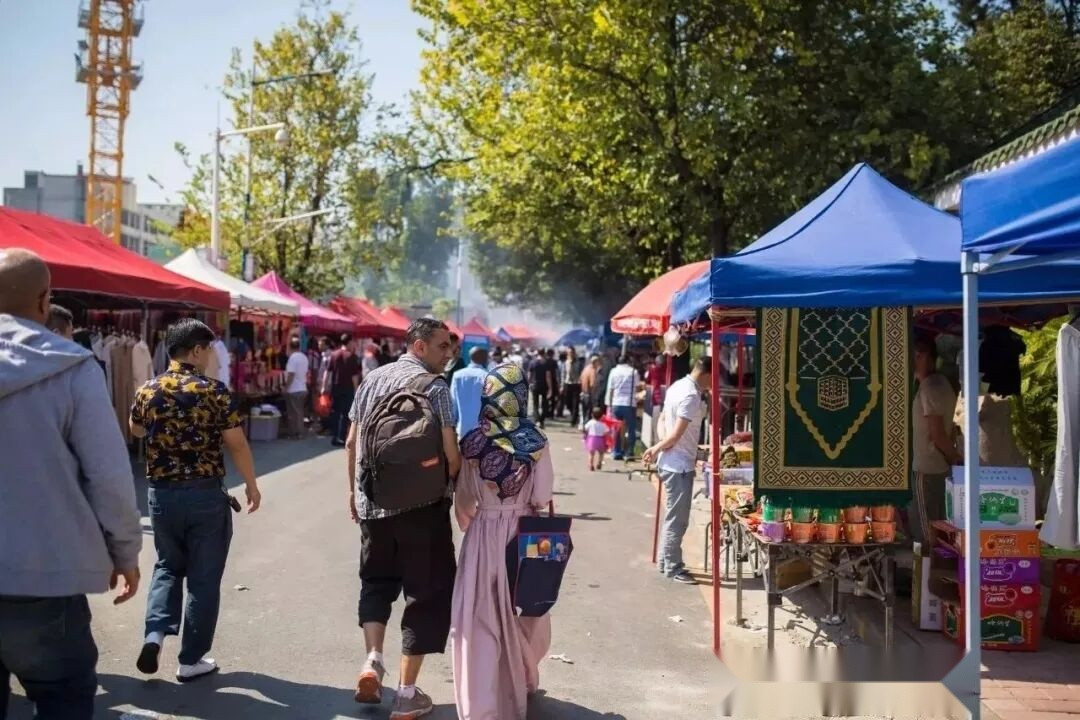
↑ A selection of restaurants in the alleys of Xiaobei
Outside of Muslim circles, Baohan Direct Street isn't all that well-known. Every now and then, a curious food blogger drops by to explore, then hypes it up as if they've just discovered a brand-new continent.
↑ There are plenty of bloggers just like this
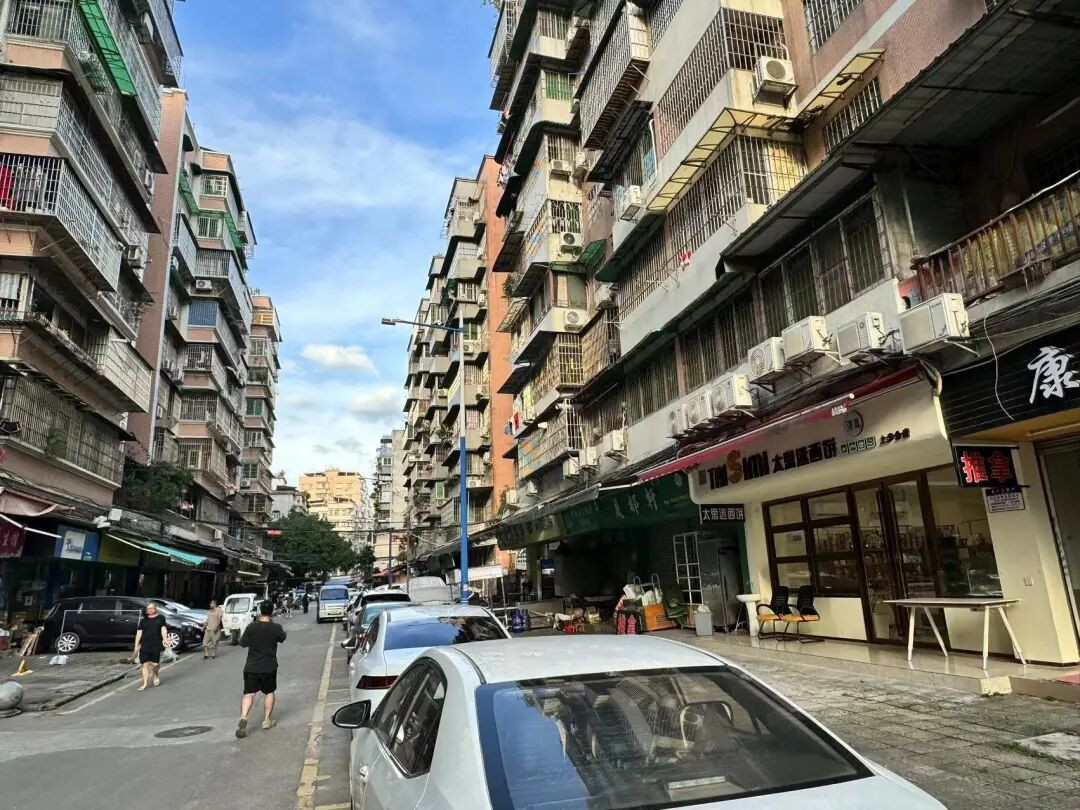
For some reason last year, two restaurants suddenly blew up and made the Michelin recommended list. Walking past at night, you could see lines of Han Chinese foodies waiting patiently, which felt pretty weird and baffling to us locals used to its quiet, niche vibe (though a personal taste test proved that Salta's shouzhua yangrou (hand-grabbed lamb) isn't actually all that mind-blowing).
A year has passed, and the hype has gradually died down. Since internet fame often brings drama, I honestly think Xiaobei's food alley getting *too* mainstream isn't necessarily a good thing.
Newcomers to Guangzhou in recent years might not know that back in the day, every Jumu'ah (Friday congregational prayer) noon, Lanpu Road outside Xianxian Mosque used to host a bustling "halal bazaar." Many small shops from the Xiaobei alleys would set up stalls there, creating an electric, high-energy scene. Around prayer times, every single seat at the food stalls would be packed, and it even drew in crowds of Han Chinese food lovers and travel vloggers.
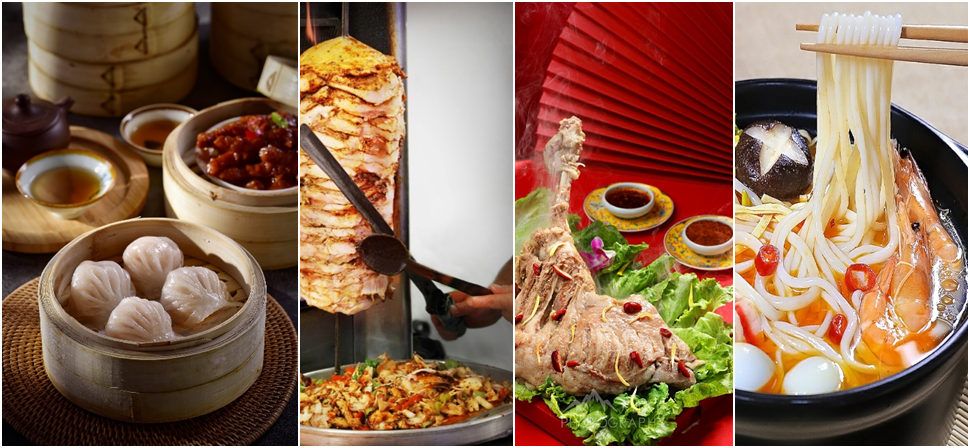
↑ The viral "Xianxian Street" back in the day
Later on, due to urban management policies (driven by massive crowds and smoky barbecue grills), the market was shut down in 2019 (though I secretly hope it might make a comeback someday under proper environmental and regulatory guidelines, however slim the chances).
Shangbu is another Hui Muslim enclave that formed later on, located in Shangbu Village, Baiyun District. It used to be a pretty sketchy, messy "urban village," but over the past couple of years, urban development has vastly improved the overall environment and streetscape.
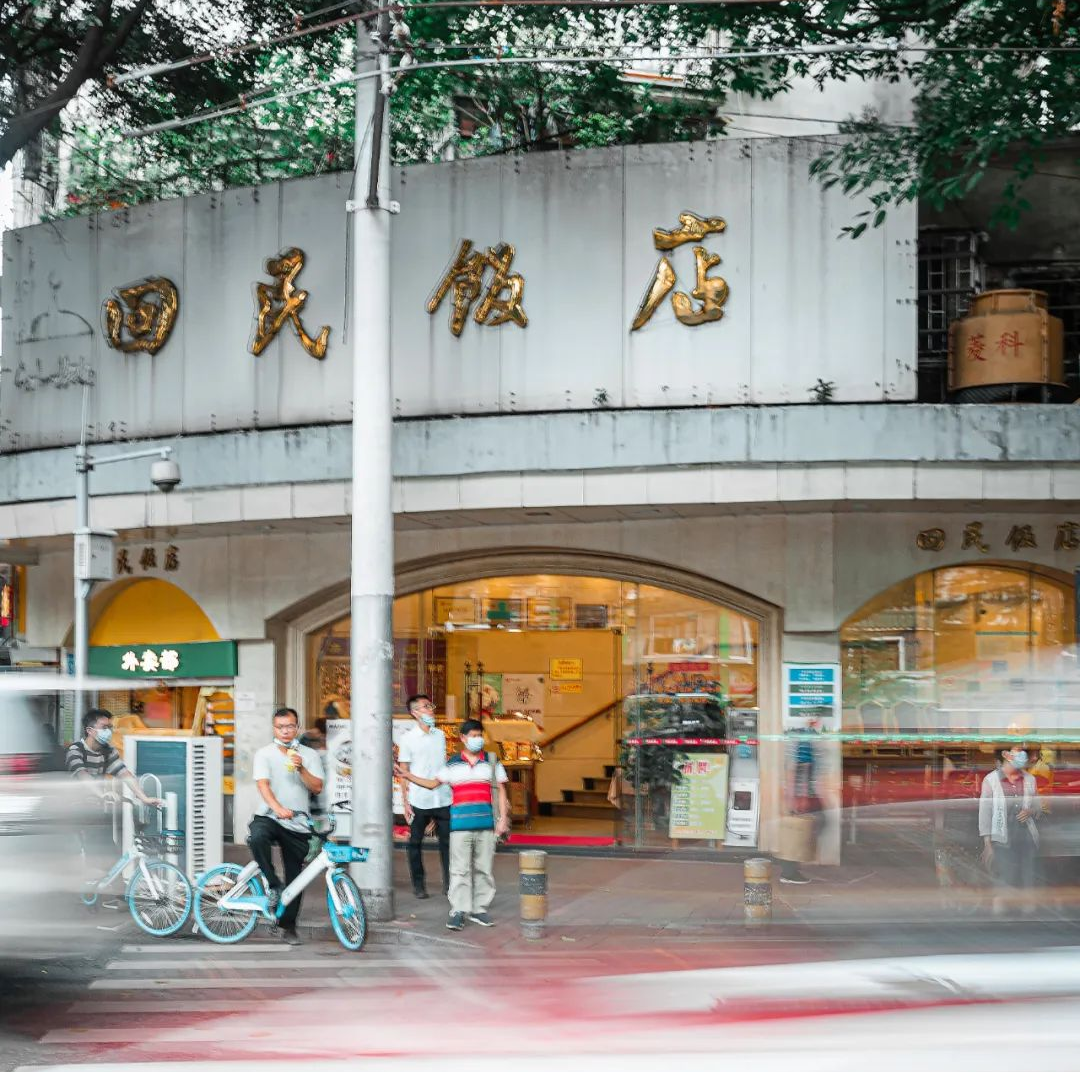
Shangbu doesn't have the same high density of halal restaurants and snack shops as Xiaobei. The headliners here are two Yunnan-style restaurants and one Xinjiang dining house, alongside a scattering of Northwestern noodle shops and a few street snack carts.
↑ So many eateries packed down a single street
Because of the high concentration of Hui Muslims, this area has always maintained a strong community vibe. Locals here have always prioritized harmonious relations with their Han Chinese neighbors—for instance, during annual holidays, everyone would traditionally invite their Han neighbors over to share a feast together.
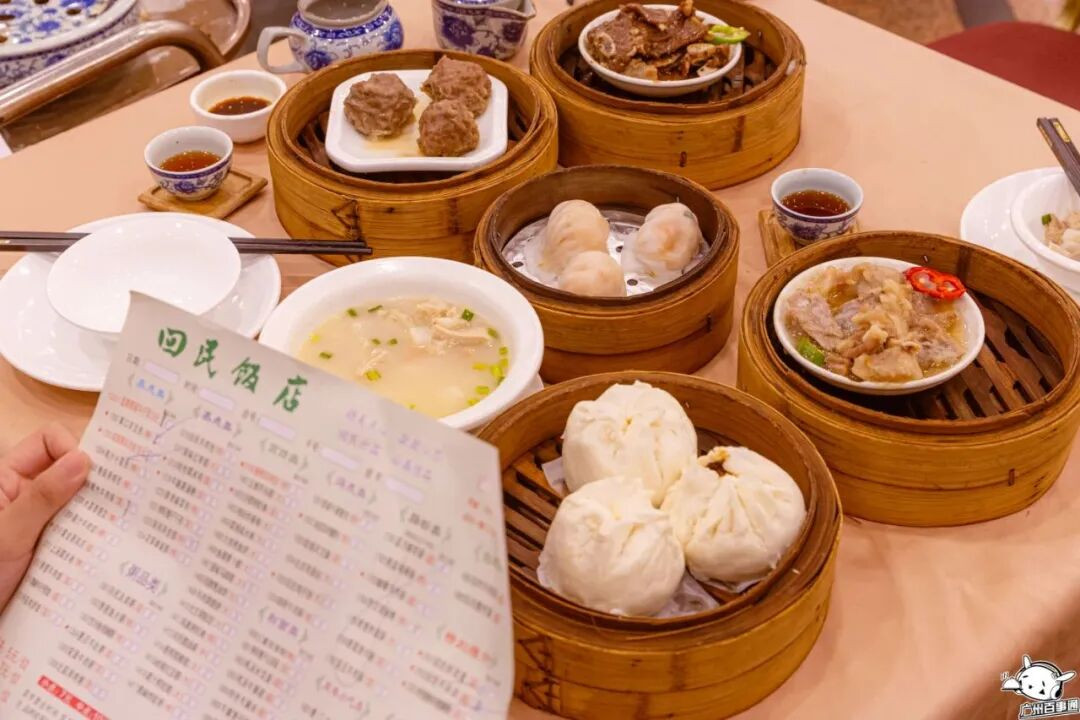
02
A Diverse and Complementary Scene: Innovating While Staying True to Roots
Halal dining in Guangzhou spans Cantonese, Western, Northwest Chinese, and Yunnan cuisines. This culinary variety is its biggest selling point. While individual dishes might not always taste as authentic or complex as they do in their regions of origin, being able to cycle through completely different flavor profiles is a vibe and an experience in itself.
· Cantonese-Style Hui Cuisine: Finally, Yishanggong Picks Up the Baton
Cantonese folks are huge on zaocha / yum cha (Cantonese morning tea / dim sum)—it’s an iconic, laid-back lifestyle rooted in old-school Guangzhou culture, all about taking it slow and enjoying delicate bites. Picture two people, a pot of steaming tea, and a few plates of dim sum to casually chill through the entire morning.
The earliest roots of Halal Cantonese food trace back to Guangzhou Muslim Restaurant (Huimin Restaurant). This time-tested neighborhood spot first opened on May 11, 1965, originally under the name "Halal Cafeteria." It went through a few name changes—becoming the "Hui People's Restaurant" and later the "Guangzhou Wuyang Hui People's Restaurant"—and shifted locations multiple times (moving in October 1975 to Zhongshan 6th Road, where it stands today). Finally, on September 26, 2000, it was completely renovated and reopened under its current name, Guangzhou Muslim Restaurant (Huimin Restaurant), which it has kept ever since.
↑ Guangzhou Muslim Restaurant (Huimin Restaurant)
Today, most of the regulars at Guangzhou Muslim Restaurant are local Cantonese neighborhood aunties and uncles. For out-of-town Hui Muslims, however, both the interior vibe and the staff's presentation can feel a bit hard to fully relax into.
Even though it's called Guangzhou Muslim Restaurant (Huimin Restaurant), very few people know the background of the actual management behind the scenes. Because of this, questions about whether one can eat here with complete peace of mind have always sparked debate. It’s a nostalgic, beloved old brand—it would be amazing if they could clear up these controversies once and for all.
↑ Dim sum at Guangzhou Muslim Restaurant (Huimin Restaurant)
Aside from Guangzhou Muslim Restaurant (Huimin Restaurant), the Bazaar Restaurant at the Xinjiang Building also serves Cantonese dim sum, though its environment and service are a step up.
The great news is that back in April, Yishanggong Restaurant—located in the Zhaoqing Building in Xiaobei—also started trying out a dim sum service. I’m sure a lot of people were thrilled to hear this: finally, a 100% worry-free Halal dim sum spot!
↑ Yishanggong promotional poster
I've got to hand it to them for their innovative spirit. Going from Korean BBQ to Cantonese dim sum, their unique concept makes them really stand out from the competition. I hope their dim sum keeps leveling up (there's definitely room to grow) and gets better and better.
· Northwest Chinese Cuisine: From Salami to Asian Bees, Holding Down the Fort
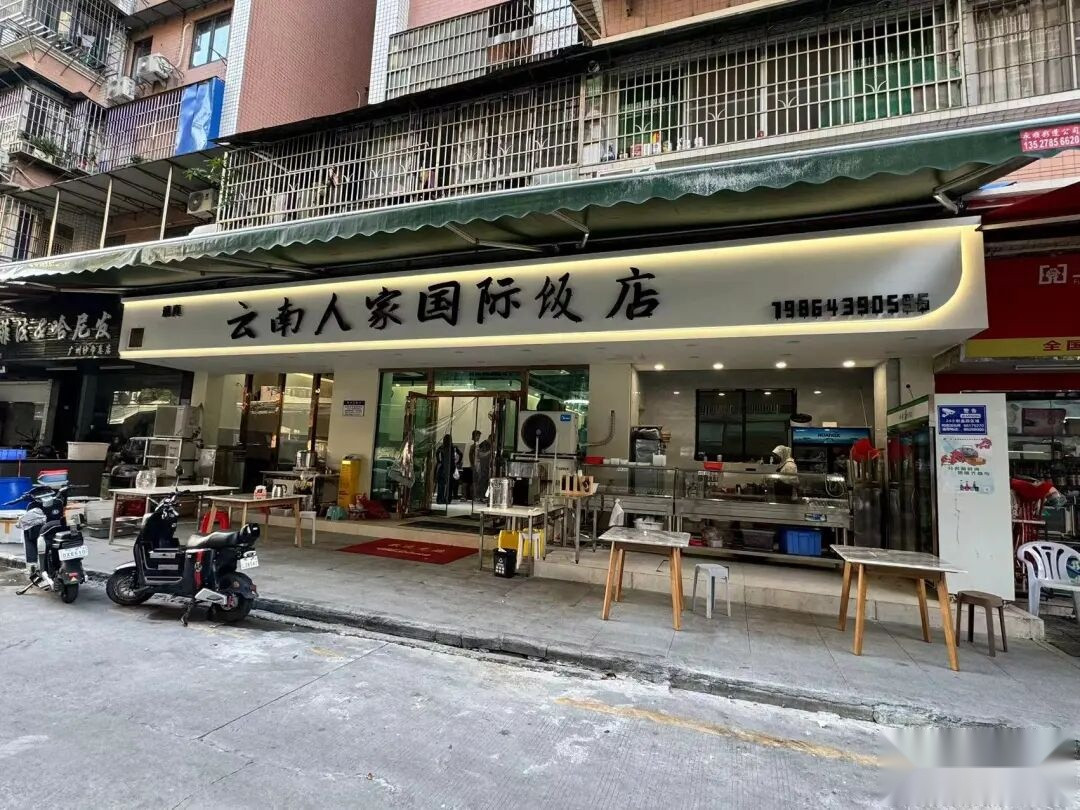
While there are plenty of Northwest Chinese spots around, most are pretty small-scale, which makes them a tough fit for company team-building events or business banquets—often leaving people with no choice but to head to the Xinjiang Building (where they serve alcohol). In a massive city like Guangzhou, not having a single upscale, alcohol-free Northwest Chinese restaurant just doesn't make sense.
That gap was finally filled this January with the opening of Asian Bees Restaurant inside the Asia International Hotel in Xiaobei.
↑ The newly opened Asian Bees
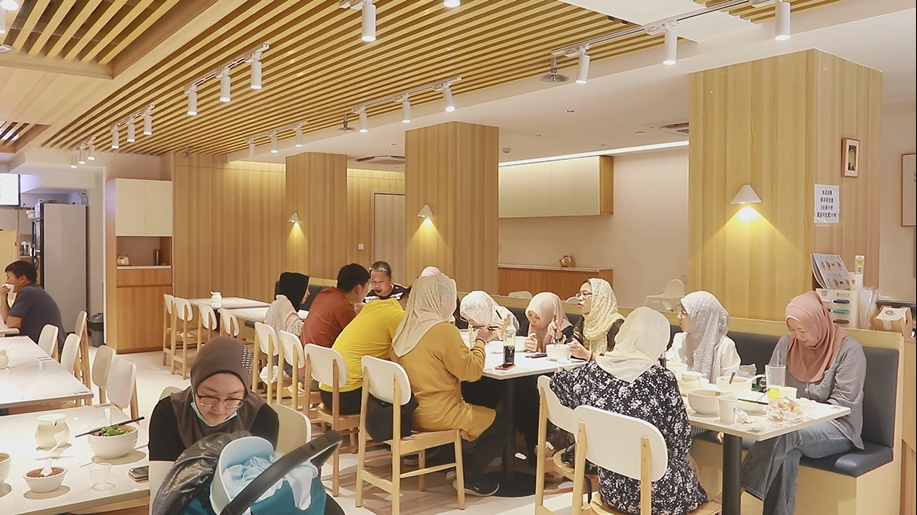
Actually, long before Asian Bees, older generations of Guangzhou Muslims probably remember a spot called "Salami." They opened two locations; the first was right at the entrance of a Xiaobei alley. Because it took off, a second branch quickly opened inside the Asia International Hotel. "Salami" was huge back in the day and rode a massive wave of hype. It's just a shame the management team wasn't down-to-earth enough, and it crashed hard within a few years. Later on, new owners took over and tried to revive it, but none of them could keep it going. In the end, all that's left is a ghost of the past in Xiaobei—the giant characters for "Salami" hanging there dryly for ages.
↑ The former "Salami" sign
Running a large Halal restaurant is no walk in the park, and going upscale is even harder given the niche customer base. Holding down the fort for Northwest Chinese cuisine takes serious grit, vision, and execution.
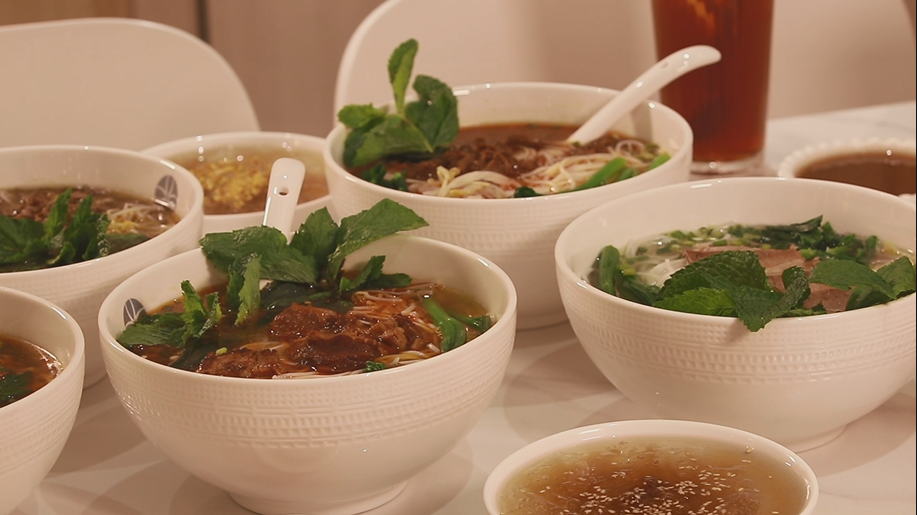
· Yunnan Cuisine: Consistent and Affordable, Winning Over Northwest Appetites
Yunnan spots are known for being reliable and wallet-friendly, making them the absolute go-to for small casual get-togethers.
When it comes to consistency, Dianxiangyuan Restaurant in Shangbu takes the crown without a doubt. It’s been open for over a decade. Aside from expanding the storefront and getting a remodel, basically nothing has changed in ten years (honestly, even after the renovation, you couldn't tell what was different). They’ve got a rock-solid menu, reliable food quality, and great value for money. I’ve been eating their braised rice noodles, sizzling iron-plate fish, and various stir-fries for years and never get tired of it—though I sometimes want to jokingly ask the owner why they won't update the menu just a little bit?
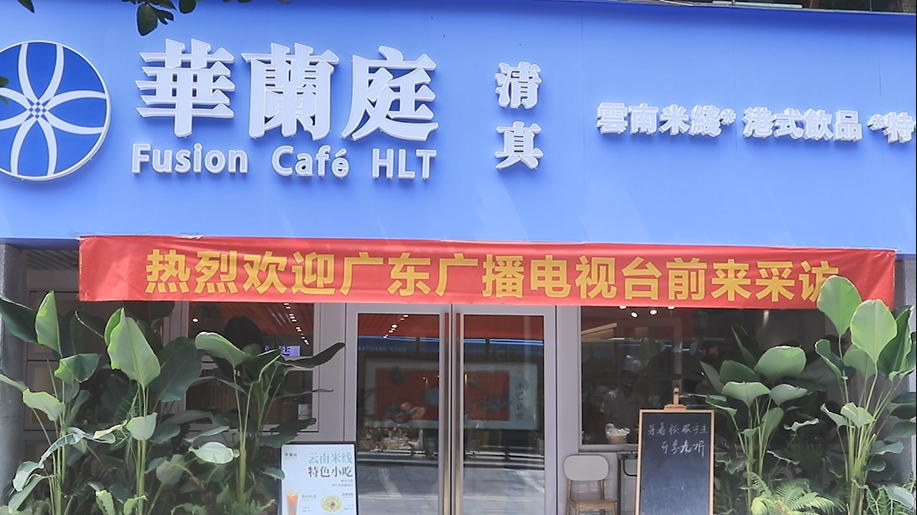
↑ The ultimate "fixture" restaurant in Shangbu
Just a few dozen meters away sits another Yunnan restaurant, but compared to Dianxiangyuan’s stability, this place has had a rough ride. It’s changed hands through God knows how many owners. The current crew is running things pretty well, though: this year they expanded the storefront, gave the place a fresh makeover, and even changed the name from "Yunnan Family" to the much grander "Yunnan Family International Hotel" (though I have to tease that adding "International" feels a little too forced).
↑ Yunnan Family "International" Hotel
Xiaobei was missing a Yunnan spot until last April, when a Yunnan "light restaurant" called Hualanting opened up. It's a super unique spot focusing purely on Yunnan rice noodles and snacks, skipping heavy stir-fries entirely.
↑ The cozy interior vibe
When they first opened and I heard their rice noodles were 28 RMB a bowl, I initially complained that such a high price wouldn't last long. But after going to try it for myself twice, I totally had a change of heart—their rice noodles are honestly worth every penny: great flavor and loaded with ingredients.
↑ Worth-every-penny "mixian" (rice noodles)
In July 2023, this restaurant was even featured on Guangdong Radio and Television's show *Today's Lingnan*.
↑ Why did they get featured?
Sometimes, just staying focused is a superpower in itself. Managing to keep a whole spot running on nothing more than a single bowl of mixian (rice noodles) and a few small bites really speaks volumes about their quality and reputation.
03
Growing and leveling up: A long road ahead
People grinding in the food and beverage industry totally deserve our respect. In any city, the halal dining scene is basically like the "foundational infrastructure" for our community—without halal food, there's no way to talk about the growth and thriving of Hui Muslims. It’s especially incredible how restaurant owners here in Guangzhou manage to innovate while strictly sticking to the golden rule of never selling alcohol.
Even though business ups and downs and brand turnovers are just part of the game, you can literally see with your own eyes how Guangzhou's halal food scene has grown over the years. I still remember how during the pandemic, shop after shop had to shut down, leaving the whole scene looking super grim. Who would've thought that after things opened back up, they’d all pop back to life one after another, plus a whole bunch of brand-new spots opening up?
The next chapter for halal food isn't just about serving our own community anymore; it's about catering to the wider public. That's the only way to get bigger and stronger, turning these spots into a window for cultural exchange way beyond just making money.
Take "Ma Xiaohuo," a halal fast-casual lamian (hand-pulled noodles) chain brand—they’ve opened locations right inside Grandview Mall (Zhengjia Plaza), over in Liede, and scattered across tons of other shopping centers. It totally makes life easier for Hui Muslim 9-to-5ers working in those areas while blowing up their brand influence (though honestly, it's a bummer that Ma Xiaohuo's food quality and flavor have dropped off so much lately).
At the same time, some common issues still plaguing halal restaurants deserve our attention—like slacking on customer service vibes, chasing quick bucks instead of being down-to-earth, lagging behind on menu updates and kitchen innovation, and dropping the ball on marketing and loyalty perks.
Most importantly, staying true to the principle of never selling alcohol is crucial. I think aside from restaurant owners holding the line, the attitudes of the foodies and diners are super important too. Keeping that clean, wholesome dining atmosphere alive takes a village.
Lastly, consider this an open invitation
This official account is all about digging up and sharing the stories of minority entrepreneurs, founders, and homegrown brands (not just limited to the food scene). We're hoping to team up for some deeper, in-depth feature stories. If you're down to share your story, hit up our editor anytime!
END Collapse Read »
Halal Food Trails in Guangzhou: A Curated Selection of Alcohol-Free, Sharia-Compliant, and Diverse Halal Eateries
Abstract:
A deep dive into Guangzhou's standout halal restaurants that strictly adhere to Islamic law and maintain a strict alcohol-free, healthy dining philosophy. From authentic Cantonese halal shaola (Cantonese roasted meats / roast duck) to Northwestern shouzhua yangrou (hand-grabbed lamb) and exotic Middle Eastern cuisine, this guide highlights the rigorous integrity and rich flavors of the City of Rams' halal food scene.
Guangzhou offers an incredible variety of halal food, and the fact that these places don't sell alcohol is increasingly rare in this day and age—it definitely deserves a major shoutout.
Guangzhou is a city that never lacks amazing food, long famed for the saying, "Eat in Guangzhou."
As a thousand-year-old trading hub and vital port, Guangzhou has drawn merchants from all over the world, shaping an inclusive, eclectic food culture that ultimately birthed Cantonese cuisine, one of China's Eight Great Culinary Traditions.
Guangzhou is also where Islam first arrived in China, housing the country's very first mosque—Huaisheng Mosque (Light Pagoda Mosque). Hui Muslims originated right here before spreading out across the country.
Today, hundreds of thousands of Muslims from countries worldwide and all across China live here. Through decades of accumulation and deep roots, the halal food scene has grown from scratch—evolving from single-item shops to a rich, diverse culinary landscape, shifting from simply "having something to eat" to "eating exceptionally well."
Personally, I believe that among China's four major tier-one cities (Beijing, Shanghai, Guangzhou, and Shenzhen), Guangzhou does the best job when it comes to the sheer variety of halal food and the pure, alcohol-free commitment of its restaurants. In an era where selling alcohol has become the norm, this is an incredibly rare and precious thing that truly deserves to be shouted from the rooftops.
01
Two Major Hubs: From Xiaobai to Shangbu
When talking about halal food in Guangzhou, you simply have to mention Xiaobei and Shangbu. For domestic and international Muslims living in Guangzhou, these two areas hold irreplaceable significance and value.
Xiaobei is one of Guangzhou's earliest Hui Muslim enclaves, nestled in the historic Yuexiang District with a prime location. It's close to Xianxian Mosque / Ancient Tomb of Saad ibn Abi Waqqas, Xiaodongying Mosque (Xiaodongying Mosque), and Huaisheng Mosque (Light Pagoda Mosque). Perhaps because of this, early Hui Muslims arriving in Guangzhou chose to gather here and set up food businesses.
↑ Street view of Xiaobei @joho
The primary halal restaurants in the Xiaobei area are centered around Zhaoqing Building (commercial storefronts) and Baohan Direct Street (urban village alleys). Restaurants in Zhaoqing Building are generally larger in scale; since there are many Muslim expat business owners nearby, several Turkish Western-style restaurants take center stage here. The crowd inside is mostly Arab guests, making dining there feel like you've instantly time-traveled to the Middle East.
↑ Bosa Restaurant during Ramadan evening
Stepping across the main road leads you right into Baohan Direct Street. This is a hidden, narrow, winding, uneven, and slightly crowded little alley mainly packed with tiny eateries and snack shops, boasting a super-high shop density.
Some people call this Guangzhou's "Little Africa" (it used to house a massive African population before the government cracked down heavily on illegal immigration, causing the numbers to drop drastically), while others say it gives them major exotic vibes (those local nang (baked flatbread) stands definitely deserve credit for that).
↑ A selection of restaurants in the alleys of Xiaobei
Outside of Muslim circles, Baohan Direct Street isn't all that well-known. Every now and then, a curious food blogger drops by to explore, then hypes it up as if they've just discovered a brand-new continent.
↑ There are plenty of bloggers just like this
For some reason last year, two restaurants suddenly blew up and made the Michelin recommended list. Walking past at night, you could see lines of Han Chinese foodies waiting patiently, which felt pretty weird and baffling to us locals used to its quiet, niche vibe (though a personal taste test proved that Salta's shouzhua yangrou (hand-grabbed lamb) isn't actually all that mind-blowing).
A year has passed, and the hype has gradually died down. Since internet fame often brings drama, I honestly think Xiaobei's food alley getting *too* mainstream isn't necessarily a good thing.
Newcomers to Guangzhou in recent years might not know that back in the day, every Jumu'ah (Friday congregational prayer) noon, Lanpu Road outside Xianxian Mosque used to host a bustling "halal bazaar." Many small shops from the Xiaobei alleys would set up stalls there, creating an electric, high-energy scene. Around prayer times, every single seat at the food stalls would be packed, and it even drew in crowds of Han Chinese food lovers and travel vloggers.
↑ The viral "Xianxian Street" back in the day
Later on, due to urban management policies (driven by massive crowds and smoky barbecue grills), the market was shut down in 2019 (though I secretly hope it might make a comeback someday under proper environmental and regulatory guidelines, however slim the chances).
Shangbu is another Hui Muslim enclave that formed later on, located in Shangbu Village, Baiyun District. It used to be a pretty sketchy, messy "urban village," but over the past couple of years, urban development has vastly improved the overall environment and streetscape.
Shangbu doesn't have the same high density of halal restaurants and snack shops as Xiaobei. The headliners here are two Yunnan-style restaurants and one Xinjiang dining house, alongside a scattering of Northwestern noodle shops and a few street snack carts.
↑ So many eateries packed down a single street
Because of the high concentration of Hui Muslims, this area has always maintained a strong community vibe. Locals here have always prioritized harmonious relations with their Han Chinese neighbors—for instance, during annual holidays, everyone would traditionally invite their Han neighbors over to share a feast together.
02
A Diverse and Complementary Scene: Innovating While Staying True to Roots
Halal dining in Guangzhou spans Cantonese, Western, Northwest Chinese, and Yunnan cuisines. This culinary variety is its biggest selling point. While individual dishes might not always taste as authentic or complex as they do in their regions of origin, being able to cycle through completely different flavor profiles is a vibe and an experience in itself.
· Cantonese-Style Hui Cuisine: Finally, Yishanggong Picks Up the Baton
Cantonese folks are huge on zaocha / yum cha (Cantonese morning tea / dim sum)—it’s an iconic, laid-back lifestyle rooted in old-school Guangzhou culture, all about taking it slow and enjoying delicate bites. Picture two people, a pot of steaming tea, and a few plates of dim sum to casually chill through the entire morning.
The earliest roots of Halal Cantonese food trace back to Guangzhou Muslim Restaurant (Huimin Restaurant). This time-tested neighborhood spot first opened on May 11, 1965, originally under the name "Halal Cafeteria." It went through a few name changes—becoming the "Hui People's Restaurant" and later the "Guangzhou Wuyang Hui People's Restaurant"—and shifted locations multiple times (moving in October 1975 to Zhongshan 6th Road, where it stands today). Finally, on September 26, 2000, it was completely renovated and reopened under its current name, Guangzhou Muslim Restaurant (Huimin Restaurant), which it has kept ever since.
↑ Guangzhou Muslim Restaurant (Huimin Restaurant)
Today, most of the regulars at Guangzhou Muslim Restaurant are local Cantonese neighborhood aunties and uncles. For out-of-town Hui Muslims, however, both the interior vibe and the staff's presentation can feel a bit hard to fully relax into.
Even though it's called Guangzhou Muslim Restaurant (Huimin Restaurant), very few people know the background of the actual management behind the scenes. Because of this, questions about whether one can eat here with complete peace of mind have always sparked debate. It’s a nostalgic, beloved old brand—it would be amazing if they could clear up these controversies once and for all.
↑ Dim sum at Guangzhou Muslim Restaurant (Huimin Restaurant)
Aside from Guangzhou Muslim Restaurant (Huimin Restaurant), the Bazaar Restaurant at the Xinjiang Building also serves Cantonese dim sum, though its environment and service are a step up.
The great news is that back in April, Yishanggong Restaurant—located in the Zhaoqing Building in Xiaobei—also started trying out a dim sum service. I’m sure a lot of people were thrilled to hear this: finally, a 100% worry-free Halal dim sum spot!
↑ Yishanggong promotional poster
I've got to hand it to them for their innovative spirit. Going from Korean BBQ to Cantonese dim sum, their unique concept makes them really stand out from the competition. I hope their dim sum keeps leveling up (there's definitely room to grow) and gets better and better.
· Northwest Chinese Cuisine: From Salami to Asian Bees, Holding Down the Fort
While there are plenty of Northwest Chinese spots around, most are pretty small-scale, which makes them a tough fit for company team-building events or business banquets—often leaving people with no choice but to head to the Xinjiang Building (where they serve alcohol). In a massive city like Guangzhou, not having a single upscale, alcohol-free Northwest Chinese restaurant just doesn't make sense.
That gap was finally filled this January with the opening of Asian Bees Restaurant inside the Asia International Hotel in Xiaobei.
↑ The newly opened Asian Bees
Actually, long before Asian Bees, older generations of Guangzhou Muslims probably remember a spot called "Salami." They opened two locations; the first was right at the entrance of a Xiaobei alley. Because it took off, a second branch quickly opened inside the Asia International Hotel. "Salami" was huge back in the day and rode a massive wave of hype. It's just a shame the management team wasn't down-to-earth enough, and it crashed hard within a few years. Later on, new owners took over and tried to revive it, but none of them could keep it going. In the end, all that's left is a ghost of the past in Xiaobei—the giant characters for "Salami" hanging there dryly for ages.
↑ The former "Salami" sign
Running a large Halal restaurant is no walk in the park, and going upscale is even harder given the niche customer base. Holding down the fort for Northwest Chinese cuisine takes serious grit, vision, and execution.
· Yunnan Cuisine: Consistent and Affordable, Winning Over Northwest Appetites
Yunnan spots are known for being reliable and wallet-friendly, making them the absolute go-to for small casual get-togethers.
When it comes to consistency, Dianxiangyuan Restaurant in Shangbu takes the crown without a doubt. It’s been open for over a decade. Aside from expanding the storefront and getting a remodel, basically nothing has changed in ten years (honestly, even after the renovation, you couldn't tell what was different). They’ve got a rock-solid menu, reliable food quality, and great value for money. I’ve been eating their braised rice noodles, sizzling iron-plate fish, and various stir-fries for years and never get tired of it—though I sometimes want to jokingly ask the owner why they won't update the menu just a little bit?
↑ The ultimate "fixture" restaurant in Shangbu
Just a few dozen meters away sits another Yunnan restaurant, but compared to Dianxiangyuan’s stability, this place has had a rough ride. It’s changed hands through God knows how many owners. The current crew is running things pretty well, though: this year they expanded the storefront, gave the place a fresh makeover, and even changed the name from "Yunnan Family" to the much grander "Yunnan Family International Hotel" (though I have to tease that adding "International" feels a little too forced).
↑ Yunnan Family "International" Hotel
Xiaobei was missing a Yunnan spot until last April, when a Yunnan "light restaurant" called Hualanting opened up. It's a super unique spot focusing purely on Yunnan rice noodles and snacks, skipping heavy stir-fries entirely.
↑ The cozy interior vibe
When they first opened and I heard their rice noodles were 28 RMB a bowl, I initially complained that such a high price wouldn't last long. But after going to try it for myself twice, I totally had a change of heart—their rice noodles are honestly worth every penny: great flavor and loaded with ingredients.
↑ Worth-every-penny "mixian" (rice noodles)
In July 2023, this restaurant was even featured on Guangdong Radio and Television's show *Today's Lingnan*.
↑ Why did they get featured?
Sometimes, just staying focused is a superpower in itself. Managing to keep a whole spot running on nothing more than a single bowl of mixian (rice noodles) and a few small bites really speaks volumes about their quality and reputation.
03
Growing and leveling up: A long road ahead
People grinding in the food and beverage industry totally deserve our respect. In any city, the halal dining scene is basically like the "foundational infrastructure" for our community—without halal food, there's no way to talk about the growth and thriving of Hui Muslims. It’s especially incredible how restaurant owners here in Guangzhou manage to innovate while strictly sticking to the golden rule of never selling alcohol.
Even though business ups and downs and brand turnovers are just part of the game, you can literally see with your own eyes how Guangzhou's halal food scene has grown over the years. I still remember how during the pandemic, shop after shop had to shut down, leaving the whole scene looking super grim. Who would've thought that after things opened back up, they’d all pop back to life one after another, plus a whole bunch of brand-new spots opening up?
The next chapter for halal food isn't just about serving our own community anymore; it's about catering to the wider public. That's the only way to get bigger and stronger, turning these spots into a window for cultural exchange way beyond just making money.
Take "Ma Xiaohuo," a halal fast-casual lamian (hand-pulled noodles) chain brand—they’ve opened locations right inside Grandview Mall (Zhengjia Plaza), over in Liede, and scattered across tons of other shopping centers. It totally makes life easier for Hui Muslim 9-to-5ers working in those areas while blowing up their brand influence (though honestly, it's a bummer that Ma Xiaohuo's food quality and flavor have dropped off so much lately).
At the same time, some common issues still plaguing halal restaurants deserve our attention—like slacking on customer service vibes, chasing quick bucks instead of being down-to-earth, lagging behind on menu updates and kitchen innovation, and dropping the ball on marketing and loyalty perks.
Most importantly, staying true to the principle of never selling alcohol is crucial. I think aside from restaurant owners holding the line, the attitudes of the foodies and diners are super important too. Keeping that clean, wholesome dining atmosphere alive takes a village.
Lastly, consider this an open invitation
This official account is all about digging up and sharing the stories of minority entrepreneurs, founders, and homegrown brands (not just limited to the food scene). We're hoping to team up for some deeper, in-depth feature stories. If you're down to share your story, hit up our editor anytime!
END Collapse Read »
Ultimate Guide to Guangzhou Halal Food: Authentic Cantonese Halal Dim Sum, Roast Meats & Historic Mosques along the Maritime Silk Road
[Internet Repost]
Must-Try Halal Restaurants in Guangzhou: A Guide from Authentic Cantonese Halal Cuisine to Northwest Hand-Grabbed Lamb
Abstract:
A handpicked selection of Guangzhou's top-rated and most distinctive halal restaurants. Covering traditional Cantonese halal hot dishes, authentic Lanzhou beef noodles, and Northwest shouzhua yangrou (hand-grabbed lamb), this guide provides a reliable and detailed culinary map for both locals and travelers.
Hey everyone! It's been a little over a month, and all you friends have been sliding into my DMs asking for a new post.
This week, I've put together a guide to the halal dining scene in Guangzhou. Ever since the Tang Dynasty, Guangzhou has been a major overseas trade hub in China. As a key city on China's southeast coast, the starting point of the Maritime Silk Road, and one of the earliest trading ports, waves of Arab and Southeast Asian Muslim merchants came here to do business, intermarry with locals, and settle down...
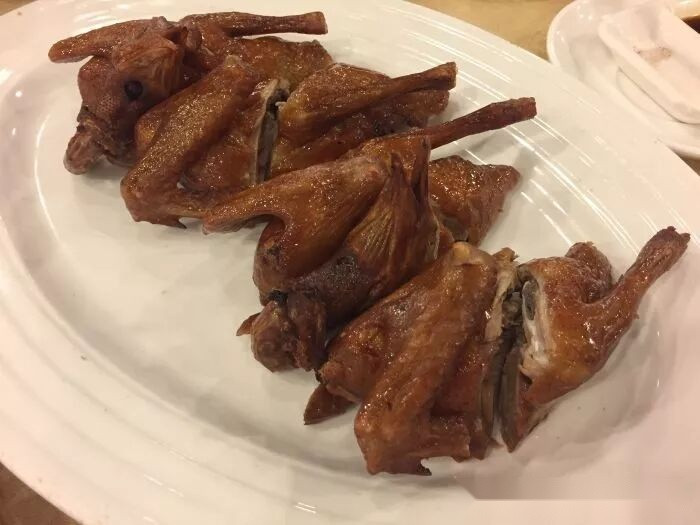
Back then, Guangzhou was home to the largest number of wealthy Arab merchants. With the support of the local government, they built a grand mosque—today's Huaisheng Mosque (Light Pagoda Mosque). The mosque's name expresses the deep respect and longing for the Prophet Muhammad shared by believers both at home and abroad. Also known as the Lion Mosque and colloquially as the Guangta Temple, Huaisheng Mosque is one of the four ancient mosques in China (I wrote about Hangzhou's Phoenix Mosque before—feel free to click and check it out if you're interested) and stands as the oldest surviving mosque architecture in the country.
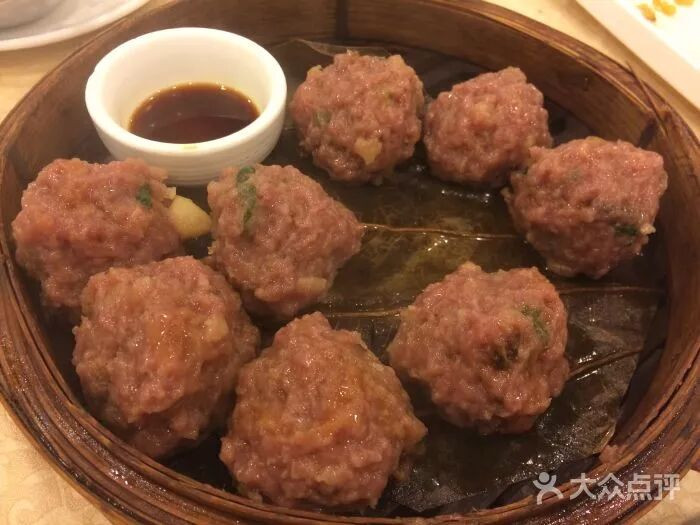
With such a rich cultural vibe, Guangzhou actually has plenty of halal restaurants. You can find halal Cantonese cuisine, Xinjiang food, Northwest cuisine, Southeast Asian food, Turkish food, and Arab dishes all right here in Guangzhou... Today, I'm sharing a few unique halal spots with you~
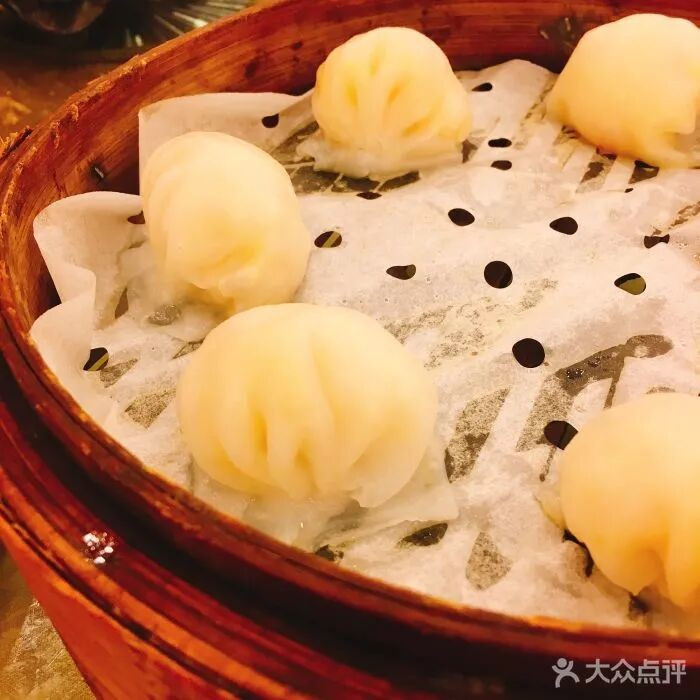
Guangzhou Muslim Restaurant (Huimin Restaurant)
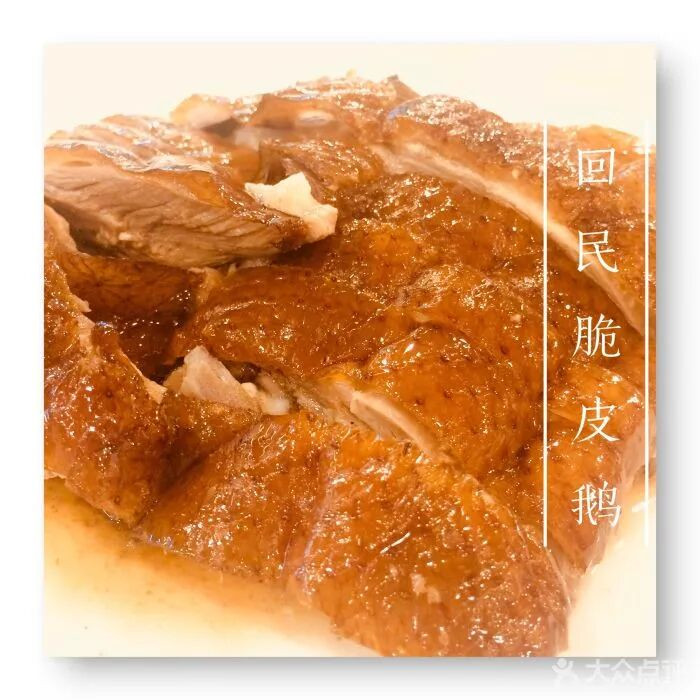
The predecessor of Guangzhou Muslim Restaurant was the Guangzhou Halal Cafeteria founded in 1956. Back then, the cafeteria mainly specialized in shaola (Cantonese roasted meats / roast duck), with a kitchen crew made up of master chefs from Gaosheng Teahouse, the Hui Fengcheng Roast Meat Shop, and the Halal Deji Roast Meat Shop. In 1959, the halal cafeteria was reorganized into the Huimin Restaurant, moving to its current location on Zhongshan 6th Road in 1975. In early 1994, Guangzhou Muslim Restaurant became a Sino-Hong Kong joint venture. Along with a complete interior remodel, they brought in a famous Hong Kong chef who layered Hong Kong-style cooking techniques on top of traditional Guangzhou halal eats, ultimately shaping the Huimin Restaurant we know and love today.
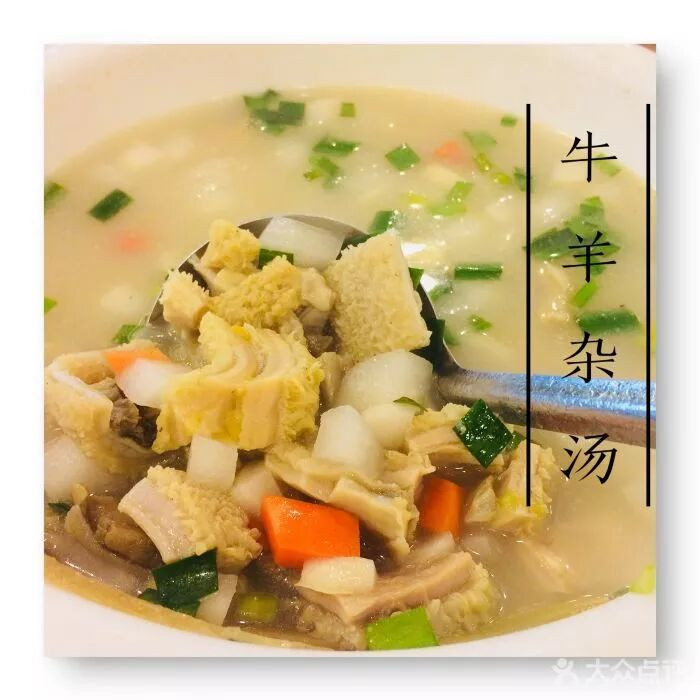
The signature scallion pancakes are a must-order for every table. Crispy on the outside and tender on the inside, sprinkled with little bits of emerald-green chopped scallions across the top, they taste incredible~
The mutton char siu buns are a specialty pastry at Huimin Restaurant. One reviewer shared: 'I totally love the "springy mutton char siu buns" made right here! They look just like regular pork char siu pork buns, but the filling is lamb. It has this wonderful, rich mutton aroma, it's super soft, and you've gotta eat 'em while they're hot!'
If the steamed buns aren't enough, you can order a standalone plate of honey-glazed mutton char siu. Made by roasting lamb, it looks identical to the forbidden pork char siu found out on the streets, but it's 100% made from halal lamb, featuring that unique, rich mutton gamey flavor and incredibly tender meat. Foodies who have never been able to try "char siu" can finally get a taste~
Braised squab is one of traditional Cantonese culinary masterpieces, belonging to the Cantonese food family. There's an old folk saying in China that goes, 'A single pigeon beats nine chickens.' Braised squab is crispy on the outside and tender on the inside. Most people don't even spare the bones when eating braised squab because the birds are simmered in master stock and then deep-fried, making the flavor go all the way down to the bone. The braised squab at Huimin Restaurant is also in super high demand, so if you want to try authentic Cantonese flavors, you've got to get there early~
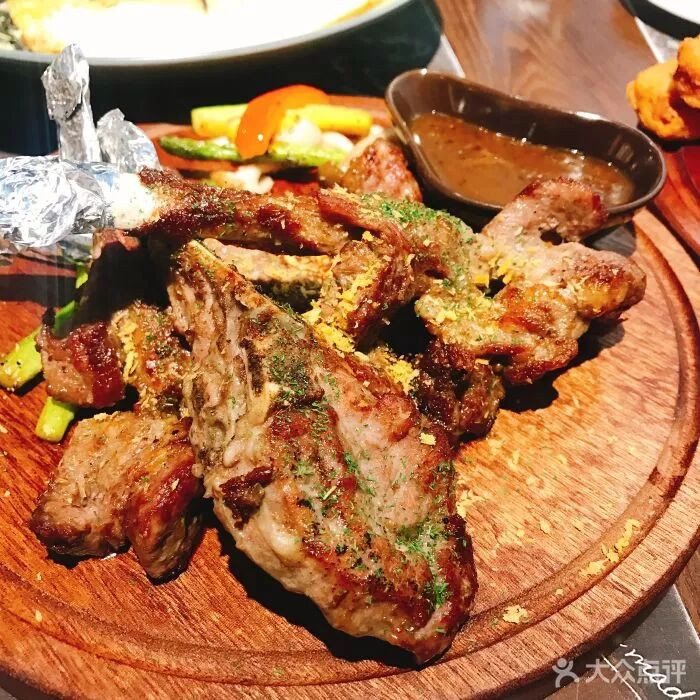
The steamed beef meatballs pack a rich beef punch, packed with tiny pieces of crunchy, sweet water chestnut and a delicate whisper of aged tangerine peel.
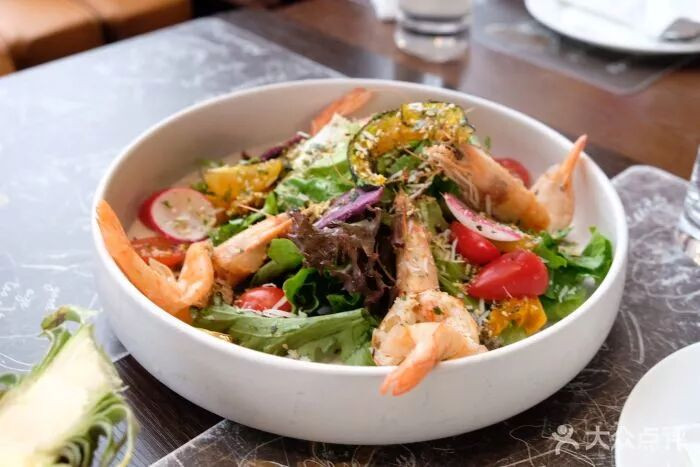
Har gow (shrimp dumplings), 16 RMB a basket—the wrappers are translucent without sticking to your teeth, the shrimp are fresh and snappy, paired with bamboo shoot strips. So delicious!
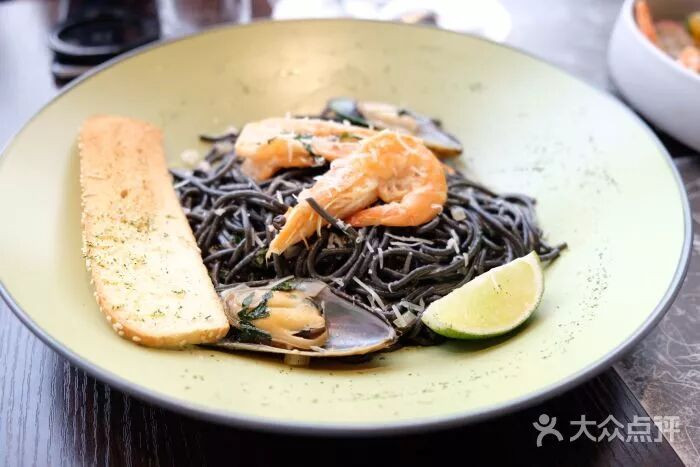
Huimin crispy roast goose: Golden in color, with crackling skin, juicy meat, and rich, savory meat juices. It looks seriously appetizing~
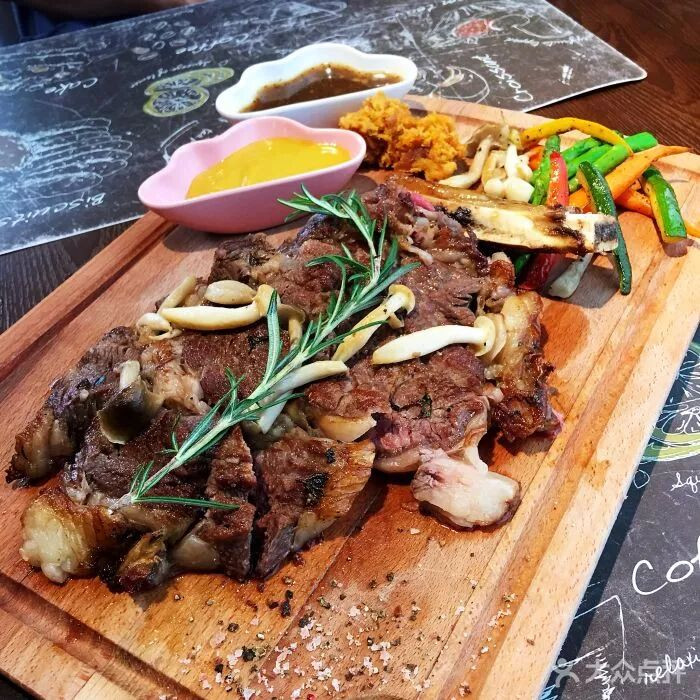
They also serve a niu-yang za tang (hearty organ meat soup made from beef and lamb offal) loaded with ingredients—definitely not the same flavor profile as northern lamb soups~
This has got to be the most authentic halal Cantonese food on the mainland. In short, you've gotta check it out next time you visit Guangzhou~
Guangzhou Muslim Restaurant (Huimin Restaurant)
Recommended dishes: Signature Scallion Pancakes, Braised Squab, Springy Mutton Char Siu Buns, Har Gow (Shrimp Dumplings)
Average cost per person: 56 RMB
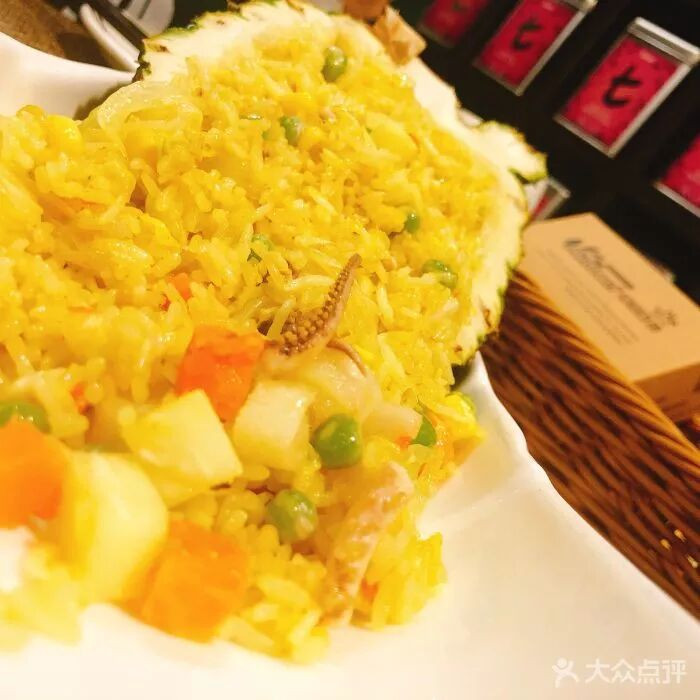
Address: No. 325, Zhongshan 6th Road (Exit A of Ximenkou Metro Station, turn left and walk 50 meters)
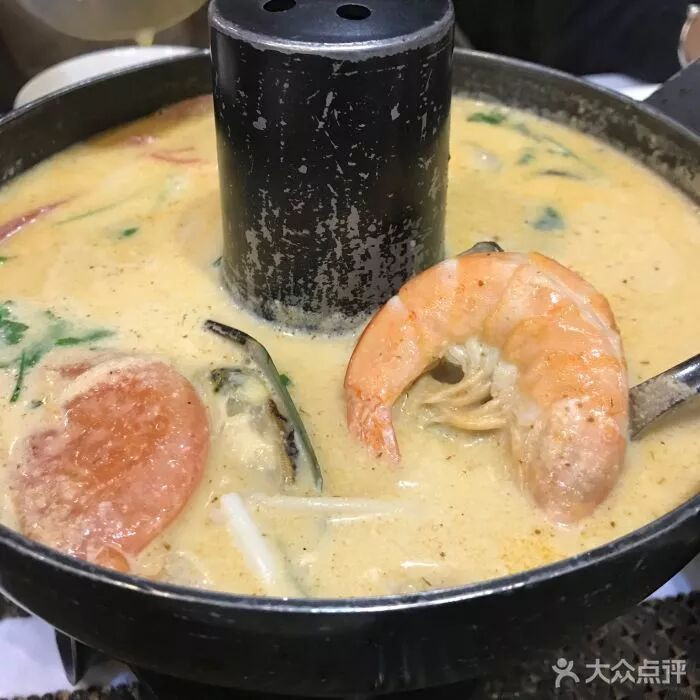
Phone: 020-81303991
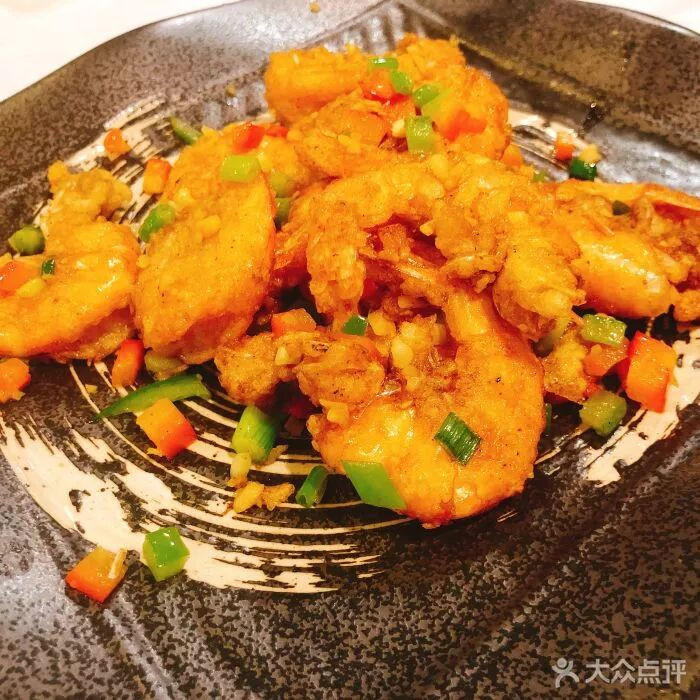
Stason Chef & Floral Western Restaurant
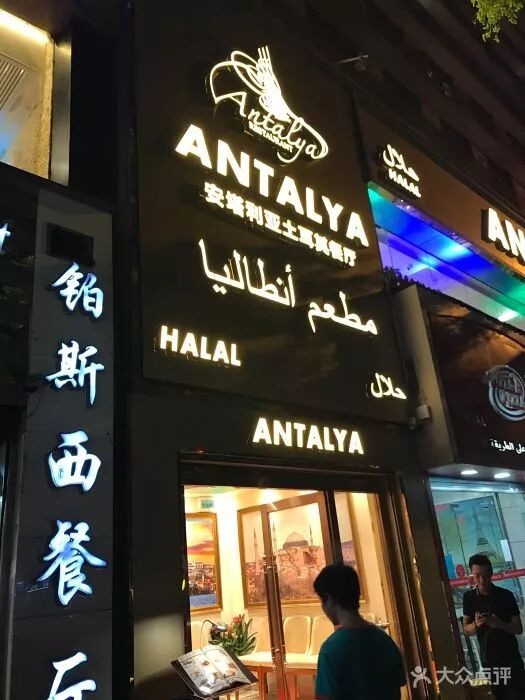
A Chinese-run halal Western restaurant with an incredible vibe. The interior design is gorgeous, filled with flowers everywhere like a half-flower shop. It's super easy to get drawn in just walking past it~ The location is very easy to find, right outside Exit C of Dongshankou Metro Station.
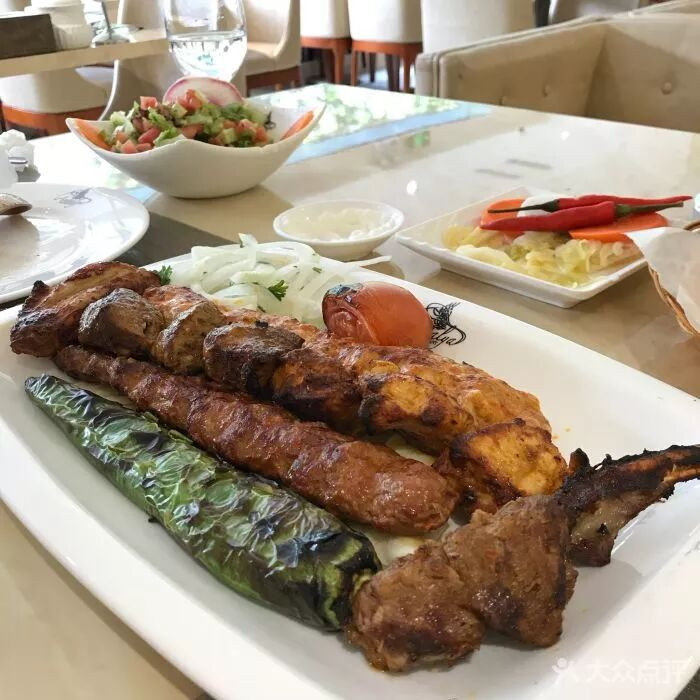
The 'Charcoal-Grilled Lamb Chops with Persimmon Puree' hits all the right notes: tender, juicy. This time, they even added a little crunch on top of the lamb chops, which tasted like toasted garlic bits, adding great textural layers to the whole dish. The side veggies feature finger carrots, skin-on baby potatoes, and mini mushrooms roasted in olive oil and salt, preserving the natural flavors of the vegetables.
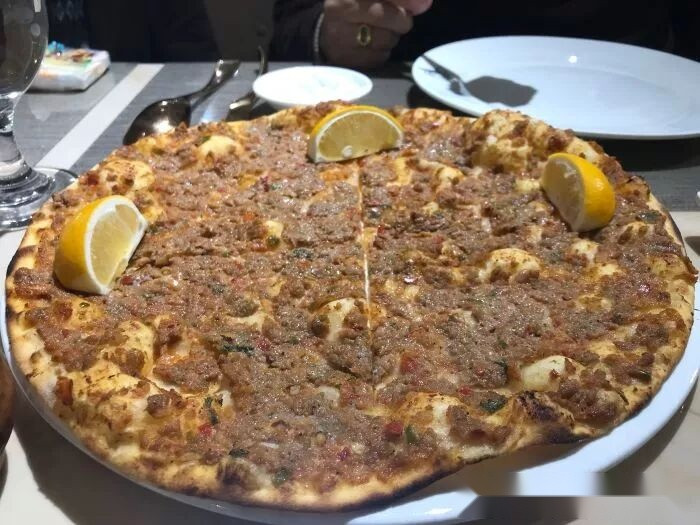
The 'Lemon Vinaigrette Shrimp Salad' is packed with details. You wouldn't expect a simple salad to be this satisfying. The balsamic vinaigrette is sweet, tangy, and layered with a wonderful fruity acidity. The shrimp are marinated, and you can actually taste a fruity sweetness—I later found out they marinate them in lychee juice, which shows a lot of thought. The lettuce is super fresh, and the roasted pumpkin mixed in is amazing. They use top-tier New Zealand mini pumpkins, simply roasted and tossed into the salad, delivering killer texture and sweetness. Absolute MVP of the meal.
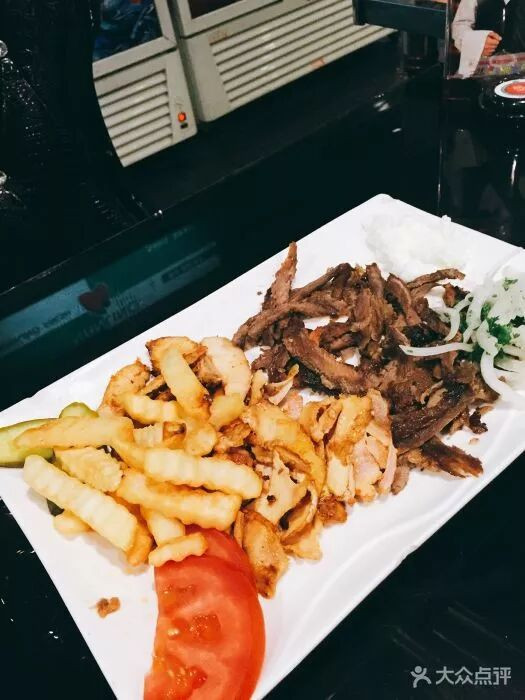
The 'Mint Garlic Seafood Squid Ink Pasta' is super tasty with an intense seafood punch, heavy garlic notes, and a subtle, clever hint of fresh mint.
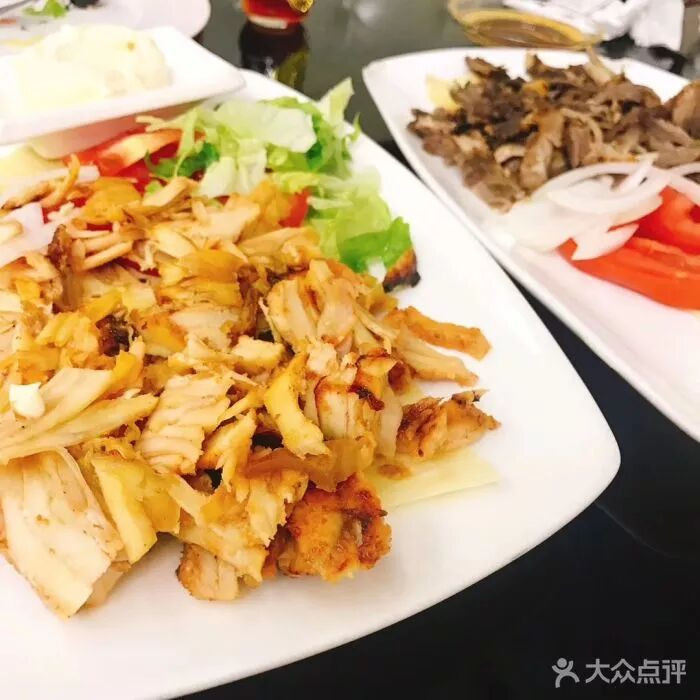
The 'Tomahawk Steak' is a newly launched menu item with a huge, hearty portion. The medium-rare steak is incredible. This time, we asked the chef to use the sous-vide low-temperature slow-cooking method. When the knife cuts into it at the table, there are tons of meat juices, the meat is tender, and every bite fills your mouth with savory juices—so satisfying. It comes with two sauces: one is a black pepper sauce where the pepper flavor is dialed back a bit to let the natural beef flavor shine through, and the other is a yellow sauce with a slight tang that pairs exceptionally well with the rich beef fat.
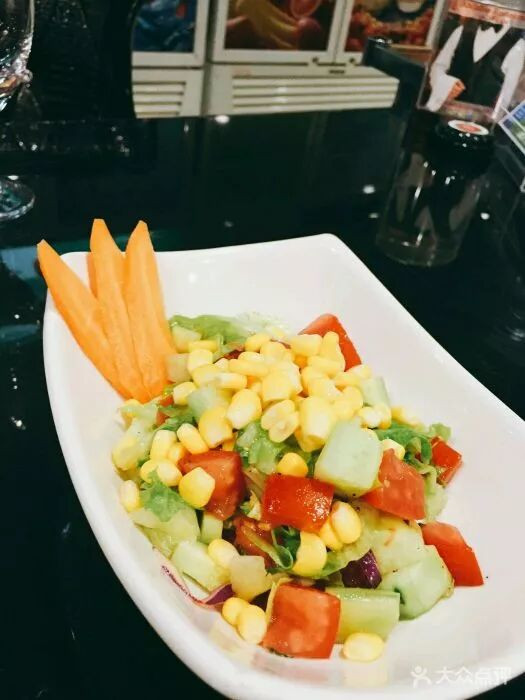
‘Forest First Snow’ is their brand new dessert. This dessert is so unique and visually stunning. The base is made of a creamy button mushroom cream with a soft texture, topped with sour cream, crispy bits, macerated button mushroom pieces pickled in preserved sour plums (huamei), and two crispy pieces of bread. Even people who hate mushrooms probably won't find the mushroom flavor overpowering, because the button mushrooms are handled so skillfully that the natural mushroom funk is minimal, leaving a tender, juicy texture where you can barely tell it's made from mushrooms. The overall flavor profile of the dessert is super complex, like a rich symphony. You can imagine walking across a mossy forest floor right after a fresh snowfall, with tree branches and pinecones resting under a thin layer of pristine snow, crunching under your boots as you walk; some snow is deeper while other patches are melting, and some are still pure white.
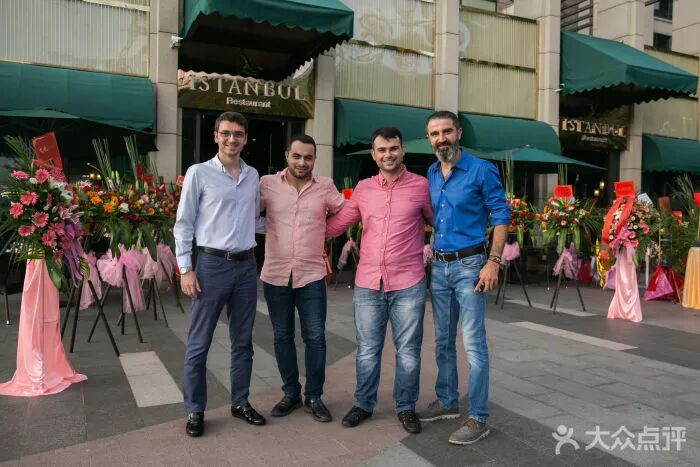
Stasen Kitchen Floral Western Cuisine
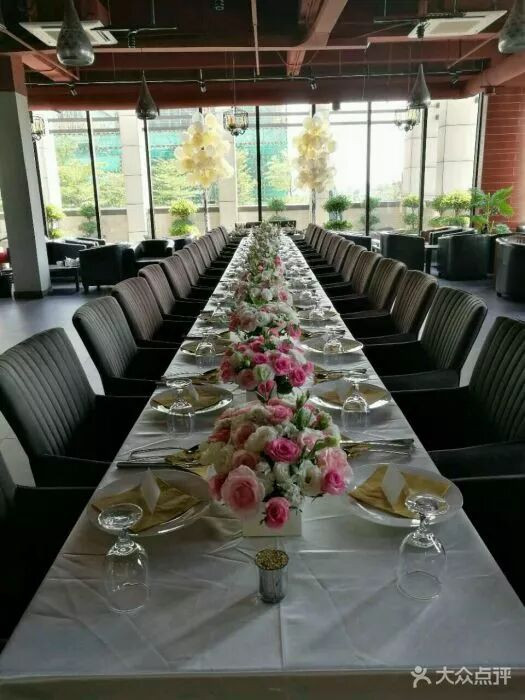
Must-try dishes: Char-grilled lamb chops with persimmon puree, Lemon vinaigrette shrimp salad, Lychee wood-fired charcoal grilled beef short ribs, Minty garlic seafood squid ink pasta
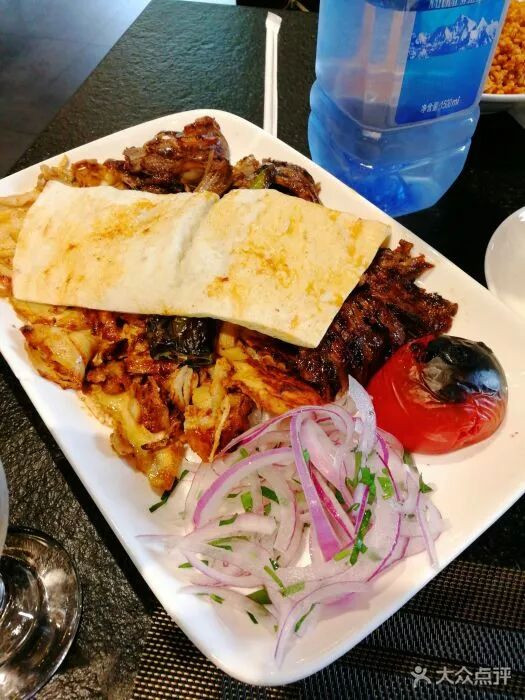
Avg. spend per person: 87 RMB
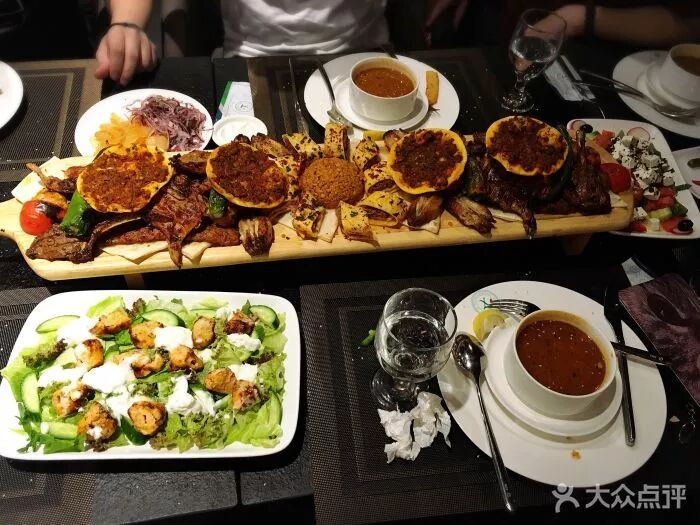
Address: 2nd Floor, Dongshan Jinxuan Modern City, Nonglinxia Road
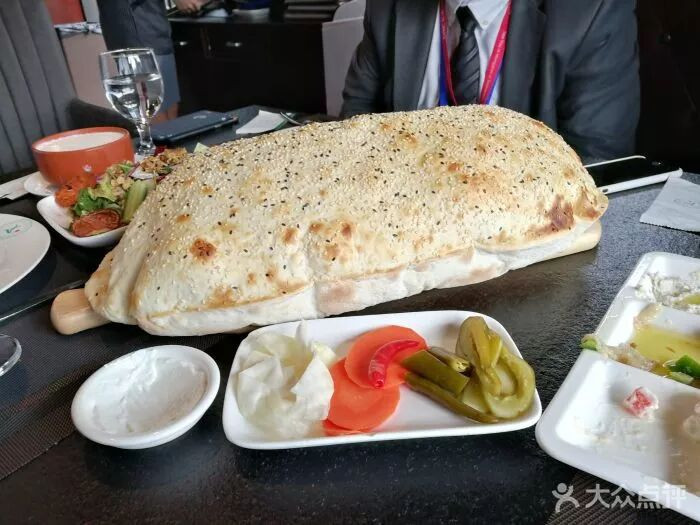
Phone: 13360008961
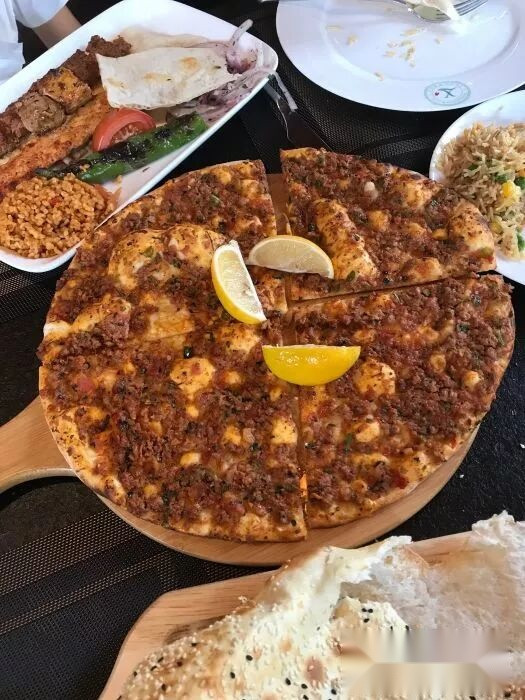
Mint Leaf Meets Sri Lanka
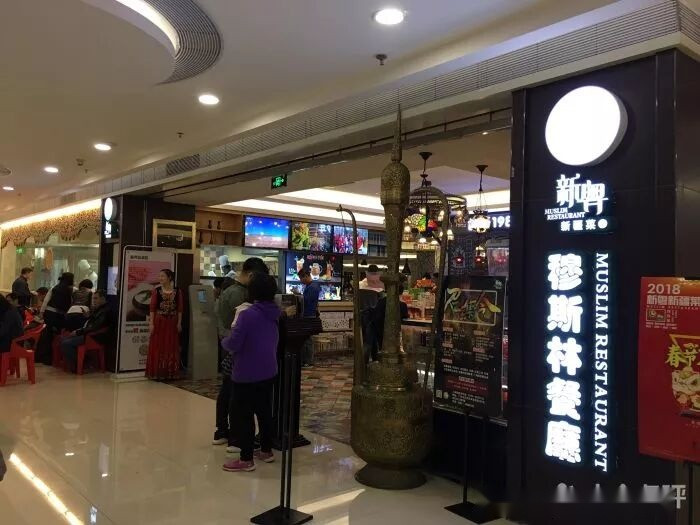
Mint Leaf Meets Sri Lanka is a specialty Muslim restaurant focusing on Sri Lankan flavors, and the interior design is packed with rich Islamic features! It's located at No. 233 Beijing Road, Beijing Street (diagonally opposite Lido Hotel, next to Goelia), about a 300-meter walk from Exit B of Beijing Road Station on Metro Line 6!
The 'Signature Beef Masala' is the restaurant's most recommended and must-order dish. You can choose your preferred spice level; most people find the regular spice level quite manageable. It's got beef, tomatoes, onions, and a definite spicy kick. Masala means 'spice,' and all curries contain many well-known Indian spices. However, this restaurant's version feels like it's been adapted, making it a bit milder in comparison. But eating it on its own, it still packs a punch, so it’s perfect with a bowl of white rice or the restaurant's special feibing (flying bread).
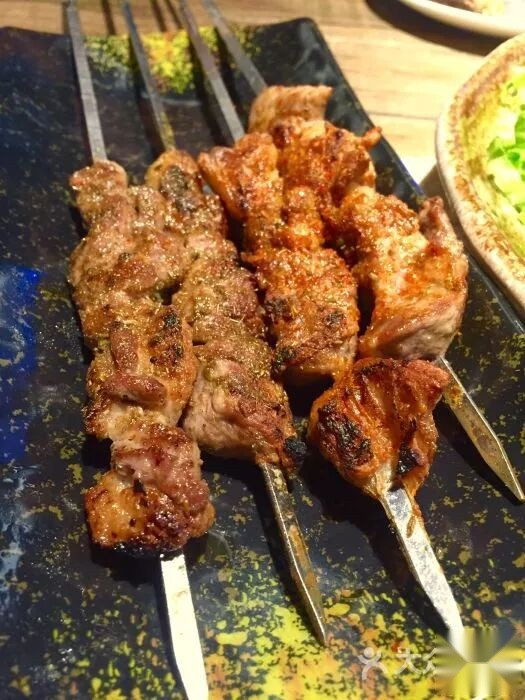
Feibing (flying bread) is another popular dish. They have many varieties like butter feibing, banana feibing, durian feibing, and more. You gotta eat feibing while it's hot; the crust is super crispy and fragrant. It also tastes amazing dipped in the masala sauce.
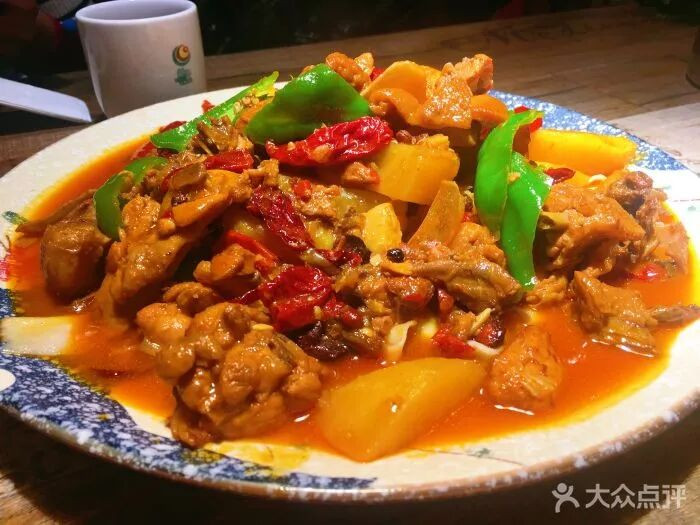
The 'Whole Pineapple Seafood Rice' is made with fresh pineapple. The tangy pineapple chunks cut through any richness, and it's loaded with ingredients. What's really special is the raisins inside – they actually pair surprisingly well with everything!
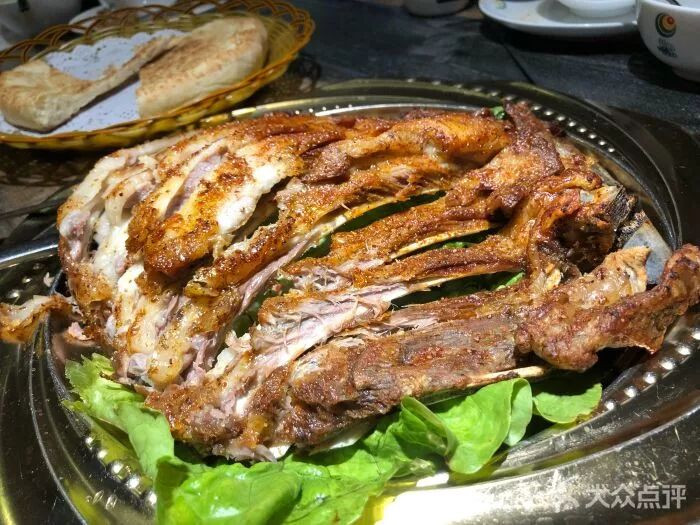
Their 'Thai Tom Yum Goong' is the kind you'll want another bowl of after finishing the first. It looks quite light, but it’s actually sour and spicy. The spices are super aromatic and totally get your appetite going.
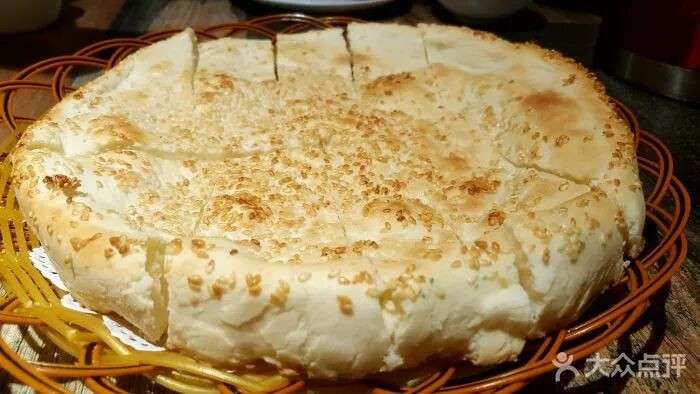
The 'Filipino Grilled Prawns' are large, grilled prawns seasoned with salt and pepper. The shells are super crispy, and the flavor is awesome.
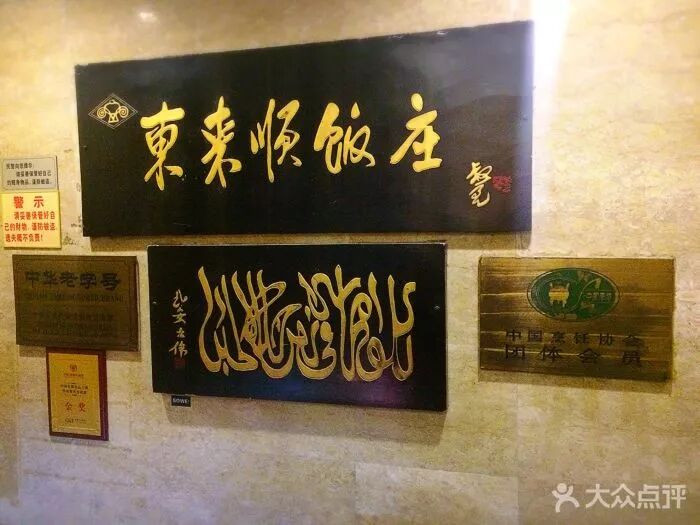
Mint Leaf Meets Sri Lanka
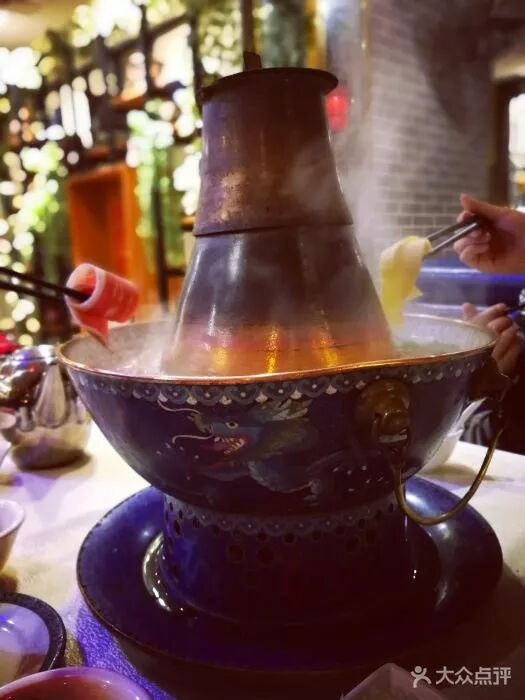
Must-try dishes: Signature Beef Masala, Signature Indian Pulled Tea, Durian Feibing (flying bread), Whole Pineapple Seafood Rice
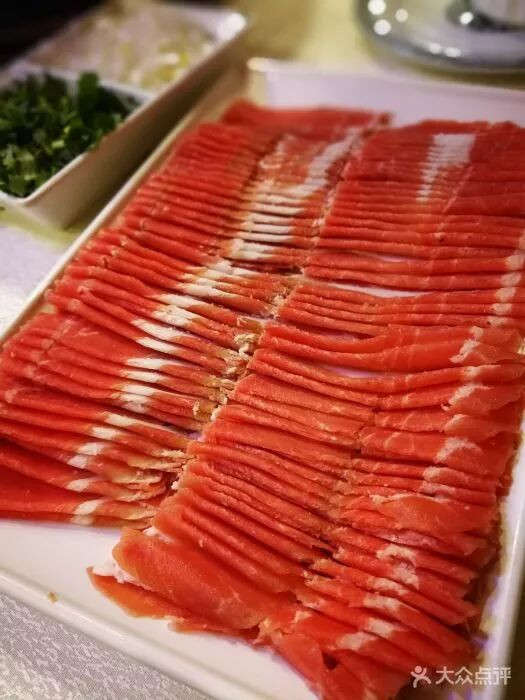
Avg. spend per person: 84 RMB
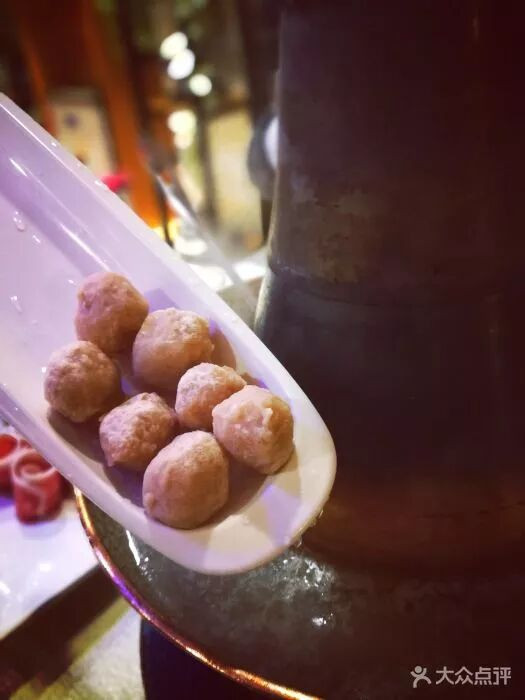
Address: No. 223 Beijing Road, Beijing Street (diagonally opposite Lido Hotel, next to Goelia)
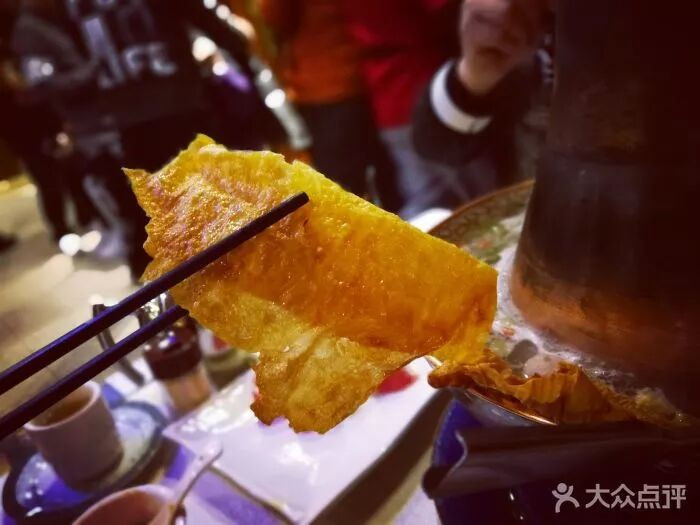
Phone: 020-83333269, 020-83333993
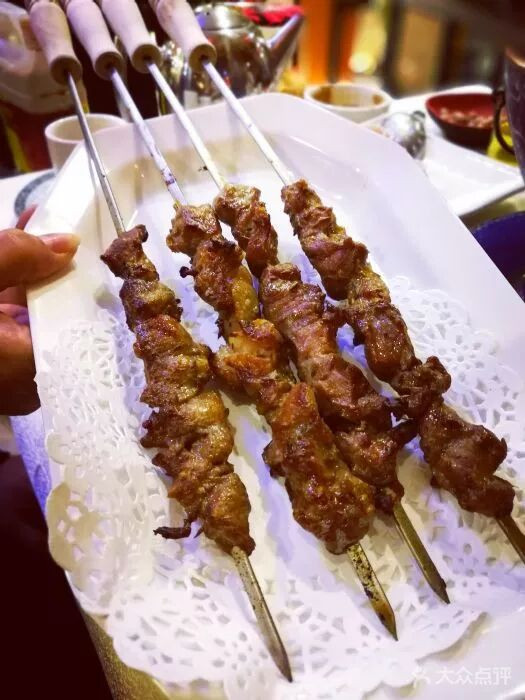
Antalya Turkish Restaurant (formerly Andalus Arabic Restaurant)
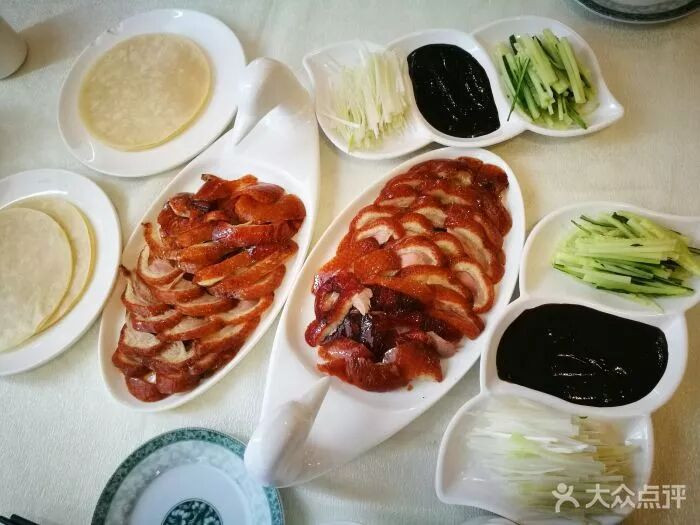
The area around Xiaobei Metro Station in Guangzhou is a hotspot for foreigners, including many Arab merchants and Africans who live here year-round. This has naturally led to a boom in Arabic and Turkish restaurants. Andalus Arabic Restaurant opened in 2014 and has maintained a good reputation since. It's now rebranded as 'Antalya Turkish Restaurant,' so don't get lost trying to find it!
The 'Mixed Grill' comes with a lamb roll, a beef roll, and a chicken skewer, served with grilled green peppers, tomatoes, and two pieces of soft flatbread. The meats are perfectly seasoned and super tasty, especially the lamb which is incredibly aromatic and fatty. The side dishes are fresh, natural-flavored veggies, light and pleasant, creating a great balance with the meat.
The 'Turkish Pide' is seriously good. It's topped with minced lamb, and if you eat it hot, it's incredibly fragrant. The thin crust is super crispy, with a hint of lamb aroma – a fantastic texture.
The 'Mixed Sliced Kebab' only has chicken and beef. The chicken can be a bit dry, and the beef is grilled to be somewhat like stewed beef. It tastes great wrapped in bread/flatbread. Overall, the flavor isn't too salty, but you can add your own pepper and salt. If you prefer just one type of meat or have dietary restrictions, you can order them separately.
The 'Herb Salad' is an absolute perfect match for the meat dishes. It has diced tomatoes and some kind of gourd, like a mini-cucumber or zucchini. It's sweet and sour, crisp, and incredibly refreshing.
Antalya Turkish Restaurant
Must-try dishes: Mixed Grill, Mixed Sliced Kebab, Turkish Pide, Turkish Bread, Herb Salad
Avg. spend per person: 80 RMB
Address: Shop 03, 1st-2nd Floor, Zhaoqing Building, No. 304 Huanshizhong Road (Xiaobei Metro Station, Exit A)
Phone: No phone number available
XL Istanbul Restaurant & Cafe Halal Western Restaurant
This Turkish restaurant is run by authentic Turkish guys. Most of the staff are foreigners, but their Chinese is excellent, so you won't have any communication issues.
The restaurant's interior is decorated like a Western bistro, with a massive space that easily seats over a hundred people. It's an awesome choice for throwing Western-style wedding banquets or birthday parties.
Actually, Turkish and Arabic food styles are pretty similar, so I won't go through them one by one, but this spot's grilled meat platter is seriously impressive—total carnivores definitely need to check it out. Guangzhou also has a bunch of other great Turkish restaurants; if you're into this kind of food, you should totally take some time to try them all and compare.
XL Istanbul Restaurant & Cafe (Halal Western Restaurant)
Top recommendations: Turkish mixed grill with hummus, hollow giant bread, Turkish beef kebab, baked fresh prawns in tomato sauce.
Average cost: 135 RMB per person
Address: Shop 112, No. 1 Chenyue Road (next to the West Gate 1 of Poly Tianyue)
Phone: 020-89114450, 020-89114460
If Western or foreign cuisines aren't really your vibe, there are still plenty of fantastic Halal Chinese restaurants to choose from.
Xinyue Muslim Restaurant (Xinjiang Cuisine Theme Restaurant)
This classic Xinjiang spot has been open for nearly 30 years. It originally started in the Xinjiang Mansion, and plenty of locals literally grew up eating here. It's located on the 3rd floor of the Kaisa Plaza inside the Sinopec Building, just a short walk out of Exit B of Linhexi Metro Station.
Right now, it's ranked number one on Dianping's trending list for Northwest Chinese food in Guangzhou, so you'll usually have to wait in line during peak hours~
Lamb skewers, dapanji (Xinjiang big plate chicken), grilled lamb chops, nang (baked flatbread)... for all my Muslim foodie friends out there, I probably don't even need to introduce these classics...
Xinyue Muslim Restaurant (Xinjiang Cuisine Theme Restaurant)
Top recommendations: Xinjiang lamb skewers, signature grilled lamb chops, Xinjiang nang (baked flatbread), Xinjiang dapanji (Xinjiang big plate chicken), Xinjiang liangpi (cold skin noodles).
Average cost: 95 RMB per person
Address: 3rd Floor, Kaisa Plaza, Sinopec Building, No. 191 Tiyuxi Road (Direct access to Sinopec Building via Exit B of Linhexi Metro Station)
Phone: 020-38680585, 020-38680586
Donglaishun Halal Restaurant
If you're craving hot pot shuan yangrou (instant-boiled mutton) and Beijing cuisine, Donglaishun is a solid choice. Even though Donglaishun has branches all over the country and hot pot is notoriously hard to standardize—meaning the flavor can't totally match the original Beijing flagship—it's still super comforting to find a familiar brand when you're far from home.
The shuan yangrou hot pot still uses traditional cloisonné charcoal pots, and the soul of the hot pot—the dipping sauce—is now uniformly processed by their factory, so the flavor is actually pretty good~
You can grab a couple of grilled skewers on the side to tide you over while the meat cooks~
Word has it that Quanjude used to have a branch in Guangzhou, but it didn't do too well and ended up closing down. So if you're craving roast duck, Donglaishun's version is definitely worth a try.
Donglaishun Halal Restaurant • Mutton Hot Pot (Hengfu Road Flagship Store)
Top recommendations: Shuan yangrou (instant-boiled mutton), Donglaishun's secret recipe lamb skewers, classic marbled beef, Beijing roast duck.
Average cost: 140 RMB per person
Address: 2nd Floor, Meizhou Building, No. 338 Hengfu Road (near the Auto Parts City)
Phone: 020-83586596, 020-83488197
Gaoyuan Guniang Handmade Lamian (Plateau Girl Handmade Lamian)
If nothing else is hitting the spot, getting a bowl of lamian (hand-pulled noodles) is never the wrong move. Gaoyuan Guniang Handmade Lamian serves up Qinghai beef noodles. They started out in Changsha, built their own brand, and have since expanded to cities everywhere. Their Guangdong branch gets amazing reviews, and tons of people make a special trip just to try it out.
It's everything lamian should be: crystal-clear broth, white noodles, a few slices of beef, and a dusting of chili oil. Suddenly, the foodie inside me is craving a bowl of noodles...
The yangrou chuan (skewers of grilled lamb) are grilled to absolute perfection, too~
Even the tableware has such a unique and gorgeous vibe.
While digging for content, I randomly stumbled across a video about this spot. It tells the incredible journey of a young woman from Qinghai who started from scratch to build her very own brand. I'm honestly so hyped to see Qinghai hand-pulled noodles—which have popped up all over China—evolving past the old 'Lanzhou beef noodles' 1.0 era to finally establish their own distinct identity and service style. I know they're gonna take things global someday soon.
Halal Gaoyuan Guniang Shougo Lamian / Qinghai Hand-Pulled Noodles (Capitalland·Yunshang Branch)
Recommended dishes: niurou lamian (beef hand-pulled noodles), yangrou chuan (grilled lamb skewers), lao suan nai (traditional fermented yogurt), kao yangpai (roasted lamb chops), xiaopan niurou (small-plate braised beef)
Average price per person: 36 RMB
Address: Basement Level 1, Capitalland Yunshang, 890 Yuncheng West Road (10-meter walk from Exit A)
Phone: 020-86210297 Collapse Read »
Must-Try Halal Restaurants in Guangzhou: A Guide from Authentic Cantonese Halal Cuisine to Northwest Hand-Grabbed Lamb
Abstract:
A handpicked selection of Guangzhou's top-rated and most distinctive halal restaurants. Covering traditional Cantonese halal hot dishes, authentic Lanzhou beef noodles, and Northwest shouzhua yangrou (hand-grabbed lamb), this guide provides a reliable and detailed culinary map for both locals and travelers.
Hey everyone! It's been a little over a month, and all you friends have been sliding into my DMs asking for a new post.
This week, I've put together a guide to the halal dining scene in Guangzhou. Ever since the Tang Dynasty, Guangzhou has been a major overseas trade hub in China. As a key city on China's southeast coast, the starting point of the Maritime Silk Road, and one of the earliest trading ports, waves of Arab and Southeast Asian Muslim merchants came here to do business, intermarry with locals, and settle down...
Back then, Guangzhou was home to the largest number of wealthy Arab merchants. With the support of the local government, they built a grand mosque—today's Huaisheng Mosque (Light Pagoda Mosque). The mosque's name expresses the deep respect and longing for the Prophet Muhammad shared by believers both at home and abroad. Also known as the Lion Mosque and colloquially as the Guangta Temple, Huaisheng Mosque is one of the four ancient mosques in China (I wrote about Hangzhou's Phoenix Mosque before—feel free to click and check it out if you're interested) and stands as the oldest surviving mosque architecture in the country.
With such a rich cultural vibe, Guangzhou actually has plenty of halal restaurants. You can find halal Cantonese cuisine, Xinjiang food, Northwest cuisine, Southeast Asian food, Turkish food, and Arab dishes all right here in Guangzhou... Today, I'm sharing a few unique halal spots with you~
Guangzhou Muslim Restaurant (Huimin Restaurant)
The predecessor of Guangzhou Muslim Restaurant was the Guangzhou Halal Cafeteria founded in 1956. Back then, the cafeteria mainly specialized in shaola (Cantonese roasted meats / roast duck), with a kitchen crew made up of master chefs from Gaosheng Teahouse, the Hui Fengcheng Roast Meat Shop, and the Halal Deji Roast Meat Shop. In 1959, the halal cafeteria was reorganized into the Huimin Restaurant, moving to its current location on Zhongshan 6th Road in 1975. In early 1994, Guangzhou Muslim Restaurant became a Sino-Hong Kong joint venture. Along with a complete interior remodel, they brought in a famous Hong Kong chef who layered Hong Kong-style cooking techniques on top of traditional Guangzhou halal eats, ultimately shaping the Huimin Restaurant we know and love today.
The signature scallion pancakes are a must-order for every table. Crispy on the outside and tender on the inside, sprinkled with little bits of emerald-green chopped scallions across the top, they taste incredible~
The mutton char siu buns are a specialty pastry at Huimin Restaurant. One reviewer shared: 'I totally love the "springy mutton char siu buns" made right here! They look just like regular pork char siu pork buns, but the filling is lamb. It has this wonderful, rich mutton aroma, it's super soft, and you've gotta eat 'em while they're hot!'
If the steamed buns aren't enough, you can order a standalone plate of honey-glazed mutton char siu. Made by roasting lamb, it looks identical to the forbidden pork char siu found out on the streets, but it's 100% made from halal lamb, featuring that unique, rich mutton gamey flavor and incredibly tender meat. Foodies who have never been able to try "char siu" can finally get a taste~
Braised squab is one of traditional Cantonese culinary masterpieces, belonging to the Cantonese food family. There's an old folk saying in China that goes, 'A single pigeon beats nine chickens.' Braised squab is crispy on the outside and tender on the inside. Most people don't even spare the bones when eating braised squab because the birds are simmered in master stock and then deep-fried, making the flavor go all the way down to the bone. The braised squab at Huimin Restaurant is also in super high demand, so if you want to try authentic Cantonese flavors, you've got to get there early~
The steamed beef meatballs pack a rich beef punch, packed with tiny pieces of crunchy, sweet water chestnut and a delicate whisper of aged tangerine peel.
Har gow (shrimp dumplings), 16 RMB a basket—the wrappers are translucent without sticking to your teeth, the shrimp are fresh and snappy, paired with bamboo shoot strips. So delicious!
Huimin crispy roast goose: Golden in color, with crackling skin, juicy meat, and rich, savory meat juices. It looks seriously appetizing~
They also serve a niu-yang za tang (hearty organ meat soup made from beef and lamb offal) loaded with ingredients—definitely not the same flavor profile as northern lamb soups~
This has got to be the most authentic halal Cantonese food on the mainland. In short, you've gotta check it out next time you visit Guangzhou~
Guangzhou Muslim Restaurant (Huimin Restaurant)
Recommended dishes: Signature Scallion Pancakes, Braised Squab, Springy Mutton Char Siu Buns, Har Gow (Shrimp Dumplings)
Average cost per person: 56 RMB
Address: No. 325, Zhongshan 6th Road (Exit A of Ximenkou Metro Station, turn left and walk 50 meters)
Phone: 020-81303991
Stason Chef & Floral Western Restaurant
A Chinese-run halal Western restaurant with an incredible vibe. The interior design is gorgeous, filled with flowers everywhere like a half-flower shop. It's super easy to get drawn in just walking past it~ The location is very easy to find, right outside Exit C of Dongshankou Metro Station.
The 'Charcoal-Grilled Lamb Chops with Persimmon Puree' hits all the right notes: tender, juicy. This time, they even added a little crunch on top of the lamb chops, which tasted like toasted garlic bits, adding great textural layers to the whole dish. The side veggies feature finger carrots, skin-on baby potatoes, and mini mushrooms roasted in olive oil and salt, preserving the natural flavors of the vegetables.
The 'Lemon Vinaigrette Shrimp Salad' is packed with details. You wouldn't expect a simple salad to be this satisfying. The balsamic vinaigrette is sweet, tangy, and layered with a wonderful fruity acidity. The shrimp are marinated, and you can actually taste a fruity sweetness—I later found out they marinate them in lychee juice, which shows a lot of thought. The lettuce is super fresh, and the roasted pumpkin mixed in is amazing. They use top-tier New Zealand mini pumpkins, simply roasted and tossed into the salad, delivering killer texture and sweetness. Absolute MVP of the meal.
The 'Mint Garlic Seafood Squid Ink Pasta' is super tasty with an intense seafood punch, heavy garlic notes, and a subtle, clever hint of fresh mint.
The 'Tomahawk Steak' is a newly launched menu item with a huge, hearty portion. The medium-rare steak is incredible. This time, we asked the chef to use the sous-vide low-temperature slow-cooking method. When the knife cuts into it at the table, there are tons of meat juices, the meat is tender, and every bite fills your mouth with savory juices—so satisfying. It comes with two sauces: one is a black pepper sauce where the pepper flavor is dialed back a bit to let the natural beef flavor shine through, and the other is a yellow sauce with a slight tang that pairs exceptionally well with the rich beef fat.
‘Forest First Snow’ is their brand new dessert. This dessert is so unique and visually stunning. The base is made of a creamy button mushroom cream with a soft texture, topped with sour cream, crispy bits, macerated button mushroom pieces pickled in preserved sour plums (huamei), and two crispy pieces of bread. Even people who hate mushrooms probably won't find the mushroom flavor overpowering, because the button mushrooms are handled so skillfully that the natural mushroom funk is minimal, leaving a tender, juicy texture where you can barely tell it's made from mushrooms. The overall flavor profile of the dessert is super complex, like a rich symphony. You can imagine walking across a mossy forest floor right after a fresh snowfall, with tree branches and pinecones resting under a thin layer of pristine snow, crunching under your boots as you walk; some snow is deeper while other patches are melting, and some are still pure white.
Stasen Kitchen Floral Western Cuisine
Must-try dishes: Char-grilled lamb chops with persimmon puree, Lemon vinaigrette shrimp salad, Lychee wood-fired charcoal grilled beef short ribs, Minty garlic seafood squid ink pasta
Avg. spend per person: 87 RMB
Address: 2nd Floor, Dongshan Jinxuan Modern City, Nonglinxia Road
Phone: 13360008961
Mint Leaf Meets Sri Lanka
Mint Leaf Meets Sri Lanka is a specialty Muslim restaurant focusing on Sri Lankan flavors, and the interior design is packed with rich Islamic features! It's located at No. 233 Beijing Road, Beijing Street (diagonally opposite Lido Hotel, next to Goelia), about a 300-meter walk from Exit B of Beijing Road Station on Metro Line 6!
The 'Signature Beef Masala' is the restaurant's most recommended and must-order dish. You can choose your preferred spice level; most people find the regular spice level quite manageable. It's got beef, tomatoes, onions, and a definite spicy kick. Masala means 'spice,' and all curries contain many well-known Indian spices. However, this restaurant's version feels like it's been adapted, making it a bit milder in comparison. But eating it on its own, it still packs a punch, so it’s perfect with a bowl of white rice or the restaurant's special feibing (flying bread).
Feibing (flying bread) is another popular dish. They have many varieties like butter feibing, banana feibing, durian feibing, and more. You gotta eat feibing while it's hot; the crust is super crispy and fragrant. It also tastes amazing dipped in the masala sauce.
The 'Whole Pineapple Seafood Rice' is made with fresh pineapple. The tangy pineapple chunks cut through any richness, and it's loaded with ingredients. What's really special is the raisins inside – they actually pair surprisingly well with everything!
Their 'Thai Tom Yum Goong' is the kind you'll want another bowl of after finishing the first. It looks quite light, but it’s actually sour and spicy. The spices are super aromatic and totally get your appetite going.
The 'Filipino Grilled Prawns' are large, grilled prawns seasoned with salt and pepper. The shells are super crispy, and the flavor is awesome.
Mint Leaf Meets Sri Lanka
Must-try dishes: Signature Beef Masala, Signature Indian Pulled Tea, Durian Feibing (flying bread), Whole Pineapple Seafood Rice
Avg. spend per person: 84 RMB
Address: No. 223 Beijing Road, Beijing Street (diagonally opposite Lido Hotel, next to Goelia)
Phone: 020-83333269, 020-83333993
Antalya Turkish Restaurant (formerly Andalus Arabic Restaurant)
The area around Xiaobei Metro Station in Guangzhou is a hotspot for foreigners, including many Arab merchants and Africans who live here year-round. This has naturally led to a boom in Arabic and Turkish restaurants. Andalus Arabic Restaurant opened in 2014 and has maintained a good reputation since. It's now rebranded as 'Antalya Turkish Restaurant,' so don't get lost trying to find it!
The 'Mixed Grill' comes with a lamb roll, a beef roll, and a chicken skewer, served with grilled green peppers, tomatoes, and two pieces of soft flatbread. The meats are perfectly seasoned and super tasty, especially the lamb which is incredibly aromatic and fatty. The side dishes are fresh, natural-flavored veggies, light and pleasant, creating a great balance with the meat.
The 'Turkish Pide' is seriously good. It's topped with minced lamb, and if you eat it hot, it's incredibly fragrant. The thin crust is super crispy, with a hint of lamb aroma – a fantastic texture.
The 'Mixed Sliced Kebab' only has chicken and beef. The chicken can be a bit dry, and the beef is grilled to be somewhat like stewed beef. It tastes great wrapped in bread/flatbread. Overall, the flavor isn't too salty, but you can add your own pepper and salt. If you prefer just one type of meat or have dietary restrictions, you can order them separately.
The 'Herb Salad' is an absolute perfect match for the meat dishes. It has diced tomatoes and some kind of gourd, like a mini-cucumber or zucchini. It's sweet and sour, crisp, and incredibly refreshing.
Antalya Turkish Restaurant
Must-try dishes: Mixed Grill, Mixed Sliced Kebab, Turkish Pide, Turkish Bread, Herb Salad
Avg. spend per person: 80 RMB
Address: Shop 03, 1st-2nd Floor, Zhaoqing Building, No. 304 Huanshizhong Road (Xiaobei Metro Station, Exit A)
Phone: No phone number available
XL Istanbul Restaurant & Cafe Halal Western Restaurant
This Turkish restaurant is run by authentic Turkish guys. Most of the staff are foreigners, but their Chinese is excellent, so you won't have any communication issues.
The restaurant's interior is decorated like a Western bistro, with a massive space that easily seats over a hundred people. It's an awesome choice for throwing Western-style wedding banquets or birthday parties.
Actually, Turkish and Arabic food styles are pretty similar, so I won't go through them one by one, but this spot's grilled meat platter is seriously impressive—total carnivores definitely need to check it out. Guangzhou also has a bunch of other great Turkish restaurants; if you're into this kind of food, you should totally take some time to try them all and compare.
XL Istanbul Restaurant & Cafe (Halal Western Restaurant)
Top recommendations: Turkish mixed grill with hummus, hollow giant bread, Turkish beef kebab, baked fresh prawns in tomato sauce.
Average cost: 135 RMB per person
Address: Shop 112, No. 1 Chenyue Road (next to the West Gate 1 of Poly Tianyue)
Phone: 020-89114450, 020-89114460
If Western or foreign cuisines aren't really your vibe, there are still plenty of fantastic Halal Chinese restaurants to choose from.
Xinyue Muslim Restaurant (Xinjiang Cuisine Theme Restaurant)
This classic Xinjiang spot has been open for nearly 30 years. It originally started in the Xinjiang Mansion, and plenty of locals literally grew up eating here. It's located on the 3rd floor of the Kaisa Plaza inside the Sinopec Building, just a short walk out of Exit B of Linhexi Metro Station.
Right now, it's ranked number one on Dianping's trending list for Northwest Chinese food in Guangzhou, so you'll usually have to wait in line during peak hours~
Lamb skewers, dapanji (Xinjiang big plate chicken), grilled lamb chops, nang (baked flatbread)... for all my Muslim foodie friends out there, I probably don't even need to introduce these classics...
Xinyue Muslim Restaurant (Xinjiang Cuisine Theme Restaurant)
Top recommendations: Xinjiang lamb skewers, signature grilled lamb chops, Xinjiang nang (baked flatbread), Xinjiang dapanji (Xinjiang big plate chicken), Xinjiang liangpi (cold skin noodles).
Average cost: 95 RMB per person
Address: 3rd Floor, Kaisa Plaza, Sinopec Building, No. 191 Tiyuxi Road (Direct access to Sinopec Building via Exit B of Linhexi Metro Station)
Phone: 020-38680585, 020-38680586
Donglaishun Halal Restaurant
If you're craving hot pot shuan yangrou (instant-boiled mutton) and Beijing cuisine, Donglaishun is a solid choice. Even though Donglaishun has branches all over the country and hot pot is notoriously hard to standardize—meaning the flavor can't totally match the original Beijing flagship—it's still super comforting to find a familiar brand when you're far from home.
The shuan yangrou hot pot still uses traditional cloisonné charcoal pots, and the soul of the hot pot—the dipping sauce—is now uniformly processed by their factory, so the flavor is actually pretty good~
You can grab a couple of grilled skewers on the side to tide you over while the meat cooks~
Word has it that Quanjude used to have a branch in Guangzhou, but it didn't do too well and ended up closing down. So if you're craving roast duck, Donglaishun's version is definitely worth a try.
Donglaishun Halal Restaurant • Mutton Hot Pot (Hengfu Road Flagship Store)
Top recommendations: Shuan yangrou (instant-boiled mutton), Donglaishun's secret recipe lamb skewers, classic marbled beef, Beijing roast duck.
Average cost: 140 RMB per person
Address: 2nd Floor, Meizhou Building, No. 338 Hengfu Road (near the Auto Parts City)
Phone: 020-83586596, 020-83488197
Gaoyuan Guniang Handmade Lamian (Plateau Girl Handmade Lamian)
If nothing else is hitting the spot, getting a bowl of lamian (hand-pulled noodles) is never the wrong move. Gaoyuan Guniang Handmade Lamian serves up Qinghai beef noodles. They started out in Changsha, built their own brand, and have since expanded to cities everywhere. Their Guangdong branch gets amazing reviews, and tons of people make a special trip just to try it out.
It's everything lamian should be: crystal-clear broth, white noodles, a few slices of beef, and a dusting of chili oil. Suddenly, the foodie inside me is craving a bowl of noodles...
The yangrou chuan (skewers of grilled lamb) are grilled to absolute perfection, too~
Even the tableware has such a unique and gorgeous vibe.
While digging for content, I randomly stumbled across a video about this spot. It tells the incredible journey of a young woman from Qinghai who started from scratch to build her very own brand. I'm honestly so hyped to see Qinghai hand-pulled noodles—which have popped up all over China—evolving past the old 'Lanzhou beef noodles' 1.0 era to finally establish their own distinct identity and service style. I know they're gonna take things global someday soon.
Halal Gaoyuan Guniang Shougo Lamian / Qinghai Hand-Pulled Noodles (Capitalland·Yunshang Branch)
Recommended dishes: niurou lamian (beef hand-pulled noodles), yangrou chuan (grilled lamb skewers), lao suan nai (traditional fermented yogurt), kao yangpai (roasted lamb chops), xiaopan niurou (small-plate braised beef)
Average price per person: 36 RMB
Address: Basement Level 1, Capitalland Yunshang, 890 Yuncheng West Road (10-meter walk from Exit A)
Phone: 020-86210297 Collapse Read »
Ultimate Guide to Guangzhou Halal Food & Historic Mosques: Maritime Silk Road Muslim Heritage
[Internet Repost]
Ultimate Guangzhou Muslim Culture Travel Guide: Millennial Mosques, Maritime Silk Road Relics, and Halal Food Neighborhoods
Abstract:
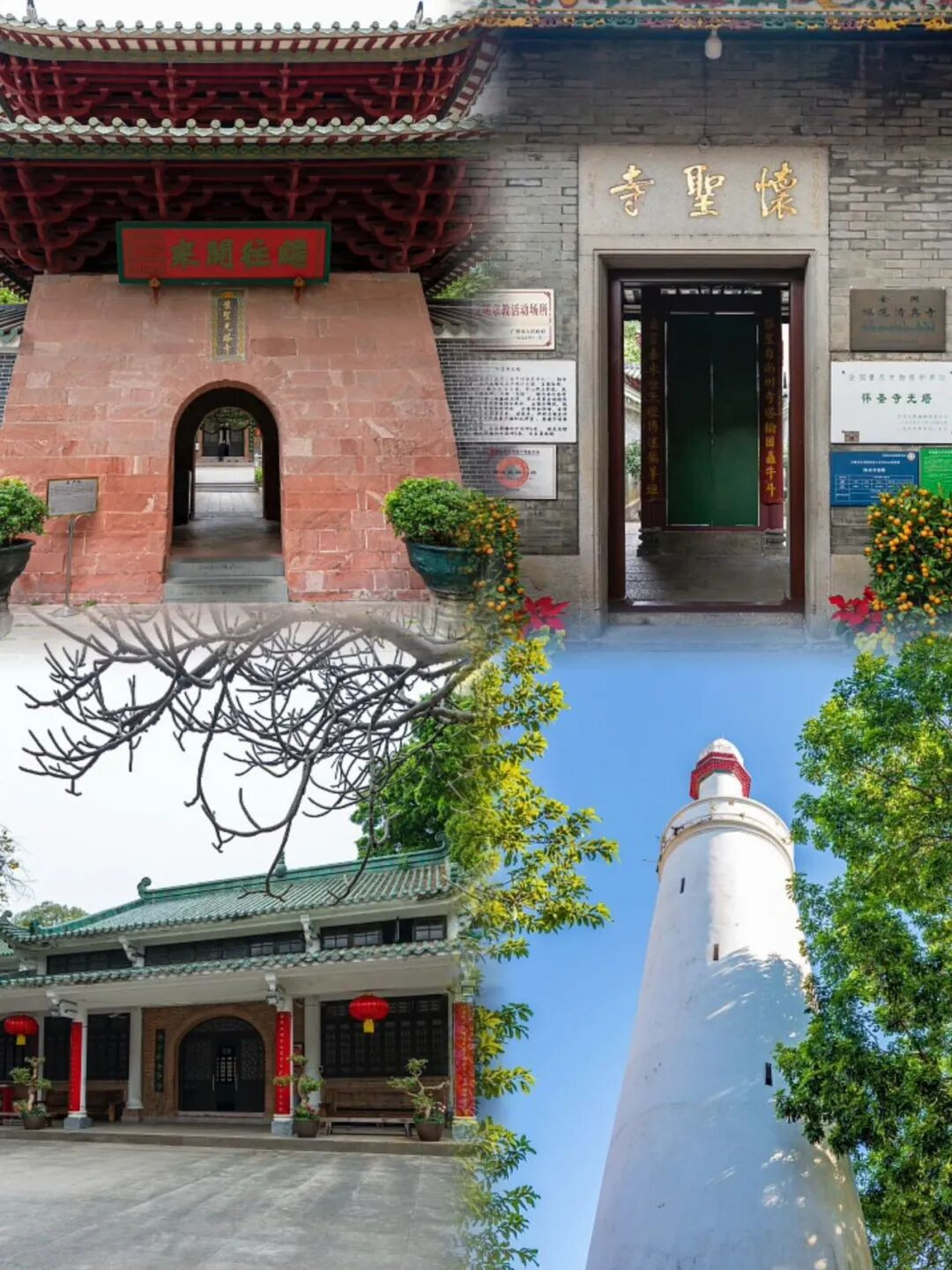
An in-depth Guangzhou travel guide tailored for fellow Muslims and culture lovers. Connecting millennium-old Maritime Silk Road heritage sites like Huaisheng Mosque and Xianxian Mosque, combined with the Yuexiu and Xiaobei Halal food districts, it showcases the city's rich Islamic cultural landscape.
Guangzhou is an international metropolis with a millennium of Muslim cultural heritage. Since the Tang Dynasty, it has been a vital port along the Maritime Silk Road.
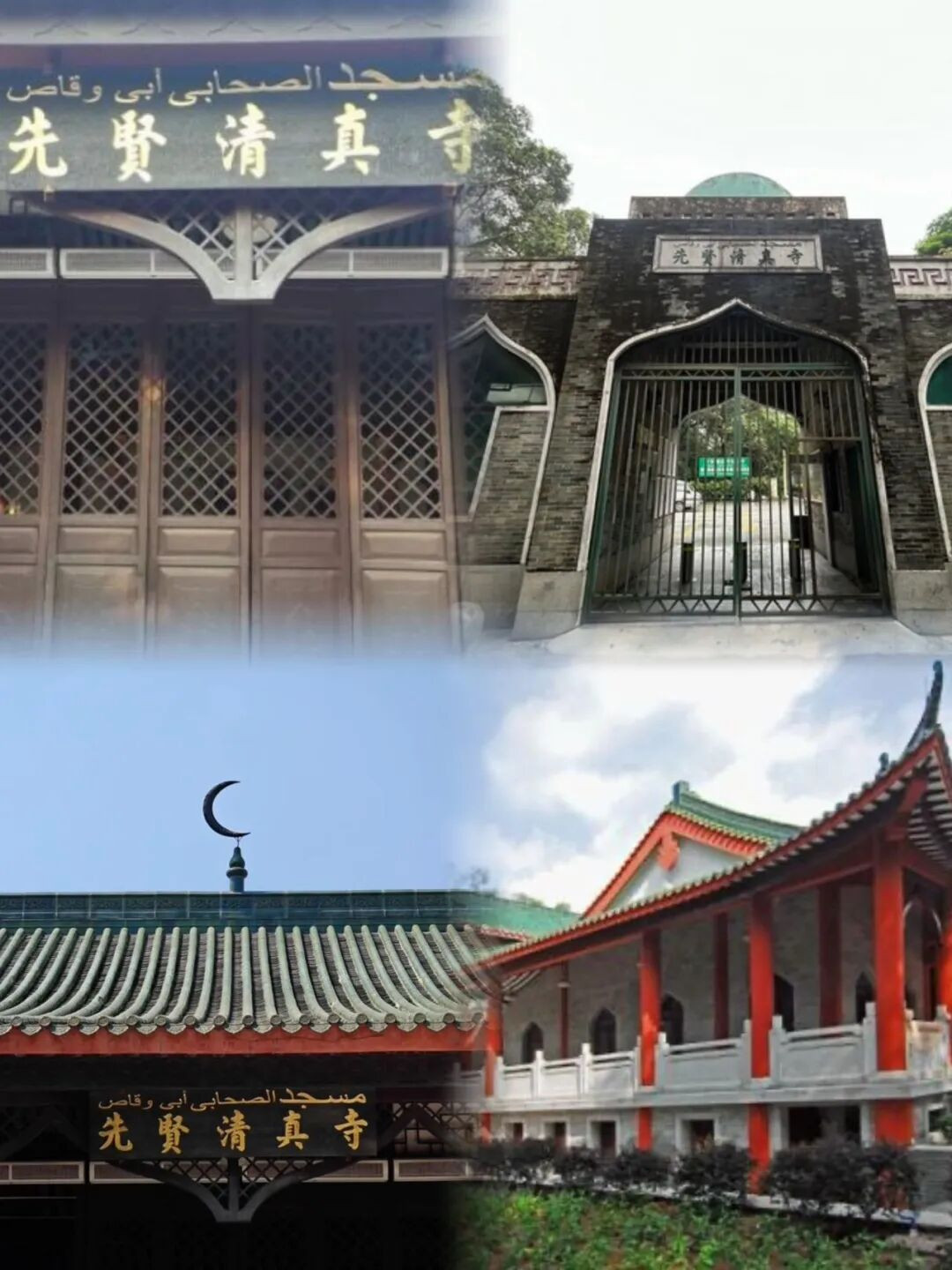
Guangzhou, also known as the City of Rams or the Flower City (Canton), is the capital of Guangdong Province, a national center city, a core engine of the Guangdong-Hong Kong-Macao Greater Bay Area, an ancient trading city whose port has never closed for over 2,200 years, and an open, inclusive modern international metropolis.
First things first, I'm sure everyone is curious about the places of worship:
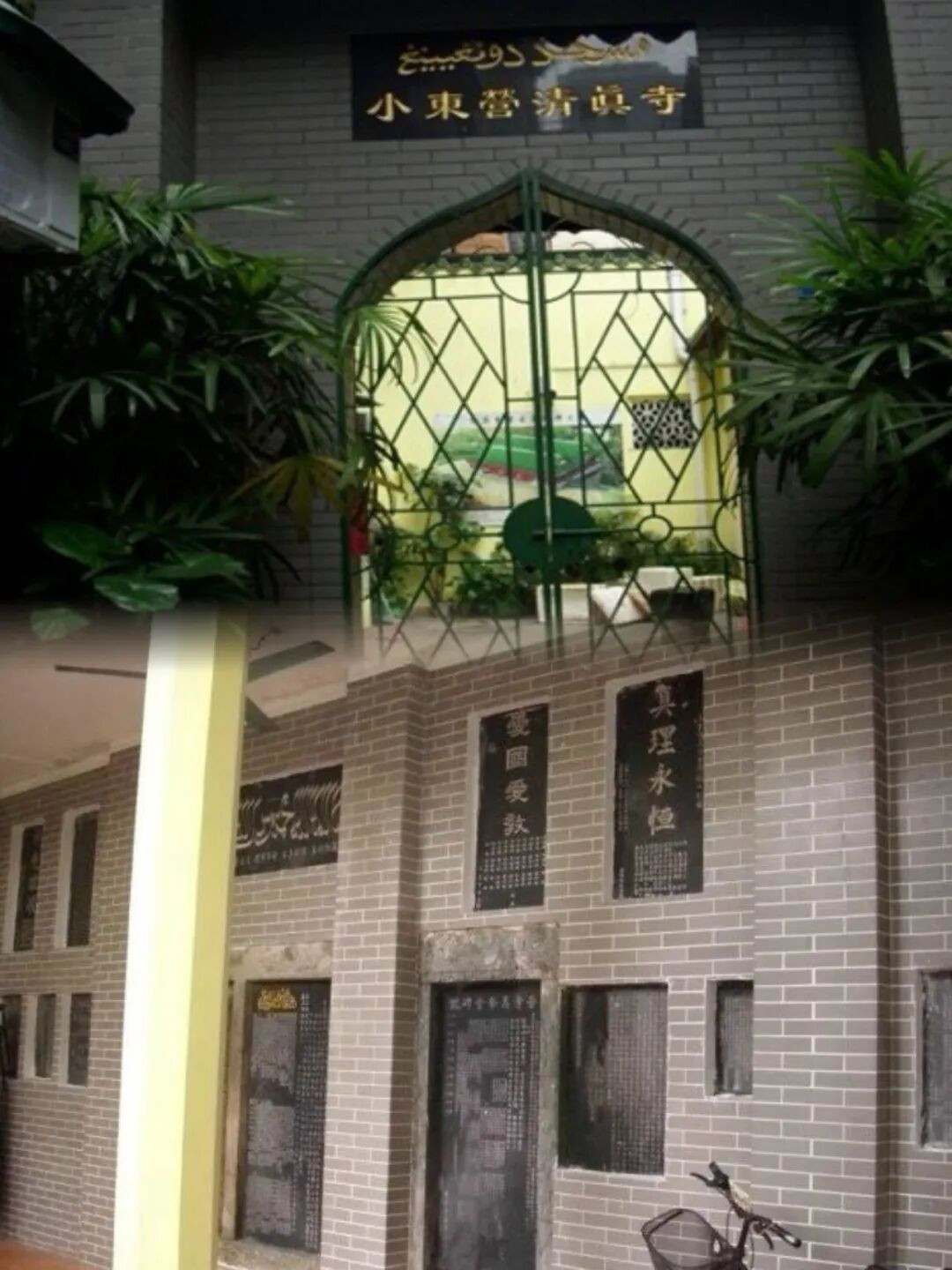
1. Huaisheng Mosque (Light Pagoda Mosque)
· Address: No. 56 Guangta Road, Yuexiu District
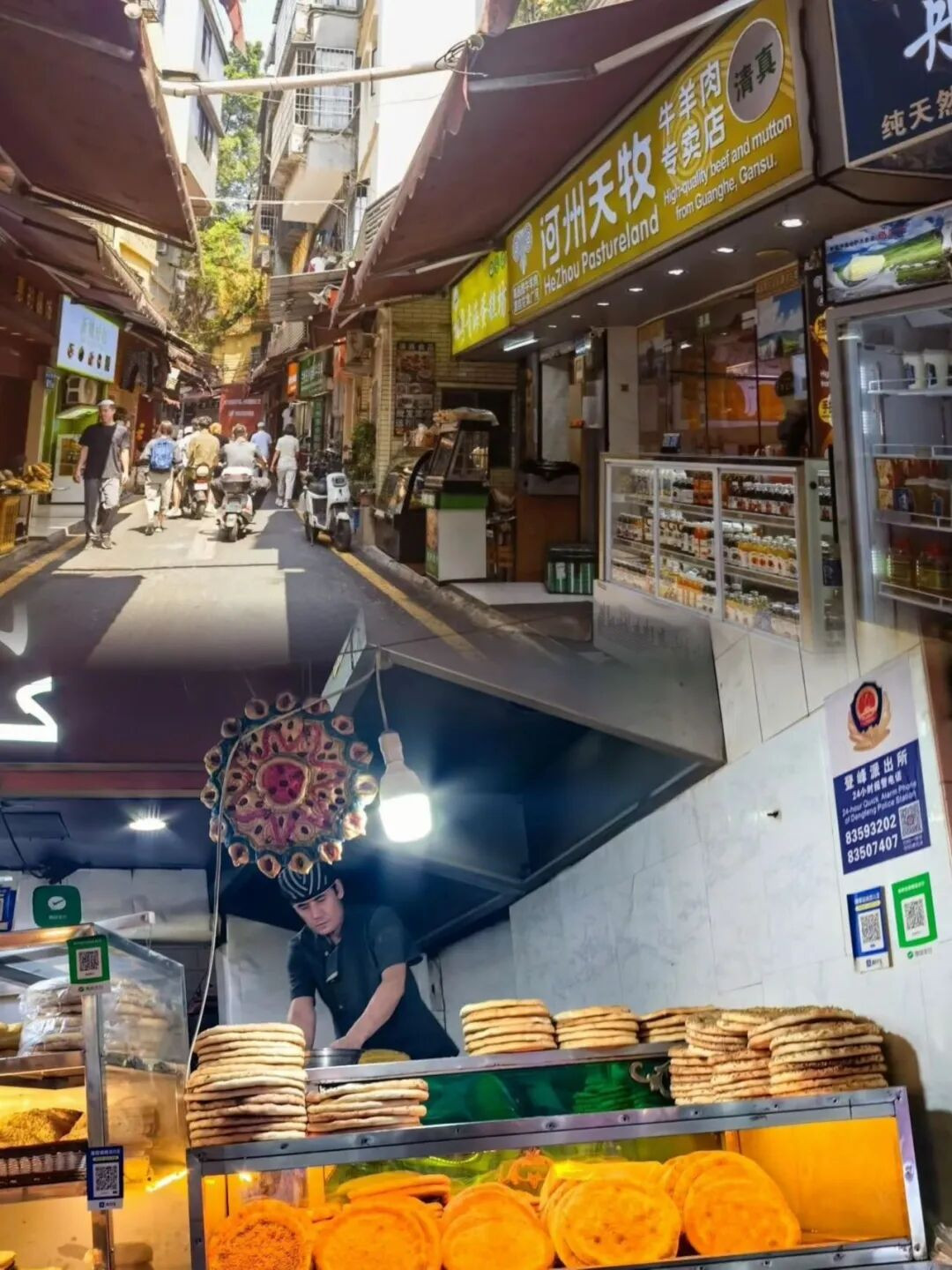
· Transportation: Metro Line 1, Ximenkou Station, Exit B, about an 8-minute walk
· Opening Hours: 9:00 AM - 5:00 PM (Closed to visitors on Fridays for Jumu'ah congregational prayer, make sure to avoid this day)
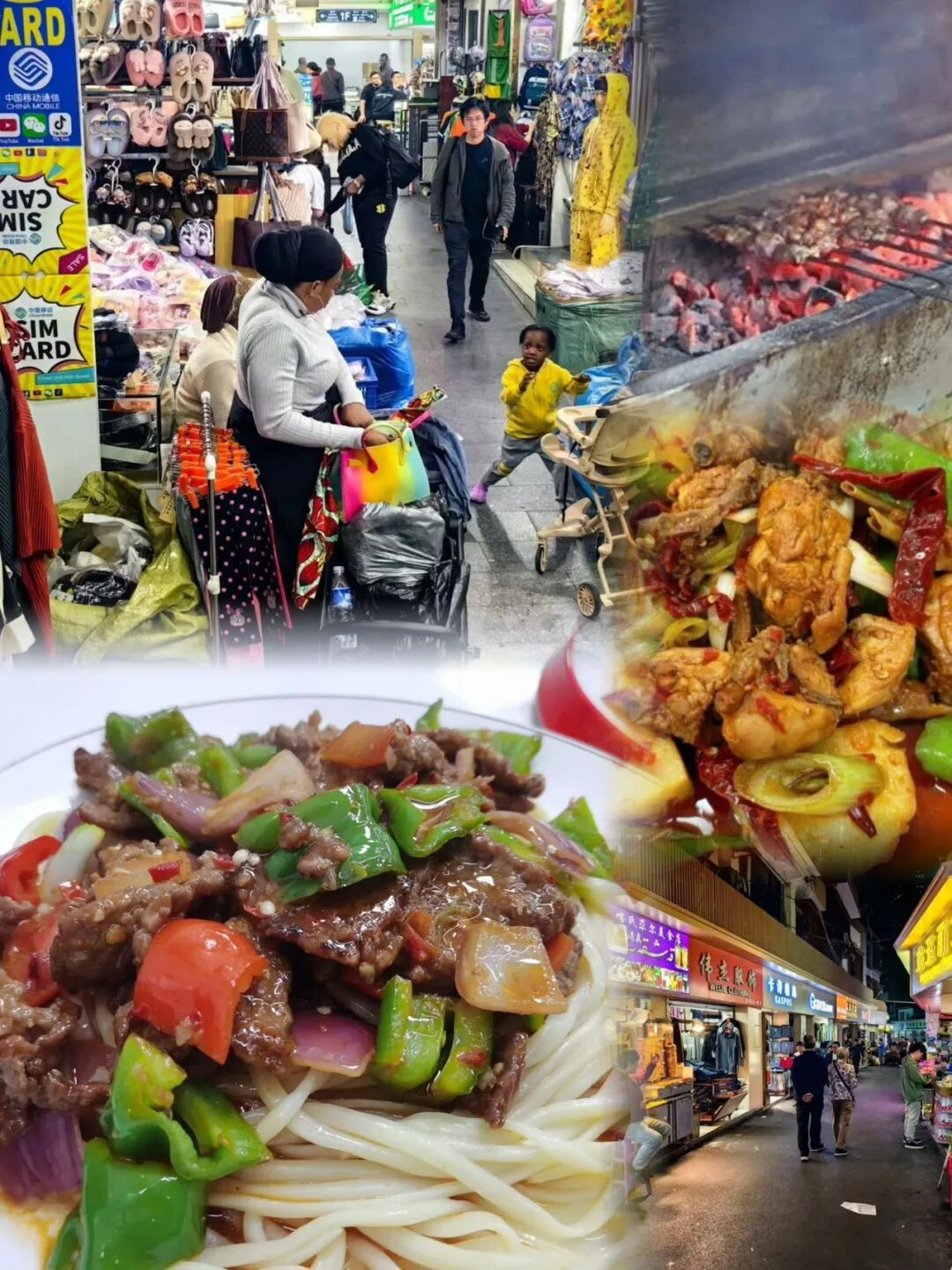
· Admission: Free, enter by scanning your ID card / passport
· Highlights: Built during the Zhenguan reign of the Tang Dynasty (around 627 CE), it is one of the oldest surviving mosques in China, ranking alongside Quanzhou Qingjing Mosque, Hangzhou Phoenix Mosque, and Yangzhou Xianhe Mosque as China's four great ancient masjids. The mosque's Light Pagoda stands 36.3 meters tall and once served as a navigational lighthouse for merchant ships on the Pearl River.
2. Xianxian Mosque / Ancient Tomb of Saad ibn Abi Waqqas
Guangzhou Xianxian (also known as the Ancient Tomb of Saad ibn Abi Waqqas / Xiangfen) is one of Guangzhou's oldest and most significant sites.
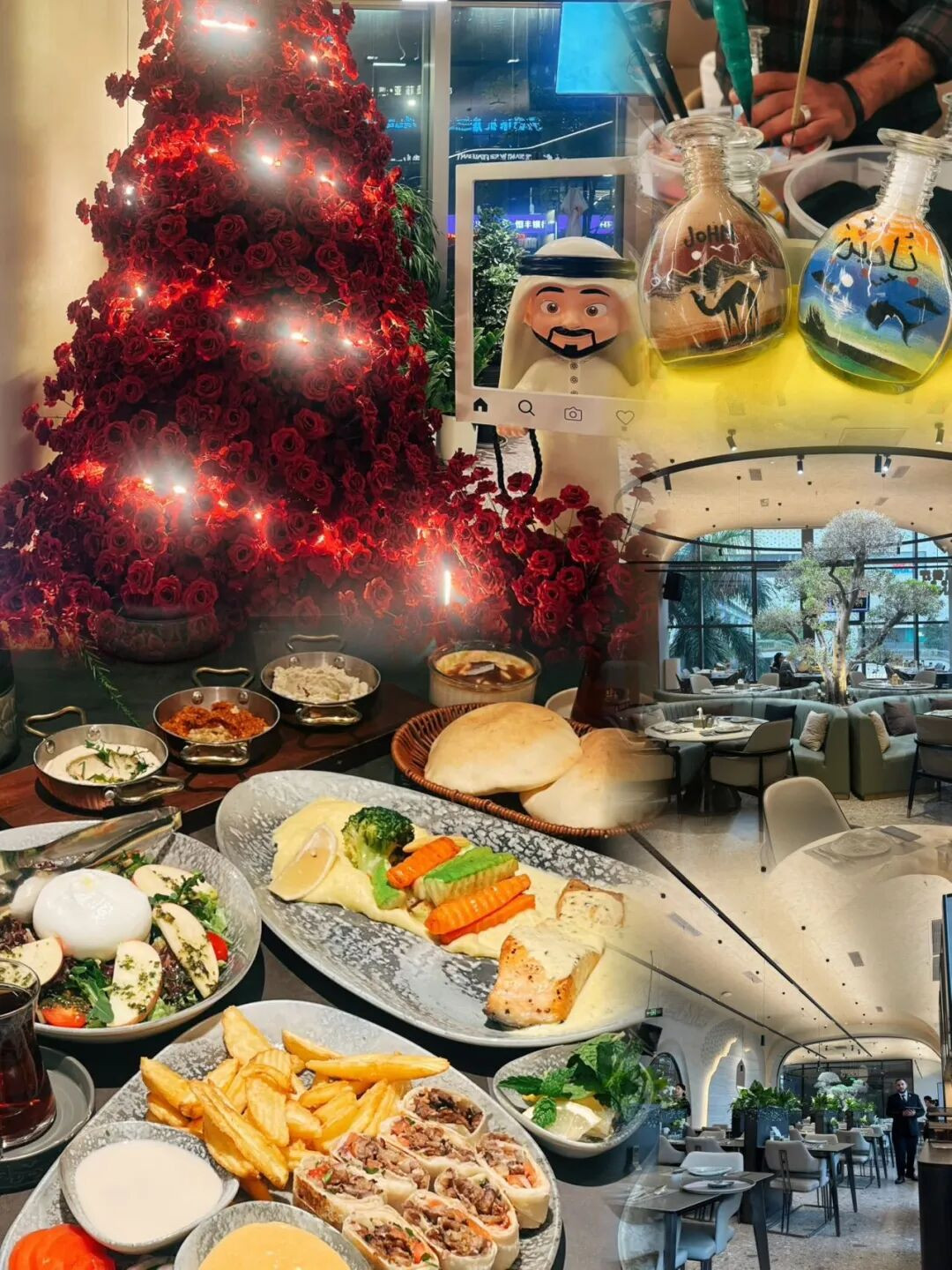
· Address: No. 204-1 Huanshi West Road, Liuhua Street, Yuexiu District
· Opening Hours: 8:30 AM - 4:00 PM
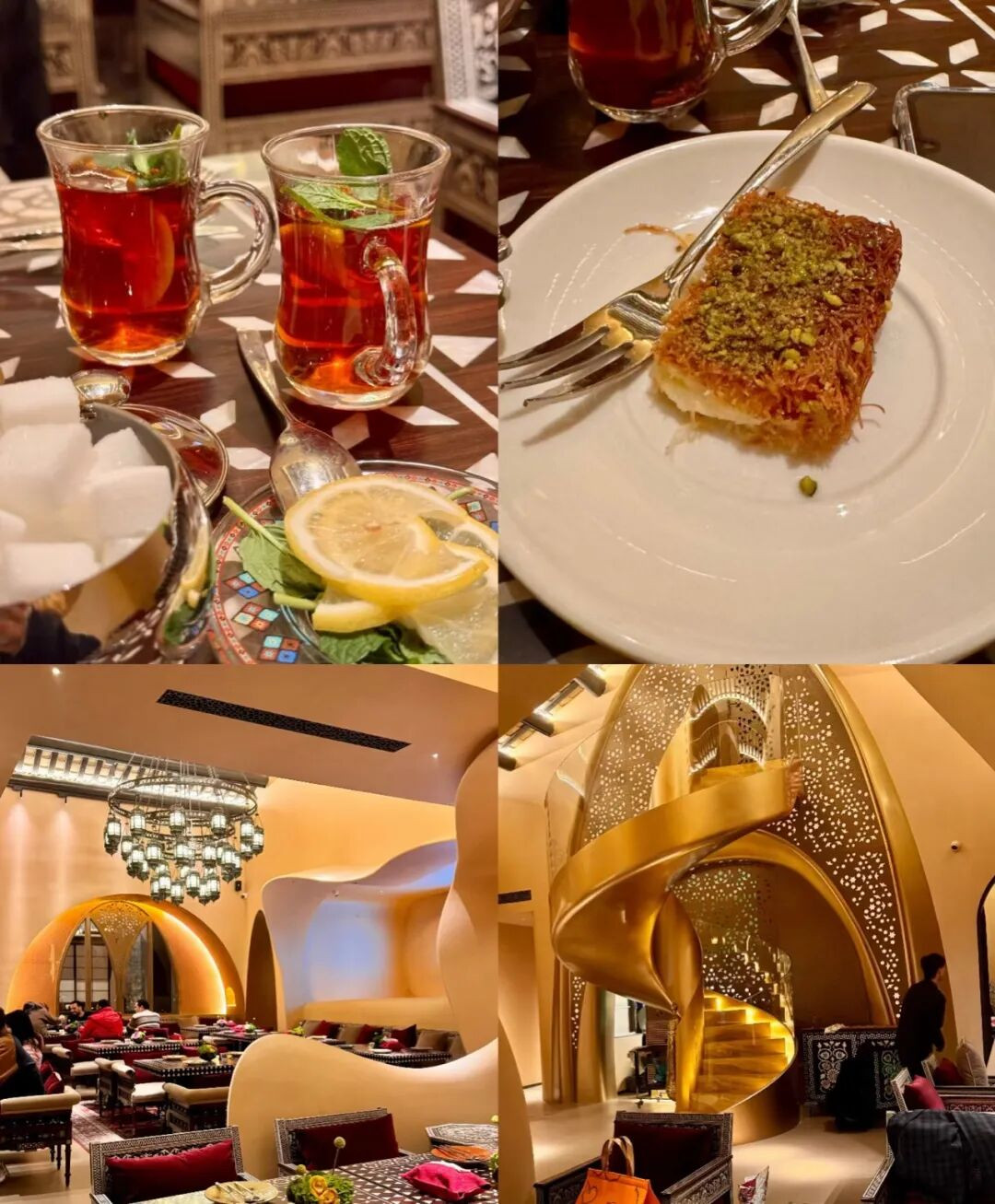
· Admission: Free
· Highlights: This is the city's largest active religious site. The newly built main prayer hall can accommodate 3,000 people, while the outdoor plaza and lawn can hold over 12,000 people for prayer simultaneously, with a total capacity of around 15,000.
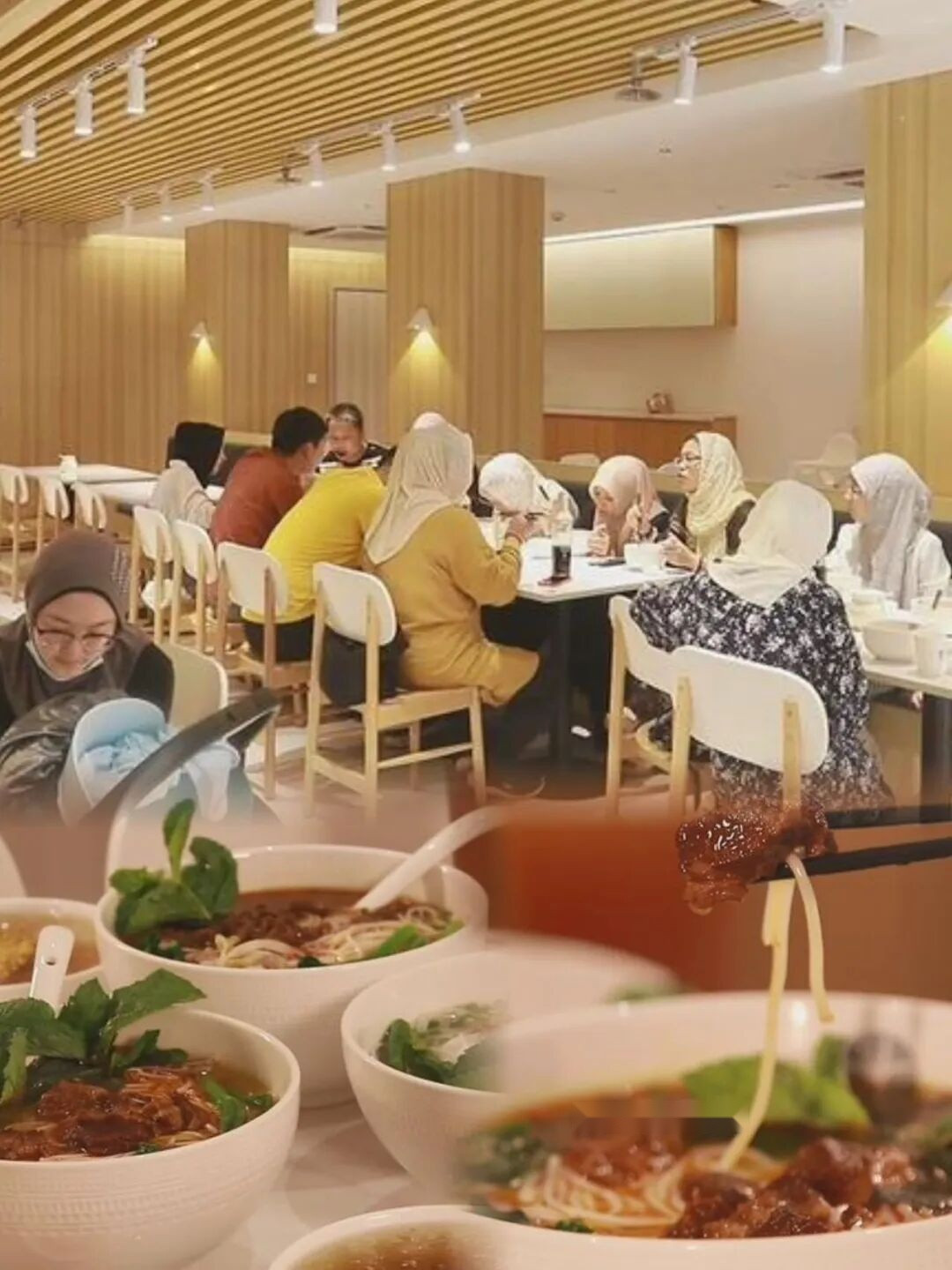
History: Built in the early Tang Dynasty (629 CE) to commemorate the early Islamic sage Waqqas.
• Nickname: Xiangfen / Echo Tomb (the burial chamber is hollow, creating a magical echoing sound when reciting the Quran)
• Status: Major Historical and Cultural Site Protected at the National Level, known as the "Eastern Mecca".
3. Haopan Street (Xiaodongying Mosque)
Part of the (Guangzhou Ming Dynasty Ancient Mosque)
Address: No. 1 Xiaodongying, Yuehualu, Yuexiu District (near Beijing Road / Gongyuanqian)
History: Built in the fourth year of the Chenghua reign of the Ming Dynasty (1468 CE), established as a garrison station for Hui Muslim soldiers during the Ming Dynasty, with a history of about 550 years.
Style: Chinese Lingnan + Islamic fusion architecture; compact and tranquil, offering a quiet escape amidst the hustle and bustle of the city.
Part 2: Halal Food Recommendations
Guangzhou's Xiaobei Muslim food street is centered around Baohan Direct Street (Yuexiu District). I like to call it our version of Xining's Xiaonanguan back in Qinghai. It is Guangzhou's most concentrated and authentic Halal, Northwest Chinese, and Middle Eastern food district. Almost all the eateries along the street are strictly Halal, so you can order with total peace of mind.
• Prayer Convenience: Xiaobei is nearby (making it convenient for attending daily prayers and Jumu'ah).
• Business Hours: 10:00 AM – 12:00 AM, with the night market being the liveliest.
• Price: ¥40–70 per person, super affordable with generous portions
⭐ International Halal Flavors
3. Asian Honeybee Xinjiang Halal Restaurant, located on the 9th floor of the Asia International Hotel, is one of Guangzhou's rare five-star hotel halal restaurants, right in the Xiaobi Muslim commercial district.
4. OTANTIK Turkish & Levantine Restaurant
· Address: Shop 119-120, 1st Floor, Building B2, Yuexiu Fortune Mansion, No. 149 Xiwan Road, Liwan District
5. Antalya Turkish Restaurant
Hualanting Yunnan Restaurant
· Address: Ground floor, Zhaoqing Building, No. 304 Huanshi Middle Road, Yuexiu District (Metro Line 5, Xiaobei Station, Exit B)
3. Muslim-Friendly Accommodation Recommendations
1. The Garden Hotel Guangzhou (Platinum Five-Star)
Location: Taojin Metro Station, a legendary state guesthouse with gorgeous grounds and a super Muslim-friendly vibe
2. Kempinski Hotel Guangzhou (German Luxury)
Location: Jianshe Liu Malu, near Taojin, featuring a blend of Lingnan and European design
3. Crowne Plaza Guangzhou City Centre (Skyscraper Landmark)
The hotel lobby features a Halal imported convenience store where you can pick up a local SIM card and more. The owner speaks fluent Arabic, making it super convenient if you're bringing clients along.
Location: Huanshi East "63-Storey Building", near Xiaobei/Taojin, offering panoramic views of the entire city
Must-Visit Attractions
Baiyun Mountain: The green lung of the city; hike up for incredible panoramic views of Guangzhou.
3. Yuexiu Park & Five Rams Statue — The iconic symbol of Guangzhou, blending cultural heritage with eco-tourism.
4. Chen Clan Academy — Open 9:00 AM–5:30 PM/6:00 PM (closed on Tuesdays), tickets around ¥78. Features stunning wood carvings and a rich historical atmosphere.
5. Canton Tower (Slim Waist) — Highly recommended to head up at sunset for panoramic city views; the night views are absolute magic.
6. Pearl River Night Cruise — Take in Guangzhou's dazzling skyline and city lights from the water.
7. Museum of the Mausoleum of the Nanyue King — Excavated artifacts like frankincense and Persian silverware prove Guangzhou's ties to the Middle East go back over 2,000 years, serving as a key window into the city's multicultural blend.
8. Shamian Island — A historic enclave of European-style colonial architecture, perfect for a leisurely stroll and photos, with halal dining options available on the island.
9: Yongqing Fang & Lizhiwan: Classic Xiguan arcade buildings, traditional tanglong doors (wooden sliding grilles), and ancient canals lined with weeping willows—the ultimate old-school Cantonese vibe.
Canton Fair: China's premier trade show and a global commercial weather vane.
• Bustling Commercial Hubs: Teemall, Taikoo Hui, Beijing Road, and Shangxiajiu—showcasing the dual charm of an ancient and modern trading capital.
• Diverse and Inclusive: Merchants and travelers from Africa, the Middle East, and Southeast Asia gather here, while the Xiaobei/Taojin area forms a distinct Muslim commercial district filled with an open, welcoming atmosphere and vibrant street life.
✨ The Vibe of Guangzhou: Pragmatic, vibrant, and inclusive
This city effortlessly blends a thousand years of history with towering modernity; exquisite dim sum with buzzing street food; deep-rooted Cantonese heritage with a warm embrace of global cultures.
Come to Guangzhou to see Baiyun Mountain and the Pearl River, savor Cantonese flavors, wander through the historic arcade streets, and climb the towering skyline tower—all while experiencing a warm city that is both ancient and young, traditional and cutting-edge.
Pro Tips
Language & Communication: In the Xiaobei and Guangta Road areas of Yuexiu District, where large numbers of local and international Muslims live, restaurant staff can communicate in English and Arabic. Collapse Read »
Ultimate Guangzhou Muslim Culture Travel Guide: Millennial Mosques, Maritime Silk Road Relics, and Halal Food Neighborhoods
Abstract:
An in-depth Guangzhou travel guide tailored for fellow Muslims and culture lovers. Connecting millennium-old Maritime Silk Road heritage sites like Huaisheng Mosque and Xianxian Mosque, combined with the Yuexiu and Xiaobei Halal food districts, it showcases the city's rich Islamic cultural landscape.
Guangzhou is an international metropolis with a millennium of Muslim cultural heritage. Since the Tang Dynasty, it has been a vital port along the Maritime Silk Road.
Guangzhou, also known as the City of Rams or the Flower City (Canton), is the capital of Guangdong Province, a national center city, a core engine of the Guangdong-Hong Kong-Macao Greater Bay Area, an ancient trading city whose port has never closed for over 2,200 years, and an open, inclusive modern international metropolis.
First things first, I'm sure everyone is curious about the places of worship:
1. Huaisheng Mosque (Light Pagoda Mosque)
· Address: No. 56 Guangta Road, Yuexiu District
· Transportation: Metro Line 1, Ximenkou Station, Exit B, about an 8-minute walk
· Opening Hours: 9:00 AM - 5:00 PM (Closed to visitors on Fridays for Jumu'ah congregational prayer, make sure to avoid this day)
· Admission: Free, enter by scanning your ID card / passport
· Highlights: Built during the Zhenguan reign of the Tang Dynasty (around 627 CE), it is one of the oldest surviving mosques in China, ranking alongside Quanzhou Qingjing Mosque, Hangzhou Phoenix Mosque, and Yangzhou Xianhe Mosque as China's four great ancient masjids. The mosque's Light Pagoda stands 36.3 meters tall and once served as a navigational lighthouse for merchant ships on the Pearl River.
2. Xianxian Mosque / Ancient Tomb of Saad ibn Abi Waqqas
Guangzhou Xianxian (also known as the Ancient Tomb of Saad ibn Abi Waqqas / Xiangfen) is one of Guangzhou's oldest and most significant sites.
· Address: No. 204-1 Huanshi West Road, Liuhua Street, Yuexiu District
· Opening Hours: 8:30 AM - 4:00 PM
· Admission: Free
· Highlights: This is the city's largest active religious site. The newly built main prayer hall can accommodate 3,000 people, while the outdoor plaza and lawn can hold over 12,000 people for prayer simultaneously, with a total capacity of around 15,000.
History: Built in the early Tang Dynasty (629 CE) to commemorate the early Islamic sage Waqqas.
• Nickname: Xiangfen / Echo Tomb (the burial chamber is hollow, creating a magical echoing sound when reciting the Quran)
• Status: Major Historical and Cultural Site Protected at the National Level, known as the "Eastern Mecca".
3. Haopan Street (Xiaodongying Mosque)
Part of the (Guangzhou Ming Dynasty Ancient Mosque)
Address: No. 1 Xiaodongying, Yuehualu, Yuexiu District (near Beijing Road / Gongyuanqian)
History: Built in the fourth year of the Chenghua reign of the Ming Dynasty (1468 CE), established as a garrison station for Hui Muslim soldiers during the Ming Dynasty, with a history of about 550 years.
Style: Chinese Lingnan + Islamic fusion architecture; compact and tranquil, offering a quiet escape amidst the hustle and bustle of the city.
Part 2: Halal Food Recommendations
Guangzhou's Xiaobei Muslim food street is centered around Baohan Direct Street (Yuexiu District). I like to call it our version of Xining's Xiaonanguan back in Qinghai. It is Guangzhou's most concentrated and authentic Halal, Northwest Chinese, and Middle Eastern food district. Almost all the eateries along the street are strictly Halal, so you can order with total peace of mind.
• Prayer Convenience: Xiaobei is nearby (making it convenient for attending daily prayers and Jumu'ah).
• Business Hours: 10:00 AM – 12:00 AM, with the night market being the liveliest.
• Price: ¥40–70 per person, super affordable with generous portions
⭐ International Halal Flavors
3. Asian Honeybee Xinjiang Halal Restaurant, located on the 9th floor of the Asia International Hotel, is one of Guangzhou's rare five-star hotel halal restaurants, right in the Xiaobi Muslim commercial district.
4. OTANTIK Turkish & Levantine Restaurant
· Address: Shop 119-120, 1st Floor, Building B2, Yuexiu Fortune Mansion, No. 149 Xiwan Road, Liwan District
5. Antalya Turkish Restaurant
Hualanting Yunnan Restaurant
· Address: Ground floor, Zhaoqing Building, No. 304 Huanshi Middle Road, Yuexiu District (Metro Line 5, Xiaobei Station, Exit B)
3. Muslim-Friendly Accommodation Recommendations
1. The Garden Hotel Guangzhou (Platinum Five-Star)
Location: Taojin Metro Station, a legendary state guesthouse with gorgeous grounds and a super Muslim-friendly vibe
2. Kempinski Hotel Guangzhou (German Luxury)
Location: Jianshe Liu Malu, near Taojin, featuring a blend of Lingnan and European design
3. Crowne Plaza Guangzhou City Centre (Skyscraper Landmark)
The hotel lobby features a Halal imported convenience store where you can pick up a local SIM card and more. The owner speaks fluent Arabic, making it super convenient if you're bringing clients along.
Location: Huanshi East "63-Storey Building", near Xiaobei/Taojin, offering panoramic views of the entire city
Must-Visit Attractions
Baiyun Mountain: The green lung of the city; hike up for incredible panoramic views of Guangzhou.
3. Yuexiu Park & Five Rams Statue — The iconic symbol of Guangzhou, blending cultural heritage with eco-tourism.
4. Chen Clan Academy — Open 9:00 AM–5:30 PM/6:00 PM (closed on Tuesdays), tickets around ¥78. Features stunning wood carvings and a rich historical atmosphere.
5. Canton Tower (Slim Waist) — Highly recommended to head up at sunset for panoramic city views; the night views are absolute magic.
6. Pearl River Night Cruise — Take in Guangzhou's dazzling skyline and city lights from the water.
7. Museum of the Mausoleum of the Nanyue King — Excavated artifacts like frankincense and Persian silverware prove Guangzhou's ties to the Middle East go back over 2,000 years, serving as a key window into the city's multicultural blend.
8. Shamian Island — A historic enclave of European-style colonial architecture, perfect for a leisurely stroll and photos, with halal dining options available on the island.
9: Yongqing Fang & Lizhiwan: Classic Xiguan arcade buildings, traditional tanglong doors (wooden sliding grilles), and ancient canals lined with weeping willows—the ultimate old-school Cantonese vibe.
Canton Fair: China's premier trade show and a global commercial weather vane.
• Bustling Commercial Hubs: Teemall, Taikoo Hui, Beijing Road, and Shangxiajiu—showcasing the dual charm of an ancient and modern trading capital.
• Diverse and Inclusive: Merchants and travelers from Africa, the Middle East, and Southeast Asia gather here, while the Xiaobei/Taojin area forms a distinct Muslim commercial district filled with an open, welcoming atmosphere and vibrant street life.
✨ The Vibe of Guangzhou: Pragmatic, vibrant, and inclusive
This city effortlessly blends a thousand years of history with towering modernity; exquisite dim sum with buzzing street food; deep-rooted Cantonese heritage with a warm embrace of global cultures.
Come to Guangzhou to see Baiyun Mountain and the Pearl River, savor Cantonese flavors, wander through the historic arcade streets, and climb the towering skyline tower—all while experiencing a warm city that is both ancient and young, traditional and cutting-edge.
Pro Tips
Language & Communication: In the Xiaobei and Guangta Road areas of Yuexiu District, where large numbers of local and international Muslims live, restaurant staff can communicate in English and Arabic. Collapse Read »
Complete Guide to Guangzhou's Historic Mosques: Huaisheng, Xiaodongying & Xianxian Masjids
[Internet Repost]
Complete Guide to Guangzhou's Major Mosques and Prayer Sites: Detailed Locations for Huaisheng Mosque, Xiaodongying Mosque, and Xianxian Mosque
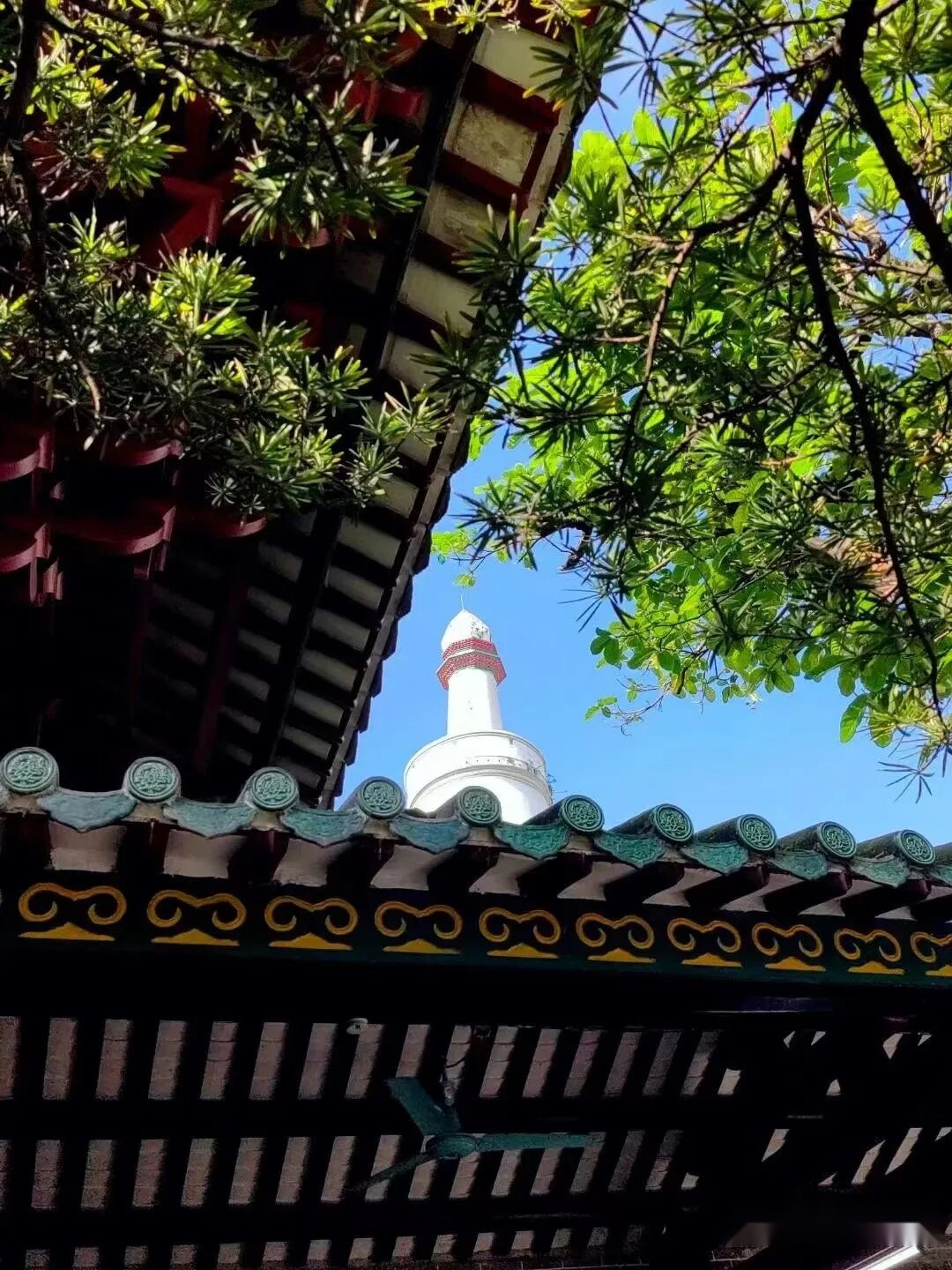
Abstract:
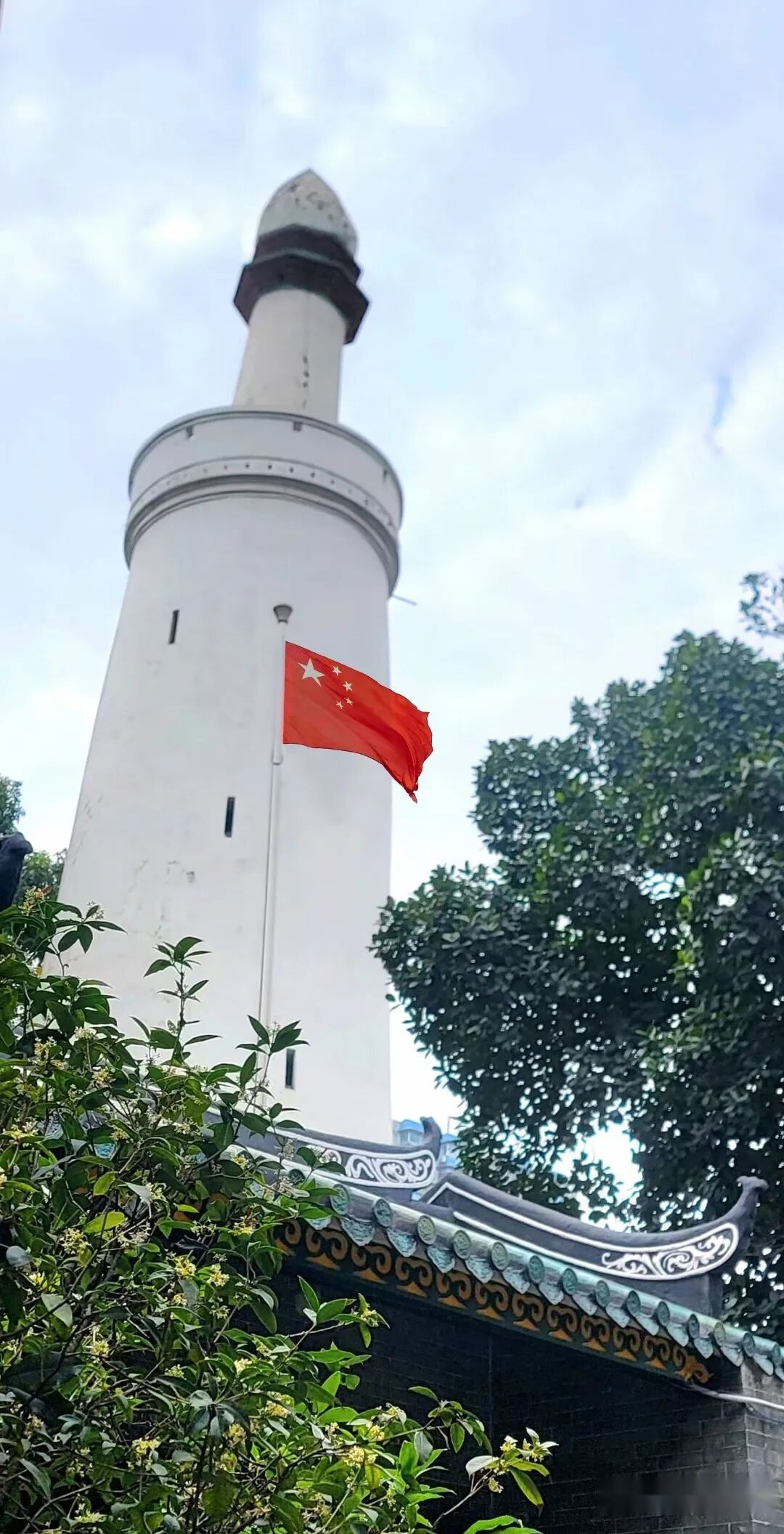
A comprehensive guide detailing the geographical locations and historical backgrounds of Guangzhou's major mosques and Jummah prayer sites. Covering Huaisheng Mosque, Xiaodongying Mosque, Haopan Mosque, and Xianxian Mosque to help Muslim brothers and sisters from home and abroad with their prayers and heritage visits while staying in Guangzhou.
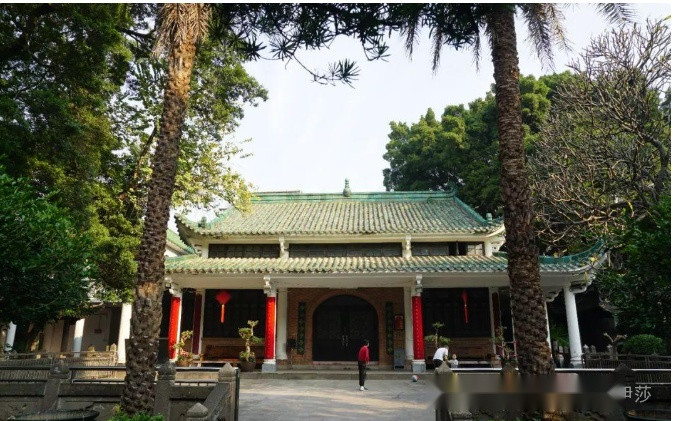
Dear brothers and sisters, As-salamu alaykum!
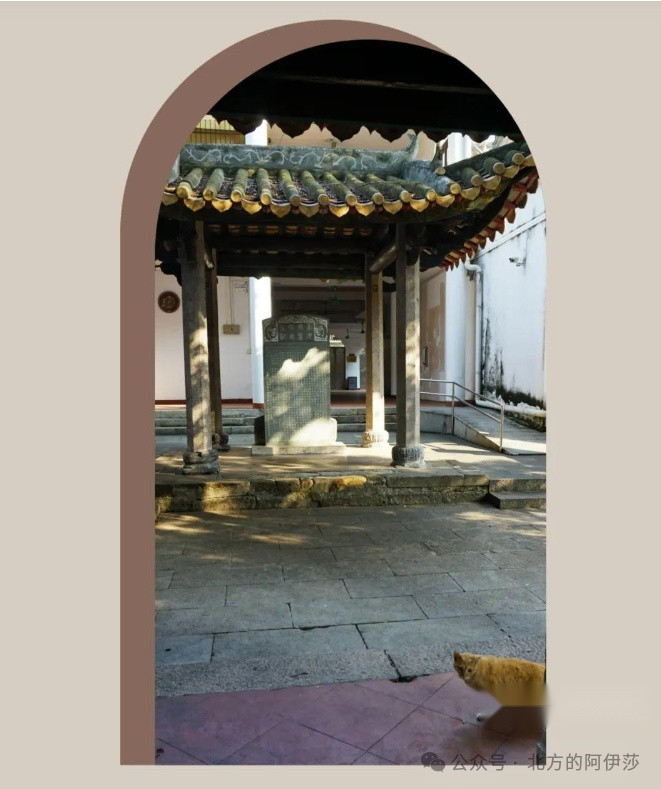
To better serve all our Muslim brothers and sisters living and working in Guangzhou, we've put together this handy guide mapping out the locations of mosques and prayer spots across every district. We hope this information makes things much easier for you!
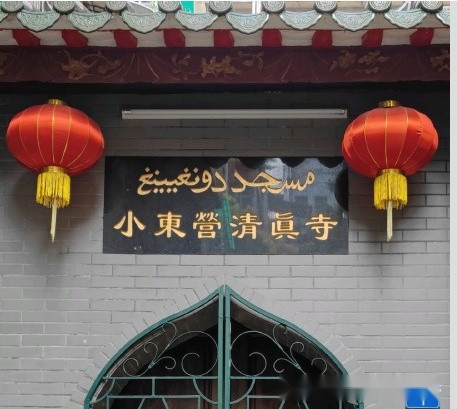
Dear brothers and sisters, As-salamu alaykum!
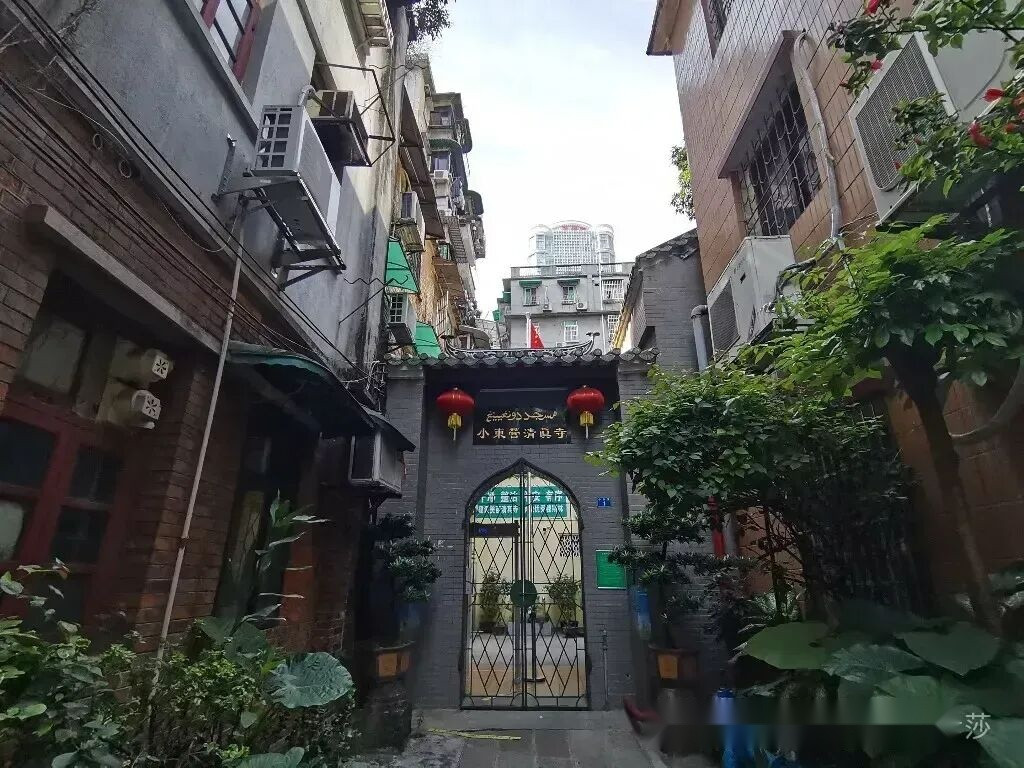
The Guangzhou Muslim community has collected the locations and contact numbers for mosques across different districts, hoping this brings more convenience to you.
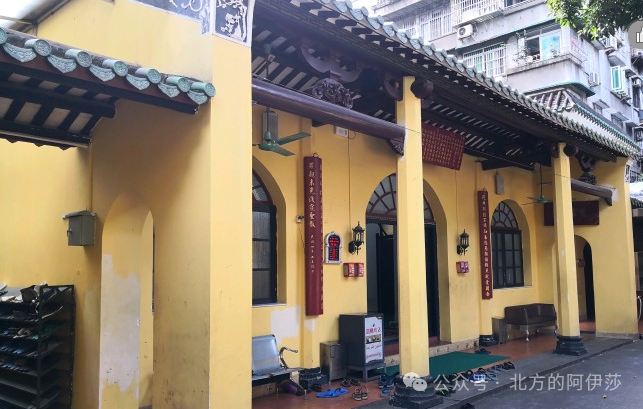
Guangzhou is home to four historic mosques: Xianxian Mosque / Ancient Tomb of Saad ibn Abi Waqqas, Huaisheng Mosque, Xiaodongying Mosque, and Haopan Mosque. Here's a quick introduction to all four:
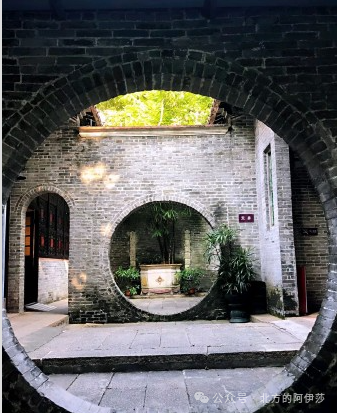
1. Huaisheng Mosque
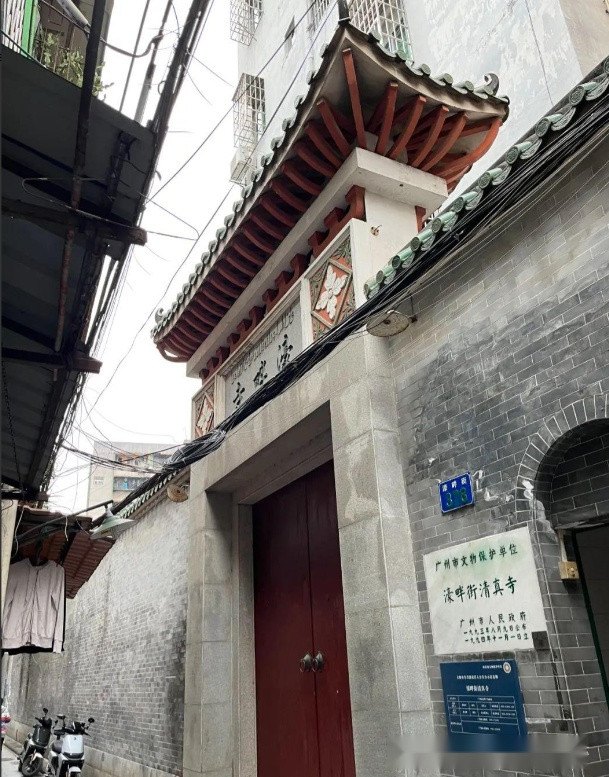
Huaisheng Mosque (Light Pagoda Mosque): Located on Guangta Road in Guangzhou's Yuexiu District, this is one of the oldest surviving mosques in China. Originally built during the Wude reign of Emperor Gaozu of the Tang Dynasty (618–626 CE), it boasts a history of over 1,300 years. The mosque features a classic Arab architectural style and covers an area of about 1,550 square meters. Key structures include the imam's office, the scripture library, the main prayer hall, and the ablution facility. The minaret inside, also known as the 'Light Pagoda' (Huaisheng Pagoda), was built in the third year of the Zhenguan reign (629 CE) and stands 36 meters tall, serving as a major landmark of ancient Islamic architecture in China.
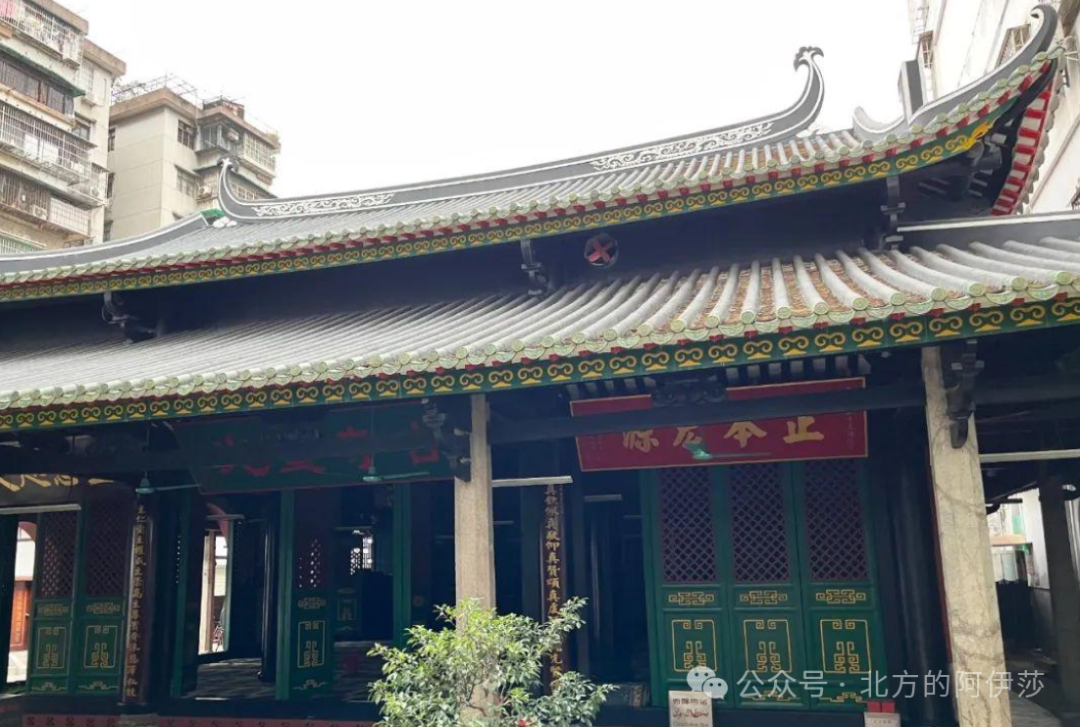
2. Xiaodongying Mosque
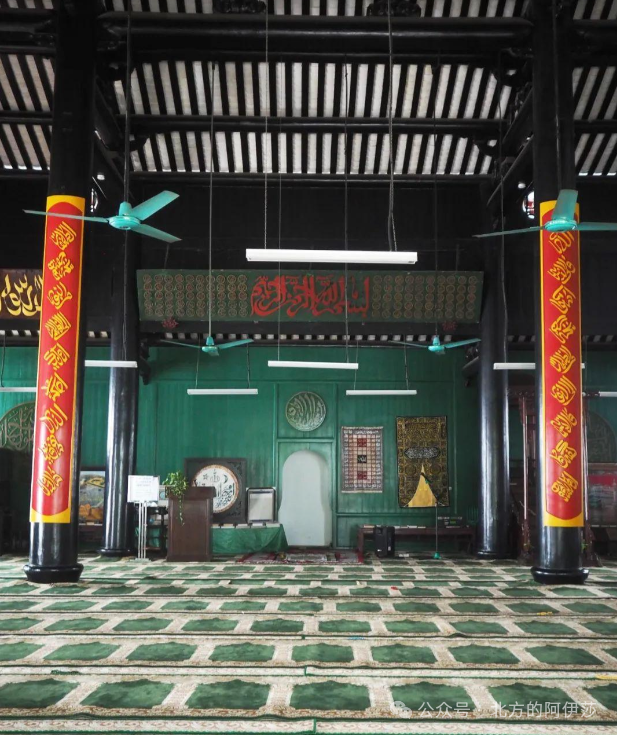
Xiaodongying Mosque (Xiaodongying Mosque): Located right next to Xiaodongying Street on Yuehua Road in Guangzhou, this mosque has over 500 years of history and was likely built during the Ming Dynasty (1368–1644). It is a relatively small mosque, covering an area of around 800 square meters. Its bright yellow exterior walls make it stand out distinctively among the surrounding buildings. Inside, Xiaodongying Mosque features a main prayer hall, a lecture hall, and a bathhouse.
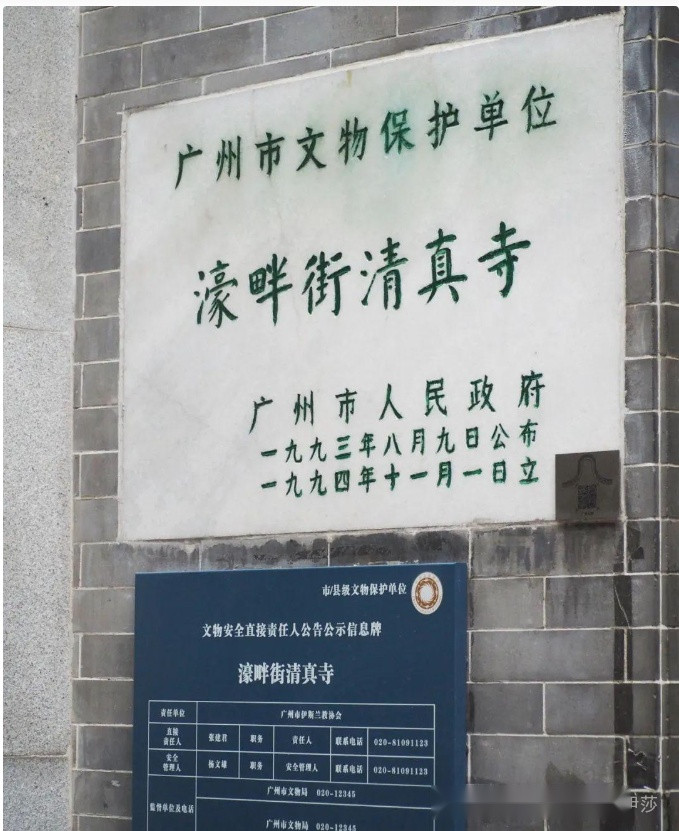
3. Haopan Mosque
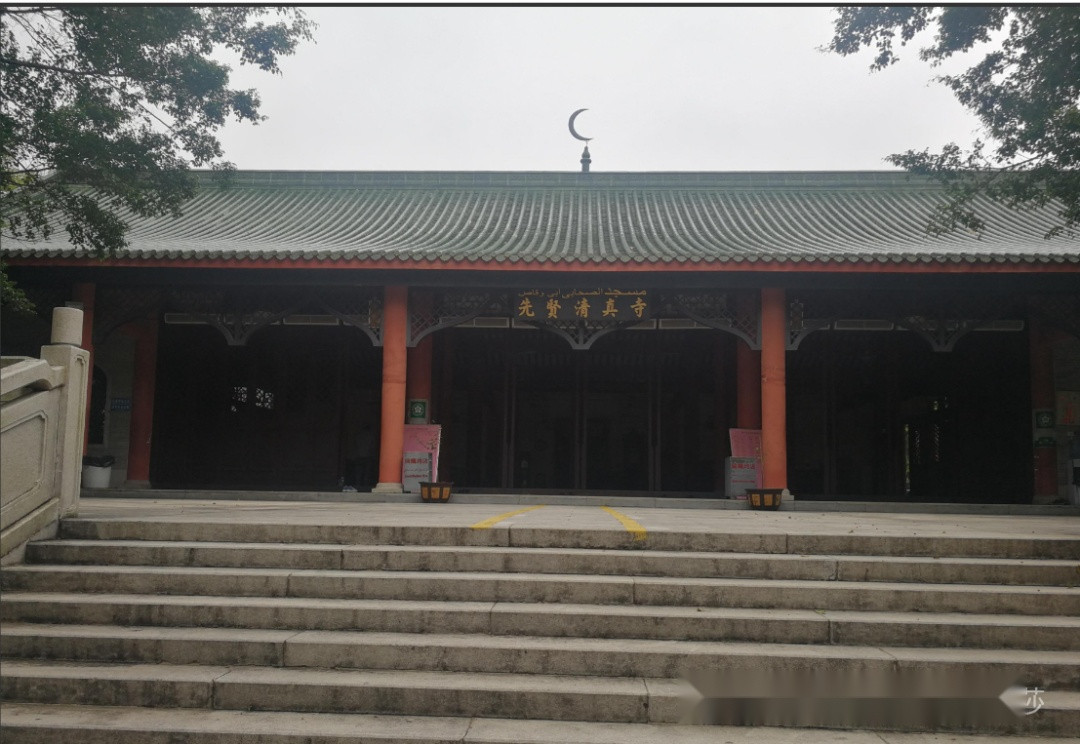
Haopan Mosque (Haopan Mosque): Located on Haopan Street along Renmin Road Middle, this mosque was built during the Chenghua reign of the Ming Dynasty (1465–1487) and has a history spanning over 500 years. Its architectural style blends traditional Chinese elements with Islamic features, showcasing red walls, green tiles, and flying eaves with bracket sets (dougong). Covering about 1,500 square meters, Haopan Mosque houses a main prayer hall, an imam's office, and a bathhouse. The mosque also preserves a vast collection of Islamic classics and cultural artifacts.
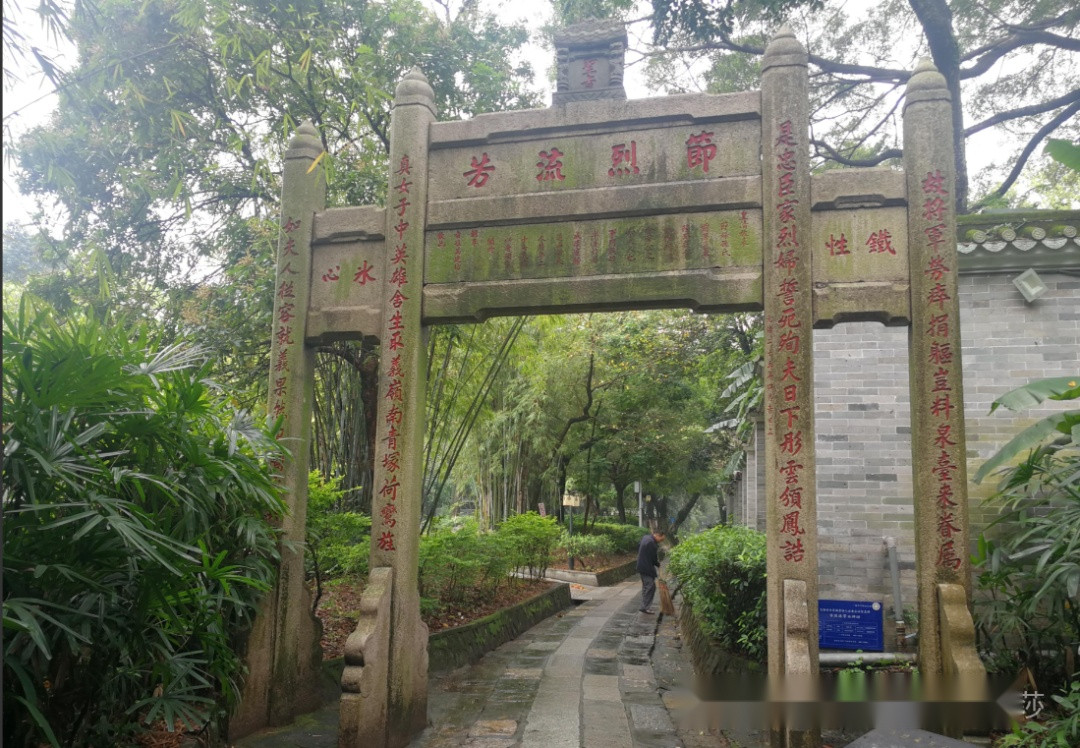
4. Xianxian Mosque
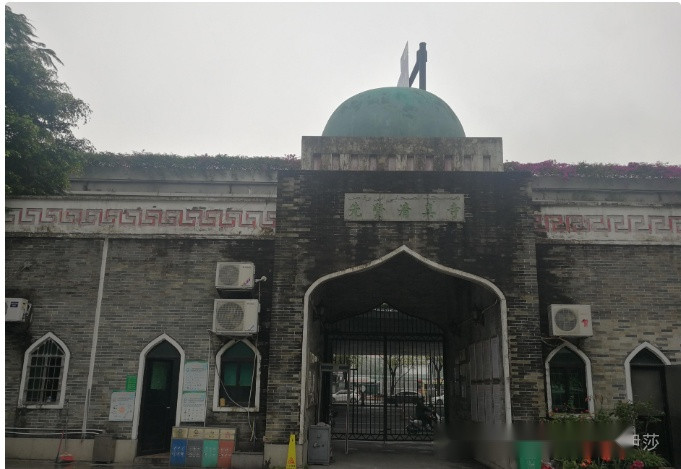
Xianxian Mosque / Ancient Tomb of Saad ibn Abi Waqqas: Located on the west side of Lanpu along Jiefang North Road in Guangzhou, it is also known as the 'Hui Tombs' (Huihui Fen). Legend has it that this is the burial site of Saad ibn Abi Waqqas, a renowned Arab Islamic missionary from the Tang Dynasty (618–907). Covering an area of roughly 3,000 square meters, the mosque's main structures include a main prayer hall, an imam's office, and a bathhouse. It is also the final resting place for several esteemed imams from past dynasties, as well as the 'Tombs of the Forty-One Worthies'.
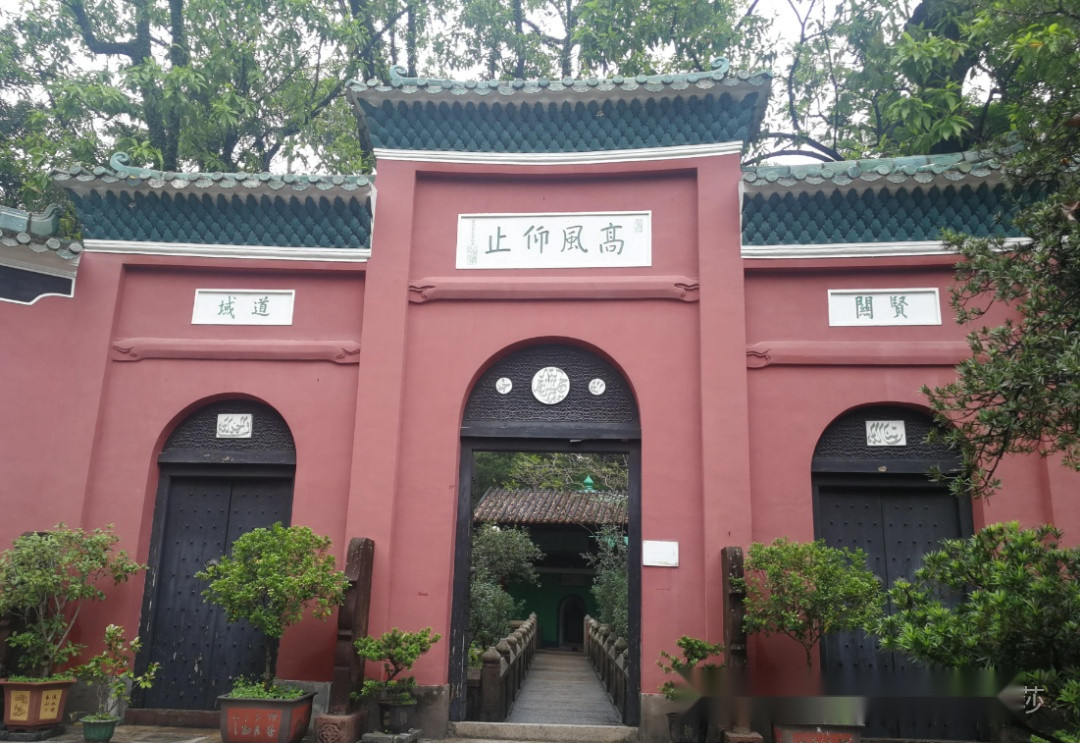
Be sure to follow us! Collapse Read »
Complete Guide to Guangzhou's Major Mosques and Prayer Sites: Detailed Locations for Huaisheng Mosque, Xiaodongying Mosque, and Xianxian Mosque
Abstract:
A comprehensive guide detailing the geographical locations and historical backgrounds of Guangzhou's major mosques and Jummah prayer sites. Covering Huaisheng Mosque, Xiaodongying Mosque, Haopan Mosque, and Xianxian Mosque to help Muslim brothers and sisters from home and abroad with their prayers and heritage visits while staying in Guangzhou.
Dear brothers and sisters, As-salamu alaykum!
To better serve all our Muslim brothers and sisters living and working in Guangzhou, we've put together this handy guide mapping out the locations of mosques and prayer spots across every district. We hope this information makes things much easier for you!
Dear brothers and sisters, As-salamu alaykum!
The Guangzhou Muslim community has collected the locations and contact numbers for mosques across different districts, hoping this brings more convenience to you.
Guangzhou is home to four historic mosques: Xianxian Mosque / Ancient Tomb of Saad ibn Abi Waqqas, Huaisheng Mosque, Xiaodongying Mosque, and Haopan Mosque. Here's a quick introduction to all four:
1. Huaisheng Mosque
Huaisheng Mosque (Light Pagoda Mosque): Located on Guangta Road in Guangzhou's Yuexiu District, this is one of the oldest surviving mosques in China. Originally built during the Wude reign of Emperor Gaozu of the Tang Dynasty (618–626 CE), it boasts a history of over 1,300 years. The mosque features a classic Arab architectural style and covers an area of about 1,550 square meters. Key structures include the imam's office, the scripture library, the main prayer hall, and the ablution facility. The minaret inside, also known as the 'Light Pagoda' (Huaisheng Pagoda), was built in the third year of the Zhenguan reign (629 CE) and stands 36 meters tall, serving as a major landmark of ancient Islamic architecture in China.
2. Xiaodongying Mosque
Xiaodongying Mosque (Xiaodongying Mosque): Located right next to Xiaodongying Street on Yuehua Road in Guangzhou, this mosque has over 500 years of history and was likely built during the Ming Dynasty (1368–1644). It is a relatively small mosque, covering an area of around 800 square meters. Its bright yellow exterior walls make it stand out distinctively among the surrounding buildings. Inside, Xiaodongying Mosque features a main prayer hall, a lecture hall, and a bathhouse.
3. Haopan Mosque
Haopan Mosque (Haopan Mosque): Located on Haopan Street along Renmin Road Middle, this mosque was built during the Chenghua reign of the Ming Dynasty (1465–1487) and has a history spanning over 500 years. Its architectural style blends traditional Chinese elements with Islamic features, showcasing red walls, green tiles, and flying eaves with bracket sets (dougong). Covering about 1,500 square meters, Haopan Mosque houses a main prayer hall, an imam's office, and a bathhouse. The mosque also preserves a vast collection of Islamic classics and cultural artifacts.
4. Xianxian Mosque
Xianxian Mosque / Ancient Tomb of Saad ibn Abi Waqqas: Located on the west side of Lanpu along Jiefang North Road in Guangzhou, it is also known as the 'Hui Tombs' (Huihui Fen). Legend has it that this is the burial site of Saad ibn Abi Waqqas, a renowned Arab Islamic missionary from the Tang Dynasty (618–907). Covering an area of roughly 3,000 square meters, the mosque's main structures include a main prayer hall, an imam's office, and a bathhouse. It is also the final resting place for several esteemed imams from past dynasties, as well as the 'Tombs of the Forty-One Worthies'.
Be sure to follow us! Collapse Read »
A Rare Palestinian Halal Spot in Guangzhou: Kayef Restaurant Review
[Internet Repost]
A Rare Palestinian Halal Spot in Guangzhou: Kayef Restaurant Review
Summary:
We checked out Kayef, a cozy Palestinian halal spot near Zhanxi Road in Guangzhou's Yuexiu District. We tested out their fluffy, juicy handmade beef burgers, rich Middle Eastern-style curries, and generous portions to get a taste of the city's unique global halal scene.
Tucked away near Zhanxi Road in Yuexiu District, the shop is on the smaller side with a simple, clean vibe, mostly drawing an international crowd.
The food is authentic Palestinian halal fare—unique in flavor and super budget-friendly. The burgers feature soft, pillowy buns and fresh, juicy meat, making them a crowd favorite. The curry is deeply aromatic and amazing over rice, with genuinely generous portions of meat. Their signature chicken Haleem (a thick, slow-cooked meat and grain stew) has a smooth, creamy texture with a mild kick of spice, bringing some serious regional flavor. The whole wheat flatbread is dense and satisfying, while the rice is fluffy, fragrant, and filling. Overall, the flavors lean heavily toward authentic Middle Eastern profiles. Some of the veggie seasonings run a bit mild, and the mutton dishes don't have an overpowering spice kick, but they totally win points for absolute freshness and massive portions.
Service is standard and orders come out reliably—making it a cool, niche pick if you're looking to dive into Middle Eastern halal flavors.
Real Reviews
@Little Sunshine
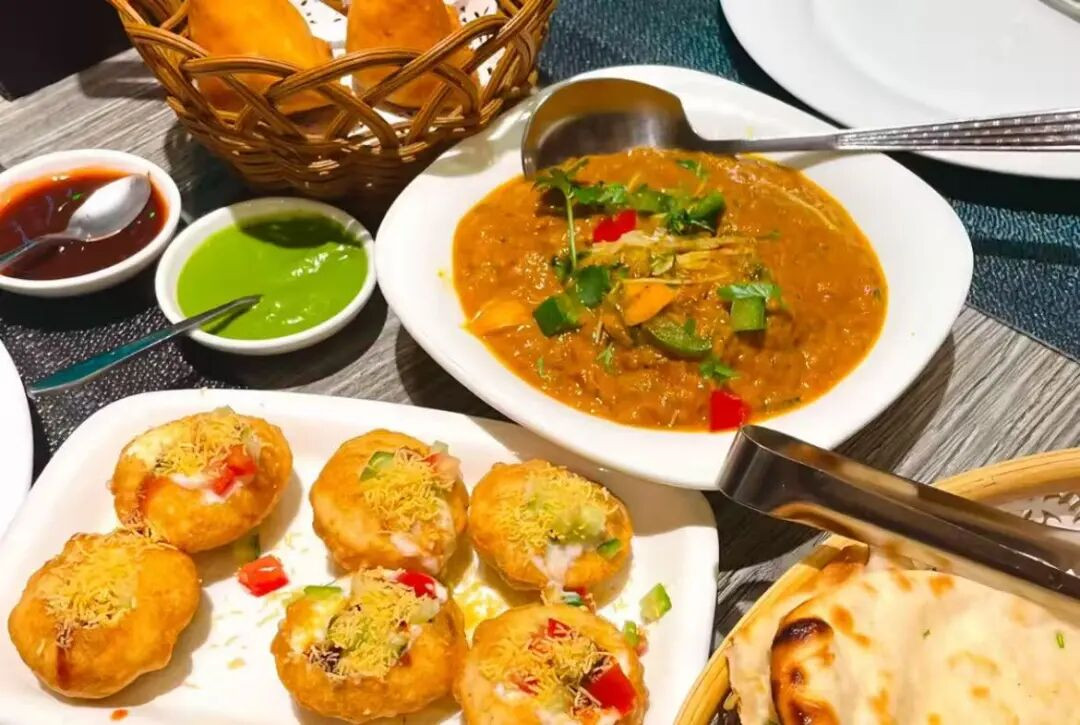
Not many locals eat here; it's mostly expats because it really hits their flavor profile. You don't see a ton of Chinese diners, though some do drop by out of curiosity just to try something new.
Taste: Unique flavors.
Value: Great value, totally affordable and reasonable.
Vibe: The ambiance is alright, pretty average.
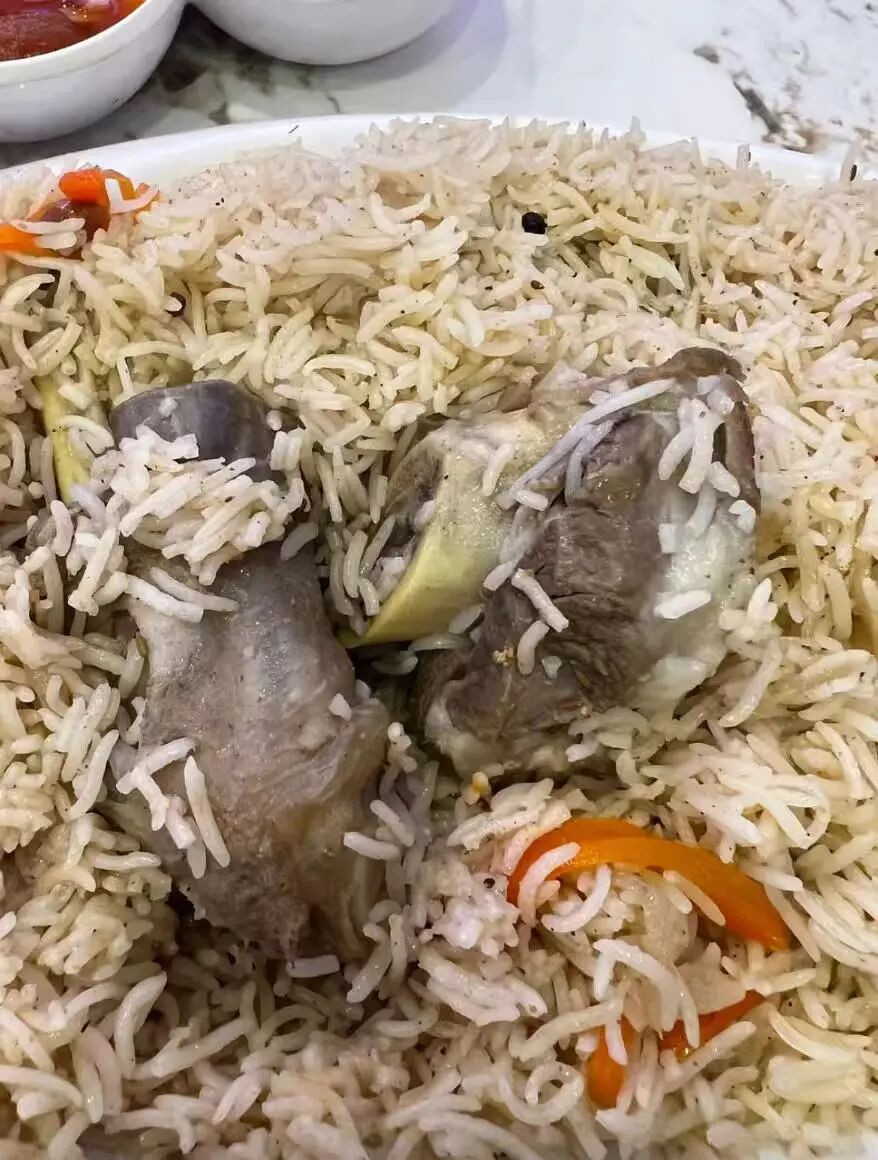
@Chen Fusheng adc
The food is bomb. I eat here all the time. Came with friends today and they loved it too, super good! Plus, their meat is genuinely fresh. The burgers and curries are crushing it—so good.
The staple dishes are also totally solid.
AlQaeef halal restaurant (Kayef Restaurant)
Address: Near MAKKAH MUSLIM RESTAURANT
Average cost per person: 60 RMB Collapse Read »
A Rare Palestinian Halal Spot in Guangzhou: Kayef Restaurant Review
Summary:
We checked out Kayef, a cozy Palestinian halal spot near Zhanxi Road in Guangzhou's Yuexiu District. We tested out their fluffy, juicy handmade beef burgers, rich Middle Eastern-style curries, and generous portions to get a taste of the city's unique global halal scene.
Tucked away near Zhanxi Road in Yuexiu District, the shop is on the smaller side with a simple, clean vibe, mostly drawing an international crowd.
The food is authentic Palestinian halal fare—unique in flavor and super budget-friendly. The burgers feature soft, pillowy buns and fresh, juicy meat, making them a crowd favorite. The curry is deeply aromatic and amazing over rice, with genuinely generous portions of meat. Their signature chicken Haleem (a thick, slow-cooked meat and grain stew) has a smooth, creamy texture with a mild kick of spice, bringing some serious regional flavor. The whole wheat flatbread is dense and satisfying, while the rice is fluffy, fragrant, and filling. Overall, the flavors lean heavily toward authentic Middle Eastern profiles. Some of the veggie seasonings run a bit mild, and the mutton dishes don't have an overpowering spice kick, but they totally win points for absolute freshness and massive portions.
Service is standard and orders come out reliably—making it a cool, niche pick if you're looking to dive into Middle Eastern halal flavors.
Real Reviews
@Little Sunshine
Not many locals eat here; it's mostly expats because it really hits their flavor profile. You don't see a ton of Chinese diners, though some do drop by out of curiosity just to try something new.
Taste: Unique flavors.
Value: Great value, totally affordable and reasonable.
Vibe: The ambiance is alright, pretty average.
@Chen Fusheng adc
The food is bomb. I eat here all the time. Came with friends today and they loved it too, super good! Plus, their meat is genuinely fresh. The burgers and curries are crushing it—so good.
The staple dishes are also totally solid.
AlQaeef halal restaurant (Kayef Restaurant)
Address: Near MAKKAH MUSLIM RESTAURANT
Average cost per person: 60 RMB Collapse Read »
Exploring Guangzhou's Huaisheng Mosque: A Thousand-Year Maritime Silk Road Heritage Site on Guangta Road
[Internet Repost]
Exploring Guangzhou's Huaisheng Mosque: A Thousand-Year Maritime Silk Road Heritage Site on Guangta Road
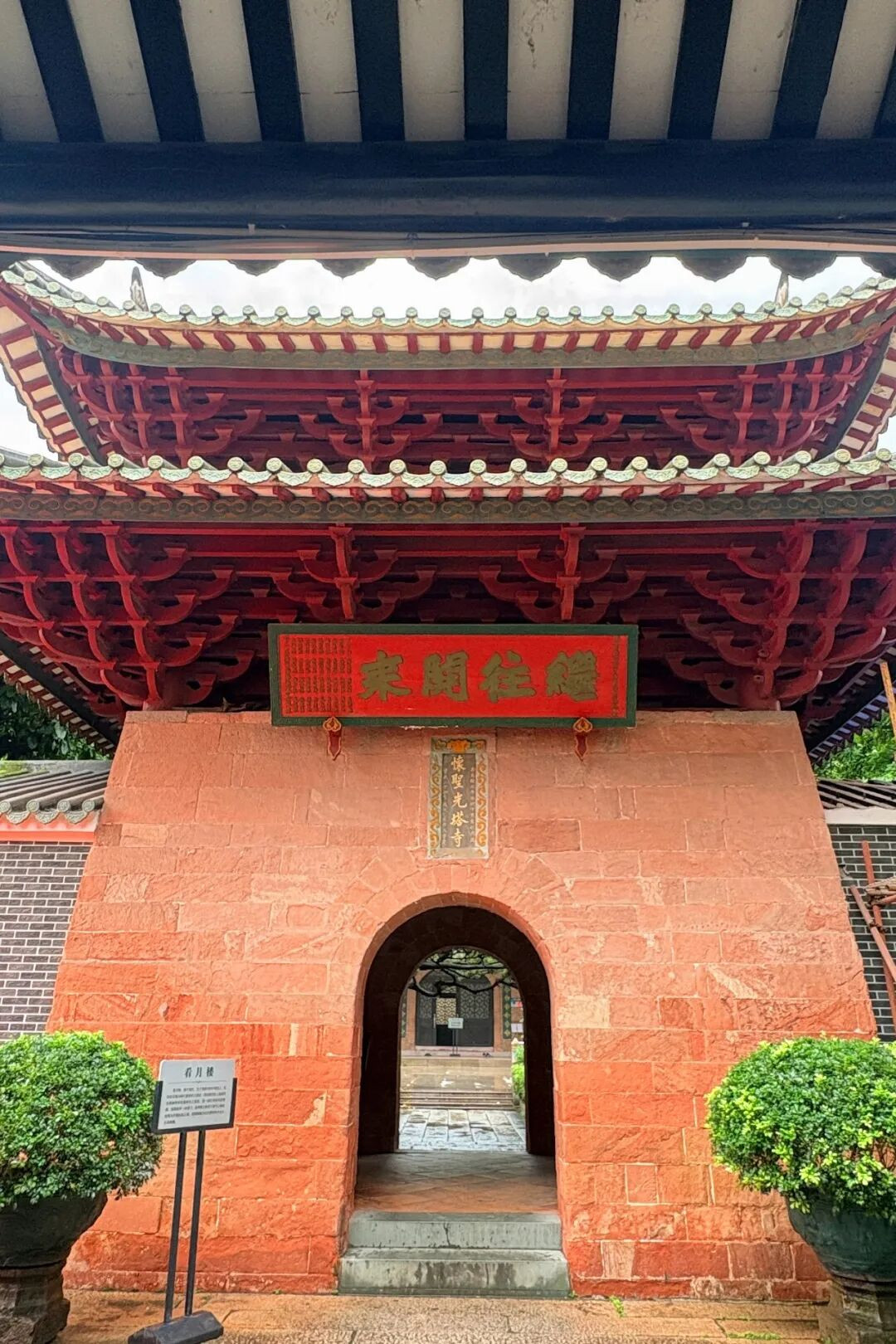
Summary:
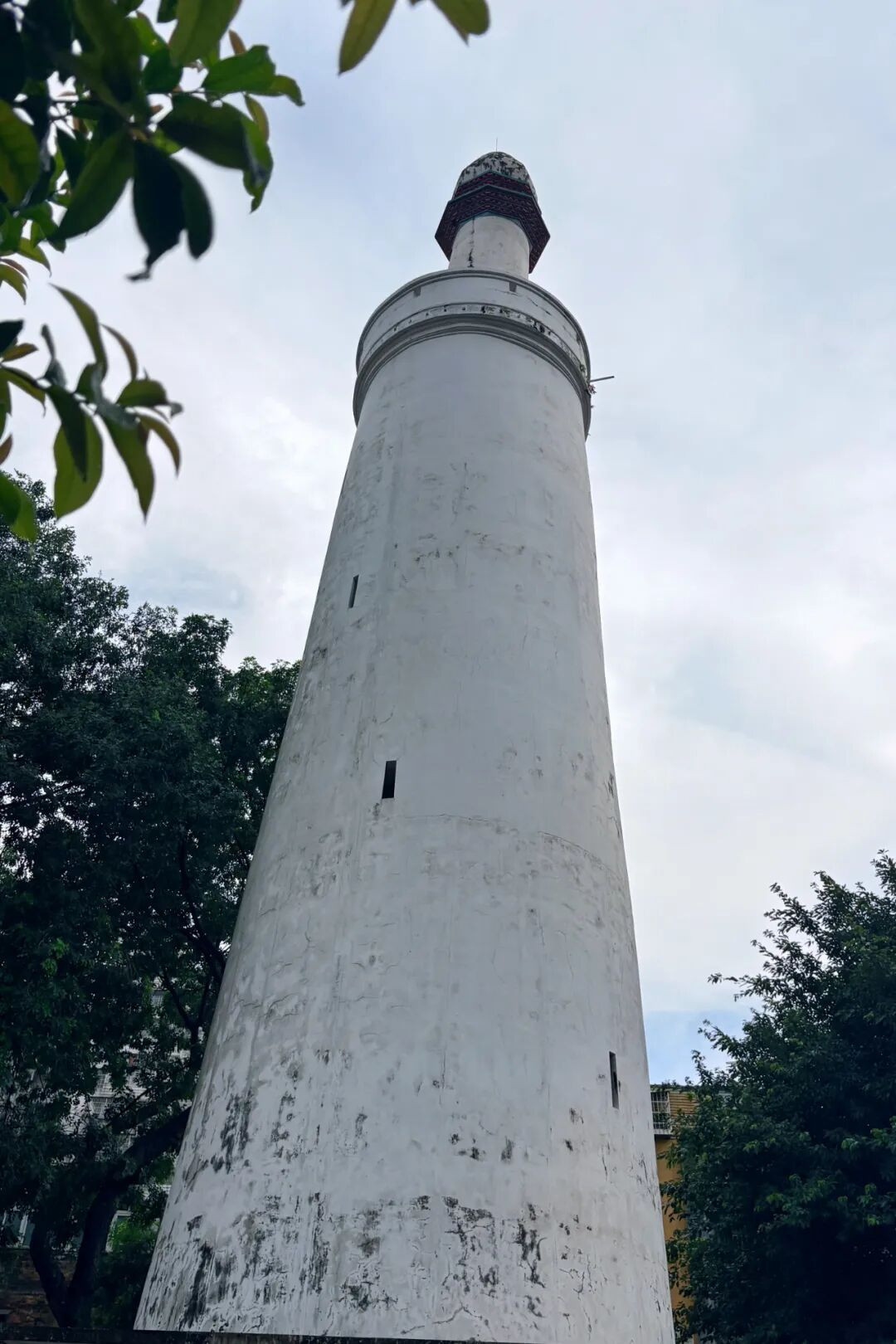
Step into the thousand-year-old Huaisheng Mosque (Light Pagoda Mosque) nestled on Guangta Road in Guangzhou's old town. Trace its origins back to the Zhenguan era of the Tang Dynasty, gaze upon the Light Pagoda with its unique blend of Arabian and Lingnan architectural styles, and feel the rich historical weight of early Islamic culture in China.
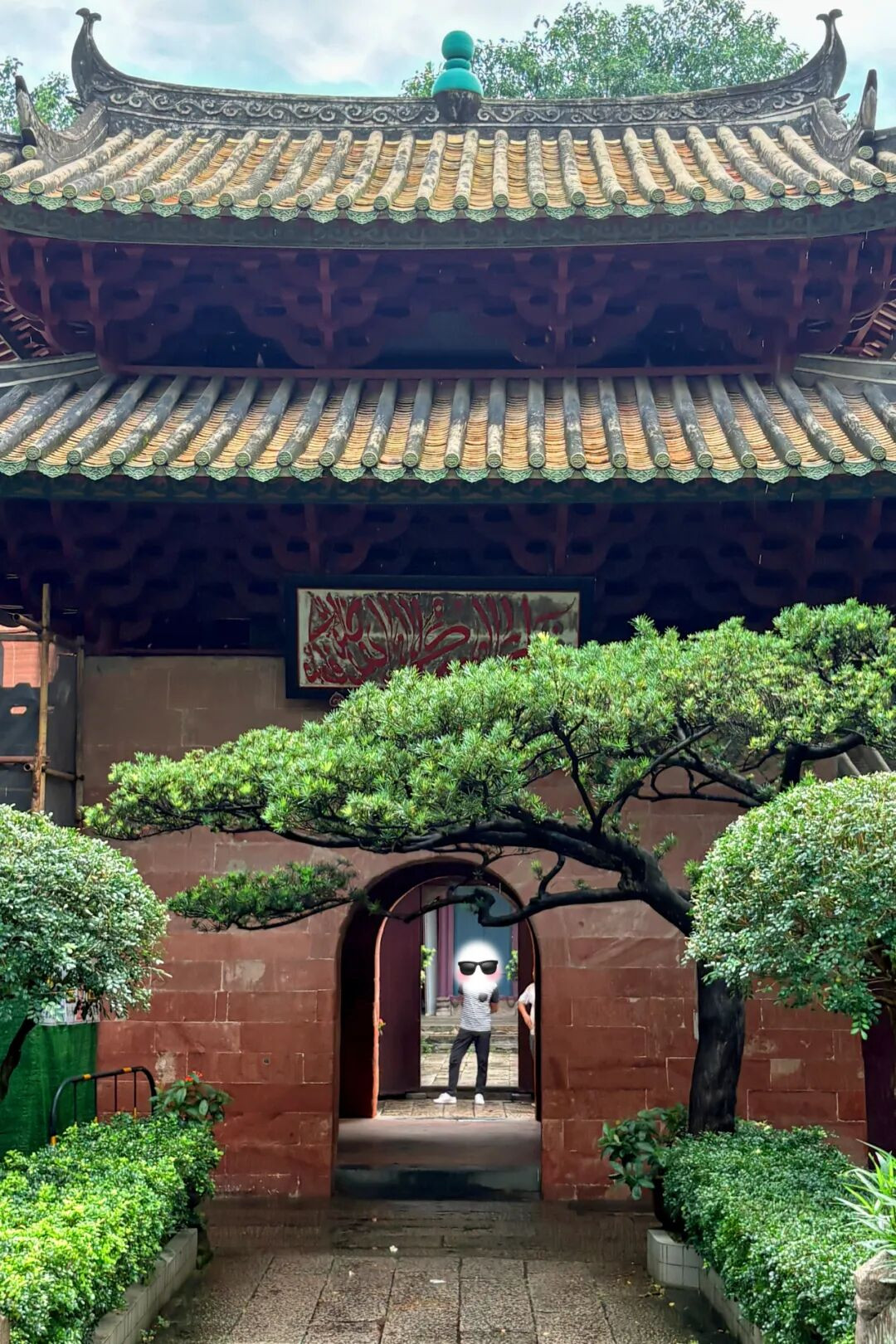
In Guangzhou's Yuexiu District, Guangta Road isn't particularly wide, flanked by everyday residential buildings and street-level mom-and-pop shops overflowing with local neighborhood vibes. If you're not paying attention, you might totally miss the curved brick wall bearing the inscription 'Huaisheng Relic Base.' Right behind the wall stands an ancient tower that has towered over the city for a thousand years—this is Huaisheng Mosque, one of the oldest mosques in China.
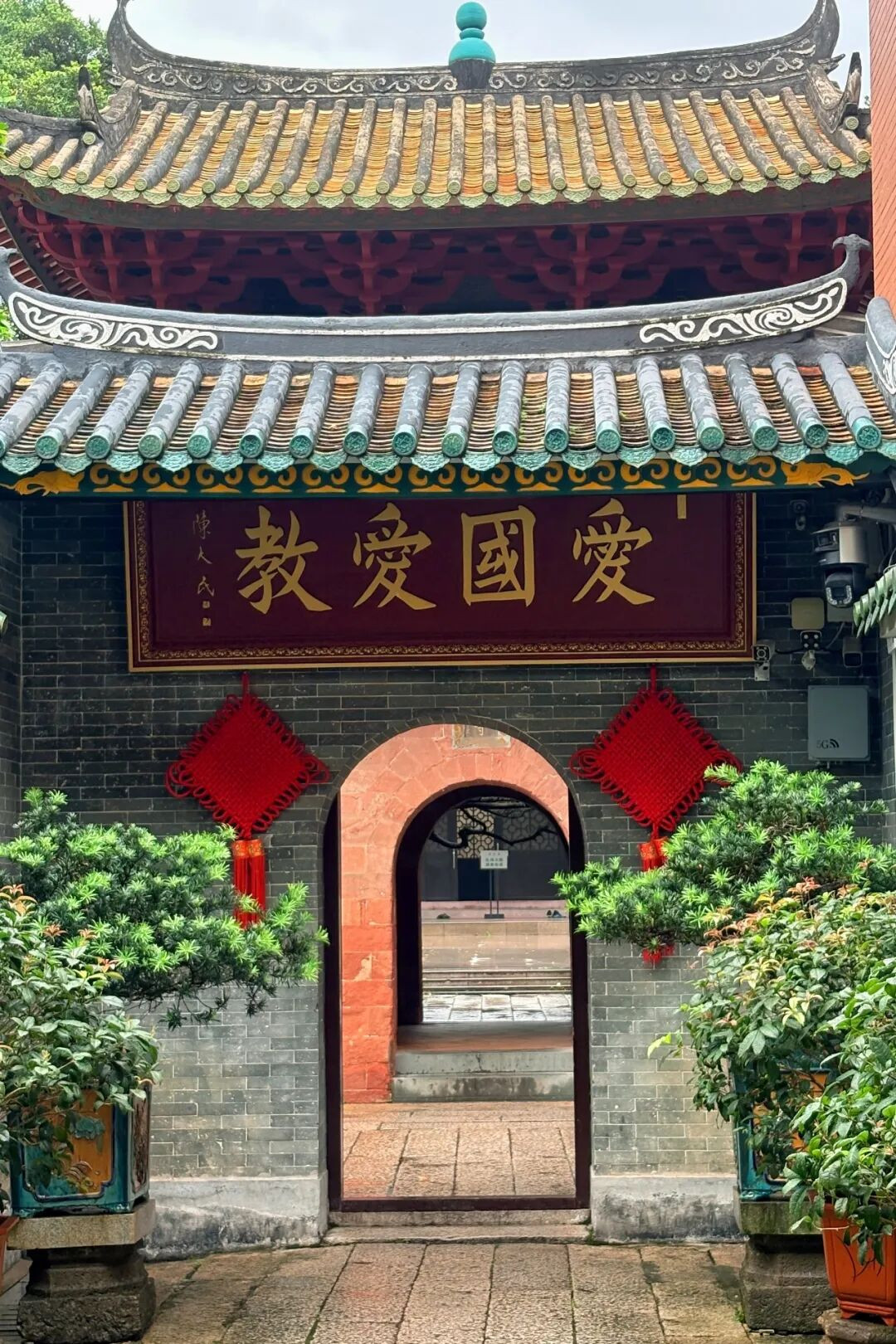
Back in the Tang Dynasty, Guangzhou's Yuexiu District was the core area of the famous Fanfang (Foreigners' Quarter). A thousand years ago, hordes of Arab and Persian merchants settled and traded here, giving birth to this historic masjid. Alongside Quanzhou's Qingjing Mosque, Hangzhou's Phoenix Mosque, and Yangzhou's Crane Mosque, it is hailed as one of the four great ancient mosques along China's coastal trade routes, serving as a core witness to cultural exchanges along the Maritime Silk Road.
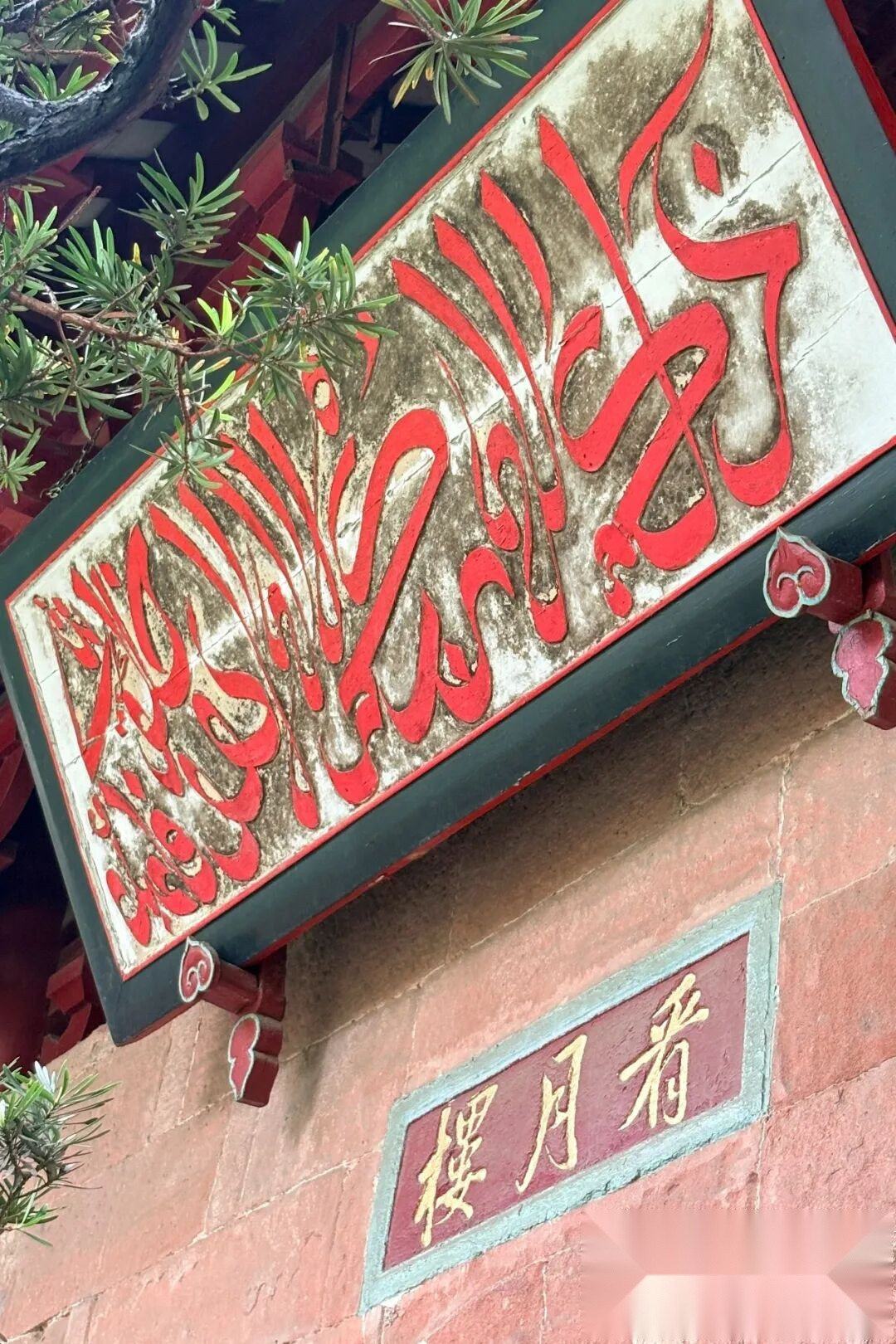
Through the centuries, the ancient mosque has weathered countless storms, suffering damage and undergoing rebuilding several times. After being burned down and later restored during the Yuan Dynasty, the surviving architecture and ancient pagoda still fully retain the structural bone and style of the Tang and Song periods, making it the oldest surviving mosque site in the country.
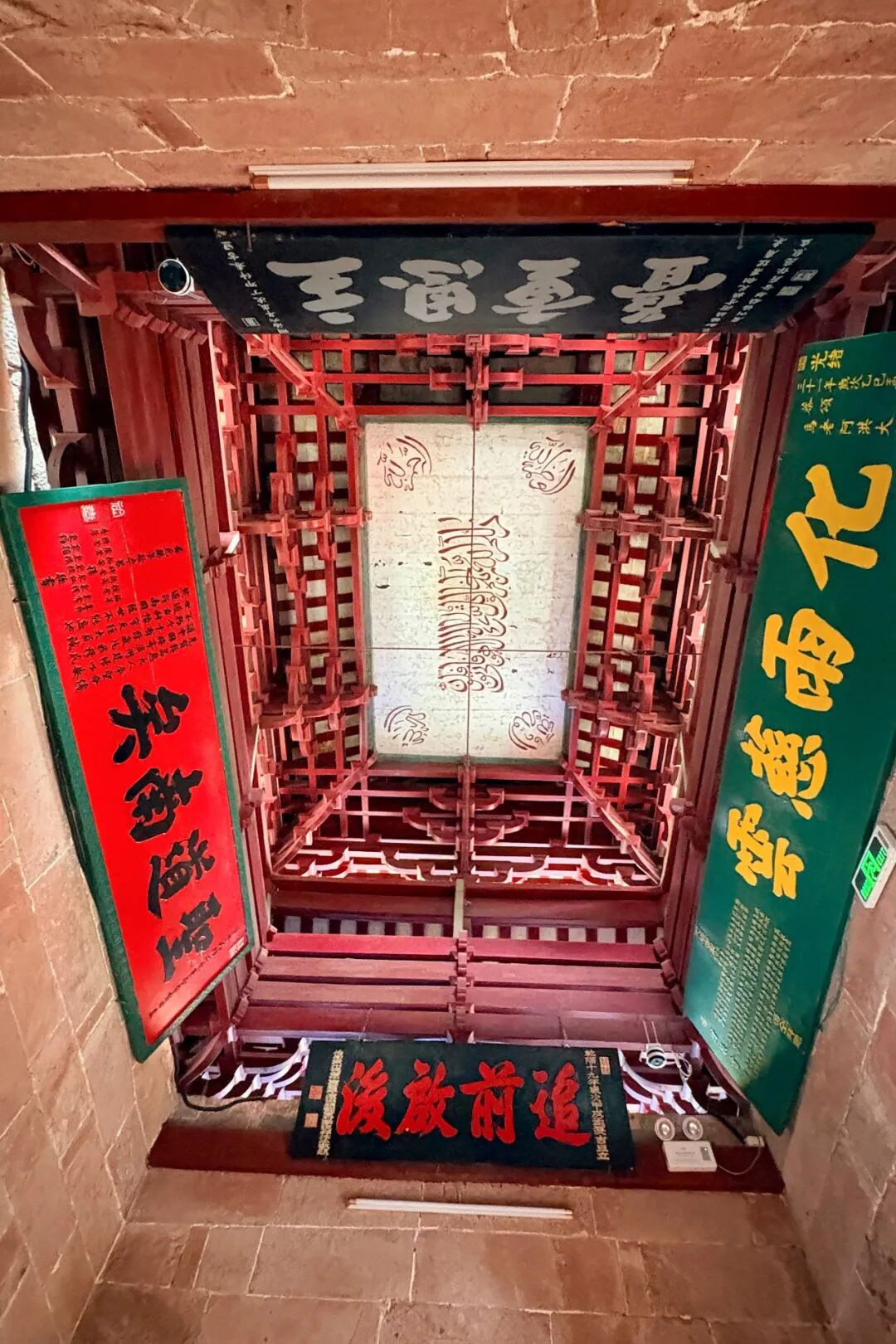
The absolute standout feature of Huaisheng Mosque is its Light Pagoda, which is where the mosque gets its popular nickname, Guangta Temple. This ancient tower is the earliest surviving Arabian-style ancient pagoda in China, and also one of the oldest standing Islamic minarets in the world.
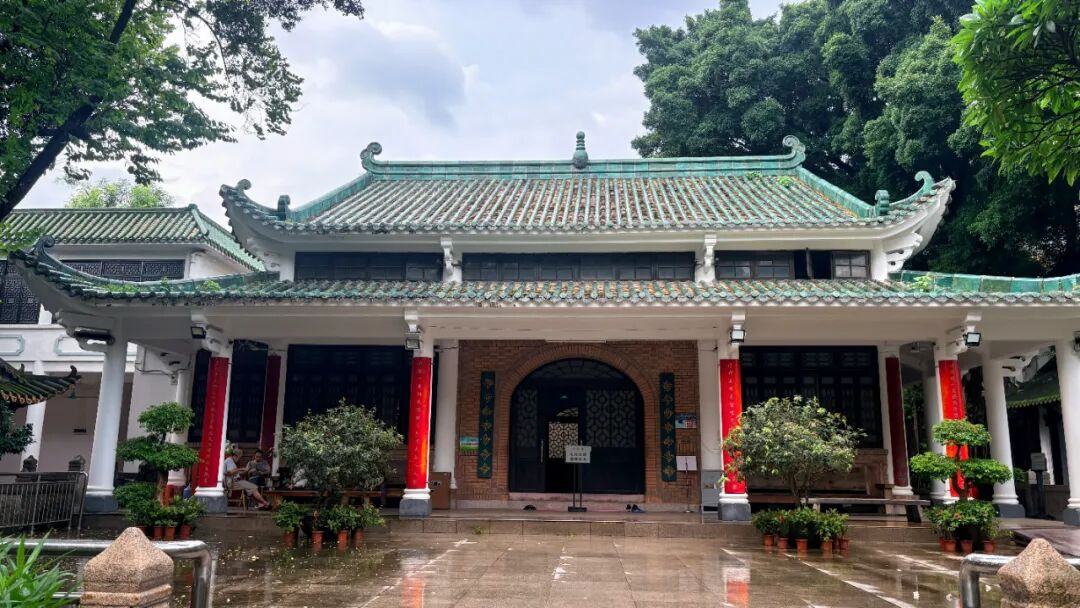
As for why the Light Pagoda is called the 'Light Pagoda,' there are several stories floating around online. One theory says it's because the pagoda's exterior surface is smooth and undecorated; another suggests it's because when Muslims recite prayers, the imam would climb the tower to call out the adhan (call to prayer) in Arabic, and the Cantonese pronunciation for 'call/sound' sounds a lot like 'light.' But the most widely circulated theory is that back in the Tang Dynasty, Huaisheng Mosque sat right on the banks of the Pearl River, and the Light Pagoda stood right by the waterfront. At night, bright lanterns were hung at the top of the tower to guide incoming and outgoing merchant ships on the Pearl River.
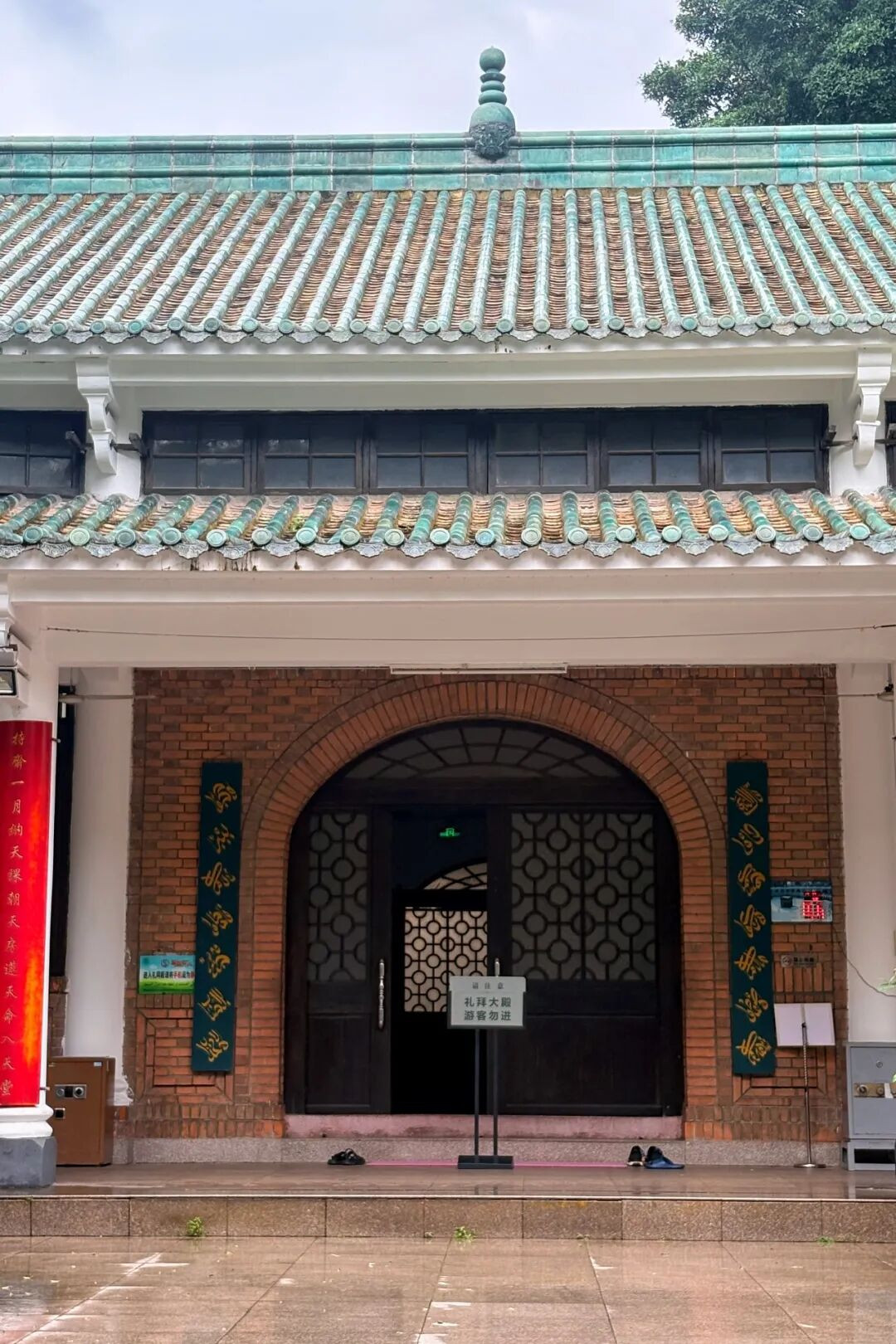
Word has it that there used to be a golden rooster perched at the very top of the tower that could spin with the wind to show wind direction, but tragically, it was blown down by a hurricane in the early Ming Dynasty and replaced with a pointed spire during a 1934 restoration.
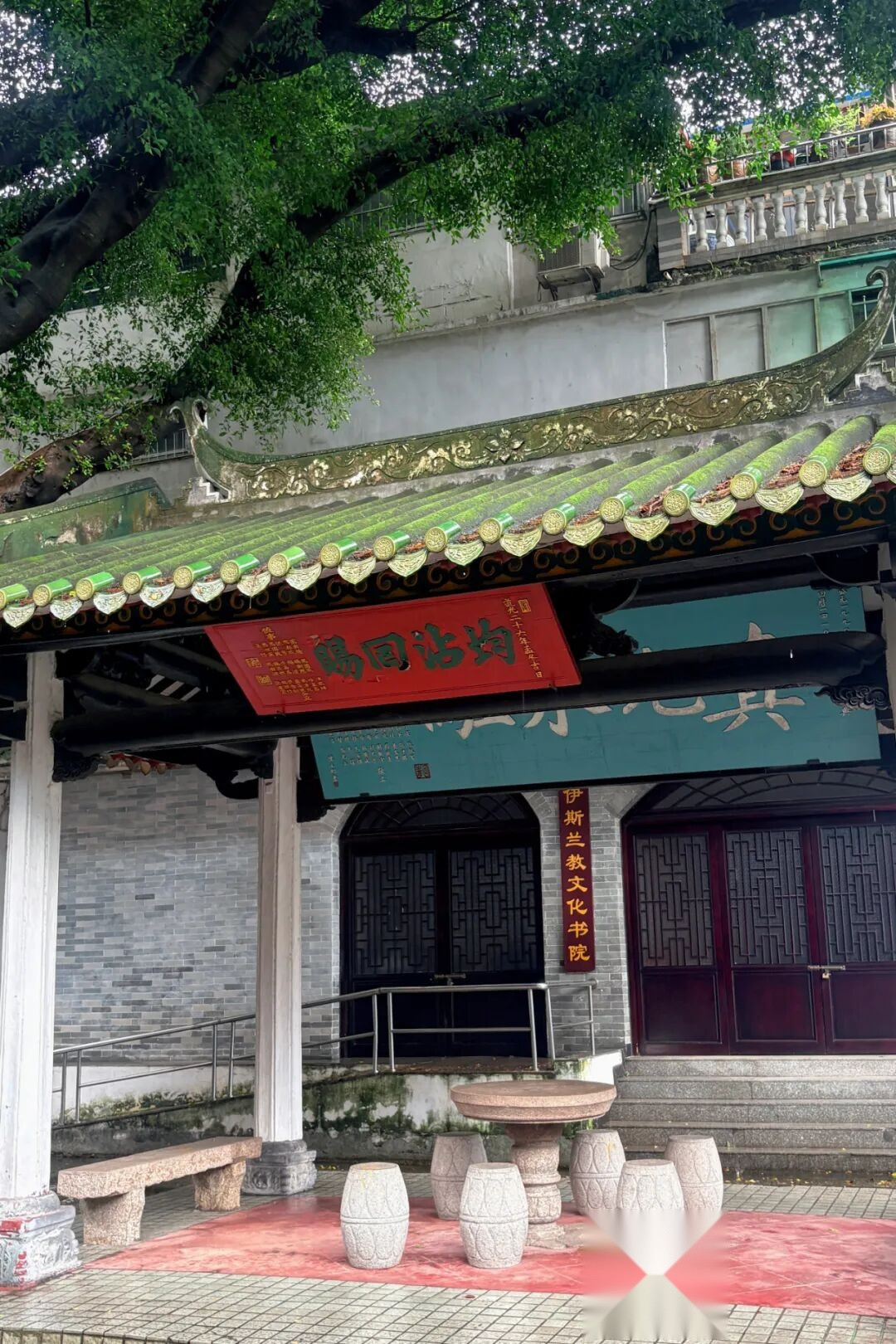
The buildings inside the courtyard are also super unique, blending Eastern and Western aesthetics.
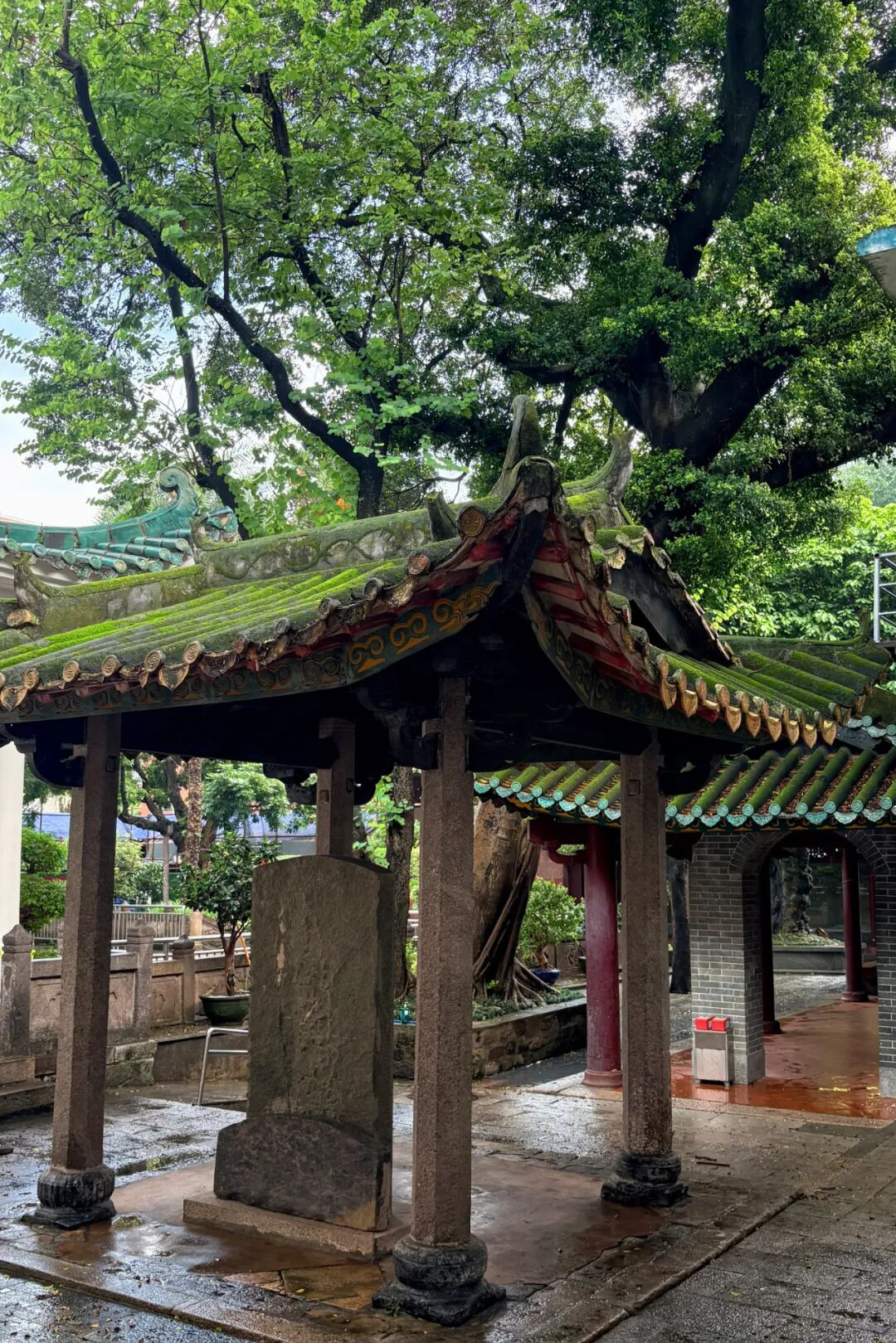
The Moon-Watching Tower was rebuilt in the 34th year of Emperor Kangxi's reign in the Qing Dynasty, featuring a double-eaved hip-and-gable roof, red sandstone walls, and arched doorways on all four sides. It effortlessly rocks the upturned eaves of classical Chinese architecture while carrying the unmistakable vibe of West Asian design.
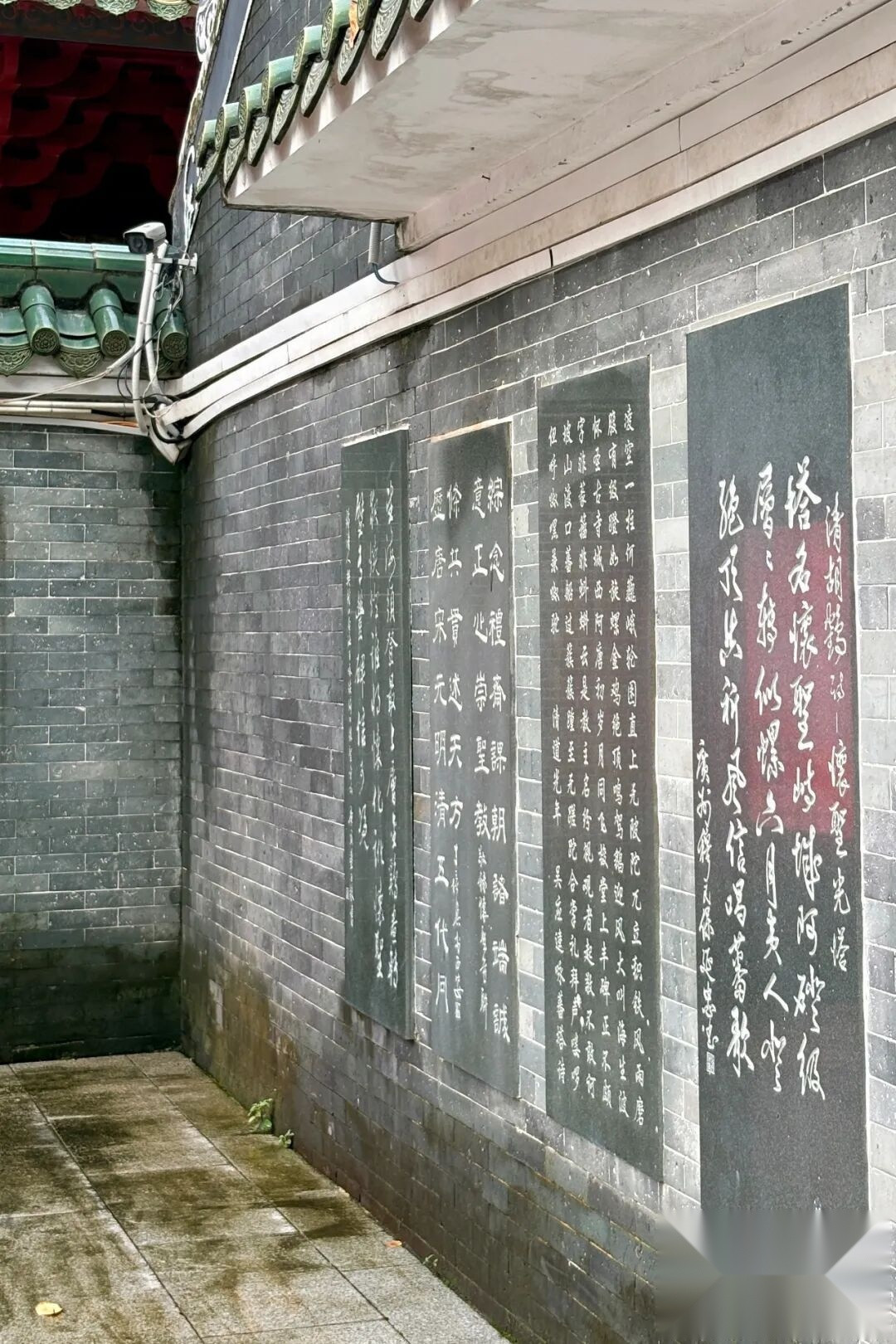
The main prayer hall still retains its classic Arabian architectural style.
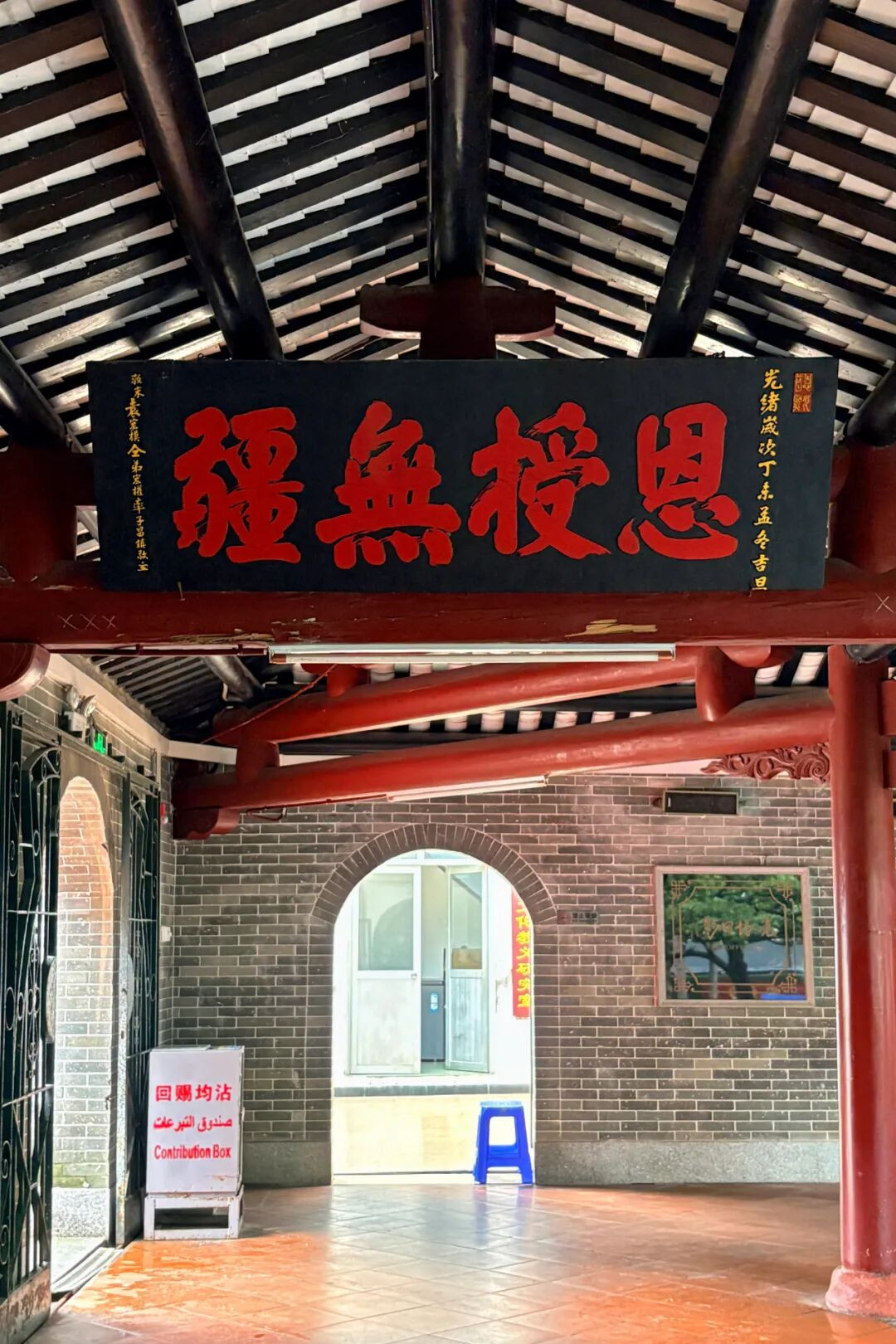
The stone balustrades on the terrace in front of the hall are actual relics from the Ming Dynasty, featuring exquisite carvings.
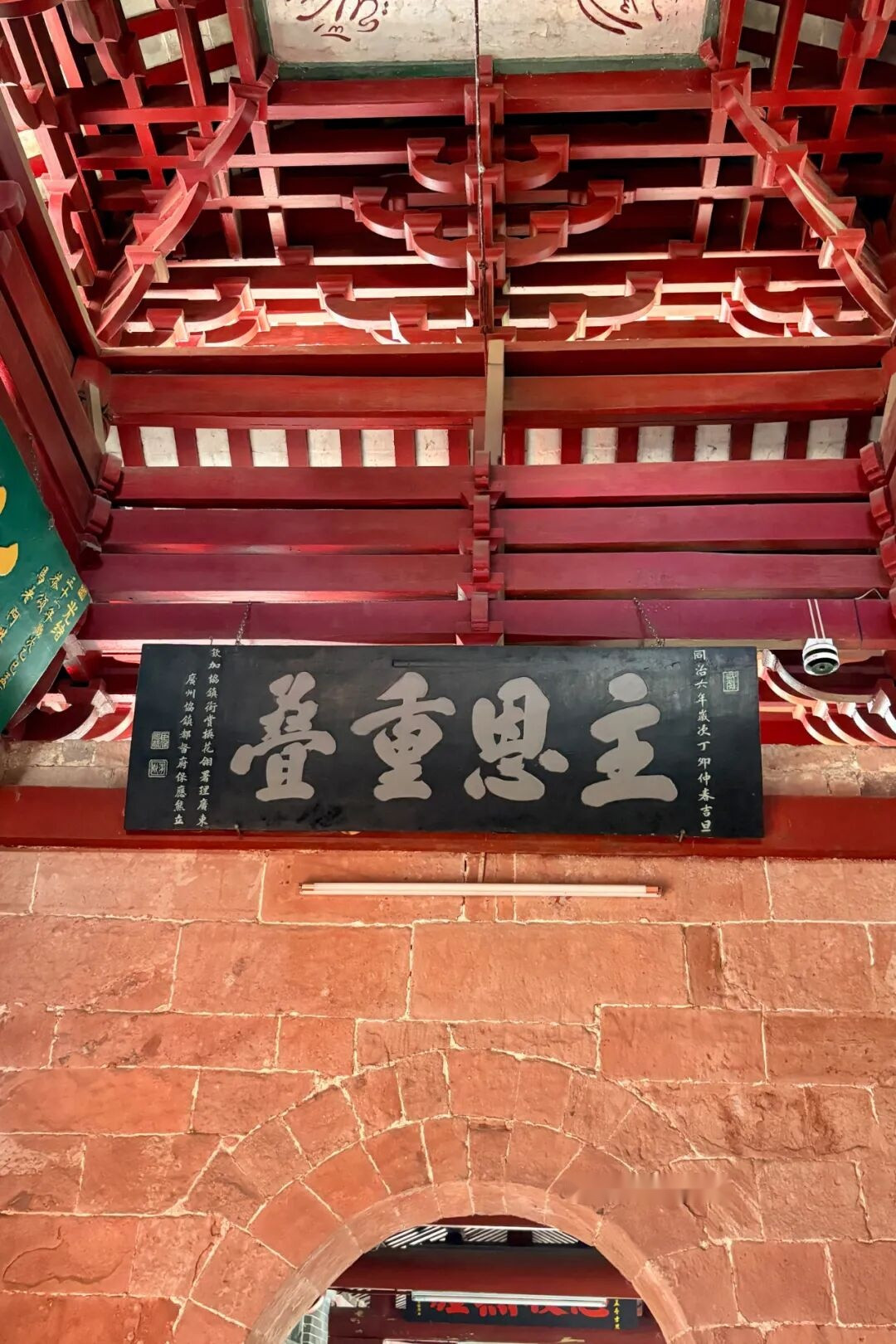
The courtyard is also dotted with lush longan trees and jiangguo (phoenix eye fruit trees).
The mosque still preserves more than 40 steles and plaques in both Chinese and Arabic dating back to the Yuan Dynasty and beyond.
Back in 1996, the Huaisheng Mosque Light Pagoda was designated as a fourth-batch Major Historical and Cultural Site Protected at the National Level. Just about 500 meters away sits another national treasure—Five Immortals Taoist Temple (Wuxian Guan). Combined with the Sacred Heart Cathedral, I've personally tested it out, and you can totally and easily bundle them together into an epic city walk.
Huaisheng Mosque is totally free to enter. Regular opening hours are daily from 9:00 AM to 5:00 PM, but keep in mind that Fridays are Jummah (the Muslim congregational prayer day), so it's closed to visitors then. Definitely plan around that.
Driving yourself through the old town is definitely not recommended; public transit is way more convenient. Take Metro Line 1 to Ximenkou Station, use Exit B, and it's about an 8-minute walk from there.
Guangzhou hides a world-class stone cathedral! There are only 4 like it globally, and one is right here in the Yuexiu old town, accessible straight by subway
Two national-treasure Taoist temples in Guangdong: one in Huizhou, the other right in Guangzhou's old town, completely free to wander
Free ancient villages in Guangdong: A 600-year-old longevity village in Foshan, totally free to stroll, uncrowded, and peaceful
First came the official kilns, then came Foshan? Spend 3 weekend hours in Foshan exploring a 500-year-old Ming Dynasty ancestral hall bestowed by the emperor
Foshan actually has two Ancestral Temples? Most people only know the first one, but step right out of the second one and you're at the Beijiang River
Every small town and every landscape is worth documenting.
I'll be sharing more tried-and-tested routes coming up,
Hit that follow button, and let's take our time exploring the scenery of this world together. Collapse Read »
Exploring Guangzhou's Huaisheng Mosque: A Thousand-Year Maritime Silk Road Heritage Site on Guangta Road
Summary:
Step into the thousand-year-old Huaisheng Mosque (Light Pagoda Mosque) nestled on Guangta Road in Guangzhou's old town. Trace its origins back to the Zhenguan era of the Tang Dynasty, gaze upon the Light Pagoda with its unique blend of Arabian and Lingnan architectural styles, and feel the rich historical weight of early Islamic culture in China.
In Guangzhou's Yuexiu District, Guangta Road isn't particularly wide, flanked by everyday residential buildings and street-level mom-and-pop shops overflowing with local neighborhood vibes. If you're not paying attention, you might totally miss the curved brick wall bearing the inscription 'Huaisheng Relic Base.' Right behind the wall stands an ancient tower that has towered over the city for a thousand years—this is Huaisheng Mosque, one of the oldest mosques in China.
Back in the Tang Dynasty, Guangzhou's Yuexiu District was the core area of the famous Fanfang (Foreigners' Quarter). A thousand years ago, hordes of Arab and Persian merchants settled and traded here, giving birth to this historic masjid. Alongside Quanzhou's Qingjing Mosque, Hangzhou's Phoenix Mosque, and Yangzhou's Crane Mosque, it is hailed as one of the four great ancient mosques along China's coastal trade routes, serving as a core witness to cultural exchanges along the Maritime Silk Road.
Through the centuries, the ancient mosque has weathered countless storms, suffering damage and undergoing rebuilding several times. After being burned down and later restored during the Yuan Dynasty, the surviving architecture and ancient pagoda still fully retain the structural bone and style of the Tang and Song periods, making it the oldest surviving mosque site in the country.
The absolute standout feature of Huaisheng Mosque is its Light Pagoda, which is where the mosque gets its popular nickname, Guangta Temple. This ancient tower is the earliest surviving Arabian-style ancient pagoda in China, and also one of the oldest standing Islamic minarets in the world.
As for why the Light Pagoda is called the 'Light Pagoda,' there are several stories floating around online. One theory says it's because the pagoda's exterior surface is smooth and undecorated; another suggests it's because when Muslims recite prayers, the imam would climb the tower to call out the adhan (call to prayer) in Arabic, and the Cantonese pronunciation for 'call/sound' sounds a lot like 'light.' But the most widely circulated theory is that back in the Tang Dynasty, Huaisheng Mosque sat right on the banks of the Pearl River, and the Light Pagoda stood right by the waterfront. At night, bright lanterns were hung at the top of the tower to guide incoming and outgoing merchant ships on the Pearl River.
Word has it that there used to be a golden rooster perched at the very top of the tower that could spin with the wind to show wind direction, but tragically, it was blown down by a hurricane in the early Ming Dynasty and replaced with a pointed spire during a 1934 restoration.
The buildings inside the courtyard are also super unique, blending Eastern and Western aesthetics.
The Moon-Watching Tower was rebuilt in the 34th year of Emperor Kangxi's reign in the Qing Dynasty, featuring a double-eaved hip-and-gable roof, red sandstone walls, and arched doorways on all four sides. It effortlessly rocks the upturned eaves of classical Chinese architecture while carrying the unmistakable vibe of West Asian design.
The main prayer hall still retains its classic Arabian architectural style.
The stone balustrades on the terrace in front of the hall are actual relics from the Ming Dynasty, featuring exquisite carvings.
The courtyard is also dotted with lush longan trees and jiangguo (phoenix eye fruit trees).
The mosque still preserves more than 40 steles and plaques in both Chinese and Arabic dating back to the Yuan Dynasty and beyond.
Back in 1996, the Huaisheng Mosque Light Pagoda was designated as a fourth-batch Major Historical and Cultural Site Protected at the National Level. Just about 500 meters away sits another national treasure—Five Immortals Taoist Temple (Wuxian Guan). Combined with the Sacred Heart Cathedral, I've personally tested it out, and you can totally and easily bundle them together into an epic city walk.
Huaisheng Mosque is totally free to enter. Regular opening hours are daily from 9:00 AM to 5:00 PM, but keep in mind that Fridays are Jummah (the Muslim congregational prayer day), so it's closed to visitors then. Definitely plan around that.
Driving yourself through the old town is definitely not recommended; public transit is way more convenient. Take Metro Line 1 to Ximenkou Station, use Exit B, and it's about an 8-minute walk from there.
Guangzhou hides a world-class stone cathedral! There are only 4 like it globally, and one is right here in the Yuexiu old town, accessible straight by subway
Two national-treasure Taoist temples in Guangdong: one in Huizhou, the other right in Guangzhou's old town, completely free to wander
Free ancient villages in Guangdong: A 600-year-old longevity village in Foshan, totally free to stroll, uncrowded, and peaceful
First came the official kilns, then came Foshan? Spend 3 weekend hours in Foshan exploring a 500-year-old Ming Dynasty ancestral hall bestowed by the emperor
Foshan actually has two Ancestral Temples? Most people only know the first one, but step right out of the second one and you're at the Beijiang River
Every small town and every landscape is worth documenting.
I'll be sharing more tried-and-tested routes coming up,
Hit that follow button, and let's take our time exploring the scenery of this world together. Collapse Read »
Guangzhou Friday Halal Food Market: Northwestern Flavors & Street Feasts
[Internet Repost]
Guangzhou's Friday-Only Halal Food Market: Instantly Transported to Northwest China for Kao Baozi and a Street Food Feast
Summary:
A real-life exploration of Guangzhou's regular Friday halal specialty market. Documenting the Jumu'ah (Friday congregational prayer) market scene featuring freshly baked, crispy-on-the-outside-tender-on-the-inside kao baozi (crispy baked lamb buns / samsas), steaming giant skewers of mutton, handmade sanzi (crispy fried dough twists), and Northwestern milk tea, showcasing a rare and magnificent West Asian and Northwestern flavor experience right here in the City of Rams.
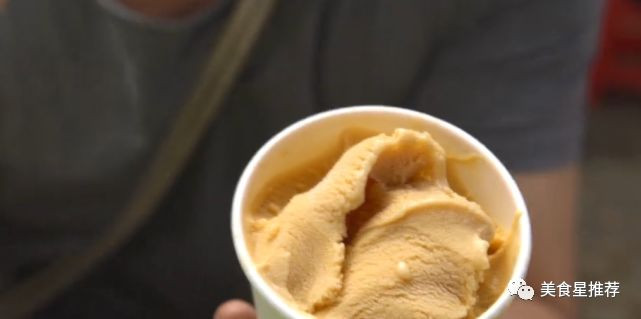
Great food always seems to pop up around us unexpectedly, and if you miss out, it just means you didn't seize the moment. Because here in China, no matter where you go, you can always find incredible food—though you might just miss it if you aren't paying attention. Plus, every Chinese city has its own unique culinary identity.
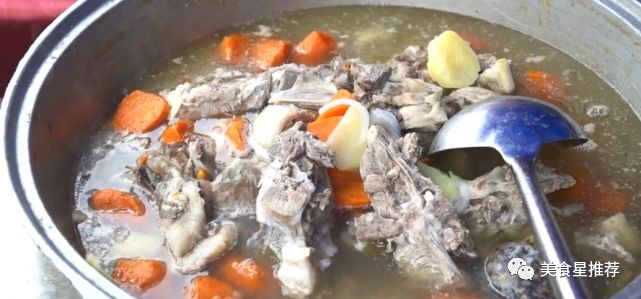
For instance, a while back, Xiaowu took a trip over to Guangzhou. One of the major perks of living in Guangzhou is that you can sample culinary delights from all four corners of the country without ever having to travel far. As the saying goes, "Eating is everything in Guangzhou," but the amazing food here definitely goes way beyond Cantonese cuisine. I'd heard for a long time that Lanpu Road has a halal food street where all kinds of meat skewers, baked flatbreads, and pilaf are made completely authentically.
If you just wander down this little alley and nowhere else, you'll genuinely feel like you've been tricked into thinking you traveled all the way to Northwest China. Once you arrive, you can see that this entire food street has a true halal vibe, and the crowds are massive. As soon as he stepped foot here, Xiaowu was buzzing with excitement!
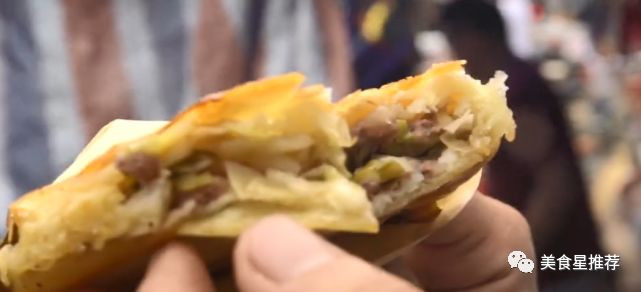
Xiaowu first spotted a small food stall selling niurou bing (beef flatbread) for just 5 RMB apiece, so he immediately bought one to try out. Made with Lanzhou yellow beef, these are freshly prepared and sold right on the spot—specifically, imperial halal palace-style beef flatbread. Even though the outside looks a bit greasy, once you take a bite, the seasoning is actually spot on!
Inside, alongside the beef, there's scallion, and the crust is way thinner than Xiaowu expected! It's just a thin layer of flaky pastry, packed with genuine, quality ingredients. Next up, Xiaowu headed over to another stall selling yangrou chuan (lamb skewers). They smelled incredible, so he couldn't resist grabbing a few skewers to see how they tasted!
These were massive lamb skewers. Every bite alternated between lean and fat meat, and because they were marinated, they were super flavorful! The flavor went all the way deep into the meat—not that funky gamey smell, but a rich, savory aroma. Afterward, Xiaowu also tried some handmade Xinjiang ice cream. It was seriously good, overflowing with rich, milky flavor made straight from real milk. All the other snacks were super delicious too—what do you think? Collapse Read »
Guangzhou's Friday-Only Halal Food Market: Instantly Transported to Northwest China for Kao Baozi and a Street Food Feast
Summary:
A real-life exploration of Guangzhou's regular Friday halal specialty market. Documenting the Jumu'ah (Friday congregational prayer) market scene featuring freshly baked, crispy-on-the-outside-tender-on-the-inside kao baozi (crispy baked lamb buns / samsas), steaming giant skewers of mutton, handmade sanzi (crispy fried dough twists), and Northwestern milk tea, showcasing a rare and magnificent West Asian and Northwestern flavor experience right here in the City of Rams.
Great food always seems to pop up around us unexpectedly, and if you miss out, it just means you didn't seize the moment. Because here in China, no matter where you go, you can always find incredible food—though you might just miss it if you aren't paying attention. Plus, every Chinese city has its own unique culinary identity.
For instance, a while back, Xiaowu took a trip over to Guangzhou. One of the major perks of living in Guangzhou is that you can sample culinary delights from all four corners of the country without ever having to travel far. As the saying goes, "Eating is everything in Guangzhou," but the amazing food here definitely goes way beyond Cantonese cuisine. I'd heard for a long time that Lanpu Road has a halal food street where all kinds of meat skewers, baked flatbreads, and pilaf are made completely authentically.
If you just wander down this little alley and nowhere else, you'll genuinely feel like you've been tricked into thinking you traveled all the way to Northwest China. Once you arrive, you can see that this entire food street has a true halal vibe, and the crowds are massive. As soon as he stepped foot here, Xiaowu was buzzing with excitement!
Xiaowu first spotted a small food stall selling niurou bing (beef flatbread) for just 5 RMB apiece, so he immediately bought one to try out. Made with Lanzhou yellow beef, these are freshly prepared and sold right on the spot—specifically, imperial halal palace-style beef flatbread. Even though the outside looks a bit greasy, once you take a bite, the seasoning is actually spot on!
Inside, alongside the beef, there's scallion, and the crust is way thinner than Xiaowu expected! It's just a thin layer of flaky pastry, packed with genuine, quality ingredients. Next up, Xiaowu headed over to another stall selling yangrou chuan (lamb skewers). They smelled incredible, so he couldn't resist grabbing a few skewers to see how they tasted!
These were massive lamb skewers. Every bite alternated between lean and fat meat, and because they were marinated, they were super flavorful! The flavor went all the way deep into the meat—not that funky gamey smell, but a rich, savory aroma. Afterward, Xiaowu also tried some handmade Xinjiang ice cream. It was seriously good, overflowing with rich, milky flavor made straight from real milk. All the other snacks were super delicious too—what do you think? Collapse Read »
Exploring Guangzhou's 30-Year-Old Halal Butcher Shop on Zhixing Road: Fresh Beef & Local Favorites
[Internet Repost]
Exploring Guangzhou's 30-Year-Old Halal Butcher Shop on Zhixing Road: Fresh, Seasoned Beef and Halal Ingredients Trusted by Local Neighborhood Regulars
Summary:
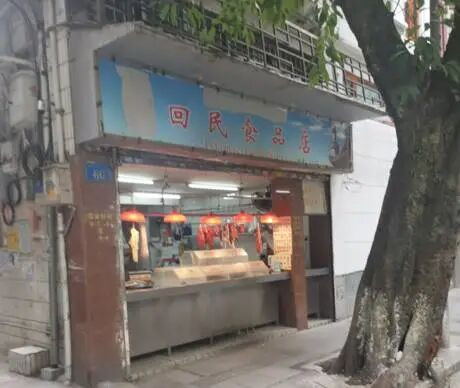
A visit to a legendary halal fresh meat and grocery shop that has been running for over 30 years on Zhixing Road in Guangzhou's historic old town. Documenting their signature pre-seasoned fresh beef and beef and lamb offal, slaughtered strictly according to Islamic dietary laws and weighed and sliced to order, showcasing the decades-long trust and reputation built among Guangzhou's neighborhood regulars.
This halal food shop exclusively sells raw meat; they don't serve cooked dishes.
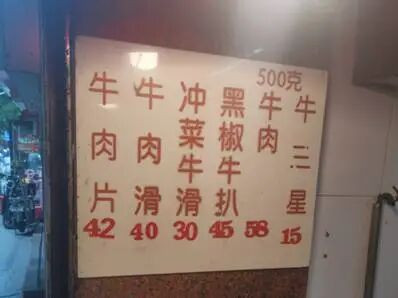
A friend recommended it to me. Located on Zhixing Road in Guangzhou's old town, it's been open for over 30 years. They mainly sell beef, all pre-seasoned and sold by weight.
I don't eat beef myself, but my family does. I bought it once, and now there have been many times since—the flavor is amazing, and you don't need to wash it, cut it, or season it yourself. It's just so convenient~~
Sliced Beef
Cut thinly against the grain and fully marinated, you can just toss it straight into the wok at home, and it won't get tough even if you overcook it. You can also lay it on top of nearly-cooked rice to make beef claypot rice (baozi), or steam it with a little cordyceps flower (chongcao hua).
Minced Beef Paste (Niurou Hua)
What locals in Guangzhou call 'rou hua' is essentially minced meat. It's also pre-seasoned, and my mom said you can taste bits of dried tangerine peel (chenpi) in it. You can steam it directly into beef patties, drop it into broth for a meatball soup, or use it to make mincemeat dishes.
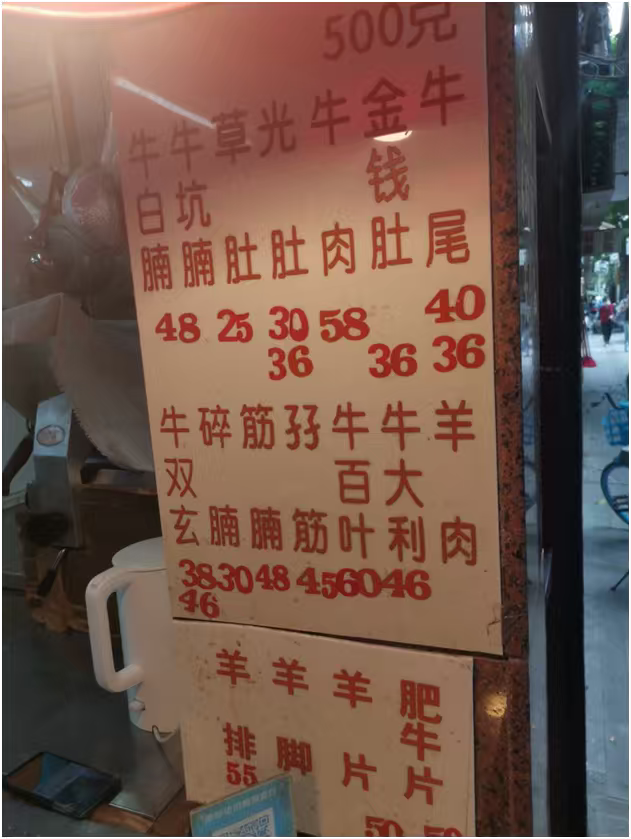
Preserved Mustard Green Beef Paste (Chongcai Niurou Hua)
Minced beef blended with finely chopped preserved mustard greens (chongcai). Chongcai here in Guangzhou refers to large-headed pickled mustard greens (the root is huge, which is why it's called 'datoucai'). Chongcai paired with beef is a classic Cantonese home-style dish. This chongcai beef paste can be steamed directly over boiling water.
Black Pepper Steak
These are pre-cut steaks marinated in black pepper, ready to throw straight into the pan. If your teeth aren't great or you find cutting steak a hassle, you can just snip the steak into beef strips with kitchen shears and stir-fry them.
If you aren't into pre-cut and pre-marinated meats, the shop also sells whole cuts of fresh beef. Just ask the clerk whatever cut or texture you're craving.
As a lazy cook like me, I just have the staff weigh out a pound, portion it into three bags, and toss them in the freezer. I grab a few bags for my mom—one bag is the exact portion for a single meal, covering the day's protein needs easily and simply. Collapse Read »
Exploring Guangzhou's 30-Year-Old Halal Butcher Shop on Zhixing Road: Fresh, Seasoned Beef and Halal Ingredients Trusted by Local Neighborhood Regulars
Summary:
A visit to a legendary halal fresh meat and grocery shop that has been running for over 30 years on Zhixing Road in Guangzhou's historic old town. Documenting their signature pre-seasoned fresh beef and beef and lamb offal, slaughtered strictly according to Islamic dietary laws and weighed and sliced to order, showcasing the decades-long trust and reputation built among Guangzhou's neighborhood regulars.
This halal food shop exclusively sells raw meat; they don't serve cooked dishes.
A friend recommended it to me. Located on Zhixing Road in Guangzhou's old town, it's been open for over 30 years. They mainly sell beef, all pre-seasoned and sold by weight.
I don't eat beef myself, but my family does. I bought it once, and now there have been many times since—the flavor is amazing, and you don't need to wash it, cut it, or season it yourself. It's just so convenient~~
Sliced Beef
Cut thinly against the grain and fully marinated, you can just toss it straight into the wok at home, and it won't get tough even if you overcook it. You can also lay it on top of nearly-cooked rice to make beef claypot rice (baozi), or steam it with a little cordyceps flower (chongcao hua).
Minced Beef Paste (Niurou Hua)
What locals in Guangzhou call 'rou hua' is essentially minced meat. It's also pre-seasoned, and my mom said you can taste bits of dried tangerine peel (chenpi) in it. You can steam it directly into beef patties, drop it into broth for a meatball soup, or use it to make mincemeat dishes.
Preserved Mustard Green Beef Paste (Chongcai Niurou Hua)
Minced beef blended with finely chopped preserved mustard greens (chongcai). Chongcai here in Guangzhou refers to large-headed pickled mustard greens (the root is huge, which is why it's called 'datoucai'). Chongcai paired with beef is a classic Cantonese home-style dish. This chongcai beef paste can be steamed directly over boiling water.
Black Pepper Steak
These are pre-cut steaks marinated in black pepper, ready to throw straight into the pan. If your teeth aren't great or you find cutting steak a hassle, you can just snip the steak into beef strips with kitchen shears and stir-fry them.
If you aren't into pre-cut and pre-marinated meats, the shop also sells whole cuts of fresh beef. Just ask the clerk whatever cut or texture you're craving.
As a lazy cook like me, I just have the staff weigh out a pound, portion it into three bags, and toss them in the freezer. I grab a few bags for my mom—one bag is the exact portion for a single meal, covering the day's protein needs easily and simply. Collapse Read »
Remembering Satangji: The Lost Century-Old Halal Bakery and Dim Sum Legend of Guangzhou
[Internet Repost]
Remembering Satangji: The Lost Century-Old Halal Bakery and Dim Sum Legend of Guangzhou
Abstract:
Drawing on rare historical and cultural archives alongside vintage staff photographs, this piece takes a deep dive into the history of 'Satangji Bakery,' a legendary Halal landmark in Guangzhou’s Hui Muslim community. We look back at its glory days making authentic Halal Cantonese mooncakes and traditional pastries, preserving a rich cultural heritage.
Staff photograph of Satangji Bakery (Photo courtesy of Qiuran Shi)
Did you know that Guangzhou's Hui Muslim history is packed with legendary Halal eateries? Some started out selling casual street eats, others made names for themselves with roasted duck, while a few grew into full-scale teahouses and restaurants.
They weren't just hits among Hui Muslims; they won rave reviews across the board from the general public too.
It’s a real shame that, as time rolled on, these historic Halal spots didn’t get the lucky second act that places like the Guangzhou Muslim Restaurant (Huimin Restaurant) managed to secure.
Today, we can only piece together what those days looked like through the few scattered photos and texts left behind by our elders. We're also hoping this piece might help us connect with anyone in the know who can share more stories and archives.
The spot we're spotlighting today is 'Satangji,' a classic Halal institution famous for cold drinks and street snacks. Our historical source here is an essay titled 'How I Ran Satangji' written by Mr. Sa Hanqiang (birth name Sa Yirou, courtesy name Hanqiang, 1911–1996).
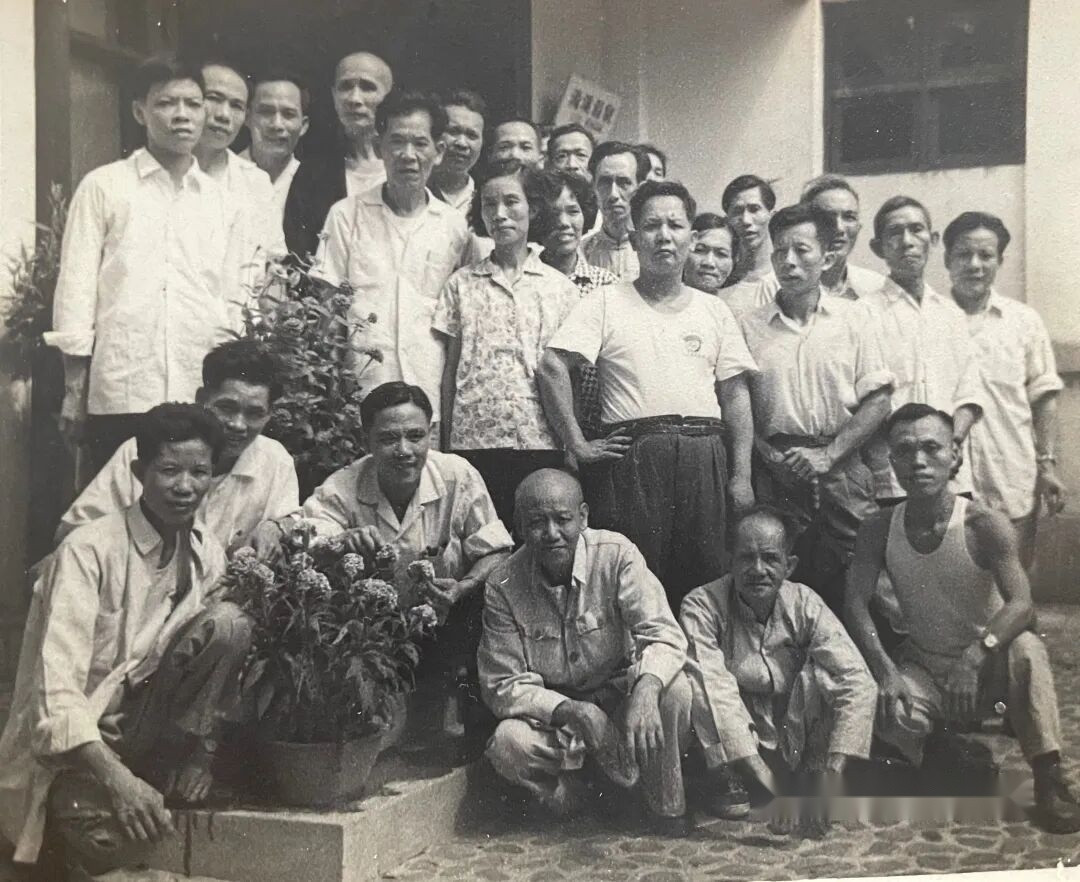
Reply with 'Satangji' in our official account backend to grab a copy of the essay.
Special thanks to Mr. Zhang Zhongyi and Qiuran Shi for providing the archival support.
From 'Tangji' to 'Satangji'
According to Mr. Sa Hanqiang, his grandfather Sa Xianyang (1829–1895) once ran a shop called 'Tangji Pastry Shop' right by the Zhulanmen city gate, famous for saqima (traditional sweet Manchu-style pastry / fried dough cake) and 'five-spice salted crispy rice crackers.' By the time the business passed down to him, the original shop had been demolished. Starting back up as a street vendor, he kept the 'Tangji' name and added the family surname 'Sa' to the front—which is how 'Satangji' got its name.
The story of Satangji kicked off around 1930. Back then, a newly reclaimed plot of flat land down by the Changdi waterfront was bustling with sightseers and street peddlers. A 19-year-old Sa Hanqiang spotted the massive crowds, figured there was money to be made, and rented a little stall to sell tofu hua (silken tofu pudding / sweet beancurd). That was the launchpad for his street-vending hustle.
From that point on, Satangji's 'street vendor era' rolled on until 1944. Over those years, the stall's menu expanded from tofu hua to dangaozai (mini egg cakes / bite-sized sponge cakes). Meanwhile, due to the chaos of war, Mr. Sa Hanqiang bounced back and forth between Guangzhou, Hong Kong, and Guilin, living a pretty turbulent life.
Figuring that street vending was barely keeping the lights on and had no real future, he decided in 1944 to hang up his apron as a peddler and start setting up a proper, brick-and-mortar storefront.
From 'Opening a Proper Shop' to 'Public-Private Partnership'
In October 1944, Sa Hanqiang teamed up with his family to rent a storefront on Huiai East Road, where they started slinging dangaozai.

Because Satangji's dangaozai tasted amazing—and thanks to Sa Hanqiang’s sharp business instincts—the shop took off. Business boomed so fast that they were soon looking to scale up and open branch locations.
The first branch opened over in Xiguan, bringing an even wider lineup of snacks like big dangao (sponge cake), heliaosu (walnut cookies), danbaidui (crispy egg-white puffs), and danhuangbing (egg yolk biscuits).
When the Japanese surrendered and Guangzhou's markets bounced back into a boom, Satangji’s bankroll got a serious upgrade. They poured funds back into expanding their flagship spot on Huiai East Road, adding indoor seating and cold drinks to offset the slow summer slump.
Not long after, a second branch opened up on Zhongshan 4th Road. During this stretch, Mr. Sa Hanqiang used his savvy business sense and multi-pronged competitive playbook to completely edge out a wave of copycats and rivals.
By 1949, the PRC was founded and Guangzhou was liberated. Satangji's third branch opened for business on Zhongshan 5th Road. By this time, daily store operations were mostly being run by Sa Hanqiang’s younger brother and brother-in-law, while he described his own mindset back then as 'indifferent to shop affairs and badly drifting toward a life of ease.'
In 1955, backed by the care and support of the Party and government, Mr. Sa Hanqiang took charge of supplying desserts during the 'Soviet Economic Achievements Exhibition' held in Guangzhou.
In 1956, riding the wave of the era's major economic shifts, Satangji jumped into the trend of 'public-private partnerships' (joint state-private ownership), setting up distribution spots all over town as business stayed red-hot.
Memories of 'Satangji' featured in the 'Crossing the Crossroads' article by the WeChat account 'Junhua Tang'
As for how Satangji gradually lost its footing and faded into the history books, no further records have turned up just yet.
All we're left with is a deep sense of regret.
Portrait of Sa Hanqiang: Quick-witted, Innovative, and Out-of-the-Box
Looking back at how Mr. Sa Hanqiang built and ran Satangji, it’s clear as day that his secret weapon for turning an unheralded street cart into a household brand name was being 'quick-witted, fiercely innovative, and always playing an unexpected winning hand.'
Back when he first started out selling tofu hua (silken tofu pudding), he got super creative by using a giant earthenware basin to hold the pudding, decorating it with fresh flowers, and putting a huge emphasis on the hygiene and cleanliness of his Halal food, which totally made Satang Ji stand out from all the other food stalls.
When selling iced soy milk, he cleverly poured the frozen soy milk into a thermos flask to keep it cold so he could easily pour and serve it whenever.
When making dangaozai (traditional mini sponge cakes), he constantly fine-tuned his craft to boost efficiency and updated the mold designs so Satang Ji's treats always stayed a step ahead of the competition.
Not to mention how well he understood customer psychology while running the business, using all sorts of marketing tactics like advertising, designing custom packaging, studying product displays, and making things right in front of the crowd.
All of these are the exact reasons why Mr. Sa Hanqiang was able to grow Satang Ji step-by-step into a major success.
Satang Ji might be gone from our daily lives now, but we're still hoping that one day in the future, some passionate folks in the food and restaurant industry will bring back the "Satang Ji" name and let this legendary old Guangzhou Halal brand make a comeback.
Remember to reply with "Satang Ji" in the official account chat to grab the original text of "How I Ran Satang Ji"~ Collapse Read »
Remembering Satangji: The Lost Century-Old Halal Bakery and Dim Sum Legend of Guangzhou
Abstract:
Drawing on rare historical and cultural archives alongside vintage staff photographs, this piece takes a deep dive into the history of 'Satangji Bakery,' a legendary Halal landmark in Guangzhou’s Hui Muslim community. We look back at its glory days making authentic Halal Cantonese mooncakes and traditional pastries, preserving a rich cultural heritage.
Staff photograph of Satangji Bakery (Photo courtesy of Qiuran Shi)
Did you know that Guangzhou's Hui Muslim history is packed with legendary Halal eateries? Some started out selling casual street eats, others made names for themselves with roasted duck, while a few grew into full-scale teahouses and restaurants.
They weren't just hits among Hui Muslims; they won rave reviews across the board from the general public too.
It’s a real shame that, as time rolled on, these historic Halal spots didn’t get the lucky second act that places like the Guangzhou Muslim Restaurant (Huimin Restaurant) managed to secure.
Today, we can only piece together what those days looked like through the few scattered photos and texts left behind by our elders. We're also hoping this piece might help us connect with anyone in the know who can share more stories and archives.
The spot we're spotlighting today is 'Satangji,' a classic Halal institution famous for cold drinks and street snacks. Our historical source here is an essay titled 'How I Ran Satangji' written by Mr. Sa Hanqiang (birth name Sa Yirou, courtesy name Hanqiang, 1911–1996).
Reply with 'Satangji' in our official account backend to grab a copy of the essay.
Special thanks to Mr. Zhang Zhongyi and Qiuran Shi for providing the archival support.
From 'Tangji' to 'Satangji'
According to Mr. Sa Hanqiang, his grandfather Sa Xianyang (1829–1895) once ran a shop called 'Tangji Pastry Shop' right by the Zhulanmen city gate, famous for saqima (traditional sweet Manchu-style pastry / fried dough cake) and 'five-spice salted crispy rice crackers.' By the time the business passed down to him, the original shop had been demolished. Starting back up as a street vendor, he kept the 'Tangji' name and added the family surname 'Sa' to the front—which is how 'Satangji' got its name.
The story of Satangji kicked off around 1930. Back then, a newly reclaimed plot of flat land down by the Changdi waterfront was bustling with sightseers and street peddlers. A 19-year-old Sa Hanqiang spotted the massive crowds, figured there was money to be made, and rented a little stall to sell tofu hua (silken tofu pudding / sweet beancurd). That was the launchpad for his street-vending hustle.
From that point on, Satangji's 'street vendor era' rolled on until 1944. Over those years, the stall's menu expanded from tofu hua to dangaozai (mini egg cakes / bite-sized sponge cakes). Meanwhile, due to the chaos of war, Mr. Sa Hanqiang bounced back and forth between Guangzhou, Hong Kong, and Guilin, living a pretty turbulent life.
Figuring that street vending was barely keeping the lights on and had no real future, he decided in 1944 to hang up his apron as a peddler and start setting up a proper, brick-and-mortar storefront.
From 'Opening a Proper Shop' to 'Public-Private Partnership'
In October 1944, Sa Hanqiang teamed up with his family to rent a storefront on Huiai East Road, where they started slinging dangaozai.
Because Satangji's dangaozai tasted amazing—and thanks to Sa Hanqiang’s sharp business instincts—the shop took off. Business boomed so fast that they were soon looking to scale up and open branch locations.
The first branch opened over in Xiguan, bringing an even wider lineup of snacks like big dangao (sponge cake), heliaosu (walnut cookies), danbaidui (crispy egg-white puffs), and danhuangbing (egg yolk biscuits).
When the Japanese surrendered and Guangzhou's markets bounced back into a boom, Satangji’s bankroll got a serious upgrade. They poured funds back into expanding their flagship spot on Huiai East Road, adding indoor seating and cold drinks to offset the slow summer slump.
Not long after, a second branch opened up on Zhongshan 4th Road. During this stretch, Mr. Sa Hanqiang used his savvy business sense and multi-pronged competitive playbook to completely edge out a wave of copycats and rivals.
By 1949, the PRC was founded and Guangzhou was liberated. Satangji's third branch opened for business on Zhongshan 5th Road. By this time, daily store operations were mostly being run by Sa Hanqiang’s younger brother and brother-in-law, while he described his own mindset back then as 'indifferent to shop affairs and badly drifting toward a life of ease.'
In 1955, backed by the care and support of the Party and government, Mr. Sa Hanqiang took charge of supplying desserts during the 'Soviet Economic Achievements Exhibition' held in Guangzhou.
In 1956, riding the wave of the era's major economic shifts, Satangji jumped into the trend of 'public-private partnerships' (joint state-private ownership), setting up distribution spots all over town as business stayed red-hot.
Memories of 'Satangji' featured in the 'Crossing the Crossroads' article by the WeChat account 'Junhua Tang'
As for how Satangji gradually lost its footing and faded into the history books, no further records have turned up just yet.
All we're left with is a deep sense of regret.
Portrait of Sa Hanqiang: Quick-witted, Innovative, and Out-of-the-Box
Looking back at how Mr. Sa Hanqiang built and ran Satangji, it’s clear as day that his secret weapon for turning an unheralded street cart into a household brand name was being 'quick-witted, fiercely innovative, and always playing an unexpected winning hand.'
Back when he first started out selling tofu hua (silken tofu pudding), he got super creative by using a giant earthenware basin to hold the pudding, decorating it with fresh flowers, and putting a huge emphasis on the hygiene and cleanliness of his Halal food, which totally made Satang Ji stand out from all the other food stalls.
When selling iced soy milk, he cleverly poured the frozen soy milk into a thermos flask to keep it cold so he could easily pour and serve it whenever.
When making dangaozai (traditional mini sponge cakes), he constantly fine-tuned his craft to boost efficiency and updated the mold designs so Satang Ji's treats always stayed a step ahead of the competition.
Not to mention how well he understood customer psychology while running the business, using all sorts of marketing tactics like advertising, designing custom packaging, studying product displays, and making things right in front of the crowd.
All of these are the exact reasons why Mr. Sa Hanqiang was able to grow Satang Ji step-by-step into a major success.
Satang Ji might be gone from our daily lives now, but we're still hoping that one day in the future, some passionate folks in the food and restaurant industry will bring back the "Satang Ji" name and let this legendary old Guangzhou Halal brand make a comeback.
Remember to reply with "Satang Ji" in the official account chat to grab the original text of "How I Ran Satang Ji"~ Collapse Read »
The Hidden History of Halal Roast Duck in Guangzhou: From Song Dynasty Roots to the Legend of Wanheji
[Internet Repost]
The Legend of Lingnan's Halal Shaola: Historical Research on Wanheji, the Historic Song-to-Qing Dynasty Guangzhou Hui Muslim Roast Duck Spot
Abstract:
An investigation into 'Wanheji,' the once-famous halal shaola (Cantonese roasted meats / roast duck) legend in Guangzhou's culinary history. Tracing the Southern Song Dynasty roots of roast duck techniques migrating to Lingnan, this article uncovers the unique techniques and industry status of Cantonese halal roast goose and roast duck during the Qing Dynasty and Republican era.
Images generated by Doubao AI
Guangzhou's shaola has a long and deeply rooted history. As early as the end of the Southern Song Dynasty, roast duck techniques from the Central Plains had already made their way to Lingnan, and by the Qing Dynasty, Cantonese shaola had grown into a well-established culinary tradition with its own distinct style.
In the late Qing and early Republican era, a halal legacy named 'Wanheji' stood out in Guangzhou. It originally started out selling live chickens and ducks, but as business boomed, they added 'gualu kaya (hanging-oven roast duck)' to the menu. Thanks to its incredible flavor, 'Wanhe Gualu Ya' quickly became a household name across the neighborhoods.
Today, drawing from Mr. Yang Shaoquan's short essay 'Wanhe Gualu Ya and Why the Master Chef Matters,' let's take a quick look at the story behind this former halal landmark.
Special thanks to Mr. Zhang Zhongyi for providing the research materials.
Wanhe Chicken and Duck Shop: We Never Sell Dead Meat
This is a legendary story rooted in the Islamic principle that halal food never uses dead or unslaughtered animals.
Back in old Guangzhou, there was a job dedicated to cleaning public restrooms, commonly known by locals as 'shikeng gong (nightsoil collectors).' They earned meager wages and lived in constant hunger.
However, the nightsoil collector working near the Wanhe Chicken and Duck Shop had a totally different experience. Because he was regularly gifted the unsold or discarded livestock that didn't meet their strict religious standards, he constantly feasted like royalty.
Unexpectedly, this simple act driven by religious faith became the best organic marketing for Wanhe. Customers soon realized that Wanhe never sold dead or tainted meat—only the freshest chickens and ducks.
As business grew, capitalists, wealthy business owners, and local elites flocked to support the Wanhe Chicken and Duck Shop precisely for this integrity, driving their success even higher.
Guangxingchang: Wanhe's Fierce Rival
In the early years of the Guangxu Emperor's reign, two Guangzhou Hui Muslims named Chen Lüjiang and Yang Xiaochu saw Wanhe's massive success and pooled their money to open Guangxingchang on Weibian Street in Huaning Lane. They brought in an out-of-town chef known as 'Master Shi' and advertised 'Beijing Crispy Hanging-Oven Roast Duck,' quickly pulling in even bigger crowds than Wanhe.
This 'Master Shi' was originally a chef brought from Beijing by General Cairu Jinzhang, who oversaw the southern land forces. To secure the maritime defense, Jinzhang supervised the construction of artillery batteries in Humen, but tragically fell ill and died from the damp mountain mists. Left stranded, Master Shi—a former elite imperial mansion chef—entered civilian life and made his craft public.
This Master Shi was an absolute master of crispy-skin duck, nailing the sugar glaze technique to perfection. Through trial and error, he swapped honey out for maltose, which massively boosted kitchen efficiency. He also personally trained a whole crew of apprentices, every single one of whom mastered the craft.
Chen Lüjiang’s nephew, Chen Qingquan, was one of his standout disciples.
Changes at Guangxingchang and Wanheji's Big Break
After operating for over a decade, one of Guangxingchang's co-founders—Chen Lüjiang’s nephew (not Chen Qingquan, but another nephew)—passed away. Heartbroken and losing interest, Chen Lüjiang dissolved the partnership with Yang Xiaochu, split the assets, and set off on the Hajj to Mecca.
Meanwhile, Yang Xiaochu teamed up with a chef known as 'Doupi Chao (Beancurd Skin Chao)' near the Haopan Heng Shaanxi Guild Hall to open a new spot called Yipin. They focused primarily on crispy hanging-oven roast duck while also selling barrel-style soy-sauce chicken. A few years later, Yipin relocated to Hong Kong and expanded into Zhenchang Restaurant, with Doupi Chao continuing to run the roast duck station.
Seizing the moment while Guangxingchang underwent changes, Wanheji stepped into the crispy roast duck game. They hired Chen Qingquan as their master chef. As mentioned earlier, since Chen Qingquan was a direct student of Master Shi, his culinary skills were top-notch.
With Chen Qingquan fueling the kitchen, Wanheji's business exploded. 'Wanhe Gualu Ya' gradually turned into a legendary household term, passed down fondly among food lovers.
Historical records on Wanheji are quite scarce. If any reader friends out there have more insider knowledge, please drop a comment below and share! Collapse Read »
The Legend of Lingnan's Halal Shaola: Historical Research on Wanheji, the Historic Song-to-Qing Dynasty Guangzhou Hui Muslim Roast Duck Spot
Abstract:
An investigation into 'Wanheji,' the once-famous halal shaola (Cantonese roasted meats / roast duck) legend in Guangzhou's culinary history. Tracing the Southern Song Dynasty roots of roast duck techniques migrating to Lingnan, this article uncovers the unique techniques and industry status of Cantonese halal roast goose and roast duck during the Qing Dynasty and Republican era.
Images generated by Doubao AI
Guangzhou's shaola has a long and deeply rooted history. As early as the end of the Southern Song Dynasty, roast duck techniques from the Central Plains had already made their way to Lingnan, and by the Qing Dynasty, Cantonese shaola had grown into a well-established culinary tradition with its own distinct style.
In the late Qing and early Republican era, a halal legacy named 'Wanheji' stood out in Guangzhou. It originally started out selling live chickens and ducks, but as business boomed, they added 'gualu kaya (hanging-oven roast duck)' to the menu. Thanks to its incredible flavor, 'Wanhe Gualu Ya' quickly became a household name across the neighborhoods.
Today, drawing from Mr. Yang Shaoquan's short essay 'Wanhe Gualu Ya and Why the Master Chef Matters,' let's take a quick look at the story behind this former halal landmark.
Special thanks to Mr. Zhang Zhongyi for providing the research materials.
Wanhe Chicken and Duck Shop: We Never Sell Dead Meat
This is a legendary story rooted in the Islamic principle that halal food never uses dead or unslaughtered animals.
Back in old Guangzhou, there was a job dedicated to cleaning public restrooms, commonly known by locals as 'shikeng gong (nightsoil collectors).' They earned meager wages and lived in constant hunger.
However, the nightsoil collector working near the Wanhe Chicken and Duck Shop had a totally different experience. Because he was regularly gifted the unsold or discarded livestock that didn't meet their strict religious standards, he constantly feasted like royalty.
Unexpectedly, this simple act driven by religious faith became the best organic marketing for Wanhe. Customers soon realized that Wanhe never sold dead or tainted meat—only the freshest chickens and ducks.
As business grew, capitalists, wealthy business owners, and local elites flocked to support the Wanhe Chicken and Duck Shop precisely for this integrity, driving their success even higher.
Guangxingchang: Wanhe's Fierce Rival
In the early years of the Guangxu Emperor's reign, two Guangzhou Hui Muslims named Chen Lüjiang and Yang Xiaochu saw Wanhe's massive success and pooled their money to open Guangxingchang on Weibian Street in Huaning Lane. They brought in an out-of-town chef known as 'Master Shi' and advertised 'Beijing Crispy Hanging-Oven Roast Duck,' quickly pulling in even bigger crowds than Wanhe.
This 'Master Shi' was originally a chef brought from Beijing by General Cairu Jinzhang, who oversaw the southern land forces. To secure the maritime defense, Jinzhang supervised the construction of artillery batteries in Humen, but tragically fell ill and died from the damp mountain mists. Left stranded, Master Shi—a former elite imperial mansion chef—entered civilian life and made his craft public.
This Master Shi was an absolute master of crispy-skin duck, nailing the sugar glaze technique to perfection. Through trial and error, he swapped honey out for maltose, which massively boosted kitchen efficiency. He also personally trained a whole crew of apprentices, every single one of whom mastered the craft.
Chen Lüjiang’s nephew, Chen Qingquan, was one of his standout disciples.
Changes at Guangxingchang and Wanheji's Big Break
After operating for over a decade, one of Guangxingchang's co-founders—Chen Lüjiang’s nephew (not Chen Qingquan, but another nephew)—passed away. Heartbroken and losing interest, Chen Lüjiang dissolved the partnership with Yang Xiaochu, split the assets, and set off on the Hajj to Mecca.
Meanwhile, Yang Xiaochu teamed up with a chef known as 'Doupi Chao (Beancurd Skin Chao)' near the Haopan Heng Shaanxi Guild Hall to open a new spot called Yipin. They focused primarily on crispy hanging-oven roast duck while also selling barrel-style soy-sauce chicken. A few years later, Yipin relocated to Hong Kong and expanded into Zhenchang Restaurant, with Doupi Chao continuing to run the roast duck station.
Seizing the moment while Guangxingchang underwent changes, Wanheji stepped into the crispy roast duck game. They hired Chen Qingquan as their master chef. As mentioned earlier, since Chen Qingquan was a direct student of Master Shi, his culinary skills were top-notch.
With Chen Qingquan fueling the kitchen, Wanheji's business exploded. 'Wanhe Gualu Ya' gradually turned into a legendary household term, passed down fondly among food lovers.
Historical records on Wanheji are quite scarce. If any reader friends out there have more insider knowledge, please drop a comment below and share! Collapse Read »
Guangzhou's Untold Stories: Exploring Ancient Muslim Tombs & Halal Heritage on the Maritime Silk Road
[Internet Repost]
An Exploration of Guangzhou's Ancient Tomb of the Venerated Ancestor (Sa'd ibn Abi Waqqas) and the Muslim Cemetery: A Thousand Years of Maritime Silk Road Memories Where Over Ten Thousand Pious Predecessors Lie at Rest
Summary:
We're taking a deep dive into Guangzhou's Guihuagang Muslim Public Cemetery and the Ancient Tomb of the Venerated Ancestor (Sa'd ibn Abi Waqqas's Tomb). We'll revisit the historical legacy of this revered missionary from the Tang Dynasty, exploring its immense value as one of China's Four Great Ancient Muslim Tombs and the profound sentiment it holds for Muslim communities across generations.
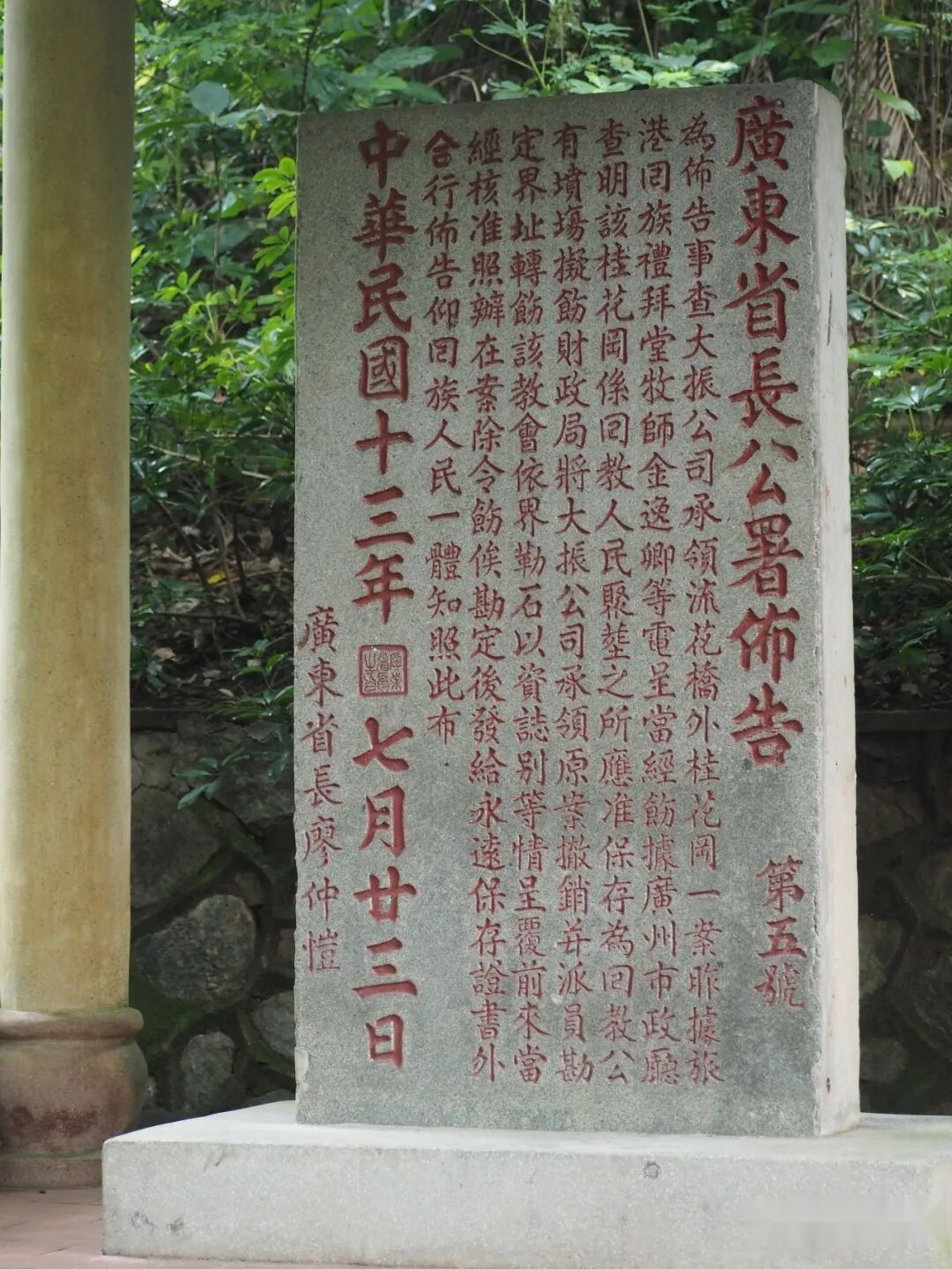
A Historic Burial Ground, and Its Past Battles
Guangzhou's Muslim public cemetery was historically located in Guihuagang for a long time, centered around the tomb of Sa'd ibn Abi Waqqas – a companion of Prophet Muhammad who arrived in Guangzhou during the Tang Dynasty to spread Islam.
In 1924, Dazhen Company sought to use the Guihuagang land for development, leading to a lawsuit with the Muslim community. The Muslims ultimately won the case, with the court ruling that "Guihuagang is a burial ground for Muslim people." Liao Zhongkai, then Governor of Guangdong Province, even erected a monument to commemorate this decision.
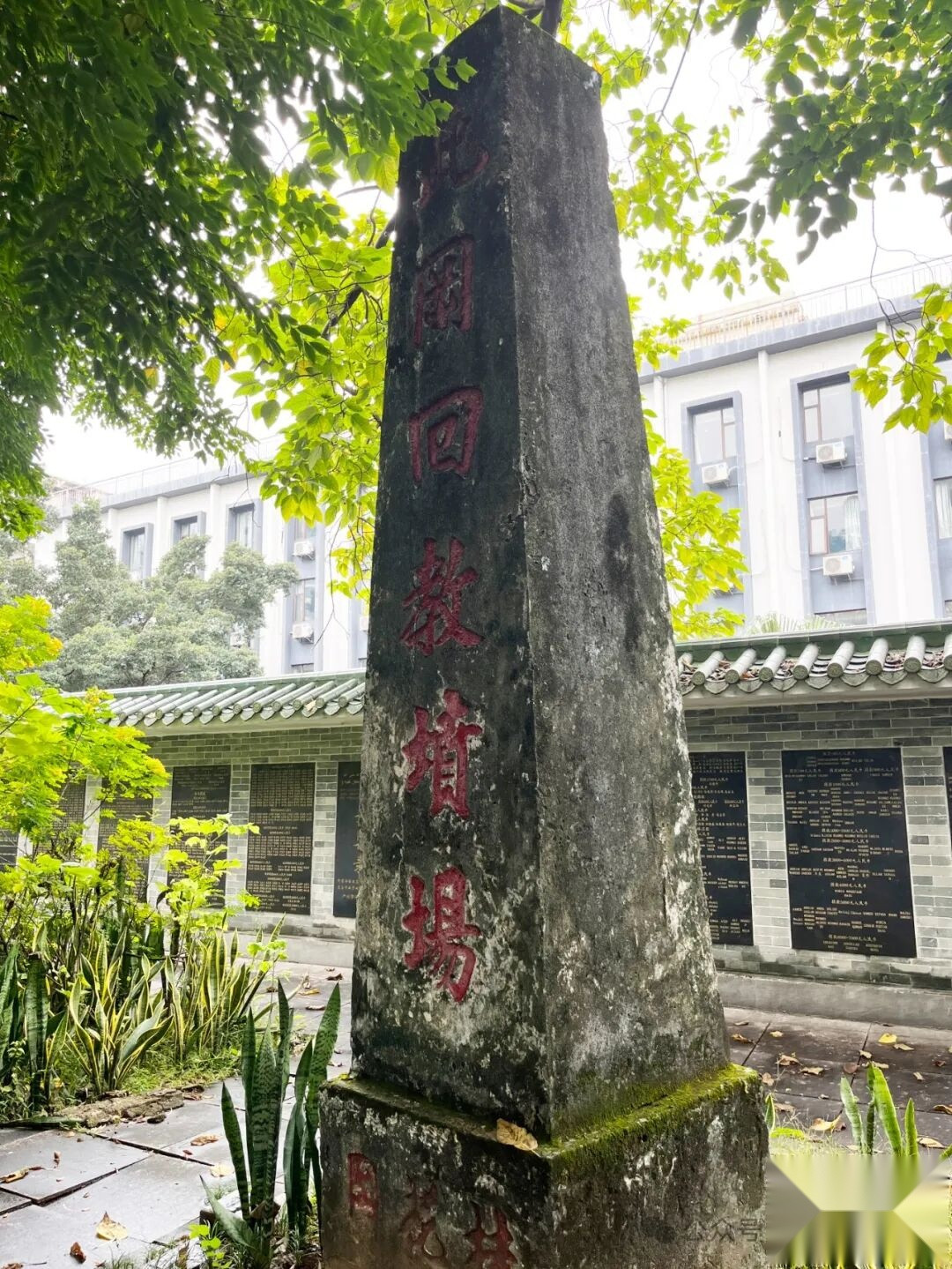
Guangzhou's Muslims also erected another obelisk, inscribed with "Muslim Public Cemetery, Permanently Preserved by Decree." These monuments are still preserved today within the Xianxian Mosque / Ancient Tomb of Saad ibn Abi Waqqas, directly across from Yuexiu Park.
In 1925, the Guangzhou Municipal Finance Bureau further designated 19 plots of land, totaling 576 mu (approximately 95 acres), as a Muslim public cemetery.
Liao Zhongkai's Monument (Photo credit: Wuwei)
This Hill's Muslim Cemetery (Photo credit: Wuwei)
Relocating to Xinshi: The Rise of the Sino-Soviet Friendship Building
However, in 1955, the government decided to relocate the cemetery. The situation at this time was vastly different from the Republican era, and the local Muslim community was powerless to object. Over 500 mu (approximately 82 acres) of land in the Guihuagang and Zoumagang areas were then used to build the Sino-Soviet Friendship Building, along with the Guangzhou Railway Station, a stadium, and other facilities.
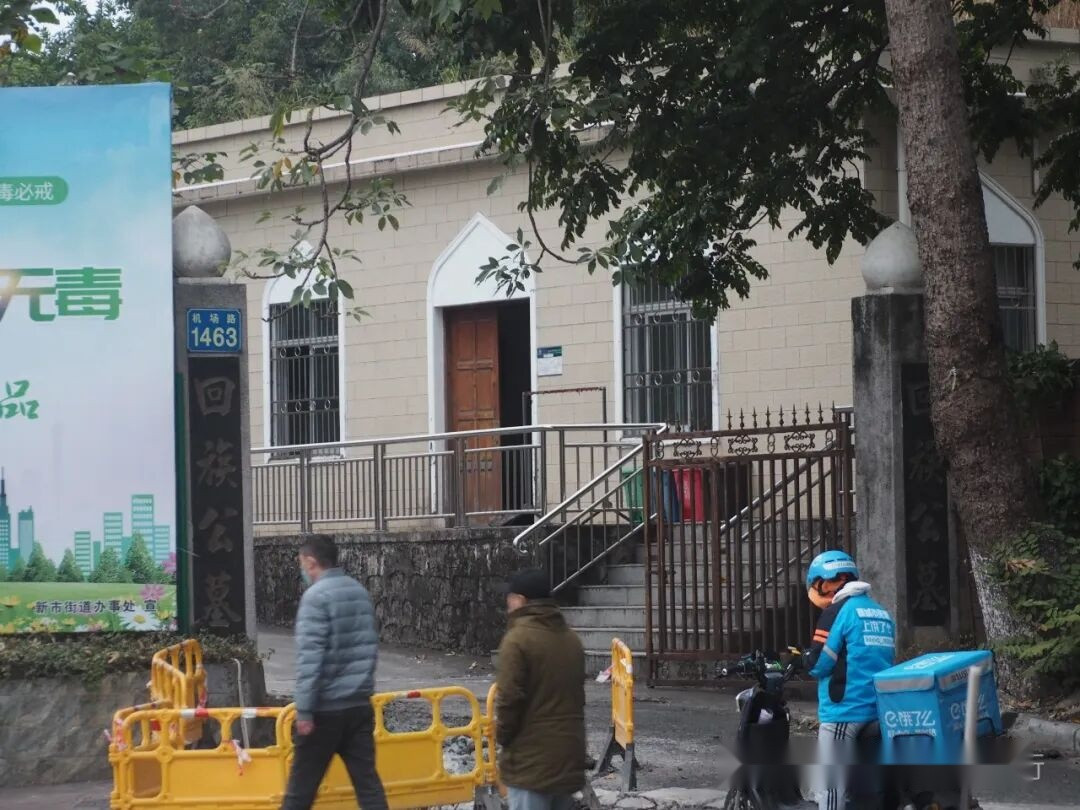
The Sino-Soviet Friendship Building was completed in just a few months. Back then, the friendship between China and the Soviet Union trumped everything. However, not long after, relations between China and the Soviet Union soured, and China needed to seek trade partners beyond the Soviet Union and Eastern Europe. This very building then became the venue for the Canton Fair (Guangjiao Hui), which remains world-famous to this day.
In 1959, the government decided to appropriate the burial plots around the Ancient Tomb of Saad ibn Abi Waqqas to build Guihuagang Park, which is now Orchid Garden Park (Lanpu Park). Following a resolution by the Second Islamic Congress, the community agreed to cede the burial grounds.
The Former Sino-Soviet Friendship Building
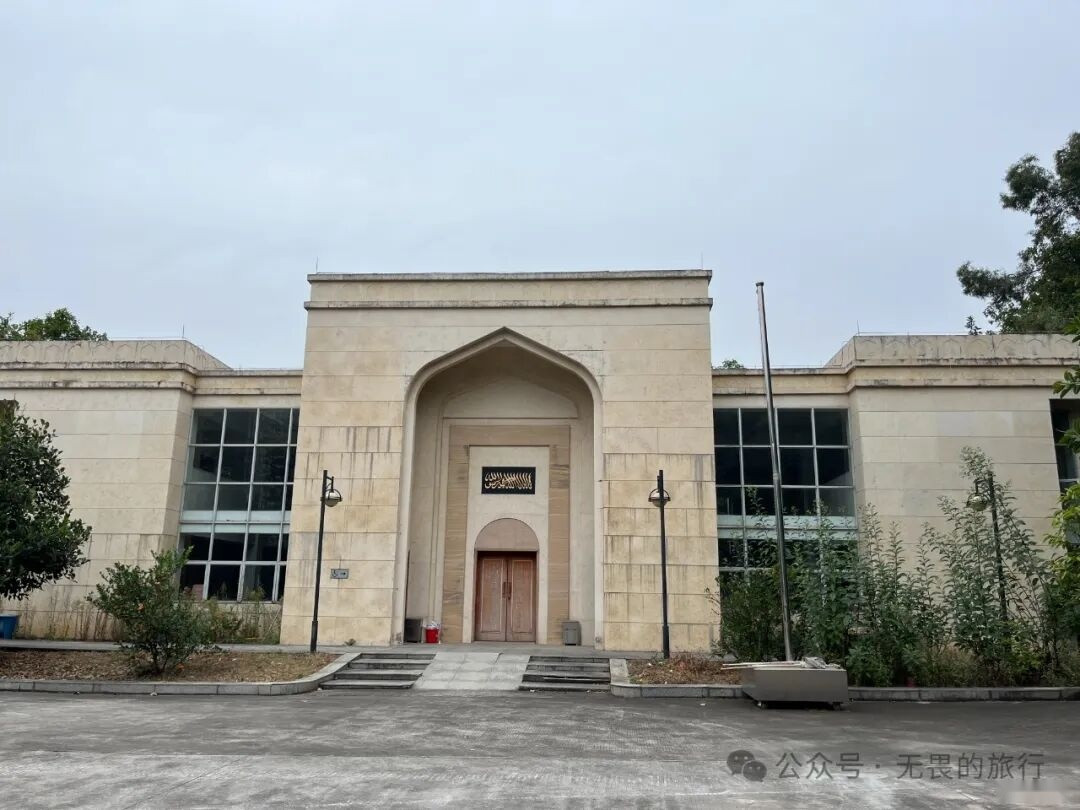
Most of the original graves were relocated to Dapu Ridge, north of Baiyun Mountain, and officially named "Guangzhou Xinshi Hui Muslim Cemetery." This new cemetery, at only 42.7 mu (approximately 7 acres), was significantly smaller than the original.
Inside the Hui Muslim Cemetery: Stories of the Departed
Back in the day, this area was pretty much out in the boonies. But today, the area around the Hui Muslim Cemetery has transformed into a bustling commercial district. Right across from the cemetery is Baixin Plaza, a huge shopping mall, with people constantly coming and going, even a fair number of foreigners. Many passersby are curious about the Hui Muslim Cemetery across the street, but not many get to go inside. The world within the cemetery seems so different from our usual stereotypes of Guangzhou.
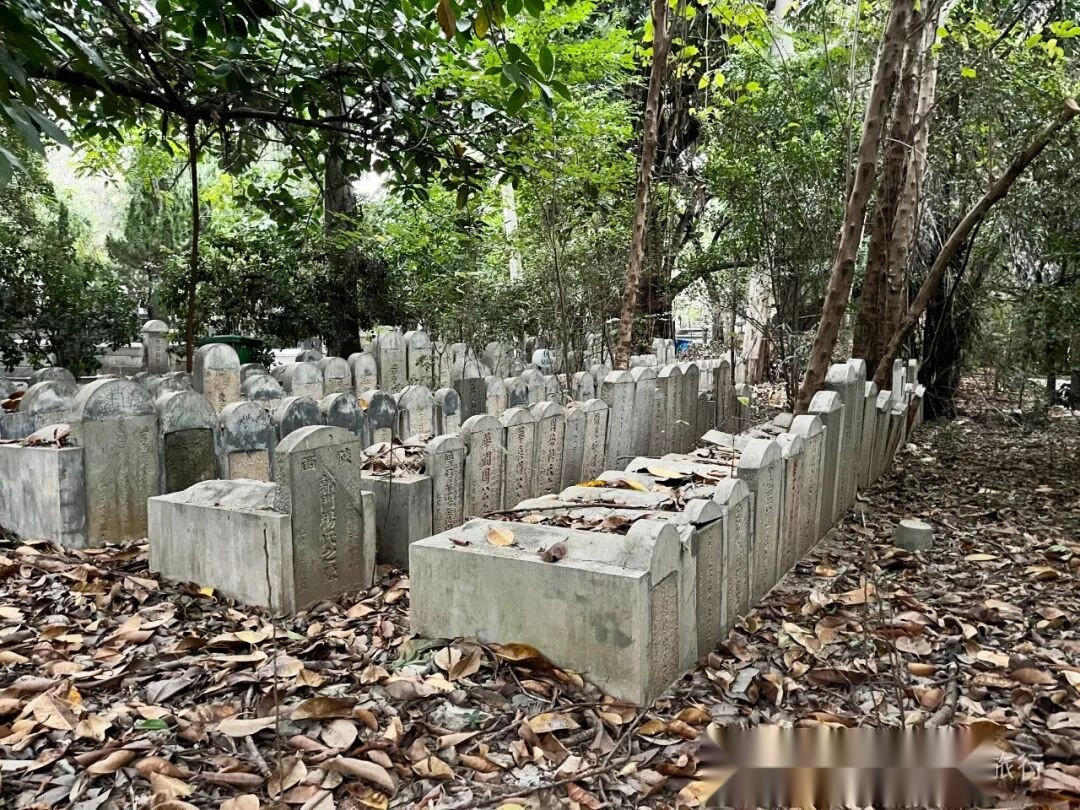
I greeted the cemetery administrator, explained why I was there, and went in. In the middle of the cemetery stands a prayer hall (masjid). Walking through the corridors, you immediately see dense rows of gravestones. From the Qing Dynasty right up to the present day, over ten thousand Muslims have been laid to rest here.
Hui Muslim Cemetery (Photo credit: Wuwei)
Prayer Hall (Masjid) (Photo credit: Wuwei)
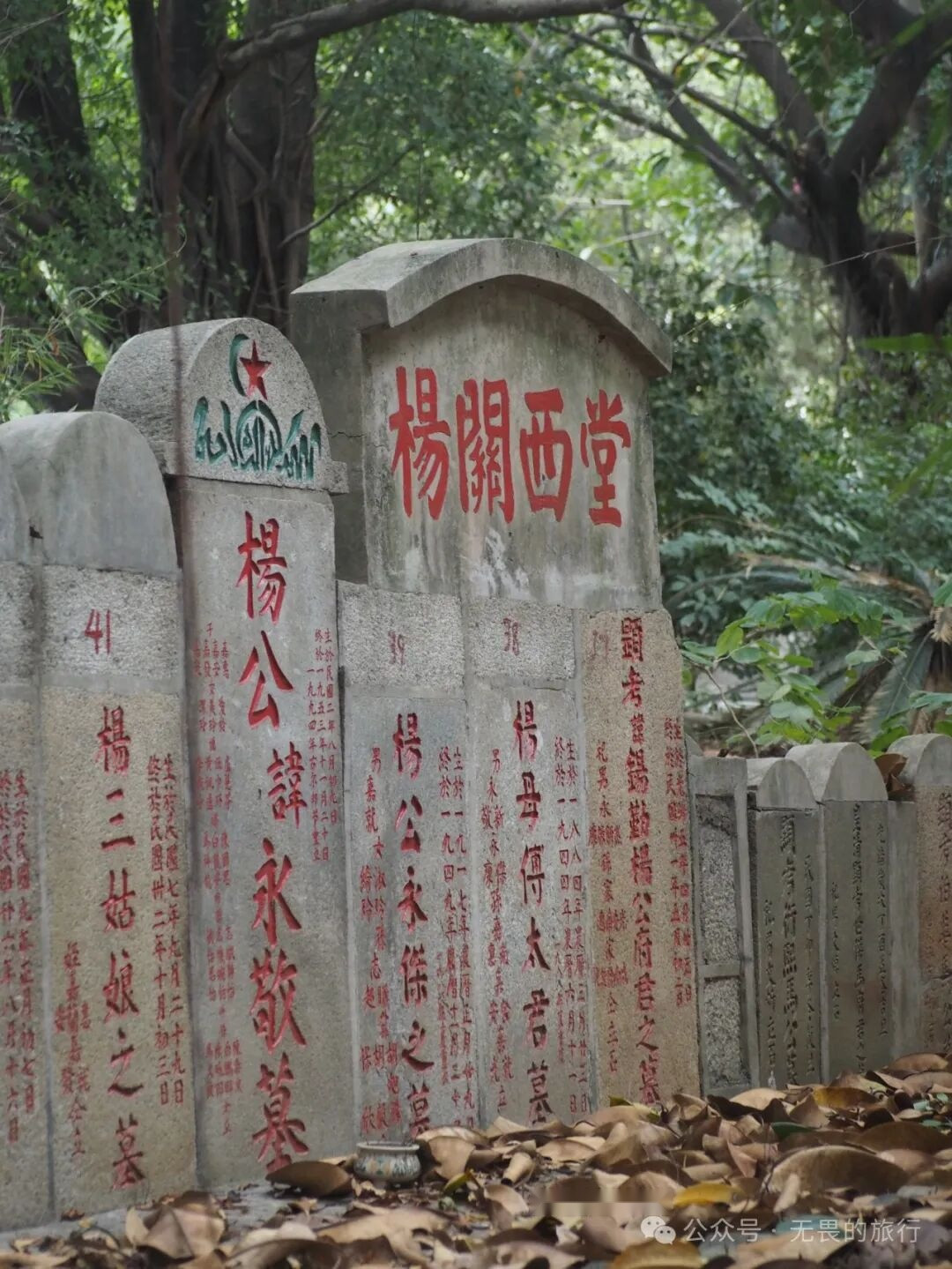
Most of the Qing Dynasty graves in the cemetery belong to local Guangzhou Muslims. And after the relocation to Xinshi, families were often buried together, with gravestones placed closely, side-by-side, leaving no gaps.
Because local Guangzhou Hui Muslims have lived in Han Chinese-majority areas for so long, they gradually adopted Han surnames and given names, and compiled family genealogies. In the cemetery, you can spot family plots like "Yao Fu" (Yao Family), "Yang Fu" (Yang Family), and "Zhou Fu" (Zhou Family). Some family plots even feature "Tang Hao" (ancestral hall names), such as "Yang Guanxi Tang" (Yang's Guanxi Hall), "Yang Jiguang Tang" (Yang's Jiguang Hall), "Xiao Yaojun Tang" (Xiao's Yaojun Hall), and "Ma Huayang Tang" (Ma's Huayang Hall).
Cemetery (Photo credit: Wuwei)
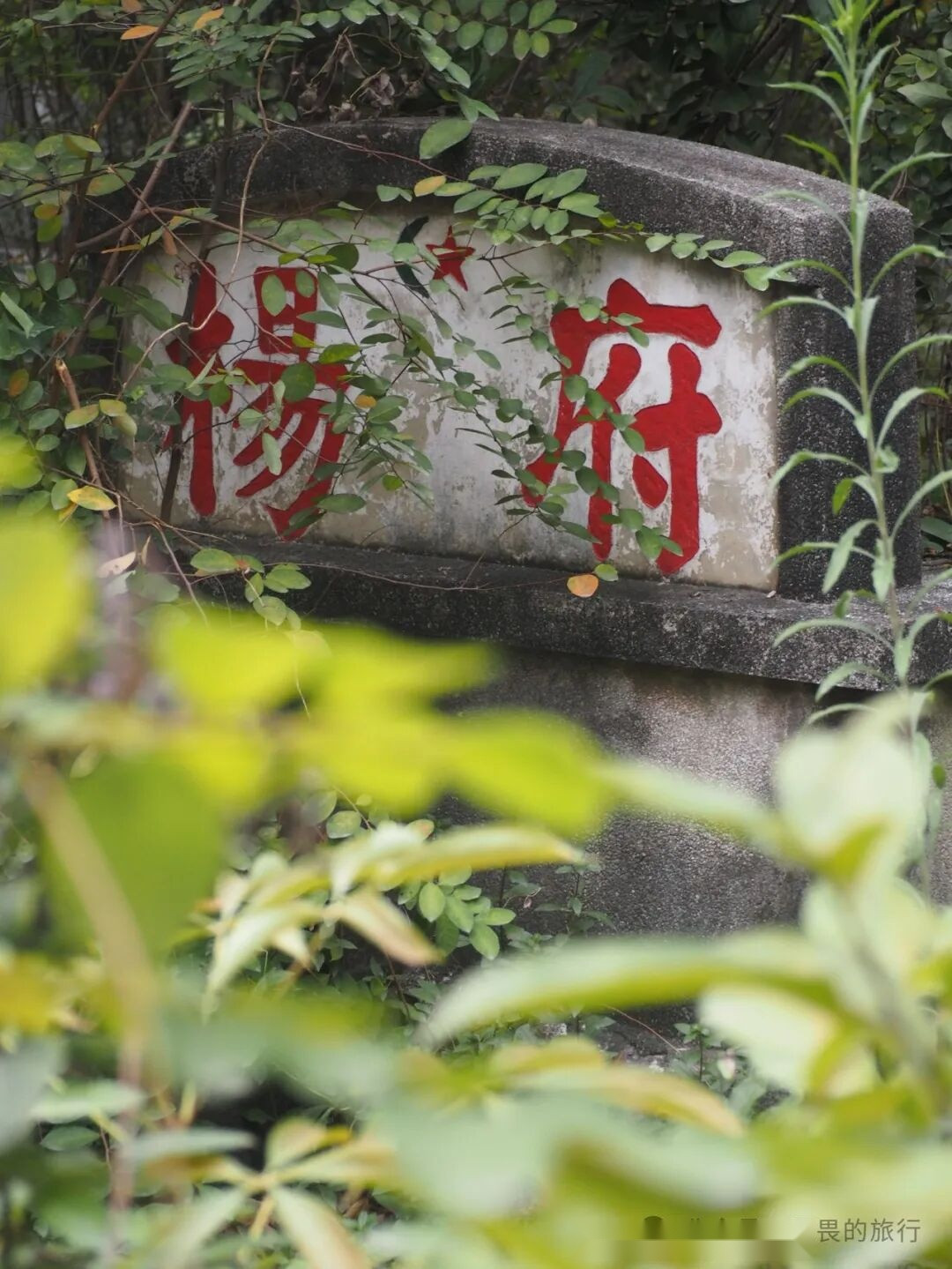
Yang Guanxi Tang (Photo credit: Wuwei)
Yang Fu (Photo credit: Wuwei)
Official Ranks on Gravestones
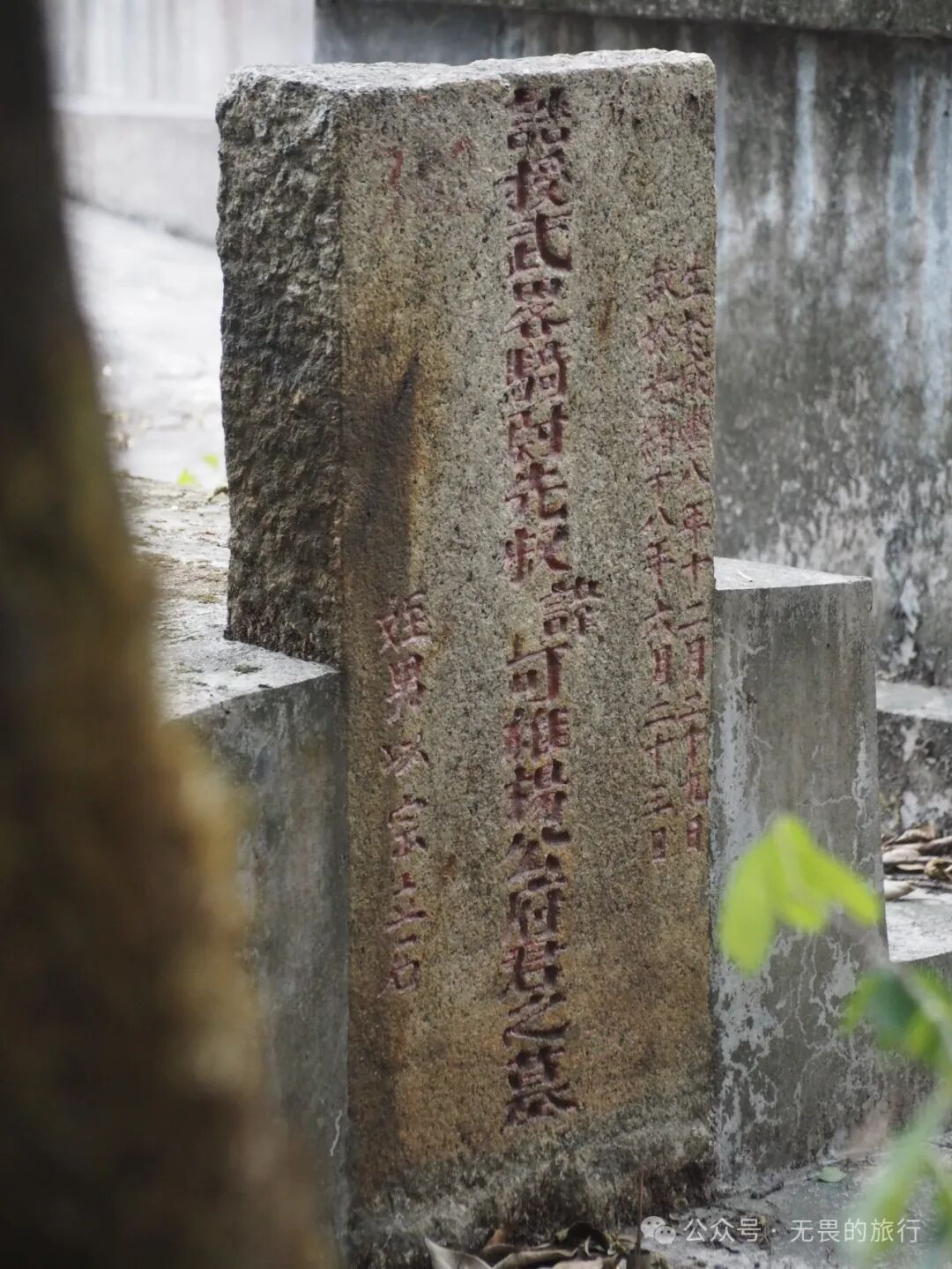
Most of Guangzhou's local Muslims are descendants of garrisons moved from the north to Guangzhou during the Qing Dynasty, which explains why many families held inherited official ranks passed down through generations.
Yang Yingrui, born in the Renzi year of Qianlong (1792) and who passed away in the Yichou year of Tongzhi (1865), held the official rank of Zheng Liupin (a civil or military Sixth Rank) "Wulüe Qiwei" (Military Strategist Cavalry Commander).
Yang Yingrui's grandson, Yang Kelin, lived a short life of only thirty years, born in the 20th year of Daoguang (1841) and passing away in the 10th year of Tongzhi (1871). He also inherited this official title.
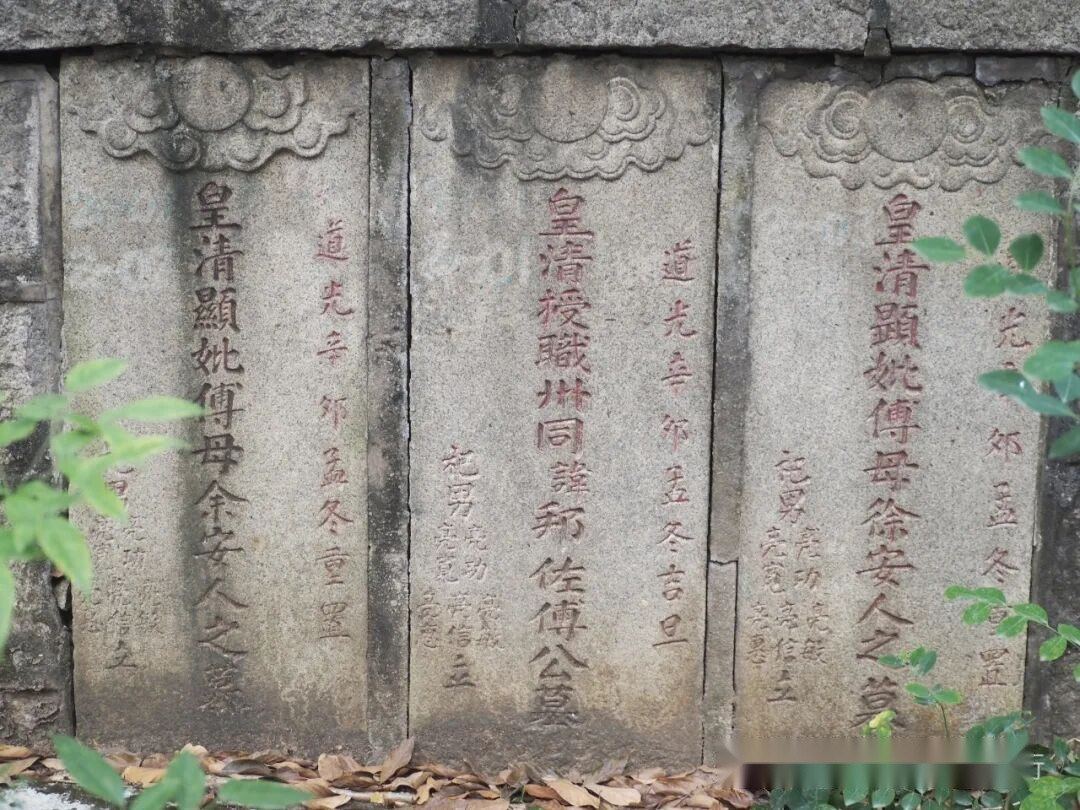
Another grandson, Yang Kexiong, born in 1859 (the 8th year of the Xianfeng reign) and passing away in 1892 (the 18th year of the Guangxu reign), had his gravestone set up by his nephew Yizong. Guess what? That Zheng Liu Pin official rank (a sixth-rank official position) is still carved right there at the top of his tombstone.
Fu Bangzuo's official gig was actually pretty unique compared to the others. While most were military officers, he was a civil official, holding the 'Zhizhou' (prefect) title, which was a Cong Liu Pin (sixth-rank) position granted by the imperial court. The only thing is, his gravestone doesn't actually tell us which prefecture he was in charge of.
Yang Kexiong's Tomb (Photo by Wuwei)
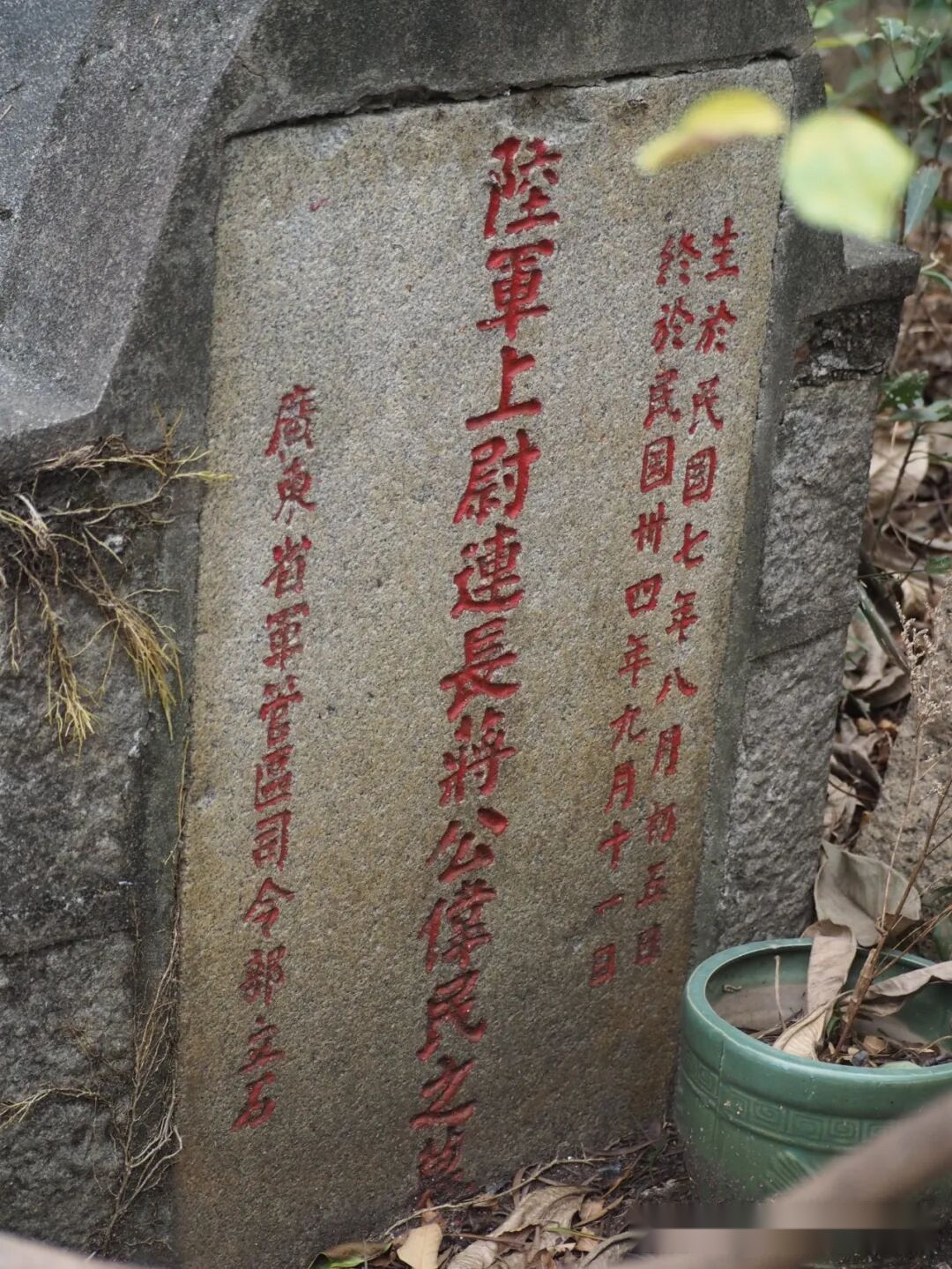
Fu Bangzuo's Tomb (Photo by Wuwei)
Okay, so these official ranks from the imperial court? Super important, even when the Qing emperors were long gone during the Republic of China era. Take Jiang Tingliang, for example. Born in 1848 (the 28th year of Daoguang), he lived all the way until 1926 (the 15th year of the Republic). When he returned to Allah, his folks made sure to carve his Zheng Wu Pin (fifth-rank) title of 'Wude Qiwei' (a military official rank) — a title from the previous dynasty — right onto his tombstone.
Jiang Weimin, born in 1918 (the 7th year of the Republic), totally followed in the footsteps of other Guangzhou Muslim ancestors, dedicating his loyalty to the nation. The only difference? He joined the Nationalist Army (KMT forces) this time, climbing the ranks all the way to Army Captain and Company Commander.
In 1945 (the 34th year of the Republic), right when the Anti-Japanese War was about to wrap up with victory, he left this life. It's totally possible he died fighting the Japanese on the battlefield. The Guangdong Provincial Military Control Zone Command actually put up this tombstone for him. And get this: Muslim generals weren't a rare sight in the Nationalist Army at all. The most famous one? General Bai Chongxi, a Hui Muslim from Guilin, Guangxi.
Jiang Weimin's Tomb (Photo by Wuwei)
Most of the graves are actually pretty well-preserved, but you'll definitely spot some that look like they haven't seen maintenance in ages. We're talking half a gravestone buried in the dirt, and some even have massive trees bursting out of their stone coffins!
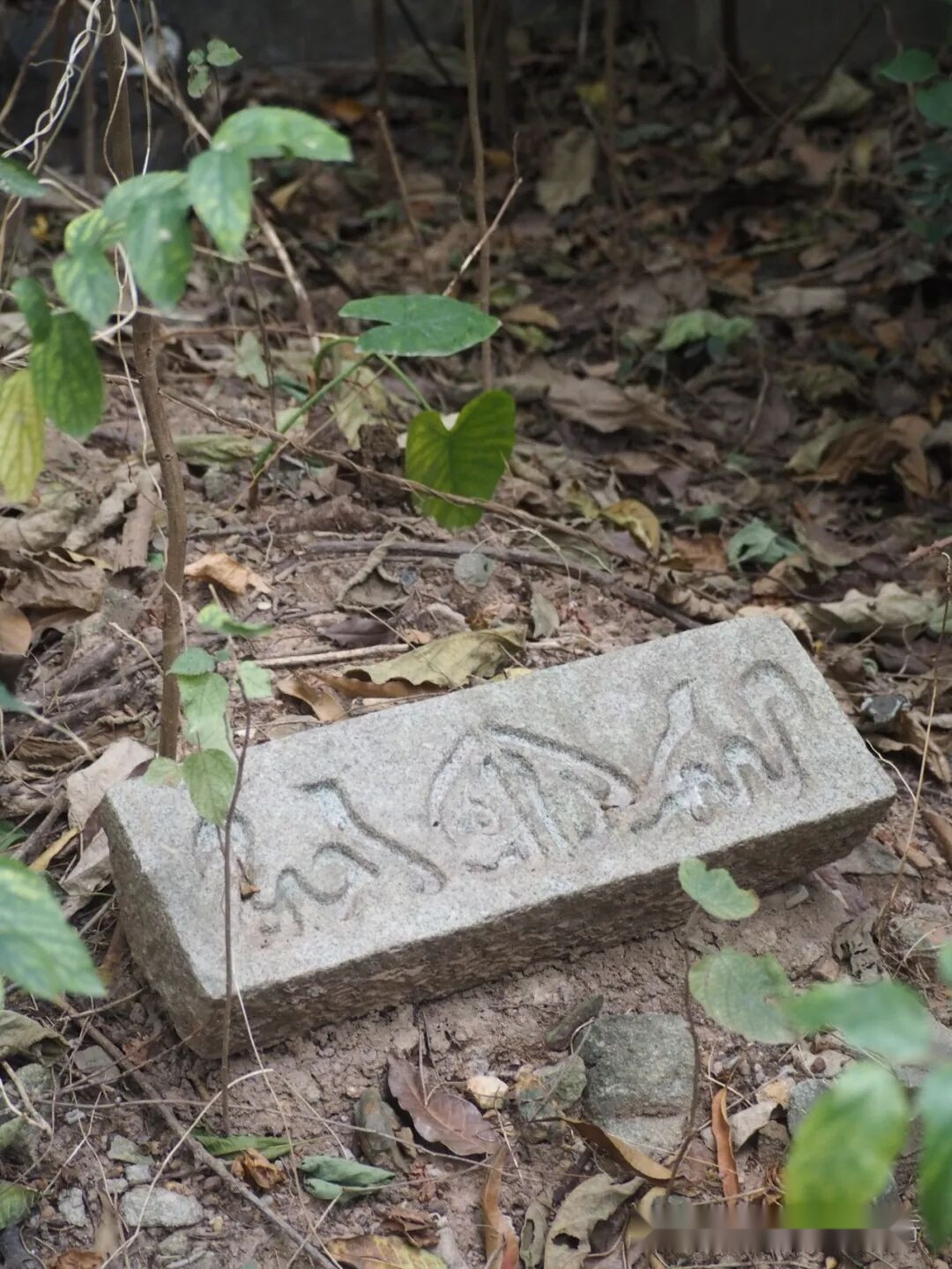
Damaged Tomb (Photo by Wuwei)
Fragments on the Ground (Photo by Wuwei)
The Stories on the Epitaphs
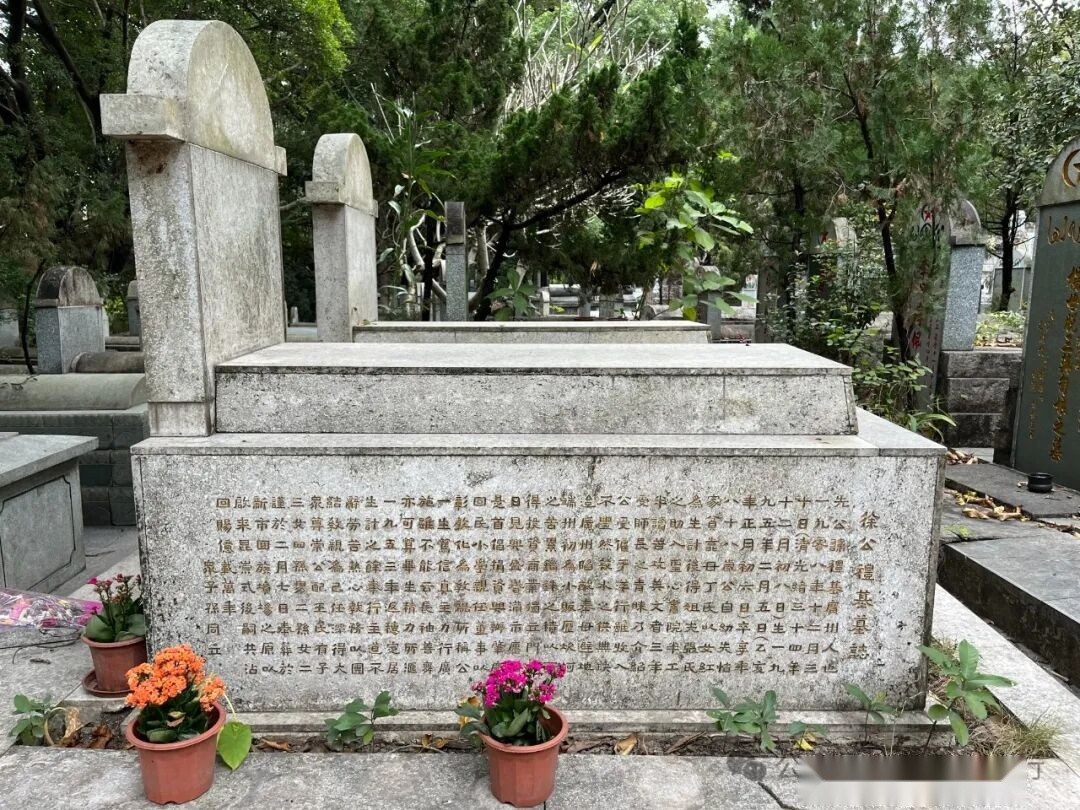
Gravestones these days are a bit different. They don't really brag about official ranks anymore. Instead, you'll see cool star and crescent symbols or verses from the Quran, clearly showing their Muslim identity. Some folks even get epitaphs written for their loved ones, which is awesome because it helps future generations get a glimpse into their lives.
Xu Liji, born in 1908, grew up in a humble family. But thanks to his brother-in-law's help, he managed to get into Sacred Heart College, balancing part-time work with studying English for three years. After graduating, he totally nailed it and joined a foreign firm — basically, if we're talking modern terms, he landed a job at a multinational corporation.
But then, out of nowhere, Japan invaded Guangzhou. He had to flee to Zhaoqing, where he started out as a small-time peddler, but get this, his business totally blew up! Once he became wealthy, he didn't forget to give back, investing in education by donating funds to set up the Zhaoqing Hui Muslim Primary School and even serving on its board himself. In 1953, he moved back to Guangzhou, where he eventually passed away and was laid to rest in the Xinshi Cemetery.
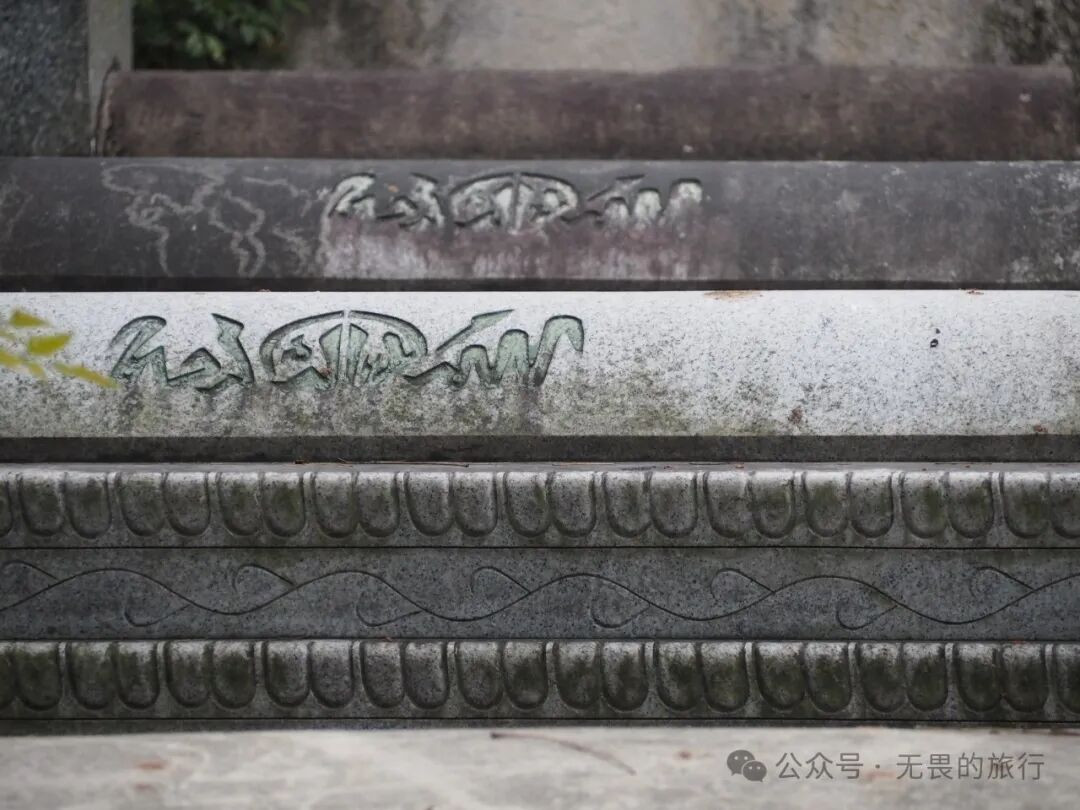
Xu Liji's Epitaph (Photo by Wuwei)
Ha Shaoguang, who was Ha Huanyiran's fourth younger brother, actually wrote her epitaph. She was born in 1918, and back in the Republic of China era, she got to go to school, attending the pretty famous Guangzhou Municipal Art School. After graduating in 1936, she spent her whole life as an art educator, returning to Allah when she was 72 years old.
Inscriptions on the Tomb (Photo by Wuwei)
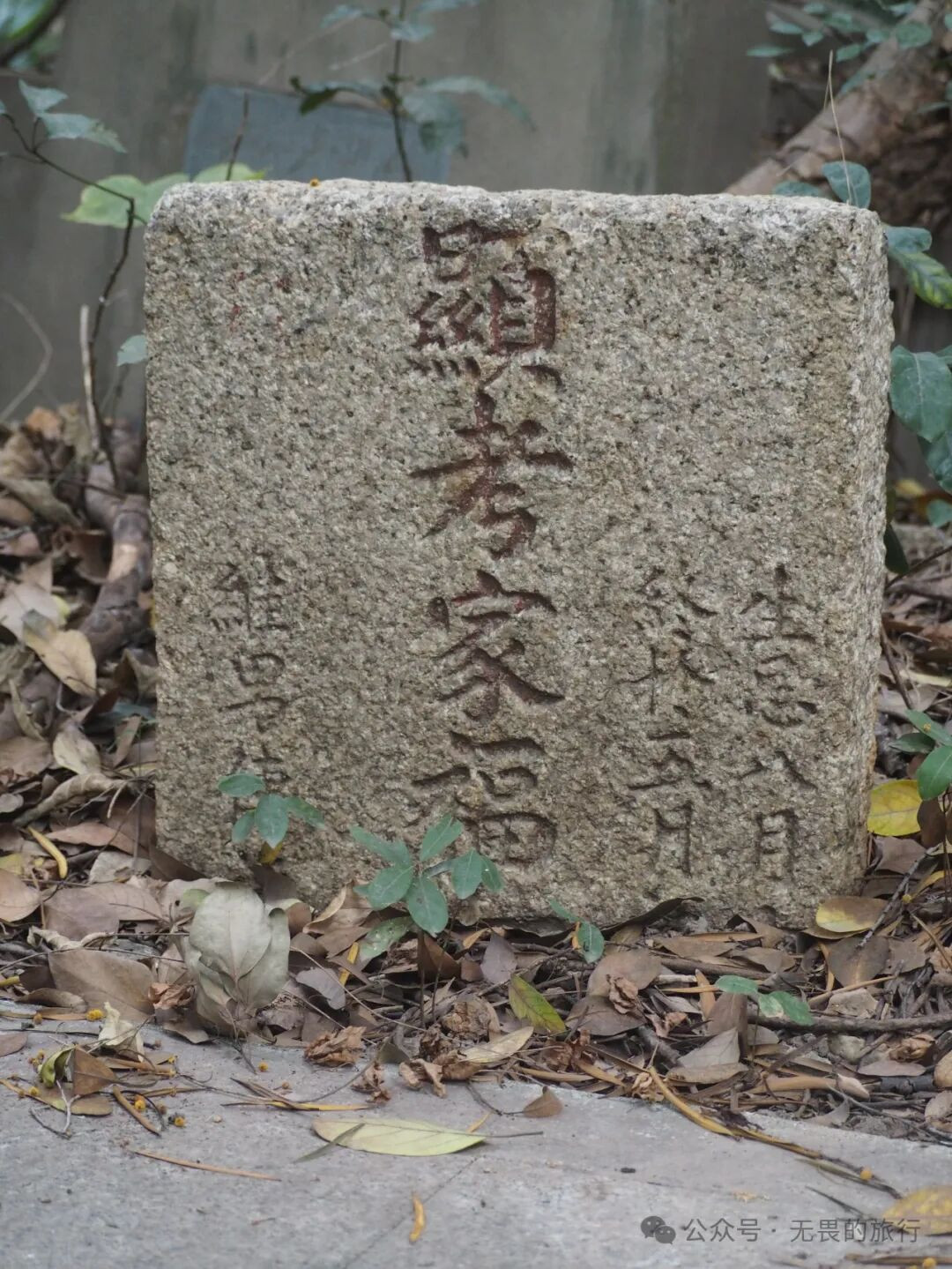
After China's Reform and Opening Up, tons of people from other regions started flocking to Guangzhou, which totally made the city's Muslim community even more diverse.
Lots of Muslims from Northwest and North China actually returned to Allah in Guangzhou, and they're also buried right here in this cemetery. You can spot place names like Gansu, Qinghai, and Xinjiang carved on their gravestones.
And check this out: on the gravestones of Uyghur people, you'll even find Uyghur written in Arabic script. Talipu Maimaiti, from Bachu County in Kashgar, Xinjiang, passed away in 1994 and is buried here. His hometown is seriously over 5000 kilometers away from Guangzhou – I'm pretty sure that's the furthest distance, right?
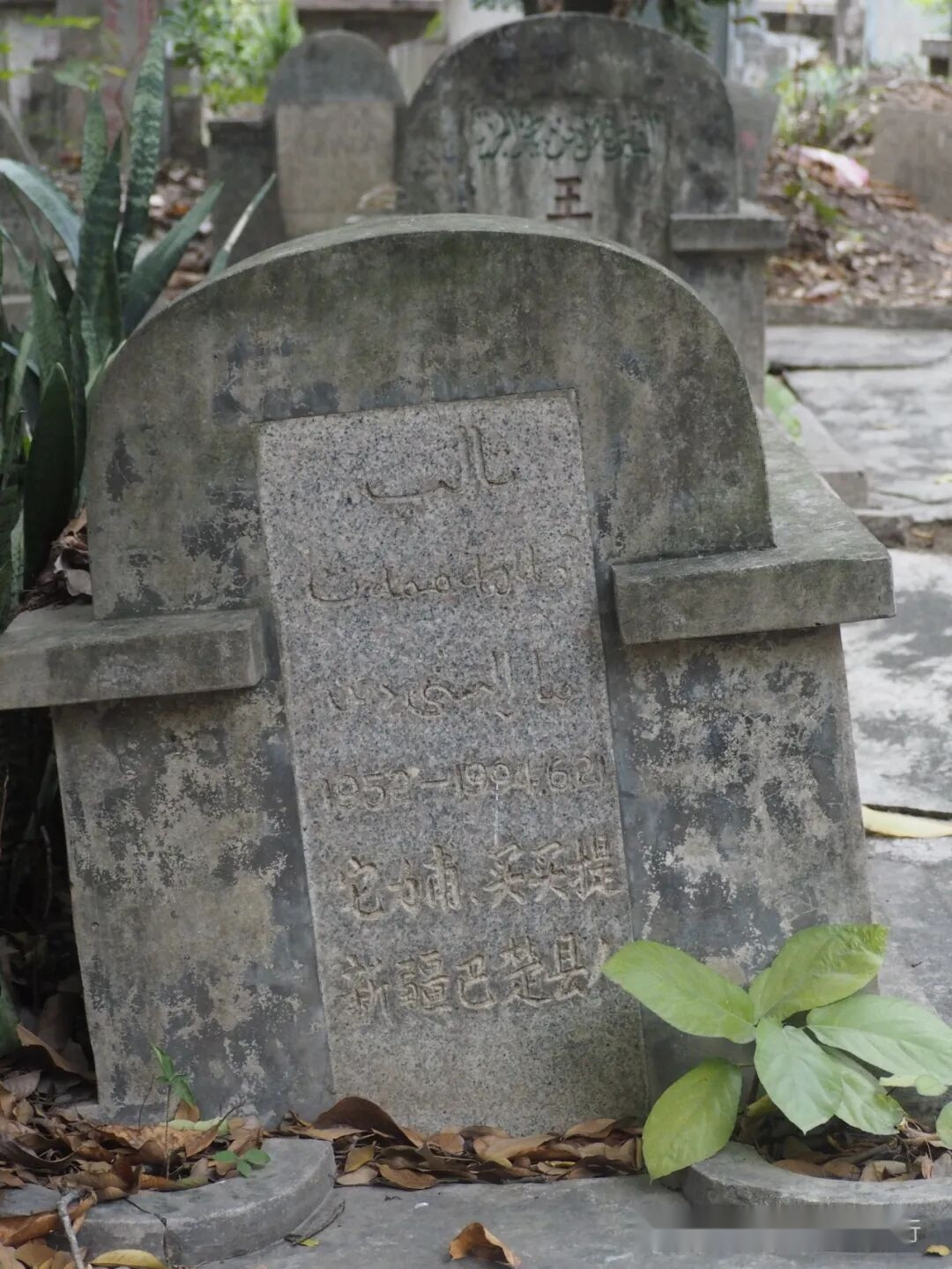
Half-Exposed Gravestone (Photo by Wuwei)
Maimaiti from Bachu County (Photo by Wuwei)
The cemetery also has foreign Muslims buried there. One gravestone has the name 'Iwanda' written in Latin script, and from the text below, you can tell it's Indonesian. This person was born in 1990 in Medan, on Indonesia's Sumatra Island. Sadly, in 1995, this little one's short life came to an end right here in Guangzhou.
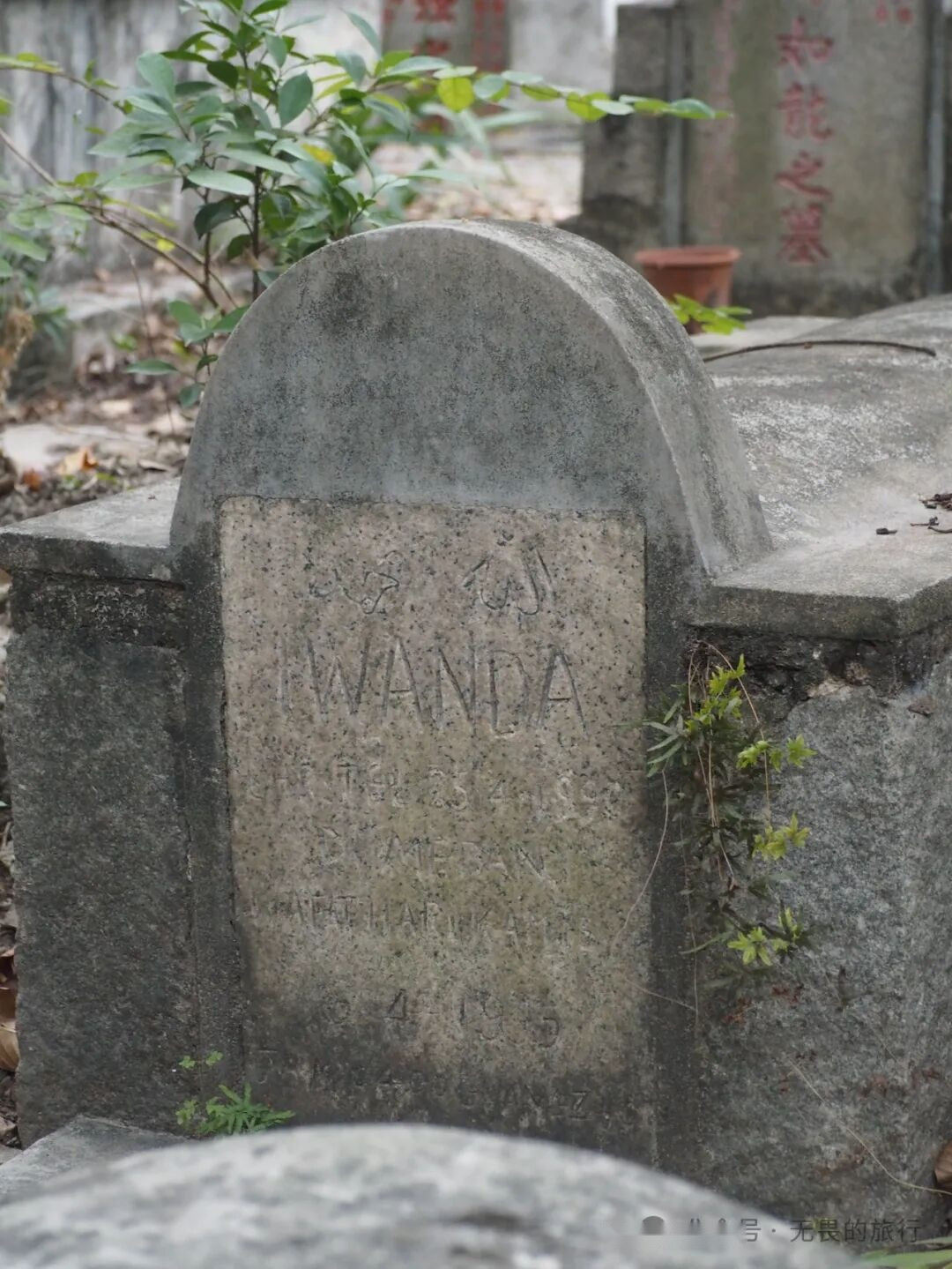
Iwanda's Tomb (Photo by Wuwei)
Flowers in front of the Tomb (Photo by Wuwei)
References:
Bao Yanzhong. *History of Islam in Guangzhou*. Guangzhou: Guangzhou Islamic Association, Guangzhou Hui Muslim Historical and Cultural Research Association, 2014.
Zhong Yuanxiu, Ma Jianzhao, Ma Fengda. *Research on Islamic Historical Sites in Guangzhou*. Yinchuan: Ningxia People's Publishing House, 2001.
Ma Qiang. *A Floating Spiritual Community—An Anthropological Study of Guangzhou Muslim Jama'at*. Beijing: China Social Sciences Press, 2006. Collapse Read »
An Exploration of Guangzhou's Ancient Tomb of the Venerated Ancestor (Sa'd ibn Abi Waqqas) and the Muslim Cemetery: A Thousand Years of Maritime Silk Road Memories Where Over Ten Thousand Pious Predecessors Lie at Rest
Summary:
We're taking a deep dive into Guangzhou's Guihuagang Muslim Public Cemetery and the Ancient Tomb of the Venerated Ancestor (Sa'd ibn Abi Waqqas's Tomb). We'll revisit the historical legacy of this revered missionary from the Tang Dynasty, exploring its immense value as one of China's Four Great Ancient Muslim Tombs and the profound sentiment it holds for Muslim communities across generations.
A Historic Burial Ground, and Its Past Battles
Guangzhou's Muslim public cemetery was historically located in Guihuagang for a long time, centered around the tomb of Sa'd ibn Abi Waqqas – a companion of Prophet Muhammad who arrived in Guangzhou during the Tang Dynasty to spread Islam.
In 1924, Dazhen Company sought to use the Guihuagang land for development, leading to a lawsuit with the Muslim community. The Muslims ultimately won the case, with the court ruling that "Guihuagang is a burial ground for Muslim people." Liao Zhongkai, then Governor of Guangdong Province, even erected a monument to commemorate this decision.
Guangzhou's Muslims also erected another obelisk, inscribed with "Muslim Public Cemetery, Permanently Preserved by Decree." These monuments are still preserved today within the Xianxian Mosque / Ancient Tomb of Saad ibn Abi Waqqas, directly across from Yuexiu Park.
In 1925, the Guangzhou Municipal Finance Bureau further designated 19 plots of land, totaling 576 mu (approximately 95 acres), as a Muslim public cemetery.
Liao Zhongkai's Monument (Photo credit: Wuwei)
This Hill's Muslim Cemetery (Photo credit: Wuwei)
Relocating to Xinshi: The Rise of the Sino-Soviet Friendship Building
However, in 1955, the government decided to relocate the cemetery. The situation at this time was vastly different from the Republican era, and the local Muslim community was powerless to object. Over 500 mu (approximately 82 acres) of land in the Guihuagang and Zoumagang areas were then used to build the Sino-Soviet Friendship Building, along with the Guangzhou Railway Station, a stadium, and other facilities.
The Sino-Soviet Friendship Building was completed in just a few months. Back then, the friendship between China and the Soviet Union trumped everything. However, not long after, relations between China and the Soviet Union soured, and China needed to seek trade partners beyond the Soviet Union and Eastern Europe. This very building then became the venue for the Canton Fair (Guangjiao Hui), which remains world-famous to this day.
In 1959, the government decided to appropriate the burial plots around the Ancient Tomb of Saad ibn Abi Waqqas to build Guihuagang Park, which is now Orchid Garden Park (Lanpu Park). Following a resolution by the Second Islamic Congress, the community agreed to cede the burial grounds.
The Former Sino-Soviet Friendship Building
Most of the original graves were relocated to Dapu Ridge, north of Baiyun Mountain, and officially named "Guangzhou Xinshi Hui Muslim Cemetery." This new cemetery, at only 42.7 mu (approximately 7 acres), was significantly smaller than the original.
Inside the Hui Muslim Cemetery: Stories of the Departed
Back in the day, this area was pretty much out in the boonies. But today, the area around the Hui Muslim Cemetery has transformed into a bustling commercial district. Right across from the cemetery is Baixin Plaza, a huge shopping mall, with people constantly coming and going, even a fair number of foreigners. Many passersby are curious about the Hui Muslim Cemetery across the street, but not many get to go inside. The world within the cemetery seems so different from our usual stereotypes of Guangzhou.
I greeted the cemetery administrator, explained why I was there, and went in. In the middle of the cemetery stands a prayer hall (masjid). Walking through the corridors, you immediately see dense rows of gravestones. From the Qing Dynasty right up to the present day, over ten thousand Muslims have been laid to rest here.
Hui Muslim Cemetery (Photo credit: Wuwei)
Prayer Hall (Masjid) (Photo credit: Wuwei)
Most of the Qing Dynasty graves in the cemetery belong to local Guangzhou Muslims. And after the relocation to Xinshi, families were often buried together, with gravestones placed closely, side-by-side, leaving no gaps.
Because local Guangzhou Hui Muslims have lived in Han Chinese-majority areas for so long, they gradually adopted Han surnames and given names, and compiled family genealogies. In the cemetery, you can spot family plots like "Yao Fu" (Yao Family), "Yang Fu" (Yang Family), and "Zhou Fu" (Zhou Family). Some family plots even feature "Tang Hao" (ancestral hall names), such as "Yang Guanxi Tang" (Yang's Guanxi Hall), "Yang Jiguang Tang" (Yang's Jiguang Hall), "Xiao Yaojun Tang" (Xiao's Yaojun Hall), and "Ma Huayang Tang" (Ma's Huayang Hall).
Cemetery (Photo credit: Wuwei)
Yang Guanxi Tang (Photo credit: Wuwei)
Yang Fu (Photo credit: Wuwei)
Official Ranks on Gravestones
Most of Guangzhou's local Muslims are descendants of garrisons moved from the north to Guangzhou during the Qing Dynasty, which explains why many families held inherited official ranks passed down through generations.
Yang Yingrui, born in the Renzi year of Qianlong (1792) and who passed away in the Yichou year of Tongzhi (1865), held the official rank of Zheng Liupin (a civil or military Sixth Rank) "Wulüe Qiwei" (Military Strategist Cavalry Commander).
Yang Yingrui's grandson, Yang Kelin, lived a short life of only thirty years, born in the 20th year of Daoguang (1841) and passing away in the 10th year of Tongzhi (1871). He also inherited this official title.
Another grandson, Yang Kexiong, born in 1859 (the 8th year of the Xianfeng reign) and passing away in 1892 (the 18th year of the Guangxu reign), had his gravestone set up by his nephew Yizong. Guess what? That Zheng Liu Pin official rank (a sixth-rank official position) is still carved right there at the top of his tombstone.
Fu Bangzuo's official gig was actually pretty unique compared to the others. While most were military officers, he was a civil official, holding the 'Zhizhou' (prefect) title, which was a Cong Liu Pin (sixth-rank) position granted by the imperial court. The only thing is, his gravestone doesn't actually tell us which prefecture he was in charge of.
Yang Kexiong's Tomb (Photo by Wuwei)
Fu Bangzuo's Tomb (Photo by Wuwei)
Okay, so these official ranks from the imperial court? Super important, even when the Qing emperors were long gone during the Republic of China era. Take Jiang Tingliang, for example. Born in 1848 (the 28th year of Daoguang), he lived all the way until 1926 (the 15th year of the Republic). When he returned to Allah, his folks made sure to carve his Zheng Wu Pin (fifth-rank) title of 'Wude Qiwei' (a military official rank) — a title from the previous dynasty — right onto his tombstone.
Jiang Weimin, born in 1918 (the 7th year of the Republic), totally followed in the footsteps of other Guangzhou Muslim ancestors, dedicating his loyalty to the nation. The only difference? He joined the Nationalist Army (KMT forces) this time, climbing the ranks all the way to Army Captain and Company Commander.
In 1945 (the 34th year of the Republic), right when the Anti-Japanese War was about to wrap up with victory, he left this life. It's totally possible he died fighting the Japanese on the battlefield. The Guangdong Provincial Military Control Zone Command actually put up this tombstone for him. And get this: Muslim generals weren't a rare sight in the Nationalist Army at all. The most famous one? General Bai Chongxi, a Hui Muslim from Guilin, Guangxi.
Jiang Weimin's Tomb (Photo by Wuwei)
Most of the graves are actually pretty well-preserved, but you'll definitely spot some that look like they haven't seen maintenance in ages. We're talking half a gravestone buried in the dirt, and some even have massive trees bursting out of their stone coffins!
Damaged Tomb (Photo by Wuwei)
Fragments on the Ground (Photo by Wuwei)
The Stories on the Epitaphs
Gravestones these days are a bit different. They don't really brag about official ranks anymore. Instead, you'll see cool star and crescent symbols or verses from the Quran, clearly showing their Muslim identity. Some folks even get epitaphs written for their loved ones, which is awesome because it helps future generations get a glimpse into their lives.
Xu Liji, born in 1908, grew up in a humble family. But thanks to his brother-in-law's help, he managed to get into Sacred Heart College, balancing part-time work with studying English for three years. After graduating, he totally nailed it and joined a foreign firm — basically, if we're talking modern terms, he landed a job at a multinational corporation.
But then, out of nowhere, Japan invaded Guangzhou. He had to flee to Zhaoqing, where he started out as a small-time peddler, but get this, his business totally blew up! Once he became wealthy, he didn't forget to give back, investing in education by donating funds to set up the Zhaoqing Hui Muslim Primary School and even serving on its board himself. In 1953, he moved back to Guangzhou, where he eventually passed away and was laid to rest in the Xinshi Cemetery.
Xu Liji's Epitaph (Photo by Wuwei)
Ha Shaoguang, who was Ha Huanyiran's fourth younger brother, actually wrote her epitaph. She was born in 1918, and back in the Republic of China era, she got to go to school, attending the pretty famous Guangzhou Municipal Art School. After graduating in 1936, she spent her whole life as an art educator, returning to Allah when she was 72 years old.
Inscriptions on the Tomb (Photo by Wuwei)
After China's Reform and Opening Up, tons of people from other regions started flocking to Guangzhou, which totally made the city's Muslim community even more diverse.
Lots of Muslims from Northwest and North China actually returned to Allah in Guangzhou, and they're also buried right here in this cemetery. You can spot place names like Gansu, Qinghai, and Xinjiang carved on their gravestones.
And check this out: on the gravestones of Uyghur people, you'll even find Uyghur written in Arabic script. Talipu Maimaiti, from Bachu County in Kashgar, Xinjiang, passed away in 1994 and is buried here. His hometown is seriously over 5000 kilometers away from Guangzhou – I'm pretty sure that's the furthest distance, right?
Half-Exposed Gravestone (Photo by Wuwei)
Maimaiti from Bachu County (Photo by Wuwei)
The cemetery also has foreign Muslims buried there. One gravestone has the name 'Iwanda' written in Latin script, and from the text below, you can tell it's Indonesian. This person was born in 1990 in Medan, on Indonesia's Sumatra Island. Sadly, in 1995, this little one's short life came to an end right here in Guangzhou.
Iwanda's Tomb (Photo by Wuwei)
Flowers in front of the Tomb (Photo by Wuwei)
References:
Bao Yanzhong. *History of Islam in Guangzhou*. Guangzhou: Guangzhou Islamic Association, Guangzhou Hui Muslim Historical and Cultural Research Association, 2014.
Zhong Yuanxiu, Ma Jianzhao, Ma Fengda. *Research on Islamic Historical Sites in Guangzhou*. Yinchuan: Ningxia People's Publishing House, 2001.
Ma Qiang. *A Floating Spiritual Community—An Anthropological Study of Guangzhou Muslim Jama'at*. Beijing: China Social Sciences Press, 2006. Collapse Read »
Guangzhou's Halal Food Journey: From Ancient Mosques to Modern Dim Sum, A Century of Muslim Culture & Culinary Heritage in Southern China
[Internet Repost]
A Century of Halal Dining in Guangdong: From Ancient Port Tea Houses to 70 Years of Glory at Guangzhou Muslim Restaurant
Abstract:
This historical review traces the evolution of local Hui Muslim halal dining in Guangdong. It covers everything from the Fanfang (foreign quarters) cuisine during ancient trade eras to the ups and downs of modern Cantonese-style halal tea houses, spotlighting the Guangzhou Muslim Restaurant's 70-year journey of staying true to its roots while innovating.
As modern society has evolved, there's been a growing focus on individual experiences. Details once considered 'trivial' are now gaining academic attention. Following this trend, historians are delving into the specifics of social life, with 'food, clothing, housing, and travel' being prime examples. This leads me to a key insight: the evolution of dining isn't just about archaeological findings or visual records. It's more about analyzing the social relationships involved and reflecting on broader socio-cultural themes.
Given existing narratives and my own research and cultural background, Cantonese cuisine will be a major topic in my exploration of culinary history. Southern China, centered around the Guangdong-Hong Kong-Macao Greater Bay Area, has always been a cultural melting pot along China's southern coast, thanks to its bustling and active land and water trade routes. From the Kaiping Diaolou (fortified towers) that blend Chinese, Islamic, and Western architectural elements, and the Huaisheng Mosque (Light Pagoda Mosque), to the incredibly diverse 'dim sum' found in Cantonese tea houses, the region truly showcases its cultural diversity and openness.
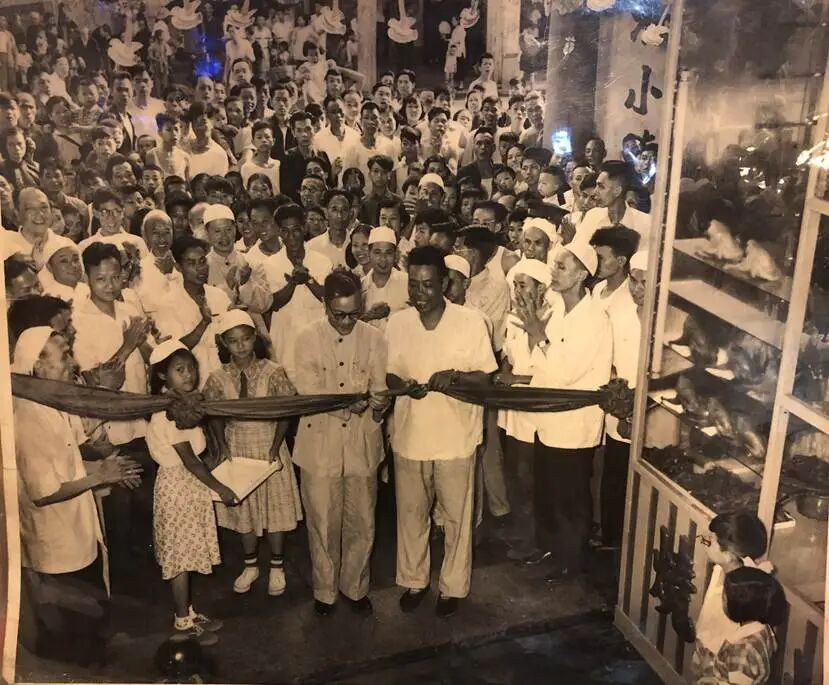
Figure 1: Huaisheng Mosque, photographed by the author in June 2018.
Cantonese cuisine, which originated in Southern China, plays a major role in China's socio-cultural history thanks to its unique and diverse flavors. However, even the historical narrative of Cantonese cuisine itself rarely gets academic treatment, beyond memoirs from industry professionals or recipe showcases. For instance, Mr. Chen Mengyin, an early pioneer in news and media, compiled various Cantonese dishes into *The Way of Eating* (食之道), dedicating its second part to the development and evolution of Cantonese cuisine in *Tracing the Origins of Cantonese Cuisine* (粤菜溯源录). In it, he shared his perspective as a journalist on traditional food and his commitment to cultural heritage, stating: 'Historians say: “A nation that forgets its history is doomed to repeat it.” “Chop Suey” (杂碎) is the culinary heritage of our “Southern Barbarian” ancestors. In the great 20th century, it served hundreds of millions fascinated by 'China fever' and fed millions of Chinese descendants. Should historians one day chronicle the food of the 'Southern Barbarians,' 'Chop Suey' deserves an entire chapter.' While Mr. Chen's work might not have delved into many Cantonese cuisine details due to limited space, his pioneering effort as an early journalist to compile and analyze dining with academic foresight, and to envision future academic development, was truly remarkable.
However, for Southern China's local halal cuisine, which is deeply rooted in both Hui Muslim dining etiquette and Cantonese traditions, there's actually a decent amount of historical material available. Most written reports on 'Halal Cantonese cuisine' today tend to be internal studies within ethnic and religious communities. While these resources have significantly enriched the narrative of 'Halal Cantonese cuisine' and its service range and variety are constantly improving, there's still a need for more academic analysis and critical thinking, along with diverse historical sources to further supplement and refine our understanding.
(I) History in the Narrative: A Brief Journey of Guangdong's Local Halal Dining
Compared to the countless long-standing local halal brands (laozihao) in Northern China and the Jiangnan region—think names like 'Donglaishun,' 'Baodu Feng,' and 'Hongbinlou' up north, or 'Anleyuan,' 'Lüliuju,' and 'Ma Xiangxing' in Jiangnan—Southern China actually has far fewer halal 'laozihao.' They're generally smaller in scale and haven't managed to continuously pass down independently to the present day. This largely stems from the smaller Hui Muslim population in Southern China and the somewhat limited range of professions they typically pursued. Among Southern Chinese Hui Muslims, a proverb somewhat captures this narrative:
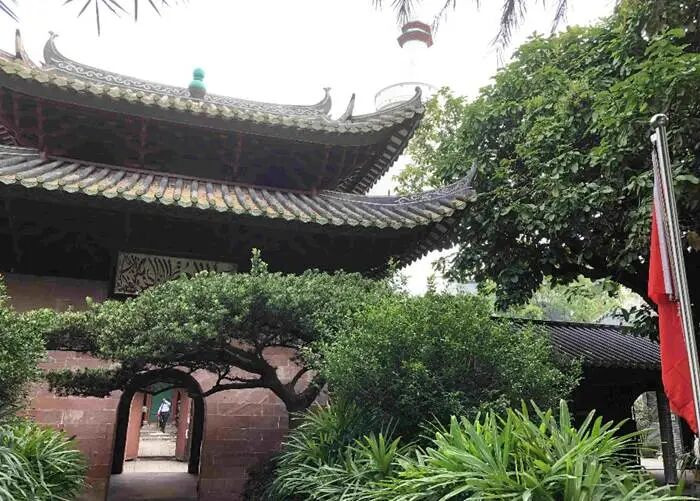
'Religious folk (or 'Bandie lao') have a narrow path; they become officials, doctors, or sell beef.'
By the late Qing Dynasty and early Republic of China, narratives about local halal dining in Guangdong began to emerge. Take *gualu ya* (roasted duck), for instance. This dish was originally popular in Northern China, but as north-south exchanges became more frequent during the late Qing, some chefs brought its cooking techniques south. Master Ma Tianfu, a Hui Muslim from Shaanxi, introduced *gualu ya* to Haopan Street (濠畔街), then Guangzhou's most bustling Muslim-dense neighborhood. At 'Weichunyuan' (味莼园), a halal restaurant on Haopan Street known for its non-Cantonese dishes, Master Ma Tianfu's *gualu ya* was so exquisite that after he returned to Allah, some local 'old timers of Ram City' (Guangzhou) lamented that no other venerable brand could replicate its flavor. Another incredibly popular local Cantonese specialty, *niunan niuza* (beef brisket and offal stew), also has a significant history rooted in Guangdong's Hui Muslim community. According to local lore, Guangzhou residents first encountered *niunan niuza* during the late Qing to early Republican era, when a Hui Muslim named 'Ade' on Guangta Street (光塔街) developed the cooking method for beef offal and 'integrated it into restaurant menus.' While this claim lacks formal written records, most locals accept this narrative, and it's featured in various historical accounts and food guides. Today, while halal versions of *niunan niuza* still exist (like at the Guangzhou Muslim Restaurant's snack section), most versions of this dish have become a staple in everyday Cantonese households of all ethnicities and spread nationwide.
Figure 2: A parade passes 'Satangji' during Guangzhou's liberation, from the Guangzhou Library collection.
During the Republican era, thanks to local Hui Muslim dignitaries establishing newspapers and the standardization of food processing like slaughtering, many smaller halal tea houses were founded and recorded. Mr. Yang Dianzhang (1907-1993), in his report 'The Long-term Dining Situation of Hui People in Guangzhou,' listed various local halal eateries from different periods: Wanhe Shaola (Cantonese roasted meats / roast duck) Shop on Xiaoshi Street, Nanxing Chicken Duck Lamb Shop, Baohua Zhongwanzhan Restaurant, Taipingsha Tianran Restaurant, Juixing Tea House on Sipailou, Shuji Tea House in Nanshengli, Hajiangji Wonton Shop on Huiai Road, Quanchang Chicken Duck Shop on Huifu Road, Yunji Tea House in Xiaobei, and the dessert shop 'Satangji,' among others. Notably, Yunji Tea House and Satangji were both managed by the prominent Hui Muslim Sa family. Sa Zhaorong (1870-1949), the manager of Yunji Tea House, was a sixth-generation descendant of the Sa family's fourth branch. Meanwhile, his cousins—Sa Yirou (also known as Sa Hanqiang, 1911-1996), Sa Yitang (1917-1977), and Sa Yiqi (1929-2008)—the three brothers from the Sa family's second branch and fifth generation, managed 'Satangji.' Their grandfather, Sa Xianyang (1829-1895), had previously run the 'Tangji' halal pastry shop, which later inspired the name 'Satangji.' This clearly shows that brands and family management were well-established in Guangdong's local halal dining scene.
However, during the Anti-Japanese War, local Hui Muslims in Guangdong—from mosque leaders to officials—largely supported the resistance. As a result, Japanese invaders, collaborating with local thugs and traitors, subjected them to brutal persecution. A particularly heinous example was how, with Japanese military backing, local thugs blatantly disregarded the 'permanently preserved' monument that Liao Zhongkai had erected for Hui Muslim cemeteries. They forcibly built pig farms on these sacred sites, a deeply taboo act for Muslims, directly seizing the Muslim burial grounds and assisting the Japanese military in looting these areas.
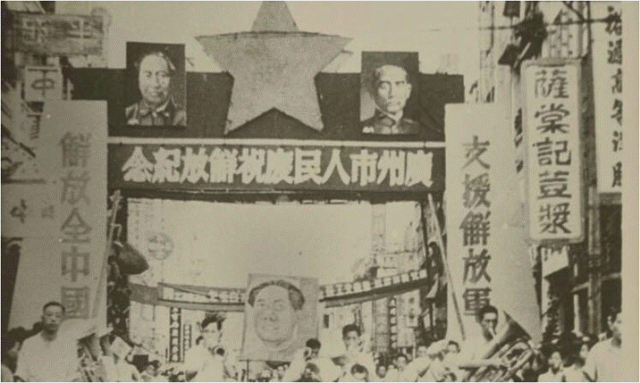
Guangdong's local Hui Muslim dining industry was also utterly destroyed. The Sa family, for instance, saw both their fourth and second branches looted. Sa Xuyun (also known as Ru Min, 1900-1943), Sa Zhaorong's son, was arrested and brutally killed for participating in the revolution by the puppet government (locals mistakenly identified it as the 'Kuomintang,' but it was actually the Japanese-controlled 'puppet regime'). Yunji's business consequently plummeted and eventually merged with other tea houses. Sa Xuyun's three great-uncles—Sa Hanqiang, Sa Yitang, and Sa Yiqi—were also forced to relocate Satangji to Hong Kong due to Japanese persecution and harassment. Other local halal eateries suffered similarly devastating blows, so much so that in the early years of the New China, most reputable tea houses and ice cream parlors, with the exception of a very few like Satangji, never fully recovered.
After the founding of the New China, standardizing halal dining became a crucial agenda for the Guangzhou city government. This was driven by the constitutionally guaranteed principle of ethnic unity and Guangzhou's significant role in international exchanges. Many third-world countries were predominantly Muslim, and even the Soviet Union—then China's largest partner—had a considerable Muslim population. Plus, Hui Muslims from all over China also lived and worked in Guangzhou.
Figure 3: Opening ceremony of Guangzhou Muslim Restaurant in 1956, with Guangzhou's Vice Mayor personally attending to cut the ribbon (Image courtesy of Guangzhou Muslim Restaurant).
Showcasing local Lingnan halal dishes with distinct Guangdong characteristics became a major mission for the Guangzhou city government, especially for the local Hui Muslim community. After some coordination, plans for a 'Halal Canteen' (清真食堂) specializing in local halal cuisine began in 1954. Then, on May 11, 1956, Sun Leyi, then Vice Mayor of Guangzhou, personally attended a grand ribbon-cutting ceremony for the newly opened 'Huimin Restaurant' (回民饭店) on Zhongshan 6th Road. Later, to expand its scale and improve the diner experience, it merged with Zhanyuan Pavilion Tea House in August 1959 and took over Satangji's second branch at 259 Zhongshan 5th Road. From then on, it was officially renamed 'Guangzhou Muslim Restaurant' (Guangzhou Huimin Restaurant) and has been known by that name ever since. On October 12, 1975, the Guangzhou Muslim Restaurant officially relocated to 325 Zhongshan 6th Road, near Ximenkou Station, solidifying its current, stable location. Over its many years, Guangzhou Muslim Restaurant has become a cherished memory for residents of all ethnicities in Guangdong. Known for its great food at affordable prices, it has also preserved a wealth of traditional local Cantonese cuisine styles. To this day, the Guangzhou Muslim Restaurant remains bustling with customers, truly embodying the culinary culture of old Guangzhou.
After China's 'Reform and Opening Up,' Guangdong's halal dining scene became incredibly diverse. When it comes to Halal Cantonese cuisine, beyond the Guangzhou Muslim Restaurant, you'll find Cantonese dim sum and dishes offered at places like 'Yishanggong' in Guangzhou, 'Zhongfayuan' in Shenzhen, the Zhaoqing Halal Restaurant, and the halal restaurant on the fifth floor of Hong Kong's AiQun Temple Mosque. Some of these, like Guangzhou Muslim Restaurant, Zhaoqing Halal Restaurant, and the AiQun Temple Halal Restaurant in Hong Kong, stick to traditional Cantonese styles—think dishes served in 'cups, steamers, and pieces.' Others, such as 'Zhongfayuan' and 'Yishanggong,' blend Western pastry influences with modern service to offer new-style Cantonese cuisine. What's more, a wide array of non-Cantonese halal cuisines—like Arabic, South Asian, Turkish, Iranian, and Southeast Asian dishes, as well as various Chinese halal options (Henan, Shandong, and Northwest cuisines, for example)—have all taken root and are thriving in Guangzhou's famous 'Food Paradise' (食在广州) culture. Diners from different ethnic groups and faiths in Guangzhou can truly experience the city's rich culture through its diverse halal food scene, which ultimately reflects the very essence of Chinese culture in Southern China.
(II) Analysis Within the Narrative
When we talk about halal dining in Southern China, if we only focus on introducing signature Southern Chinese halal dishes—like 'yangrou chashao bao' (lamb char siu buns), 'baiqie dongshan yang' (white-cut Dongshan lamb), 'Huimin jizai bing' (Hui Muslim chicken biscuits), 'suanrong ruyang gu' (garlic butter lamb ribs), or 'jiaomen youxiang' (halal fried bread based on the Cantonese dessert 'niushesu' / ox-tongue pastry)—the history of Hui Muslim dining in Southern China feels somewhat superficial. That's because a lot of historical documentation already thoroughly showcases the variety of Guangdong's local halal cuisine. I believe we need a series of deeper analyses into the industry's underlying development.
For instance, local Hui Muslims who have long resided in Guangdong often gather for 'he zaocha' (Cantonese morning tea / dim sum), just like other Cantonese people. This practice naturally extends to an analysis and discussion of social rituals. And while the halal dining scene in Southern China (the Guangdong-Hong Kong-Macao Greater Bay Area) appears vibrant today, the industry itself has certainly seen its share of ups and downs. Only by analyzing these complexities can we truly grasp the socio-historical factors behind the evolution of this cuisine.
(1) Socialization and Ritual: The Core Driving Force Behind Local Halal Dining Heritage
For local Hui Muslims in Guangdong and their descendants, understanding of 'the faith' might vary, shaped by their social environment and personal views on 'freedom of belief.' However, for family gatherings (like birthdays, weddings, or celebratory banquets for Gaokao / university entrance exam candidates), traditional ethnic rituals (such as daren ji / remembrance days for adults, Shengji / Mawlid, and Eid al-Adha), or when relatives return to Guangzhou from afar, they almost always choose a local halal restaurant for their get-togethers. The Guangzhou Muslim Restaurant, with its rich history, serves as a significant example for analysis. Personally, a large part of my fieldwork researching local Guangdong Hui Muslims was completed through interviews and discussions held at this very restaurant. This process revealed two crucial details: its role in everyday socialization and as a venue for rituals that harmoniously blend secular and religious aspects.
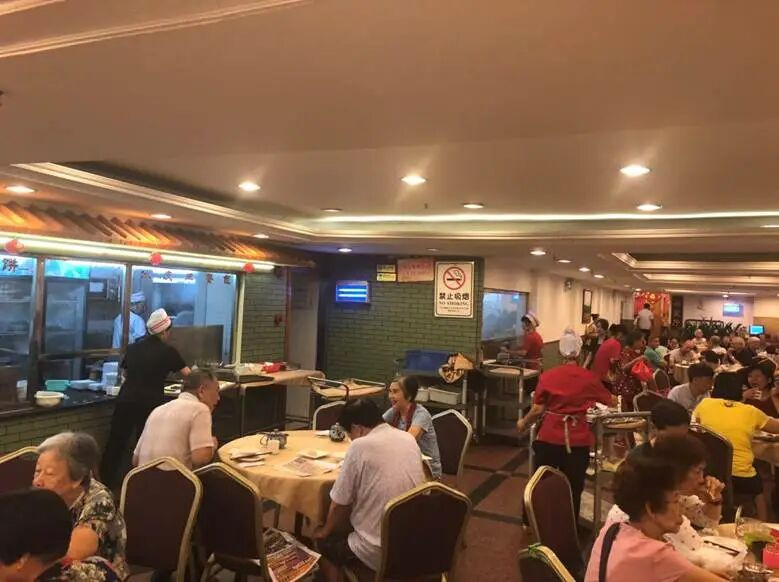
Figure 4: Guangzhou Muslim Restaurant bustling with guests, a venerable Cantonese-style tea restaurant in Guangzhou (photographed by the author in July 2019).
Socialization is a common human activity throughout history, but these ordinary actions offer deeper avenues for thought and analysis. For example, Professor Wang Di's collection, observation, and analysis of *zhuzhici* (竹枝词 - folk poems) significantly contributed to understanding Chengdu's urban culture. These everyday folk poems weren't just reflections of people's lives; the cultural factors derived from them allowed later scholars to delve deeper into Chengdu's urban culture and grasp its unique urban order. Similarly, ritual, as a cultural manifestation, doesn't just reflect major national events; it profoundly embodies a region's cultural characteristics. Professor Guo Hui's analysis of 'anniversaries' as a crucial part of rituals highlights this, emphasizing how 'anniversaries become important rituals for remembering the past, reflecting on what's come before, and more importantly, looking towards the future.' Therefore, studying and exploring socialization and ritual is key to better understanding the history reflected in the development of Southern China's Hui Muslim dining scene.
In terms of everyday socialization, halal Cantonese restaurants—with the Guangzhou Muslim Restaurant as a prime example—served as an incredibly important platform for my oral history interviews on this topic. I interviewed Mr. Bao Yanzhong in October 2017, members of the Bao family in September 2018, and revisited all interviewees in July 2019, with all these interviews taking place at the Guangzhou Muslim Restaurant. In March 2018, I interviewed Wang Xiangjun Hajita and Bao Huixian Hajita. Then, in April 2019, I followed up with Mr. Bao Zongheng and Bao Huixian Hajita (uncle and niece), choosing the Halal Restaurant at Hong Kong's AiQun Temple Mosque as the venue. The format for these interactions was often 'yum cha' (饮茶)—which in Cantonese areas refers to going to a tea restaurant for a meal. Through these casual 'yum cha' sessions at tea restaurants, I wasn't just able to gather valuable oral history; I also, to a certain extent, strengthened my relationships with the interviewees, allowing me to further refine this research in an atmosphere of trust.
Beyond that, in the daily lives of some of my local Hui Muslim friends, the Guangzhou Muslim Restaurant also acts as a vital social hub. For instance, when the granddaughter of a Dr. Jiang got into university in 2014, Dr. Jiang, as her grandfather, hosted a celebratory banquet at the Guangzhou Muslim Restaurant to encourage her academic pursuits and thank family and friends. Likewise, Hui Muslims and their descendants living abroad (I mention 'descendants' because, through my interviews, I learned that some Hui Muslim children living elsewhere are no longer Muslim and lack awareness of their cultural heritage) often choose the Guangzhou Muslim Restaurant for family-unit gatherings when they return to Guangzhou to visit relatives or ancestral graves. So, localized halal dining doesn't just cater to tourists' culinary demands; to a significant extent, it also binds together local Hui Muslims—and even those descendants who've drifted from their cultural traditions—through a shared affection for their hometown.
And when it comes to rituals, local Guangdong Hui Muslim practices include ethnic customs like *daren ji* (remembrance days for adults) and Eid al-Adha. But in the context of Southern China's thriving family-oriented culture, these rituals also play a vital role in uniting families and strengthening kinship ties. A local young Hui Muslim told me that in recent years, as fire safety measures in mosques have been enhanced, the long-standing tradition of cooking within the mosque for family reunions has had to shift to the Guangzhou Muslim Restaurant. Furthermore, while researching the local Hui Muslim Qingshantang Bao family, I discovered that their family genealogy contains numerous photos of family members gathering at the Guangzhou Muslim Restaurant.
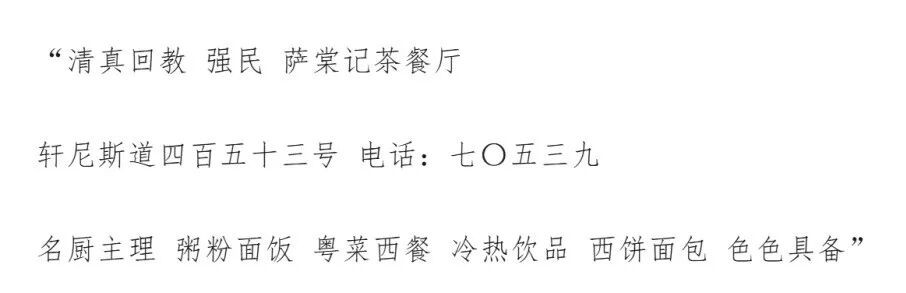
Therefore, whether for socializing or religious rituals, localized Cantonese Halal dining is rooted in South China's cultural traditions, organically connecting emotional bonds and making local dining all the more dynamic and vibrant. On the other hand, the heavy workload and expected wages within the restaurant industry to some extent affect the inheritance and development of the trade, making the eventual fading of certain "time-honored brands" an unavoidable reality.
(2) The Two Sides of Restaurant Industry Development: The Interweaving of Prosperity and Decline
When discussing the rise and fall of local Cantonese Halal dining, one cannot help but mention the destinies of several historic "time-honored brand" establishments. In July 2019, the author had the privilege of visiting elderly Madam Sa Jiezhen (1925–2021)—a key participant in "Satang Kee", sister to Sa Hanqiang and Sa Yitang, and older sister to Sa Yiqi. During our conversation, she briefly reviewed the development of Satang Kee from her perspective. In the late 1940s, with the end of the War of Resistance and the gradual stabilization of order in South China, brothers Sa Hanqiang and Sa Yitang returned to the mainland with their families. Meanwhile, Sa Yiqi, the youngest in the family, kept a portion of the relocated businesses running in Hong Kong. "My little brother kept 'Satang Kee' going in Hong Kong until he eventually retired from it."
Sa Yiqi stayed in Hong Kong not only to maintain the business his brothers had opened during their stay there, but also partly because he had been adopted in his childhood by his paternal uncle Sa Jingzhao (1863–1933). Sa Jingzhao himself did not pass away in Hong Kong, but his second daughter Sa Yueqing (1893–1948) and maternal grandson Tso Wai-sin (Tuo Weishan, 1919–1990) both settled in Hong Kong. In the third page of the very first issue of the local Hong Kong Muslim publication *Huimin Newsletter* dated April 12, 1959, there was an advertisement for "Satang Kee" with the following content:
From this advertisement, it is easy to see that during this period, "Satang Kee" had achieved a certain scale and was able to establish itself in a prime commercial area of Hong Kong—Hennessy Road—reflecting its top-notch quality. On the other hand, judging by the ad, "Satang Kee" was rooted in Hong Kong's "East-meets-West" cultural vibe, offering both Cantonese dishes and Western-style tea pastries. Compared to what the brothers ran in Guangzhou, the format and content were much more diversified. In Guangzhou, brothers Sa Hanqiang and Sa Yitang primarily ran a dessert shop centered around soy milk and cakes, with relatively little involvement in formal dining.
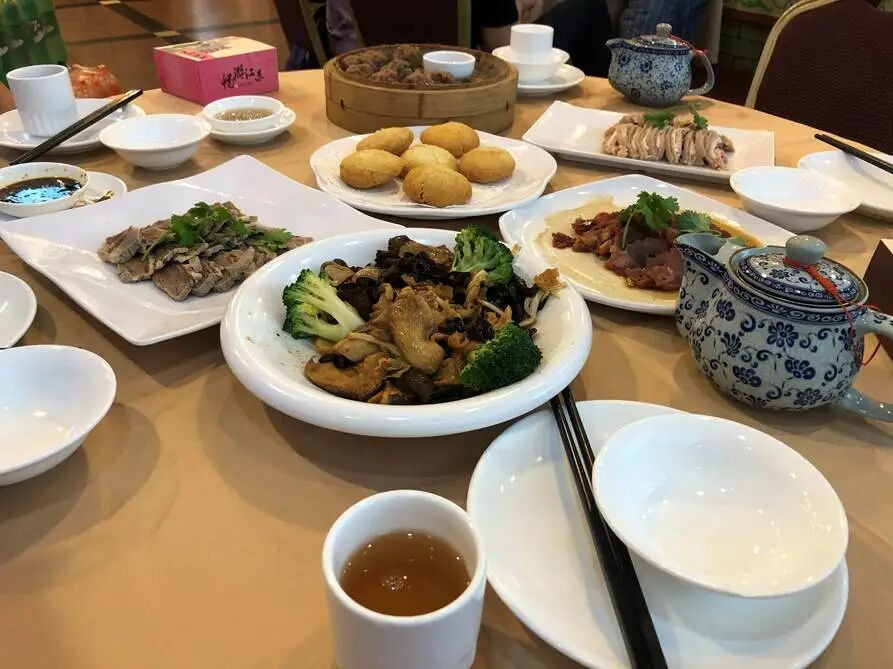
However, Madam Sa Jiezhen also candidly shared that the high-intensity workload and relatively low income of the restaurant industry—though they did improve the family's living conditions (as Sa Hanqiang noted in his writings, the operation of "Satang Kee" somewhat eased the huge financial pressure caused by the early death of his father Sa Jingshu, which left "an elderly mother, two younger sisters, two younger brothers, a wife and young child, plus himself—eight people in all," allowing them to "live in peace and comfort")—meant that once the Sa family's life stabilized and grew prosperous, "no one was able to take over" the time-honored signboard of "Satang Kee," turning it into a mere "historical memory" among local Hui Muslim neighborhoods.
Figure 5: Classic dishes at the Guangzhou Muslim Restaurant (Huimin Restaurant), with "jiaomen youxiang" (fried Hui Muslim flour dough) right in the middle, photographed in October 2019.
This situation was not unique to "Satang Kee." After the establishment of the Guangzhou Muslim Restaurant (Huimin Restaurant), most descendants of Sa Chenye, one of the core figures of Yunji, did not take over the restaurant business due to factors like education and improved economic standing. Therefore, although new faces constantly emerge in local Cantonese Hui Muslim cuisine, and restaurants themselves continuously refine local Cantonese Hui Muslim dining to match the times, the backbone of the local Cantonese Halal food industry—typified by the Guangzhou Muslim Restaurant (Huimin Restaurant) since the 2010s—is relatively aged. A declining birthrate and a lack of intrinsic drive for succession have resulted in low participation enthusiasm among the younger generation of local Hui Muslims. This mirrors the coexistence of prosperity (crowded with diners and constantly evolving alongside Cantonese culture) and decline (running out of steam with a dilution of family succession values) seen in some time-honored local Halal dining brands.
Conclusion: A Social History Rooted in the "Local"
At present, academic discussions on "Sinicization" are very active, and the author personally agrees with the meaning of the term itself. As a cultural system passed down in China for over a thousand years, Chinese Islam—embedded within the cultural strata of the "Hui Muslims"—possesses countless "Sinicized" cultural relics. Examples include Chinese-style "Jingzi calligraphy" (Sino-Arabic script calligraphy), traditional Chinese Islamic introductory textbooks like *Zeyao Zhujie Zaxue* (Selected Annotations on Miscellaneous Studies) which blend Classical Chinese text with brush-written Arabic, and the core element that best embodies the cultural heritage of Chinese Muslims: localized Halal cuisine.
Although local Halal cuisine in South China is not as diverse, deeply rooted, or historically profound as those in North China or the Jiangnan region, when viewed through a cross-cultural lens—alongside the intertwined rise, fall, socialization, and rituals behind the restaurant industry—the developmental trajectory of local Halal dining in South China reflects an entire socio-cultural system. This socio-cultural system is not confined to the Hui ethnic group or Muslims; it has been etched into the memories of the quintessential "Old Guangzhou" neighborhood locals, adding an important chapter to the cultural history of South China.
Drawing upon South China's years of accumulated traditions in cultural and economic exchange, as well as the modern "Belt and Road" initiative, the "Guangdong-Hong Kong-Macao Greater Bay Area" rooted in South China has become a booming new trend. On one hand, it carries on the traditions accumulated over many years, constantly refining its economic development through external exchanges. On the other hand, using the South China coast as a crucial gateway, it offers a window into diverse cultural and economic forms. Therefore, advancing cultural research in South China is crucial for better attracting investment, improving the cultural exchange environment, more effectively carrying forward South China's inclusive and diverse cultural traditions, and letting the world understand a vibrant China. Organizing and analyzing relevant cultural information to glean insights that effectively inform practice against the backdrop of tradition and reality is also a major direction for socio-historical scholarship.
At the same time, for the neighborhood residents themselves as interviewees—especially ethnic Hui compatriots who have lived in Guangdong for generations—organizing and analyzing the history they have personally experienced and strengthening emotional bonds between the public and scholars is, from a personal standpoint, a very important academic approach. Therefore, embarking on research into local Halal cuisine in South China is not merely a process of organizing materials; it is about bringing "Sinicization"—as a historical phenomenon—to life, with the aim of advancing academic thought and deepening research topics.
Postscript: This article was originally written in 2019, planned for submission as an academic paper. Due to well-known reasons, it ultimately missed the opportunity to participate in academic discussions in the form of a journal article. Fortunately, *Guangzhou Muslim* published this humble work.
By the time this article was finalized, Madam Sa Jiezhen was still alive. During her lifetime, she was one of the founders (likely the last surviving founder who has since returned to Allah) of the Hui Elderly Association, and long passionate about local Muslim affairs in Guangzhou. The elder generously recounted to the author a wealth of historical anecdotes about Guangzhou Hui Muslims during the Republic of China era, especially detailed information regarding "Satang Kee." In late May 2021, the author received a WeChat message from her daughter announcing that the senior passed away on May 20, 2021. In loving memory of Madam Sa Jiezhen, sincere thanks are hereby extended! Collapse Read »
A Century of Halal Dining in Guangdong: From Ancient Port Tea Houses to 70 Years of Glory at Guangzhou Muslim Restaurant
Abstract:
This historical review traces the evolution of local Hui Muslim halal dining in Guangdong. It covers everything from the Fanfang (foreign quarters) cuisine during ancient trade eras to the ups and downs of modern Cantonese-style halal tea houses, spotlighting the Guangzhou Muslim Restaurant's 70-year journey of staying true to its roots while innovating.
As modern society has evolved, there's been a growing focus on individual experiences. Details once considered 'trivial' are now gaining academic attention. Following this trend, historians are delving into the specifics of social life, with 'food, clothing, housing, and travel' being prime examples. This leads me to a key insight: the evolution of dining isn't just about archaeological findings or visual records. It's more about analyzing the social relationships involved and reflecting on broader socio-cultural themes.
Given existing narratives and my own research and cultural background, Cantonese cuisine will be a major topic in my exploration of culinary history. Southern China, centered around the Guangdong-Hong Kong-Macao Greater Bay Area, has always been a cultural melting pot along China's southern coast, thanks to its bustling and active land and water trade routes. From the Kaiping Diaolou (fortified towers) that blend Chinese, Islamic, and Western architectural elements, and the Huaisheng Mosque (Light Pagoda Mosque), to the incredibly diverse 'dim sum' found in Cantonese tea houses, the region truly showcases its cultural diversity and openness.
Figure 1: Huaisheng Mosque, photographed by the author in June 2018.
Cantonese cuisine, which originated in Southern China, plays a major role in China's socio-cultural history thanks to its unique and diverse flavors. However, even the historical narrative of Cantonese cuisine itself rarely gets academic treatment, beyond memoirs from industry professionals or recipe showcases. For instance, Mr. Chen Mengyin, an early pioneer in news and media, compiled various Cantonese dishes into *The Way of Eating* (食之道), dedicating its second part to the development and evolution of Cantonese cuisine in *Tracing the Origins of Cantonese Cuisine* (粤菜溯源录). In it, he shared his perspective as a journalist on traditional food and his commitment to cultural heritage, stating: 'Historians say: “A nation that forgets its history is doomed to repeat it.” “Chop Suey” (杂碎) is the culinary heritage of our “Southern Barbarian” ancestors. In the great 20th century, it served hundreds of millions fascinated by 'China fever' and fed millions of Chinese descendants. Should historians one day chronicle the food of the 'Southern Barbarians,' 'Chop Suey' deserves an entire chapter.' While Mr. Chen's work might not have delved into many Cantonese cuisine details due to limited space, his pioneering effort as an early journalist to compile and analyze dining with academic foresight, and to envision future academic development, was truly remarkable.
However, for Southern China's local halal cuisine, which is deeply rooted in both Hui Muslim dining etiquette and Cantonese traditions, there's actually a decent amount of historical material available. Most written reports on 'Halal Cantonese cuisine' today tend to be internal studies within ethnic and religious communities. While these resources have significantly enriched the narrative of 'Halal Cantonese cuisine' and its service range and variety are constantly improving, there's still a need for more academic analysis and critical thinking, along with diverse historical sources to further supplement and refine our understanding.
(I) History in the Narrative: A Brief Journey of Guangdong's Local Halal Dining
Compared to the countless long-standing local halal brands (laozihao) in Northern China and the Jiangnan region—think names like 'Donglaishun,' 'Baodu Feng,' and 'Hongbinlou' up north, or 'Anleyuan,' 'Lüliuju,' and 'Ma Xiangxing' in Jiangnan—Southern China actually has far fewer halal 'laozihao.' They're generally smaller in scale and haven't managed to continuously pass down independently to the present day. This largely stems from the smaller Hui Muslim population in Southern China and the somewhat limited range of professions they typically pursued. Among Southern Chinese Hui Muslims, a proverb somewhat captures this narrative:
'Religious folk (or 'Bandie lao') have a narrow path; they become officials, doctors, or sell beef.'
By the late Qing Dynasty and early Republic of China, narratives about local halal dining in Guangdong began to emerge. Take *gualu ya* (roasted duck), for instance. This dish was originally popular in Northern China, but as north-south exchanges became more frequent during the late Qing, some chefs brought its cooking techniques south. Master Ma Tianfu, a Hui Muslim from Shaanxi, introduced *gualu ya* to Haopan Street (濠畔街), then Guangzhou's most bustling Muslim-dense neighborhood. At 'Weichunyuan' (味莼园), a halal restaurant on Haopan Street known for its non-Cantonese dishes, Master Ma Tianfu's *gualu ya* was so exquisite that after he returned to Allah, some local 'old timers of Ram City' (Guangzhou) lamented that no other venerable brand could replicate its flavor. Another incredibly popular local Cantonese specialty, *niunan niuza* (beef brisket and offal stew), also has a significant history rooted in Guangdong's Hui Muslim community. According to local lore, Guangzhou residents first encountered *niunan niuza* during the late Qing to early Republican era, when a Hui Muslim named 'Ade' on Guangta Street (光塔街) developed the cooking method for beef offal and 'integrated it into restaurant menus.' While this claim lacks formal written records, most locals accept this narrative, and it's featured in various historical accounts and food guides. Today, while halal versions of *niunan niuza* still exist (like at the Guangzhou Muslim Restaurant's snack section), most versions of this dish have become a staple in everyday Cantonese households of all ethnicities and spread nationwide.
Figure 2: A parade passes 'Satangji' during Guangzhou's liberation, from the Guangzhou Library collection.
During the Republican era, thanks to local Hui Muslim dignitaries establishing newspapers and the standardization of food processing like slaughtering, many smaller halal tea houses were founded and recorded. Mr. Yang Dianzhang (1907-1993), in his report 'The Long-term Dining Situation of Hui People in Guangzhou,' listed various local halal eateries from different periods: Wanhe Shaola (Cantonese roasted meats / roast duck) Shop on Xiaoshi Street, Nanxing Chicken Duck Lamb Shop, Baohua Zhongwanzhan Restaurant, Taipingsha Tianran Restaurant, Juixing Tea House on Sipailou, Shuji Tea House in Nanshengli, Hajiangji Wonton Shop on Huiai Road, Quanchang Chicken Duck Shop on Huifu Road, Yunji Tea House in Xiaobei, and the dessert shop 'Satangji,' among others. Notably, Yunji Tea House and Satangji were both managed by the prominent Hui Muslim Sa family. Sa Zhaorong (1870-1949), the manager of Yunji Tea House, was a sixth-generation descendant of the Sa family's fourth branch. Meanwhile, his cousins—Sa Yirou (also known as Sa Hanqiang, 1911-1996), Sa Yitang (1917-1977), and Sa Yiqi (1929-2008)—the three brothers from the Sa family's second branch and fifth generation, managed 'Satangji.' Their grandfather, Sa Xianyang (1829-1895), had previously run the 'Tangji' halal pastry shop, which later inspired the name 'Satangji.' This clearly shows that brands and family management were well-established in Guangdong's local halal dining scene.
However, during the Anti-Japanese War, local Hui Muslims in Guangdong—from mosque leaders to officials—largely supported the resistance. As a result, Japanese invaders, collaborating with local thugs and traitors, subjected them to brutal persecution. A particularly heinous example was how, with Japanese military backing, local thugs blatantly disregarded the 'permanently preserved' monument that Liao Zhongkai had erected for Hui Muslim cemeteries. They forcibly built pig farms on these sacred sites, a deeply taboo act for Muslims, directly seizing the Muslim burial grounds and assisting the Japanese military in looting these areas.
Guangdong's local Hui Muslim dining industry was also utterly destroyed. The Sa family, for instance, saw both their fourth and second branches looted. Sa Xuyun (also known as Ru Min, 1900-1943), Sa Zhaorong's son, was arrested and brutally killed for participating in the revolution by the puppet government (locals mistakenly identified it as the 'Kuomintang,' but it was actually the Japanese-controlled 'puppet regime'). Yunji's business consequently plummeted and eventually merged with other tea houses. Sa Xuyun's three great-uncles—Sa Hanqiang, Sa Yitang, and Sa Yiqi—were also forced to relocate Satangji to Hong Kong due to Japanese persecution and harassment. Other local halal eateries suffered similarly devastating blows, so much so that in the early years of the New China, most reputable tea houses and ice cream parlors, with the exception of a very few like Satangji, never fully recovered.
After the founding of the New China, standardizing halal dining became a crucial agenda for the Guangzhou city government. This was driven by the constitutionally guaranteed principle of ethnic unity and Guangzhou's significant role in international exchanges. Many third-world countries were predominantly Muslim, and even the Soviet Union—then China's largest partner—had a considerable Muslim population. Plus, Hui Muslims from all over China also lived and worked in Guangzhou.
Figure 3: Opening ceremony of Guangzhou Muslim Restaurant in 1956, with Guangzhou's Vice Mayor personally attending to cut the ribbon (Image courtesy of Guangzhou Muslim Restaurant).
Showcasing local Lingnan halal dishes with distinct Guangdong characteristics became a major mission for the Guangzhou city government, especially for the local Hui Muslim community. After some coordination, plans for a 'Halal Canteen' (清真食堂) specializing in local halal cuisine began in 1954. Then, on May 11, 1956, Sun Leyi, then Vice Mayor of Guangzhou, personally attended a grand ribbon-cutting ceremony for the newly opened 'Huimin Restaurant' (回民饭店) on Zhongshan 6th Road. Later, to expand its scale and improve the diner experience, it merged with Zhanyuan Pavilion Tea House in August 1959 and took over Satangji's second branch at 259 Zhongshan 5th Road. From then on, it was officially renamed 'Guangzhou Muslim Restaurant' (Guangzhou Huimin Restaurant) and has been known by that name ever since. On October 12, 1975, the Guangzhou Muslim Restaurant officially relocated to 325 Zhongshan 6th Road, near Ximenkou Station, solidifying its current, stable location. Over its many years, Guangzhou Muslim Restaurant has become a cherished memory for residents of all ethnicities in Guangdong. Known for its great food at affordable prices, it has also preserved a wealth of traditional local Cantonese cuisine styles. To this day, the Guangzhou Muslim Restaurant remains bustling with customers, truly embodying the culinary culture of old Guangzhou.
After China's 'Reform and Opening Up,' Guangdong's halal dining scene became incredibly diverse. When it comes to Halal Cantonese cuisine, beyond the Guangzhou Muslim Restaurant, you'll find Cantonese dim sum and dishes offered at places like 'Yishanggong' in Guangzhou, 'Zhongfayuan' in Shenzhen, the Zhaoqing Halal Restaurant, and the halal restaurant on the fifth floor of Hong Kong's AiQun Temple Mosque. Some of these, like Guangzhou Muslim Restaurant, Zhaoqing Halal Restaurant, and the AiQun Temple Halal Restaurant in Hong Kong, stick to traditional Cantonese styles—think dishes served in 'cups, steamers, and pieces.' Others, such as 'Zhongfayuan' and 'Yishanggong,' blend Western pastry influences with modern service to offer new-style Cantonese cuisine. What's more, a wide array of non-Cantonese halal cuisines—like Arabic, South Asian, Turkish, Iranian, and Southeast Asian dishes, as well as various Chinese halal options (Henan, Shandong, and Northwest cuisines, for example)—have all taken root and are thriving in Guangzhou's famous 'Food Paradise' (食在广州) culture. Diners from different ethnic groups and faiths in Guangzhou can truly experience the city's rich culture through its diverse halal food scene, which ultimately reflects the very essence of Chinese culture in Southern China.
(II) Analysis Within the Narrative
When we talk about halal dining in Southern China, if we only focus on introducing signature Southern Chinese halal dishes—like 'yangrou chashao bao' (lamb char siu buns), 'baiqie dongshan yang' (white-cut Dongshan lamb), 'Huimin jizai bing' (Hui Muslim chicken biscuits), 'suanrong ruyang gu' (garlic butter lamb ribs), or 'jiaomen youxiang' (halal fried bread based on the Cantonese dessert 'niushesu' / ox-tongue pastry)—the history of Hui Muslim dining in Southern China feels somewhat superficial. That's because a lot of historical documentation already thoroughly showcases the variety of Guangdong's local halal cuisine. I believe we need a series of deeper analyses into the industry's underlying development.
For instance, local Hui Muslims who have long resided in Guangdong often gather for 'he zaocha' (Cantonese morning tea / dim sum), just like other Cantonese people. This practice naturally extends to an analysis and discussion of social rituals. And while the halal dining scene in Southern China (the Guangdong-Hong Kong-Macao Greater Bay Area) appears vibrant today, the industry itself has certainly seen its share of ups and downs. Only by analyzing these complexities can we truly grasp the socio-historical factors behind the evolution of this cuisine.
(1) Socialization and Ritual: The Core Driving Force Behind Local Halal Dining Heritage
For local Hui Muslims in Guangdong and their descendants, understanding of 'the faith' might vary, shaped by their social environment and personal views on 'freedom of belief.' However, for family gatherings (like birthdays, weddings, or celebratory banquets for Gaokao / university entrance exam candidates), traditional ethnic rituals (such as daren ji / remembrance days for adults, Shengji / Mawlid, and Eid al-Adha), or when relatives return to Guangzhou from afar, they almost always choose a local halal restaurant for their get-togethers. The Guangzhou Muslim Restaurant, with its rich history, serves as a significant example for analysis. Personally, a large part of my fieldwork researching local Guangdong Hui Muslims was completed through interviews and discussions held at this very restaurant. This process revealed two crucial details: its role in everyday socialization and as a venue for rituals that harmoniously blend secular and religious aspects.
Figure 4: Guangzhou Muslim Restaurant bustling with guests, a venerable Cantonese-style tea restaurant in Guangzhou (photographed by the author in July 2019).
Socialization is a common human activity throughout history, but these ordinary actions offer deeper avenues for thought and analysis. For example, Professor Wang Di's collection, observation, and analysis of *zhuzhici* (竹枝词 - folk poems) significantly contributed to understanding Chengdu's urban culture. These everyday folk poems weren't just reflections of people's lives; the cultural factors derived from them allowed later scholars to delve deeper into Chengdu's urban culture and grasp its unique urban order. Similarly, ritual, as a cultural manifestation, doesn't just reflect major national events; it profoundly embodies a region's cultural characteristics. Professor Guo Hui's analysis of 'anniversaries' as a crucial part of rituals highlights this, emphasizing how 'anniversaries become important rituals for remembering the past, reflecting on what's come before, and more importantly, looking towards the future.' Therefore, studying and exploring socialization and ritual is key to better understanding the history reflected in the development of Southern China's Hui Muslim dining scene.
In terms of everyday socialization, halal Cantonese restaurants—with the Guangzhou Muslim Restaurant as a prime example—served as an incredibly important platform for my oral history interviews on this topic. I interviewed Mr. Bao Yanzhong in October 2017, members of the Bao family in September 2018, and revisited all interviewees in July 2019, with all these interviews taking place at the Guangzhou Muslim Restaurant. In March 2018, I interviewed Wang Xiangjun Hajita and Bao Huixian Hajita. Then, in April 2019, I followed up with Mr. Bao Zongheng and Bao Huixian Hajita (uncle and niece), choosing the Halal Restaurant at Hong Kong's AiQun Temple Mosque as the venue. The format for these interactions was often 'yum cha' (饮茶)—which in Cantonese areas refers to going to a tea restaurant for a meal. Through these casual 'yum cha' sessions at tea restaurants, I wasn't just able to gather valuable oral history; I also, to a certain extent, strengthened my relationships with the interviewees, allowing me to further refine this research in an atmosphere of trust.
Beyond that, in the daily lives of some of my local Hui Muslim friends, the Guangzhou Muslim Restaurant also acts as a vital social hub. For instance, when the granddaughter of a Dr. Jiang got into university in 2014, Dr. Jiang, as her grandfather, hosted a celebratory banquet at the Guangzhou Muslim Restaurant to encourage her academic pursuits and thank family and friends. Likewise, Hui Muslims and their descendants living abroad (I mention 'descendants' because, through my interviews, I learned that some Hui Muslim children living elsewhere are no longer Muslim and lack awareness of their cultural heritage) often choose the Guangzhou Muslim Restaurant for family-unit gatherings when they return to Guangzhou to visit relatives or ancestral graves. So, localized halal dining doesn't just cater to tourists' culinary demands; to a significant extent, it also binds together local Hui Muslims—and even those descendants who've drifted from their cultural traditions—through a shared affection for their hometown.
And when it comes to rituals, local Guangdong Hui Muslim practices include ethnic customs like *daren ji* (remembrance days for adults) and Eid al-Adha. But in the context of Southern China's thriving family-oriented culture, these rituals also play a vital role in uniting families and strengthening kinship ties. A local young Hui Muslim told me that in recent years, as fire safety measures in mosques have been enhanced, the long-standing tradition of cooking within the mosque for family reunions has had to shift to the Guangzhou Muslim Restaurant. Furthermore, while researching the local Hui Muslim Qingshantang Bao family, I discovered that their family genealogy contains numerous photos of family members gathering at the Guangzhou Muslim Restaurant.
Therefore, whether for socializing or religious rituals, localized Cantonese Halal dining is rooted in South China's cultural traditions, organically connecting emotional bonds and making local dining all the more dynamic and vibrant. On the other hand, the heavy workload and expected wages within the restaurant industry to some extent affect the inheritance and development of the trade, making the eventual fading of certain "time-honored brands" an unavoidable reality.
(2) The Two Sides of Restaurant Industry Development: The Interweaving of Prosperity and Decline
When discussing the rise and fall of local Cantonese Halal dining, one cannot help but mention the destinies of several historic "time-honored brand" establishments. In July 2019, the author had the privilege of visiting elderly Madam Sa Jiezhen (1925–2021)—a key participant in "Satang Kee", sister to Sa Hanqiang and Sa Yitang, and older sister to Sa Yiqi. During our conversation, she briefly reviewed the development of Satang Kee from her perspective. In the late 1940s, with the end of the War of Resistance and the gradual stabilization of order in South China, brothers Sa Hanqiang and Sa Yitang returned to the mainland with their families. Meanwhile, Sa Yiqi, the youngest in the family, kept a portion of the relocated businesses running in Hong Kong. "My little brother kept 'Satang Kee' going in Hong Kong until he eventually retired from it."
Sa Yiqi stayed in Hong Kong not only to maintain the business his brothers had opened during their stay there, but also partly because he had been adopted in his childhood by his paternal uncle Sa Jingzhao (1863–1933). Sa Jingzhao himself did not pass away in Hong Kong, but his second daughter Sa Yueqing (1893–1948) and maternal grandson Tso Wai-sin (Tuo Weishan, 1919–1990) both settled in Hong Kong. In the third page of the very first issue of the local Hong Kong Muslim publication *Huimin Newsletter* dated April 12, 1959, there was an advertisement for "Satang Kee" with the following content:
From this advertisement, it is easy to see that during this period, "Satang Kee" had achieved a certain scale and was able to establish itself in a prime commercial area of Hong Kong—Hennessy Road—reflecting its top-notch quality. On the other hand, judging by the ad, "Satang Kee" was rooted in Hong Kong's "East-meets-West" cultural vibe, offering both Cantonese dishes and Western-style tea pastries. Compared to what the brothers ran in Guangzhou, the format and content were much more diversified. In Guangzhou, brothers Sa Hanqiang and Sa Yitang primarily ran a dessert shop centered around soy milk and cakes, with relatively little involvement in formal dining.
However, Madam Sa Jiezhen also candidly shared that the high-intensity workload and relatively low income of the restaurant industry—though they did improve the family's living conditions (as Sa Hanqiang noted in his writings, the operation of "Satang Kee" somewhat eased the huge financial pressure caused by the early death of his father Sa Jingshu, which left "an elderly mother, two younger sisters, two younger brothers, a wife and young child, plus himself—eight people in all," allowing them to "live in peace and comfort")—meant that once the Sa family's life stabilized and grew prosperous, "no one was able to take over" the time-honored signboard of "Satang Kee," turning it into a mere "historical memory" among local Hui Muslim neighborhoods.
Figure 5: Classic dishes at the Guangzhou Muslim Restaurant (Huimin Restaurant), with "jiaomen youxiang" (fried Hui Muslim flour dough) right in the middle, photographed in October 2019.
This situation was not unique to "Satang Kee." After the establishment of the Guangzhou Muslim Restaurant (Huimin Restaurant), most descendants of Sa Chenye, one of the core figures of Yunji, did not take over the restaurant business due to factors like education and improved economic standing. Therefore, although new faces constantly emerge in local Cantonese Hui Muslim cuisine, and restaurants themselves continuously refine local Cantonese Hui Muslim dining to match the times, the backbone of the local Cantonese Halal food industry—typified by the Guangzhou Muslim Restaurant (Huimin Restaurant) since the 2010s—is relatively aged. A declining birthrate and a lack of intrinsic drive for succession have resulted in low participation enthusiasm among the younger generation of local Hui Muslims. This mirrors the coexistence of prosperity (crowded with diners and constantly evolving alongside Cantonese culture) and decline (running out of steam with a dilution of family succession values) seen in some time-honored local Halal dining brands.
Conclusion: A Social History Rooted in the "Local"
At present, academic discussions on "Sinicization" are very active, and the author personally agrees with the meaning of the term itself. As a cultural system passed down in China for over a thousand years, Chinese Islam—embedded within the cultural strata of the "Hui Muslims"—possesses countless "Sinicized" cultural relics. Examples include Chinese-style "Jingzi calligraphy" (Sino-Arabic script calligraphy), traditional Chinese Islamic introductory textbooks like *Zeyao Zhujie Zaxue* (Selected Annotations on Miscellaneous Studies) which blend Classical Chinese text with brush-written Arabic, and the core element that best embodies the cultural heritage of Chinese Muslims: localized Halal cuisine.
Although local Halal cuisine in South China is not as diverse, deeply rooted, or historically profound as those in North China or the Jiangnan region, when viewed through a cross-cultural lens—alongside the intertwined rise, fall, socialization, and rituals behind the restaurant industry—the developmental trajectory of local Halal dining in South China reflects an entire socio-cultural system. This socio-cultural system is not confined to the Hui ethnic group or Muslims; it has been etched into the memories of the quintessential "Old Guangzhou" neighborhood locals, adding an important chapter to the cultural history of South China.
Drawing upon South China's years of accumulated traditions in cultural and economic exchange, as well as the modern "Belt and Road" initiative, the "Guangdong-Hong Kong-Macao Greater Bay Area" rooted in South China has become a booming new trend. On one hand, it carries on the traditions accumulated over many years, constantly refining its economic development through external exchanges. On the other hand, using the South China coast as a crucial gateway, it offers a window into diverse cultural and economic forms. Therefore, advancing cultural research in South China is crucial for better attracting investment, improving the cultural exchange environment, more effectively carrying forward South China's inclusive and diverse cultural traditions, and letting the world understand a vibrant China. Organizing and analyzing relevant cultural information to glean insights that effectively inform practice against the backdrop of tradition and reality is also a major direction for socio-historical scholarship.
At the same time, for the neighborhood residents themselves as interviewees—especially ethnic Hui compatriots who have lived in Guangdong for generations—organizing and analyzing the history they have personally experienced and strengthening emotional bonds between the public and scholars is, from a personal standpoint, a very important academic approach. Therefore, embarking on research into local Halal cuisine in South China is not merely a process of organizing materials; it is about bringing "Sinicization"—as a historical phenomenon—to life, with the aim of advancing academic thought and deepening research topics.
Postscript: This article was originally written in 2019, planned for submission as an academic paper. Due to well-known reasons, it ultimately missed the opportunity to participate in academic discussions in the form of a journal article. Fortunately, *Guangzhou Muslim* published this humble work.
By the time this article was finalized, Madam Sa Jiezhen was still alive. During her lifetime, she was one of the founders (likely the last surviving founder who has since returned to Allah) of the Hui Elderly Association, and long passionate about local Muslim affairs in Guangzhou. The elder generously recounted to the author a wealth of historical anecdotes about Guangzhou Hui Muslims during the Republic of China era, especially detailed information regarding "Satang Kee." In late May 2021, the author received a WeChat message from her daughter announcing that the senior passed away on May 20, 2021. In loving memory of Madam Sa Jiezhen, sincere thanks are hereby extended! Collapse Read »
Top Halal Restaurant Guangzhou for Canton Fair: ZITONA Olive Tree - Authentic Levantine & Middle Eastern Cuisine
[Internet Repost]
Halal Hotspot for Canton Fair Visitors: Checking Out ZITONA Olive Tree Levantine & Arab Halal Restaurant
Abstract: We're taking you on a tour of 'ZITONA Olive Tree,' a renowned halal restaurant that's a magnet for local and international business travelers during the Canton Fair. Get ready to savor authentic Levantine Arab traditional grilled meats, hummus (鹰嘴豆泥), pita bread (彼得饼), and specialty desserts, all while soaking in the cultural fusion of China and the Arab world right here in Guangzhou, a true gateway for international trade.
Zitona Olive Tree
Savor the Levant, Celebrate Sino-Arab Connections
Every year, during the Canton Fair, global merchants flock to Guangzhou, hustling between exhibition halls. And let's be real, nothing beats a 'safe and authentic' meal to shake off the fatigue and get you back in the game. That's why we're raving about ZITONA Olive Tree Halal Restaurant today! It's totally tailor-made for fair visitors – strictly upholding halal principles, blending diverse exotic flavors, and with its super thoughtful service and delicious dishes, it's seriously going to be your 'culinary charging station' during the fair!
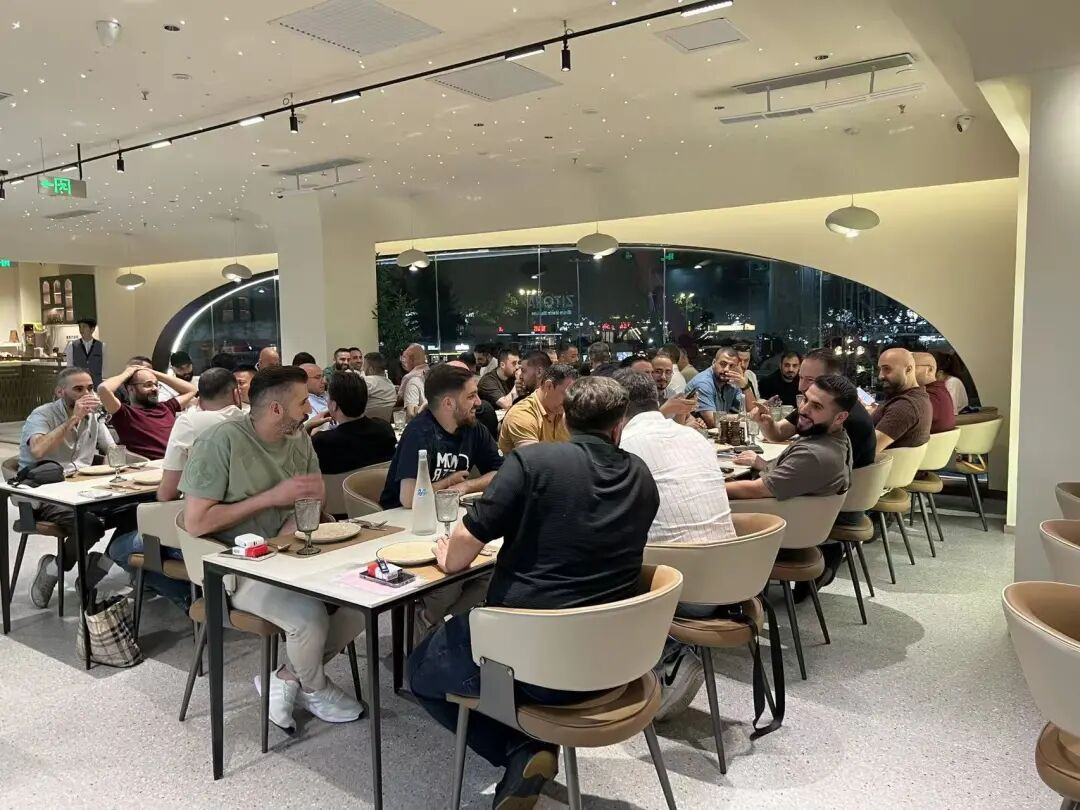
✅ Canton Fair Visitors' Top Pick: 3 Core Reasons Why You'll Love It
1. Ironclad Halal Certification: Your Peace of Mind is Guaranteed
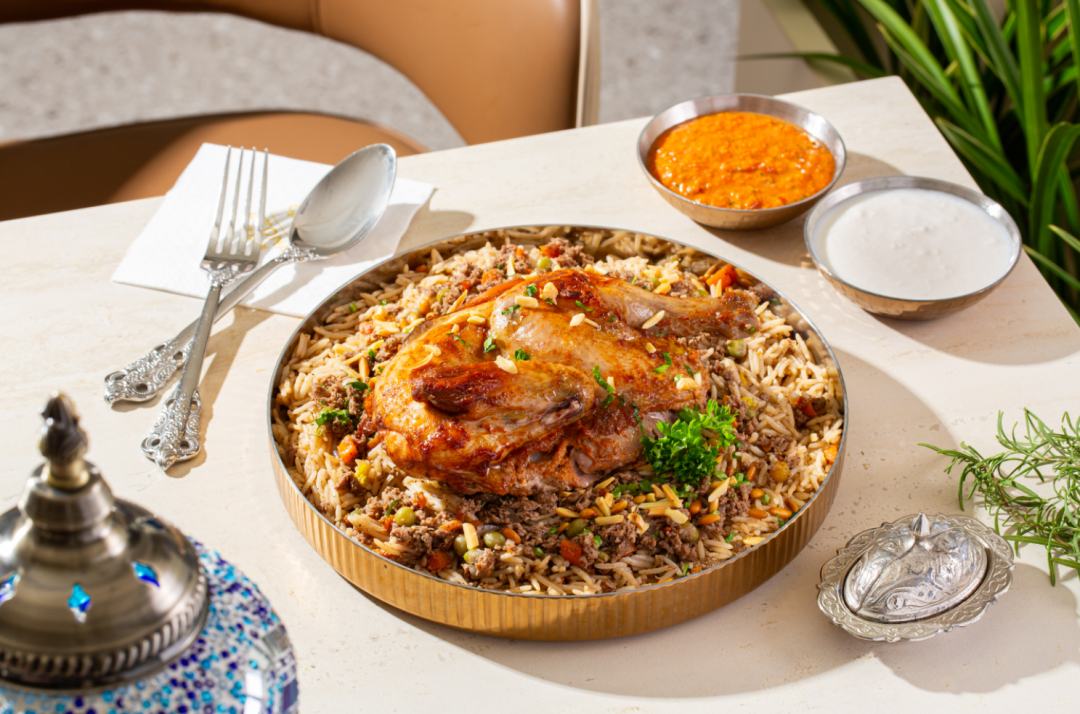
As an authentically halal restaurant, ZITONA Olive Tree adheres to the most stringent halal standards, from meticulously sourcing ingredients to the entire cooking process, strictly ensuring no non-halal components ever get involved. So whether you're a Muslim merchant following religious dietary laws or just someone who prioritizes clean eating, you can completely chill out, savor every delicious bite, and truly feel that deep respect for your dietary needs.
2. A Flavor Fusion Fiesta: Catering to Every Palate from Across the Globe
The team here totally gets that Canton Fair visitors come from literally everywhere. That's why they've meticulously crafted a fusion menu, so you can dive into specialty flavors from the Middle East, the Mediterranean, and Southeast Asia without ever having to hop on a plane. Middle Eastern Classics: Think freshly baked Middle Eastern flatbread (中东大饼), bursting with rich wheat aroma, perfectly paired with traditional appetizers like creamy hummus (鹰嘴豆泥) and smoky baba ghanoush (茄子泥). Seriously, one bite and you're practically on the streets of Damascus! And don't even get us started on the falafel (法拉费) – crispy on the outside, tender on the inside, dipped in their secret sauce, it's fragrant, never greasy, and just screams authentic.
Fair Power Mains: Need to refuel? Their charcoal-grilled mixed kebab platters are a lifesaver, featuring succulent chicken and super juicy beef, all served up with fresh veggies. It's the ultimate quick energy boost to battle that fair fatigue. For a business dinner, you've gotta go for the Supreme Kebab Platter with grilled fish (烤鱼) – the fish is perfectly tender and bouncy, and the kebabs are just bursting with incredible aroma. Talk about serious culinary commitment!
Light Bites & Warming Soups: Their refreshing Arab salad is perfect for cutting through richness and kickstarting your appetite, while the Caesar salmon salad is so good it'll make your taste buds sing. For something warm, the Tom Yum Goong (冬阴功汤) is spicy, sour, and totally hits the spot, or cozy up with their velvety, rich mushroom soup. Seriously, one spoonful and all that fair stress just melts away.
3. Fair-Friendly Service: Saving You Time & Stress
This spot is literally next door to the Canton Fair complex, so you can zip there by metro or a super short car ride. No wasting precious fair time just to grab a meal! Whether you're looking for a quick solo bite, a cozy spot for two to chat, or a big-group business banquet, they've got seating arrangements to perfectly fit your vibe. Plus, they're super efficient with their food service, balancing deliciousness with speed, so you can truly max out your breaks and recharge your batteries.
Immersive Dining Experience: Where Every Detail Shines with Thoughtfulness

Step inside, and bam – you're hit with this incredible, vibrant exotic vibe, like you've been instantly transported to a bustling Middle Eastern souk! The decor elements are pure Mediterranean chic, and their outdoor area is lush and green, creating the perfect chill atmosphere for business chats or just kicking back. Their service team is totally pro, super clued in on Muslim customs and etiquette, and even offers basic multilingual service, so communication is absolutely seamless.
To cater specifically to Canton Fair guests, the restaurant has special extended hours, staying open until late at night, perfect for those late-returning visitors. And get this – they've even got hand-washing facilities, totally in line with Muslim dining practices. Honestly, every single detail here is infused with thoughtful consideration.

Zitona
WeChat ID: 153 6189 3520 | Reservations: +86 153 6189 3520

Operating Hours: 10:00 AM - 1:00 AM (next day)
Specialty Cuisines: Levantine / Mediterranean Flavors
Restaurant Addresses: Taojin Store: Shop 101-102, 1st Floor, Good World Plaza, 362-363 Huanshi East Road, Yuexiu District, Guangzhou City
Xiwan Road Store: Shop 101, 1st Floor, Building B1, Fortune Mansion, Xiwan Road, Yuexiu District, Guangzhou City Collapse Read »
Halal Hotspot for Canton Fair Visitors: Checking Out ZITONA Olive Tree Levantine & Arab Halal Restaurant
Abstract: We're taking you on a tour of 'ZITONA Olive Tree,' a renowned halal restaurant that's a magnet for local and international business travelers during the Canton Fair. Get ready to savor authentic Levantine Arab traditional grilled meats, hummus (鹰嘴豆泥), pita bread (彼得饼), and specialty desserts, all while soaking in the cultural fusion of China and the Arab world right here in Guangzhou, a true gateway for international trade.
Zitona Olive Tree
Savor the Levant, Celebrate Sino-Arab Connections
Every year, during the Canton Fair, global merchants flock to Guangzhou, hustling between exhibition halls. And let's be real, nothing beats a 'safe and authentic' meal to shake off the fatigue and get you back in the game. That's why we're raving about ZITONA Olive Tree Halal Restaurant today! It's totally tailor-made for fair visitors – strictly upholding halal principles, blending diverse exotic flavors, and with its super thoughtful service and delicious dishes, it's seriously going to be your 'culinary charging station' during the fair!
✅ Canton Fair Visitors' Top Pick: 3 Core Reasons Why You'll Love It
1. Ironclad Halal Certification: Your Peace of Mind is Guaranteed
As an authentically halal restaurant, ZITONA Olive Tree adheres to the most stringent halal standards, from meticulously sourcing ingredients to the entire cooking process, strictly ensuring no non-halal components ever get involved. So whether you're a Muslim merchant following religious dietary laws or just someone who prioritizes clean eating, you can completely chill out, savor every delicious bite, and truly feel that deep respect for your dietary needs.
2. A Flavor Fusion Fiesta: Catering to Every Palate from Across the Globe
The team here totally gets that Canton Fair visitors come from literally everywhere. That's why they've meticulously crafted a fusion menu, so you can dive into specialty flavors from the Middle East, the Mediterranean, and Southeast Asia without ever having to hop on a plane. Middle Eastern Classics: Think freshly baked Middle Eastern flatbread (中东大饼), bursting with rich wheat aroma, perfectly paired with traditional appetizers like creamy hummus (鹰嘴豆泥) and smoky baba ghanoush (茄子泥). Seriously, one bite and you're practically on the streets of Damascus! And don't even get us started on the falafel (法拉费) – crispy on the outside, tender on the inside, dipped in their secret sauce, it's fragrant, never greasy, and just screams authentic.
Fair Power Mains: Need to refuel? Their charcoal-grilled mixed kebab platters are a lifesaver, featuring succulent chicken and super juicy beef, all served up with fresh veggies. It's the ultimate quick energy boost to battle that fair fatigue. For a business dinner, you've gotta go for the Supreme Kebab Platter with grilled fish (烤鱼) – the fish is perfectly tender and bouncy, and the kebabs are just bursting with incredible aroma. Talk about serious culinary commitment!
Light Bites & Warming Soups: Their refreshing Arab salad is perfect for cutting through richness and kickstarting your appetite, while the Caesar salmon salad is so good it'll make your taste buds sing. For something warm, the Tom Yum Goong (冬阴功汤) is spicy, sour, and totally hits the spot, or cozy up with their velvety, rich mushroom soup. Seriously, one spoonful and all that fair stress just melts away.
3. Fair-Friendly Service: Saving You Time & Stress
This spot is literally next door to the Canton Fair complex, so you can zip there by metro or a super short car ride. No wasting precious fair time just to grab a meal! Whether you're looking for a quick solo bite, a cozy spot for two to chat, or a big-group business banquet, they've got seating arrangements to perfectly fit your vibe. Plus, they're super efficient with their food service, balancing deliciousness with speed, so you can truly max out your breaks and recharge your batteries.
Immersive Dining Experience: Where Every Detail Shines with Thoughtfulness
Step inside, and bam – you're hit with this incredible, vibrant exotic vibe, like you've been instantly transported to a bustling Middle Eastern souk! The decor elements are pure Mediterranean chic, and their outdoor area is lush and green, creating the perfect chill atmosphere for business chats or just kicking back. Their service team is totally pro, super clued in on Muslim customs and etiquette, and even offers basic multilingual service, so communication is absolutely seamless.
To cater specifically to Canton Fair guests, the restaurant has special extended hours, staying open until late at night, perfect for those late-returning visitors. And get this – they've even got hand-washing facilities, totally in line with Muslim dining practices. Honestly, every single detail here is infused with thoughtful consideration.
Zitona
WeChat ID: 153 6189 3520 | Reservations: +86 153 6189 3520
Operating Hours: 10:00 AM - 1:00 AM (next day)
Specialty Cuisines: Levantine / Mediterranean Flavors
Restaurant Addresses: Taojin Store: Shop 101-102, 1st Floor, Good World Plaza, 362-363 Huanshi East Road, Yuexiu District, Guangzhou City
Xiwan Road Store: Shop 101, 1st Floor, Building B1, Fortune Mansion, Xiwan Road, Yuexiu District, Guangzhou City Collapse Read »
Guangzhou's 70-Year Halal Gem: Diving into Authentic Cantonese Muslim Food, Juicy Beef & Dim Sum at Huimin Restaurant
[Internet Repost]
Revisiting Guangzhou's 70-Year-Old Guangzhou Muslim Restaurant: Signature Halal Cantonese Dishes, Juicy Beef Meatballs, and a Yum Cha Deep Dive
Summary:
We're revisiting the Guangzhou Muslim Restaurant (Huimin Restaurant), a legendary spot in Yuexiu District that's been serving for seventy years. We did a dine-in deep dive into their signature crispy-skinned, juicy Halal roast duck, plump and bouncy Cantonese-style niurou wan (beef meatballs), and grabbed some classic jumbo jianjiao (pan-fried dumplings) from their takeaway window. Get ready to experience the iconic flavors of Guangzhou's largest Halal Cantonese old-timer.
It's been a minute since I hit up the Guangzhou Muslim Restaurant (Huimin Restaurant), and seriously, this place is a classic, old-school Cantonese Halal joint, widely known as the biggest Halal Cantonese restaurant in the city. Back when I used to work nearby, I'd always swing by their takeaway window for breakfast. Their jianjiao (pan-fried dumplings) were always huge and super filling, and the niurou wan (beef meatballs) were seriously substantial—one bite and you were set for the day.
This time, I made a special trip to dine in. Their signature Huimin niuzha tang (beef offal soup) was packed with a rich peppery kick, and the beef tripe was stewed to perfection—super tender and easy to chew. Paired with pickled daikon, it totally cuts through any richness. The ziran kaoyangpai (cumin-spiced roasted lamb ribs) had a hint of Cantonese char siu (barbecue pork) flavor, with a crispy exterior and juicy interior, and barely any gamey lamb taste. And their Huimin yuanyang ji (Muslim 鸳鸯 chicken) was a hit, with its crispy skin and tender meat, a total fave for many old-school Guangzhou locals. Overall, it’s classic old-Guangzhou flavor, with generous portions. Just a heads up, service at this long-standing spot can be a bit hit-or-miss, but the vibe is still that familiar, retro, old-school feel.
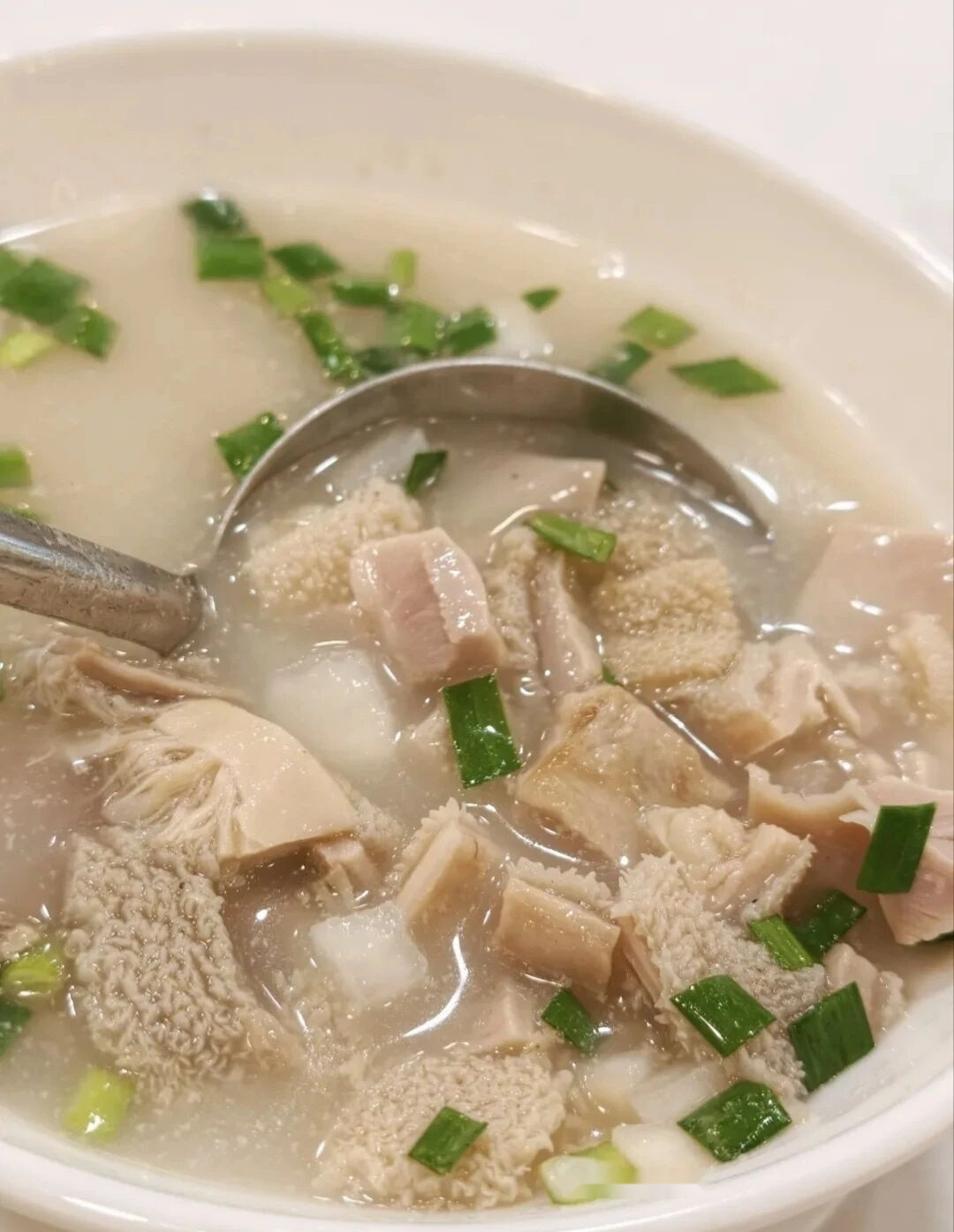
Restaurant Name: Guangzhou Muslim Restaurant (Huimin Restaurant)
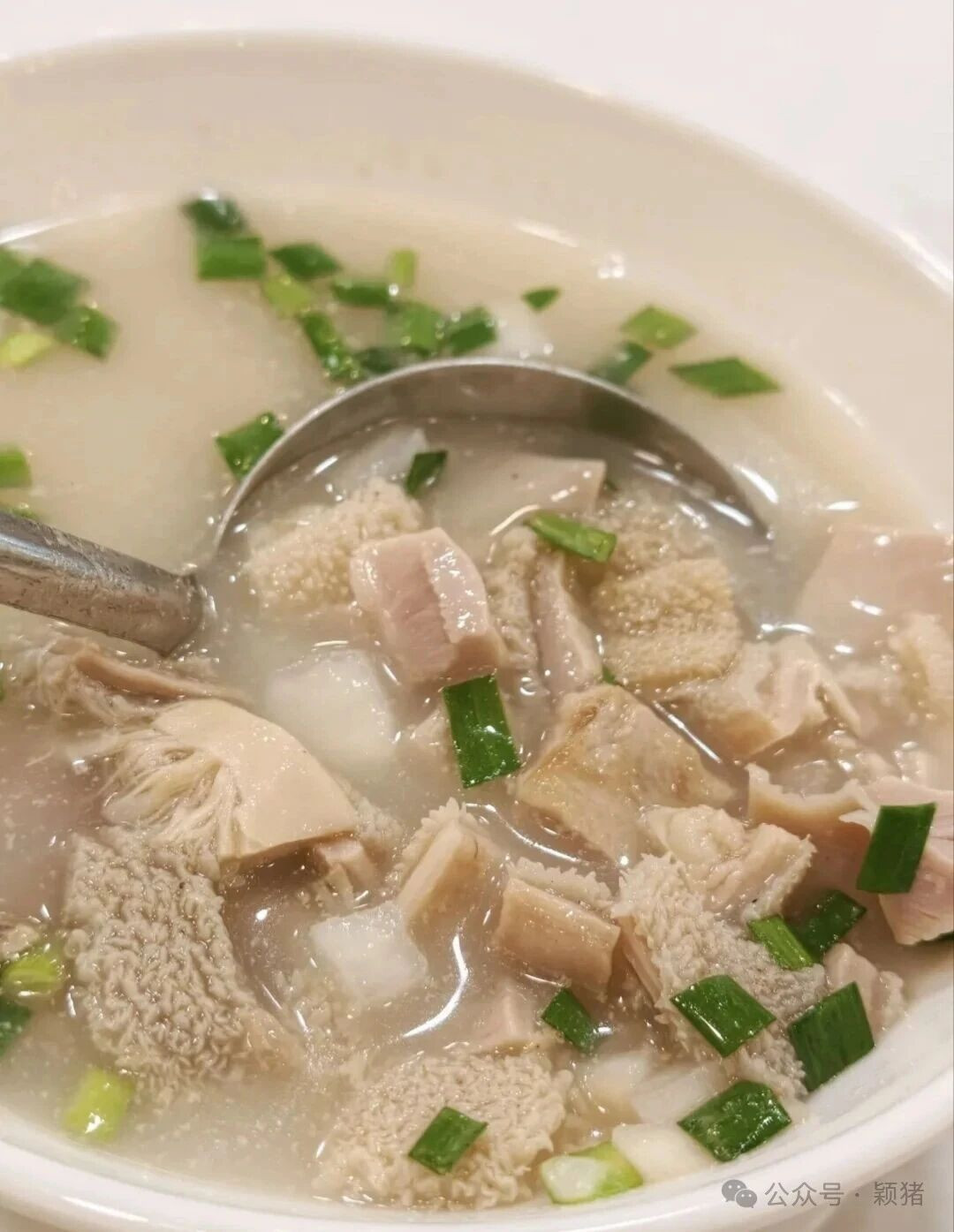
Address: No. 325, Zhongshan 6th Road, Yuexiu District (110m walk from Exit A of Ximenkou Station, Line 1)
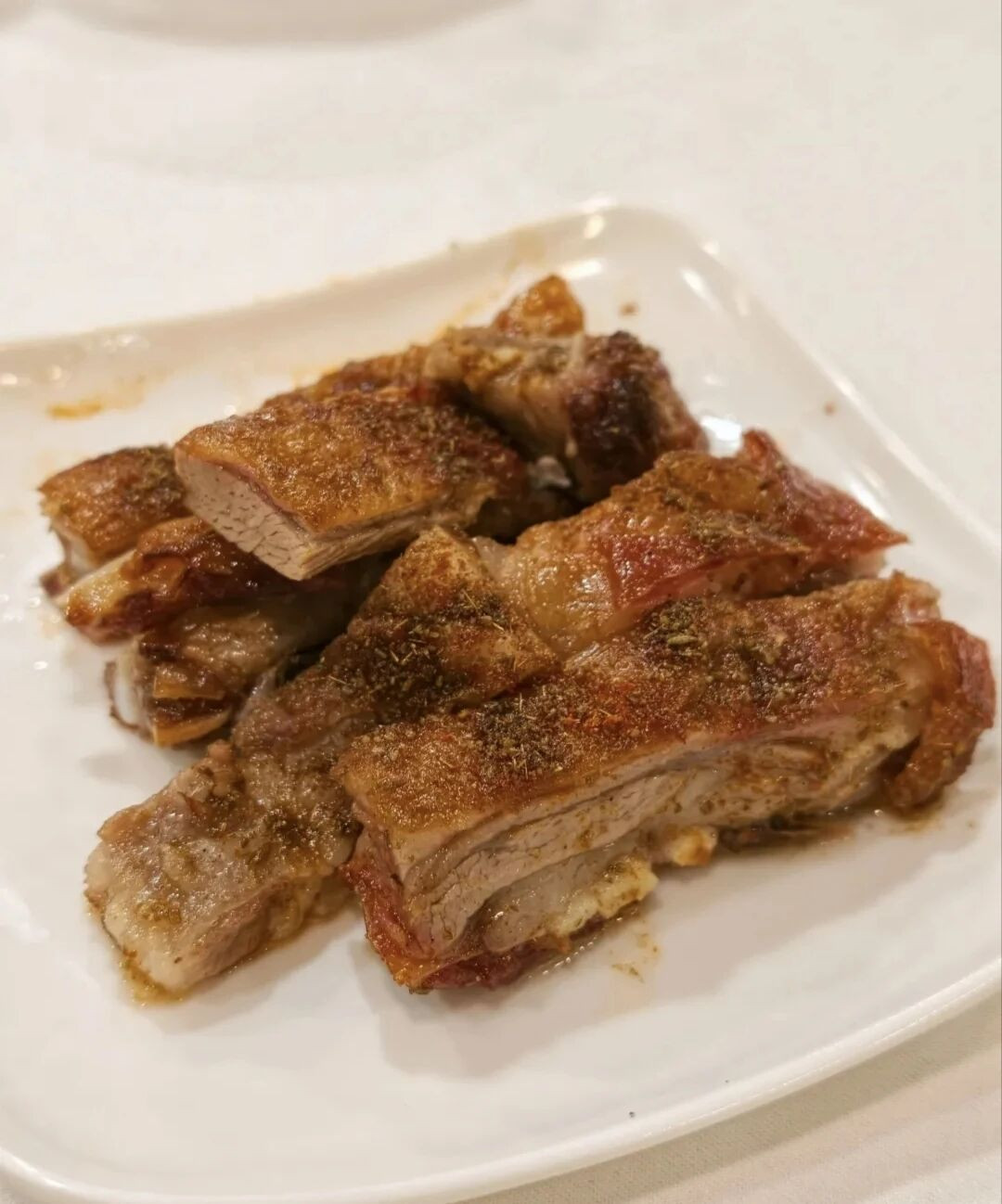
Average Spend: Around 70 RMB
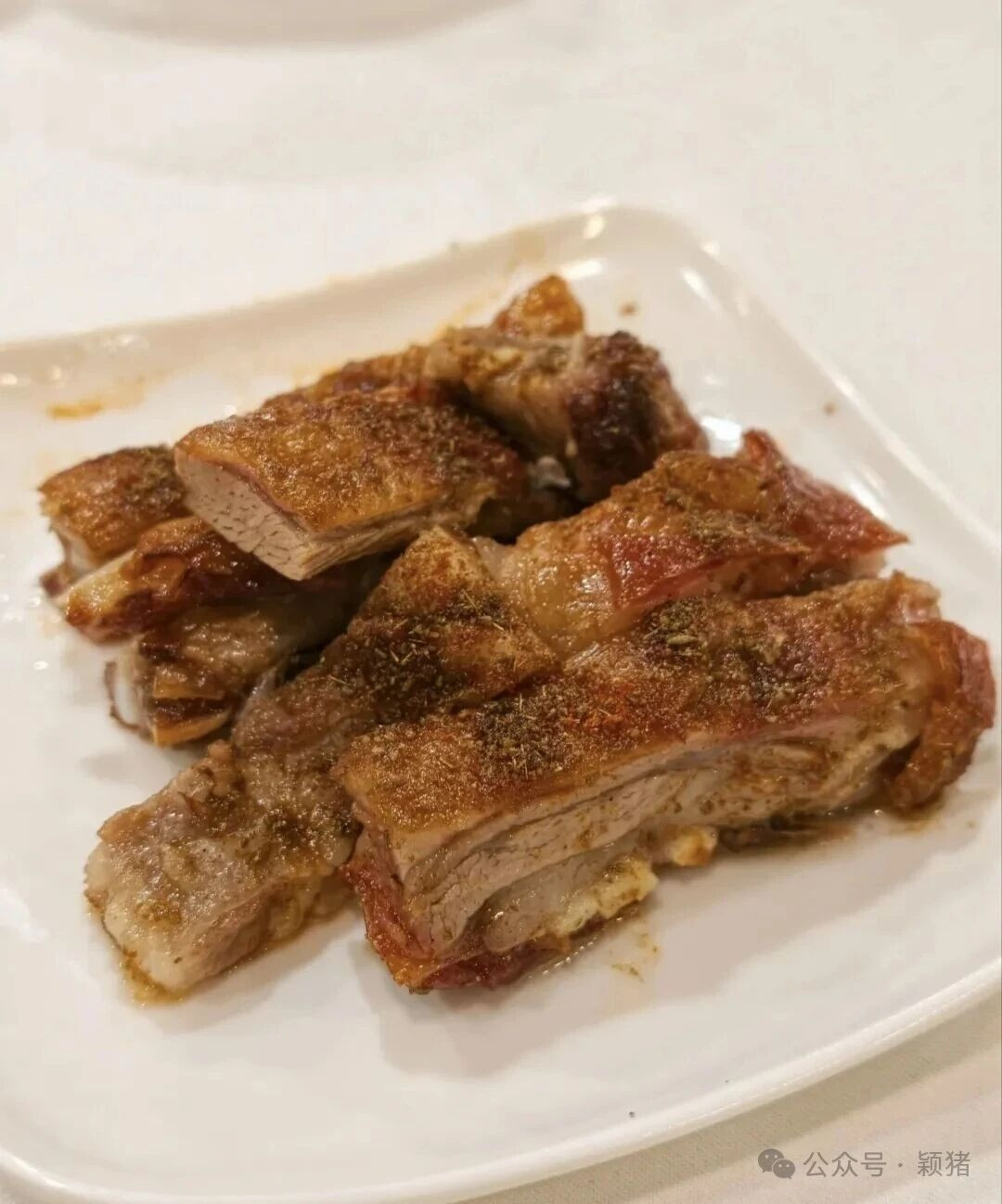
Got any other secret Halal food spots you're loving? Drop your recs!
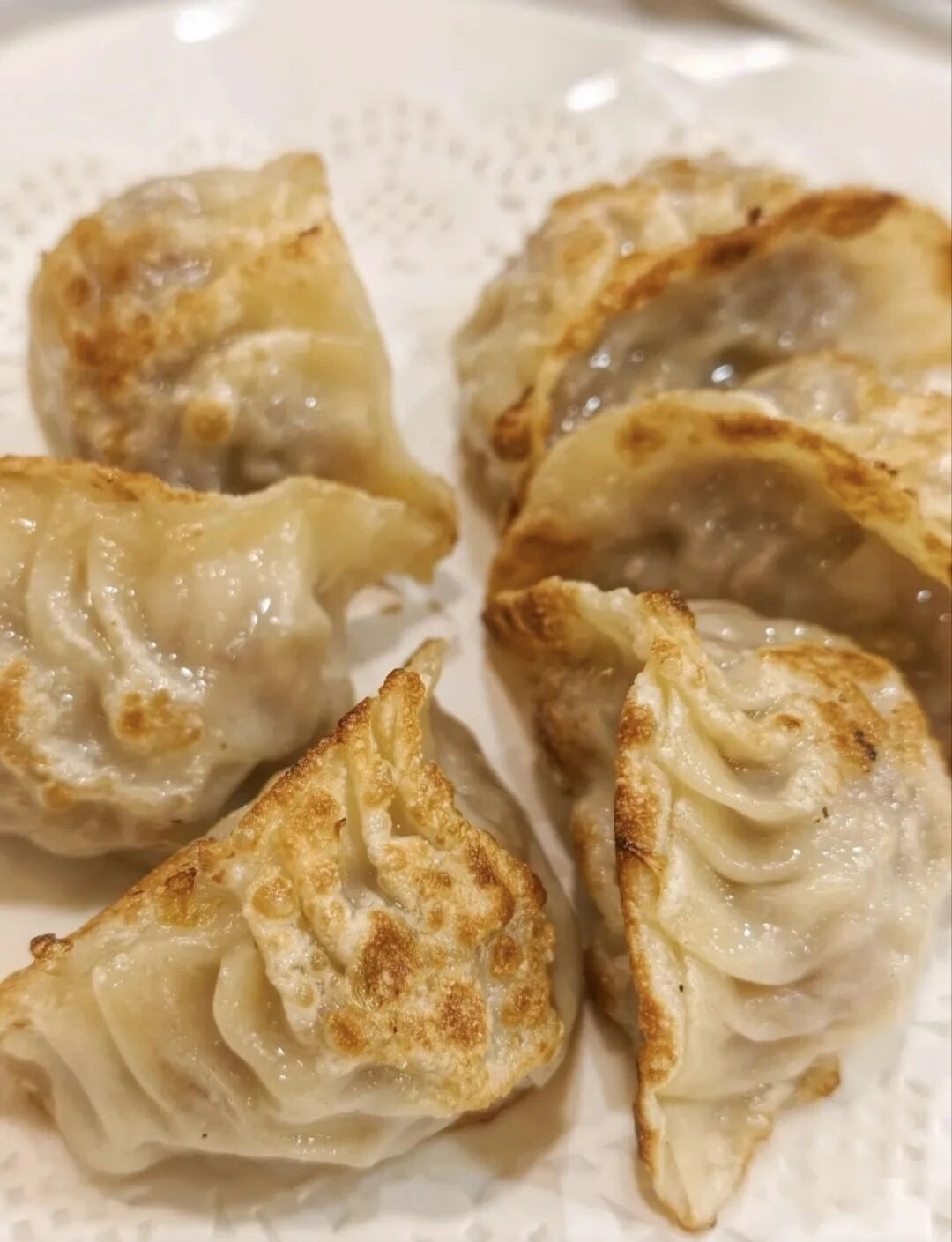
#GuangzhouFood #GuangzhouEats #GuangzhouOldSchoolEats #CantoneseHalal #HuiminRestaurant #XimenkouFood #GuangzhouTravel #BeefOffalSoup #LocalEats #MustEatGuangzhou
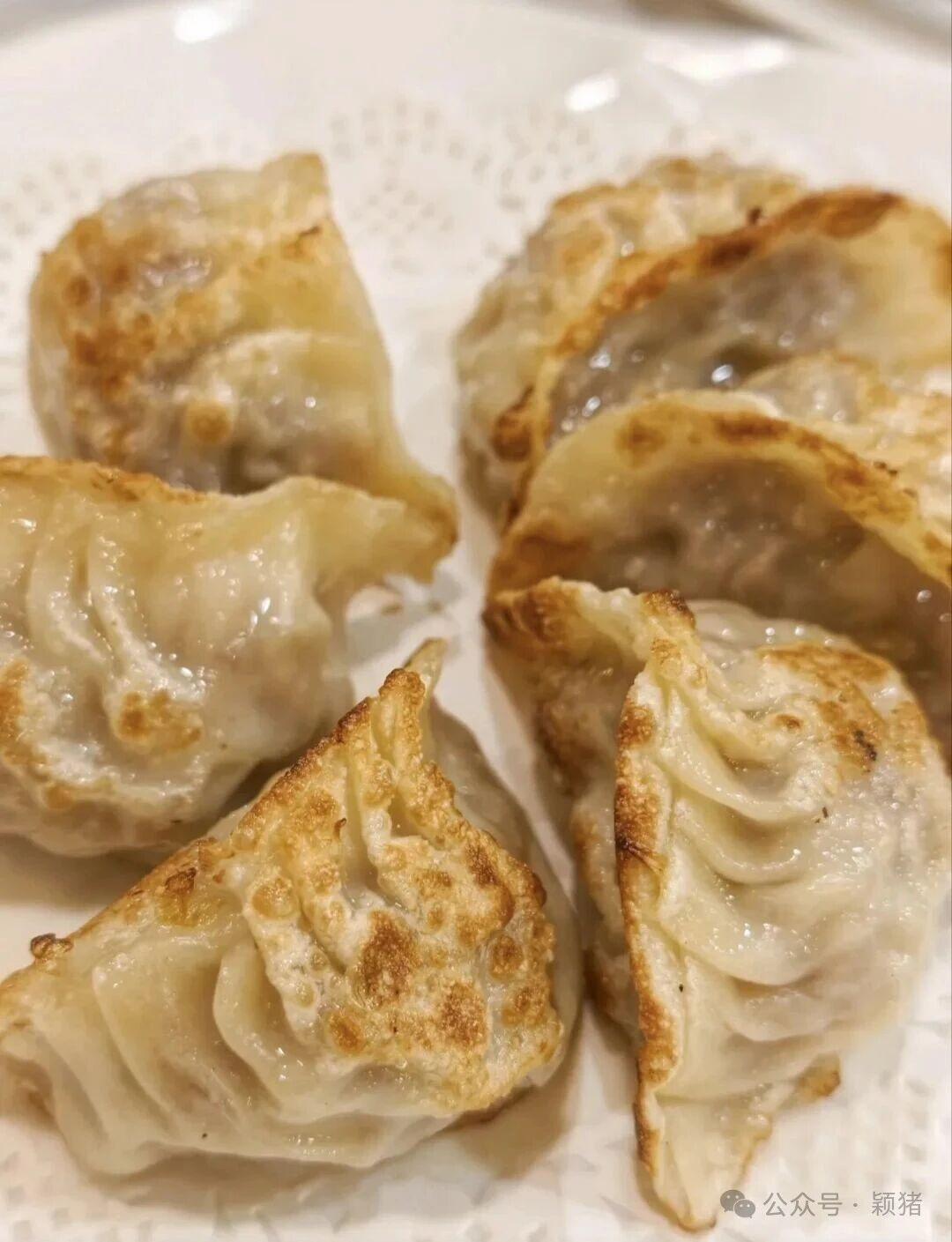
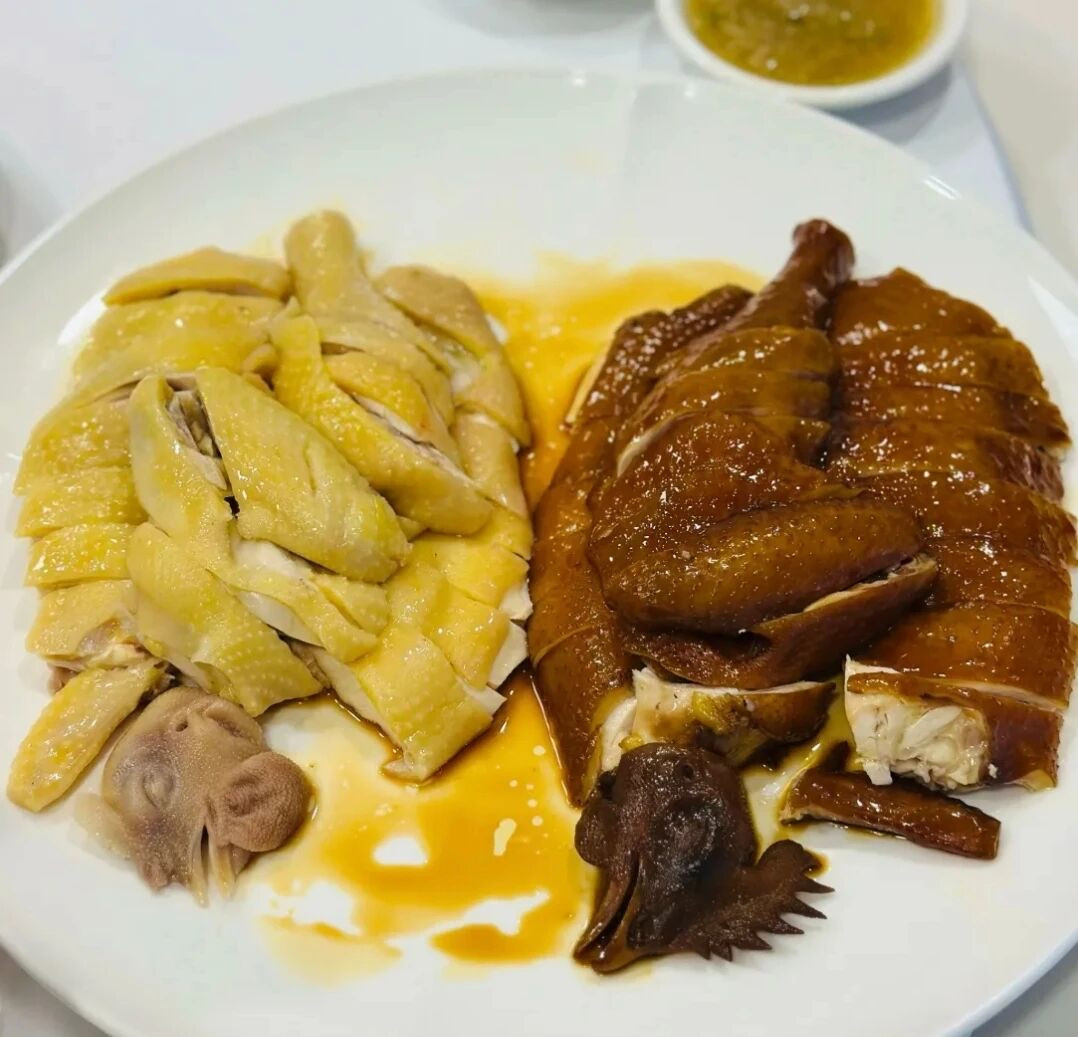
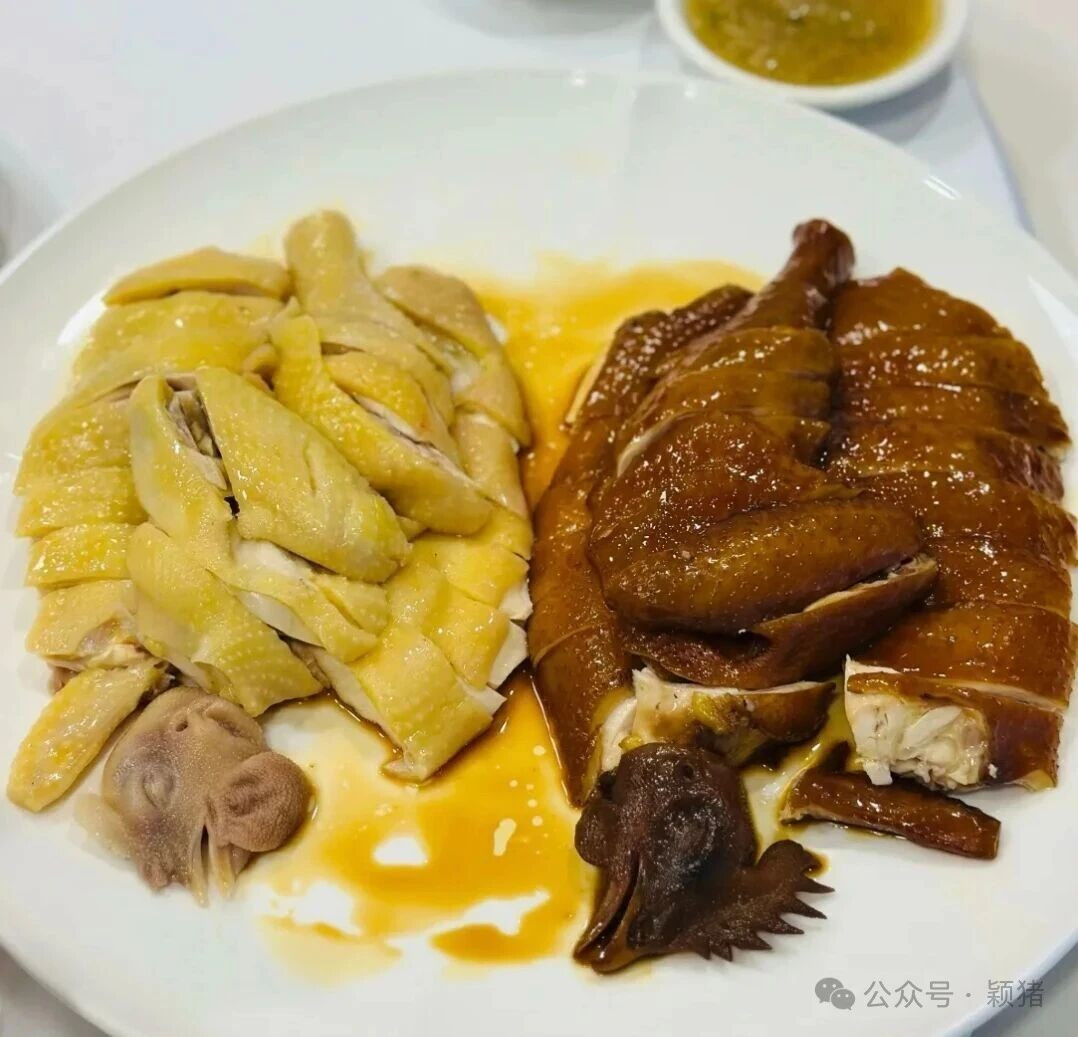
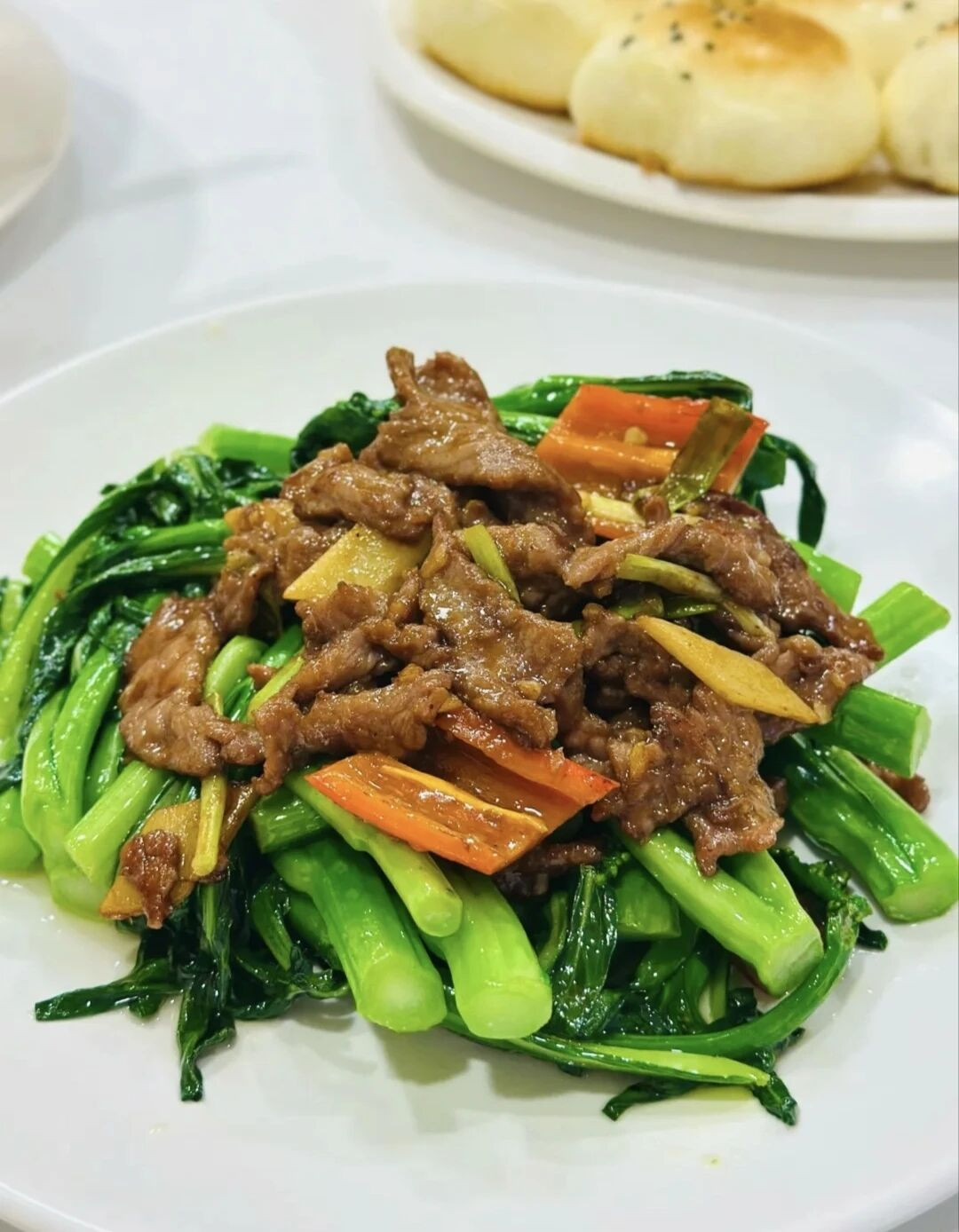
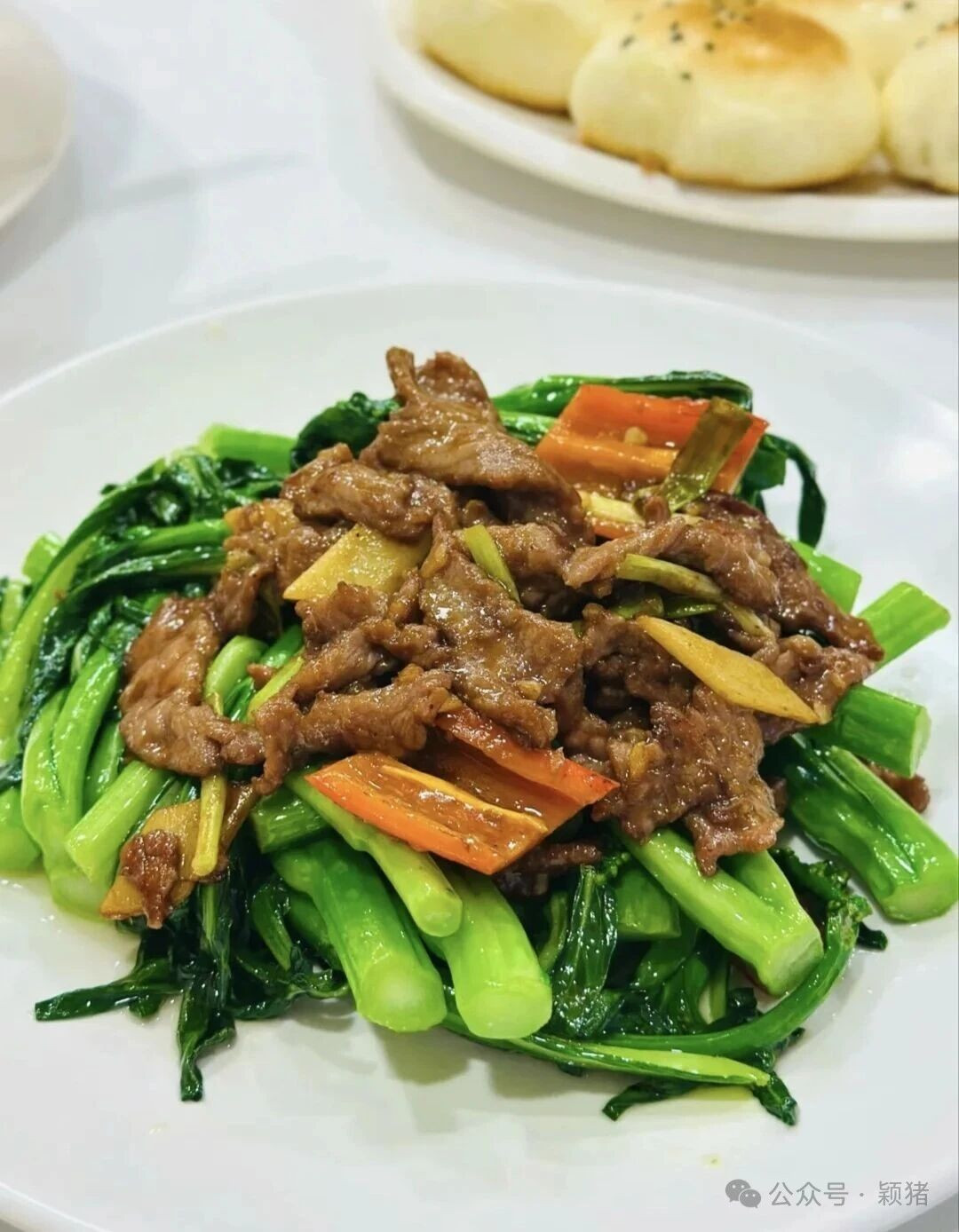
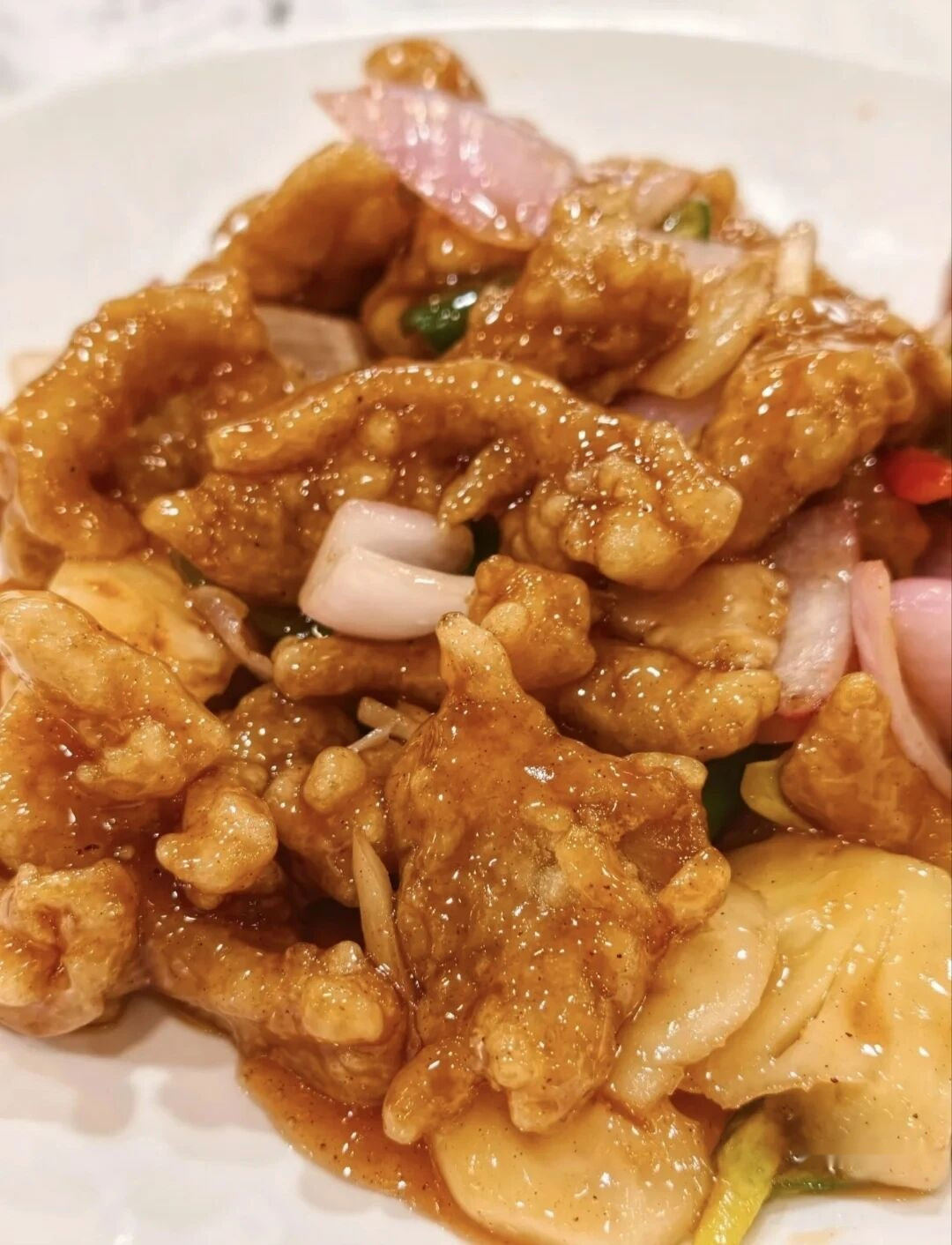
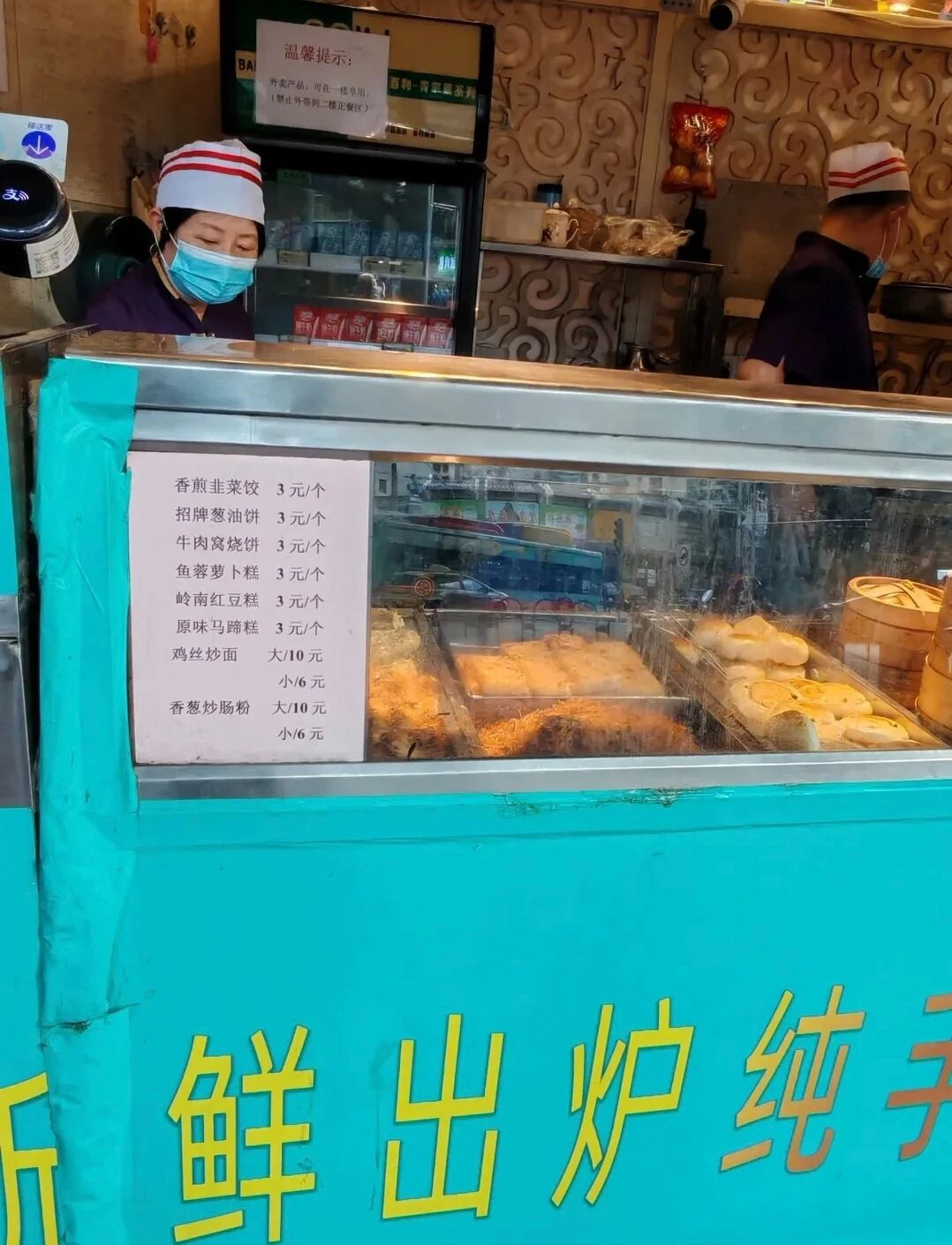
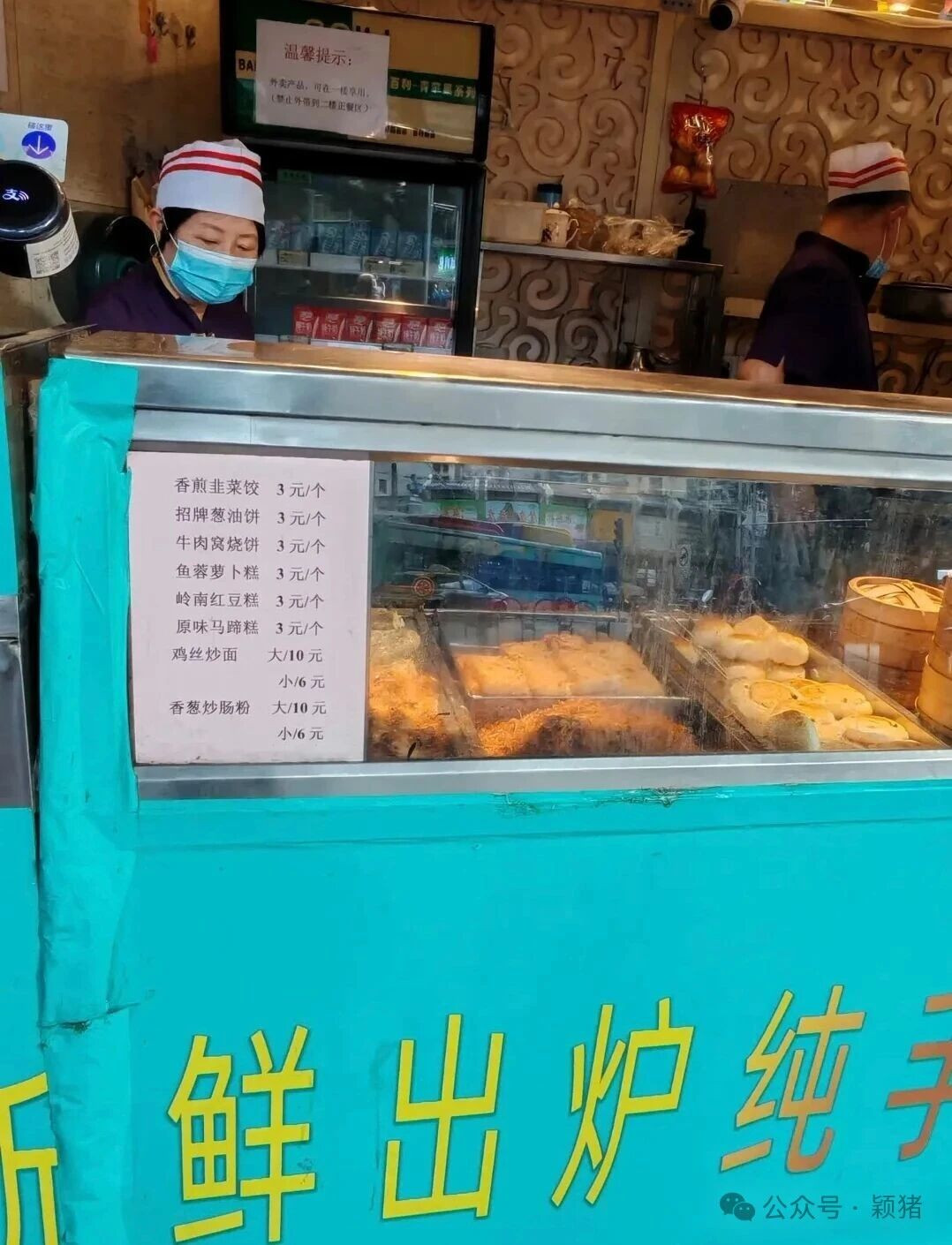
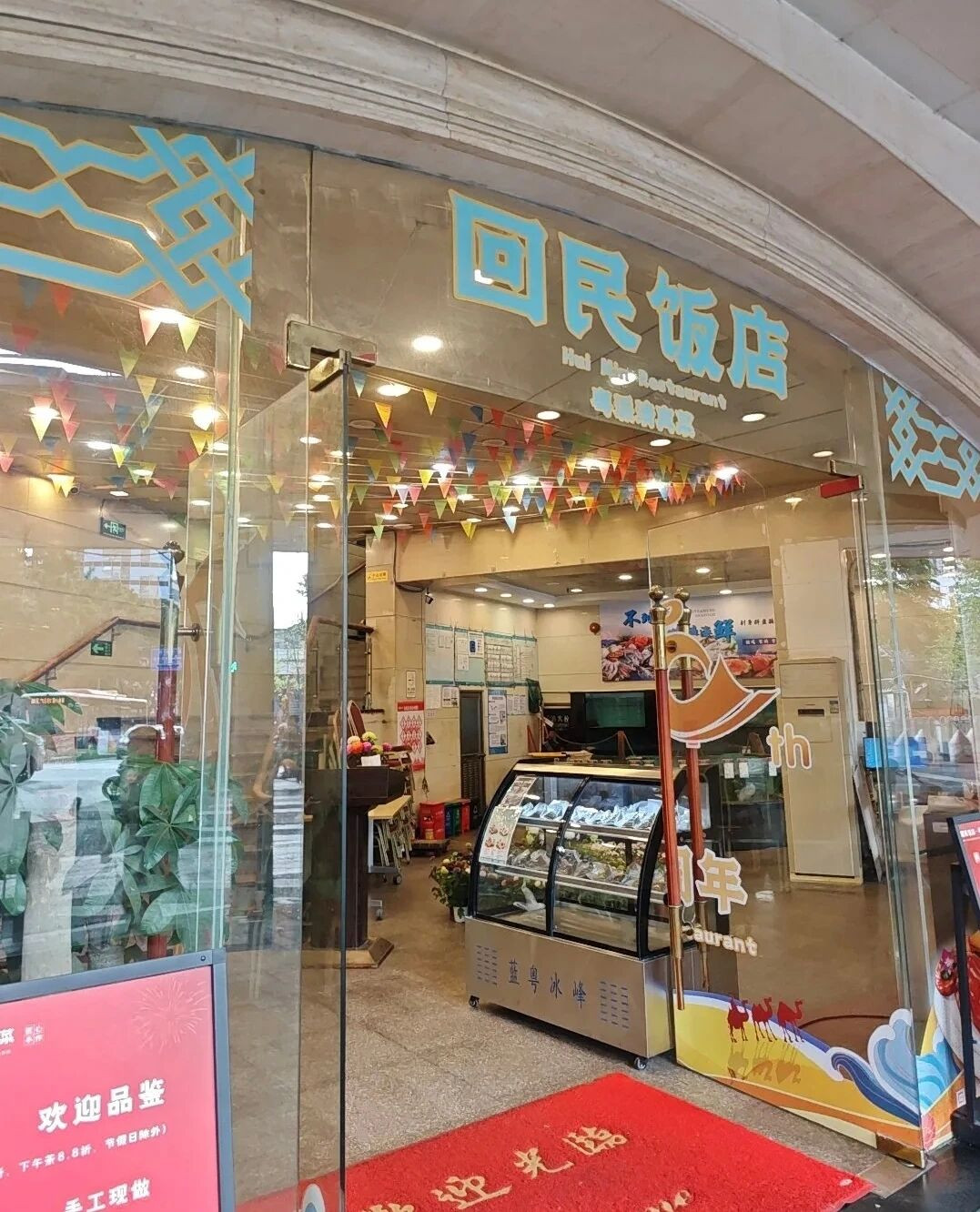
 Collapse Read »
Revisiting Guangzhou's 70-Year-Old Guangzhou Muslim Restaurant: Signature Halal Cantonese Dishes, Juicy Beef Meatballs, and a Yum Cha Deep Dive
Summary:
We're revisiting the Guangzhou Muslim Restaurant (Huimin Restaurant), a legendary spot in Yuexiu District that's been serving for seventy years. We did a dine-in deep dive into their signature crispy-skinned, juicy Halal roast duck, plump and bouncy Cantonese-style niurou wan (beef meatballs), and grabbed some classic jumbo jianjiao (pan-fried dumplings) from their takeaway window. Get ready to experience the iconic flavors of Guangzhou's largest Halal Cantonese old-timer.
It's been a minute since I hit up the Guangzhou Muslim Restaurant (Huimin Restaurant), and seriously, this place is a classic, old-school Cantonese Halal joint, widely known as the biggest Halal Cantonese restaurant in the city. Back when I used to work nearby, I'd always swing by their takeaway window for breakfast. Their jianjiao (pan-fried dumplings) were always huge and super filling, and the niurou wan (beef meatballs) were seriously substantial—one bite and you were set for the day.
This time, I made a special trip to dine in. Their signature Huimin niuzha tang (beef offal soup) was packed with a rich peppery kick, and the beef tripe was stewed to perfection—super tender and easy to chew. Paired with pickled daikon, it totally cuts through any richness. The ziran kaoyangpai (cumin-spiced roasted lamb ribs) had a hint of Cantonese char siu (barbecue pork) flavor, with a crispy exterior and juicy interior, and barely any gamey lamb taste. And their Huimin yuanyang ji (Muslim 鸳鸯 chicken) was a hit, with its crispy skin and tender meat, a total fave for many old-school Guangzhou locals. Overall, it’s classic old-Guangzhou flavor, with generous portions. Just a heads up, service at this long-standing spot can be a bit hit-or-miss, but the vibe is still that familiar, retro, old-school feel.
Restaurant Name: Guangzhou Muslim Restaurant (Huimin Restaurant)
Address: No. 325, Zhongshan 6th Road, Yuexiu District (110m walk from Exit A of Ximenkou Station, Line 1)
Average Spend: Around 70 RMB
Got any other secret Halal food spots you're loving? Drop your recs!
#GuangzhouFood #GuangzhouEats #GuangzhouOldSchoolEats #CantoneseHalal #HuiminRestaurant #XimenkouFood #GuangzhouTravel #BeefOffalSoup #LocalEats #MustEatGuangzhou
Collapse Read »
Guangzhou's Huaisheng Mosque: A Millennia of Islamic History & Tang-Song Architecture in China's Oldest Masjid
[Internet Repost]
Guangzhou's Yuexiu Old Town Huaisheng Mosque (Light Pagoda Mosque) Photo Guide: A Thousand Years of Tang-Song Era Vibe at China's Foremost Ancient Masjid
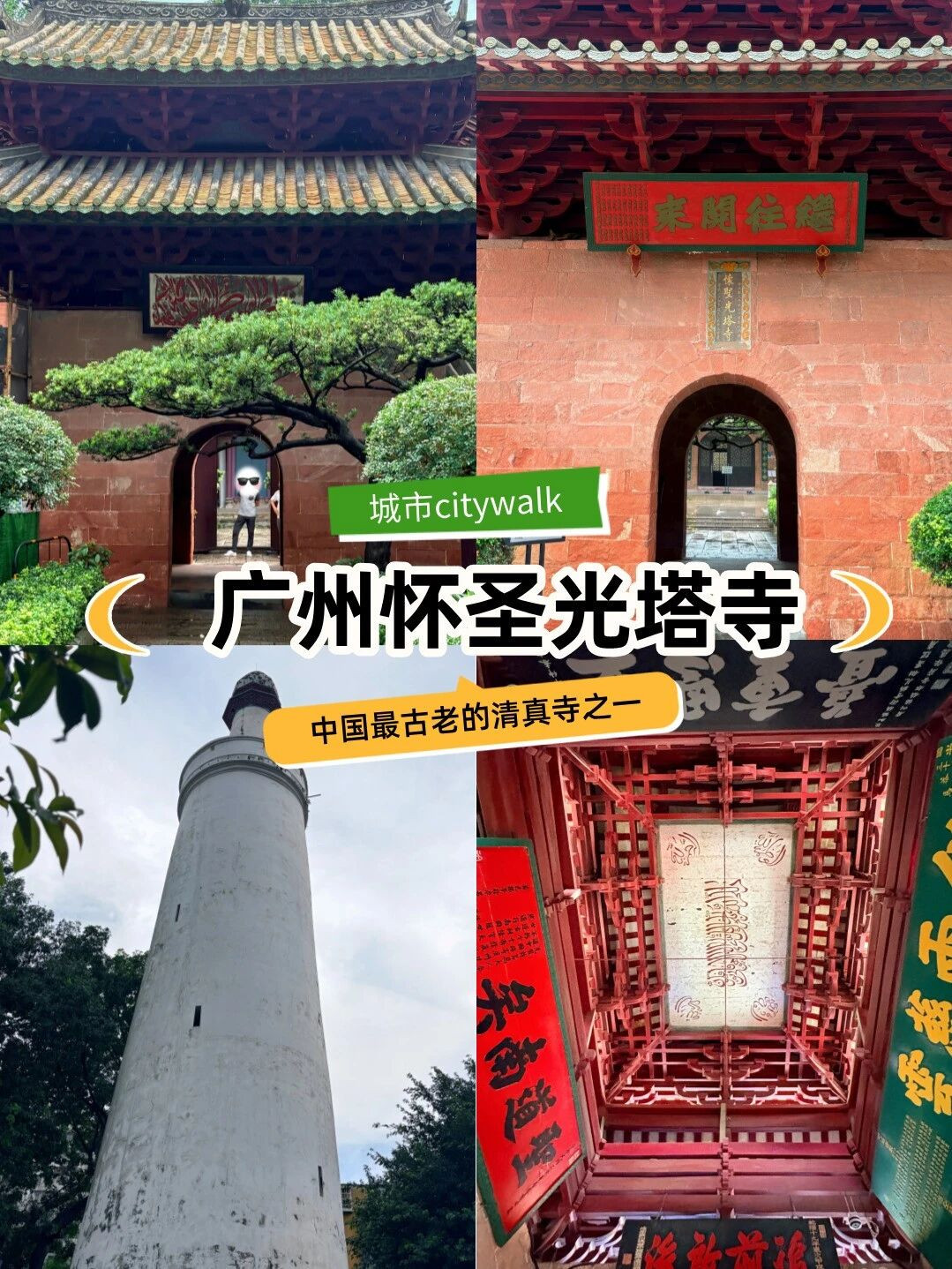
Summary:
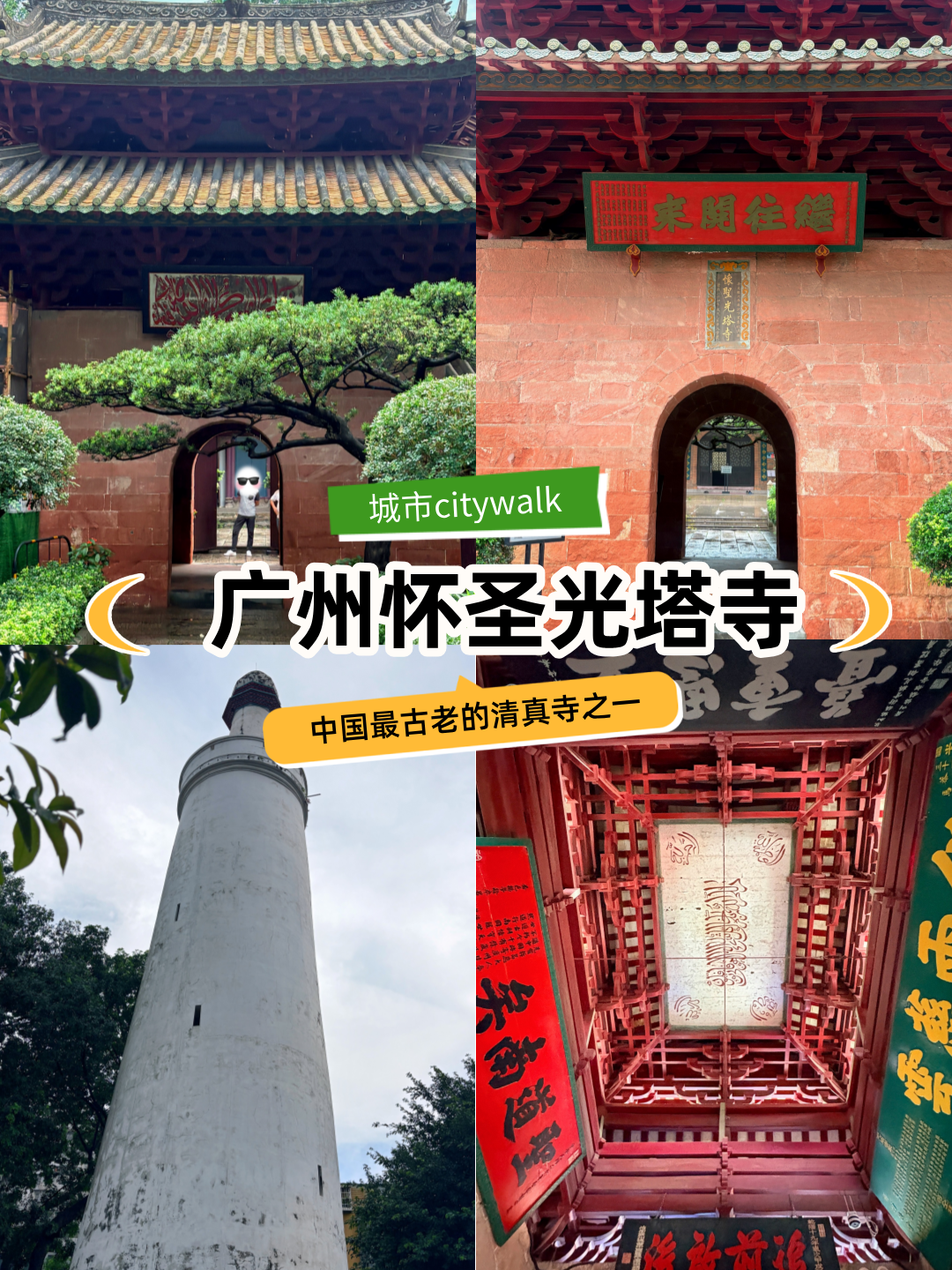
Dive into this deep photo and text journey exploring the historical architecture of Huaisheng Mosque (Light Pagoda Mosque) in Guangzhou's Yuexiu Old Town. Standing tall as one of China's Four Great Ancient Mosques, renowned alongside Quanzhou's Qingjing Mosque and Hangzhou's Phoenix Mosque, it totally shows off its unique artistic charm, blending traditional Chinese timber structures with ancient Islamic towers.
Huaisheng Mosque is seriously one of China's absolute earliest masjids. It's famous as one of the Four Great Ancient Mosques in China, right up there with Quanzhou's Qingjing Mosque, Hangzhou's Phoenix Mosque, and Yangzhou's Xianhe Mosque. This place is a super important relic of cultural exchange along the Maritime Silk Road. It's been through its fair share of destruction and rebuilding – even getting a major revamp after a fire in the Yuan Dynasty. But check it out, the current architecture still rocks that classic Tang-Song vibe, making it one of the oldest mosques with such deep history in the entire country.
1️⃣ First up, check out the Guangta (Light Pagoda), which is China's oldest existing Arabic-style minaret. Seriously, it's one of the few ancient Islamic minarets left standing globally!
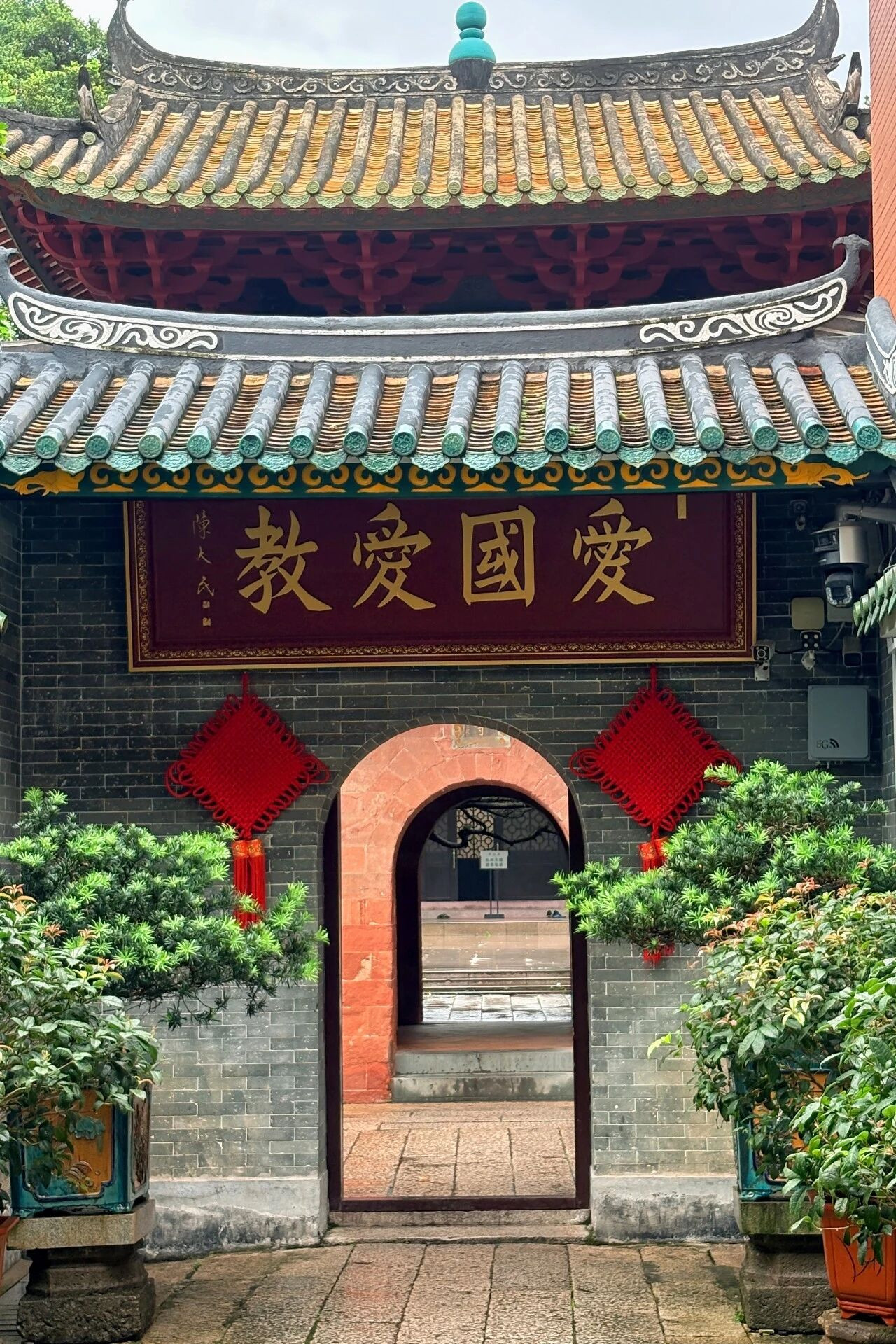
2️⃣ Next, scope out the Kanyuelou (Moon-Viewing Tower). Fun fact: it was rebuilt way back in the Qing Dynasty, during the Kangxi Emperor's 34th year! It sports a super cool double-eaved hip-and-gable roof, red sandstone walls, four arched doorways, and a blend of traditional Chinese flying eaves with a distinct West Asian flair. Talk about architectural fusion!
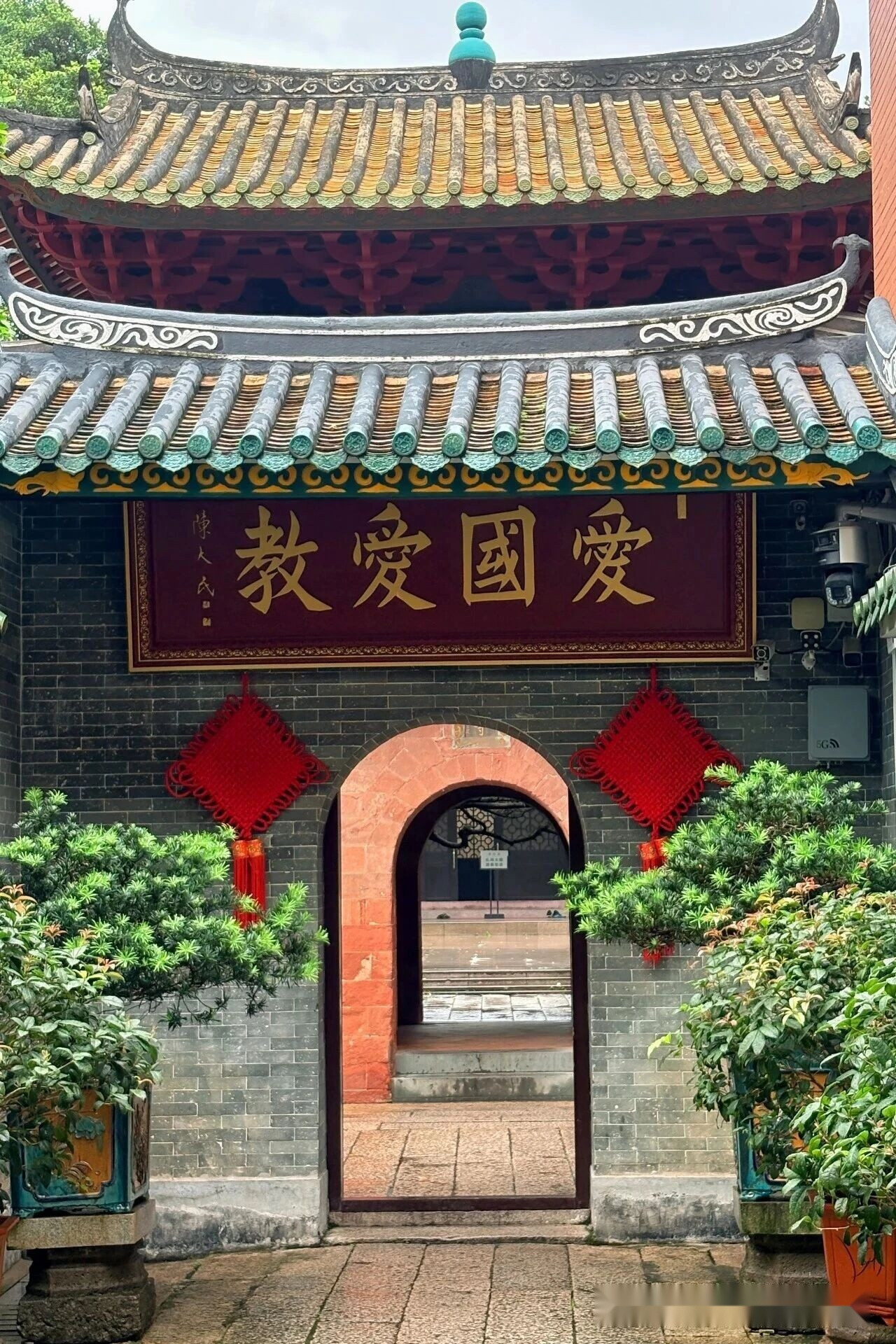
3️⃣ Inside the Prayer Hall, you'll definitely feel those strong Arabic vibes. And seriously, don't miss the super intricate stone railings on the platform out front – they're legit Ming Dynasty relics, carved beautifully!
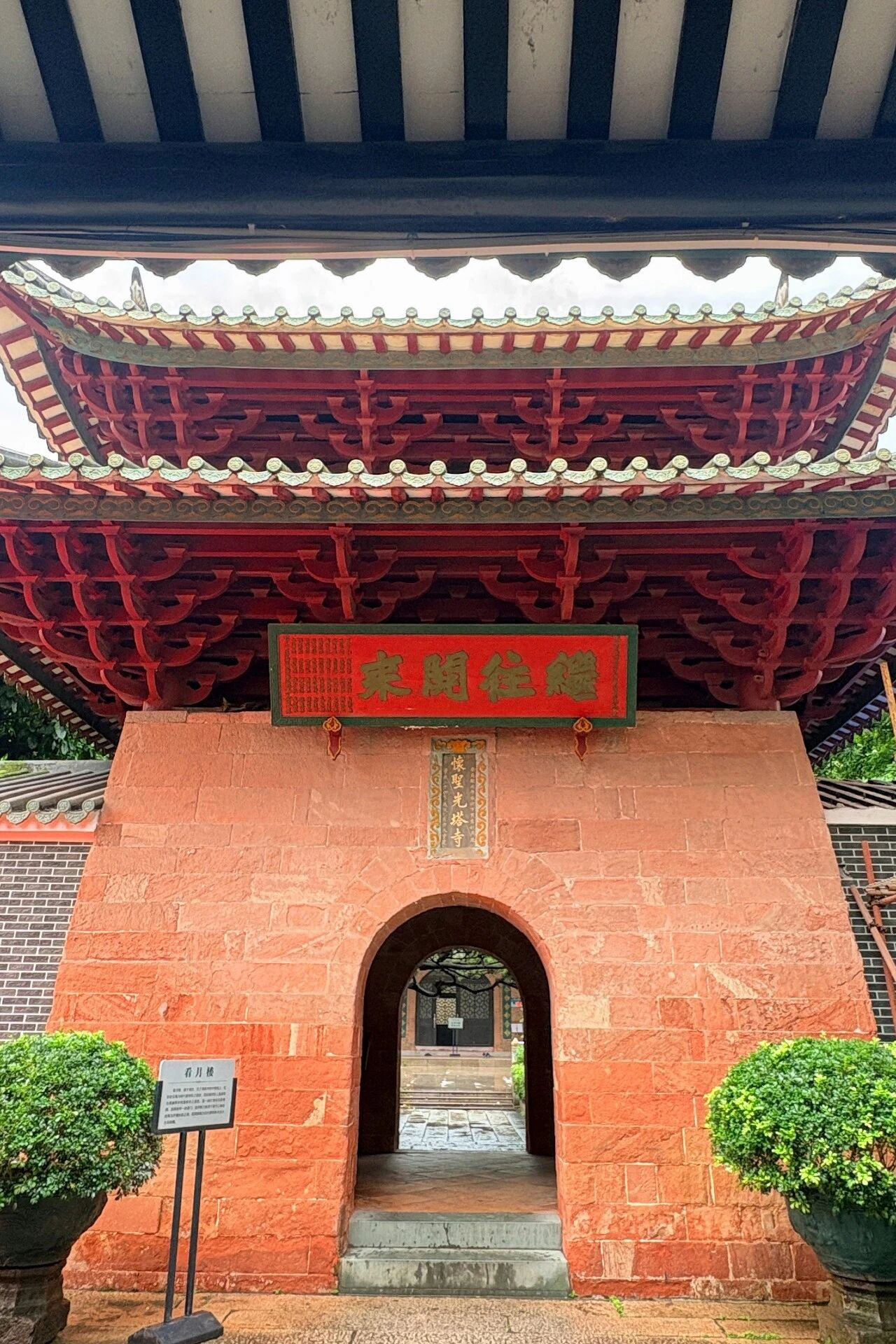
4️⃣ Oh, and history buffs, get this: the mosque preserves over 40 ancient stele plaques with both Chinese and Arabic inscriptions, dating all the way back to the Yuan Dynasty. How cool is that?
✅ Best part? It's totally free to enter! You can visit any day from 9 AM to 5 PM.
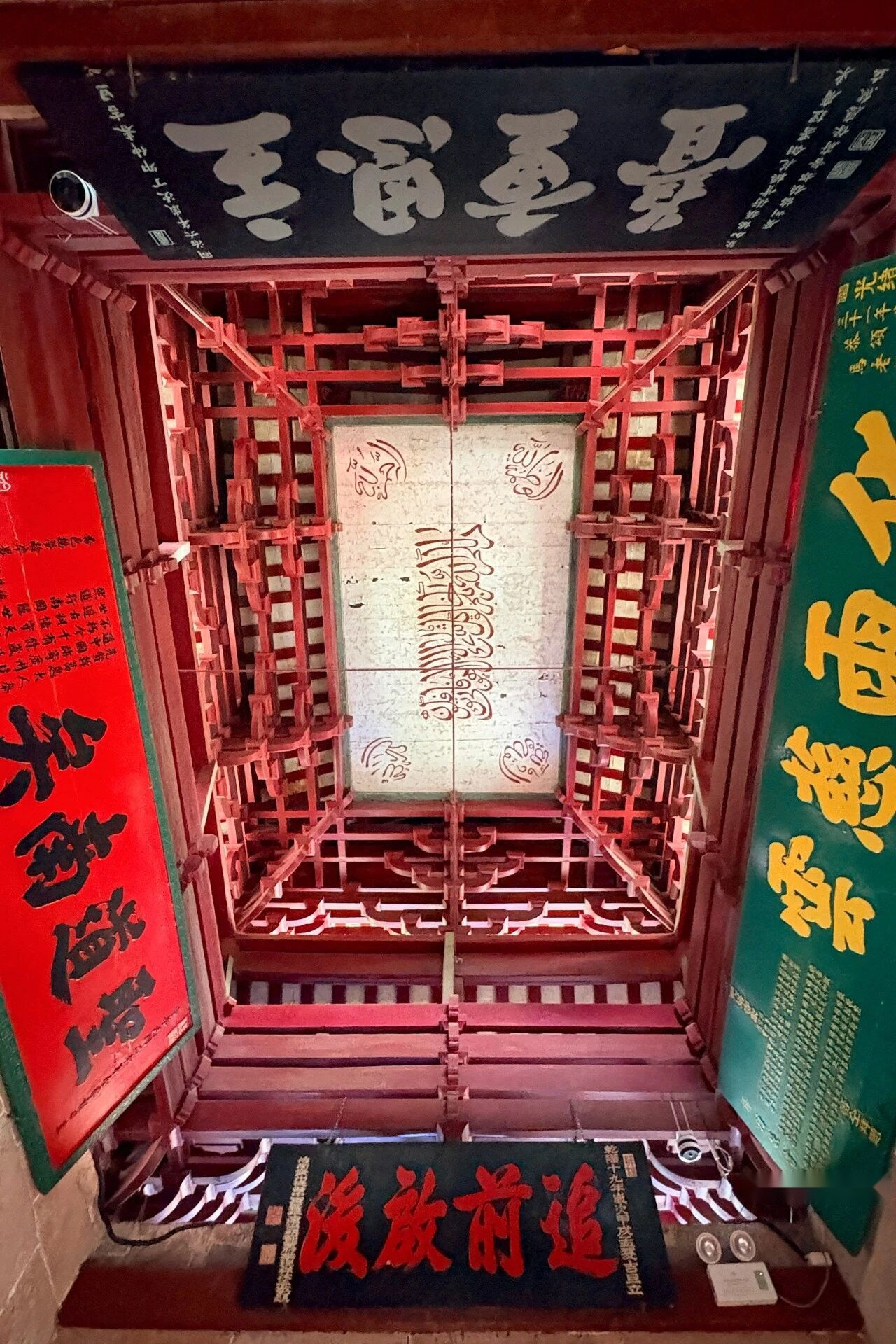
Getting there is easy: hop on Metro Line 1 to Ximenkou Station, take Exit B, and it's just an 8-minute walk from there.
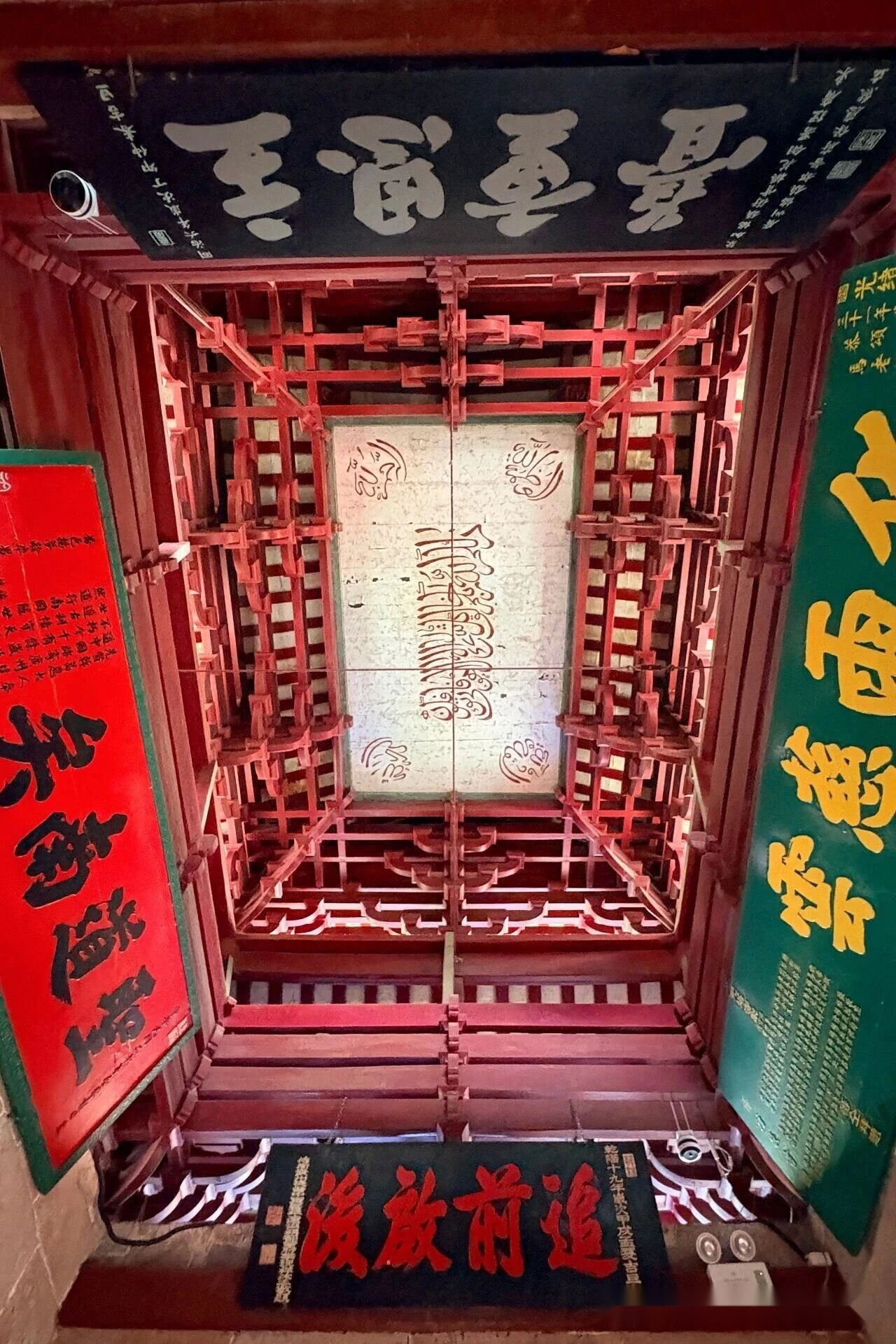
Pro-tip for exploring: you can totally link this up with a visit to the Sacred Heart Cathedral, Wuxian Temple, and Guangxiao Temple. It's a killer way to soak in all the diverse historical vibes of Guangzhou's old town!
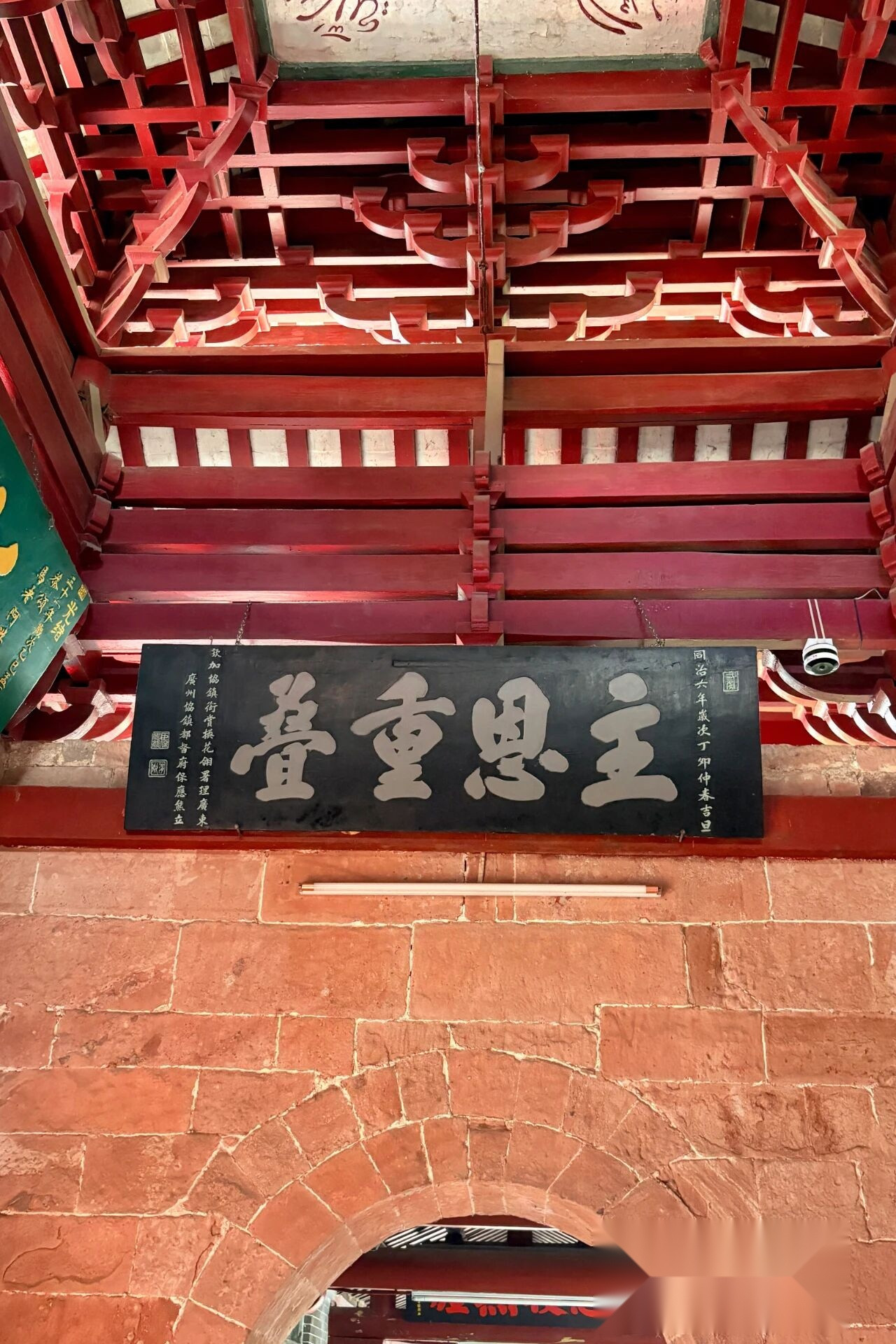
This spot is perfect for your #GuangzhouCitywalk, #GuangzhouTravel, and #OffbeatSpots bucket list! Dive into #MaritimeSilkRoad history and #AncientArchitectureBeauty, making it an ideal #WeekendVibes destination.
Seriously, one of China's absolute earliest mosques is right here in Guangzhou's old town, and Metro Line 1 takes you straight there. How convenient is that?
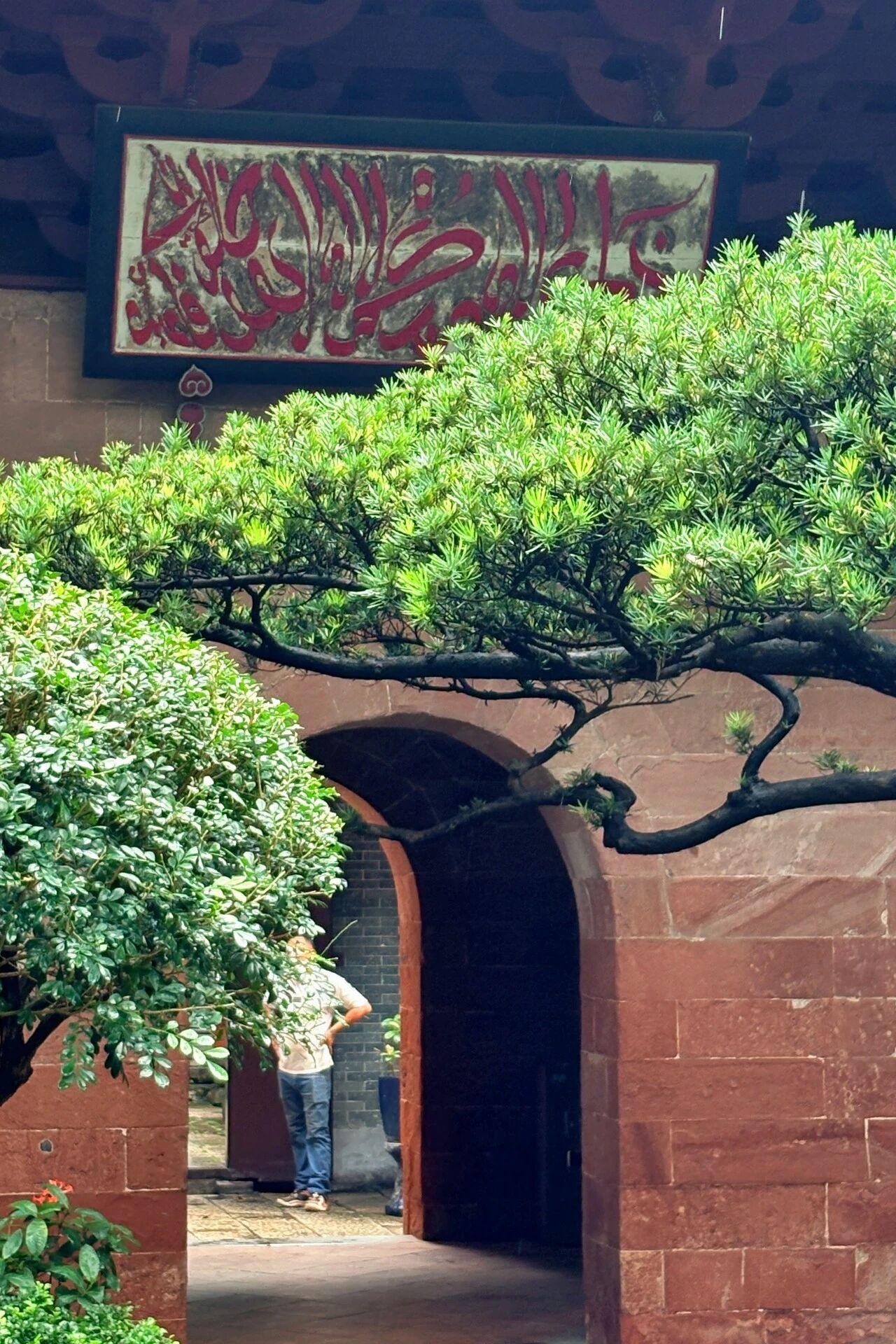
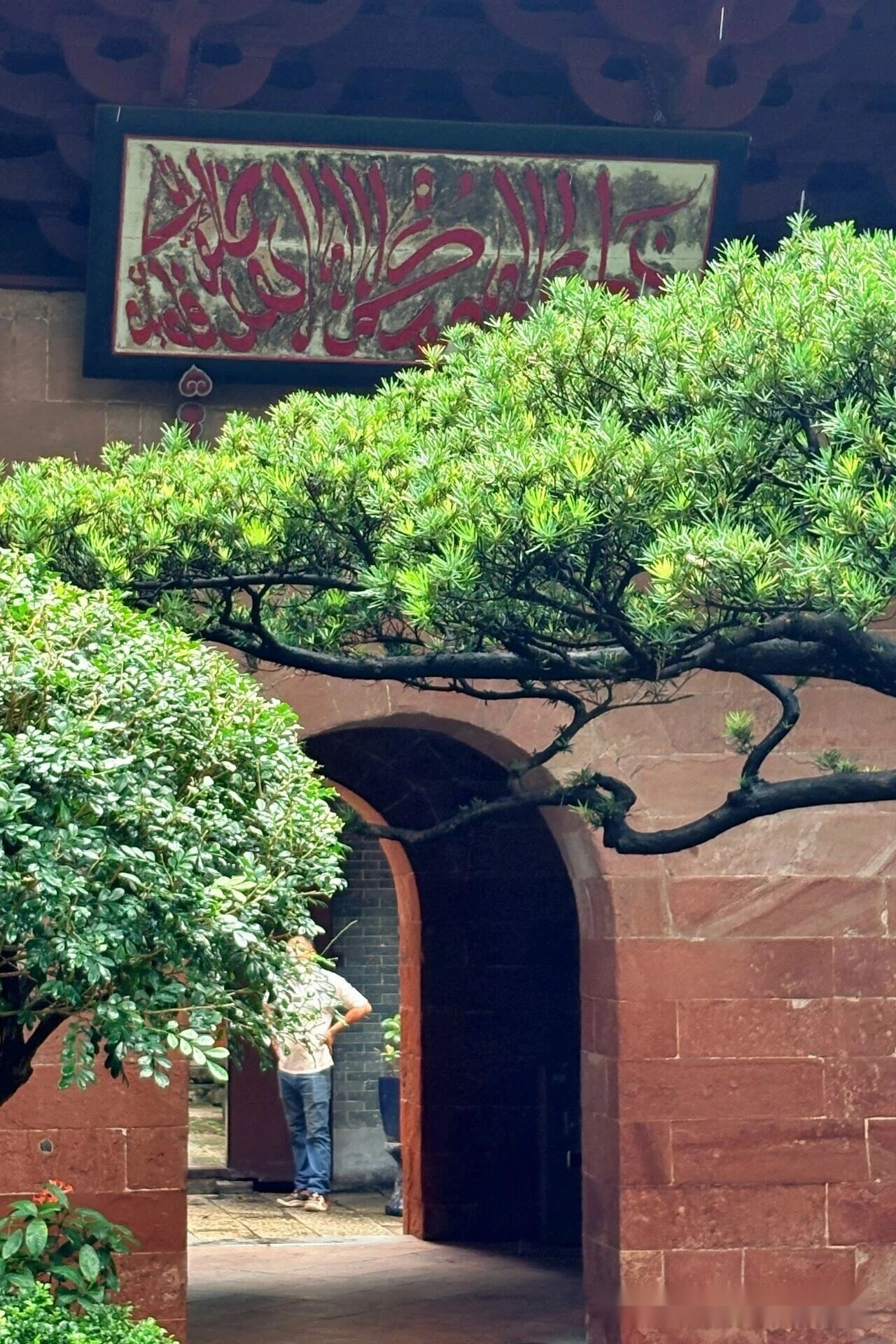
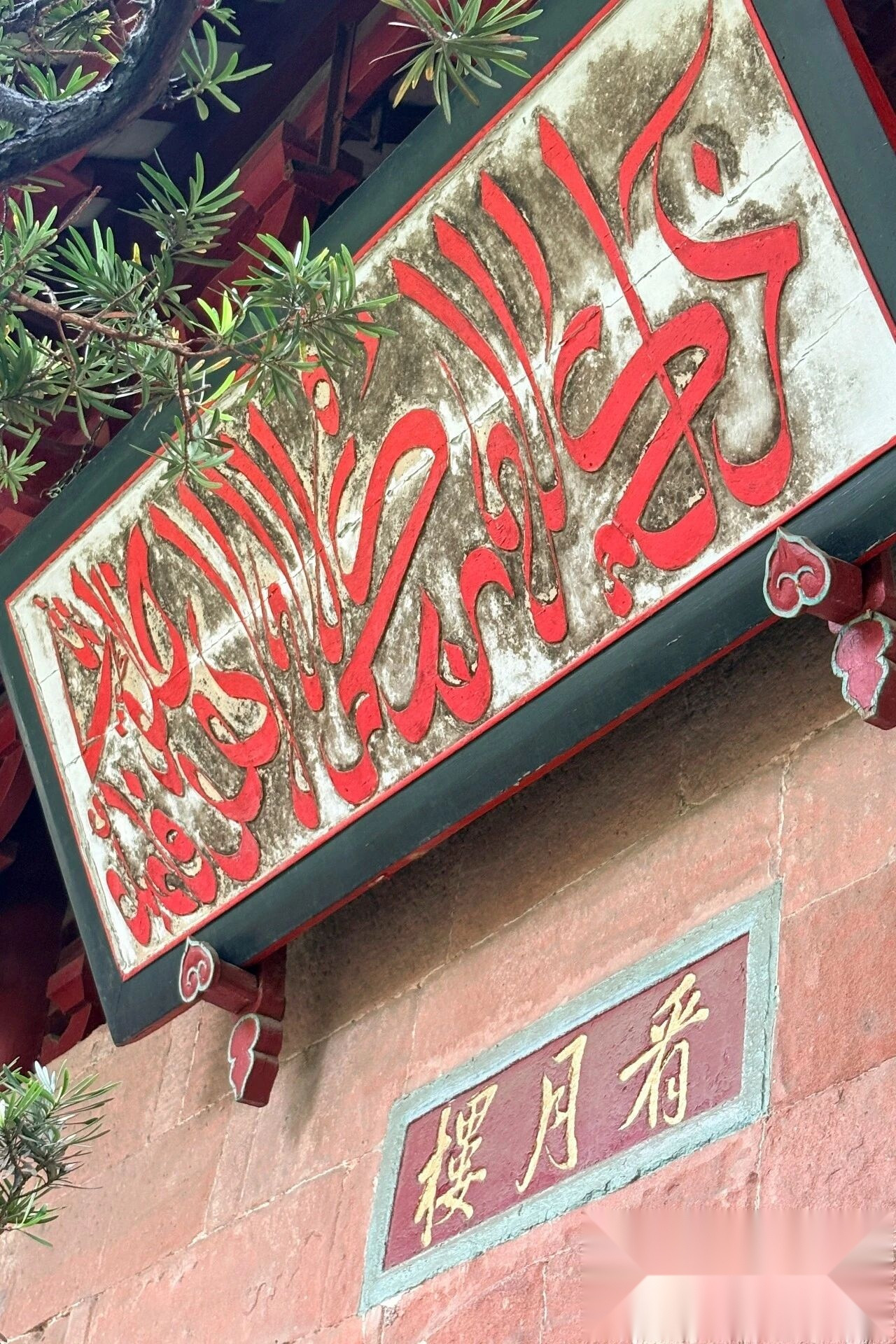
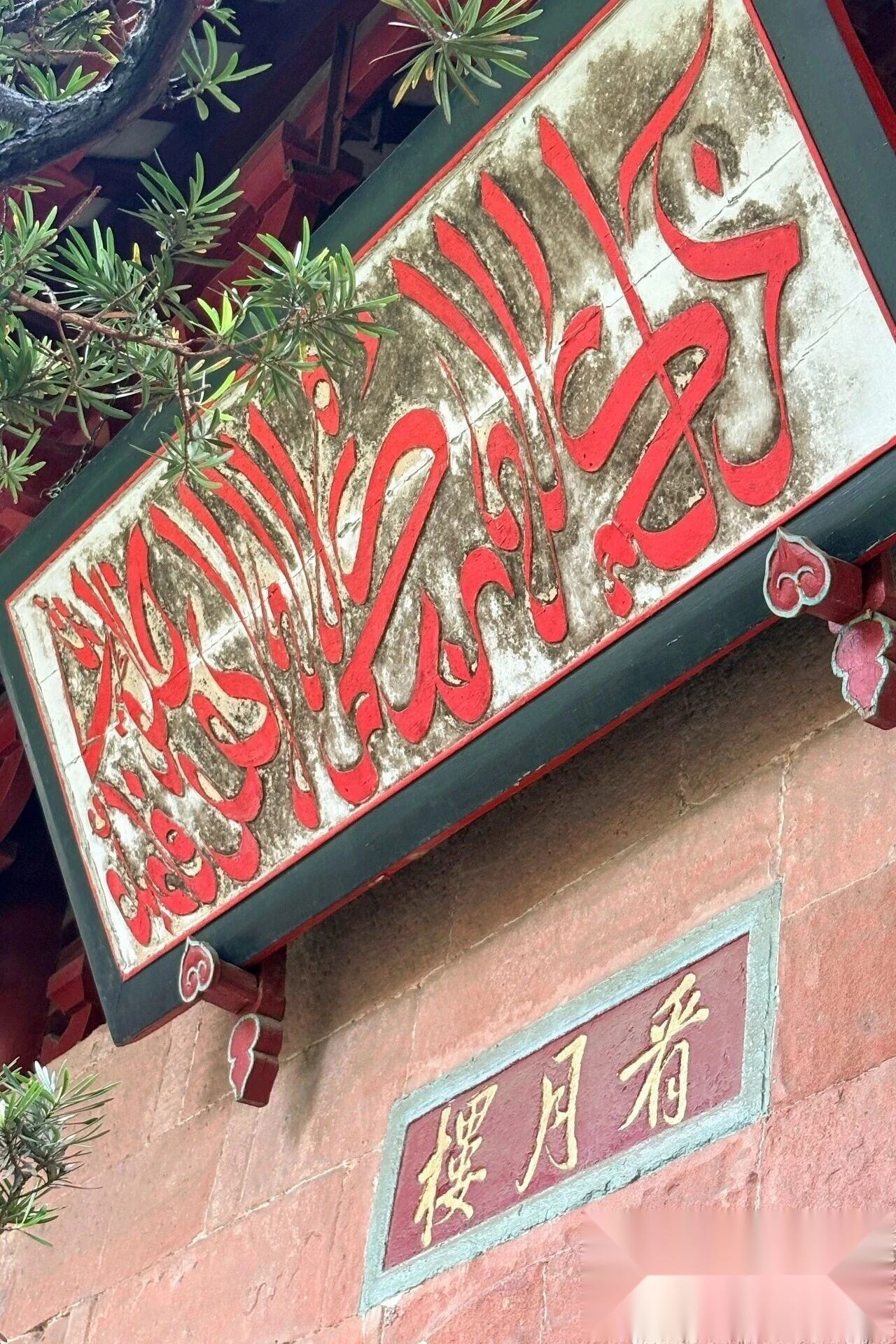
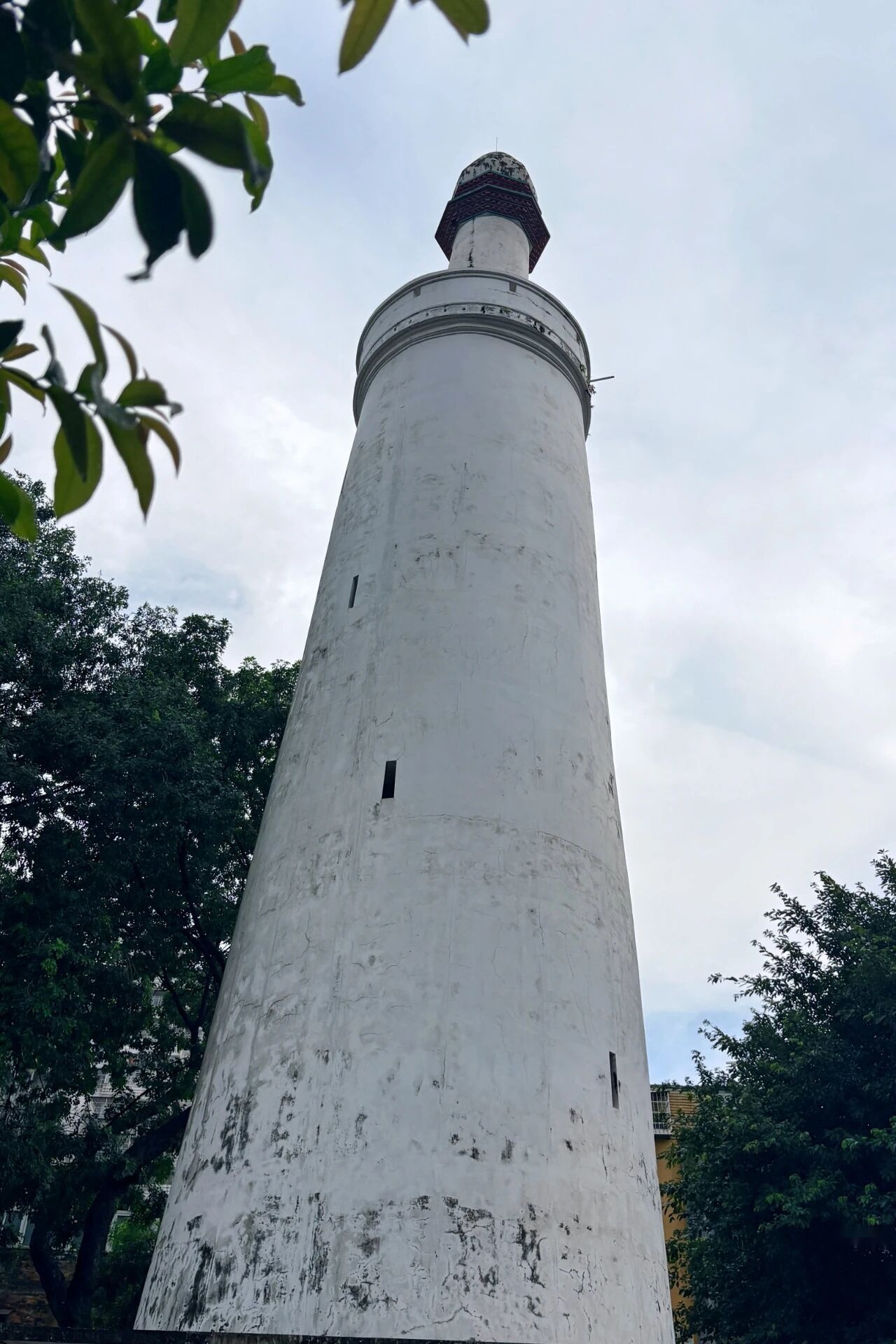
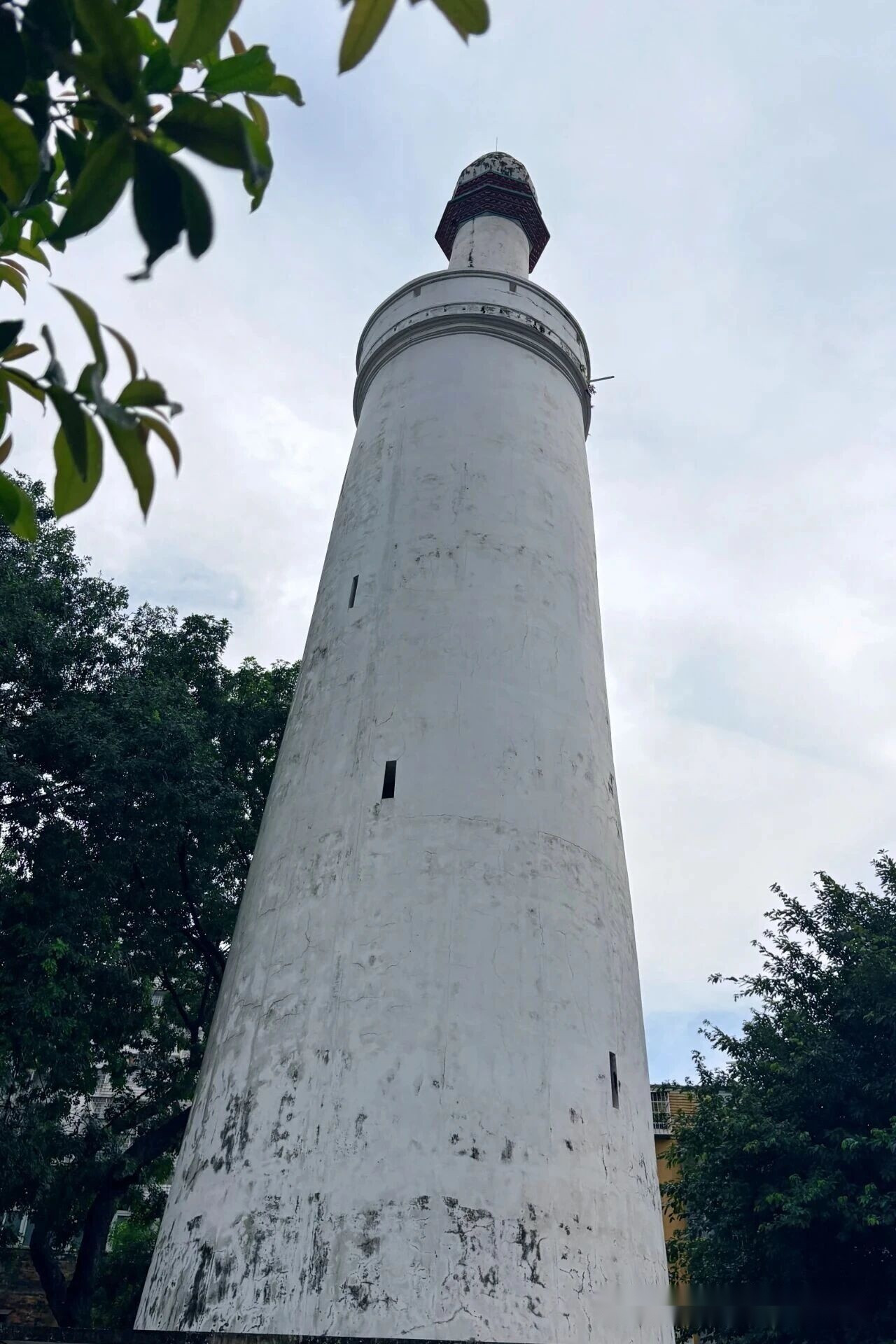
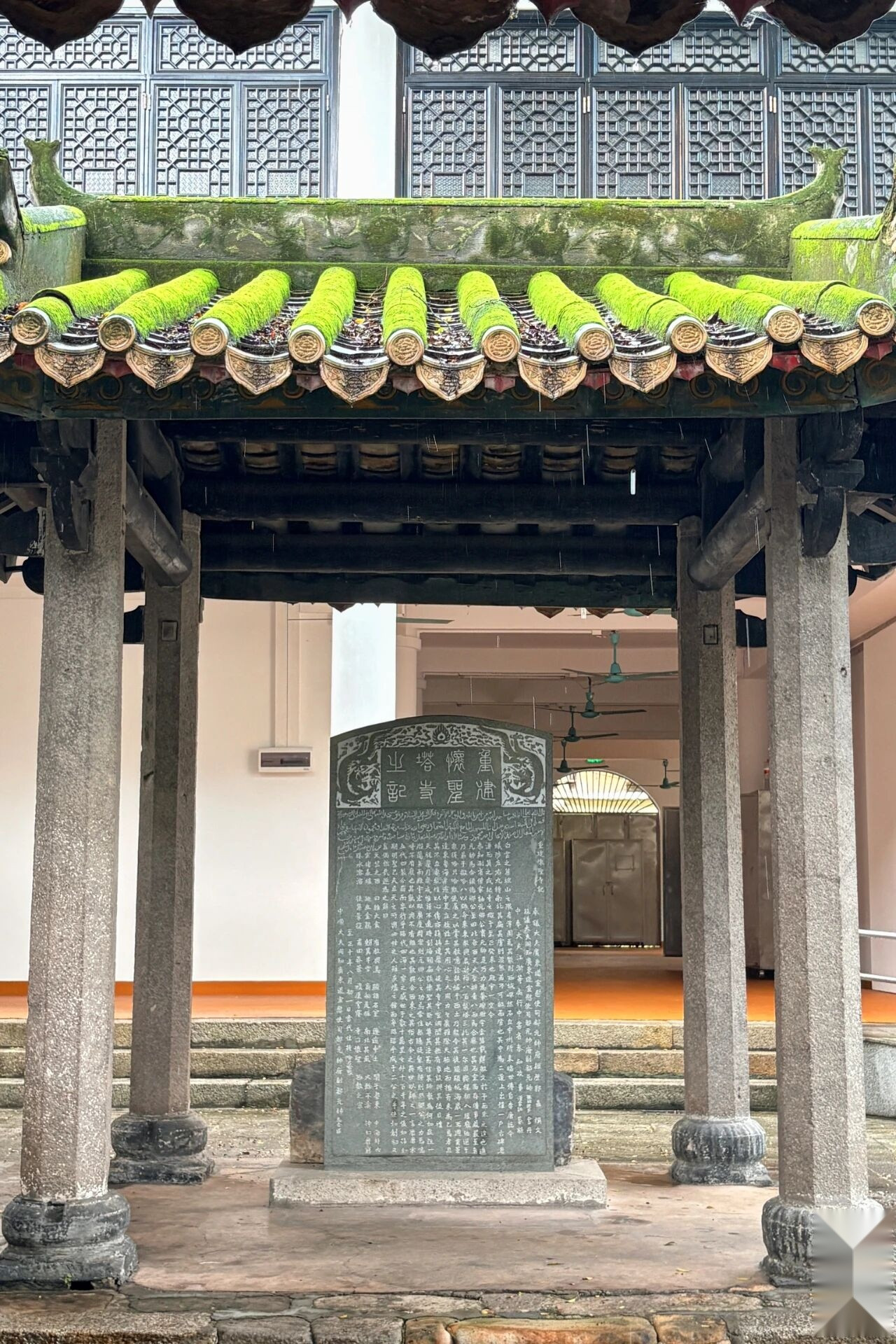
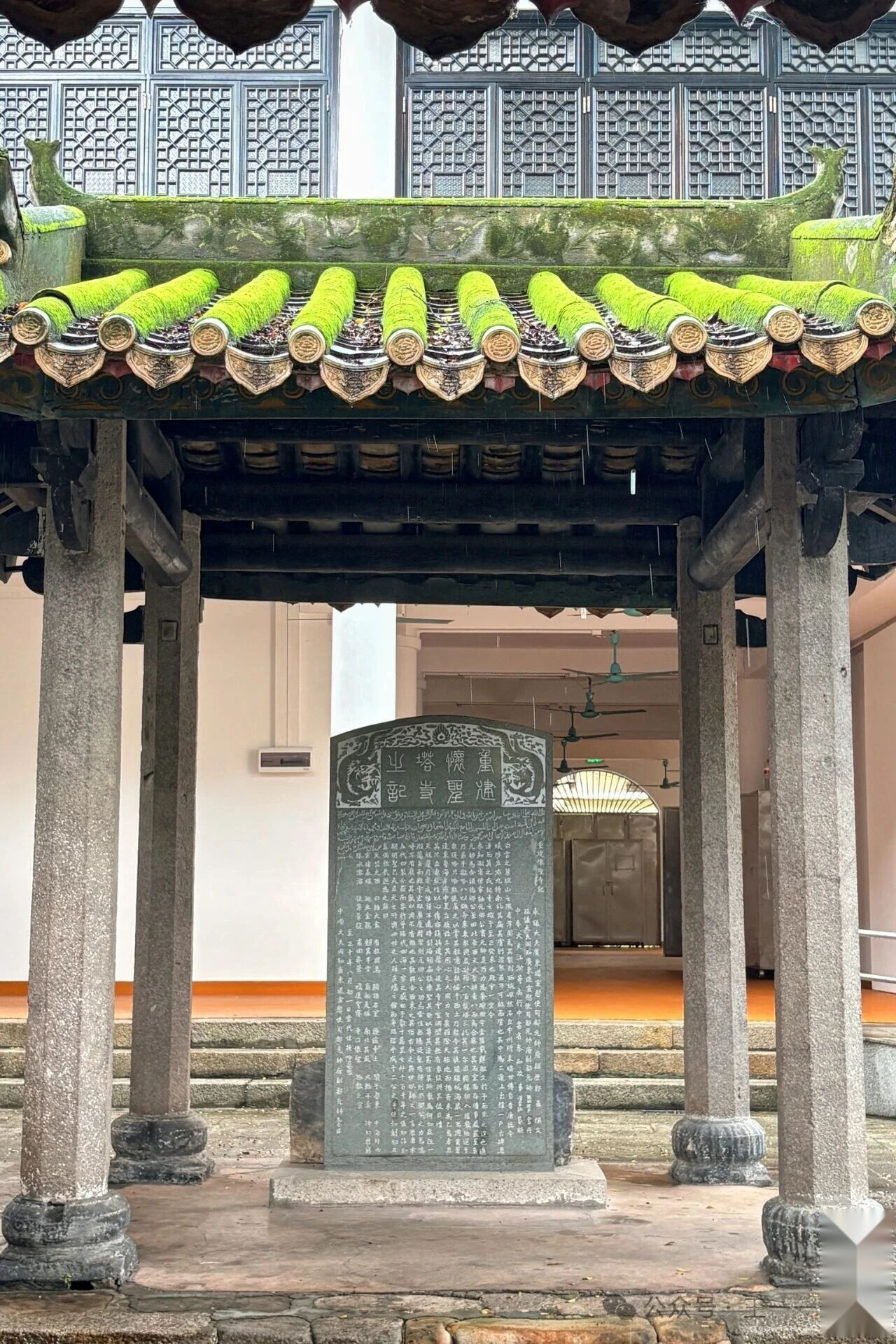
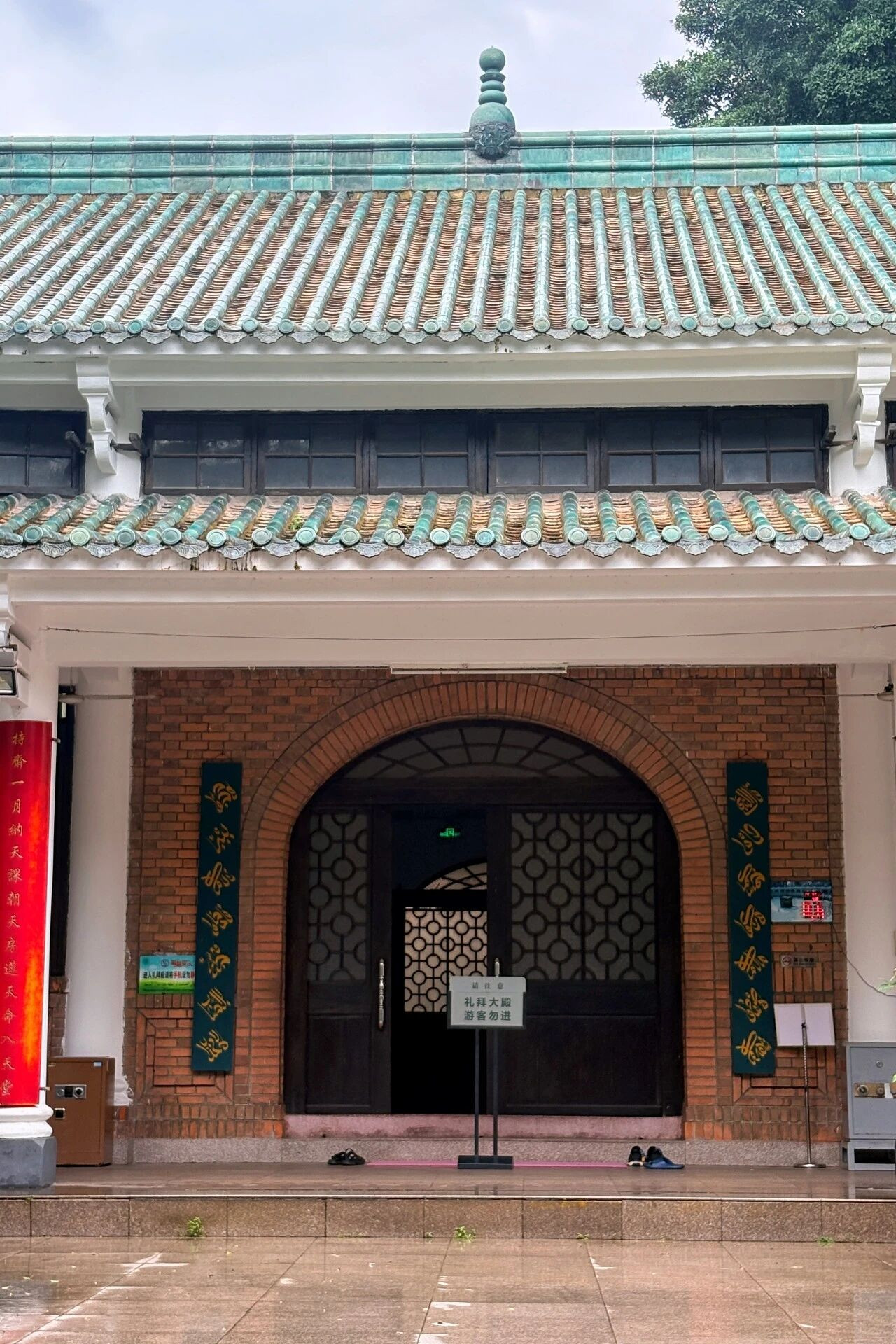
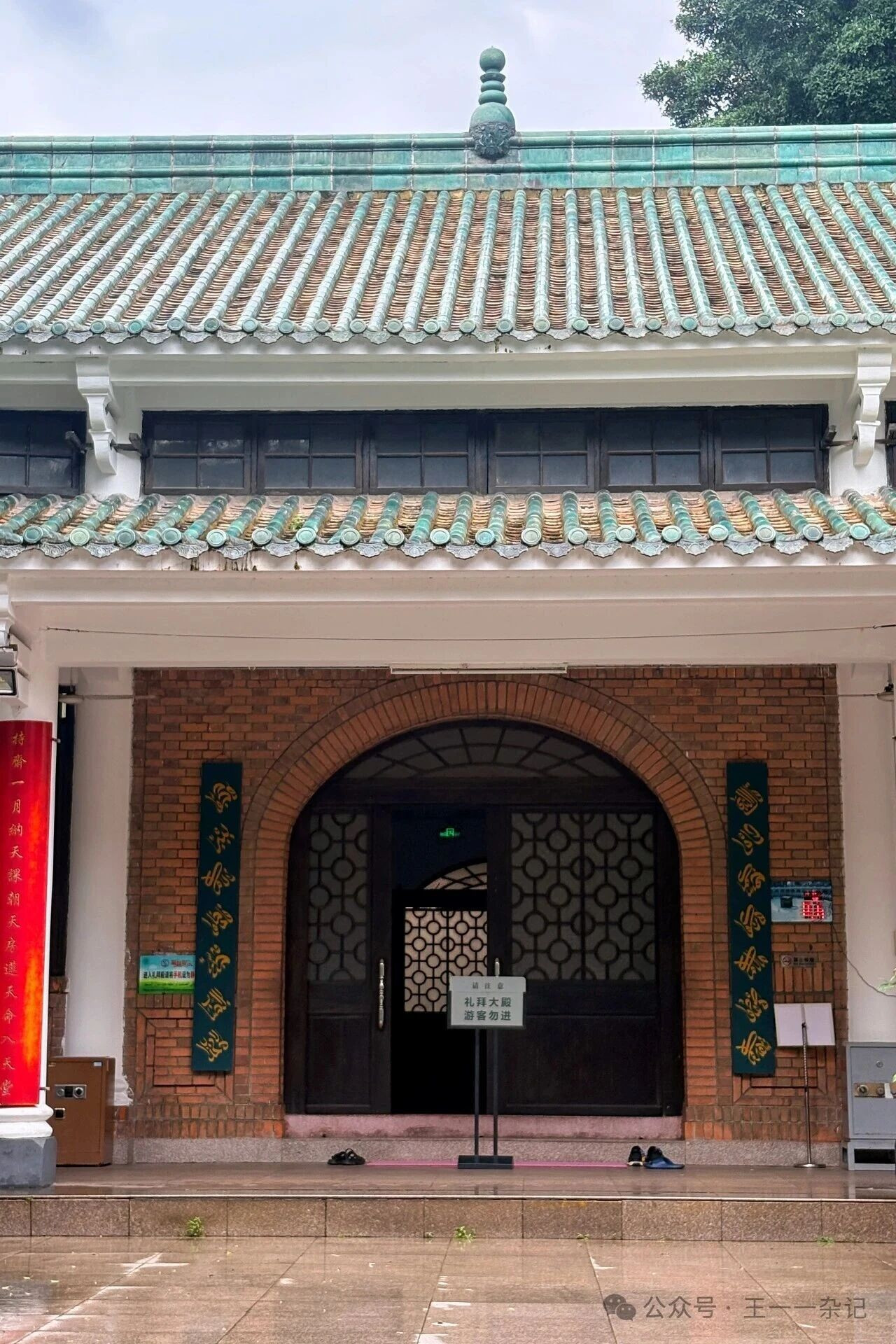 Collapse Read »
Guangzhou's Yuexiu Old Town Huaisheng Mosque (Light Pagoda Mosque) Photo Guide: A Thousand Years of Tang-Song Era Vibe at China's Foremost Ancient Masjid
Summary:
Dive into this deep photo and text journey exploring the historical architecture of Huaisheng Mosque (Light Pagoda Mosque) in Guangzhou's Yuexiu Old Town. Standing tall as one of China's Four Great Ancient Mosques, renowned alongside Quanzhou's Qingjing Mosque and Hangzhou's Phoenix Mosque, it totally shows off its unique artistic charm, blending traditional Chinese timber structures with ancient Islamic towers.
Huaisheng Mosque is seriously one of China's absolute earliest masjids. It's famous as one of the Four Great Ancient Mosques in China, right up there with Quanzhou's Qingjing Mosque, Hangzhou's Phoenix Mosque, and Yangzhou's Xianhe Mosque. This place is a super important relic of cultural exchange along the Maritime Silk Road. It's been through its fair share of destruction and rebuilding – even getting a major revamp after a fire in the Yuan Dynasty. But check it out, the current architecture still rocks that classic Tang-Song vibe, making it one of the oldest mosques with such deep history in the entire country.
1️⃣ First up, check out the Guangta (Light Pagoda), which is China's oldest existing Arabic-style minaret. Seriously, it's one of the few ancient Islamic minarets left standing globally!
2️⃣ Next, scope out the Kanyuelou (Moon-Viewing Tower). Fun fact: it was rebuilt way back in the Qing Dynasty, during the Kangxi Emperor's 34th year! It sports a super cool double-eaved hip-and-gable roof, red sandstone walls, four arched doorways, and a blend of traditional Chinese flying eaves with a distinct West Asian flair. Talk about architectural fusion!
3️⃣ Inside the Prayer Hall, you'll definitely feel those strong Arabic vibes. And seriously, don't miss the super intricate stone railings on the platform out front – they're legit Ming Dynasty relics, carved beautifully!
4️⃣ Oh, and history buffs, get this: the mosque preserves over 40 ancient stele plaques with both Chinese and Arabic inscriptions, dating all the way back to the Yuan Dynasty. How cool is that?
✅ Best part? It's totally free to enter! You can visit any day from 9 AM to 5 PM.
Getting there is easy: hop on Metro Line 1 to Ximenkou Station, take Exit B, and it's just an 8-minute walk from there.
Pro-tip for exploring: you can totally link this up with a visit to the Sacred Heart Cathedral, Wuxian Temple, and Guangxiao Temple. It's a killer way to soak in all the diverse historical vibes of Guangzhou's old town!
This spot is perfect for your #GuangzhouCitywalk, #GuangzhouTravel, and #OffbeatSpots bucket list! Dive into #MaritimeSilkRoad history and #AncientArchitectureBeauty, making it an ideal #WeekendVibes destination.
Seriously, one of China's absolute earliest mosques is right here in Guangzhou's old town, and Metro Line 1 takes you straight there. How convenient is that?
Collapse Read »
Guangzhou's Hidden Muslim Gems: Explore 1300-Year-Old Mosques & Ancient Tombs | Free Entry, Silk Road History & Halal Culture
[Internet Repost]
A 1300-Year-Old Silk Road Secret in Guangzhou's Bustling Heart: A Serene Cultural Deep-Dive and Historical Quest at Huaisheng Mosque (Light Pagoda Mosque)
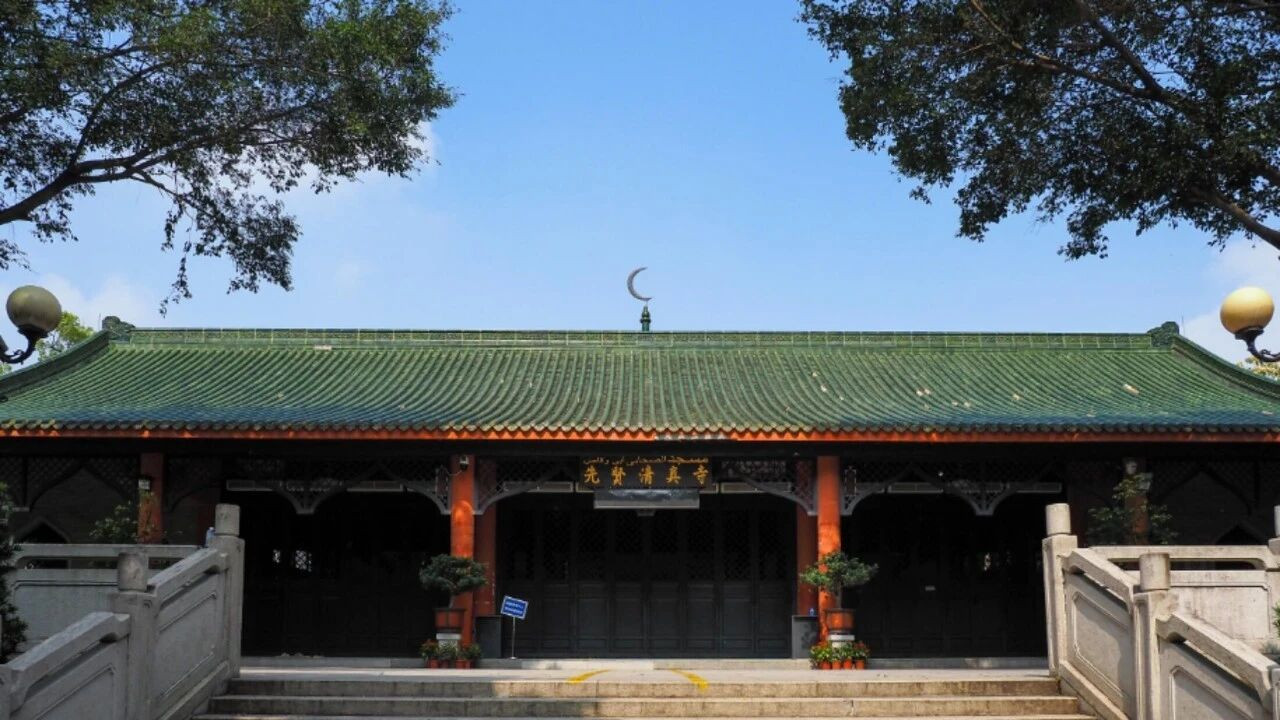
Summary:
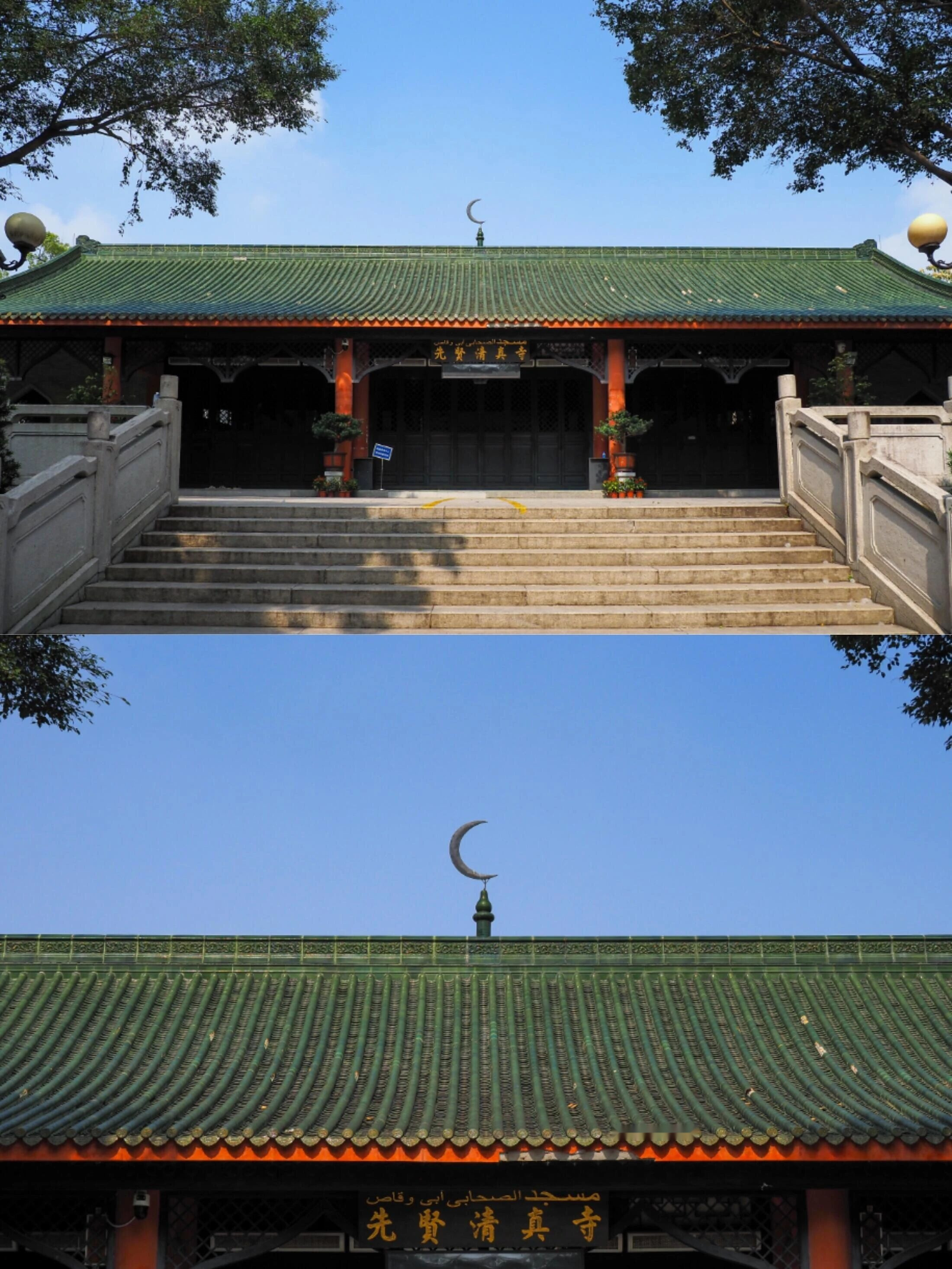
This piece explores the thousand-year-old Huaisheng Mosque (Light Pagoda Mosque) hidden deep within Guangzhou's bustling Yuexiu District. Discover a vibrant testament to the Tang Dynasty's Maritime Silk Road, and immerse yourself in the peaceful cultural vibe of its red walls, ancient trees, and solemn prayer halls.
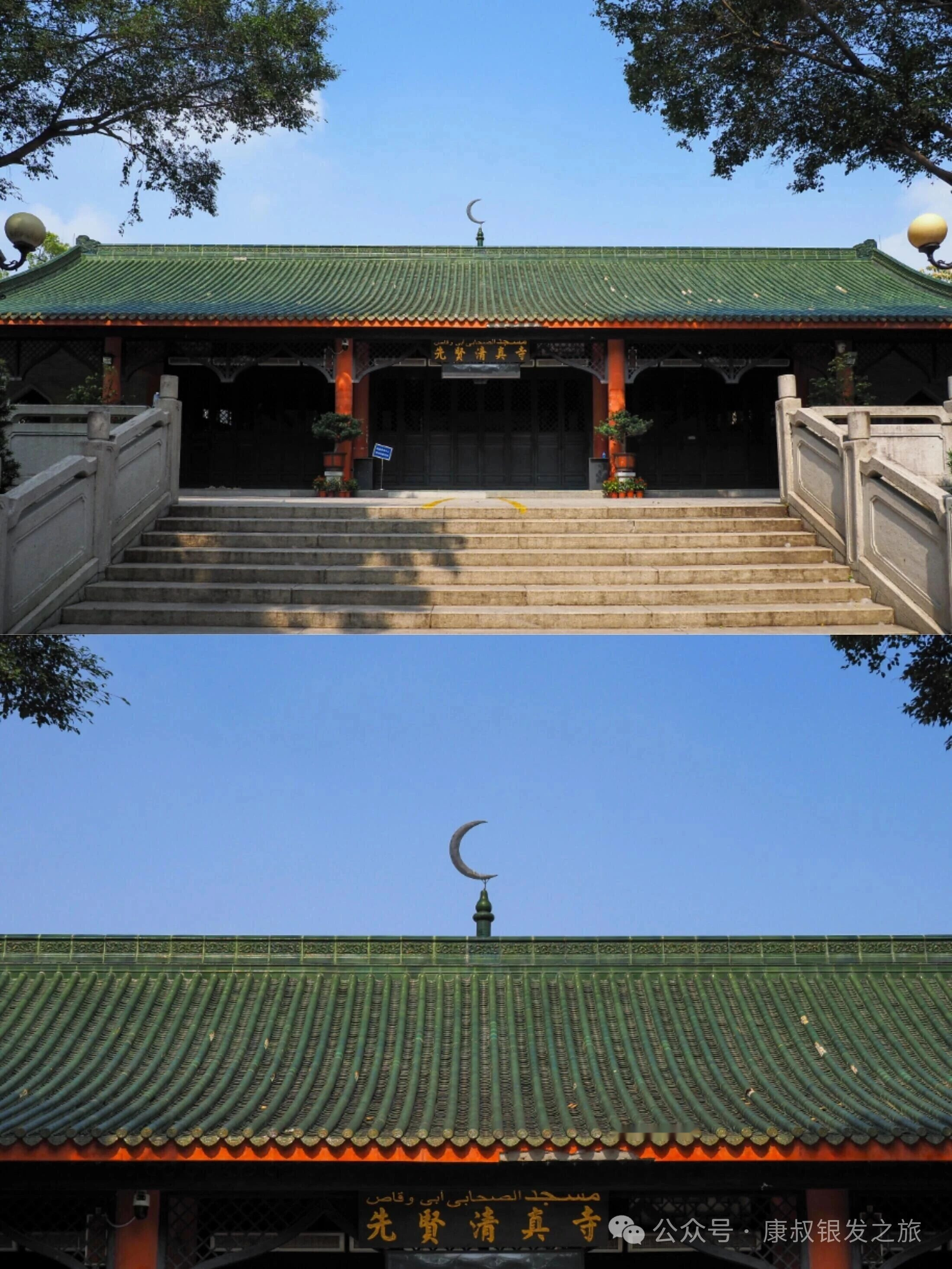
Seriously, you won't believe this! Guangzhou's Yuexiu District is hiding a FREE, thousand-year-old historical site. It's both a witness to the Tang Dynasty's Maritime Silk Road AND one of China's oldest Islamic heritage sites. It's peaceful, crowd-free, and you can totally immerse yourself in its deep historical roots. Culture vultures, bookmark this ASAP!
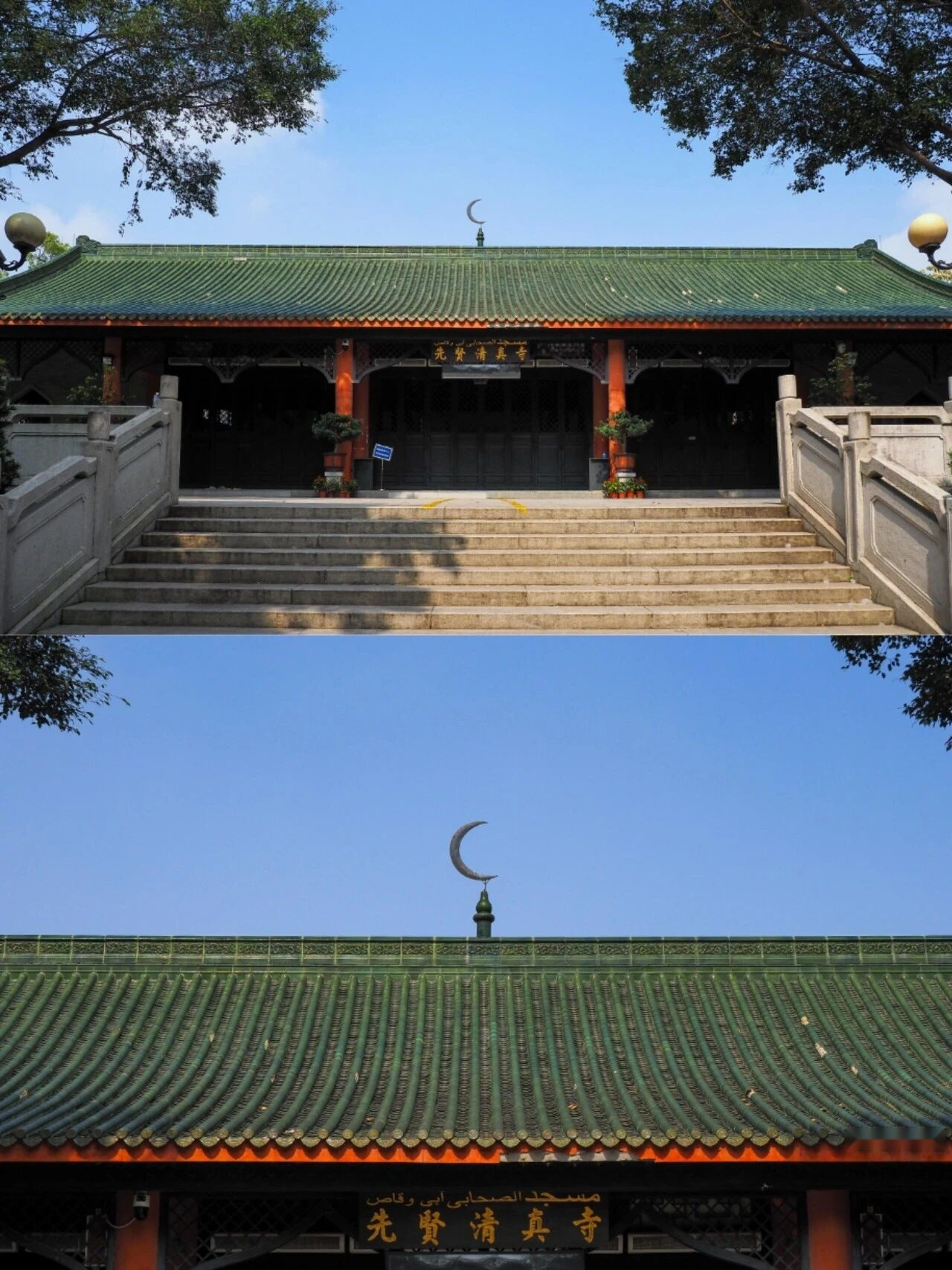
So, what exactly is this spot?
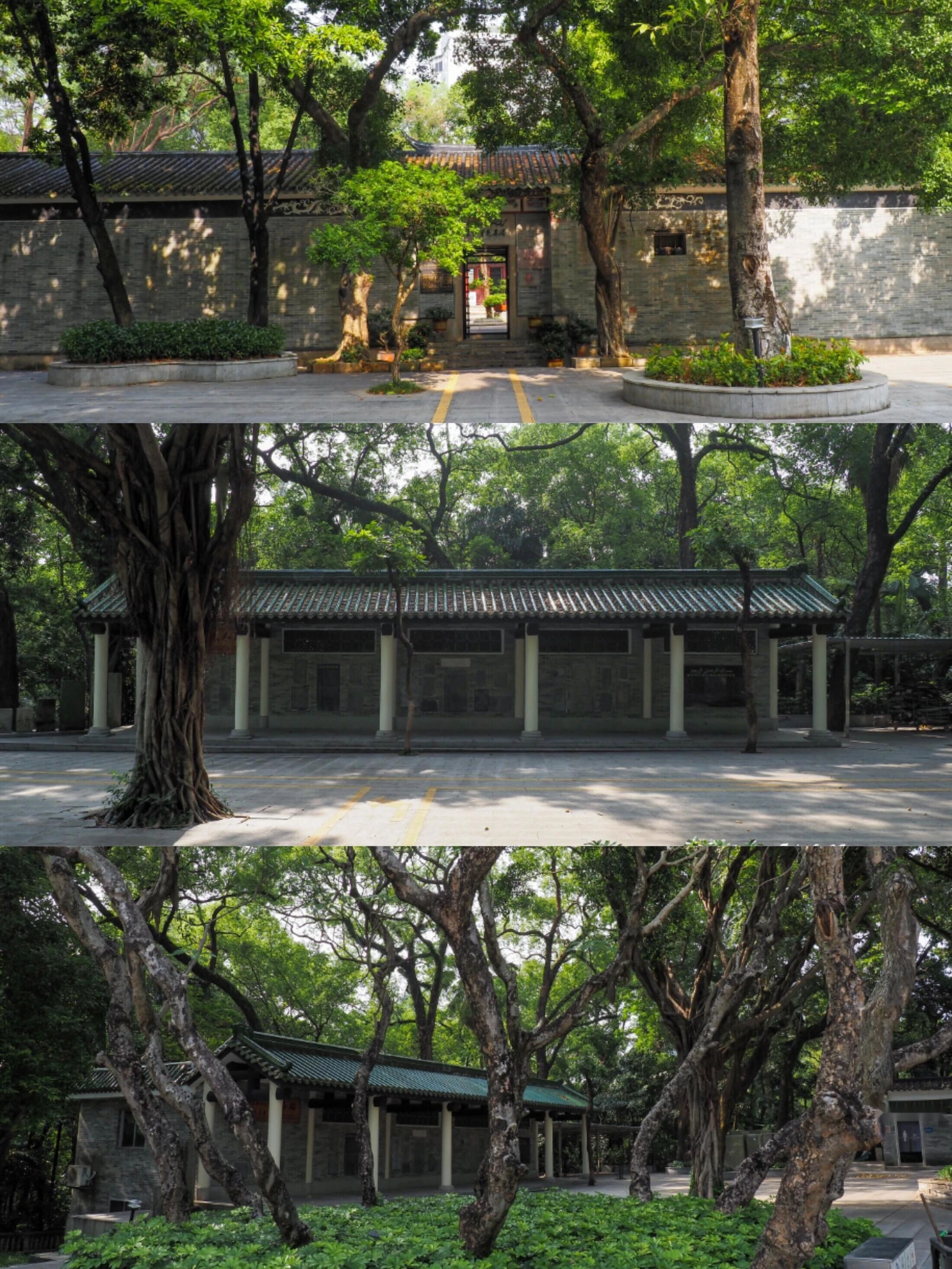
This is the Ancient Tomb of Saad ibn Abi Waqqas (also known as 'Xiangfen' or 'Echoing Tomb') and Xianxian Mosque. Established in the early Tang Dynasty, it's the mausoleum of Waqqas (Wan Gesu), who came to China to spread Islam, and also the resting place for famous Muslim figures from China and abroad throughout history. The tomb chamber's Arabian-style domed architecture is super unique. When you recite dua inside, there's an amazing echo — no wonder it's called the 'Echoing Tomb'!
Admission & Hours
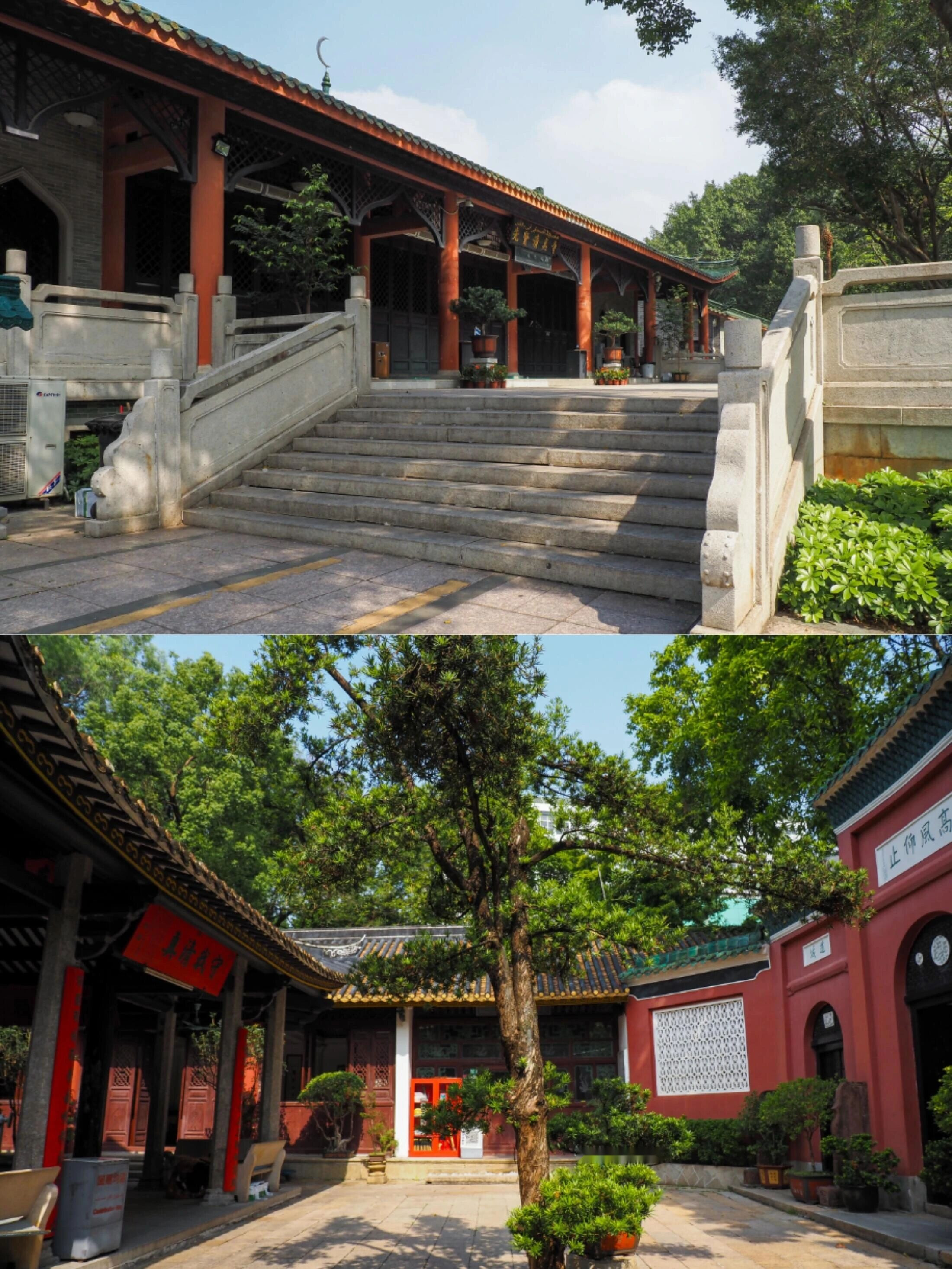
✅ Tickets: FREE! No reservation needed. Just make sure to dress modestly when visiting, and note that some areas are not open to the public.
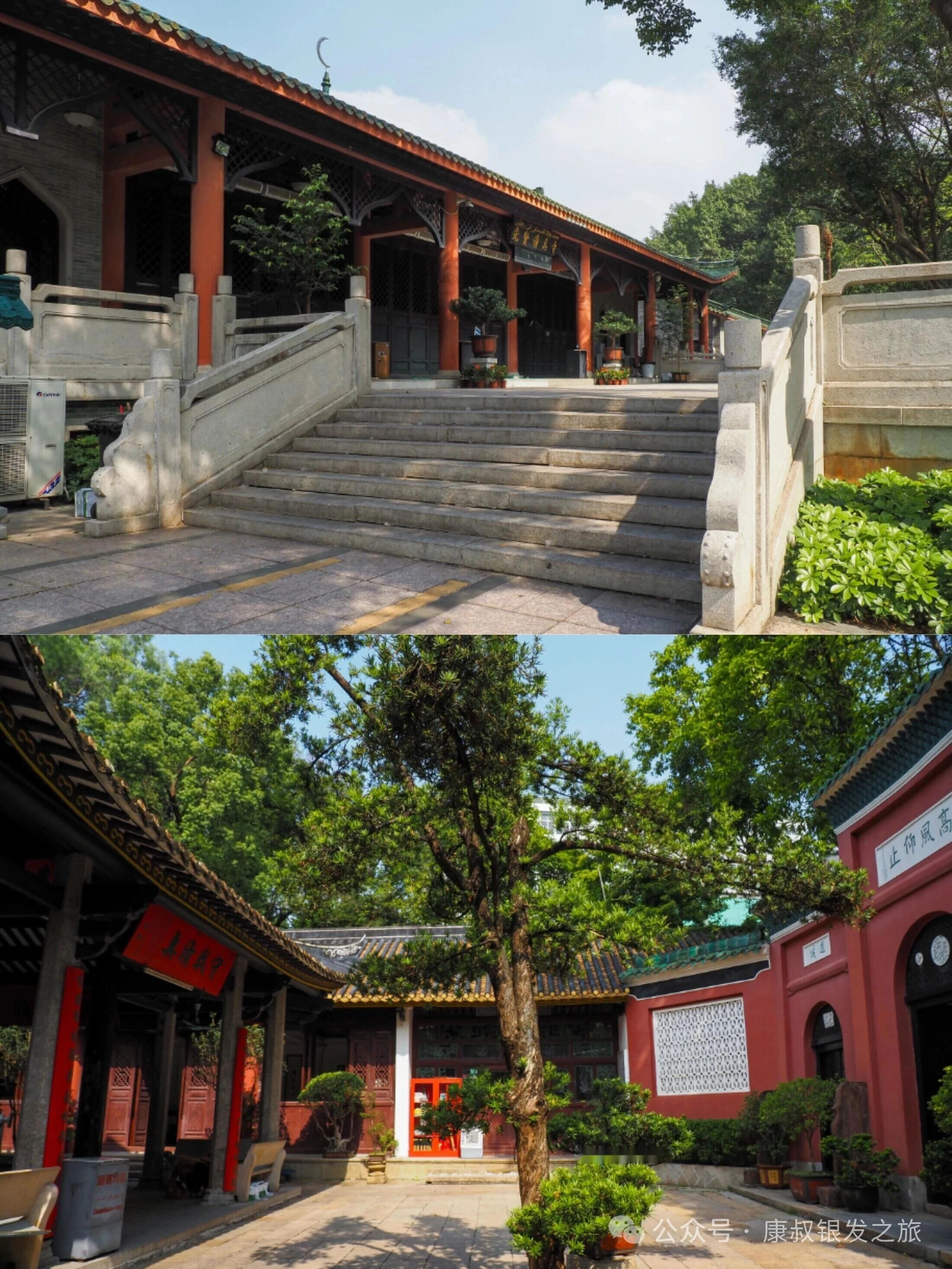
⏰ Opening Hours: 08:30 AM - 04:00 PM (Try to avoid Fridays during Jumu'ah prayer, as it's easier to visit outside of prayer times.)
6 Super Easy Transport Tips
1. Metro: Take Line 2 to 'Yuexiu Park Station,' exit B. It's about an 800-meter, 10-minute walk from there.
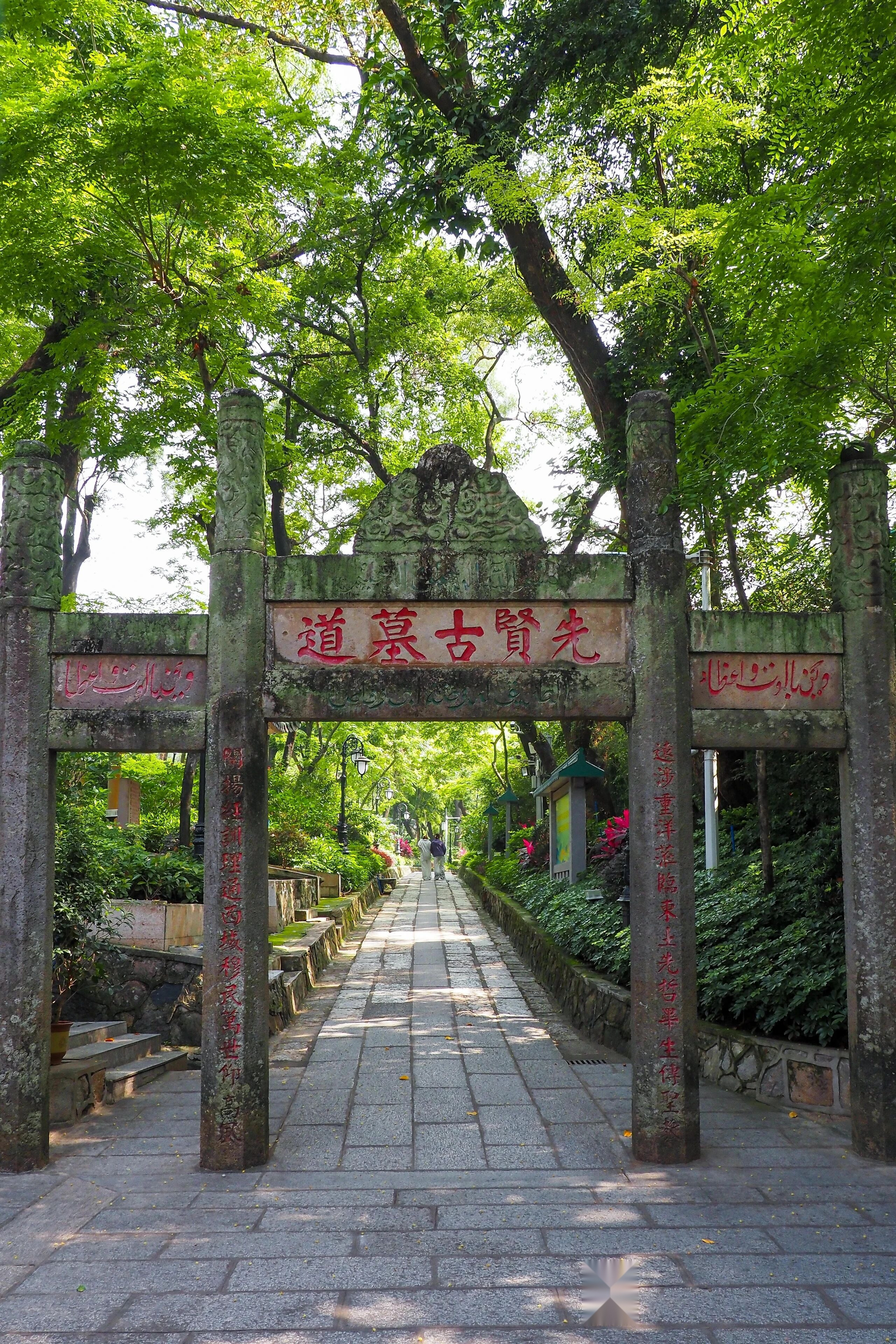
2. Bus: You can take routes 21, 24, or 180 to 'Yuexiu Park Station.' After getting off, just navigate to 'Qingzhen Xianxian Gumu' (Ancient Muslim Sage's Tomb).
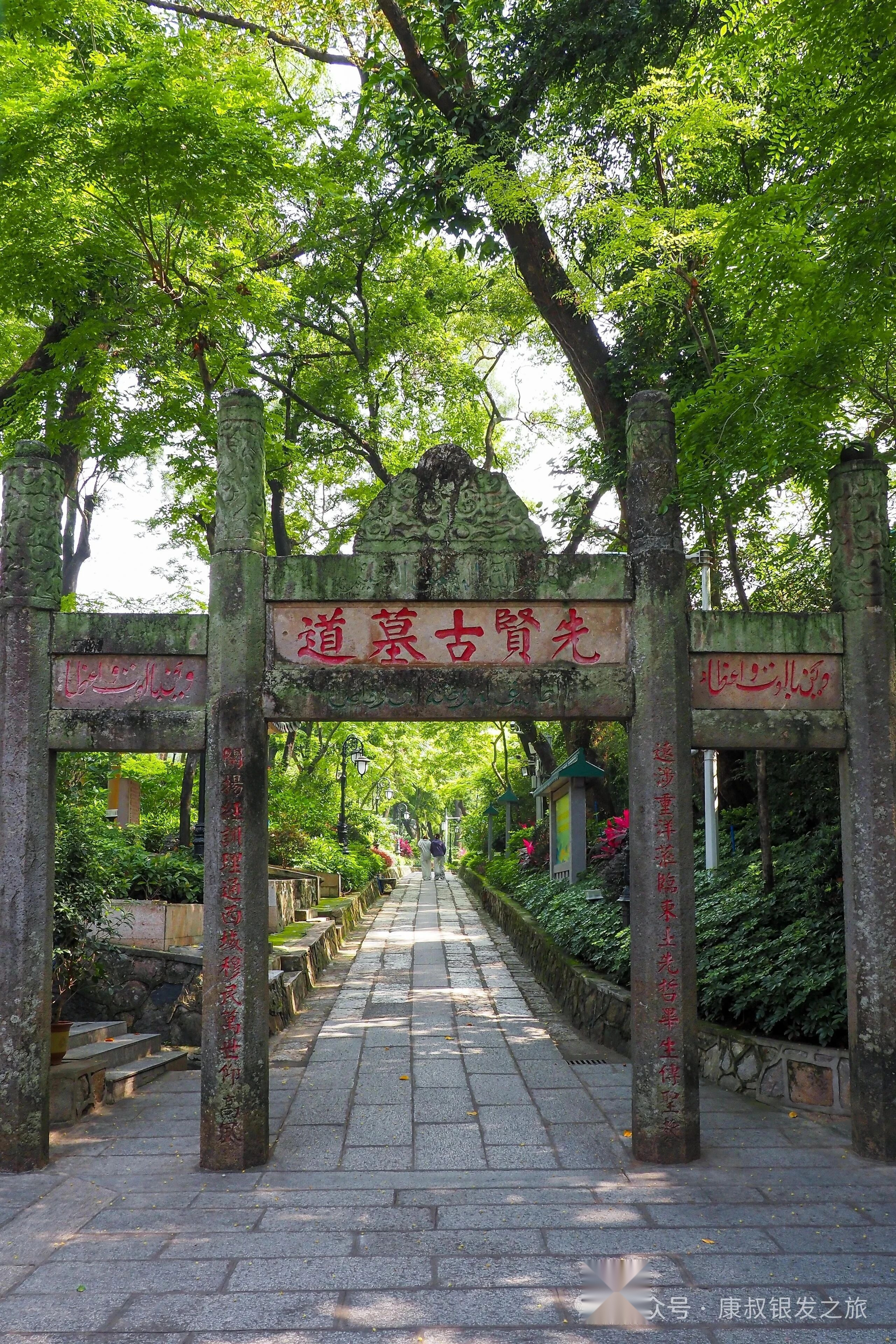
Free Must-See Route (Explore in 30 minutes)
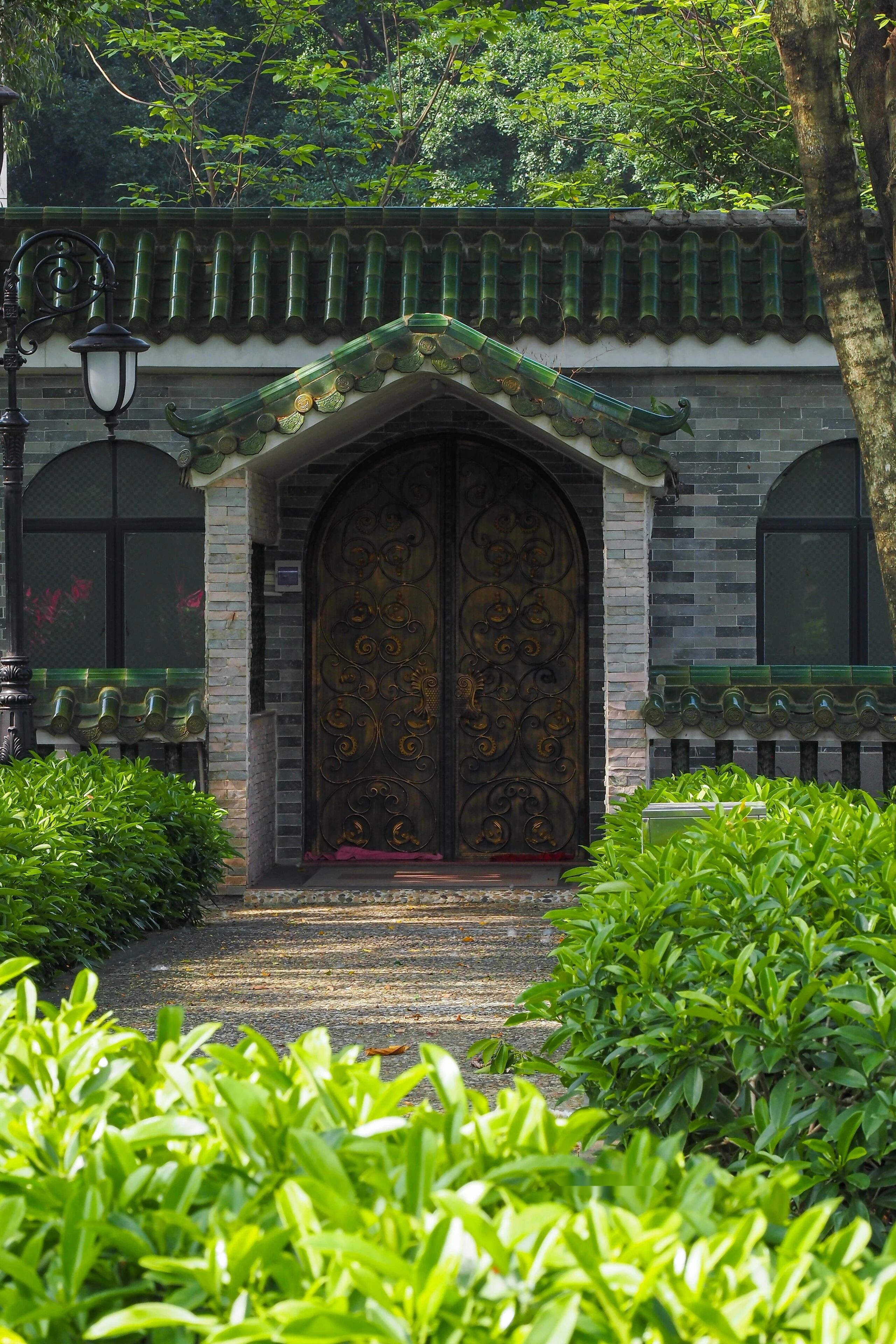
Entrance Archway → Stele with Historical Records of the Ancient Tomb of Saad ibn Abi Waqqas → Echoing Tomb Chamber → Main Prayer Hall of Xianxian Mosque → Sanzong Pavilion & Ancient Steles.
The route isn't long, but every corner is packed with details: Qing Dynasty steles, Arabian architectural styles, century-old trees. Every snap you take will tell a story!
Pro Tips
- This is a religious site, so please keep quiet and respect local customs during your visit.
- It's super cool here in the summer, really comfy under the tree shade. Remember to bring a water bottle!
- You can easily combine your visit with Yuexiu Park and Lanpu Garden nearby to soak in the authentic vibe of old Guangzhou.
In Guangzhou, beyond all the trendy Instagram spots, these thousand-year-old heritage sites hidden in the bustling city are the most captivating essence of the city.
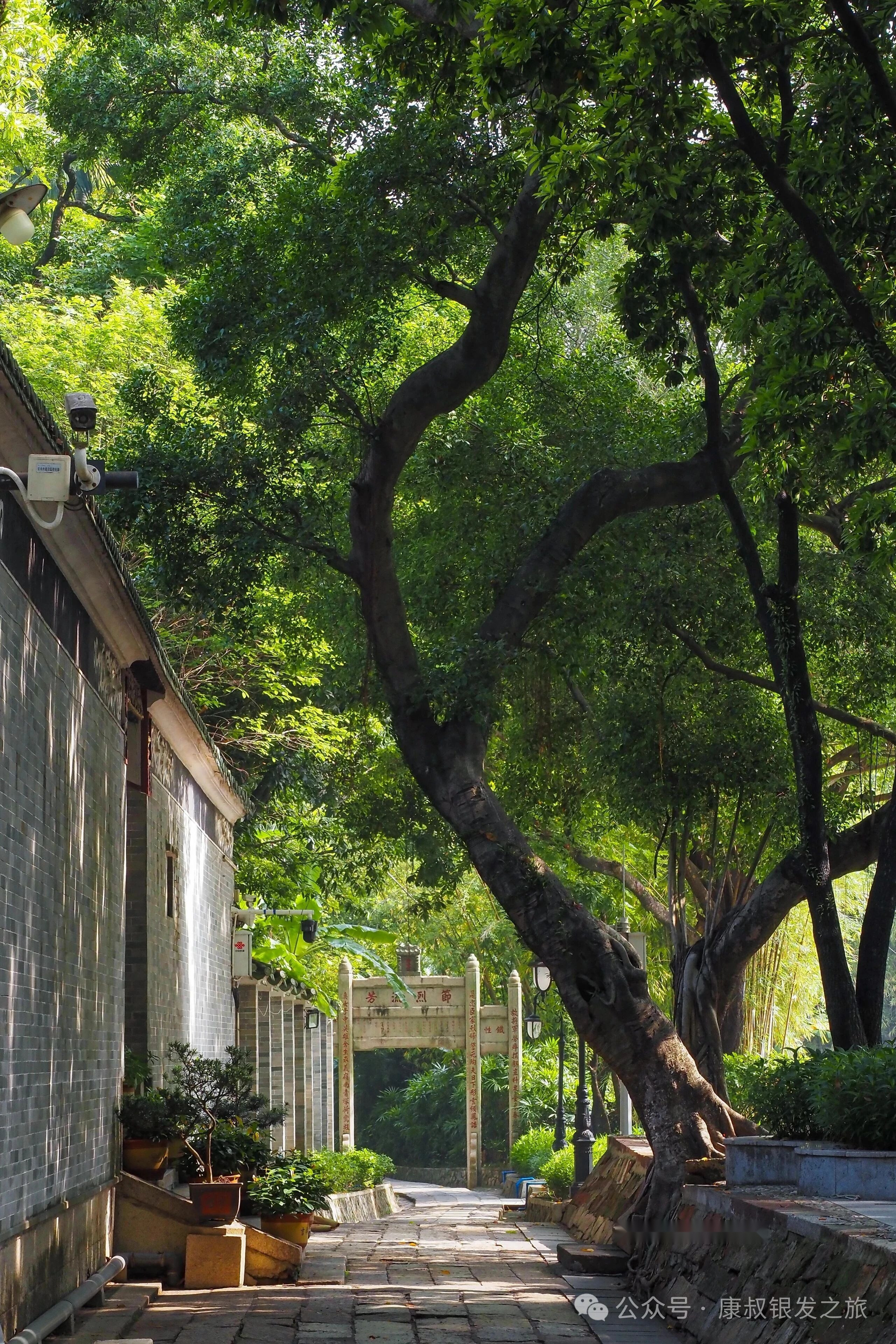
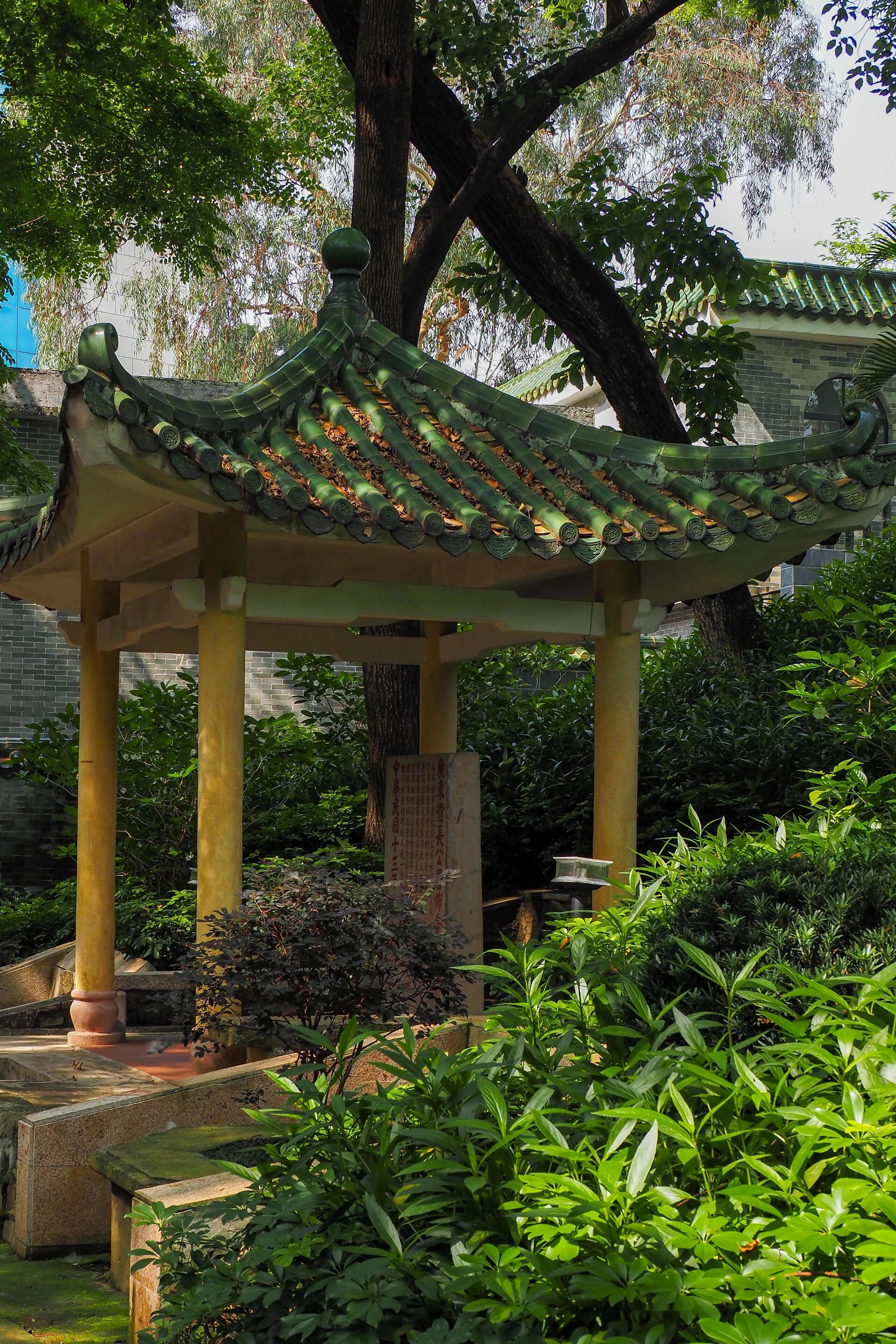
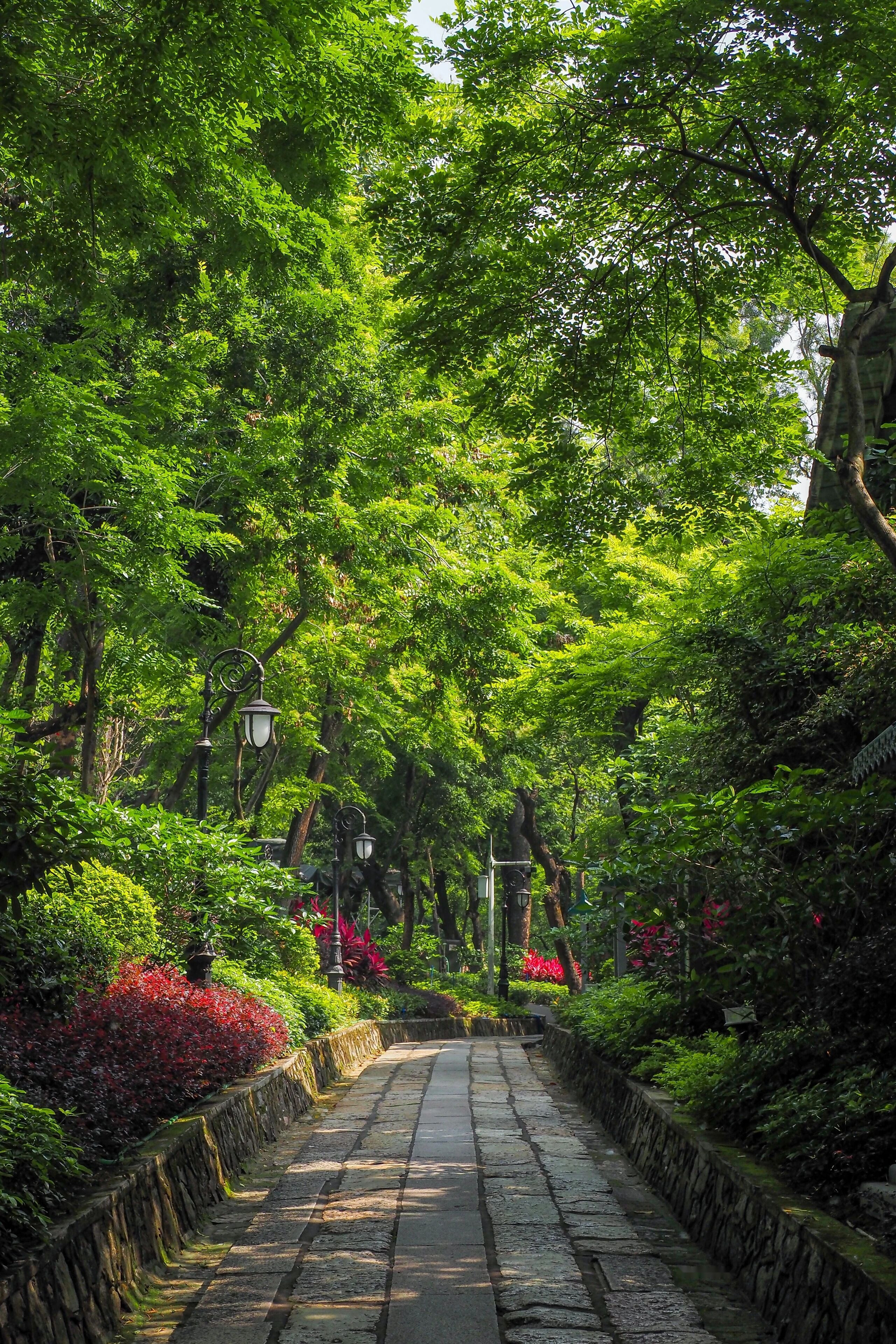
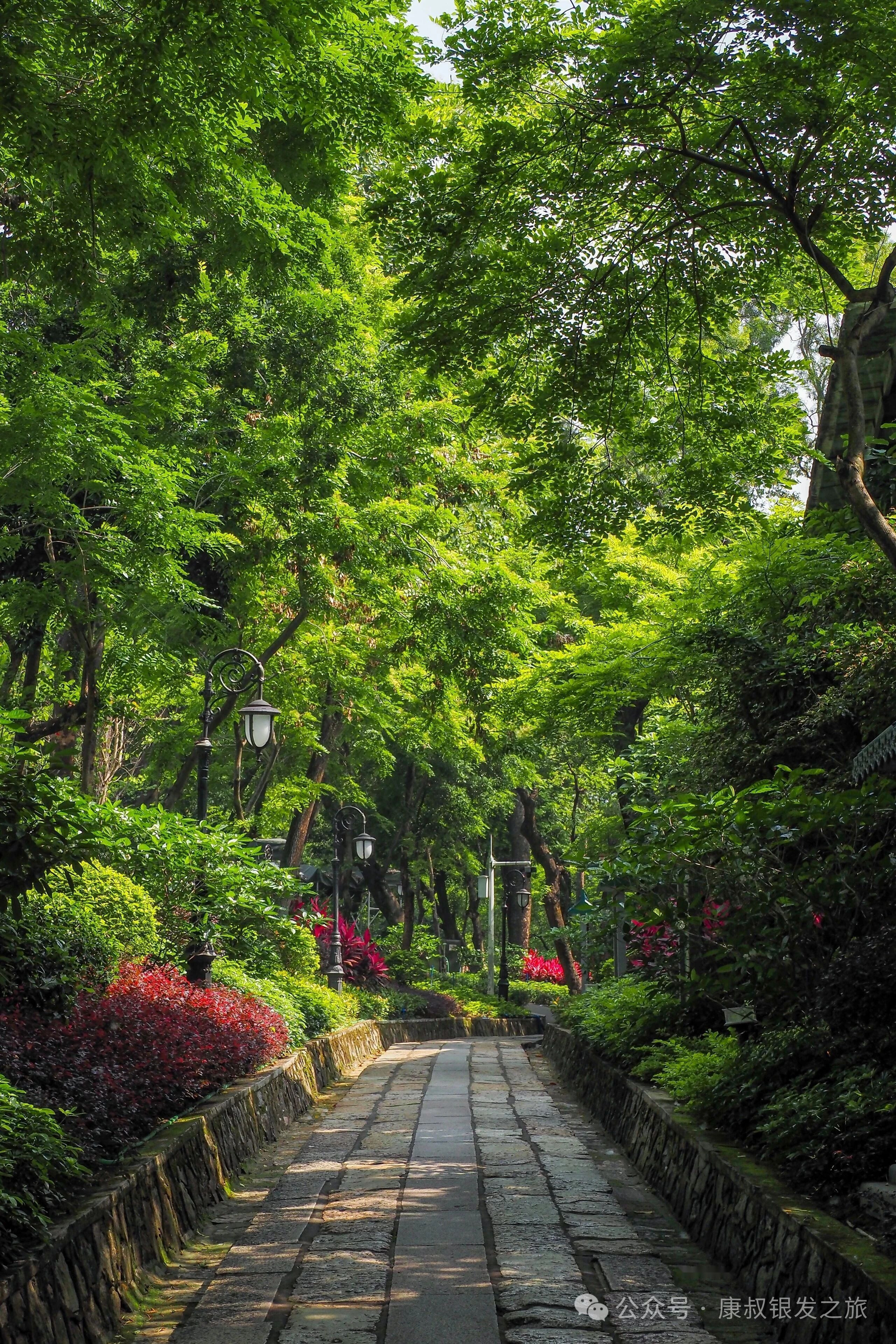
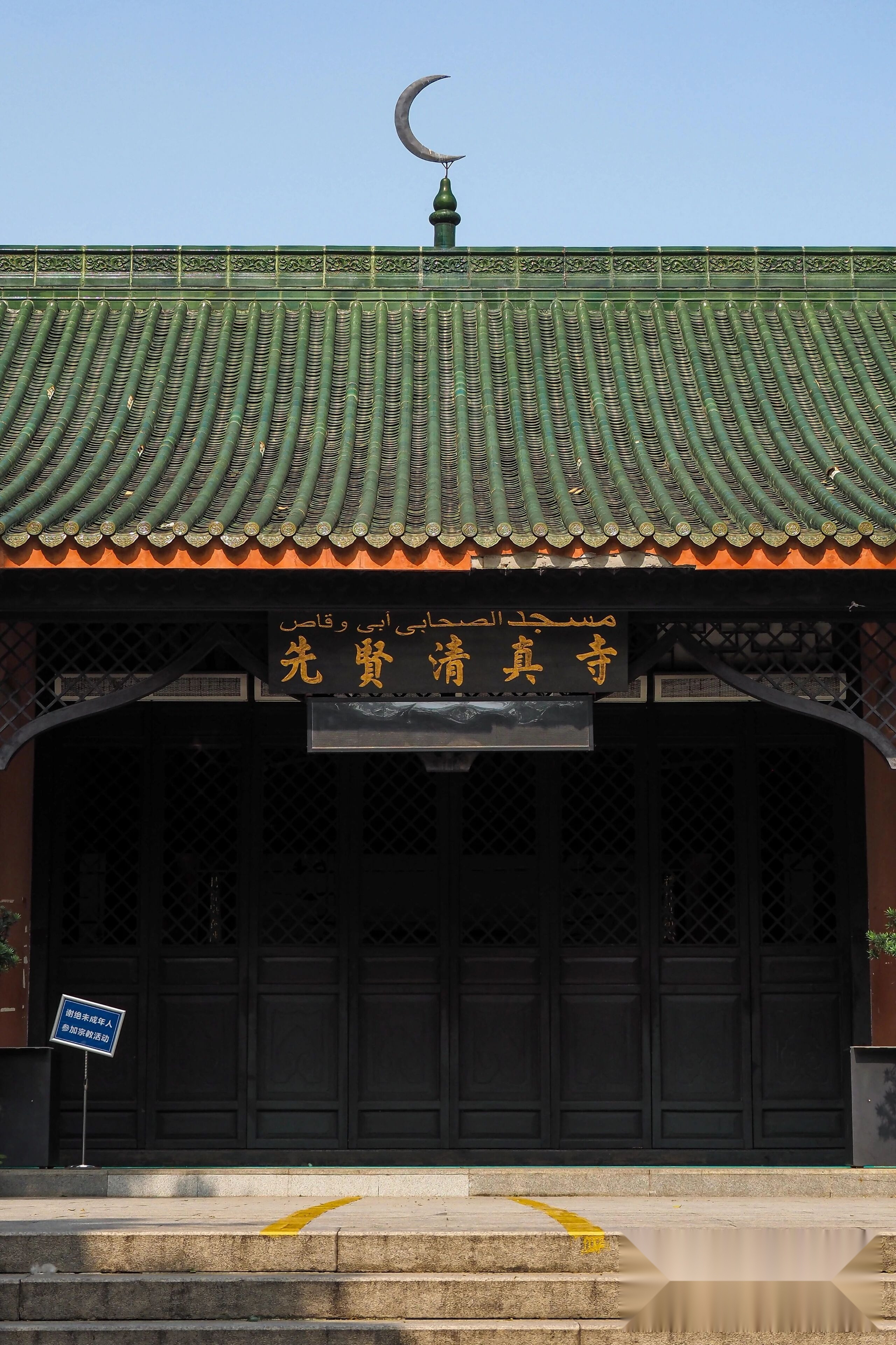
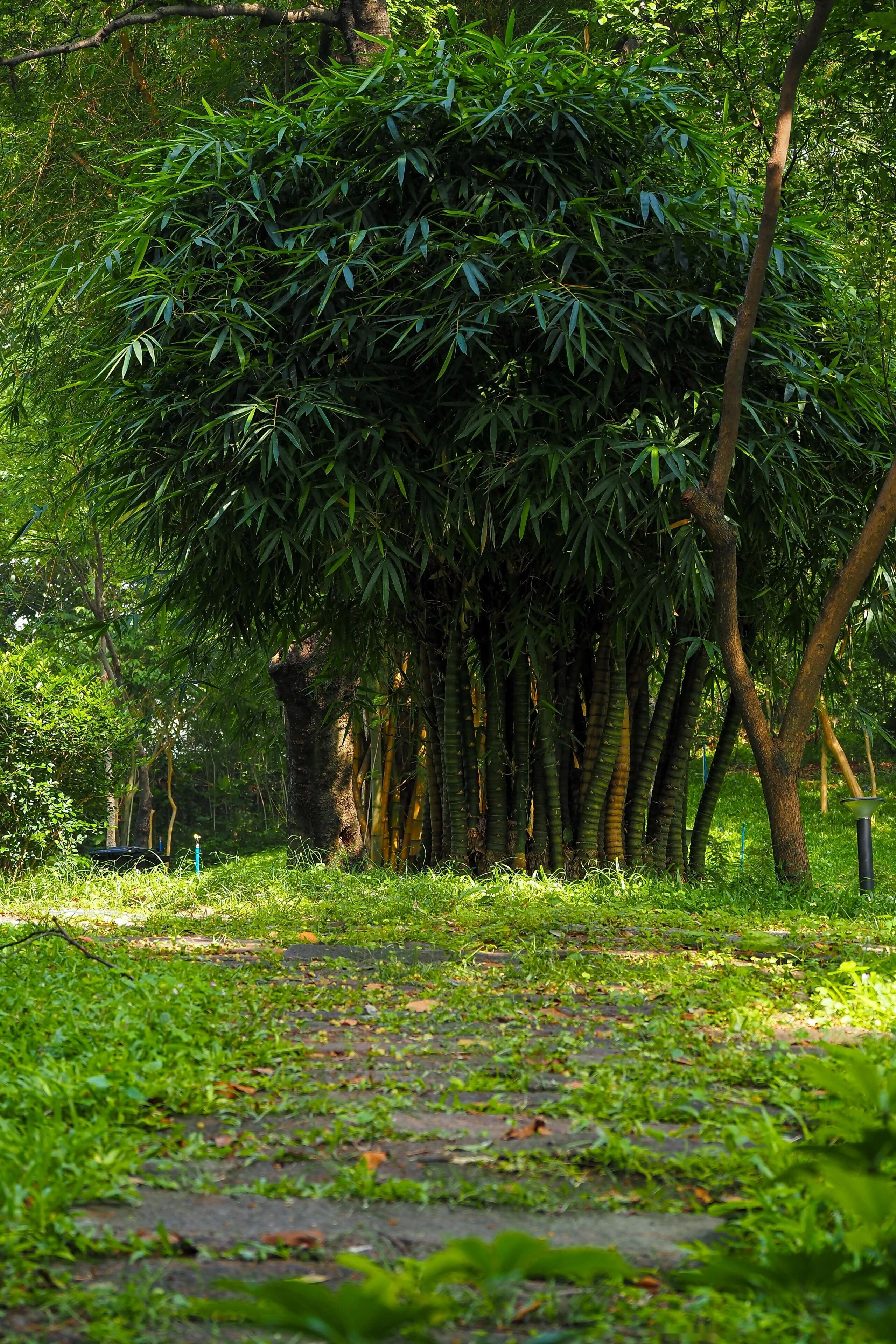
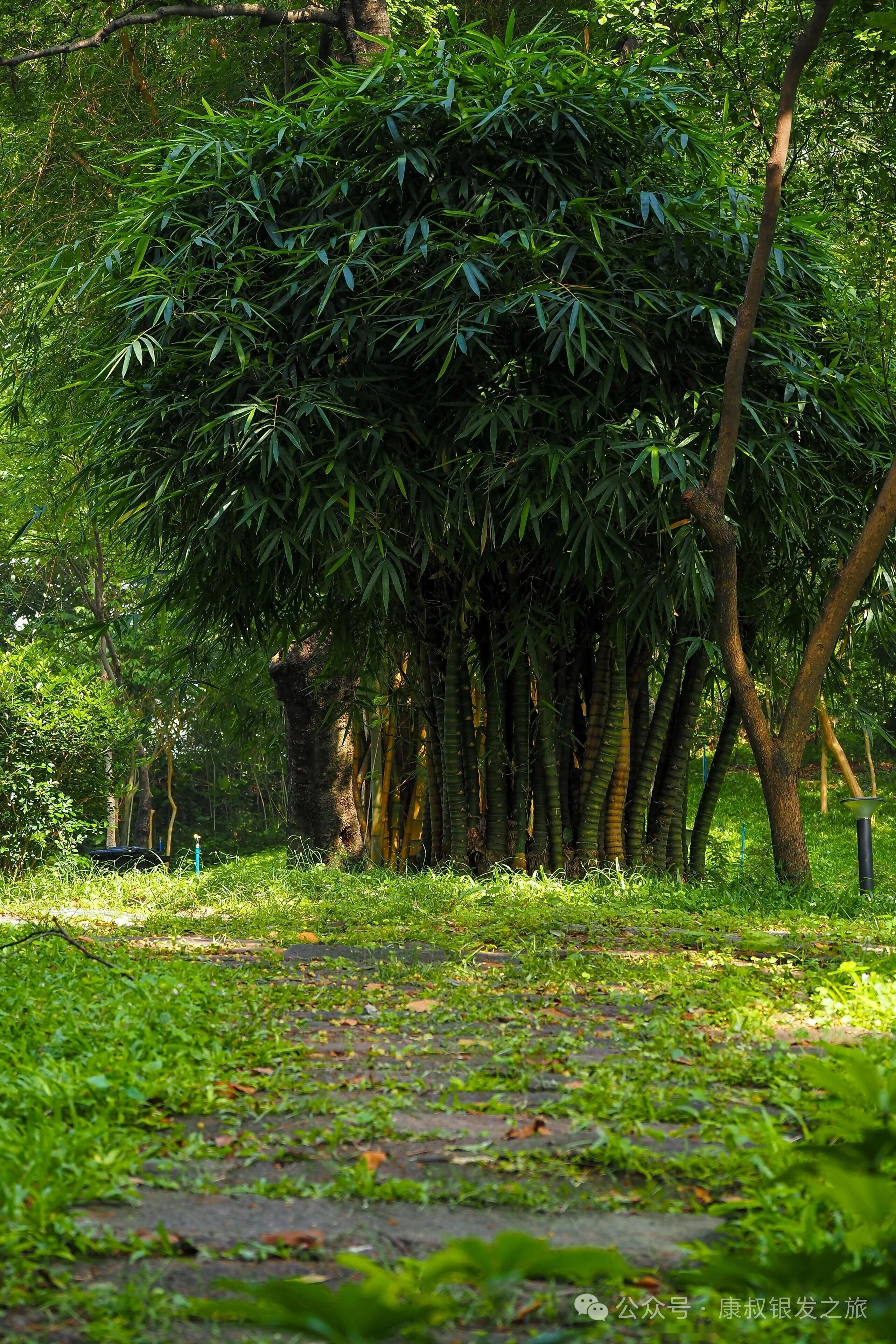 Collapse Read »
A 1300-Year-Old Silk Road Secret in Guangzhou's Bustling Heart: A Serene Cultural Deep-Dive and Historical Quest at Huaisheng Mosque (Light Pagoda Mosque)
Summary:
This piece explores the thousand-year-old Huaisheng Mosque (Light Pagoda Mosque) hidden deep within Guangzhou's bustling Yuexiu District. Discover a vibrant testament to the Tang Dynasty's Maritime Silk Road, and immerse yourself in the peaceful cultural vibe of its red walls, ancient trees, and solemn prayer halls.
Seriously, you won't believe this! Guangzhou's Yuexiu District is hiding a FREE, thousand-year-old historical site. It's both a witness to the Tang Dynasty's Maritime Silk Road AND one of China's oldest Islamic heritage sites. It's peaceful, crowd-free, and you can totally immerse yourself in its deep historical roots. Culture vultures, bookmark this ASAP!
So, what exactly is this spot?
This is the Ancient Tomb of Saad ibn Abi Waqqas (also known as 'Xiangfen' or 'Echoing Tomb') and Xianxian Mosque. Established in the early Tang Dynasty, it's the mausoleum of Waqqas (Wan Gesu), who came to China to spread Islam, and also the resting place for famous Muslim figures from China and abroad throughout history. The tomb chamber's Arabian-style domed architecture is super unique. When you recite dua inside, there's an amazing echo — no wonder it's called the 'Echoing Tomb'!
Admission & Hours
✅ Tickets: FREE! No reservation needed. Just make sure to dress modestly when visiting, and note that some areas are not open to the public.
⏰ Opening Hours: 08:30 AM - 04:00 PM (Try to avoid Fridays during Jumu'ah prayer, as it's easier to visit outside of prayer times.)
6 Super Easy Transport Tips
1. Metro: Take Line 2 to 'Yuexiu Park Station,' exit B. It's about an 800-meter, 10-minute walk from there.
2. Bus: You can take routes 21, 24, or 180 to 'Yuexiu Park Station.' After getting off, just navigate to 'Qingzhen Xianxian Gumu' (Ancient Muslim Sage's Tomb).
Free Must-See Route (Explore in 30 minutes)
Entrance Archway → Stele with Historical Records of the Ancient Tomb of Saad ibn Abi Waqqas → Echoing Tomb Chamber → Main Prayer Hall of Xianxian Mosque → Sanzong Pavilion & Ancient Steles.
The route isn't long, but every corner is packed with details: Qing Dynasty steles, Arabian architectural styles, century-old trees. Every snap you take will tell a story!
Pro Tips
- This is a religious site, so please keep quiet and respect local customs during your visit.
- It's super cool here in the summer, really comfy under the tree shade. Remember to bring a water bottle!
- You can easily combine your visit with Yuexiu Park and Lanpu Garden nearby to soak in the authentic vibe of old Guangzhou.
In Guangzhou, beyond all the trendy Instagram spots, these thousand-year-old heritage sites hidden in the bustling city are the most captivating essence of the city.
Collapse Read »
Guangzhou's Hidden Gem: Explore the 500-Year-Old Xiaodongying Mosque – Ming Dynasty Hui Muslim History & Ancient Lingnan Architecture
[Internet Repost]
Checking Out Guangzhou's 500-Year-Old Xiaodongying Mosque: The Legend of its Ming Dynasty Hui Muslim Soldier Builders and Ancient Lingnan Courtyard Architecture
Here's the scoop:
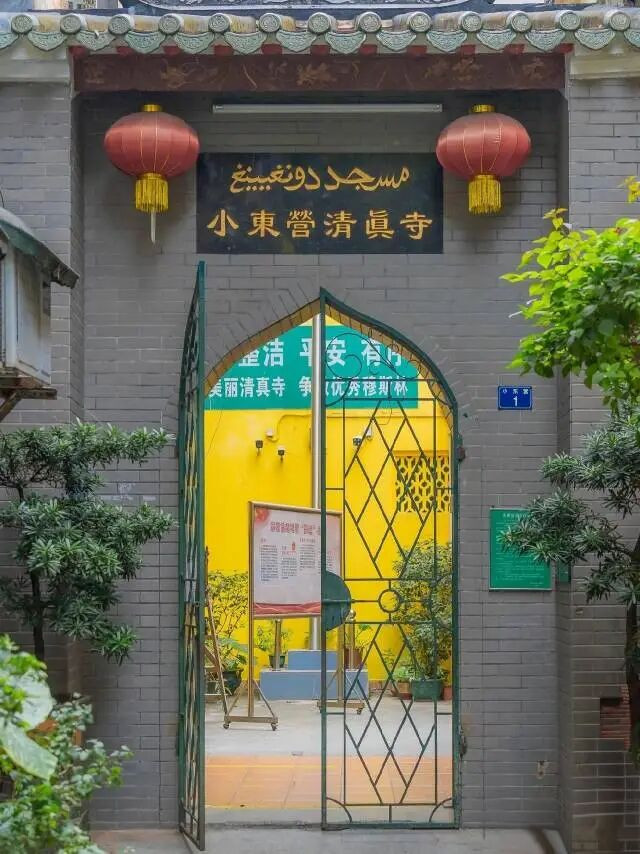
We're taking a deep dive into Xiaodongying Mosque, tucked away in the historic alleys of Guangzhou's Yuexiu District. Get ready to explore its epic history, built by Ming Dynasty Hui Muslim garrison soldiers in Chenghua Year 4 (1468), and check out the halls that beautifully blend Lingnan courtyard aesthetics with Islamic architectural vibes.
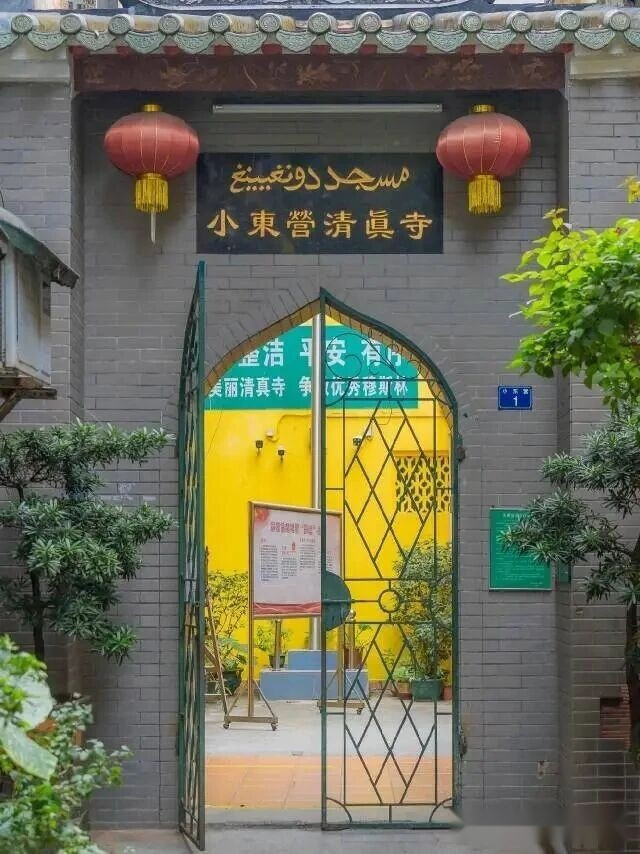
Xiaodongying Mosque is chilling in the old alleys of Guangzhou's Yuexiu District. Founded in 1468, it's a super historic masjid.
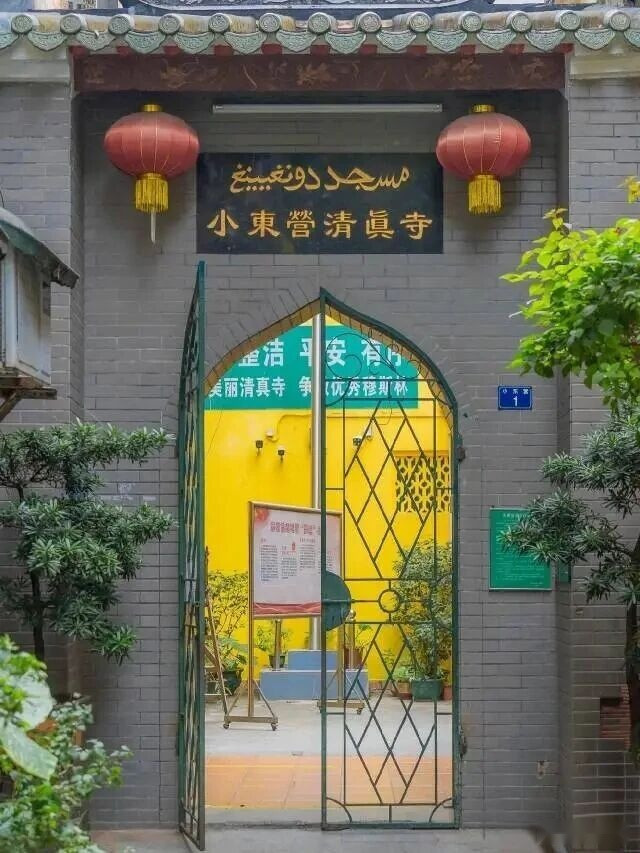
It was actually built by Hui Muslim officers and soldiers stationed right here. Back in the day, Han Yong, the Viceroy of Liangguang (Guangdong and Guangxi), moved a massive number of troops from Nanjing to Guangzhou for military reasons. Among them were over 1,000 Hui Muslim soldiers! This Hui Muslim army set up camp in four spots, both inside and outside Guangzhou city: Dadong, Xiaodong, Xiying, and Zhuying, collectively known as the 'Huihui Camps' (Hui Muslim Camps). Fun fact: today's Xiaodongying Street is literally the original site of the Xiaodongying camp.
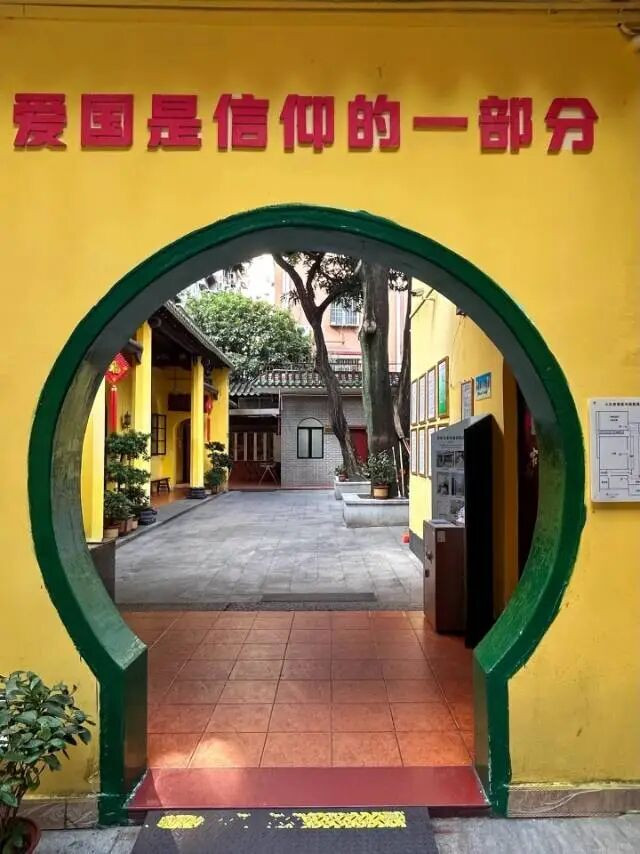
After centuries of epic changes and thoughtful renovations, it still rocks its ancient, dignified vibe. The architecture inside totally blends traditional Chinese and Islamic styles—think cool grey walls, dark tiles, awesome archways, and serene corridors. The courtyards are super peaceful and elegant, shaded by ancient trees, creating a calm and solemn atmosphere. The main prayer hall is simple yet grand, with intricate details showing off some serious craftsmanship, giving off quiet reverence and dignity everywhere you look.
This isn't just a spot for Muslims to offer dua and seek blessings; it's a living testament to Guangzhou's diverse culture and incredible ethnic harmony. Even though it's smack in the middle of a bustling city, it stays totally chill and untouched by the noise. Its ancient architecture holds centuries of faith and history, making it a peaceful, soulful cultural landmark in the old city.
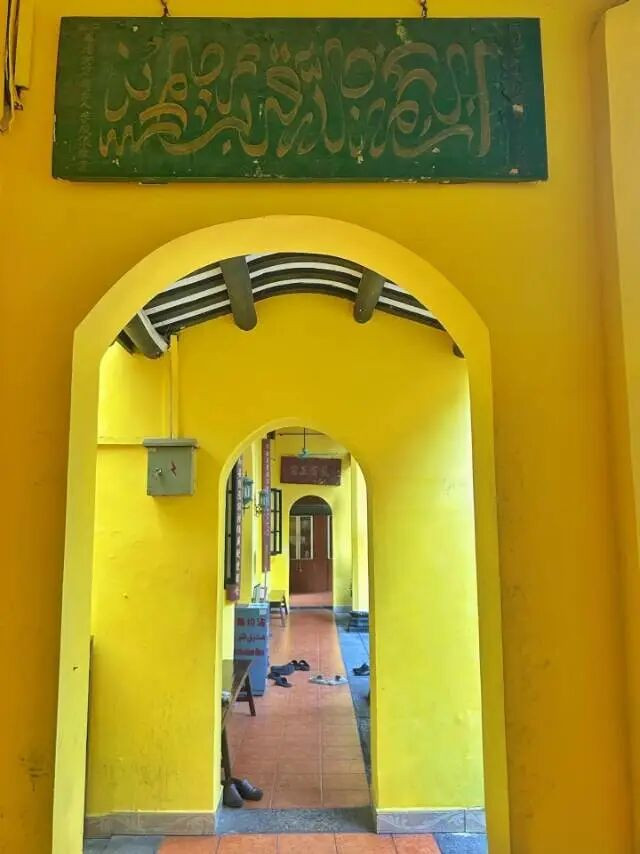
Xiaodongying Mosque
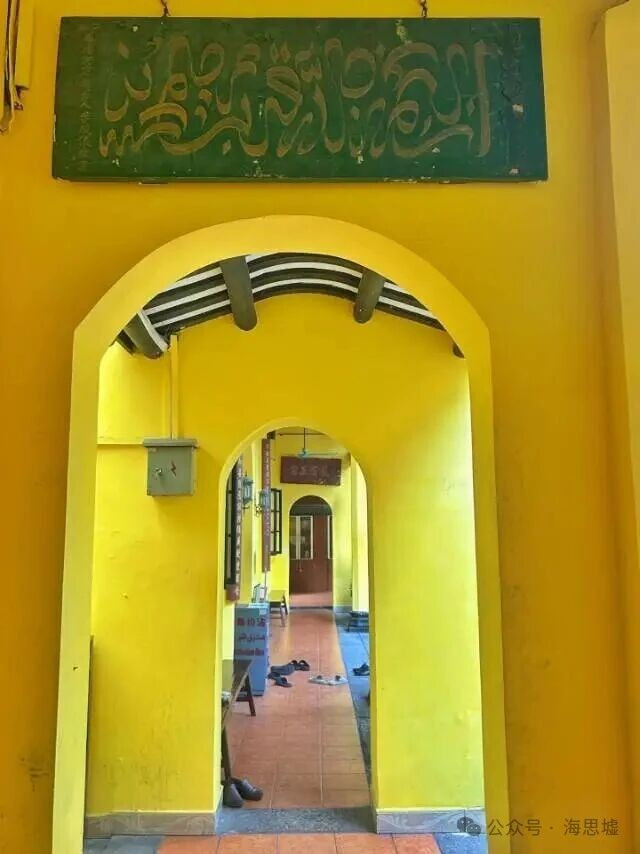
Getting there: Hop on the subway to Ximenkou Station, take Exit B, and it's about an 800-meter walk.
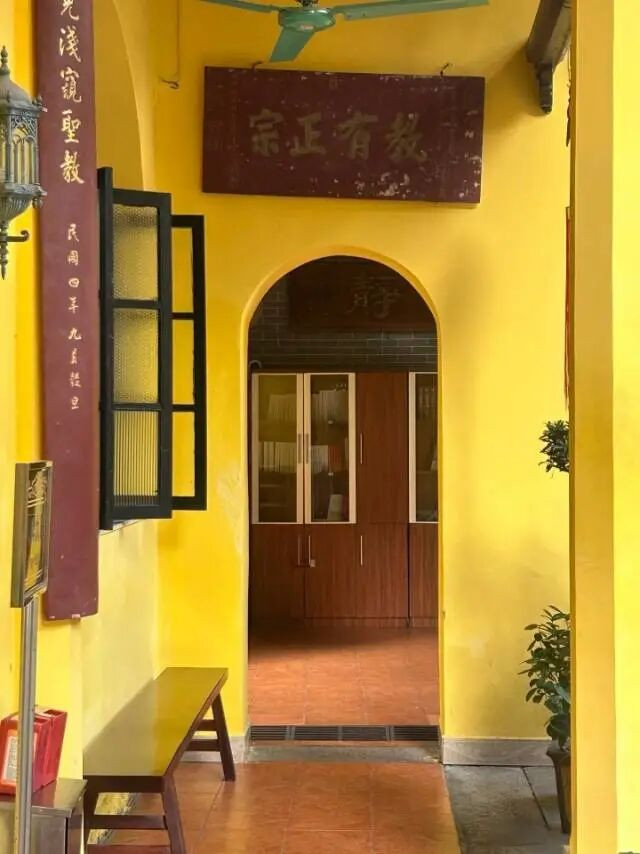
Looking for your next adventure inspiration? This spot is perfect for #GuangzhouWeekend plans, a #FreeAttraction you'll definitely want to capture with #PhotographyDaily. It's all about #Travel and soaking up those #OldStreetVibes, discovering #CitySecrets, finding #HiddenGems, and generally just #SlowDownAndDiscover the joys of #UrbanExploration.
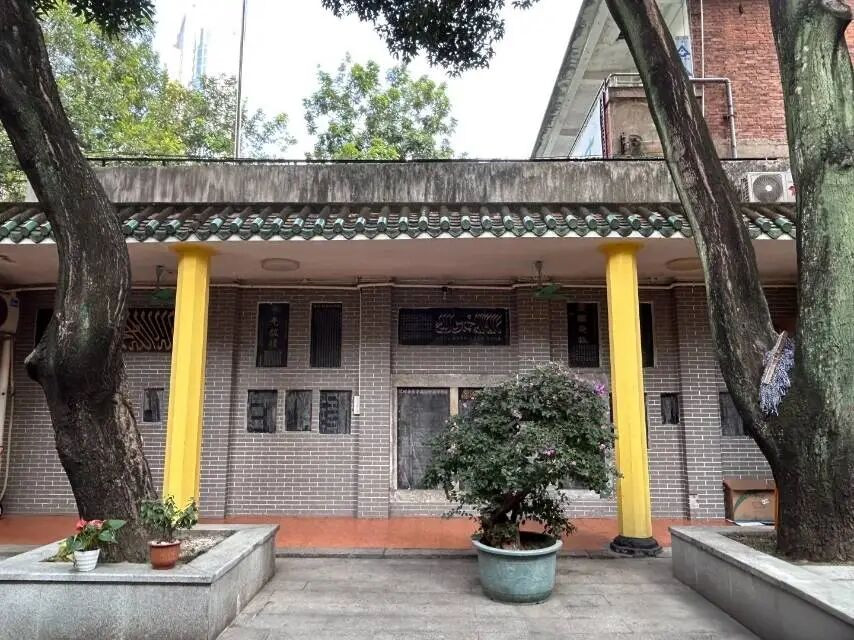
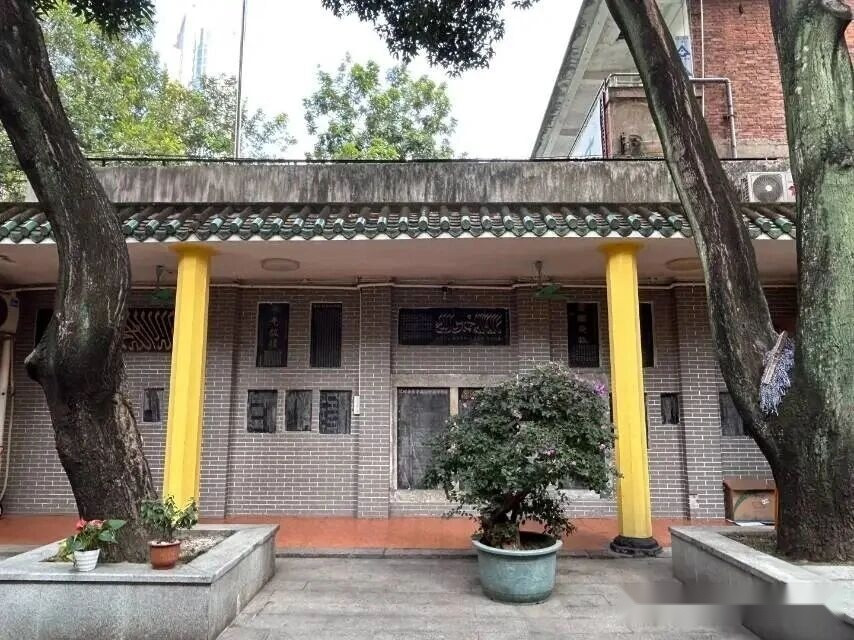
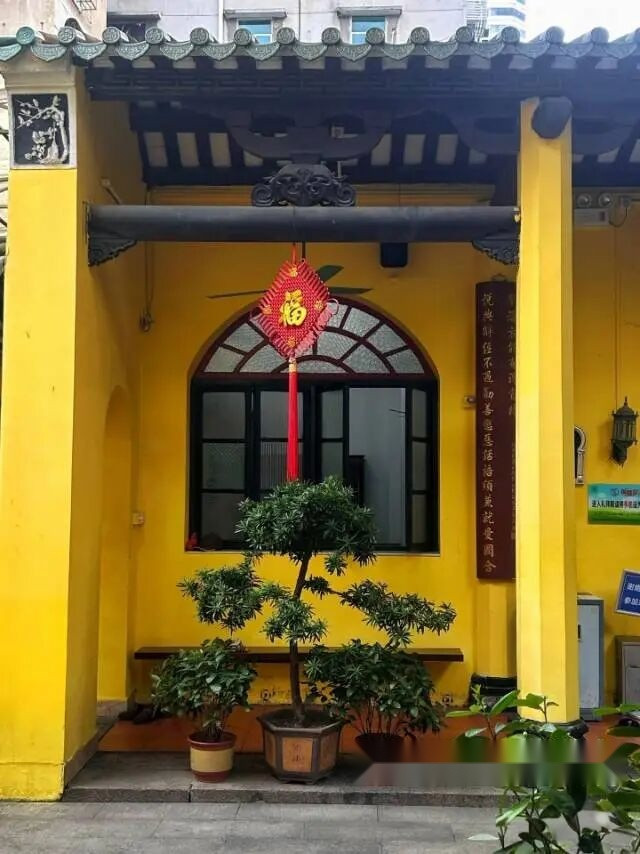
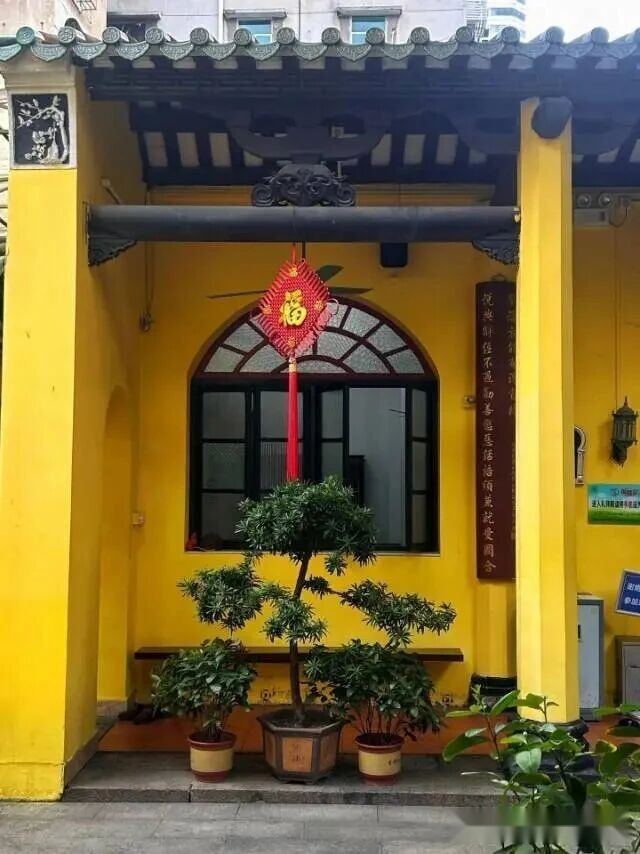
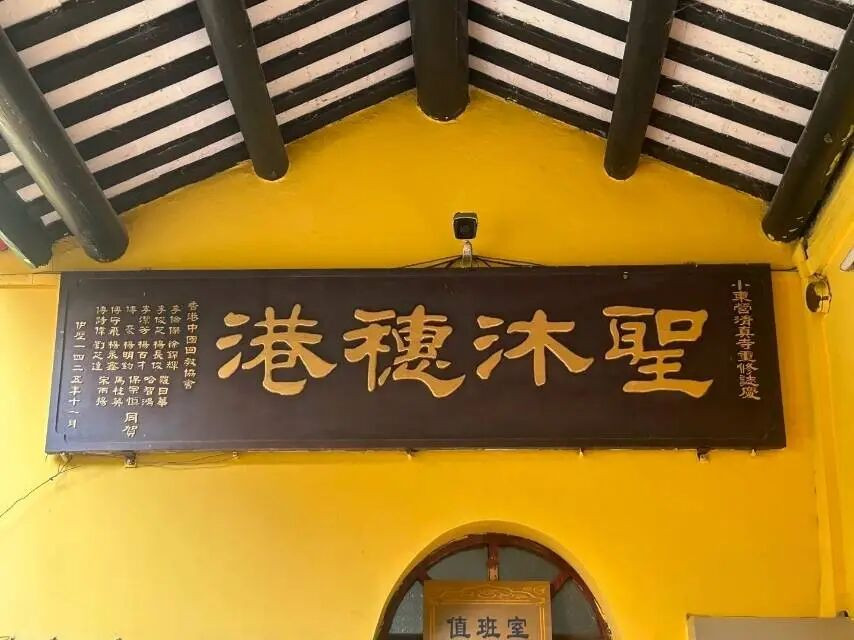
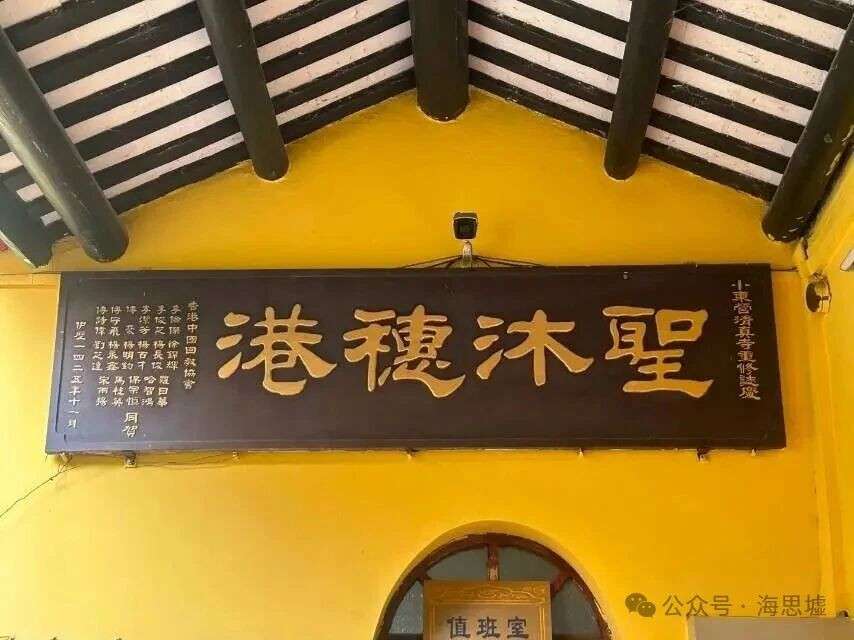
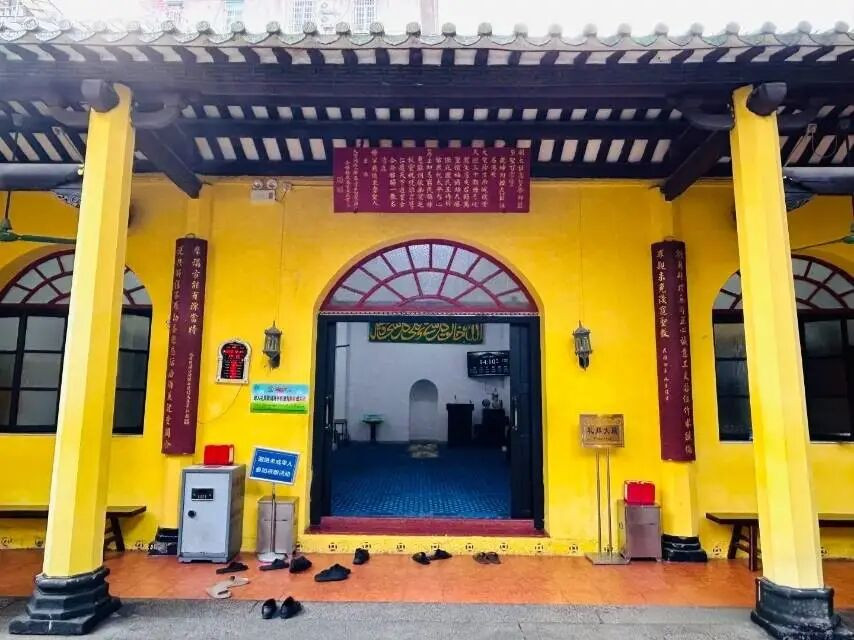
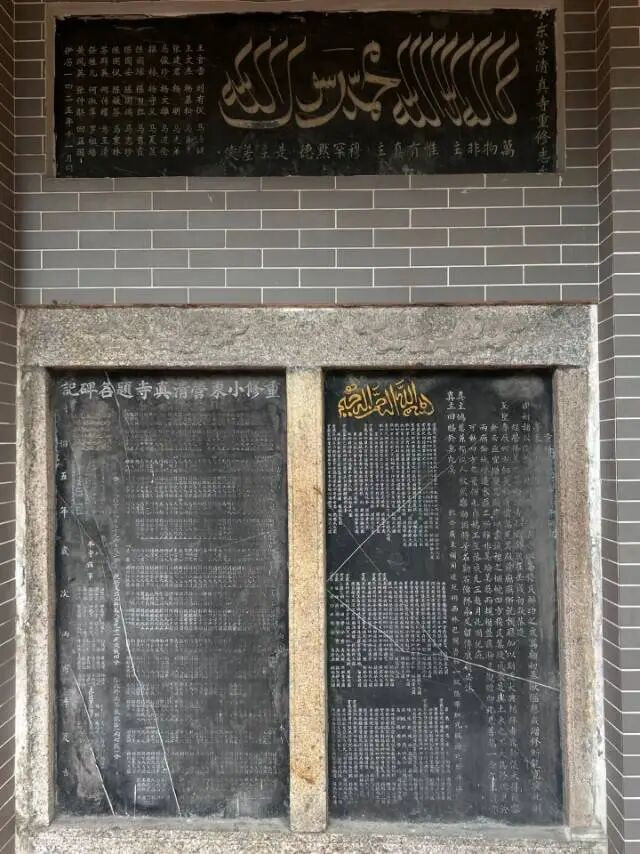
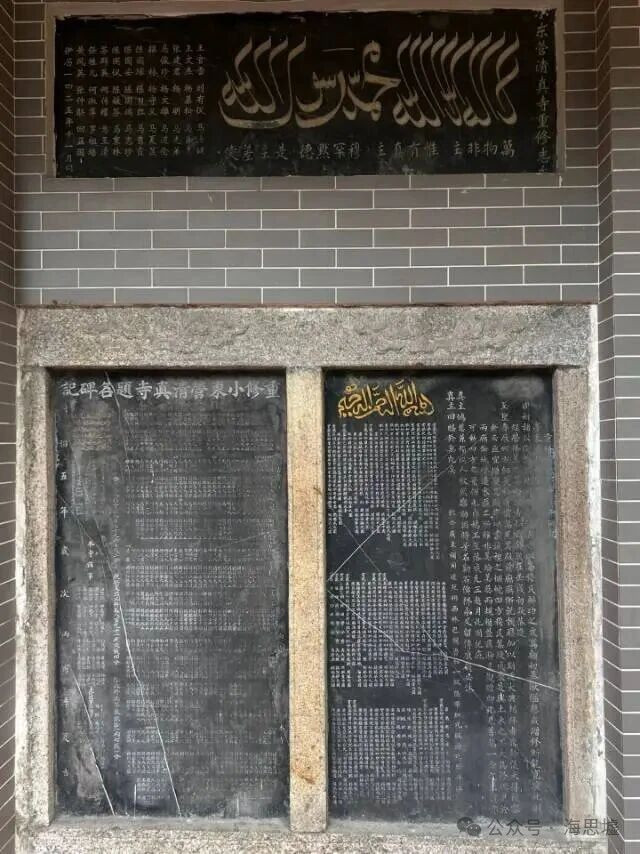
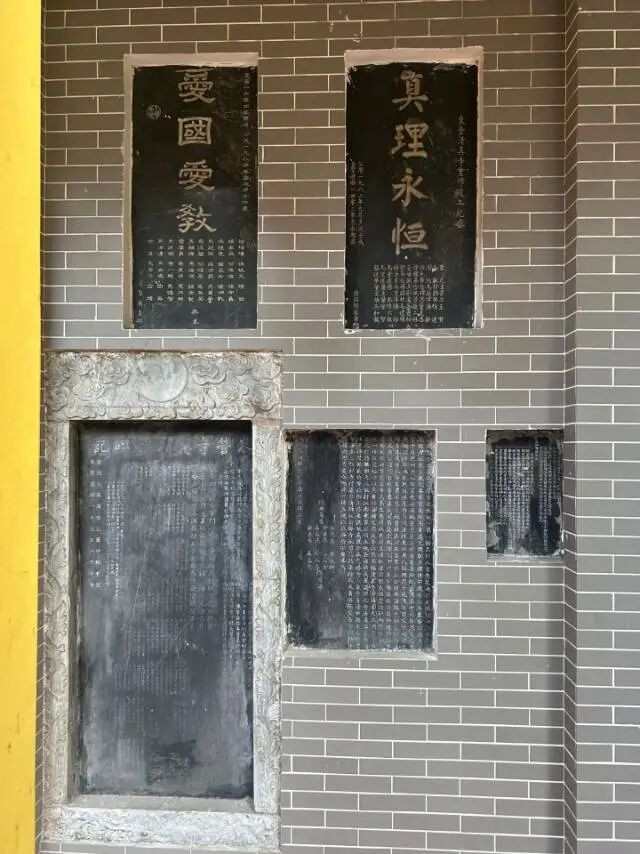
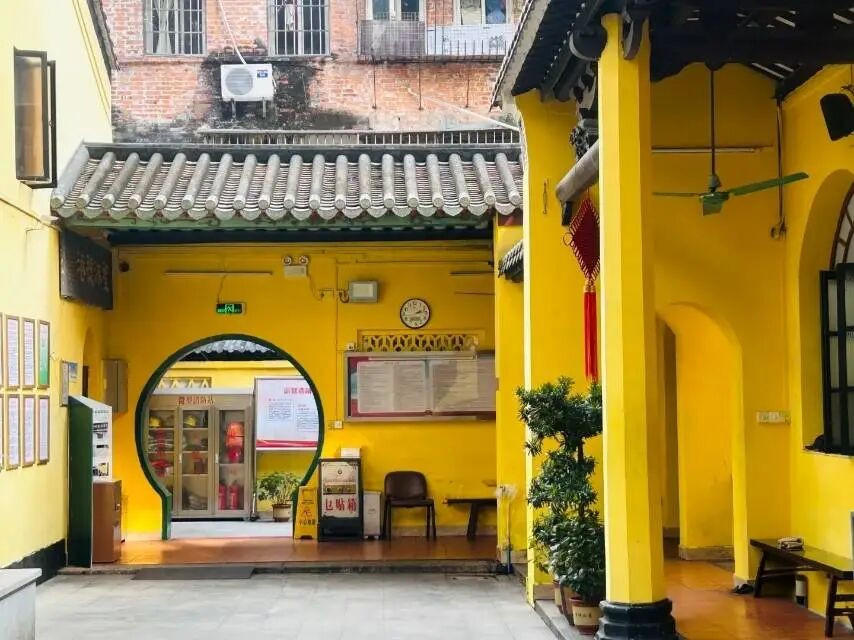 Collapse Read »
Checking Out Guangzhou's 500-Year-Old Xiaodongying Mosque: The Legend of its Ming Dynasty Hui Muslim Soldier Builders and Ancient Lingnan Courtyard Architecture
Here's the scoop:
We're taking a deep dive into Xiaodongying Mosque, tucked away in the historic alleys of Guangzhou's Yuexiu District. Get ready to explore its epic history, built by Ming Dynasty Hui Muslim garrison soldiers in Chenghua Year 4 (1468), and check out the halls that beautifully blend Lingnan courtyard aesthetics with Islamic architectural vibes.
Xiaodongying Mosque is chilling in the old alleys of Guangzhou's Yuexiu District. Founded in 1468, it's a super historic masjid.
It was actually built by Hui Muslim officers and soldiers stationed right here. Back in the day, Han Yong, the Viceroy of Liangguang (Guangdong and Guangxi), moved a massive number of troops from Nanjing to Guangzhou for military reasons. Among them were over 1,000 Hui Muslim soldiers! This Hui Muslim army set up camp in four spots, both inside and outside Guangzhou city: Dadong, Xiaodong, Xiying, and Zhuying, collectively known as the 'Huihui Camps' (Hui Muslim Camps). Fun fact: today's Xiaodongying Street is literally the original site of the Xiaodongying camp.
After centuries of epic changes and thoughtful renovations, it still rocks its ancient, dignified vibe. The architecture inside totally blends traditional Chinese and Islamic styles—think cool grey walls, dark tiles, awesome archways, and serene corridors. The courtyards are super peaceful and elegant, shaded by ancient trees, creating a calm and solemn atmosphere. The main prayer hall is simple yet grand, with intricate details showing off some serious craftsmanship, giving off quiet reverence and dignity everywhere you look.
This isn't just a spot for Muslims to offer dua and seek blessings; it's a living testament to Guangzhou's diverse culture and incredible ethnic harmony. Even though it's smack in the middle of a bustling city, it stays totally chill and untouched by the noise. Its ancient architecture holds centuries of faith and history, making it a peaceful, soulful cultural landmark in the old city.
Xiaodongying Mosque
Getting there: Hop on the subway to Ximenkou Station, take Exit B, and it's about an 800-meter walk.
Looking for your next adventure inspiration? This spot is perfect for #GuangzhouWeekend plans, a #FreeAttraction you'll definitely want to capture with #PhotographyDaily. It's all about #Travel and soaking up those #OldStreetVibes, discovering #CitySecrets, finding #HiddenGems, and generally just #SlowDownAndDiscover the joys of #UrbanExploration.
Collapse Read »
When Edgar Snow Stayed at QuDong Mosque: Yunnan Hui Muslim History & Red Footprints
[Internet Repost]
When Edgar Snow Stayed at Qudong Mosque: Yunnan's Hui Muslim History, Red Footprints, and Memories of Dali's Mosques
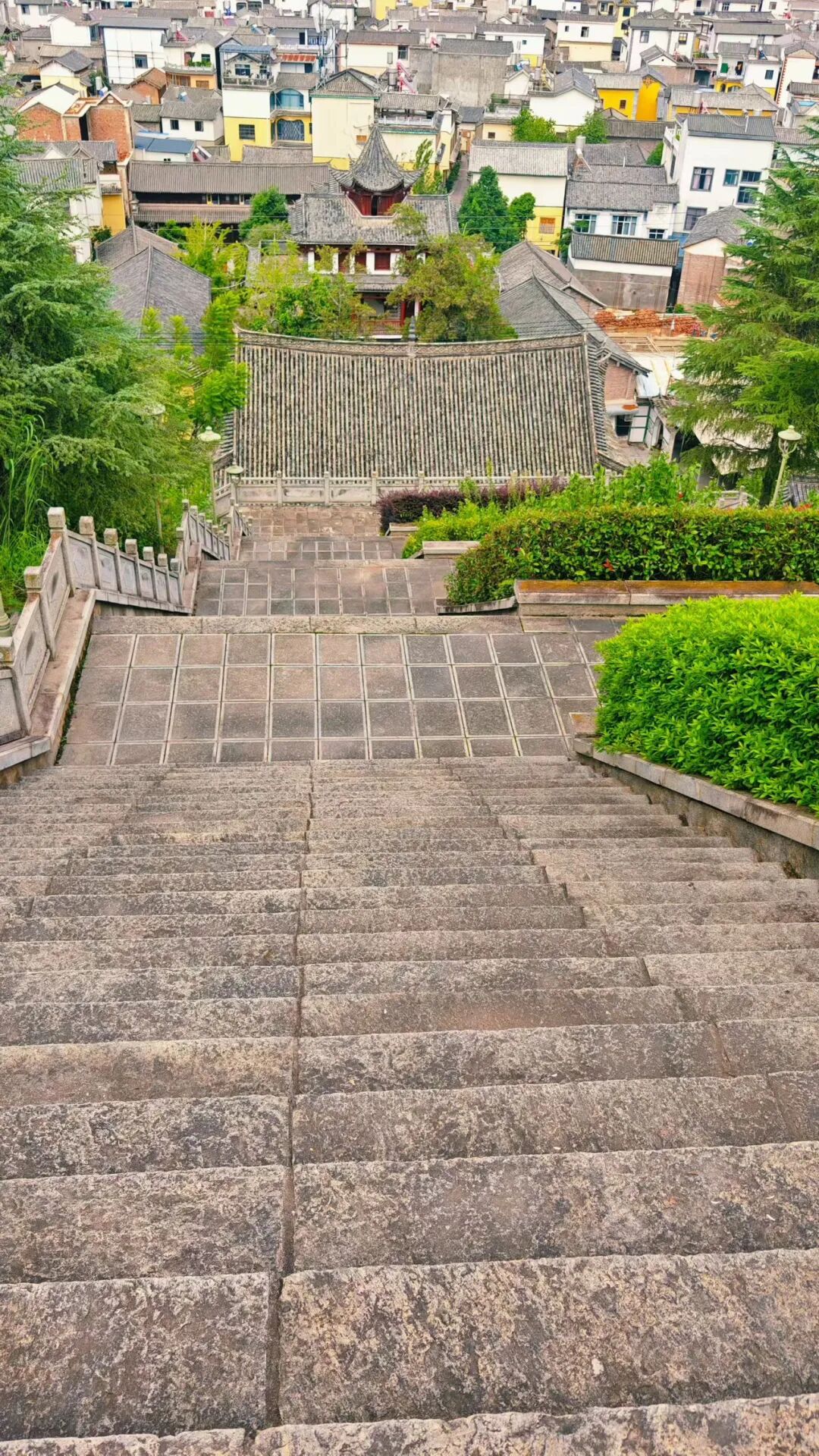
Abstract: This article compiles the main points of "When Edgar Snow Stayed at Qudong Mosque: Yunnan's Hui Muslim History, Red Footprints, and Memories of Dali's Mosques," preserving the original paragraph and image sequence. It is designed for readers searching for long-tail keywords related to the Qudong Mosque, Yunnan Hui Muslims, and Edgar Snow's footprints.
Edgar Snow (1905–1972) was one of the 20th century's most famous and influential American journalists and writers. Mao Zedong once remarked, "Mr. Snow was the first person to pave the way for establishing friendly relations." Party and state leaders like Zhou Enlai maintained close ties with Snow, utilizing him to broadcast the true conditions of the Red Army in Northern Shaanxi and the New China to the entire world, which played a monumental role in winning over people globally. His book Red Star Over China depicted the deeds of the Workers' and Red Army along with major historical events, opening a window for the entire world to truly understand the Chinese revolution. Under the White Terror, it was renamed Red Dust (published in Chinese as Xixing Miji) and widely circulated to every corner, inspiring a powerful chorus cheering for the Chinese revolution.
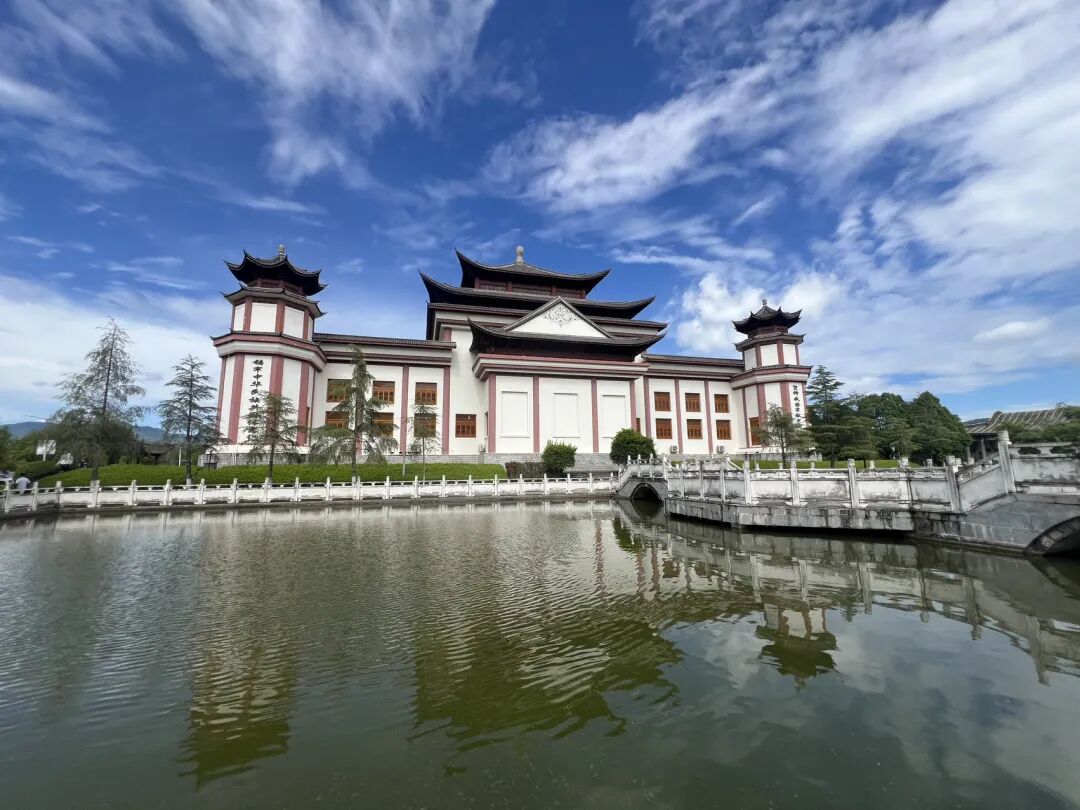
Prior to this, in 1931, Snow formed a small caravan consisting of six mules and horses along with three attendants in Dali. In his autobiography, he wrote, "I hoped to walk from China to Burma and then enter India." The copy of Caravan Travel I have on hand is a brilliant essay chronicling this journey, marking an important trajectory in his life. Writer Zhou Liangpei noted in the book's foreword that "it can be said to be a book unknown to many readers."
Perhaps because I am a Muslim, when I read one particular chapter, it sparked my immense interest and excitement. The title was: "The Reason Why I Was Able to Spend the Night in a Mosque Was Largely Due to a Nearly Forgotten Persian Idiom."
On February 22, 1931, following his small caravan into Yongping County, he stayed overnight at the Qudong Mosque (Qudong Mosque). In this article, from a unique perspective and with deep affection, he painted a captivating picture of the solemn, serene, and tranquil Qudong Mosque of that era. With down-to-earth and concise strokes, he sketched the scenery of the Qudong Mosque: "The minaret looked like a Chinese pagoda, except that the top was rectangular, gradually tapering to a point, crowned with a golden globe at the very top." Inside the mosque, it was "very clean, and poppies with pale purple and milky white flowers were planted in the courtyard."
With a reverent and deep affection, Snow vividly described the pious, solemn, and serene Asr prayer of the Qudong Muslims: fifty or sixty people gathered in the hall behind the minaret, "suddenly everyone fell silent, raising their eyes to look upward." A man in a white robe "stood on what should be called the balcony of the minaret," facing the sky dyed fiery red by the setting sun and the direction of Mecca, "raising both hands high and calling out the dua to Allah in a loud, rhythmic voice, repeating it three times." "Everyone followed the Imam in making dua inside the hall, which was fragrant with blooming flowers."
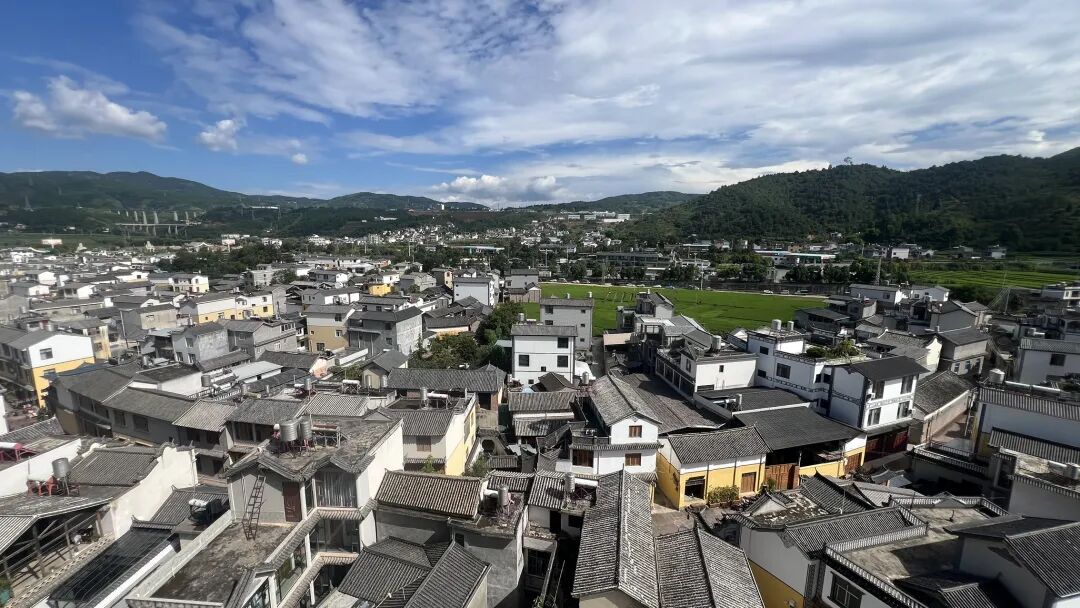
This article meticulously chronicled the dialogue, communication, and mutual understanding between him and the local Muslims—from initial rejection to a warm welcome—and vividly and philosophically described his boundless gratitude for being able to comfortably stay at the Qudong Mosque. The article transports us back to that vivid scene 79 years ago, where every sound and face felt palpable.
"I had just arrived and was already very tired. The inn had no empty rooms, and I wanted to stay here tonight." Yet, "upon seeing a foreigner, they were already shocked, and hearing this unusual request made them even more astonished." The responses he received were "No," "That's impossible," "There is no charcoal for you to make a fire," "This isn't an inn," and "No foreigner has ever stayed here before"... "Right at that critical moment," "I suddenly remembered a sentence I had memorized when I was studying Persian," and so he quickly said: "La ilaha illa Allah, Muhammad rasul Allah!" Obviously, this was a very inaccurate and awkward "Shahada" (Islamic declaration of faith). Yet, it was precisely this noble Shahada—the creed of Islamic faith—that instantly opened up the open-minded mentality of the Qudong Muslims. "They were greatly surprised and overjoyed," and "their attitude changed," becoming extremely friendly. Immediately, "they called a gatekeeper," "immediately brought water and charcoal," and "cleaned up a small attic" to accommodate him. Snow shouted with ecstatic joy, "No pork for dinner tonight!" "Several Imams laughed." Viewed through today's perspective, this was a positive, civilized dialogue of mutual respect, communication, and harmony achieved among people of different countries, ethnicities, faiths, and values. It could also be said to be the practical embodiment of the philosophy of "harmony in diversity" within Hui Muslim culture, while vividly demonstrating that one does not abandon their own faith for the sake of "harmony."
Snow's overnight stay was a culturally significant event in the history of the Qudong Mosque—ordinary yet extraordinary, extraordinary yet ordinary. After experiencing the unique charm and eternal humanistic spirit of an exotic mosque, he passionately wrote this article, which was published in the New York Sun on September 1, 1931. It forever anchors the scene in the space-time of history, becoming an unalterable and un-re-creatable piece of history, leaving us with an understanding and artistic inspiration that will endure forever. Collapse Read »
When Edgar Snow Stayed at Qudong Mosque: Yunnan's Hui Muslim History, Red Footprints, and Memories of Dali's Mosques
Abstract: This article compiles the main points of "When Edgar Snow Stayed at Qudong Mosque: Yunnan's Hui Muslim History, Red Footprints, and Memories of Dali's Mosques," preserving the original paragraph and image sequence. It is designed for readers searching for long-tail keywords related to the Qudong Mosque, Yunnan Hui Muslims, and Edgar Snow's footprints.
Edgar Snow (1905–1972) was one of the 20th century's most famous and influential American journalists and writers. Mao Zedong once remarked, "Mr. Snow was the first person to pave the way for establishing friendly relations." Party and state leaders like Zhou Enlai maintained close ties with Snow, utilizing him to broadcast the true conditions of the Red Army in Northern Shaanxi and the New China to the entire world, which played a monumental role in winning over people globally. His book Red Star Over China depicted the deeds of the Workers' and Red Army along with major historical events, opening a window for the entire world to truly understand the Chinese revolution. Under the White Terror, it was renamed Red Dust (published in Chinese as Xixing Miji) and widely circulated to every corner, inspiring a powerful chorus cheering for the Chinese revolution.
Prior to this, in 1931, Snow formed a small caravan consisting of six mules and horses along with three attendants in Dali. In his autobiography, he wrote, "I hoped to walk from China to Burma and then enter India." The copy of Caravan Travel I have on hand is a brilliant essay chronicling this journey, marking an important trajectory in his life. Writer Zhou Liangpei noted in the book's foreword that "it can be said to be a book unknown to many readers."
Perhaps because I am a Muslim, when I read one particular chapter, it sparked my immense interest and excitement. The title was: "The Reason Why I Was Able to Spend the Night in a Mosque Was Largely Due to a Nearly Forgotten Persian Idiom."
On February 22, 1931, following his small caravan into Yongping County, he stayed overnight at the Qudong Mosque (Qudong Mosque). In this article, from a unique perspective and with deep affection, he painted a captivating picture of the solemn, serene, and tranquil Qudong Mosque of that era. With down-to-earth and concise strokes, he sketched the scenery of the Qudong Mosque: "The minaret looked like a Chinese pagoda, except that the top was rectangular, gradually tapering to a point, crowned with a golden globe at the very top." Inside the mosque, it was "very clean, and poppies with pale purple and milky white flowers were planted in the courtyard."
With a reverent and deep affection, Snow vividly described the pious, solemn, and serene Asr prayer of the Qudong Muslims: fifty or sixty people gathered in the hall behind the minaret, "suddenly everyone fell silent, raising their eyes to look upward." A man in a white robe "stood on what should be called the balcony of the minaret," facing the sky dyed fiery red by the setting sun and the direction of Mecca, "raising both hands high and calling out the dua to Allah in a loud, rhythmic voice, repeating it three times." "Everyone followed the Imam in making dua inside the hall, which was fragrant with blooming flowers."
This article meticulously chronicled the dialogue, communication, and mutual understanding between him and the local Muslims—from initial rejection to a warm welcome—and vividly and philosophically described his boundless gratitude for being able to comfortably stay at the Qudong Mosque. The article transports us back to that vivid scene 79 years ago, where every sound and face felt palpable.
"I had just arrived and was already very tired. The inn had no empty rooms, and I wanted to stay here tonight." Yet, "upon seeing a foreigner, they were already shocked, and hearing this unusual request made them even more astonished." The responses he received were "No," "That's impossible," "There is no charcoal for you to make a fire," "This isn't an inn," and "No foreigner has ever stayed here before"... "Right at that critical moment," "I suddenly remembered a sentence I had memorized when I was studying Persian," and so he quickly said: "La ilaha illa Allah, Muhammad rasul Allah!" Obviously, this was a very inaccurate and awkward "Shahada" (Islamic declaration of faith). Yet, it was precisely this noble Shahada—the creed of Islamic faith—that instantly opened up the open-minded mentality of the Qudong Muslims. "They were greatly surprised and overjoyed," and "their attitude changed," becoming extremely friendly. Immediately, "they called a gatekeeper," "immediately brought water and charcoal," and "cleaned up a small attic" to accommodate him. Snow shouted with ecstatic joy, "No pork for dinner tonight!" "Several Imams laughed." Viewed through today's perspective, this was a positive, civilized dialogue of mutual respect, communication, and harmony achieved among people of different countries, ethnicities, faiths, and values. It could also be said to be the practical embodiment of the philosophy of "harmony in diversity" within Hui Muslim culture, while vividly demonstrating that one does not abandon their own faith for the sake of "harmony."
Snow's overnight stay was a culturally significant event in the history of the Qudong Mosque—ordinary yet extraordinary, extraordinary yet ordinary. After experiencing the unique charm and eternal humanistic spirit of an exotic mosque, he passionately wrote this article, which was published in the New York Sun on September 1, 1931. It forever anchors the scene in the space-time of history, becoming an unalterable and un-re-creatable piece of history, leaving us with an understanding and artistic inspiration that will endure forever. Collapse Read »
The Hui Muslim Caravan Trails of Yunnan: Trade, Culture & History
[Internet Repost]
The Hui Muslim Caravan Trails of Yunnan: Muslim Merchants, Caravan Culture, and Southwest Transportation History
Abstract: This article compiles the key points from the original text "The Hui Muslim Caravan Trails of Yunnan: Muslim Merchants, Caravan Culture, and Southwest Transportation History," maintaining the original sequence of paragraphs and images. It is tailored for readers searching for long-tail keywords such as Hui Muslim caravans, the Ancient Tea Horse Road, and Yunnan Muslims.
Ma Chongwen
Abstract: Before the advent of modern highways and railways, Yunnan Hui Muslim caravans braved the notoriously treacherous, miasma-filled terrain of the southwest, overcoming immense hardships to reach various parts of the southwest and Southeast Asia. Through trade, they connected people of different ethnic groups, fostering deep bonds. Hui Muslim caravans have a long-standing history of contributing to China's transportation and foreign trade, leaving an indelible mark on the motherland.
Keywords: Ancient Tea Horse Road, Hui Muslim Caravans, International Trade
Caravans were a unique form of transportation in China's vast southwest and the primary method of conveyance along the Ancient Tea Horse Road. The existence and operation of Hui Muslim caravans date back at least a thousand years. To this day, these caravans continue to toil in regions where highways are absent or transportation remains difficult, forming a deeply unique social group.
As the era of the caravan draws to a close, examining the Hui Muslim caravans in our study of Hui culture holds both profound historical significance and practical relevance.
I. The Formation of Hui Muslim Caravans
First, the Hui Muslim caravans were a product of history. In the 13th century, during Genghis Khan's western campaigns, a large number of Central Asian Muslims, Persians, and Arabs were forced to relocate to China. Because these incoming Huihui people lacked arable farmland, very few engaged in agriculture, and those who did struggled to make ends meet. Consequently, they turned to commerce to survive, quickly developing into a formidable trading force that relied primarily on horse and camel caravans. Take Weishan, Yunnan, for example: after Du Wenxiu's Hui uprising failed, the majority of Hui people became tenant farmers. Unable to survive on agriculture alone, they turned to trading and commerce. According to pre-liberation archival records and grassroots surveys, 15 villages maintained over 150 caravan troupes; 884 households raised more than 9,500 horses and mules, trekking along the Ancient Tea Horse Road and the Bonan Ancient Road (stretching from Chengdu, Kunming, Chuxiong, Xiangyun, Dali, Weishan, Yongping, Baoshan, Tengchong, and onward through Burma to India). Historical texts refer to this as the "Second Silk Road," which is one of the historical reasons why the Hui people excel at commerce.
Second, during the formation of the Hui ethnic group, they absorbed many Arab and Persian Muslim merchants. Starting from the Tang dynasty, numerous Arab and Persian merchants came to China to trade. During the Yuan dynasty, Semu people enjoyed relative freedom in trade in China, and the scale of these early Huihui ancestors surpassed that of any other ethnic merchant group. These foreign Muslim merchants accounted for a substantial proportion of the Hui population. Family genealogies of Sayyid Ajjal preserved by Ma Shangwen in Daweigen and Ma Youliang in Sanchiacun, Weishan, are sufficient proof of this. This is another reason why the Hui people are skilled in business.
Third, the religious factor. The vast majority of Hui people practice Islam. The Prophet Muhammad engaged in trade alongside his uncle during his youth, and Islam holds a favorable view of commerce. The Quran states: "Allah has permitted trade and forbidden usury." This religious doctrine encouraged and facilitated the growth of commercial endeavors among the Hui. Furthermore, Islamic teachings encourage believers to travel and migrate, providing a religious basis for the caravan drivers. Many Hui people operated caravan trades, and over time, a folk proverb emerged: "Han Chinese own the fields, Bai people own the valleys, and Huihui run the caravans and do business."
Fourth, Hui people excel at raising horses. The world's finest horse breed, the Arabian horse, was introduced to Dali through trade. Through the selective breeding efforts of the Huihui people, a famous Chinese horse breed native to Yunnan was developed: the Dali horse. Small, sturdy, resilient, adept at navigating mountain trails, and easy to train, the Dali horse became renowned. Since the Tang and Song dynasties, horse markets flourished, and Tea-Horse Offices were established to exchange tea for salt and horses. The development of the Dali horse fostered a long-standing tradition of horse-raising among various ethnic groups, making horses the primary mode of transportation along the Ancient Tea Horse Road.
II. The Spirit and Characteristics of Hui Muslim Caravans
The risks undertaken by the Hui Muslim caravans along the Ancient Tea Horse Road were legendary, and their most prominent characteristic was their adventurous spirit. Even today, the so-called heroic feats of professional adventurers pale in comparison to the caravan life of the old Ancient Tea Horse Road. First, there were business risks. The highly unstable political climate only heightened these dangers. While some grew wealthy through caravan trade, most worked for a lifetime and still ended up with nothing. Second, there were the hazards of harsh nature. The various routes traversed by the caravans presented extreme natural perils: wind, frost, rain, snow, towering mountains, rushing rivers, toxic plants, poisonous water, wild beasts, venomous insects, and epidemics could snuff out a caravan at any moment. Spending the vast majority of their time living in the wild was a severe test for any caravan driver (*ganma ren*) or caravan leader (*guotou*). Countless drivers and leaders were laid to rest in foreign lands. Third was the threat of bandits and robbers. At the time, banditry was rampant in the southwest. Although the caravans were fully armed, they were frequently attacked by bandits, resulting in constant loss of life and cargo. This extraordinary survival environment forged and defined the adventurous spirit of the caravans. Thus, running a caravan meant courting danger—it was literally risking one's neck to earn a living.
Caravans required not just a taste for adventure, but unwavering faith, extraordinary daring, relentless perseverance, immense courage, exceptional wisdom, and a host of other virtues. Putting all their trust in Allah, caravans of many other ethnic groups were eager to team up with the Hui Muslim caravans, which perfectly embodied these exact qualities.
III. Organization and Transport Methods of Hui Muslim Caravans
Caravans operated under strict organization and rules. Whether funded by pooled capital or operated independently, all operations were unified under the leadership of major bosses and caravan leaders (*guotou*). The *guotou* was the head of the transport merchant troupe, generally renowned for their impeccable reputation. A caravan organization included veterinarians, grooms, repairmen, and horseshoers. To defend against bandit raids when traveling to remote frontier regions, several or even dozens of caravans would band together, traveling in large groups while heavily armed. Caravans employed specialists to beat bronze gongs (*mangluo*) to signal and coordinate the pack animals, and carried specialized flags for identification. The lead mule or horse, known as the lead mule (*touluo*), wore a large bell around its neck, while the second mule wore a string of smaller bells. The heads of both the first and second mules were fitted with bridles and draped with colorful ribbons, making them look both striking and magnificent.
According to archival records from 1913, Yunnan province boasted a total of over 19,000 caravan pack animals. The western Yunnan route accounted for the lion's share with about 9,000 animals, of which Menghua (Weishan) alone contributed over a thousand.
Between 1911 and 1923, along the Xiaguan to Tengchong section, large Hui caravans from Weishan—run by figures like Ma Caiting and Ma Ruji—managed up to over 2,000 pack horses. Before highways were built, pack horse transport played a crucial role in developing the economy and fueling foreign trade.
During the Republic of China era, the Hui region of Weishan housed 29 soap-dyeing workshops operated by families producing soap-dyed homespun cloth and bleached fabrics, which were shipped far and wide across Yunnan. There were 7 leather processing factories whose goods were transported and sold throughout the province and abroad. More than 10 workshops produced ethnic gold and silver jewelry for Yunnan's ethnic minority communities.
Weishan's Hui community maintained over 150 large and small caravans, with 884 households raising more than 9,500 horses and mules. Among them, Huihuideng alone accounted for 44 caravans comprising over 2,000 horses and mules. Around 1920, Hui Muslim caravans primarily engaged in the tea trade. Ma Caiting of Yanqichang originally opened the "Yunhua Salt Firm" in Xiaguan, wholesaling table salt while trading in tea and cotton yarn. He personally owned 140 mules and horses, hiring over a dozen caravan hands to trade across Fengqing, Yunxian, Baoshan, and Kunming. On each trip from Baoshan, he imported about 140 loads of foreign cotton yarn to sell in Xiaguan, while transporting Xiaguan table salt and other goods to Weishan, Fengqing, and other frontier areas. His capital exceeded 100,000 silver dollars (*banjun*), and he later purchased a large courtyard residence in Kunming. Ma Caiting and his brother Ma Caichen won the favor of Yunnan Provincial Chairman Long Yun. Long Yun formed a sworn brotherhood alliance with Ma Caiting and appointed him as the director of the Yunnan Provincial Transportation Bureau, making him a pillar of the provincial unified transport administration. The family owned over 1,000 horses and mules, deployed vast funds to purchase large quantities of horses for Long Yun's transport operations, and traveled extensively between Chongqing in Sichuan, Xichang, Huili, Baise in Guangxi, Simao and Pu'er in Yunnan, Burma, Tibet, and Vietnam.
The six major caravans of Huihuideng—led by Hu Liangxian, Zhu Yingtang, Mi Wenyying, Hu Dechen, Zhu Yutai, and Ma Mingchong—owned upwards of 250 pack mules, with each caravan holding capital exceeding 10,000 silver dollars (*banjun*).
Dali Fengyi caravan leader Ma Guozhu commanded nearly 100 horses and mules, armed to escort anti-Japanese war supplies, with his lead mule flying the order flag of the 60th Army.
Hui Muslim caravans were versatile and multi-talented, earning high praise and trust from officials, governments, and wealthy bosses. A single person could handle five horses; caravan drivers knew how to raise and feed horses, and were capable of wielding rifles to fight off bandit attacks. A single mule or horse could carry 100 kilograms of cargo such as cotton yarn. Consequently, the Weishan Hui caravans consistently earned widespread social acclaim and trust. During the Daoguang era of the Qing dynasty (1821–1850), famous Weishan Hui caravan leaders (*guotou*) included: Ma Chaozhen from Xiaoweigen, who owned 120 horses, operated a sulfur plant, and served as a rear general in Du Wenxiu's uprising army; Ma Tianyou from Daweigen, who owned over a hundred horses and mules dedicated to transport, was public-spirited and charitable, and invested in his hometown by funding the construction of the Zijin Township Shangshujie Suspension Bridge over the river. Having served as a vanguard general in Du Wenxiu's uprising army, when ordered to garrison Shanggang, he used his own caravans to pack in stone materials to build the Shanggang city walls; Ma Wanyou from Mamichang, who worked as a miner and mine manager at Lingtaishan, owned 120 horses, and frequently transported copper to Sichuan; and "Old Man Mi" from Huihuideng, who operated transport with dozens of horses.
IV. Hui Muslim Caravans Contribute to the War of Resistance Against Japanese Aggression
Between 1938 and 1945, mobilized by military-civilian cooperation stations and the Islamic National Salvation Association, Huihuideng Association President Ma Yaotang mobilized Hui Muslim caravans to throw themselves into transporting military supplies for the War of Resistance. The Hui-dominated caravans of Menghua (Weishan) made monumental contributions to saving the nation and the people by participating in the all-out national war of resistance. Hui imams used Islamic doctrine—arguing that "for the survival of the nation and the people, one must propagate the spirit of Jihad"—to motivate the caravans to join the wartime transport effort. In the spring of 1942, invading Japanese forces in Burma advanced into Wanting, Longling, and Tengchong. The Huitong Bridge was bombed and destroyed, plunging the Yunnan-Burma Highway corridor into extreme chaos. At that time, 15,000 tons of military industrial supplies remained stockpiled in Baoshan, alongside 5,000 tons in Xiaguan, urgently needing to be rushed to Kunming. Ma Tingbi of the Xiaguan Courier Station accepted this emergency mission, rushing to the Hui-concentrated and caravan-heavy regions of Menghua, Yongping, and Yangbi counties to ask Hui elders and religious leaders to summon caravan labor. The organization went off without a hitch, instantly mobilizing 700 pack horses from Menghua and 500 from Yongping County, all led by Hui caravan leaders. Originally, the Baoshan stockpile was scheduled to be moved at a rate of 3,000 tons per month over five months, but the task was completed in a mere 120 days. The Xiaguan stockpile was cleared by 1,000 horse-drawn carts organized by Kunming in just 72 days. According to statistics, along the 605-kilometer Yunnan Post section of the Yunnan-Burma trunk line, pack horses totaled 3,700, with Menghua contributing 700—accounting for roughly one-fifth of the entire line. Cargo transported between 1939 and 1945 included imported military supplies, cotton yarn, textiles, and petty merchandise coming through Wanting, while exports through Wanting included tung oil, Chinese gallnuts, hog bristle, yellow raw silk, and medicinal herbs. Intra-provincial transport of table salt, cooking oil, tea, and coal relied entirely on large fleets of caravans, with Menghua caravans playing a pivotal role.
Following liberation, a large number of Weishan Hui caravans contributed significantly to supporting the march into Tibet, aiding Zhongdian, and wiping out the remnants of bandits in Xiaoliangshan, successfully completing the transport missions for the People's Liberation Army stationed in Tibet.
V. Yunnan Hui Muslim Caravans and Domestic and Foreign Trade
Famed caravans that travelled far and wide and reaped profits from transport successively established commercial houses in cities, evolving into integrated operations encompassing transport, storefronts, and marketing. Wealthy Hui tycoons Ma Mingkui and Ma Mingxiang from Dali were both imperial scholars (*jinshi*) during the Qing dynasty who abandoned official careers for commerce. Their family owned over a dozen caravans comprising hundreds of horses, along with massive commercial storefronts spanning Bhamo (Mandalay) and Yangon in Burma, Xufu and Chengdu in Sichuan, and Kunming and Baoshan within the province. Xiaguan alone housed six major trading firms: Yutai, Tailai, Yonghe, Lianxingchang, and Fuchun. These were massive commercial establishments featuring four-tier courtyards complete with cargo warehouses, accounting rooms, and horse stables, trading actively between Sichuan, Xiaguan, Baoshan, and Burma.
The "Sangsheng" firm of the Ming, Zhu, and Ma families in Tengchong not only commanded a caravan of over a hundred horses but possessed formidable commercial strength, maintaining close ties with the trading networks of Weishan, Dali, and Yongping. Tea stood out as one of the primary goods transported and traded by the caravans. During the Qing dynasty, the Mu Zhengming family of Shunning (Fengqing) owned over a thousand mu of tea plantations alongside more than a hundred horses and mules, transporting over 400 loads of tea annually to sell in Xiaguan and Menghua (Weishan), while hauling salt and other commodities back from Xiaguan to sell in Fengqing, Shunning, and Ninglang (Lincang).
More than ten caravan teams from the Ma and Xue families in Mengting, Changning, transported over 200 packs of tea every year to Xiaguan and Menghua (Weishan) to sell. Before liberation, Xiaguan and Dali had virtually become the distribution centers for the tea and salt trade in western Yunnan.
In 1938, Bai Liangcheng from Shadian opened the "Sipu District Tea Experimental Farm" around Simao and Pu'er, pioneering Yunnan's very first factory-produced black tea. With the development of the caravan transport business, Hui Muslim traditional medicine and Western medicine in various parts of Yunnan also flourished, giving rise to a batch of traditional Chinese-Western pharmacies and veterinary stations. Famous pharmacies included "Wansong Caotang," "Yuqiao Pharmacy," and "Aiguo Pharmacy," which featured three practitioners of traditional Chinese medicine, one Western medical doctor, and four veterinarians. Notable figures included the renowned doctor Mu Chongren in Baoshan and the bone-setting specialist Ma Shimei in Changning. Along Yunnan's caravan routes, Hui Muslim veterinary stations were set up at every stop. Famous veterinarians included the father-and-son duo Liu Houzhai and Liu Dianyang (from Kunming), Yang Kaike (from Binchuan), Lu Jinchen (from Kunming), and Yang Yiqing (from Dali), among others. Every caravan hub and post station was equipped with a veterinary station.
Hui Muslim caravan merchants and traders also opened up international trade routes.
During the War of Resistance Against Japanese Aggression, Yunnan became the grand rear base for the national war effort and the Burma Campaign. The formidable Hui Muslim caravan teams formed an essential transport lifeline for wartime supplies, rushing across vast regions spanning Yunnan, Myanmar, Thailand, and Vietnam. They shouldered the heavy responsibility of transporting supplies from Allied nations to support China's resistance, and many Hui Muslim merchants established business firms and settled down abroad. These caravan traders ventured beyond the borders and put down roots overseas.
After the reform and opening up, although the horse caravan was no longer the primary mode of transportation, inspired by the Party and state's enrichment policies, the villagers of Donglianhua maintained their love for horses, raised livestock, and expanded family-run breeding businesses. Many descendants of old caravan drivers organized themselves, collecting mules and horses raised by neighboring villagers and transporting them by trucks to remote mountainous areas and neighboring Myanmar to sell to border residents with limited access to transportation, partnering up in the mule-trading business. This not only found a market for the breeders and provided convenience for border residents buying mules and horses, but it also turned a profit for them, boosting their economic income.
Today, along the Ancient Tea Horse Road pioneered by our ancestors thousands of years ago, the sight of marching caravan teams is gone, the crisp and melodious sound of bronze bells has faded into the distance, and the ancient fragrance of tea leaves drifting on the wind has dissipated. However, the footprints and horse-hoof impressions left behind by our forebears on the Tea Horse Road, along with our lingering, intricate memories of antiquity, have transformed into a lofty entrepreneurial spirit shared by all descendants of the Chinese nation. This relentless, unyielding fighting spirit will carve out eternal monuments in the developmental history of the Chinese nation, shining with the glory and splendor of our people for thousands of generations to come.
VI. Conclusion
In summary: Wherever there were Hui Muslim villages in Yunnan, people raised horses and mules and ran caravans. Through sheer hardship, Hui Muslim people traveled with their caravans to various parts of the Southwest and Southeast Asian countries, connecting people of all ethnic groups through trade and forging deep bonds. The Hui Muslim caravans boast a long history in our motherland's transportation sector and foreign trade, making profound contributions to friendship between China, Southeast Asia, and Arab nations.
The Hui Muslim caravans deepened the bonds between various ethnic groups, promoted commodity exchange and cultural communication among them, and brought advanced inland and foreign technologies into the region. They boosted Yunnan's international trade activities. With a 4,060-kilometer border sharing limits with multiple Southeast Asian countries, Yunnan's historical Hui Muslim caravans paved the way for early exchanges with Southeast Asia and the Arab world. Today, with convenient transportation and people freely interacting, Yunnan enjoys unique advantages and conditions in implementing its "go global" strategy and building itself into China's "bridgehead" facing Southeast Asia. This carries profound historical significance not only within that past historical context, but also practical relevance for today's Scientific Outlook on Development put forward by the Party Central Committee—developing the economy, jointly creating a socialist harmonious society, and fostering harmony between individuals, among ethnic groups, across different religions, and between nations.
(The author is a veterinarian and expert receiving a special government allowance from the State Council, former president of the Weishan County Hui Culture Association, and a Hajji.) Collapse Read »
The Hui Muslim Caravan Trails of Yunnan: Muslim Merchants, Caravan Culture, and Southwest Transportation History
Abstract: This article compiles the key points from the original text "The Hui Muslim Caravan Trails of Yunnan: Muslim Merchants, Caravan Culture, and Southwest Transportation History," maintaining the original sequence of paragraphs and images. It is tailored for readers searching for long-tail keywords such as Hui Muslim caravans, the Ancient Tea Horse Road, and Yunnan Muslims.
Ma Chongwen
Abstract: Before the advent of modern highways and railways, Yunnan Hui Muslim caravans braved the notoriously treacherous, miasma-filled terrain of the southwest, overcoming immense hardships to reach various parts of the southwest and Southeast Asia. Through trade, they connected people of different ethnic groups, fostering deep bonds. Hui Muslim caravans have a long-standing history of contributing to China's transportation and foreign trade, leaving an indelible mark on the motherland.
Keywords: Ancient Tea Horse Road, Hui Muslim Caravans, International Trade
Caravans were a unique form of transportation in China's vast southwest and the primary method of conveyance along the Ancient Tea Horse Road. The existence and operation of Hui Muslim caravans date back at least a thousand years. To this day, these caravans continue to toil in regions where highways are absent or transportation remains difficult, forming a deeply unique social group.
As the era of the caravan draws to a close, examining the Hui Muslim caravans in our study of Hui culture holds both profound historical significance and practical relevance.
I. The Formation of Hui Muslim Caravans
First, the Hui Muslim caravans were a product of history. In the 13th century, during Genghis Khan's western campaigns, a large number of Central Asian Muslims, Persians, and Arabs were forced to relocate to China. Because these incoming Huihui people lacked arable farmland, very few engaged in agriculture, and those who did struggled to make ends meet. Consequently, they turned to commerce to survive, quickly developing into a formidable trading force that relied primarily on horse and camel caravans. Take Weishan, Yunnan, for example: after Du Wenxiu's Hui uprising failed, the majority of Hui people became tenant farmers. Unable to survive on agriculture alone, they turned to trading and commerce. According to pre-liberation archival records and grassroots surveys, 15 villages maintained over 150 caravan troupes; 884 households raised more than 9,500 horses and mules, trekking along the Ancient Tea Horse Road and the Bonan Ancient Road (stretching from Chengdu, Kunming, Chuxiong, Xiangyun, Dali, Weishan, Yongping, Baoshan, Tengchong, and onward through Burma to India). Historical texts refer to this as the "Second Silk Road," which is one of the historical reasons why the Hui people excel at commerce.
Second, during the formation of the Hui ethnic group, they absorbed many Arab and Persian Muslim merchants. Starting from the Tang dynasty, numerous Arab and Persian merchants came to China to trade. During the Yuan dynasty, Semu people enjoyed relative freedom in trade in China, and the scale of these early Huihui ancestors surpassed that of any other ethnic merchant group. These foreign Muslim merchants accounted for a substantial proportion of the Hui population. Family genealogies of Sayyid Ajjal preserved by Ma Shangwen in Daweigen and Ma Youliang in Sanchiacun, Weishan, are sufficient proof of this. This is another reason why the Hui people are skilled in business.
Third, the religious factor. The vast majority of Hui people practice Islam. The Prophet Muhammad engaged in trade alongside his uncle during his youth, and Islam holds a favorable view of commerce. The Quran states: "Allah has permitted trade and forbidden usury." This religious doctrine encouraged and facilitated the growth of commercial endeavors among the Hui. Furthermore, Islamic teachings encourage believers to travel and migrate, providing a religious basis for the caravan drivers. Many Hui people operated caravan trades, and over time, a folk proverb emerged: "Han Chinese own the fields, Bai people own the valleys, and Huihui run the caravans and do business."
Fourth, Hui people excel at raising horses. The world's finest horse breed, the Arabian horse, was introduced to Dali through trade. Through the selective breeding efforts of the Huihui people, a famous Chinese horse breed native to Yunnan was developed: the Dali horse. Small, sturdy, resilient, adept at navigating mountain trails, and easy to train, the Dali horse became renowned. Since the Tang and Song dynasties, horse markets flourished, and Tea-Horse Offices were established to exchange tea for salt and horses. The development of the Dali horse fostered a long-standing tradition of horse-raising among various ethnic groups, making horses the primary mode of transportation along the Ancient Tea Horse Road.
II. The Spirit and Characteristics of Hui Muslim Caravans
The risks undertaken by the Hui Muslim caravans along the Ancient Tea Horse Road were legendary, and their most prominent characteristic was their adventurous spirit. Even today, the so-called heroic feats of professional adventurers pale in comparison to the caravan life of the old Ancient Tea Horse Road. First, there were business risks. The highly unstable political climate only heightened these dangers. While some grew wealthy through caravan trade, most worked for a lifetime and still ended up with nothing. Second, there were the hazards of harsh nature. The various routes traversed by the caravans presented extreme natural perils: wind, frost, rain, snow, towering mountains, rushing rivers, toxic plants, poisonous water, wild beasts, venomous insects, and epidemics could snuff out a caravan at any moment. Spending the vast majority of their time living in the wild was a severe test for any caravan driver (*ganma ren*) or caravan leader (*guotou*). Countless drivers and leaders were laid to rest in foreign lands. Third was the threat of bandits and robbers. At the time, banditry was rampant in the southwest. Although the caravans were fully armed, they were frequently attacked by bandits, resulting in constant loss of life and cargo. This extraordinary survival environment forged and defined the adventurous spirit of the caravans. Thus, running a caravan meant courting danger—it was literally risking one's neck to earn a living.
Caravans required not just a taste for adventure, but unwavering faith, extraordinary daring, relentless perseverance, immense courage, exceptional wisdom, and a host of other virtues. Putting all their trust in Allah, caravans of many other ethnic groups were eager to team up with the Hui Muslim caravans, which perfectly embodied these exact qualities.
III. Organization and Transport Methods of Hui Muslim Caravans
Caravans operated under strict organization and rules. Whether funded by pooled capital or operated independently, all operations were unified under the leadership of major bosses and caravan leaders (*guotou*). The *guotou* was the head of the transport merchant troupe, generally renowned for their impeccable reputation. A caravan organization included veterinarians, grooms, repairmen, and horseshoers. To defend against bandit raids when traveling to remote frontier regions, several or even dozens of caravans would band together, traveling in large groups while heavily armed. Caravans employed specialists to beat bronze gongs (*mangluo*) to signal and coordinate the pack animals, and carried specialized flags for identification. The lead mule or horse, known as the lead mule (*touluo*), wore a large bell around its neck, while the second mule wore a string of smaller bells. The heads of both the first and second mules were fitted with bridles and draped with colorful ribbons, making them look both striking and magnificent.
According to archival records from 1913, Yunnan province boasted a total of over 19,000 caravan pack animals. The western Yunnan route accounted for the lion's share with about 9,000 animals, of which Menghua (Weishan) alone contributed over a thousand.
Between 1911 and 1923, along the Xiaguan to Tengchong section, large Hui caravans from Weishan—run by figures like Ma Caiting and Ma Ruji—managed up to over 2,000 pack horses. Before highways were built, pack horse transport played a crucial role in developing the economy and fueling foreign trade.
During the Republic of China era, the Hui region of Weishan housed 29 soap-dyeing workshops operated by families producing soap-dyed homespun cloth and bleached fabrics, which were shipped far and wide across Yunnan. There were 7 leather processing factories whose goods were transported and sold throughout the province and abroad. More than 10 workshops produced ethnic gold and silver jewelry for Yunnan's ethnic minority communities.
Weishan's Hui community maintained over 150 large and small caravans, with 884 households raising more than 9,500 horses and mules. Among them, Huihuideng alone accounted for 44 caravans comprising over 2,000 horses and mules. Around 1920, Hui Muslim caravans primarily engaged in the tea trade. Ma Caiting of Yanqichang originally opened the "Yunhua Salt Firm" in Xiaguan, wholesaling table salt while trading in tea and cotton yarn. He personally owned 140 mules and horses, hiring over a dozen caravan hands to trade across Fengqing, Yunxian, Baoshan, and Kunming. On each trip from Baoshan, he imported about 140 loads of foreign cotton yarn to sell in Xiaguan, while transporting Xiaguan table salt and other goods to Weishan, Fengqing, and other frontier areas. His capital exceeded 100,000 silver dollars (*banjun*), and he later purchased a large courtyard residence in Kunming. Ma Caiting and his brother Ma Caichen won the favor of Yunnan Provincial Chairman Long Yun. Long Yun formed a sworn brotherhood alliance with Ma Caiting and appointed him as the director of the Yunnan Provincial Transportation Bureau, making him a pillar of the provincial unified transport administration. The family owned over 1,000 horses and mules, deployed vast funds to purchase large quantities of horses for Long Yun's transport operations, and traveled extensively between Chongqing in Sichuan, Xichang, Huili, Baise in Guangxi, Simao and Pu'er in Yunnan, Burma, Tibet, and Vietnam.
The six major caravans of Huihuideng—led by Hu Liangxian, Zhu Yingtang, Mi Wenyying, Hu Dechen, Zhu Yutai, and Ma Mingchong—owned upwards of 250 pack mules, with each caravan holding capital exceeding 10,000 silver dollars (*banjun*).
Dali Fengyi caravan leader Ma Guozhu commanded nearly 100 horses and mules, armed to escort anti-Japanese war supplies, with his lead mule flying the order flag of the 60th Army.
Hui Muslim caravans were versatile and multi-talented, earning high praise and trust from officials, governments, and wealthy bosses. A single person could handle five horses; caravan drivers knew how to raise and feed horses, and were capable of wielding rifles to fight off bandit attacks. A single mule or horse could carry 100 kilograms of cargo such as cotton yarn. Consequently, the Weishan Hui caravans consistently earned widespread social acclaim and trust. During the Daoguang era of the Qing dynasty (1821–1850), famous Weishan Hui caravan leaders (*guotou*) included: Ma Chaozhen from Xiaoweigen, who owned 120 horses, operated a sulfur plant, and served as a rear general in Du Wenxiu's uprising army; Ma Tianyou from Daweigen, who owned over a hundred horses and mules dedicated to transport, was public-spirited and charitable, and invested in his hometown by funding the construction of the Zijin Township Shangshujie Suspension Bridge over the river. Having served as a vanguard general in Du Wenxiu's uprising army, when ordered to garrison Shanggang, he used his own caravans to pack in stone materials to build the Shanggang city walls; Ma Wanyou from Mamichang, who worked as a miner and mine manager at Lingtaishan, owned 120 horses, and frequently transported copper to Sichuan; and "Old Man Mi" from Huihuideng, who operated transport with dozens of horses.
IV. Hui Muslim Caravans Contribute to the War of Resistance Against Japanese Aggression
Between 1938 and 1945, mobilized by military-civilian cooperation stations and the Islamic National Salvation Association, Huihuideng Association President Ma Yaotang mobilized Hui Muslim caravans to throw themselves into transporting military supplies for the War of Resistance. The Hui-dominated caravans of Menghua (Weishan) made monumental contributions to saving the nation and the people by participating in the all-out national war of resistance. Hui imams used Islamic doctrine—arguing that "for the survival of the nation and the people, one must propagate the spirit of Jihad"—to motivate the caravans to join the wartime transport effort. In the spring of 1942, invading Japanese forces in Burma advanced into Wanting, Longling, and Tengchong. The Huitong Bridge was bombed and destroyed, plunging the Yunnan-Burma Highway corridor into extreme chaos. At that time, 15,000 tons of military industrial supplies remained stockpiled in Baoshan, alongside 5,000 tons in Xiaguan, urgently needing to be rushed to Kunming. Ma Tingbi of the Xiaguan Courier Station accepted this emergency mission, rushing to the Hui-concentrated and caravan-heavy regions of Menghua, Yongping, and Yangbi counties to ask Hui elders and religious leaders to summon caravan labor. The organization went off without a hitch, instantly mobilizing 700 pack horses from Menghua and 500 from Yongping County, all led by Hui caravan leaders. Originally, the Baoshan stockpile was scheduled to be moved at a rate of 3,000 tons per month over five months, but the task was completed in a mere 120 days. The Xiaguan stockpile was cleared by 1,000 horse-drawn carts organized by Kunming in just 72 days. According to statistics, along the 605-kilometer Yunnan Post section of the Yunnan-Burma trunk line, pack horses totaled 3,700, with Menghua contributing 700—accounting for roughly one-fifth of the entire line. Cargo transported between 1939 and 1945 included imported military supplies, cotton yarn, textiles, and petty merchandise coming through Wanting, while exports through Wanting included tung oil, Chinese gallnuts, hog bristle, yellow raw silk, and medicinal herbs. Intra-provincial transport of table salt, cooking oil, tea, and coal relied entirely on large fleets of caravans, with Menghua caravans playing a pivotal role.
Following liberation, a large number of Weishan Hui caravans contributed significantly to supporting the march into Tibet, aiding Zhongdian, and wiping out the remnants of bandits in Xiaoliangshan, successfully completing the transport missions for the People's Liberation Army stationed in Tibet.
V. Yunnan Hui Muslim Caravans and Domestic and Foreign Trade
Famed caravans that travelled far and wide and reaped profits from transport successively established commercial houses in cities, evolving into integrated operations encompassing transport, storefronts, and marketing. Wealthy Hui tycoons Ma Mingkui and Ma Mingxiang from Dali were both imperial scholars (*jinshi*) during the Qing dynasty who abandoned official careers for commerce. Their family owned over a dozen caravans comprising hundreds of horses, along with massive commercial storefronts spanning Bhamo (Mandalay) and Yangon in Burma, Xufu and Chengdu in Sichuan, and Kunming and Baoshan within the province. Xiaguan alone housed six major trading firms: Yutai, Tailai, Yonghe, Lianxingchang, and Fuchun. These were massive commercial establishments featuring four-tier courtyards complete with cargo warehouses, accounting rooms, and horse stables, trading actively between Sichuan, Xiaguan, Baoshan, and Burma.
The "Sangsheng" firm of the Ming, Zhu, and Ma families in Tengchong not only commanded a caravan of over a hundred horses but possessed formidable commercial strength, maintaining close ties with the trading networks of Weishan, Dali, and Yongping. Tea stood out as one of the primary goods transported and traded by the caravans. During the Qing dynasty, the Mu Zhengming family of Shunning (Fengqing) owned over a thousand mu of tea plantations alongside more than a hundred horses and mules, transporting over 400 loads of tea annually to sell in Xiaguan and Menghua (Weishan), while hauling salt and other commodities back from Xiaguan to sell in Fengqing, Shunning, and Ninglang (Lincang).
More than ten caravan teams from the Ma and Xue families in Mengting, Changning, transported over 200 packs of tea every year to Xiaguan and Menghua (Weishan) to sell. Before liberation, Xiaguan and Dali had virtually become the distribution centers for the tea and salt trade in western Yunnan.
In 1938, Bai Liangcheng from Shadian opened the "Sipu District Tea Experimental Farm" around Simao and Pu'er, pioneering Yunnan's very first factory-produced black tea. With the development of the caravan transport business, Hui Muslim traditional medicine and Western medicine in various parts of Yunnan also flourished, giving rise to a batch of traditional Chinese-Western pharmacies and veterinary stations. Famous pharmacies included "Wansong Caotang," "Yuqiao Pharmacy," and "Aiguo Pharmacy," which featured three practitioners of traditional Chinese medicine, one Western medical doctor, and four veterinarians. Notable figures included the renowned doctor Mu Chongren in Baoshan and the bone-setting specialist Ma Shimei in Changning. Along Yunnan's caravan routes, Hui Muslim veterinary stations were set up at every stop. Famous veterinarians included the father-and-son duo Liu Houzhai and Liu Dianyang (from Kunming), Yang Kaike (from Binchuan), Lu Jinchen (from Kunming), and Yang Yiqing (from Dali), among others. Every caravan hub and post station was equipped with a veterinary station.
Hui Muslim caravan merchants and traders also opened up international trade routes.
During the War of Resistance Against Japanese Aggression, Yunnan became the grand rear base for the national war effort and the Burma Campaign. The formidable Hui Muslim caravan teams formed an essential transport lifeline for wartime supplies, rushing across vast regions spanning Yunnan, Myanmar, Thailand, and Vietnam. They shouldered the heavy responsibility of transporting supplies from Allied nations to support China's resistance, and many Hui Muslim merchants established business firms and settled down abroad. These caravan traders ventured beyond the borders and put down roots overseas.
After the reform and opening up, although the horse caravan was no longer the primary mode of transportation, inspired by the Party and state's enrichment policies, the villagers of Donglianhua maintained their love for horses, raised livestock, and expanded family-run breeding businesses. Many descendants of old caravan drivers organized themselves, collecting mules and horses raised by neighboring villagers and transporting them by trucks to remote mountainous areas and neighboring Myanmar to sell to border residents with limited access to transportation, partnering up in the mule-trading business. This not only found a market for the breeders and provided convenience for border residents buying mules and horses, but it also turned a profit for them, boosting their economic income.
Today, along the Ancient Tea Horse Road pioneered by our ancestors thousands of years ago, the sight of marching caravan teams is gone, the crisp and melodious sound of bronze bells has faded into the distance, and the ancient fragrance of tea leaves drifting on the wind has dissipated. However, the footprints and horse-hoof impressions left behind by our forebears on the Tea Horse Road, along with our lingering, intricate memories of antiquity, have transformed into a lofty entrepreneurial spirit shared by all descendants of the Chinese nation. This relentless, unyielding fighting spirit will carve out eternal monuments in the developmental history of the Chinese nation, shining with the glory and splendor of our people for thousands of generations to come.
VI. Conclusion
In summary: Wherever there were Hui Muslim villages in Yunnan, people raised horses and mules and ran caravans. Through sheer hardship, Hui Muslim people traveled with their caravans to various parts of the Southwest and Southeast Asian countries, connecting people of all ethnic groups through trade and forging deep bonds. The Hui Muslim caravans boast a long history in our motherland's transportation sector and foreign trade, making profound contributions to friendship between China, Southeast Asia, and Arab nations.
The Hui Muslim caravans deepened the bonds between various ethnic groups, promoted commodity exchange and cultural communication among them, and brought advanced inland and foreign technologies into the region. They boosted Yunnan's international trade activities. With a 4,060-kilometer border sharing limits with multiple Southeast Asian countries, Yunnan's historical Hui Muslim caravans paved the way for early exchanges with Southeast Asia and the Arab world. Today, with convenient transportation and people freely interacting, Yunnan enjoys unique advantages and conditions in implementing its "go global" strategy and building itself into China's "bridgehead" facing Southeast Asia. This carries profound historical significance not only within that past historical context, but also practical relevance for today's Scientific Outlook on Development put forward by the Party Central Committee—developing the economy, jointly creating a socialist harmonious society, and fostering harmony between individuals, among ethnic groups, across different religions, and between nations.
(The author is a veterinarian and expert receiving a special government allowance from the State Council, former president of the Weishan County Hui Culture Association, and a Hajji.) Collapse Read »
