

Halal Travel Guide: Guangzhou Huaisheng Mosque — Sage Tomb and Muslim History (Part 2)
Reposted from the web
Summary: Guangzhou Huaisheng Mosque — Sage Tomb and Muslim History is presented here as a firsthand travel account in clear English, beginning with this scene: North of the Ancient Tomb of the Worthies (Xianxian Gumu), you will find the ancestral graves of the Bao Dunhe Tang family. The account keeps its focus on Huaisheng Mosque, Guangzhou Muslims, Sage Tomb while preserving the names, places, food, and historical details from the Chinese source.
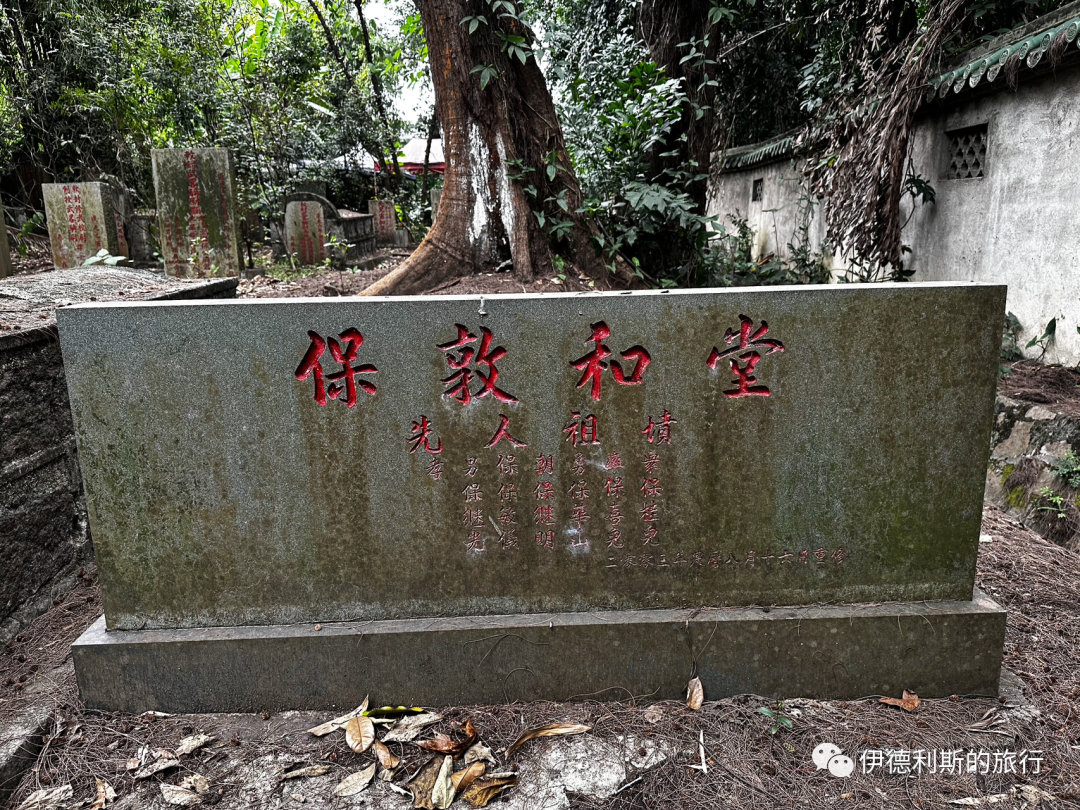
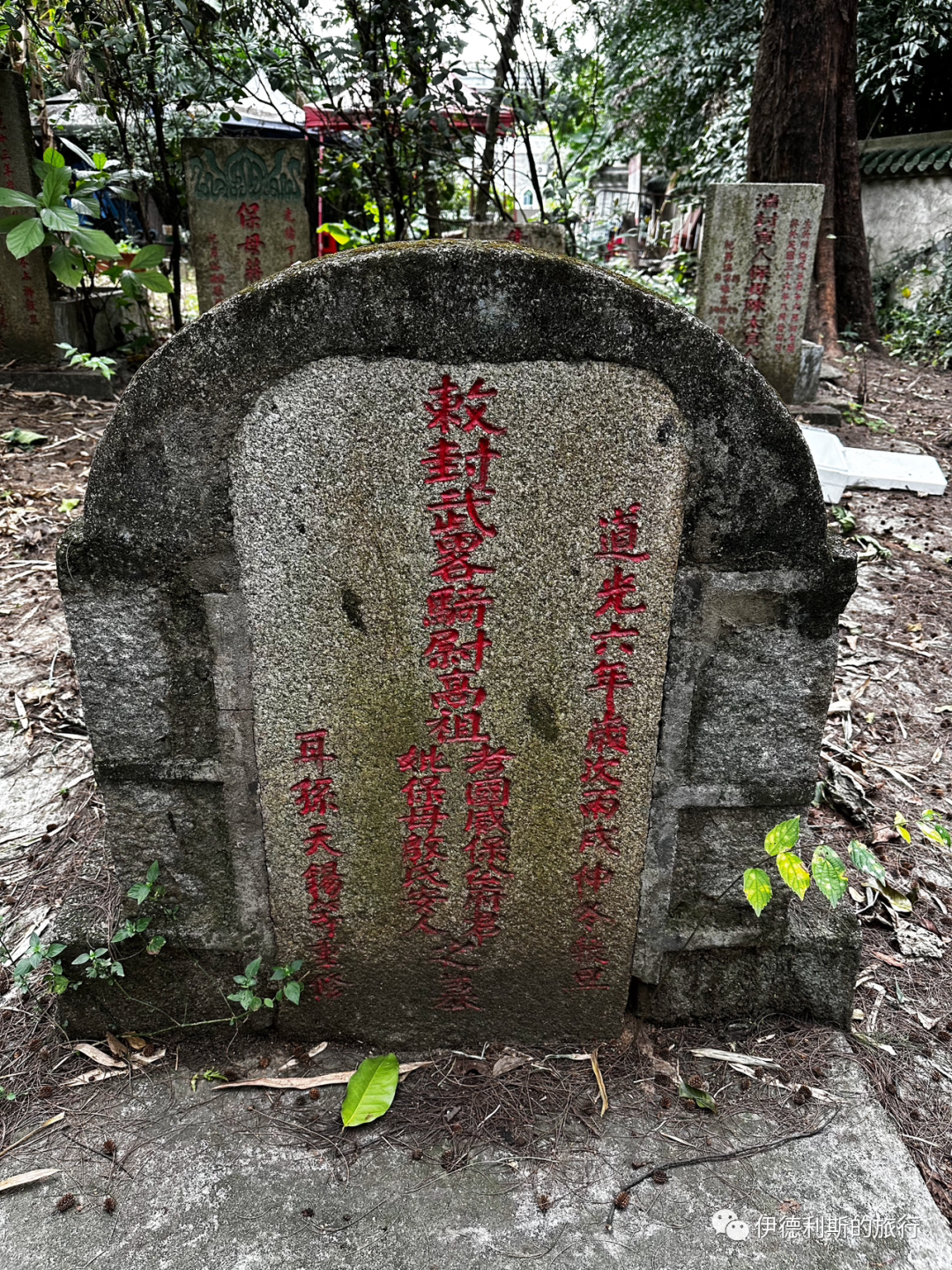
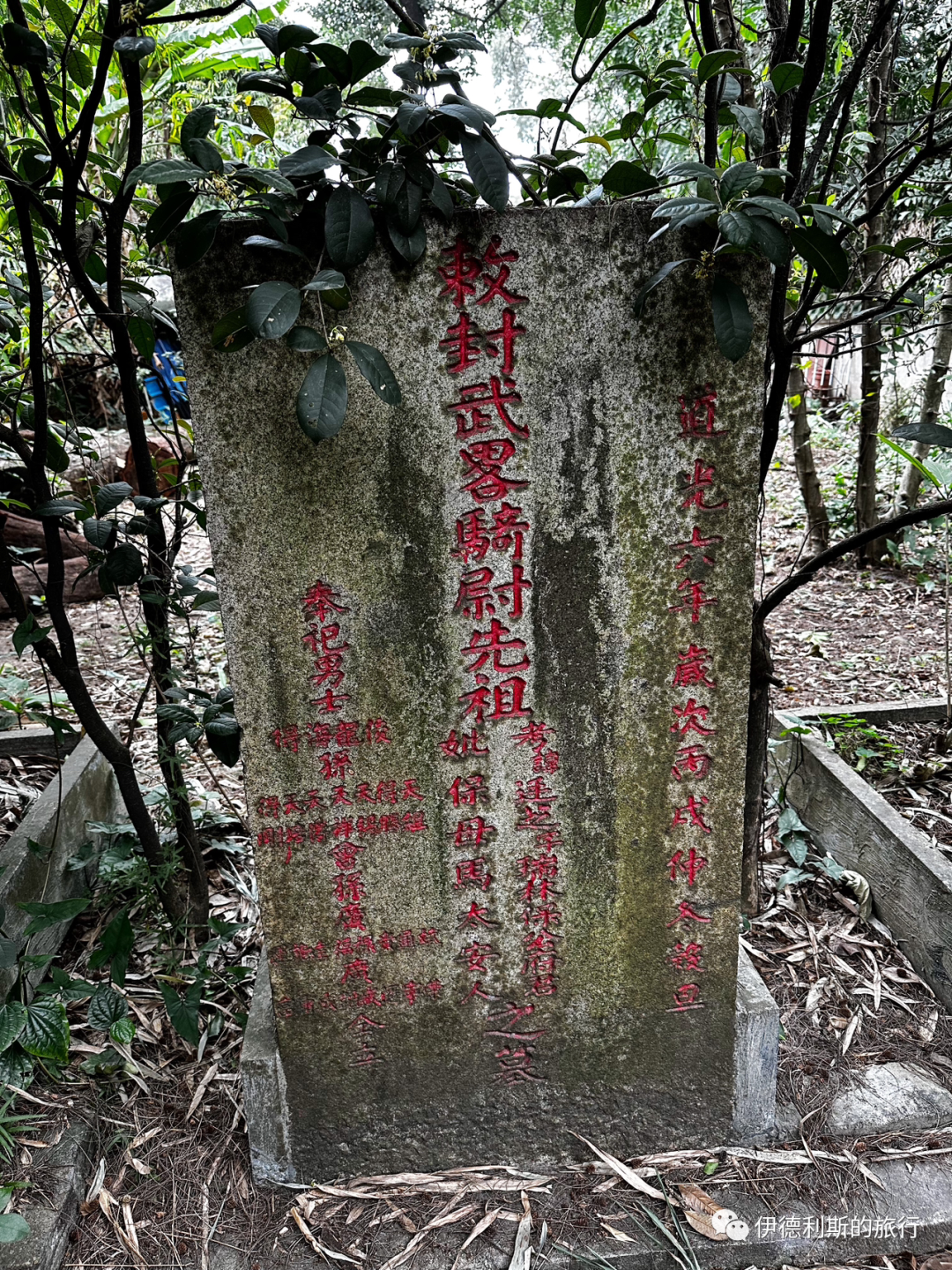
The ancestral graves of the Bao Dunhe Tang family.
North of the Ancient Tomb of the Worthies (Xianxian Gumu), you will find the ancestral graves of the Bao Dunhe Tang family. The Bao family made significant contributions to the renovation of the Huaisheng Mosque, the Ancient Tomb of the Worthies, and the Xiaodongying Mosque. According to family records, the first ancestor of the Bao Dunhe Tang, A Bao Mu'er, moved from Xinjiang to Kunming Prefecture. The second generation, Bao Guowei, went to Nanjing for business during the Kangxi and Yongzheng reigns of the Qing Dynasty. Later, he brought his second son, Bao Tingzhi, to Guangzhou for business, and Bao Tingzhi's descendants settled in Guangzhou from then on.
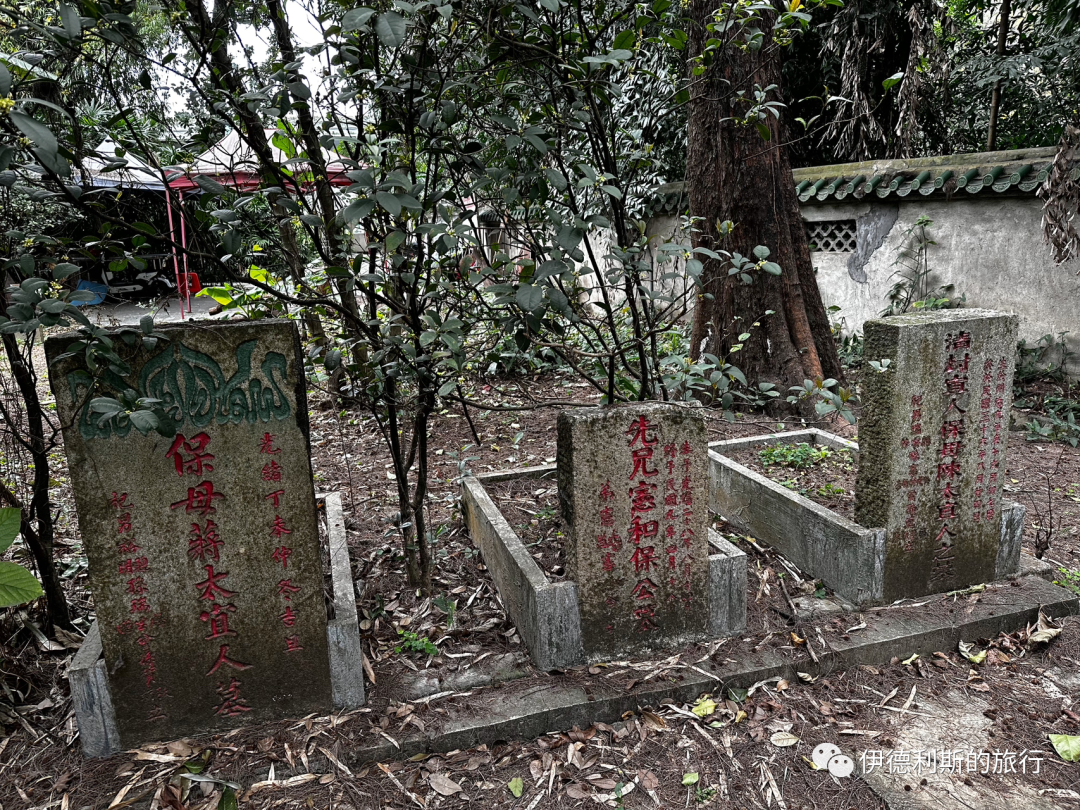
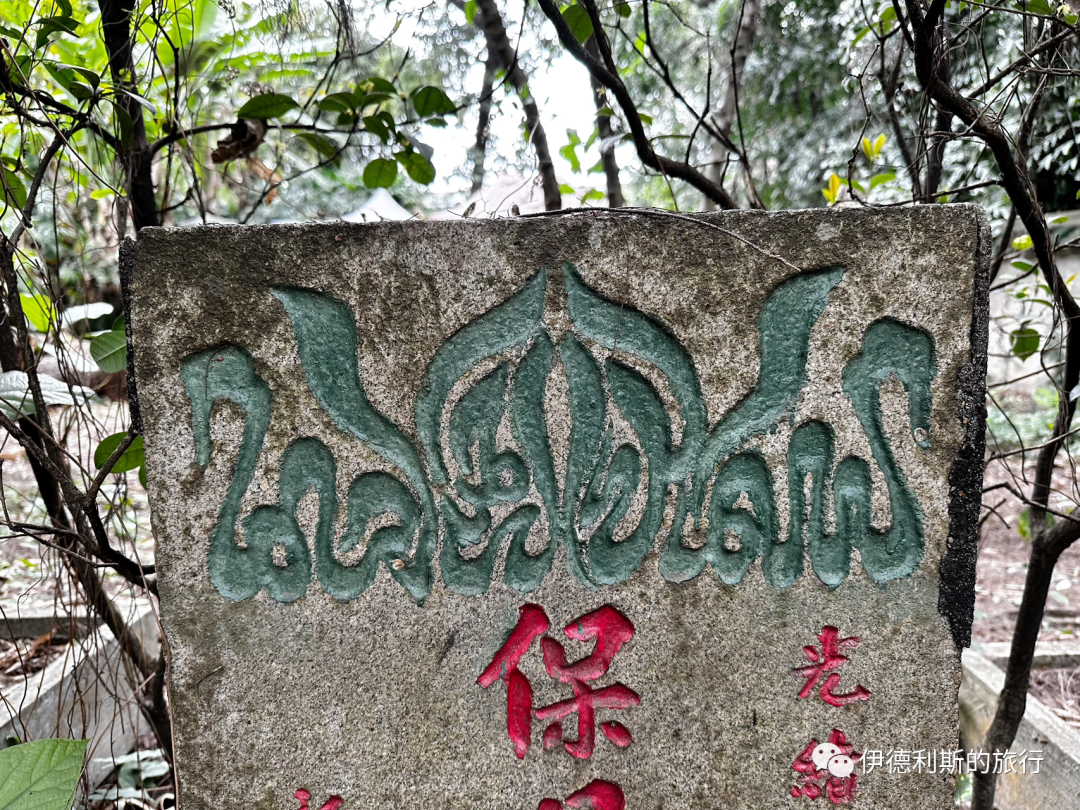
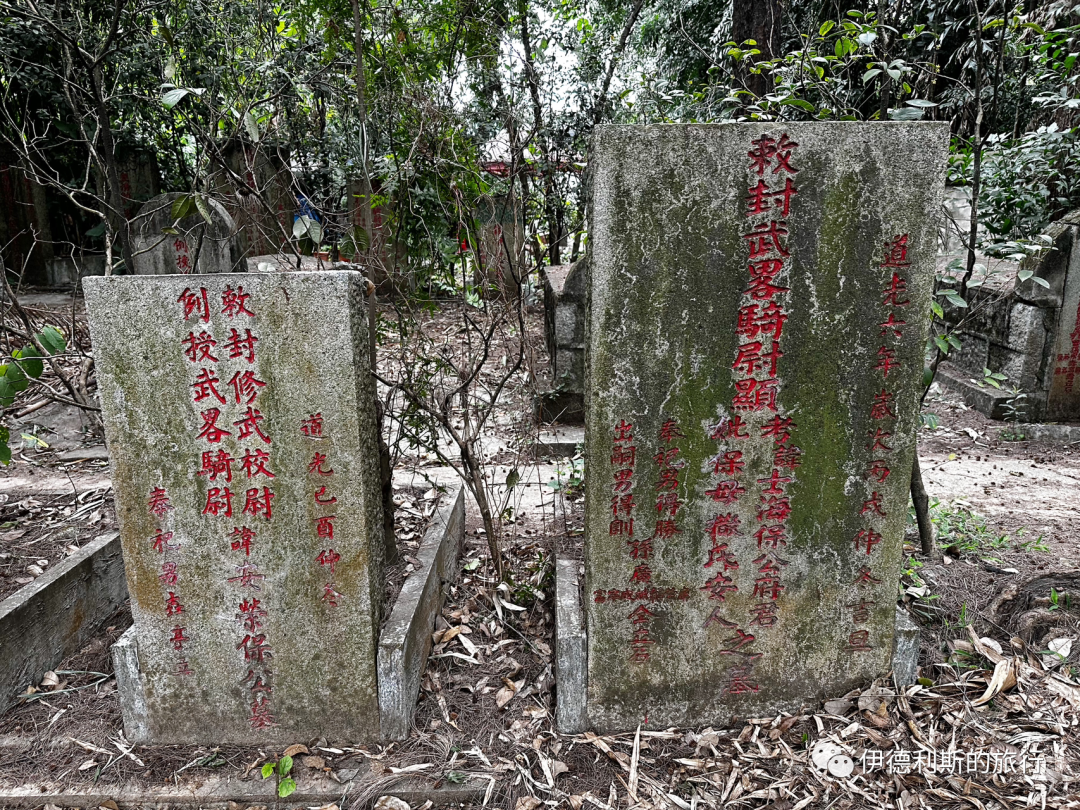
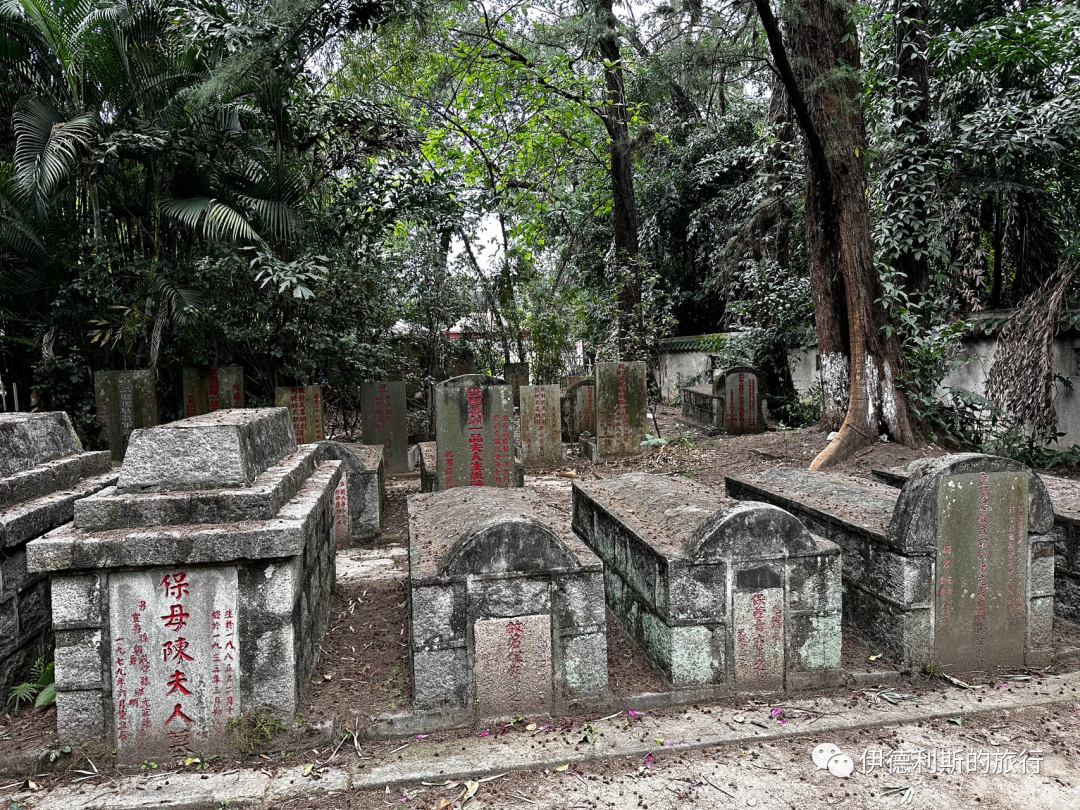
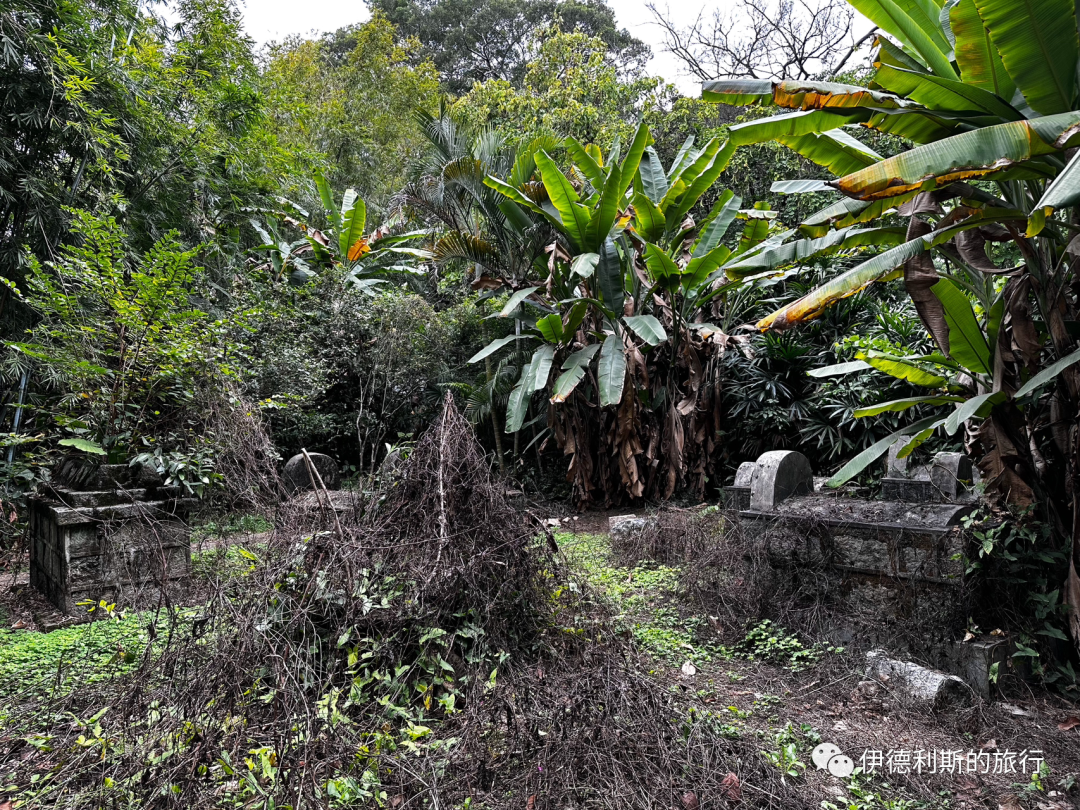
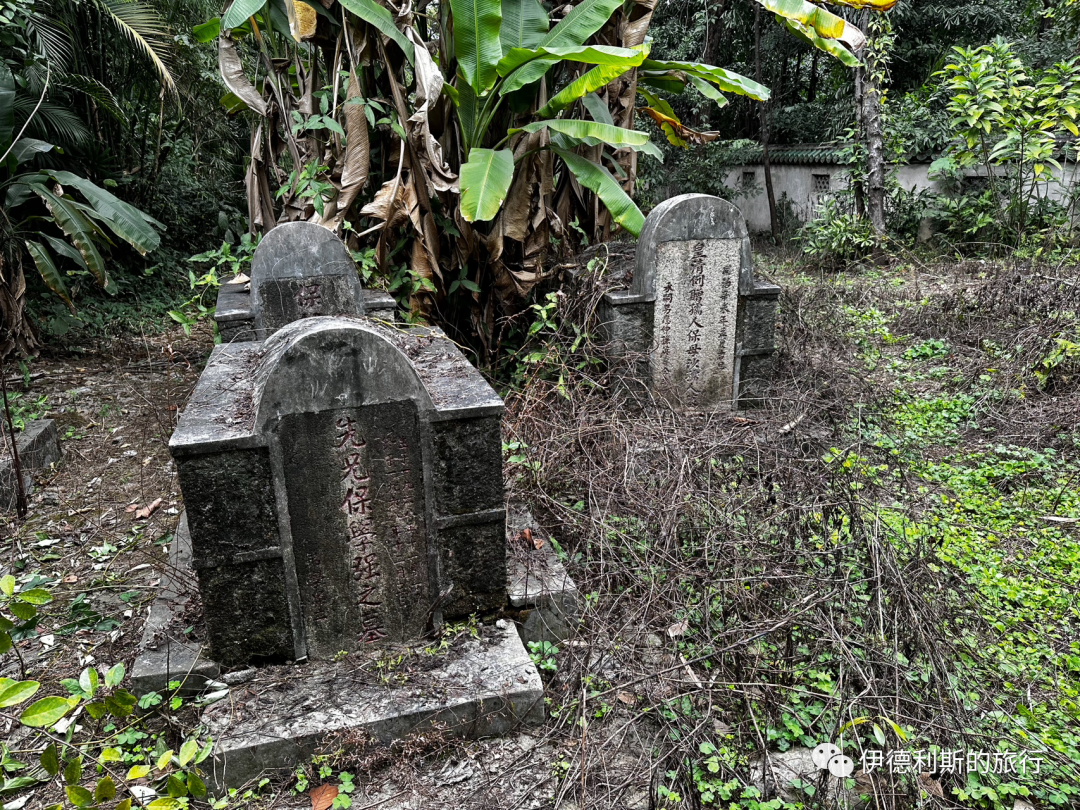
Xianxian Mosque.
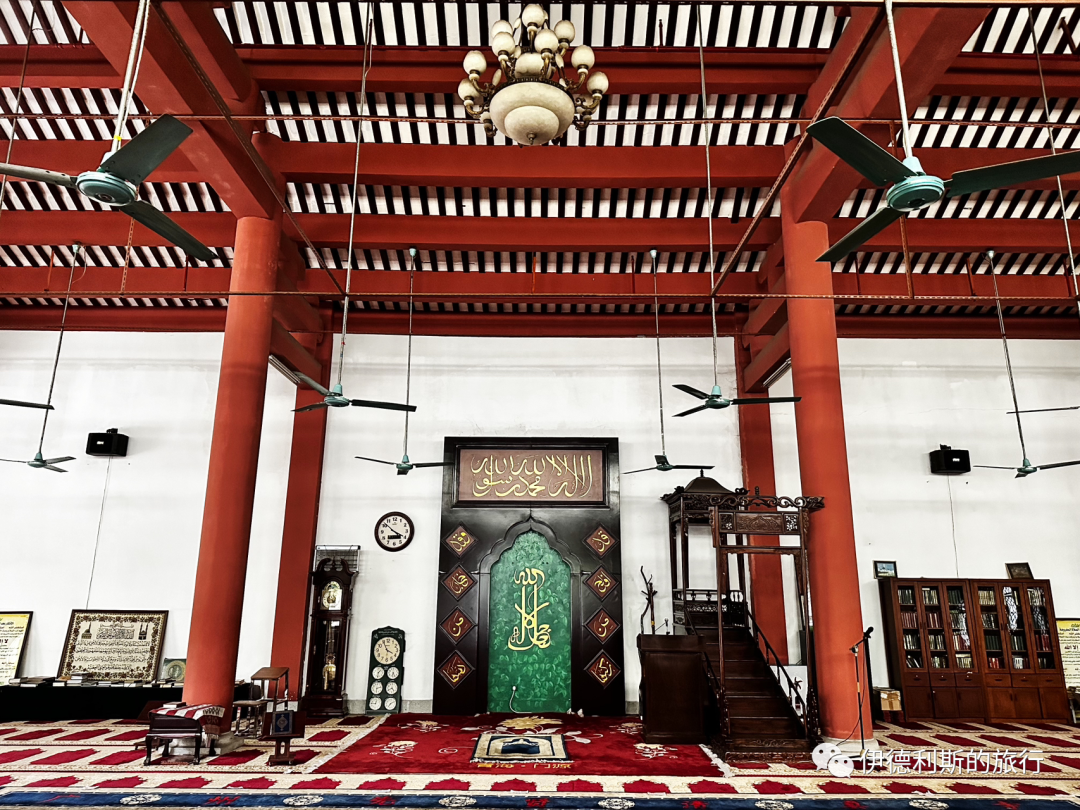
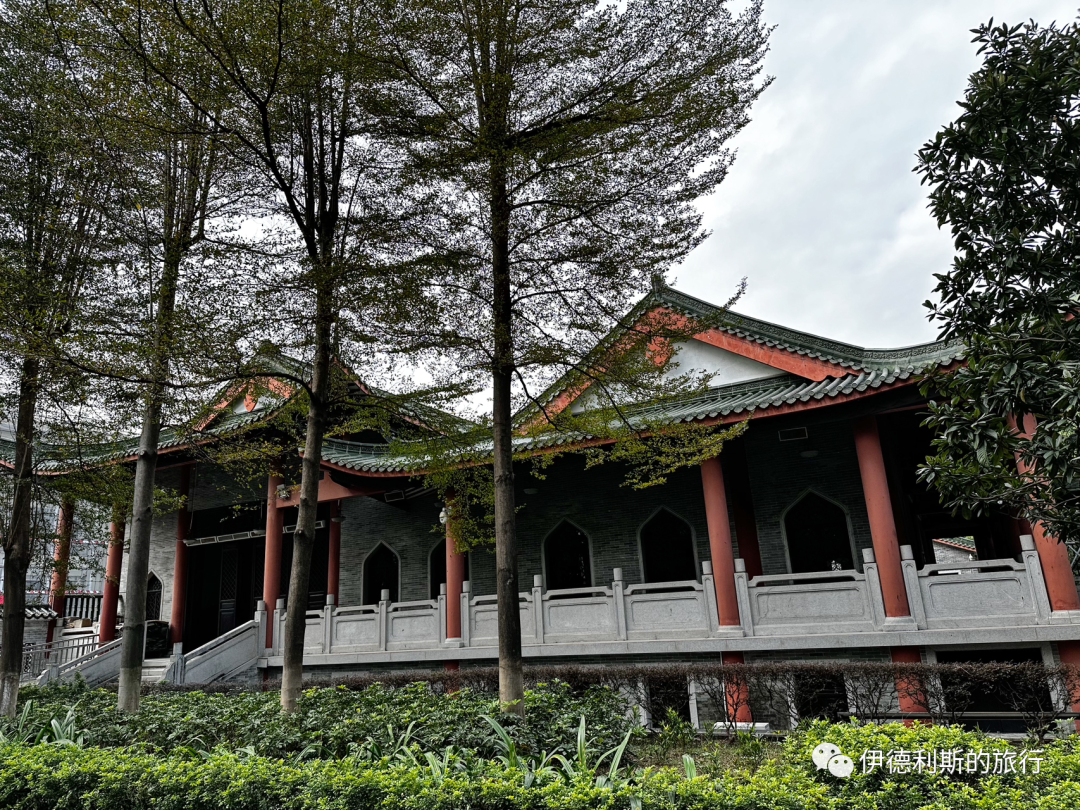
Historically, there has always been a mosque next to the Ancient Tomb of the Worthies. Past stone tablets referred to it as the Mosque Outside the Great North Gate or the Xianxian Mosque. In the fourth year of the Guangxu reign (1878), a stone tablet issued by the Guangzhou government to strictly forbid locals from destroying graves for theft was erected next to the mosque. The inscription reads, "A public notice posted next to the Mosque Outside the Great North Gate." The 1934 tablet commemorating the renovation of the Xianxian Mosque records, "The original structure of the mosque was rebuilt during the Kangxi reign of the Qing Dynasty, about 260 or 270 years ago." It is one of the six mosques in Guangdong. The six mosques in Guangzhou mentioned in the inscription are the Huaisheng Mosque, Haopan Mosque, Xiaodongying Mosque, Nansheng Mosque, Dongjiao Mosque, and Xianxian Mosque. It also records that Muslims from various districts in Guangzhou and Hong Kong donated funds to renovate the mosque in 1934.
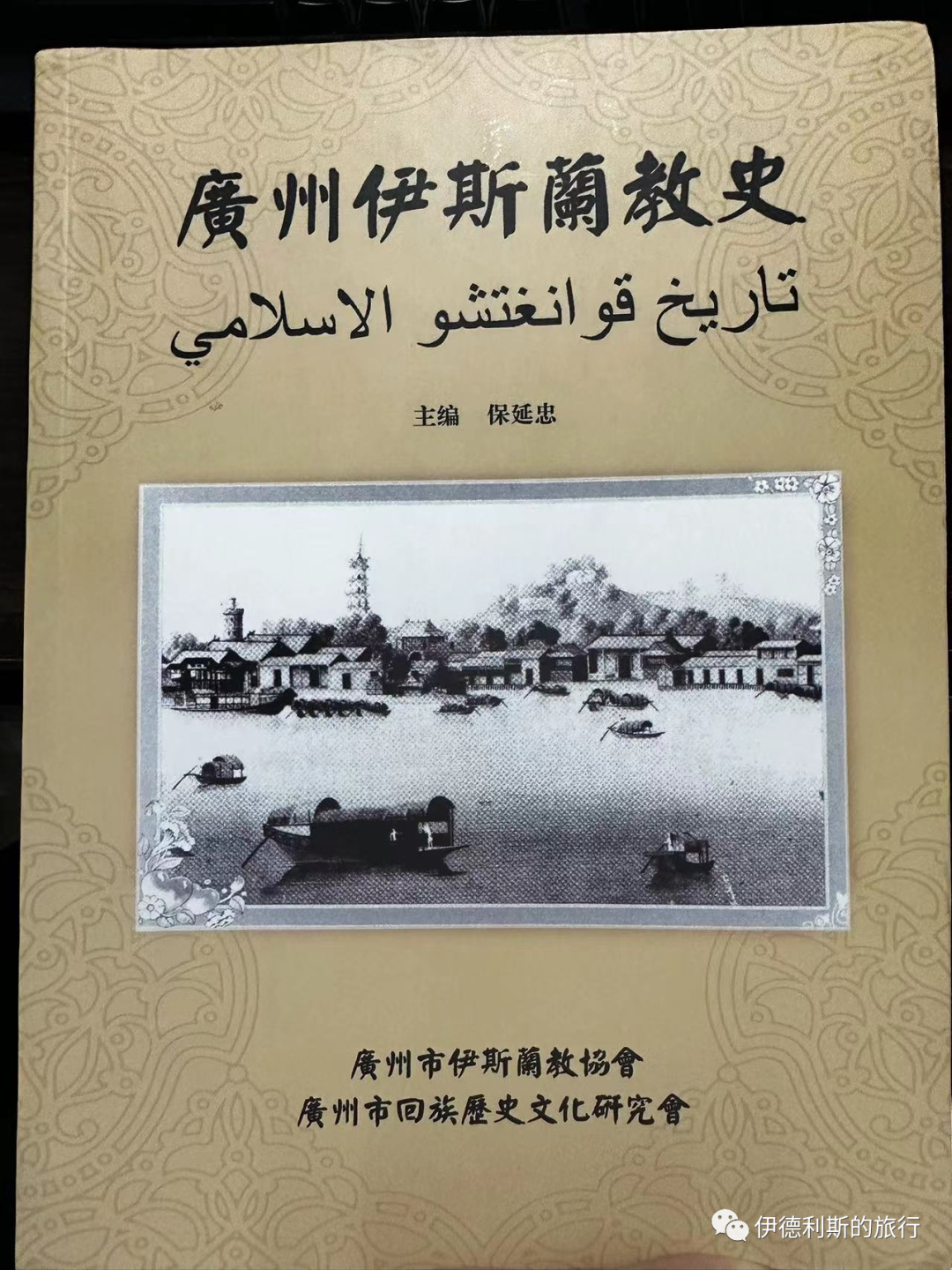
In the book "History of Islam in Guangzhou" edited by Bao Yanzhong, it is suggested that the historical Xianxian Mosque was the south courtyard of the Ancient Tomb of the Worthies. However, Ma Jianchun presents a different view in his article "Guangzhou's 'Ancient Xianxian Mosque'—A Study of the Mosque Outside the Great North Gate." He believes that while the mosque was adjacent to the tomb garden, it was a separate building and quite large.
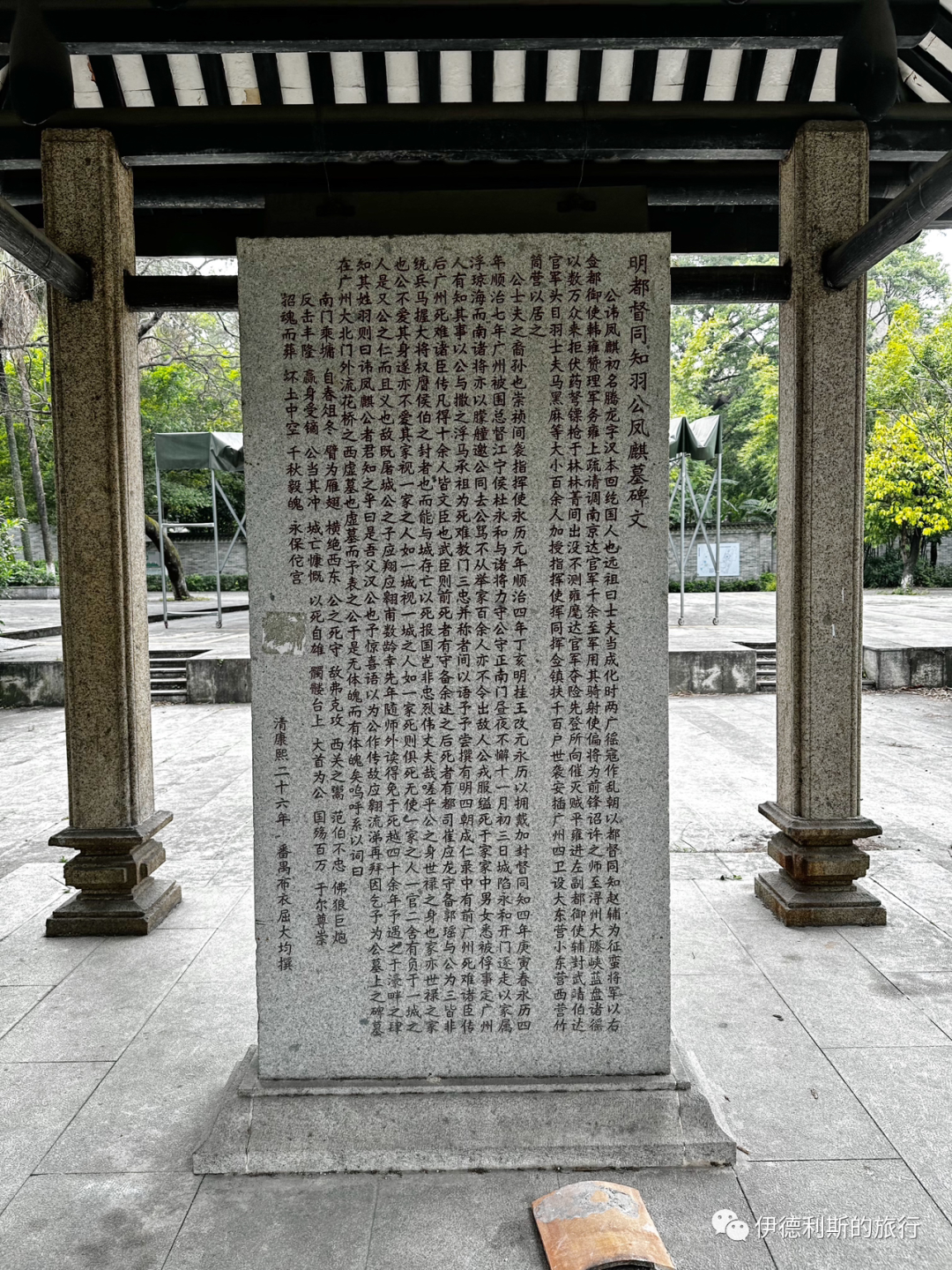
First, British scholar Marshall Broomhall recorded in Chapter 7, "Mosques and Muslim Graves in Guangzhou," of his 1911 book "Islam in China: A Neglected Problem," that "another mosque located about half a mile outside the North Gate of Guangzhou is a second point of interest." The mosque itself is a fine, large building... from its appearance, one can conclude that the courtyard was rebuilt in modern times. In this respect, the mosque is superior to most mosques in China. It was built with land purchased by the imperial court using tax revenue to meet the needs of construction and namaz," and he clarified that the mosque and the tomb were not in the same place: "Near the mosque is a small cemetery of about a quarter of an acre... here lie some of the earliest converts to Islam, and at the end of the cemetery sits the famous domed tomb of the Prophet's uncle." The 1934 renovation tablet also records that the renovated mosque was "a magnificent sight." Meanwhile, according to the 1955 "Tablet Record of the Three Loyal Graves of Muslims," "Later, the people of Guangdong, admiring the heroes, buried them in front of the Xianxian Mosque outside Liuhua Bridge, built a pavilion and erected a stone, naming it the Three Loyal Graves of the Hui Muslims to express their mourning." From this, Ma Jianchun infers that the original site of the Xianxian Mosque was located in the small woods behind the Three Loyal Graves of the Muslims.
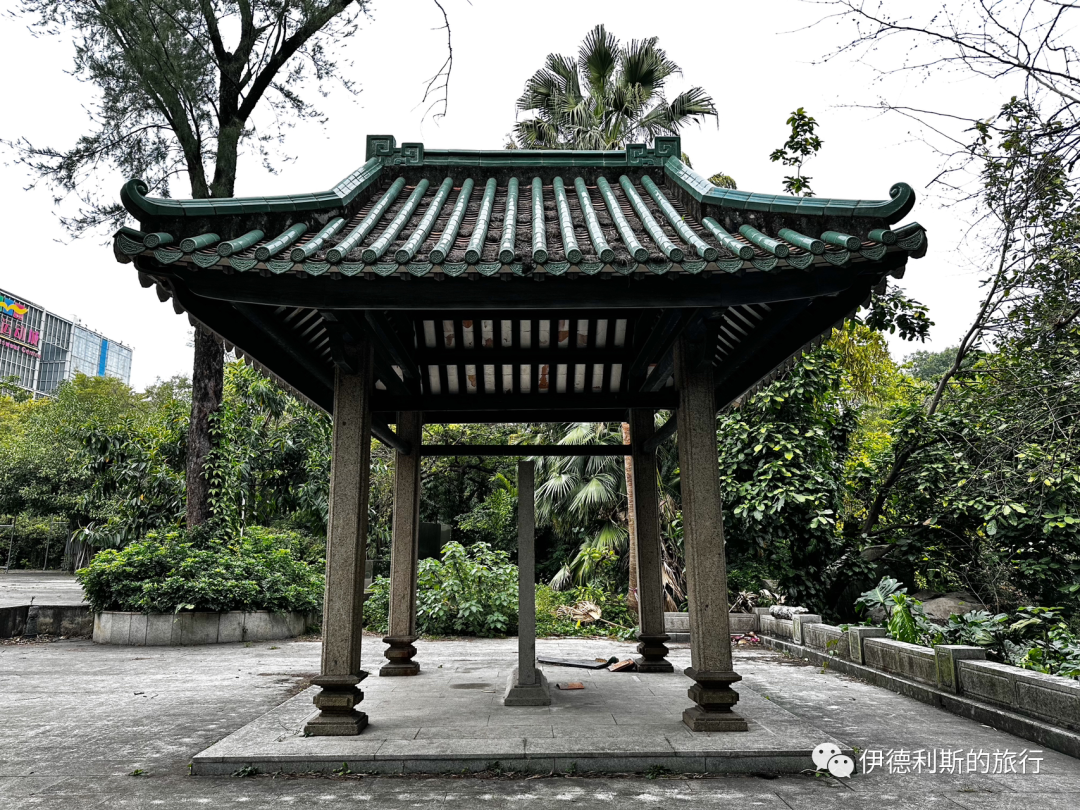
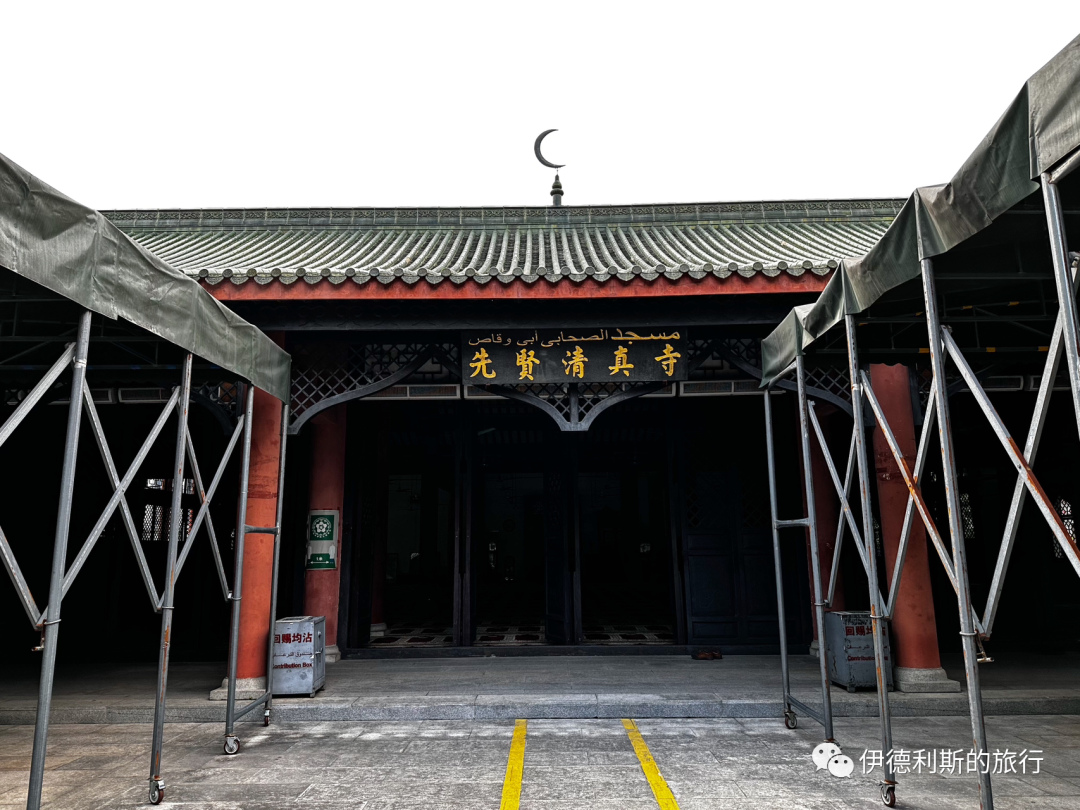
It is still uncertain when the Xianxian Mosque disappeared. It was not until 2010 that 21 dormitory units southwest of the Ancient Tomb of the Worthies were demolished, and the cleared land allowed for the reconstruction of the main prayer hall. It was officially named the Xianxian Mosque in 2011 and is now one of the four existing mosques in Guangzhou.
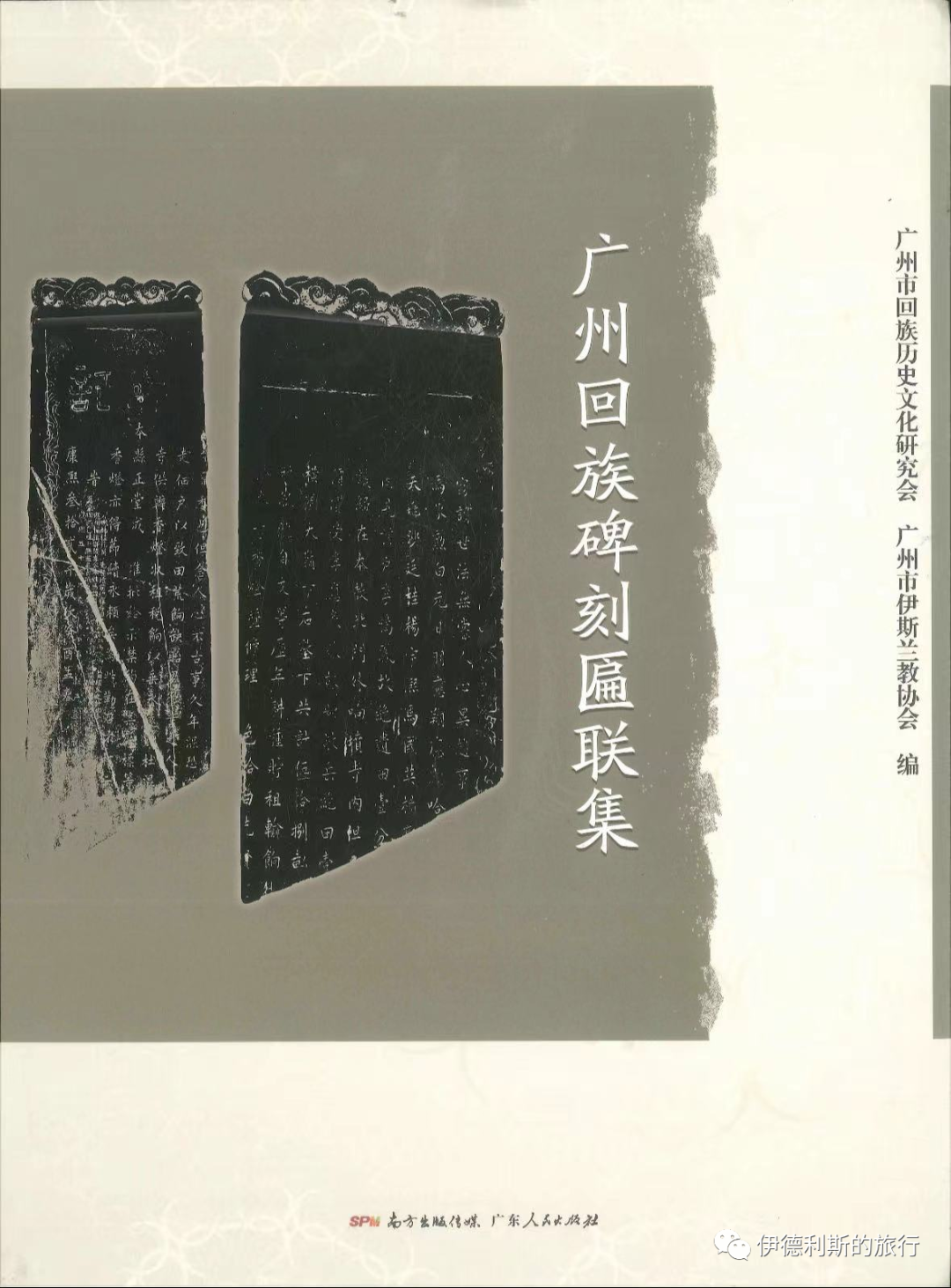
If you are interested in the history of the faith in Guangzhou, I recommend reading "History of Islam in Guangzhou" edited by Bao Yanzhong and "Collection of Hui Muslim Tablet Inscriptions and Couplets in Guangzhou" edited by Ma Jianzhao. These two books were very helpful in organizing and editing this article. Finally, I would like to thank Chen Yong, a dost (friend), for correcting the information in this article.
 Collapse Read »
Summary: Guangzhou Huaisheng Mosque — Sage Tomb and Muslim History is presented here as a firsthand travel account in clear English, beginning with this scene: North of the Ancient Tomb of the Worthies (Xianxian Gumu), you will find the ancestral graves of the Bao Dunhe Tang family. The account keeps its focus on Huaisheng Mosque, Guangzhou Muslims, Sage Tomb while preserving the names, places, food, and historical details from the Chinese source.
The ancestral graves of the Bao Dunhe Tang family.
North of the Ancient Tomb of the Worthies (Xianxian Gumu), you will find the ancestral graves of the Bao Dunhe Tang family. The Bao family made significant contributions to the renovation of the Huaisheng Mosque, the Ancient Tomb of the Worthies, and the Xiaodongying Mosque. According to family records, the first ancestor of the Bao Dunhe Tang, A Bao Mu'er, moved from Xinjiang to Kunming Prefecture. The second generation, Bao Guowei, went to Nanjing for business during the Kangxi and Yongzheng reigns of the Qing Dynasty. Later, he brought his second son, Bao Tingzhi, to Guangzhou for business, and Bao Tingzhi's descendants settled in Guangzhou from then on.
Xianxian Mosque.
Historically, there has always been a mosque next to the Ancient Tomb of the Worthies. Past stone tablets referred to it as the Mosque Outside the Great North Gate or the Xianxian Mosque. In the fourth year of the Guangxu reign (1878), a stone tablet issued by the Guangzhou government to strictly forbid locals from destroying graves for theft was erected next to the mosque. The inscription reads, "A public notice posted next to the Mosque Outside the Great North Gate." The 1934 tablet commemorating the renovation of the Xianxian Mosque records, "The original structure of the mosque was rebuilt during the Kangxi reign of the Qing Dynasty, about 260 or 270 years ago." It is one of the six mosques in Guangdong. The six mosques in Guangzhou mentioned in the inscription are the Huaisheng Mosque, Haopan Mosque, Xiaodongying Mosque, Nansheng Mosque, Dongjiao Mosque, and Xianxian Mosque. It also records that Muslims from various districts in Guangzhou and Hong Kong donated funds to renovate the mosque in 1934.
In the book "History of Islam in Guangzhou" edited by Bao Yanzhong, it is suggested that the historical Xianxian Mosque was the south courtyard of the Ancient Tomb of the Worthies. However, Ma Jianchun presents a different view in his article "Guangzhou's 'Ancient Xianxian Mosque'—A Study of the Mosque Outside the Great North Gate." He believes that while the mosque was adjacent to the tomb garden, it was a separate building and quite large.
First, British scholar Marshall Broomhall recorded in Chapter 7, "Mosques and Muslim Graves in Guangzhou," of his 1911 book "Islam in China: A Neglected Problem," that "another mosque located about half a mile outside the North Gate of Guangzhou is a second point of interest." The mosque itself is a fine, large building... from its appearance, one can conclude that the courtyard was rebuilt in modern times. In this respect, the mosque is superior to most mosques in China. It was built with land purchased by the imperial court using tax revenue to meet the needs of construction and namaz," and he clarified that the mosque and the tomb were not in the same place: "Near the mosque is a small cemetery of about a quarter of an acre... here lie some of the earliest converts to Islam, and at the end of the cemetery sits the famous domed tomb of the Prophet's uncle." The 1934 renovation tablet also records that the renovated mosque was "a magnificent sight." Meanwhile, according to the 1955 "Tablet Record of the Three Loyal Graves of Muslims," "Later, the people of Guangdong, admiring the heroes, buried them in front of the Xianxian Mosque outside Liuhua Bridge, built a pavilion and erected a stone, naming it the Three Loyal Graves of the Hui Muslims to express their mourning." From this, Ma Jianchun infers that the original site of the Xianxian Mosque was located in the small woods behind the Three Loyal Graves of the Muslims.
It is still uncertain when the Xianxian Mosque disappeared. It was not until 2010 that 21 dormitory units southwest of the Ancient Tomb of the Worthies were demolished, and the cleared land allowed for the reconstruction of the main prayer hall. It was officially named the Xianxian Mosque in 2011 and is now one of the four existing mosques in Guangzhou.
If you are interested in the history of the faith in Guangzhou, I recommend reading "History of Islam in Guangzhou" edited by Bao Yanzhong and "Collection of Hui Muslim Tablet Inscriptions and Couplets in Guangzhou" edited by Ma Jianzhao. These two books were very helpful in organizing and editing this article. Finally, I would like to thank Chen Yong, a dost (friend), for correcting the information in this article.
Collapse Read »
Halal Travel Guide: Zhaoqing — Roast Goose, Mosque Life and Guangdong Streets
Reposted from the web
Summary: Zhaoqing — Roast Goose, Mosque Life and Guangdong Streets is presented here as a firsthand travel account in clear English, beginning with this scene: I left Macau on January 23, 2023, to visit the Macau mosque known as Moro Garden (Moro Yuan). The account keeps its focus on Zhaoqing Halal Food, Guangdong Mosques, Muslim Travel while preserving the names, places, food, and historical details from the Chinese source.
I left Macau on January 23, 2023, to visit the Macau mosque known as Moro Garden (Moro Yuan). I ate delicious Indonesian Javanese food and wrote about it in my post, 'Moro Garden and Indonesian Food in Macau'. On January 25 in Guangzhou, I visited with friends (dosti) and ate various halal foods, which I posted about in "Guangzhou's Hui Muslim Fried Dough (youxiang) and Yemeni Cuisine." On the morning of January 26, I took a train from Guangzhou to Zhaoqing to start the third leg of my journey.
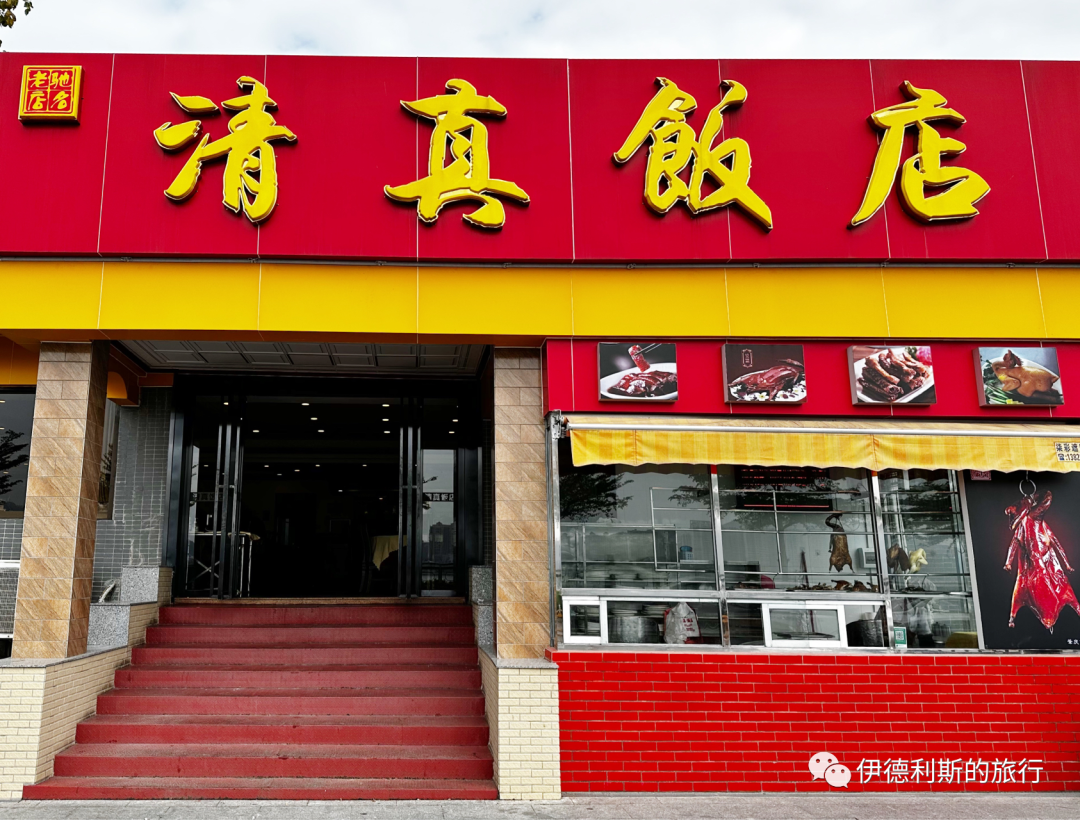
After leaving the Zhaoqing train station, I took a taxi straight to a halal restaurant by the West River. Like the Hui Muslim restaurants in Guangzhou, the Zhaoqing Halal Restaurant is a long-standing state-run halal Cantonese restaurant established in the 1950s. In 1957, the Zhaoqing Halal Restaurant was co-founded by local Hui Muslims Luo Shiyong, Sa Zhinan, Dong Shi, and Liu Youxing. Luo Shiyong was also a board member of the Zhaoqing West Mosque (Chengxi Si). He ran the halal restaurant for half a century until his daughter took over in 2007.
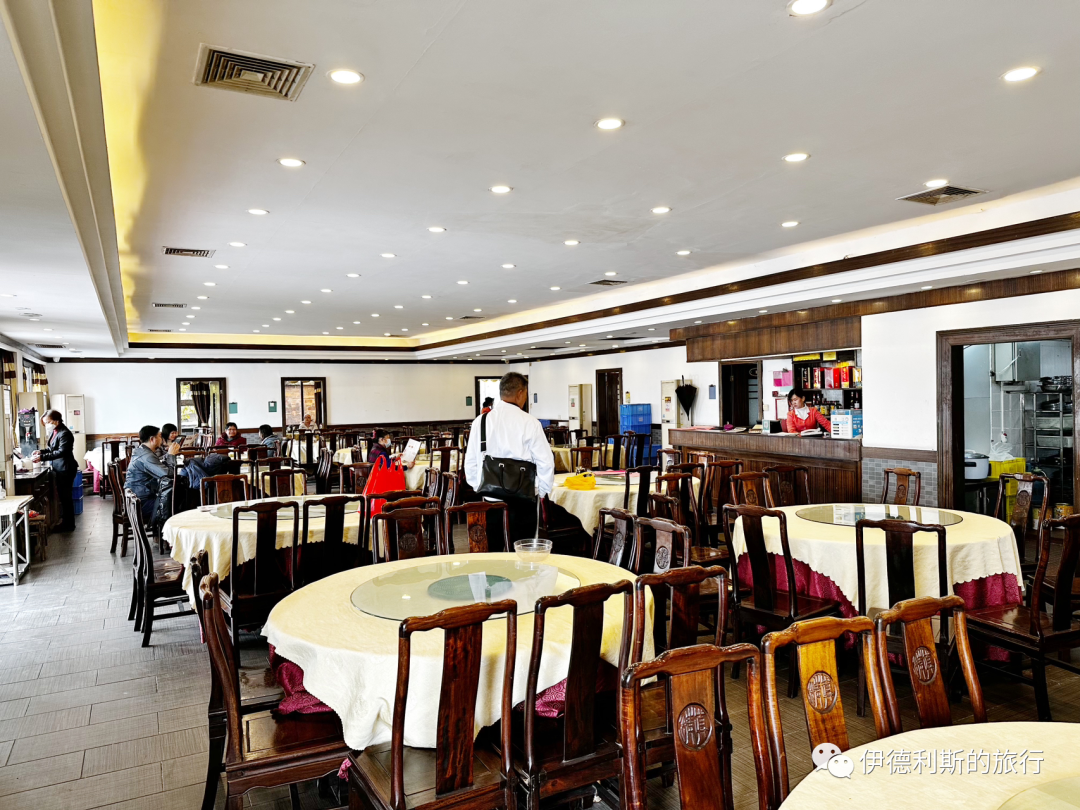
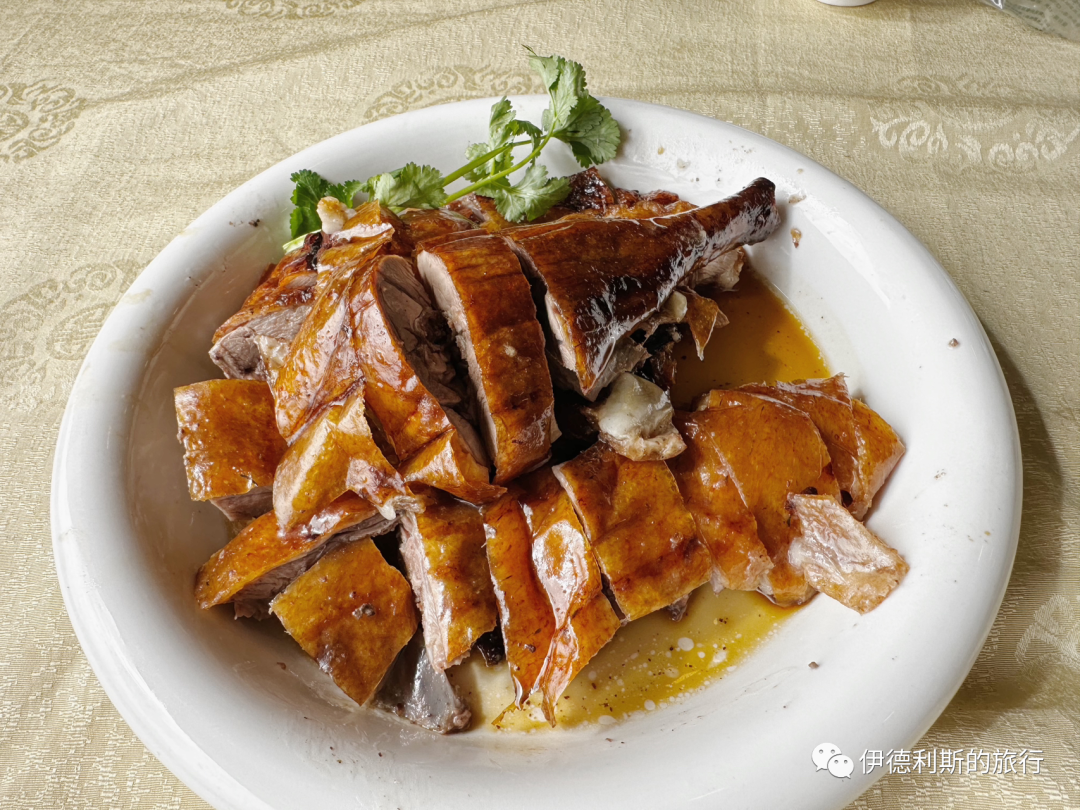
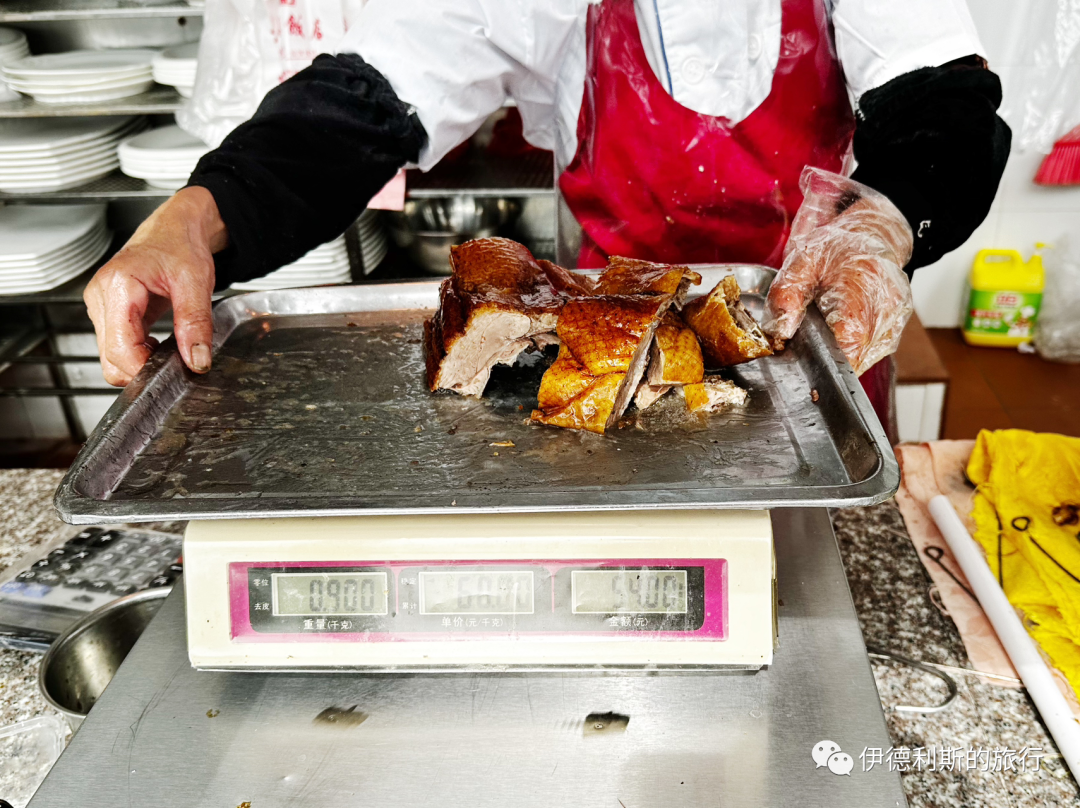
The Zhaoqing Halal Restaurant is better for family meals. The main hall has large round tables and the portions are quite big, so it is actually hard to order for just one person. However, you must try their signature dish, the halal roast goose. The Cantonese-style crispy roast goose is not greasy at all. Dipping it in sweet hawthorn sauce is very appetizing; this was my first time eating it this way. I also ordered a clay pot of radish and beef offal (niuzabao). Clay pots with beef and lamb are also a specialty of Guangdong Hui Muslims.
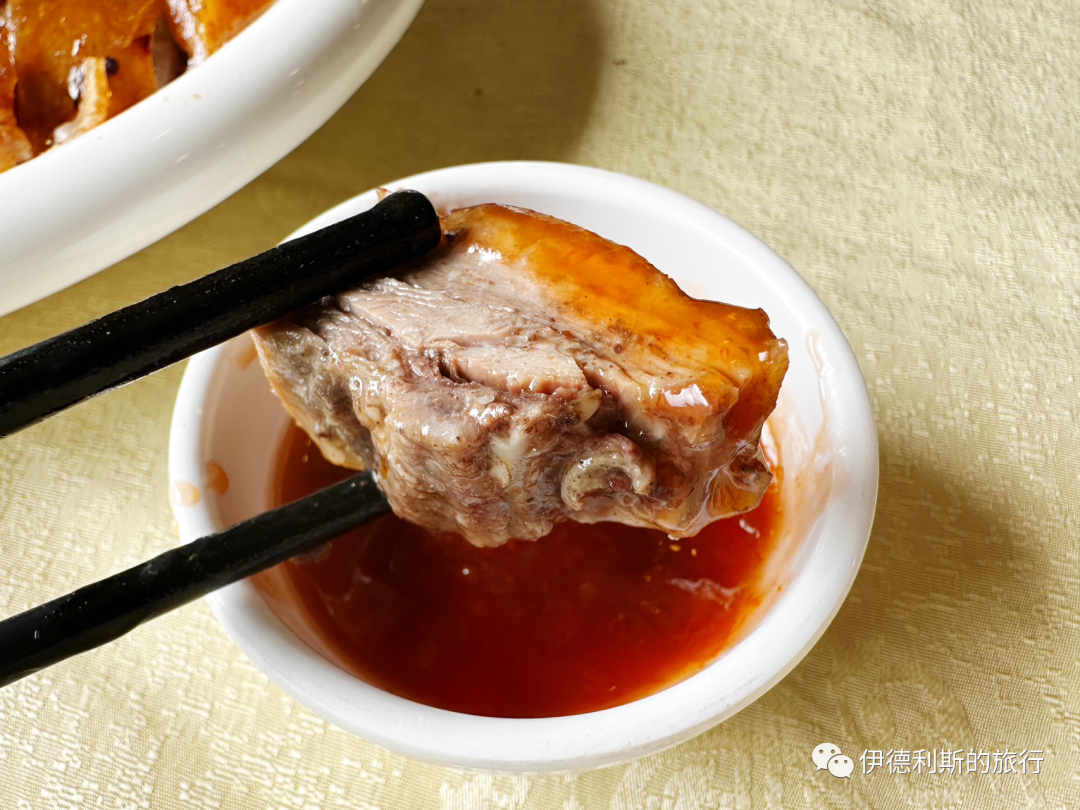
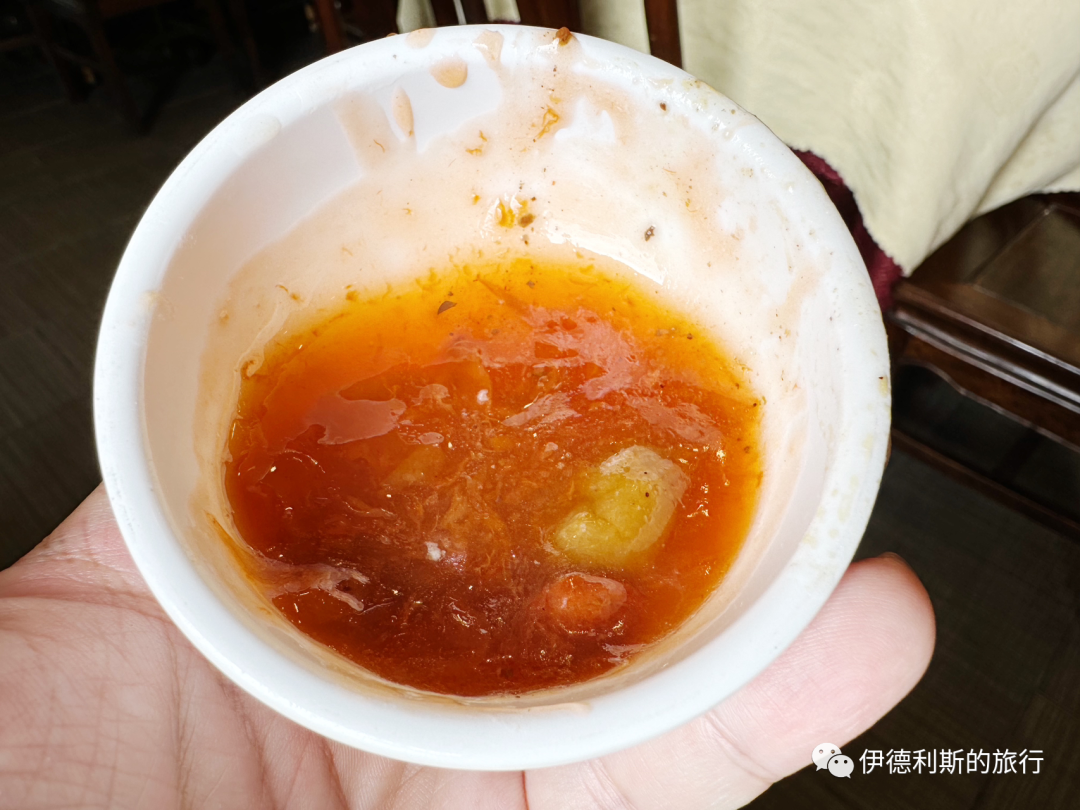
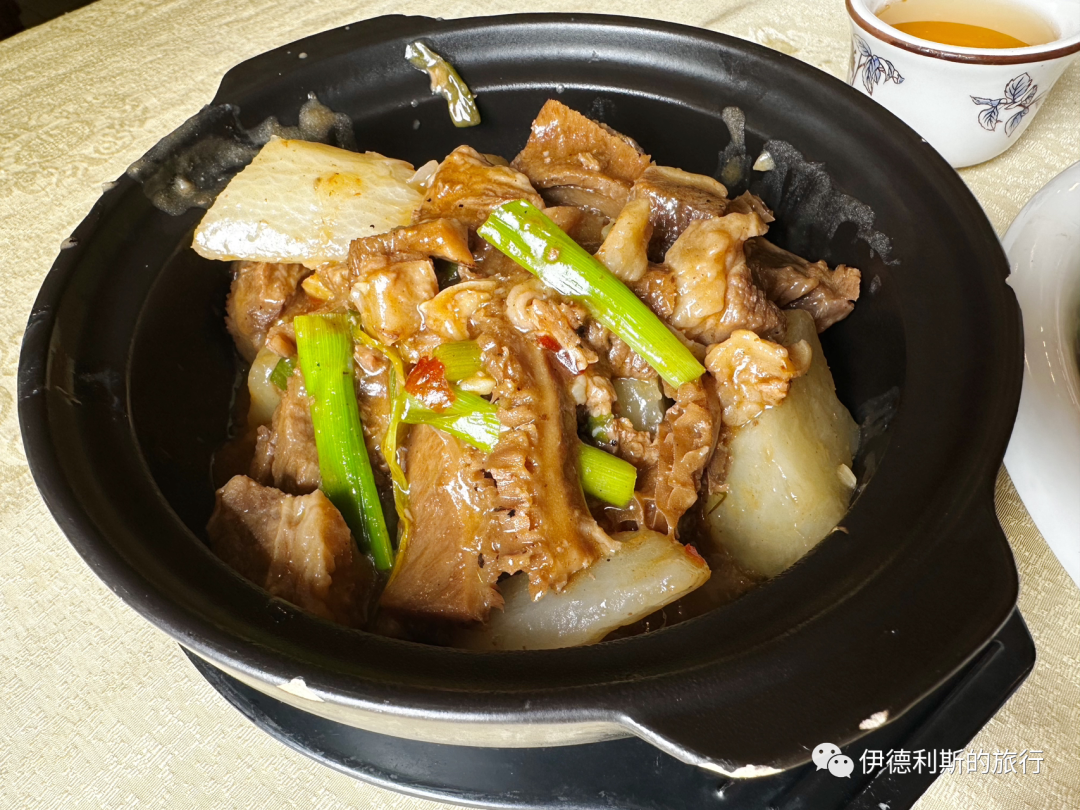
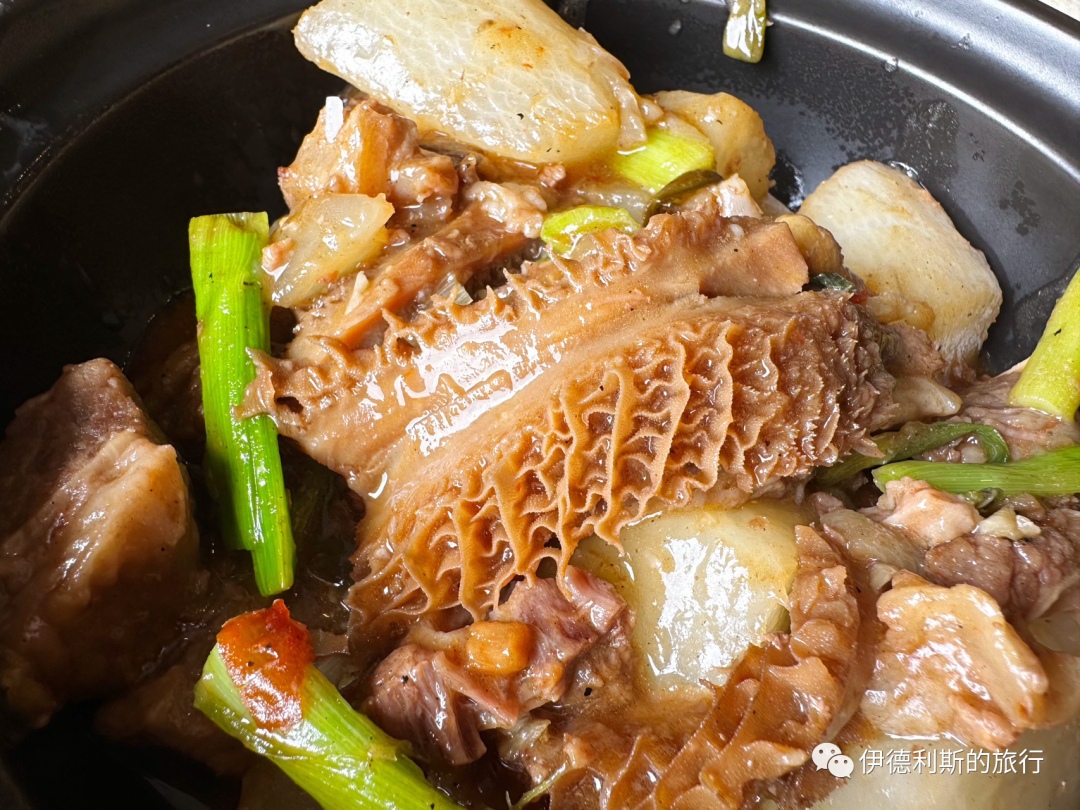
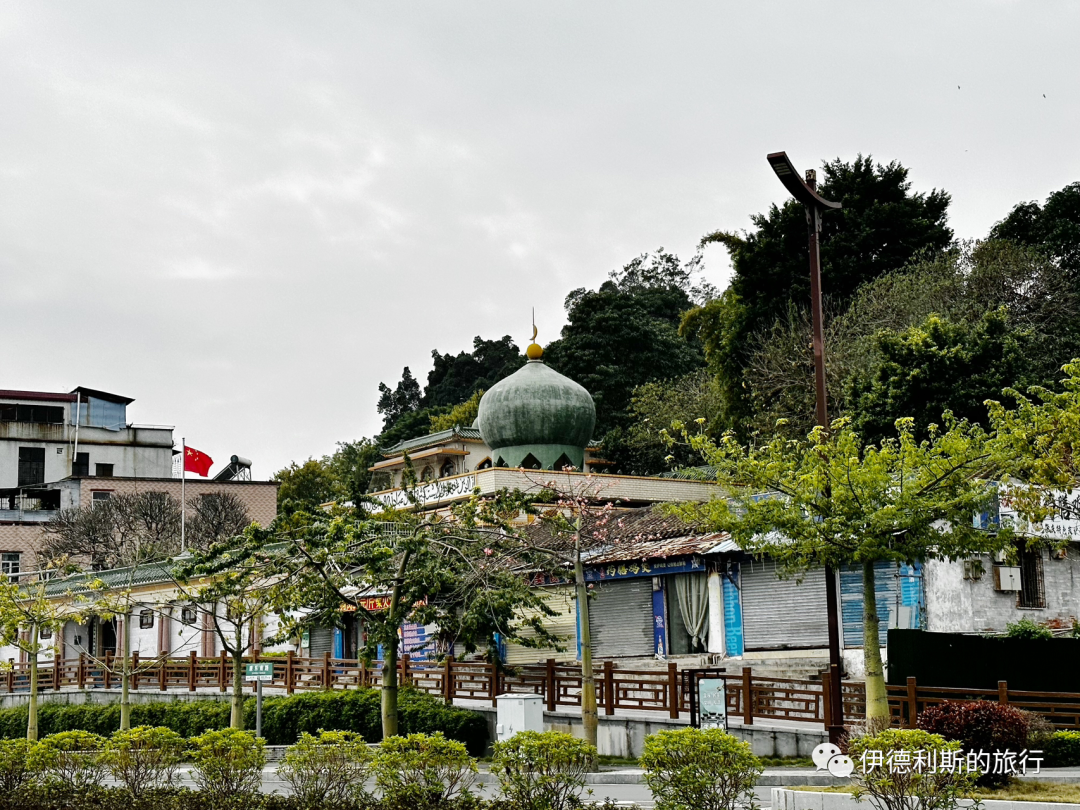
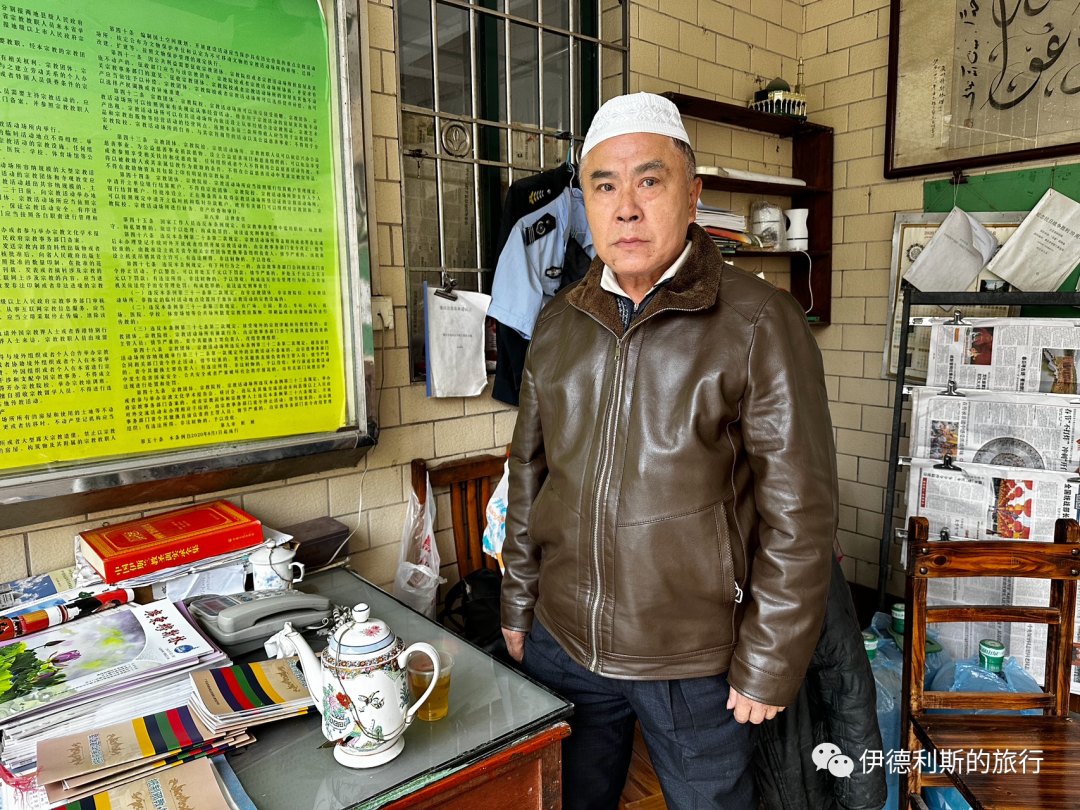
After leaving the halal restaurant, I went to the Zhaoqing West Mosque (Chengxi Si) and received a warm welcome from Imam (ahong) He. Imam He is from Hami and his ancestral home is in Shaanxi. He was previously at the Meilin Mosque in Shenzhen and only came to Zhaoqing recently after the old imam of the West Mosque retired. Currently, most of the people coming to the mosque for namaz are friends (dosti) who run noodle shops. Many are willing to settle in Zhaoqing because it is convenient for their children's schooling and the climate is pleasant.
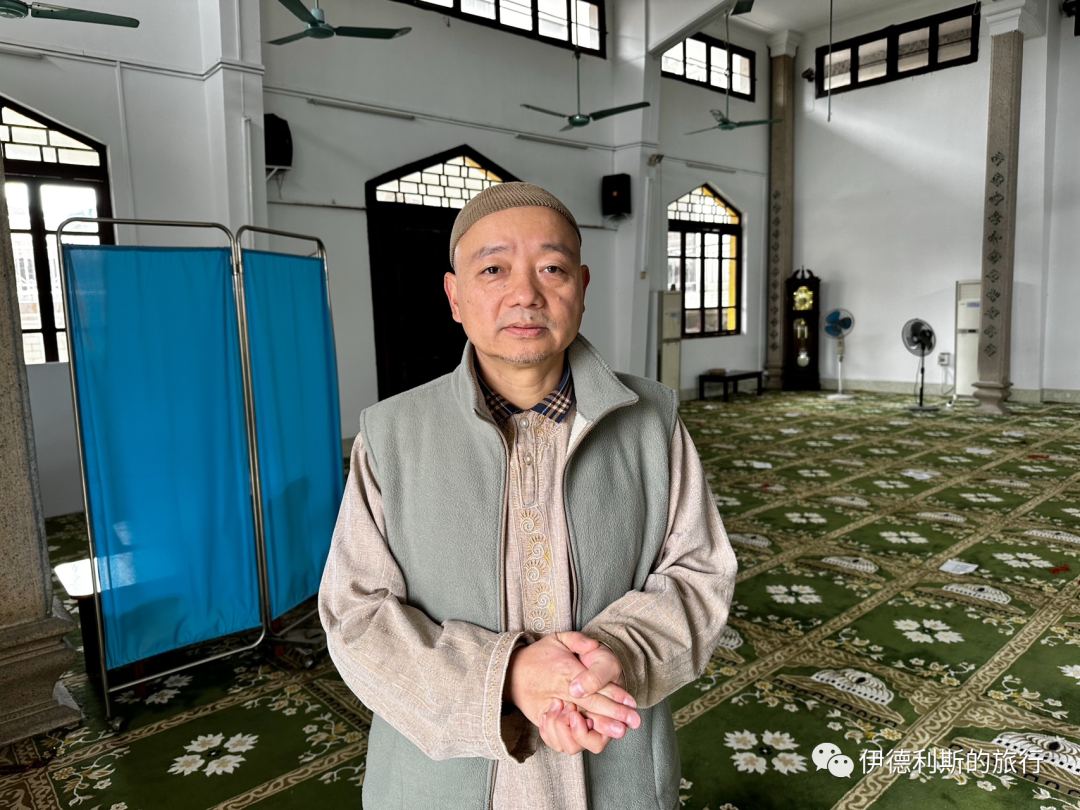
I also met Mr. Luo at the mosque, who is a local Hui Muslim from Zhaoqing. According to family records, the ancestors of the Zhaoqing Luo family were from Xuanping County, Lishui City, Zhejiang Province (the county was abolished in 1958). They came to Zhaoqing for garrison duty during the Qianlong reign and settled down, so they have been here for 300 years.
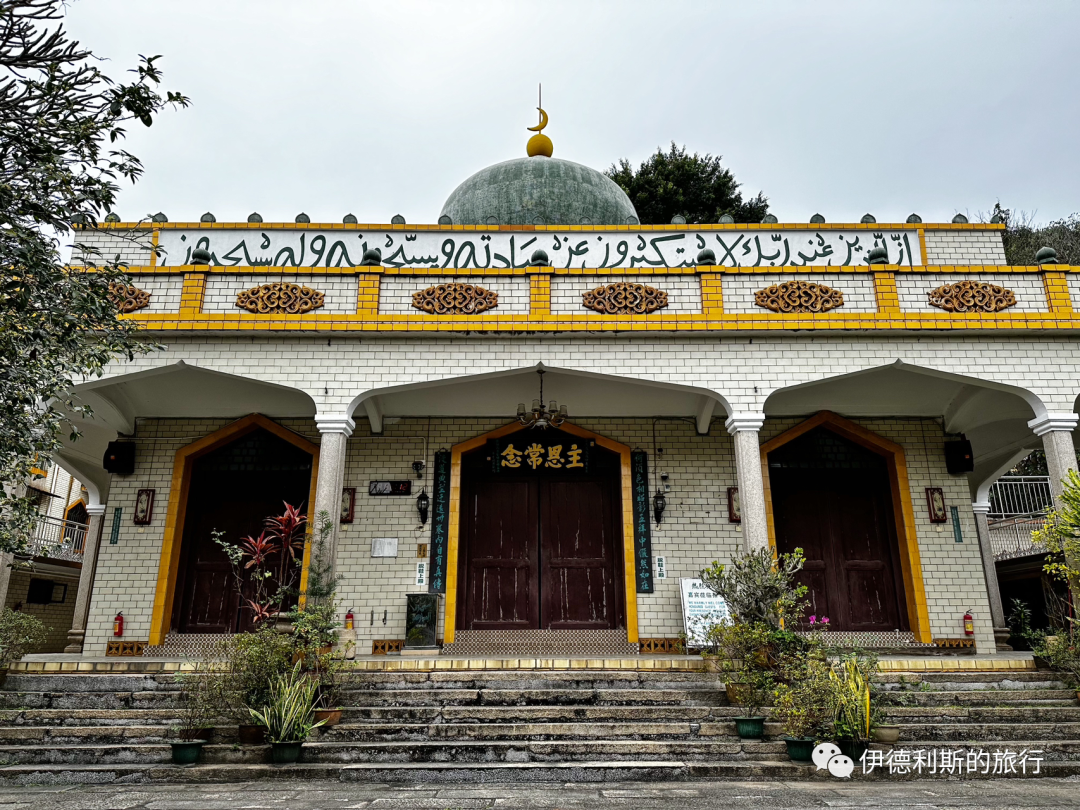
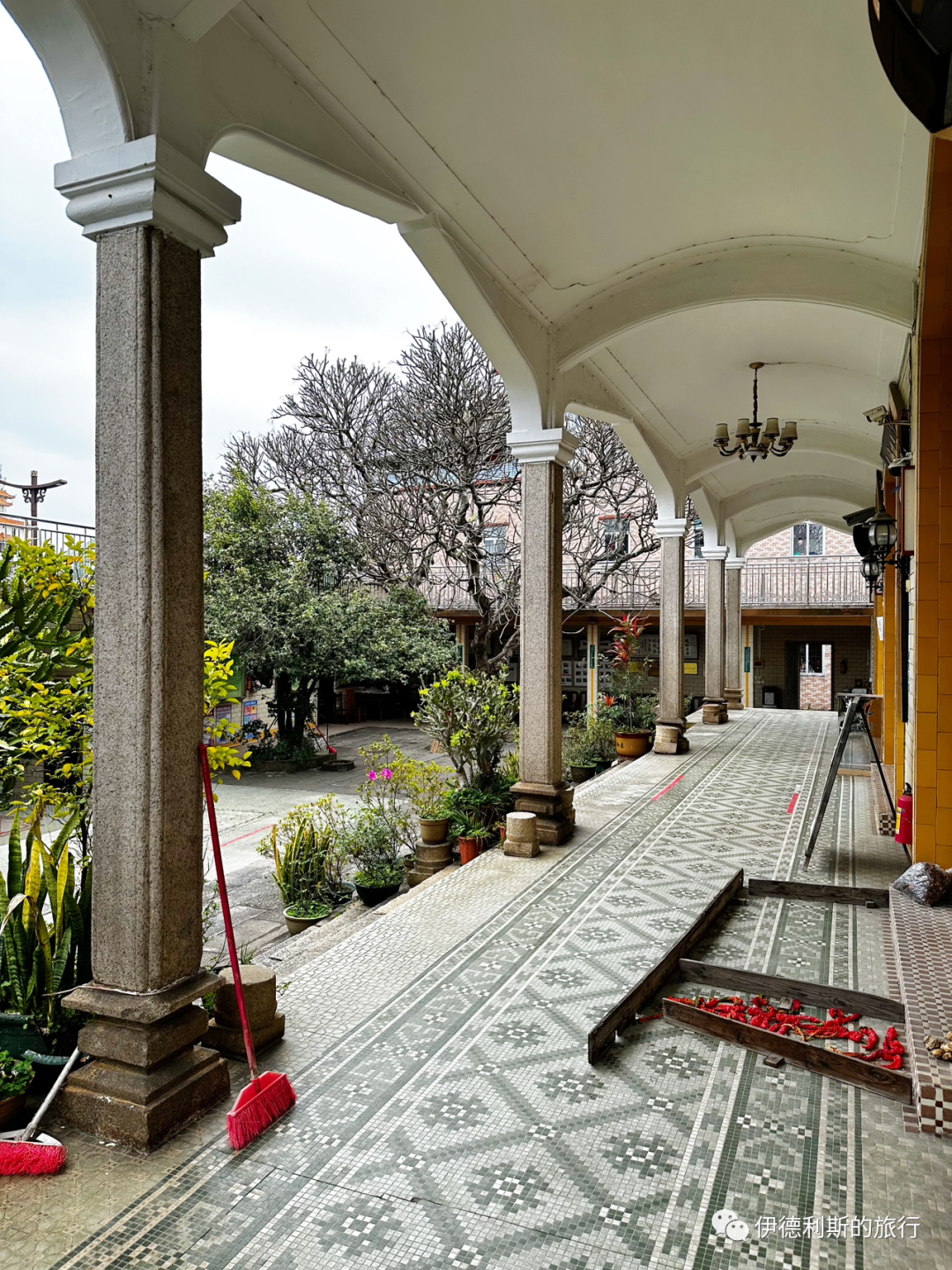
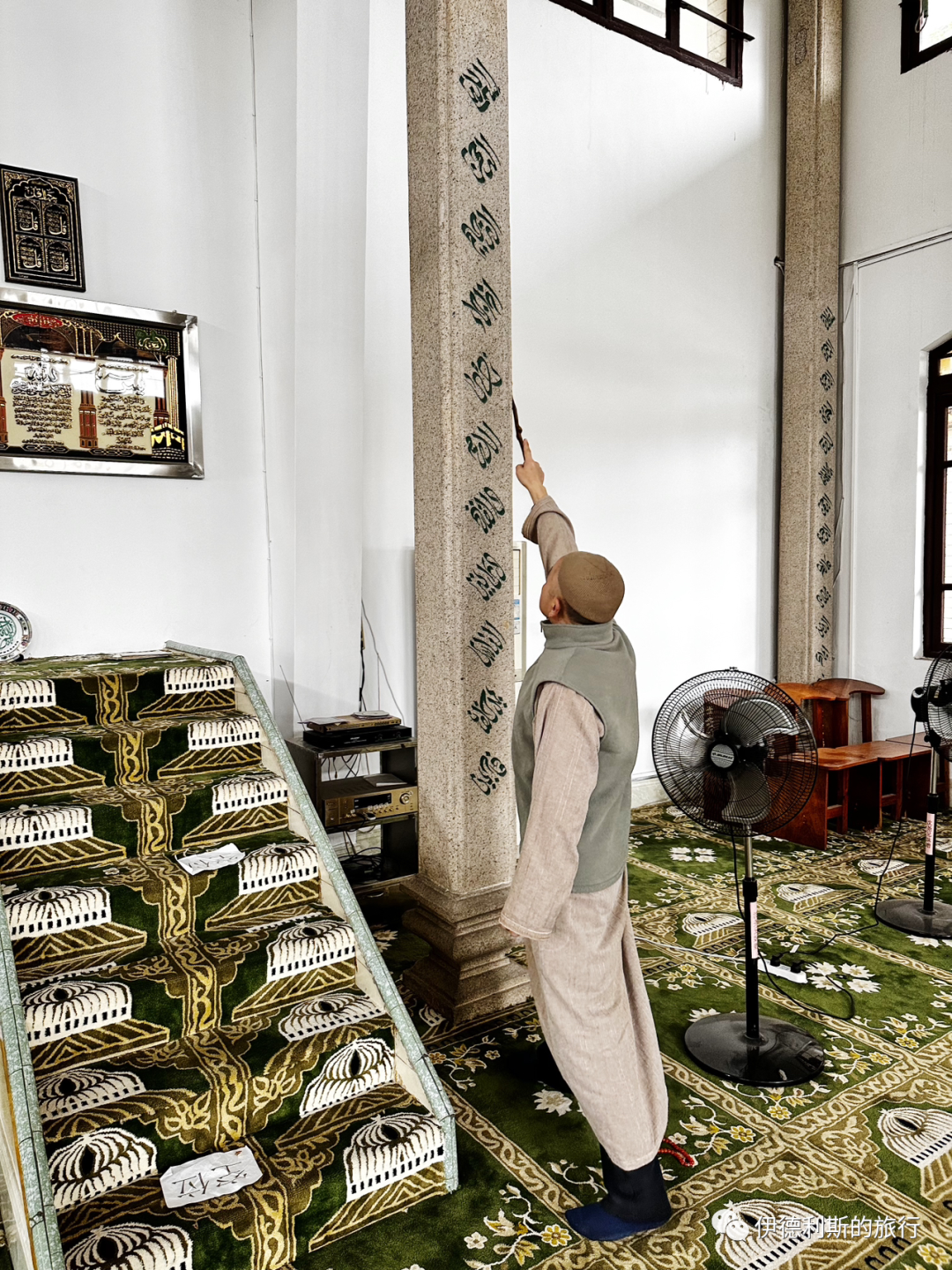
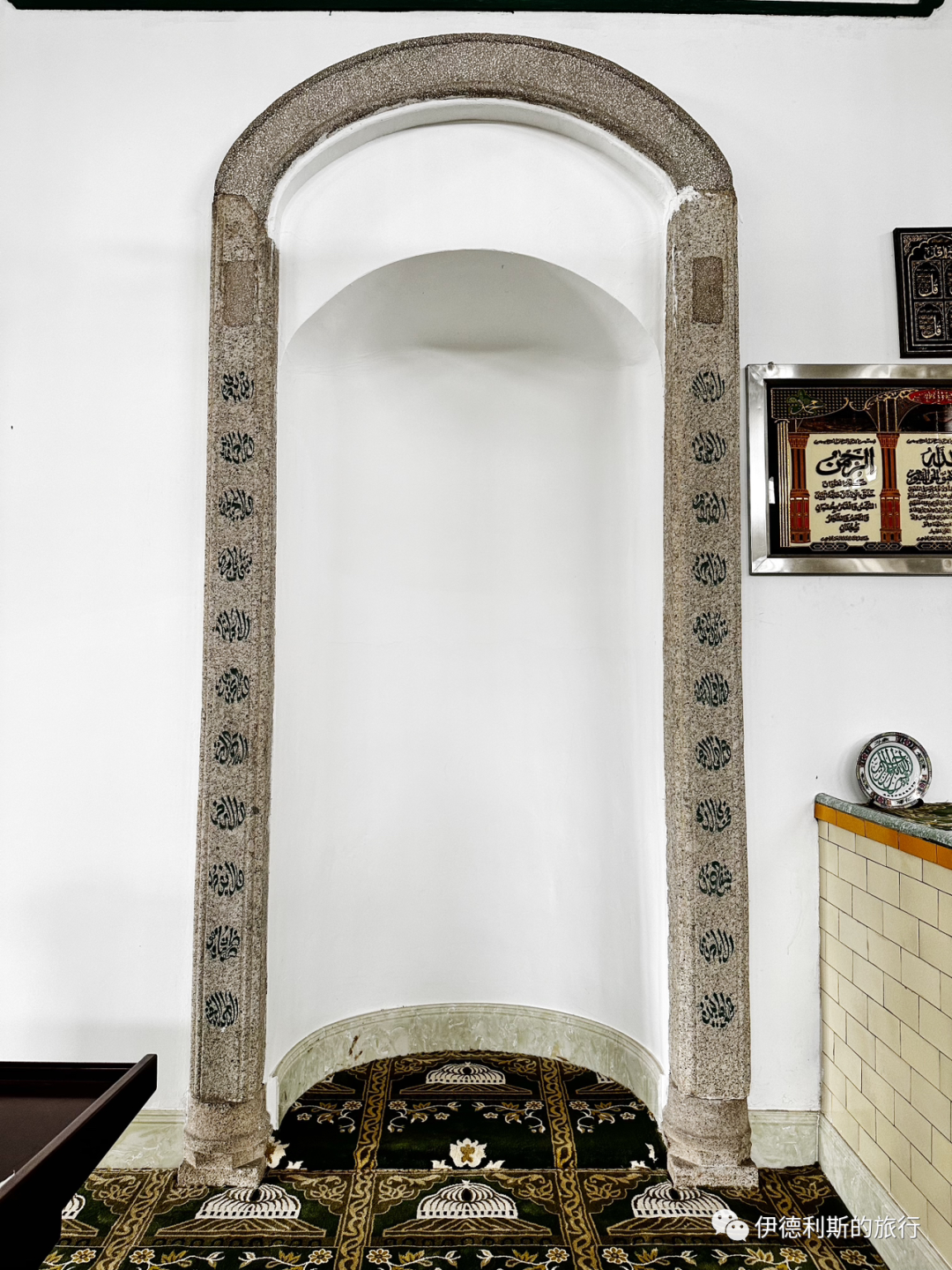
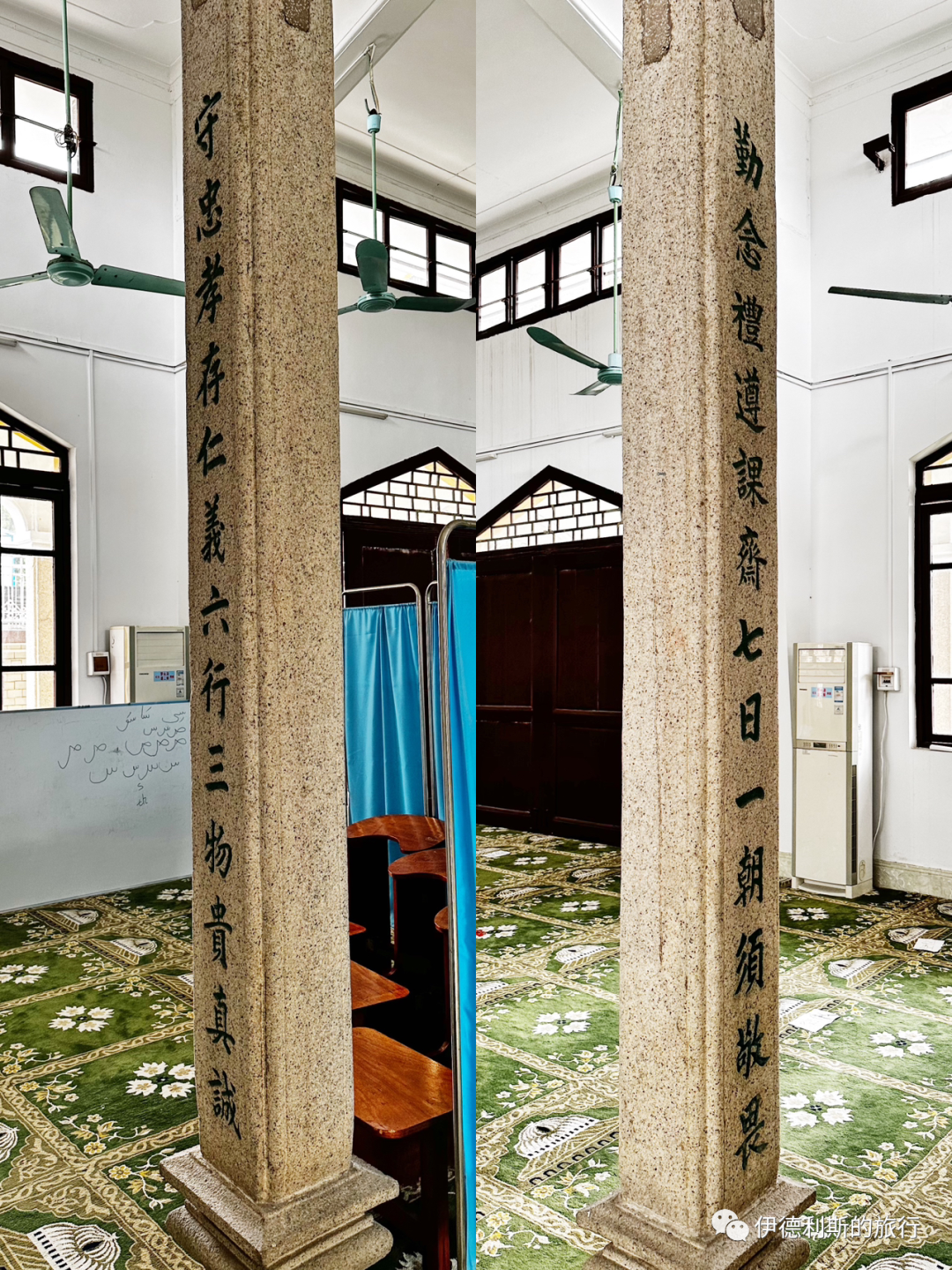
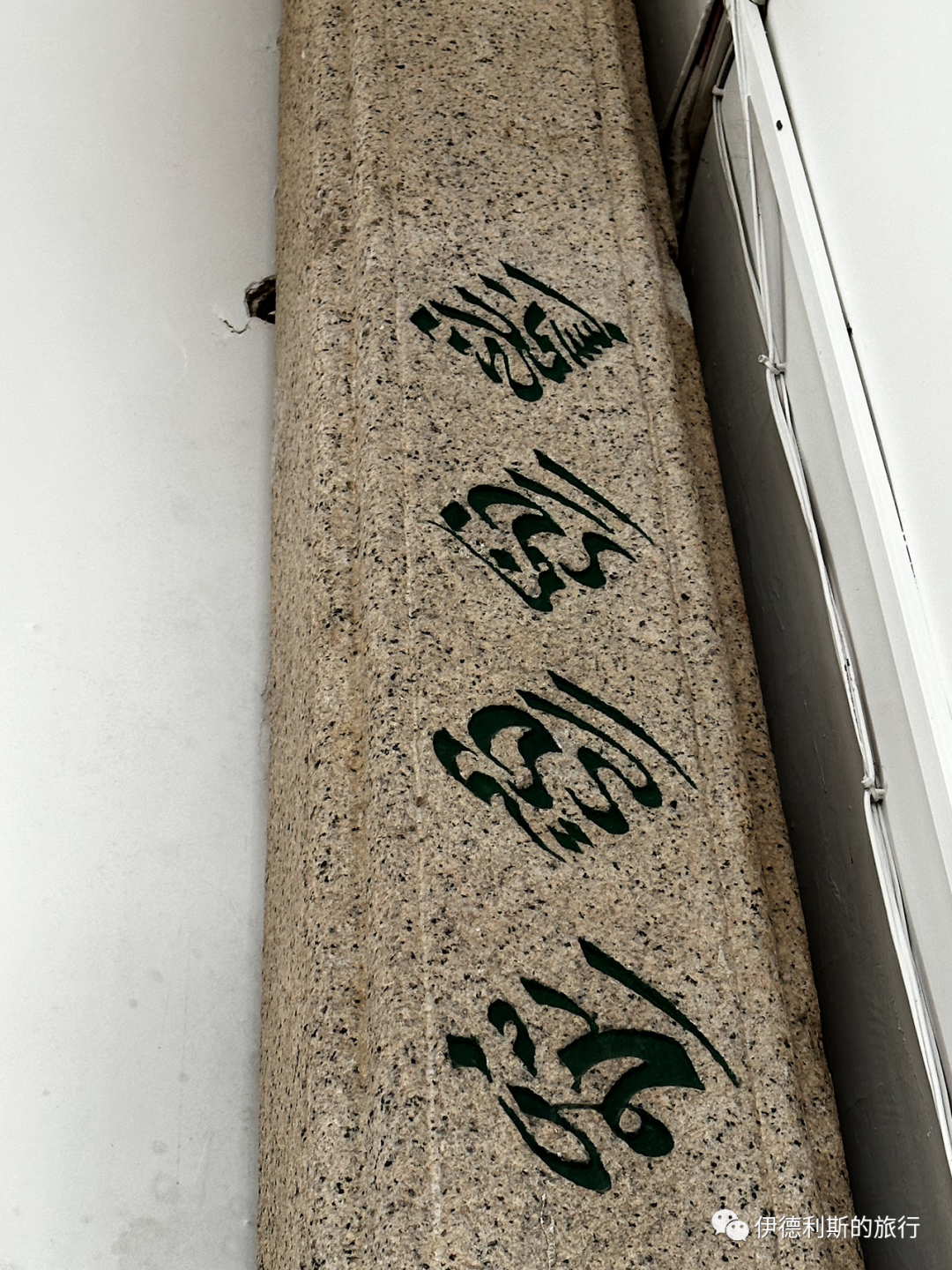
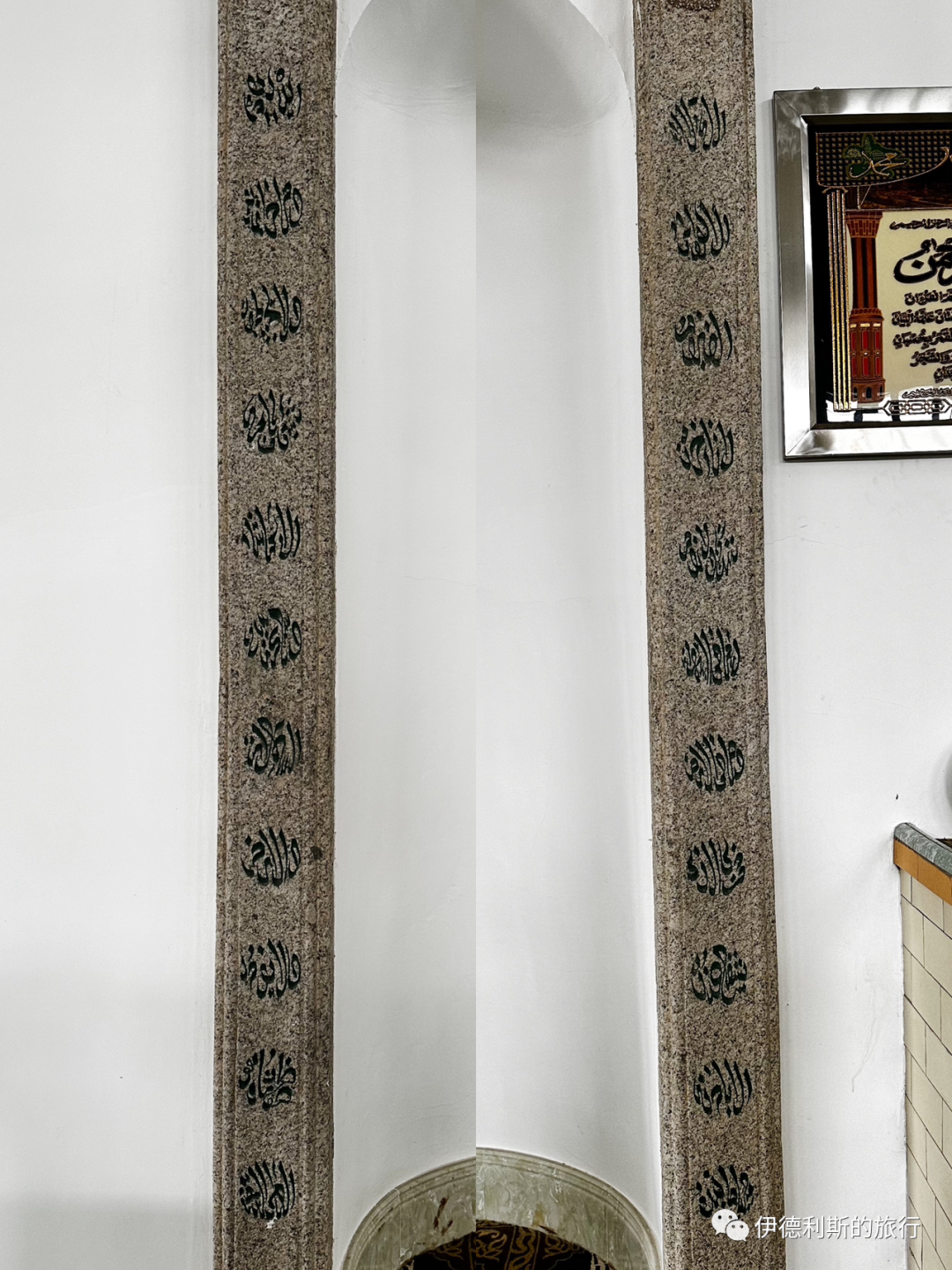
The Zhaoqing West Mosque was first built in the early Qianlong reign. It was originally small. In 1767 (the 32nd year of Qianlong), the elder Liu Shifang led 15 Muslims to buy land and build the mosque by the Longding Ridge outside the west city wall. It was expanded twice during the Jiaqing and Daoguang reigns and rebuilt into its current form in 1983. I am very grateful that the original stone pillars and the mihrab stone arch from the Qing Dynasty main hall were preserved. The mihrab stone arch and four stone pillars are carved with scripture calligraphy. Two of the pillars are carved with a Chinese couplet: "Diligently recite, pray, follow the rules, fast, and worship once a week with reverence; uphold loyalty, filial piety, benevolence, and righteousness, for the six actions and three items are precious and sincere." The first line is about religious faith, and the second line is about Confucianism. Both were very important to the Hui Muslims at that time.
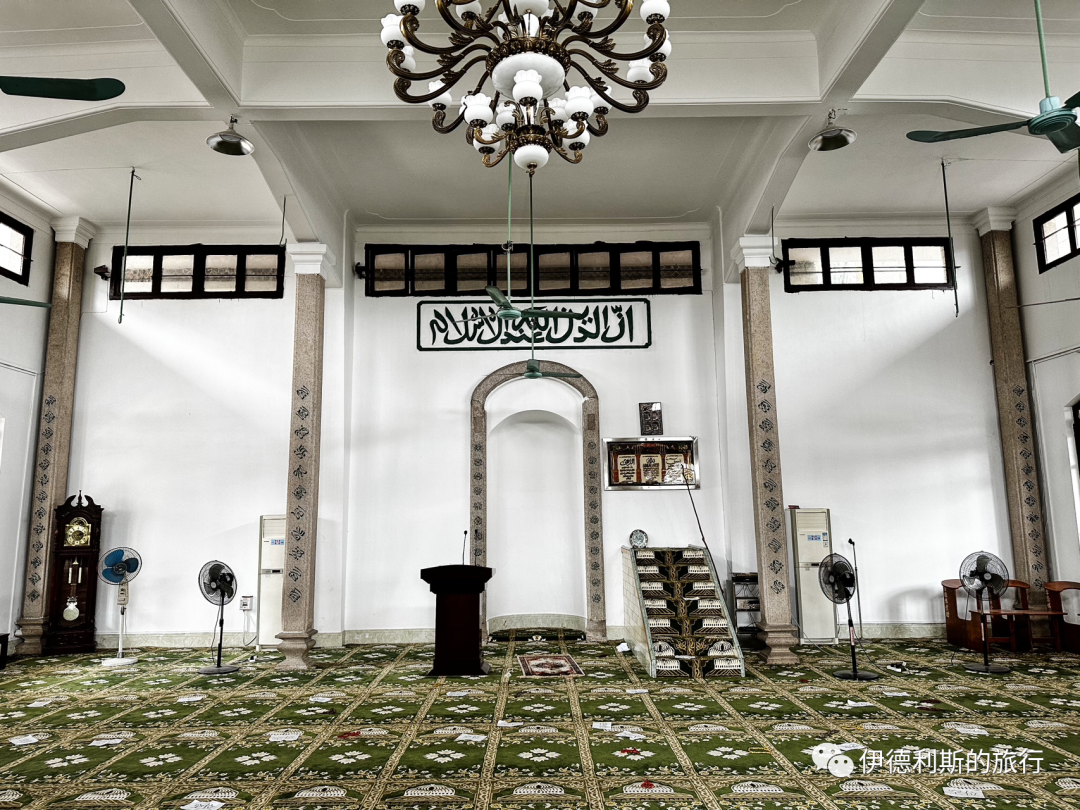
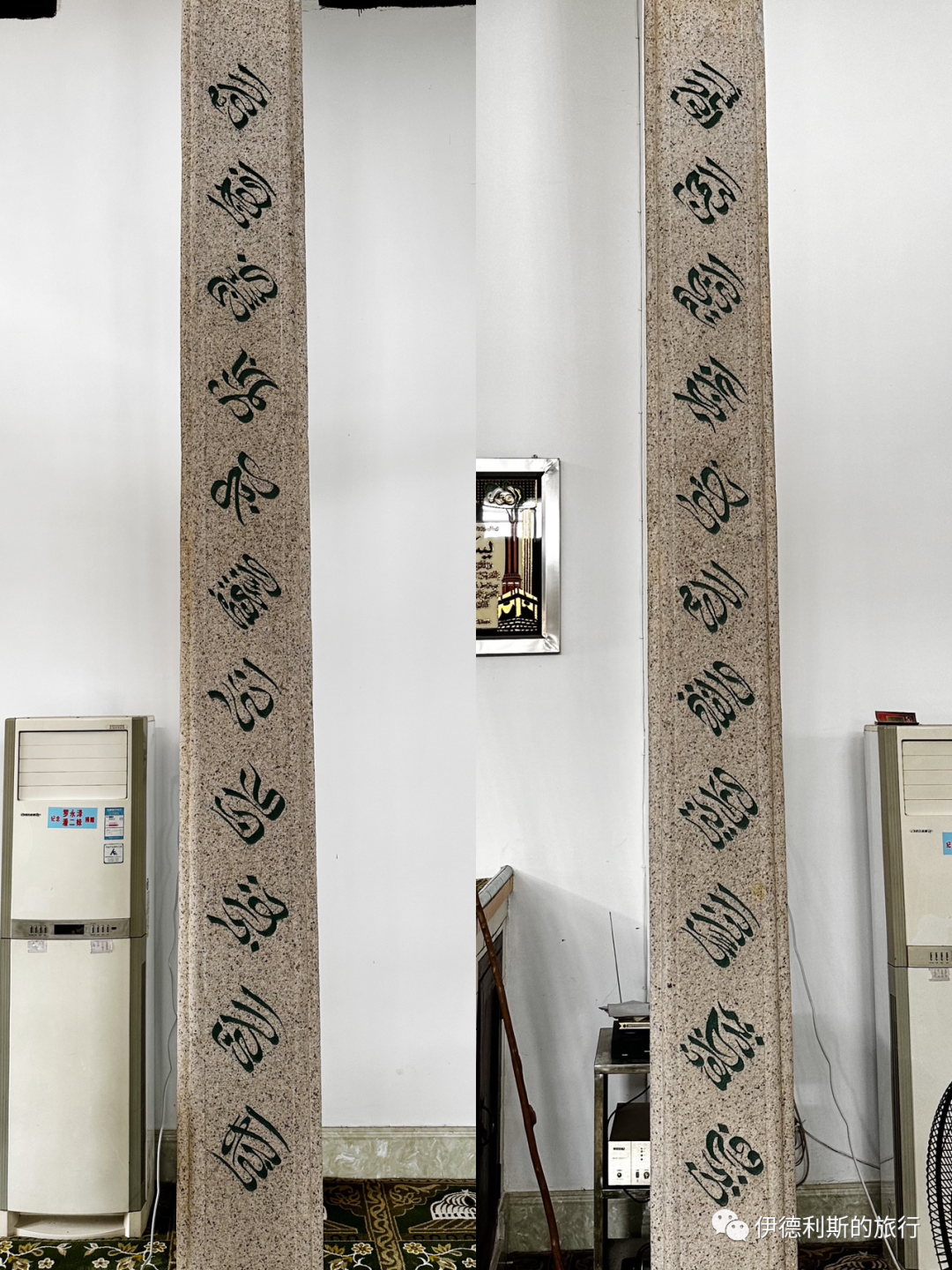
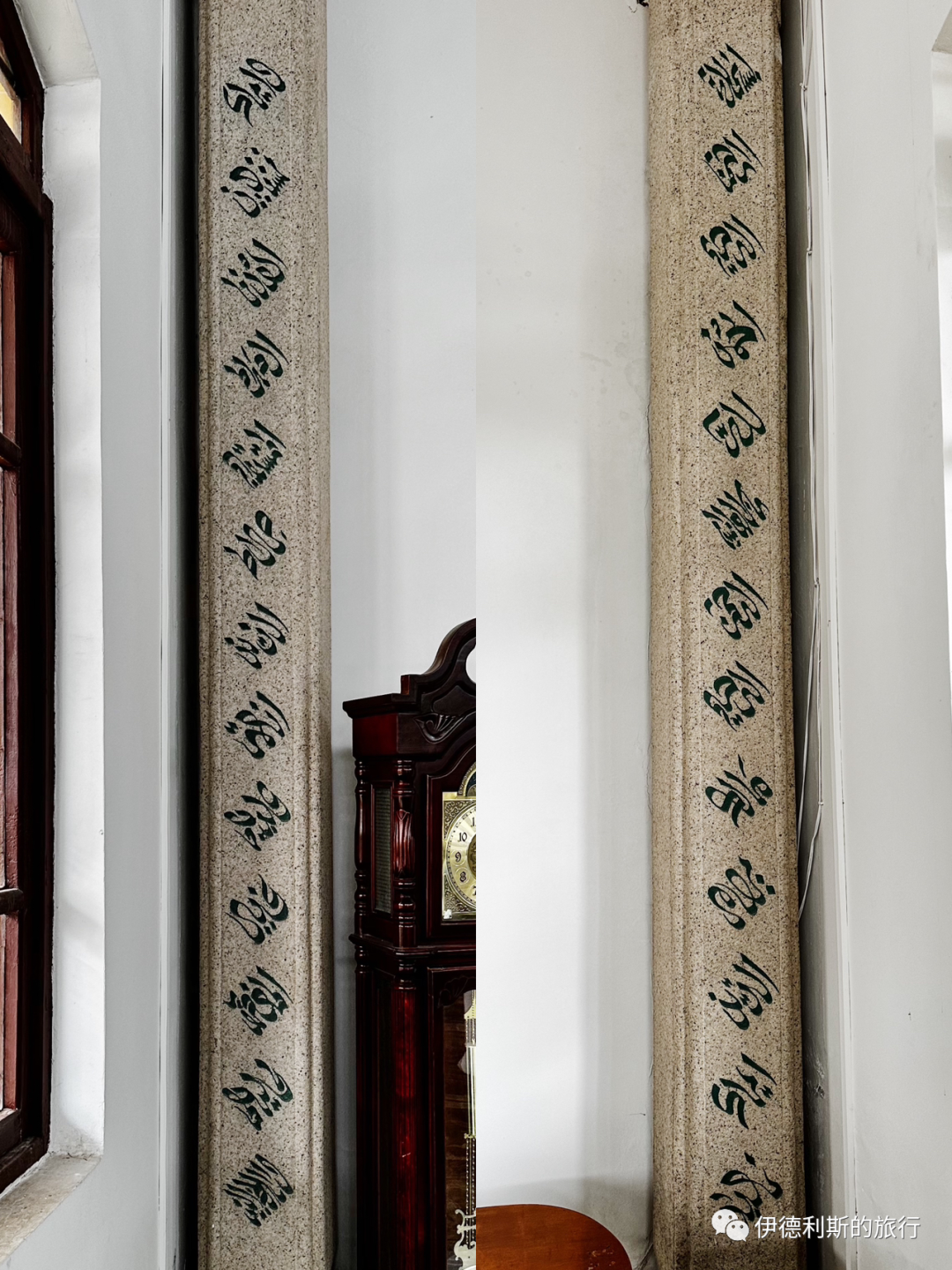
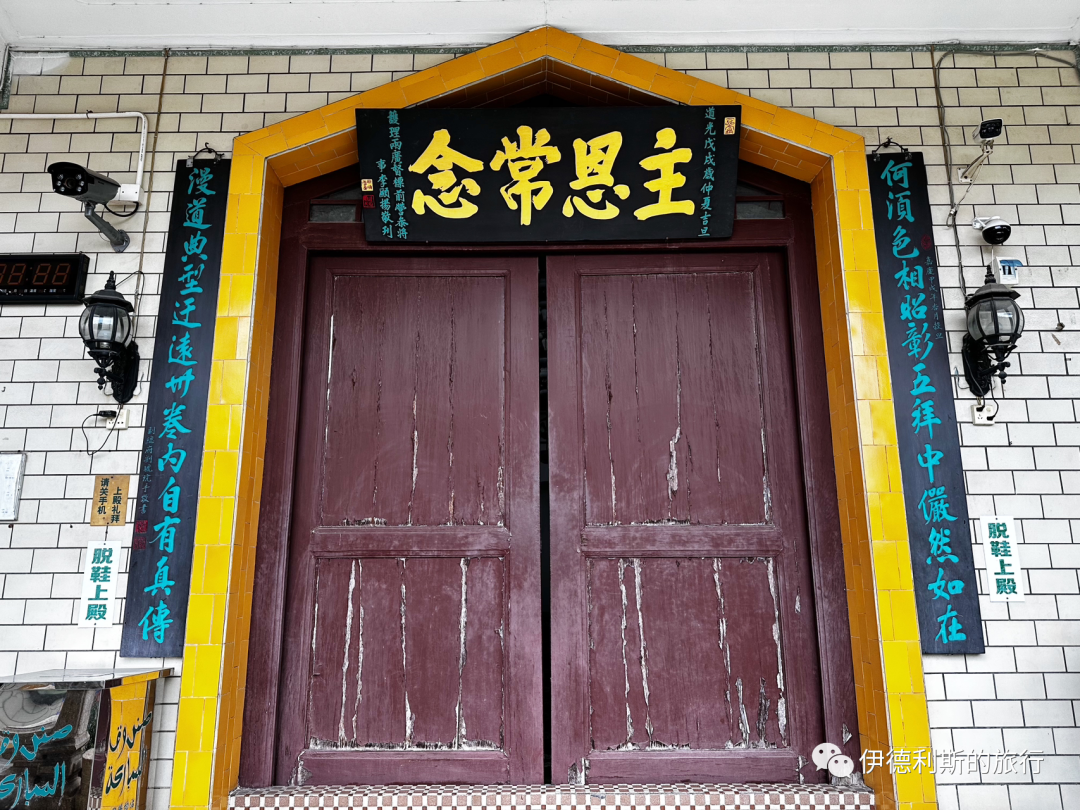
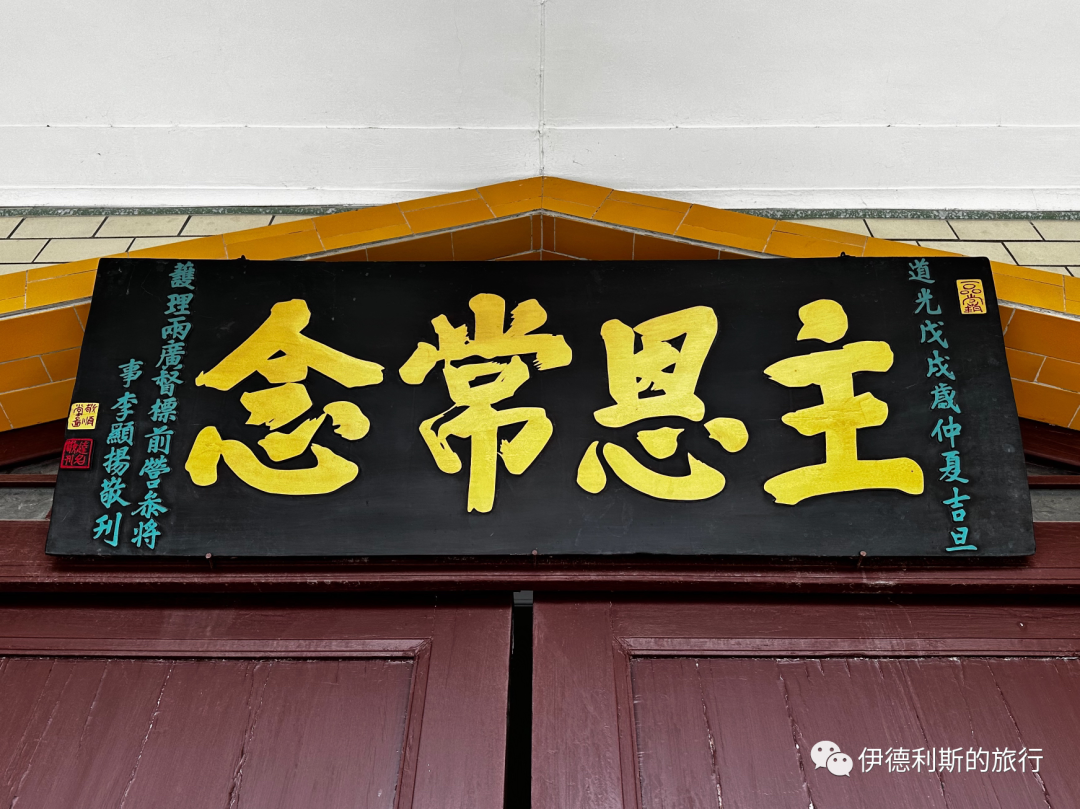
On the door of the main hall of the West Mosque, there is a plaque and couplet. The plaque "Always Remember the Lord's Grace" was respectfully inscribed in 1838 (Daoguang Wuxu year) by Li Xianyang, a military official. The couplet, "Why need the physical form to be manifest, for in the five prayers one is as if in His presence; do not say the tradition is far away, for in the thirty volumes there is the true teaching," was respectfully written by Liu Hu in 1814 (Jiaqing Jiaxu year).
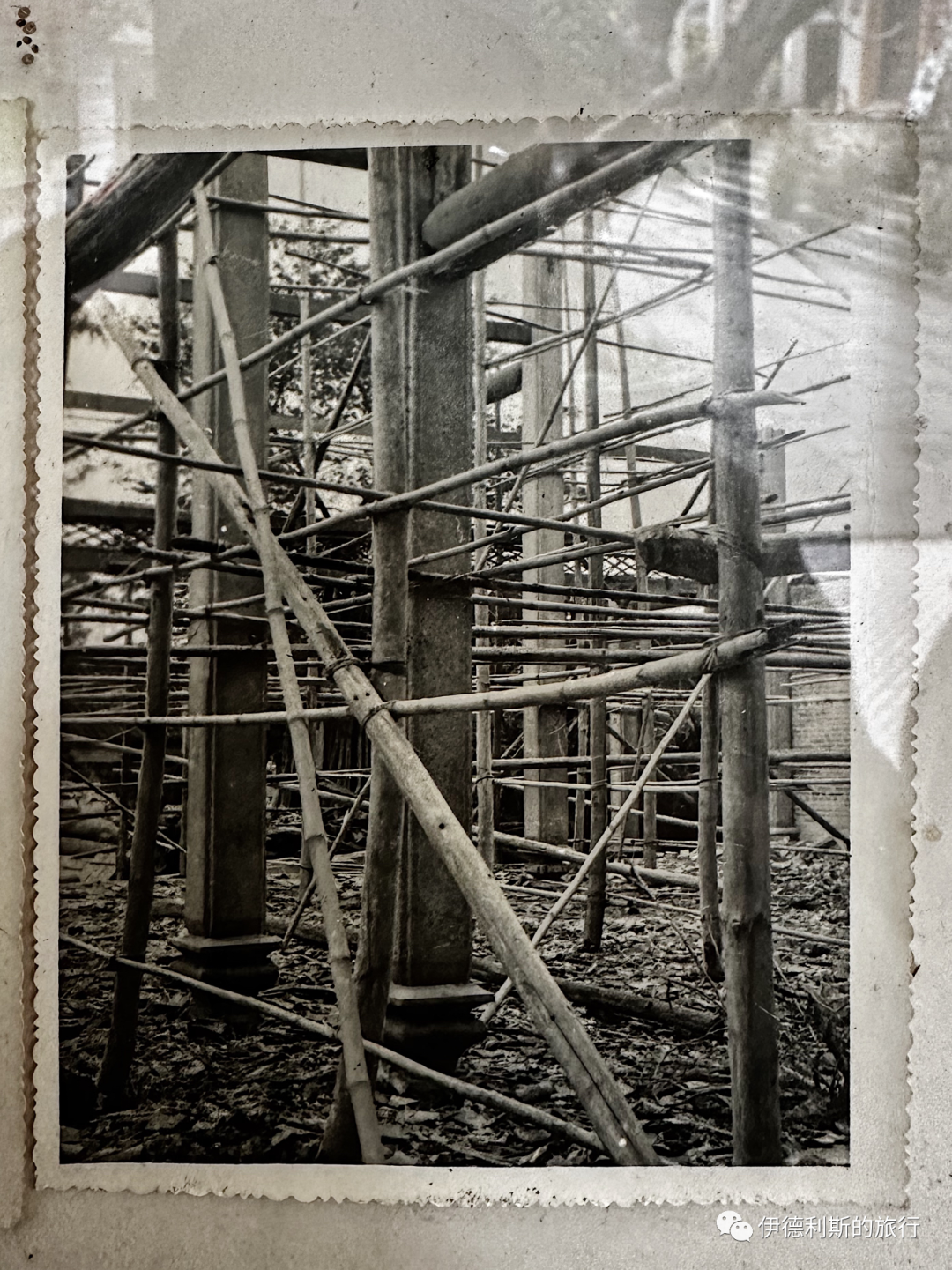
The West Mosque preserves old photos of the main hall from before and during its demolition in 1983. From the photos, you can see that this mosque, like the Haopan Mosque in Guangzhou, has a double-eaved hip-and-gable roof and a stone-pillared corridor. This architectural style is extremely rare in northern mosques. You can also see what the Chinese stone couplets looked like on the old main hall.
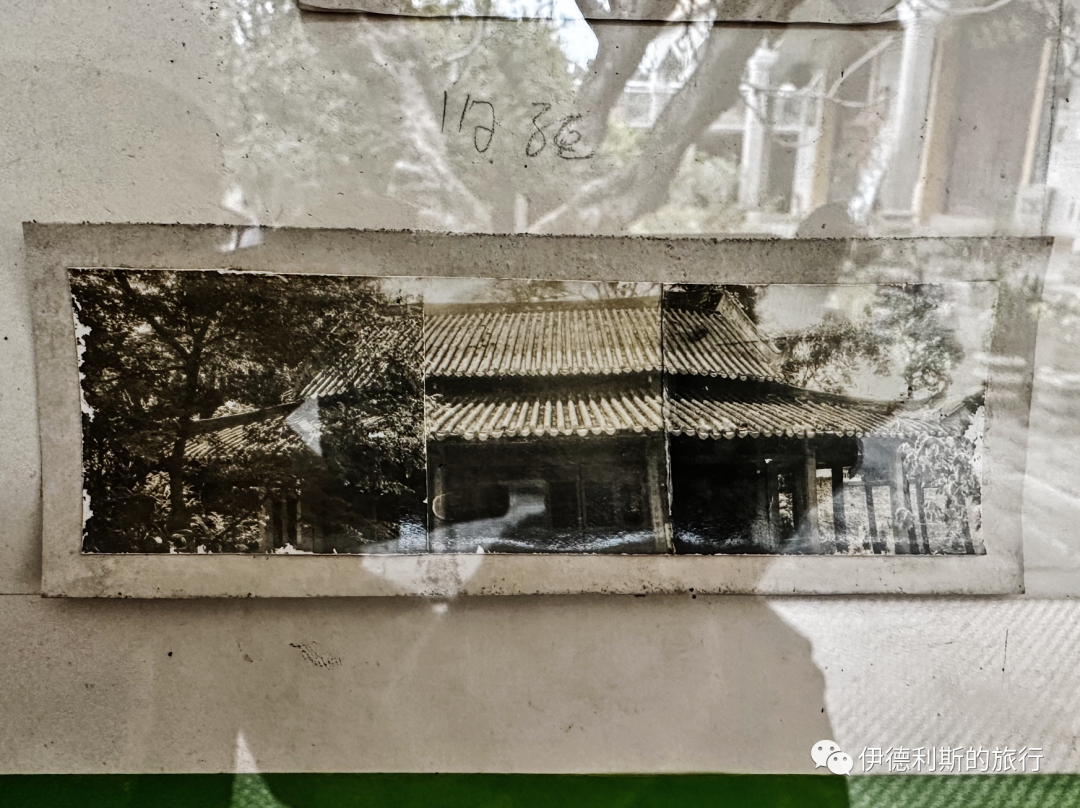
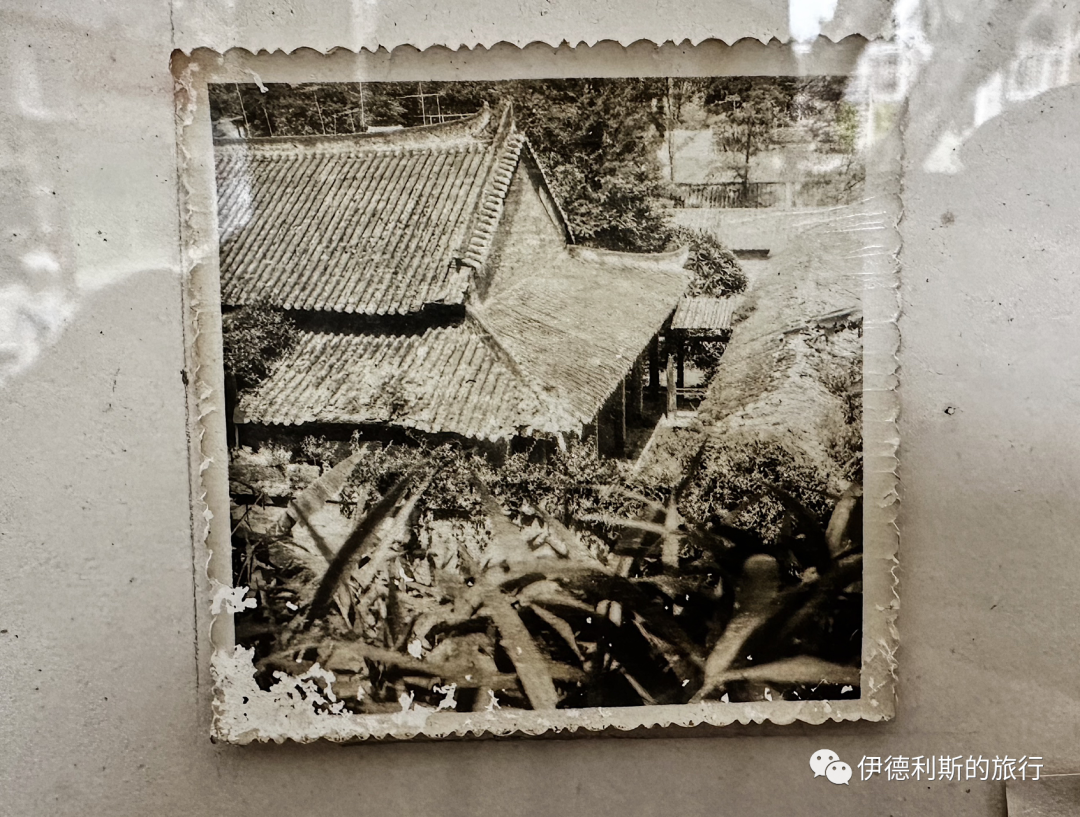
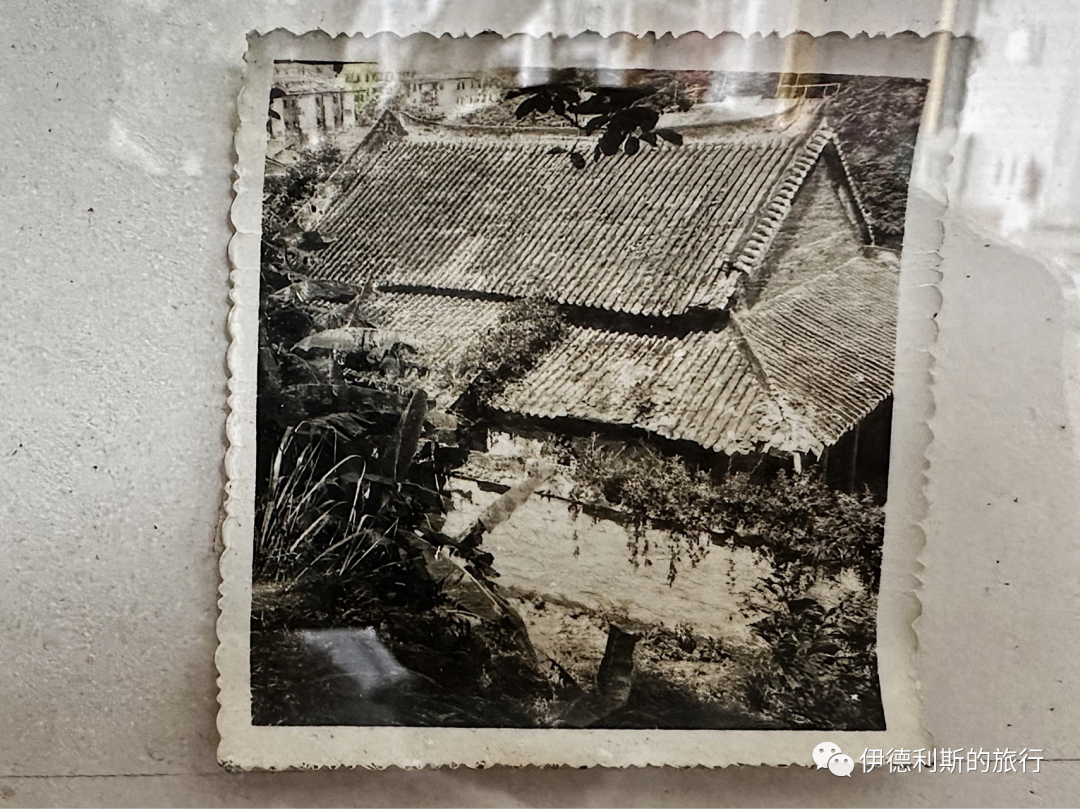
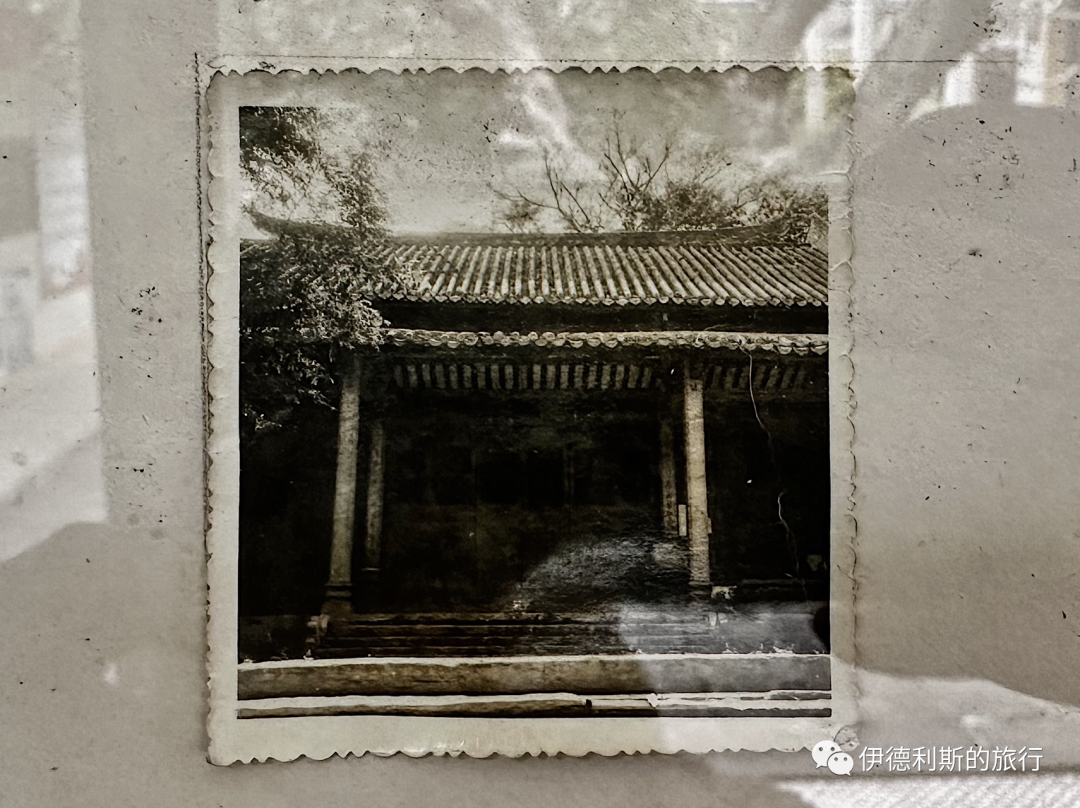
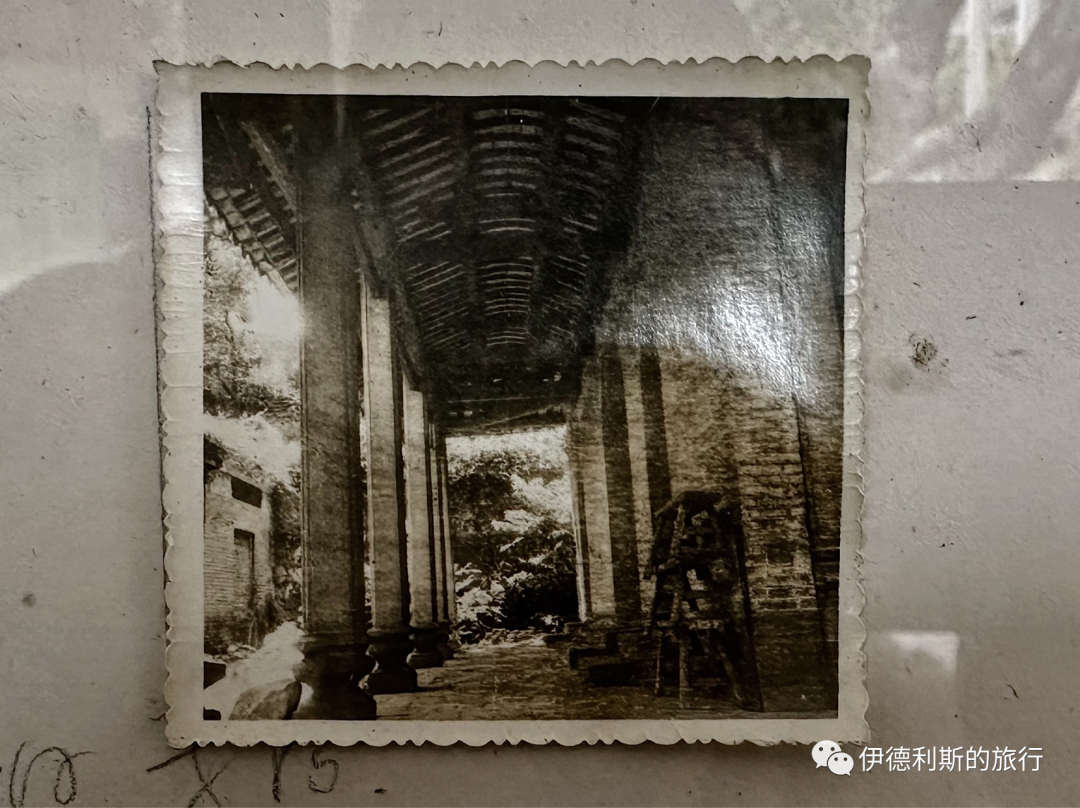
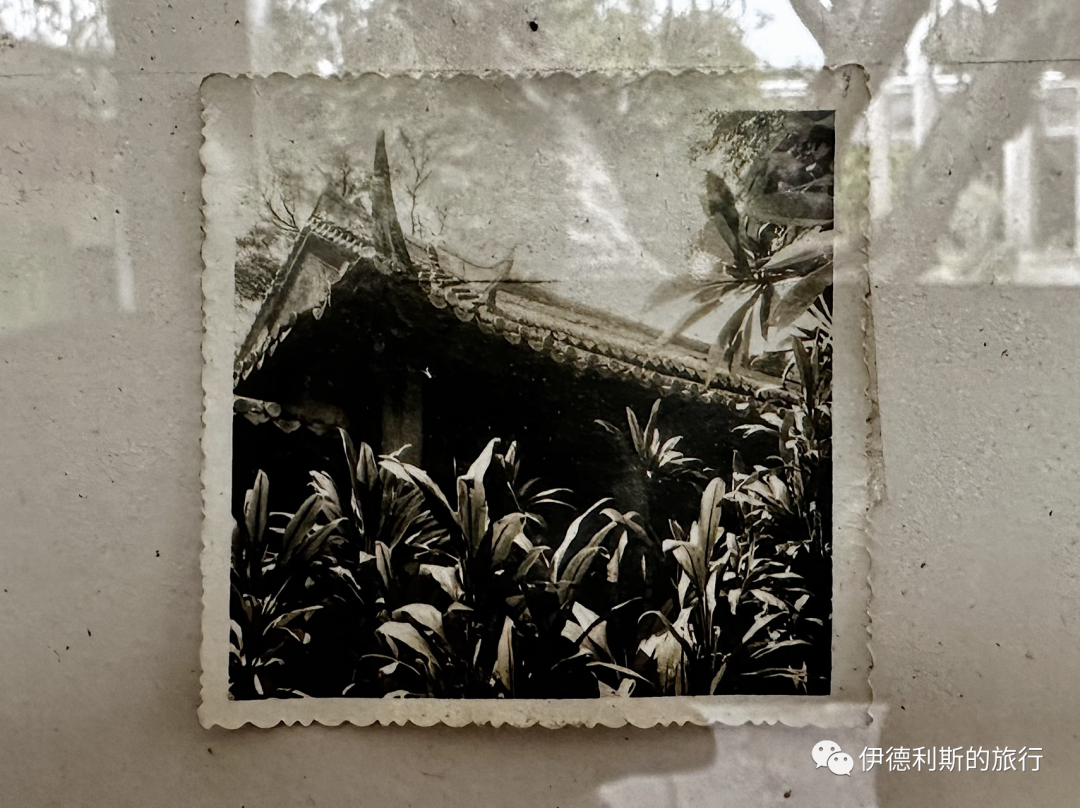
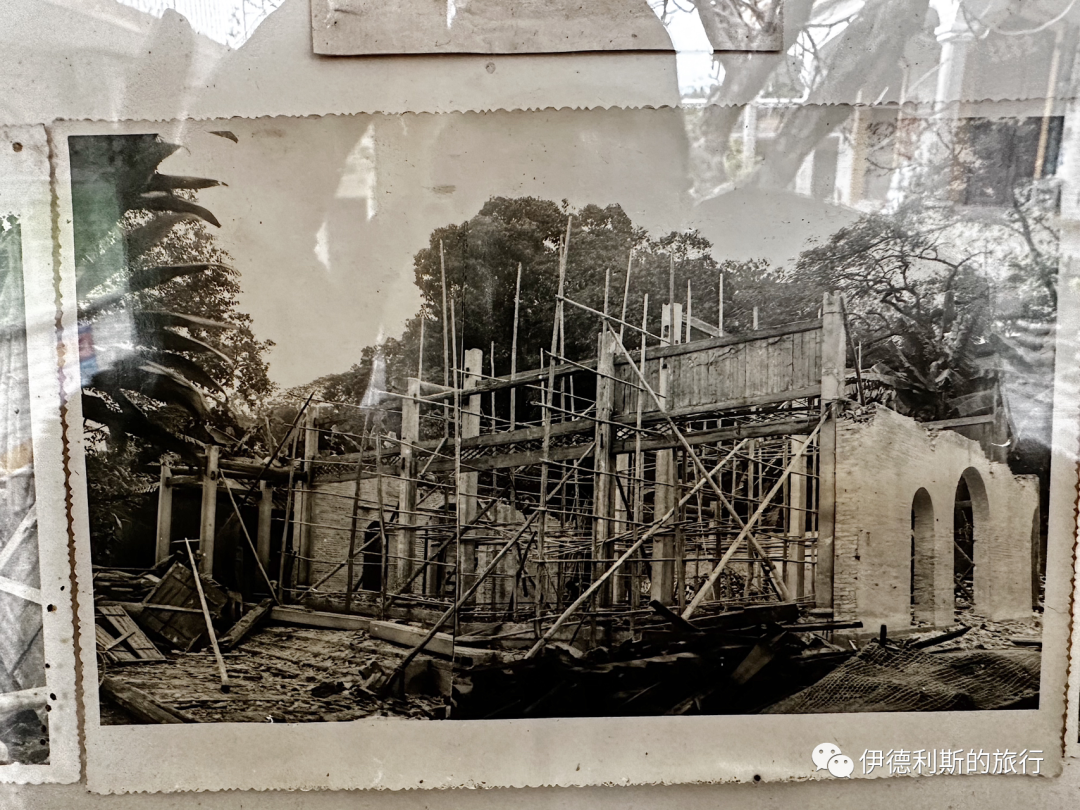
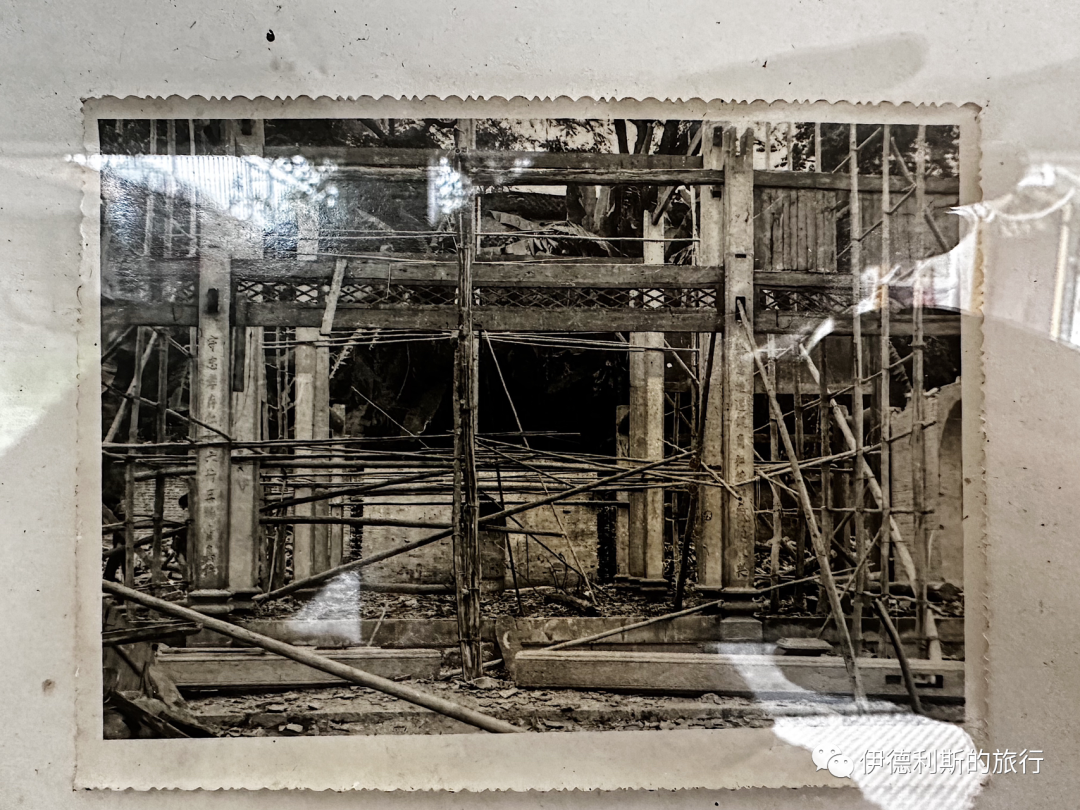
After saying goodbye to the Zhaoqing West Mosque, I walked through the old town of Zhaoqing to the East Mosque (Chengdong Si) and contacted Grandpa Wang, the mosque caretaker, to open the door for me. Mr. Wang is also a local Hui Muslim. According to family records, the ancestors of the Zhaoqing Wang family were from Taiyuan Prefecture, Shanxi. They came to Zhaoqing with the army in the early Qing Dynasty to serve in office and later settled down in Zhaoqing.
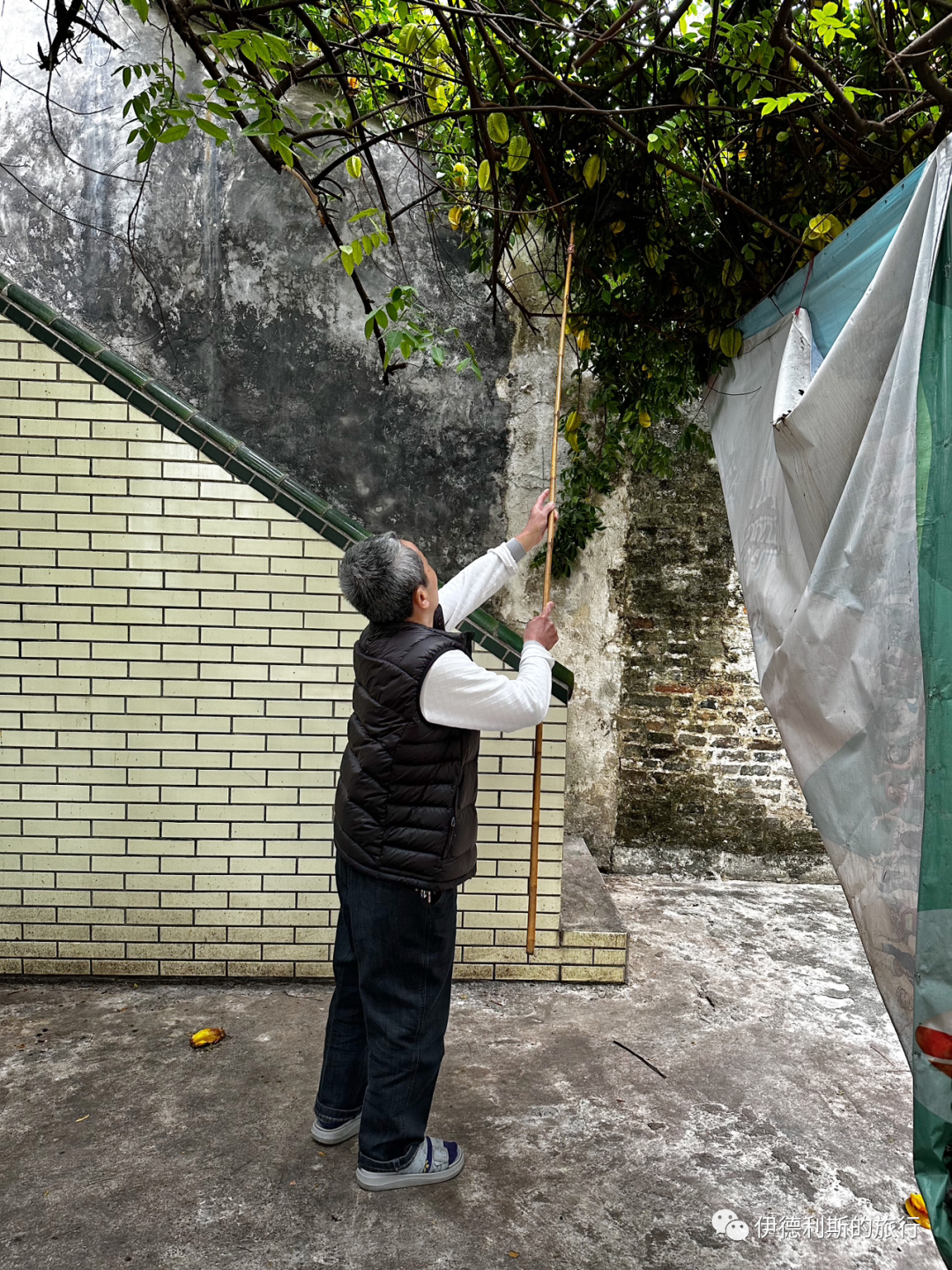
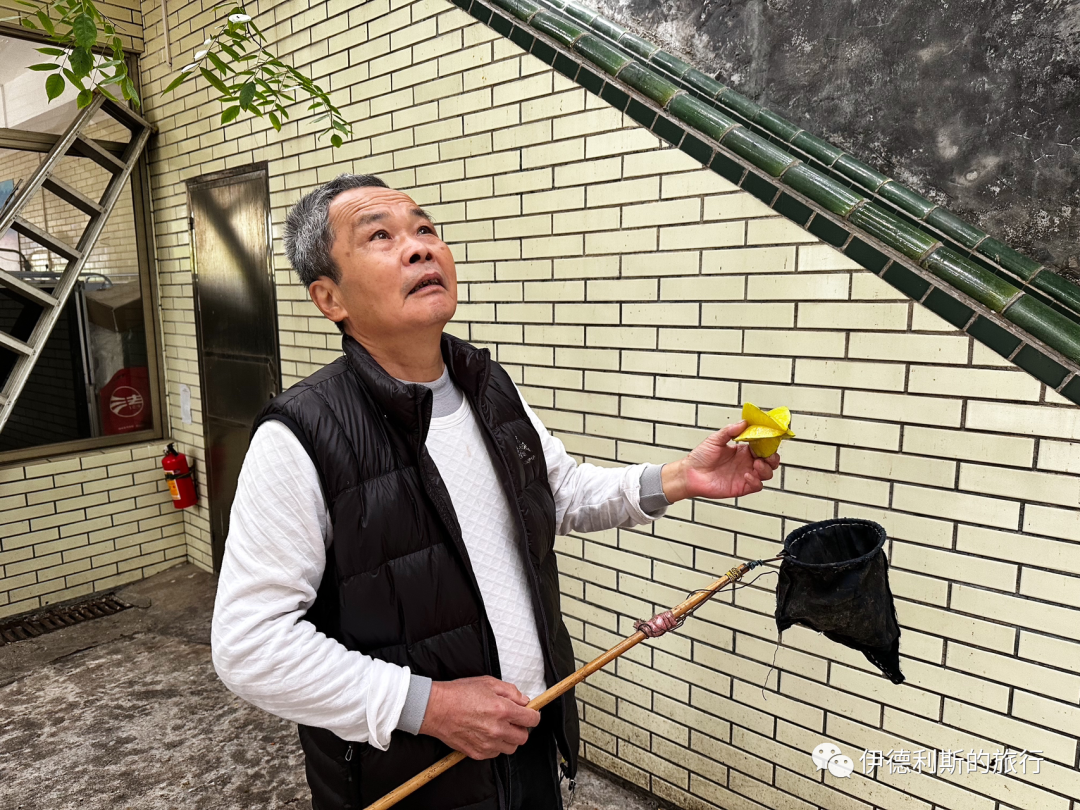
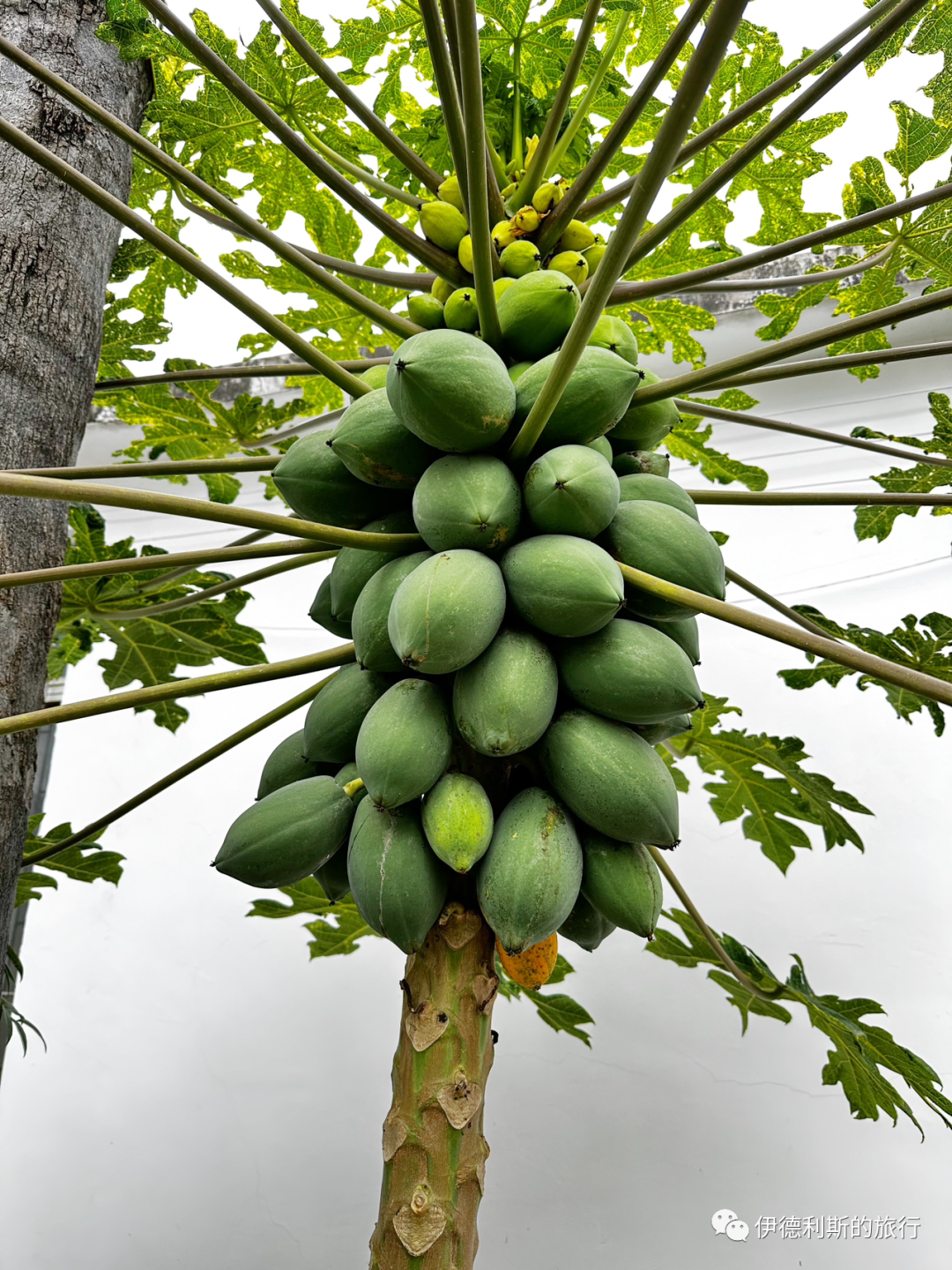
Because the climate in Lingnan is pleasant, Zhaoqing remains lush and green even in winter. The East Mosque is full of life, with papaya, starfruit, and mango trees planted inside. When I arrived, the starfruit was just right, and Mr. Wang picked several for me from the tree. Although I had eaten starfruit from fruit shops before, this was my first time eating it straight from the tree, and it was grown in a mosque, which felt very special. "Travel through the earth and observe how Allah created all living things." Travel lets you meet all kinds of interesting people, see all kinds of beautiful scenery, and experience all kinds of unforgettable moments. I am very grateful.
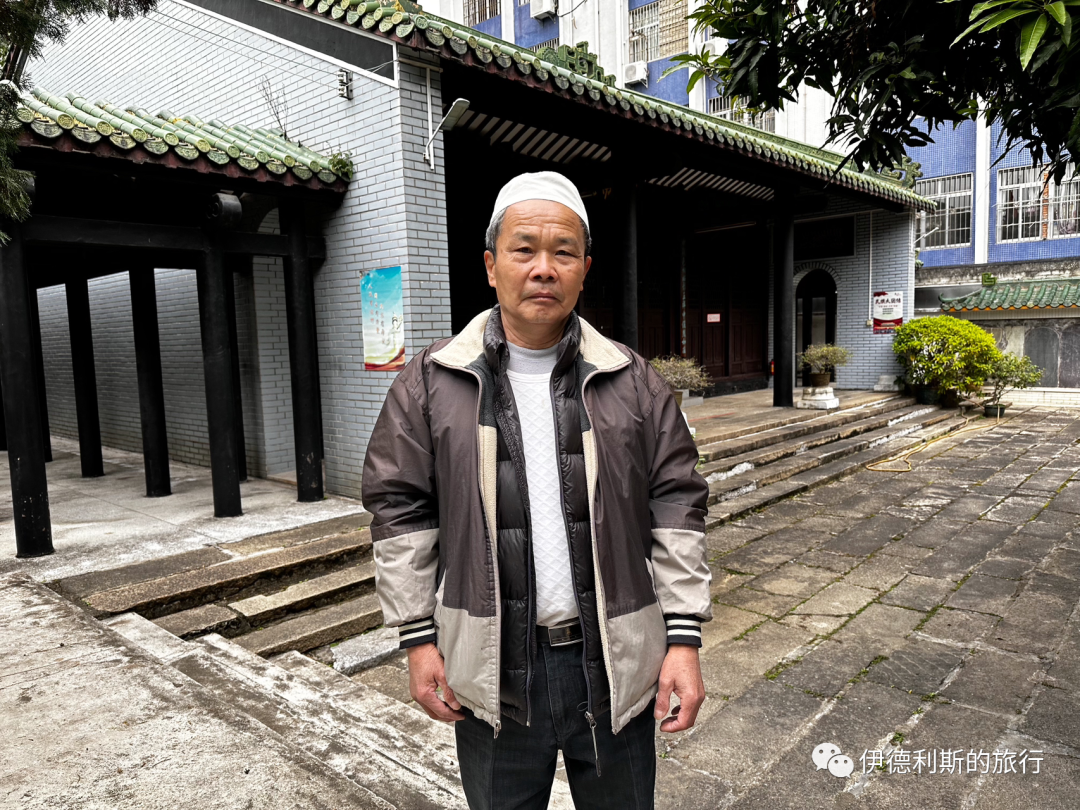
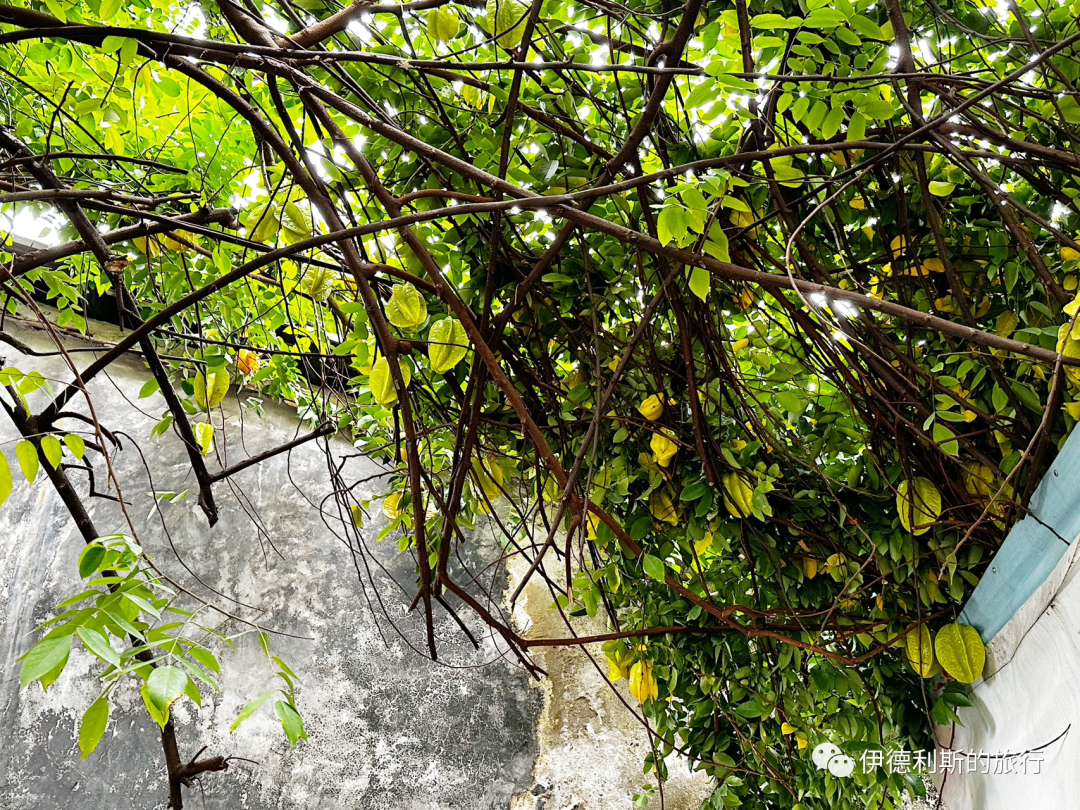
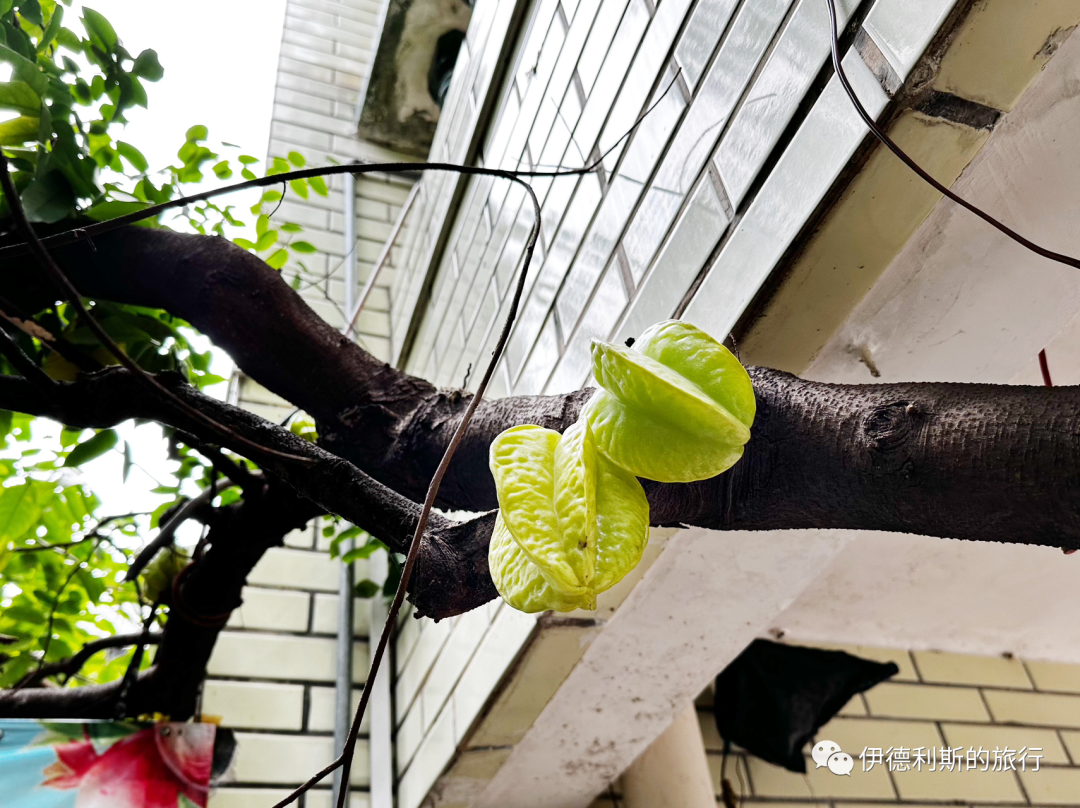
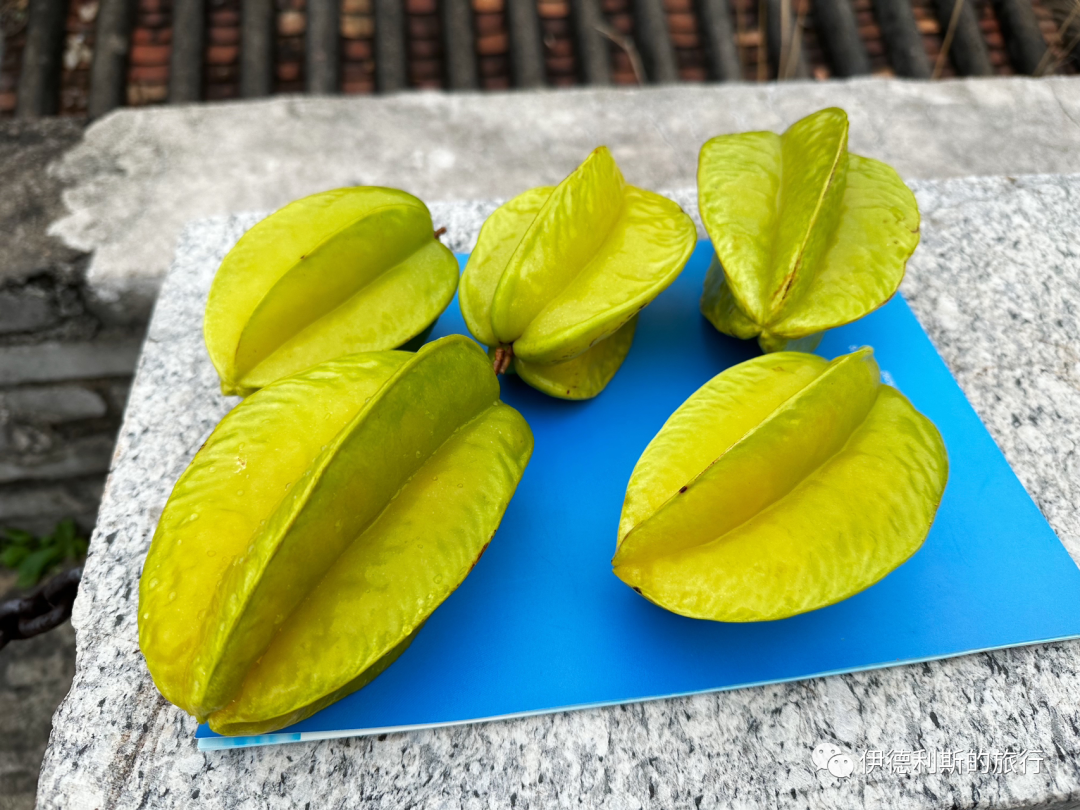
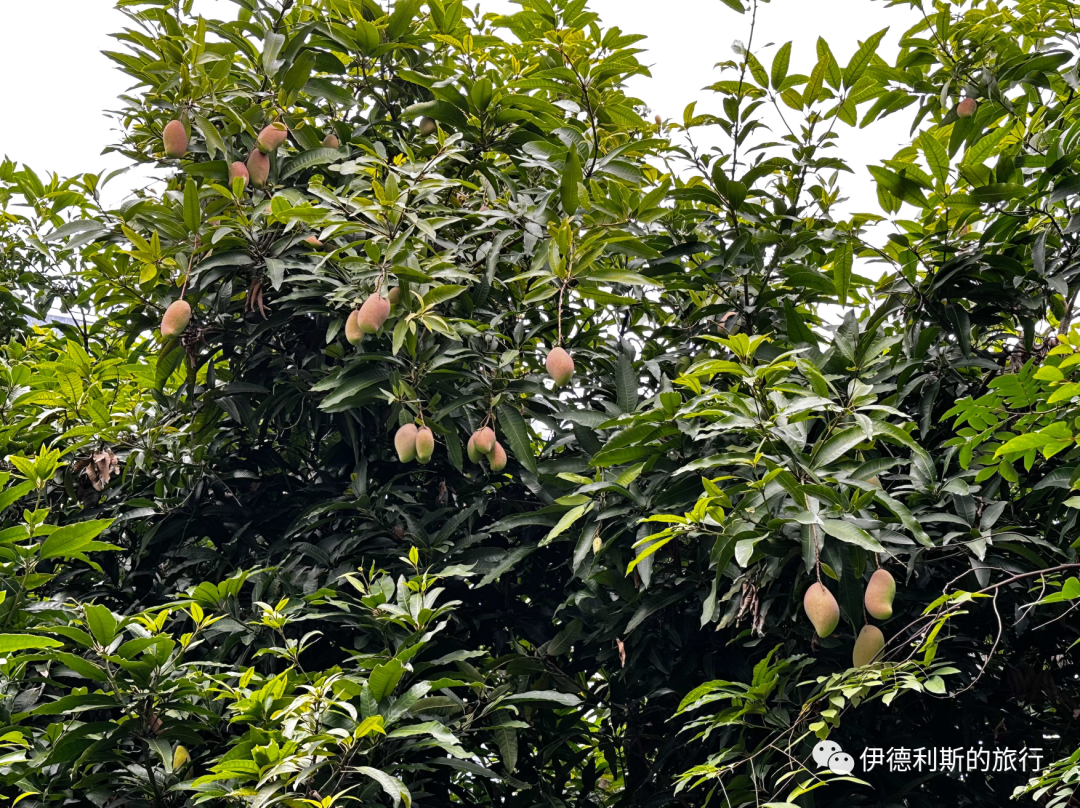
The East Mosque was originally on Water Street and was small. During the Kangxi reign, Fu Yunfeng from Guangzhou bought land and moved it to the Water Village Camp. It was rebuilt many times during the Qianlong, Daoguang, and Republican eras. Fu Yunfeng was originally Han Chinese. During the Kangxi era, he traveled from Zhejiang to Guangdong for business. After he ran into trouble, an imam at the Haopan Mosque in Guangzhou saved him. He lived in the mosque for a while and then converted to Islam. He was a timber merchant. After becoming wealthy, he funded the reconstruction of the Haopan Mosque in Guangzhou. He also renovated the Huaisheng Mosque, Nansheng Mosque, the Ancient Tombs of the Worthies, and the Chengdong Mosque in Zhaoqing, making a major contribution to the development of the faith in Guangdong.
In 1946, Imam Yang Maolin opened a scripture hall inside the Chengdong Mosque. The following year, he used the scripture class as a foundation to start the private Zhaoqing Muslim Primary School, which became a public school after 1949. After 1966, the Muslim Primary School was renamed Zhaoqing No. 17 Primary School. Everything except the main gate and the main prayer hall was torn down to build classrooms, and the mosque stopped its activities. In the late 1980s, after religious policies were restored, the government gave the area north of the main prayer hall to the school and returned the area south of the hall to the Chengdong Mosque, along with compensation. In 1991, the Chengdong Mosque tore down the original main prayer hall and rebuilt it with reinforced concrete. It was finished in 1993. In 2006, they rebuilt the scripture hall, washroom (shuifang), and offices, creating the mosque as it stands today.
The main prayer hall of the Chengdong Mosque still holds a Qing dynasty mihrab, and outside the hall, you can see the original Qing dynasty stone column bases from the prayer hall and the courtyard. Outside the ridge, there is also a stone carving that says "Ancient mosque" (Qingzhen Gusi) which was dug up from the ground during the reconstruction.
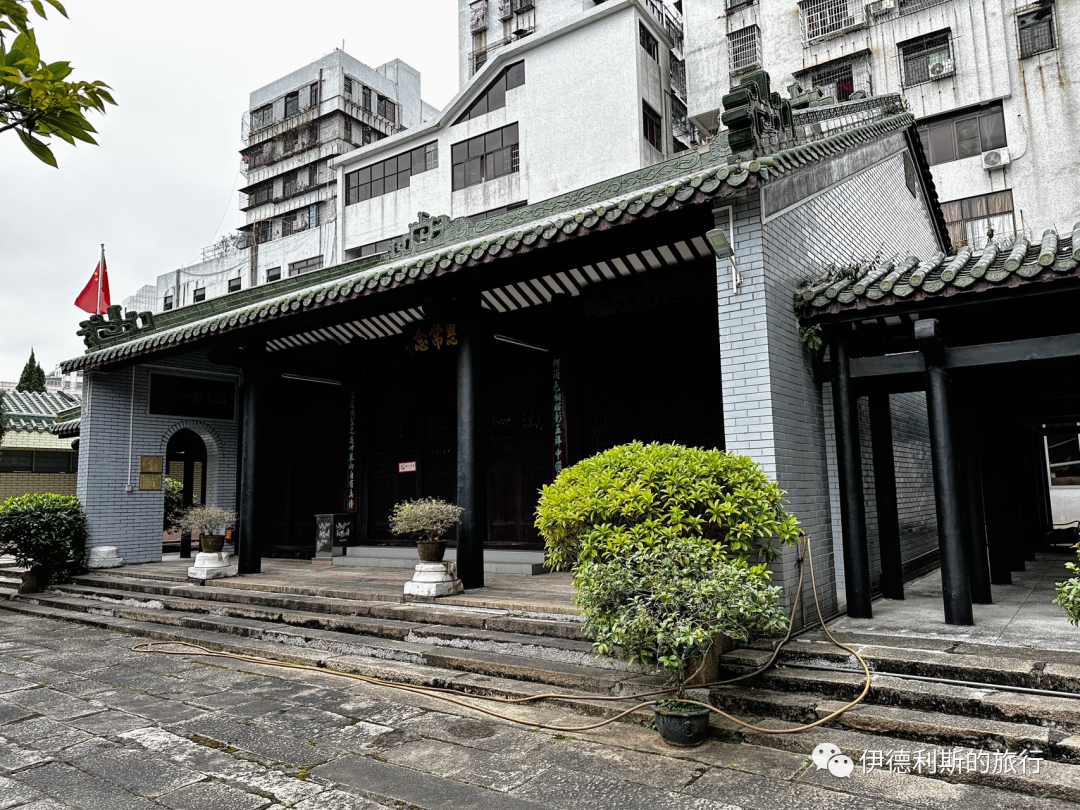
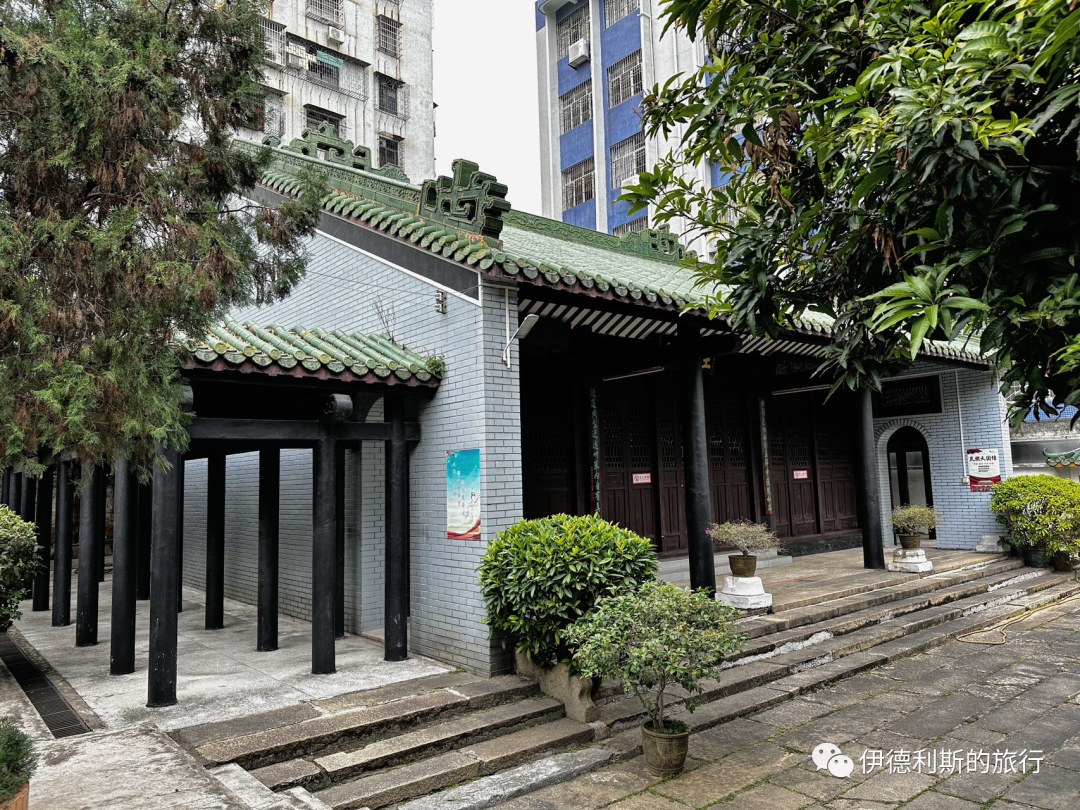
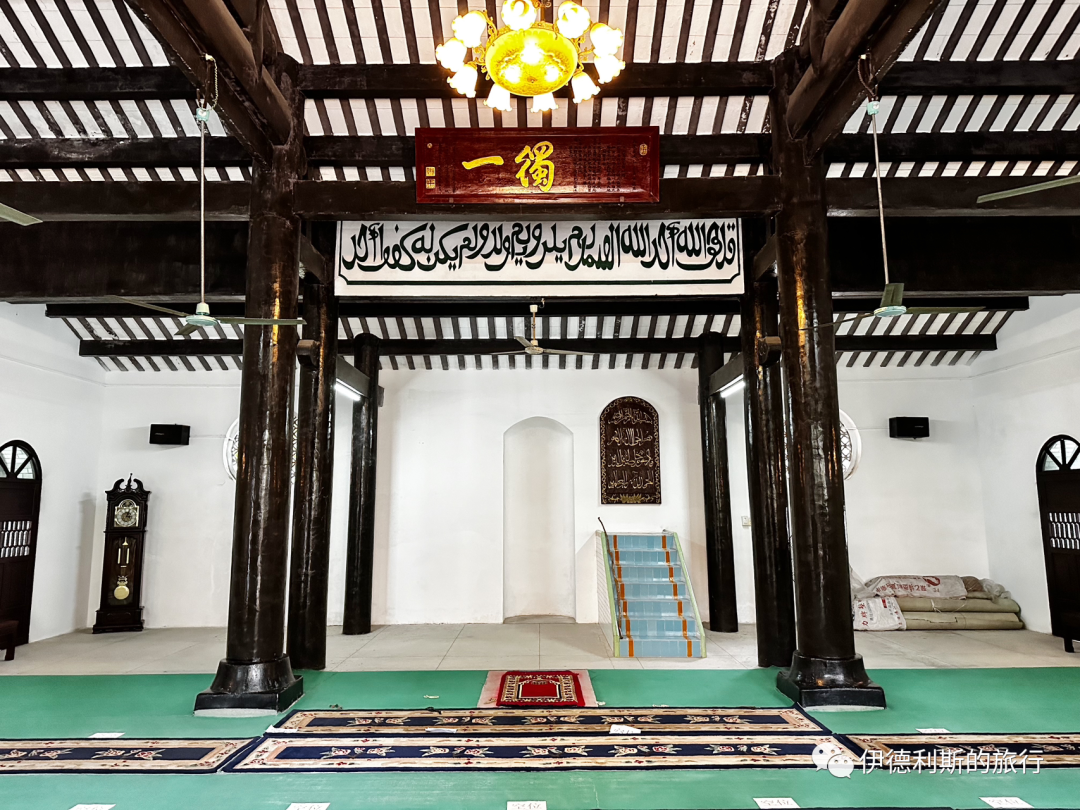
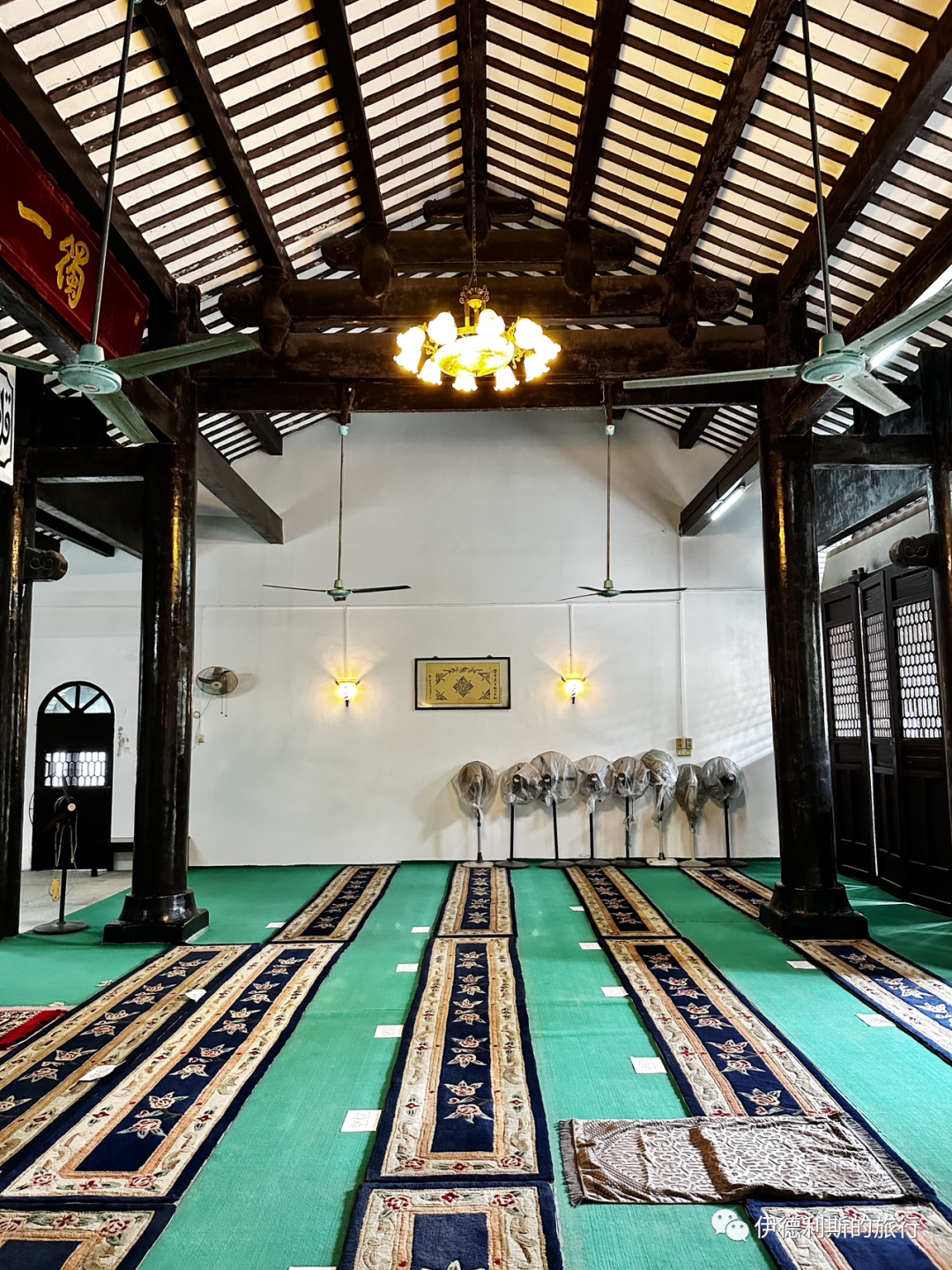
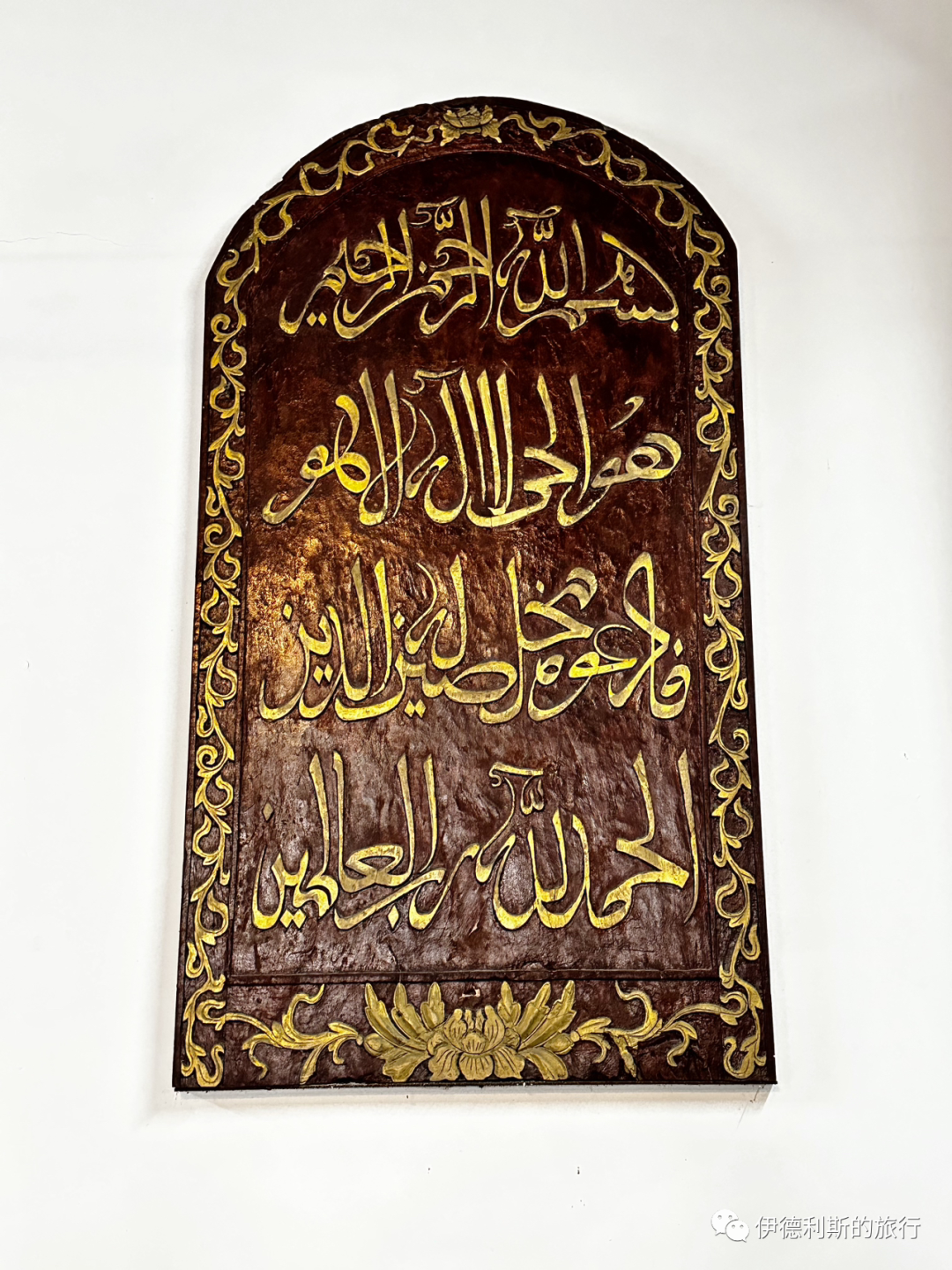
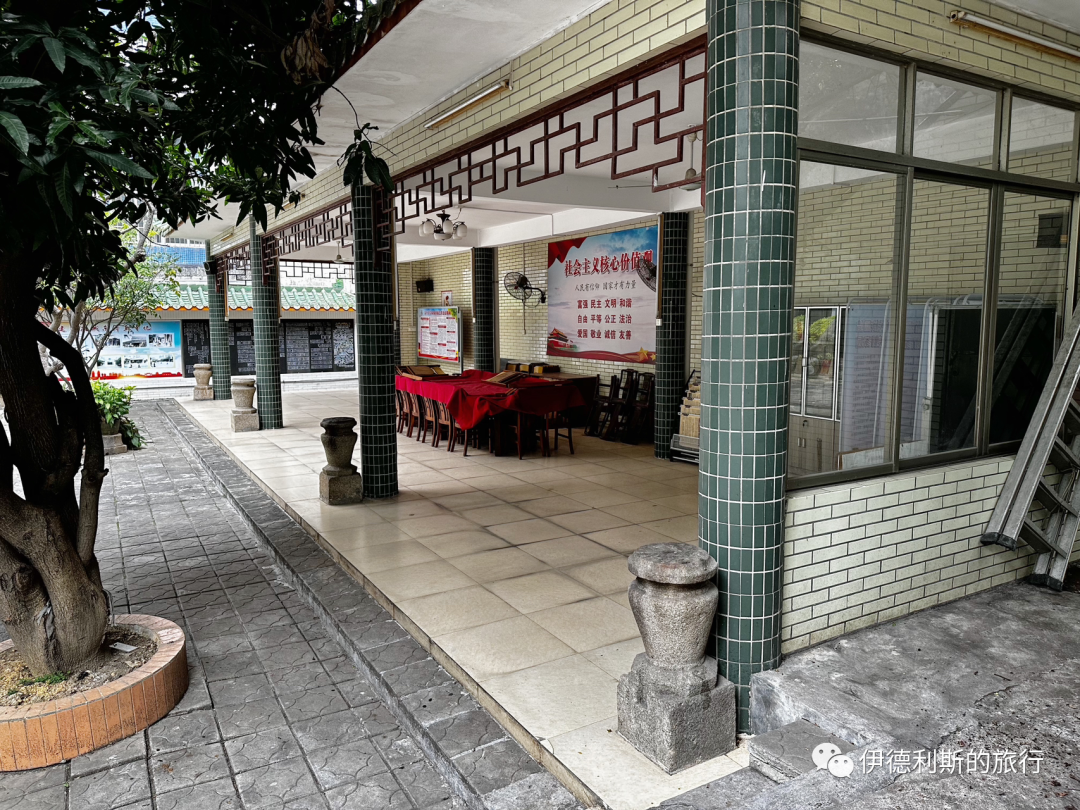
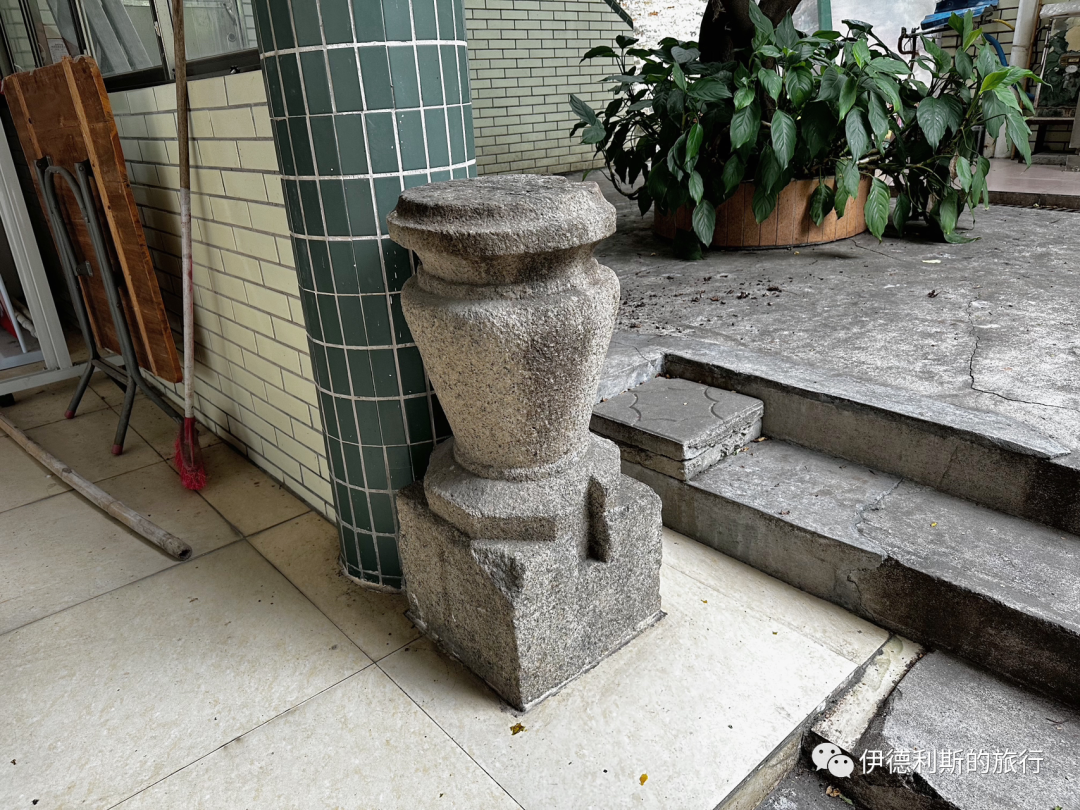
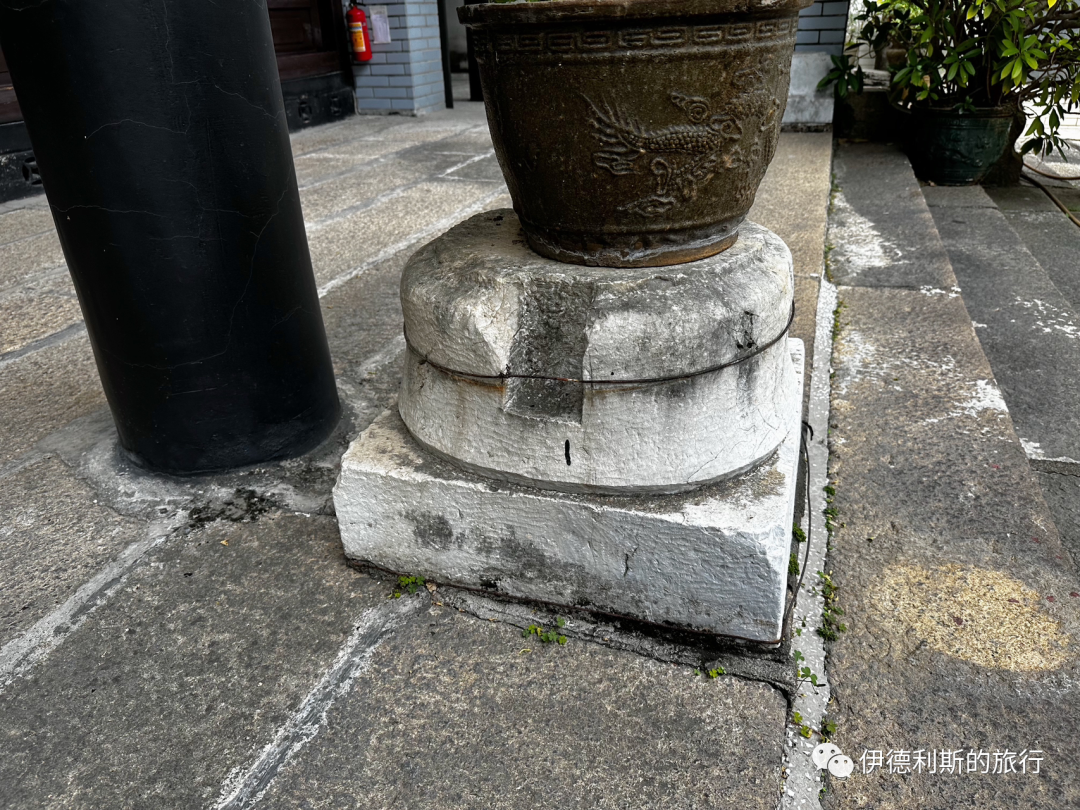
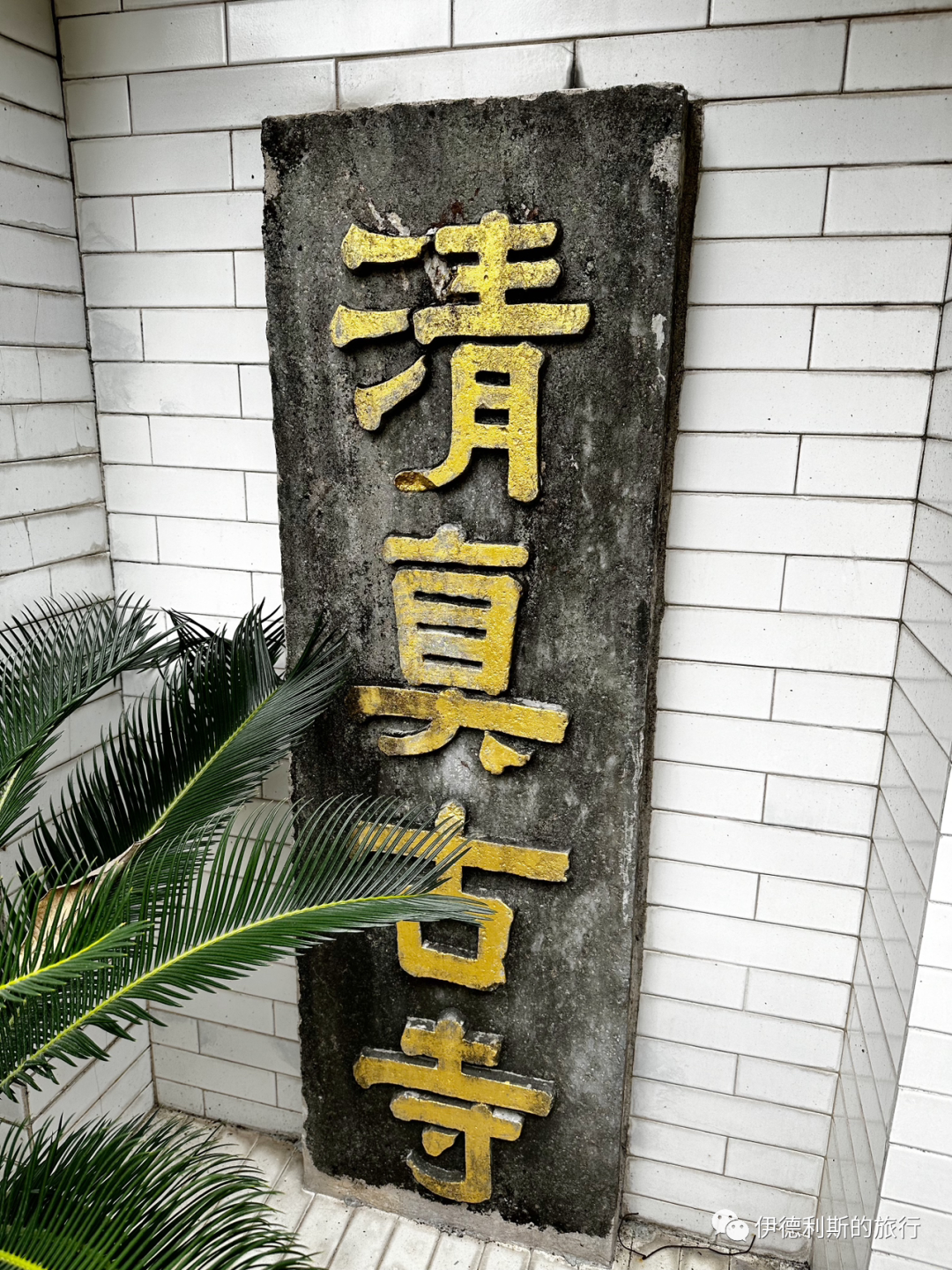
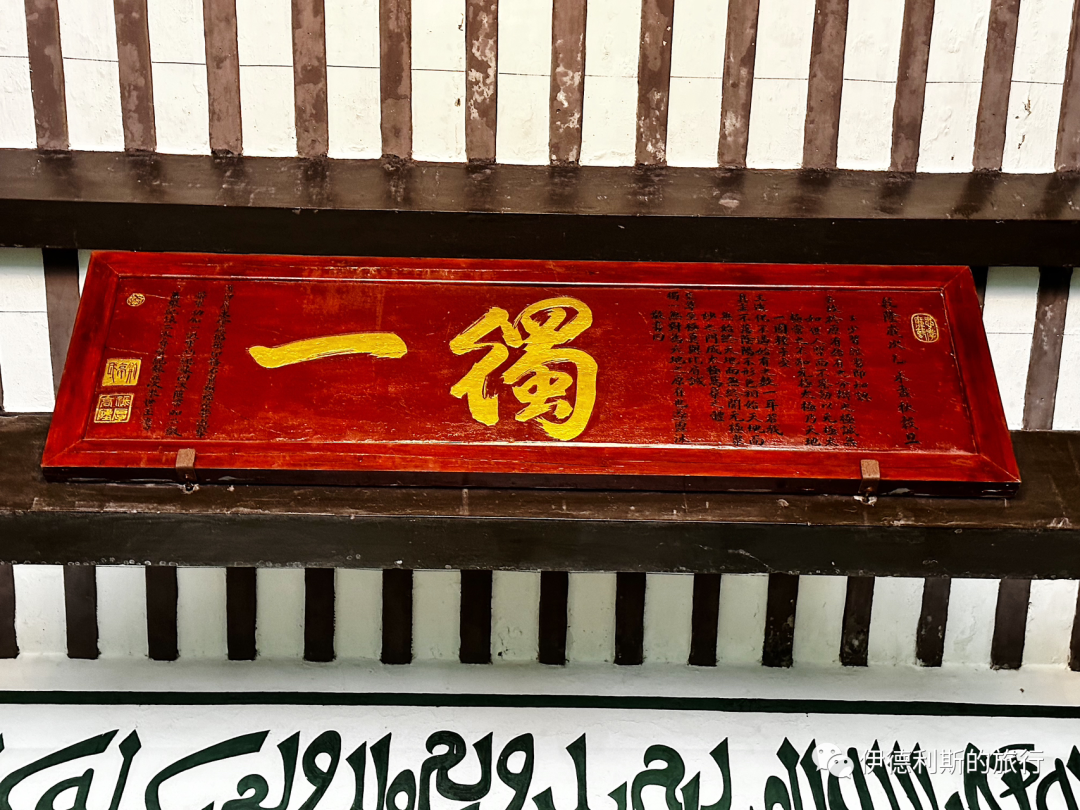
The Chengdong Mosque in Zhaoqing still keeps a "Unique" (Duyi) plaque from 1775, the year of Yiwei in the Qianlong reign, as well as photos of the mosque taken before it was torn down in 1991.
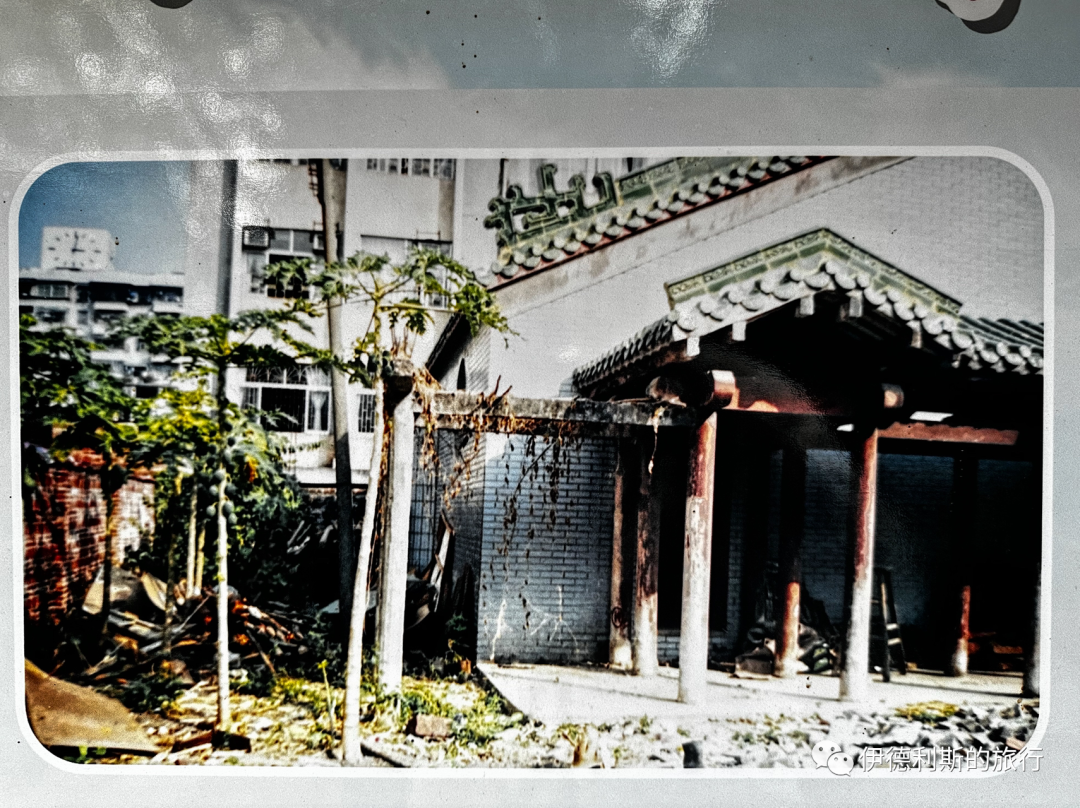
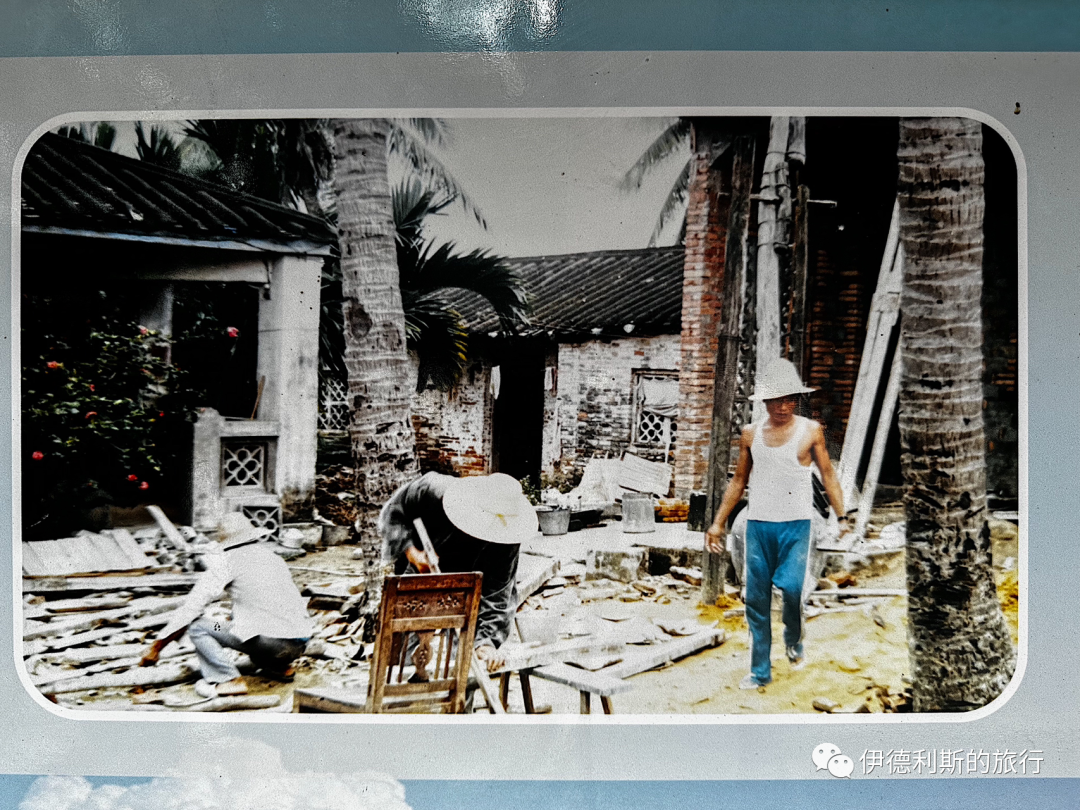
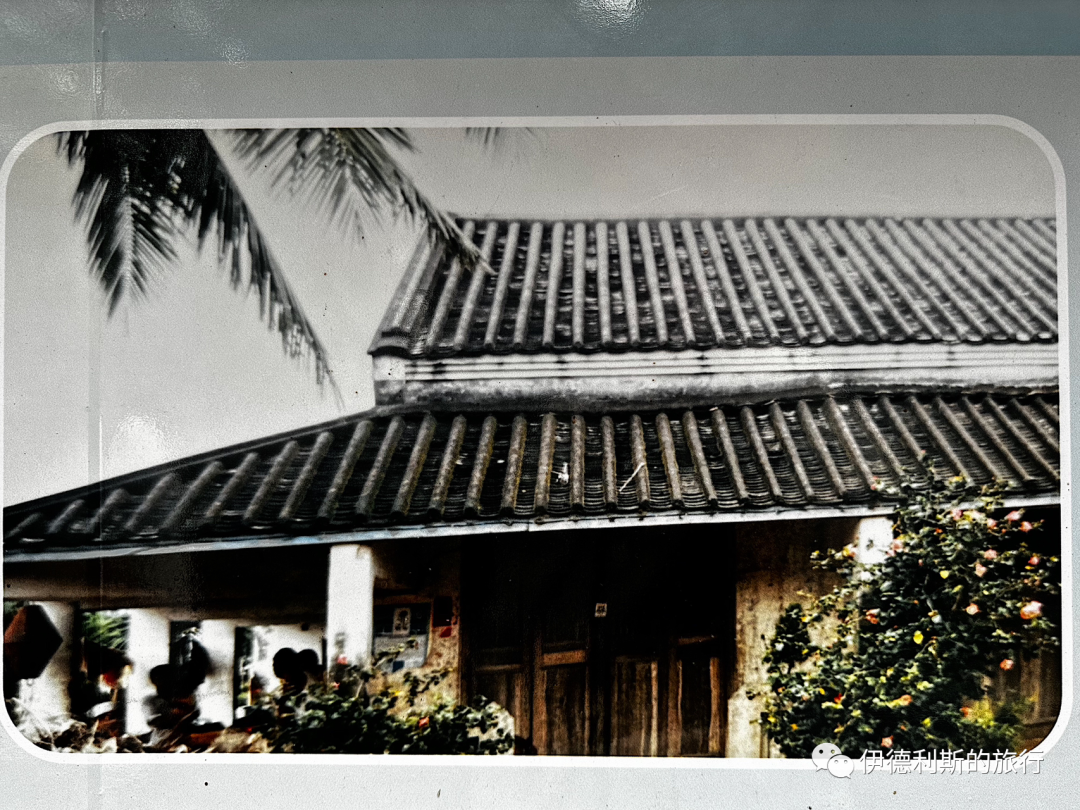
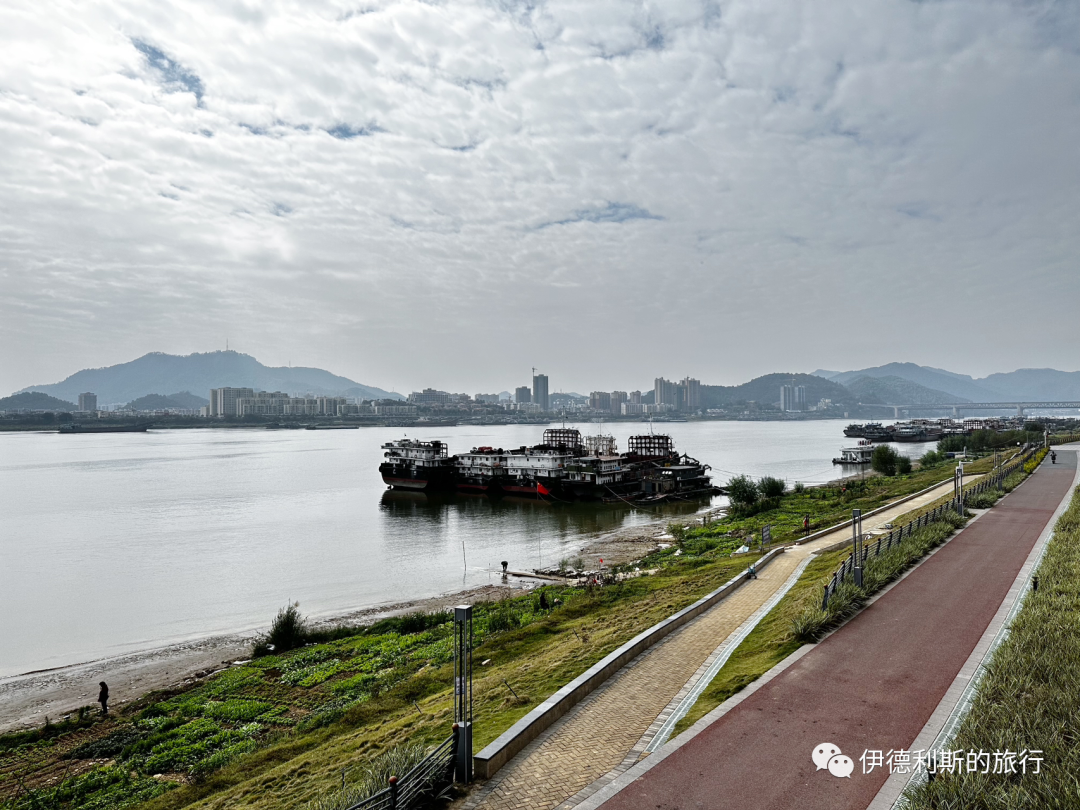
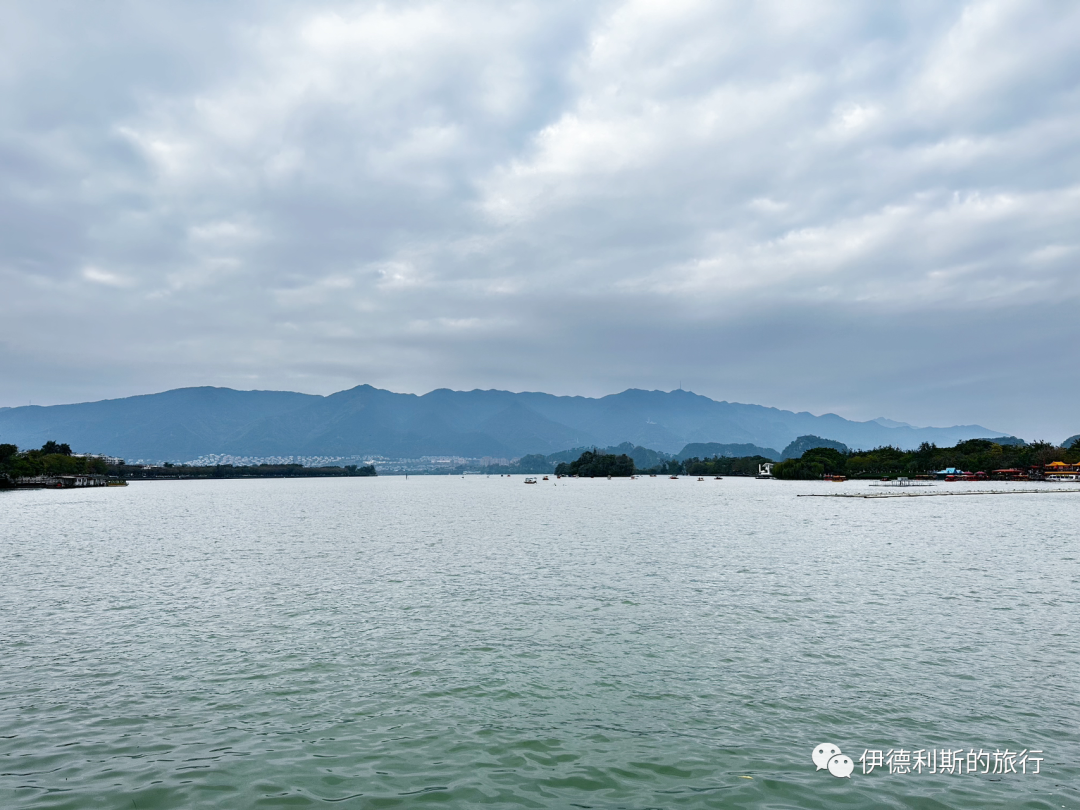
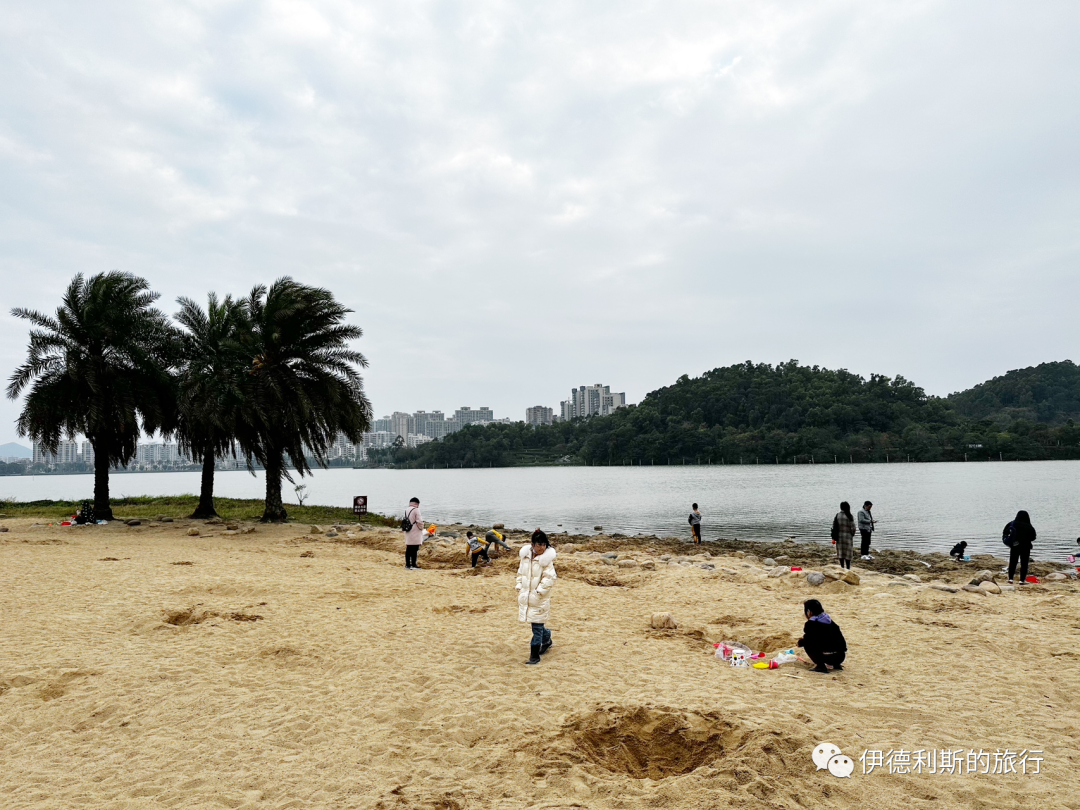
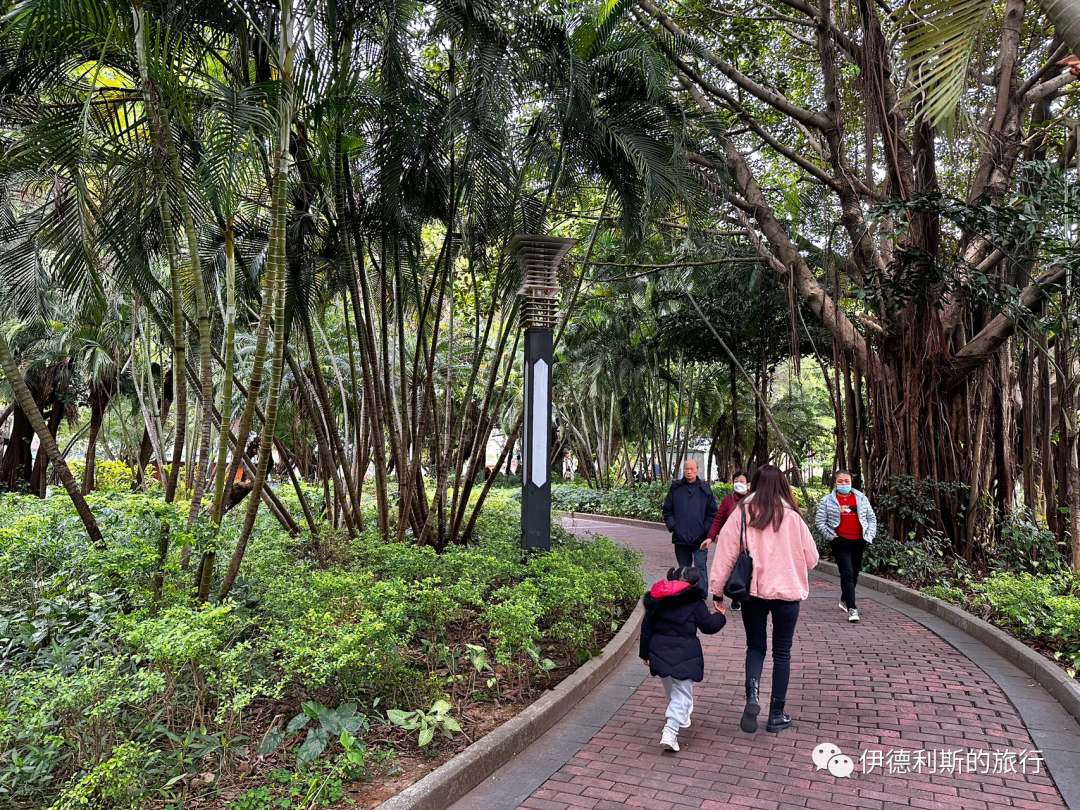
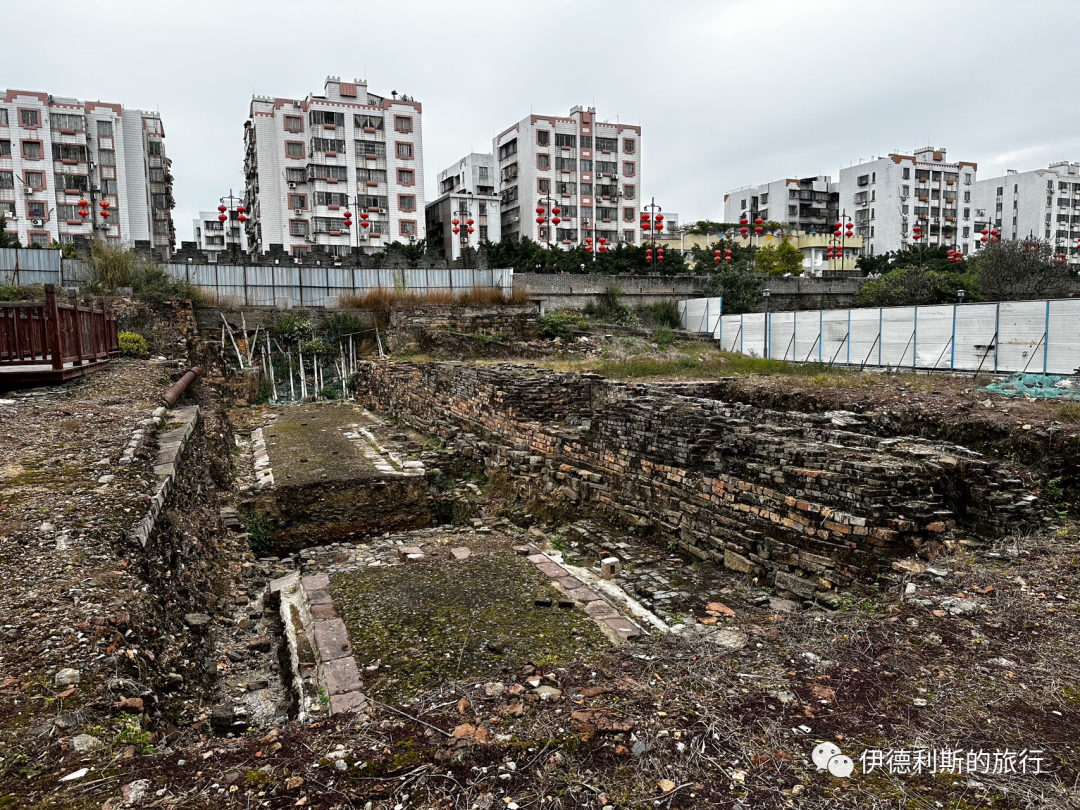
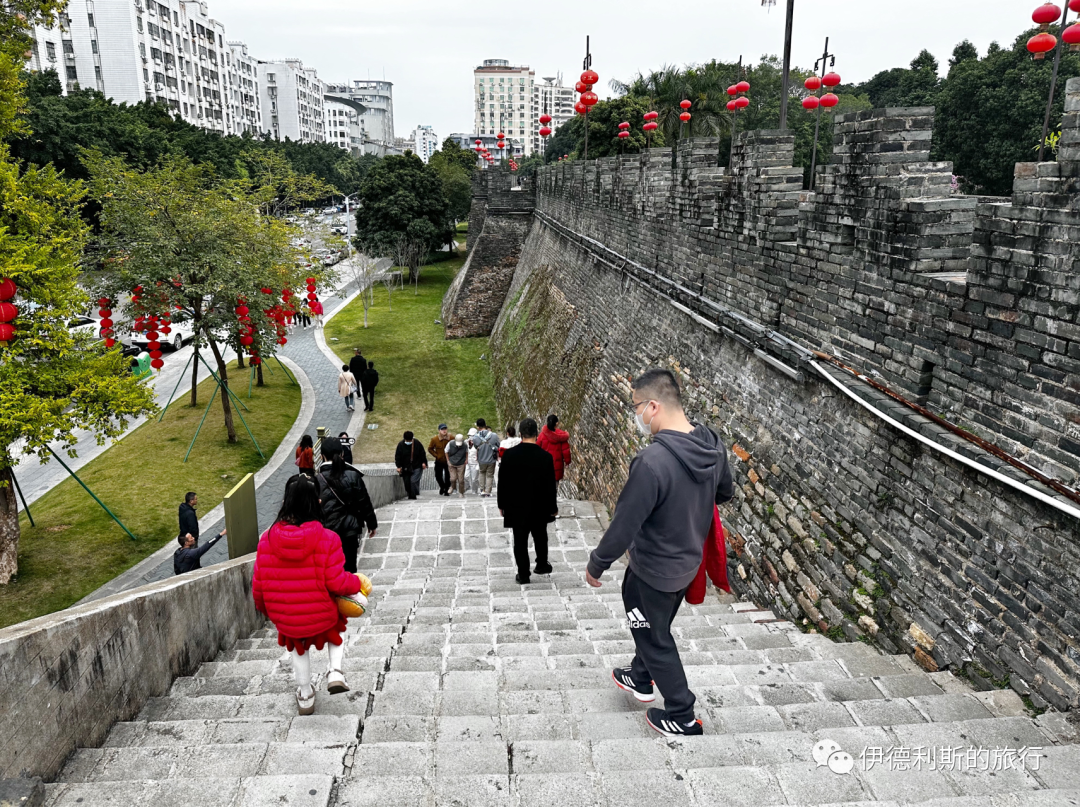
Finally, here is a look at the scenery in Zhaoqing, including the West River, Star Lake, the city walls, and the greenery along the streets.
 Collapse Read »
Summary: Zhaoqing — Roast Goose, Mosque Life and Guangdong Streets is presented here as a firsthand travel account in clear English, beginning with this scene: I left Macau on January 23, 2023, to visit the Macau mosque known as Moro Garden (Moro Yuan). The account keeps its focus on Zhaoqing Halal Food, Guangdong Mosques, Muslim Travel while preserving the names, places, food, and historical details from the Chinese source.
I left Macau on January 23, 2023, to visit the Macau mosque known as Moro Garden (Moro Yuan). I ate delicious Indonesian Javanese food and wrote about it in my post, 'Moro Garden and Indonesian Food in Macau'. On January 25 in Guangzhou, I visited with friends (dosti) and ate various halal foods, which I posted about in "Guangzhou's Hui Muslim Fried Dough (youxiang) and Yemeni Cuisine." On the morning of January 26, I took a train from Guangzhou to Zhaoqing to start the third leg of my journey.
After leaving the Zhaoqing train station, I took a taxi straight to a halal restaurant by the West River. Like the Hui Muslim restaurants in Guangzhou, the Zhaoqing Halal Restaurant is a long-standing state-run halal Cantonese restaurant established in the 1950s. In 1957, the Zhaoqing Halal Restaurant was co-founded by local Hui Muslims Luo Shiyong, Sa Zhinan, Dong Shi, and Liu Youxing. Luo Shiyong was also a board member of the Zhaoqing West Mosque (Chengxi Si). He ran the halal restaurant for half a century until his daughter took over in 2007.
The Zhaoqing Halal Restaurant is better for family meals. The main hall has large round tables and the portions are quite big, so it is actually hard to order for just one person. However, you must try their signature dish, the halal roast goose. The Cantonese-style crispy roast goose is not greasy at all. Dipping it in sweet hawthorn sauce is very appetizing; this was my first time eating it this way. I also ordered a clay pot of radish and beef offal (niuzabao). Clay pots with beef and lamb are also a specialty of Guangdong Hui Muslims.
After leaving the halal restaurant, I went to the Zhaoqing West Mosque (Chengxi Si) and received a warm welcome from Imam (ahong) He. Imam He is from Hami and his ancestral home is in Shaanxi. He was previously at the Meilin Mosque in Shenzhen and only came to Zhaoqing recently after the old imam of the West Mosque retired. Currently, most of the people coming to the mosque for namaz are friends (dosti) who run noodle shops. Many are willing to settle in Zhaoqing because it is convenient for their children's schooling and the climate is pleasant.
I also met Mr. Luo at the mosque, who is a local Hui Muslim from Zhaoqing. According to family records, the ancestors of the Zhaoqing Luo family were from Xuanping County, Lishui City, Zhejiang Province (the county was abolished in 1958). They came to Zhaoqing for garrison duty during the Qianlong reign and settled down, so they have been here for 300 years.
The Zhaoqing West Mosque was first built in the early Qianlong reign. It was originally small. In 1767 (the 32nd year of Qianlong), the elder Liu Shifang led 15 Muslims to buy land and build the mosque by the Longding Ridge outside the west city wall. It was expanded twice during the Jiaqing and Daoguang reigns and rebuilt into its current form in 1983. I am very grateful that the original stone pillars and the mihrab stone arch from the Qing Dynasty main hall were preserved. The mihrab stone arch and four stone pillars are carved with scripture calligraphy. Two of the pillars are carved with a Chinese couplet: "Diligently recite, pray, follow the rules, fast, and worship once a week with reverence; uphold loyalty, filial piety, benevolence, and righteousness, for the six actions and three items are precious and sincere." The first line is about religious faith, and the second line is about Confucianism. Both were very important to the Hui Muslims at that time.
On the door of the main hall of the West Mosque, there is a plaque and couplet. The plaque "Always Remember the Lord's Grace" was respectfully inscribed in 1838 (Daoguang Wuxu year) by Li Xianyang, a military official. The couplet, "Why need the physical form to be manifest, for in the five prayers one is as if in His presence; do not say the tradition is far away, for in the thirty volumes there is the true teaching," was respectfully written by Liu Hu in 1814 (Jiaqing Jiaxu year).
The West Mosque preserves old photos of the main hall from before and during its demolition in 1983. From the photos, you can see that this mosque, like the Haopan Mosque in Guangzhou, has a double-eaved hip-and-gable roof and a stone-pillared corridor. This architectural style is extremely rare in northern mosques. You can also see what the Chinese stone couplets looked like on the old main hall.
After saying goodbye to the Zhaoqing West Mosque, I walked through the old town of Zhaoqing to the East Mosque (Chengdong Si) and contacted Grandpa Wang, the mosque caretaker, to open the door for me. Mr. Wang is also a local Hui Muslim. According to family records, the ancestors of the Zhaoqing Wang family were from Taiyuan Prefecture, Shanxi. They came to Zhaoqing with the army in the early Qing Dynasty to serve in office and later settled down in Zhaoqing.
Because the climate in Lingnan is pleasant, Zhaoqing remains lush and green even in winter. The East Mosque is full of life, with papaya, starfruit, and mango trees planted inside. When I arrived, the starfruit was just right, and Mr. Wang picked several for me from the tree. Although I had eaten starfruit from fruit shops before, this was my first time eating it straight from the tree, and it was grown in a mosque, which felt very special. "Travel through the earth and observe how Allah created all living things." Travel lets you meet all kinds of interesting people, see all kinds of beautiful scenery, and experience all kinds of unforgettable moments. I am very grateful.
The East Mosque was originally on Water Street and was small. During the Kangxi reign, Fu Yunfeng from Guangzhou bought land and moved it to the Water Village Camp. It was rebuilt many times during the Qianlong, Daoguang, and Republican eras. Fu Yunfeng was originally Han Chinese. During the Kangxi era, he traveled from Zhejiang to Guangdong for business. After he ran into trouble, an imam at the Haopan Mosque in Guangzhou saved him. He lived in the mosque for a while and then converted to Islam. He was a timber merchant. After becoming wealthy, he funded the reconstruction of the Haopan Mosque in Guangzhou. He also renovated the Huaisheng Mosque, Nansheng Mosque, the Ancient Tombs of the Worthies, and the Chengdong Mosque in Zhaoqing, making a major contribution to the development of the faith in Guangdong.
In 1946, Imam Yang Maolin opened a scripture hall inside the Chengdong Mosque. The following year, he used the scripture class as a foundation to start the private Zhaoqing Muslim Primary School, which became a public school after 1949. After 1966, the Muslim Primary School was renamed Zhaoqing No. 17 Primary School. Everything except the main gate and the main prayer hall was torn down to build classrooms, and the mosque stopped its activities. In the late 1980s, after religious policies were restored, the government gave the area north of the main prayer hall to the school and returned the area south of the hall to the Chengdong Mosque, along with compensation. In 1991, the Chengdong Mosque tore down the original main prayer hall and rebuilt it with reinforced concrete. It was finished in 1993. In 2006, they rebuilt the scripture hall, washroom (shuifang), and offices, creating the mosque as it stands today.
The main prayer hall of the Chengdong Mosque still holds a Qing dynasty mihrab, and outside the hall, you can see the original Qing dynasty stone column bases from the prayer hall and the courtyard. Outside the ridge, there is also a stone carving that says "Ancient mosque" (Qingzhen Gusi) which was dug up from the ground during the reconstruction.
The Chengdong Mosque in Zhaoqing still keeps a "Unique" (Duyi) plaque from 1775, the year of Yiwei in the Qianlong reign, as well as photos of the mosque taken before it was torn down in 1991.
Finally, here is a look at the scenery in Zhaoqing, including the West River, Star Lake, the city walls, and the greenery along the streets.
Collapse Read »
Halal Food Guide: Guangzhou — Hui Youxiang and Yemeni Food
Reposted from the web
Summary: Halal Food Guide: Guangzhou — Hui Youxiang and Yemeni Food is presented here as a firsthand travel account in clear English, beginning with this scene: I left Macau on January 23, 2023, to visit the Macau mosque known as Moro Garden (Moro Yuan). The account keeps its focus on Guangzhou Halal Food, Yemeni Food, Hui Muslims while preserving the names, places, food, and historical details from the Chinese source.
I left Macau on January 23, 2023, to visit the Macau mosque known as Moro Garden (Moro Yuan). I ate delicious Indonesian Javanese food and wrote about it in my post, 'Moro Garden and Indonesian Food in Macau'. On the morning of January 25, I left Macau through the border gate to Zhuhai, then took a train to Guangzhou to start the second leg of my trip. This post covers the halal food I ate in Guangzhou. I will write about my visits to the mosque and the cemetery in the next post.
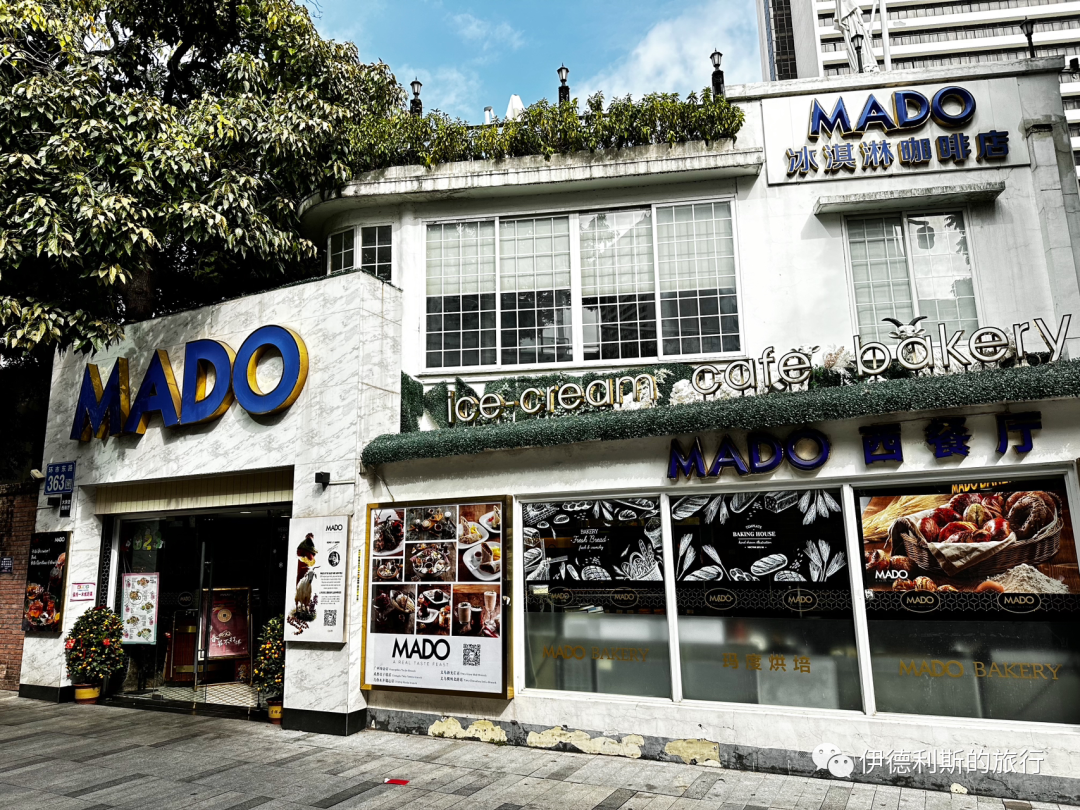
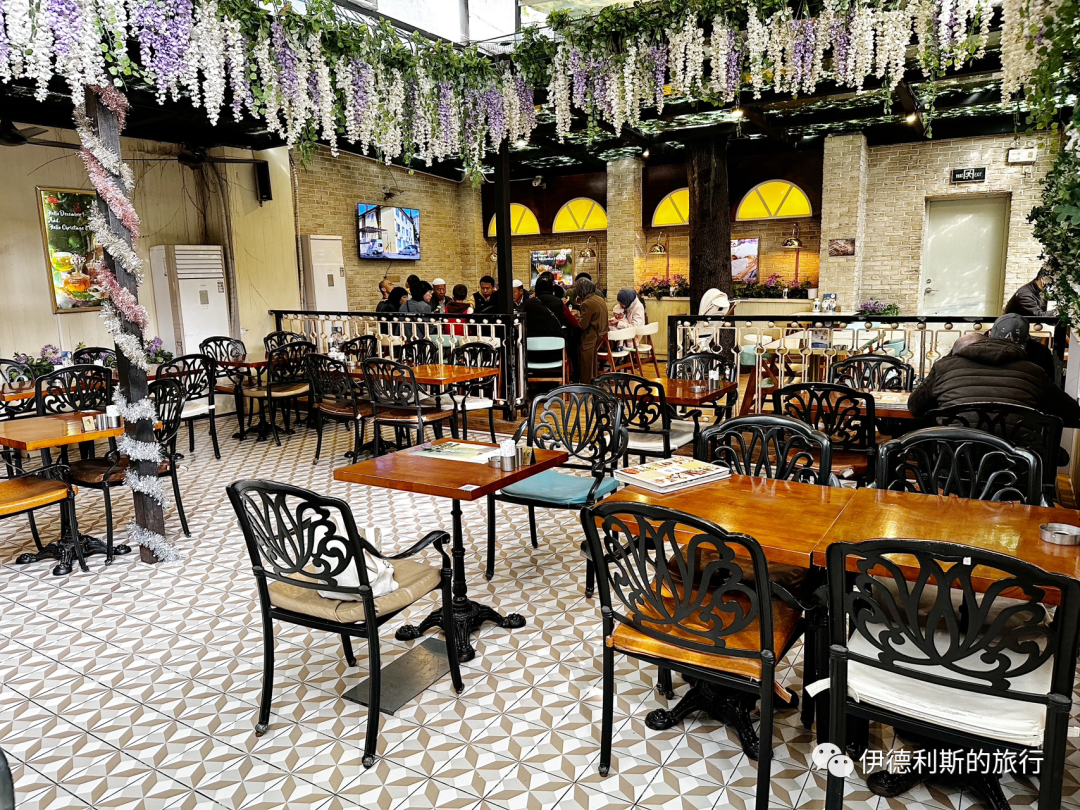
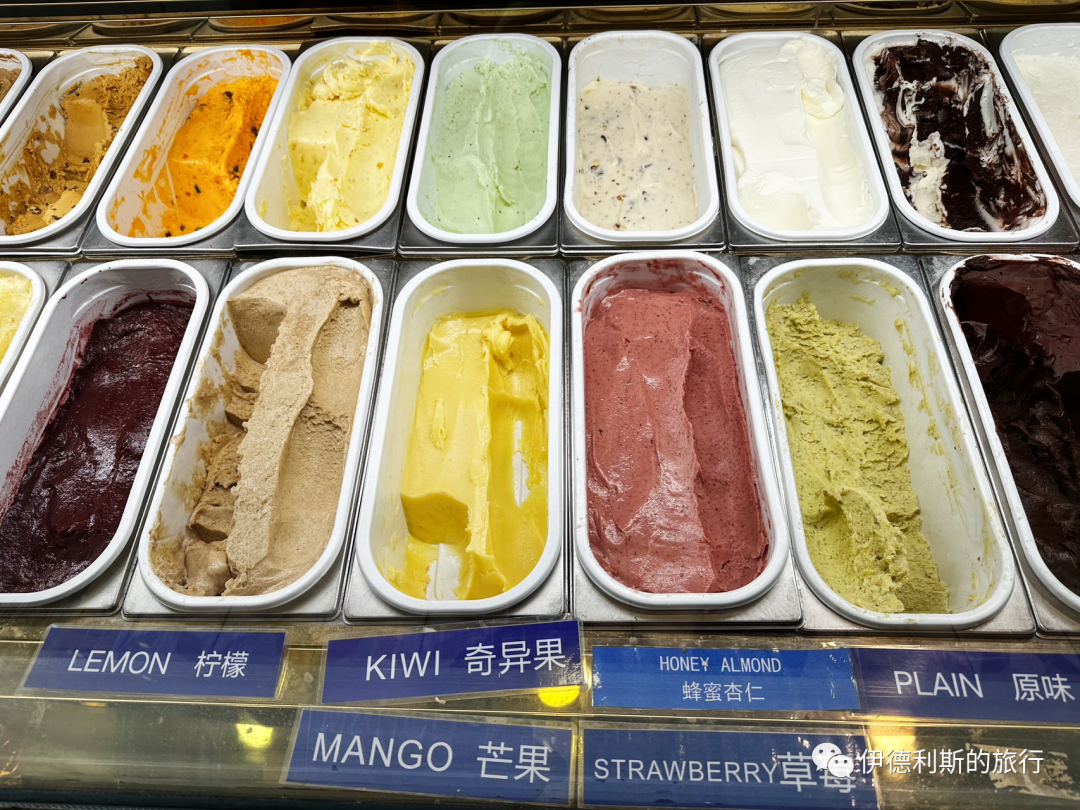
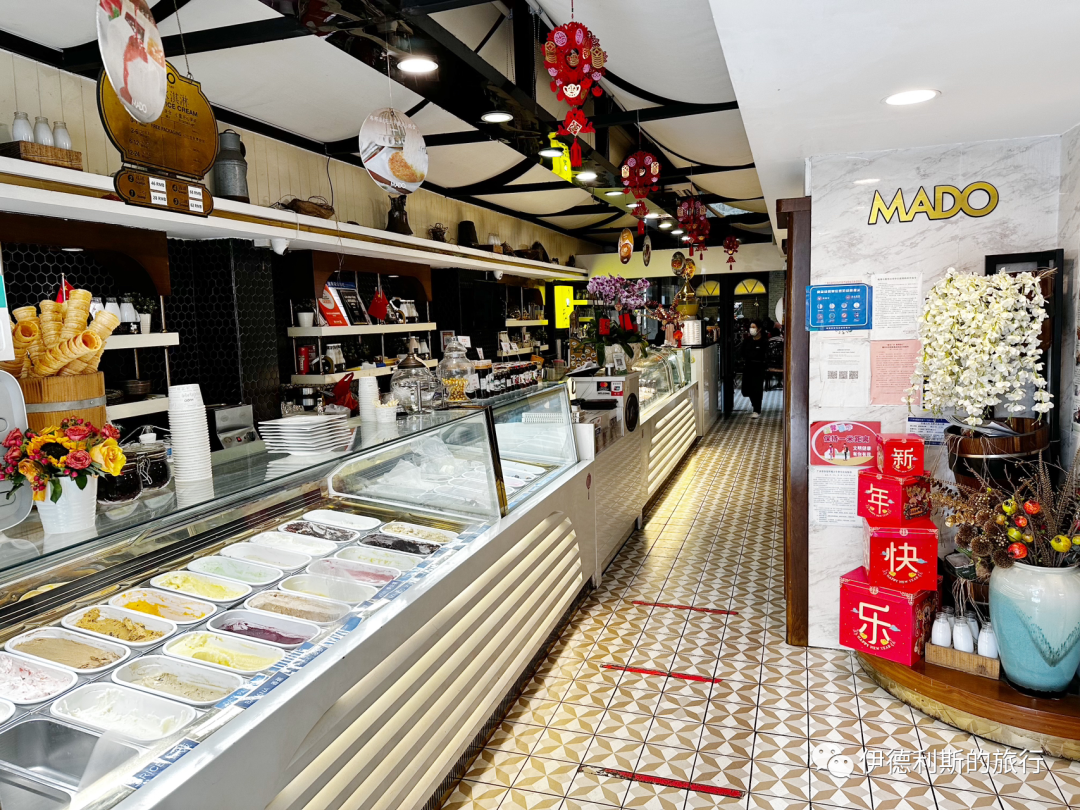
I took the subway from Guangzhou Station to Taojin and started with a Turkish breakfast at MADO. MADO is famous for its ice cream made from goat milk sourced from the high mountain pastures of Mount Ahir in southeastern Turkey. Mount Ahir is near the epicenter of the recent major earthquake in Turkey. I pray they can get through this difficult time.
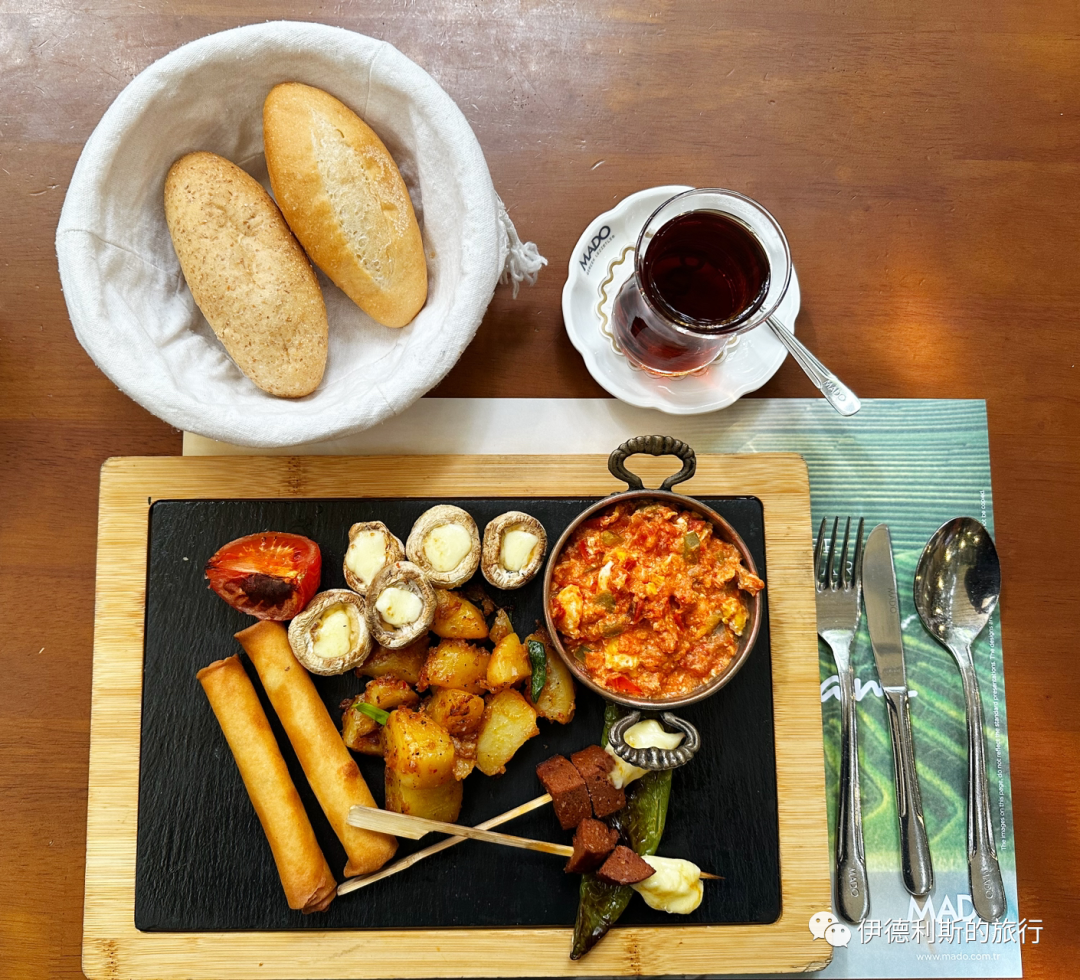
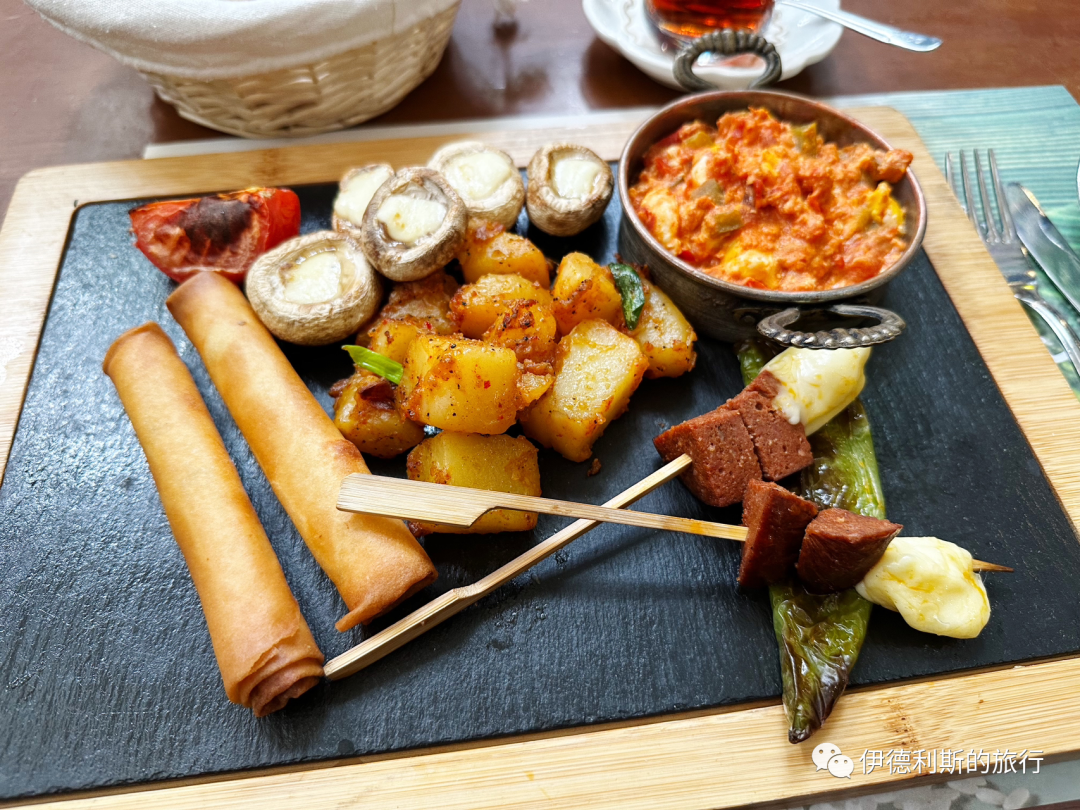
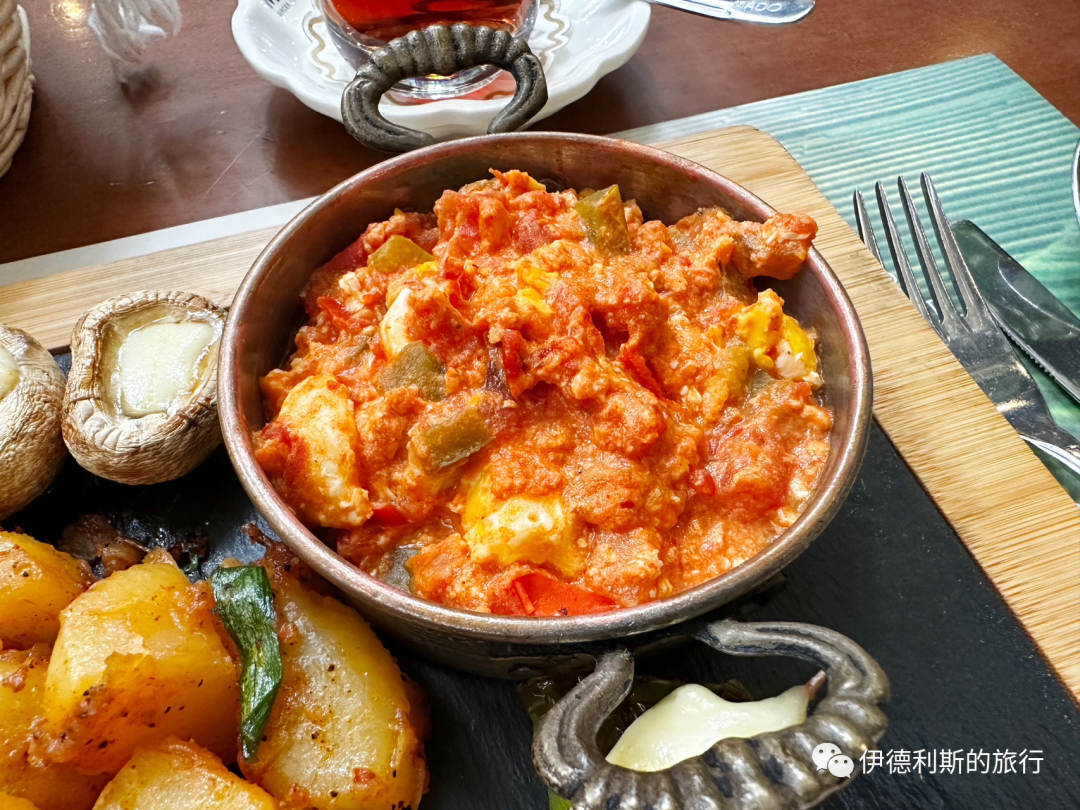
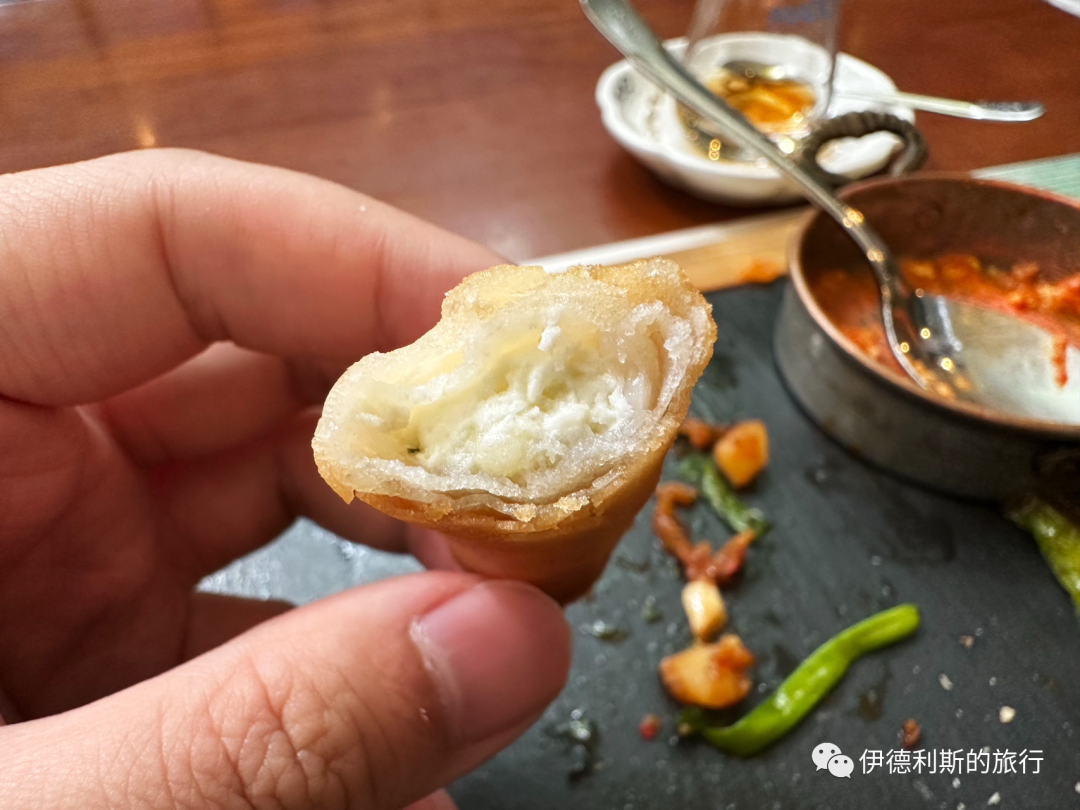
MADO likely has the widest variety of breakfast options among Turkish restaurants in China. When I visited the Yiwu branch, I had the Sini breakfast for two, which came with a great selection of cheeses and jams. Since I was alone at the Guangzhou branch, I ordered the hot breakfast platter. It included grilled Turkish sausage (sujuk), grilled mushrooms with yellow cheese, grilled cheese, spring rolls filled with feta cheese, tomato and egg scramble (menemen), grilled peppers, grilled tomatoes, and fried potatoes, served with bread and Turkish black tea.
The earliest record of sujuk sausage appears in the 1070s in the 'Compendium of the Turkic Dialects' (Divan-u Lugat-it-Turk) by Mahmud al-Kashgari. Similar versions exist in many parts of the Balkans, the Middle East, and Central Asia. Turkish sujuk is mainly made by mixing ground beef with beef fat, sheep tail fat, salt, cumin, garlic, chili, and other spices, then stuffing it into casings to dehydrate and ferment.
The name for the tomato and egg scramble (menemen) comes from a town in Izmir, Turkey, and the word itself originally comes from Ancient Greek. Menemen served with bread is a classic Turkish breakfast combination. Besides tomatoes, eggs, and green peppers, this dish can also include onions, black pepper, oregano, garlic, and chili powder, depending on personal taste.
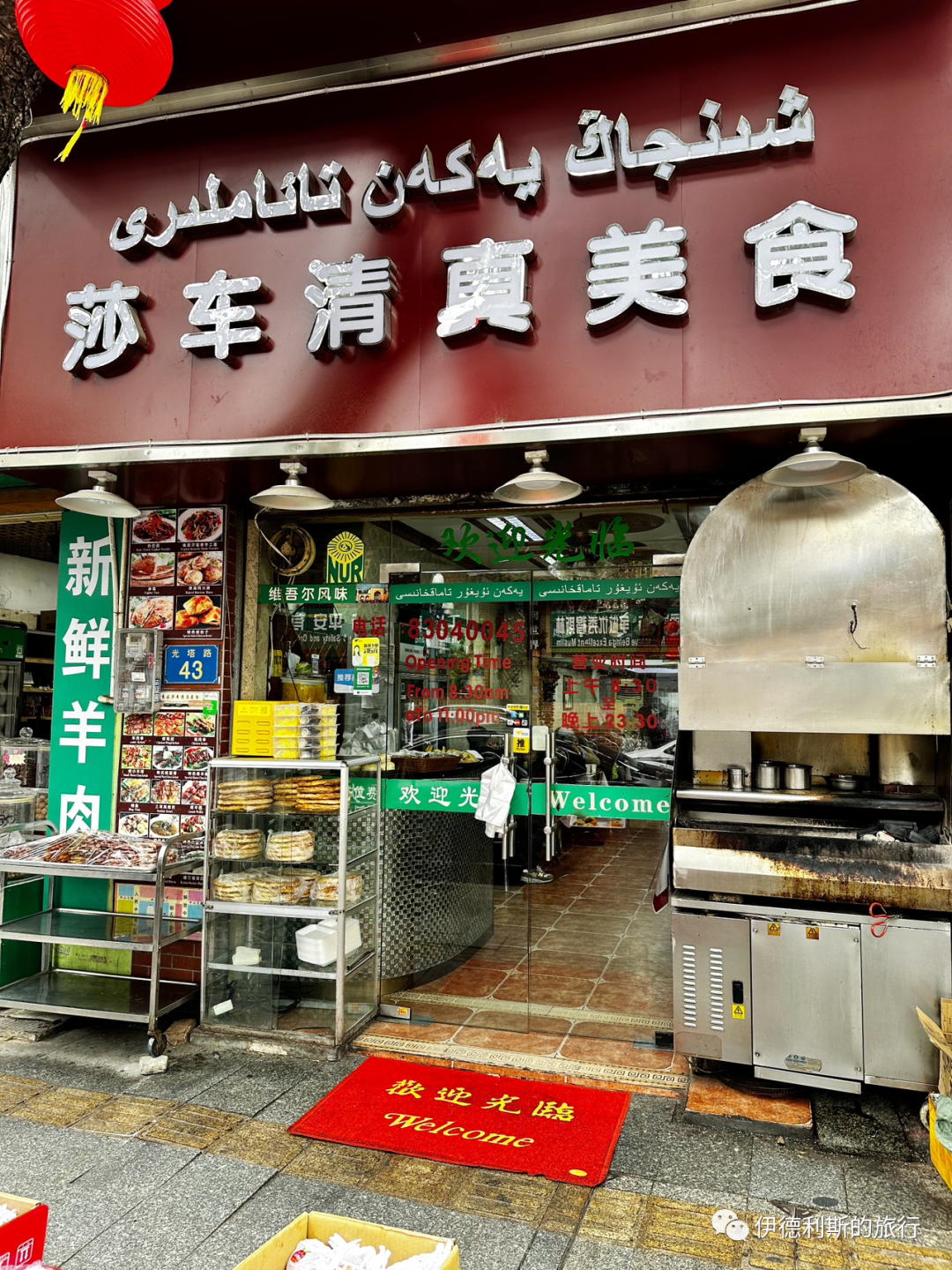
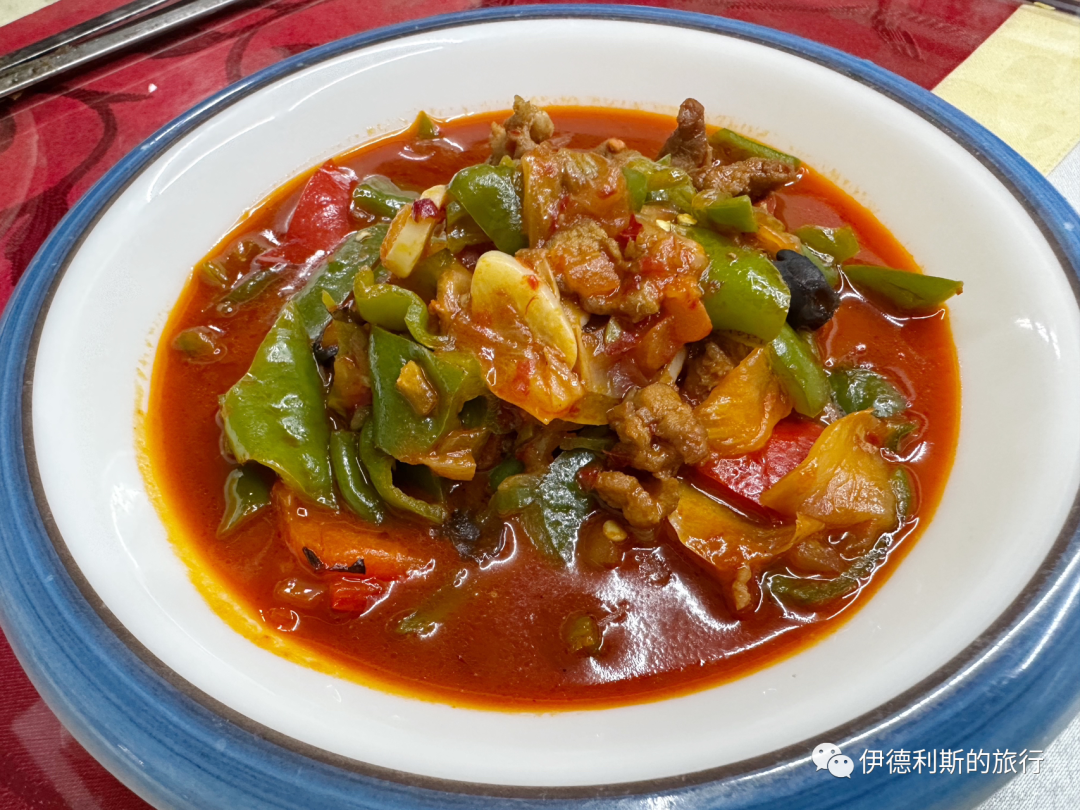
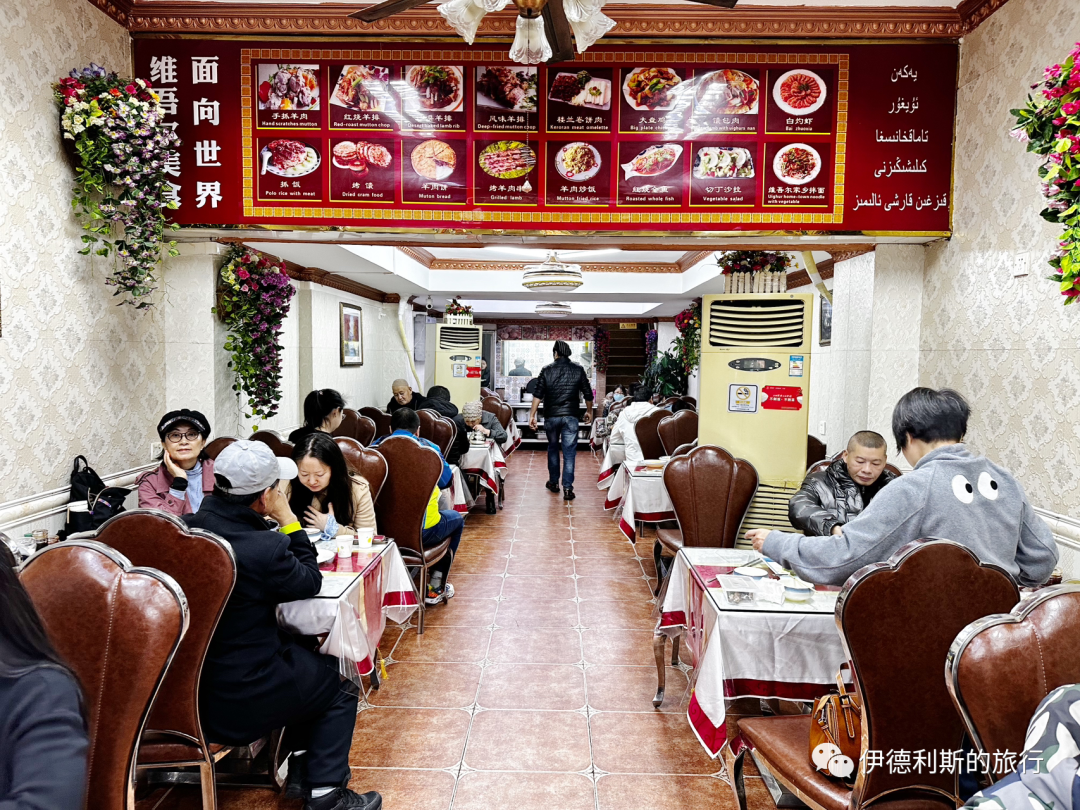
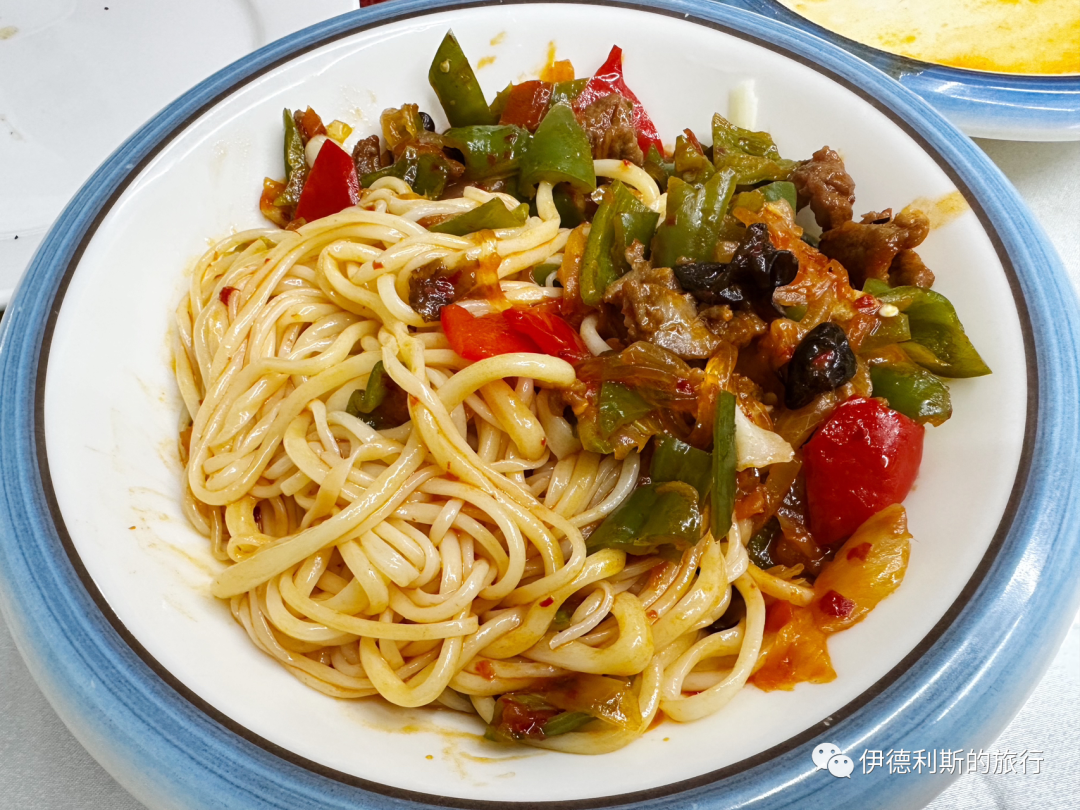
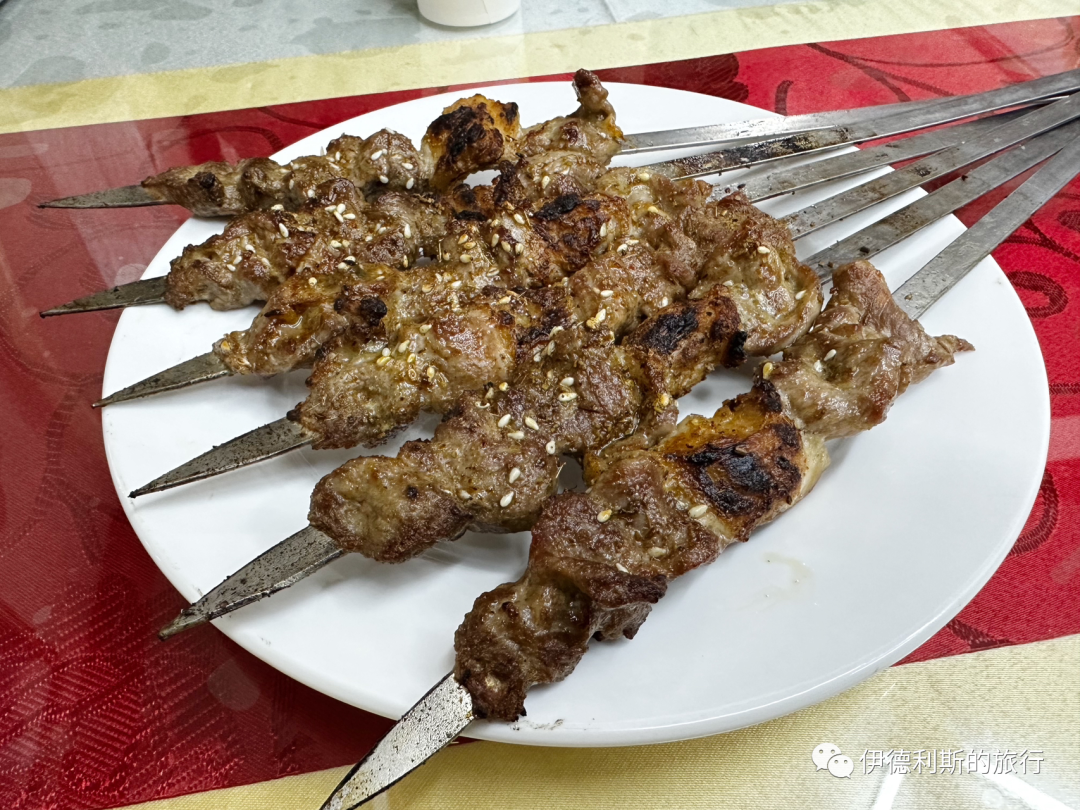
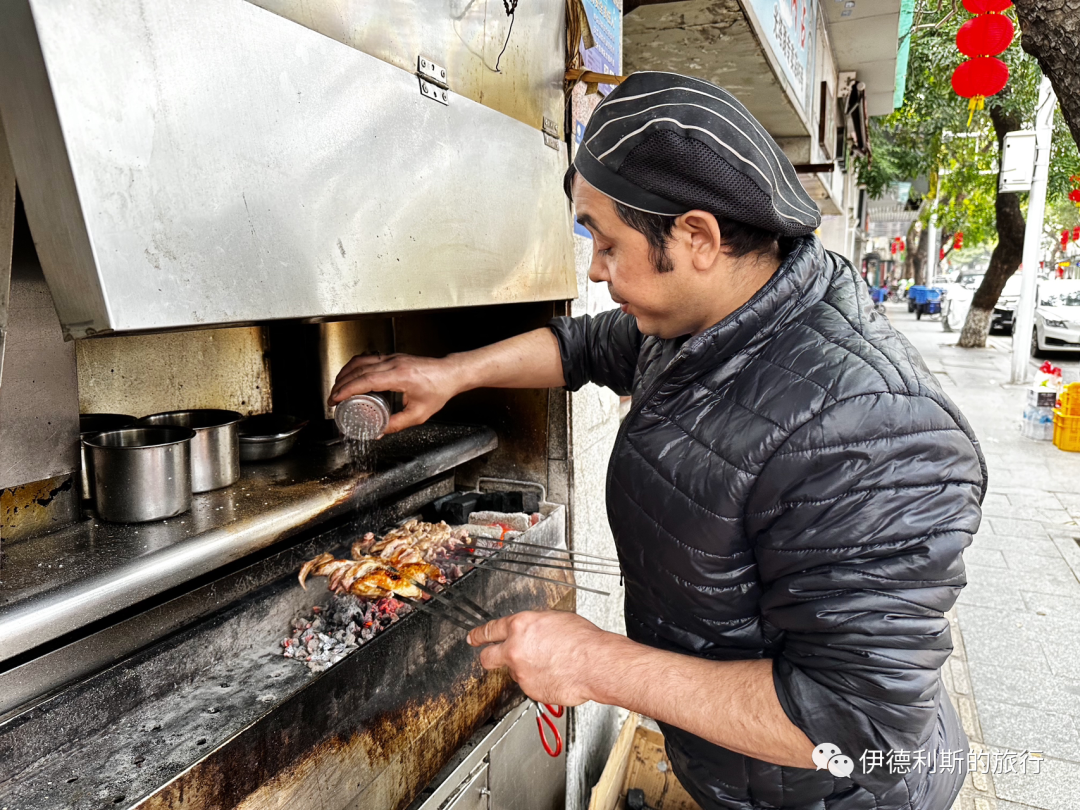
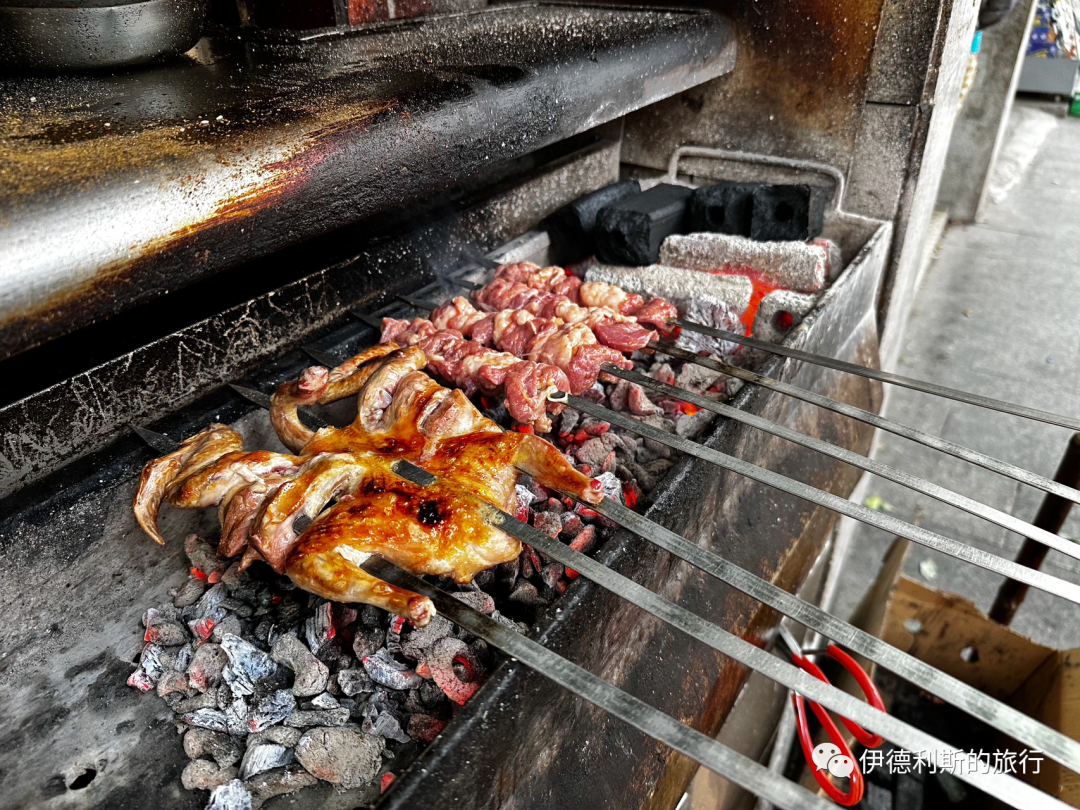
At noon, I met my friend (dosti) Chen Yong, whom I had known for a long time. He is both a staff member and a volunteer at the Huaisheng Mosque. My friend treated me to Shache Halal Food across from the Huaisheng Mosque. It is the closest halal restaurant to the mosque's minaret. When the oil-fried meat noodles (youyourou banmian) and kebabs arrived, they looked perfect, and they tasted even more authentic than I expected! I really did not expect to find such delicious Xinjiang food in Guangzhou; it was just as good as what I ate in Shache. The hand-pulled noodles (latiaozi) were very thin, showing years of skill, and the oil-fried meat was cooked just right—not too hard and not too soft. The best part was their kebabs. They were grilled over charcoal and were very fresh and tender. I could close my eyes and imagine I was back at a bazaar in Southern Xinjiang.
I rarely eat at Xinjiang restaurants when traveling in China because the taste often changes completely when the ingredients are different. But Shache Halal Food across from Huaisheng Mosque changed my mind. I will definitely eat there again next time I am in Guangzhou!
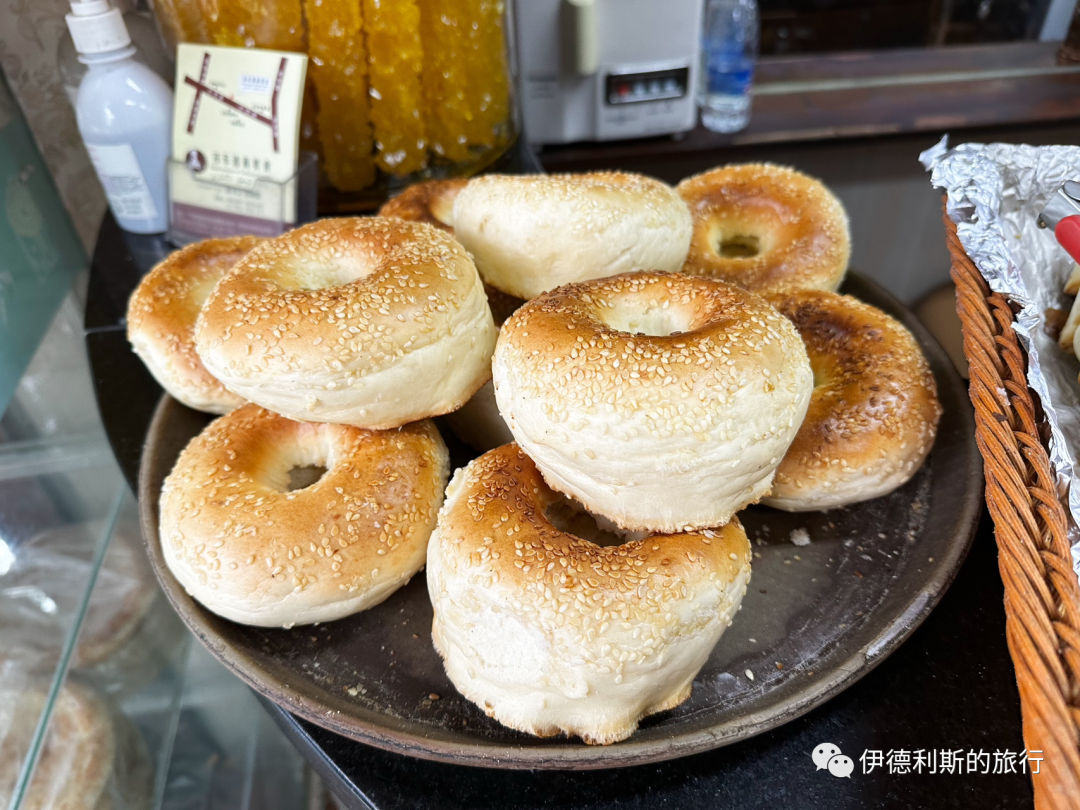
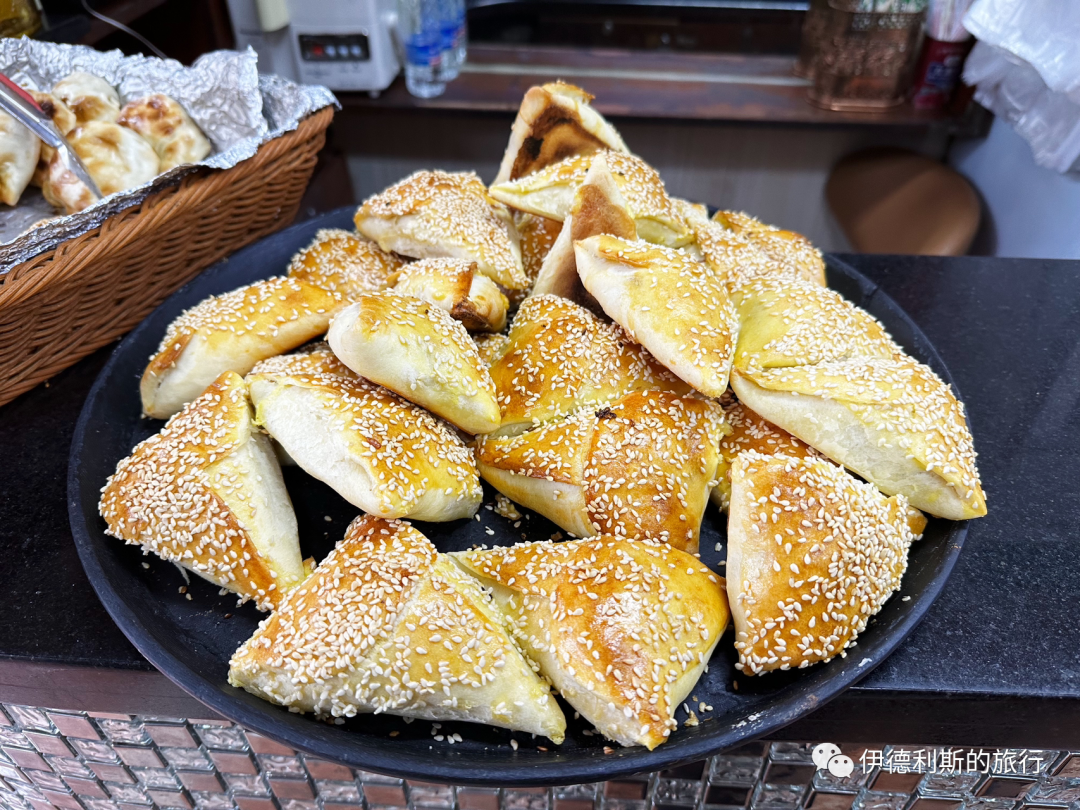
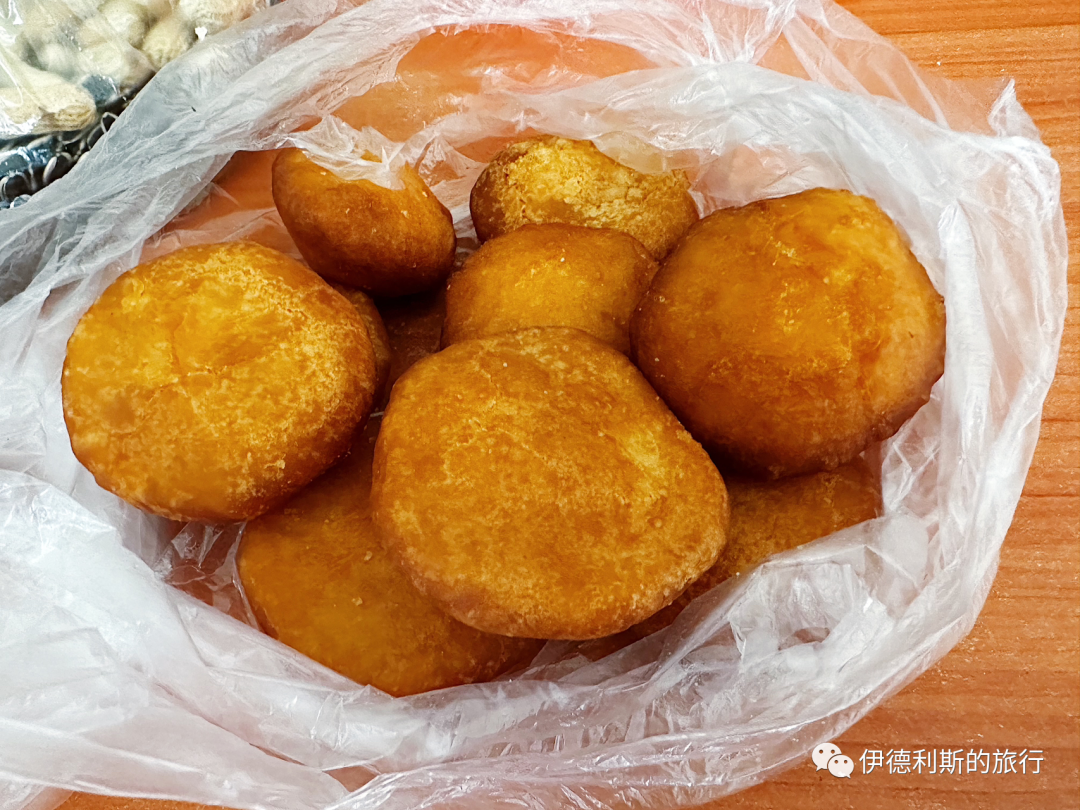
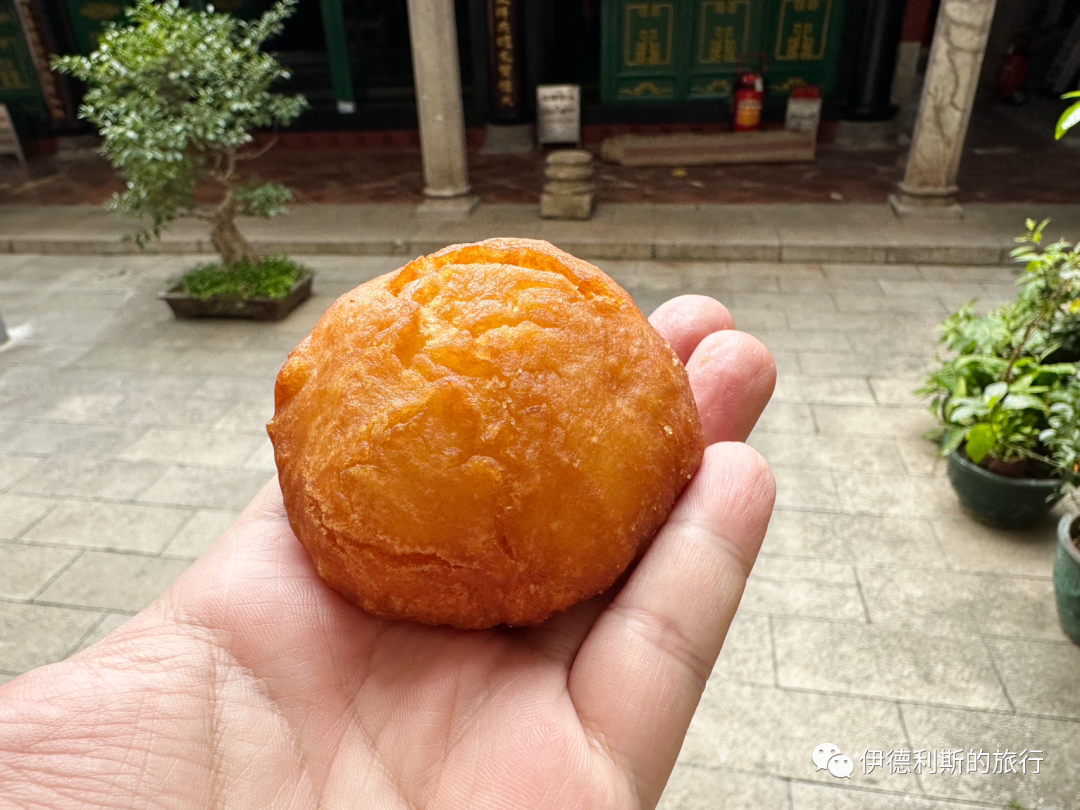
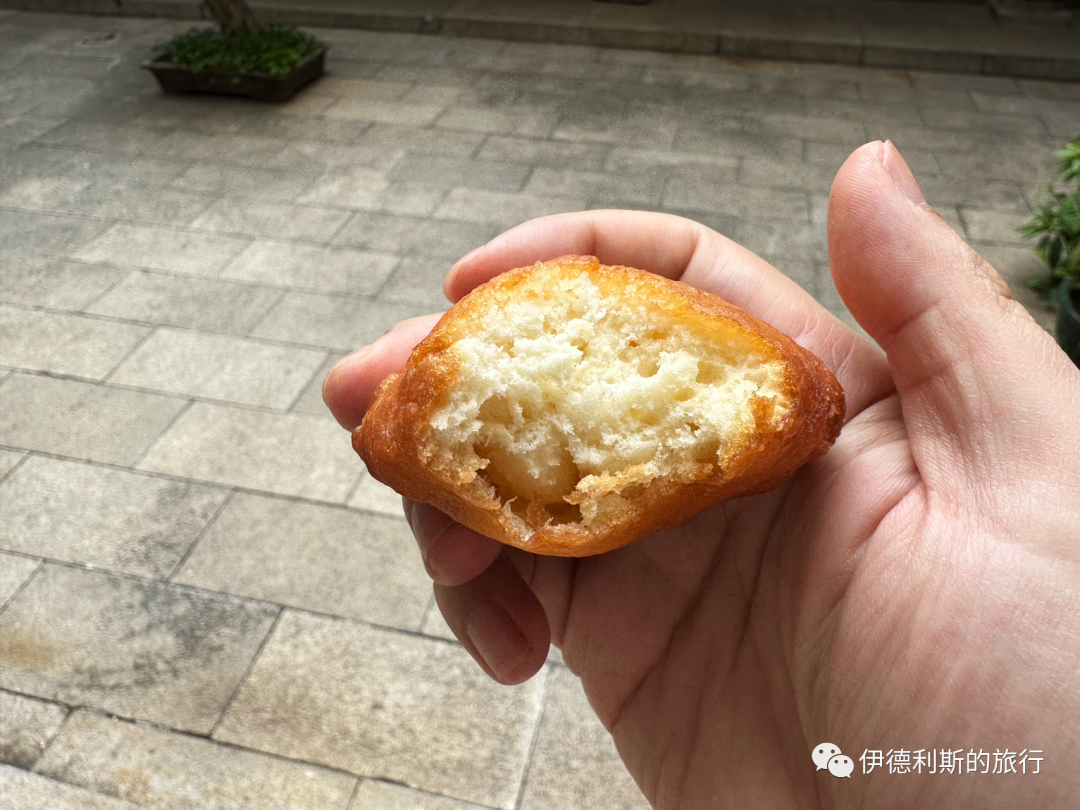
In the afternoon, I went to the Haopan Mosque in Guangzhou for the afternoon prayer (dhuhr) and met Master Yang, whom I had not seen in six years. Master Yang is a local Hui Muslim from Guangzhou and has been a mosque attendant at Haopan Mosque for 20 years. I drank tea and chatted with Master Yang, and I ate some fried dough (youxiang) made by local Guangzhou Hui Muslims for a charity event (chusan). This was my first time eating local Guangzhou youxiang. They were small, crispy, and sweet, almost like a pastry.
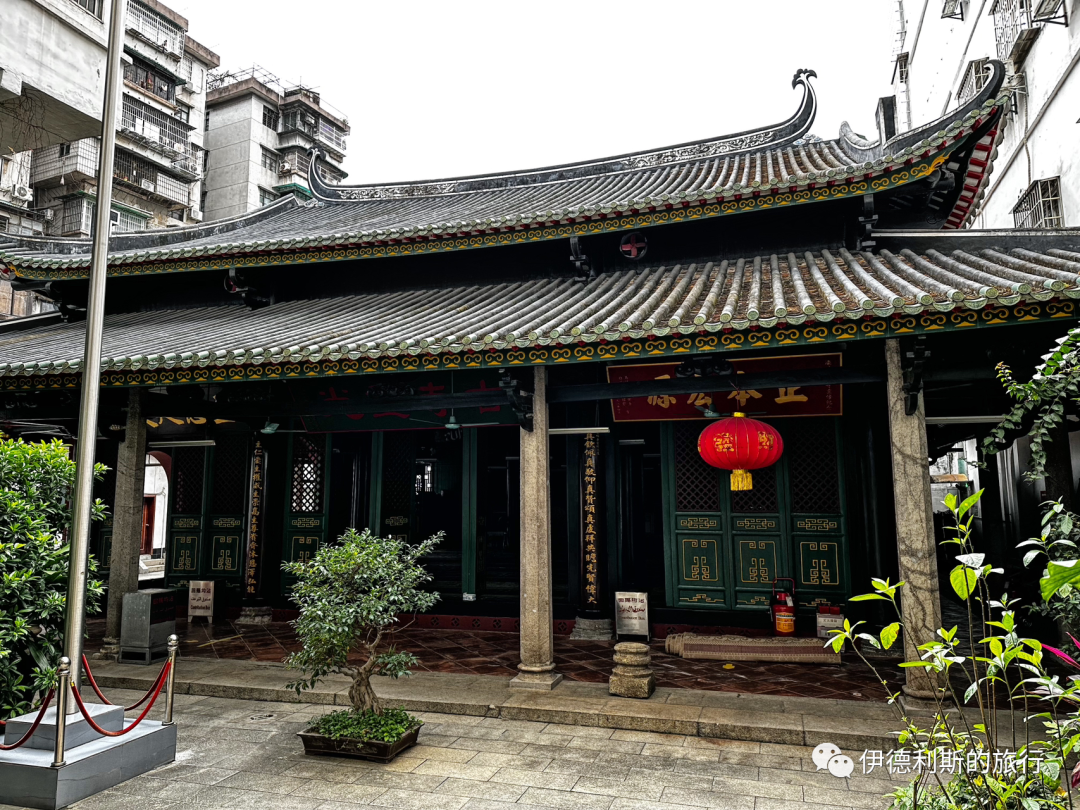
Haopan Mosque is located on the banks of the Nanhao, a tributary of the Pearl River. It was first built during the Chenghua period of the Ming Dynasty and rebuilt in 1706 (the 45th year of the Kangxi Emperor). A scripture school was opened here during the Qianlong period, and a Hui language university was opened during the Tongzhi period. They hired many famous scripture teachers from Nanjing, Gansu, and Yunnan, training a large number of imams and playing a major role in the development of Islam in Guangzhou, Hong Kong, and Macau.
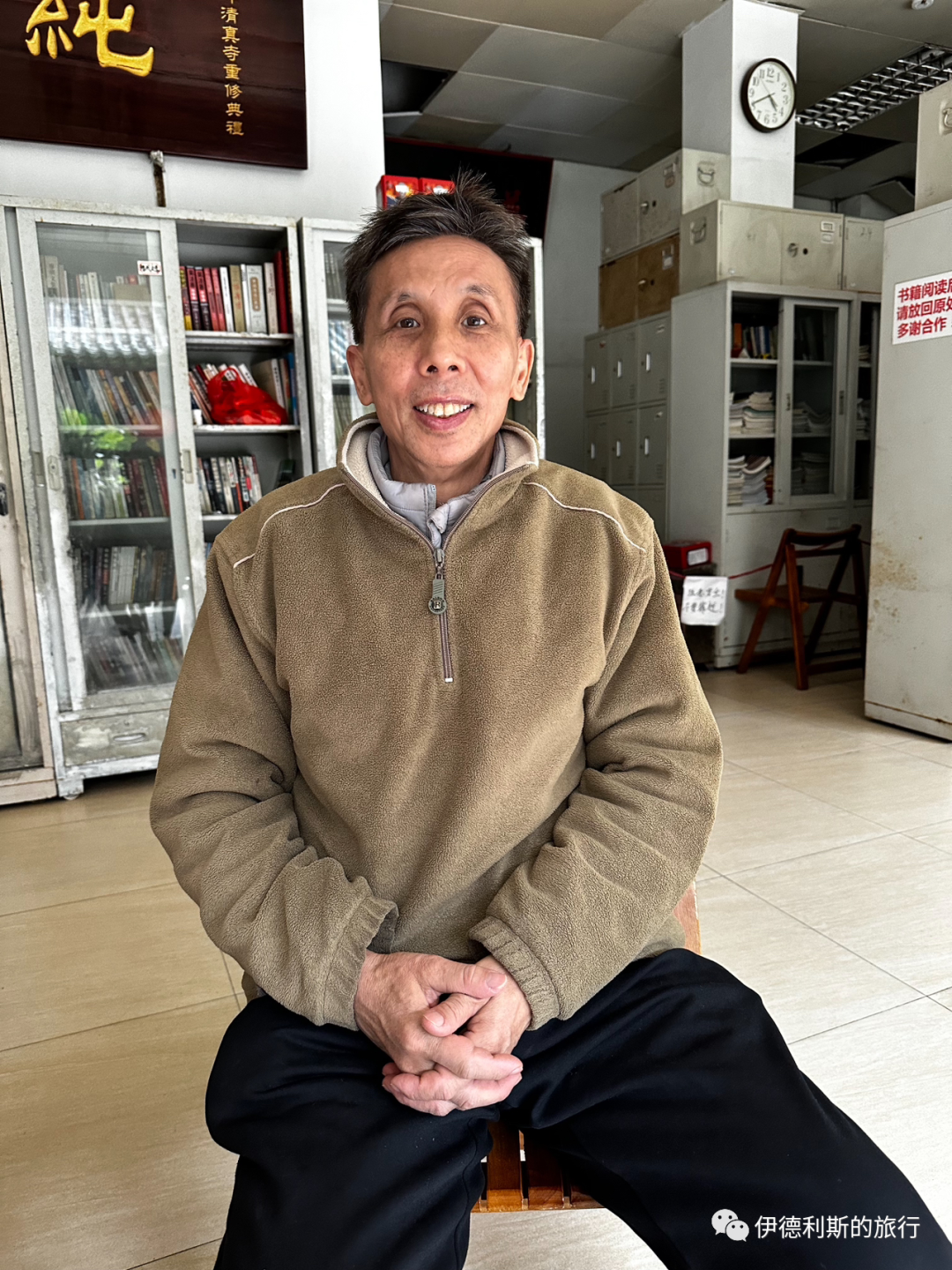
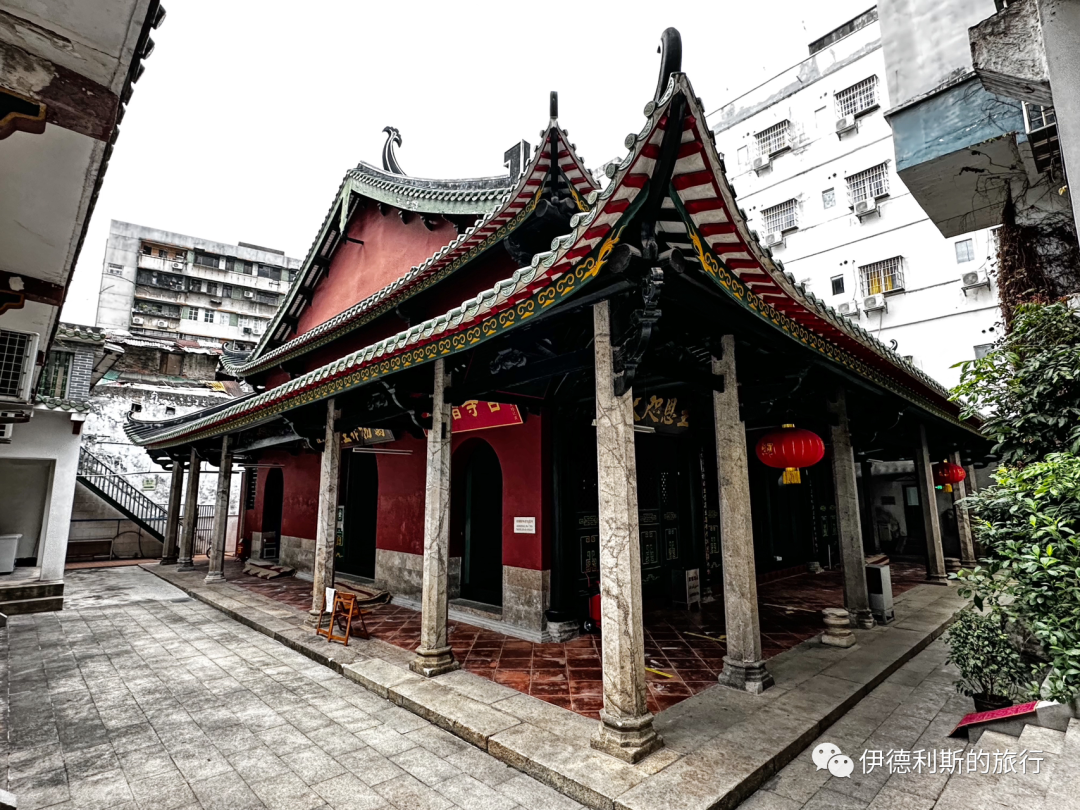
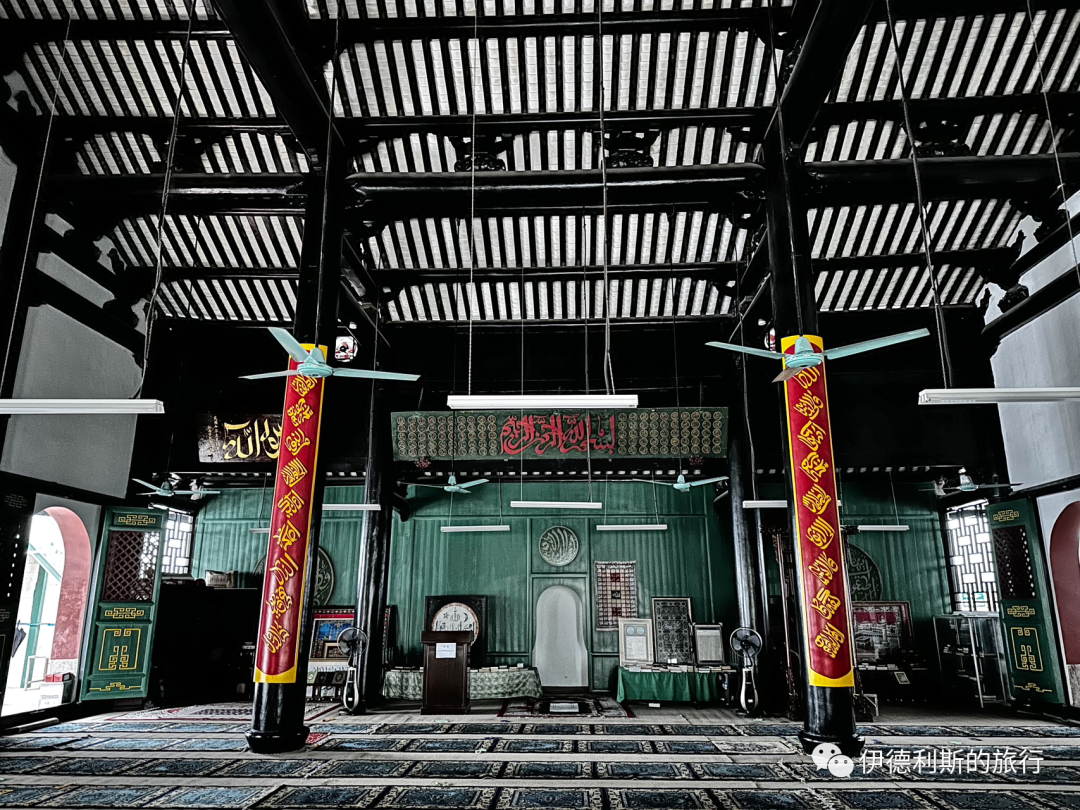
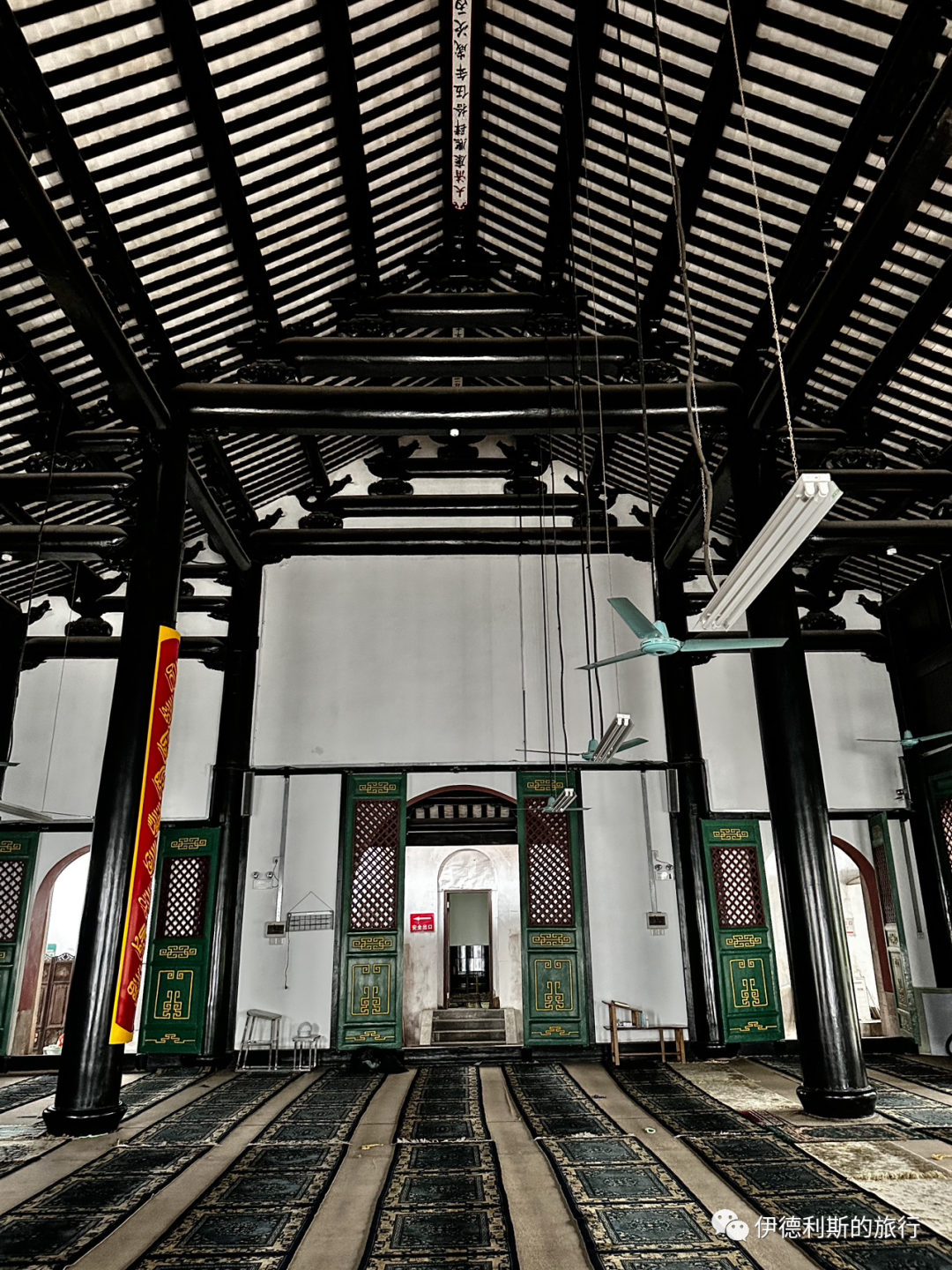
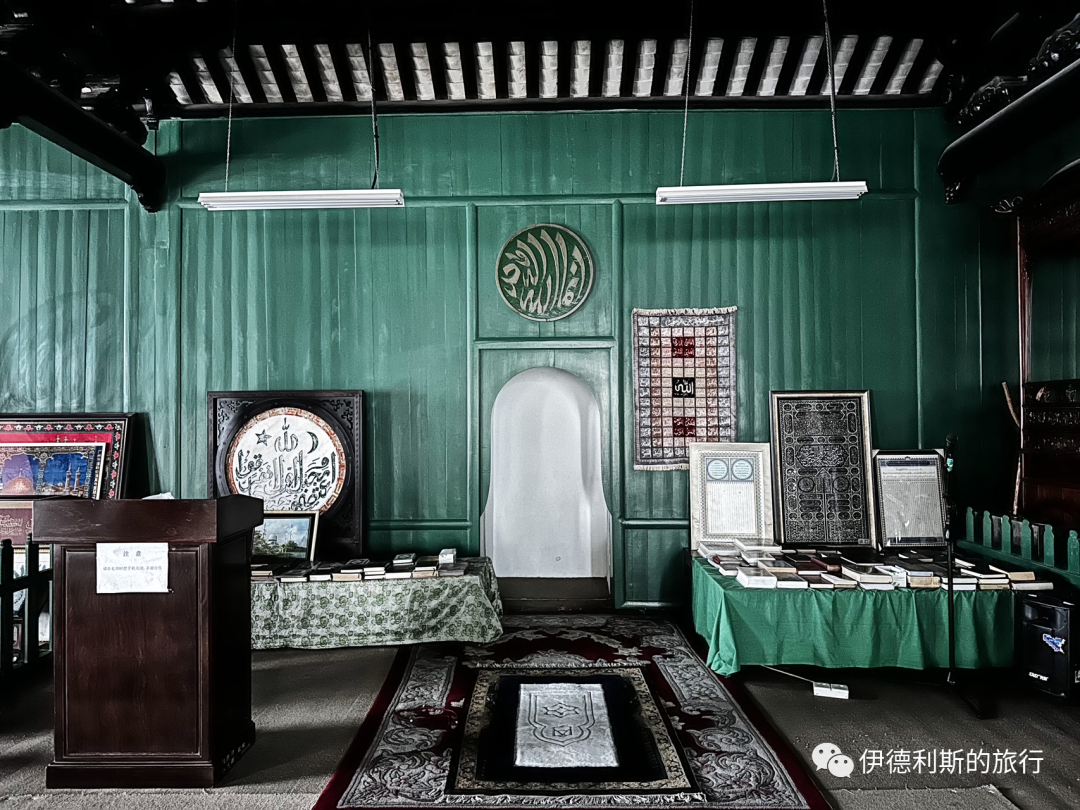
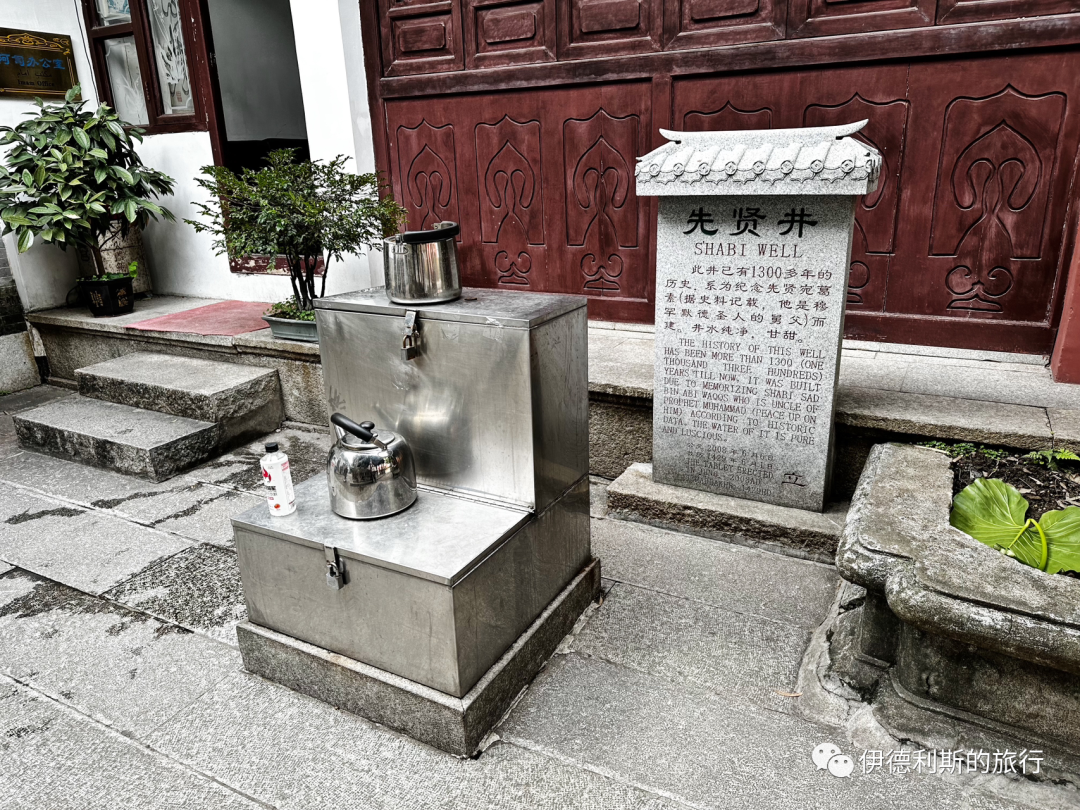
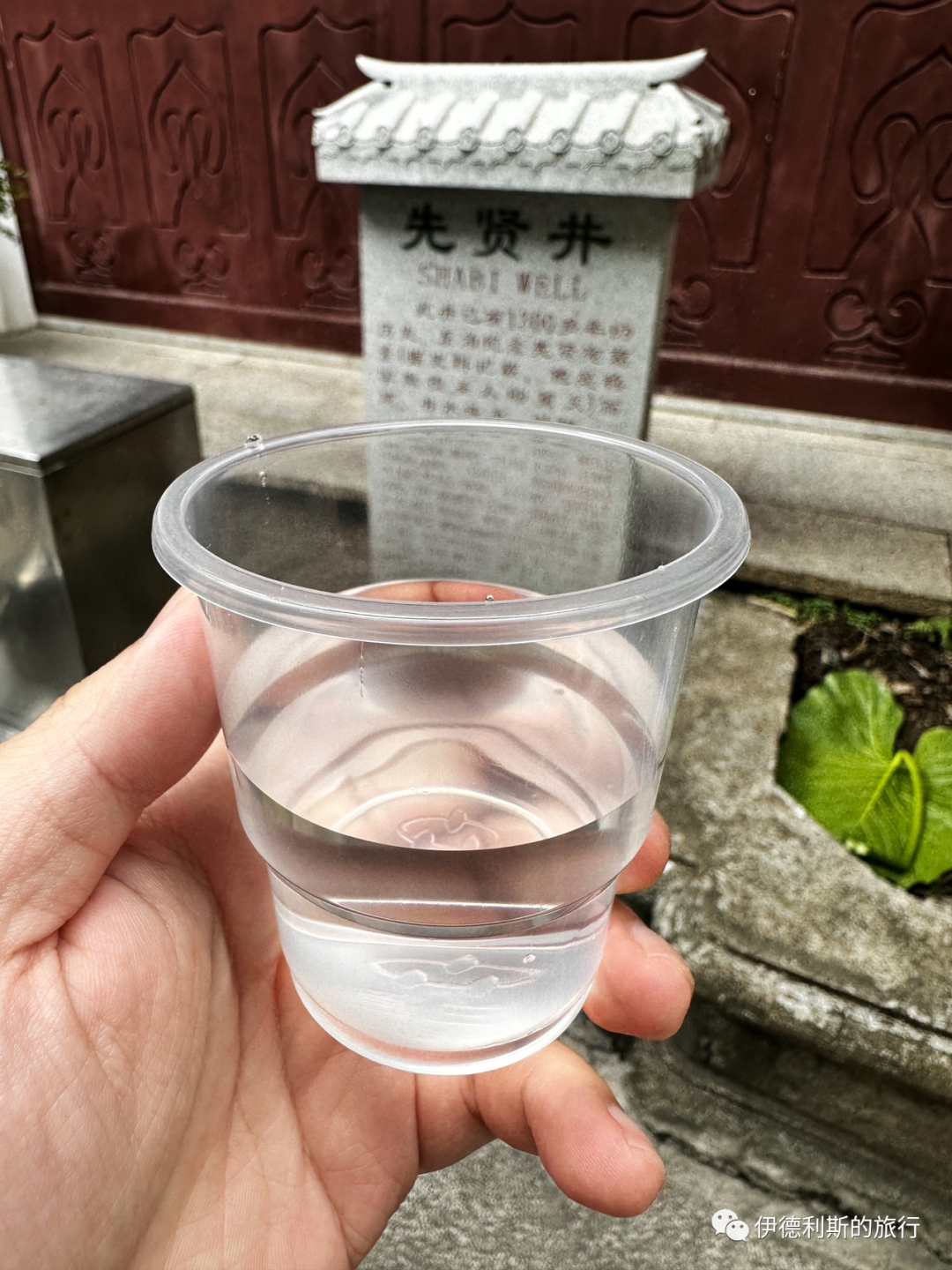
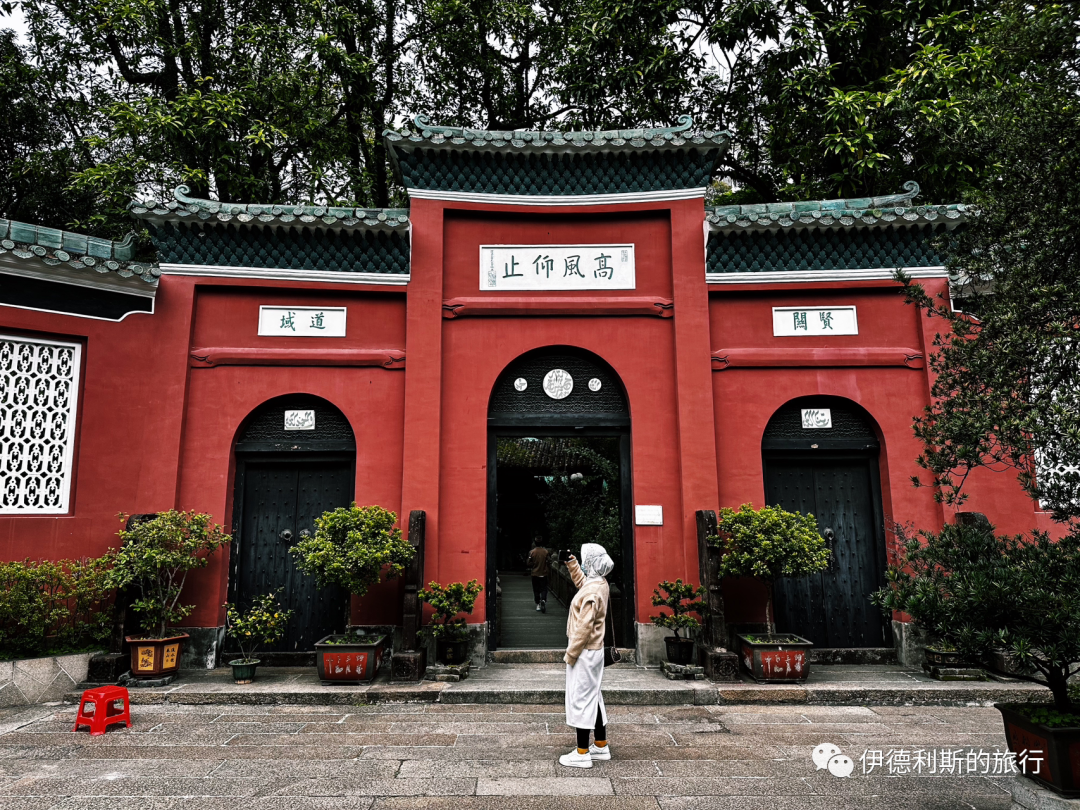
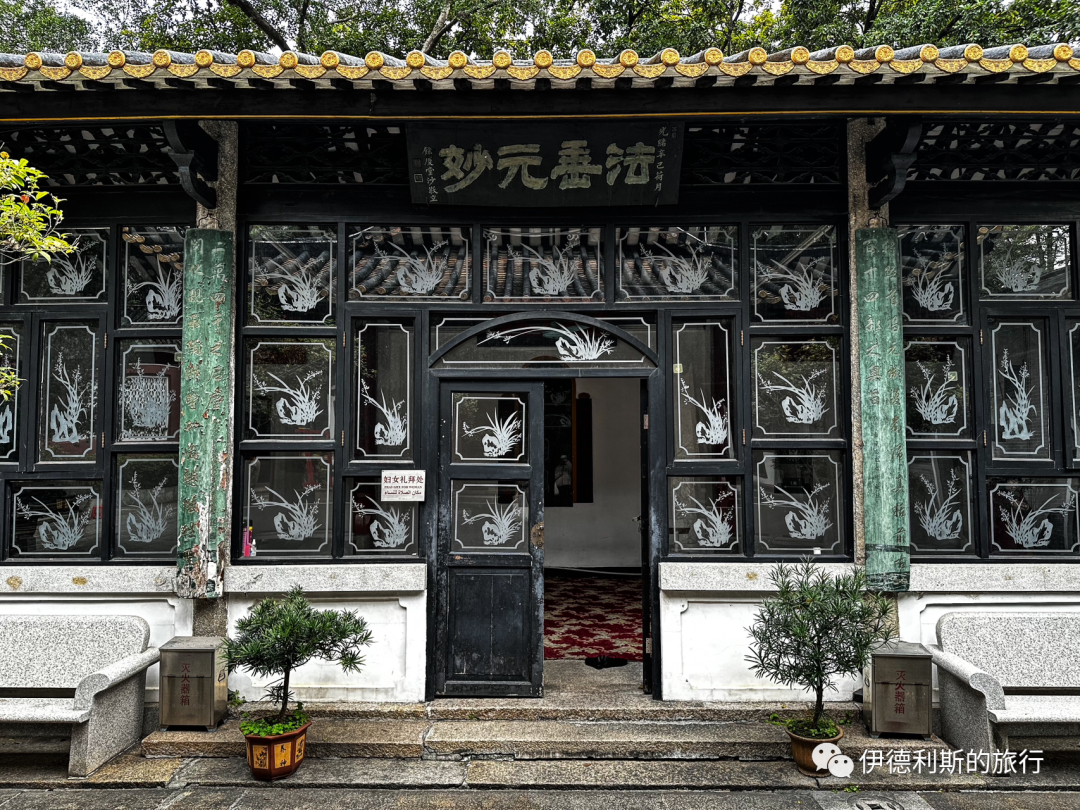
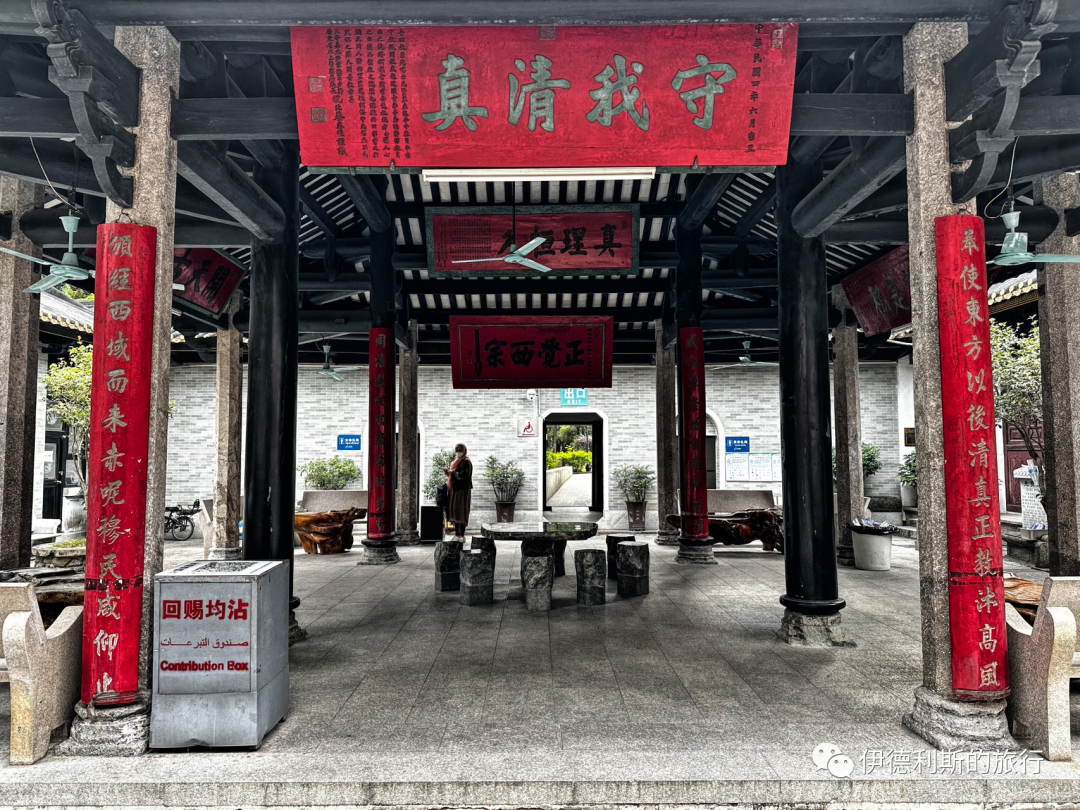
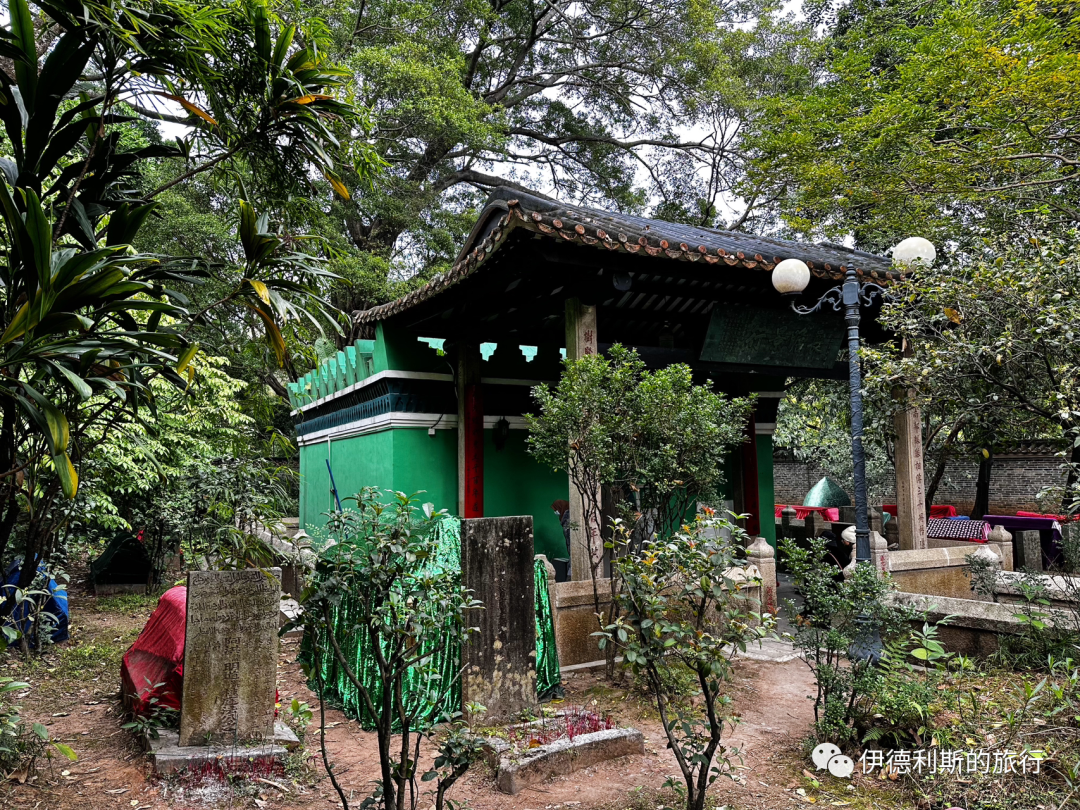
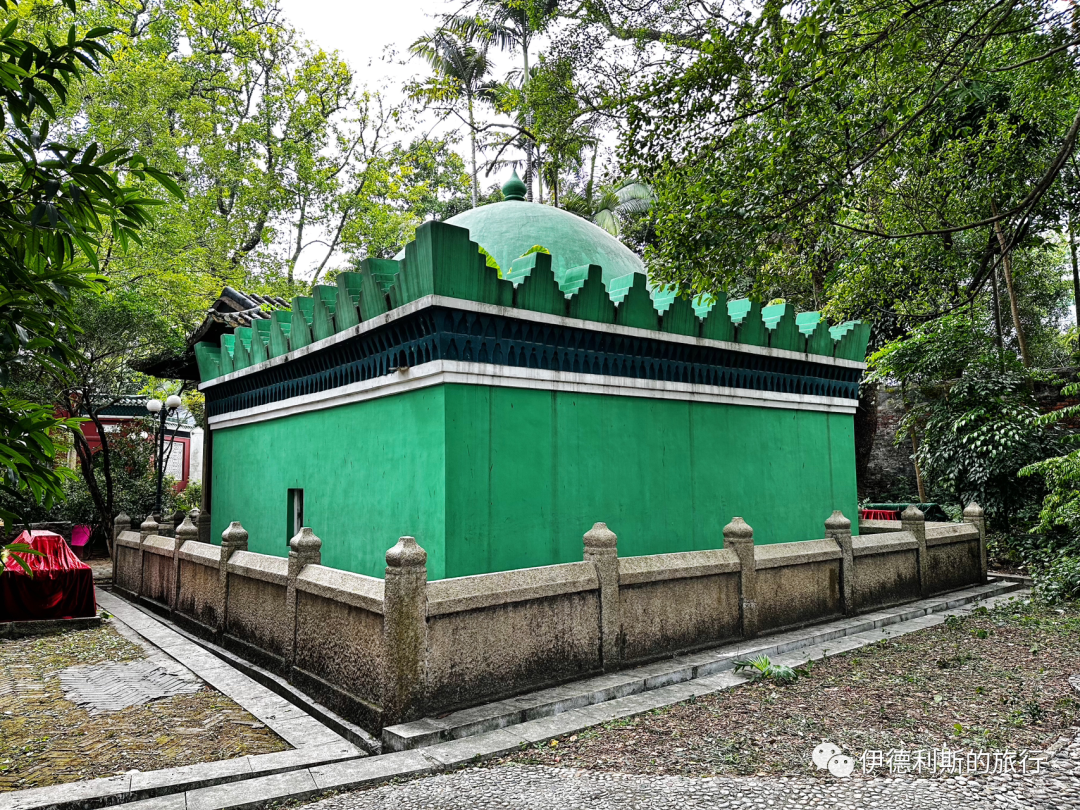
In the afternoon, I went to visit the Ancient Cemetery of the Worthies in Guangzhou. There is a well in the south courtyard of the cemetery called the Well of the Worthies. Legend says it was built to commemorate the worthy Sa'd ibn Abi Waqqas. Many friends (dosti) drink a cup of water from the well after visiting the graves, and it really tastes sweet.
The Ancient Cemetery of the Worthies in Guangzhou is commonly known as the Huihui Cemetery, the Great Man's Cemetery, or the Echoing Cemetery. It has been a burial ground for Muslims in Guangzhou since the Tang Dynasty. The earliest record of the Ancient Cemetery of the Worthies comes from 'One Hundred Poems of the South Sea' (Nanhai Baiyong) written by Fang Xinru in 1206 (the second year of the Kaixi period of the Southern Song Dynasty): 'The tombs of the foreigners are ten miles west of the city, thousands of them, all with heads to the south and facing west.'
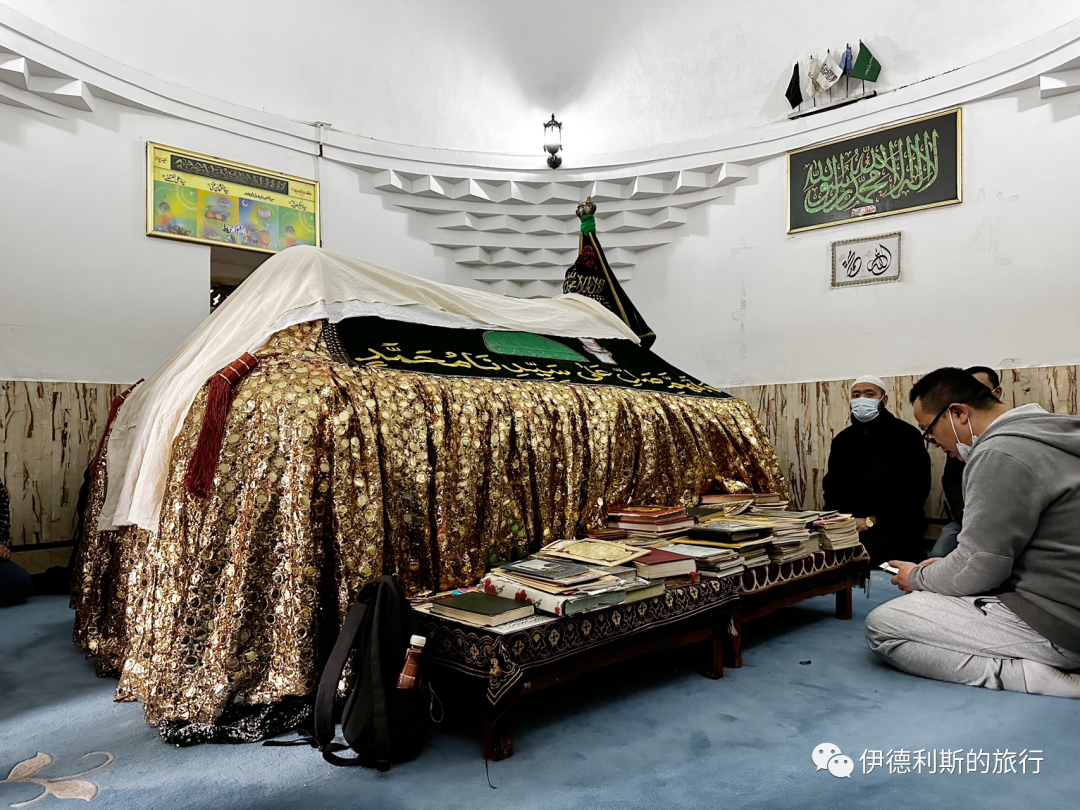
At the center of the ancient cemetery is the tomb of the legendary first worthy to come to China to preach, Sa'd ibn Abi Waqqas (Saheb Saad Wakkas). Records show the status of the Tomb of Waqqas (Wangesu mu) rose during the Yuan and Ming dynasties. The Ming dynasty book Guangzhou Prefecture Records (Guangzhou fuzhi) notes: Every year, people of all surnames must visit the tomb to pay respects and recite scriptures, a tradition that continues to this day. Countries in the Western Regions respected this influence. Every time they sailed thousands of miles to Guangzhou, they considered visiting the tomb an honor. Even the most noble visitors would crawl and bow in Guangzhou to show their utmost sincerity.
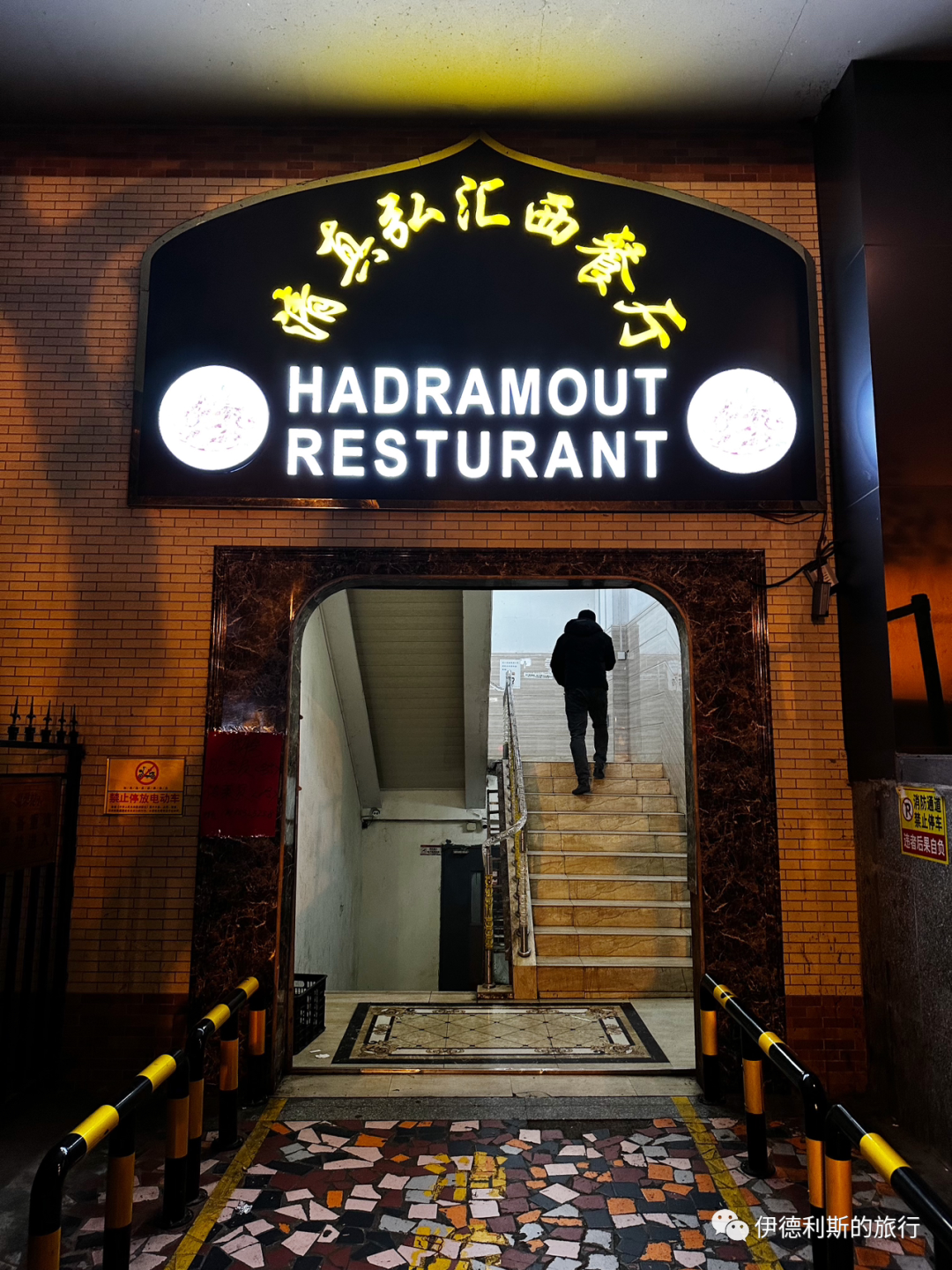
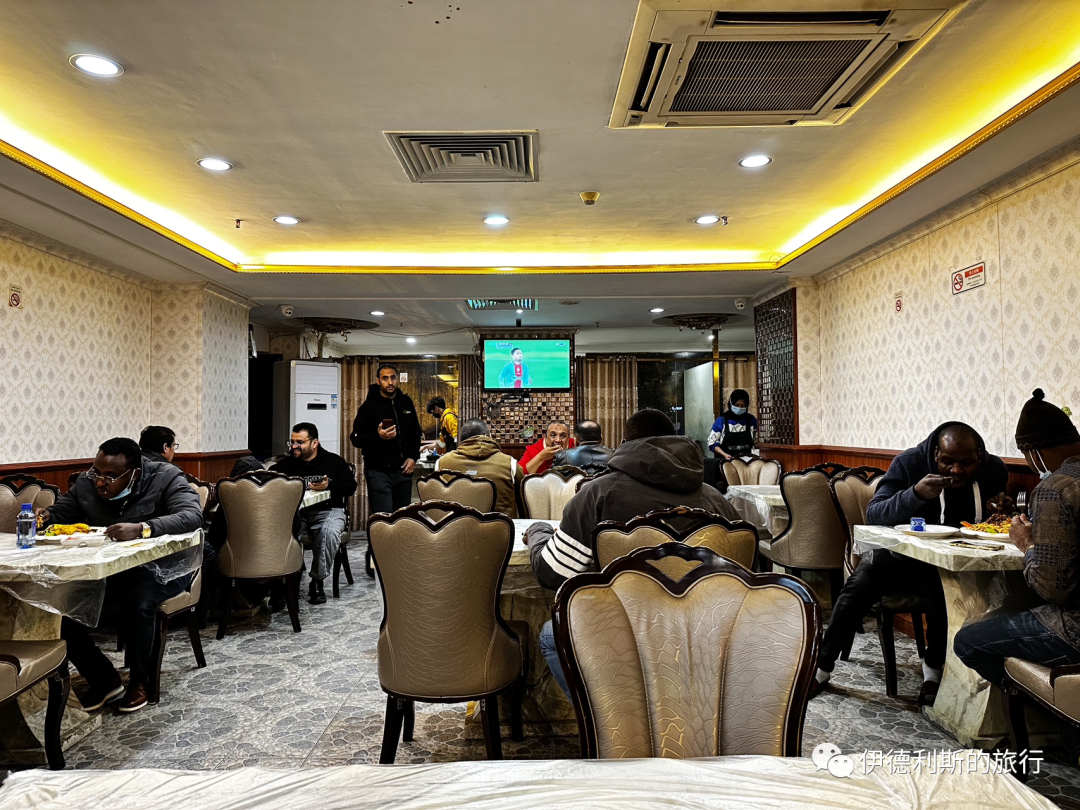
In the evening, I went to Hadramout Restaurant, a long-standing Yemeni eatery that has been in Guangzhou's Xiaobei area for over a decade. Hadramout is now the name of a province in eastern Yemen, but it is also a very ancient term once used to refer to the coastal plains of the southern Arabian Peninsula. Residents here established the Kingdom of Hadramout as early as 1000 BC, and the people of Ad mentioned in the ancient Quran are said to have lived here as well.
I visited Xiaobei in Guangzhou many times before 2019 and witnessed the glory of its Middle Eastern and African trade. Although the country has opened its borders again, the major trade centers have not yet recovered. The building where Hadramout is located used to be packed with shops doing foreign business, but now you can only feel the old bustle of Xiaobei inside their restaurant.
Although there are several Arab restaurants in Beijing, they are all concentrated in the Levant region on the eastern Mediterranean coast, such as Lebanon, Palestine, and Syria. While they are all Arab, the cuisines of the Levant, the Arabian Peninsula, and the North African Maghreb region each have their own characteristics and are all worth trying. Coming to Guangzhou this time, I really wanted to try Yemeni food that I cannot get in Beijing.
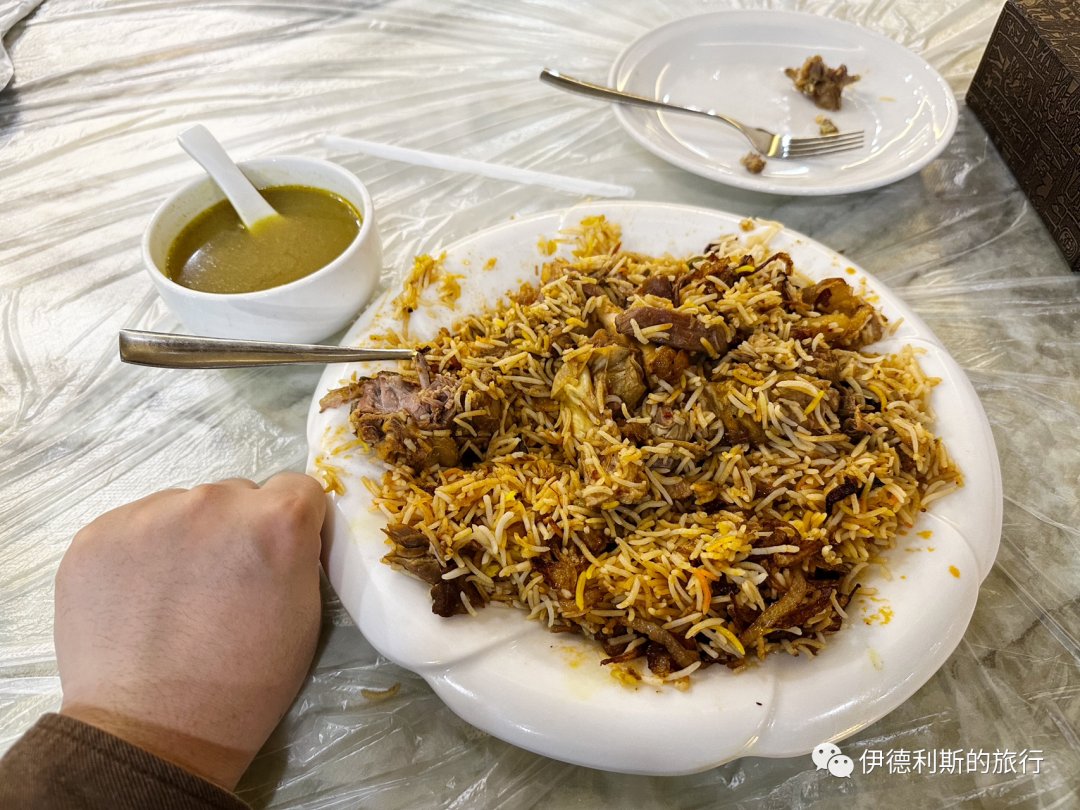
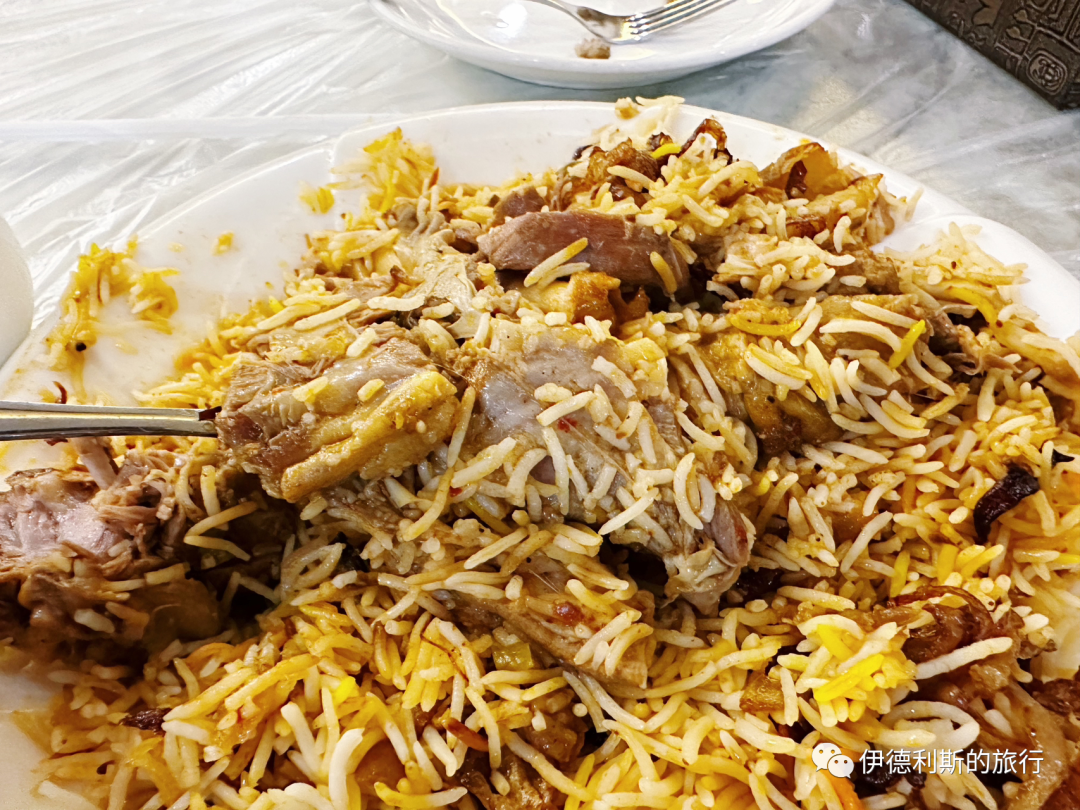
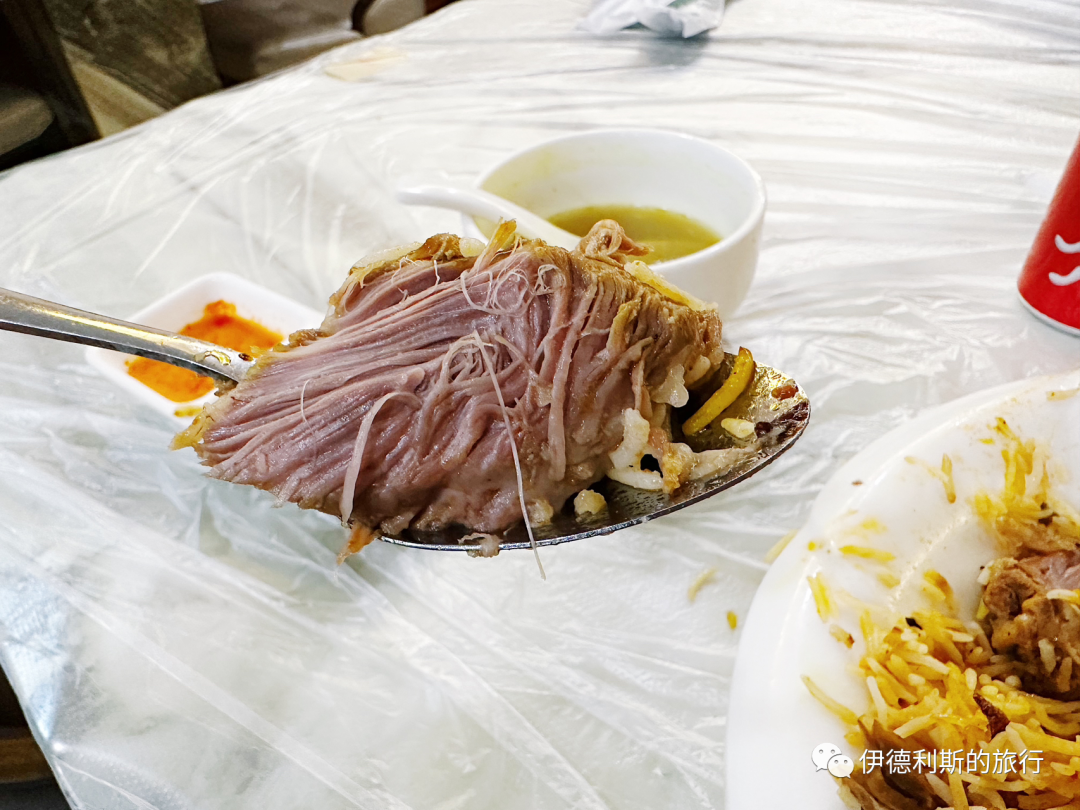
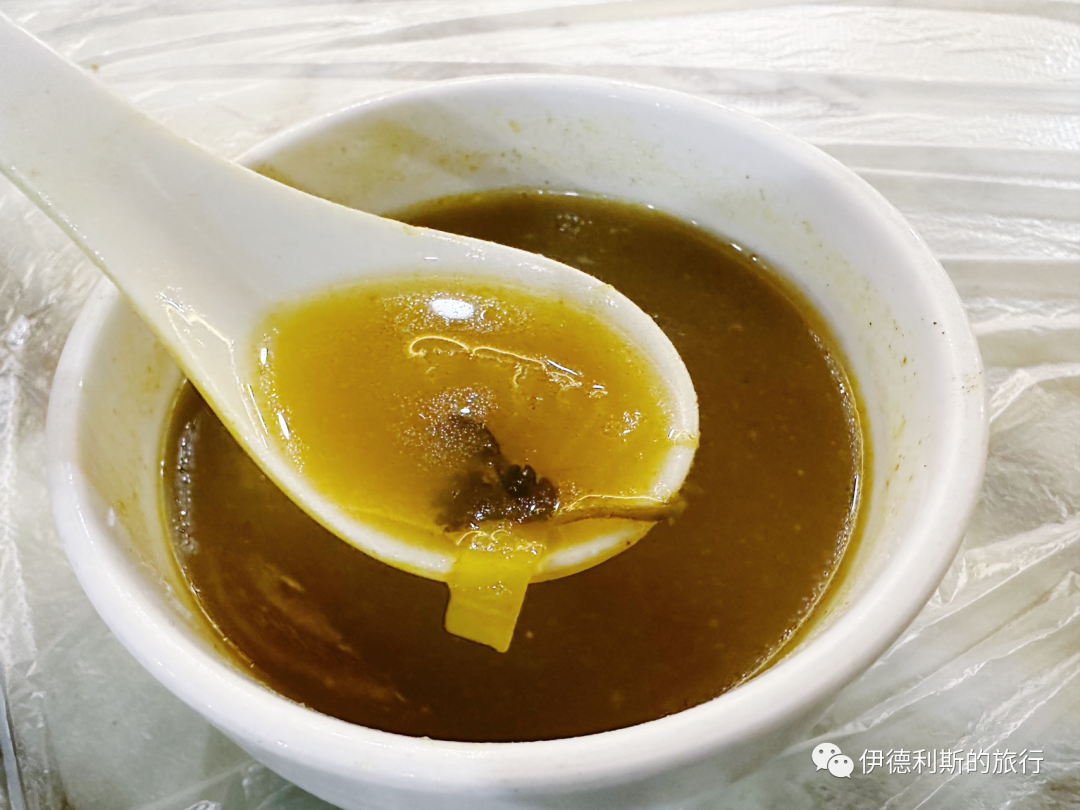
At Hadramout, I had the Yemeni specialty Zurbian lamb and saffron rice (Zurbian yangrou zanghonghua menfan), a major dish served at Yemeni weddings, breaking the fast, and birthdays. The portion of rice is very large, making it suitable for two people. They give you a lot of meat. You might not see it well in the photo, but the rice is actually buried under all that meat. The meat is braised until very tender, and the texture and flavor are both excellent.
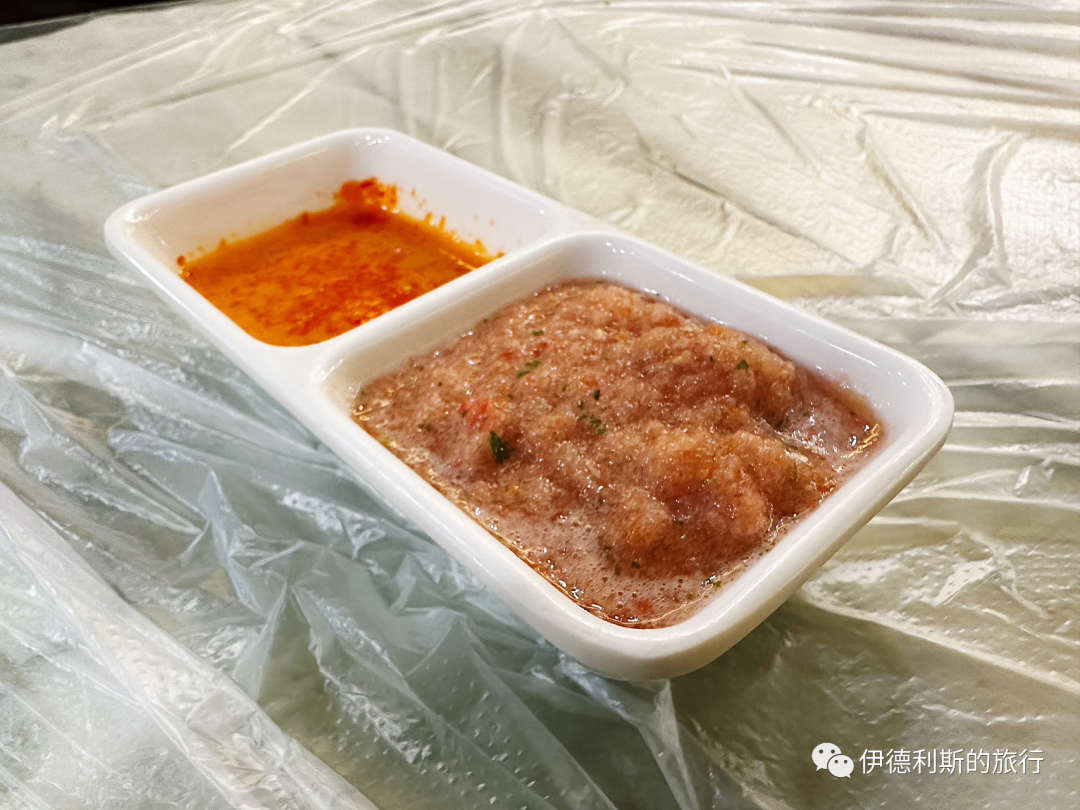
When eating Yemeni rice, you should pair it with the Yemeni specialty spicy sauce Sahawiq. This spicy sauce is made with fresh chili peppers, cilantro, garlic, salt, cumin, and parsley, mixed with olive oil and sometimes tomatoes. Their meat broth is also free to drink, and I think it tastes quite good.
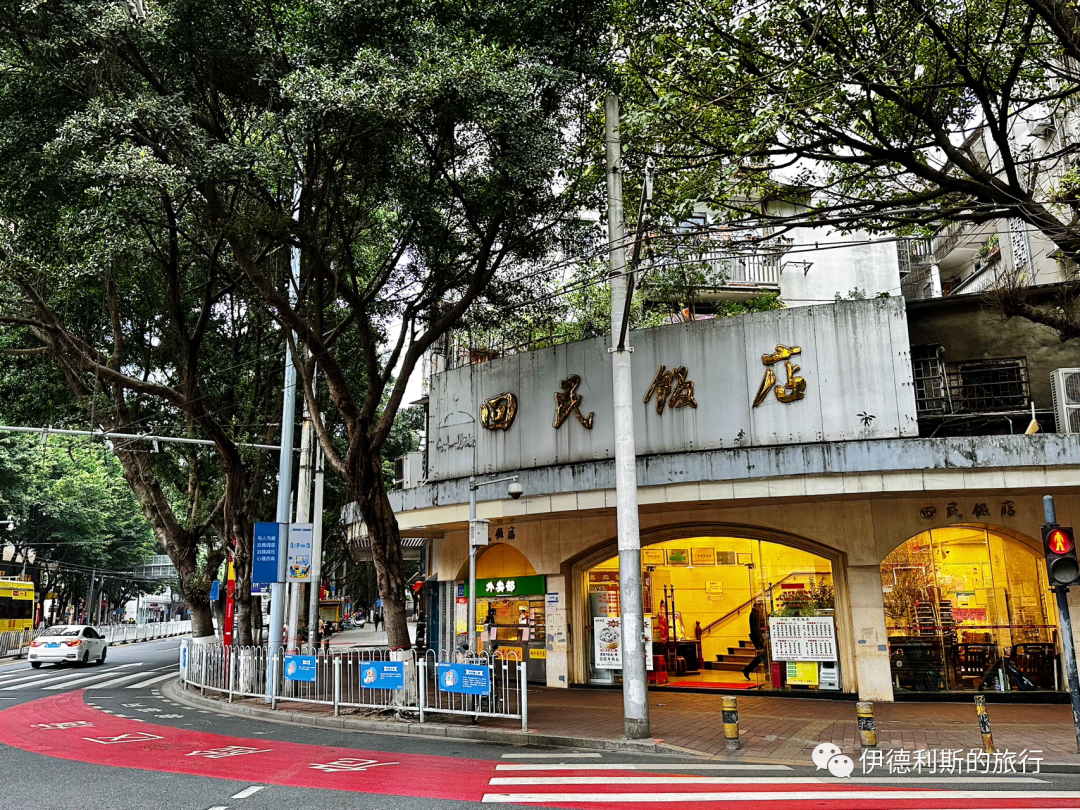
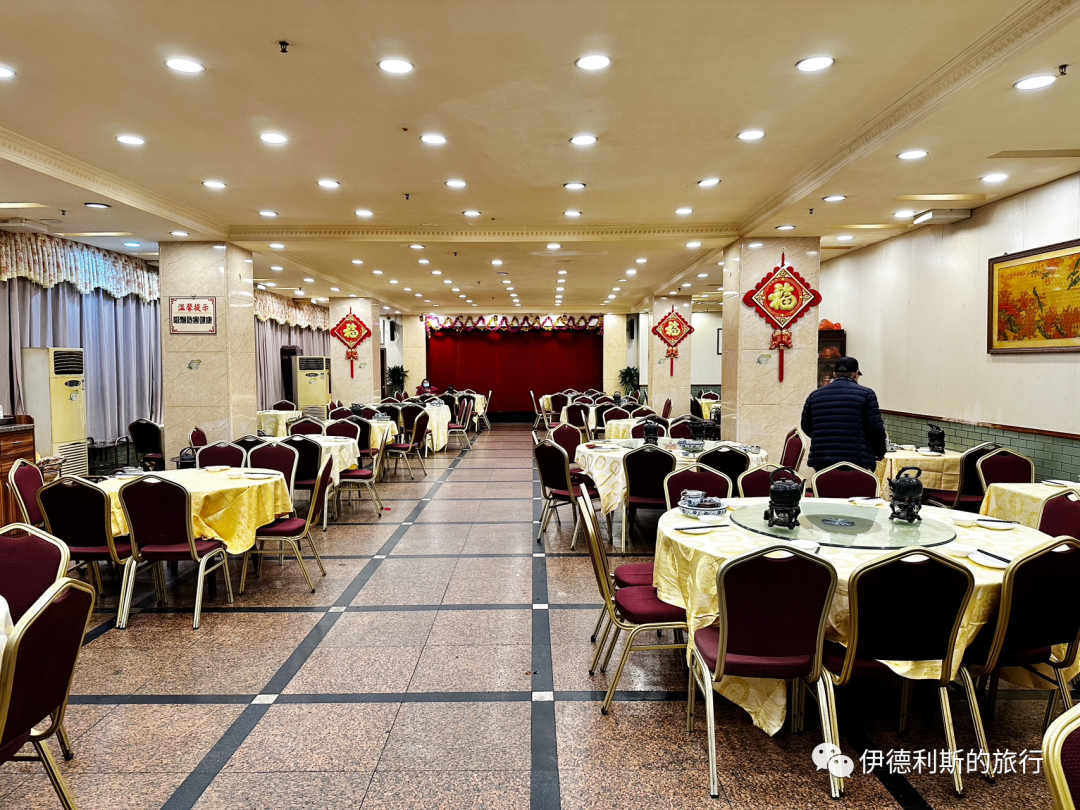
On the morning of January 26, I arrived right at 7:00 AM when the Guangzhou Hui Muslim Restaurant (Guangzhou Huimin fandian) opened for morning tea. Some elderly people had already taken seats, but there were still plenty of empty ones. Every time I visited Guangzhou before, I would go to the Hui Muslim Restaurant for morning tea, and I especially liked their lamb barbecue buns (yang chashaobao). Five years have passed in the blink of an eye, so I had to try them again on this trip.
The Hui Muslim Restaurant can be called the last tear of local halal food in Guangzhou, serving as the final witness to the city's once-thriving local halal dining industry. The Hui Muslim Restaurant started as a halal canteen in 1956, with chefs coming from local halal eateries like Gaosheng Tea House, the Hui Muslim Fengcheng Roasted Meat Shop, and the Halal Deji Roasted Meat Shop. In 1959, the canteen merged with the Huabei Hotel and took over the second branch of Satangji, renaming itself the Hui Muslim Grand Hotel. It took over the Hui Muslim Ice Room in 1964 and moved to its current location on Zhongshan 6th Road in 1975, where it has been for nearly 50 years. Due to complex historical reasons and the changes in the local Muslim community during the 20th century, the local halal dining industry in Guangzhou declined. As a restaurant with nearly 70 years of history, it is quite an achievement for the Hui Muslim Restaurant to still be here today.
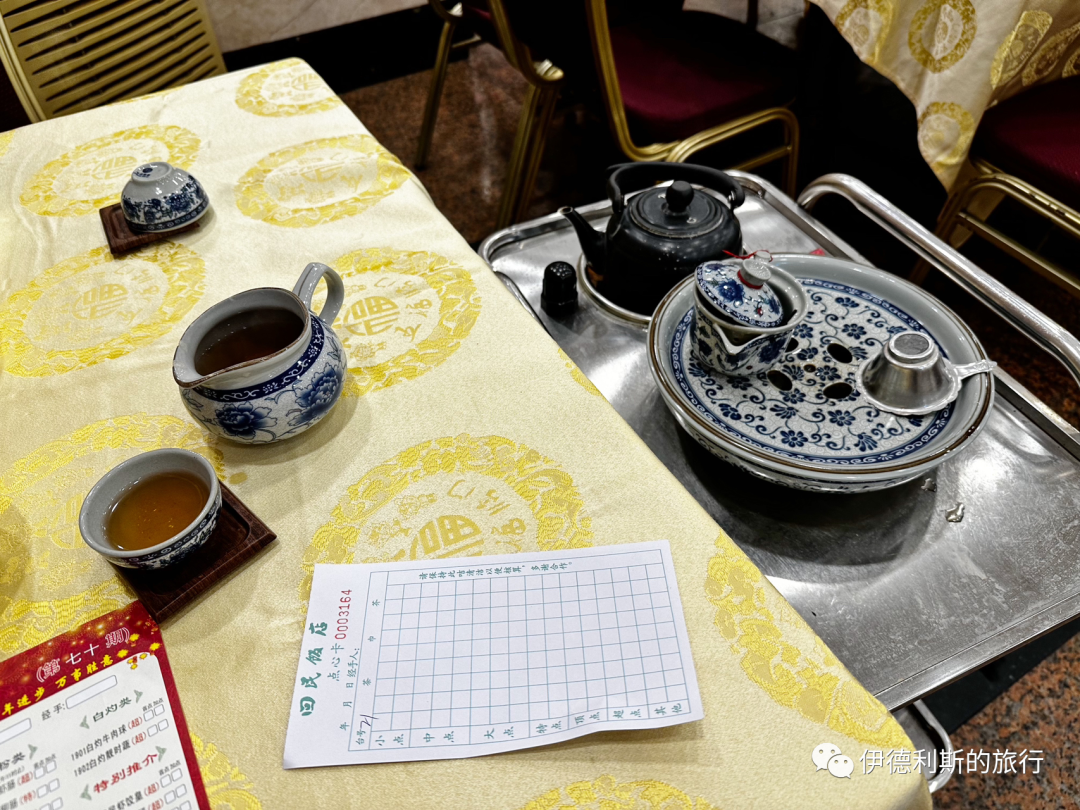
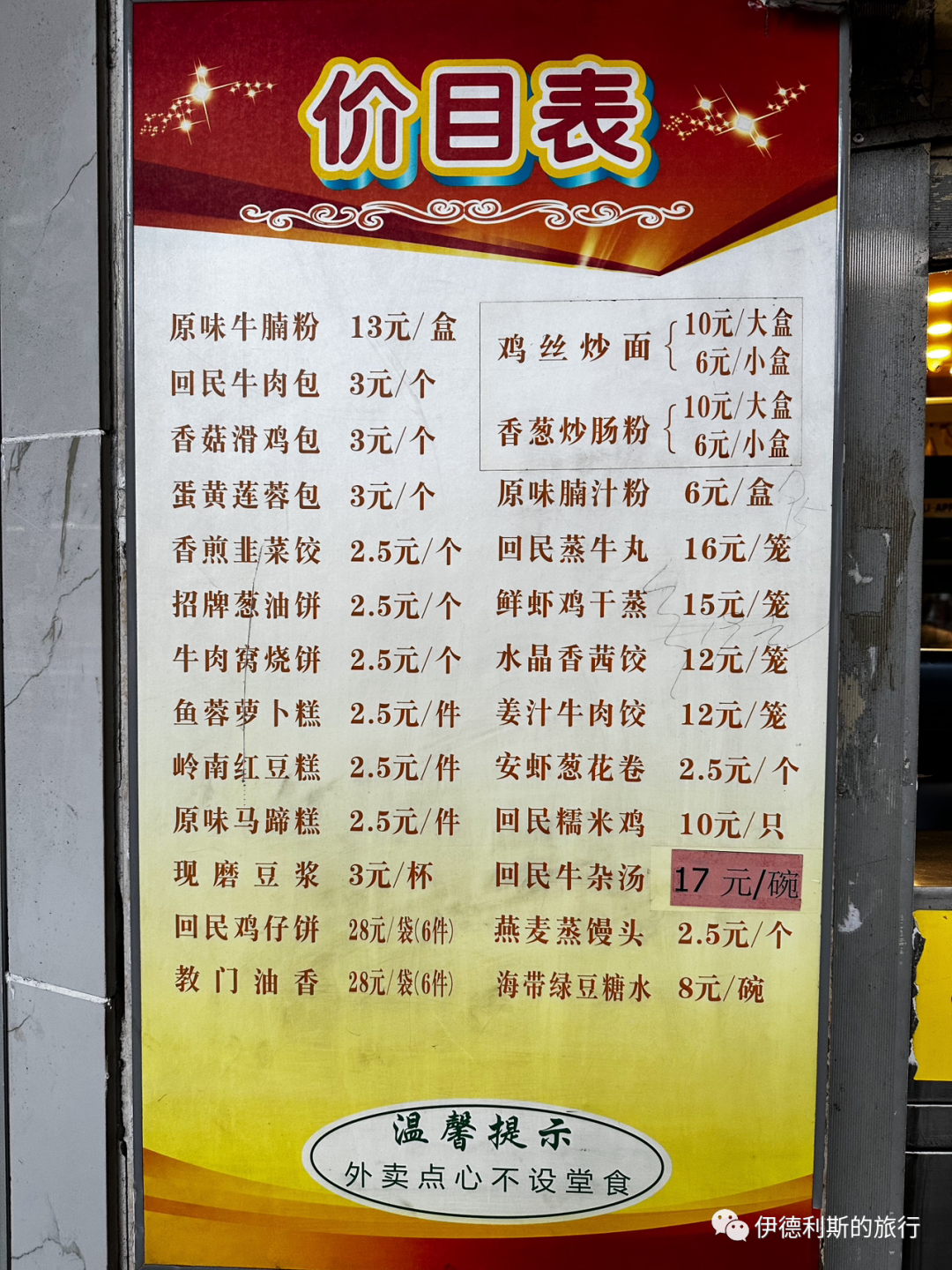
In 2016, I posted an article on Douban called The Morning and Night of Guangzhou Hui Muslim Restaurant, and I ate there several times in a row back then. I checked the morning tea menu from that time, and it was only on its 52nd edition; now it is already on its 70th. Except for the price increases on the dim sum, the variety has basically stayed the same. Besides the lamb barbecue buns I wanted most, I also ordered steamed chicken feet, water chestnut cake, chicken biscuits, and curry beef rice noodle rolls (changfen). When eating alone, you cannot order many things. I wanted to order more, but unfortunately, I was too full. The barbecue buns are still filled with soft, slightly sweet lamb and paired with salted egg yolk, which is very delicious. This was my first time eating chicken biscuits (jizaibing). They are said to be a very traditional recipe from Hui Muslims in Guangzhou, mixing the flavors of fermented bean curd (nanru) and dried tangerine peel (chenpi) to take you right back to old Guangzhou.
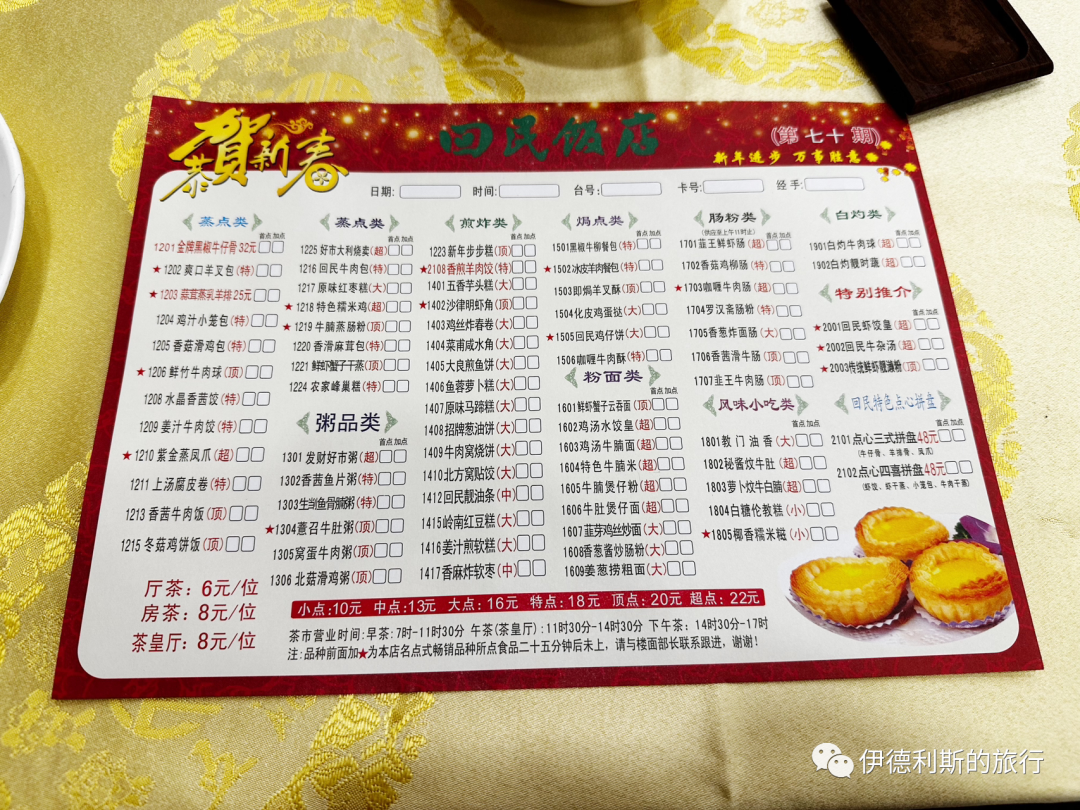
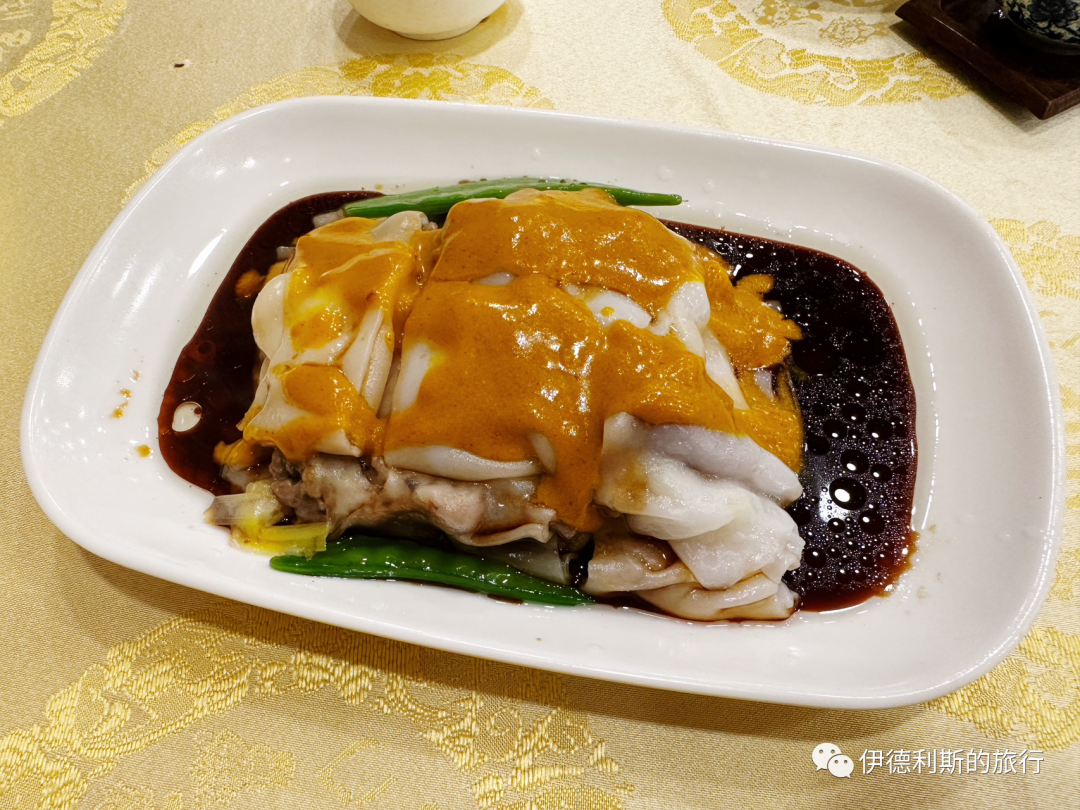
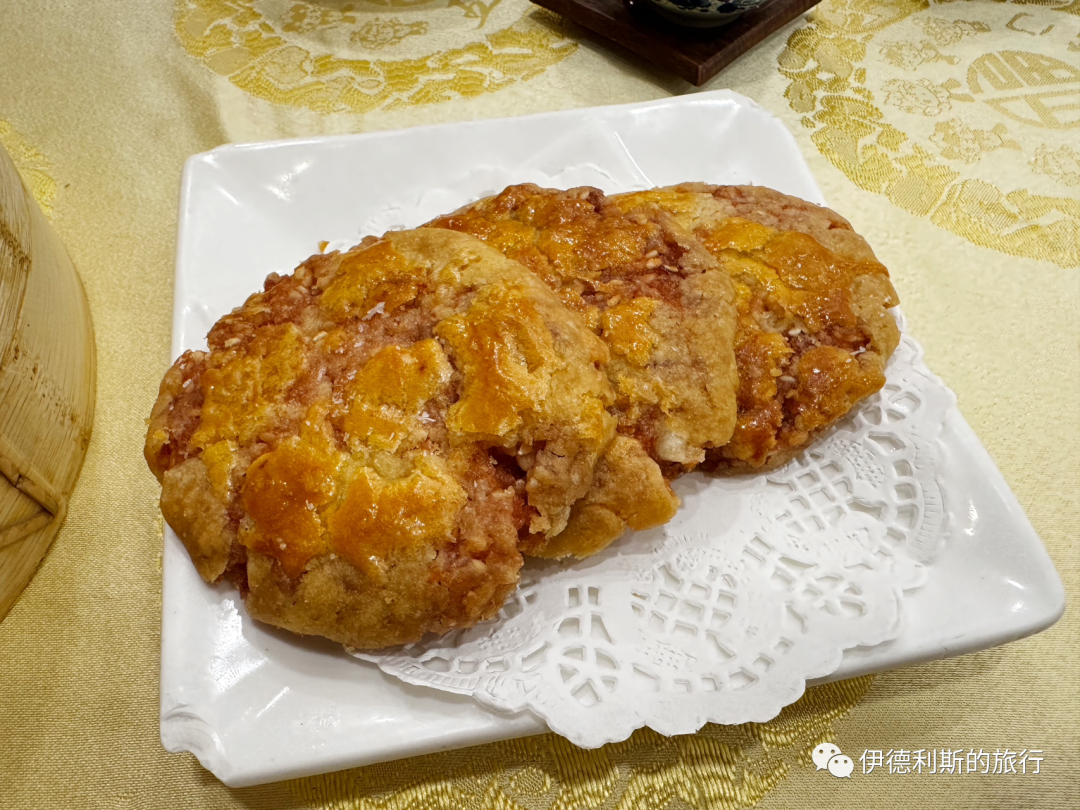
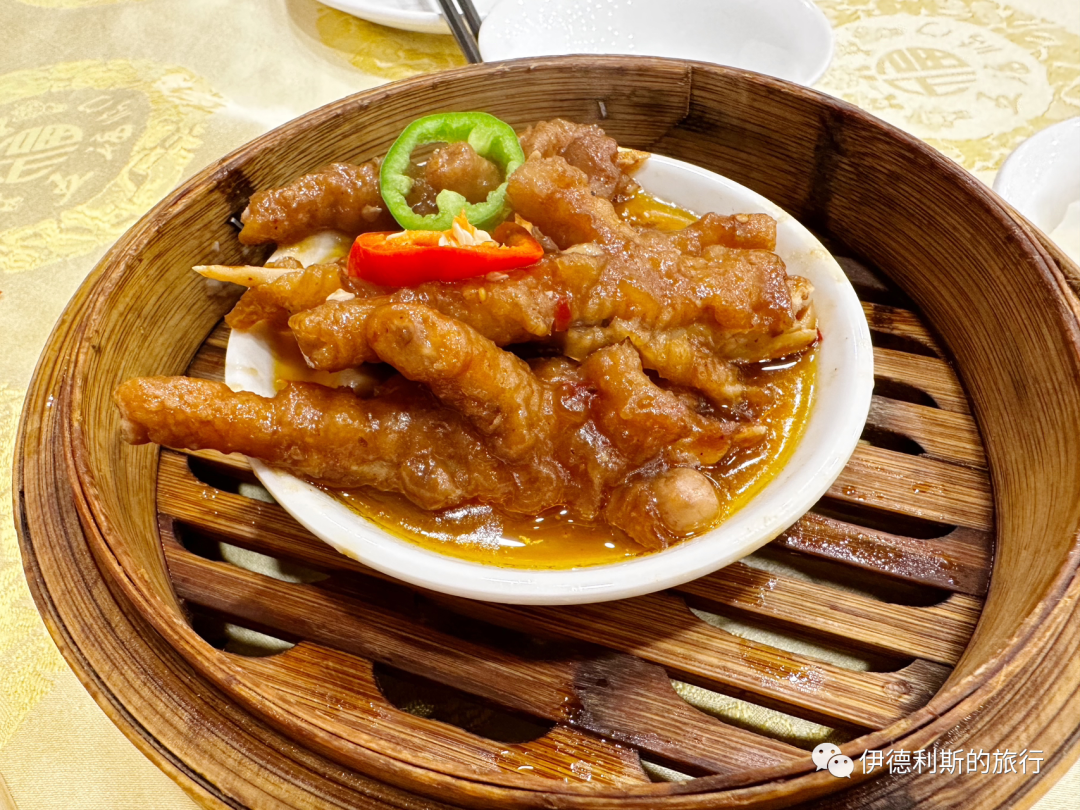
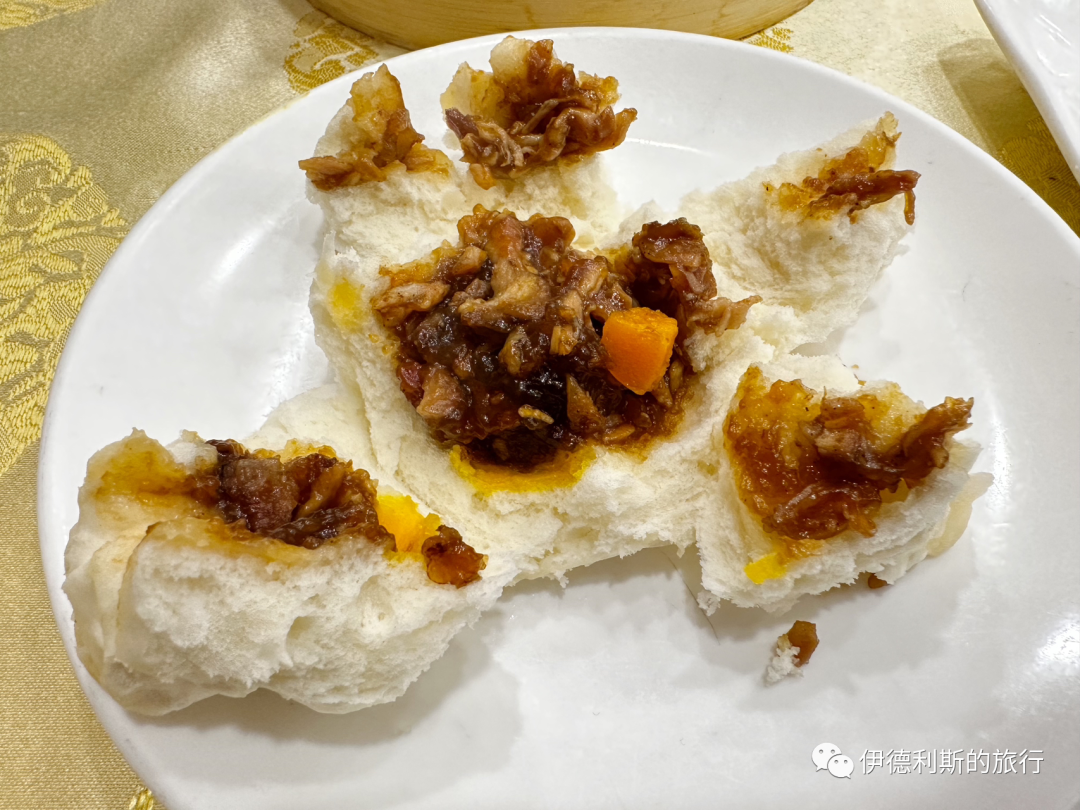
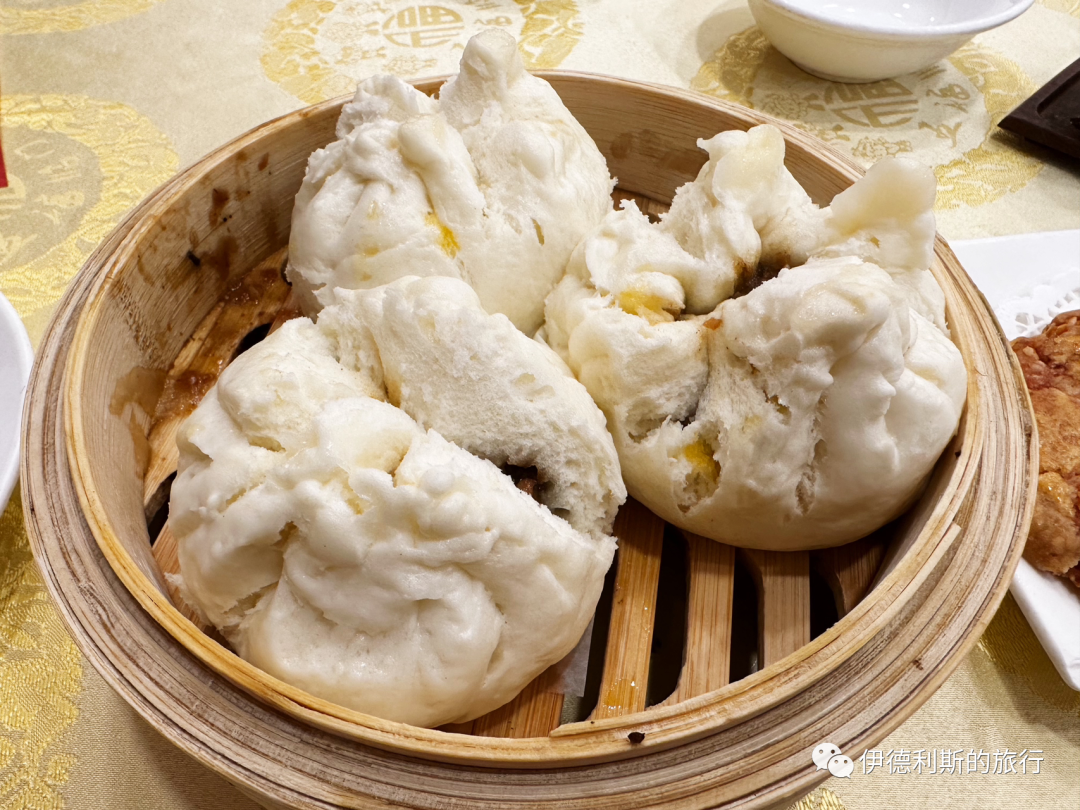
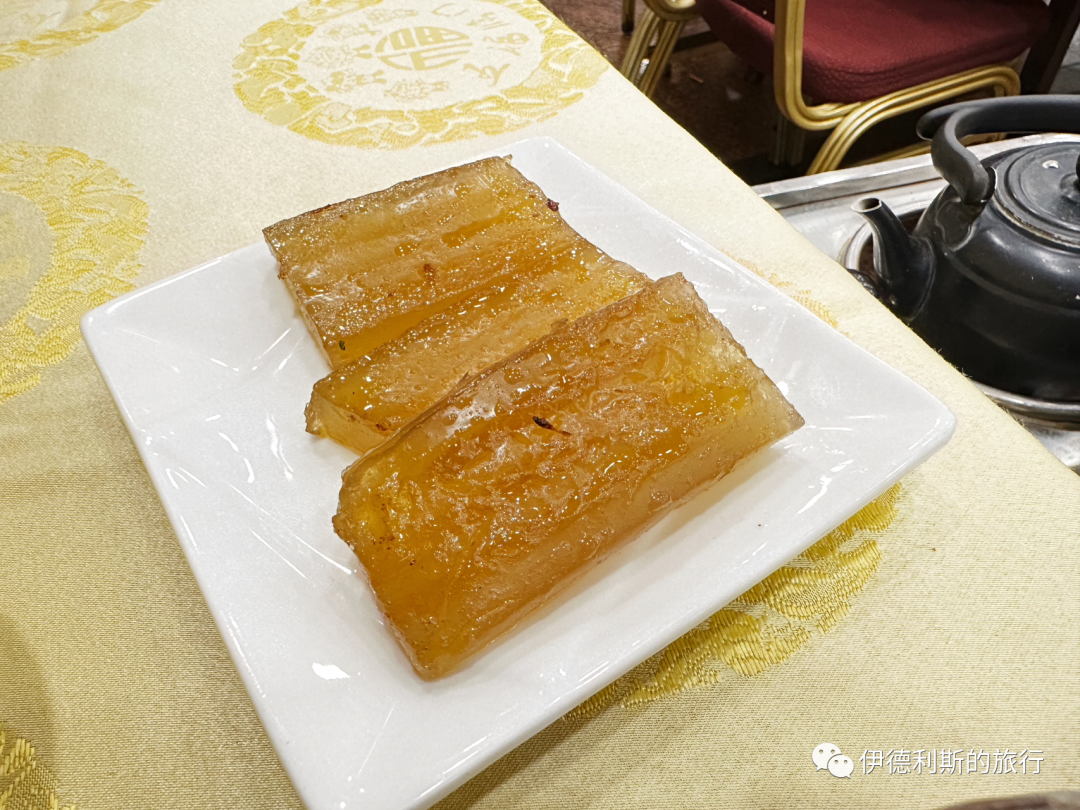
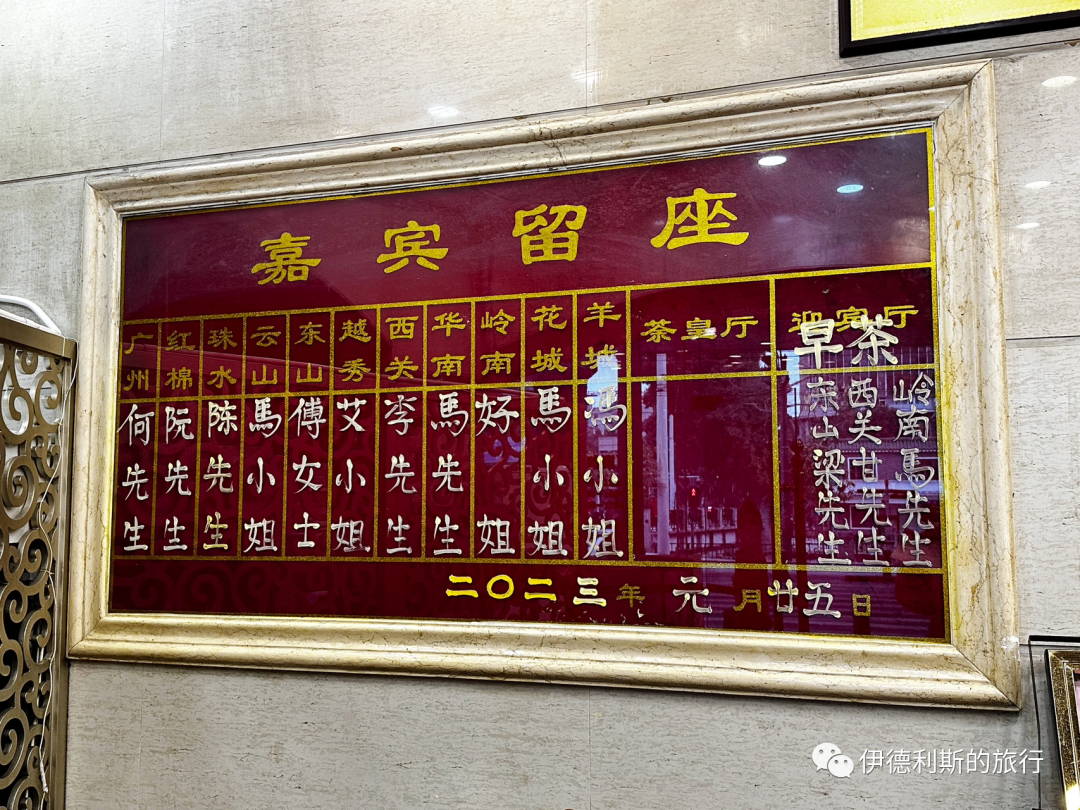
You should really take your time with morning tea (zaocha), ordering a few items at a time and adding more as you go. But because I had to head to Zhaoqing that day, I ate in a rush. While the grandparents at the next table were still looking at the menu and chatting, I had basically finished my meal. Although it wasn't as amazing as the first time I had halal Cantonese morning tea, I still felt very satisfied after finishing. It felt like the three years of being stuck were finally over, and I was relieved to be able to travel across the land again.
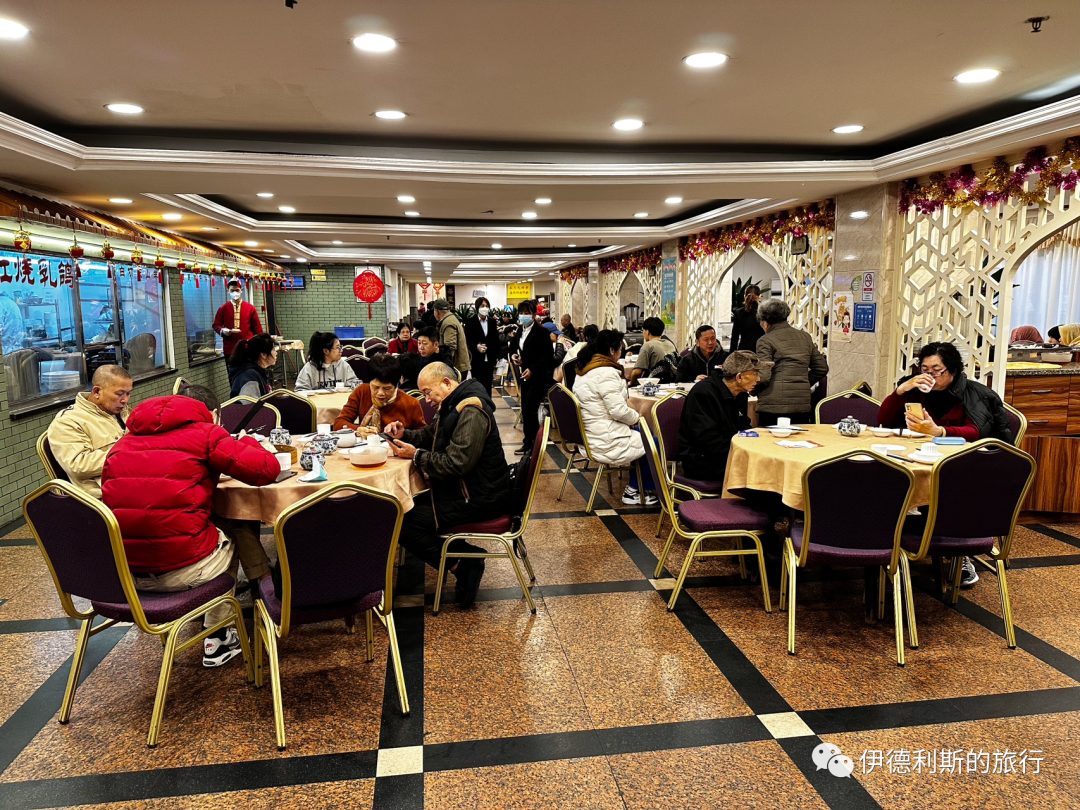
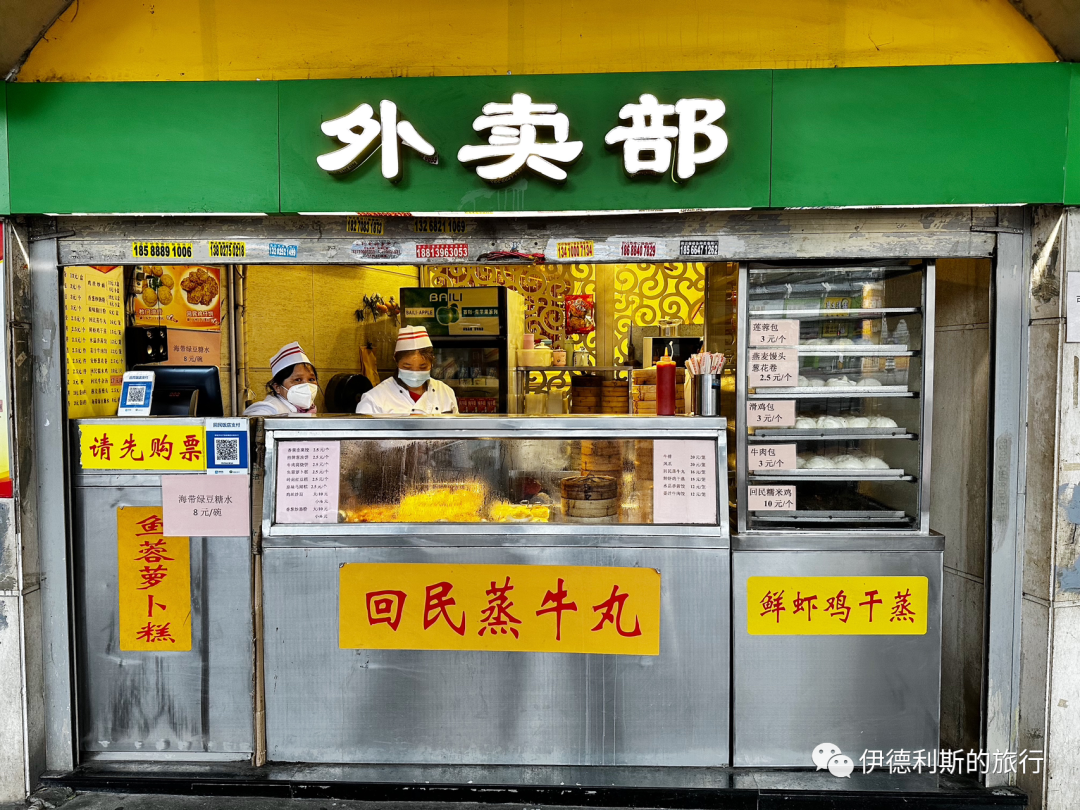
By eight o'clock, the dining halls of the Hui Muslim restaurant were already full. If you don't want to get up early, buying some specialty steamed snacks at the takeout window by the entrance is a great option.
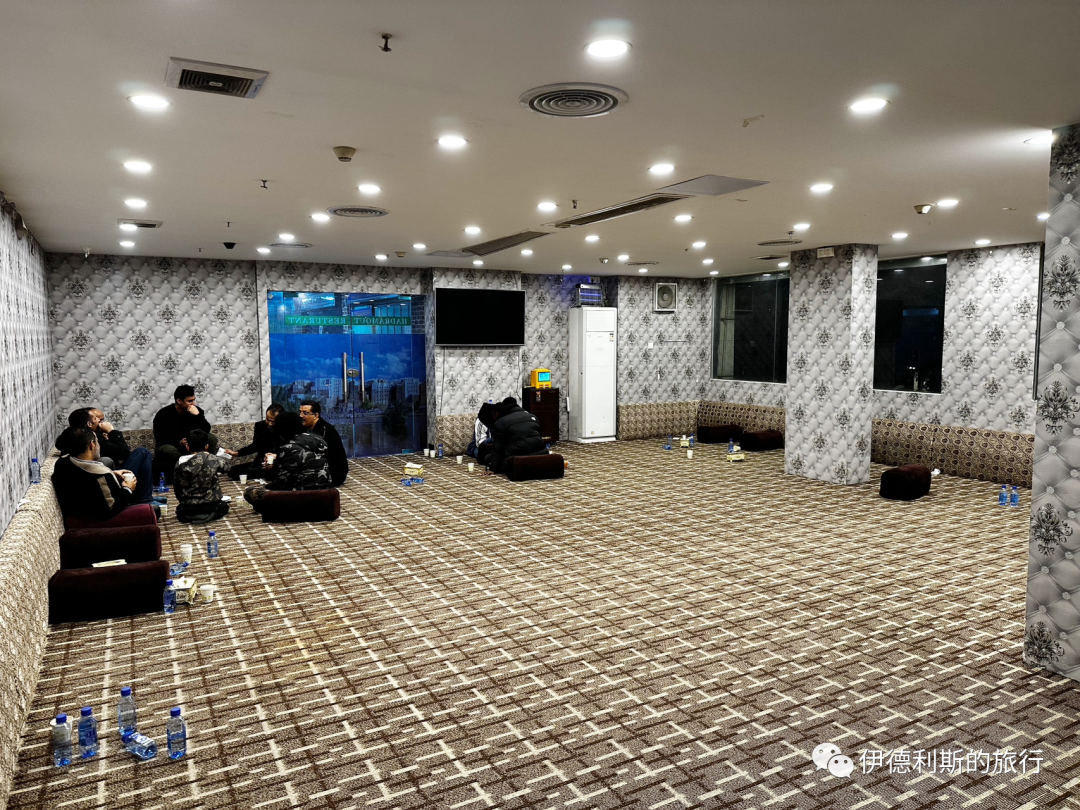
In the evening, I went to Sadda Restaurant, a long-standing Yemeni spot in Guangzhou's Xiaobei area that has been open for over a decade. Just like the Yemeni restaurant Honghui I visited the day before, they have regular tables and chairs, plus a room where you can sit on the floor to eat, just like in Yemen.
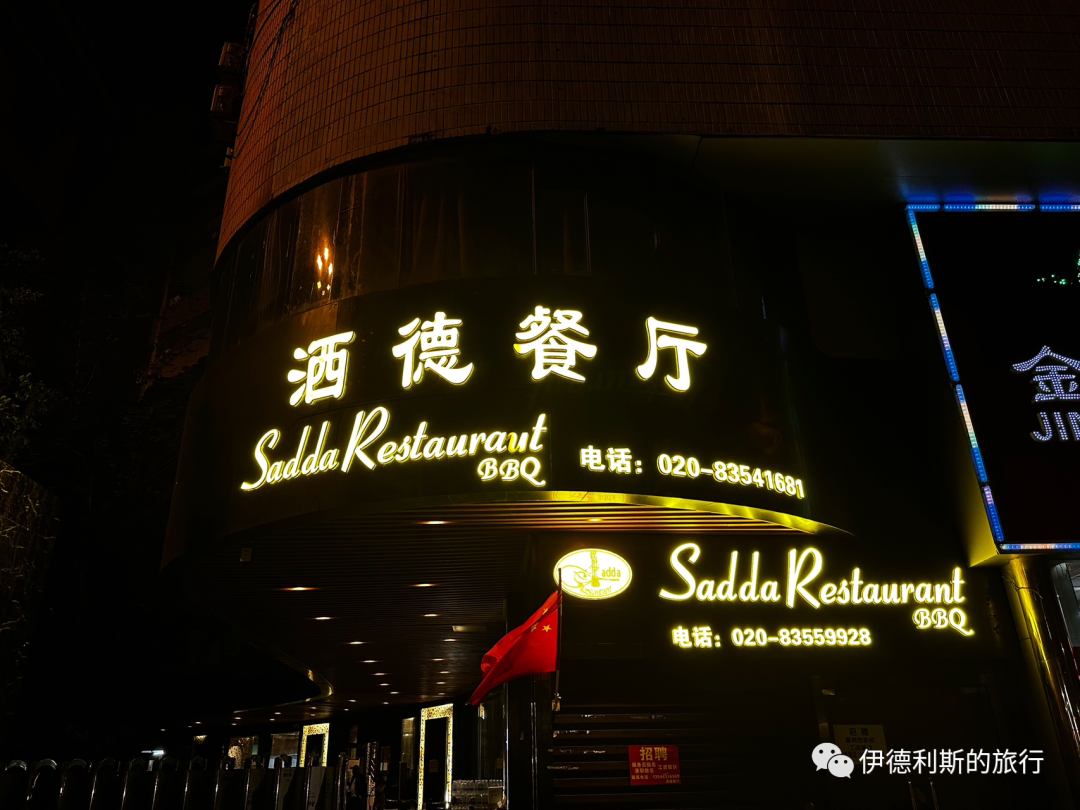
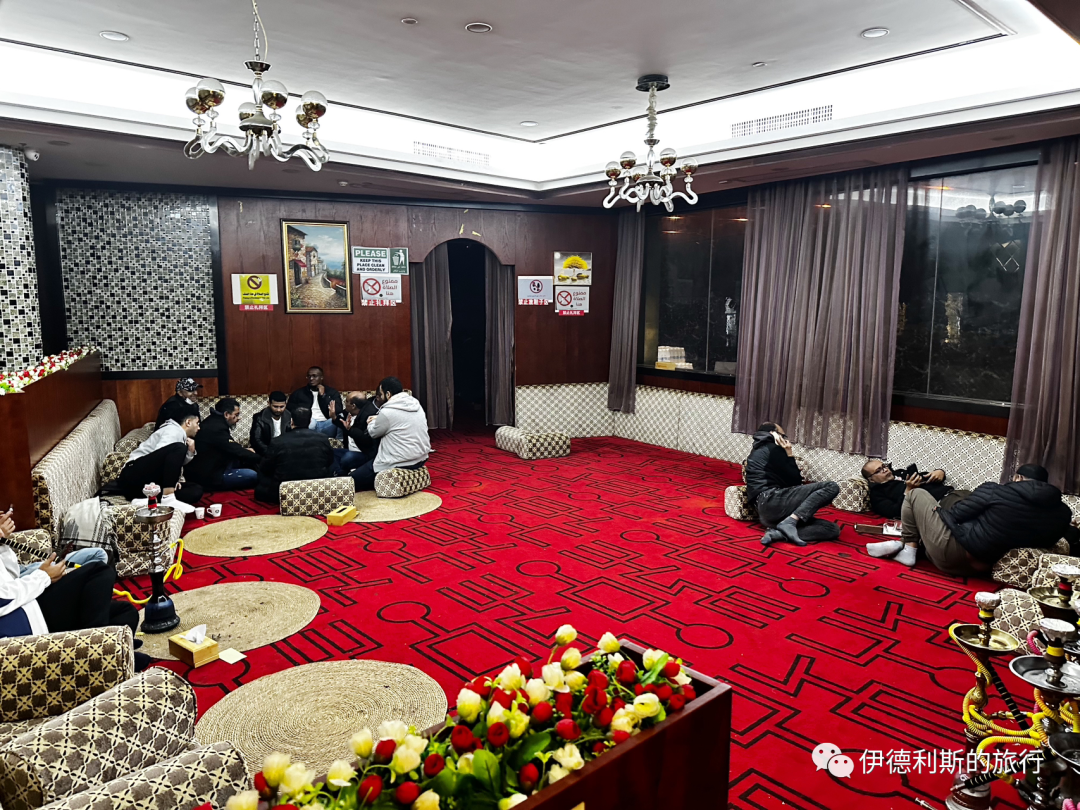
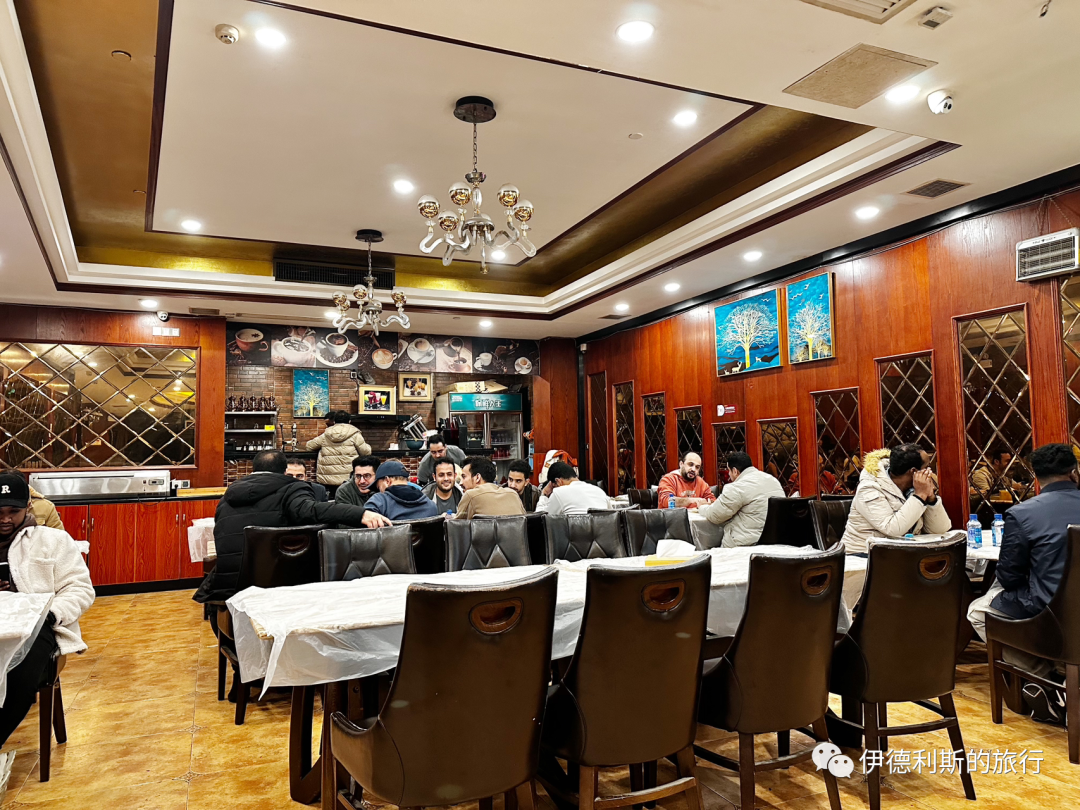
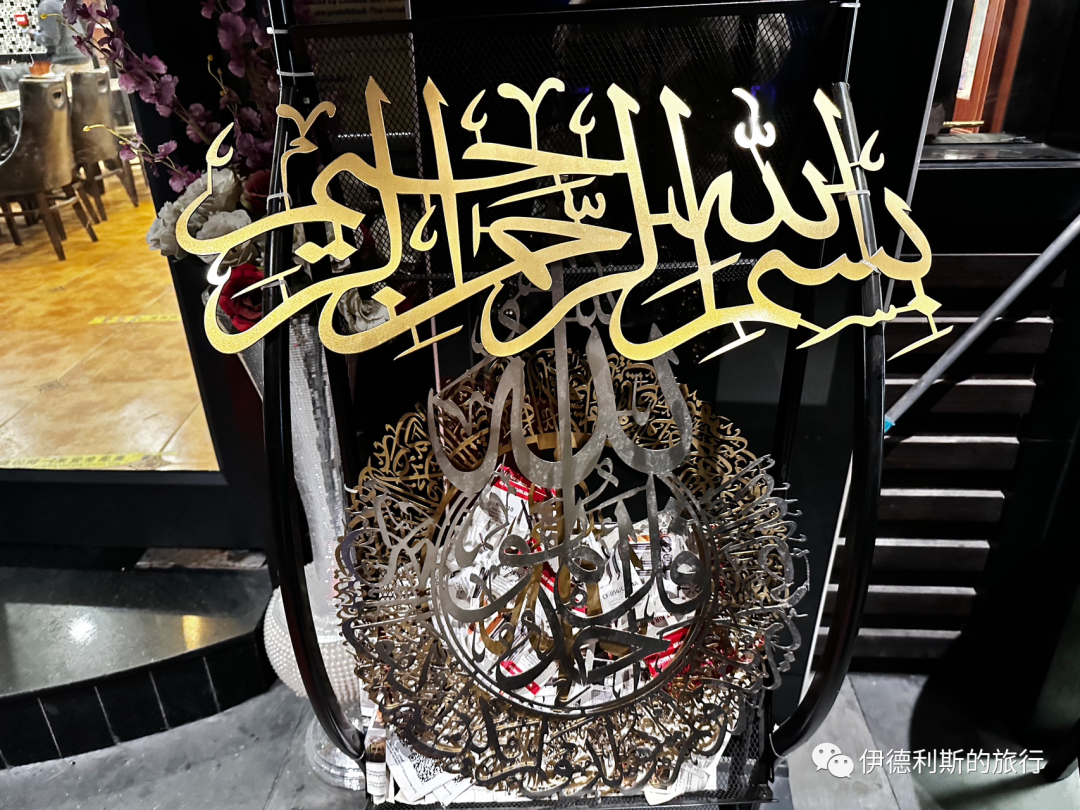
Sa'dah is an ancient capital in northwestern Yemen. It was founded in the late 9th century by Imam al-Hadi, the leader of the Zaydi branch of Shia Islam (the Five-Imam sect), and has been the stronghold of the Zaydi sect ever since. The Lasi dynasty founded by Imam al-Hadi lasted for over a thousand years (893-1962). The city of Sa'dah preserves the oldest Shia mosque on the Arabian Peninsula and many historical buildings from different periods, and it was added to the World Heritage Tentative List in 2002. After the Republic of Yemen was established, the Zaydis in the north and the Sunnis in the south were at odds for a long time. In 2004, Hussein al-Houthi, from the Zaydi Houthi tribe in Sa'dah, started the Houthi movement there. In 2011, they officially established a new government in Sa'dah, and the city has been under Houthi control ever since. During the 2015 war, the Arab coalition launched airstrikes on Sa'dah, and the city's oldest Great Mosque of Imam al-Hadi was severely damaged.
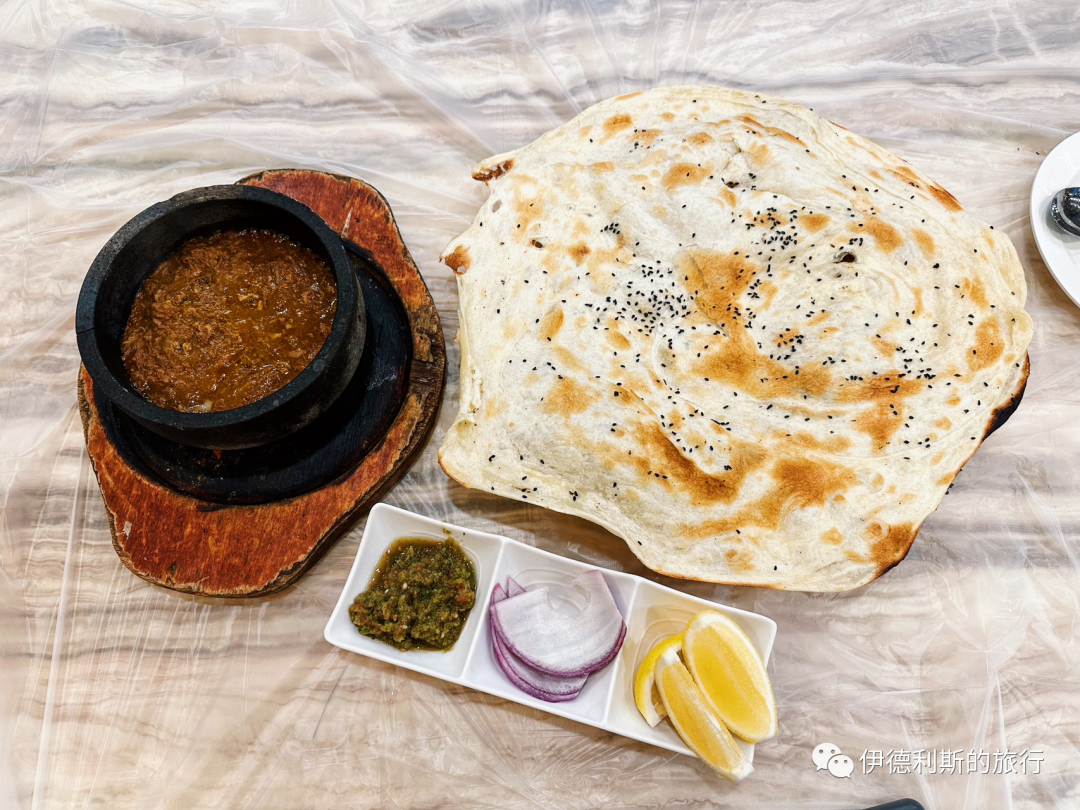
When you come to Guangzhou to eat at a Yemeni restaurant, you must try the classic Yemeni dish Fahsa, a lamb stew served with Mulawah flatbread. For Fahsa, the lamb must be stewed until it is very tender. It starts in a large pot and is then moved to a small stone pot to continue simmering. Besides ginger, garlic, and cumin, you must add a spice called fenugreek (hulbah) when stewing the meat. Fenugreek is actually what people in Northwest China often call xiangdouzi. People in the Northwest dry the leaves and grind them into powder to steam buns, while Yemenis grind the seeds to stew meat. Fenugreek seeds expand when they hit water, and they foam up very easily when you stir them in a bowl.
Mulawah flatbread is traditionally baked in an Arabian clay oven called a tannur. It is very fragrant with wheat and quite large. You can tear the flatbread apart to scoop up the Fahsa lamb stew, or soak it in the broth; both ways are delicious. Also, you should eat it with Sahawiq dipping sauce, which contains fresh green chili, cilantro, garlic, salt, cumin, and parsley.
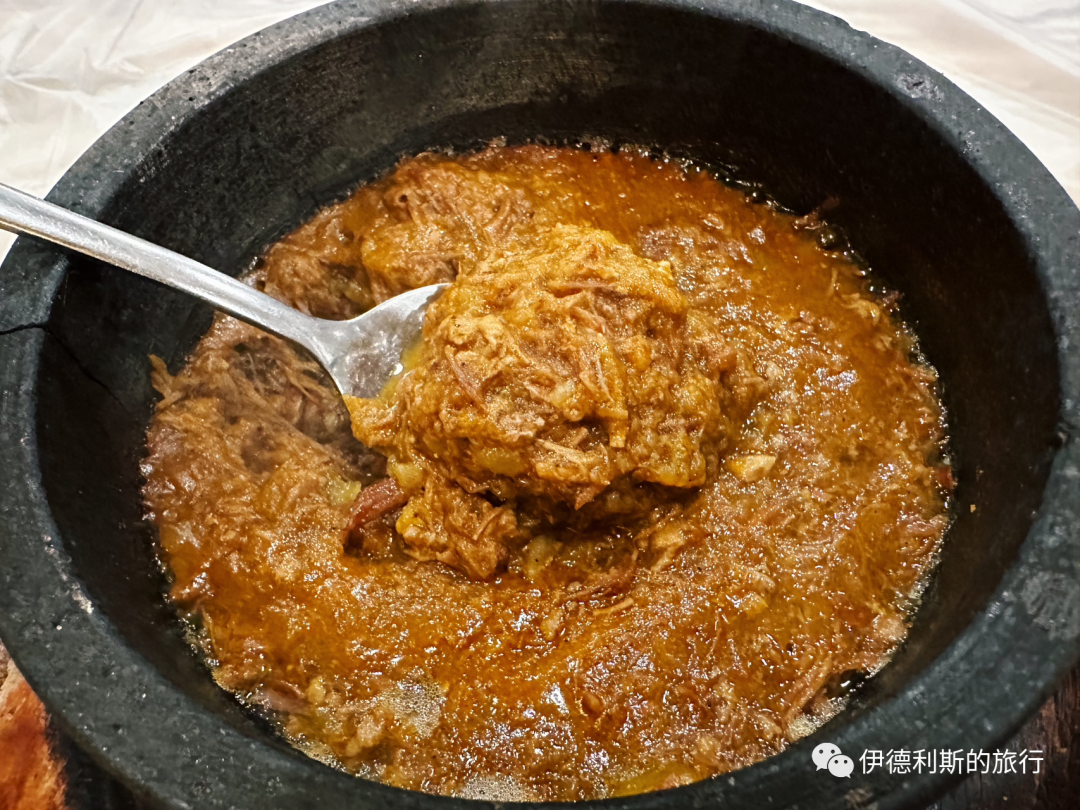
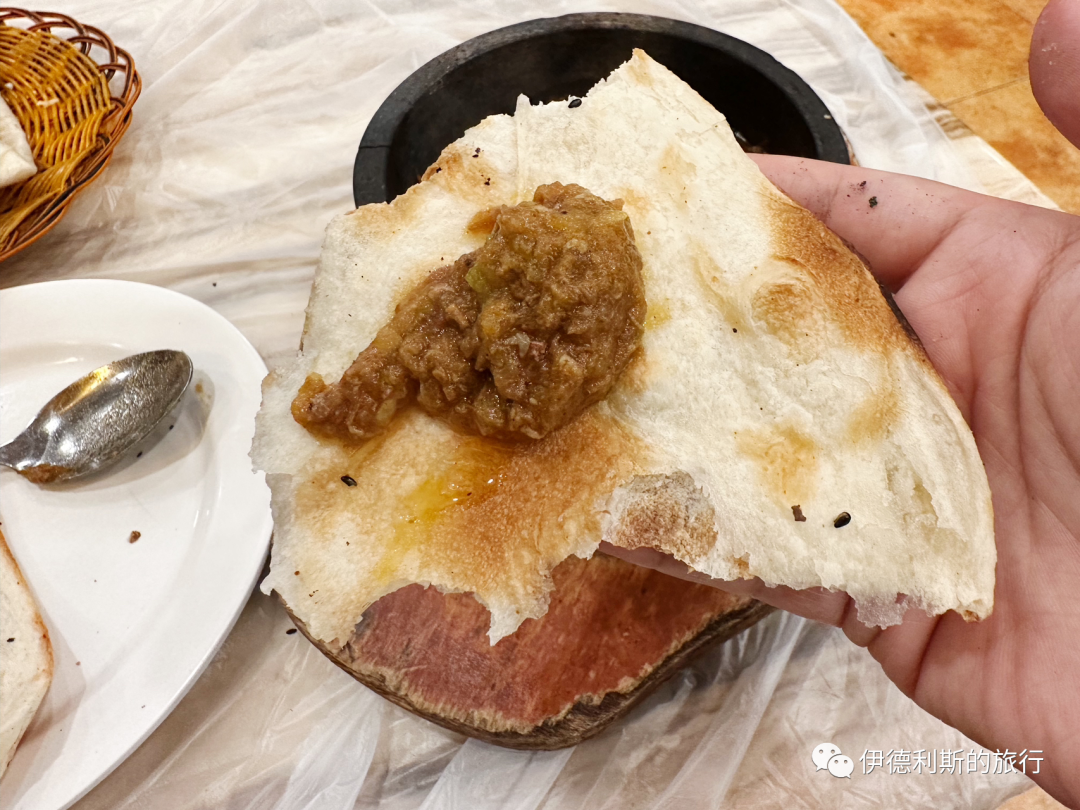
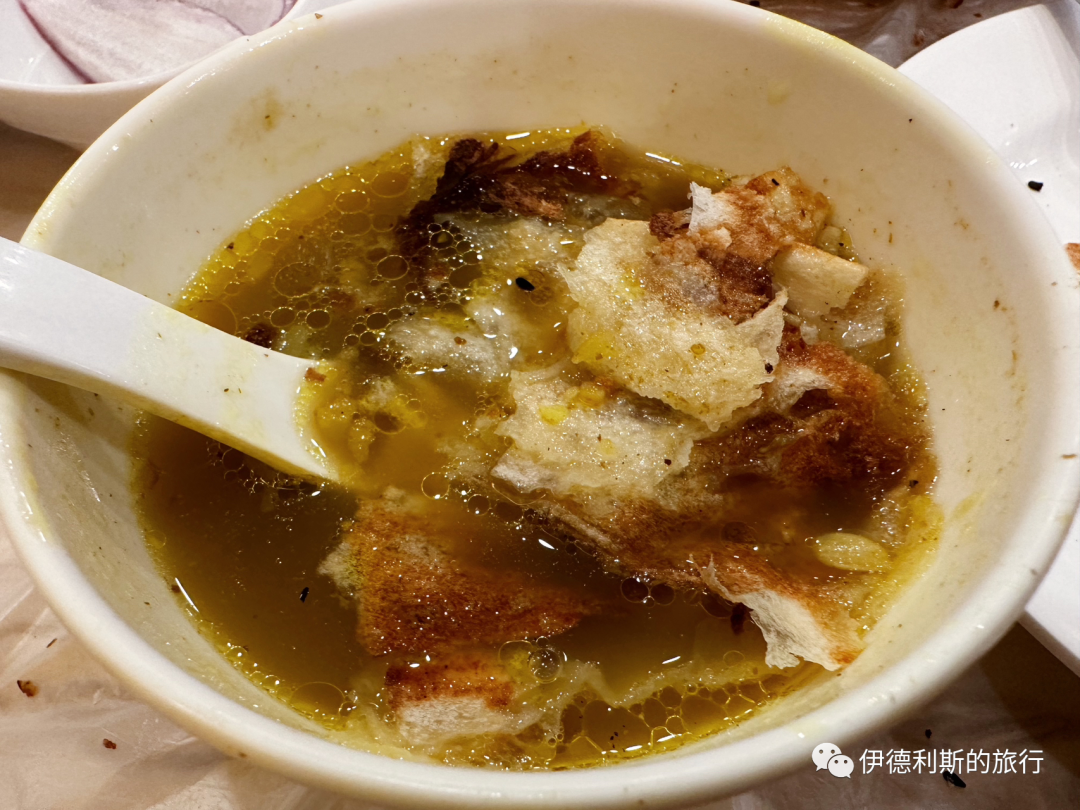
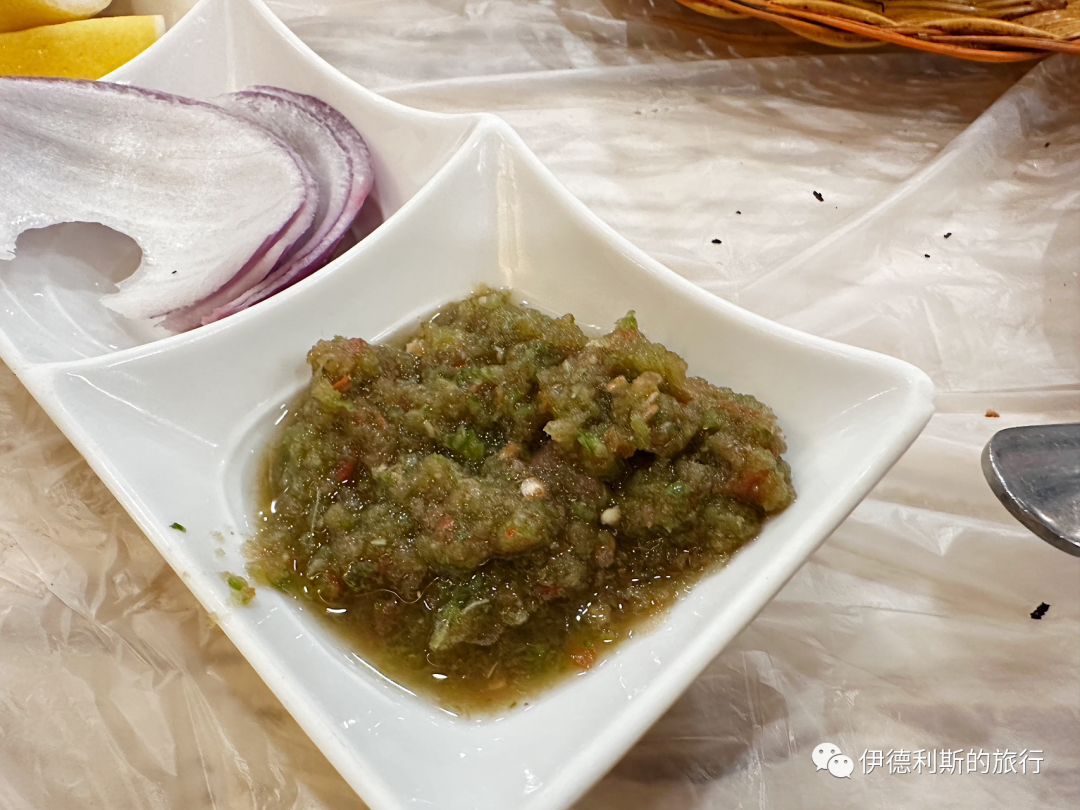
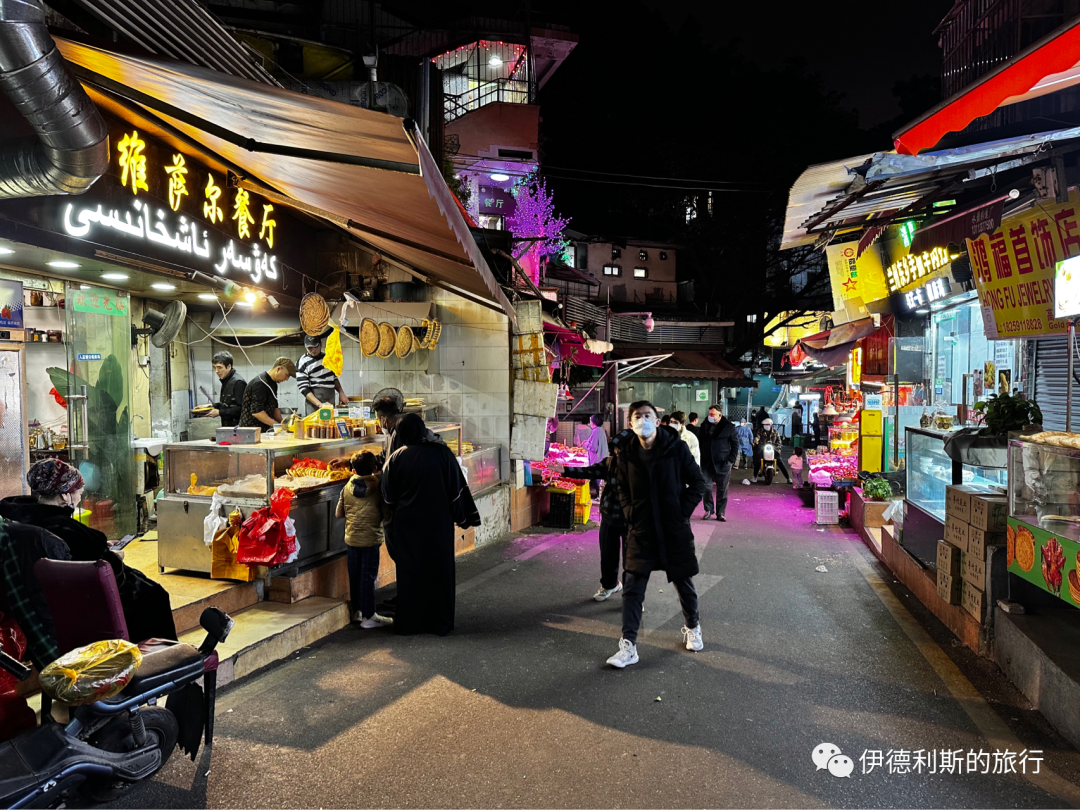
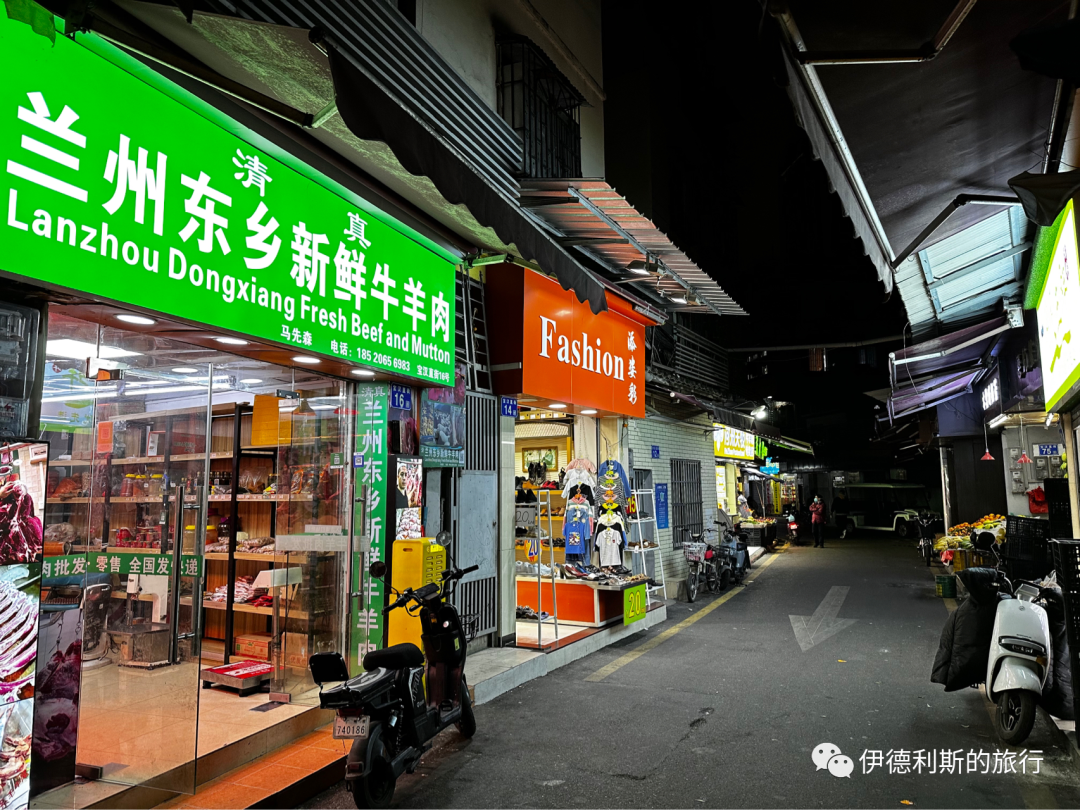
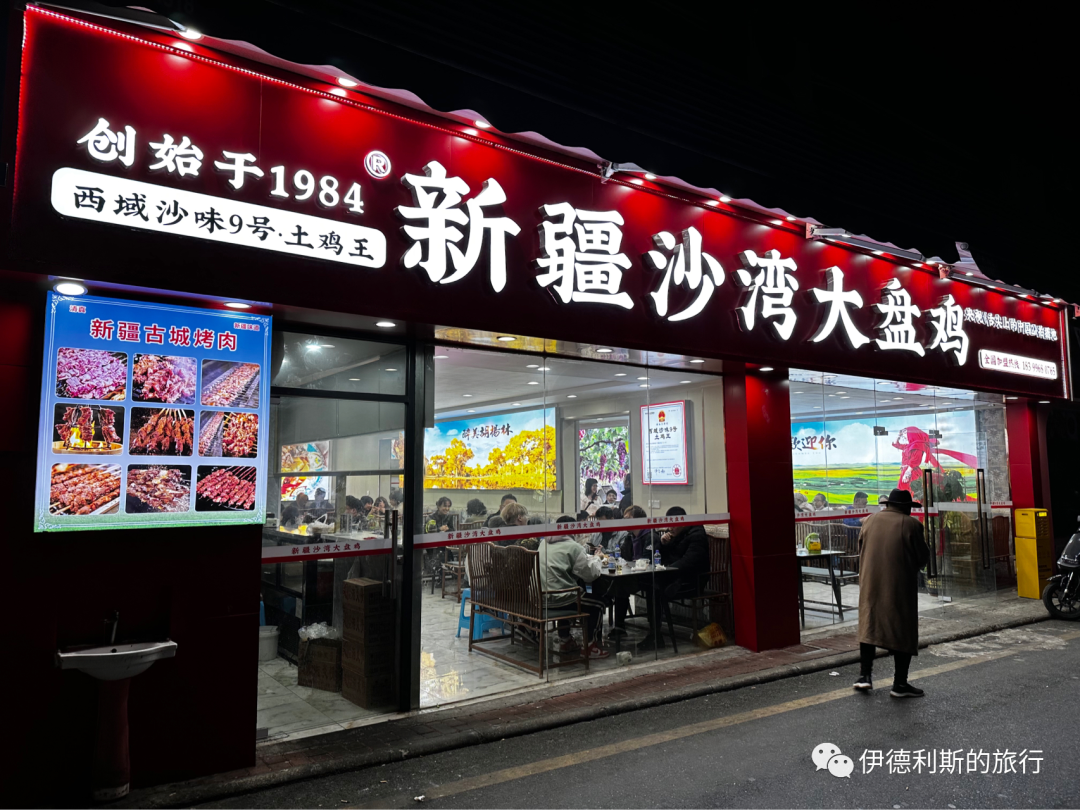
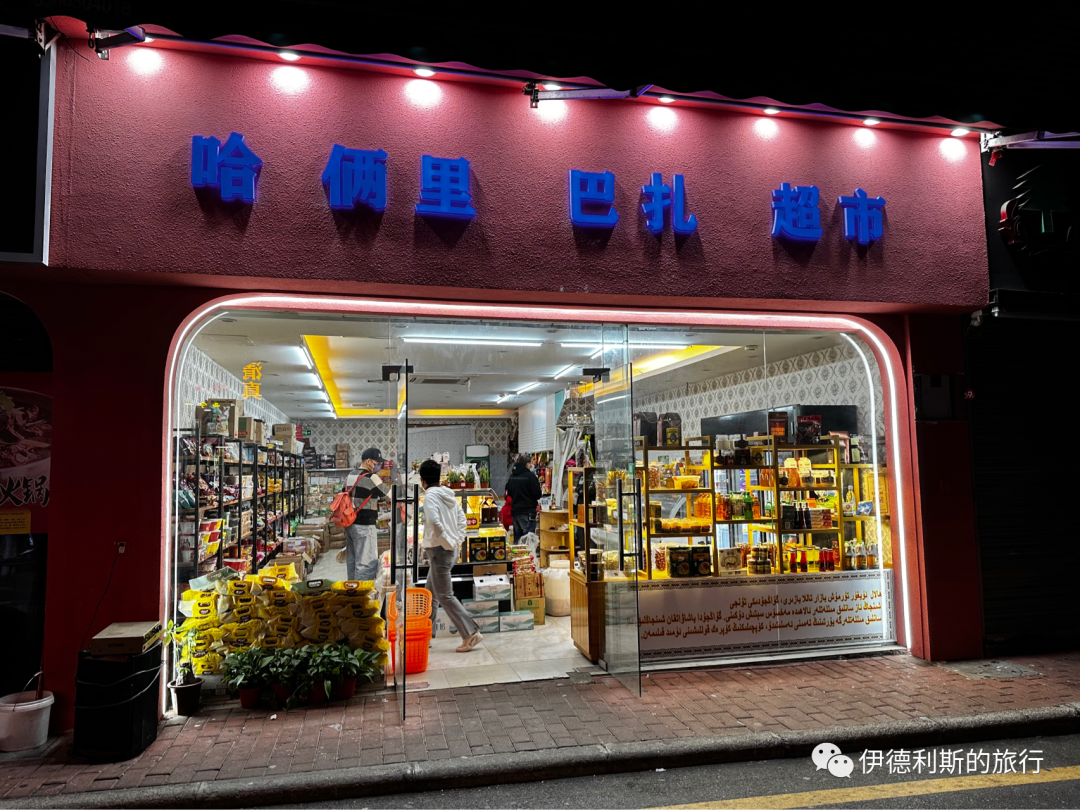
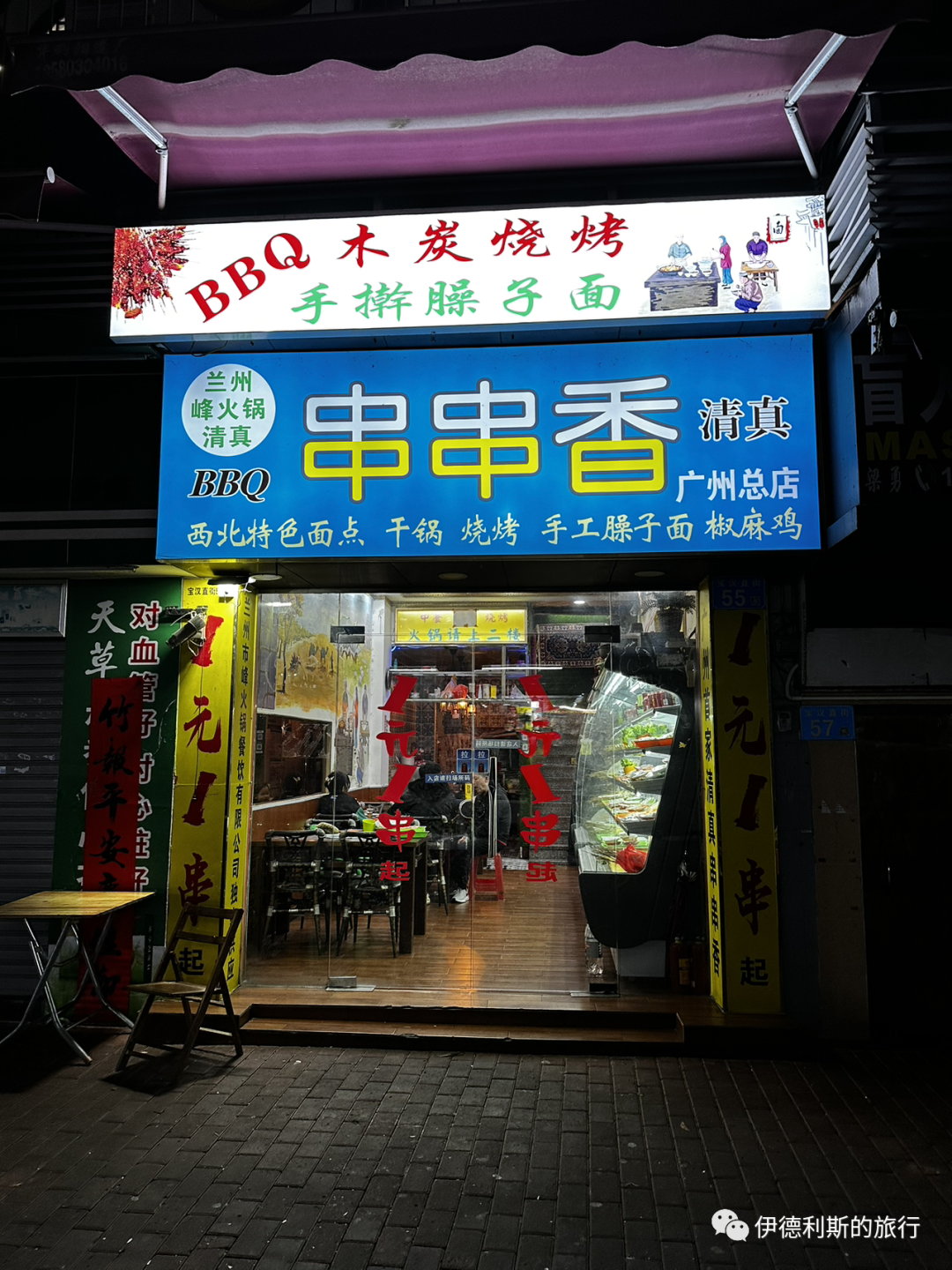
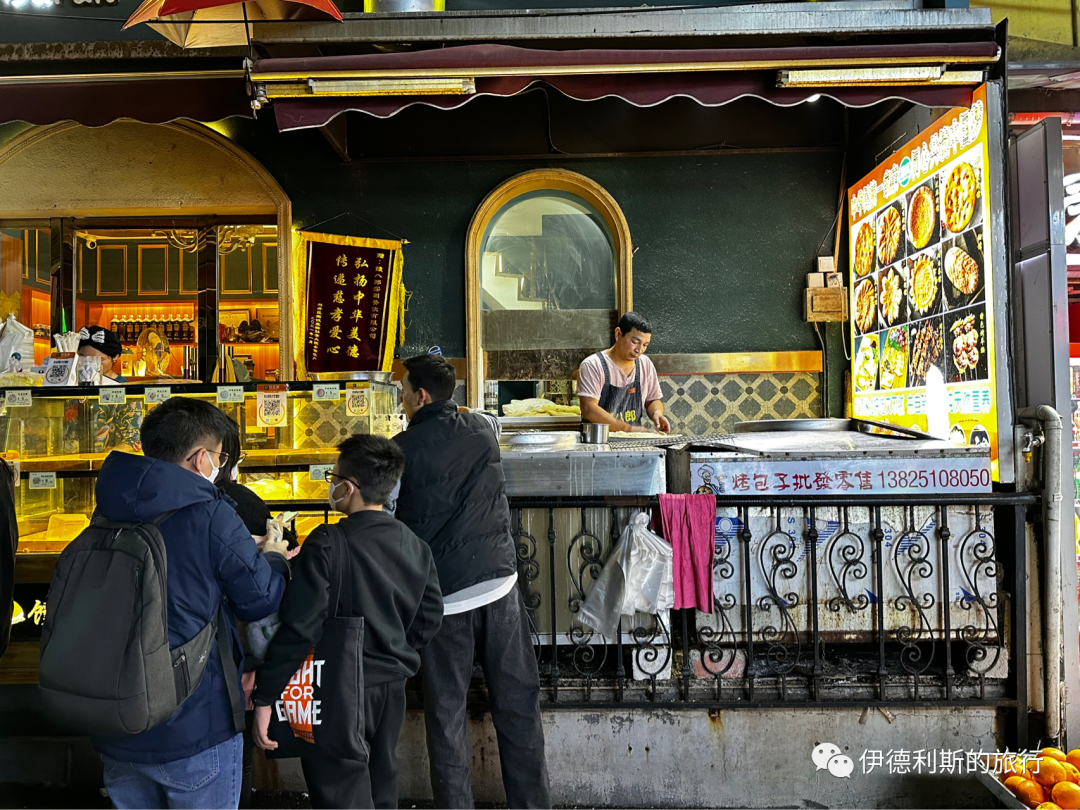
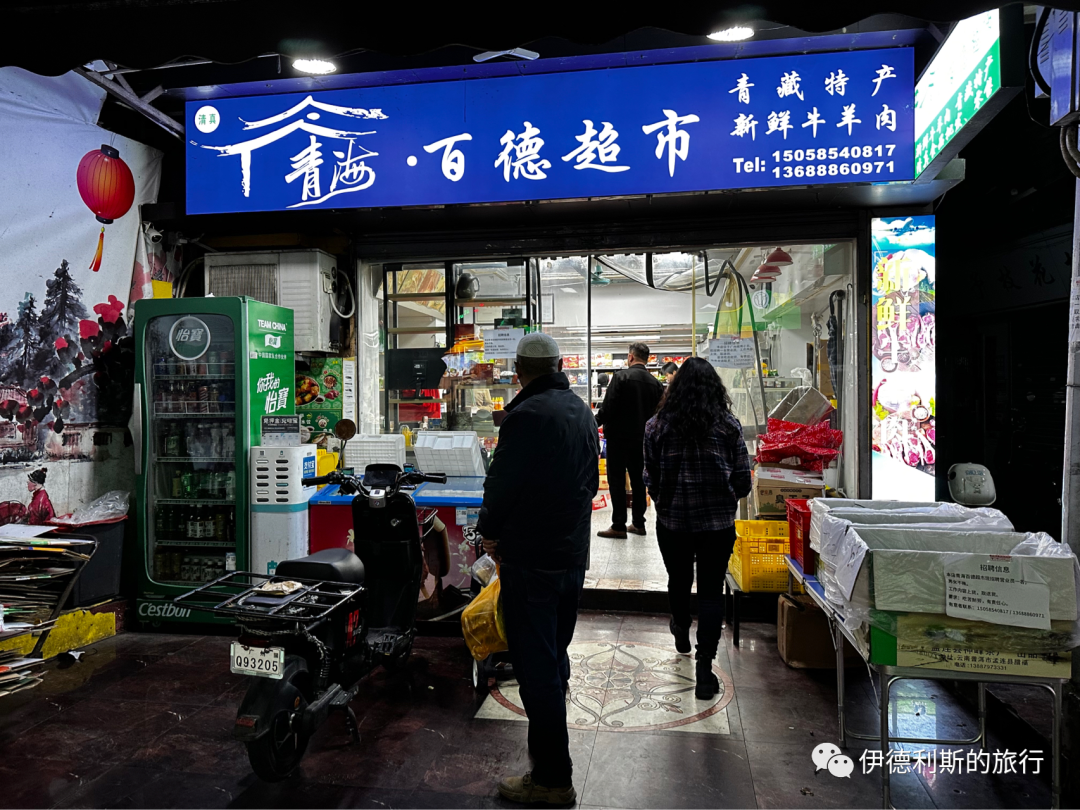
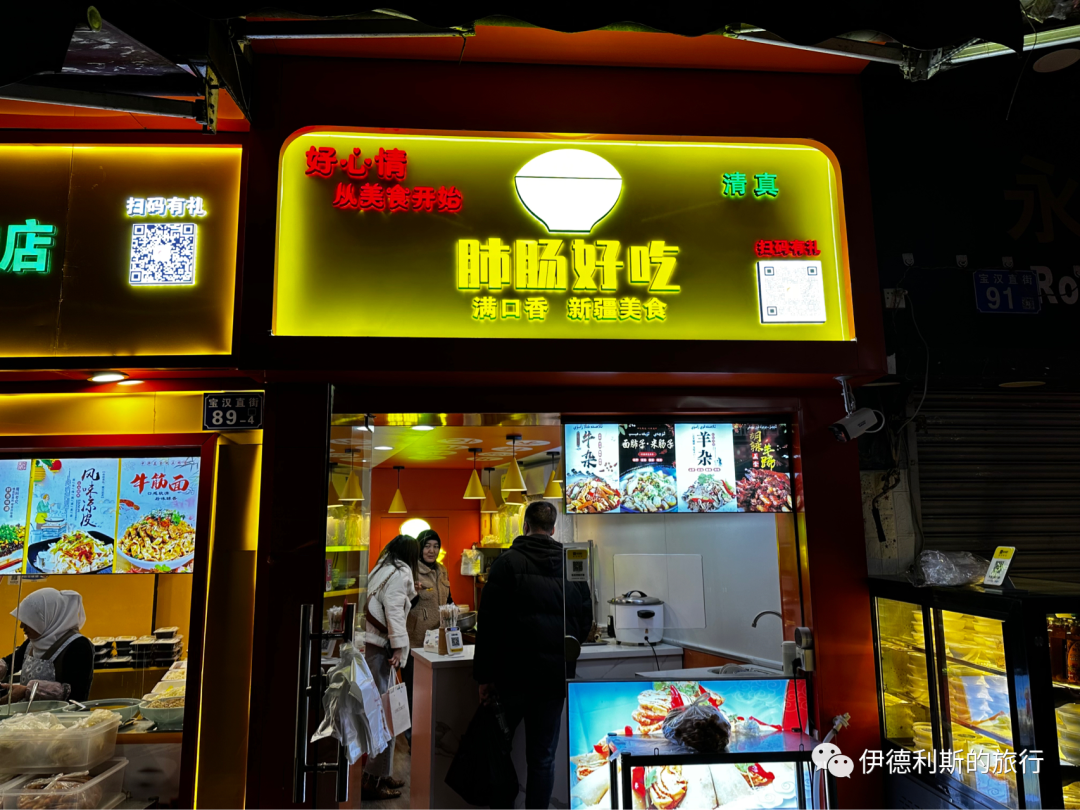
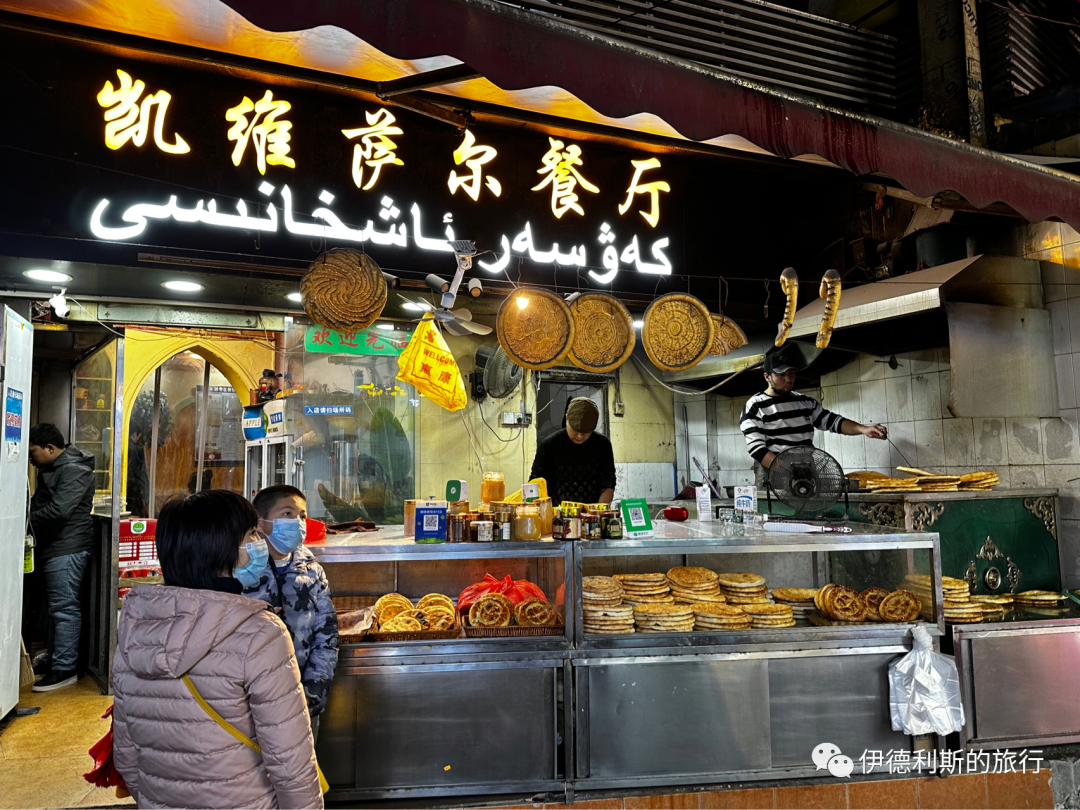
Finally, here are a few photos of Baohan Straight Street in Xiaobei, Guangzhou, at night. This area is known as Guangzhou's Muslim street.
 Collapse Read »
Summary: Halal Food Guide: Guangzhou — Hui Youxiang and Yemeni Food is presented here as a firsthand travel account in clear English, beginning with this scene: I left Macau on January 23, 2023, to visit the Macau mosque known as Moro Garden (Moro Yuan). The account keeps its focus on Guangzhou Halal Food, Yemeni Food, Hui Muslims while preserving the names, places, food, and historical details from the Chinese source.
I left Macau on January 23, 2023, to visit the Macau mosque known as Moro Garden (Moro Yuan). I ate delicious Indonesian Javanese food and wrote about it in my post, 'Moro Garden and Indonesian Food in Macau'. On the morning of January 25, I left Macau through the border gate to Zhuhai, then took a train to Guangzhou to start the second leg of my trip. This post covers the halal food I ate in Guangzhou. I will write about my visits to the mosque and the cemetery in the next post.
I took the subway from Guangzhou Station to Taojin and started with a Turkish breakfast at MADO. MADO is famous for its ice cream made from goat milk sourced from the high mountain pastures of Mount Ahir in southeastern Turkey. Mount Ahir is near the epicenter of the recent major earthquake in Turkey. I pray they can get through this difficult time.
MADO likely has the widest variety of breakfast options among Turkish restaurants in China. When I visited the Yiwu branch, I had the Sini breakfast for two, which came with a great selection of cheeses and jams. Since I was alone at the Guangzhou branch, I ordered the hot breakfast platter. It included grilled Turkish sausage (sujuk), grilled mushrooms with yellow cheese, grilled cheese, spring rolls filled with feta cheese, tomato and egg scramble (menemen), grilled peppers, grilled tomatoes, and fried potatoes, served with bread and Turkish black tea.
The earliest record of sujuk sausage appears in the 1070s in the 'Compendium of the Turkic Dialects' (Divan-u Lugat-it-Turk) by Mahmud al-Kashgari. Similar versions exist in many parts of the Balkans, the Middle East, and Central Asia. Turkish sujuk is mainly made by mixing ground beef with beef fat, sheep tail fat, salt, cumin, garlic, chili, and other spices, then stuffing it into casings to dehydrate and ferment.
The name for the tomato and egg scramble (menemen) comes from a town in Izmir, Turkey, and the word itself originally comes from Ancient Greek. Menemen served with bread is a classic Turkish breakfast combination. Besides tomatoes, eggs, and green peppers, this dish can also include onions, black pepper, oregano, garlic, and chili powder, depending on personal taste.
At noon, I met my friend (dosti) Chen Yong, whom I had known for a long time. He is both a staff member and a volunteer at the Huaisheng Mosque. My friend treated me to Shache Halal Food across from the Huaisheng Mosque. It is the closest halal restaurant to the mosque's minaret. When the oil-fried meat noodles (youyourou banmian) and kebabs arrived, they looked perfect, and they tasted even more authentic than I expected! I really did not expect to find such delicious Xinjiang food in Guangzhou; it was just as good as what I ate in Shache. The hand-pulled noodles (latiaozi) were very thin, showing years of skill, and the oil-fried meat was cooked just right—not too hard and not too soft. The best part was their kebabs. They were grilled over charcoal and were very fresh and tender. I could close my eyes and imagine I was back at a bazaar in Southern Xinjiang.
I rarely eat at Xinjiang restaurants when traveling in China because the taste often changes completely when the ingredients are different. But Shache Halal Food across from Huaisheng Mosque changed my mind. I will definitely eat there again next time I am in Guangzhou!
In the afternoon, I went to the Haopan Mosque in Guangzhou for the afternoon prayer (dhuhr) and met Master Yang, whom I had not seen in six years. Master Yang is a local Hui Muslim from Guangzhou and has been a mosque attendant at Haopan Mosque for 20 years. I drank tea and chatted with Master Yang, and I ate some fried dough (youxiang) made by local Guangzhou Hui Muslims for a charity event (chusan). This was my first time eating local Guangzhou youxiang. They were small, crispy, and sweet, almost like a pastry.
Haopan Mosque is located on the banks of the Nanhao, a tributary of the Pearl River. It was first built during the Chenghua period of the Ming Dynasty and rebuilt in 1706 (the 45th year of the Kangxi Emperor). A scripture school was opened here during the Qianlong period, and a Hui language university was opened during the Tongzhi period. They hired many famous scripture teachers from Nanjing, Gansu, and Yunnan, training a large number of imams and playing a major role in the development of Islam in Guangzhou, Hong Kong, and Macau.
In the afternoon, I went to visit the Ancient Cemetery of the Worthies in Guangzhou. There is a well in the south courtyard of the cemetery called the Well of the Worthies. Legend says it was built to commemorate the worthy Sa'd ibn Abi Waqqas. Many friends (dosti) drink a cup of water from the well after visiting the graves, and it really tastes sweet.
The Ancient Cemetery of the Worthies in Guangzhou is commonly known as the Huihui Cemetery, the Great Man's Cemetery, or the Echoing Cemetery. It has been a burial ground for Muslims in Guangzhou since the Tang Dynasty. The earliest record of the Ancient Cemetery of the Worthies comes from 'One Hundred Poems of the South Sea' (Nanhai Baiyong) written by Fang Xinru in 1206 (the second year of the Kaixi period of the Southern Song Dynasty): 'The tombs of the foreigners are ten miles west of the city, thousands of them, all with heads to the south and facing west.'
At the center of the ancient cemetery is the tomb of the legendary first worthy to come to China to preach, Sa'd ibn Abi Waqqas (Saheb Saad Wakkas). Records show the status of the Tomb of Waqqas (Wangesu mu) rose during the Yuan and Ming dynasties. The Ming dynasty book Guangzhou Prefecture Records (Guangzhou fuzhi) notes: Every year, people of all surnames must visit the tomb to pay respects and recite scriptures, a tradition that continues to this day. Countries in the Western Regions respected this influence. Every time they sailed thousands of miles to Guangzhou, they considered visiting the tomb an honor. Even the most noble visitors would crawl and bow in Guangzhou to show their utmost sincerity.
In the evening, I went to Hadramout Restaurant, a long-standing Yemeni eatery that has been in Guangzhou's Xiaobei area for over a decade. Hadramout is now the name of a province in eastern Yemen, but it is also a very ancient term once used to refer to the coastal plains of the southern Arabian Peninsula. Residents here established the Kingdom of Hadramout as early as 1000 BC, and the people of Ad mentioned in the ancient Quran are said to have lived here as well.
I visited Xiaobei in Guangzhou many times before 2019 and witnessed the glory of its Middle Eastern and African trade. Although the country has opened its borders again, the major trade centers have not yet recovered. The building where Hadramout is located used to be packed with shops doing foreign business, but now you can only feel the old bustle of Xiaobei inside their restaurant.
Although there are several Arab restaurants in Beijing, they are all concentrated in the Levant region on the eastern Mediterranean coast, such as Lebanon, Palestine, and Syria. While they are all Arab, the cuisines of the Levant, the Arabian Peninsula, and the North African Maghreb region each have their own characteristics and are all worth trying. Coming to Guangzhou this time, I really wanted to try Yemeni food that I cannot get in Beijing.
At Hadramout, I had the Yemeni specialty Zurbian lamb and saffron rice (Zurbian yangrou zanghonghua menfan), a major dish served at Yemeni weddings, breaking the fast, and birthdays. The portion of rice is very large, making it suitable for two people. They give you a lot of meat. You might not see it well in the photo, but the rice is actually buried under all that meat. The meat is braised until very tender, and the texture and flavor are both excellent.
When eating Yemeni rice, you should pair it with the Yemeni specialty spicy sauce Sahawiq. This spicy sauce is made with fresh chili peppers, cilantro, garlic, salt, cumin, and parsley, mixed with olive oil and sometimes tomatoes. Their meat broth is also free to drink, and I think it tastes quite good.
On the morning of January 26, I arrived right at 7:00 AM when the Guangzhou Hui Muslim Restaurant (Guangzhou Huimin fandian) opened for morning tea. Some elderly people had already taken seats, but there were still plenty of empty ones. Every time I visited Guangzhou before, I would go to the Hui Muslim Restaurant for morning tea, and I especially liked their lamb barbecue buns (yang chashaobao). Five years have passed in the blink of an eye, so I had to try them again on this trip.
The Hui Muslim Restaurant can be called the last tear of local halal food in Guangzhou, serving as the final witness to the city's once-thriving local halal dining industry. The Hui Muslim Restaurant started as a halal canteen in 1956, with chefs coming from local halal eateries like Gaosheng Tea House, the Hui Muslim Fengcheng Roasted Meat Shop, and the Halal Deji Roasted Meat Shop. In 1959, the canteen merged with the Huabei Hotel and took over the second branch of Satangji, renaming itself the Hui Muslim Grand Hotel. It took over the Hui Muslim Ice Room in 1964 and moved to its current location on Zhongshan 6th Road in 1975, where it has been for nearly 50 years. Due to complex historical reasons and the changes in the local Muslim community during the 20th century, the local halal dining industry in Guangzhou declined. As a restaurant with nearly 70 years of history, it is quite an achievement for the Hui Muslim Restaurant to still be here today.
In 2016, I posted an article on Douban called The Morning and Night of Guangzhou Hui Muslim Restaurant, and I ate there several times in a row back then. I checked the morning tea menu from that time, and it was only on its 52nd edition; now it is already on its 70th. Except for the price increases on the dim sum, the variety has basically stayed the same. Besides the lamb barbecue buns I wanted most, I also ordered steamed chicken feet, water chestnut cake, chicken biscuits, and curry beef rice noodle rolls (changfen). When eating alone, you cannot order many things. I wanted to order more, but unfortunately, I was too full. The barbecue buns are still filled with soft, slightly sweet lamb and paired with salted egg yolk, which is very delicious. This was my first time eating chicken biscuits (jizaibing). They are said to be a very traditional recipe from Hui Muslims in Guangzhou, mixing the flavors of fermented bean curd (nanru) and dried tangerine peel (chenpi) to take you right back to old Guangzhou.
You should really take your time with morning tea (zaocha), ordering a few items at a time and adding more as you go. But because I had to head to Zhaoqing that day, I ate in a rush. While the grandparents at the next table were still looking at the menu and chatting, I had basically finished my meal. Although it wasn't as amazing as the first time I had halal Cantonese morning tea, I still felt very satisfied after finishing. It felt like the three years of being stuck were finally over, and I was relieved to be able to travel across the land again.
By eight o'clock, the dining halls of the Hui Muslim restaurant were already full. If you don't want to get up early, buying some specialty steamed snacks at the takeout window by the entrance is a great option.
In the evening, I went to Sadda Restaurant, a long-standing Yemeni spot in Guangzhou's Xiaobei area that has been open for over a decade. Just like the Yemeni restaurant Honghui I visited the day before, they have regular tables and chairs, plus a room where you can sit on the floor to eat, just like in Yemen.
Sa'dah is an ancient capital in northwestern Yemen. It was founded in the late 9th century by Imam al-Hadi, the leader of the Zaydi branch of Shia Islam (the Five-Imam sect), and has been the stronghold of the Zaydi sect ever since. The Lasi dynasty founded by Imam al-Hadi lasted for over a thousand years (893-1962). The city of Sa'dah preserves the oldest Shia mosque on the Arabian Peninsula and many historical buildings from different periods, and it was added to the World Heritage Tentative List in 2002. After the Republic of Yemen was established, the Zaydis in the north and the Sunnis in the south were at odds for a long time. In 2004, Hussein al-Houthi, from the Zaydi Houthi tribe in Sa'dah, started the Houthi movement there. In 2011, they officially established a new government in Sa'dah, and the city has been under Houthi control ever since. During the 2015 war, the Arab coalition launched airstrikes on Sa'dah, and the city's oldest Great Mosque of Imam al-Hadi was severely damaged.
When you come to Guangzhou to eat at a Yemeni restaurant, you must try the classic Yemeni dish Fahsa, a lamb stew served with Mulawah flatbread. For Fahsa, the lamb must be stewed until it is very tender. It starts in a large pot and is then moved to a small stone pot to continue simmering. Besides ginger, garlic, and cumin, you must add a spice called fenugreek (hulbah) when stewing the meat. Fenugreek is actually what people in Northwest China often call xiangdouzi. People in the Northwest dry the leaves and grind them into powder to steam buns, while Yemenis grind the seeds to stew meat. Fenugreek seeds expand when they hit water, and they foam up very easily when you stir them in a bowl.
Mulawah flatbread is traditionally baked in an Arabian clay oven called a tannur. It is very fragrant with wheat and quite large. You can tear the flatbread apart to scoop up the Fahsa lamb stew, or soak it in the broth; both ways are delicious. Also, you should eat it with Sahawiq dipping sauce, which contains fresh green chili, cilantro, garlic, salt, cumin, and parsley.
Finally, here are a few photos of Baohan Straight Street in Xiaobei, Guangzhou, at night. This area is known as Guangzhou's Muslim street.
Collapse Read »
Halal Food Guide: Urumqi Hui Muslims — Fried Youxiang and Family Cooking
Reposted from the web
Summary: Halal Food Guide: Urumqi Hui Muslims — Fried Youxiang and Family Cooking is presented here as a firsthand travel account in clear English, beginning with this scene: A few days ago, my family made fried dough (youxiang). I recorded the process, which is the Urumqi Hui Muslim version. It is likely similar to how it is made in many parts of the Northwest. The account keeps its focus on Urumqi Halal Food, Hui Muslim Food, Xinjiang Travel while preserving the names, places, food, and historical details from the Chinese source.
A few days ago, my family made fried dough (youxiang). I recorded the process, which is the Urumqi Hui Muslim version. It is likely similar to how it is made in many parts of the Northwest.
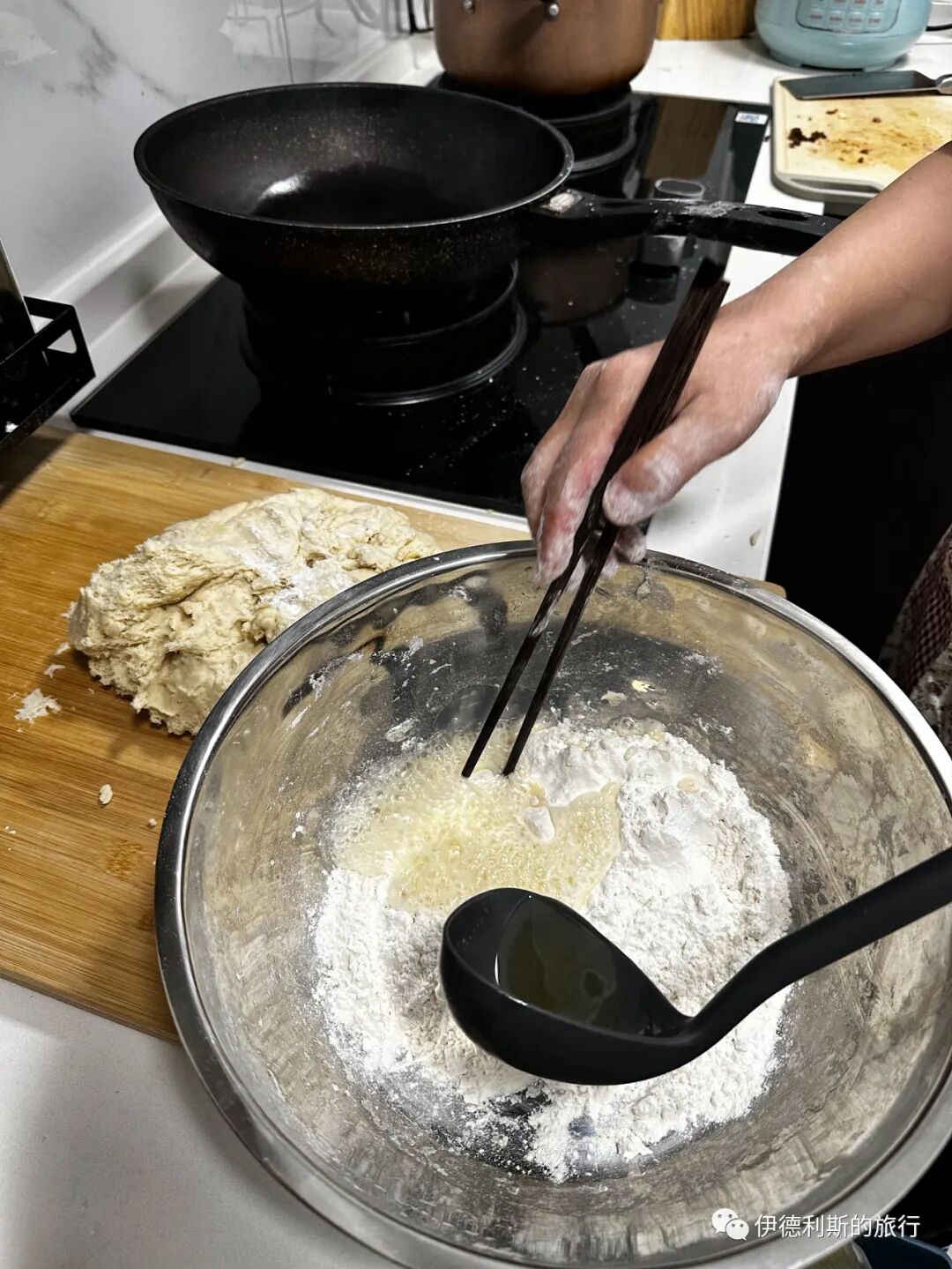
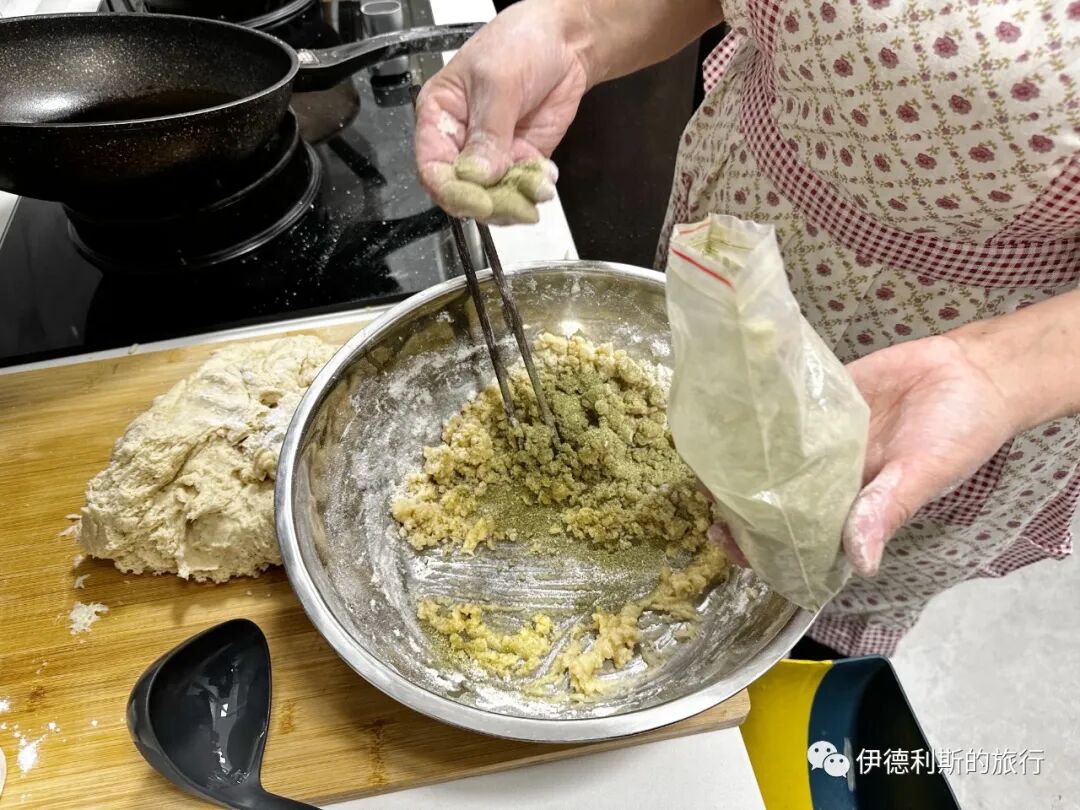
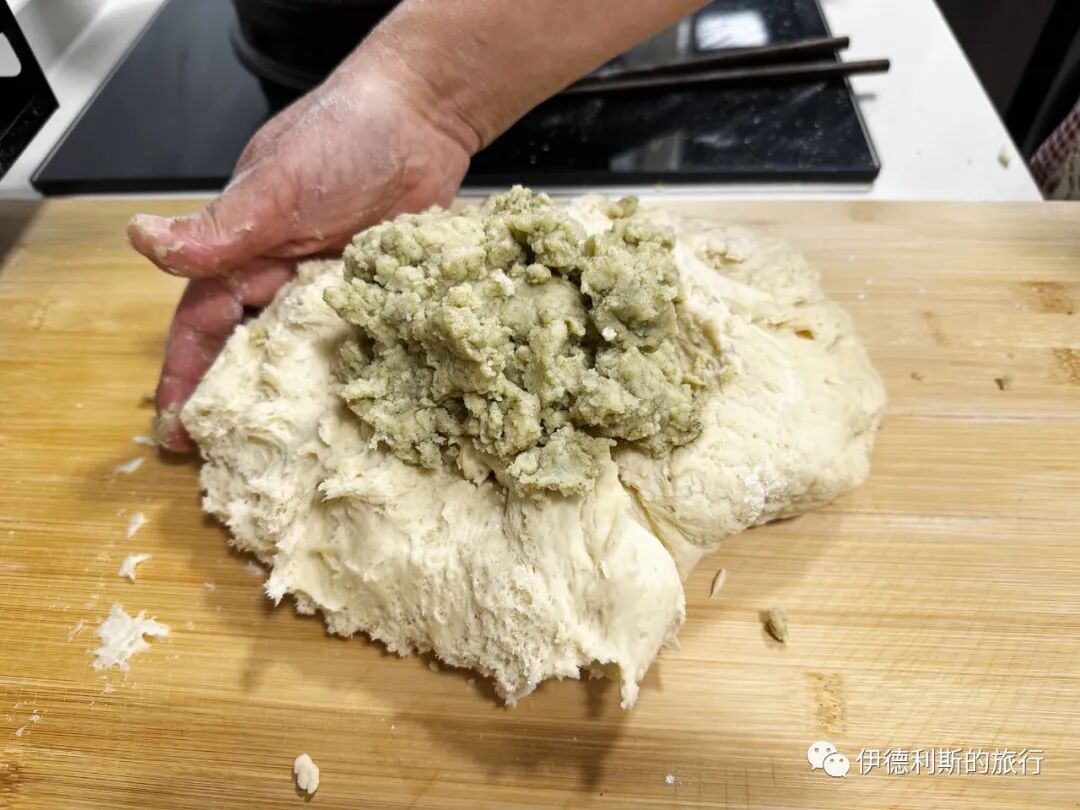
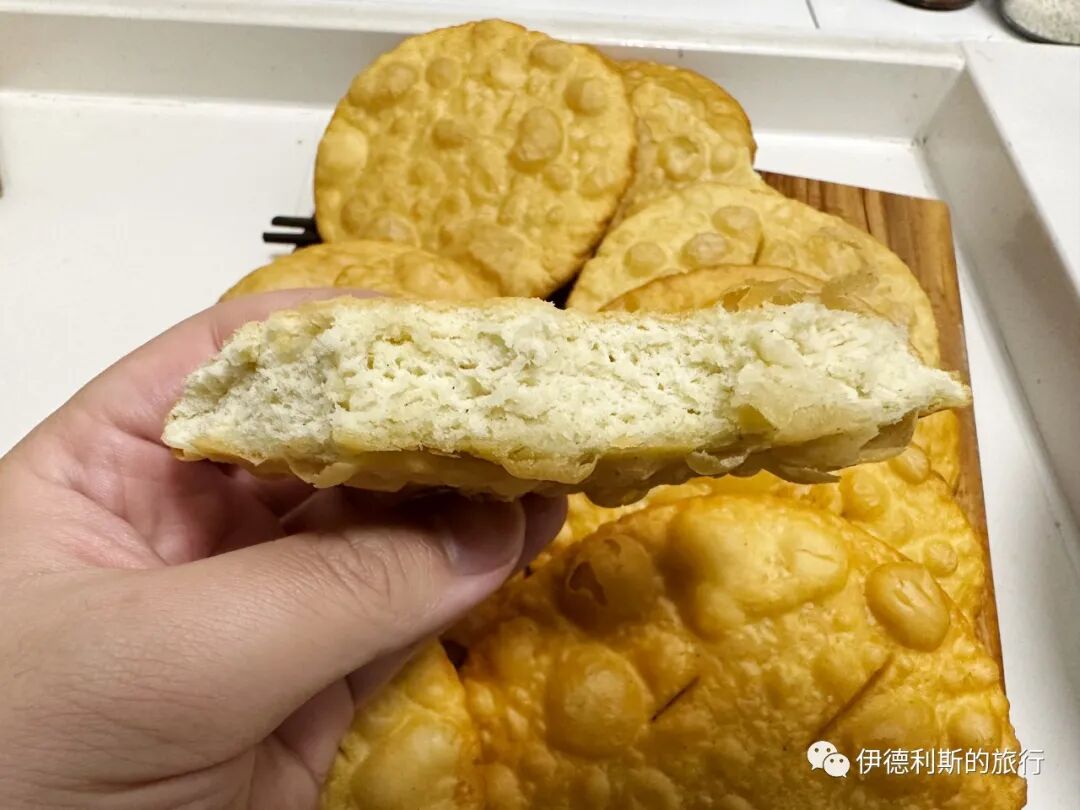
First, make the leavened dough. After it rises, use hot oil to scald a small portion of the dough. Add a little baking soda and blue fenugreek powder (xiangdoufen) to the scalded dough and mix well. This makes the fried dough crispy on the outside. Place the mixed scalded dough onto the leavened dough, knead them together evenly, cover the basin, and let it rest for fifteen minutes.
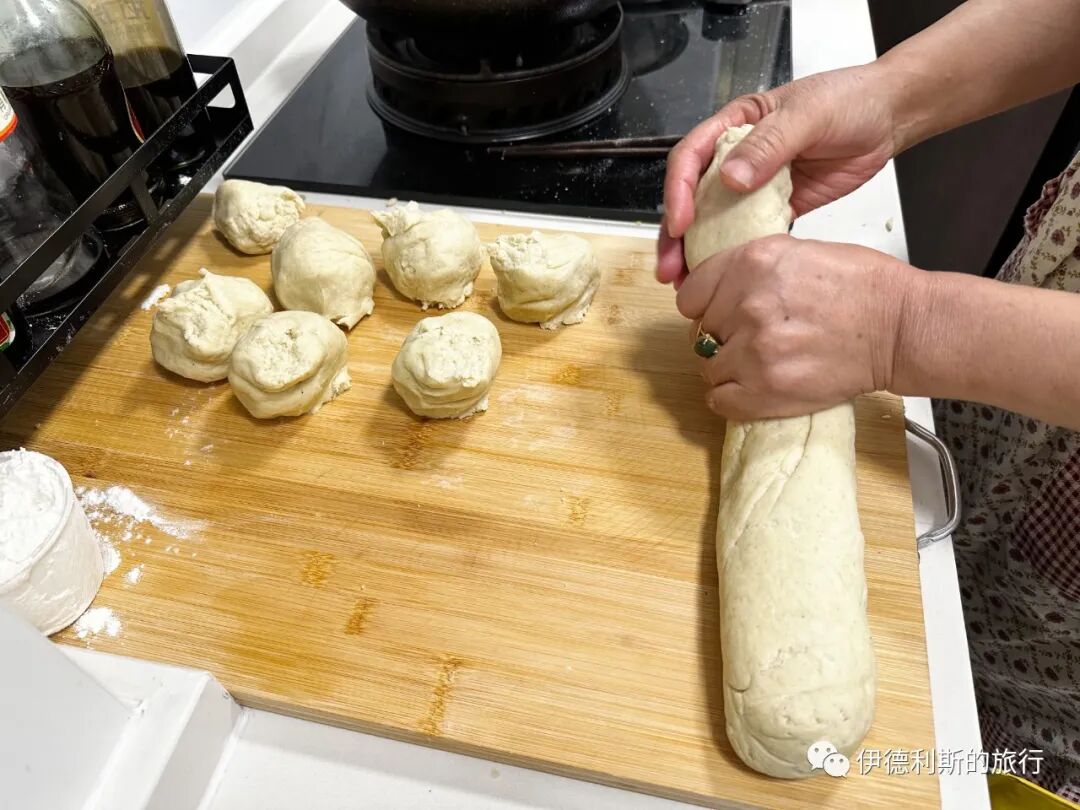
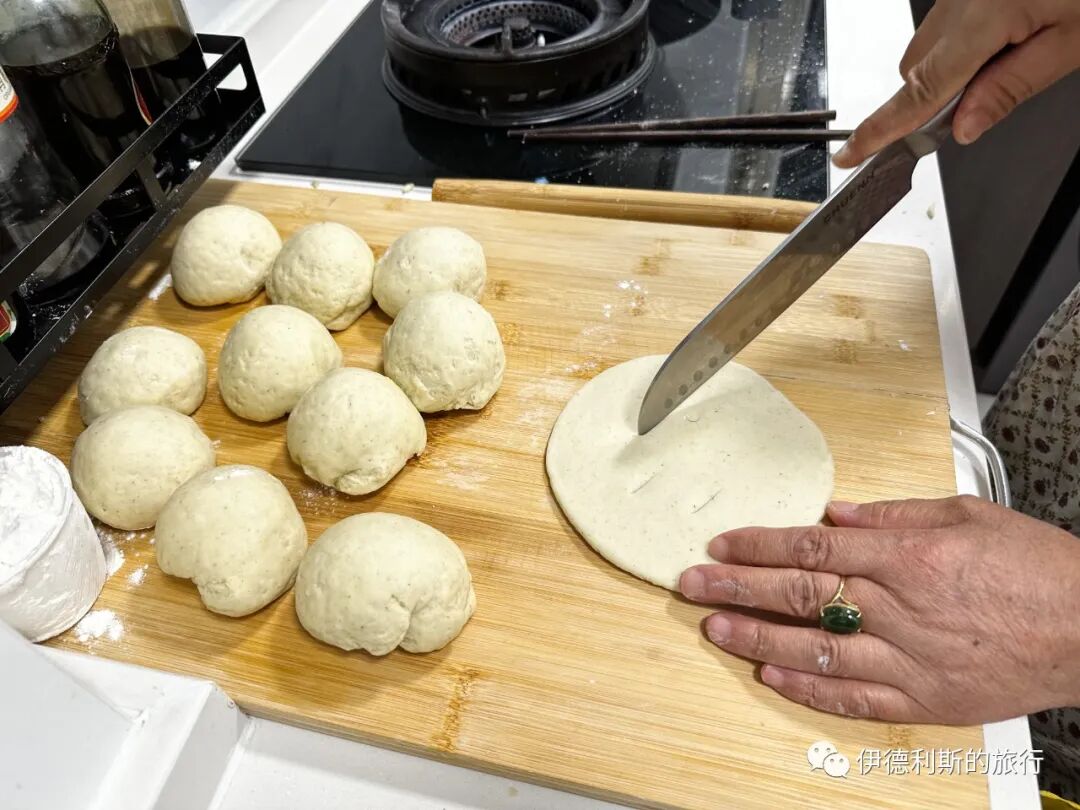
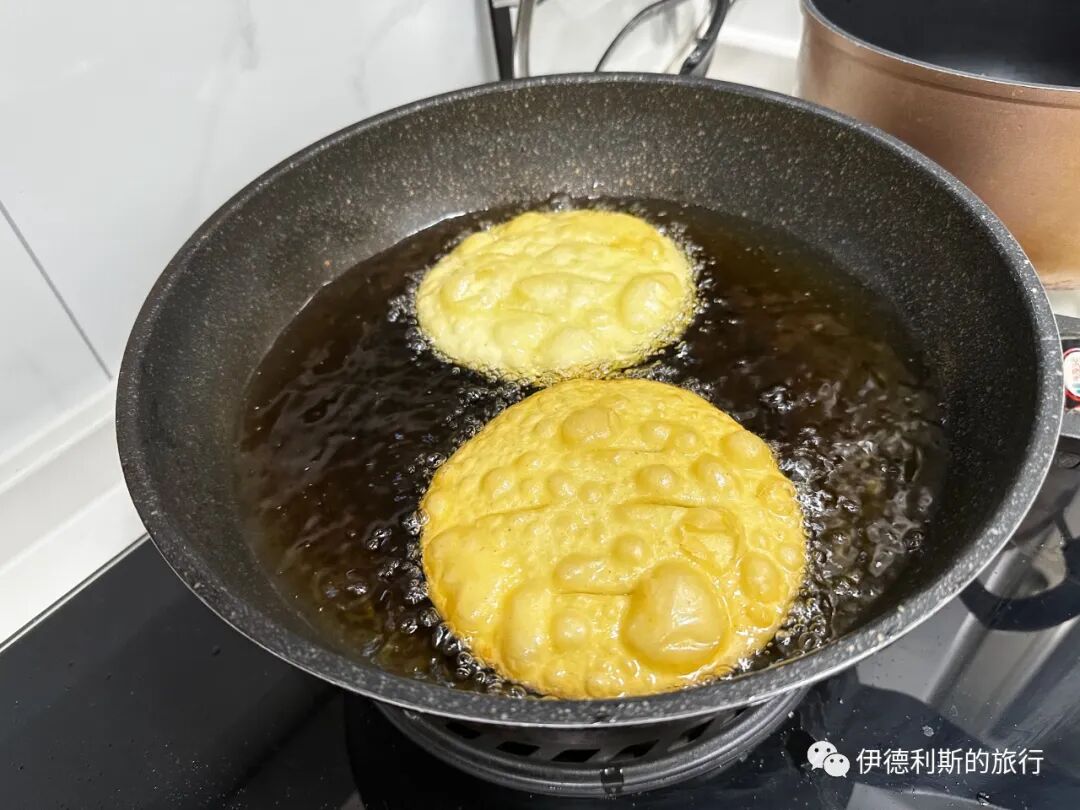
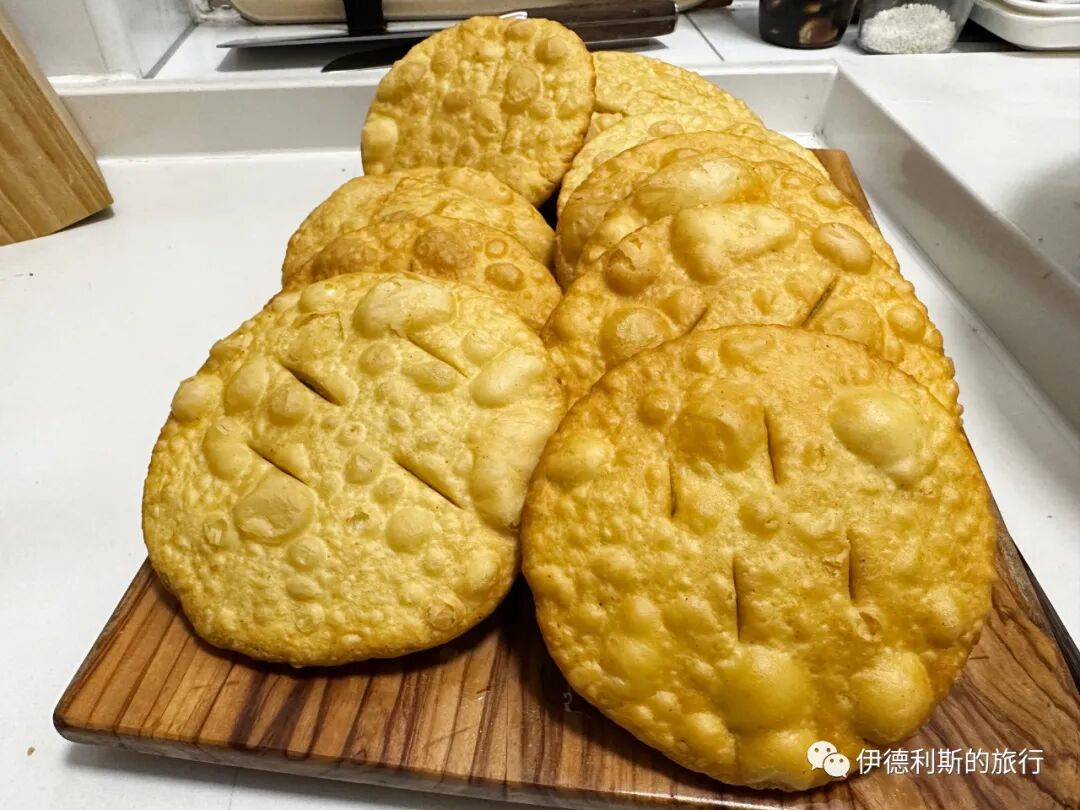
Knead the rested dough into a long strip, pinch off small pieces, roll them into balls, and flatten them into discs. Use a knife to cut four small slits in each, then they are ready to be fried in oil. In some places, people say the slits represent the knife marks made by a believer.
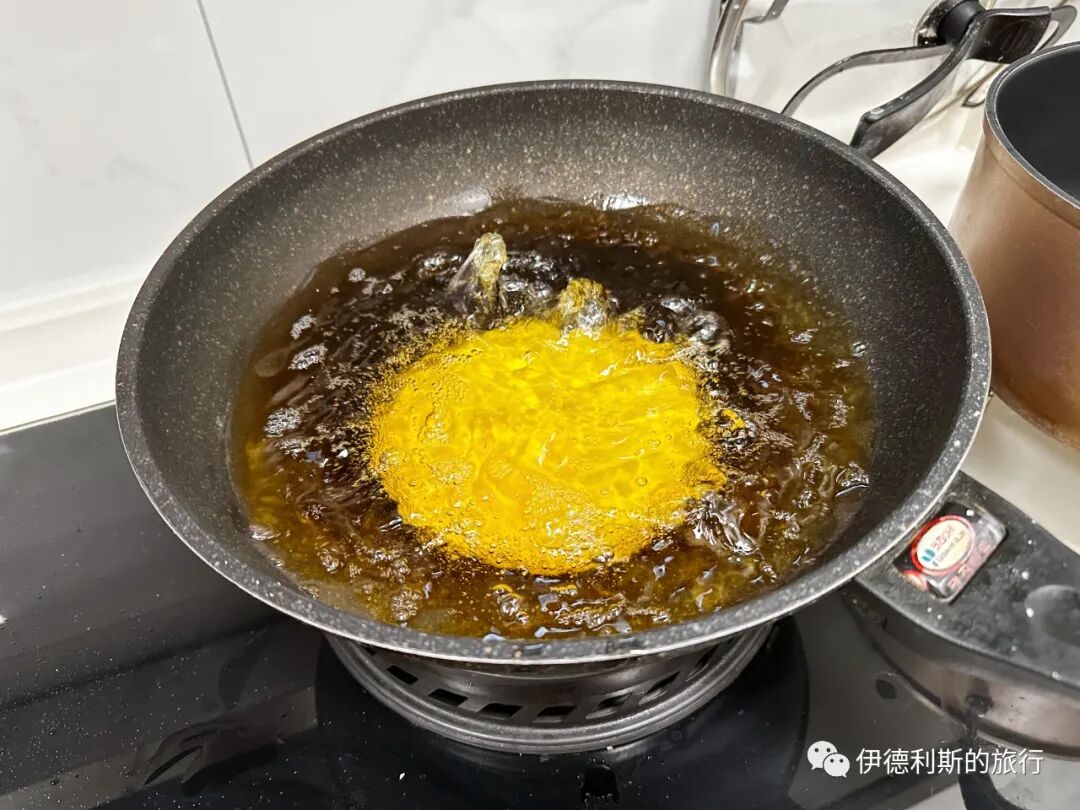
Fry for a while, then flip them over. Wait a bit longer, then pick one up and tap the edge with chopsticks. If it makes a crisp, hollow sound, it is ready to be taken out.
Also, you must perform wudu (abdest) before frying the dough, and recite the Tasmiyah before frying each piece. When eating, break the dough apart. You should also recite the Tasmiyah before eating each piece.
Besides this classic fried dough, Urumqi Hui Muslims also make steamed fried dough (zheng youxiang) and scalded dough fried dough (tangmian youxiang). Steamed fried dough is usually made when you do not fry the dough during a religious gathering (soer); you can steam it instead. Scalded dough fried dough is made entirely from scalded dough. I will share more about that when I have the chance.
For other Urumqi Hui Muslim home-cooked dishes, you can check my previous diaries, '15 Urumqi Hui Muslim Dishes My Mother-in-law Made (Part 1)' and '15 Urumqi Hui Muslim Dishes My Mother-in-law Made (Part 2).' Collapse Read »
Summary: Halal Food Guide: Urumqi Hui Muslims — Fried Youxiang and Family Cooking is presented here as a firsthand travel account in clear English, beginning with this scene: A few days ago, my family made fried dough (youxiang). I recorded the process, which is the Urumqi Hui Muslim version. It is likely similar to how it is made in many parts of the Northwest. The account keeps its focus on Urumqi Halal Food, Hui Muslim Food, Xinjiang Travel while preserving the names, places, food, and historical details from the Chinese source.
A few days ago, my family made fried dough (youxiang). I recorded the process, which is the Urumqi Hui Muslim version. It is likely similar to how it is made in many parts of the Northwest.
First, make the leavened dough. After it rises, use hot oil to scald a small portion of the dough. Add a little baking soda and blue fenugreek powder (xiangdoufen) to the scalded dough and mix well. This makes the fried dough crispy on the outside. Place the mixed scalded dough onto the leavened dough, knead them together evenly, cover the basin, and let it rest for fifteen minutes.
Knead the rested dough into a long strip, pinch off small pieces, roll them into balls, and flatten them into discs. Use a knife to cut four small slits in each, then they are ready to be fried in oil. In some places, people say the slits represent the knife marks made by a believer.
Fry for a while, then flip them over. Wait a bit longer, then pick one up and tap the edge with chopsticks. If it makes a crisp, hollow sound, it is ready to be taken out.
Also, you must perform wudu (abdest) before frying the dough, and recite the Tasmiyah before frying each piece. When eating, break the dough apart. You should also recite the Tasmiyah before eating each piece.
Besides this classic fried dough, Urumqi Hui Muslims also make steamed fried dough (zheng youxiang) and scalded dough fried dough (tangmian youxiang). Steamed fried dough is usually made when you do not fry the dough during a religious gathering (soer); you can steam it instead. Scalded dough fried dough is made entirely from scalded dough. I will share more about that when I have the chance.
For other Urumqi Hui Muslim home-cooked dishes, you can check my previous diaries, '15 Urumqi Hui Muslim Dishes My Mother-in-law Made (Part 1)' and '15 Urumqi Hui Muslim Dishes My Mother-in-law Made (Part 2).' Collapse Read »
Halal Travel Guide: Beijing Balizhuang Mosque — Jummah Prayer and Community
Reposted from the web
Summary: Beijing Balizhuang Mosque — Jummah Prayer and Community is presented here as a firsthand travel account in clear English, beginning with this scene: Jumu'ah Mubarak! After years of renovations, the Balizhuang Mosque outside Chaoyangmen has finally reopened, so I went there to attend Jumu'ah prayers. The account keeps its focus on Balizhuang Mosque, Beijing Mosques, Jummah Prayer while preserving the names, places, food, and historical details from the Chinese source.
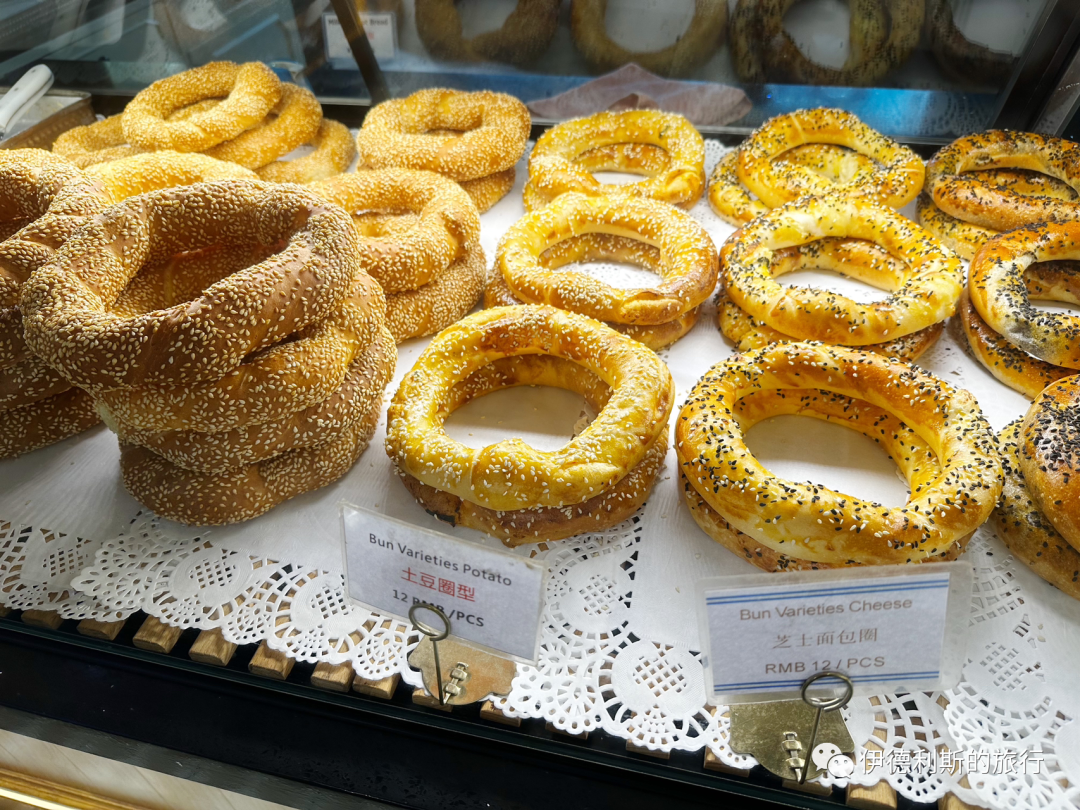
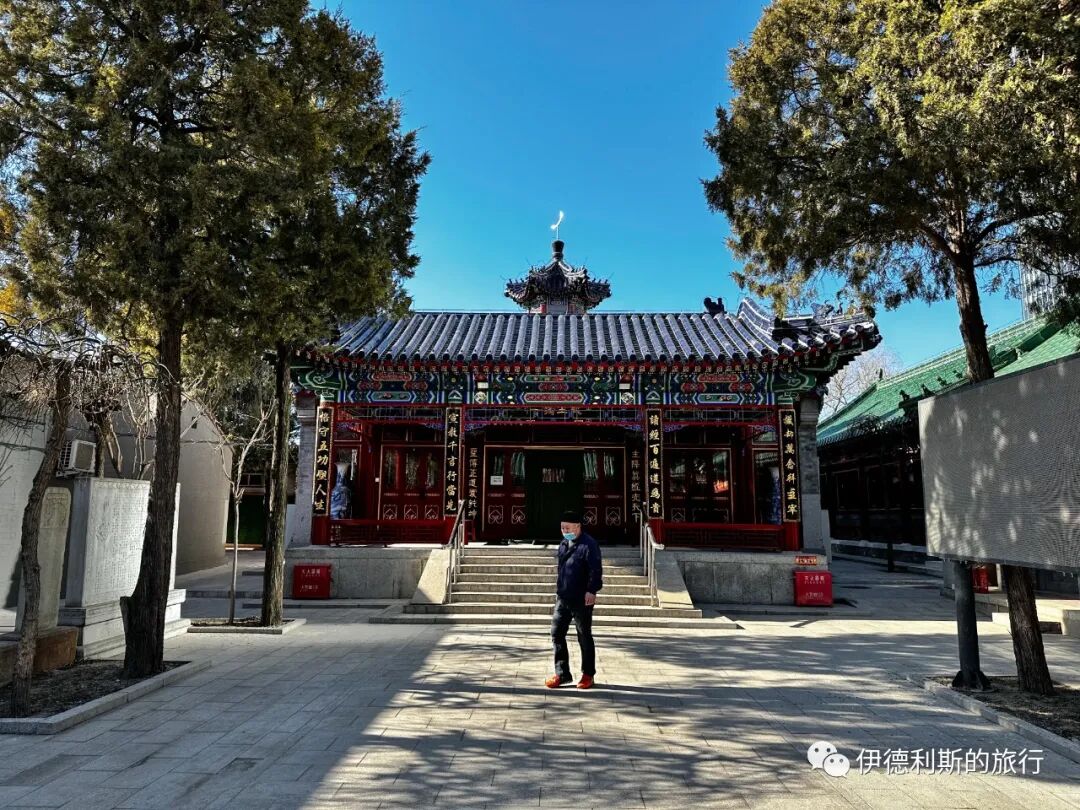
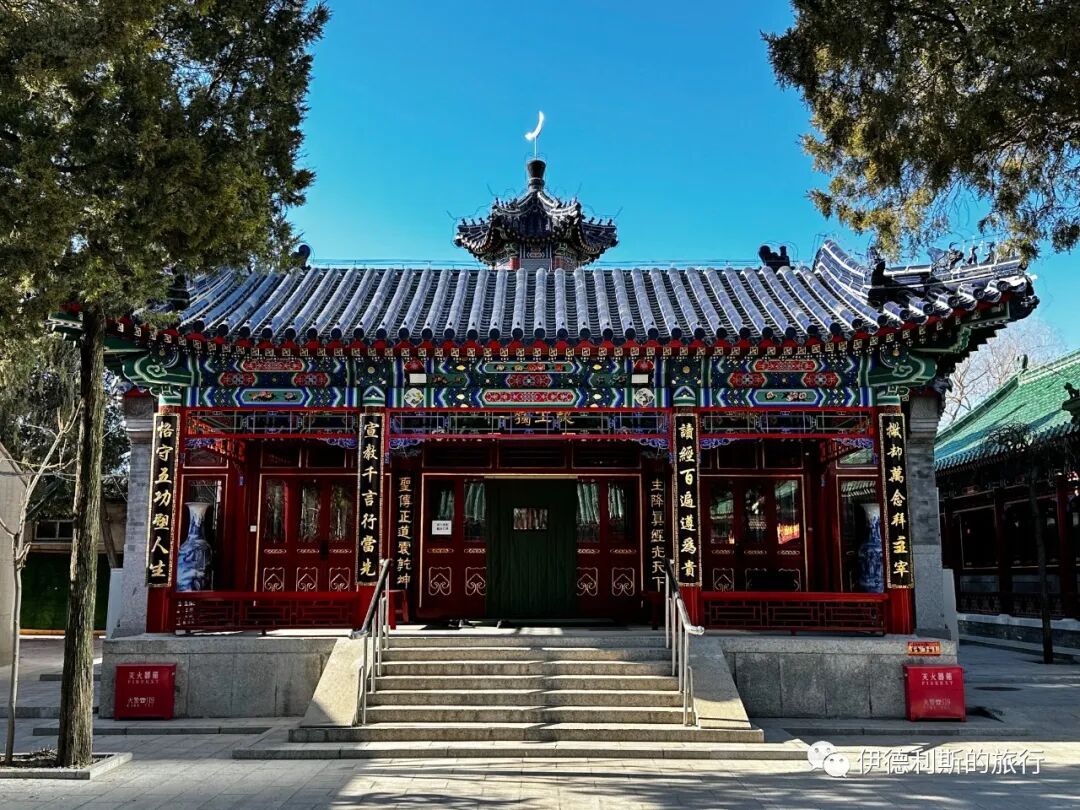
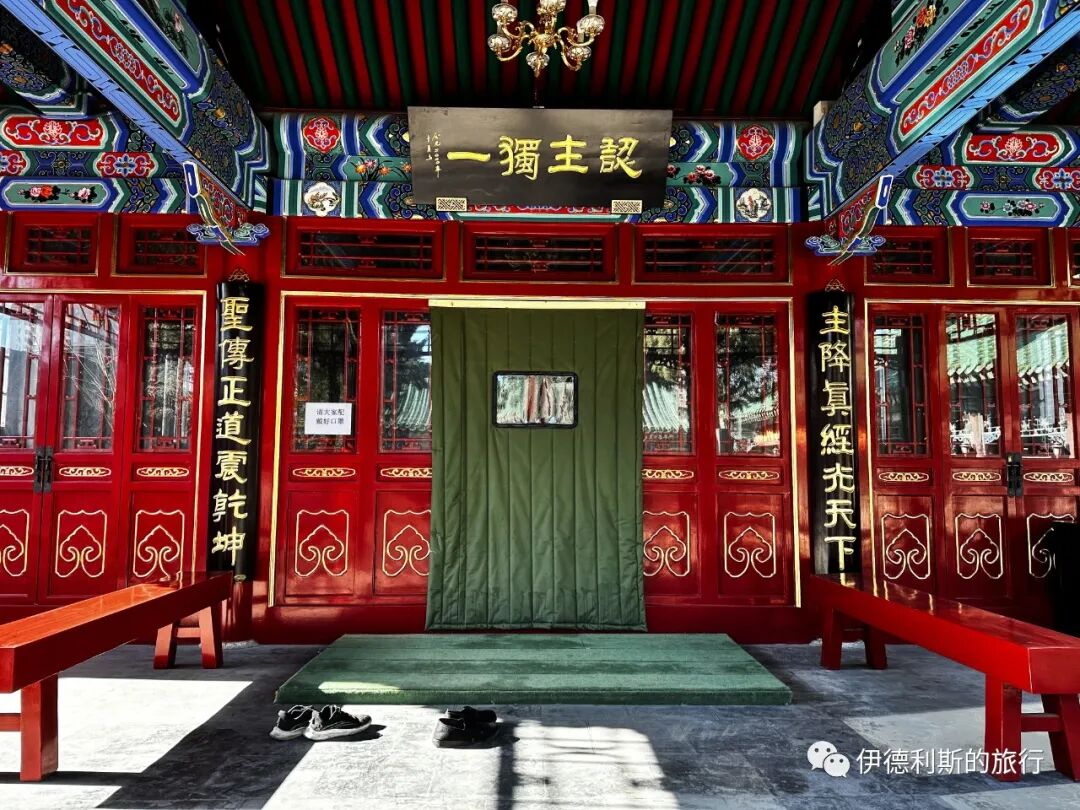
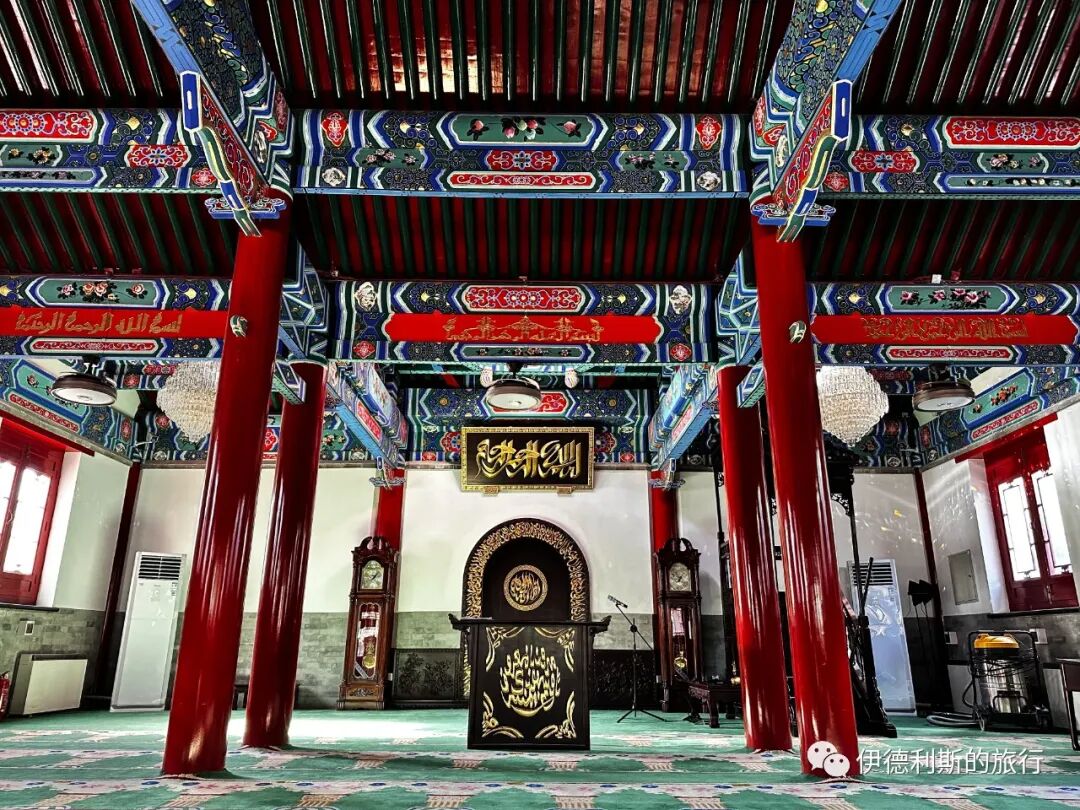
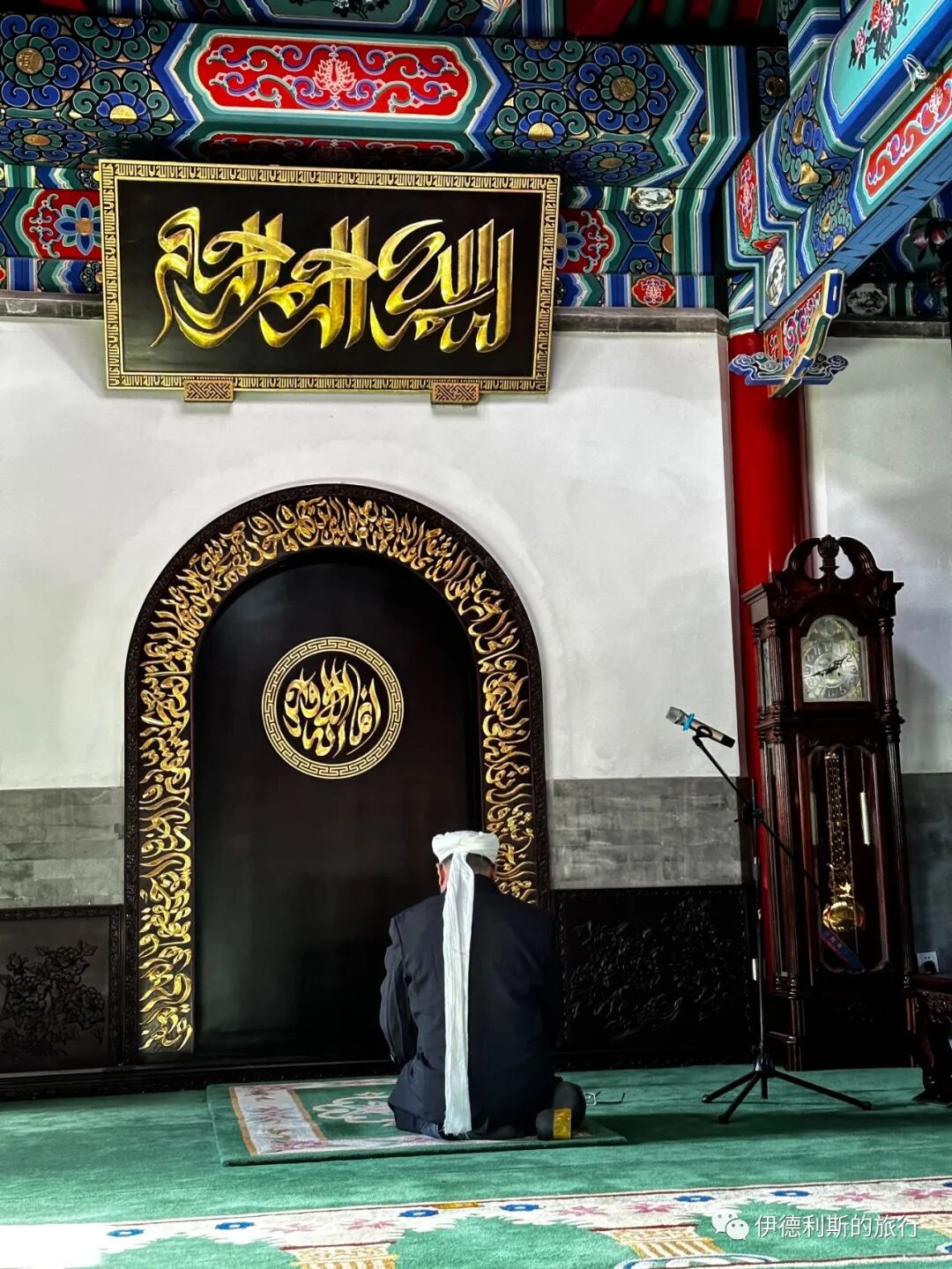
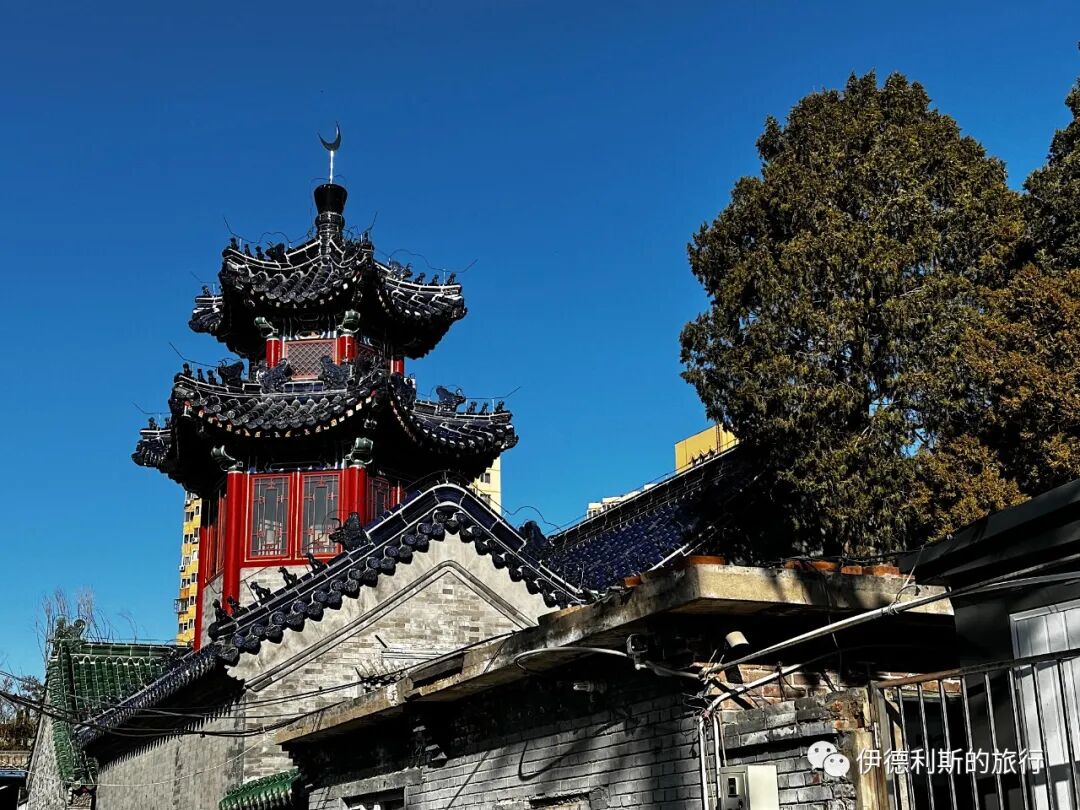
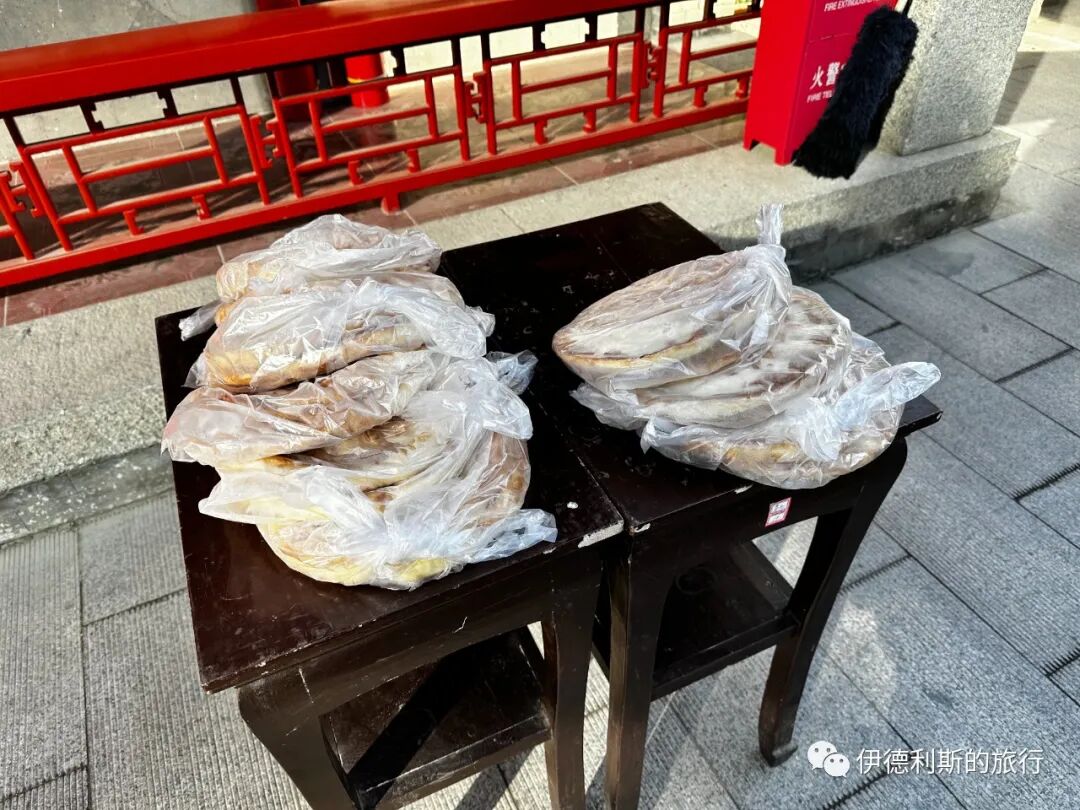
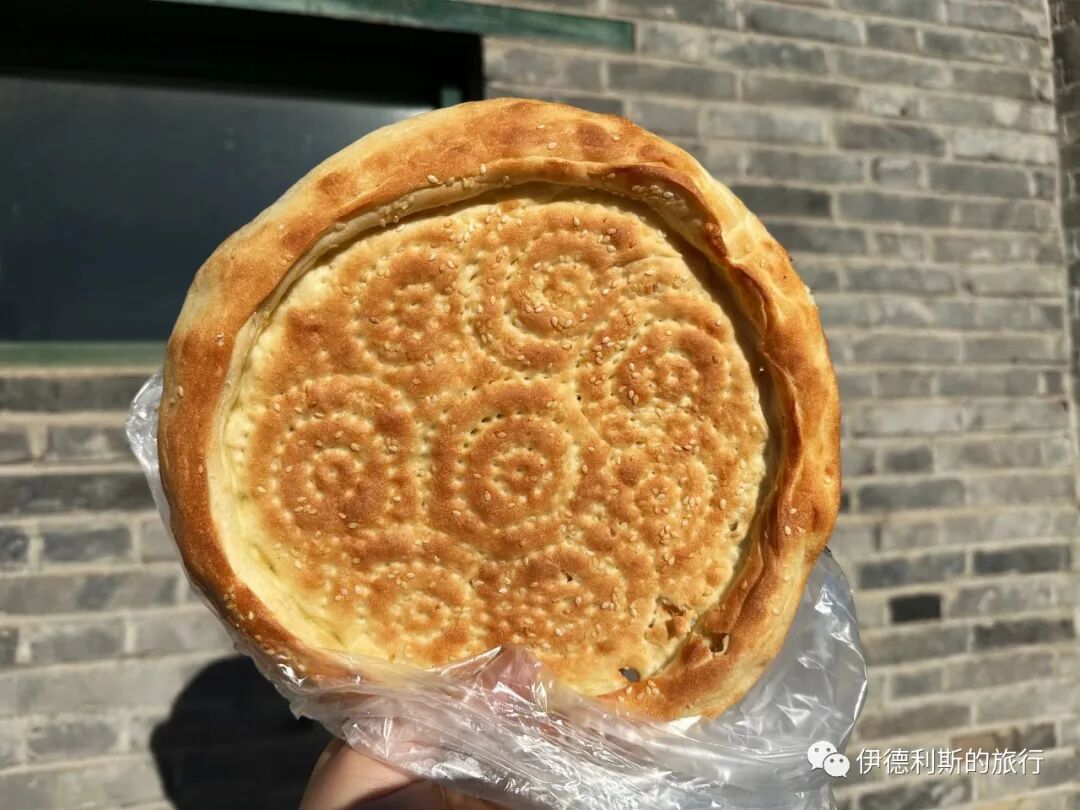
Jumu'ah Mubarak! After years of renovations, the Balizhuang Mosque outside Chaoyangmen has finally reopened, so I went there to attend Jumu'ah prayers. The renovated mosque is clean and tidy, and it looks beautiful against the blue sky. After namaz, I received some flatbread (nang) given out by the elders; it was freshly baked and tasted delicious!
Balizhuang got its name because it is eight li away from Chaoyangmen. After Emperor Yongle of the Ming dynasty moved the capital to Beijing, he built a series of granaries inside Chaoyangmen, and large amounts of grain began to be transported to Chaoyangmen via the canal. After the Qing dynasty, because boats moved slowly on the Tonghui River section of the canal, many grain boats chose to leave their ships at Tongzhou, which made the official road between Chaoyangmen and Tongzhou increasingly busy. In 1729 (the seventh year of the Yongzheng reign), the stone road outside Chaoyangmen was completed. The Diary of Jehol records: 'Between Tongzhou and the Imperial City, a distance of forty li, the road is paved with stone. The iron wheels clash, and the sound of the carts is so loud that it shakes one's spirit.'
Between the reigns of Yongzheng and Qianlong, Hui Muslims with the surnames Jing, Li, and Jin grew vegetables along the stone road outside Chaoyangmen to supply the capital, gradually forming the Balizhuang area outside the gate. The Balizhuang Mosque was first built in the early years of the Qianlong reign, and at its peak during the Qing dynasty, the mosque's property covered thirteen mu. The mosque was occupied after 1958 and was not returned until 1982. It was rebuilt between 1997 and 2000, reaching its current size.
 Collapse Read »
Summary: Beijing Balizhuang Mosque — Jummah Prayer and Community is presented here as a firsthand travel account in clear English, beginning with this scene: Jumu'ah Mubarak! After years of renovations, the Balizhuang Mosque outside Chaoyangmen has finally reopened, so I went there to attend Jumu'ah prayers. The account keeps its focus on Balizhuang Mosque, Beijing Mosques, Jummah Prayer while preserving the names, places, food, and historical details from the Chinese source.
Jumu'ah Mubarak! After years of renovations, the Balizhuang Mosque outside Chaoyangmen has finally reopened, so I went there to attend Jumu'ah prayers. The renovated mosque is clean and tidy, and it looks beautiful against the blue sky. After namaz, I received some flatbread (nang) given out by the elders; it was freshly baked and tasted delicious!
Balizhuang got its name because it is eight li away from Chaoyangmen. After Emperor Yongle of the Ming dynasty moved the capital to Beijing, he built a series of granaries inside Chaoyangmen, and large amounts of grain began to be transported to Chaoyangmen via the canal. After the Qing dynasty, because boats moved slowly on the Tonghui River section of the canal, many grain boats chose to leave their ships at Tongzhou, which made the official road between Chaoyangmen and Tongzhou increasingly busy. In 1729 (the seventh year of the Yongzheng reign), the stone road outside Chaoyangmen was completed. The Diary of Jehol records: 'Between Tongzhou and the Imperial City, a distance of forty li, the road is paved with stone. The iron wheels clash, and the sound of the carts is so loud that it shakes one's spirit.'
Between the reigns of Yongzheng and Qianlong, Hui Muslims with the surnames Jing, Li, and Jin grew vegetables along the stone road outside Chaoyangmen to supply the capital, gradually forming the Balizhuang area outside the gate. The Balizhuang Mosque was first built in the early years of the Qianlong reign, and at its peak during the Qing dynasty, the mosque's property covered thirteen mu. The mosque was occupied after 1958 and was not returned until 1982. It was rebuilt between 1997 and 2000, reaching its current size.
Collapse Read »
Halal Travel Guide: Urumqi Dawan — Hui Muslim Streets and Halal Food
Reposted from the web
Summary: Urumqi Dawan — Hui Muslim Streets and Halal Food is presented here as a firsthand travel account in clear English, beginning with this scene: June 2018 was my fifth trip to Urumqi for sightseeing and eating. Nanguan used to be the traditional neighborhood in Urumqi that attracted me the most; it was lively and full of energy. The account keeps its focus on Urumqi Dawan, Xinjiang Travel, Hui Muslims while preserving the names, places, food, and historical details from the Chinese source.
June 2018 was my fifth trip to Urumqi for sightseeing and eating. Nanguan used to be the traditional neighborhood in Urumqi that attracted me the most; it was lively and full of energy. In 2017, a friend (dosti) told me that demolition and renovation had started in Nanguan, which made me very anxious. Later on, the small alleys deep inside Nanguan were completely torn down.
I came to Urumqi again in 2018, and the area deep inside the old Nanguan had become a construction site. However, I will not dwell on the past in this article. Instead, I want to share my experience of sightseeing and eating in Urumqi this time. Besides the consistently wonderful Lingguan Lane and Shengli Road, I also visited Dawan, another food hub in Urumqi. As a side note, I certainly did not expect when writing this that my wedding would be held in Dawan two years later.
Table of Contents
1. Yining Yixiang Butter Milk Tea House
2. Lingguan Lane
1. Original Meat Naan (rounang)
2. Arman Supermarket
3. Gülba xikar Dessert Shop
4. Other shops in Lingguan Lane
3. Shengli Road
1. Babahan Food World
2. Marhaba Tatar Pastries
4. Dawan
1. Ailuo Family Coffee
2. Pairhan Imported Goods Store
3. Aile Imported Goods Store
4. Maidana
1. Yining Yixiang Butter Milk Tea House
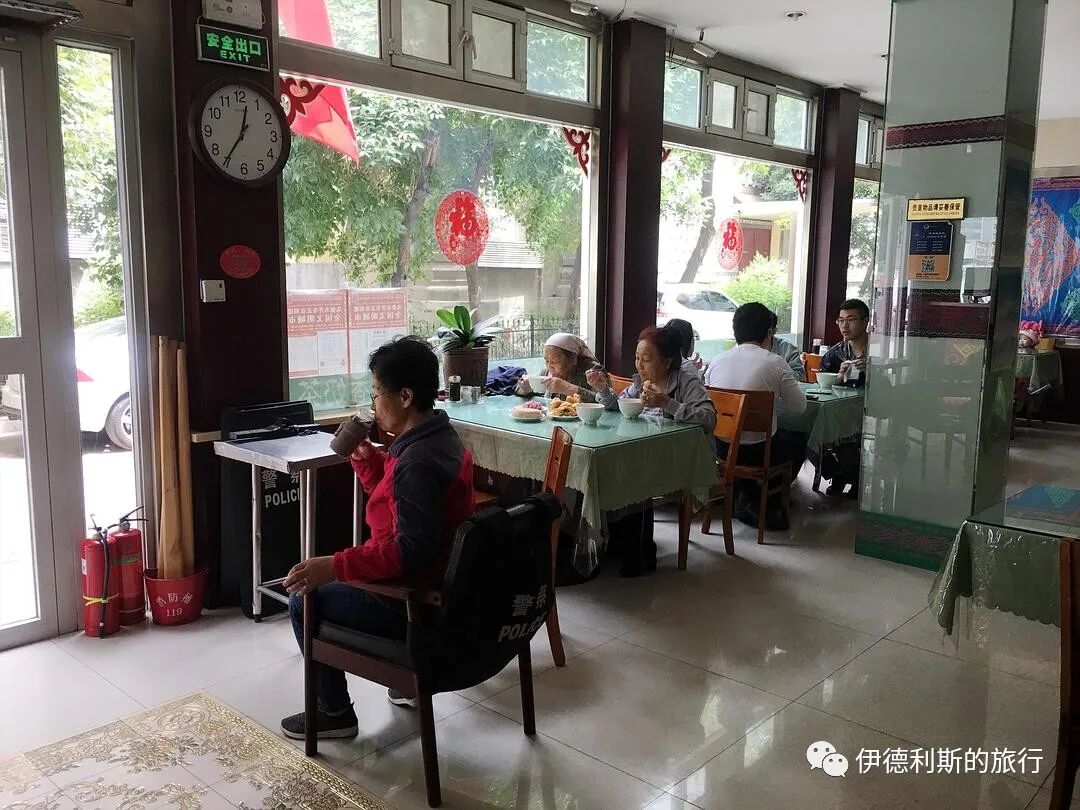
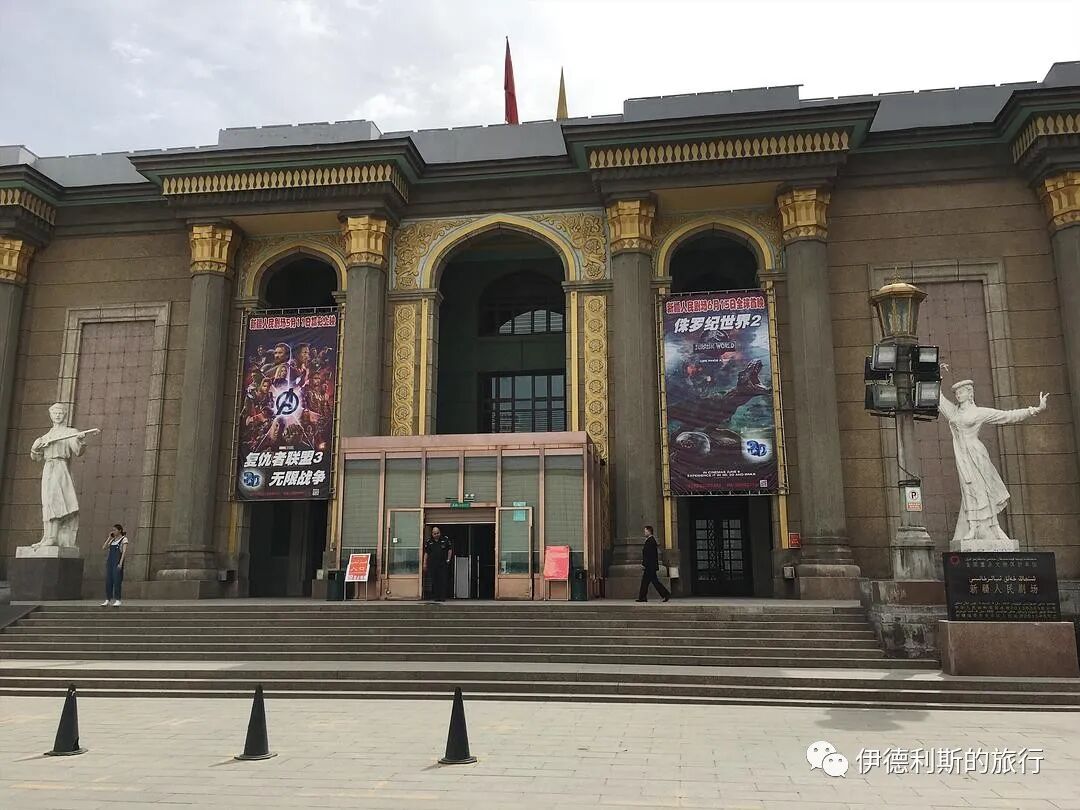
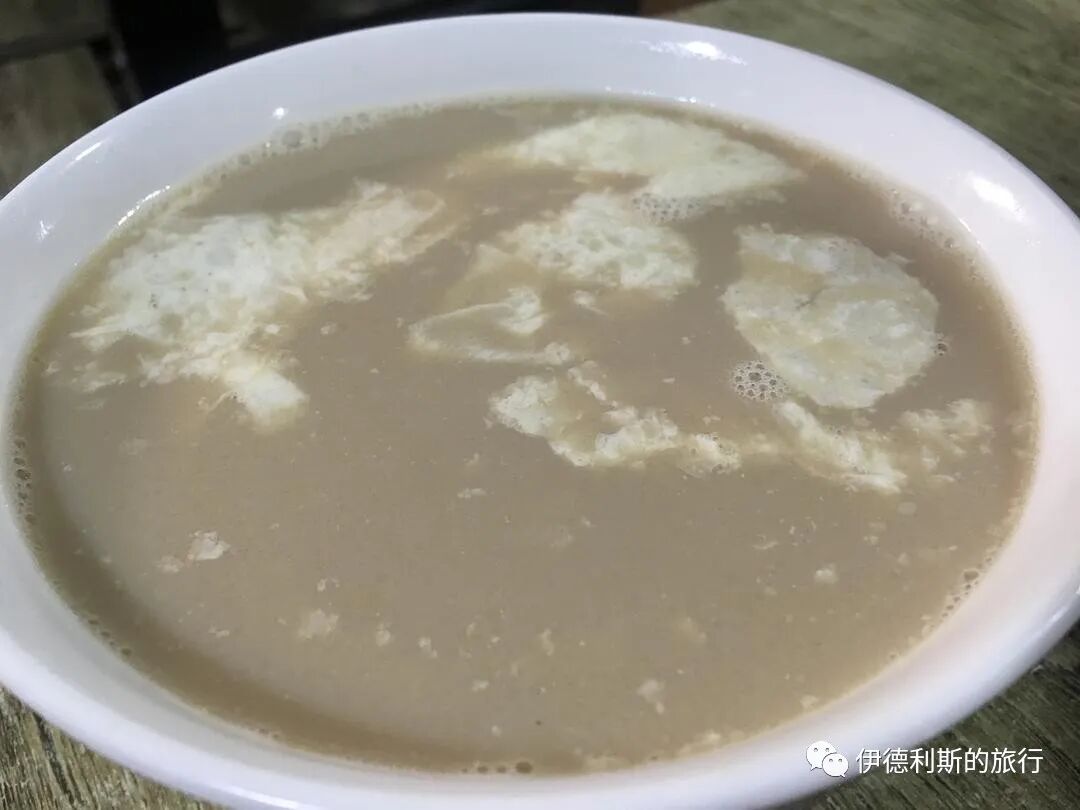
Next to the Urumqi People's Theater is Yining Yixiang Butter Milk Tea House, a famous Kazakh milk tea spot. I ate milk skin (naipizi), fried dough fritters (baorsak), and honey-based drink (kawasi) here, but unfortunately, mare's milk is only available after July.
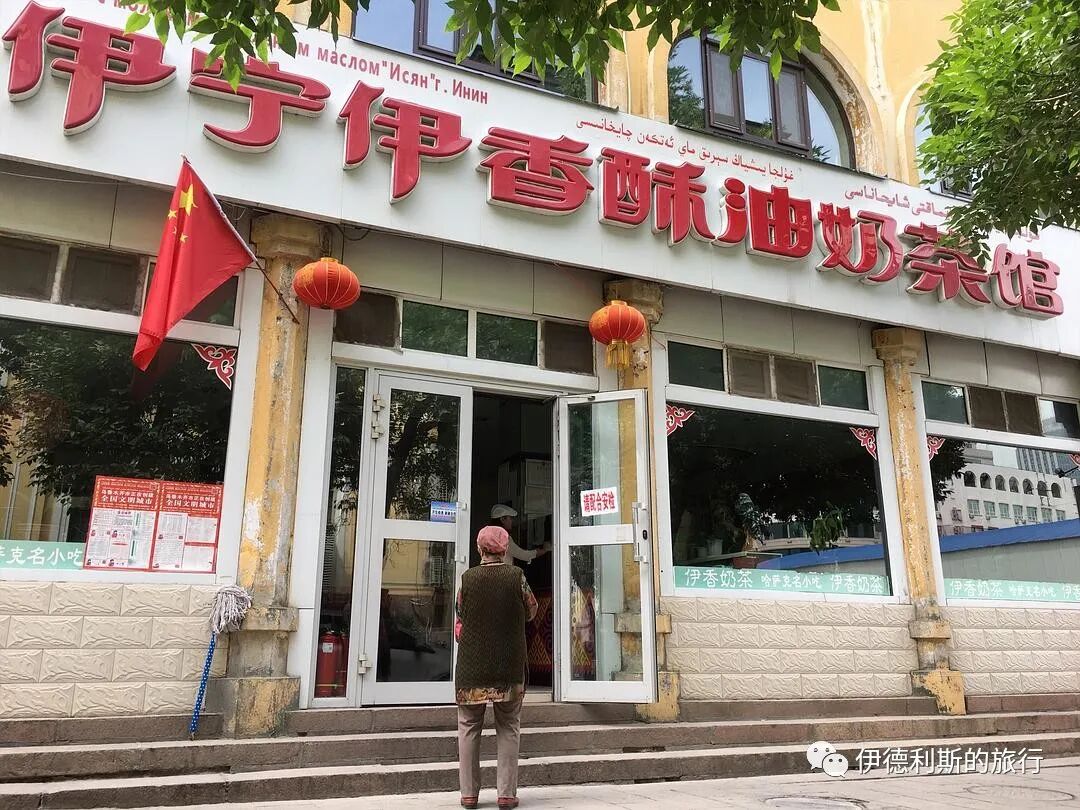
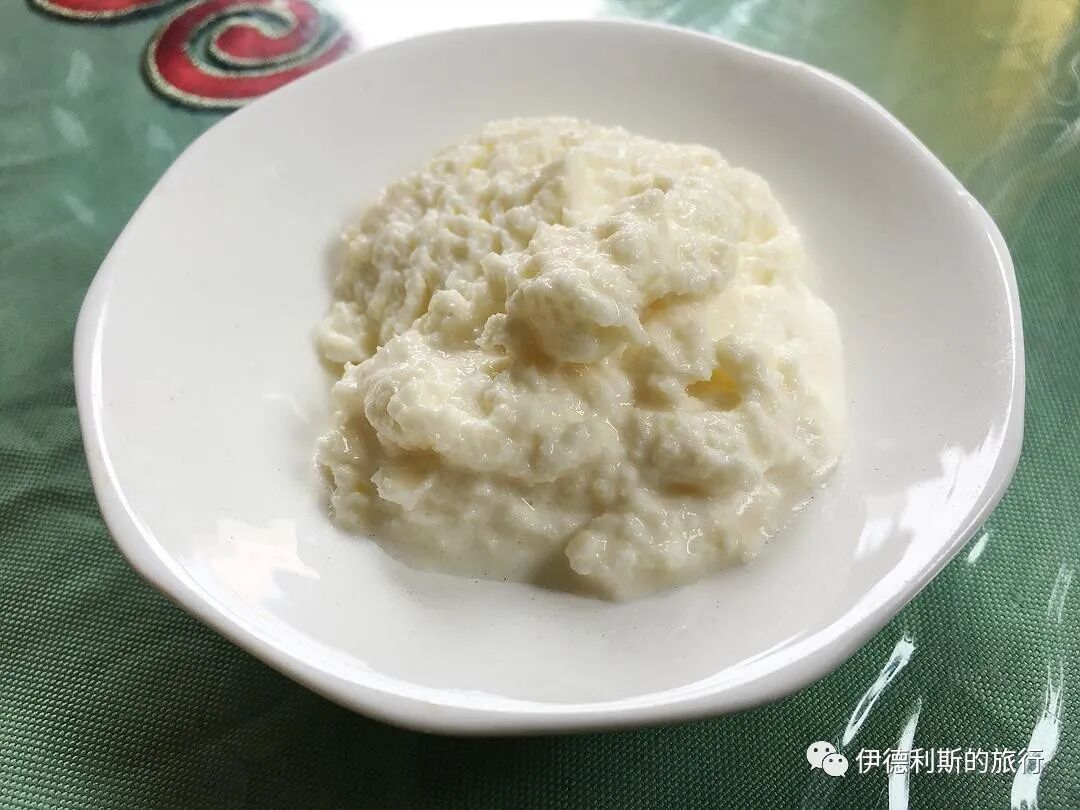
Milk skin (naipizi)
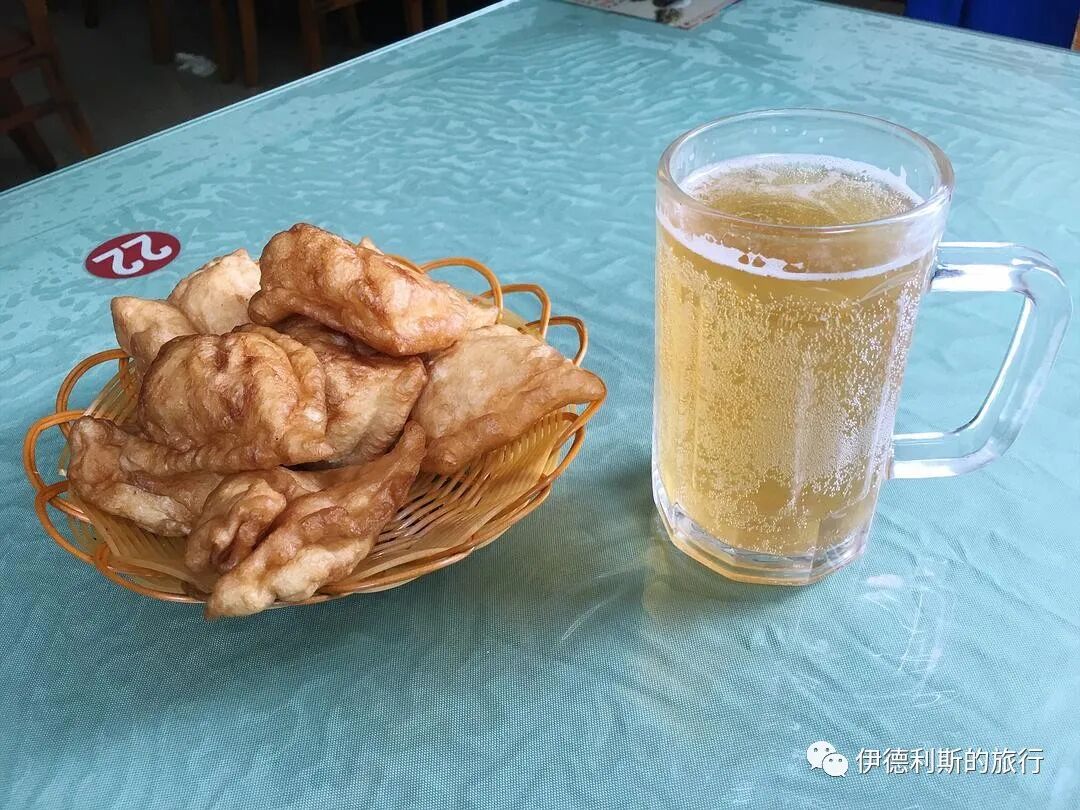
Fried dough fritters (baorsak) and honey-based drink (kawasi)
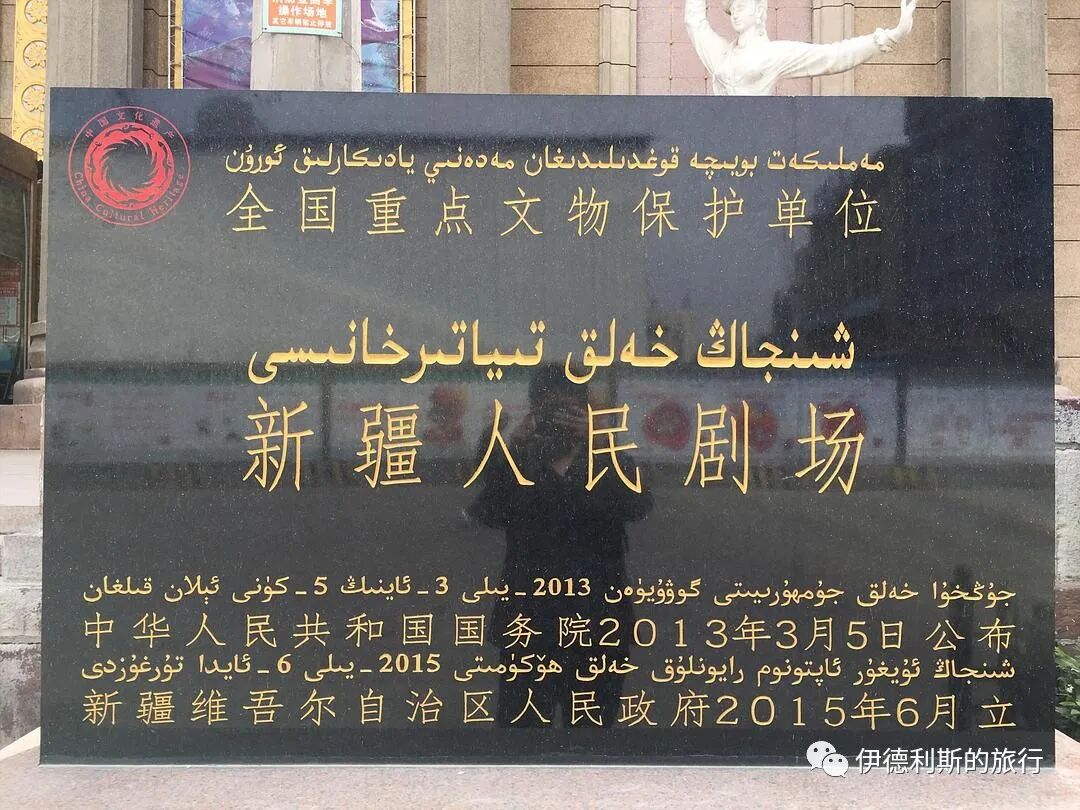
The People's Theater was built in 1956 and is a landmark building of old Urumqi.
2. Lingguan Lane
Consulate Lane (Lingguan Xiang) is south of Erdaoqiao. Except for a new residential complex in the middle section, most shops in the lane look the same. It is a small comfort after the deep Nanguan area was leveled.
1. Original Meat Naan (rounang)
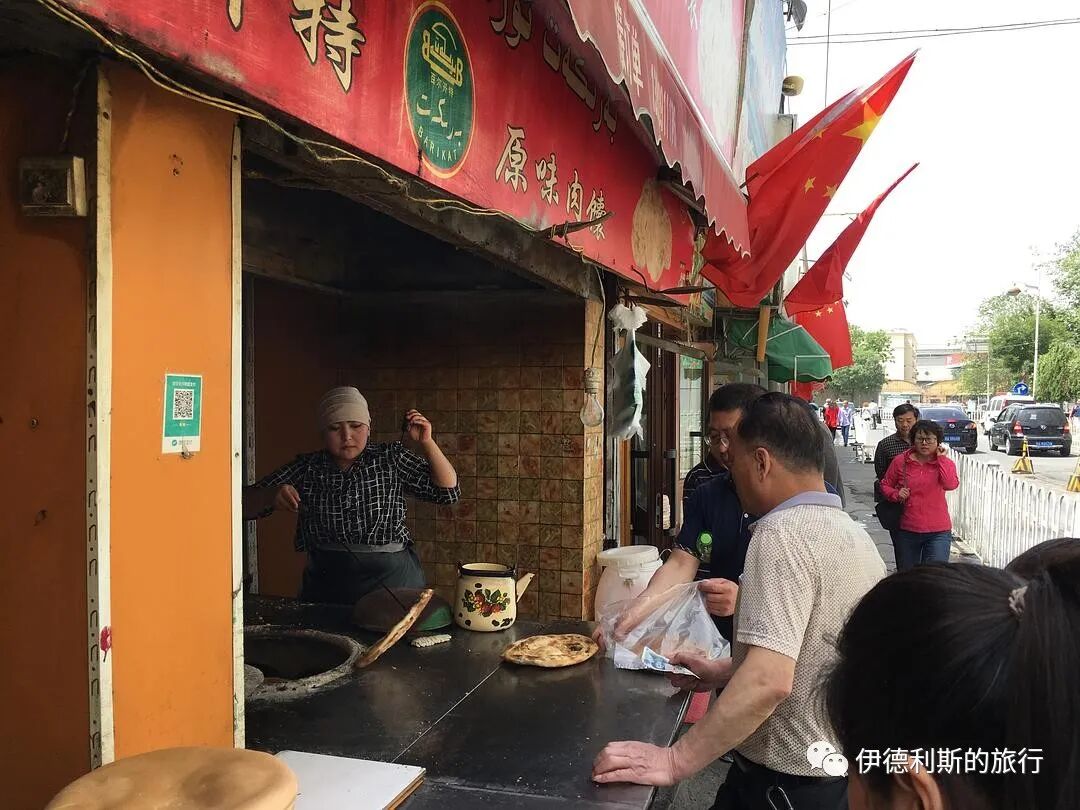
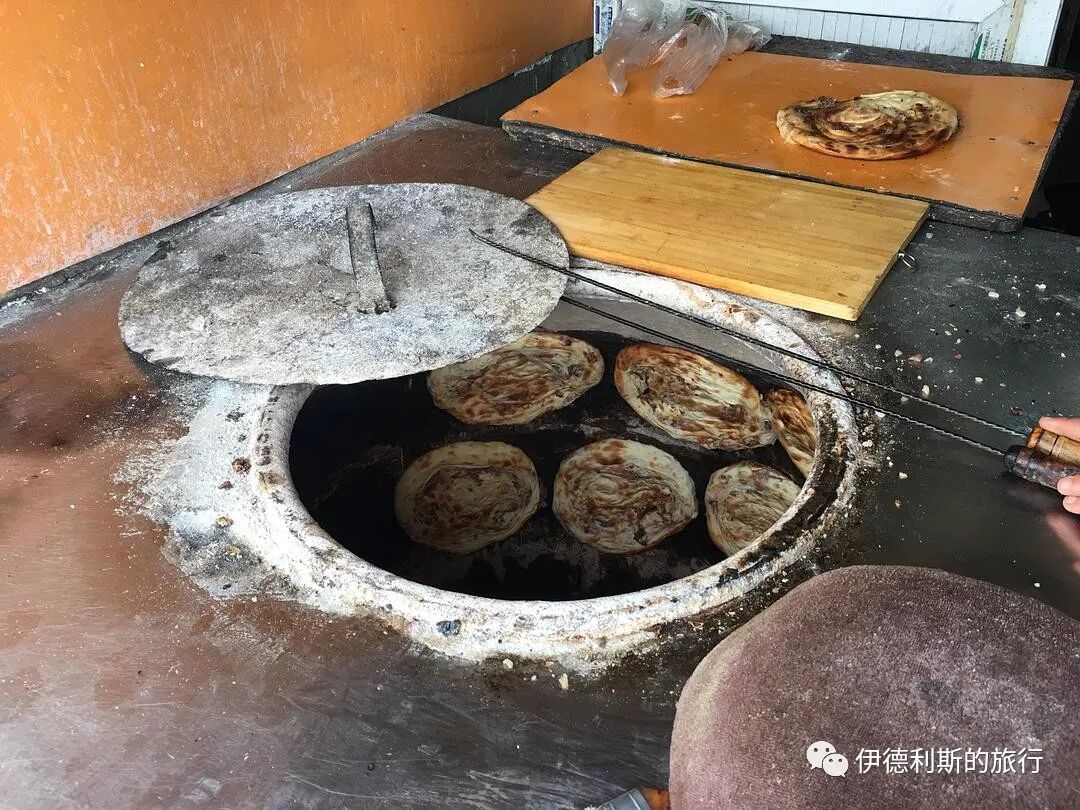
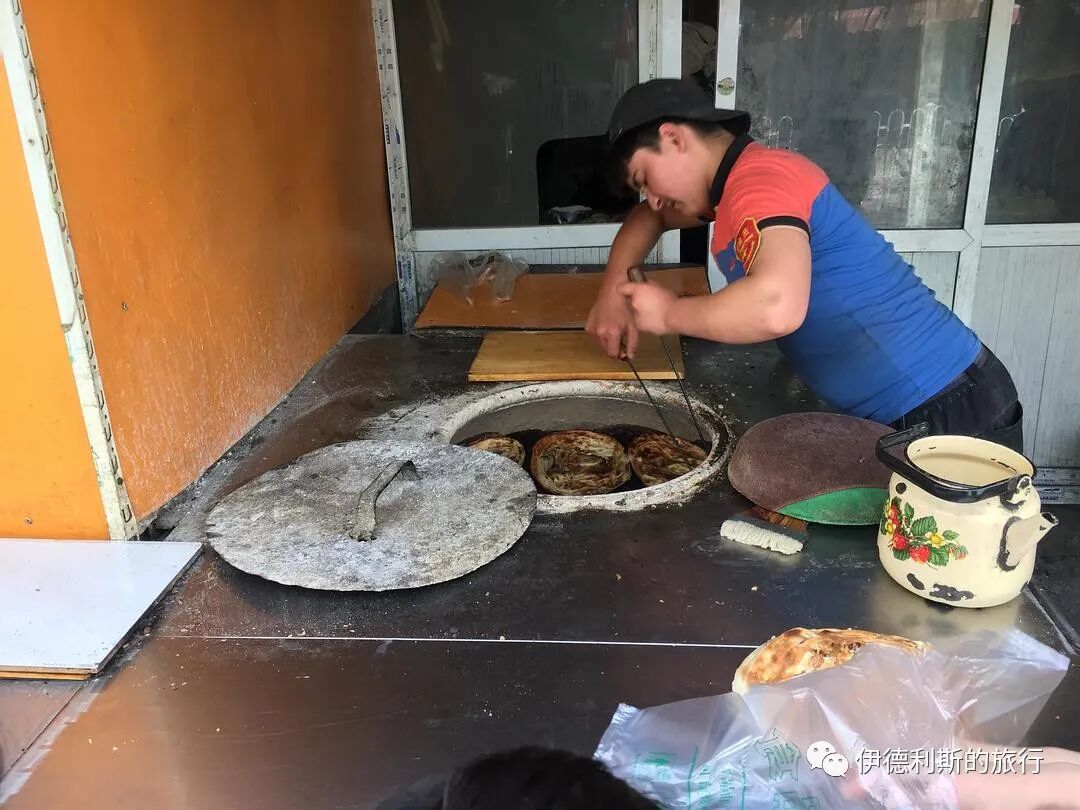
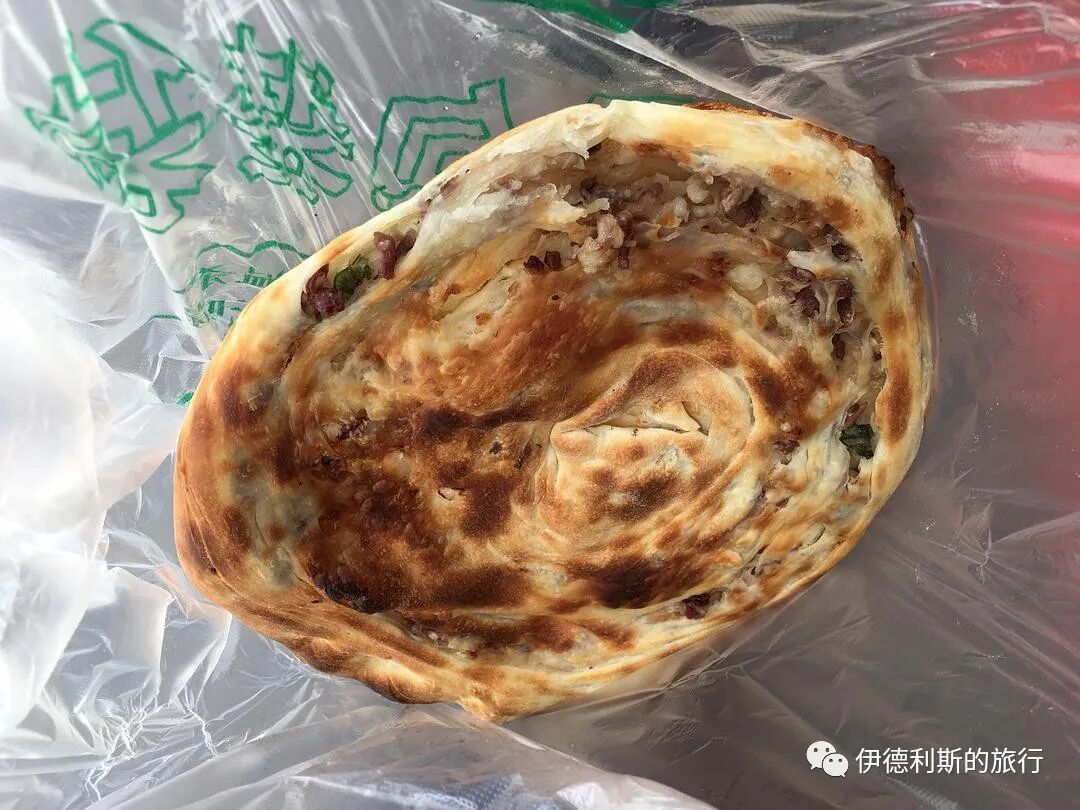
As soon as you enter the west end of Consulate Lane, you can smell the aroma of meat-topped flatbread (rounang). This original meat flatbread (rounang) shop opened in 2000. It is a very popular spot on Lingguan Lane with long lines, and the meat flatbread is truly fragrant.
2. Arman Supermarket
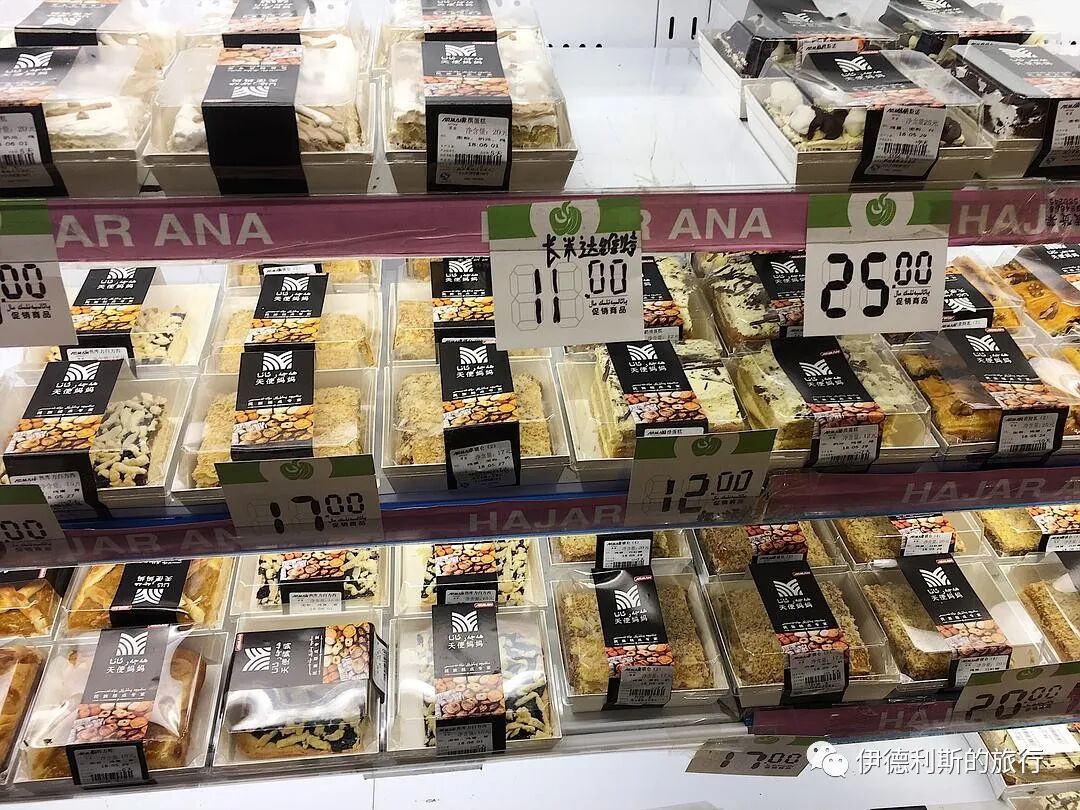
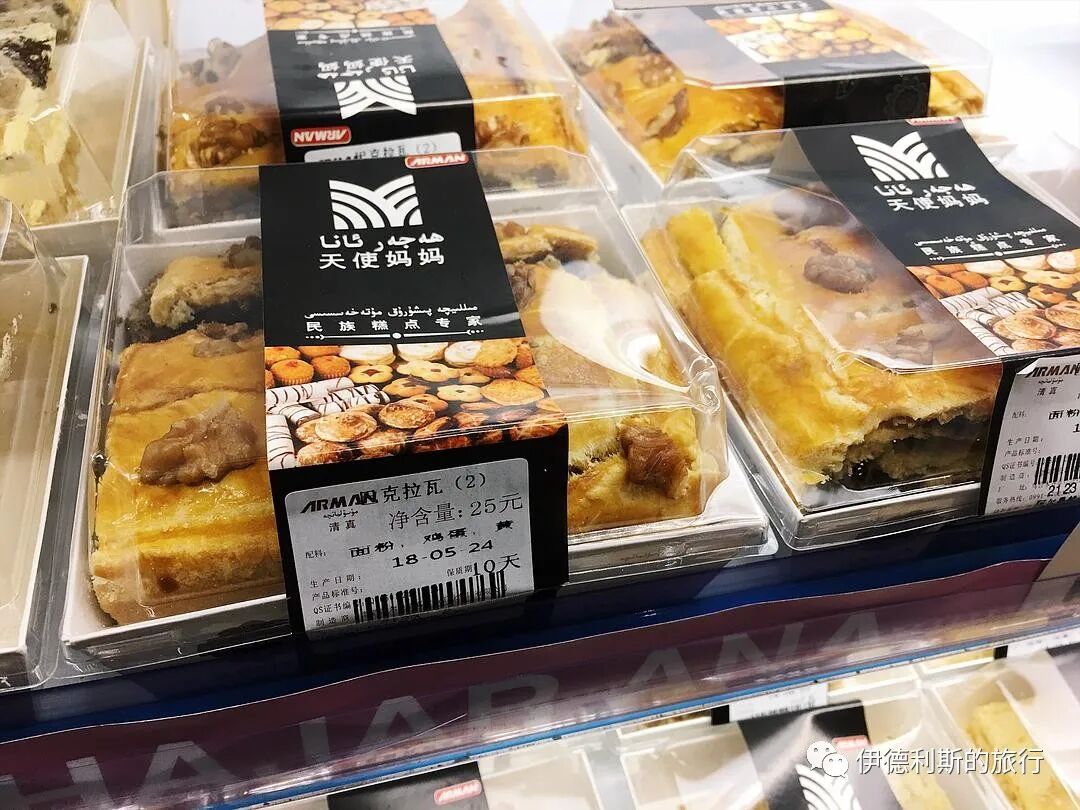
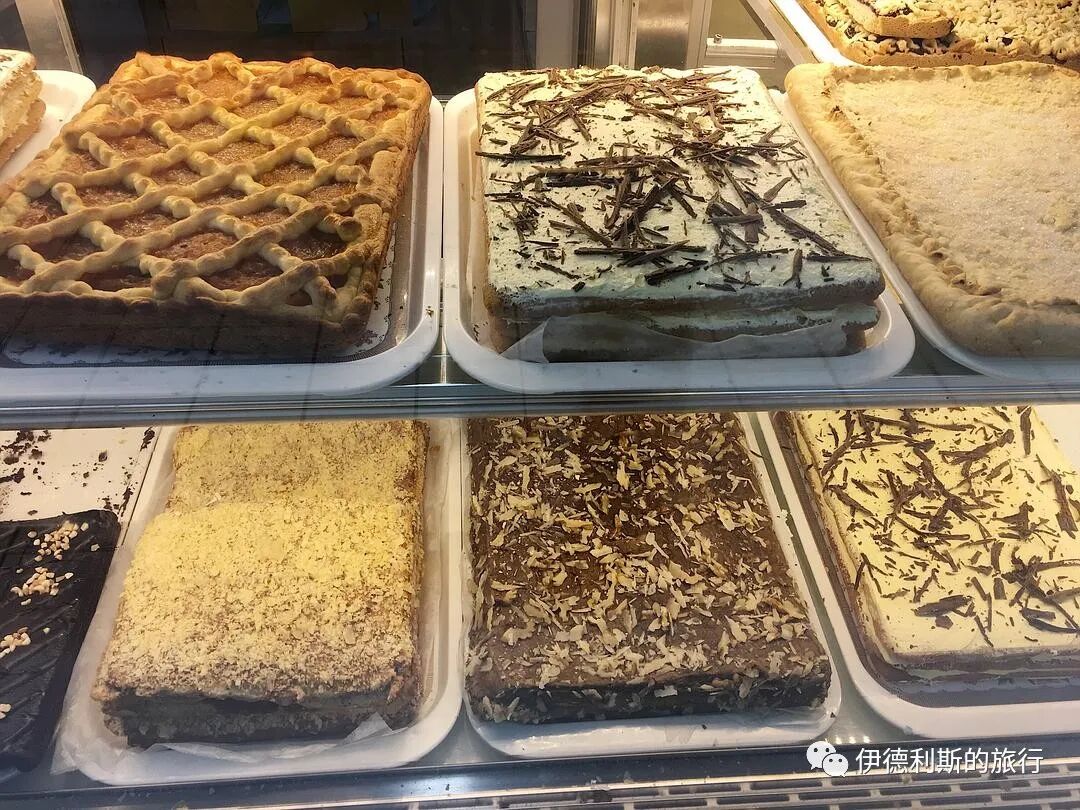
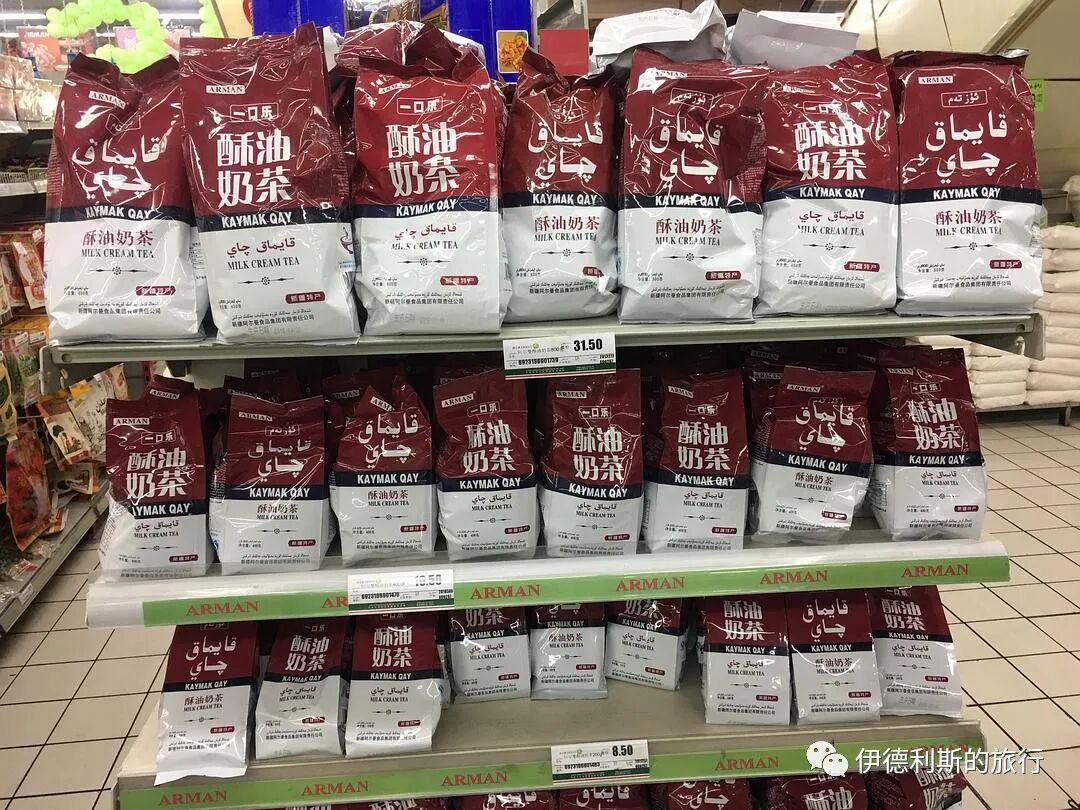
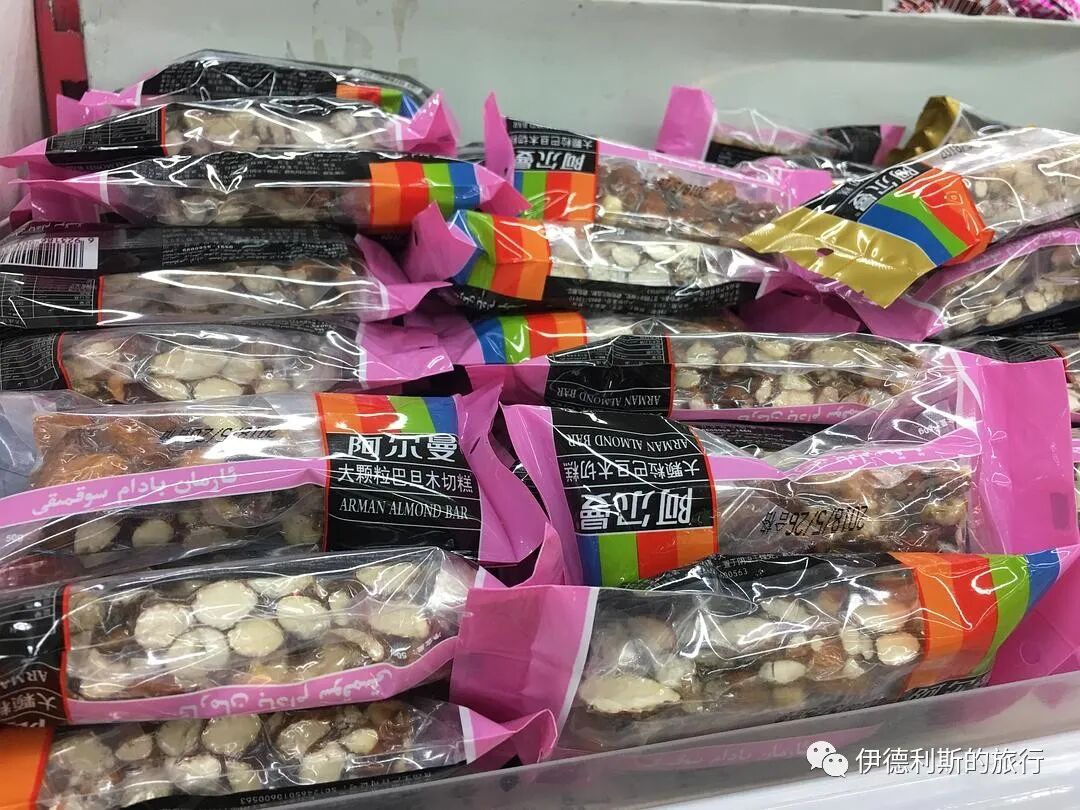
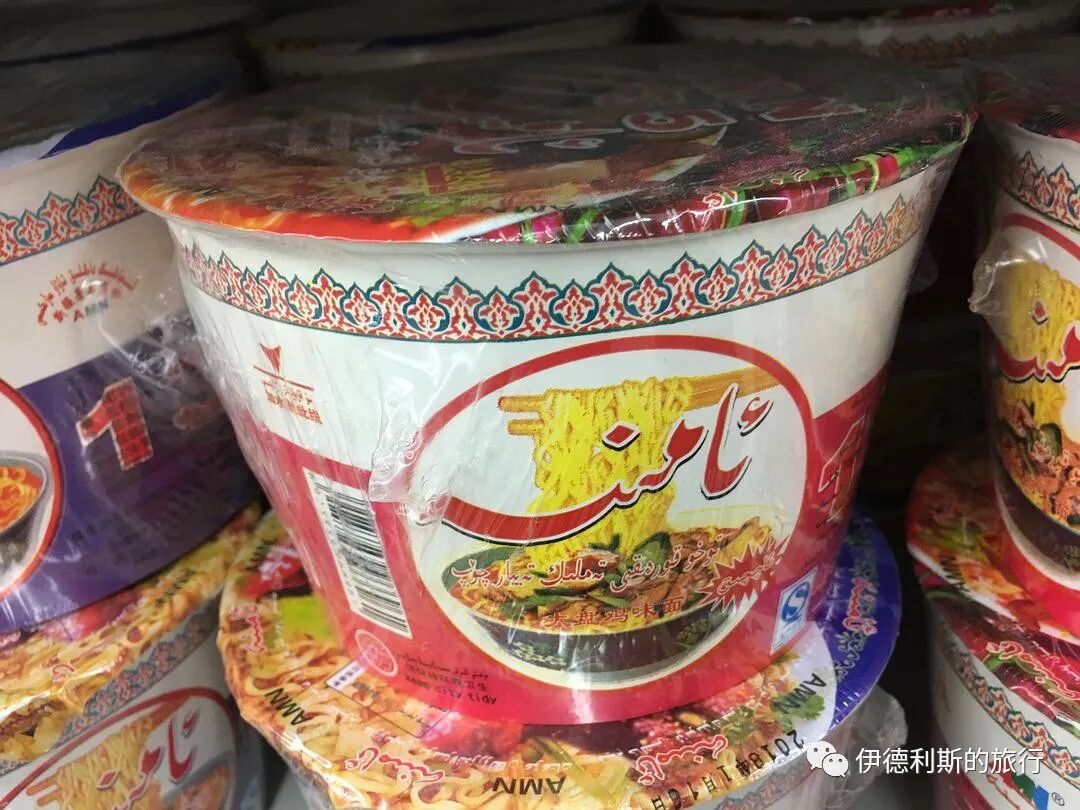
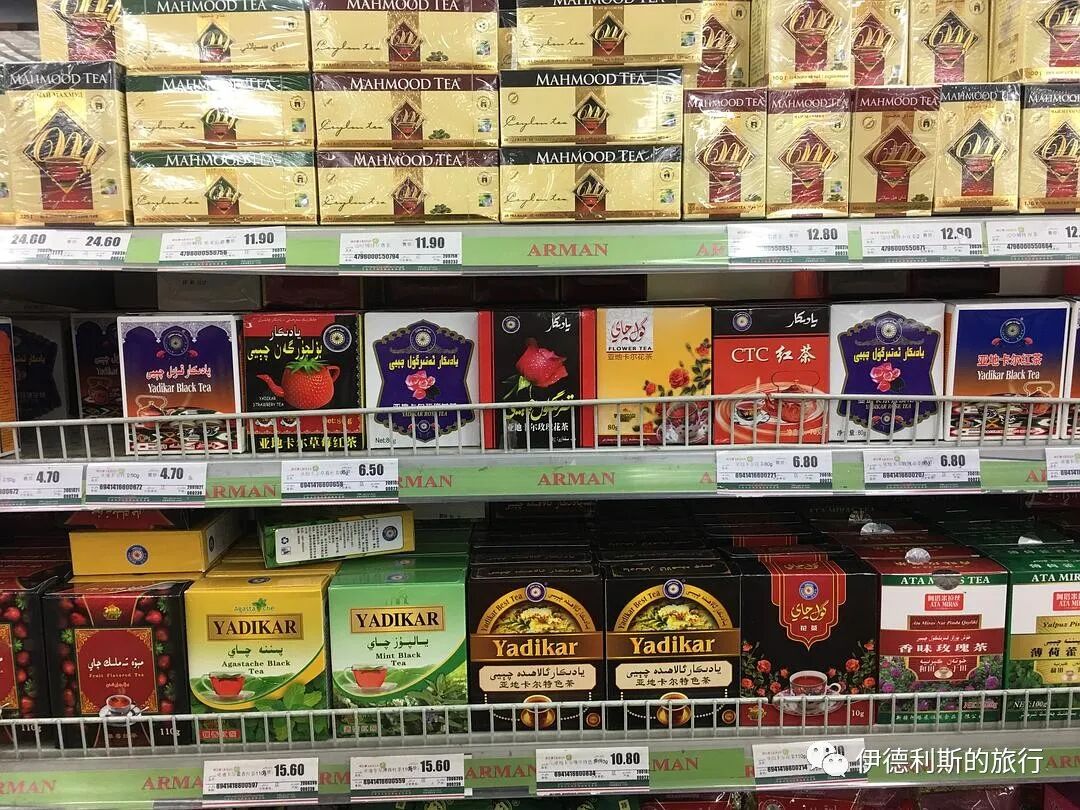
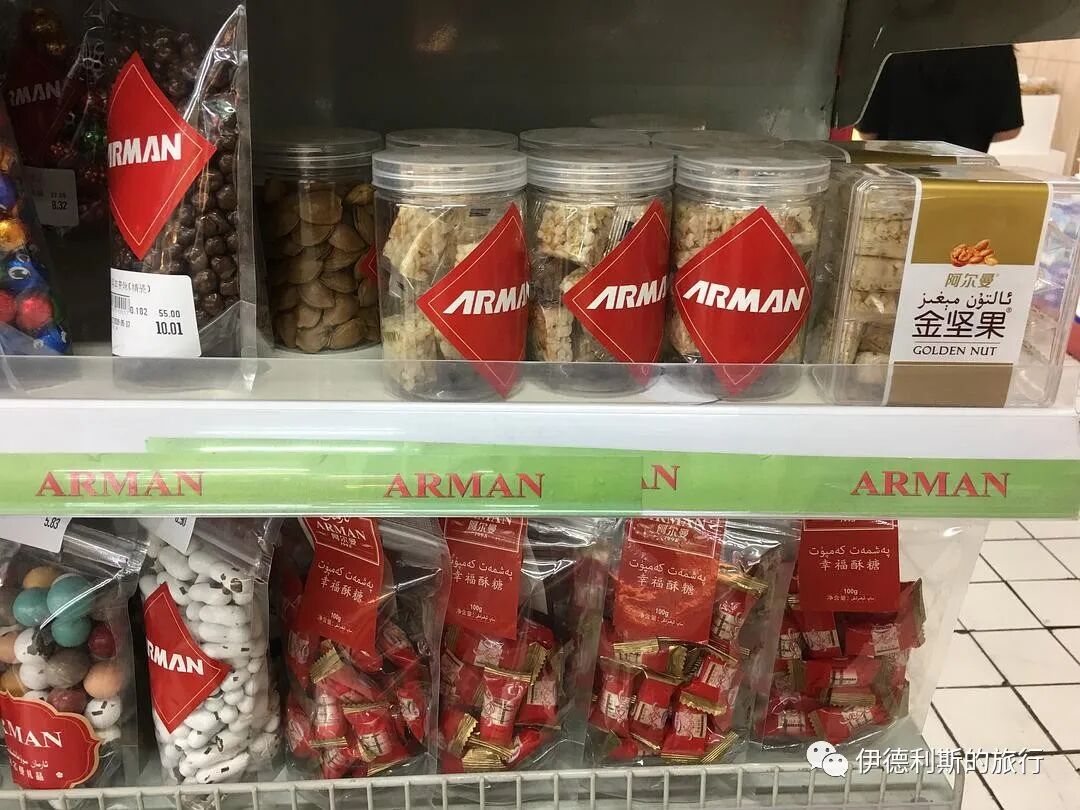
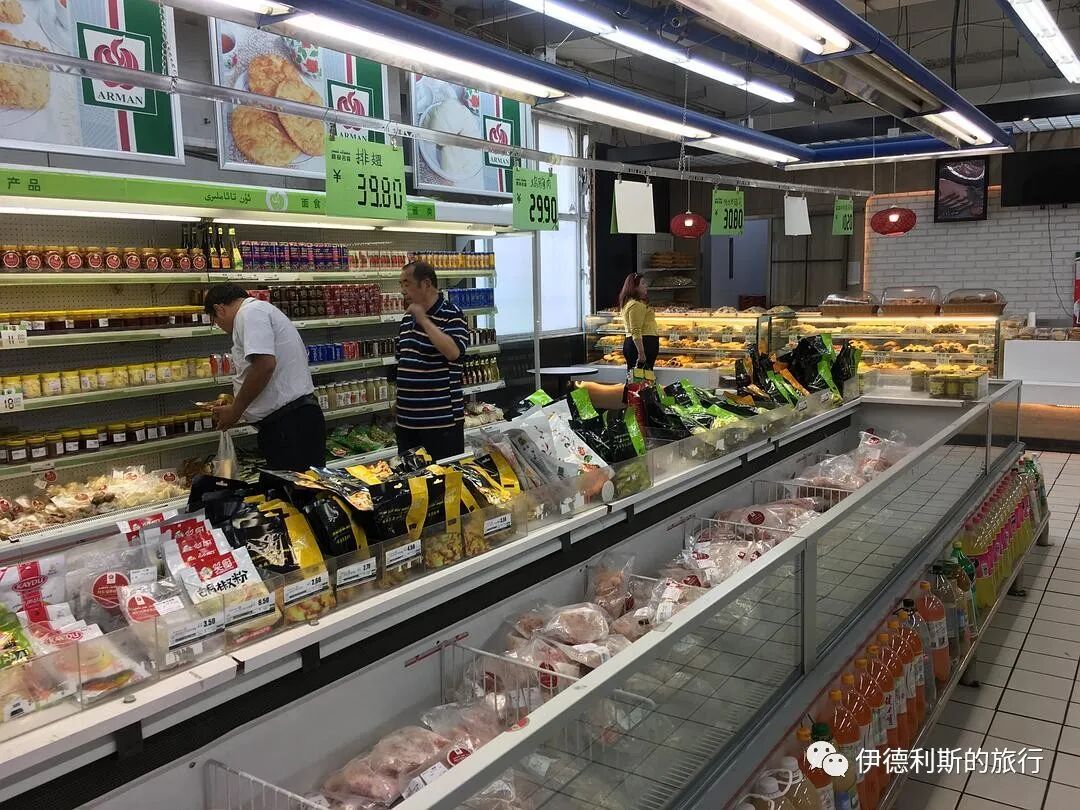
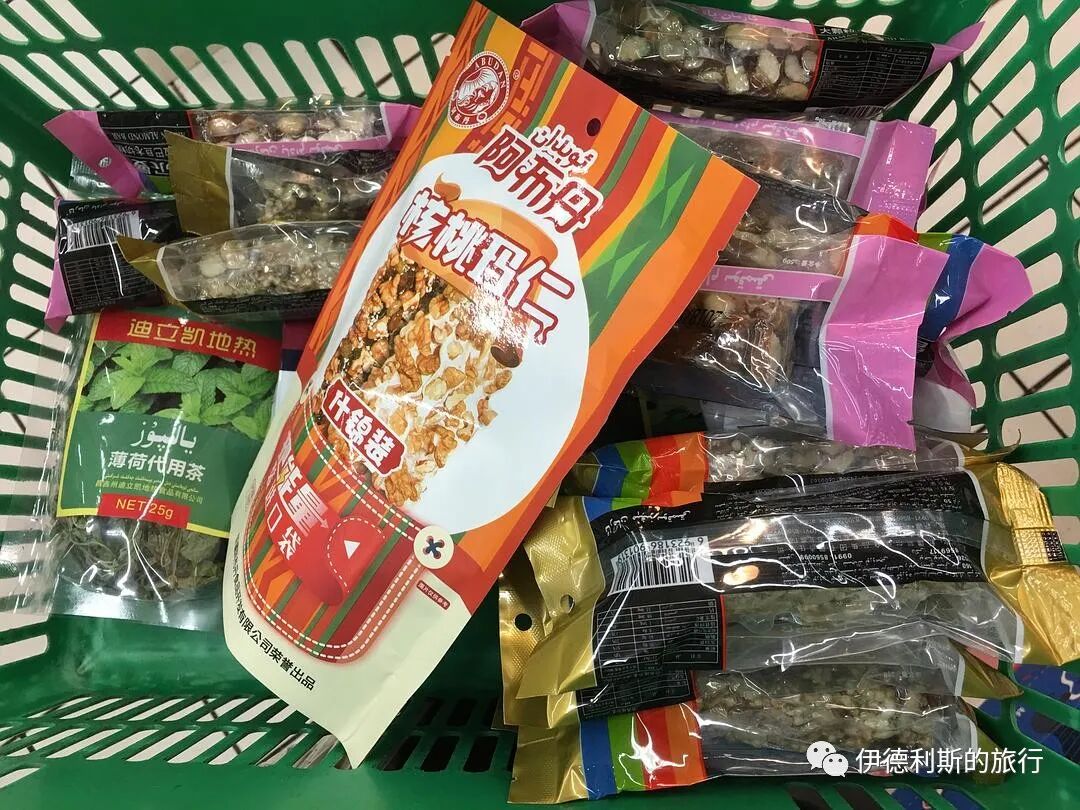
Arman Supermarket at the east end of Lingguan Lane is the largest in the chain. It has many great items, and I shop here every time I visit Urumqi. This time, I bought mint tea, butter milk tea (suyou naicha), and almond nut cake (qiegao).
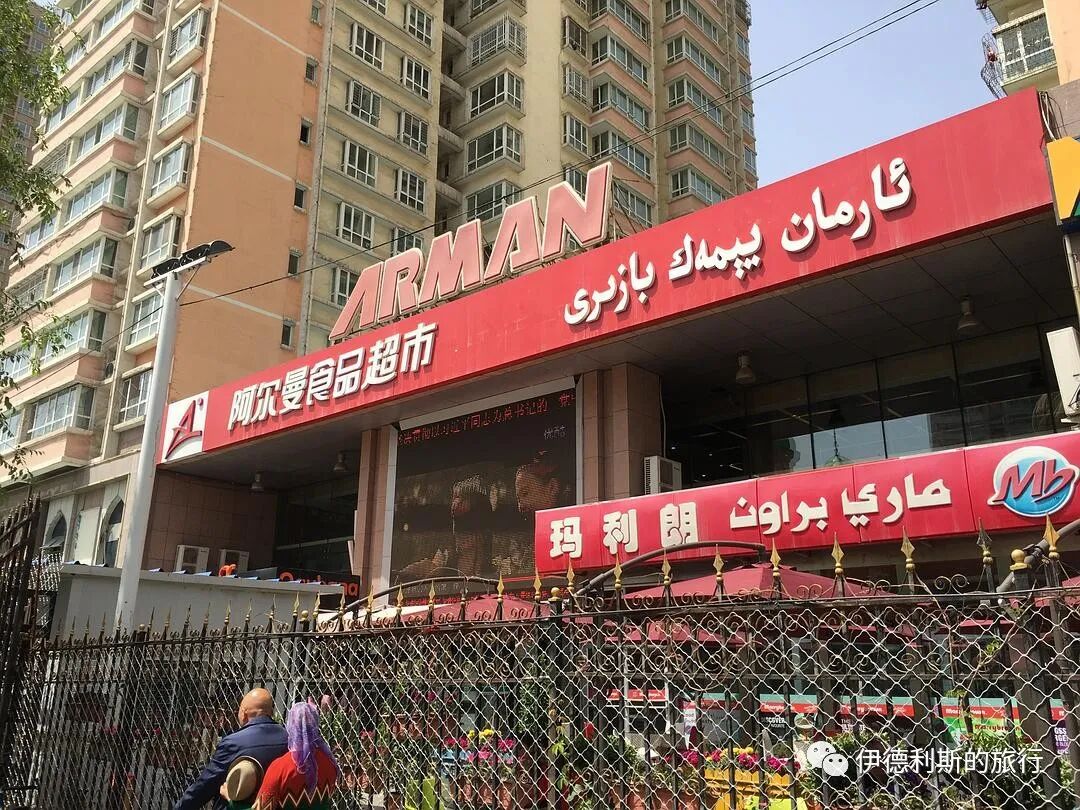

Various pastries at Arman Supermarket.
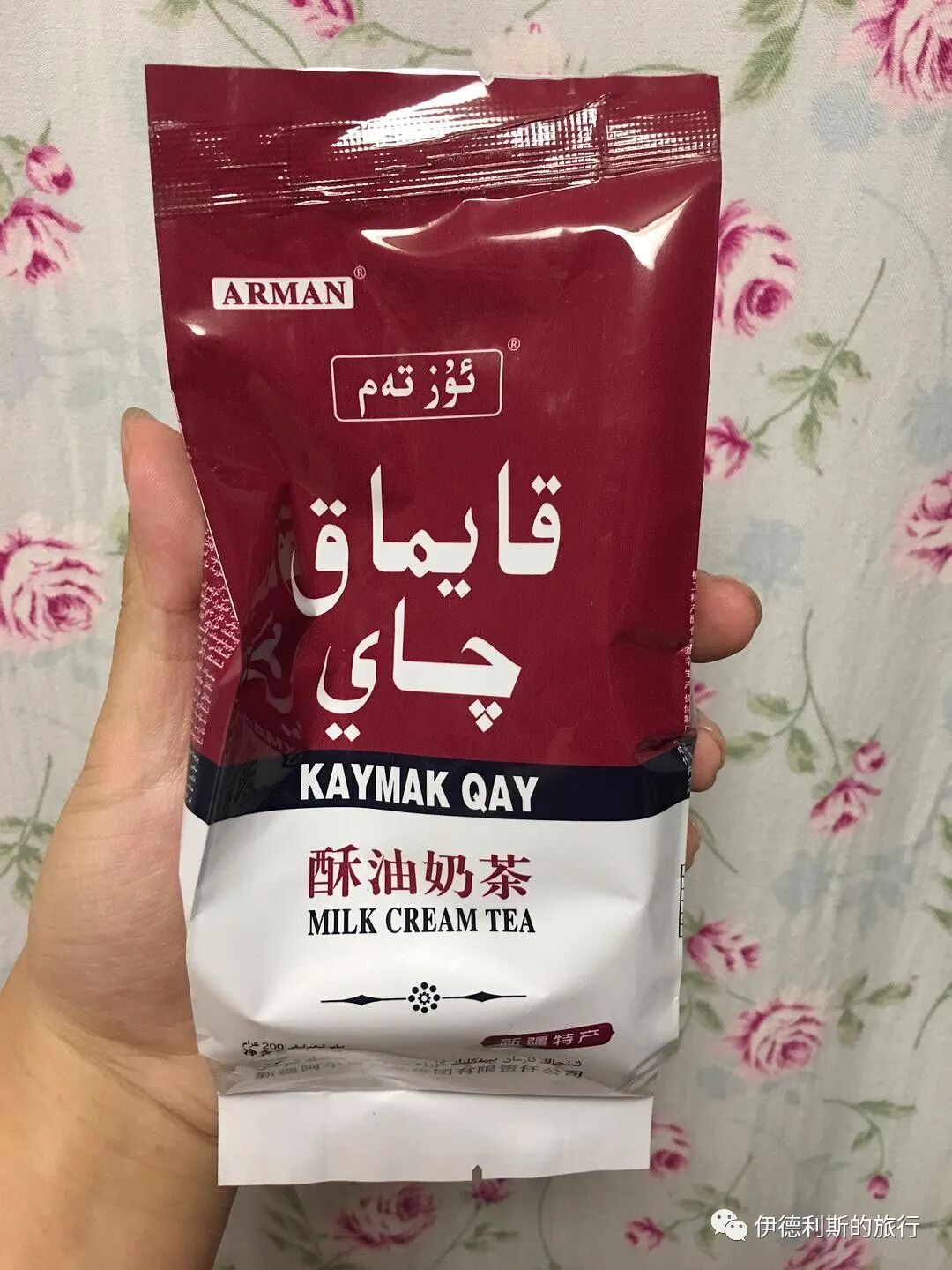
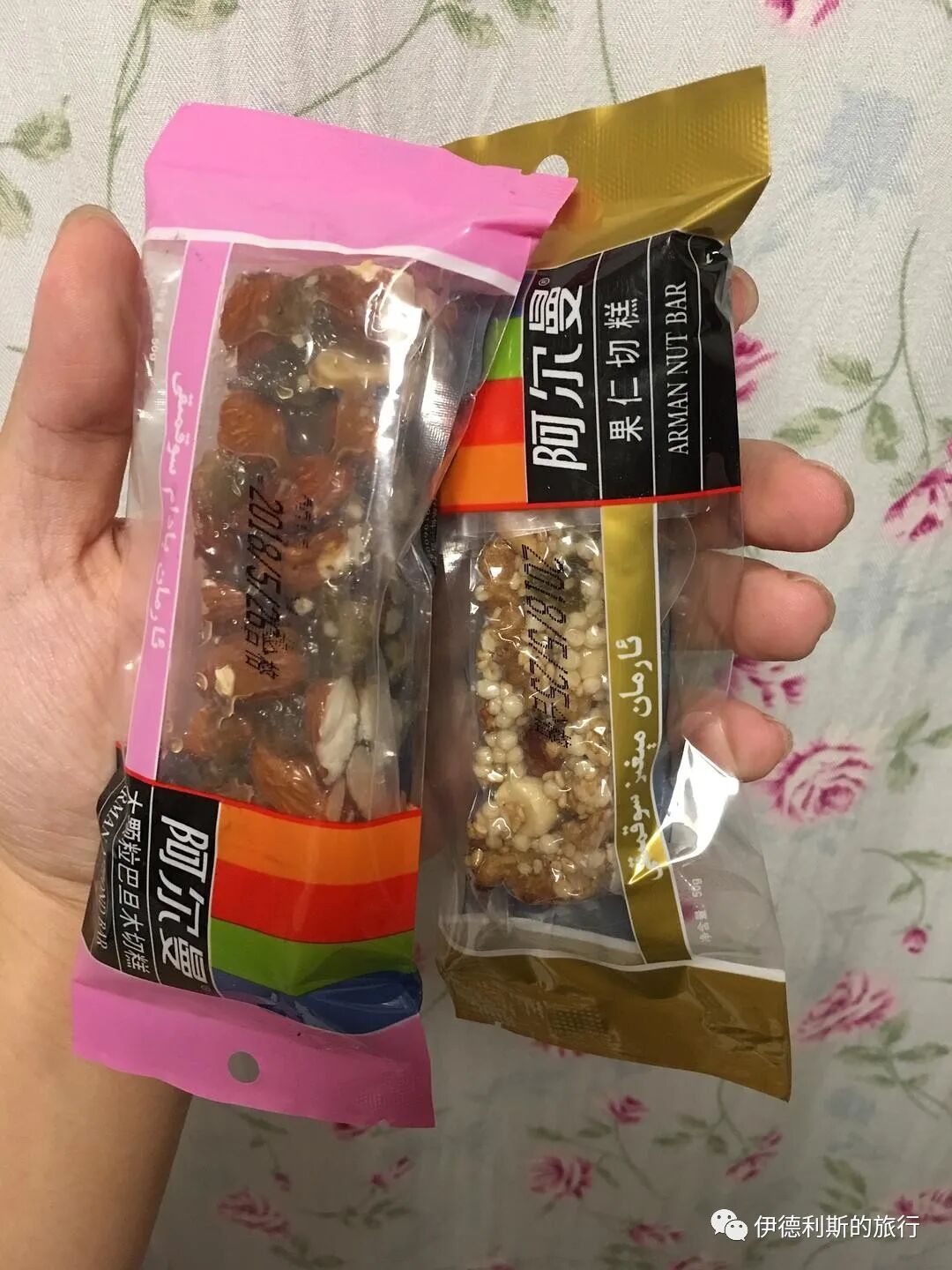
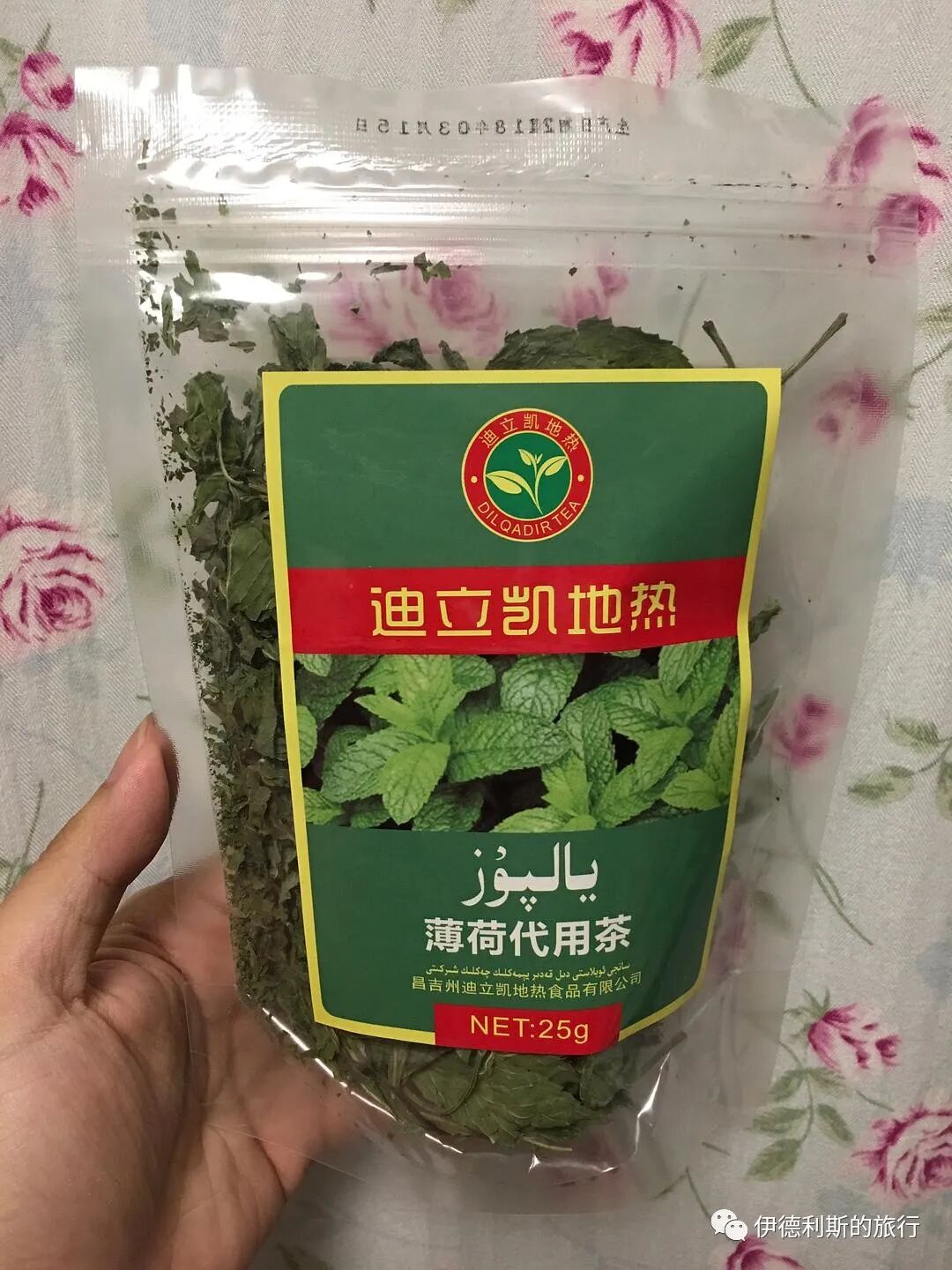
3. Gülba xikar Dessert Shop
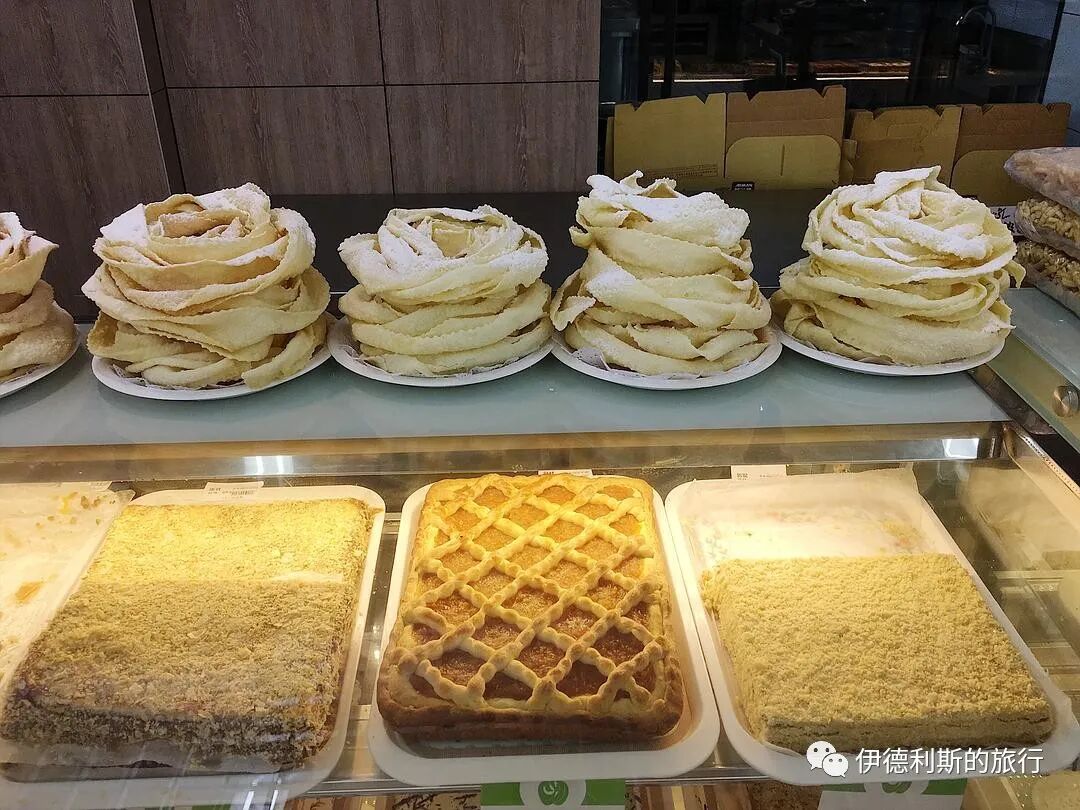
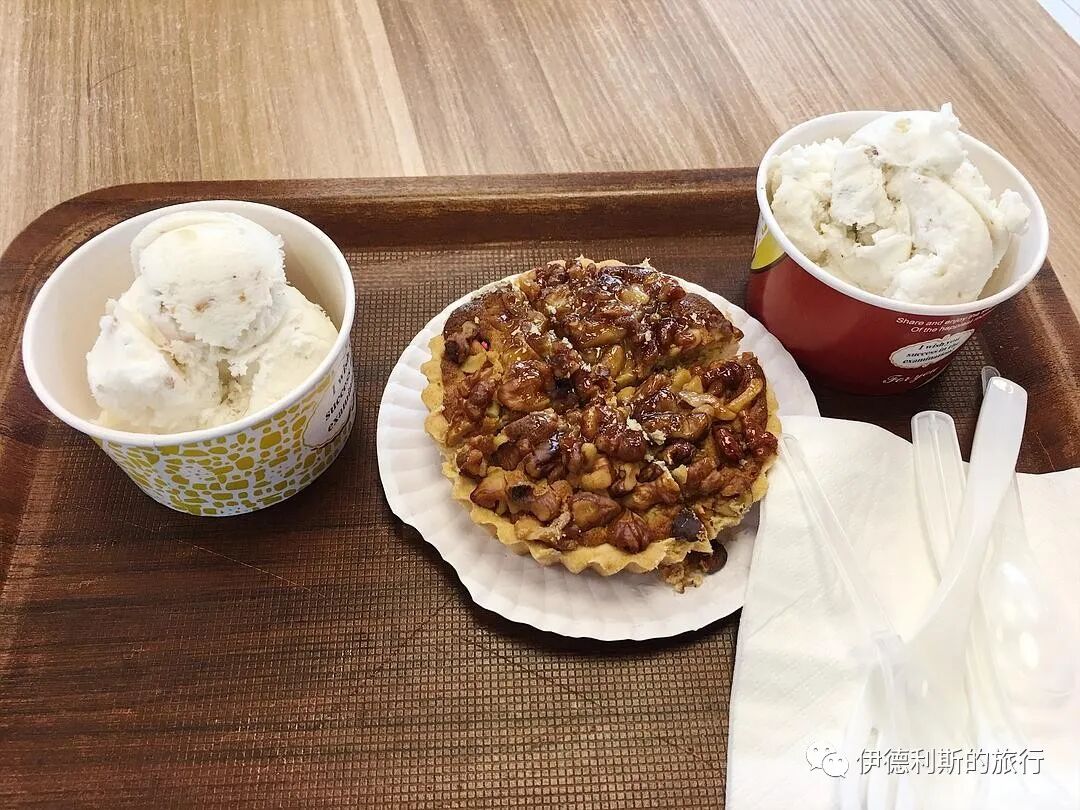
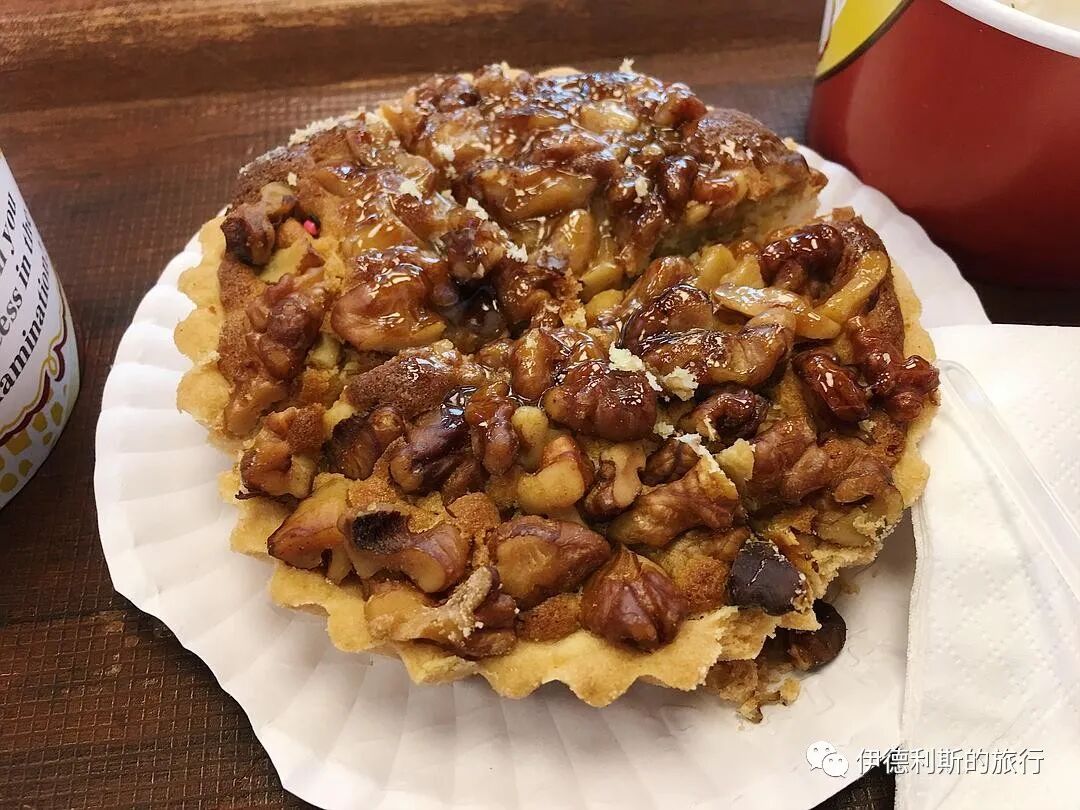
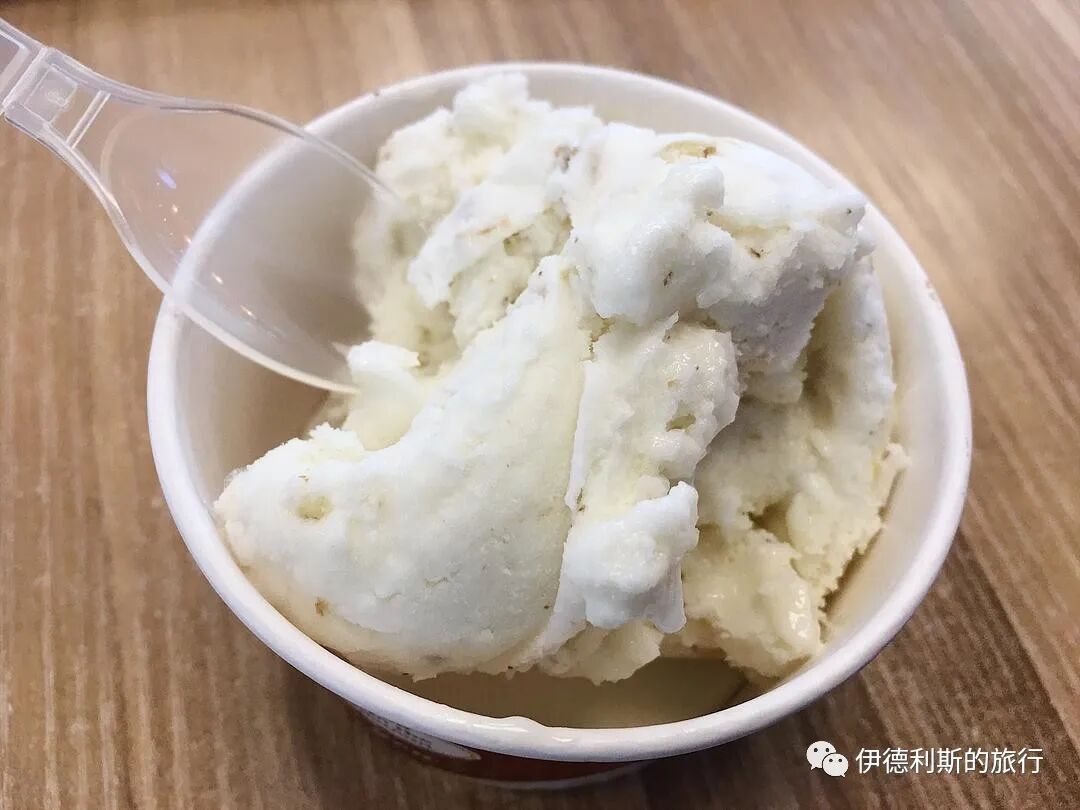
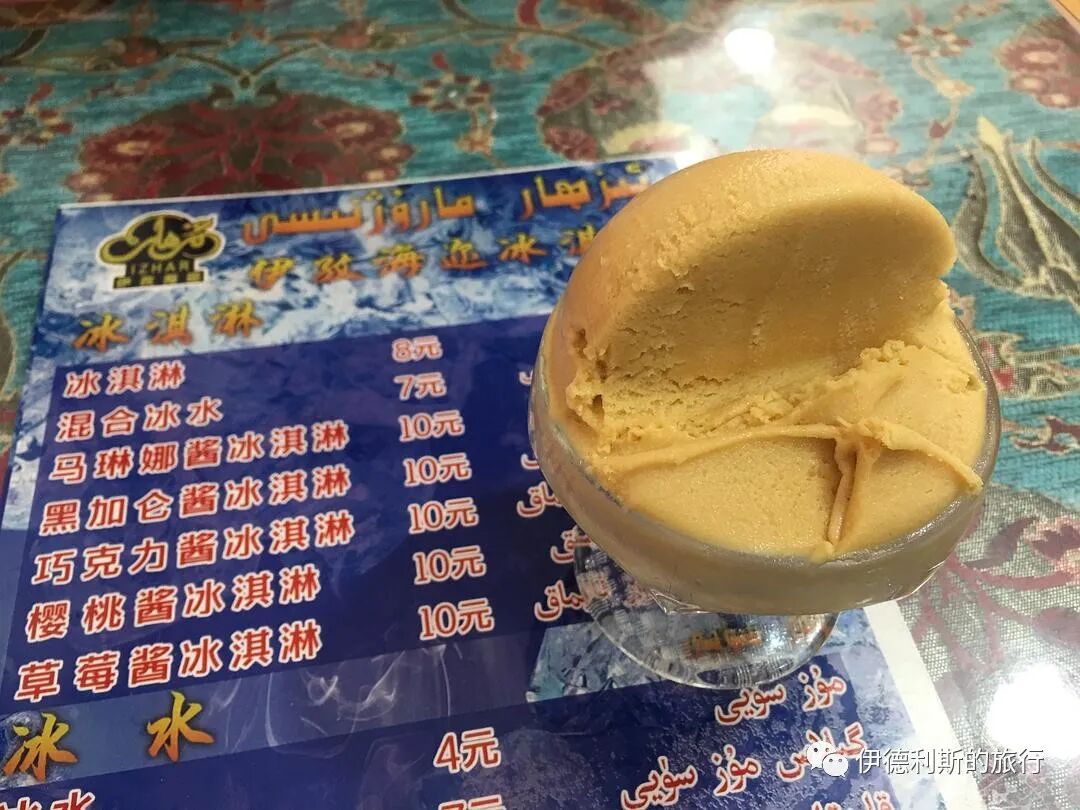
There is a dessert shop called Gülba xikar inside Arman Supermarket. I had almond and walnut ice cream there, plus a walnut pie. Everything was delicious and very cheap.
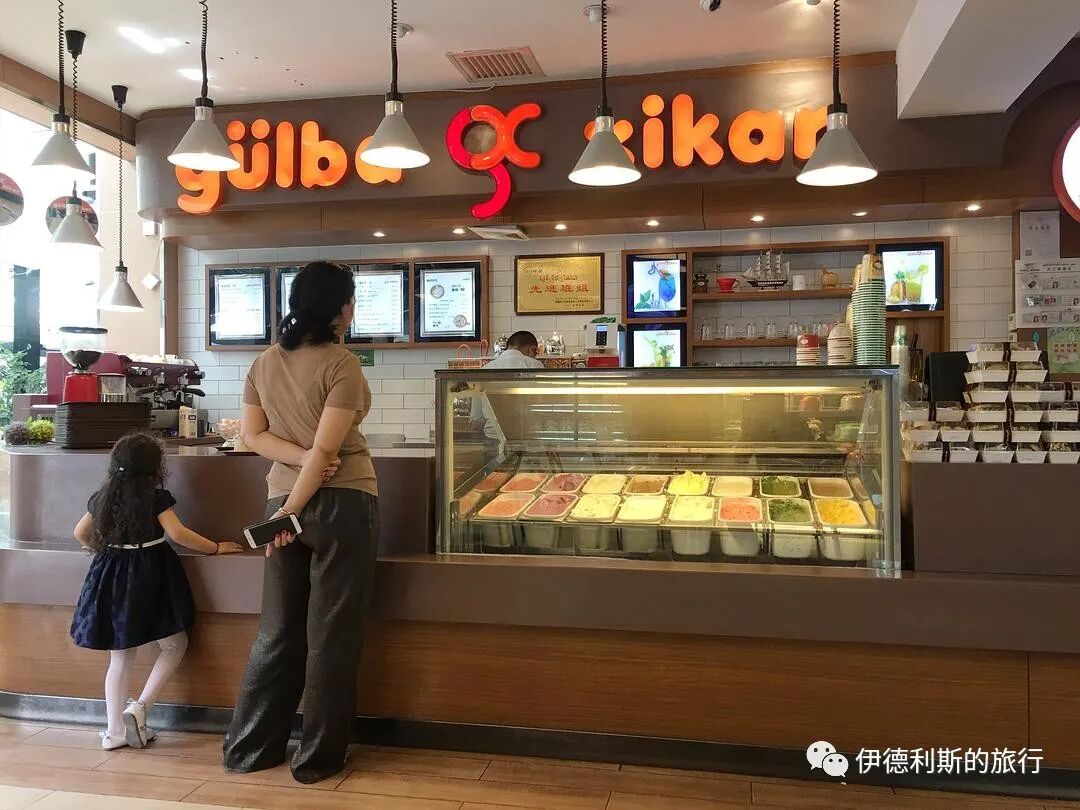

4. Other shops in Lingguan Lane
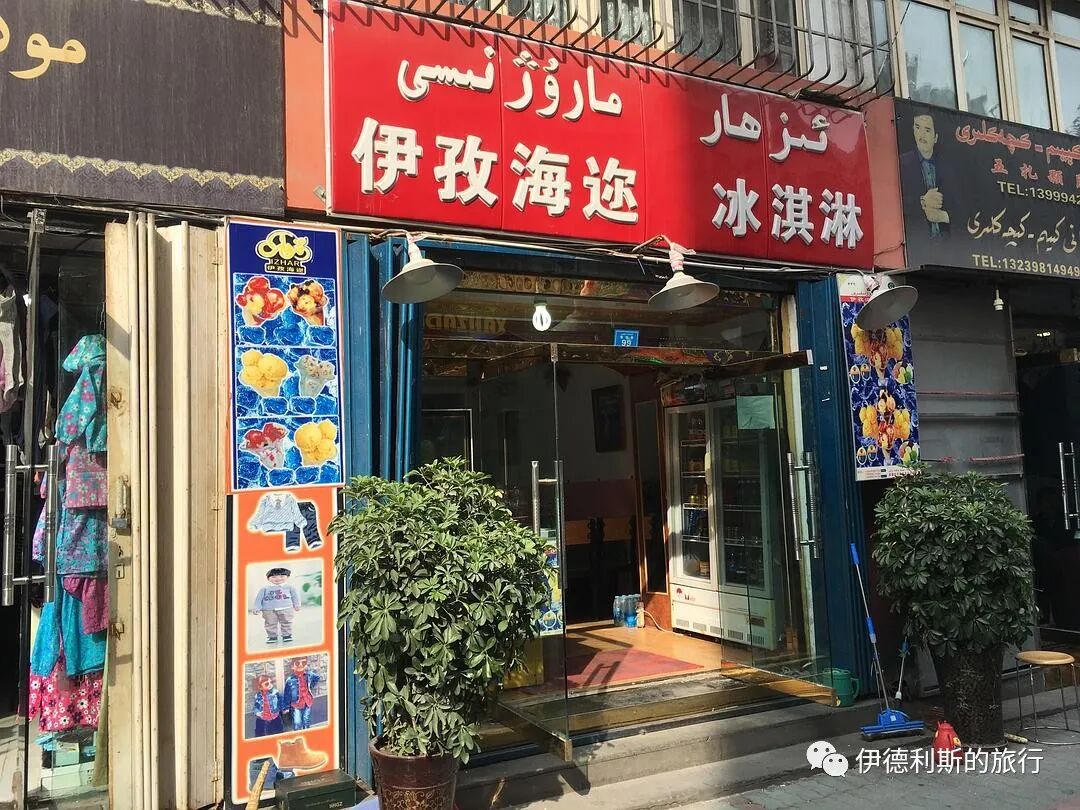
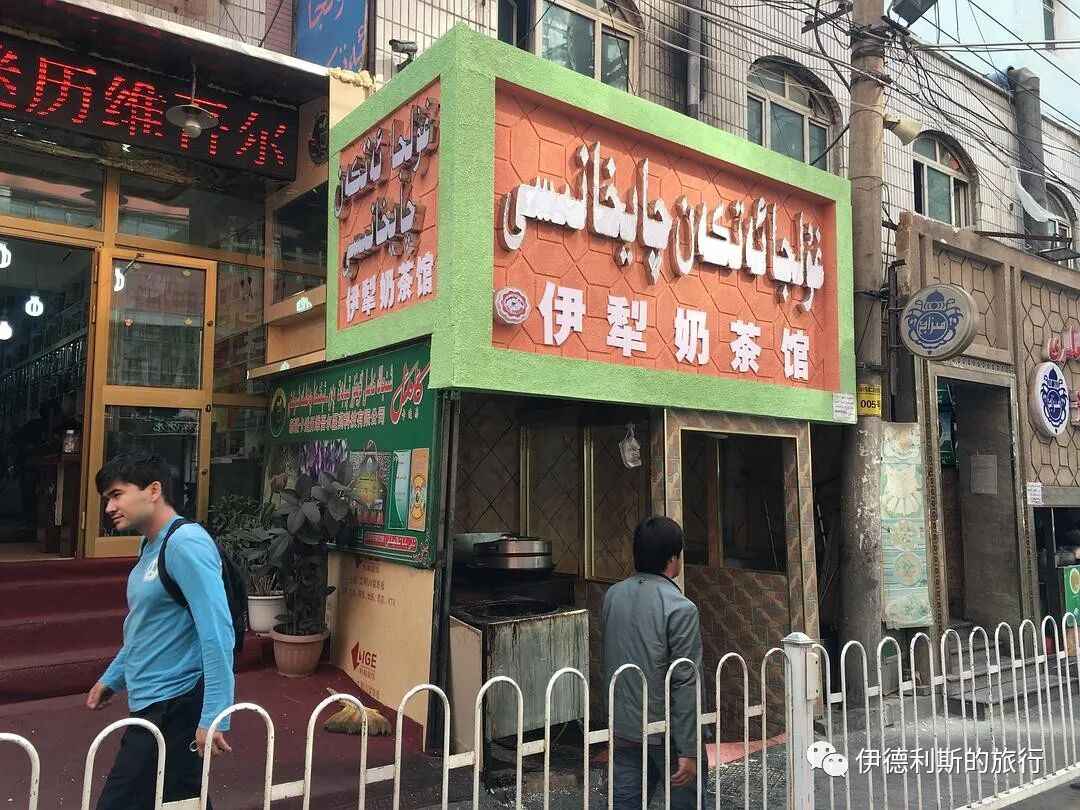
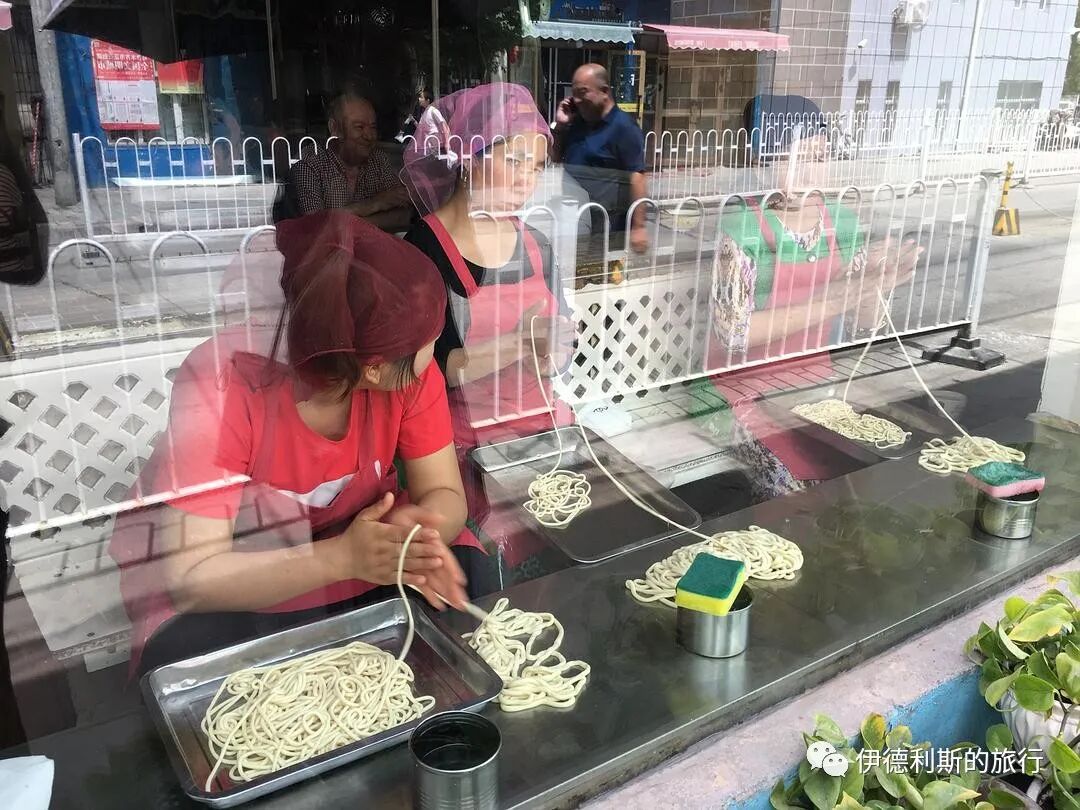
There are many other good places to eat on Lingguan Lane. I passed by the local-style hand-rubbed noodles (cuomian) shop this time, and the Yizihaier ice cream and Yili milk tea shop I visited years ago are still the same.
3. Shengli Road
Shengli Road is south of Erdaoqiao, at the east end of Lingguan Lane, and it also has plenty of good food.
1. Babahan Food World
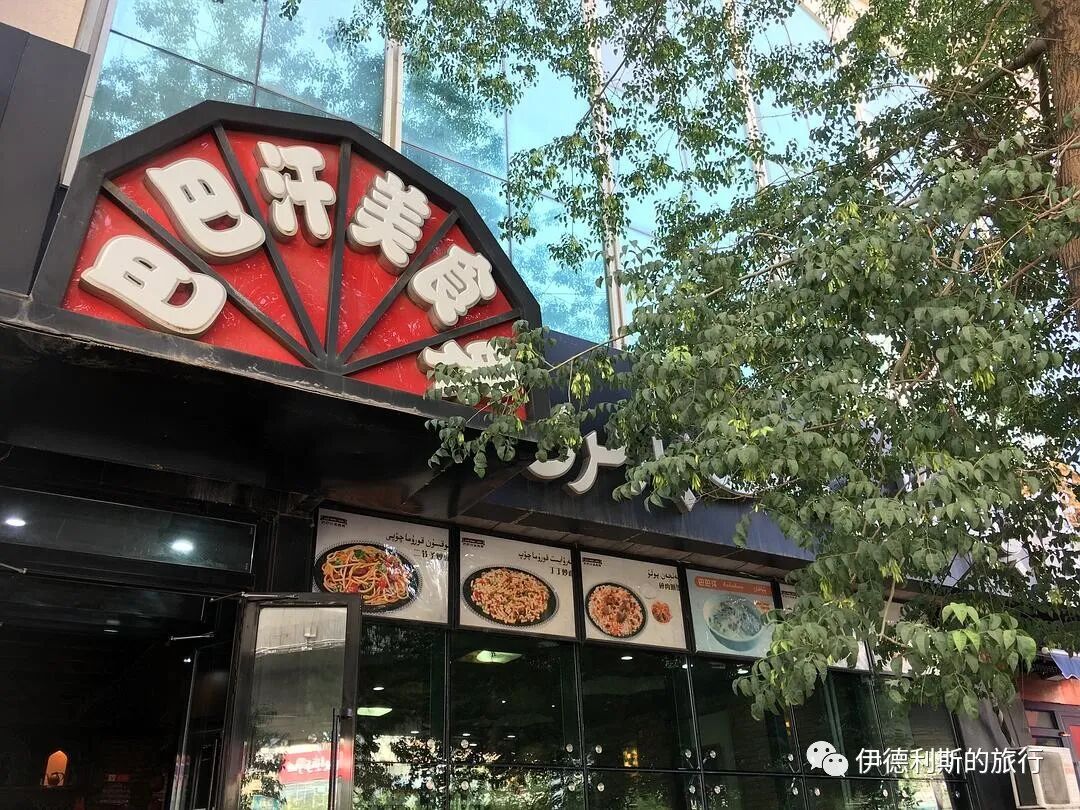
The breakfast at Babahan Food World on Shengli Road and Lingguan Lane is excellent. This time, I had barley porridge (yarma) and milk-topped flatbread (naizi nang) soaked in milk tea.
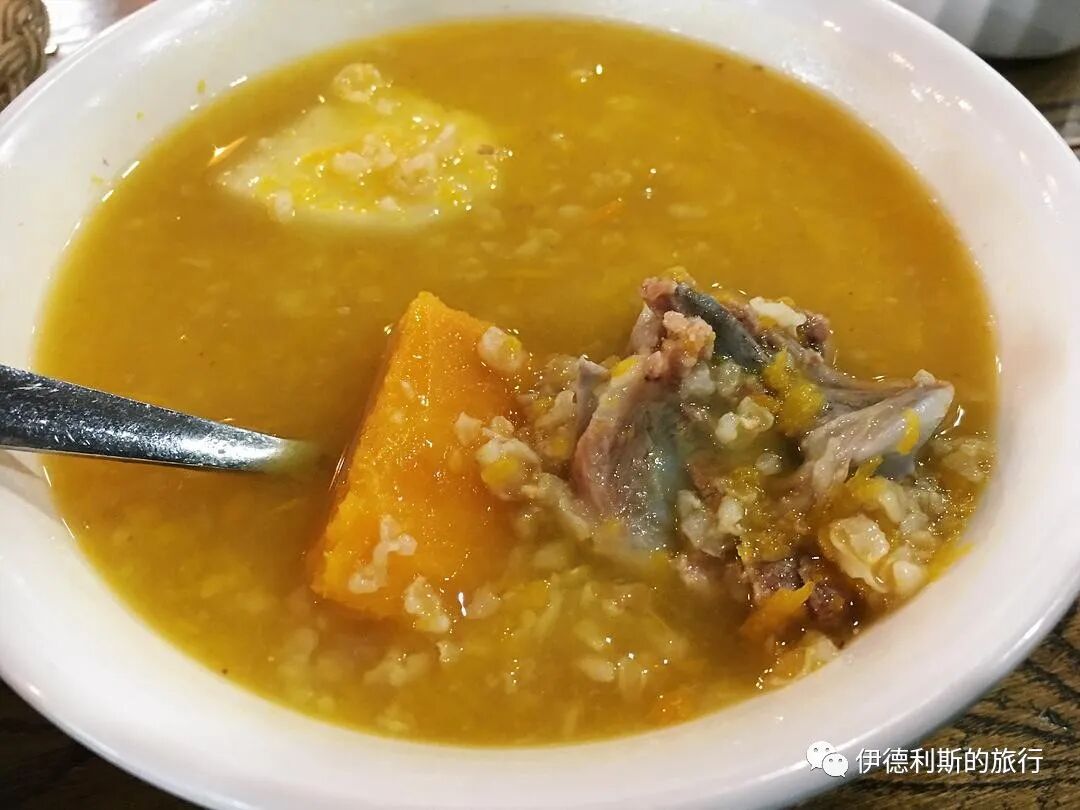
Barley porridge (yarma).
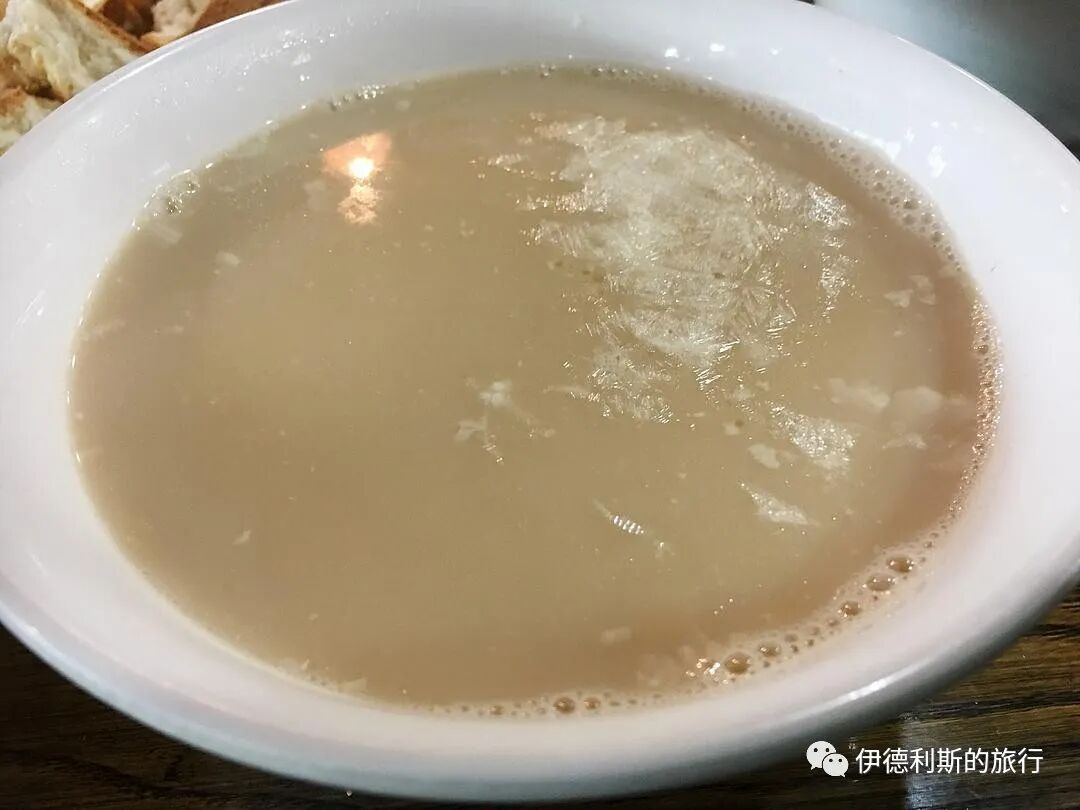
Milk tea.
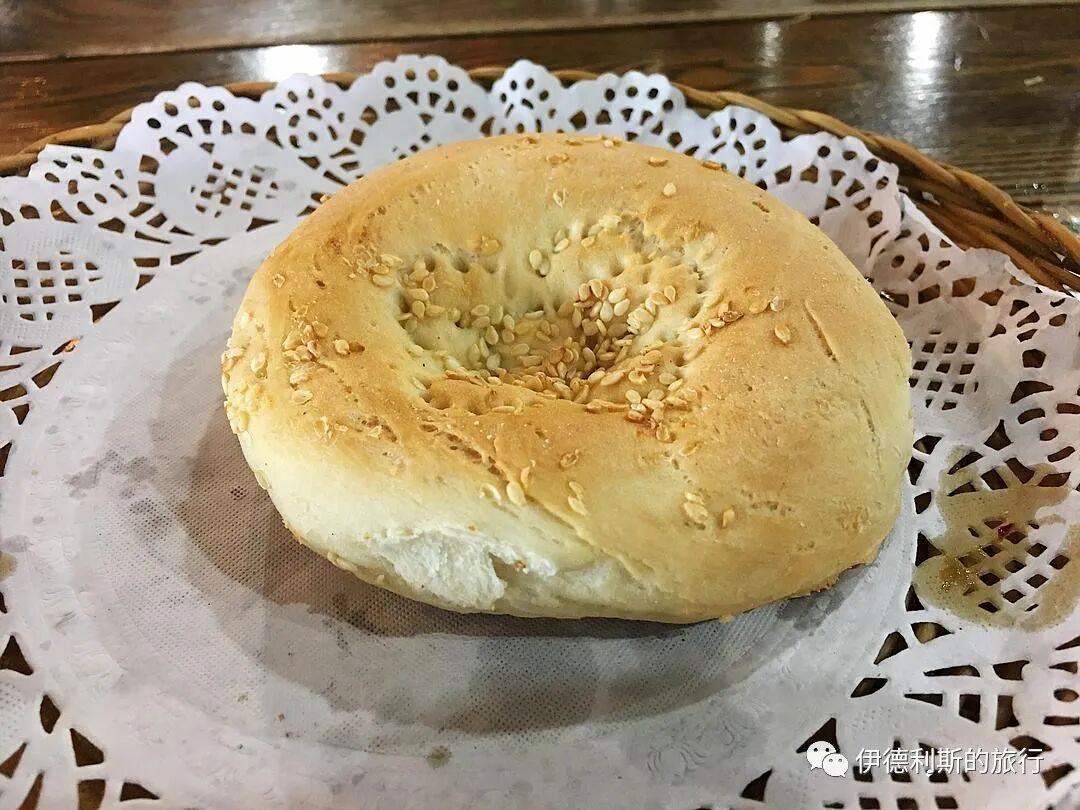
Milk-topped flatbread (naizi nang).
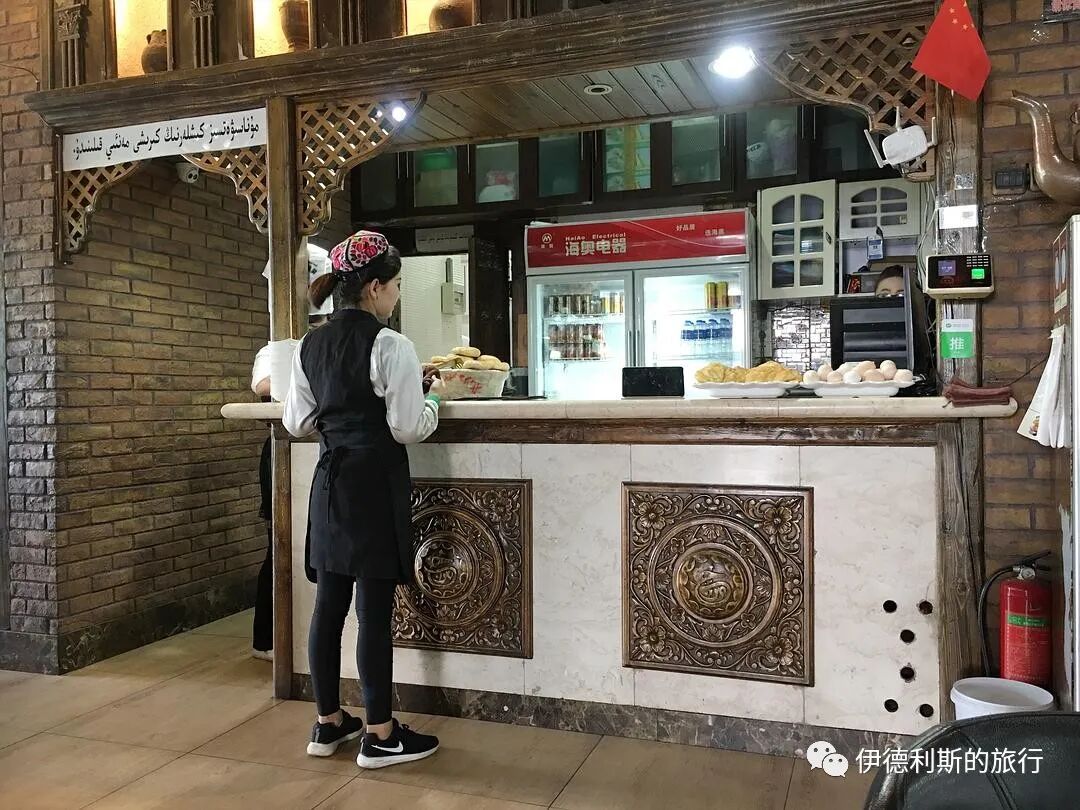
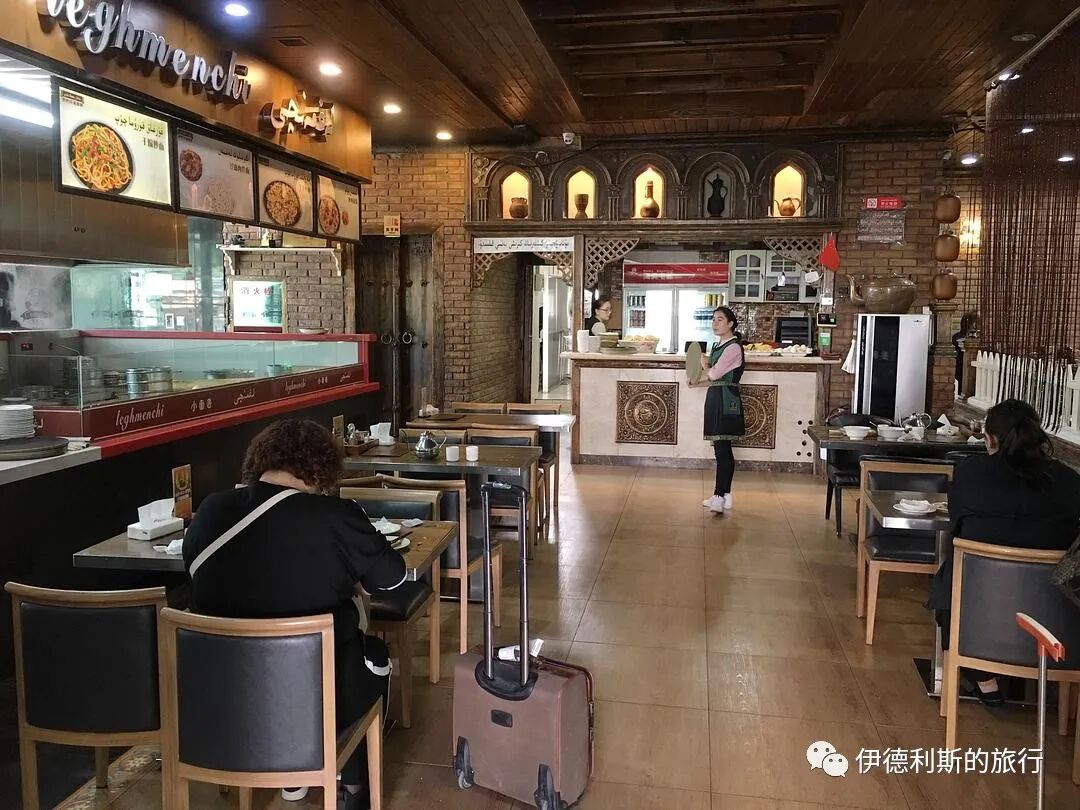
2. Marhaba Tatar Pastries
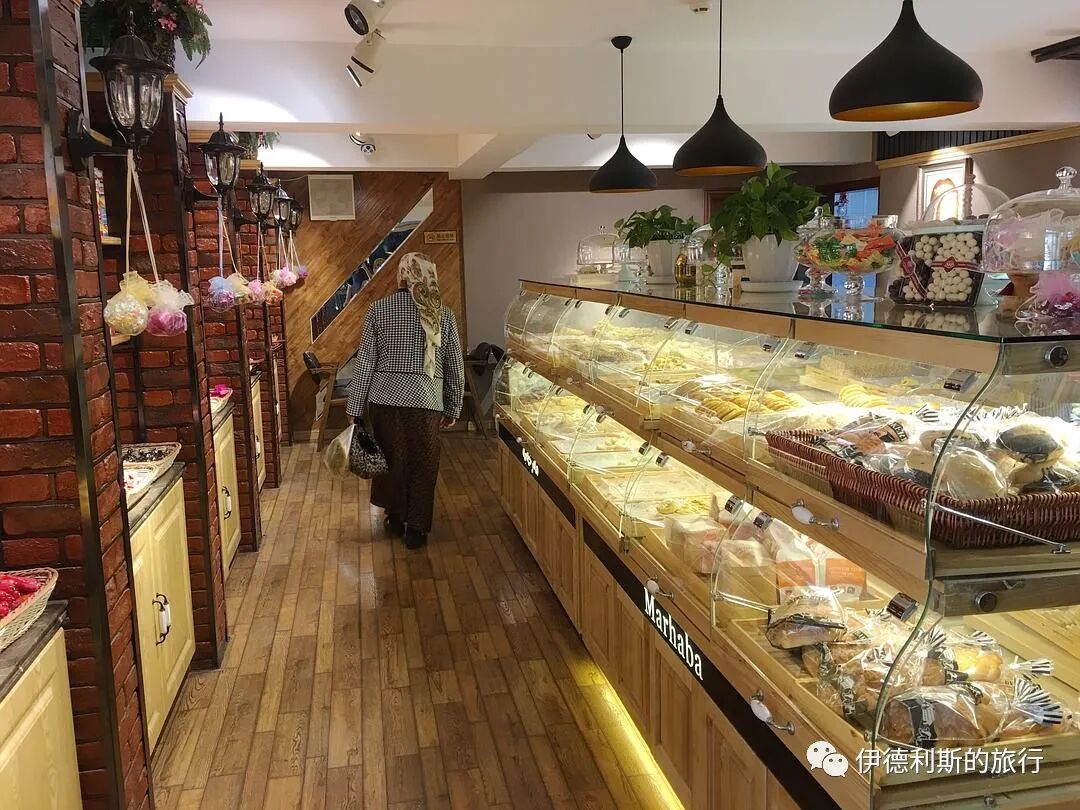
Marhaba Tatar Pastry Shop opened in 1998. The original shop was on Heba Third Lane, south of Lingguan Lane, and they later opened a new location at 454 Shengli Road. The founder of the shop is Saweige Musabayufu, born in 1949. The shop is named after her mother, Marhaba, who taught Saweige how to make Tatar pastries.
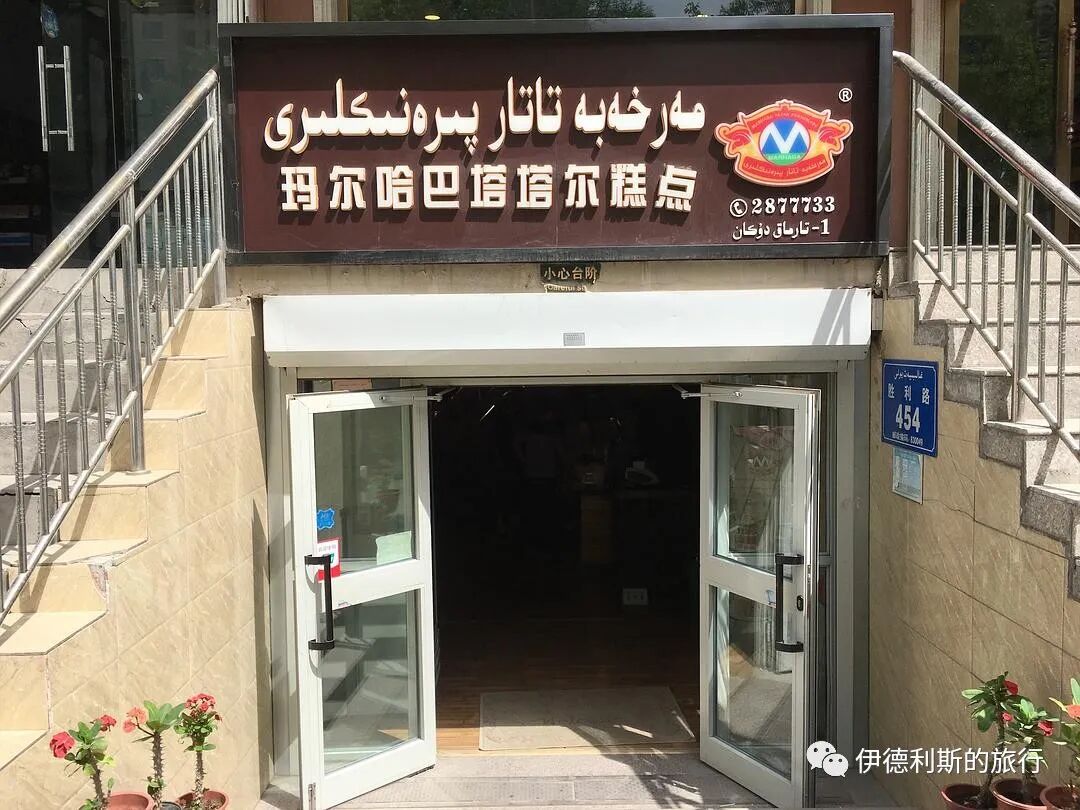
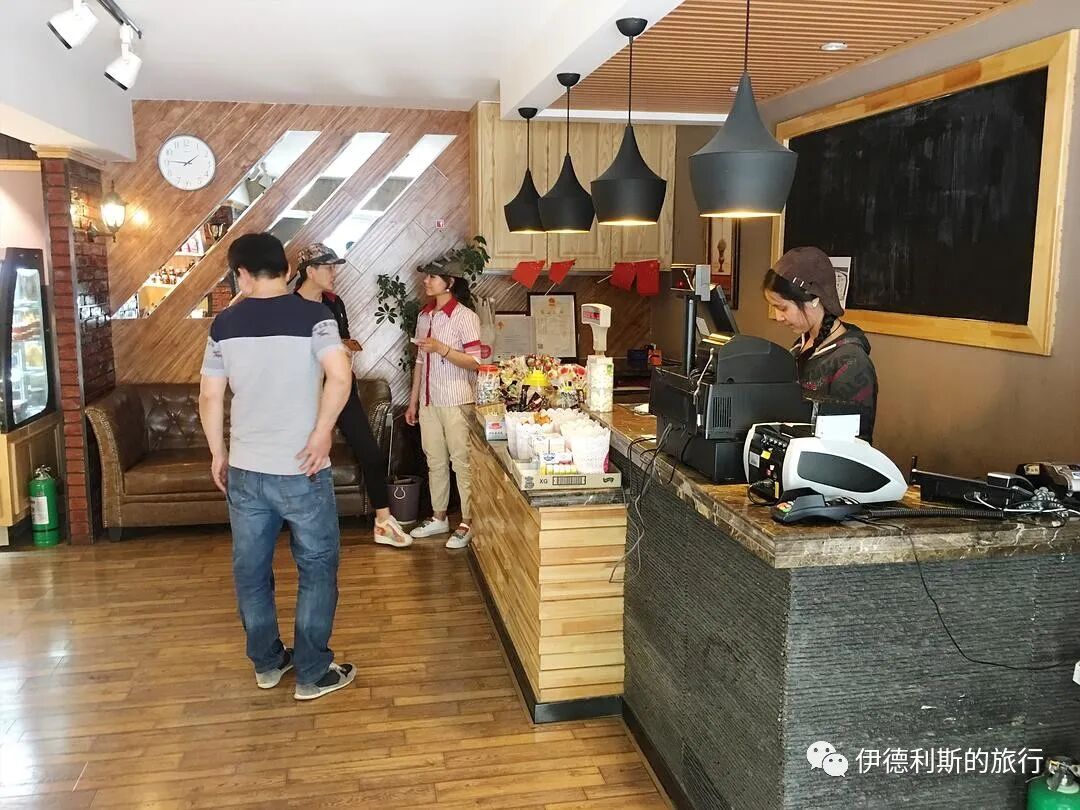
The girl with the red collar in the picture is Saweige's daughter, Fikelati.
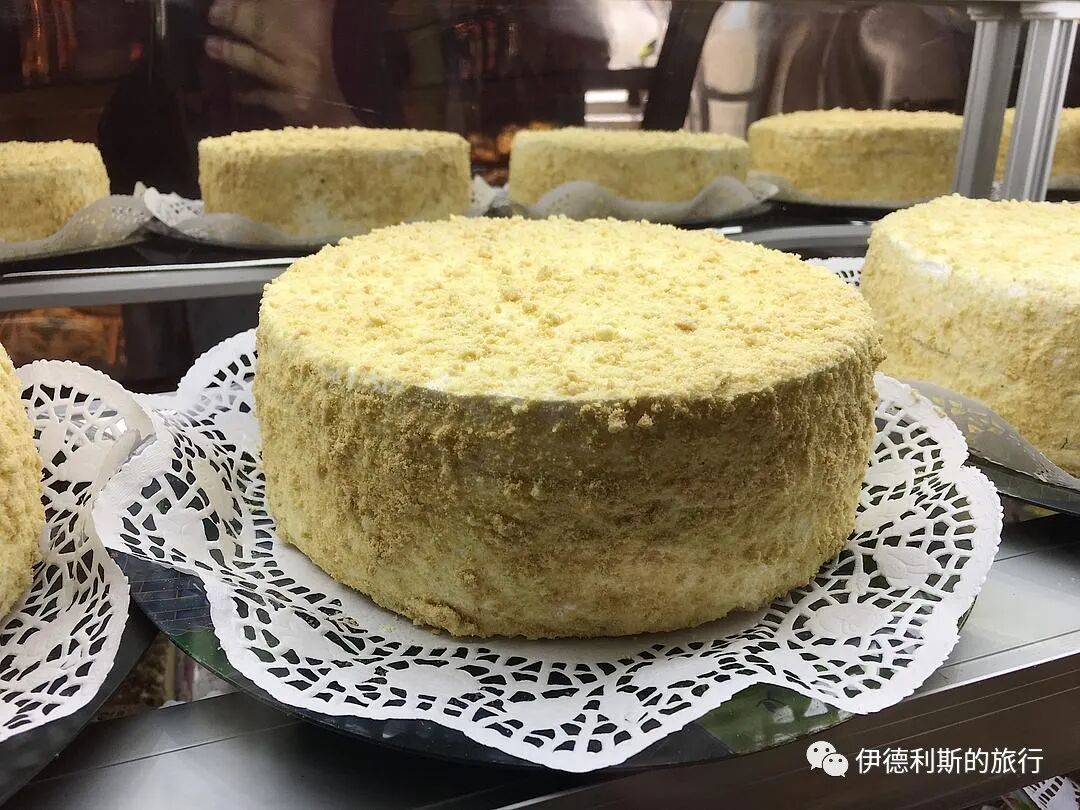
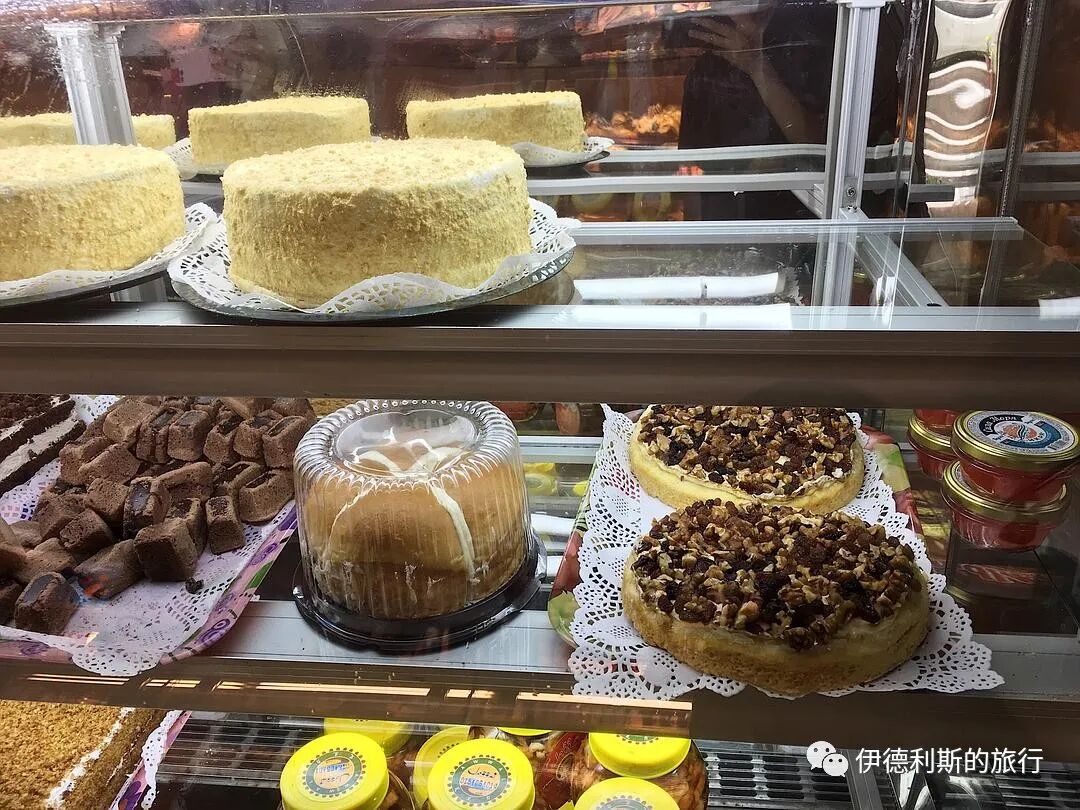
Tatar cream cake made with six layers of sweet cake and six layers of cream.
Delete
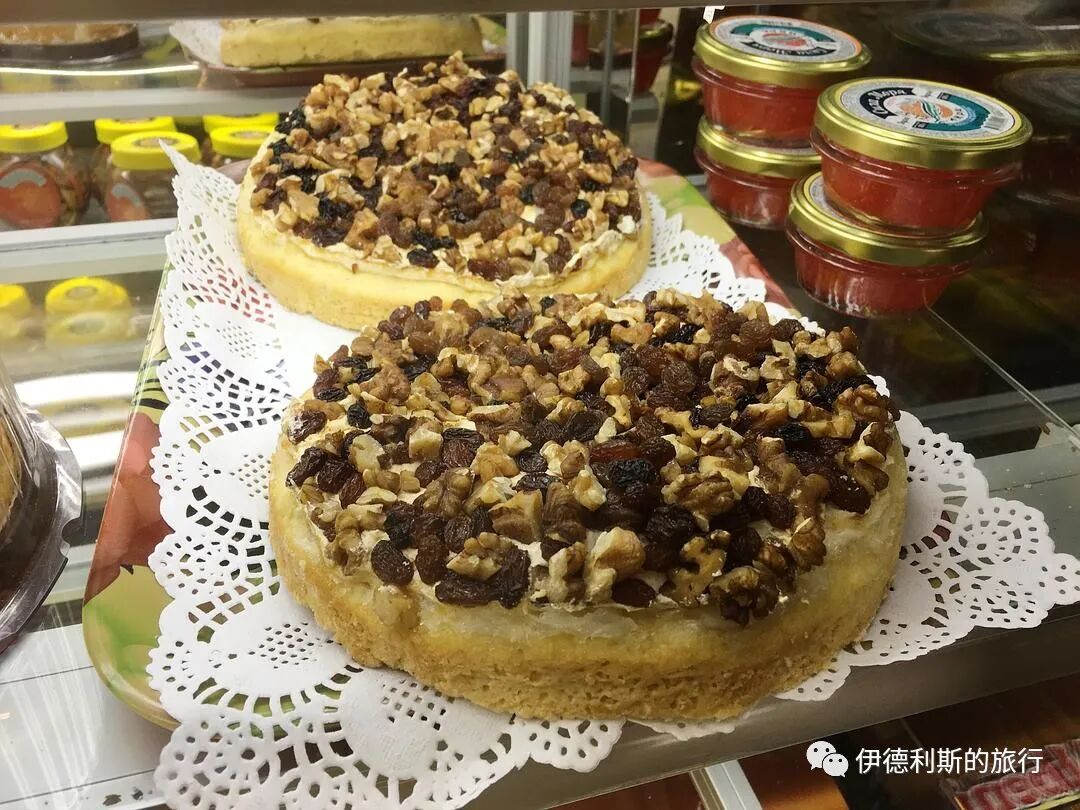
Walnut dried fruit pie.
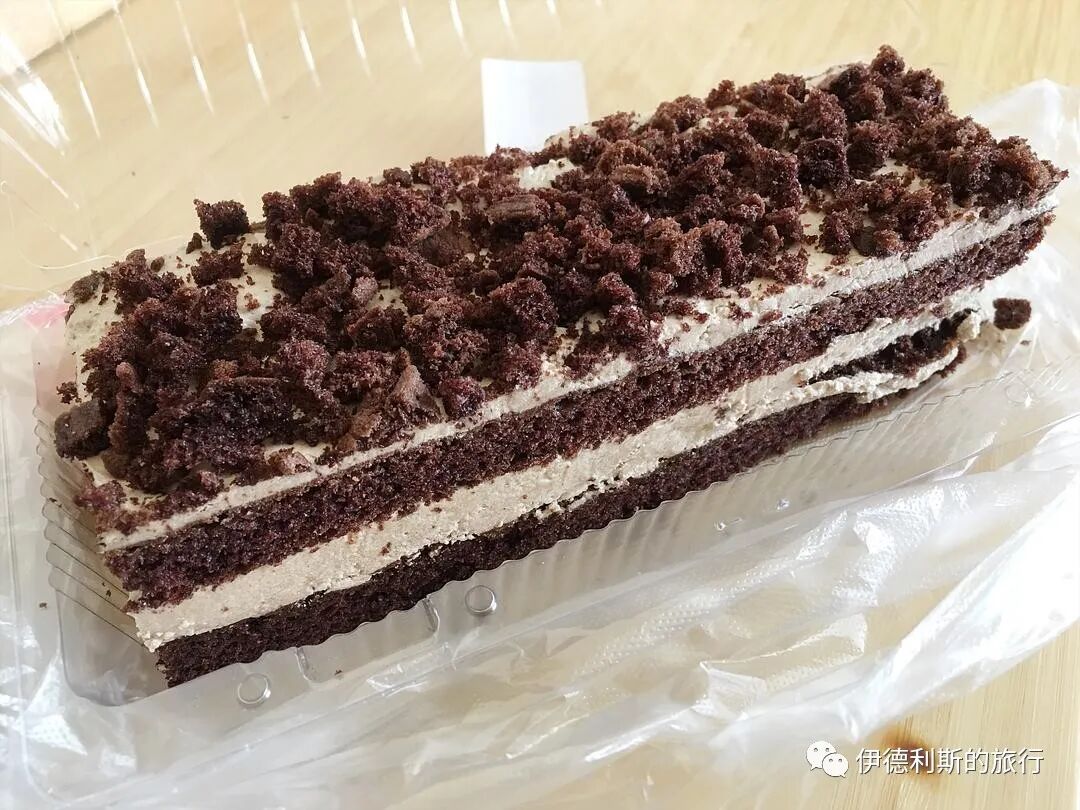
Black Forest chocolate cake made with ghee.

Black-eyed apricot jam cake.
4. Dawan
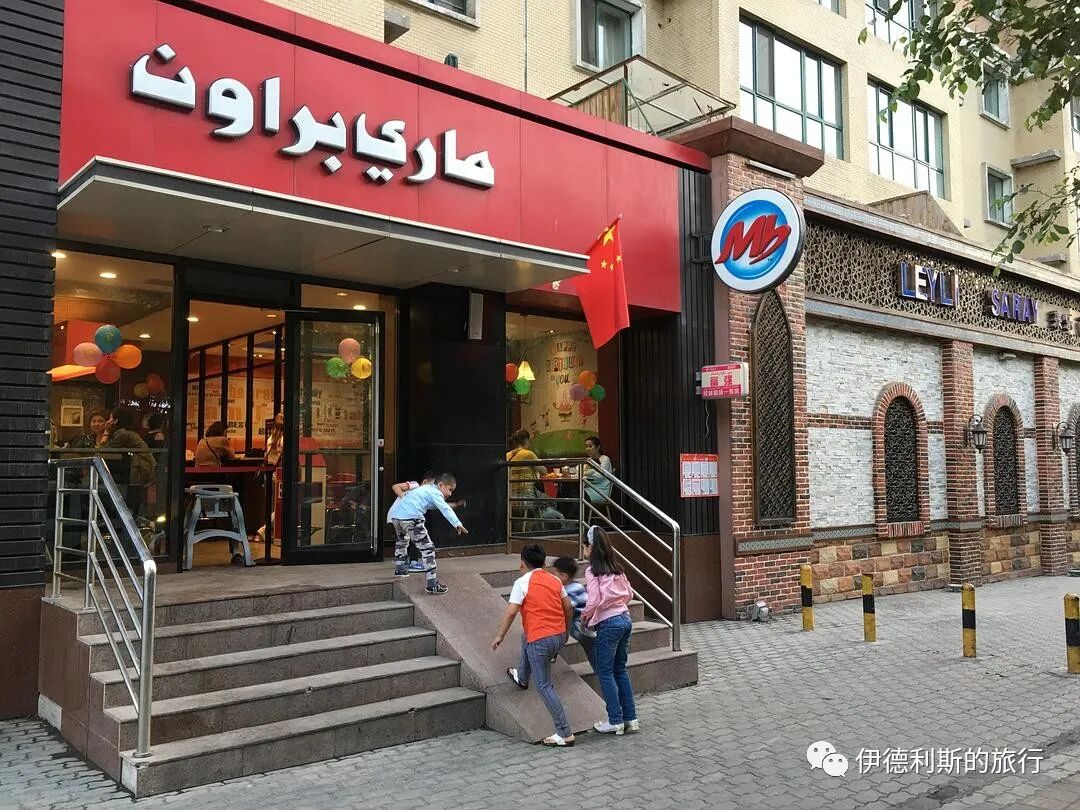
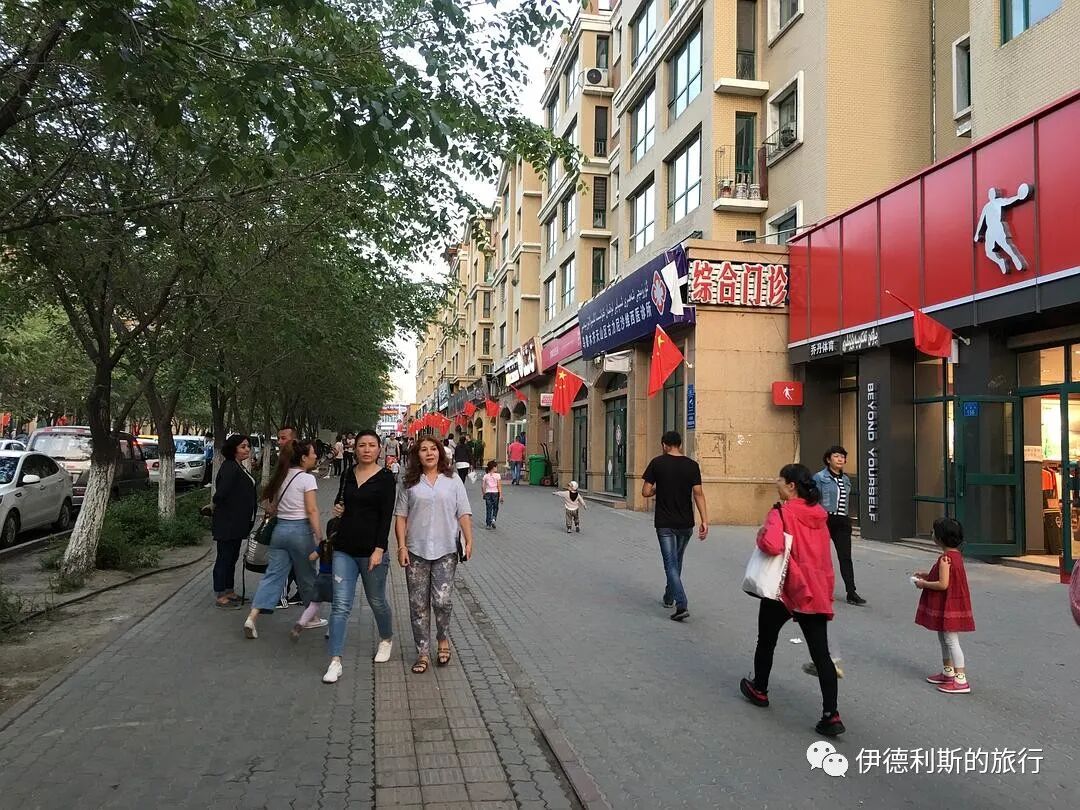
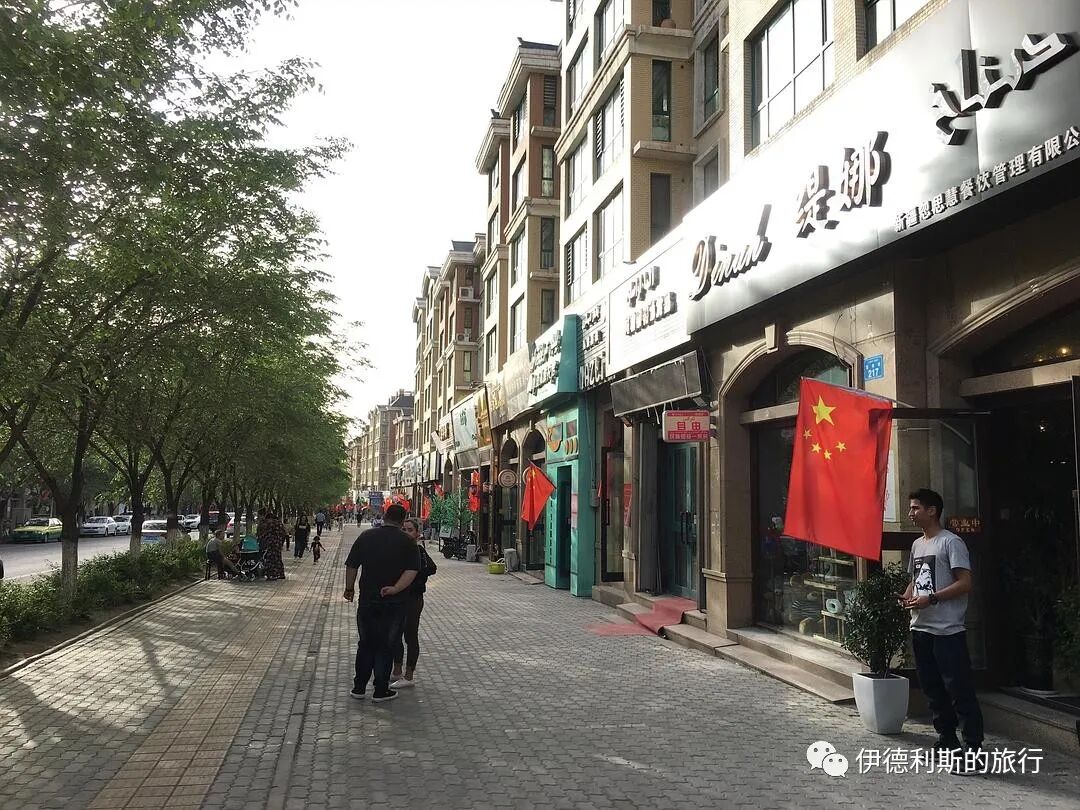
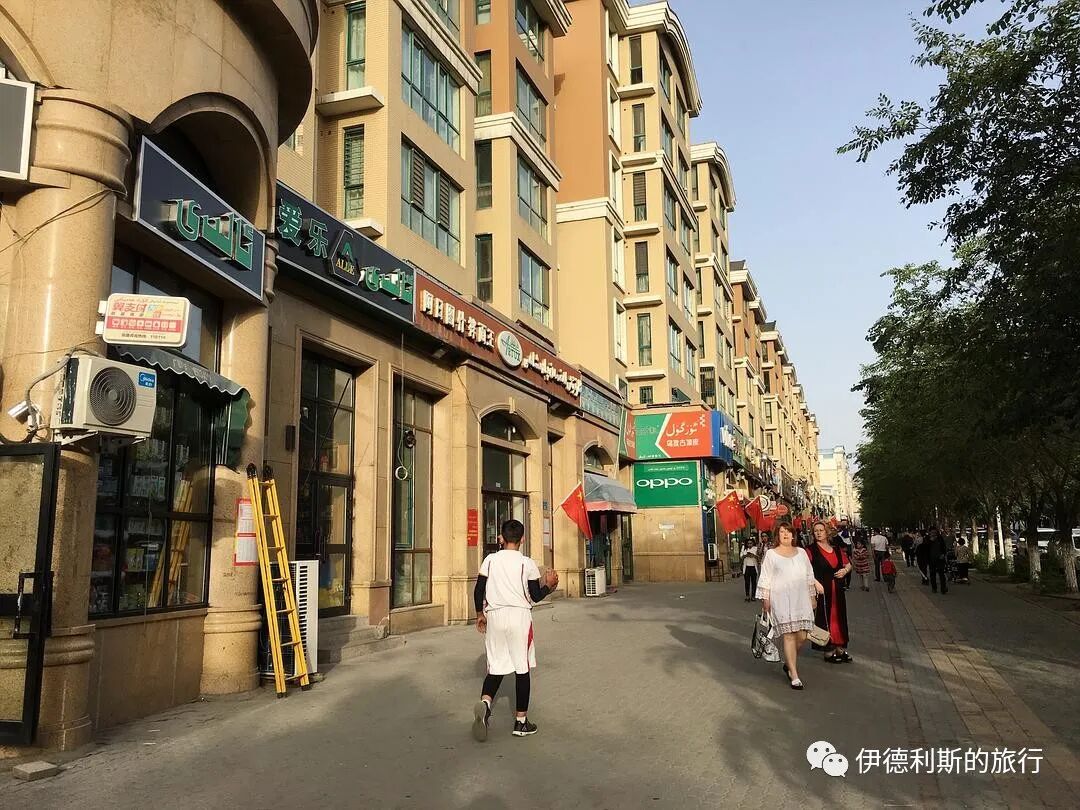
Dawan is in the southeast of Urumqi's old city. I mainly walked around the Oujing Mingyuan residential area. It has a nice environment and good food, which is a sharp contrast to the heavily demolished and renovated Erdaoqiao and Nanguan areas. It is truly a hidden paradise in the city.
Street view of Oujing Mingyuan in Dawan.
1. Ailuo Family Coffee
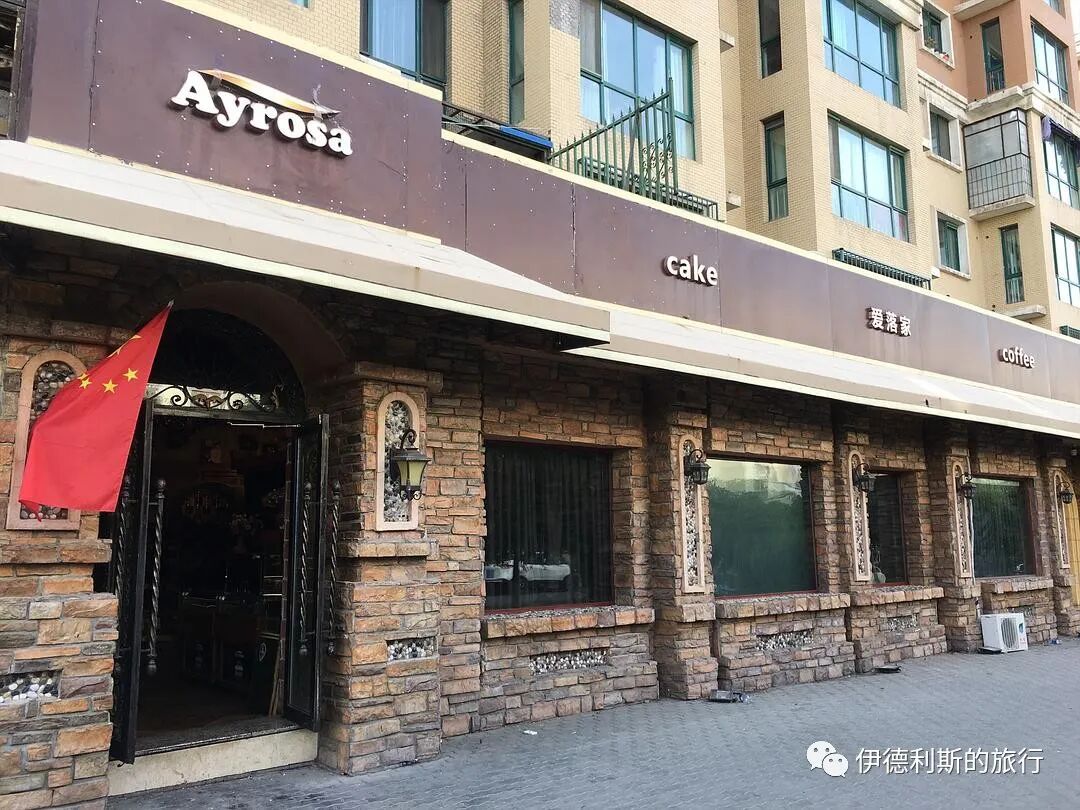
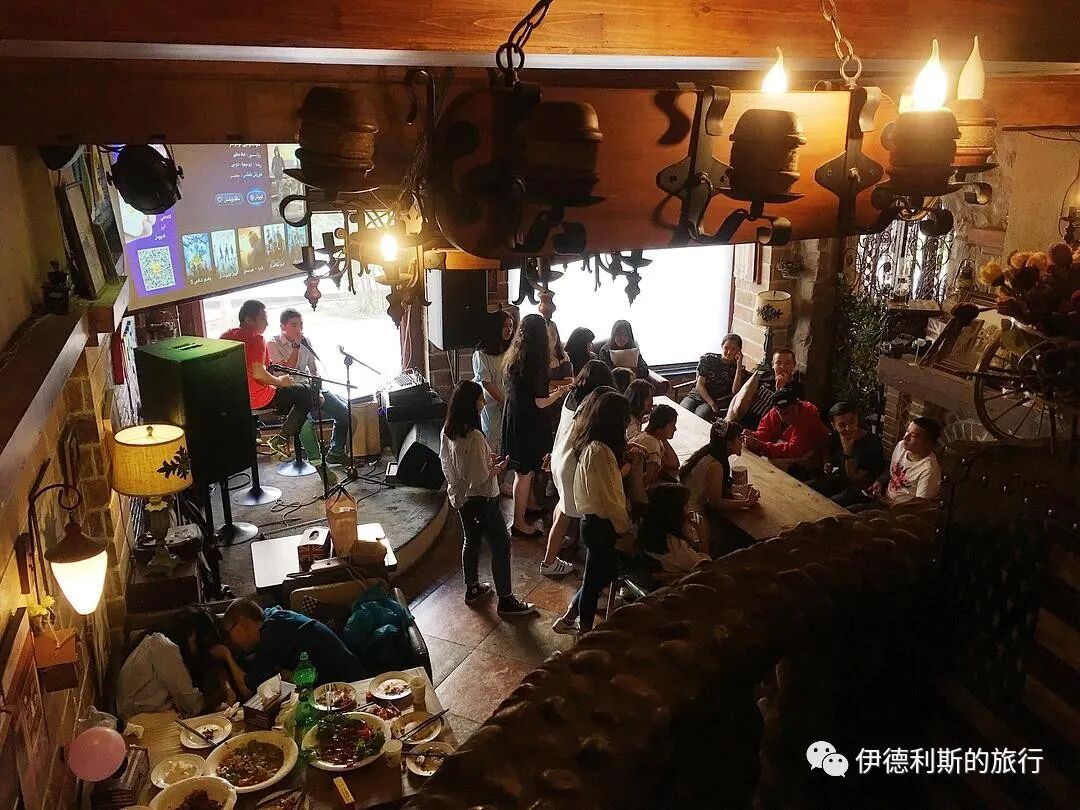
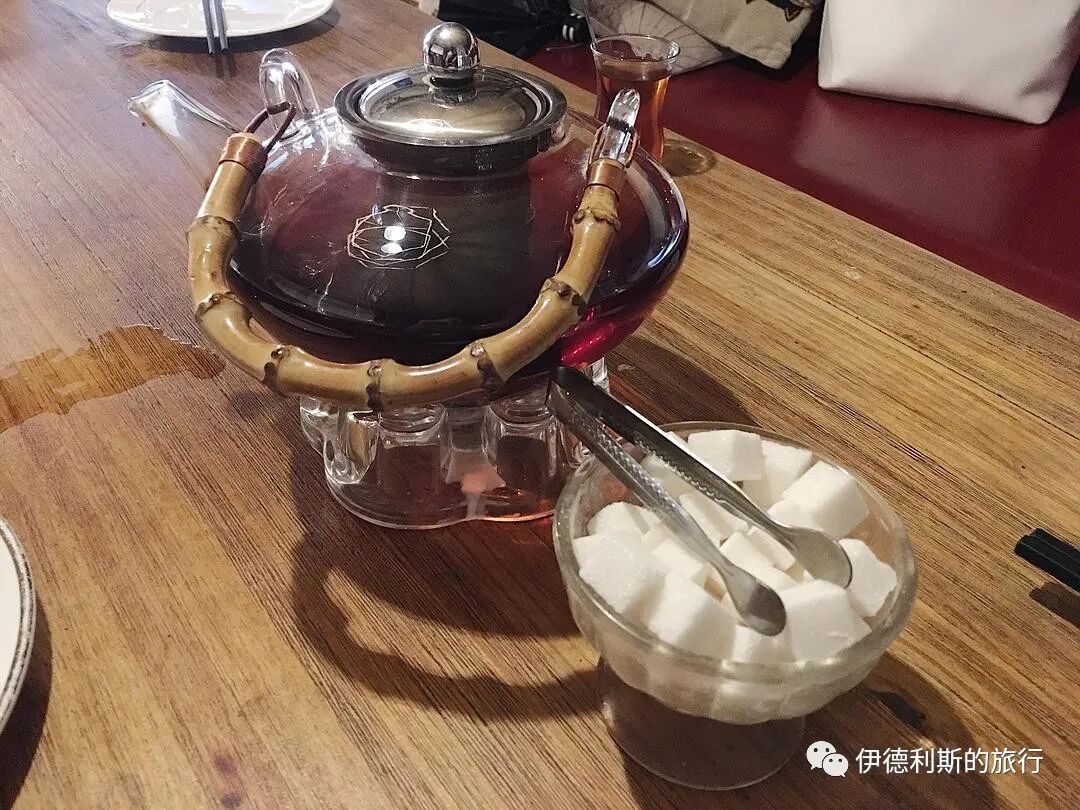
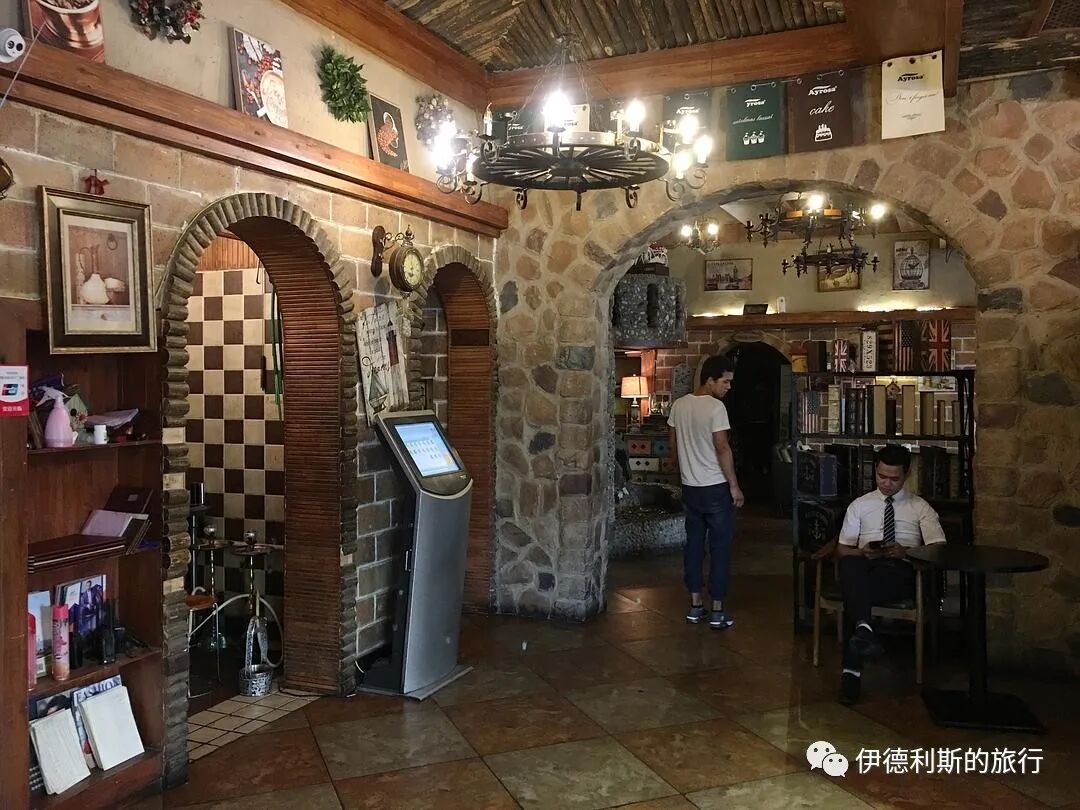
It was not yet dinner time when I arrived in Dawan, so I first had some Turkish black tea at Ayrosa Coffee. Downstairs, many young people were celebrating a birthday.
2. Pairhan Imported Goods Store
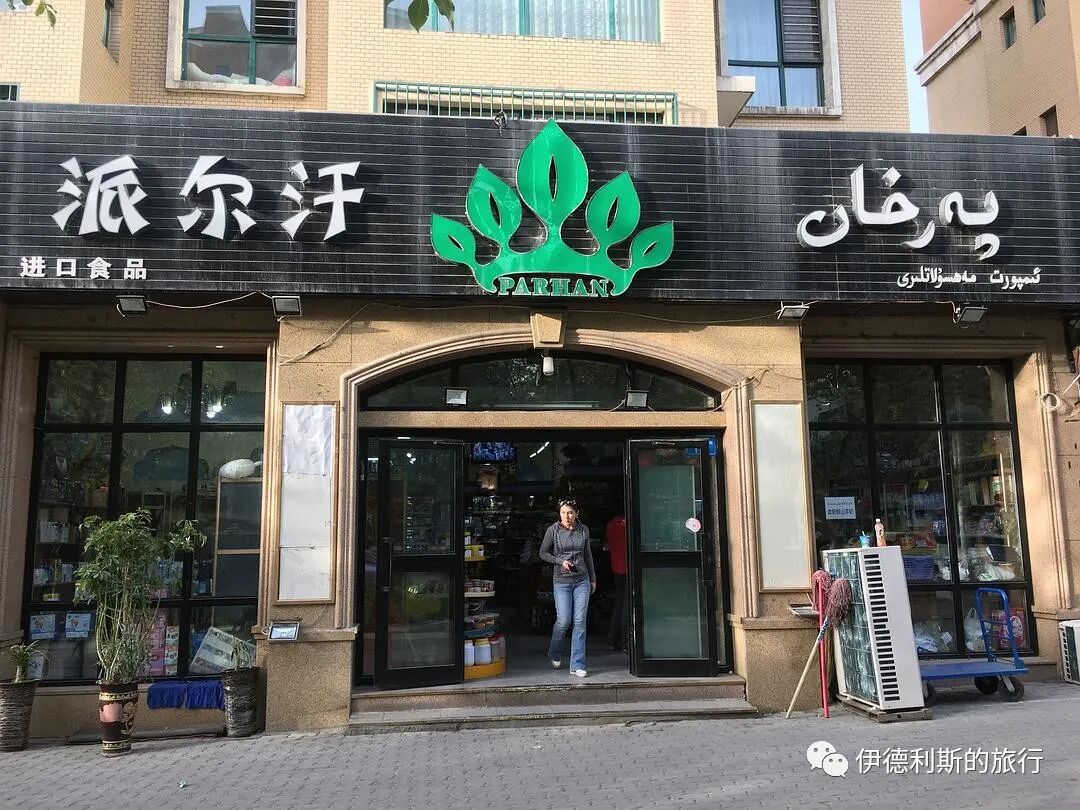
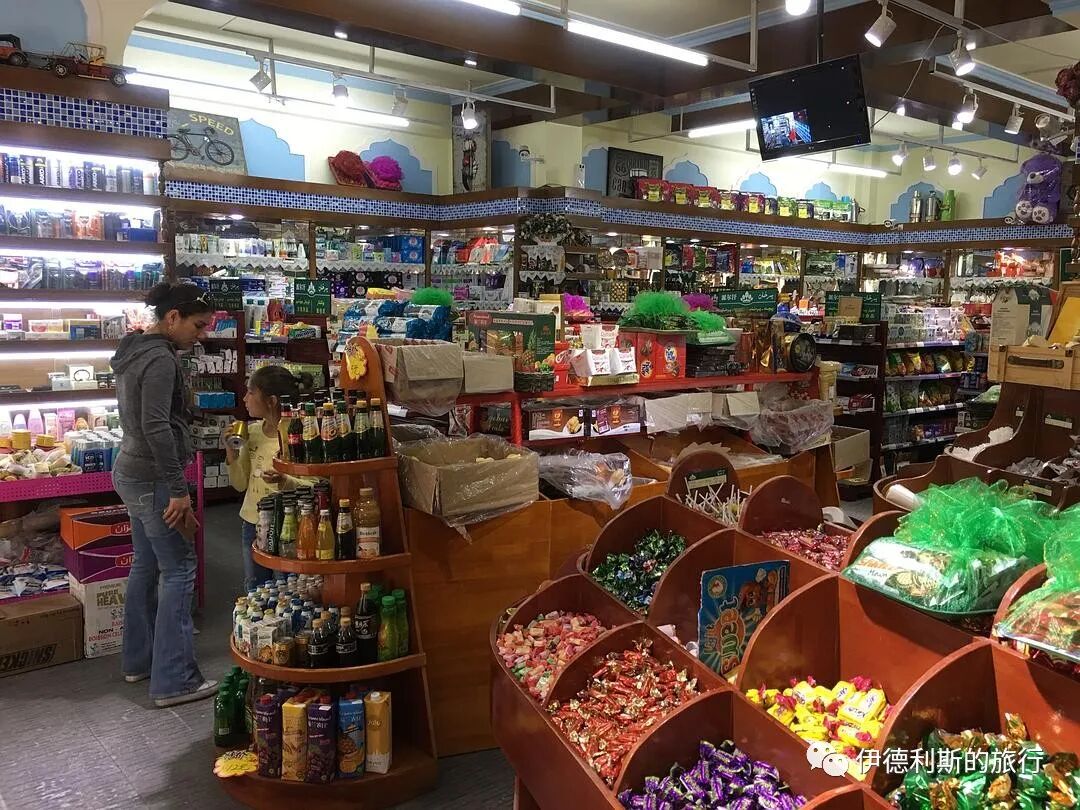
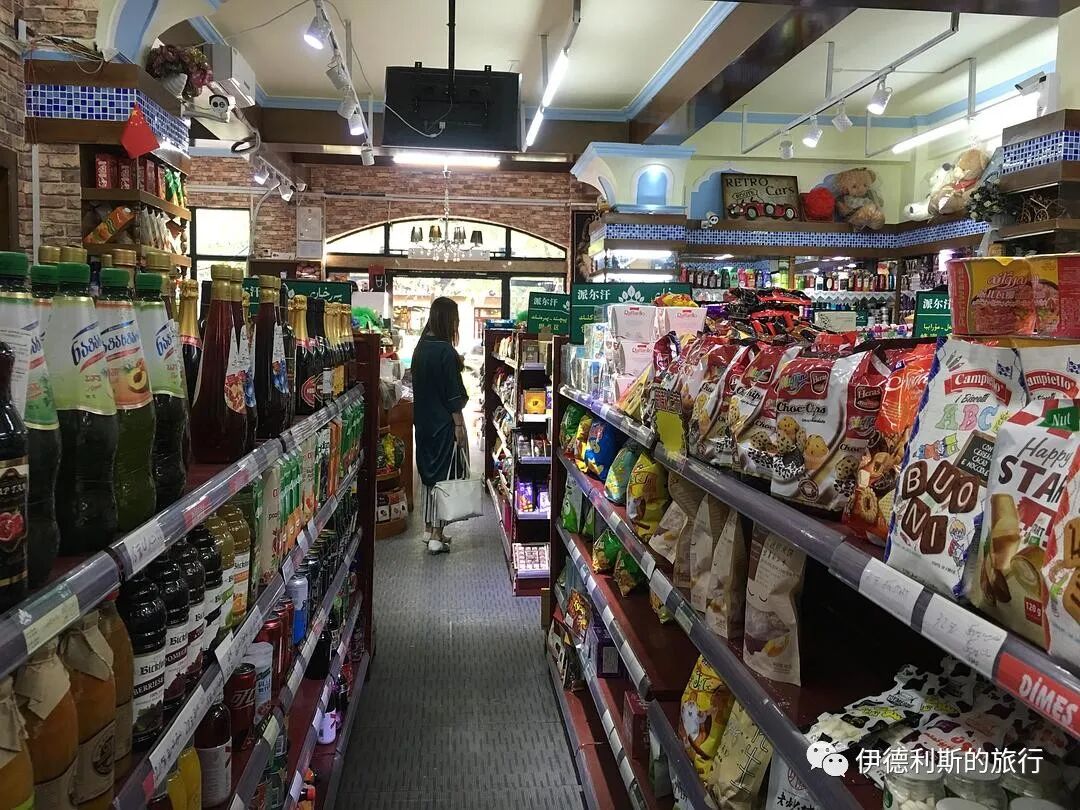
Pairhan is a main imported goods supermarket in Oujing Mingyuan. They have a lot of items, and I bought some chocolate from Kazakhstan there.
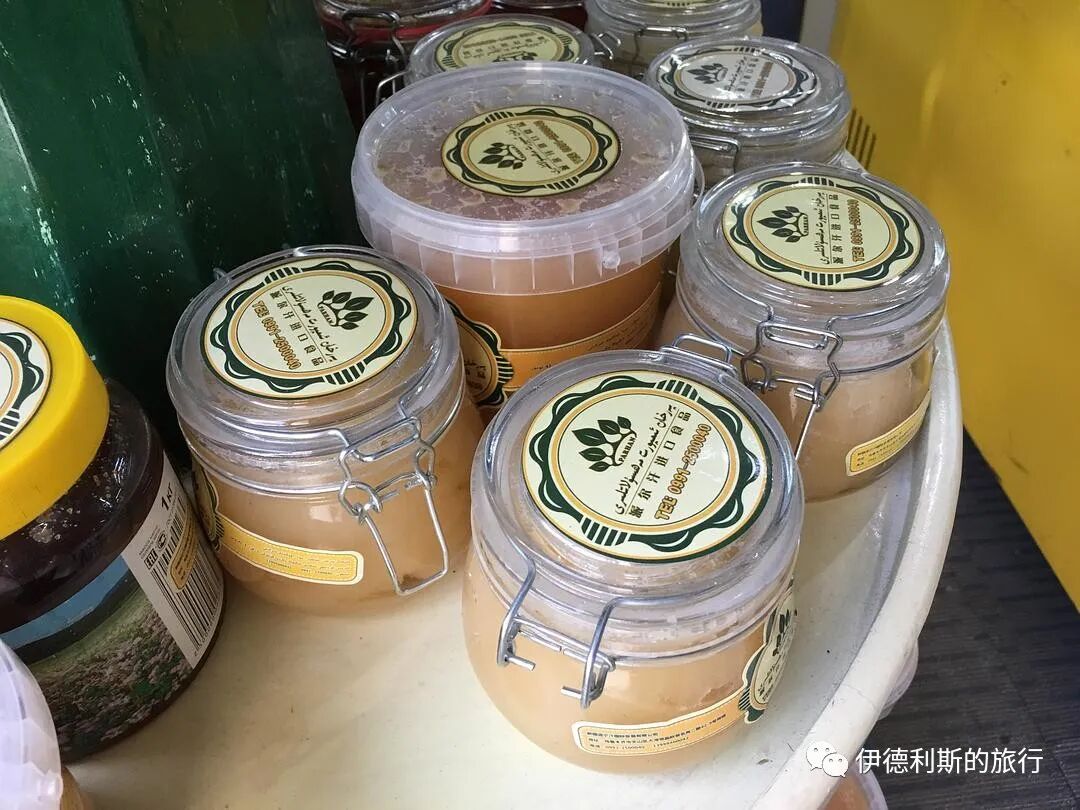
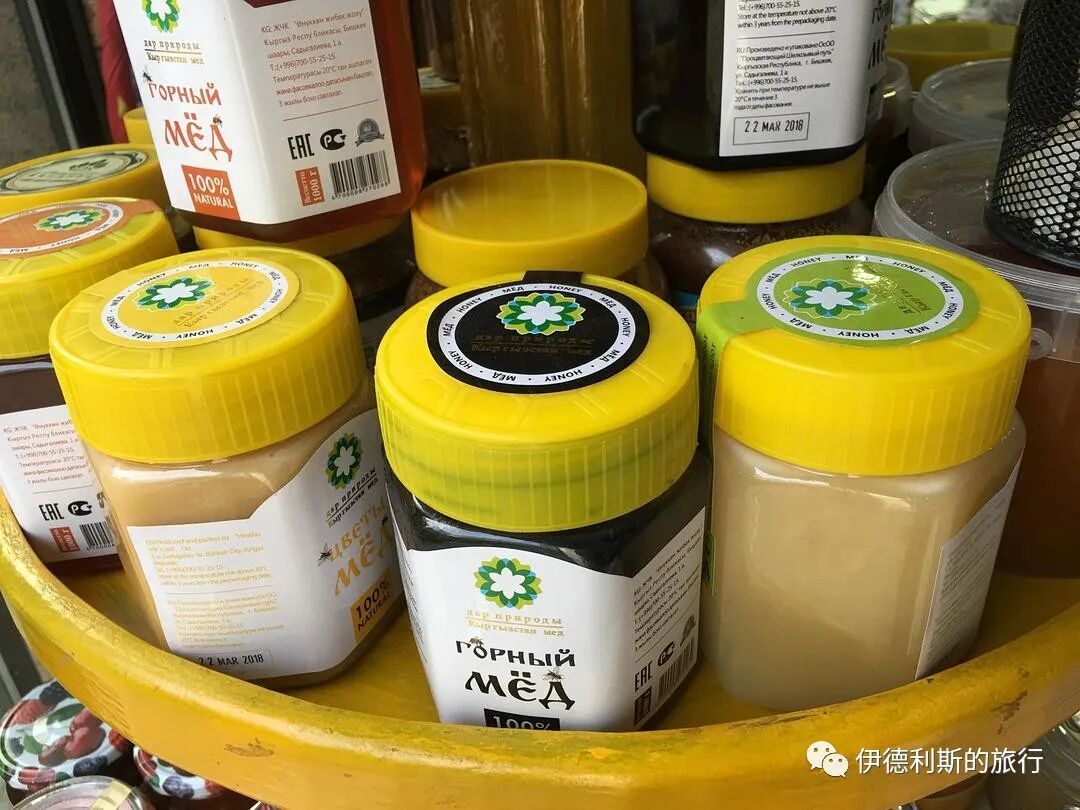
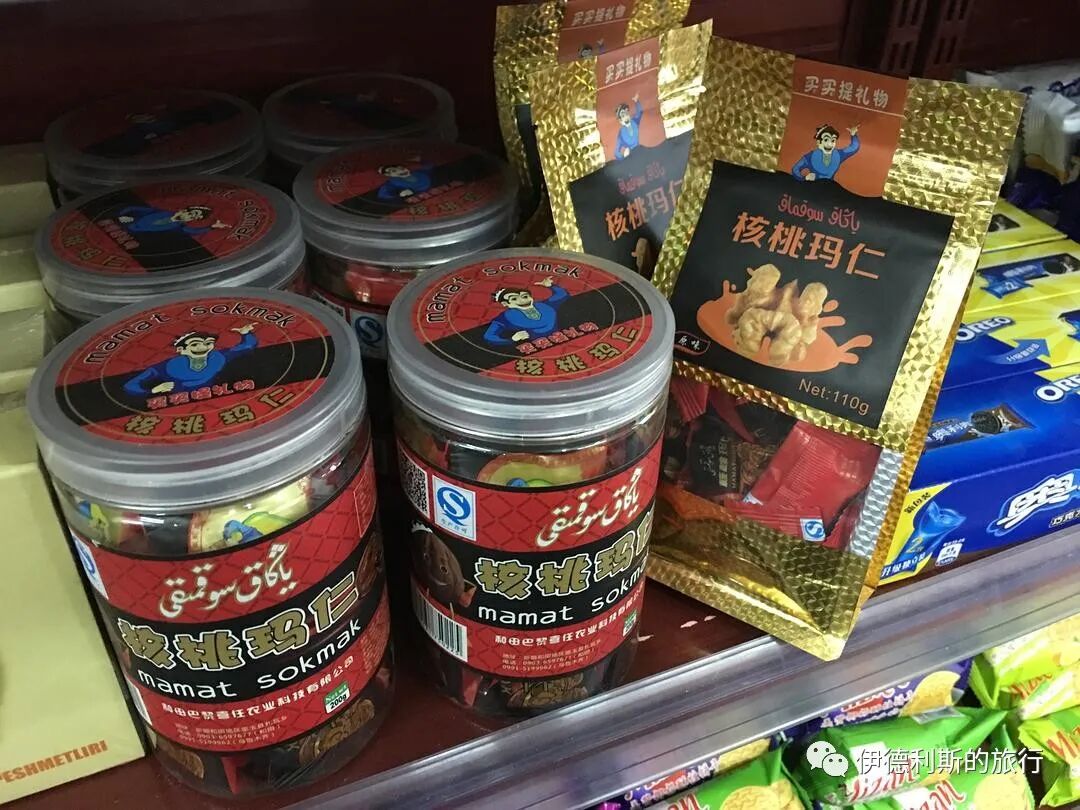
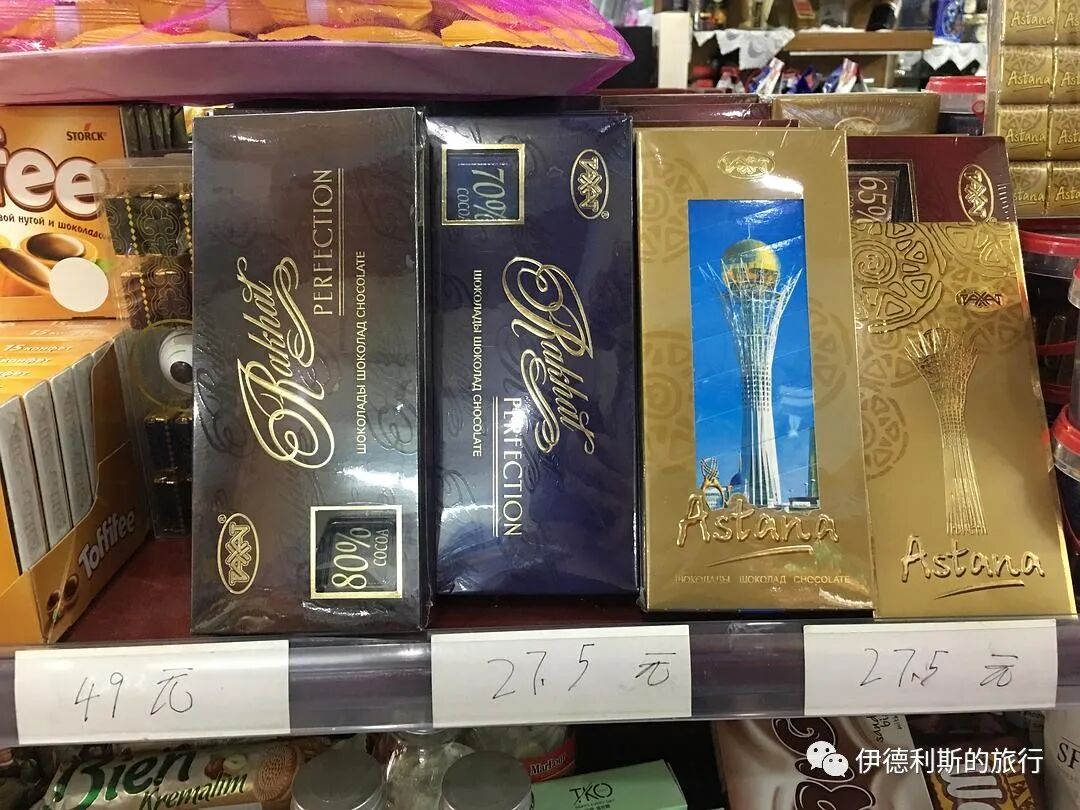
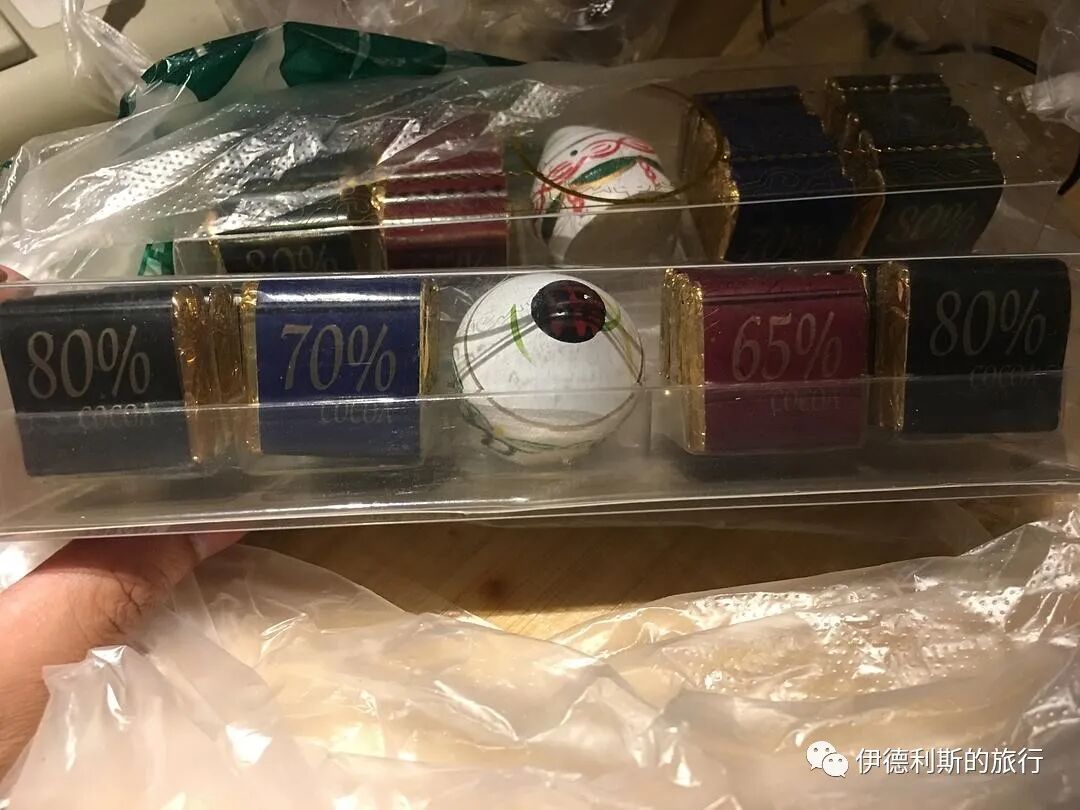
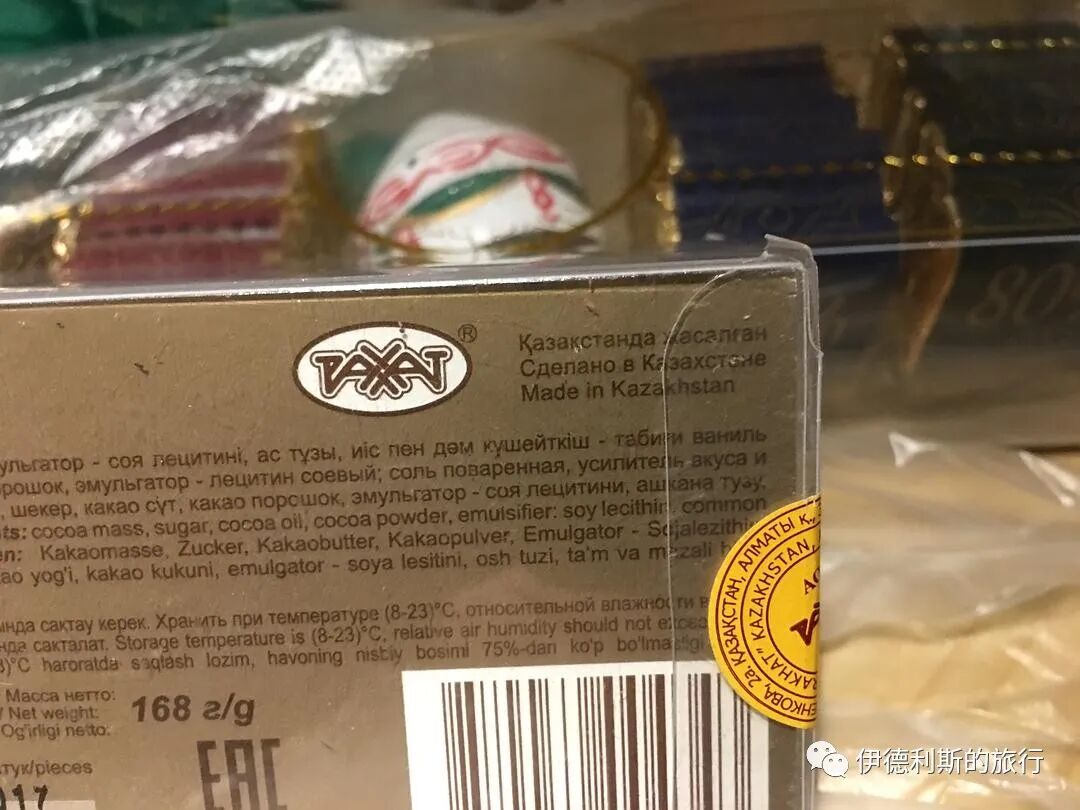
3. Aile Imported Goods Store
Aile is another import shop that has some good finds inside.
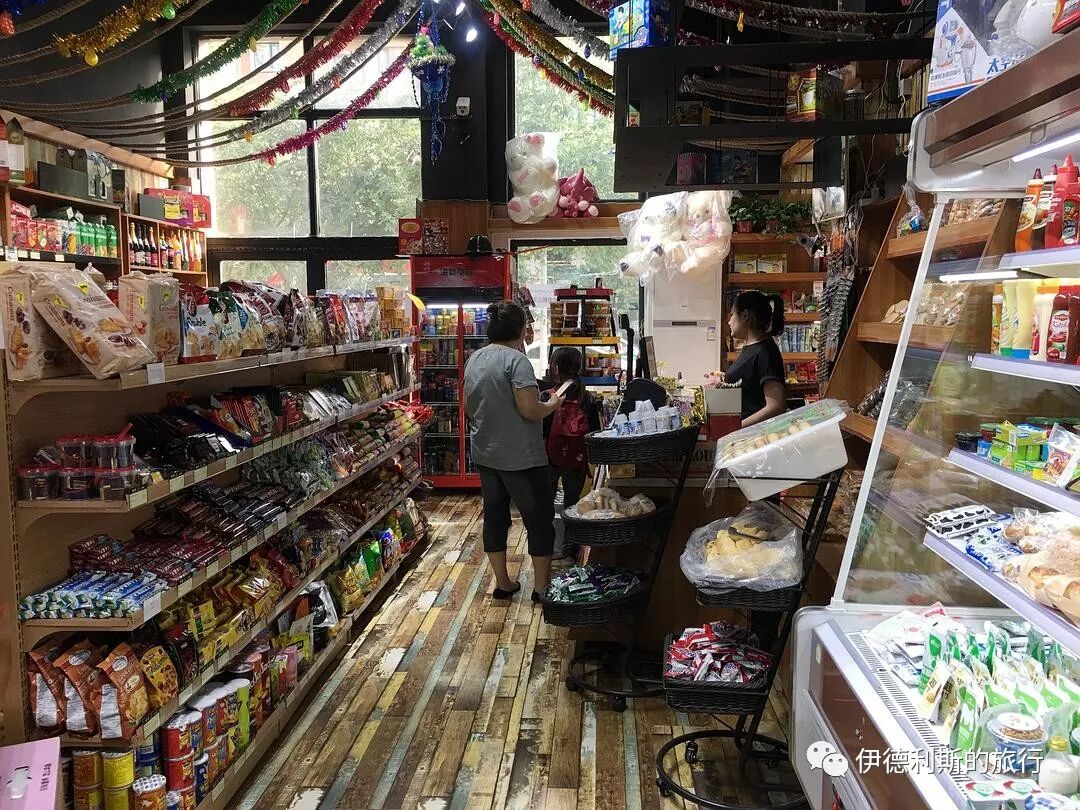
4. Maidana
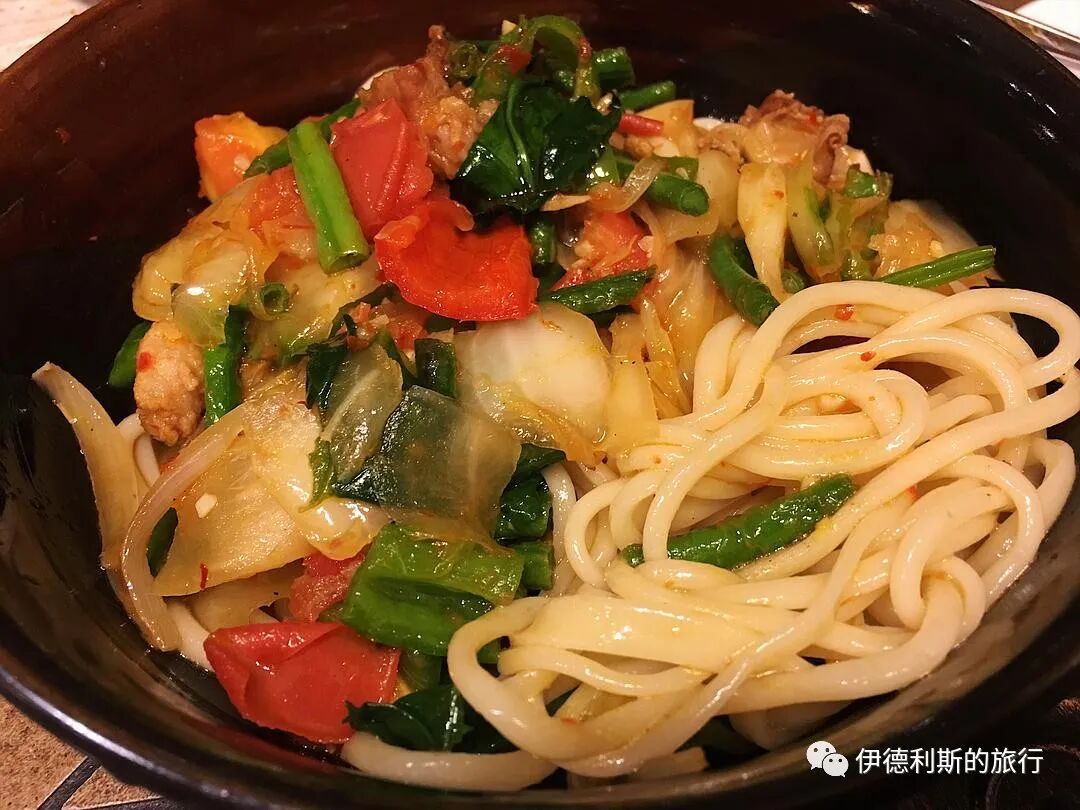
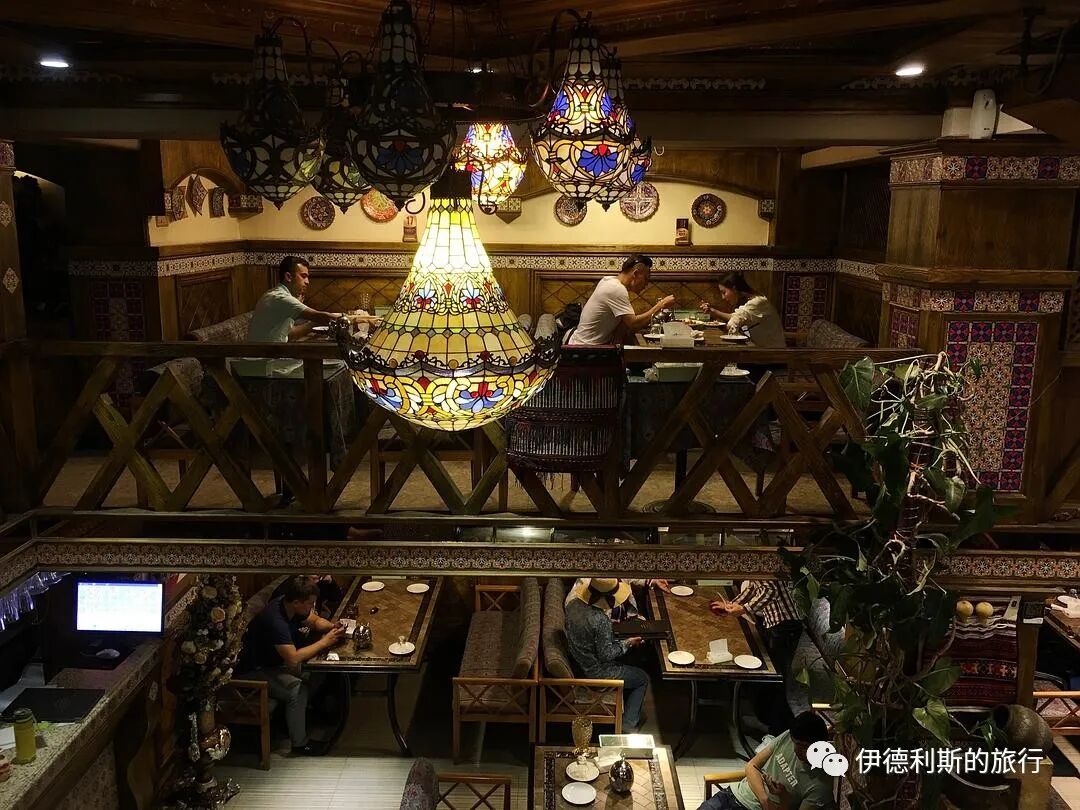
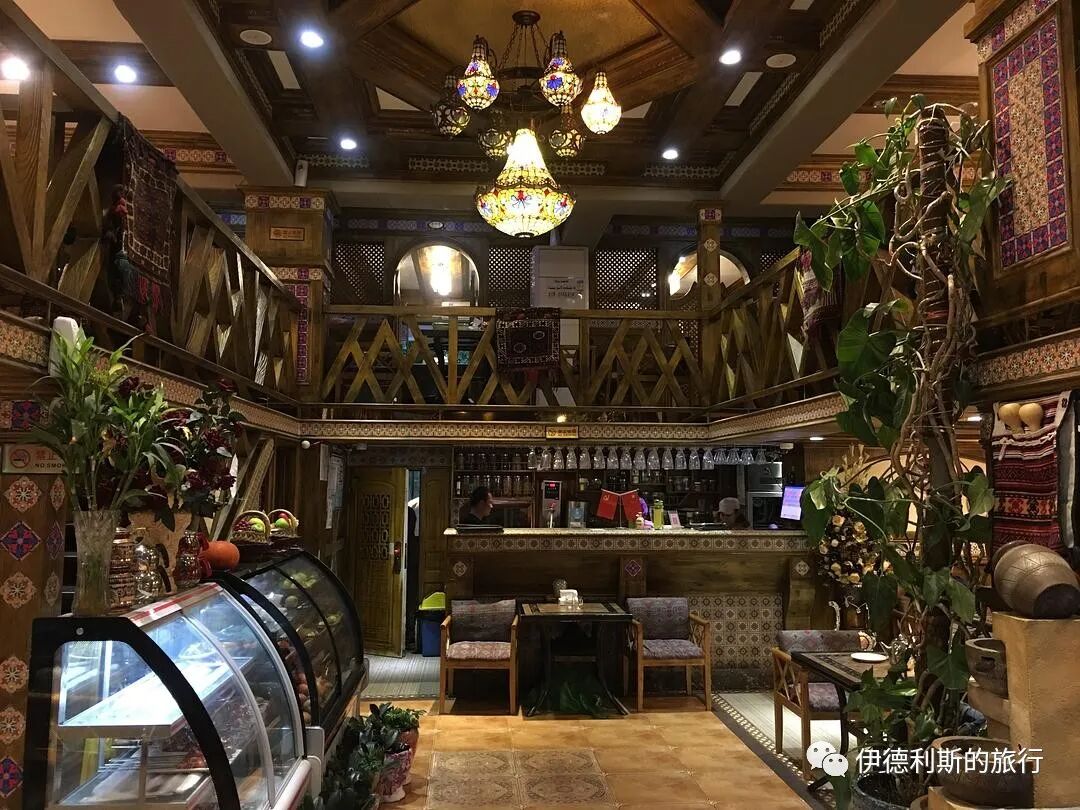
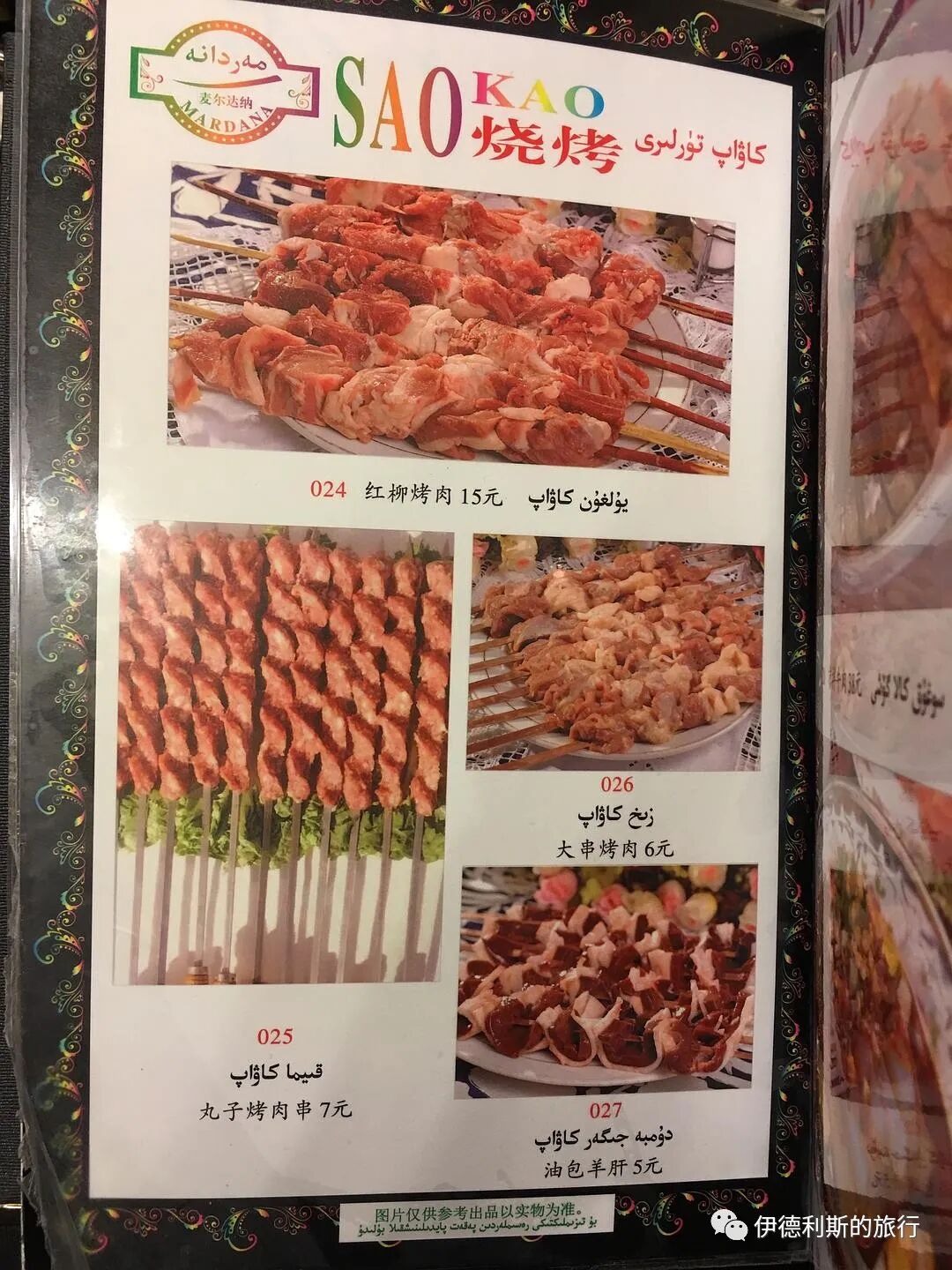
Merdana at Oujing Mingyuan was the biggest surprise of my food tour in Urumqi. The atmosphere is great, and the food is fantastic. The liver wrapped in fat (youbaogan) was so delicious I actually shouted out loud. It was intoxicatingly good, and it only costs 5 yuan a skewer. The grilled pork tenderloin (kao liji) was a long-awaited treat, and the homemade mixed noodles (banmian) tasted perfectly authentic. Even by Urumqi standards, it is incredibly delicious.
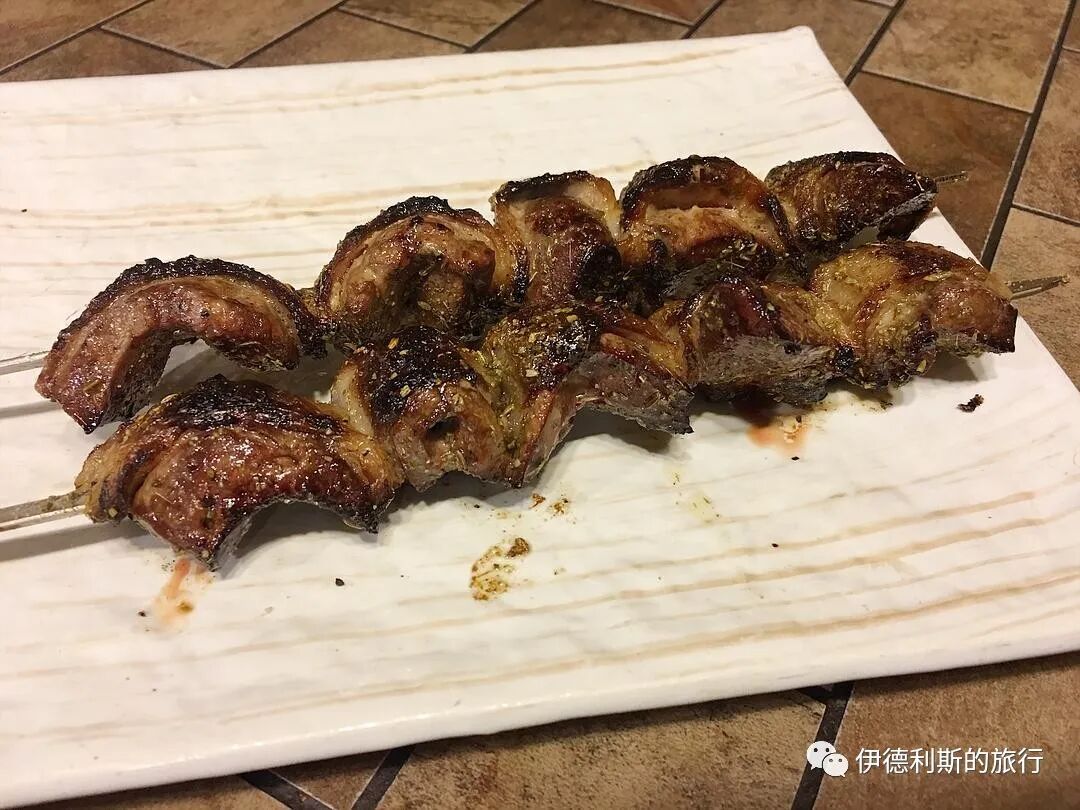
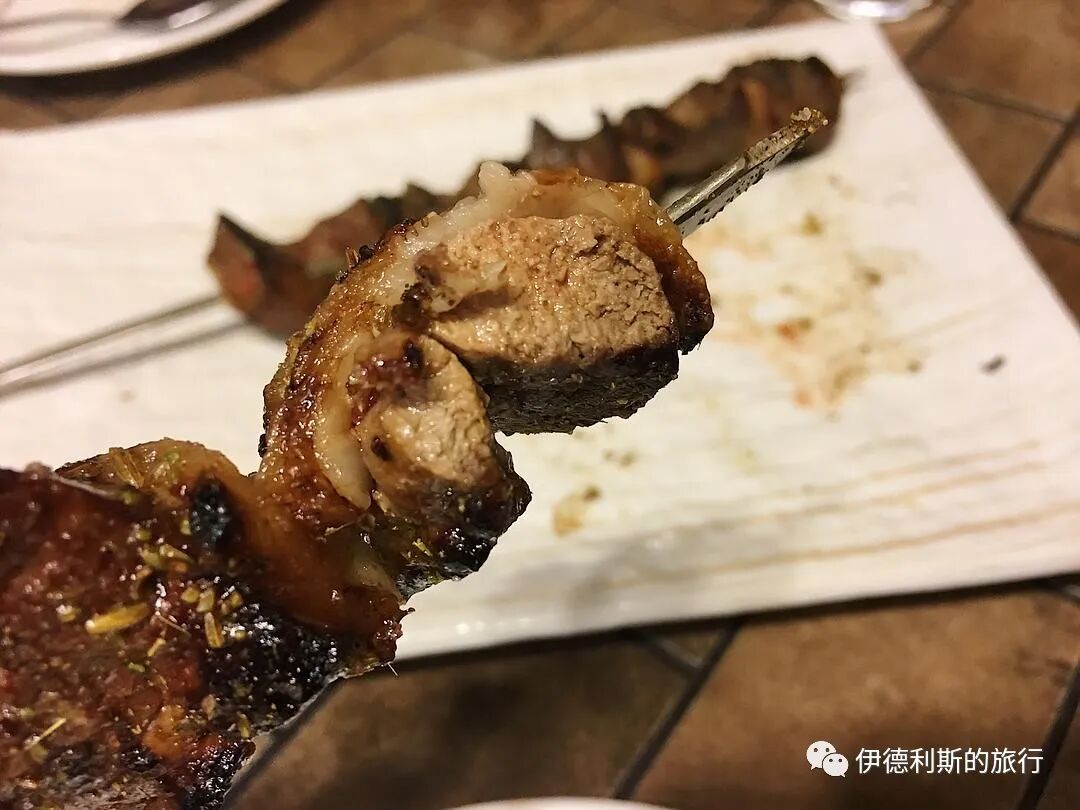
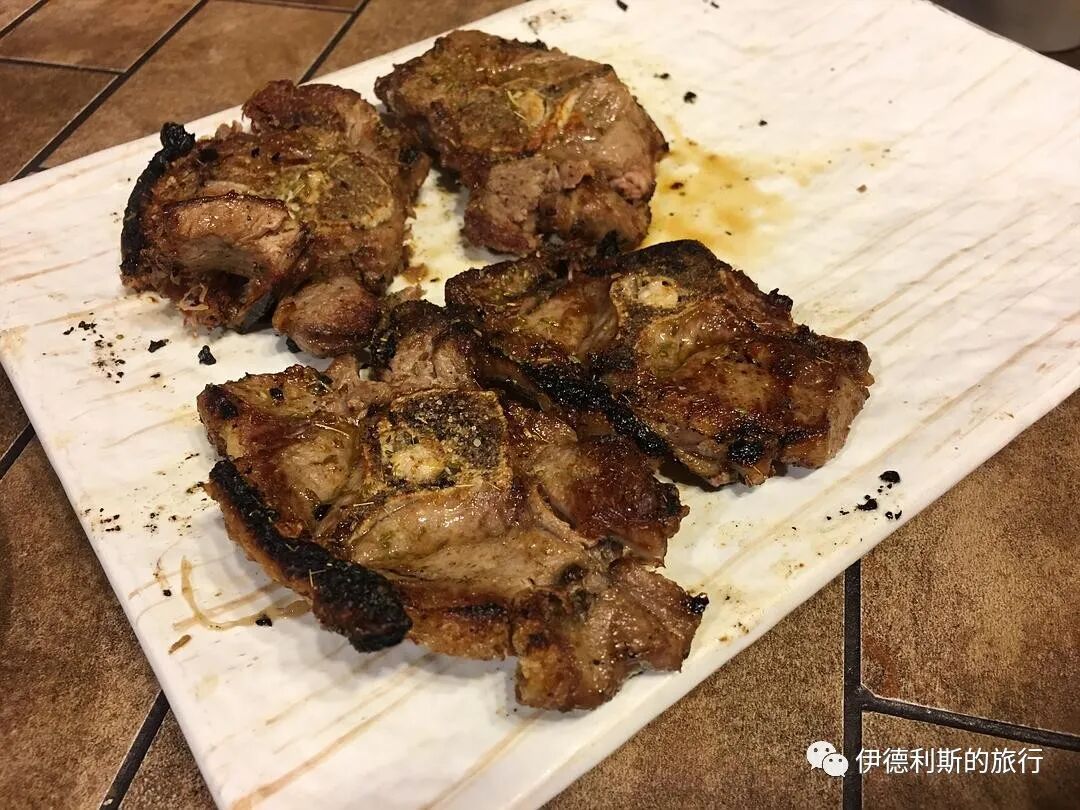
The pinyin for barbecue is the local Xinjiang dialect: SAO KAO.
 Collapse Read »
Summary: Urumqi Dawan — Hui Muslim Streets and Halal Food is presented here as a firsthand travel account in clear English, beginning with this scene: June 2018 was my fifth trip to Urumqi for sightseeing and eating. Nanguan used to be the traditional neighborhood in Urumqi that attracted me the most; it was lively and full of energy. The account keeps its focus on Urumqi Dawan, Xinjiang Travel, Hui Muslims while preserving the names, places, food, and historical details from the Chinese source.
June 2018 was my fifth trip to Urumqi for sightseeing and eating. Nanguan used to be the traditional neighborhood in Urumqi that attracted me the most; it was lively and full of energy. In 2017, a friend (dosti) told me that demolition and renovation had started in Nanguan, which made me very anxious. Later on, the small alleys deep inside Nanguan were completely torn down.
I came to Urumqi again in 2018, and the area deep inside the old Nanguan had become a construction site. However, I will not dwell on the past in this article. Instead, I want to share my experience of sightseeing and eating in Urumqi this time. Besides the consistently wonderful Lingguan Lane and Shengli Road, I also visited Dawan, another food hub in Urumqi. As a side note, I certainly did not expect when writing this that my wedding would be held in Dawan two years later.
Table of Contents
1. Yining Yixiang Butter Milk Tea House
2. Lingguan Lane
1. Original Meat Naan (rounang)
2. Arman Supermarket
3. Gülba xikar Dessert Shop
4. Other shops in Lingguan Lane
3. Shengli Road
1. Babahan Food World
2. Marhaba Tatar Pastries
4. Dawan
1. Ailuo Family Coffee
2. Pairhan Imported Goods Store
3. Aile Imported Goods Store
4. Maidana
1. Yining Yixiang Butter Milk Tea House
Next to the Urumqi People's Theater is Yining Yixiang Butter Milk Tea House, a famous Kazakh milk tea spot. I ate milk skin (naipizi), fried dough fritters (baorsak), and honey-based drink (kawasi) here, but unfortunately, mare's milk is only available after July.
Milk skin (naipizi)
Fried dough fritters (baorsak) and honey-based drink (kawasi)
The People's Theater was built in 1956 and is a landmark building of old Urumqi.
2. Lingguan Lane
Consulate Lane (Lingguan Xiang) is south of Erdaoqiao. Except for a new residential complex in the middle section, most shops in the lane look the same. It is a small comfort after the deep Nanguan area was leveled.
1. Original Meat Naan (rounang)
As soon as you enter the west end of Consulate Lane, you can smell the aroma of meat-topped flatbread (rounang). This original meat flatbread (rounang) shop opened in 2000. It is a very popular spot on Lingguan Lane with long lines, and the meat flatbread is truly fragrant.
2. Arman Supermarket
Arman Supermarket at the east end of Lingguan Lane is the largest in the chain. It has many great items, and I shop here every time I visit Urumqi. This time, I bought mint tea, butter milk tea (suyou naicha), and almond nut cake (qiegao).
Various pastries at Arman Supermarket.
3. Gülba xikar Dessert Shop
There is a dessert shop called Gülba xikar inside Arman Supermarket. I had almond and walnut ice cream there, plus a walnut pie. Everything was delicious and very cheap.
4. Other shops in Lingguan Lane
There are many other good places to eat on Lingguan Lane. I passed by the local-style hand-rubbed noodles (cuomian) shop this time, and the Yizihaier ice cream and Yili milk tea shop I visited years ago are still the same.
3. Shengli Road
Shengli Road is south of Erdaoqiao, at the east end of Lingguan Lane, and it also has plenty of good food.
1. Babahan Food World
The breakfast at Babahan Food World on Shengli Road and Lingguan Lane is excellent. This time, I had barley porridge (yarma) and milk-topped flatbread (naizi nang) soaked in milk tea.
Barley porridge (yarma).
Milk tea.
Milk-topped flatbread (naizi nang).
2. Marhaba Tatar Pastries
Marhaba Tatar Pastry Shop opened in 1998. The original shop was on Heba Third Lane, south of Lingguan Lane, and they later opened a new location at 454 Shengli Road. The founder of the shop is Saweige Musabayufu, born in 1949. The shop is named after her mother, Marhaba, who taught Saweige how to make Tatar pastries.
The girl with the red collar in the picture is Saweige's daughter, Fikelati.
Tatar cream cake made with six layers of sweet cake and six layers of cream.
Delete
Walnut dried fruit pie.
Black Forest chocolate cake made with ghee.
Black-eyed apricot jam cake.
4. Dawan
Dawan is in the southeast of Urumqi's old city. I mainly walked around the Oujing Mingyuan residential area. It has a nice environment and good food, which is a sharp contrast to the heavily demolished and renovated Erdaoqiao and Nanguan areas. It is truly a hidden paradise in the city.
Street view of Oujing Mingyuan in Dawan.
1. Ailuo Family Coffee
It was not yet dinner time when I arrived in Dawan, so I first had some Turkish black tea at Ayrosa Coffee. Downstairs, many young people were celebrating a birthday.
2. Pairhan Imported Goods Store
Pairhan is a main imported goods supermarket in Oujing Mingyuan. They have a lot of items, and I bought some chocolate from Kazakhstan there.
3. Aile Imported Goods Store
Aile is another import shop that has some good finds inside.
4. Maidana
Merdana at Oujing Mingyuan was the biggest surprise of my food tour in Urumqi. The atmosphere is great, and the food is fantastic. The liver wrapped in fat (youbaogan) was so delicious I actually shouted out loud. It was intoxicatingly good, and it only costs 5 yuan a skewer. The grilled pork tenderloin (kao liji) was a long-awaited treat, and the homemade mixed noodles (banmian) tasted perfectly authentic. Even by Urumqi standards, it is incredibly delicious.
The pinyin for barbecue is the local Xinjiang dialect: SAO KAO.
Collapse Read »
Halal Travel Guide: Beijing-Tianjin Canal — Mosques and Hui Muslim History
Reposted from the web
Summary: Beijing-Tianjin Canal — Mosques and Hui Muslim History is presented here as a firsthand travel account in clear English, beginning with this scene: Visiting Muslim communities, exploring old mosques, and tasting local food have been my dreams since I was a child. The account keeps its focus on Canal Mosques, Beijing Tianjin, Hui Muslims while preserving the names, places, food, and historical details from the Chinese source.
Visiting Muslim communities, exploring old mosques, and tasting local food have been my dreams since I was a child. I could not make it happen during college because I had a limited budget. I graduated from college and returned to Beijing for work in 2014. With a steady income, I officially started my halal food and travel journey in 2015. From January 2016 to May 2017, over a period of more than a year, I used my weekends and holidays to visit Hui Muslim communities in 19 towns and cities along the Grand Canal. I finished the first stage of my travel plan, the Canal Hui Muslim Community Food Tour.
These 19 locations are: Chaoyangmenwai, Changying, Tongzhou Nanguan, and Zhangjiawan in Beijing; Tianmu Village, Jiayuanli, and Northwest Corner in Tianjin; Cangzhou and Botou in Hebei; Dezhou, Linqing, Liaocheng, and Jining in Shandong; Xuzhou, Huai'an, Yangzhou, and Zhenjiang in Jiangsu; and Jiaxing and Hangzhou in Zhejiang.
This halal food tour gave me some experience and laid the foundation for my halal travels to over 100 cities in more than ten countries over the following years. Looking back now, although my early records were incomplete and quite simple, they are still precious memories of that time. Only five or six years have passed, but many situations have changed, and many scenes have already become history.
I have been sharing my canal halal travel records on my public account for a while now. This post serves as a summary and a directory. Due to time constraints, I could not visit some important Hui Muslim communities along the canal. I will have to visit them if I get the chance later. I visited Gaoyou and Lingtang in Jiangsu in 2021, and I am sharing those here as well.
Although they are all along the Grand Canal, the Hui Muslim communities in each place were established at different times. For example, Yangzhou had large numbers of Persian and Central Asian merchants as early as the Tang Dynasty. Hui Muslims (Huihui Semu) were already living in Hangzhou and Zhenjiang during the Yuan Dynasty, but most canal Hui Muslim communities developed during the Ming Dynasty. After the capital moved to Beijing during the Yongle reign, the Grand Canal was dredged again. At the same time, people were relocated to fill areas in the north that were damaged by the Jingnan Campaign. The Hui Muslim population along the Tianjin, Hebei, and Shandong sections of the canal increased significantly, and many famous mosques were built during the Ming Dynasty. During the Xianfeng reign of the Qing Dynasty, the Hui Muslim communities in Huai'an, Zhenjiang, and Jiaxing were hit hard by the Nian Rebellion and the Taiping Rebellion. The Hui Muslim community in Jiaxing was even destroyed and did not recover until the Republic of China era.
In 1855, the Yellow River burst its banks at Tongwaxiang, and the northern sections of the canal became completely silted up. The China Merchants Steam Navigation Company was founded in 1872, and grain tribute began to be transported by sea. Canal grain transport was completely abolished in 1901, and the Tianjin-Pukou Railway opened in 1913. These events caused a major shock to the Hui Muslim communities along the canal. Places like Linqing and Liaocheng began to decline, while cities like Tianjin and Zhenjiang became more prosperous because of the railway. During the Republic of China era, economic development led many Hui Muslims to move from the countryside to cities. Many chose to work in the halal food industry. Large halal restaurants gradually appeared, especially in the south, marking a period of prosperity for southern Hui Muslim communities.
In 1949, soaring prices and broken trade routes forced many Hui Muslim merchants in cities to return to their hometowns. The 1956 joint state-private ownership policy caused many halal restaurants to close. The impact was most severe in southern cities like Suzhou, Changzhou, and Hangzhou, where Hui Muslim communities eventually disappeared. After the market economy began in the 1990s, many Hui Muslim communities were demolished, and the people scattered. In the 21st century, the rapid pace of urban renewal has made the study of remaining Hui Muslim communities urgent. This is how I began my journey to visit the Hui Muslim communities along the canal.
The area outside Chaoyang Gate in Beijing.
After Emperor Yongle of the Ming Dynasty moved the capital to Beijing, he dredged the Tonghui River between Beijing and Tongzhou. He built a series of granaries inside the eastern Chaoyang Gate, and large amounts of grain were shipped from the south along the canal to the gate. Because the Tonghui River lacked enough water and had too many locks, boats often got stuck. During the Qing Dynasty, most grain boats stopped at Tongzhou to unload and transport goods by cart along the official road to Chaoyang Gate. A stone road between Chaoyang Gate and Tongzhou was built during the Yongzheng period, creating a mature commercial route.
Since they were not restricted by the closing of the city gates at night, most people transporting grain stayed outside Chaoyang Gate. Tea houses, inns, and restaurants gradually appeared in the area, and business thrived. Many Hui Muslims who came to do business settled here, forming the Hui Muslim community outside Chaoyang Gate.
There were once seven mosques outside Chaoyang Gate, with four clearly recorded: Nanzhongjie Mosque, Nanxiapo Mosque, Shuimenguan Women's Mosque, and Shegutang Mosque. Only the Nanxiapo Mosque remains today. Legend has it that in the late Ming and early Qing dynasties, a shed builder in Nanxiapo used poles and reed mats to build a large shelter as a place for namaz. In the early Kangxi period, a Hui Muslim businessman named Ma heard about this and donated money to build the formal Nanxiapo Mosque.
Chaowai Street once had many halal food shops. Famous ones included the Yongsheng Lamb Shop and the Dayou Halal Oil and Salt Shop, along with many small stalls. After the renovation of Chaowai Street in the 1990s, only Ziguangyuan, known for its stir-fried dough bits (chaogeda), has continued to thrive. I still go there often to eat roast duck.
The Muslim community outside Chaoyang Gate was completely demolished after 1992. Residents were relocated to the Sanfengli residential area nearby. There are many halal snacks there, and the stewed meat with braised green beans at the small halal restaurant is especially delicious.
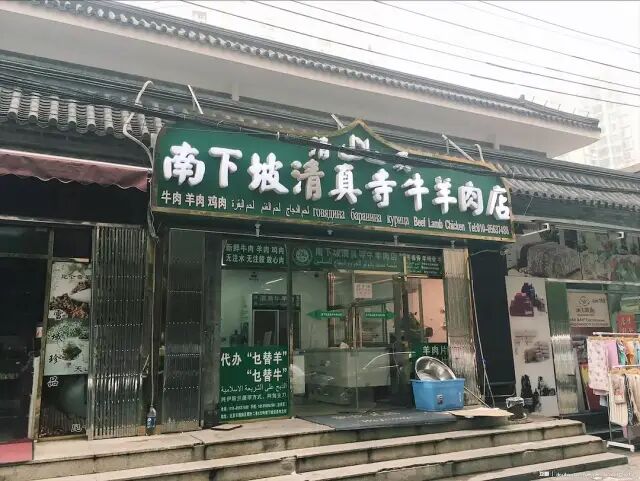
Changying, Beijing.
Changying sits on the north side of the Chaoyangmen official road between Beijing and Tongzhou. Legend says that Chang Yuchun, a famous founding general of the Ming Dynasty, once stationed a troop of Hui Muslims near Tongzhou. This camp was named Changjiayingzi, though no historical records have been found to prove this story.
Because it was not far from the Tongzhou canal shipping docks and the Chaoyangmen stone road, many Hui Muslims in Changying made a living by pushing carts and pulling rickshaws. Pushing carts meant using a wheelbarrow to transport grain from the Tongzhou earthen dam to the Thirteen Granaries (Shisancang) inside and outside Chaoyangmen. Pulling rickshaws meant carrying passengers along the Chaoyangmen stone road. Both jobs were directly related to the canal shipping industry.
Changying Mosque was built during the Zhengde period of the Ming Dynasty and renovated in the first year of the Jiaqing period. It is a famous mosque in the eastern Beijing area. In 2001, Changying was demolished. The original eight Hui Muslim villages, including Changying villages 1-7 and the first residential area, were relocated to the Changying Ethnic Homeland residential complex. This formed a new Hui Muslim community, featuring a food street behind the Changying Mosque, a halal food market, a halal supermarket, and many halal restaurants. Behind Changying Mosque is a halal food street. The most famous spot there is Li Xiaolao's meat sesame flatbread (shaobing), which might be the best shaobing in Beijing. Next to Li Xiaolao's are Anji Deli, Jialun Deli, and Yinfangzhai Pastry Shop. The deli meats and pastries inside are all quite good.
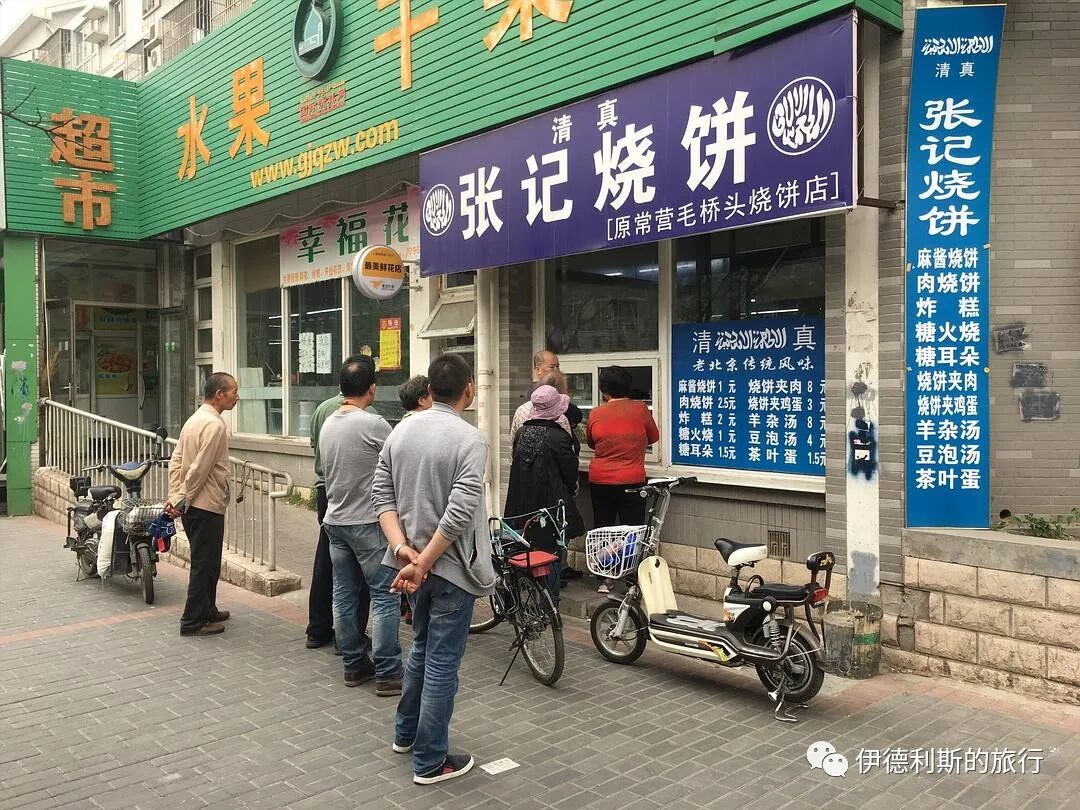
Nanguan in Tongzhou, Beijing.
After Guo Shoujing built the Tonghui Canal during the Yuan Dynasty, Tongzhou became a hub for canal shipping. Many Hui Muslims moved here to live, forming a Hui Muslim community in Nanguan. In the first year of the Hongwu period of the Ming Dynasty, Tongzhou city was expanded, and the Nanguan Hui Muslim community was included within its walls. This officially formed South Street inside the South Gate and the Hui Muslim Eighteen-and-a-Half Alley (Shibajieban Hutong) on the east side. South Street was a busy main road for transporting canal grain from the Grand Canal docks outside the North Gate to the two major granaries in the center and east of Tongzhou city. Because of this, it was very prosperous during the Ming and Qing dynasties and was filled with all kinds of shops.
The most authentic halal pastry shop on South Street in Tongzhou is Guishunzhai Halal Food Store. It was opened by Master Li Chen, the former deputy factory manager of the old Dashunzhai food store, after he retired. He kept the traditional skills of the old Dashunzhai, and his thick cakes (dunbobo) and sugar-fired cakes (tanghuoshao) are excellent. The state-run Dashunzhai food store still exists today. Its main branch is on Xinhua East Street in Tongzhou, and its products are also sold on Niujie and in major Beijing supermarkets.
On the east side of the road, north of South Street in Tongzhou, stands the Tongzhou Mosque, built in the Yuan Dynasty. It was originally named Chaozhen Mosque and was renamed Mosque after being expanded during the Wanli period. At the north end of South Street is Xiaolou Restaurant, the most famous halal restaurant in Tongzhou. It is best known for its braised catfish (shao nianyu) caught in the canal. Xiaolou was originally named Yihexuan and was founded by the Li brothers in 1900. It was rebuilt into a two-story building in 1921 and took the name Xiaolou. The current storefront was built after the old Xiaolou was demolished in 1985.
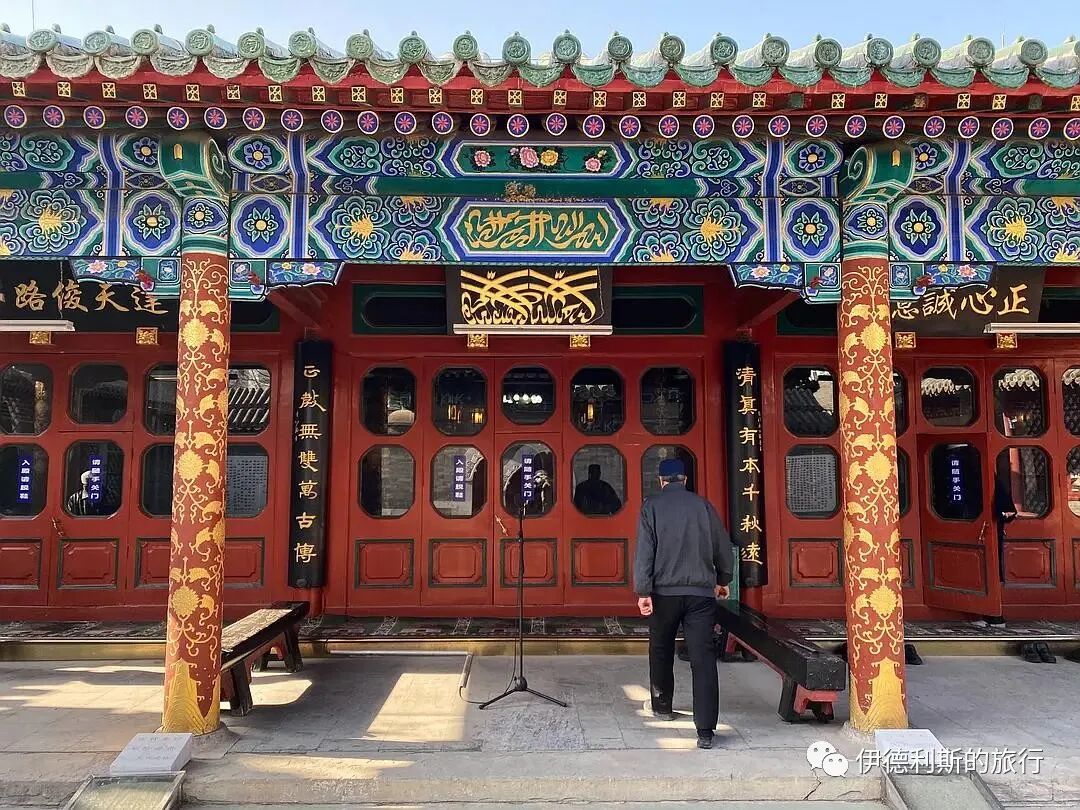
Zhangjiawan in Tongzhou, Beijing.
After Guo Shoujing built the Tonghui River during the Yuan Dynasty, the place where the river flowed east into the Lu River in Tongzhou became what is now Zhangjiawan. Legend says Zhangjiawan was named after Zhang Xuan, who managed sea transport at the time, and it became a canal shipping terminal. After water levels in the Tonghui River dropped in the early Ming Dynasty, more cargo boats chose to unload at Zhangjiawan to transfer goods to carts, making Zhangjiawan a major hub for canal transport. It was not until the Jiajing era of the Ming Dynasty, a century later, that the new Tonghui River was diverted from Zhangjiawan to flow into the North Canal at Tongzhou city. However, cargo ships still docked at Zhangjiawan, and both Zhangjiawan and Tongzhou city served as important canal terminals east of the capital.
After the Yuan Dynasty, merchants kept coming to settle in Zhangjiawan, including many Hui Muslims. A Hui Muslim community formed in Zhangjiawan during the early Ming Dynasty, and they built the Zhangjiawan mosque. The Zhangjiawan mosque was built in the early Ming Dynasty and renovated during the Daoguang era of the Qing Dynasty. It suffered damage through various hardships after the 20th century, but it has been renovated and is now a simple, clean little mosque.
The area outside the south gate of the Zhangjiawan city wall became a lively Hui Muslim market because it was near the canal terminal. The three-arch stone bridge over the Empress Xiao River outside the south gate was built by imperial order during the Wanli era of the Ming Dynasty. It still stands today and is the most important historical site in Zhangjiawan.
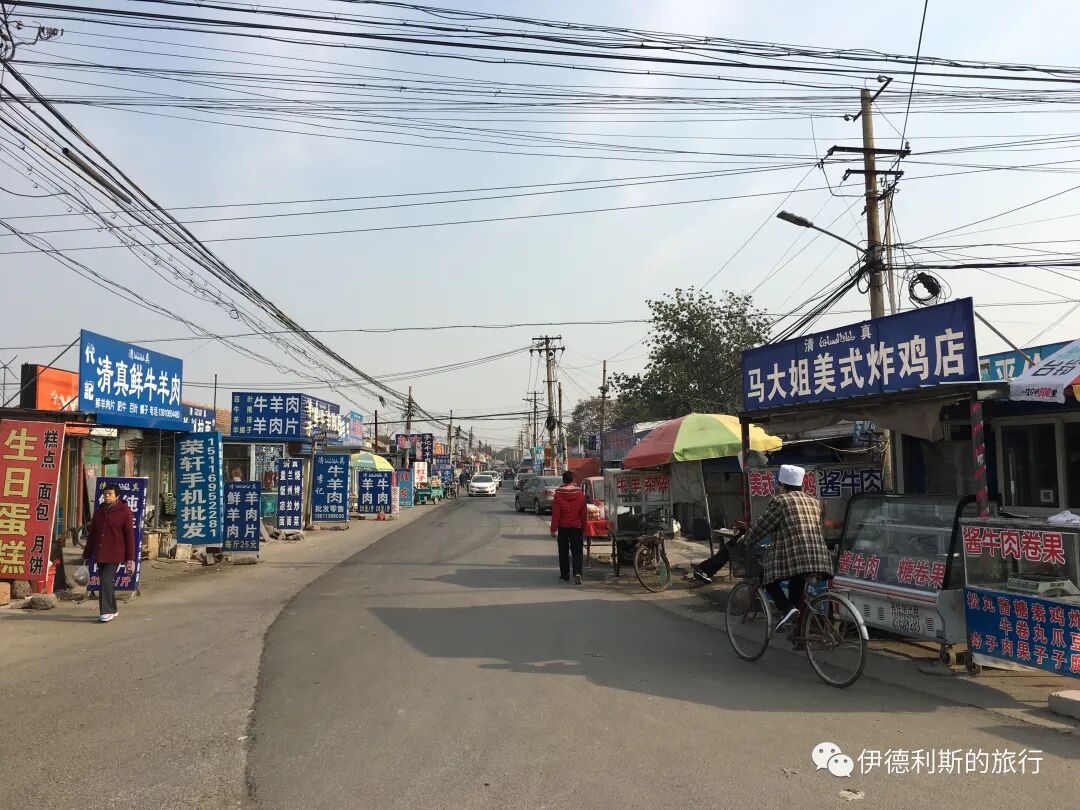
Tianmu Village in Tianjin.
During the Hongwu era of the Ming Dynasty, a boatman named Mu Chonghe from Qiantang County, Hangzhou Prefecture, Zhejiang, followed the Prince of Yan, Zhu Di, along the canal to transport grain to Tongzhou. After unloading, he traveled south with the current and settled by the North Canal. He continued working in canal transport, and the Mu family village began to form.
In the second year of the Yongle era of the Ming Dynasty, Tianjin Wei was officially established as a city. The first mosque in Tianjin was built in the Mu family village in the northern suburbs of Tianjin, which later became the Tianmu North Mosque. After the Ming Dynasty, Hui Muslims from places like Zhejiang, Jiangsu, Shandong, and Hebei kept arriving along the canal to settle down, and the Mu family village gradually grew.
During the Ming and early Qing dynasties, most people in the Mu family village made a living from canal transport and were known as boat keepers. By the mid-to-late Qing Dynasty, as canal transport declined, boat owners in the Mu family village began switching to carting and trading. In the late Qing Dynasty, the cattle and sheep industry in Mujiazhuang began to grow. After the Republic of China was established, Hui Muslims from Mujiazhuang opened over one hundred beef and mutton shops across Tianjin.
In 1951, Mujiazhuang and Tianqi Temple merged to form Tianmu Village. In 2009, demolition began in Tianmu Village, and it is now in ruins. Today, the halal snack street is concentrated on Tianmu Shunyi Road.
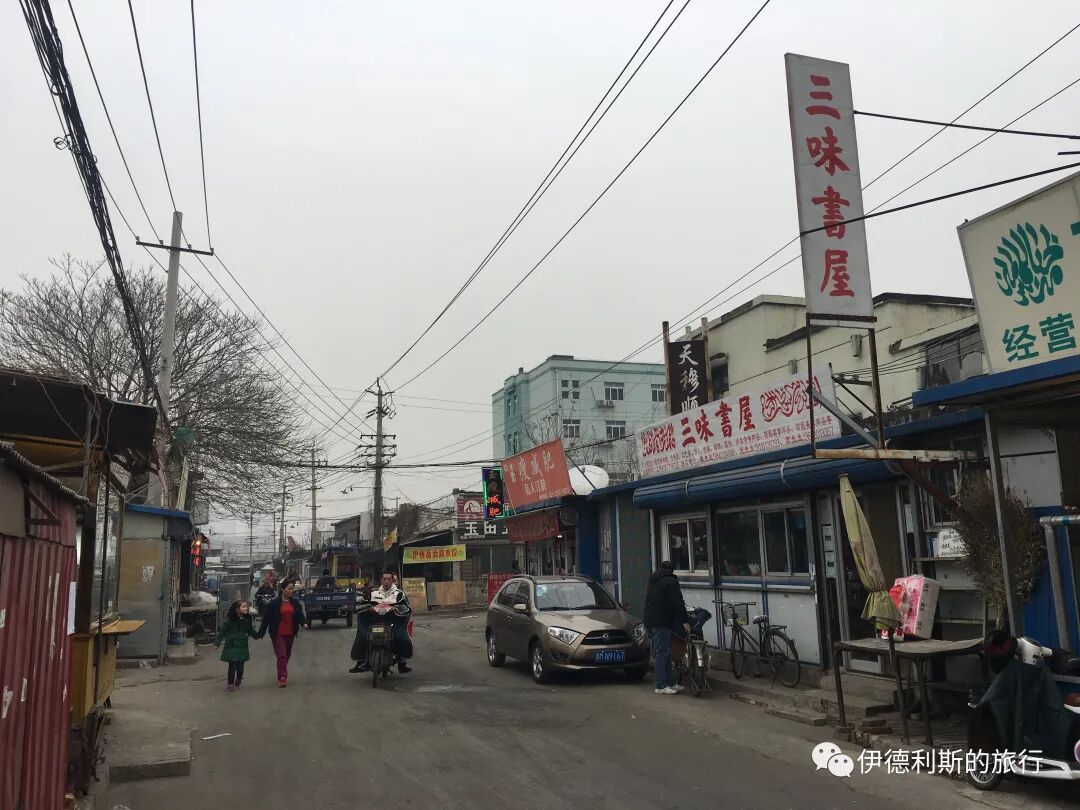
Jiayuanli, Tianjin
After the 1990s, demolition began in Northwest Corner (Xibeijiao), the largest Hui Muslim community in Tianjin. Many Hui Muslims from there moved to Jiayuanli by the North Canal. Starting in 1999, a halal night market opened in Jiayuanli, and the variety of Hui Muslim snacks grew.
Not far into the Jiayuanli community commercial street, I saw a stall selling seaweed rice rolls (gimbap). I bought a box of egg yolk and tuna seaweed rice rolls and a box of beef floss. When I was very young, I used to put a layer of meat floss on my porridge in the morning. I miss that feeling so much. I kept walking inside and bought some fried dough twists (liaohuo) and jujube cake. The jujube cake was incredibly delicious and had such a classic, old-fashioned taste that I felt like all the jujube cake I had eaten over the years was a waste. Then I bought half a jin of vegetable meatballs, half carrot and half dried radish. I ate steamed dumplings at Shiji Jinling Steamed Bun Shop, served with corn grits and rice porridge. The steamed dumplings were absolutely amazing. I ate eight in one go and didn't want to stop. Every time I burped, I could taste the beef filling, which was very satisfying.
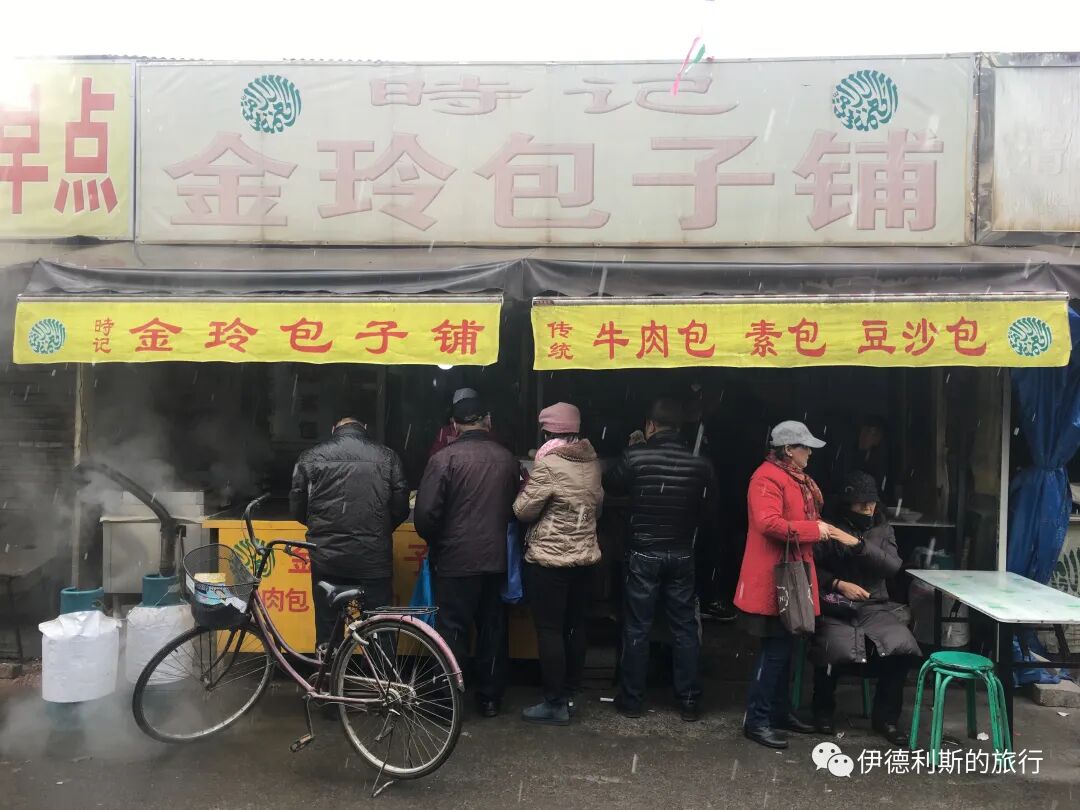
Northwest Corner (Xibeijiao), Tianjin
January and February 2016 were my first two visits to the Northwest Corner of Tianjin. It was these two trips that made me fall in love with this place. The Northwest Corner was once the largest Hui Muslim community in Tianjin. After the city of Tianjin was built, Hui Muslims continuously moved to Tianjin via the canal from places like Anhui, Jiangsu, and Hebei. Some chose to settle in the Northwest Corner of the old city, near the commercially prosperous Beidaguan canal transport hub. During the Shunzhi reign, the Northwest Corner Mosque was built here.
The Northwest Corner was centered around the mosque. Before 1995, halal shops were everywhere, but the Muslim community began to break up after the mid-90s demolitions. After 2007, the Muslim community around the mosque completely disappeared. The current Northwest Corner Hui Muslim community refers to the area around Xiguan North Street, centered on the South Mosque. As soon as you exit the Northwest Corner subway station, you can see the long line at Xiaoli Roasted Chicken. Walking south along Xima Road, you will find one halal food shop after another.
In 2017, the last historic neighborhood remained in the Northwest Corner, the Lingdangge (Bell Pavilion) area built on ruins. At the southern edge of the Lingdangge area is Xiguan Street, which hosts a wild market on weekends, much like the Daliushu market in Beijing, where they sell everything. After walking through the market, you return to the Northwest Corner Hui Muslim community.
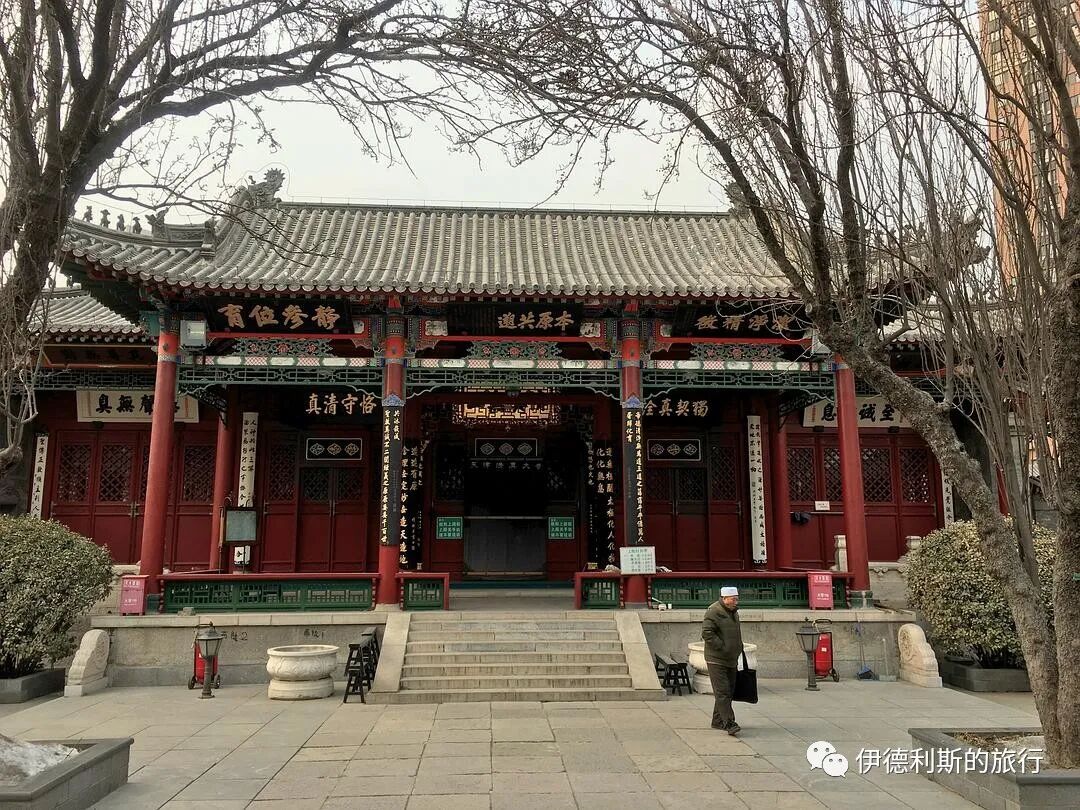
Cangzhou, Hebei
Like many canal cities, Cangzhou has had Hui Muslim merchants settling with their families since the Yuan Dynasty. However, the Cangzhou city of that time was located at the ruins of the Old Prefecture City 20 kilometers to the southeast. During the Jingnan Campaign, the Prince of Yan, Zhu Di, destroyed the entire Old Prefecture City. It was not until the Yongle reign of the Ming Dynasty that Zhu Di ordered the relocation of Cangzhou city to Changlu by the Grand Canal, moving residents from Shanxi, Shandong, Anhui, and other places to settle there, forming the new Cangzhou city.
The Nanguanxiang area south of the city was an important passage to the canal, and most Hui Muslims, who were mainly artisans and small vendors, chose to live there. During the Yongle reign, Wu Zuoyong from Shexian, Huizhou, Anhui, was appointed as the Assistant Magistrate of the Cangzhou Salt Transport Office and came to Cangzhou, where he donated land south of the city and led the construction of the Cangzhou North Great Mosque, officially forming the Hui Muslim community in Cangzhou. South of the North Great Mosque is the Hui Muslim district in the south of the city, with Minzu Street as its center, lined with all kinds of Hui Muslim snacks. I bought a Liu's pine-flower chicken leg at the east entrance of Minzu Street; it is perfect for rolling in a flatbread (laobing) or eating with a steamed bun (mantou) because the chicken sausage is stuffed with pine-flower eggs. Then I had some tea soup (chatang); the tea soup in Cangzhou came from Tianjin along the canal, but this shop adds more ingredients and has a stronger flavor. I also bought beef buns (niurou baozi), which were very fragrant right out of the steamer. I walked a few steps and bought two bags of five-spice peanuts; the black ones are very addictive when eaten with tea.
Not far to the west of the southern Hui Muslim district is the canal wharf, where many Hui Muslims once made a living directly from water transport. The wealthiest boat owners rented out their vessels or hired people for grain transport, ordinary small boat owners made a living by ferrying, and the poorest Hui Muslims survived by pulling boats along the riverbank or carrying cargo at the docks.
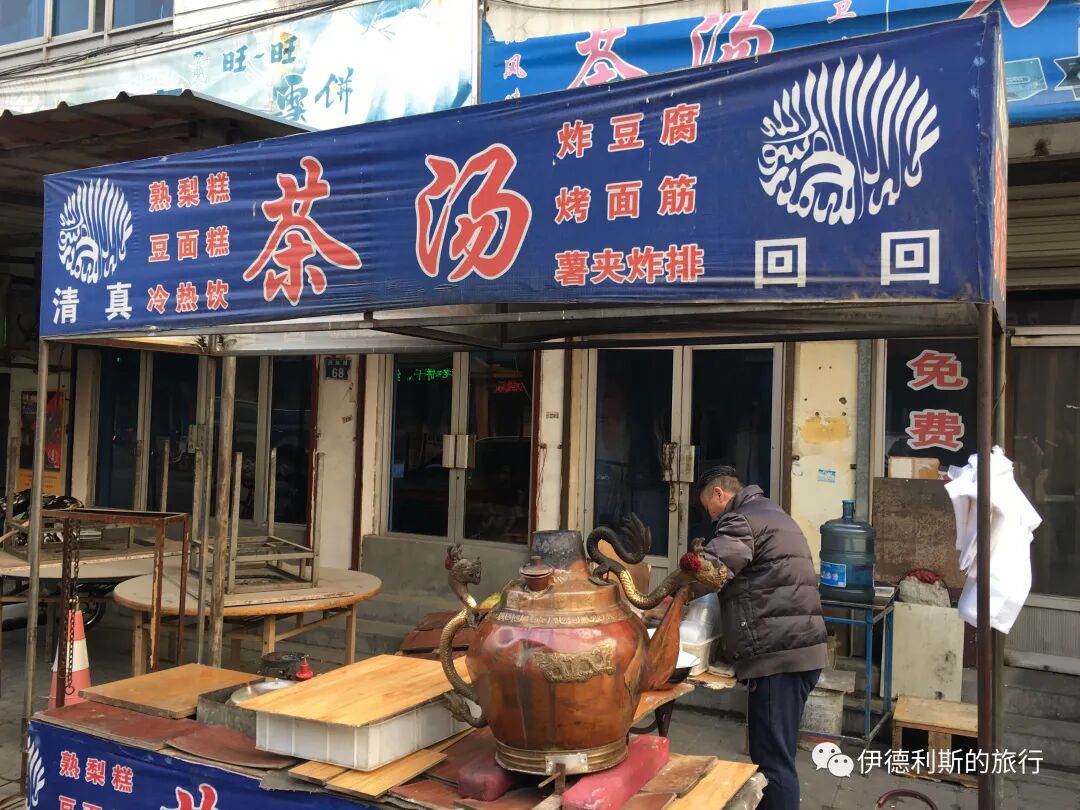
Botou, Hebei
Botou sits along the canal south of Cangzhou. During the Hongwu reign of the Ming Dynasty, a regional administrative office was established here to manage grain transport between Tianjin and Dezhou, and Botou gradually became an important canal town. Like Cangzhou, Botou suffered heavy damage during the Jingnan Campaign, and its population dropped sharply. During the Yongle reign, many Hui Muslims came to settle in Botou. Because the number of Hui Muslims increased, a mosque was built in Botou that year. Afterward, more Hui Muslims moved in from Shandong, Shanxi, and Anhui, and the Hui Muslim community in Botou was officially formed.
During the Qing Dynasty and the Republican era, the most famous halal restaurants in Botou were Taiheguan on Shunhe Street, which opened during the Tongzhi reign, Shunfuguan and Xingshenghe on Gulou Street, which opened during the Guangxu reign, and Xiyuguan on East Street. The small and medium-sized restaurants around Shunhe Street were all halal, offering a wide variety of halal snacks.
Before 1957, local shipping in Botou was mainly operated by Hui Muslims, divided into two trades: those who worked the boats and those who owned them. Those who worked the boats were the crew and trackers, while those who owned them were the boat owners. Some ferried passengers across the river, some transported fertilizer for villages along the river, and others operated long-distance transport routes from Tianjin in the north to Xinxiang, Henan in the south. Before 1965, the canal section in Botou had plenty of water. In the early summer of 1965, the canal dried up for the first time. After that, the water level decreased year by year, and by the first half of the 1970s, it was nearly dry, ending shipping in Botou.
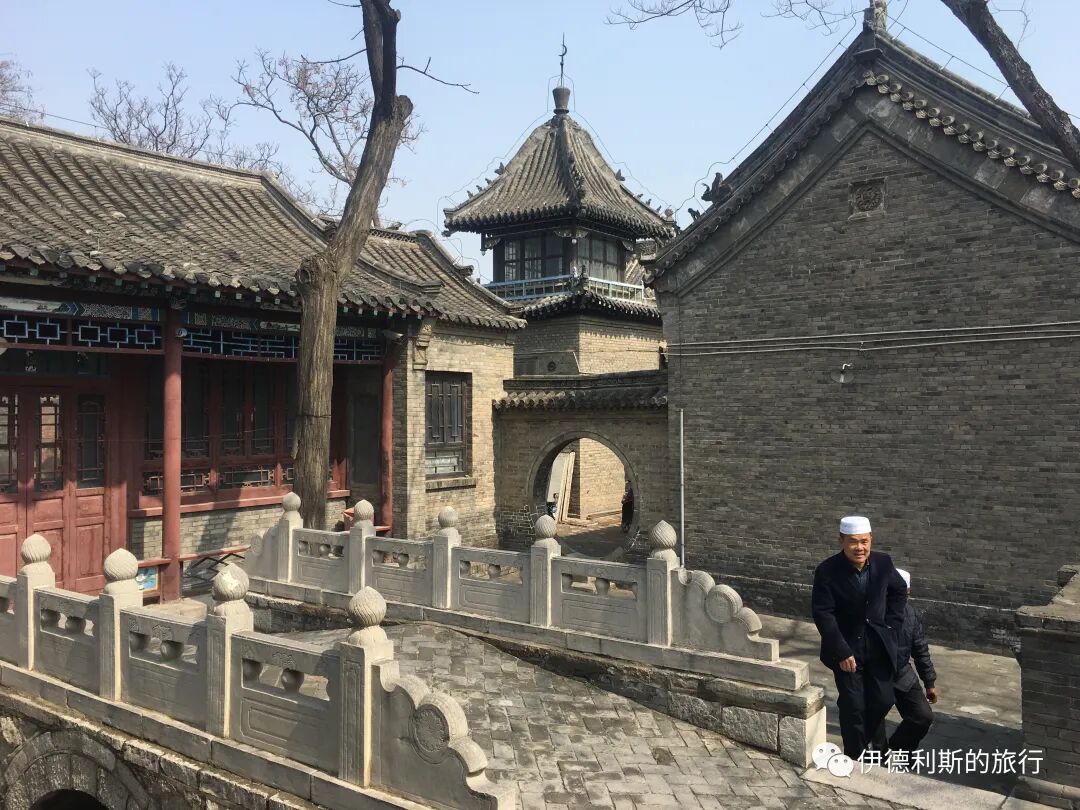
Dezhou, Shandong
The first thing I wanted to see on this trip to Dezhou was the Tomb of the Sultan of Sulu from the Philippines. The Sulu Archipelago is located in the far southwest of the Philippines, right next to the easternmost part of Malaysia. Between the 14th and 16th centuries, as maritime trade in the Indian Ocean flourished, Islam spread along the Maritime Silk Road to the Sulu Archipelago, where the Sulu Sultanate was established. During the Yongle reign, three chieftains from the Sulu Kingdom led a delegation to visit the Ming Dynasty. While traveling back and passing near Dezhou, the Eastern King suddenly fell ill and passed away. Emperor Yongle of the Ming Dynasty buried the Eastern King of Sulu with royal honors and built the Tomb of the Eastern King of Sulu north of Dezhou city.
After the Eastern King of Sulu died, his eldest son returned home to take the throne, while his second son Andulu, third son Wenhala, and Queen Gemuning stayed behind to guard the tomb. Their descendants took the surnames An and Wen, gradually forming Beiying Village in Dezhou. During the Wanli era, the descendants of the Sulu King built a mosque southwest of the Sulu King's tomb. In 1917, the canal burst its banks, washing away the mosque and the entire Beiying Village. It was rebuilt in 1940, becoming the Republic of China-era building seen today.
During the Yongzheng era, the descendants of the Sulu King changed their status from immigrants to Dezhou citizens and began opening halal snack shops in the bustling canal markets of Dezhou. Today, southwest of Beiying Village, there is still a braised chicken shop (paji dian) run by descendants of the An family. A new Beiying Ethnic Customs Street has been built next to the Sulu King's tomb, featuring a beef and mutton shop run by descendants of the Wen family, as well as a Li family whole lamb soup (quanyang tang) shop.
Strolling from Beiying Village to Qiaokou Street, you reach what was the busiest canal market in Dezhou during the Ming and Qing dynasties, located next to the Hui Muslim village of Xiaoguoshi. Xiaoguoshi was the place where pots were unloaded at the canal docks in the past, and there is also a renovated mosque here. There is also a Nanying Hui Muslim Street in the south of Dezhou city, and we visited the Dezhou Nanying Mosque before dark.
As the intersection of the Jinpu Railway and the Grand Canal, Dezhou is one of the few cities along the canal that has preserved a large number of modern industrial relics, which is very rare. Along the canal, you can see a 1940s water supply station and power plant machine room, 1950s loading docks, warehouses, and textile company watchtowers, as well as a 1960s dock dispatch building. The most spectacular site is the industrial heritage park, Jiulongwan Park, built on the foundation of the Dezhou First Water Plant, where everyone can see firsthand how tap water was produced in the 1950s.
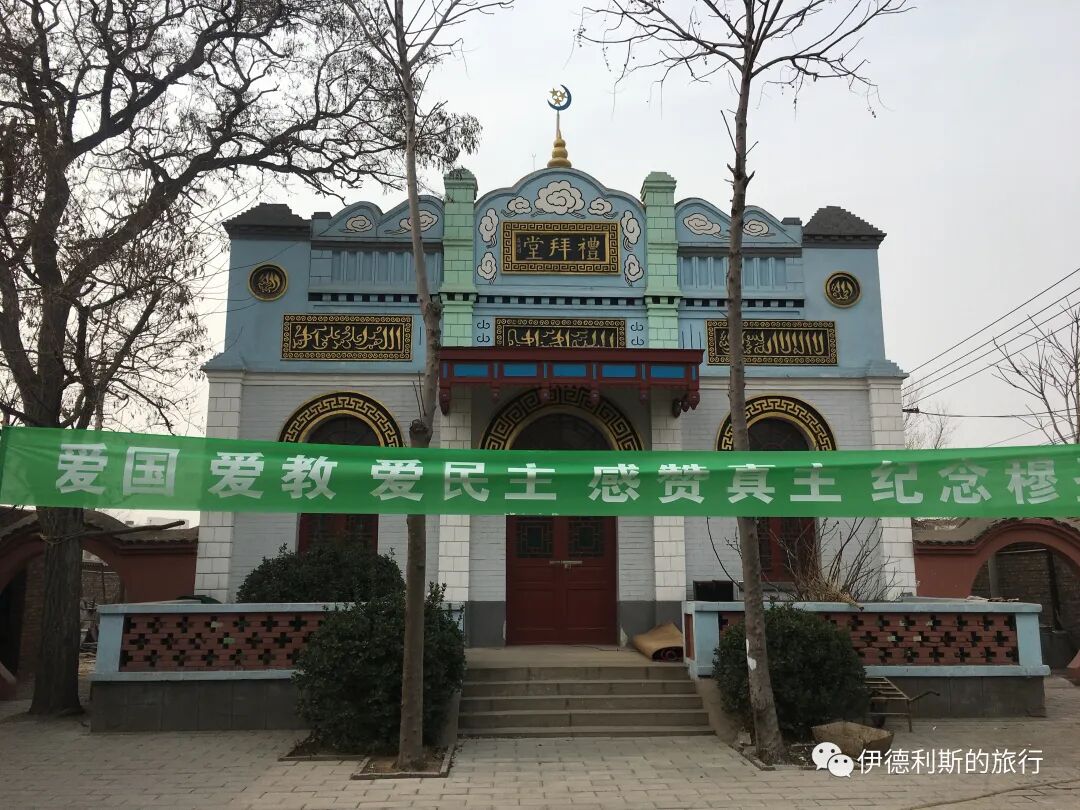
Linqing, Shandong
To transport grain from the south to the north, Yuan Emperor Kublai Khan ordered the original Sui and Tang Grand Canal to be straightened. He had the Huitong River dug in Shandong to connect the northern and southern sections of the Grand Canal. Linqing, located at the intersection of the Huitong River and the Yongji Canal of the Sui and Tang dynasties, suddenly became a canal hub, and Hui Muslims began moving to Linqing from then on. After the brick city wall was built in Linqing during the Ming Dynasty, the 'Zhongzhou' area, surrounded by two tributaries of the Wei and Wen rivers southwest of the city, became the most prosperous commercial district in Linqing. Zhongzhou is traversed from north to south by a long street, which is also where the Hui Muslims of Linqing are most concentrated.
The North Mosque (Qingzhen Beisi) in Linqing is arguably as grand as the East Mosque (Qingzhen Dongsi) in Jining, making them the two most magnificent mosques in Shandong. It was first built during the Hongzhi reign of the Ming Dynasty and is currently undergoing major renovations. Across from it stands the Linqing East Mosque, also built in the Ming Dynasty. It is slightly smaller than the North Mosque and has been closed for major repairs since 2013, so I only saw the exterior this time. To the south, there is also a women's mosque (qingzhen nusi) founded during the Republic of China era. It became a wholesale market warehouse after the 1980s and was rebuilt in 2010.
There are three sections of the Grand Canal within Linqing, which were built during the Sui, Yuan, and Ming dynasties respectively. A large number of canal locks and bridges from the Yuan and Ming periods are still preserved today. The old Yuan Dynasty river has the Linqing Lock and Huitong Lock, while the new Ming Dynasty river has the Ban Lock and Zhuan Lock. During the Ming and Qing dynasties, the Tianqiao Bridge and Yuejing Bridge were built over the old Yuan river. Together with the canal tax office (chaoguan), these form the Linqing canal transport heritage site group.
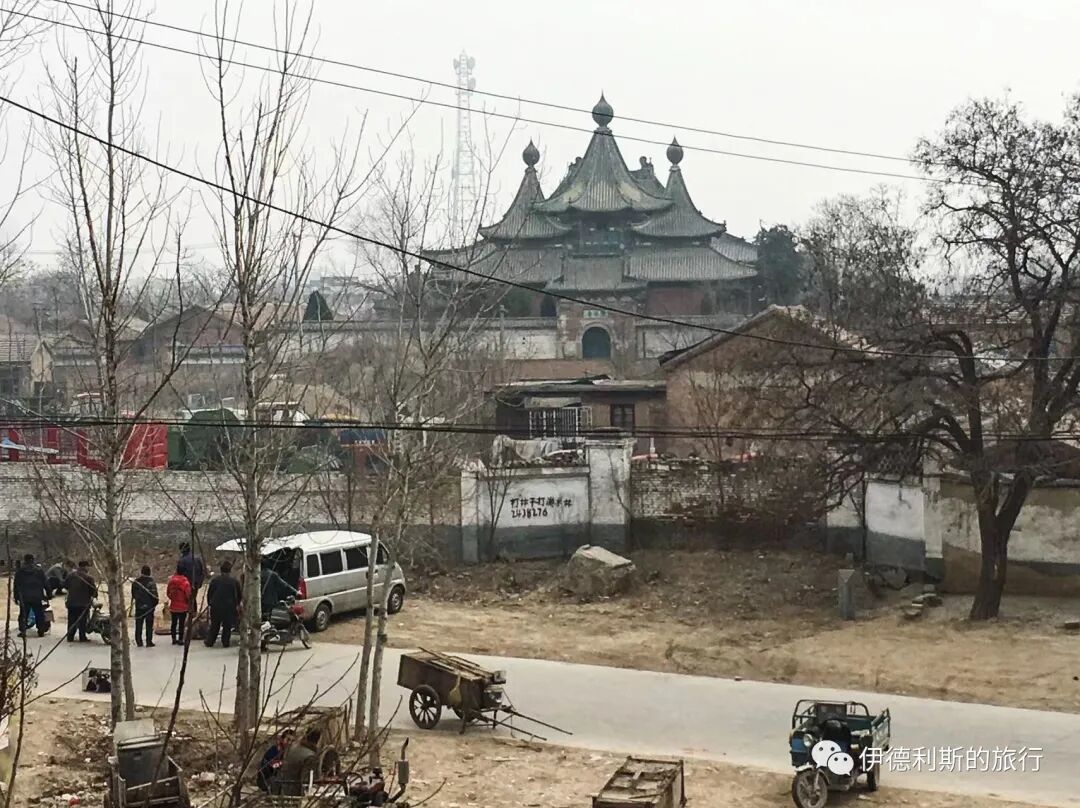
Liaocheng, Shandong
After Kublai Khan, the Emperor Shizu of the Yuan Dynasty, ordered the construction of the Huitong River from Xucheng to Linqing to connect the northern and southern parts of the Grand Canal, Liaocheng became a major canal town, even if it was not as important as Linqing. The Dongguan area between Liaocheng and the canal became a busy and bustling district. Hui Muslims kept moving here to settle, forming the Liaocheng Dongguan Hui Muslim district.
After the Ming Emperor Chengzu, Zhu Di, moved the capital to Beijing, he relied heavily on the Grand Canal to transport grain from the south to the north. Liaocheng entered its golden age, and the large and small mosques in Dongguan were first built during the Hongwu and Yongle reigns.
Walking south along the canal from Liaocheng Dongguan, there are two docks, one large and one small. The large dock was a government transport dock, also called the Chongwu Post Dock. Back then, the ships waiting to unload stretched for miles, a scene known as the 'Chongwu continuous masts'. The small dock was originally a private dock for merchants. These two sites are precious relics of the Grand Canal in the urban area of Liaocheng.
South of Dongguan Street is the Mishi Street historical district. Paved with blue stone, it is one of the few remaining historical districts in the old city of Liaocheng. Grain shops used to gather here. At its peak, there were dozens of them, with busy daily trade and a constant stream of carts and people on the street. The historical district of the large and small mosque streets north of Dongguan Road in Liaocheng has been demolished more severely than Mishi Street, but it has not been completely wiped out like the areas inside the city.
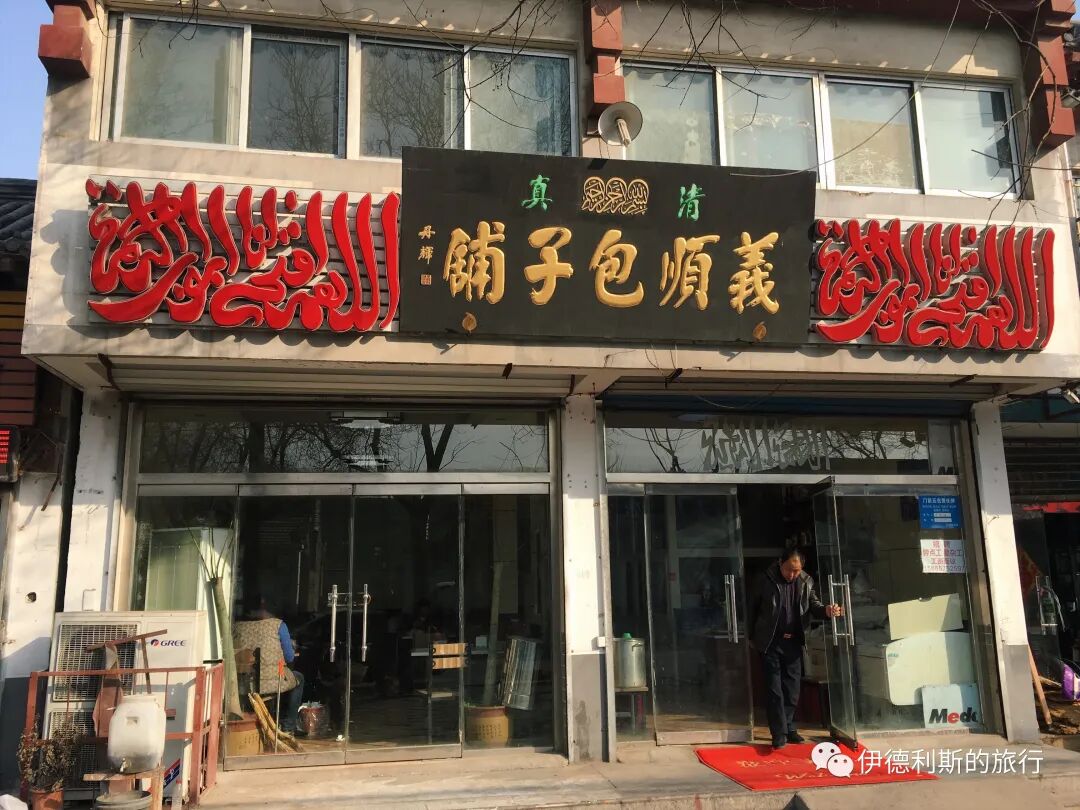
Jining, Shandong.
After the Beijing-Hangzhou Grand Canal opened in the Yuan Dynasty, the government sent canal-support troops to Jining to guard and farm the land. Many of these soldiers were Hui Muslims from the Semu class. They built two mosques in Jining at the time, the Old East Mosque and the Old West Mosque. After the Yuan Dynasty fell, the canal-support troops in Jining surrendered to Xu Da and Chang Yuchun. Most of them were settled locally and began living together along the banks of the Yuehe River, south of Jining city.
During the Yongle period of the Ming Dynasty, the Huitong River reopened and business in Jining began to thrive. The Hui Muslims living in the southern gate area built a new East Great Mosque, which is the current Shunhe East Great Mosque. The current Shunhe East Great Mosque keeps the look it had after its renovation during the Qianlong period and is one of the most impressive mosques along the canal.
At the end of the Ming Dynasty, an outer city was built in Jining, and the Hui Muslim communities were all near this outer wall. Before the old city was renovated, it was known as the 53 Hui Muslim streets and alleys. The Hui Muslim population was most concentrated outside the Small South Gate in Liuhang, where they made up over 80 percent of the residents.
Besides the East Great Mosque, Jining also has the Liuhang East Mosque, which was built during the Wanli period of the Ming Dynasty. When we visited, the place was empty. A cat led us around to see every spot, which felt like a special encounter.
Jining has both an old and a new canal. The old canal is the Jizhou River, which was dug during the Yuan Dynasty. The new Liangji Canal was built between the late 1950s and early 1960s. After the 1970s, sections of the canal in Tianjin, Hebei, and northern Shandong stopped shipping due to low water levels. Jining became the northernmost point for shipping on the Beijing-Hangzhou Grand Canal.
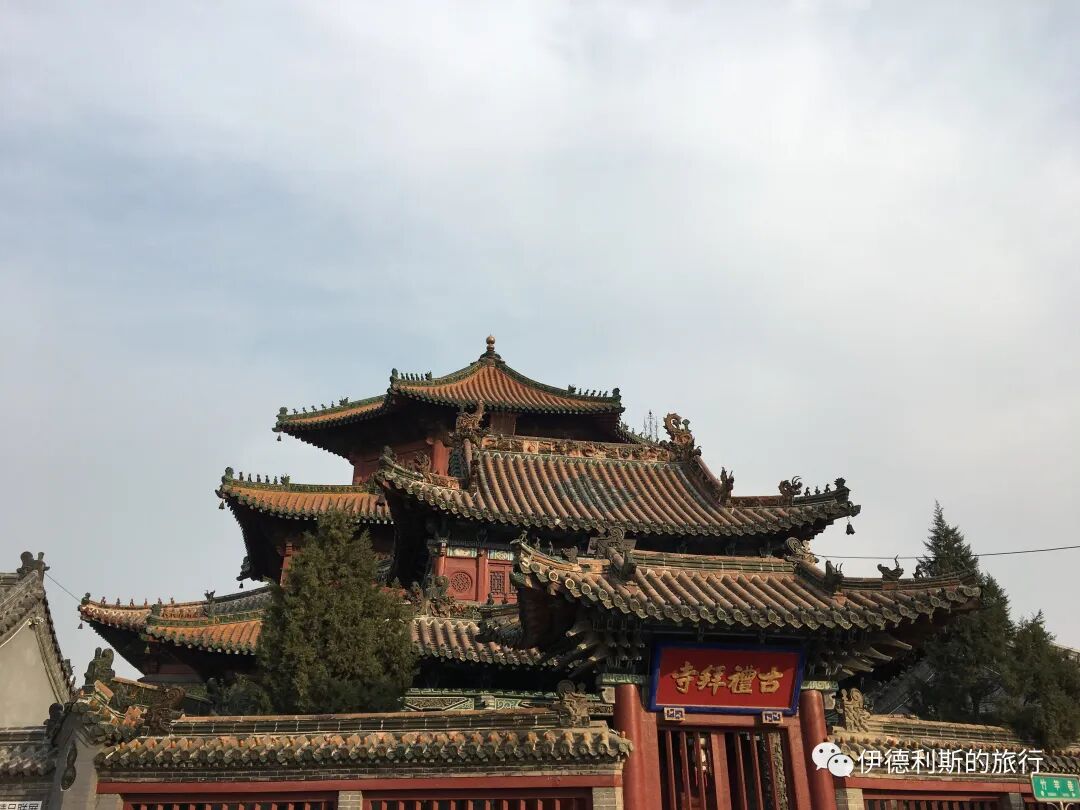
Xuzhou, Jiangsu.
After the Grand Canal was completed in the Yuan Dynasty, Xuzhou became a hub for the canal because it was both a place for civilian boats to deliver grain and a transfer point for government troops. However, because the canal used the Yellow River as its path, the Xuzhou section was often hit by silt and damage from Yellow River floods. During the Wanli period of the Ming Dynasty, a new canal route was opened that bypassed Xuzhou and connected through Pizhou. Pizhou then replaced Xuzhou as the canal hub.
Today, Xuzhou is not really a canal-based Hui Muslim community, but rather a railway-based Hui Muslim community. After the Republic of China was founded, Xuzhou became a hub for the Jinpu and Longhai railways, attracting many Hui Muslims. In 1916, merchants, railway staff, and postal workers pooled their money to build the Travelers' Mosque (Lvxu Qingzhensi) for visiting Hui Muslims to perform namaz. In 1949, it was renamed Jianguo Road Mosque, which is what it is called today.
Next to the Jianguo Road Mosque, there is a deli and a pastry shop. At the pastry shop, I bought chestnut pastries (lizisu), walnut cookies (taosu), sesame crisps (mapianer), and honey-filled horn pastries (yangjiaomi). Taikang Hui Muslim Food Store is a century-old halal shop in Xuzhou, and the owner is a Hui Muslim from Jining. I bought many things at Taikang, including rose mung bean cakes (meigui lvdougao), honey-soaked sponge cakes (mizhi fenggao), egg rolls (danjuan), salted osmanthus sauce (xian guihua jiang), and rose sauce (meigui jiang). Another old halal brand is Feng Tianxing. It was founded in Nanjing during the Qianlong reign and later moved to Xuzhou, where it became a local halal institution. I bought duck tongues, duck livers, and dried tofu (dougan) here. They were all delicious, especially the duck tongues, which were incredibly fragrant.
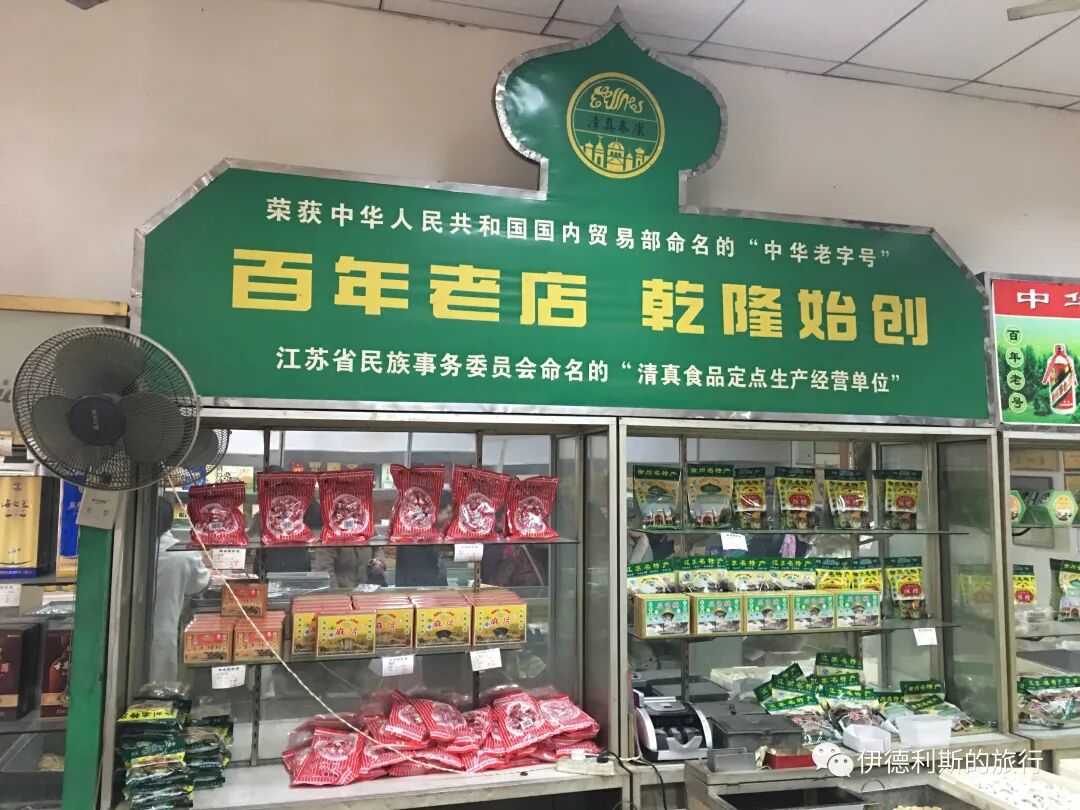
Huai'an, Jiangsu
The Hui Muslim community in Huai'an is divided into three areas: Qingjiangpu, Hexia, and Wangjiaying. Qingjiangpu was renovated during the Yongle reign of the Ming Dynasty. It featured the Qingjiang Grand Sluice, the miles-long Changying Granary, and the massive Qingjiang Shipyard, where grain transport ships from all provinces were built and repaired. Because navigating the Yellow River section of the canal was very dangerous, many merchants chose to leave their boats at Qingjiangpu. This turned Qingjiangpu into a transport hub where people switched from boats in the south to horses in the north. Since the Ming Dynasty, Hui Muslims have done business on Yuehe Street in front of the Qingjiang Sluice. This gradually formed the Yuehe Street Hui Muslim community, with the Qingjiang Mosque at its center.
Traveling south along the canal from Qingjiangpu, you reach the ancient town of Hexia, located not far northwest of the Huai'an prefectural city. In the late Ming Dynasty, many salt merchants from the northwest and Anhui came to northern Huai to work in the salt industry. The regional salt transport office was located in Hexia at the time. The wealth brought by these merchants made Hexia a booming commercial center, and many Hui Muslims settled there, forming the Hexia Hui Muslim community.
Wangjiaying, now called Wangying, sits between the old Yellow River bed and the Salt River. It survived multiple Yellow River floods and moved its town center three times to the east to reach its current location. Because travel along the Yellow River section of the canal was slow, many merchants chose to cross the Yellow River at Wangjiaying and switch to horse-drawn carriages to continue north. Wangjiaying became more and more prosperous in the early Qing Dynasty. Hui Muslims kept moving here to settle, and they built the Wangjiaying mosque during the Yongzheng reign.
During the Daoguang reign, the salt trade system changed. Wangjiaying's Xiba replaced Hexia Town as the new hub for Huai salt, and salt boats arrived one after another every day. In the late Daoguang years, the Wangjiaying mosque moved to the south bank of the Salt River. It was burned down by the Nian Army during the Xianfeng reign, rebuilt during the Tongzhi reign, and became one of the nine branch halls of the Jahriyya Banqiao Daotang.
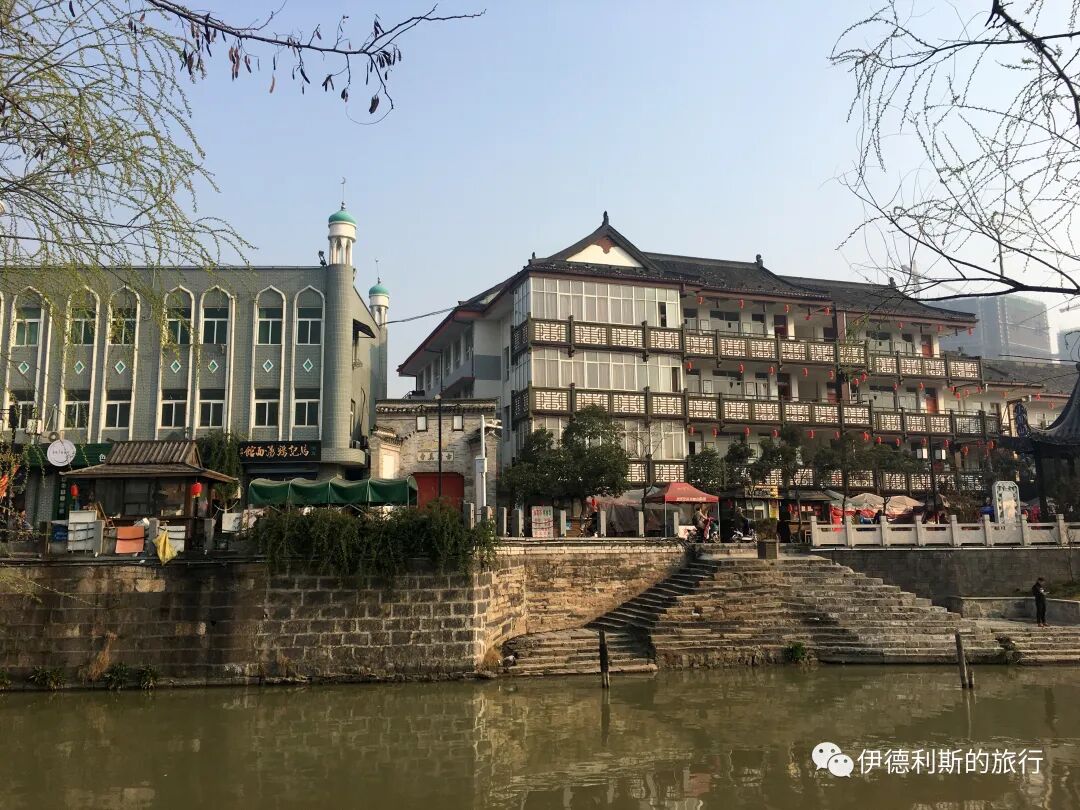
Gaoyou and Lingtang, Jiangsu.
Gaoyou Mosque is a very beautiful traditional mosque. It is small and delicate, with the charm of a water town. The exact founding date of the mosque is unknown, but there is an ancient cypress tree in the courtyard that is over two hundred years old. In 1864 (the third year of the Tongzhi reign), local elders Ma Guixing, Liu Xingtian, and Ma Hongxing rebuilt the mosque. The gate now has a stone carving that says it was rebuilt in the middle of winter in the second year of the Tongzhi reign. It was a pity that the mosque gate was locked when we arrived. We asked at a nearby noodle shop, and they said it only opens for Jumu'ah prayers. It seems we will have to wait for another chance to visit inside.
At noon, we took a taxi from Gaoyou to Lingtang Hui Muslim Township. Lingtang is the only Hui Muslim township in Jiangsu, home to the four major surnames: Yang, Xue, Li, and Sha. One branch of the Yang family moved here from Suzhou at the end of the Yuan Dynasty, and another branch moved from Suzhou during the Qing Dynasty. The Xue family moved here from Xuebeizhuang in Gaoyou during the Qing Dynasty, later converted to Islam, and for generations have mostly only married into the Yang family. The Sha surname is said to come from the Persian word "Shah" and are descendants of Persian ancestors from Huihuiwan in the Yuan Dynasty.
We ate at Huixianglou Restaurant, having salted goose, stir-fried bitter buckwheat chips with egg yolk, amaranth with fava beans, and beef wing soup, all of which are local specialties. The founder of Huixianglou, Yang Yangui, opened a halal restaurant on the old street of Lingtang Bridge in 1969. It moved to its current location in 2010 and specializes in Lingtang salted goose from Gaoyou Lake.
A mosque was built at "Huihuiwan" by the side of Gaoyou Lake during the late Yuan Dynasty, but it was later destroyed by a flood. The mosque moved to Yangdazhuang in the mid-Ming Dynasty, then to its current site in the early Qing Dynasty. It was rebuilt in 1844 (the 24th year of the Daoguang reign of the Qing Dynasty), expanded again in 1921, and completed in 1924.
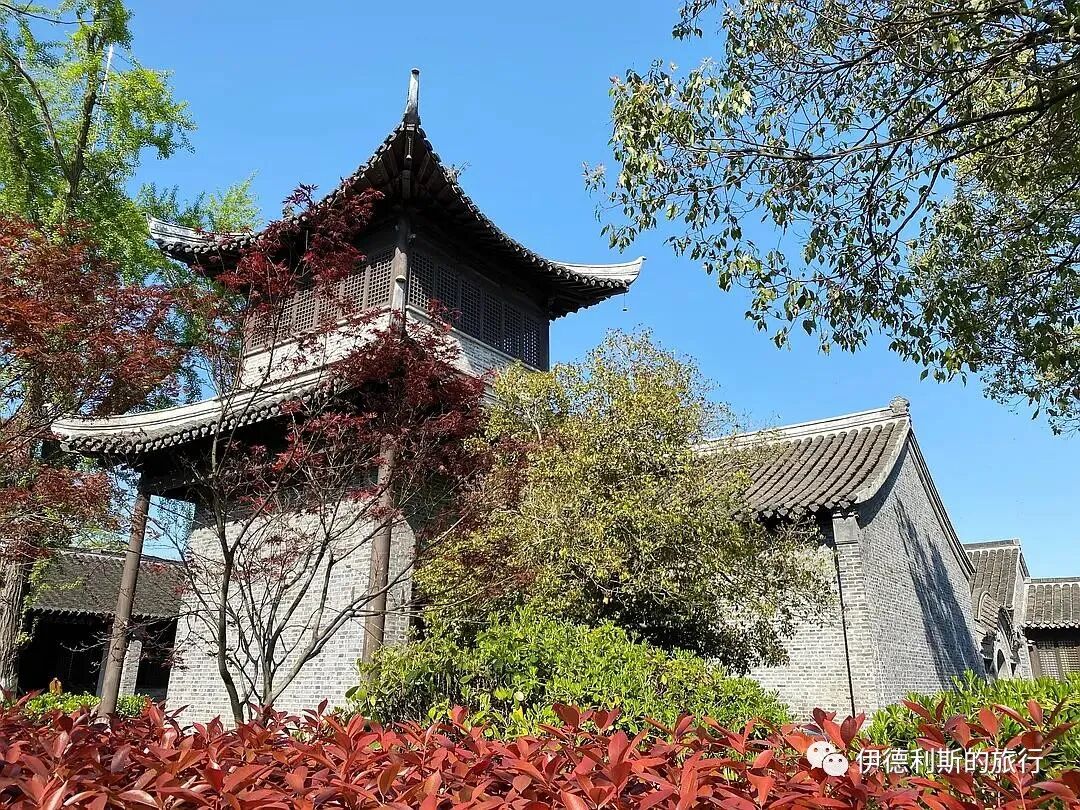
Yangzhou, Jiangsu
Since the Tang Dynasty, Yangzhou has been a major commercial hub in the southeast, attracting many merchants from Arabia and Persia. The Extensive Records of the Taiping Era (Taiping Guangji) contains many stories about foreign merchants in Yangzhou. While most are quite exotic, they provide a vivid picture of Persian merchants in Yangzhou at that time. Yangzhou city suffered heavy damage during the wars at the end of the Tang Dynasty and the Five Dynasties period, and most of the original foreign merchants scattered. After the Song Dynasty, these foreign merchants gradually changed from expatriates to locally born residents, beginning a process of localization.
Yangzhou's most famous Crane Mosque (Xianhe Si) and the Hui Muslim Hall (Puhading Tomb) were both built during the transition between the Song and Yuan dynasties. During the Xianchun years of the Southern Song Dynasty, People say Puha Ding, a 16th-generation descendant of the Prophet, came to Yangzhou and built the Crane Mosque (Xianhe Si). After he passed away, he was buried on a high ridge east of the Dongguan River in the new city, which is now the Puha Ding Cemetery.
The Song Dynasty set up a guesthouse at the south gate of Yangzhou. The area outside the south gate developed into a new settlement for Muslim merchants, and a mosque was built there. The main hall was not demolished until 1984. After Zhu Yuanzhang captured Yangzhou, the tombstones from the Muslim cemetery outside the south gate were built into the city's south gate defense tower. When the south gate defense tower was demolished during the Republic of China era, four Yuan Dynasty Muslim tombstones were found in the city foundation. They are now kept in the Puha Ding Cemetery and are precious relics of the Muslims in Yuan Dynasty Yangzhou.
After the Qianlong reign, Yangzhou had six mosques. The three inside the city were the Crane Mosque on Nanmen Street, the Majian Lane Mosque, and the Xiejia Bridge Mosque. The three outside the city were the Hui Muslim Hall (inside the Puha Ding Cemetery) east of the Dongguan River, the South Gate Mosque, and the Chaoguan Mosque. Today, only the Crane Mosque and the Dongguan Hui Muslim Hall remain open, while the Majian Lane Mosque has been turned into a private residence.
During the Republic of China era, there were nearly 20,000 Hui Muslims living in the six mosque districts of Yangzhou, with Sha, Ma, Ha, Sa, and Da as the five major surnames. At that time, there were more than ten famous halal restaurants in Yangzhou. The most famous was the Tianxing Restaurant, which was frequently visited by everyone from scholars and writers to salt merchants and officials. The Tianxing Restaurant eventually closed in the 1950s.
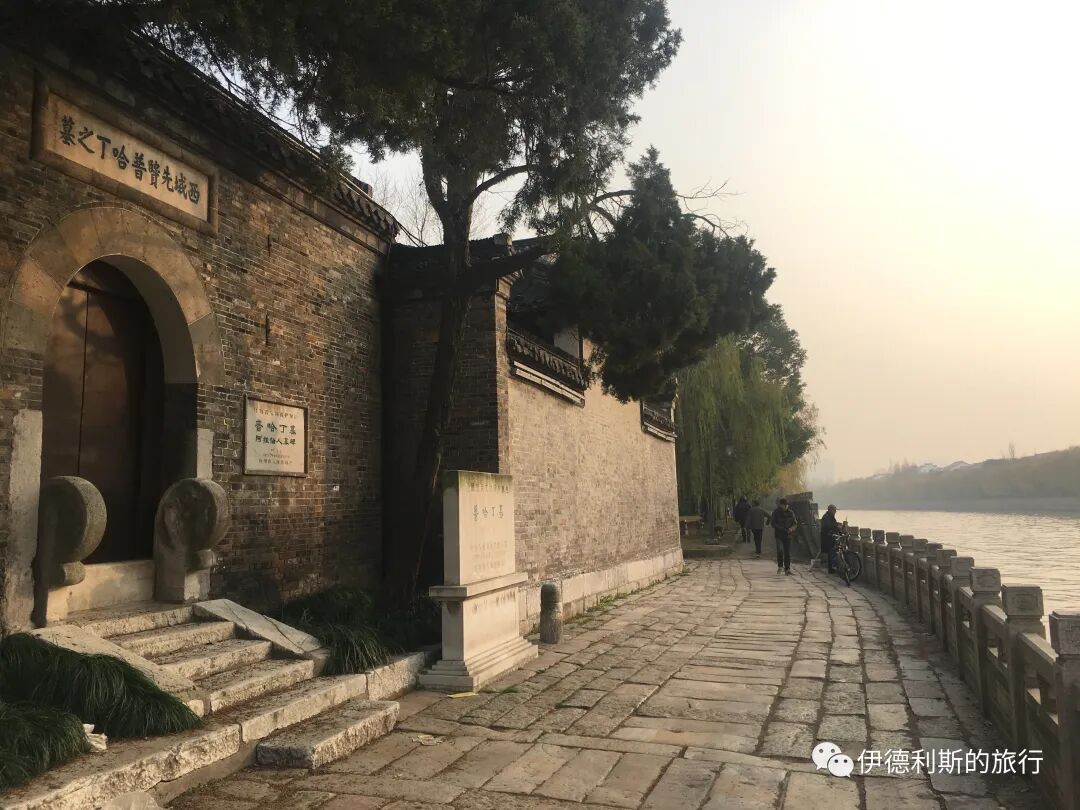
Zhenjiang, Jiangsu
The original meeting point of the Grand Canal, built by Emperor Yang of Sui, was called Dajingkou. In 1029 (the seventh year of the Tiansheng era of the Song Dynasty), a new canal was dug east of the old one, and the point where this new canal met the Yangtze River was named Xiaojingkou. After the New Canal was dug, it gradually became an important hub for grain transport, and Xinhe Street formed along the riverbank. After Zhenjiang opened as a treaty port in 1861, Xinhe Street became even more prosperous, with all kinds of shops opening up. In the 1920s, the Yihewani sect of Islam reached Shanghai. Some Hui Muslims from Zhenjiang who moved to Shanghai adopted these teachings, and in 1930, they built an Yihewani mosque on Xinhe Street. At that time, the new and old sects lived in peace and operated side by side. After the 1950s, the Xinhe Street mosque was taken over by a factory, but the Jiangnan-style courtyard architecture remains today.
Walking southwest from Xinhe Street leads to the Shanxiang Mosque. Shanxiang Mosque is also known as the Chengxi Mosque. It was expanded during the Kangxi reign, destroyed during the Xianfeng reign, and rebuilt during the Tongzhi reign. After Zhenjiang opened as a treaty port, the area outside the West Gate became a busy commercial district. The establishment of the British concession and the opening of the Shanghai-Nanjing railway brought a steady stream of Hui Muslims who came to trade and settled around the Shanxiang Mosque.
Besides the Shanxiang Mosque, Zhenjiang once had another mosque on Jianzi Lane. The Jianzi Lane Mosque was originally called the Gurun Mosque. It was first built on Ren'an Lane in Fumin Street, destroyed at the end of the Yuan Dynasty and the beginning of the Ming Dynasty, rebuilt in the Hongwu reign of the Ming Dynasty, moved to Jianzi Lane inside the city during the Wanli reign, and finally destroyed in the 1970s or 1980s. A new Gurun Mosque was built on Xuefu Road in 2005. The stone tablet from the Wanli reconstruction, the ancient well railing, and three Qing Dynasty reconstruction tablets from the original Jianzi Lane Mosque are preserved in the courtyard.
to the relics from the Jianzi Lane Mosque, the Gurun Mosque also houses an Arabic orientation tablet from the kiln hall of the mosque outside the South Gate of Zhenjiang. The South Gate Mosque was at the east end of Miaojia Lane. It is believed to have been built in the early Qing Dynasty and was destroyed by war in 1937.
Although Jianzi Lane Mosque has disappeared, the Hui Muslims who once lived around the mosque have not. The area around Jianzi Lane still has the highest concentration of halal restaurants in Zhenjiang. Yong'an Road is not far south of Jianzi Lane. The street is lively and full of snacks, and there are five halal restaurants.
Finally, we went to the Jiangbin vegetable market and found the last halal tea snack shop in Zhenjiang, Jianxiang Halal Food Factory. The owner, Ma Jian, used to work at the Zhenjiang Pastry Factory. After he was laid off in 1995, he opened Jianxiang Halal Food Factory himself. The owner's wife recommended their famous cloud-slice cake (yunpiangao), the Zhenjiang-style navel-shaped pastry (jingjiangqi), and egg crisps (jindanshu). The cloud-slice cake was especially delicious.
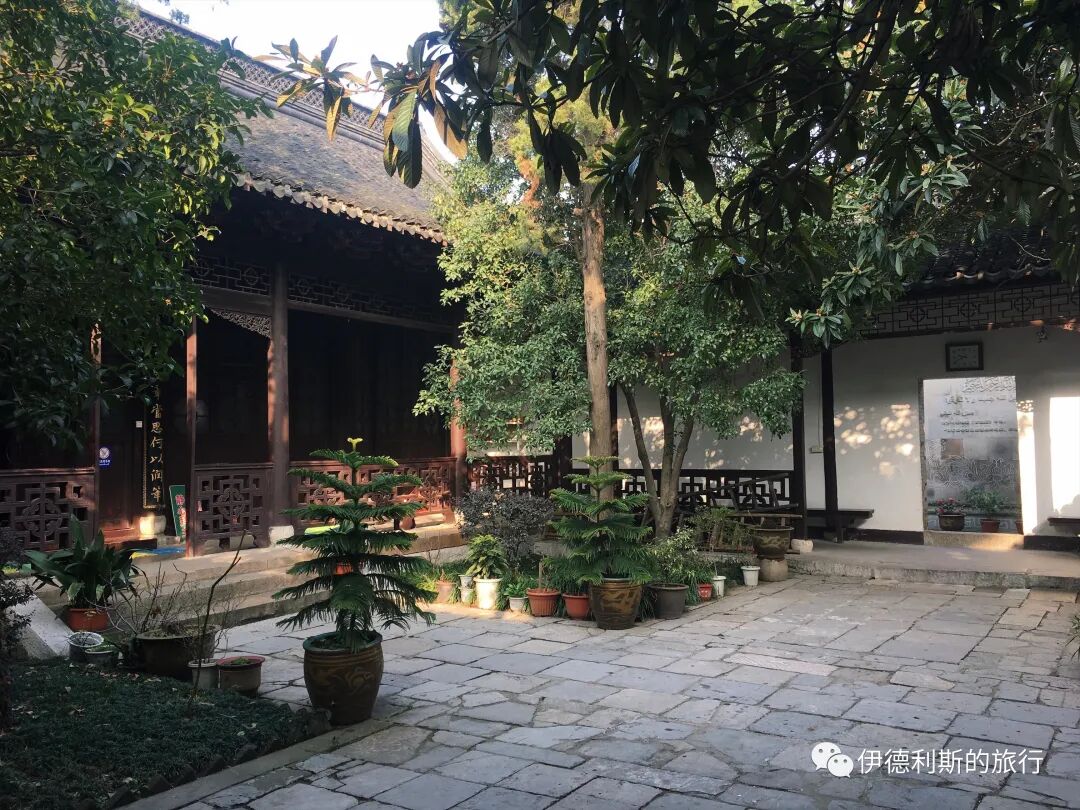
Jiaxing, Zhejiang
After the Jingkang Incident and the Song Dynasty moved south, Jiaxing, located near the capital Lin'an, began to prosper. During the Song Dynasty, the government set up a maritime trade office at Ganpu Port in Jiaxing. Many Hui Muslim merchants settled on Luli Street in the southeast of the city. Goods were transferred here before being shipped to the capital, Lin'an, and Luli Street gradually became known as the Hui Muslim Street. After the Yuan Dynasty conquered the Song, they stationed a large number of Hui troops near the Southern Song capital of Lin'an. After the Ming Dynasty, Hui Muslim soldiers and foreign guests gradually assimilated and became the Hui Muslims. Jiaxing became home to several large families with the surnames Xu, Guo, Jin, Sha, Ma, and Yang, and they built the Jiaxing Mosque during the Wanli era.
However, during the Xianfeng era, the Taiping Heavenly Kingdom army occupied Jiaxing and burned the Hui Muslim district to the ground. The surviving Hui Muslims fled in all directions, and the Hui Muslim community in Jiaxing disappeared. It was not until the early 20th century that Hui Muslims from Henan and Shandong moved south to Jiaxing to escape poverty, and a residential area gradually formed again around the mosque. Among these Hui Muslims, half were from the Han family who came from Tuocheng, Henan, and they were known as the wealthy Han family.
The Henan Muslims who moved to Jiaxing also brought the tradition of the Henan halal girls' school with them. The Jiaxing Halal Girls' School began in 1942, and its first principal was Yang Huizhen. In 1946, Yang Huizhen founded the Jiaxing Islamic Orphanage and Nursing Home to provide care for the elderly, weak, women, and children.
At noon, we ate at the Siruchun Halal Restaurant on Yuehe Street in Jiaxing. We ordered fruit rice ball soup (shuiguoyuanzigeng), crab roe tofu, Indian aster (malantou), and Bai family smoked fish (baojiabaoyu). It was authentic and delicious Jiaxing food, making this trip well worth it! The founder of Siruchun was Bai Tisheng, a Hui Muslim from Henan. He started selling braised meat (jiangrou), steamed buns (baozi), and pan-fried pancakes (jianbing) in Jiaxing during the Republic of China era. At the end of 1938, Bai Tisheng opened the Siruchun halal stir-fry restaurant. It was the most famous halal stir-fry restaurant in Jiaxing during the 1930s and 1940s.
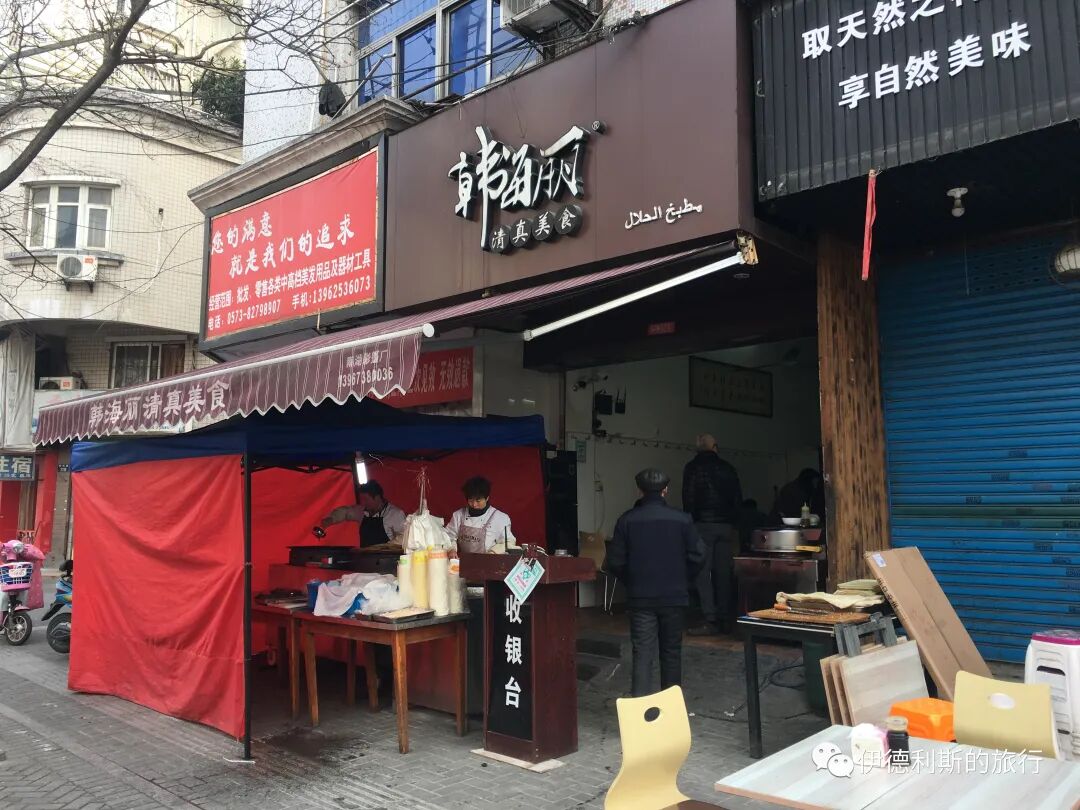
Hangzhou, Zhejiang
Starting in the Yuan Dynasty, many Muslims came to settle in Hangzhou. They were mostly Persians, along with Persianized Central Asian Turks. They held high social status and lived wealthy lives, forming a bustling Muslim community in the center of Hangzhou.
During the Yuan Dynasty, Hangzhou had three mosques: True Religion Mosque (Zhenjiaosi), Hui Muslim Prayer Hall (Huihui Baifotang), and Hui mosque (Huihuishi Libaisi). Zhenjiao Mosque is the same as Phoenix Mosque (Fenghuang Si). It was rebuilt in the Yuan Dynasty and has remained until today. The rear main hall is the only remaining Yuan Dynasty structure of the Phoenix Mosque. It is narrow from east to west and wide from north to south, maintaining the traditions of early West Asian mosques.
Jujing Garden, located by West Lake outside the Qingbo Gate in Hangzhou, was purchased by Muslims after the Yuan Dynasty to use as a cemetery. During the Ming and Qing dynasties, this place was called the 'Foreigner's Grave' (fanhui jiamu) or 'Hui Muslim Grave' (huihui fen). During the Republic of China era, it was known as the 'South Garden Islamic Cemetery' (nanyuan huijiao gongmu) or 'Islamic Public Cemetery' (huijiao yizhong), and it remained there until it was moved in 1953. During the relocation of the Hui Muslim tombs, dozens of Yuan Dynasty tombstones with Arabic and Persian inscriptions were discovered. Some are now kept in the stele gallery of Phoenix Mosque.
There are two remaining sites at the former location of the Hui Muslim cemetery. One is the tomb of Bahtiyar, a Central Asian military officer from the Yuan Dynasty, which was unearthed in the 1920s when Hangzhou's city walls were demolished. It has now been built into the Bahtiyar Tomb Garden for Hui Muslim ancestors. The other is the tomb pavilion and tomb cover stone of Ding Henian, a famous Hui Muslim poet from the late Yuan and early Ming dynasties.
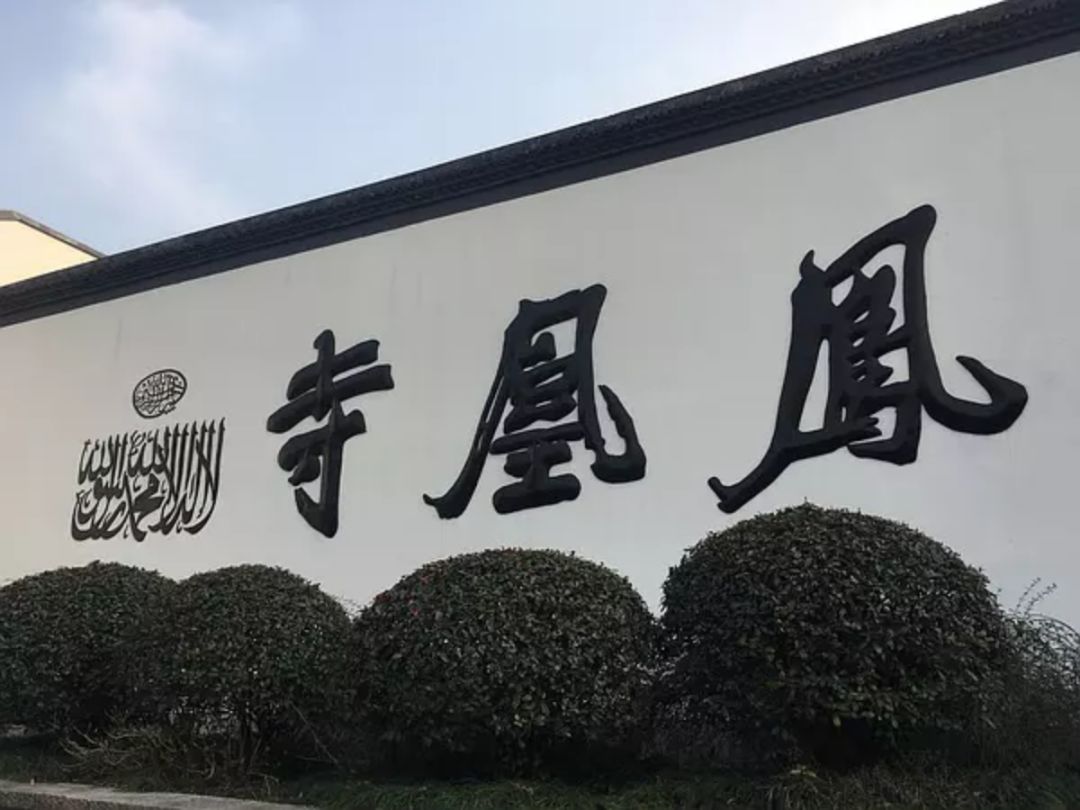 Collapse Read »
Summary: Beijing-Tianjin Canal — Mosques and Hui Muslim History is presented here as a firsthand travel account in clear English, beginning with this scene: Visiting Muslim communities, exploring old mosques, and tasting local food have been my dreams since I was a child. The account keeps its focus on Canal Mosques, Beijing Tianjin, Hui Muslims while preserving the names, places, food, and historical details from the Chinese source.
Visiting Muslim communities, exploring old mosques, and tasting local food have been my dreams since I was a child. I could not make it happen during college because I had a limited budget. I graduated from college and returned to Beijing for work in 2014. With a steady income, I officially started my halal food and travel journey in 2015. From January 2016 to May 2017, over a period of more than a year, I used my weekends and holidays to visit Hui Muslim communities in 19 towns and cities along the Grand Canal. I finished the first stage of my travel plan, the Canal Hui Muslim Community Food Tour.
These 19 locations are: Chaoyangmenwai, Changying, Tongzhou Nanguan, and Zhangjiawan in Beijing; Tianmu Village, Jiayuanli, and Northwest Corner in Tianjin; Cangzhou and Botou in Hebei; Dezhou, Linqing, Liaocheng, and Jining in Shandong; Xuzhou, Huai'an, Yangzhou, and Zhenjiang in Jiangsu; and Jiaxing and Hangzhou in Zhejiang.
This halal food tour gave me some experience and laid the foundation for my halal travels to over 100 cities in more than ten countries over the following years. Looking back now, although my early records were incomplete and quite simple, they are still precious memories of that time. Only five or six years have passed, but many situations have changed, and many scenes have already become history.
I have been sharing my canal halal travel records on my public account for a while now. This post serves as a summary and a directory. Due to time constraints, I could not visit some important Hui Muslim communities along the canal. I will have to visit them if I get the chance later. I visited Gaoyou and Lingtang in Jiangsu in 2021, and I am sharing those here as well.
Although they are all along the Grand Canal, the Hui Muslim communities in each place were established at different times. For example, Yangzhou had large numbers of Persian and Central Asian merchants as early as the Tang Dynasty. Hui Muslims (Huihui Semu) were already living in Hangzhou and Zhenjiang during the Yuan Dynasty, but most canal Hui Muslim communities developed during the Ming Dynasty. After the capital moved to Beijing during the Yongle reign, the Grand Canal was dredged again. At the same time, people were relocated to fill areas in the north that were damaged by the Jingnan Campaign. The Hui Muslim population along the Tianjin, Hebei, and Shandong sections of the canal increased significantly, and many famous mosques were built during the Ming Dynasty. During the Xianfeng reign of the Qing Dynasty, the Hui Muslim communities in Huai'an, Zhenjiang, and Jiaxing were hit hard by the Nian Rebellion and the Taiping Rebellion. The Hui Muslim community in Jiaxing was even destroyed and did not recover until the Republic of China era.
In 1855, the Yellow River burst its banks at Tongwaxiang, and the northern sections of the canal became completely silted up. The China Merchants Steam Navigation Company was founded in 1872, and grain tribute began to be transported by sea. Canal grain transport was completely abolished in 1901, and the Tianjin-Pukou Railway opened in 1913. These events caused a major shock to the Hui Muslim communities along the canal. Places like Linqing and Liaocheng began to decline, while cities like Tianjin and Zhenjiang became more prosperous because of the railway. During the Republic of China era, economic development led many Hui Muslims to move from the countryside to cities. Many chose to work in the halal food industry. Large halal restaurants gradually appeared, especially in the south, marking a period of prosperity for southern Hui Muslim communities.
In 1949, soaring prices and broken trade routes forced many Hui Muslim merchants in cities to return to their hometowns. The 1956 joint state-private ownership policy caused many halal restaurants to close. The impact was most severe in southern cities like Suzhou, Changzhou, and Hangzhou, where Hui Muslim communities eventually disappeared. After the market economy began in the 1990s, many Hui Muslim communities were demolished, and the people scattered. In the 21st century, the rapid pace of urban renewal has made the study of remaining Hui Muslim communities urgent. This is how I began my journey to visit the Hui Muslim communities along the canal.
The area outside Chaoyang Gate in Beijing.
After Emperor Yongle of the Ming Dynasty moved the capital to Beijing, he dredged the Tonghui River between Beijing and Tongzhou. He built a series of granaries inside the eastern Chaoyang Gate, and large amounts of grain were shipped from the south along the canal to the gate. Because the Tonghui River lacked enough water and had too many locks, boats often got stuck. During the Qing Dynasty, most grain boats stopped at Tongzhou to unload and transport goods by cart along the official road to Chaoyang Gate. A stone road between Chaoyang Gate and Tongzhou was built during the Yongzheng period, creating a mature commercial route.
Since they were not restricted by the closing of the city gates at night, most people transporting grain stayed outside Chaoyang Gate. Tea houses, inns, and restaurants gradually appeared in the area, and business thrived. Many Hui Muslims who came to do business settled here, forming the Hui Muslim community outside Chaoyang Gate.
There were once seven mosques outside Chaoyang Gate, with four clearly recorded: Nanzhongjie Mosque, Nanxiapo Mosque, Shuimenguan Women's Mosque, and Shegutang Mosque. Only the Nanxiapo Mosque remains today. Legend has it that in the late Ming and early Qing dynasties, a shed builder in Nanxiapo used poles and reed mats to build a large shelter as a place for namaz. In the early Kangxi period, a Hui Muslim businessman named Ma heard about this and donated money to build the formal Nanxiapo Mosque.
Chaowai Street once had many halal food shops. Famous ones included the Yongsheng Lamb Shop and the Dayou Halal Oil and Salt Shop, along with many small stalls. After the renovation of Chaowai Street in the 1990s, only Ziguangyuan, known for its stir-fried dough bits (chaogeda), has continued to thrive. I still go there often to eat roast duck.
The Muslim community outside Chaoyang Gate was completely demolished after 1992. Residents were relocated to the Sanfengli residential area nearby. There are many halal snacks there, and the stewed meat with braised green beans at the small halal restaurant is especially delicious.
Changying, Beijing.
Changying sits on the north side of the Chaoyangmen official road between Beijing and Tongzhou. Legend says that Chang Yuchun, a famous founding general of the Ming Dynasty, once stationed a troop of Hui Muslims near Tongzhou. This camp was named Changjiayingzi, though no historical records have been found to prove this story.
Because it was not far from the Tongzhou canal shipping docks and the Chaoyangmen stone road, many Hui Muslims in Changying made a living by pushing carts and pulling rickshaws. Pushing carts meant using a wheelbarrow to transport grain from the Tongzhou earthen dam to the Thirteen Granaries (Shisancang) inside and outside Chaoyangmen. Pulling rickshaws meant carrying passengers along the Chaoyangmen stone road. Both jobs were directly related to the canal shipping industry.
Changying Mosque was built during the Zhengde period of the Ming Dynasty and renovated in the first year of the Jiaqing period. It is a famous mosque in the eastern Beijing area. In 2001, Changying was demolished. The original eight Hui Muslim villages, including Changying villages 1-7 and the first residential area, were relocated to the Changying Ethnic Homeland residential complex. This formed a new Hui Muslim community, featuring a food street behind the Changying Mosque, a halal food market, a halal supermarket, and many halal restaurants. Behind Changying Mosque is a halal food street. The most famous spot there is Li Xiaolao's meat sesame flatbread (shaobing), which might be the best shaobing in Beijing. Next to Li Xiaolao's are Anji Deli, Jialun Deli, and Yinfangzhai Pastry Shop. The deli meats and pastries inside are all quite good.
Nanguan in Tongzhou, Beijing.
After Guo Shoujing built the Tonghui Canal during the Yuan Dynasty, Tongzhou became a hub for canal shipping. Many Hui Muslims moved here to live, forming a Hui Muslim community in Nanguan. In the first year of the Hongwu period of the Ming Dynasty, Tongzhou city was expanded, and the Nanguan Hui Muslim community was included within its walls. This officially formed South Street inside the South Gate and the Hui Muslim Eighteen-and-a-Half Alley (Shibajieban Hutong) on the east side. South Street was a busy main road for transporting canal grain from the Grand Canal docks outside the North Gate to the two major granaries in the center and east of Tongzhou city. Because of this, it was very prosperous during the Ming and Qing dynasties and was filled with all kinds of shops.
The most authentic halal pastry shop on South Street in Tongzhou is Guishunzhai Halal Food Store. It was opened by Master Li Chen, the former deputy factory manager of the old Dashunzhai food store, after he retired. He kept the traditional skills of the old Dashunzhai, and his thick cakes (dunbobo) and sugar-fired cakes (tanghuoshao) are excellent. The state-run Dashunzhai food store still exists today. Its main branch is on Xinhua East Street in Tongzhou, and its products are also sold on Niujie and in major Beijing supermarkets.
On the east side of the road, north of South Street in Tongzhou, stands the Tongzhou Mosque, built in the Yuan Dynasty. It was originally named Chaozhen Mosque and was renamed Mosque after being expanded during the Wanli period. At the north end of South Street is Xiaolou Restaurant, the most famous halal restaurant in Tongzhou. It is best known for its braised catfish (shao nianyu) caught in the canal. Xiaolou was originally named Yihexuan and was founded by the Li brothers in 1900. It was rebuilt into a two-story building in 1921 and took the name Xiaolou. The current storefront was built after the old Xiaolou was demolished in 1985.
Zhangjiawan in Tongzhou, Beijing.
After Guo Shoujing built the Tonghui River during the Yuan Dynasty, the place where the river flowed east into the Lu River in Tongzhou became what is now Zhangjiawan. Legend says Zhangjiawan was named after Zhang Xuan, who managed sea transport at the time, and it became a canal shipping terminal. After water levels in the Tonghui River dropped in the early Ming Dynasty, more cargo boats chose to unload at Zhangjiawan to transfer goods to carts, making Zhangjiawan a major hub for canal transport. It was not until the Jiajing era of the Ming Dynasty, a century later, that the new Tonghui River was diverted from Zhangjiawan to flow into the North Canal at Tongzhou city. However, cargo ships still docked at Zhangjiawan, and both Zhangjiawan and Tongzhou city served as important canal terminals east of the capital.
After the Yuan Dynasty, merchants kept coming to settle in Zhangjiawan, including many Hui Muslims. A Hui Muslim community formed in Zhangjiawan during the early Ming Dynasty, and they built the Zhangjiawan mosque. The Zhangjiawan mosque was built in the early Ming Dynasty and renovated during the Daoguang era of the Qing Dynasty. It suffered damage through various hardships after the 20th century, but it has been renovated and is now a simple, clean little mosque.
The area outside the south gate of the Zhangjiawan city wall became a lively Hui Muslim market because it was near the canal terminal. The three-arch stone bridge over the Empress Xiao River outside the south gate was built by imperial order during the Wanli era of the Ming Dynasty. It still stands today and is the most important historical site in Zhangjiawan.
Tianmu Village in Tianjin.
During the Hongwu era of the Ming Dynasty, a boatman named Mu Chonghe from Qiantang County, Hangzhou Prefecture, Zhejiang, followed the Prince of Yan, Zhu Di, along the canal to transport grain to Tongzhou. After unloading, he traveled south with the current and settled by the North Canal. He continued working in canal transport, and the Mu family village began to form.
In the second year of the Yongle era of the Ming Dynasty, Tianjin Wei was officially established as a city. The first mosque in Tianjin was built in the Mu family village in the northern suburbs of Tianjin, which later became the Tianmu North Mosque. After the Ming Dynasty, Hui Muslims from places like Zhejiang, Jiangsu, Shandong, and Hebei kept arriving along the canal to settle down, and the Mu family village gradually grew.
During the Ming and early Qing dynasties, most people in the Mu family village made a living from canal transport and were known as boat keepers. By the mid-to-late Qing Dynasty, as canal transport declined, boat owners in the Mu family village began switching to carting and trading. In the late Qing Dynasty, the cattle and sheep industry in Mujiazhuang began to grow. After the Republic of China was established, Hui Muslims from Mujiazhuang opened over one hundred beef and mutton shops across Tianjin.
In 1951, Mujiazhuang and Tianqi Temple merged to form Tianmu Village. In 2009, demolition began in Tianmu Village, and it is now in ruins. Today, the halal snack street is concentrated on Tianmu Shunyi Road.
Jiayuanli, Tianjin
After the 1990s, demolition began in Northwest Corner (Xibeijiao), the largest Hui Muslim community in Tianjin. Many Hui Muslims from there moved to Jiayuanli by the North Canal. Starting in 1999, a halal night market opened in Jiayuanli, and the variety of Hui Muslim snacks grew.
Not far into the Jiayuanli community commercial street, I saw a stall selling seaweed rice rolls (gimbap). I bought a box of egg yolk and tuna seaweed rice rolls and a box of beef floss. When I was very young, I used to put a layer of meat floss on my porridge in the morning. I miss that feeling so much. I kept walking inside and bought some fried dough twists (liaohuo) and jujube cake. The jujube cake was incredibly delicious and had such a classic, old-fashioned taste that I felt like all the jujube cake I had eaten over the years was a waste. Then I bought half a jin of vegetable meatballs, half carrot and half dried radish. I ate steamed dumplings at Shiji Jinling Steamed Bun Shop, served with corn grits and rice porridge. The steamed dumplings were absolutely amazing. I ate eight in one go and didn't want to stop. Every time I burped, I could taste the beef filling, which was very satisfying.
Northwest Corner (Xibeijiao), Tianjin
January and February 2016 were my first two visits to the Northwest Corner of Tianjin. It was these two trips that made me fall in love with this place. The Northwest Corner was once the largest Hui Muslim community in Tianjin. After the city of Tianjin was built, Hui Muslims continuously moved to Tianjin via the canal from places like Anhui, Jiangsu, and Hebei. Some chose to settle in the Northwest Corner of the old city, near the commercially prosperous Beidaguan canal transport hub. During the Shunzhi reign, the Northwest Corner Mosque was built here.
The Northwest Corner was centered around the mosque. Before 1995, halal shops were everywhere, but the Muslim community began to break up after the mid-90s demolitions. After 2007, the Muslim community around the mosque completely disappeared. The current Northwest Corner Hui Muslim community refers to the area around Xiguan North Street, centered on the South Mosque. As soon as you exit the Northwest Corner subway station, you can see the long line at Xiaoli Roasted Chicken. Walking south along Xima Road, you will find one halal food shop after another.
In 2017, the last historic neighborhood remained in the Northwest Corner, the Lingdangge (Bell Pavilion) area built on ruins. At the southern edge of the Lingdangge area is Xiguan Street, which hosts a wild market on weekends, much like the Daliushu market in Beijing, where they sell everything. After walking through the market, you return to the Northwest Corner Hui Muslim community.
Cangzhou, Hebei
Like many canal cities, Cangzhou has had Hui Muslim merchants settling with their families since the Yuan Dynasty. However, the Cangzhou city of that time was located at the ruins of the Old Prefecture City 20 kilometers to the southeast. During the Jingnan Campaign, the Prince of Yan, Zhu Di, destroyed the entire Old Prefecture City. It was not until the Yongle reign of the Ming Dynasty that Zhu Di ordered the relocation of Cangzhou city to Changlu by the Grand Canal, moving residents from Shanxi, Shandong, Anhui, and other places to settle there, forming the new Cangzhou city.
The Nanguanxiang area south of the city was an important passage to the canal, and most Hui Muslims, who were mainly artisans and small vendors, chose to live there. During the Yongle reign, Wu Zuoyong from Shexian, Huizhou, Anhui, was appointed as the Assistant Magistrate of the Cangzhou Salt Transport Office and came to Cangzhou, where he donated land south of the city and led the construction of the Cangzhou North Great Mosque, officially forming the Hui Muslim community in Cangzhou. South of the North Great Mosque is the Hui Muslim district in the south of the city, with Minzu Street as its center, lined with all kinds of Hui Muslim snacks. I bought a Liu's pine-flower chicken leg at the east entrance of Minzu Street; it is perfect for rolling in a flatbread (laobing) or eating with a steamed bun (mantou) because the chicken sausage is stuffed with pine-flower eggs. Then I had some tea soup (chatang); the tea soup in Cangzhou came from Tianjin along the canal, but this shop adds more ingredients and has a stronger flavor. I also bought beef buns (niurou baozi), which were very fragrant right out of the steamer. I walked a few steps and bought two bags of five-spice peanuts; the black ones are very addictive when eaten with tea.
Not far to the west of the southern Hui Muslim district is the canal wharf, where many Hui Muslims once made a living directly from water transport. The wealthiest boat owners rented out their vessels or hired people for grain transport, ordinary small boat owners made a living by ferrying, and the poorest Hui Muslims survived by pulling boats along the riverbank or carrying cargo at the docks.
Botou, Hebei
Botou sits along the canal south of Cangzhou. During the Hongwu reign of the Ming Dynasty, a regional administrative office was established here to manage grain transport between Tianjin and Dezhou, and Botou gradually became an important canal town. Like Cangzhou, Botou suffered heavy damage during the Jingnan Campaign, and its population dropped sharply. During the Yongle reign, many Hui Muslims came to settle in Botou. Because the number of Hui Muslims increased, a mosque was built in Botou that year. Afterward, more Hui Muslims moved in from Shandong, Shanxi, and Anhui, and the Hui Muslim community in Botou was officially formed.
During the Qing Dynasty and the Republican era, the most famous halal restaurants in Botou were Taiheguan on Shunhe Street, which opened during the Tongzhi reign, Shunfuguan and Xingshenghe on Gulou Street, which opened during the Guangxu reign, and Xiyuguan on East Street. The small and medium-sized restaurants around Shunhe Street were all halal, offering a wide variety of halal snacks.
Before 1957, local shipping in Botou was mainly operated by Hui Muslims, divided into two trades: those who worked the boats and those who owned them. Those who worked the boats were the crew and trackers, while those who owned them were the boat owners. Some ferried passengers across the river, some transported fertilizer for villages along the river, and others operated long-distance transport routes from Tianjin in the north to Xinxiang, Henan in the south. Before 1965, the canal section in Botou had plenty of water. In the early summer of 1965, the canal dried up for the first time. After that, the water level decreased year by year, and by the first half of the 1970s, it was nearly dry, ending shipping in Botou.
Dezhou, Shandong
The first thing I wanted to see on this trip to Dezhou was the Tomb of the Sultan of Sulu from the Philippines. The Sulu Archipelago is located in the far southwest of the Philippines, right next to the easternmost part of Malaysia. Between the 14th and 16th centuries, as maritime trade in the Indian Ocean flourished, Islam spread along the Maritime Silk Road to the Sulu Archipelago, where the Sulu Sultanate was established. During the Yongle reign, three chieftains from the Sulu Kingdom led a delegation to visit the Ming Dynasty. While traveling back and passing near Dezhou, the Eastern King suddenly fell ill and passed away. Emperor Yongle of the Ming Dynasty buried the Eastern King of Sulu with royal honors and built the Tomb of the Eastern King of Sulu north of Dezhou city.
After the Eastern King of Sulu died, his eldest son returned home to take the throne, while his second son Andulu, third son Wenhala, and Queen Gemuning stayed behind to guard the tomb. Their descendants took the surnames An and Wen, gradually forming Beiying Village in Dezhou. During the Wanli era, the descendants of the Sulu King built a mosque southwest of the Sulu King's tomb. In 1917, the canal burst its banks, washing away the mosque and the entire Beiying Village. It was rebuilt in 1940, becoming the Republic of China-era building seen today.
During the Yongzheng era, the descendants of the Sulu King changed their status from immigrants to Dezhou citizens and began opening halal snack shops in the bustling canal markets of Dezhou. Today, southwest of Beiying Village, there is still a braised chicken shop (paji dian) run by descendants of the An family. A new Beiying Ethnic Customs Street has been built next to the Sulu King's tomb, featuring a beef and mutton shop run by descendants of the Wen family, as well as a Li family whole lamb soup (quanyang tang) shop.
Strolling from Beiying Village to Qiaokou Street, you reach what was the busiest canal market in Dezhou during the Ming and Qing dynasties, located next to the Hui Muslim village of Xiaoguoshi. Xiaoguoshi was the place where pots were unloaded at the canal docks in the past, and there is also a renovated mosque here. There is also a Nanying Hui Muslim Street in the south of Dezhou city, and we visited the Dezhou Nanying Mosque before dark.
As the intersection of the Jinpu Railway and the Grand Canal, Dezhou is one of the few cities along the canal that has preserved a large number of modern industrial relics, which is very rare. Along the canal, you can see a 1940s water supply station and power plant machine room, 1950s loading docks, warehouses, and textile company watchtowers, as well as a 1960s dock dispatch building. The most spectacular site is the industrial heritage park, Jiulongwan Park, built on the foundation of the Dezhou First Water Plant, where everyone can see firsthand how tap water was produced in the 1950s.
Linqing, Shandong
To transport grain from the south to the north, Yuan Emperor Kublai Khan ordered the original Sui and Tang Grand Canal to be straightened. He had the Huitong River dug in Shandong to connect the northern and southern sections of the Grand Canal. Linqing, located at the intersection of the Huitong River and the Yongji Canal of the Sui and Tang dynasties, suddenly became a canal hub, and Hui Muslims began moving to Linqing from then on. After the brick city wall was built in Linqing during the Ming Dynasty, the 'Zhongzhou' area, surrounded by two tributaries of the Wei and Wen rivers southwest of the city, became the most prosperous commercial district in Linqing. Zhongzhou is traversed from north to south by a long street, which is also where the Hui Muslims of Linqing are most concentrated.
The North Mosque (Qingzhen Beisi) in Linqing is arguably as grand as the East Mosque (Qingzhen Dongsi) in Jining, making them the two most magnificent mosques in Shandong. It was first built during the Hongzhi reign of the Ming Dynasty and is currently undergoing major renovations. Across from it stands the Linqing East Mosque, also built in the Ming Dynasty. It is slightly smaller than the North Mosque and has been closed for major repairs since 2013, so I only saw the exterior this time. To the south, there is also a women's mosque (qingzhen nusi) founded during the Republic of China era. It became a wholesale market warehouse after the 1980s and was rebuilt in 2010.
There are three sections of the Grand Canal within Linqing, which were built during the Sui, Yuan, and Ming dynasties respectively. A large number of canal locks and bridges from the Yuan and Ming periods are still preserved today. The old Yuan Dynasty river has the Linqing Lock and Huitong Lock, while the new Ming Dynasty river has the Ban Lock and Zhuan Lock. During the Ming and Qing dynasties, the Tianqiao Bridge and Yuejing Bridge were built over the old Yuan river. Together with the canal tax office (chaoguan), these form the Linqing canal transport heritage site group.
Liaocheng, Shandong
After Kublai Khan, the Emperor Shizu of the Yuan Dynasty, ordered the construction of the Huitong River from Xucheng to Linqing to connect the northern and southern parts of the Grand Canal, Liaocheng became a major canal town, even if it was not as important as Linqing. The Dongguan area between Liaocheng and the canal became a busy and bustling district. Hui Muslims kept moving here to settle, forming the Liaocheng Dongguan Hui Muslim district.
After the Ming Emperor Chengzu, Zhu Di, moved the capital to Beijing, he relied heavily on the Grand Canal to transport grain from the south to the north. Liaocheng entered its golden age, and the large and small mosques in Dongguan were first built during the Hongwu and Yongle reigns.
Walking south along the canal from Liaocheng Dongguan, there are two docks, one large and one small. The large dock was a government transport dock, also called the Chongwu Post Dock. Back then, the ships waiting to unload stretched for miles, a scene known as the 'Chongwu continuous masts'. The small dock was originally a private dock for merchants. These two sites are precious relics of the Grand Canal in the urban area of Liaocheng.
South of Dongguan Street is the Mishi Street historical district. Paved with blue stone, it is one of the few remaining historical districts in the old city of Liaocheng. Grain shops used to gather here. At its peak, there were dozens of them, with busy daily trade and a constant stream of carts and people on the street. The historical district of the large and small mosque streets north of Dongguan Road in Liaocheng has been demolished more severely than Mishi Street, but it has not been completely wiped out like the areas inside the city.
Jining, Shandong.
After the Beijing-Hangzhou Grand Canal opened in the Yuan Dynasty, the government sent canal-support troops to Jining to guard and farm the land. Many of these soldiers were Hui Muslims from the Semu class. They built two mosques in Jining at the time, the Old East Mosque and the Old West Mosque. After the Yuan Dynasty fell, the canal-support troops in Jining surrendered to Xu Da and Chang Yuchun. Most of them were settled locally and began living together along the banks of the Yuehe River, south of Jining city.
During the Yongle period of the Ming Dynasty, the Huitong River reopened and business in Jining began to thrive. The Hui Muslims living in the southern gate area built a new East Great Mosque, which is the current Shunhe East Great Mosque. The current Shunhe East Great Mosque keeps the look it had after its renovation during the Qianlong period and is one of the most impressive mosques along the canal.
At the end of the Ming Dynasty, an outer city was built in Jining, and the Hui Muslim communities were all near this outer wall. Before the old city was renovated, it was known as the 53 Hui Muslim streets and alleys. The Hui Muslim population was most concentrated outside the Small South Gate in Liuhang, where they made up over 80 percent of the residents.
Besides the East Great Mosque, Jining also has the Liuhang East Mosque, which was built during the Wanli period of the Ming Dynasty. When we visited, the place was empty. A cat led us around to see every spot, which felt like a special encounter.
Jining has both an old and a new canal. The old canal is the Jizhou River, which was dug during the Yuan Dynasty. The new Liangji Canal was built between the late 1950s and early 1960s. After the 1970s, sections of the canal in Tianjin, Hebei, and northern Shandong stopped shipping due to low water levels. Jining became the northernmost point for shipping on the Beijing-Hangzhou Grand Canal.
Xuzhou, Jiangsu.
After the Grand Canal was completed in the Yuan Dynasty, Xuzhou became a hub for the canal because it was both a place for civilian boats to deliver grain and a transfer point for government troops. However, because the canal used the Yellow River as its path, the Xuzhou section was often hit by silt and damage from Yellow River floods. During the Wanli period of the Ming Dynasty, a new canal route was opened that bypassed Xuzhou and connected through Pizhou. Pizhou then replaced Xuzhou as the canal hub.
Today, Xuzhou is not really a canal-based Hui Muslim community, but rather a railway-based Hui Muslim community. After the Republic of China was founded, Xuzhou became a hub for the Jinpu and Longhai railways, attracting many Hui Muslims. In 1916, merchants, railway staff, and postal workers pooled their money to build the Travelers' Mosque (Lvxu Qingzhensi) for visiting Hui Muslims to perform namaz. In 1949, it was renamed Jianguo Road Mosque, which is what it is called today.
Next to the Jianguo Road Mosque, there is a deli and a pastry shop. At the pastry shop, I bought chestnut pastries (lizisu), walnut cookies (taosu), sesame crisps (mapianer), and honey-filled horn pastries (yangjiaomi). Taikang Hui Muslim Food Store is a century-old halal shop in Xuzhou, and the owner is a Hui Muslim from Jining. I bought many things at Taikang, including rose mung bean cakes (meigui lvdougao), honey-soaked sponge cakes (mizhi fenggao), egg rolls (danjuan), salted osmanthus sauce (xian guihua jiang), and rose sauce (meigui jiang). Another old halal brand is Feng Tianxing. It was founded in Nanjing during the Qianlong reign and later moved to Xuzhou, where it became a local halal institution. I bought duck tongues, duck livers, and dried tofu (dougan) here. They were all delicious, especially the duck tongues, which were incredibly fragrant.
Huai'an, Jiangsu
The Hui Muslim community in Huai'an is divided into three areas: Qingjiangpu, Hexia, and Wangjiaying. Qingjiangpu was renovated during the Yongle reign of the Ming Dynasty. It featured the Qingjiang Grand Sluice, the miles-long Changying Granary, and the massive Qingjiang Shipyard, where grain transport ships from all provinces were built and repaired. Because navigating the Yellow River section of the canal was very dangerous, many merchants chose to leave their boats at Qingjiangpu. This turned Qingjiangpu into a transport hub where people switched from boats in the south to horses in the north. Since the Ming Dynasty, Hui Muslims have done business on Yuehe Street in front of the Qingjiang Sluice. This gradually formed the Yuehe Street Hui Muslim community, with the Qingjiang Mosque at its center.
Traveling south along the canal from Qingjiangpu, you reach the ancient town of Hexia, located not far northwest of the Huai'an prefectural city. In the late Ming Dynasty, many salt merchants from the northwest and Anhui came to northern Huai to work in the salt industry. The regional salt transport office was located in Hexia at the time. The wealth brought by these merchants made Hexia a booming commercial center, and many Hui Muslims settled there, forming the Hexia Hui Muslim community.
Wangjiaying, now called Wangying, sits between the old Yellow River bed and the Salt River. It survived multiple Yellow River floods and moved its town center three times to the east to reach its current location. Because travel along the Yellow River section of the canal was slow, many merchants chose to cross the Yellow River at Wangjiaying and switch to horse-drawn carriages to continue north. Wangjiaying became more and more prosperous in the early Qing Dynasty. Hui Muslims kept moving here to settle, and they built the Wangjiaying mosque during the Yongzheng reign.
During the Daoguang reign, the salt trade system changed. Wangjiaying's Xiba replaced Hexia Town as the new hub for Huai salt, and salt boats arrived one after another every day. In the late Daoguang years, the Wangjiaying mosque moved to the south bank of the Salt River. It was burned down by the Nian Army during the Xianfeng reign, rebuilt during the Tongzhi reign, and became one of the nine branch halls of the Jahriyya Banqiao Daotang.
Gaoyou and Lingtang, Jiangsu.
Gaoyou Mosque is a very beautiful traditional mosque. It is small and delicate, with the charm of a water town. The exact founding date of the mosque is unknown, but there is an ancient cypress tree in the courtyard that is over two hundred years old. In 1864 (the third year of the Tongzhi reign), local elders Ma Guixing, Liu Xingtian, and Ma Hongxing rebuilt the mosque. The gate now has a stone carving that says it was rebuilt in the middle of winter in the second year of the Tongzhi reign. It was a pity that the mosque gate was locked when we arrived. We asked at a nearby noodle shop, and they said it only opens for Jumu'ah prayers. It seems we will have to wait for another chance to visit inside.
At noon, we took a taxi from Gaoyou to Lingtang Hui Muslim Township. Lingtang is the only Hui Muslim township in Jiangsu, home to the four major surnames: Yang, Xue, Li, and Sha. One branch of the Yang family moved here from Suzhou at the end of the Yuan Dynasty, and another branch moved from Suzhou during the Qing Dynasty. The Xue family moved here from Xuebeizhuang in Gaoyou during the Qing Dynasty, later converted to Islam, and for generations have mostly only married into the Yang family. The Sha surname is said to come from the Persian word "Shah" and are descendants of Persian ancestors from Huihuiwan in the Yuan Dynasty.
We ate at Huixianglou Restaurant, having salted goose, stir-fried bitter buckwheat chips with egg yolk, amaranth with fava beans, and beef wing soup, all of which are local specialties. The founder of Huixianglou, Yang Yangui, opened a halal restaurant on the old street of Lingtang Bridge in 1969. It moved to its current location in 2010 and specializes in Lingtang salted goose from Gaoyou Lake.
A mosque was built at "Huihuiwan" by the side of Gaoyou Lake during the late Yuan Dynasty, but it was later destroyed by a flood. The mosque moved to Yangdazhuang in the mid-Ming Dynasty, then to its current site in the early Qing Dynasty. It was rebuilt in 1844 (the 24th year of the Daoguang reign of the Qing Dynasty), expanded again in 1921, and completed in 1924.
Yangzhou, Jiangsu
Since the Tang Dynasty, Yangzhou has been a major commercial hub in the southeast, attracting many merchants from Arabia and Persia. The Extensive Records of the Taiping Era (Taiping Guangji) contains many stories about foreign merchants in Yangzhou. While most are quite exotic, they provide a vivid picture of Persian merchants in Yangzhou at that time. Yangzhou city suffered heavy damage during the wars at the end of the Tang Dynasty and the Five Dynasties period, and most of the original foreign merchants scattered. After the Song Dynasty, these foreign merchants gradually changed from expatriates to locally born residents, beginning a process of localization.
Yangzhou's most famous Crane Mosque (Xianhe Si) and the Hui Muslim Hall (Puhading Tomb) were both built during the transition between the Song and Yuan dynasties. During the Xianchun years of the Southern Song Dynasty, People say Puha Ding, a 16th-generation descendant of the Prophet, came to Yangzhou and built the Crane Mosque (Xianhe Si). After he passed away, he was buried on a high ridge east of the Dongguan River in the new city, which is now the Puha Ding Cemetery.
The Song Dynasty set up a guesthouse at the south gate of Yangzhou. The area outside the south gate developed into a new settlement for Muslim merchants, and a mosque was built there. The main hall was not demolished until 1984. After Zhu Yuanzhang captured Yangzhou, the tombstones from the Muslim cemetery outside the south gate were built into the city's south gate defense tower. When the south gate defense tower was demolished during the Republic of China era, four Yuan Dynasty Muslim tombstones were found in the city foundation. They are now kept in the Puha Ding Cemetery and are precious relics of the Muslims in Yuan Dynasty Yangzhou.
After the Qianlong reign, Yangzhou had six mosques. The three inside the city were the Crane Mosque on Nanmen Street, the Majian Lane Mosque, and the Xiejia Bridge Mosque. The three outside the city were the Hui Muslim Hall (inside the Puha Ding Cemetery) east of the Dongguan River, the South Gate Mosque, and the Chaoguan Mosque. Today, only the Crane Mosque and the Dongguan Hui Muslim Hall remain open, while the Majian Lane Mosque has been turned into a private residence.
During the Republic of China era, there were nearly 20,000 Hui Muslims living in the six mosque districts of Yangzhou, with Sha, Ma, Ha, Sa, and Da as the five major surnames. At that time, there were more than ten famous halal restaurants in Yangzhou. The most famous was the Tianxing Restaurant, which was frequently visited by everyone from scholars and writers to salt merchants and officials. The Tianxing Restaurant eventually closed in the 1950s.
Zhenjiang, Jiangsu
The original meeting point of the Grand Canal, built by Emperor Yang of Sui, was called Dajingkou. In 1029 (the seventh year of the Tiansheng era of the Song Dynasty), a new canal was dug east of the old one, and the point where this new canal met the Yangtze River was named Xiaojingkou. After the New Canal was dug, it gradually became an important hub for grain transport, and Xinhe Street formed along the riverbank. After Zhenjiang opened as a treaty port in 1861, Xinhe Street became even more prosperous, with all kinds of shops opening up. In the 1920s, the Yihewani sect of Islam reached Shanghai. Some Hui Muslims from Zhenjiang who moved to Shanghai adopted these teachings, and in 1930, they built an Yihewani mosque on Xinhe Street. At that time, the new and old sects lived in peace and operated side by side. After the 1950s, the Xinhe Street mosque was taken over by a factory, but the Jiangnan-style courtyard architecture remains today.
Walking southwest from Xinhe Street leads to the Shanxiang Mosque. Shanxiang Mosque is also known as the Chengxi Mosque. It was expanded during the Kangxi reign, destroyed during the Xianfeng reign, and rebuilt during the Tongzhi reign. After Zhenjiang opened as a treaty port, the area outside the West Gate became a busy commercial district. The establishment of the British concession and the opening of the Shanghai-Nanjing railway brought a steady stream of Hui Muslims who came to trade and settled around the Shanxiang Mosque.
Besides the Shanxiang Mosque, Zhenjiang once had another mosque on Jianzi Lane. The Jianzi Lane Mosque was originally called the Gurun Mosque. It was first built on Ren'an Lane in Fumin Street, destroyed at the end of the Yuan Dynasty and the beginning of the Ming Dynasty, rebuilt in the Hongwu reign of the Ming Dynasty, moved to Jianzi Lane inside the city during the Wanli reign, and finally destroyed in the 1970s or 1980s. A new Gurun Mosque was built on Xuefu Road in 2005. The stone tablet from the Wanli reconstruction, the ancient well railing, and three Qing Dynasty reconstruction tablets from the original Jianzi Lane Mosque are preserved in the courtyard.
to the relics from the Jianzi Lane Mosque, the Gurun Mosque also houses an Arabic orientation tablet from the kiln hall of the mosque outside the South Gate of Zhenjiang. The South Gate Mosque was at the east end of Miaojia Lane. It is believed to have been built in the early Qing Dynasty and was destroyed by war in 1937.
Although Jianzi Lane Mosque has disappeared, the Hui Muslims who once lived around the mosque have not. The area around Jianzi Lane still has the highest concentration of halal restaurants in Zhenjiang. Yong'an Road is not far south of Jianzi Lane. The street is lively and full of snacks, and there are five halal restaurants.
Finally, we went to the Jiangbin vegetable market and found the last halal tea snack shop in Zhenjiang, Jianxiang Halal Food Factory. The owner, Ma Jian, used to work at the Zhenjiang Pastry Factory. After he was laid off in 1995, he opened Jianxiang Halal Food Factory himself. The owner's wife recommended their famous cloud-slice cake (yunpiangao), the Zhenjiang-style navel-shaped pastry (jingjiangqi), and egg crisps (jindanshu). The cloud-slice cake was especially delicious.
Jiaxing, Zhejiang
After the Jingkang Incident and the Song Dynasty moved south, Jiaxing, located near the capital Lin'an, began to prosper. During the Song Dynasty, the government set up a maritime trade office at Ganpu Port in Jiaxing. Many Hui Muslim merchants settled on Luli Street in the southeast of the city. Goods were transferred here before being shipped to the capital, Lin'an, and Luli Street gradually became known as the Hui Muslim Street. After the Yuan Dynasty conquered the Song, they stationed a large number of Hui troops near the Southern Song capital of Lin'an. After the Ming Dynasty, Hui Muslim soldiers and foreign guests gradually assimilated and became the Hui Muslims. Jiaxing became home to several large families with the surnames Xu, Guo, Jin, Sha, Ma, and Yang, and they built the Jiaxing Mosque during the Wanli era.
However, during the Xianfeng era, the Taiping Heavenly Kingdom army occupied Jiaxing and burned the Hui Muslim district to the ground. The surviving Hui Muslims fled in all directions, and the Hui Muslim community in Jiaxing disappeared. It was not until the early 20th century that Hui Muslims from Henan and Shandong moved south to Jiaxing to escape poverty, and a residential area gradually formed again around the mosque. Among these Hui Muslims, half were from the Han family who came from Tuocheng, Henan, and they were known as the wealthy Han family.
The Henan Muslims who moved to Jiaxing also brought the tradition of the Henan halal girls' school with them. The Jiaxing Halal Girls' School began in 1942, and its first principal was Yang Huizhen. In 1946, Yang Huizhen founded the Jiaxing Islamic Orphanage and Nursing Home to provide care for the elderly, weak, women, and children.
At noon, we ate at the Siruchun Halal Restaurant on Yuehe Street in Jiaxing. We ordered fruit rice ball soup (shuiguoyuanzigeng), crab roe tofu, Indian aster (malantou), and Bai family smoked fish (baojiabaoyu). It was authentic and delicious Jiaxing food, making this trip well worth it! The founder of Siruchun was Bai Tisheng, a Hui Muslim from Henan. He started selling braised meat (jiangrou), steamed buns (baozi), and pan-fried pancakes (jianbing) in Jiaxing during the Republic of China era. At the end of 1938, Bai Tisheng opened the Siruchun halal stir-fry restaurant. It was the most famous halal stir-fry restaurant in Jiaxing during the 1930s and 1940s.
Hangzhou, Zhejiang
Starting in the Yuan Dynasty, many Muslims came to settle in Hangzhou. They were mostly Persians, along with Persianized Central Asian Turks. They held high social status and lived wealthy lives, forming a bustling Muslim community in the center of Hangzhou.
During the Yuan Dynasty, Hangzhou had three mosques: True Religion Mosque (Zhenjiaosi), Hui Muslim Prayer Hall (Huihui Baifotang), and Hui mosque (Huihuishi Libaisi). Zhenjiao Mosque is the same as Phoenix Mosque (Fenghuang Si). It was rebuilt in the Yuan Dynasty and has remained until today. The rear main hall is the only remaining Yuan Dynasty structure of the Phoenix Mosque. It is narrow from east to west and wide from north to south, maintaining the traditions of early West Asian mosques.
Jujing Garden, located by West Lake outside the Qingbo Gate in Hangzhou, was purchased by Muslims after the Yuan Dynasty to use as a cemetery. During the Ming and Qing dynasties, this place was called the 'Foreigner's Grave' (fanhui jiamu) or 'Hui Muslim Grave' (huihui fen). During the Republic of China era, it was known as the 'South Garden Islamic Cemetery' (nanyuan huijiao gongmu) or 'Islamic Public Cemetery' (huijiao yizhong), and it remained there until it was moved in 1953. During the relocation of the Hui Muslim tombs, dozens of Yuan Dynasty tombstones with Arabic and Persian inscriptions were discovered. Some are now kept in the stele gallery of Phoenix Mosque.
There are two remaining sites at the former location of the Hui Muslim cemetery. One is the tomb of Bahtiyar, a Central Asian military officer from the Yuan Dynasty, which was unearthed in the 1920s when Hangzhou's city walls were demolished. It has now been built into the Bahtiyar Tomb Garden for Hui Muslim ancestors. The other is the tomb pavilion and tomb cover stone of Ding Henian, a famous Hui Muslim poet from the late Yuan and early Ming dynasties.
Collapse Read »
Halal Travel Guide: Beijing Changying — Hui Muslim Community, Mosques and Food
Reposted from the web
Summary: Beijing Changying — Hui Muslim Community, Mosques and Food is presented here as a firsthand travel account in clear English, beginning with this scene: Changying is also called Changying. It sits on the north side of the Chaoyangmen official road between Beijing and Tongzhou, 13 kilometers from Beijing's Chaoyangmen and 5 kilometers from Tongzhou's West Gate. The account keeps its focus on Beijing Changying, Hui Muslims, Halal Food while preserving the names, places, food, and historical details from the Chinese source.
Changying is also called Changying. It sits on the north side of the Chaoyangmen official road between Beijing and Tongzhou, 13 kilometers from Beijing's Chaoyangmen and 5 kilometers from Tongzhou's West Gate. Legend says that Chang Yuchun, a famous founding general of the Ming Dynasty, once stationed a troop of Hui Muslims near Tongzhou, and this camp was named Changjiayingzi.
The Jiajing Tongzhou Gazetteer (Jiajing Tongzhou Zhilue Guanji Zhi) records that Chang Yuchun visited Tongzhou twice. The first time was in 1368 (the first year of the Hongwu reign), when Chang Yuchun served as deputy general under General Xu Da during the Northern Expedition and captured Tongzhou. The following year, the Yuan army attacked Tongzhou, and Chang Yuchun led his troops back to rescue the city. He held Tongzhou, and the local people have deep feelings for him.
However, current historical records only mention Chang Yuchun stationing troops outside Tongzhou in the early Hongwu years (1368-1369). According to a stele rebuilt during the Jiaqing reign, the Changying mosque was built 150 years later during the Zhengde period (1505-1521). It is hard to imagine a Hui Muslim community going that long without a mosque. Therefore, the origin of Changying is still debated. It is possible that the Hui Muslim village formed during the Zhengde period and the legend of Chang Yuchun was added later, or perhaps there was already a mosque in Changying during the Hongwu years, but historical records have not yet been found.
Because the upper reaches of the Tonghui River, which led from Tongzhou to Beijing, lacked enough water and often silted up, most grain barges on the Grand Canal reached Tongzhou and then had to switch to land. They unloaded the cargo onto carts and traveled directly to Chaoyangmen, which created the official road outside Chaoyangmen. At the end of the Qianlong reign, Park Ji-won, an envoy from Korea, wrote in his Jehol Diary that the Chaoyangmen official road was packed: 'Once inside the east gate (of Tongzhou), until the five-mile mark to the west gate, there were tens of thousands of wheelbarrows, filling the road with no room to turn... From Tongzhou to the imperial city, a distance of 40 li, the road was paved with stone. The iron wheels clattered, and the sound of the carts was so loud it made one's heart and mind restless.'
Changying is located not far from the north side of the Chaoyangmen official road. The Beijing Chaoyang District Gazetteer records a rhyme about Changying from the Republican era: 'Three treasures of the Changying Hui Muslims: pushing wheelbarrows, selling hay, and pulling rickshaws.' Pushing wheelbarrows meant moving grain from the Tongzhou earth dam to the Thirteen Granaries (Shisancang) inside and outside Chaoyangmen, while pulling rickshaws meant transporting passengers on the Chaoyangmen official road. Both jobs were directly related to the canal transport system.
The 1941 Tong County Gazetteer records that Changying had 500 Hui Muslim households at the time, making it the second-largest Hui Muslim settlement in Tong County after the county seat.
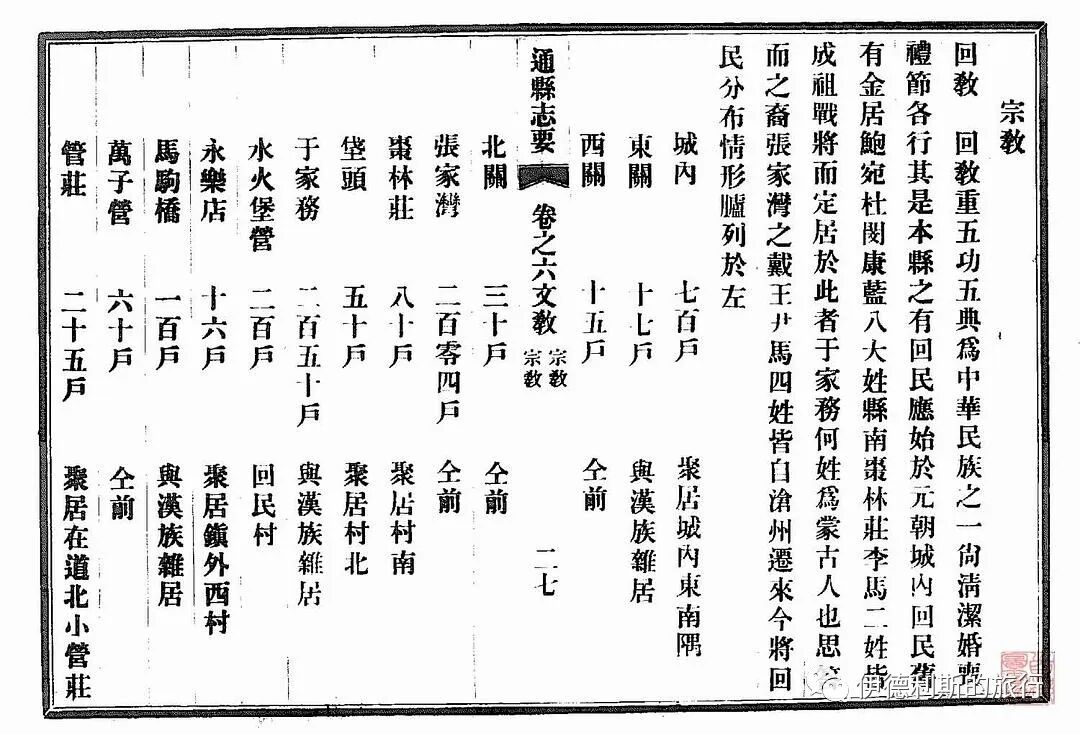
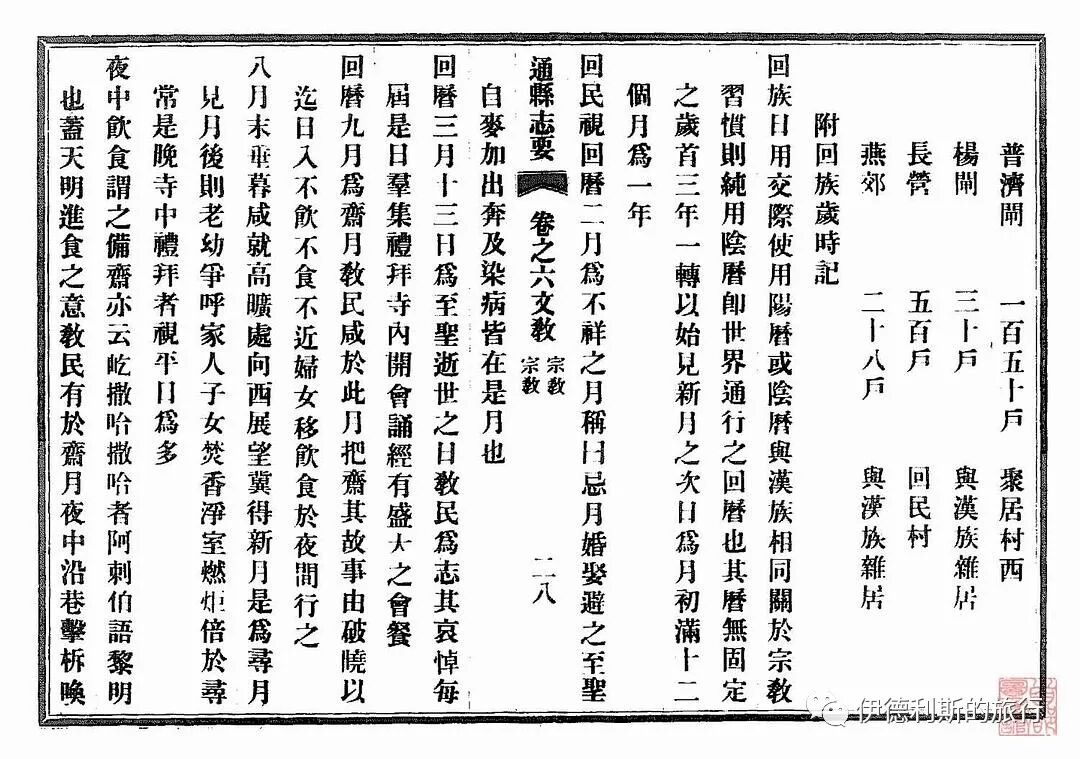
In the 1935 General Map of the Old Capital's Suburbs, the black dot northwest of Tongzhou is Changying.
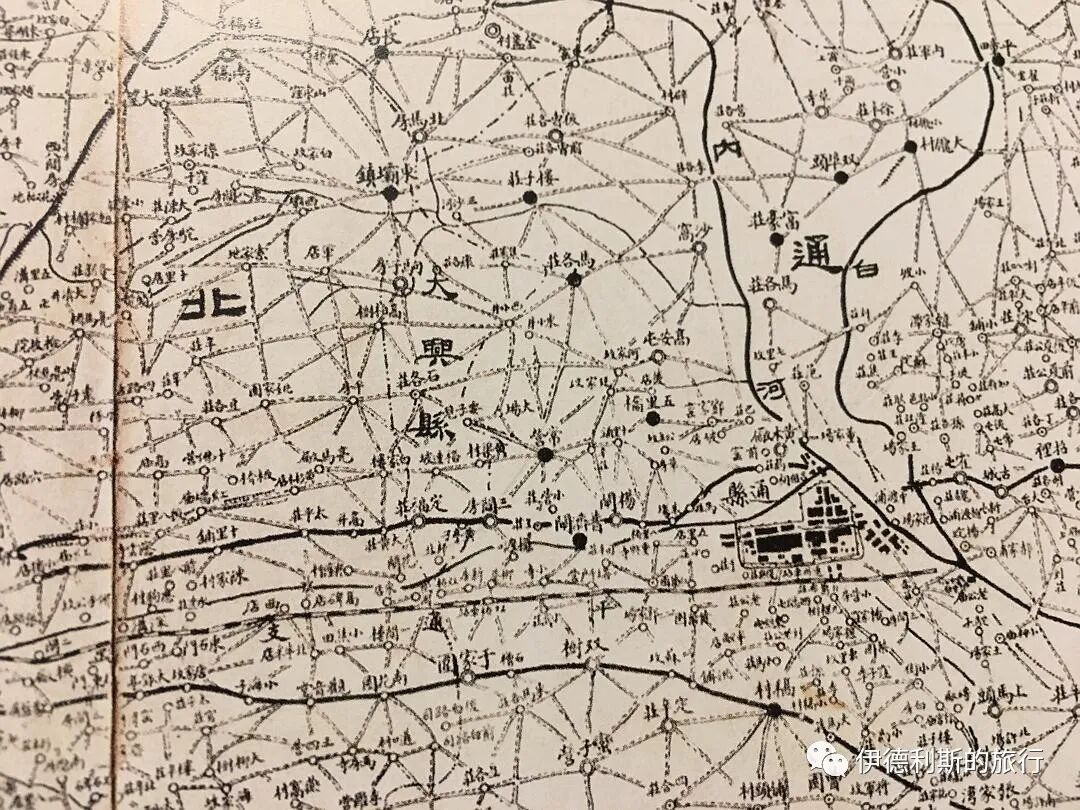
On the 1928 Shunzhi Topographic Map, you can see a road labeled 'Beijing to Tong County Main Road' passing through Changying.
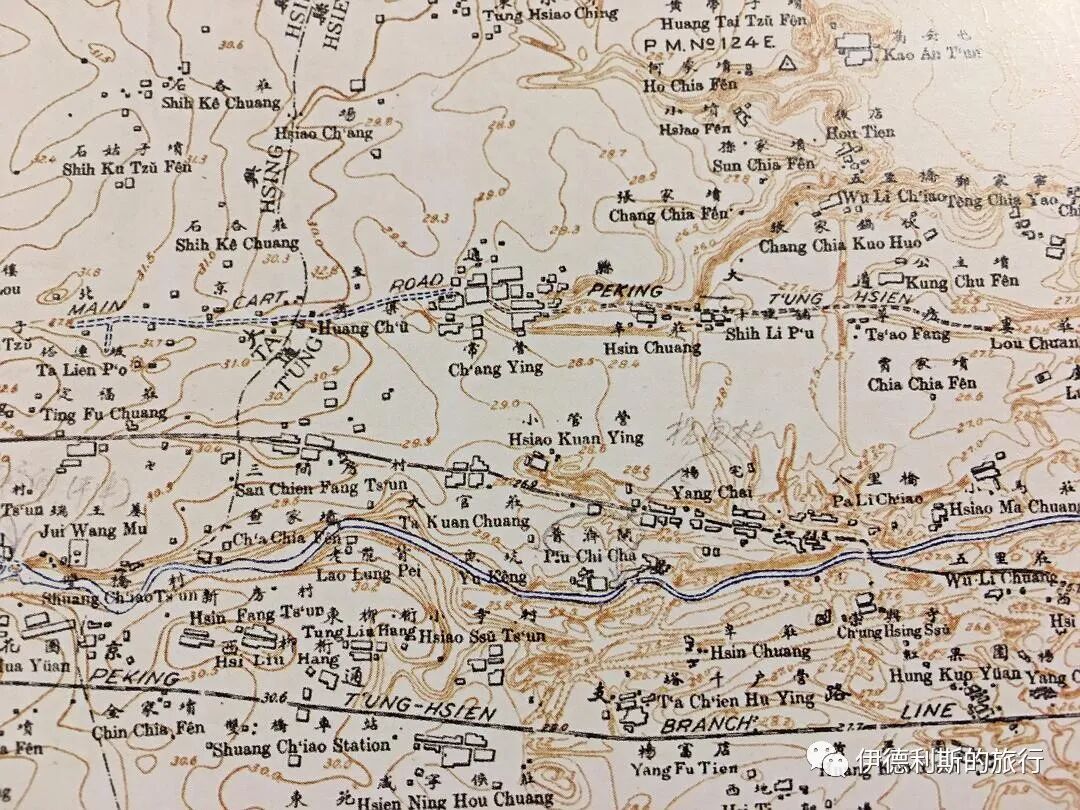
The Changying mosque was built during the Ming Zhengde period (1505-1521), rebuilt in 1796 (the first year of the Jiaqing reign), rebuilt again in 1986, and underwent large-scale renovations and expansions in 2004 to reach its current form.
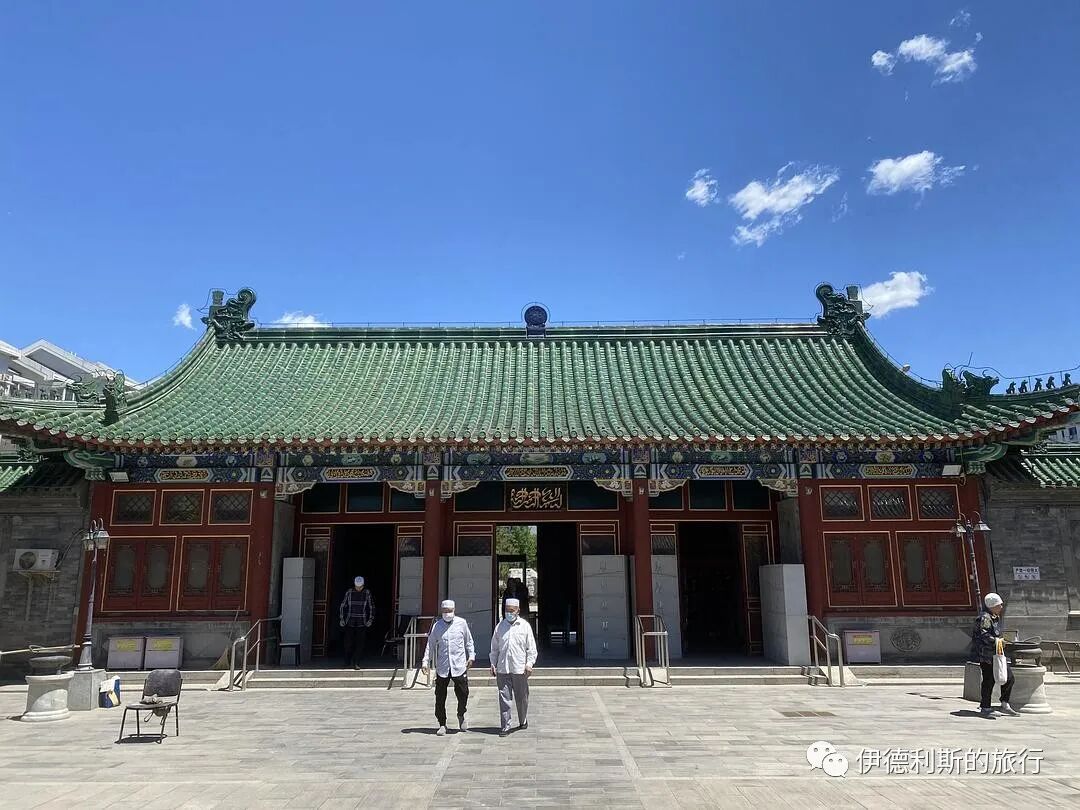
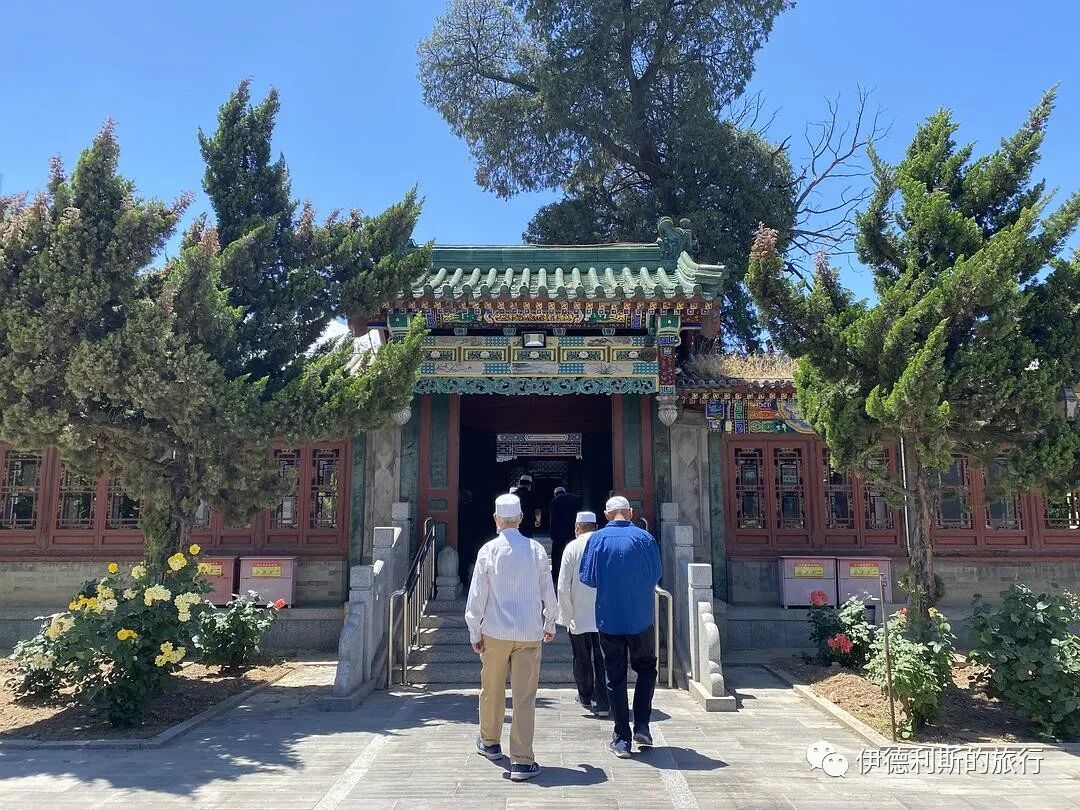
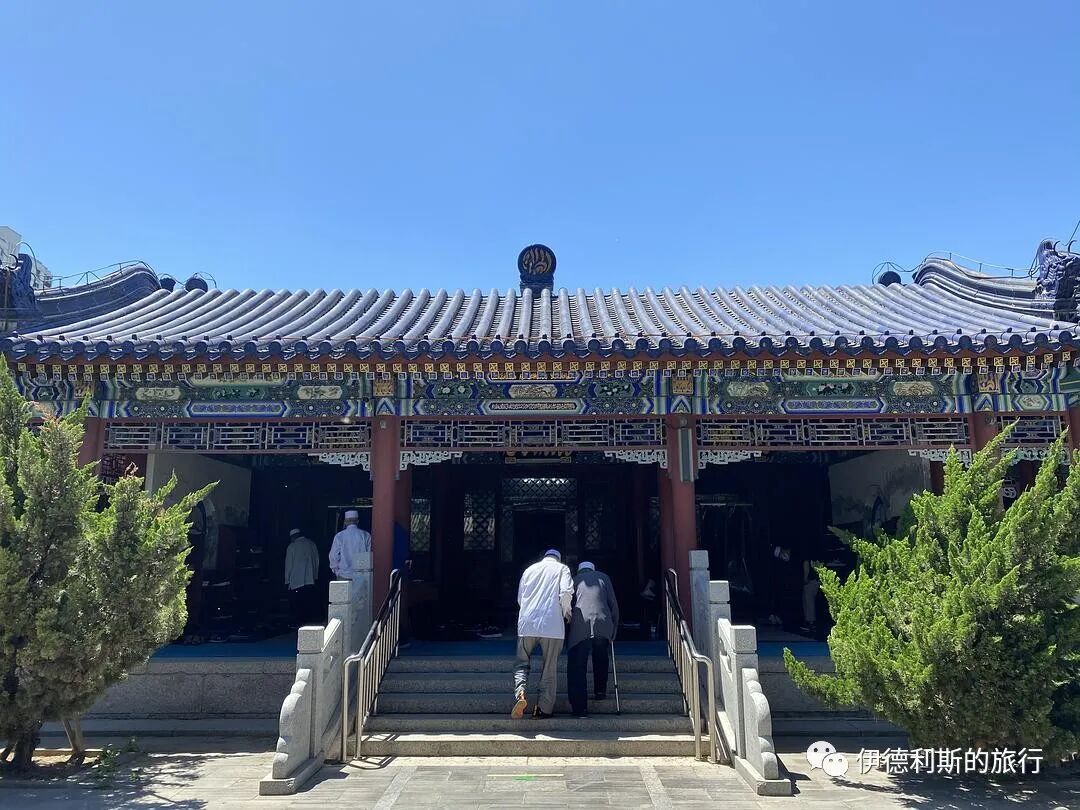
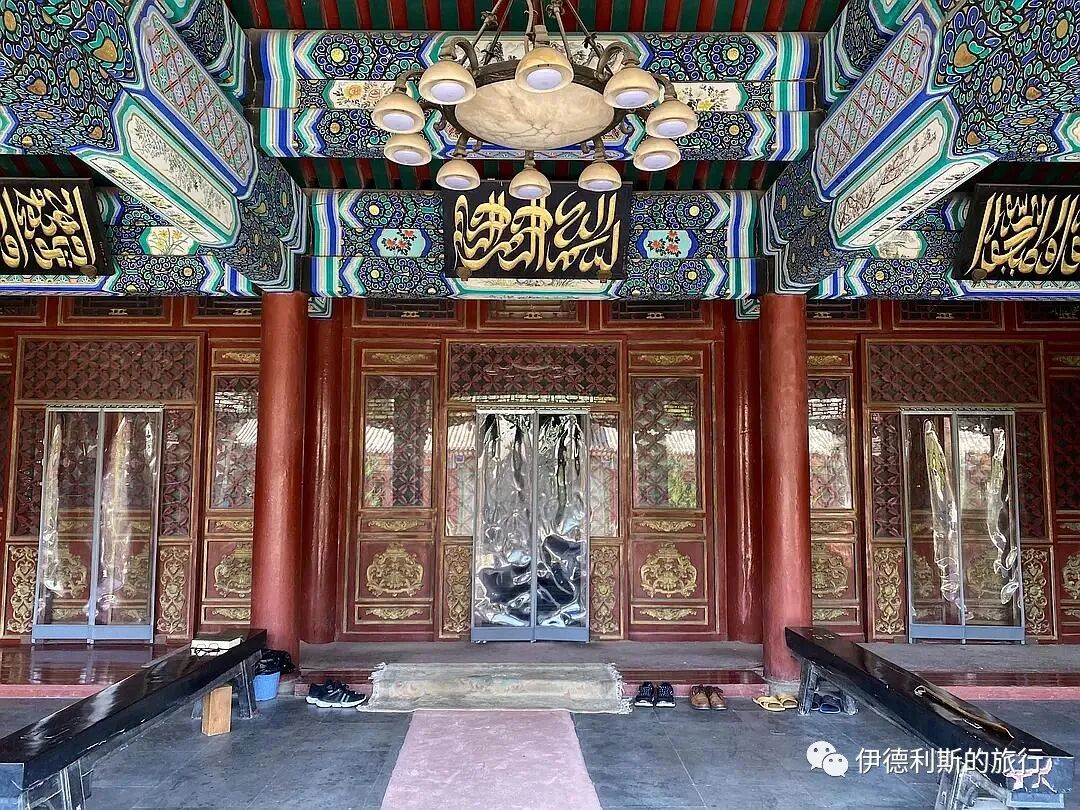
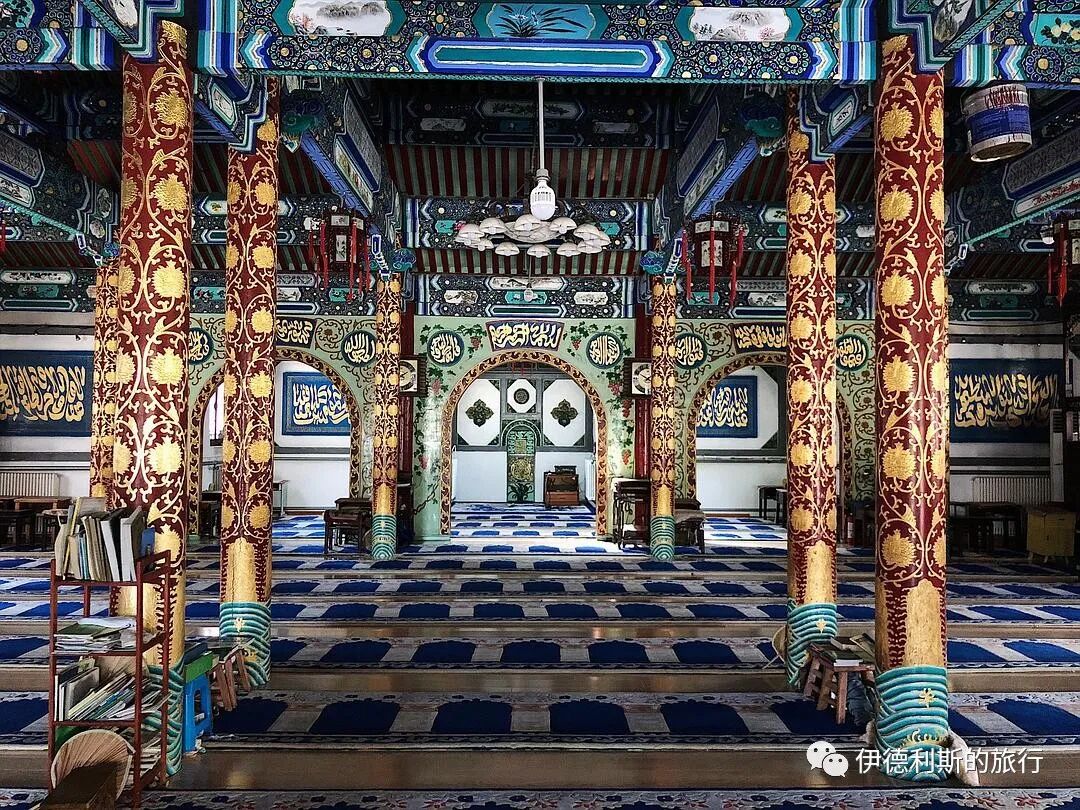
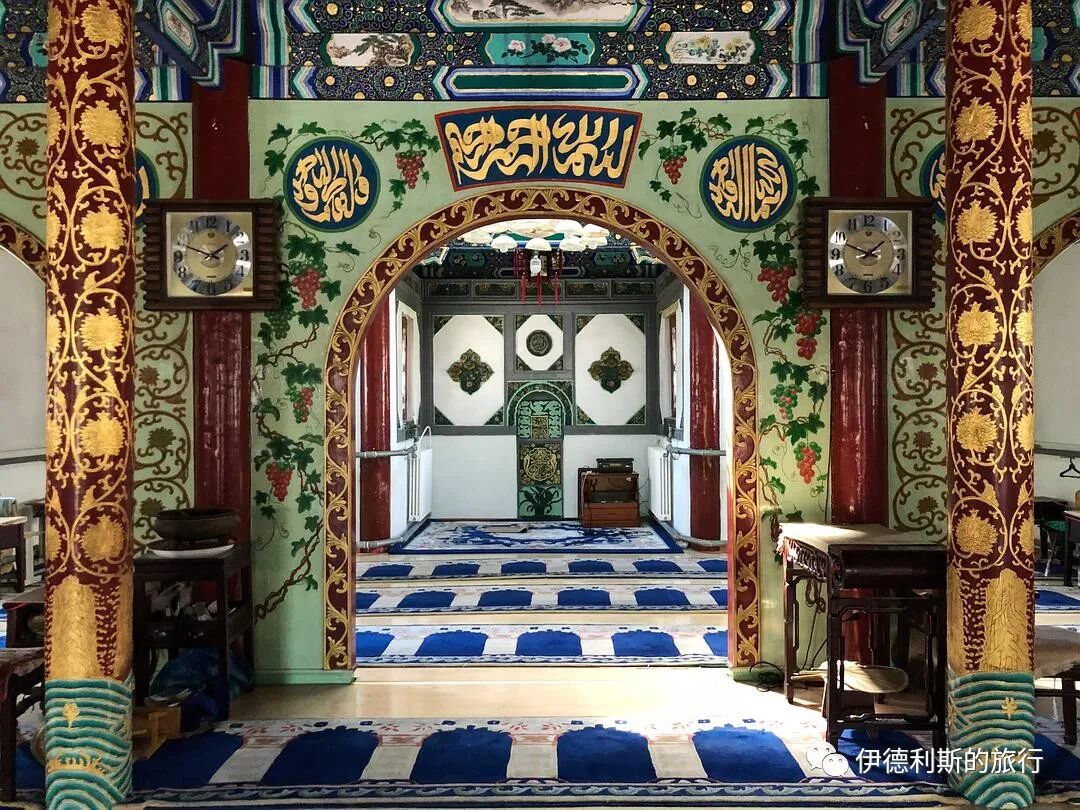
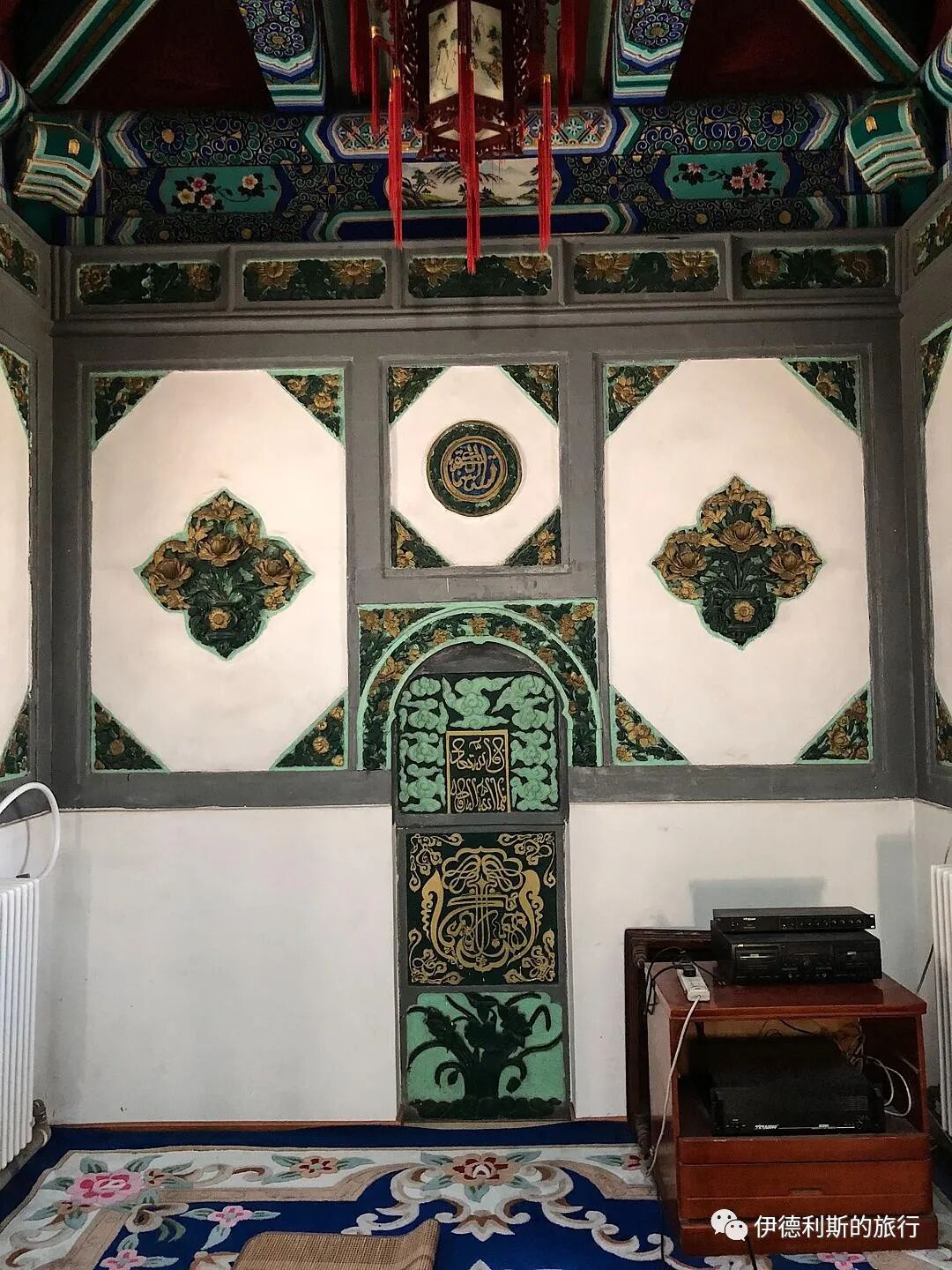
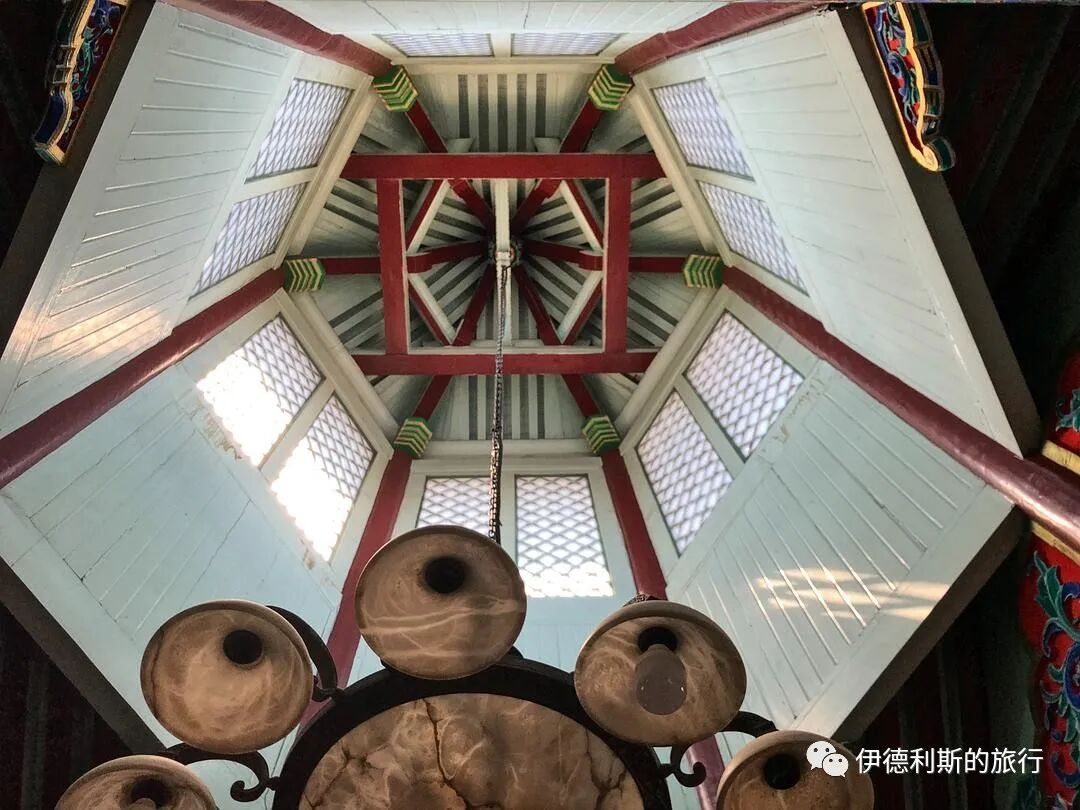
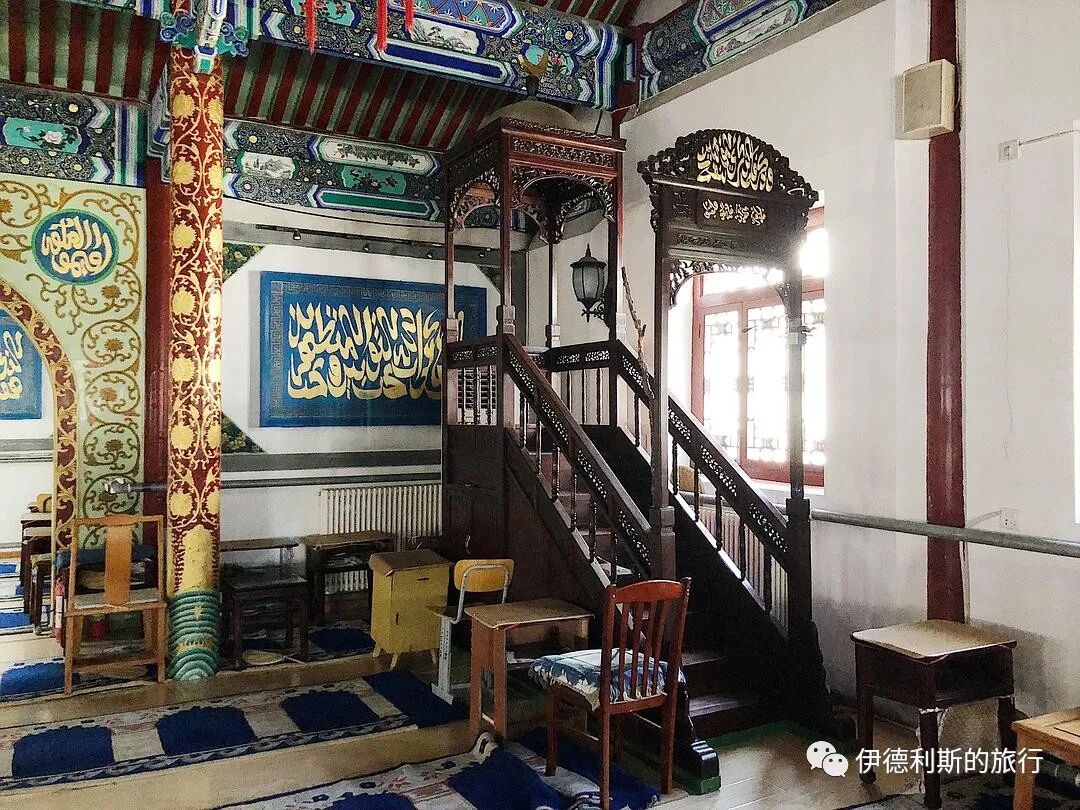
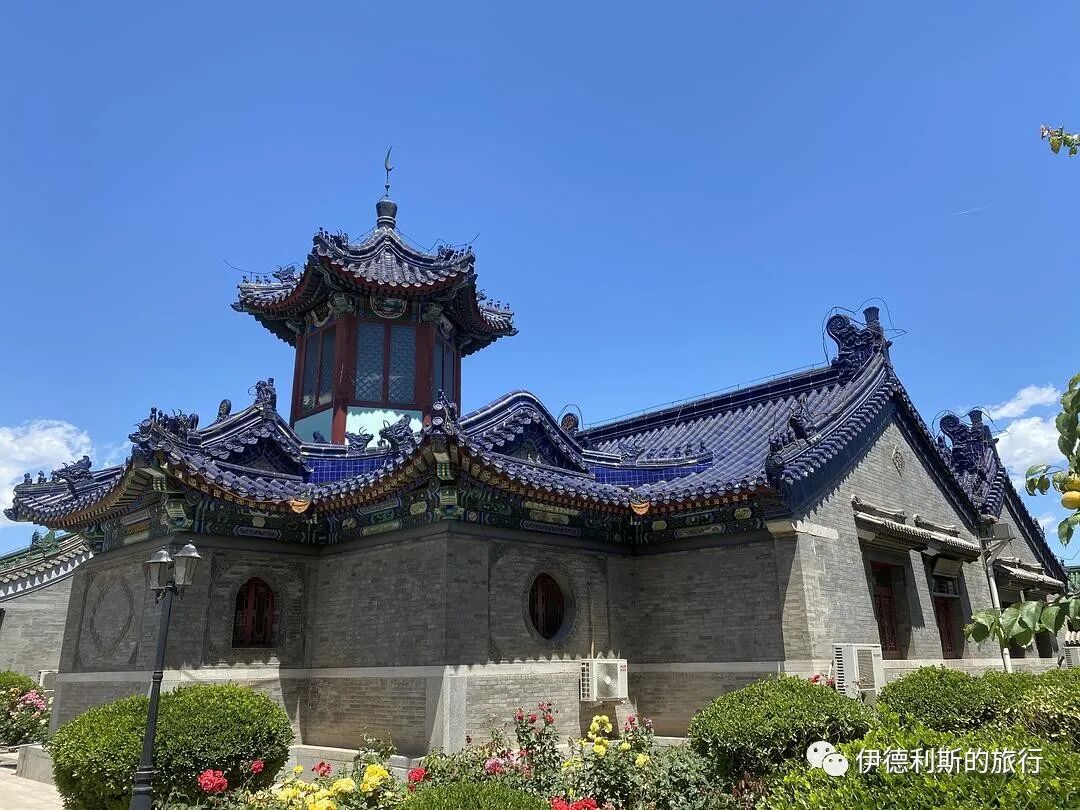
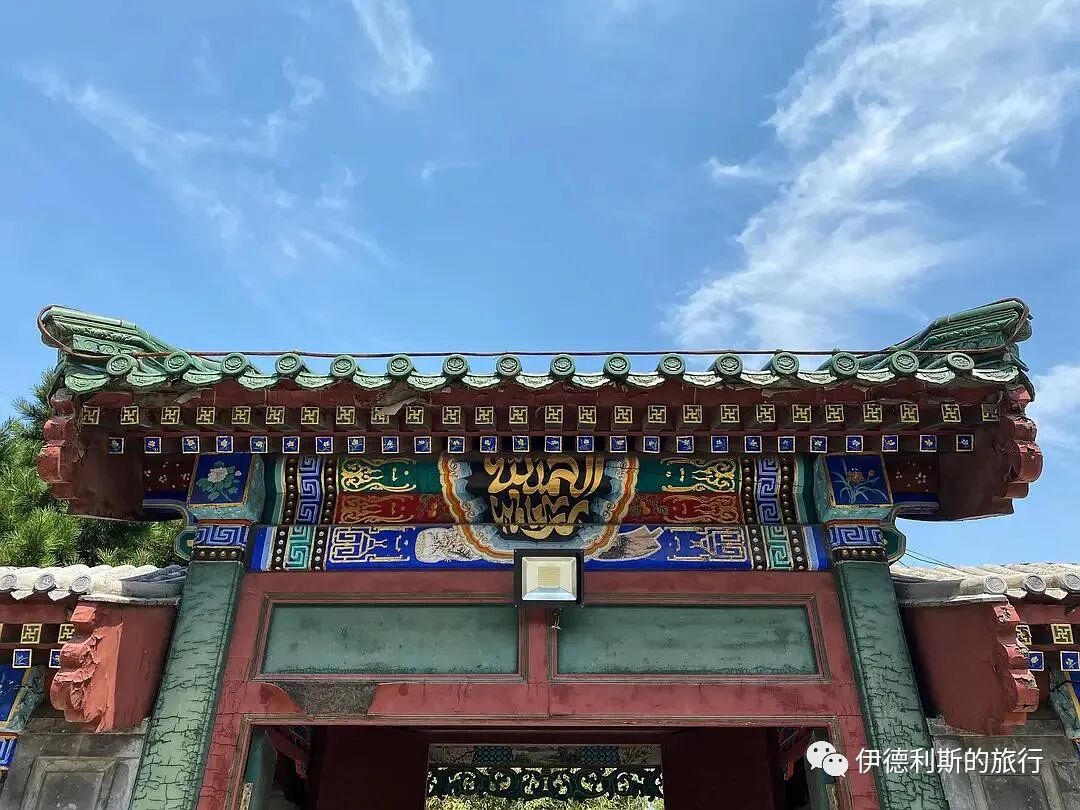
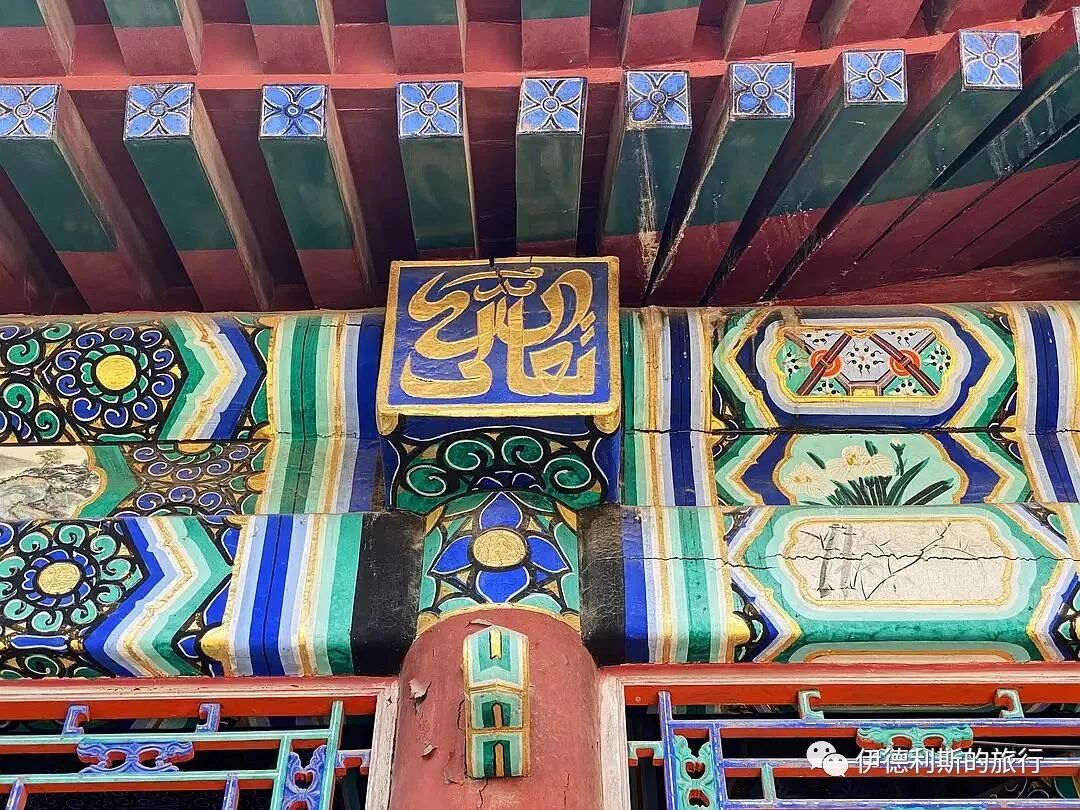
An ancient tree from the Zhengde era.
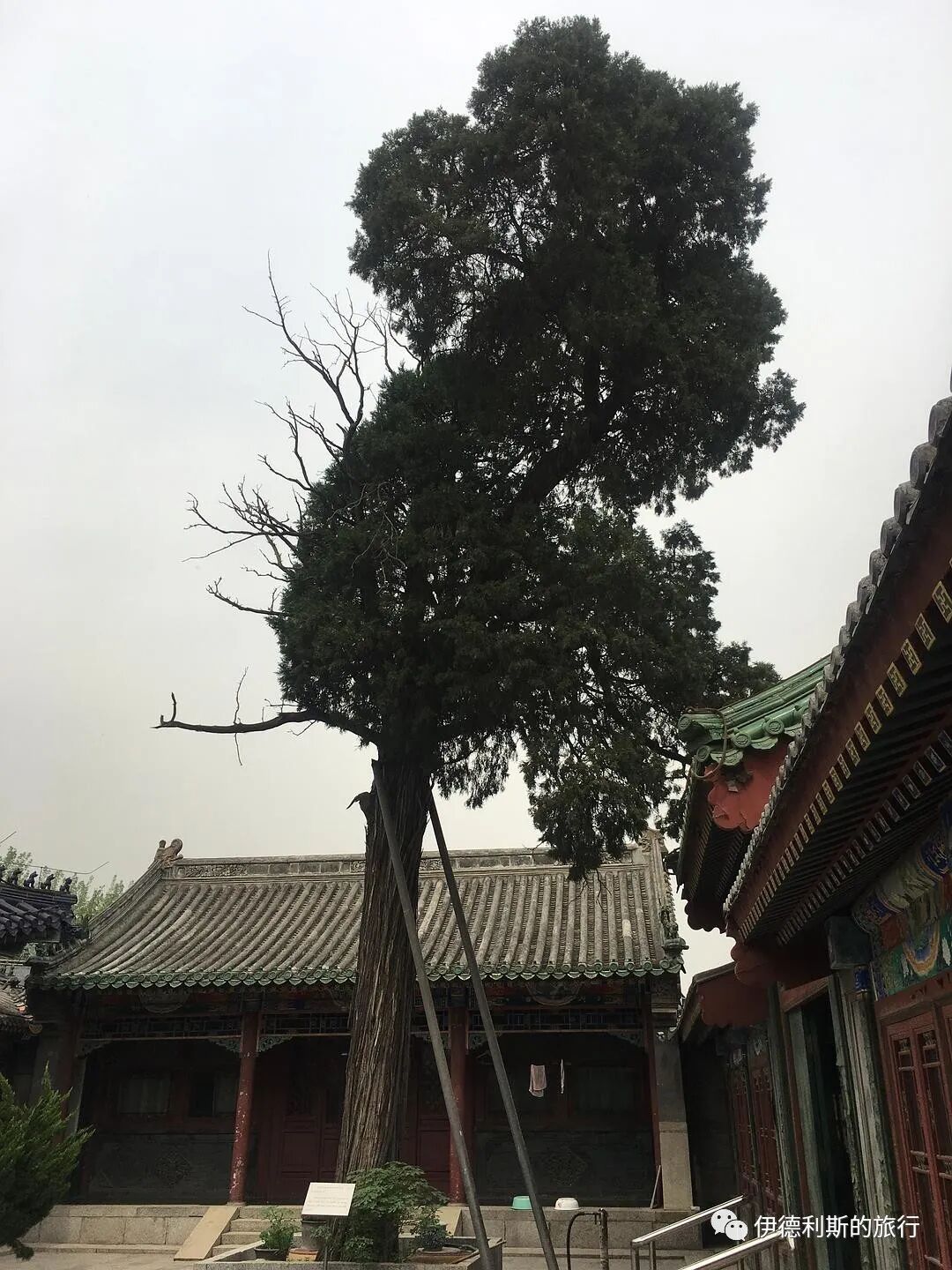
Swinhoe’s book, Narrative of the North China Campaign of 1860, mentions Changying and the Changying mosque:
At noon on October 3, we took down our tents, crossed the canal, and marched into a village of Hui Muslims in Changying. The village was near a rifle regiment outpost. Lord Elgin and Sir Hope Grant, along with their staff, stayed in a beautiful mosque, while about six thousand strong soldiers camped in the surrounding fields.
The village was small and filled with mud huts. But this time, not all the houses were empty. The villagers were Hui Muslims who followed Islam. You could tell them apart from the other locals by the strange pointed hats they wore, with their braids tucked inside. Inside the mosque, there were many stone inscriptions in Arabic and Chinese, and several books and scriptures printed in Arabic were scattered around. Many of the Prophet’s Chinese followers could recite a few sentences from these books, but few could explain what they meant. However, they were very familiar with the prayers and chapters of the Quran and often recited them to the Sikh cavalry (Note: the author mistook Indian Muslims for Sikhs). The villagers chanted these prayers repeatedly, which always moved the tired Indian warriors to tears and often made them take silver out of their pockets. The Hui Muslims of the Celestial Empire knew it was best to accept this sympathy.
Inside the Changying mosque, there is a 1937 stone tablet titled "Last Words of My Late Mother," which is a precious record of the Changying women’s mosque. It says, "We sacrificed the family house in the west courtyard to convert the former girls' school into a women's bathing facility." But the two rooms on the east side were kept as a place for Lin and others to stay when they returned home. "" The 'Lin' here refers to Zhang Zhaolin, a Hui Muslim from Changying who was known as one of the 'five great Hui Muslim journalists of the Republic of China era'.
According to the article 'With the Zhang Zhaolin Brothers', Zhang Zhaolin, whose courtesy name was Ziqi, was born in Changying in 1865. His grandfather and great-uncle were both military jinshi (a high-level imperial examination degree) in the same year during the Daoguang reign. His family's fortunes declined when he was four or five years old. He only attended a private village school before becoming an apprentice at a grocery store. In 1909, Zhang Zhaolin founded the 'Xingshi Bao' (Awakening Times) in Fengtian, which was the most important vernacular newspaper in the city at the time.
The 'Xingshi Bao' aimed to 'represent public opinion and serve as a mouthpiece for the people'. It gained fame in 1919 for its continuous coverage of the student demonstrations in Shenyang colleges and universities in response to the May Fourth Movement. During the 1927 anti-Japanese protest in Fengtian involving 60,000 people, Zhang Zhaolin marched at the front as a reporter and used his newspaper to build public support. The Japanese considered 'Xingshi Bao' to be at the forefront of the anti-Japanese movement at the time. At the same time, 'Xingshi Bao' frequently published articles about Hui Muslim customs and activities, serving as a window for different ethnic groups to understand each other and bridge cultural gaps.
After Japan occupied Fengtian in 1931, they shut down most newspapers. 'Xingshi Bao' was exceptionally allowed to remain open as a Hui Muslim publication, but it shifted from covering current events to printing local anecdotes and serialized romance or martial arts novels to stay in business. In 1934, Zhang Zhaolin handed the newspaper over to his son to manage. He passed away in 1938, and 'Xingshi Bao' ceased publication and dissolved in 1944.
In 1911, Zhang Zhaolin entered the field of education and helped establish the Fengtian Mosque School. He also founded a private school in his hometown of Changying. The school song included the lyrics: 'Old man Ziqi, worked hard to manage, with a heart to help the world... educating the younger generation, wanting to bring light to our hometown'.
Halal food
In 2001, Changying underwent demolition. The original eight Hui Muslim villages, including Changying villages 1-7 and the first residential area, were relocated to the Changying Ethnic Homeland residential complex. This formed a new Hui Muslim community, featuring a food street behind the Changying Mosque, a halal food market, a halal supermarket, and many halal restaurants.
The wall bordering the Changying Mosque is the halal food street. The most famous spot there is Li Xiaolao's meat flatbread (rou shaobing). Meat flatbread paired with tofu puff soup (dou pao tang) is my standard order.
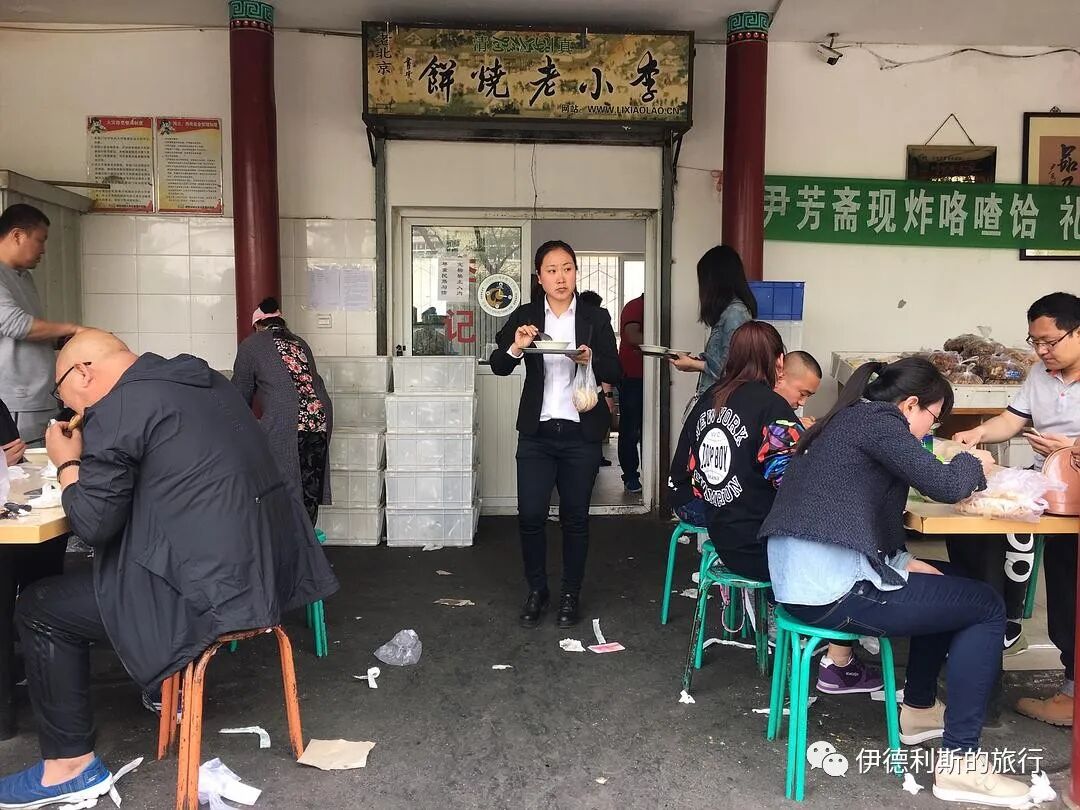
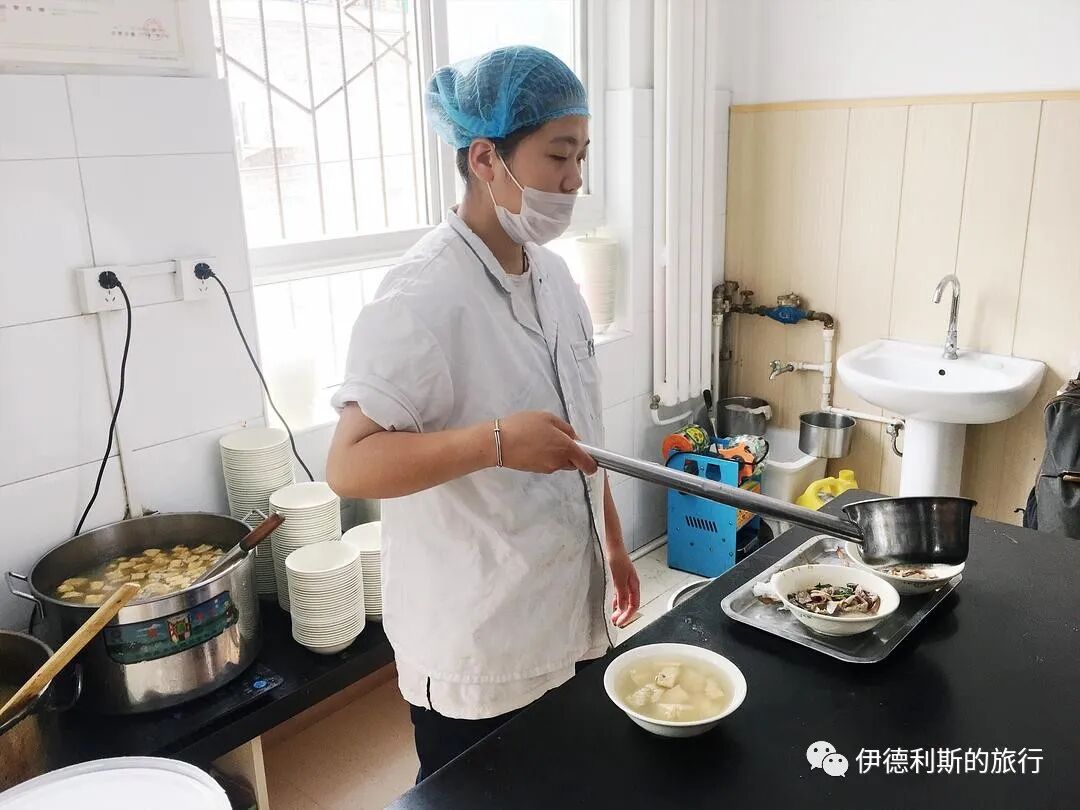
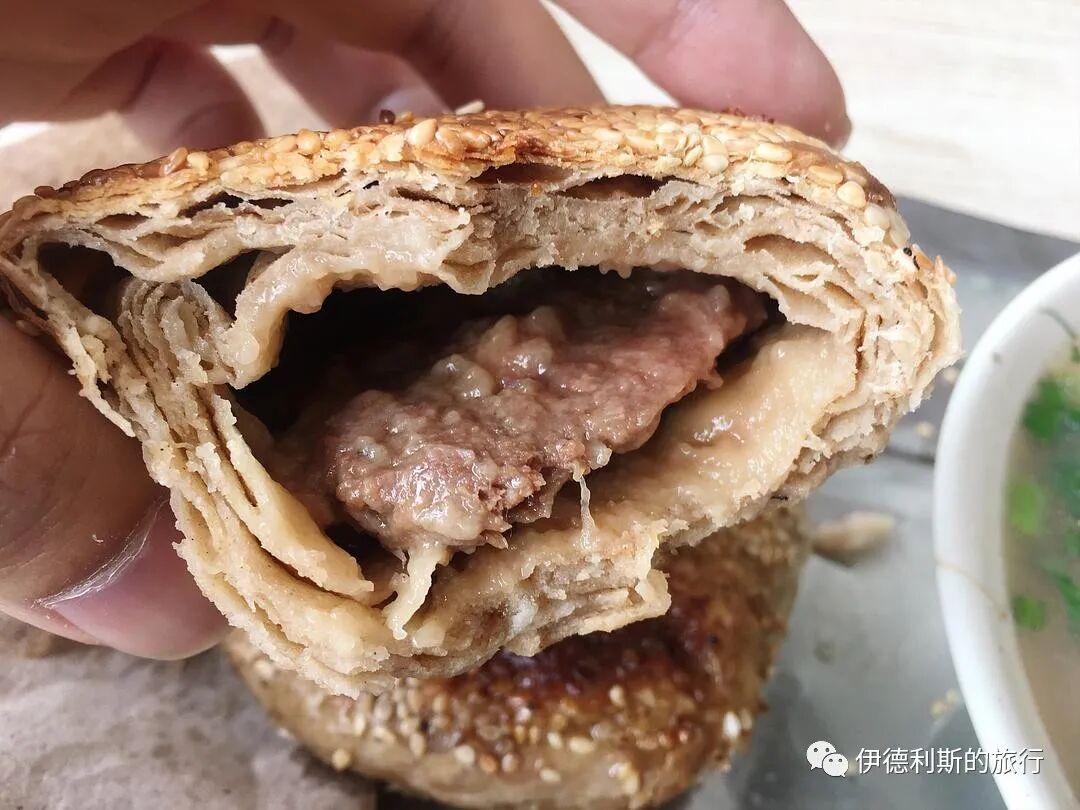
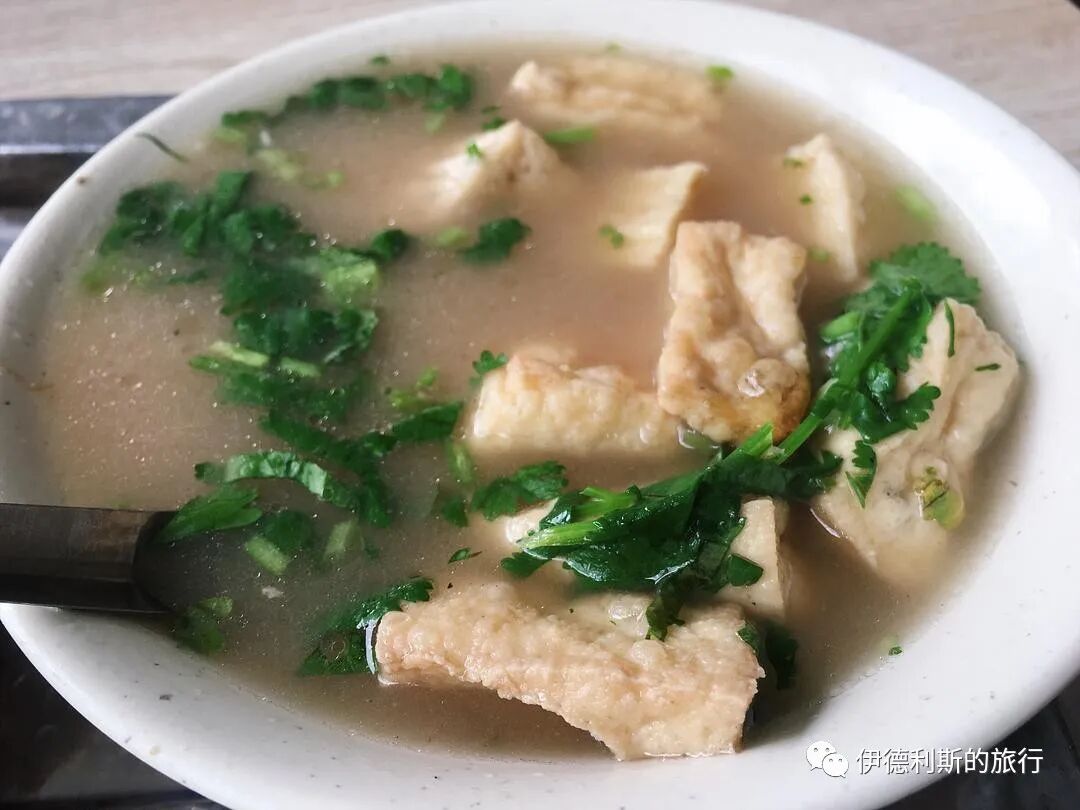
Next to Li Xiaolao is the Anji Deli, known for its crispy meat (songrou) and spiced beef (jiang niurou).
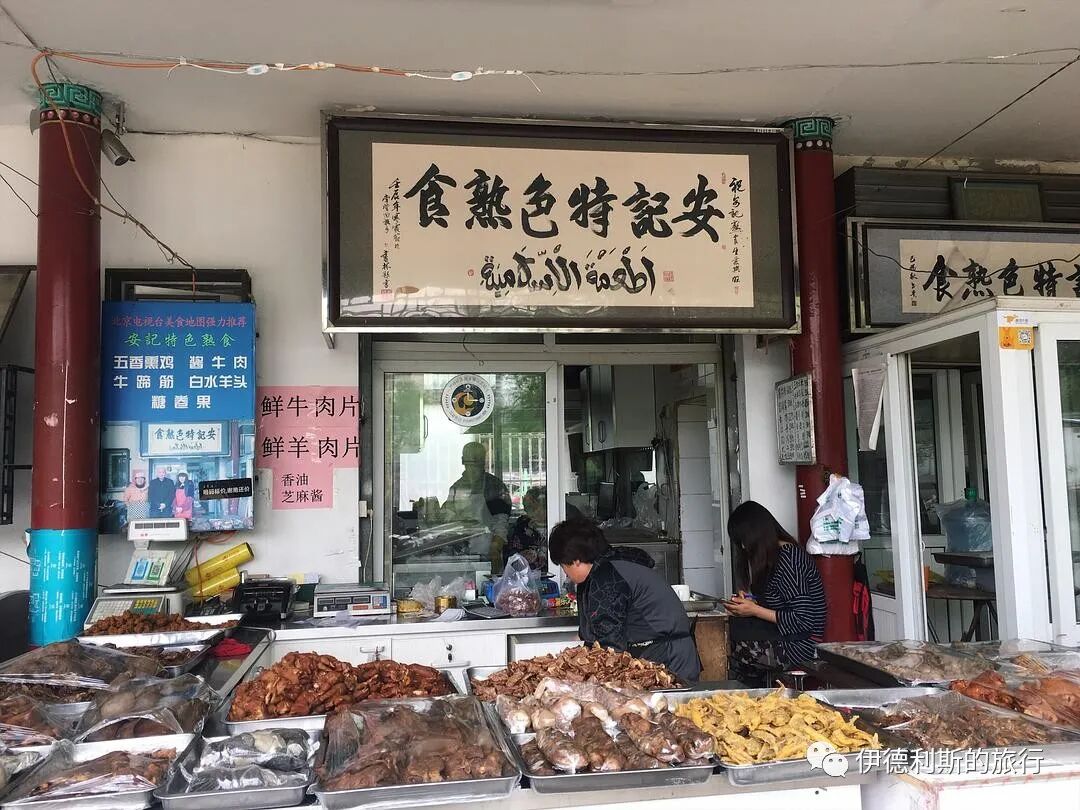
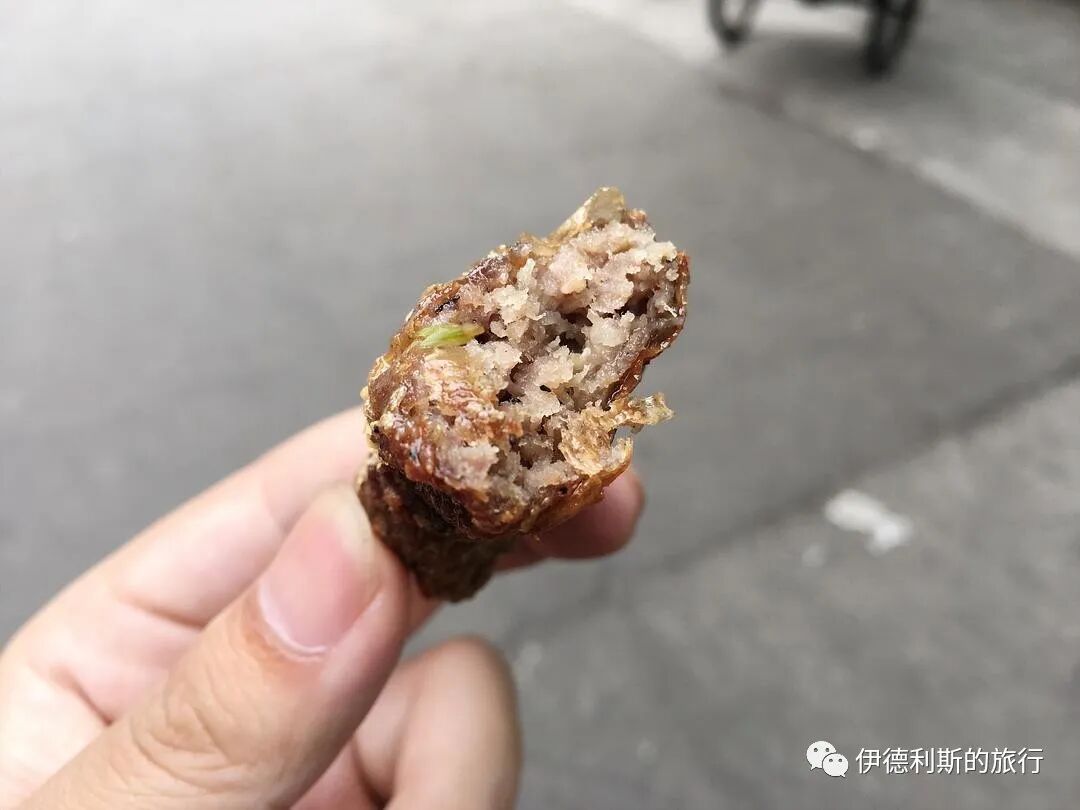
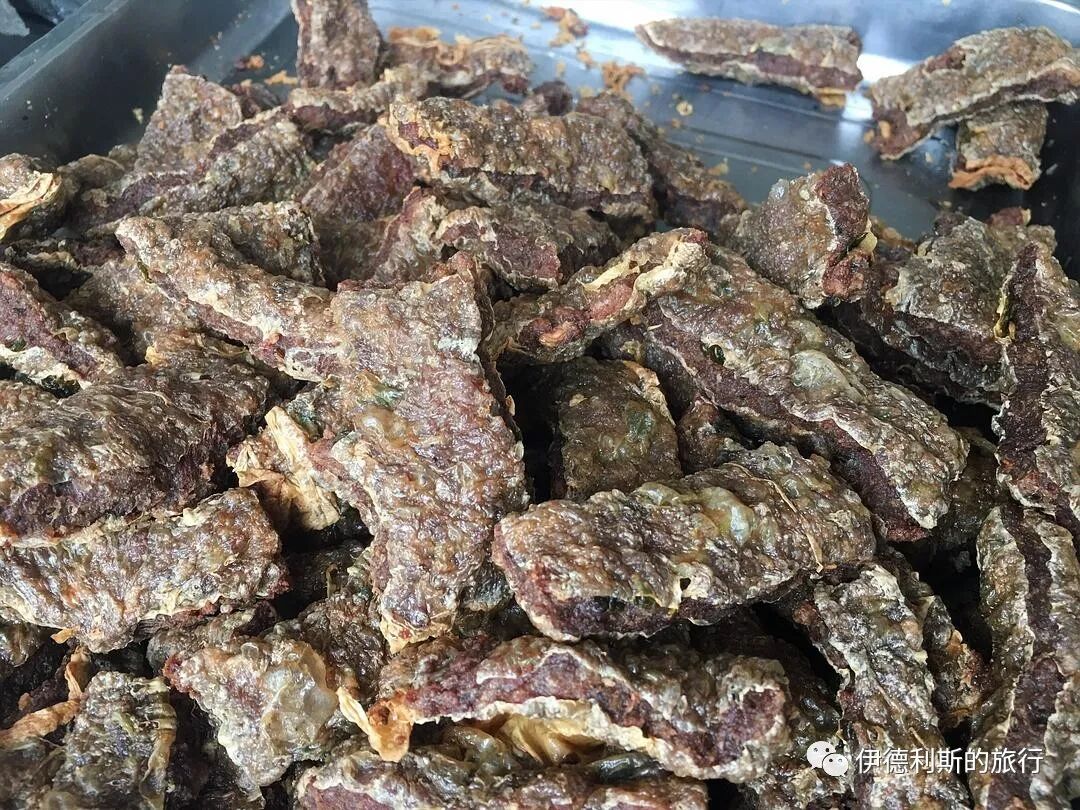
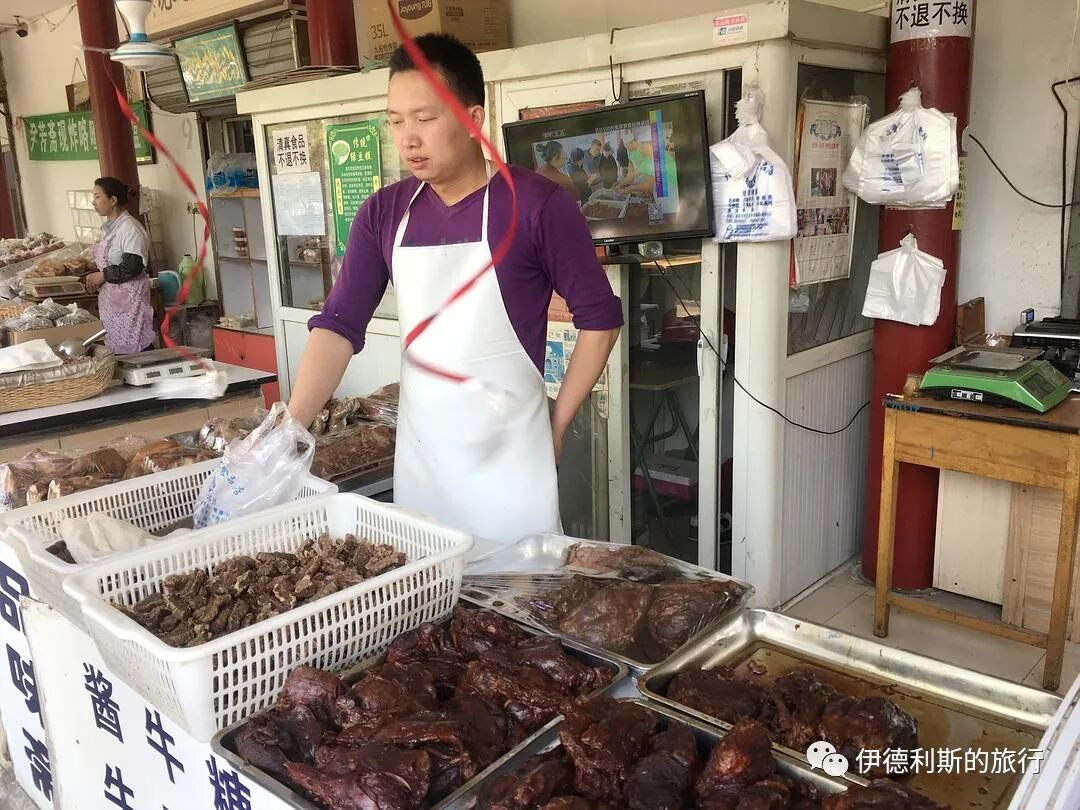
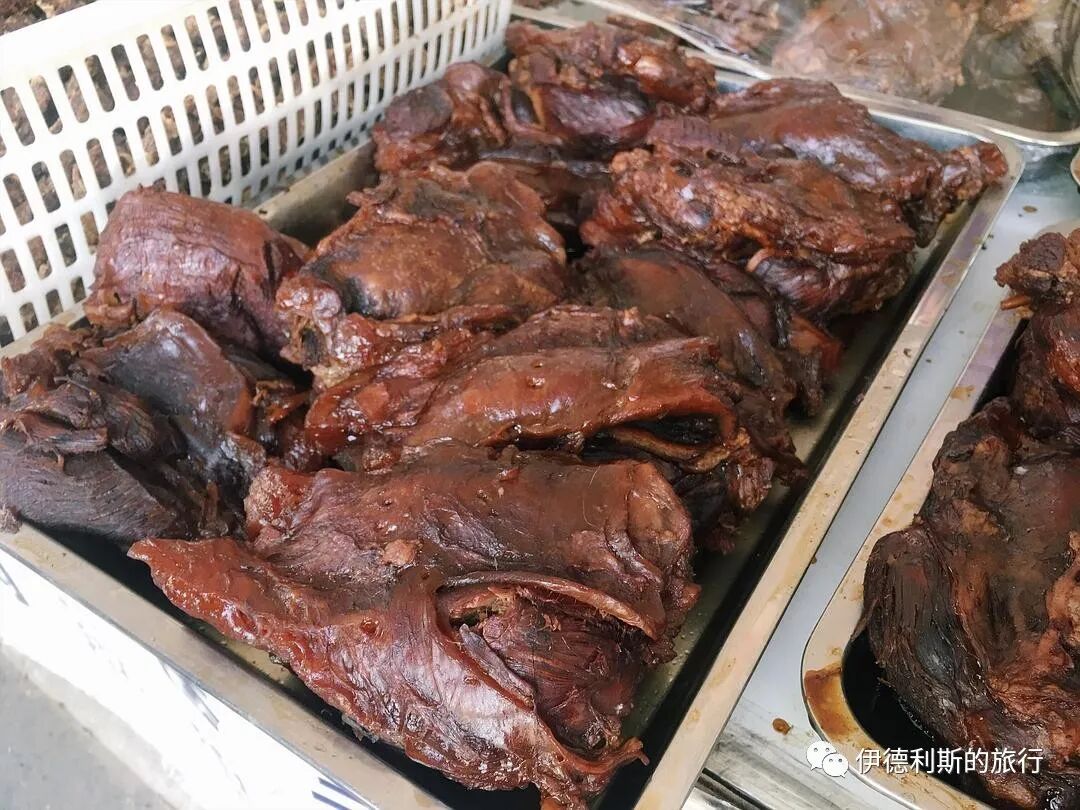
Next to that is the Jialun Deli, which sells roasted chicken (shaoji).
Yinfangzhai Pastry Shop sells wife cakes (laopo bing), sugar-filled sesame cakes (tang huoshao), and peanuts.
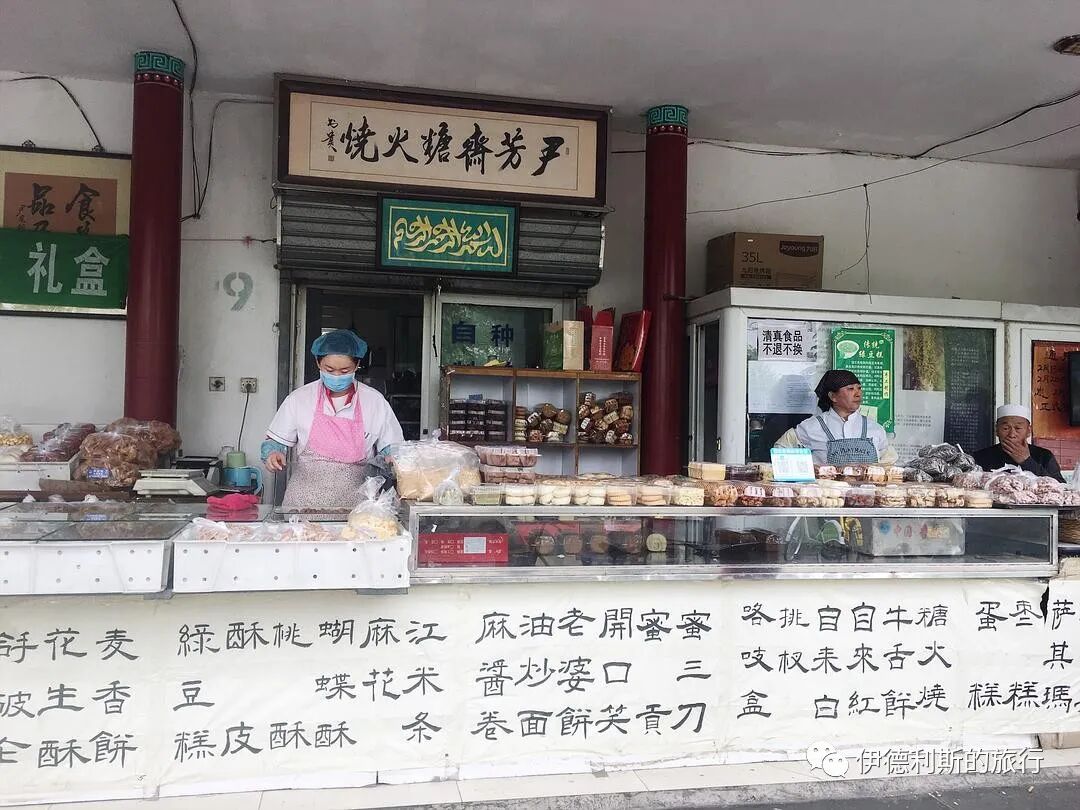
I passed by Kaiyizhai when they were selling sweet rice balls (yuanxiao) at the beginning of the lunar new year.
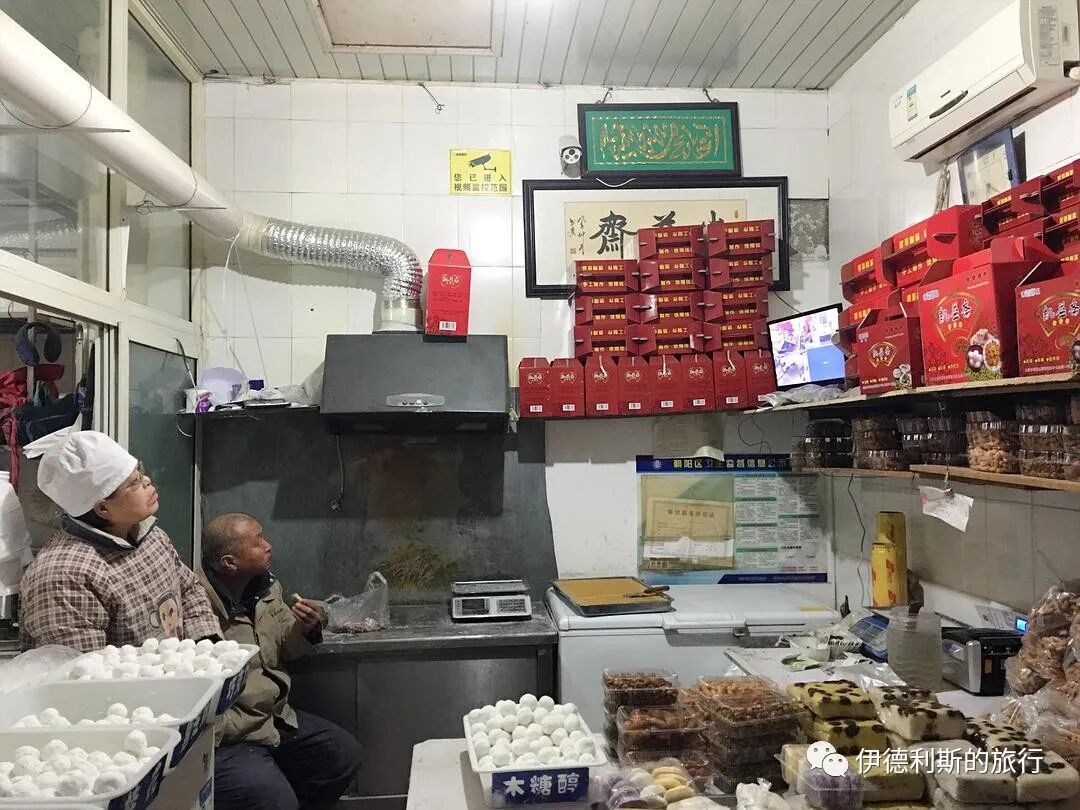
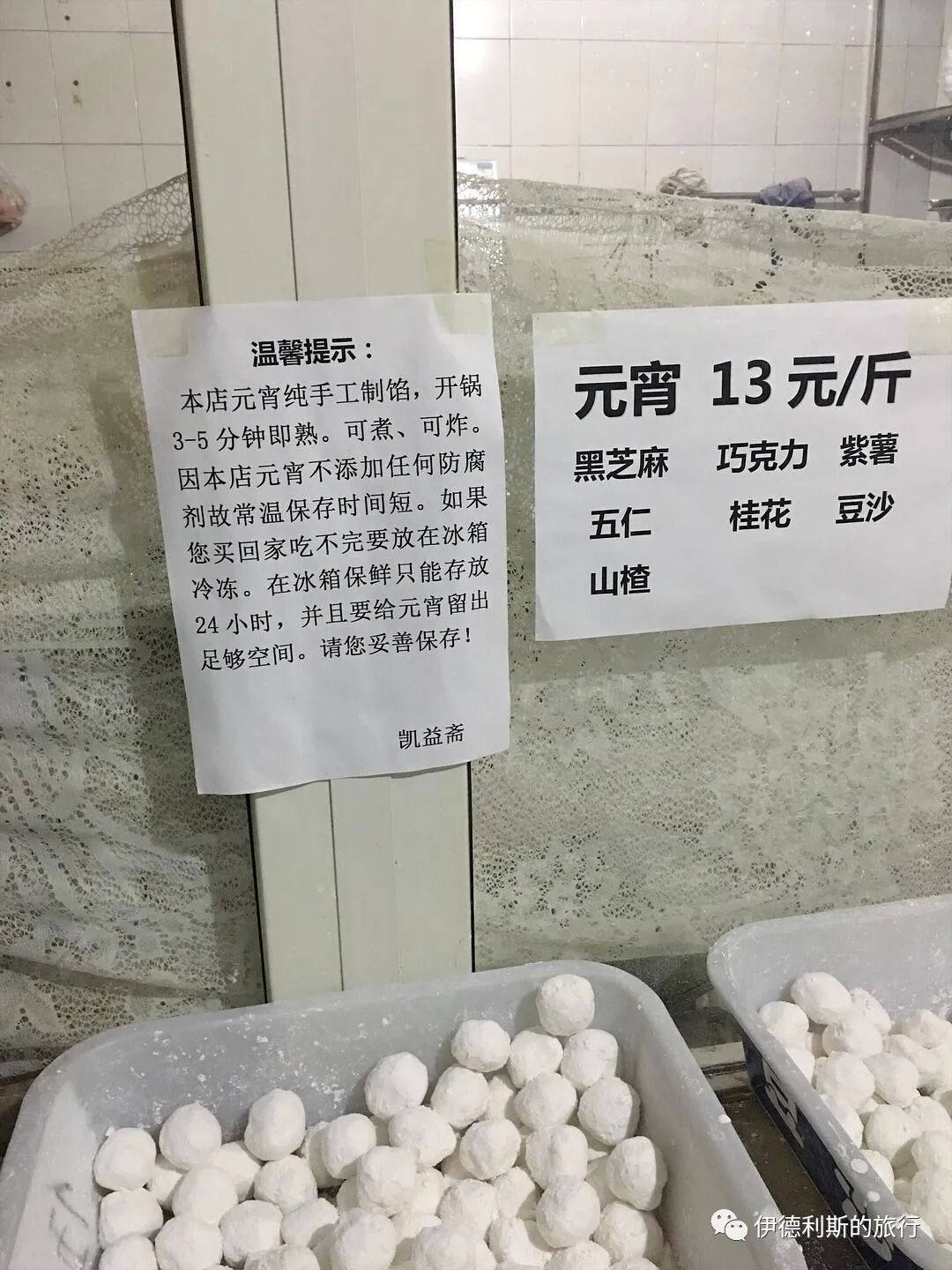
The almond tofu (xingren doufu) at the entrance of the Hui Muslim residential area across from the food street is delicious. It is hard to find such authentic almond tofu in the city.
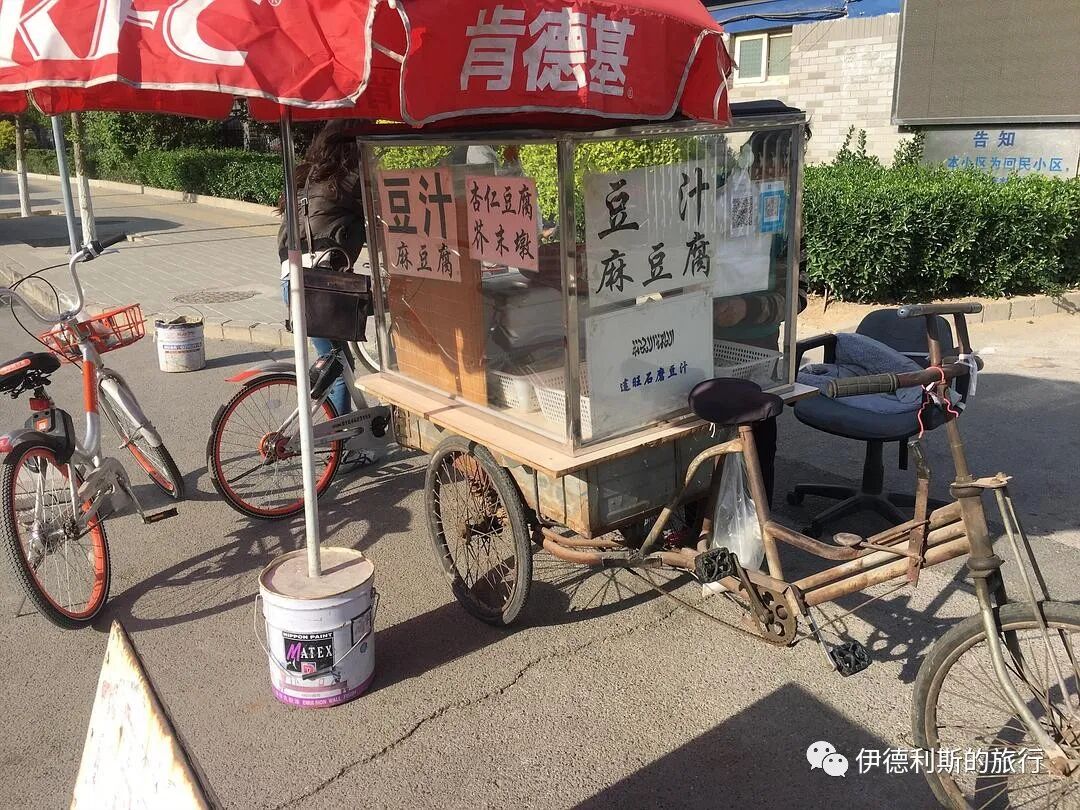
Northwest-style cold skin noodles (liangpizi) at the entrance of the food street.
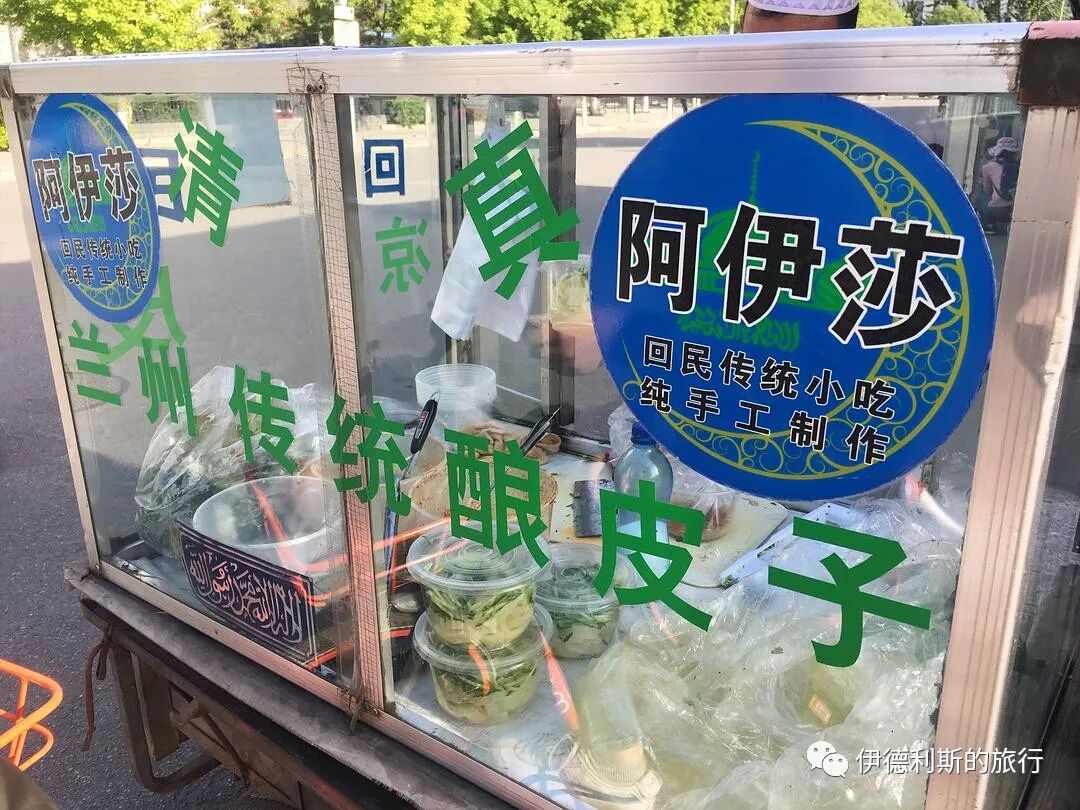
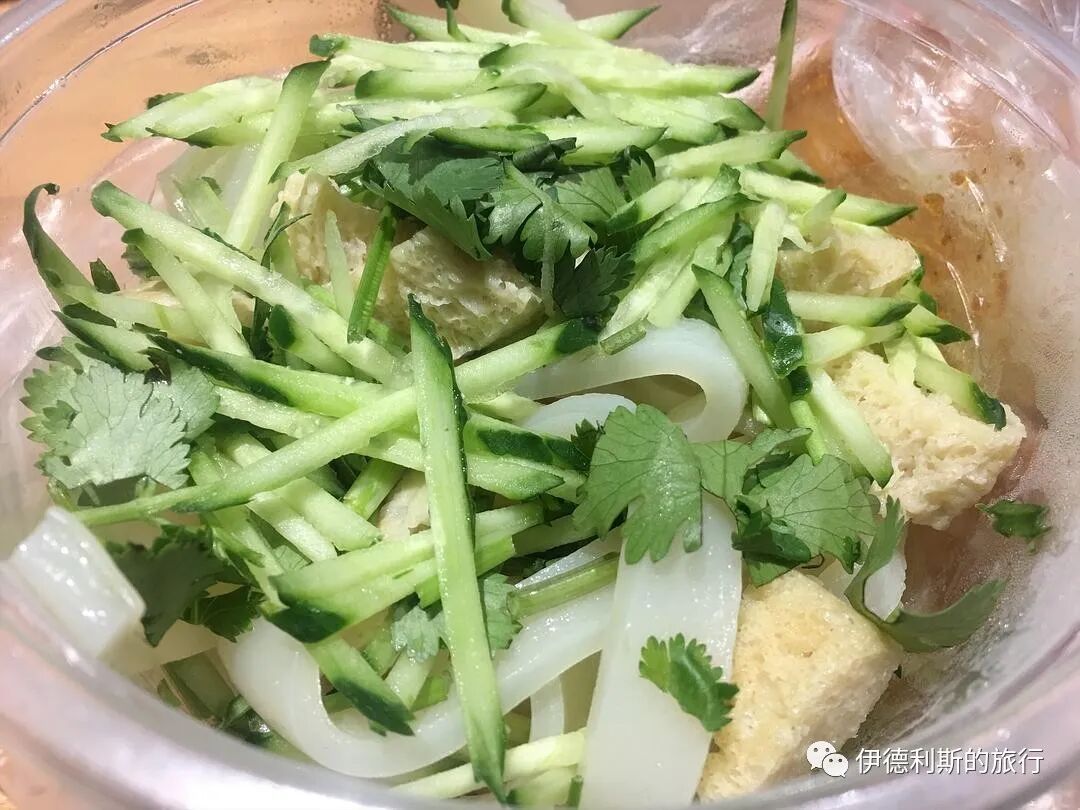
Crispy fried milk (cuipi xiannai) and duck heads at the Ziguangyuan snack window.
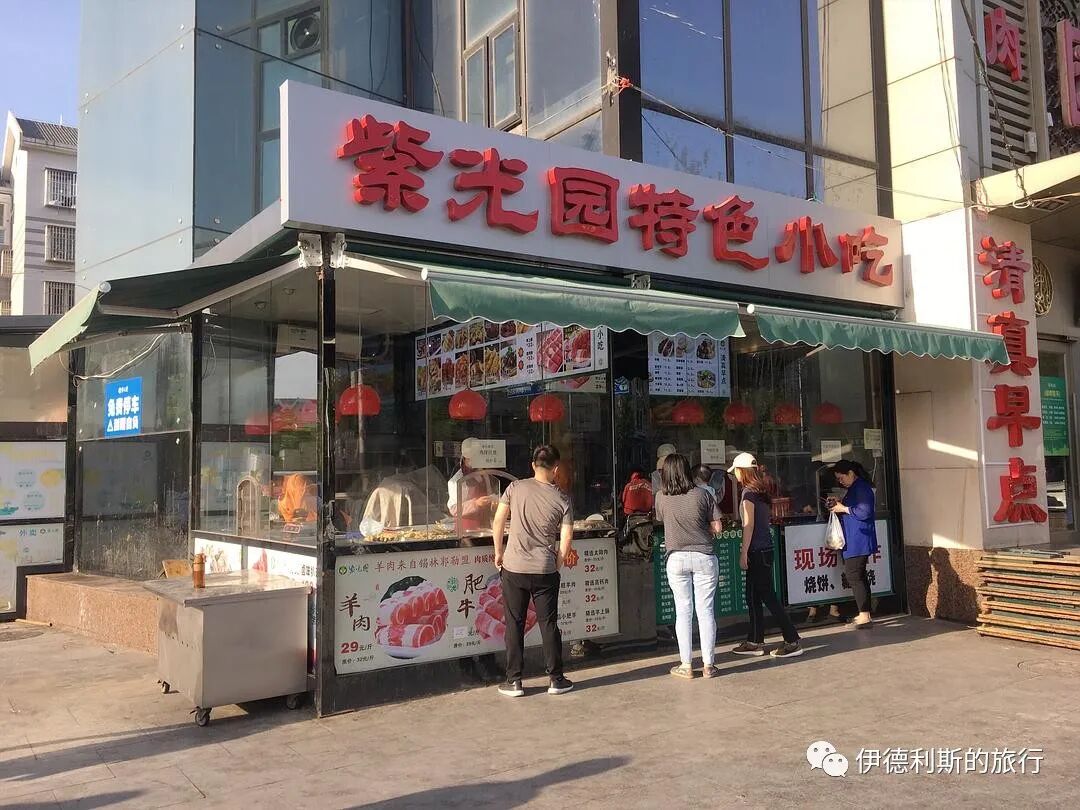
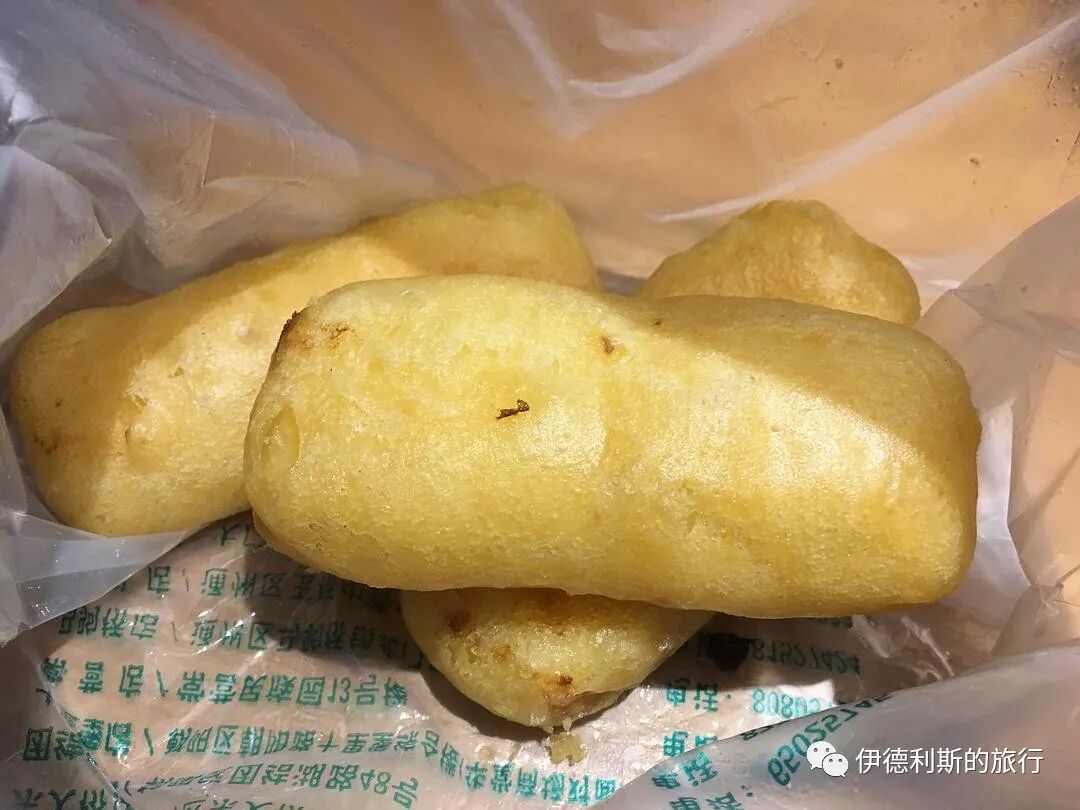
Changying Halal Market.
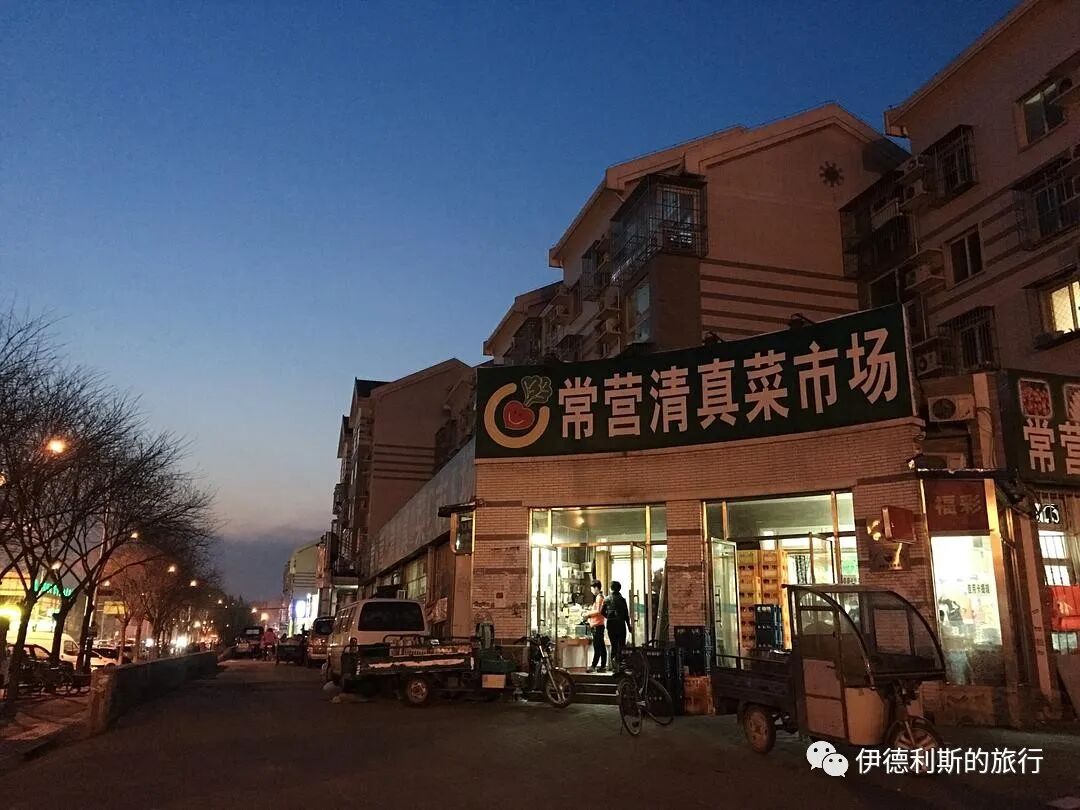
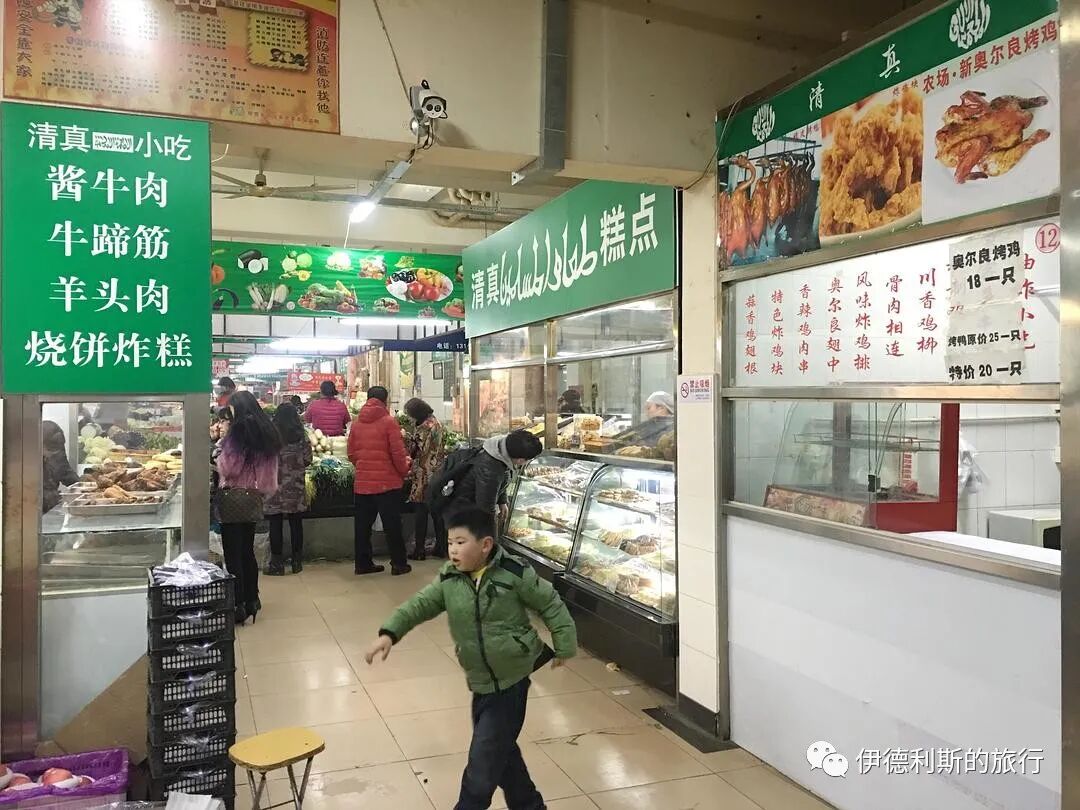
Fried chicken wishbones (zhaji chagu) at the entrance.
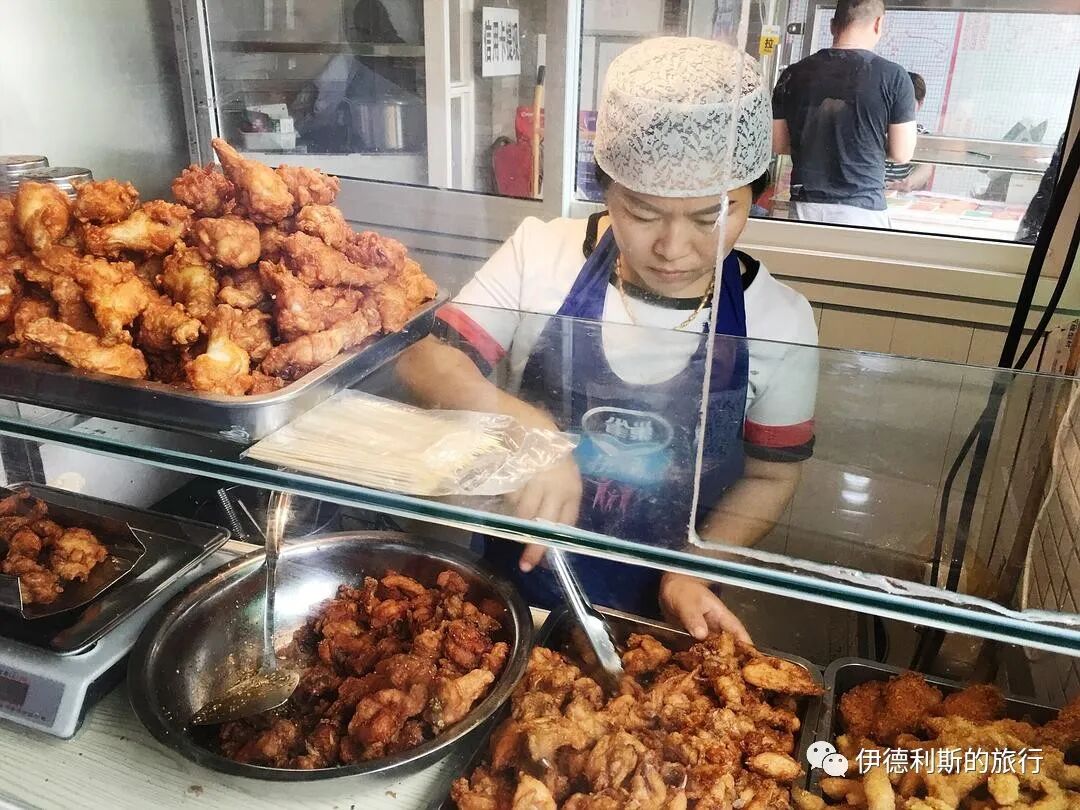
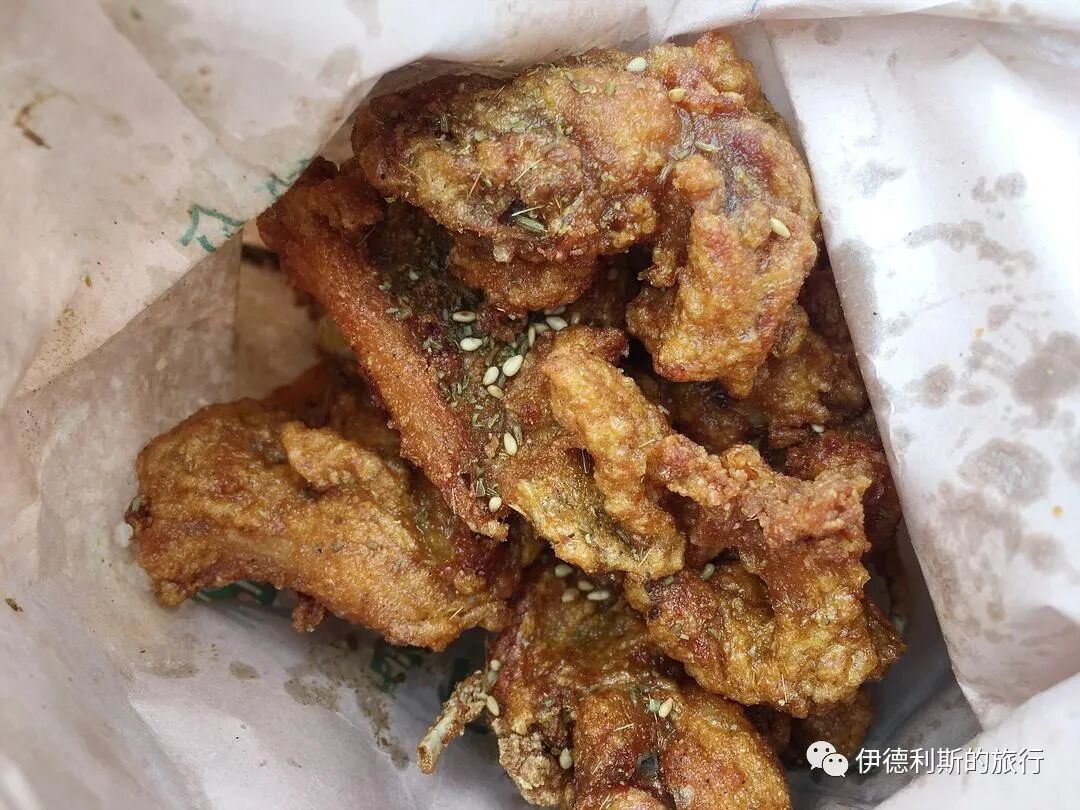
Halal snacks inside.
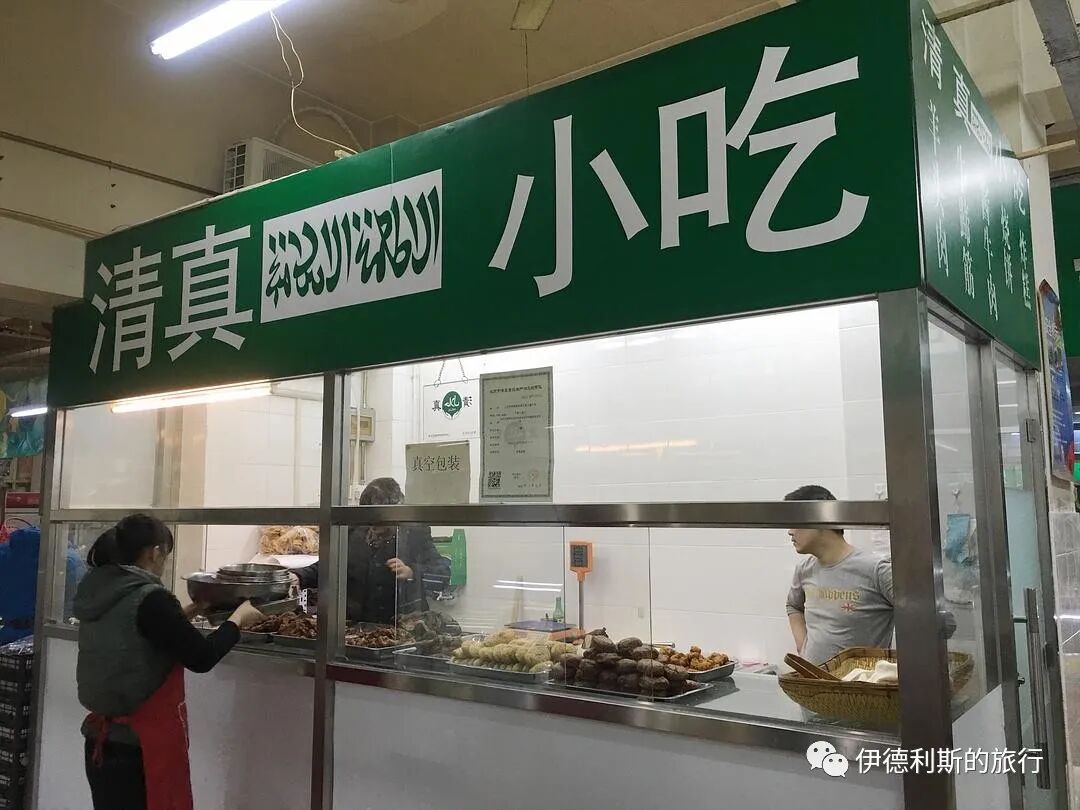
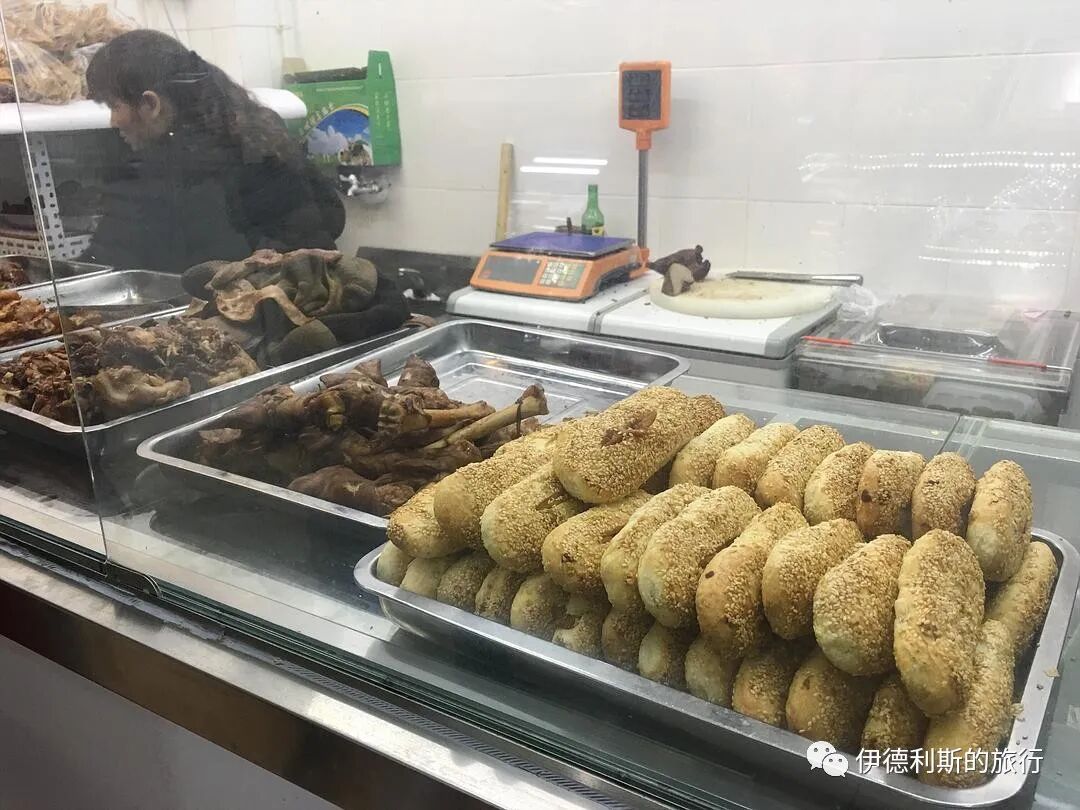
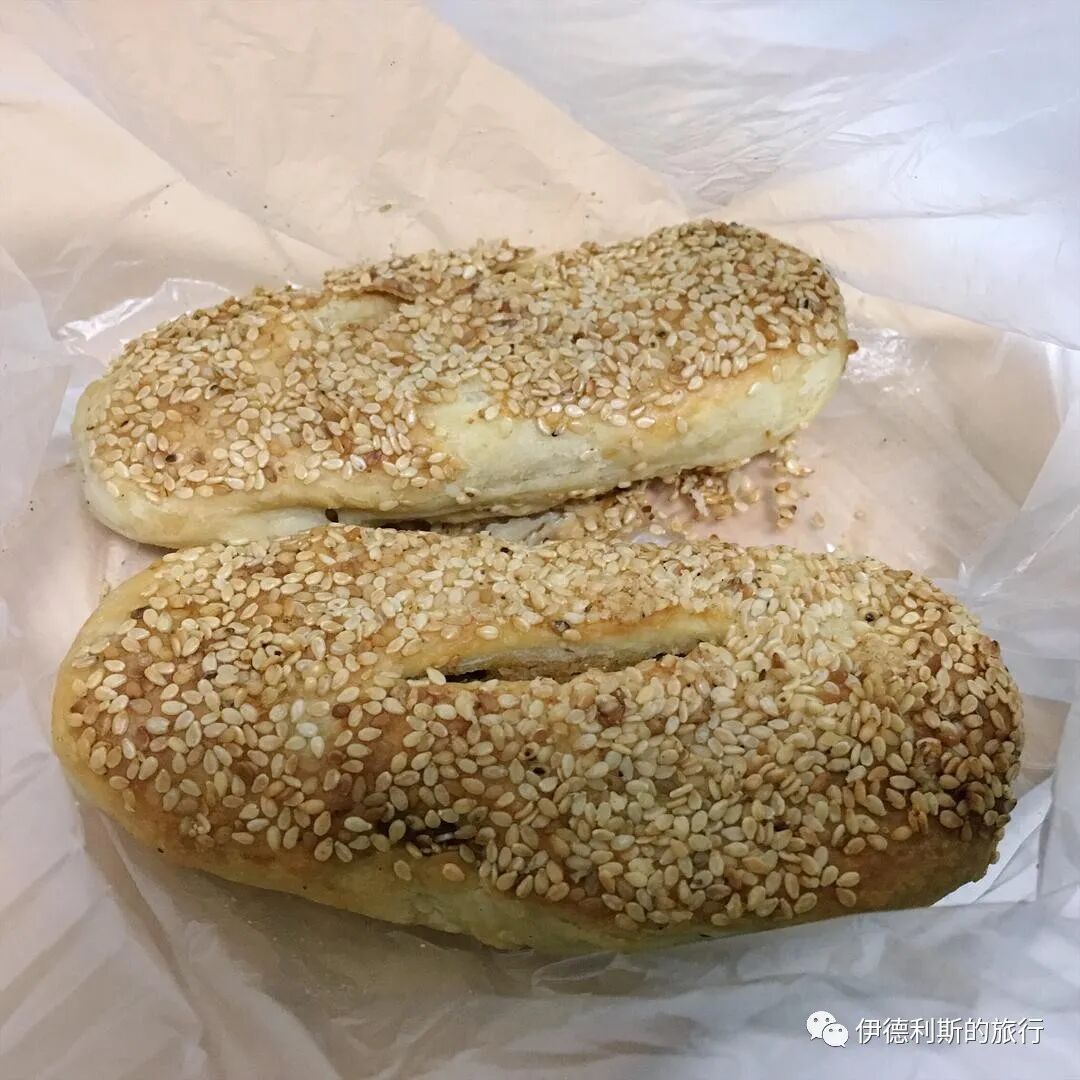
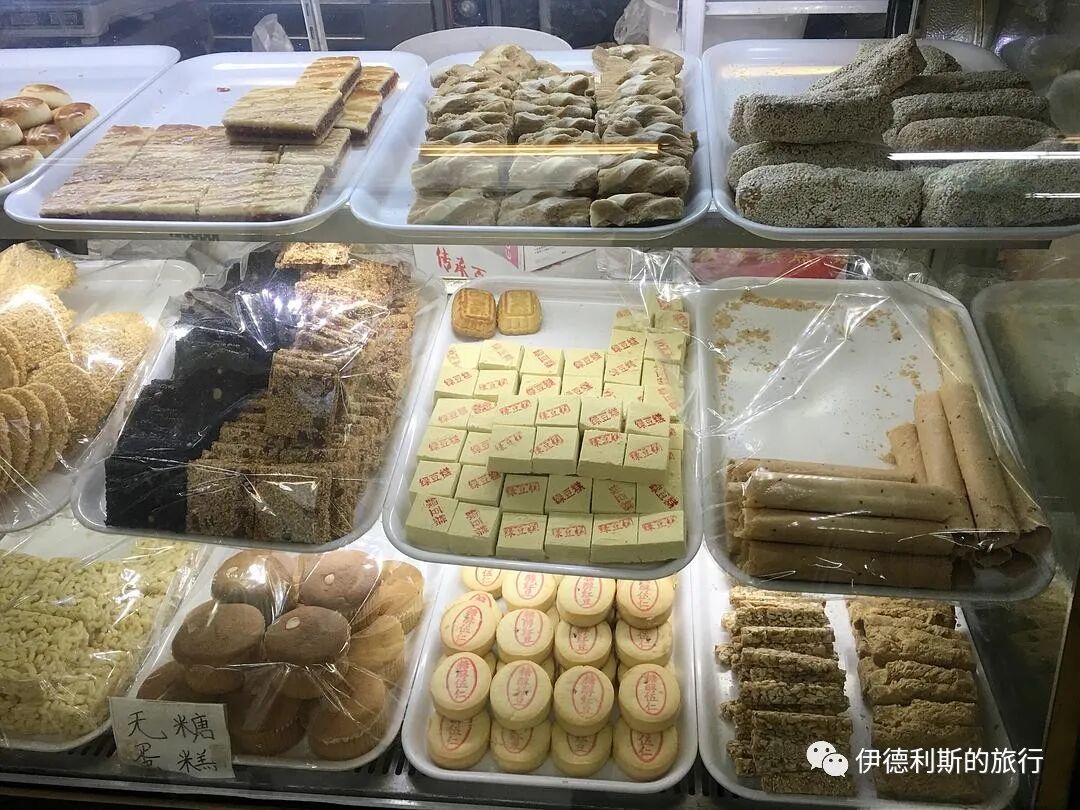
Street view of Changying.
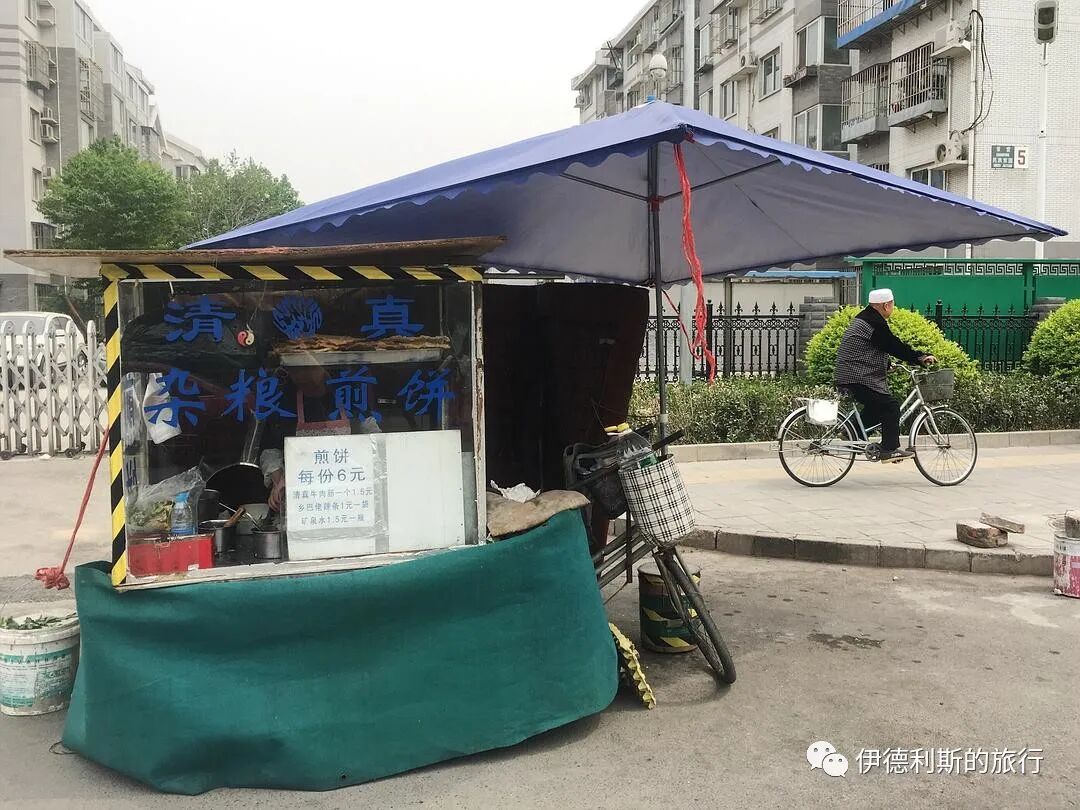
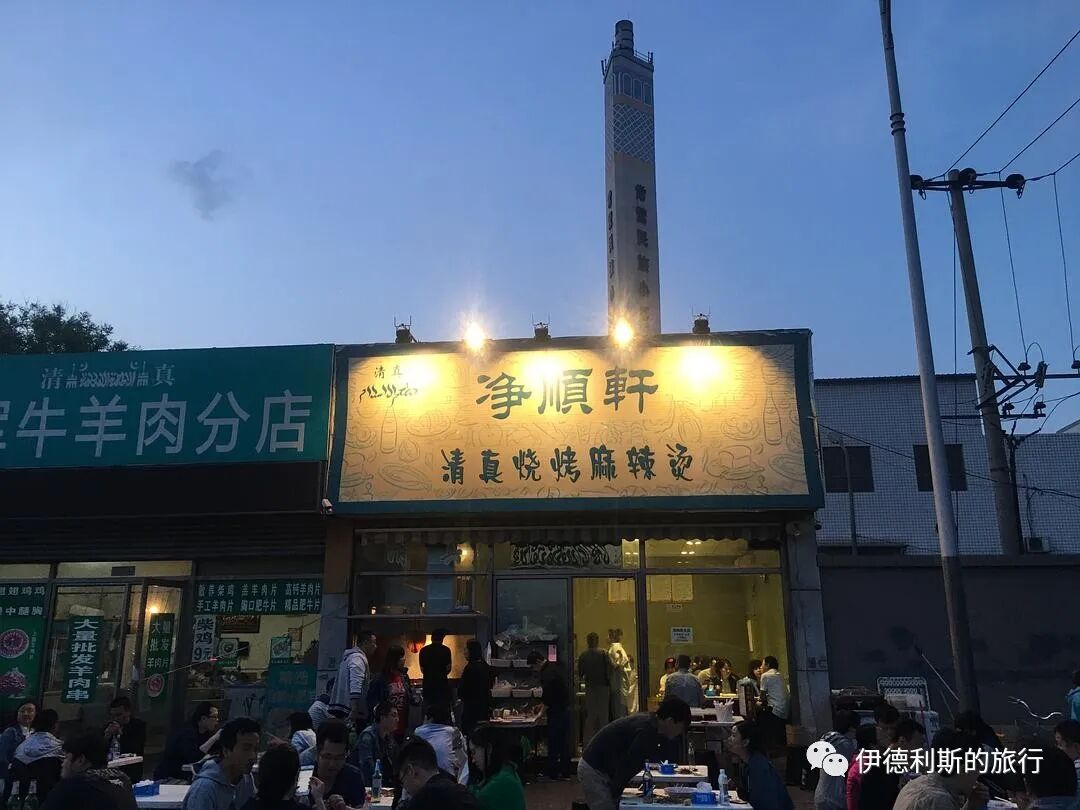 Collapse Read »
Summary: Beijing Changying — Hui Muslim Community, Mosques and Food is presented here as a firsthand travel account in clear English, beginning with this scene: Changying is also called Changying. It sits on the north side of the Chaoyangmen official road between Beijing and Tongzhou, 13 kilometers from Beijing's Chaoyangmen and 5 kilometers from Tongzhou's West Gate. The account keeps its focus on Beijing Changying, Hui Muslims, Halal Food while preserving the names, places, food, and historical details from the Chinese source.
Changying is also called Changying. It sits on the north side of the Chaoyangmen official road between Beijing and Tongzhou, 13 kilometers from Beijing's Chaoyangmen and 5 kilometers from Tongzhou's West Gate. Legend says that Chang Yuchun, a famous founding general of the Ming Dynasty, once stationed a troop of Hui Muslims near Tongzhou, and this camp was named Changjiayingzi.
The Jiajing Tongzhou Gazetteer (Jiajing Tongzhou Zhilue Guanji Zhi) records that Chang Yuchun visited Tongzhou twice. The first time was in 1368 (the first year of the Hongwu reign), when Chang Yuchun served as deputy general under General Xu Da during the Northern Expedition and captured Tongzhou. The following year, the Yuan army attacked Tongzhou, and Chang Yuchun led his troops back to rescue the city. He held Tongzhou, and the local people have deep feelings for him.
However, current historical records only mention Chang Yuchun stationing troops outside Tongzhou in the early Hongwu years (1368-1369). According to a stele rebuilt during the Jiaqing reign, the Changying mosque was built 150 years later during the Zhengde period (1505-1521). It is hard to imagine a Hui Muslim community going that long without a mosque. Therefore, the origin of Changying is still debated. It is possible that the Hui Muslim village formed during the Zhengde period and the legend of Chang Yuchun was added later, or perhaps there was already a mosque in Changying during the Hongwu years, but historical records have not yet been found.
Because the upper reaches of the Tonghui River, which led from Tongzhou to Beijing, lacked enough water and often silted up, most grain barges on the Grand Canal reached Tongzhou and then had to switch to land. They unloaded the cargo onto carts and traveled directly to Chaoyangmen, which created the official road outside Chaoyangmen. At the end of the Qianlong reign, Park Ji-won, an envoy from Korea, wrote in his Jehol Diary that the Chaoyangmen official road was packed: 'Once inside the east gate (of Tongzhou), until the five-mile mark to the west gate, there were tens of thousands of wheelbarrows, filling the road with no room to turn... From Tongzhou to the imperial city, a distance of 40 li, the road was paved with stone. The iron wheels clattered, and the sound of the carts was so loud it made one's heart and mind restless.'
Changying is located not far from the north side of the Chaoyangmen official road. The Beijing Chaoyang District Gazetteer records a rhyme about Changying from the Republican era: 'Three treasures of the Changying Hui Muslims: pushing wheelbarrows, selling hay, and pulling rickshaws.' Pushing wheelbarrows meant moving grain from the Tongzhou earth dam to the Thirteen Granaries (Shisancang) inside and outside Chaoyangmen, while pulling rickshaws meant transporting passengers on the Chaoyangmen official road. Both jobs were directly related to the canal transport system.
The 1941 Tong County Gazetteer records that Changying had 500 Hui Muslim households at the time, making it the second-largest Hui Muslim settlement in Tong County after the county seat.
In the 1935 General Map of the Old Capital's Suburbs, the black dot northwest of Tongzhou is Changying.
On the 1928 Shunzhi Topographic Map, you can see a road labeled 'Beijing to Tong County Main Road' passing through Changying.
The Changying mosque was built during the Ming Zhengde period (1505-1521), rebuilt in 1796 (the first year of the Jiaqing reign), rebuilt again in 1986, and underwent large-scale renovations and expansions in 2004 to reach its current form.
An ancient tree from the Zhengde era.
Swinhoe’s book, Narrative of the North China Campaign of 1860, mentions Changying and the Changying mosque:
At noon on October 3, we took down our tents, crossed the canal, and marched into a village of Hui Muslims in Changying. The village was near a rifle regiment outpost. Lord Elgin and Sir Hope Grant, along with their staff, stayed in a beautiful mosque, while about six thousand strong soldiers camped in the surrounding fields.
The village was small and filled with mud huts. But this time, not all the houses were empty. The villagers were Hui Muslims who followed Islam. You could tell them apart from the other locals by the strange pointed hats they wore, with their braids tucked inside. Inside the mosque, there were many stone inscriptions in Arabic and Chinese, and several books and scriptures printed in Arabic were scattered around. Many of the Prophet’s Chinese followers could recite a few sentences from these books, but few could explain what they meant. However, they were very familiar with the prayers and chapters of the Quran and often recited them to the Sikh cavalry (Note: the author mistook Indian Muslims for Sikhs). The villagers chanted these prayers repeatedly, which always moved the tired Indian warriors to tears and often made them take silver out of their pockets. The Hui Muslims of the Celestial Empire knew it was best to accept this sympathy.
Inside the Changying mosque, there is a 1937 stone tablet titled "Last Words of My Late Mother," which is a precious record of the Changying women’s mosque. It says, "We sacrificed the family house in the west courtyard to convert the former girls' school into a women's bathing facility." But the two rooms on the east side were kept as a place for Lin and others to stay when they returned home. "" The 'Lin' here refers to Zhang Zhaolin, a Hui Muslim from Changying who was known as one of the 'five great Hui Muslim journalists of the Republic of China era'.
According to the article 'With the Zhang Zhaolin Brothers', Zhang Zhaolin, whose courtesy name was Ziqi, was born in Changying in 1865. His grandfather and great-uncle were both military jinshi (a high-level imperial examination degree) in the same year during the Daoguang reign. His family's fortunes declined when he was four or five years old. He only attended a private village school before becoming an apprentice at a grocery store. In 1909, Zhang Zhaolin founded the 'Xingshi Bao' (Awakening Times) in Fengtian, which was the most important vernacular newspaper in the city at the time.
The 'Xingshi Bao' aimed to 'represent public opinion and serve as a mouthpiece for the people'. It gained fame in 1919 for its continuous coverage of the student demonstrations in Shenyang colleges and universities in response to the May Fourth Movement. During the 1927 anti-Japanese protest in Fengtian involving 60,000 people, Zhang Zhaolin marched at the front as a reporter and used his newspaper to build public support. The Japanese considered 'Xingshi Bao' to be at the forefront of the anti-Japanese movement at the time. At the same time, 'Xingshi Bao' frequently published articles about Hui Muslim customs and activities, serving as a window for different ethnic groups to understand each other and bridge cultural gaps.
After Japan occupied Fengtian in 1931, they shut down most newspapers. 'Xingshi Bao' was exceptionally allowed to remain open as a Hui Muslim publication, but it shifted from covering current events to printing local anecdotes and serialized romance or martial arts novels to stay in business. In 1934, Zhang Zhaolin handed the newspaper over to his son to manage. He passed away in 1938, and 'Xingshi Bao' ceased publication and dissolved in 1944.
In 1911, Zhang Zhaolin entered the field of education and helped establish the Fengtian Mosque School. He also founded a private school in his hometown of Changying. The school song included the lyrics: 'Old man Ziqi, worked hard to manage, with a heart to help the world... educating the younger generation, wanting to bring light to our hometown'.
Halal food
In 2001, Changying underwent demolition. The original eight Hui Muslim villages, including Changying villages 1-7 and the first residential area, were relocated to the Changying Ethnic Homeland residential complex. This formed a new Hui Muslim community, featuring a food street behind the Changying Mosque, a halal food market, a halal supermarket, and many halal restaurants.
The wall bordering the Changying Mosque is the halal food street. The most famous spot there is Li Xiaolao's meat flatbread (rou shaobing). Meat flatbread paired with tofu puff soup (dou pao tang) is my standard order.
Next to Li Xiaolao is the Anji Deli, known for its crispy meat (songrou) and spiced beef (jiang niurou).
Next to that is the Jialun Deli, which sells roasted chicken (shaoji).
Yinfangzhai Pastry Shop sells wife cakes (laopo bing), sugar-filled sesame cakes (tang huoshao), and peanuts.
I passed by Kaiyizhai when they were selling sweet rice balls (yuanxiao) at the beginning of the lunar new year.
The almond tofu (xingren doufu) at the entrance of the Hui Muslim residential area across from the food street is delicious. It is hard to find such authentic almond tofu in the city.
Northwest-style cold skin noodles (liangpizi) at the entrance of the food street.
Crispy fried milk (cuipi xiannai) and duck heads at the Ziguangyuan snack window.
Changying Halal Market.
Fried chicken wishbones (zhaji chagu) at the entrance.
Halal snacks inside.
Street view of Changying.
Collapse Read »
Halal Travel Guide: Beijing Chaowai Guanxiang — Hui Muslim Quarter and Food
Reposted from the web
Summary: Beijing Chaowai Guanxiang — Hui Muslim Quarter and Food is presented here as a firsthand travel account in clear English, beginning with this scene: The historical and geographical information in this article about the Chaowai Guanxiang area is partially compiled from the book "Outside Chaoyangmen". The account keeps its focus on Beijing Chaowai, Hui Muslims, Halal Food while preserving the names, places, food, and historical details from the Chinese source.
The historical and geographical information in this article about the Chaowai Guanxiang area is partially compiled from the book "Outside Chaoyangmen". Information regarding the Hui Muslims of Chaowai is partially compiled from Ma Zhongqing's book "Chaowai Nanxiapo".
The formation of Chaowai Guanxiang.
In 1285 (the 22nd year of the Zhiyuan era of the Yuan Dynasty), the Yuan capital Dadu was completed with 11 city gates. The gate in the southeast was called Qihuamen. In 1439 (the 4th year of the Zhengtong era of the Ming Dynasty), the Ming government rebuilt Qihuamen and renamed it Chaoyangmen. The stories we are discussing today take place outside Chaoyangmen.
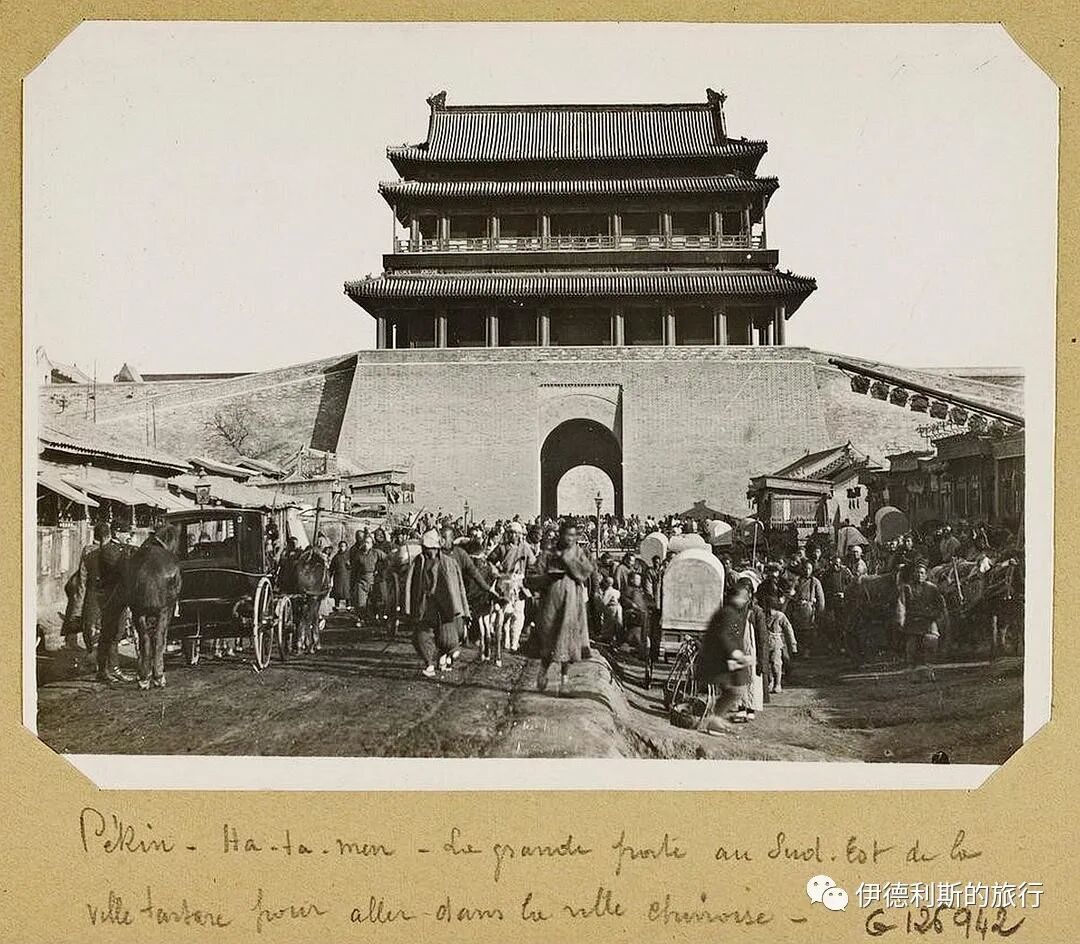
Chaoyangmen photographed by French photographer Firmin Laribe in 1906.
In 1292 (the 29th year of the Zhiyuan era of the Yuan Dynasty), the Tonghui Canal was completed, connecting Dadu to Tongzhou. Boats traveling north from Hangzhou could reach Jishuitan inside the city of Dadu. After the Ming Emperor Chengzu, Zhu Di, moved the capital to Beijing, he dredged the Tonghui Canal and built a series of granaries inside Chaoyangmen. Large amounts of grain began to be transported from the Jiangnan region to these granaries via the canal.
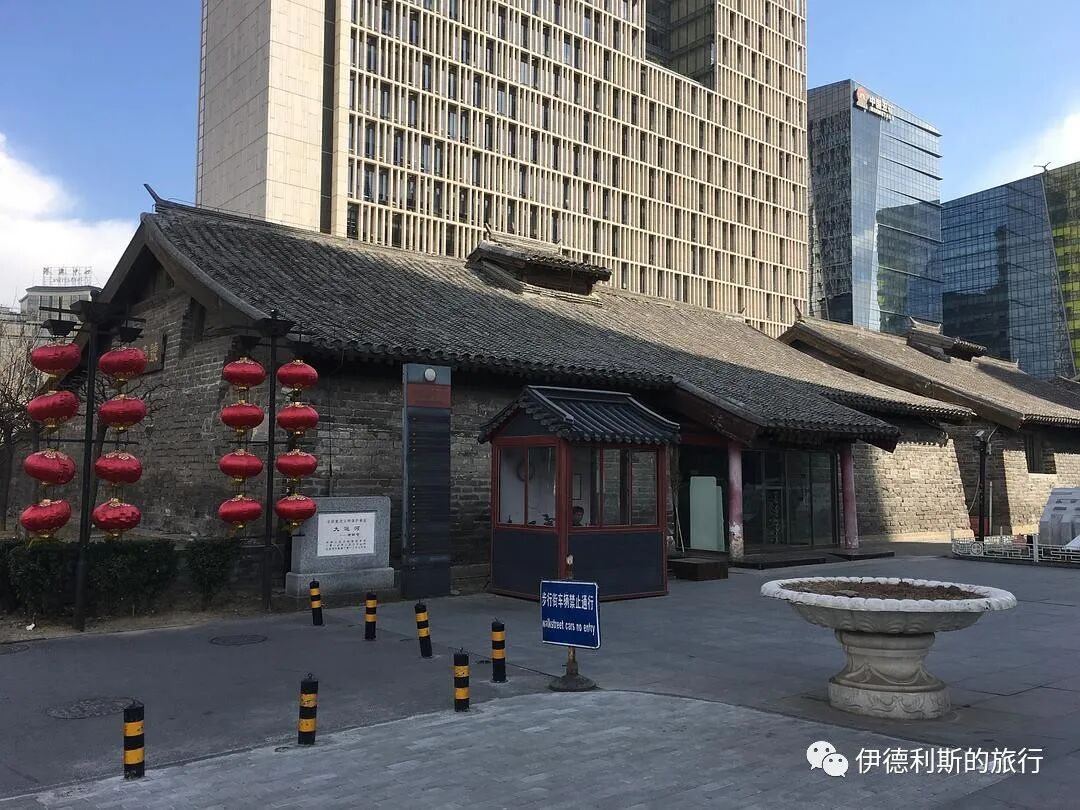
Nanxincang Granary inside Chaoyangmen.
However, because the Tonghui Canal was too close to the Imperial City of Ming Beijing, Emperor Xuanzong, Zhu Zhanji, grew tired of the constant noise from the canal. In 1432 (the 7th year of the Xuande era), he ordered the eastern wall of the Imperial City to be moved, enclosing that section of the Tonghui Canal. In 1438 (the 3rd year of the Zhengtong era), the Ming government built the Datong Bridge sluice outside Dongbianmen. From then on, grain boats from the south could only reach the area outside Dongbianmen, where the grain was transferred to wheelbarrows or horse-drawn carts to be taken to the granaries inside Chaoyangmen.
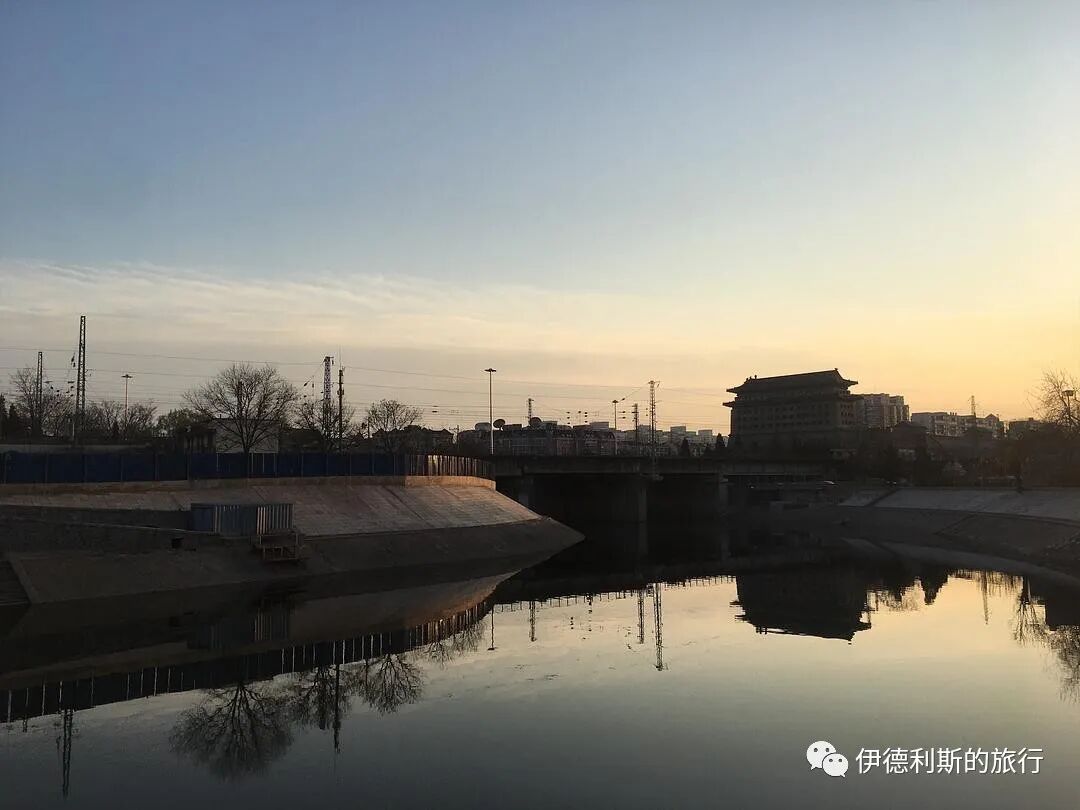
The end of the Tonghui Canal after 1438, with the southeast corner tower of the inner city on the right.
In 1697 (the 36th year of the Kangxi era), the Qing government dredged the moat outside Chaoyangmen and installed a water gate. Grain boats from the south could travel directly to the area outside Chaoyangmen to unload their cargo for storage. From this point on, Chaoyangmen officially became the terminus of the Grand Canal.
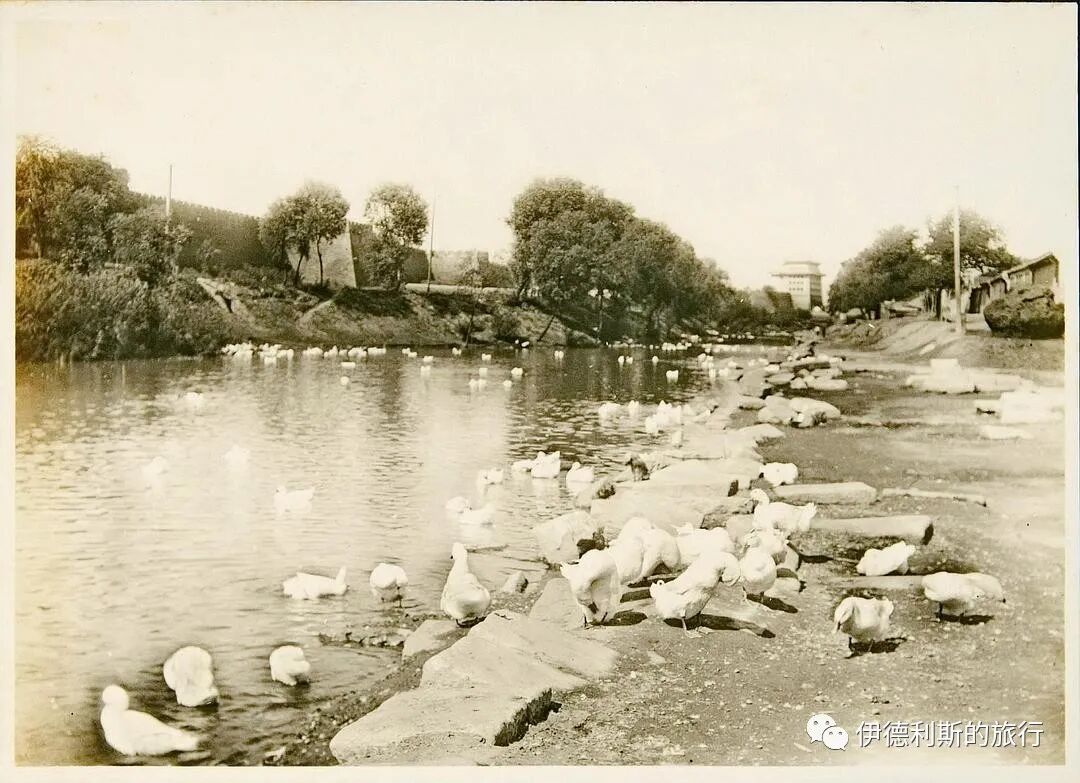
The moat on the south side of Chaoyangmen, featured in the book "Asia Panorama" published in Japan in 1928.
Because the water in the Tonghui Canal flows eastward, boats coming from Tongzhou had to travel upstream. They had to pass through five sluice gates along the canal to adjust the water levels, which made travel slow and often caused traffic jams. As a result, most grain boats would "leave the boat for the land" upon reaching Tongzhou. The cargo was unloaded onto carts and taken directly to Chaoyangmen by road. The official road connecting Chaoyangmen and Tongzhou became increasingly busy, eventually surpassing the Tonghui Canal as the main transport route.
In 1729 (the seventh year of the Yongzheng reign), the stone road from Chaoyang Gate to Tongzhou was completed. The stone road itself was 20 feet wide, with dirt roads 15 feet wide on each side, making it the expressway between Beijing and Tongzhou at that time. Park Ji-won, an envoy from Korea to China at the end of the Qianlong reign, wrote in his 'Jehol Diary' that the Chaoyang Gate stone road 'stretched for 40 li from Tongzhou to the Imperial City, paved with stone beams, where iron wheels clashed and the sound of carts grew louder, shaking one's spirit and leaving one uneasy.'
In 1942, the Japanese wanted to build a highway from Tongzhou to Beijing and planned to replace the stone road with cement, but they surrendered when the work was only half finished. Therefore, in 1949, it was half stone road and half cement road. After 1949, an asphalt road was built, and the Chaoyang Gate stone road finally disappeared, but many of the stone slabs were buried shallowly along the side of Chaoyang Road; some were later dug up and preserved in the Chaowai CBD Park.
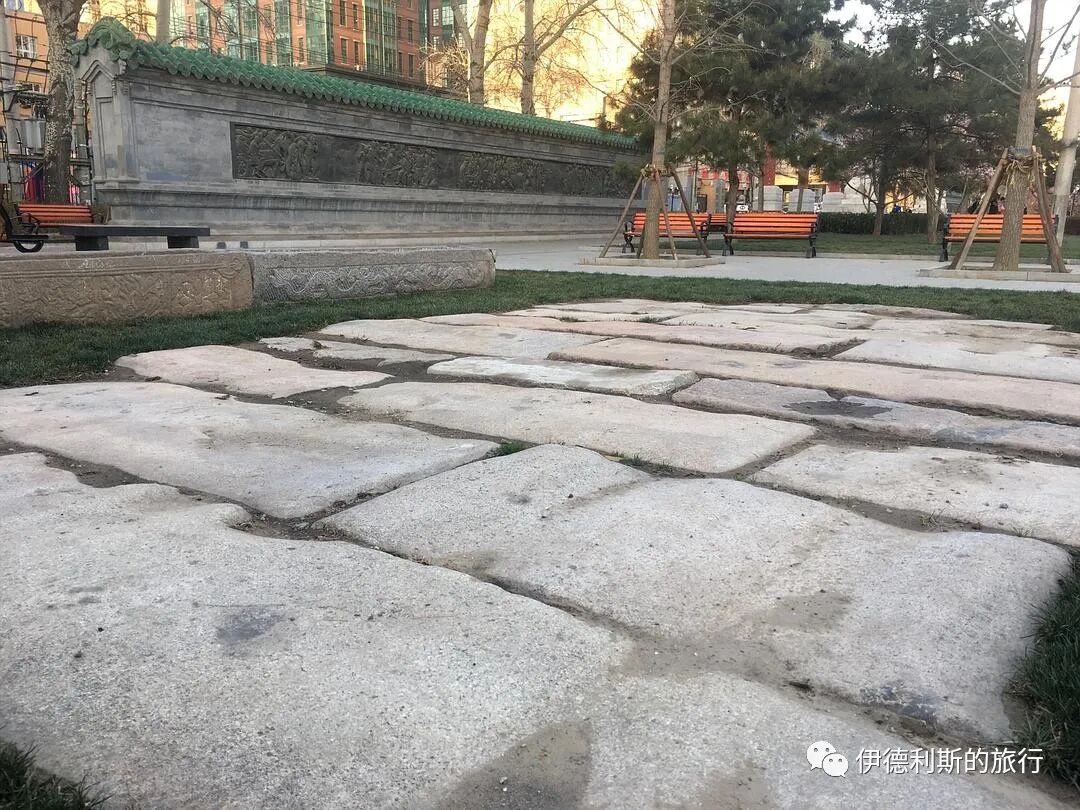
The Chaoyang Gate stone road in the Chaowai CBD Park.
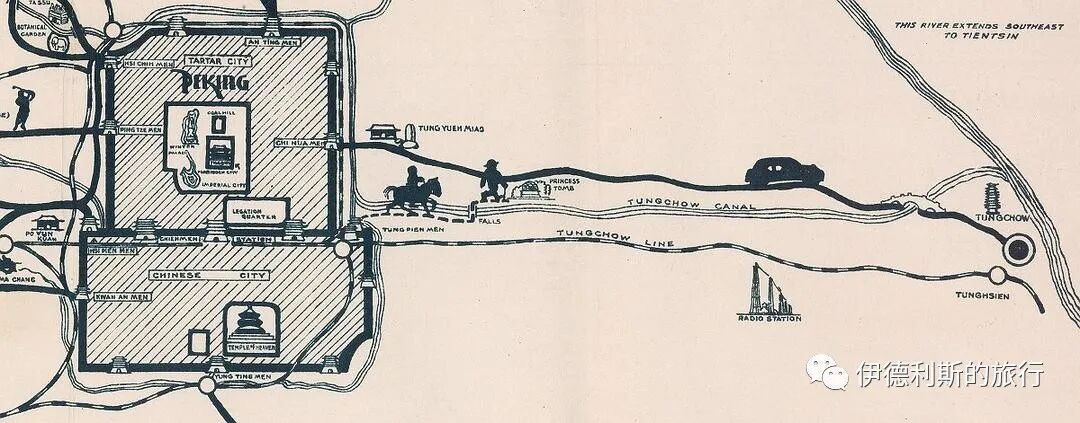
The Chaoyang Gate official road in the 1935 book 'Trips outside Peking' is the line the car is driving on in the picture.
Residents of the Chaowai Guanxiang area.
Because they were not restricted by the closing of the city gates at night, people transporting grain were willing to choose to stay and rest outside Chaoyang Gate. Tea houses, inns, and restaurants gradually sprang up in the Chaowai Guanxiang area, making it the most prosperous district east of Beijing, with many shops and booming business, and many people eventually settled there.
to Chaowai Street as the main commercial artery, the Chaowai Guanxiang area had three residential areas where three different ethnic groups lived. Among them, Jishikou north of Chaowai Street was mainly Han Chinese, the Nanxiapo area to the southwest was mainly Hui Muslims, and the Xiangbai Banner South Barracks to the southeast was mainly Banner people.
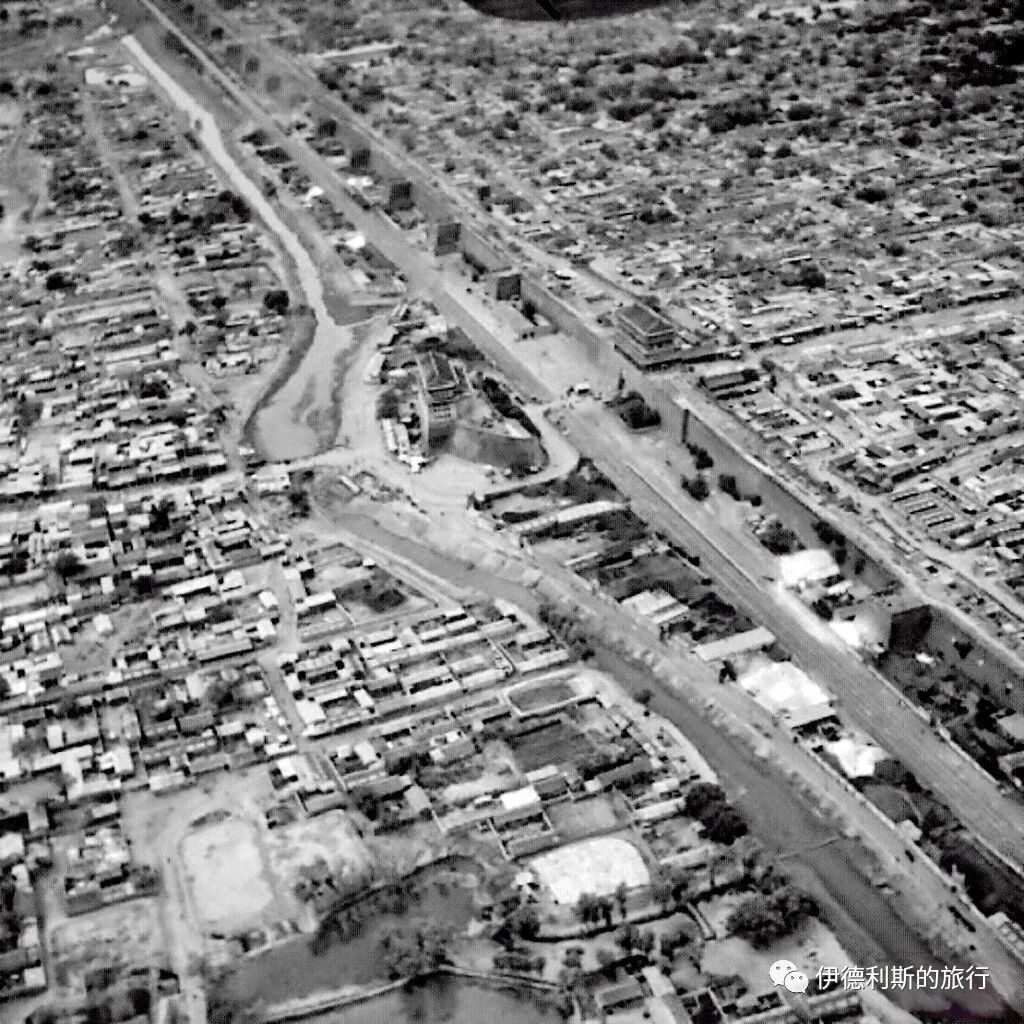
An aerial photo of the inside and outside of Chaoyang Gate taken by Japanese photographer Shiba Yōson in 1940, with Nanxiapo in the upper left corner.
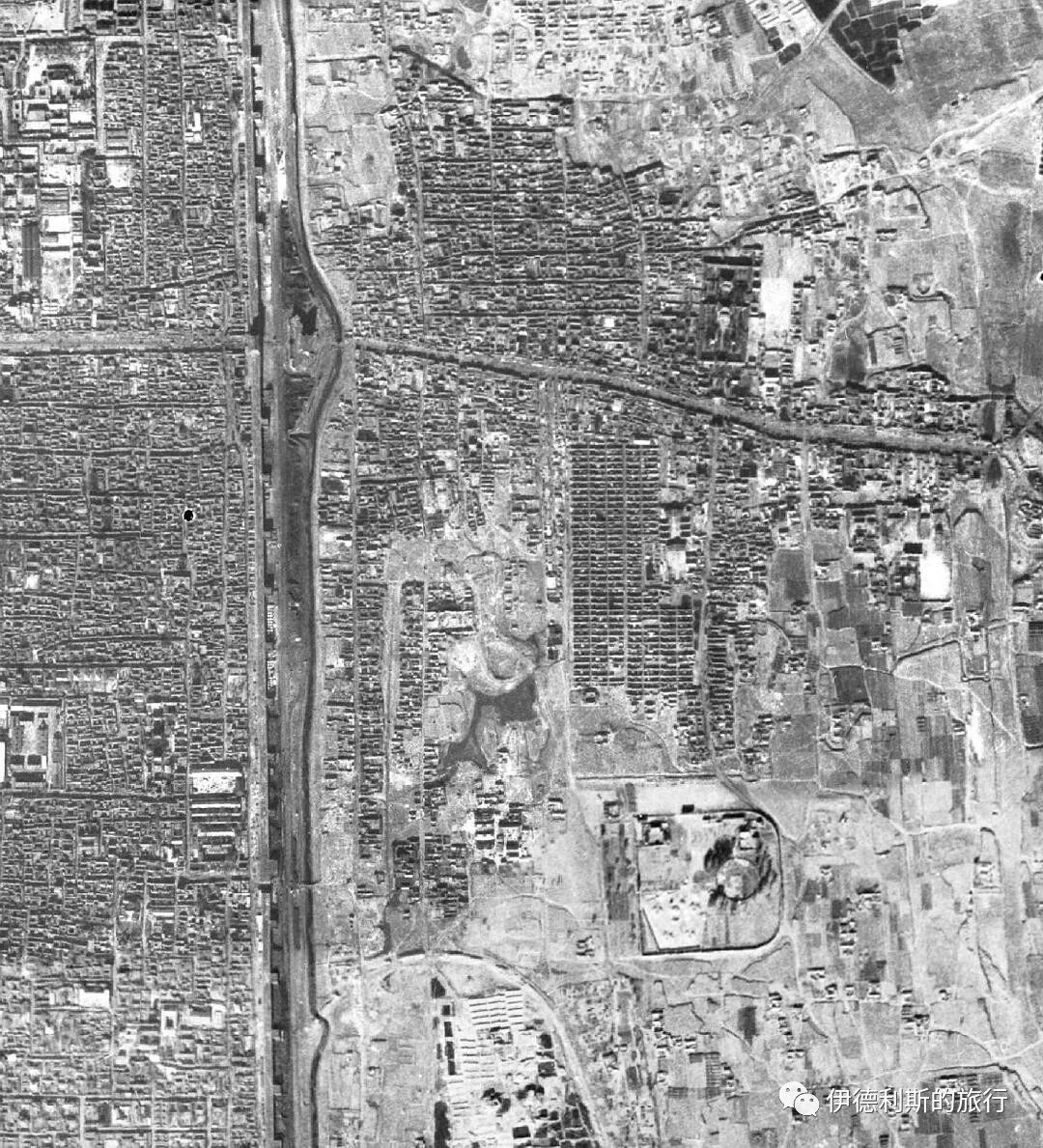
An aerial photo of the area outside Chaoyang Gate in 1951 from the Beijing Imprint website.
The mosque in the Chaowai Guanxiang area.
Information about the Muslim community in the Chaowai Guanxiang area is compiled from 'Chaowai Nanxiapo' by the local elder Ma Zhongqing from Nanxiapo. Ma Zhongqing was born in 1947 and lived in Nanxiapo outside Chaoyang Gate since he was a child, writing many articles about this area.
There were once seven mosques in the Chaowai area, but only four are clearly recorded today: Nanzhongjie Mosque, Nanxiapo Mosque, Shuimenguan Women's Mosque, and Shegutang Mosque.
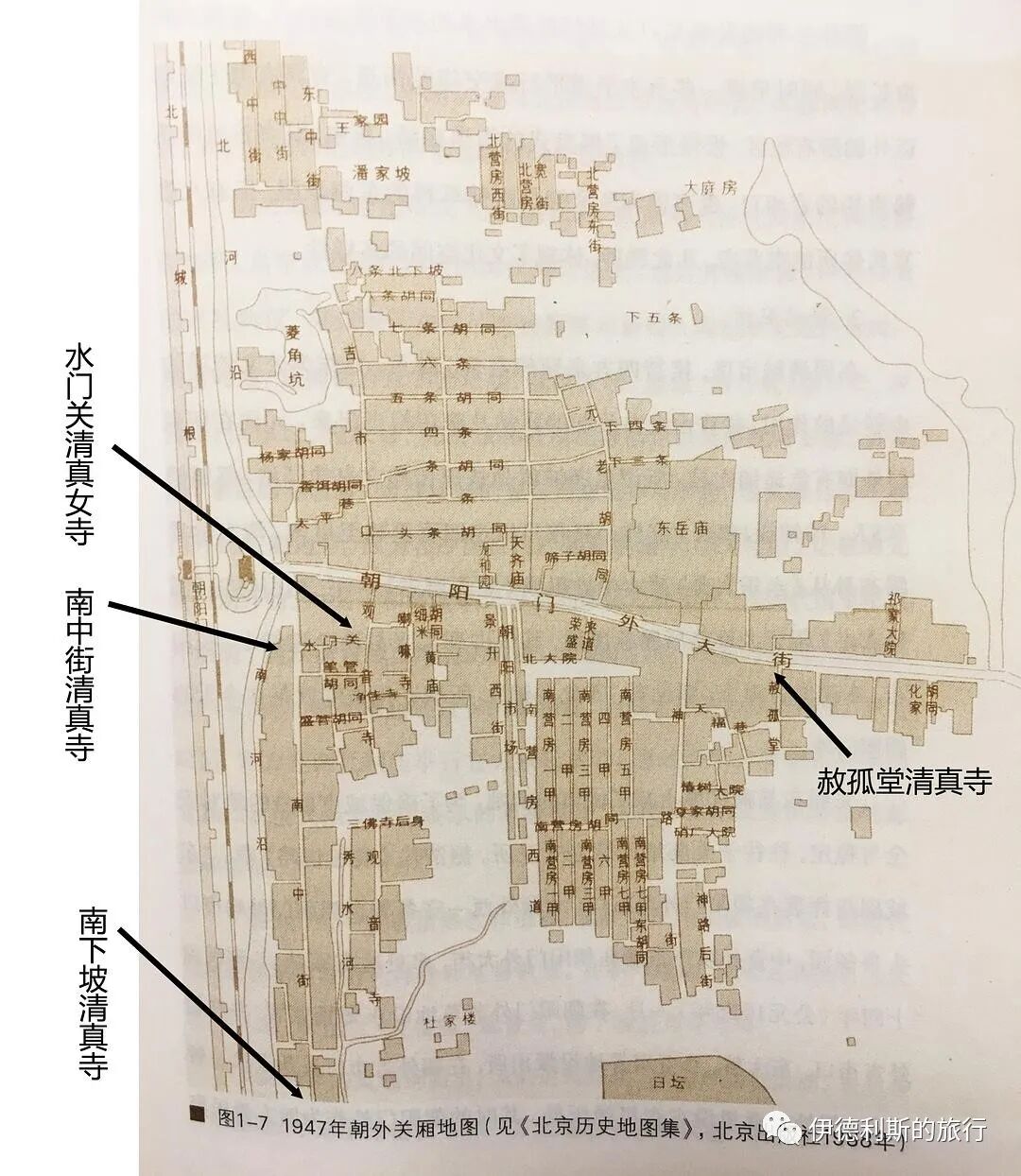
A map from the book "Outside Chaowai Gate".
Nanzhongjie Mosque, also known as the Great Mosque (Da Libaisi) and Nanxiapo Mosque, is located on the west side of the north end of Nanzhong Street outside Chaoyang Gate. It was first built in the early years of the Kangxi reign and was the largest mosque in the Chaowai area. The last imam (ahong) of Nanzhongjie Mosque, Yu Guangzeng, came from a family of imams. At 26, he received his formal appointment at Huashi Mosque. He was very learned, wrote books like "Basic Scripture Textbooks" and "Philosophy Textbooks," and passed away in 2004.
During the Pingjin Campaign in 1948, the Kuomintang 13th Army, responsible for guarding Dongzhimen, Chaoyangmen, and Guangqumen, demolished all civilian houses on the east bank of the moat from Chaoyangmen to Jianguomen, and Nanzhongjie Mosque was destroyed.
In 1949, Imam Yu Guangzeng oversaw the construction of classrooms and a playground on the original site of Nanzhongjie Mosque and founded the Mushen Primary School for Hui Muslims. Imam Yu Guangzeng served as the principal of Mushen Primary School and hired teacher Mu Chengyu, a graduate of the famous modern Islamic school Chengda Normal School, as the head teacher. In 1951, Qin Junxiang, a graduate of the Hui Muslim College teacher training class, joined Mushen Primary School as a teacher. The drum and bugle band of Mushen Primary School was very famous locally. Their Western-style drums and horns were very novel, and they were often invited to participate in events.
In 1956, Mushen Primary School was renamed Chaoyang District Nanzhongjie No. 2 Primary School. In the 1980s, it became the office for the Chaoyang District Islamic Association, and it was demolished in 2003.
Shuimenguan Women's Mosque was located at the second door on the north side of the east entrance of Shuimenguan Hutong. First built in the late Qing Dynasty and early Republic of China, it was a standard courtyard house (siheyuan) with a main hall that could hold dozens of people for namaz and two lecture halls to the north and south. Shuimenguan Women's Mosque stopped its activities in 1958 and became a nursery for Hui Muslims in the early 1960s. In 1993, to build the Ministry of Foreign Affairs building, the mosque's structures were dismantled and moved away by Yangzha Mosque.
Shegutang Mosque was located on the west side of the north end of Shegutang Hutong, 200 meters from Chaowai Street. Like the Shuimenguan Women's Mosque, it was a courtyard house with a main hall that could hold 30 to 40 people for namaz and two lecture halls to the north and south. The imam in the 1940s and 1950s was surnamed Zhang. Shegutang Mosque closed in 1958.
Nanxiapo Mosque, also known as the Small Mosque (Xiao Libaisi), was first built in the early years of the Kangxi reign. It is located on the west side of the south entrance of Chaowai Second Alley and is the only mosque in the Chaowai area that still exists today.
According to Ma Zhongqing's ancestors, a shed builder lived in Nanxiapo during the late Ming and early Qing dynasties. He built a large shed using fir poles and reed mats. An imam named Hu Zhonghe led the local Hui Muslims in prayer inside this mat shed, which was the earliest Nanxiapo mosque. In the early years of the Kangxi reign, a Hui Muslim surnamed Ma who sold bows and arrows inside Chaoyang Gate heard about the situation in Nanxiapo. Just then, a payment arrived from a Mongolian client for a bow and arrow order. The man surnamed Ma donated this money to build the Nanxiapo mosque.
The main gate of the Nanxiapo mosque originally consisted of three separate gate towers connected by courtyard walls, but they were destroyed in the early 1960s.
After 1966, religious activities stopped at Nanxiapo, but it still served as the Beijing Hui Muslim Funeral Service Center, helping Hui Muslims with funeral arrangements. To prevent the Red Guards (HWB) from attacking the Nanxiapo mosque, more than twenty local elders including Ma Yulin, Ma Yuhai, and Tuo Jihua took turns guarding the mosque day and night. They stopped the Red Guards from entering the old mosque, saving Nanxiapo from disaster.
The Nanxiapo mosque was rebuilt in 1986 and renovated again in 2016, resulting in its current appearance.
In 1947, the Nationalist army was conscripting men at the South Barracks outside Chaoyang Gate. The young Hui Muslim men of Nanxiapo were terrified. They grabbed some dry rations from home and ran to the Nanxiapo mosque, where they climbed onto the roof of the main hall using wooden ladders with the help of the imam and the elders. After they were hidden, the imam and elders immediately hid the ladders. When the Nationalist troops came to the mosque to seize people, the imam persuaded them to leave. The men on the roof lay flat for an entire day and finally escaped the danger.
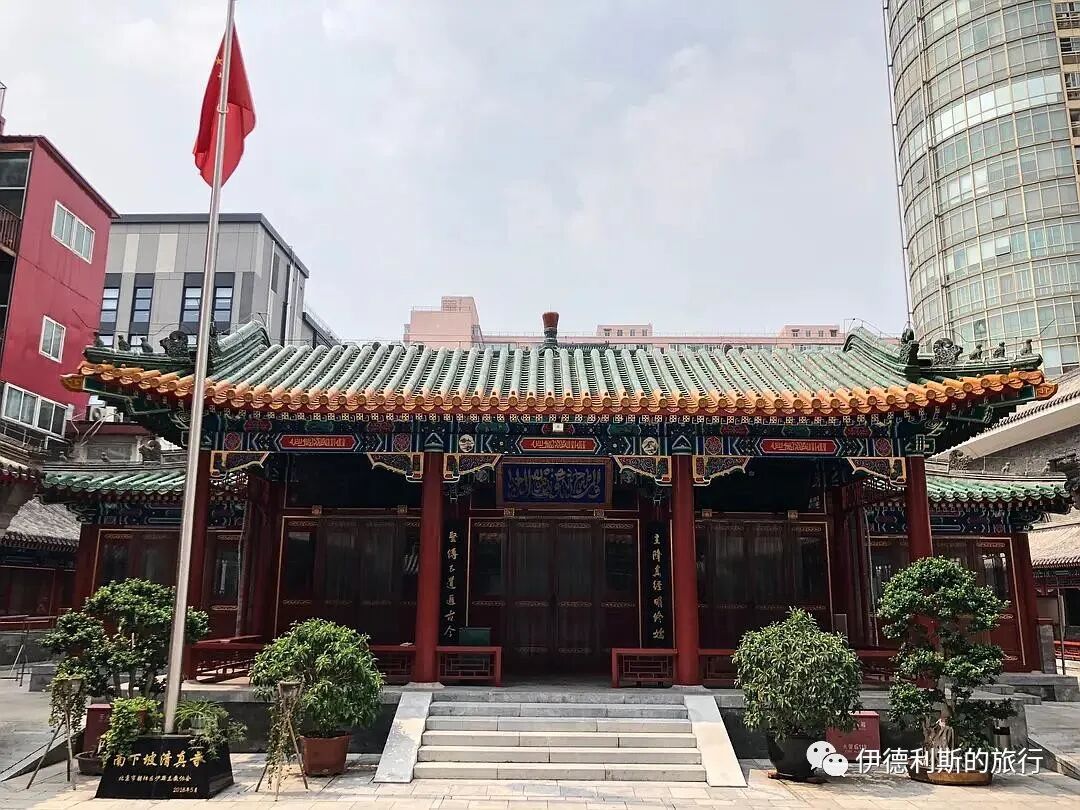
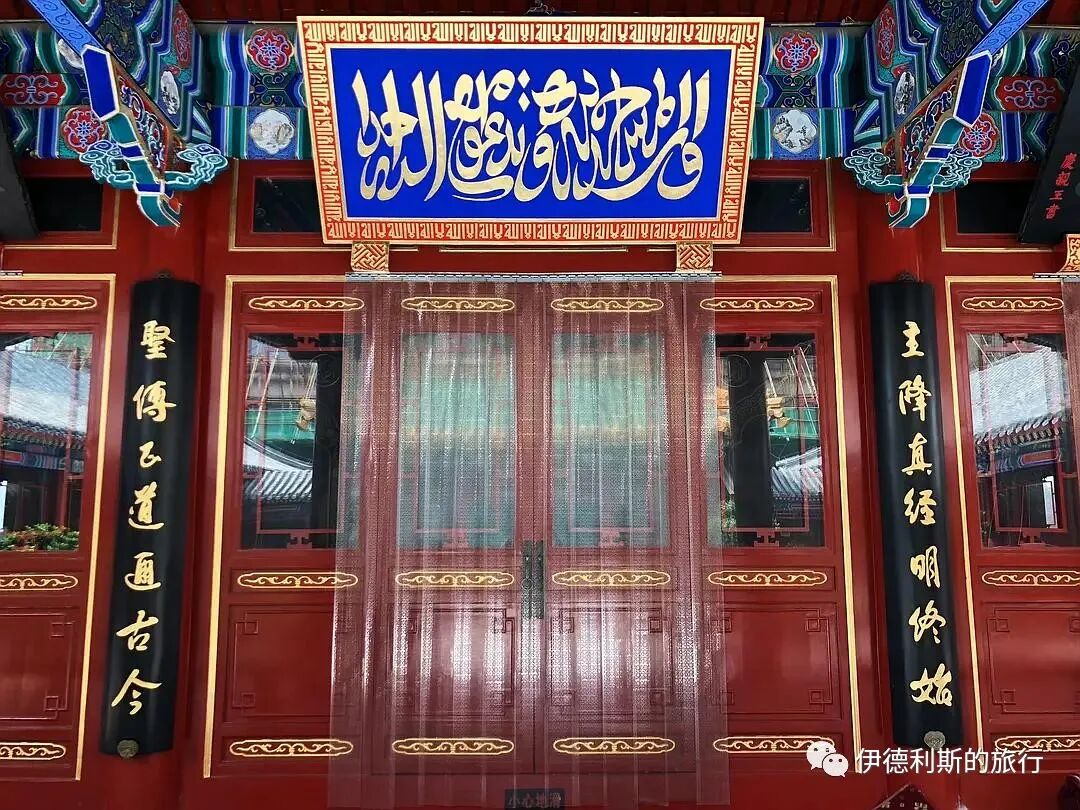
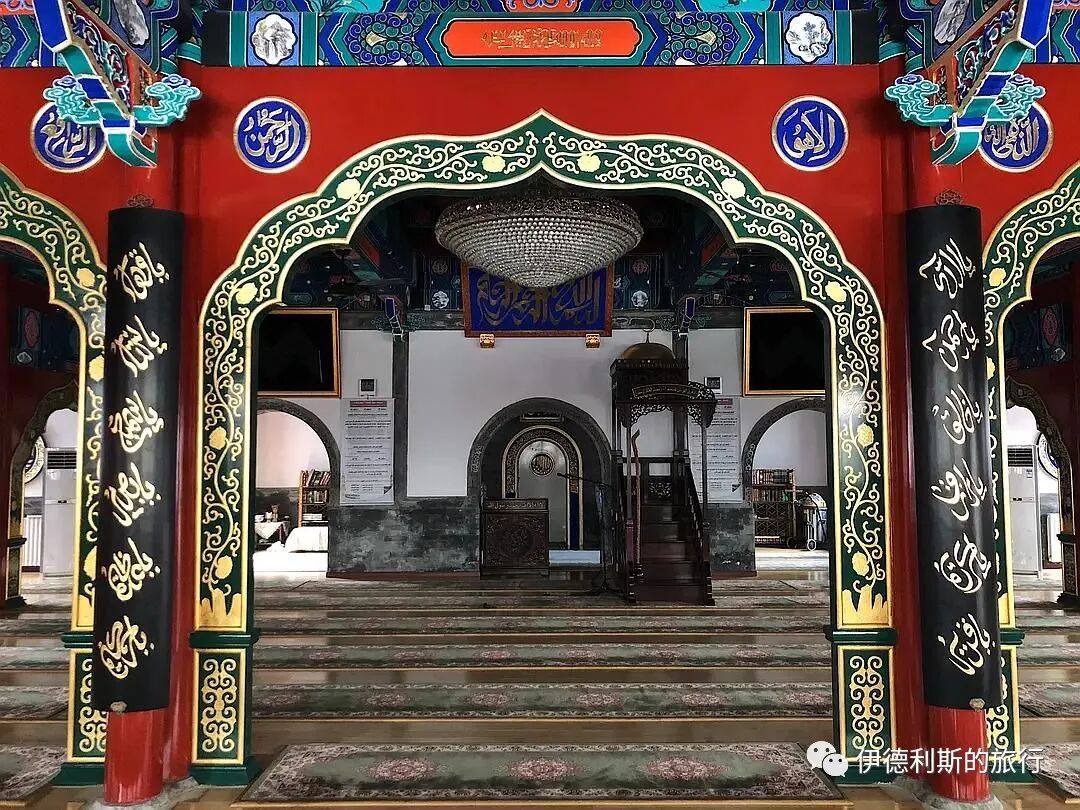
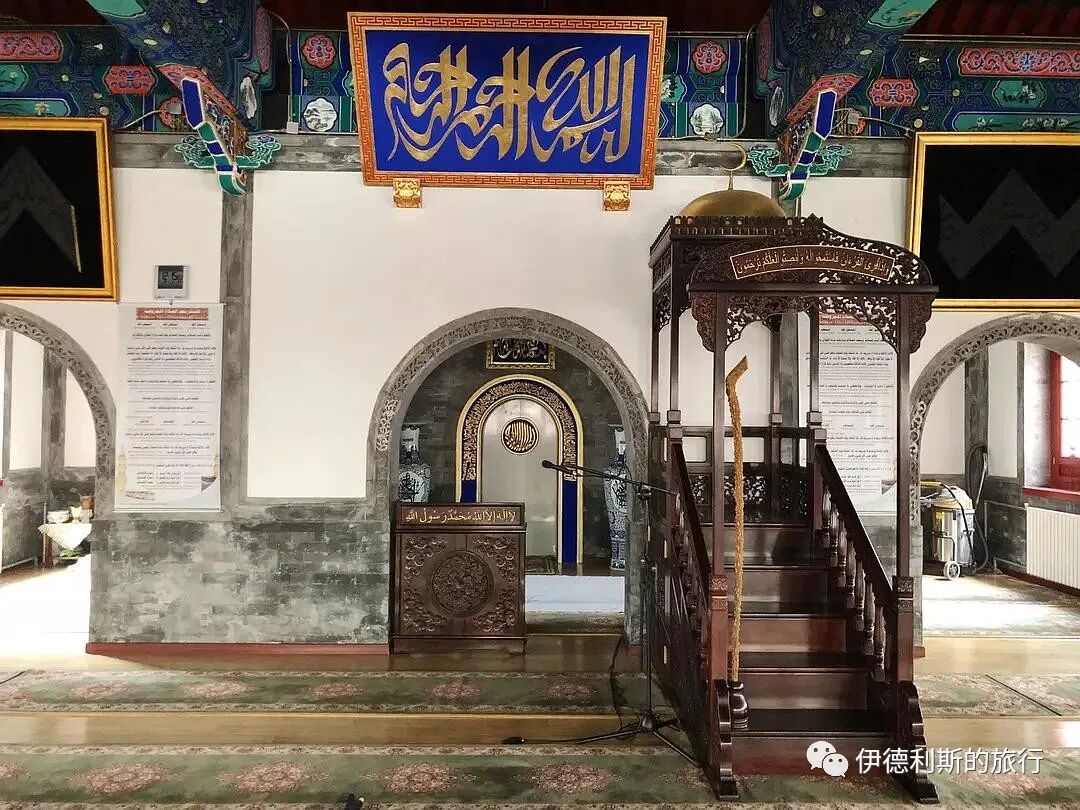
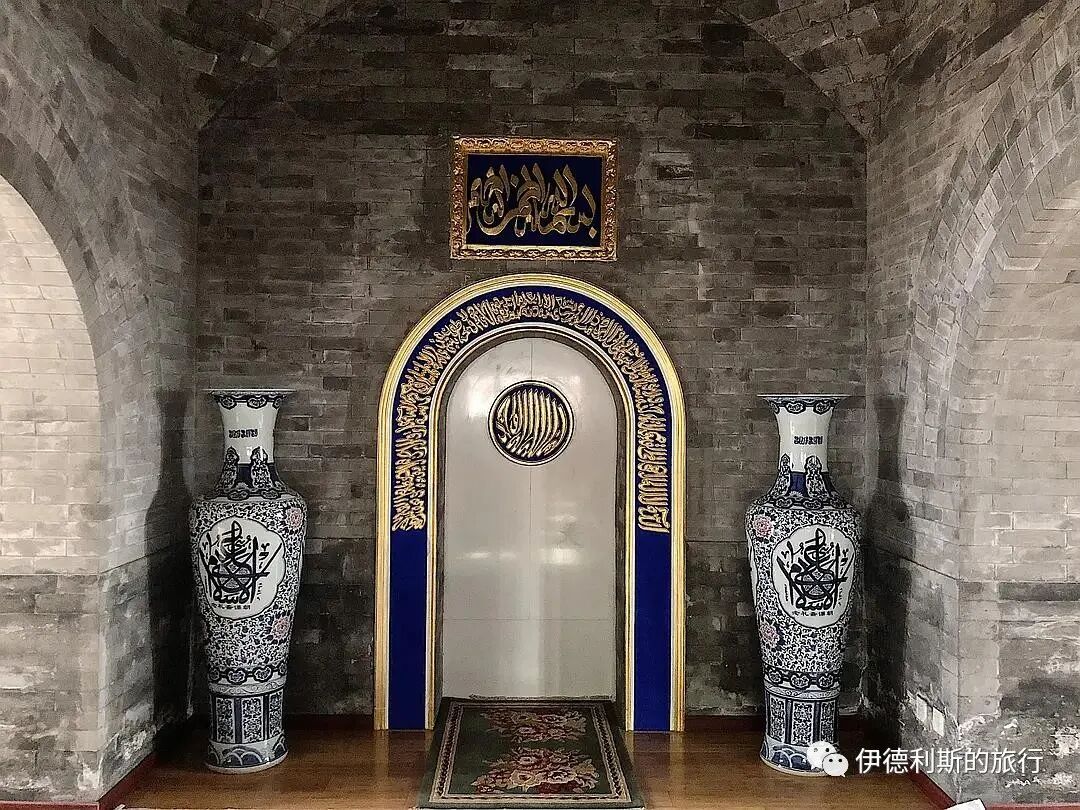
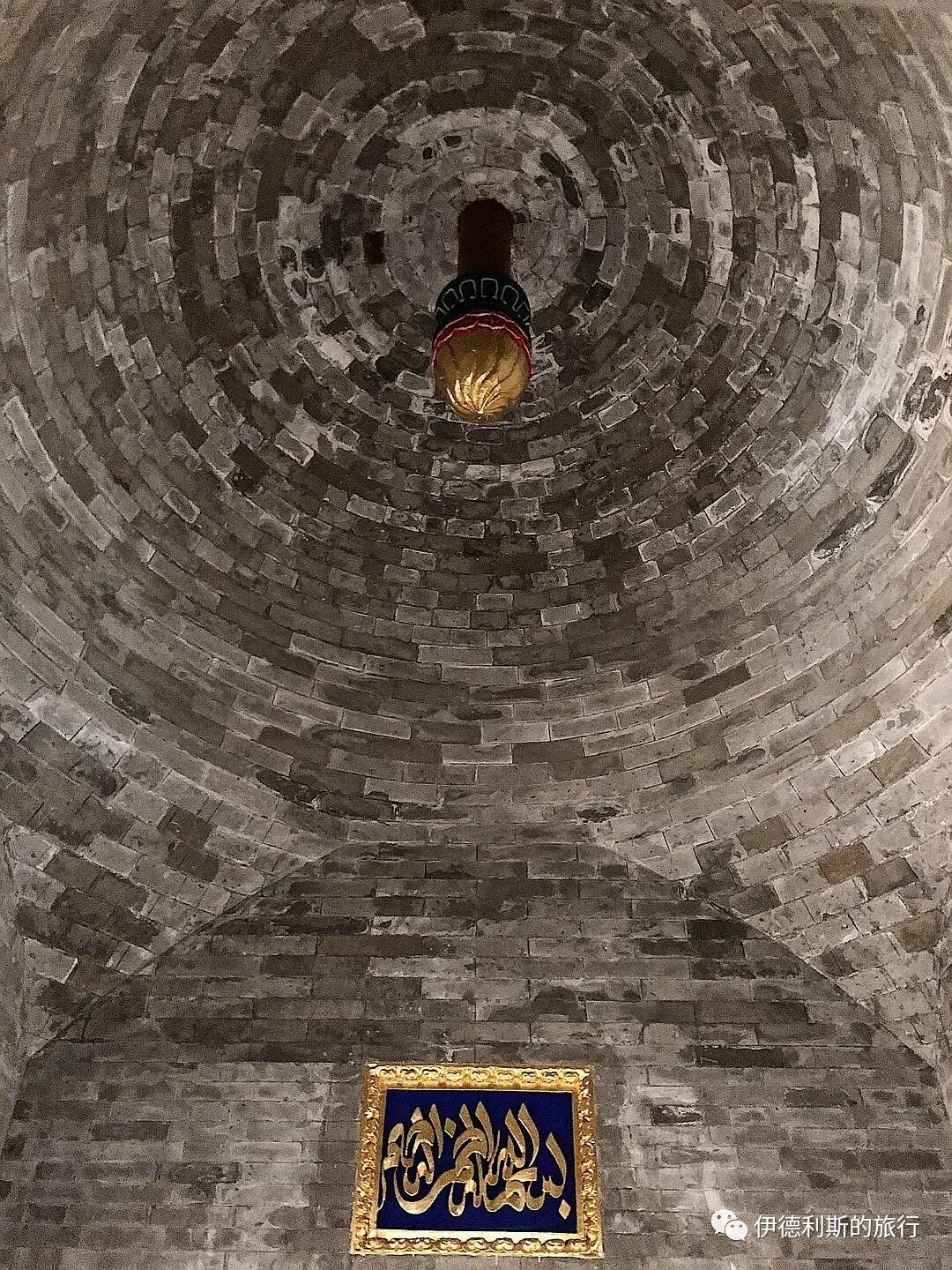
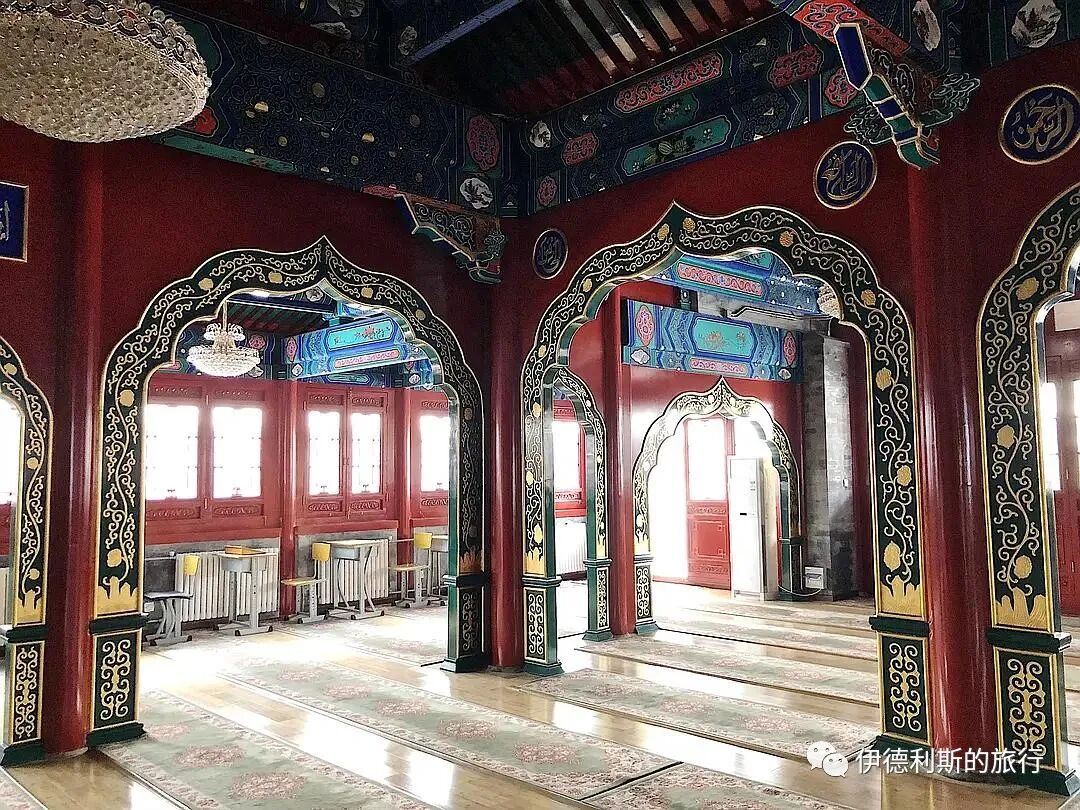
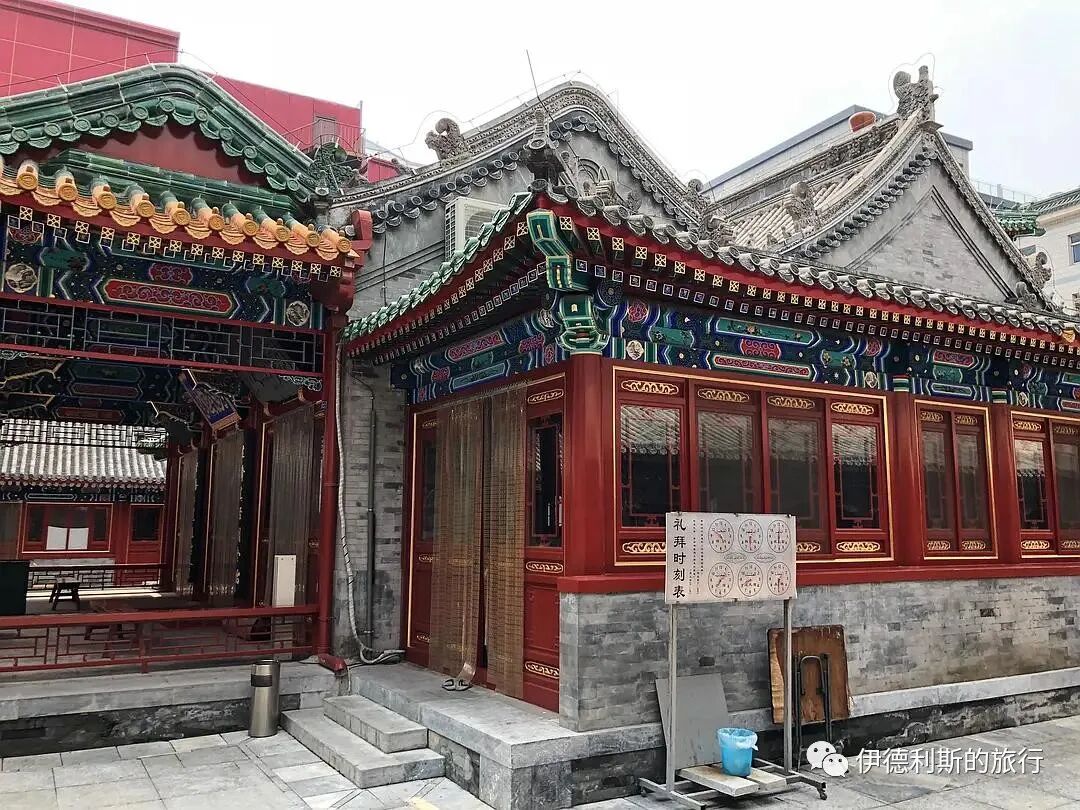
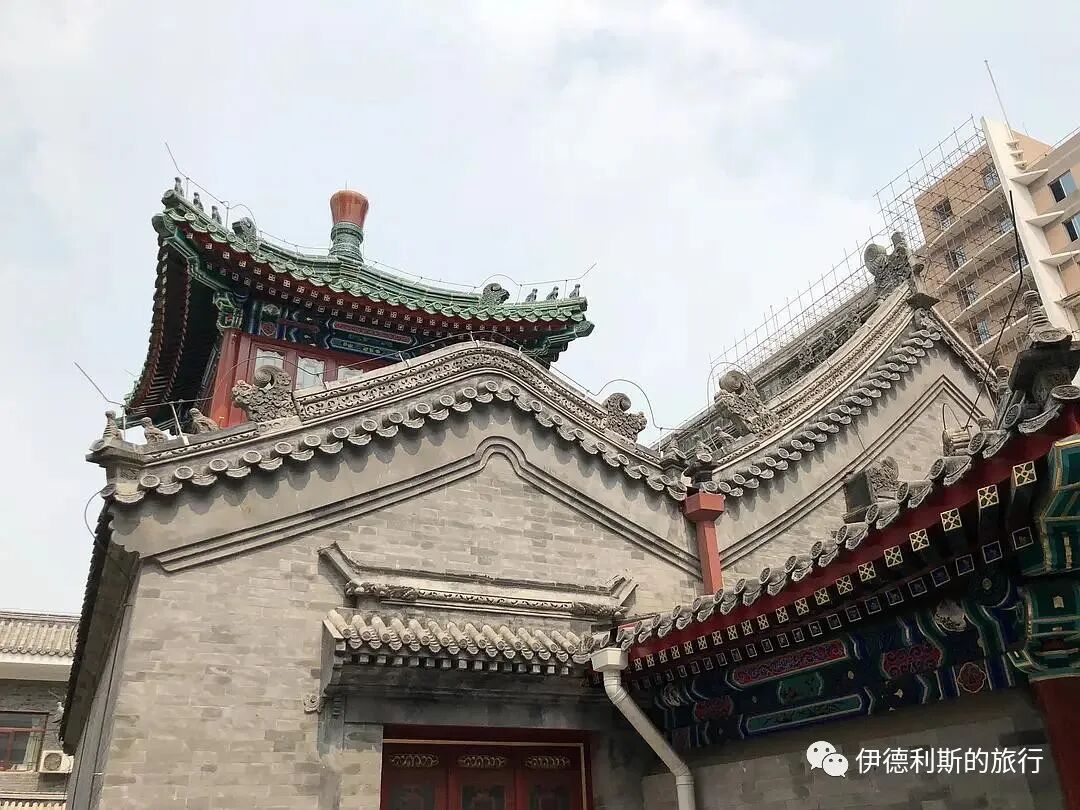
Breaking the fast (iftar) at the mosque during Ramadan in 2021.
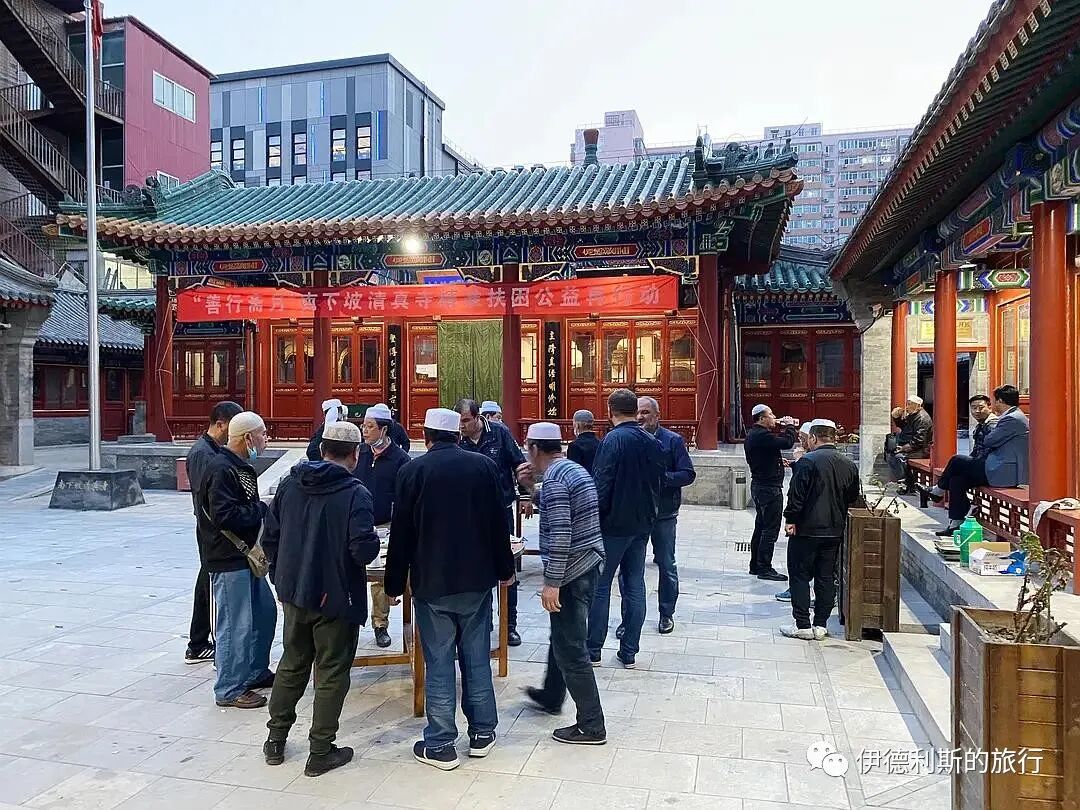
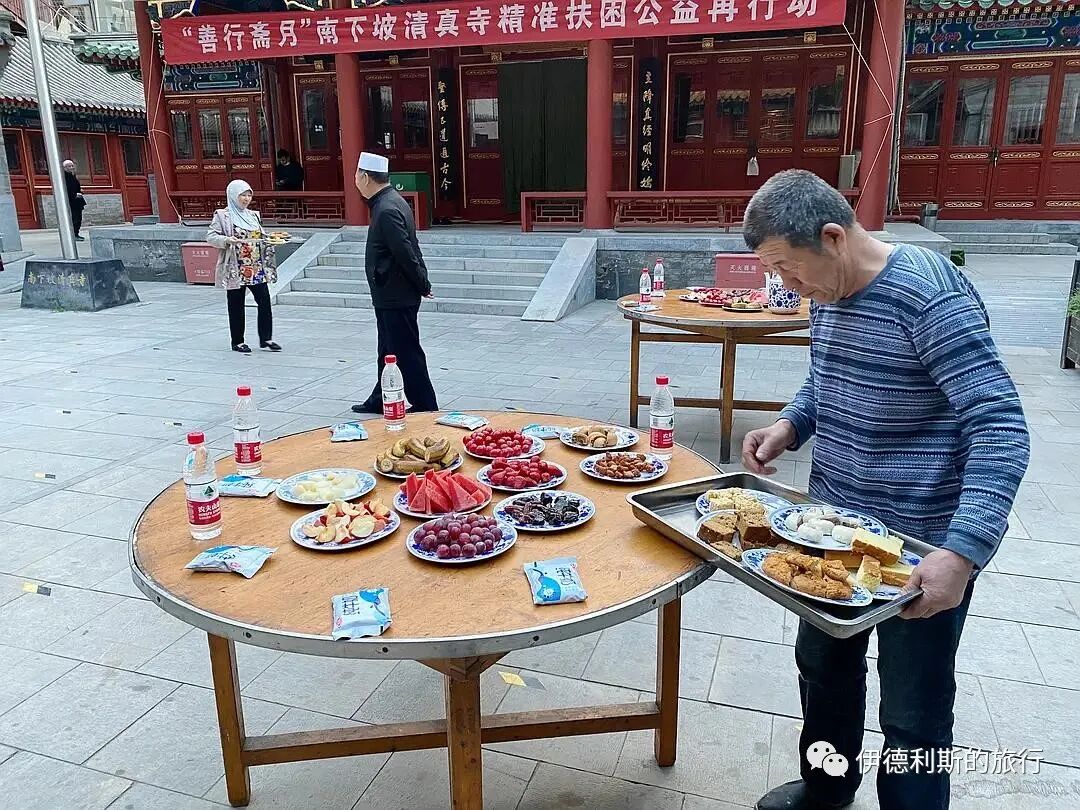
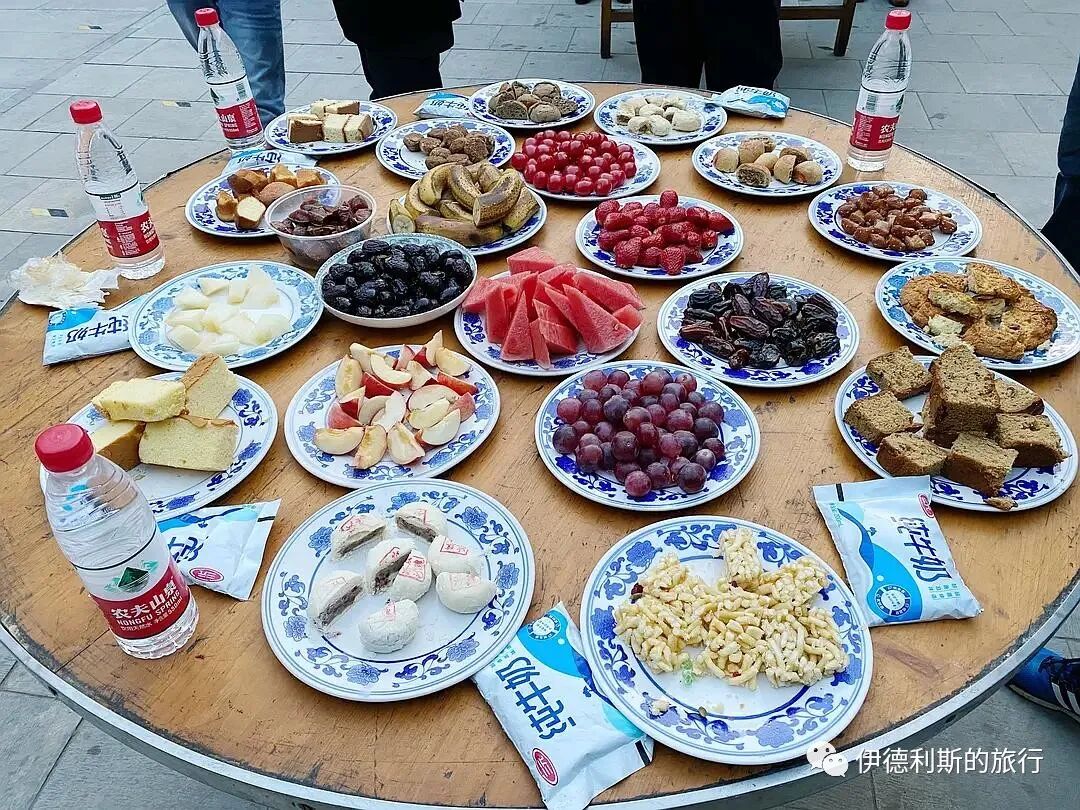
Attending a religious gathering at Nanxiapo in 2021, where there was lamb and wheat porridge (yangrou mairen rouzhou) and fried dough (youxiang).
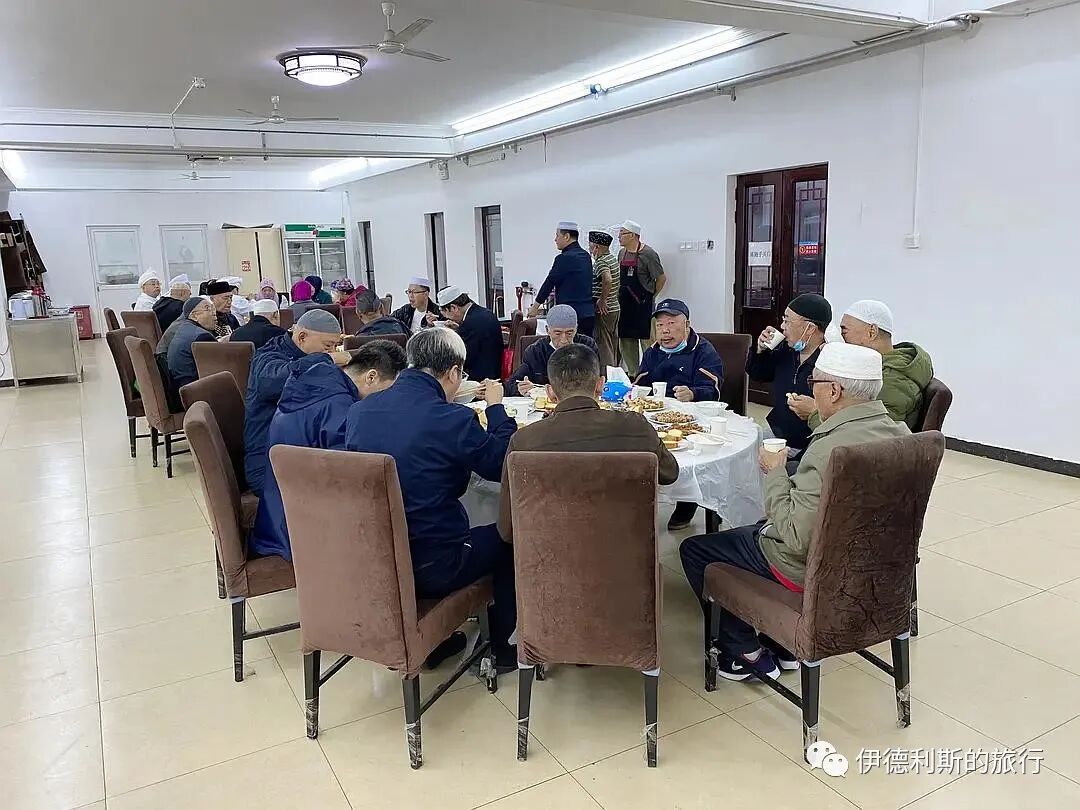
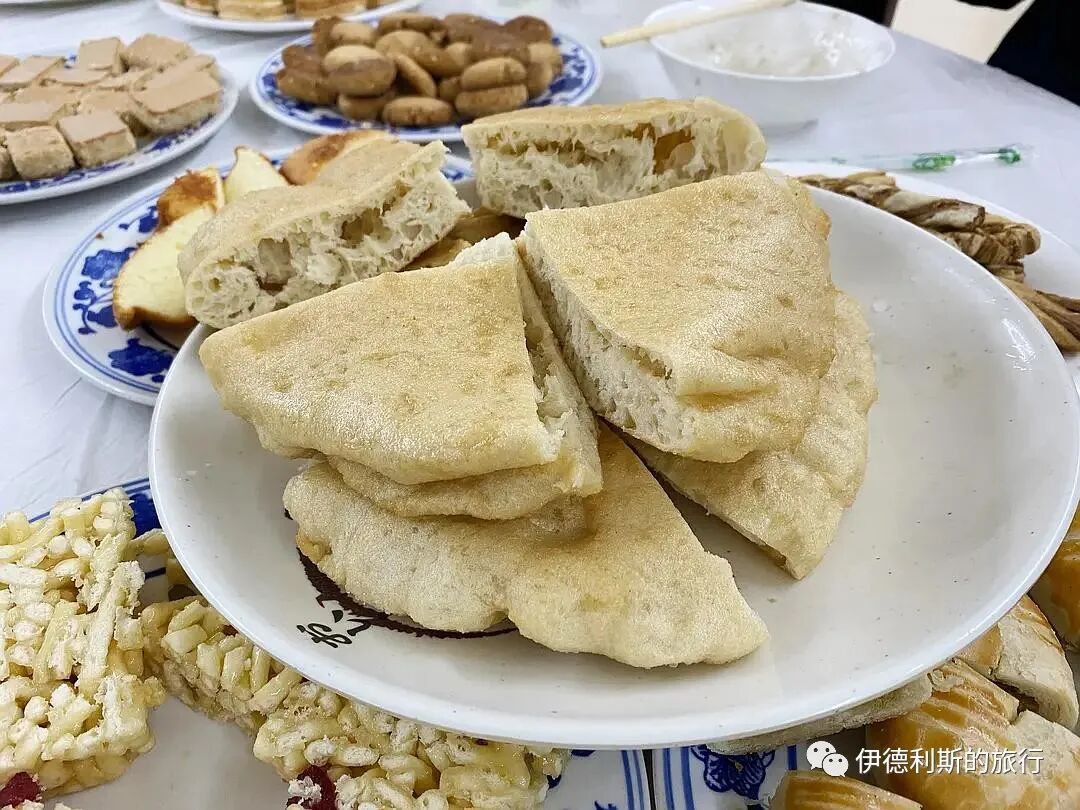
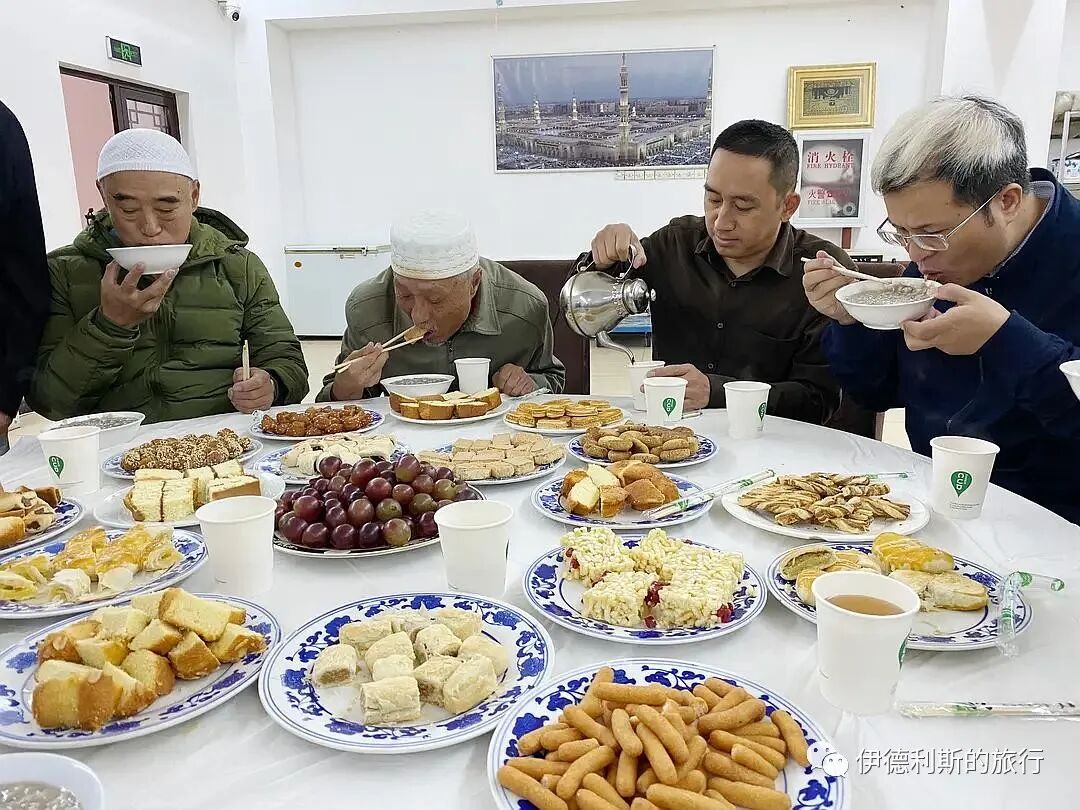
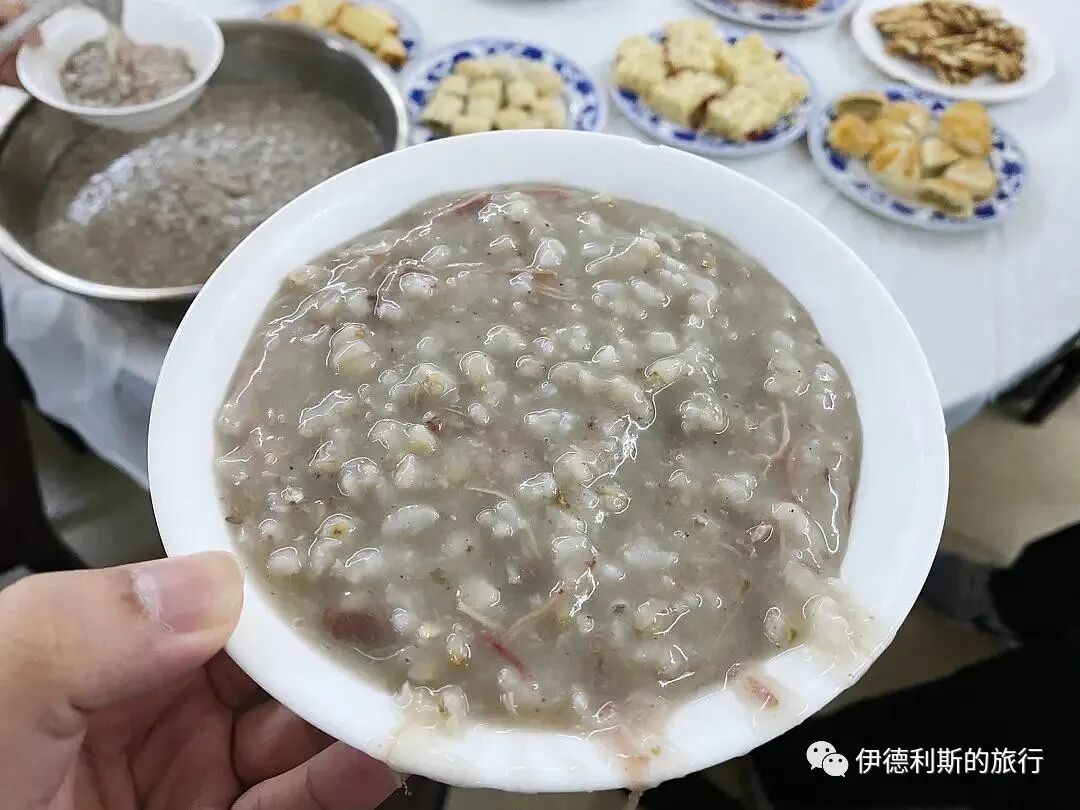
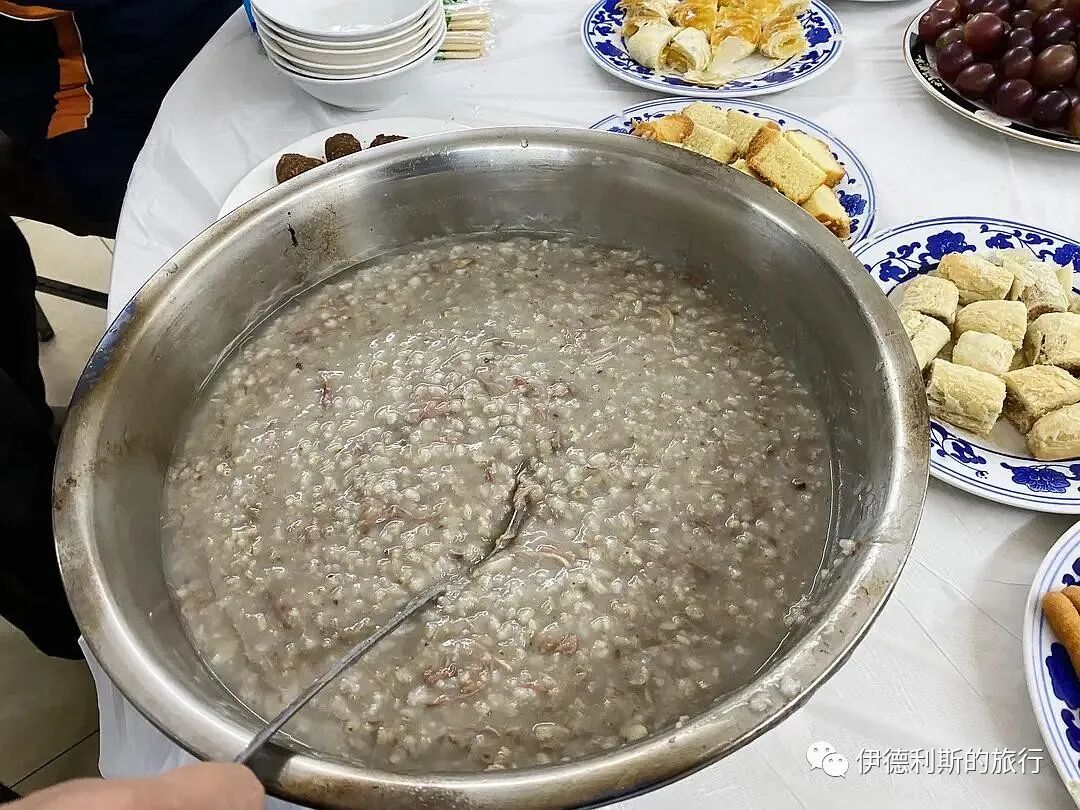
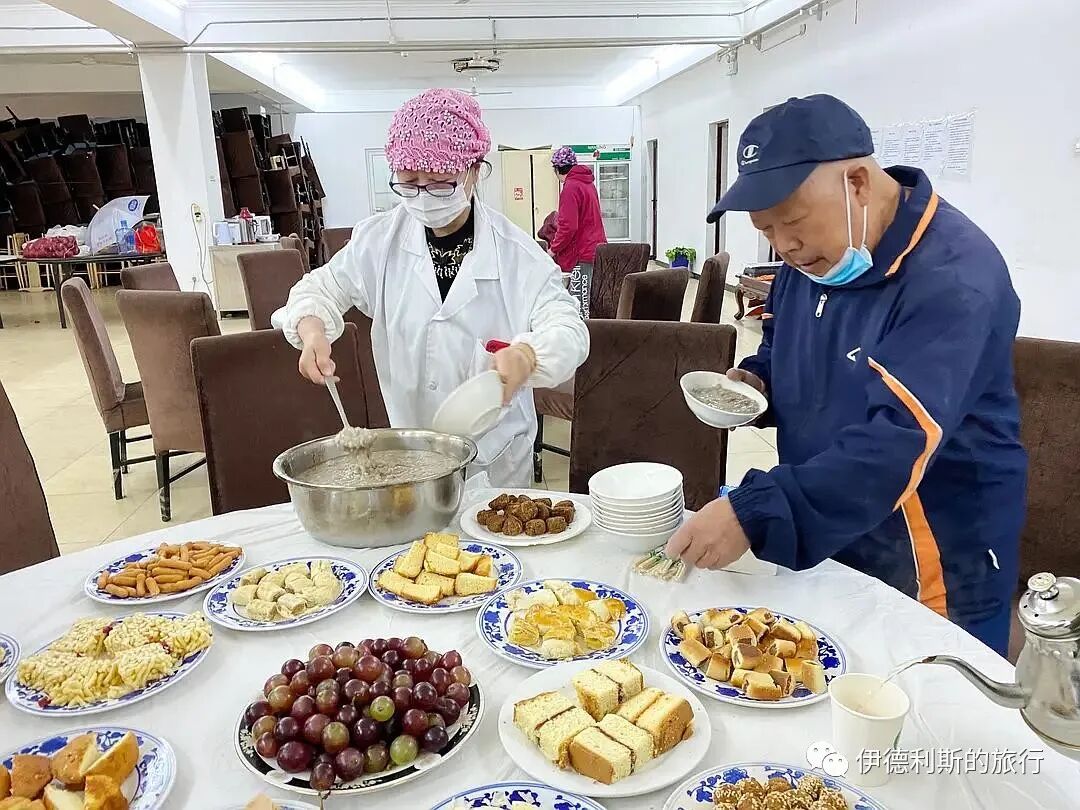
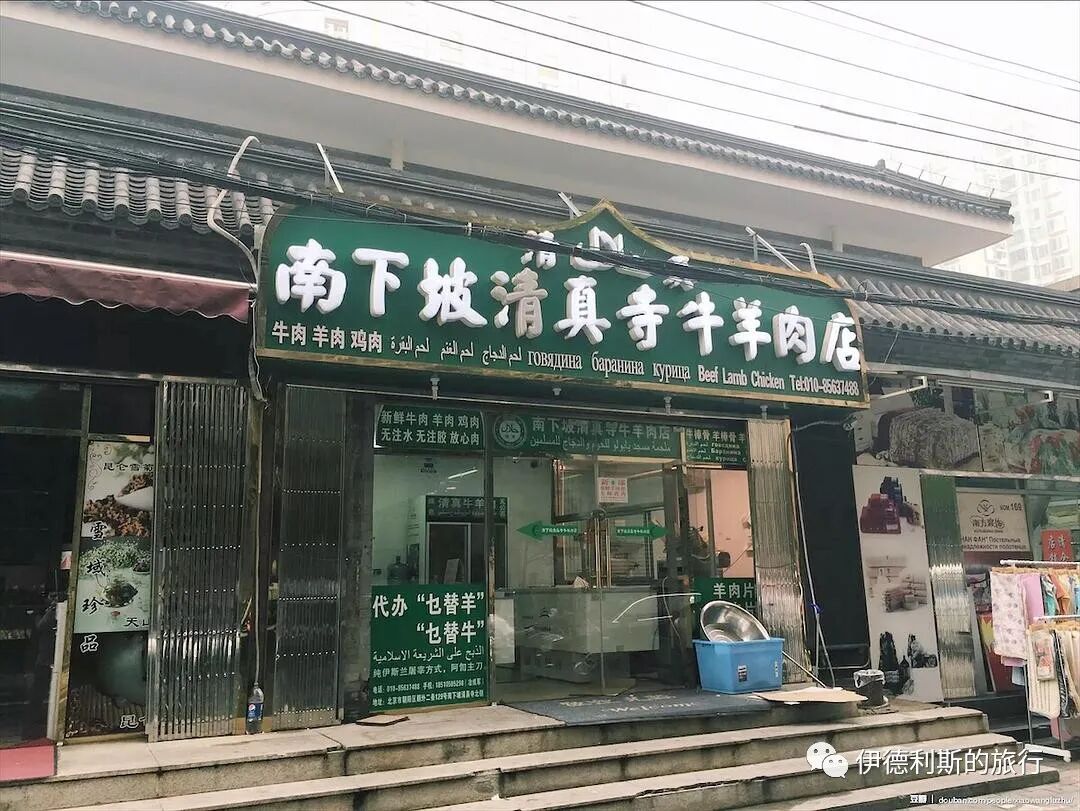
Most of the leaders of the Nanxiapo mosque have been descendants of the first leader, Hu Zhonghe. Hu Zhonghe's 12th-generation descendant was named De Gui, with the courtesy name Zichen, born in 1883 (the ninth year of the Guangxu reign). Because his parents died early, 15-year-old Hu Zichen inherited his father's profession in 1898 (the 24th year of the Guangxu reign) and became the second leader (haitibu) of the Nanxiapo mosque. Later generations called him Master Hu the Second. At that time, the imam of the Nanxiapo mosque was Hu Wenzhi, and the third master was Ma Shikuan, known as Master Ma the Third.
In 1900, Empress Dowager Cixi fled west, and bandits were everywhere. Many merchants on Chaowai Street were robbed. The 17-year-old Imam Hu Zichen organized a local militia in Nanxiapo. Local young Hui Muslims joined enthusiastically. Some were wrestlers, some knew martial arts, and some were cart drivers. The wealthy members even bought firearms. Every night, everyone gathered at the entrance of the Nanxiapo Mosque to take turns patrolling the streets and keeping watch, finally avoiding a disaster.
Imam Ma Chunpu began his service as an imam in 1944, leading prayers at the Huashi Mosque and Balizhuang Mosque before moving to the Nanxiapo Mosque. After 1966, Imam Ma Chunpu faced persecution. In 1976, he became the president of the Chaoyang District Islamic Association, helping local Muslims solve various problems until he passed away in 2001.
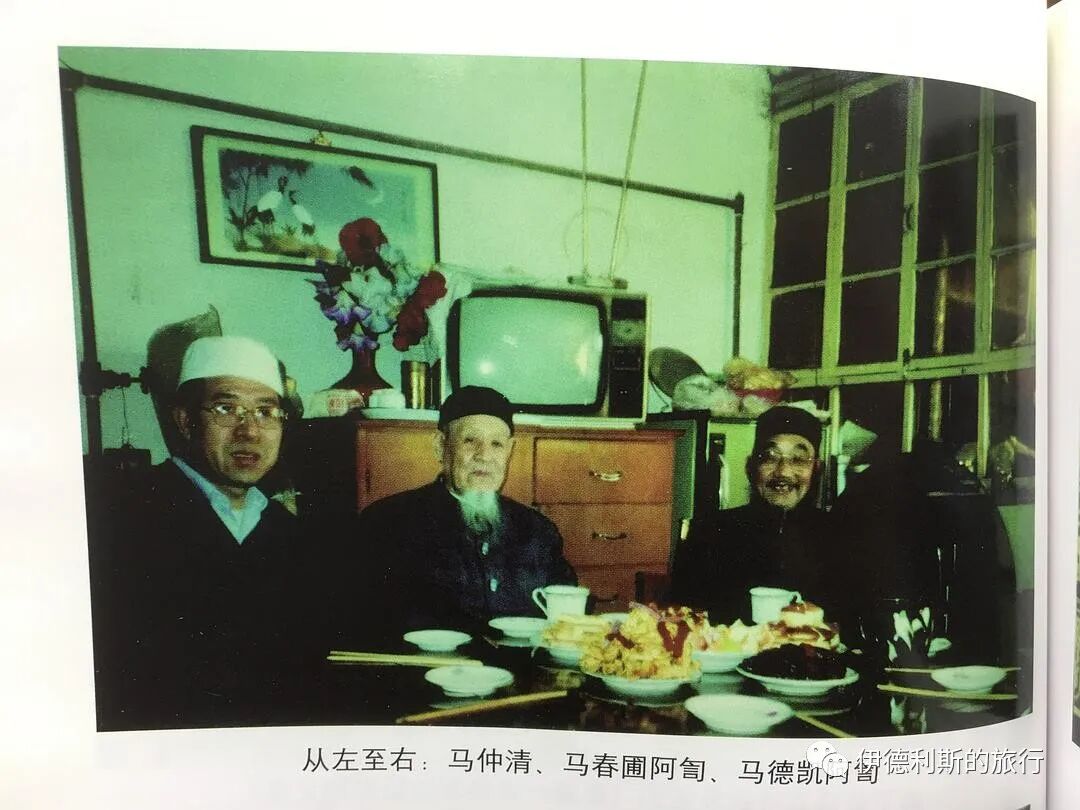
Imam Ma Dekai came from a family of imams and took over his father's work to become the imam of the Nanxiapo Mosque after 1949. Imam Ma Dekai was honest and kind. For years, he worked to restore religious properties and halal food outlets, while quietly donating to children who had dropped out of school. He passed away in 2000 at the age of 78.
Elder Ding Ruichun was a community leader at the Nanxiapo Mosque and a great helper to Imam Ma Dekai. Whenever Imam Ma slaughtered a sheep, Elder Ding would hold the sheep's head, and the two old friends worked together perfectly. The sheep heads Elder Ding cleaned were completely free of wool, and the sheep intestines he washed were perfectly white. He was a master of his craft, never asked for pay, and never ate at anyone's house. Elder Ding Ruichun passed away in 2003 at the age of 74.
On February 15, 1928, after the Communist Party's Beiping Municipal Committee Secretary Ma Jun was killed, his body (maiti) was cleaned at the Nanxiapo Mosque by Hu Wenzhi and Hu Zichen. Then, the elders and community members (dost) of Nanxiapo donated burial shrouds (kafan) and buried him in the northwest corner of Ritan.
The original tombstone of Ma Jun inside the Nanxiapo Mosque.
In the early 1950s, the Beijing municipal government took over the slaughterhouse next to the Nanxiapo Mosque and the large cemetery west of Ritan for urban construction. Imam Hu Zichen led dozens of people from Nanxiapo on a large truck to move the remains to the Hui Muslim cemetery in Xibeiwang, Haidian. Only the rebuilt tomb of the martyr Ma Jun remained in the Chaowai Hui Muslim cemetery west of Ritan.
Ma Jun's tomb in Ritan Park.
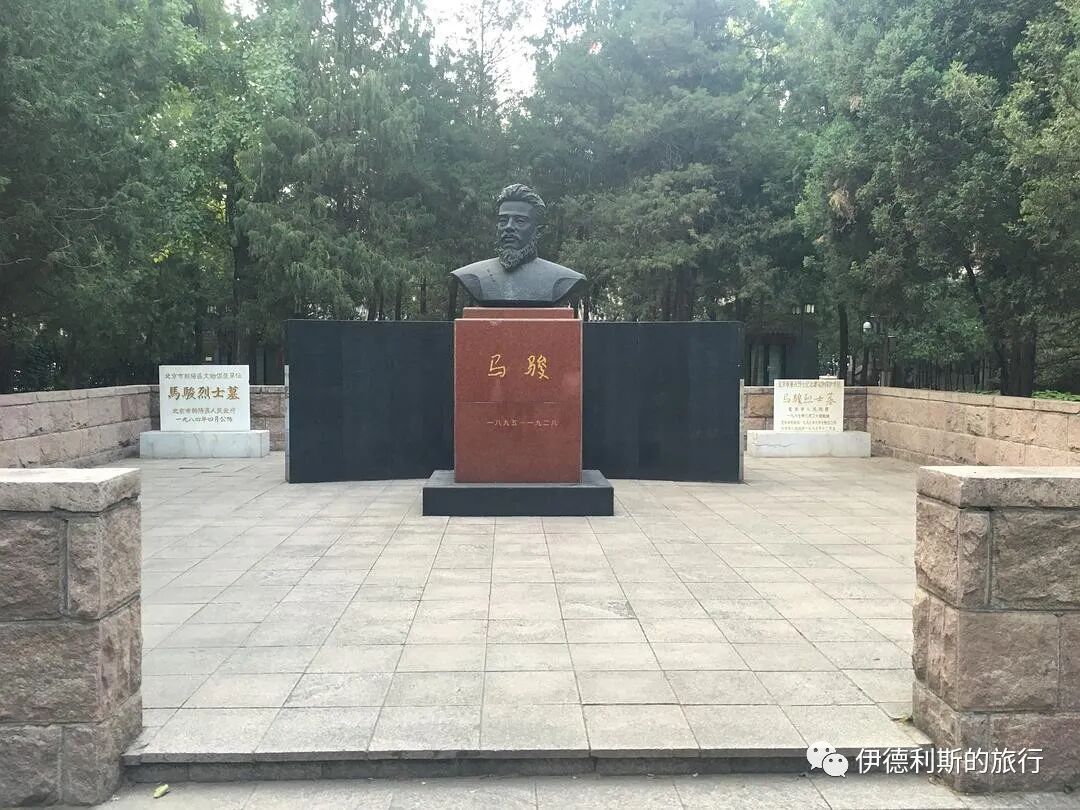
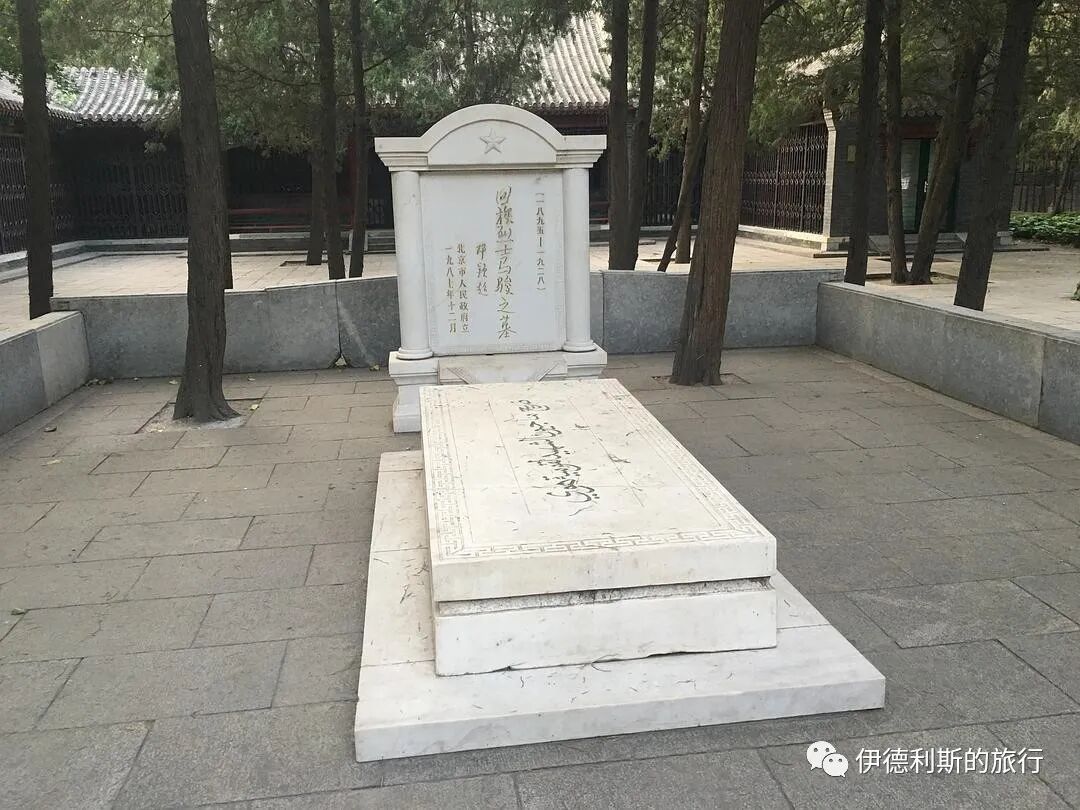
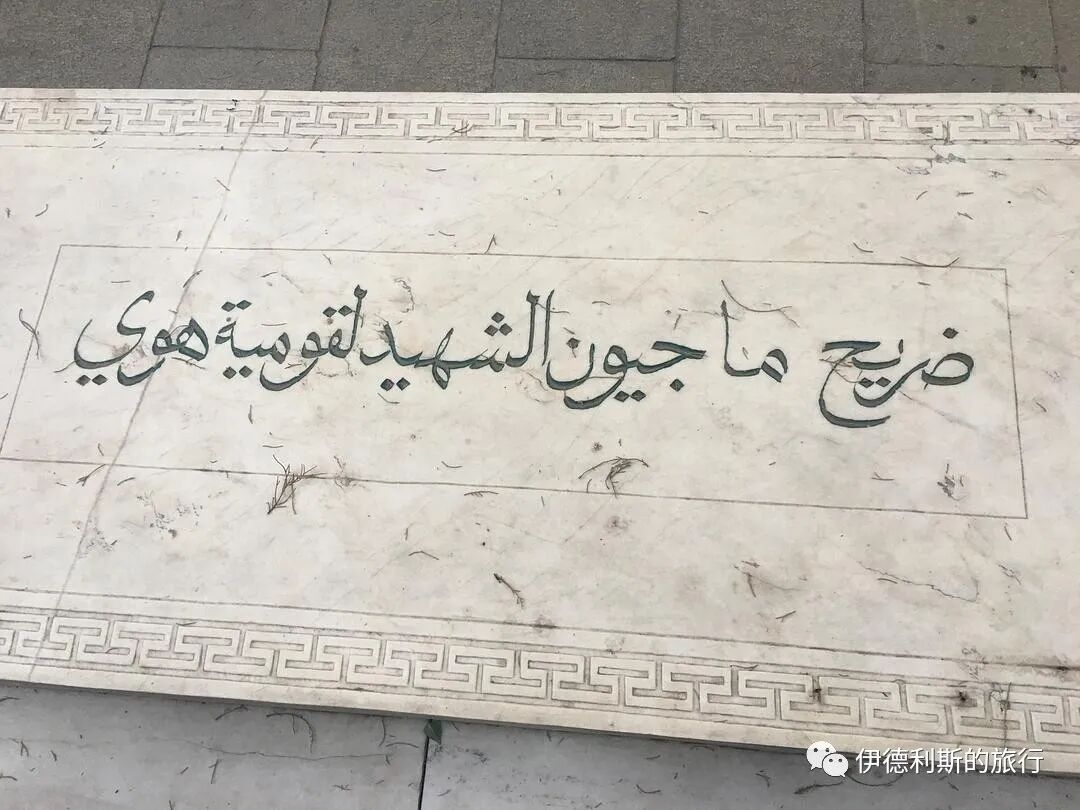
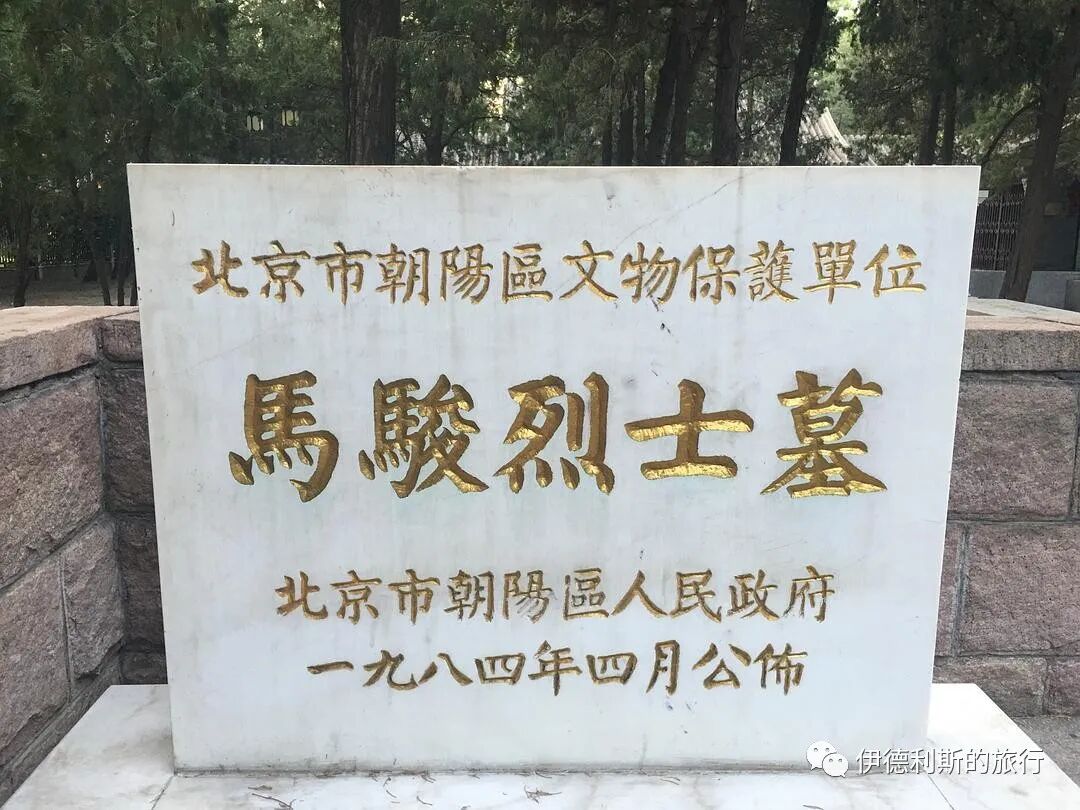
Halal food in the Chaowai Guanxiang area.
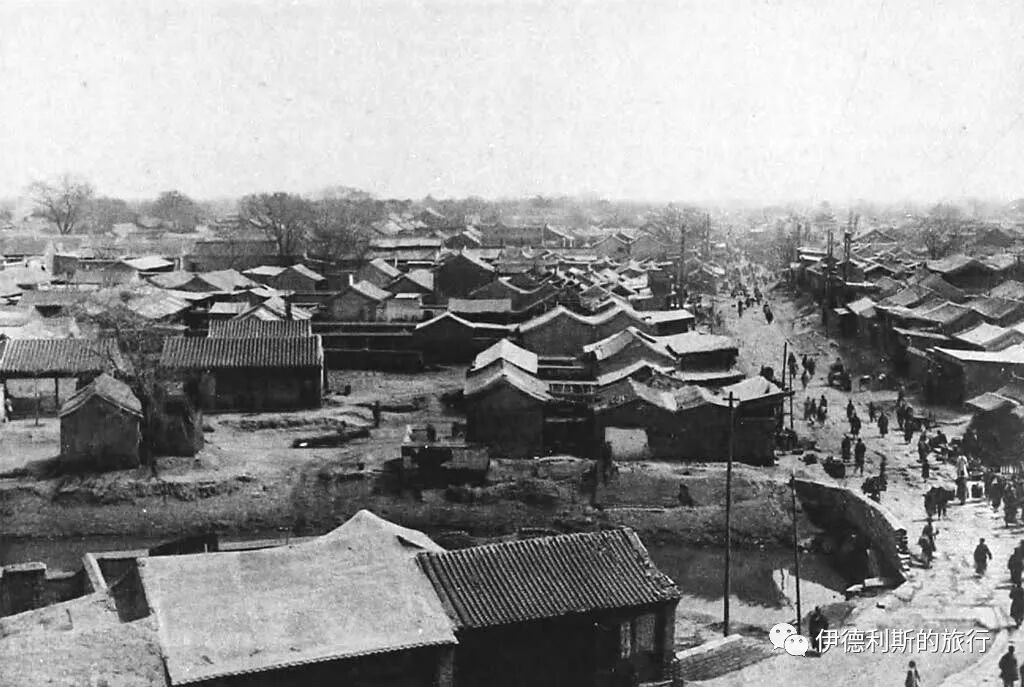
Chaowai Street, photographed looking east from Chaoyang Gate by Japanese photographer Kazumasa Ogawa in 1901.
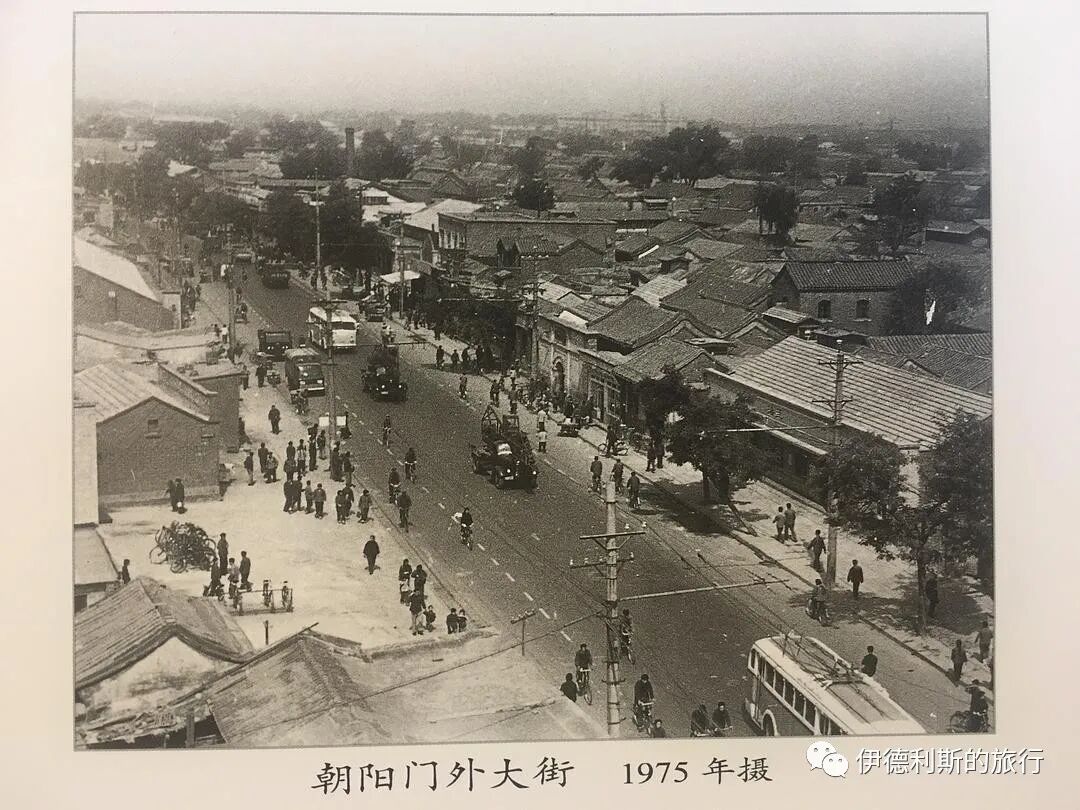
A photo from the book 'Old Beijing City'.
Beijing history expert Wang Yongbin wrote about the halal beef and mutton shops and oil and salt stores on Chaowai Street during the Republic of China era in his book, "Beijing's Suburban Towns and Old Brands."
Famous halal mutton shops on Chaoyangmen Suburban Street included Sanyishun, Dongxingshun, and Qianyuhe. Qianyuhe Mutton Shop was in a busy section of Chaowai Street. It had two storefront rooms in the front and six processing rooms in the back. Every winter, they bought sheep from Inner Mongolia, slaughtered them right in front of the shop, and sold the meat immediately, which made them very popular.
The most famous shop on Chaowai Street was Yongsheng Mutton Shop, which opened in the late Guangxu period. It had no wooden sign out front. Instead, it had a clean blue cloth hanging with the words "Western Regions Halal Faith" (Xiyu Qingzhen Jiao) sewn on in white fabric. The beef and mutton sold at Yongsheng Mutton Shop were slaughtered and cleaned the same day they were sold. Business was excellent; they sold two sheep every day and one cow every two days.
Besides fresh beef and mutton, Yongsheng also set up a stove to bake sesame flatbread (shaobing), which became very famous in the Chaoyangmen suburban area. Their sesame flatbreads were large, layered, and fluffy, and they sold out every single day. The ingredients for Yongsheng's sesame flatbreads were all bought from the famous Dayou Halal Oil, Salt, and Grain Store in the Chaoyangmen suburbs. The white flour was high-quality "fudi" flour that had been finely ground and sifted, the sesame seeds were plump and top-grade, and the sesame paste and fragrant oil were also of the highest quality. to flatbreads, Yongsheng also sold spiral-shaped pastries (luosizhuan). Their spiral pastries were crispy and flaky, and they stayed fresh for days without getting soft, so they had many customers.
Dayou Halal Oil and Salt Store was the most famous shop of its kind in the Chaowai suburbs. It opened in 1917 and was also located on Chaowai Street. At first, Dayou was a general business, but it lost money for years due to poor management. They hired a Hui Muslim named Chang Zijiu as the manager and turned it into a halal business. Manager Chang turned Dayou into a shop with a workshop in the back. The front had six storefront rooms; the west side sold oil, salt, and pickles, while the east side sold rice, flour, and grains. The backyard had over 30 rooms where they hired more than 30 people to make various pickles. They also used electric mills to make fragrant oil, millet flour, and mixed grain flour.
Dayou was most famous for its house-made fragrant oil. They chose plump sesame seeds as raw material. The oil master roasted the seeds to the perfect level, so the resulting fragrant oil had a strong, lasting aroma and a clear, transparent color.
Besides fragrant oil, they were also famous for their house-made yellow bean paste and pickles. Their best-sellers included small pickled radishes, large pickled radishes, sweet and sour assorted radishes, pickled cucumbers, and sweet and sour garlic sprouts. It wasn't just the neighbors near Chaoyangmen Gate who loved the food here. Farmers traveling along the Chaoyangmen official road from areas like Ciyun Mosque, Balizhuang, Shuangqiao, and Guanzhuang would stop at Dayou Grocery Store to buy yellow soybean paste (huangjiang) and pickled vegetables (jiangcai) to take home whenever they came into Beijing for errands or to burn incense at the Dongyue Mosque.
Dayou kept their rice, flour, and grains in large wicker baskets (poluo) on low platforms in the shop. They sold rice, white flour, sorghum, red beans, mung beans, large kidney beans, sea beans, corn, millet, black beans, sesame, and more. Every autumn during the harvest, the grain store sent out special buyers to the countryside to collect fresh crops. The grain store had a mill in the backyard to process the rice, flour, and grains. The steamed corn buns (wotou) made from their millet flour were sweet, fluffy, and their best-selling item, often selling out completely.
Every year on the second day of the Lunar New Year, Manager Chang of Dayou would invite imams and village elders from nearby mosques and the eight counties east of Beijing (Tongzhou, Sanhe, Wuqing, Baodi, Jixian, Xianghe, Ninghe, and Xiaoxun, collectively known as Tong-San-Wu-Bao-Ji-Xiang-Ning-Xun) to recite the Hui Muslim Peace Sutra. He would treat everyone to a lunch of beef and mutton from the shop, creating a wonderful atmosphere.
Beyond the storefronts on Chaowai Street, many Hui Muslims sold halal snacks southwest of the Chaowai gate area. In the alleys, you could find people selling fried dough cakes (youbing), millet flour tea (miancha), kidney beans, sheep head meat, and beef tendon. Ma Zhongqing wrote about these various halal snacks in the alleys of the Chaowai gate area in his work, 'South Slope Outside Chaoyangmen' (Chaowai Nanxiapo).
One hundred meters north of the Nanxiapo Mosque, on the east side of the road, was a small shop selling oil, salt, soy sauce, and vinegar. It opened in 1935 and was run by a man named Ma, so it was commonly called Ma's Small Shop (Maji Xiaopu). Above the door of Ma's Small Shop hung a black plaque with the three large characters 'Fu Shun Yong,' taken from the name of the manager at the time, Ma Yongfu.
The shop was only about 11 or 12 square meters. According to Yang Jing'an's memories, one summer over 60 years ago, the old manager Ma Deshan sold sour plum drink (suanmeitang) at the shop entrance. He held two small copper bowls and clicked them together with his fingers to make a rhythmic, crisp sound. As he tapped, the old manager sang: 'Water from Dongzhimen, ice from Xizhibei, it tastes so refreshing when you drink it.' The old manager Ma Deshan passed away in 1946.
In 1949, the manager Ma Yongfu joined the neighborhood fire prevention team and went on patrol every night. Whenever someone in the neighborhood passed away (wuchang), he would take the initiative to help handle the funeral arrangements. He helped prepare nearly a hundred bodies (maiti) for burial.
In 1956, Ma's Small Shop closed due to the public-private partnership policy. Ma Yongfu became a worker at the Chaowai Yuanfa General Store, retired in 1973, and passed away in 1991.
There was a man named Ma Qiba in Nanxiapo who sold millet flour tea (miancha) from a wooden cart. He kept a small stove on the cart to keep the tea hot, and he neatly arranged his sesame paste, porcelain bowls, and small spoons on the cart. At the crack of dawn every day, Ma Qiba would start calling out, 'Millet flour tea, get it hot!' People in the alley would come out to drink it when they heard him. There was even a joking saying about him: 'Ma Qiba selling millet flour tea—adding water (giving extra).'
Every morning at the Chaowai Tankou entrance, there is an older man named Er Luo Bo who sets up a breakfast stall right in front of his home. Er Luo Bo is named Ma Yulong. He sells fried dough cakes (youbing), fried bean cakes (zhagao), and sesame flatbreads (shaobing). He makes them fresh as he sells them, and his business is very popular with many repeat customers. He cooks the red bean paste for his fried bean cakes in a large iron pot. He never uses saccharin, only white sugar. His fried bean cakes are large, and the bean paste inside is delicious. Every evening around four or five o'clock, Er Luo Bo sells rolled soybean flour cakes (lvdagun) at his roadside stall, also making them fresh to order. He uses a knife in his left hand, quickly cutting the three-foot-long rolled soybean flour cake on his cutting board into four-inch pieces.
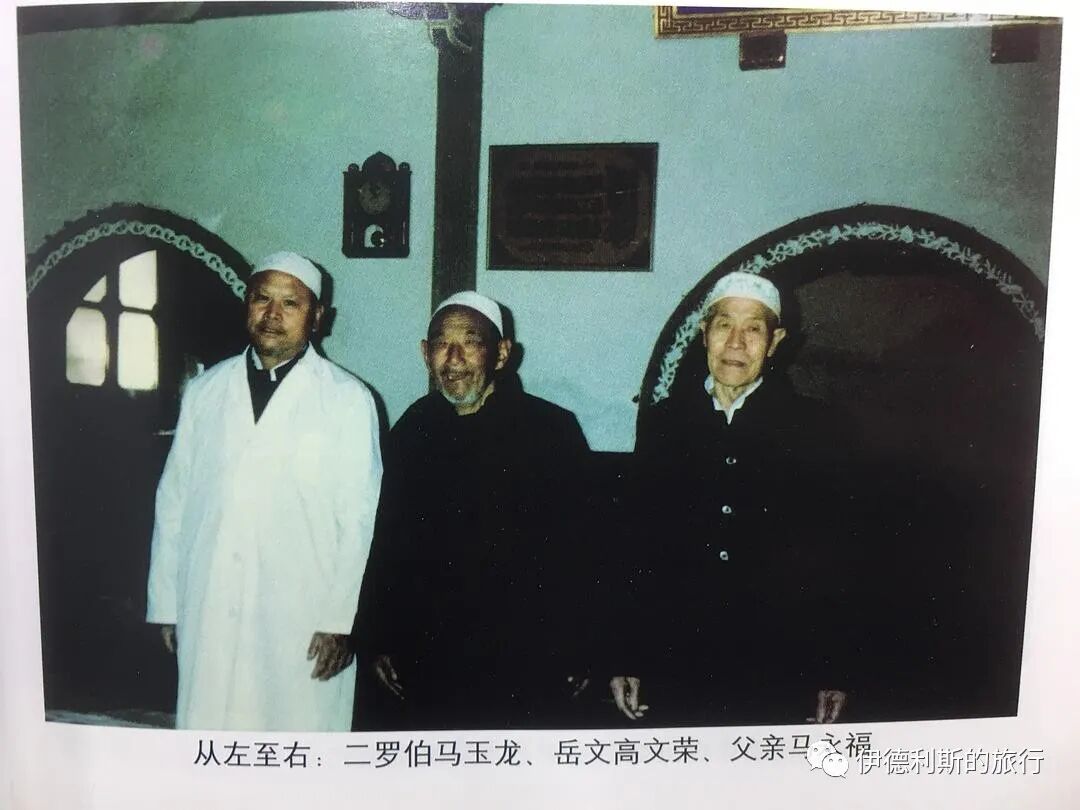
In 1973, when Ma Zhongqing got married, Er Luo Bo was in charge of the cooking. In Ma Zhongqing's courtyard, Er Luo Bo built a stove using half-bricks and yellow mud. It had two levels and four or five burners. He used this stove for all the frying, stir-frying, and cooking to serve over a hundred guests table by table.
At the north end of Xiushui River, there is a grain store for Hui Muslims. Outside the store, Uncle Hei sells fried dumplings (zha huitou) every day. Uncle Hei is not very tall and wears a prayer cap (libaimao). He makes the dumplings fresh and calls out, 'Fried~ dumplings~ hey!' When his fried dumplings come right out of the oil, they are crispy on the outside and tender on the inside. One bite and the juices flow; they are fragrant and delicious.
In a simple porridge shed on the west side of the south end of Xiushui River, Uncle Ma from Nanzhong Street has rice porridge ready before dawn every day. He calls out, 'Rice porridge here~ just a few coins~.' His deep voice attracts many elementary school students to come and drink the porridge.
Another Uncle Ma, who lives on Guanyinsi Street, sells boiled corn and sweet potatoes along the street every day. Sometimes he pushes a wheelbarrow, and sometimes he carries a small bamboo basket. He calls out, 'Corn~,' with a long, melodic, and pleasant sound. Uncle Ma's corn is rich and sweet. His red-fleshed sweet potatoes are very sugary, while the dry-fleshed ones taste like chestnuts and are so dense they can make you choke a little.
The Tankou Hui Muslim Canteen is located south of the road outside Chaoyangmen, at the intersection of Chaowai Market, and covers about fifty or sixty square meters. Breakfast staples and liquid foods are served at two separate windows. Staples include fried bean cakes (zhagao), fried dough cakes (youbing), steamed buns (baozi), sesame flatbreads (shaobing), sugar-coated fried dough (tang'erduo), sesame balls (matuan), and steamed rice cakes (pengao). Liquid foods include millet porridge with sesame paste (miancha), soy milk (doujiang), fried tofu soup (doupao tang), and lamb offal soup (yangzasui). In the evening, the canteen set up stalls at the entrance, bringing out grills to cook skewers on the spot and deep-frying crispy meat (songrou) to order. The manager, Yang Yongqing, was famous for using a rolling pin in each hand to roll out over a hundred dumpling wrappers in a minute.
After Chaowai Street was widened and renovated, the Tankou Canteen was demolished.
In his article 'Hui Muslim Restaurants on Chaowai Street' published in Beijing Chronicles, Ji Jianguo wrote about the halal restaurants on Chaowai Street from the 1970s to the late 1990s: Chaowai Hui Muslim Restaurant, Tankou Hui Muslim Restaurant, Xingsheng Hui Muslim Restaurant, and Ziguangyuan Restaurant.
On summer evenings, whenever Ji Jianguo went to the Tankou Hui Muslim Restaurant, he would order a bowl of cold sesame paste noodles (majiang mian) and a cold beer, along with a plate of boiled peanuts or spiced beef (jiang niurou), for a very pleasant meal. On autumn evenings, the Tankou Hui Muslim Restaurant would set up a stall at the entrance to sell freshly fried crispy meat (songrou). It uses thin bean curd sheets to wrap fresh, tender lamb mixed with chopped green onions, ginger, flour, and five-spice powder, rolled into the thickness of a thumb and cut into pieces. After being deep-fried in hot oil, each piece turns golden brown and is displayed in a glass cabinet, with the aroma spreading all around and drawing passersby to stop and line up to buy some. They sometimes sold boiled lamb head (qingshui yangtou) there, where the semi-transparent lamb head was cooled and sliced as thin as paper. Their sugar-rolled fruit (tang juanguo) is steamed with raisins, red dates, lotus root, honey, starch, and flour; one bite is full of sweetness, and the flavors of the various ingredients blend together, leaving a lingering fragrance on the lips and teeth.
Xingsheng Hui Muslim Restaurant was located east of the glazed archway of the Dongyue Temple and was the largest Hui Muslim restaurant on Chaowai Street, occupying a two-story building of two or three hundred square meters. Most customers were groups dining together, ordering a plate of stir-fried beef with green onions (cong bao rou), braised beef tendon, braised oxtail, a plate of spiced beef (jiang niurou), boiled peanuts, stir-fried tofu, and braised chicken. In the middle of the table, there would be a steaming hot pot of mutton (shuan yangrou), two bottles of Erguotou liquor, and three or five friends gathered to drink and chat, making for a very lively scene. In the mid-1980s, Xingsheng Hui Muslim Restaurant was the first to renovate, turning the second floor into a dining hall with private booths, becoming the most upscale Hui Muslim restaurant on Chaowai Street, where many Hui Muslims held their weddings.
The Chaowai Hui Muslim Restaurant was located north of the Chaoyangmen overpass; its nail-shaped meat pies (mending roubing) had thin crusts and large fillings and were quite delicious, but it was later demolished during the urban renovation of Chaowai Street. Another Hui Muslim restaurant was on the north side of the road on the east end of Chaowai Street, covering about seventy or eighty square meters. At first, they only sold breakfast items like fried pancakes (youbing), steamed buns (baozi), sesame flatbread (shaobing), soy milk (doujiang), and tofu pudding (doufunao). Main meals included rice, boiled dumplings (shuijiao), noodles, and dumplings (jiaozi), along with stir-fried dishes like stir-fried lamb with scallions (congbao yangrou).
Ziguangyuan opened in 1984. According to the chairman, Ai Changyou, it started as a tiny shop selling only stir-fried dough bits (chaogeda), with the original location at the south gate of the Workers' Stadium. Back then, workers from several large companies in Chaoyang District would line up at the door of Ziguangyuan as soon as they got off work, paying 50 cents for a large, affordable portion. Because the shop was so small, many workers squatted on the side of the road to eat, while others took their food back to the factory. So, after selling the stir-fried dough bits, Ai Changyou had to push a tricycle to the factory to collect the bowls.
Ziguangyuan's stir-fried dough bits are square pieces about the size of a fingernail. They are first boiled until half-cooked, blanched, and then stir-fried with wood ear mushrooms, cucumber, diced lamb, diced carrots, boiled soybeans, and peanuts to create a golden, flavorful dish. Every plate is piled high, and each piece of dough glistens with oil, making it look very appetizing.
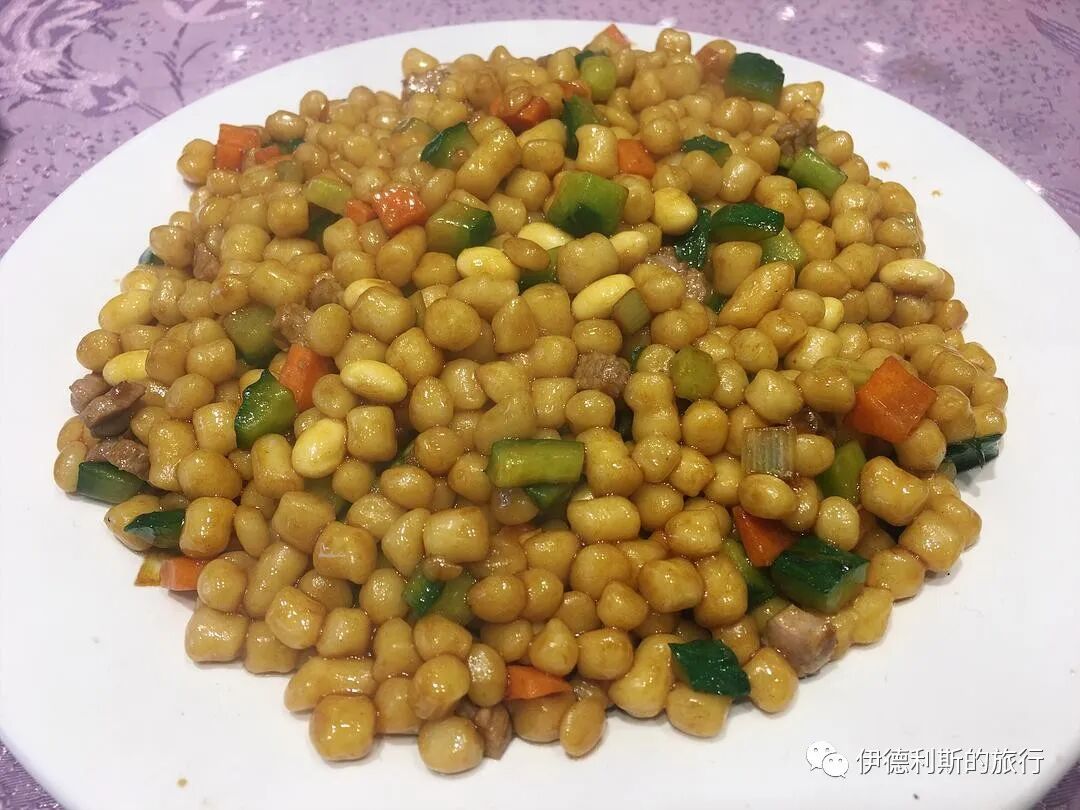
Ziguangyuan's stir-fried dough bits
In the 1990s, Chaowai Street began renovations and Hui Muslim restaurants gradually disappeared. Ziguangyuan became the last Hui Muslim restaurant on the street. It later moved to the south of the Dongdaqiao intersection, where it remains today, and by 2017, it had grown to dozens of locations.
Ziguangyuan Dongdaqiao branch
The first page of the menu at the Ziguangyuan Dongdaqiao branch features an introduction to the Nanxiapo mosque.
Roast duck (kaoya)
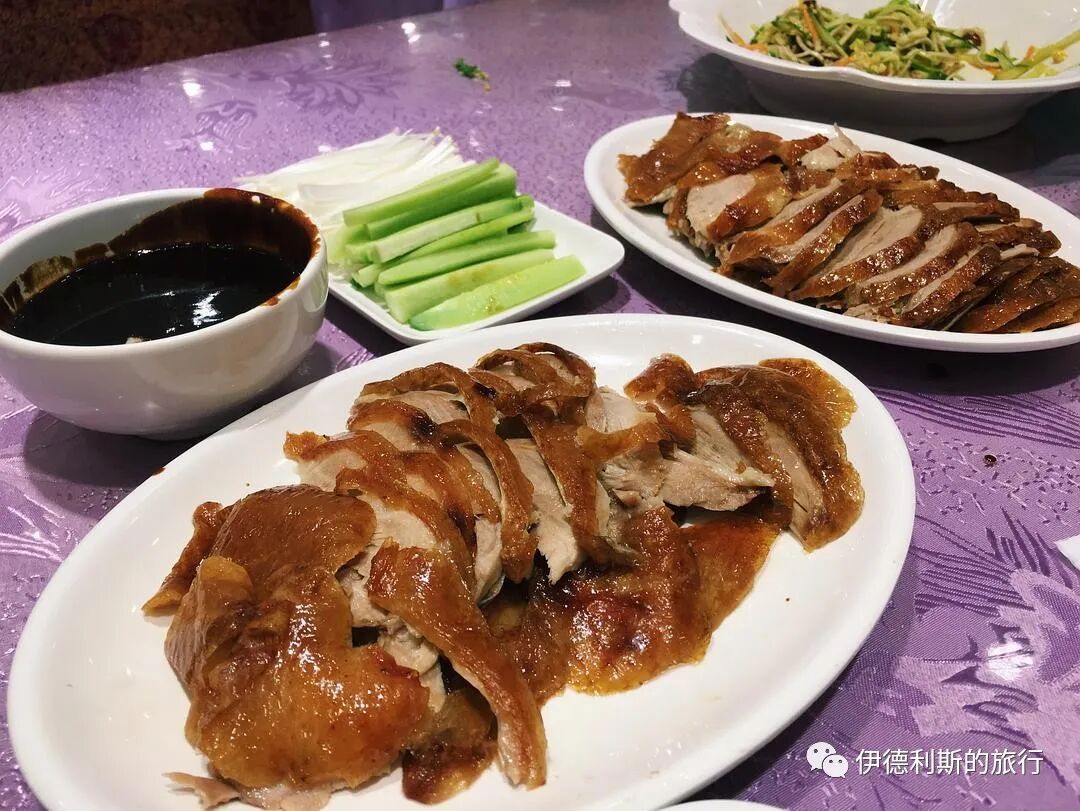
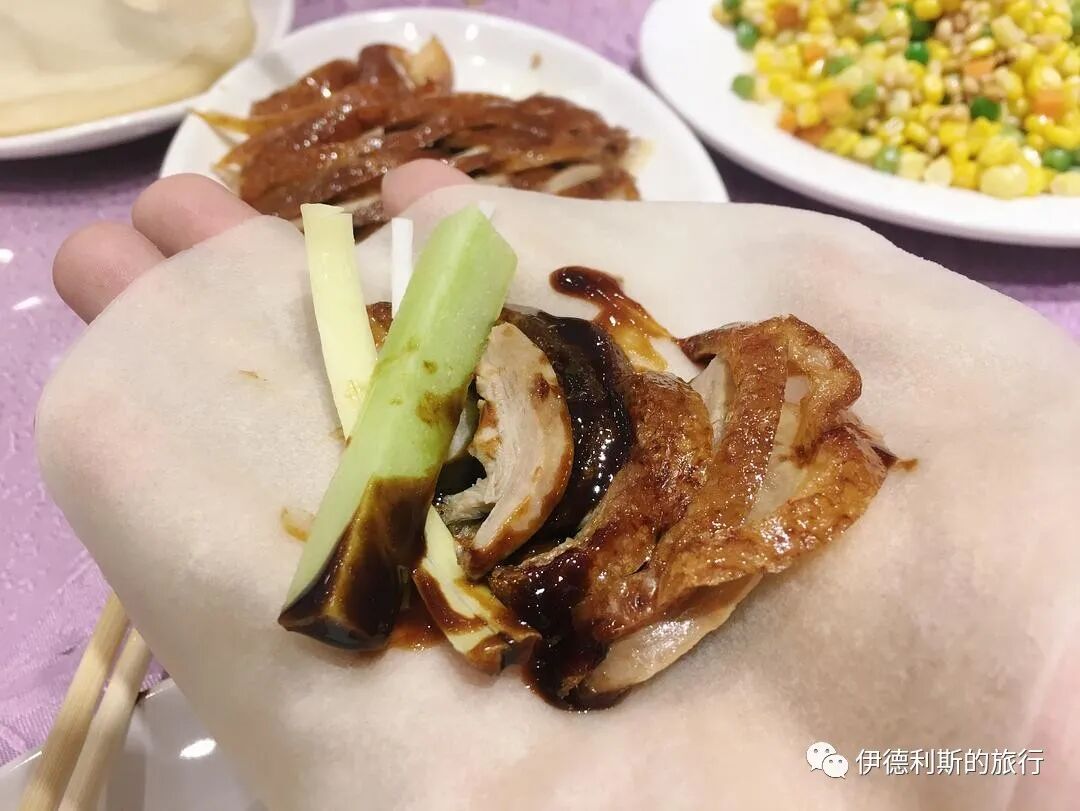
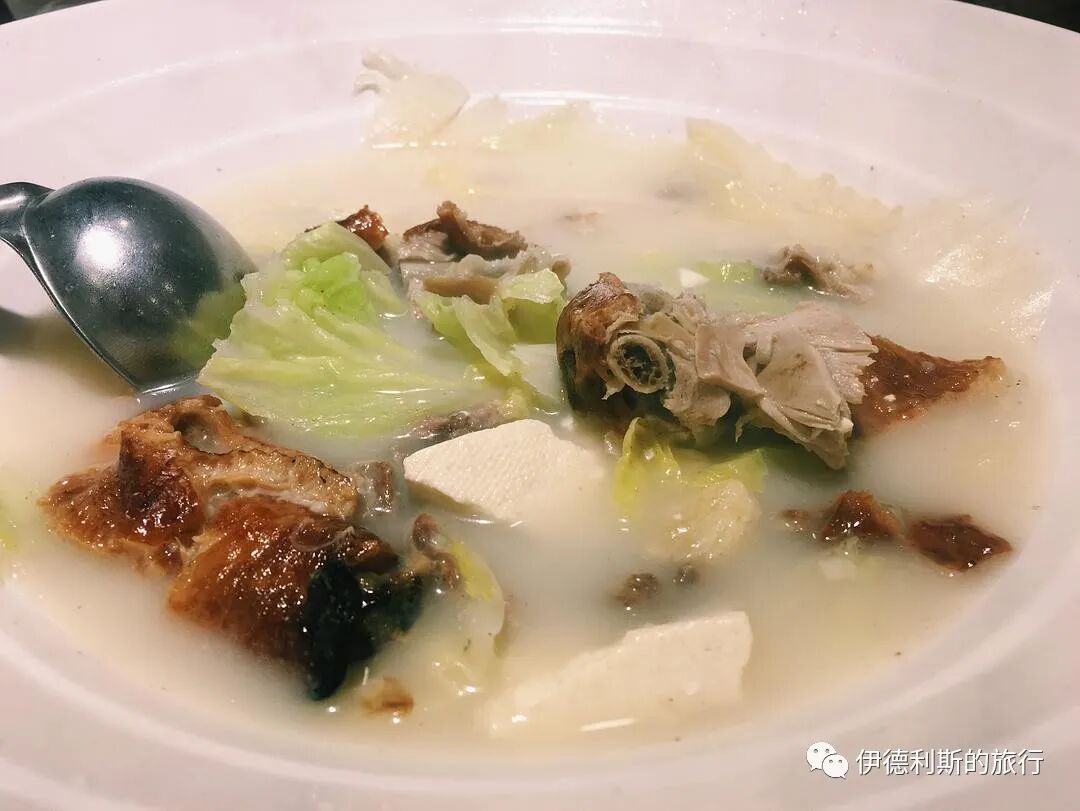
Duck bone soup (yajiazi zuotang)
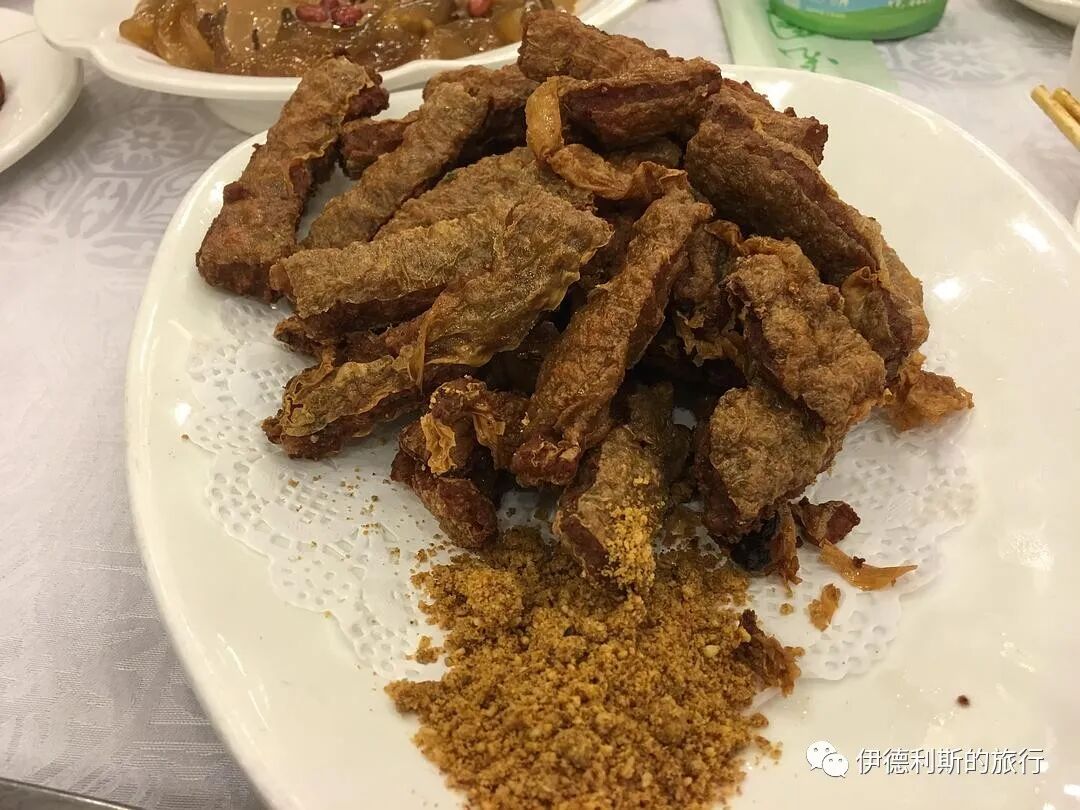
Deep-fried shredded meat (zha songrou)
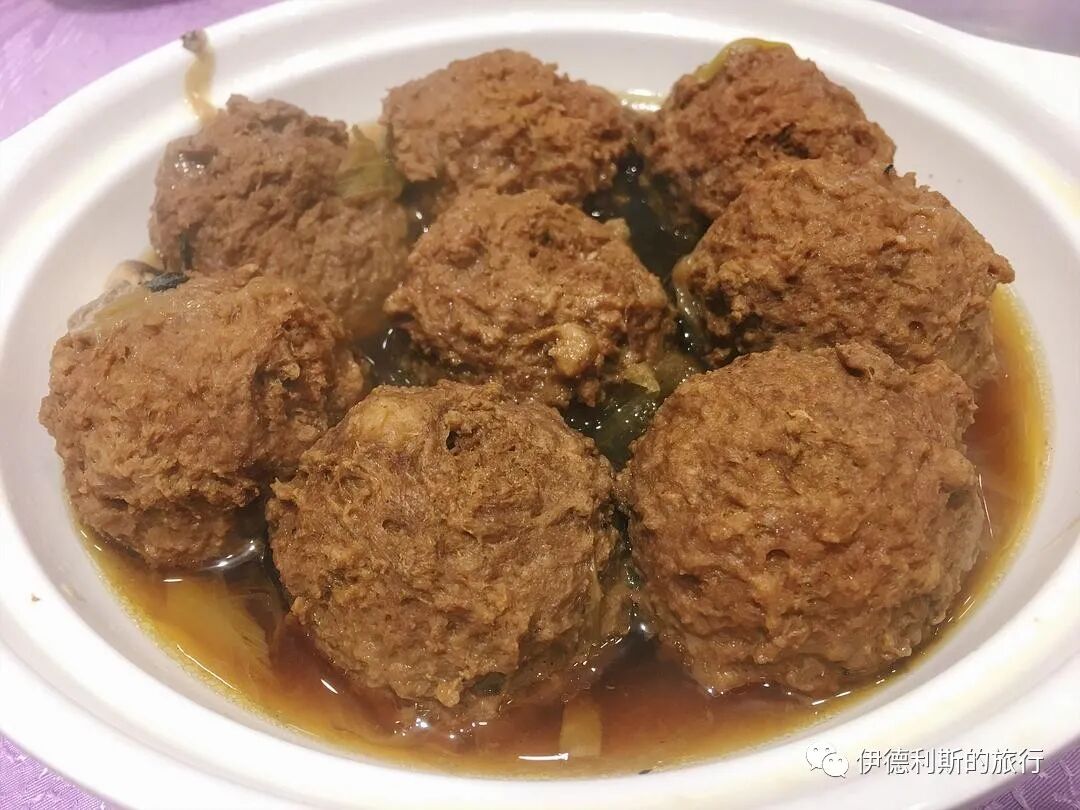
Meatballs (wanzi)
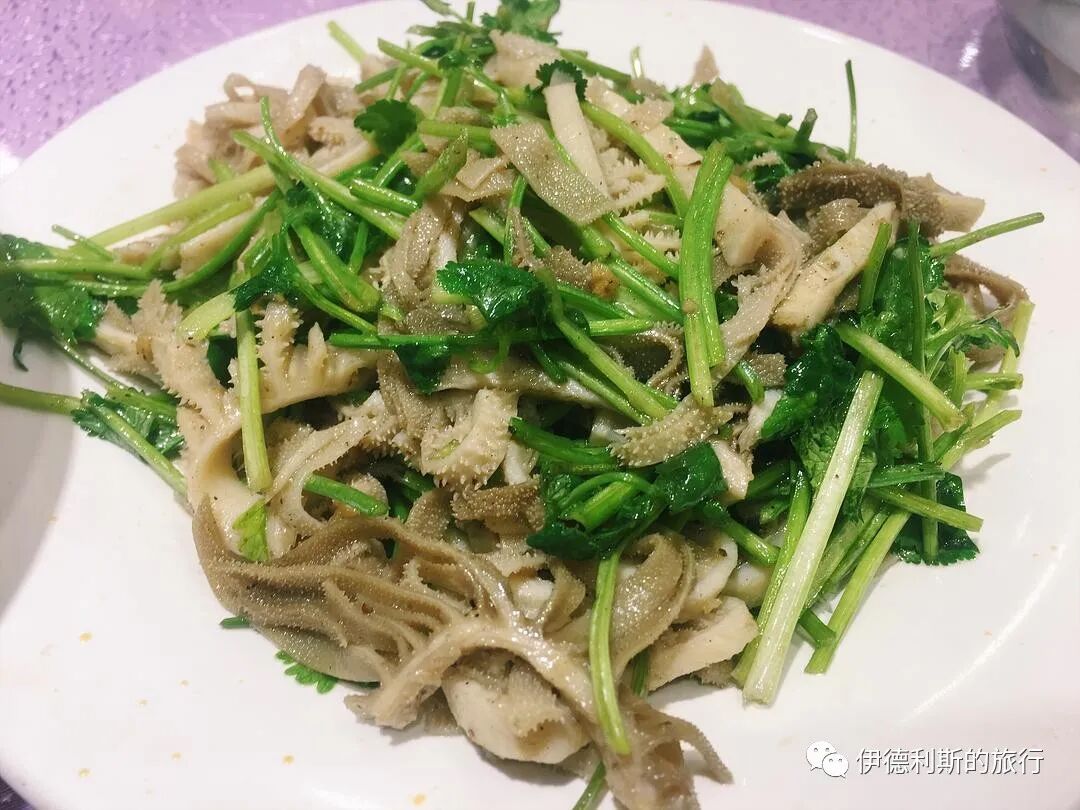
Stir-fried tripe with coriander (yanbao sandan)
Sanfengli in Chaowai
After 1992, all the traditional Hui Muslim neighborhoods in Chaowai were torn down, and the residents were moved back to the newly built Sanfengli residential area on the same site.
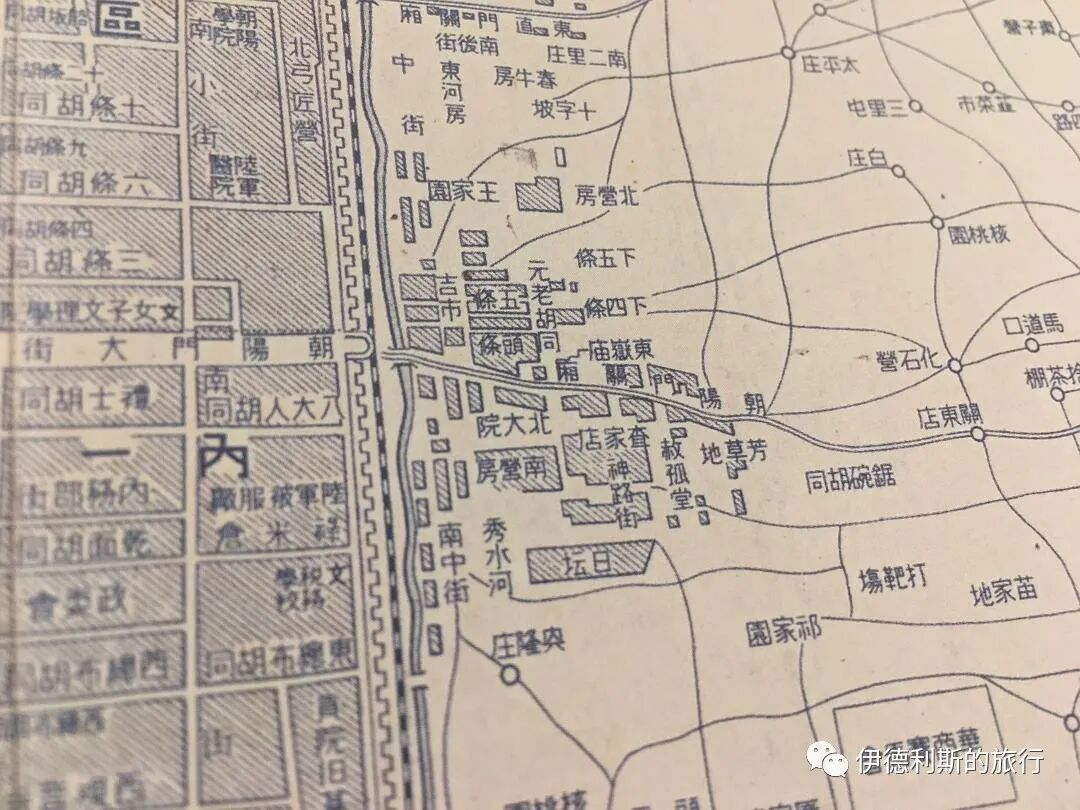
1939 Detailed Map of the Vicinity of Beijing
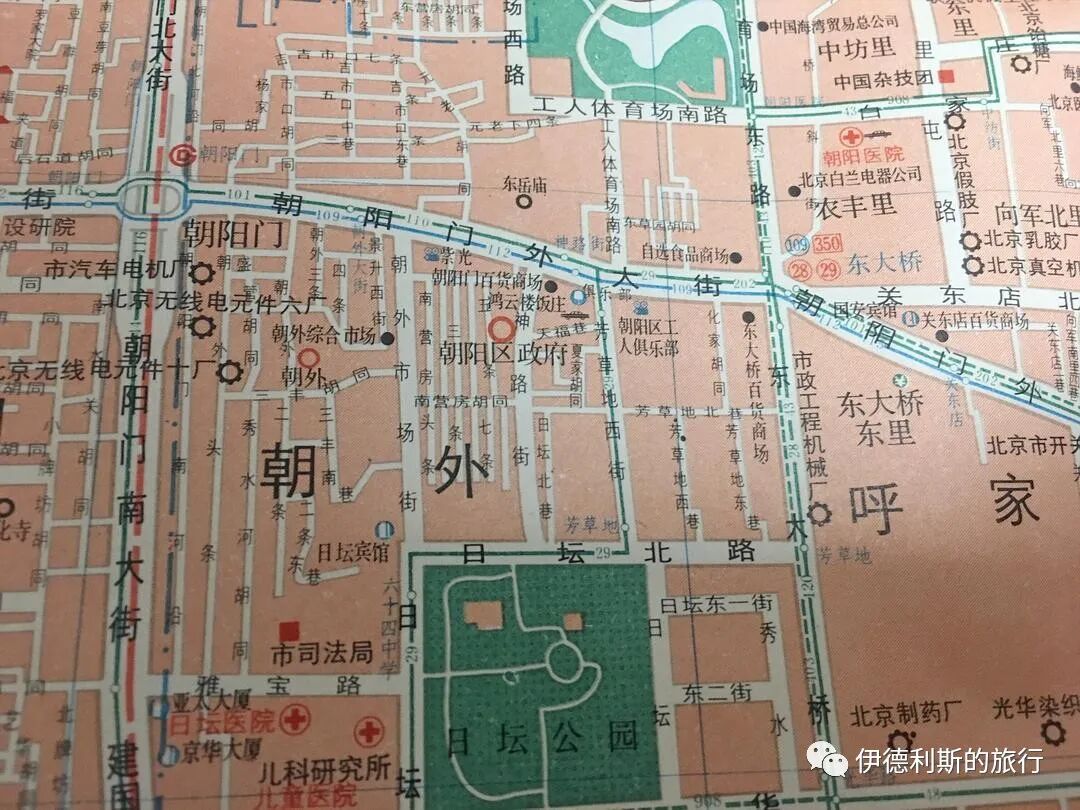
1991 Map of Beijing Urban Area, on the eve of the major demolition in Chaowai
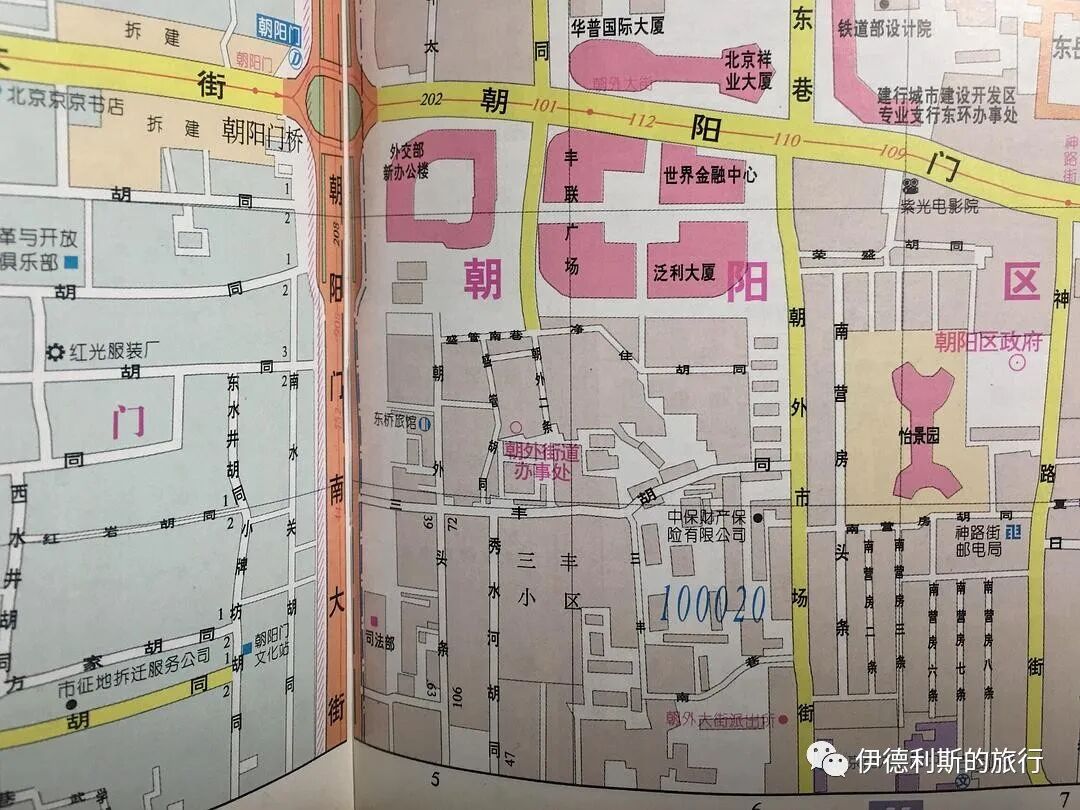
1998 Atlas of Beijing Streets and Hutongs, showing the major demolition in Chaowai and the completion of the Sanfeng residential area.
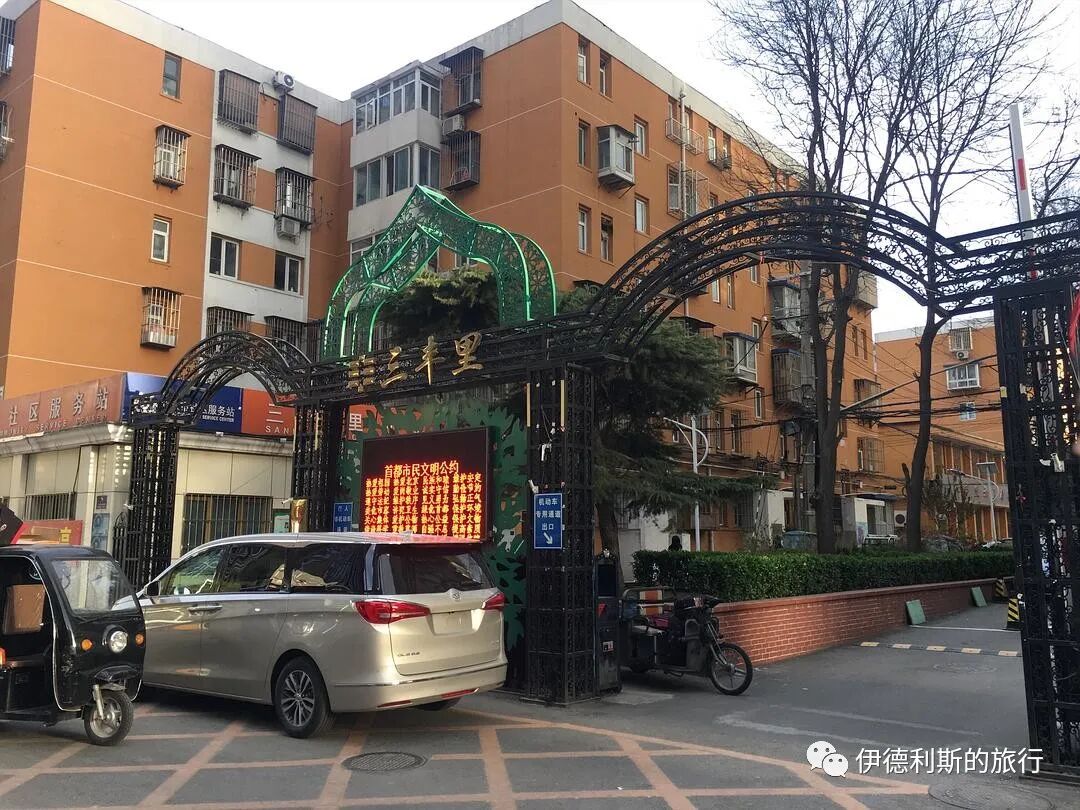
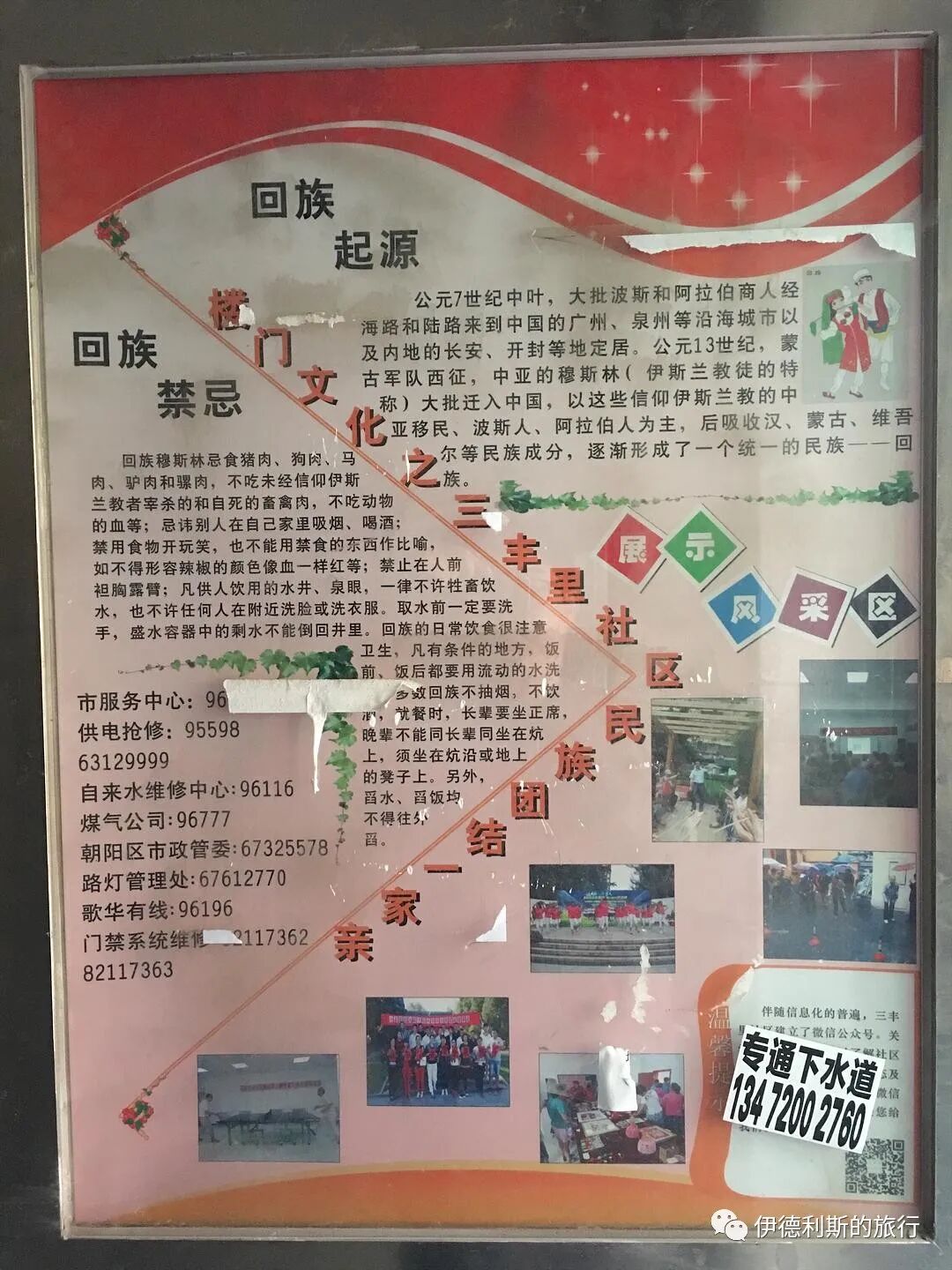
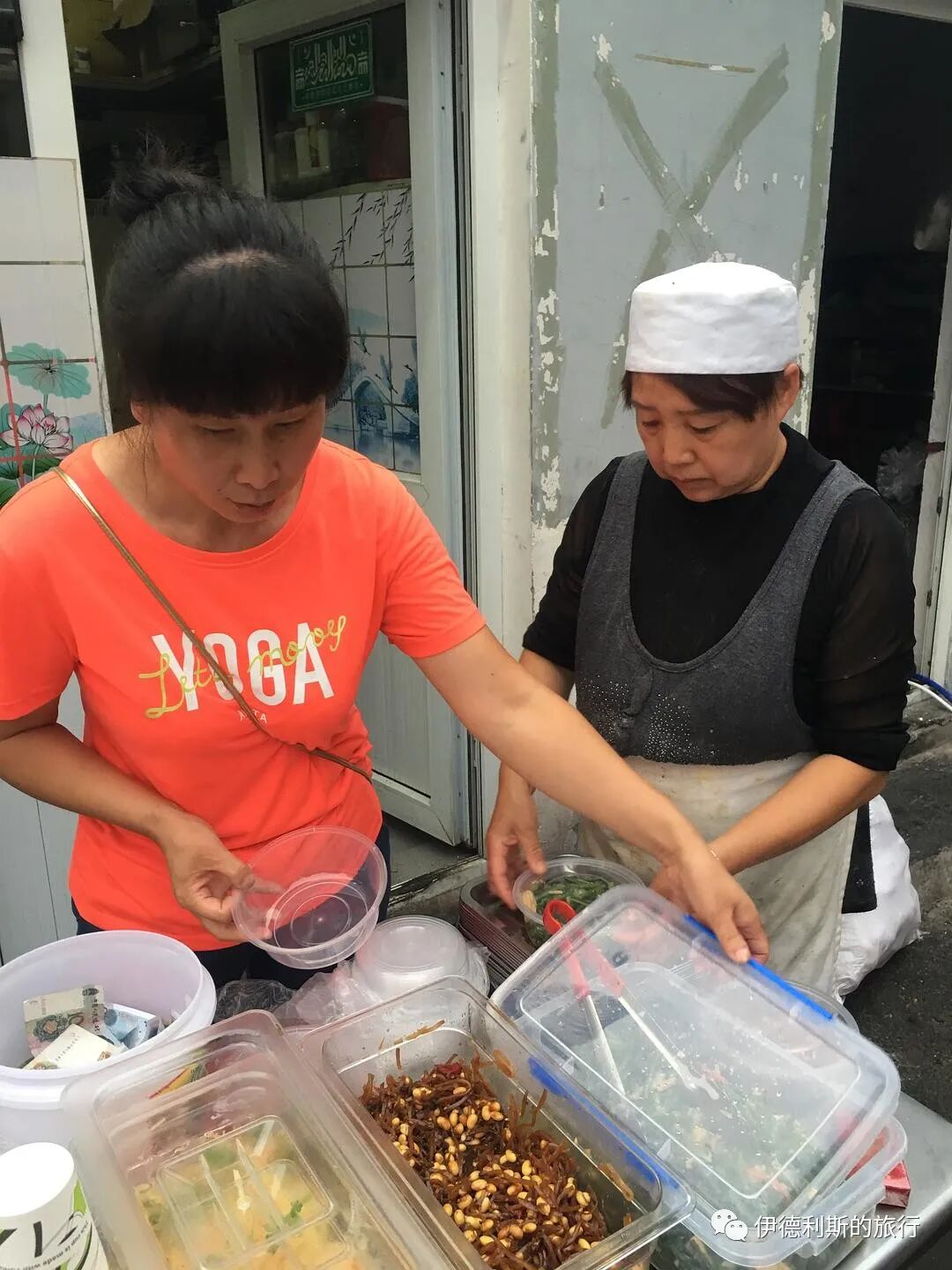
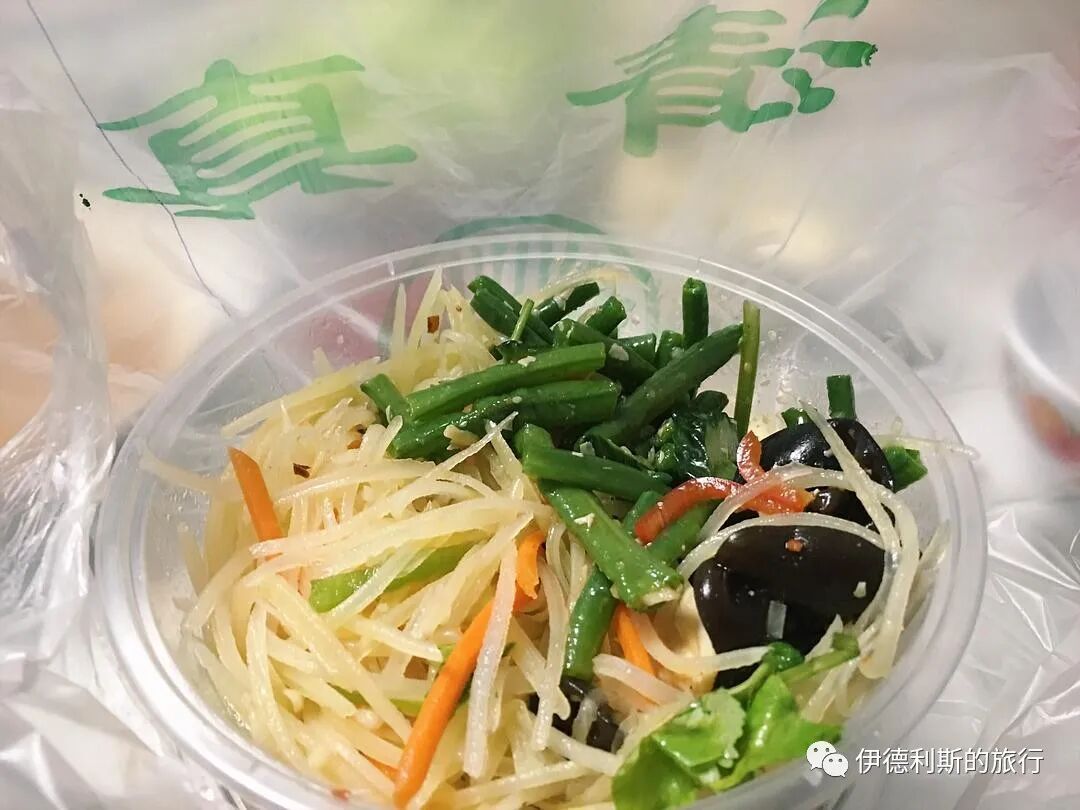
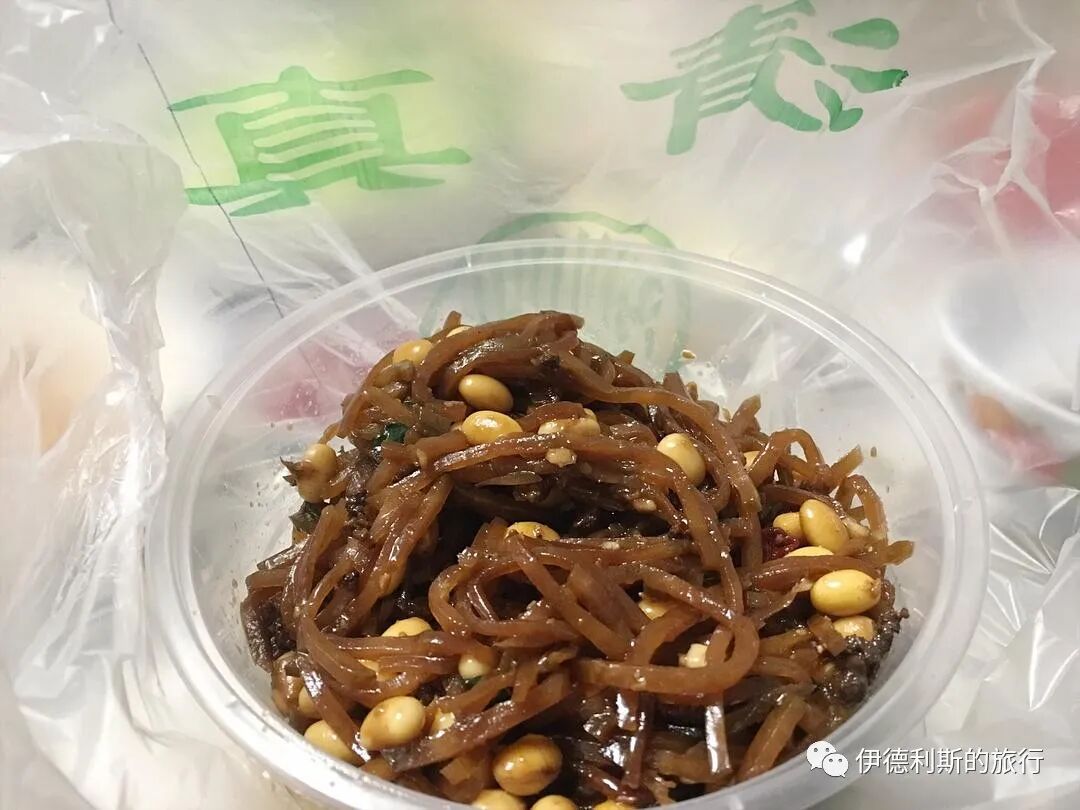
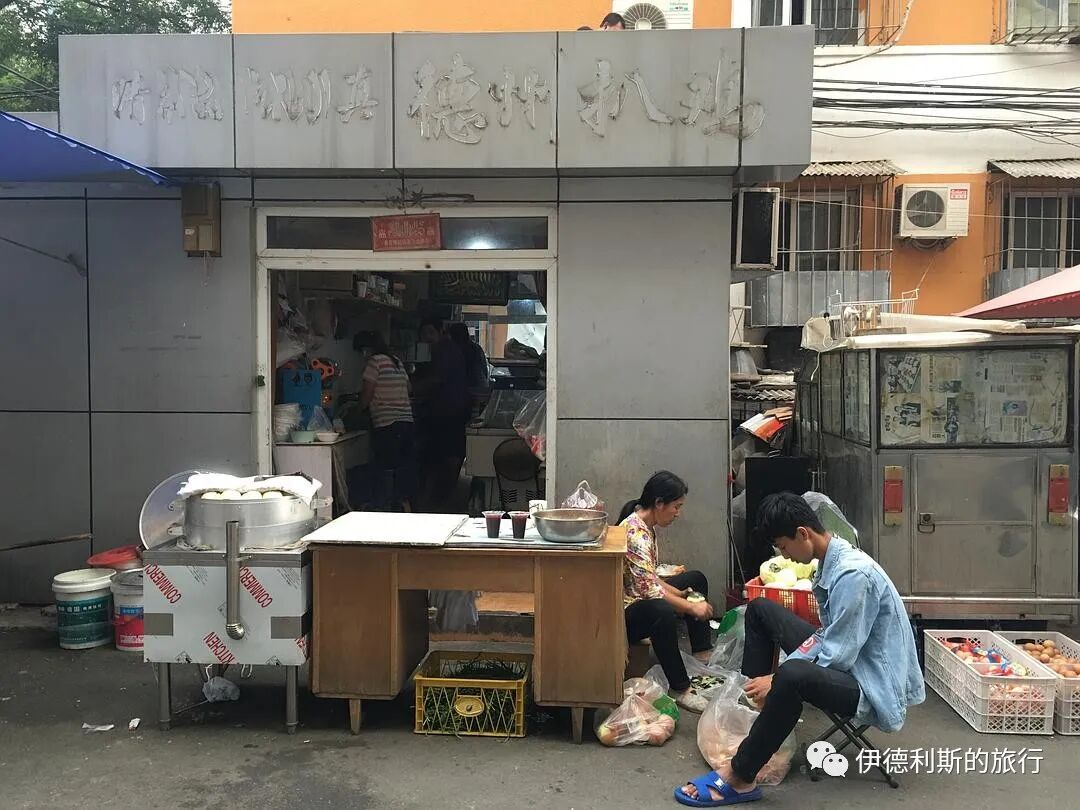
At a small halal restaurant in Sanfengli, I ordered beef stewed with tendon, stewed meat with green beans, fish roe tofu, crispy meatballs, and mixed tripe strips. The stewed green beans were incredibly delicious and went perfectly with rice.
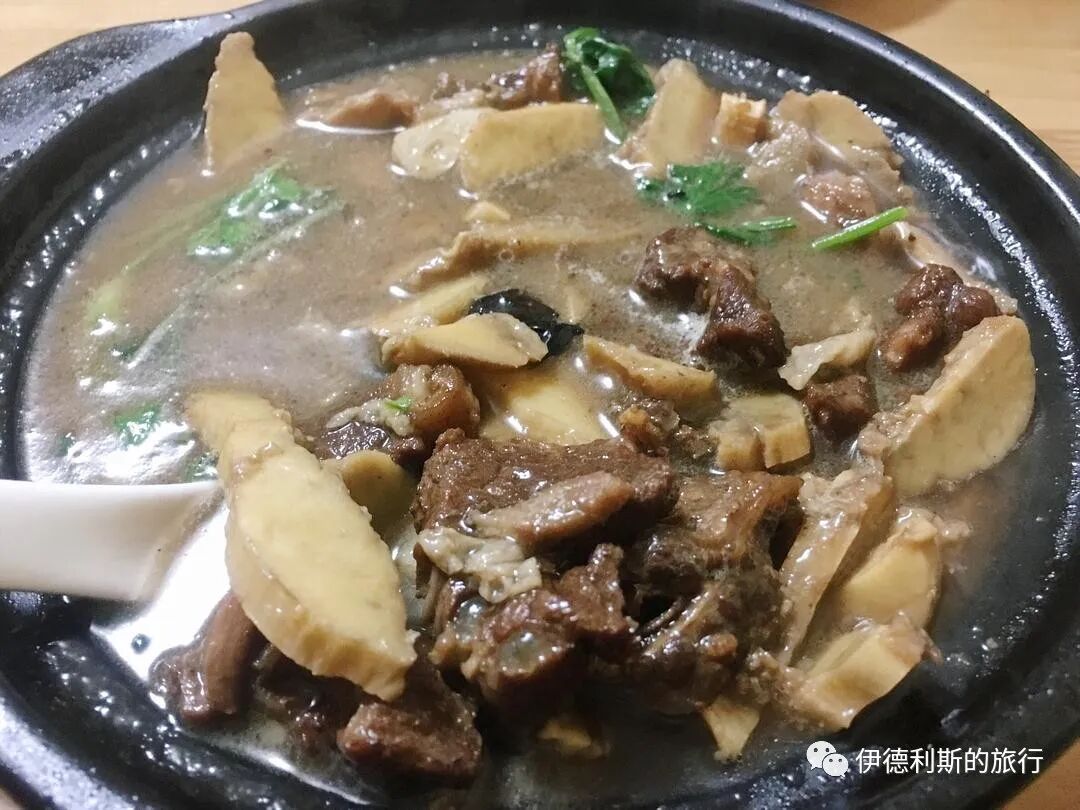
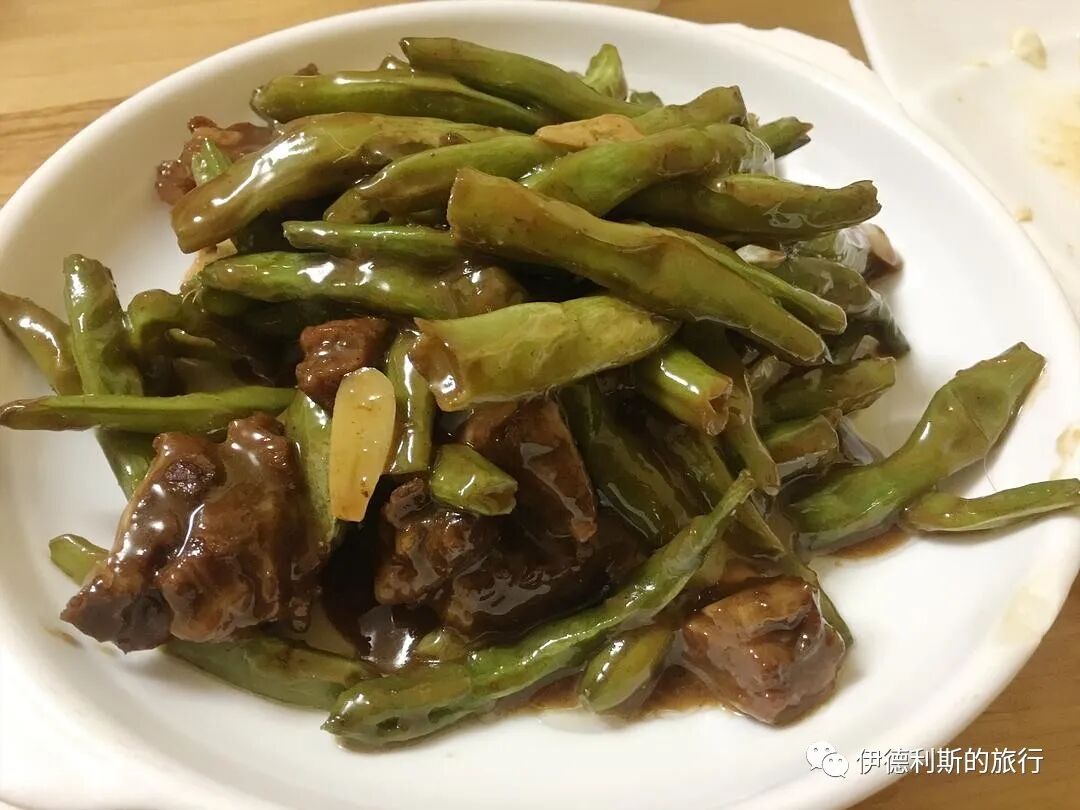
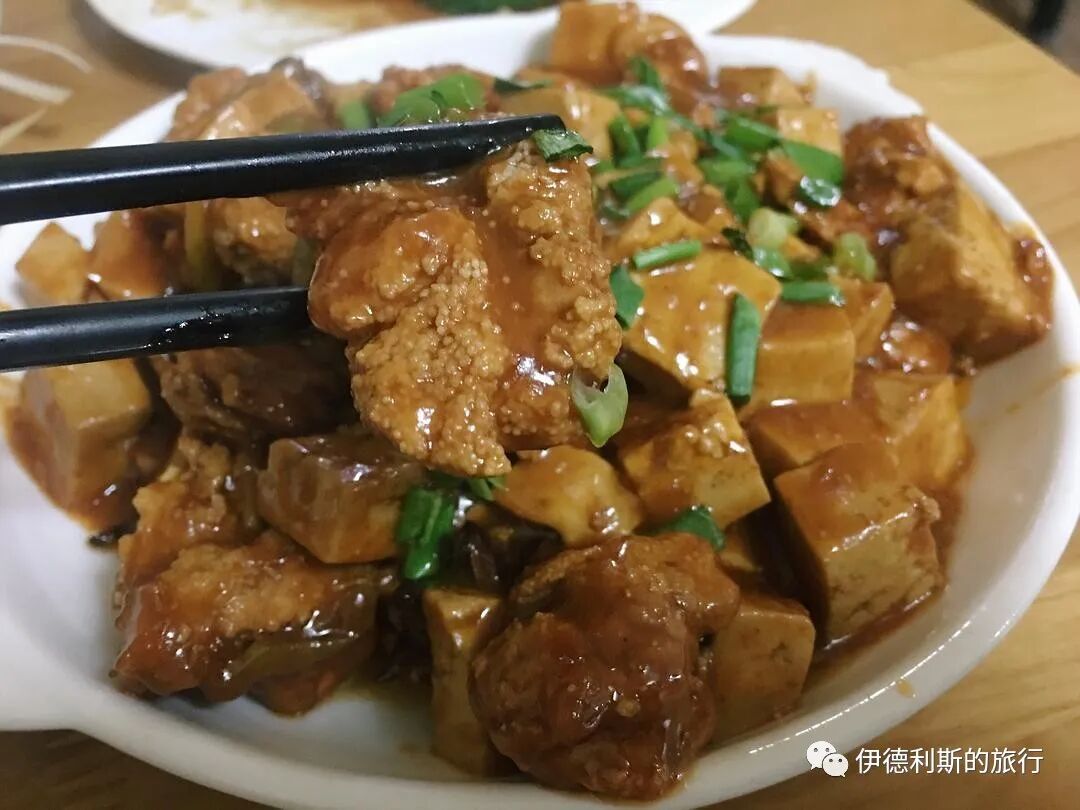
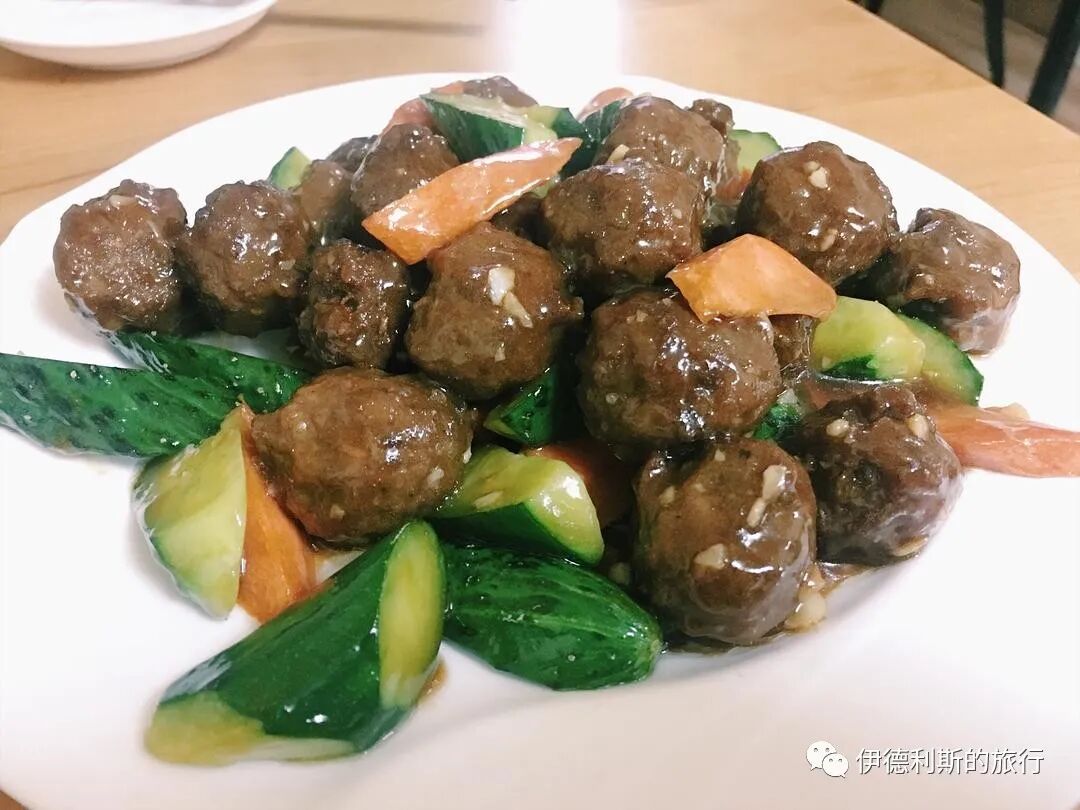
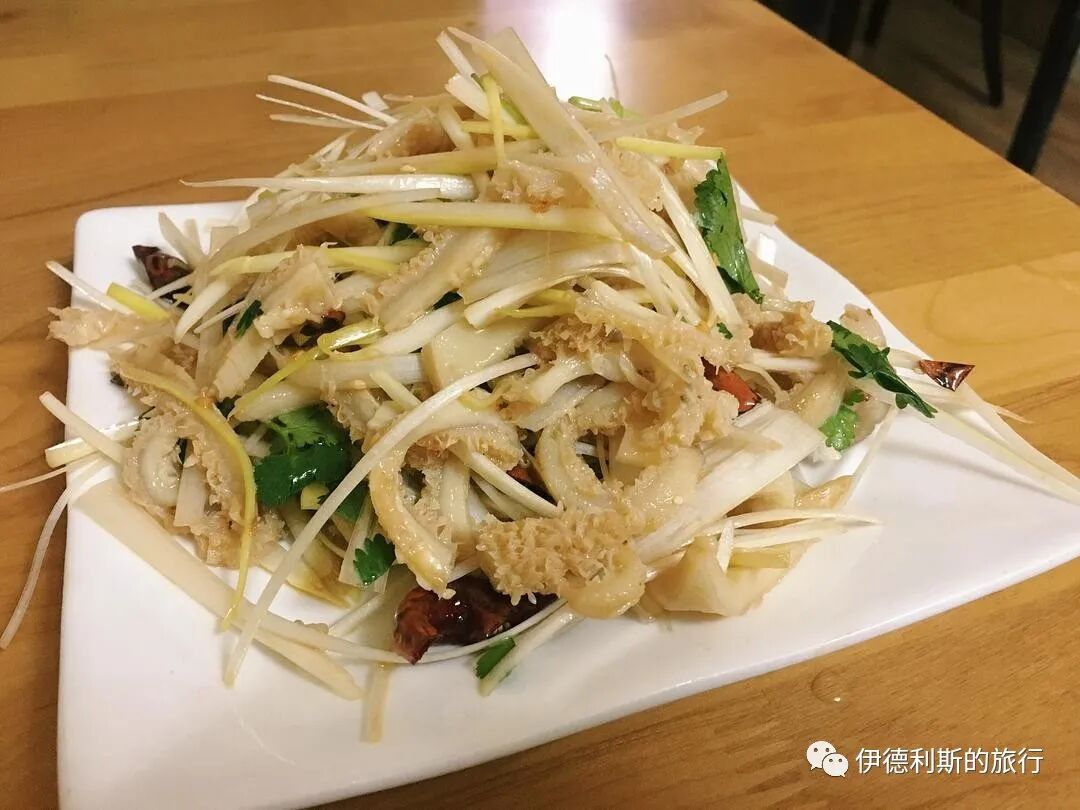
The back door of the Nanxiapo Mosque is next to the Kawuli baked bun shop, where I have bought their meat-filled flatbread (rounang) several times.
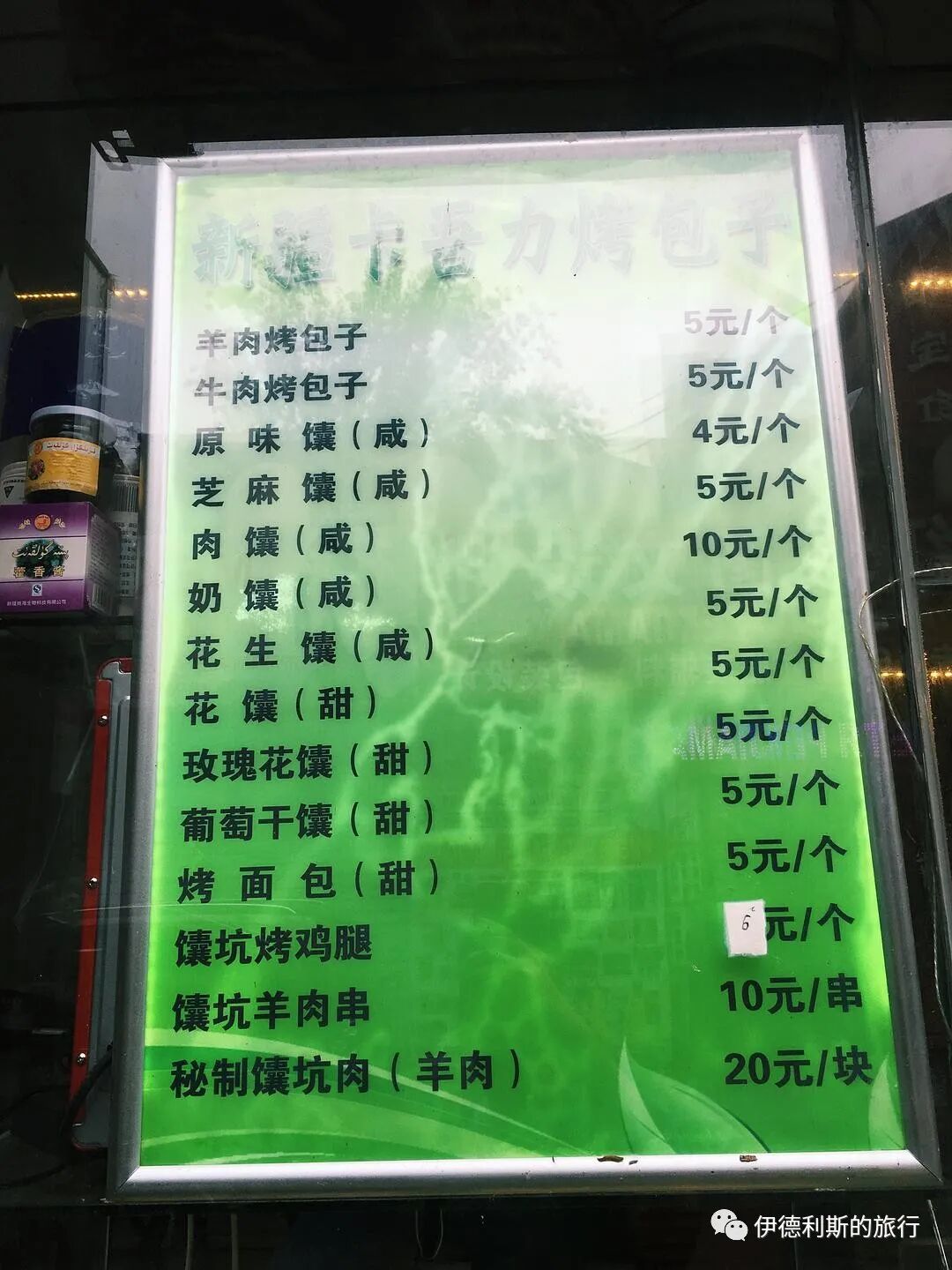
 Collapse Read »
Summary: Beijing Chaowai Guanxiang — Hui Muslim Quarter and Food is presented here as a firsthand travel account in clear English, beginning with this scene: The historical and geographical information in this article about the Chaowai Guanxiang area is partially compiled from the book "Outside Chaoyangmen". The account keeps its focus on Beijing Chaowai, Hui Muslims, Halal Food while preserving the names, places, food, and historical details from the Chinese source.
The historical and geographical information in this article about the Chaowai Guanxiang area is partially compiled from the book "Outside Chaoyangmen". Information regarding the Hui Muslims of Chaowai is partially compiled from Ma Zhongqing's book "Chaowai Nanxiapo".
The formation of Chaowai Guanxiang.
In 1285 (the 22nd year of the Zhiyuan era of the Yuan Dynasty), the Yuan capital Dadu was completed with 11 city gates. The gate in the southeast was called Qihuamen. In 1439 (the 4th year of the Zhengtong era of the Ming Dynasty), the Ming government rebuilt Qihuamen and renamed it Chaoyangmen. The stories we are discussing today take place outside Chaoyangmen.
Chaoyangmen photographed by French photographer Firmin Laribe in 1906.
In 1292 (the 29th year of the Zhiyuan era of the Yuan Dynasty), the Tonghui Canal was completed, connecting Dadu to Tongzhou. Boats traveling north from Hangzhou could reach Jishuitan inside the city of Dadu. After the Ming Emperor Chengzu, Zhu Di, moved the capital to Beijing, he dredged the Tonghui Canal and built a series of granaries inside Chaoyangmen. Large amounts of grain began to be transported from the Jiangnan region to these granaries via the canal.
Nanxincang Granary inside Chaoyangmen.
However, because the Tonghui Canal was too close to the Imperial City of Ming Beijing, Emperor Xuanzong, Zhu Zhanji, grew tired of the constant noise from the canal. In 1432 (the 7th year of the Xuande era), he ordered the eastern wall of the Imperial City to be moved, enclosing that section of the Tonghui Canal. In 1438 (the 3rd year of the Zhengtong era), the Ming government built the Datong Bridge sluice outside Dongbianmen. From then on, grain boats from the south could only reach the area outside Dongbianmen, where the grain was transferred to wheelbarrows or horse-drawn carts to be taken to the granaries inside Chaoyangmen.
The end of the Tonghui Canal after 1438, with the southeast corner tower of the inner city on the right.
In 1697 (the 36th year of the Kangxi era), the Qing government dredged the moat outside Chaoyangmen and installed a water gate. Grain boats from the south could travel directly to the area outside Chaoyangmen to unload their cargo for storage. From this point on, Chaoyangmen officially became the terminus of the Grand Canal.
The moat on the south side of Chaoyangmen, featured in the book "Asia Panorama" published in Japan in 1928.
Because the water in the Tonghui Canal flows eastward, boats coming from Tongzhou had to travel upstream. They had to pass through five sluice gates along the canal to adjust the water levels, which made travel slow and often caused traffic jams. As a result, most grain boats would "leave the boat for the land" upon reaching Tongzhou. The cargo was unloaded onto carts and taken directly to Chaoyangmen by road. The official road connecting Chaoyangmen and Tongzhou became increasingly busy, eventually surpassing the Tonghui Canal as the main transport route.
In 1729 (the seventh year of the Yongzheng reign), the stone road from Chaoyang Gate to Tongzhou was completed. The stone road itself was 20 feet wide, with dirt roads 15 feet wide on each side, making it the expressway between Beijing and Tongzhou at that time. Park Ji-won, an envoy from Korea to China at the end of the Qianlong reign, wrote in his 'Jehol Diary' that the Chaoyang Gate stone road 'stretched for 40 li from Tongzhou to the Imperial City, paved with stone beams, where iron wheels clashed and the sound of carts grew louder, shaking one's spirit and leaving one uneasy.'
In 1942, the Japanese wanted to build a highway from Tongzhou to Beijing and planned to replace the stone road with cement, but they surrendered when the work was only half finished. Therefore, in 1949, it was half stone road and half cement road. After 1949, an asphalt road was built, and the Chaoyang Gate stone road finally disappeared, but many of the stone slabs were buried shallowly along the side of Chaoyang Road; some were later dug up and preserved in the Chaowai CBD Park.
The Chaoyang Gate stone road in the Chaowai CBD Park.
The Chaoyang Gate official road in the 1935 book 'Trips outside Peking' is the line the car is driving on in the picture.
Residents of the Chaowai Guanxiang area.
Because they were not restricted by the closing of the city gates at night, people transporting grain were willing to choose to stay and rest outside Chaoyang Gate. Tea houses, inns, and restaurants gradually sprang up in the Chaowai Guanxiang area, making it the most prosperous district east of Beijing, with many shops and booming business, and many people eventually settled there.
to Chaowai Street as the main commercial artery, the Chaowai Guanxiang area had three residential areas where three different ethnic groups lived. Among them, Jishikou north of Chaowai Street was mainly Han Chinese, the Nanxiapo area to the southwest was mainly Hui Muslims, and the Xiangbai Banner South Barracks to the southeast was mainly Banner people.
An aerial photo of the inside and outside of Chaoyang Gate taken by Japanese photographer Shiba Yōson in 1940, with Nanxiapo in the upper left corner.
An aerial photo of the area outside Chaoyang Gate in 1951 from the Beijing Imprint website.
The mosque in the Chaowai Guanxiang area.
Information about the Muslim community in the Chaowai Guanxiang area is compiled from 'Chaowai Nanxiapo' by the local elder Ma Zhongqing from Nanxiapo. Ma Zhongqing was born in 1947 and lived in Nanxiapo outside Chaoyang Gate since he was a child, writing many articles about this area.
There were once seven mosques in the Chaowai area, but only four are clearly recorded today: Nanzhongjie Mosque, Nanxiapo Mosque, Shuimenguan Women's Mosque, and Shegutang Mosque.
A map from the book "Outside Chaowai Gate".
Nanzhongjie Mosque, also known as the Great Mosque (Da Libaisi) and Nanxiapo Mosque, is located on the west side of the north end of Nanzhong Street outside Chaoyang Gate. It was first built in the early years of the Kangxi reign and was the largest mosque in the Chaowai area. The last imam (ahong) of Nanzhongjie Mosque, Yu Guangzeng, came from a family of imams. At 26, he received his formal appointment at Huashi Mosque. He was very learned, wrote books like "Basic Scripture Textbooks" and "Philosophy Textbooks," and passed away in 2004.
During the Pingjin Campaign in 1948, the Kuomintang 13th Army, responsible for guarding Dongzhimen, Chaoyangmen, and Guangqumen, demolished all civilian houses on the east bank of the moat from Chaoyangmen to Jianguomen, and Nanzhongjie Mosque was destroyed.
In 1949, Imam Yu Guangzeng oversaw the construction of classrooms and a playground on the original site of Nanzhongjie Mosque and founded the Mushen Primary School for Hui Muslims. Imam Yu Guangzeng served as the principal of Mushen Primary School and hired teacher Mu Chengyu, a graduate of the famous modern Islamic school Chengda Normal School, as the head teacher. In 1951, Qin Junxiang, a graduate of the Hui Muslim College teacher training class, joined Mushen Primary School as a teacher. The drum and bugle band of Mushen Primary School was very famous locally. Their Western-style drums and horns were very novel, and they were often invited to participate in events.
In 1956, Mushen Primary School was renamed Chaoyang District Nanzhongjie No. 2 Primary School. In the 1980s, it became the office for the Chaoyang District Islamic Association, and it was demolished in 2003.
Shuimenguan Women's Mosque was located at the second door on the north side of the east entrance of Shuimenguan Hutong. First built in the late Qing Dynasty and early Republic of China, it was a standard courtyard house (siheyuan) with a main hall that could hold dozens of people for namaz and two lecture halls to the north and south. Shuimenguan Women's Mosque stopped its activities in 1958 and became a nursery for Hui Muslims in the early 1960s. In 1993, to build the Ministry of Foreign Affairs building, the mosque's structures were dismantled and moved away by Yangzha Mosque.
Shegutang Mosque was located on the west side of the north end of Shegutang Hutong, 200 meters from Chaowai Street. Like the Shuimenguan Women's Mosque, it was a courtyard house with a main hall that could hold 30 to 40 people for namaz and two lecture halls to the north and south. The imam in the 1940s and 1950s was surnamed Zhang. Shegutang Mosque closed in 1958.
Nanxiapo Mosque, also known as the Small Mosque (Xiao Libaisi), was first built in the early years of the Kangxi reign. It is located on the west side of the south entrance of Chaowai Second Alley and is the only mosque in the Chaowai area that still exists today.
According to Ma Zhongqing's ancestors, a shed builder lived in Nanxiapo during the late Ming and early Qing dynasties. He built a large shed using fir poles and reed mats. An imam named Hu Zhonghe led the local Hui Muslims in prayer inside this mat shed, which was the earliest Nanxiapo mosque. In the early years of the Kangxi reign, a Hui Muslim surnamed Ma who sold bows and arrows inside Chaoyang Gate heard about the situation in Nanxiapo. Just then, a payment arrived from a Mongolian client for a bow and arrow order. The man surnamed Ma donated this money to build the Nanxiapo mosque.
The main gate of the Nanxiapo mosque originally consisted of three separate gate towers connected by courtyard walls, but they were destroyed in the early 1960s.
After 1966, religious activities stopped at Nanxiapo, but it still served as the Beijing Hui Muslim Funeral Service Center, helping Hui Muslims with funeral arrangements. To prevent the Red Guards (HWB) from attacking the Nanxiapo mosque, more than twenty local elders including Ma Yulin, Ma Yuhai, and Tuo Jihua took turns guarding the mosque day and night. They stopped the Red Guards from entering the old mosque, saving Nanxiapo from disaster.
The Nanxiapo mosque was rebuilt in 1986 and renovated again in 2016, resulting in its current appearance.
In 1947, the Nationalist army was conscripting men at the South Barracks outside Chaoyang Gate. The young Hui Muslim men of Nanxiapo were terrified. They grabbed some dry rations from home and ran to the Nanxiapo mosque, where they climbed onto the roof of the main hall using wooden ladders with the help of the imam and the elders. After they were hidden, the imam and elders immediately hid the ladders. When the Nationalist troops came to the mosque to seize people, the imam persuaded them to leave. The men on the roof lay flat for an entire day and finally escaped the danger.
Breaking the fast (iftar) at the mosque during Ramadan in 2021.
Attending a religious gathering at Nanxiapo in 2021, where there was lamb and wheat porridge (yangrou mairen rouzhou) and fried dough (youxiang).
Most of the leaders of the Nanxiapo mosque have been descendants of the first leader, Hu Zhonghe. Hu Zhonghe's 12th-generation descendant was named De Gui, with the courtesy name Zichen, born in 1883 (the ninth year of the Guangxu reign). Because his parents died early, 15-year-old Hu Zichen inherited his father's profession in 1898 (the 24th year of the Guangxu reign) and became the second leader (haitibu) of the Nanxiapo mosque. Later generations called him Master Hu the Second. At that time, the imam of the Nanxiapo mosque was Hu Wenzhi, and the third master was Ma Shikuan, known as Master Ma the Third.
In 1900, Empress Dowager Cixi fled west, and bandits were everywhere. Many merchants on Chaowai Street were robbed. The 17-year-old Imam Hu Zichen organized a local militia in Nanxiapo. Local young Hui Muslims joined enthusiastically. Some were wrestlers, some knew martial arts, and some were cart drivers. The wealthy members even bought firearms. Every night, everyone gathered at the entrance of the Nanxiapo Mosque to take turns patrolling the streets and keeping watch, finally avoiding a disaster.
Imam Ma Chunpu began his service as an imam in 1944, leading prayers at the Huashi Mosque and Balizhuang Mosque before moving to the Nanxiapo Mosque. After 1966, Imam Ma Chunpu faced persecution. In 1976, he became the president of the Chaoyang District Islamic Association, helping local Muslims solve various problems until he passed away in 2001.
Imam Ma Dekai came from a family of imams and took over his father's work to become the imam of the Nanxiapo Mosque after 1949. Imam Ma Dekai was honest and kind. For years, he worked to restore religious properties and halal food outlets, while quietly donating to children who had dropped out of school. He passed away in 2000 at the age of 78.
Elder Ding Ruichun was a community leader at the Nanxiapo Mosque and a great helper to Imam Ma Dekai. Whenever Imam Ma slaughtered a sheep, Elder Ding would hold the sheep's head, and the two old friends worked together perfectly. The sheep heads Elder Ding cleaned were completely free of wool, and the sheep intestines he washed were perfectly white. He was a master of his craft, never asked for pay, and never ate at anyone's house. Elder Ding Ruichun passed away in 2003 at the age of 74.
On February 15, 1928, after the Communist Party's Beiping Municipal Committee Secretary Ma Jun was killed, his body (maiti) was cleaned at the Nanxiapo Mosque by Hu Wenzhi and Hu Zichen. Then, the elders and community members (dost) of Nanxiapo donated burial shrouds (kafan) and buried him in the northwest corner of Ritan.
The original tombstone of Ma Jun inside the Nanxiapo Mosque.
In the early 1950s, the Beijing municipal government took over the slaughterhouse next to the Nanxiapo Mosque and the large cemetery west of Ritan for urban construction. Imam Hu Zichen led dozens of people from Nanxiapo on a large truck to move the remains to the Hui Muslim cemetery in Xibeiwang, Haidian. Only the rebuilt tomb of the martyr Ma Jun remained in the Chaowai Hui Muslim cemetery west of Ritan.
Ma Jun's tomb in Ritan Park.
Halal food in the Chaowai Guanxiang area.
Chaowai Street, photographed looking east from Chaoyang Gate by Japanese photographer Kazumasa Ogawa in 1901.
A photo from the book 'Old Beijing City'.
Beijing history expert Wang Yongbin wrote about the halal beef and mutton shops and oil and salt stores on Chaowai Street during the Republic of China era in his book, "Beijing's Suburban Towns and Old Brands."
Famous halal mutton shops on Chaoyangmen Suburban Street included Sanyishun, Dongxingshun, and Qianyuhe. Qianyuhe Mutton Shop was in a busy section of Chaowai Street. It had two storefront rooms in the front and six processing rooms in the back. Every winter, they bought sheep from Inner Mongolia, slaughtered them right in front of the shop, and sold the meat immediately, which made them very popular.
The most famous shop on Chaowai Street was Yongsheng Mutton Shop, which opened in the late Guangxu period. It had no wooden sign out front. Instead, it had a clean blue cloth hanging with the words "Western Regions Halal Faith" (Xiyu Qingzhen Jiao) sewn on in white fabric. The beef and mutton sold at Yongsheng Mutton Shop were slaughtered and cleaned the same day they were sold. Business was excellent; they sold two sheep every day and one cow every two days.
Besides fresh beef and mutton, Yongsheng also set up a stove to bake sesame flatbread (shaobing), which became very famous in the Chaoyangmen suburban area. Their sesame flatbreads were large, layered, and fluffy, and they sold out every single day. The ingredients for Yongsheng's sesame flatbreads were all bought from the famous Dayou Halal Oil, Salt, and Grain Store in the Chaoyangmen suburbs. The white flour was high-quality "fudi" flour that had been finely ground and sifted, the sesame seeds were plump and top-grade, and the sesame paste and fragrant oil were also of the highest quality. to flatbreads, Yongsheng also sold spiral-shaped pastries (luosizhuan). Their spiral pastries were crispy and flaky, and they stayed fresh for days without getting soft, so they had many customers.
Dayou Halal Oil and Salt Store was the most famous shop of its kind in the Chaowai suburbs. It opened in 1917 and was also located on Chaowai Street. At first, Dayou was a general business, but it lost money for years due to poor management. They hired a Hui Muslim named Chang Zijiu as the manager and turned it into a halal business. Manager Chang turned Dayou into a shop with a workshop in the back. The front had six storefront rooms; the west side sold oil, salt, and pickles, while the east side sold rice, flour, and grains. The backyard had over 30 rooms where they hired more than 30 people to make various pickles. They also used electric mills to make fragrant oil, millet flour, and mixed grain flour.
Dayou was most famous for its house-made fragrant oil. They chose plump sesame seeds as raw material. The oil master roasted the seeds to the perfect level, so the resulting fragrant oil had a strong, lasting aroma and a clear, transparent color.
Besides fragrant oil, they were also famous for their house-made yellow bean paste and pickles. Their best-sellers included small pickled radishes, large pickled radishes, sweet and sour assorted radishes, pickled cucumbers, and sweet and sour garlic sprouts. It wasn't just the neighbors near Chaoyangmen Gate who loved the food here. Farmers traveling along the Chaoyangmen official road from areas like Ciyun Mosque, Balizhuang, Shuangqiao, and Guanzhuang would stop at Dayou Grocery Store to buy yellow soybean paste (huangjiang) and pickled vegetables (jiangcai) to take home whenever they came into Beijing for errands or to burn incense at the Dongyue Mosque.
Dayou kept their rice, flour, and grains in large wicker baskets (poluo) on low platforms in the shop. They sold rice, white flour, sorghum, red beans, mung beans, large kidney beans, sea beans, corn, millet, black beans, sesame, and more. Every autumn during the harvest, the grain store sent out special buyers to the countryside to collect fresh crops. The grain store had a mill in the backyard to process the rice, flour, and grains. The steamed corn buns (wotou) made from their millet flour were sweet, fluffy, and their best-selling item, often selling out completely.
Every year on the second day of the Lunar New Year, Manager Chang of Dayou would invite imams and village elders from nearby mosques and the eight counties east of Beijing (Tongzhou, Sanhe, Wuqing, Baodi, Jixian, Xianghe, Ninghe, and Xiaoxun, collectively known as Tong-San-Wu-Bao-Ji-Xiang-Ning-Xun) to recite the Hui Muslim Peace Sutra. He would treat everyone to a lunch of beef and mutton from the shop, creating a wonderful atmosphere.
Beyond the storefronts on Chaowai Street, many Hui Muslims sold halal snacks southwest of the Chaowai gate area. In the alleys, you could find people selling fried dough cakes (youbing), millet flour tea (miancha), kidney beans, sheep head meat, and beef tendon. Ma Zhongqing wrote about these various halal snacks in the alleys of the Chaowai gate area in his work, 'South Slope Outside Chaoyangmen' (Chaowai Nanxiapo).
One hundred meters north of the Nanxiapo Mosque, on the east side of the road, was a small shop selling oil, salt, soy sauce, and vinegar. It opened in 1935 and was run by a man named Ma, so it was commonly called Ma's Small Shop (Maji Xiaopu). Above the door of Ma's Small Shop hung a black plaque with the three large characters 'Fu Shun Yong,' taken from the name of the manager at the time, Ma Yongfu.
The shop was only about 11 or 12 square meters. According to Yang Jing'an's memories, one summer over 60 years ago, the old manager Ma Deshan sold sour plum drink (suanmeitang) at the shop entrance. He held two small copper bowls and clicked them together with his fingers to make a rhythmic, crisp sound. As he tapped, the old manager sang: 'Water from Dongzhimen, ice from Xizhibei, it tastes so refreshing when you drink it.' The old manager Ma Deshan passed away in 1946.
In 1949, the manager Ma Yongfu joined the neighborhood fire prevention team and went on patrol every night. Whenever someone in the neighborhood passed away (wuchang), he would take the initiative to help handle the funeral arrangements. He helped prepare nearly a hundred bodies (maiti) for burial.
In 1956, Ma's Small Shop closed due to the public-private partnership policy. Ma Yongfu became a worker at the Chaowai Yuanfa General Store, retired in 1973, and passed away in 1991.
There was a man named Ma Qiba in Nanxiapo who sold millet flour tea (miancha) from a wooden cart. He kept a small stove on the cart to keep the tea hot, and he neatly arranged his sesame paste, porcelain bowls, and small spoons on the cart. At the crack of dawn every day, Ma Qiba would start calling out, 'Millet flour tea, get it hot!' People in the alley would come out to drink it when they heard him. There was even a joking saying about him: 'Ma Qiba selling millet flour tea—adding water (giving extra).'
Every morning at the Chaowai Tankou entrance, there is an older man named Er Luo Bo who sets up a breakfast stall right in front of his home. Er Luo Bo is named Ma Yulong. He sells fried dough cakes (youbing), fried bean cakes (zhagao), and sesame flatbreads (shaobing). He makes them fresh as he sells them, and his business is very popular with many repeat customers. He cooks the red bean paste for his fried bean cakes in a large iron pot. He never uses saccharin, only white sugar. His fried bean cakes are large, and the bean paste inside is delicious. Every evening around four or five o'clock, Er Luo Bo sells rolled soybean flour cakes (lvdagun) at his roadside stall, also making them fresh to order. He uses a knife in his left hand, quickly cutting the three-foot-long rolled soybean flour cake on his cutting board into four-inch pieces.
In 1973, when Ma Zhongqing got married, Er Luo Bo was in charge of the cooking. In Ma Zhongqing's courtyard, Er Luo Bo built a stove using half-bricks and yellow mud. It had two levels and four or five burners. He used this stove for all the frying, stir-frying, and cooking to serve over a hundred guests table by table.
At the north end of Xiushui River, there is a grain store for Hui Muslims. Outside the store, Uncle Hei sells fried dumplings (zha huitou) every day. Uncle Hei is not very tall and wears a prayer cap (libaimao). He makes the dumplings fresh and calls out, 'Fried~ dumplings~ hey!' When his fried dumplings come right out of the oil, they are crispy on the outside and tender on the inside. One bite and the juices flow; they are fragrant and delicious.
In a simple porridge shed on the west side of the south end of Xiushui River, Uncle Ma from Nanzhong Street has rice porridge ready before dawn every day. He calls out, 'Rice porridge here~ just a few coins~.' His deep voice attracts many elementary school students to come and drink the porridge.
Another Uncle Ma, who lives on Guanyinsi Street, sells boiled corn and sweet potatoes along the street every day. Sometimes he pushes a wheelbarrow, and sometimes he carries a small bamboo basket. He calls out, 'Corn~,' with a long, melodic, and pleasant sound. Uncle Ma's corn is rich and sweet. His red-fleshed sweet potatoes are very sugary, while the dry-fleshed ones taste like chestnuts and are so dense they can make you choke a little.
The Tankou Hui Muslim Canteen is located south of the road outside Chaoyangmen, at the intersection of Chaowai Market, and covers about fifty or sixty square meters. Breakfast staples and liquid foods are served at two separate windows. Staples include fried bean cakes (zhagao), fried dough cakes (youbing), steamed buns (baozi), sesame flatbreads (shaobing), sugar-coated fried dough (tang'erduo), sesame balls (matuan), and steamed rice cakes (pengao). Liquid foods include millet porridge with sesame paste (miancha), soy milk (doujiang), fried tofu soup (doupao tang), and lamb offal soup (yangzasui). In the evening, the canteen set up stalls at the entrance, bringing out grills to cook skewers on the spot and deep-frying crispy meat (songrou) to order. The manager, Yang Yongqing, was famous for using a rolling pin in each hand to roll out over a hundred dumpling wrappers in a minute.
After Chaowai Street was widened and renovated, the Tankou Canteen was demolished.
In his article 'Hui Muslim Restaurants on Chaowai Street' published in Beijing Chronicles, Ji Jianguo wrote about the halal restaurants on Chaowai Street from the 1970s to the late 1990s: Chaowai Hui Muslim Restaurant, Tankou Hui Muslim Restaurant, Xingsheng Hui Muslim Restaurant, and Ziguangyuan Restaurant.
On summer evenings, whenever Ji Jianguo went to the Tankou Hui Muslim Restaurant, he would order a bowl of cold sesame paste noodles (majiang mian) and a cold beer, along with a plate of boiled peanuts or spiced beef (jiang niurou), for a very pleasant meal. On autumn evenings, the Tankou Hui Muslim Restaurant would set up a stall at the entrance to sell freshly fried crispy meat (songrou). It uses thin bean curd sheets to wrap fresh, tender lamb mixed with chopped green onions, ginger, flour, and five-spice powder, rolled into the thickness of a thumb and cut into pieces. After being deep-fried in hot oil, each piece turns golden brown and is displayed in a glass cabinet, with the aroma spreading all around and drawing passersby to stop and line up to buy some. They sometimes sold boiled lamb head (qingshui yangtou) there, where the semi-transparent lamb head was cooled and sliced as thin as paper. Their sugar-rolled fruit (tang juanguo) is steamed with raisins, red dates, lotus root, honey, starch, and flour; one bite is full of sweetness, and the flavors of the various ingredients blend together, leaving a lingering fragrance on the lips and teeth.
Xingsheng Hui Muslim Restaurant was located east of the glazed archway of the Dongyue Temple and was the largest Hui Muslim restaurant on Chaowai Street, occupying a two-story building of two or three hundred square meters. Most customers were groups dining together, ordering a plate of stir-fried beef with green onions (cong bao rou), braised beef tendon, braised oxtail, a plate of spiced beef (jiang niurou), boiled peanuts, stir-fried tofu, and braised chicken. In the middle of the table, there would be a steaming hot pot of mutton (shuan yangrou), two bottles of Erguotou liquor, and three or five friends gathered to drink and chat, making for a very lively scene. In the mid-1980s, Xingsheng Hui Muslim Restaurant was the first to renovate, turning the second floor into a dining hall with private booths, becoming the most upscale Hui Muslim restaurant on Chaowai Street, where many Hui Muslims held their weddings.
The Chaowai Hui Muslim Restaurant was located north of the Chaoyangmen overpass; its nail-shaped meat pies (mending roubing) had thin crusts and large fillings and were quite delicious, but it was later demolished during the urban renovation of Chaowai Street. Another Hui Muslim restaurant was on the north side of the road on the east end of Chaowai Street, covering about seventy or eighty square meters. At first, they only sold breakfast items like fried pancakes (youbing), steamed buns (baozi), sesame flatbread (shaobing), soy milk (doujiang), and tofu pudding (doufunao). Main meals included rice, boiled dumplings (shuijiao), noodles, and dumplings (jiaozi), along with stir-fried dishes like stir-fried lamb with scallions (congbao yangrou).
Ziguangyuan opened in 1984. According to the chairman, Ai Changyou, it started as a tiny shop selling only stir-fried dough bits (chaogeda), with the original location at the south gate of the Workers' Stadium. Back then, workers from several large companies in Chaoyang District would line up at the door of Ziguangyuan as soon as they got off work, paying 50 cents for a large, affordable portion. Because the shop was so small, many workers squatted on the side of the road to eat, while others took their food back to the factory. So, after selling the stir-fried dough bits, Ai Changyou had to push a tricycle to the factory to collect the bowls.
Ziguangyuan's stir-fried dough bits are square pieces about the size of a fingernail. They are first boiled until half-cooked, blanched, and then stir-fried with wood ear mushrooms, cucumber, diced lamb, diced carrots, boiled soybeans, and peanuts to create a golden, flavorful dish. Every plate is piled high, and each piece of dough glistens with oil, making it look very appetizing.
Ziguangyuan's stir-fried dough bits
In the 1990s, Chaowai Street began renovations and Hui Muslim restaurants gradually disappeared. Ziguangyuan became the last Hui Muslim restaurant on the street. It later moved to the south of the Dongdaqiao intersection, where it remains today, and by 2017, it had grown to dozens of locations.
Ziguangyuan Dongdaqiao branch
The first page of the menu at the Ziguangyuan Dongdaqiao branch features an introduction to the Nanxiapo mosque.
Roast duck (kaoya)
Duck bone soup (yajiazi zuotang)
Deep-fried shredded meat (zha songrou)
Meatballs (wanzi)
Stir-fried tripe with coriander (yanbao sandan)
Sanfengli in Chaowai
After 1992, all the traditional Hui Muslim neighborhoods in Chaowai were torn down, and the residents were moved back to the newly built Sanfengli residential area on the same site.
1939 Detailed Map of the Vicinity of Beijing
1991 Map of Beijing Urban Area, on the eve of the major demolition in Chaowai
1998 Atlas of Beijing Streets and Hutongs, showing the major demolition in Chaowai and the completion of the Sanfeng residential area.
At a small halal restaurant in Sanfengli, I ordered beef stewed with tendon, stewed meat with green beans, fish roe tofu, crispy meatballs, and mixed tripe strips. The stewed green beans were incredibly delicious and went perfectly with rice.
The back door of the Nanxiapo Mosque is next to the Kawuli baked bun shop, where I have bought their meat-filled flatbread (rounang) several times.
Collapse Read »
Halal Travel Guide: Hangzhou — Ancient Mosques and the Arrival of Muslims
Reposted from the web
Summary: Hangzhou — Ancient Mosques and the Arrival of Muslims is presented here as a firsthand travel account in clear English, beginning with this scene: Hello everyone, I am the Canteen Master. Last week I put together a list of halal food in Hangzhou, and it just so happens that my Douban friend Wang Dongsi. The account keeps its focus on Hangzhou Mosques, Chinese Islam, Muslim History while preserving the names, places, food, and historical details from the Chinese source.

Hello everyone, I am the Canteen Master. Last week I put together a list of halal food in Hangzhou, and it just so happens that my Douban friend Wang Dongsi
wrote an article introducing the history and culture of Islam in Hangzhou, so I am sharing it with you all.

Historical articles like this might not be as catchy as food guides, but the history of Islam in China and how it constantly blended into and localized within Chinese culture is really interesting.
Why the sudden update today? Because I still have to organize and share a food article with you on Thursday.
Hangzhou's former Muslim community
The information in this article about the history of Islam in Hangzhou is mostly compiled from the book A History of Islam in Hangzhou by Ma Jianchun.
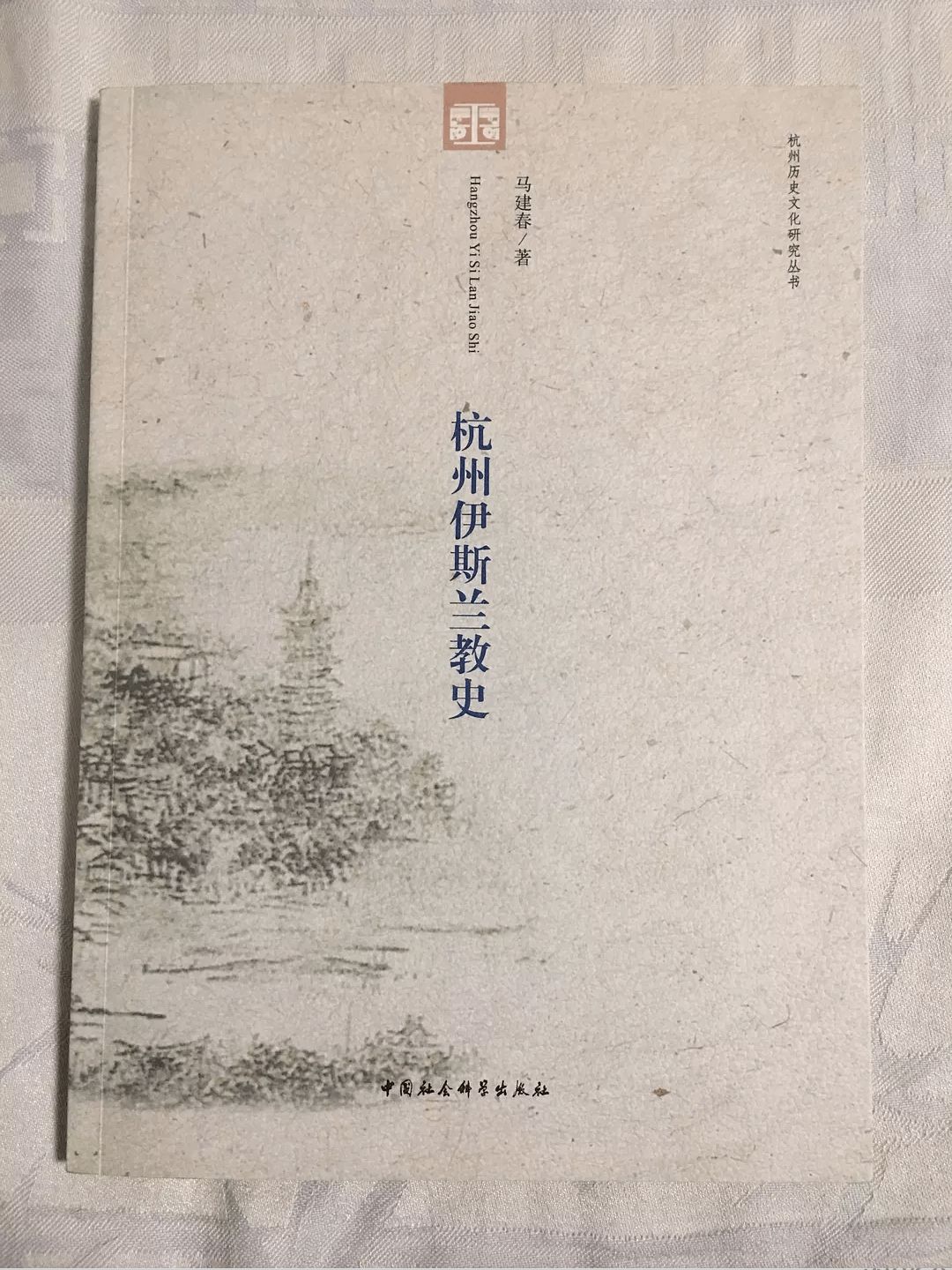
Let's start with a brief look at the history of the halal community in Hangzhou.
The prosperity of Muslims in Hangzhou during the Yuan Dynasty
Although Muslim merchants were granted official titles and settled in Hangzhou as tribute envoys starting in the Southern Song Dynasty, there are still no credible documents or unearthed artifacts recording the lives of Muslims in Hangzhou during the Song Dynasty.
Starting in the Yuan Dynasty, a large number of Muslims began to come to Hangzhou to settle. They were mainly Persians, along with Persianized Central Asian Turks. Among them were Semu military and political officials serving in the Jiangzhe Province, Muslim merchants who arrived in Hangzhou via the Maritime Silk Road and the Beijing-Hangzhou Grand Canal, and purely religious figures. They held high social status and lived wealthy lives.
In the 1320s, the Italian Franciscan friar Odoric came to China. The Travels of Friar Odoric wrote: Hangzhou is the largest city in the world. At that time, Hangzhou had 850,000 registered households, and the Saracens (a term used by Europeans in the Middle Ages to refer to Muslims) accounted for 40,000 of them.
Unlike the Muslims of the Tang and Song periods, the Muslims in Hangzhou during the Yuan Dynasty formed a bustling Muslim community in the city center due to their large numbers. The Yuan Dynasty Muslim community in Hangzhou was located west of Jianqiao and south of Wenjin Lane, inside the current Qingtai Gate. The late Yuan Dynasty writer Tao Zongyi wrote in his book Records of Stopping the Plow at Nancun: Beside Jianqiao in Hangzhou, there are eight tall buildings, commonly known as the Eight-Room Buildings, all inhabited by wealthy Hui Muslims.
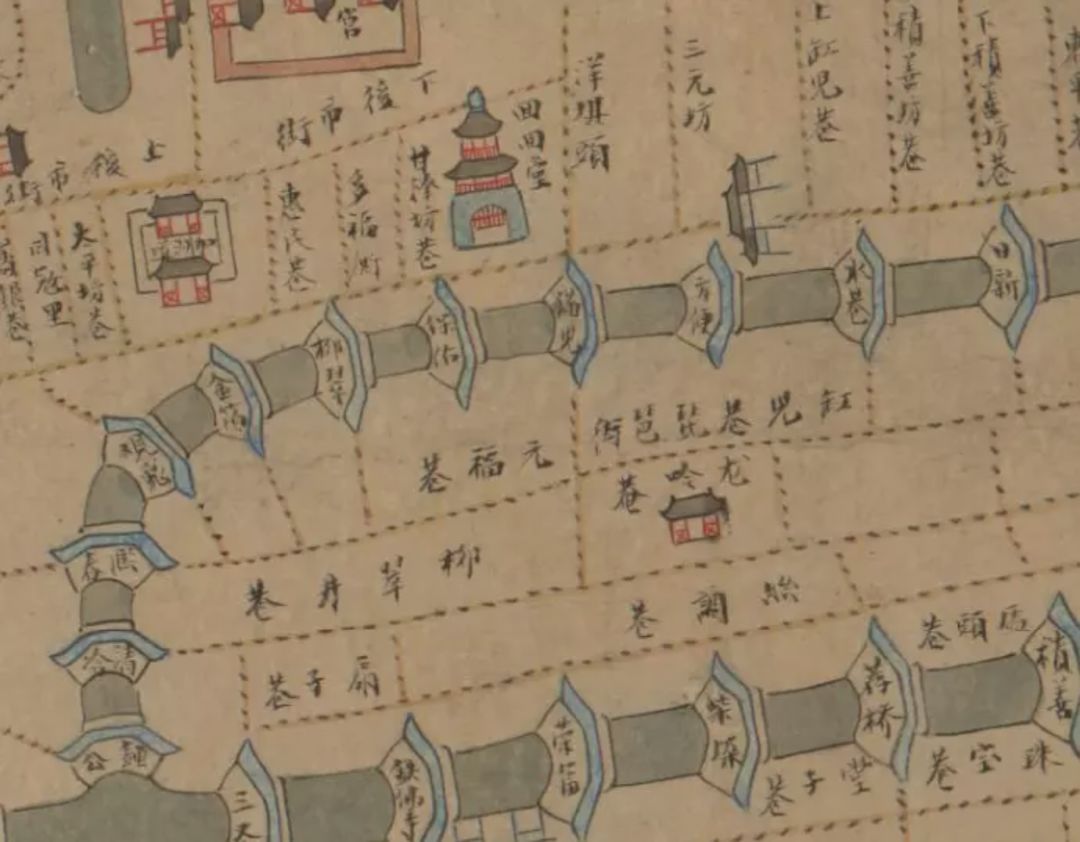
The 1867 map of the city of Hangzhou shows the streets with west at the top and east at the bottom. Jianqiao Bridge is in the bottom right corner, and the Hui Muslim hall (Huihuitang) at the top is Phoenix Mosque (Fenghuangsi).
In 1346 (the sixth year of the Zhizheng era), the famous Moroccan traveler Ibn Battuta arrived in Hangzhou. His book, The Travels of Ibn Battuta, mentions the Hangzhou Muslim community: 'The Muslims live in the city, which is beautiful, and the streets are laid out just like those in Islamic regions.' There is a mosque and a muezzin inside. We arrived in the city just at the time for the noon prayer (namaz), and the call could be heard far and wide. In this city, we stayed at the home of the descendants of Othman ibn Affan, an Egyptian. He was a great local merchant who liked this place very much and settled here. They have a lodge (daotang) also named after Othman, which is beautifully built and has many charitable endowments, with a group of Sufi practitioners inside. Othman also built a large mosque in the city and donated a large amount of charitable funds to the mosque and the lodge. There are many Muslims in the city. We lived in this city for fifteen days, and we were invited out every day and every night.
During the Yuan Dynasty, Hangzhou had three mosques: True Religion Mosque (Zhenjiaosi), Hui Muslim Prayer Hall (Huihui Baifotang), and Hui mosque (Huihuishi Libaisi). True Religion Mosque (Zhenjiaosi)
This is Phoenix Mosque (Fenghuangsi). Its original construction date is uncertain, but it was rebuilt in 1281 (the 18th year of the Yuan Zhiyuan era) and has continued to the present day. Hui Muslim Prayer Hall (Huihui Baifotang)
It was northeast of True Religion Mosque, next to Hui Muslim New Bridge (Huihui Xinqiao). The place name Hui Muslim New Bridge still exists today. Hui mosque (Huihuishi Libaisi)
It was west of True Religion Mosque, on what is now Laodong Road. It was destroyed during the wars at the end of the Yuan Dynasty, and the original site was turned into a prefectural school.
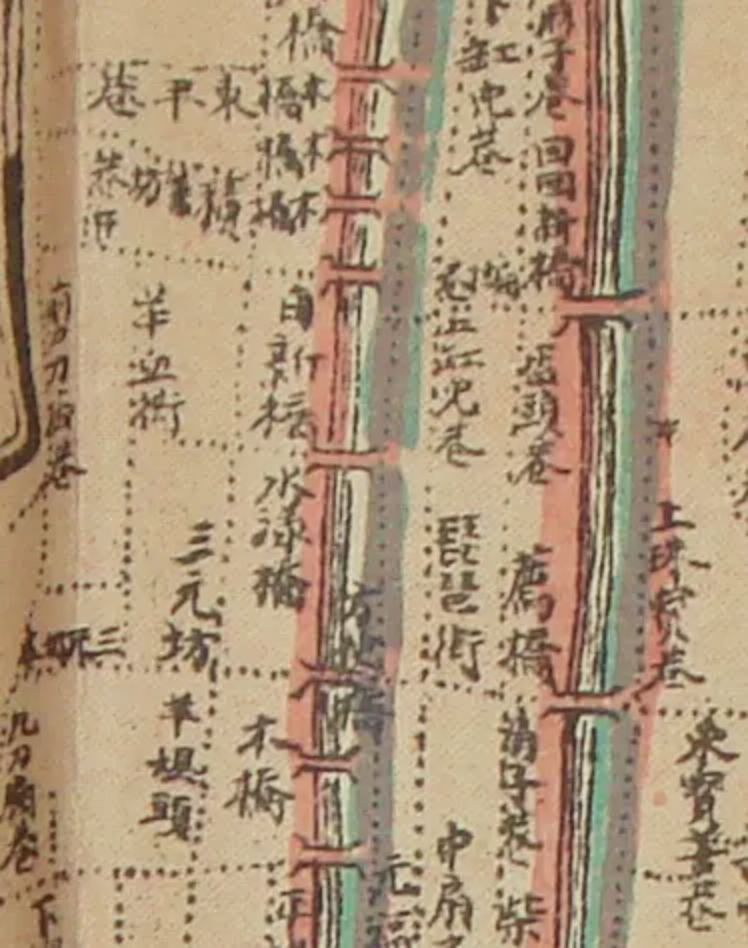
The 1914 map of Hangzhou city and West Lake shows Phoenix Mosque at Yangbatou in the bottom left corner, Hui Muslim New Bridge in the top right, and Jewelry Lane (Zhubaoxiang) in the bottom right.
Jujing Garden, located by West Lake outside Qingbo Gate in Hangzhou, was once a place for the Song Dynasty royal family to tour. After the Yuan Dynasty, it was purchased by Muslims to be used as a cemetery. In 1291 (the 28th year of the Zhiyuan era of the Yuan Dynasty), the Song and Yuan poet Zhou Mi saw a Muslim cemetery at Jujing Garden. In his book Guixin Zashi, he wrote: 'According to the customs of the Hui Muslims, when someone dies... they are buried in Jujing Garden, which is also managed by the Hui Muslims.' This was only 15 years after the Yuan army entered Hangzhou. During the Ming and Qing dynasties, this place was called the 'Foreigner's Grave' (fanhui jiamu) or 'Hui Muslim Grave' (huihui fen). During the Republic of China era, it was known as the 'South Garden Islamic Cemetery' (nanyuan huijiao gongmu) or 'Islamic Public Cemetery' (huijiao yizhong), and it remained there until it was moved in 1953.
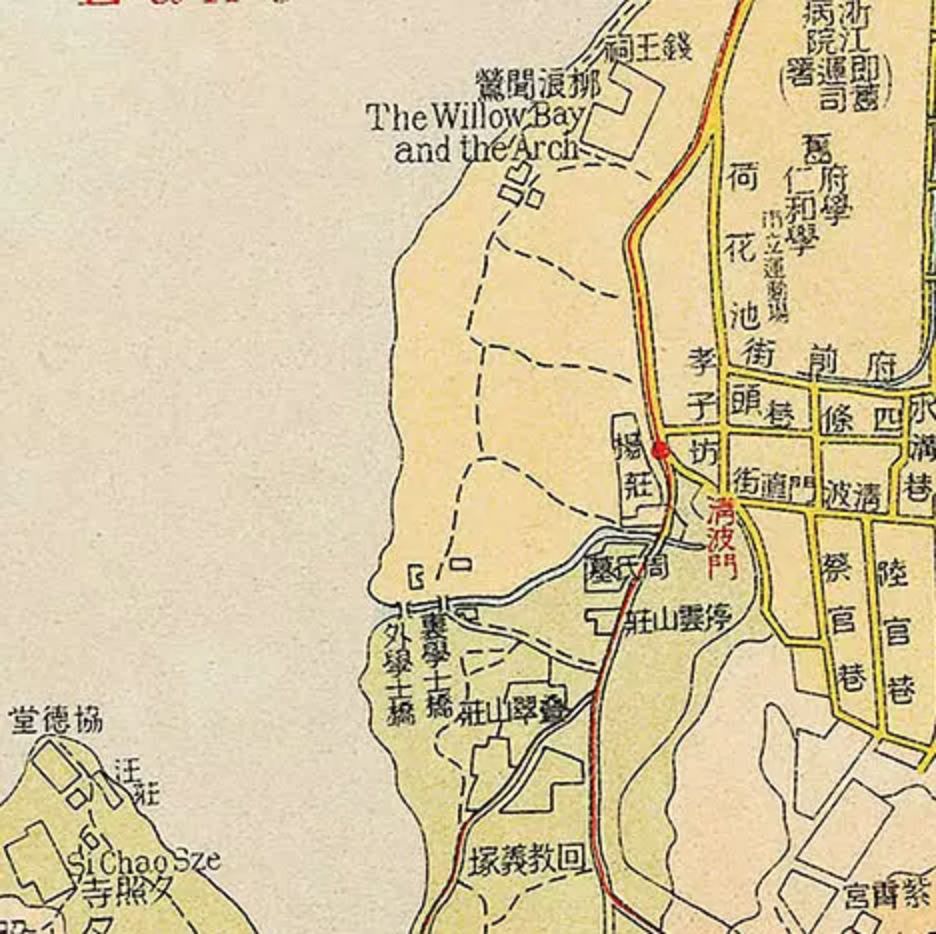
The 1929 survey map of West Lake in Hangzhou shows the Islamic Public Cemetery at the bottom.
The settling of Muslims in Hangzhou during the Ming Dynasty.
During the Yuan Dynasty, Muslims in Hangzhou did not yet consider this place their home. Many Muslim tombstones from the Yuan period feature a Hadith saying, 'To die in a foreign land is to be a martyr.' After entering the Ming Dynasty, maritime trade stopped, and Muslims who had lived in Hangzhou for generations gradually began to settle down and integrate into local life.
The number of Muslims in Hangzhou continued to grow during the Ming Dynasty. Between the Zhengtong and Hongzhi years (1436-1505), Hami in the Western Regions was attacked by the Oirat Mongols many times. Many Hui Muslims moved to Hangzhou as entire families, and many were settled there. Two Hui Muslims from the Western Regions who arrived in the early Ming Dynasty, Shabasi and Mardin, worked for a long time in the salt and grain transport business along the Grand Canal and became wealthy merchants. Their descendants took the surnames Sha and Ma, becoming major Hui Muslim family names in Hangzhou during the Ming and Qing dynasties.
During the Ming Dynasty, the True Religion Mosque (Zhenjiao Si), also known as Phoenix Mosque (Fenghuang Si), remained the largest mosque in Hangzhou and underwent major renovations in 1453 (the fourth year of the Jingtai era).
As the population grew, three new mosques were built in Hangzhou at the end of the Ming Dynasty: Vinegar Workshop Lane Mosque (Cufang Xiang Si, or North Mosque), Board Lane Mosque (Ban'er Xiang Si, or East Mosque), and Bingxiang Lane Mosque. All were founded by a local wealthy Hui Muslim merchant named Ding Dashou. Vinegar Workshop Lane Mosque was later called the Hangzhou North Mosque. It was located on what is now Chufei Lane in the Xiacheng District. It was destroyed during the Taiping Rebellion, and in 1870 (the ninth year of the Tongzhi era), the Phoenix Mosque built houses on the original site to rent out. Board Lane Mosque, also known as the Small Mosque (xiao libai si) or Hangzhou East Mosque, was located on what is now South Jianguo Road. It was the second most important mosque in Hangzhou after the Phoenix Mosque. Many believers came there for Friday prayers (Jumu'ah), and it was also the place where animal sacrifices and funeral rites were usually held. In 1965, part of the building was taken over by the neighborhood committee for a senior citizens' club, and after 1966, it was converted into a neighborhood office building. Bingxiang Lane Mosque was in the northern suburbs of Hangzhou. There are very few historical records about it, and most local Hui Muslims do not know about it, so it likely fell into ruin many years ago.
Besides the three mosques founded by Ding Dashou, there were several other mosques in Hangzhou during the Ming Dynasty. There was a mosque built during the Chenghua period of the Ming Dynasty at Huihui New Bridge, which featured a moon-sighting tower (wangyuelou) and a scripture school (jingwen xuetang), though it is unclear if it had any connection to the Huihui Buddha-worship hall from the Yuan Dynasty. There was also the West Lake Guo Family Bridge Mosque, known as the West Mosque. The West Lake Mosque, also called the West Lake Small Mosque and the Hangzhou West Mosque, was located north of the previously mentioned Hui Muslim cemetery. It was used for handling funeral arrangements for Hui Muslims. In 1954, it was moved along with the Hui Muslim cemetery to Jingshan Ridge in Liuxia Town, and it stopped being used after 1966.
The stable development of Hangzhou Muslims during the Qing Dynasty.
After the Qing Dynasty began, the Muslim community in Hangzhou was relatively stable. The True Religion Mosque (Zhenjiao Si) underwent repairs during the reigns of the Shunzhi, Kangxi, Qianlong, and Guangxu emperors. the Hangzhou South Mosque was built on Wukui Lane. After the 1950s, the South Mosque on Wukui Lane was converted into housing for Muslims. It was closed in 1958 and handed over to the housing management department for leasing. By this time, Qing Dynasty Hangzhou had five mosques: East, West, South, North, and Central (the Central one being Phoenix Mosque). Phoenix Mosque was the main mosque, while the others were smaller mosques subordinate to it. The leaders and imams of the smaller mosques were appointed by the main mosque. The smaller mosques were for the convenience of the community to perform their five daily namaz prayers, while Friday congregational prayers, festival prayers, and other major religious ceremonies had to be held at the main mosque.
The biggest change for Hui Muslims in Hangzhou during the Qing Dynasty was their shift from wealthy merchants involved in overseas and canal trade during the Yuan and Ming dynasties to ordinary people running small businesses. Their business scope changed from jewelry, spices, silk, and porcelain to halal food. Many people worked full-time in beef and mutton slaughtering, pastry making, running restaurants, and selling snacks. The Qing Dynasty collection of poems, Wulin Zashi Shi, praised Hangzhou Hui Muslim snacks: 'The flour is so fine it rivals pearls and jade, kneaded by hand to look whiter than frost and snow.' If you ask whose snacks are the most delicate, they are the ones made by Ye Shouhe in front of the mosque.
Additionally, the 1863 (second year of the Tongzhi reign) book Hangsu Yifeng, in the food section, wrote: 'Mutton soup restaurants are Muslim eateries.' They specialize in selling mutton products. The sheep are skinned and deboned, then stewed until tender and cut into pieces. Each piece costs four wen, and they are divided into pepper-salt style and plain style. There are also intestines, lungs, and hearts, which are chopped up and served in a bowl with broth, known as 'mixed offal soup' (zashui). A single bowl costs six wen, and a double bowl costs fourteen wen. Snacks like kidneys and liver, spinal cord and brains, intestines and tripe, trotters, tongue, and taiji-shaped cakes (taijitu) cost twenty-eight wen per plate; for meat pieces, eating two pieces only costs six wen. You can order any amount of dried meat slices (ganpianer) per plate, or put them in broth to make sliced meat soup (pianzi tang). The main dishes like braised meat and mixed offal soup always come from the sheep. The liquor is sorghum wine, and snacks include shredded meat, spring pancakes (chunbing), boiled dumplings (shuijiao), and steamed dumplings (shaomai).
Besides mutton, there are small stalls selling spiced beef, beef heart, beef liver, beef trotters, and beef vermicelli (niurou fenxian), carried on shoulder poles with a sign hanging that reads 'Halal Faith' (Qingzhen Jiaomen).
The final prosperity of Muslims in Hangzhou during the Republic of China era.
During the Republic of China era, there were four or five hundred Hui Muslim households in Hangzhou, scattered throughout the city. Besides the common people who mostly ran halal food businesses and sold daily necessities, there were also some wealthy merchants, such as the Jin family who dealt in jewelry, the Zhang family in sericulture and silk, the Feng family who ran a match factory, and the Xuan family who ran a soy sauce shop.
Except for the North Mosque (Qingzhen Beisi) which was destroyed during the Taiping Rebellion, there were four mosques in Hangzhou during the Republic of China era: the Phoenix Mosque (Fenghuang Si) and three smaller mosques in the east, west, and south. In 1928, the main hall and the Moon-Watching Tower (Wangyue Lou) of the Phoenix Mosque were destroyed due to road construction. In the same year, when the city wall was demolished to build the lakeside road, some ancient graves in the Nanyuan Hui Muslim cemetery were forced to relocate, and the Yong'an Hui Muslim cemetery was newly built at Lingfeng, Yuquan, West Lake in 1934.
In 1914, the modern 'Hangzhou Muxing Primary School' was founded inside the Phoenix Mosque. It taught cultural subjects according to the regulations of the Ministry of Education of the Republic of China, and held an Arabic religious class every afternoon, taught by the imam and the head of the Phoenix Mosque. Muxing Primary School accepted students regardless of whether they were Hui or Han, or their gender, as long as they were of school age, but it stipulated that Hui Muslims were exempt from tuition and miscellaneous fees.
In 1928, the Muxing Junior High School was founded inside the Phoenix Mosque, and it later moved to the Chouye Guild Hall at Yintong Bridge. The school had three junior high classes divided into spring and autumn groups, and Hui Muslims were also exempt from tuition and miscellaneous fees. Muxing Middle School has eight full-time teachers. They teach Chinese, math, science, history, geography, art, physical education, and general knowledge. They also regularly offer Hui Muslim students classes on basic Islamic teachings and introductory Arabic.
Since the end of the Qing Dynasty and the beginning of the Republic of China, more and more Hui Muslims moved to Hangzhou from northern provinces like Shandong, Henan, and Hebei. Most left their hometowns and brought their wives and children to Hangzhou to make a living because they had no other choice. Because they lacked capital, most worked as small vendors selling halal food and daily necessities. At that time, you could often see stalls on the streets of Hangzhou with wooden signs saying "Halal" selling flatbread (dabing), fried dough sticks (youtiao), tea eggs, smoked chicken, braised duck, steamed buns (mantou), and dumplings (shuijiao). Some people grew their small stalls into snack shops and later into restaurants, which helped the halal food industry in Hangzhou thrive during the Republic of China era.
Famous halal restaurants in Hangzhou during the Republic of China period included Chunhuayuan, Xileyuan, Zheyi Guan, Xiyue Guan, and Xiyi Guan. Most focused on lamb, braised duck, and vegetarian dishes. Zhong Yulong, a Hangzhou native, was raised in a Hui Muslim family and knew a lot about the Muslims in Hangzhou during the Republic of China. In his book "Speaking of Hangzhou," he wrote: "Xileyuan and Chunhuayuan near Yangbatou are old-fashioned lamb soup restaurants. When customers sit down, they are first served lamb offal soup (yangzasui tang), which is made by chopping up lamb intestines, lungs, and hearts and serving them in a bowl with broth." Depending on the portion size, there are single bowls and double bowls. If you want the full set, you get a small plate each of lamb liver, kidney, eye, tongue, tripe, testicle, brain, and marrow. Otherwise, you can order whatever you like. Regulars use code names for these dishes. For example, lamb testicle is called 'fengtiaoyu,' lamb eye is 'liangdong'r,' lamb brain is 'taijitu,' lamb tongue is 'koutiao,' and fatty lamb meat is 'tuobai,' and so on. After the victory in the War of Resistance Against Japan, each plate cost 2,000 yuan in legal tender, with lamb testicle costing double that. Staple foods included steamed buns (mantou) served with lamb soup, as well as small lamb noodles and lamb steamed dumplings (shaomai). "Speaking of Hangzhou" also records the fried dough (youxiang) of Hangzhou Muslims: "There are two types of fried dough. One is made by grinding sugar and flour into a thin, plate-sized pancake and deep-frying it in oil." The other is made by shaping flour into small cakes with filling inside, pressing them with a mold, and then deep-frying them. Both taste excellent.
Phoenix Mosque (Fenghuang Si)
Phoenix Mosque is located on Zhongshan Middle Road, at the north end of what is now the Southern Song Imperial Street. Historically, it was called the Mosque (libaisi), True Religion Mosque (zhenjiaosi), Huihui Hall (huihuitang), and Orthodox Mosque (zhengjiaosi). The name Phoenix Mosque first appeared on the 1892 (18th year of the Guangxu reign) "Stele Record of the Renovation of the True Religion Mosque."
There is currently a lot of debate about when Phoenix Mosque was built. The direct evidence comes from three Ming and Qing dynasty renovation steles and two Ming dynasty books. A stele from 1493 (the 6th year of the Hongzhi reign of the Ming Dynasty) records: The mosque was founded in 1281 (the Xinsi year of the Zhiyuan reign of the Yuan Dynasty). The Hui Muslims have guarded it for generations.
A stone tablet from 1648 (the fifth year of the Shunzhi reign) records that the True Teaching Mosque (Zhenjiao Si) in Wulin was founded in the Tang Dynasty and has lasted for several hundred years through the Song, Yuan, and Ming dynasties.
A stone tablet from 1670 (the ninth year of the Kangxi reign) records that it was founded in the Tang Dynasty and destroyed at the end of the Song Dynasty. In 1281 (the Xinsi year of the Yuan Dynasty), a master named Alaoding came from the Western Regions, stopped in Hangzhou, saw the ruins, felt moved, and donated gold to rebuild it.
The Records of West Lake Travels (Xihu Youlan Zhi), printed in 1547 (the 26th year of the Jiajing reign), records that the True Teaching Mosque (Zhenjiao Si) is south of Wenjin Lane and was built by the Hui Muslim master Alaoding during the Yanyou period (1314-1320) of the Yuan Dynasty.
The Ming Dynasty book Wulin Buddhist Records (Wulin Fanzhi) records that the True Teaching Mosque (Zhenjiao Si) is south of Wenjin Lane and was built by the Hui Muslim master Alabudan during the Yanyou period (1314-1320) of the Yuan Dynasty.
Looking at these five documents, the Phoenix Mosque (Fenghuang Si) was likely built between the Southern Song Dynasty and 1281. Very few Muslims who came to Hangzhou during the Tang and Five Dynasties periods settled there, and no reliable historical records have been found to date. Therefore, the claim that it dates back to the Tang Dynasty is too early and likely a later fabrication. During the Yanyou period, the number of Muslims living in Hangzhou was already high. They had formed a sizable Muslim community and had their own cemetery, so saying the mosque was built at this time is a bit too late.
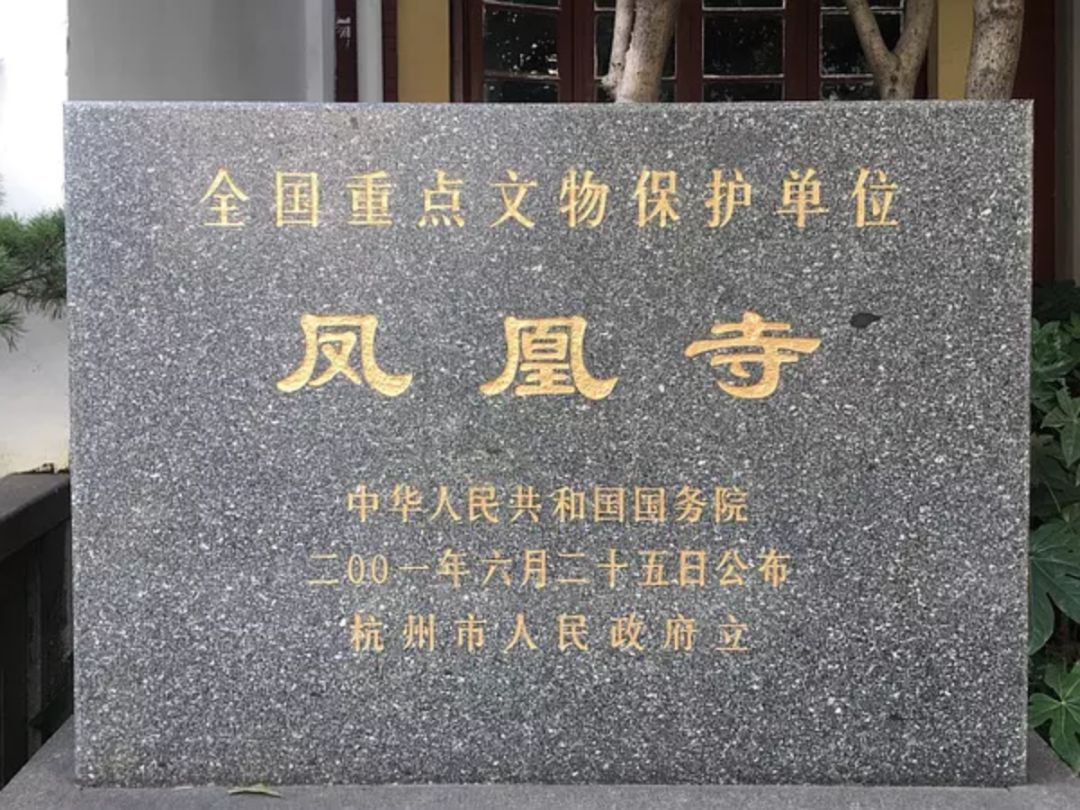
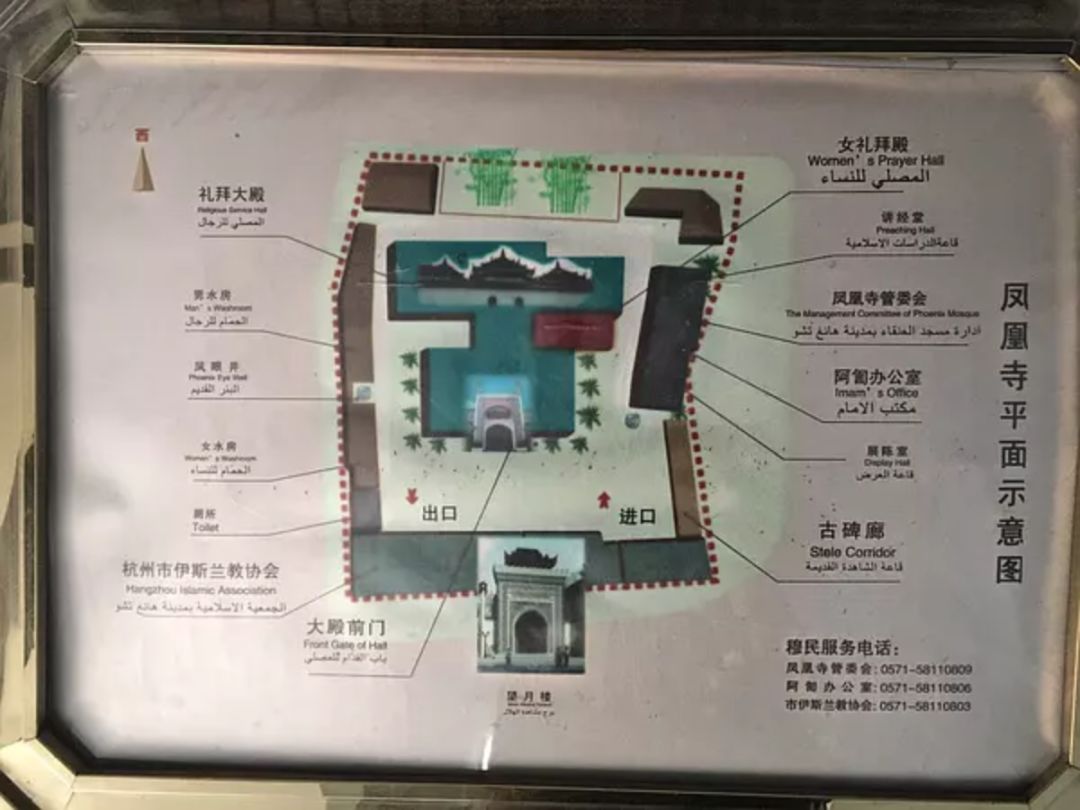
According to Ji Si in The Islamic Architecture of Hangzhou: Phoenix Mosque, the main gate of the Phoenix Mosque was originally over 10 meters high. The lintel was inlaid with Arabic brick carvings, the sides of the pointed arch gate were covered with decorative tiles, and there were two lotus-shaped columns.
In 1929, Hangzhou demolished the main gate, the Moon-Watching Tower (Wangyue Lou), the stone-carved corridor leading to the front hall, and the pair of stone birds in front of the gate to renovate Zhongshan Middle Road.
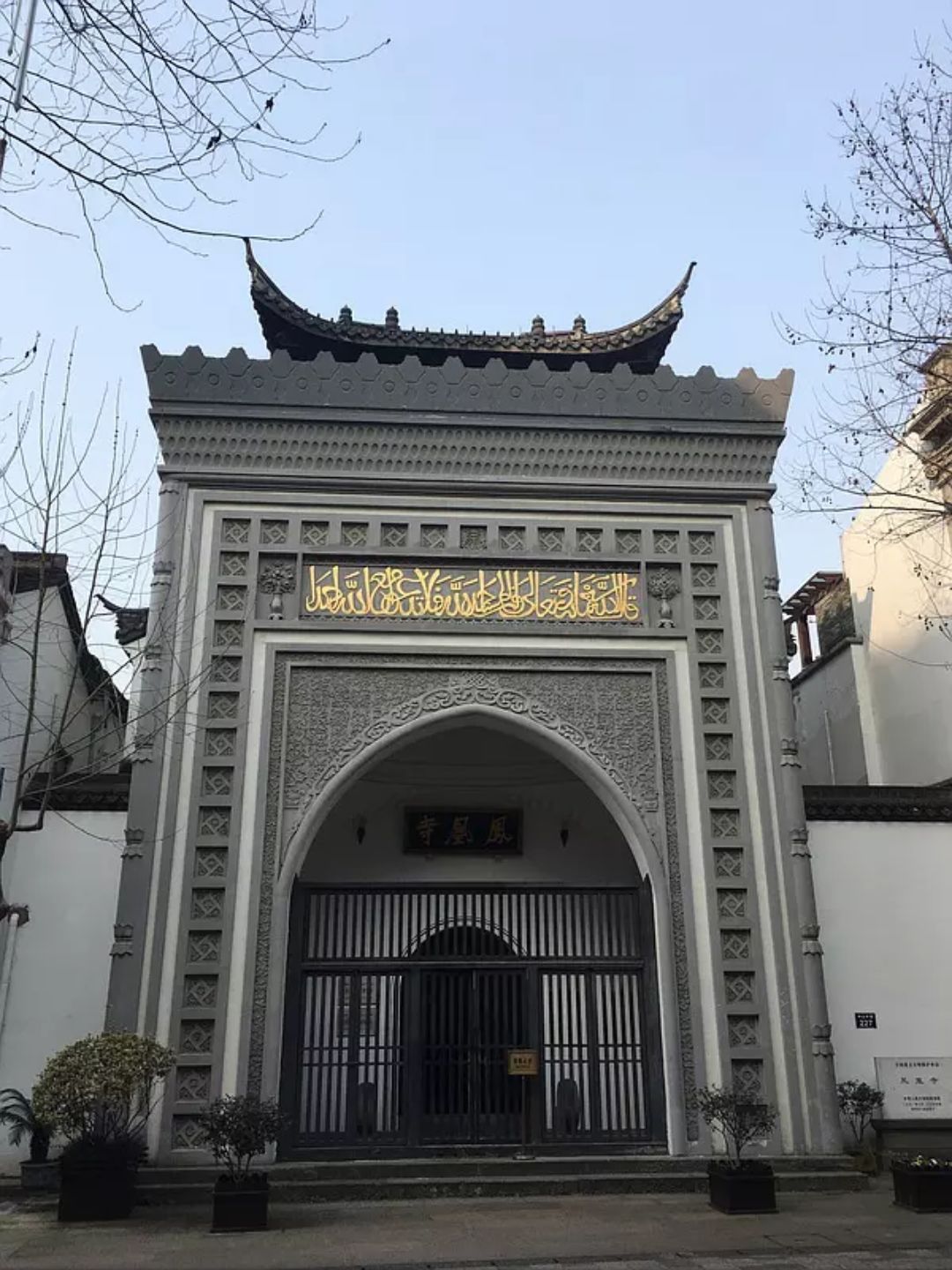
The old photo of the original Phoenix Mosque main gate shared on the Zhejiang Islamic Association website has been carefully preserved for generations by elders like Zhang Wenlie in Hangzhou.
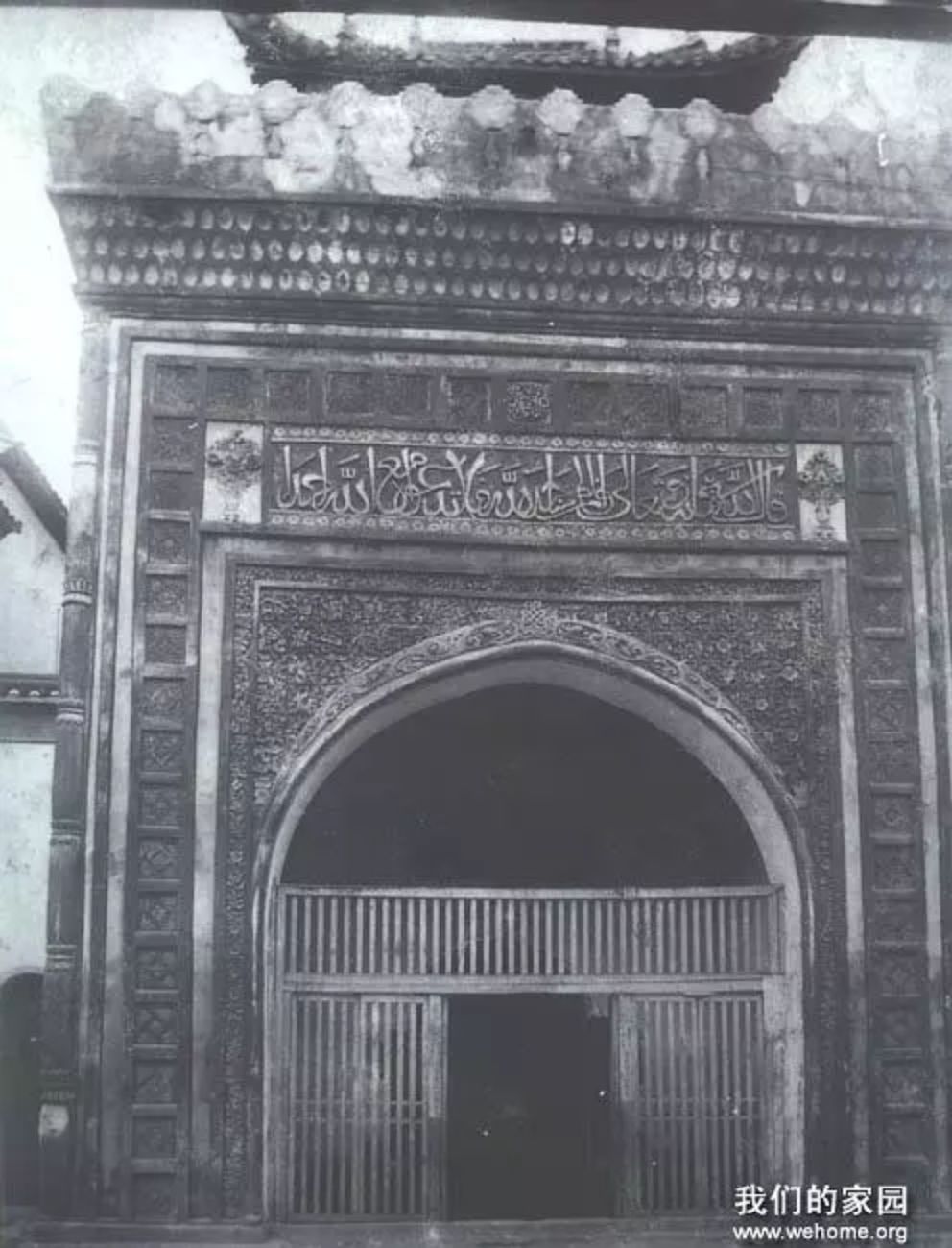
Moon-Watching Tower (Wangyue Lou)
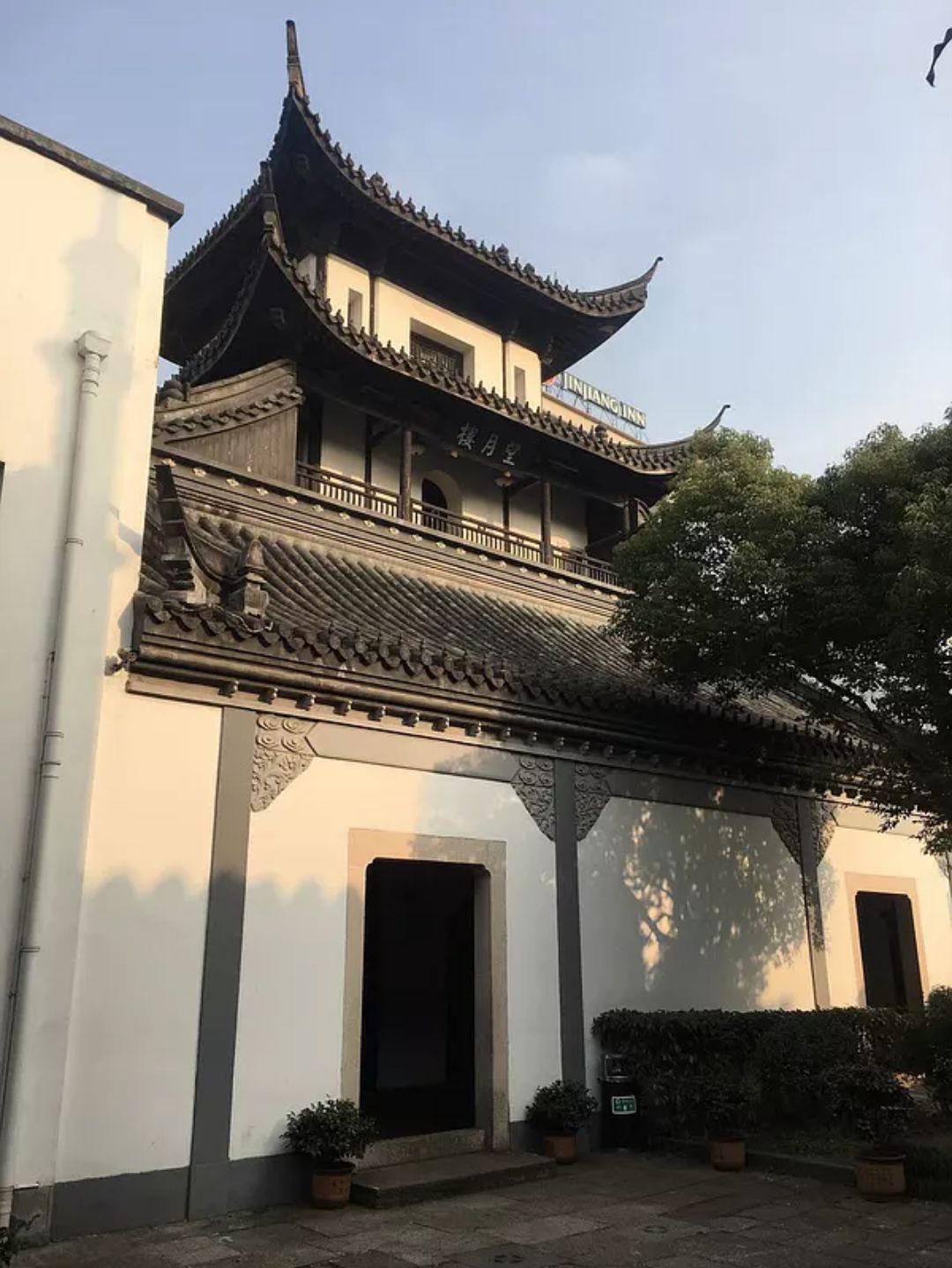
The old photo of the original Phoenix Mosque Moon-Watching Tower (Wangyue Lou) shared on the Zhejiang Islamic Association website has also been carefully preserved for generations by elders like Zhang Wenlie in Hangzhou.
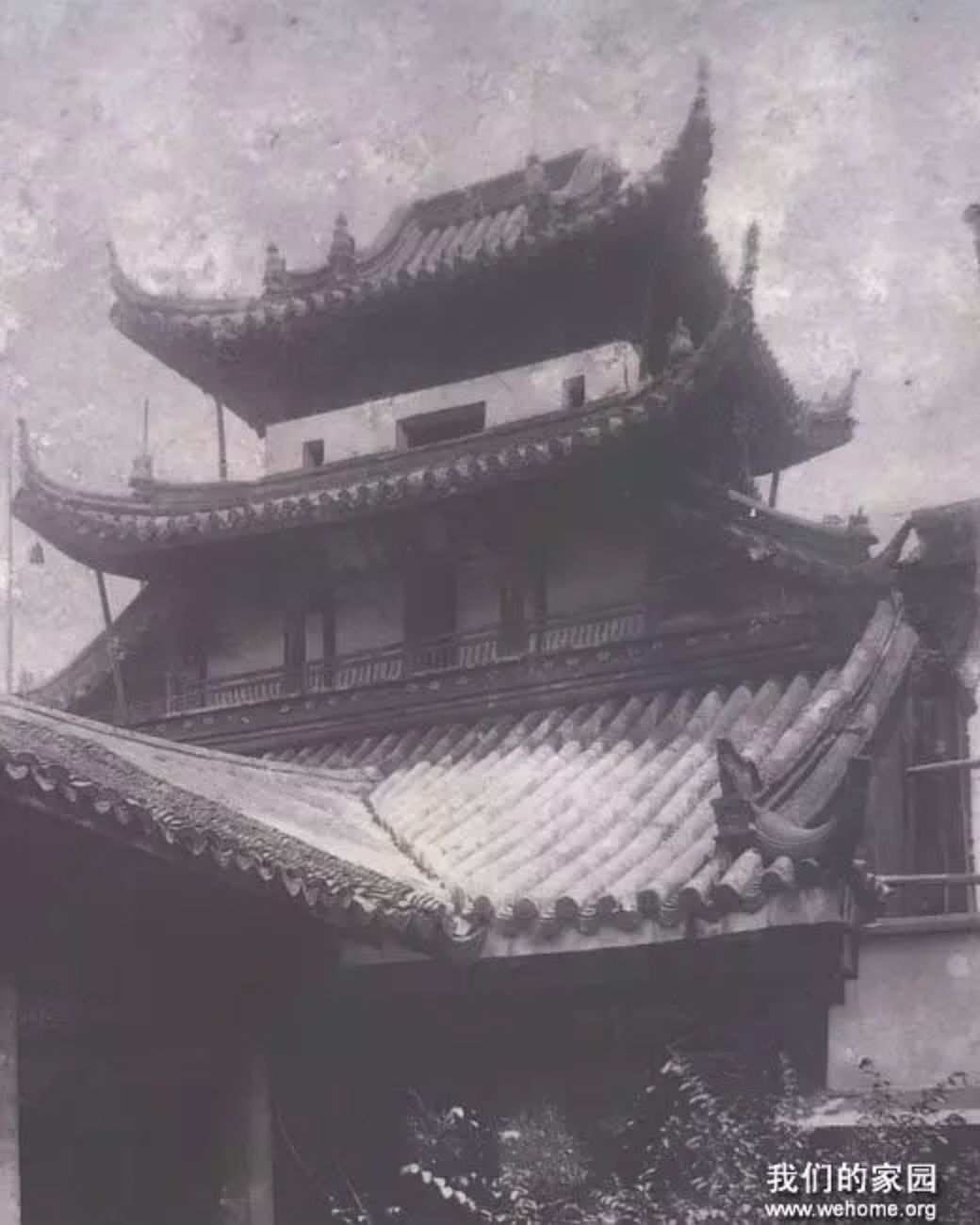
During the 1953 renovation of the main hall, the front hall was demolished and rebuilt with a concrete structure and red brick walls.
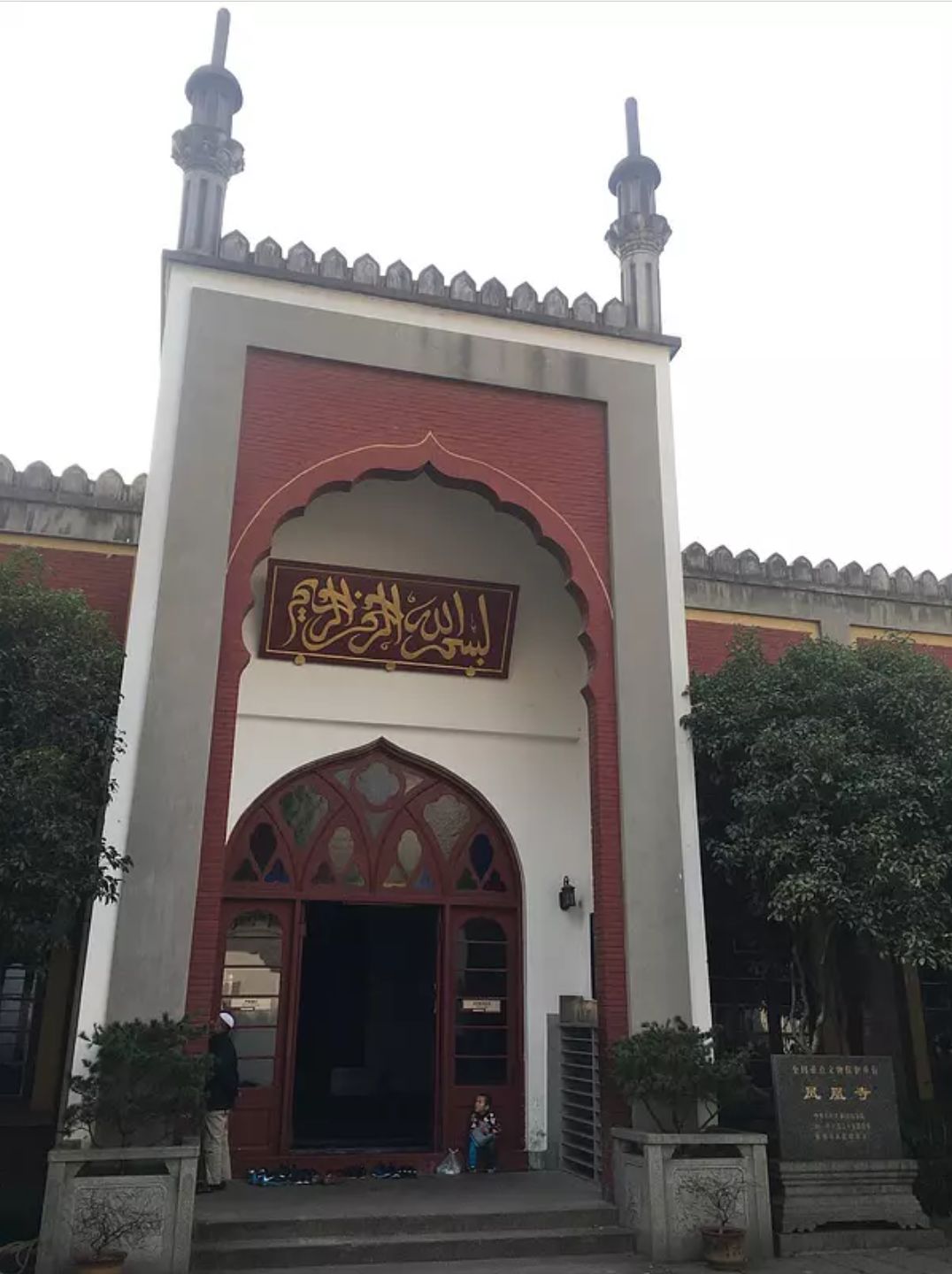
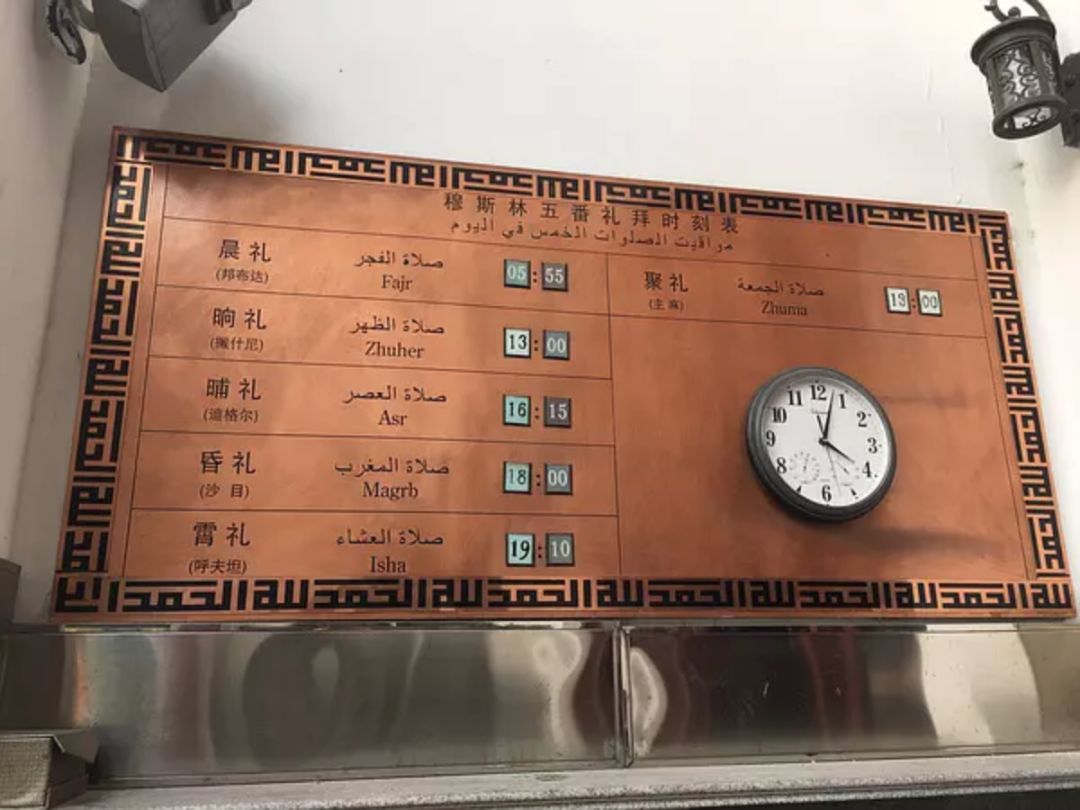
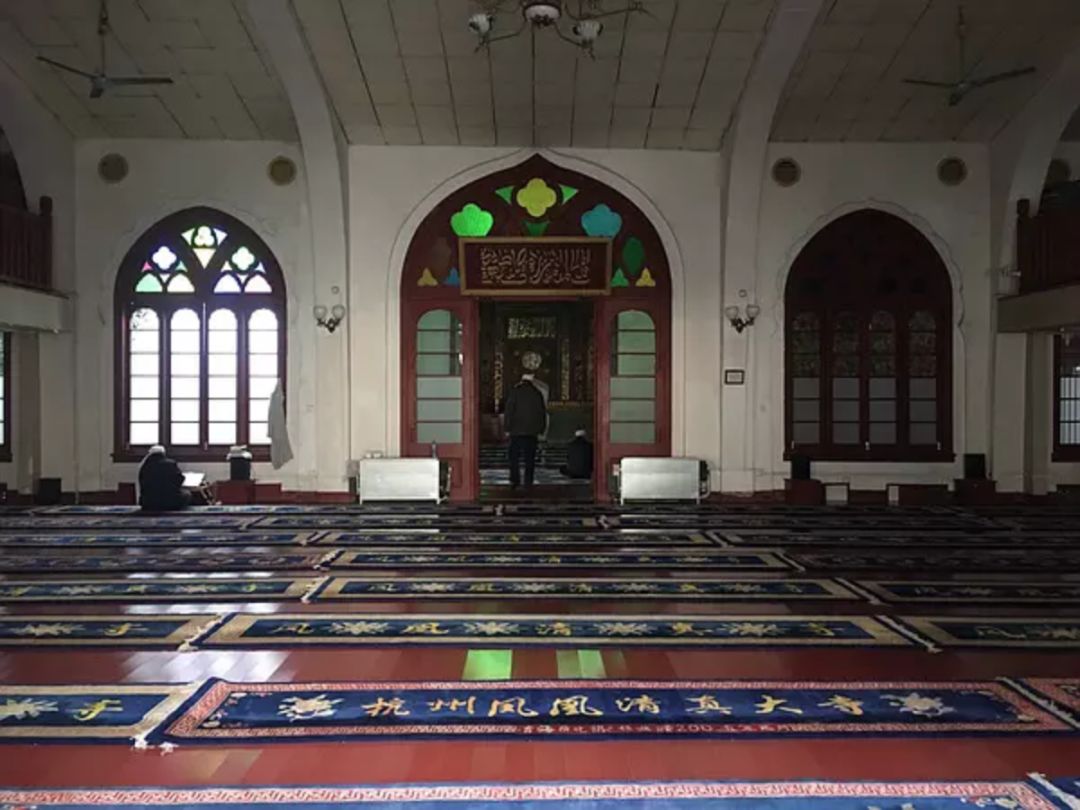
The rear main hall is the only remaining Yuan Dynasty structure of the Phoenix Mosque. It is narrow from east to west and wide from north to south, maintaining the traditions of early West Asian mosques. The entire hall is a brick structure without wooden beams, so it is also called the Beamless Hall (Wuliang Dian).
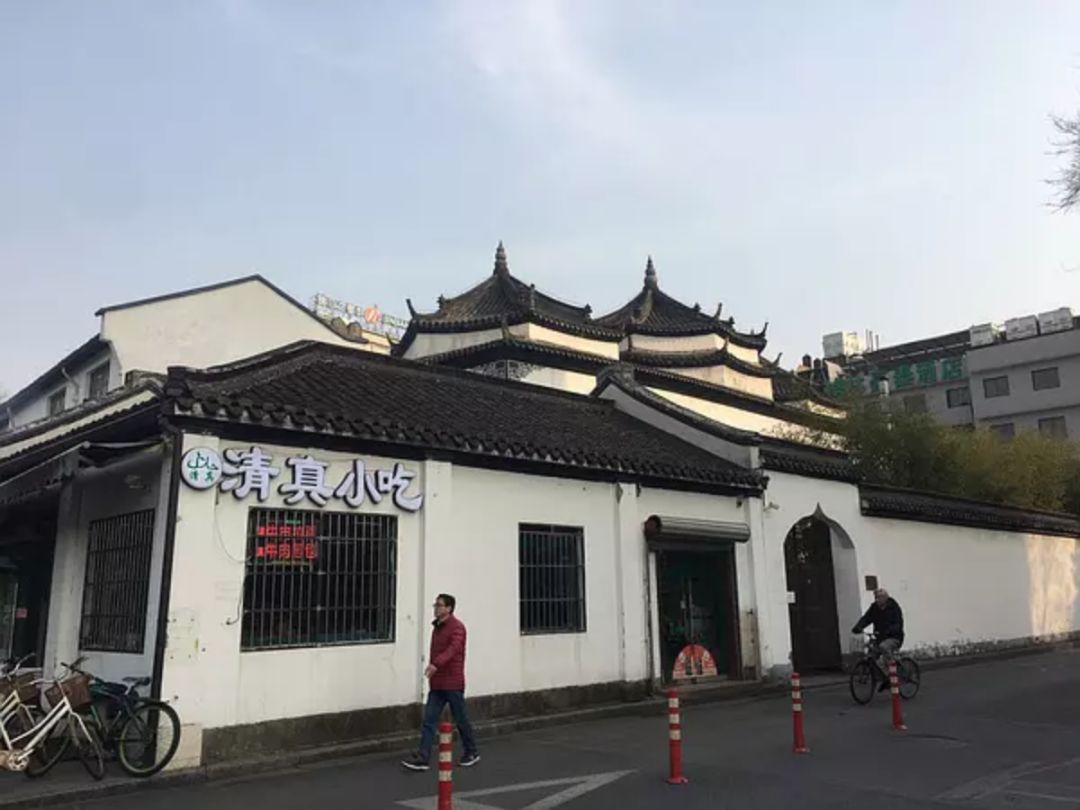
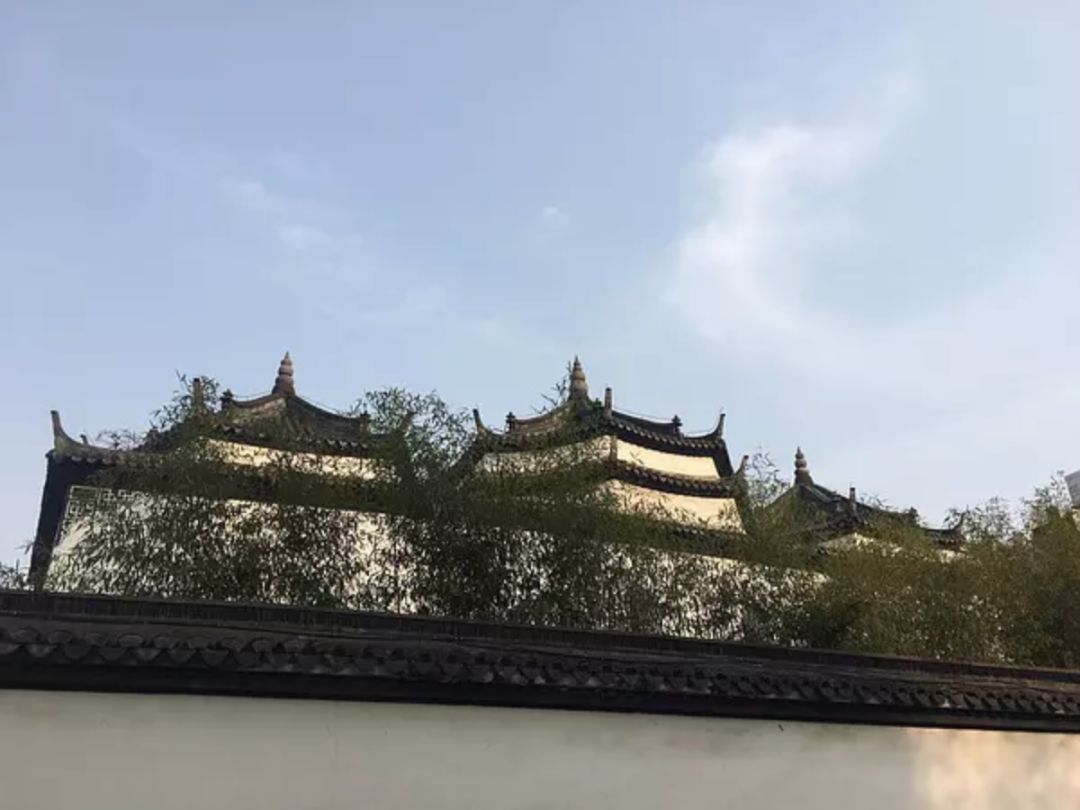
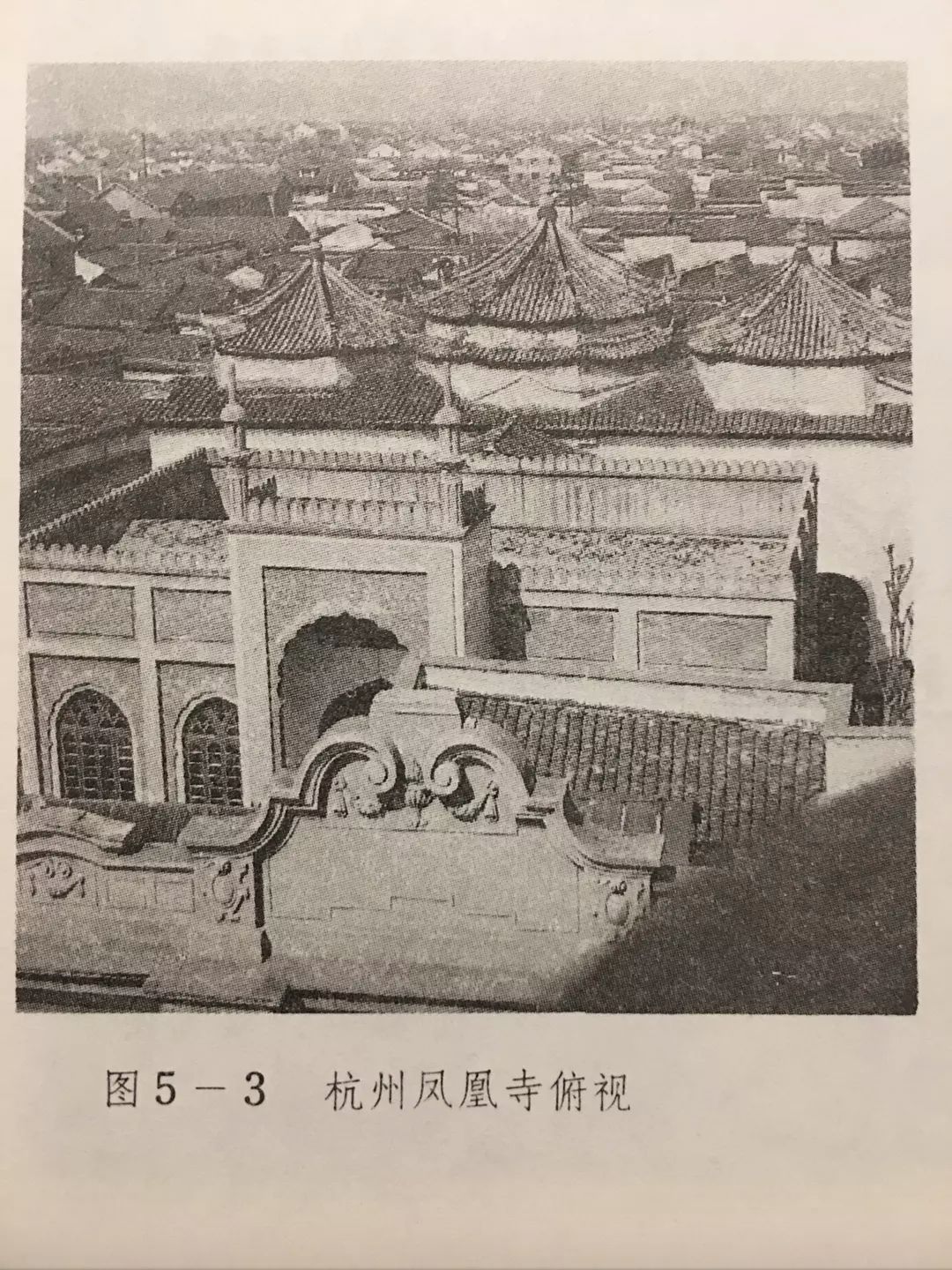
Professor Liu Zhiping took this photo of Phoenix Mosque (Fenghuang Si) in 1960, as featured in the book Islamic Architecture in China.
The Foreigner's Return Cemetery (Fanhuijia Mu).
As mentioned at the start of this article, the Jujing Garden by West Lake outside Hangzhou was once a place for the Song Dynasty royal family to tour. During the Yuan Dynasty, Muslims bought it to use as a cemetery. In the Ming and Qing Dynasties, it was called the Foreigner's Return Cemetery (Fanhuijia Mu) or the Hui Muslim Cemetery (Huihui Fen). During the Republic of China era, it was known as the South Garden Muslim Cemetery (Nanyuan Huijiao Gongmu) or the Muslim Public Graveyard (Huijiao Yizhong).
According to the preface titled A Witness to the Times in the book Interpretation and Translation of Arabic and Persian Inscriptions in Hangzhou Phoenix Mosque by Liu Yingsheng, the Hangzhou municipal government moved the cemetery in May 1953 to develop the West Lake scenic area. Since many of these were ancient graves from before the Qing Dynasty with no one to claim them, Phoenix Mosque took charge of collecting and handling the remains and tombstones. The remains were wrapped in white cloth and placed in wooden boxes one meter long and half a meter wide. For those with names, a wooden sign was written and attached to the box, and they were all buried together in the Hui Muslim cemetery at Jingshan Ridge in Liuxia Town. The unearthed stone tablets were categorized and numbered based on their stone type and content. After moving the graves from the higher ground, workers found layer upon layer of ancient graves while digging soil to raise the embankments for Mid-Lake Pavilion (Huxin Ting), Ruandun, and Autumn Moon over the Calm Lake (Pinghu Qiuyue). Later, more graves were discovered in other places beneath the soil layers where the relocation had already been completed. Before the relocation, it was estimated that the Hui Muslim Cemetery (Huihui Fen) held over 2,000 graves, but in reality, there were often more graves buried underneath them. Due to budget limits, these deeper ancient graves were not moved and remain buried deep within the West Lake scenic area.
During the relocation of the Hui Muslim Cemetery (Huihui Fen) from May to October 1953, fifty or sixty Arabic and Persian tombstones were found and transported to Phoenix Mosque for safekeeping, though many were lost later. A stone tablet gallery was built inside Phoenix Mosque in 1977, and it currently houses 20 Arabic and Persian tombstones and one mosque tablet.
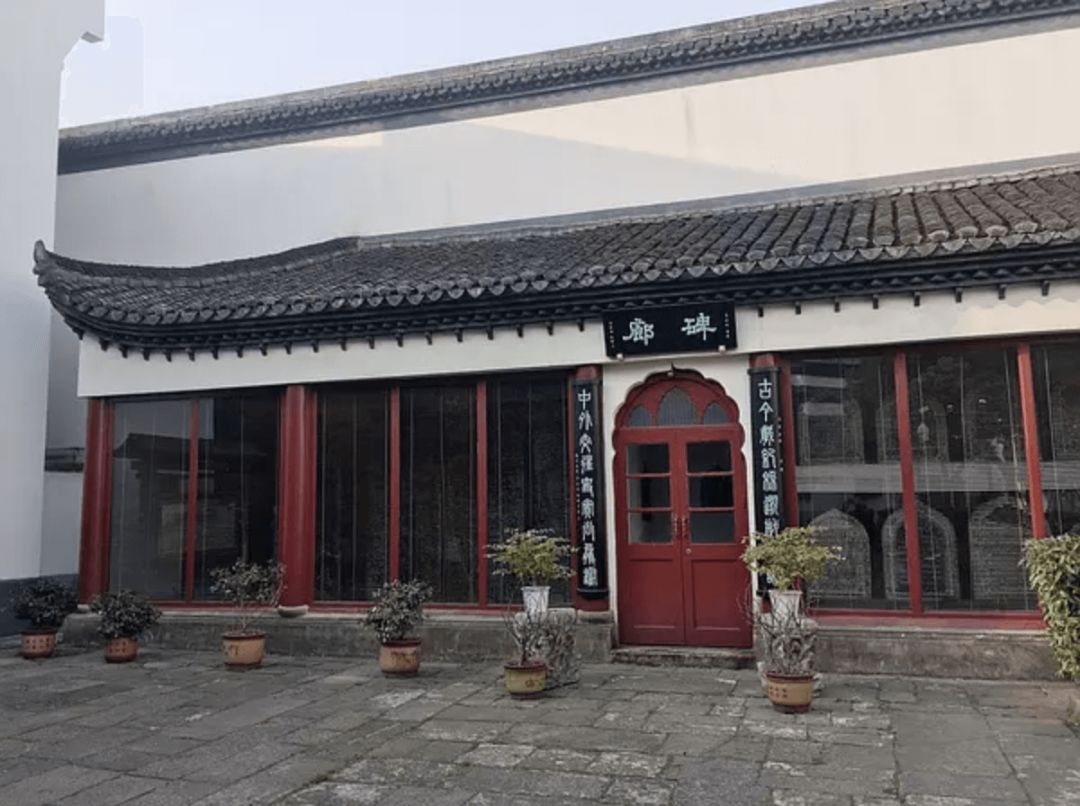
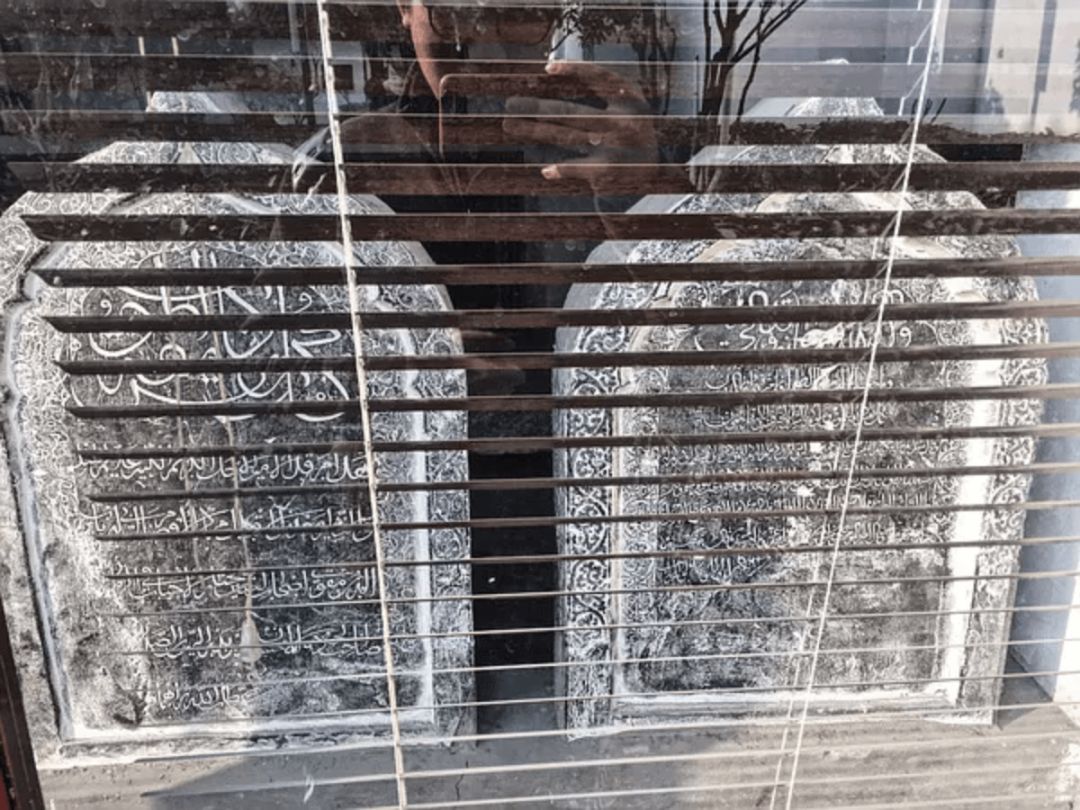
The book Interpretation and Translation of Arabic and Persian Inscriptions in Hangzhou Phoenix Mosque provides detailed readings of these 20 tombstones. The author of this book, Alexander Morton, is a lecturer in the Department of Iranian Studies at the School of Oriental and African Studies, University of London. He grew up in Iran, loves Persian culture and history, has long studied Islamic inscriptions in the Middle and Near East, and is an expert on Islamic inscriptions.
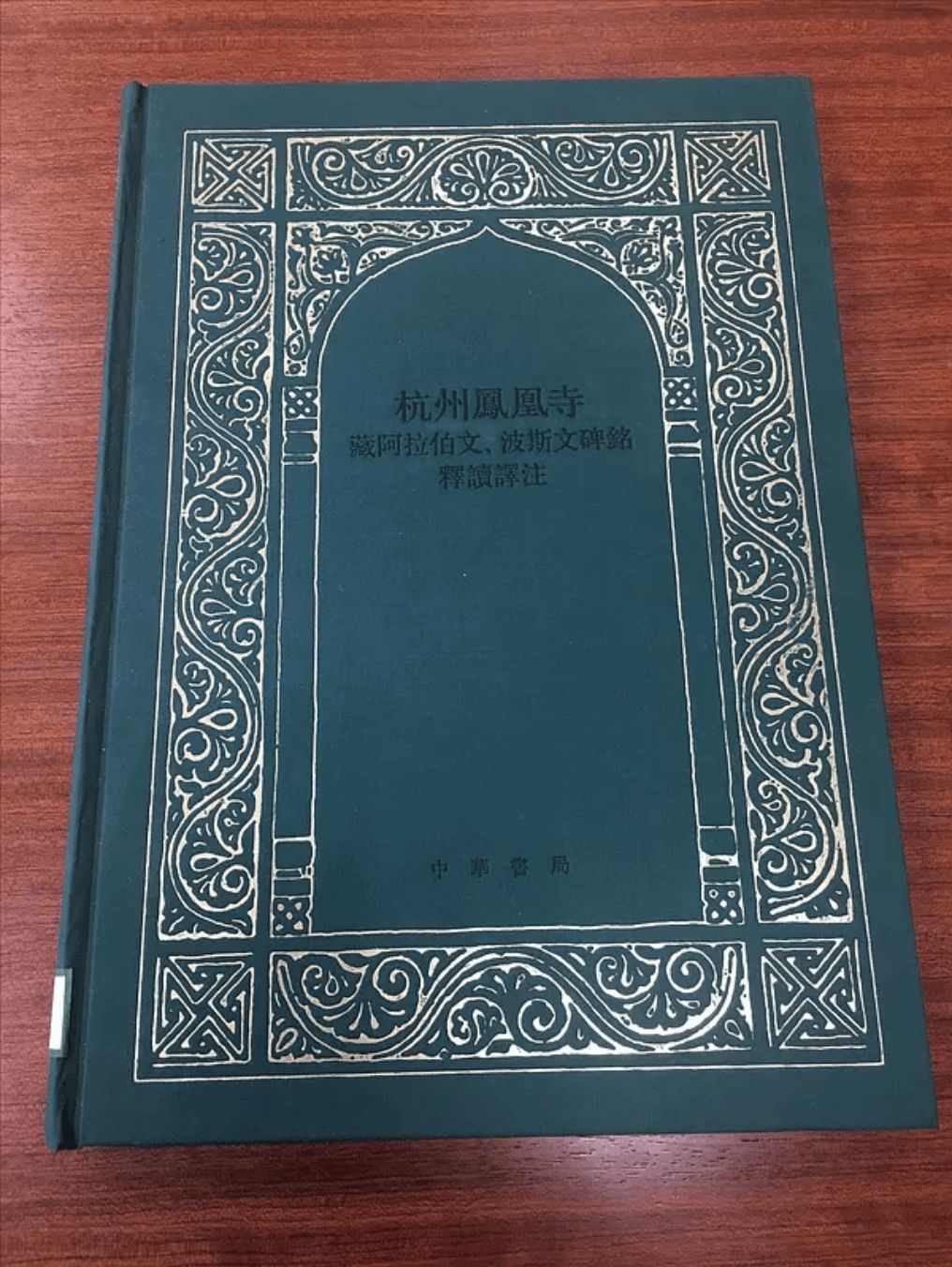
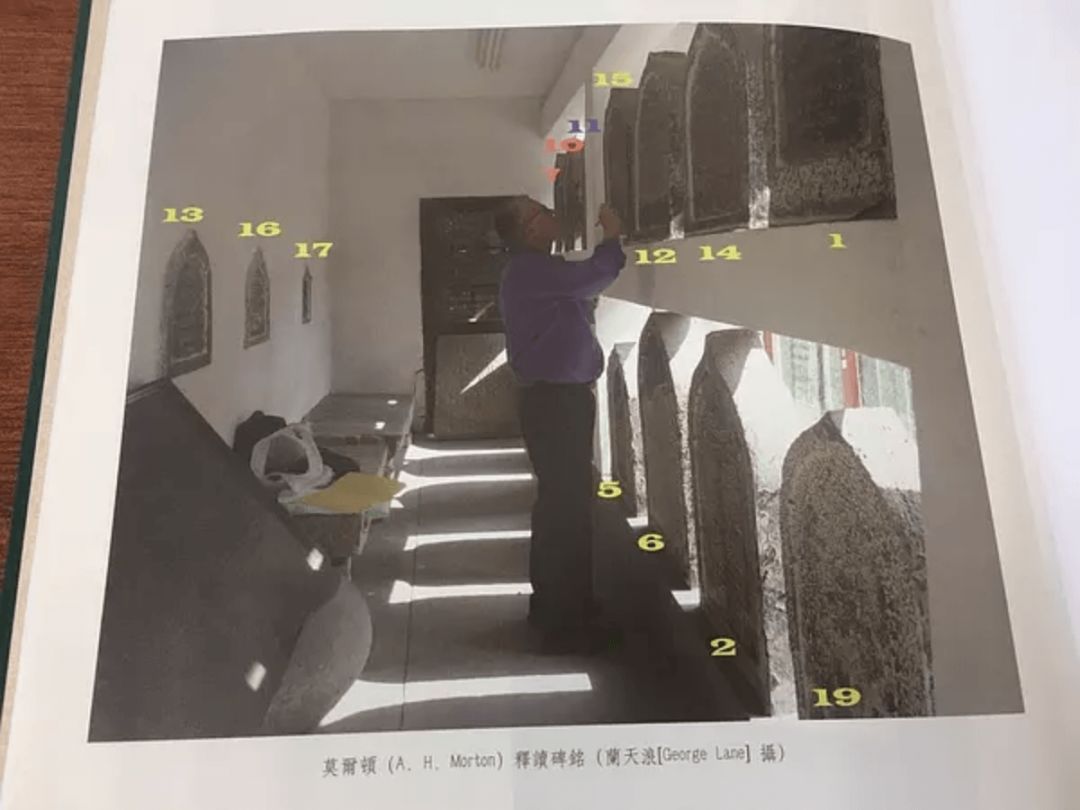
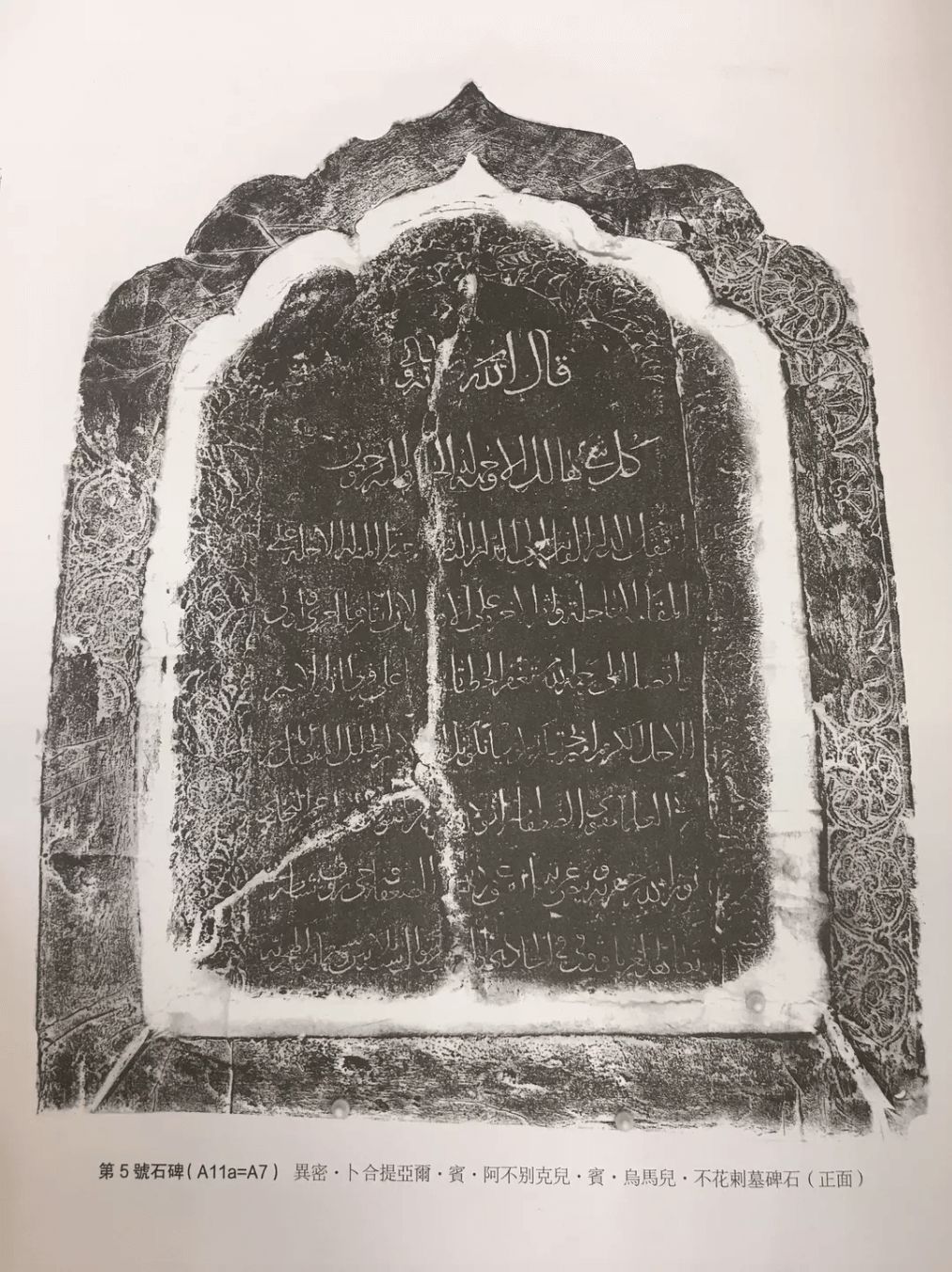
The basic information for the owners of 11 of these tombstones is summarized below.
The owner of stone tablet No. 1 is named Khawaja Husam al-Din, who passed away on October 28, 1307 (the 11th year of the Dade era of the Yuan Dynasty). He traveled to many countries and was in the prime of his life when he died. Khawaja is a title often used by high-ranking merchants, ministers, and dignitaries in Islamic society. Husam al-Din means 'Sword of the Faith,' where al-Din means 'religion' or 'faith'.
The owner of stone tablet No. 2 is named Shams al-Din Muhammad bin Ahmad bin Abi Nasr al-Isfahani, who passed away on September 24, 1316 (the 3rd year of the Yanyou era of the Yuan Dynasty). The name Isfahani in the History of Yuan refers to the famous ancient Iranian city of Isfahan. Shams al-Din was a great merchant from Isfahan who engaged in maritime trade between Persia and China, and his name was known to the khans of the Ilkhanate who ruled Iran at that time.
The owner of stone tablet No. 3 is named Khawaja Muhammad, who passed away on March 20, 1317 (the 4th year of the Yanyou era of the Yuan Dynasty). Muhammad is the modern spelling of the name. His father was named Arsalan Khanbaliqi. Arsalan translates to 'lion' in Turkic, so his family likely originated from a Turkic background. Khanbaliqi was the name used by Turkic people for the Yuan capital, Dadu. Construction of Dadu began in 1267 and was completed in 1284, which indicates his family settled there after that time.
The owner of tombstone No. 4 is named Khawaja Ala al-Din bin Khawaja Shams al-Din al-Isfahani, who passed away on May 16, 1327 (the 4th year of the Taiding era of the Yuan Dynasty). Ala al-Din is the modern spelling of the name.
The owner of stone tablet No. 5 is named Amir Bakhtiyar bin Abu Bakr bin Umar al-Bukhari, who passed away on August 7, 1330 (the 1st year of the Zhishun era of the Yuan Dynasty). Amir is a title for a military officer. Bukhara in the History of Yuan refers to the ancient city of Bukhara in modern-day Uzbekistan.
The owner of stone tablet No. 6 is named Mahmud bin Muhammad bin Jamal al-Din al-Khorasani, who passed away in 1351 (the 11th year of the Zhizheng era of the Yuan Dynasty). Jamal al-Din means 'Beauty of the Faith.' He was an Islamic scholar (alim) from Khorasan in northeastern Iran, was well-versed in Islamic law, and both his parents were descendants of the Prophet Muhammad.
The owner of stone tablet No. 7 is named Mahmud bin Mahma bin Ahma Simnani. He was a Sufi merchant who traveled widely. He visited Syria (Scham) and Iraq (which covered a much larger area then and could also refer to coastal regions), and he reached the area near Mecca. Simnan is located east of Tehran, the capital of Iran, and is the hometown of the famous Persian Sufi Sheikh Ala al-Dawla Simnani.
The owner of stone tablet No. 8 is named Emir Badr al-Din. Badr al-Din means 'full moon of the religion'. His father was named al-Sadr, which is usually an honorific title given to civil officials or other secular dignitaries.
The owner of stone tablet No. 9 is named Khwaja Jalili. Jalili is later translated as Jalal, which originally means 'glory' or 'prominence'.
The owner of stone tablet No. 10 is named Shihab al-Din Ahma bin Abdullah Halabi. Shihab al-Din appears frequently in Yuan Dynasty historical records and means 'star of the religion'. Halabi refers to the ancient city of Aleppo (Halab) in modern-day Syria, a city that has suffered severe damage in the recent Syrian civil war.
The owner of stone tablet No. 11 is named Taj al-Din Yahya, who died at the age of 41. His father was named Mullah Burhan al-Milla wa al-Din, an outstanding imam. Taj al-Din means 'crown of the faith', and Yahya is the Arabic form of John the Baptist from the New Testament as it appears in the Quran. Burhan means 'witness', and al-Milla wa al-Din means 'the community and the faith'.
The tomb of the Hui Muslim sage Bakhtiyar.
On the site of the Fan Hui Jia tomb, there is another Muslim relic, the tomb of the Hui Muslim sage Buhetiyaer. On March 12, 1924, the Shanghai newspaper Shen Bao reported a story titled Police Chief Preserves Ancient Tombs.
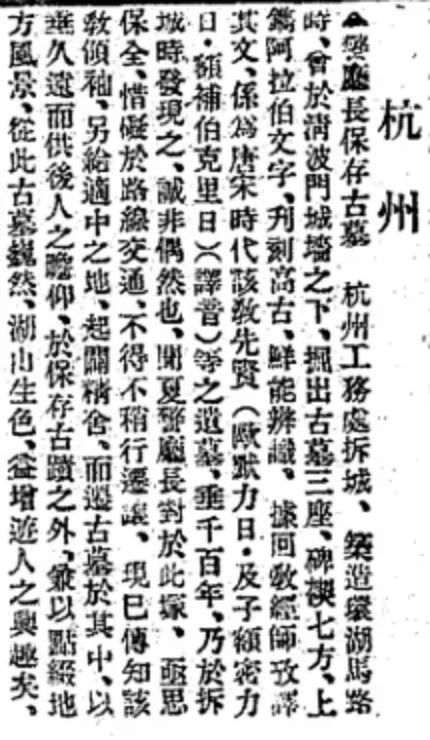
The original text says: When the Hangzhou Public Works Department tore down the city wall to build a road around the lake, they dug up three ancient tombs and seven stone tablets under the Qingbo Gate wall, all engraved with Arabic script. The carvings are very old and hard to read. According to a Muslim imam who translated the text, these are the tombs of sages from the Tang and Song dynasties, including Oumoliri and his sons Emili and Ebubokeliri (transliterated names). It was no accident that these tombs, which have stood for a thousand years, were discovered during the demolition of the city wall. I heard that Police Chief Xia wanted to protect these tombs, but because of the road construction, he had to move them slightly. He notified the leaders of the Muslim community to find a suitable piece of land, build a shrine, and move the ancient tombs there so they can be preserved and visited by future generations. Beyond preserving the historical site, this also adds to the local scenery, making the tombs a grand sight that adds to the charm of the lake and mountains for travelers.
Before this, in 1921, the famous Muslim scholar Yang Zhongming (courtesy name Jingxiu) translated the Epitaph of the Traveler Buhetiyaer, which was included in the August 1921 volume of the Shanghai Muslim Board of Directors records.
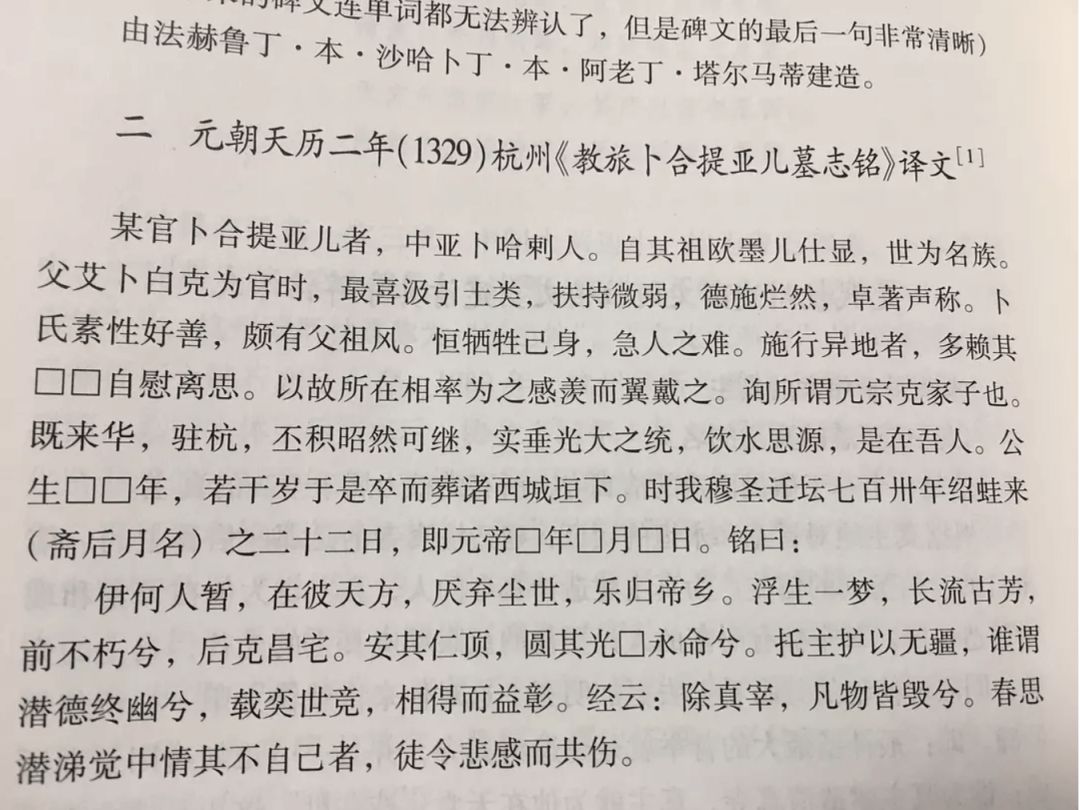
Buhetiyaer is now translated as Bahtiyar. His full name was Amir Buhetiyaer Seluoniya Naluonike, and he died in 1329 (the second year of the Tianli era of the Yuan Dynasty). He was from Bukhara in Central Asia. Bukhara (Bokhara) is in modern-day Uzbekistan. At that time, it was ruled by the Chagatai Khanate and was a center of Islamic culture in Central Asia. Amir is also translated as Emir, which is a title for a military officer. The epitaph shows that Buhetiyaer came from a family of officials.
Interestingly, the owner of the number 5 stone tablet among the Yuan Dynasty tombstones kept at the Phoenix Mosque (Fenghuang Si) in Hangzhou, which we mentioned earlier, is also named Amir Buhetiyaer and also came from Bukhara. However, his full name was Emir bin Abubieker bin Umaer Buhala, and he died on August 7, 1330 (the first year of the Zhishun era of the Yuan Dynasty), which was one year after Buhetiyaer died. The two of them likely had a close relationship.
Volume 23 of Hangzhou Cultural and Historical Materials contains an article titled The Full Story of the Changes to the Ancient Cemetery of the Hui Muslim Sage Buhatia. The following details about the cemetery's history are all taken from this article.
In 1927, the Buhatia Cemetery was completed outside Qingbo Gate. General Ma Fuxiang, the father of Ningxia warlord Ma Hongkui, attended the opening ceremony and erected a memorial tablet in front of the grave. According to the memories of Zhu Jingfen, the daughter of the cemetery caretaker Zhu Awei (who died in 1967): My father started managing the Hui Muslim cemetery at age 13. Times were hard then, and Zhang Shoubo, the former chairman of Phoenix Mosque (Fenghuang Si), or the Feng and Ding families would provide three or four dou of rice each month to help us get by.
In May 1953, the Hangzhou municipal government moved the Muslim cemetery to Jingshan Ridge in Liuxia Town to develop the West Lake scenic area. At that time, the stone slabs for the Buhatia grave were carried up the mountain in layers. Two teams of 16 people carried them, as each slab weighed about 1,200 jin. Because of this, only the top four layers were moved up, reaching a total height of about 0.6 meters.
After 1966, the Buhatia grave cover stones were smashed. Because they were so heavy and the cemetery guards opposed it, only part of them were broken, and the rest were scattered at the foot of the mountain. One grave slab was stolen, and the head and foot slabs of another grave were also taken. The central Buhatia grave was pried open, and the words Red Guard Seal were painted in red on the inside of the cover slab. Ma Fuxiang's memorial tablet was buried in an air-raid shelter, and the Arabic inscription tablet is still missing.
In December 1986, the smashed Buhatia grave cover stones were unearthed again at the Liuxia Hui Muslim Cemetery. Historical Materials compiled by the Fujian Academy of Social Sciences records that the structure was built with multiple layers of stone steps, with the stone surfaces fully carved with delicate and beautiful patterns like scrolling grass.
In 1989, the Buhatia Cemetery was rebuilt on its original site. The restored stone tablets were copied from rubbings of the originals. Each grave cover is four layers high, about 0.6 meters, which is actually just the top crown portion of the original Buhatia grave cover.
In 2006, the Hangzhou Municipal People's Government built a new stone pavilion at the Buhatia Cemetery, which is its current form.
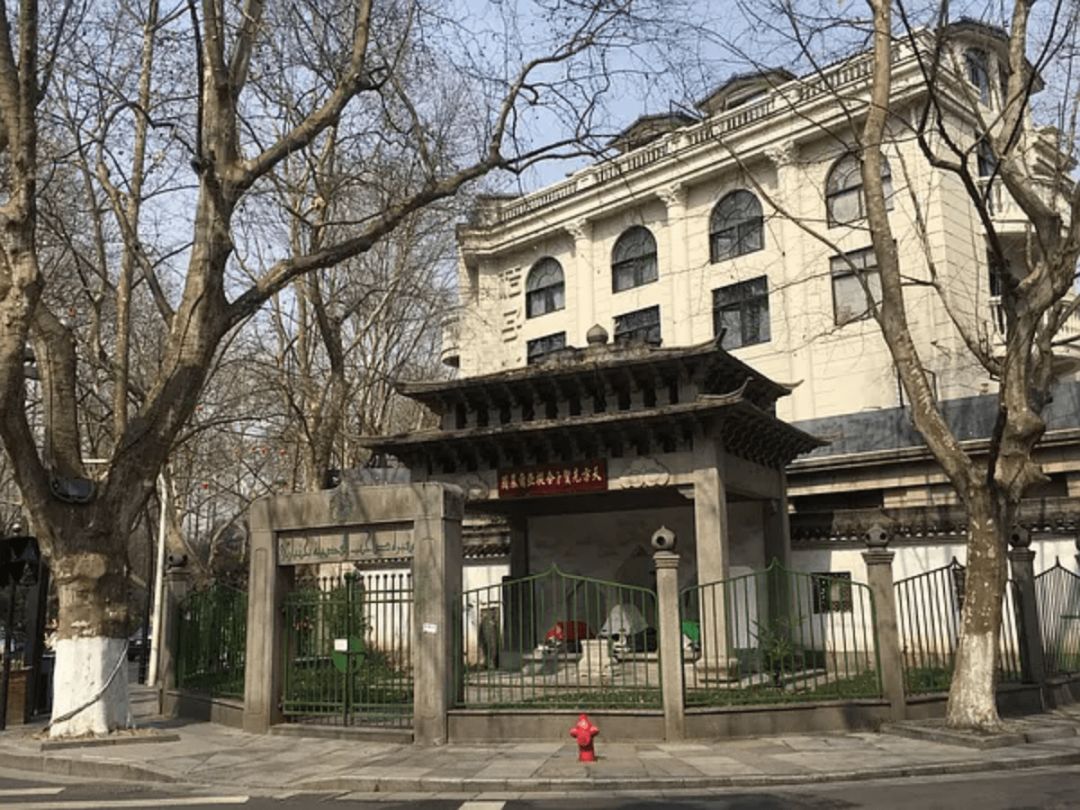
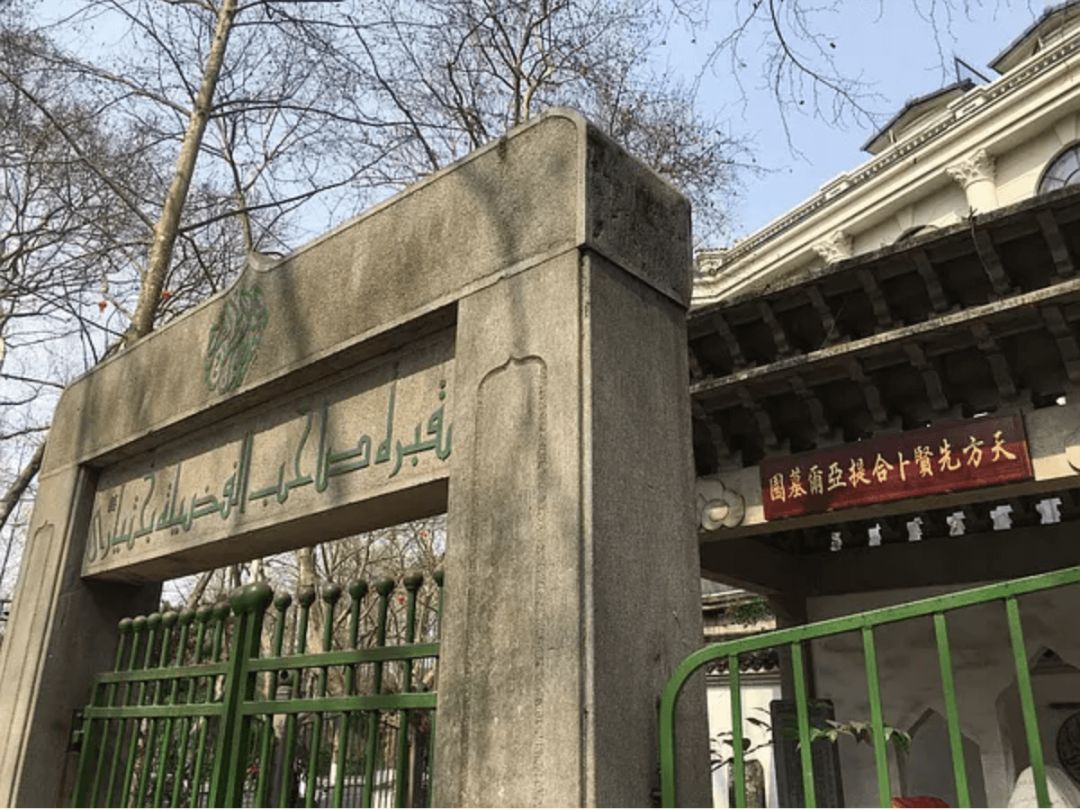
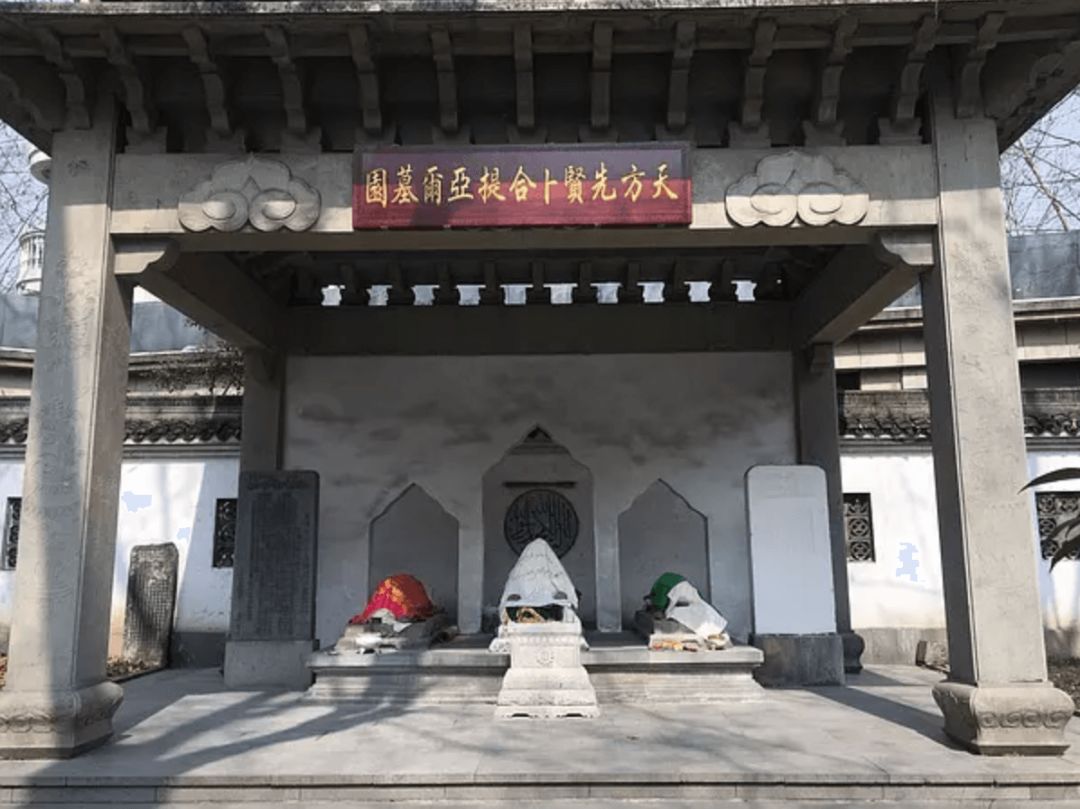
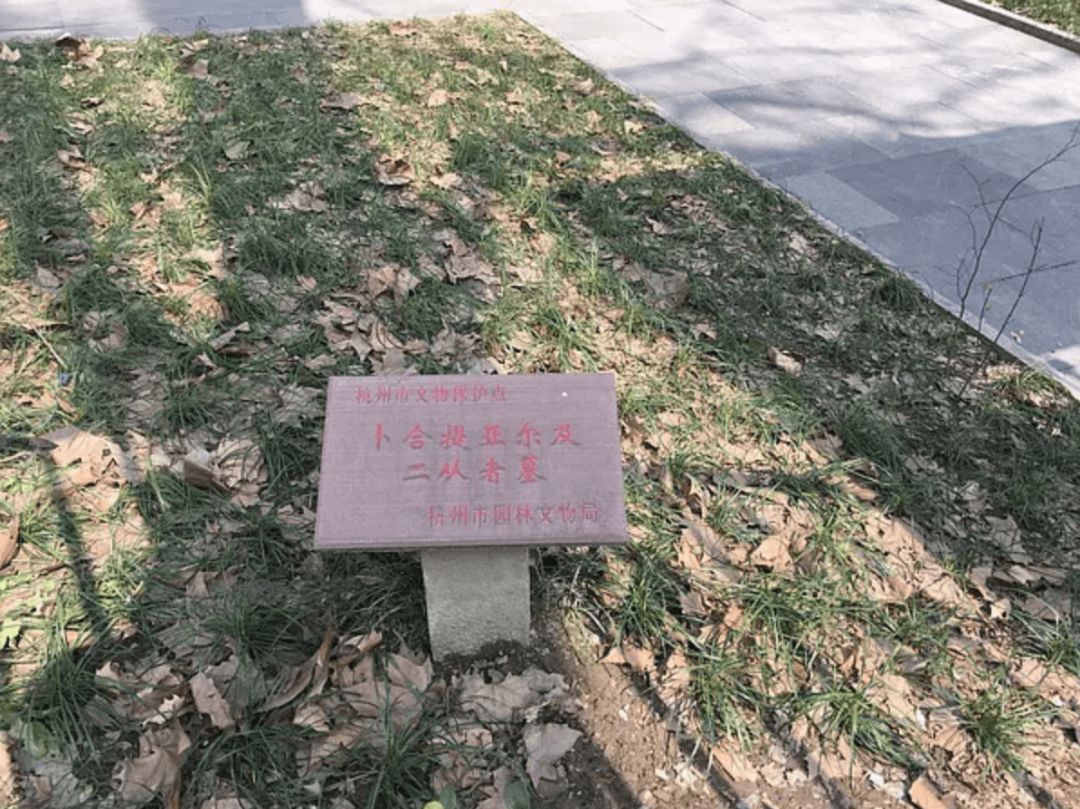
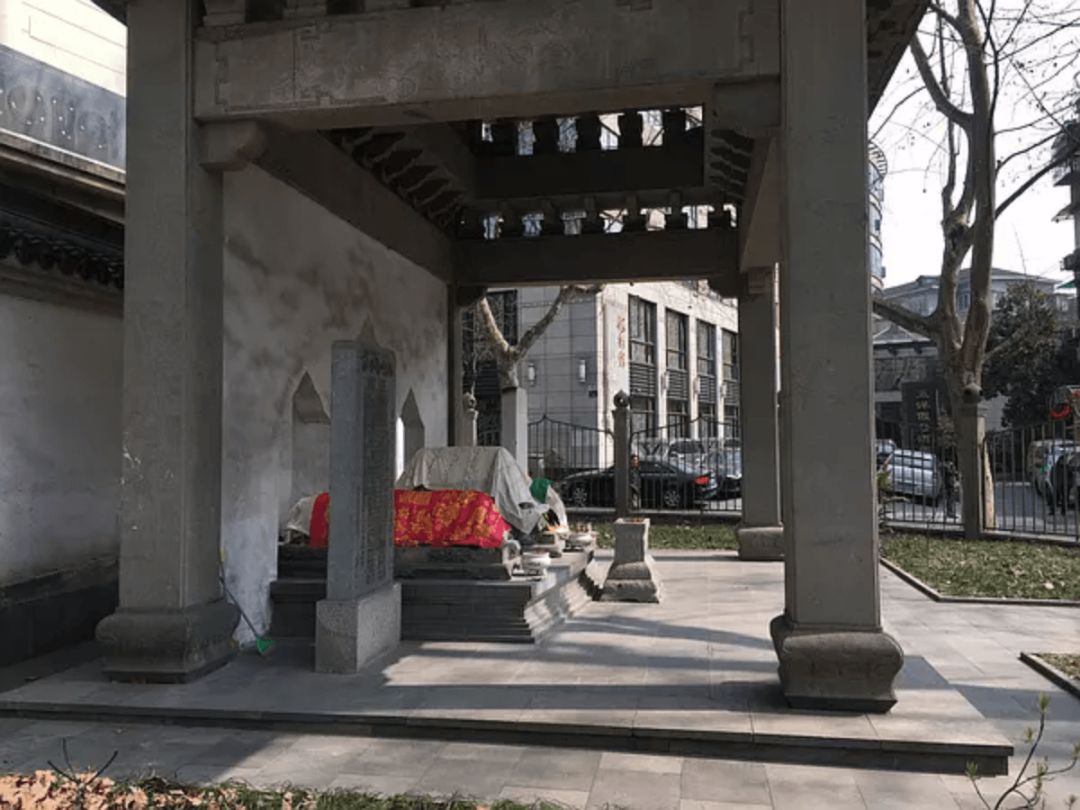
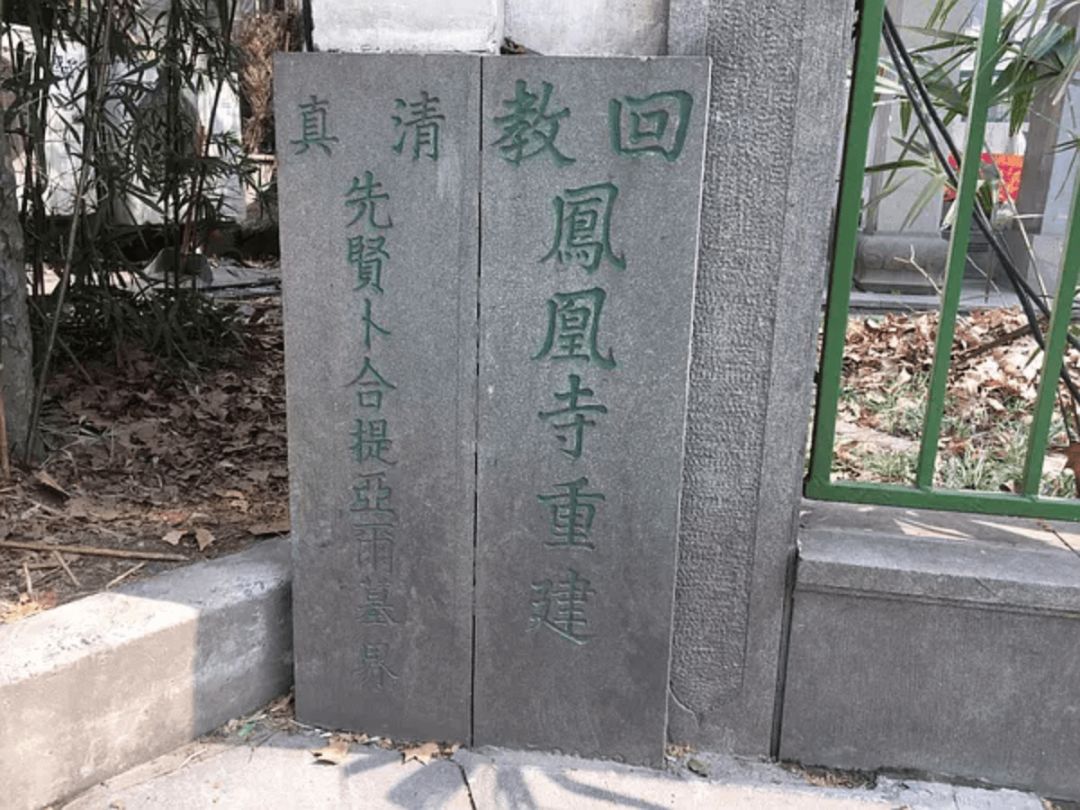
Grave of Ding Henian
Ding Henian (1335-1424) was a famous Hui Muslim poet during the late Yuan and early Ming dynasties. His great-grandfather was named Alaoding, his grandfather was named Shansiding, and his father was named Zhimaluding, so he took Ding as his surname. Ding (al-Din) means religion or faith in Arabic and is often placed at the end of a person's name.
The History of Ming: Biographies of Literati contains a short biography of Ding Henian. It writes that Ding's great-grandfather Alaoding and his younger brother Umar were both big merchants. When Yuan Emperor Shizu Kublai Khan conquered the Western Regions and lacked supplies, Alaoding donated his own goods in time. Because of this, Kublai Khan rewarded him with land in the Yuan capital, Dadu, and gave him very generous treatment. Umar also served as an official, eventually reaching the position of Left Chancellor of the Gansu Province.
Ding Henian's grandfather Shansiding served as a daruqachi of Linjiang Circuit, and his father Zhimaluding also served as a daruqachi of Wuchang County due to his family's status. Daruqachi (daruqai) originally meant seal holder. They held the actual administrative and military power in local governments at the circuit, prefecture, department, and county levels during the Yuan Dynasty and were the highest-ranking local officials. Daruqachi were generally Mongolians, and only Semu people with noble family backgrounds could hold the position. Ding Henian's family belonged to these noble Semu people.
As the son of the highest official in Wuchang, Ding Henian read many books from a young age and studied at the famous Nanhu Academy in Wuchang. He also had a talented older sister named Yue'e who taught him classics and history.
In 1352 (the 12th year of the Zhizheng era of the Yuan Dynasty), the Red Turban Army captured Wuchang. Ding Henian was 18 that year. After settling his biological mother in the suburbs of Wuchang, he escorted his father's primary wife to Zhenjiang to take refuge. After his father's primary wife passed away, Ding Henian had to continue his flight. He went to Zhoushan Island in Zhejiang to seek refuge with his cousin Jiyamuding, who was the magistrate of Dinghai County, but his cousin passed away shortly after. At that time, the eastern part of Zhejiang was occupied by the peasant uprising leader Fang Guozhen, who was most suspicious of Semu people. Ding Henian had to wander around Siming Mountain in Ningbo and the islands of eastern Zhejiang, working as a tutor for children, staying in monks' quarters, and making a living by selling tea and drinks.
Ding Henian described his mood while living in seclusion in the second of his four poems titled 'Sent to Master Jiuling':
Flowers and willows in every village meet the seaside, I take my family wherever I go to avoid the chaos of war.
The clothing and grain still preserve the style of the Jin Dynasty, the chickens and dogs in this peach blossom spring have long been cut off from the Qin.
Sitting facing the green mountains, I never tire of them, forgetting my worldly schemes, the white birds are naturally close to me.
I also know that coming out or staying in depends on the times, I do not just escape my name to imitate a hermit.
In 1366 (the 26th year of the Zhizheng era), Zhu Yuanzhang attacked the Jiangnan region. Hangzhou and Huzhou surrendered to Zhu Yuanzhang one after another, and the flames of war approached Zhejiang. While fleeing and suffering from illness, Ding Henian could not sleep at night and wrote the poem Night Dream of Returning Home on the 24th Day of the 11th Month of the Bingwu Year.
I have been sick for a long time and do not go out, thinking of my brothers one by one, wondering who is alive and who is dead.
War has cut off all news everywhere, and the wind and rain haunt my dreams all night long.
I write poems under the bamboo as clouds rise over my inkstone, and I sing songs before the flowers with the moon shining on my wine cup.
Old memories always bring new feelings, and I sit alone by the cold lamp wiping away my tears.
In 1368 (the first year of the Hongwu reign), Zhu Yuanzhang defeated Fang Guozhen, who occupied eastern Zhejiang, and declared himself emperor in Nanjing. The situation in Zhejiang gradually stabilized, and Ding Henian ended his life of fleeing. He built a house by the sea on Zhoushan Island to settle down and named it Sea Nest (Haichao).
In 1379 (the 12th year of the Hongwu reign), 44-year-old Ding Henian returned to his hometown of Wuchang to rebury his mother's remains and wrote Two Poems on Returning to Wuchang After the War. The second poem says:
The chaos has settled and I return home with graying temples, saddened by the changes in people and things.
In the west wind, foxes and rabbits roam the ancient graves, and in the setting sun, wolves lie in the desolate countryside.
The five willow trees are no longer the home of Tao Yuanming, and the hundred flowers are not what they were at Duling Manor.
My old haunts have all become dreams, and I sit alone counting the hours through the long night.
In his later years, Ding Henian moved to Hangzhou to live in seclusion and returned to Islam. According to the Qing dynasty record Notes on Qingbo (Qingbo Xiaozhi), he spent his late years practicing the laws of Allah and lived in a hut by his ancestors' graves. Ding Henian likely lived near the grave of his great-grandfather, Aladdin, at the Foreigner's Grave (Fanhuijia Mu) outside Qingbo Gate.
In 1424 (the 22nd year of the Yongle reign), 89-year-old Ding Henian passed away and was buried next to Aladdin's grave. This place was later called the Ding Family Mound (Ding Shi Long). When the cemetery was moved in 1953 to build West Lake Park, only Ding Henian's Ming dynasty tomb pavilion and tomb cover stone remained, serving as a relic of the Hui Muslims' cemetery.
During the transition between the Yuan and Ming dynasties, wealthy Semu merchants and officials along the southeast coast fell from the upper class to the bottom of society, leading to all sorts of stories. In Quanzhou, the once-prosperous Pu family was banned from studying or holding government office. Many Semu people died, left, or fled, and the Guo and Ding families moved from Quanzhou city to the countryside. Ding Henian was part of this great upheaval. In his poem "To My Cousin Sai Jingchu," written to the famous Hui Muslim calligrapher Sai Jingchu who was also living in seclusion in Hangzhou, he wrote:
The noble descendant lives in a desolate alley, writing calligraphy to trade for wine.
Wealth comes and goes on its own, leaving only a pure spirit in the world.
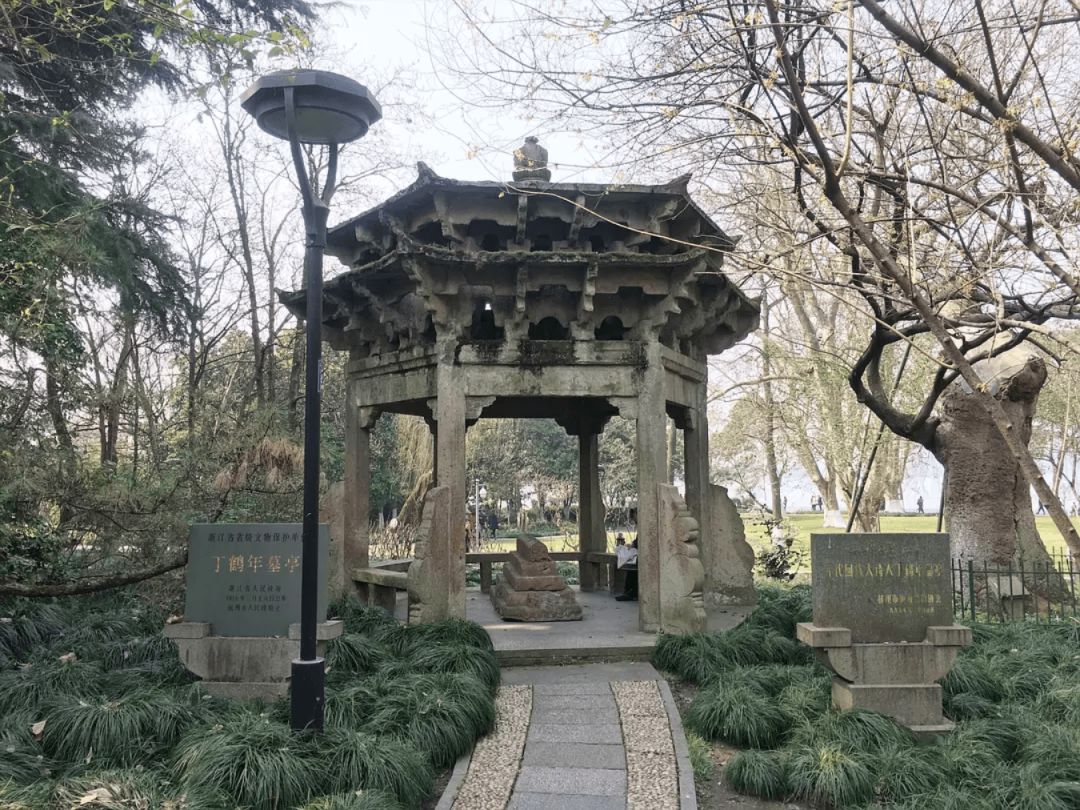
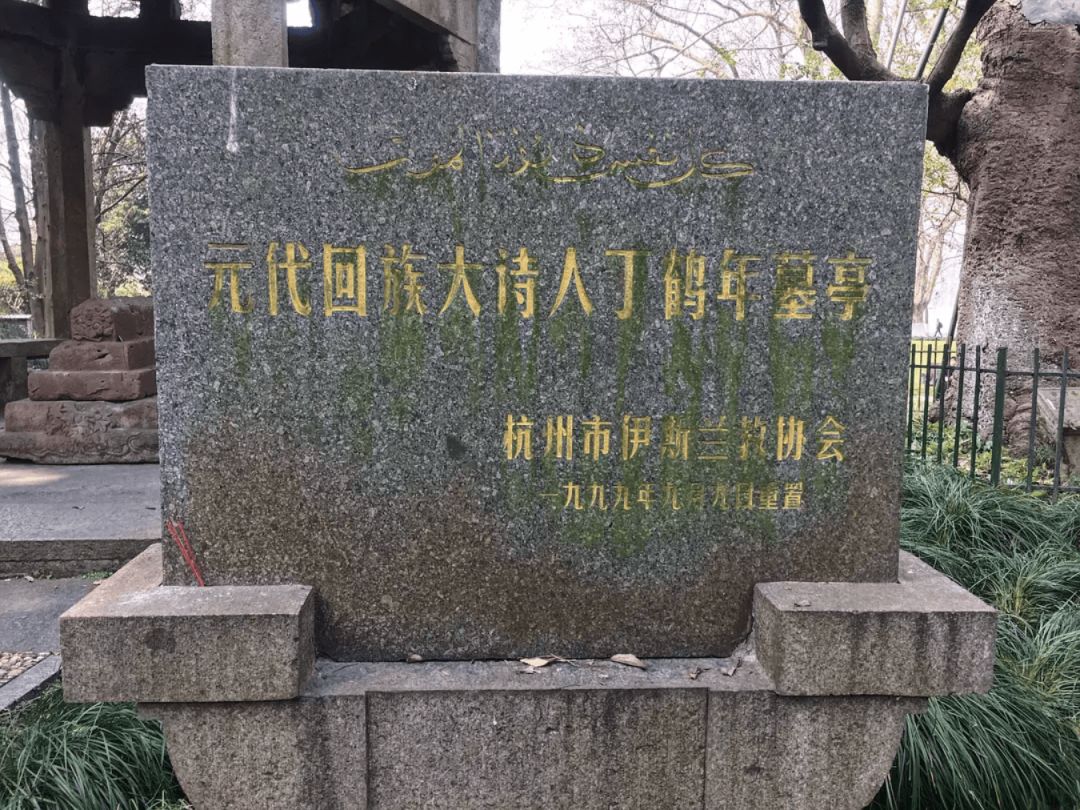
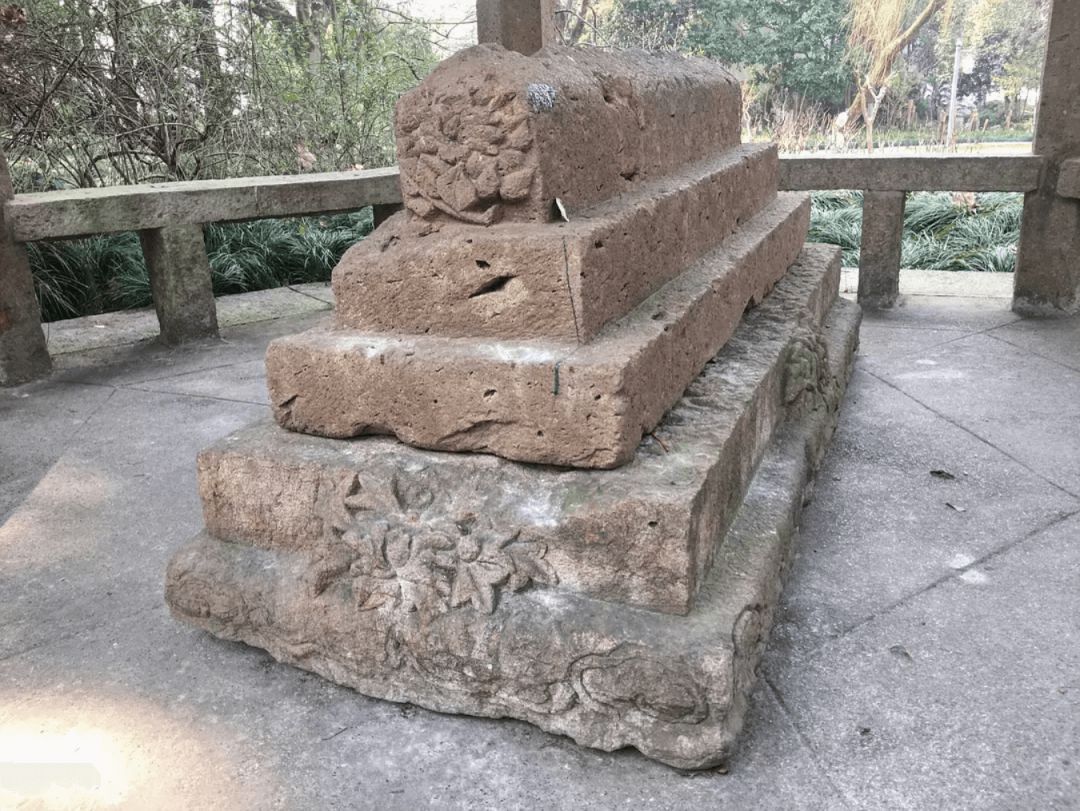
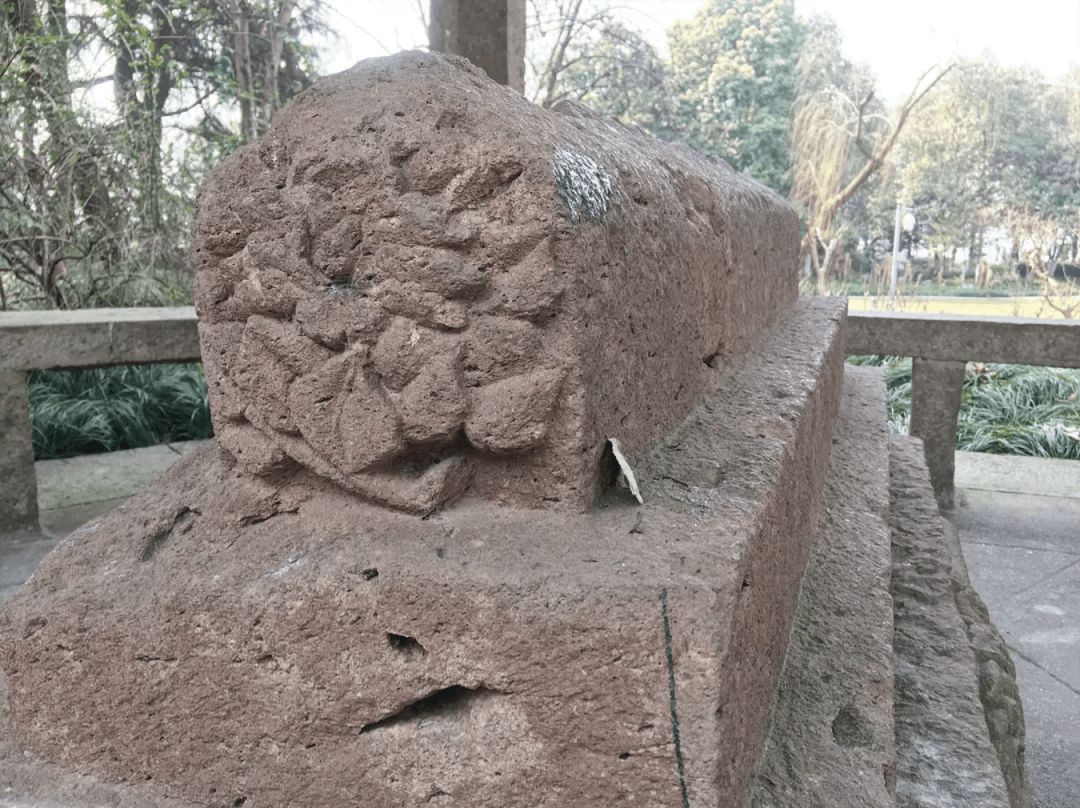
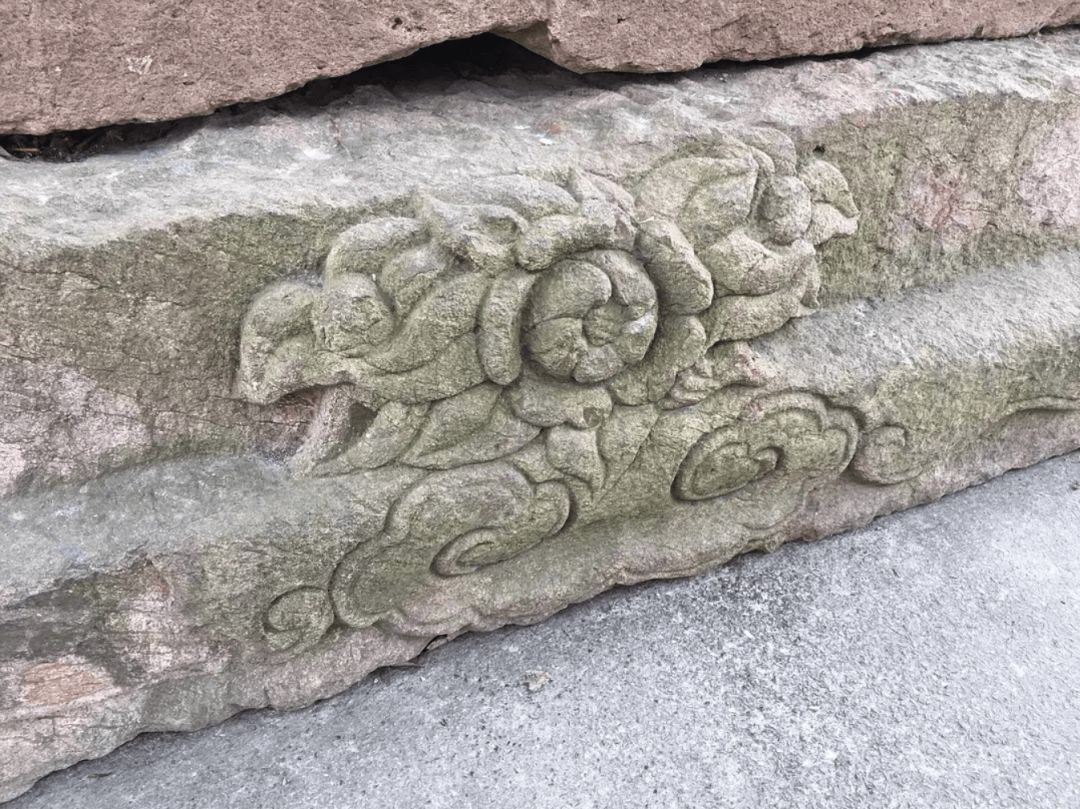
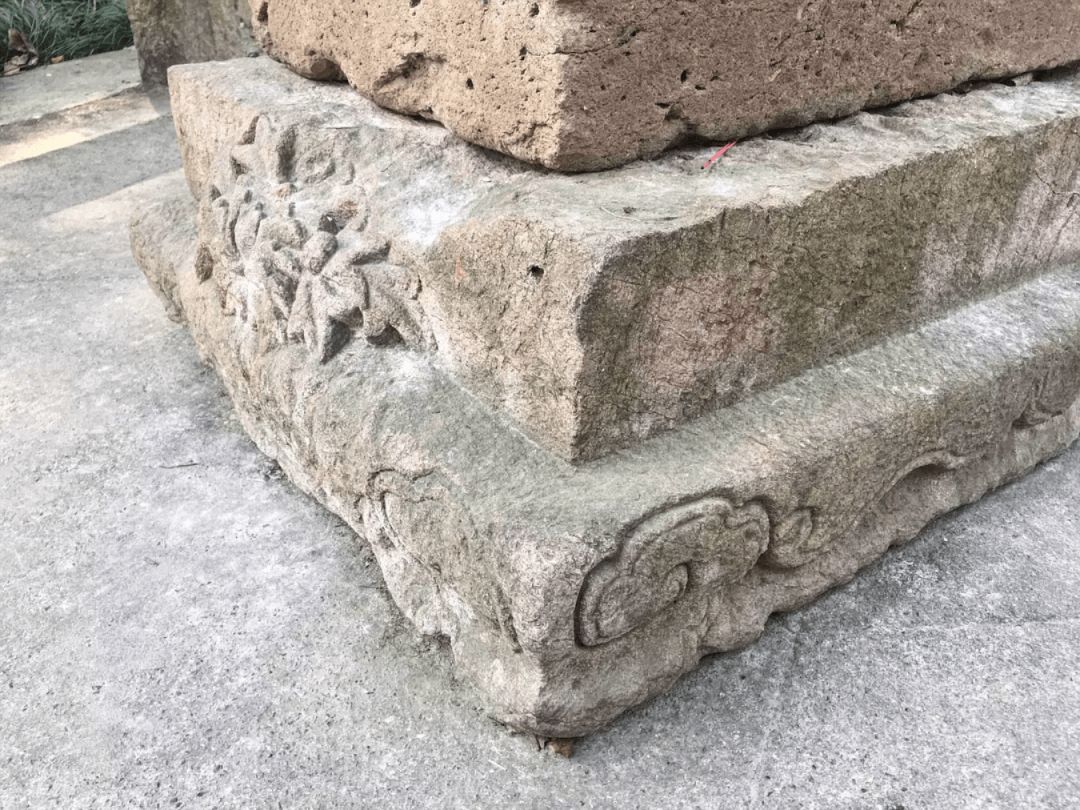
Muslim tombstone covers in the southeast during the early Ming dynasty still kept their Yuan dynasty style, which is very precious. Below, I will share some photos I took of Muslim tombstone covers in Quanzhou and Yangzhou for comparison.
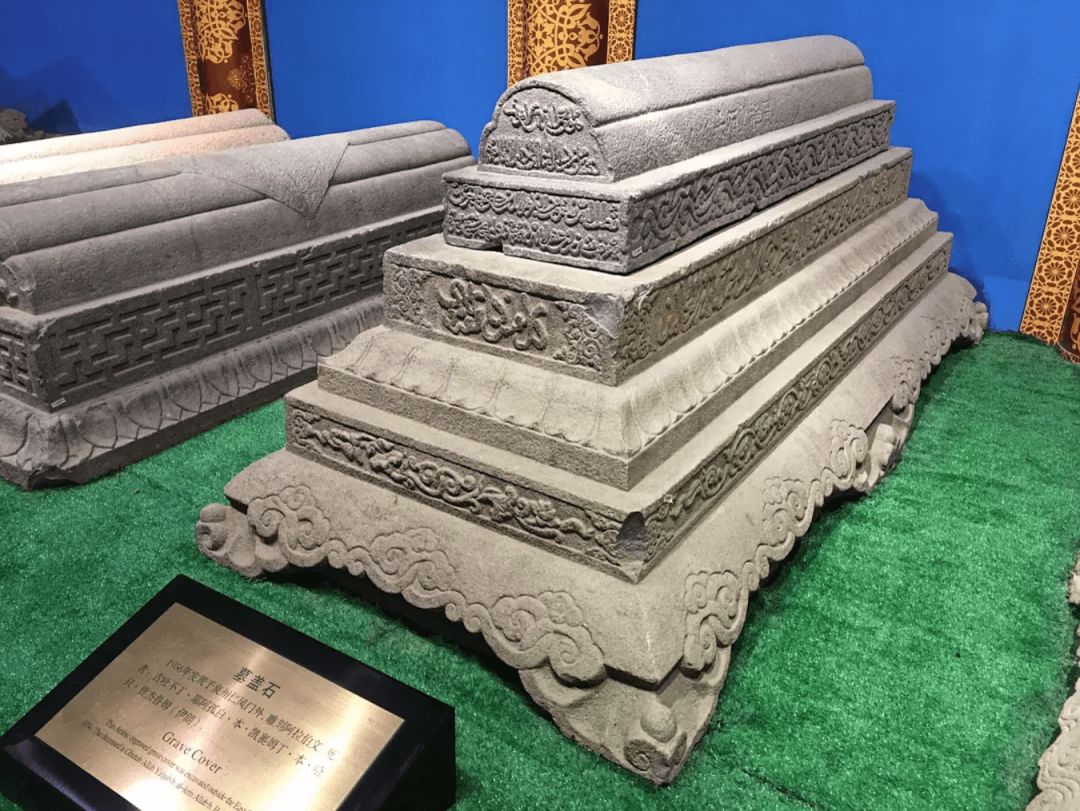
Tomb of a Persian person from the Yuan dynasty at the Quanzhou Maritime Museum.
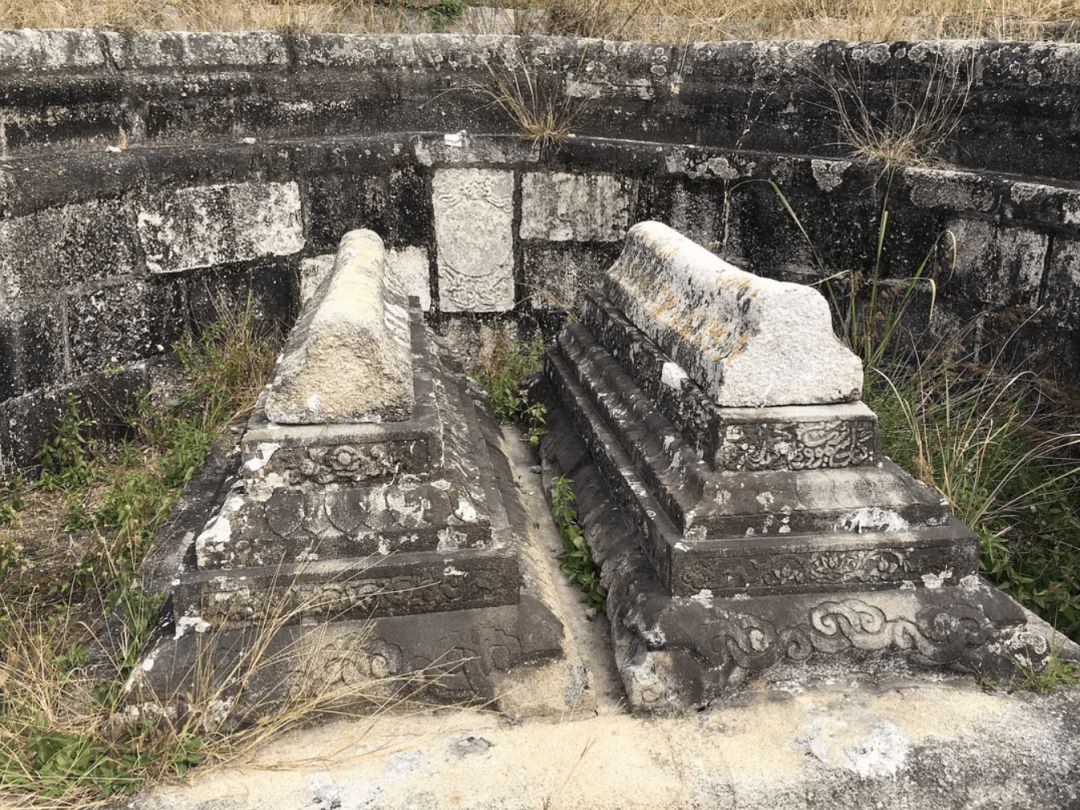
Tomb of Guo Zhongyuan in Baiqi Township, Quanzhou, dated 1422 (the 20th year of the Yongle reign).
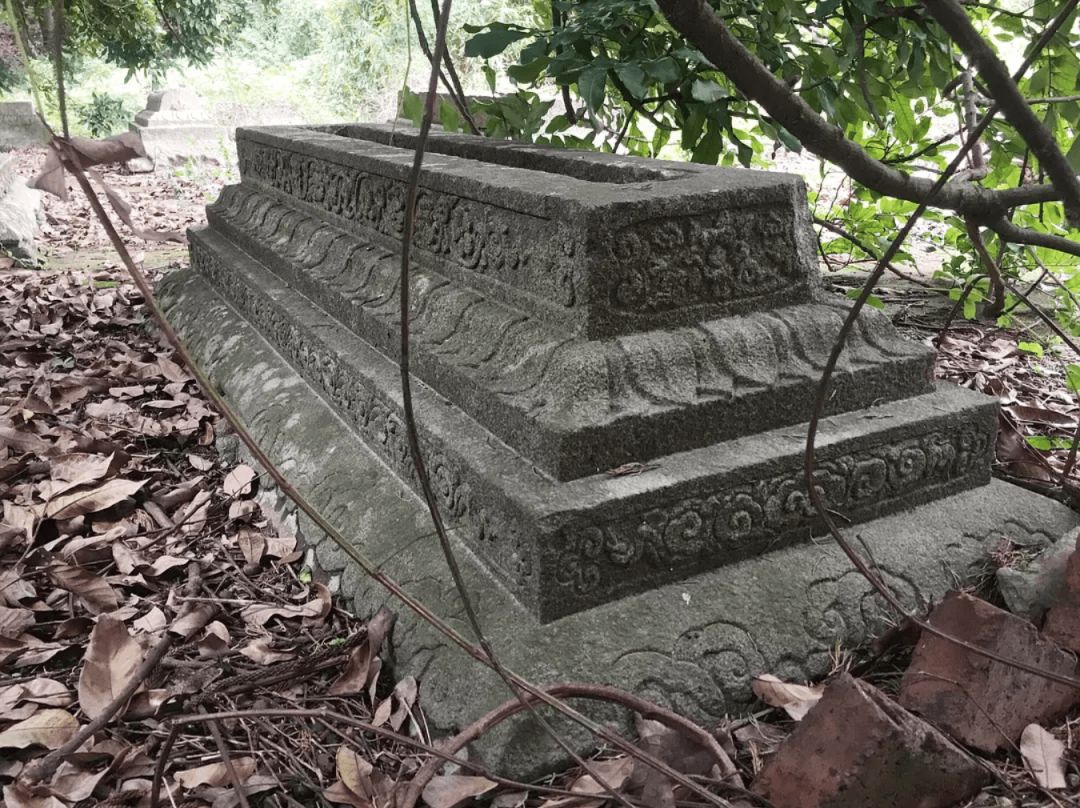
A Muslim tomb from the early Ming dynasty next to the Lingshan Holy Tomb in Quanzhou.
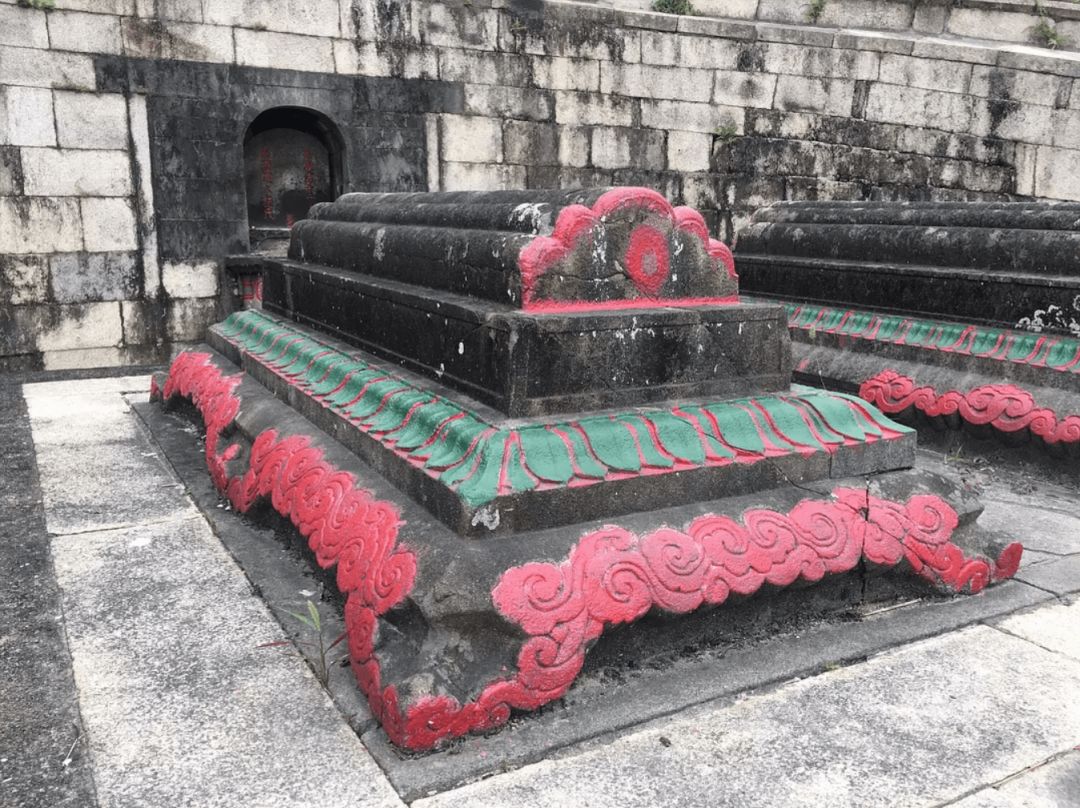
Tomb of Ding Fubao, the fourth-generation ancestor of the Ding family of Chendai, at the Lingshan Holy Tomb in Quanzhou, dated 1436 (the first year of the Zhengtong reign of the Ming dynasty).
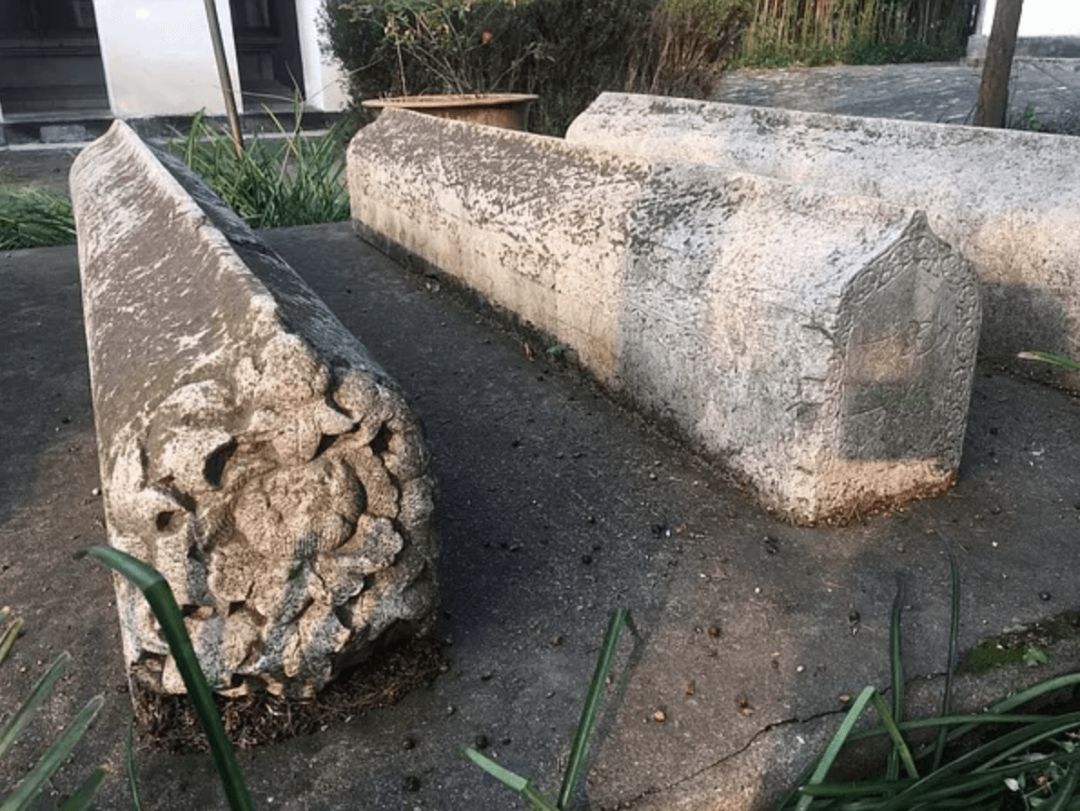
Ming and Qing dynasty tombstone covers at the Puhading Cemetery in Yangzhou.
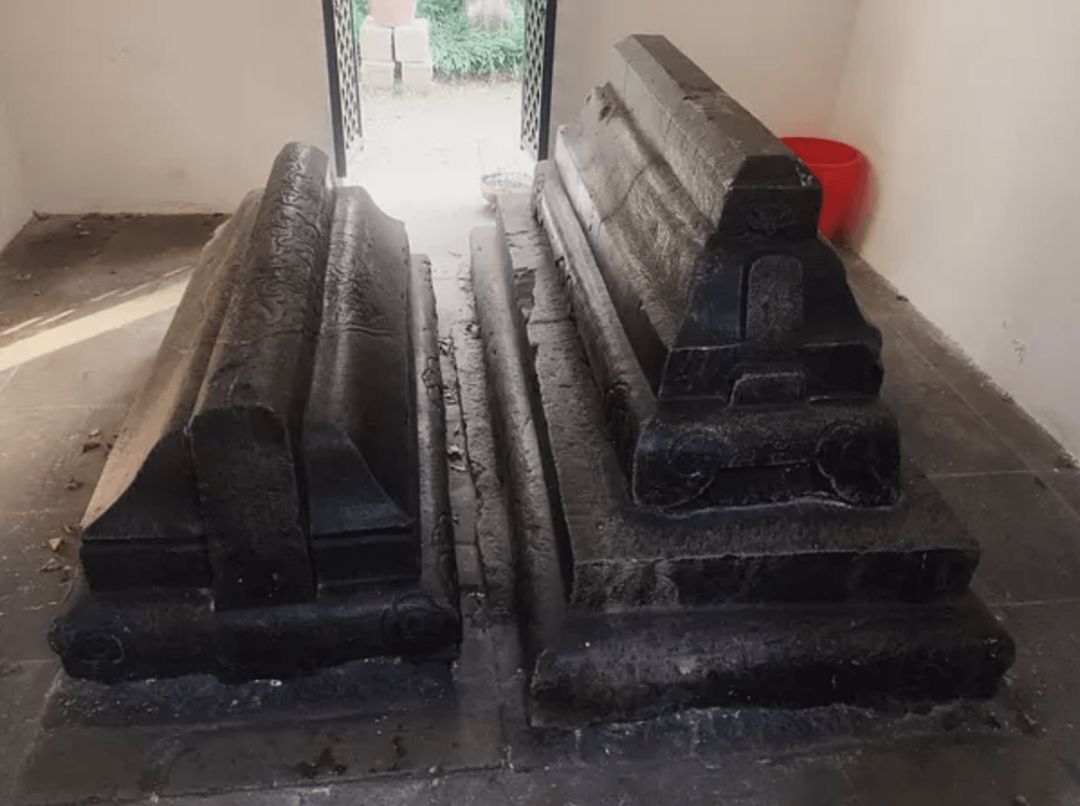
A Ming dynasty tomb in the Puhading Cemetery in Yangzhou; the one on the left is from 1501 (the 14th year of the Hongzhi reign of the Ming dynasty).
Author of this article: Douban user @Amateur Enthusiast Wang Dongsi.

This article has been authorized by the author. Please contact the original author if you wish to repost it!
To learn more about halal food in Hangzhou, click the image below to read directly.
Recommended reading
(Click the image to read the full article)

If you have halal food to share, please contact the canteen manager.
[email protected]
❖ Feel free to share this with your friends
 Collapse Read »
Summary: Hangzhou — Ancient Mosques and the Arrival of Muslims is presented here as a firsthand travel account in clear English, beginning with this scene: Hello everyone, I am the Canteen Master. Last week I put together a list of halal food in Hangzhou, and it just so happens that my Douban friend Wang Dongsi. The account keeps its focus on Hangzhou Mosques, Chinese Islam, Muslim History while preserving the names, places, food, and historical details from the Chinese source.
Hello everyone, I am the Canteen Master. Last week I put together a list of halal food in Hangzhou, and it just so happens that my Douban friend Wang Dongsi
wrote an article introducing the history and culture of Islam in Hangzhou, so I am sharing it with you all.
Historical articles like this might not be as catchy as food guides, but the history of Islam in China and how it constantly blended into and localized within Chinese culture is really interesting.
Why the sudden update today? Because I still have to organize and share a food article with you on Thursday.
Hangzhou's former Muslim community
The information in this article about the history of Islam in Hangzhou is mostly compiled from the book A History of Islam in Hangzhou by Ma Jianchun.
Let's start with a brief look at the history of the halal community in Hangzhou.
The prosperity of Muslims in Hangzhou during the Yuan Dynasty
Although Muslim merchants were granted official titles and settled in Hangzhou as tribute envoys starting in the Southern Song Dynasty, there are still no credible documents or unearthed artifacts recording the lives of Muslims in Hangzhou during the Song Dynasty.
Starting in the Yuan Dynasty, a large number of Muslims began to come to Hangzhou to settle. They were mainly Persians, along with Persianized Central Asian Turks. Among them were Semu military and political officials serving in the Jiangzhe Province, Muslim merchants who arrived in Hangzhou via the Maritime Silk Road and the Beijing-Hangzhou Grand Canal, and purely religious figures. They held high social status and lived wealthy lives.
In the 1320s, the Italian Franciscan friar Odoric came to China. The Travels of Friar Odoric wrote: Hangzhou is the largest city in the world. At that time, Hangzhou had 850,000 registered households, and the Saracens (a term used by Europeans in the Middle Ages to refer to Muslims) accounted for 40,000 of them.
Unlike the Muslims of the Tang and Song periods, the Muslims in Hangzhou during the Yuan Dynasty formed a bustling Muslim community in the city center due to their large numbers. The Yuan Dynasty Muslim community in Hangzhou was located west of Jianqiao and south of Wenjin Lane, inside the current Qingtai Gate. The late Yuan Dynasty writer Tao Zongyi wrote in his book Records of Stopping the Plow at Nancun: Beside Jianqiao in Hangzhou, there are eight tall buildings, commonly known as the Eight-Room Buildings, all inhabited by wealthy Hui Muslims.
The 1867 map of the city of Hangzhou shows the streets with west at the top and east at the bottom. Jianqiao Bridge is in the bottom right corner, and the Hui Muslim hall (Huihuitang) at the top is Phoenix Mosque (Fenghuangsi).
In 1346 (the sixth year of the Zhizheng era), the famous Moroccan traveler Ibn Battuta arrived in Hangzhou. His book, The Travels of Ibn Battuta, mentions the Hangzhou Muslim community: 'The Muslims live in the city, which is beautiful, and the streets are laid out just like those in Islamic regions.' There is a mosque and a muezzin inside. We arrived in the city just at the time for the noon prayer (namaz), and the call could be heard far and wide. In this city, we stayed at the home of the descendants of Othman ibn Affan, an Egyptian. He was a great local merchant who liked this place very much and settled here. They have a lodge (daotang) also named after Othman, which is beautifully built and has many charitable endowments, with a group of Sufi practitioners inside. Othman also built a large mosque in the city and donated a large amount of charitable funds to the mosque and the lodge. There are many Muslims in the city. We lived in this city for fifteen days, and we were invited out every day and every night.
During the Yuan Dynasty, Hangzhou had three mosques: True Religion Mosque (Zhenjiaosi), Hui Muslim Prayer Hall (Huihui Baifotang), and Hui mosque (Huihuishi Libaisi). True Religion Mosque (Zhenjiaosi)
This is Phoenix Mosque (Fenghuangsi). Its original construction date is uncertain, but it was rebuilt in 1281 (the 18th year of the Yuan Zhiyuan era) and has continued to the present day. Hui Muslim Prayer Hall (Huihui Baifotang)
It was northeast of True Religion Mosque, next to Hui Muslim New Bridge (Huihui Xinqiao). The place name Hui Muslim New Bridge still exists today. Hui mosque (Huihuishi Libaisi)
It was west of True Religion Mosque, on what is now Laodong Road. It was destroyed during the wars at the end of the Yuan Dynasty, and the original site was turned into a prefectural school.
The 1914 map of Hangzhou city and West Lake shows Phoenix Mosque at Yangbatou in the bottom left corner, Hui Muslim New Bridge in the top right, and Jewelry Lane (Zhubaoxiang) in the bottom right.
Jujing Garden, located by West Lake outside Qingbo Gate in Hangzhou, was once a place for the Song Dynasty royal family to tour. After the Yuan Dynasty, it was purchased by Muslims to be used as a cemetery. In 1291 (the 28th year of the Zhiyuan era of the Yuan Dynasty), the Song and Yuan poet Zhou Mi saw a Muslim cemetery at Jujing Garden. In his book Guixin Zashi, he wrote: 'According to the customs of the Hui Muslims, when someone dies... they are buried in Jujing Garden, which is also managed by the Hui Muslims.' This was only 15 years after the Yuan army entered Hangzhou. During the Ming and Qing dynasties, this place was called the 'Foreigner's Grave' (fanhui jiamu) or 'Hui Muslim Grave' (huihui fen). During the Republic of China era, it was known as the 'South Garden Islamic Cemetery' (nanyuan huijiao gongmu) or 'Islamic Public Cemetery' (huijiao yizhong), and it remained there until it was moved in 1953.
The 1929 survey map of West Lake in Hangzhou shows the Islamic Public Cemetery at the bottom.
The settling of Muslims in Hangzhou during the Ming Dynasty.
During the Yuan Dynasty, Muslims in Hangzhou did not yet consider this place their home. Many Muslim tombstones from the Yuan period feature a Hadith saying, 'To die in a foreign land is to be a martyr.' After entering the Ming Dynasty, maritime trade stopped, and Muslims who had lived in Hangzhou for generations gradually began to settle down and integrate into local life.
The number of Muslims in Hangzhou continued to grow during the Ming Dynasty. Between the Zhengtong and Hongzhi years (1436-1505), Hami in the Western Regions was attacked by the Oirat Mongols many times. Many Hui Muslims moved to Hangzhou as entire families, and many were settled there. Two Hui Muslims from the Western Regions who arrived in the early Ming Dynasty, Shabasi and Mardin, worked for a long time in the salt and grain transport business along the Grand Canal and became wealthy merchants. Their descendants took the surnames Sha and Ma, becoming major Hui Muslim family names in Hangzhou during the Ming and Qing dynasties.
During the Ming Dynasty, the True Religion Mosque (Zhenjiao Si), also known as Phoenix Mosque (Fenghuang Si), remained the largest mosque in Hangzhou and underwent major renovations in 1453 (the fourth year of the Jingtai era).
As the population grew, three new mosques were built in Hangzhou at the end of the Ming Dynasty: Vinegar Workshop Lane Mosque (Cufang Xiang Si, or North Mosque), Board Lane Mosque (Ban'er Xiang Si, or East Mosque), and Bingxiang Lane Mosque. All were founded by a local wealthy Hui Muslim merchant named Ding Dashou. Vinegar Workshop Lane Mosque was later called the Hangzhou North Mosque. It was located on what is now Chufei Lane in the Xiacheng District. It was destroyed during the Taiping Rebellion, and in 1870 (the ninth year of the Tongzhi era), the Phoenix Mosque built houses on the original site to rent out. Board Lane Mosque, also known as the Small Mosque (xiao libai si) or Hangzhou East Mosque, was located on what is now South Jianguo Road. It was the second most important mosque in Hangzhou after the Phoenix Mosque. Many believers came there for Friday prayers (Jumu'ah), and it was also the place where animal sacrifices and funeral rites were usually held. In 1965, part of the building was taken over by the neighborhood committee for a senior citizens' club, and after 1966, it was converted into a neighborhood office building. Bingxiang Lane Mosque was in the northern suburbs of Hangzhou. There are very few historical records about it, and most local Hui Muslims do not know about it, so it likely fell into ruin many years ago.
Besides the three mosques founded by Ding Dashou, there were several other mosques in Hangzhou during the Ming Dynasty. There was a mosque built during the Chenghua period of the Ming Dynasty at Huihui New Bridge, which featured a moon-sighting tower (wangyuelou) and a scripture school (jingwen xuetang), though it is unclear if it had any connection to the Huihui Buddha-worship hall from the Yuan Dynasty. There was also the West Lake Guo Family Bridge Mosque, known as the West Mosque. The West Lake Mosque, also called the West Lake Small Mosque and the Hangzhou West Mosque, was located north of the previously mentioned Hui Muslim cemetery. It was used for handling funeral arrangements for Hui Muslims. In 1954, it was moved along with the Hui Muslim cemetery to Jingshan Ridge in Liuxia Town, and it stopped being used after 1966.
The stable development of Hangzhou Muslims during the Qing Dynasty.
After the Qing Dynasty began, the Muslim community in Hangzhou was relatively stable. The True Religion Mosque (Zhenjiao Si) underwent repairs during the reigns of the Shunzhi, Kangxi, Qianlong, and Guangxu emperors. the Hangzhou South Mosque was built on Wukui Lane. After the 1950s, the South Mosque on Wukui Lane was converted into housing for Muslims. It was closed in 1958 and handed over to the housing management department for leasing. By this time, Qing Dynasty Hangzhou had five mosques: East, West, South, North, and Central (the Central one being Phoenix Mosque). Phoenix Mosque was the main mosque, while the others were smaller mosques subordinate to it. The leaders and imams of the smaller mosques were appointed by the main mosque. The smaller mosques were for the convenience of the community to perform their five daily namaz prayers, while Friday congregational prayers, festival prayers, and other major religious ceremonies had to be held at the main mosque.
The biggest change for Hui Muslims in Hangzhou during the Qing Dynasty was their shift from wealthy merchants involved in overseas and canal trade during the Yuan and Ming dynasties to ordinary people running small businesses. Their business scope changed from jewelry, spices, silk, and porcelain to halal food. Many people worked full-time in beef and mutton slaughtering, pastry making, running restaurants, and selling snacks. The Qing Dynasty collection of poems, Wulin Zashi Shi, praised Hangzhou Hui Muslim snacks: 'The flour is so fine it rivals pearls and jade, kneaded by hand to look whiter than frost and snow.' If you ask whose snacks are the most delicate, they are the ones made by Ye Shouhe in front of the mosque.
Additionally, the 1863 (second year of the Tongzhi reign) book Hangsu Yifeng, in the food section, wrote: 'Mutton soup restaurants are Muslim eateries.' They specialize in selling mutton products. The sheep are skinned and deboned, then stewed until tender and cut into pieces. Each piece costs four wen, and they are divided into pepper-salt style and plain style. There are also intestines, lungs, and hearts, which are chopped up and served in a bowl with broth, known as 'mixed offal soup' (zashui). A single bowl costs six wen, and a double bowl costs fourteen wen. Snacks like kidneys and liver, spinal cord and brains, intestines and tripe, trotters, tongue, and taiji-shaped cakes (taijitu) cost twenty-eight wen per plate; for meat pieces, eating two pieces only costs six wen. You can order any amount of dried meat slices (ganpianer) per plate, or put them in broth to make sliced meat soup (pianzi tang). The main dishes like braised meat and mixed offal soup always come from the sheep. The liquor is sorghum wine, and snacks include shredded meat, spring pancakes (chunbing), boiled dumplings (shuijiao), and steamed dumplings (shaomai).
Besides mutton, there are small stalls selling spiced beef, beef heart, beef liver, beef trotters, and beef vermicelli (niurou fenxian), carried on shoulder poles with a sign hanging that reads 'Halal Faith' (Qingzhen Jiaomen).
The final prosperity of Muslims in Hangzhou during the Republic of China era.
During the Republic of China era, there were four or five hundred Hui Muslim households in Hangzhou, scattered throughout the city. Besides the common people who mostly ran halal food businesses and sold daily necessities, there were also some wealthy merchants, such as the Jin family who dealt in jewelry, the Zhang family in sericulture and silk, the Feng family who ran a match factory, and the Xuan family who ran a soy sauce shop.
Except for the North Mosque (Qingzhen Beisi) which was destroyed during the Taiping Rebellion, there were four mosques in Hangzhou during the Republic of China era: the Phoenix Mosque (Fenghuang Si) and three smaller mosques in the east, west, and south. In 1928, the main hall and the Moon-Watching Tower (Wangyue Lou) of the Phoenix Mosque were destroyed due to road construction. In the same year, when the city wall was demolished to build the lakeside road, some ancient graves in the Nanyuan Hui Muslim cemetery were forced to relocate, and the Yong'an Hui Muslim cemetery was newly built at Lingfeng, Yuquan, West Lake in 1934.
In 1914, the modern 'Hangzhou Muxing Primary School' was founded inside the Phoenix Mosque. It taught cultural subjects according to the regulations of the Ministry of Education of the Republic of China, and held an Arabic religious class every afternoon, taught by the imam and the head of the Phoenix Mosque. Muxing Primary School accepted students regardless of whether they were Hui or Han, or their gender, as long as they were of school age, but it stipulated that Hui Muslims were exempt from tuition and miscellaneous fees.
In 1928, the Muxing Junior High School was founded inside the Phoenix Mosque, and it later moved to the Chouye Guild Hall at Yintong Bridge. The school had three junior high classes divided into spring and autumn groups, and Hui Muslims were also exempt from tuition and miscellaneous fees. Muxing Middle School has eight full-time teachers. They teach Chinese, math, science, history, geography, art, physical education, and general knowledge. They also regularly offer Hui Muslim students classes on basic Islamic teachings and introductory Arabic.
Since the end of the Qing Dynasty and the beginning of the Republic of China, more and more Hui Muslims moved to Hangzhou from northern provinces like Shandong, Henan, and Hebei. Most left their hometowns and brought their wives and children to Hangzhou to make a living because they had no other choice. Because they lacked capital, most worked as small vendors selling halal food and daily necessities. At that time, you could often see stalls on the streets of Hangzhou with wooden signs saying "Halal" selling flatbread (dabing), fried dough sticks (youtiao), tea eggs, smoked chicken, braised duck, steamed buns (mantou), and dumplings (shuijiao). Some people grew their small stalls into snack shops and later into restaurants, which helped the halal food industry in Hangzhou thrive during the Republic of China era.
Famous halal restaurants in Hangzhou during the Republic of China period included Chunhuayuan, Xileyuan, Zheyi Guan, Xiyue Guan, and Xiyi Guan. Most focused on lamb, braised duck, and vegetarian dishes. Zhong Yulong, a Hangzhou native, was raised in a Hui Muslim family and knew a lot about the Muslims in Hangzhou during the Republic of China. In his book "Speaking of Hangzhou," he wrote: "Xileyuan and Chunhuayuan near Yangbatou are old-fashioned lamb soup restaurants. When customers sit down, they are first served lamb offal soup (yangzasui tang), which is made by chopping up lamb intestines, lungs, and hearts and serving them in a bowl with broth." Depending on the portion size, there are single bowls and double bowls. If you want the full set, you get a small plate each of lamb liver, kidney, eye, tongue, tripe, testicle, brain, and marrow. Otherwise, you can order whatever you like. Regulars use code names for these dishes. For example, lamb testicle is called 'fengtiaoyu,' lamb eye is 'liangdong'r,' lamb brain is 'taijitu,' lamb tongue is 'koutiao,' and fatty lamb meat is 'tuobai,' and so on. After the victory in the War of Resistance Against Japan, each plate cost 2,000 yuan in legal tender, with lamb testicle costing double that. Staple foods included steamed buns (mantou) served with lamb soup, as well as small lamb noodles and lamb steamed dumplings (shaomai). "Speaking of Hangzhou" also records the fried dough (youxiang) of Hangzhou Muslims: "There are two types of fried dough. One is made by grinding sugar and flour into a thin, plate-sized pancake and deep-frying it in oil." The other is made by shaping flour into small cakes with filling inside, pressing them with a mold, and then deep-frying them. Both taste excellent.
Phoenix Mosque (Fenghuang Si)
Phoenix Mosque is located on Zhongshan Middle Road, at the north end of what is now the Southern Song Imperial Street. Historically, it was called the Mosque (libaisi), True Religion Mosque (zhenjiaosi), Huihui Hall (huihuitang), and Orthodox Mosque (zhengjiaosi). The name Phoenix Mosque first appeared on the 1892 (18th year of the Guangxu reign) "Stele Record of the Renovation of the True Religion Mosque."
There is currently a lot of debate about when Phoenix Mosque was built. The direct evidence comes from three Ming and Qing dynasty renovation steles and two Ming dynasty books. A stele from 1493 (the 6th year of the Hongzhi reign of the Ming Dynasty) records: The mosque was founded in 1281 (the Xinsi year of the Zhiyuan reign of the Yuan Dynasty). The Hui Muslims have guarded it for generations.
A stone tablet from 1648 (the fifth year of the Shunzhi reign) records that the True Teaching Mosque (Zhenjiao Si) in Wulin was founded in the Tang Dynasty and has lasted for several hundred years through the Song, Yuan, and Ming dynasties.
A stone tablet from 1670 (the ninth year of the Kangxi reign) records that it was founded in the Tang Dynasty and destroyed at the end of the Song Dynasty. In 1281 (the Xinsi year of the Yuan Dynasty), a master named Alaoding came from the Western Regions, stopped in Hangzhou, saw the ruins, felt moved, and donated gold to rebuild it.
The Records of West Lake Travels (Xihu Youlan Zhi), printed in 1547 (the 26th year of the Jiajing reign), records that the True Teaching Mosque (Zhenjiao Si) is south of Wenjin Lane and was built by the Hui Muslim master Alaoding during the Yanyou period (1314-1320) of the Yuan Dynasty.
The Ming Dynasty book Wulin Buddhist Records (Wulin Fanzhi) records that the True Teaching Mosque (Zhenjiao Si) is south of Wenjin Lane and was built by the Hui Muslim master Alabudan during the Yanyou period (1314-1320) of the Yuan Dynasty.
Looking at these five documents, the Phoenix Mosque (Fenghuang Si) was likely built between the Southern Song Dynasty and 1281. Very few Muslims who came to Hangzhou during the Tang and Five Dynasties periods settled there, and no reliable historical records have been found to date. Therefore, the claim that it dates back to the Tang Dynasty is too early and likely a later fabrication. During the Yanyou period, the number of Muslims living in Hangzhou was already high. They had formed a sizable Muslim community and had their own cemetery, so saying the mosque was built at this time is a bit too late.
According to Ji Si in The Islamic Architecture of Hangzhou: Phoenix Mosque, the main gate of the Phoenix Mosque was originally over 10 meters high. The lintel was inlaid with Arabic brick carvings, the sides of the pointed arch gate were covered with decorative tiles, and there were two lotus-shaped columns.
In 1929, Hangzhou demolished the main gate, the Moon-Watching Tower (Wangyue Lou), the stone-carved corridor leading to the front hall, and the pair of stone birds in front of the gate to renovate Zhongshan Middle Road.
The old photo of the original Phoenix Mosque main gate shared on the Zhejiang Islamic Association website has been carefully preserved for generations by elders like Zhang Wenlie in Hangzhou.
Moon-Watching Tower (Wangyue Lou)
The old photo of the original Phoenix Mosque Moon-Watching Tower (Wangyue Lou) shared on the Zhejiang Islamic Association website has also been carefully preserved for generations by elders like Zhang Wenlie in Hangzhou.
During the 1953 renovation of the main hall, the front hall was demolished and rebuilt with a concrete structure and red brick walls.
The rear main hall is the only remaining Yuan Dynasty structure of the Phoenix Mosque. It is narrow from east to west and wide from north to south, maintaining the traditions of early West Asian mosques. The entire hall is a brick structure without wooden beams, so it is also called the Beamless Hall (Wuliang Dian).
Professor Liu Zhiping took this photo of Phoenix Mosque (Fenghuang Si) in 1960, as featured in the book Islamic Architecture in China.
The Foreigner's Return Cemetery (Fanhuijia Mu).
As mentioned at the start of this article, the Jujing Garden by West Lake outside Hangzhou was once a place for the Song Dynasty royal family to tour. During the Yuan Dynasty, Muslims bought it to use as a cemetery. In the Ming and Qing Dynasties, it was called the Foreigner's Return Cemetery (Fanhuijia Mu) or the Hui Muslim Cemetery (Huihui Fen). During the Republic of China era, it was known as the South Garden Muslim Cemetery (Nanyuan Huijiao Gongmu) or the Muslim Public Graveyard (Huijiao Yizhong).
According to the preface titled A Witness to the Times in the book Interpretation and Translation of Arabic and Persian Inscriptions in Hangzhou Phoenix Mosque by Liu Yingsheng, the Hangzhou municipal government moved the cemetery in May 1953 to develop the West Lake scenic area. Since many of these were ancient graves from before the Qing Dynasty with no one to claim them, Phoenix Mosque took charge of collecting and handling the remains and tombstones. The remains were wrapped in white cloth and placed in wooden boxes one meter long and half a meter wide. For those with names, a wooden sign was written and attached to the box, and they were all buried together in the Hui Muslim cemetery at Jingshan Ridge in Liuxia Town. The unearthed stone tablets were categorized and numbered based on their stone type and content. After moving the graves from the higher ground, workers found layer upon layer of ancient graves while digging soil to raise the embankments for Mid-Lake Pavilion (Huxin Ting), Ruandun, and Autumn Moon over the Calm Lake (Pinghu Qiuyue). Later, more graves were discovered in other places beneath the soil layers where the relocation had already been completed. Before the relocation, it was estimated that the Hui Muslim Cemetery (Huihui Fen) held over 2,000 graves, but in reality, there were often more graves buried underneath them. Due to budget limits, these deeper ancient graves were not moved and remain buried deep within the West Lake scenic area.
During the relocation of the Hui Muslim Cemetery (Huihui Fen) from May to October 1953, fifty or sixty Arabic and Persian tombstones were found and transported to Phoenix Mosque for safekeeping, though many were lost later. A stone tablet gallery was built inside Phoenix Mosque in 1977, and it currently houses 20 Arabic and Persian tombstones and one mosque tablet.
The book Interpretation and Translation of Arabic and Persian Inscriptions in Hangzhou Phoenix Mosque provides detailed readings of these 20 tombstones. The author of this book, Alexander Morton, is a lecturer in the Department of Iranian Studies at the School of Oriental and African Studies, University of London. He grew up in Iran, loves Persian culture and history, has long studied Islamic inscriptions in the Middle and Near East, and is an expert on Islamic inscriptions.
The basic information for the owners of 11 of these tombstones is summarized below.
The owner of stone tablet No. 1 is named Khawaja Husam al-Din, who passed away on October 28, 1307 (the 11th year of the Dade era of the Yuan Dynasty). He traveled to many countries and was in the prime of his life when he died. Khawaja is a title often used by high-ranking merchants, ministers, and dignitaries in Islamic society. Husam al-Din means 'Sword of the Faith,' where al-Din means 'religion' or 'faith'.
The owner of stone tablet No. 2 is named Shams al-Din Muhammad bin Ahmad bin Abi Nasr al-Isfahani, who passed away on September 24, 1316 (the 3rd year of the Yanyou era of the Yuan Dynasty). The name Isfahani in the History of Yuan refers to the famous ancient Iranian city of Isfahan. Shams al-Din was a great merchant from Isfahan who engaged in maritime trade between Persia and China, and his name was known to the khans of the Ilkhanate who ruled Iran at that time.
The owner of stone tablet No. 3 is named Khawaja Muhammad, who passed away on March 20, 1317 (the 4th year of the Yanyou era of the Yuan Dynasty). Muhammad is the modern spelling of the name. His father was named Arsalan Khanbaliqi. Arsalan translates to 'lion' in Turkic, so his family likely originated from a Turkic background. Khanbaliqi was the name used by Turkic people for the Yuan capital, Dadu. Construction of Dadu began in 1267 and was completed in 1284, which indicates his family settled there after that time.
The owner of tombstone No. 4 is named Khawaja Ala al-Din bin Khawaja Shams al-Din al-Isfahani, who passed away on May 16, 1327 (the 4th year of the Taiding era of the Yuan Dynasty). Ala al-Din is the modern spelling of the name.
The owner of stone tablet No. 5 is named Amir Bakhtiyar bin Abu Bakr bin Umar al-Bukhari, who passed away on August 7, 1330 (the 1st year of the Zhishun era of the Yuan Dynasty). Amir is a title for a military officer. Bukhara in the History of Yuan refers to the ancient city of Bukhara in modern-day Uzbekistan.
The owner of stone tablet No. 6 is named Mahmud bin Muhammad bin Jamal al-Din al-Khorasani, who passed away in 1351 (the 11th year of the Zhizheng era of the Yuan Dynasty). Jamal al-Din means 'Beauty of the Faith.' He was an Islamic scholar (alim) from Khorasan in northeastern Iran, was well-versed in Islamic law, and both his parents were descendants of the Prophet Muhammad.
The owner of stone tablet No. 7 is named Mahmud bin Mahma bin Ahma Simnani. He was a Sufi merchant who traveled widely. He visited Syria (Scham) and Iraq (which covered a much larger area then and could also refer to coastal regions), and he reached the area near Mecca. Simnan is located east of Tehran, the capital of Iran, and is the hometown of the famous Persian Sufi Sheikh Ala al-Dawla Simnani.
The owner of stone tablet No. 8 is named Emir Badr al-Din. Badr al-Din means 'full moon of the religion'. His father was named al-Sadr, which is usually an honorific title given to civil officials or other secular dignitaries.
The owner of stone tablet No. 9 is named Khwaja Jalili. Jalili is later translated as Jalal, which originally means 'glory' or 'prominence'.
The owner of stone tablet No. 10 is named Shihab al-Din Ahma bin Abdullah Halabi. Shihab al-Din appears frequently in Yuan Dynasty historical records and means 'star of the religion'. Halabi refers to the ancient city of Aleppo (Halab) in modern-day Syria, a city that has suffered severe damage in the recent Syrian civil war.
The owner of stone tablet No. 11 is named Taj al-Din Yahya, who died at the age of 41. His father was named Mullah Burhan al-Milla wa al-Din, an outstanding imam. Taj al-Din means 'crown of the faith', and Yahya is the Arabic form of John the Baptist from the New Testament as it appears in the Quran. Burhan means 'witness', and al-Milla wa al-Din means 'the community and the faith'.
The tomb of the Hui Muslim sage Bakhtiyar.
On the site of the Fan Hui Jia tomb, there is another Muslim relic, the tomb of the Hui Muslim sage Buhetiyaer. On March 12, 1924, the Shanghai newspaper Shen Bao reported a story titled Police Chief Preserves Ancient Tombs.
The original text says: When the Hangzhou Public Works Department tore down the city wall to build a road around the lake, they dug up three ancient tombs and seven stone tablets under the Qingbo Gate wall, all engraved with Arabic script. The carvings are very old and hard to read. According to a Muslim imam who translated the text, these are the tombs of sages from the Tang and Song dynasties, including Oumoliri and his sons Emili and Ebubokeliri (transliterated names). It was no accident that these tombs, which have stood for a thousand years, were discovered during the demolition of the city wall. I heard that Police Chief Xia wanted to protect these tombs, but because of the road construction, he had to move them slightly. He notified the leaders of the Muslim community to find a suitable piece of land, build a shrine, and move the ancient tombs there so they can be preserved and visited by future generations. Beyond preserving the historical site, this also adds to the local scenery, making the tombs a grand sight that adds to the charm of the lake and mountains for travelers.
Before this, in 1921, the famous Muslim scholar Yang Zhongming (courtesy name Jingxiu) translated the Epitaph of the Traveler Buhetiyaer, which was included in the August 1921 volume of the Shanghai Muslim Board of Directors records.
Buhetiyaer is now translated as Bahtiyar. His full name was Amir Buhetiyaer Seluoniya Naluonike, and he died in 1329 (the second year of the Tianli era of the Yuan Dynasty). He was from Bukhara in Central Asia. Bukhara (Bokhara) is in modern-day Uzbekistan. At that time, it was ruled by the Chagatai Khanate and was a center of Islamic culture in Central Asia. Amir is also translated as Emir, which is a title for a military officer. The epitaph shows that Buhetiyaer came from a family of officials.
Interestingly, the owner of the number 5 stone tablet among the Yuan Dynasty tombstones kept at the Phoenix Mosque (Fenghuang Si) in Hangzhou, which we mentioned earlier, is also named Amir Buhetiyaer and also came from Bukhara. However, his full name was Emir bin Abubieker bin Umaer Buhala, and he died on August 7, 1330 (the first year of the Zhishun era of the Yuan Dynasty), which was one year after Buhetiyaer died. The two of them likely had a close relationship.
Volume 23 of Hangzhou Cultural and Historical Materials contains an article titled The Full Story of the Changes to the Ancient Cemetery of the Hui Muslim Sage Buhatia. The following details about the cemetery's history are all taken from this article.
In 1927, the Buhatia Cemetery was completed outside Qingbo Gate. General Ma Fuxiang, the father of Ningxia warlord Ma Hongkui, attended the opening ceremony and erected a memorial tablet in front of the grave. According to the memories of Zhu Jingfen, the daughter of the cemetery caretaker Zhu Awei (who died in 1967): My father started managing the Hui Muslim cemetery at age 13. Times were hard then, and Zhang Shoubo, the former chairman of Phoenix Mosque (Fenghuang Si), or the Feng and Ding families would provide three or four dou of rice each month to help us get by.
In May 1953, the Hangzhou municipal government moved the Muslim cemetery to Jingshan Ridge in Liuxia Town to develop the West Lake scenic area. At that time, the stone slabs for the Buhatia grave were carried up the mountain in layers. Two teams of 16 people carried them, as each slab weighed about 1,200 jin. Because of this, only the top four layers were moved up, reaching a total height of about 0.6 meters.
After 1966, the Buhatia grave cover stones were smashed. Because they were so heavy and the cemetery guards opposed it, only part of them were broken, and the rest were scattered at the foot of the mountain. One grave slab was stolen, and the head and foot slabs of another grave were also taken. The central Buhatia grave was pried open, and the words Red Guard Seal were painted in red on the inside of the cover slab. Ma Fuxiang's memorial tablet was buried in an air-raid shelter, and the Arabic inscription tablet is still missing.
In December 1986, the smashed Buhatia grave cover stones were unearthed again at the Liuxia Hui Muslim Cemetery. Historical Materials compiled by the Fujian Academy of Social Sciences records that the structure was built with multiple layers of stone steps, with the stone surfaces fully carved with delicate and beautiful patterns like scrolling grass.
In 1989, the Buhatia Cemetery was rebuilt on its original site. The restored stone tablets were copied from rubbings of the originals. Each grave cover is four layers high, about 0.6 meters, which is actually just the top crown portion of the original Buhatia grave cover.
In 2006, the Hangzhou Municipal People's Government built a new stone pavilion at the Buhatia Cemetery, which is its current form.
Grave of Ding Henian
Ding Henian (1335-1424) was a famous Hui Muslim poet during the late Yuan and early Ming dynasties. His great-grandfather was named Alaoding, his grandfather was named Shansiding, and his father was named Zhimaluding, so he took Ding as his surname. Ding (al-Din) means religion or faith in Arabic and is often placed at the end of a person's name.
The History of Ming: Biographies of Literati contains a short biography of Ding Henian. It writes that Ding's great-grandfather Alaoding and his younger brother Umar were both big merchants. When Yuan Emperor Shizu Kublai Khan conquered the Western Regions and lacked supplies, Alaoding donated his own goods in time. Because of this, Kublai Khan rewarded him with land in the Yuan capital, Dadu, and gave him very generous treatment. Umar also served as an official, eventually reaching the position of Left Chancellor of the Gansu Province.
Ding Henian's grandfather Shansiding served as a daruqachi of Linjiang Circuit, and his father Zhimaluding also served as a daruqachi of Wuchang County due to his family's status. Daruqachi (daruqai) originally meant seal holder. They held the actual administrative and military power in local governments at the circuit, prefecture, department, and county levels during the Yuan Dynasty and were the highest-ranking local officials. Daruqachi were generally Mongolians, and only Semu people with noble family backgrounds could hold the position. Ding Henian's family belonged to these noble Semu people.
As the son of the highest official in Wuchang, Ding Henian read many books from a young age and studied at the famous Nanhu Academy in Wuchang. He also had a talented older sister named Yue'e who taught him classics and history.
In 1352 (the 12th year of the Zhizheng era of the Yuan Dynasty), the Red Turban Army captured Wuchang. Ding Henian was 18 that year. After settling his biological mother in the suburbs of Wuchang, he escorted his father's primary wife to Zhenjiang to take refuge. After his father's primary wife passed away, Ding Henian had to continue his flight. He went to Zhoushan Island in Zhejiang to seek refuge with his cousin Jiyamuding, who was the magistrate of Dinghai County, but his cousin passed away shortly after. At that time, the eastern part of Zhejiang was occupied by the peasant uprising leader Fang Guozhen, who was most suspicious of Semu people. Ding Henian had to wander around Siming Mountain in Ningbo and the islands of eastern Zhejiang, working as a tutor for children, staying in monks' quarters, and making a living by selling tea and drinks.
Ding Henian described his mood while living in seclusion in the second of his four poems titled 'Sent to Master Jiuling':
Flowers and willows in every village meet the seaside, I take my family wherever I go to avoid the chaos of war.
The clothing and grain still preserve the style of the Jin Dynasty, the chickens and dogs in this peach blossom spring have long been cut off from the Qin.
Sitting facing the green mountains, I never tire of them, forgetting my worldly schemes, the white birds are naturally close to me.
I also know that coming out or staying in depends on the times, I do not just escape my name to imitate a hermit.
In 1366 (the 26th year of the Zhizheng era), Zhu Yuanzhang attacked the Jiangnan region. Hangzhou and Huzhou surrendered to Zhu Yuanzhang one after another, and the flames of war approached Zhejiang. While fleeing and suffering from illness, Ding Henian could not sleep at night and wrote the poem Night Dream of Returning Home on the 24th Day of the 11th Month of the Bingwu Year.
I have been sick for a long time and do not go out, thinking of my brothers one by one, wondering who is alive and who is dead.
War has cut off all news everywhere, and the wind and rain haunt my dreams all night long.
I write poems under the bamboo as clouds rise over my inkstone, and I sing songs before the flowers with the moon shining on my wine cup.
Old memories always bring new feelings, and I sit alone by the cold lamp wiping away my tears.
In 1368 (the first year of the Hongwu reign), Zhu Yuanzhang defeated Fang Guozhen, who occupied eastern Zhejiang, and declared himself emperor in Nanjing. The situation in Zhejiang gradually stabilized, and Ding Henian ended his life of fleeing. He built a house by the sea on Zhoushan Island to settle down and named it Sea Nest (Haichao).
In 1379 (the 12th year of the Hongwu reign), 44-year-old Ding Henian returned to his hometown of Wuchang to rebury his mother's remains and wrote Two Poems on Returning to Wuchang After the War. The second poem says:
The chaos has settled and I return home with graying temples, saddened by the changes in people and things.
In the west wind, foxes and rabbits roam the ancient graves, and in the setting sun, wolves lie in the desolate countryside.
The five willow trees are no longer the home of Tao Yuanming, and the hundred flowers are not what they were at Duling Manor.
My old haunts have all become dreams, and I sit alone counting the hours through the long night.
In his later years, Ding Henian moved to Hangzhou to live in seclusion and returned to Islam. According to the Qing dynasty record Notes on Qingbo (Qingbo Xiaozhi), he spent his late years practicing the laws of Allah and lived in a hut by his ancestors' graves. Ding Henian likely lived near the grave of his great-grandfather, Aladdin, at the Foreigner's Grave (Fanhuijia Mu) outside Qingbo Gate.
In 1424 (the 22nd year of the Yongle reign), 89-year-old Ding Henian passed away and was buried next to Aladdin's grave. This place was later called the Ding Family Mound (Ding Shi Long). When the cemetery was moved in 1953 to build West Lake Park, only Ding Henian's Ming dynasty tomb pavilion and tomb cover stone remained, serving as a relic of the Hui Muslims' cemetery.
During the transition between the Yuan and Ming dynasties, wealthy Semu merchants and officials along the southeast coast fell from the upper class to the bottom of society, leading to all sorts of stories. In Quanzhou, the once-prosperous Pu family was banned from studying or holding government office. Many Semu people died, left, or fled, and the Guo and Ding families moved from Quanzhou city to the countryside. Ding Henian was part of this great upheaval. In his poem "To My Cousin Sai Jingchu," written to the famous Hui Muslim calligrapher Sai Jingchu who was also living in seclusion in Hangzhou, he wrote:
The noble descendant lives in a desolate alley, writing calligraphy to trade for wine.
Wealth comes and goes on its own, leaving only a pure spirit in the world.
Muslim tombstone covers in the southeast during the early Ming dynasty still kept their Yuan dynasty style, which is very precious. Below, I will share some photos I took of Muslim tombstone covers in Quanzhou and Yangzhou for comparison.
Tomb of a Persian person from the Yuan dynasty at the Quanzhou Maritime Museum.
Tomb of Guo Zhongyuan in Baiqi Township, Quanzhou, dated 1422 (the 20th year of the Yongle reign).
A Muslim tomb from the early Ming dynasty next to the Lingshan Holy Tomb in Quanzhou.
Tomb of Ding Fubao, the fourth-generation ancestor of the Ding family of Chendai, at the Lingshan Holy Tomb in Quanzhou, dated 1436 (the first year of the Zhengtong reign of the Ming dynasty).
Ming and Qing dynasty tombstone covers at the Puhading Cemetery in Yangzhou.
A Ming dynasty tomb in the Puhading Cemetery in Yangzhou; the one on the left is from 1501 (the 14th year of the Hongzhi reign of the Ming dynasty).
Author of this article: Douban user @Amateur Enthusiast Wang Dongsi.
This article has been authorized by the author. Please contact the original author if you wish to repost it!
To learn more about halal food in Hangzhou, click the image below to read directly.
Recommended reading
(Click the image to read the full article)
If you have halal food to share, please contact the canteen manager.
[email protected]
❖ Feel free to share this with your friends
Collapse Read »
Halal Travel Guide: Jiaxing — Mosques, Old Streets and Zhejiang Muslim History
Reposted from the web
Summary: Jiaxing — Mosques, Old Streets and Zhejiang Muslim History is presented here as a firsthand travel account in clear English, beginning with this scene: On February 24, 2017, I went to Jiaxing to explore the food. The account keeps its focus on Jiaxing Travel, Zhejiang Mosques, Muslim Heritage while preserving the names, places, food, and historical details from the Chinese source.
On February 24, 2017, I went to Jiaxing to explore the food.
The origins of Hui Muslims in Jiaxing
After the Jingkang Incident and the Song Dynasty moved south, Jiaxing, located near the capital Lin'an, began to prosper. In 1246 (the sixth year of the Chunyou era of the Song Dynasty), a maritime trade office was established at Ganpu Port in Jiaxing. Foreign merchants gathered there, and many Hui merchants settled on Luli Street in the southeast of Jiaxing city. Goods arriving from Ganpu Port were transferred here before being sent to Lin'an, and Luli Street gradually became known as the Hui Street. After the Yuan Dynasty conquered the Song, they stationed a large number of Hui troops near the Southern Song capital of Lin'an. In 1276 (the thirteenth year of the Zhiyuan era of the Yuan Dynasty), the Jiaxing Military Command was changed to the Jiaxing Pacification Commission, and these Hui soldiers settled down there. According to the Brief Introduction to Shanghai Muslims, in 1295 (the first year of the Yuanzhen era of the Yuan Dynasty), Sayyid Ajjal Shams al-Din Omar was appointed as the Darughachi of Songjiang Prefecture. He brought 30,000 Hui soldiers from Jiaxing, which shows that the number of Muslims in Jiaxing at that time was very large.
After the Ming Dynasty, trade was restricted to tribute missions, and the Hui soldiers and foreign merchants gradually assimilated into the local Hui Muslim population. Jiaxing developed several major surnames including Xu, Guo, Jin, Sha, Ma, and Yang, and they built the Jiaxing mosque in 1602 (the thirtieth year of the Wanli era).
From the Ming Dynasty to the early and middle Qing Dynasty, Hui Muslims in Jiaxing lived stable and prosperous lives. However, in June 1860 (the tenth year of the Xianfeng era), the Taiping Heavenly Kingdom army occupied Jiaxing. Luli Street, where Hui Muslims lived, was burned to the ground, and the mosque was used as a place to tether army horses. Before the Taiping Heavenly Kingdom in 1838 (the eighteenth year of the Daoguang era), Jiaxing had nearly 520,000 people, but by 1863 (the second year of the Tongzhi era) after the war, only 158,000 remained. The surviving Hui Muslims in Jiaxing fled in all directions, and the Hui Muslim community in Jiaxing disappeared.
It was not until the early 20th century that Hui Muslims from Henan and Shandong moved south to Jiaxing to escape poverty, and a residential area gradually formed again around the mosque.
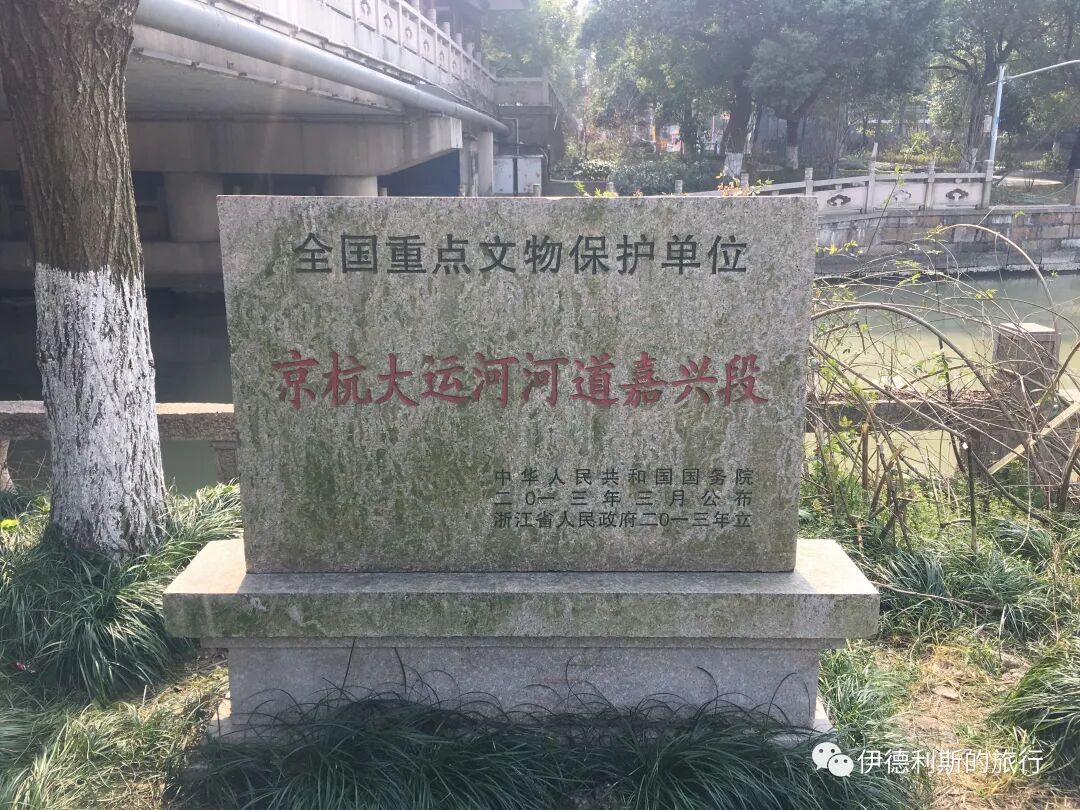
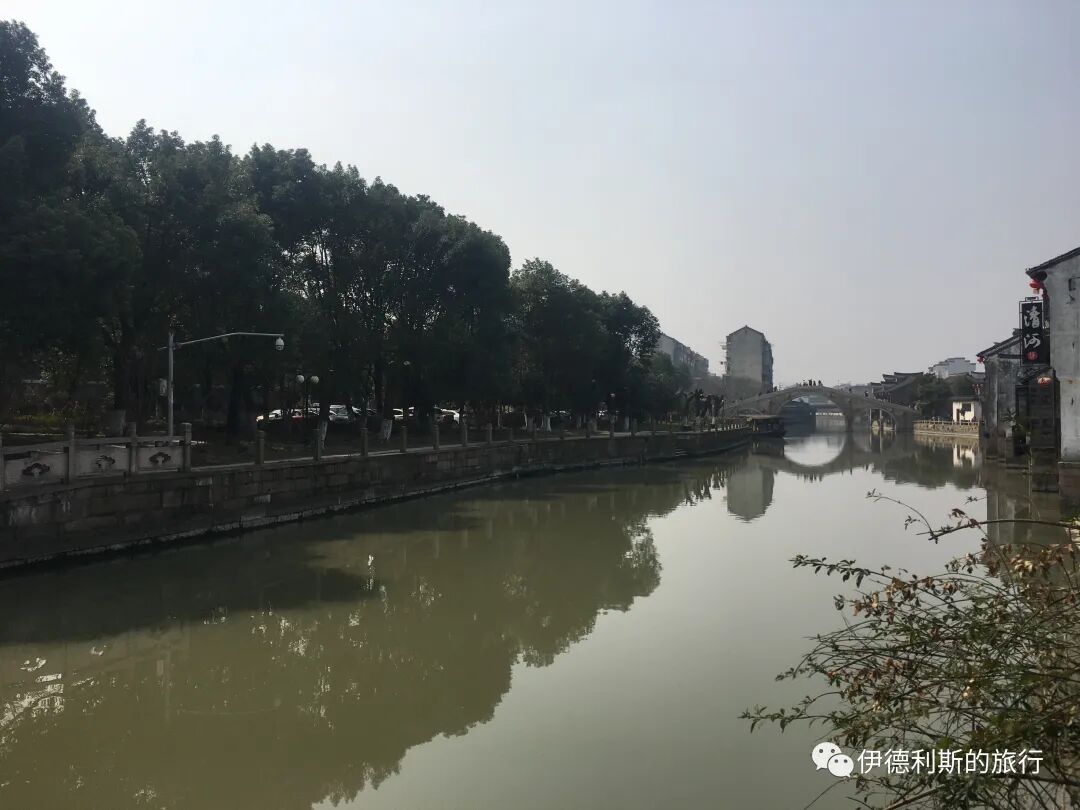
The current Hui Muslim residential area inside the East Gate of Jiaxing
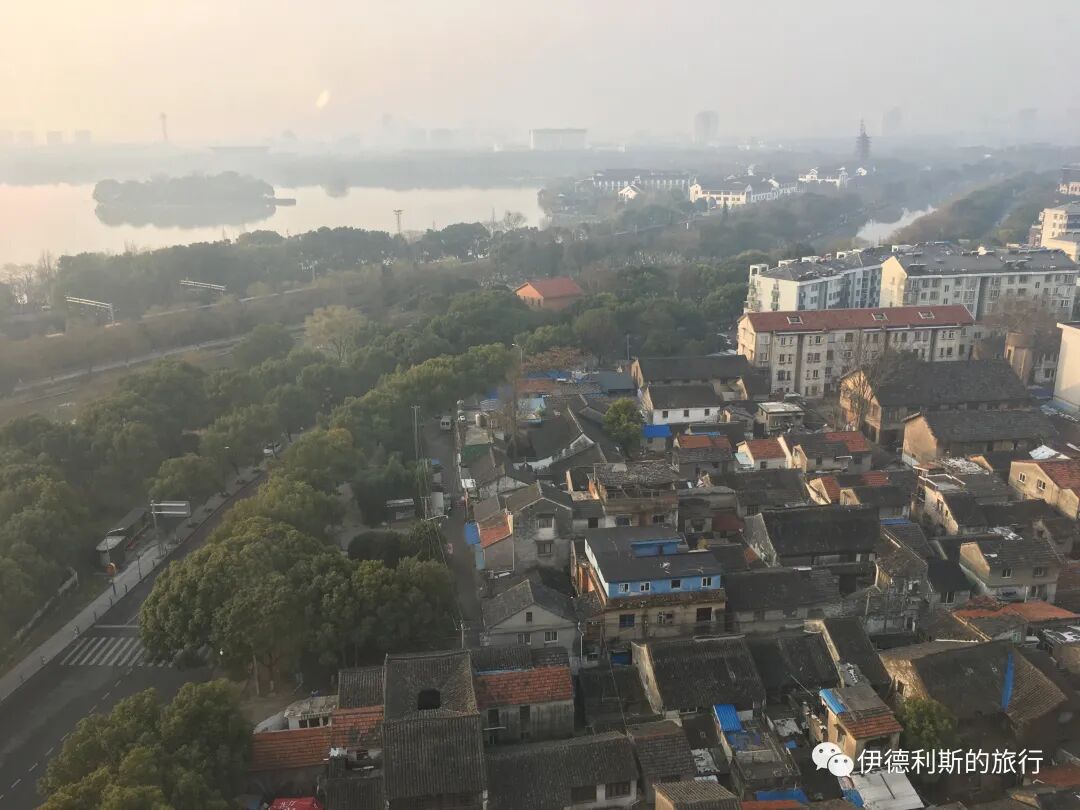
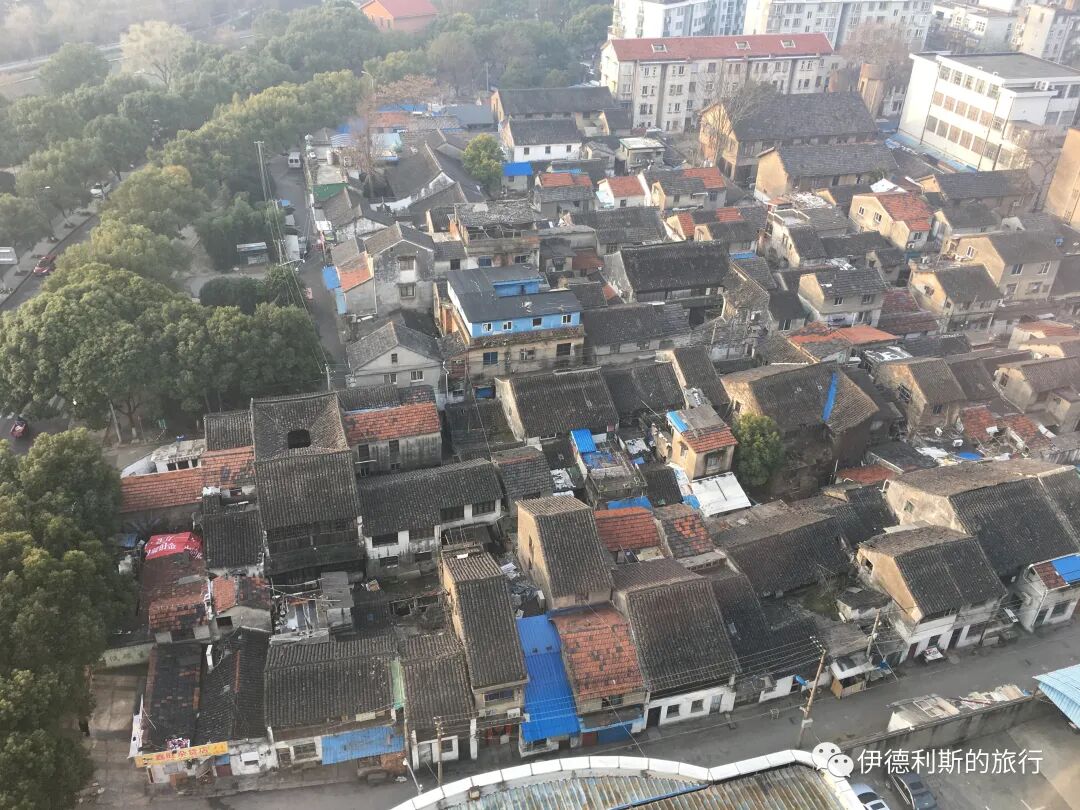
Halal food
Among the Hui Muslims who moved south from Henan and Shandong to Jiaxing during the late Qing Dynasty and the Republic of China, half were from the Han family in Tuocheng, Henan, and they were known as the wealthy Han family. Han Haili's family came to Jiaxing in 1938 to work in the halal food business, a tradition that continues today. I ate pan-fried dumplings (jianjiao) and beef tripe stew (niutubao) at their home. The beef tripe stew arrived at the table bubbling away, which felt very comforting.
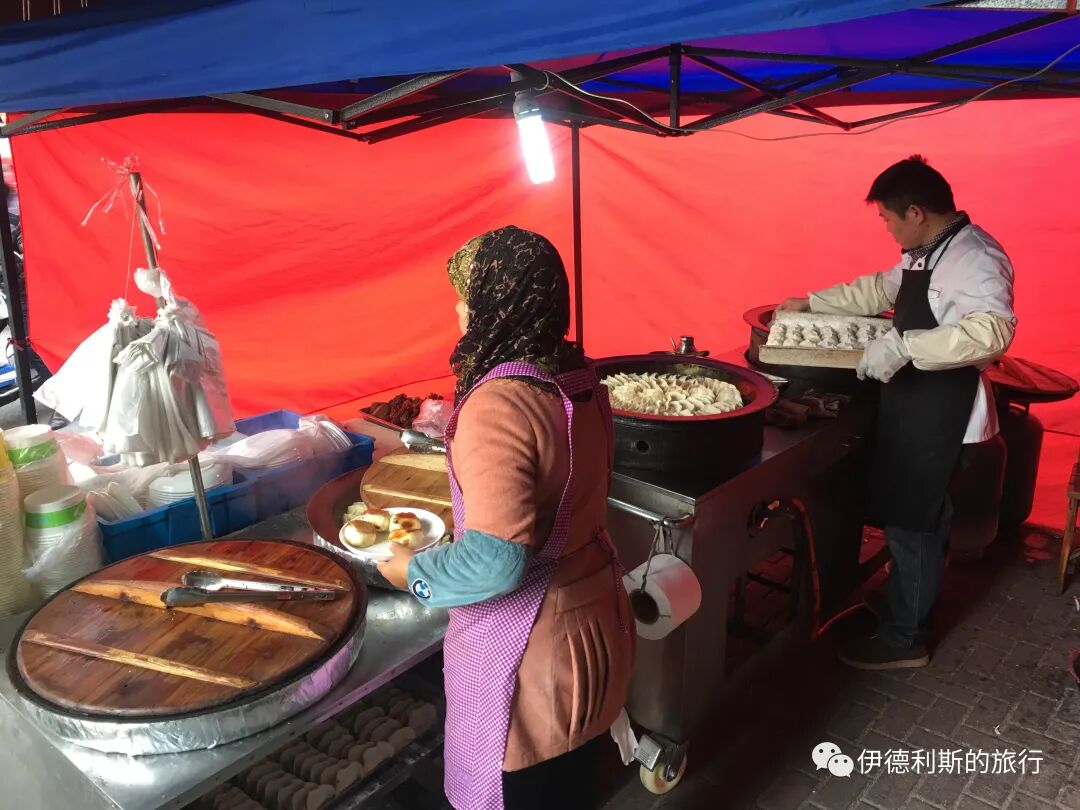
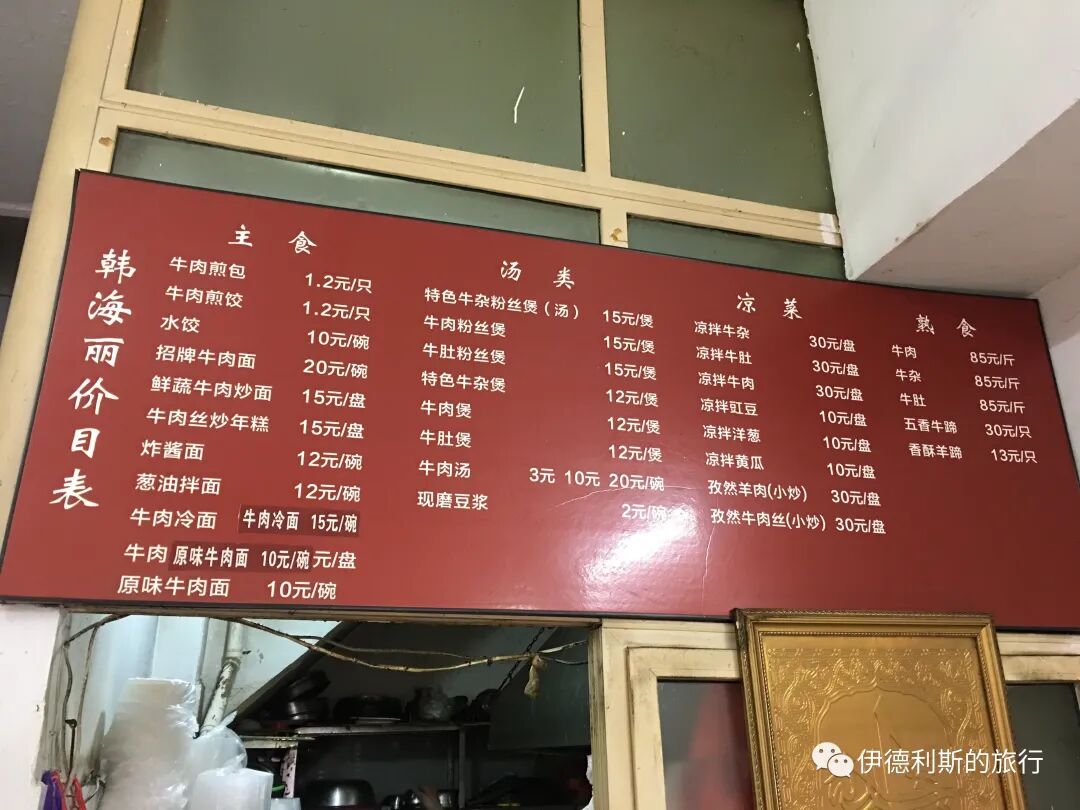
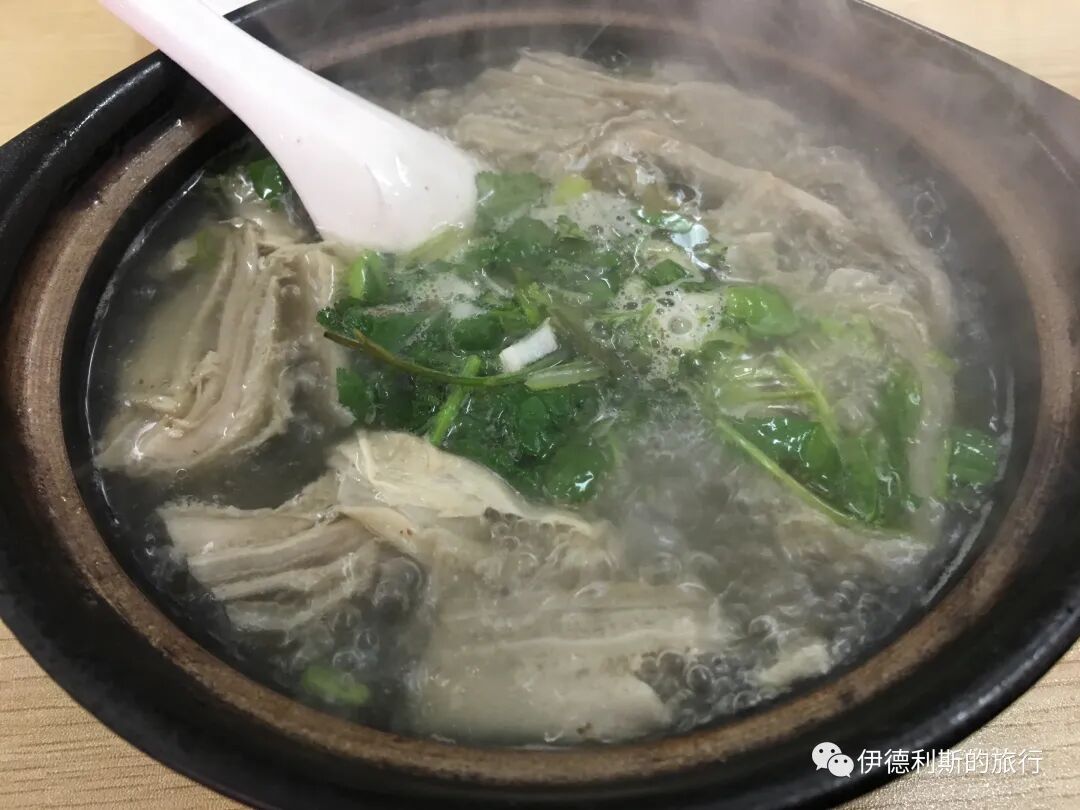
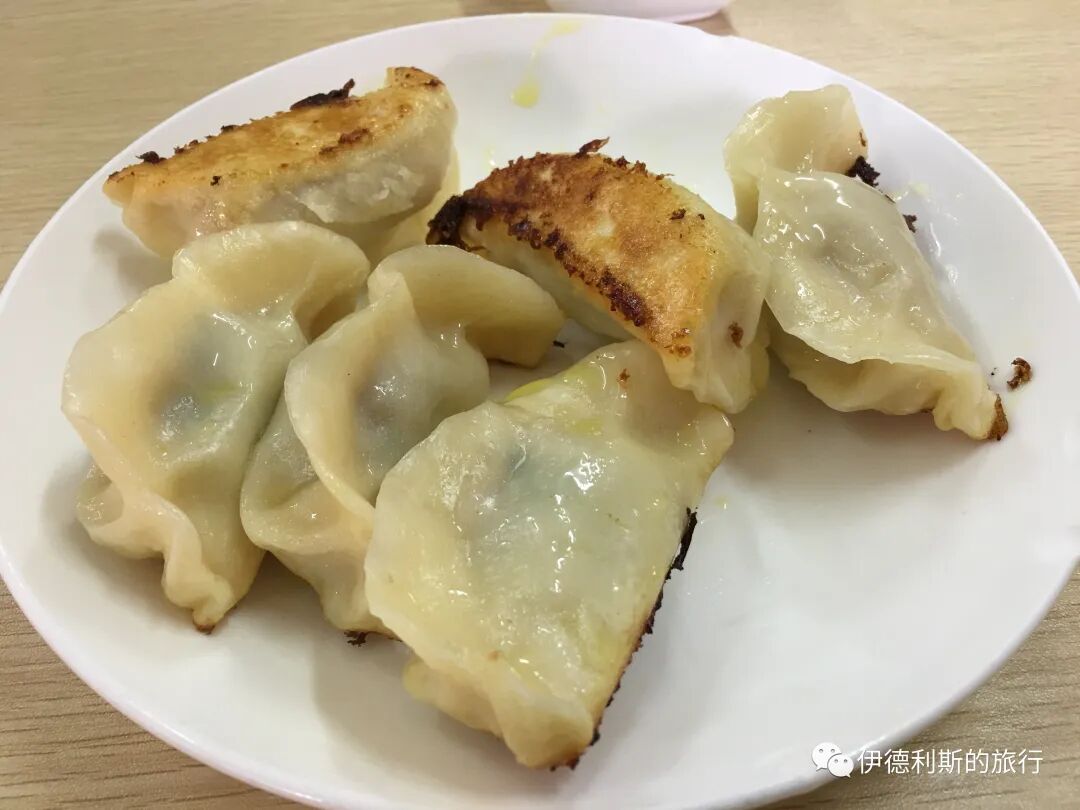
In a small alley behind the Jiaxing Mosque, they sell beef rice dumplings (niurouzong). This was my first time eating them, and they were delicious.
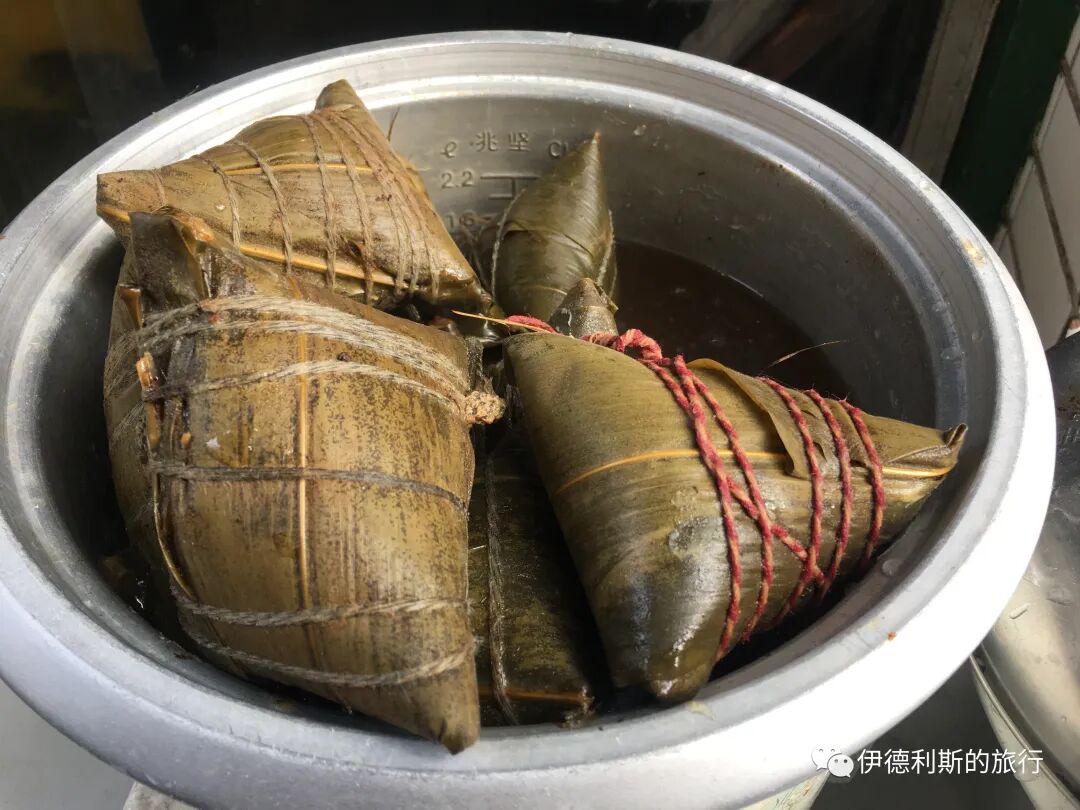
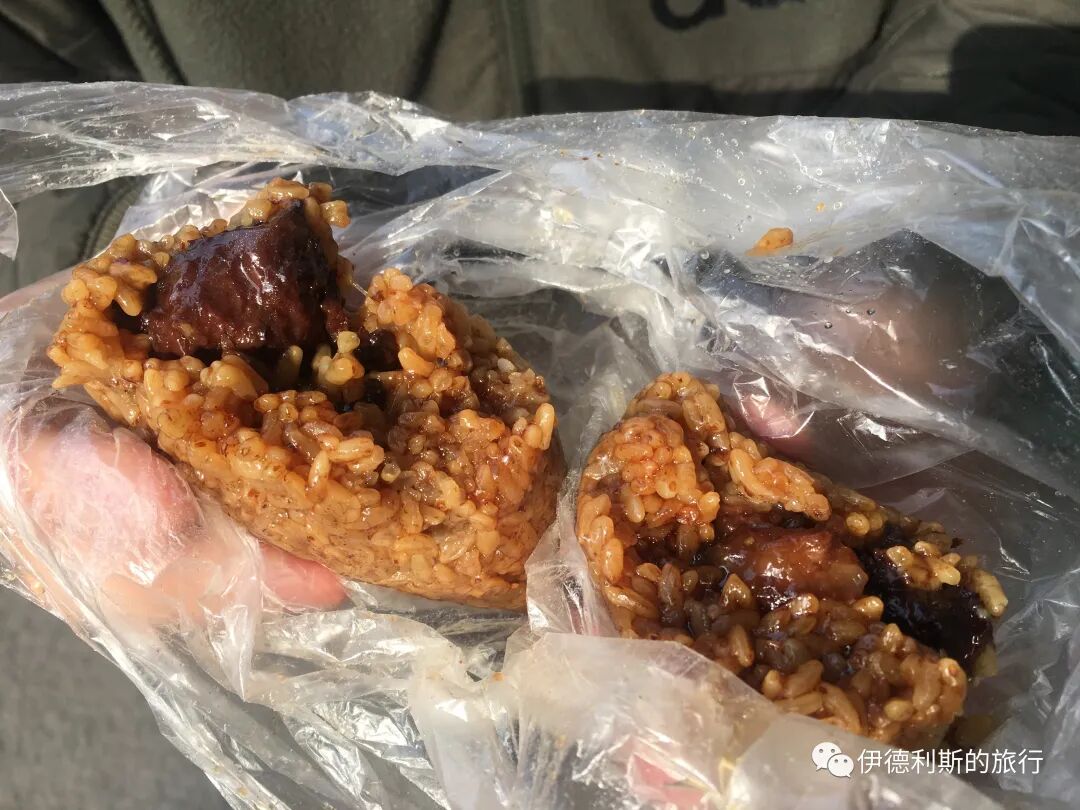
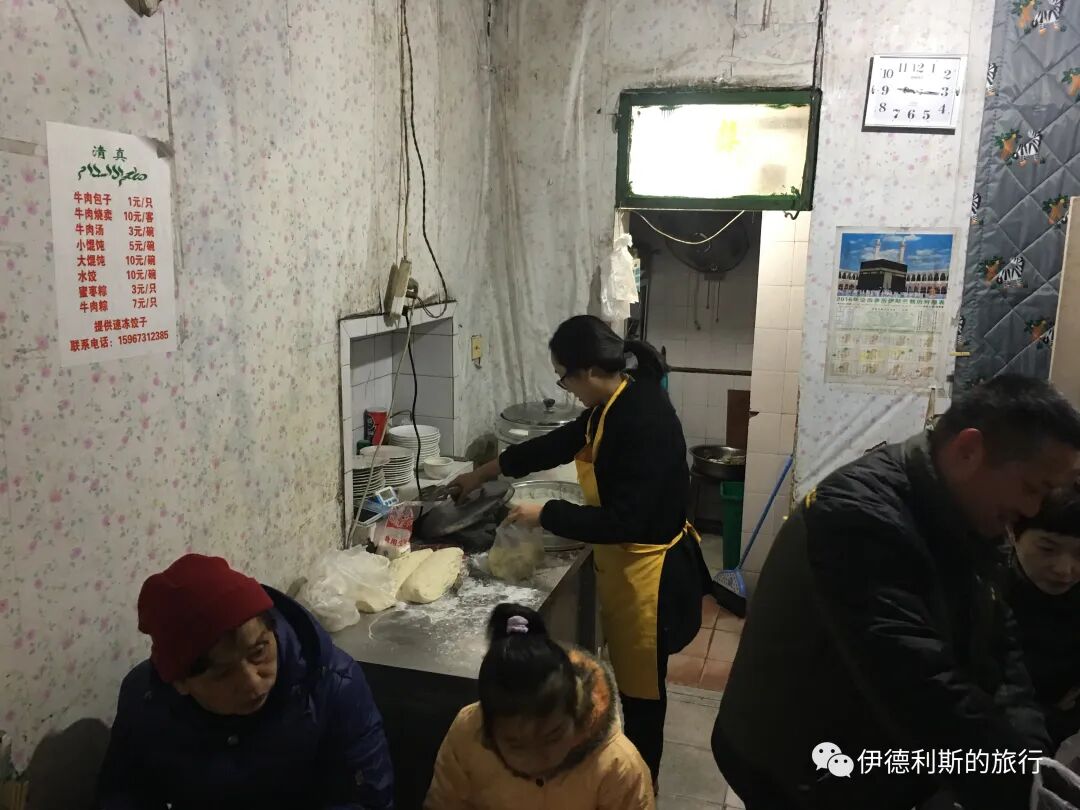
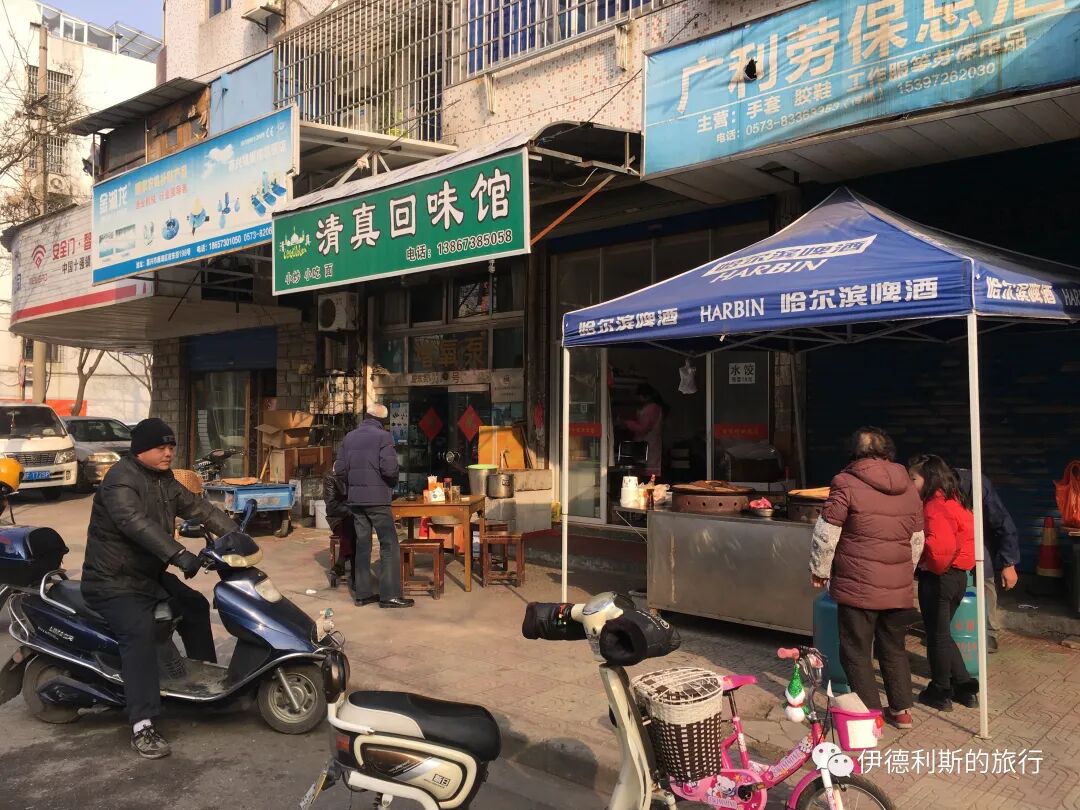
Jiaxing Mosque
Jiaxing Mosque was built in 1602 (the 30th year of the Wanli reign). It underwent major repairs in 1747 (the 12th year of the Qianlong reign), when a lecture hall was added to the east side of the main hall, and the main gate was rebuilt in 1774 (the 39th year of the Qianlong reign).
After the Taiping Rebellion, Jiaxing Mosque fell into ruin. It was not used again until Hui Muslims from Henan moved to the area and began using it. It was renovated in 1953, suffered heavy damage during the Cultural Revolution, and took on its current appearance after major repairs in 1981.
Jiaxing originally had two mosques. The Great Mosque was destroyed around the time of the Taiping Rebellion, and the local community scattered, leaving only the small mosque inside the East Gate, which is the current Jiaxing Mosque.
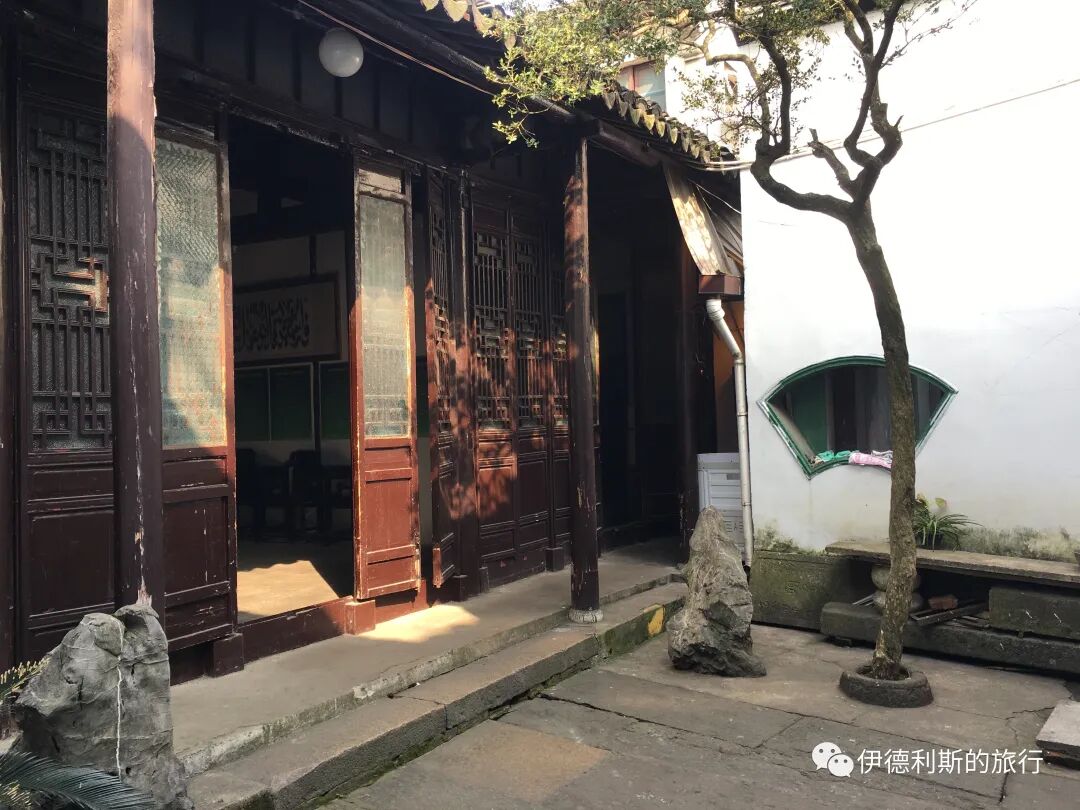
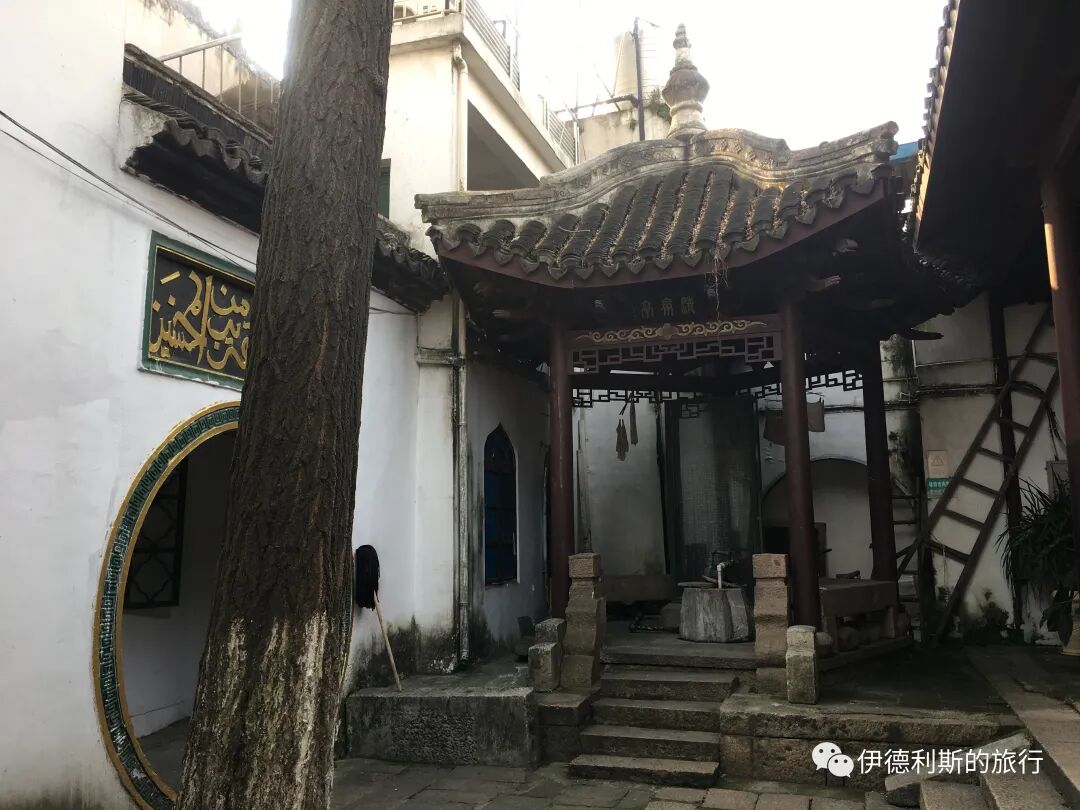
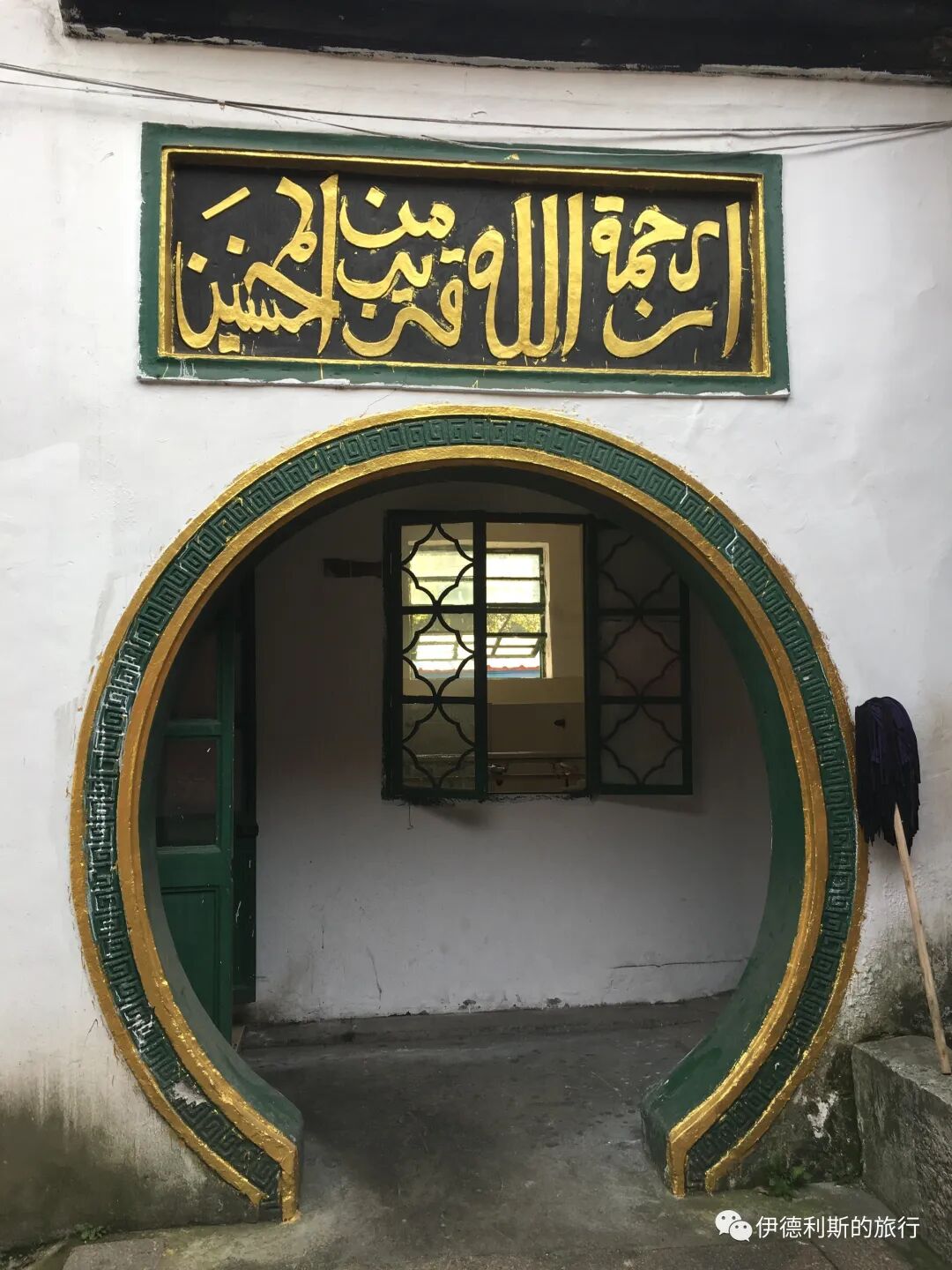
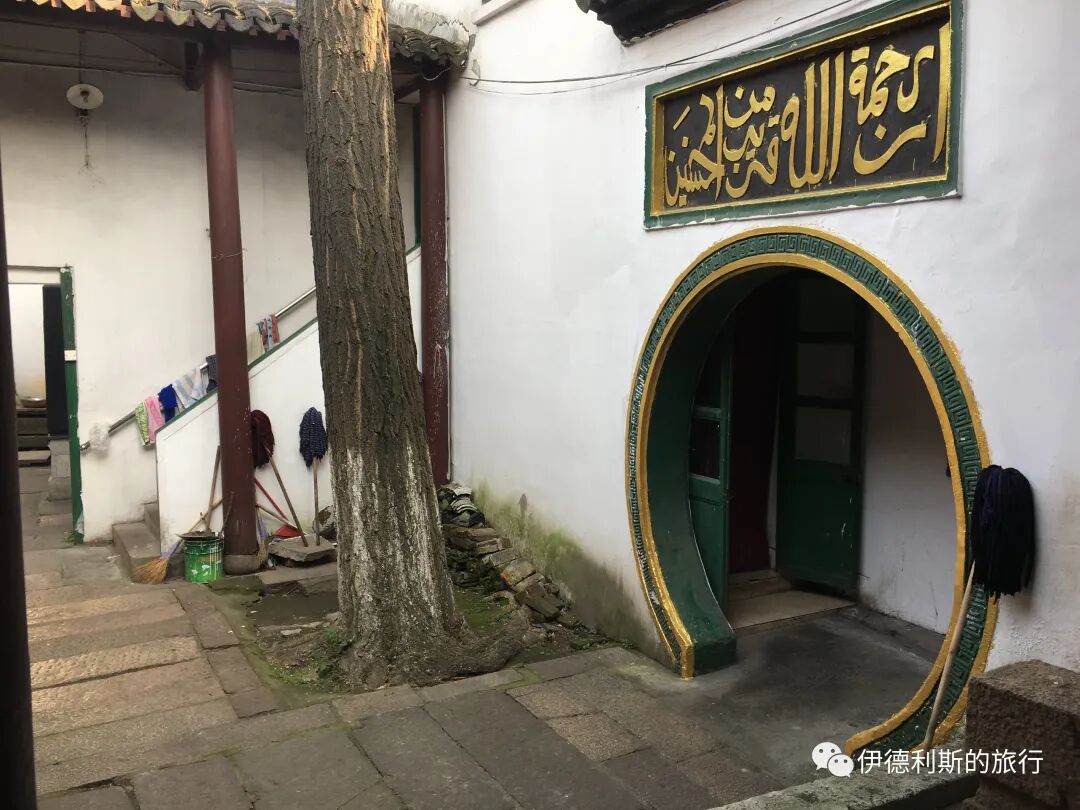
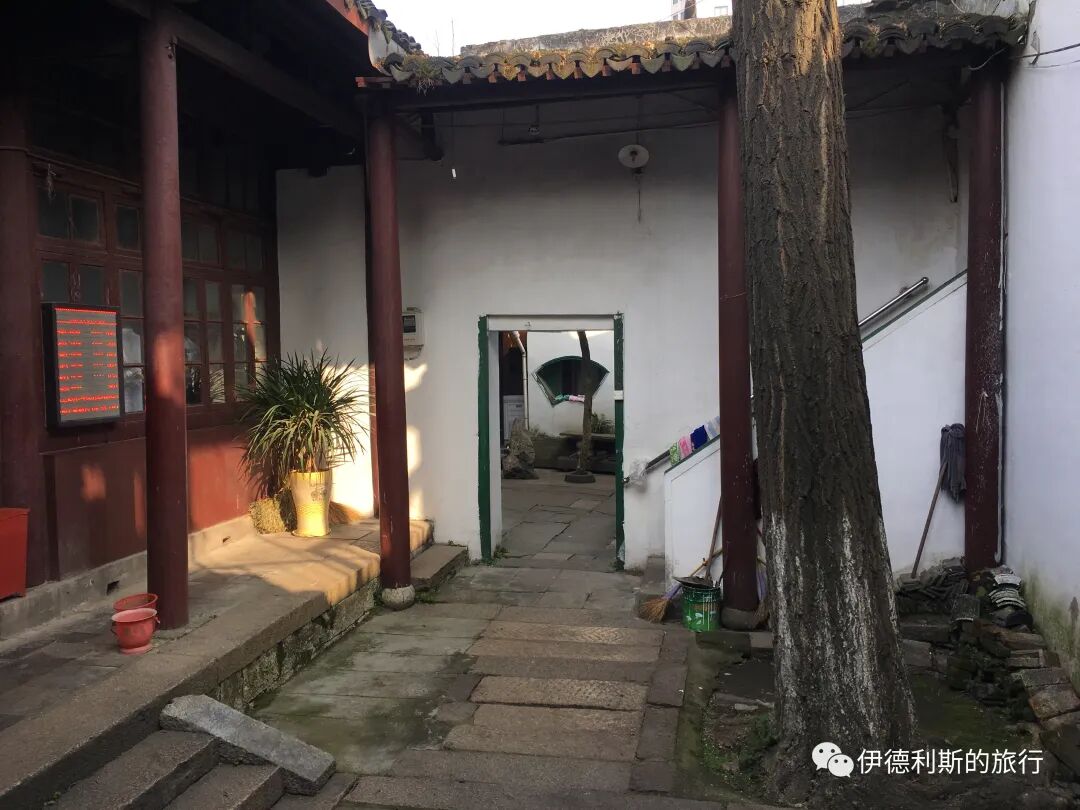
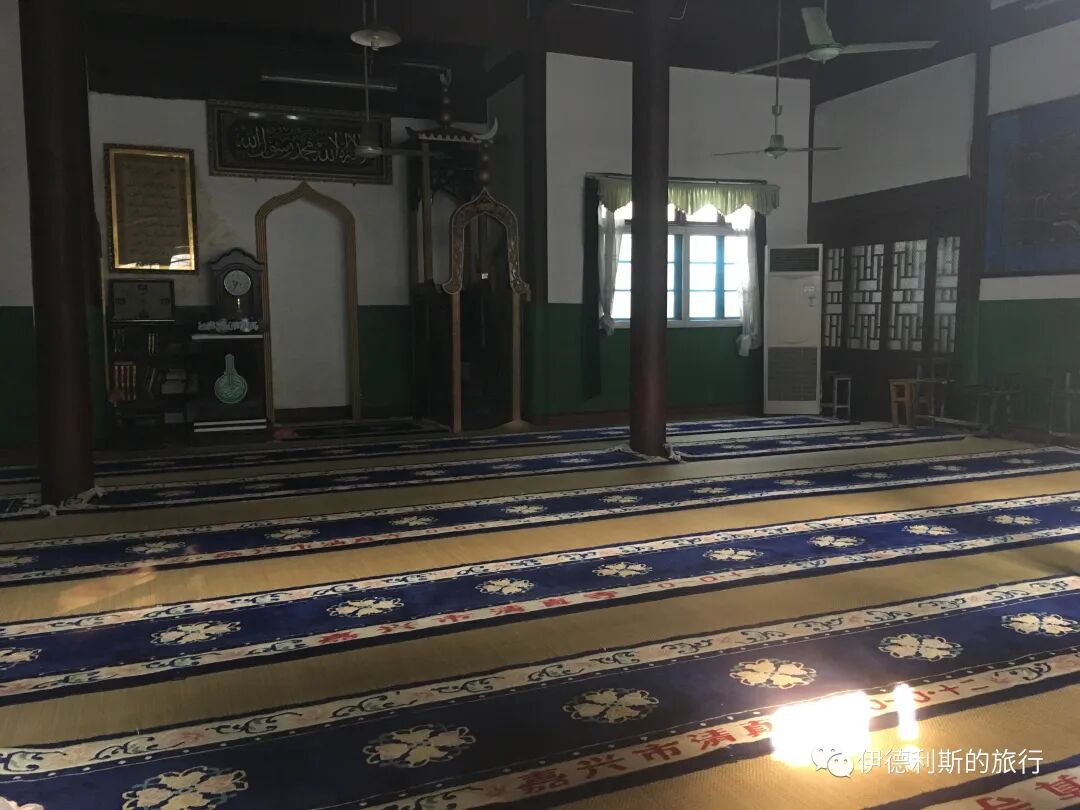
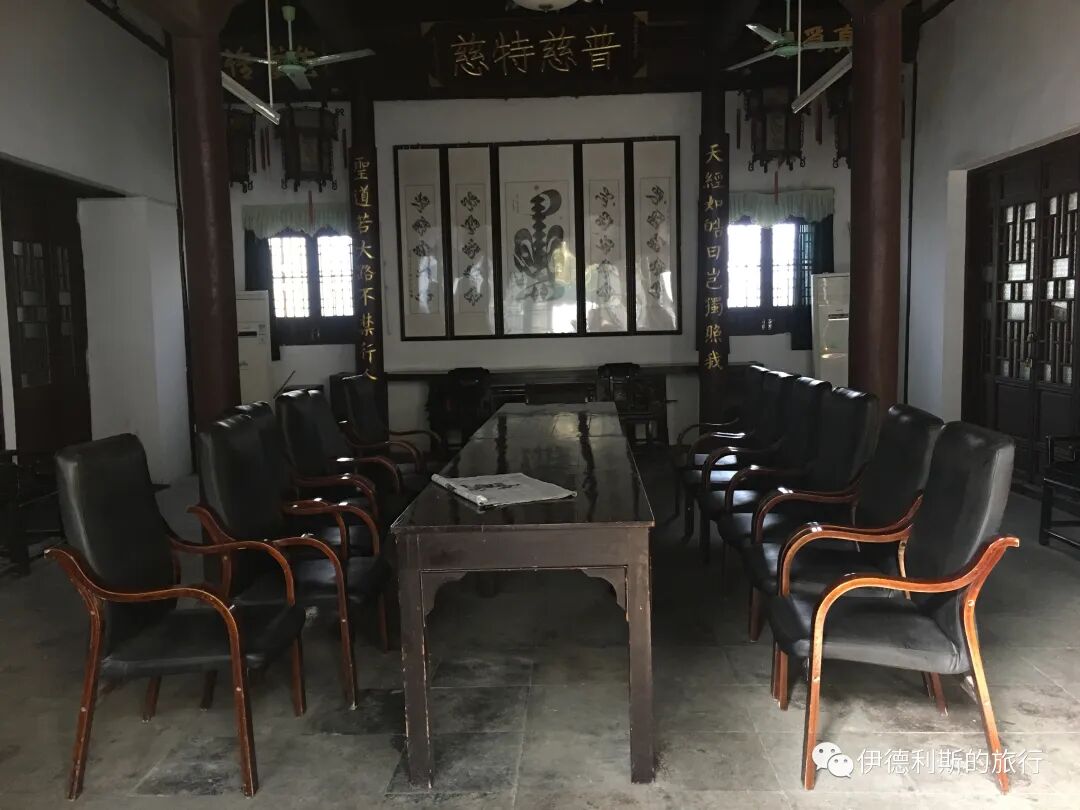
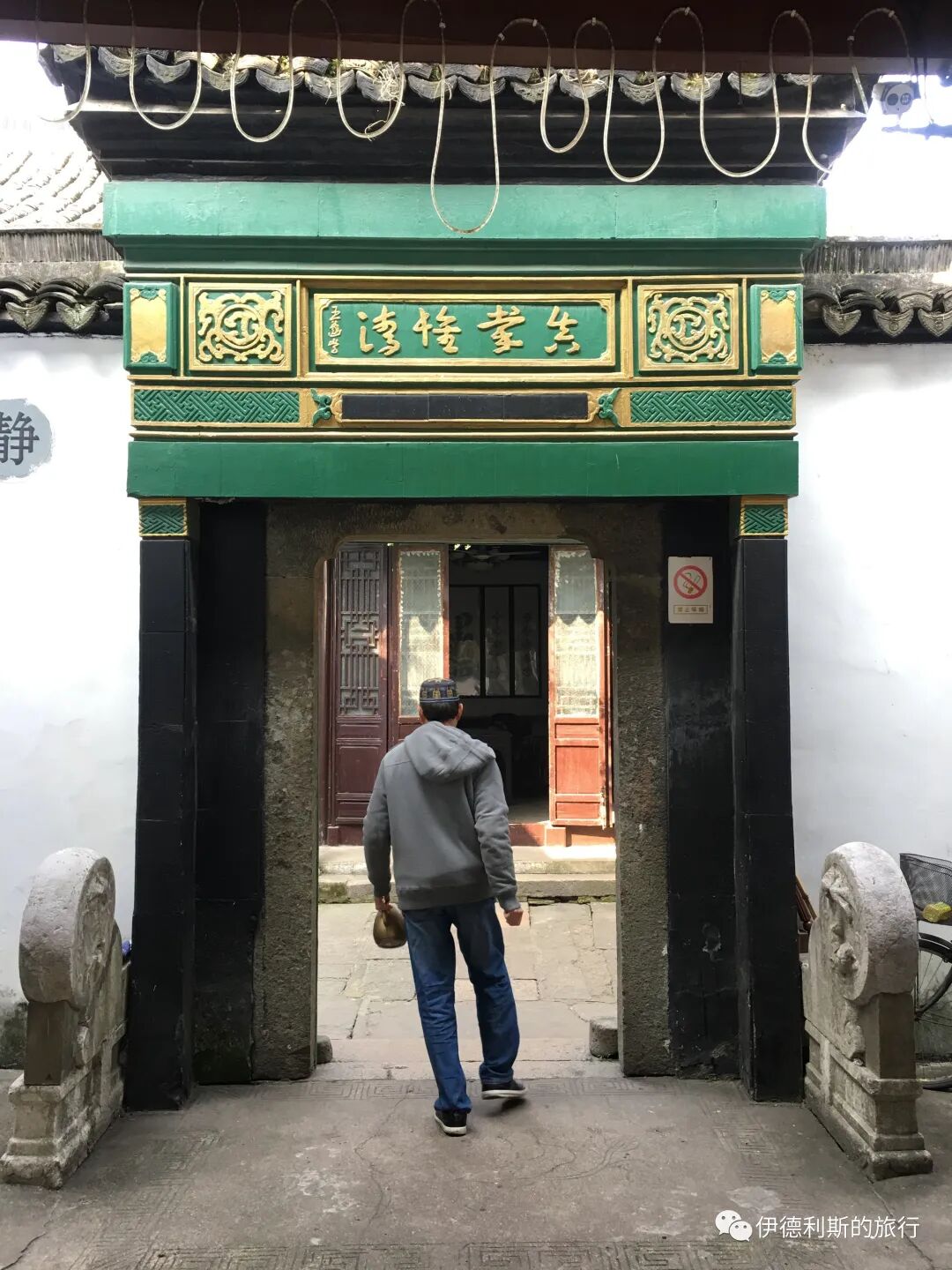
Halal Girls' School
The Henan Muslims who moved to Jiaxing also brought the tradition of the Henan halal girls' school with them. The Jiaxing Halal Girls' School began in 1942, and its first principal was Yang Huizhen. In 1946, Yang Huizhen founded the Jiaxing Islamic Orphanage and Nursing Home to provide care for the elderly, weak, women, and children.
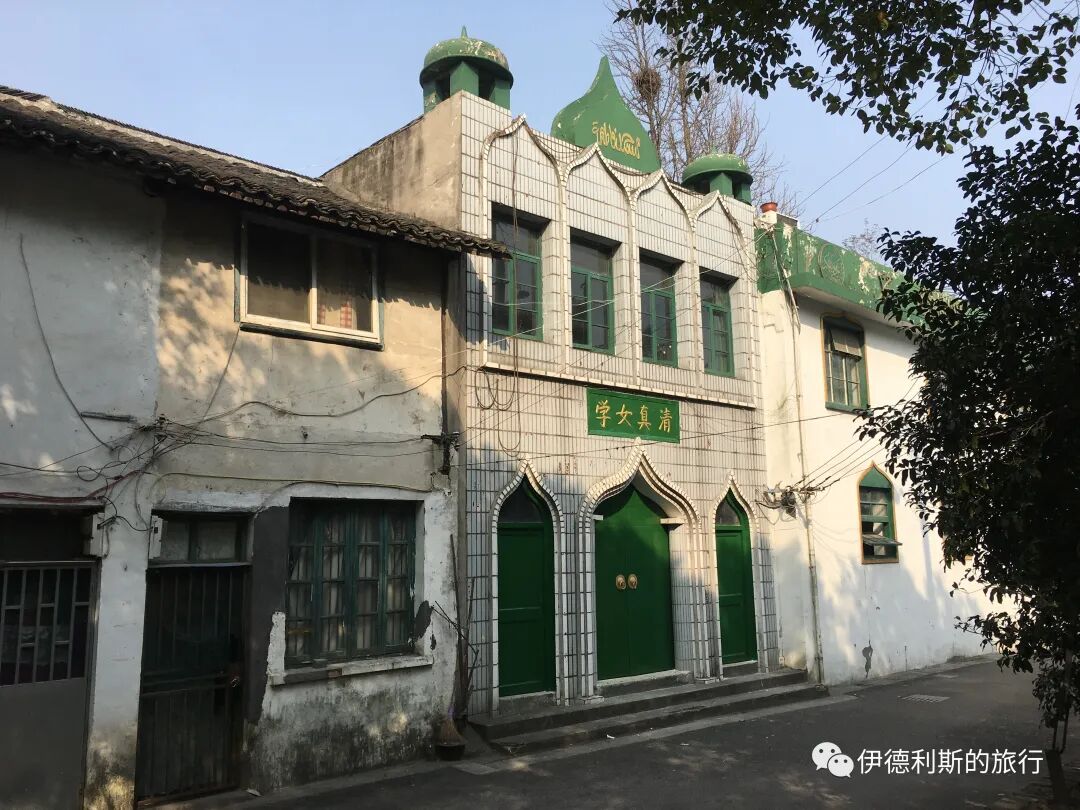
Han Maosen Martial Arts School
Jiaxing Hui Muslims love martial arts. In 1980, they formed the Jiaxing Hui Muslim Martial Arts Team, led by Han Haihua of the Han family.
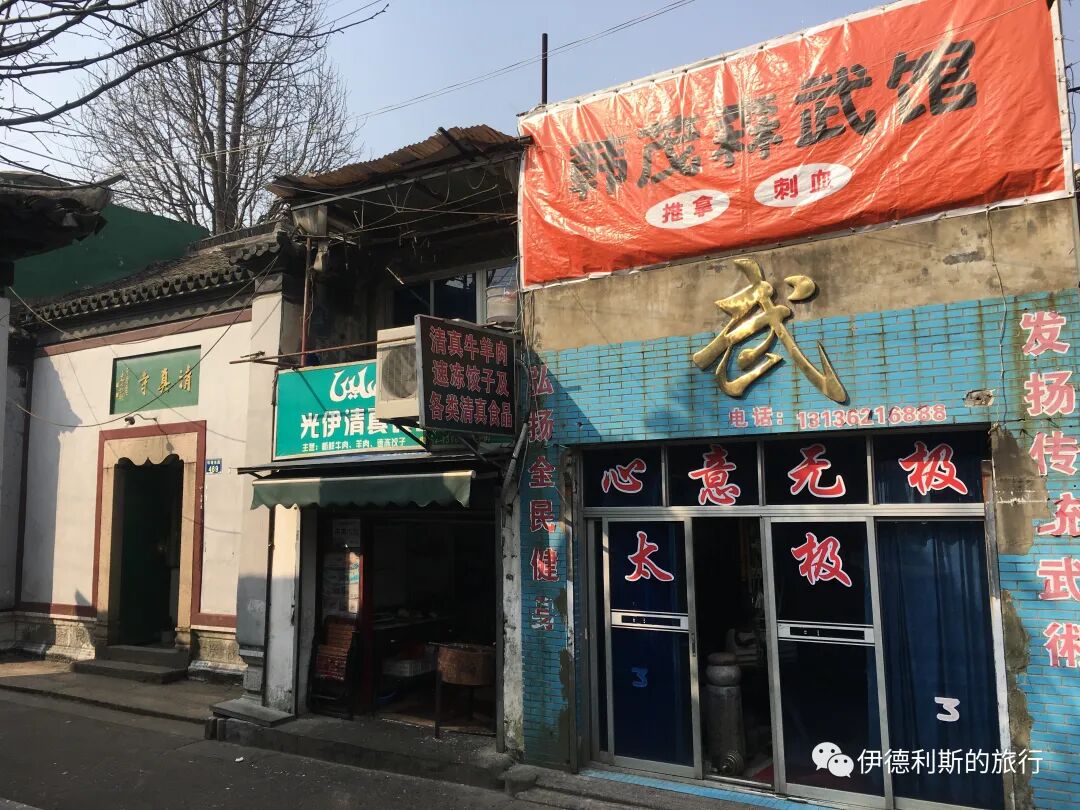
Siruchun
For lunch, I ate at the Siruchun Halal Restaurant on Yuehe Street in Jiaxing. I ordered fruit sweet soup (shuiguo yuanzi geng), crab roe tofu (xiehuang doufu), Indian aster greens (malantou), and Bai family fried fish (baijia baoyu, made with smoked grass carp). It was authentic and delicious Jiaxing food, making this trip worth it!
During the Republic of China era, a Hui Muslim from Henan named Bai Tisheng sold spiced beef, beef and lamb buns, and pancakes (jianbing) at the East Gate of Jiaxing. His buns were especially popular and became known as the East Gate Bai Family Buns. When Japan occupied Jiaxing, the East Gate was destroyed by artillery fire, and the Bai family fled to the countryside for safety. After the fighting calmed down at the end of 1938, Bai Tisheng opened the Siruchun Halal Stir-fry Restaurant at the street corner near Xuangong Bridge. In the 1930s and 1940s, Siruchun was one of the most famous halal stir-fry restaurants in Jiaxing, alongside Chunhuayuan and Yuxinglou.
During the public-private partnership period in the 1950s, Siruchun merged with several other halal snack shops to become the 19th branch of the Halal Food General Store. It only sold beef noodles and pancakes, and stopped serving stir-fried dishes. In 1969, the Changshuitang River was widened and Xuangong Bridge was demolished, causing the original site of Siruchun to disappear.
After the 1990s, the city government invested in opening the three-story Islamic Garden Hotel near Zhongshan Bridge in Jiaxing. Many of the veteran chefs and their apprentices from the old Chunhuayuan and Siruchun restaurants returned to their trade there, making the Garden Hotel the go-to spot for authentic Jiaxing halal stir-fry. In 1998, the Garden Hotel was demolished for the construction of the city moat green belt. That same year, the Chunhuayuan Halal Restaurant on Jianguo Road was also torn down, and Jiaxing's halal restaurant scene fell into decline again.
In 2008, Bai Tisheng's descendant, Bai Qingmin, and his children reopened the Bai Family Bun Shop on Yuehe Street. Chefs and bun masters who had worked at Chunhuayuan and the Garden Hotel came to help, some of whom were already over seventy years old. In 2012, the Bai family continued their revival by reopening the Siruchun Halal Stir-fry Restaurant, which has become the most famous old-brand halal restaurant in Jiaxing.
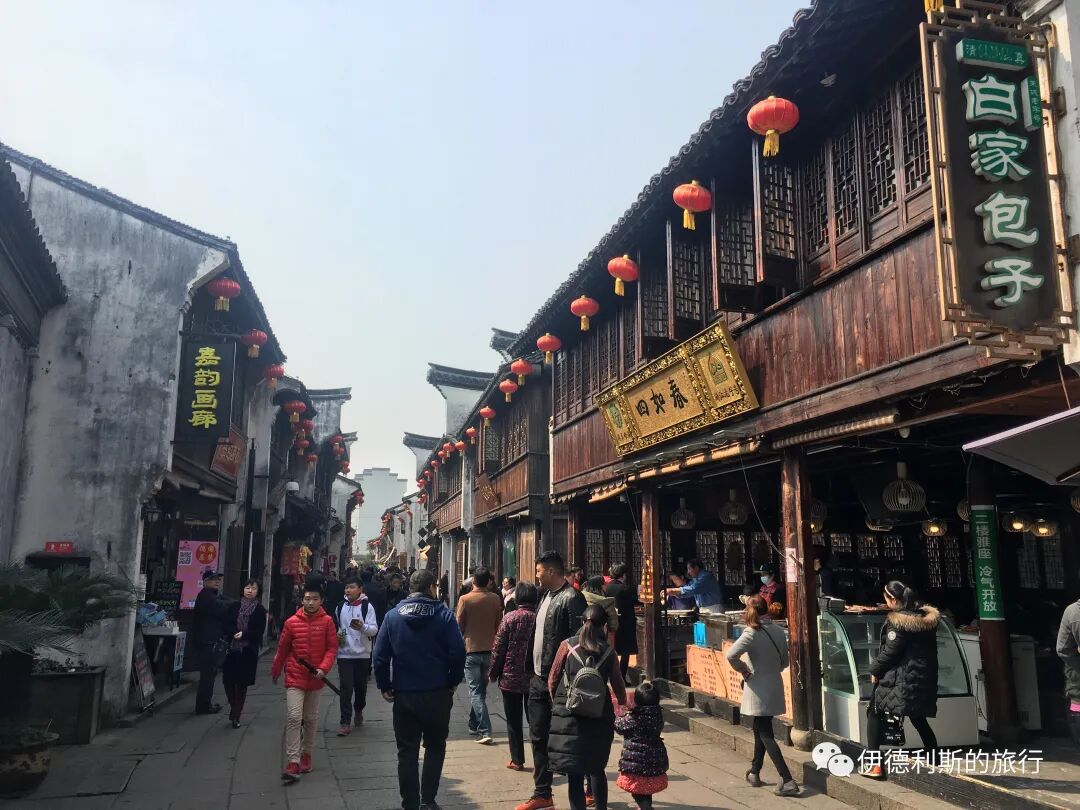
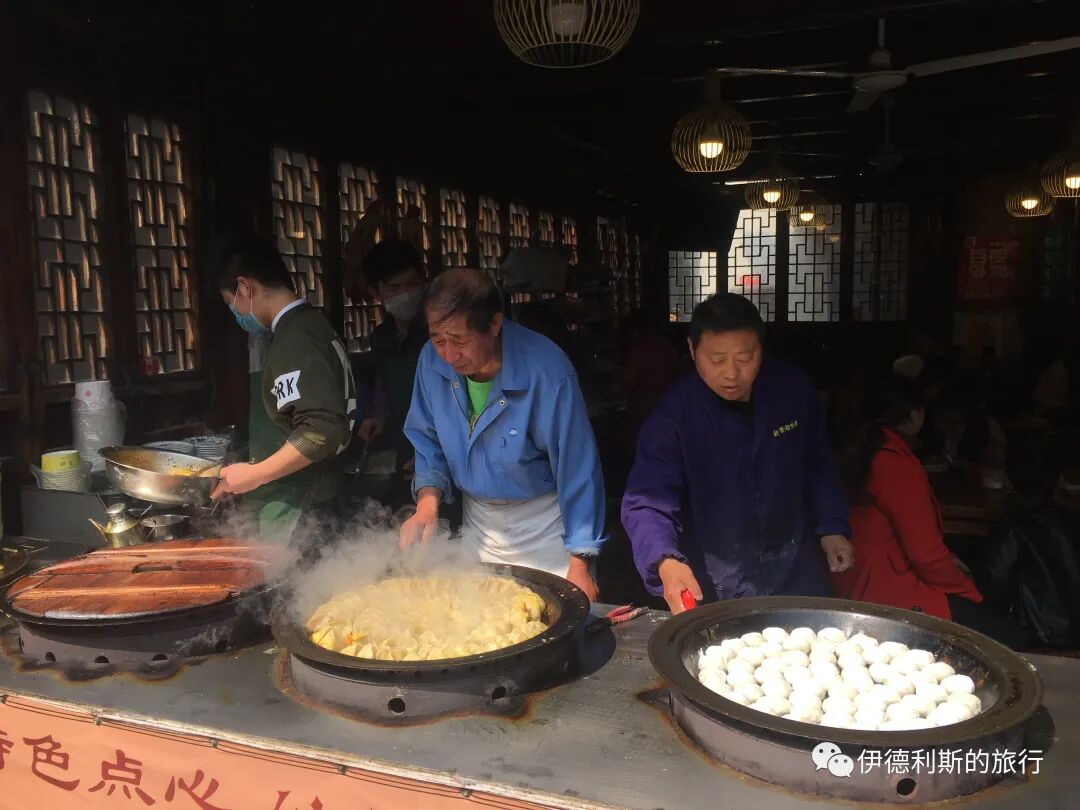
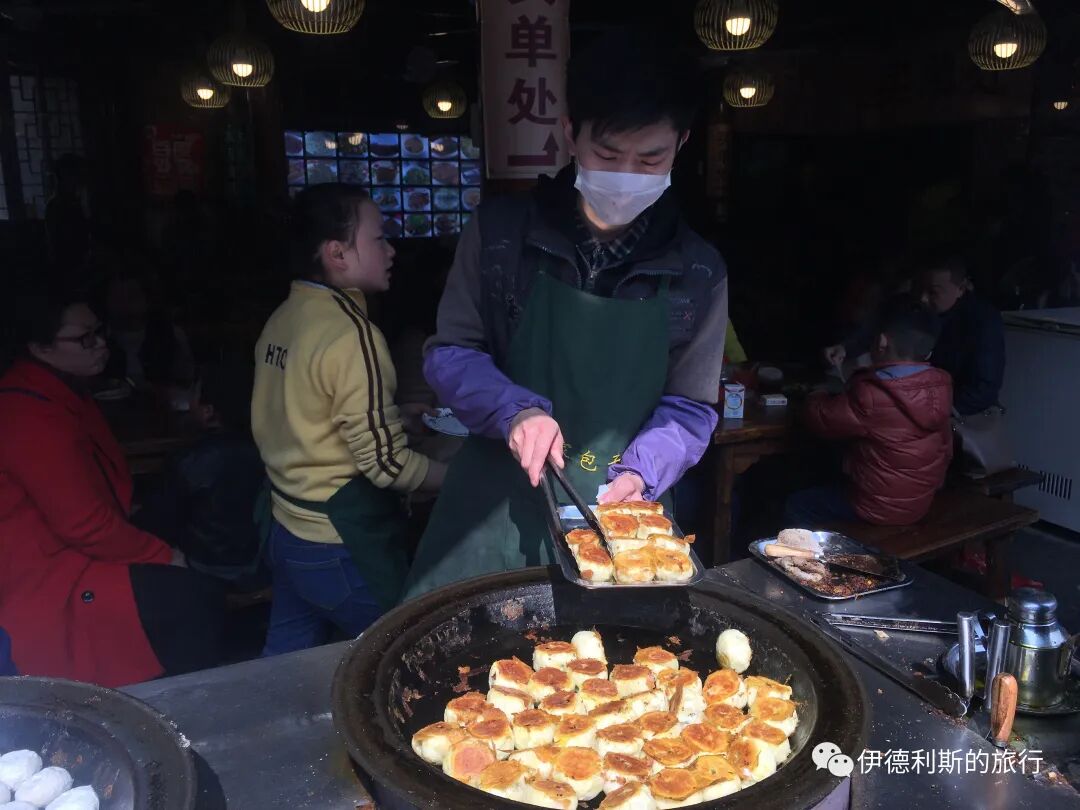
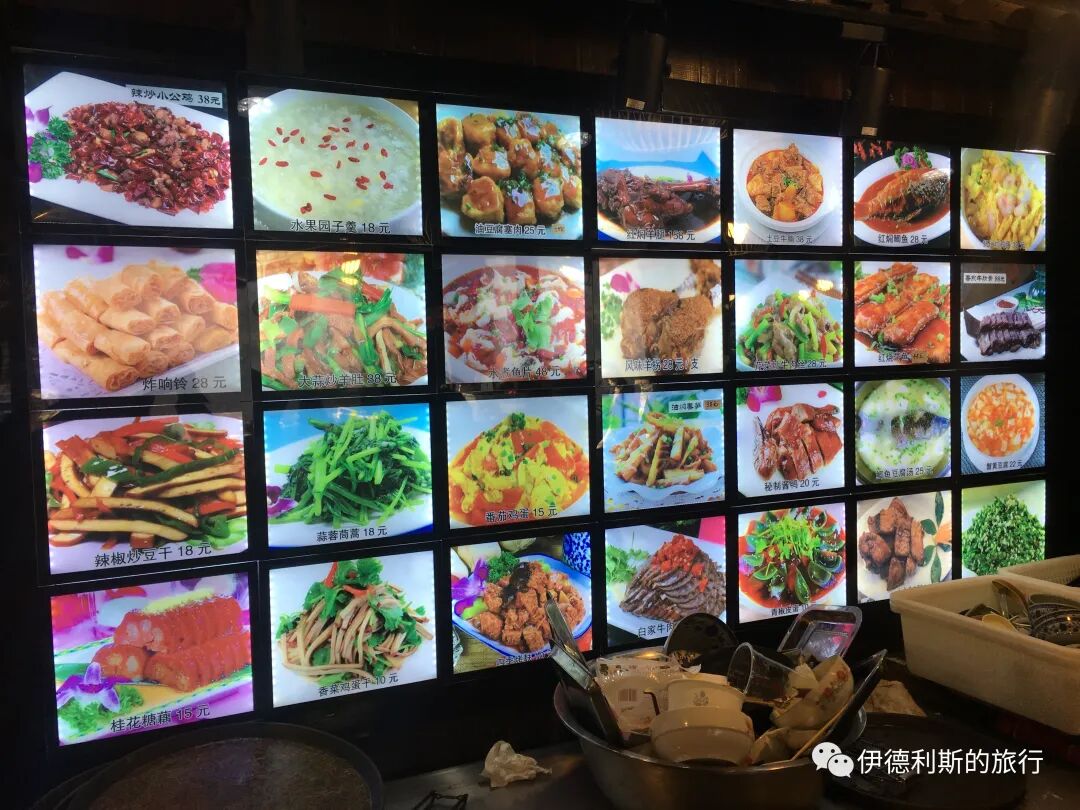
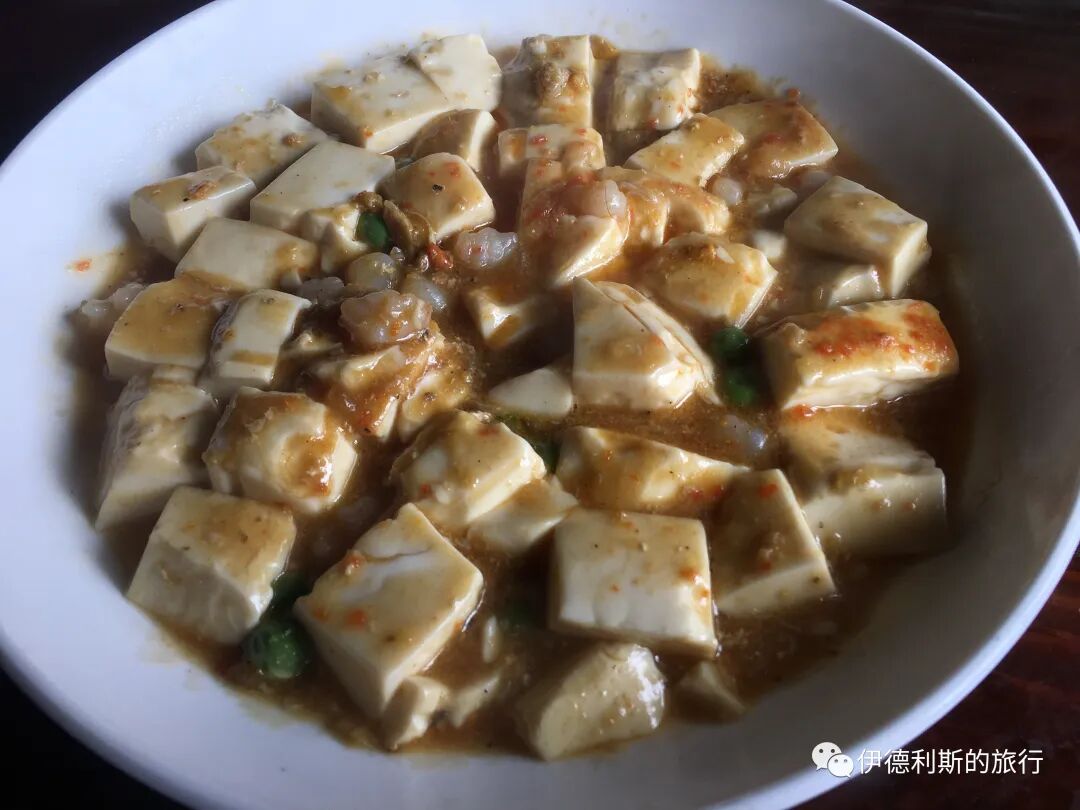
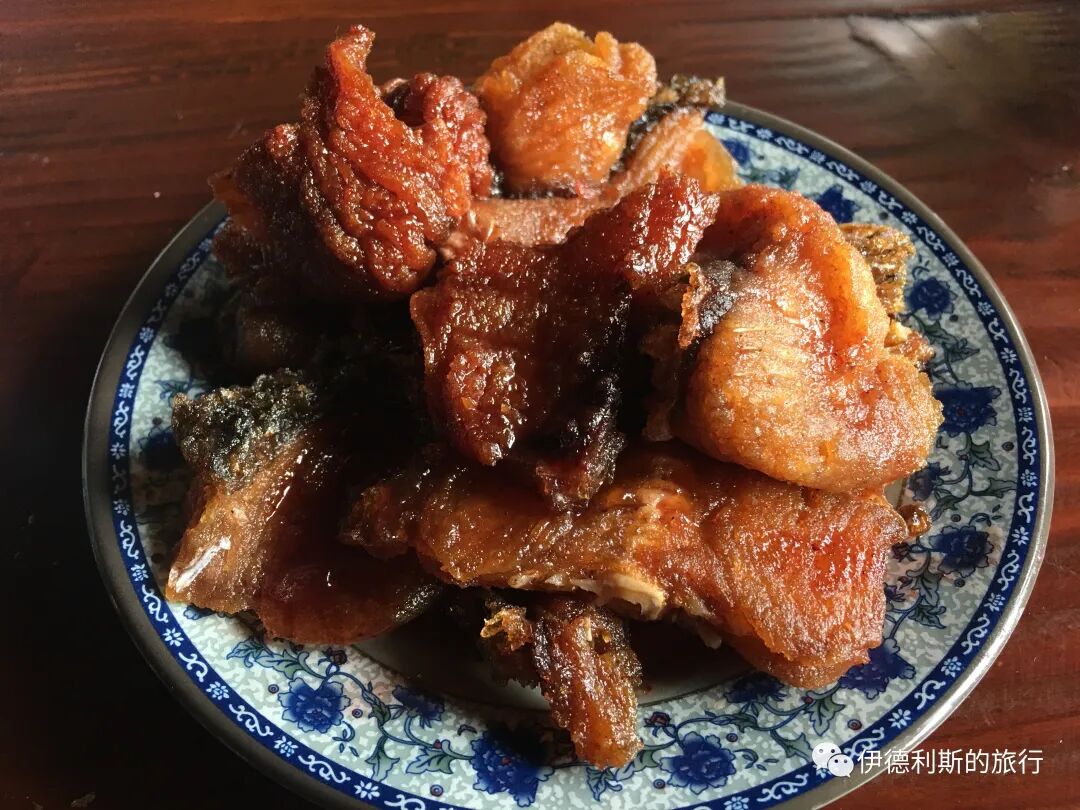
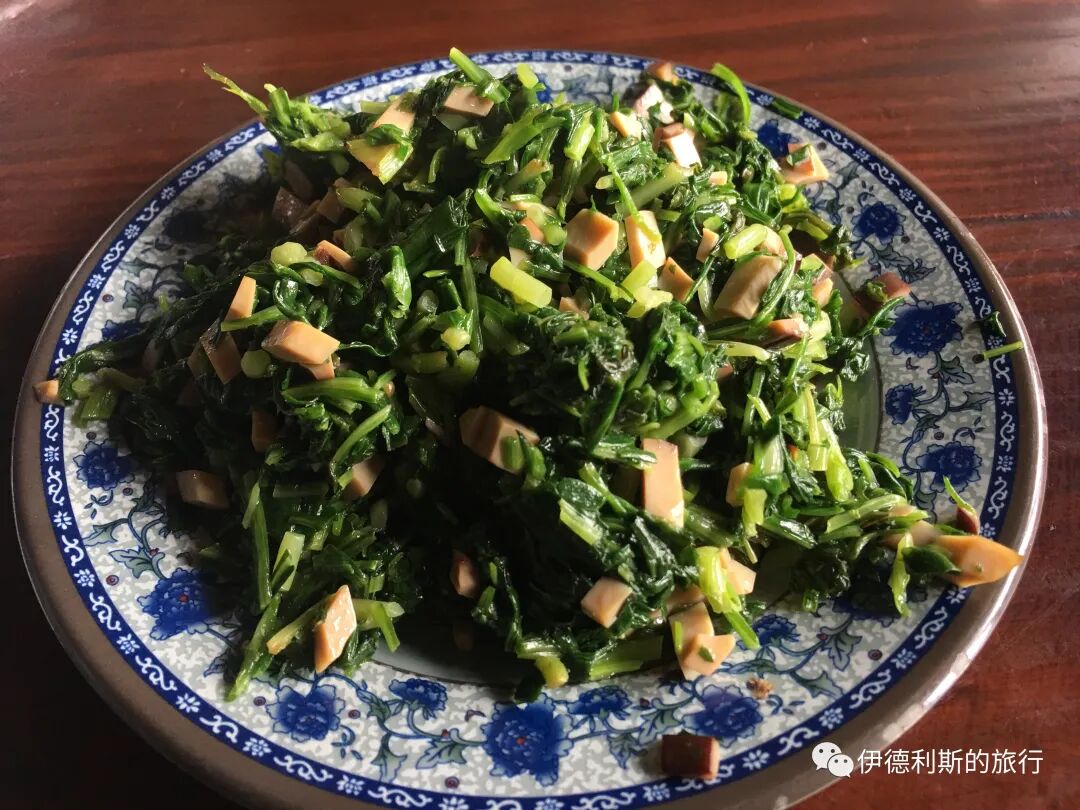
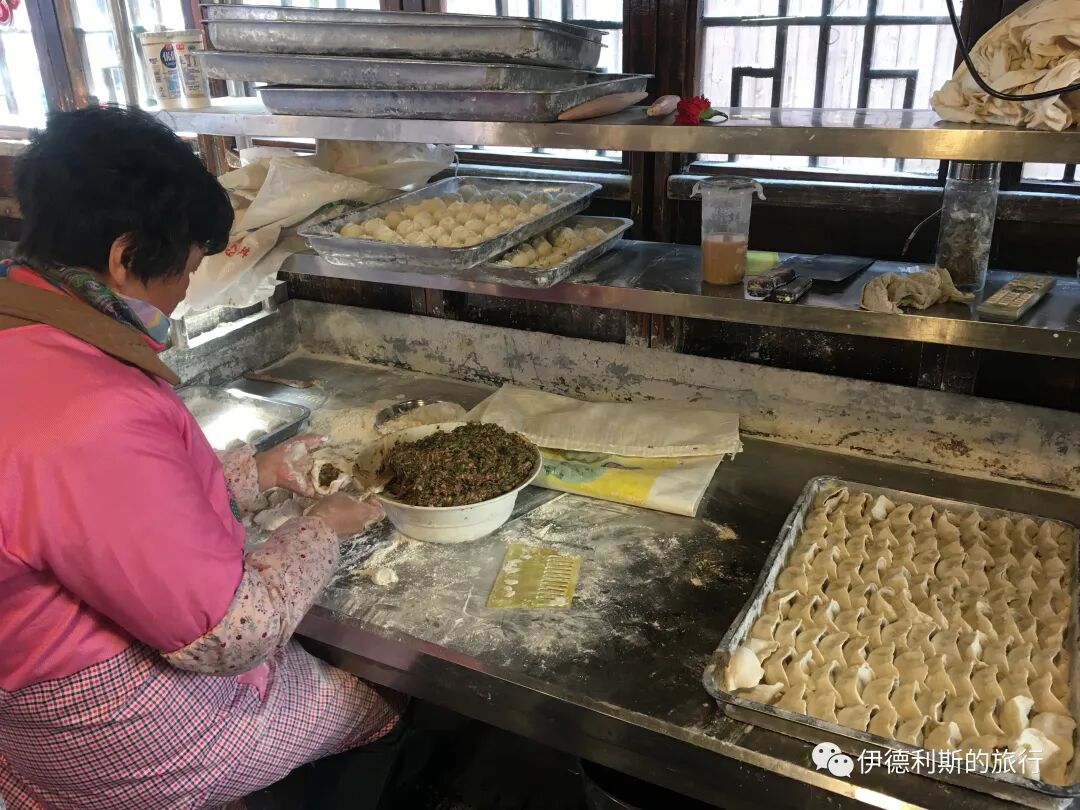
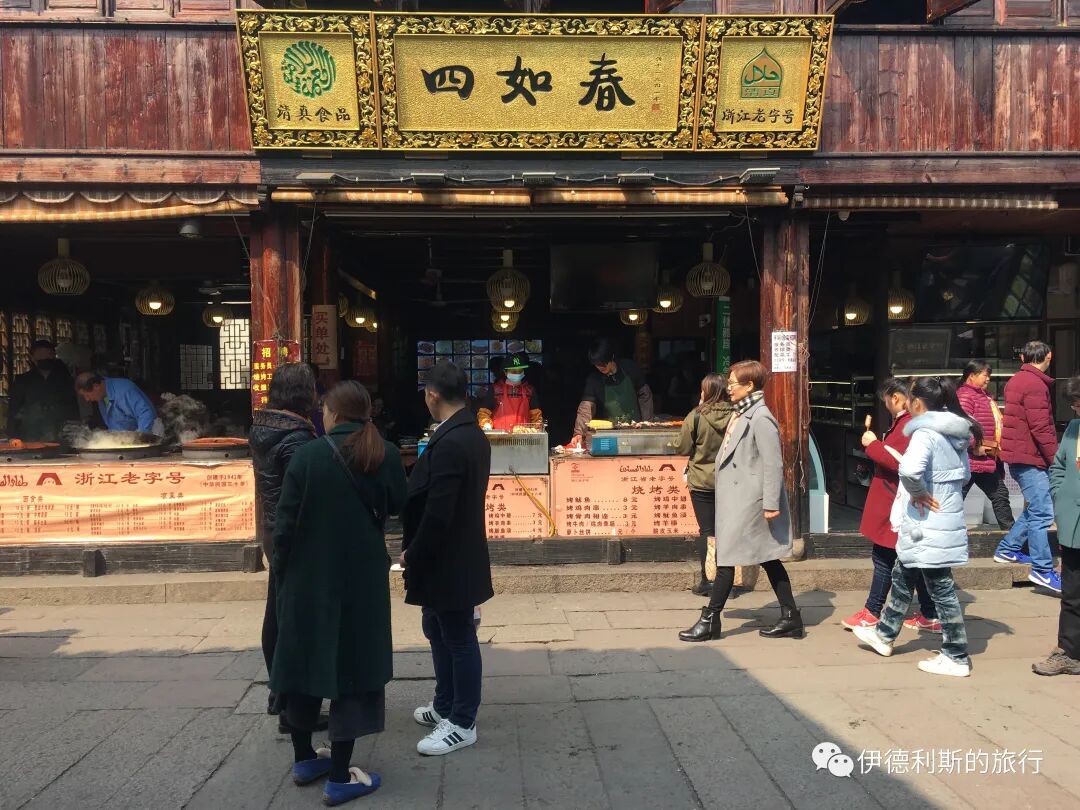
Yipin Meishi
I also visited another halal stir-fry restaurant in Jiaxing called Yipin Meishi, where I ate sweet and sour lotus root slices, braised yellow eel, and salt and pepper taro. One dish was sweet, one was great with rice, and one was salty. They brought out a whole basin of rice for me to eat as much as I wanted, and I was very satisfied.
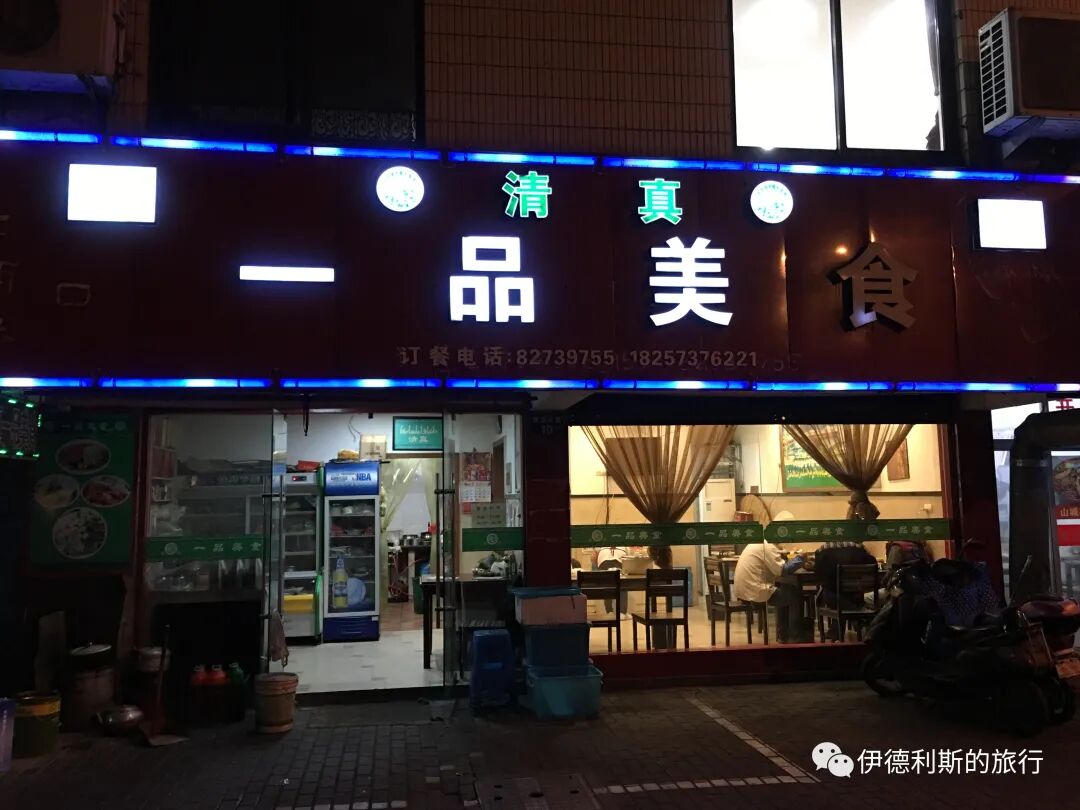
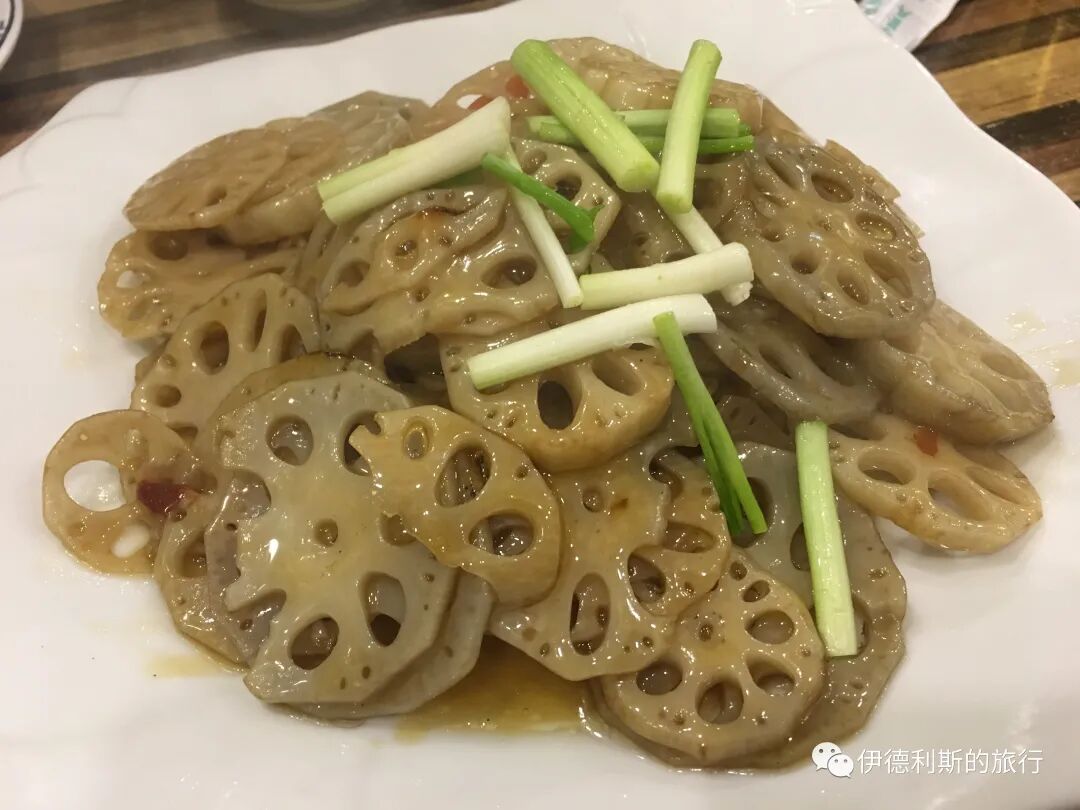
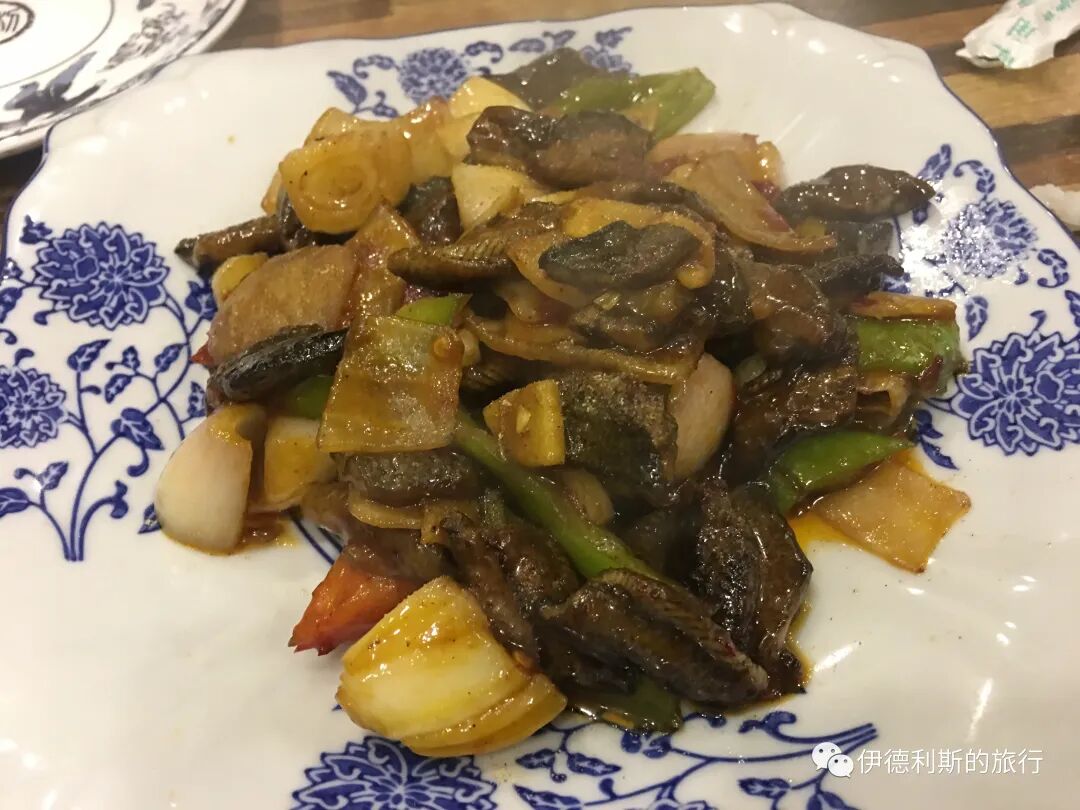
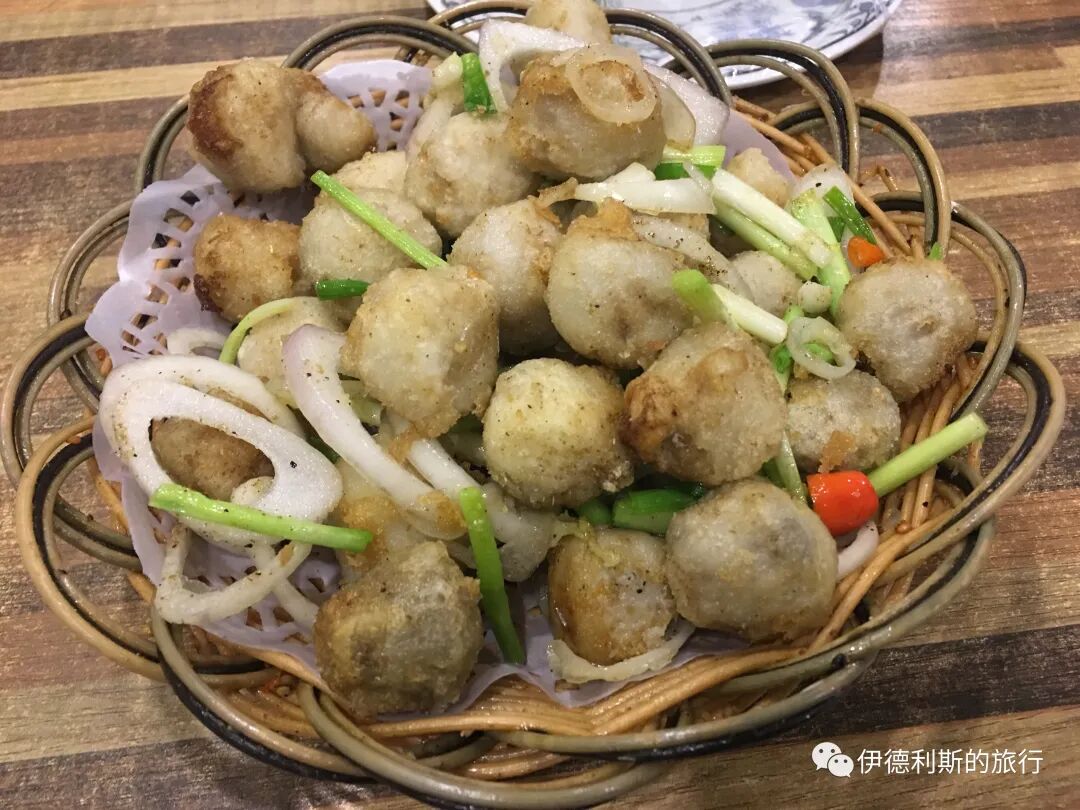
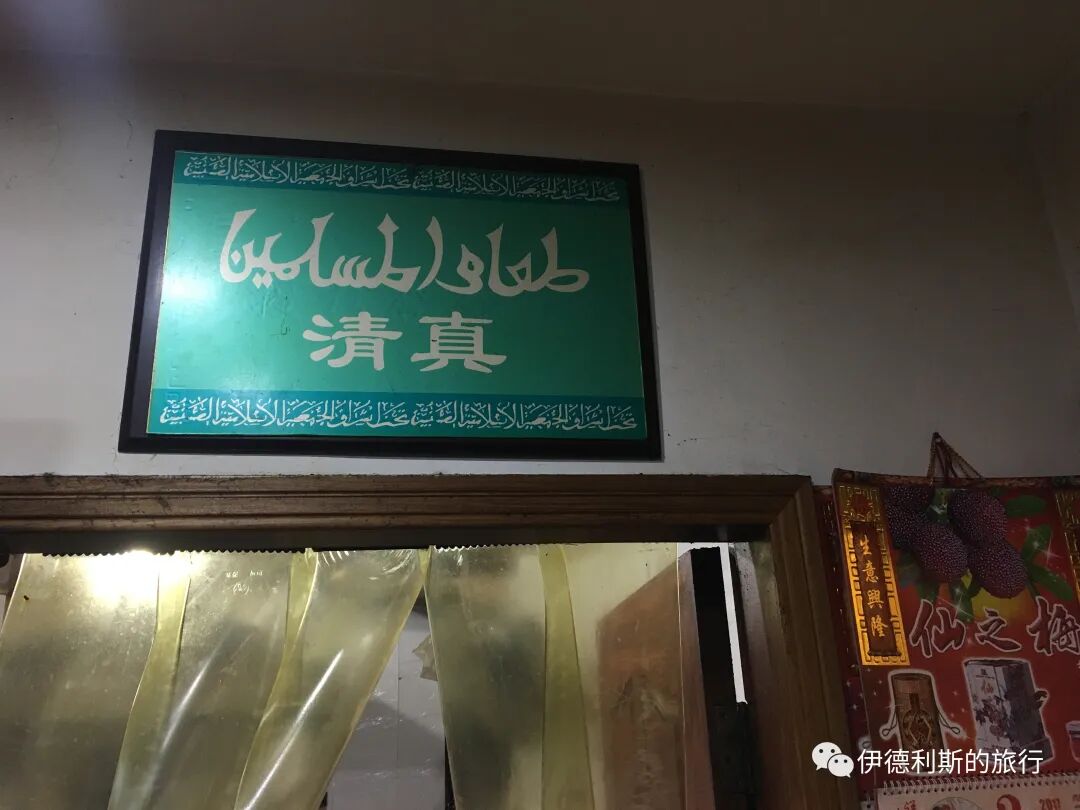
 Collapse Read »
Summary: Jiaxing — Mosques, Old Streets and Zhejiang Muslim History is presented here as a firsthand travel account in clear English, beginning with this scene: On February 24, 2017, I went to Jiaxing to explore the food. The account keeps its focus on Jiaxing Travel, Zhejiang Mosques, Muslim Heritage while preserving the names, places, food, and historical details from the Chinese source.
On February 24, 2017, I went to Jiaxing to explore the food.
The origins of Hui Muslims in Jiaxing
After the Jingkang Incident and the Song Dynasty moved south, Jiaxing, located near the capital Lin'an, began to prosper. In 1246 (the sixth year of the Chunyou era of the Song Dynasty), a maritime trade office was established at Ganpu Port in Jiaxing. Foreign merchants gathered there, and many Hui merchants settled on Luli Street in the southeast of Jiaxing city. Goods arriving from Ganpu Port were transferred here before being sent to Lin'an, and Luli Street gradually became known as the Hui Street. After the Yuan Dynasty conquered the Song, they stationed a large number of Hui troops near the Southern Song capital of Lin'an. In 1276 (the thirteenth year of the Zhiyuan era of the Yuan Dynasty), the Jiaxing Military Command was changed to the Jiaxing Pacification Commission, and these Hui soldiers settled down there. According to the Brief Introduction to Shanghai Muslims, in 1295 (the first year of the Yuanzhen era of the Yuan Dynasty), Sayyid Ajjal Shams al-Din Omar was appointed as the Darughachi of Songjiang Prefecture. He brought 30,000 Hui soldiers from Jiaxing, which shows that the number of Muslims in Jiaxing at that time was very large.
After the Ming Dynasty, trade was restricted to tribute missions, and the Hui soldiers and foreign merchants gradually assimilated into the local Hui Muslim population. Jiaxing developed several major surnames including Xu, Guo, Jin, Sha, Ma, and Yang, and they built the Jiaxing mosque in 1602 (the thirtieth year of the Wanli era).
From the Ming Dynasty to the early and middle Qing Dynasty, Hui Muslims in Jiaxing lived stable and prosperous lives. However, in June 1860 (the tenth year of the Xianfeng era), the Taiping Heavenly Kingdom army occupied Jiaxing. Luli Street, where Hui Muslims lived, was burned to the ground, and the mosque was used as a place to tether army horses. Before the Taiping Heavenly Kingdom in 1838 (the eighteenth year of the Daoguang era), Jiaxing had nearly 520,000 people, but by 1863 (the second year of the Tongzhi era) after the war, only 158,000 remained. The surviving Hui Muslims in Jiaxing fled in all directions, and the Hui Muslim community in Jiaxing disappeared.
It was not until the early 20th century that Hui Muslims from Henan and Shandong moved south to Jiaxing to escape poverty, and a residential area gradually formed again around the mosque.
The current Hui Muslim residential area inside the East Gate of Jiaxing
Halal food
Among the Hui Muslims who moved south from Henan and Shandong to Jiaxing during the late Qing Dynasty and the Republic of China, half were from the Han family in Tuocheng, Henan, and they were known as the wealthy Han family. Han Haili's family came to Jiaxing in 1938 to work in the halal food business, a tradition that continues today. I ate pan-fried dumplings (jianjiao) and beef tripe stew (niutubao) at their home. The beef tripe stew arrived at the table bubbling away, which felt very comforting.
In a small alley behind the Jiaxing Mosque, they sell beef rice dumplings (niurouzong). This was my first time eating them, and they were delicious.
Jiaxing Mosque
Jiaxing Mosque was built in 1602 (the 30th year of the Wanli reign). It underwent major repairs in 1747 (the 12th year of the Qianlong reign), when a lecture hall was added to the east side of the main hall, and the main gate was rebuilt in 1774 (the 39th year of the Qianlong reign).
After the Taiping Rebellion, Jiaxing Mosque fell into ruin. It was not used again until Hui Muslims from Henan moved to the area and began using it. It was renovated in 1953, suffered heavy damage during the Cultural Revolution, and took on its current appearance after major repairs in 1981.
Jiaxing originally had two mosques. The Great Mosque was destroyed around the time of the Taiping Rebellion, and the local community scattered, leaving only the small mosque inside the East Gate, which is the current Jiaxing Mosque.
Halal Girls' School
The Henan Muslims who moved to Jiaxing also brought the tradition of the Henan halal girls' school with them. The Jiaxing Halal Girls' School began in 1942, and its first principal was Yang Huizhen. In 1946, Yang Huizhen founded the Jiaxing Islamic Orphanage and Nursing Home to provide care for the elderly, weak, women, and children.
Han Maosen Martial Arts School
Jiaxing Hui Muslims love martial arts. In 1980, they formed the Jiaxing Hui Muslim Martial Arts Team, led by Han Haihua of the Han family.
Siruchun
For lunch, I ate at the Siruchun Halal Restaurant on Yuehe Street in Jiaxing. I ordered fruit sweet soup (shuiguo yuanzi geng), crab roe tofu (xiehuang doufu), Indian aster greens (malantou), and Bai family fried fish (baijia baoyu, made with smoked grass carp). It was authentic and delicious Jiaxing food, making this trip worth it!
During the Republic of China era, a Hui Muslim from Henan named Bai Tisheng sold spiced beef, beef and lamb buns, and pancakes (jianbing) at the East Gate of Jiaxing. His buns were especially popular and became known as the East Gate Bai Family Buns. When Japan occupied Jiaxing, the East Gate was destroyed by artillery fire, and the Bai family fled to the countryside for safety. After the fighting calmed down at the end of 1938, Bai Tisheng opened the Siruchun Halal Stir-fry Restaurant at the street corner near Xuangong Bridge. In the 1930s and 1940s, Siruchun was one of the most famous halal stir-fry restaurants in Jiaxing, alongside Chunhuayuan and Yuxinglou.
During the public-private partnership period in the 1950s, Siruchun merged with several other halal snack shops to become the 19th branch of the Halal Food General Store. It only sold beef noodles and pancakes, and stopped serving stir-fried dishes. In 1969, the Changshuitang River was widened and Xuangong Bridge was demolished, causing the original site of Siruchun to disappear.
After the 1990s, the city government invested in opening the three-story Islamic Garden Hotel near Zhongshan Bridge in Jiaxing. Many of the veteran chefs and their apprentices from the old Chunhuayuan and Siruchun restaurants returned to their trade there, making the Garden Hotel the go-to spot for authentic Jiaxing halal stir-fry. In 1998, the Garden Hotel was demolished for the construction of the city moat green belt. That same year, the Chunhuayuan Halal Restaurant on Jianguo Road was also torn down, and Jiaxing's halal restaurant scene fell into decline again.
In 2008, Bai Tisheng's descendant, Bai Qingmin, and his children reopened the Bai Family Bun Shop on Yuehe Street. Chefs and bun masters who had worked at Chunhuayuan and the Garden Hotel came to help, some of whom were already over seventy years old. In 2012, the Bai family continued their revival by reopening the Siruchun Halal Stir-fry Restaurant, which has become the most famous old-brand halal restaurant in Jiaxing.
Yipin Meishi
I also visited another halal stir-fry restaurant in Jiaxing called Yipin Meishi, where I ate sweet and sour lotus root slices, braised yellow eel, and salt and pepper taro. One dish was sweet, one was great with rice, and one was salty. They brought out a whole basin of rice for me to eat as much as I wanted, and I was very satisfied.
Collapse Read »
Halal Travel Guide: Zhenjiang — Mosques, Muslim Heritage and Jiangsu Food
Reposted from the web
Summary: Zhenjiang — Mosques, Muslim Heritage and Jiangsu Food is presented here as a firsthand travel account in clear English, beginning with this scene: Unlike in the north, Hui Muslim communities in the Jiangnan region fell apart rapidly after the 1950s, and halal businesses declined quickly along with them. The account keeps its focus on Zhenjiang Travel, Jiangsu Mosques, Muslim Heritage while preserving the names, places, food, and historical details from the Chinese source.
Unlike in the north, Hui Muslim communities in the Jiangnan region fell apart rapidly after the 1950s, and halal businesses declined quickly along with them. Today, Zhenjiang is one of the few cities left in Jiangnan that still has a number of local halal restaurants. I visited Zhenjiang twice to explore the food on New Year's Day and May 14, 2017. Here are my impressions of the halal scene in Zhenjiang.
Some of the information in this article about halal life in Zhenjiang comes from the posthumous work, History of Islam in Zhenjiang, Jiangsu, by Mr. Xia Rongguang. Mr. Xia was born on South Gate Street in Zhenjiang in 1909. He became the leader of the Shanxiang Mosque in 1938 and managed the work at the Xinhe Street Mosque, making him an eyewitness to Islam in Zhenjiang during the Republic of China era. Mr. Xia began organizing historical materials on Islam in Zhenjiang in the 1980s. In 1998, while on his way to submit the manuscript for this book, he passed away at the age of ninety. Through Mr. Xia's book, we can learn about the past stories of the Hui Muslims in Zhenjiang.
Where the ancient canal meets the Yangtze River.
This food tour starts with an abandoned Song Dynasty canal and an old Qing Dynasty street that is currently being demolished.
I stayed by the banks of the Yangtze River in Zhenjiang, where the river surface was hidden in the morning mist as far as the eye could see. However, there were no ships on the water because the main channel of the Yangtze had already shifted north, and this area was no longer the main river.
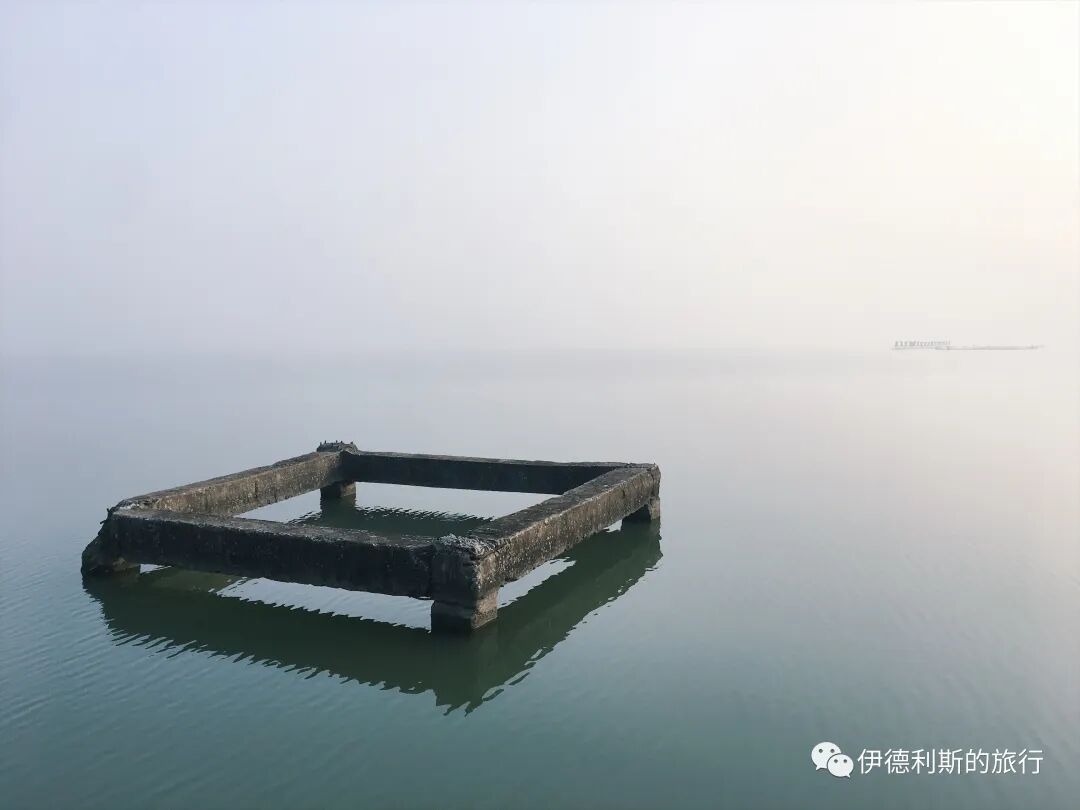
The scene described in the poem, Jingkou and Guazhou are separated by a single stretch of water, began to change during the middle and late Qing Dynasty. Toward the end of the Kangxi reign, the south bank of the Yangtze between Zhenjiang and Guazhou began to silt up while the north bank collapsed, causing the river to shift steadily northward. River beaches and sandbars slowly but irreversibly appeared on the Zhenjiang side, while the Guazhou riverbank on the north side kept collapsing. Finally, in 1895 (the 21st year of the Guangxu reign), the entire ancient city of Guazhou collapsed into the river, and its former bustling streets and famous gardens were all swept away by the current.
Although the riverfront at Zhenjiang was gradually surrounded by the newly formed Zhenrunzhou island, the port of Zhenjiang maintained a normal navigable depth of 4 meters until 1954. After the massive Yangtze River flood in 1954, Zhengrun Island expanded significantly, and Zhenjiang Port was blocked by sandbars, turning it into a U-shaped harbor.
After walking a short distance, you reach Xiaojingkou, the meeting point of the Grand Canal and the Yangtze River.
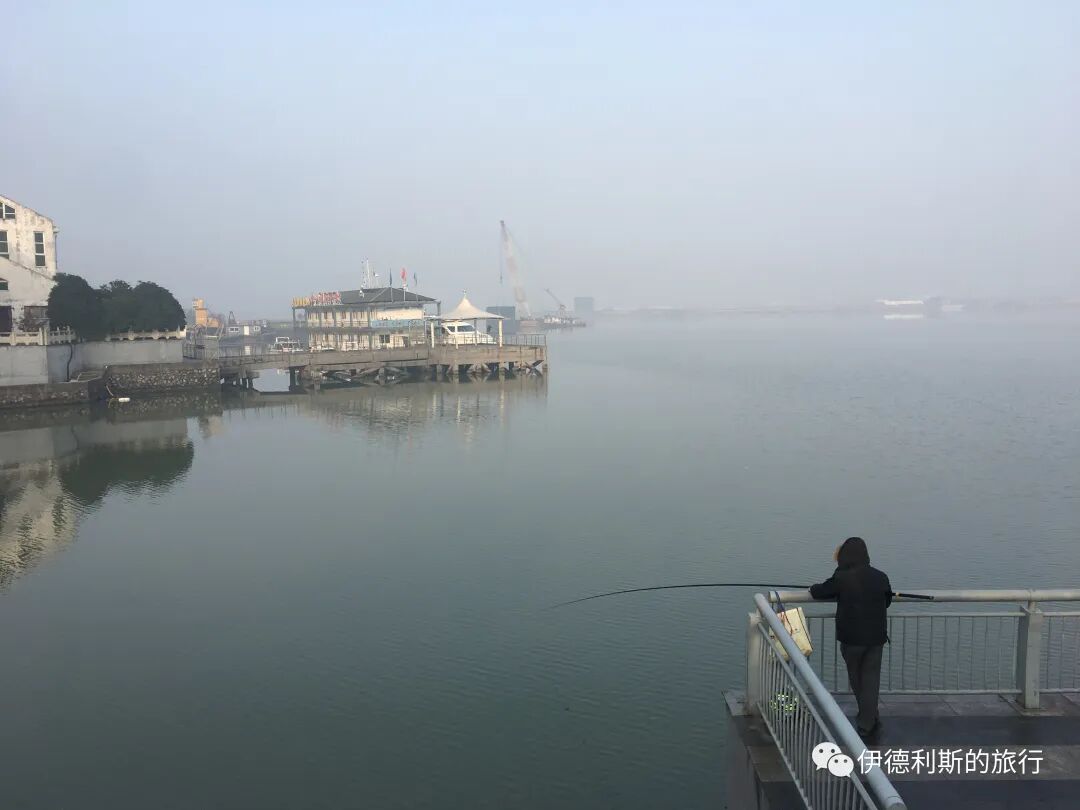
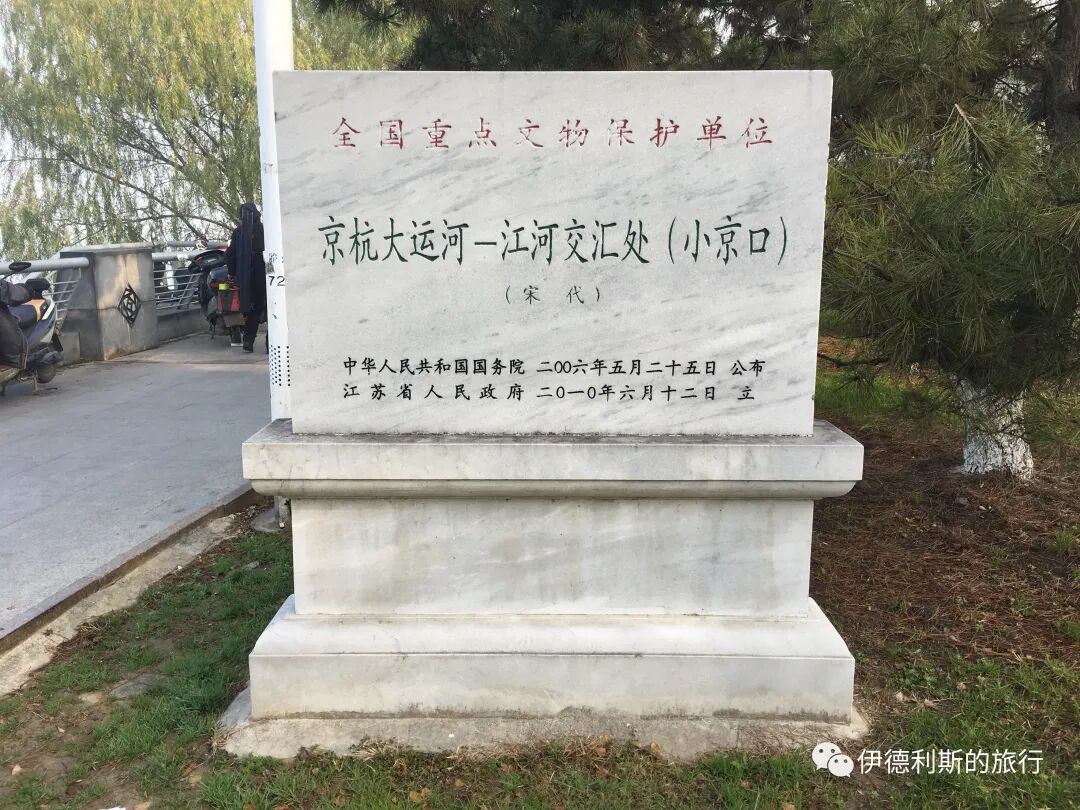
The original meeting point of the Grand Canal, built by Emperor Yang of Sui, was called Dajingkou. In 1029 (the seventh year of the Tiansheng era of the Song Dynasty), a new canal was dug east of the old one, and the point where this new canal met the Yangtze River was named Xiaojingkou. In 1954, workers cleared and dredged Xiaojingkou, and in 1957, they built a sluice gate. However, the water level at Xiaojingkou is usually less than 1.6 meters, and during the dry season, it drops to only 0.5 meters, meaning it can basically only handle small boats. In 1958, work began to improve the Grand Canal, and Jianbikou was designated as the meeting point between the Grand Canal and the south bank of the Yangtze River. In 1960, Jianbikou was widened and dredged, and Xiaojingkou stopped being used for shipping.
New Canal (Xinhe)
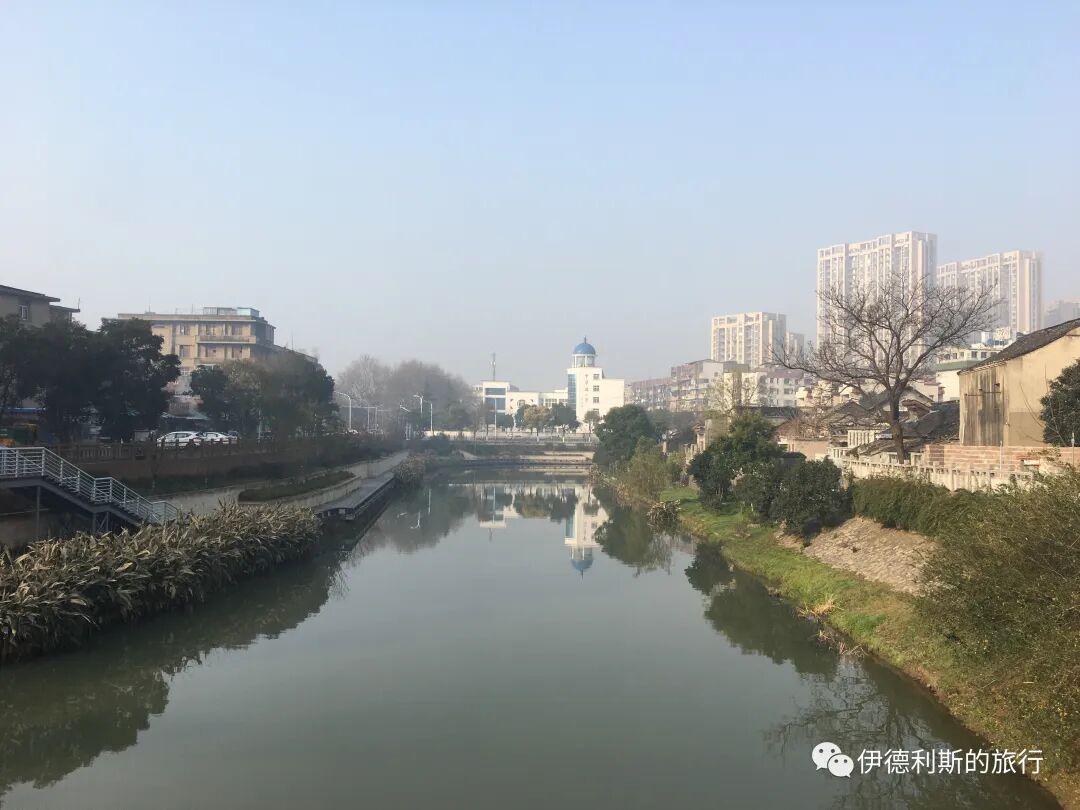
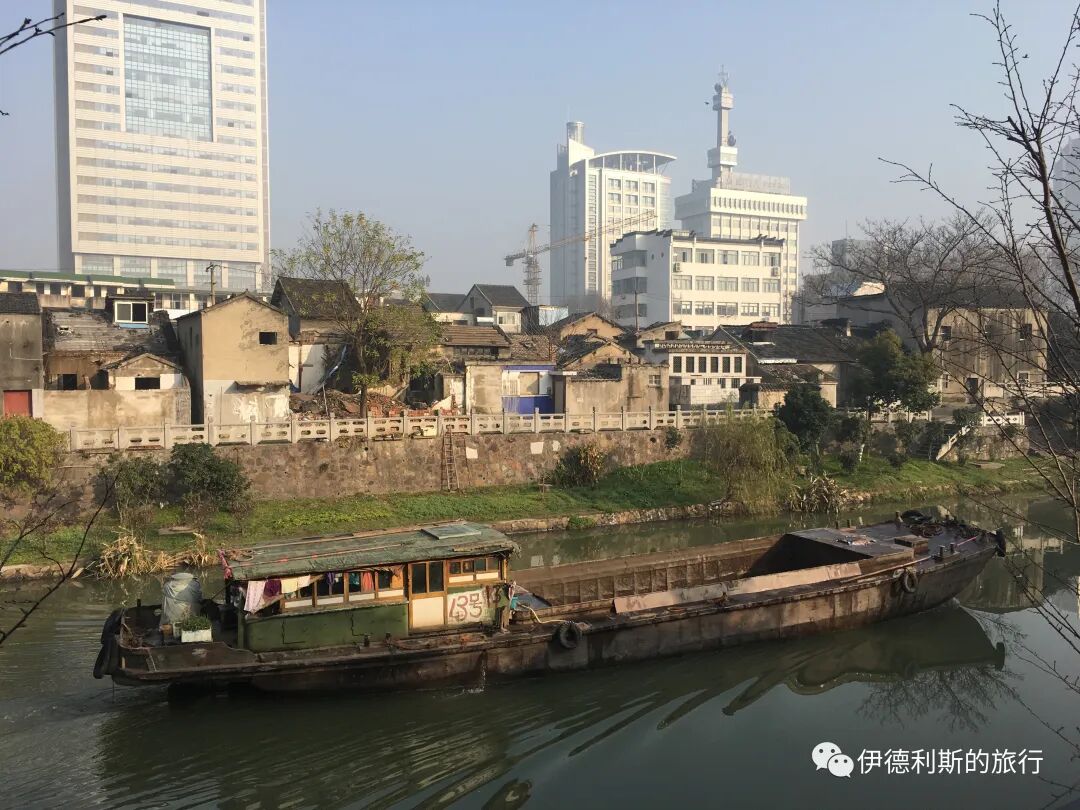
After the New Canal was dug, it gradually became an important hub for grain transport, and Xinhe Street formed along the riverbank. After Zhenjiang opened as a treaty port in 1861, Xinhe Street became even more prosperous, with all kinds of shops opening up. The Shanghai-Nanjing Railway opened in 1908, and the ferry between Zhenjiang and Liuwei started in 1923. The area along the river near the train station was very busy with travelers coming and going, and Xinhe Street, which connected to the Subei Road, reached its peak of prosperity. Until the Zhenjiang-Yangzhou ferry opened in 1978 and the old Zhenjiang train station moved, Xinhe Street gradually declined and was slowly forgotten.
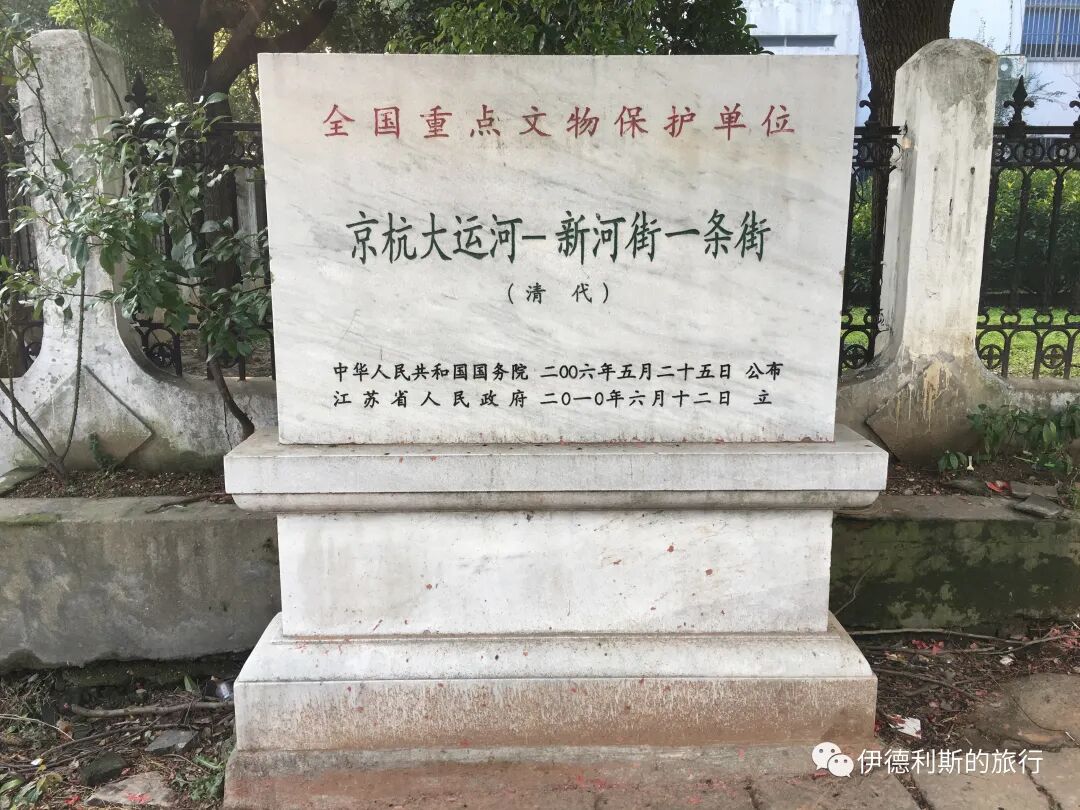
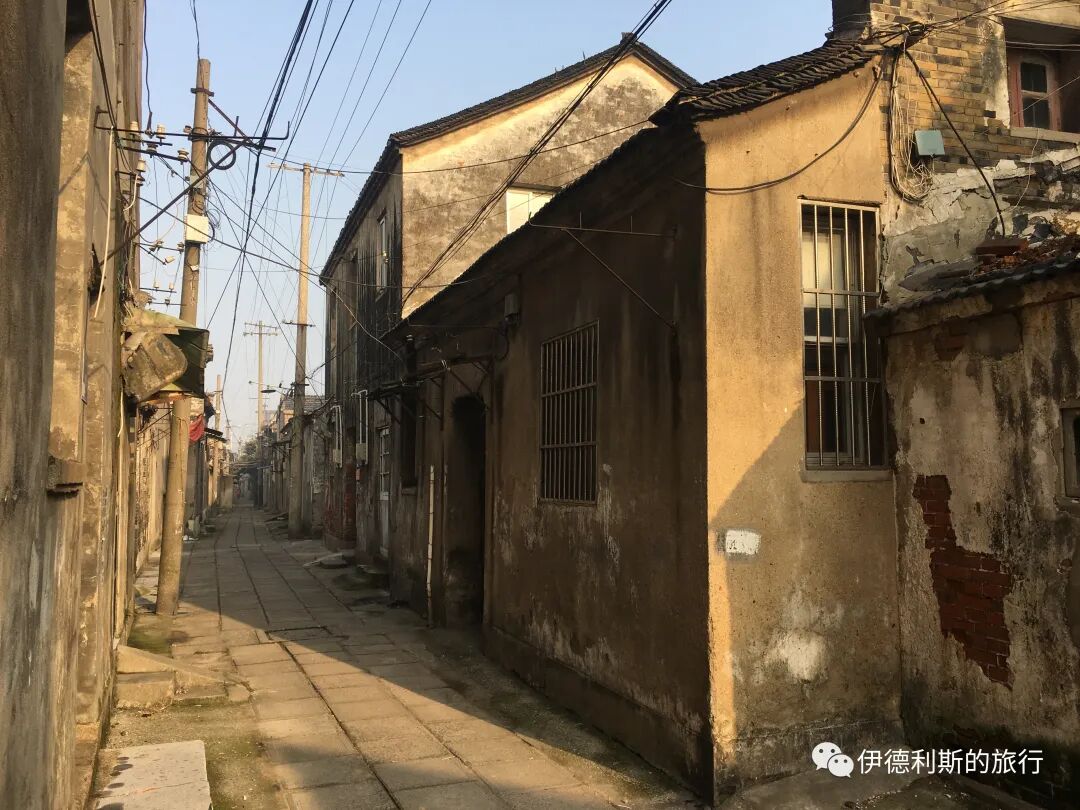
The place we are talking about today is a mosque on Xinhe Street, which is also the only Ikhwan mosque in Jiangsu Province—the Xinhe Street Mosque.
The Xinhe Street Mosque was built in 1930. Hui Muslims in Zhenjiang also used to call it the "Jinde Association." It was originally a private residence purchased with donations from Muslims in both Shanghai and Zhenjiang, so it is a traditional Jiangnan-style house with three courtyards and two side wings.
The Ikhwan, also called the New Sect (Xinhang), means "brothers" in Arabic. It was founded by Ma Wanfu from Guoyuan Township in Linxia after he returned from his pilgrimage to Mecca in the late 19th century, and it was later carried on by Hu Songshan. The Ikhwan sect advocates following the scriptures and reforming customs, insisting that everything should be done according to the teachings of the Quran and Sunnah. They opposed some of the customs of the old Gedimu sect at the time, such as wearing mourning clothes and calling the adhan when moving into a new house.
The Ikhwan sect spread to the Jiangnan region in the 1920s. In 1926, Imam Ha Decheng and others started the Jindehui organization at the Xiaotaoyuan Mosque in Shanghai to promote the Ikhwani teachings. Fa Jiesan (1872-1958), a Hui Muslim from Zhenjiang who traveled to Shanghai, discussed the teachings with Imam Ha Decheng. He accepted the Ikhwani ideas and returned to Zhenjiang to practice his worship at home according to Ikhwani rituals. Later, funds were raised in both Shanghai and Zhenjiang to build an Ikhwani mosque on Xinhe Street.
After the Ikhwani sect arrived in Zhenjiang, it was generally hard for the middle-aged and elderly to accept, but many young people embraced it. At that time, the new and old sects lived in peace and practiced side by side.
The old Xinhe Street Mosque had a stone plaque above the main gate carved with the words "Mosque" (Huijiaotang), but it no longer exists today. The current building is a three-bay, three-courtyard structure with side rooms. There is a covered courtyard between the first and second sections, a garden gate connecting the second and third sections, and the third section is a two-story building.
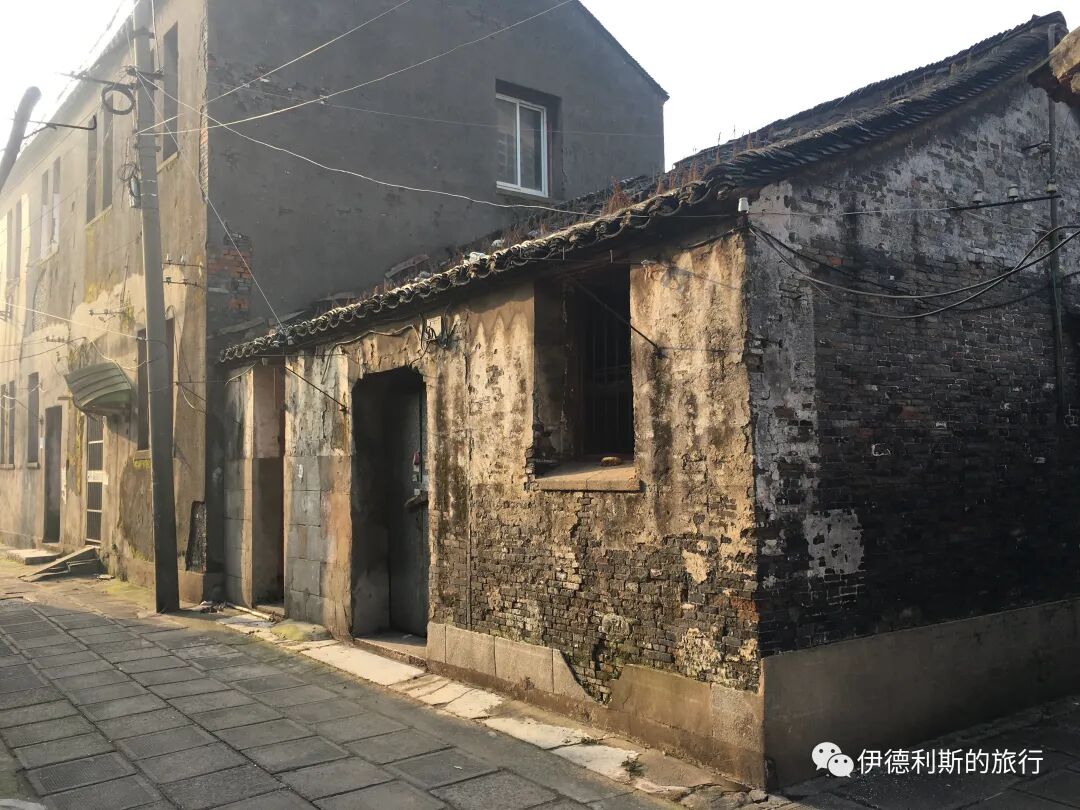
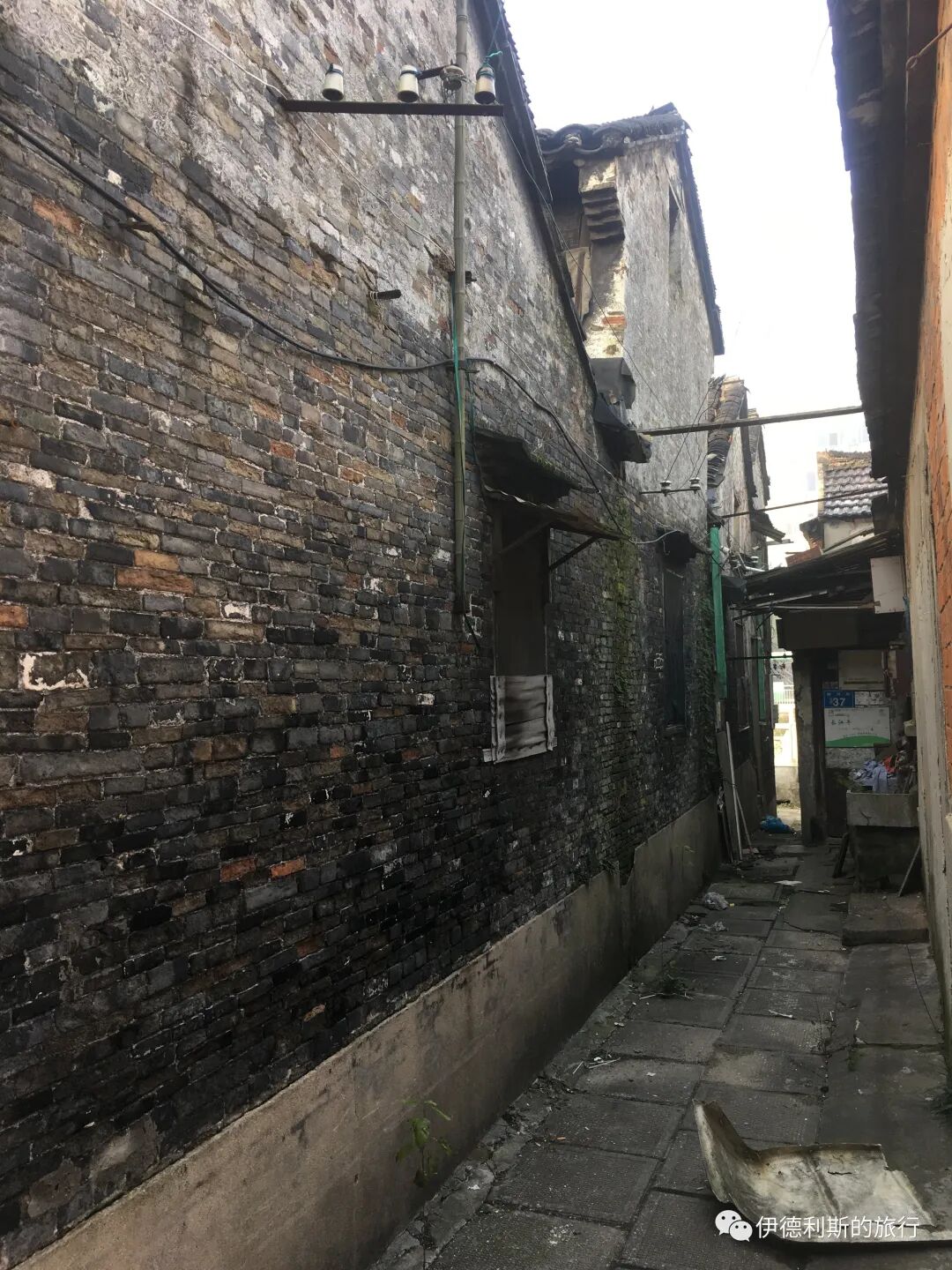
The Zhenjiang Jindehui held dinners every Saturday night after namaz. They invited an imam to give a sermon (wa'az). Anyone who came to listen was invited to eat, and the costs were covered by members who hired the imam to perform memorial services for their ancestors.
The Jindehui also used winter and summer breaks to organize a "Hui Muslim Children's Scripture Class," and Hui Muslims from all sects sent their children there to study.
After the mosque was built, many famous imams were hired to lead the religious affairs. In 1947, the famous Li Zhenji, also known as Imam Li Si from Anhui, came to the Xinhe Street Mosque from the Luohe Mosque in Henan. According to Mr. Xia Rongguang, Imam Li Si was nearly 70 years old at the time. He had a kind and gentle face and a refined manner. When he explained the teachings, listeners of all levels could find inspiration in his words. Because of this, more and more elders from other neighborhoods came to the mosque for Jumu'ah prayers. In the autumn of 1949, Imam Li Si returned to Luohe from Zhenjiang.
In 1950, 43-year-old Imam Zhang Zhushu came to the Xinhe Street Mosque to serve as the head imam. Imam Zhang Zhushu was from Xiangfan, Hubei. Mr. Xia Rongguang remembered him as a man who was well-versed in religious teachings and had deep modern knowledge. When he taught, he connected the lessons to real life. His language was vivid and easy to understand, attracting both ordinary elders and intellectuals. Local Muslims in Zhenjiang praised him as an imam of the new era. In 1953, Imam Zhang Shuzhu left Zhenjiang after being invited to serve as the imam at the Fuyou Road Mosque in Shanghai.
After that, an elder named Tan Jizhen managed prayers and affairs at the Xinhe Street Mosque until it merged with the Shanxiang Mosque in 1958. It later became a dormitory for a forestry machinery factory and has been abandoned ever since.
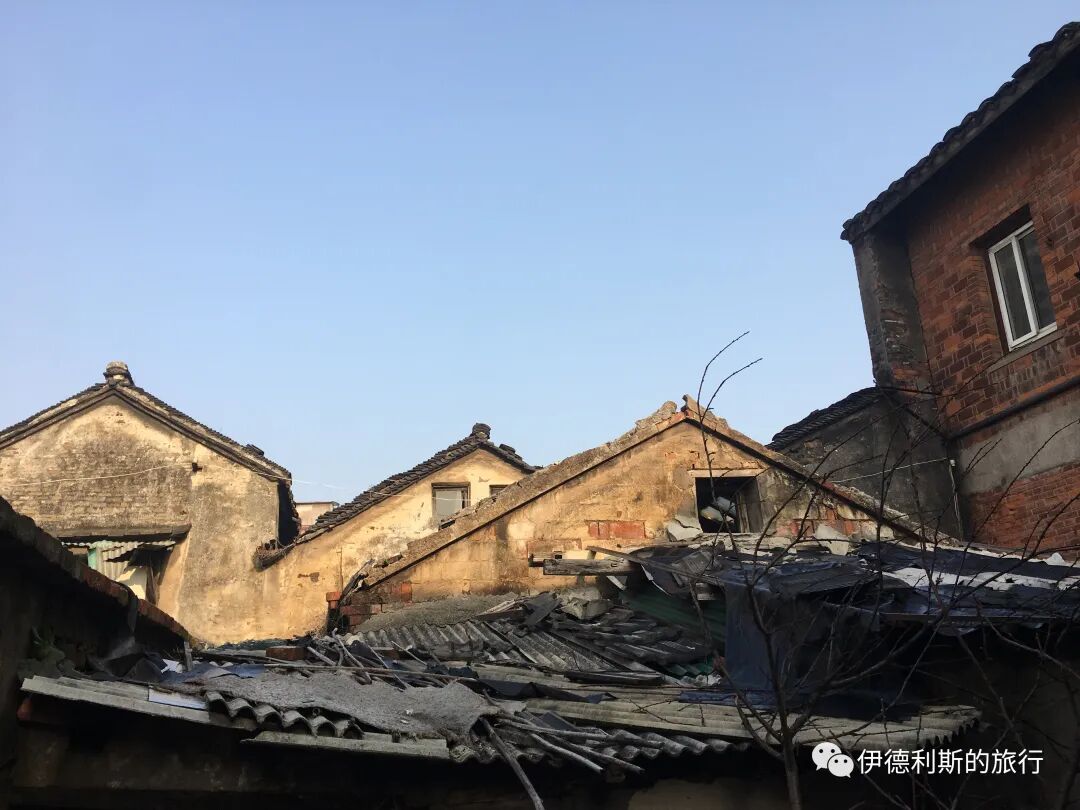
Besides the mosque, there were many other important buildings on Xinhe Street. The Jingtai Guild Hall (Jingtaigongsuo) was built during the Tongzhi reign as a meeting place for merchants from Jing County and Taiping County in Anhui who were living in Zhenjiang.
The Rice Industry Guild Hall (Miyegongsuo) was the largest building on Xinhe Street and served as the trade association for the rice industry. This four-section building with a central hallway was once the only major rice market in the lower Yangtze River region, and daily market prices were set here.
Zhenjiang has seen severe and rapid destruction of its historic districts and cultural relics, and Xinhe Street could not escape this fate. In 2016, Xinhe Street faced demolition and was slated for development into a commercial street, with only a few historic buildings preserved. I returned to Zhenjiang five months later in May 2017. The north entrance of Xinhe Street was already closed, and excavators were clearing the building ruins.
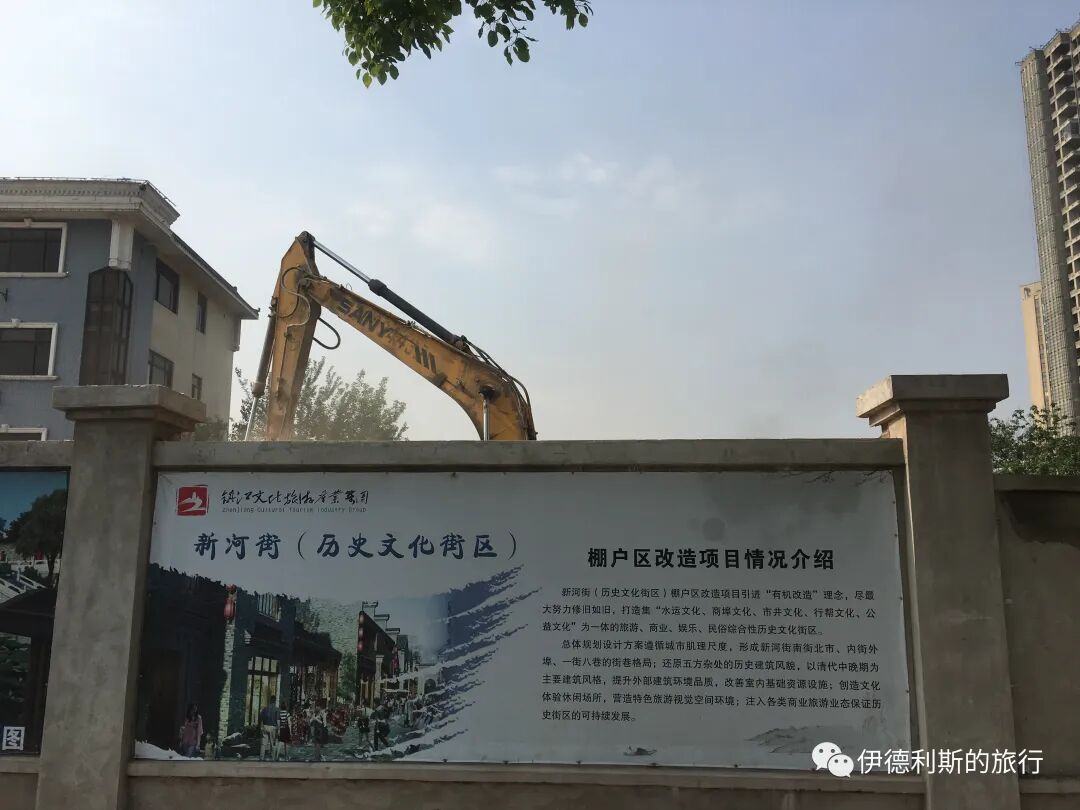
Shanxiang Mosque
Leaving Xinhe Street, we headed toward Shanxiang.
We passed a halal food shop run by a Hui Muslim family named Hua. The Hua family moved to Zhenjiang from Taierzhuang, Shandong, during the Taiping Rebellion. The Taiping Rebellion caused heavy damage to Zhenjiang and a sharp drop in population. Many people from the north moved in, which is a key reason why Zhenjiang eventually shifted from a Wu-speaking area to a Jianghuai Mandarin-speaking area.
Walking further west, we arrived at Shanxiang. Shanxiang was once a famous historic street in the west of Zhenjiang, but like Xinhe Street, it was also demolished in the 21st century.
Yang Shunxing beef potstickers (guotie) are one of the last remaining street-facing shops on Shan Lane. The Yang family are the earliest recorded Hui Muslims to move to Zhenjiang. According to family records, they moved from Hongnong County, Shaanxi, to Zhenjiang in the early Song Dynasty. By the Hongwu era of the Ming Dynasty, they had reached the twenty-fifth generation, and now they are past the fiftieth generation, making them the largest branch among Zhenjiang's Hui Muslims.
Turn into the small alley nearby to reach Mosque Street. At the entrance, there are several halal fresh beef and mutton shops that are still run by the Yang family. The most famous halal noodle shop in Zhenjiang used to be the pot-lid noodle (guogaimian) shop owned by Yang Dazhang, a Hui Muslim from the Yang family. Yang Dazhang's noodle shop was on Zhonghua Road next to the Shan Lane Mosque, across from a halal beef shop run by a Hui Muslim named Jin Zhiren. Many Hui Muslims liked to buy some shredded beef and garlic from Jin Zhiren's shop after leaving the Shan Lane Mosque, then have it blanched in Yang Dazhang's noodle pot to eat with their noodles, which smelled delicious.
Continue walking south to reach the area of the Shan Lane Mosque.
The Shan Lane Mosque is also called the West City Mosque, or West Great Mosque for short. Its founding date is unknown. It was expanded during the Kangxi era, destroyed by war in 1853 (the third year of the Xianfeng era), and rebuilt in 1873 (the twelfth year of the Tongzhi era). The late Imam Tan Yuanshen, who lived to be over eighty, once said that he heard from his grandfather and the elders in the community that before the expansion in the late Kangxi era, the West City Mosque only had three thatched huts. At that time, the area around the mosque was sparsely populated and vast, with the Zhenjiang city gate tower visible to the east and Yuntai Mountain visible to the west.
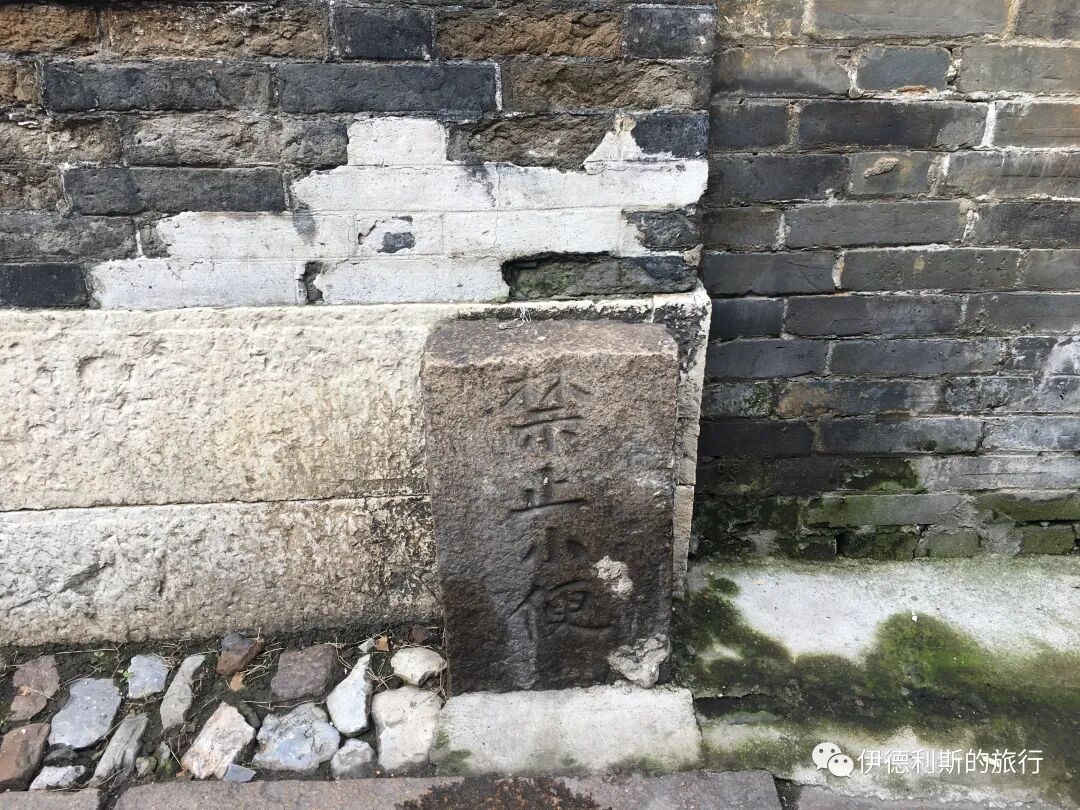
After Zhenjiang opened as a treaty port, the area outside the West Gate became a bustling commercial district. In 1865, after the British established a concession by the river and the Shanghai-Nanjing Railway opened, the area outside the West Gate developed further. Hui Muslims kept coming to do business and settled around the Shan Lane Mosque.
In 1902 (the twenty-eighth year of the Guangxu era), Zhenjiang Hui Muslims raised funds to expand the Shan Lane Mosque. The current layout of the mosque dates back to this renovation.
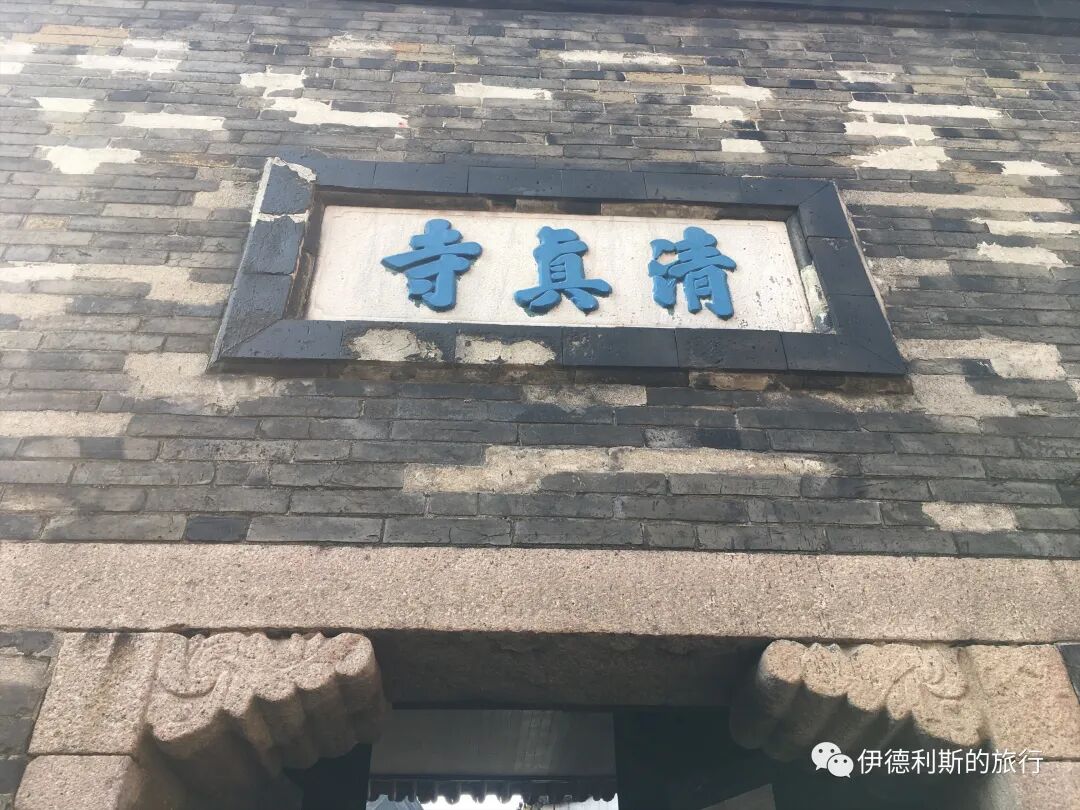
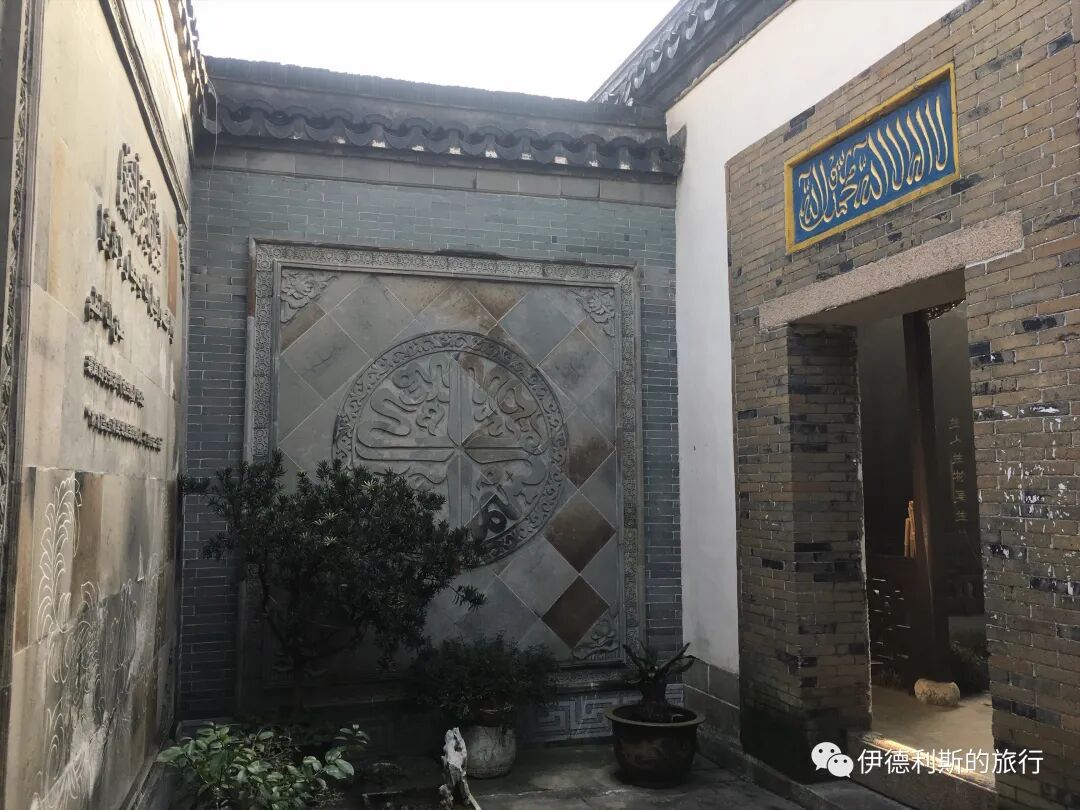
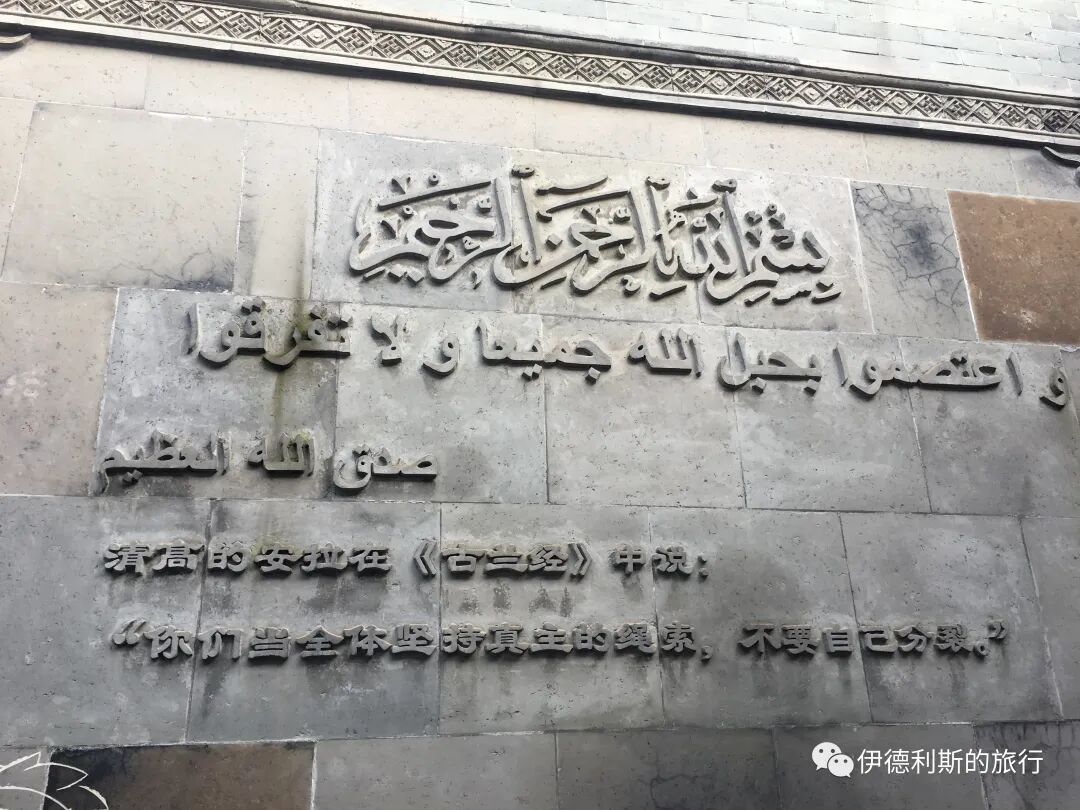
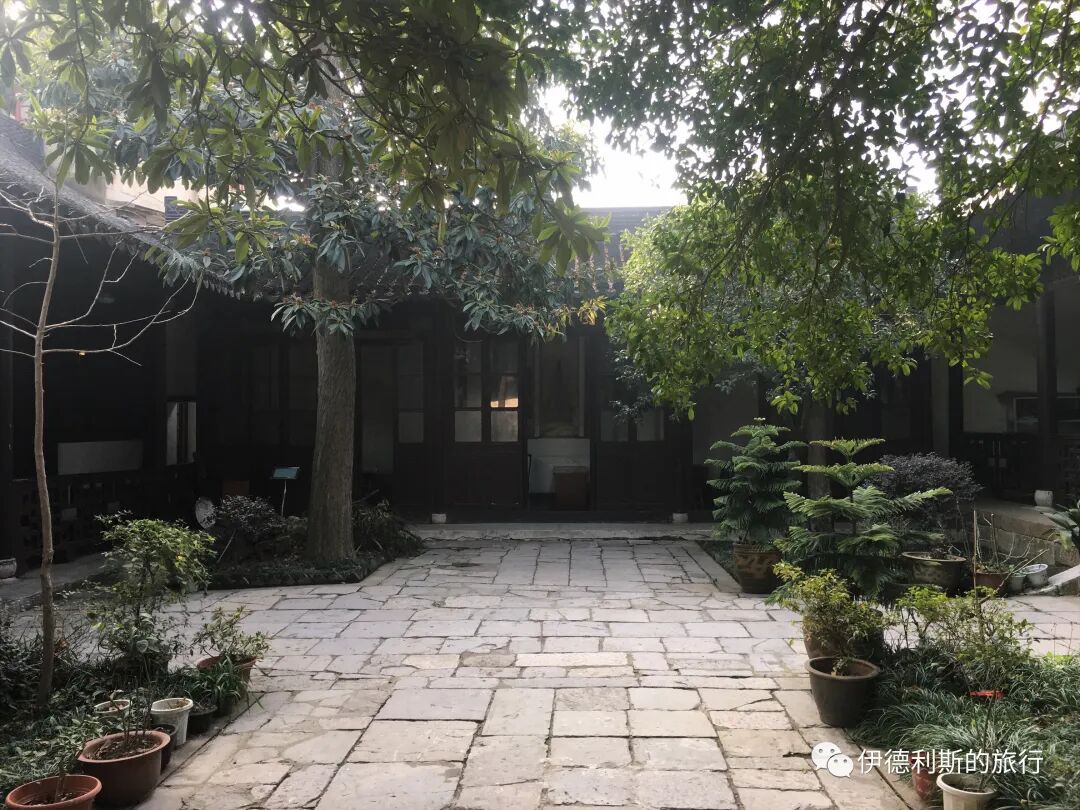
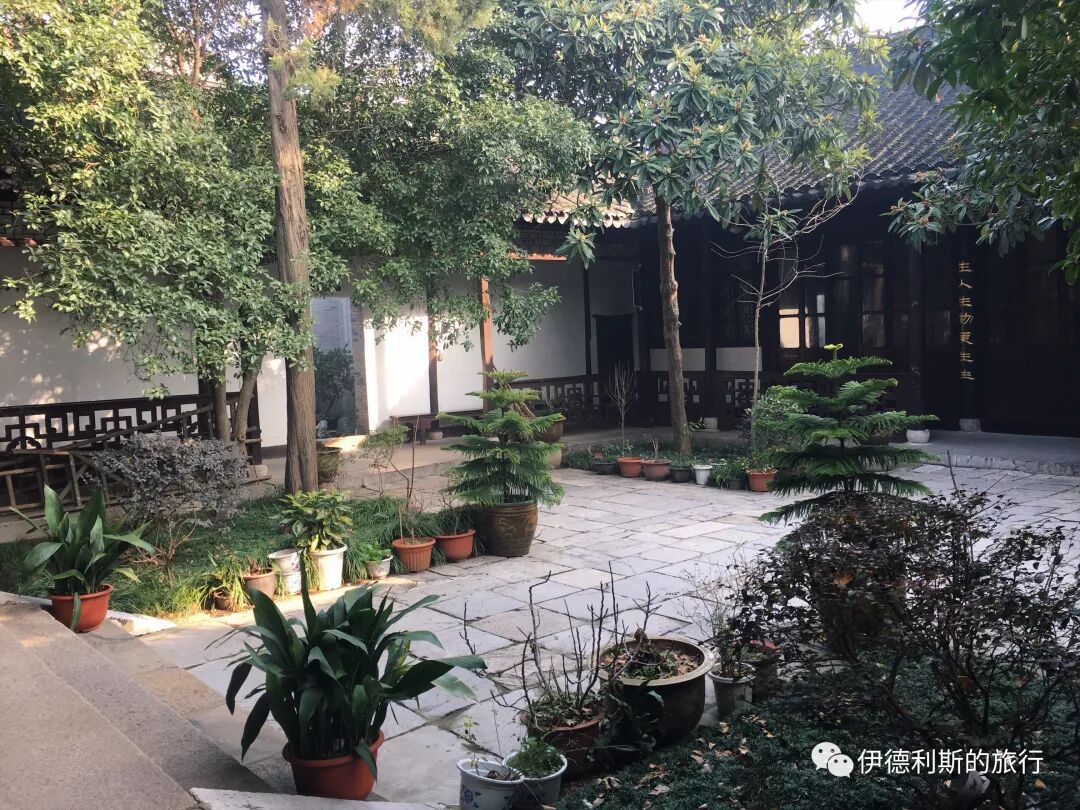
The Shan Lane Mosque was once one of the three major bases for printing and publishing Islamic books in China. From the Qianlong to the Tongzhi eras of the Qing Dynasty, more than 20 types of Islamic philosophy and theology books in Chinese, such as the Precious Life Scripture (Baoming Zhenjing), The Heavenly Rites (Tianfang Dianli), The General Meaning of Returning to the Truth (Guizhen Zongyi), and The Origin of the Hui People (Huihui Yuanlai), were printed using woodblocks and shipped across the country by land and water. To this day, the Cultural Palace of Nationalities in Beijing, the library of Minzu University of China, and the Peking University Library all hold copies of books printed by the Zhenjiang Shan Lane Mosque.
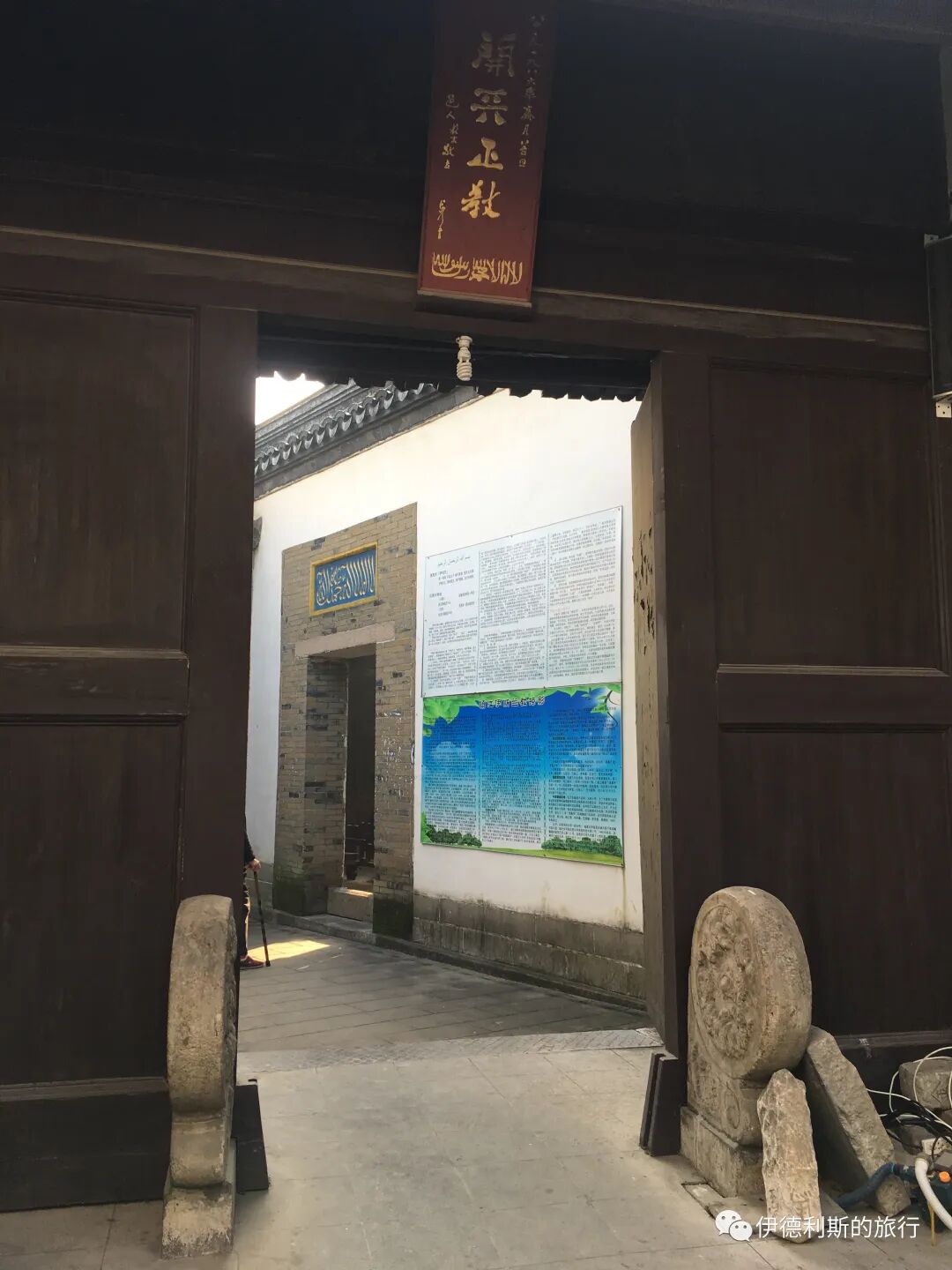
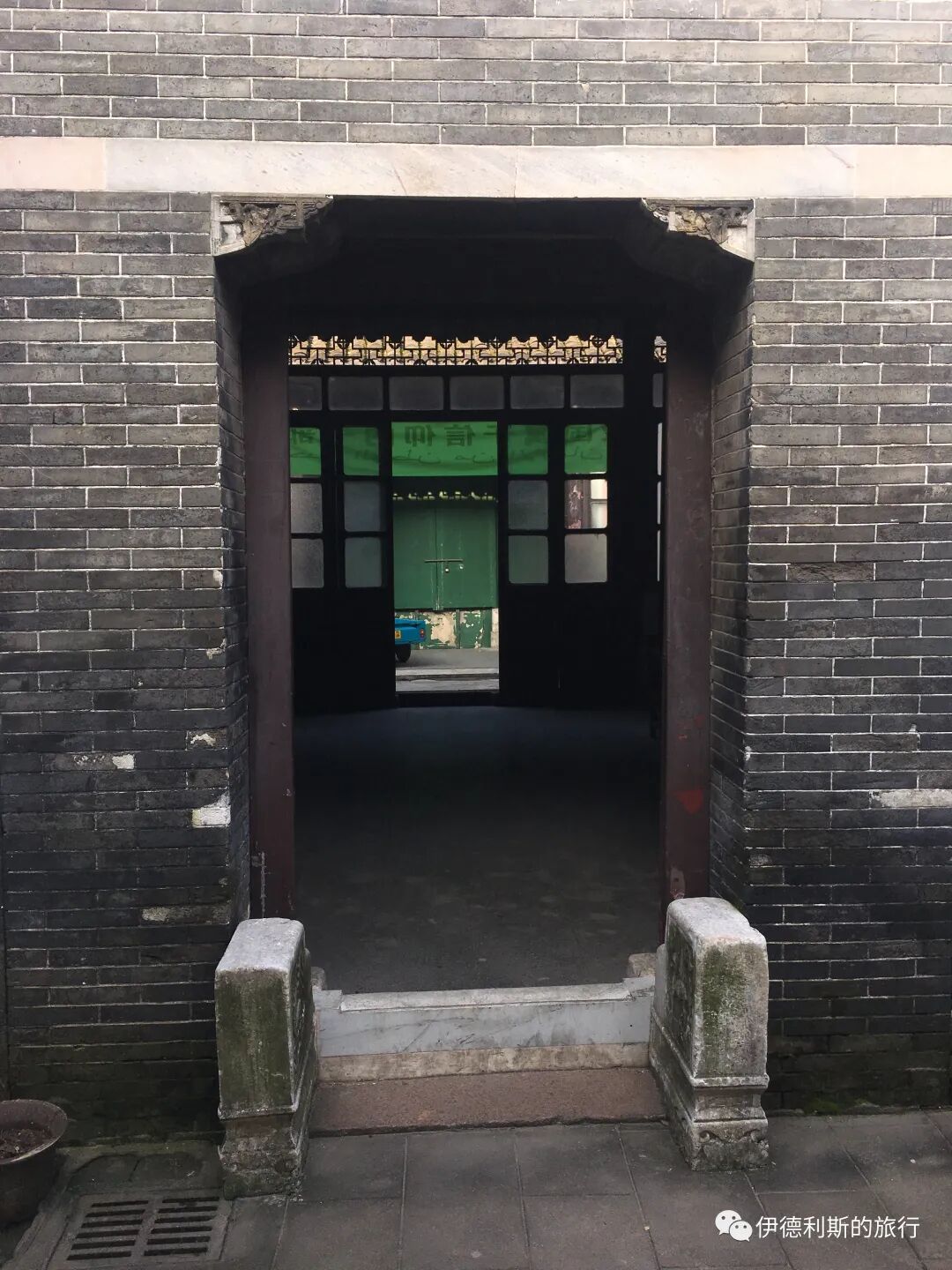
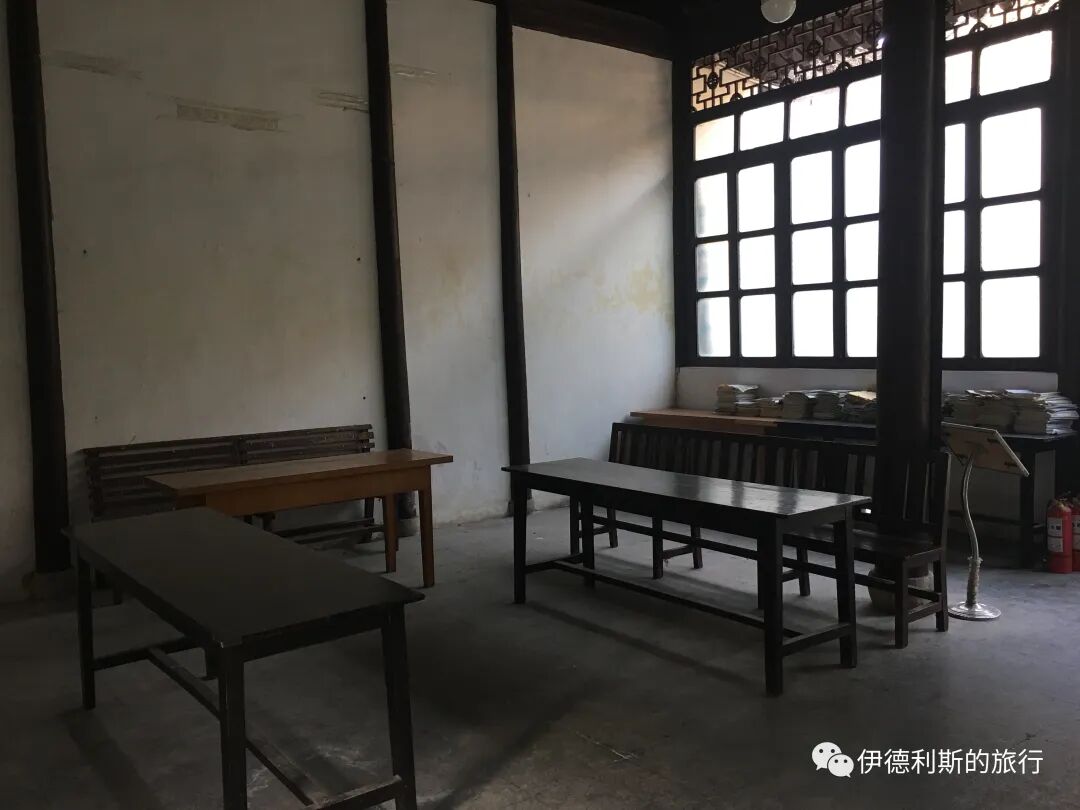
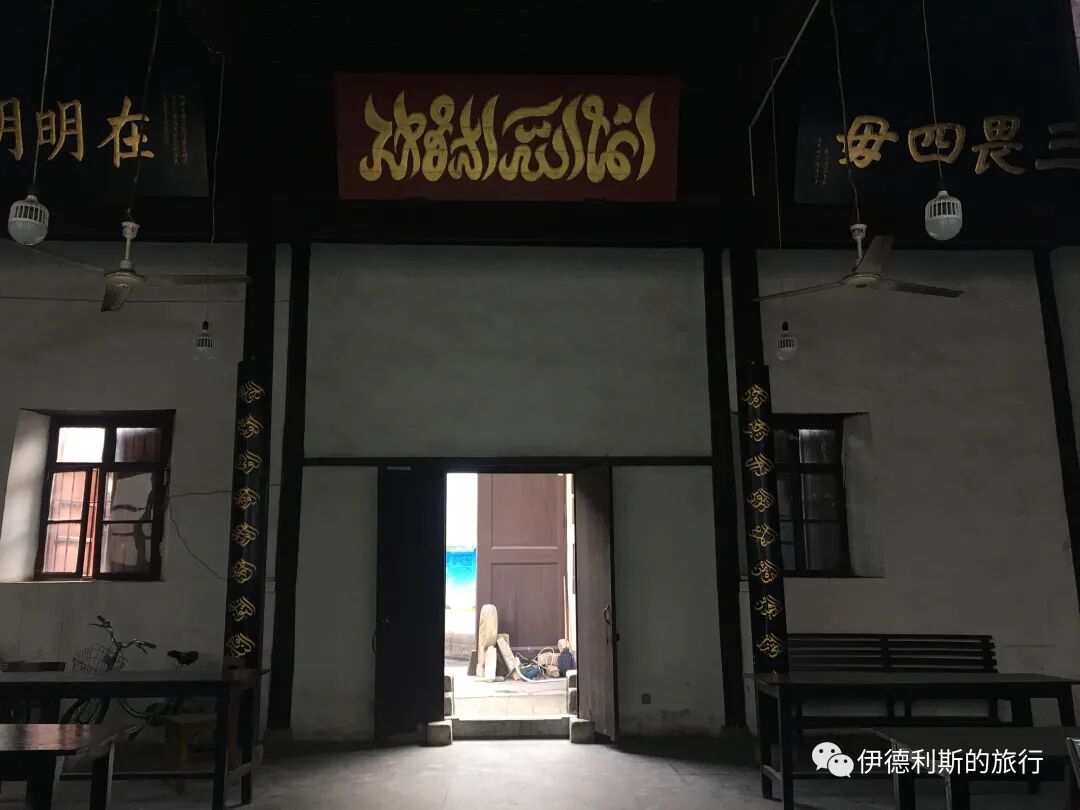
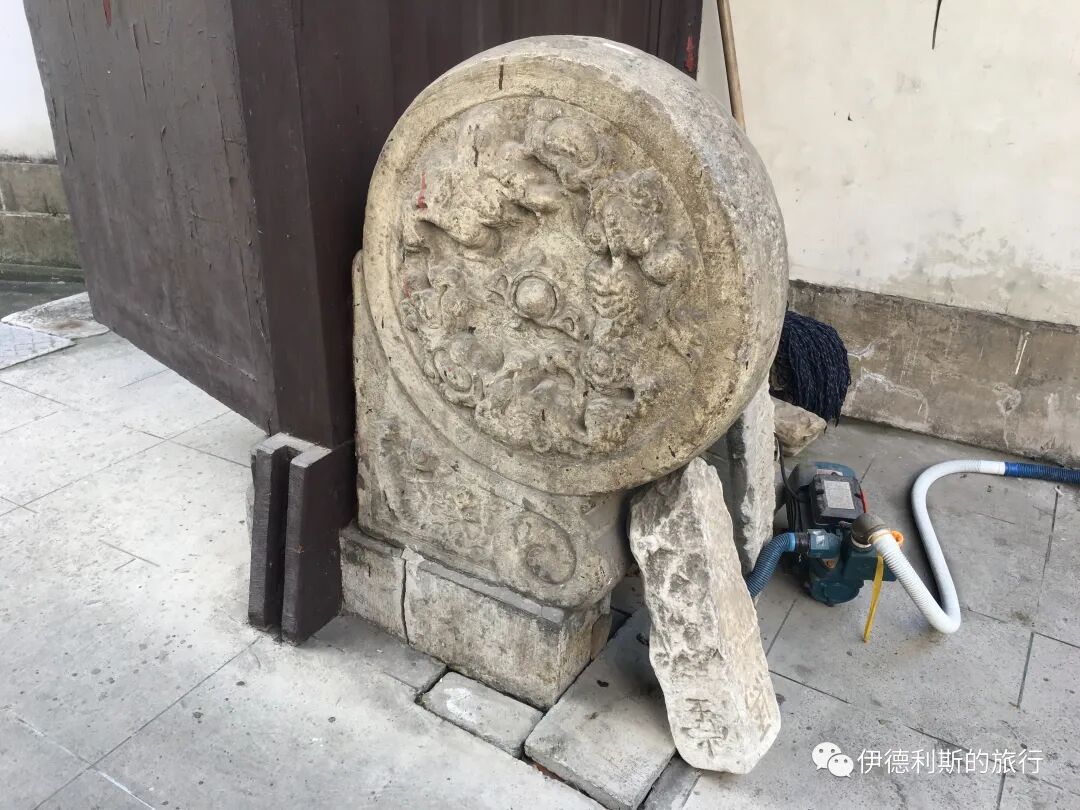
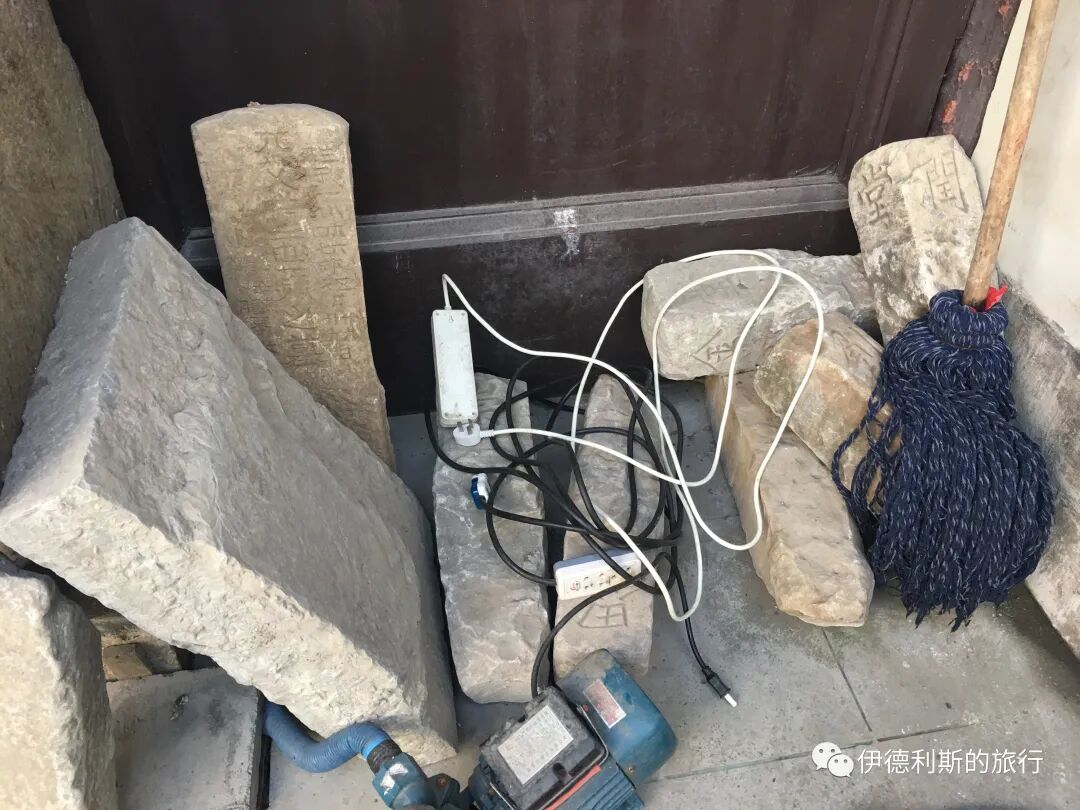
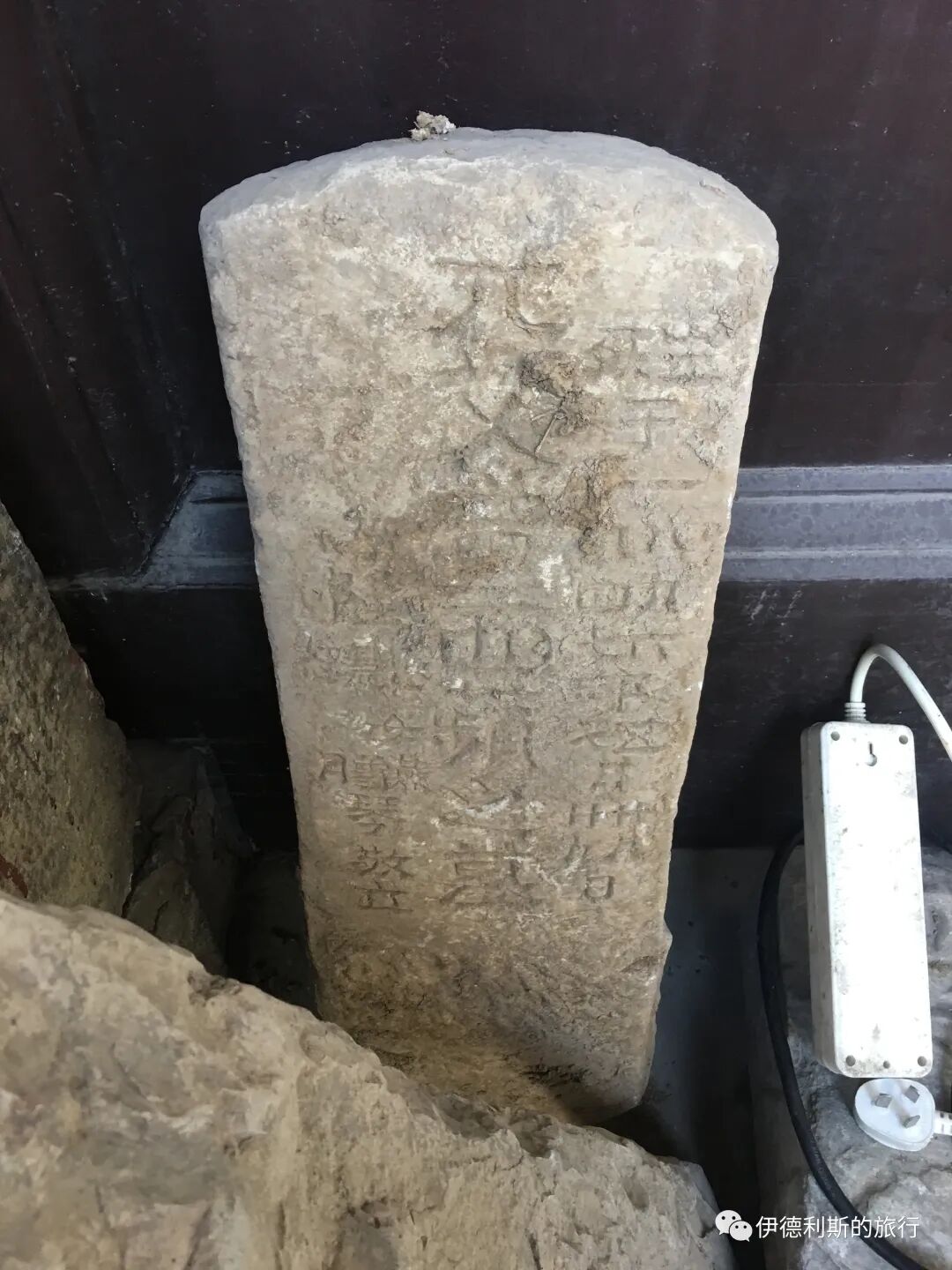
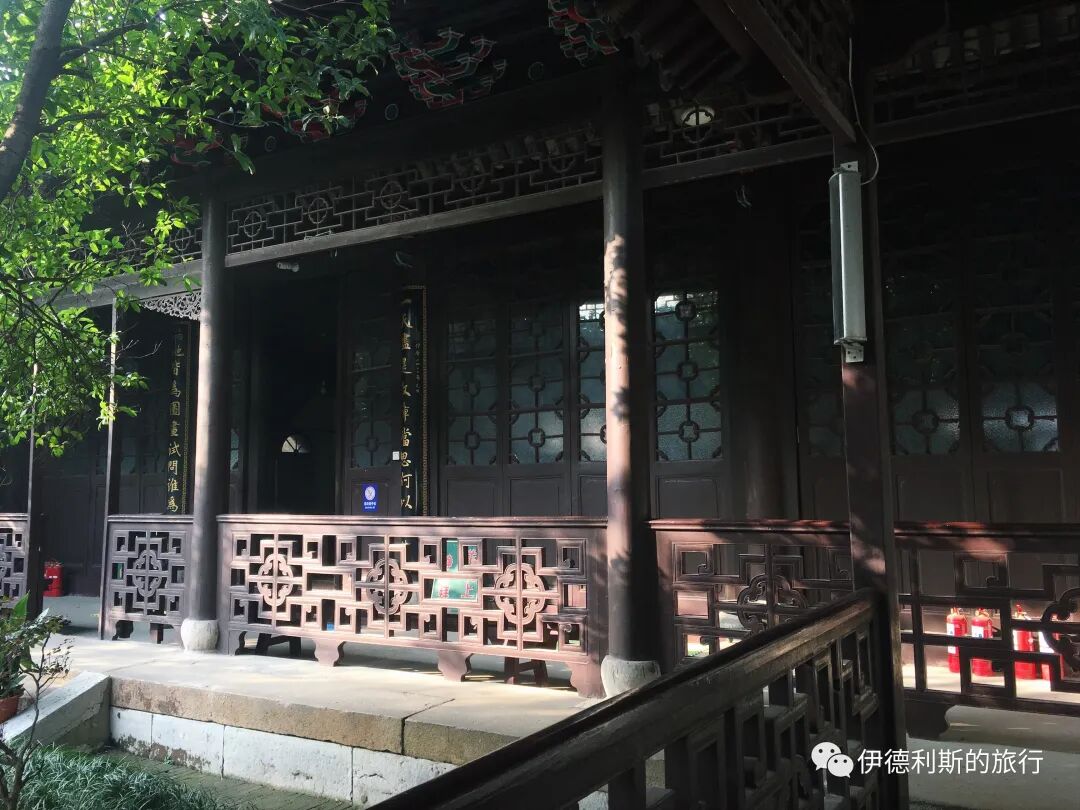
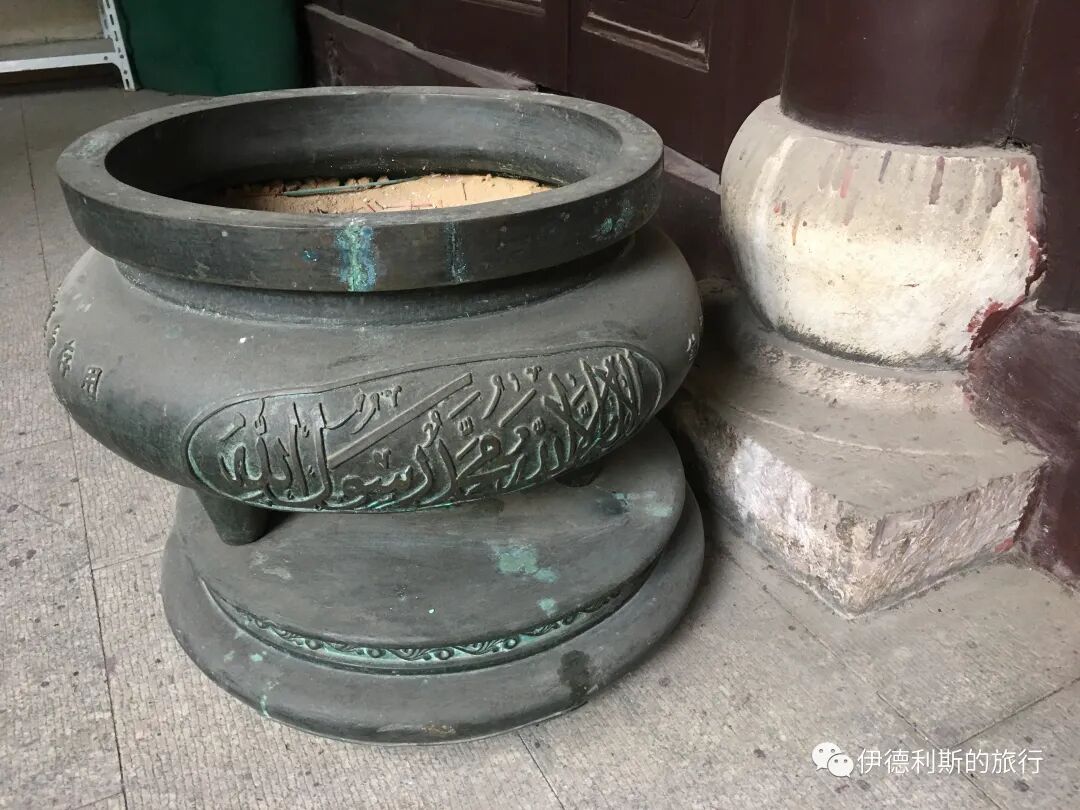
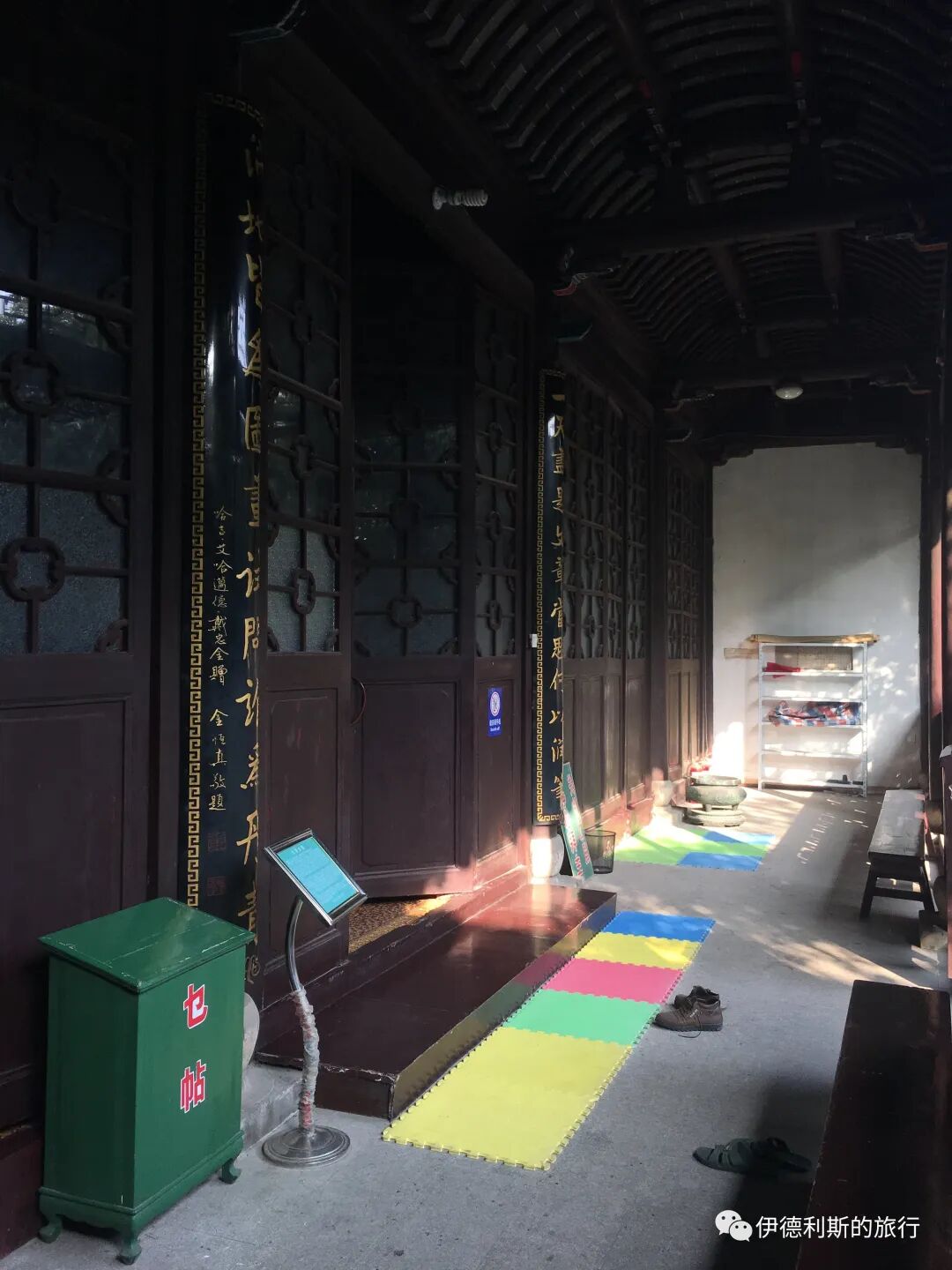
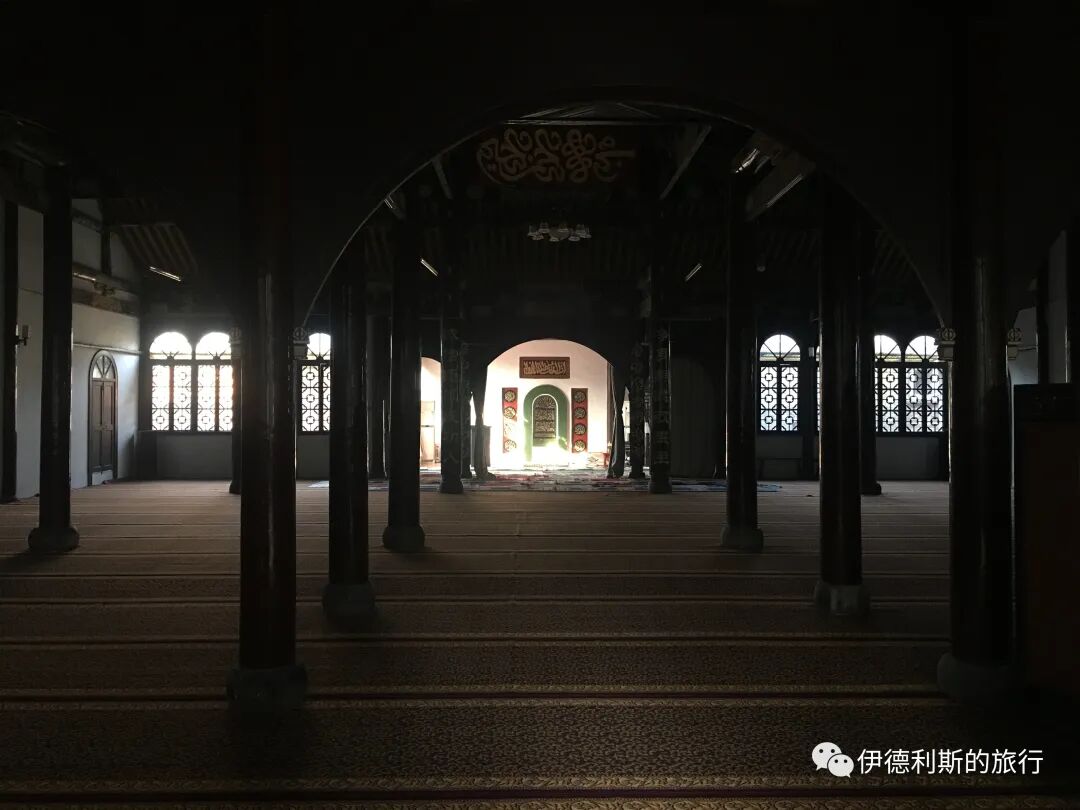
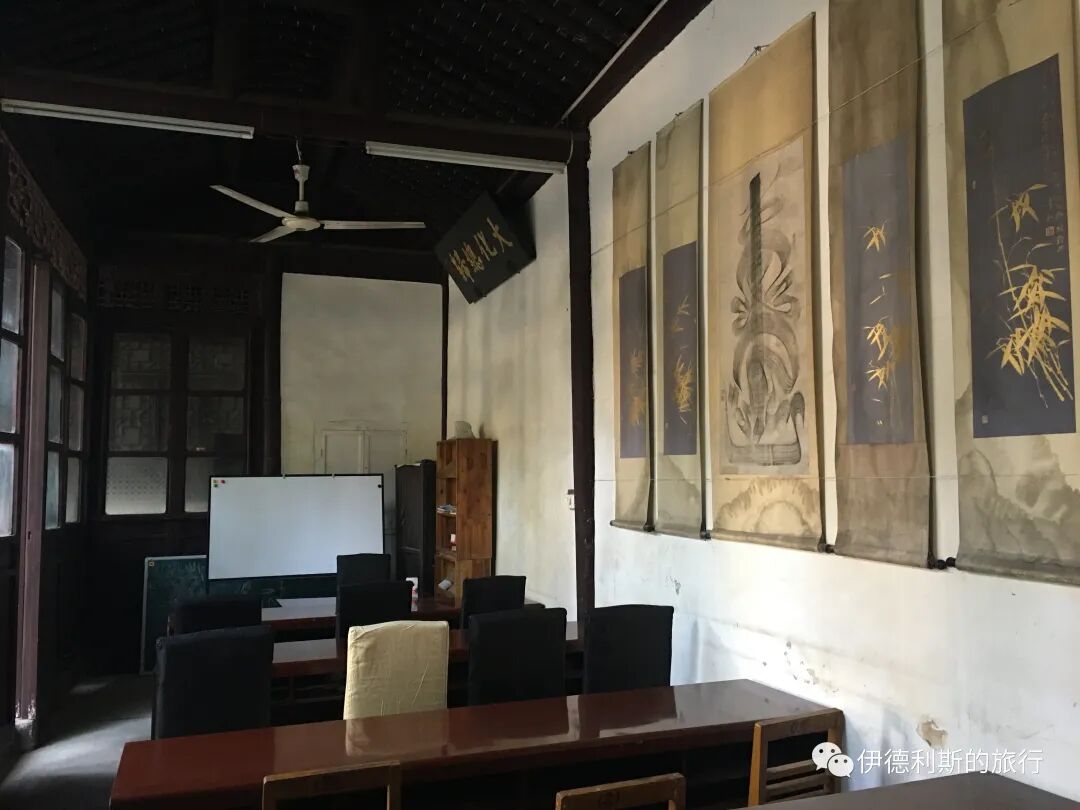
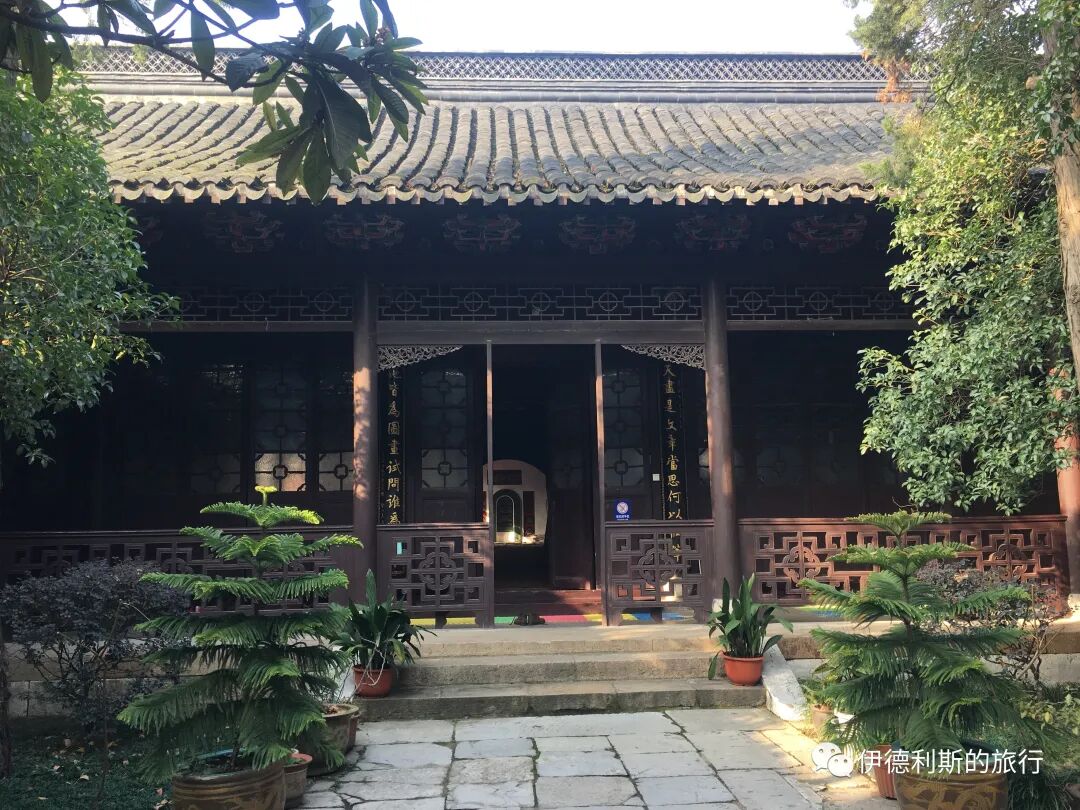
The water room of the Shan Lane Mosque was expanded in the early years of the Republic of China. At that time, a water pump was installed in the water room, operated by two people working up and down to draw water directly from a deep well into a large boiler. The water pump was designed and installed by a Hui Muslim named Ma Chengzhang, who was known as a foreign-style coppersmith or machine smith. His pump kept the water supply running normally even when hundreds of people used it during holidays. The bottom of the boiler had brick-lined smoke tunnels, commonly called earth dragons (dilong), covered with large square floor tiles. This kept the washroom as warm as spring in winter, a rare feature for mosques across the country at that time.
During the 1960s and 1970s, the Shanxiang Mosque was severely damaged. Scriptures, woodblock prints, plaques, couplets, furniture, decorations, and all sorts of cultural relics were destroyed. Two ginkgo trees in the main hall, both over 200 years old, were cut down in 1958 to support the Great Leap Forward steel production.
After the mosque was smashed, it was occupied by outside organizations, leaving only the side gatehouse guarded by an elderly man named Ma Zhonglin. During the Cultural Revolution, the occupying units tried to force Ma Zhonglin out with various excuses, but he refused every time and spent ten difficult years there. During those ten years, all the Hui Muslims in Zhenjiang used this gatehouse to store funeral supplies, hold and prepare the deceased, and perform religious ceremonies. At that time, the imams in Zhenjiang were afraid to come out to serve grieving families. Only Ma Zhonglin would wash the bodies, lead the namaz, and go to the burial site to recite dua. He also helped the community elders by slaughtering poultry for them in the gatehouse every morning.
In 1981, Ma Zhonglin passed away. After he passed away, Tan Quanhong and Zhang Dagui took turns slaughtering poultry for the elders in the side gatehouse every morning. That same year, the occupying units began to move out, and the Shanxiang Mosque was finally recovered.
Baba is a transliteration of a Persian word and is a respectful term Hui Muslims use for elders. It can also be written as baba, and in the Beijing area, it is pronounced as bǎ ba.
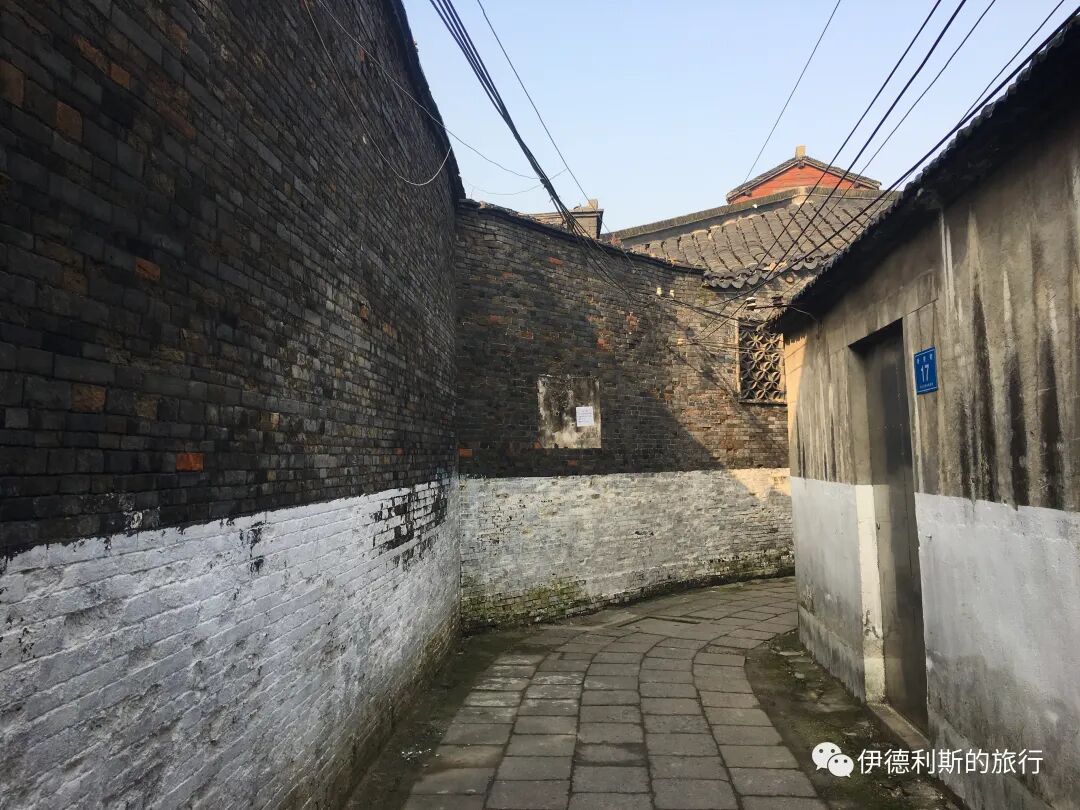
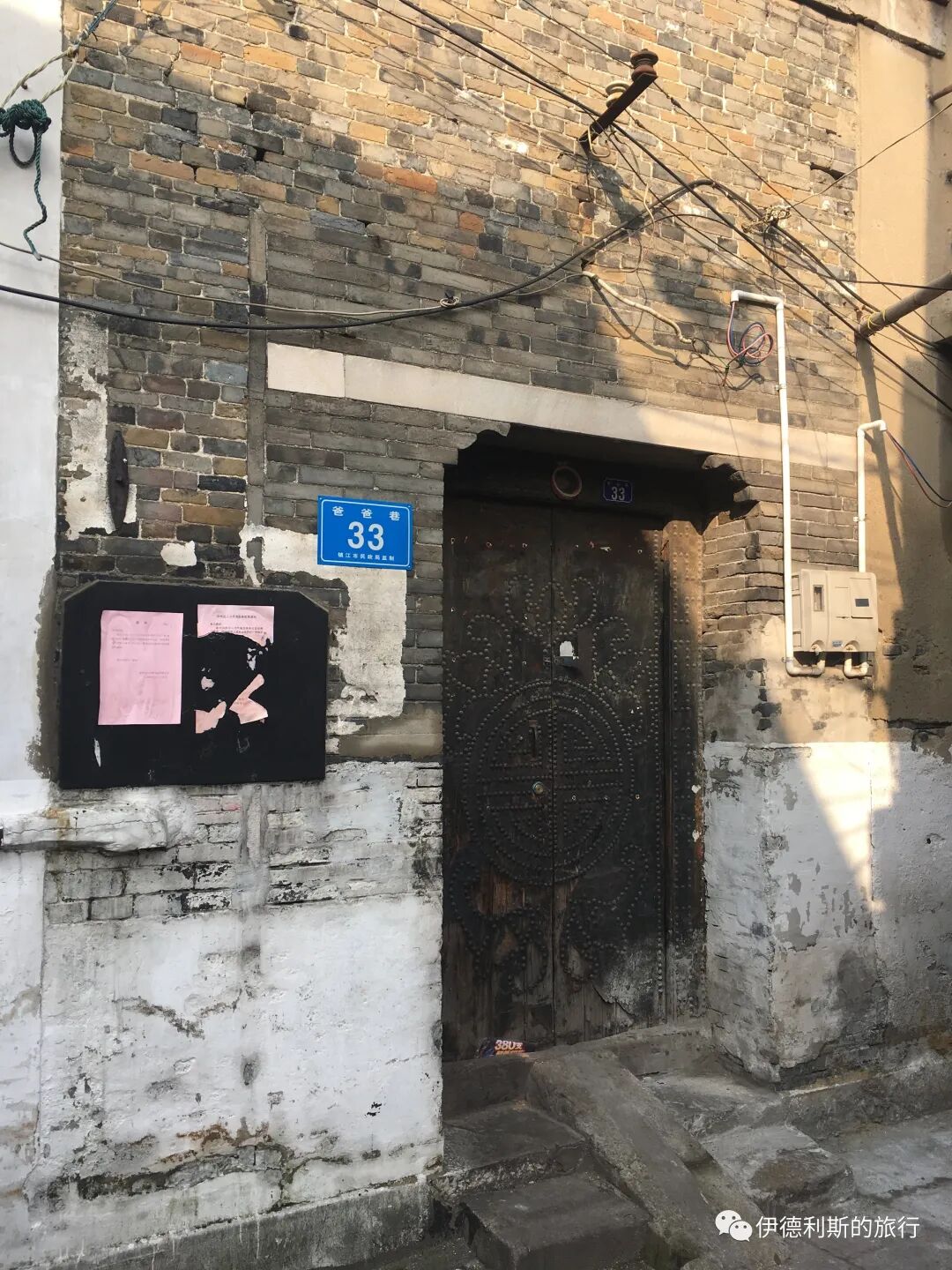
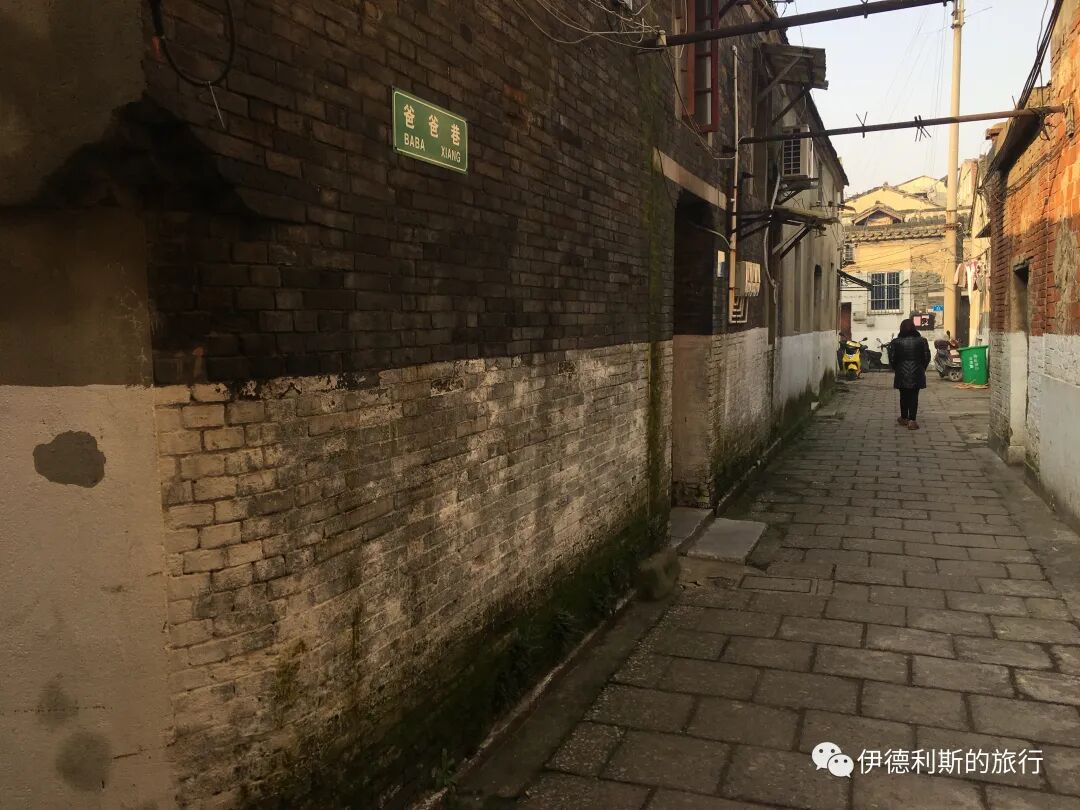
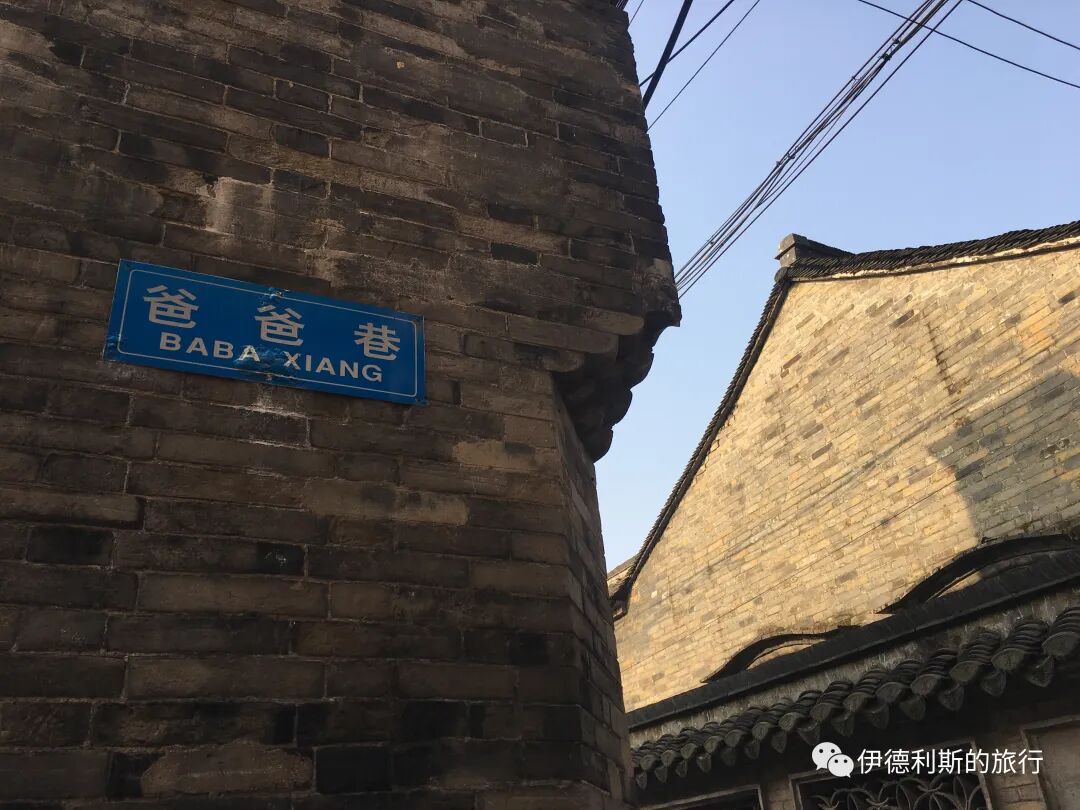
The Vanished Jianzi Lane Mosque
The Jianzi Lane Mosque was originally called the Gurun Mosque. It was first built on Fumin Street in Ren'an Ward and was a mosque in Zhenjiang during the Yuan Dynasty. According to the 1333 (the fourth year of the Zhishun reign of the Yuan Dynasty) Records of Zhishun Zhenjiang, there were 59 Hui Muslim households with 374 people in Zhenjiang during the Yuan Dynasty. The famous Yuan Dynasty Hui Muslim poet Sa Dula served as a darughachi (a seal-holding administrator) for the Zhenjiang Circuit for three years starting in 1328 (the first year of the Tianli reign). According to the Guangxu edition of the Dantu County Gazetteer, Sa Dula did many good deeds in Zhenjiang, such as stabilizing prices, opening granaries to help the people, curbing powerful servants, and breaking down superstitions. In 1326, a Hui Muslim scholar named Jamal al-Din, who had passed the provincial civil service exams, served as a professor at the Zhenjiang Road Confucian School. This was the highest educational position at the time.
The ancient Gurun Mosque was destroyed between the end of the Yuan Dynasty and the beginning of the Ming Dynasty. It was rebuilt during the Hongwu reign of the Ming Dynasty and moved to Jianzi Lane inside the city in 1602. From then on, it was called the Jianzi Lane Mosque. It was renovated three times in 1850, 1904, and 1909.
In 1958, a knitting factory and a color printing factory took over the Jianzi Lane Mosque. Between the 1970s and the early 1980s, the printing factory demolished the main prayer hall, the assembly hall, and the ablution room to build factory buildings. The stone tablet titled Record of the Gurun Mosque, written in 1620 by the scholar Li Yiyang, was used to mix cement, which ruined the inscriptions. The calligraphy on the Wanli-era renovation tablet was written by Ma Zhiqi, a Hui Muslim from Xinye, Henan. Ma Zhiqi was the runner-up in the 1610 imperial examinations and was skilled in poetry and calligraphy. Between the Wanli and Chongzhen reigns, he wrote renovation records for the Xiaopiyuan Mosque in Xi'an, Shaanxi, the Datong Mosque in Shanxi, the Jinshifang Street Mosque in Beijing, and the Chengguan Mosque in Wudu, Gansu. In 1982, the Zhenjiang Islamic Association repaired the stone tablet and moved it to the Shanxiang Mosque, where it was finally preserved.
The printing factory occupying the mosque did not leave until 1993. In 1994, the Islamic Association regained ownership of the Jianzi Lane Mosque. In 2005, when Zhenjiang built the First Building commercial pedestrian street, the Jianzi Lane Mosque was completely demolished. A new Gurun Mosque was built on Xuefu Road. The Wanli-era renovation tablet, an ancient well railing, and three Qing Dynasty renovation tablets from the original Jianzi Lane Mosque were placed in the courtyard for safekeeping.
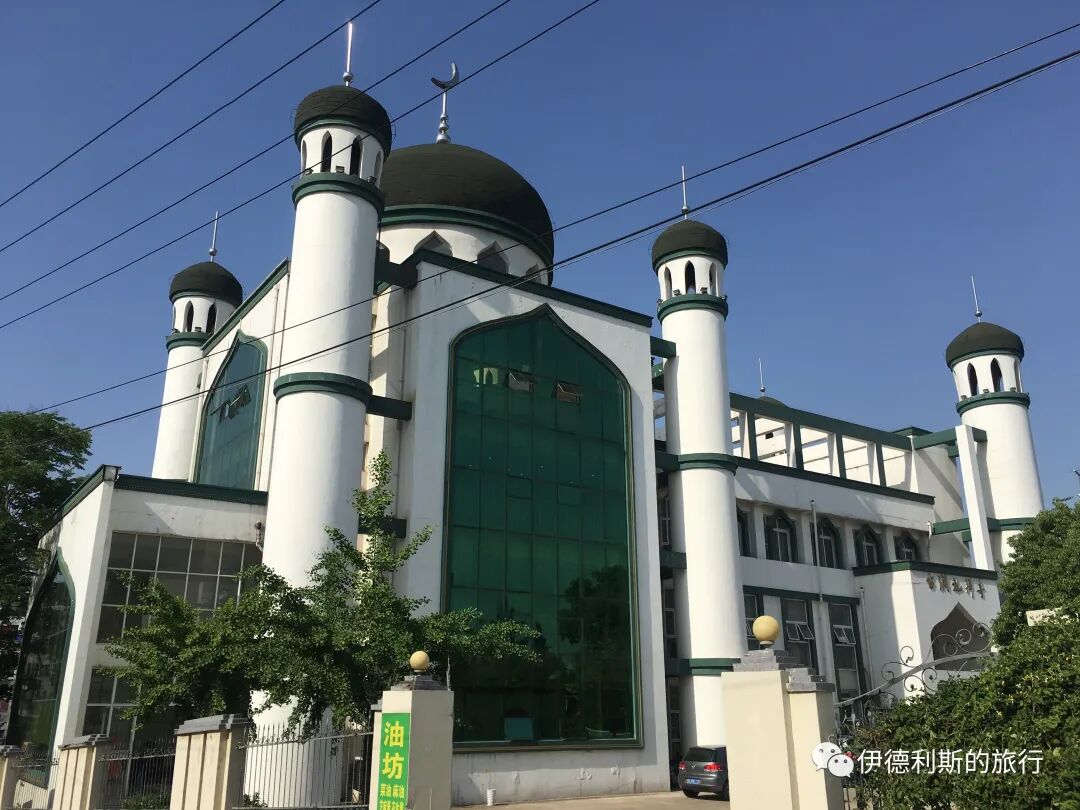
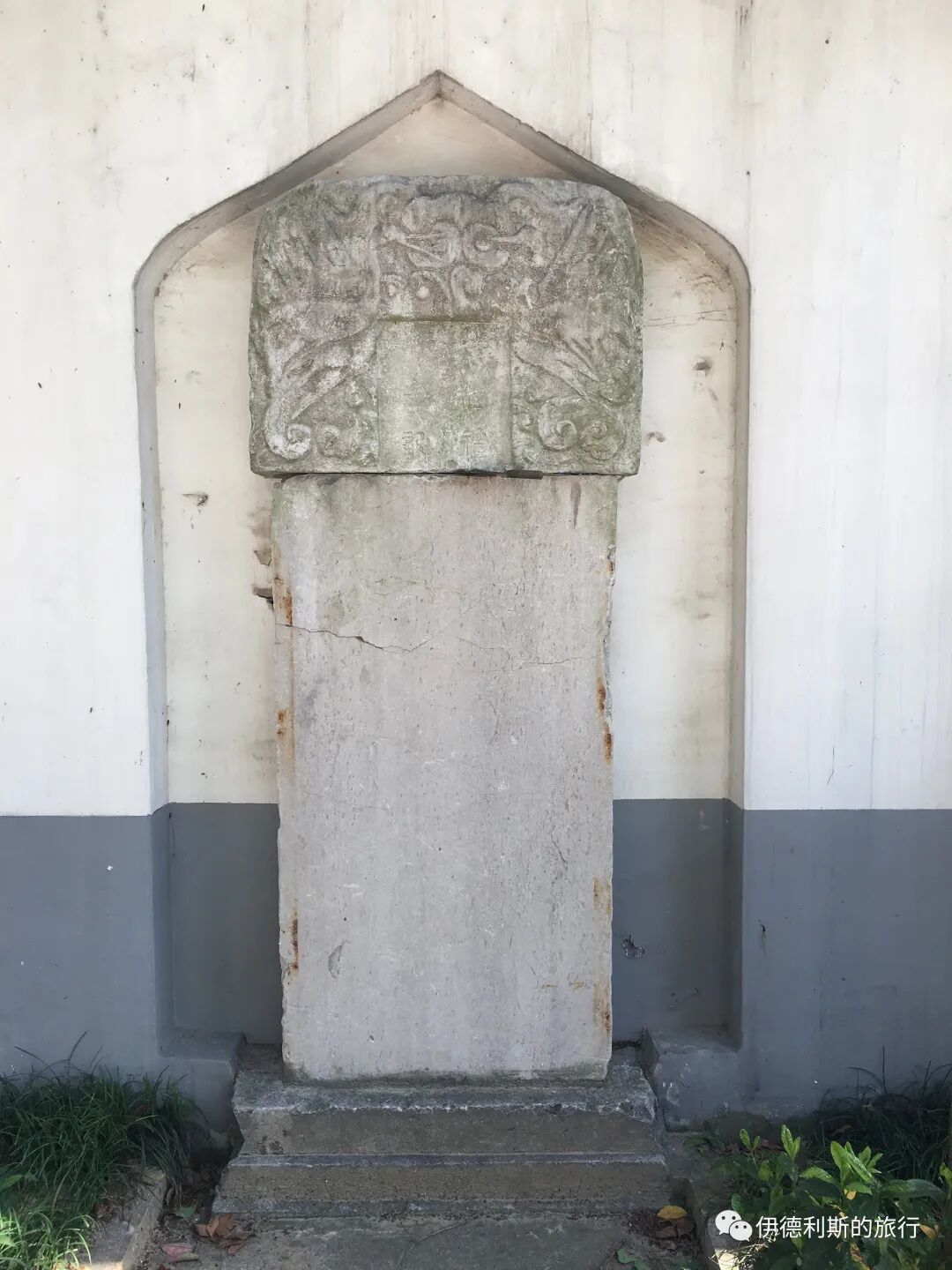
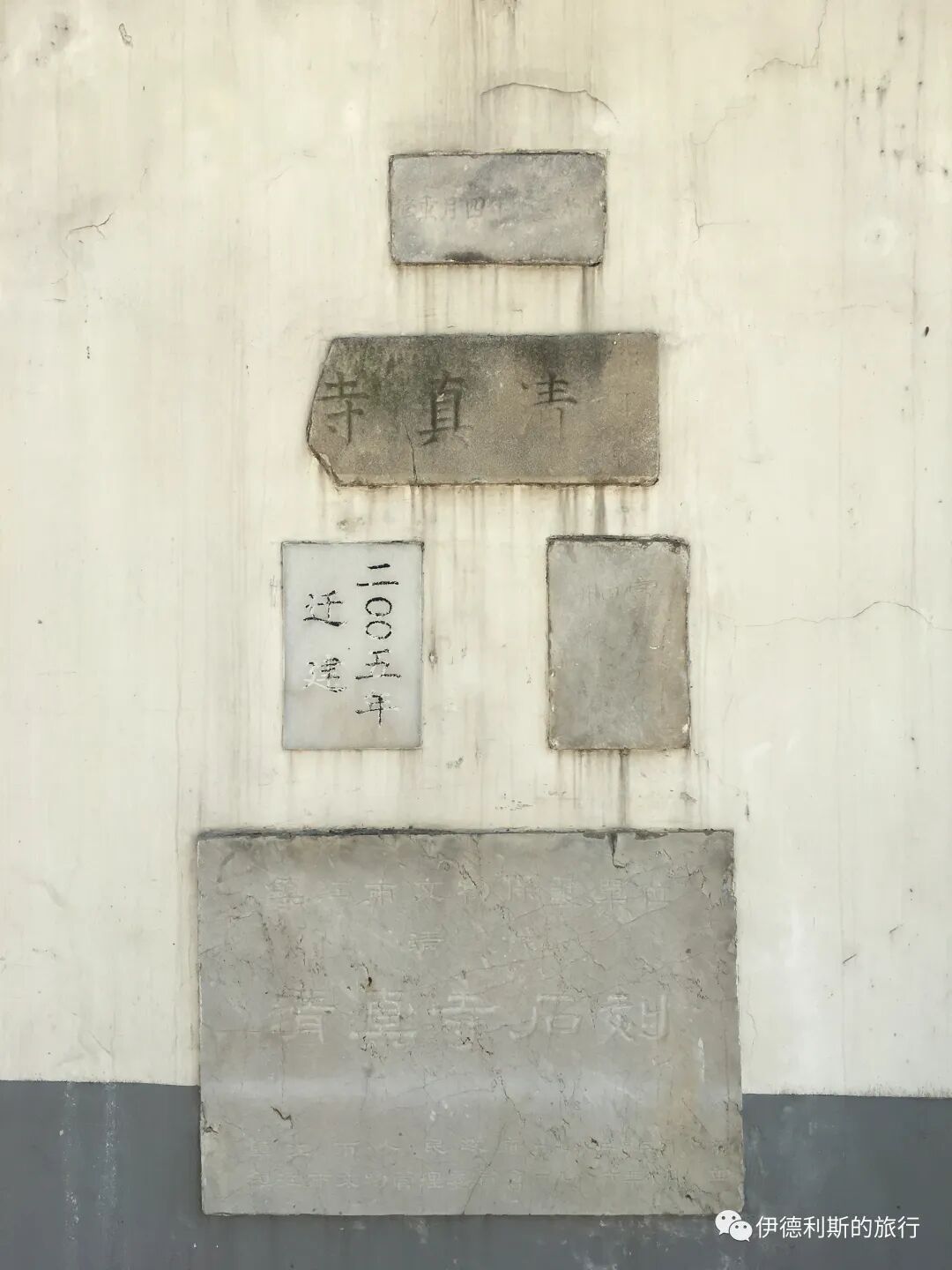
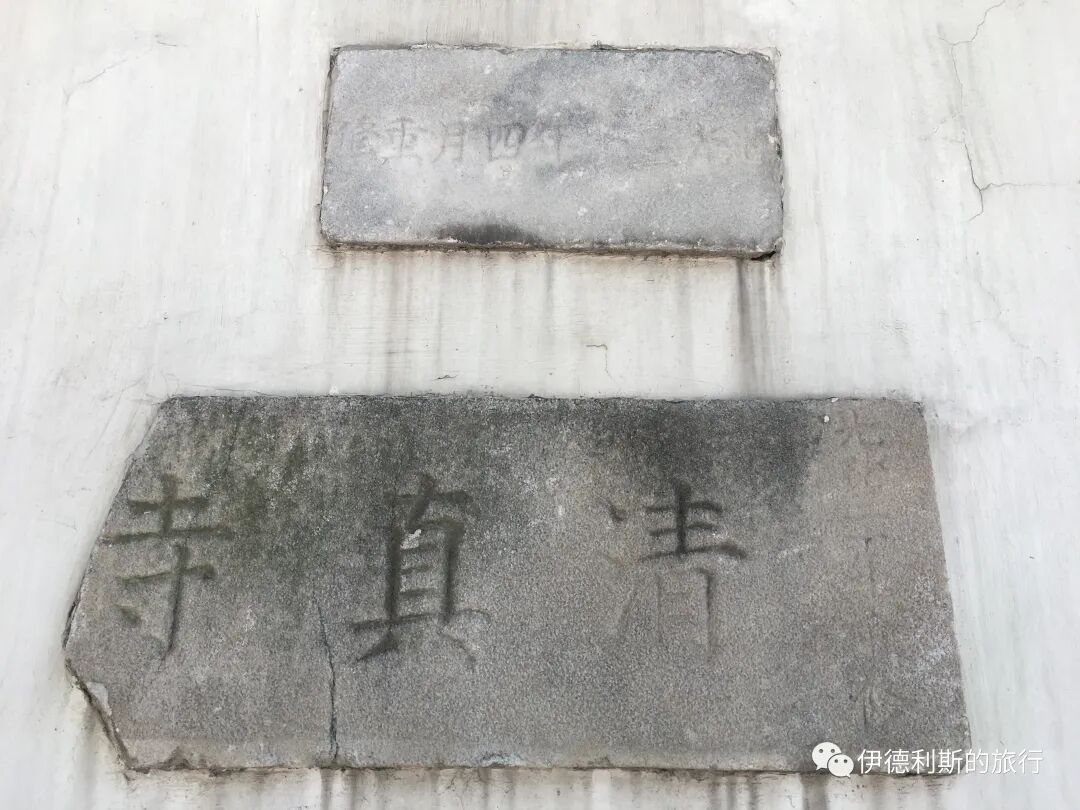
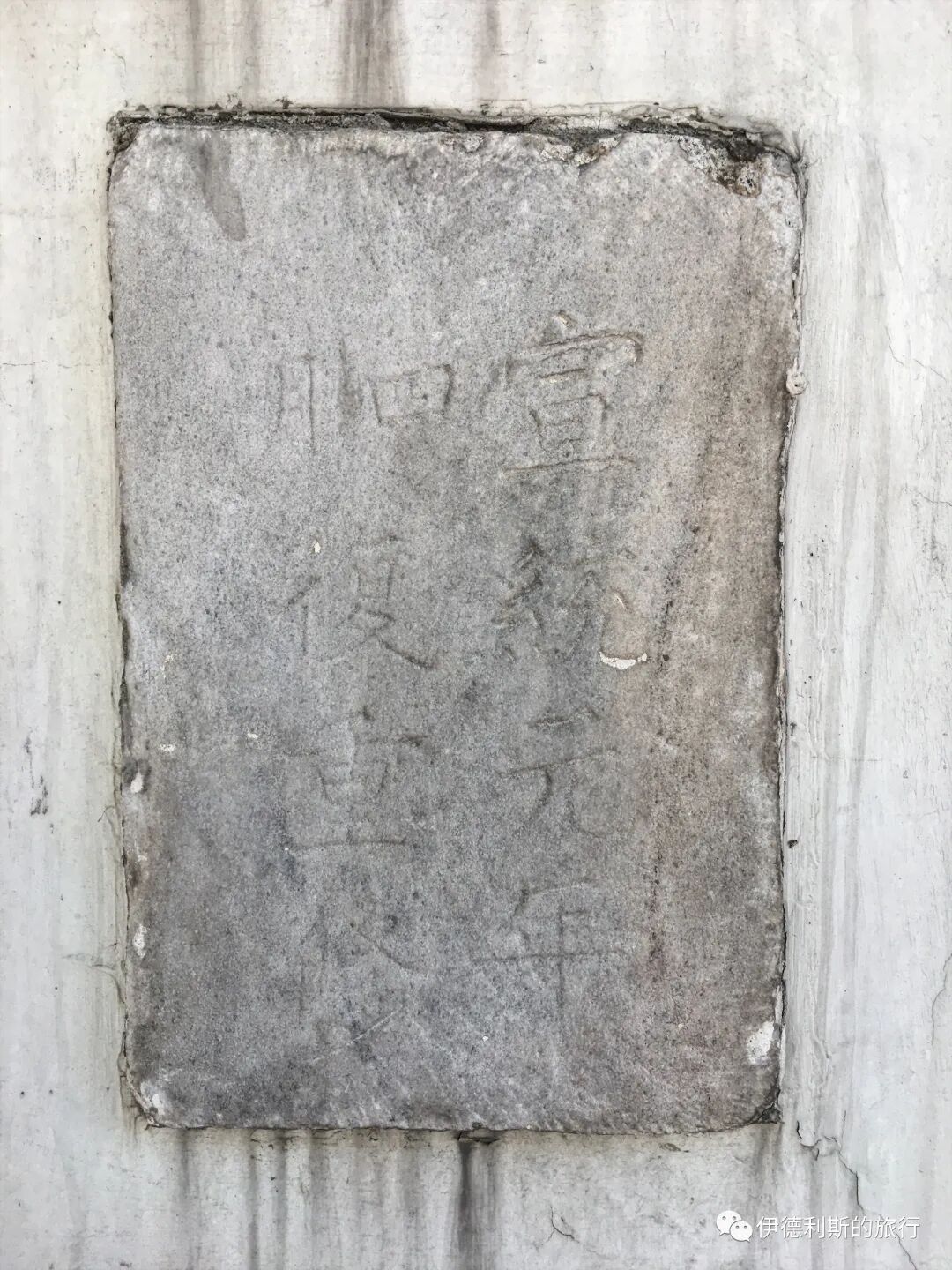
to the relics from the Jianzi Lane Mosque, the Gurun Mosque also houses the mihrab tablet from the kiln hall of the mosque outside the South Gate of Zhenjiang.
The mosque outside the South Gate of Zhenjiang was located at the east end of Miaojia Lane. It is believed to have been built in the early Qing Dynasty and was an east-facing courtyard house. Across from the mosque gate stood a row of tall elm trees that provided dense shade. The prayer hall and the opposite hall both had three bays. Tall ginkgo trees stood on both sides in front of the hall. To the south were guest rooms, and to the north were the ablution room, kitchen, and storage room.
In the early 20th century, the imam of the South Gate Mosque was an imam named Ma from Henan. In the early 1920s, he was hired by Muslims in Shou County, Anhui, and Imam Wan Shourong succeeded him as the leader of the South Gate Mosque. Daily affairs at the mosque were managed by Jin Zhiguang from the Xinchangheng fabric store and Xia Songfu, the father of Xia Rongguang. During the Republic of China era, the firewood and rice market outside the South Gate was very busy, and more than 50 Hui Muslim families lived there.
In 1937, the South Gate Mosque was destroyed by war. The mihrab tablet from the kiln hall was kept in the home of Hua Baoren next to the mosque until it was moved to the Gurun Mosque in 2005.
The lotus-shaped Arabic script on the stone tablet is the Basmala (tasimi). The middle section contains verse 163 of the Cow Chapter (Surah Al-Baqarah), and the diamond-shaped carving at the bottom is in Arabic Kufic calligraphy, which reads: Prostrate yourselves and worship your Lord.
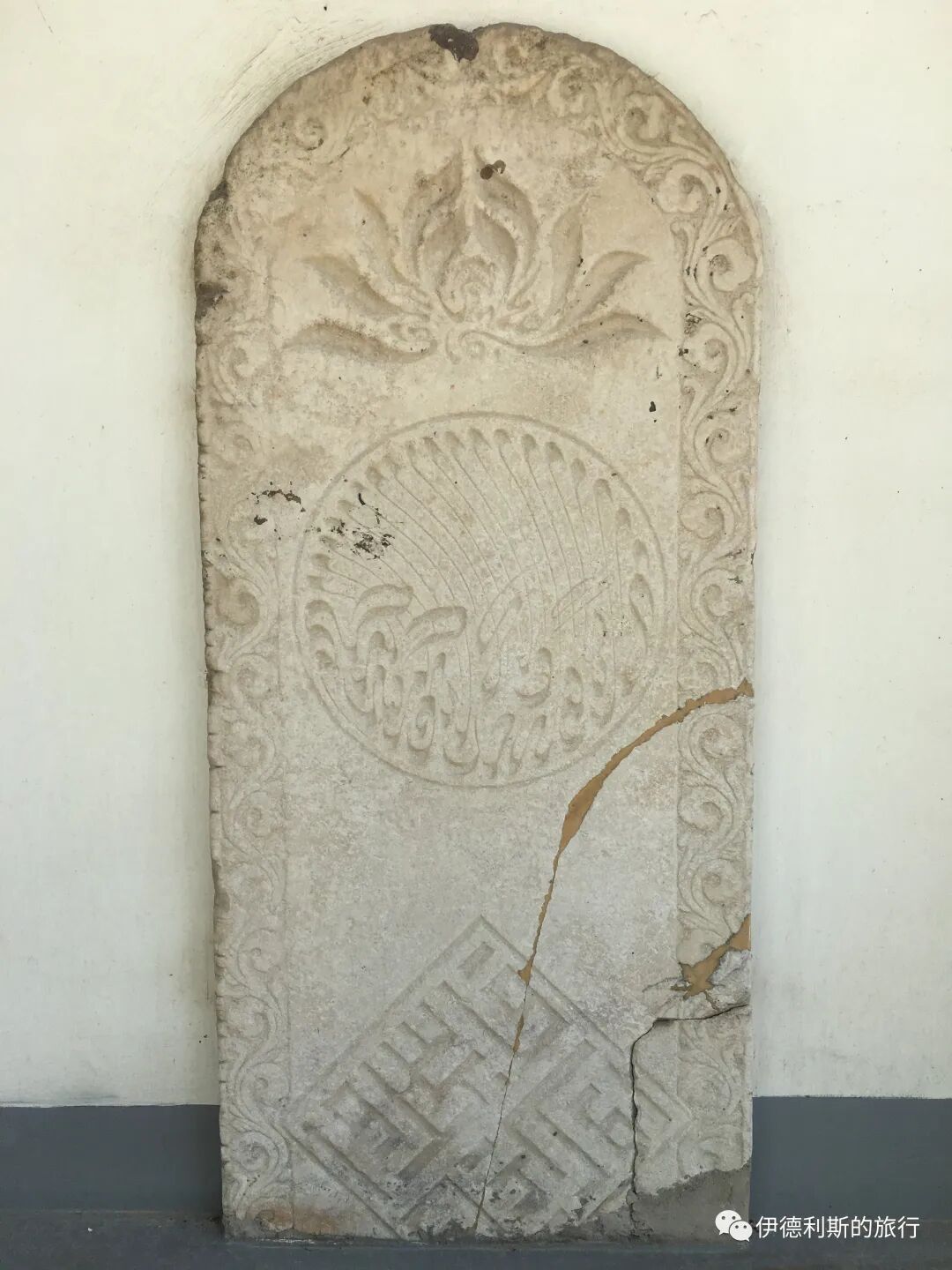
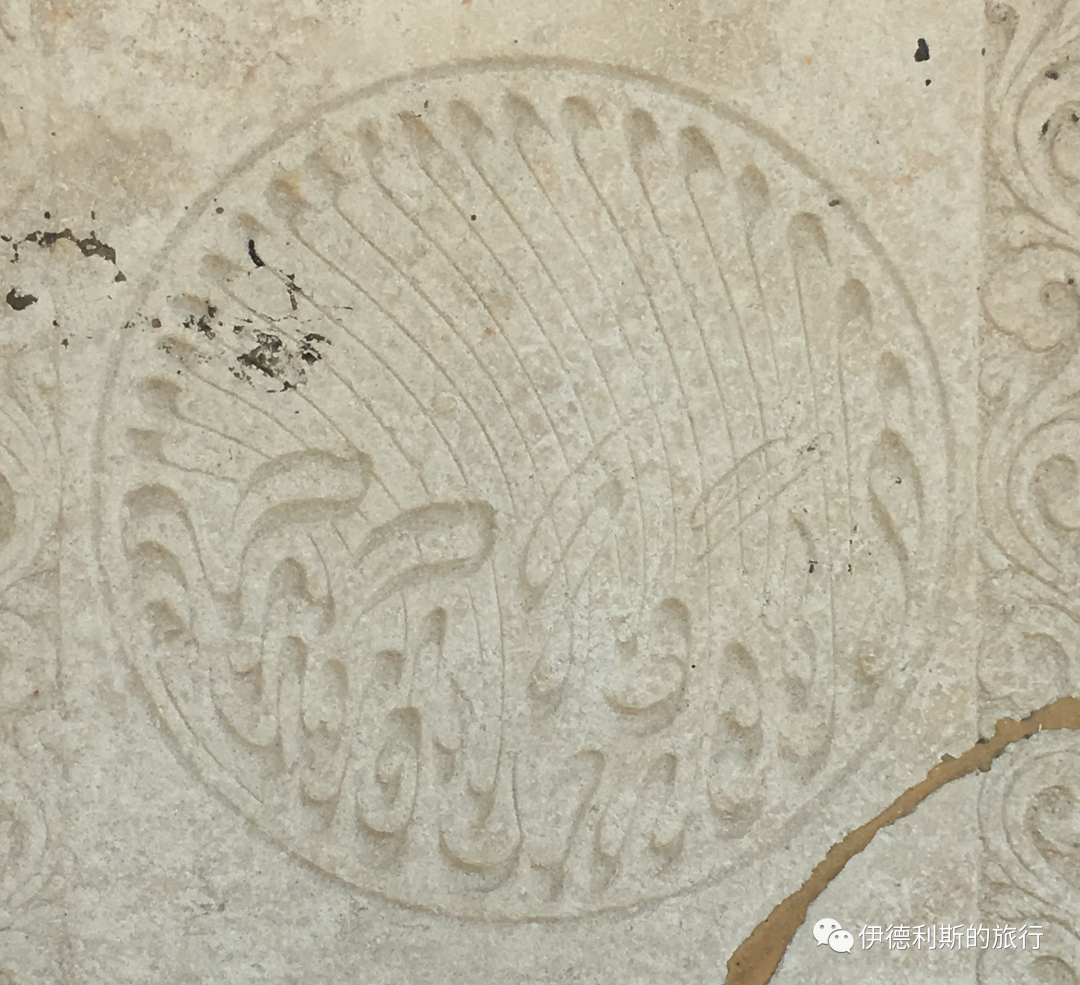
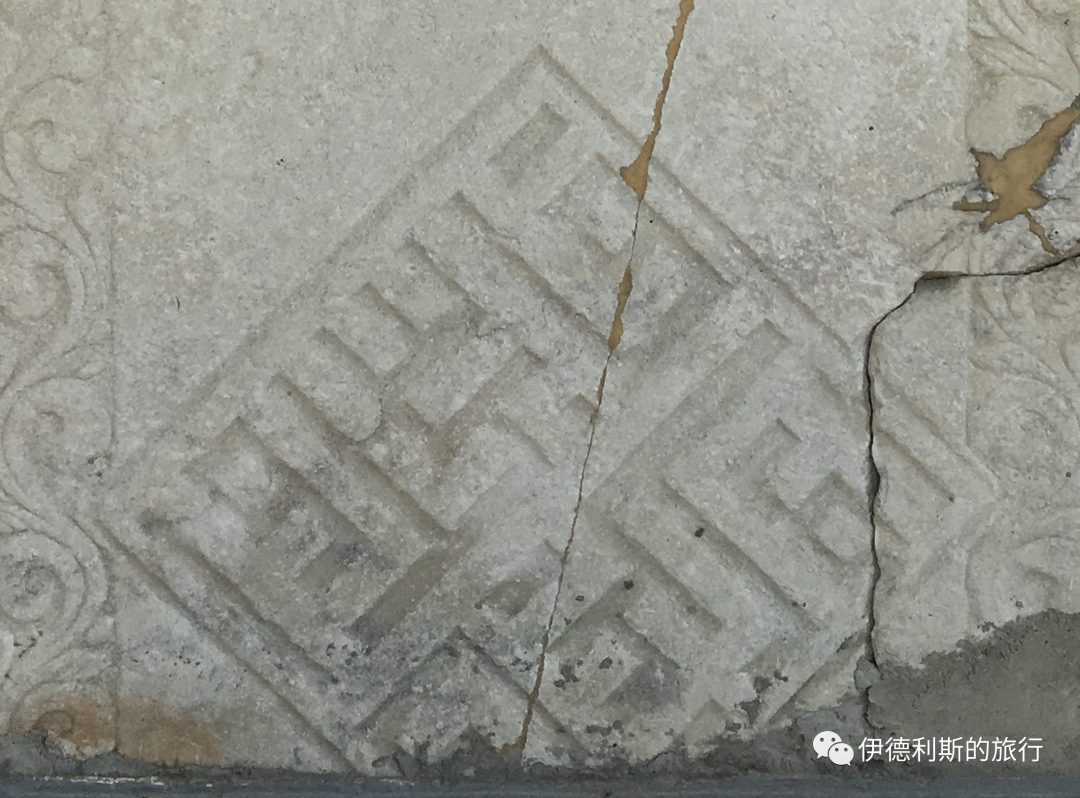
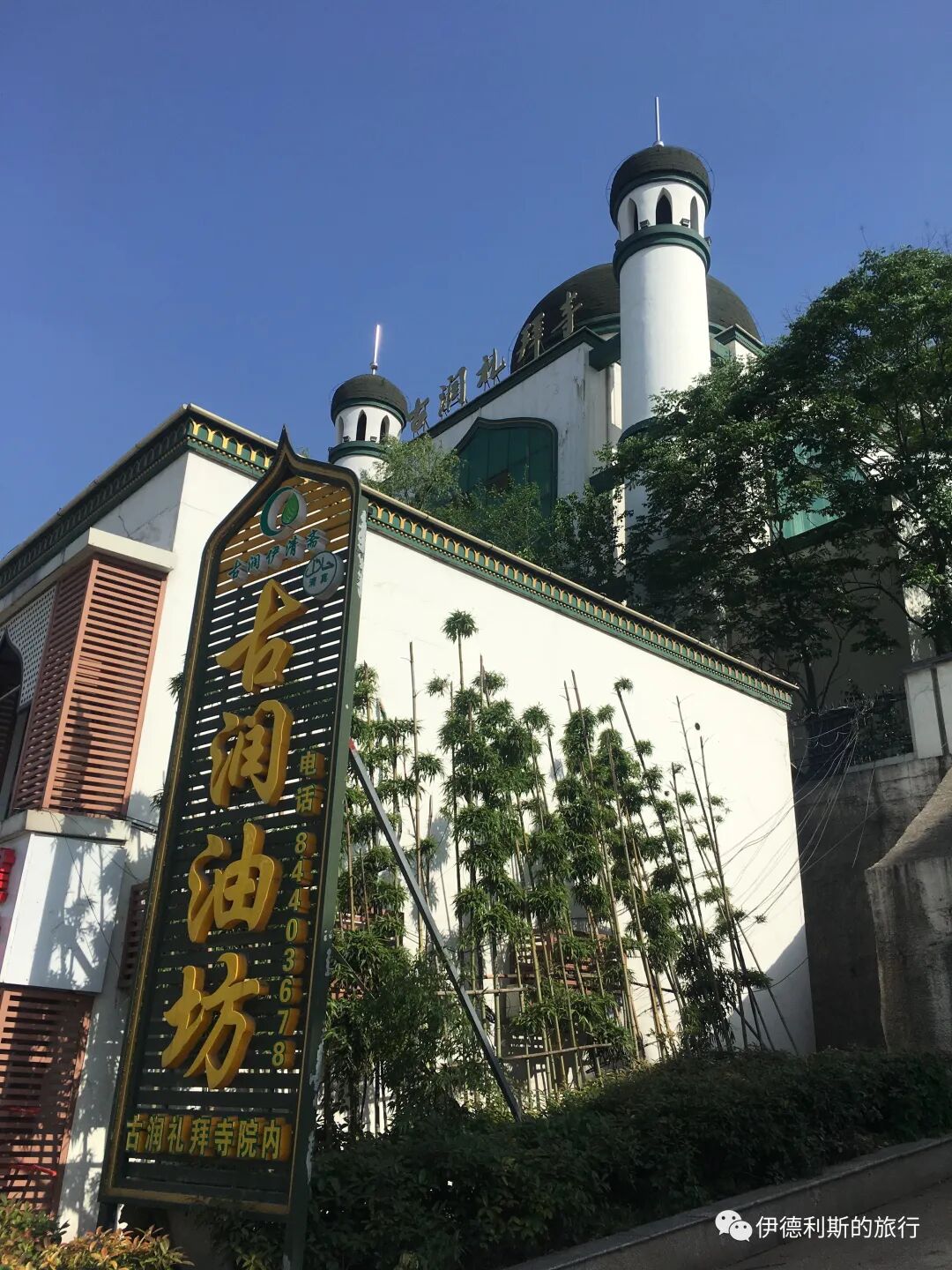
Besides the previously mentioned Xinhe Street Mosque, Shanxiang Mosque, Jianzi Lane Mosque, and the mosque outside the South Gate, Zhenjiang once had another mosque called Paiwan Mosque, built by Hui Muslims from Shou County, Anhui, at Niupipo. The founder of Paiwan Mosque was Zhu Huaisen, a famous Hui Muslim military officer from Shou County.
Zhu Huaisen practiced martial arts from childhood. After joining the army, he fought against the Taiping Rebellion and the Nian Rebellion in the Jianghuai region. He was very brave and often fought while wounded. During the siege of Luzhou (Hefei), he was the first to climb the city wall. He also participated in the recapture of Wuwei Prefecture, Dongguankou, Chao County, Quanjiao, and Chuzhou, earning him the title of Shangyong Baturu. After the Taiping Rebellion failed, Zhu Huaisen was transferred to Jinling (Nanjing) in 1869 (the eighth year of the Tongzhi reign) to command the new troops of the Governor's Guard. In 1876 (the second year of the Guangxu reign), Zhu Huaisen was promoted to Commander-in-Chief (zongbing) of the Huaiyang Town in Jiangnan, and in 1882 (the eighth year of the Guangxu reign), he became the Commander-in-Chief of the Jiujiang Town in Jiangxi.
The front hall and back prayer hall of Paiwan Mosque both had three rooms. The inner room of the north wing was the ablution room (shuifang), and the outer room was for funeral services. The main gate was on the south side, and a stone plaque with the words "Qingzhen" (meaning halal or pure) was embedded in the gate wall. Usually, the imam of Paiwan Mosque stayed at Shanxiang Mosque and only went to Paiwan Mosque to lead the prayer on Fridays (Jumu'ah). When something came up, the mosque administrators would go to Shanxiang Mosque to invite them, so Paiwan Mosque was also called the Small Mosque.
During the Qing Dynasty and the Republic of China, Hui Muslims from Shou County in Zhenjiang mainly worked in the salt industry, with surnames including Tao, Bian, Shan, Zhao, and Zhu. After 1953, private salt merchants disappeared, and most of the Shou County Hui Muslims returned to their hometowns, while a few changed jobs to farming or labor. The population decreased significantly, so after the 1950s, Paiwan Mosque merged with Shanxiang Mosque. The mosque building was converted into a residence and was occupied by the family of the last imam, Yang Dezhen.
Although Jianzi Lane Mosque has disappeared, the Hui Muslims who once lived around the mosque have not. There are still the most halal restaurants in Zhenjiang around Jianzi Lane, and I will introduce them to you one by one below.
Yong'an Road Snack Street
Yong'an Road is not far south of Jianzi Lane. The street is lively and full of snacks, and there are five halal restaurants.
Hualiji is a family of halal butchers in Zhenjiang. They have passed down their trade for six generations since the Daoguang reign, and they moved from the Zhenjiang Mosque to Yong'an Road in 2002. I ate beef tripe vermicelli soup and beef noodles at Hualiji. The soup was slightly sweet and very refreshing, the tripe was especially chewy, and the chili was very satisfying. In short, the taste is very different from northern halal food and has its own unique style.
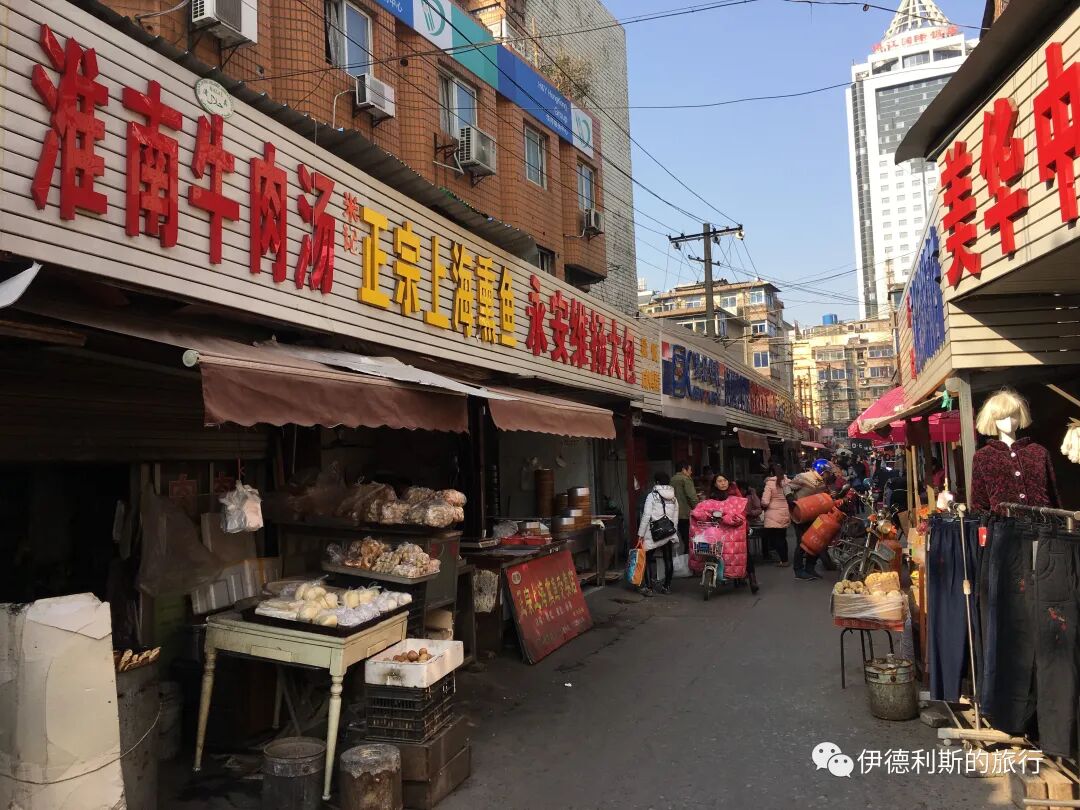
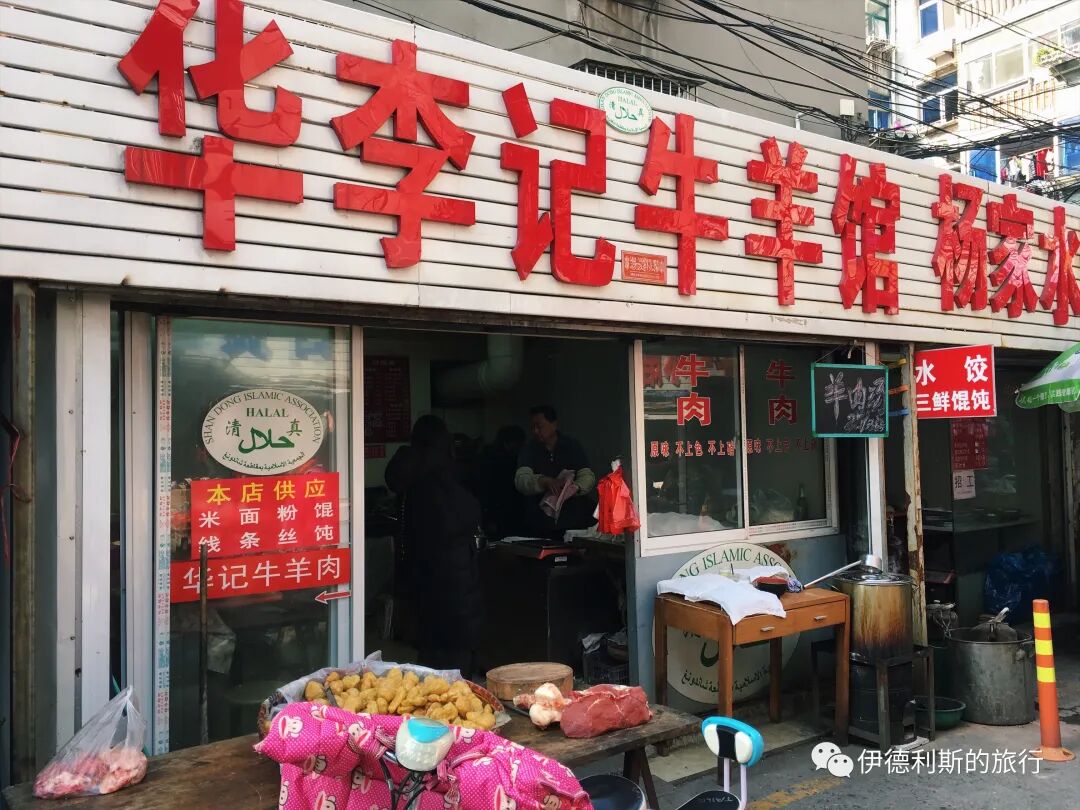
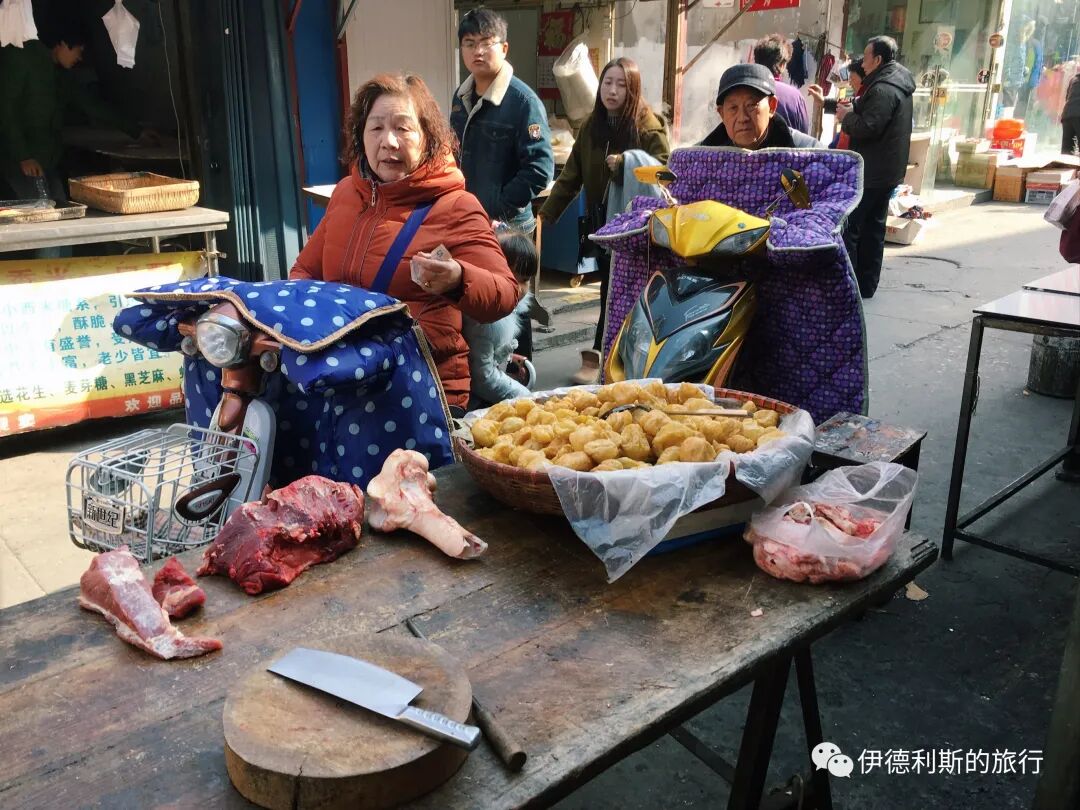
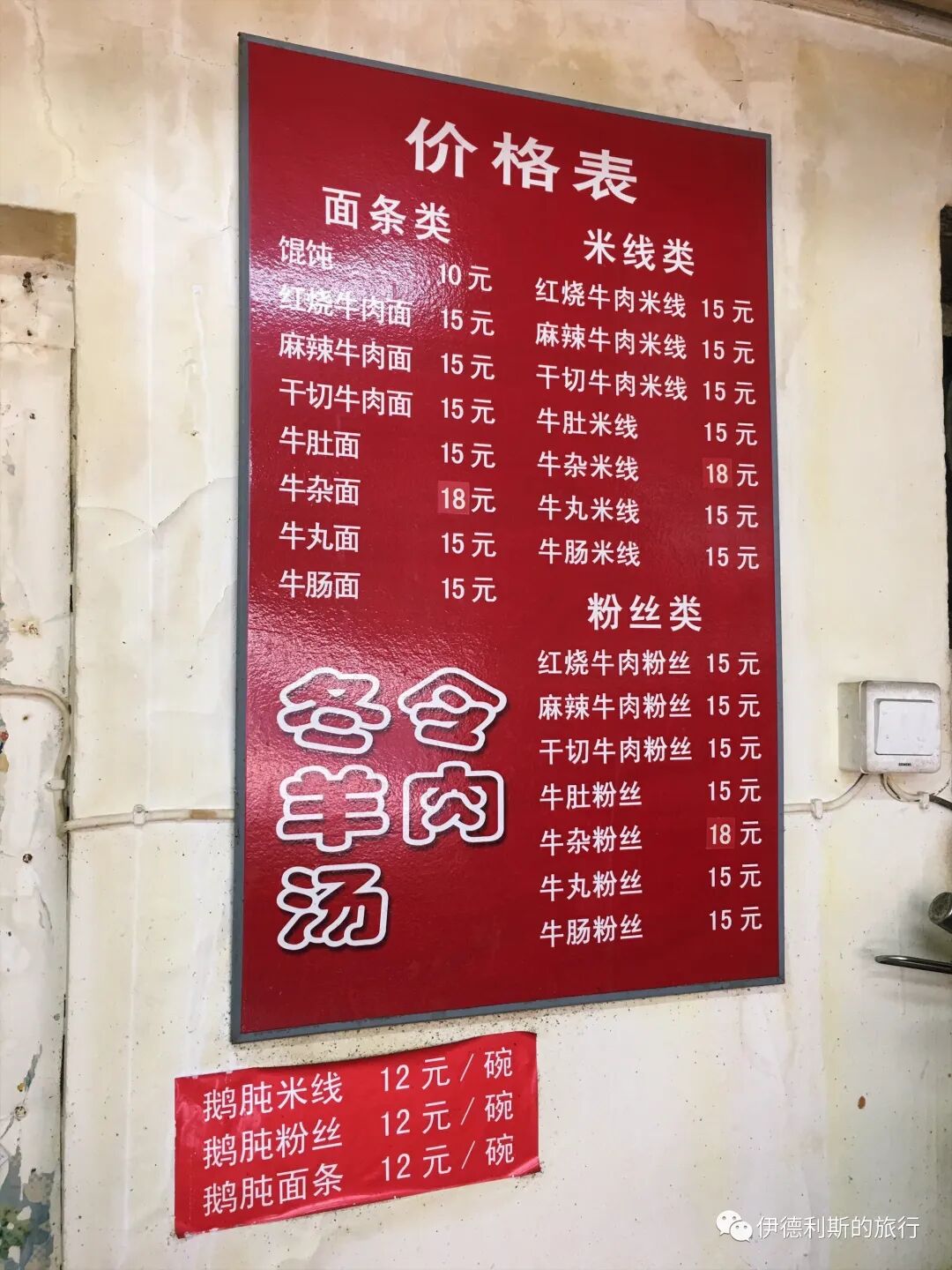
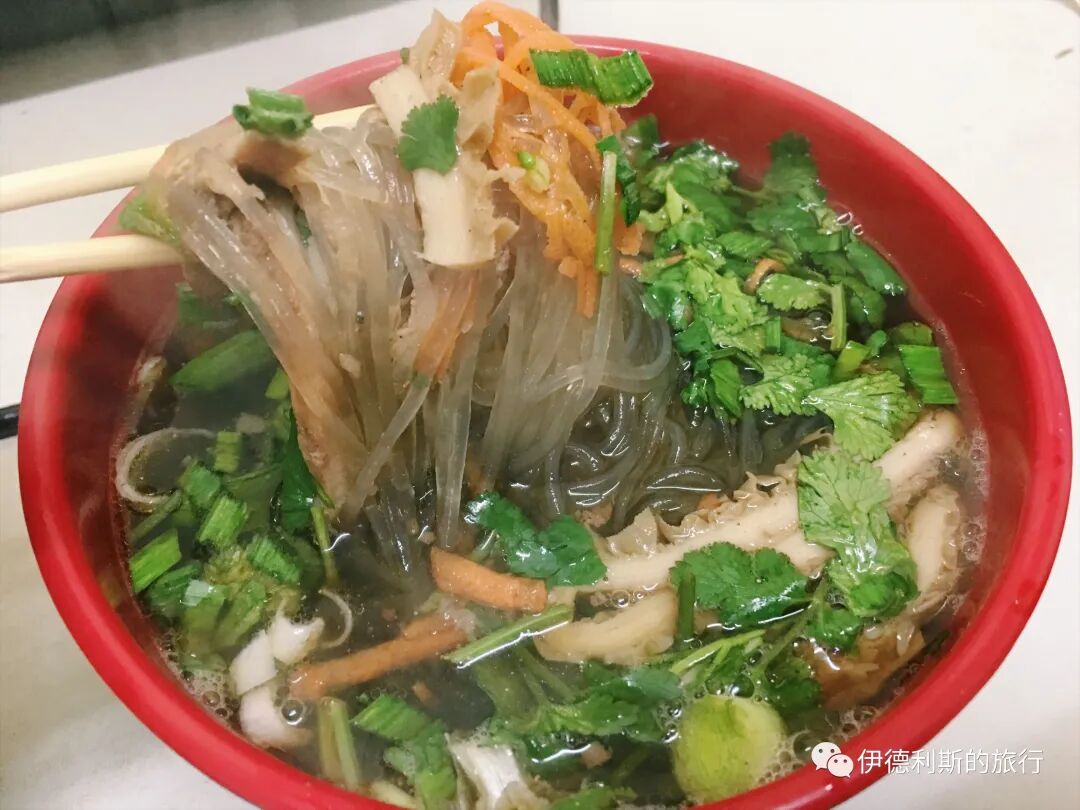
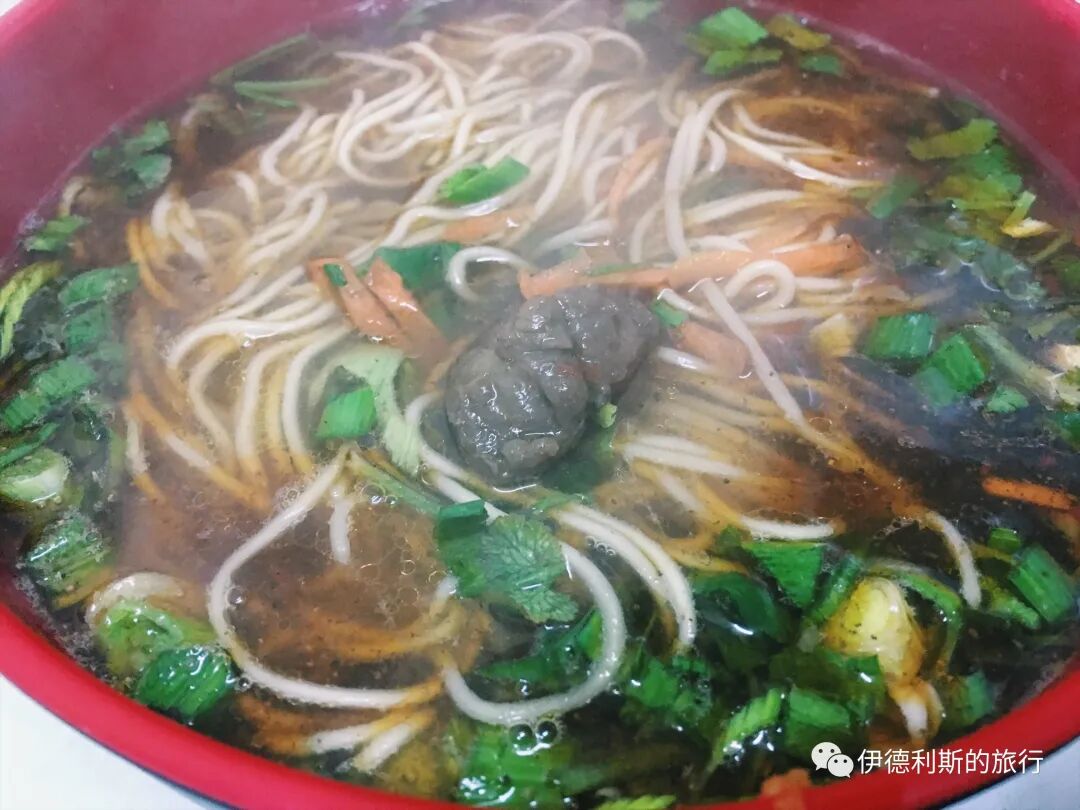
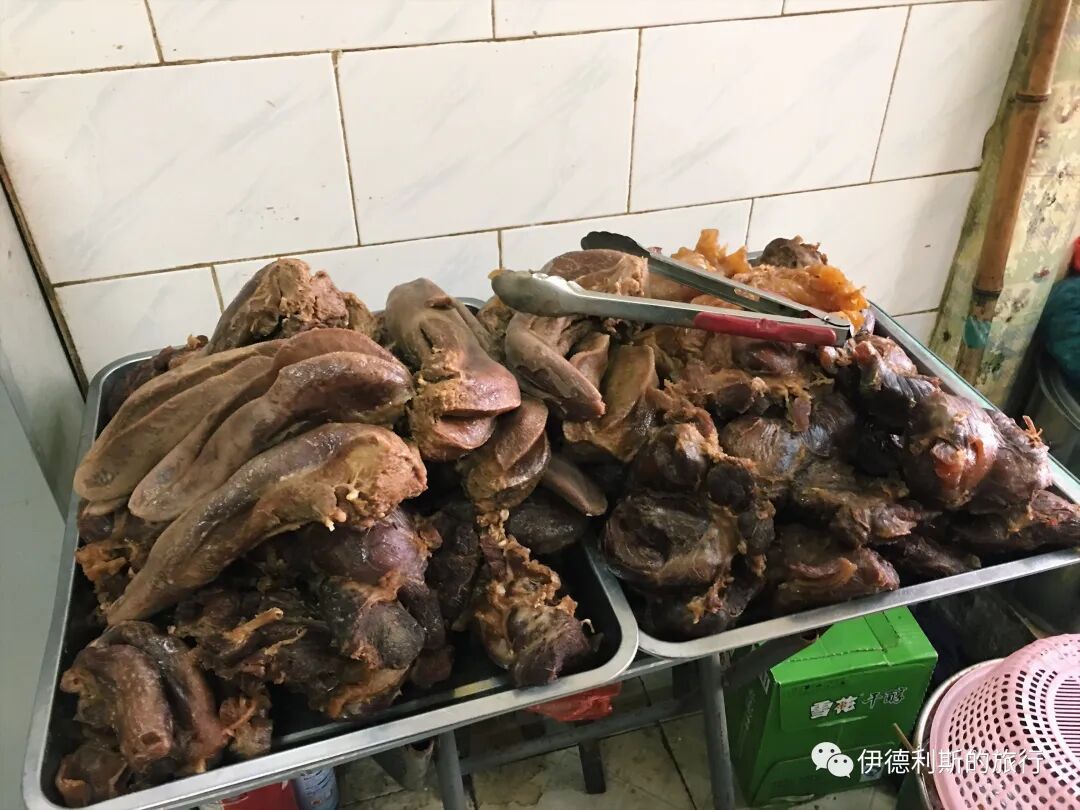
Besides the best-tasting Huali Ji, I also had beef offal vermicelli soup at Yangji Yellow Beef. The offal includes beef, beef tendon, and beef tripe. It still has that typical Jiangnan slightly sweet taste. The tendon and tripe were super delicious, but the beef was a bit like the style at Yueshengzhai and not quite as good.
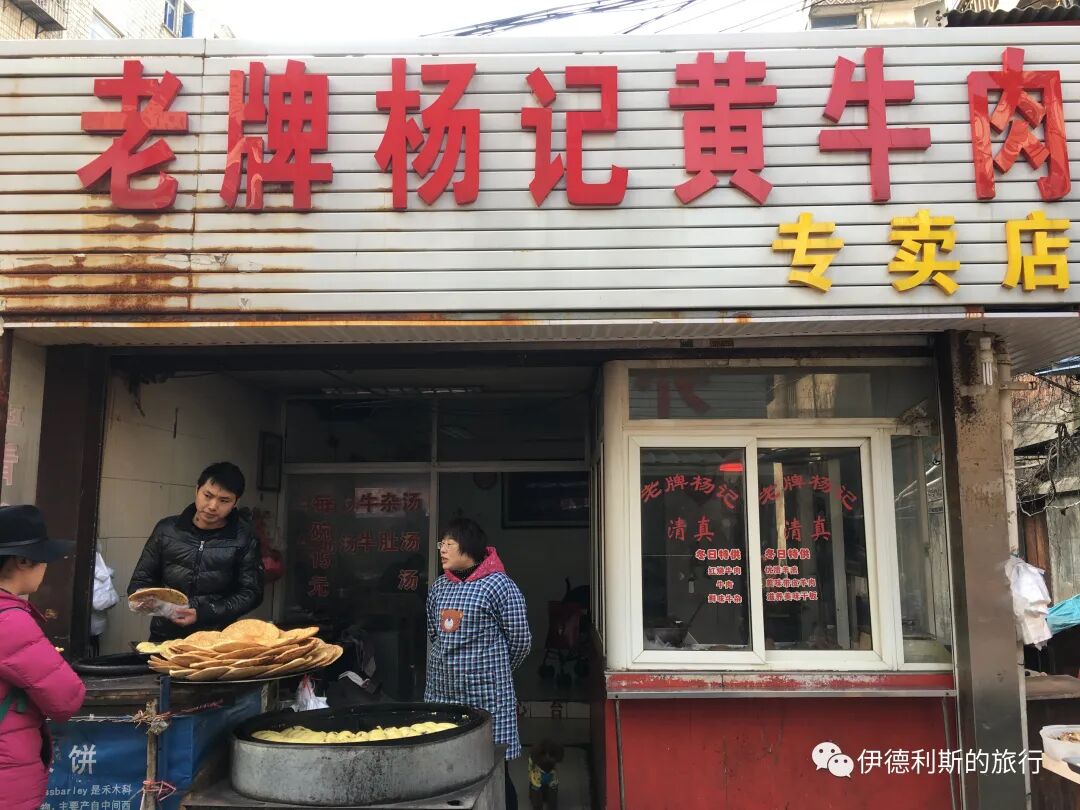
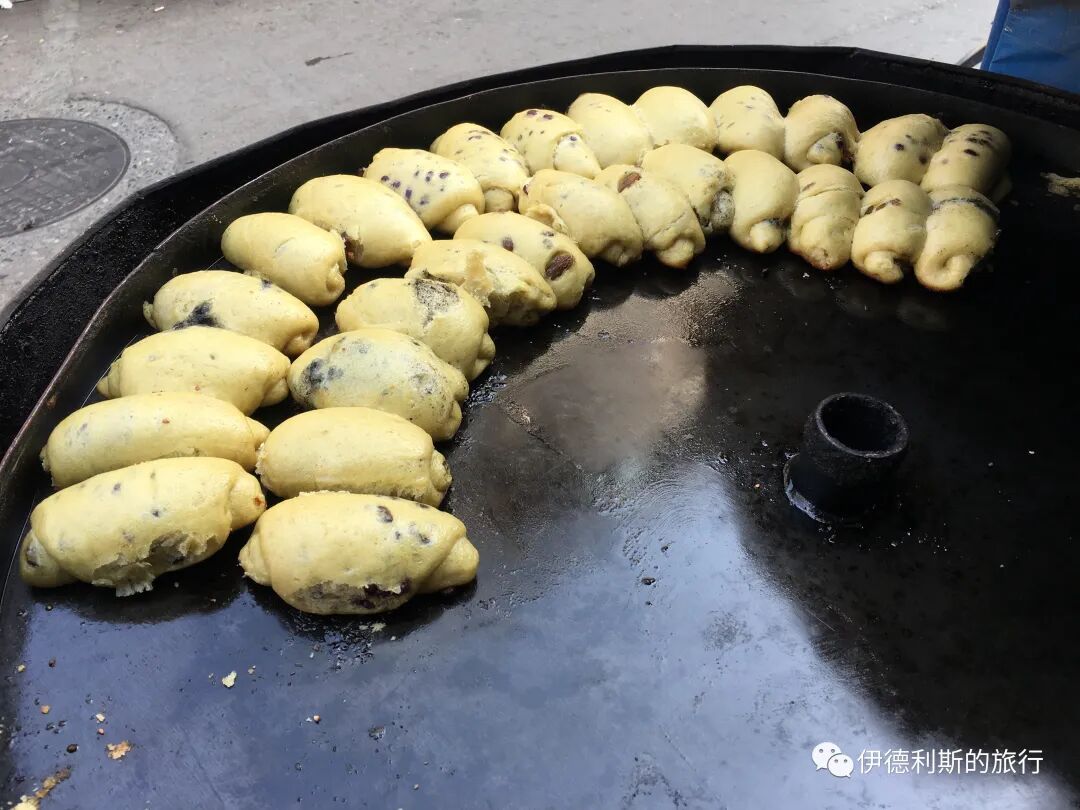
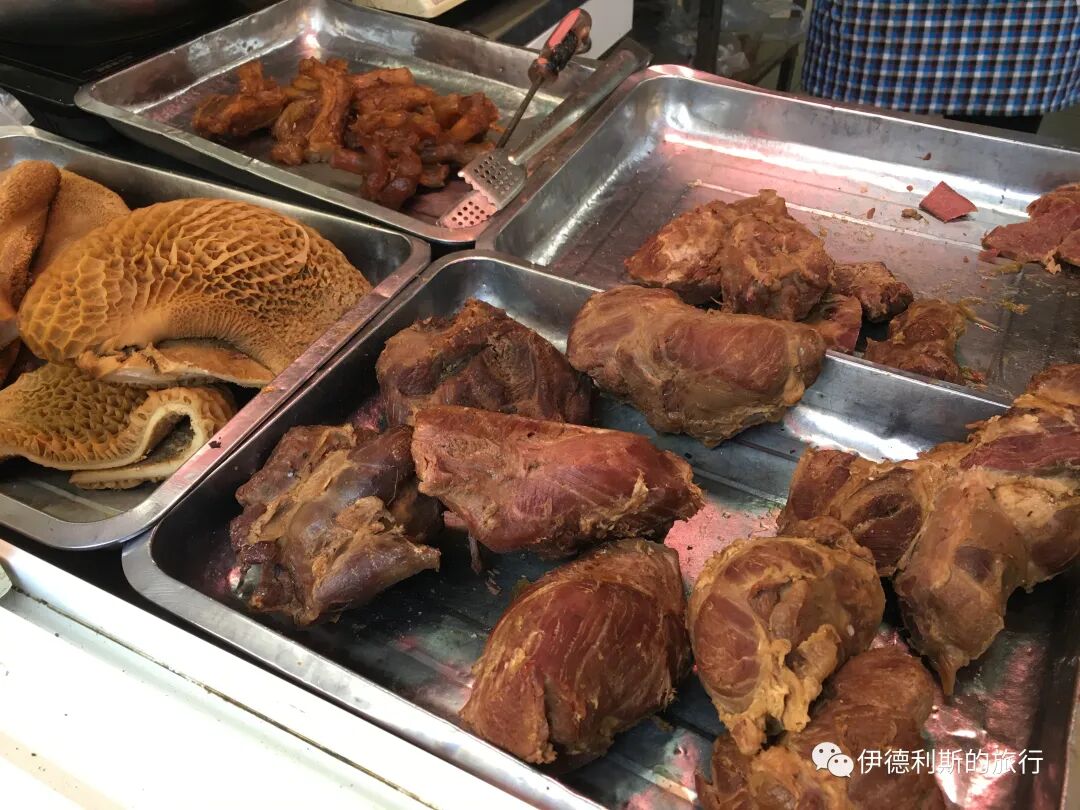
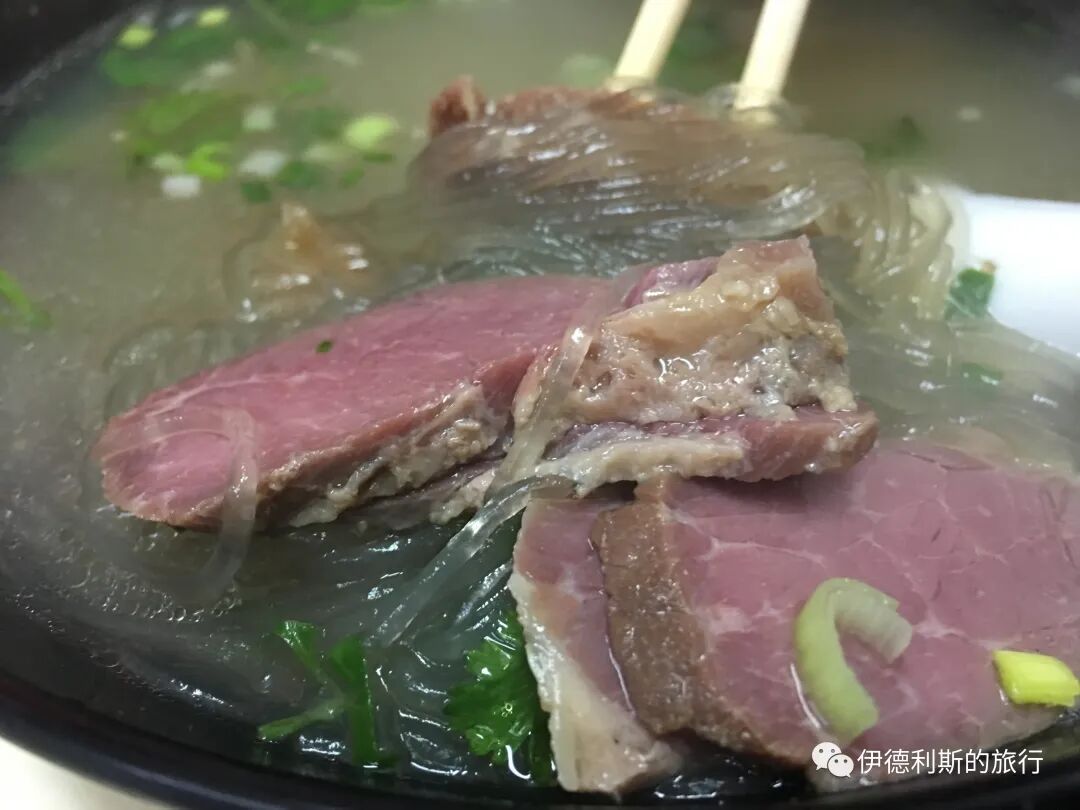
I had snow dumplings (xuejiao) at Bianji Snacks. Eating fried food always makes me happy.
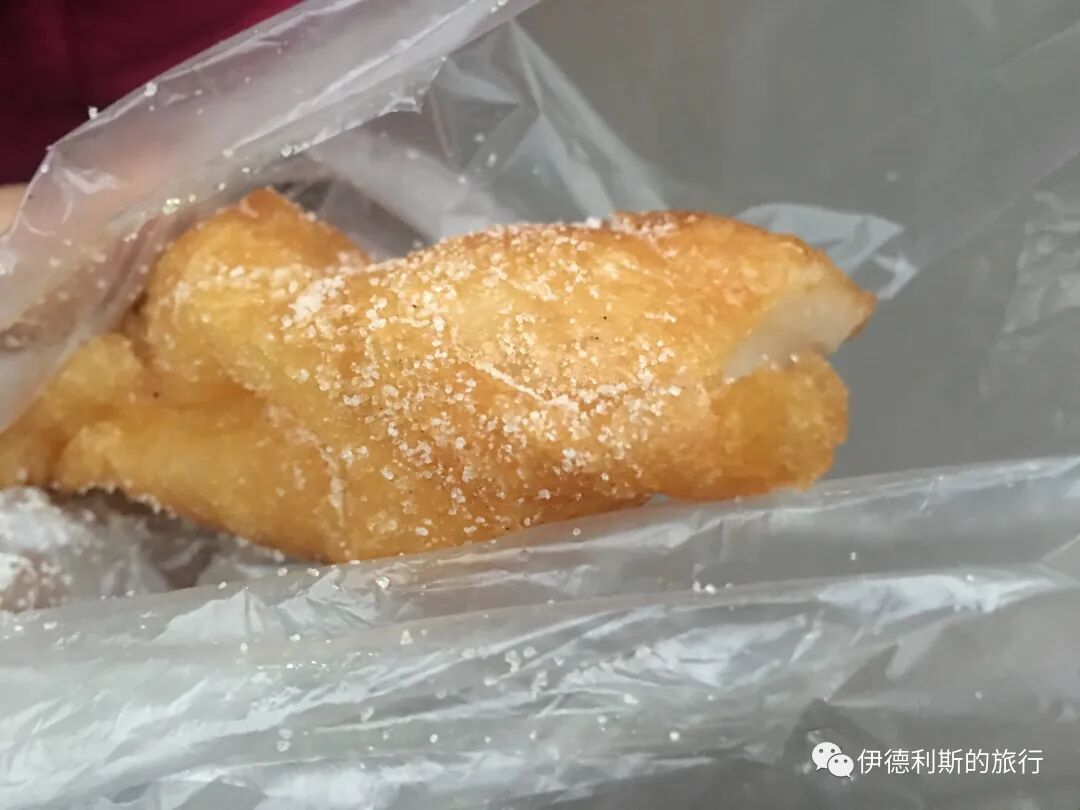
North of Jianzi Lane, in a small alley between Wangu Yiren Road and Qianqiuqiao Street, is Yang Dahai Steamed Bun Shop. They specialize in leavened dough buns, which are different from the unleavened ones common around here. We had shrimp and sticky rice buns, beef wontons, and dried tofu noodles. Everything had a slightly sweet taste, and the noodle soup was very Jiangnan. It only cost us thirteen yuan to get full, which was quite a bargain.
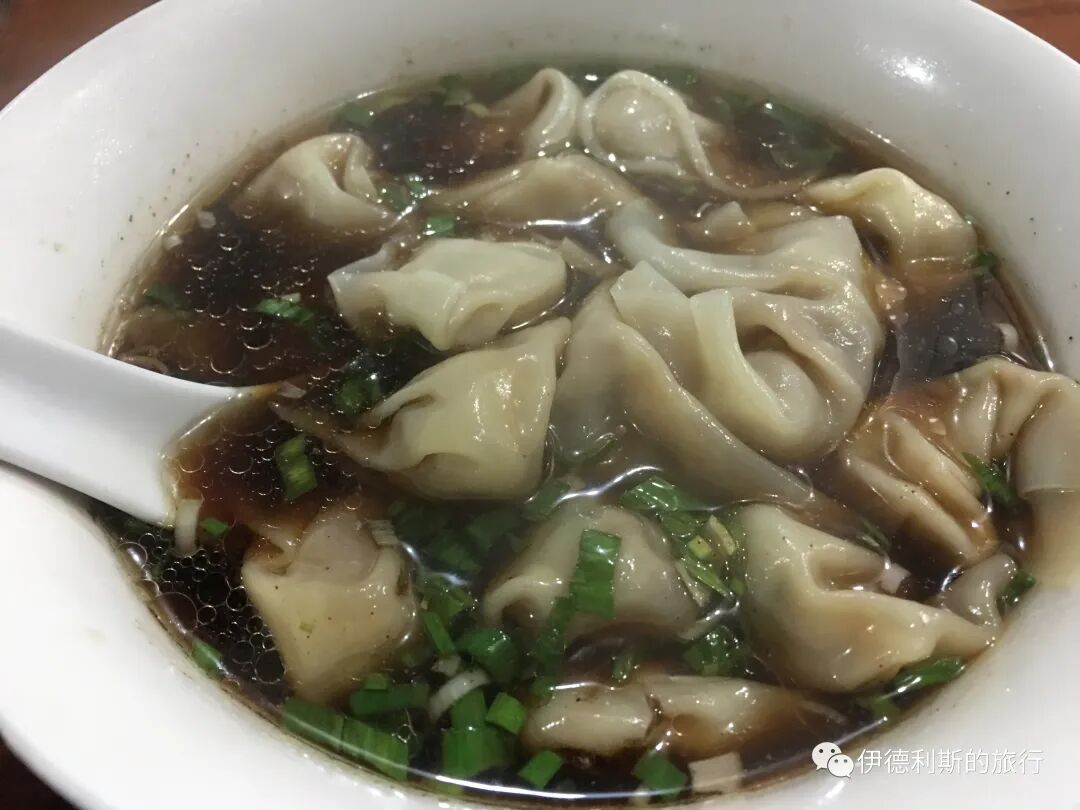
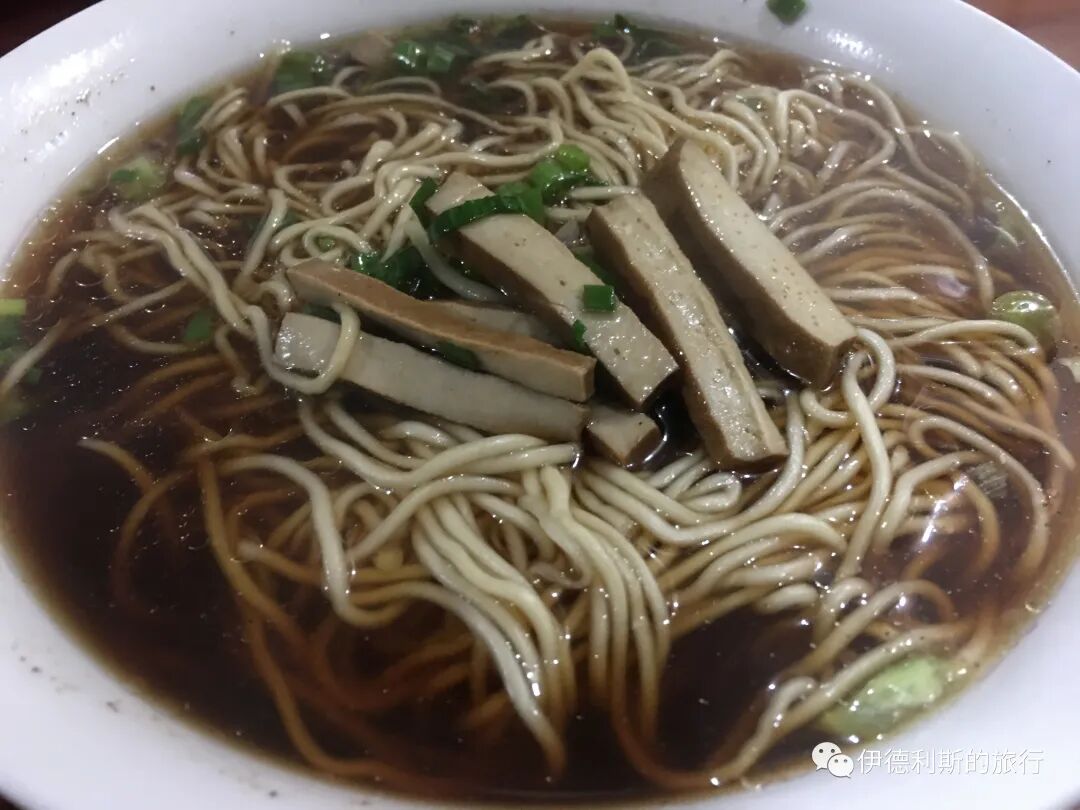
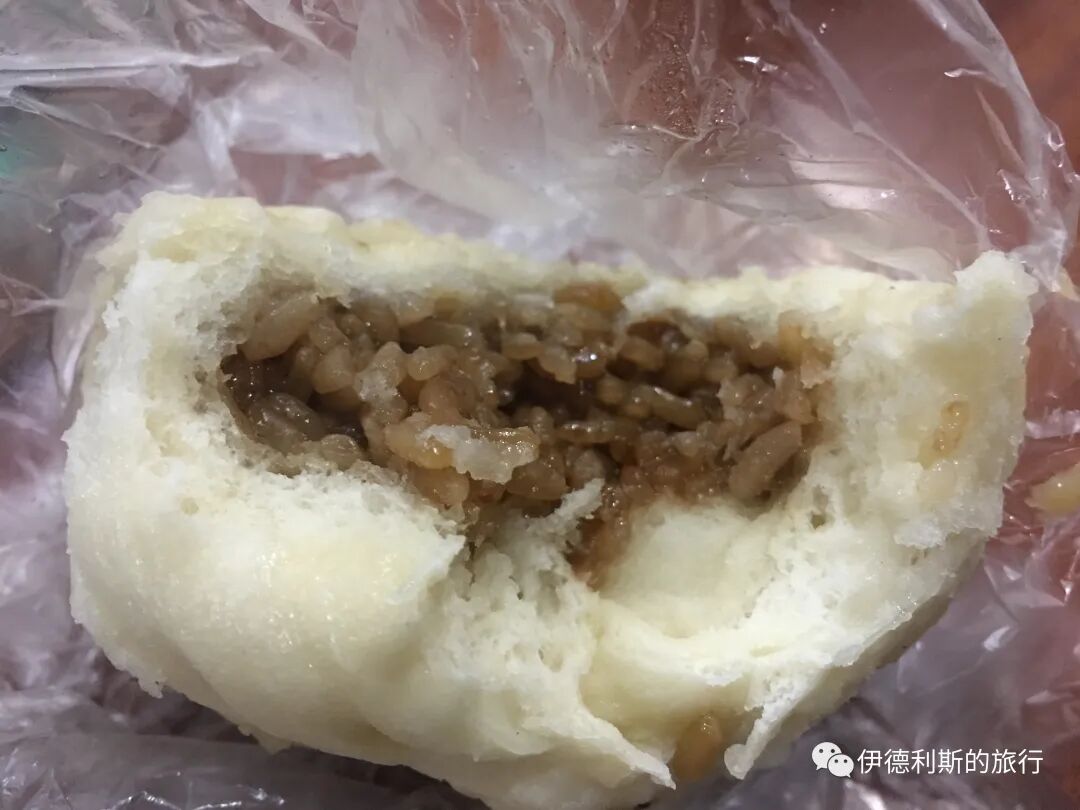
Muyuan Ethnic Restaurant
Muyuan Ethnic Restaurant is the only halal stir-fry restaurant in Zhenjiang. We ate asparagus, shredded beef with water bamboo (jiaobai), and steamed river whitefish here. The asparagus was crisp and refreshing, and the shredded beef with water bamboo went perfectly with rice. The water bamboo was sweet. The whitefish was incredibly fresh and the meat was so tender it felt like it melted in my mouth. The fish skin was also delicious.
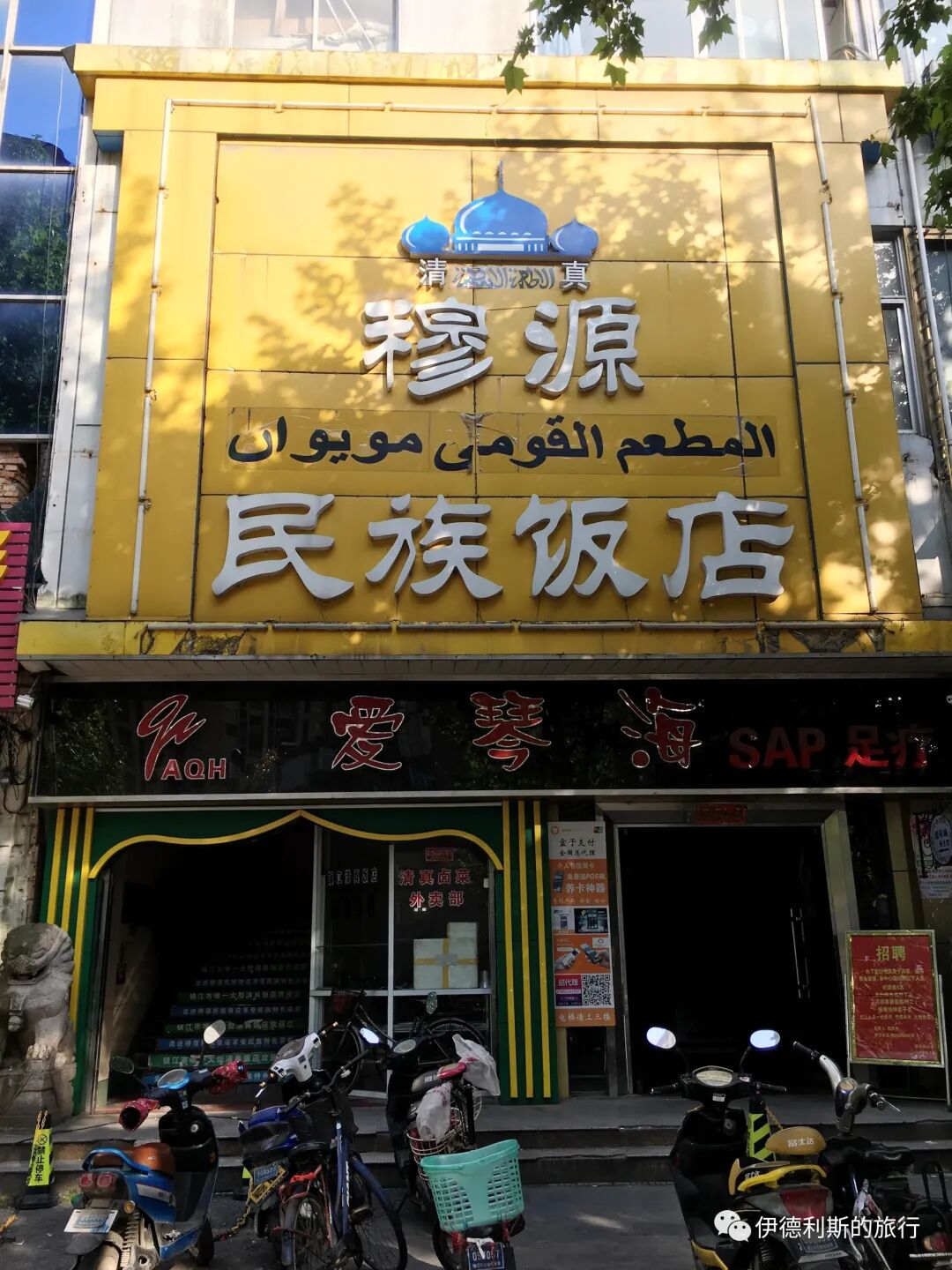
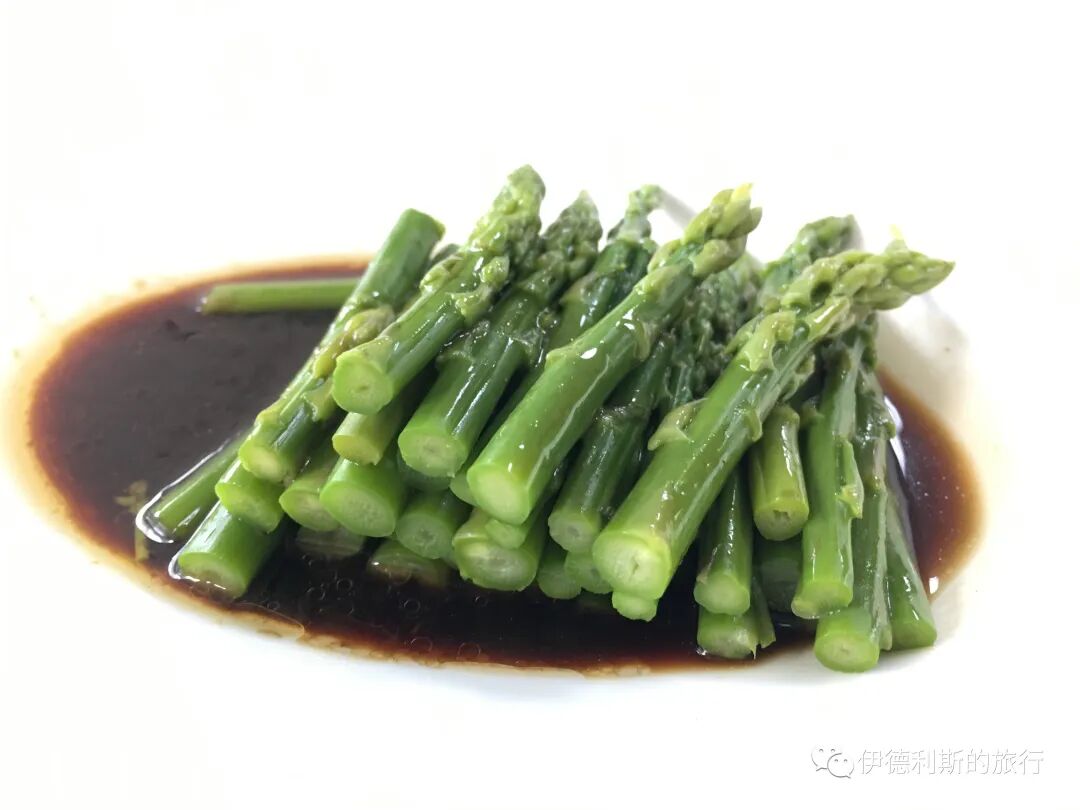
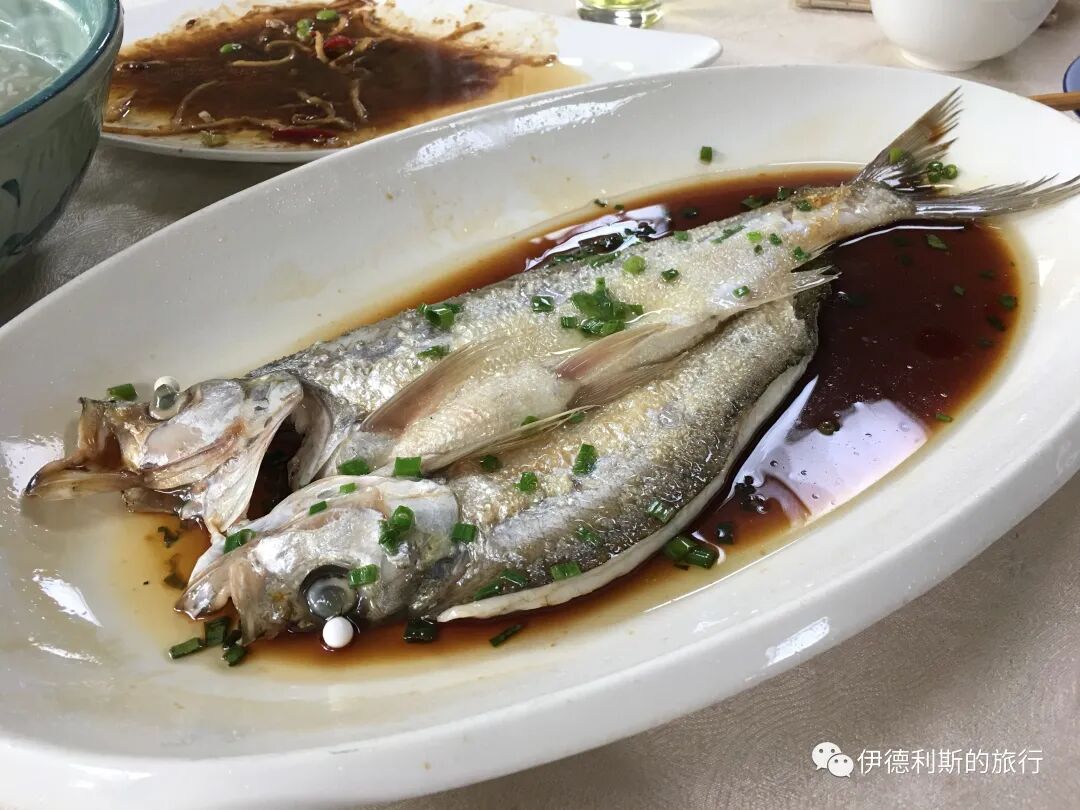
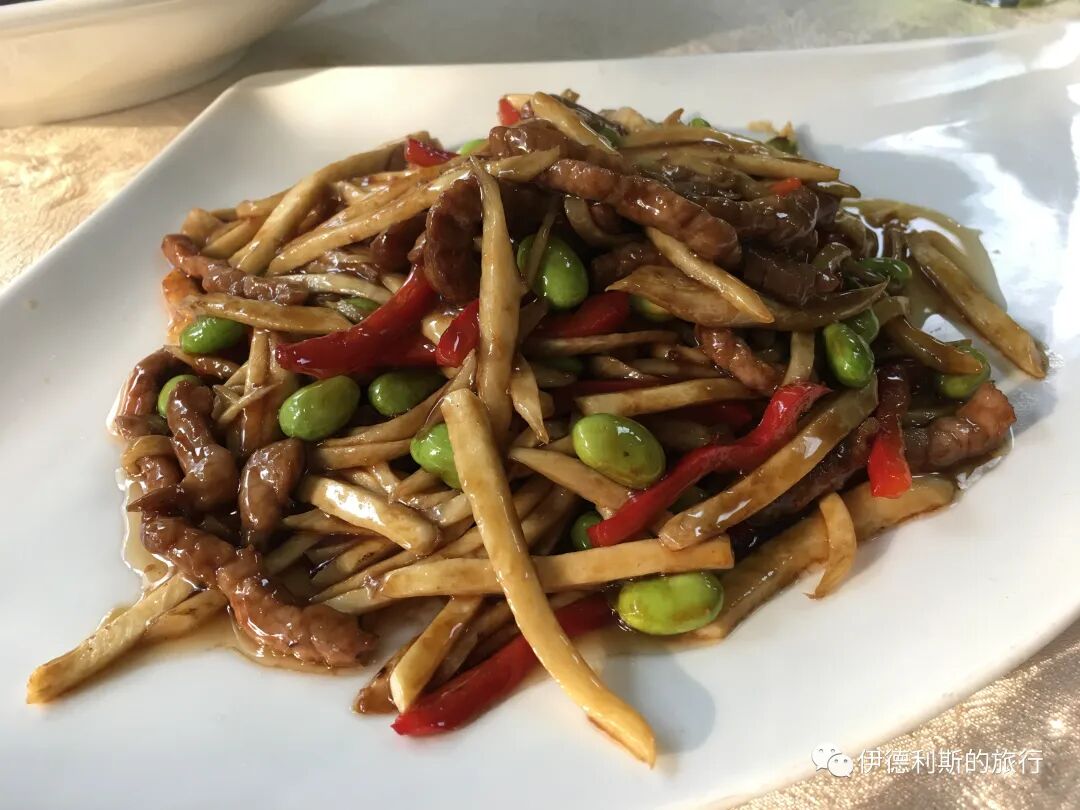
The last halal tea snack shop in Zhenjiang
While researching before going to Zhenjiang, the thing that interested me most was a report titled 'Halal Tea Snacks in Zhenjiang'.
Because of this, we specifically went to the Jiangbin food market and finally found the last halal tea snack shop in Zhenjiang, Jianxiang Halal Food Factory.
The owner, Ma Jian, was originally a worker at the Zhenjiang Pastry Factory. After being laid off in 1995, he started the Jianxiang Halal Food Factory himself and opened this current shop next to the Jiangbin food market in 2009. The owner's wife recommended their famous cloud slice cakes (yunpian gao), as well as Zhenjiang specialties like Jingjiang navel cakes (jingjiangqi) and egg crisps (jidanshu). The cloud slice cakes were so good that we finished the two boxes we bought before even returning to Beijing.
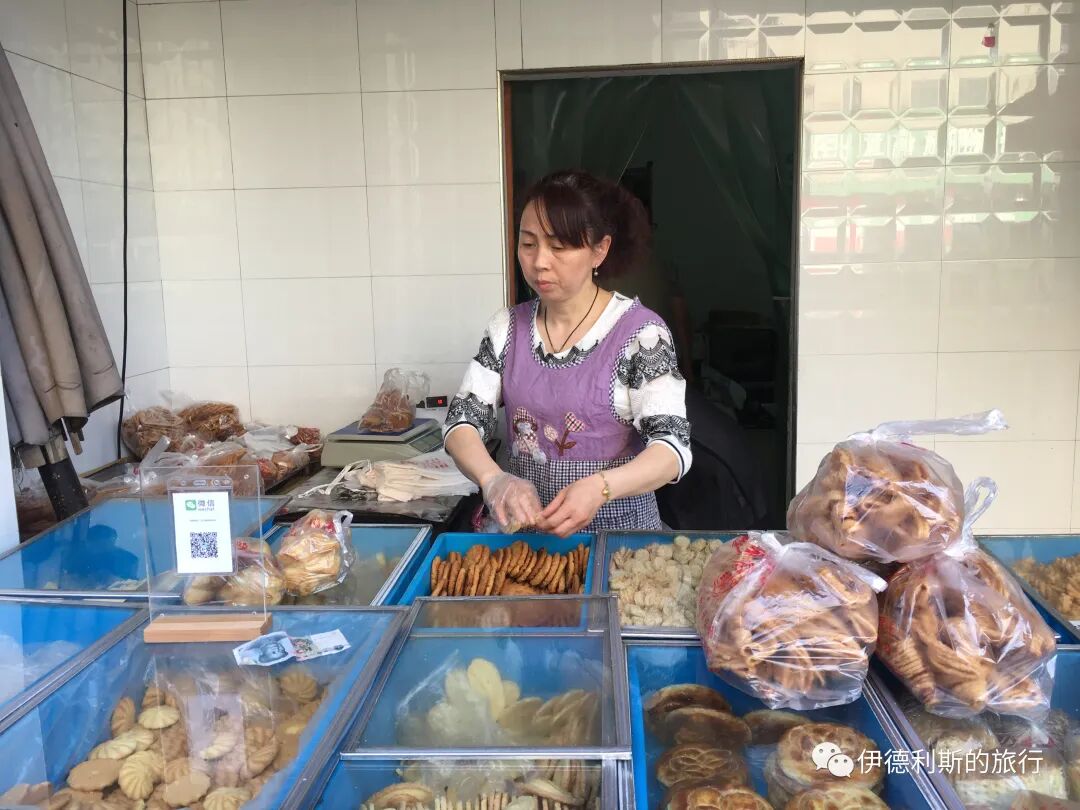
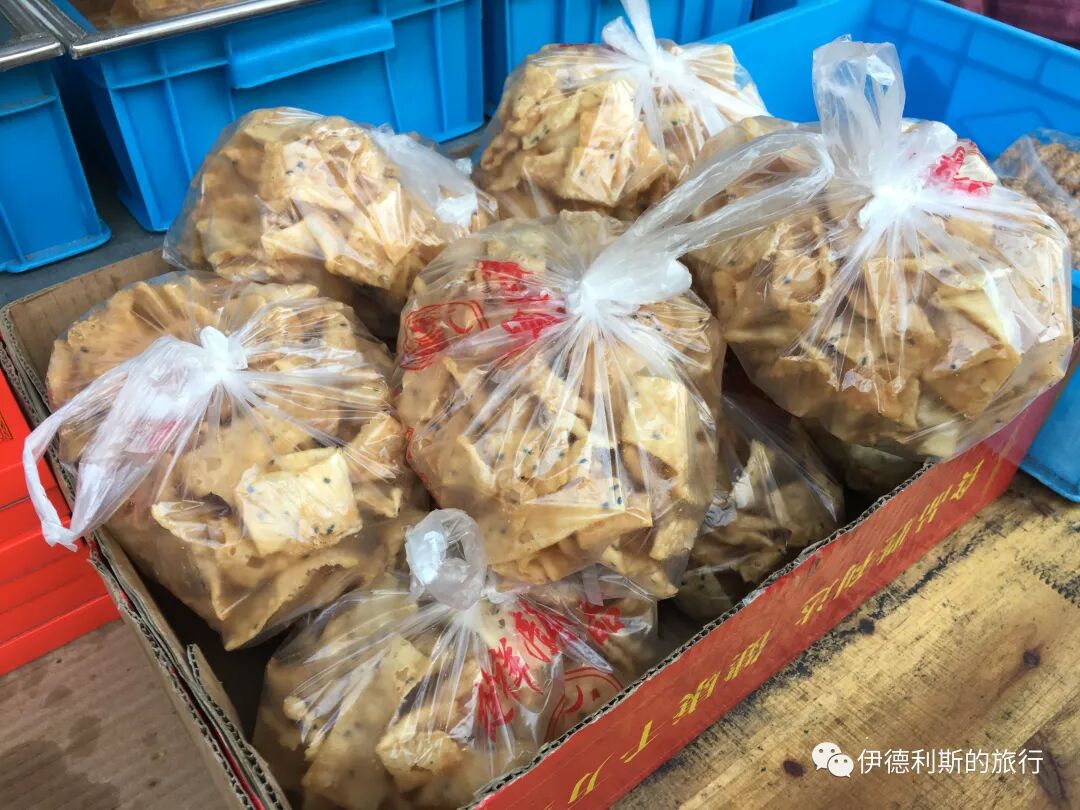
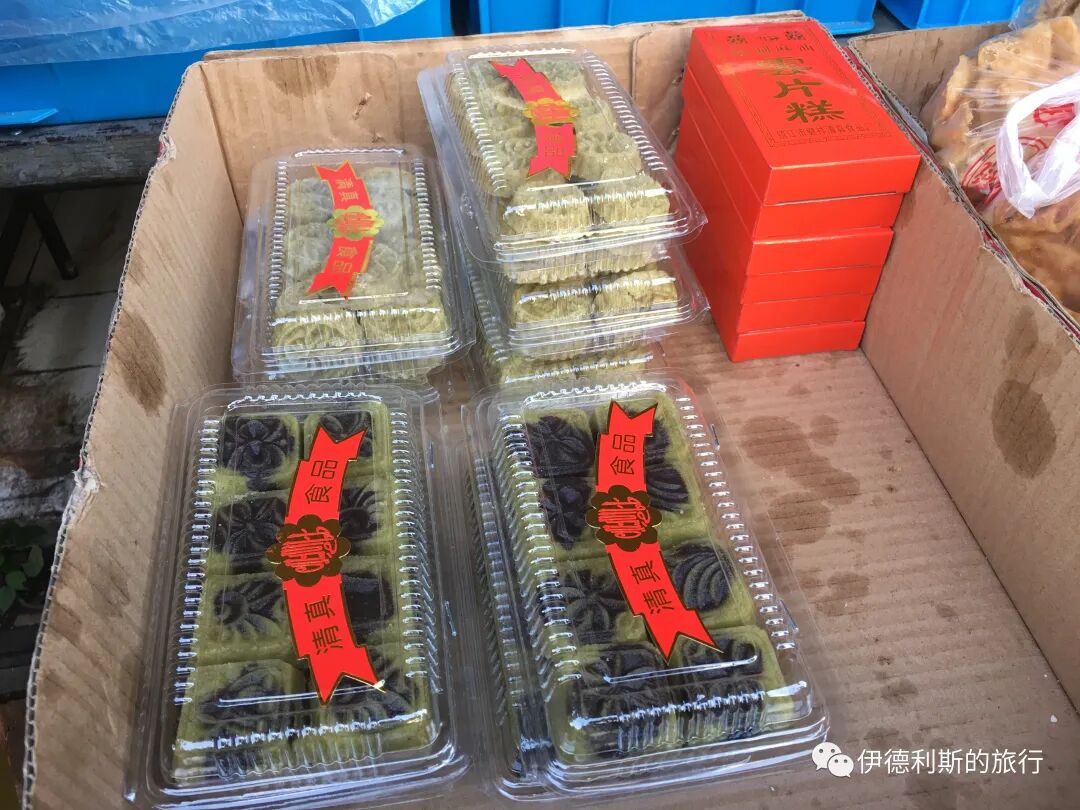
Jingjiang navel cakes are a specialty snack of Zhenjiang. The halal tea snack and pastry business in Zhenjiang was once very prosperous, with over twenty shops during its peak. In the late 1920s, there were four halal tea snack shops on Daxi Road opened by Jin Ziliang alone: Tianshengzhai, Jishengzhai, Yulinzhai, and Tianshengdong. With Yipinxiang and Jingyangzhai added to the mix, there were six halal tea snack shops within just one mile.
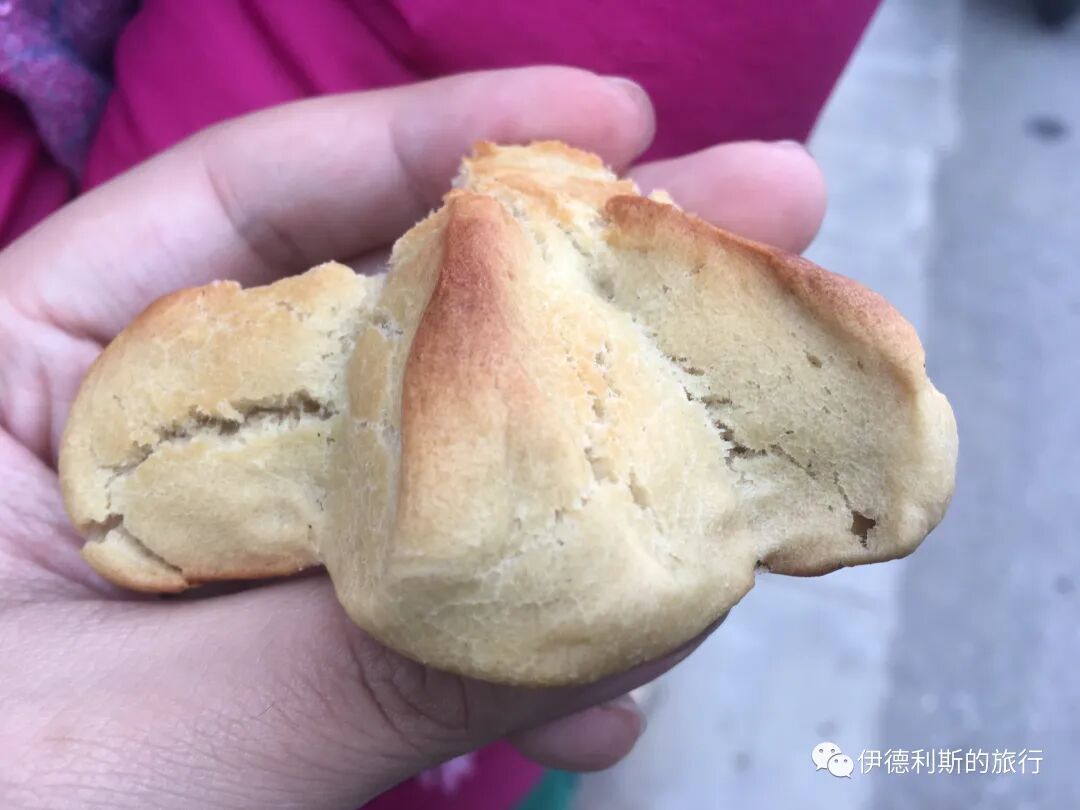
The best treat was the cloud-slice cake (yunpiangao), which you could never get enough of.
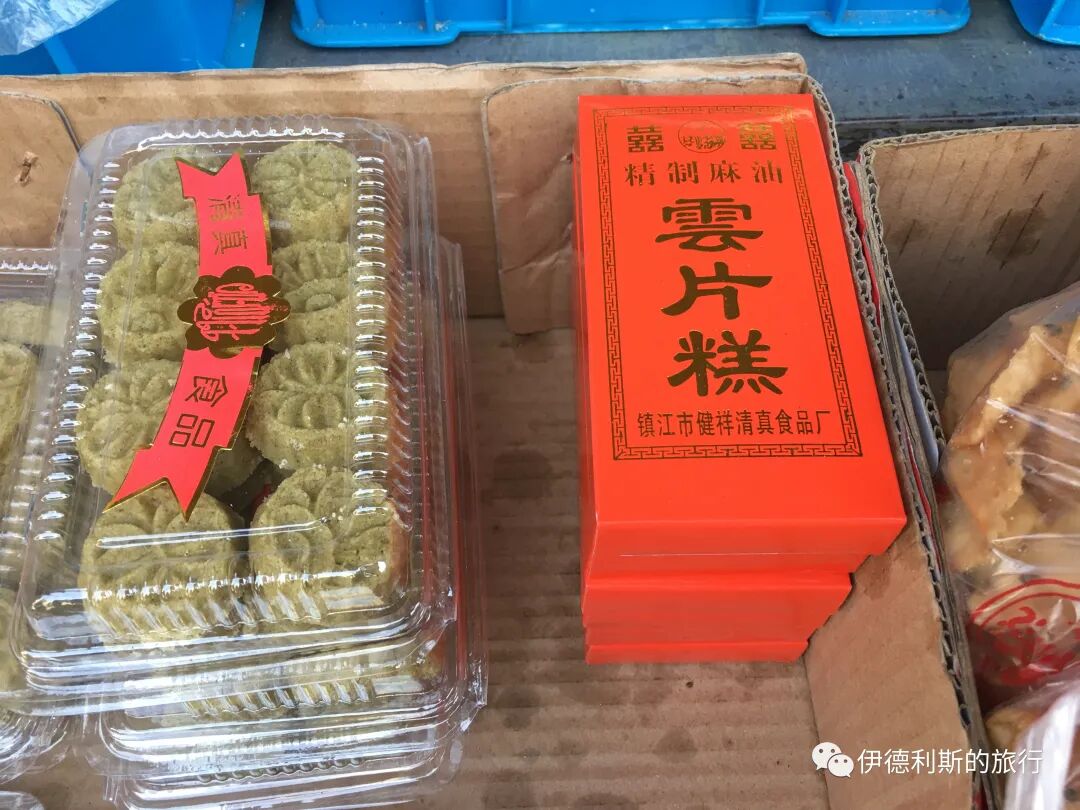
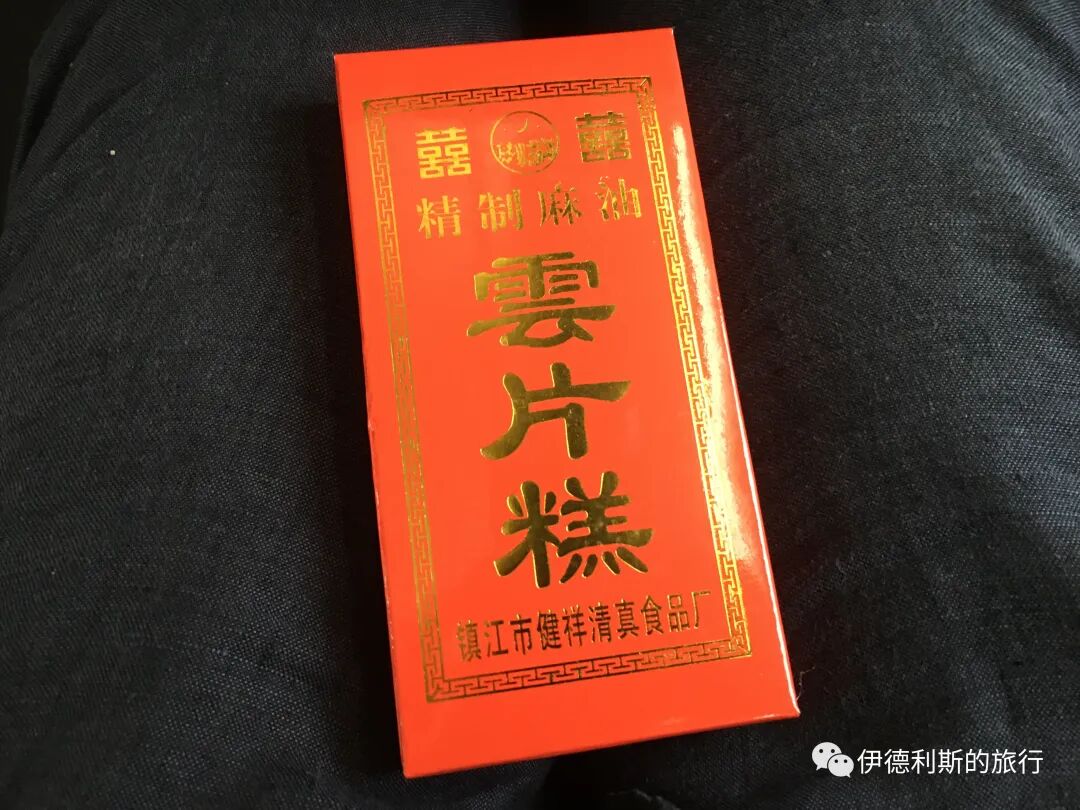
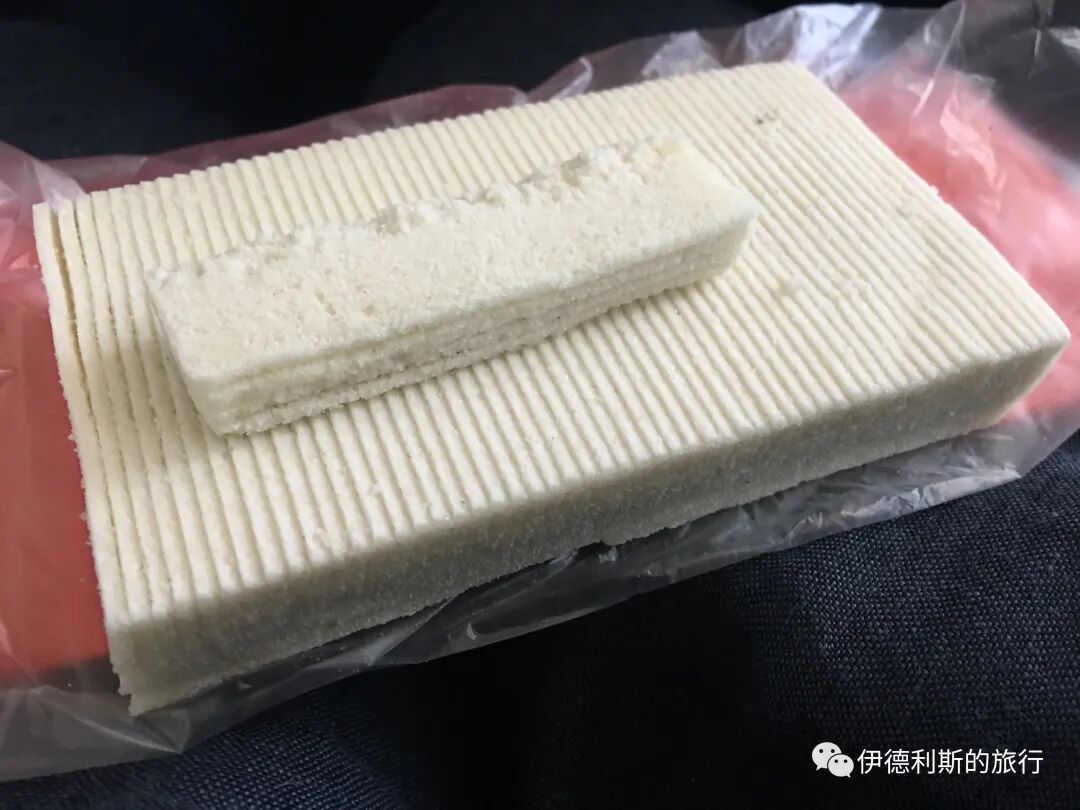
There was also delicious scorched rice (guoba).
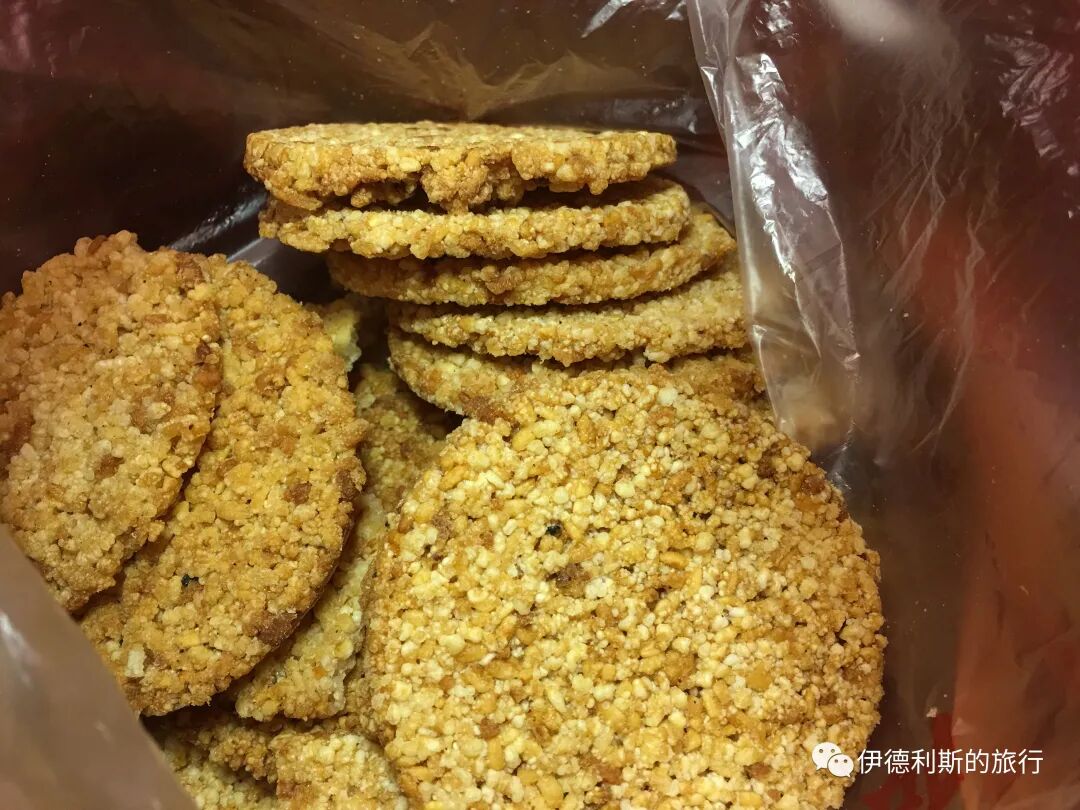 Collapse Read »
Summary: Zhenjiang — Mosques, Muslim Heritage and Jiangsu Food is presented here as a firsthand travel account in clear English, beginning with this scene: Unlike in the north, Hui Muslim communities in the Jiangnan region fell apart rapidly after the 1950s, and halal businesses declined quickly along with them. The account keeps its focus on Zhenjiang Travel, Jiangsu Mosques, Muslim Heritage while preserving the names, places, food, and historical details from the Chinese source.
Unlike in the north, Hui Muslim communities in the Jiangnan region fell apart rapidly after the 1950s, and halal businesses declined quickly along with them. Today, Zhenjiang is one of the few cities left in Jiangnan that still has a number of local halal restaurants. I visited Zhenjiang twice to explore the food on New Year's Day and May 14, 2017. Here are my impressions of the halal scene in Zhenjiang.
Some of the information in this article about halal life in Zhenjiang comes from the posthumous work, History of Islam in Zhenjiang, Jiangsu, by Mr. Xia Rongguang. Mr. Xia was born on South Gate Street in Zhenjiang in 1909. He became the leader of the Shanxiang Mosque in 1938 and managed the work at the Xinhe Street Mosque, making him an eyewitness to Islam in Zhenjiang during the Republic of China era. Mr. Xia began organizing historical materials on Islam in Zhenjiang in the 1980s. In 1998, while on his way to submit the manuscript for this book, he passed away at the age of ninety. Through Mr. Xia's book, we can learn about the past stories of the Hui Muslims in Zhenjiang.
Where the ancient canal meets the Yangtze River.
This food tour starts with an abandoned Song Dynasty canal and an old Qing Dynasty street that is currently being demolished.
I stayed by the banks of the Yangtze River in Zhenjiang, where the river surface was hidden in the morning mist as far as the eye could see. However, there were no ships on the water because the main channel of the Yangtze had already shifted north, and this area was no longer the main river.
The scene described in the poem, Jingkou and Guazhou are separated by a single stretch of water, began to change during the middle and late Qing Dynasty. Toward the end of the Kangxi reign, the south bank of the Yangtze between Zhenjiang and Guazhou began to silt up while the north bank collapsed, causing the river to shift steadily northward. River beaches and sandbars slowly but irreversibly appeared on the Zhenjiang side, while the Guazhou riverbank on the north side kept collapsing. Finally, in 1895 (the 21st year of the Guangxu reign), the entire ancient city of Guazhou collapsed into the river, and its former bustling streets and famous gardens were all swept away by the current.
Although the riverfront at Zhenjiang was gradually surrounded by the newly formed Zhenrunzhou island, the port of Zhenjiang maintained a normal navigable depth of 4 meters until 1954. After the massive Yangtze River flood in 1954, Zhengrun Island expanded significantly, and Zhenjiang Port was blocked by sandbars, turning it into a U-shaped harbor.
After walking a short distance, you reach Xiaojingkou, the meeting point of the Grand Canal and the Yangtze River.
The original meeting point of the Grand Canal, built by Emperor Yang of Sui, was called Dajingkou. In 1029 (the seventh year of the Tiansheng era of the Song Dynasty), a new canal was dug east of the old one, and the point where this new canal met the Yangtze River was named Xiaojingkou. In 1954, workers cleared and dredged Xiaojingkou, and in 1957, they built a sluice gate. However, the water level at Xiaojingkou is usually less than 1.6 meters, and during the dry season, it drops to only 0.5 meters, meaning it can basically only handle small boats. In 1958, work began to improve the Grand Canal, and Jianbikou was designated as the meeting point between the Grand Canal and the south bank of the Yangtze River. In 1960, Jianbikou was widened and dredged, and Xiaojingkou stopped being used for shipping.
New Canal (Xinhe)
After the New Canal was dug, it gradually became an important hub for grain transport, and Xinhe Street formed along the riverbank. After Zhenjiang opened as a treaty port in 1861, Xinhe Street became even more prosperous, with all kinds of shops opening up. The Shanghai-Nanjing Railway opened in 1908, and the ferry between Zhenjiang and Liuwei started in 1923. The area along the river near the train station was very busy with travelers coming and going, and Xinhe Street, which connected to the Subei Road, reached its peak of prosperity. Until the Zhenjiang-Yangzhou ferry opened in 1978 and the old Zhenjiang train station moved, Xinhe Street gradually declined and was slowly forgotten.
The place we are talking about today is a mosque on Xinhe Street, which is also the only Ikhwan mosque in Jiangsu Province—the Xinhe Street Mosque.
The Xinhe Street Mosque was built in 1930. Hui Muslims in Zhenjiang also used to call it the "Jinde Association." It was originally a private residence purchased with donations from Muslims in both Shanghai and Zhenjiang, so it is a traditional Jiangnan-style house with three courtyards and two side wings.
The Ikhwan, also called the New Sect (Xinhang), means "brothers" in Arabic. It was founded by Ma Wanfu from Guoyuan Township in Linxia after he returned from his pilgrimage to Mecca in the late 19th century, and it was later carried on by Hu Songshan. The Ikhwan sect advocates following the scriptures and reforming customs, insisting that everything should be done according to the teachings of the Quran and Sunnah. They opposed some of the customs of the old Gedimu sect at the time, such as wearing mourning clothes and calling the adhan when moving into a new house.
The Ikhwan sect spread to the Jiangnan region in the 1920s. In 1926, Imam Ha Decheng and others started the Jindehui organization at the Xiaotaoyuan Mosque in Shanghai to promote the Ikhwani teachings. Fa Jiesan (1872-1958), a Hui Muslim from Zhenjiang who traveled to Shanghai, discussed the teachings with Imam Ha Decheng. He accepted the Ikhwani ideas and returned to Zhenjiang to practice his worship at home according to Ikhwani rituals. Later, funds were raised in both Shanghai and Zhenjiang to build an Ikhwani mosque on Xinhe Street.
After the Ikhwani sect arrived in Zhenjiang, it was generally hard for the middle-aged and elderly to accept, but many young people embraced it. At that time, the new and old sects lived in peace and practiced side by side.
The old Xinhe Street Mosque had a stone plaque above the main gate carved with the words "Mosque" (Huijiaotang), but it no longer exists today. The current building is a three-bay, three-courtyard structure with side rooms. There is a covered courtyard between the first and second sections, a garden gate connecting the second and third sections, and the third section is a two-story building.
The Zhenjiang Jindehui held dinners every Saturday night after namaz. They invited an imam to give a sermon (wa'az). Anyone who came to listen was invited to eat, and the costs were covered by members who hired the imam to perform memorial services for their ancestors.
The Jindehui also used winter and summer breaks to organize a "Hui Muslim Children's Scripture Class," and Hui Muslims from all sects sent their children there to study.
After the mosque was built, many famous imams were hired to lead the religious affairs. In 1947, the famous Li Zhenji, also known as Imam Li Si from Anhui, came to the Xinhe Street Mosque from the Luohe Mosque in Henan. According to Mr. Xia Rongguang, Imam Li Si was nearly 70 years old at the time. He had a kind and gentle face and a refined manner. When he explained the teachings, listeners of all levels could find inspiration in his words. Because of this, more and more elders from other neighborhoods came to the mosque for Jumu'ah prayers. In the autumn of 1949, Imam Li Si returned to Luohe from Zhenjiang.
In 1950, 43-year-old Imam Zhang Zhushu came to the Xinhe Street Mosque to serve as the head imam. Imam Zhang Zhushu was from Xiangfan, Hubei. Mr. Xia Rongguang remembered him as a man who was well-versed in religious teachings and had deep modern knowledge. When he taught, he connected the lessons to real life. His language was vivid and easy to understand, attracting both ordinary elders and intellectuals. Local Muslims in Zhenjiang praised him as an imam of the new era. In 1953, Imam Zhang Shuzhu left Zhenjiang after being invited to serve as the imam at the Fuyou Road Mosque in Shanghai.
After that, an elder named Tan Jizhen managed prayers and affairs at the Xinhe Street Mosque until it merged with the Shanxiang Mosque in 1958. It later became a dormitory for a forestry machinery factory and has been abandoned ever since.
Besides the mosque, there were many other important buildings on Xinhe Street. The Jingtai Guild Hall (Jingtaigongsuo) was built during the Tongzhi reign as a meeting place for merchants from Jing County and Taiping County in Anhui who were living in Zhenjiang.
The Rice Industry Guild Hall (Miyegongsuo) was the largest building on Xinhe Street and served as the trade association for the rice industry. This four-section building with a central hallway was once the only major rice market in the lower Yangtze River region, and daily market prices were set here.
Zhenjiang has seen severe and rapid destruction of its historic districts and cultural relics, and Xinhe Street could not escape this fate. In 2016, Xinhe Street faced demolition and was slated for development into a commercial street, with only a few historic buildings preserved. I returned to Zhenjiang five months later in May 2017. The north entrance of Xinhe Street was already closed, and excavators were clearing the building ruins.
Shanxiang Mosque
Leaving Xinhe Street, we headed toward Shanxiang.
We passed a halal food shop run by a Hui Muslim family named Hua. The Hua family moved to Zhenjiang from Taierzhuang, Shandong, during the Taiping Rebellion. The Taiping Rebellion caused heavy damage to Zhenjiang and a sharp drop in population. Many people from the north moved in, which is a key reason why Zhenjiang eventually shifted from a Wu-speaking area to a Jianghuai Mandarin-speaking area.
Walking further west, we arrived at Shanxiang. Shanxiang was once a famous historic street in the west of Zhenjiang, but like Xinhe Street, it was also demolished in the 21st century.
Yang Shunxing beef potstickers (guotie) are one of the last remaining street-facing shops on Shan Lane. The Yang family are the earliest recorded Hui Muslims to move to Zhenjiang. According to family records, they moved from Hongnong County, Shaanxi, to Zhenjiang in the early Song Dynasty. By the Hongwu era of the Ming Dynasty, they had reached the twenty-fifth generation, and now they are past the fiftieth generation, making them the largest branch among Zhenjiang's Hui Muslims.
Turn into the small alley nearby to reach Mosque Street. At the entrance, there are several halal fresh beef and mutton shops that are still run by the Yang family. The most famous halal noodle shop in Zhenjiang used to be the pot-lid noodle (guogaimian) shop owned by Yang Dazhang, a Hui Muslim from the Yang family. Yang Dazhang's noodle shop was on Zhonghua Road next to the Shan Lane Mosque, across from a halal beef shop run by a Hui Muslim named Jin Zhiren. Many Hui Muslims liked to buy some shredded beef and garlic from Jin Zhiren's shop after leaving the Shan Lane Mosque, then have it blanched in Yang Dazhang's noodle pot to eat with their noodles, which smelled delicious.
Continue walking south to reach the area of the Shan Lane Mosque.
The Shan Lane Mosque is also called the West City Mosque, or West Great Mosque for short. Its founding date is unknown. It was expanded during the Kangxi era, destroyed by war in 1853 (the third year of the Xianfeng era), and rebuilt in 1873 (the twelfth year of the Tongzhi era). The late Imam Tan Yuanshen, who lived to be over eighty, once said that he heard from his grandfather and the elders in the community that before the expansion in the late Kangxi era, the West City Mosque only had three thatched huts. At that time, the area around the mosque was sparsely populated and vast, with the Zhenjiang city gate tower visible to the east and Yuntai Mountain visible to the west.
After Zhenjiang opened as a treaty port, the area outside the West Gate became a bustling commercial district. In 1865, after the British established a concession by the river and the Shanghai-Nanjing Railway opened, the area outside the West Gate developed further. Hui Muslims kept coming to do business and settled around the Shan Lane Mosque.
In 1902 (the twenty-eighth year of the Guangxu era), Zhenjiang Hui Muslims raised funds to expand the Shan Lane Mosque. The current layout of the mosque dates back to this renovation.
The Shan Lane Mosque was once one of the three major bases for printing and publishing Islamic books in China. From the Qianlong to the Tongzhi eras of the Qing Dynasty, more than 20 types of Islamic philosophy and theology books in Chinese, such as the Precious Life Scripture (Baoming Zhenjing), The Heavenly Rites (Tianfang Dianli), The General Meaning of Returning to the Truth (Guizhen Zongyi), and The Origin of the Hui People (Huihui Yuanlai), were printed using woodblocks and shipped across the country by land and water. To this day, the Cultural Palace of Nationalities in Beijing, the library of Minzu University of China, and the Peking University Library all hold copies of books printed by the Zhenjiang Shan Lane Mosque.
The water room of the Shan Lane Mosque was expanded in the early years of the Republic of China. At that time, a water pump was installed in the water room, operated by two people working up and down to draw water directly from a deep well into a large boiler. The water pump was designed and installed by a Hui Muslim named Ma Chengzhang, who was known as a foreign-style coppersmith or machine smith. His pump kept the water supply running normally even when hundreds of people used it during holidays. The bottom of the boiler had brick-lined smoke tunnels, commonly called earth dragons (dilong), covered with large square floor tiles. This kept the washroom as warm as spring in winter, a rare feature for mosques across the country at that time.
During the 1960s and 1970s, the Shanxiang Mosque was severely damaged. Scriptures, woodblock prints, plaques, couplets, furniture, decorations, and all sorts of cultural relics were destroyed. Two ginkgo trees in the main hall, both over 200 years old, were cut down in 1958 to support the Great Leap Forward steel production.
After the mosque was smashed, it was occupied by outside organizations, leaving only the side gatehouse guarded by an elderly man named Ma Zhonglin. During the Cultural Revolution, the occupying units tried to force Ma Zhonglin out with various excuses, but he refused every time and spent ten difficult years there. During those ten years, all the Hui Muslims in Zhenjiang used this gatehouse to store funeral supplies, hold and prepare the deceased, and perform religious ceremonies. At that time, the imams in Zhenjiang were afraid to come out to serve grieving families. Only Ma Zhonglin would wash the bodies, lead the namaz, and go to the burial site to recite dua. He also helped the community elders by slaughtering poultry for them in the gatehouse every morning.
In 1981, Ma Zhonglin passed away. After he passed away, Tan Quanhong and Zhang Dagui took turns slaughtering poultry for the elders in the side gatehouse every morning. That same year, the occupying units began to move out, and the Shanxiang Mosque was finally recovered.
Baba is a transliteration of a Persian word and is a respectful term Hui Muslims use for elders. It can also be written as baba, and in the Beijing area, it is pronounced as bǎ ba.
The Vanished Jianzi Lane Mosque
The Jianzi Lane Mosque was originally called the Gurun Mosque. It was first built on Fumin Street in Ren'an Ward and was a mosque in Zhenjiang during the Yuan Dynasty. According to the 1333 (the fourth year of the Zhishun reign of the Yuan Dynasty) Records of Zhishun Zhenjiang, there were 59 Hui Muslim households with 374 people in Zhenjiang during the Yuan Dynasty. The famous Yuan Dynasty Hui Muslim poet Sa Dula served as a darughachi (a seal-holding administrator) for the Zhenjiang Circuit for three years starting in 1328 (the first year of the Tianli reign). According to the Guangxu edition of the Dantu County Gazetteer, Sa Dula did many good deeds in Zhenjiang, such as stabilizing prices, opening granaries to help the people, curbing powerful servants, and breaking down superstitions. In 1326, a Hui Muslim scholar named Jamal al-Din, who had passed the provincial civil service exams, served as a professor at the Zhenjiang Road Confucian School. This was the highest educational position at the time.
The ancient Gurun Mosque was destroyed between the end of the Yuan Dynasty and the beginning of the Ming Dynasty. It was rebuilt during the Hongwu reign of the Ming Dynasty and moved to Jianzi Lane inside the city in 1602. From then on, it was called the Jianzi Lane Mosque. It was renovated three times in 1850, 1904, and 1909.
In 1958, a knitting factory and a color printing factory took over the Jianzi Lane Mosque. Between the 1970s and the early 1980s, the printing factory demolished the main prayer hall, the assembly hall, and the ablution room to build factory buildings. The stone tablet titled Record of the Gurun Mosque, written in 1620 by the scholar Li Yiyang, was used to mix cement, which ruined the inscriptions. The calligraphy on the Wanli-era renovation tablet was written by Ma Zhiqi, a Hui Muslim from Xinye, Henan. Ma Zhiqi was the runner-up in the 1610 imperial examinations and was skilled in poetry and calligraphy. Between the Wanli and Chongzhen reigns, he wrote renovation records for the Xiaopiyuan Mosque in Xi'an, Shaanxi, the Datong Mosque in Shanxi, the Jinshifang Street Mosque in Beijing, and the Chengguan Mosque in Wudu, Gansu. In 1982, the Zhenjiang Islamic Association repaired the stone tablet and moved it to the Shanxiang Mosque, where it was finally preserved.
The printing factory occupying the mosque did not leave until 1993. In 1994, the Islamic Association regained ownership of the Jianzi Lane Mosque. In 2005, when Zhenjiang built the First Building commercial pedestrian street, the Jianzi Lane Mosque was completely demolished. A new Gurun Mosque was built on Xuefu Road. The Wanli-era renovation tablet, an ancient well railing, and three Qing Dynasty renovation tablets from the original Jianzi Lane Mosque were placed in the courtyard for safekeeping.
to the relics from the Jianzi Lane Mosque, the Gurun Mosque also houses the mihrab tablet from the kiln hall of the mosque outside the South Gate of Zhenjiang.
The mosque outside the South Gate of Zhenjiang was located at the east end of Miaojia Lane. It is believed to have been built in the early Qing Dynasty and was an east-facing courtyard house. Across from the mosque gate stood a row of tall elm trees that provided dense shade. The prayer hall and the opposite hall both had three bays. Tall ginkgo trees stood on both sides in front of the hall. To the south were guest rooms, and to the north were the ablution room, kitchen, and storage room.
In the early 20th century, the imam of the South Gate Mosque was an imam named Ma from Henan. In the early 1920s, he was hired by Muslims in Shou County, Anhui, and Imam Wan Shourong succeeded him as the leader of the South Gate Mosque. Daily affairs at the mosque were managed by Jin Zhiguang from the Xinchangheng fabric store and Xia Songfu, the father of Xia Rongguang. During the Republic of China era, the firewood and rice market outside the South Gate was very busy, and more than 50 Hui Muslim families lived there.
In 1937, the South Gate Mosque was destroyed by war. The mihrab tablet from the kiln hall was kept in the home of Hua Baoren next to the mosque until it was moved to the Gurun Mosque in 2005.
The lotus-shaped Arabic script on the stone tablet is the Basmala (tasimi). The middle section contains verse 163 of the Cow Chapter (Surah Al-Baqarah), and the diamond-shaped carving at the bottom is in Arabic Kufic calligraphy, which reads: Prostrate yourselves and worship your Lord.
Besides the previously mentioned Xinhe Street Mosque, Shanxiang Mosque, Jianzi Lane Mosque, and the mosque outside the South Gate, Zhenjiang once had another mosque called Paiwan Mosque, built by Hui Muslims from Shou County, Anhui, at Niupipo. The founder of Paiwan Mosque was Zhu Huaisen, a famous Hui Muslim military officer from Shou County.
Zhu Huaisen practiced martial arts from childhood. After joining the army, he fought against the Taiping Rebellion and the Nian Rebellion in the Jianghuai region. He was very brave and often fought while wounded. During the siege of Luzhou (Hefei), he was the first to climb the city wall. He also participated in the recapture of Wuwei Prefecture, Dongguankou, Chao County, Quanjiao, and Chuzhou, earning him the title of Shangyong Baturu. After the Taiping Rebellion failed, Zhu Huaisen was transferred to Jinling (Nanjing) in 1869 (the eighth year of the Tongzhi reign) to command the new troops of the Governor's Guard. In 1876 (the second year of the Guangxu reign), Zhu Huaisen was promoted to Commander-in-Chief (zongbing) of the Huaiyang Town in Jiangnan, and in 1882 (the eighth year of the Guangxu reign), he became the Commander-in-Chief of the Jiujiang Town in Jiangxi.
The front hall and back prayer hall of Paiwan Mosque both had three rooms. The inner room of the north wing was the ablution room (shuifang), and the outer room was for funeral services. The main gate was on the south side, and a stone plaque with the words "Qingzhen" (meaning halal or pure) was embedded in the gate wall. Usually, the imam of Paiwan Mosque stayed at Shanxiang Mosque and only went to Paiwan Mosque to lead the prayer on Fridays (Jumu'ah). When something came up, the mosque administrators would go to Shanxiang Mosque to invite them, so Paiwan Mosque was also called the Small Mosque.
During the Qing Dynasty and the Republic of China, Hui Muslims from Shou County in Zhenjiang mainly worked in the salt industry, with surnames including Tao, Bian, Shan, Zhao, and Zhu. After 1953, private salt merchants disappeared, and most of the Shou County Hui Muslims returned to their hometowns, while a few changed jobs to farming or labor. The population decreased significantly, so after the 1950s, Paiwan Mosque merged with Shanxiang Mosque. The mosque building was converted into a residence and was occupied by the family of the last imam, Yang Dezhen.
Although Jianzi Lane Mosque has disappeared, the Hui Muslims who once lived around the mosque have not. There are still the most halal restaurants in Zhenjiang around Jianzi Lane, and I will introduce them to you one by one below.
Yong'an Road Snack Street
Yong'an Road is not far south of Jianzi Lane. The street is lively and full of snacks, and there are five halal restaurants.
Hualiji is a family of halal butchers in Zhenjiang. They have passed down their trade for six generations since the Daoguang reign, and they moved from the Zhenjiang Mosque to Yong'an Road in 2002. I ate beef tripe vermicelli soup and beef noodles at Hualiji. The soup was slightly sweet and very refreshing, the tripe was especially chewy, and the chili was very satisfying. In short, the taste is very different from northern halal food and has its own unique style.
Besides the best-tasting Huali Ji, I also had beef offal vermicelli soup at Yangji Yellow Beef. The offal includes beef, beef tendon, and beef tripe. It still has that typical Jiangnan slightly sweet taste. The tendon and tripe were super delicious, but the beef was a bit like the style at Yueshengzhai and not quite as good.
I had snow dumplings (xuejiao) at Bianji Snacks. Eating fried food always makes me happy.
North of Jianzi Lane, in a small alley between Wangu Yiren Road and Qianqiuqiao Street, is Yang Dahai Steamed Bun Shop. They specialize in leavened dough buns, which are different from the unleavened ones common around here. We had shrimp and sticky rice buns, beef wontons, and dried tofu noodles. Everything had a slightly sweet taste, and the noodle soup was very Jiangnan. It only cost us thirteen yuan to get full, which was quite a bargain.
Muyuan Ethnic Restaurant
Muyuan Ethnic Restaurant is the only halal stir-fry restaurant in Zhenjiang. We ate asparagus, shredded beef with water bamboo (jiaobai), and steamed river whitefish here. The asparagus was crisp and refreshing, and the shredded beef with water bamboo went perfectly with rice. The water bamboo was sweet. The whitefish was incredibly fresh and the meat was so tender it felt like it melted in my mouth. The fish skin was also delicious.
The last halal tea snack shop in Zhenjiang
While researching before going to Zhenjiang, the thing that interested me most was a report titled 'Halal Tea Snacks in Zhenjiang'.
Because of this, we specifically went to the Jiangbin food market and finally found the last halal tea snack shop in Zhenjiang, Jianxiang Halal Food Factory.
The owner, Ma Jian, was originally a worker at the Zhenjiang Pastry Factory. After being laid off in 1995, he started the Jianxiang Halal Food Factory himself and opened this current shop next to the Jiangbin food market in 2009. The owner's wife recommended their famous cloud slice cakes (yunpian gao), as well as Zhenjiang specialties like Jingjiang navel cakes (jingjiangqi) and egg crisps (jidanshu). The cloud slice cakes were so good that we finished the two boxes we bought before even returning to Beijing.
Jingjiang navel cakes are a specialty snack of Zhenjiang. The halal tea snack and pastry business in Zhenjiang was once very prosperous, with over twenty shops during its peak. In the late 1920s, there were four halal tea snack shops on Daxi Road opened by Jin Ziliang alone: Tianshengzhai, Jishengzhai, Yulinzhai, and Tianshengdong. With Yipinxiang and Jingyangzhai added to the mix, there were six halal tea snack shops within just one mile.
The best treat was the cloud-slice cake (yunpiangao), which you could never get enough of.
There was also delicious scorched rice (guoba).
Collapse Read »
Halal Travel Guide: Yangzhou — Mosques, Muslim History and Jiangsu Streets
Reposted from the web
Summary: Yangzhou — Mosques, Muslim History and Jiangsu Streets is presented here as a firsthand travel account in clear English, beginning with this scene: I visited Yangzhou for food and sightseeing on New Year's Day in 2017. Some of the information in this article is compiled from the book Islam in Yangzhou, published by Nanjing University Press. The account keeps its focus on Yangzhou Travel, Jiangsu Mosques, Muslim Heritage while preserving the names, places, food, and historical details from the Chinese source.
I visited Yangzhou for food and sightseeing on New Year's Day in 2017. Some of the information in this article is compiled from the book Islam in Yangzhou, published by Nanjing University Press.
Since the Tang Dynasty, Yangzhou has been a major commercial hub in the southeast, attracting many merchants from Arabia and Persia.
The Extensive Records of the Taiping Era (Taiping Guangji) contains many stories about foreign merchants in Yangzhou. While most are quite exotic, they provide a vivid picture of Persian merchants in the city at that time. The entry for Wei Yan says that around 727, he obtained a precious jade. While passing through Guangling (Yangzhou), he met a foreign merchant who told him, 'This jade is a treasure of the pure ones (qingzhen ren), unseen by anyone for ten thousand years, and the finest treasure in the world.' The merchant bought it for hundreds of thousands in gold, making Wei Yan rich overnight. The story of the two students Lu and Li says that a student named Li owed the government 20,000 strings of cash. He met his uncle Lu in Yangzhou, who gave him a walking stick and told him to take it to a Persian shop to get money. The Persians accepted the walking stick and gave Li the money. This story shows that Persians in Yangzhou at the time operated shops (didian) that stored money and goods.
In 761, the Liu Zhan Rebellion occurred in Yangzhou. The Old Book of Tang, Biography of Deng Jingshan, records that the rebels reached Yangzhou and looted the assets of the people and merchants, whipping and digging up everything. Thousands of Arab and Persian merchants died. This shows that before 761, there were at least several thousand Arab and Persian merchants in Yangzhou.
During the wars at the end of the Tang Dynasty and the Five Dynasties period, Yangzhou was heavily damaged, and most of the original foreign merchants scattered. After the Song Dynasty, the descendants of those foreign merchants gradually transitioned from expatriates to locals, and the history of Hui Muslims in Yangzhou entered a new era.
Yangzhou's most famous Crane Mosque (Xianhe Si) and the Hui Muslim Hall (Puhading Tomb) were both built during the transition between the Song and Yuan dynasties. During the Xianchun period of the Southern Song Dynasty (1265-1274), Puhading, said to be the 16th-generation descendant of the Prophet, came to Yangzhou and built the Crane Mosque. He passed away in 1275, the year before the Yuan Dynasty captured Lin'an, and was buried on a high ridge east of the Dongguan River in the new city, which is now the Puhading Tomb.
The Song Dynasty established an official guesthouse at the south gate of Yangzhou, and the area outside the south gate developed into a new settlement for Muslim merchants. During the Song Dynasty, Muslims built a mosque not far from the south gate of Yangzhou. The main hall was not demolished until 1984, and there is a Song and Yuan dynasty Muslim cemetery near the mosque.
In 1357, when Zhu Yuanzhang captured Yangzhou, these Muslim tombstones were built into the South Gate military defense tower. Between 1924 and 1925, when the South Gate military defense tower in Yangzhou was demolished, four Yuan Dynasty Muslim stone tablets were found in the city foundation. Three of them were primarily in Arabic with some Persian place names, and the front of the fourth one was written in regular script Chinese characters.
The place where Yuan Dynasty Arabic tombstones are kept at the Puhading Cemetery.
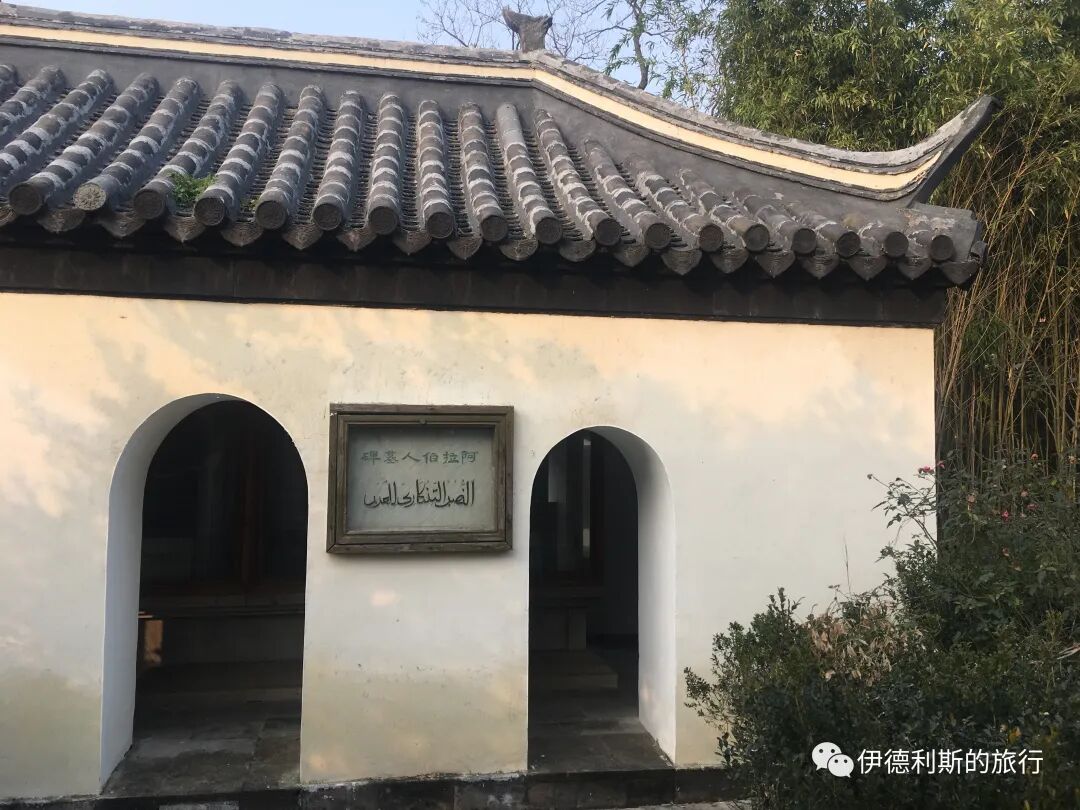
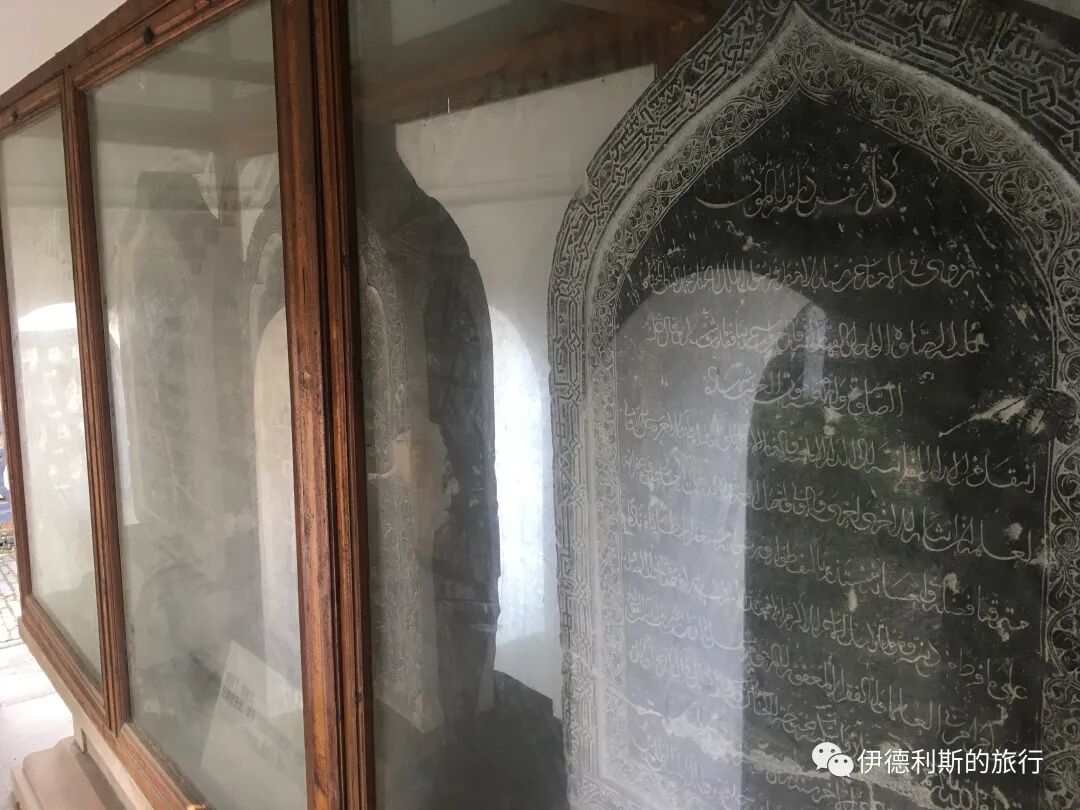
In the Arabic text of the four tombstones, the first section of each is the Basmala, and the remaining sections mostly come from the Quran and Hadith. Each tombstone is inscribed with the Hadith, 'Death in a foreign land is martyrdom.'
A replica of an Arab tombstone at the Yangzhou Museum.
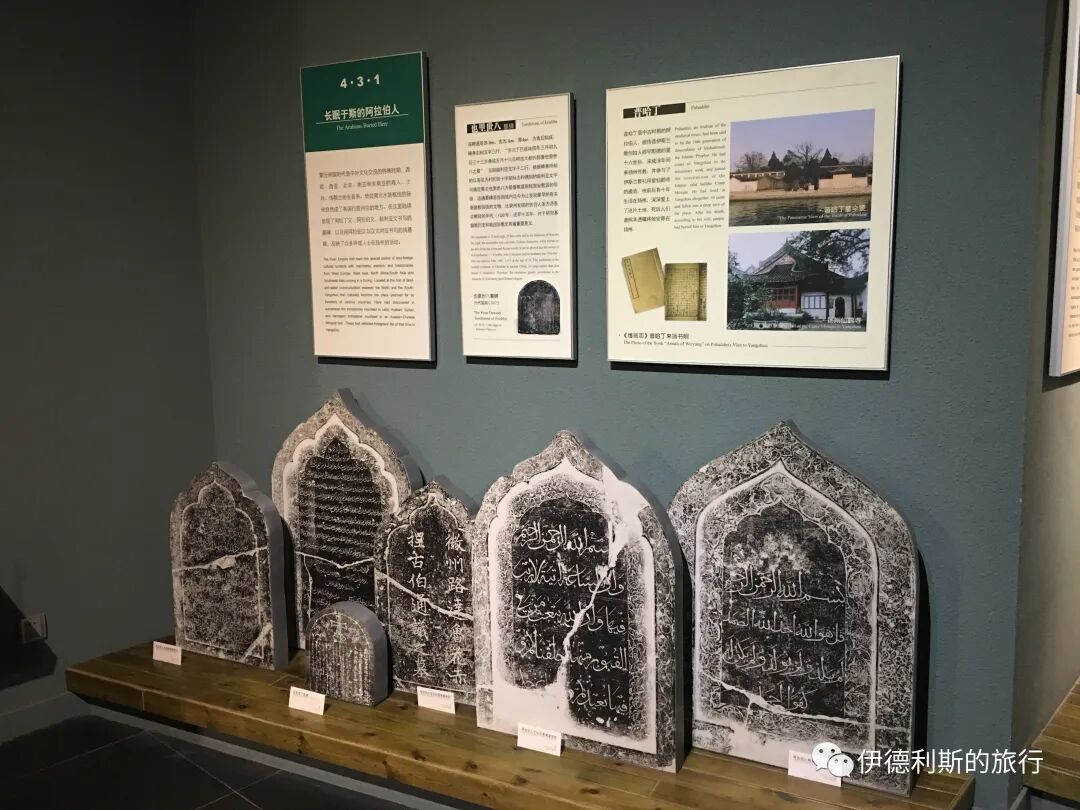
Between 1934 and 1935, the missionary Claude L. Pickens photographed the four stone tablets. At that time, they were at the tomb of the sages near the now-vanished Xianhe Mosque.
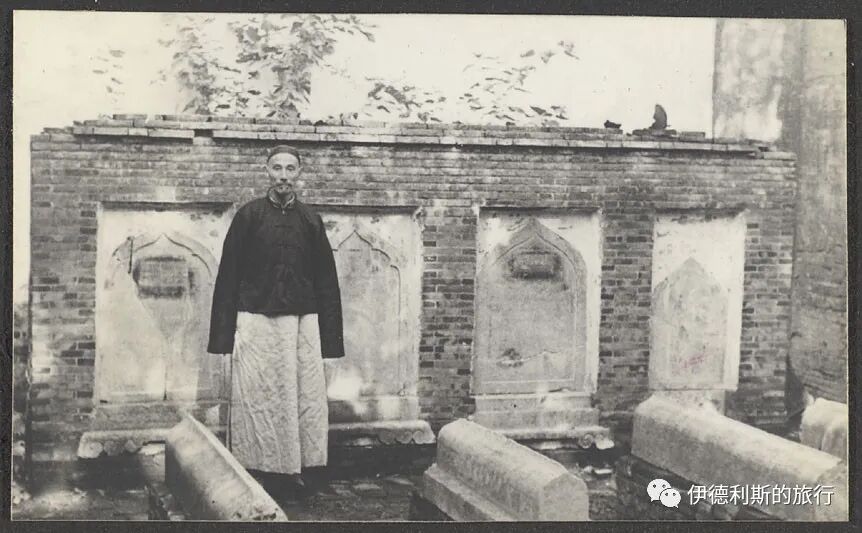
The front of the Chinese tombstone is inscribed with, 'Tomb of Nie Gubo, the Darughachi of Huizhou Circuit and Grand Master of Thorough Discussion.' Darughachi originally meant 'seal holder.' After the Yuan Dynasty was established, a Darughachi was appointed to local government offices at the circuit, prefecture, department, and county levels to hold real power over local administration and military affairs. Huizhou Circuit was a top-tier circuit, and the rank of its Darughachi was third grade. Tongyi is short for 'Grand Master of Thorough Discussion,' which is also a third-grade rank.
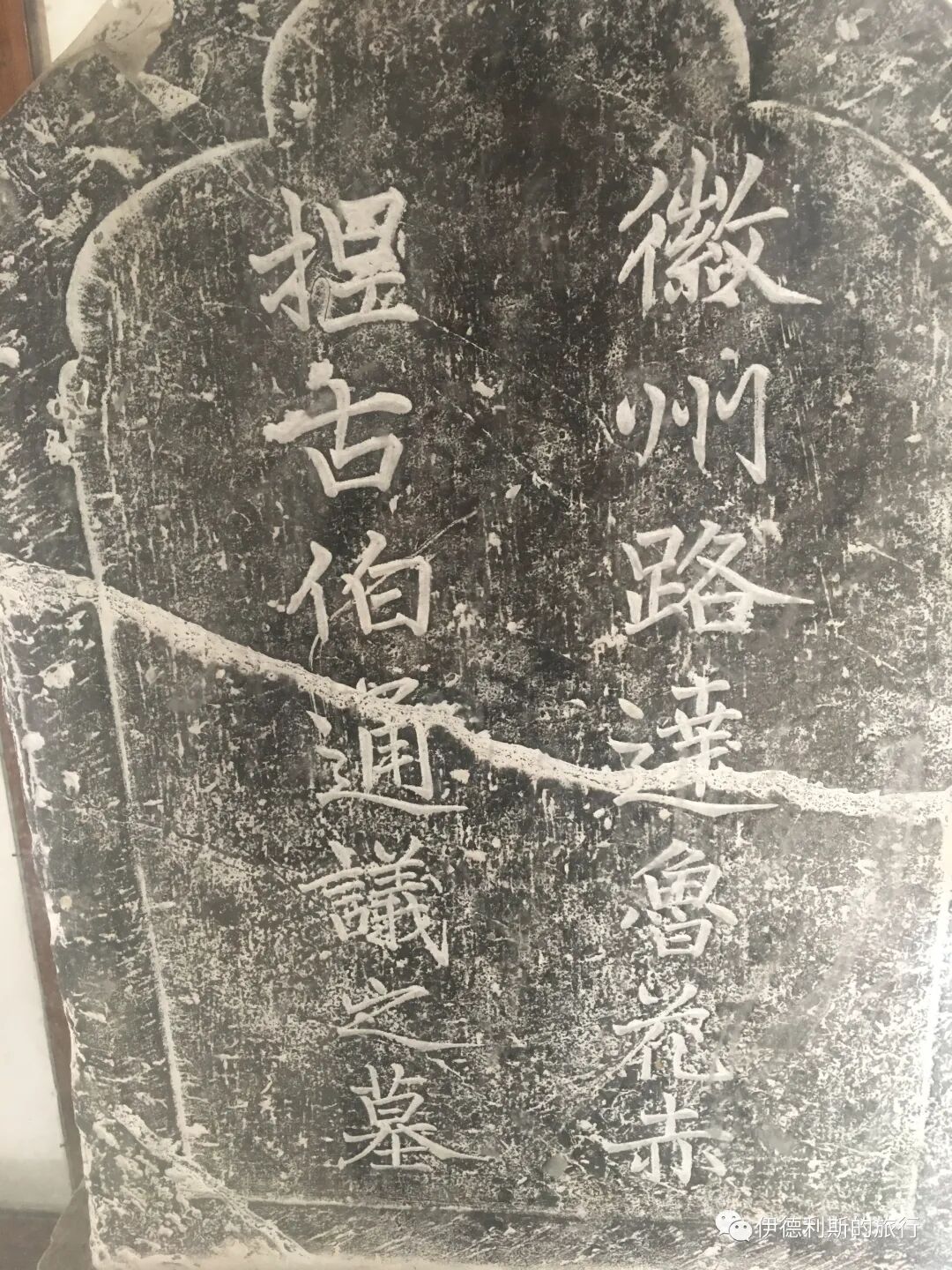
In 1265, Emperor Kublai Khan of the Yuan Dynasty decreed that all circuit Darughachi must be Mongols, and any Han Chinese serving as Darughachi were removed from office. When Mongols were unavailable, it was permitted for Semu people with noble family backgrounds to serve. Therefore, this tombstone of a Semu Darughachi is extremely precious.
The back of Nie Gubo's tombstone is inscribed with ten lines of Arabic. The first section is the Basmala, followed by Hadith and praise for his life achievements. It reads: 'Noble, diligent, and excellent Islamic educator, a leader who helped the weak, was charitable, and cared for the people, a respected elder... a man of great virtue and wisdom, generous and just, enjoying great blessings.' It also records Nie Gubo's death date as the 2nd of Dhu al-Hijjah in the year 709 of the Hijri calendar, which is May 3, 1310.
The front edges of the second tombstone are carved with Quranic verses in Kufic Arabic script, and the center is carved with twelve lines of Arabic, which read: 'The forgiven deceased, Shams al-Din Asif Allah al-Balaji.' May Allah have mercy on him and grant him a place in the comfort of Paradise. This was in early June of the year 724 (Hijri calendar). This corresponds to the end of May or early June of 1324 (the first year of the Taiding era of the Yuan Dynasty).
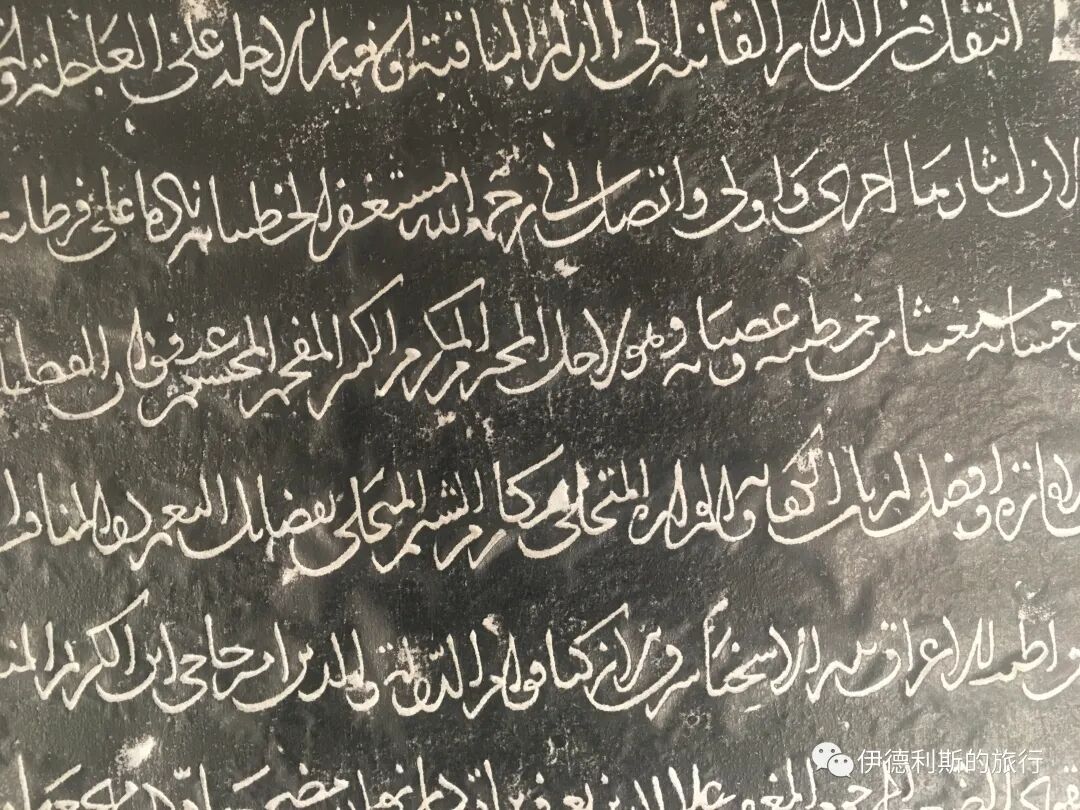
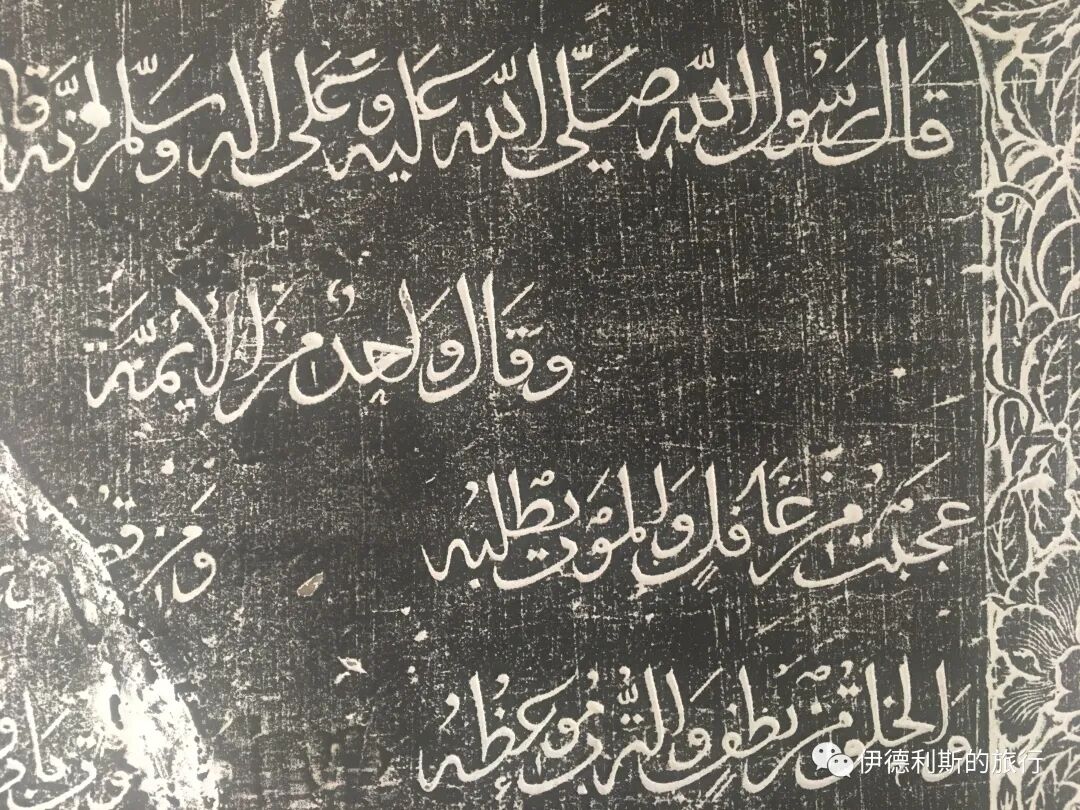
The third tombstone belongs to a Persian woman who also died in 724 Hijri (1324). Her name was Aisha Khatun (Aisha was known as Ashe in the Yuan Dynasty, and Khatun means lady). The inscription says: 'She was a chaste, virtuous, and capable woman... her father was Lezunding, a highly respected official in Islam.'
The fourth tombstone is damaged. It belonged to a missionary named Ala-ud-Din who died in 702 Hijri, or 1302 (the sixth year of the Dade era of the Yuan Dynasty). The inscription describes him as a skilled businessman who was highly respected by the community.
After the Qianlong reign, there were six mosques in Yangzhou. The three inside the city were the Crane Mosque (Xianhe Si) on Nanmen Street, the Majian Lane Mosque, and the Xiejia Bridge Mosque (which was occupied by a sugar factory and no longer exists). The three mosques outside the city were the Hui Muslim Hall (Huihui Tang) east of the Dongguan River inside the Puhading Cemetery, the South Gate Mosque (occupied by a glass factory, with the main hall finally demolished in 1984), and the Chaoguan Mosque (occupied by a farm machinery factory and no longer exists).
During the Republic of China era, there were nearly 20,000 Hui Muslims living in the six mosque districts of Yangzhou, with Sha, Ma, Ha, Sa, and Da as the five major surnames. The family genealogy of the Ha surname records that their ancestor was a man named Hashen from the Western Regions' Rumi Kingdom (a region in West Asia or Asia Minor).
Crane Mosque (Xianhe Si)
The Crane Mosque is one of the four ancient mosques along the southeast coast (in Hangzhou, Guangzhou, Quanzhou, and Yangzhou). It was founded in 1275 (the 12th year of the Zhiyuan era of the Yuan Dynasty) by the sage Puhading from the Western Regions before he passed away. It was rebuilt in 1380 (the 23rd year of the Hongwu era of the Ming Dynasty) by Ha San, and renovated in 1523 (the third year of the Jiajing era) by the merchant Ma Zongdao and the imam Ha Ming. Starting in 1542 (the 21st year of the Jiajing era), the Ha family received official documents from the Ministry of Rites to serve as the hereditary imams of the Crane Mosque.
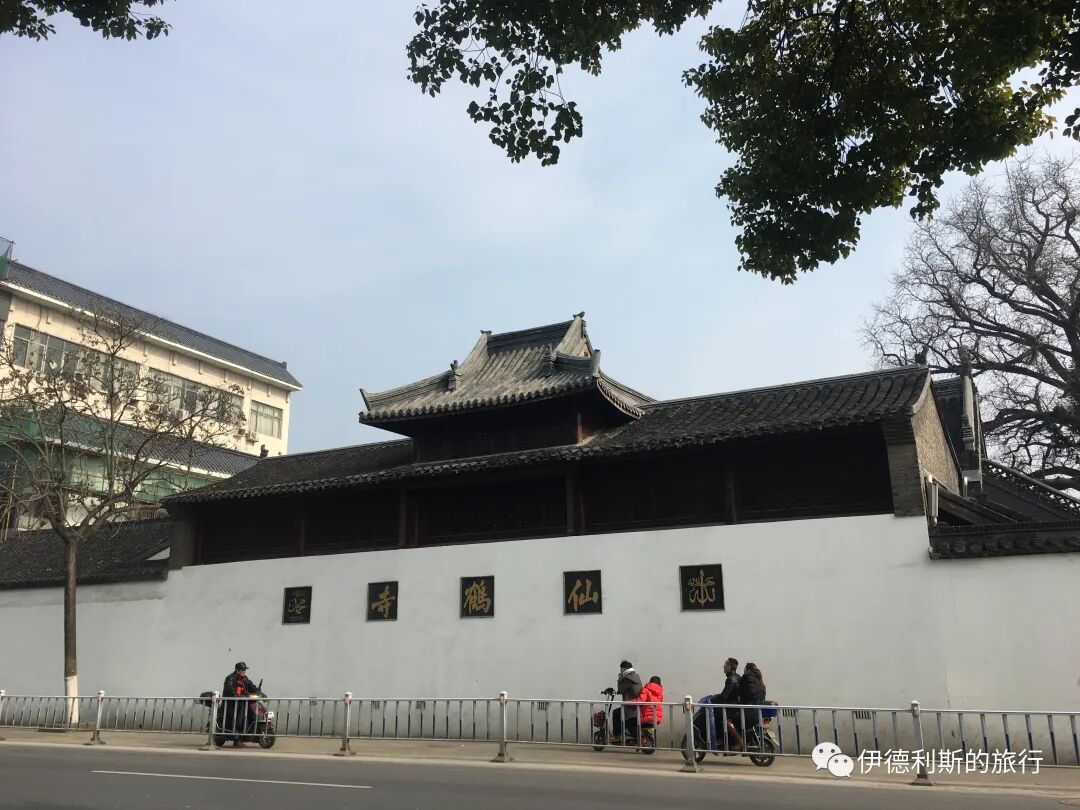
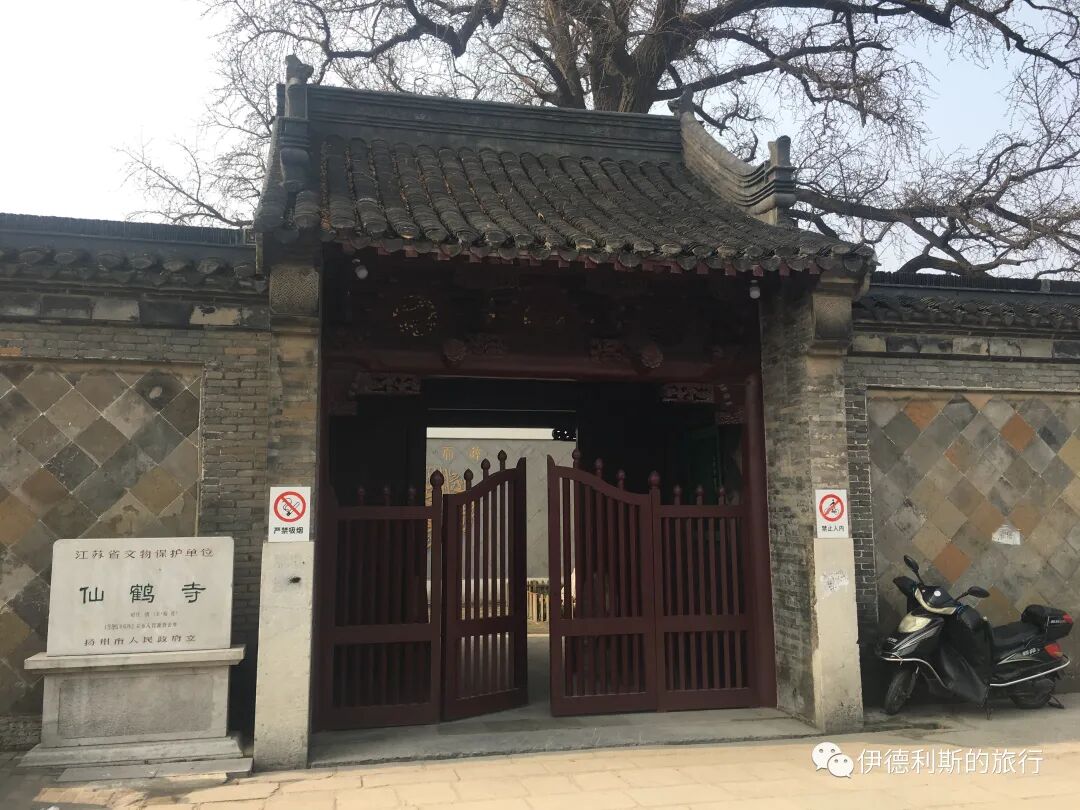
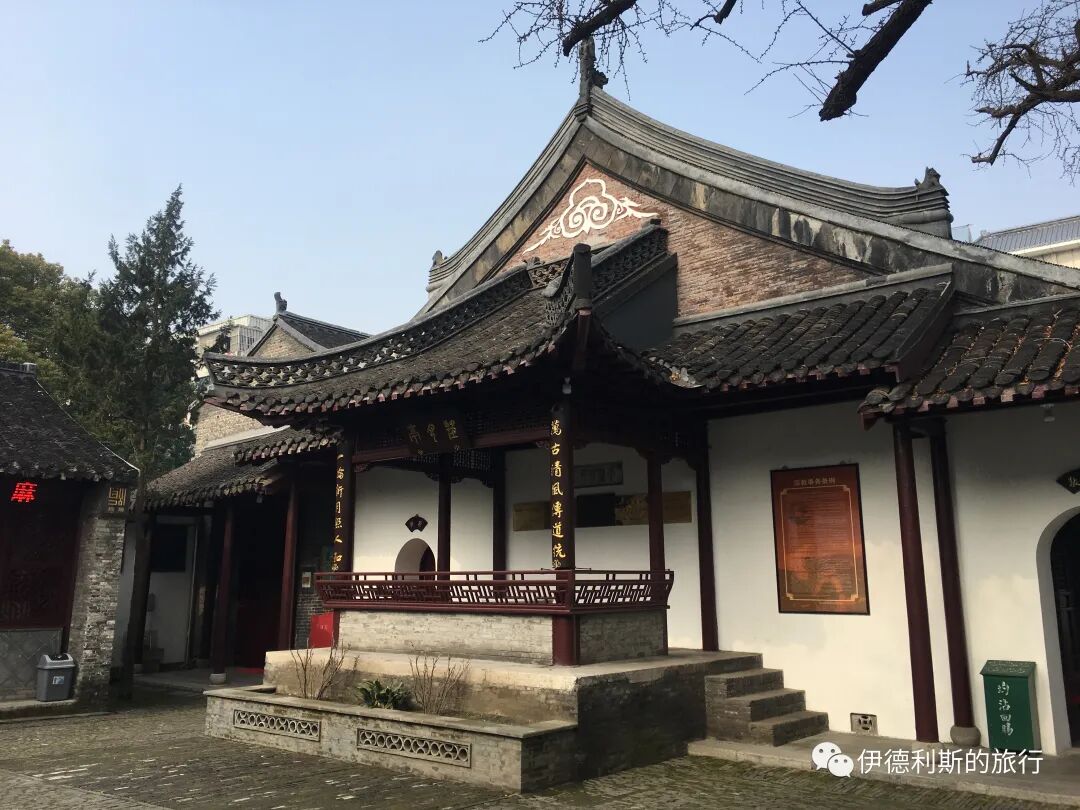
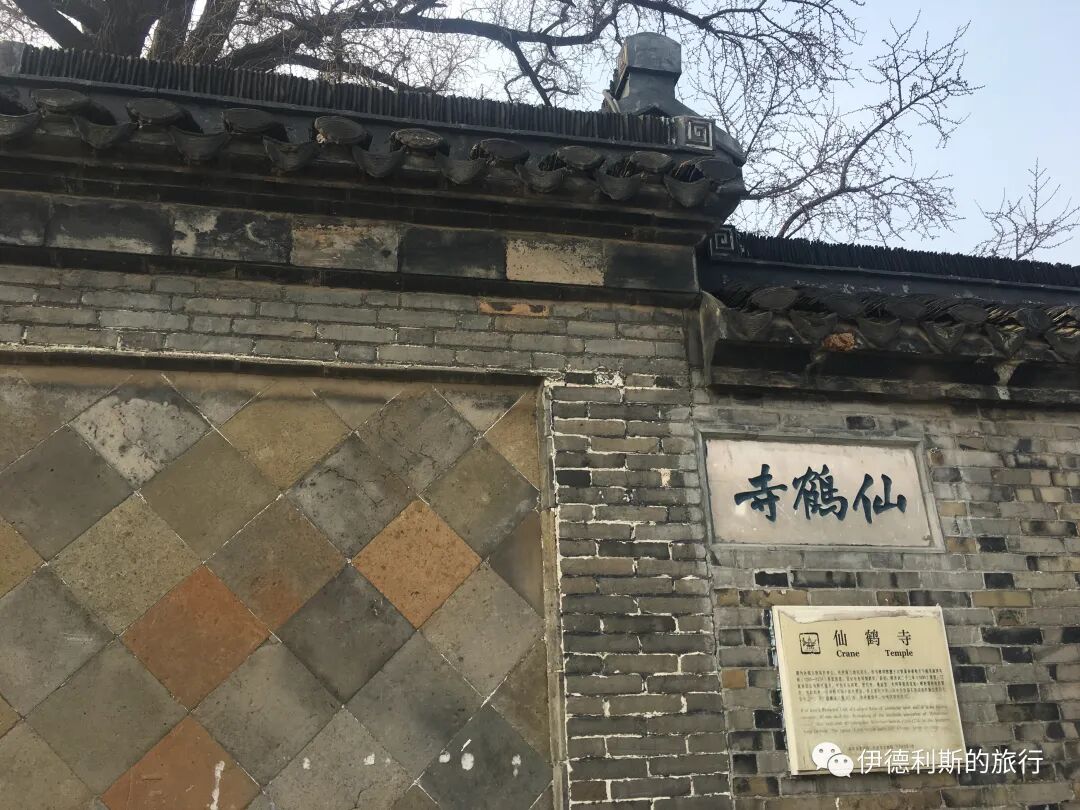
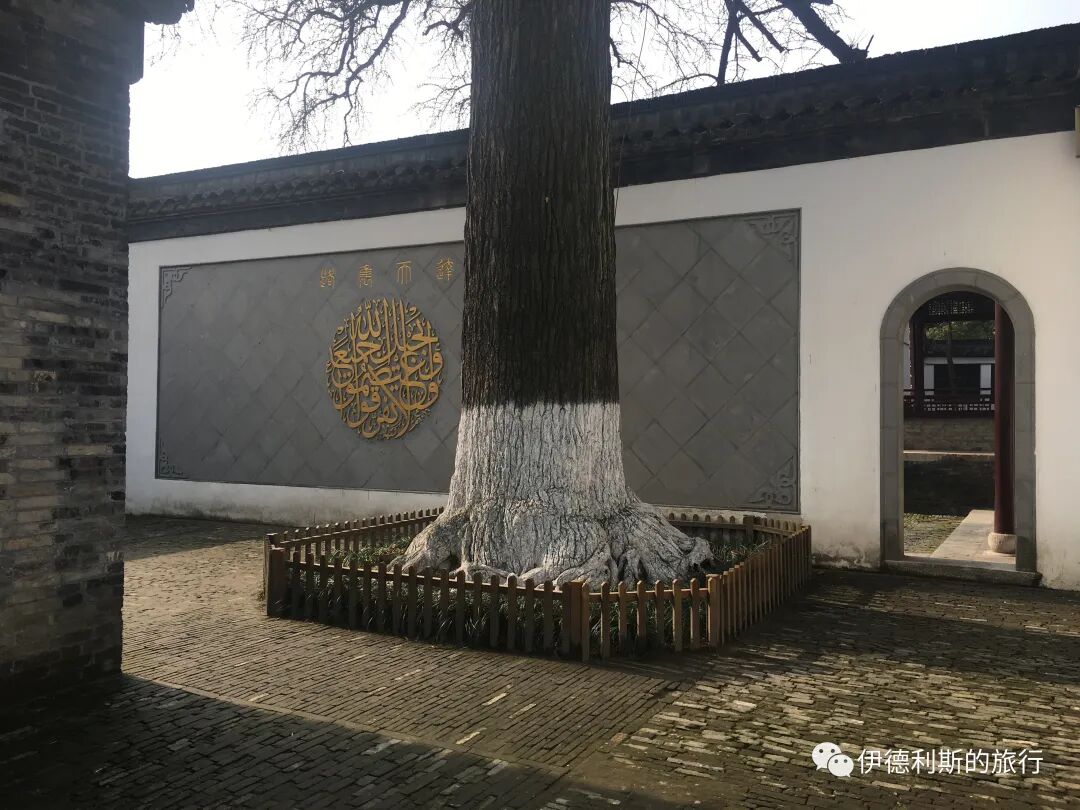
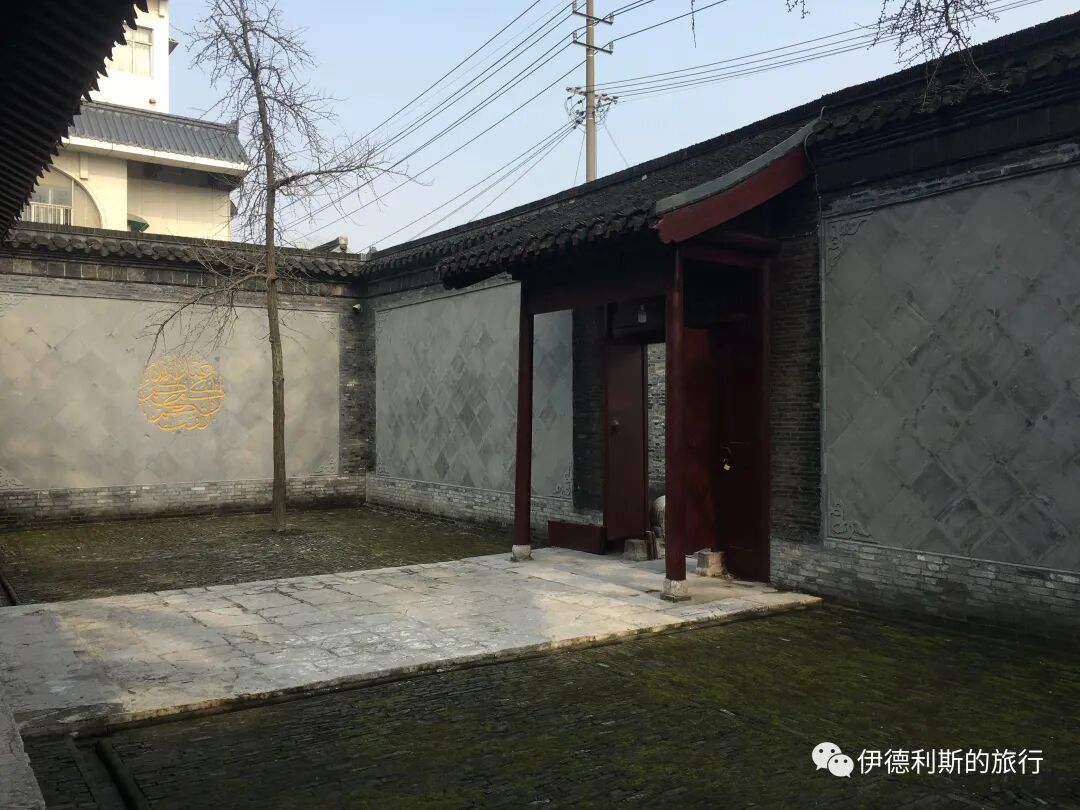
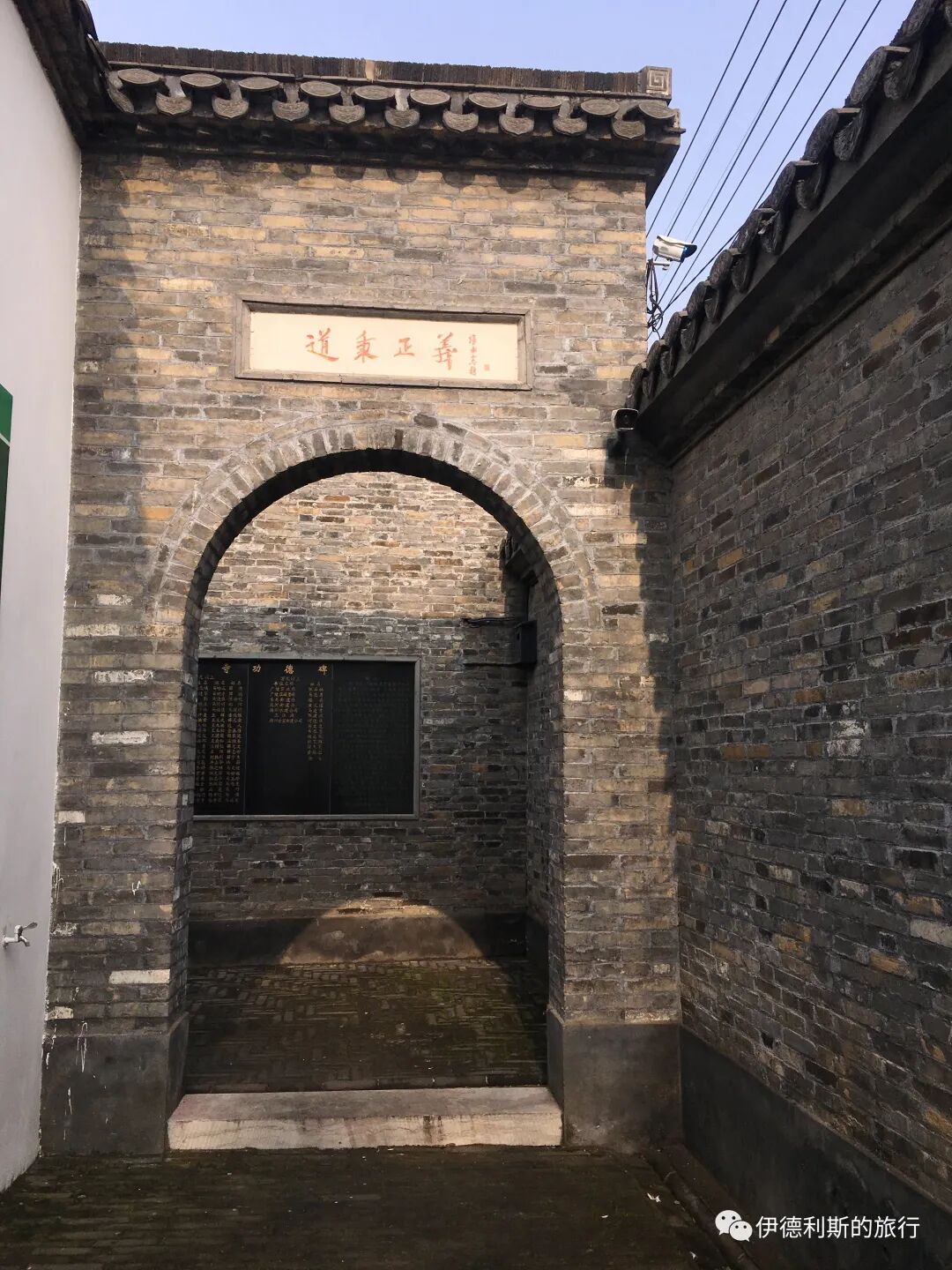
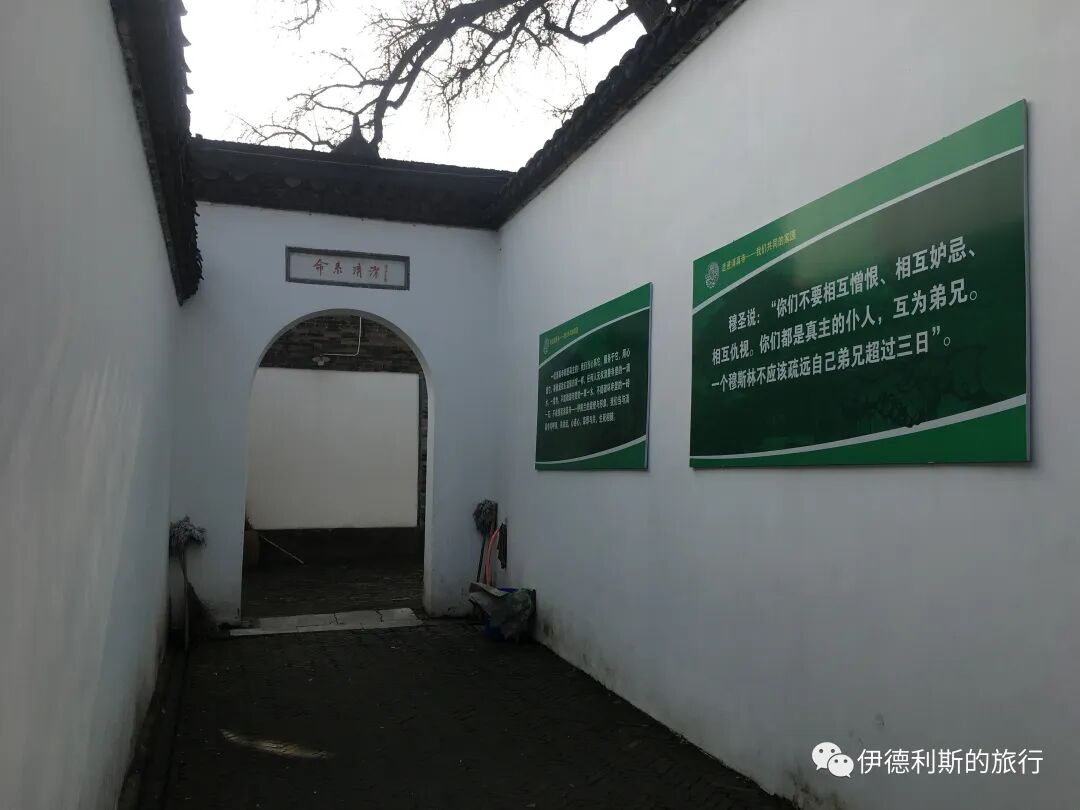
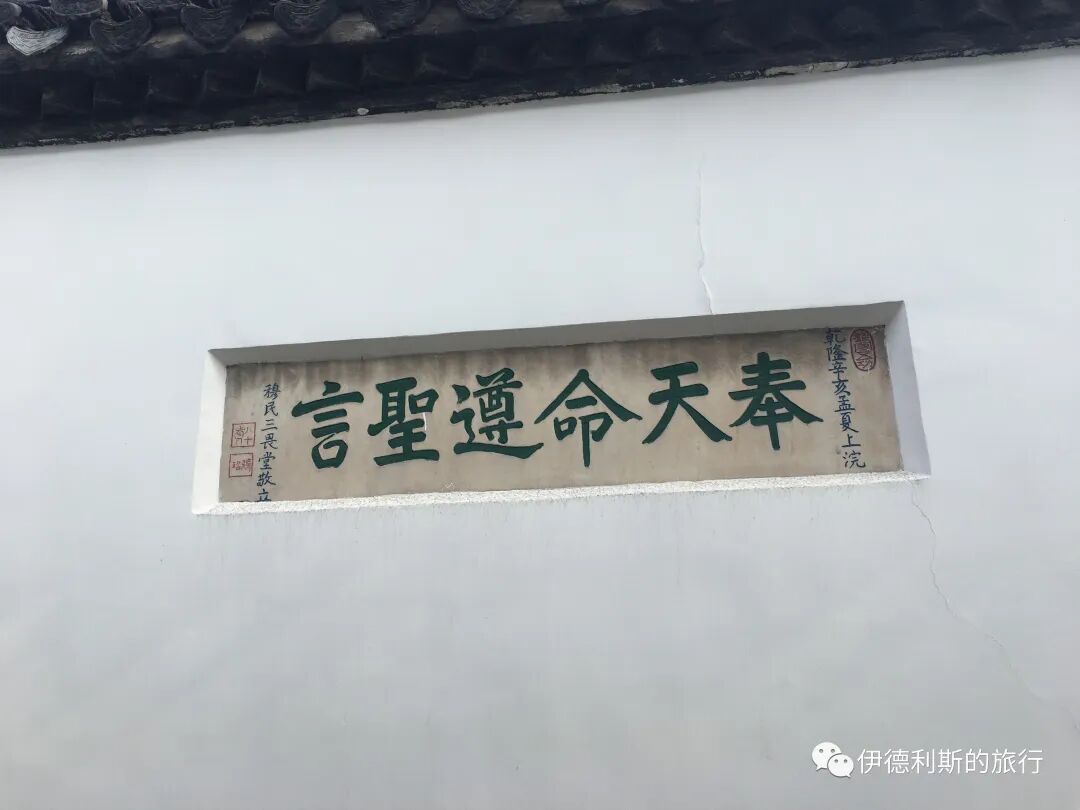
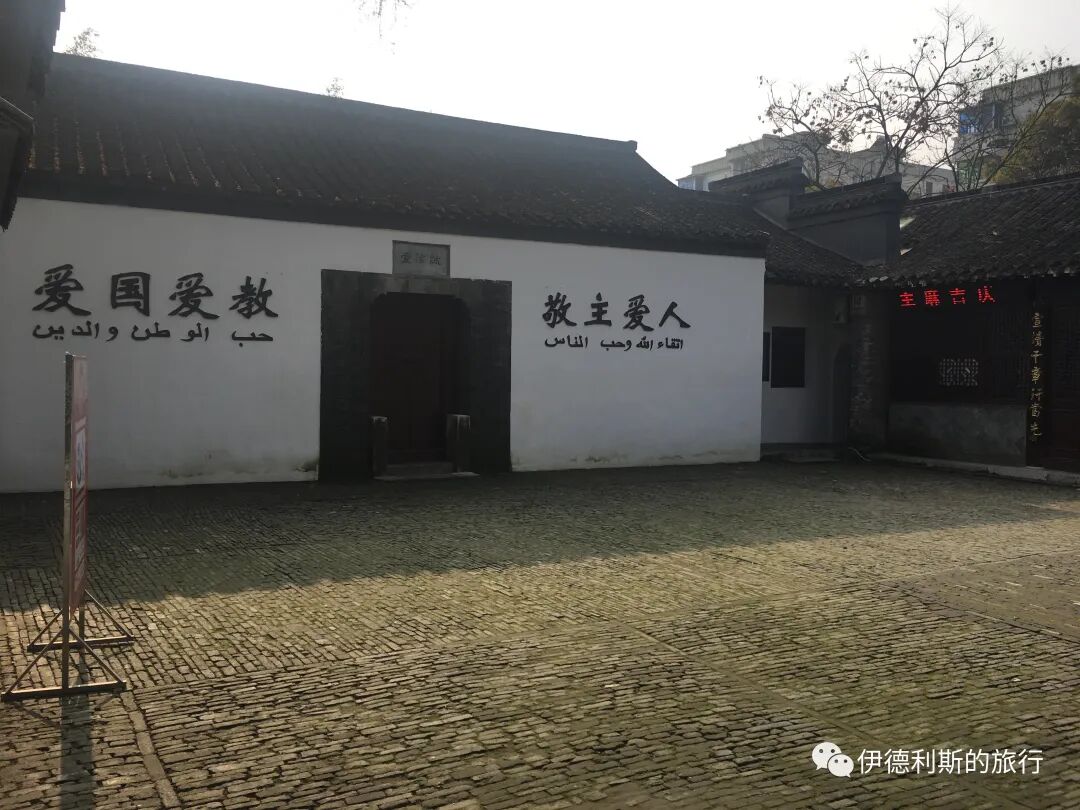
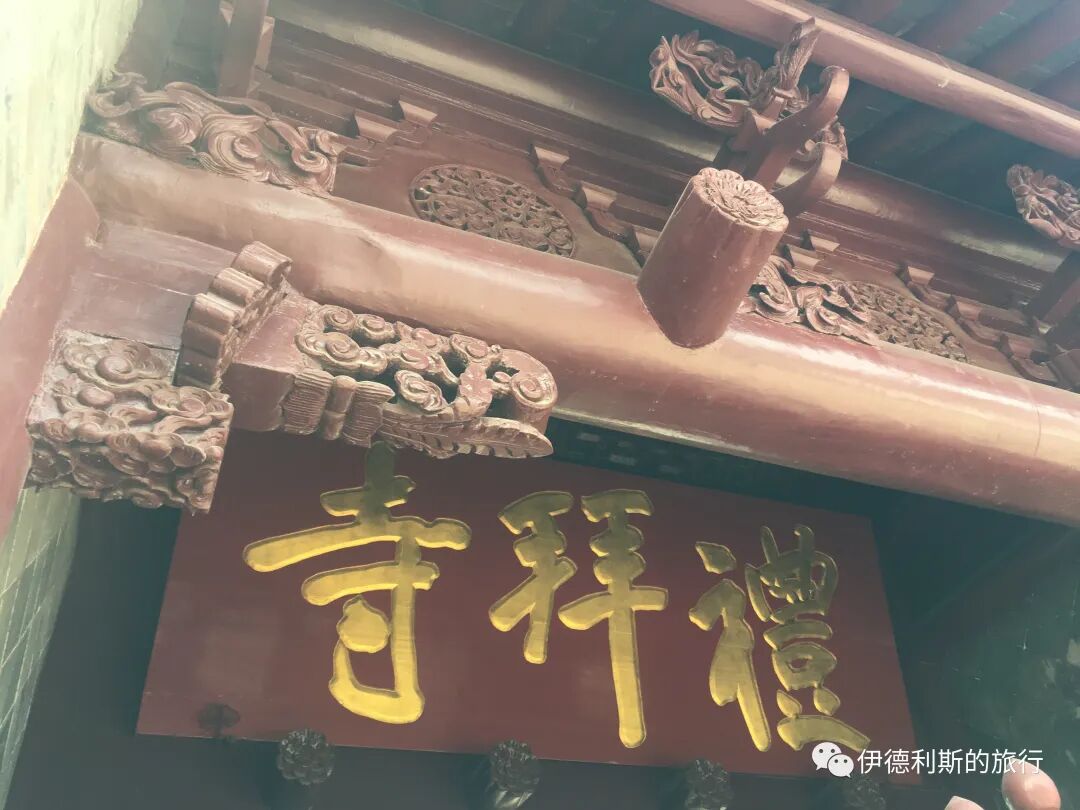
Puhading Cemetery
Puhading is said to be a 16th-generation descendant of the Prophet Muhammad. He came to Yangzhou during the Xianchun period of the Song Dynasty (1265-1274) and died in Yangzhou in 1275 (the 12th year of the Zhiyuan era of the Yuan Dynasty). He was buried on a high ridge east of the Dongguan River in the New City, a place later called the Hui Muslim Hall (commonly known as Baba Yao).
This is written in the article 'Puhading: Messenger of China-Arab Friendship,' published by the Yangzhou Islamic Association in the fourth issue of 'Jiangsu Muslims' in 2015. Local imams in Yangzhou pass down a set of stories about the life of Puhading. On the morning of July 17, 1947, at the East Lecture Hall of the Huihui Tang mosque, Imam Lan Baohua passed down the life story of Puhading to his son, Imam Lan Xiaoyang. He based this on the oral accounts of famous scholars Zhang Zhong and imams Han Yuchun, Lan Jiansen, Lan Wenyuan, and Lan Sifu. Seven people were present, including Imam Ruan Xiangsong and community elders Ma Liang, Zhang Yangwu, Wang Yan, and Jin Yuanxun. Here is the life story of Puhading as passed down by the Yangzhou imams:
Puhading was born on May 21, 1204 (the fourth year of the Jiatai era of the Song Dynasty) into a wealthy Arab noble family. He was the 16th-generation descendant of the Prophet Muhammad. Puhading was a man of great learning, well-versed in the Quran, the Hadith, and Islamic law. At age 57, Puhading followed the Prophet's teaching that one should seek knowledge even as far away as China. After four years of careful preparation, he set off for China from Arabia on a merchant ship at age 61, leading a team of 17 people.
On June 20, 1265 (the first year of the Xianchun era of the Song Dynasty), Puhading and his followers arrived in Yangzhou. They lived for four years at the mosque outside the south gate of Yangzhou at that time. He helped expand the old mosque outside the south gate and renovated the Guannan Chaoguan mosque.
On the 23rd day of the seventh lunar month in 1275 (the 12th year of the Zhiyuan era of the Yuan Dynasty), he traveled south from Rencheng (Jining) to Guangling (Yangzhou). He passed away on a boat while returning from giving a lecture, at the age of 71. The governor of Guangling, Yuan Guang'en, buried his body on a high ridge on the east bank of the Grand Canal, east of Yangzhou city.
Three years after Puhading died, another Muslim sage who came to Yangzhou to preach, Saganda, passed away in 1278 (the third year of the Jingyan era of the Song Dynasty). He was buried near Puhading's tomb. A stone tablet erected in 1776 (the 41st year of the Qianlong era) refers to him as the Western Region sage Saganda from the third year of the Jingyan era of the Song Dynasty.
During the Ming Dynasty, more Muslims were buried there, such as the Western Region sage Mahamude in 1456 (the first year of the Chenghua era), the Western Region sage Zhanmaluding in 1469 (the fifth year of the Chenghua era), and the Western Region sage Fana in 1498 (the 11th year of the Hongzhi era).
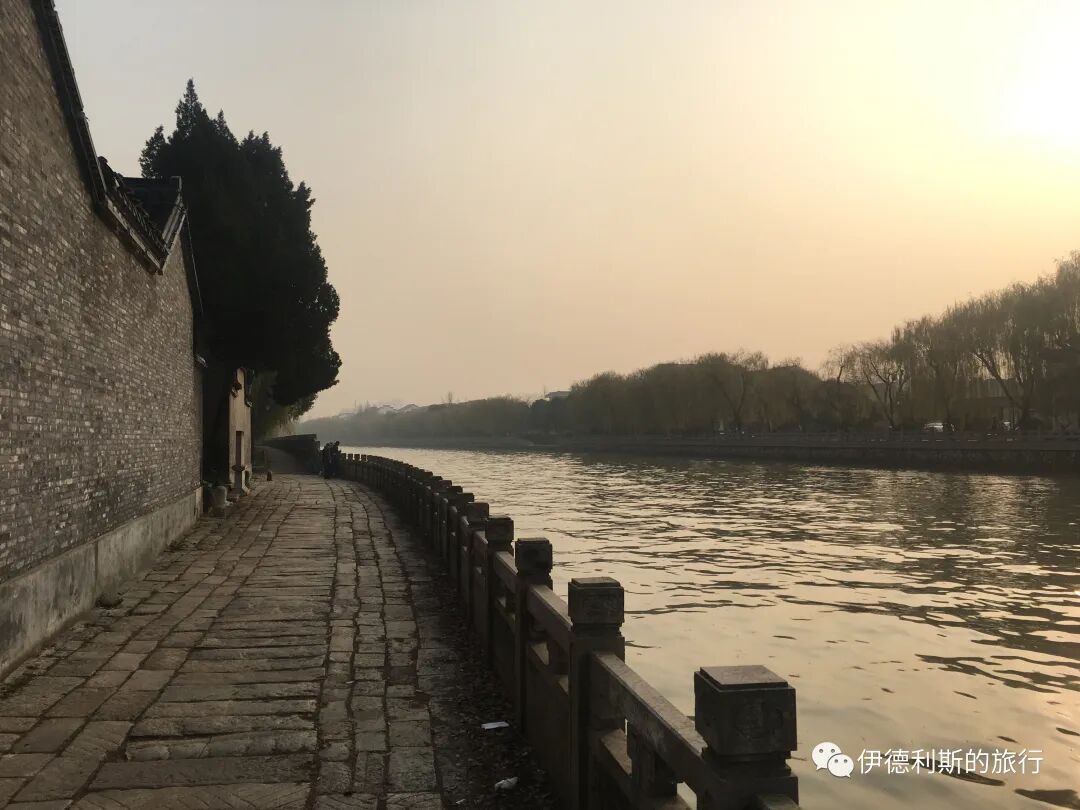
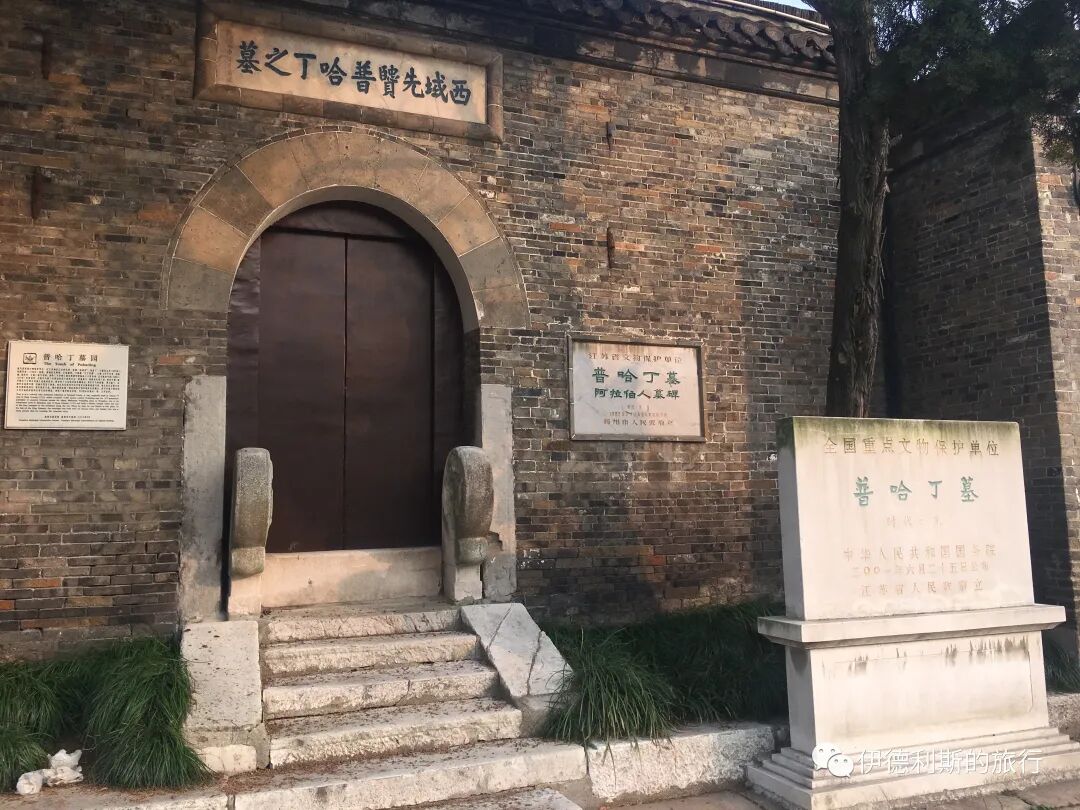
Next to the main gate is a mosque for those visiting the graves.
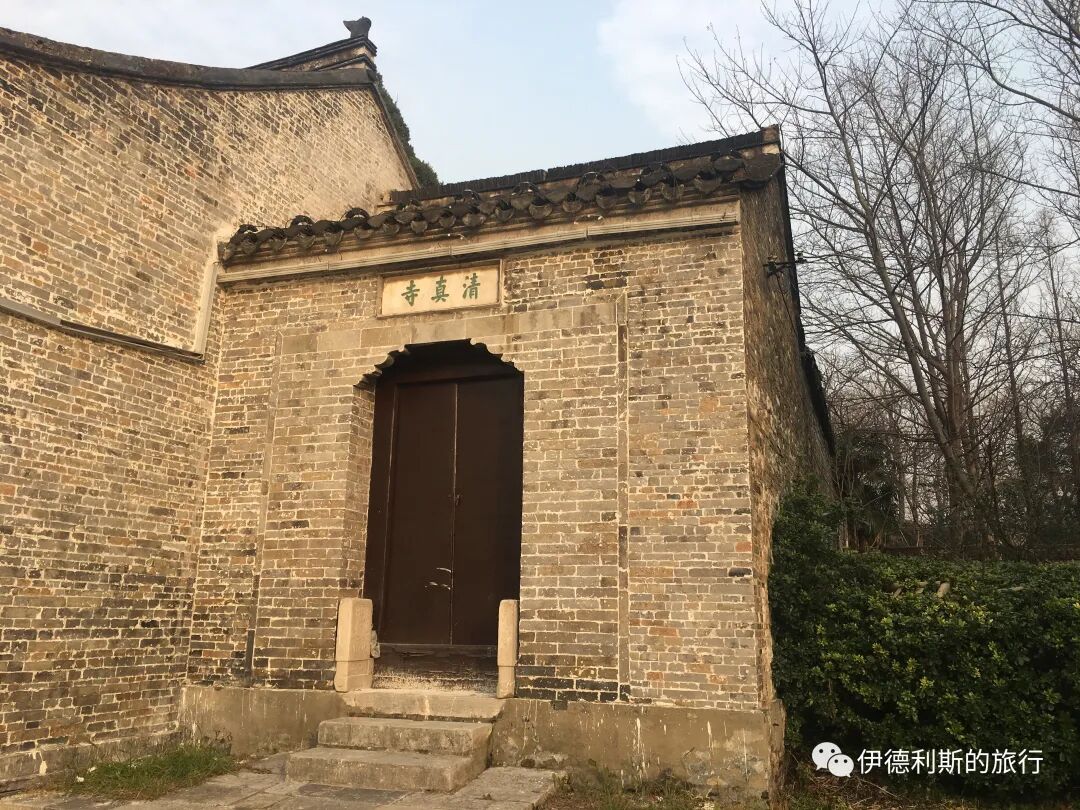
The mihrab of the mosque.
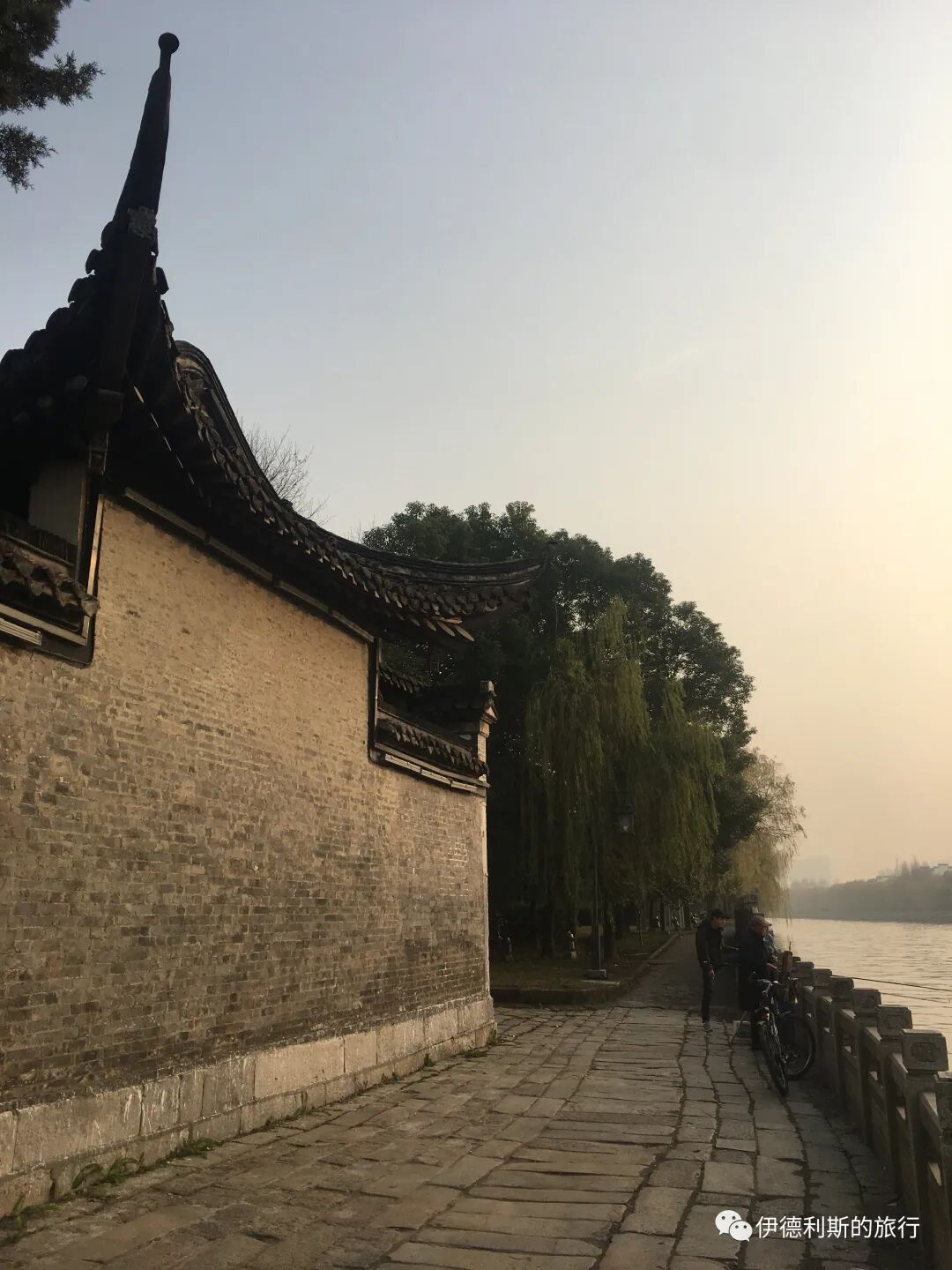
The stone carving inside the main gate records that in 1845 (the Yisi year of the Daoguang era), people of various surnames donated funds to build a stone embankment and renovate the halls.
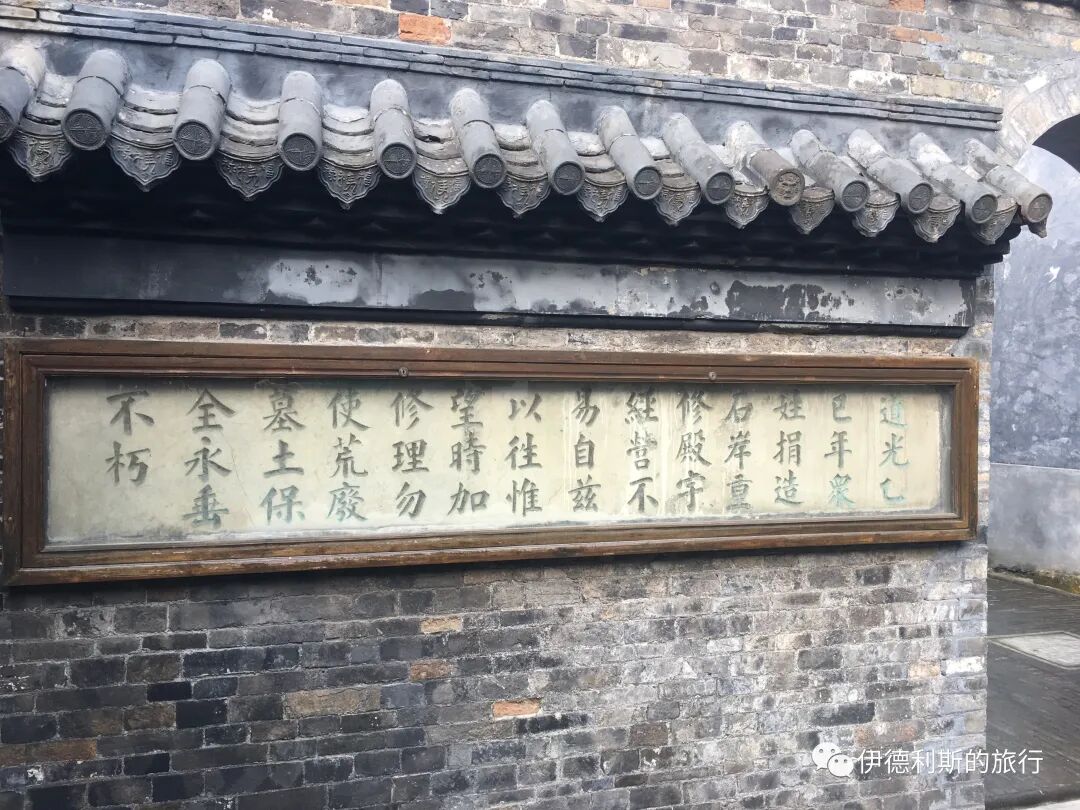
Inside the main prayer hall of the mosque.
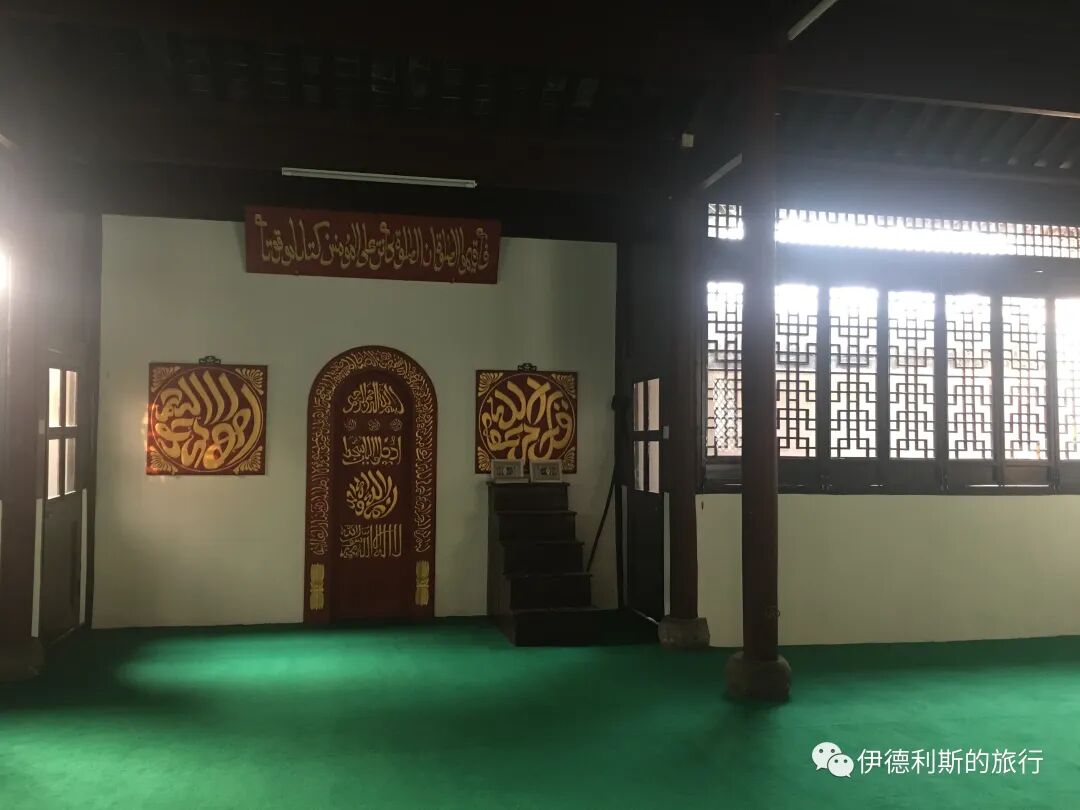
The kiln-style hall (yaodian) of the Puhading Tomb mosque, photographed by missionary Bi Jingshi between 1934 and 1935.
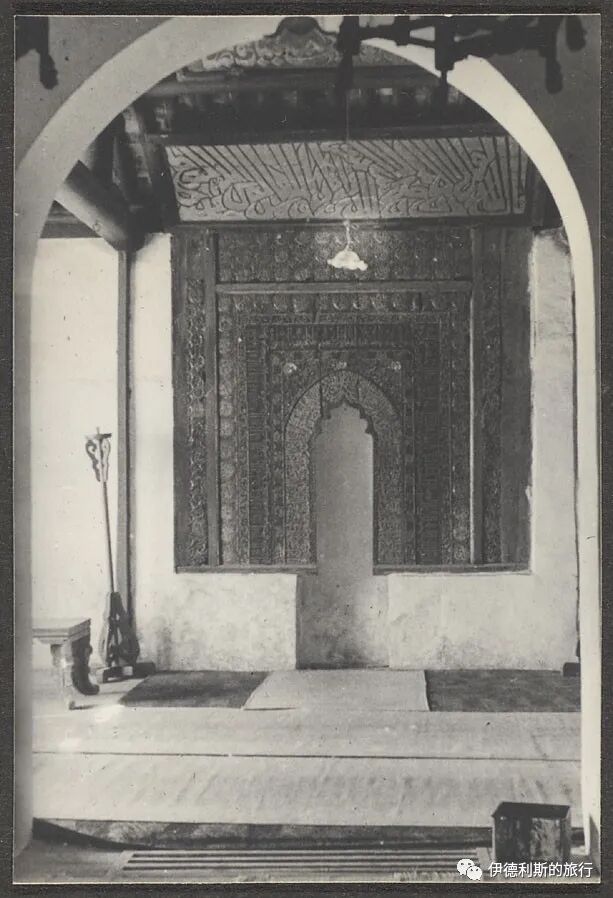
Climb the stone steps behind the mosque to reach the Puhading Tomb.
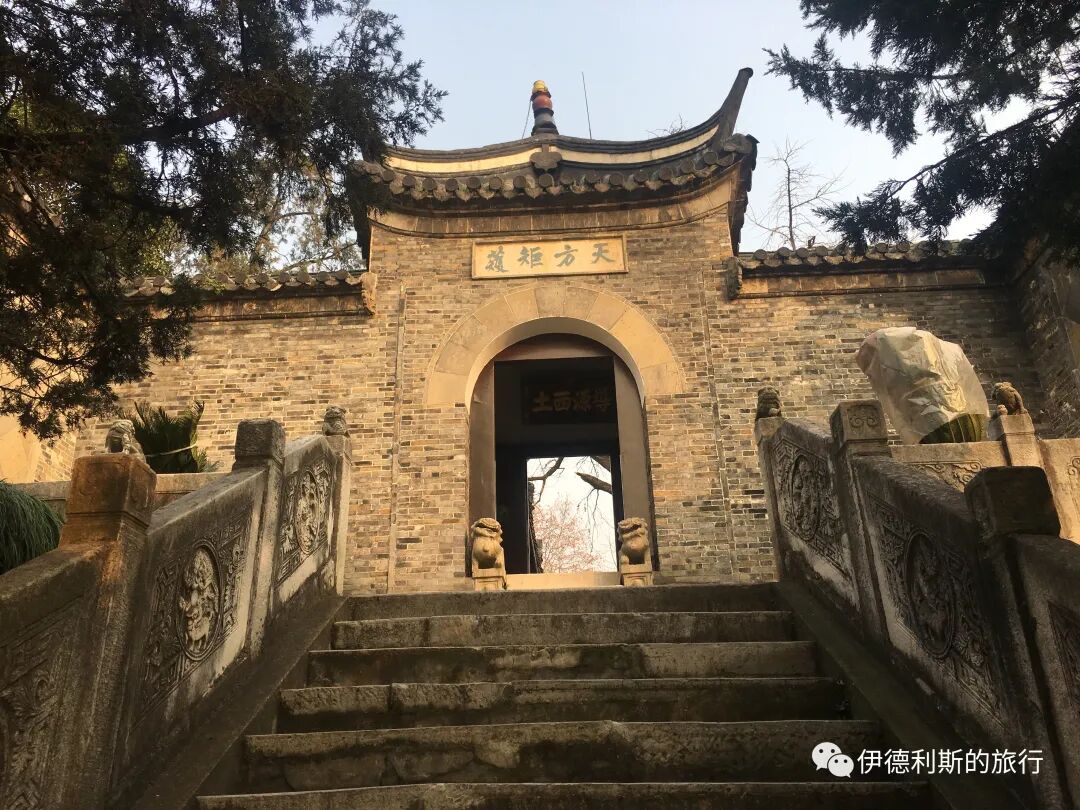
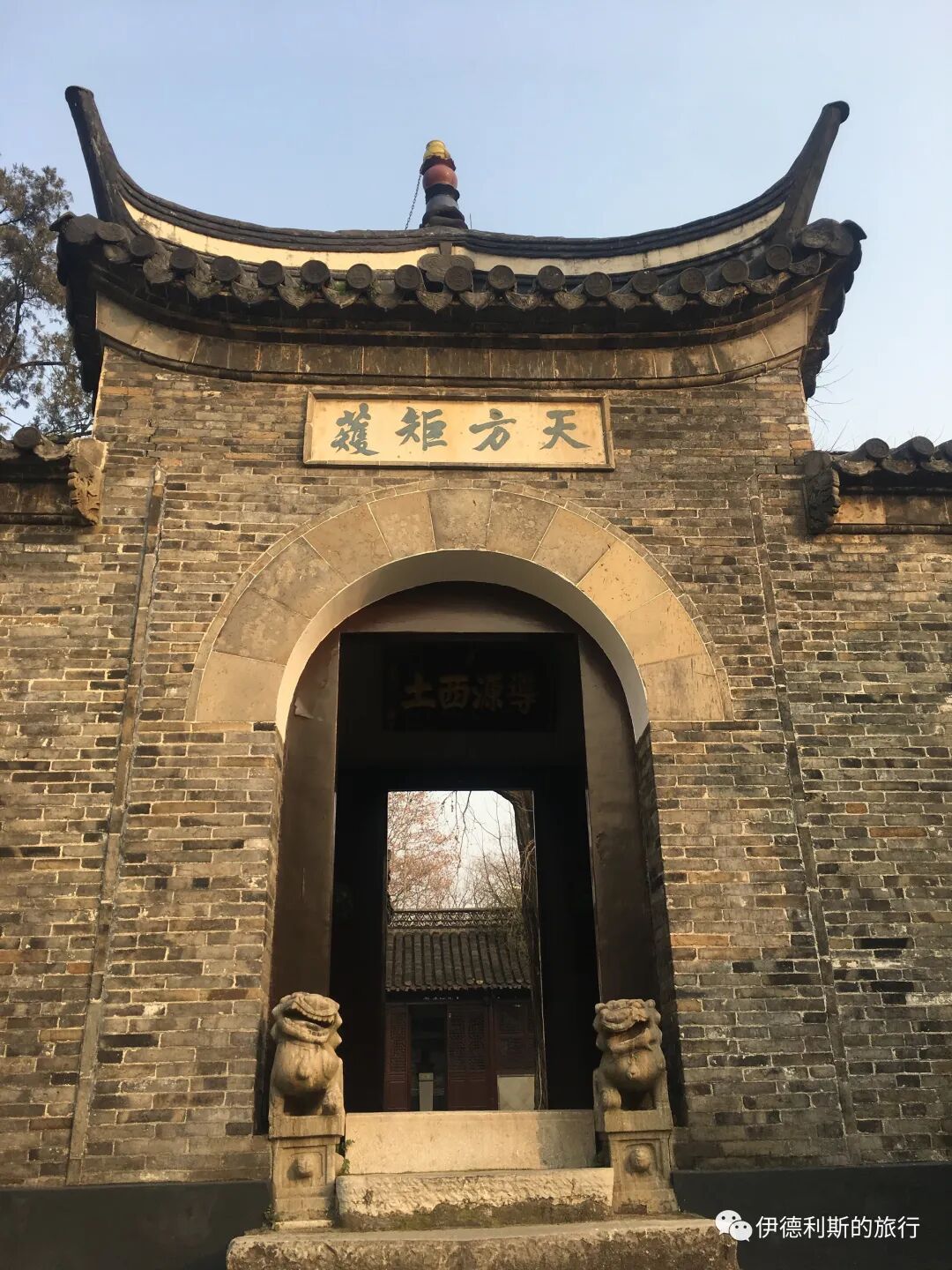
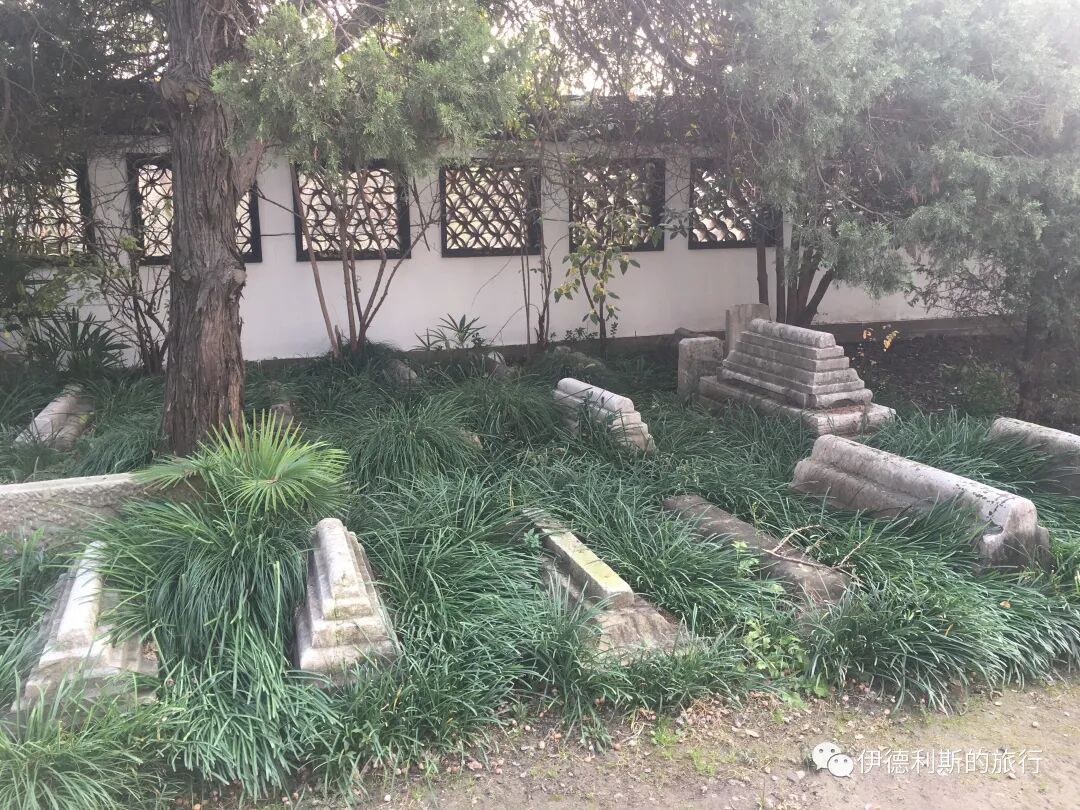
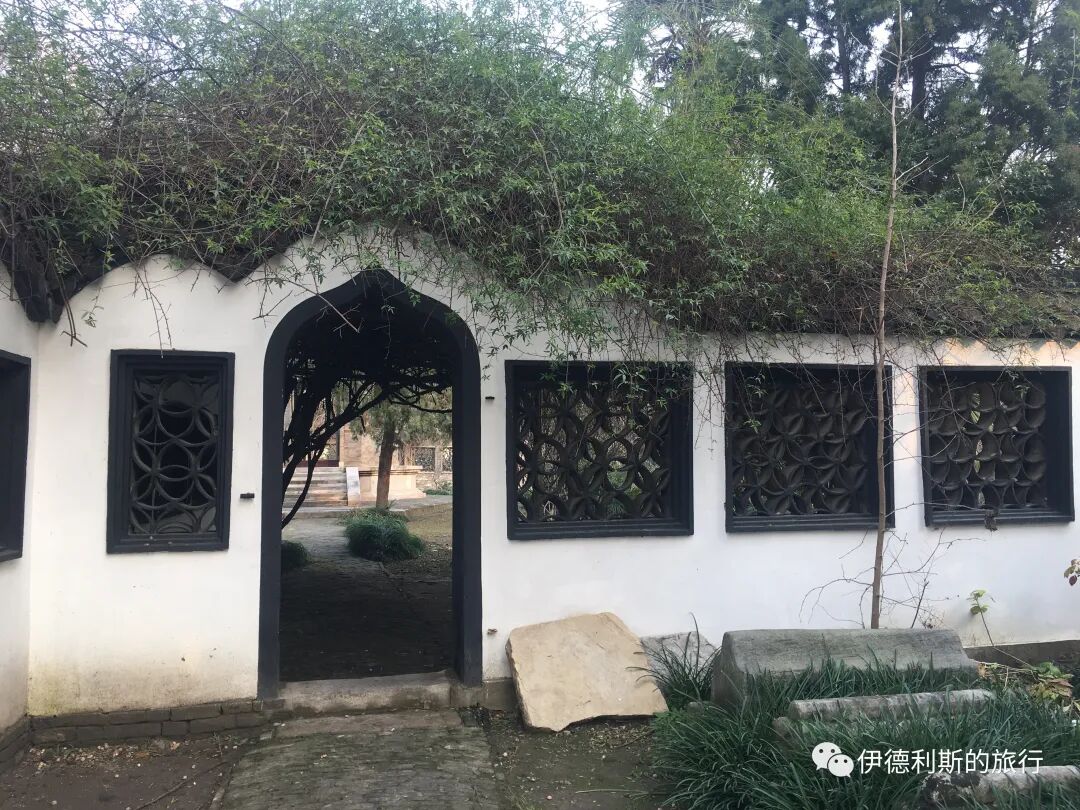
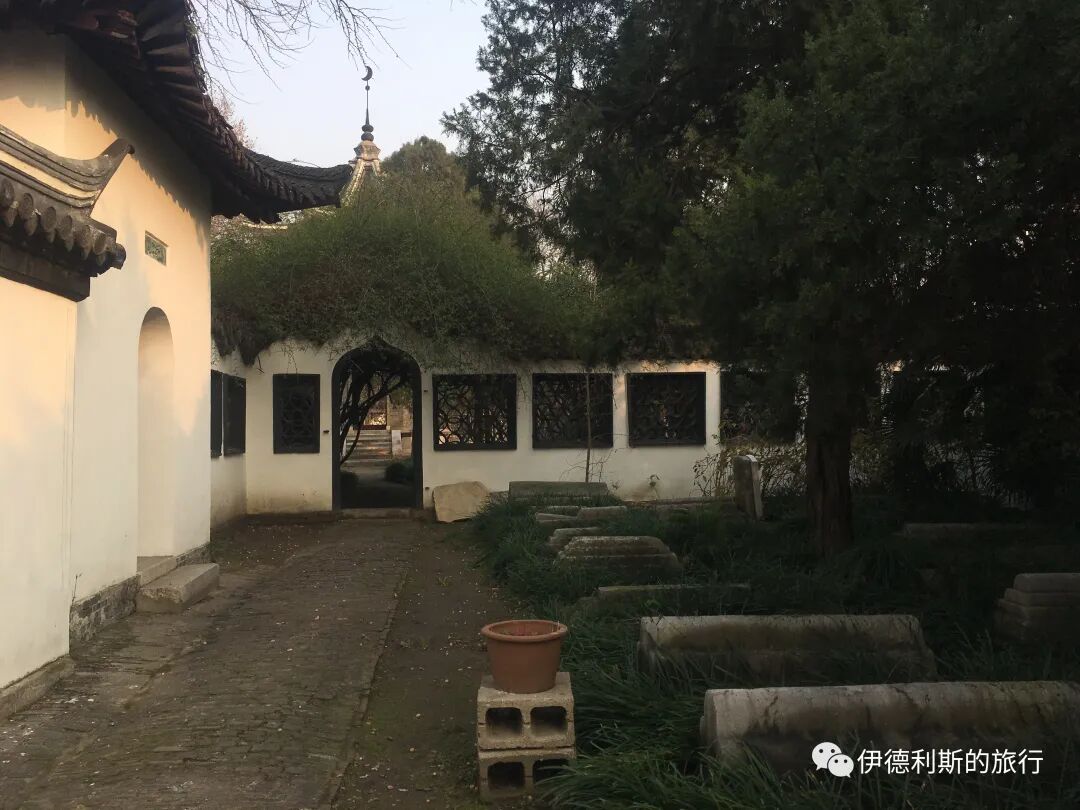
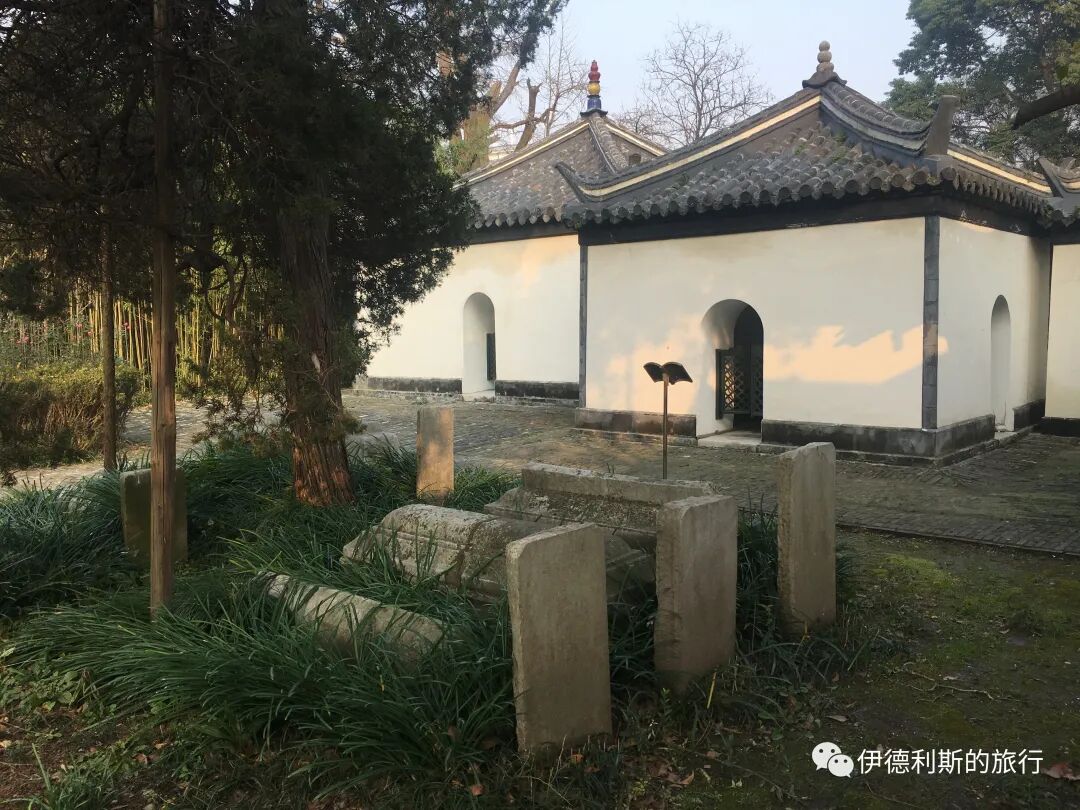
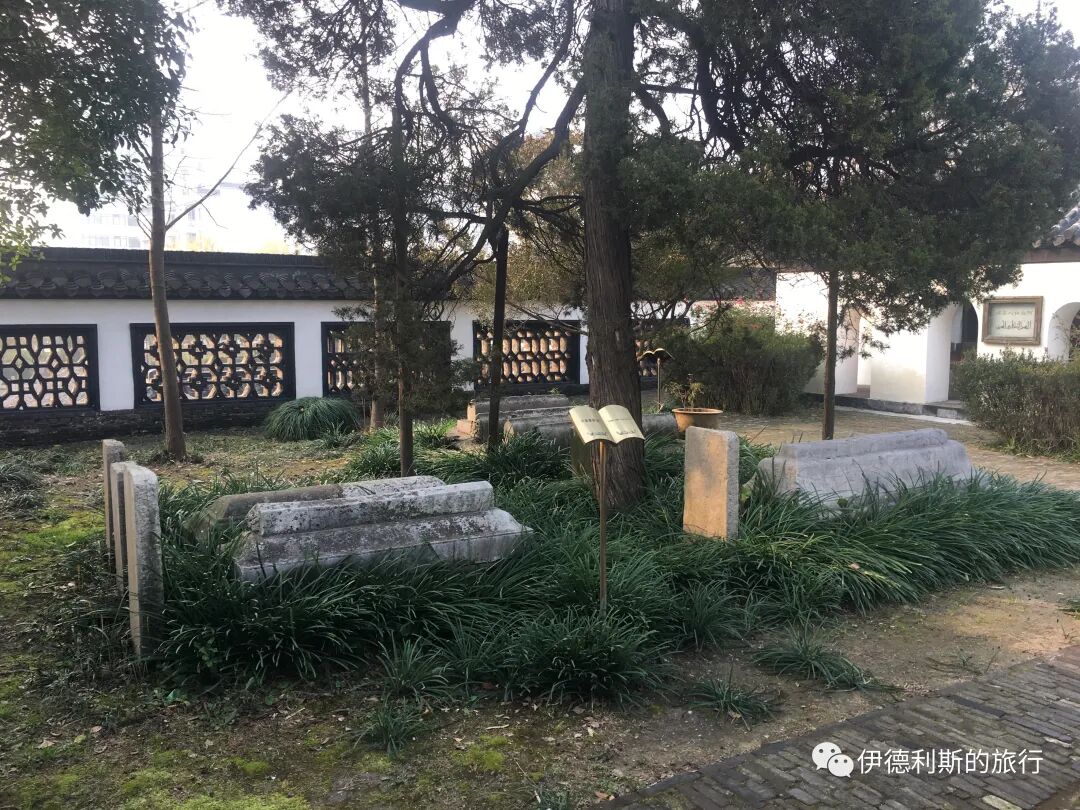
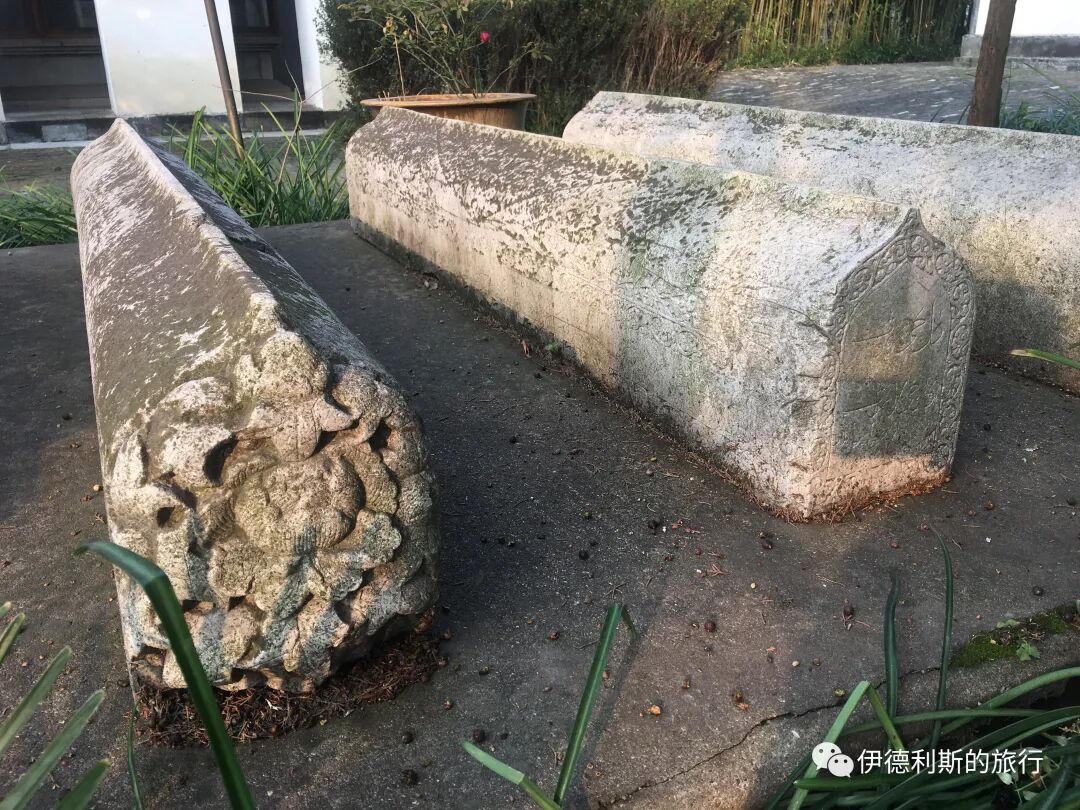
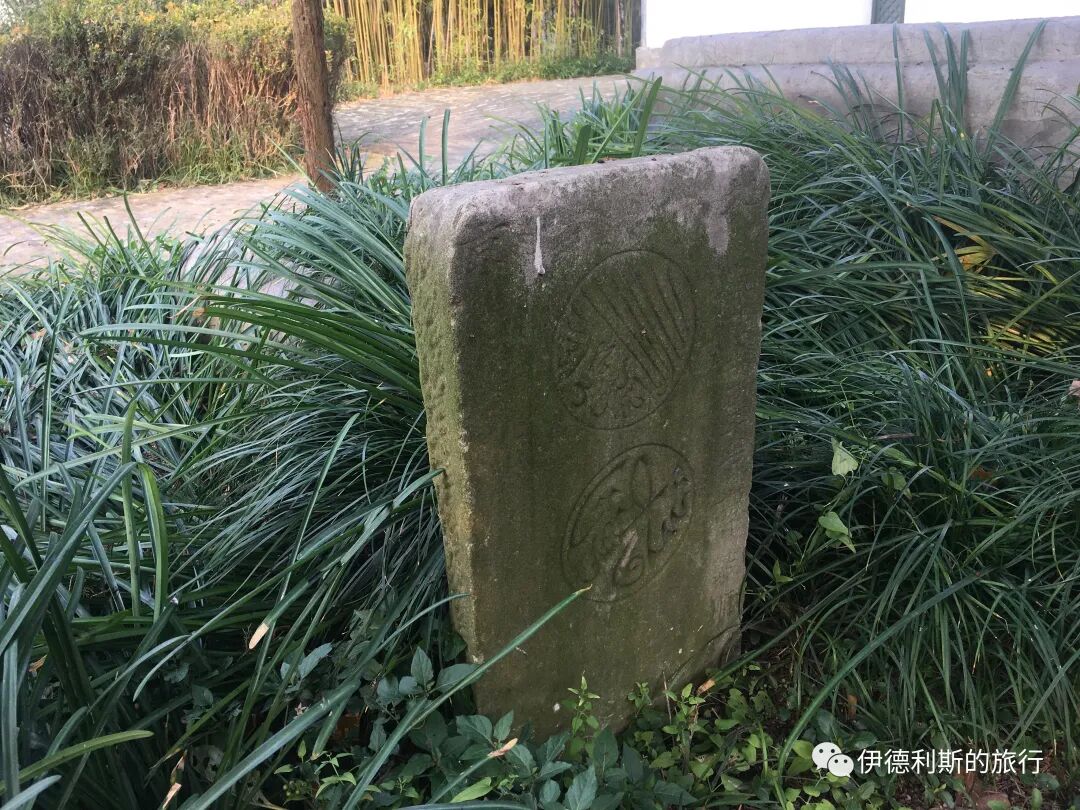
A 700-year-old ginkgo tree.
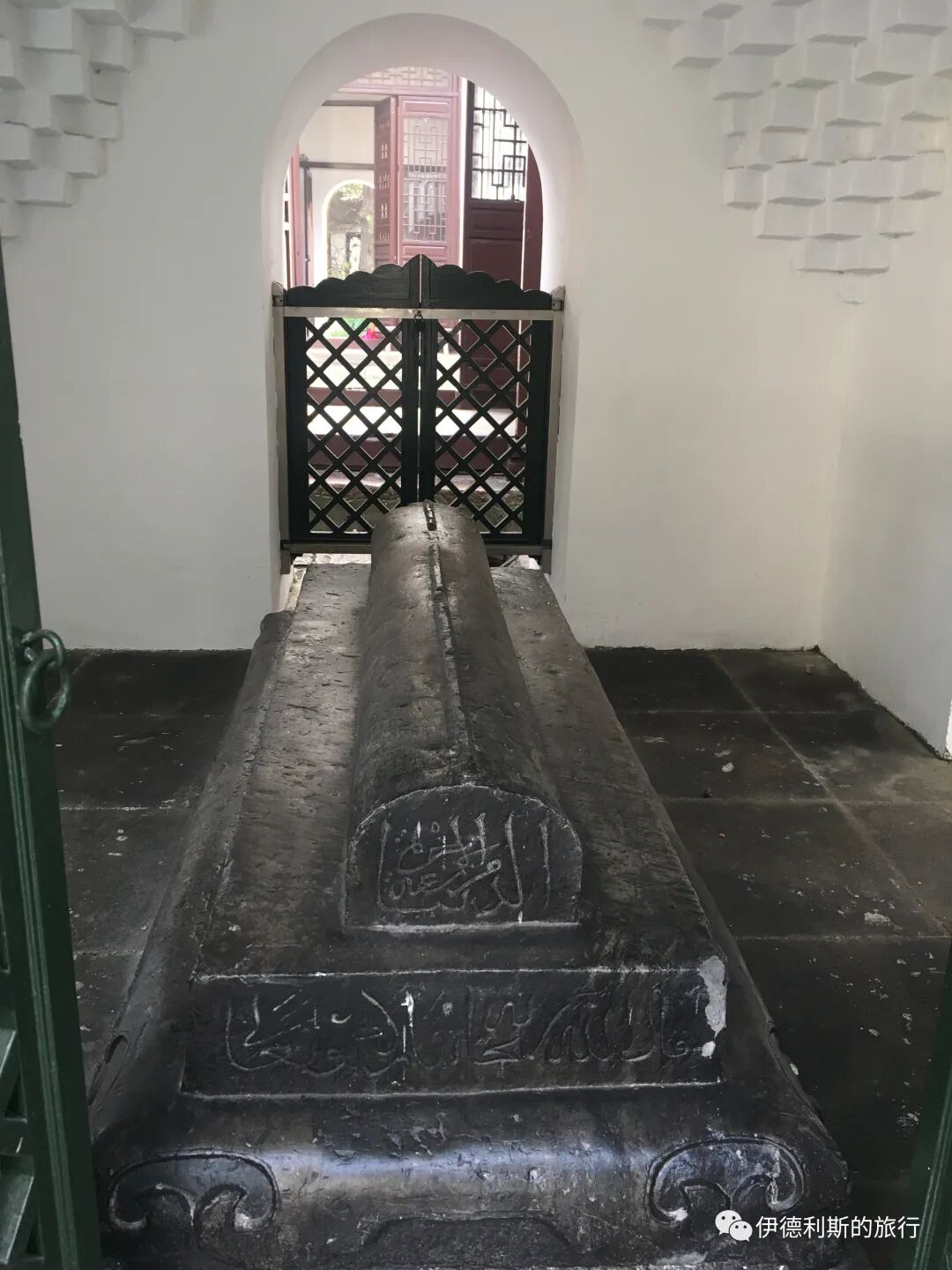
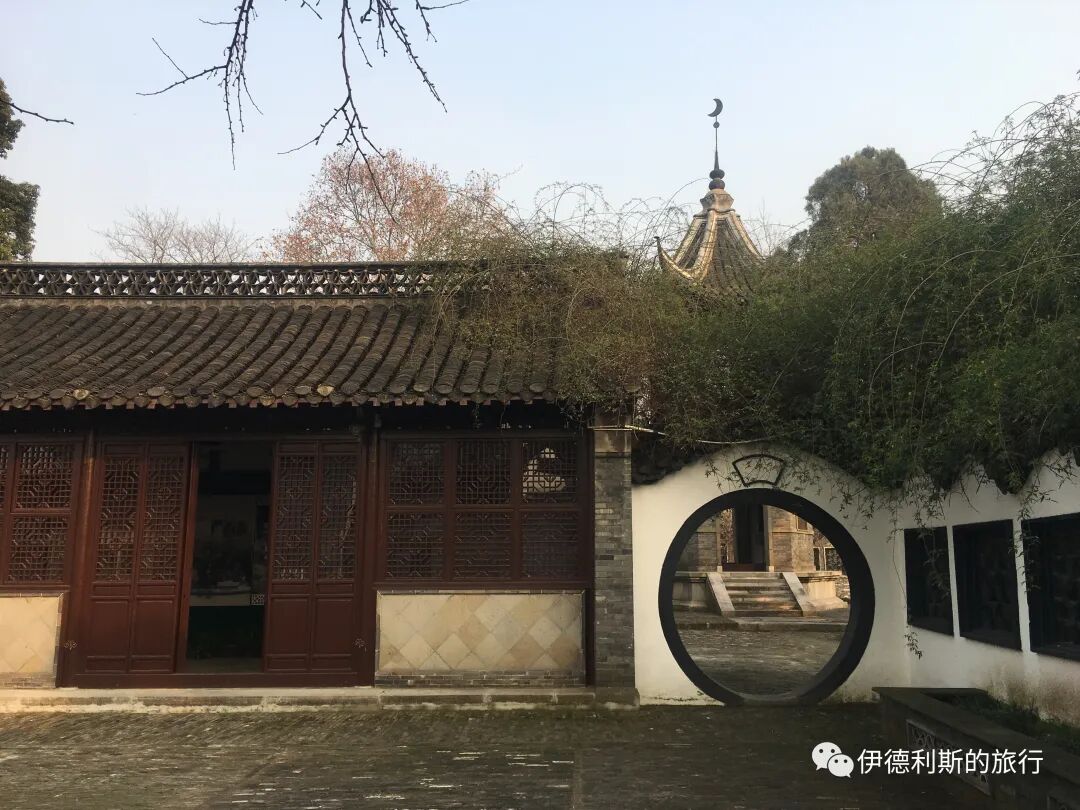
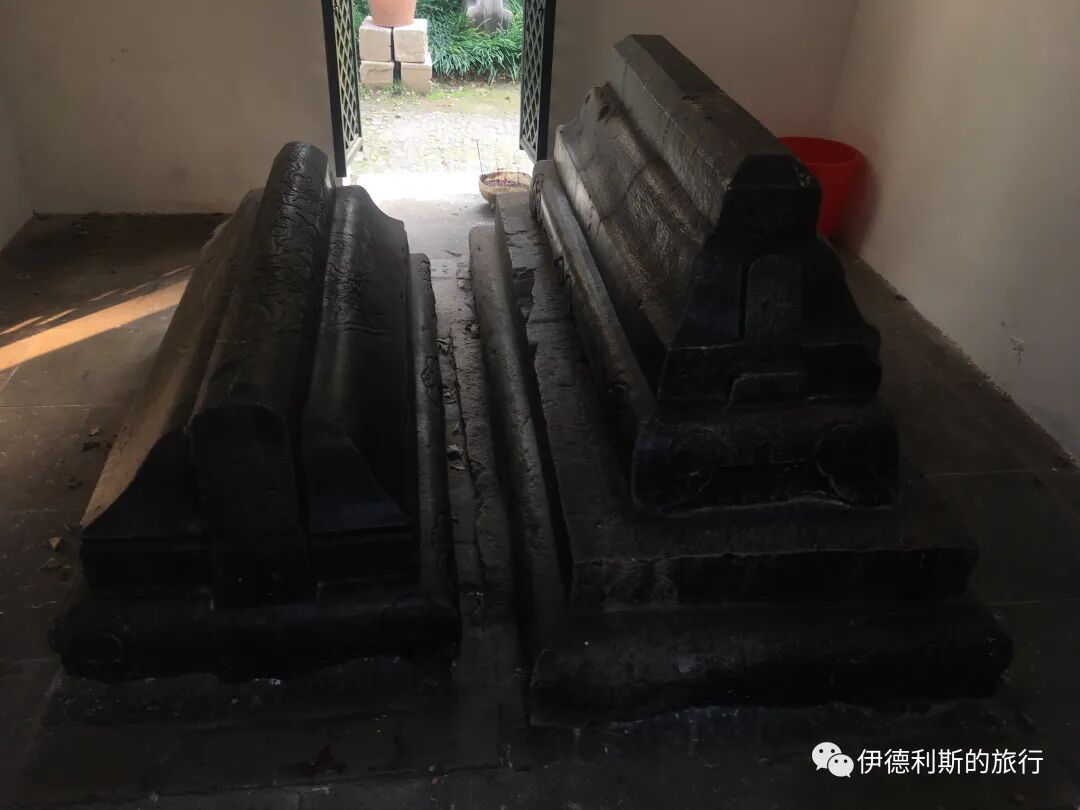
A merchant from Chang'an County, Xi'an Prefecture, Shaanxi, passed away on the fourth day of the intercalary seventh month in the 14th year of the Hongzhi reign (1501). Erected by his son Wang Qi and grandson Wang Dong.
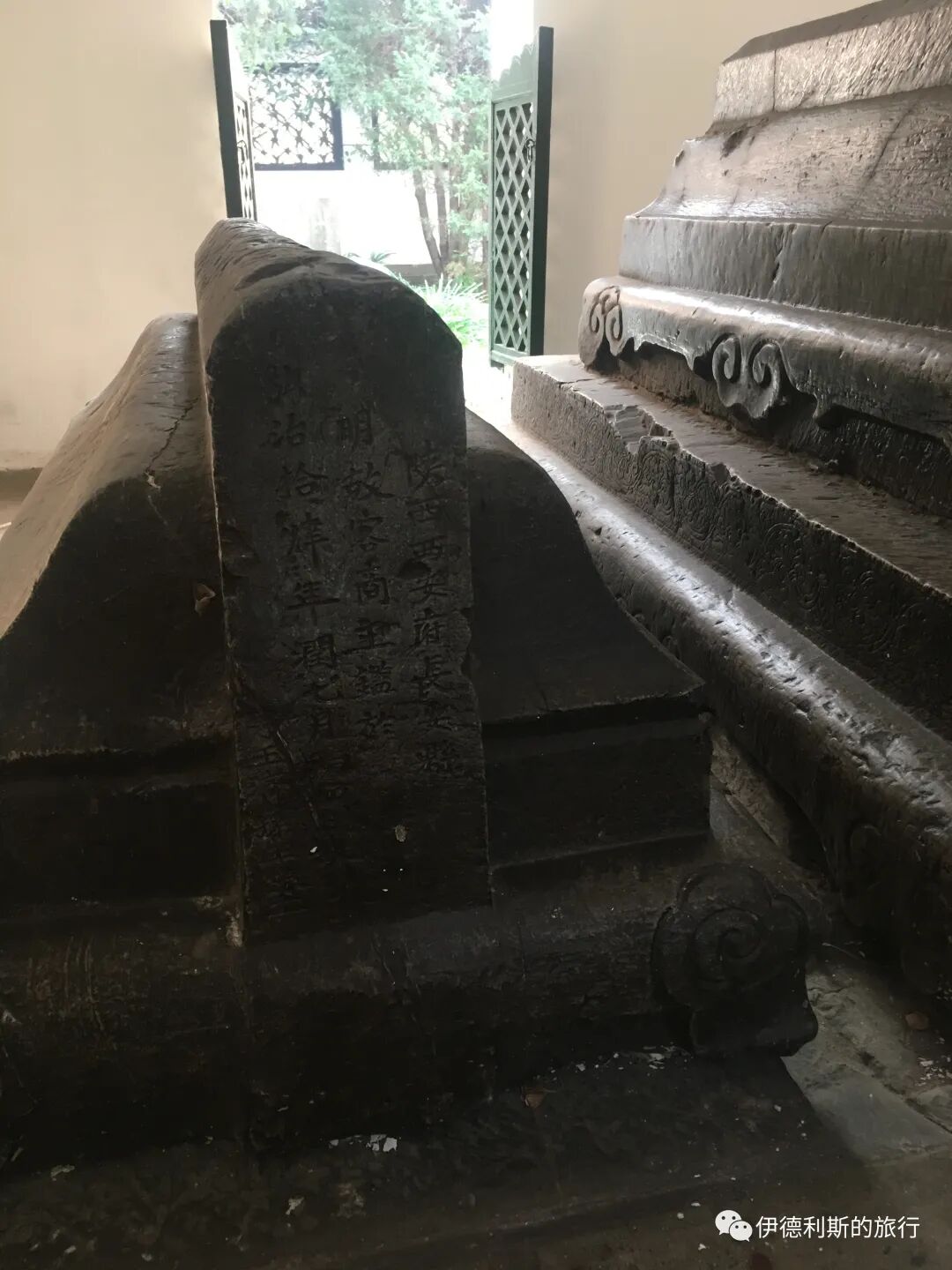
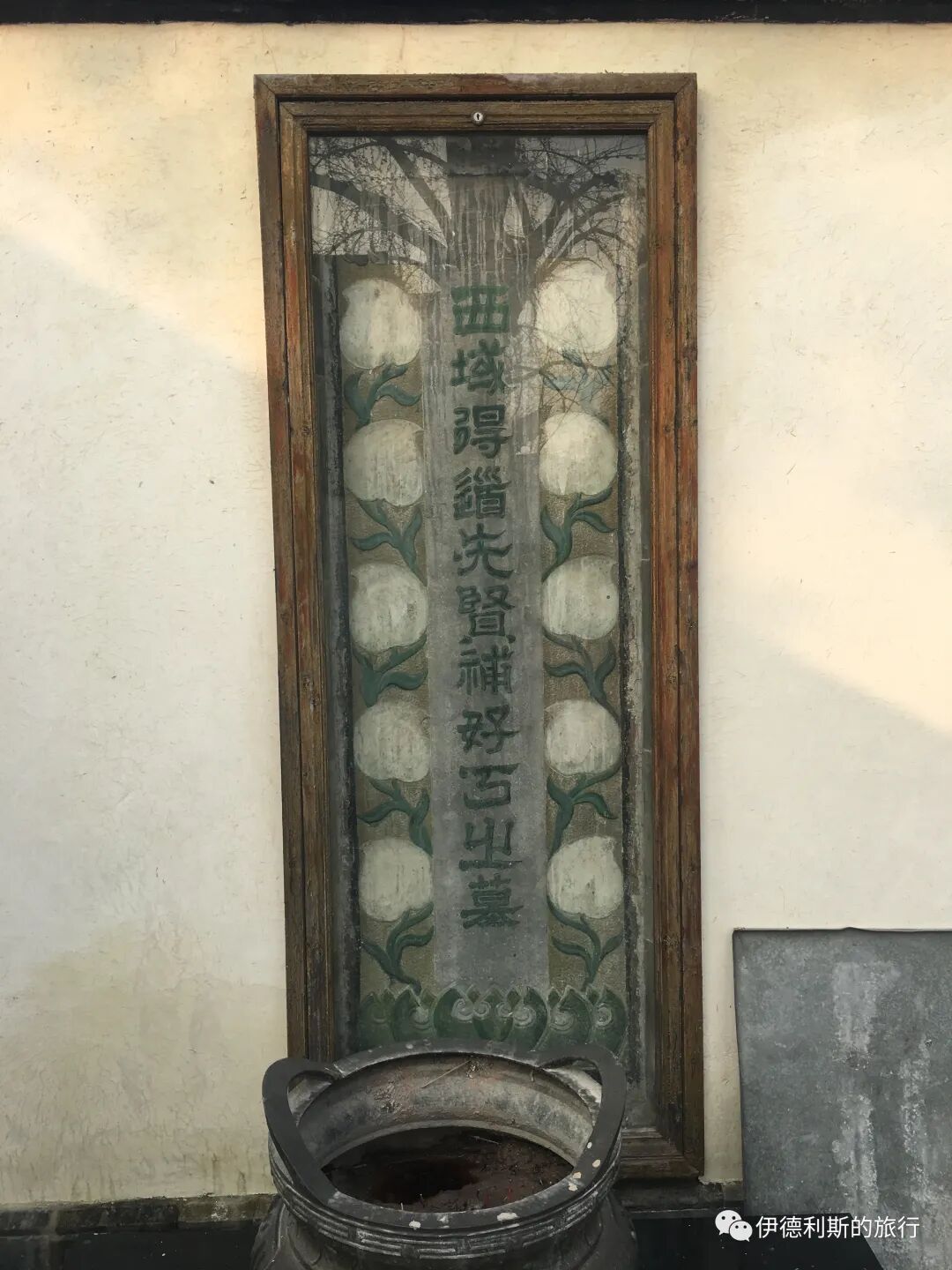
The Puhading Tomb photographed by missionary Claude L. Pickens between 1934 and 1935.
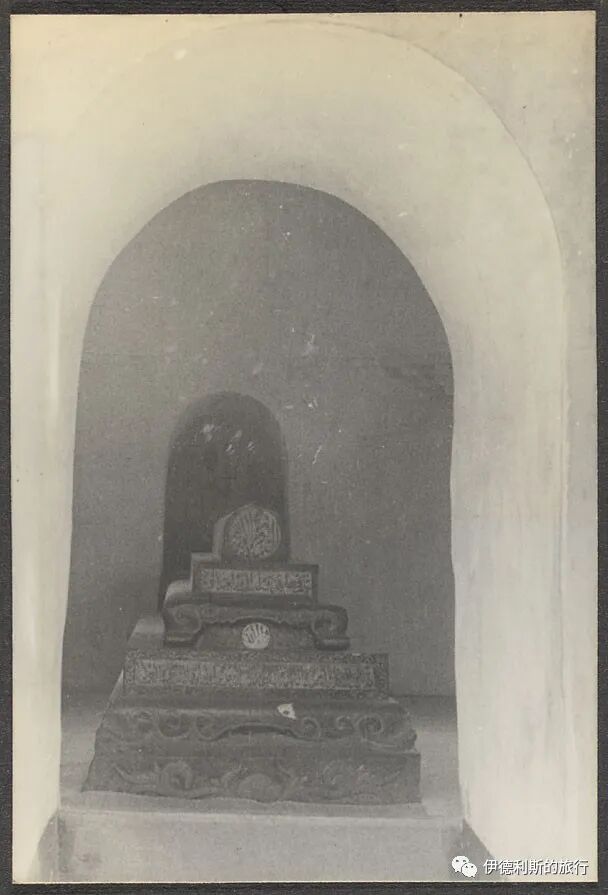
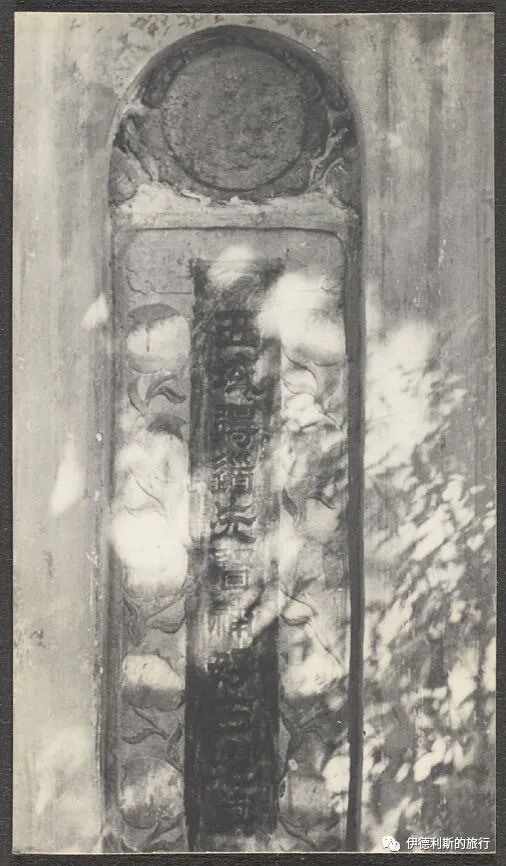
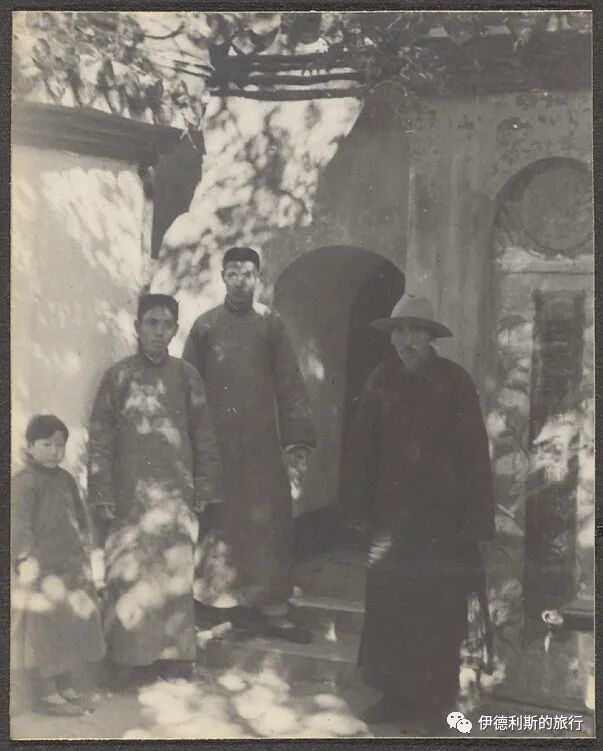
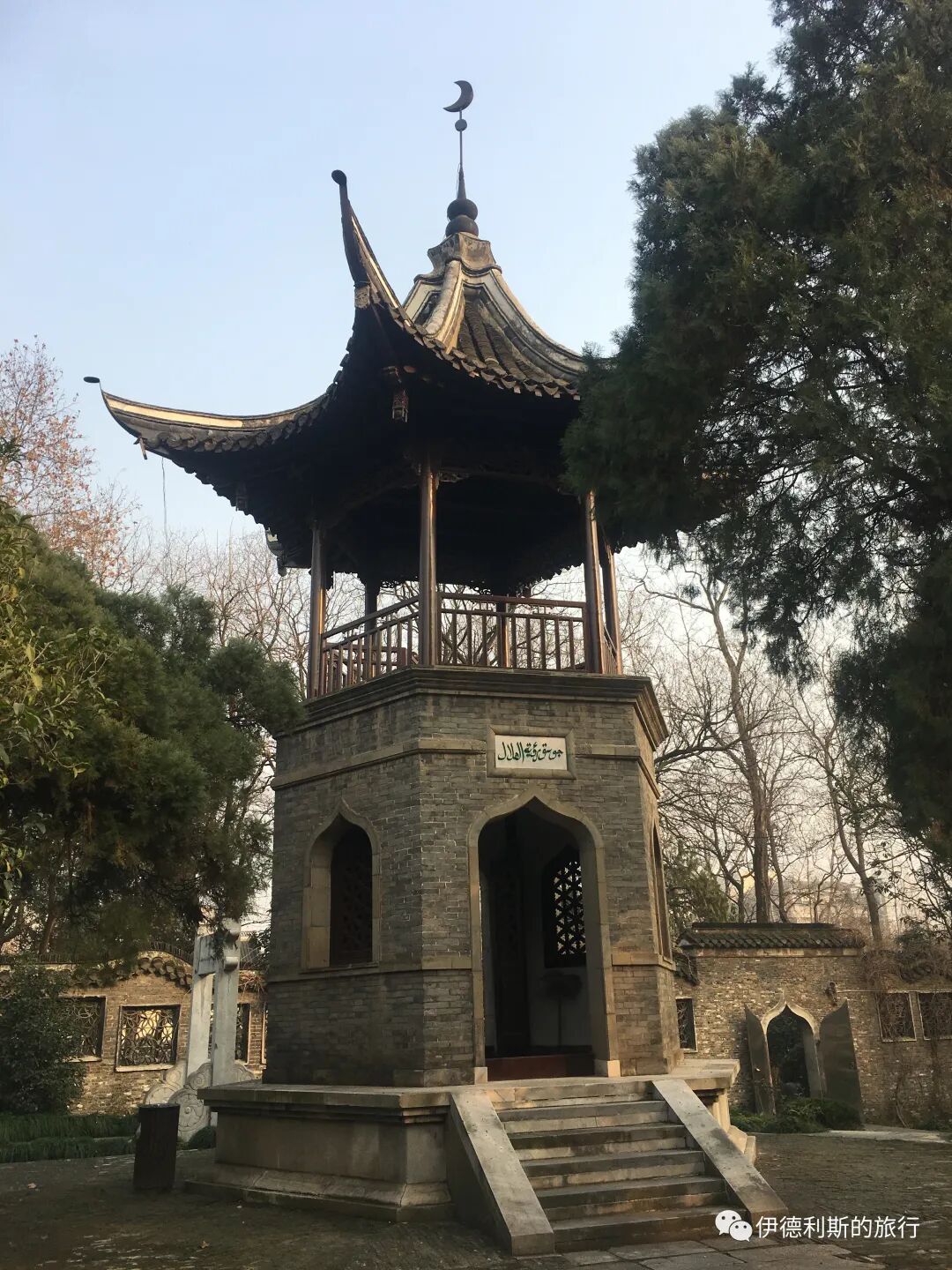
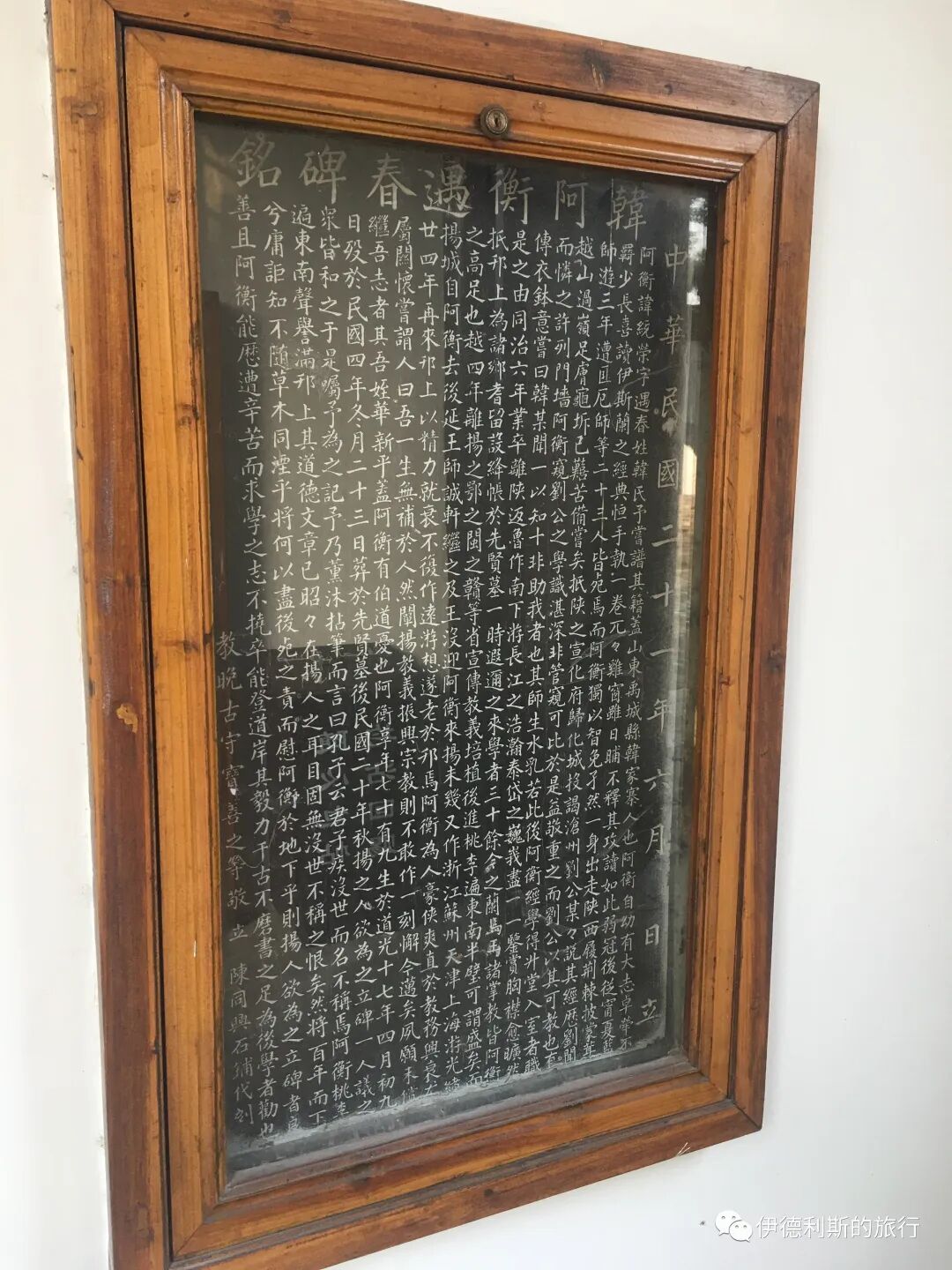
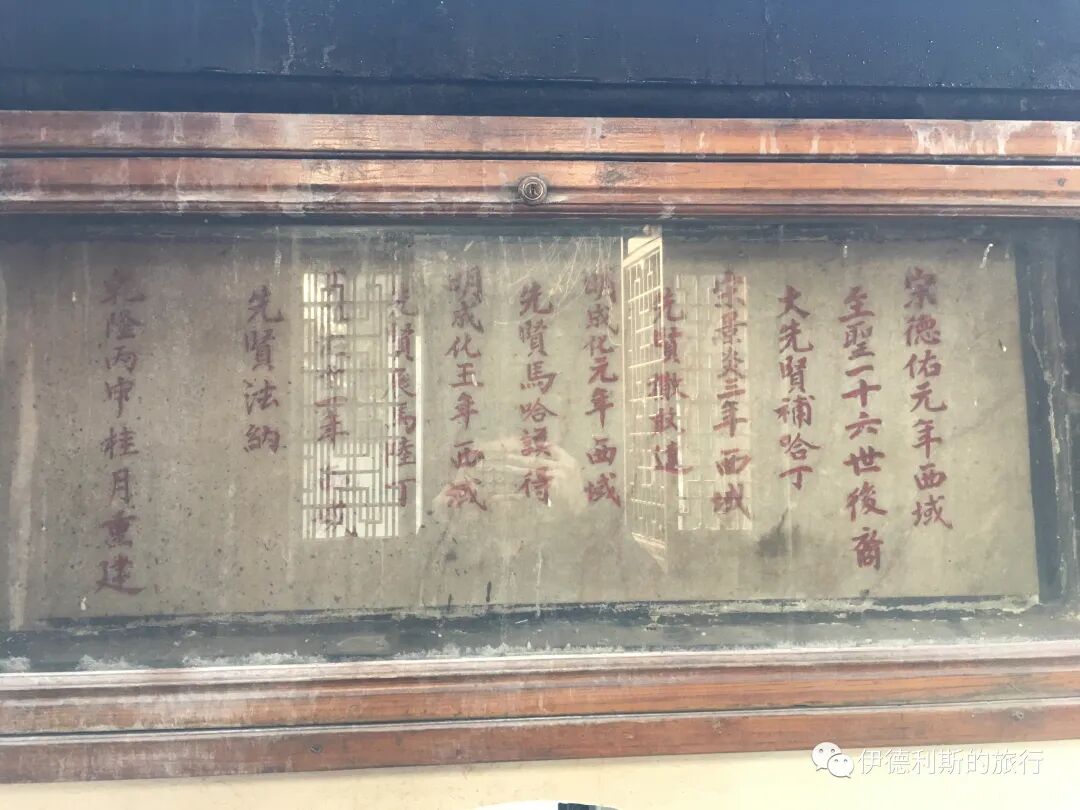
To the southeast of the Puhading Tomb lies the tomb cover of General Zhang Xin, who passed away in 1551 (the 30th year of the Jiajing reign). The tomb cover on the west side belongs to General Zhang Xin. The owner of the east side cover is still unknown, though it is likely a member of General Zhang's family.
General Zhang's ancestor, Damuchi, moved from Samarkand to settle in Yangzhou. The Continued Records of Jiangdu County from the Republic of China era state: 'General Zhaoyong, named Xin, was the grandson of the Hui Muslim Damuchi. He served as a Wuqi Duwei (a military rank). Because he was skilled at archery, he was granted the surname Zhang and registered in the Yangzhou Guard, located behind the Puhading Tomb outside Tongji Gate.'
The Zhang Gong Shendao Archway was erected in 1551 (the 30th year of the Jiajing reign) by Zhang Heng, the grandson of General Zhang Xin. Zhang Heng was a famous Ming dynasty general who fought against Japanese pirates and held the hereditary title of Yangzhou Guard Commander. In April 1556 (the 35th year of the Jiajing reign), when Japanese pirates attacked Yangzhou, the retired Huaiyang regional commander Zhang Heng personally led troops into battle and died on the field.
In May 2011, a 30-meter-long path was built on the south side of General Zhang Xin's tomb cover, and a pair of stone sheep that had been lost in Slender West Lake Park for 27 years were returned.
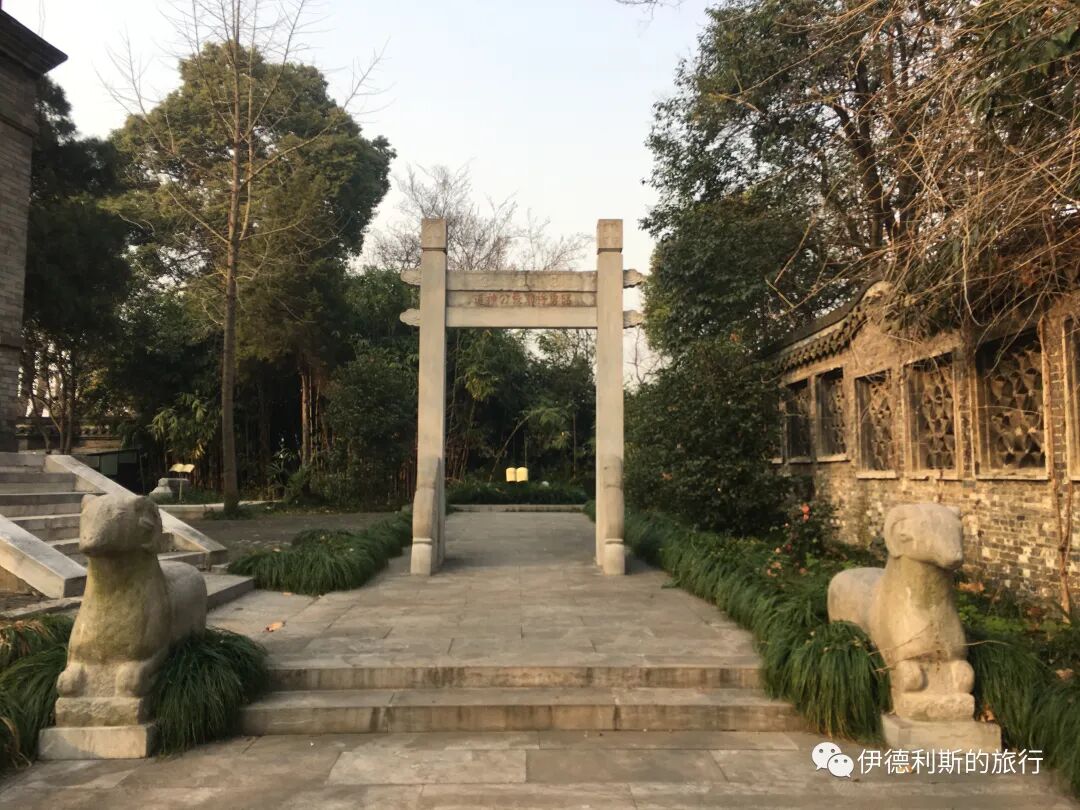
The Puhading Tomb photographed by missionary Claude L. Pickens between 1934 and 1935; the archway on the left side of the image is likely the Zhang Gong Shendao Archway.
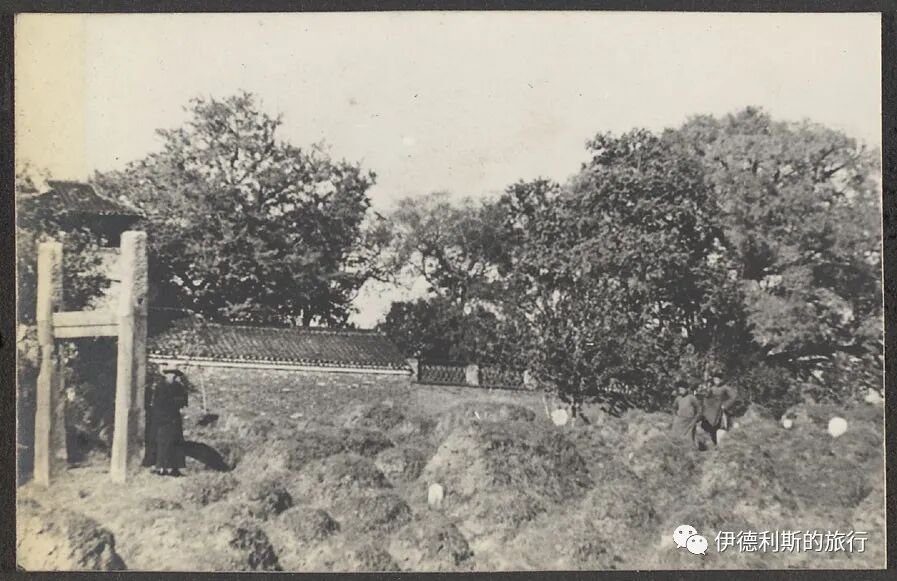
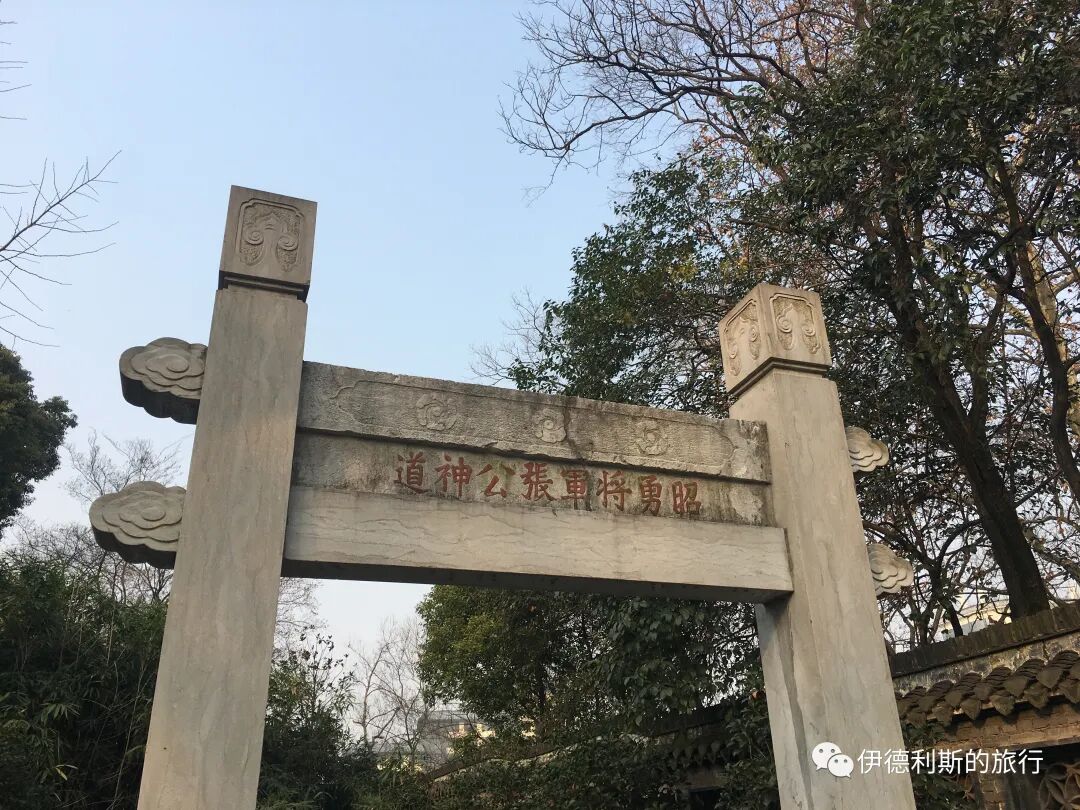
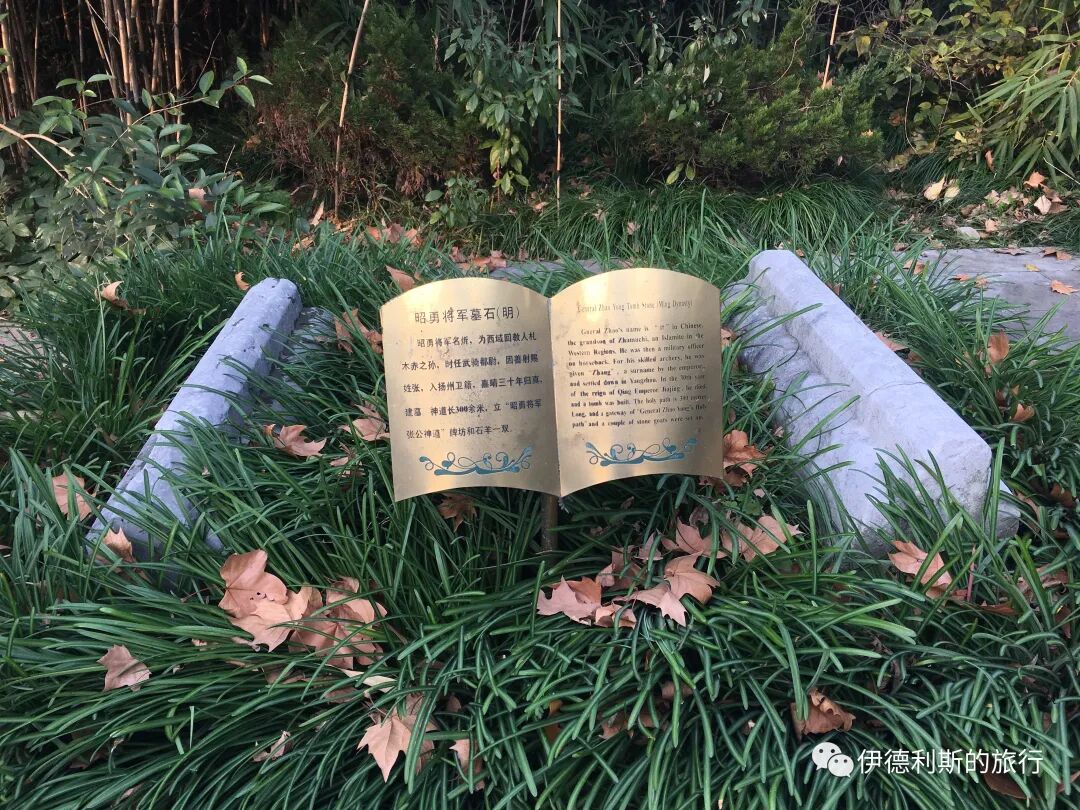
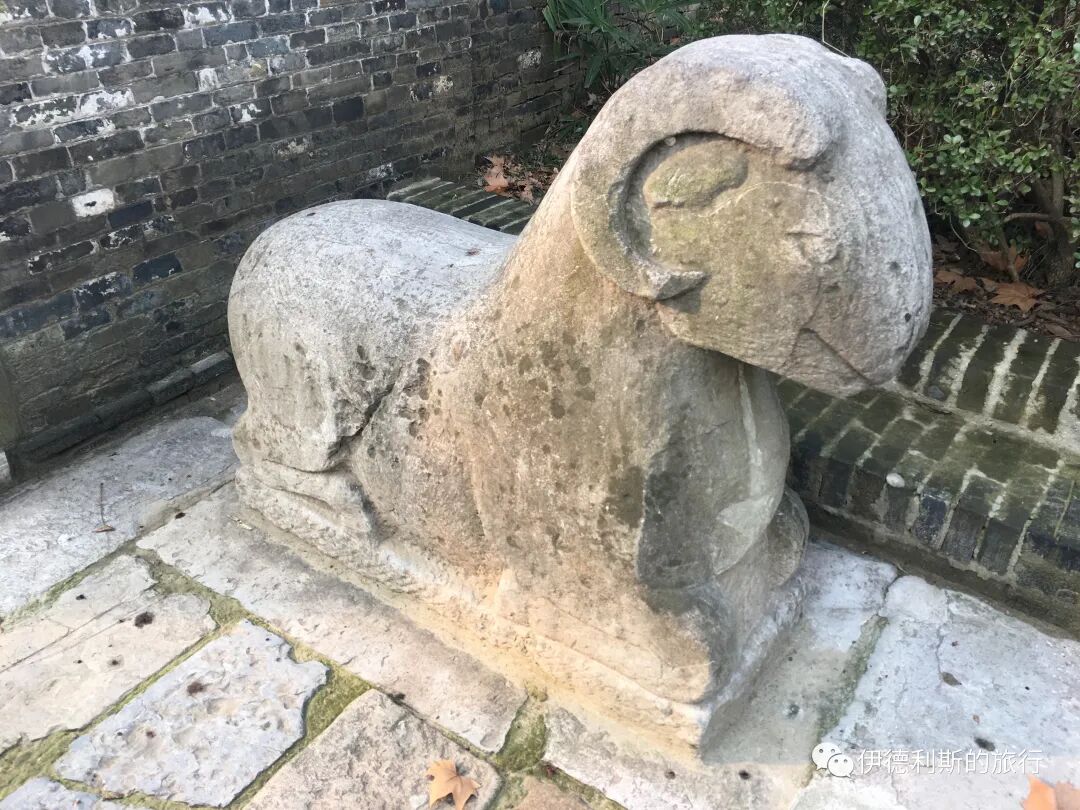
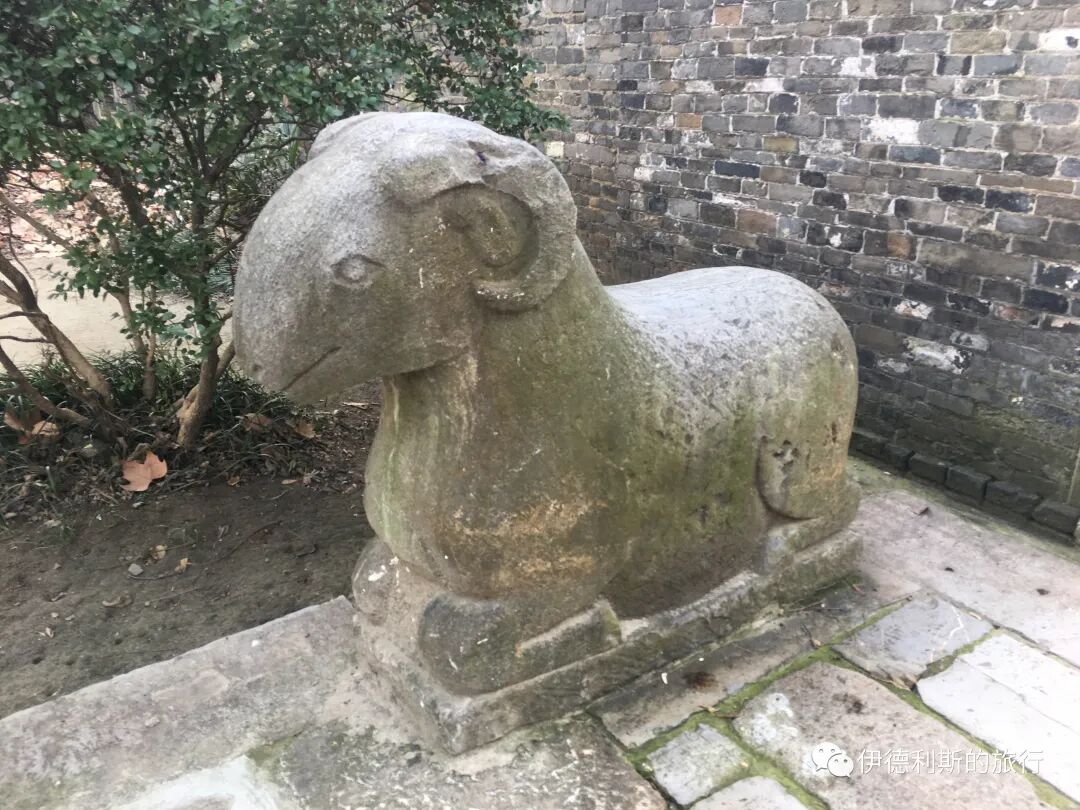
Next to General Zhang Xin's tomb is the cenotaph of Zuo Baogui, a famous Qing dynasty general who fought against the Japanese. During the First Sino-Japanese War in 1894 (the 20th year of the Guangxu reign), Zuo Baogui led his troops to defend the Xuanwu Gate in Pyongyang, dealing heavy blows to the Japanese army. On September 15, Zuo Baogui was personally firing cannons when his right arm was shattered. He bandaged his wound and continued to fight until a bullet struck his chest, and he died heroically at the age of 57. That same year, the Yangzhou government received an imperial order to build a cenotaph for Zuo Baogui in the southern area of the Puhading Tomb and establish a memorial hall. The hall was later destroyed, leaving only the stone tomb cover of the cenotaph.
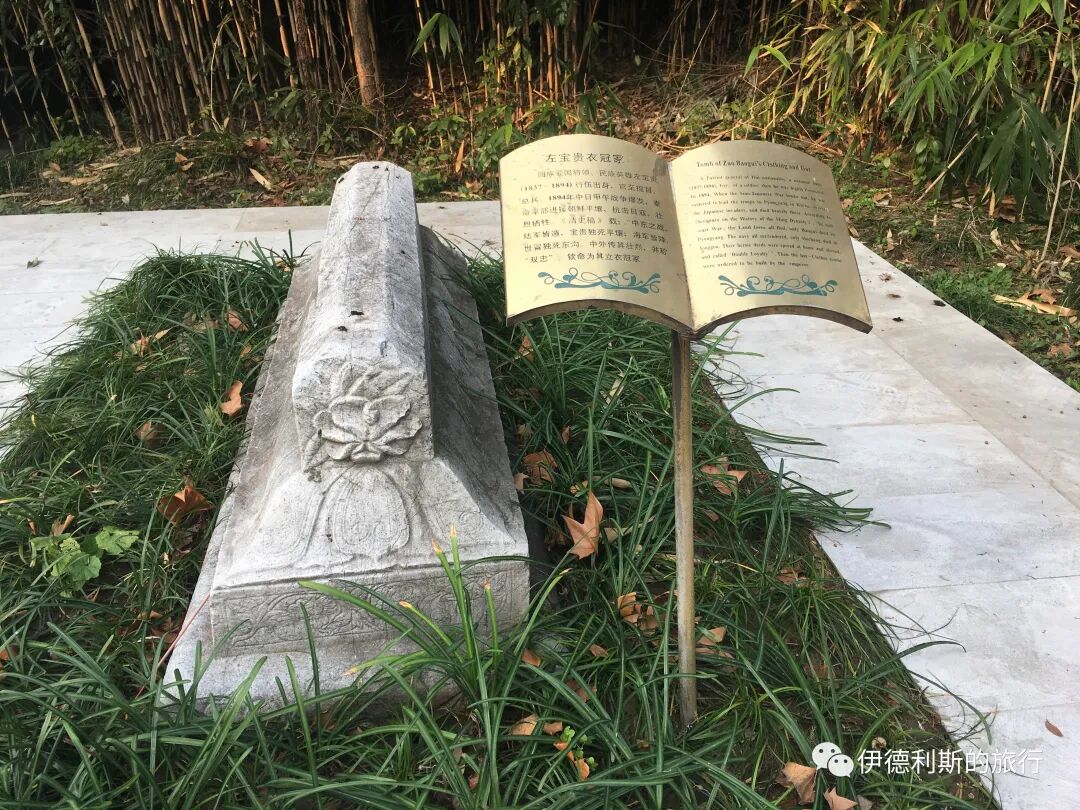
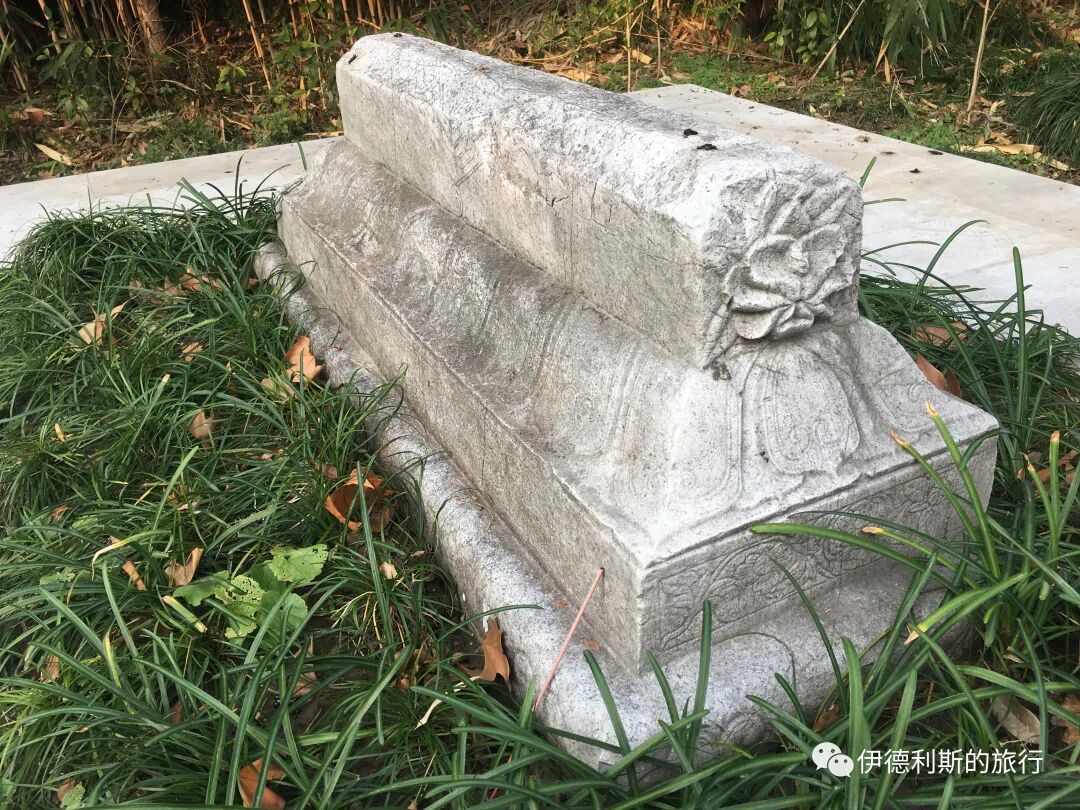
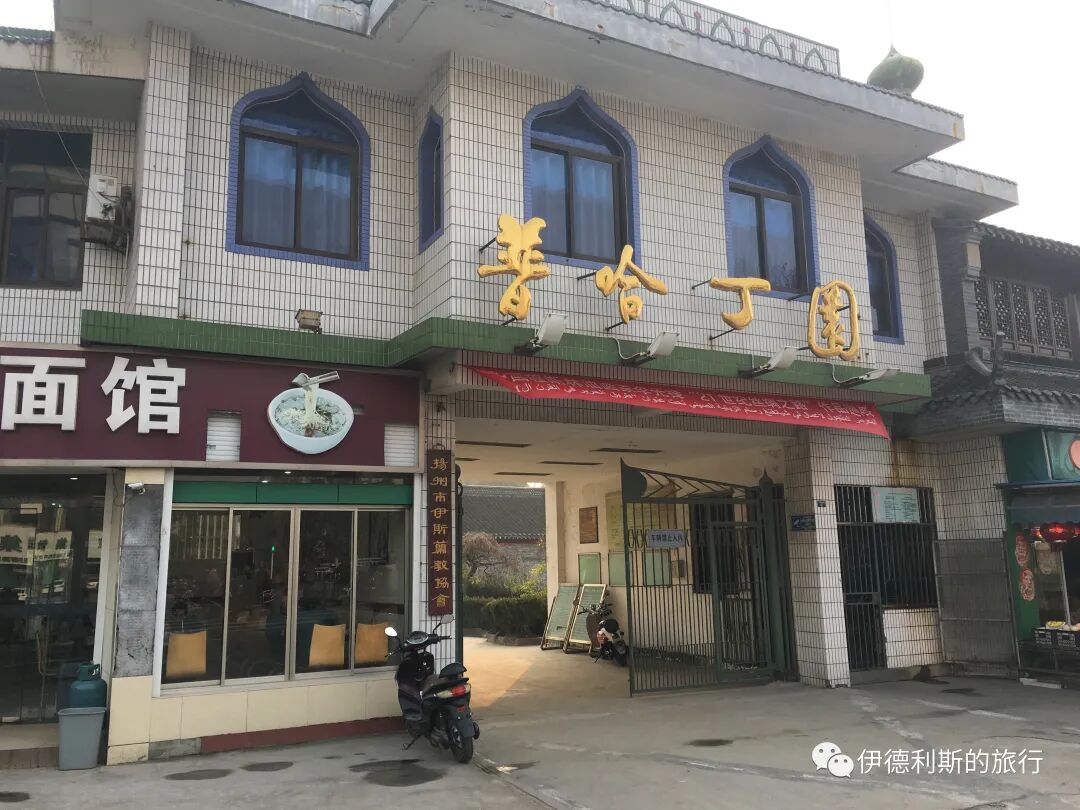
Majian Lane Mosque
There is another Majian Lane Mosque on East Gate Street in Yangzhou. According to the Gu family genealogy of the Hui Muslims, the mosque was built in 1714 (the 53rd year of the Kangxi reign) by Gu Yuanbing, the 24th-generation descendant of the ancient figure Bo Ding.
The Majian Lane Mosque originally had dozens of rooms, including a gate hall, a memorial archway, a main prayer hall, a reception hall, a washroom (shuifang), side rooms, and dormitories. Today, only two rooms of the main hall, the reception hall, and the washroom remain. In the early years of the Republic of China, the mosque housed the second Yangzhou branch of the Beijing-based Zhenzong Newspaper and an Islamic book and newspaper room.
In 1932, Liu Binru, a famous Yangzhou imam and one of the founders of the Chinese Islamic Association, along with Hua Ruzhou, then director of the Jiangdu County Hui Muslim Association, established the Chinese Islamic Scripture Translation Institute here to translate the Quran. Liu Binru, who was fluent in Arabic and Persian, was responsible for translating the Arabic original. Hua Ruzhou translated the summaries from the English version by the Indian Muslim scholar Muhammad Ali, which were then attached before the text of each section of the Quran.
On January 1, 1935, the Chinese Translation of the Quran with Ali's Summaries was officially published. The first printing was 2,000 copies, which were sold by major bookstores across the country.
In 1933, the Yangzhou Islamic Association founded the Hui Muslim Cultural Training Institute here, led by Liu Binru. to teaching Arabic, the institute offered Chinese, English, and arithmetic. The level was equivalent to higher primary school through junior high, and it replaced the traditional individual scripture teaching style with a modern classroom lecture format. Teachers included the Majian Lane Mosque imam Hua Jinhou, who was proficient in Arabic, Imam Ruan Dechang, Imam Lan Baohua of the Hui Muslim hall outside the East Gate, and Liu Binru. They also hired Hui Muslim Association members Shen Junchen and Zhang Shaozhe to teach Chinese and arithmetic, and Hua Ruzhou to teach English. There were over 30 students, but the school closed after one year due to a lack of funds.
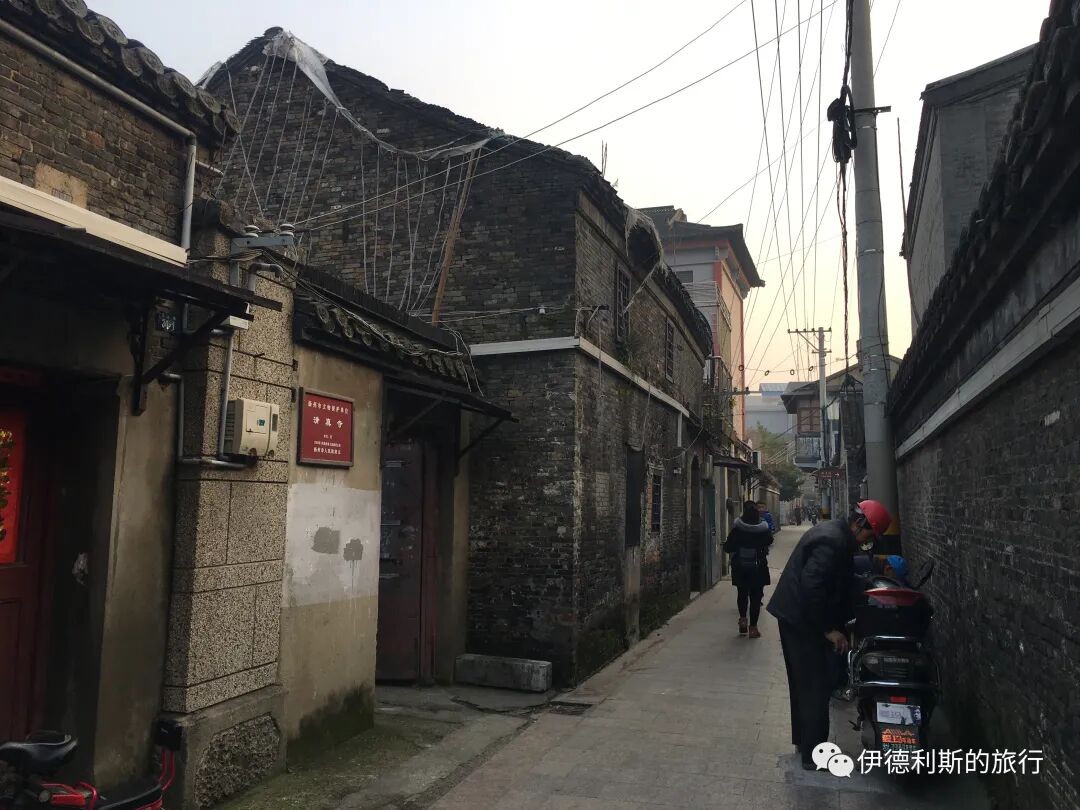
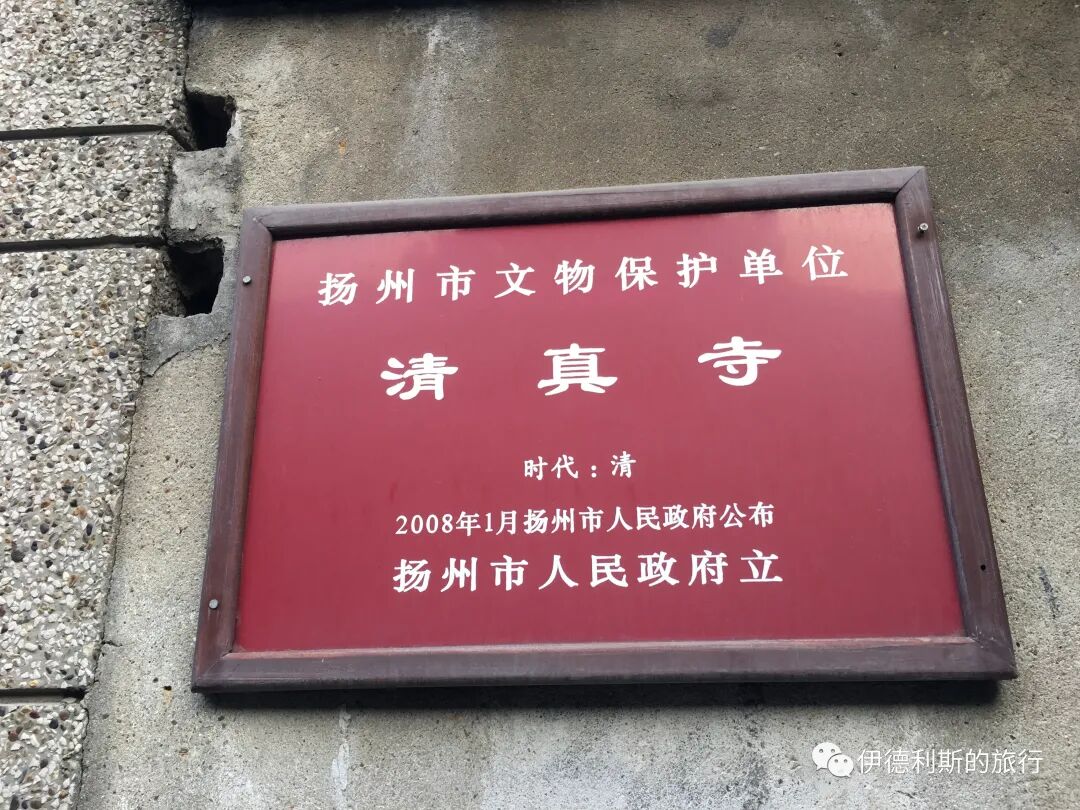
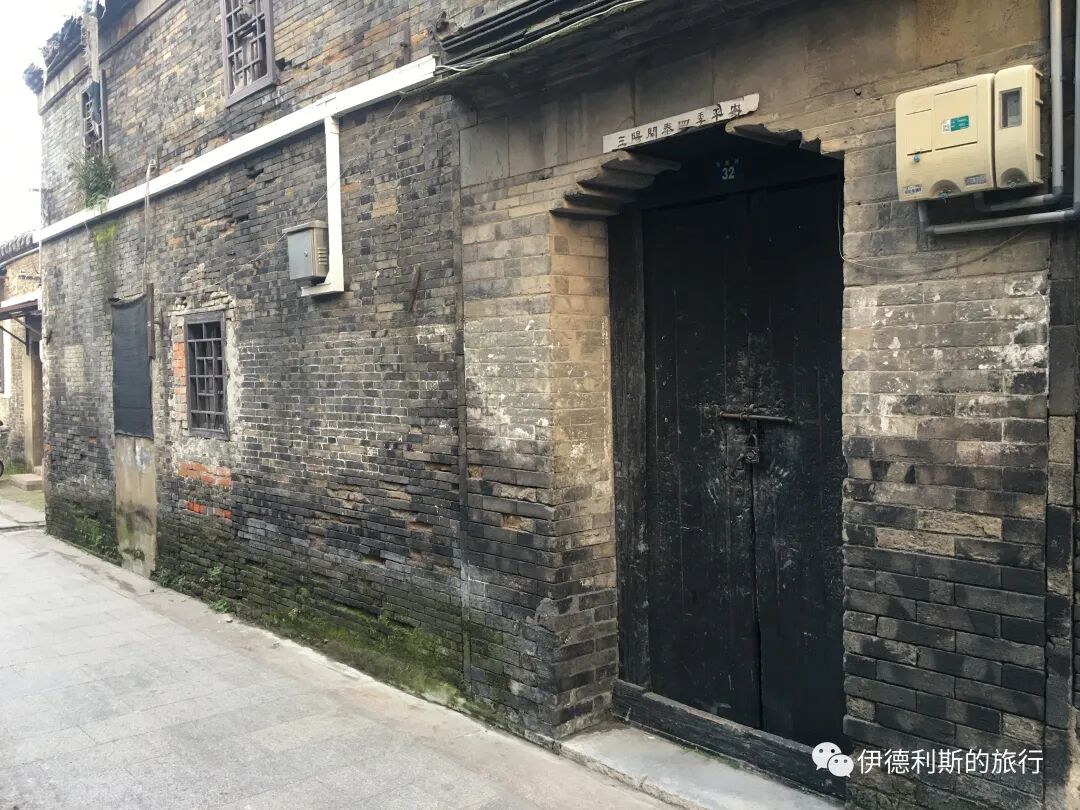
Between 1934 and 1935, the missionary Claude L. Pickens Jr. (Bi Jing-shi) visited the Majian Lane Mosque. He saw a reading room inside with many Muslim magazines, as well as the Quran translated by Wang Jingzhai and parts of the Quran translated by Liu Binru and Hua Ruzhou mentioned earlier. He also photographed the Gu Gong Memorial Monument, which was erected in the mosque in 1931. It stated that Gu Su had served as a mosque trustee for 11 years, repaired the washroom and market stalls for the mosque, and built a new greenhouse, making great contributions to the mosque.
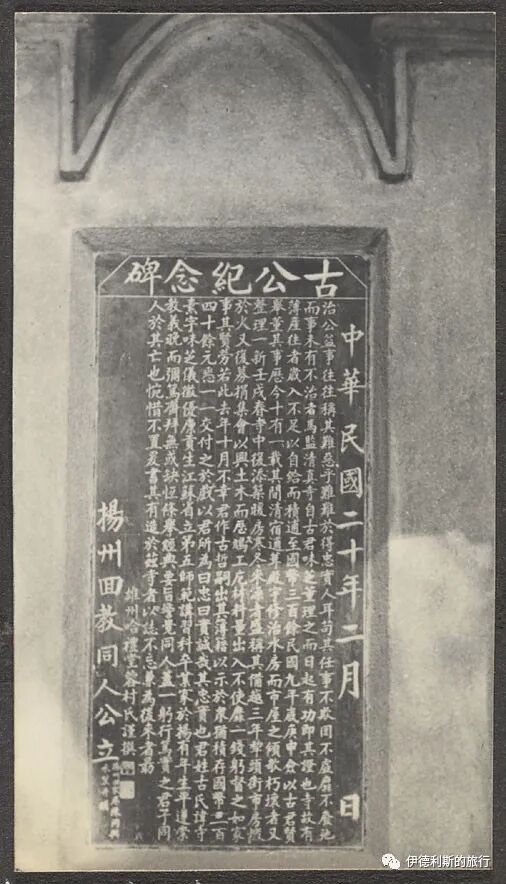
In the autumn of 1946, the Yangzhou Hui Muslim Youth Association founded the Shengsheng Primary School at the mosque, with Liu Binru serving as chairman. The school was a full primary school. When it opened, it had three multi-grade classes and enrolled 150 students. It provided free tuition for the children of Hui Muslims, offered books to those in extreme financial difficulty, and also provided free support to non-Hui Muslim children from poor families. Most of the teachers were unemployed Hui Muslim youths. The school closed in the summer of 1949.
In 1958, the mosque was converted into a factory workshop and occupied by a craft sign factory, a sack factory, and a brush factory. The property was not recovered until 1997, and in 2008, it was listed as a municipal-level cultural heritage site.
Halal food in Yangzhou during the Republic of China era.
The information in this section comes from "Islam in Yangzhou" and "Islam in Yangzhou."
The earliest records of halal food in Yangzhou come from the "Yangzhou Pleasure Boat Records" (Yangzhou Huafang Lu), an encyclopedia covering all aspects of Qing Dynasty Yangzhou. It mentions a cooked lamb shop called the "Hui Muslim Pavilion" (Huihui Guan), pleasure boats called "Ma the Hui Muslim's Ox Tongue" (Ma Huizi Niushetou), and a shop called "Kong Wu's Ox Tongue" (Kong Wu Niushetou). It also notes that "Zhang Si the Hui Muslim's Whole Lamb" (Zhang Si Huizi Quanyang) was a famous dish in Yangzhou at the time.
During the late Qing Dynasty and the Republic of China era, halal food in Yangzhou reached its peak. After entering the Republic of China era, lamb almost disappeared from Yangzhou's halal food scene, which shifted to focus mainly on beef, supplemented by poultry and fish. Many halal beef slaughterhouses were concentrated on Wazi Street. Some of the more famous ones included those run by Wang Tonglan, Jin Zhao'an, Wang Ting, Jin Ronghua, Zhang Youfu, and Li Sanlong. The second and eighth days of every lunar month were cattle market days, which were very busy.
During the Republic of China era, there were over a dozen famous halal restaurants in Yangzhou, which were very popular in the 1920s and 1930s. Examples include Ma Gongxing on Litou Street, Muyuanxing at the north entrance of Yuanmen Bridge, Ma Guangxing Restaurant on Zhuan Street, Tianxing Restaurant on Zuowei Street, Daxing in Darufang, and the Xinxin and Xinlong restaurants in Jiaochang. Among them, Tianxing Restaurant was the most famous.
Opened in the early years of the Republic of China, Tianxing Restaurant was the most famous halal restaurant in Yangzhou at the time. It was located at the busy intersection of Zuowei Street. The building had seven sections from front to back, each consisting of three large, high-ceilinged rooms. The rear section had a spacious flower hall on the east side that could host fifty banquet tables at once. At that time, everyone from scholars and writers to salt merchants and officials frequented the restaurant. Famous Peking opera actors Zhou Xinfang and Cheng Yanqiu would eat at Tianxing whenever they came to Yangzhou to perform.
Tianxing Restaurant was especially skilled at making shark fin and fish skin, and its roast duck was second to none. Famous dishes included braised shark fin (yuanmen yuchi), clear soup shark fin (qingtang yuchi), hibiscus chicken with shark fin (furong ji yuchi), skin-wrapped fin (pijia chi), roast duck (kaoya), braised chicken with crispy meatballs (yuanmen ji suyuan), ten-delicacy fish maw (yudu shijing), braised beef tendon (bashao niujin), and fish stuffed in lamb (yangfang cangyu).
There were over a dozen halal chicken and duck shops in Yangzhou. The most famous was Linyuanxing Chicken and Duck Shop, which was the predecessor of the later Halal Hongxing Ethnic Restaurant. The founder of Linyuanxing Chicken and Duck Shop was Lin Guangfeng, also known as Songting. When he was young, he worked for two or three years for his relative, Governor Shan Diankui, in Beijing. After returning to Yangzhou, he apprenticed at the halal Muyuan Restaurant. After his apprenticeship, Lin Guangfeng opened the halal Baoxing Restaurant, which also sold chicken and duck. It later closed due to poor management of staff. After Baoxing closed, Lin Guangfeng opened the halal Linyuanxing Chicken and Duck Shop at the North Archway entrance, where he sold his own products. The North Archway was a busy market back then, filled with snack stalls, magicians, acrobats, and fortune tellers. Linyuanxing did a booming business selling oil-poached chicken (youji), pressed duck (bandya), and roast duck (shaoya).
Linyuanxing's oil-poached chicken was white in color and fragrant, with a tender, delicious texture that even the elderly could chew easily. Pressed duck and salt-water duck (yanshuiya) are both called salted duck. In practice, they sold salt-water duck during spring, summer, and autumn, and pressed duck in winter. Pressed duck was salted and prepared in the ten days before the Minor Snow (xiaoxue) solar term until the middle of the eleventh lunar month, then hit the market before the Spring Festival. The secret to Linyuanxing's salted duck was the aged brine and the heat control; they were so precise that they would not cook even one bird more than the set amount per pot. Linyuanxing's roast duck was different from the large-fork roast duck in other shops; they used small forks to prop the ducks up inside the oven for hanging roast. The belly broth (dutang) from the roast duck was very flavorful. When customers bought roast duck, the shop gave them some broth to take home, mix with water, and simmer with the duck for a delicious soup.
Linyuanxing had an agreement with the imam of the mosque to come to the shop on time every day to perform the slaughter. Everything was freshly prepared, and any sick poultry was disposed of immediately. When customers came to the shop, the staff would chop whatever part they pointed to, treating regular customers and strangers exactly the same.
After decades of training, members of the Lin family opened their own shops. In Yangzhou, there was Linmaoxing at Dadongmen, Linshunxing on Zhuan Street, and Linzhenxing at Xiaodongmen. Outside the city, there was Linmaoxing on North Henan Road in Shanghai and Linyuanxing at Taibai Temple Bridge in Suzhou. Many other Lin family members also sold halal chicken and duck at the Xuanmiao Temple and Guanqian Street in Suzhou, and at the small docks in Zhenjiang.
Besides chicken and duck shops, there were over a dozen halal beef shops in Yangzhou. Famous ones included Chenwanxing in the drill ground (jiaochang), Xiaoqizi at the north entrance of the drill ground, Liertuozi on Zhuan Street, Chengsan (Zhaoxiang), and Sister Ma at the South Gate. Chenwanxing was known for its beef potstickers (guotie), steamed buns (baozi), and rice porridge (shaomi). They used a flat-bottomed pan to fry them, making them soft on top and crispy on the bottom. Their five-spice beef was especially famous. They used beef shank (zoujingzhua) that was marinated and boiled. When sold, it was sliced so thin it was translucent and sprinkled with five-spice powder. In summer, they wrapped it in fresh lotus leaves, making the beef smell fragrant and fresh. In winter, they sold frozen lamb jelly (yanggao), which was delicious when dipped in sweet sauce.
Xiaoqizi Beef Shop sold raw and cooked beef, as well as beef soup, beef noodles, steamed beef buns, steamed beef dumplings, pan-fried beef buns, and their most famous beef potstickers. Liertuozi was most famous for his beef soup. His soup was rich and authentic, served with beef tripe, beef tongue, beef liver, beef lips, plain boiled beef, and beef tendon (tuijinjua), making it refreshing and tasty. Sister Ma's shop is located at the South Gate of Yangzhou and is famous for its superb knife skills. The beef slices she cuts are as thin as paper and flutter when the wind blows.
Beyond meat, there are over thirty Hui Muslim flatbread (shaobing) shops in Yangzhou, offering flavors like flaky (casu), white sugar, red bean paste, salt and pepper, scallion oil, shredded radish, pea (andoutou), and osmanthus brown sugar, with shapes including rectangular, oval, diamond, and chrysanthemum. The most famous one is Mu Si Flatbread Shop at the entrance of Quelong Lane in Jiaochang. Their sesame oil dry-mixed noodles are neither hard nor mushy, with seasonings that soak deep into the noodles, making them very refreshing. Their most famous item is the straw-oven flatbread (caolu shaobing), baked in a square vertical jar oven taller than a person, with a dome-shaped interior and a round opening one and a half feet in diameter at chest height. To make them, they first heat the oven's dome and side walls with straw, dampen the interior with water once hot, and then stick the fermented dough portions onto the inner walls. After sticking them on, they close the oven door and bake them with the residual heat of the straw ash, shoveling them out once they are golden, cooked, and plump like steamed buns (mantou). One oven can bake forty to fifty flatbreads, which are crispy, fragrant, soft, and very cheap, attracting many farmers coming into the city to buy them. Because the flatbreads are thick, they need to be soaked in soup to fully soften; in the past, when a woman was recovering from childbirth, her family would send her straw-oven flatbreads and an old hen to nourish her body.
Additionally, there are the tall steamed buns (gaozhuang manshou) and salt and pepper rolls (jiaoyan juanzi) from Wang's Noodle and Flatbread Shop at Dongquan Gate, which taste best when dipped in beef gravy. The sesame oil dry-mixed noodles at Mu Si Flatbread Shop at the entrance of Quelong Lane in Jiaochang are neither hard nor mushy, with seasonings that soak deep into the noodles, making them refreshing to eat.
During the Republic of China era, Yangzhou had two halal tea and snack shops: Defeng on Wanzi Street and Tongfeng on Gengzi Street. Because they used only vegetable oil, not only did fellow Muslims (dost) buy from them, but many monks, nuns, and vegetarian Han Chinese also purchased their goods, especially their fruit powder (jingguofen) and mooncakes, which were particularly popular.
There were also two halal teahouses in Yangzhou: the Park Religious Room (Gongyuan Jiaomenshi) and the Old Dragon Spring Vegetarian Teahouse (Laolongquan Suchaguan) in Jiaochang. The Park Religious Room was located in the park next to Park Bridge in the city center, with three rooms side-by-side facing west. The first room was for the stove and cutting board, while the other two were for tea seating. The teahouse is filled with cypress wood square stools and tables. The east wall has floor-to-ceiling glass windows, and right outside is the Little Qinhuai River, where you can see clear water and weeping willows from your seat. Painted pleasure boats from Slender West Lake often dock at the pier next to the teahouse. Locals board boats here to go through the North Gate water gate all the way to Slender West Lake for sightseeing. On the way back, they land at the same pier and can stop by the halal teahouse for tea and snacks. Go enthusiasts in the city often gather here to drink tea, play games, and sharpen their skills. The halal teahouse is open for morning and afternoon sessions, serving plain tea, pastries, and dried tofu strips (gansi). The menu includes jade steamed dumplings (feicui shaomai), small steamed beef buns (xiaolong zheng niurou baojiao), beef and lamb dumplings (niuyangrou shuibobo), pan-fried beef and lamb buns (jian niuyangrou bao), beef potstickers (niurou guotie), scalded dried tofu strips (tang gansi), boiled dried tofu strips (zhu gansi), bamboo shoot and beef strips (sunsi niurusi), beef and lamb noodles (niuyangrou mian), stir-fried noodles (chaomian), and braised noodles (weimian). The best item is the pan-fried pancake (youjian guobing), which has a thin crust, plenty of filling, and a sweet, crispy flavor.
The Old Longquan Vegetarian Teahouse at the drill ground is a place for both drinking tea and trading antiques. Many antique dealers gather here to talk business during morning tea time. This place is most famous for its vegetable oil baked flatbread (suyou huoshao) and sugar and salt rolls (tangyan juanzi).
The halal teahouse has only one waiter, a short, thin, middle-aged man whom regular customers call Little Mouse. He is quick and always greets people with a smile. As soon as a customer leaves, he wipes the table with alkaline water and then cleans it with boiling water.
The halal food industry in Yangzhou declined sharply around 1949. Daxing Shop closed first, followed by Tianxing Restaurant, and other shops either changed businesses or shut down. After many twists and turns, only the struggling Ethnic Restaurant on Ganquan Road remained.
Tianxingzhai
For my first meal in Yangzhou, I went to Tianxingzhai, which just opened 16 years ago. I ordered boiled dried tofu strips (dazhu gansi), steamed beef dumplings (niurou zhengjiao), sticky rice and shrimp steamed dumplings (nuomi xiaren shaomai), beef noodles (niurou mian), smoked fish (xunyu), and chicken soup with vegetarian chicken (jitang suji). It is not easy for a new local-style halal restaurant to open in Yangzhou, and the food here is delicious with a slightly sweet taste. The beef noodles are huge and taste amazing, and the steamed dumplings are the best. I don't think any halal restaurants in Beijing can compare. (This place was not doing well when I visited again in 2021.)
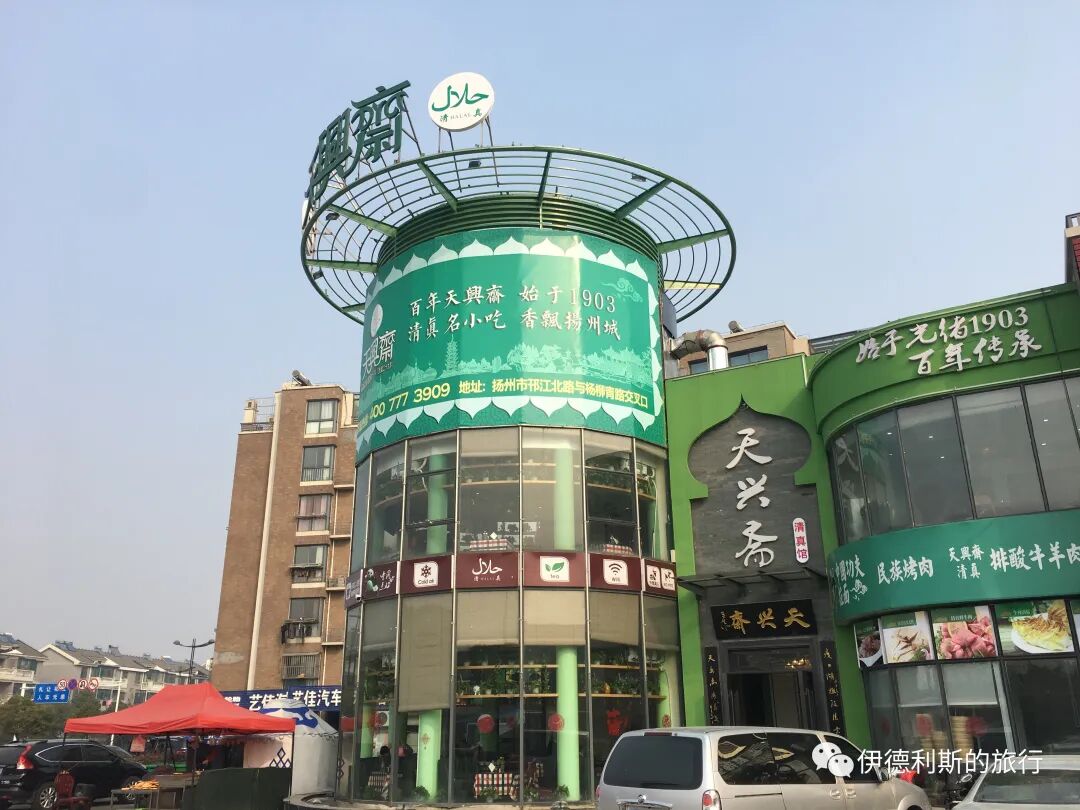
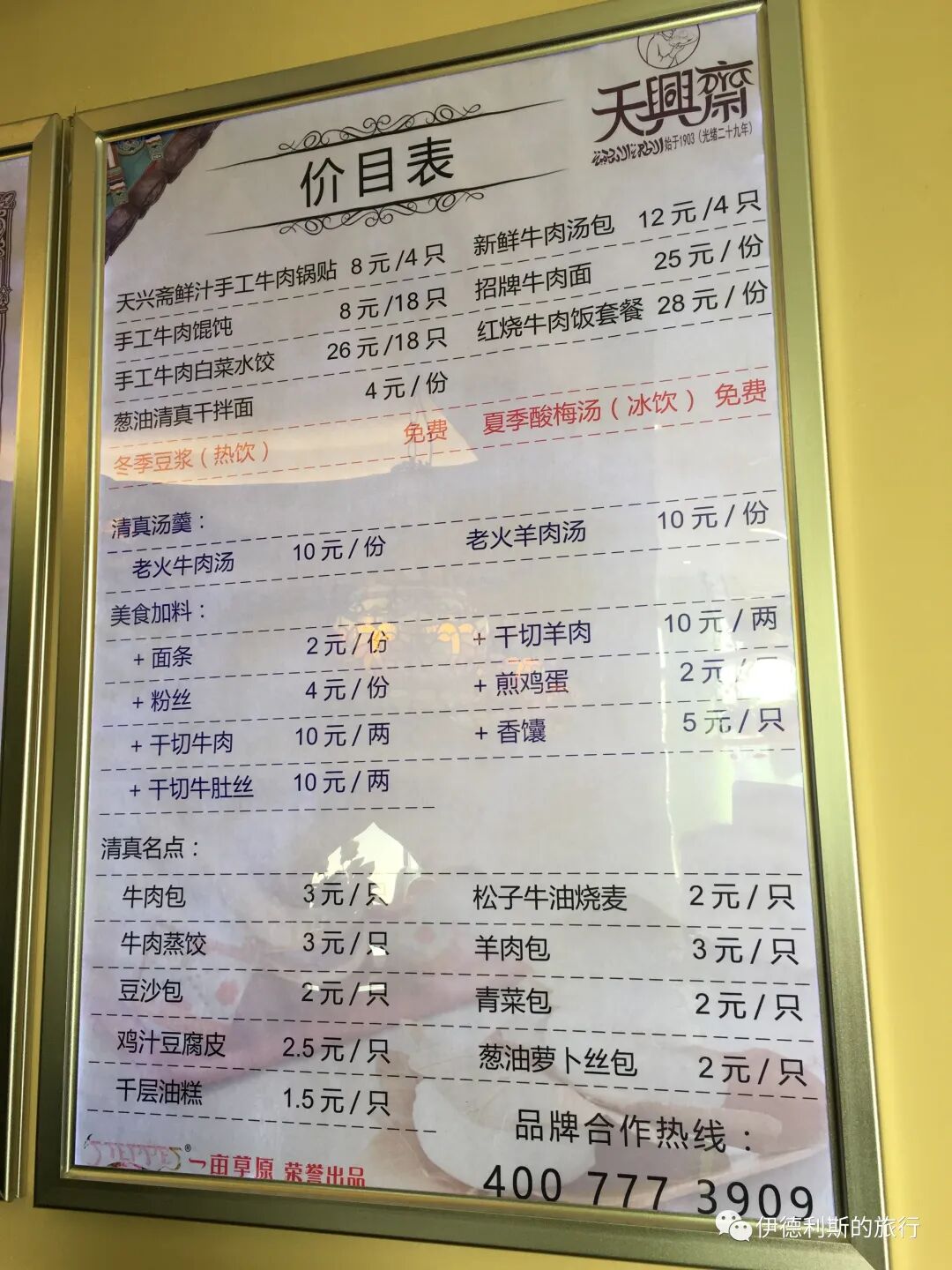
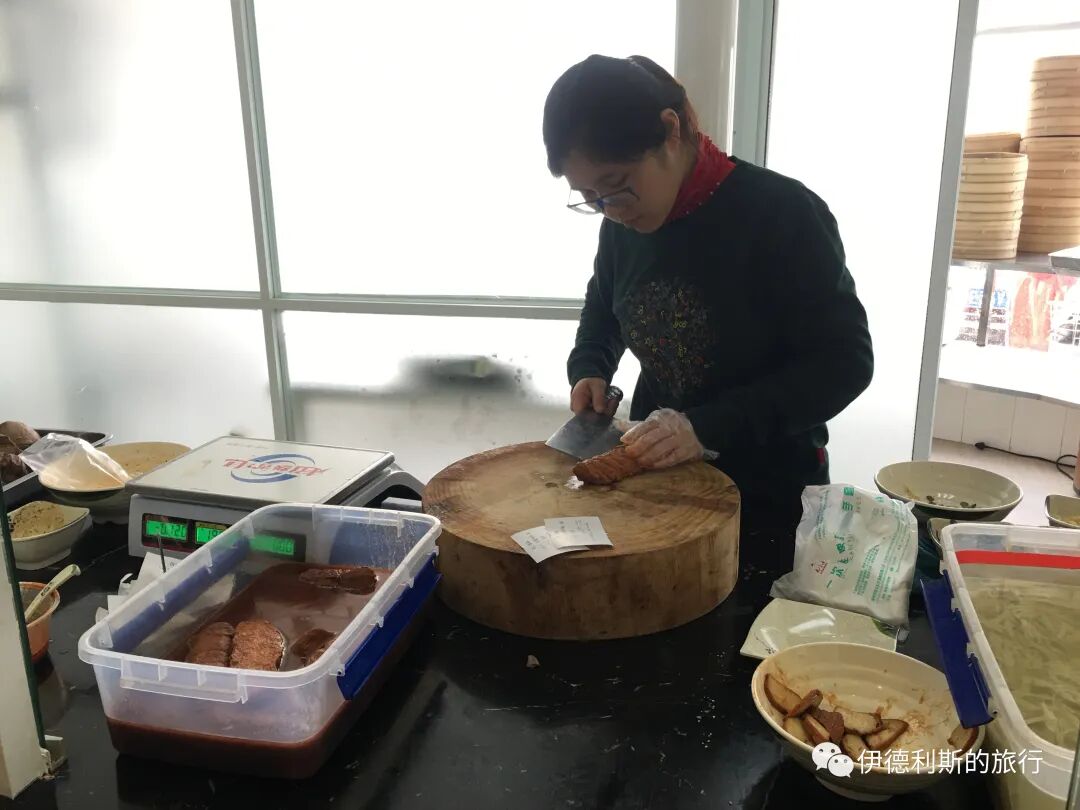
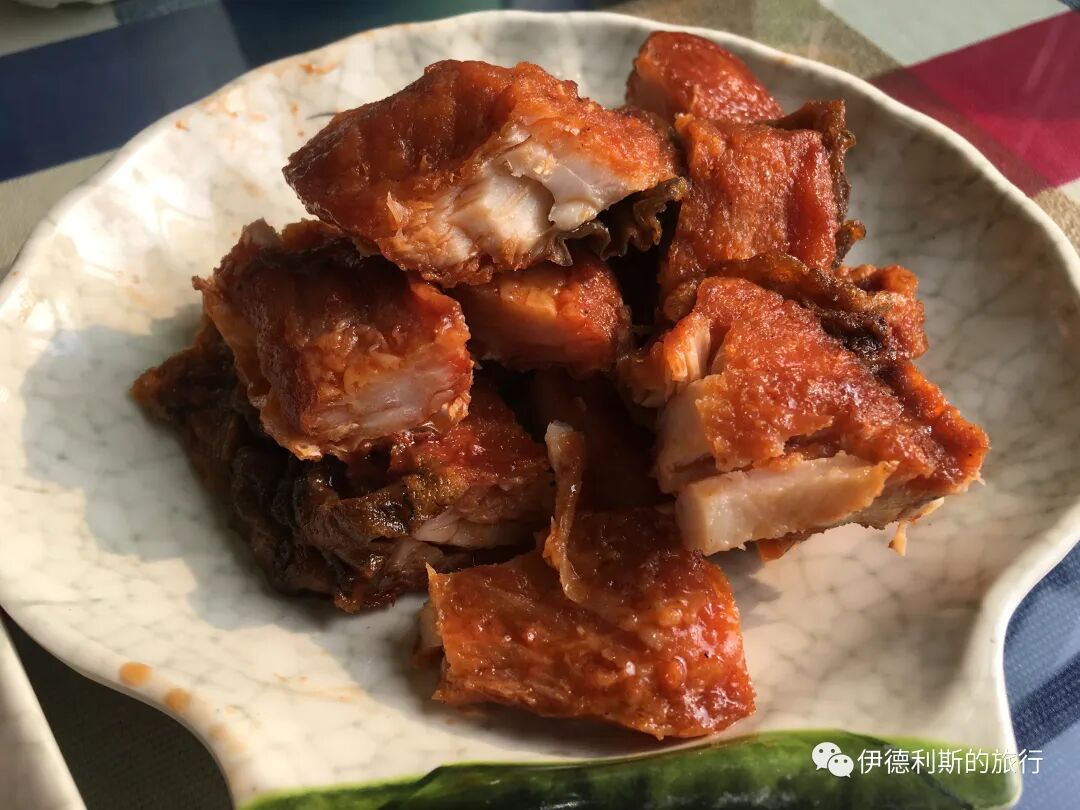
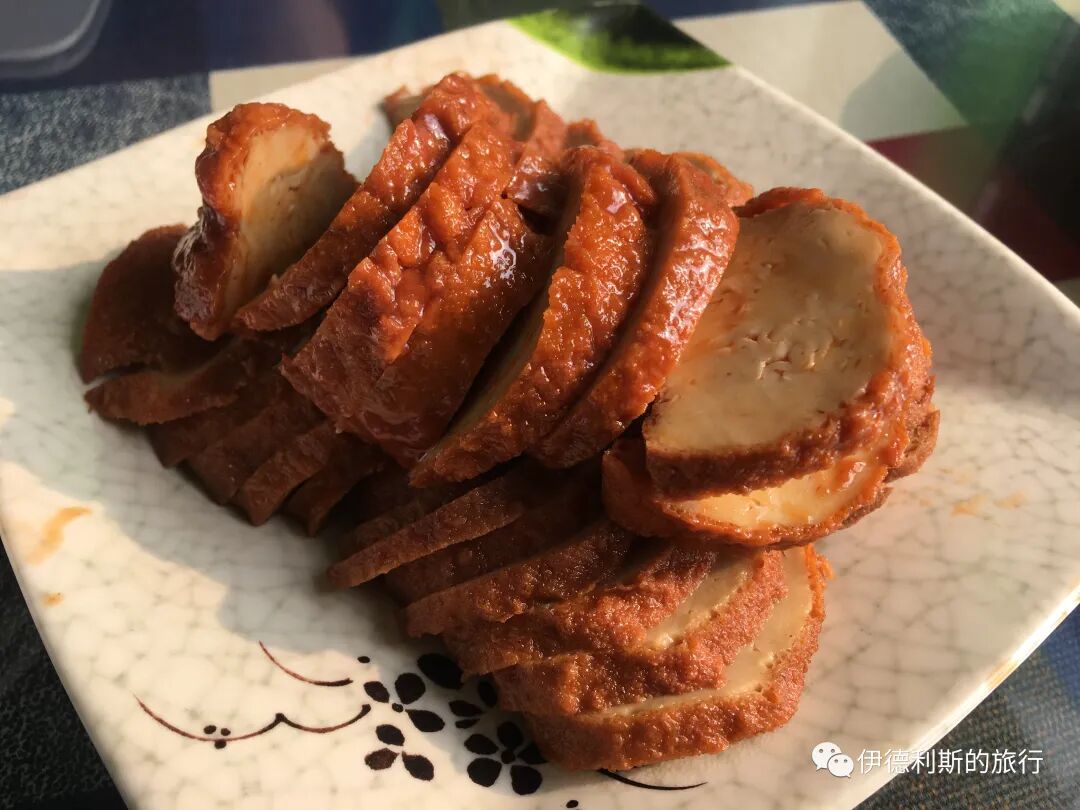
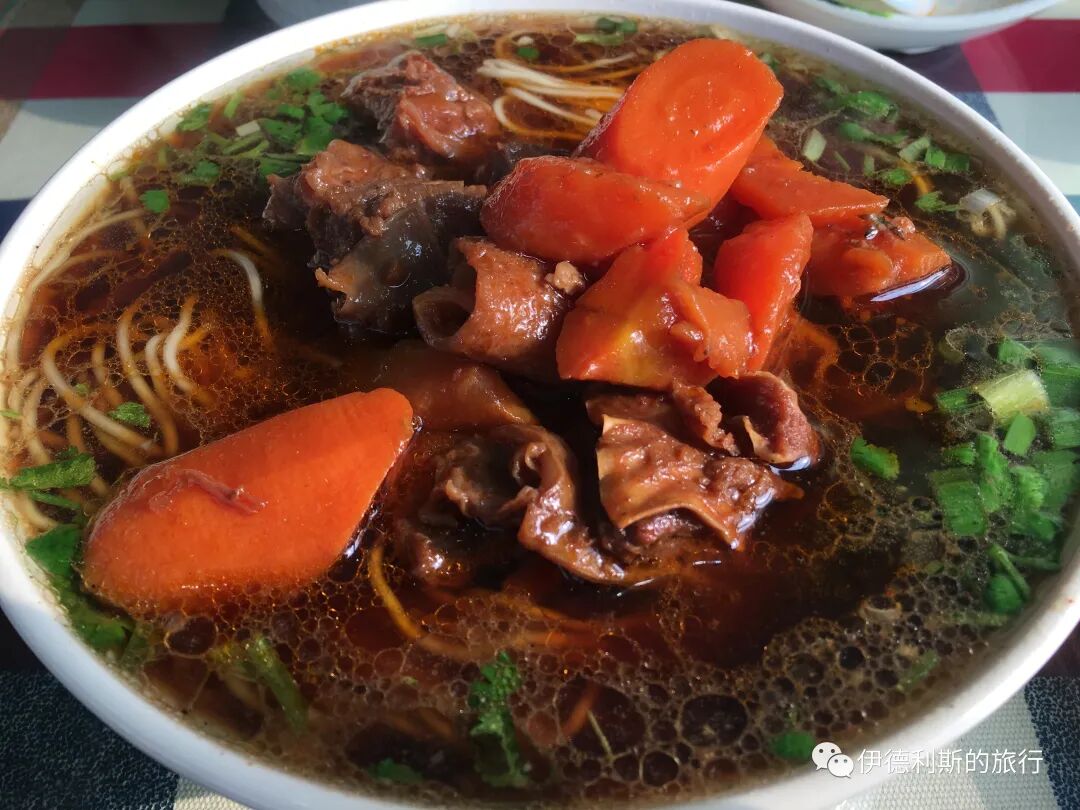
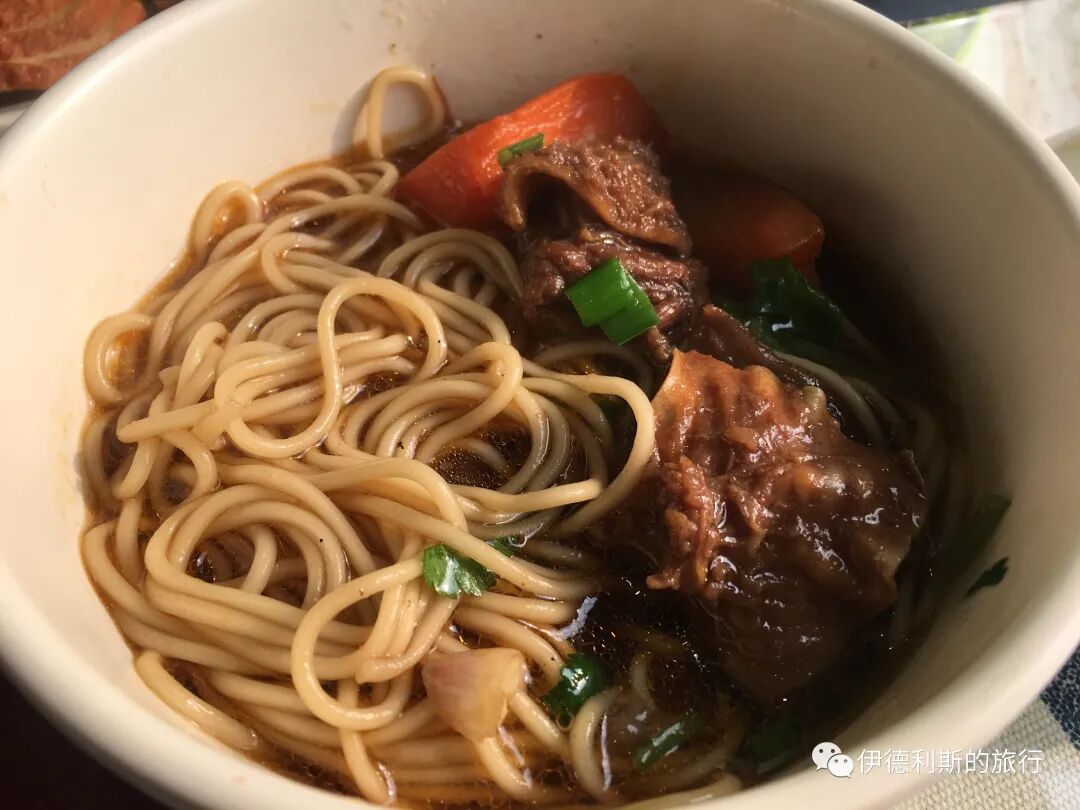
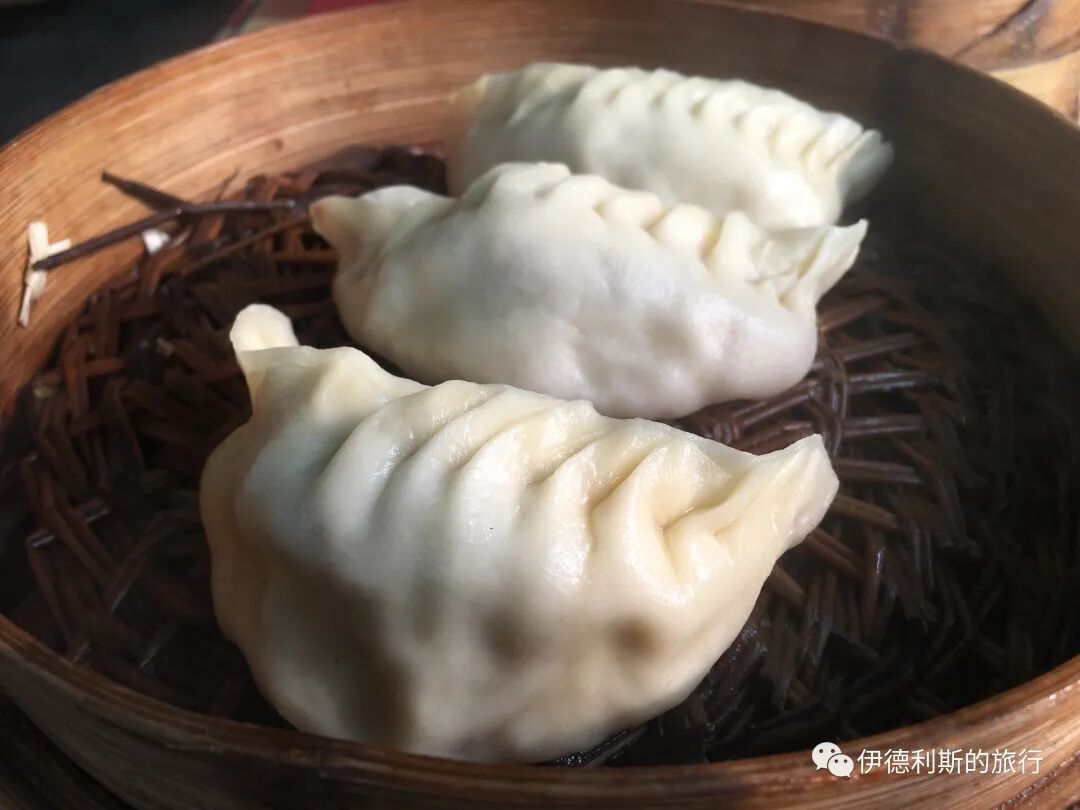
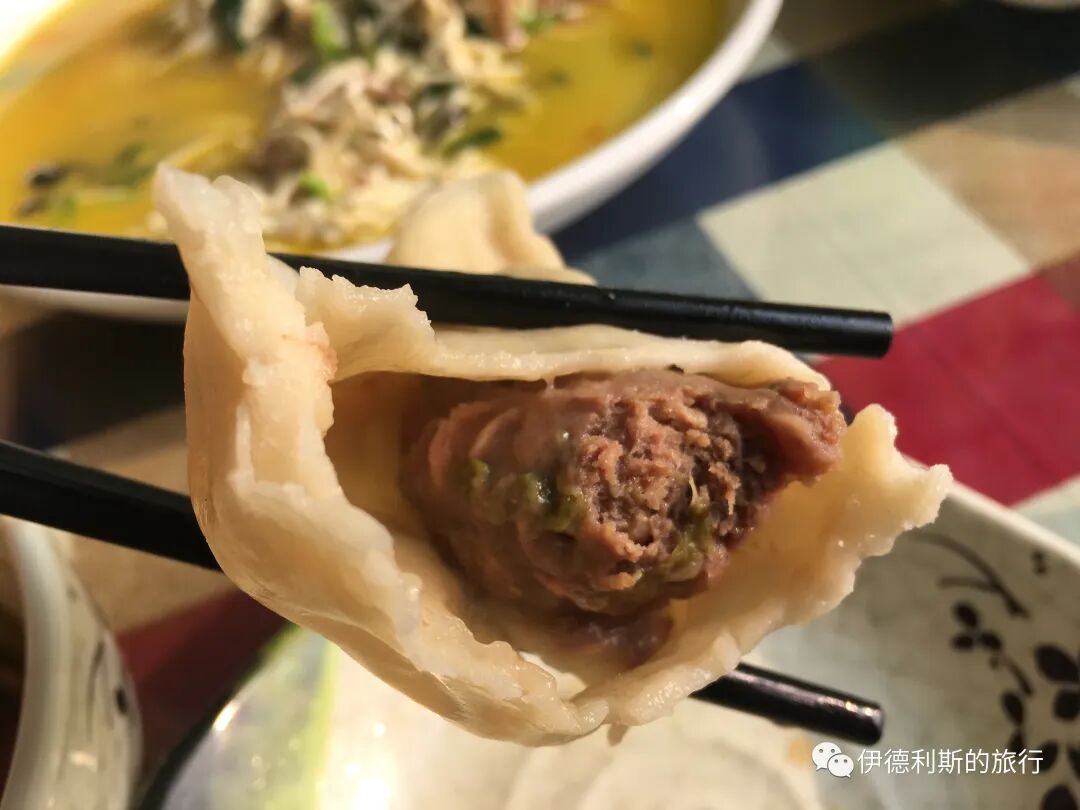
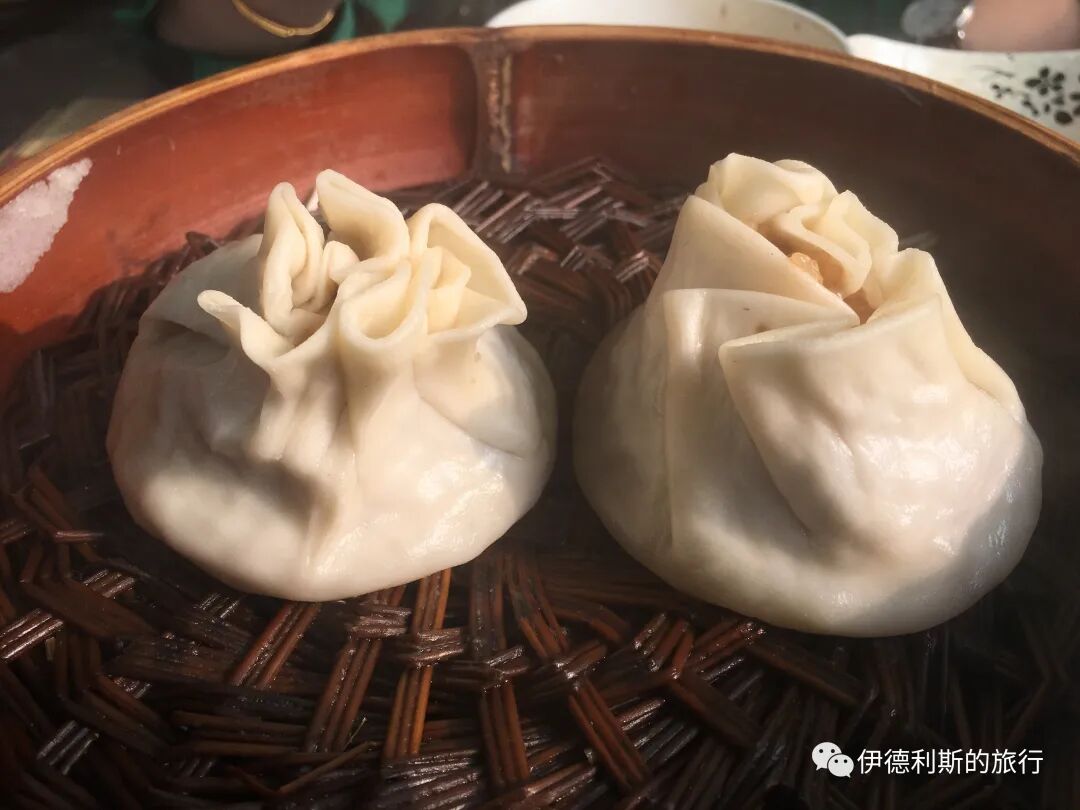
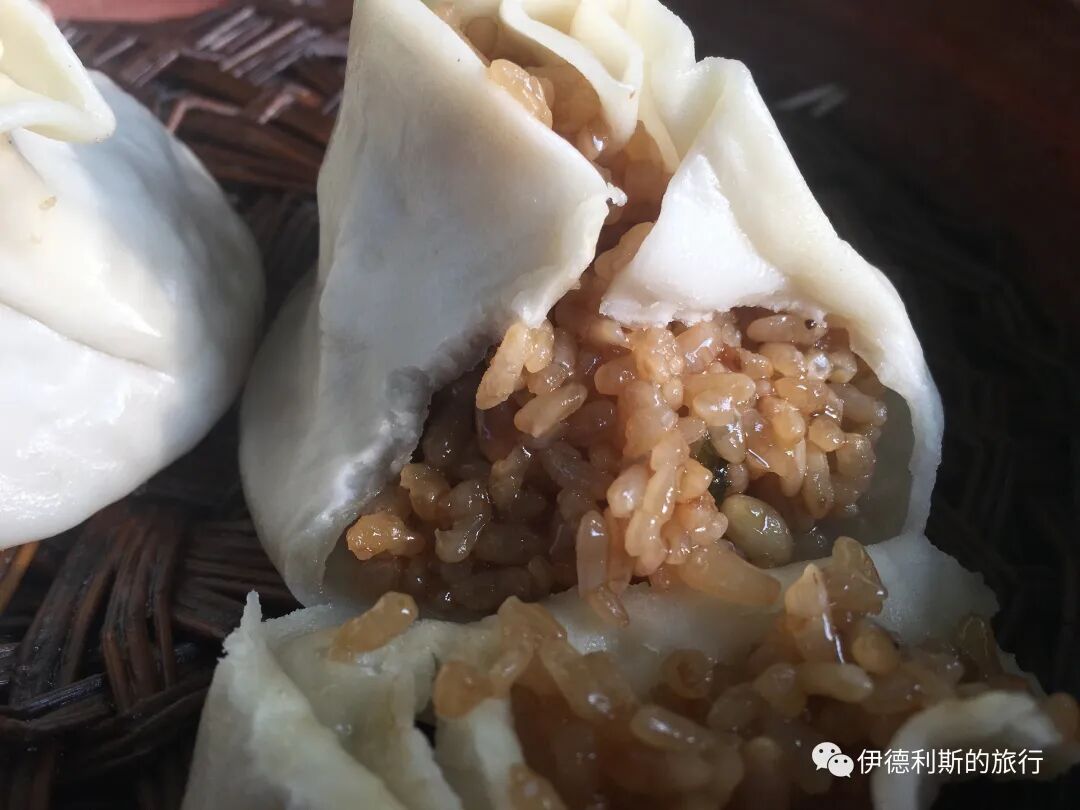
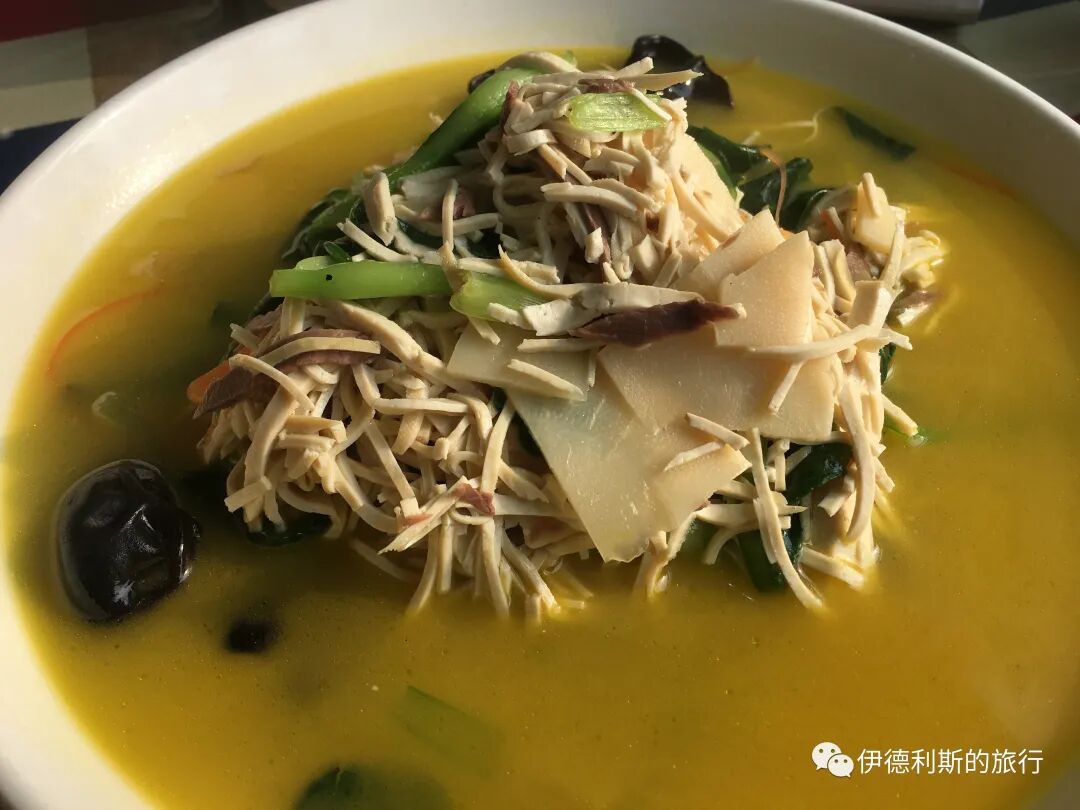
Yixiangzhai
There is another Yixiangzhai on the street by the Puhading Tomb. It is a beef and lamb restaurant run by local Hui Muslims in Yangzhou. They serve hot pot, stir-fried dishes, and snacks. I ordered lamb liver, boiled dried tofu strips (zhugansi), and beef soup. The lamb liver was incredibly tender with a slightly sweet taste. It was delicious. (This place had closed down when I visited in 2021.)
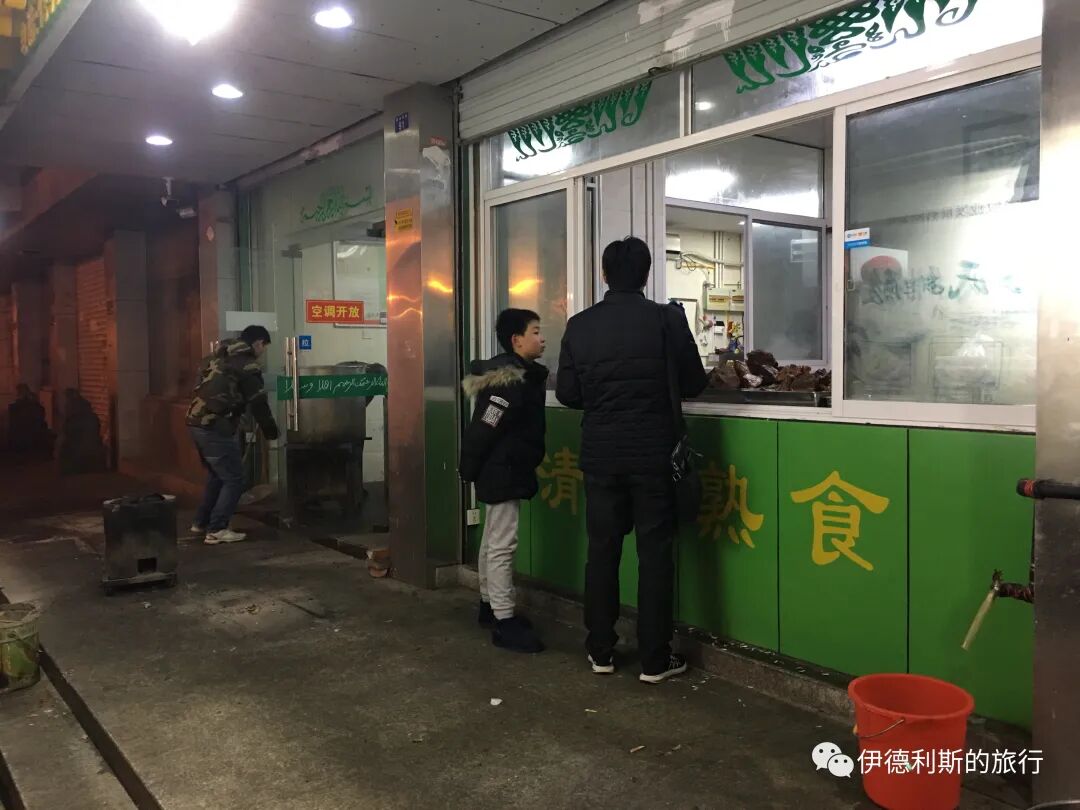
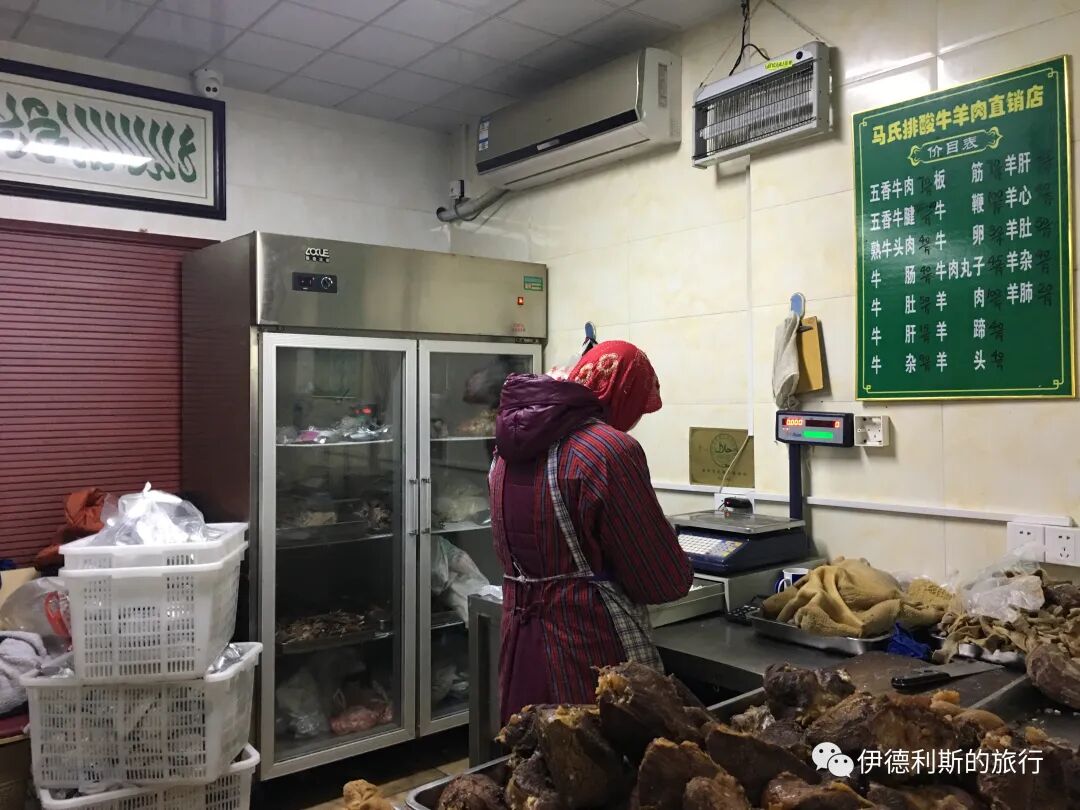
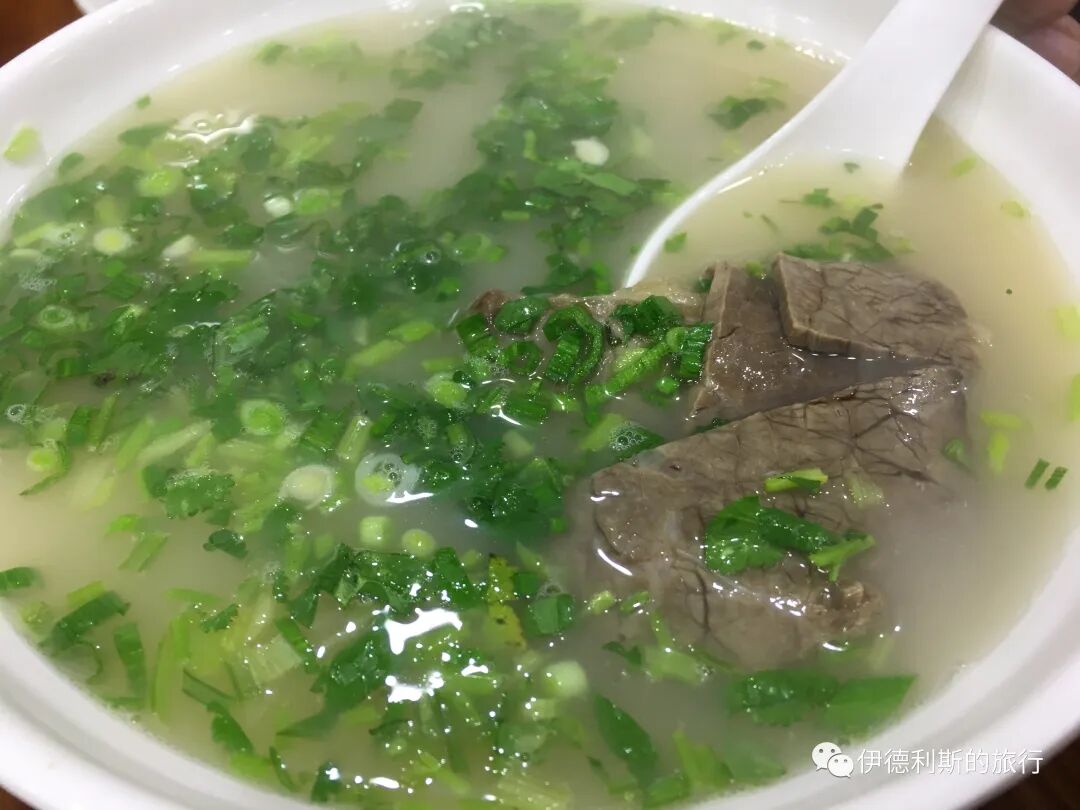
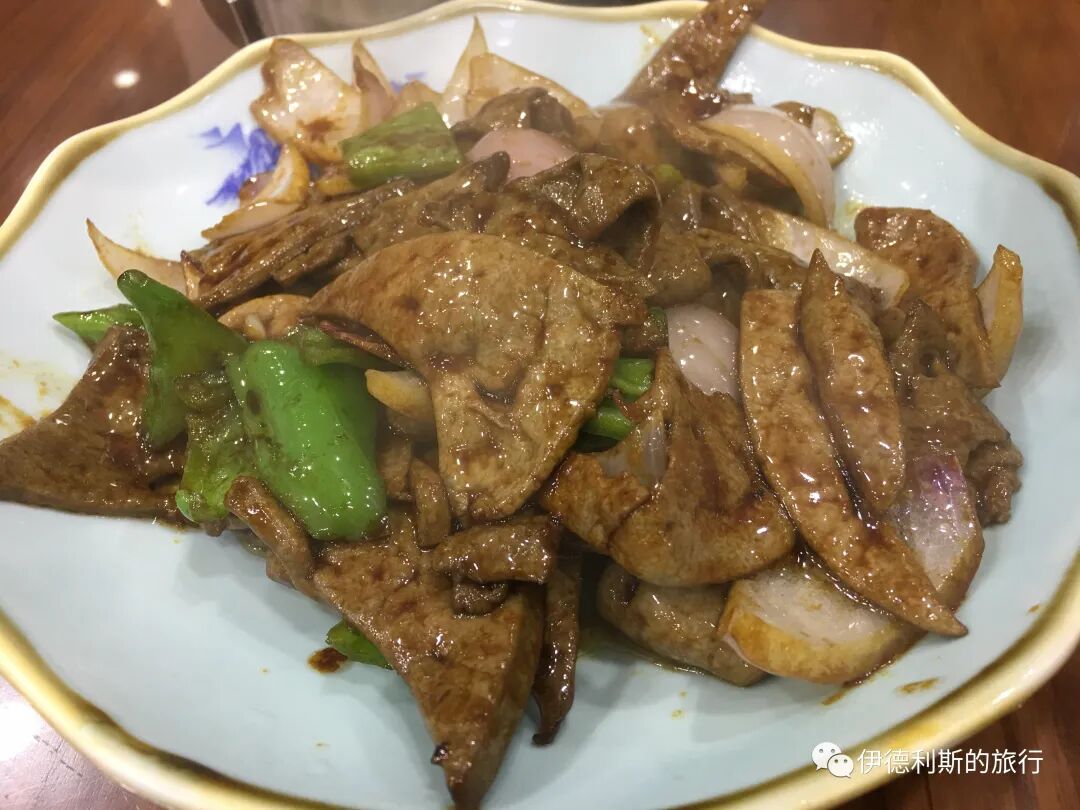
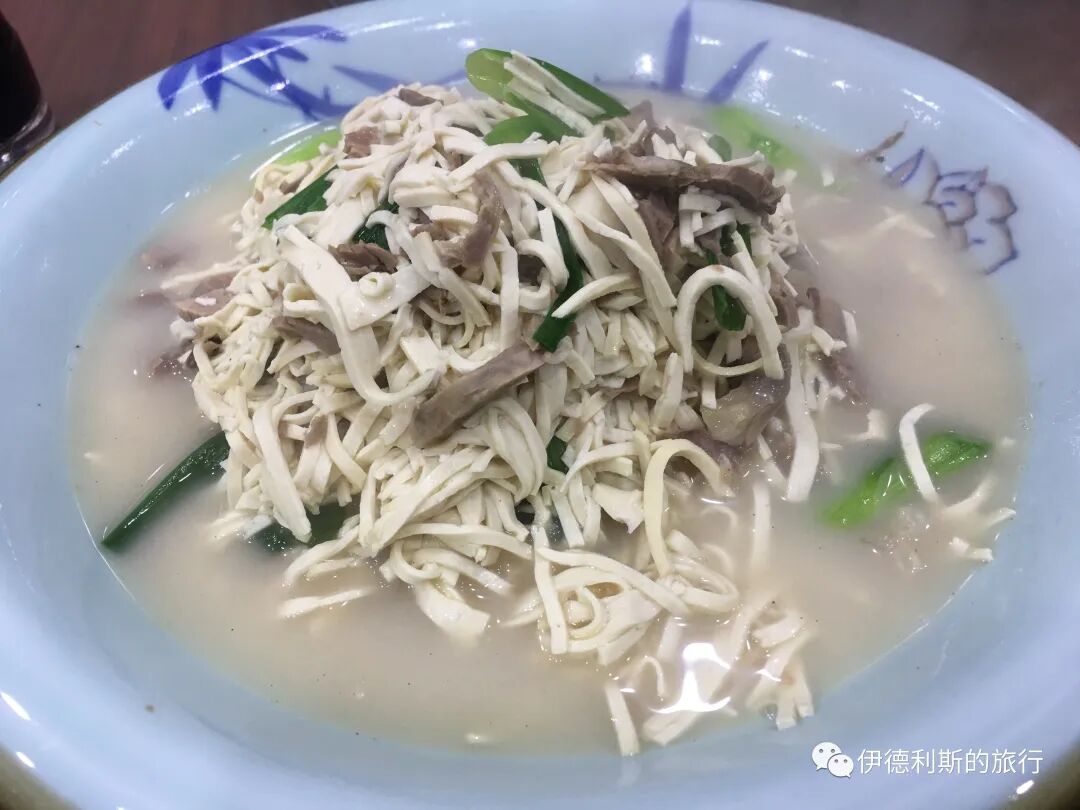
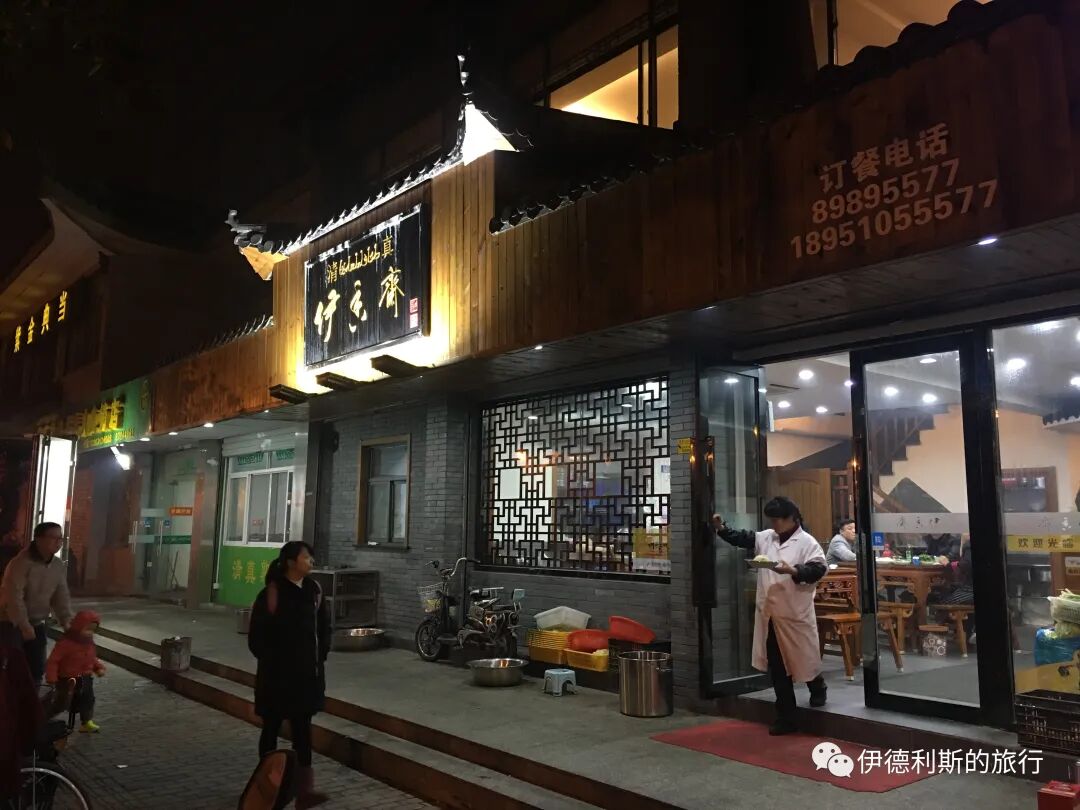
Yangzhou section of the Grand Canal
In 605 (the first year of the Daye era of the Sui Dynasty), Emperor Yang of Sui, Yang Guang, carried out major renovations and expansions based on the Hangu Canal so he could travel by boat directly from Luoyang to Jiangdu (Yangzhou). This marked the official formation of the Yangzhou section of the Grand Canal. In 1415 (the 13th year of the Yongle era), Chen Xuan, the Earl of Pingjiang, was ordered to oversee the grain transport and manage the Yangzhou section of the canal. The route that currently winds through Yangzhou city was finalized during this period. Starting in 1853 (the third year of the Xianfeng era), grain transport was gradually shifted to sea routes to Tianjin. During the Tongzhi era, only one-tenth of the grain was still transported via the canal. Finally, in 1901 (the 27th year of the Guangxu era), the canal grain transport system was completely abolished.
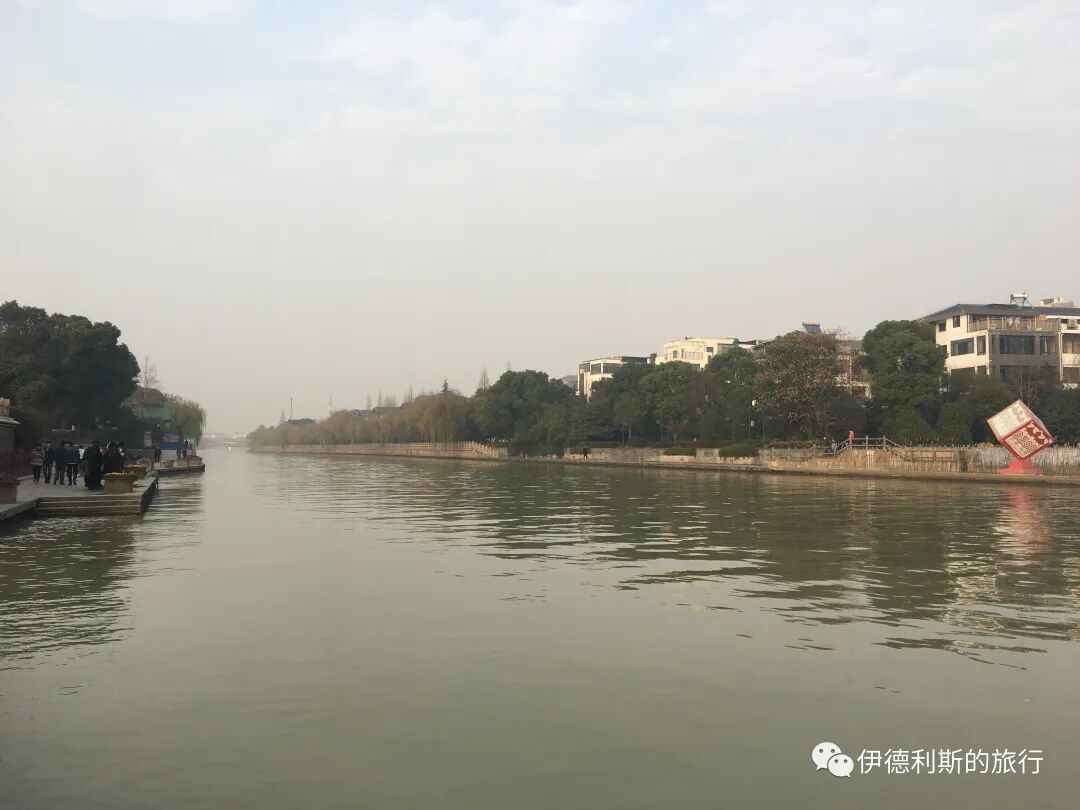
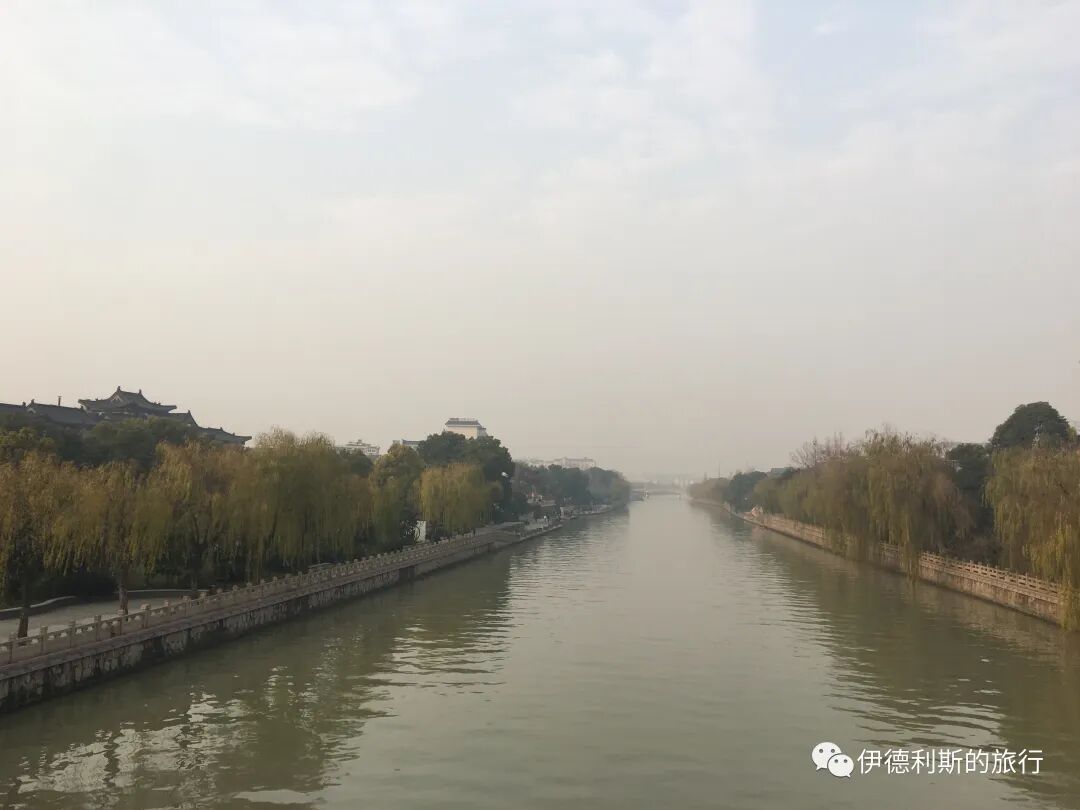
Zhenjiang-Yangzhou Ferry
The river at the Zhenjiang-Yangzhou ferry crossing is 1.5 kilometers wide, and with the fog, you cannot see the opposite bank at all.
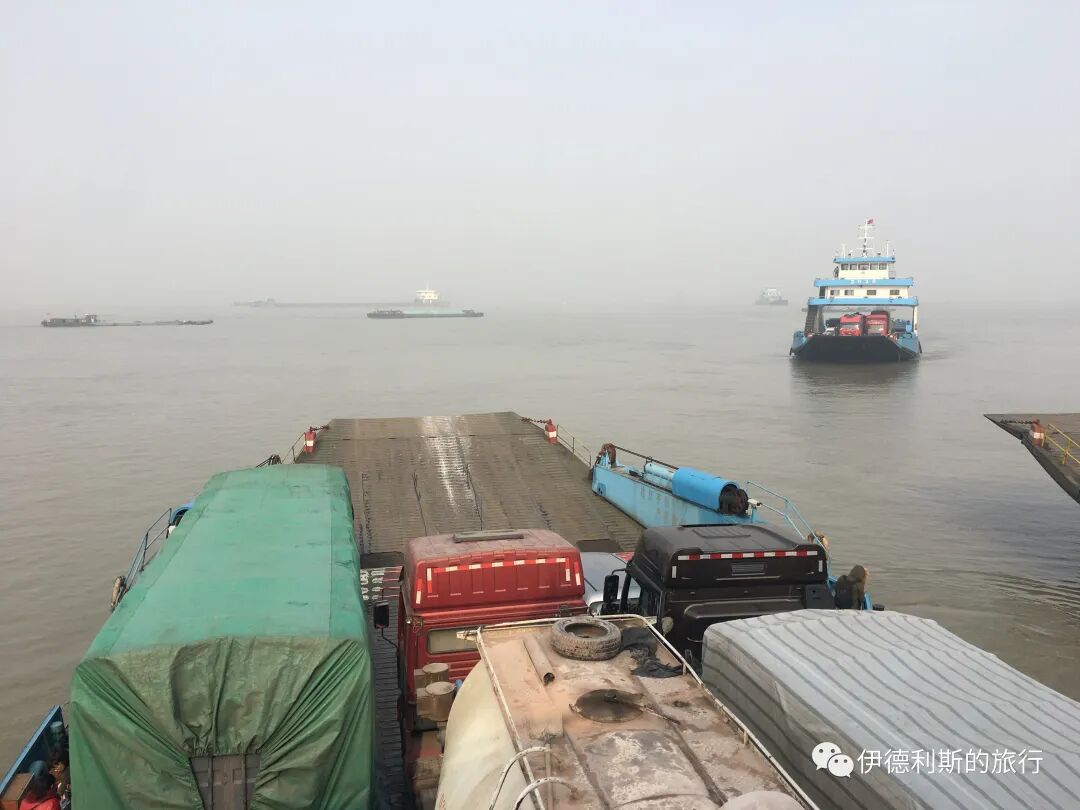
 Collapse Read »
Summary: Yangzhou — Mosques, Muslim History and Jiangsu Streets is presented here as a firsthand travel account in clear English, beginning with this scene: I visited Yangzhou for food and sightseeing on New Year's Day in 2017. Some of the information in this article is compiled from the book Islam in Yangzhou, published by Nanjing University Press. The account keeps its focus on Yangzhou Travel, Jiangsu Mosques, Muslim Heritage while preserving the names, places, food, and historical details from the Chinese source.
I visited Yangzhou for food and sightseeing on New Year's Day in 2017. Some of the information in this article is compiled from the book Islam in Yangzhou, published by Nanjing University Press.
Since the Tang Dynasty, Yangzhou has been a major commercial hub in the southeast, attracting many merchants from Arabia and Persia.
The Extensive Records of the Taiping Era (Taiping Guangji) contains many stories about foreign merchants in Yangzhou. While most are quite exotic, they provide a vivid picture of Persian merchants in the city at that time. The entry for Wei Yan says that around 727, he obtained a precious jade. While passing through Guangling (Yangzhou), he met a foreign merchant who told him, 'This jade is a treasure of the pure ones (qingzhen ren), unseen by anyone for ten thousand years, and the finest treasure in the world.' The merchant bought it for hundreds of thousands in gold, making Wei Yan rich overnight. The story of the two students Lu and Li says that a student named Li owed the government 20,000 strings of cash. He met his uncle Lu in Yangzhou, who gave him a walking stick and told him to take it to a Persian shop to get money. The Persians accepted the walking stick and gave Li the money. This story shows that Persians in Yangzhou at the time operated shops (didian) that stored money and goods.
In 761, the Liu Zhan Rebellion occurred in Yangzhou. The Old Book of Tang, Biography of Deng Jingshan, records that the rebels reached Yangzhou and looted the assets of the people and merchants, whipping and digging up everything. Thousands of Arab and Persian merchants died. This shows that before 761, there were at least several thousand Arab and Persian merchants in Yangzhou.
During the wars at the end of the Tang Dynasty and the Five Dynasties period, Yangzhou was heavily damaged, and most of the original foreign merchants scattered. After the Song Dynasty, the descendants of those foreign merchants gradually transitioned from expatriates to locals, and the history of Hui Muslims in Yangzhou entered a new era.
Yangzhou's most famous Crane Mosque (Xianhe Si) and the Hui Muslim Hall (Puhading Tomb) were both built during the transition between the Song and Yuan dynasties. During the Xianchun period of the Southern Song Dynasty (1265-1274), Puhading, said to be the 16th-generation descendant of the Prophet, came to Yangzhou and built the Crane Mosque. He passed away in 1275, the year before the Yuan Dynasty captured Lin'an, and was buried on a high ridge east of the Dongguan River in the new city, which is now the Puhading Tomb.
The Song Dynasty established an official guesthouse at the south gate of Yangzhou, and the area outside the south gate developed into a new settlement for Muslim merchants. During the Song Dynasty, Muslims built a mosque not far from the south gate of Yangzhou. The main hall was not demolished until 1984, and there is a Song and Yuan dynasty Muslim cemetery near the mosque.
In 1357, when Zhu Yuanzhang captured Yangzhou, these Muslim tombstones were built into the South Gate military defense tower. Between 1924 and 1925, when the South Gate military defense tower in Yangzhou was demolished, four Yuan Dynasty Muslim stone tablets were found in the city foundation. Three of them were primarily in Arabic with some Persian place names, and the front of the fourth one was written in regular script Chinese characters.
The place where Yuan Dynasty Arabic tombstones are kept at the Puhading Cemetery.
In the Arabic text of the four tombstones, the first section of each is the Basmala, and the remaining sections mostly come from the Quran and Hadith. Each tombstone is inscribed with the Hadith, 'Death in a foreign land is martyrdom.'
A replica of an Arab tombstone at the Yangzhou Museum.
Between 1934 and 1935, the missionary Claude L. Pickens photographed the four stone tablets. At that time, they were at the tomb of the sages near the now-vanished Xianhe Mosque.
The front of the Chinese tombstone is inscribed with, 'Tomb of Nie Gubo, the Darughachi of Huizhou Circuit and Grand Master of Thorough Discussion.' Darughachi originally meant 'seal holder.' After the Yuan Dynasty was established, a Darughachi was appointed to local government offices at the circuit, prefecture, department, and county levels to hold real power over local administration and military affairs. Huizhou Circuit was a top-tier circuit, and the rank of its Darughachi was third grade. Tongyi is short for 'Grand Master of Thorough Discussion,' which is also a third-grade rank.
In 1265, Emperor Kublai Khan of the Yuan Dynasty decreed that all circuit Darughachi must be Mongols, and any Han Chinese serving as Darughachi were removed from office. When Mongols were unavailable, it was permitted for Semu people with noble family backgrounds to serve. Therefore, this tombstone of a Semu Darughachi is extremely precious.
The back of Nie Gubo's tombstone is inscribed with ten lines of Arabic. The first section is the Basmala, followed by Hadith and praise for his life achievements. It reads: 'Noble, diligent, and excellent Islamic educator, a leader who helped the weak, was charitable, and cared for the people, a respected elder... a man of great virtue and wisdom, generous and just, enjoying great blessings.' It also records Nie Gubo's death date as the 2nd of Dhu al-Hijjah in the year 709 of the Hijri calendar, which is May 3, 1310.
The front edges of the second tombstone are carved with Quranic verses in Kufic Arabic script, and the center is carved with twelve lines of Arabic, which read: 'The forgiven deceased, Shams al-Din Asif Allah al-Balaji.' May Allah have mercy on him and grant him a place in the comfort of Paradise. This was in early June of the year 724 (Hijri calendar). This corresponds to the end of May or early June of 1324 (the first year of the Taiding era of the Yuan Dynasty).
The third tombstone belongs to a Persian woman who also died in 724 Hijri (1324). Her name was Aisha Khatun (Aisha was known as Ashe in the Yuan Dynasty, and Khatun means lady). The inscription says: 'She was a chaste, virtuous, and capable woman... her father was Lezunding, a highly respected official in Islam.'
The fourth tombstone is damaged. It belonged to a missionary named Ala-ud-Din who died in 702 Hijri, or 1302 (the sixth year of the Dade era of the Yuan Dynasty). The inscription describes him as a skilled businessman who was highly respected by the community.
After the Qianlong reign, there were six mosques in Yangzhou. The three inside the city were the Crane Mosque (Xianhe Si) on Nanmen Street, the Majian Lane Mosque, and the Xiejia Bridge Mosque (which was occupied by a sugar factory and no longer exists). The three mosques outside the city were the Hui Muslim Hall (Huihui Tang) east of the Dongguan River inside the Puhading Cemetery, the South Gate Mosque (occupied by a glass factory, with the main hall finally demolished in 1984), and the Chaoguan Mosque (occupied by a farm machinery factory and no longer exists).
During the Republic of China era, there were nearly 20,000 Hui Muslims living in the six mosque districts of Yangzhou, with Sha, Ma, Ha, Sa, and Da as the five major surnames. The family genealogy of the Ha surname records that their ancestor was a man named Hashen from the Western Regions' Rumi Kingdom (a region in West Asia or Asia Minor).
Crane Mosque (Xianhe Si)
The Crane Mosque is one of the four ancient mosques along the southeast coast (in Hangzhou, Guangzhou, Quanzhou, and Yangzhou). It was founded in 1275 (the 12th year of the Zhiyuan era of the Yuan Dynasty) by the sage Puhading from the Western Regions before he passed away. It was rebuilt in 1380 (the 23rd year of the Hongwu era of the Ming Dynasty) by Ha San, and renovated in 1523 (the third year of the Jiajing era) by the merchant Ma Zongdao and the imam Ha Ming. Starting in 1542 (the 21st year of the Jiajing era), the Ha family received official documents from the Ministry of Rites to serve as the hereditary imams of the Crane Mosque.
Puhading Cemetery
Puhading is said to be a 16th-generation descendant of the Prophet Muhammad. He came to Yangzhou during the Xianchun period of the Song Dynasty (1265-1274) and died in Yangzhou in 1275 (the 12th year of the Zhiyuan era of the Yuan Dynasty). He was buried on a high ridge east of the Dongguan River in the New City, a place later called the Hui Muslim Hall (commonly known as Baba Yao).
This is written in the article 'Puhading: Messenger of China-Arab Friendship,' published by the Yangzhou Islamic Association in the fourth issue of 'Jiangsu Muslims' in 2015. Local imams in Yangzhou pass down a set of stories about the life of Puhading. On the morning of July 17, 1947, at the East Lecture Hall of the Huihui Tang mosque, Imam Lan Baohua passed down the life story of Puhading to his son, Imam Lan Xiaoyang. He based this on the oral accounts of famous scholars Zhang Zhong and imams Han Yuchun, Lan Jiansen, Lan Wenyuan, and Lan Sifu. Seven people were present, including Imam Ruan Xiangsong and community elders Ma Liang, Zhang Yangwu, Wang Yan, and Jin Yuanxun. Here is the life story of Puhading as passed down by the Yangzhou imams:
Puhading was born on May 21, 1204 (the fourth year of the Jiatai era of the Song Dynasty) into a wealthy Arab noble family. He was the 16th-generation descendant of the Prophet Muhammad. Puhading was a man of great learning, well-versed in the Quran, the Hadith, and Islamic law. At age 57, Puhading followed the Prophet's teaching that one should seek knowledge even as far away as China. After four years of careful preparation, he set off for China from Arabia on a merchant ship at age 61, leading a team of 17 people.
On June 20, 1265 (the first year of the Xianchun era of the Song Dynasty), Puhading and his followers arrived in Yangzhou. They lived for four years at the mosque outside the south gate of Yangzhou at that time. He helped expand the old mosque outside the south gate and renovated the Guannan Chaoguan mosque.
On the 23rd day of the seventh lunar month in 1275 (the 12th year of the Zhiyuan era of the Yuan Dynasty), he traveled south from Rencheng (Jining) to Guangling (Yangzhou). He passed away on a boat while returning from giving a lecture, at the age of 71. The governor of Guangling, Yuan Guang'en, buried his body on a high ridge on the east bank of the Grand Canal, east of Yangzhou city.
Three years after Puhading died, another Muslim sage who came to Yangzhou to preach, Saganda, passed away in 1278 (the third year of the Jingyan era of the Song Dynasty). He was buried near Puhading's tomb. A stone tablet erected in 1776 (the 41st year of the Qianlong era) refers to him as the Western Region sage Saganda from the third year of the Jingyan era of the Song Dynasty.
During the Ming Dynasty, more Muslims were buried there, such as the Western Region sage Mahamude in 1456 (the first year of the Chenghua era), the Western Region sage Zhanmaluding in 1469 (the fifth year of the Chenghua era), and the Western Region sage Fana in 1498 (the 11th year of the Hongzhi era).
Next to the main gate is a mosque for those visiting the graves.
The mihrab of the mosque.
The stone carving inside the main gate records that in 1845 (the Yisi year of the Daoguang era), people of various surnames donated funds to build a stone embankment and renovate the halls.
Inside the main prayer hall of the mosque.
The kiln-style hall (yaodian) of the Puhading Tomb mosque, photographed by missionary Bi Jingshi between 1934 and 1935.
Climb the stone steps behind the mosque to reach the Puhading Tomb.
A 700-year-old ginkgo tree.
A merchant from Chang'an County, Xi'an Prefecture, Shaanxi, passed away on the fourth day of the intercalary seventh month in the 14th year of the Hongzhi reign (1501). Erected by his son Wang Qi and grandson Wang Dong.
The Puhading Tomb photographed by missionary Claude L. Pickens between 1934 and 1935.
To the southeast of the Puhading Tomb lies the tomb cover of General Zhang Xin, who passed away in 1551 (the 30th year of the Jiajing reign). The tomb cover on the west side belongs to General Zhang Xin. The owner of the east side cover is still unknown, though it is likely a member of General Zhang's family.
General Zhang's ancestor, Damuchi, moved from Samarkand to settle in Yangzhou. The Continued Records of Jiangdu County from the Republic of China era state: 'General Zhaoyong, named Xin, was the grandson of the Hui Muslim Damuchi. He served as a Wuqi Duwei (a military rank). Because he was skilled at archery, he was granted the surname Zhang and registered in the Yangzhou Guard, located behind the Puhading Tomb outside Tongji Gate.'
The Zhang Gong Shendao Archway was erected in 1551 (the 30th year of the Jiajing reign) by Zhang Heng, the grandson of General Zhang Xin. Zhang Heng was a famous Ming dynasty general who fought against Japanese pirates and held the hereditary title of Yangzhou Guard Commander. In April 1556 (the 35th year of the Jiajing reign), when Japanese pirates attacked Yangzhou, the retired Huaiyang regional commander Zhang Heng personally led troops into battle and died on the field.
In May 2011, a 30-meter-long path was built on the south side of General Zhang Xin's tomb cover, and a pair of stone sheep that had been lost in Slender West Lake Park for 27 years were returned.
The Puhading Tomb photographed by missionary Claude L. Pickens between 1934 and 1935; the archway on the left side of the image is likely the Zhang Gong Shendao Archway.
Next to General Zhang Xin's tomb is the cenotaph of Zuo Baogui, a famous Qing dynasty general who fought against the Japanese. During the First Sino-Japanese War in 1894 (the 20th year of the Guangxu reign), Zuo Baogui led his troops to defend the Xuanwu Gate in Pyongyang, dealing heavy blows to the Japanese army. On September 15, Zuo Baogui was personally firing cannons when his right arm was shattered. He bandaged his wound and continued to fight until a bullet struck his chest, and he died heroically at the age of 57. That same year, the Yangzhou government received an imperial order to build a cenotaph for Zuo Baogui in the southern area of the Puhading Tomb and establish a memorial hall. The hall was later destroyed, leaving only the stone tomb cover of the cenotaph.
Majian Lane Mosque
There is another Majian Lane Mosque on East Gate Street in Yangzhou. According to the Gu family genealogy of the Hui Muslims, the mosque was built in 1714 (the 53rd year of the Kangxi reign) by Gu Yuanbing, the 24th-generation descendant of the ancient figure Bo Ding.
The Majian Lane Mosque originally had dozens of rooms, including a gate hall, a memorial archway, a main prayer hall, a reception hall, a washroom (shuifang), side rooms, and dormitories. Today, only two rooms of the main hall, the reception hall, and the washroom remain. In the early years of the Republic of China, the mosque housed the second Yangzhou branch of the Beijing-based Zhenzong Newspaper and an Islamic book and newspaper room.
In 1932, Liu Binru, a famous Yangzhou imam and one of the founders of the Chinese Islamic Association, along with Hua Ruzhou, then director of the Jiangdu County Hui Muslim Association, established the Chinese Islamic Scripture Translation Institute here to translate the Quran. Liu Binru, who was fluent in Arabic and Persian, was responsible for translating the Arabic original. Hua Ruzhou translated the summaries from the English version by the Indian Muslim scholar Muhammad Ali, which were then attached before the text of each section of the Quran.
On January 1, 1935, the Chinese Translation of the Quran with Ali's Summaries was officially published. The first printing was 2,000 copies, which were sold by major bookstores across the country.
In 1933, the Yangzhou Islamic Association founded the Hui Muslim Cultural Training Institute here, led by Liu Binru. to teaching Arabic, the institute offered Chinese, English, and arithmetic. The level was equivalent to higher primary school through junior high, and it replaced the traditional individual scripture teaching style with a modern classroom lecture format. Teachers included the Majian Lane Mosque imam Hua Jinhou, who was proficient in Arabic, Imam Ruan Dechang, Imam Lan Baohua of the Hui Muslim hall outside the East Gate, and Liu Binru. They also hired Hui Muslim Association members Shen Junchen and Zhang Shaozhe to teach Chinese and arithmetic, and Hua Ruzhou to teach English. There were over 30 students, but the school closed after one year due to a lack of funds.
Between 1934 and 1935, the missionary Claude L. Pickens Jr. (Bi Jing-shi) visited the Majian Lane Mosque. He saw a reading room inside with many Muslim magazines, as well as the Quran translated by Wang Jingzhai and parts of the Quran translated by Liu Binru and Hua Ruzhou mentioned earlier. He also photographed the Gu Gong Memorial Monument, which was erected in the mosque in 1931. It stated that Gu Su had served as a mosque trustee for 11 years, repaired the washroom and market stalls for the mosque, and built a new greenhouse, making great contributions to the mosque.
In the autumn of 1946, the Yangzhou Hui Muslim Youth Association founded the Shengsheng Primary School at the mosque, with Liu Binru serving as chairman. The school was a full primary school. When it opened, it had three multi-grade classes and enrolled 150 students. It provided free tuition for the children of Hui Muslims, offered books to those in extreme financial difficulty, and also provided free support to non-Hui Muslim children from poor families. Most of the teachers were unemployed Hui Muslim youths. The school closed in the summer of 1949.
In 1958, the mosque was converted into a factory workshop and occupied by a craft sign factory, a sack factory, and a brush factory. The property was not recovered until 1997, and in 2008, it was listed as a municipal-level cultural heritage site.
Halal food in Yangzhou during the Republic of China era.
The information in this section comes from "Islam in Yangzhou" and "Islam in Yangzhou."
The earliest records of halal food in Yangzhou come from the "Yangzhou Pleasure Boat Records" (Yangzhou Huafang Lu), an encyclopedia covering all aspects of Qing Dynasty Yangzhou. It mentions a cooked lamb shop called the "Hui Muslim Pavilion" (Huihui Guan), pleasure boats called "Ma the Hui Muslim's Ox Tongue" (Ma Huizi Niushetou), and a shop called "Kong Wu's Ox Tongue" (Kong Wu Niushetou). It also notes that "Zhang Si the Hui Muslim's Whole Lamb" (Zhang Si Huizi Quanyang) was a famous dish in Yangzhou at the time.
During the late Qing Dynasty and the Republic of China era, halal food in Yangzhou reached its peak. After entering the Republic of China era, lamb almost disappeared from Yangzhou's halal food scene, which shifted to focus mainly on beef, supplemented by poultry and fish. Many halal beef slaughterhouses were concentrated on Wazi Street. Some of the more famous ones included those run by Wang Tonglan, Jin Zhao'an, Wang Ting, Jin Ronghua, Zhang Youfu, and Li Sanlong. The second and eighth days of every lunar month were cattle market days, which were very busy.
During the Republic of China era, there were over a dozen famous halal restaurants in Yangzhou, which were very popular in the 1920s and 1930s. Examples include Ma Gongxing on Litou Street, Muyuanxing at the north entrance of Yuanmen Bridge, Ma Guangxing Restaurant on Zhuan Street, Tianxing Restaurant on Zuowei Street, Daxing in Darufang, and the Xinxin and Xinlong restaurants in Jiaochang. Among them, Tianxing Restaurant was the most famous.
Opened in the early years of the Republic of China, Tianxing Restaurant was the most famous halal restaurant in Yangzhou at the time. It was located at the busy intersection of Zuowei Street. The building had seven sections from front to back, each consisting of three large, high-ceilinged rooms. The rear section had a spacious flower hall on the east side that could host fifty banquet tables at once. At that time, everyone from scholars and writers to salt merchants and officials frequented the restaurant. Famous Peking opera actors Zhou Xinfang and Cheng Yanqiu would eat at Tianxing whenever they came to Yangzhou to perform.
Tianxing Restaurant was especially skilled at making shark fin and fish skin, and its roast duck was second to none. Famous dishes included braised shark fin (yuanmen yuchi), clear soup shark fin (qingtang yuchi), hibiscus chicken with shark fin (furong ji yuchi), skin-wrapped fin (pijia chi), roast duck (kaoya), braised chicken with crispy meatballs (yuanmen ji suyuan), ten-delicacy fish maw (yudu shijing), braised beef tendon (bashao niujin), and fish stuffed in lamb (yangfang cangyu).
There were over a dozen halal chicken and duck shops in Yangzhou. The most famous was Linyuanxing Chicken and Duck Shop, which was the predecessor of the later Halal Hongxing Ethnic Restaurant. The founder of Linyuanxing Chicken and Duck Shop was Lin Guangfeng, also known as Songting. When he was young, he worked for two or three years for his relative, Governor Shan Diankui, in Beijing. After returning to Yangzhou, he apprenticed at the halal Muyuan Restaurant. After his apprenticeship, Lin Guangfeng opened the halal Baoxing Restaurant, which also sold chicken and duck. It later closed due to poor management of staff. After Baoxing closed, Lin Guangfeng opened the halal Linyuanxing Chicken and Duck Shop at the North Archway entrance, where he sold his own products. The North Archway was a busy market back then, filled with snack stalls, magicians, acrobats, and fortune tellers. Linyuanxing did a booming business selling oil-poached chicken (youji), pressed duck (bandya), and roast duck (shaoya).
Linyuanxing's oil-poached chicken was white in color and fragrant, with a tender, delicious texture that even the elderly could chew easily. Pressed duck and salt-water duck (yanshuiya) are both called salted duck. In practice, they sold salt-water duck during spring, summer, and autumn, and pressed duck in winter. Pressed duck was salted and prepared in the ten days before the Minor Snow (xiaoxue) solar term until the middle of the eleventh lunar month, then hit the market before the Spring Festival. The secret to Linyuanxing's salted duck was the aged brine and the heat control; they were so precise that they would not cook even one bird more than the set amount per pot. Linyuanxing's roast duck was different from the large-fork roast duck in other shops; they used small forks to prop the ducks up inside the oven for hanging roast. The belly broth (dutang) from the roast duck was very flavorful. When customers bought roast duck, the shop gave them some broth to take home, mix with water, and simmer with the duck for a delicious soup.
Linyuanxing had an agreement with the imam of the mosque to come to the shop on time every day to perform the slaughter. Everything was freshly prepared, and any sick poultry was disposed of immediately. When customers came to the shop, the staff would chop whatever part they pointed to, treating regular customers and strangers exactly the same.
After decades of training, members of the Lin family opened their own shops. In Yangzhou, there was Linmaoxing at Dadongmen, Linshunxing on Zhuan Street, and Linzhenxing at Xiaodongmen. Outside the city, there was Linmaoxing on North Henan Road in Shanghai and Linyuanxing at Taibai Temple Bridge in Suzhou. Many other Lin family members also sold halal chicken and duck at the Xuanmiao Temple and Guanqian Street in Suzhou, and at the small docks in Zhenjiang.
Besides chicken and duck shops, there were over a dozen halal beef shops in Yangzhou. Famous ones included Chenwanxing in the drill ground (jiaochang), Xiaoqizi at the north entrance of the drill ground, Liertuozi on Zhuan Street, Chengsan (Zhaoxiang), and Sister Ma at the South Gate. Chenwanxing was known for its beef potstickers (guotie), steamed buns (baozi), and rice porridge (shaomi). They used a flat-bottomed pan to fry them, making them soft on top and crispy on the bottom. Their five-spice beef was especially famous. They used beef shank (zoujingzhua) that was marinated and boiled. When sold, it was sliced so thin it was translucent and sprinkled with five-spice powder. In summer, they wrapped it in fresh lotus leaves, making the beef smell fragrant and fresh. In winter, they sold frozen lamb jelly (yanggao), which was delicious when dipped in sweet sauce.
Xiaoqizi Beef Shop sold raw and cooked beef, as well as beef soup, beef noodles, steamed beef buns, steamed beef dumplings, pan-fried beef buns, and their most famous beef potstickers. Liertuozi was most famous for his beef soup. His soup was rich and authentic, served with beef tripe, beef tongue, beef liver, beef lips, plain boiled beef, and beef tendon (tuijinjua), making it refreshing and tasty. Sister Ma's shop is located at the South Gate of Yangzhou and is famous for its superb knife skills. The beef slices she cuts are as thin as paper and flutter when the wind blows.
Beyond meat, there are over thirty Hui Muslim flatbread (shaobing) shops in Yangzhou, offering flavors like flaky (casu), white sugar, red bean paste, salt and pepper, scallion oil, shredded radish, pea (andoutou), and osmanthus brown sugar, with shapes including rectangular, oval, diamond, and chrysanthemum. The most famous one is Mu Si Flatbread Shop at the entrance of Quelong Lane in Jiaochang. Their sesame oil dry-mixed noodles are neither hard nor mushy, with seasonings that soak deep into the noodles, making them very refreshing. Their most famous item is the straw-oven flatbread (caolu shaobing), baked in a square vertical jar oven taller than a person, with a dome-shaped interior and a round opening one and a half feet in diameter at chest height. To make them, they first heat the oven's dome and side walls with straw, dampen the interior with water once hot, and then stick the fermented dough portions onto the inner walls. After sticking them on, they close the oven door and bake them with the residual heat of the straw ash, shoveling them out once they are golden, cooked, and plump like steamed buns (mantou). One oven can bake forty to fifty flatbreads, which are crispy, fragrant, soft, and very cheap, attracting many farmers coming into the city to buy them. Because the flatbreads are thick, they need to be soaked in soup to fully soften; in the past, when a woman was recovering from childbirth, her family would send her straw-oven flatbreads and an old hen to nourish her body.
Additionally, there are the tall steamed buns (gaozhuang manshou) and salt and pepper rolls (jiaoyan juanzi) from Wang's Noodle and Flatbread Shop at Dongquan Gate, which taste best when dipped in beef gravy. The sesame oil dry-mixed noodles at Mu Si Flatbread Shop at the entrance of Quelong Lane in Jiaochang are neither hard nor mushy, with seasonings that soak deep into the noodles, making them refreshing to eat.
During the Republic of China era, Yangzhou had two halal tea and snack shops: Defeng on Wanzi Street and Tongfeng on Gengzi Street. Because they used only vegetable oil, not only did fellow Muslims (dost) buy from them, but many monks, nuns, and vegetarian Han Chinese also purchased their goods, especially their fruit powder (jingguofen) and mooncakes, which were particularly popular.
There were also two halal teahouses in Yangzhou: the Park Religious Room (Gongyuan Jiaomenshi) and the Old Dragon Spring Vegetarian Teahouse (Laolongquan Suchaguan) in Jiaochang. The Park Religious Room was located in the park next to Park Bridge in the city center, with three rooms side-by-side facing west. The first room was for the stove and cutting board, while the other two were for tea seating. The teahouse is filled with cypress wood square stools and tables. The east wall has floor-to-ceiling glass windows, and right outside is the Little Qinhuai River, where you can see clear water and weeping willows from your seat. Painted pleasure boats from Slender West Lake often dock at the pier next to the teahouse. Locals board boats here to go through the North Gate water gate all the way to Slender West Lake for sightseeing. On the way back, they land at the same pier and can stop by the halal teahouse for tea and snacks. Go enthusiasts in the city often gather here to drink tea, play games, and sharpen their skills. The halal teahouse is open for morning and afternoon sessions, serving plain tea, pastries, and dried tofu strips (gansi). The menu includes jade steamed dumplings (feicui shaomai), small steamed beef buns (xiaolong zheng niurou baojiao), beef and lamb dumplings (niuyangrou shuibobo), pan-fried beef and lamb buns (jian niuyangrou bao), beef potstickers (niurou guotie), scalded dried tofu strips (tang gansi), boiled dried tofu strips (zhu gansi), bamboo shoot and beef strips (sunsi niurusi), beef and lamb noodles (niuyangrou mian), stir-fried noodles (chaomian), and braised noodles (weimian). The best item is the pan-fried pancake (youjian guobing), which has a thin crust, plenty of filling, and a sweet, crispy flavor.
The Old Longquan Vegetarian Teahouse at the drill ground is a place for both drinking tea and trading antiques. Many antique dealers gather here to talk business during morning tea time. This place is most famous for its vegetable oil baked flatbread (suyou huoshao) and sugar and salt rolls (tangyan juanzi).
The halal teahouse has only one waiter, a short, thin, middle-aged man whom regular customers call Little Mouse. He is quick and always greets people with a smile. As soon as a customer leaves, he wipes the table with alkaline water and then cleans it with boiling water.
The halal food industry in Yangzhou declined sharply around 1949. Daxing Shop closed first, followed by Tianxing Restaurant, and other shops either changed businesses or shut down. After many twists and turns, only the struggling Ethnic Restaurant on Ganquan Road remained.
Tianxingzhai
For my first meal in Yangzhou, I went to Tianxingzhai, which just opened 16 years ago. I ordered boiled dried tofu strips (dazhu gansi), steamed beef dumplings (niurou zhengjiao), sticky rice and shrimp steamed dumplings (nuomi xiaren shaomai), beef noodles (niurou mian), smoked fish (xunyu), and chicken soup with vegetarian chicken (jitang suji). It is not easy for a new local-style halal restaurant to open in Yangzhou, and the food here is delicious with a slightly sweet taste. The beef noodles are huge and taste amazing, and the steamed dumplings are the best. I don't think any halal restaurants in Beijing can compare. (This place was not doing well when I visited again in 2021.)
Yixiangzhai
There is another Yixiangzhai on the street by the Puhading Tomb. It is a beef and lamb restaurant run by local Hui Muslims in Yangzhou. They serve hot pot, stir-fried dishes, and snacks. I ordered lamb liver, boiled dried tofu strips (zhugansi), and beef soup. The lamb liver was incredibly tender with a slightly sweet taste. It was delicious. (This place had closed down when I visited in 2021.)
Yangzhou section of the Grand Canal
In 605 (the first year of the Daye era of the Sui Dynasty), Emperor Yang of Sui, Yang Guang, carried out major renovations and expansions based on the Hangu Canal so he could travel by boat directly from Luoyang to Jiangdu (Yangzhou). This marked the official formation of the Yangzhou section of the Grand Canal. In 1415 (the 13th year of the Yongle era), Chen Xuan, the Earl of Pingjiang, was ordered to oversee the grain transport and manage the Yangzhou section of the canal. The route that currently winds through Yangzhou city was finalized during this period. Starting in 1853 (the third year of the Xianfeng era), grain transport was gradually shifted to sea routes to Tianjin. During the Tongzhi era, only one-tenth of the grain was still transported via the canal. Finally, in 1901 (the 27th year of the Guangxu era), the canal grain transport system was completely abolished.
Zhenjiang-Yangzhou Ferry
The river at the Zhenjiang-Yangzhou ferry crossing is 1.5 kilometers wide, and with the fog, you cannot see the opposite bank at all.
Collapse Read »
Islamic World in 1550: Chain Madrasa in Crimea (Part 1A-1b-1b)
Reposted from the web
Summary: This block continues the Crimean Khanate site and mosque section from Islamic World in 1550, preserving the original order of text and images.
The Chain Madrasa (Zıncırlı Medrese) was built in 1500 by order of the Crimean Khan Meñli I Giray. The name of the madrasa comes from the Turkic word "Zyngyr," which means "chain." A chain hangs above the main gate of the madrasa, so everyone who enters has to lower their head. The madrasa is rectangular with a central courtyard, an entrance on one side, and 11 rooms on the other three sides. At the time, the madrasa taught Turkish and Arabic grammar, calligraphy, arithmetic, ethics, logic, proof theory, fiqh, or Islamic law, theology, and hadith studies. The full course of study took ten years.
In 1909, influenced by the Crimean Tatar Enlightenment movement, Gasprinski built a new two-story madrasa next to the old one. The madrasa closed in 1917 and became the Meñli Giray Research Institute. The institute was abolished in 1923. Later, it served as a teacher's college, a medical school, a wartime sanatorium used by German military personnel, and a mental health clinic after the war. Today, it is managed by the Bakhchysarai History, Culture, and Archaeology Museum.
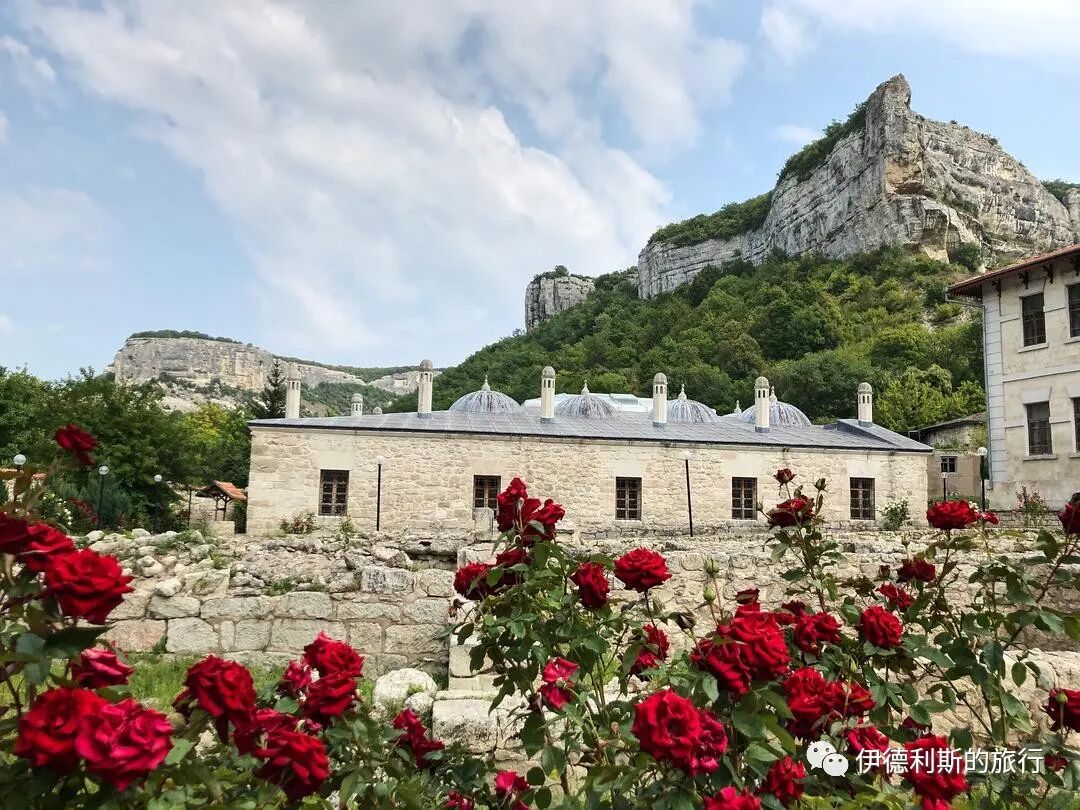
Block 2 of 2 for Part 1A-1b-1 Collapse Read »
Summary: This block continues the Crimean Khanate site and mosque section from Islamic World in 1550, preserving the original order of text and images.
The Chain Madrasa (Zıncırlı Medrese) was built in 1500 by order of the Crimean Khan Meñli I Giray. The name of the madrasa comes from the Turkic word "Zyngyr," which means "chain." A chain hangs above the main gate of the madrasa, so everyone who enters has to lower their head. The madrasa is rectangular with a central courtyard, an entrance on one side, and 11 rooms on the other three sides. At the time, the madrasa taught Turkish and Arabic grammar, calligraphy, arithmetic, ethics, logic, proof theory, fiqh, or Islamic law, theology, and hadith studies. The full course of study took ten years.
In 1909, influenced by the Crimean Tatar Enlightenment movement, Gasprinski built a new two-story madrasa next to the old one. The madrasa closed in 1917 and became the Meñli Giray Research Institute. The institute was abolished in 1923. Later, it served as a teacher's college, a medical school, a wartime sanatorium used by German military personnel, and a mental health clinic after the war. Today, it is managed by the Bakhchysarai History, Culture, and Archaeology Museum.
Block 2 of 2 for Part 1A-1b-1 Collapse Read »
Islamic World in 1550: Chain Madrasa in Crimea (Part 1A-1b-1b)
Reposted from the web
Summary: This block continues the Crimean Khanate site and mosque section from Islamic World in 1550, preserving the original order of text and images.
The Chain Madrasa (Zıncırlı Medrese) was built in 1500 by order of the Crimean Khan Meñli I Giray. The name of the madrasa comes from the Turkic word "Zyngyr," which means "chain." A chain hangs above the main gate of the madrasa, forcing everyone who enters to bow their head. The madrasa is rectangular with a central courtyard, an entrance on one side, and 11 rooms on the other three sides. At the time, the madrasa taught Turkish and Arabic grammar, calligraphy, arithmetic, ethics, logic, proof theory, Islamic law (sharia), theology, and hadith studies. The full course of study took ten years.
In 1909, influenced by the Crimean Tatar Enlightenment movement, Gasprinski built a new two-story madrasa next to the old one. The madrasa closed in 1917 and became the Meñli Giray Research Institute. The institute was abolished in 1923. Later, it served as a teacher's college, a medical school, a sanatorium for German soldiers, and a post-war psychiatric clinic. Today, it is managed by the Bakhchysarai History, Culture, and Archaeology Museum.
Block 2 of 2 for Part 1A-1b-1 Collapse Read »
Summary: This block continues the Crimean Khanate site and mosque section from Islamic World in 1550, preserving the original order of text and images.
The Chain Madrasa (Zıncırlı Medrese) was built in 1500 by order of the Crimean Khan Meñli I Giray. The name of the madrasa comes from the Turkic word "Zyngyr," which means "chain." A chain hangs above the main gate of the madrasa, forcing everyone who enters to bow their head. The madrasa is rectangular with a central courtyard, an entrance on one side, and 11 rooms on the other three sides. At the time, the madrasa taught Turkish and Arabic grammar, calligraphy, arithmetic, ethics, logic, proof theory, Islamic law (sharia), theology, and hadith studies. The full course of study took ten years.
In 1909, influenced by the Crimean Tatar Enlightenment movement, Gasprinski built a new two-story madrasa next to the old one. The madrasa closed in 1917 and became the Meñli Giray Research Institute. The institute was abolished in 1923. Later, it served as a teacher's college, a medical school, a sanatorium for German soldiers, and a post-war psychiatric clinic. Today, it is managed by the Bakhchysarai History, Culture, and Archaeology Museum.
Block 2 of 2 for Part 1A-1b-1 Collapse Read »
Islamic World in 1550: Crimean Khanate Sites and Mosques (Part 1A-1b-1)
Reposted from the web
Summary: This block continues the Crimean Khanate section of Islamic World in 1550, preserving the same site names, captions, mosque details, images, and historical facts from the Chinese source.
The tomb of Haji I Giray (Dürbe Hacı I Giray) was built in 1501 by Mengli I Giray for his father, the founding Khan of Crimea. It is an octagonal tomb with a lead dome.
Archaeological excavations from 2006 to 2007 examined 18 graves inside the mausoleum, including 13 adults and 5 children. They were wrapped in silk and satin, with some resting on pillows stuffed with fabric scraps and fruit seeds. The mausoleum holds 8 stone sarcophagi covered in velvet, silk, and silver-threaded fabric. These likely include 4 Crimean Khans: Hacı I Giray himself, Meñli I Giray, Nur Devlet—who fought Meñli I Giray for the throne for years before losing—and Sahib I Giray, the son of Meñli I Giray and builder of Bakhchysarai.
After research finished in 2009, these individuals were reburied with Muslim rites.
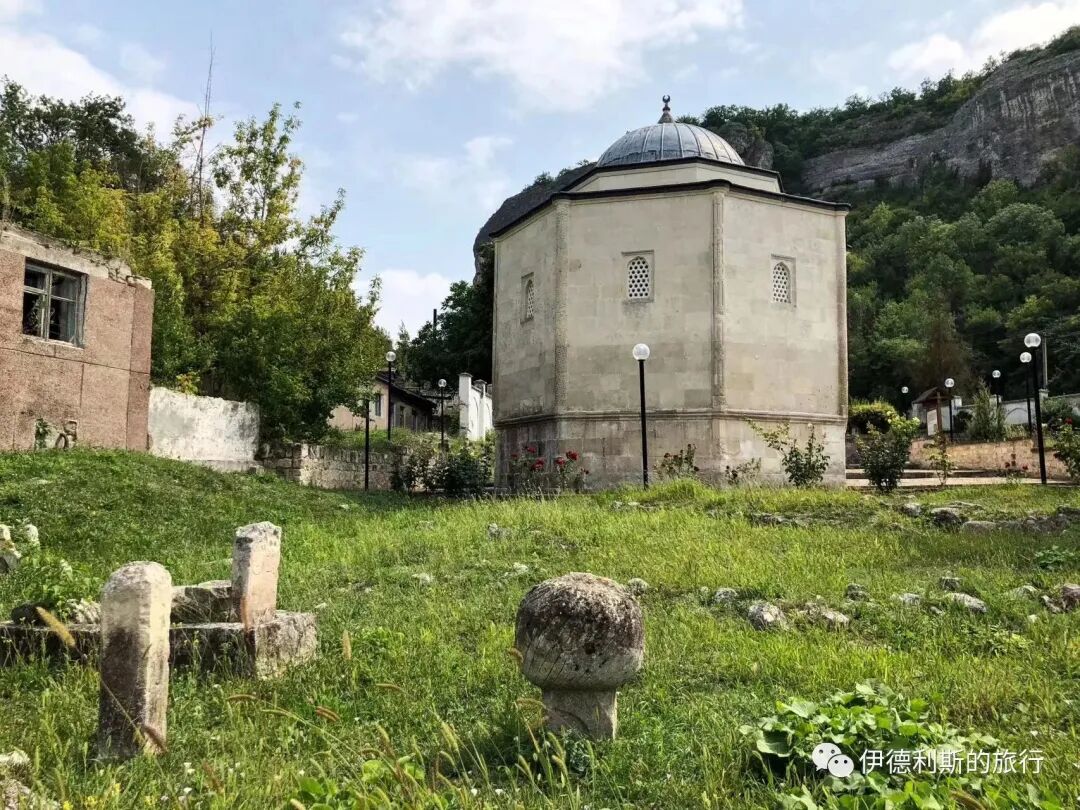
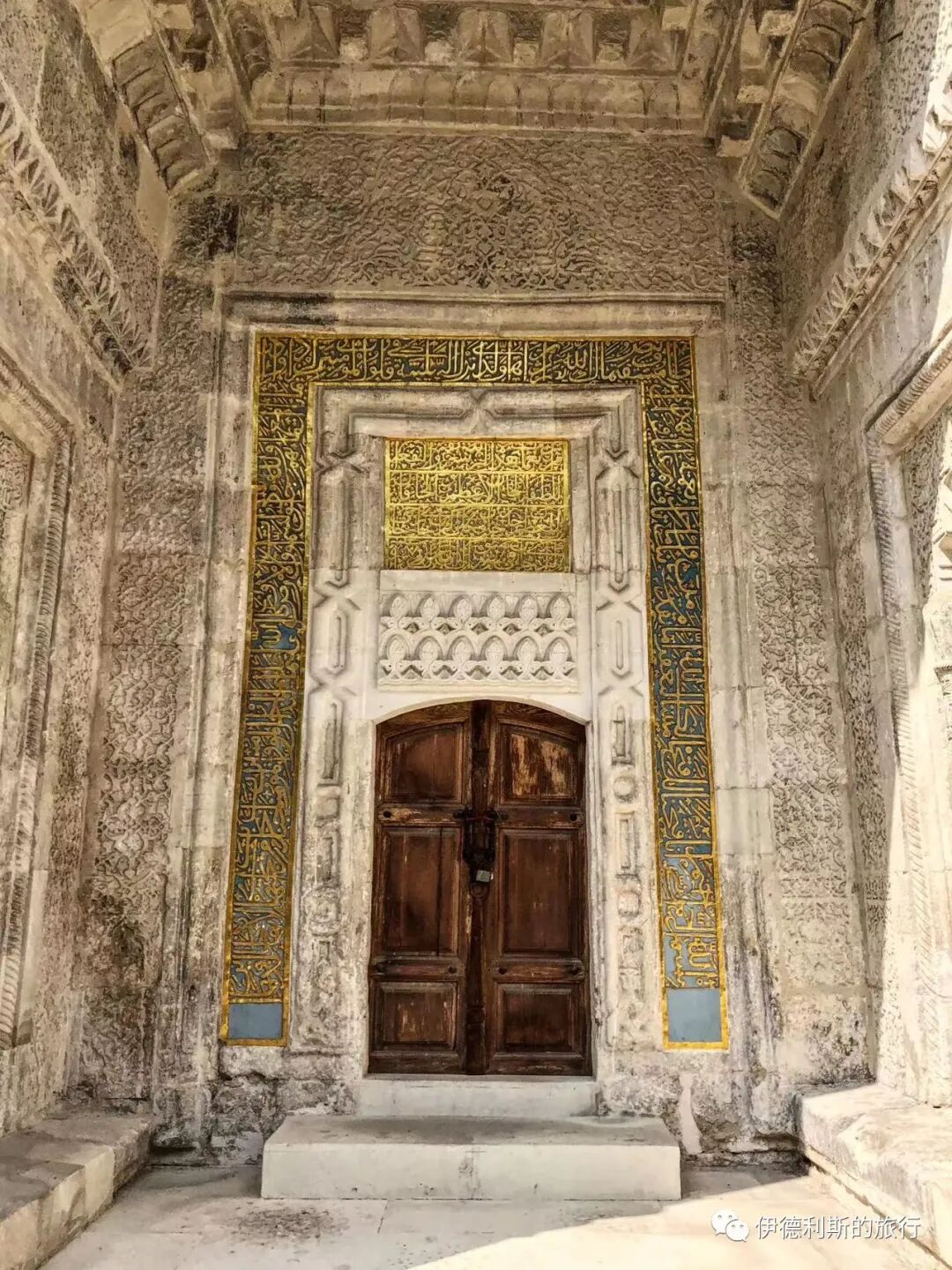
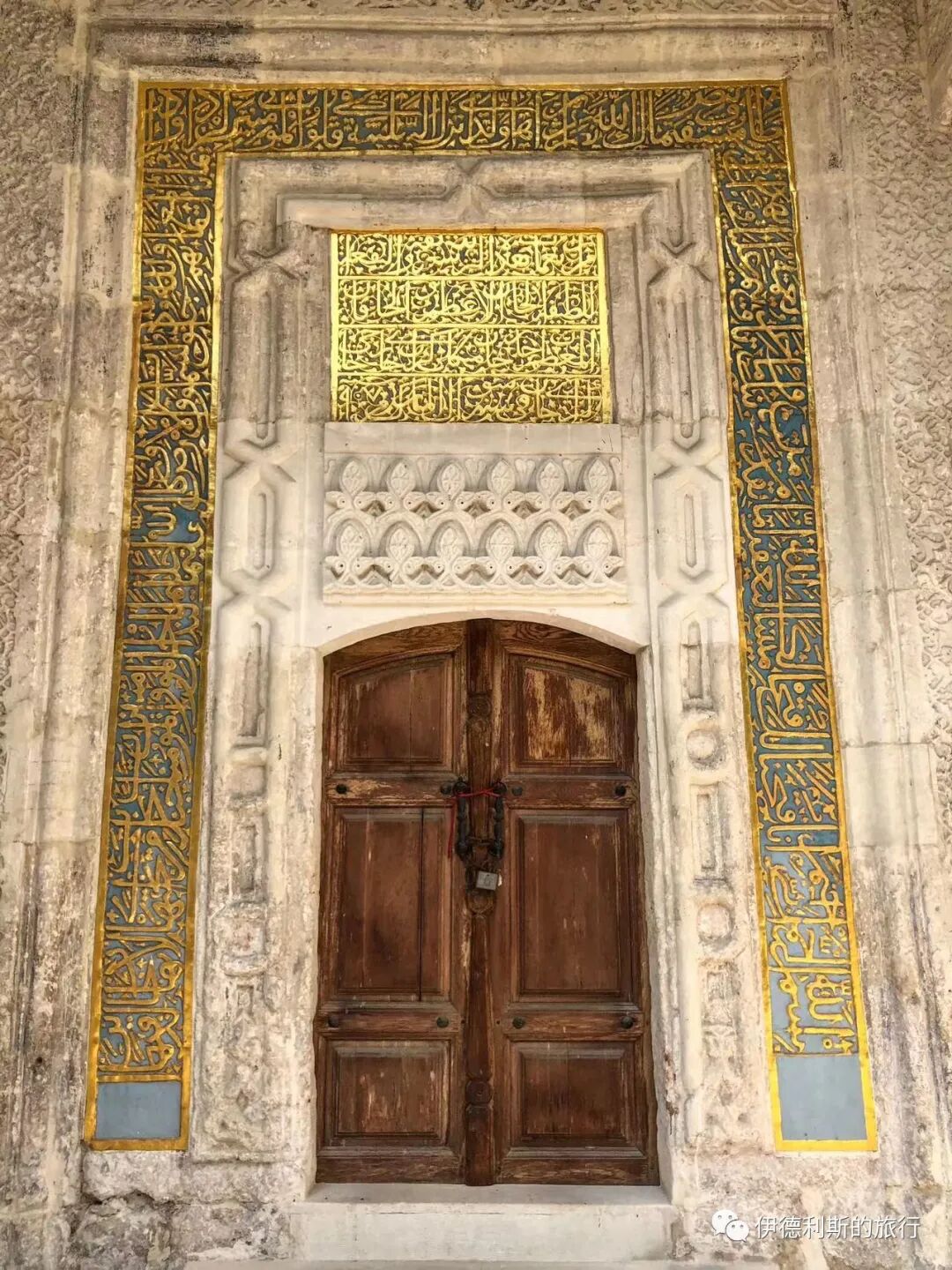
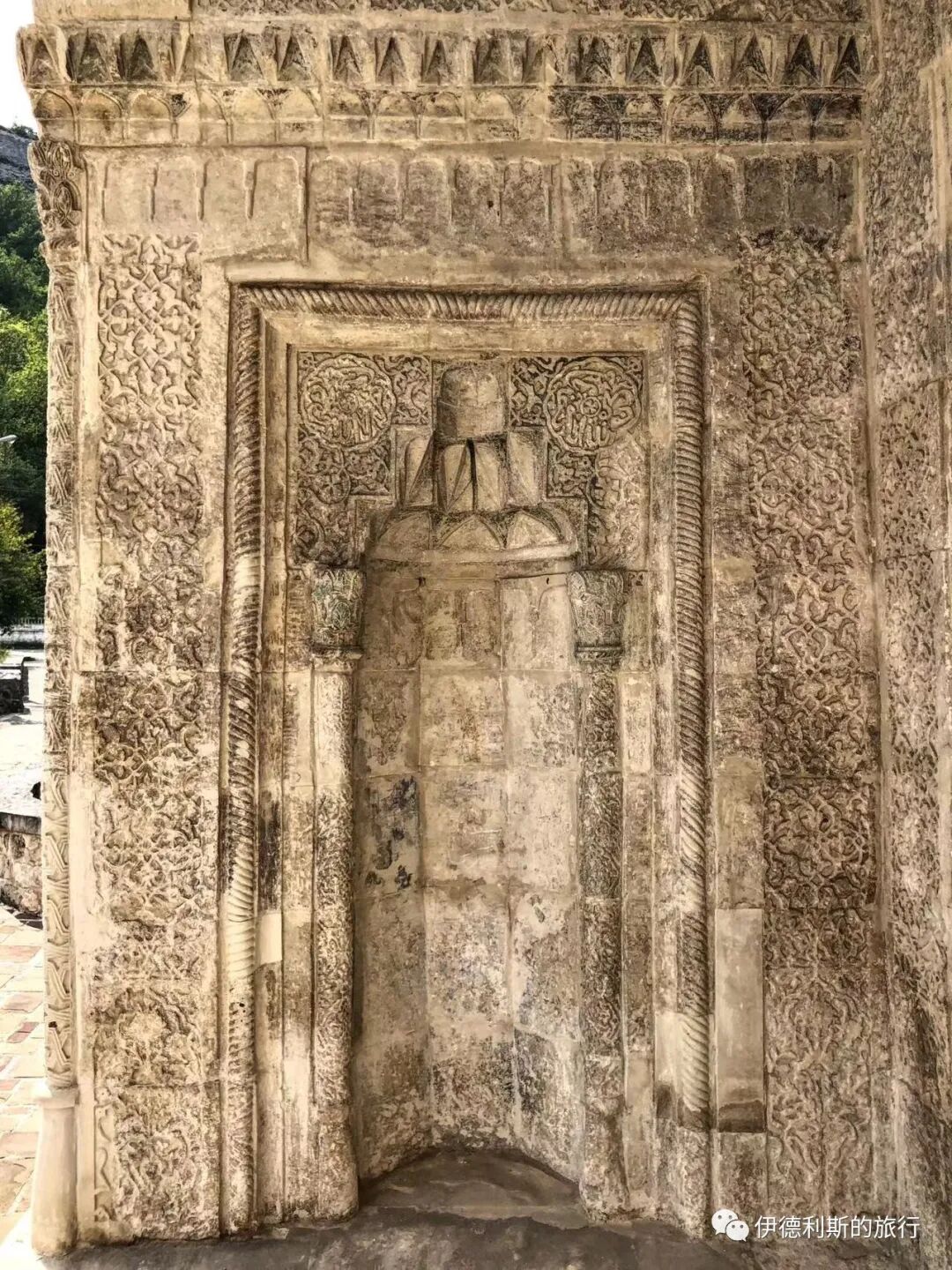
The Chain Madrasa (Zıncırlı Medrese) was built in 1500 by order of the Crimean Khan Meñli I Giray. The name of the madrasa comes from the Turkic word "Zyngyr," which means "chain." A chain hangs above the main gate of the madrasa, forcing everyone who enters to bow their head. The madrasa is rectangular with a central courtyard, an entrance on one side, and 11 rooms on the other three sides. At the time, the madrasa taught Turkish and Arabic grammar, calligraphy, arithmetic, ethics, logic, proof theory, Islamic law (sharia), theology, and hadith studies. The full course of study took ten years.
In 1909, influenced by the Crimean Tatar Enlightenment movement, Gasprinski built a new two-story madrasa next to the old one. The madrasa closed in 1917 and became the Meñli Giray Research Institute. The institute was abolished in 1923. Later, it served as a teacher's college, a medical school, a sanatorium for German soldiers, and a post-war psychiatric clinic. Today, it is managed by the Bakhchysarai History, Culture, and Archaeology Museum.
Block 1 of 4 for Part 1A-1b Collapse Read »
Summary: This block continues the Crimean Khanate section of Islamic World in 1550, preserving the same site names, captions, mosque details, images, and historical facts from the Chinese source.
The tomb of Haji I Giray (Dürbe Hacı I Giray) was built in 1501 by Mengli I Giray for his father, the founding Khan of Crimea. It is an octagonal tomb with a lead dome.
Archaeological excavations from 2006 to 2007 examined 18 graves inside the mausoleum, including 13 adults and 5 children. They were wrapped in silk and satin, with some resting on pillows stuffed with fabric scraps and fruit seeds. The mausoleum holds 8 stone sarcophagi covered in velvet, silk, and silver-threaded fabric. These likely include 4 Crimean Khans: Hacı I Giray himself, Meñli I Giray, Nur Devlet—who fought Meñli I Giray for the throne for years before losing—and Sahib I Giray, the son of Meñli I Giray and builder of Bakhchysarai.
After research finished in 2009, these individuals were reburied with Muslim rites.
The Chain Madrasa (Zıncırlı Medrese) was built in 1500 by order of the Crimean Khan Meñli I Giray. The name of the madrasa comes from the Turkic word "Zyngyr," which means "chain." A chain hangs above the main gate of the madrasa, forcing everyone who enters to bow their head. The madrasa is rectangular with a central courtyard, an entrance on one side, and 11 rooms on the other three sides. At the time, the madrasa taught Turkish and Arabic grammar, calligraphy, arithmetic, ethics, logic, proof theory, Islamic law (sharia), theology, and hadith studies. The full course of study took ten years.
In 1909, influenced by the Crimean Tatar Enlightenment movement, Gasprinski built a new two-story madrasa next to the old one. The madrasa closed in 1917 and became the Meñli Giray Research Institute. The institute was abolished in 1923. Later, it served as a teacher's college, a medical school, a sanatorium for German soldiers, and a post-war psychiatric clinic. Today, it is managed by the Bakhchysarai History, Culture, and Archaeology Museum.
Block 1 of 4 for Part 1A-1b Collapse Read »
Islamic World in 1550: Crimean Khanate Sites and Mosques (Part 1A-1b)
Reposted from the web
Summary: This block continues the Crimean Khanate section of Islamic World in 1550, preserving the same site names, captions, mosque details, images, and historical facts from the Chinese source.
The tomb of Haji I Giray (Dürbe Hacı I Giray) was built in 1501 by Mengli I Giray for his father, the founding Khan of Crimea. It is an octagonal tomb with a lead dome.
Archaeological excavations from 2006 to 2007 examined 18 graves inside the mausoleum, including 13 adults and 5 children. They were wrapped in silk and satin, with some resting on pillows stuffed with fabric scraps and fruit seeds. The mausoleum holds 8 stone sarcophagi covered in velvet, silk, and silver-threaded fabric. These likely include 4 Crimean Khans: Hacı I Giray himself, Meñli I Giray, Nur Devlet—who fought Meñli I Giray for the throne for years before losing—and Sahib I Giray, the son of Meñli I Giray and builder of Bakhchysarai.
After research finished in 2009, these individuals were reburied with Muslim rites.
The Chain Madrasa (Zıncırlı Medrese) was built in 1500 by order of the Crimean Khan Meñli I Giray. The name of the madrasa comes from the Turkic word "Zyngyr," which means "chain." A chain hangs above the main gate of the madrasa, forcing everyone who enters to bow their head. The madrasa is rectangular with a central courtyard, an entrance on one side, and 11 rooms on the other three sides. At the time, the madrasa taught Turkish and Arabic grammar, calligraphy, arithmetic, ethics, logic, proof theory, Islamic law (sharia), theology, and hadith studies. The full course of study took ten years.
In 1909, influenced by the Crimean Tatar Enlightenment movement, Gasprinski built a new two-story madrasa next to the old one. The madrasa closed in 1917 and became the Meñli Giray Research Institute. The institute was abolished in 1923. Later, it served as a teacher's college, a medical school, a sanatorium for German soldiers, and a post-war psychiatric clinic. Today, it is managed by the Bakhchysarai History, Culture, and Archaeology Museum.
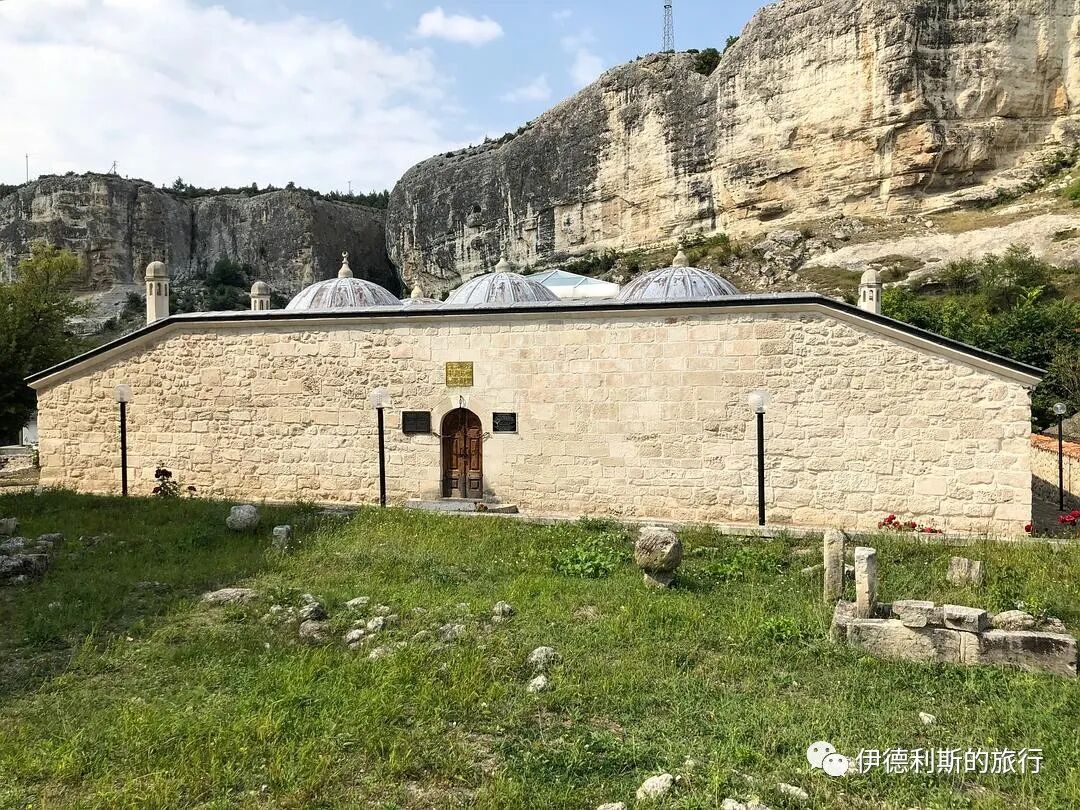
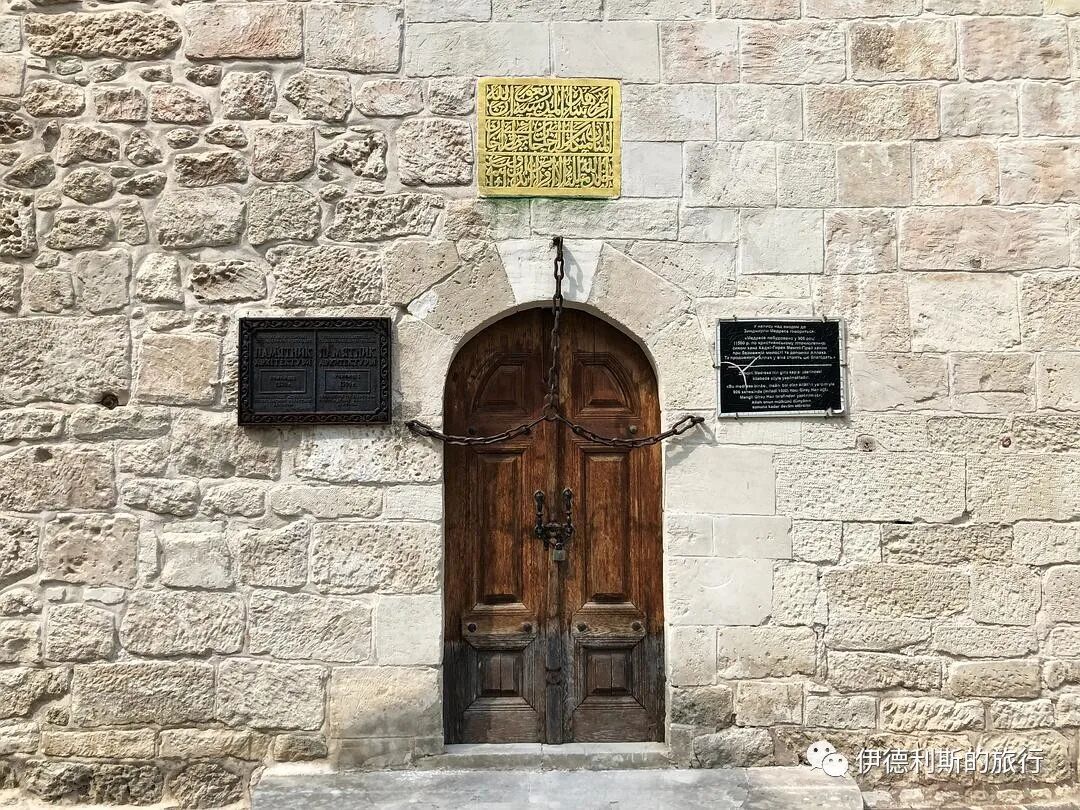
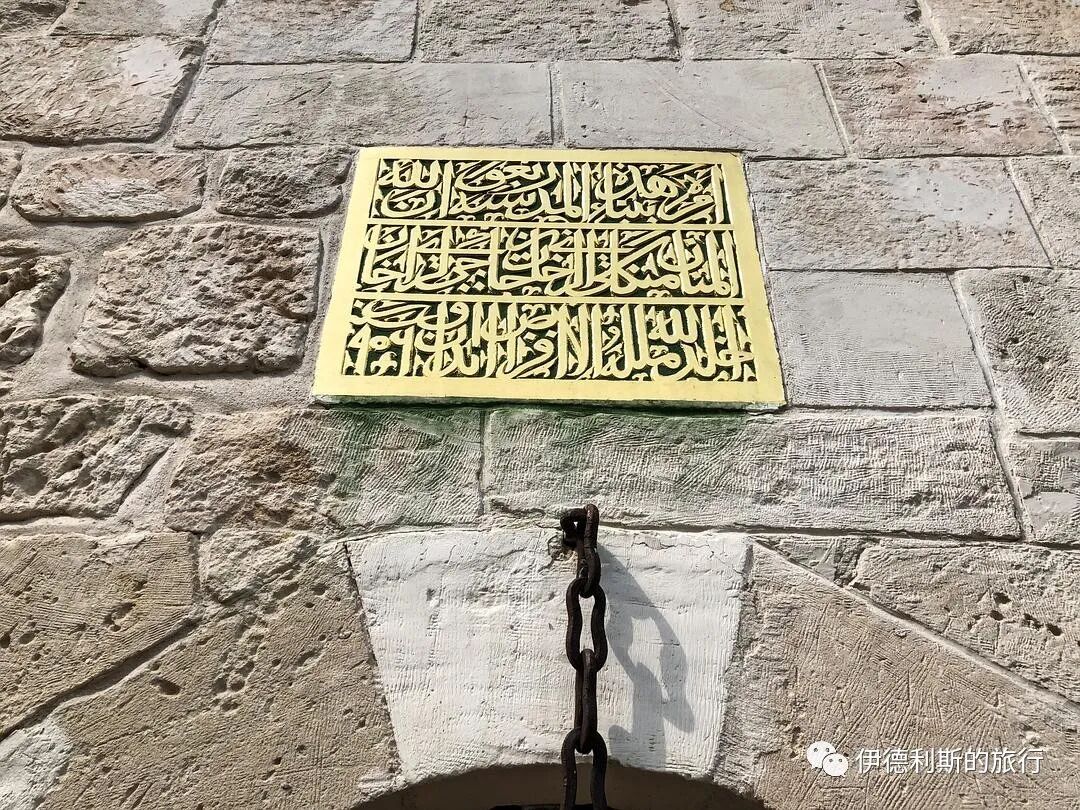
The Iron Gate (Demir Qapı) is the oldest structure in the Khan's Palace. It was built between 1503 and 1504 for the Crimean Khan by the architect Aleviz Novy, who had been invited by Ivan the Great to build churches in Moscow. The Iron Gate was likely first built at the Crimean Khan's previous residence, Devlet-Saray, and moved to the main palace building after the Bakhchysarai Khan's Palace was completed in 1532. "Demir Qapı" means "iron gate" in Crimean Tatar. The doorway is made of limestone and features Lombard-Venetian Renaissance decorative styles.
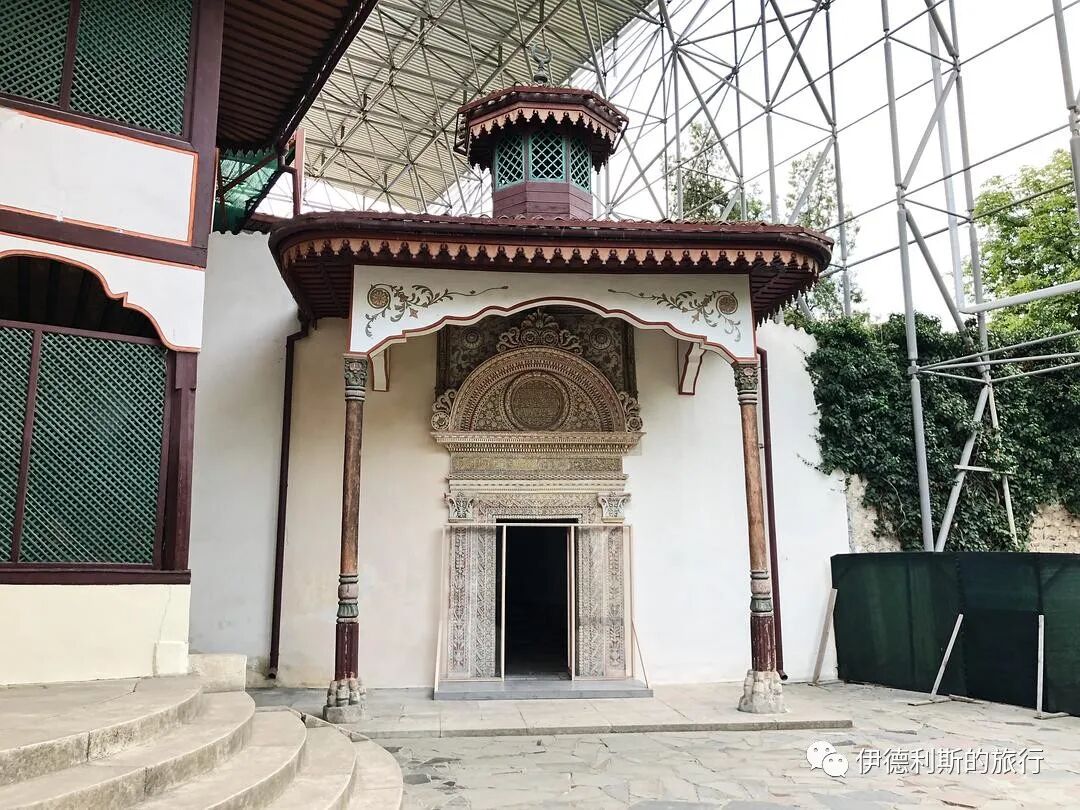
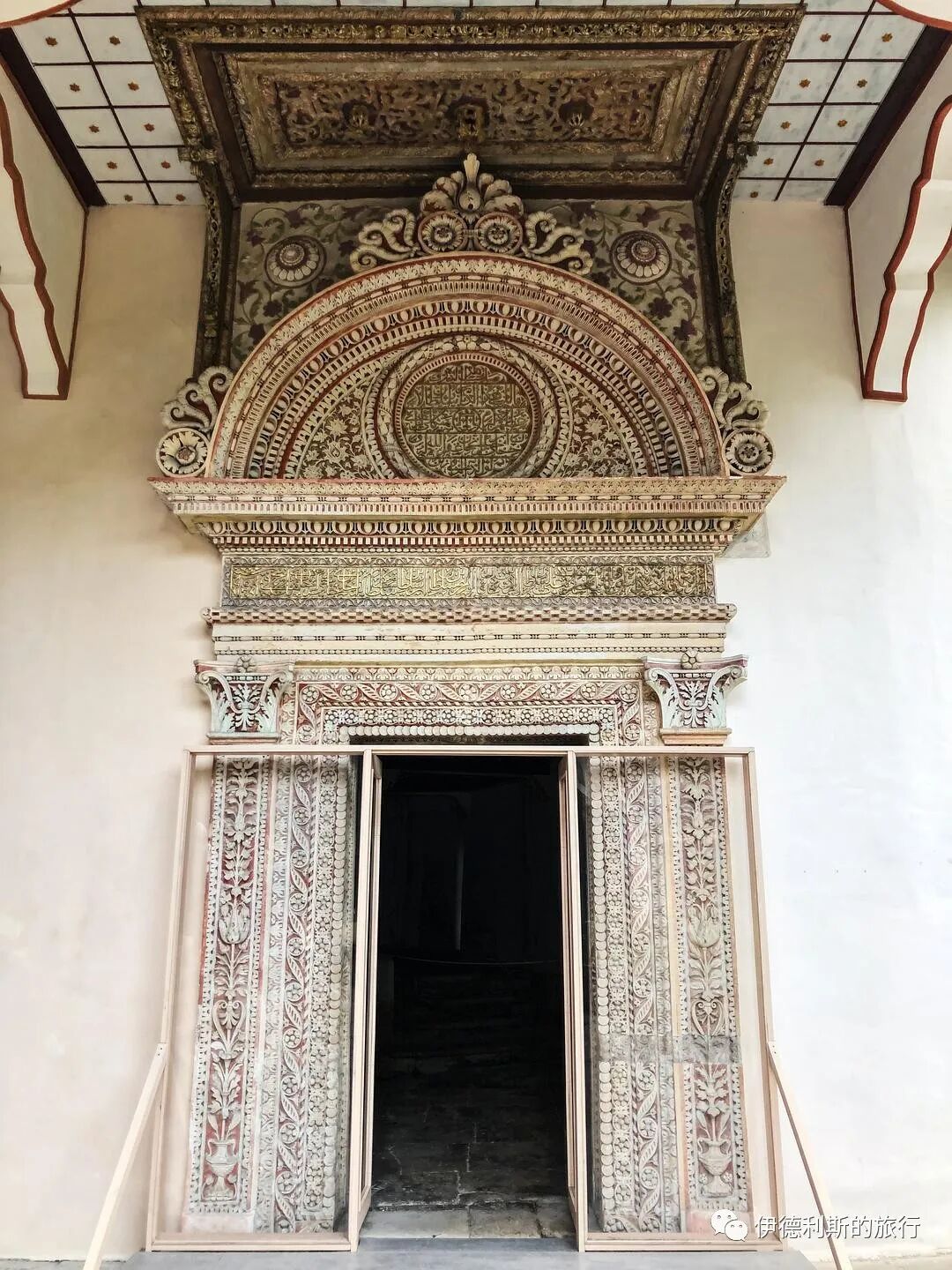
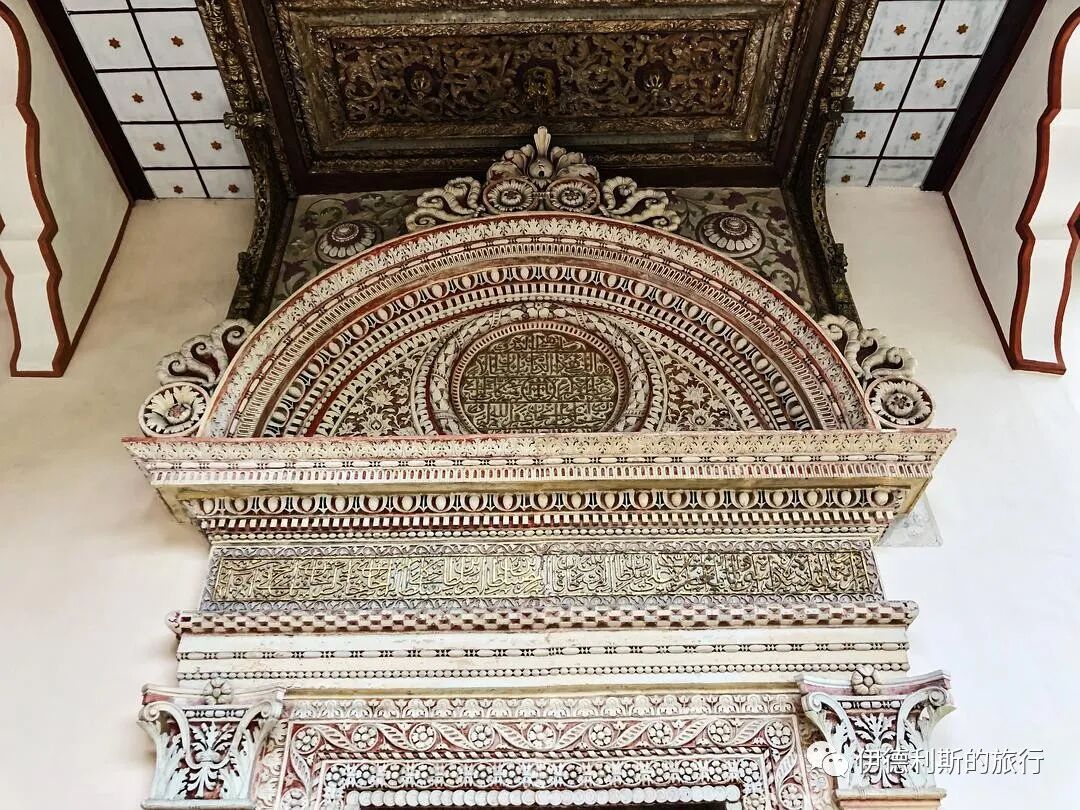
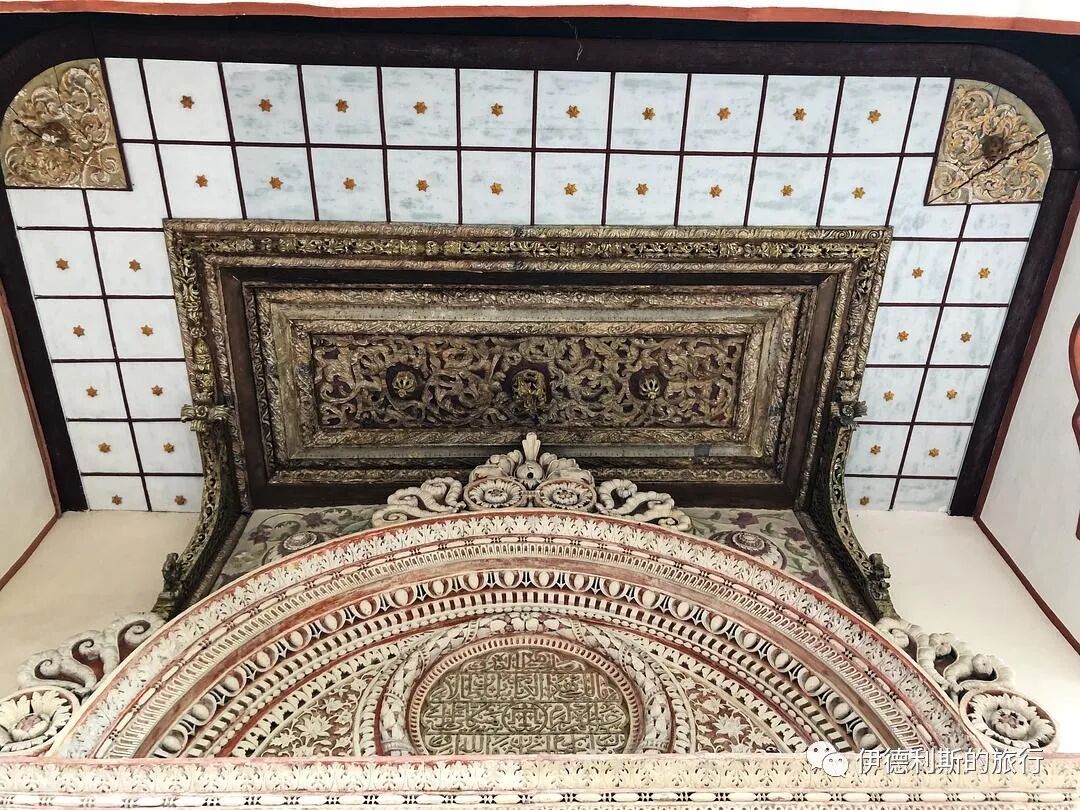
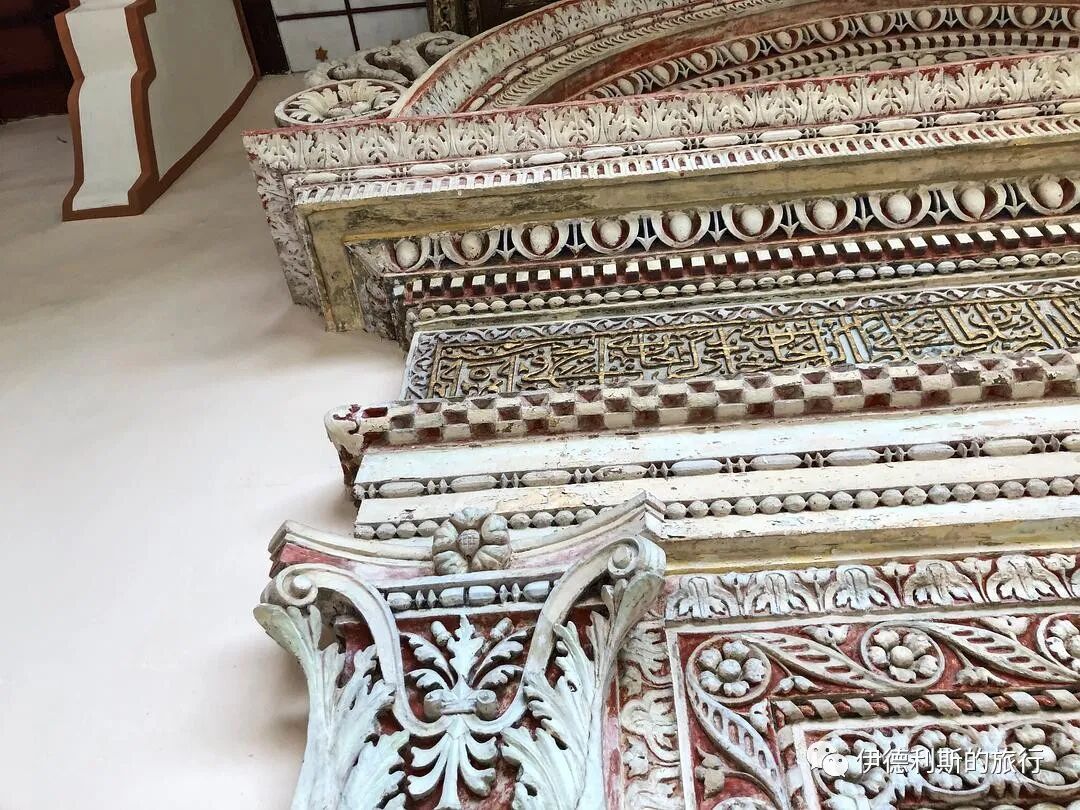
The Great Khan Mosque (Büyük Han Cami) in the Bakhchysarai Khan's Palace was built in 1532 and is one of the earliest structures in the palace. The original mosque had multiple domes, similar to the Seljuk-style mosques popular in the Ottoman Empire during the 15th century. The mosque was destroyed by fire in 1736. It was later restored by Khan Selamet II Giray (who reigned from 1740 to 1743) and converted to a tiled roof.
During the Soviet era, the mosque was closed and turned into an exhibition hall for the archaeological museum. After Russia occupied Crimea in 2014, the mosque underwent repairs, some of which caused damage to the building.
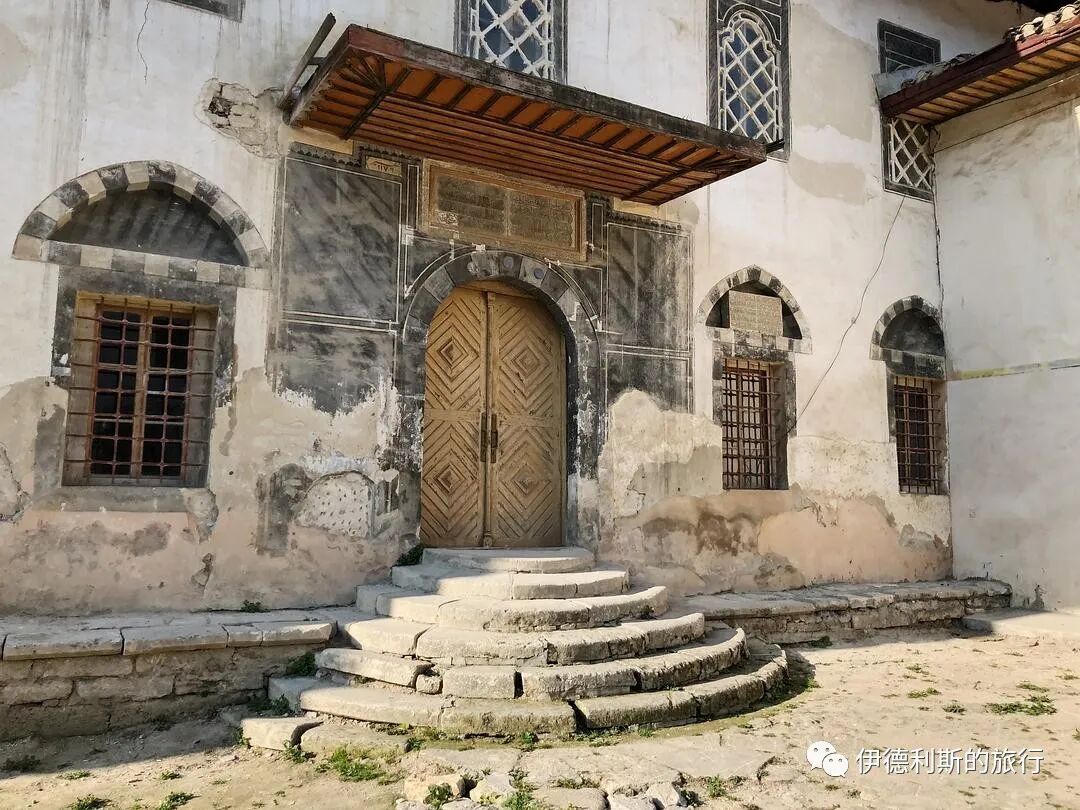
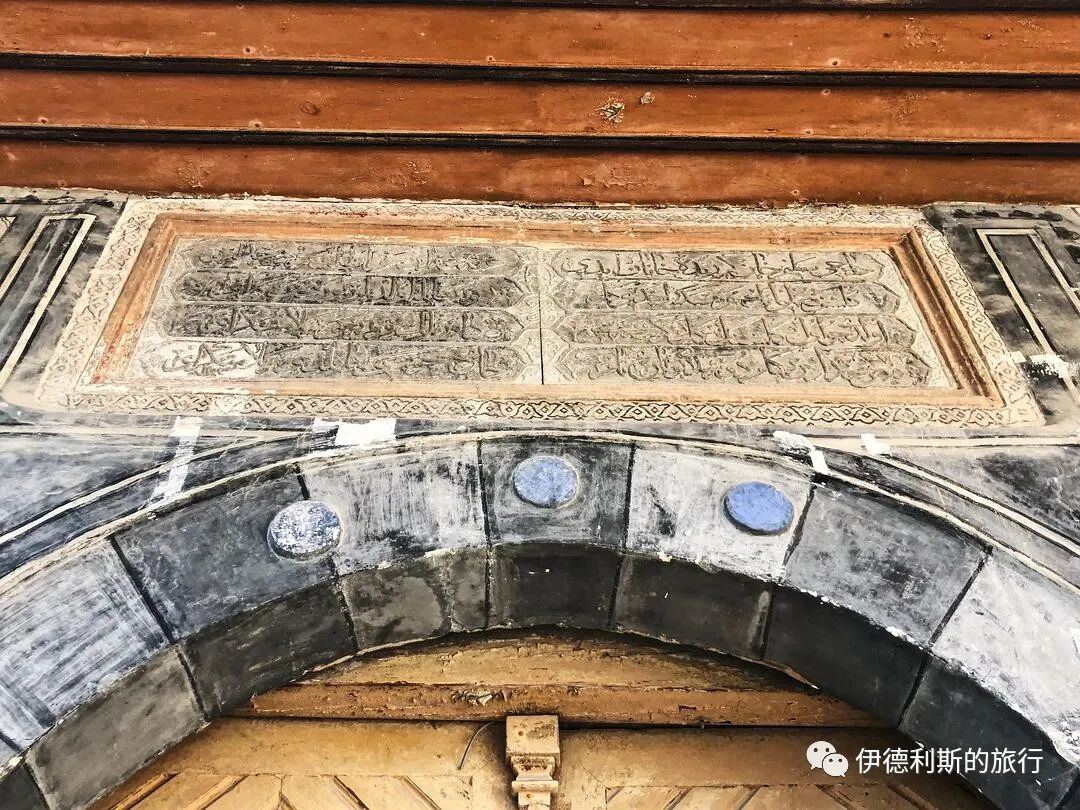
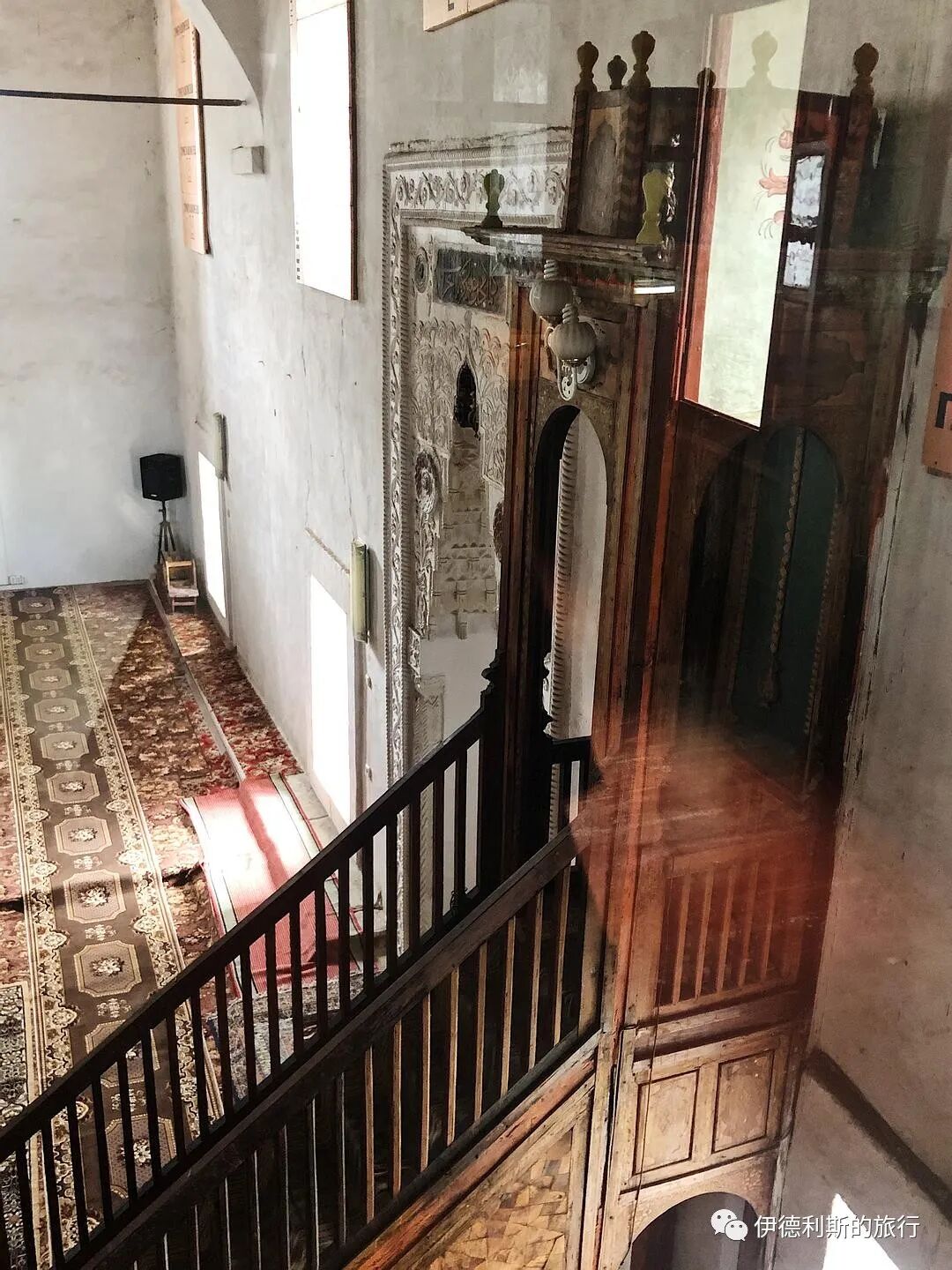
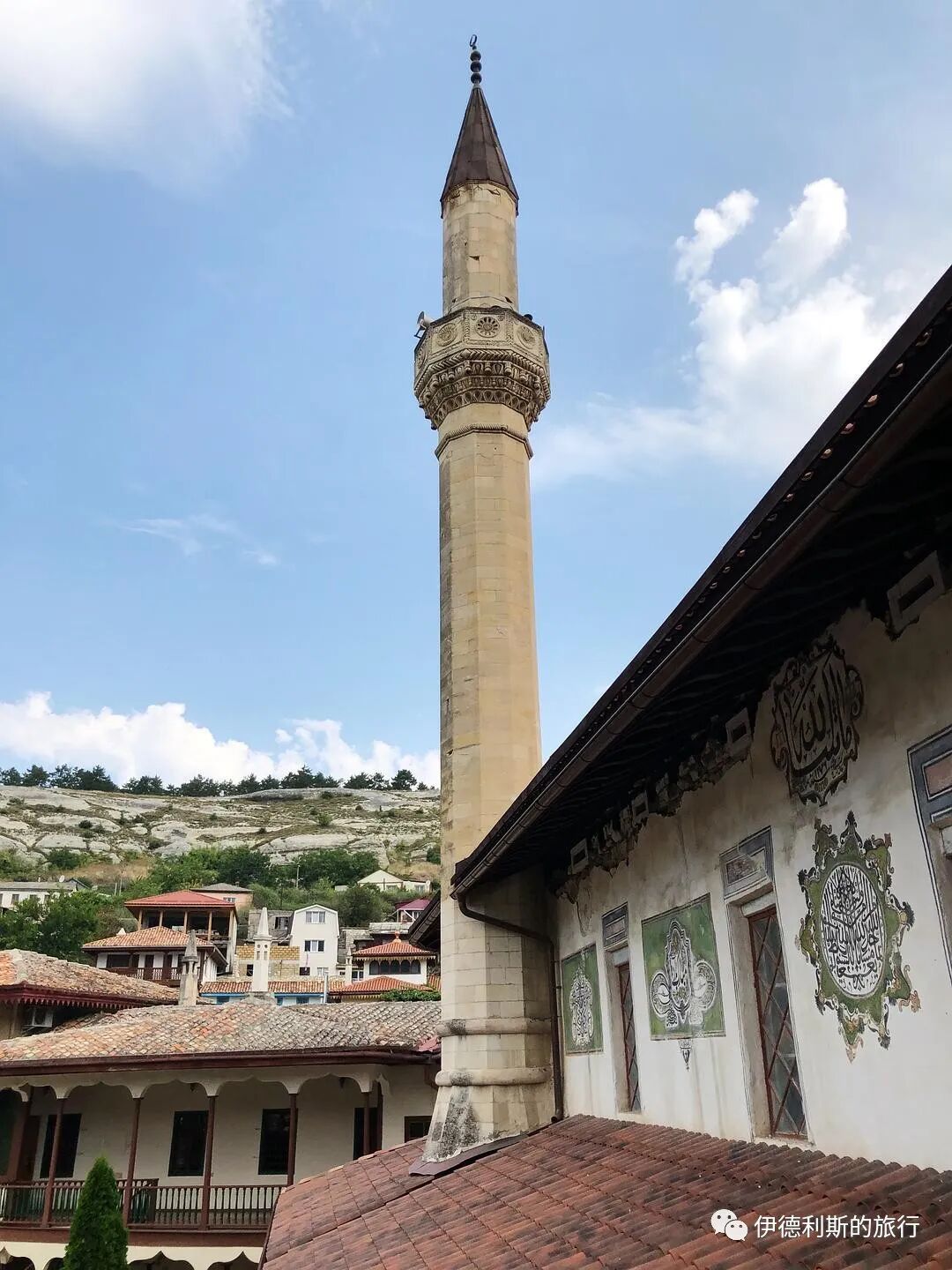
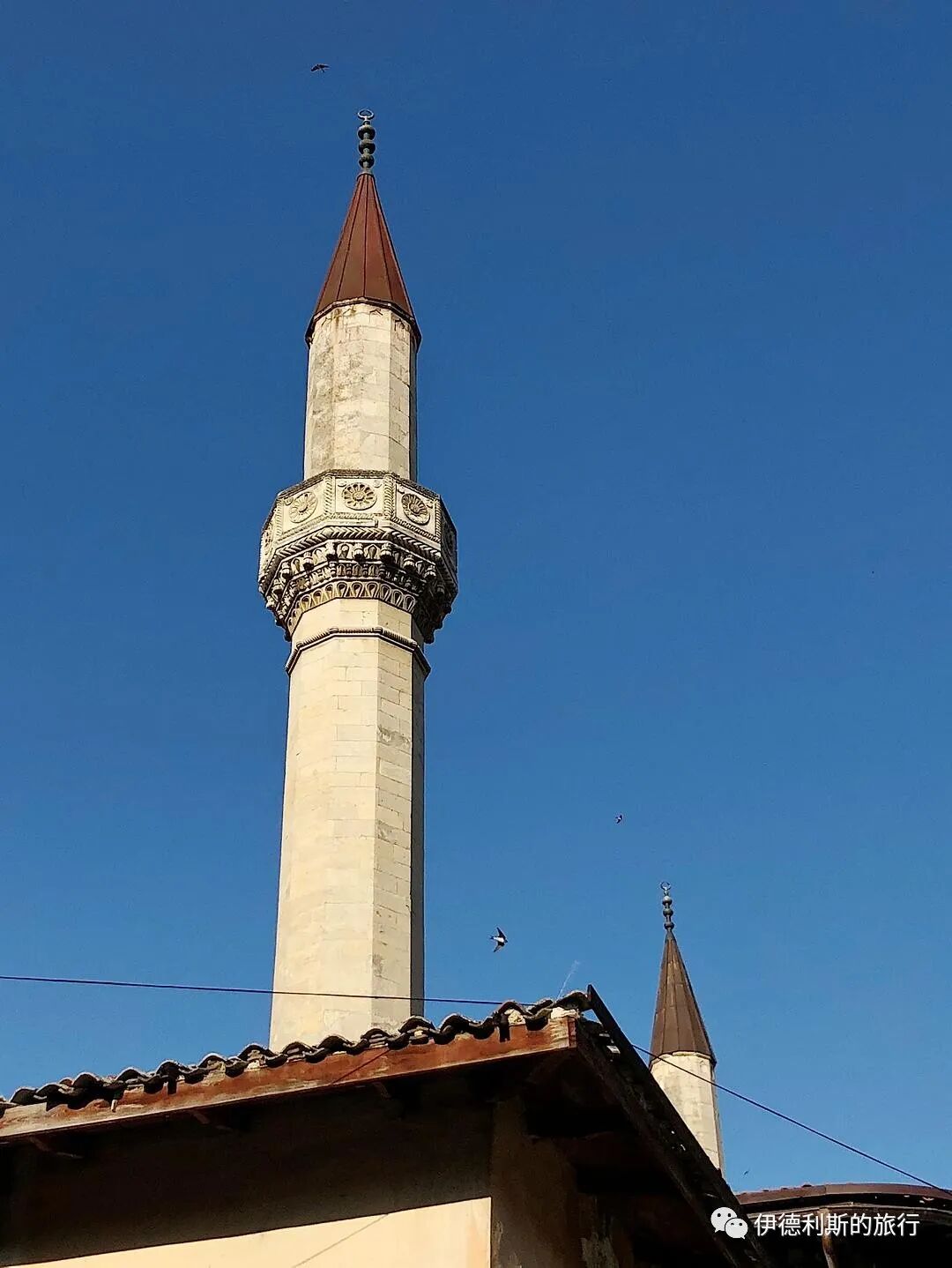
The SaryGuzel Bathhouse was built in 1532 by order of the Crimean Khan Sahib I Giray. Like the Great Khan Mosque, it is one of the earliest buildings in the Bakhchysarai Khan's Palace. In Crimean Tatar, "Sarı" means "yellow or fair-skinned," and "Güzel" means "beautiful." The SaryGuzel Bathhouse is a typical Turkish bath. A furnace in the basement heated the floor with rising hot air, and cold and hot water were supplied through lead pipes. The bathhouse is divided into men's and women's sections, each with its own dome. The domes have star-shaped cutouts for ventilation and light, and there is an indoor courtyard with a fountain at the exit.
The SaryGuzel Bathhouse operated until 1924, when it was closed because it was considered unsafe. It has since been repaired and is now open for exhibitions.
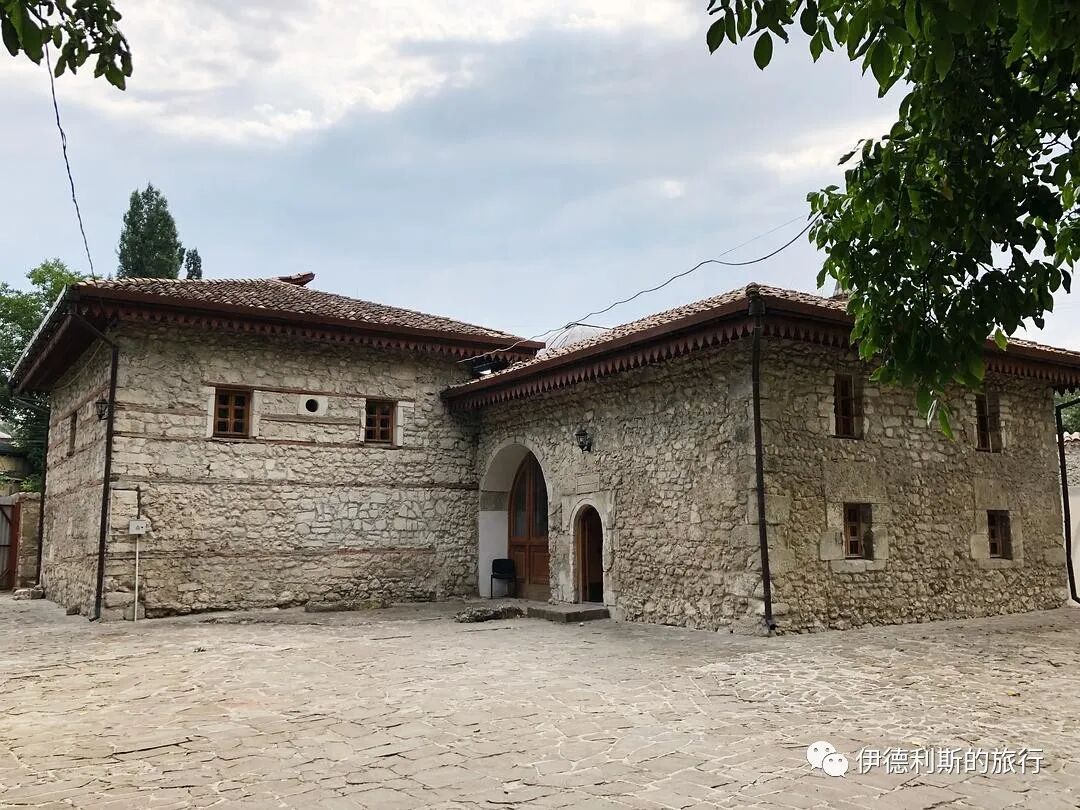
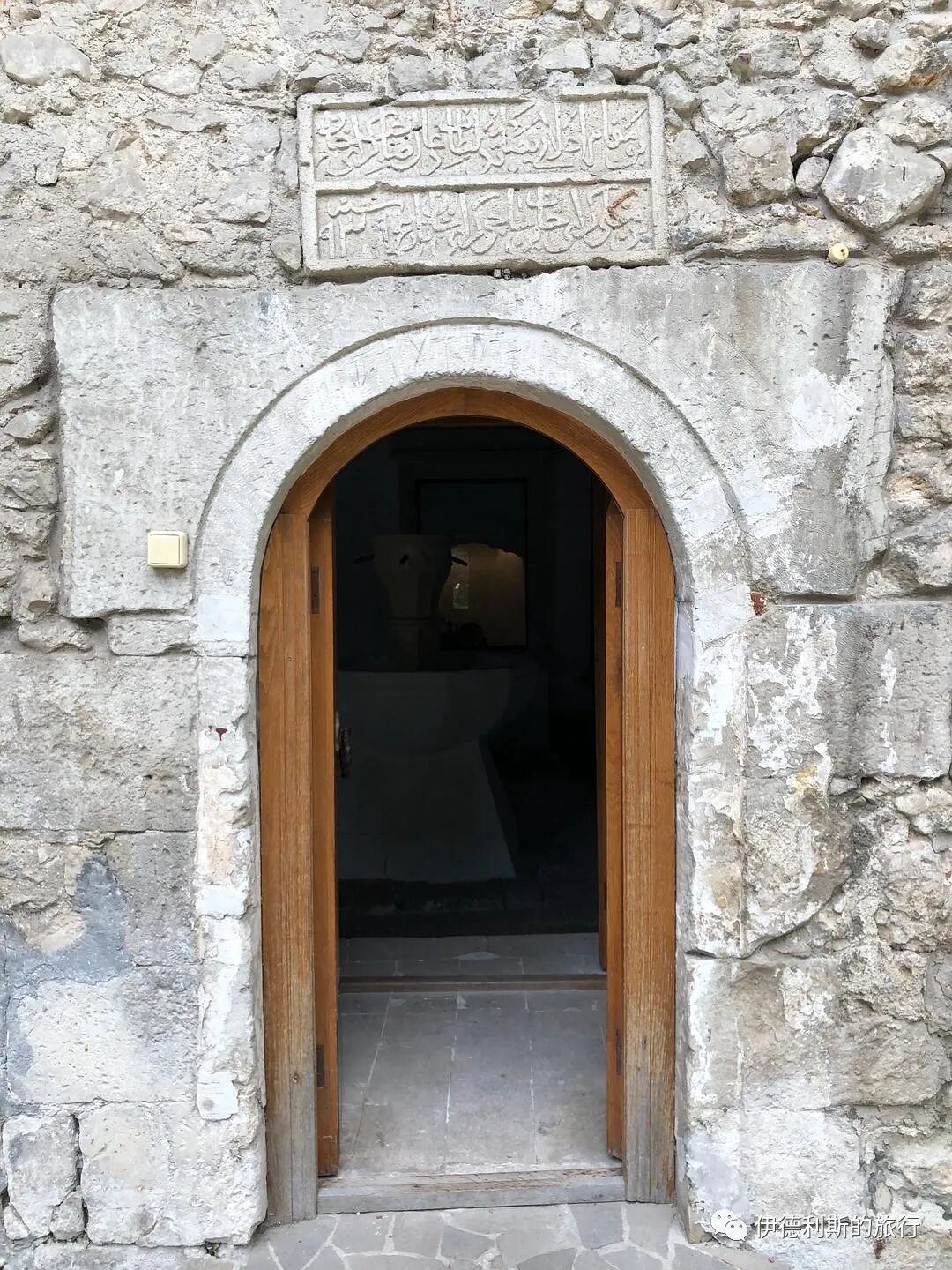
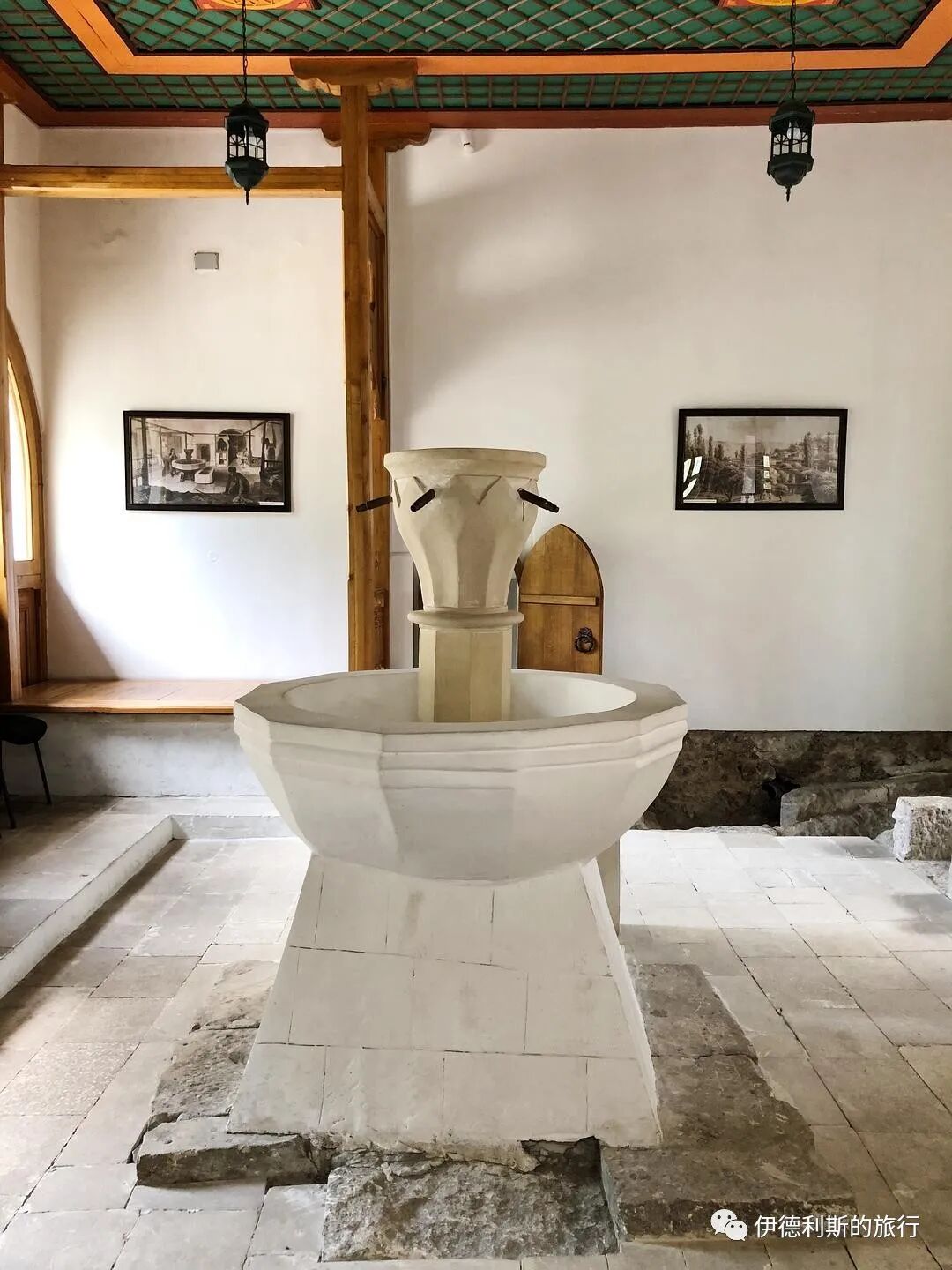
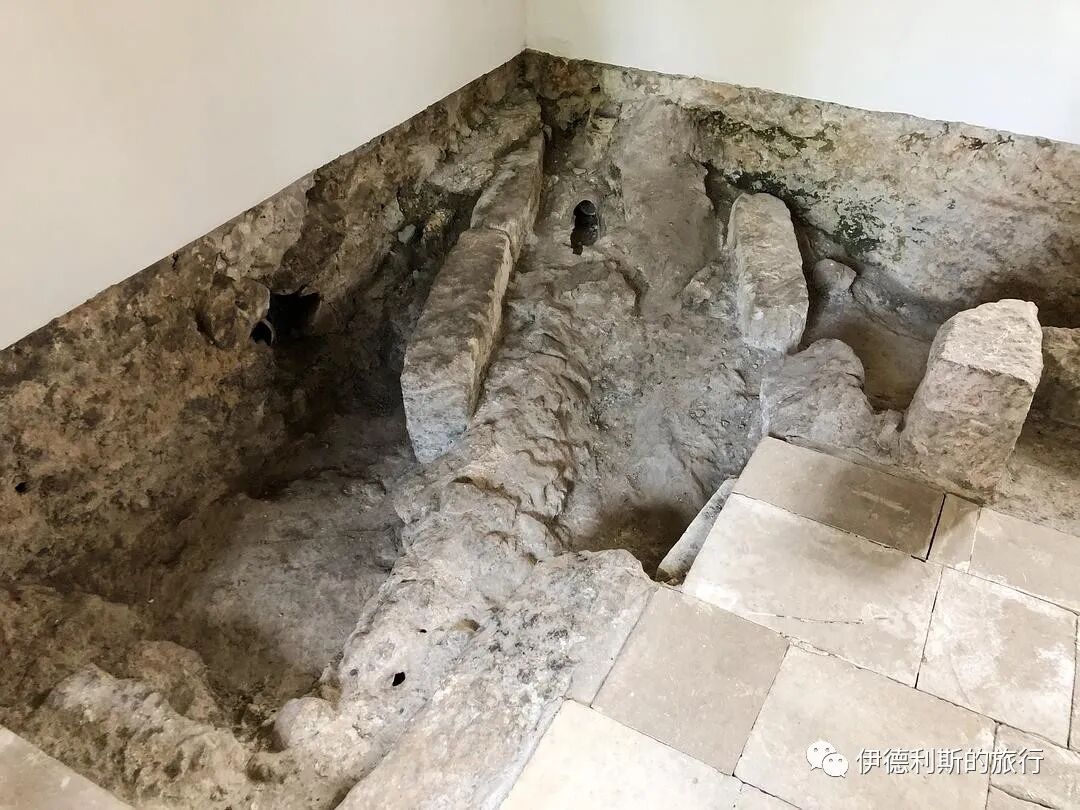
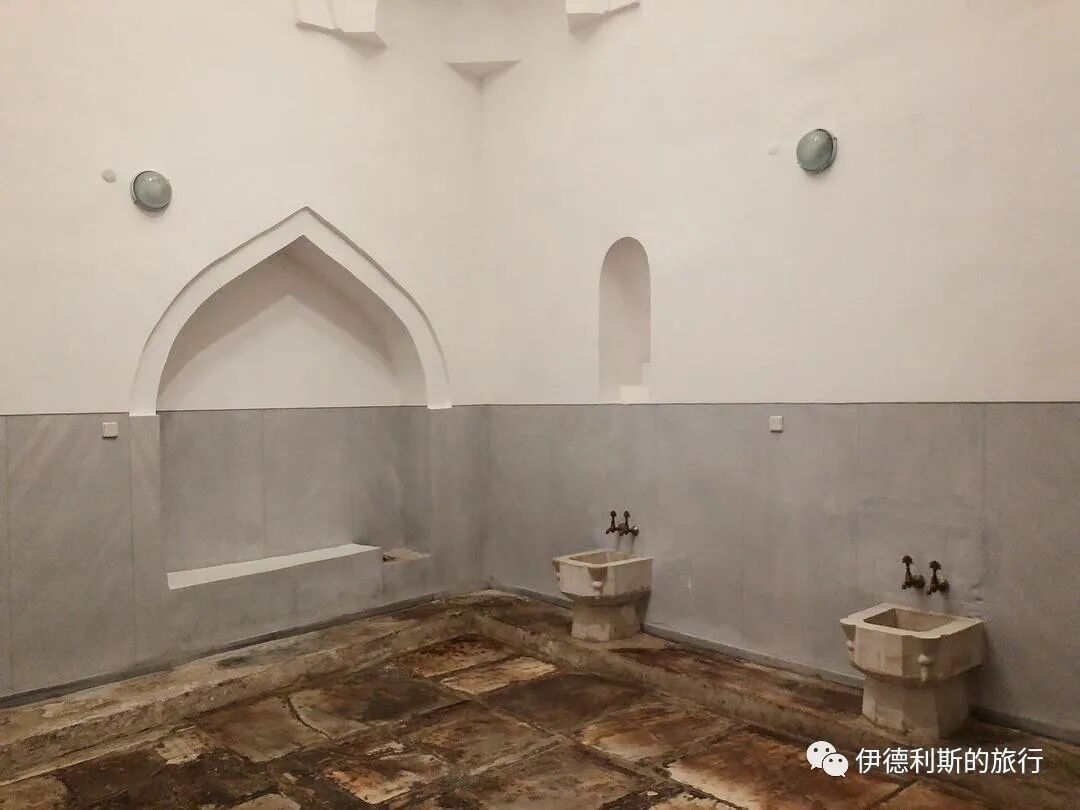
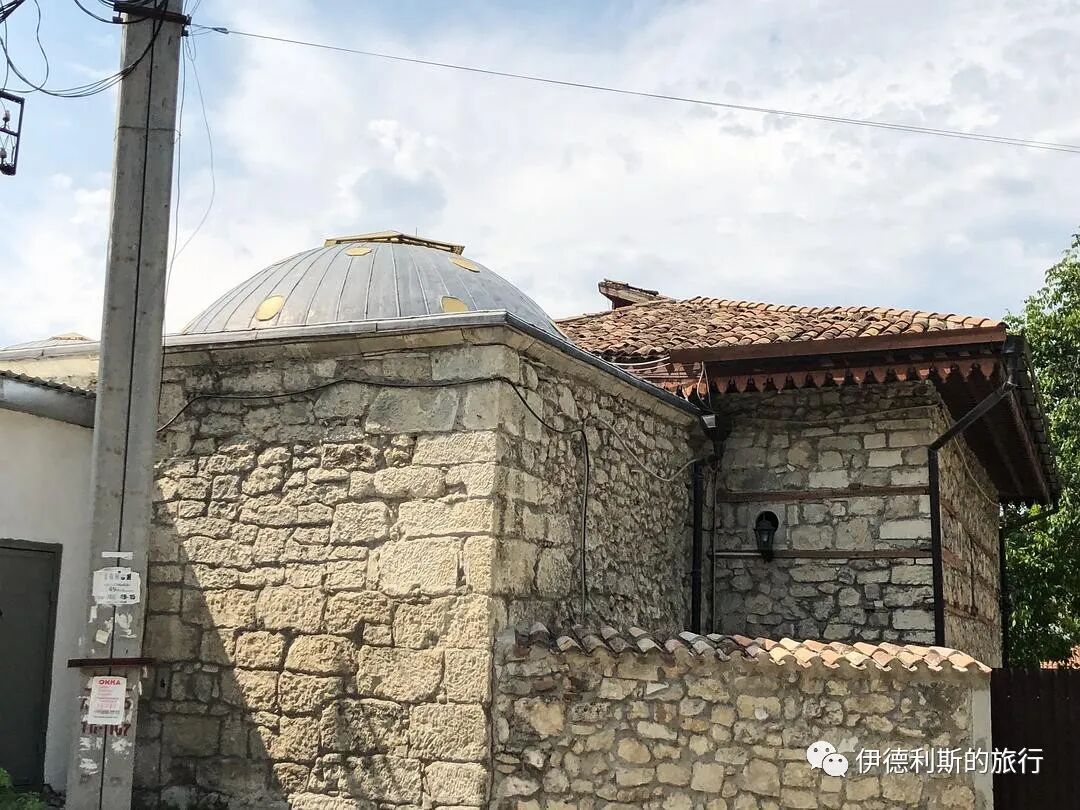
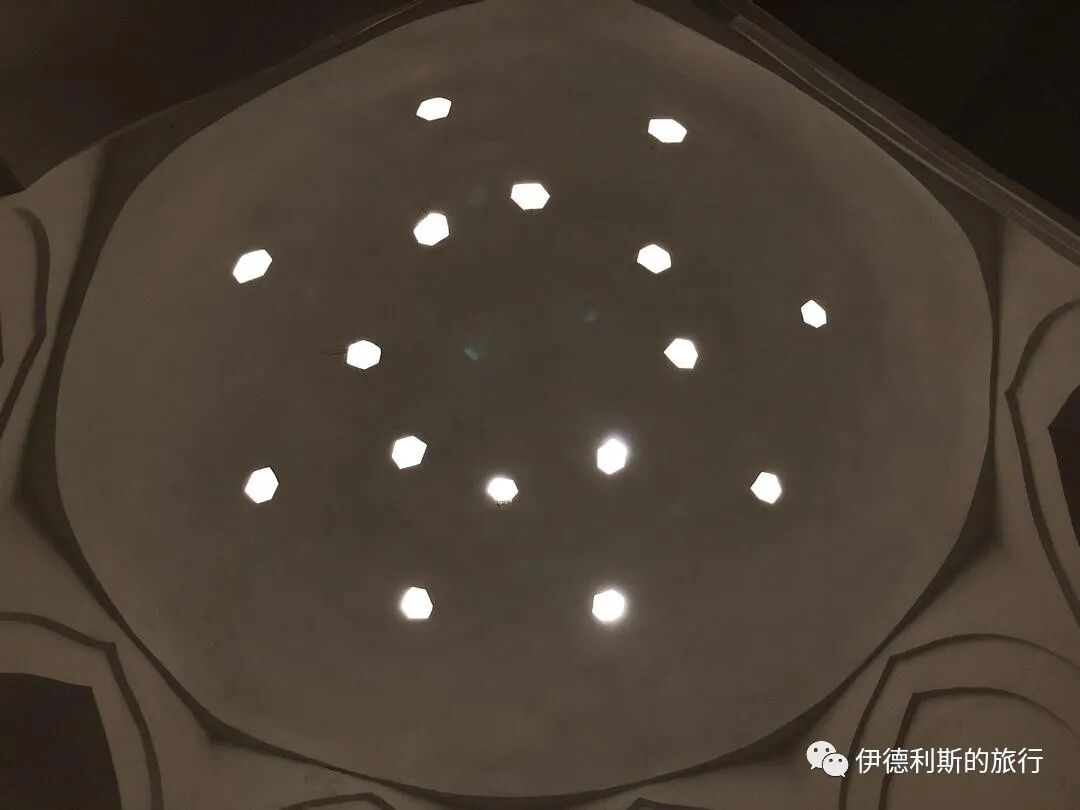
The Khan's cemetery holds the grave of the Crimean Khan Devlet I Giray (reigned 1551–1577). He was appointed Kalga (the second-in-command after the Khan) in 1530. Later, due to court struggles, he went to Istanbul and gradually gained the trust of the Ottoman Sultan Suleiman the Magnificent. In 1551, with the help of Suleiman the Magnificent, he became the Crimean Khan.
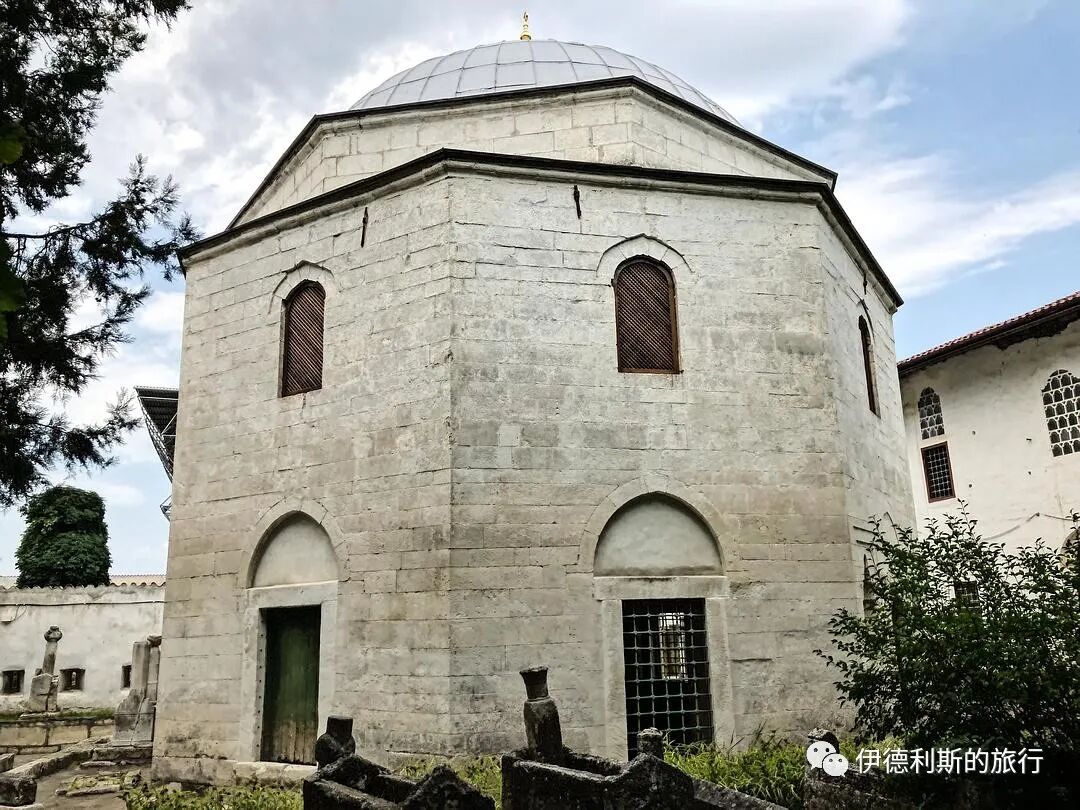
Block 2 of 2 for Part 1A-1 Collapse Read »
Summary: This block continues the Crimean Khanate section of Islamic World in 1550, preserving the same site names, captions, mosque details, images, and historical facts from the Chinese source.
The tomb of Haji I Giray (Dürbe Hacı I Giray) was built in 1501 by Mengli I Giray for his father, the founding Khan of Crimea. It is an octagonal tomb with a lead dome.
Archaeological excavations from 2006 to 2007 examined 18 graves inside the mausoleum, including 13 adults and 5 children. They were wrapped in silk and satin, with some resting on pillows stuffed with fabric scraps and fruit seeds. The mausoleum holds 8 stone sarcophagi covered in velvet, silk, and silver-threaded fabric. These likely include 4 Crimean Khans: Hacı I Giray himself, Meñli I Giray, Nur Devlet—who fought Meñli I Giray for the throne for years before losing—and Sahib I Giray, the son of Meñli I Giray and builder of Bakhchysarai.
After research finished in 2009, these individuals were reburied with Muslim rites.
The Chain Madrasa (Zıncırlı Medrese) was built in 1500 by order of the Crimean Khan Meñli I Giray. The name of the madrasa comes from the Turkic word "Zyngyr," which means "chain." A chain hangs above the main gate of the madrasa, forcing everyone who enters to bow their head. The madrasa is rectangular with a central courtyard, an entrance on one side, and 11 rooms on the other three sides. At the time, the madrasa taught Turkish and Arabic grammar, calligraphy, arithmetic, ethics, logic, proof theory, Islamic law (sharia), theology, and hadith studies. The full course of study took ten years.
In 1909, influenced by the Crimean Tatar Enlightenment movement, Gasprinski built a new two-story madrasa next to the old one. The madrasa closed in 1917 and became the Meñli Giray Research Institute. The institute was abolished in 1923. Later, it served as a teacher's college, a medical school, a sanatorium for German soldiers, and a post-war psychiatric clinic. Today, it is managed by the Bakhchysarai History, Culture, and Archaeology Museum.
The Iron Gate (Demir Qapı) is the oldest structure in the Khan's Palace. It was built between 1503 and 1504 for the Crimean Khan by the architect Aleviz Novy, who had been invited by Ivan the Great to build churches in Moscow. The Iron Gate was likely first built at the Crimean Khan's previous residence, Devlet-Saray, and moved to the main palace building after the Bakhchysarai Khan's Palace was completed in 1532. "Demir Qapı" means "iron gate" in Crimean Tatar. The doorway is made of limestone and features Lombard-Venetian Renaissance decorative styles.
The Great Khan Mosque (Büyük Han Cami) in the Bakhchysarai Khan's Palace was built in 1532 and is one of the earliest structures in the palace. The original mosque had multiple domes, similar to the Seljuk-style mosques popular in the Ottoman Empire during the 15th century. The mosque was destroyed by fire in 1736. It was later restored by Khan Selamet II Giray (who reigned from 1740 to 1743) and converted to a tiled roof.
During the Soviet era, the mosque was closed and turned into an exhibition hall for the archaeological museum. After Russia occupied Crimea in 2014, the mosque underwent repairs, some of which caused damage to the building.
The SaryGuzel Bathhouse was built in 1532 by order of the Crimean Khan Sahib I Giray. Like the Great Khan Mosque, it is one of the earliest buildings in the Bakhchysarai Khan's Palace. In Crimean Tatar, "Sarı" means "yellow or fair-skinned," and "Güzel" means "beautiful." The SaryGuzel Bathhouse is a typical Turkish bath. A furnace in the basement heated the floor with rising hot air, and cold and hot water were supplied through lead pipes. The bathhouse is divided into men's and women's sections, each with its own dome. The domes have star-shaped cutouts for ventilation and light, and there is an indoor courtyard with a fountain at the exit.
The SaryGuzel Bathhouse operated until 1924, when it was closed because it was considered unsafe. It has since been repaired and is now open for exhibitions.
The Khan's cemetery holds the grave of the Crimean Khan Devlet I Giray (reigned 1551–1577). He was appointed Kalga (the second-in-command after the Khan) in 1530. Later, due to court struggles, he went to Istanbul and gradually gained the trust of the Ottoman Sultan Suleiman the Magnificent. In 1551, with the help of Suleiman the Magnificent, he became the Crimean Khan.
Block 2 of 2 for Part 1A-1 Collapse Read »
Islamic World in 1550: Mongol Legacy and Muslim History (Part 1A-1)
Reposted from the web
Summary: Islamic World in 1550: Mongol Empire Legacy and Muslim History (Part 1A) is presented here as a firsthand travel account in clear English, beginning with this scene: In our last article, "A Journey Through the Islamic World in 1550 (Part 1)," we crossed the African continent, traveled from Egypt into the Ottoman Empire, and visited Tabriz in Iran. The account keeps its focus on Mongol Empire, Islamic World, Muslim History while preserving the names, places, food, and historical details from the Chinese source.
In our last article, "A Journey Through the Islamic World in 1550 (Part 1)," we crossed the African continent, traveled from Egypt into the Ottoman Empire, and visited Tabriz in Iran. This time, we will visit 12 countries ruled by the descendants of Genghis Khan, moving from Eastern Europe into North Asia and Central Asia, and finally into South Asia.
In the early 13th century, as the Mongol Empire expanded, Genghis Khan began dividing his lands among his sons. Orda and Batu, the sons of Genghis Khan's eldest son Jochi, received lands in southern Russia and Kazakhstan, which gradually formed the Golden Horde. Hulagu Khan, the son of Genghis Khan's fourth son Tolui, received lands in Iran, Turkmenistan, Afghanistan, and parts of West Asia, which gradually formed the Ilkhanate. After the Yuan Dynasty was established in 1271, the original families of Ogedei and Chagatai, led by Kaidu, opposed Kublai Khan. This led to the formation of the Ogedei Khanate and the Chagatai Khanate, completing the four great Mongol khanates.
After the 14th century, the territory of the Ogedei Khanate was first divided between the Chagatai Khanate and the Yuan Dynasty, and later the Ilkhanate and the Chagatai Khanate also began to split apart. The Golden Horde was the last to decline, splitting into several khanates in the early 15th century.
In 1550, there were 12 countries and regimes established by descendants of Genghis Khan, ruling a vast area from Russia, Kazakhstan, Uzbekistan, and China's Xinjiang to Afghanistan, Pakistan, and India. They were:
1. The Crimean Khanate ruled the Crimean Peninsula.
2. The Astrakhan Khanate ruled the Volga Delta.
3. The Nogai Horde ruled the region between the Volga and Ural rivers.
4. The Qasim Khanate ruled Kasimov in the modern-day Ryazan Oblast of Russia.
5. The Kazan Khanate ruled the middle Volga region.
6. The Siberian Khanate ruled the area around the Irtysh River.
7. The Kazakh Khanate ruled the Kazakh Steppe.
8. The Khanate of Khiva ruled the Khwarezm region.
9. The Khanate of Bukhara ruled the Transoxiana region of Central Asia.
10. The Yarkent Khanate ruled the southern Xinjiang region.
11. Haidar ruled the Kashmir region.
12. The Arghun dynasty ruled southern Afghanistan and the Sindh region of Pakistan.
Additionally, the Mughal Empire was briefly overthrown at this time, and its second emperor, Humayun, was in exile in Persia.
1. The Crimean Khanate in Ukraine (1441–1783).
We start this journey on the Crimean Peninsula on the northern shore of the Black Sea.
The Khan of the Crimean Khanate was a descendant of Tuka-Timur, the thirteenth son of Jochi, who was Genghis Khan's eldest son. In the 1260s, the Golden Horde gave the Crimean Peninsula to the ancestor of the Crimean Khans, Uran Timur, to rule. The khanate was officially established in 1441.
Around 1500, the Crimean Khan Mengli I Giray built the capital of Salachik. In 1532, Sahib I Giray, the son of Mengli I Giray, established a new capital called Bakhchisarai in a valley two kilometers downstream from Salachik. For the next 250 years, generations of Crimean Khans built palaces and various mosque buildings here.
In 1550, the Khan ruling the Crimean Khanate was Sahib I Giray. He ascended the throne with the help of the Ottoman Empire. Later, he joined forces with the Ottoman Sultan Suleiman the Magnificent to attack the Moldavians, and in 1541, he raided Moscow and brought back spoils of war.
The location of Bakhchisarai, the capital of the Crimean Khanate.
The tomb of Haji I Giray (Dürbe Hacı I Giray) was built in 1501 by Mengli I Giray for his father, the founding Khan of Crimea. It is an octagonal tomb with a lead dome.
Archaeological excavations from 2006 to 2007 examined 18 graves inside the mausoleum, including 13 adults and 5 children. They were wrapped in silk and satin, with some resting on pillows stuffed with fabric scraps and fruit seeds. The mausoleum holds 8 stone sarcophagi covered in velvet, silk, and silver-threaded fabric. These likely include 4 Crimean Khans: Hacı I Giray himself, Meñli I Giray, Nur Devlet—who fought Meñli I Giray for the throne for years before losing—and Sahib I Giray, the son of Meñli I Giray and builder of Bakhchysarai.
After research finished in 2009, these individuals were reburied with Muslim rites.
The Chain Madrasa (Zıncırlı Medrese) was built in 1500 by order of the Crimean Khan Meñli I Giray. The name of the madrasa comes from the Turkic word "Zyngyr," which means "chain." A chain hangs above the main gate of the madrasa, forcing everyone who enters to bow their head. The madrasa is rectangular with a central courtyard, an entrance on one side, and 11 rooms on the other three sides. At the time, the madrasa taught Turkish and Arabic grammar, calligraphy, arithmetic, ethics, logic, proof theory, Islamic law (sharia), theology, and hadith studies. The full course of study took ten years.
In 1909, influenced by the Crimean Tatar Enlightenment movement, Gasprinski built a new two-story madrasa next to the old one. The madrasa closed in 1917 and became the Meñli Giray Research Institute. The institute was abolished in 1923. Later, it served as a teacher's college, a medical school, a sanatorium for German soldiers, and a post-war psychiatric clinic. Today, it is managed by the Bakhchysarai History, Culture, and Archaeology Museum.
The Iron Gate (Demir Qapı) is the oldest structure in the Khan's Palace. It was built between 1503 and 1504 for the Crimean Khan by the architect Aleviz Novy, who had been invited by Ivan the Great to build churches in Moscow. The Iron Gate was likely first built at the Crimean Khan's previous residence, Devlet-Saray, and moved to the main palace building after the Bakhchysarai Khan's Palace was completed in 1532. "Demir Qapı" means "iron gate" in Crimean Tatar. The doorway is made of limestone and features Lombard-Venetian Renaissance decorative styles.
The Great Khan Mosque (Büyük Han Cami) in the Bakhchysarai Khan's Palace was built in 1532 and is one of the earliest structures in the palace. The original mosque had multiple domes, similar to the Seljuk-style mosques popular in the Ottoman Empire during the 15th century. The mosque was destroyed by fire in 1736. It was later restored by Khan Selamet II Giray (who reigned from 1740 to 1743) and converted to a tiled roof.
During the Soviet era, the mosque was closed and turned into an exhibition hall for the archaeological museum. After Russia occupied Crimea in 2014, the mosque underwent repairs, some of which caused damage to the building.
The SaryGuzel Bathhouse was built in 1532 by order of the Crimean Khan Sahib I Giray. Like the Great Khan Mosque, it is one of the earliest buildings in the Bakhchysarai Khan's Palace. In Crimean Tatar, "Sarı" means "yellow or fair-skinned," and "Güzel" means "beautiful." The SaryGuzel Bathhouse is a typical Turkish bath. A furnace in the basement heated the floor with rising hot air, and cold and hot water were supplied through lead pipes. The bathhouse is divided into men's and women's sections, each with its own dome. The domes have star-shaped cutouts for ventilation and light, and there is an indoor courtyard with a fountain at the exit.
The SaryGuzel Bathhouse operated until 1924, when it was closed because it was considered unsafe. It has since been repaired and is now open for exhibitions.
The Khan's cemetery holds the grave of the Crimean Khan Devlet I Giray (reigned 1551–1577). He was appointed Kalga (the second-in-command after the Khan) in 1530. Later, due to court struggles, he went to Istanbul and gradually gained the trust of the Ottoman Sultan Suleiman the Magnificent. In 1551, with the help of Suleiman the Magnificent, he became the Crimean Khan.
Block 1 of 3 for Part 1A Collapse Read »
Summary: Islamic World in 1550: Mongol Empire Legacy and Muslim History (Part 1A) is presented here as a firsthand travel account in clear English, beginning with this scene: In our last article, "A Journey Through the Islamic World in 1550 (Part 1)," we crossed the African continent, traveled from Egypt into the Ottoman Empire, and visited Tabriz in Iran. The account keeps its focus on Mongol Empire, Islamic World, Muslim History while preserving the names, places, food, and historical details from the Chinese source.
In our last article, "A Journey Through the Islamic World in 1550 (Part 1)," we crossed the African continent, traveled from Egypt into the Ottoman Empire, and visited Tabriz in Iran. This time, we will visit 12 countries ruled by the descendants of Genghis Khan, moving from Eastern Europe into North Asia and Central Asia, and finally into South Asia.
In the early 13th century, as the Mongol Empire expanded, Genghis Khan began dividing his lands among his sons. Orda and Batu, the sons of Genghis Khan's eldest son Jochi, received lands in southern Russia and Kazakhstan, which gradually formed the Golden Horde. Hulagu Khan, the son of Genghis Khan's fourth son Tolui, received lands in Iran, Turkmenistan, Afghanistan, and parts of West Asia, which gradually formed the Ilkhanate. After the Yuan Dynasty was established in 1271, the original families of Ogedei and Chagatai, led by Kaidu, opposed Kublai Khan. This led to the formation of the Ogedei Khanate and the Chagatai Khanate, completing the four great Mongol khanates.
After the 14th century, the territory of the Ogedei Khanate was first divided between the Chagatai Khanate and the Yuan Dynasty, and later the Ilkhanate and the Chagatai Khanate also began to split apart. The Golden Horde was the last to decline, splitting into several khanates in the early 15th century.
In 1550, there were 12 countries and regimes established by descendants of Genghis Khan, ruling a vast area from Russia, Kazakhstan, Uzbekistan, and China's Xinjiang to Afghanistan, Pakistan, and India. They were:
1. The Crimean Khanate ruled the Crimean Peninsula.
2. The Astrakhan Khanate ruled the Volga Delta.
3. The Nogai Horde ruled the region between the Volga and Ural rivers.
4. The Qasim Khanate ruled Kasimov in the modern-day Ryazan Oblast of Russia.
5. The Kazan Khanate ruled the middle Volga region.
6. The Siberian Khanate ruled the area around the Irtysh River.
7. The Kazakh Khanate ruled the Kazakh Steppe.
8. The Khanate of Khiva ruled the Khwarezm region.
9. The Khanate of Bukhara ruled the Transoxiana region of Central Asia.
10. The Yarkent Khanate ruled the southern Xinjiang region.
11. Haidar ruled the Kashmir region.
12. The Arghun dynasty ruled southern Afghanistan and the Sindh region of Pakistan.
Additionally, the Mughal Empire was briefly overthrown at this time, and its second emperor, Humayun, was in exile in Persia.
1. The Crimean Khanate in Ukraine (1441–1783).
We start this journey on the Crimean Peninsula on the northern shore of the Black Sea.
The Khan of the Crimean Khanate was a descendant of Tuka-Timur, the thirteenth son of Jochi, who was Genghis Khan's eldest son. In the 1260s, the Golden Horde gave the Crimean Peninsula to the ancestor of the Crimean Khans, Uran Timur, to rule. The khanate was officially established in 1441.
Around 1500, the Crimean Khan Mengli I Giray built the capital of Salachik. In 1532, Sahib I Giray, the son of Mengli I Giray, established a new capital called Bakhchisarai in a valley two kilometers downstream from Salachik. For the next 250 years, generations of Crimean Khans built palaces and various mosque buildings here.
In 1550, the Khan ruling the Crimean Khanate was Sahib I Giray. He ascended the throne with the help of the Ottoman Empire. Later, he joined forces with the Ottoman Sultan Suleiman the Magnificent to attack the Moldavians, and in 1541, he raided Moscow and brought back spoils of war.
The location of Bakhchisarai, the capital of the Crimean Khanate.
The tomb of Haji I Giray (Dürbe Hacı I Giray) was built in 1501 by Mengli I Giray for his father, the founding Khan of Crimea. It is an octagonal tomb with a lead dome.
Archaeological excavations from 2006 to 2007 examined 18 graves inside the mausoleum, including 13 adults and 5 children. They were wrapped in silk and satin, with some resting on pillows stuffed with fabric scraps and fruit seeds. The mausoleum holds 8 stone sarcophagi covered in velvet, silk, and silver-threaded fabric. These likely include 4 Crimean Khans: Hacı I Giray himself, Meñli I Giray, Nur Devlet—who fought Meñli I Giray for the throne for years before losing—and Sahib I Giray, the son of Meñli I Giray and builder of Bakhchysarai.
After research finished in 2009, these individuals were reburied with Muslim rites.
The Chain Madrasa (Zıncırlı Medrese) was built in 1500 by order of the Crimean Khan Meñli I Giray. The name of the madrasa comes from the Turkic word "Zyngyr," which means "chain." A chain hangs above the main gate of the madrasa, forcing everyone who enters to bow their head. The madrasa is rectangular with a central courtyard, an entrance on one side, and 11 rooms on the other three sides. At the time, the madrasa taught Turkish and Arabic grammar, calligraphy, arithmetic, ethics, logic, proof theory, Islamic law (sharia), theology, and hadith studies. The full course of study took ten years.
In 1909, influenced by the Crimean Tatar Enlightenment movement, Gasprinski built a new two-story madrasa next to the old one. The madrasa closed in 1917 and became the Meñli Giray Research Institute. The institute was abolished in 1923. Later, it served as a teacher's college, a medical school, a sanatorium for German soldiers, and a post-war psychiatric clinic. Today, it is managed by the Bakhchysarai History, Culture, and Archaeology Museum.
The Iron Gate (Demir Qapı) is the oldest structure in the Khan's Palace. It was built between 1503 and 1504 for the Crimean Khan by the architect Aleviz Novy, who had been invited by Ivan the Great to build churches in Moscow. The Iron Gate was likely first built at the Crimean Khan's previous residence, Devlet-Saray, and moved to the main palace building after the Bakhchysarai Khan's Palace was completed in 1532. "Demir Qapı" means "iron gate" in Crimean Tatar. The doorway is made of limestone and features Lombard-Venetian Renaissance decorative styles.
The Great Khan Mosque (Büyük Han Cami) in the Bakhchysarai Khan's Palace was built in 1532 and is one of the earliest structures in the palace. The original mosque had multiple domes, similar to the Seljuk-style mosques popular in the Ottoman Empire during the 15th century. The mosque was destroyed by fire in 1736. It was later restored by Khan Selamet II Giray (who reigned from 1740 to 1743) and converted to a tiled roof.
During the Soviet era, the mosque was closed and turned into an exhibition hall for the archaeological museum. After Russia occupied Crimea in 2014, the mosque underwent repairs, some of which caused damage to the building.
The SaryGuzel Bathhouse was built in 1532 by order of the Crimean Khan Sahib I Giray. Like the Great Khan Mosque, it is one of the earliest buildings in the Bakhchysarai Khan's Palace. In Crimean Tatar, "Sarı" means "yellow or fair-skinned," and "Güzel" means "beautiful." The SaryGuzel Bathhouse is a typical Turkish bath. A furnace in the basement heated the floor with rising hot air, and cold and hot water were supplied through lead pipes. The bathhouse is divided into men's and women's sections, each with its own dome. The domes have star-shaped cutouts for ventilation and light, and there is an indoor courtyard with a fountain at the exit.
The SaryGuzel Bathhouse operated until 1924, when it was closed because it was considered unsafe. It has since been repaired and is now open for exhibitions.
The Khan's cemetery holds the grave of the Crimean Khan Devlet I Giray (reigned 1551–1577). He was appointed Kalga (the second-in-command after the Khan) in 1530. Later, due to court struggles, he went to Istanbul and gradually gained the trust of the Ottoman Sultan Suleiman the Magnificent. In 1551, with the help of Suleiman the Magnificent, he became the Crimean Khan.
Block 1 of 3 for Part 1A Collapse Read »
Islamic World in 1550: Mongol Empire Legacy and Muslim History (Part 1A)
Reposted from the web
Summary: Islamic World in 1550: Mongol Empire Legacy and Muslim History (Part 1A) is presented here as a firsthand travel account in clear English, beginning with this scene: In our last article, "A Journey Through the Islamic World in 1550 (Part 1)," we crossed the African continent, traveled from Egypt into the Ottoman Empire, and visited Tabriz in Iran. The account keeps its focus on Mongol Empire, Islamic World, Muslim History while preserving the names, places, food, and historical details from the Chinese source.
In our last article, "A Journey Through the Islamic World in 1550 (Part 1)," we crossed the African continent, traveled from Egypt into the Ottoman Empire, and visited Tabriz in Iran. This time, we will visit 12 countries ruled by the descendants of Genghis Khan, moving from Eastern Europe into North Asia and Central Asia, and finally into South Asia.
In the early 13th century, as the Mongol Empire expanded, Genghis Khan began dividing his lands among his sons. Orda and Batu, the sons of Genghis Khan's eldest son Jochi, received lands in southern Russia and Kazakhstan, which gradually formed the Golden Horde. Hulagu Khan, the son of Genghis Khan's fourth son Tolui, received lands in Iran, Turkmenistan, Afghanistan, and parts of West Asia, which gradually formed the Ilkhanate. After the Yuan Dynasty was established in 1271, the original families of Ogedei and Chagatai, led by Kaidu, opposed Kublai Khan. This led to the formation of the Ogedei Khanate and the Chagatai Khanate, completing the four great Mongol khanates.
After the 14th century, the territory of the Ogedei Khanate was first divided between the Chagatai Khanate and the Yuan Dynasty, and later the Ilkhanate and the Chagatai Khanate also began to split apart. The Golden Horde was the last to decline, splitting into several khanates in the early 15th century.
In 1550, there were 12 countries and regimes established by descendants of Genghis Khan, ruling a vast area from Russia, Kazakhstan, Uzbekistan, and China's Xinjiang to Afghanistan, Pakistan, and India. They were:
1. The Crimean Khanate ruled the Crimean Peninsula.
2. The Astrakhan Khanate ruled the Volga Delta.
3. The Nogai Horde ruled the region between the Volga and Ural rivers.
4. The Qasim Khanate ruled Kasimov in the modern-day Ryazan Oblast of Russia.
5. The Kazan Khanate ruled the middle Volga region.
6. The Siberian Khanate ruled the area around the Irtysh River.
7. The Kazakh Khanate ruled the Kazakh Steppe.
8. The Khanate of Khiva ruled the Khwarezm region.
9. The Khanate of Bukhara ruled the Transoxiana region of Central Asia.
10. The Yarkent Khanate ruled the southern Xinjiang region.
11. Haidar ruled the Kashmir region.
12. The Arghun dynasty ruled southern Afghanistan and the Sindh region of Pakistan.
Additionally, the Mughal Empire was briefly overthrown at this time, and its second emperor, Humayun, was in exile in Persia.
1. The Crimean Khanate in Ukraine (1441–1783).
We start this journey on the Crimean Peninsula on the northern shore of the Black Sea.
The Khan of the Crimean Khanate was a descendant of Tuka-Timur, the thirteenth son of Jochi, who was Genghis Khan's eldest son. In the 1260s, the Golden Horde gave the Crimean Peninsula to the ancestor of the Crimean Khans, Uran Timur, to rule. The khanate was officially established in 1441.
Around 1500, the Crimean Khan Mengli I Giray built the capital of Salachik. In 1532, Sahib I Giray, the son of Mengli I Giray, established a new capital called Bakhchisarai in a valley two kilometers downstream from Salachik. For the next 250 years, generations of Crimean Khans built palaces and various mosque buildings here.
In 1550, the Khan ruling the Crimean Khanate was Sahib I Giray. He ascended the throne with the help of the Ottoman Empire. Later, he joined forces with the Ottoman Sultan Suleiman the Magnificent to attack the Moldavians, and in 1541, he raided Moscow and brought back spoils of war.
The location of Bakhchisarai, the capital of the Crimean Khanate.
The tomb of Haji I Giray (Dürbe Hacı I Giray) was built in 1501 by Mengli I Giray for his father, the founding Khan of Crimea. It is an octagonal tomb with a lead dome.
Archaeological excavations from 2006 to 2007 examined 18 graves inside the mausoleum, including 13 adults and 5 children. They were wrapped in silk and satin, with some resting on pillows stuffed with fabric scraps and fruit seeds. The mausoleum holds 8 stone sarcophagi covered in velvet, silk, and silver-threaded fabric. These likely include 4 Crimean Khans: Hacı I Giray himself, Meñli I Giray, Nur Devlet—who fought Meñli I Giray for the throne for years before losing—and Sahib I Giray, the son of Meñli I Giray and builder of Bakhchysarai.
After research finished in 2009, these individuals were reburied with Muslim rites.
The Chain Madrasa (Zıncırlı Medrese) was built in 1500 by order of the Crimean Khan Meñli I Giray. The name of the madrasa comes from the Turkic word "Zyngyr," which means "chain." A chain hangs above the main gate of the madrasa, forcing everyone who enters to bow their head. The madrasa is rectangular with a central courtyard, an entrance on one side, and 11 rooms on the other three sides. At the time, the madrasa taught Turkish and Arabic grammar, calligraphy, arithmetic, ethics, logic, proof theory, Islamic law (sharia), theology, and hadith studies. The full course of study took ten years.
In 1909, influenced by the Crimean Tatar Enlightenment movement, Gasprinski built a new two-story madrasa next to the old one. The madrasa closed in 1917 and became the Meñli Giray Research Institute. The institute was abolished in 1923. Later, it served as a teacher's college, a medical school, a sanatorium for German soldiers, and a post-war psychiatric clinic. Today, it is managed by the Bakhchysarai History, Culture, and Archaeology Museum.
The Iron Gate (Demir Qapı) is the oldest structure in the Khan's Palace. It was built between 1503 and 1504 for the Crimean Khan by the architect Aleviz Novy, who had been invited by Ivan the Great to build churches in Moscow. The Iron Gate was likely first built at the Crimean Khan's previous residence, Devlet-Saray, and moved to the main palace building after the Bakhchysarai Khan's Palace was completed in 1532. "Demir Qapı" means "iron gate" in Crimean Tatar. The doorway is made of limestone and features Lombard-Venetian Renaissance decorative styles.
The Great Khan Mosque (Büyük Han Cami) in the Bakhchysarai Khan's Palace was built in 1532 and is one of the earliest structures in the palace. The original mosque had multiple domes, similar to the Seljuk-style mosques popular in the Ottoman Empire during the 15th century. The mosque was destroyed by fire in 1736. It was later restored by Khan Selamet II Giray (who reigned from 1740 to 1743) and converted to a tiled roof.
During the Soviet era, the mosque was closed and turned into an exhibition hall for the archaeological museum. After Russia occupied Crimea in 2014, the mosque underwent repairs, some of which caused damage to the building.
The SaryGuzel Bathhouse was built in 1532 by order of the Crimean Khan Sahib I Giray. Like the Great Khan Mosque, it is one of the earliest buildings in the Bakhchysarai Khan's Palace. In Crimean Tatar, "Sarı" means "yellow or fair-skinned," and "Güzel" means "beautiful." The SaryGuzel Bathhouse is a typical Turkish bath. A furnace in the basement heated the floor with rising hot air, and cold and hot water were supplied through lead pipes. The bathhouse is divided into men's and women's sections, each with its own dome. The domes have star-shaped cutouts for ventilation and light, and there is an indoor courtyard with a fountain at the exit.
The SaryGuzel Bathhouse operated until 1924, when it was closed because it was considered unsafe. It has since been repaired and is now open for exhibitions.
The Khan's cemetery holds the grave of the Crimean Khan Devlet I Giray (reigned 1551–1577). He was appointed Kalga (the second-in-command after the Khan) in 1530. Later, due to court struggles, he went to Istanbul and gradually gained the trust of the Ottoman Sultan Suleiman the Magnificent. In 1551, with the help of Suleiman the Magnificent, he became the Crimean Khan.
2. The Astrakhan Khanate of Russia (1466–1556)
We continue east to the mouth of the Volga River.
The Astrakhan Khanate was located in the Volga Delta. Its founder, Mahmud bin Küchük, was a prince of the Golden Horde. The Astrakhan Khanate was mainly inhabited by Astrakhan Tatars and Nogais. The Khanate's caravans traveled between Moscow, Kazan, Crimea, Central Asia, and the Transcaucasus region. In 1532, the Astrakhan Khanate began to have contact with Russia. After Russia conquered Kazan in 1552, the Astrakhan Khanate could not escape the same fate.
In 1550, the capital of the Astrakhan Khanate was Hajji Tarkhan, located on the right bank of the Volga River, 12 kilometers north of the modern city of Astrakhan. The city of Hajji Tarkhan was built by the Golden Horde in the late 13th century, appeared in the Travels of Ibn Battuta in the 14th century, was destroyed by Timur's army in 1395, and was rebuilt by the Astrakhan Khanate in the 15th century. The city was occupied by the Crimean Khanate in 1547 and was finally burned down by Ivan the Terrible in 1556.
There are currently about 60,000 Astrakhan Tatars in Russia. Most live in the Astrakhan Oblast, with half living in the city of Astrakhan, where they have their own community and several mosques.
The location of the city of Hajji Tarkhan.
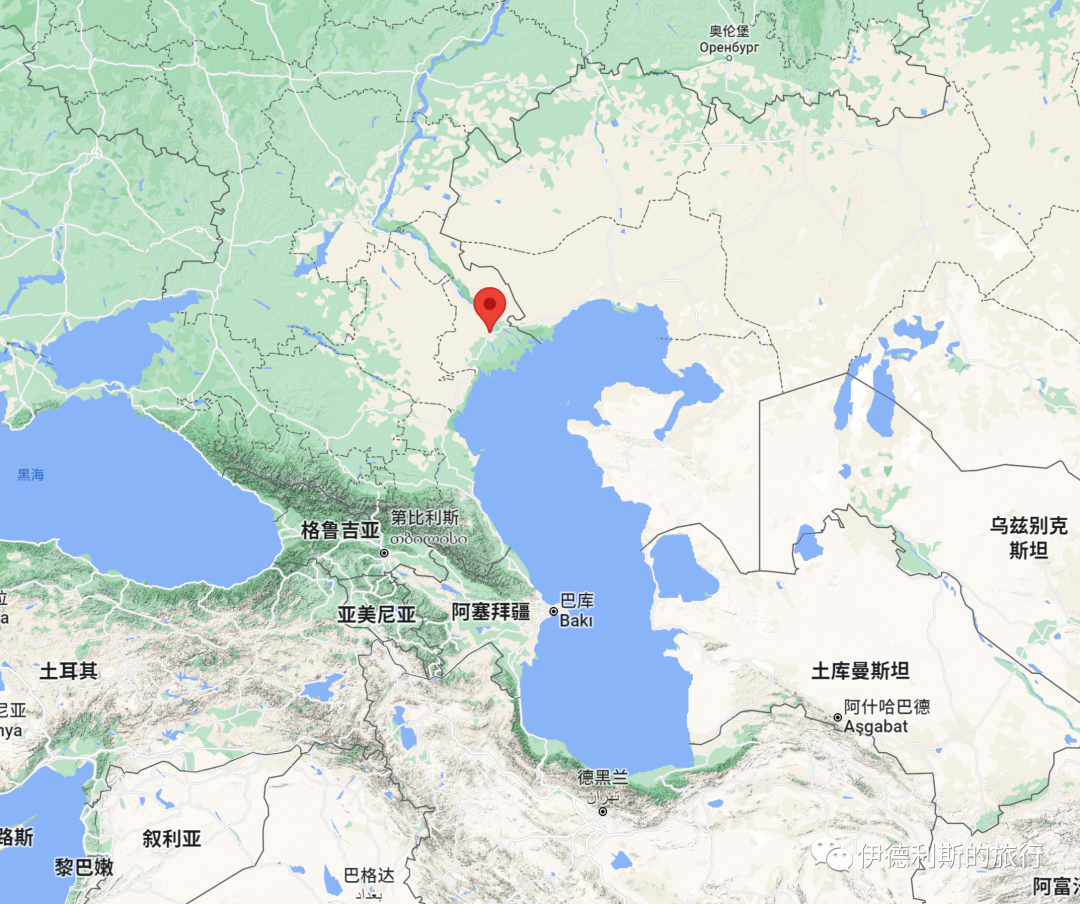
The White Mosque in Astrakhan, photographed by Polinadelia in 2014.
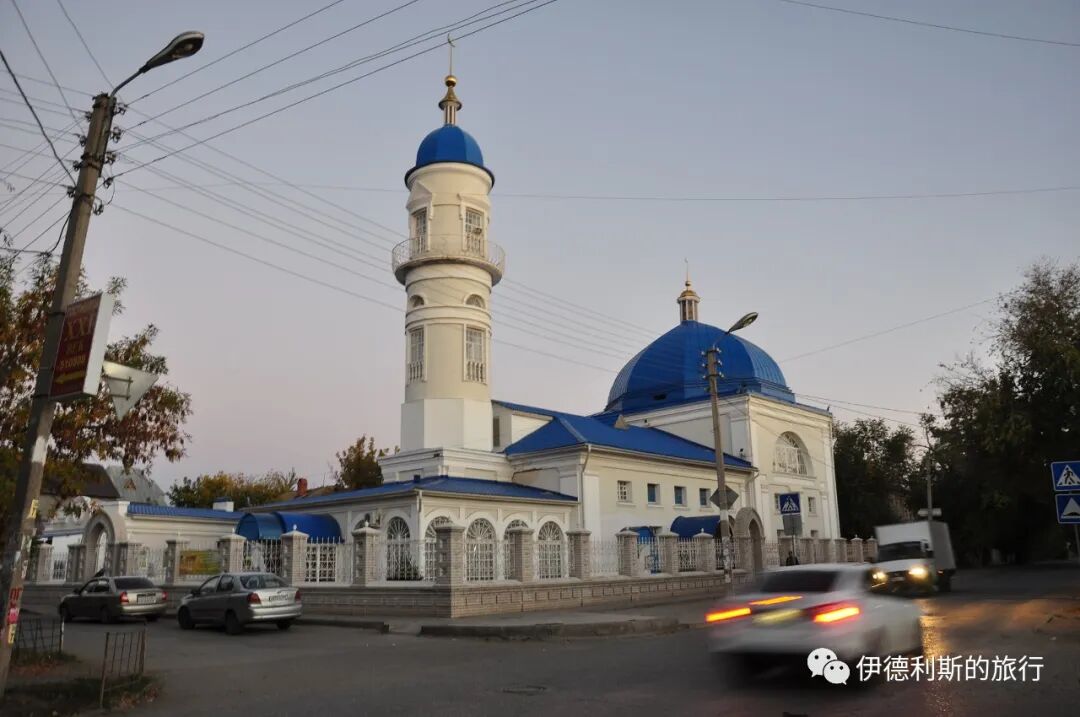
3. The Nogai Horde in Russia and Kazakhstan (1440–1634)
Continuing east from the Volga River, you reach the grasslands of the Nogai tribes.
Nogai was the great-grandson of Jochi, the eldest son of Genghis Khan, and an important leader of the Golden Horde who ruled many Turkic-speaking tribes in the 13th century. A century later, the Golden Horde general Edigu ruled a large area from the Volga to the Ural River, and the tribes under his rule were also called the Nogai Horde.
We can find history about the Nogai Horde in the early 16th century in Russian records. In 1521, the Nogai were driven west by the Kazakhs and crossed the Volga River to attack Astrakhan. In 1522, the Kazakhs captured the capital of the Nogai Horde. In 1523, the Nogai Horde defeated the army that had briefly occupied Astrakhan.
In 1550, the Khan of the Kazan Khanate was Yosuf Khan (1549–1555), who had helped Moscow against the Kazan Khanate in 1549.
Saray-Jük was the capital of the Nogai Horde, located on the border of Europe and Asia in western Kazakhstan. This city sat on a trade route between Europe and China and was an important commercial hub during the Golden Horde period. After being destroyed by Timur in 1395, it was rebuilt in the 1430s and 1440s.
The location of Saray-Jük.
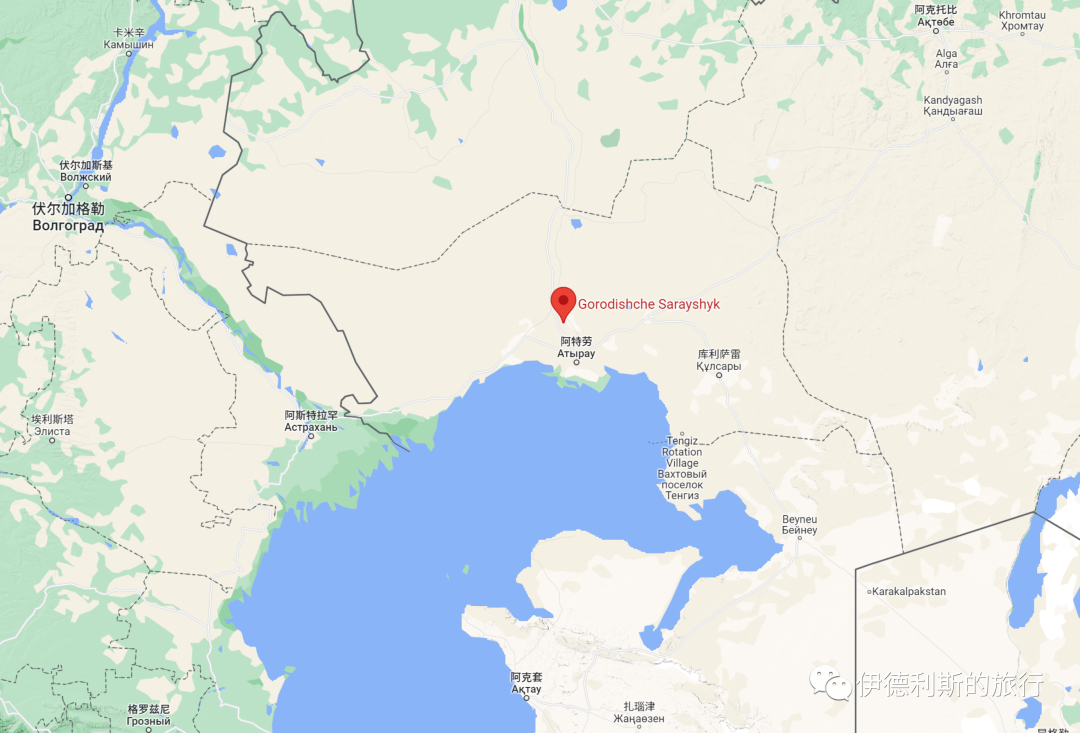
The ruins of Saray-Jük, photographed by Yakov Fedorov in 2020.
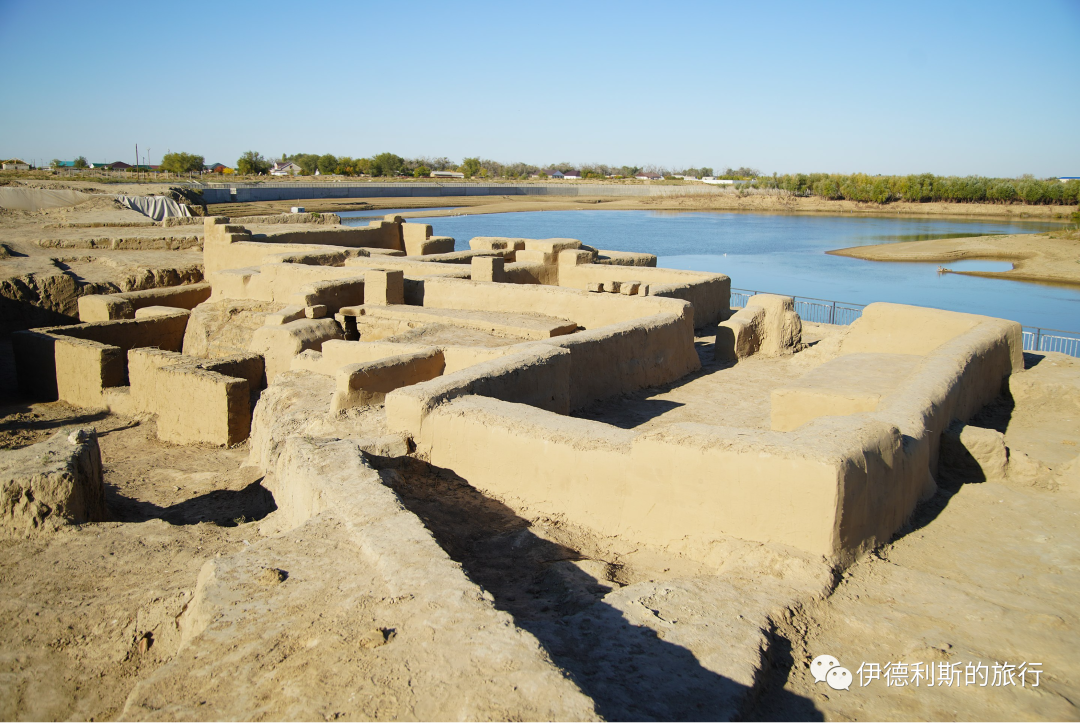
4. The Qasim Khanate in Russia (1452–1681)
We head north to the modern-day Ryazan Oblast in Russia.
The Qasim Khanate was located in Russia's Ryazan Oblast. Its founder, Qasim Khan, was the son of Ulugh Muhammad, the founder of the Kazan Khanate. The Qasim Khanate served as a buffer state between the Grand Duchy of Moscow and the Kazan Khanate and was under heavy Russian control.
In 1550, the Khan of the Qasim Khanate was Shahghali, who was installed as the Khan of the Kazan Khanate three times as a Russian vassal. In 1546, Shahghali was overthrown by the people of Kazan and fled back to the Qasim Khanate. Between 1547 and 1551, he participated in several Russian attacks on the Kazan Khanate and took part in the final Russian conquest of Kazan in 1552.
The capital of the Qasim Khanate, Qasimov, is located on the left bank of the Oka River in Russia's Ryazan Oblast, where one thousand Tatar-speaking Qasim Tatars still live today. The Khan Mosque in Qasimov was built by Shahghali in the mid-16th century. It was ordered to be demolished by Peter the Great in 1702, but the minaret (bangke ta) was preserved. This minaret is very similar to the Light Tower (Guangta) of the Huaisheng Mosque in Guangzhou.
The Khan Mosque in Qasimov, photographed by Alexander Novikov in 2014.
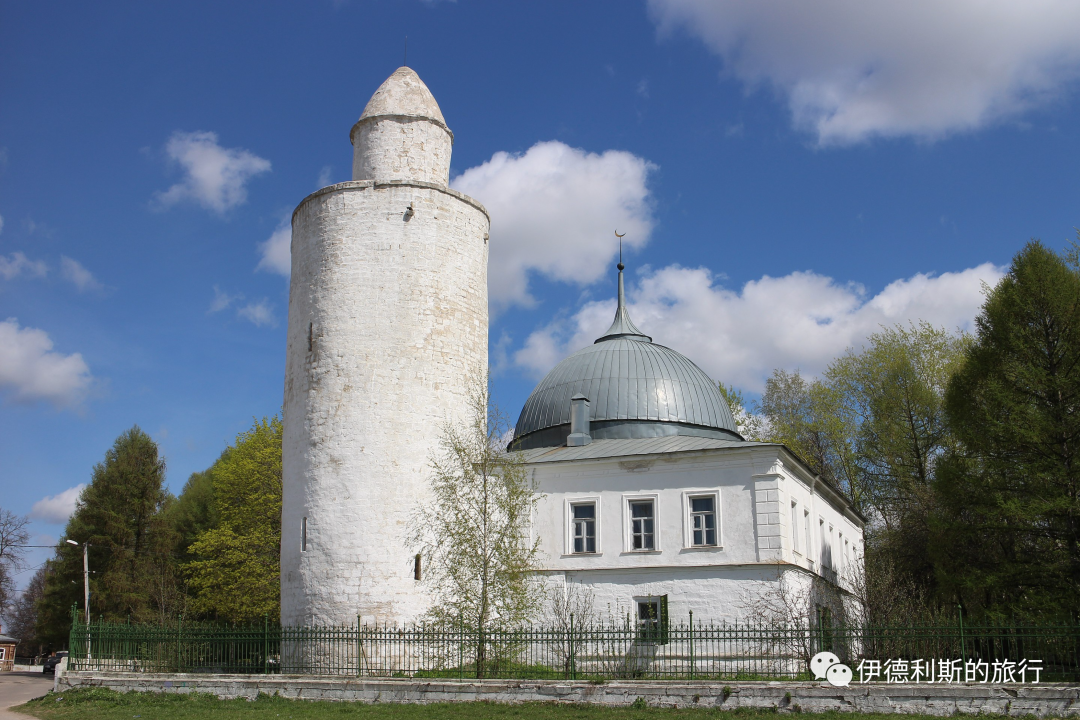
The location of Qasimov.
5. The Kazan Khanate in Russia (1438–1552)
We headed east to the city of Kazan on the banks of the Volga River.
The Kazan Khanate was founded by Ulugh Muhammad, a descendant of Genghis Khan's eldest son Jochi, who had ruled the Golden Horde twice. He lost control of the Golden Horde in 1436, then led his army to the Volga River and officially established the Kazan Khanate after capturing Kazan in 1438.
In 1521, the Kazan Khanate formed an alliance with the Astrakhan, Crimean, and Nogai Khanates to resist Moscow together. This caused dissatisfaction among pro-Russian factions within the Kazan Khanate, leading the state into internal conflict.
In 1550, the Khan of the Kazan Khanate was the four-year-old Ötemish Giray, though the actual rulers were his mother, Söyembikä, and the prime minister (uğlan) Qoşçaq. Seeing the instability in the Kazan Khanate, Ivan the Terrible of Russia sent a large army to besiege Kazan in February 1550, but the thawing of the Volga River forced the Russians to retreat and only attack the outskirts of the city. Throughout that year, Söyembikä and Qoşçaq fought against the pro-Russian faction, and relations with Russia continued to worsen.
The Kazan Khanate built many homes and public buildings in Kazan, including the Khan's palace, courtyards, mosques, and tombs, with tall minarets defining the city's skyline. In 1552, Ivan the Terrible invaded Kazan, destroyed the Kazan Khanate, and drove all Tatars out of the city, allowing only Russians to settle there. Between 1556 and 1562, Ivan the Terrible ordered the construction of the Kazan Kremlin on the site of the old Kazan Khanate fortress. The mosques, the Kazan Khan's palace, and the tombs were initially used as armories and ammunition depots, but were eventually completely demolished in the 18th century.
In 1977, hydraulic engineers accidentally dug up a grave while laying rainwater pipes at the Kazan Kremlin and immediately contacted the archaeology department. Archaeological excavations lasted for 10 years, eventually uncovering five graves, two of which were confirmed to be those of the actual founders of the Kazan Khanate: Mäxmüd Khan (died 1463 or 1466) and his grandson, Möxämmät Ämin (died 1518). The tomb was originally made of white stone and finally collapsed in the 17th century.
For further research, the remains of the two Kazan Khans, Mäxmüd and Möxämmät Ämin, were kept at the Institute of Archaeology of the Tatarstan Academy of Sciences for 40 years. In May 2017, after continuous efforts by the Tatar Muslims of Kazan, the two Kazan Khans were finally reburied not far from their original graves.
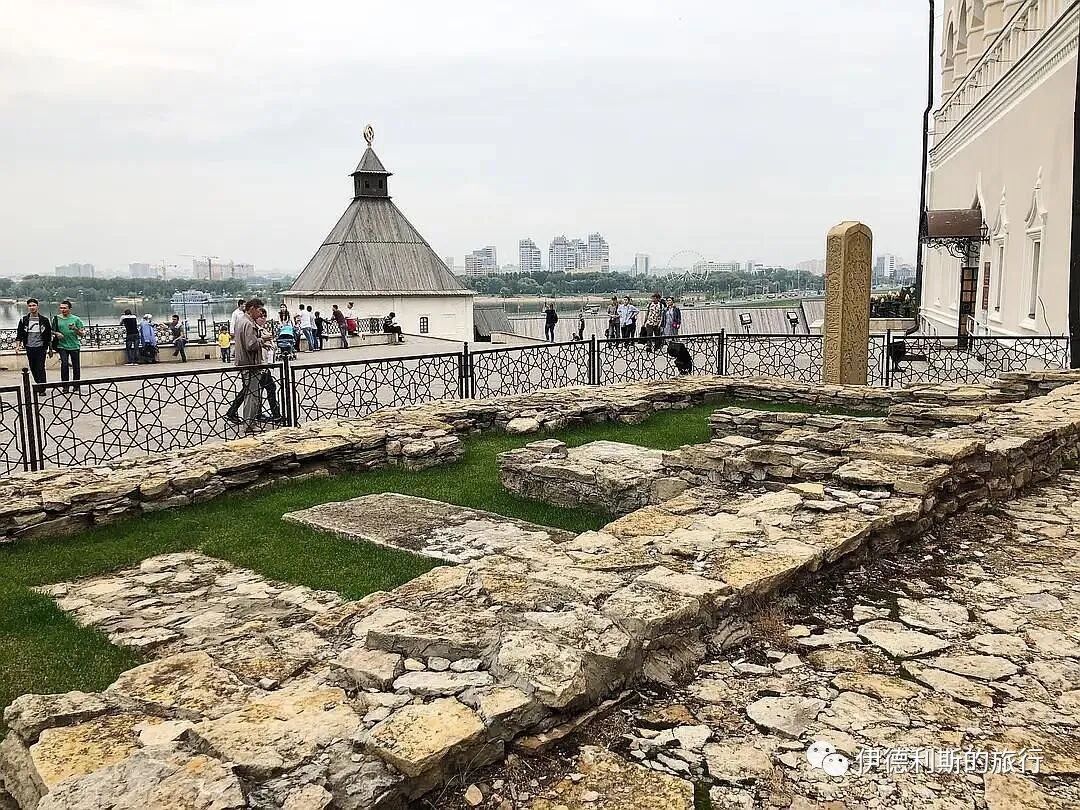
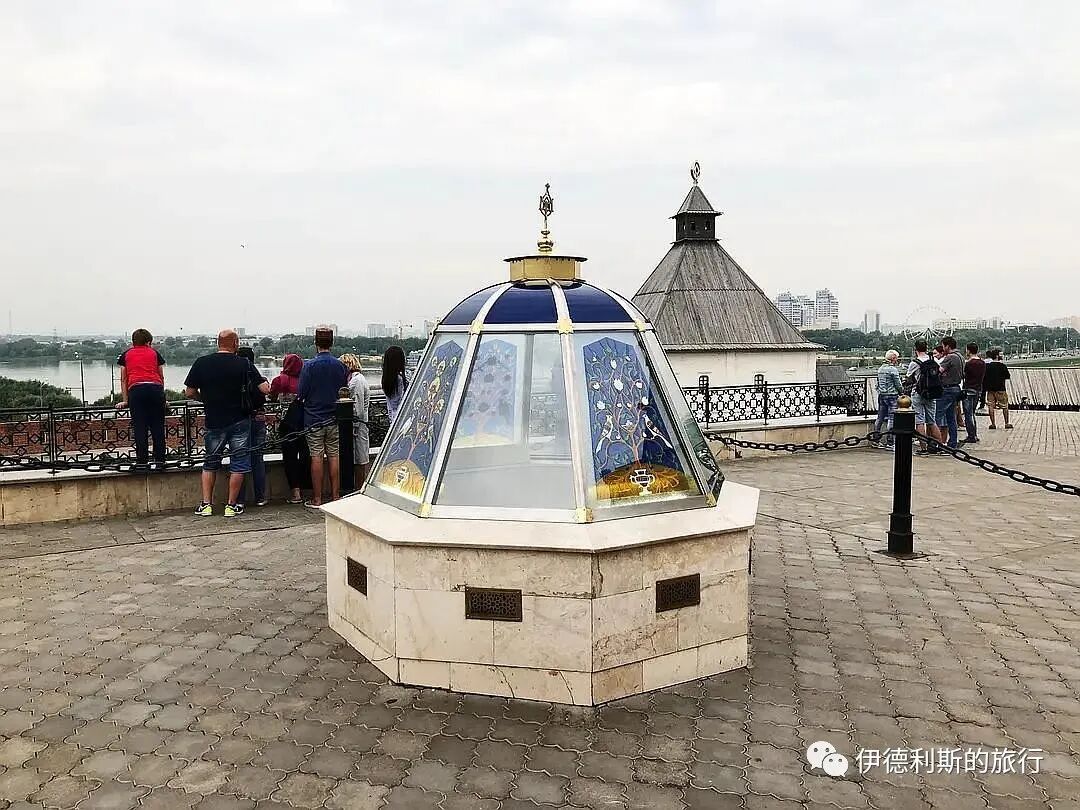
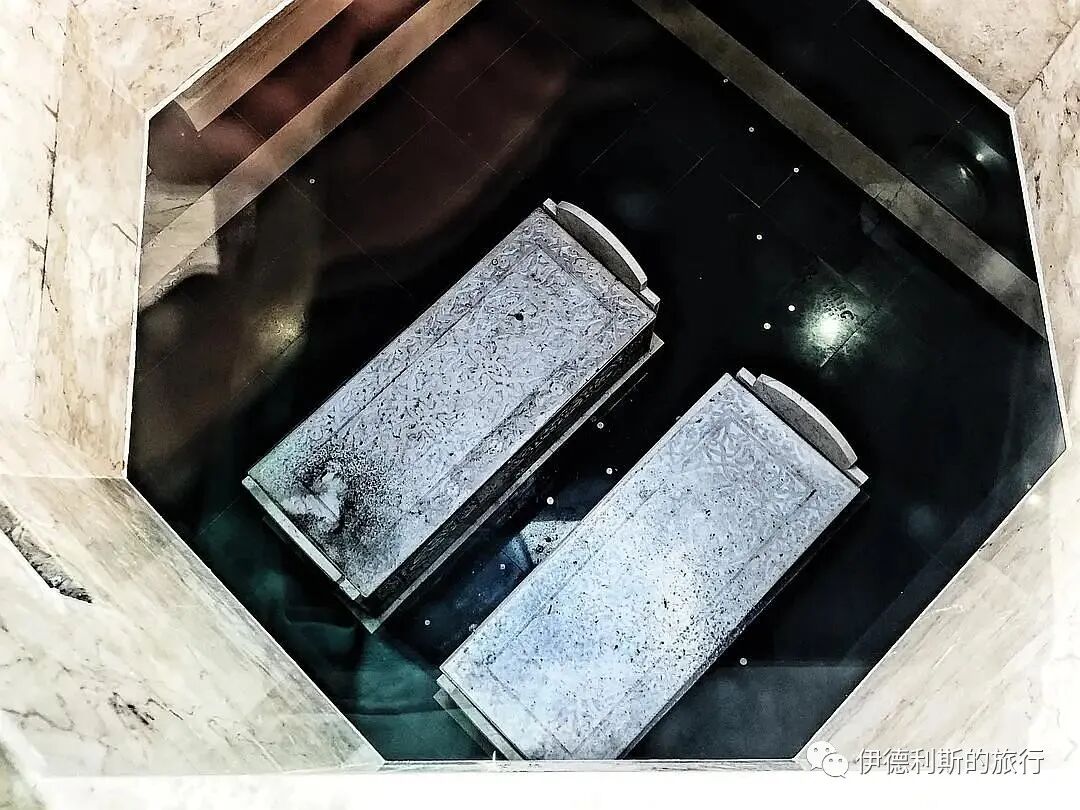
Between 2004 and 2005, the Institute of Archaeology of the Tatarstan Academy of Sciences re-excavated the Kazan Khan tombs and discovered the graves of four more Khans: Xalil (died 1467), İbrahim (died 1478), Safa Giray (died 1549), and Canghali (died 1535). Today, these four Kazan Khan graves are protected under a glass roof. Safa Giray Khan came from the Giray family of the Crimean Khanate and served as the Khan of Kazan three times: from 1524–1531, 1535–1546, and 1546–1549. Safa Giray was an anti-Russian Khan. His first reign ended due to Moscow's attack on Kazan, and he regained the throne four years later after Kazan nobles overthrew the pro-Russian Khan. Eleven years later, due to internal unrest in Kazan, he was overthrown again by a pro-Russian Khan. Safa Giray fled to his father-in-law's Nogai tribe, and a few months later, he returned to Kazan with a Nogai army to become the Khan for the third time. Canghali Khan was originally the Khan of the Qasim Khanate, a vassal state of the Grand Duchy of Moscow. In 1532, Grand Prince Vasily III of Moscow defeated the Kazan Khan Safa Giray and installed the 16-year-old Canghali as the pro-Russian Khan of Kazan. He died in 1535 during a coup by Kazan nobles.
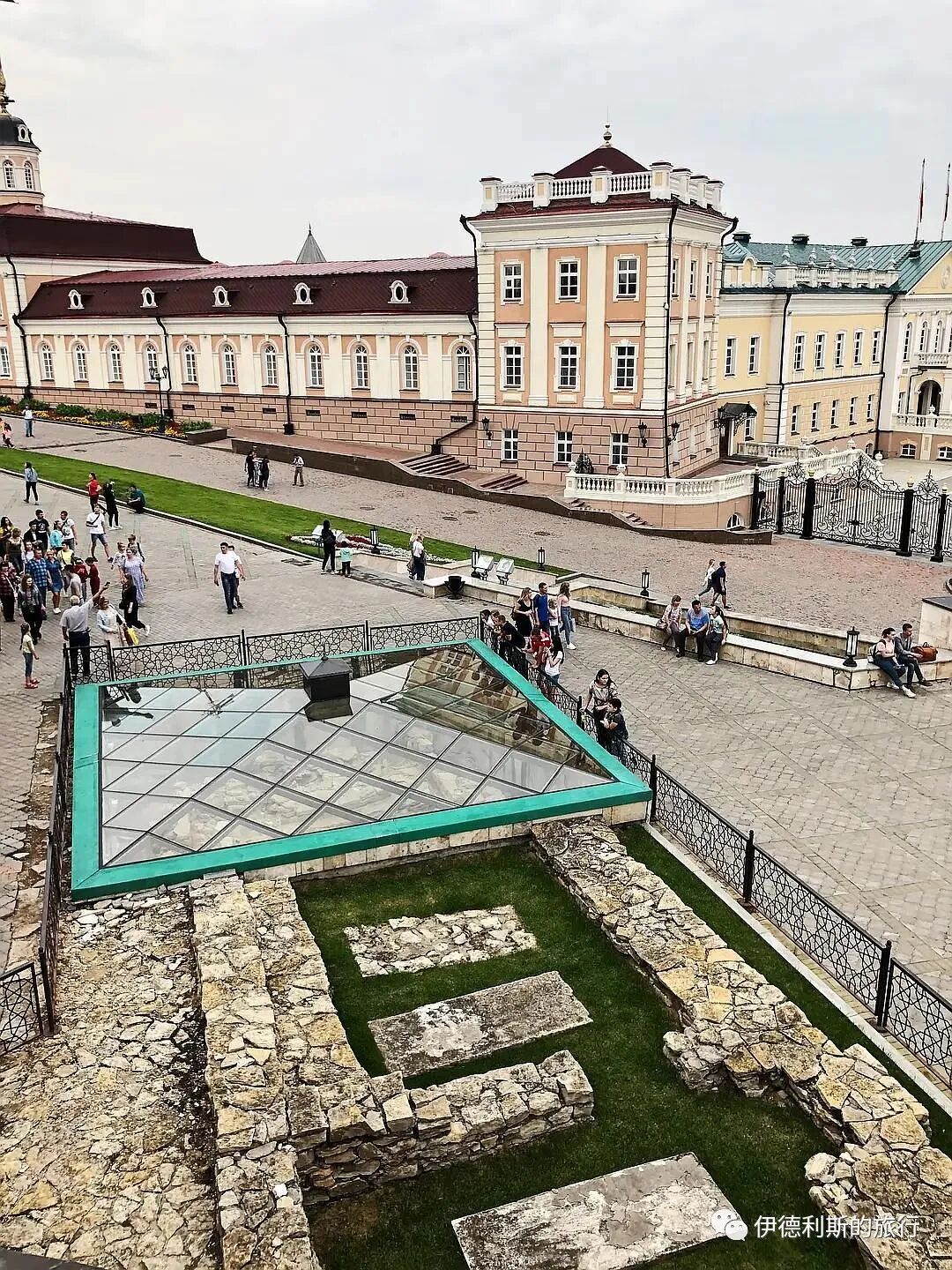
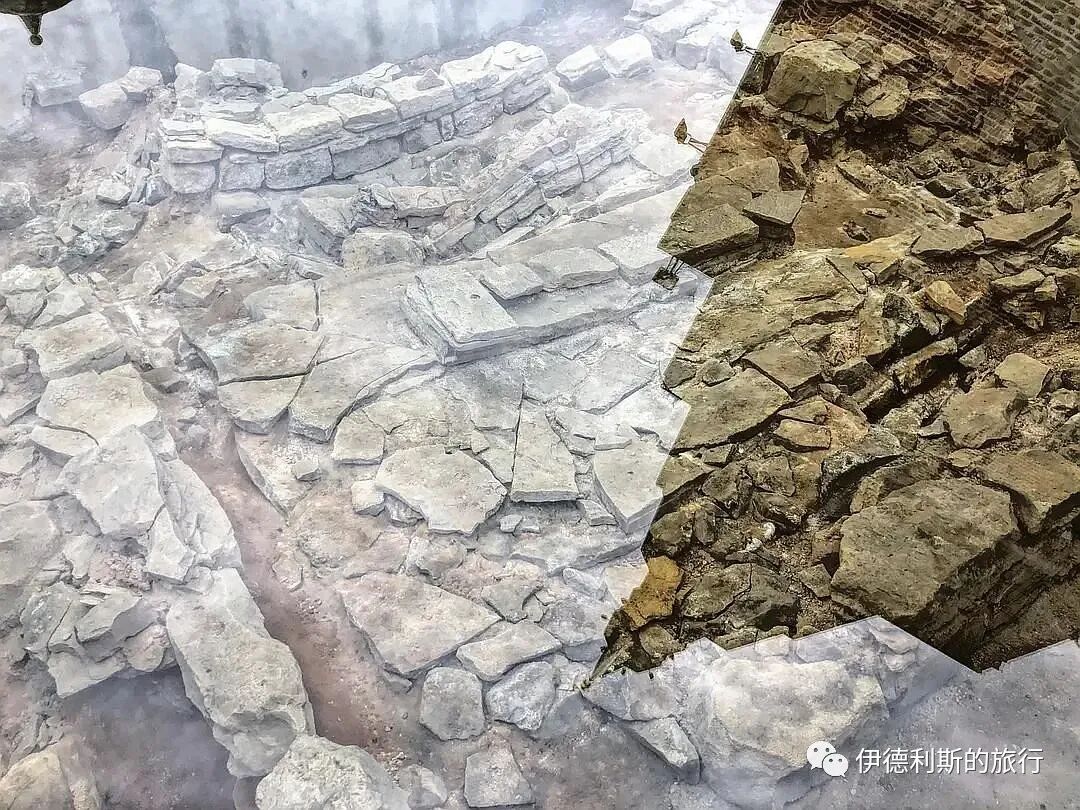
There is a performance about the Siege of Kazan at the entrance of the Kul Sharif Mosque inside the Kazan Kremlin. In 1552, when Ivan the Terrible besieged Kazan, the last imam of the Kazan Khanate, Seid Kul Sharif, led the people in a final resistance and died in the city. Today, Seid Kul Sharif is a national hero for the Kazan Tatars, and the new Kul Sharif Mosque built in 2005 is named after him.
The National Museum of the Republic of Tatarstan houses a letter written in 1523 by the Kazan Khan Sahib I Giray (reigned 1521–1524). A replica of this letter is also inside the Kazan Kremlin. In 1521, to resist the control of the Grand Duchy of Moscow, the Kazan Khanate overthrew the pro-Moscow Khan Shahghali and welcomed Sahib I Giray from Crimea to Kazan to become the new Khan.
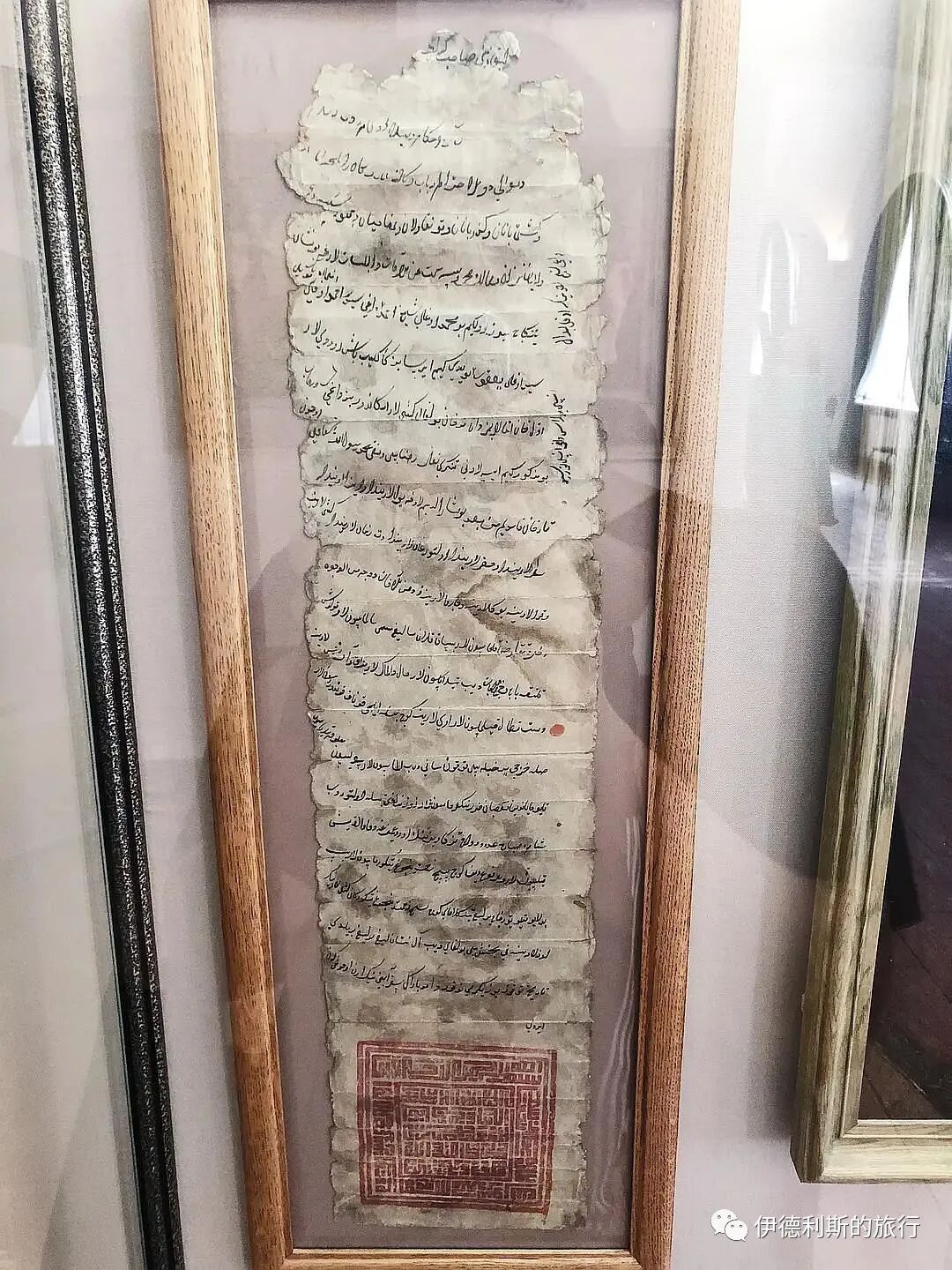
Block 1 of 2 Collapse Read »
Summary: Islamic World in 1550: Mongol Empire Legacy and Muslim History (Part 1A) is presented here as a firsthand travel account in clear English, beginning with this scene: In our last article, "A Journey Through the Islamic World in 1550 (Part 1)," we crossed the African continent, traveled from Egypt into the Ottoman Empire, and visited Tabriz in Iran. The account keeps its focus on Mongol Empire, Islamic World, Muslim History while preserving the names, places, food, and historical details from the Chinese source.
In our last article, "A Journey Through the Islamic World in 1550 (Part 1)," we crossed the African continent, traveled from Egypt into the Ottoman Empire, and visited Tabriz in Iran. This time, we will visit 12 countries ruled by the descendants of Genghis Khan, moving from Eastern Europe into North Asia and Central Asia, and finally into South Asia.
In the early 13th century, as the Mongol Empire expanded, Genghis Khan began dividing his lands among his sons. Orda and Batu, the sons of Genghis Khan's eldest son Jochi, received lands in southern Russia and Kazakhstan, which gradually formed the Golden Horde. Hulagu Khan, the son of Genghis Khan's fourth son Tolui, received lands in Iran, Turkmenistan, Afghanistan, and parts of West Asia, which gradually formed the Ilkhanate. After the Yuan Dynasty was established in 1271, the original families of Ogedei and Chagatai, led by Kaidu, opposed Kublai Khan. This led to the formation of the Ogedei Khanate and the Chagatai Khanate, completing the four great Mongol khanates.
After the 14th century, the territory of the Ogedei Khanate was first divided between the Chagatai Khanate and the Yuan Dynasty, and later the Ilkhanate and the Chagatai Khanate also began to split apart. The Golden Horde was the last to decline, splitting into several khanates in the early 15th century.
In 1550, there were 12 countries and regimes established by descendants of Genghis Khan, ruling a vast area from Russia, Kazakhstan, Uzbekistan, and China's Xinjiang to Afghanistan, Pakistan, and India. They were:
1. The Crimean Khanate ruled the Crimean Peninsula.
2. The Astrakhan Khanate ruled the Volga Delta.
3. The Nogai Horde ruled the region between the Volga and Ural rivers.
4. The Qasim Khanate ruled Kasimov in the modern-day Ryazan Oblast of Russia.
5. The Kazan Khanate ruled the middle Volga region.
6. The Siberian Khanate ruled the area around the Irtysh River.
7. The Kazakh Khanate ruled the Kazakh Steppe.
8. The Khanate of Khiva ruled the Khwarezm region.
9. The Khanate of Bukhara ruled the Transoxiana region of Central Asia.
10. The Yarkent Khanate ruled the southern Xinjiang region.
11. Haidar ruled the Kashmir region.
12. The Arghun dynasty ruled southern Afghanistan and the Sindh region of Pakistan.
Additionally, the Mughal Empire was briefly overthrown at this time, and its second emperor, Humayun, was in exile in Persia.
1. The Crimean Khanate in Ukraine (1441–1783).
We start this journey on the Crimean Peninsula on the northern shore of the Black Sea.
The Khan of the Crimean Khanate was a descendant of Tuka-Timur, the thirteenth son of Jochi, who was Genghis Khan's eldest son. In the 1260s, the Golden Horde gave the Crimean Peninsula to the ancestor of the Crimean Khans, Uran Timur, to rule. The khanate was officially established in 1441.
Around 1500, the Crimean Khan Mengli I Giray built the capital of Salachik. In 1532, Sahib I Giray, the son of Mengli I Giray, established a new capital called Bakhchisarai in a valley two kilometers downstream from Salachik. For the next 250 years, generations of Crimean Khans built palaces and various mosque buildings here.
In 1550, the Khan ruling the Crimean Khanate was Sahib I Giray. He ascended the throne with the help of the Ottoman Empire. Later, he joined forces with the Ottoman Sultan Suleiman the Magnificent to attack the Moldavians, and in 1541, he raided Moscow and brought back spoils of war.
The location of Bakhchisarai, the capital of the Crimean Khanate.
The tomb of Haji I Giray (Dürbe Hacı I Giray) was built in 1501 by Mengli I Giray for his father, the founding Khan of Crimea. It is an octagonal tomb with a lead dome.
Archaeological excavations from 2006 to 2007 examined 18 graves inside the mausoleum, including 13 adults and 5 children. They were wrapped in silk and satin, with some resting on pillows stuffed with fabric scraps and fruit seeds. The mausoleum holds 8 stone sarcophagi covered in velvet, silk, and silver-threaded fabric. These likely include 4 Crimean Khans: Hacı I Giray himself, Meñli I Giray, Nur Devlet—who fought Meñli I Giray for the throne for years before losing—and Sahib I Giray, the son of Meñli I Giray and builder of Bakhchysarai.
After research finished in 2009, these individuals were reburied with Muslim rites.
The Chain Madrasa (Zıncırlı Medrese) was built in 1500 by order of the Crimean Khan Meñli I Giray. The name of the madrasa comes from the Turkic word "Zyngyr," which means "chain." A chain hangs above the main gate of the madrasa, forcing everyone who enters to bow their head. The madrasa is rectangular with a central courtyard, an entrance on one side, and 11 rooms on the other three sides. At the time, the madrasa taught Turkish and Arabic grammar, calligraphy, arithmetic, ethics, logic, proof theory, Islamic law (sharia), theology, and hadith studies. The full course of study took ten years.
In 1909, influenced by the Crimean Tatar Enlightenment movement, Gasprinski built a new two-story madrasa next to the old one. The madrasa closed in 1917 and became the Meñli Giray Research Institute. The institute was abolished in 1923. Later, it served as a teacher's college, a medical school, a sanatorium for German soldiers, and a post-war psychiatric clinic. Today, it is managed by the Bakhchysarai History, Culture, and Archaeology Museum.
The Iron Gate (Demir Qapı) is the oldest structure in the Khan's Palace. It was built between 1503 and 1504 for the Crimean Khan by the architect Aleviz Novy, who had been invited by Ivan the Great to build churches in Moscow. The Iron Gate was likely first built at the Crimean Khan's previous residence, Devlet-Saray, and moved to the main palace building after the Bakhchysarai Khan's Palace was completed in 1532. "Demir Qapı" means "iron gate" in Crimean Tatar. The doorway is made of limestone and features Lombard-Venetian Renaissance decorative styles.
The Great Khan Mosque (Büyük Han Cami) in the Bakhchysarai Khan's Palace was built in 1532 and is one of the earliest structures in the palace. The original mosque had multiple domes, similar to the Seljuk-style mosques popular in the Ottoman Empire during the 15th century. The mosque was destroyed by fire in 1736. It was later restored by Khan Selamet II Giray (who reigned from 1740 to 1743) and converted to a tiled roof.
During the Soviet era, the mosque was closed and turned into an exhibition hall for the archaeological museum. After Russia occupied Crimea in 2014, the mosque underwent repairs, some of which caused damage to the building.
The SaryGuzel Bathhouse was built in 1532 by order of the Crimean Khan Sahib I Giray. Like the Great Khan Mosque, it is one of the earliest buildings in the Bakhchysarai Khan's Palace. In Crimean Tatar, "Sarı" means "yellow or fair-skinned," and "Güzel" means "beautiful." The SaryGuzel Bathhouse is a typical Turkish bath. A furnace in the basement heated the floor with rising hot air, and cold and hot water were supplied through lead pipes. The bathhouse is divided into men's and women's sections, each with its own dome. The domes have star-shaped cutouts for ventilation and light, and there is an indoor courtyard with a fountain at the exit.
The SaryGuzel Bathhouse operated until 1924, when it was closed because it was considered unsafe. It has since been repaired and is now open for exhibitions.
The Khan's cemetery holds the grave of the Crimean Khan Devlet I Giray (reigned 1551–1577). He was appointed Kalga (the second-in-command after the Khan) in 1530. Later, due to court struggles, he went to Istanbul and gradually gained the trust of the Ottoman Sultan Suleiman the Magnificent. In 1551, with the help of Suleiman the Magnificent, he became the Crimean Khan.
2. The Astrakhan Khanate of Russia (1466–1556)
We continue east to the mouth of the Volga River.
The Astrakhan Khanate was located in the Volga Delta. Its founder, Mahmud bin Küchük, was a prince of the Golden Horde. The Astrakhan Khanate was mainly inhabited by Astrakhan Tatars and Nogais. The Khanate's caravans traveled between Moscow, Kazan, Crimea, Central Asia, and the Transcaucasus region. In 1532, the Astrakhan Khanate began to have contact with Russia. After Russia conquered Kazan in 1552, the Astrakhan Khanate could not escape the same fate.
In 1550, the capital of the Astrakhan Khanate was Hajji Tarkhan, located on the right bank of the Volga River, 12 kilometers north of the modern city of Astrakhan. The city of Hajji Tarkhan was built by the Golden Horde in the late 13th century, appeared in the Travels of Ibn Battuta in the 14th century, was destroyed by Timur's army in 1395, and was rebuilt by the Astrakhan Khanate in the 15th century. The city was occupied by the Crimean Khanate in 1547 and was finally burned down by Ivan the Terrible in 1556.
There are currently about 60,000 Astrakhan Tatars in Russia. Most live in the Astrakhan Oblast, with half living in the city of Astrakhan, where they have their own community and several mosques.
The location of the city of Hajji Tarkhan.
The White Mosque in Astrakhan, photographed by Polinadelia in 2014.
3. The Nogai Horde in Russia and Kazakhstan (1440–1634)
Continuing east from the Volga River, you reach the grasslands of the Nogai tribes.
Nogai was the great-grandson of Jochi, the eldest son of Genghis Khan, and an important leader of the Golden Horde who ruled many Turkic-speaking tribes in the 13th century. A century later, the Golden Horde general Edigu ruled a large area from the Volga to the Ural River, and the tribes under his rule were also called the Nogai Horde.
We can find history about the Nogai Horde in the early 16th century in Russian records. In 1521, the Nogai were driven west by the Kazakhs and crossed the Volga River to attack Astrakhan. In 1522, the Kazakhs captured the capital of the Nogai Horde. In 1523, the Nogai Horde defeated the army that had briefly occupied Astrakhan.
In 1550, the Khan of the Kazan Khanate was Yosuf Khan (1549–1555), who had helped Moscow against the Kazan Khanate in 1549.
Saray-Jük was the capital of the Nogai Horde, located on the border of Europe and Asia in western Kazakhstan. This city sat on a trade route between Europe and China and was an important commercial hub during the Golden Horde period. After being destroyed by Timur in 1395, it was rebuilt in the 1430s and 1440s.
The location of Saray-Jük.
The ruins of Saray-Jük, photographed by Yakov Fedorov in 2020.
4. The Qasim Khanate in Russia (1452–1681)
We head north to the modern-day Ryazan Oblast in Russia.
The Qasim Khanate was located in Russia's Ryazan Oblast. Its founder, Qasim Khan, was the son of Ulugh Muhammad, the founder of the Kazan Khanate. The Qasim Khanate served as a buffer state between the Grand Duchy of Moscow and the Kazan Khanate and was under heavy Russian control.
In 1550, the Khan of the Qasim Khanate was Shahghali, who was installed as the Khan of the Kazan Khanate three times as a Russian vassal. In 1546, Shahghali was overthrown by the people of Kazan and fled back to the Qasim Khanate. Between 1547 and 1551, he participated in several Russian attacks on the Kazan Khanate and took part in the final Russian conquest of Kazan in 1552.
The capital of the Qasim Khanate, Qasimov, is located on the left bank of the Oka River in Russia's Ryazan Oblast, where one thousand Tatar-speaking Qasim Tatars still live today. The Khan Mosque in Qasimov was built by Shahghali in the mid-16th century. It was ordered to be demolished by Peter the Great in 1702, but the minaret (bangke ta) was preserved. This minaret is very similar to the Light Tower (Guangta) of the Huaisheng Mosque in Guangzhou.
The Khan Mosque in Qasimov, photographed by Alexander Novikov in 2014.
The location of Qasimov.
5. The Kazan Khanate in Russia (1438–1552)
We headed east to the city of Kazan on the banks of the Volga River.
The Kazan Khanate was founded by Ulugh Muhammad, a descendant of Genghis Khan's eldest son Jochi, who had ruled the Golden Horde twice. He lost control of the Golden Horde in 1436, then led his army to the Volga River and officially established the Kazan Khanate after capturing Kazan in 1438.
In 1521, the Kazan Khanate formed an alliance with the Astrakhan, Crimean, and Nogai Khanates to resist Moscow together. This caused dissatisfaction among pro-Russian factions within the Kazan Khanate, leading the state into internal conflict.
In 1550, the Khan of the Kazan Khanate was the four-year-old Ötemish Giray, though the actual rulers were his mother, Söyembikä, and the prime minister (uğlan) Qoşçaq. Seeing the instability in the Kazan Khanate, Ivan the Terrible of Russia sent a large army to besiege Kazan in February 1550, but the thawing of the Volga River forced the Russians to retreat and only attack the outskirts of the city. Throughout that year, Söyembikä and Qoşçaq fought against the pro-Russian faction, and relations with Russia continued to worsen.
The Kazan Khanate built many homes and public buildings in Kazan, including the Khan's palace, courtyards, mosques, and tombs, with tall minarets defining the city's skyline. In 1552, Ivan the Terrible invaded Kazan, destroyed the Kazan Khanate, and drove all Tatars out of the city, allowing only Russians to settle there. Between 1556 and 1562, Ivan the Terrible ordered the construction of the Kazan Kremlin on the site of the old Kazan Khanate fortress. The mosques, the Kazan Khan's palace, and the tombs were initially used as armories and ammunition depots, but were eventually completely demolished in the 18th century.
In 1977, hydraulic engineers accidentally dug up a grave while laying rainwater pipes at the Kazan Kremlin and immediately contacted the archaeology department. Archaeological excavations lasted for 10 years, eventually uncovering five graves, two of which were confirmed to be those of the actual founders of the Kazan Khanate: Mäxmüd Khan (died 1463 or 1466) and his grandson, Möxämmät Ämin (died 1518). The tomb was originally made of white stone and finally collapsed in the 17th century.
For further research, the remains of the two Kazan Khans, Mäxmüd and Möxämmät Ämin, were kept at the Institute of Archaeology of the Tatarstan Academy of Sciences for 40 years. In May 2017, after continuous efforts by the Tatar Muslims of Kazan, the two Kazan Khans were finally reburied not far from their original graves.
Between 2004 and 2005, the Institute of Archaeology of the Tatarstan Academy of Sciences re-excavated the Kazan Khan tombs and discovered the graves of four more Khans: Xalil (died 1467), İbrahim (died 1478), Safa Giray (died 1549), and Canghali (died 1535). Today, these four Kazan Khan graves are protected under a glass roof. Safa Giray Khan came from the Giray family of the Crimean Khanate and served as the Khan of Kazan three times: from 1524–1531, 1535–1546, and 1546–1549. Safa Giray was an anti-Russian Khan. His first reign ended due to Moscow's attack on Kazan, and he regained the throne four years later after Kazan nobles overthrew the pro-Russian Khan. Eleven years later, due to internal unrest in Kazan, he was overthrown again by a pro-Russian Khan. Safa Giray fled to his father-in-law's Nogai tribe, and a few months later, he returned to Kazan with a Nogai army to become the Khan for the third time. Canghali Khan was originally the Khan of the Qasim Khanate, a vassal state of the Grand Duchy of Moscow. In 1532, Grand Prince Vasily III of Moscow defeated the Kazan Khan Safa Giray and installed the 16-year-old Canghali as the pro-Russian Khan of Kazan. He died in 1535 during a coup by Kazan nobles.
There is a performance about the Siege of Kazan at the entrance of the Kul Sharif Mosque inside the Kazan Kremlin. In 1552, when Ivan the Terrible besieged Kazan, the last imam of the Kazan Khanate, Seid Kul Sharif, led the people in a final resistance and died in the city. Today, Seid Kul Sharif is a national hero for the Kazan Tatars, and the new Kul Sharif Mosque built in 2005 is named after him.
The National Museum of the Republic of Tatarstan houses a letter written in 1523 by the Kazan Khan Sahib I Giray (reigned 1521–1524). A replica of this letter is also inside the Kazan Kremlin. In 1521, to resist the control of the Grand Duchy of Moscow, the Kazan Khanate overthrew the pro-Moscow Khan Shahghali and welcomed Sahib I Giray from Crimea to Kazan to become the new Khan.
Block 1 of 2 Collapse Read »
Islamic World in 1550: Mongol Empire Legacy and Muslim History (Part 1)
Reposted from the web
Summary: Islamic World in 1550: Mongol Empire Legacy and Muslim History is presented here as a firsthand travel account in clear English, beginning with this scene: In our last article, "A Journey Through the Islamic World in 1550 (Part 1)," we crossed the African continent, traveled from Egypt into the Ottoman Empire, and visited Tabriz in Iran. The account keeps its focus on Mongol Empire, Islamic World, Muslim History while preserving the names, places, food, and historical details from the Chinese source.
In our last article, "A Journey Through the Islamic World in 1550 (Part 1)," we crossed the African continent, traveled from Egypt into the Ottoman Empire, and visited Tabriz in Iran. This time, we will visit 12 countries ruled by the descendants of Genghis Khan, moving from Eastern Europe into North Asia and Central Asia, and finally into South Asia.
In the early 13th century, as the Mongol Empire expanded, Genghis Khan began dividing his lands among his sons. Orda and Batu, the sons of Genghis Khan's eldest son Jochi, received lands in southern Russia and Kazakhstan, which gradually formed the Golden Horde. Hulagu Khan, the son of Genghis Khan's fourth son Tolui, received lands in Iran, Turkmenistan, Afghanistan, and parts of West Asia, which gradually formed the Ilkhanate. After the Yuan Dynasty was established in 1271, the original families of Ogedei and Chagatai, led by Kaidu, opposed Kublai Khan. This led to the formation of the Ogedei Khanate and the Chagatai Khanate, completing the four great Mongol khanates.
After the 14th century, the territory of the Ogedei Khanate was first divided between the Chagatai Khanate and the Yuan Dynasty, and later the Ilkhanate and the Chagatai Khanate also began to split apart. The Golden Horde was the last to decline, splitting into several khanates in the early 15th century.
In 1550, there were 12 countries and regimes established by descendants of Genghis Khan, ruling a vast area from Russia, Kazakhstan, Uzbekistan, and China's Xinjiang to Afghanistan, Pakistan, and India. They were:
1. The Crimean Khanate ruled the Crimean Peninsula.
2. The Astrakhan Khanate ruled the Volga Delta.
3. The Nogai Horde ruled the region between the Volga and Ural rivers.
4. The Qasim Khanate ruled Kasimov in the modern-day Ryazan Oblast of Russia.
5. The Kazan Khanate ruled the middle Volga region.
6. The Siberian Khanate ruled the area around the Irtysh River.
7. The Kazakh Khanate ruled the Kazakh Steppe.
8. The Khanate of Khiva ruled the Khwarezm region.
9. The Khanate of Bukhara ruled the Transoxiana region of Central Asia.
10. The Yarkent Khanate ruled the southern Xinjiang region.
11. Haidar ruled the Kashmir region.
12. The Arghun dynasty ruled southern Afghanistan and the Sindh region of Pakistan.
Additionally, the Mughal Empire was briefly overthrown at this time, and its second emperor, Humayun, was in exile in Persia.
1. The Crimean Khanate in Ukraine (1441–1783).
We start this journey on the Crimean Peninsula on the northern shore of the Black Sea.
The Khan of the Crimean Khanate was a descendant of Tuka-Timur, the thirteenth son of Jochi, who was Genghis Khan's eldest son. In the 1260s, the Golden Horde gave the Crimean Peninsula to the ancestor of the Crimean Khans, Uran Timur, to rule. The khanate was officially established in 1441.
Around 1500, the Crimean Khan Mengli I Giray built the capital of Salachik. In 1532, Sahib I Giray, the son of Mengli I Giray, established a new capital called Bakhchisarai in a valley two kilometers downstream from Salachik. For the next 250 years, generations of Crimean Khans built palaces and various mosque buildings here.
In 1550, the Khan ruling the Crimean Khanate was Sahib I Giray. He ascended the throne with the help of the Ottoman Empire. Later, he joined forces with the Ottoman Sultan Suleiman the Magnificent to attack the Moldavians, and in 1541, he raided Moscow and brought back spoils of war.
The location of Bakhchisarai, the capital of the Crimean Khanate.
The tomb of Haji I Giray (Dürbe Hacı I Giray) was built in 1501 by Mengli I Giray for his father, the founding Khan of Crimea. It is an octagonal tomb with a lead dome.
Archaeological excavations from 2006 to 2007 examined 18 graves inside the mausoleum, including 13 adults and 5 children. They were wrapped in silk and satin, with some resting on pillows stuffed with fabric scraps and fruit seeds. The mausoleum holds 8 stone sarcophagi covered in velvet, silk, and silver-threaded fabric. These likely include 4 Crimean Khans: Hacı I Giray himself, Meñli I Giray, Nur Devlet—who fought Meñli I Giray for the throne for years before losing—and Sahib I Giray, the son of Meñli I Giray and builder of Bakhchysarai.
After research finished in 2009, these individuals were reburied with Muslim rites.
The Chain Madrasa (Zıncırlı Medrese) was built in 1500 by order of the Crimean Khan Meñli I Giray. The name of the madrasa comes from the Turkic word "Zyngyr," which means "chain." A chain hangs above the main gate of the madrasa, forcing everyone who enters to bow their head. The madrasa is rectangular with a central courtyard, an entrance on one side, and 11 rooms on the other three sides. At the time, the madrasa taught Turkish and Arabic grammar, calligraphy, arithmetic, ethics, logic, proof theory, Islamic law (sharia), theology, and hadith studies. The full course of study took ten years.
In 1909, influenced by the Crimean Tatar Enlightenment movement, Gasprinski built a new two-story madrasa next to the old one. The madrasa closed in 1917 and became the Meñli Giray Research Institute. The institute was abolished in 1923. Later, it served as a teacher's college, a medical school, a sanatorium for German soldiers, and a post-war psychiatric clinic. Today, it is managed by the Bakhchysarai History, Culture, and Archaeology Museum.
The Iron Gate (Demir Qapı) is the oldest structure in the Khan's Palace. It was built between 1503 and 1504 for the Crimean Khan by the architect Aleviz Novy, who had been invited by Ivan the Great to build churches in Moscow. The Iron Gate was likely first built at the Crimean Khan's previous residence, Devlet-Saray, and moved to the main palace building after the Bakhchysarai Khan's Palace was completed in 1532. "Demir Qapı" means "iron gate" in Crimean Tatar. The doorway is made of limestone and features Lombard-Venetian Renaissance decorative styles.
The Great Khan Mosque (Büyük Han Cami) in the Bakhchysarai Khan's Palace was built in 1532 and is one of the earliest structures in the palace. The original mosque had multiple domes, similar to the Seljuk-style mosques popular in the Ottoman Empire during the 15th century. The mosque was destroyed by fire in 1736. It was later restored by Khan Selamet II Giray (who reigned from 1740 to 1743) and converted to a tiled roof.
During the Soviet era, the mosque was closed and turned into an exhibition hall for the archaeological museum. After Russia occupied Crimea in 2014, the mosque underwent repairs, some of which caused damage to the building.
The SaryGuzel Bathhouse was built in 1532 by order of the Crimean Khan Sahib I Giray. Like the Great Khan Mosque, it is one of the earliest buildings in the Bakhchysarai Khan's Palace. In Crimean Tatar, "Sarı" means "yellow or fair-skinned," and "Güzel" means "beautiful." The SaryGuzel Bathhouse is a typical Turkish bath. A furnace in the basement heated the floor with rising hot air, and cold and hot water were supplied through lead pipes. The bathhouse is divided into men's and women's sections, each with its own dome. The domes have star-shaped cutouts for ventilation and light, and there is an indoor courtyard with a fountain at the exit.
The SaryGuzel Bathhouse operated until 1924, when it was closed because it was considered unsafe. It has since been repaired and is now open for exhibitions.
The Khan's cemetery holds the grave of the Crimean Khan Devlet I Giray (reigned 1551–1577). He was appointed Kalga (the second-in-command after the Khan) in 1530. Later, due to court struggles, he went to Istanbul and gradually gained the trust of the Ottoman Sultan Suleiman the Magnificent. In 1551, with the help of Suleiman the Magnificent, he became the Crimean Khan.
2. The Astrakhan Khanate of Russia (1466–1556)
We continue east to the mouth of the Volga River.
The Astrakhan Khanate was located in the Volga Delta. Its founder, Mahmud bin Küchük, was a prince of the Golden Horde. The Astrakhan Khanate was mainly inhabited by Astrakhan Tatars and Nogais. The Khanate's caravans traveled between Moscow, Kazan, Crimea, Central Asia, and the Transcaucasus region. In 1532, the Astrakhan Khanate began to have contact with Russia. After Russia conquered Kazan in 1552, the Astrakhan Khanate could not escape the same fate.
In 1550, the capital of the Astrakhan Khanate was Hajji Tarkhan, located on the right bank of the Volga River, 12 kilometers north of the modern city of Astrakhan. The city of Hajji Tarkhan was built by the Golden Horde in the late 13th century, appeared in the Travels of Ibn Battuta in the 14th century, was destroyed by Timur's army in 1395, and was rebuilt by the Astrakhan Khanate in the 15th century. The city was occupied by the Crimean Khanate in 1547 and was finally burned down by Ivan the Terrible in 1556.
There are currently about 60,000 Astrakhan Tatars in Russia. Most live in the Astrakhan Oblast, with half living in the city of Astrakhan, where they have their own community and several mosques.
The location of the city of Hajji Tarkhan.
The White Mosque in Astrakhan, photographed by Polinadelia in 2014.
3. The Nogai Horde in Russia and Kazakhstan (1440–1634)
Continuing east from the Volga River, you reach the grasslands of the Nogai tribes.
Nogai was the great-grandson of Jochi, the eldest son of Genghis Khan, and an important leader of the Golden Horde who ruled many Turkic-speaking tribes in the 13th century. A century later, the Golden Horde general Edigu ruled a large area from the Volga to the Ural River, and the tribes under his rule were also called the Nogai Horde.
We can find history about the Nogai Horde in the early 16th century in Russian records. In 1521, the Nogai were driven west by the Kazakhs and crossed the Volga River to attack Astrakhan. In 1522, the Kazakhs captured the capital of the Nogai Horde. In 1523, the Nogai Horde defeated the army that had briefly occupied Astrakhan.
In 1550, the Khan of the Kazan Khanate was Yosuf Khan (1549–1555), who had helped Moscow against the Kazan Khanate in 1549.
Saray-Jük was the capital of the Nogai Horde, located on the border of Europe and Asia in western Kazakhstan. This city sat on a trade route between Europe and China and was an important commercial hub during the Golden Horde period. After being destroyed by Timur in 1395, it was rebuilt in the 1430s and 1440s.
The location of Saray-Jük.
The ruins of Saray-Jük, photographed by Yakov Fedorov in 2020.
4. The Qasim Khanate in Russia (1452–1681)
We head north to the modern-day Ryazan Oblast in Russia.
The Qasim Khanate was located in Russia's Ryazan Oblast. Its founder, Qasim Khan, was the son of Ulugh Muhammad, the founder of the Kazan Khanate. The Qasim Khanate served as a buffer state between the Grand Duchy of Moscow and the Kazan Khanate and was under heavy Russian control.
In 1550, the Khan of the Qasim Khanate was Shahghali, who was installed as the Khan of the Kazan Khanate three times as a Russian vassal. In 1546, Shahghali was overthrown by the people of Kazan and fled back to the Qasim Khanate. Between 1547 and 1551, he participated in several Russian attacks on the Kazan Khanate and took part in the final Russian conquest of Kazan in 1552.
The capital of the Qasim Khanate, Qasimov, is located on the left bank of the Oka River in Russia's Ryazan Oblast, where one thousand Tatar-speaking Qasim Tatars still live today. The Khan Mosque in Qasimov was built by Shahghali in the mid-16th century. It was ordered to be demolished by Peter the Great in 1702, but the minaret (bangke ta) was preserved. This minaret is very similar to the Light Tower (Guangta) of the Huaisheng Mosque in Guangzhou.
The Khan Mosque in Qasimov, photographed by Alexander Novikov in 2014.
The location of Qasimov.
5. The Kazan Khanate in Russia (1438–1552)
We headed east to the city of Kazan on the banks of the Volga River.
The Kazan Khanate was founded by Ulugh Muhammad, a descendant of Genghis Khan's eldest son Jochi, who had ruled the Golden Horde twice. He lost control of the Golden Horde in 1436, then led his army to the Volga River and officially established the Kazan Khanate after capturing Kazan in 1438.
In 1521, the Kazan Khanate formed an alliance with the Astrakhan, Crimean, and Nogai Khanates to resist Moscow together. This caused dissatisfaction among pro-Russian factions within the Kazan Khanate, leading the state into internal conflict.
In 1550, the Khan of the Kazan Khanate was the four-year-old Ötemish Giray, though the actual rulers were his mother, Söyembikä, and the prime minister (uğlan) Qoşçaq. Seeing the instability in the Kazan Khanate, Ivan the Terrible of Russia sent a large army to besiege Kazan in February 1550, but the thawing of the Volga River forced the Russians to retreat and only attack the outskirts of the city. Throughout that year, Söyembikä and Qoşçaq fought against the pro-Russian faction, and relations with Russia continued to worsen.
The Kazan Khanate built many homes and public buildings in Kazan, including the Khan's palace, courtyards, mosques, and tombs, with tall minarets defining the city's skyline. In 1552, Ivan the Terrible invaded Kazan, destroyed the Kazan Khanate, and drove all Tatars out of the city, allowing only Russians to settle there. Between 1556 and 1562, Ivan the Terrible ordered the construction of the Kazan Kremlin on the site of the old Kazan Khanate fortress. The mosques, the Kazan Khan's palace, and the tombs were initially used as armories and ammunition depots, but were eventually completely demolished in the 18th century.
In 1977, hydraulic engineers accidentally dug up a grave while laying rainwater pipes at the Kazan Kremlin and immediately contacted the archaeology department. Archaeological excavations lasted for 10 years, eventually uncovering five graves, two of which were confirmed to be those of the actual founders of the Kazan Khanate: Mäxmüd Khan (died 1463 or 1466) and his grandson, Möxämmät Ämin (died 1518). The tomb was originally made of white stone and finally collapsed in the 17th century.
For further research, the remains of the two Kazan Khans, Mäxmüd and Möxämmät Ämin, were kept at the Institute of Archaeology of the Tatarstan Academy of Sciences for 40 years. In May 2017, after continuous efforts by the Tatar Muslims of Kazan, the two Kazan Khans were finally reburied not far from their original graves.
Between 2004 and 2005, the Institute of Archaeology of the Tatarstan Academy of Sciences re-excavated the Kazan Khan tombs and discovered the graves of four more Khans: Xalil (died 1467), İbrahim (died 1478), Safa Giray (died 1549), and Canghali (died 1535). Today, these four Kazan Khan graves are protected under a glass roof. Safa Giray Khan came from the Giray family of the Crimean Khanate and served as the Khan of Kazan three times: from 1524–1531, 1535–1546, and 1546–1549. Safa Giray was an anti-Russian Khan. His first reign ended due to Moscow's attack on Kazan, and he regained the throne four years later after Kazan nobles overthrew the pro-Russian Khan. Eleven years later, due to internal unrest in Kazan, he was overthrown again by a pro-Russian Khan. Safa Giray fled to his father-in-law's Nogai tribe, and a few months later, he returned to Kazan with a Nogai army to become the Khan for the third time. Canghali Khan was originally the Khan of the Qasim Khanate, a vassal state of the Grand Duchy of Moscow. In 1532, Grand Prince Vasily III of Moscow defeated the Kazan Khan Safa Giray and installed the 16-year-old Canghali as the pro-Russian Khan of Kazan. He died in 1535 during a coup by Kazan nobles.
There is a performance about the Siege of Kazan at the entrance of the Kul Sharif Mosque inside the Kazan Kremlin. In 1552, when Ivan the Terrible besieged Kazan, the last imam of the Kazan Khanate, Seid Kul Sharif, led the people in a final resistance and died in the city. Today, Seid Kul Sharif is a national hero for the Kazan Tatars, and the new Kul Sharif Mosque built in 2005 is named after him.
The National Museum of the Republic of Tatarstan houses a letter written in 1523 by the Kazan Khan Sahib I Giray (reigned 1521–1524). A replica of this letter is also inside the Kazan Kremlin. In 1521, to resist the control of the Grand Duchy of Moscow, the Kazan Khanate overthrew the pro-Moscow Khan Shahghali and welcomed Sahib I Giray from Crimea to Kazan to become the new Khan.
6. The Siberian Khanate of Russia (1468-1598)
We continue heading east to the meeting point of the Irtysh River and the Siberian River.
The Siberian (Sibir) Khanate was north of the Kazakh Khanate. It was the northernmost Muslim state in history, reaching all the way to the coast of the Arctic Ocean. In the 16th century, the capital of the Siberian Khanate was Qashliq, located on the right bank of the Irtysh River. Qashliq, also called the City of Siberia, was very prosperous in the early 16th century and had close trade ties with the Kazan Khanate. Later, it was permanently destroyed by the Cossacks, and it is hard to find any traces of it now.
The location of Qashliq city
7. The Kazakh Khanate of Kazakhstan (1465-1847)
Moving south from Siberia, we enter the vast Kazakh steppe.
The founders of the Kazakh Khanate, Janybek Khan and Kerey Khan, were both descendants of Tuqa Temur, the thirteenth son of Jochi, who was the eldest son of Genghis Khan.
In 1550, the Khanate was ruled by Haqnazar Khan (1537-1580). At that time, the Kazakh Khanate had rivals on all sides. He first defeated the Nogai Khanate, then the Khanate of Khiva and the Oirats, and then the Siberian Khanate and the Yarkent Khanate. This made the Kazakh Khanate stronger than ever, earning him the title of King of Turan (Shah-i-Turan).
The capital of the Kazakh Khanate at that time was Sighnaq, located in what is now the Kyzylorda Region of Kazakhstan. This was originally the capital of the Blue Horde and served as an important trade point for steppe tribes to exchange goods with the southern farming regions.
Sighnaq photographed by Azamat Nurlybekov in 2022
The location of Sighnaq
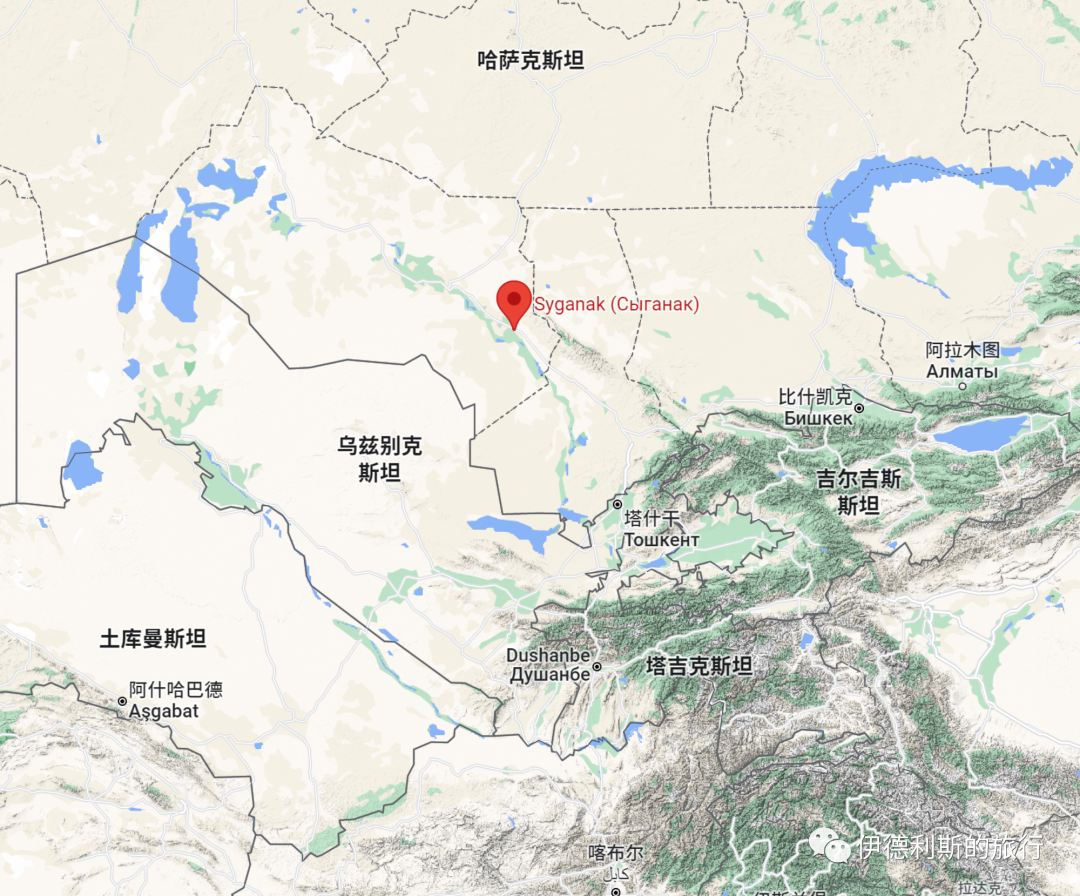
8. The Khanate of Khiva in Turkmenistan (1511–1920)
Continuing southwest, we go deep into the heart of Central Asia.
The Khanate of Khiva was located in the Khwarezm region south of the Aral Sea. It called itself Khwarezm, and its rulers were descendants of Shiban, the fifth son of Jochi, who was the eldest son of Genghis Khan. In the 16th century, the capital of the Khanate of Khiva was Konye-Urgench, located on the border of northern Turkmenistan and Uzbekistan. After the Khanate moved its capital to Khiva in the 17th century, this place was gradually abandoned. It was named a UNESCO World Heritage site in 2005.
Before the Mongol conquest of Khwarezm, Konye-Urgench was one of the wealthiest cities in Central Asia. Most of the current ruins belong to that period, and very few remains from the Khanate of Khiva period have been preserved.
The location of Konye-Urgench
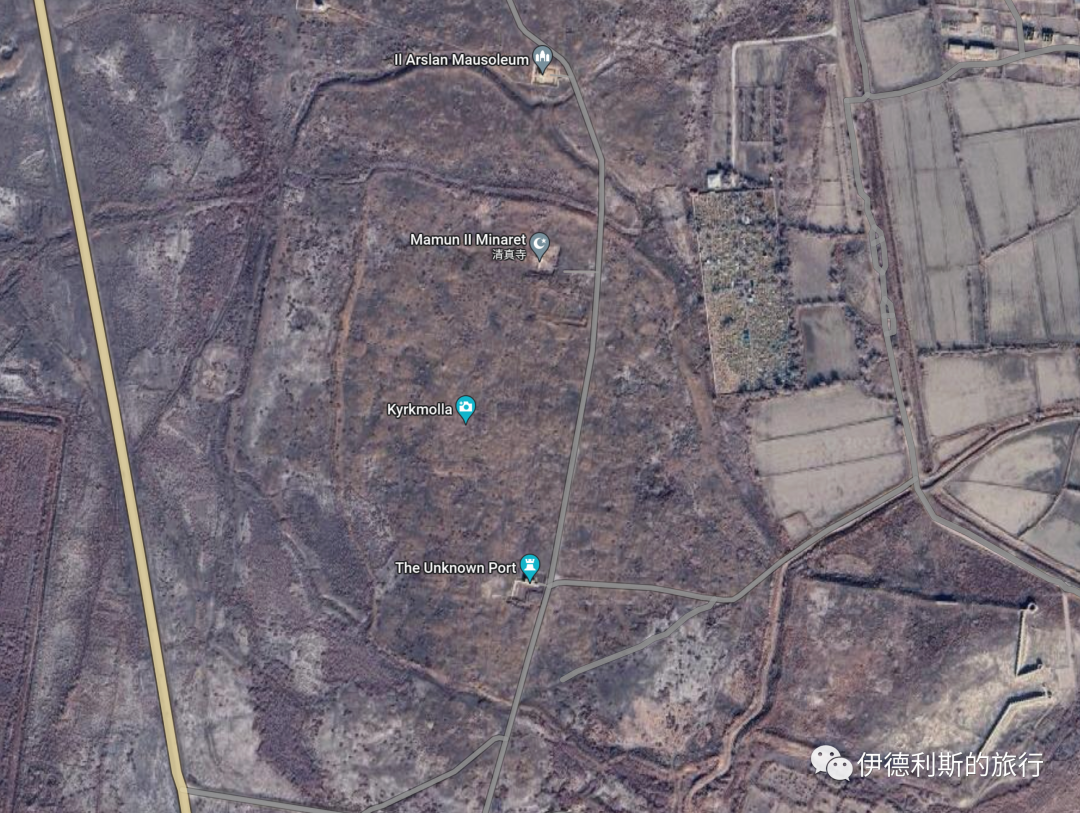
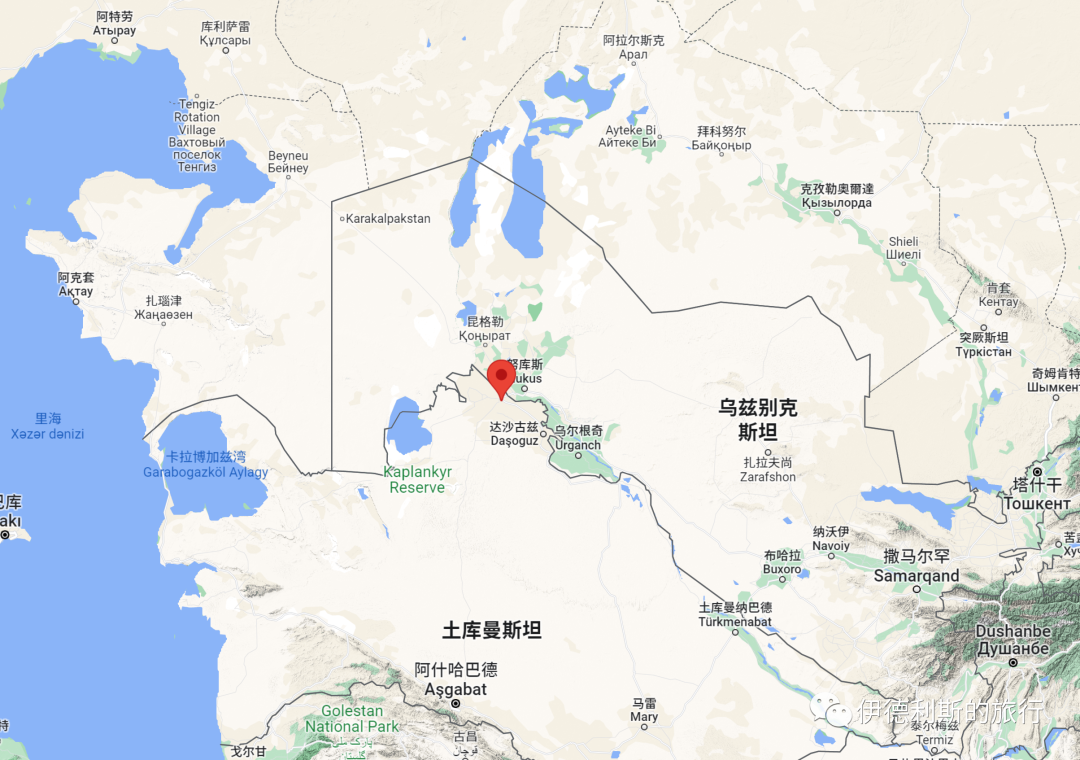
9. The Khanate of Bukhara in Uzbekistan (1500–1785)
Let us continue east into the ancient city of Bukhara.
In the early 16th century, Muhammad Shaybani, a descendant of Shiban (the fifth son of Jochi, Genghis Khan's eldest son), led Uzbek tribes living in the northern Central Asian steppes to overthrow the Timurid dynasty's rule in Transoxiana. He established the Shaybanid Dynasty (1506-1598), opening a new chapter in the history of the Transoxiana region of Central Asia.
The capital of the Shaybanid Dynasty was initially in Samarkand, but it moved to Bukhara after 1533, which is why later generations called it the Khanate of Bukhara. Bukhara served as the capital of the Khanate of Bukhara for 252 years, from 1533 to 1785, and many buildings constructed during that time remain today.
The Mir-i-Arab Madrasa was built in 1535 by order of Ubaidullah, the Khan of the Shaybanid Dynasty (reigned 1533-1539). It was named after the Khan's Sufi mentor, Mir-i-Arab (also known as Sheikh Abdullah Yamani).
To compete for territory, Khan Ubaidullah fought many wars against the Persian Safavid dynasty, the most famous being the siege of the ancient Afghan city of Herat. During many raids on Persia, the Shaybanid Dynasty captured many prisoners. People say the Khan used the money from selling three thousand Persian captives to build the Mir-i-Arab Madrasa.
The Mir-i-Arab Madrasa was built opposite the famous Kalyan mosque in Bukhara, forming a facing structure known as a "kosh."
The Mir-i-Arab Madrasa closed in the 1920s but reopened in 1947. It became the only open madrasa in Bukhara at the time, and almost all the imams of that era were trained at this school.
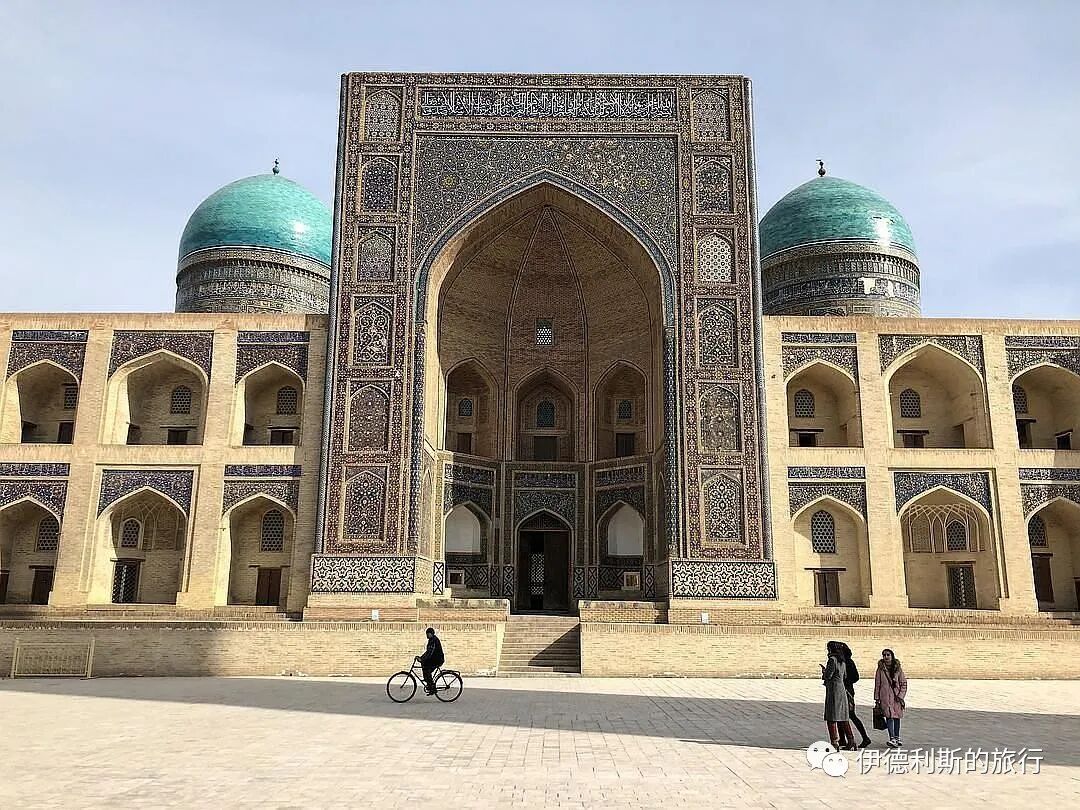
The Khoja Zaynuddin mosque was built in the first half of the 16th century, located next to an ancient pond (Hauz) in Bukhara. This architectural style is known as a mosque-khanaka (Mosque-Khanaka). It serves as both a mosque and a Sufi center, where people can perform namaz and hold religious gatherings (ermeli).
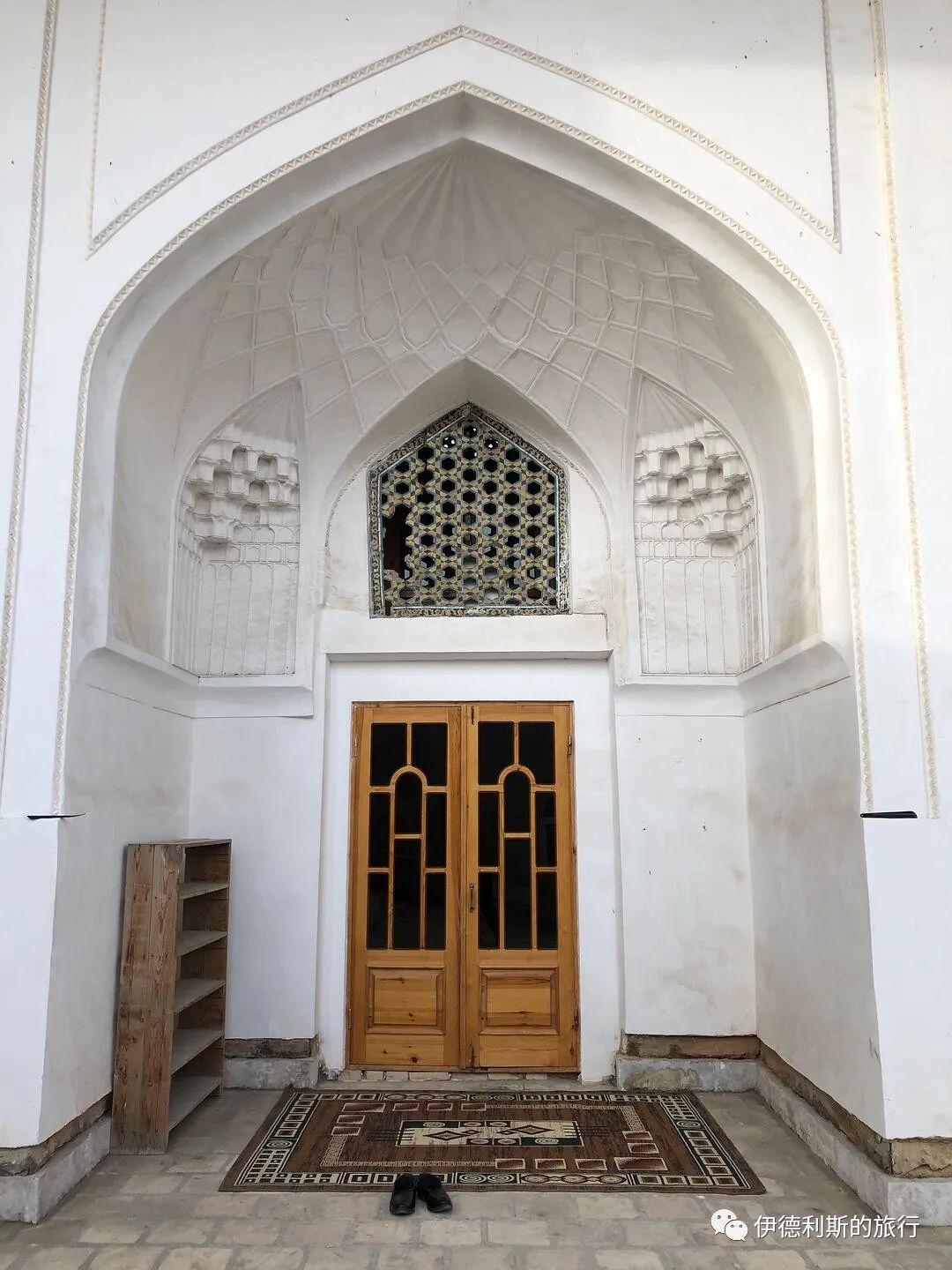
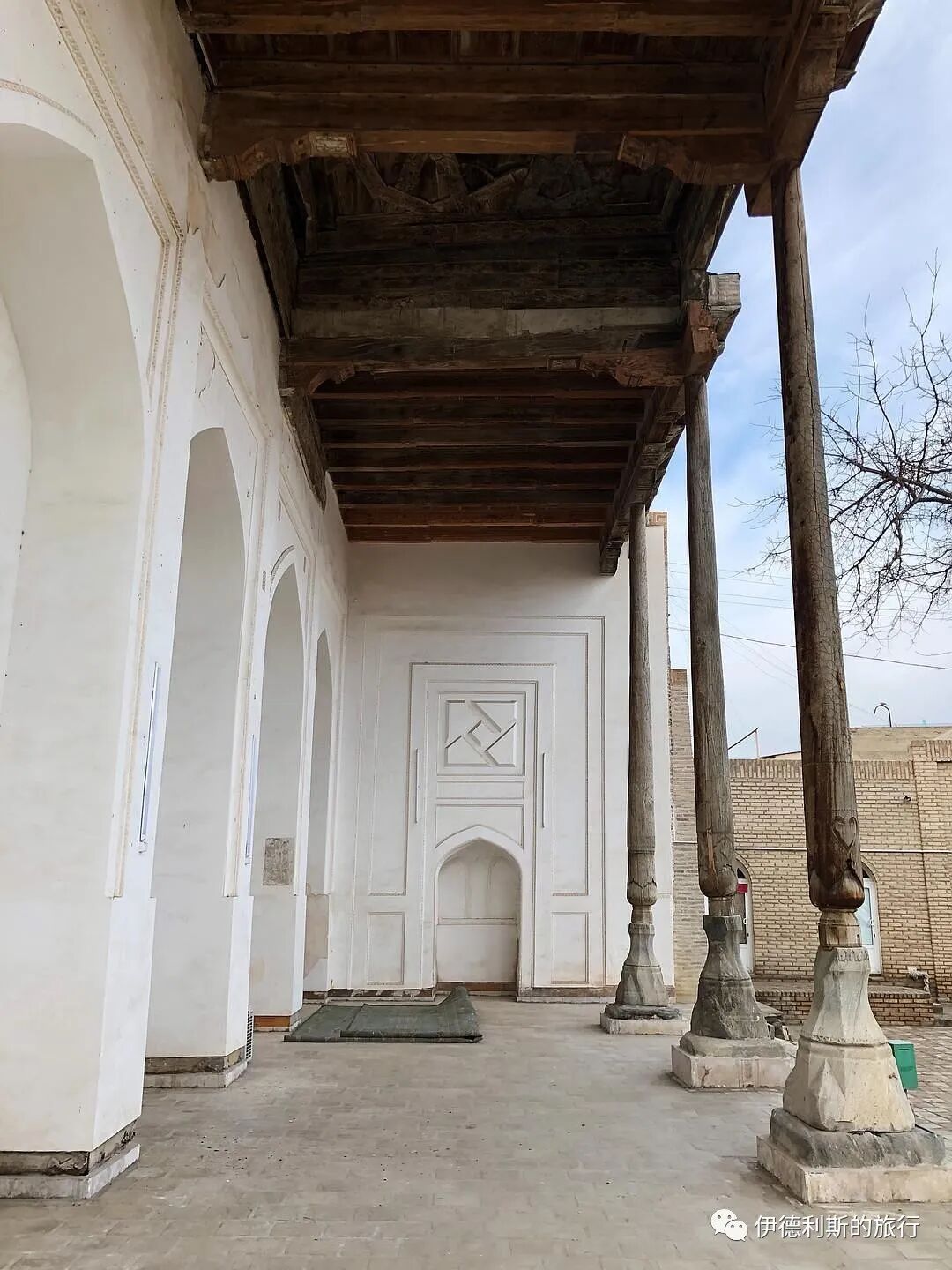
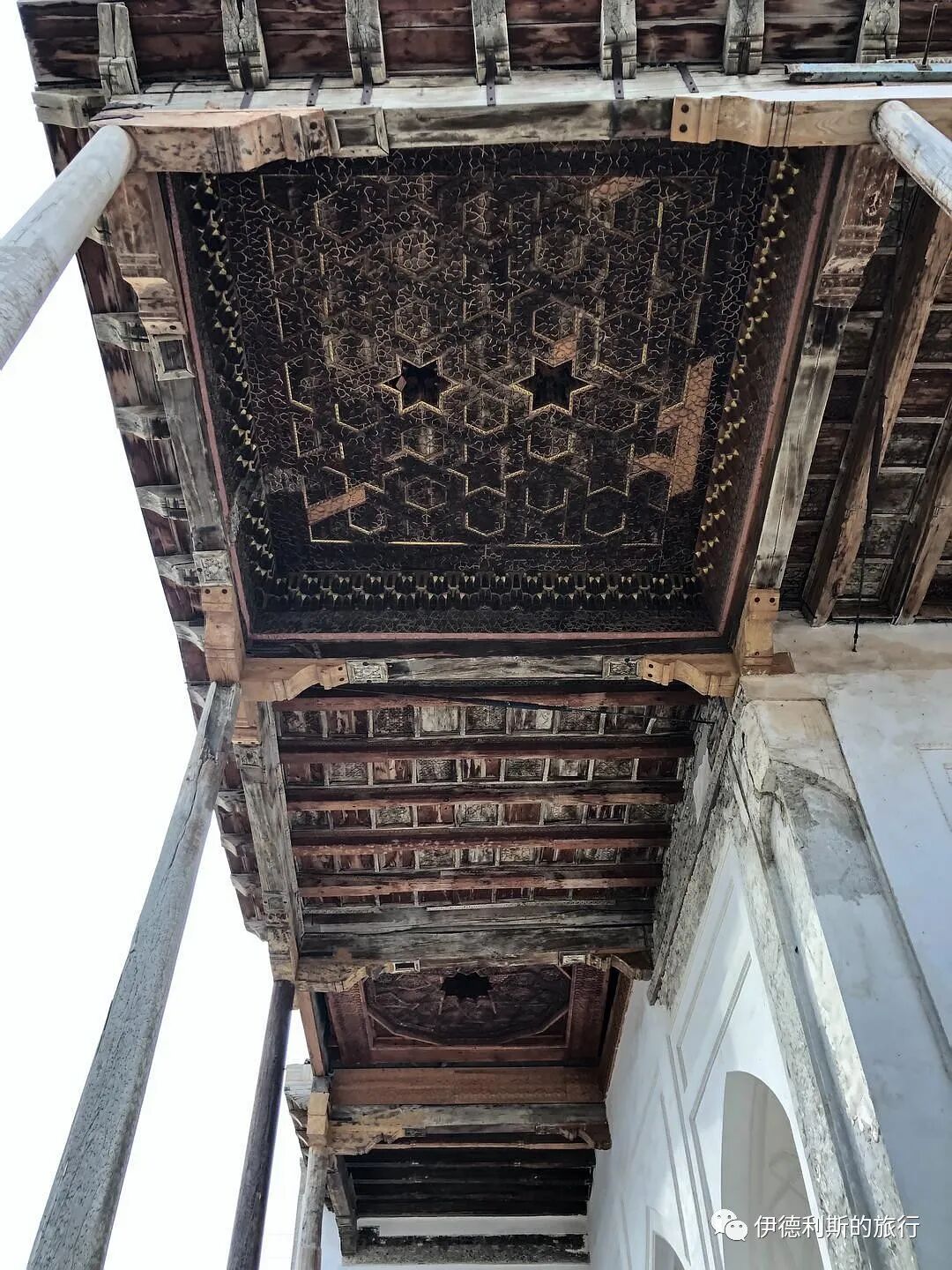
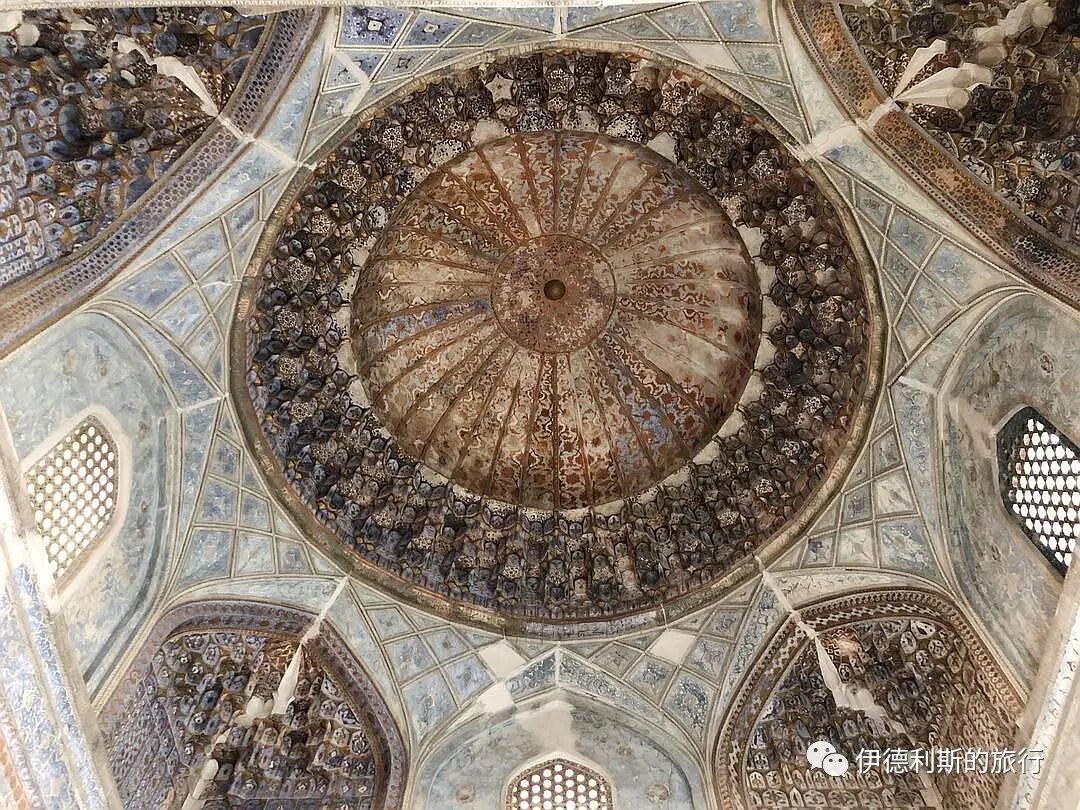
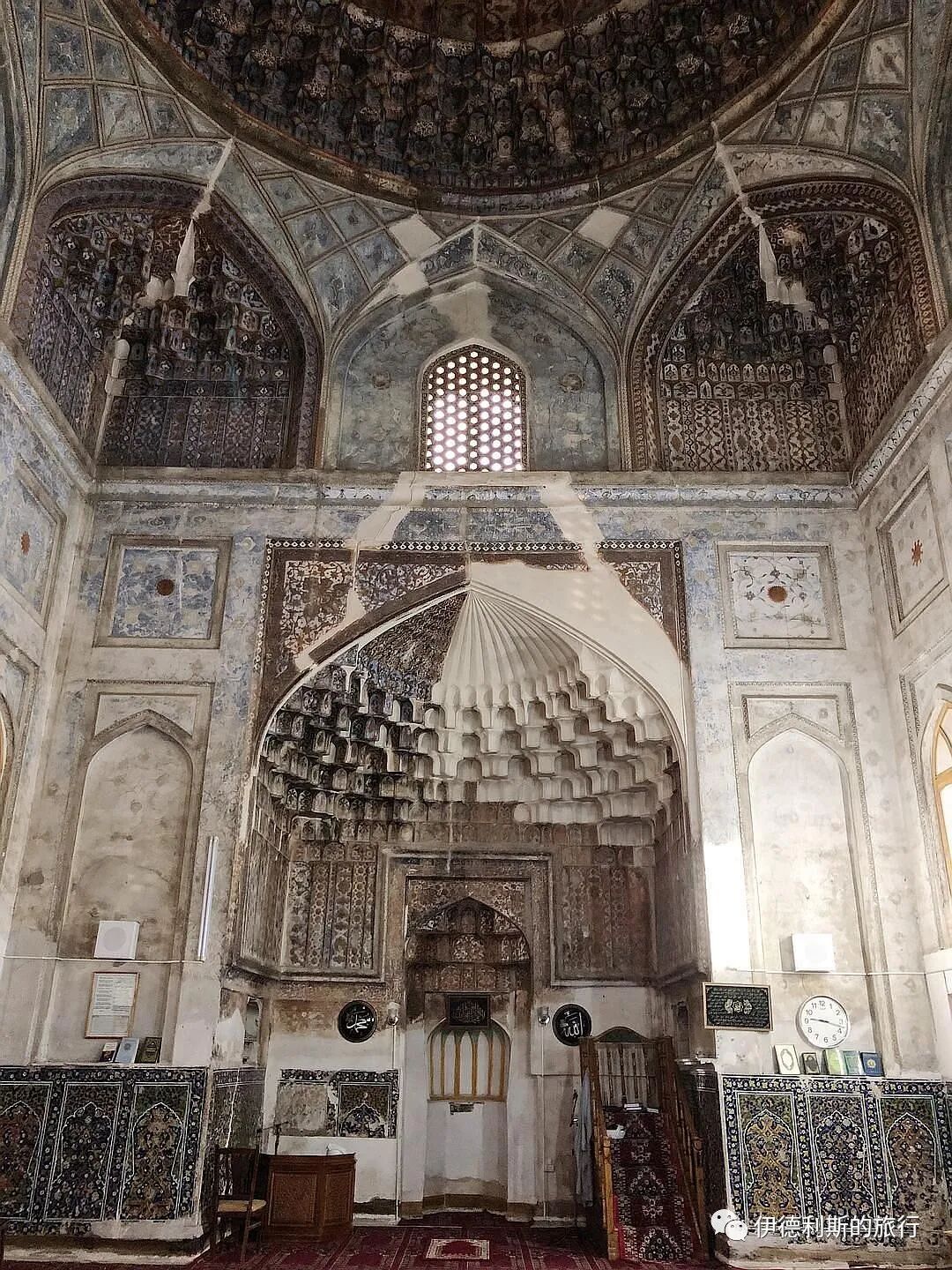
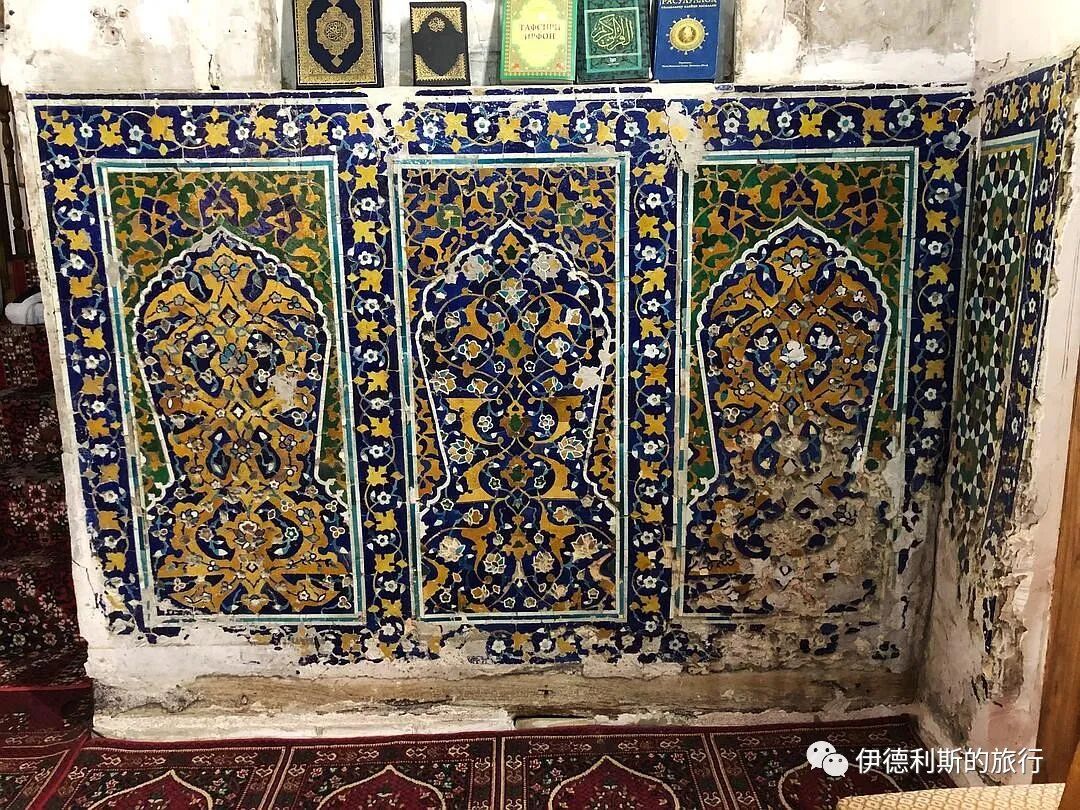
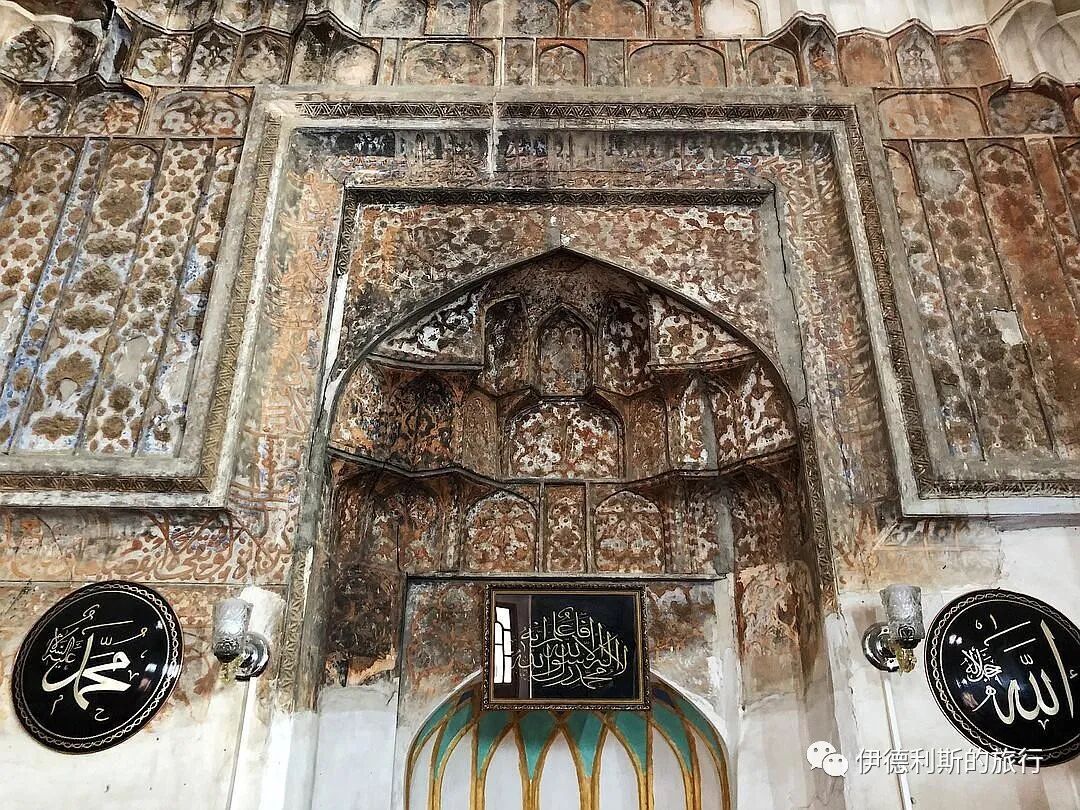
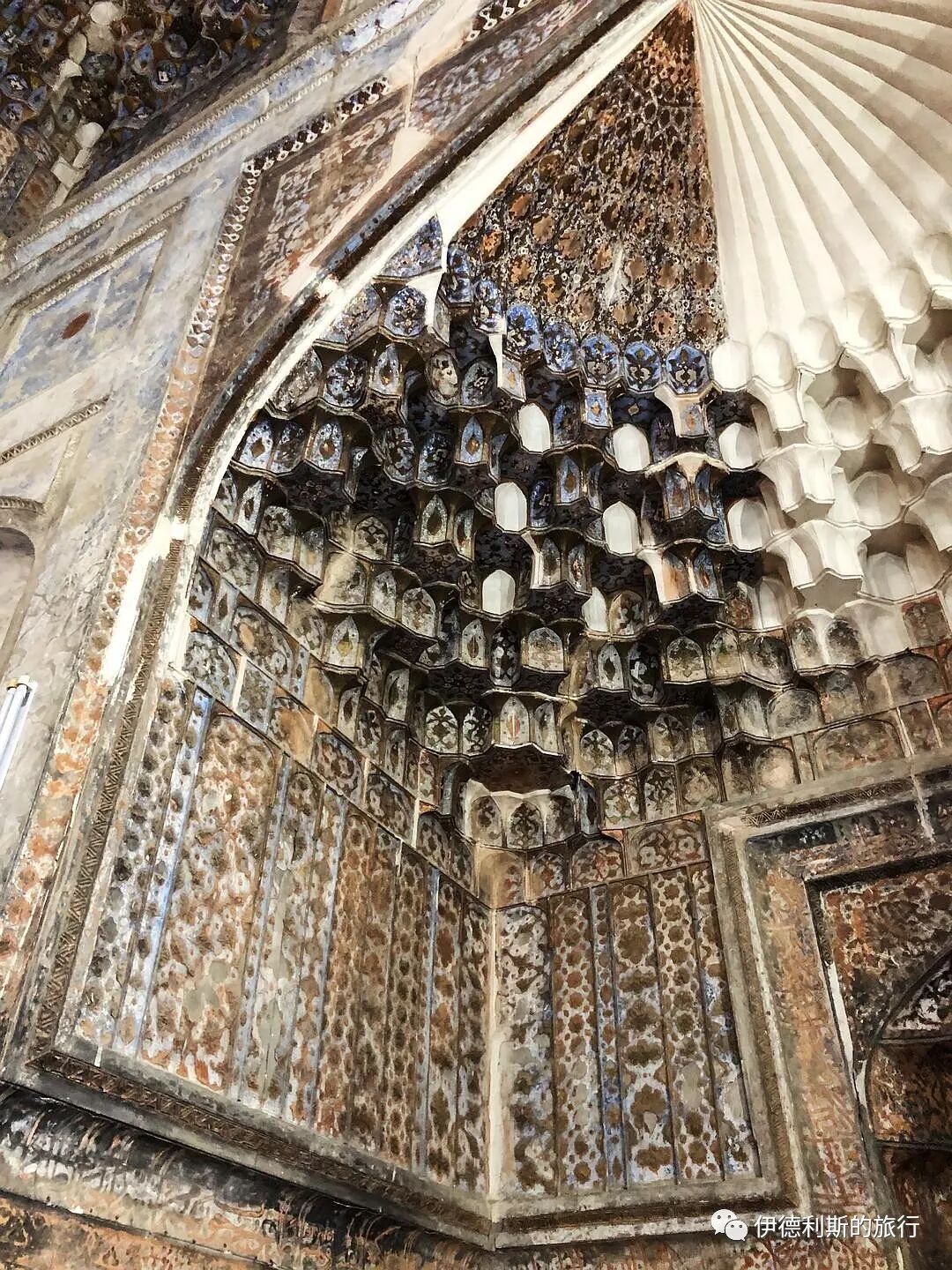
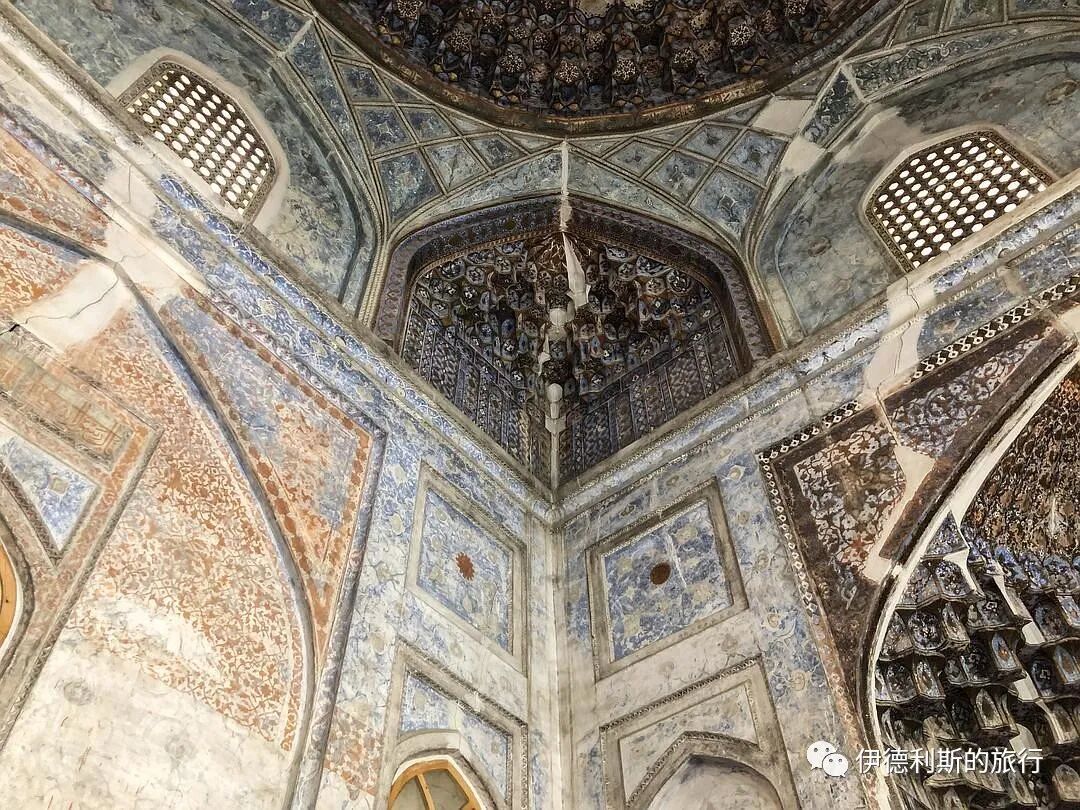
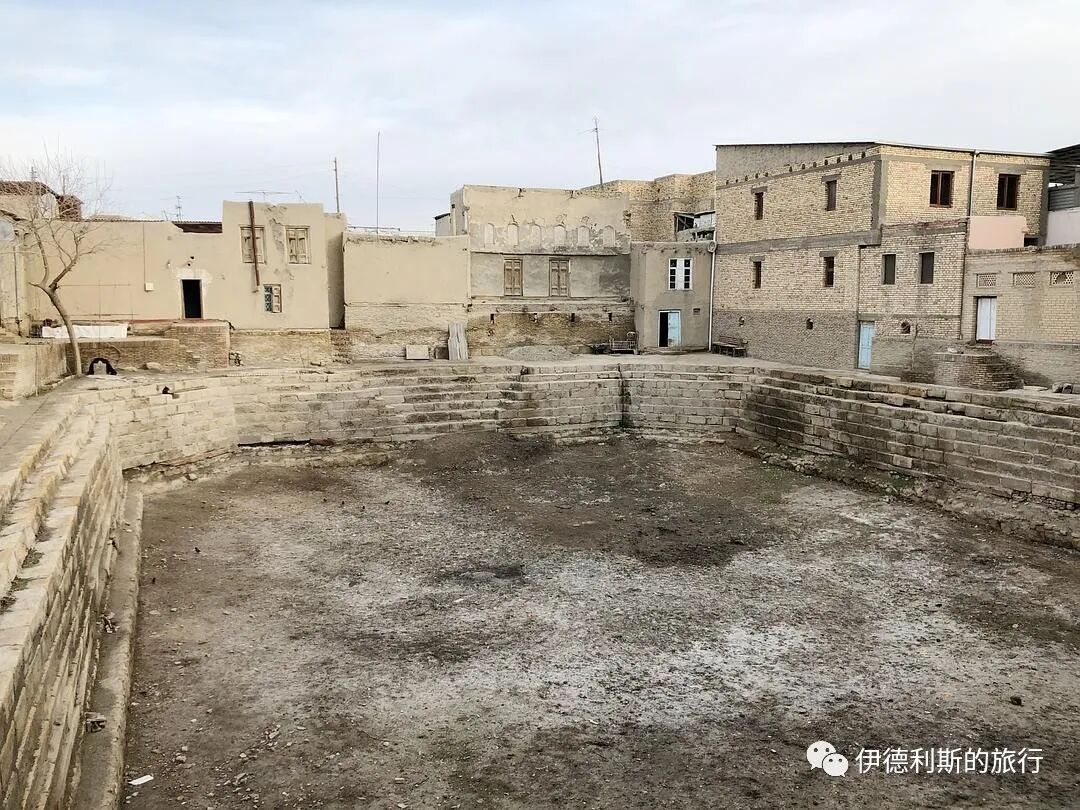
The Bahouddin Naqshbandi Complex is an important Sufi holy site in Central Asia, often called the 'Little Mecca' of the region. It holds the tomb of Hazrat Muhammad Bahauddin Shah Naqshband, the founder of the famous Naqshbandia Sufi order.
During the Shaybanid dynasty, the Naqshbandia order eventually outperformed other Sufi groups to become the dominant order in the khanate. Unlike other Sufi orders that favored seclusion and leaving the world behind, the Naqshbandia order followed the principles set by its founder: 'solitude in the crowd, travel in the world, caution in action, and enjoyment of the moment.'
In 1544, the Shaybanid Khan Abdulaziz (who reigned from 1539 to 1550) built a Dakhma platform with marble railings at the shrine, along with a Sufi lodge (Khanaqa) nearby. Later, a large cemetery for Bukhara's rulers appeared near the shrine, as every ruler felt honored to be buried close to it.
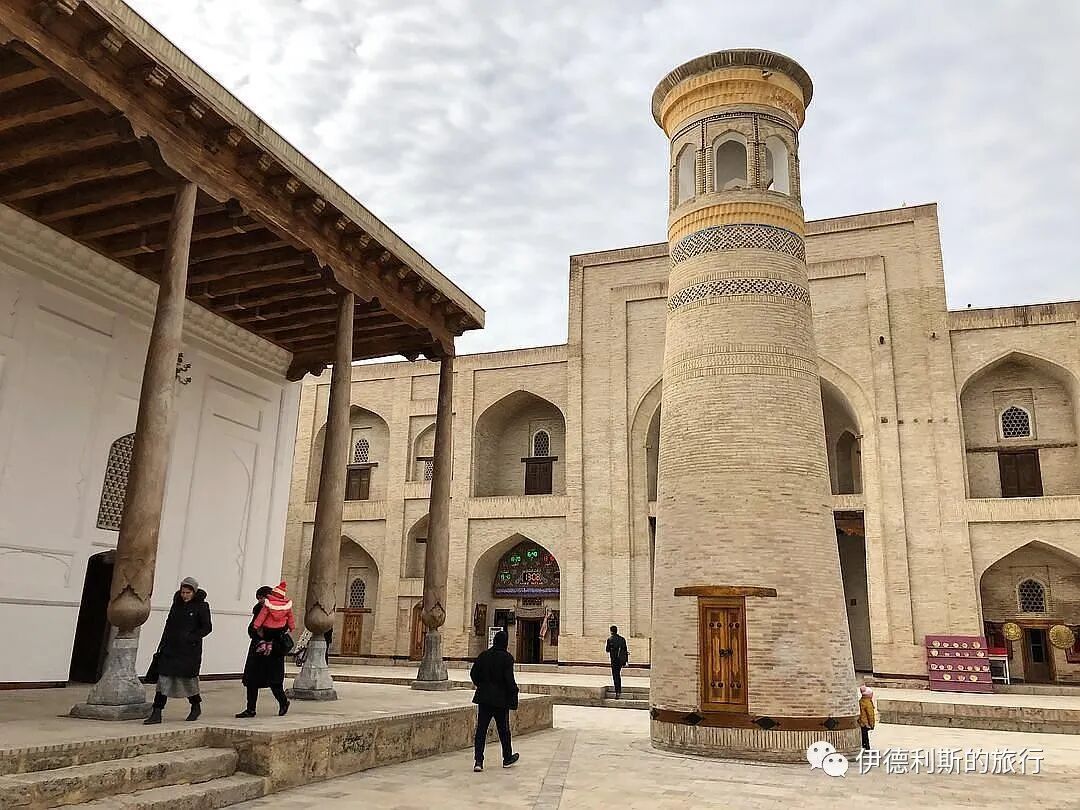
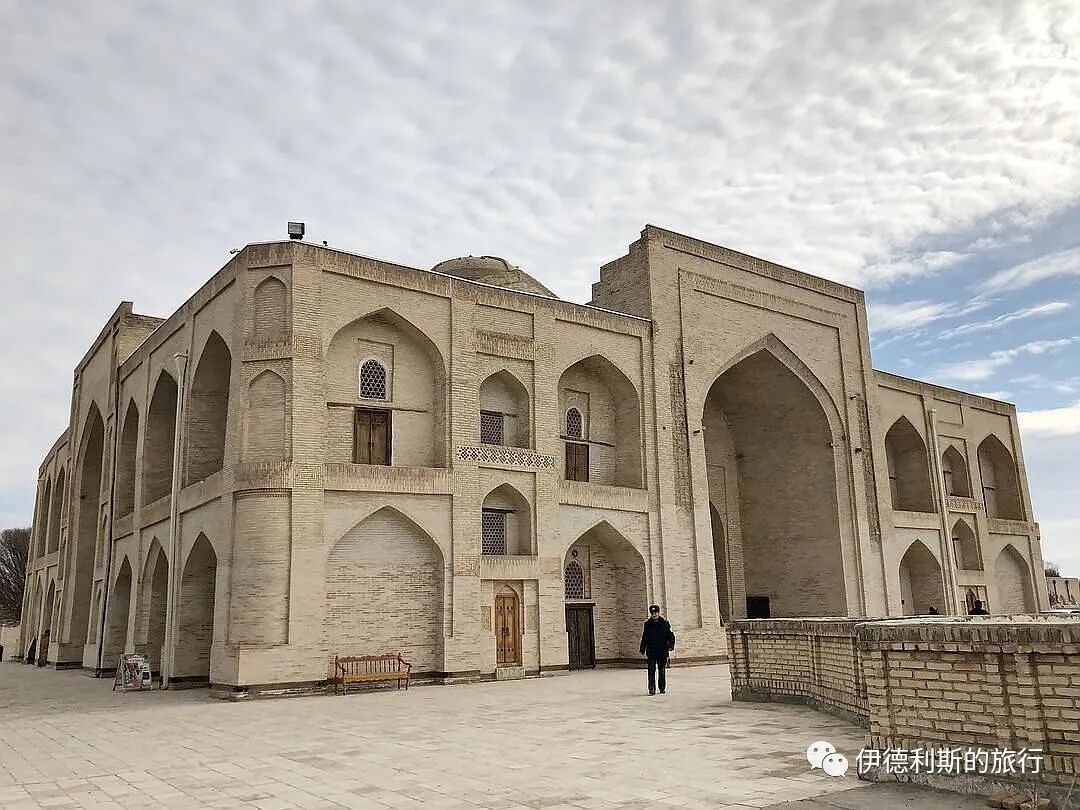
During the Shaybanid period of the Bukhara Khanate, Tashkent's population and size gradually recovered, making it a commercial and cultural hub along the Silk Road. Most of the historical buildings still standing in Tashkent today were built during this time. Abu Bakr Mohammed Kaffal Shashi was a famous imam and scholar in Tashkent during the Samanid dynasty. After he passed away in 976, he was buried in a garden on the outskirts of Tashkent. The current Kaffal Shashi mausoleum was rebuilt in 1541 during the Shaybanid dynasty. It features the design of a Sufi lodge (Khanaqah), including a tall archway (Iwan) and a dome. Inside, besides Kaffal Shashi, his students are also buried there, including his three main disciples. The mausoleum was once covered in beautiful tiles, but only parts remain today, and they have been restored. Additionally, the window lattices on the mausoleum gate are already 500 years old. According to Tashkent legends, applying dust from this mausoleum to one's face can help a woman become pregnant, which attracts many women who are struggling to conceive.
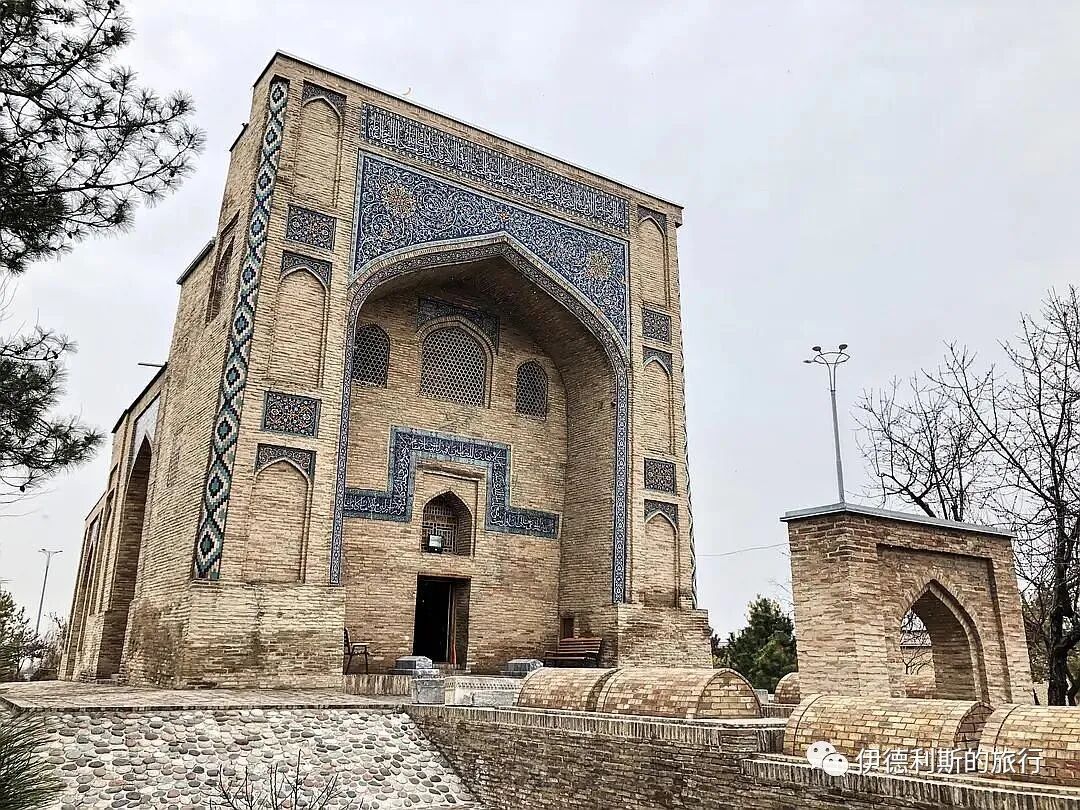
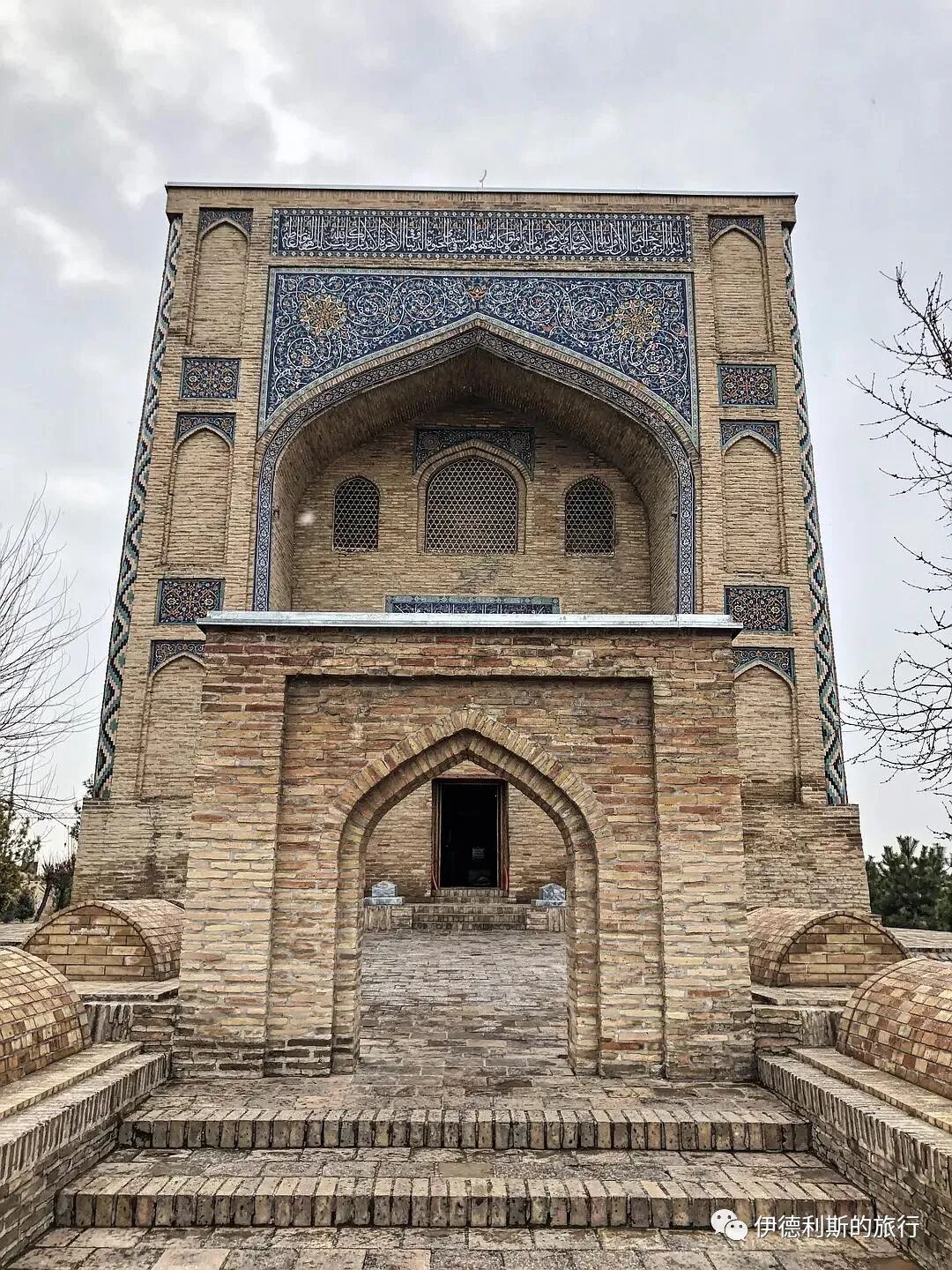
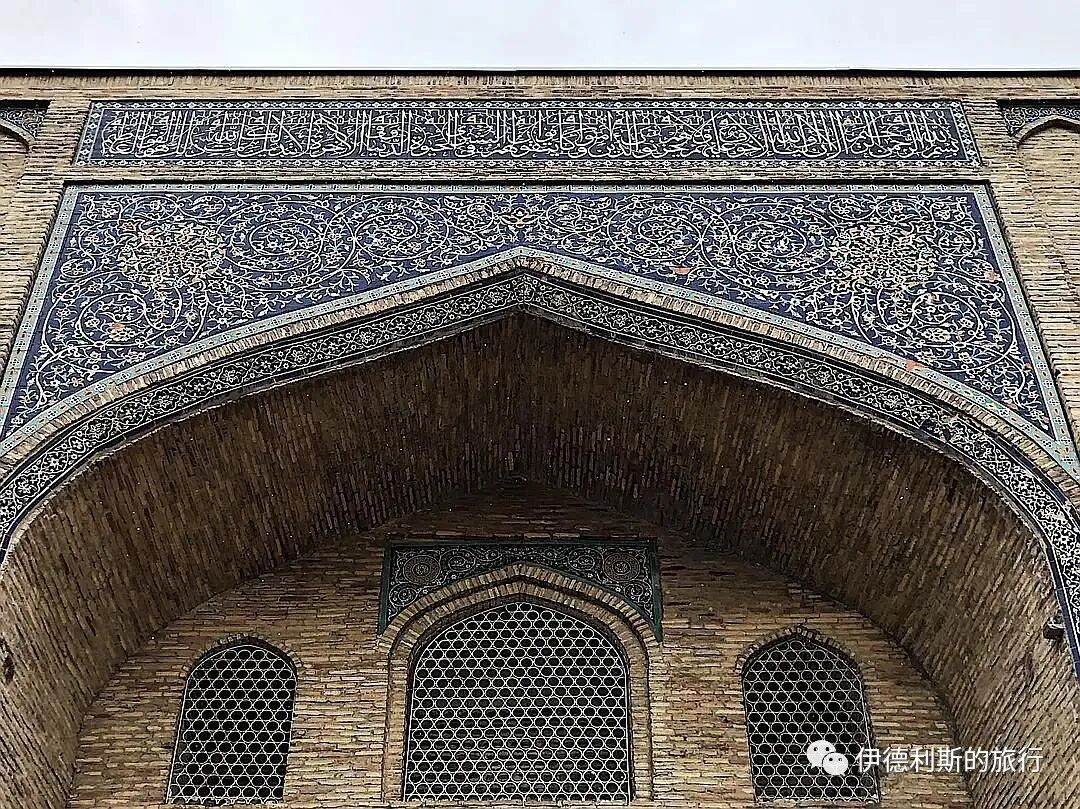
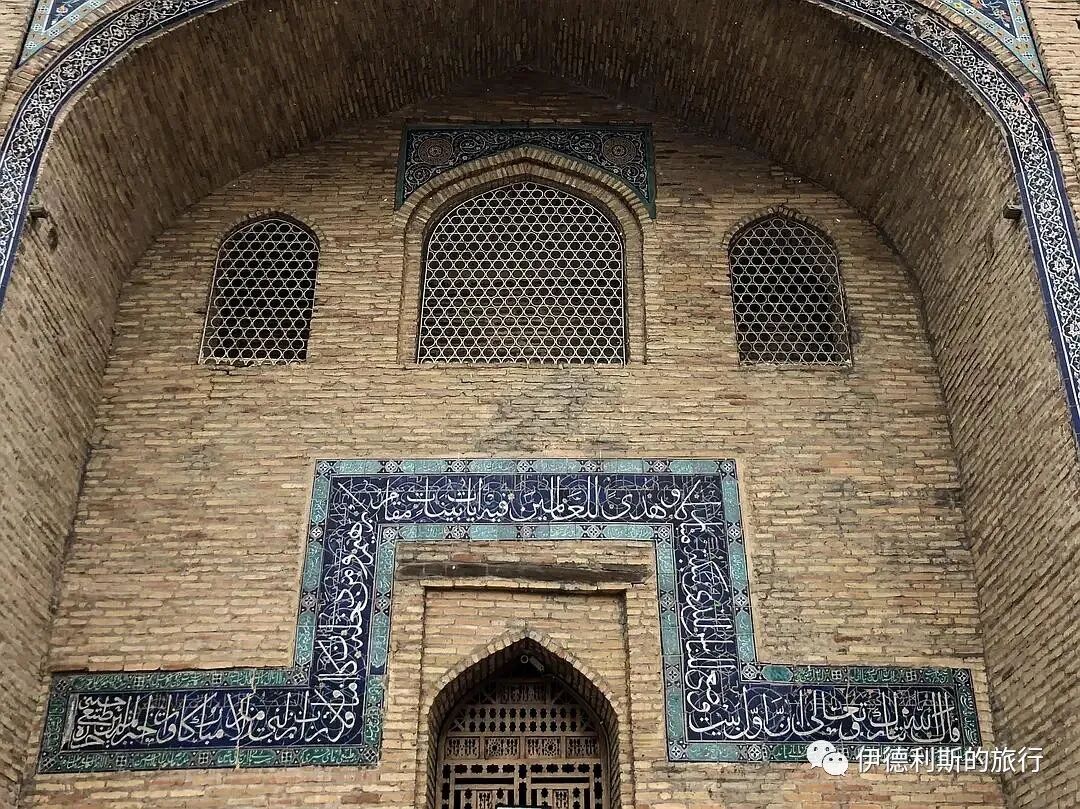
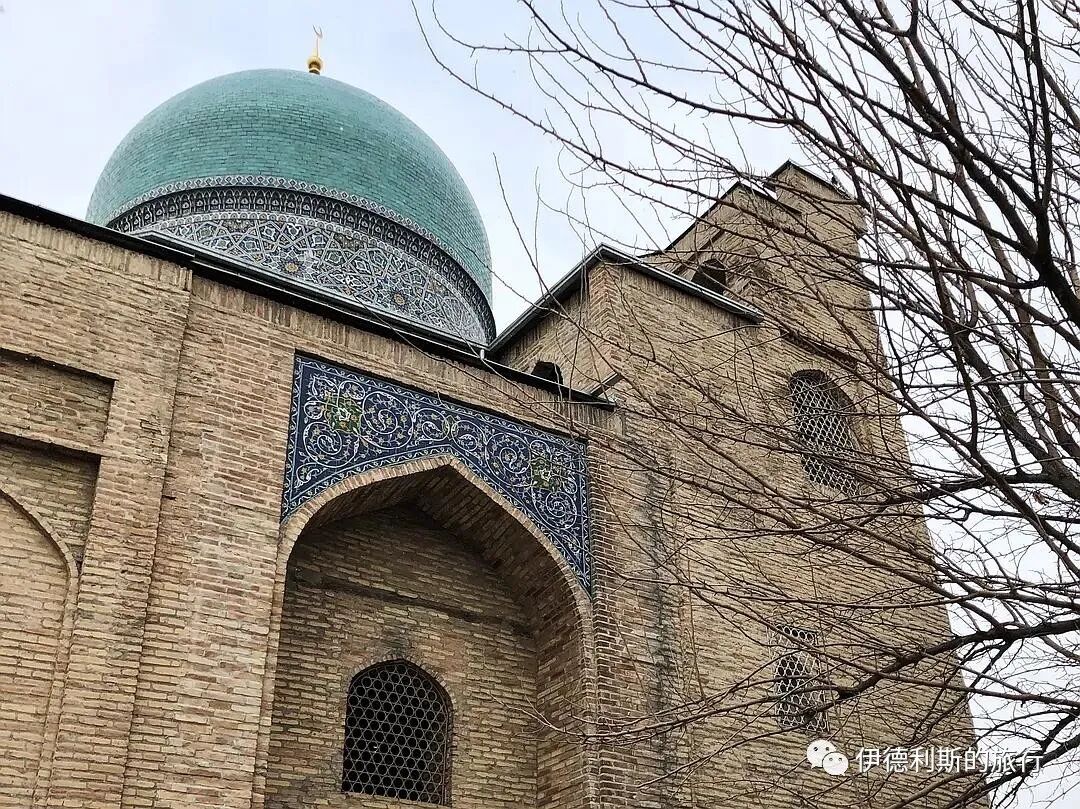
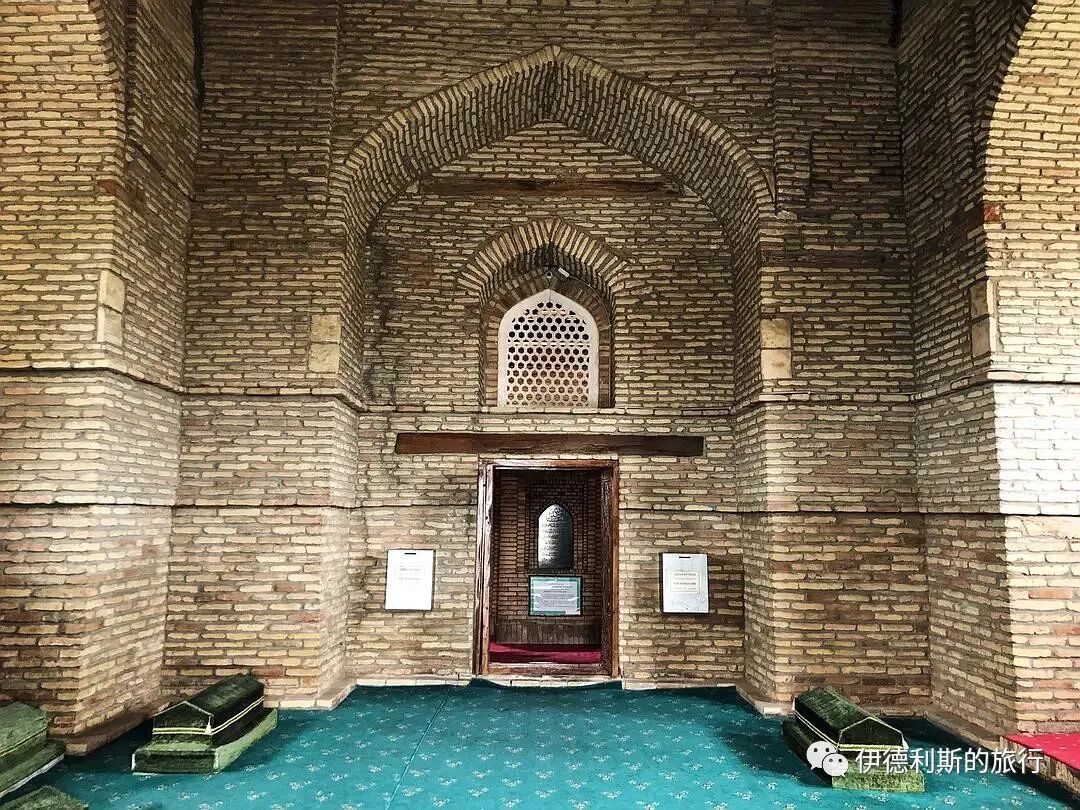
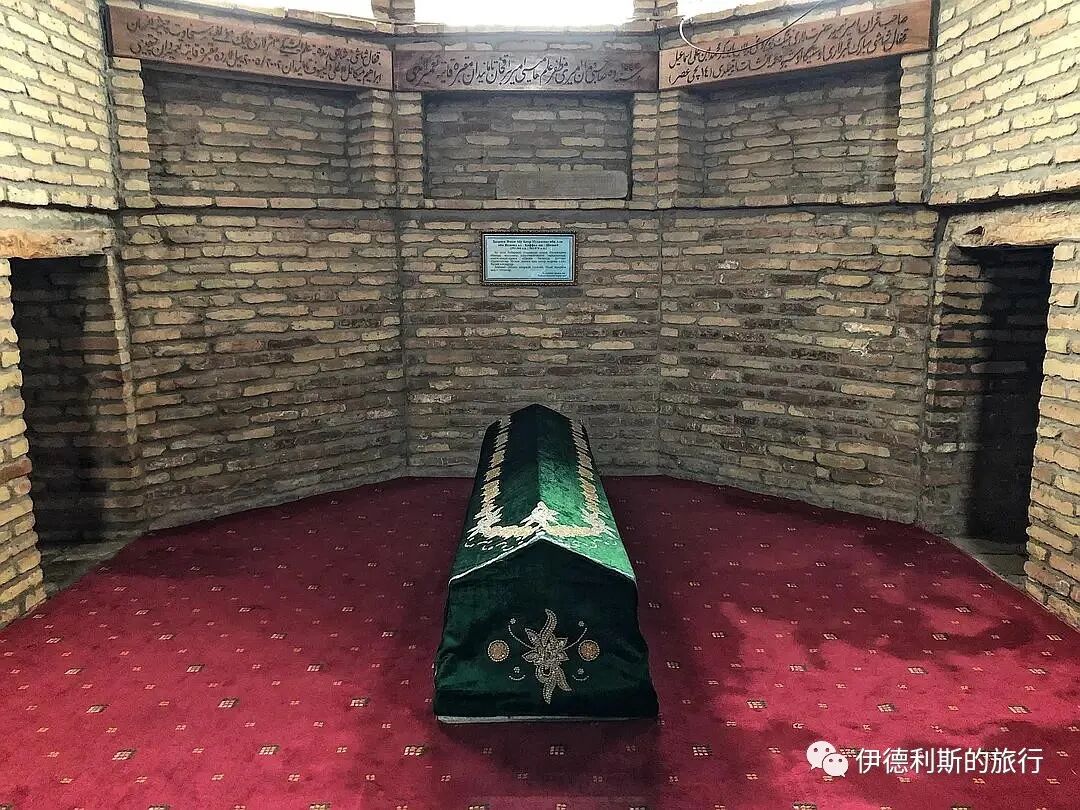
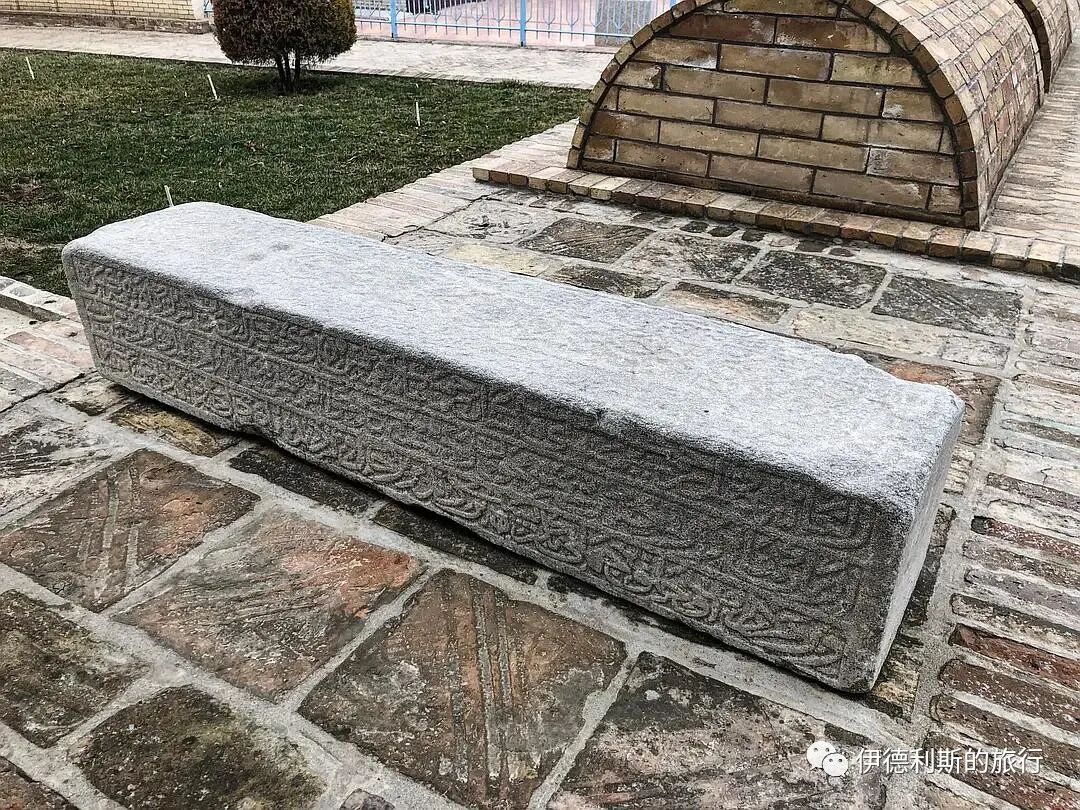
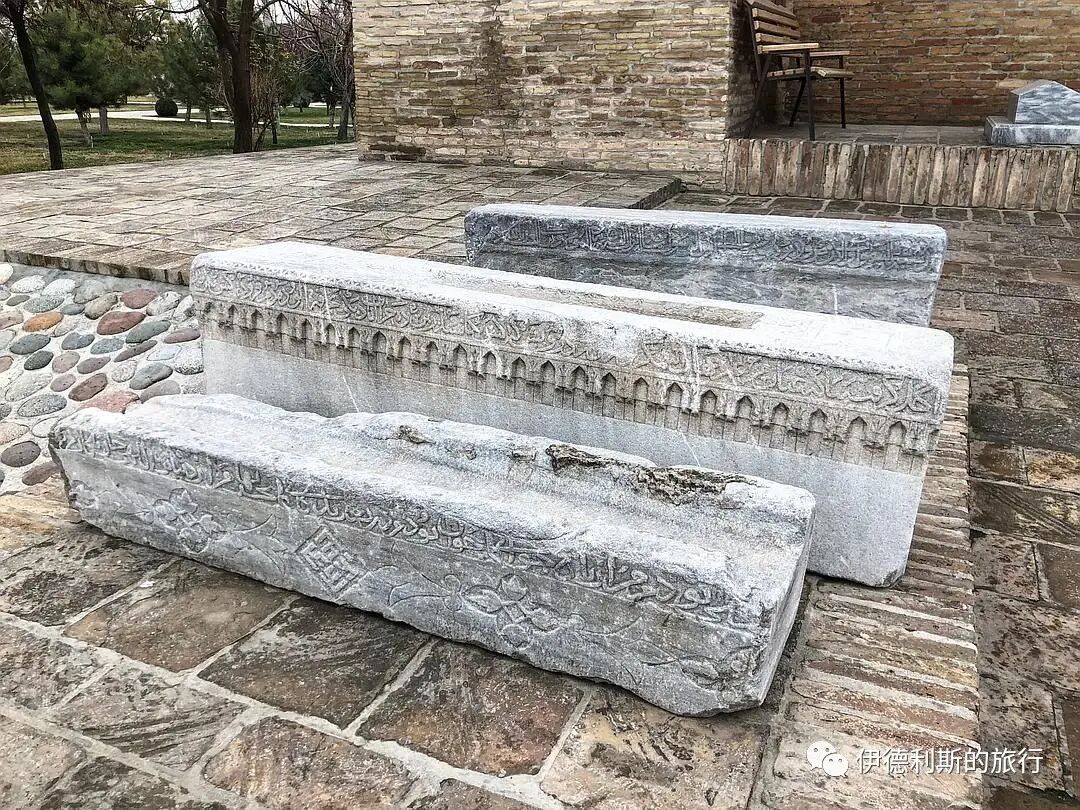
10. The Yarkent Khanate in China (1514-1680)
We crossed the Tianshan Mountains and arrived at the city of Shache in southern Xinjiang.
The Yarkent (Yarkent) Khanate was a state established in 1514 by Sultan Said Khan, a descendant of the Eastern Chagatai royal family. With Yarkent city (Shache) as its capital, it ruled southern Xinjiang and surrounding areas for over a hundred years until it was annexed by the Dzungar Khanate in 1680.
During the Yarkent Khanate's rule over southern Xinjiang, the Chagatai Mongols eventually shifted from nomadic life to settled living and merged into the Uyghur people. The Uyghurs also gradually developed into a modern ethnic group during this period, and the Twelve Muqam was finalized at this time as well.
'Yarkent Khanate' is actually a name used by modern scholars. In earlier local documents, the Persian word 'Moghuliye' was used, which means 'Mongol State'. Around the same time, Sultan Said Khan's cousin Babur established a state in northern India and also called it 'Moghul'. To distinguish them, Chinese usually translates them as 'Mengwu'er' and 'Mowo'er' respectively.
The founder of the Yarkent Khanate, Said Khan, was the third son of Ahmad Alaq, the ruler of Uyghurstan (modern-day Turpan area) in the eastern part of the Eastern Chagatai Khanate. In 1514, after stabilizing the Transoxiana region, the Uzbek army prepared to wipe out the Chagatai Mongols. After careful thought and discussion, Said Khan decided he could not withstand the Uzbek army's attack, so he left the Fergana Valley, crossed the Tianshan Mountains, and headed toward Yarkent.
In the spring of 1514, Said Khan led his army across the Tianshan Mountains and reached Kashgar via the Torugart Pass. At that time, southern Xinjiang was ruled by Abu Bakr, the leader of the Mongol Dughlat tribe. He was recruiting soldiers in Yarkent city. Said Khan fought a fierce battle outside the city against the Kashgar garrison and defeated the enemy. The enemy closed the gates and refused to come out, so Said Khan could not take the city and turned to attack the city of Yengisar. Said Khan besieged Yengisar for two months and finally captured it after six days of intense fighting.
Hearing that Yengisar had fallen, the Kashgar garrison abandoned the city and fled, so Said Khan marched directly toward Yarkent. When Abu Bakr heard this, he abandoned the city and fled to Hotan, and soon after, Said Khan entered Yarkent city. On September 3, 1514, Said Khan officially ascended the throne and established the Yarkent Khanate.
In 1516, Sultan Said reconciled with his older brother, Mansur Khan, who ruled the eastern part of the Eastern Chagatai Khanate. He agreed to mention Mansur's name during the khutbah (sermon) and to mint coins bearing Mansur's name. Southern Xinjiang welcomed long-awaited peace and order that year. The Tarikh-i-Rashidi describes it this way:
The reconciliation between these two brothers brought safety and prosperity to the residents. Anyone could travel alone between Hami in China and the Fergana region without needing food supplies or fearing robbery.
The location of Yarkand city.
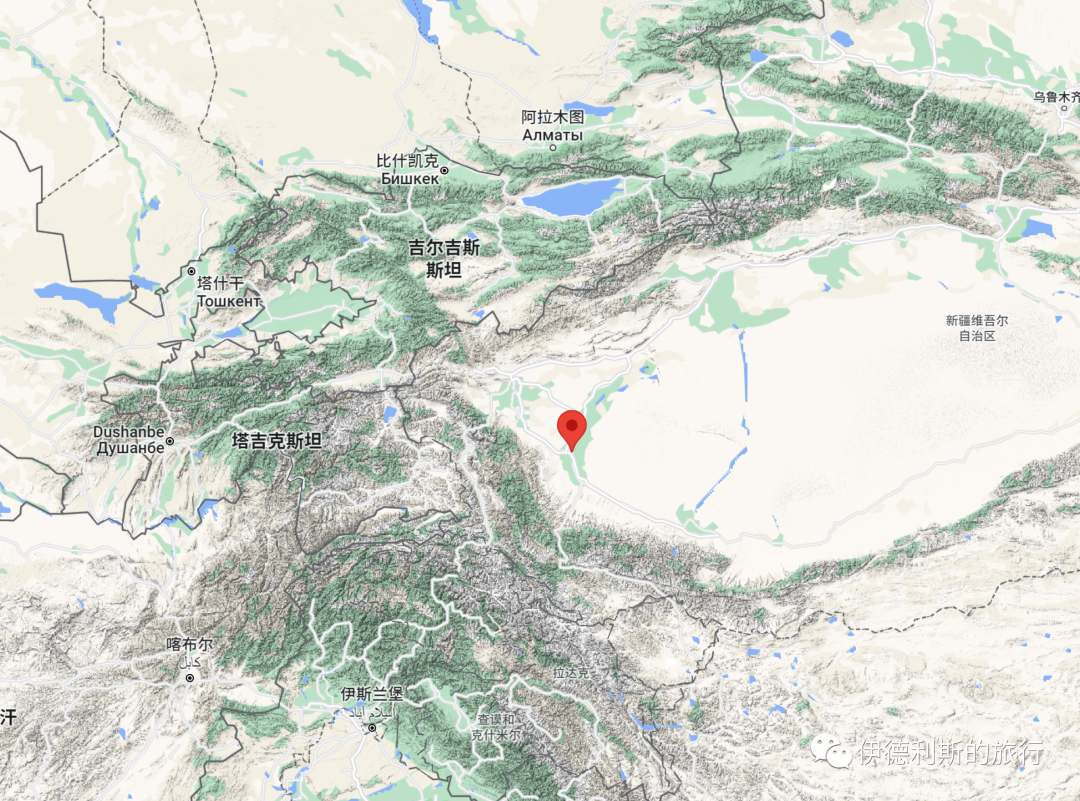
Today, there is a site in the old city of Yarkand called Ordakul, which means royal palace pond. This was likely the location of the Yarkand Khanate's royal palace. The Tarikh-i-Rashidi describes Yarkand city during the early Yarkand Khanate period like this:
They diverted rivers into the city and built gardens. The main roads were lined with poplar trees. People walking around the city could spend half their journey in the shade of these trees, and most of the tree-lined paths had water channels on both sides.
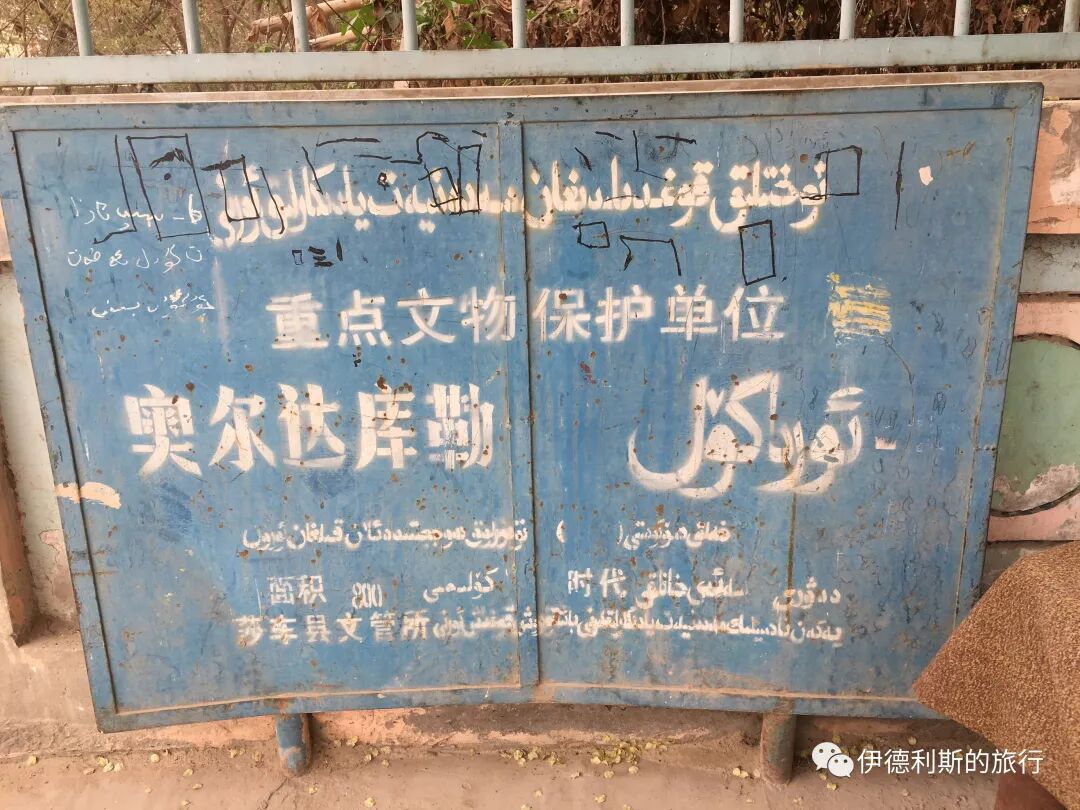
Ordakul Mosque
To the west of Ordakul is the Jami Mosque. Jami is also translated as Jumu'ah, which refers to the weekly Friday congregational prayer. The Jami Mosque was reportedly founded by Sultan Said and later expanded during the reign of Abdullah Khan (reigned 1638–1669).
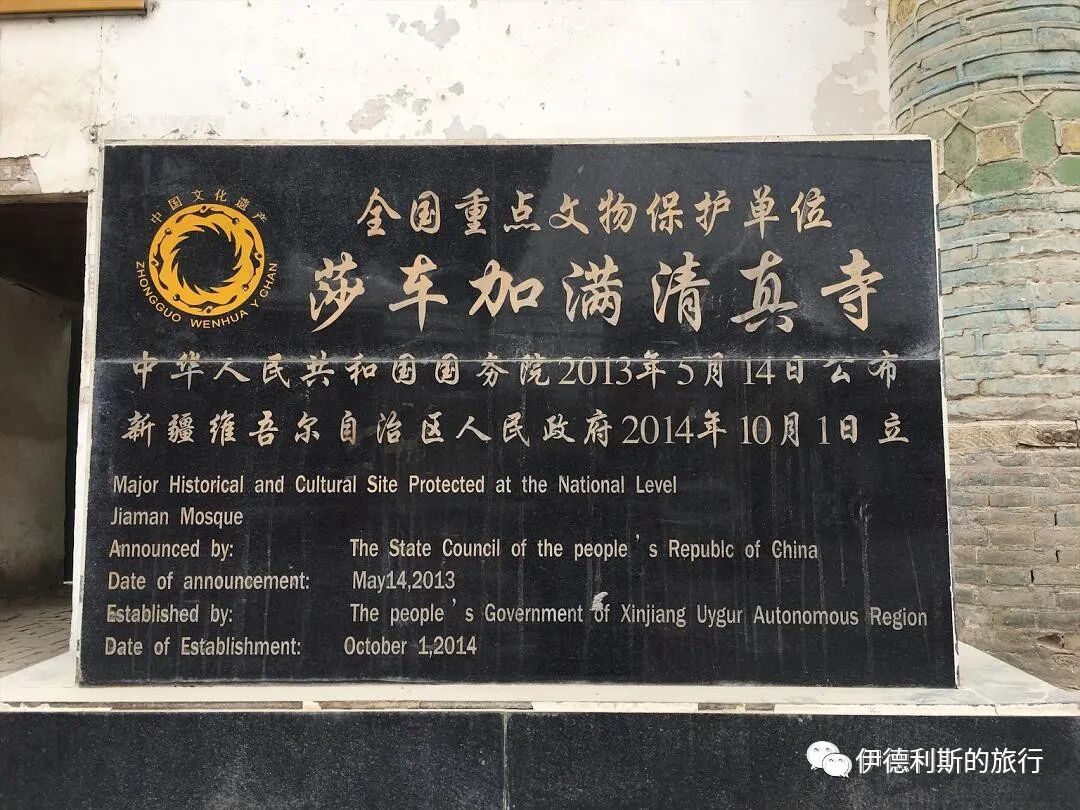
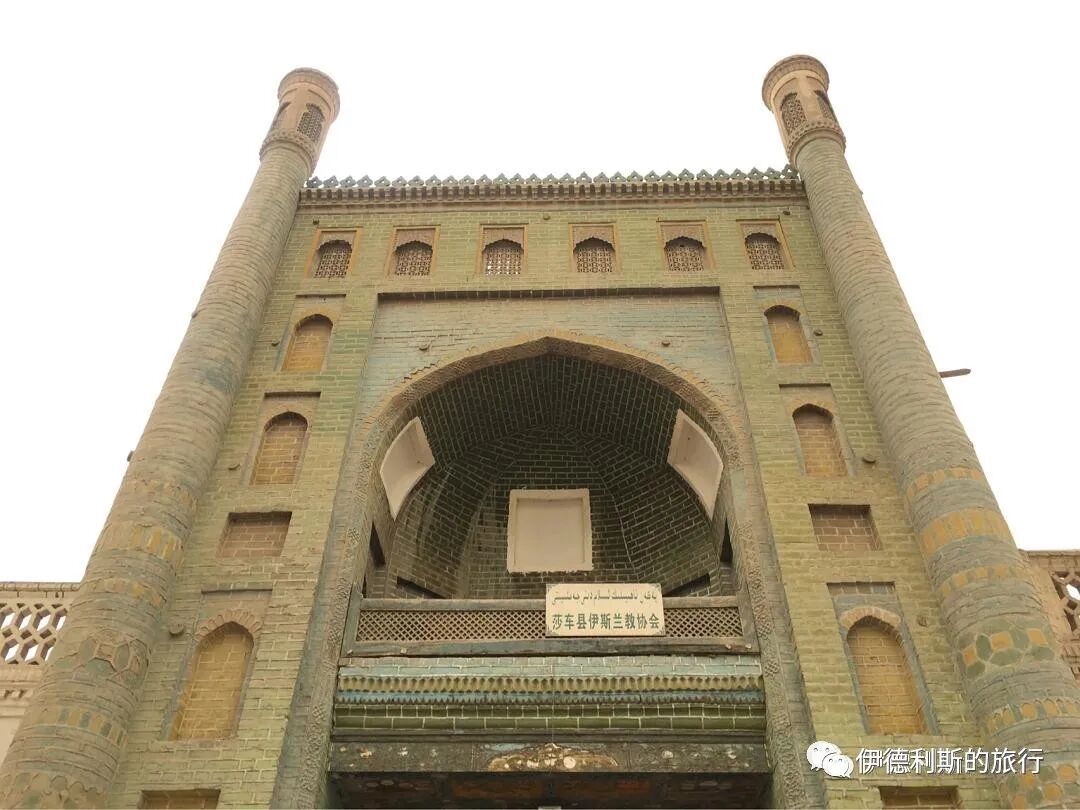
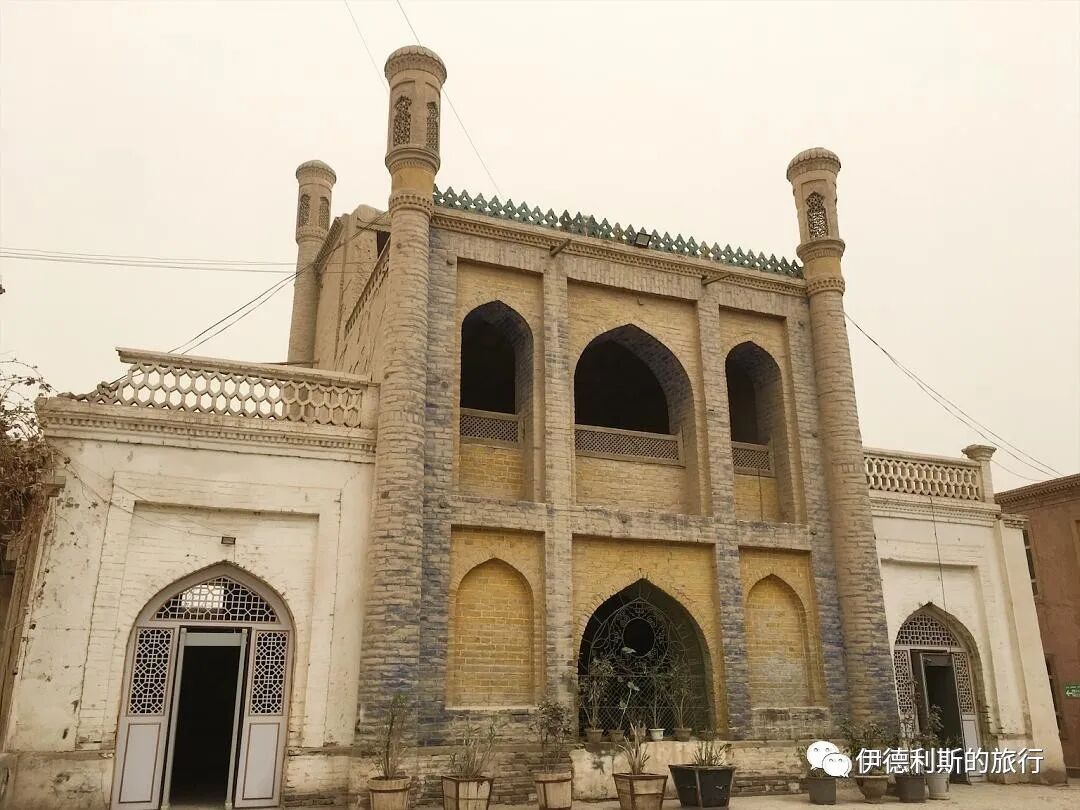
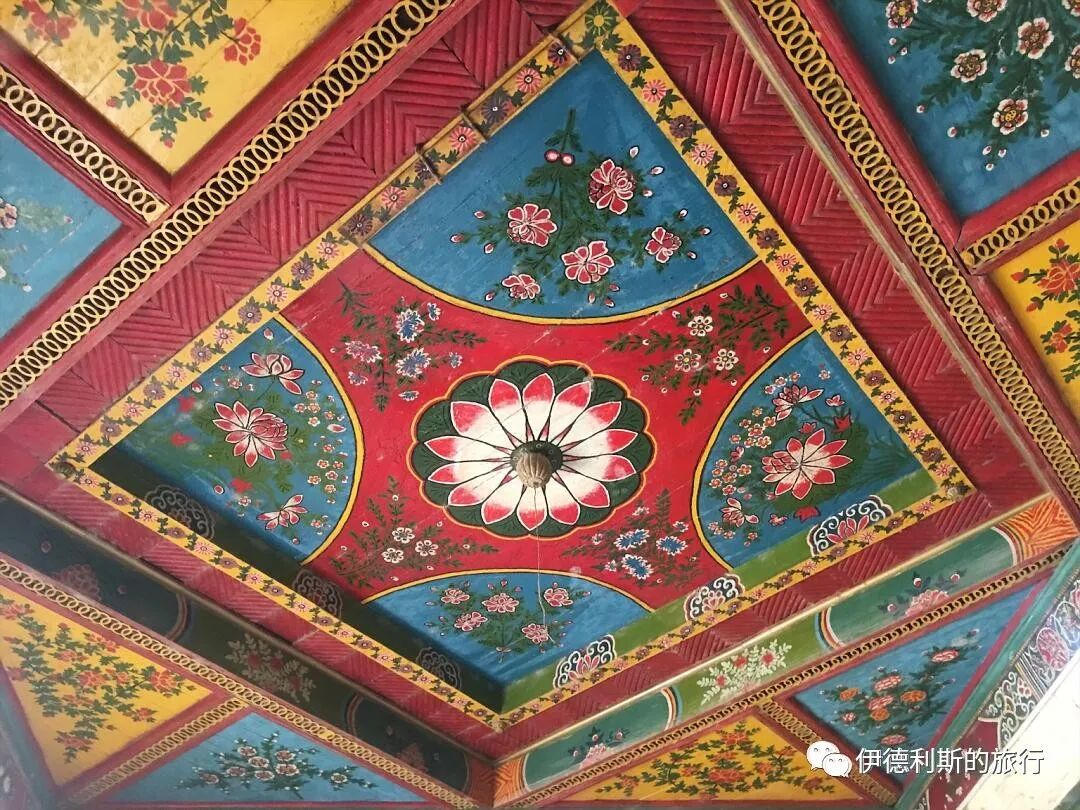
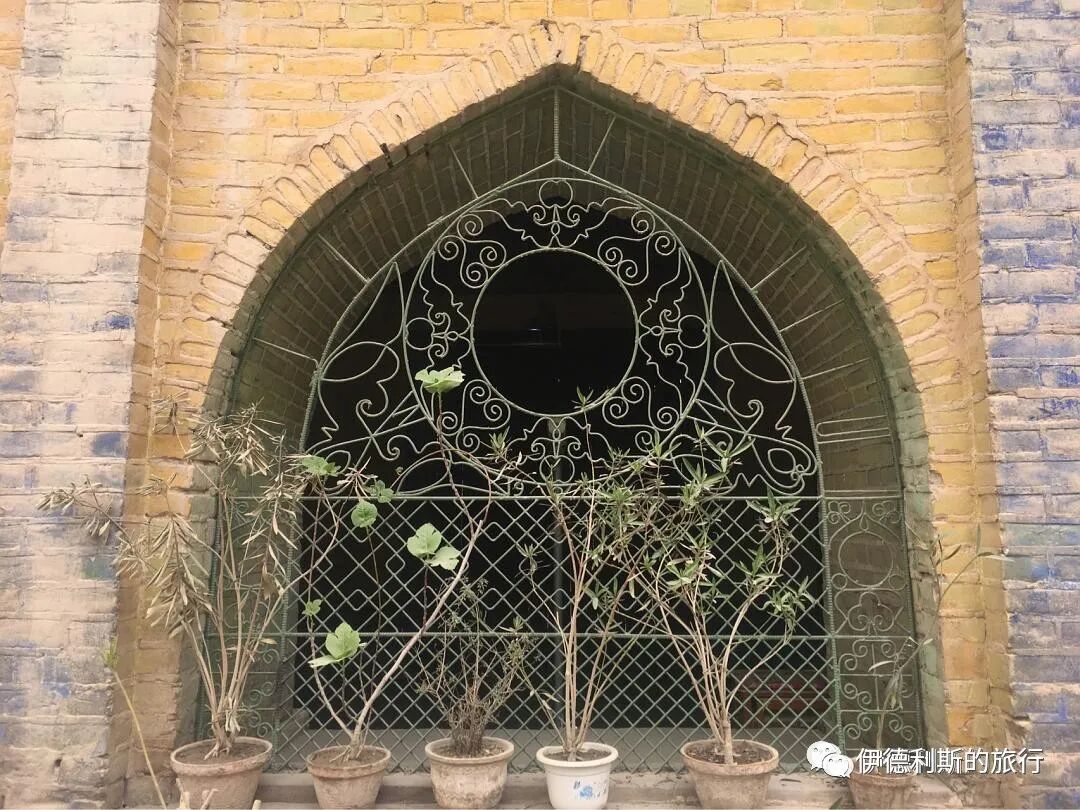
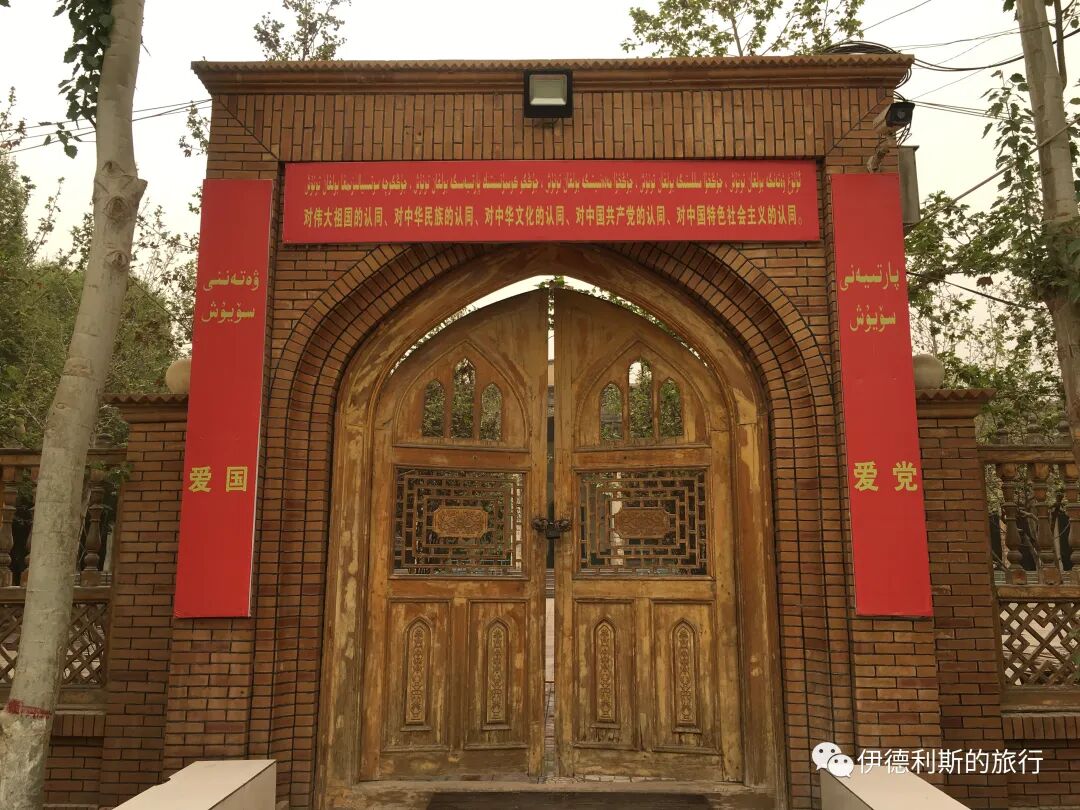
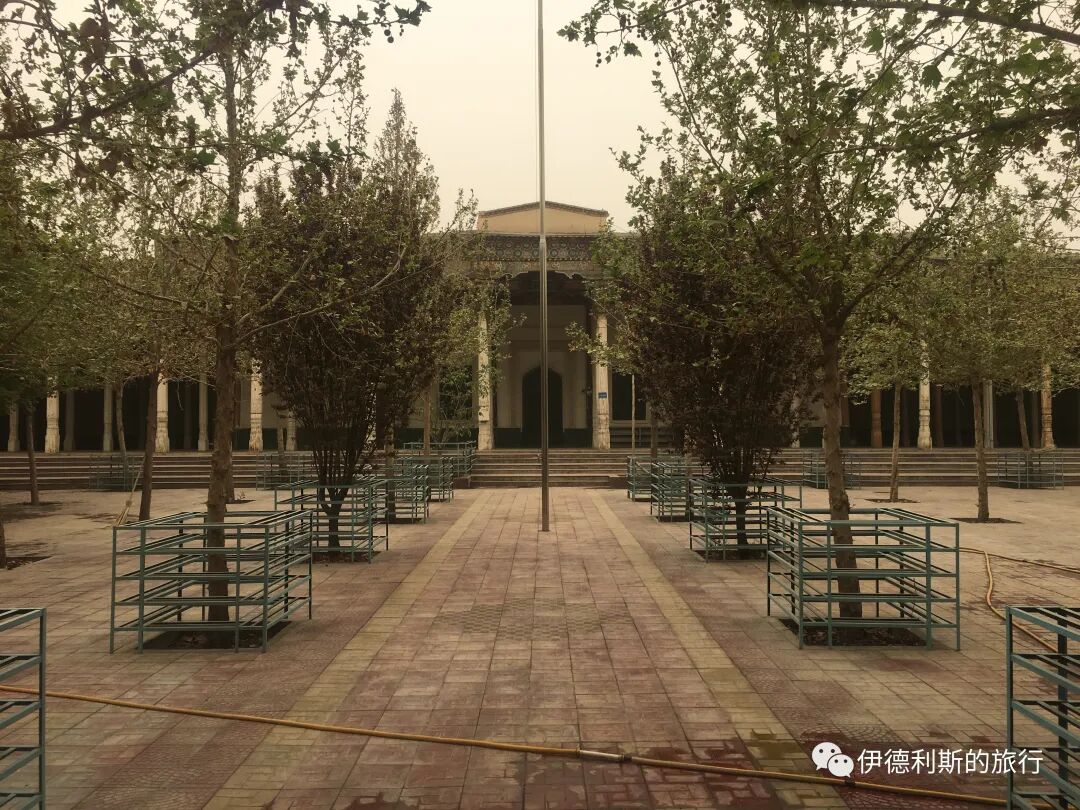
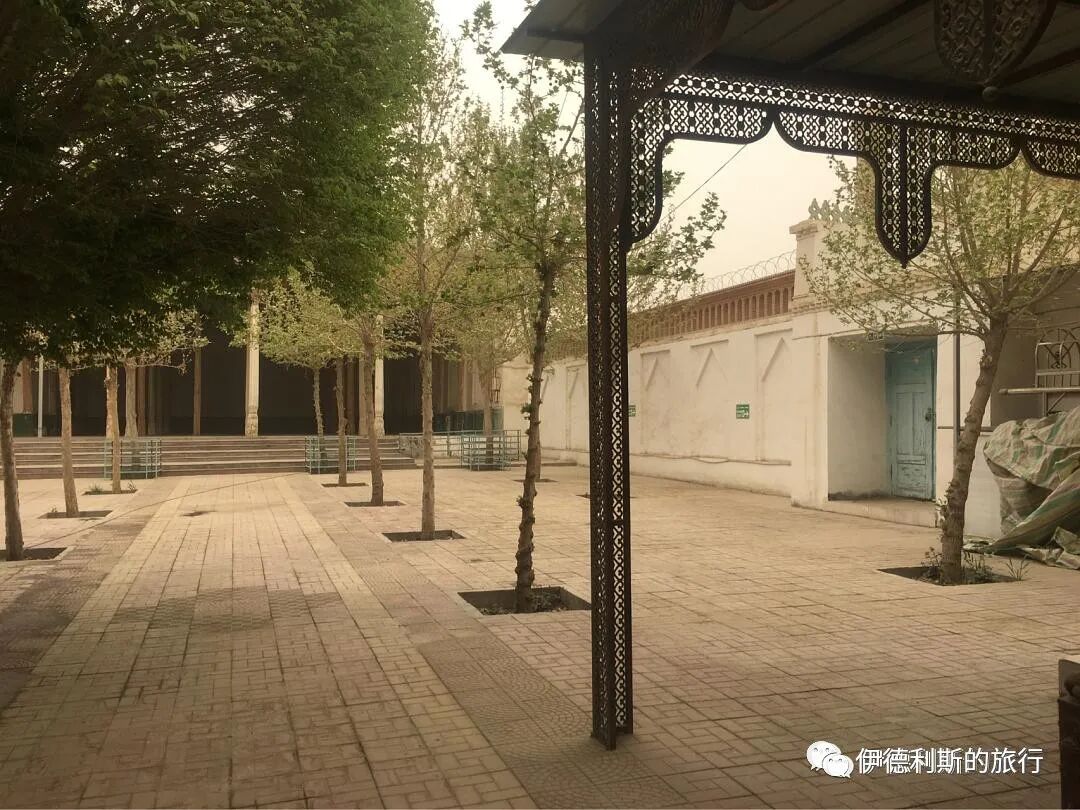
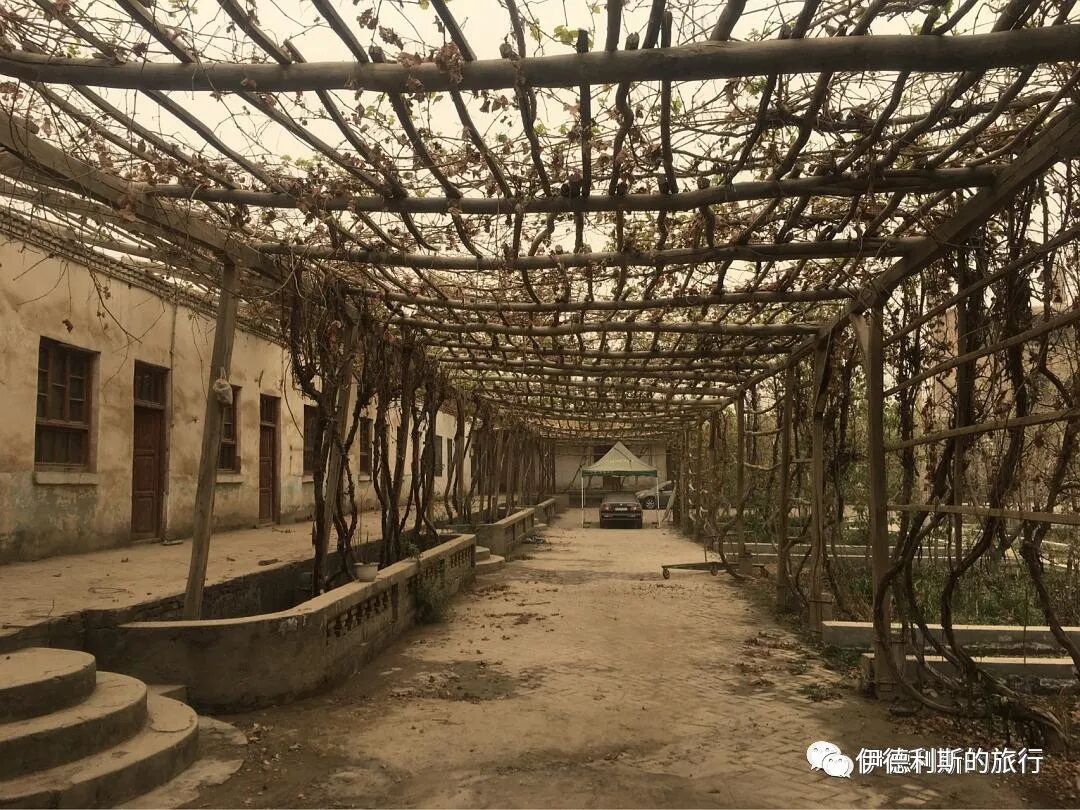
After settling down in the oases of southern Xinjiang, many Chagatai Mongols began to complain about city life and missed the nomadic life on the steppes of their homeland, Moghulistan. the small pastures in the southern Xinjiang oases could not support the needs of the Mongol army. In 1522, Sultan Said sent his son, Abdurashid Khan, to lead troops into Moghulistan and conquer the Kyrgyz people living there.
In 1526, the Kazakhs entered Moghulistan and joined forces with the Kyrgyz, reaching a total of over 200,000 people. Sultan Said realized his strength was not enough to fight them, so he ordered all the Chagatai Mongols to return to southern Xinjiang. The Chagatai Mongols' five-year attempt to return to their nomadic homeland ultimately ended in failure.
After the failure in the north, Sultan Said turned his attention to attacking the south. In 1529, Sultan Said raided the Badakhshan region, which lay between the Yarkand Khanate and the Mughal Empire. This raid caused conflict between Sultan Said and his cousin, Emperor Babur. Emperor Babur wrote a letter to Sultan Said warning him that if he continued, you will know the rest yourself.
In 1532, Sultan Said personally led an army south to prepare for an expedition to Lhasa. While crossing the Karakoram Mountains, Sultan Said suffered from severe altitude sickness and lost his strength. In 1533, he decided to return to Yarkand to recover, but he died from altitude sickness while crossing the Karakoram Mountains again.
After Sultan Said died in 1533, his son, Abdurashid Khan (reigned 1533–1560), succeeded him. Abdurashid Khan built a mausoleum for his father at the west gate of Yarkand city. Later, this also became the royal mausoleum of the Yarkand Khanate.
The current mausoleum of Sultan Said was rebuilt in 1997.
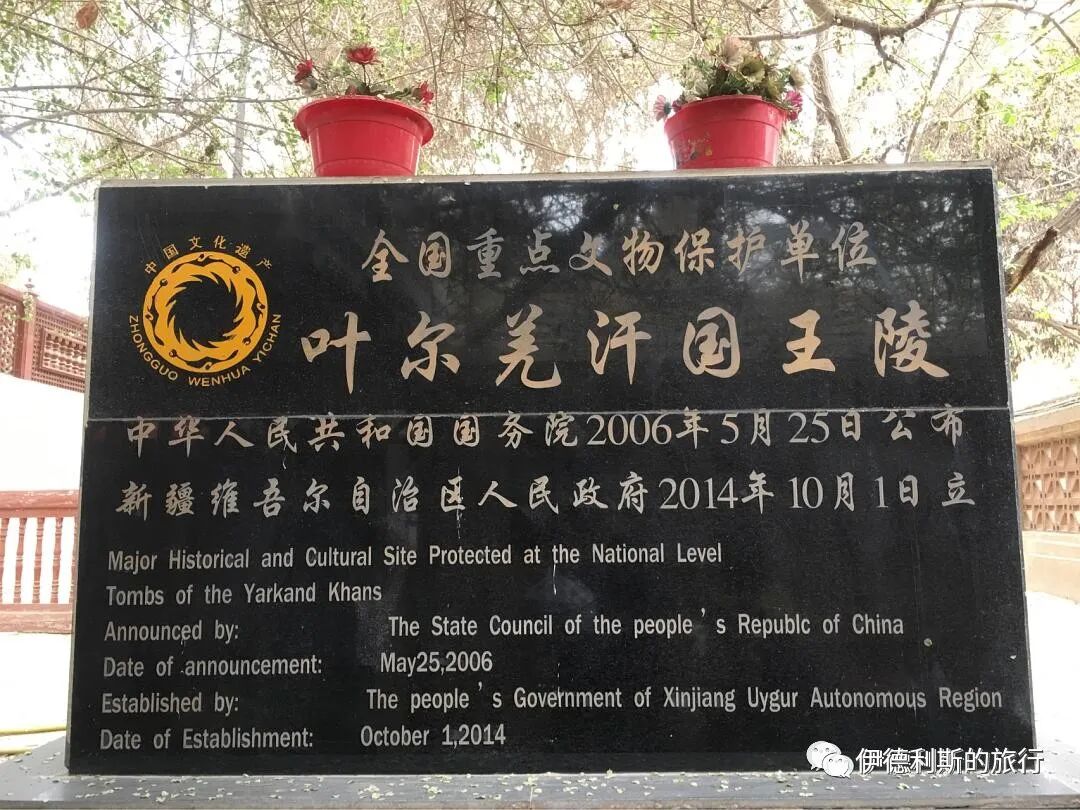
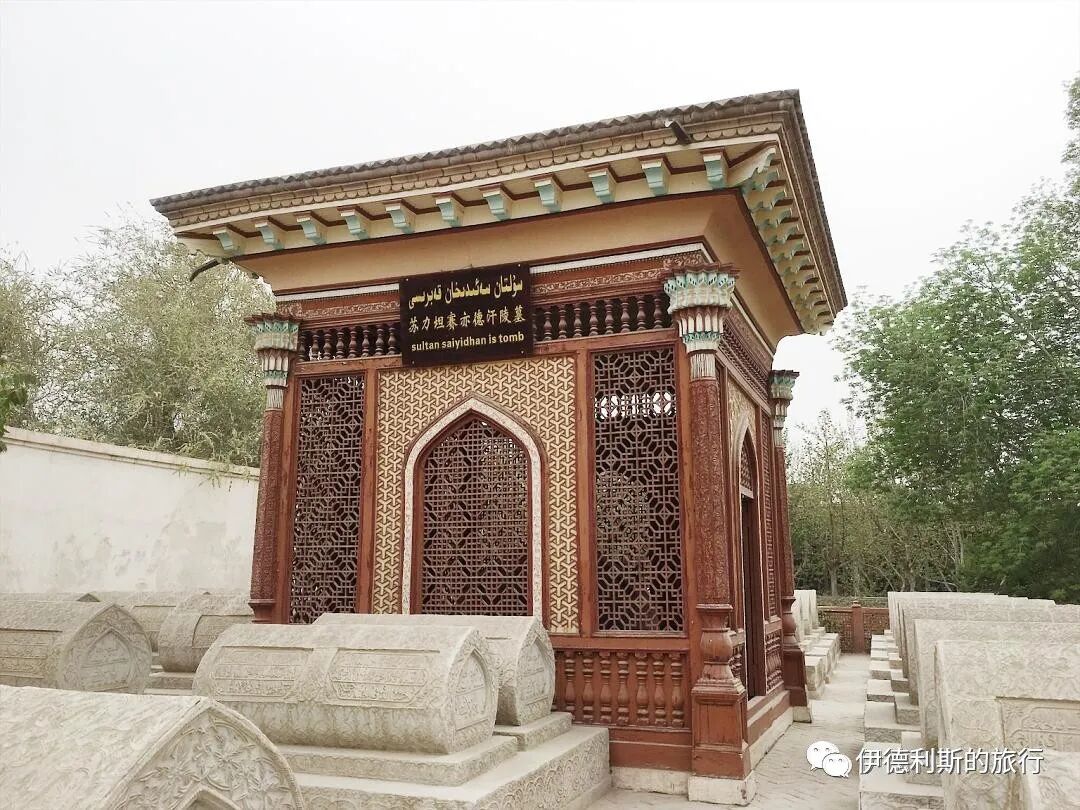
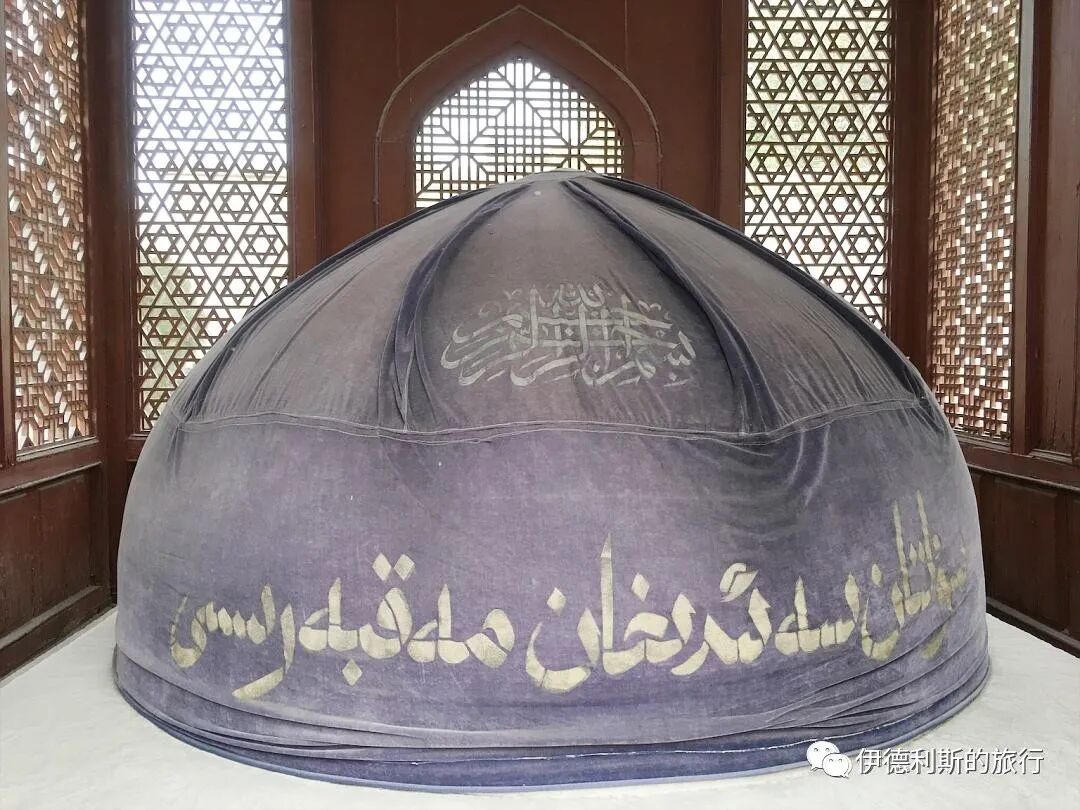
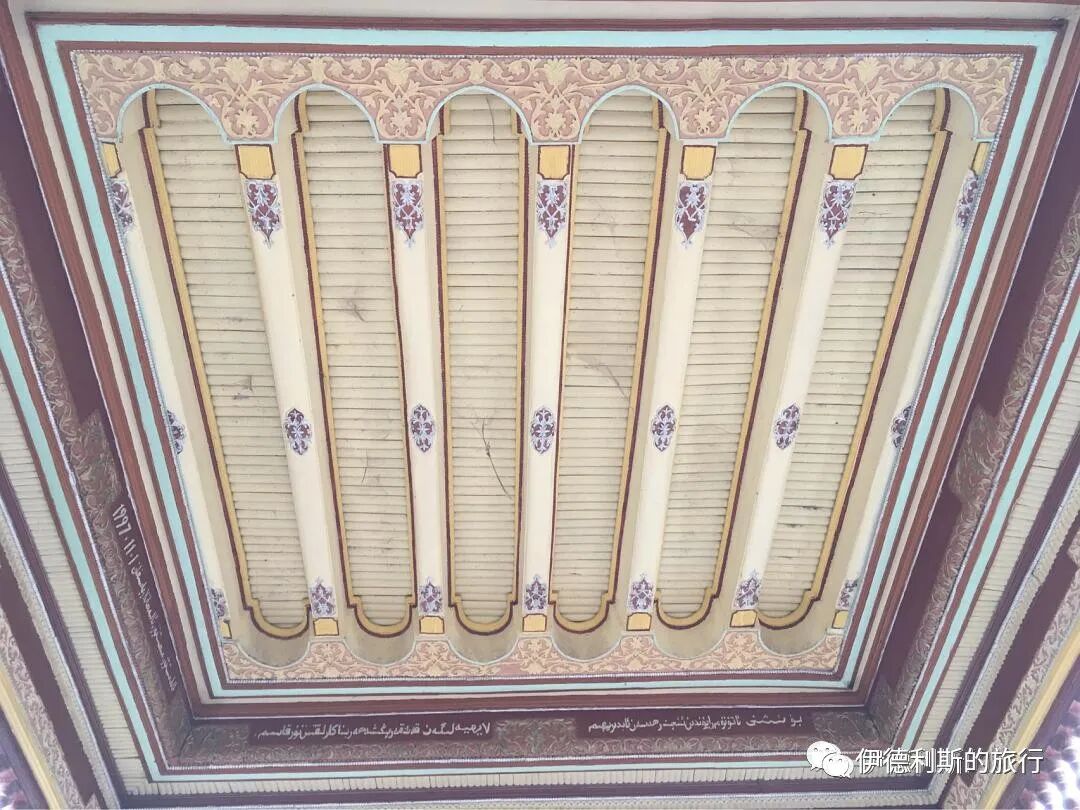
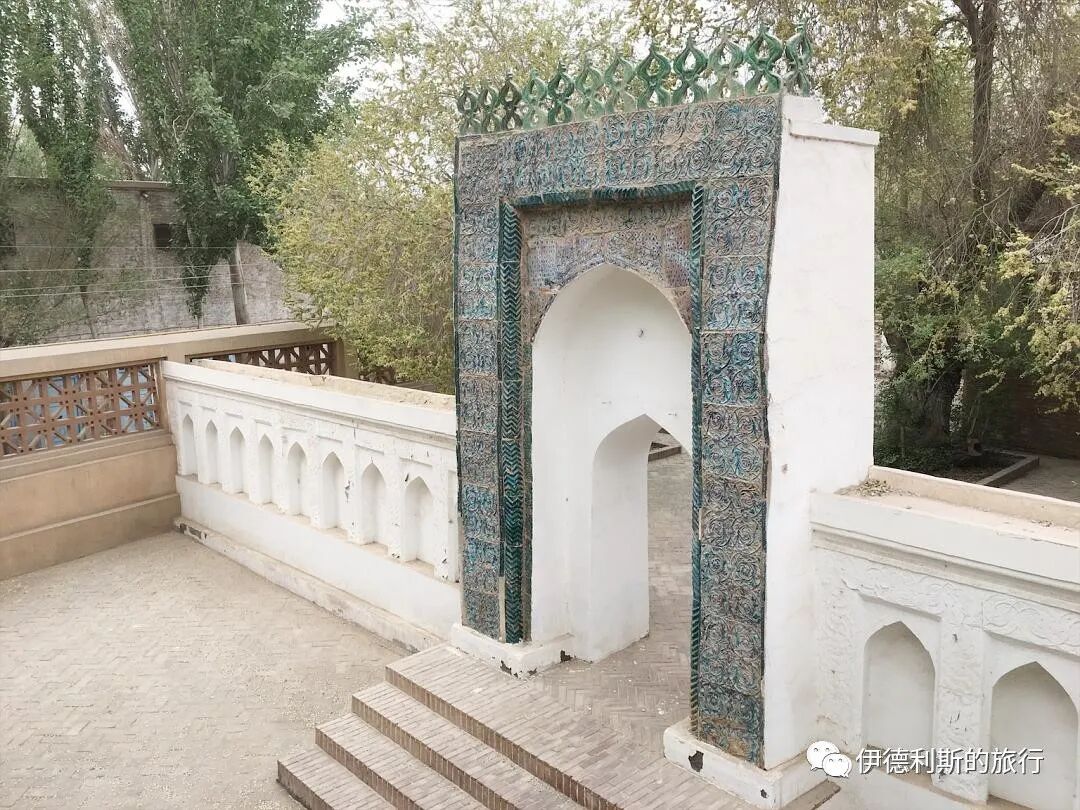 Collapse Read »
Summary: Islamic World in 1550: Mongol Empire Legacy and Muslim History is presented here as a firsthand travel account in clear English, beginning with this scene: In our last article, "A Journey Through the Islamic World in 1550 (Part 1)," we crossed the African continent, traveled from Egypt into the Ottoman Empire, and visited Tabriz in Iran. The account keeps its focus on Mongol Empire, Islamic World, Muslim History while preserving the names, places, food, and historical details from the Chinese source.
In our last article, "A Journey Through the Islamic World in 1550 (Part 1)," we crossed the African continent, traveled from Egypt into the Ottoman Empire, and visited Tabriz in Iran. This time, we will visit 12 countries ruled by the descendants of Genghis Khan, moving from Eastern Europe into North Asia and Central Asia, and finally into South Asia.
In the early 13th century, as the Mongol Empire expanded, Genghis Khan began dividing his lands among his sons. Orda and Batu, the sons of Genghis Khan's eldest son Jochi, received lands in southern Russia and Kazakhstan, which gradually formed the Golden Horde. Hulagu Khan, the son of Genghis Khan's fourth son Tolui, received lands in Iran, Turkmenistan, Afghanistan, and parts of West Asia, which gradually formed the Ilkhanate. After the Yuan Dynasty was established in 1271, the original families of Ogedei and Chagatai, led by Kaidu, opposed Kublai Khan. This led to the formation of the Ogedei Khanate and the Chagatai Khanate, completing the four great Mongol khanates.
After the 14th century, the territory of the Ogedei Khanate was first divided between the Chagatai Khanate and the Yuan Dynasty, and later the Ilkhanate and the Chagatai Khanate also began to split apart. The Golden Horde was the last to decline, splitting into several khanates in the early 15th century.
In 1550, there were 12 countries and regimes established by descendants of Genghis Khan, ruling a vast area from Russia, Kazakhstan, Uzbekistan, and China's Xinjiang to Afghanistan, Pakistan, and India. They were:
1. The Crimean Khanate ruled the Crimean Peninsula.
2. The Astrakhan Khanate ruled the Volga Delta.
3. The Nogai Horde ruled the region between the Volga and Ural rivers.
4. The Qasim Khanate ruled Kasimov in the modern-day Ryazan Oblast of Russia.
5. The Kazan Khanate ruled the middle Volga region.
6. The Siberian Khanate ruled the area around the Irtysh River.
7. The Kazakh Khanate ruled the Kazakh Steppe.
8. The Khanate of Khiva ruled the Khwarezm region.
9. The Khanate of Bukhara ruled the Transoxiana region of Central Asia.
10. The Yarkent Khanate ruled the southern Xinjiang region.
11. Haidar ruled the Kashmir region.
12. The Arghun dynasty ruled southern Afghanistan and the Sindh region of Pakistan.
Additionally, the Mughal Empire was briefly overthrown at this time, and its second emperor, Humayun, was in exile in Persia.
1. The Crimean Khanate in Ukraine (1441–1783).
We start this journey on the Crimean Peninsula on the northern shore of the Black Sea.
The Khan of the Crimean Khanate was a descendant of Tuka-Timur, the thirteenth son of Jochi, who was Genghis Khan's eldest son. In the 1260s, the Golden Horde gave the Crimean Peninsula to the ancestor of the Crimean Khans, Uran Timur, to rule. The khanate was officially established in 1441.
Around 1500, the Crimean Khan Mengli I Giray built the capital of Salachik. In 1532, Sahib I Giray, the son of Mengli I Giray, established a new capital called Bakhchisarai in a valley two kilometers downstream from Salachik. For the next 250 years, generations of Crimean Khans built palaces and various mosque buildings here.
In 1550, the Khan ruling the Crimean Khanate was Sahib I Giray. He ascended the throne with the help of the Ottoman Empire. Later, he joined forces with the Ottoman Sultan Suleiman the Magnificent to attack the Moldavians, and in 1541, he raided Moscow and brought back spoils of war.
The location of Bakhchisarai, the capital of the Crimean Khanate.
The tomb of Haji I Giray (Dürbe Hacı I Giray) was built in 1501 by Mengli I Giray for his father, the founding Khan of Crimea. It is an octagonal tomb with a lead dome.
Archaeological excavations from 2006 to 2007 examined 18 graves inside the mausoleum, including 13 adults and 5 children. They were wrapped in silk and satin, with some resting on pillows stuffed with fabric scraps and fruit seeds. The mausoleum holds 8 stone sarcophagi covered in velvet, silk, and silver-threaded fabric. These likely include 4 Crimean Khans: Hacı I Giray himself, Meñli I Giray, Nur Devlet—who fought Meñli I Giray for the throne for years before losing—and Sahib I Giray, the son of Meñli I Giray and builder of Bakhchysarai.
After research finished in 2009, these individuals were reburied with Muslim rites.
The Chain Madrasa (Zıncırlı Medrese) was built in 1500 by order of the Crimean Khan Meñli I Giray. The name of the madrasa comes from the Turkic word "Zyngyr," which means "chain." A chain hangs above the main gate of the madrasa, forcing everyone who enters to bow their head. The madrasa is rectangular with a central courtyard, an entrance on one side, and 11 rooms on the other three sides. At the time, the madrasa taught Turkish and Arabic grammar, calligraphy, arithmetic, ethics, logic, proof theory, Islamic law (sharia), theology, and hadith studies. The full course of study took ten years.
In 1909, influenced by the Crimean Tatar Enlightenment movement, Gasprinski built a new two-story madrasa next to the old one. The madrasa closed in 1917 and became the Meñli Giray Research Institute. The institute was abolished in 1923. Later, it served as a teacher's college, a medical school, a sanatorium for German soldiers, and a post-war psychiatric clinic. Today, it is managed by the Bakhchysarai History, Culture, and Archaeology Museum.
The Iron Gate (Demir Qapı) is the oldest structure in the Khan's Palace. It was built between 1503 and 1504 for the Crimean Khan by the architect Aleviz Novy, who had been invited by Ivan the Great to build churches in Moscow. The Iron Gate was likely first built at the Crimean Khan's previous residence, Devlet-Saray, and moved to the main palace building after the Bakhchysarai Khan's Palace was completed in 1532. "Demir Qapı" means "iron gate" in Crimean Tatar. The doorway is made of limestone and features Lombard-Venetian Renaissance decorative styles.
The Great Khan Mosque (Büyük Han Cami) in the Bakhchysarai Khan's Palace was built in 1532 and is one of the earliest structures in the palace. The original mosque had multiple domes, similar to the Seljuk-style mosques popular in the Ottoman Empire during the 15th century. The mosque was destroyed by fire in 1736. It was later restored by Khan Selamet II Giray (who reigned from 1740 to 1743) and converted to a tiled roof.
During the Soviet era, the mosque was closed and turned into an exhibition hall for the archaeological museum. After Russia occupied Crimea in 2014, the mosque underwent repairs, some of which caused damage to the building.
The SaryGuzel Bathhouse was built in 1532 by order of the Crimean Khan Sahib I Giray. Like the Great Khan Mosque, it is one of the earliest buildings in the Bakhchysarai Khan's Palace. In Crimean Tatar, "Sarı" means "yellow or fair-skinned," and "Güzel" means "beautiful." The SaryGuzel Bathhouse is a typical Turkish bath. A furnace in the basement heated the floor with rising hot air, and cold and hot water were supplied through lead pipes. The bathhouse is divided into men's and women's sections, each with its own dome. The domes have star-shaped cutouts for ventilation and light, and there is an indoor courtyard with a fountain at the exit.
The SaryGuzel Bathhouse operated until 1924, when it was closed because it was considered unsafe. It has since been repaired and is now open for exhibitions.
The Khan's cemetery holds the grave of the Crimean Khan Devlet I Giray (reigned 1551–1577). He was appointed Kalga (the second-in-command after the Khan) in 1530. Later, due to court struggles, he went to Istanbul and gradually gained the trust of the Ottoman Sultan Suleiman the Magnificent. In 1551, with the help of Suleiman the Magnificent, he became the Crimean Khan.
2. The Astrakhan Khanate of Russia (1466–1556)
We continue east to the mouth of the Volga River.
The Astrakhan Khanate was located in the Volga Delta. Its founder, Mahmud bin Küchük, was a prince of the Golden Horde. The Astrakhan Khanate was mainly inhabited by Astrakhan Tatars and Nogais. The Khanate's caravans traveled between Moscow, Kazan, Crimea, Central Asia, and the Transcaucasus region. In 1532, the Astrakhan Khanate began to have contact with Russia. After Russia conquered Kazan in 1552, the Astrakhan Khanate could not escape the same fate.
In 1550, the capital of the Astrakhan Khanate was Hajji Tarkhan, located on the right bank of the Volga River, 12 kilometers north of the modern city of Astrakhan. The city of Hajji Tarkhan was built by the Golden Horde in the late 13th century, appeared in the Travels of Ibn Battuta in the 14th century, was destroyed by Timur's army in 1395, and was rebuilt by the Astrakhan Khanate in the 15th century. The city was occupied by the Crimean Khanate in 1547 and was finally burned down by Ivan the Terrible in 1556.
There are currently about 60,000 Astrakhan Tatars in Russia. Most live in the Astrakhan Oblast, with half living in the city of Astrakhan, where they have their own community and several mosques.
The location of the city of Hajji Tarkhan.
The White Mosque in Astrakhan, photographed by Polinadelia in 2014.
3. The Nogai Horde in Russia and Kazakhstan (1440–1634)
Continuing east from the Volga River, you reach the grasslands of the Nogai tribes.
Nogai was the great-grandson of Jochi, the eldest son of Genghis Khan, and an important leader of the Golden Horde who ruled many Turkic-speaking tribes in the 13th century. A century later, the Golden Horde general Edigu ruled a large area from the Volga to the Ural River, and the tribes under his rule were also called the Nogai Horde.
We can find history about the Nogai Horde in the early 16th century in Russian records. In 1521, the Nogai were driven west by the Kazakhs and crossed the Volga River to attack Astrakhan. In 1522, the Kazakhs captured the capital of the Nogai Horde. In 1523, the Nogai Horde defeated the army that had briefly occupied Astrakhan.
In 1550, the Khan of the Kazan Khanate was Yosuf Khan (1549–1555), who had helped Moscow against the Kazan Khanate in 1549.
Saray-Jük was the capital of the Nogai Horde, located on the border of Europe and Asia in western Kazakhstan. This city sat on a trade route between Europe and China and was an important commercial hub during the Golden Horde period. After being destroyed by Timur in 1395, it was rebuilt in the 1430s and 1440s.
The location of Saray-Jük.
The ruins of Saray-Jük, photographed by Yakov Fedorov in 2020.
4. The Qasim Khanate in Russia (1452–1681)
We head north to the modern-day Ryazan Oblast in Russia.
The Qasim Khanate was located in Russia's Ryazan Oblast. Its founder, Qasim Khan, was the son of Ulugh Muhammad, the founder of the Kazan Khanate. The Qasim Khanate served as a buffer state between the Grand Duchy of Moscow and the Kazan Khanate and was under heavy Russian control.
In 1550, the Khan of the Qasim Khanate was Shahghali, who was installed as the Khan of the Kazan Khanate three times as a Russian vassal. In 1546, Shahghali was overthrown by the people of Kazan and fled back to the Qasim Khanate. Between 1547 and 1551, he participated in several Russian attacks on the Kazan Khanate and took part in the final Russian conquest of Kazan in 1552.
The capital of the Qasim Khanate, Qasimov, is located on the left bank of the Oka River in Russia's Ryazan Oblast, where one thousand Tatar-speaking Qasim Tatars still live today. The Khan Mosque in Qasimov was built by Shahghali in the mid-16th century. It was ordered to be demolished by Peter the Great in 1702, but the minaret (bangke ta) was preserved. This minaret is very similar to the Light Tower (Guangta) of the Huaisheng Mosque in Guangzhou.
The Khan Mosque in Qasimov, photographed by Alexander Novikov in 2014.
The location of Qasimov.
5. The Kazan Khanate in Russia (1438–1552)
We headed east to the city of Kazan on the banks of the Volga River.
The Kazan Khanate was founded by Ulugh Muhammad, a descendant of Genghis Khan's eldest son Jochi, who had ruled the Golden Horde twice. He lost control of the Golden Horde in 1436, then led his army to the Volga River and officially established the Kazan Khanate after capturing Kazan in 1438.
In 1521, the Kazan Khanate formed an alliance with the Astrakhan, Crimean, and Nogai Khanates to resist Moscow together. This caused dissatisfaction among pro-Russian factions within the Kazan Khanate, leading the state into internal conflict.
In 1550, the Khan of the Kazan Khanate was the four-year-old Ötemish Giray, though the actual rulers were his mother, Söyembikä, and the prime minister (uğlan) Qoşçaq. Seeing the instability in the Kazan Khanate, Ivan the Terrible of Russia sent a large army to besiege Kazan in February 1550, but the thawing of the Volga River forced the Russians to retreat and only attack the outskirts of the city. Throughout that year, Söyembikä and Qoşçaq fought against the pro-Russian faction, and relations with Russia continued to worsen.
The Kazan Khanate built many homes and public buildings in Kazan, including the Khan's palace, courtyards, mosques, and tombs, with tall minarets defining the city's skyline. In 1552, Ivan the Terrible invaded Kazan, destroyed the Kazan Khanate, and drove all Tatars out of the city, allowing only Russians to settle there. Between 1556 and 1562, Ivan the Terrible ordered the construction of the Kazan Kremlin on the site of the old Kazan Khanate fortress. The mosques, the Kazan Khan's palace, and the tombs were initially used as armories and ammunition depots, but were eventually completely demolished in the 18th century.
In 1977, hydraulic engineers accidentally dug up a grave while laying rainwater pipes at the Kazan Kremlin and immediately contacted the archaeology department. Archaeological excavations lasted for 10 years, eventually uncovering five graves, two of which were confirmed to be those of the actual founders of the Kazan Khanate: Mäxmüd Khan (died 1463 or 1466) and his grandson, Möxämmät Ämin (died 1518). The tomb was originally made of white stone and finally collapsed in the 17th century.
For further research, the remains of the two Kazan Khans, Mäxmüd and Möxämmät Ämin, were kept at the Institute of Archaeology of the Tatarstan Academy of Sciences for 40 years. In May 2017, after continuous efforts by the Tatar Muslims of Kazan, the two Kazan Khans were finally reburied not far from their original graves.
Between 2004 and 2005, the Institute of Archaeology of the Tatarstan Academy of Sciences re-excavated the Kazan Khan tombs and discovered the graves of four more Khans: Xalil (died 1467), İbrahim (died 1478), Safa Giray (died 1549), and Canghali (died 1535). Today, these four Kazan Khan graves are protected under a glass roof. Safa Giray Khan came from the Giray family of the Crimean Khanate and served as the Khan of Kazan three times: from 1524–1531, 1535–1546, and 1546–1549. Safa Giray was an anti-Russian Khan. His first reign ended due to Moscow's attack on Kazan, and he regained the throne four years later after Kazan nobles overthrew the pro-Russian Khan. Eleven years later, due to internal unrest in Kazan, he was overthrown again by a pro-Russian Khan. Safa Giray fled to his father-in-law's Nogai tribe, and a few months later, he returned to Kazan with a Nogai army to become the Khan for the third time. Canghali Khan was originally the Khan of the Qasim Khanate, a vassal state of the Grand Duchy of Moscow. In 1532, Grand Prince Vasily III of Moscow defeated the Kazan Khan Safa Giray and installed the 16-year-old Canghali as the pro-Russian Khan of Kazan. He died in 1535 during a coup by Kazan nobles.
There is a performance about the Siege of Kazan at the entrance of the Kul Sharif Mosque inside the Kazan Kremlin. In 1552, when Ivan the Terrible besieged Kazan, the last imam of the Kazan Khanate, Seid Kul Sharif, led the people in a final resistance and died in the city. Today, Seid Kul Sharif is a national hero for the Kazan Tatars, and the new Kul Sharif Mosque built in 2005 is named after him.
The National Museum of the Republic of Tatarstan houses a letter written in 1523 by the Kazan Khan Sahib I Giray (reigned 1521–1524). A replica of this letter is also inside the Kazan Kremlin. In 1521, to resist the control of the Grand Duchy of Moscow, the Kazan Khanate overthrew the pro-Moscow Khan Shahghali and welcomed Sahib I Giray from Crimea to Kazan to become the new Khan.
6. The Siberian Khanate of Russia (1468-1598)
We continue heading east to the meeting point of the Irtysh River and the Siberian River.
The Siberian (Sibir) Khanate was north of the Kazakh Khanate. It was the northernmost Muslim state in history, reaching all the way to the coast of the Arctic Ocean. In the 16th century, the capital of the Siberian Khanate was Qashliq, located on the right bank of the Irtysh River. Qashliq, also called the City of Siberia, was very prosperous in the early 16th century and had close trade ties with the Kazan Khanate. Later, it was permanently destroyed by the Cossacks, and it is hard to find any traces of it now.
The location of Qashliq city
7. The Kazakh Khanate of Kazakhstan (1465-1847)
Moving south from Siberia, we enter the vast Kazakh steppe.
The founders of the Kazakh Khanate, Janybek Khan and Kerey Khan, were both descendants of Tuqa Temur, the thirteenth son of Jochi, who was the eldest son of Genghis Khan.
In 1550, the Khanate was ruled by Haqnazar Khan (1537-1580). At that time, the Kazakh Khanate had rivals on all sides. He first defeated the Nogai Khanate, then the Khanate of Khiva and the Oirats, and then the Siberian Khanate and the Yarkent Khanate. This made the Kazakh Khanate stronger than ever, earning him the title of King of Turan (Shah-i-Turan).
The capital of the Kazakh Khanate at that time was Sighnaq, located in what is now the Kyzylorda Region of Kazakhstan. This was originally the capital of the Blue Horde and served as an important trade point for steppe tribes to exchange goods with the southern farming regions.
Sighnaq photographed by Azamat Nurlybekov in 2022
The location of Sighnaq
8. The Khanate of Khiva in Turkmenistan (1511–1920)
Continuing southwest, we go deep into the heart of Central Asia.
The Khanate of Khiva was located in the Khwarezm region south of the Aral Sea. It called itself Khwarezm, and its rulers were descendants of Shiban, the fifth son of Jochi, who was the eldest son of Genghis Khan. In the 16th century, the capital of the Khanate of Khiva was Konye-Urgench, located on the border of northern Turkmenistan and Uzbekistan. After the Khanate moved its capital to Khiva in the 17th century, this place was gradually abandoned. It was named a UNESCO World Heritage site in 2005.
Before the Mongol conquest of Khwarezm, Konye-Urgench was one of the wealthiest cities in Central Asia. Most of the current ruins belong to that period, and very few remains from the Khanate of Khiva period have been preserved.
The location of Konye-Urgench
9. The Khanate of Bukhara in Uzbekistan (1500–1785)
Let us continue east into the ancient city of Bukhara.
In the early 16th century, Muhammad Shaybani, a descendant of Shiban (the fifth son of Jochi, Genghis Khan's eldest son), led Uzbek tribes living in the northern Central Asian steppes to overthrow the Timurid dynasty's rule in Transoxiana. He established the Shaybanid Dynasty (1506-1598), opening a new chapter in the history of the Transoxiana region of Central Asia.
The capital of the Shaybanid Dynasty was initially in Samarkand, but it moved to Bukhara after 1533, which is why later generations called it the Khanate of Bukhara. Bukhara served as the capital of the Khanate of Bukhara for 252 years, from 1533 to 1785, and many buildings constructed during that time remain today.
The Mir-i-Arab Madrasa was built in 1535 by order of Ubaidullah, the Khan of the Shaybanid Dynasty (reigned 1533-1539). It was named after the Khan's Sufi mentor, Mir-i-Arab (also known as Sheikh Abdullah Yamani).
To compete for territory, Khan Ubaidullah fought many wars against the Persian Safavid dynasty, the most famous being the siege of the ancient Afghan city of Herat. During many raids on Persia, the Shaybanid Dynasty captured many prisoners. People say the Khan used the money from selling three thousand Persian captives to build the Mir-i-Arab Madrasa.
The Mir-i-Arab Madrasa was built opposite the famous Kalyan mosque in Bukhara, forming a facing structure known as a "kosh."
The Mir-i-Arab Madrasa closed in the 1920s but reopened in 1947. It became the only open madrasa in Bukhara at the time, and almost all the imams of that era were trained at this school.
The Khoja Zaynuddin mosque was built in the first half of the 16th century, located next to an ancient pond (Hauz) in Bukhara. This architectural style is known as a mosque-khanaka (Mosque-Khanaka). It serves as both a mosque and a Sufi center, where people can perform namaz and hold religious gatherings (ermeli).
The Bahouddin Naqshbandi Complex is an important Sufi holy site in Central Asia, often called the 'Little Mecca' of the region. It holds the tomb of Hazrat Muhammad Bahauddin Shah Naqshband, the founder of the famous Naqshbandia Sufi order.
During the Shaybanid dynasty, the Naqshbandia order eventually outperformed other Sufi groups to become the dominant order in the khanate. Unlike other Sufi orders that favored seclusion and leaving the world behind, the Naqshbandia order followed the principles set by its founder: 'solitude in the crowd, travel in the world, caution in action, and enjoyment of the moment.'
In 1544, the Shaybanid Khan Abdulaziz (who reigned from 1539 to 1550) built a Dakhma platform with marble railings at the shrine, along with a Sufi lodge (Khanaqa) nearby. Later, a large cemetery for Bukhara's rulers appeared near the shrine, as every ruler felt honored to be buried close to it.
During the Shaybanid period of the Bukhara Khanate, Tashkent's population and size gradually recovered, making it a commercial and cultural hub along the Silk Road. Most of the historical buildings still standing in Tashkent today were built during this time. Abu Bakr Mohammed Kaffal Shashi was a famous imam and scholar in Tashkent during the Samanid dynasty. After he passed away in 976, he was buried in a garden on the outskirts of Tashkent. The current Kaffal Shashi mausoleum was rebuilt in 1541 during the Shaybanid dynasty. It features the design of a Sufi lodge (Khanaqah), including a tall archway (Iwan) and a dome. Inside, besides Kaffal Shashi, his students are also buried there, including his three main disciples. The mausoleum was once covered in beautiful tiles, but only parts remain today, and they have been restored. Additionally, the window lattices on the mausoleum gate are already 500 years old. According to Tashkent legends, applying dust from this mausoleum to one's face can help a woman become pregnant, which attracts many women who are struggling to conceive.
10. The Yarkent Khanate in China (1514-1680)
We crossed the Tianshan Mountains and arrived at the city of Shache in southern Xinjiang.
The Yarkent (Yarkent) Khanate was a state established in 1514 by Sultan Said Khan, a descendant of the Eastern Chagatai royal family. With Yarkent city (Shache) as its capital, it ruled southern Xinjiang and surrounding areas for over a hundred years until it was annexed by the Dzungar Khanate in 1680.
During the Yarkent Khanate's rule over southern Xinjiang, the Chagatai Mongols eventually shifted from nomadic life to settled living and merged into the Uyghur people. The Uyghurs also gradually developed into a modern ethnic group during this period, and the Twelve Muqam was finalized at this time as well.
'Yarkent Khanate' is actually a name used by modern scholars. In earlier local documents, the Persian word 'Moghuliye' was used, which means 'Mongol State'. Around the same time, Sultan Said Khan's cousin Babur established a state in northern India and also called it 'Moghul'. To distinguish them, Chinese usually translates them as 'Mengwu'er' and 'Mowo'er' respectively.
The founder of the Yarkent Khanate, Said Khan, was the third son of Ahmad Alaq, the ruler of Uyghurstan (modern-day Turpan area) in the eastern part of the Eastern Chagatai Khanate. In 1514, after stabilizing the Transoxiana region, the Uzbek army prepared to wipe out the Chagatai Mongols. After careful thought and discussion, Said Khan decided he could not withstand the Uzbek army's attack, so he left the Fergana Valley, crossed the Tianshan Mountains, and headed toward Yarkent.
In the spring of 1514, Said Khan led his army across the Tianshan Mountains and reached Kashgar via the Torugart Pass. At that time, southern Xinjiang was ruled by Abu Bakr, the leader of the Mongol Dughlat tribe. He was recruiting soldiers in Yarkent city. Said Khan fought a fierce battle outside the city against the Kashgar garrison and defeated the enemy. The enemy closed the gates and refused to come out, so Said Khan could not take the city and turned to attack the city of Yengisar. Said Khan besieged Yengisar for two months and finally captured it after six days of intense fighting.
Hearing that Yengisar had fallen, the Kashgar garrison abandoned the city and fled, so Said Khan marched directly toward Yarkent. When Abu Bakr heard this, he abandoned the city and fled to Hotan, and soon after, Said Khan entered Yarkent city. On September 3, 1514, Said Khan officially ascended the throne and established the Yarkent Khanate.
In 1516, Sultan Said reconciled with his older brother, Mansur Khan, who ruled the eastern part of the Eastern Chagatai Khanate. He agreed to mention Mansur's name during the khutbah (sermon) and to mint coins bearing Mansur's name. Southern Xinjiang welcomed long-awaited peace and order that year. The Tarikh-i-Rashidi describes it this way:
The reconciliation between these two brothers brought safety and prosperity to the residents. Anyone could travel alone between Hami in China and the Fergana region without needing food supplies or fearing robbery.
The location of Yarkand city.
Today, there is a site in the old city of Yarkand called Ordakul, which means royal palace pond. This was likely the location of the Yarkand Khanate's royal palace. The Tarikh-i-Rashidi describes Yarkand city during the early Yarkand Khanate period like this:
They diverted rivers into the city and built gardens. The main roads were lined with poplar trees. People walking around the city could spend half their journey in the shade of these trees, and most of the tree-lined paths had water channels on both sides.
Ordakul Mosque
To the west of Ordakul is the Jami Mosque. Jami is also translated as Jumu'ah, which refers to the weekly Friday congregational prayer. The Jami Mosque was reportedly founded by Sultan Said and later expanded during the reign of Abdullah Khan (reigned 1638–1669).
After settling down in the oases of southern Xinjiang, many Chagatai Mongols began to complain about city life and missed the nomadic life on the steppes of their homeland, Moghulistan. the small pastures in the southern Xinjiang oases could not support the needs of the Mongol army. In 1522, Sultan Said sent his son, Abdurashid Khan, to lead troops into Moghulistan and conquer the Kyrgyz people living there.
In 1526, the Kazakhs entered Moghulistan and joined forces with the Kyrgyz, reaching a total of over 200,000 people. Sultan Said realized his strength was not enough to fight them, so he ordered all the Chagatai Mongols to return to southern Xinjiang. The Chagatai Mongols' five-year attempt to return to their nomadic homeland ultimately ended in failure.
After the failure in the north, Sultan Said turned his attention to attacking the south. In 1529, Sultan Said raided the Badakhshan region, which lay between the Yarkand Khanate and the Mughal Empire. This raid caused conflict between Sultan Said and his cousin, Emperor Babur. Emperor Babur wrote a letter to Sultan Said warning him that if he continued, you will know the rest yourself.
In 1532, Sultan Said personally led an army south to prepare for an expedition to Lhasa. While crossing the Karakoram Mountains, Sultan Said suffered from severe altitude sickness and lost his strength. In 1533, he decided to return to Yarkand to recover, but he died from altitude sickness while crossing the Karakoram Mountains again.
After Sultan Said died in 1533, his son, Abdurashid Khan (reigned 1533–1560), succeeded him. Abdurashid Khan built a mausoleum for his father at the west gate of Yarkand city. Later, this also became the royal mausoleum of the Yarkand Khanate.
The current mausoleum of Sultan Said was rebuilt in 1997.
Collapse Read »
Islamic World in 1550: Mongol Empire Legacy and Muslim History (Part 1)
Reposted from the web
Summary: Islamic World in 1550: Mongol Empire Legacy and Muslim History is presented here as a firsthand travel account in clear English, beginning with this scene: In our last article, "A Journey Through the Islamic World in 1550 (Part 1)," we crossed the African continent, traveled from Egypt into the Ottoman Empire, and visited Tabriz in Iran. The account keeps its focus on Mongol Empire, Islamic World, Muslim History while preserving the names, places, food, and historical details from the Chinese source.
In our last article, "A Journey Through the Islamic World in 1550 (Part 1)," we crossed the African continent, traveled from Egypt into the Ottoman Empire, and visited Tabriz in Iran. This time, we will visit 12 countries ruled by the descendants of Genghis Khan, moving from Eastern Europe into North Asia and Central Asia, and finally into South Asia.
In the early 13th century, as the Mongol Empire expanded, Genghis Khan began dividing his lands among his sons. Orda and Batu, the sons of Genghis Khan's eldest son Jochi, received lands in southern Russia and Kazakhstan, which gradually formed the Golden Horde. Hulagu Khan, the son of Genghis Khan's fourth son Tolui, received lands in Iran, Turkmenistan, Afghanistan, and parts of West Asia, which gradually formed the Ilkhanate. After the Yuan Dynasty was established in 1271, the original families of Ogedei and Chagatai, led by Kaidu, opposed Kublai Khan. This led to the formation of the Ogedei Khanate and the Chagatai Khanate, completing the four great Mongol khanates.
After the 14th century, the territory of the Ogedei Khanate was first divided between the Chagatai Khanate and the Yuan Dynasty, and later the Ilkhanate and the Chagatai Khanate also began to split apart. The Golden Horde was the last to decline, splitting into several khanates in the early 15th century.
In 1550, there were 12 countries and regimes established by descendants of Genghis Khan, ruling a vast area from Russia, Kazakhstan, Uzbekistan, and China's Xinjiang to Afghanistan, Pakistan, and India. They were:
1. The Crimean Khanate ruled the Crimean Peninsula.
2. The Astrakhan Khanate ruled the Volga Delta.
3. The Nogai Horde ruled the region between the Volga and Ural rivers.
4. The Qasim Khanate ruled Kasimov in the modern-day Ryazan Oblast of Russia.
5. The Kazan Khanate ruled the middle Volga region.
6. The Siberian Khanate ruled the area around the Irtysh River.
7. The Kazakh Khanate ruled the Kazakh Steppe.
8. The Khanate of Khiva ruled the Khwarezm region.
9. The Khanate of Bukhara ruled the Transoxiana region of Central Asia.
10. The Yarkent Khanate ruled the southern Xinjiang region.
11. Haidar ruled the Kashmir region.
12. The Arghun dynasty ruled southern Afghanistan and the Sindh region of Pakistan.
Additionally, the Mughal Empire was briefly overthrown at this time, and its second emperor, Humayun, was in exile in Persia.
1. The Crimean Khanate in Ukraine (1441–1783).
We start this journey on the Crimean Peninsula on the northern shore of the Black Sea.
The Khan of the Crimean Khanate was a descendant of Tuka-Timur, the thirteenth son of Jochi, who was Genghis Khan's eldest son. In the 1260s, the Golden Horde gave the Crimean Peninsula to the ancestor of the Crimean Khans, Uran Timur, to rule. The khanate was officially established in 1441.
Around 1500, the Crimean Khan Mengli I Giray built the capital of Salachik. In 1532, Sahib I Giray, the son of Mengli I Giray, established a new capital called Bakhchisarai in a valley two kilometers downstream from Salachik. For the next 250 years, generations of Crimean Khans built palaces and various mosque buildings here.
In 1550, the Khan ruling the Crimean Khanate was Sahib I Giray. He ascended the throne with the help of the Ottoman Empire. Later, he joined forces with the Ottoman Sultan Suleiman the Magnificent to attack the Moldavians, and in 1541, he raided Moscow and brought back spoils of war.
The location of Bakhchisarai, the capital of the Crimean Khanate.
The tomb of Haji I Giray (Dürbe Hacı I Giray) was built in 1501 by Mengli I Giray for his father, the founding Khan of Crimea. It is an octagonal tomb with a lead dome.
Archaeological excavations from 2006 to 2007 examined 18 graves inside the mausoleum, including 13 adults and 5 children. They were wrapped in silk and satin, with some resting on pillows stuffed with fabric scraps and fruit seeds. The mausoleum holds 8 stone sarcophagi covered in velvet, silk, and silver-threaded fabric. These likely include 4 Crimean Khans: Hacı I Giray himself, Meñli I Giray, Nur Devlet—who fought Meñli I Giray for the throne for years before losing—and Sahib I Giray, the son of Meñli I Giray and builder of Bakhchysarai.
After research finished in 2009, these individuals were reburied with Muslim rites.
The Chain Madrasa (Zıncırlı Medrese) was built in 1500 by order of the Crimean Khan Meñli I Giray. The name of the madrasa comes from the Turkic word "Zyngyr," which means "chain." A chain hangs above the main gate of the madrasa, forcing everyone who enters to bow their head. The madrasa is rectangular with a central courtyard, an entrance on one side, and 11 rooms on the other three sides. At the time, the madrasa taught Turkish and Arabic grammar, calligraphy, arithmetic, ethics, logic, proof theory, Islamic law (sharia), theology, and hadith studies. The full course of study took ten years.
In 1909, influenced by the Crimean Tatar Enlightenment movement, Gasprinski built a new two-story madrasa next to the old one. The madrasa closed in 1917 and became the Meñli Giray Research Institute. The institute was abolished in 1923. Later, it served as a teacher's college, a medical school, a sanatorium for German soldiers, and a post-war psychiatric clinic. Today, it is managed by the Bakhchysarai History, Culture, and Archaeology Museum.
The Iron Gate (Demir Qapı) is the oldest structure in the Khan's Palace. It was built between 1503 and 1504 for the Crimean Khan by the architect Aleviz Novy, who had been invited by Ivan the Great to build churches in Moscow. The Iron Gate was likely first built at the Crimean Khan's previous residence, Devlet-Saray, and moved to the main palace building after the Bakhchysarai Khan's Palace was completed in 1532. "Demir Qapı" means "iron gate" in Crimean Tatar. The doorway is made of limestone and features Lombard-Venetian Renaissance decorative styles.
The Great Khan Mosque (Büyük Han Cami) in the Bakhchysarai Khan's Palace was built in 1532 and is one of the earliest structures in the palace. The original mosque had multiple domes, similar to the Seljuk-style mosques popular in the Ottoman Empire during the 15th century. The mosque was destroyed by fire in 1736. It was later restored by Khan Selamet II Giray (who reigned from 1740 to 1743) and converted to a tiled roof.
During the Soviet era, the mosque was closed and turned into an exhibition hall for the archaeological museum. After Russia occupied Crimea in 2014, the mosque underwent repairs, some of which caused damage to the building.
The SaryGuzel Bathhouse was built in 1532 by order of the Crimean Khan Sahib I Giray. Like the Great Khan Mosque, it is one of the earliest buildings in the Bakhchysarai Khan's Palace. In Crimean Tatar, "Sarı" means "yellow or fair-skinned," and "Güzel" means "beautiful." The SaryGuzel Bathhouse is a typical Turkish bath. A furnace in the basement heated the floor with rising hot air, and cold and hot water were supplied through lead pipes. The bathhouse is divided into men's and women's sections, each with its own dome. The domes have star-shaped cutouts for ventilation and light, and there is an indoor courtyard with a fountain at the exit.
The SaryGuzel Bathhouse operated until 1924, when it was closed because it was considered unsafe. It has since been repaired and is now open for exhibitions.
The Khan's cemetery holds the grave of the Crimean Khan Devlet I Giray (reigned 1551–1577). He was appointed Kalga (the second-in-command after the Khan) in 1530. Later, due to court struggles, he went to Istanbul and gradually gained the trust of the Ottoman Sultan Suleiman the Magnificent. In 1551, with the help of Suleiman the Magnificent, he became the Crimean Khan.
2. The Astrakhan Khanate of Russia (1466–1556)
We continue east to the mouth of the Volga River.
The Astrakhan Khanate was located in the Volga Delta. Its founder, Mahmud bin Küchük, was a prince of the Golden Horde. The Astrakhan Khanate was mainly inhabited by Astrakhan Tatars and Nogais. The Khanate's caravans traveled between Moscow, Kazan, Crimea, Central Asia, and the Transcaucasus region. In 1532, the Astrakhan Khanate began to have contact with Russia. After Russia conquered Kazan in 1552, the Astrakhan Khanate could not escape the same fate.
In 1550, the capital of the Astrakhan Khanate was Hajji Tarkhan, located on the right bank of the Volga River, 12 kilometers north of the modern city of Astrakhan. The city of Hajji Tarkhan was built by the Golden Horde in the late 13th century, appeared in the Travels of Ibn Battuta in the 14th century, was destroyed by Timur's army in 1395, and was rebuilt by the Astrakhan Khanate in the 15th century. The city was occupied by the Crimean Khanate in 1547 and was finally burned down by Ivan the Terrible in 1556.
There are currently about 60,000 Astrakhan Tatars in Russia. Most live in the Astrakhan Oblast, with half living in the city of Astrakhan, where they have their own community and several mosques.
The location of the city of Hajji Tarkhan.
The White Mosque in Astrakhan, photographed by Polinadelia in 2014.
3. The Nogai Horde in Russia and Kazakhstan (1440–1634)
Continuing east from the Volga River, you reach the grasslands of the Nogai tribes.
Nogai was the great-grandson of Jochi, the eldest son of Genghis Khan, and an important leader of the Golden Horde who ruled many Turkic-speaking tribes in the 13th century. A century later, the Golden Horde general Edigu ruled a large area from the Volga to the Ural River, and the tribes under his rule were also called the Nogai Horde.
We can find history about the Nogai Horde in the early 16th century in Russian records. In 1521, the Nogai were driven west by the Kazakhs and crossed the Volga River to attack Astrakhan. In 1522, the Kazakhs captured the capital of the Nogai Horde. In 1523, the Nogai Horde defeated the army that had briefly occupied Astrakhan.
In 1550, the Khan of the Kazan Khanate was Yosuf Khan (1549–1555), who had helped Moscow against the Kazan Khanate in 1549.
Saray-Jük was the capital of the Nogai Horde, located on the border of Europe and Asia in western Kazakhstan. This city sat on a trade route between Europe and China and was an important commercial hub during the Golden Horde period. After being destroyed by Timur in 1395, it was rebuilt in the 1430s and 1440s.
The location of Saray-Jük.
The ruins of Saray-Jük, photographed by Yakov Fedorov in 2020.
4. The Qasim Khanate in Russia (1452–1681)
We head north to the modern-day Ryazan Oblast in Russia.
The Qasim Khanate was located in Russia's Ryazan Oblast. Its founder, Qasim Khan, was the son of Ulugh Muhammad, the founder of the Kazan Khanate. The Qasim Khanate served as a buffer state between the Grand Duchy of Moscow and the Kazan Khanate and was under heavy Russian control.
In 1550, the Khan of the Qasim Khanate was Shahghali, who was installed as the Khan of the Kazan Khanate three times as a Russian vassal. In 1546, Shahghali was overthrown by the people of Kazan and fled back to the Qasim Khanate. Between 1547 and 1551, he participated in several Russian attacks on the Kazan Khanate and took part in the final Russian conquest of Kazan in 1552.
The capital of the Qasim Khanate, Qasimov, is located on the left bank of the Oka River in Russia's Ryazan Oblast, where one thousand Tatar-speaking Qasim Tatars still live today. The Khan Mosque in Qasimov was built by Shahghali in the mid-16th century. It was ordered to be demolished by Peter the Great in 1702, but the minaret (bangke ta) was preserved. This minaret is very similar to the Light Tower (Guangta) of the Huaisheng Mosque in Guangzhou.
The Khan Mosque in Qasimov, photographed by Alexander Novikov in 2014.
The location of Qasimov.
5. The Kazan Khanate in Russia (1438–1552)
We headed east to the city of Kazan on the banks of the Volga River.
The Kazan Khanate was founded by Ulugh Muhammad, a descendant of Genghis Khan's eldest son Jochi, who had ruled the Golden Horde twice. He lost control of the Golden Horde in 1436, then led his army to the Volga River and officially established the Kazan Khanate after capturing Kazan in 1438.
In 1521, the Kazan Khanate formed an alliance with the Astrakhan, Crimean, and Nogai Khanates to resist Moscow together. This caused dissatisfaction among pro-Russian factions within the Kazan Khanate, leading the state into internal conflict.
In 1550, the Khan of the Kazan Khanate was the four-year-old Ötemish Giray, though the actual rulers were his mother, Söyembikä, and the prime minister (uğlan) Qoşçaq. Seeing the instability in the Kazan Khanate, Ivan the Terrible of Russia sent a large army to besiege Kazan in February 1550, but the thawing of the Volga River forced the Russians to retreat and only attack the outskirts of the city. Throughout that year, Söyembikä and Qoşçaq fought against the pro-Russian faction, and relations with Russia continued to worsen.
The Kazan Khanate built many homes and public buildings in Kazan, including the Khan's palace, courtyards, mosques, and tombs, with tall minarets defining the city's skyline. In 1552, Ivan the Terrible invaded Kazan, destroyed the Kazan Khanate, and drove all Tatars out of the city, allowing only Russians to settle there. Between 1556 and 1562, Ivan the Terrible ordered the construction of the Kazan Kremlin on the site of the old Kazan Khanate fortress. The mosques, the Kazan Khan's palace, and the tombs were initially used as armories and ammunition depots, but were eventually completely demolished in the 18th century.
In 1977, hydraulic engineers accidentally dug up a grave while laying rainwater pipes at the Kazan Kremlin and immediately contacted the archaeology department. Archaeological excavations lasted for 10 years, eventually uncovering five graves, two of which were confirmed to be those of the actual founders of the Kazan Khanate: Mäxmüd Khan (died 1463 or 1466) and his grandson, Möxämmät Ämin (died 1518). The tomb was originally made of white stone and finally collapsed in the 17th century.
For further research, the remains of the two Kazan Khans, Mäxmüd and Möxämmät Ämin, were kept at the Institute of Archaeology of the Tatarstan Academy of Sciences for 40 years. In May 2017, after continuous efforts by the Tatar Muslims of Kazan, the two Kazan Khans were finally reburied not far from their original graves.
Between 2004 and 2005, the Institute of Archaeology of the Tatarstan Academy of Sciences re-excavated the Kazan Khan tombs and discovered the graves of four more Khans: Xalil (died 1467), İbrahim (died 1478), Safa Giray (died 1549), and Canghali (died 1535). Today, these four Kazan Khan graves are protected under a glass roof. Safa Giray Khan came from the Giray family of the Crimean Khanate and served as the Khan of Kazan three times: from 1524–1531, 1535–1546, and 1546–1549. Safa Giray was an anti-Russian Khan. His first reign ended due to Moscow's attack on Kazan, and he regained the throne four years later after Kazan nobles overthrew the pro-Russian Khan. Eleven years later, due to internal unrest in Kazan, he was overthrown again by a pro-Russian Khan. Safa Giray fled to his father-in-law's Nogai tribe, and a few months later, he returned to Kazan with a Nogai army to become the Khan for the third time. Canghali Khan was originally the Khan of the Qasim Khanate, a vassal state of the Grand Duchy of Moscow. In 1532, Grand Prince Vasily III of Moscow defeated the Kazan Khan Safa Giray and installed the 16-year-old Canghali as the pro-Russian Khan of Kazan. He died in 1535 during a coup by Kazan nobles.
There is a performance about the Siege of Kazan at the entrance of the Kul Sharif Mosque inside the Kazan Kremlin. In 1552, when Ivan the Terrible besieged Kazan, the last imam of the Kazan Khanate, Seid Kul Sharif, led the people in a final resistance and died in the city. Today, Seid Kul Sharif is a national hero for the Kazan Tatars, and the new Kul Sharif Mosque built in 2005 is named after him.
The National Museum of the Republic of Tatarstan houses a letter written in 1523 by the Kazan Khan Sahib I Giray (reigned 1521–1524). A replica of this letter is also inside the Kazan Kremlin. In 1521, to resist the control of the Grand Duchy of Moscow, the Kazan Khanate overthrew the pro-Moscow Khan Shahghali and welcomed Sahib I Giray from Crimea to Kazan to become the new Khan.
6. The Siberian Khanate of Russia (1468-1598)
We continue heading east to the meeting point of the Irtysh River and the Siberian River.
The Siberian (Sibir) Khanate was north of the Kazakh Khanate. It was the northernmost Muslim state in history, reaching all the way to the coast of the Arctic Ocean. In the 16th century, the capital of the Siberian Khanate was Qashliq, located on the right bank of the Irtysh River. Qashliq, also called the City of Siberia, was very prosperous in the early 16th century and had close trade ties with the Kazan Khanate. Later, it was permanently destroyed by the Cossacks, and it is hard to find any traces of it now.
The location of Qashliq city
7. The Kazakh Khanate of Kazakhstan (1465-1847)
Moving south from Siberia, we enter the vast Kazakh steppe.
The founders of the Kazakh Khanate, Janybek Khan and Kerey Khan, were both descendants of Tuqa Temur, the thirteenth son of Jochi, who was the eldest son of Genghis Khan.
In 1550, the Khanate was ruled by Haqnazar Khan (1537-1580). At that time, the Kazakh Khanate had rivals on all sides. He first defeated the Nogai Khanate, then the Khanate of Khiva and the Oirats, and then the Siberian Khanate and the Yarkent Khanate. This made the Kazakh Khanate stronger than ever, earning him the title of King of Turan (Shah-i-Turan).
The capital of the Kazakh Khanate at that time was Sighnaq, located in what is now the Kyzylorda Region of Kazakhstan. This was originally the capital of the Blue Horde and served as an important trade point for steppe tribes to exchange goods with the southern farming regions.
Sighnaq photographed by Azamat Nurlybekov in 2022
The location of Sighnaq
8. The Khanate of Khiva in Turkmenistan (1511–1920)
Continuing southwest, we go deep into the heart of Central Asia.
The Khanate of Khiva was located in the Khwarezm region south of the Aral Sea. It called itself Khwarezm, and its rulers were descendants of Shiban, the fifth son of Jochi, who was the eldest son of Genghis Khan. In the 16th century, the capital of the Khanate of Khiva was Konye-Urgench, located on the border of northern Turkmenistan and Uzbekistan. After the Khanate moved its capital to Khiva in the 17th century, this place was gradually abandoned. It was named a UNESCO World Heritage site in 2005.
Before the Mongol conquest of Khwarezm, Konye-Urgench was one of the wealthiest cities in Central Asia. Most of the current ruins belong to that period, and very few remains from the Khanate of Khiva period have been preserved.
The location of Konye-Urgench
9. The Khanate of Bukhara in Uzbekistan (1500–1785)
Let us continue east into the ancient city of Bukhara.
In the early 16th century, Muhammad Shaybani, a descendant of Shiban (the fifth son of Jochi, Genghis Khan's eldest son), led Uzbek tribes living in the northern Central Asian steppes to overthrow the Timurid dynasty's rule in Transoxiana. He established the Shaybanid Dynasty (1506-1598), opening a new chapter in the history of the Transoxiana region of Central Asia.
The capital of the Shaybanid Dynasty was initially in Samarkand, but it moved to Bukhara after 1533, which is why later generations called it the Khanate of Bukhara. Bukhara served as the capital of the Khanate of Bukhara for 252 years, from 1533 to 1785, and many buildings constructed during that time remain today.
The Mir-i-Arab Madrasa was built in 1535 by order of Ubaidullah, the Khan of the Shaybanid Dynasty (reigned 1533-1539). It was named after the Khan's Sufi mentor, Mir-i-Arab (also known as Sheikh Abdullah Yamani).
To compete for territory, Khan Ubaidullah fought many wars against the Persian Safavid dynasty, the most famous being the siege of the ancient Afghan city of Herat. During many raids on Persia, the Shaybanid Dynasty captured many prisoners. People say the Khan used the money from selling three thousand Persian captives to build the Mir-i-Arab Madrasa.
The Mir-i-Arab Madrasa was built opposite the famous Kalyan mosque in Bukhara, forming a facing structure known as a "kosh."
The Mir-i-Arab Madrasa closed in the 1920s but reopened in 1947. It became the only open madrasa in Bukhara at the time, and almost all the imams of that era were trained at this school.
The Khoja Zaynuddin mosque was built in the first half of the 16th century, located next to an ancient pond (Hauz) in Bukhara. This architectural style is known as a mosque-khanaka (Mosque-Khanaka). It serves as both a mosque and a Sufi center, where people can perform namaz and hold religious gatherings (ermeli).
The Bahouddin Naqshbandi Complex is an important Sufi holy site in Central Asia, often called the 'Little Mecca' of the region. It holds the tomb of Hazrat Muhammad Bahauddin Shah Naqshband, the founder of the famous Naqshbandia Sufi order.
During the Shaybanid dynasty, the Naqshbandia order eventually outperformed other Sufi groups to become the dominant order in the khanate. Unlike other Sufi orders that favored seclusion and leaving the world behind, the Naqshbandia order followed the principles set by its founder: 'solitude in the crowd, travel in the world, caution in action, and enjoyment of the moment.'
In 1544, the Shaybanid Khan Abdulaziz (who reigned from 1539 to 1550) built a Dakhma platform with marble railings at the shrine, along with a Sufi lodge (Khanaqa) nearby. Later, a large cemetery for Bukhara's rulers appeared near the shrine, as every ruler felt honored to be buried close to it.
During the Shaybanid period of the Bukhara Khanate, Tashkent's population and size gradually recovered, making it a commercial and cultural hub along the Silk Road. Most of the historical buildings still standing in Tashkent today were built during this time. Abu Bakr Mohammed Kaffal Shashi was a famous imam and scholar in Tashkent during the Samanid dynasty. After he passed away in 976, he was buried in a garden on the outskirts of Tashkent. The current Kaffal Shashi mausoleum was rebuilt in 1541 during the Shaybanid dynasty. It features the design of a Sufi lodge (Khanaqah), including a tall archway (Iwan) and a dome. Inside, besides Kaffal Shashi, his students are also buried there, including his three main disciples. The mausoleum was once covered in beautiful tiles, but only parts remain today, and they have been restored. Additionally, the window lattices on the mausoleum gate are already 500 years old. According to Tashkent legends, applying dust from this mausoleum to one's face can help a woman become pregnant, which attracts many women who are struggling to conceive.
10. The Yarkent Khanate in China (1514-1680)
We crossed the Tianshan Mountains and arrived at the city of Shache in southern Xinjiang.
The Yarkent (Yarkent) Khanate was a state established in 1514 by Sultan Said Khan, a descendant of the Eastern Chagatai royal family. With Yarkent city (Shache) as its capital, it ruled southern Xinjiang and surrounding areas for over a hundred years until it was annexed by the Dzungar Khanate in 1680.
During the Yarkent Khanate's rule over southern Xinjiang, the Chagatai Mongols eventually shifted from nomadic life to settled living and merged into the Uyghur people. The Uyghurs also gradually developed into a modern ethnic group during this period, and the Twelve Muqam was finalized at this time as well.
'Yarkent Khanate' is actually a name used by modern scholars. In earlier local documents, the Persian word 'Moghuliye' was used, which means 'Mongol State'. Around the same time, Sultan Said Khan's cousin Babur established a state in northern India and also called it 'Moghul'. To distinguish them, Chinese usually translates them as 'Mengwu'er' and 'Mowo'er' respectively.
The founder of the Yarkent Khanate, Said Khan, was the third son of Ahmad Alaq, the ruler of Uyghurstan (modern-day Turpan area) in the eastern part of the Eastern Chagatai Khanate. In 1514, after stabilizing the Transoxiana region, the Uzbek army prepared to wipe out the Chagatai Mongols. After careful thought and discussion, Said Khan decided he could not withstand the Uzbek army's attack, so he left the Fergana Valley, crossed the Tianshan Mountains, and headed toward Yarkent.
In the spring of 1514, Said Khan led his army across the Tianshan Mountains and reached Kashgar via the Torugart Pass. At that time, southern Xinjiang was ruled by Abu Bakr, the leader of the Mongol Dughlat tribe. He was recruiting soldiers in Yarkent city. Said Khan fought a fierce battle outside the city against the Kashgar garrison and defeated the enemy. The enemy closed the gates and refused to come out, so Said Khan could not take the city and turned to attack the city of Yengisar. Said Khan besieged Yengisar for two months and finally captured it after six days of intense fighting.
Hearing that Yengisar had fallen, the Kashgar garrison abandoned the city and fled, so Said Khan marched directly toward Yarkent. When Abu Bakr heard this, he abandoned the city and fled to Hotan, and soon after, Said Khan entered Yarkent city. On September 3, 1514, Said Khan officially ascended the throne and established the Yarkent Khanate.
In 1516, Sultan Said reconciled with his older brother, Mansur Khan, who ruled the eastern part of the Eastern Chagatai Khanate. He agreed to mention Mansur's name during the khutbah (sermon) and to mint coins bearing Mansur's name. Southern Xinjiang welcomed long-awaited peace and order that year. The Tarikh-i-Rashidi describes it this way:
The reconciliation between these two brothers brought safety and prosperity to the residents. Anyone could travel alone between Hami in China and the Fergana region without needing food supplies or fearing robbery.
The location of Yarkand city.
Today, there is a site in the old city of Yarkand called Ordakul, which means royal palace pond. This was likely the location of the Yarkand Khanate's royal palace. The Tarikh-i-Rashidi describes Yarkand city during the early Yarkand Khanate period like this:
They diverted rivers into the city and built gardens. The main roads were lined with poplar trees. People walking around the city could spend half their journey in the shade of these trees, and most of the tree-lined paths had water channels on both sides.
Ordakul Mosque
To the west of Ordakul is the Jami Mosque. Jami is also translated as Jumu'ah, which refers to the weekly Friday congregational prayer. The Jami Mosque was reportedly founded by Sultan Said and later expanded during the reign of Abdullah Khan (reigned 1638–1669).
After settling down in the oases of southern Xinjiang, many Chagatai Mongols began to complain about city life and missed the nomadic life on the steppes of their homeland, Moghulistan. the small pastures in the southern Xinjiang oases could not support the needs of the Mongol army. In 1522, Sultan Said sent his son, Abdurashid Khan, to lead troops into Moghulistan and conquer the Kyrgyz people living there.
In 1526, the Kazakhs entered Moghulistan and joined forces with the Kyrgyz, reaching a total of over 200,000 people. Sultan Said realized his strength was not enough to fight them, so he ordered all the Chagatai Mongols to return to southern Xinjiang. The Chagatai Mongols' five-year attempt to return to their nomadic homeland ultimately ended in failure.
After the failure in the north, Sultan Said turned his attention to attacking the south. In 1529, Sultan Said raided the Badakhshan region, which lay between the Yarkand Khanate and the Mughal Empire. This raid caused conflict between Sultan Said and his cousin, Emperor Babur. Emperor Babur wrote a letter to Sultan Said warning him that if he continued, you will know the rest yourself.
In 1532, Sultan Said personally led an army south to prepare for an expedition to Lhasa. While crossing the Karakoram Mountains, Sultan Said suffered from severe altitude sickness and lost his strength. In 1533, he decided to return to Yarkand to recover, but he died from altitude sickness while crossing the Karakoram Mountains again.
After Sultan Said died in 1533, his son, Abdurashid Khan (reigned 1533–1560), succeeded him. Abdurashid Khan built a mausoleum for his father at the west gate of Yarkand city. Later, this also became the royal mausoleum of the Yarkand Khanate.
The current mausoleum of Sultan Said was rebuilt in 1997.
Collapse Read »
Summary: Islamic World in 1550: Mongol Empire Legacy and Muslim History is presented here as a firsthand travel account in clear English, beginning with this scene: In our last article, "A Journey Through the Islamic World in 1550 (Part 1)," we crossed the African continent, traveled from Egypt into the Ottoman Empire, and visited Tabriz in Iran. The account keeps its focus on Mongol Empire, Islamic World, Muslim History while preserving the names, places, food, and historical details from the Chinese source.
In our last article, "A Journey Through the Islamic World in 1550 (Part 1)," we crossed the African continent, traveled from Egypt into the Ottoman Empire, and visited Tabriz in Iran. This time, we will visit 12 countries ruled by the descendants of Genghis Khan, moving from Eastern Europe into North Asia and Central Asia, and finally into South Asia.
In the early 13th century, as the Mongol Empire expanded, Genghis Khan began dividing his lands among his sons. Orda and Batu, the sons of Genghis Khan's eldest son Jochi, received lands in southern Russia and Kazakhstan, which gradually formed the Golden Horde. Hulagu Khan, the son of Genghis Khan's fourth son Tolui, received lands in Iran, Turkmenistan, Afghanistan, and parts of West Asia, which gradually formed the Ilkhanate. After the Yuan Dynasty was established in 1271, the original families of Ogedei and Chagatai, led by Kaidu, opposed Kublai Khan. This led to the formation of the Ogedei Khanate and the Chagatai Khanate, completing the four great Mongol khanates.
After the 14th century, the territory of the Ogedei Khanate was first divided between the Chagatai Khanate and the Yuan Dynasty, and later the Ilkhanate and the Chagatai Khanate also began to split apart. The Golden Horde was the last to decline, splitting into several khanates in the early 15th century.
In 1550, there were 12 countries and regimes established by descendants of Genghis Khan, ruling a vast area from Russia, Kazakhstan, Uzbekistan, and China's Xinjiang to Afghanistan, Pakistan, and India. They were:
1. The Crimean Khanate ruled the Crimean Peninsula.
2. The Astrakhan Khanate ruled the Volga Delta.
3. The Nogai Horde ruled the region between the Volga and Ural rivers.
4. The Qasim Khanate ruled Kasimov in the modern-day Ryazan Oblast of Russia.
5. The Kazan Khanate ruled the middle Volga region.
6. The Siberian Khanate ruled the area around the Irtysh River.
7. The Kazakh Khanate ruled the Kazakh Steppe.
8. The Khanate of Khiva ruled the Khwarezm region.
9. The Khanate of Bukhara ruled the Transoxiana region of Central Asia.
10. The Yarkent Khanate ruled the southern Xinjiang region.
11. Haidar ruled the Kashmir region.
12. The Arghun dynasty ruled southern Afghanistan and the Sindh region of Pakistan.
Additionally, the Mughal Empire was briefly overthrown at this time, and its second emperor, Humayun, was in exile in Persia.
1. The Crimean Khanate in Ukraine (1441–1783).
We start this journey on the Crimean Peninsula on the northern shore of the Black Sea.
The Khan of the Crimean Khanate was a descendant of Tuka-Timur, the thirteenth son of Jochi, who was Genghis Khan's eldest son. In the 1260s, the Golden Horde gave the Crimean Peninsula to the ancestor of the Crimean Khans, Uran Timur, to rule. The khanate was officially established in 1441.
Around 1500, the Crimean Khan Mengli I Giray built the capital of Salachik. In 1532, Sahib I Giray, the son of Mengli I Giray, established a new capital called Bakhchisarai in a valley two kilometers downstream from Salachik. For the next 250 years, generations of Crimean Khans built palaces and various mosque buildings here.
In 1550, the Khan ruling the Crimean Khanate was Sahib I Giray. He ascended the throne with the help of the Ottoman Empire. Later, he joined forces with the Ottoman Sultan Suleiman the Magnificent to attack the Moldavians, and in 1541, he raided Moscow and brought back spoils of war.
The location of Bakhchisarai, the capital of the Crimean Khanate.
The tomb of Haji I Giray (Dürbe Hacı I Giray) was built in 1501 by Mengli I Giray for his father, the founding Khan of Crimea. It is an octagonal tomb with a lead dome.
Archaeological excavations from 2006 to 2007 examined 18 graves inside the mausoleum, including 13 adults and 5 children. They were wrapped in silk and satin, with some resting on pillows stuffed with fabric scraps and fruit seeds. The mausoleum holds 8 stone sarcophagi covered in velvet, silk, and silver-threaded fabric. These likely include 4 Crimean Khans: Hacı I Giray himself, Meñli I Giray, Nur Devlet—who fought Meñli I Giray for the throne for years before losing—and Sahib I Giray, the son of Meñli I Giray and builder of Bakhchysarai.
After research finished in 2009, these individuals were reburied with Muslim rites.
The Chain Madrasa (Zıncırlı Medrese) was built in 1500 by order of the Crimean Khan Meñli I Giray. The name of the madrasa comes from the Turkic word "Zyngyr," which means "chain." A chain hangs above the main gate of the madrasa, forcing everyone who enters to bow their head. The madrasa is rectangular with a central courtyard, an entrance on one side, and 11 rooms on the other three sides. At the time, the madrasa taught Turkish and Arabic grammar, calligraphy, arithmetic, ethics, logic, proof theory, Islamic law (sharia), theology, and hadith studies. The full course of study took ten years.
In 1909, influenced by the Crimean Tatar Enlightenment movement, Gasprinski built a new two-story madrasa next to the old one. The madrasa closed in 1917 and became the Meñli Giray Research Institute. The institute was abolished in 1923. Later, it served as a teacher's college, a medical school, a sanatorium for German soldiers, and a post-war psychiatric clinic. Today, it is managed by the Bakhchysarai History, Culture, and Archaeology Museum.
The Iron Gate (Demir Qapı) is the oldest structure in the Khan's Palace. It was built between 1503 and 1504 for the Crimean Khan by the architect Aleviz Novy, who had been invited by Ivan the Great to build churches in Moscow. The Iron Gate was likely first built at the Crimean Khan's previous residence, Devlet-Saray, and moved to the main palace building after the Bakhchysarai Khan's Palace was completed in 1532. "Demir Qapı" means "iron gate" in Crimean Tatar. The doorway is made of limestone and features Lombard-Venetian Renaissance decorative styles.
The Great Khan Mosque (Büyük Han Cami) in the Bakhchysarai Khan's Palace was built in 1532 and is one of the earliest structures in the palace. The original mosque had multiple domes, similar to the Seljuk-style mosques popular in the Ottoman Empire during the 15th century. The mosque was destroyed by fire in 1736. It was later restored by Khan Selamet II Giray (who reigned from 1740 to 1743) and converted to a tiled roof.
During the Soviet era, the mosque was closed and turned into an exhibition hall for the archaeological museum. After Russia occupied Crimea in 2014, the mosque underwent repairs, some of which caused damage to the building.
The SaryGuzel Bathhouse was built in 1532 by order of the Crimean Khan Sahib I Giray. Like the Great Khan Mosque, it is one of the earliest buildings in the Bakhchysarai Khan's Palace. In Crimean Tatar, "Sarı" means "yellow or fair-skinned," and "Güzel" means "beautiful." The SaryGuzel Bathhouse is a typical Turkish bath. A furnace in the basement heated the floor with rising hot air, and cold and hot water were supplied through lead pipes. The bathhouse is divided into men's and women's sections, each with its own dome. The domes have star-shaped cutouts for ventilation and light, and there is an indoor courtyard with a fountain at the exit.
The SaryGuzel Bathhouse operated until 1924, when it was closed because it was considered unsafe. It has since been repaired and is now open for exhibitions.
The Khan's cemetery holds the grave of the Crimean Khan Devlet I Giray (reigned 1551–1577). He was appointed Kalga (the second-in-command after the Khan) in 1530. Later, due to court struggles, he went to Istanbul and gradually gained the trust of the Ottoman Sultan Suleiman the Magnificent. In 1551, with the help of Suleiman the Magnificent, he became the Crimean Khan.
2. The Astrakhan Khanate of Russia (1466–1556)
We continue east to the mouth of the Volga River.
The Astrakhan Khanate was located in the Volga Delta. Its founder, Mahmud bin Küchük, was a prince of the Golden Horde. The Astrakhan Khanate was mainly inhabited by Astrakhan Tatars and Nogais. The Khanate's caravans traveled between Moscow, Kazan, Crimea, Central Asia, and the Transcaucasus region. In 1532, the Astrakhan Khanate began to have contact with Russia. After Russia conquered Kazan in 1552, the Astrakhan Khanate could not escape the same fate.
In 1550, the capital of the Astrakhan Khanate was Hajji Tarkhan, located on the right bank of the Volga River, 12 kilometers north of the modern city of Astrakhan. The city of Hajji Tarkhan was built by the Golden Horde in the late 13th century, appeared in the Travels of Ibn Battuta in the 14th century, was destroyed by Timur's army in 1395, and was rebuilt by the Astrakhan Khanate in the 15th century. The city was occupied by the Crimean Khanate in 1547 and was finally burned down by Ivan the Terrible in 1556.
There are currently about 60,000 Astrakhan Tatars in Russia. Most live in the Astrakhan Oblast, with half living in the city of Astrakhan, where they have their own community and several mosques.
The location of the city of Hajji Tarkhan.
The White Mosque in Astrakhan, photographed by Polinadelia in 2014.
3. The Nogai Horde in Russia and Kazakhstan (1440–1634)
Continuing east from the Volga River, you reach the grasslands of the Nogai tribes.
Nogai was the great-grandson of Jochi, the eldest son of Genghis Khan, and an important leader of the Golden Horde who ruled many Turkic-speaking tribes in the 13th century. A century later, the Golden Horde general Edigu ruled a large area from the Volga to the Ural River, and the tribes under his rule were also called the Nogai Horde.
We can find history about the Nogai Horde in the early 16th century in Russian records. In 1521, the Nogai were driven west by the Kazakhs and crossed the Volga River to attack Astrakhan. In 1522, the Kazakhs captured the capital of the Nogai Horde. In 1523, the Nogai Horde defeated the army that had briefly occupied Astrakhan.
In 1550, the Khan of the Kazan Khanate was Yosuf Khan (1549–1555), who had helped Moscow against the Kazan Khanate in 1549.
Saray-Jük was the capital of the Nogai Horde, located on the border of Europe and Asia in western Kazakhstan. This city sat on a trade route between Europe and China and was an important commercial hub during the Golden Horde period. After being destroyed by Timur in 1395, it was rebuilt in the 1430s and 1440s.
The location of Saray-Jük.
The ruins of Saray-Jük, photographed by Yakov Fedorov in 2020.
4. The Qasim Khanate in Russia (1452–1681)
We head north to the modern-day Ryazan Oblast in Russia.
The Qasim Khanate was located in Russia's Ryazan Oblast. Its founder, Qasim Khan, was the son of Ulugh Muhammad, the founder of the Kazan Khanate. The Qasim Khanate served as a buffer state between the Grand Duchy of Moscow and the Kazan Khanate and was under heavy Russian control.
In 1550, the Khan of the Qasim Khanate was Shahghali, who was installed as the Khan of the Kazan Khanate three times as a Russian vassal. In 1546, Shahghali was overthrown by the people of Kazan and fled back to the Qasim Khanate. Between 1547 and 1551, he participated in several Russian attacks on the Kazan Khanate and took part in the final Russian conquest of Kazan in 1552.
The capital of the Qasim Khanate, Qasimov, is located on the left bank of the Oka River in Russia's Ryazan Oblast, where one thousand Tatar-speaking Qasim Tatars still live today. The Khan Mosque in Qasimov was built by Shahghali in the mid-16th century. It was ordered to be demolished by Peter the Great in 1702, but the minaret (bangke ta) was preserved. This minaret is very similar to the Light Tower (Guangta) of the Huaisheng Mosque in Guangzhou.
The Khan Mosque in Qasimov, photographed by Alexander Novikov in 2014.
The location of Qasimov.
5. The Kazan Khanate in Russia (1438–1552)
We headed east to the city of Kazan on the banks of the Volga River.
The Kazan Khanate was founded by Ulugh Muhammad, a descendant of Genghis Khan's eldest son Jochi, who had ruled the Golden Horde twice. He lost control of the Golden Horde in 1436, then led his army to the Volga River and officially established the Kazan Khanate after capturing Kazan in 1438.
In 1521, the Kazan Khanate formed an alliance with the Astrakhan, Crimean, and Nogai Khanates to resist Moscow together. This caused dissatisfaction among pro-Russian factions within the Kazan Khanate, leading the state into internal conflict.
In 1550, the Khan of the Kazan Khanate was the four-year-old Ötemish Giray, though the actual rulers were his mother, Söyembikä, and the prime minister (uğlan) Qoşçaq. Seeing the instability in the Kazan Khanate, Ivan the Terrible of Russia sent a large army to besiege Kazan in February 1550, but the thawing of the Volga River forced the Russians to retreat and only attack the outskirts of the city. Throughout that year, Söyembikä and Qoşçaq fought against the pro-Russian faction, and relations with Russia continued to worsen.
The Kazan Khanate built many homes and public buildings in Kazan, including the Khan's palace, courtyards, mosques, and tombs, with tall minarets defining the city's skyline. In 1552, Ivan the Terrible invaded Kazan, destroyed the Kazan Khanate, and drove all Tatars out of the city, allowing only Russians to settle there. Between 1556 and 1562, Ivan the Terrible ordered the construction of the Kazan Kremlin on the site of the old Kazan Khanate fortress. The mosques, the Kazan Khan's palace, and the tombs were initially used as armories and ammunition depots, but were eventually completely demolished in the 18th century.
In 1977, hydraulic engineers accidentally dug up a grave while laying rainwater pipes at the Kazan Kremlin and immediately contacted the archaeology department. Archaeological excavations lasted for 10 years, eventually uncovering five graves, two of which were confirmed to be those of the actual founders of the Kazan Khanate: Mäxmüd Khan (died 1463 or 1466) and his grandson, Möxämmät Ämin (died 1518). The tomb was originally made of white stone and finally collapsed in the 17th century.
For further research, the remains of the two Kazan Khans, Mäxmüd and Möxämmät Ämin, were kept at the Institute of Archaeology of the Tatarstan Academy of Sciences for 40 years. In May 2017, after continuous efforts by the Tatar Muslims of Kazan, the two Kazan Khans were finally reburied not far from their original graves.
Between 2004 and 2005, the Institute of Archaeology of the Tatarstan Academy of Sciences re-excavated the Kazan Khan tombs and discovered the graves of four more Khans: Xalil (died 1467), İbrahim (died 1478), Safa Giray (died 1549), and Canghali (died 1535). Today, these four Kazan Khan graves are protected under a glass roof. Safa Giray Khan came from the Giray family of the Crimean Khanate and served as the Khan of Kazan three times: from 1524–1531, 1535–1546, and 1546–1549. Safa Giray was an anti-Russian Khan. His first reign ended due to Moscow's attack on Kazan, and he regained the throne four years later after Kazan nobles overthrew the pro-Russian Khan. Eleven years later, due to internal unrest in Kazan, he was overthrown again by a pro-Russian Khan. Safa Giray fled to his father-in-law's Nogai tribe, and a few months later, he returned to Kazan with a Nogai army to become the Khan for the third time. Canghali Khan was originally the Khan of the Qasim Khanate, a vassal state of the Grand Duchy of Moscow. In 1532, Grand Prince Vasily III of Moscow defeated the Kazan Khan Safa Giray and installed the 16-year-old Canghali as the pro-Russian Khan of Kazan. He died in 1535 during a coup by Kazan nobles.
There is a performance about the Siege of Kazan at the entrance of the Kul Sharif Mosque inside the Kazan Kremlin. In 1552, when Ivan the Terrible besieged Kazan, the last imam of the Kazan Khanate, Seid Kul Sharif, led the people in a final resistance and died in the city. Today, Seid Kul Sharif is a national hero for the Kazan Tatars, and the new Kul Sharif Mosque built in 2005 is named after him.
The National Museum of the Republic of Tatarstan houses a letter written in 1523 by the Kazan Khan Sahib I Giray (reigned 1521–1524). A replica of this letter is also inside the Kazan Kremlin. In 1521, to resist the control of the Grand Duchy of Moscow, the Kazan Khanate overthrew the pro-Moscow Khan Shahghali and welcomed Sahib I Giray from Crimea to Kazan to become the new Khan.
6. The Siberian Khanate of Russia (1468-1598)
We continue heading east to the meeting point of the Irtysh River and the Siberian River.
The Siberian (Sibir) Khanate was north of the Kazakh Khanate. It was the northernmost Muslim state in history, reaching all the way to the coast of the Arctic Ocean. In the 16th century, the capital of the Siberian Khanate was Qashliq, located on the right bank of the Irtysh River. Qashliq, also called the City of Siberia, was very prosperous in the early 16th century and had close trade ties with the Kazan Khanate. Later, it was permanently destroyed by the Cossacks, and it is hard to find any traces of it now.
The location of Qashliq city
7. The Kazakh Khanate of Kazakhstan (1465-1847)
Moving south from Siberia, we enter the vast Kazakh steppe.
The founders of the Kazakh Khanate, Janybek Khan and Kerey Khan, were both descendants of Tuqa Temur, the thirteenth son of Jochi, who was the eldest son of Genghis Khan.
In 1550, the Khanate was ruled by Haqnazar Khan (1537-1580). At that time, the Kazakh Khanate had rivals on all sides. He first defeated the Nogai Khanate, then the Khanate of Khiva and the Oirats, and then the Siberian Khanate and the Yarkent Khanate. This made the Kazakh Khanate stronger than ever, earning him the title of King of Turan (Shah-i-Turan).
The capital of the Kazakh Khanate at that time was Sighnaq, located in what is now the Kyzylorda Region of Kazakhstan. This was originally the capital of the Blue Horde and served as an important trade point for steppe tribes to exchange goods with the southern farming regions.
Sighnaq photographed by Azamat Nurlybekov in 2022
The location of Sighnaq
8. The Khanate of Khiva in Turkmenistan (1511–1920)
Continuing southwest, we go deep into the heart of Central Asia.
The Khanate of Khiva was located in the Khwarezm region south of the Aral Sea. It called itself Khwarezm, and its rulers were descendants of Shiban, the fifth son of Jochi, who was the eldest son of Genghis Khan. In the 16th century, the capital of the Khanate of Khiva was Konye-Urgench, located on the border of northern Turkmenistan and Uzbekistan. After the Khanate moved its capital to Khiva in the 17th century, this place was gradually abandoned. It was named a UNESCO World Heritage site in 2005.
Before the Mongol conquest of Khwarezm, Konye-Urgench was one of the wealthiest cities in Central Asia. Most of the current ruins belong to that period, and very few remains from the Khanate of Khiva period have been preserved.
The location of Konye-Urgench
9. The Khanate of Bukhara in Uzbekistan (1500–1785)
Let us continue east into the ancient city of Bukhara.
In the early 16th century, Muhammad Shaybani, a descendant of Shiban (the fifth son of Jochi, Genghis Khan's eldest son), led Uzbek tribes living in the northern Central Asian steppes to overthrow the Timurid dynasty's rule in Transoxiana. He established the Shaybanid Dynasty (1506-1598), opening a new chapter in the history of the Transoxiana region of Central Asia.
The capital of the Shaybanid Dynasty was initially in Samarkand, but it moved to Bukhara after 1533, which is why later generations called it the Khanate of Bukhara. Bukhara served as the capital of the Khanate of Bukhara for 252 years, from 1533 to 1785, and many buildings constructed during that time remain today.
The Mir-i-Arab Madrasa was built in 1535 by order of Ubaidullah, the Khan of the Shaybanid Dynasty (reigned 1533-1539). It was named after the Khan's Sufi mentor, Mir-i-Arab (also known as Sheikh Abdullah Yamani).
To compete for territory, Khan Ubaidullah fought many wars against the Persian Safavid dynasty, the most famous being the siege of the ancient Afghan city of Herat. During many raids on Persia, the Shaybanid Dynasty captured many prisoners. People say the Khan used the money from selling three thousand Persian captives to build the Mir-i-Arab Madrasa.
The Mir-i-Arab Madrasa was built opposite the famous Kalyan mosque in Bukhara, forming a facing structure known as a "kosh."
The Mir-i-Arab Madrasa closed in the 1920s but reopened in 1947. It became the only open madrasa in Bukhara at the time, and almost all the imams of that era were trained at this school.
The Khoja Zaynuddin mosque was built in the first half of the 16th century, located next to an ancient pond (Hauz) in Bukhara. This architectural style is known as a mosque-khanaka (Mosque-Khanaka). It serves as both a mosque and a Sufi center, where people can perform namaz and hold religious gatherings (ermeli).
The Bahouddin Naqshbandi Complex is an important Sufi holy site in Central Asia, often called the 'Little Mecca' of the region. It holds the tomb of Hazrat Muhammad Bahauddin Shah Naqshband, the founder of the famous Naqshbandia Sufi order.
During the Shaybanid dynasty, the Naqshbandia order eventually outperformed other Sufi groups to become the dominant order in the khanate. Unlike other Sufi orders that favored seclusion and leaving the world behind, the Naqshbandia order followed the principles set by its founder: 'solitude in the crowd, travel in the world, caution in action, and enjoyment of the moment.'
In 1544, the Shaybanid Khan Abdulaziz (who reigned from 1539 to 1550) built a Dakhma platform with marble railings at the shrine, along with a Sufi lodge (Khanaqa) nearby. Later, a large cemetery for Bukhara's rulers appeared near the shrine, as every ruler felt honored to be buried close to it.
During the Shaybanid period of the Bukhara Khanate, Tashkent's population and size gradually recovered, making it a commercial and cultural hub along the Silk Road. Most of the historical buildings still standing in Tashkent today were built during this time. Abu Bakr Mohammed Kaffal Shashi was a famous imam and scholar in Tashkent during the Samanid dynasty. After he passed away in 976, he was buried in a garden on the outskirts of Tashkent. The current Kaffal Shashi mausoleum was rebuilt in 1541 during the Shaybanid dynasty. It features the design of a Sufi lodge (Khanaqah), including a tall archway (Iwan) and a dome. Inside, besides Kaffal Shashi, his students are also buried there, including his three main disciples. The mausoleum was once covered in beautiful tiles, but only parts remain today, and they have been restored. Additionally, the window lattices on the mausoleum gate are already 500 years old. According to Tashkent legends, applying dust from this mausoleum to one's face can help a woman become pregnant, which attracts many women who are struggling to conceive.
10. The Yarkent Khanate in China (1514-1680)
We crossed the Tianshan Mountains and arrived at the city of Shache in southern Xinjiang.
The Yarkent (Yarkent) Khanate was a state established in 1514 by Sultan Said Khan, a descendant of the Eastern Chagatai royal family. With Yarkent city (Shache) as its capital, it ruled southern Xinjiang and surrounding areas for over a hundred years until it was annexed by the Dzungar Khanate in 1680.
During the Yarkent Khanate's rule over southern Xinjiang, the Chagatai Mongols eventually shifted from nomadic life to settled living and merged into the Uyghur people. The Uyghurs also gradually developed into a modern ethnic group during this period, and the Twelve Muqam was finalized at this time as well.
'Yarkent Khanate' is actually a name used by modern scholars. In earlier local documents, the Persian word 'Moghuliye' was used, which means 'Mongol State'. Around the same time, Sultan Said Khan's cousin Babur established a state in northern India and also called it 'Moghul'. To distinguish them, Chinese usually translates them as 'Mengwu'er' and 'Mowo'er' respectively.
The founder of the Yarkent Khanate, Said Khan, was the third son of Ahmad Alaq, the ruler of Uyghurstan (modern-day Turpan area) in the eastern part of the Eastern Chagatai Khanate. In 1514, after stabilizing the Transoxiana region, the Uzbek army prepared to wipe out the Chagatai Mongols. After careful thought and discussion, Said Khan decided he could not withstand the Uzbek army's attack, so he left the Fergana Valley, crossed the Tianshan Mountains, and headed toward Yarkent.
In the spring of 1514, Said Khan led his army across the Tianshan Mountains and reached Kashgar via the Torugart Pass. At that time, southern Xinjiang was ruled by Abu Bakr, the leader of the Mongol Dughlat tribe. He was recruiting soldiers in Yarkent city. Said Khan fought a fierce battle outside the city against the Kashgar garrison and defeated the enemy. The enemy closed the gates and refused to come out, so Said Khan could not take the city and turned to attack the city of Yengisar. Said Khan besieged Yengisar for two months and finally captured it after six days of intense fighting.
Hearing that Yengisar had fallen, the Kashgar garrison abandoned the city and fled, so Said Khan marched directly toward Yarkent. When Abu Bakr heard this, he abandoned the city and fled to Hotan, and soon after, Said Khan entered Yarkent city. On September 3, 1514, Said Khan officially ascended the throne and established the Yarkent Khanate.
In 1516, Sultan Said reconciled with his older brother, Mansur Khan, who ruled the eastern part of the Eastern Chagatai Khanate. He agreed to mention Mansur's name during the khutbah (sermon) and to mint coins bearing Mansur's name. Southern Xinjiang welcomed long-awaited peace and order that year. The Tarikh-i-Rashidi describes it this way:
The reconciliation between these two brothers brought safety and prosperity to the residents. Anyone could travel alone between Hami in China and the Fergana region without needing food supplies or fearing robbery.
The location of Yarkand city.
Today, there is a site in the old city of Yarkand called Ordakul, which means royal palace pond. This was likely the location of the Yarkand Khanate's royal palace. The Tarikh-i-Rashidi describes Yarkand city during the early Yarkand Khanate period like this:
They diverted rivers into the city and built gardens. The main roads were lined with poplar trees. People walking around the city could spend half their journey in the shade of these trees, and most of the tree-lined paths had water channels on both sides.
Ordakul Mosque
To the west of Ordakul is the Jami Mosque. Jami is also translated as Jumu'ah, which refers to the weekly Friday congregational prayer. The Jami Mosque was reportedly founded by Sultan Said and later expanded during the reign of Abdullah Khan (reigned 1638–1669).
After settling down in the oases of southern Xinjiang, many Chagatai Mongols began to complain about city life and missed the nomadic life on the steppes of their homeland, Moghulistan. the small pastures in the southern Xinjiang oases could not support the needs of the Mongol army. In 1522, Sultan Said sent his son, Abdurashid Khan, to lead troops into Moghulistan and conquer the Kyrgyz people living there.
In 1526, the Kazakhs entered Moghulistan and joined forces with the Kyrgyz, reaching a total of over 200,000 people. Sultan Said realized his strength was not enough to fight them, so he ordered all the Chagatai Mongols to return to southern Xinjiang. The Chagatai Mongols' five-year attempt to return to their nomadic homeland ultimately ended in failure.
After the failure in the north, Sultan Said turned his attention to attacking the south. In 1529, Sultan Said raided the Badakhshan region, which lay between the Yarkand Khanate and the Mughal Empire. This raid caused conflict between Sultan Said and his cousin, Emperor Babur. Emperor Babur wrote a letter to Sultan Said warning him that if he continued, you will know the rest yourself.
In 1532, Sultan Said personally led an army south to prepare for an expedition to Lhasa. While crossing the Karakoram Mountains, Sultan Said suffered from severe altitude sickness and lost his strength. In 1533, he decided to return to Yarkand to recover, but he died from altitude sickness while crossing the Karakoram Mountains again.
After Sultan Said died in 1533, his son, Abdurashid Khan (reigned 1533–1560), succeeded him. Abdurashid Khan built a mausoleum for his father at the west gate of Yarkand city. Later, this also became the royal mausoleum of the Yarkand Khanate.
The current mausoleum of Sultan Said was rebuilt in 1997.
Collapse Read »
Islamic World in 1550: Haji I Giray Tomb and Chain Madrasa in Crimea
Reposted from the web
Summary: This block continues the Crimean Khanate section of Islamic World in 1550, preserving the same site names, captions, mosque details, images, and historical facts from the Chinese source.
The tomb of Haji I Giray (Dürbe Hacı I Giray) was built in 1501 by Mengli I Giray for his father, the founding Khan of Crimea. It is an octagonal tomb with a lead dome.
Archaeological excavations from 2006 to 2007 examined 18 graves inside the mausoleum, including 13 adults and 5 children. They were wrapped in silk and satin, with some resting on pillows stuffed with fabric scraps and fruit seeds. The mausoleum holds 8 stone sarcophagi covered in velvet, silk, and silver-threaded fabric. These likely include 4 Crimean Khans: Hacı I Giray himself, Meñli I Giray, Nur Devlet—who fought Meñli I Giray for the throne for years before losing—and Sahib I Giray, the son of Meñli I Giray and builder of Bakhchysarai.
After research finished in 2009, these individuals were reburied with Muslim rites.
The Chain Madrasa (Zıncırlı Medrese) was built in 1500 by order of the Crimean Khan Meñli I Giray. The name of the madrasa comes from the Turkic word "Zyngyr," which means "chain." A chain hangs above the main gate of the madrasa, so everyone who enters has to lower their head. The madrasa is rectangular with a central courtyard, an entrance on one side, and 11 rooms on the other three sides. At the time, the madrasa taught Turkish and Arabic grammar, calligraphy, arithmetic, ethics, logic, proof theory, fiqh, or Islamic law, theology, and hadith studies. The full course of study took ten years.
In 1909, influenced by the Crimean Tatar Enlightenment movement, Gasprinski built a new two-story madrasa next to the old one. The madrasa closed in 1917 and became the Meñli Giray Research Institute. The institute was abolished in 1923. Later, it served as a teacher's college, a medical school, a wartime sanatorium used by German military personnel, and a mental health clinic after the war. Today, it is managed by the Bakhchysarai History, Culture, and Archaeology Museum.
Block 1 of 2 for Part 1A-1b-1 Collapse Read »
Summary: This block continues the Crimean Khanate section of Islamic World in 1550, preserving the same site names, captions, mosque details, images, and historical facts from the Chinese source.
The tomb of Haji I Giray (Dürbe Hacı I Giray) was built in 1501 by Mengli I Giray for his father, the founding Khan of Crimea. It is an octagonal tomb with a lead dome.
Archaeological excavations from 2006 to 2007 examined 18 graves inside the mausoleum, including 13 adults and 5 children. They were wrapped in silk and satin, with some resting on pillows stuffed with fabric scraps and fruit seeds. The mausoleum holds 8 stone sarcophagi covered in velvet, silk, and silver-threaded fabric. These likely include 4 Crimean Khans: Hacı I Giray himself, Meñli I Giray, Nur Devlet—who fought Meñli I Giray for the throne for years before losing—and Sahib I Giray, the son of Meñli I Giray and builder of Bakhchysarai.
After research finished in 2009, these individuals were reburied with Muslim rites.
The Chain Madrasa (Zıncırlı Medrese) was built in 1500 by order of the Crimean Khan Meñli I Giray. The name of the madrasa comes from the Turkic word "Zyngyr," which means "chain." A chain hangs above the main gate of the madrasa, so everyone who enters has to lower their head. The madrasa is rectangular with a central courtyard, an entrance on one side, and 11 rooms on the other three sides. At the time, the madrasa taught Turkish and Arabic grammar, calligraphy, arithmetic, ethics, logic, proof theory, fiqh, or Islamic law, theology, and hadith studies. The full course of study took ten years.
In 1909, influenced by the Crimean Tatar Enlightenment movement, Gasprinski built a new two-story madrasa next to the old one. The madrasa closed in 1917 and became the Meñli Giray Research Institute. The institute was abolished in 1923. Later, it served as a teacher's college, a medical school, a wartime sanatorium used by German military personnel, and a mental health clinic after the war. Today, it is managed by the Bakhchysarai History, Culture, and Archaeology Museum.
Block 1 of 2 for Part 1A-1b-1 Collapse Read »
Islamic World in 1550: Crimean Khanate Sites and Mosques (Part 1A-1b-4)
Reposted from the web
Summary: This block continues the Crimean Khanate site and mosque image section from Islamic World in 1550, preserving the original order of captions, images, and site details.
The Khan's cemetery holds the grave of the Crimean Khan Devlet I Giray (reigned 1551–1577). He was appointed Kalga (the second-in-command after the Khan) in 1530. Later, due to court struggles, he went to Istanbul and gradually gained the trust of the Ottoman Sultan Suleiman the Magnificent. In 1551, with the help of Suleiman the Magnificent, he became the Crimean Khan.
Block 4 of 4 for Part 1A-1b Collapse Read »
Summary: This block continues the Crimean Khanate site and mosque image section from Islamic World in 1550, preserving the original order of captions, images, and site details.
The Khan's cemetery holds the grave of the Crimean Khan Devlet I Giray (reigned 1551–1577). He was appointed Kalga (the second-in-command after the Khan) in 1530. Later, due to court struggles, he went to Istanbul and gradually gained the trust of the Ottoman Sultan Suleiman the Magnificent. In 1551, with the help of Suleiman the Magnificent, he became the Crimean Khan.
Block 4 of 4 for Part 1A-1b Collapse Read »
Islamic World in 1550: Crimean Khanate Sites and Mosques (Part 1A-1b-3)
Reposted from the web
Summary: This block continues the Crimean Khanate site and mosque image section from Islamic World in 1550, preserving the original order of captions, images, and site details.
The SaryGuzel Bathhouse was built in 1532 by order of the Crimean Khan Sahib I Giray. Like the Great Khan Mosque, it is one of the earliest buildings in the Bakhchysarai Khan's Palace. In Crimean Tatar, "Sarı" means "yellow or fair-skinned," and "Güzel" means "beautiful." The SaryGuzel Bathhouse is a typical Turkish bath. A furnace in the basement heated the floor with rising hot air, and cold and hot water were supplied through lead pipes. The bathhouse is divided into men's and women's sections, each with its own dome. The domes have star-shaped cutouts for ventilation and light, and there is an indoor courtyard with a fountain at the exit.
The SaryGuzel Bathhouse operated until 1924, when it was closed because it was considered unsafe. It has since been repaired and is now open for exhibitions.
Block 3 of 4 for Part 1A-1b Collapse Read »
Summary: This block continues the Crimean Khanate site and mosque image section from Islamic World in 1550, preserving the original order of captions, images, and site details.
The SaryGuzel Bathhouse was built in 1532 by order of the Crimean Khan Sahib I Giray. Like the Great Khan Mosque, it is one of the earliest buildings in the Bakhchysarai Khan's Palace. In Crimean Tatar, "Sarı" means "yellow or fair-skinned," and "Güzel" means "beautiful." The SaryGuzel Bathhouse is a typical Turkish bath. A furnace in the basement heated the floor with rising hot air, and cold and hot water were supplied through lead pipes. The bathhouse is divided into men's and women's sections, each with its own dome. The domes have star-shaped cutouts for ventilation and light, and there is an indoor courtyard with a fountain at the exit.
The SaryGuzel Bathhouse operated until 1924, when it was closed because it was considered unsafe. It has since been repaired and is now open for exhibitions.
Block 3 of 4 for Part 1A-1b Collapse Read »
Islamic World in 1550: Crimean Khanate Sites and Mosques (Part 1A-1b-2)
Reposted from the web
Summary: This block continues the Crimean Khanate site and mosque image section from Islamic World in 1550, preserving the original order of captions, images, and site details.
The Iron Gate (Demir Qapı) is the oldest structure in the Khan's Palace. It was built between 1503 and 1504 for the Crimean Khan by the architect Aleviz Novy, who had been invited by Ivan the Great to build churches in Moscow. The Iron Gate was likely first built at the Crimean Khan's previous residence, Devlet-Saray, and moved to the main palace building after the Bakhchysarai Khan's Palace was completed in 1532. "Demir Qapı" means "iron gate" in Crimean Tatar. The doorway is made of limestone and features Lombard-Venetian Renaissance decorative styles.
The Great Khan Mosque (Büyük Han Cami) in the Bakhchysarai Khan's Palace was built in 1532 and is one of the earliest structures in the palace. The original mosque had multiple domes, similar to the Seljuk-style mosques popular in the Ottoman Empire during the 15th century. The mosque was destroyed by fire in 1736. It was later restored by Khan Selamet II Giray (who reigned from 1740 to 1743) and converted to a tiled roof.
During the Soviet era, the mosque was closed and turned into an exhibition hall for the archaeological museum. After Russia occupied Crimea in 2014, the mosque underwent repairs, some of which caused damage to the building.
Block 2 of 4 for Part 1A-1b Collapse Read »
Summary: This block continues the Crimean Khanate site and mosque image section from Islamic World in 1550, preserving the original order of captions, images, and site details.
The Iron Gate (Demir Qapı) is the oldest structure in the Khan's Palace. It was built between 1503 and 1504 for the Crimean Khan by the architect Aleviz Novy, who had been invited by Ivan the Great to build churches in Moscow. The Iron Gate was likely first built at the Crimean Khan's previous residence, Devlet-Saray, and moved to the main palace building after the Bakhchysarai Khan's Palace was completed in 1532. "Demir Qapı" means "iron gate" in Crimean Tatar. The doorway is made of limestone and features Lombard-Venetian Renaissance decorative styles.
The Great Khan Mosque (Büyük Han Cami) in the Bakhchysarai Khan's Palace was built in 1532 and is one of the earliest structures in the palace. The original mosque had multiple domes, similar to the Seljuk-style mosques popular in the Ottoman Empire during the 15th century. The mosque was destroyed by fire in 1736. It was later restored by Khan Selamet II Giray (who reigned from 1740 to 1743) and converted to a tiled roof.
During the Soviet era, the mosque was closed and turned into an exhibition hall for the archaeological museum. After Russia occupied Crimea in 2014, the mosque underwent repairs, some of which caused damage to the building.
Block 2 of 4 for Part 1A-1b Collapse Read »
Islamic World in 1550: Crimean Khanate and Mongol Legacy (Part 1A-1a)
Reposted from the web
Summary: Islamic World in 1550: Mongol Empire Legacy and Muslim History (Part 1A) is presented here as a firsthand travel account in clear English, beginning with this scene: In our last article, "A Journey Through the Islamic World in 1550 (Part 1)," we crossed the African continent, traveled from Egypt into the Ottoman Empire, and visited Tabriz in Iran. The account keeps its focus on Mongol Empire, Islamic World, Muslim History while preserving the names, places, food, and historical details from the Chinese source.
In our last article, "A Journey Through the Islamic World in 1550 (Part 1)," we crossed the African continent, traveled from Egypt into the Ottoman Empire, and visited Tabriz in Iran. This time, we will visit 12 countries ruled by the descendants of Genghis Khan, moving from Eastern Europe into North Asia and Central Asia, and finally into South Asia.
In the early 13th century, as the Mongol Empire expanded, Genghis Khan began dividing his lands among his sons. Orda and Batu, the sons of Genghis Khan's eldest son Jochi, received lands in southern Russia and Kazakhstan, which gradually formed the Golden Horde. Hulagu Khan, the son of Genghis Khan's fourth son Tolui, received lands in Iran, Turkmenistan, Afghanistan, and parts of West Asia, which gradually formed the Ilkhanate. After the Yuan Dynasty was established in 1271, the original families of Ogedei and Chagatai, led by Kaidu, opposed Kublai Khan. This led to the formation of the Ogedei Khanate and the Chagatai Khanate, completing the four great Mongol khanates.
After the 14th century, the territory of the Ogedei Khanate was first divided between the Chagatai Khanate and the Yuan Dynasty, and later the Ilkhanate and the Chagatai Khanate also began to split apart. The Golden Horde was the last to decline, splitting into several khanates in the early 15th century.
In 1550, there were 12 countries and regimes established by descendants of Genghis Khan, ruling a vast area from Russia, Kazakhstan, Uzbekistan, and China's Xinjiang to Afghanistan, Pakistan, and India. They were:
1. The Crimean Khanate ruled the Crimean Peninsula.
2. The Astrakhan Khanate ruled the Volga Delta.
3. The Nogai Horde ruled the region between the Volga and Ural rivers.
4. The Qasim Khanate ruled Kasimov in the modern-day Ryazan Oblast of Russia.
5. The Kazan Khanate ruled the middle Volga region.
6. The Siberian Khanate ruled the area around the Irtysh River.
7. The Kazakh Khanate ruled the Kazakh Steppe.
8. The Khanate of Khiva ruled the Khwarezm region.
9. The Khanate of Bukhara ruled the Transoxiana region of Central Asia.
10. The Yarkent Khanate ruled the southern Xinjiang region.
11. Haidar ruled the Kashmir region.
12. The Arghun dynasty ruled southern Afghanistan and the Sindh region of Pakistan.
Additionally, the Mughal Empire was briefly overthrown at this time, and its second emperor, Humayun, was in exile in Persia.
1. The Crimean Khanate in Ukraine (1441–1783).
We start this journey on the Crimean Peninsula on the northern shore of the Black Sea.
The Khan of the Crimean Khanate was a descendant of Tuka-Timur, the thirteenth son of Jochi, who was Genghis Khan's eldest son. In the 1260s, the Golden Horde gave the Crimean Peninsula to the ancestor of the Crimean Khans, Uran Timur, to rule. The khanate was officially established in 1441.
Around 1500, the Crimean Khan Mengli I Giray built the capital of Salachik. In 1532, Sahib I Giray, the son of Mengli I Giray, established a new capital called Bakhchisarai in a valley two kilometers downstream from Salachik. For the next 250 years, generations of Crimean Khans built palaces and various mosque buildings here.
In 1550, the Khan ruling the Crimean Khanate was Sahib I Giray. He ascended the throne with the help of the Ottoman Empire. Later, he joined forces with the Ottoman Sultan Suleiman the Magnificent to attack the Moldavians, and in 1541, he raided Moscow and brought back spoils of war.
The location of Bakhchisarai, the capital of the Crimean Khanate.
Block 1 of 2 for Part 1A-1 Collapse Read »
Summary: Islamic World in 1550: Mongol Empire Legacy and Muslim History (Part 1A) is presented here as a firsthand travel account in clear English, beginning with this scene: In our last article, "A Journey Through the Islamic World in 1550 (Part 1)," we crossed the African continent, traveled from Egypt into the Ottoman Empire, and visited Tabriz in Iran. The account keeps its focus on Mongol Empire, Islamic World, Muslim History while preserving the names, places, food, and historical details from the Chinese source.
In our last article, "A Journey Through the Islamic World in 1550 (Part 1)," we crossed the African continent, traveled from Egypt into the Ottoman Empire, and visited Tabriz in Iran. This time, we will visit 12 countries ruled by the descendants of Genghis Khan, moving from Eastern Europe into North Asia and Central Asia, and finally into South Asia.
In the early 13th century, as the Mongol Empire expanded, Genghis Khan began dividing his lands among his sons. Orda and Batu, the sons of Genghis Khan's eldest son Jochi, received lands in southern Russia and Kazakhstan, which gradually formed the Golden Horde. Hulagu Khan, the son of Genghis Khan's fourth son Tolui, received lands in Iran, Turkmenistan, Afghanistan, and parts of West Asia, which gradually formed the Ilkhanate. After the Yuan Dynasty was established in 1271, the original families of Ogedei and Chagatai, led by Kaidu, opposed Kublai Khan. This led to the formation of the Ogedei Khanate and the Chagatai Khanate, completing the four great Mongol khanates.
After the 14th century, the territory of the Ogedei Khanate was first divided between the Chagatai Khanate and the Yuan Dynasty, and later the Ilkhanate and the Chagatai Khanate also began to split apart. The Golden Horde was the last to decline, splitting into several khanates in the early 15th century.
In 1550, there were 12 countries and regimes established by descendants of Genghis Khan, ruling a vast area from Russia, Kazakhstan, Uzbekistan, and China's Xinjiang to Afghanistan, Pakistan, and India. They were:
1. The Crimean Khanate ruled the Crimean Peninsula.
2. The Astrakhan Khanate ruled the Volga Delta.
3. The Nogai Horde ruled the region between the Volga and Ural rivers.
4. The Qasim Khanate ruled Kasimov in the modern-day Ryazan Oblast of Russia.
5. The Kazan Khanate ruled the middle Volga region.
6. The Siberian Khanate ruled the area around the Irtysh River.
7. The Kazakh Khanate ruled the Kazakh Steppe.
8. The Khanate of Khiva ruled the Khwarezm region.
9. The Khanate of Bukhara ruled the Transoxiana region of Central Asia.
10. The Yarkent Khanate ruled the southern Xinjiang region.
11. Haidar ruled the Kashmir region.
12. The Arghun dynasty ruled southern Afghanistan and the Sindh region of Pakistan.
Additionally, the Mughal Empire was briefly overthrown at this time, and its second emperor, Humayun, was in exile in Persia.
1. The Crimean Khanate in Ukraine (1441–1783).
We start this journey on the Crimean Peninsula on the northern shore of the Black Sea.
The Khan of the Crimean Khanate was a descendant of Tuka-Timur, the thirteenth son of Jochi, who was Genghis Khan's eldest son. In the 1260s, the Golden Horde gave the Crimean Peninsula to the ancestor of the Crimean Khans, Uran Timur, to rule. The khanate was officially established in 1441.
Around 1500, the Crimean Khan Mengli I Giray built the capital of Salachik. In 1532, Sahib I Giray, the son of Mengli I Giray, established a new capital called Bakhchisarai in a valley two kilometers downstream from Salachik. For the next 250 years, generations of Crimean Khans built palaces and various mosque buildings here.
In 1550, the Khan ruling the Crimean Khanate was Sahib I Giray. He ascended the throne with the help of the Ottoman Empire. Later, he joined forces with the Ottoman Sultan Suleiman the Magnificent to attack the Moldavians, and in 1541, he raided Moscow and brought back spoils of war.
The location of Bakhchisarai, the capital of the Crimean Khanate.
Block 1 of 2 for Part 1A-1 Collapse Read »
Islamic World in 1550: Mongol Legacy and Muslim History (Part 1A-3)
Reposted from the web
Summary: This block continues Islamic World in 1550: Mongol Legacy and Muslim History (Part 1A), preserving the same sequence of places, rulers, mosque sites, images, and historical details from the Chinese source.
5. The Kazan Khanate in Russia (1438–1552)
We headed east to the city of Kazan on the banks of the Volga River.
The Kazan Khanate was founded by Ulugh Muhammad, a descendant of Genghis Khan's eldest son Jochi, who had ruled the Golden Horde twice. He lost control of the Golden Horde in 1436, then led his army to the Volga River and officially established the Kazan Khanate after capturing Kazan in 1438.
In 1521, the Kazan Khanate formed an alliance with the Astrakhan, Crimean, and Nogai Khanates to resist Moscow together. This caused dissatisfaction among pro-Russian factions within the Kazan Khanate, leading the state into internal conflict.
In 1550, the Khan of the Kazan Khanate was the four-year-old Ötemish Giray, though the actual rulers were his mother, Söyembikä, and the prime minister (uğlan) Qoşçaq. Seeing the instability in the Kazan Khanate, Ivan the Terrible of Russia sent a large army to besiege Kazan in February 1550, but the thawing of the Volga River forced the Russians to retreat and only attack the outskirts of the city. Throughout that year, Söyembikä and Qoşçaq fought against the pro-Russian faction, and relations with Russia continued to worsen.
The Kazan Khanate built many homes and public buildings in Kazan, including the Khan's palace, courtyards, mosques, and tombs, with tall minarets defining the city's skyline. In 1552, Ivan the Terrible invaded Kazan, destroyed the Kazan Khanate, and drove all Tatars out of the city, allowing only Russians to settle there. Between 1556 and 1562, Ivan the Terrible ordered the construction of the Kazan Kremlin on the site of the old Kazan Khanate fortress. The mosques, the Kazan Khan's palace, and the tombs were initially used as armories and ammunition depots, but were eventually completely demolished in the 18th century.
In 1977, hydraulic engineers accidentally dug up a grave while laying rainwater pipes at the Kazan Kremlin and immediately contacted the archaeology department. Archaeological excavations lasted for 10 years, eventually uncovering five graves, two of which were confirmed to be those of the actual founders of the Kazan Khanate: Mäxmüd Khan (died 1463 or 1466) and his grandson, Möxämmät Ämin (died 1518). The tomb was originally made of white stone and finally collapsed in the 17th century.
For further research, the remains of the two Kazan Khans, Mäxmüd and Möxämmät Ämin, were kept at the Institute of Archaeology of the Tatarstan Academy of Sciences for 40 years. In May 2017, after continuous efforts by the Tatar Muslims of Kazan, the two Kazan Khans were finally reburied not far from their original graves.
Between 2004 and 2005, the Institute of Archaeology of the Tatarstan Academy of Sciences re-excavated the Kazan Khan tombs and discovered the graves of four more Khans: Xalil (died 1467), İbrahim (died 1478), Safa Giray (died 1549), and Canghali (died 1535). Today, these four Kazan Khan graves are protected under a glass roof. Safa Giray Khan came from the Giray family of the Crimean Khanate and served as the Khan of Kazan three times: from 1524–1531, 1535–1546, and 1546–1549. Safa Giray was an anti-Russian Khan. His first reign ended due to Moscow's attack on Kazan, and he regained the throne four years later after Kazan nobles overthrew the pro-Russian Khan. Eleven years later, due to internal unrest in Kazan, he was overthrown again by a pro-Russian Khan. Safa Giray fled to his father-in-law's Nogai tribe, and a few months later, he returned to Kazan with a Nogai army to become the Khan for the third time. Canghali Khan was originally the Khan of the Qasim Khanate, a vassal state of the Grand Duchy of Moscow. In 1532, Grand Prince Vasily III of Moscow defeated the Kazan Khan Safa Giray and installed the 16-year-old Canghali as the pro-Russian Khan of Kazan. He died in 1535 during a coup by Kazan nobles.
There is a performance about the Siege of Kazan at the entrance of the Kul Sharif Mosque inside the Kazan Kremlin. In 1552, when Ivan the Terrible besieged Kazan, the last imam of the Kazan Khanate, Seid Kul Sharif, led the people in a final resistance and died in the city. Today, Seid Kul Sharif is a national hero for the Kazan Tatars, and the new Kul Sharif Mosque built in 2005 is named after him.
The National Museum of the Republic of Tatarstan houses a letter written in 1523 by the Kazan Khan Sahib I Giray (reigned 1521–1524). A replica of this letter is also inside the Kazan Kremlin. In 1521, to resist the control of the Grand Duchy of Moscow, the Kazan Khanate overthrew the pro-Moscow Khan Shahghali and welcomed Sahib I Giray from Crimea to Kazan to become the new Khan.
Block 3 of 3 for Part 1A Collapse Read »
Summary: This block continues Islamic World in 1550: Mongol Legacy and Muslim History (Part 1A), preserving the same sequence of places, rulers, mosque sites, images, and historical details from the Chinese source.
5. The Kazan Khanate in Russia (1438–1552)
We headed east to the city of Kazan on the banks of the Volga River.
The Kazan Khanate was founded by Ulugh Muhammad, a descendant of Genghis Khan's eldest son Jochi, who had ruled the Golden Horde twice. He lost control of the Golden Horde in 1436, then led his army to the Volga River and officially established the Kazan Khanate after capturing Kazan in 1438.
In 1521, the Kazan Khanate formed an alliance with the Astrakhan, Crimean, and Nogai Khanates to resist Moscow together. This caused dissatisfaction among pro-Russian factions within the Kazan Khanate, leading the state into internal conflict.
In 1550, the Khan of the Kazan Khanate was the four-year-old Ötemish Giray, though the actual rulers were his mother, Söyembikä, and the prime minister (uğlan) Qoşçaq. Seeing the instability in the Kazan Khanate, Ivan the Terrible of Russia sent a large army to besiege Kazan in February 1550, but the thawing of the Volga River forced the Russians to retreat and only attack the outskirts of the city. Throughout that year, Söyembikä and Qoşçaq fought against the pro-Russian faction, and relations with Russia continued to worsen.
The Kazan Khanate built many homes and public buildings in Kazan, including the Khan's palace, courtyards, mosques, and tombs, with tall minarets defining the city's skyline. In 1552, Ivan the Terrible invaded Kazan, destroyed the Kazan Khanate, and drove all Tatars out of the city, allowing only Russians to settle there. Between 1556 and 1562, Ivan the Terrible ordered the construction of the Kazan Kremlin on the site of the old Kazan Khanate fortress. The mosques, the Kazan Khan's palace, and the tombs were initially used as armories and ammunition depots, but were eventually completely demolished in the 18th century.
In 1977, hydraulic engineers accidentally dug up a grave while laying rainwater pipes at the Kazan Kremlin and immediately contacted the archaeology department. Archaeological excavations lasted for 10 years, eventually uncovering five graves, two of which were confirmed to be those of the actual founders of the Kazan Khanate: Mäxmüd Khan (died 1463 or 1466) and his grandson, Möxämmät Ämin (died 1518). The tomb was originally made of white stone and finally collapsed in the 17th century.
For further research, the remains of the two Kazan Khans, Mäxmüd and Möxämmät Ämin, were kept at the Institute of Archaeology of the Tatarstan Academy of Sciences for 40 years. In May 2017, after continuous efforts by the Tatar Muslims of Kazan, the two Kazan Khans were finally reburied not far from their original graves.
Between 2004 and 2005, the Institute of Archaeology of the Tatarstan Academy of Sciences re-excavated the Kazan Khan tombs and discovered the graves of four more Khans: Xalil (died 1467), İbrahim (died 1478), Safa Giray (died 1549), and Canghali (died 1535). Today, these four Kazan Khan graves are protected under a glass roof. Safa Giray Khan came from the Giray family of the Crimean Khanate and served as the Khan of Kazan three times: from 1524–1531, 1535–1546, and 1546–1549. Safa Giray was an anti-Russian Khan. His first reign ended due to Moscow's attack on Kazan, and he regained the throne four years later after Kazan nobles overthrew the pro-Russian Khan. Eleven years later, due to internal unrest in Kazan, he was overthrown again by a pro-Russian Khan. Safa Giray fled to his father-in-law's Nogai tribe, and a few months later, he returned to Kazan with a Nogai army to become the Khan for the third time. Canghali Khan was originally the Khan of the Qasim Khanate, a vassal state of the Grand Duchy of Moscow. In 1532, Grand Prince Vasily III of Moscow defeated the Kazan Khan Safa Giray and installed the 16-year-old Canghali as the pro-Russian Khan of Kazan. He died in 1535 during a coup by Kazan nobles.
There is a performance about the Siege of Kazan at the entrance of the Kul Sharif Mosque inside the Kazan Kremlin. In 1552, when Ivan the Terrible besieged Kazan, the last imam of the Kazan Khanate, Seid Kul Sharif, led the people in a final resistance and died in the city. Today, Seid Kul Sharif is a national hero for the Kazan Tatars, and the new Kul Sharif Mosque built in 2005 is named after him.
The National Museum of the Republic of Tatarstan houses a letter written in 1523 by the Kazan Khan Sahib I Giray (reigned 1521–1524). A replica of this letter is also inside the Kazan Kremlin. In 1521, to resist the control of the Grand Duchy of Moscow, the Kazan Khanate overthrew the pro-Moscow Khan Shahghali and welcomed Sahib I Giray from Crimea to Kazan to become the new Khan.
Block 3 of 3 for Part 1A Collapse Read »
Islamic World in 1550: Mongol Legacy and Muslim History (Part 1A-2)
Reposted from the web
Summary: This block continues Islamic World in 1550: Mongol Legacy and Muslim History (Part 1A), preserving the same sequence of places, rulers, mosque sites, images, and historical details from the Chinese source.
2. The Astrakhan Khanate of Russia (1466–1556)
We continue east to the mouth of the Volga River.
The Astrakhan Khanate was located in the Volga Delta. Its founder, Mahmud bin Küchük, was a prince of the Golden Horde. The Astrakhan Khanate was mainly inhabited by Astrakhan Tatars and Nogais. The Khanate's caravans traveled between Moscow, Kazan, Crimea, Central Asia, and the Transcaucasus region. In 1532, the Astrakhan Khanate began to have contact with Russia. After Russia conquered Kazan in 1552, the Astrakhan Khanate could not escape the same fate.
In 1550, the capital of the Astrakhan Khanate was Hajji Tarkhan, located on the right bank of the Volga River, 12 kilometers north of the modern city of Astrakhan. The city of Hajji Tarkhan was built by the Golden Horde in the late 13th century, appeared in the Travels of Ibn Battuta in the 14th century, was destroyed by Timur's army in 1395, and was rebuilt by the Astrakhan Khanate in the 15th century. The city was occupied by the Crimean Khanate in 1547 and was finally burned down by Ivan the Terrible in 1556.
There are currently about 60,000 Astrakhan Tatars in Russia. Most live in the Astrakhan Oblast, with half living in the city of Astrakhan, where they have their own community and several mosques.
The location of the city of Hajji Tarkhan.
The White Mosque in Astrakhan, photographed by Polinadelia in 2014.
3. The Nogai Horde in Russia and Kazakhstan (1440–1634)
Continuing east from the Volga River, you reach the grasslands of the Nogai tribes.
Nogai was the great-grandson of Jochi, the eldest son of Genghis Khan, and an important leader of the Golden Horde who ruled many Turkic-speaking tribes in the 13th century. A century later, the Golden Horde general Edigu ruled a large area from the Volga to the Ural River, and the tribes under his rule were also called the Nogai Horde.
We can find history about the Nogai Horde in the early 16th century in Russian records. In 1521, the Nogai were driven west by the Kazakhs and crossed the Volga River to attack Astrakhan. In 1522, the Kazakhs captured the capital of the Nogai Horde. In 1523, the Nogai Horde defeated the army that had briefly occupied Astrakhan.
In 1550, the Khan of the Kazan Khanate was Yosuf Khan (1549–1555), who had helped Moscow against the Kazan Khanate in 1549.
Saray-Jük was the capital of the Nogai Horde, located on the border of Europe and Asia in western Kazakhstan. This city sat on a trade route between Europe and China and was an important commercial hub during the Golden Horde period. After being destroyed by Timur in 1395, it was rebuilt in the 1430s and 1440s.
The location of Saray-Jük.
The ruins of Saray-Jük, photographed by Yakov Fedorov in 2020.
4. The Qasim Khanate in Russia (1452–1681)
We head north to the modern-day Ryazan Oblast in Russia.
The Qasim Khanate was located in Russia's Ryazan Oblast. Its founder, Qasim Khan, was the son of Ulugh Muhammad, the founder of the Kazan Khanate. The Qasim Khanate served as a buffer state between the Grand Duchy of Moscow and the Kazan Khanate and was under heavy Russian control.
In 1550, the Khan of the Qasim Khanate was Shahghali, who was installed as the Khan of the Kazan Khanate three times as a Russian vassal. In 1546, Shahghali was overthrown by the people of Kazan and fled back to the Qasim Khanate. Between 1547 and 1551, he participated in several Russian attacks on the Kazan Khanate and took part in the final Russian conquest of Kazan in 1552.
The capital of the Qasim Khanate, Qasimov, is located on the left bank of the Oka River in Russia's Ryazan Oblast, where one thousand Tatar-speaking Qasim Tatars still live today. The Khan Mosque in Qasimov was built by Shahghali in the mid-16th century. It was ordered to be demolished by Peter the Great in 1702, but the minaret (bangke ta) was preserved. This minaret is very similar to the Light Tower (Guangta) of the Huaisheng Mosque in Guangzhou.
The Khan Mosque in Qasimov, photographed by Alexander Novikov in 2014.
The location of Qasimov.
Block 2 of 3 for Part 1A Collapse Read »
Summary: This block continues Islamic World in 1550: Mongol Legacy and Muslim History (Part 1A), preserving the same sequence of places, rulers, mosque sites, images, and historical details from the Chinese source.
2. The Astrakhan Khanate of Russia (1466–1556)
We continue east to the mouth of the Volga River.
The Astrakhan Khanate was located in the Volga Delta. Its founder, Mahmud bin Küchük, was a prince of the Golden Horde. The Astrakhan Khanate was mainly inhabited by Astrakhan Tatars and Nogais. The Khanate's caravans traveled between Moscow, Kazan, Crimea, Central Asia, and the Transcaucasus region. In 1532, the Astrakhan Khanate began to have contact with Russia. After Russia conquered Kazan in 1552, the Astrakhan Khanate could not escape the same fate.
In 1550, the capital of the Astrakhan Khanate was Hajji Tarkhan, located on the right bank of the Volga River, 12 kilometers north of the modern city of Astrakhan. The city of Hajji Tarkhan was built by the Golden Horde in the late 13th century, appeared in the Travels of Ibn Battuta in the 14th century, was destroyed by Timur's army in 1395, and was rebuilt by the Astrakhan Khanate in the 15th century. The city was occupied by the Crimean Khanate in 1547 and was finally burned down by Ivan the Terrible in 1556.
There are currently about 60,000 Astrakhan Tatars in Russia. Most live in the Astrakhan Oblast, with half living in the city of Astrakhan, where they have their own community and several mosques.
The location of the city of Hajji Tarkhan.
The White Mosque in Astrakhan, photographed by Polinadelia in 2014.
3. The Nogai Horde in Russia and Kazakhstan (1440–1634)
Continuing east from the Volga River, you reach the grasslands of the Nogai tribes.
Nogai was the great-grandson of Jochi, the eldest son of Genghis Khan, and an important leader of the Golden Horde who ruled many Turkic-speaking tribes in the 13th century. A century later, the Golden Horde general Edigu ruled a large area from the Volga to the Ural River, and the tribes under his rule were also called the Nogai Horde.
We can find history about the Nogai Horde in the early 16th century in Russian records. In 1521, the Nogai were driven west by the Kazakhs and crossed the Volga River to attack Astrakhan. In 1522, the Kazakhs captured the capital of the Nogai Horde. In 1523, the Nogai Horde defeated the army that had briefly occupied Astrakhan.
In 1550, the Khan of the Kazan Khanate was Yosuf Khan (1549–1555), who had helped Moscow against the Kazan Khanate in 1549.
Saray-Jük was the capital of the Nogai Horde, located on the border of Europe and Asia in western Kazakhstan. This city sat on a trade route between Europe and China and was an important commercial hub during the Golden Horde period. After being destroyed by Timur in 1395, it was rebuilt in the 1430s and 1440s.
The location of Saray-Jük.
The ruins of Saray-Jük, photographed by Yakov Fedorov in 2020.
4. The Qasim Khanate in Russia (1452–1681)
We head north to the modern-day Ryazan Oblast in Russia.
The Qasim Khanate was located in Russia's Ryazan Oblast. Its founder, Qasim Khan, was the son of Ulugh Muhammad, the founder of the Kazan Khanate. The Qasim Khanate served as a buffer state between the Grand Duchy of Moscow and the Kazan Khanate and was under heavy Russian control.
In 1550, the Khan of the Qasim Khanate was Shahghali, who was installed as the Khan of the Kazan Khanate three times as a Russian vassal. In 1546, Shahghali was overthrown by the people of Kazan and fled back to the Qasim Khanate. Between 1547 and 1551, he participated in several Russian attacks on the Kazan Khanate and took part in the final Russian conquest of Kazan in 1552.
The capital of the Qasim Khanate, Qasimov, is located on the left bank of the Oka River in Russia's Ryazan Oblast, where one thousand Tatar-speaking Qasim Tatars still live today. The Khan Mosque in Qasimov was built by Shahghali in the mid-16th century. It was ordered to be demolished by Peter the Great in 1702, but the minaret (bangke ta) was preserved. This minaret is very similar to the Light Tower (Guangta) of the Huaisheng Mosque in Guangzhou.
The Khan Mosque in Qasimov, photographed by Alexander Novikov in 2014.
The location of Qasimov.
Block 2 of 3 for Part 1A Collapse Read »
Islamic World in 1550: Mongol Empire Legacy and Muslim History (Part 1B)
Reposted from the web
Summary: Islamic World in 1550: Mongol Empire Legacy and Muslim History (Part 1B) continues the same 1550 journey through the Mongol successor states, preserving the places, rulers, mosque sites, images, and historical details from the Chinese source. This is block 2 of 2.
Block 2 of 2
6. The Siberian Khanate of Russia (1468-1598)
We continue heading east to the meeting point of the Irtysh River and the Siberian River.
The Siberian (Sibir) Khanate was north of the Kazakh Khanate. It was the northernmost Muslim state in history, reaching all the way to the coast of the Arctic Ocean. In the 16th century, the capital of the Siberian Khanate was Qashliq, located on the right bank of the Irtysh River. Qashliq, also called the City of Siberia, was very prosperous in the early 16th century and had close trade ties with the Kazan Khanate. Later, it was permanently destroyed by the Cossacks, and it is hard to find any traces of it now.
The location of Qashliq city
7. The Kazakh Khanate of Kazakhstan (1465-1847)
Moving south from Siberia, we enter the vast Kazakh steppe.
The founders of the Kazakh Khanate, Janybek Khan and Kerey Khan, were both descendants of Tuqa Temur, the thirteenth son of Jochi, who was the eldest son of Genghis Khan.
In 1550, the Khanate was ruled by Haqnazar Khan (1537-1580). At that time, the Kazakh Khanate had rivals on all sides. He first defeated the Nogai Khanate, then the Khanate of Khiva and the Oirats, and then the Siberian Khanate and the Yarkent Khanate. This made the Kazakh Khanate stronger than ever, earning him the title of King of Turan (Shah-i-Turan).
The capital of the Kazakh Khanate at that time was Sighnaq, located in what is now the Kyzylorda Region of Kazakhstan. This was originally the capital of the Blue Horde and served as an important trade point for steppe tribes to exchange goods with the southern farming regions.
Sighnaq photographed by Azamat Nurlybekov in 2022
The location of Sighnaq
8. The Khanate of Khiva in Turkmenistan (1511–1920)
Continuing southwest, we go deep into the heart of Central Asia.
The Khanate of Khiva was located in the Khwarezm region south of the Aral Sea. It called itself Khwarezm, and its rulers were descendants of Shiban, the fifth son of Jochi, who was the eldest son of Genghis Khan. In the 16th century, the capital of the Khanate of Khiva was Konye-Urgench, located on the border of northern Turkmenistan and Uzbekistan. After the Khanate moved its capital to Khiva in the 17th century, this place was gradually abandoned. It was named a UNESCO World Heritage site in 2005.
Before the Mongol conquest of Khwarezm, Konye-Urgench was one of the wealthiest cities in Central Asia. Most of the current ruins belong to that period, and very few remains from the Khanate of Khiva period have been preserved.
The location of Konye-Urgench
9. The Khanate of Bukhara in Uzbekistan (1500–1785)
Let us continue east into the ancient city of Bukhara.
In the early 16th century, Muhammad Shaybani, a descendant of Shiban (the fifth son of Jochi, Genghis Khan's eldest son), led Uzbek tribes living in the northern Central Asian steppes to overthrow the Timurid dynasty's rule in Transoxiana. He established the Shaybanid Dynasty (1506-1598), opening a new chapter in the history of the Transoxiana region of Central Asia.
The capital of the Shaybanid Dynasty was initially in Samarkand, but it moved to Bukhara after 1533, which is why later generations called it the Khanate of Bukhara. Bukhara served as the capital of the Khanate of Bukhara for 252 years, from 1533 to 1785, and many buildings constructed during that time remain today.
The Mir-i-Arab Madrasa was built in 1535 by order of Ubaidullah, the Khan of the Shaybanid Dynasty (reigned 1533-1539). It was named after the Khan's Sufi mentor, Mir-i-Arab (also known as Sheikh Abdullah Yamani).
To compete for territory, Khan Ubaidullah fought many wars against the Persian Safavid dynasty, the most famous being the siege of the ancient Afghan city of Herat. During many raids on Persia, the Shaybanid Dynasty captured many prisoners. People say the Khan used the money from selling three thousand Persian captives to build the Mir-i-Arab Madrasa.
The Mir-i-Arab Madrasa was built opposite the famous Kalyan mosque in Bukhara, forming a facing structure known as a "kosh."
The Mir-i-Arab Madrasa closed in the 1920s but reopened in 1947. It became the only open madrasa in Bukhara at the time, and almost all the imams of that era were trained at this school.
The Khoja Zaynuddin mosque was built in the first half of the 16th century, located next to an ancient pond (Hauz) in Bukhara. This architectural style is known as a mosque-khanaka (Mosque-Khanaka). It serves as both a mosque and a Sufi center, where people can perform namaz and hold religious gatherings (ermeli).
The Bahouddin Naqshbandi Complex is an important Sufi holy site in Central Asia, often called the 'Little Mecca' of the region. It holds the tomb of Hazrat Muhammad Bahauddin Shah Naqshband, the founder of the famous Naqshbandia Sufi order.
During the Shaybanid dynasty, the Naqshbandia order eventually outperformed other Sufi groups to become the dominant order in the khanate. Unlike other Sufi orders that favored seclusion and leaving the world behind, the Naqshbandia order followed the principles set by its founder: 'solitude in the crowd, travel in the world, caution in action, and enjoyment of the moment.'
In 1544, the Shaybanid Khan Abdulaziz (who reigned from 1539 to 1550) built a Dakhma platform with marble railings at the shrine, along with a Sufi lodge (Khanaqa) nearby. Later, a large cemetery for Bukhara's rulers appeared near the shrine, as every ruler felt honored to be buried close to it.
During the Shaybanid period of the Bukhara Khanate, Tashkent's population and size gradually recovered, making it a commercial and cultural hub along the Silk Road. Most of the historical buildings still standing in Tashkent today were built during this time. Abu Bakr Mohammed Kaffal Shashi was a famous imam and scholar in Tashkent during the Samanid dynasty. After he passed away in 976, he was buried in a garden on the outskirts of Tashkent. The current Kaffal Shashi mausoleum was rebuilt in 1541 during the Shaybanid dynasty. It features the design of a Sufi lodge (Khanaqah), including a tall archway (Iwan) and a dome. Inside, besides Kaffal Shashi, his students are also buried there, including his three main disciples. The mausoleum was once covered in beautiful tiles, but only parts remain today, and they have been restored. Additionally, the window lattices on the mausoleum gate are already 500 years old. According to Tashkent legends, applying dust from this mausoleum to one's face can help a woman become pregnant, which attracts many women who are struggling to conceive.
10. The Yarkent Khanate in China (1514-1680)
We crossed the Tianshan Mountains and arrived at the city of Shache in southern Xinjiang.
The Yarkent (Yarkent) Khanate was a state established in 1514 by Sultan Said Khan, a descendant of the Eastern Chagatai royal family. With Yarkent city (Shache) as its capital, it ruled southern Xinjiang and surrounding areas for over a hundred years until it was annexed by the Dzungar Khanate in 1680.
During the Yarkent Khanate's rule over southern Xinjiang, the Chagatai Mongols eventually shifted from nomadic life to settled living and merged into the Uyghur people. The Uyghurs also gradually developed into a modern ethnic group during this period, and the Twelve Muqam was finalized at this time as well.
'Yarkent Khanate' is actually a name used by modern scholars. In earlier local documents, the Persian word 'Moghuliye' was used, which means 'Mongol State'. Around the same time, Sultan Said Khan's cousin Babur established a state in northern India and also called it 'Moghul'. To distinguish them, Chinese usually translates them as 'Mengwu'er' and 'Mowo'er' respectively.
The founder of the Yarkent Khanate, Said Khan, was the third son of Ahmad Alaq, the ruler of Uyghurstan (modern-day Turpan area) in the eastern part of the Eastern Chagatai Khanate. In 1514, after stabilizing the Transoxiana region, the Uzbek army prepared to wipe out the Chagatai Mongols. After careful thought and discussion, Said Khan decided he could not withstand the Uzbek army's attack, so he left the Fergana Valley, crossed the Tianshan Mountains, and headed toward Yarkent.
In the spring of 1514, Said Khan led his army across the Tianshan Mountains and reached Kashgar via the Torugart Pass. At that time, southern Xinjiang was ruled by Abu Bakr, the leader of the Mongol Dughlat tribe. He was recruiting soldiers in Yarkent city. Said Khan fought a fierce battle outside the city against the Kashgar garrison and defeated the enemy. The enemy closed the gates and refused to come out, so Said Khan could not take the city and turned to attack the city of Yengisar. Said Khan besieged Yengisar for two months and finally captured it after six days of intense fighting.
Hearing that Yengisar had fallen, the Kashgar garrison abandoned the city and fled, so Said Khan marched directly toward Yarkent. When Abu Bakr heard this, he abandoned the city and fled to Hotan, and soon after, Said Khan entered Yarkent city. On September 3, 1514, Said Khan officially ascended the throne and established the Yarkent Khanate.
In 1516, Sultan Said reconciled with his older brother, Mansur Khan, who ruled the eastern part of the Eastern Chagatai Khanate. He agreed to mention Mansur's name during the khutbah (sermon) and to mint coins bearing Mansur's name. Southern Xinjiang welcomed long-awaited peace and order that year. The Tarikh-i-Rashidi describes it this way:
The reconciliation between these two brothers brought safety and prosperity to the residents. Anyone could travel alone between Hami in China and the Fergana region without needing food supplies or fearing robbery.
The location of Yarkand city.
Today, there is a site in the old city of Yarkand called Ordakul, which means royal palace pond. This was likely the location of the Yarkand Khanate's royal palace. The Tarikh-i-Rashidi describes Yarkand city during the early Yarkand Khanate period like this:
They diverted rivers into the city and built gardens. The main roads were lined with poplar trees. People walking around the city could spend half their journey in the shade of these trees, and most of the tree-lined paths had water channels on both sides.
Ordakul Mosque
To the west of Ordakul is the Jami Mosque. Jami is also translated as Jumu'ah, which refers to the weekly Friday congregational prayer. The Jami Mosque was reportedly founded by Sultan Said and later expanded during the reign of Abdullah Khan (reigned 1638–1669).
After settling down in the oases of southern Xinjiang, many Chagatai Mongols began to complain about city life and missed the nomadic life on the steppes of their homeland, Moghulistan. the small pastures in the southern Xinjiang oases could not support the needs of the Mongol army. In 1522, Sultan Said sent his son, Abdurashid Khan, to lead troops into Moghulistan and conquer the Kyrgyz people living there.
In 1526, the Kazakhs entered Moghulistan and joined forces with the Kyrgyz, reaching a total of over 200,000 people. Sultan Said realized his strength was not enough to fight them, so he ordered all the Chagatai Mongols to return to southern Xinjiang. The Chagatai Mongols' five-year attempt to return to their nomadic homeland ultimately ended in failure.
After the failure in the north, Sultan Said turned his attention to attacking the south. In 1529, Sultan Said raided the Badakhshan region, which lay between the Yarkand Khanate and the Mughal Empire. This raid caused conflict between Sultan Said and his cousin, Emperor Babur. Emperor Babur wrote a letter to Sultan Said warning him that if he continued, you will know the rest yourself.
In 1532, Sultan Said personally led an army south to prepare for an expedition to Lhasa. While crossing the Karakoram Mountains, Sultan Said suffered from severe altitude sickness and lost his strength. In 1533, he decided to return to Yarkand to recover, but he died from altitude sickness while crossing the Karakoram Mountains again.
After Sultan Said died in 1533, his son, Abdurashid Khan (reigned 1533–1560), succeeded him. Abdurashid Khan built a mausoleum for his father at the west gate of Yarkand city. Later, this also became the royal mausoleum of the Yarkand Khanate.
The current mausoleum of Sultan Said was rebuilt in 1997.
Collapse Read »
Summary: Islamic World in 1550: Mongol Empire Legacy and Muslim History (Part 1B) continues the same 1550 journey through the Mongol successor states, preserving the places, rulers, mosque sites, images, and historical details from the Chinese source. This is block 2 of 2.
Block 2 of 2
6. The Siberian Khanate of Russia (1468-1598)
We continue heading east to the meeting point of the Irtysh River and the Siberian River.
The Siberian (Sibir) Khanate was north of the Kazakh Khanate. It was the northernmost Muslim state in history, reaching all the way to the coast of the Arctic Ocean. In the 16th century, the capital of the Siberian Khanate was Qashliq, located on the right bank of the Irtysh River. Qashliq, also called the City of Siberia, was very prosperous in the early 16th century and had close trade ties with the Kazan Khanate. Later, it was permanently destroyed by the Cossacks, and it is hard to find any traces of it now.
The location of Qashliq city
7. The Kazakh Khanate of Kazakhstan (1465-1847)
Moving south from Siberia, we enter the vast Kazakh steppe.
The founders of the Kazakh Khanate, Janybek Khan and Kerey Khan, were both descendants of Tuqa Temur, the thirteenth son of Jochi, who was the eldest son of Genghis Khan.
In 1550, the Khanate was ruled by Haqnazar Khan (1537-1580). At that time, the Kazakh Khanate had rivals on all sides. He first defeated the Nogai Khanate, then the Khanate of Khiva and the Oirats, and then the Siberian Khanate and the Yarkent Khanate. This made the Kazakh Khanate stronger than ever, earning him the title of King of Turan (Shah-i-Turan).
The capital of the Kazakh Khanate at that time was Sighnaq, located in what is now the Kyzylorda Region of Kazakhstan. This was originally the capital of the Blue Horde and served as an important trade point for steppe tribes to exchange goods with the southern farming regions.
Sighnaq photographed by Azamat Nurlybekov in 2022
The location of Sighnaq
8. The Khanate of Khiva in Turkmenistan (1511–1920)
Continuing southwest, we go deep into the heart of Central Asia.
The Khanate of Khiva was located in the Khwarezm region south of the Aral Sea. It called itself Khwarezm, and its rulers were descendants of Shiban, the fifth son of Jochi, who was the eldest son of Genghis Khan. In the 16th century, the capital of the Khanate of Khiva was Konye-Urgench, located on the border of northern Turkmenistan and Uzbekistan. After the Khanate moved its capital to Khiva in the 17th century, this place was gradually abandoned. It was named a UNESCO World Heritage site in 2005.
Before the Mongol conquest of Khwarezm, Konye-Urgench was one of the wealthiest cities in Central Asia. Most of the current ruins belong to that period, and very few remains from the Khanate of Khiva period have been preserved.
The location of Konye-Urgench
9. The Khanate of Bukhara in Uzbekistan (1500–1785)
Let us continue east into the ancient city of Bukhara.
In the early 16th century, Muhammad Shaybani, a descendant of Shiban (the fifth son of Jochi, Genghis Khan's eldest son), led Uzbek tribes living in the northern Central Asian steppes to overthrow the Timurid dynasty's rule in Transoxiana. He established the Shaybanid Dynasty (1506-1598), opening a new chapter in the history of the Transoxiana region of Central Asia.
The capital of the Shaybanid Dynasty was initially in Samarkand, but it moved to Bukhara after 1533, which is why later generations called it the Khanate of Bukhara. Bukhara served as the capital of the Khanate of Bukhara for 252 years, from 1533 to 1785, and many buildings constructed during that time remain today.
The Mir-i-Arab Madrasa was built in 1535 by order of Ubaidullah, the Khan of the Shaybanid Dynasty (reigned 1533-1539). It was named after the Khan's Sufi mentor, Mir-i-Arab (also known as Sheikh Abdullah Yamani).
To compete for territory, Khan Ubaidullah fought many wars against the Persian Safavid dynasty, the most famous being the siege of the ancient Afghan city of Herat. During many raids on Persia, the Shaybanid Dynasty captured many prisoners. People say the Khan used the money from selling three thousand Persian captives to build the Mir-i-Arab Madrasa.
The Mir-i-Arab Madrasa was built opposite the famous Kalyan mosque in Bukhara, forming a facing structure known as a "kosh."
The Mir-i-Arab Madrasa closed in the 1920s but reopened in 1947. It became the only open madrasa in Bukhara at the time, and almost all the imams of that era were trained at this school.
The Khoja Zaynuddin mosque was built in the first half of the 16th century, located next to an ancient pond (Hauz) in Bukhara. This architectural style is known as a mosque-khanaka (Mosque-Khanaka). It serves as both a mosque and a Sufi center, where people can perform namaz and hold religious gatherings (ermeli).
The Bahouddin Naqshbandi Complex is an important Sufi holy site in Central Asia, often called the 'Little Mecca' of the region. It holds the tomb of Hazrat Muhammad Bahauddin Shah Naqshband, the founder of the famous Naqshbandia Sufi order.
During the Shaybanid dynasty, the Naqshbandia order eventually outperformed other Sufi groups to become the dominant order in the khanate. Unlike other Sufi orders that favored seclusion and leaving the world behind, the Naqshbandia order followed the principles set by its founder: 'solitude in the crowd, travel in the world, caution in action, and enjoyment of the moment.'
In 1544, the Shaybanid Khan Abdulaziz (who reigned from 1539 to 1550) built a Dakhma platform with marble railings at the shrine, along with a Sufi lodge (Khanaqa) nearby. Later, a large cemetery for Bukhara's rulers appeared near the shrine, as every ruler felt honored to be buried close to it.
During the Shaybanid period of the Bukhara Khanate, Tashkent's population and size gradually recovered, making it a commercial and cultural hub along the Silk Road. Most of the historical buildings still standing in Tashkent today were built during this time. Abu Bakr Mohammed Kaffal Shashi was a famous imam and scholar in Tashkent during the Samanid dynasty. After he passed away in 976, he was buried in a garden on the outskirts of Tashkent. The current Kaffal Shashi mausoleum was rebuilt in 1541 during the Shaybanid dynasty. It features the design of a Sufi lodge (Khanaqah), including a tall archway (Iwan) and a dome. Inside, besides Kaffal Shashi, his students are also buried there, including his three main disciples. The mausoleum was once covered in beautiful tiles, but only parts remain today, and they have been restored. Additionally, the window lattices on the mausoleum gate are already 500 years old. According to Tashkent legends, applying dust from this mausoleum to one's face can help a woman become pregnant, which attracts many women who are struggling to conceive.
10. The Yarkent Khanate in China (1514-1680)
We crossed the Tianshan Mountains and arrived at the city of Shache in southern Xinjiang.
The Yarkent (Yarkent) Khanate was a state established in 1514 by Sultan Said Khan, a descendant of the Eastern Chagatai royal family. With Yarkent city (Shache) as its capital, it ruled southern Xinjiang and surrounding areas for over a hundred years until it was annexed by the Dzungar Khanate in 1680.
During the Yarkent Khanate's rule over southern Xinjiang, the Chagatai Mongols eventually shifted from nomadic life to settled living and merged into the Uyghur people. The Uyghurs also gradually developed into a modern ethnic group during this period, and the Twelve Muqam was finalized at this time as well.
'Yarkent Khanate' is actually a name used by modern scholars. In earlier local documents, the Persian word 'Moghuliye' was used, which means 'Mongol State'. Around the same time, Sultan Said Khan's cousin Babur established a state in northern India and also called it 'Moghul'. To distinguish them, Chinese usually translates them as 'Mengwu'er' and 'Mowo'er' respectively.
The founder of the Yarkent Khanate, Said Khan, was the third son of Ahmad Alaq, the ruler of Uyghurstan (modern-day Turpan area) in the eastern part of the Eastern Chagatai Khanate. In 1514, after stabilizing the Transoxiana region, the Uzbek army prepared to wipe out the Chagatai Mongols. After careful thought and discussion, Said Khan decided he could not withstand the Uzbek army's attack, so he left the Fergana Valley, crossed the Tianshan Mountains, and headed toward Yarkent.
In the spring of 1514, Said Khan led his army across the Tianshan Mountains and reached Kashgar via the Torugart Pass. At that time, southern Xinjiang was ruled by Abu Bakr, the leader of the Mongol Dughlat tribe. He was recruiting soldiers in Yarkent city. Said Khan fought a fierce battle outside the city against the Kashgar garrison and defeated the enemy. The enemy closed the gates and refused to come out, so Said Khan could not take the city and turned to attack the city of Yengisar. Said Khan besieged Yengisar for two months and finally captured it after six days of intense fighting.
Hearing that Yengisar had fallen, the Kashgar garrison abandoned the city and fled, so Said Khan marched directly toward Yarkent. When Abu Bakr heard this, he abandoned the city and fled to Hotan, and soon after, Said Khan entered Yarkent city. On September 3, 1514, Said Khan officially ascended the throne and established the Yarkent Khanate.
In 1516, Sultan Said reconciled with his older brother, Mansur Khan, who ruled the eastern part of the Eastern Chagatai Khanate. He agreed to mention Mansur's name during the khutbah (sermon) and to mint coins bearing Mansur's name. Southern Xinjiang welcomed long-awaited peace and order that year. The Tarikh-i-Rashidi describes it this way:
The reconciliation between these two brothers brought safety and prosperity to the residents. Anyone could travel alone between Hami in China and the Fergana region without needing food supplies or fearing robbery.
The location of Yarkand city.
Today, there is a site in the old city of Yarkand called Ordakul, which means royal palace pond. This was likely the location of the Yarkand Khanate's royal palace. The Tarikh-i-Rashidi describes Yarkand city during the early Yarkand Khanate period like this:
They diverted rivers into the city and built gardens. The main roads were lined with poplar trees. People walking around the city could spend half their journey in the shade of these trees, and most of the tree-lined paths had water channels on both sides.
Ordakul Mosque
To the west of Ordakul is the Jami Mosque. Jami is also translated as Jumu'ah, which refers to the weekly Friday congregational prayer. The Jami Mosque was reportedly founded by Sultan Said and later expanded during the reign of Abdullah Khan (reigned 1638–1669).
After settling down in the oases of southern Xinjiang, many Chagatai Mongols began to complain about city life and missed the nomadic life on the steppes of their homeland, Moghulistan. the small pastures in the southern Xinjiang oases could not support the needs of the Mongol army. In 1522, Sultan Said sent his son, Abdurashid Khan, to lead troops into Moghulistan and conquer the Kyrgyz people living there.
In 1526, the Kazakhs entered Moghulistan and joined forces with the Kyrgyz, reaching a total of over 200,000 people. Sultan Said realized his strength was not enough to fight them, so he ordered all the Chagatai Mongols to return to southern Xinjiang. The Chagatai Mongols' five-year attempt to return to their nomadic homeland ultimately ended in failure.
After the failure in the north, Sultan Said turned his attention to attacking the south. In 1529, Sultan Said raided the Badakhshan region, which lay between the Yarkand Khanate and the Mughal Empire. This raid caused conflict between Sultan Said and his cousin, Emperor Babur. Emperor Babur wrote a letter to Sultan Said warning him that if he continued, you will know the rest yourself.
In 1532, Sultan Said personally led an army south to prepare for an expedition to Lhasa. While crossing the Karakoram Mountains, Sultan Said suffered from severe altitude sickness and lost his strength. In 1533, he decided to return to Yarkand to recover, but he died from altitude sickness while crossing the Karakoram Mountains again.
After Sultan Said died in 1533, his son, Abdurashid Khan (reigned 1533–1560), succeeded him. Abdurashid Khan built a mausoleum for his father at the west gate of Yarkand city. Later, this also became the royal mausoleum of the Yarkand Khanate.
The current mausoleum of Sultan Said was rebuilt in 1997.
Collapse Read »
Halal Travel Guide: Tianjin Tianmu Village — Hui Muslim Food and Mosque History
Reposted from the web
Summary: Tianjin Tianmu Village — Hui Muslim Food and Mosque History is presented here as a firsthand travel account in clear English, beginning with this scene: At noon on December 25, 2016, I went to Tianmu in Tianjin to explore and eat. I took the 9:55 high-speed train from Beijing South Railway Station to Tianjin West Railway Station, rode the subway for two stops to Qinjian. The account keeps its focus on Tianjin Tianmu, Hui Muslims, Halal Food while preserving the names, places, food, and historical details from the Chinese source.
At noon on December 25, 2016, I went to Tianmu in Tianjin to explore and eat. I took the 9:55 high-speed train from Beijing South Railway Station to Tianjin West Railway Station, rode the subway for two stops to Qinjian Road, and then transferred to a bus for one stop to reach Tianmu Village.
Tianmu Village was originally called Mujiazhuang, commonly known as Muzhuangzi. During the Hongwu reign of the Ming Dynasty, a boatman named Mu Zhonghe from Qiantang County, Hangzhou Prefecture, Zhejiang Province, followed Prince Yan Zhu Di along the Grand Canal to transport grain. After unloading, he traveled south with the current and settled by the North Grand Canal. He continued working in canal transport, which led to the formation of Mujiazhuang.
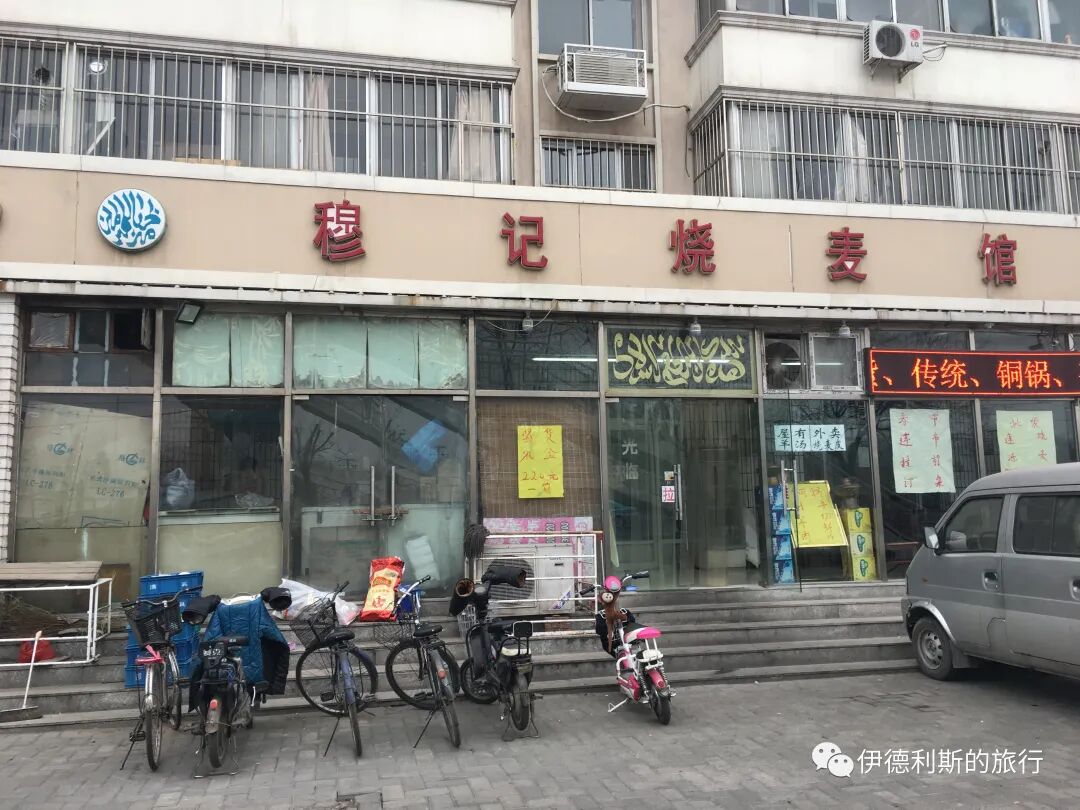
In 1404 (the second year of the Yongle reign), the Mu family built the first mosque, which later became the Tianmu North Mosque. After the Mujiazhuang mosque was built, Hui Muslims from places like Zhejiang, Jiangsu, Shandong, and Hebei kept arriving along the canal to settle down, and Mujiazhuang gradually grew.
During the Ming Dynasty and the early Qing Dynasty, most people in Mujiazhuang made a living from canal transport and were called boat keepers. In the middle and late Qing Dynasty, the upper reaches of the North Grand Canal gradually dried up, limiting canal transport, so some boat owners started driving carts or doing business. These cart drivers used a large cart gate as their symbol and were called cart keepers.
During the Xianfeng and Tongzhi reigns of the Qing Dynasty, a new village formed south of Mujiazhuang, named after the Tianqi Temple in the village. In 1951, Mujiazhuang and Tianqi Temple merged to become Tianmu Village.
In 2009, Tianmu Village began demolition. In 2010, 2,400 households moved into the Tianmu Dongyuan residential area, and construction of Tianmu Xiyuan began in 2012. By 2016, Tianmu Village had become ruins, and halal snacks were concentrated on Tianmu Shunyi Road.
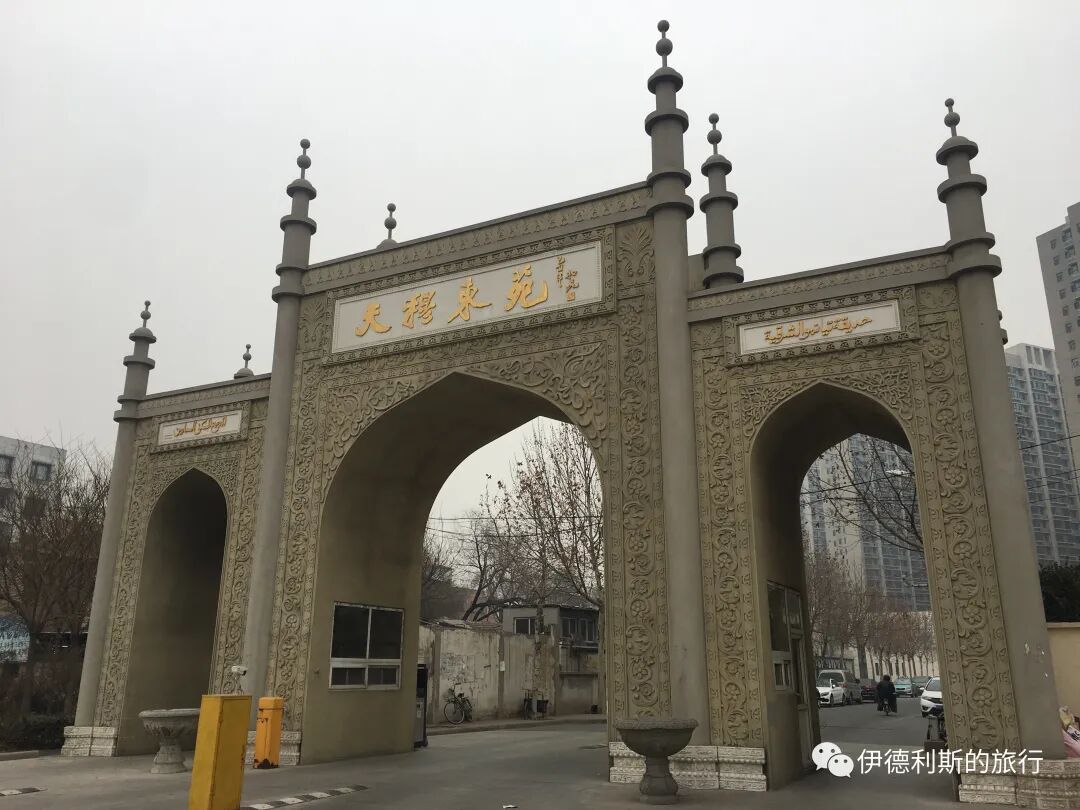
The information about the history of Tianmu Village in this article comes partly from the Draft History of the Hui Muslims in Tianmu.
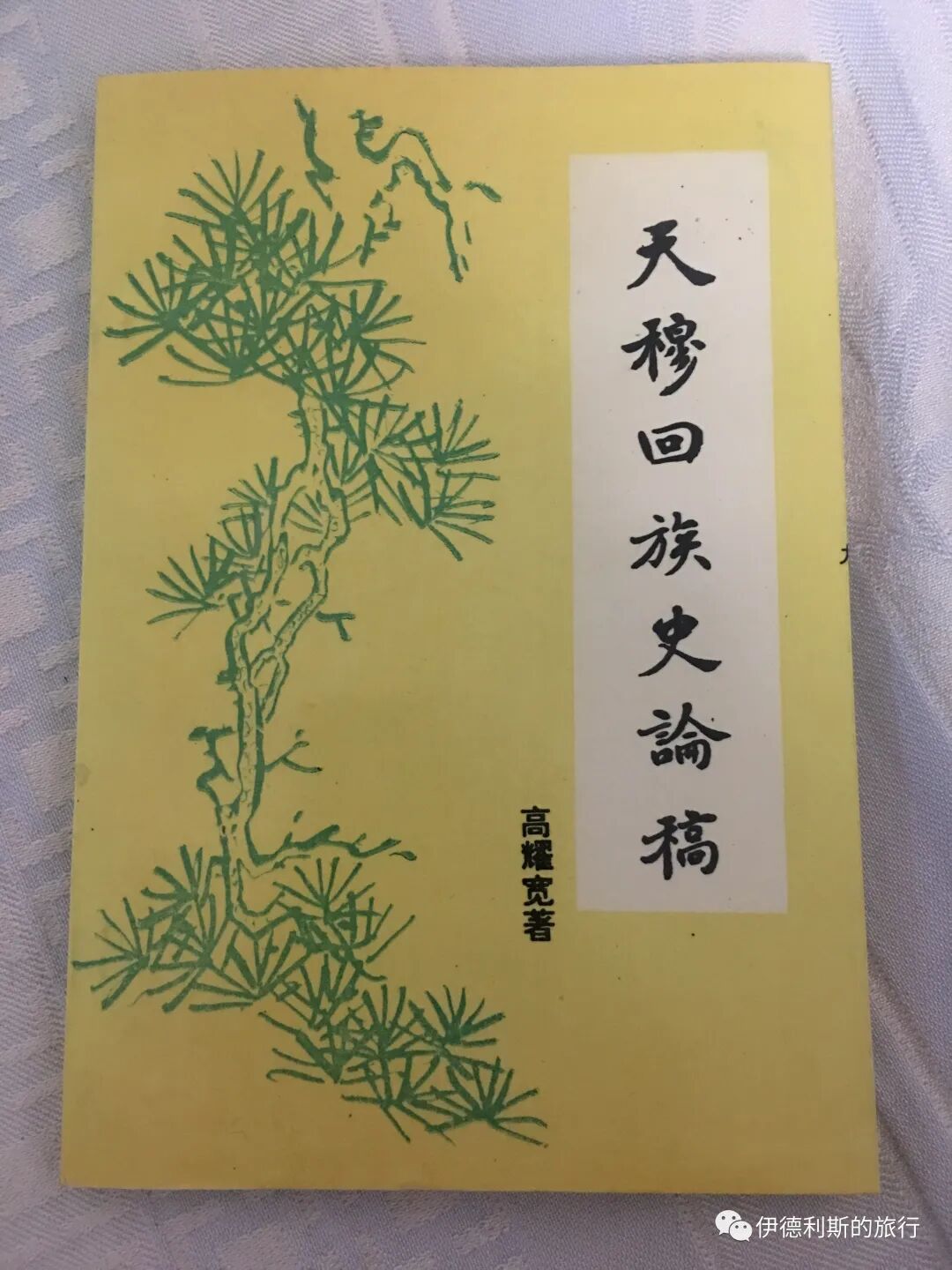
In the late Qing Dynasty, the cattle and sheep industry in Mujiazhuang developed, forming a trade called jizhuang, or consignment farming. Wealthy families in Mujiazhuang bought large numbers of cattle and sheep from the Mongolian grasslands in Zhangjiakou and Duolun County, Inner Mongolia. They bought them thin and fattened them up, hiring people to drive them all the way back to Tianjin, a process known in the trade as driving the herd. Consignment farming was divided into cattle and sheep; those who consigned cattle were called cattle pen keepers, and those who consigned sheep were called sheep pen keepers. In the late Qing and early Republic period, there were over twenty households in Mujiazhuang doing consignment farming. The four largest sheep pen keepers were Desheng, Yicheng, Yuanshun, and Yishuncheng, trading 100,000 sheep annually. After the Republic of China was established, frequent wars and blocked trade routes made it very easy for hundreds or thousands of cattle and sheep to be robbed by soldiers and bandits. By the Japanese occupation era, the consignment farming in Mujiazhuang had completely collapsed.
The cattle and sheep driven back by consignment farmers were wholesaled to small vendors, known as small-scale selling. The earliest small-scale selling involved a wooden box with two heavy ends placed on a wheelbarrow. The middle of the box had a hinged lid, with mutton inside and a meat cleaver on one side. The wooden box was brushed with tung oil, making it shiny, and the sides were painted with black characters reading, Halal Ancient Faith, Western Region Hui Muslims.
After the Republic of China, more and more Hui Muslims from Mujiazhuang opened beef and mutton shops across Tianjin, reaching 110 shops around the time of the July 7th Incident.
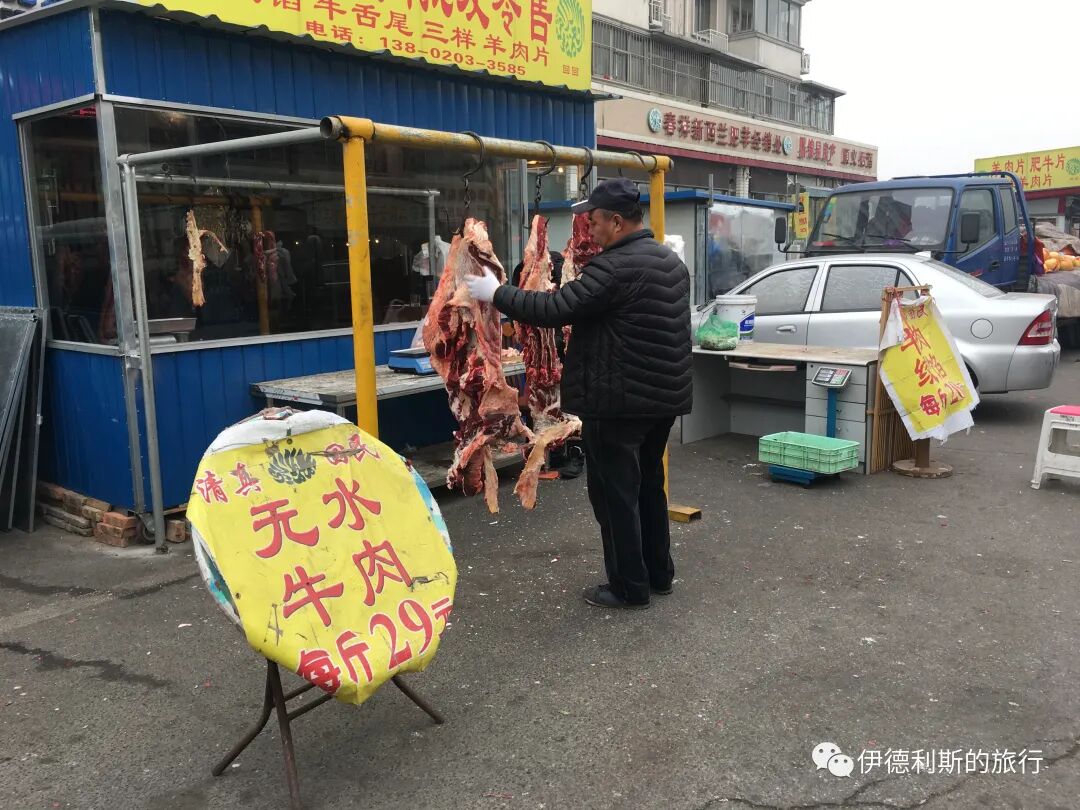
Now that I have introduced the general situation of Tianmu Village, let's start exploring and eating.
After getting off the bus, I saw an old man selling steamed pear paste (shuligao) next to the Tianmu Village bus stop. There were many flavors, and the fruit jam was also made by the old man himself. I chose red bean paste, brown sugar, and fruit jam flavors; the dark part at the bottom was made from purple sweet potato powder.
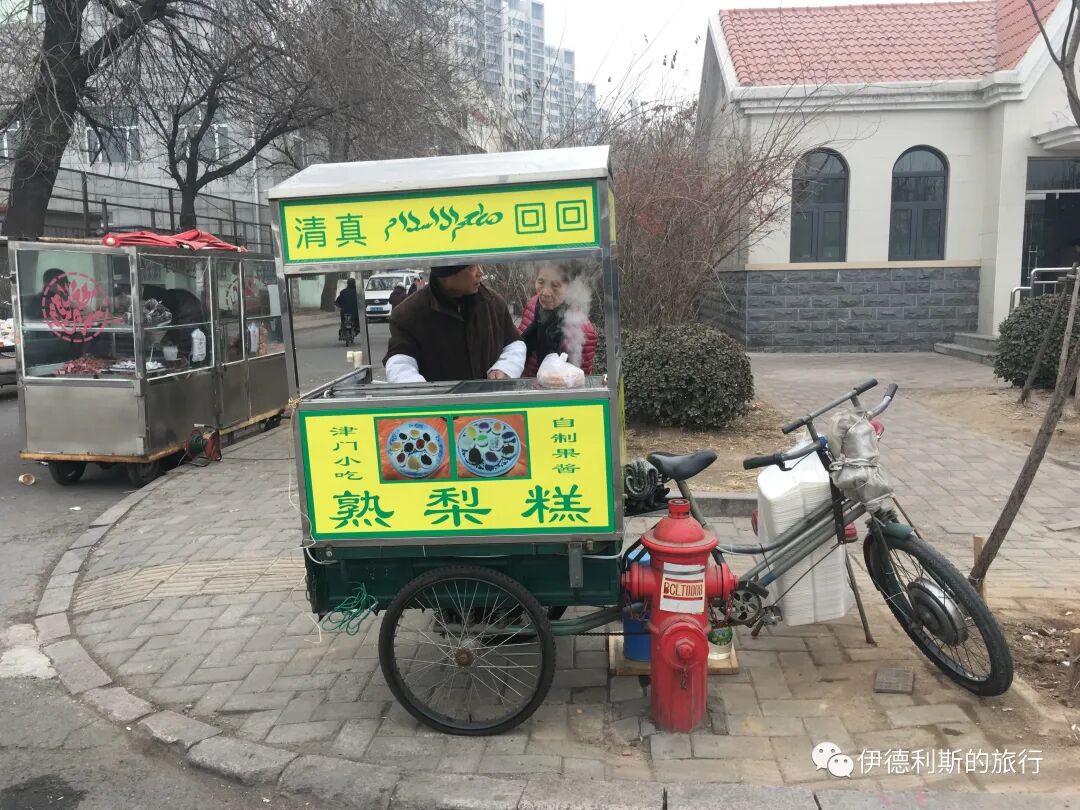
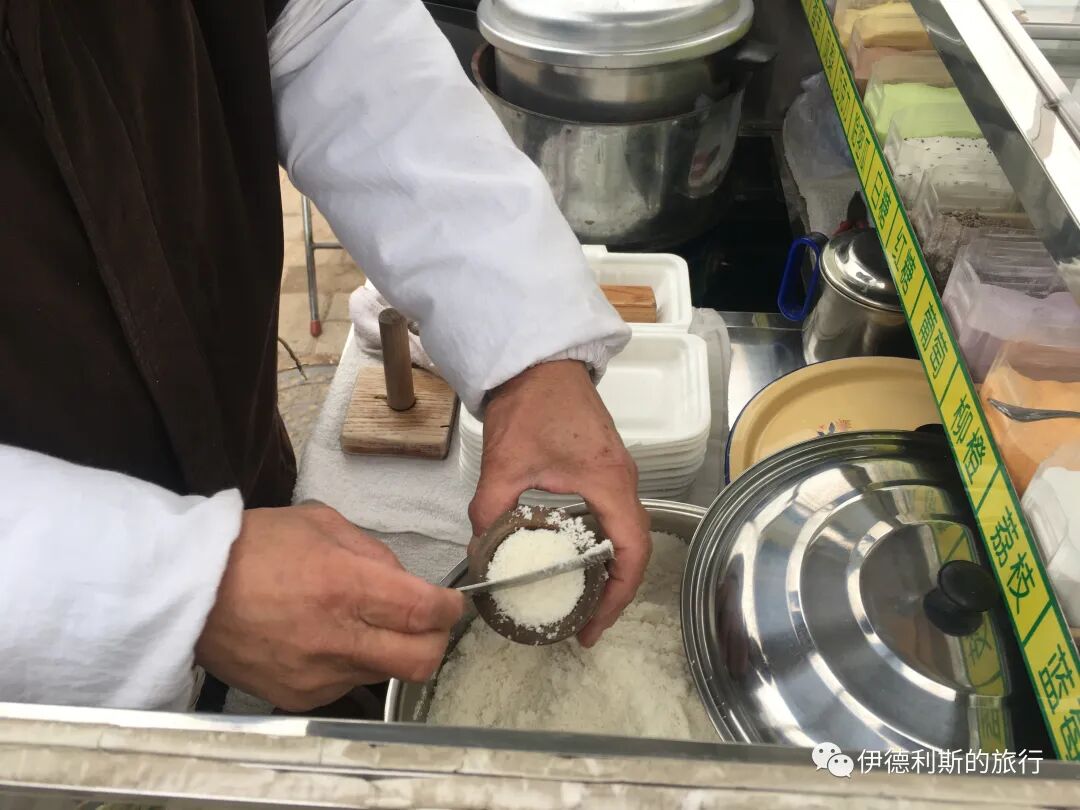
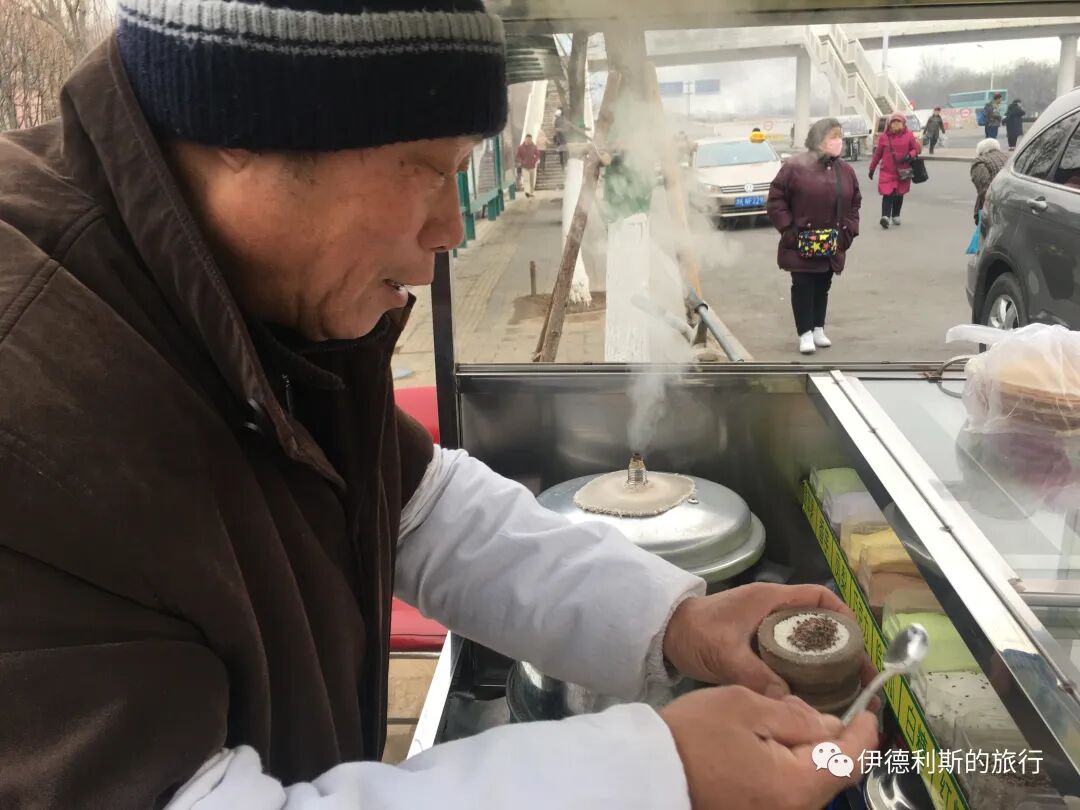
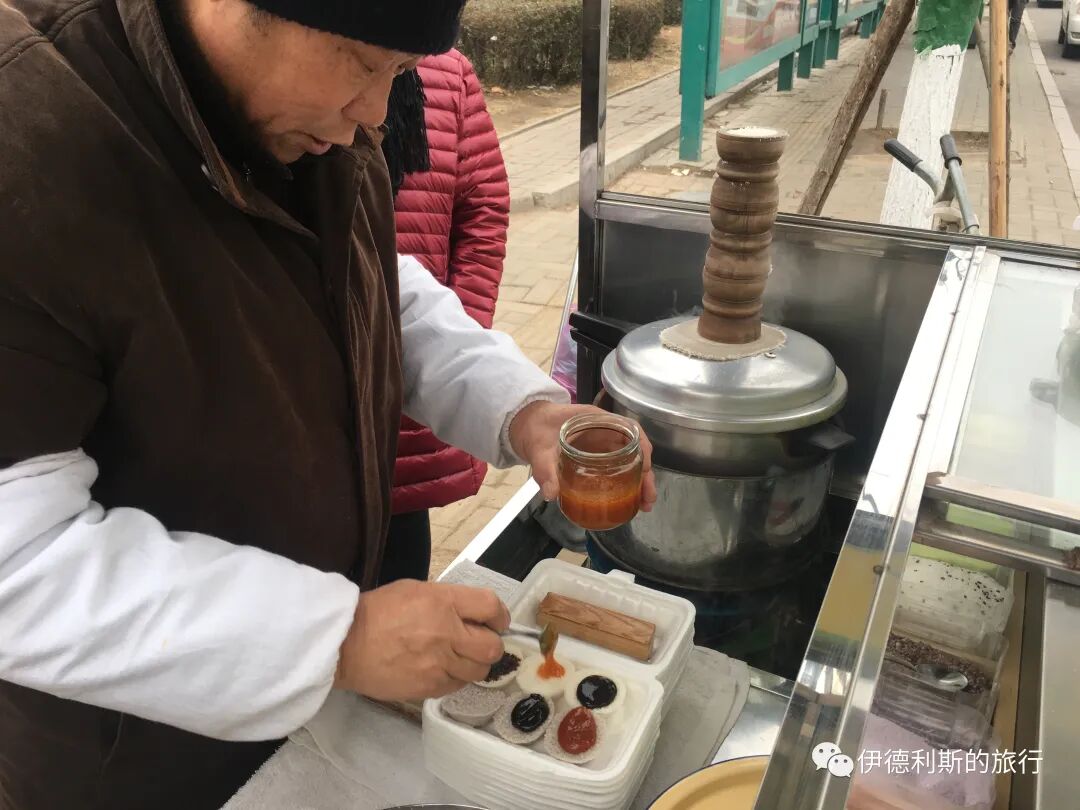
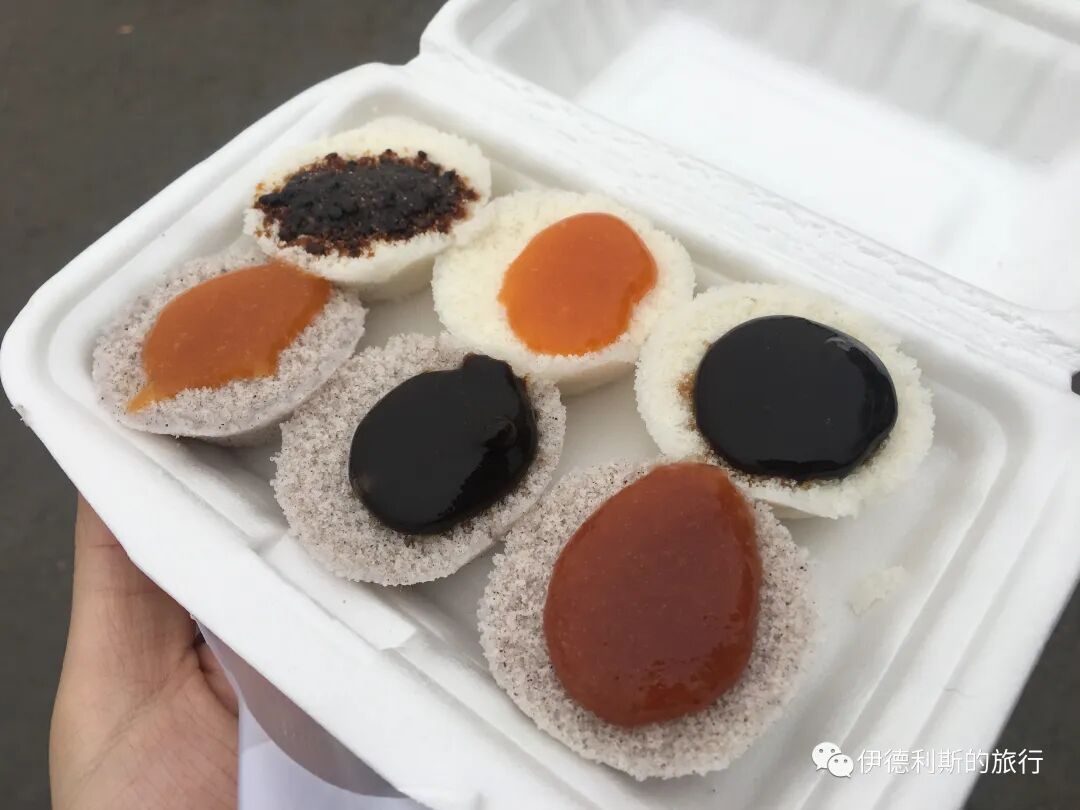
I went into Shunyi Road. Shunyi Road is the current commercial center of Tianmu, with snack shops lined up one after another. As I walked, I found a shop selling candied hawthorn skewers (tangdui). In Tianjin, some candied hawthorn skewers are stuffed with red bean paste and peanuts, which taste great.
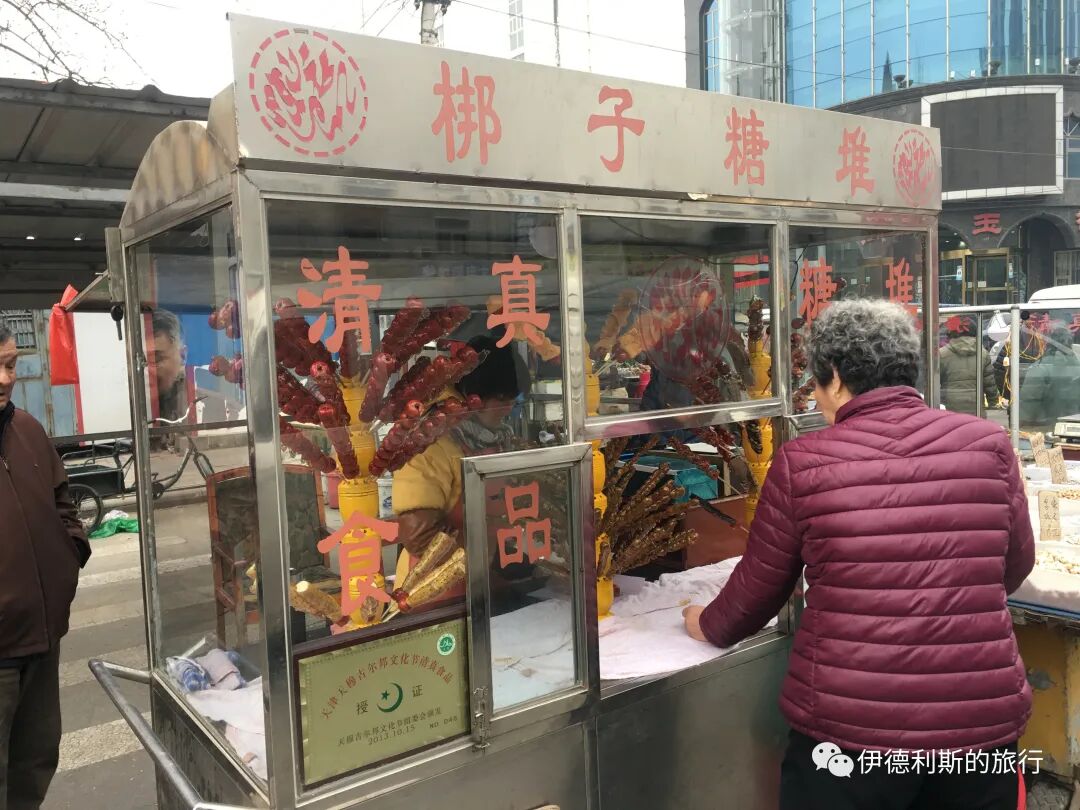
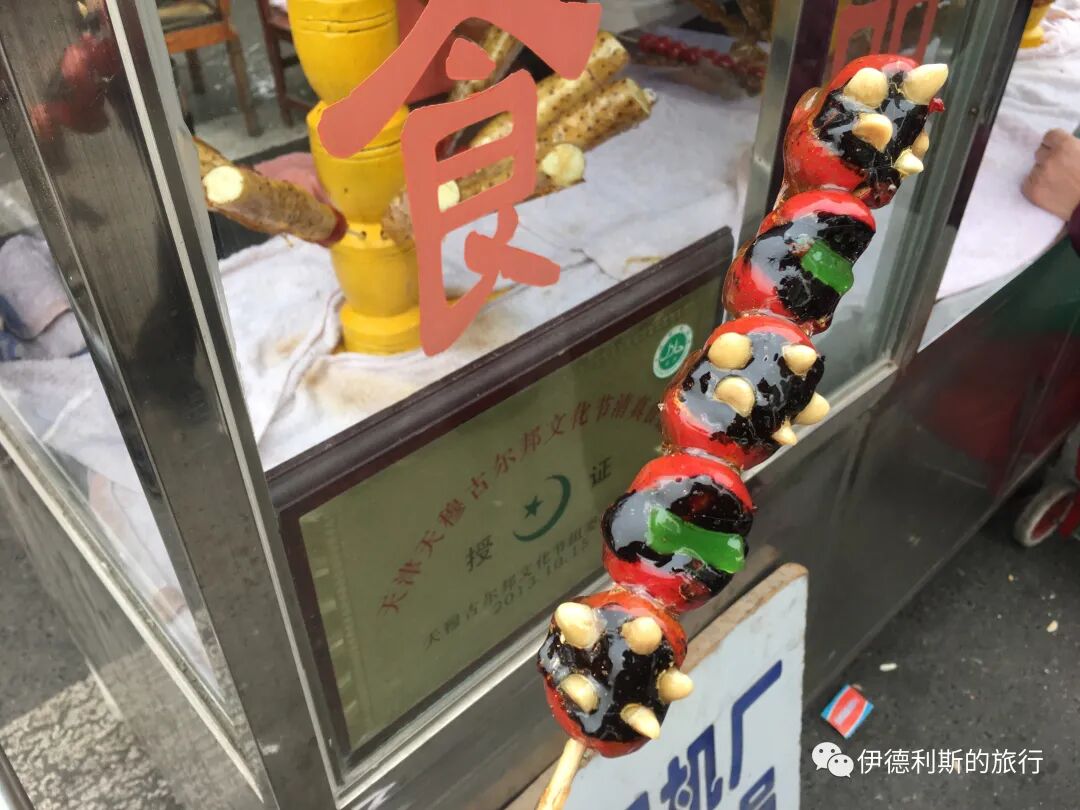
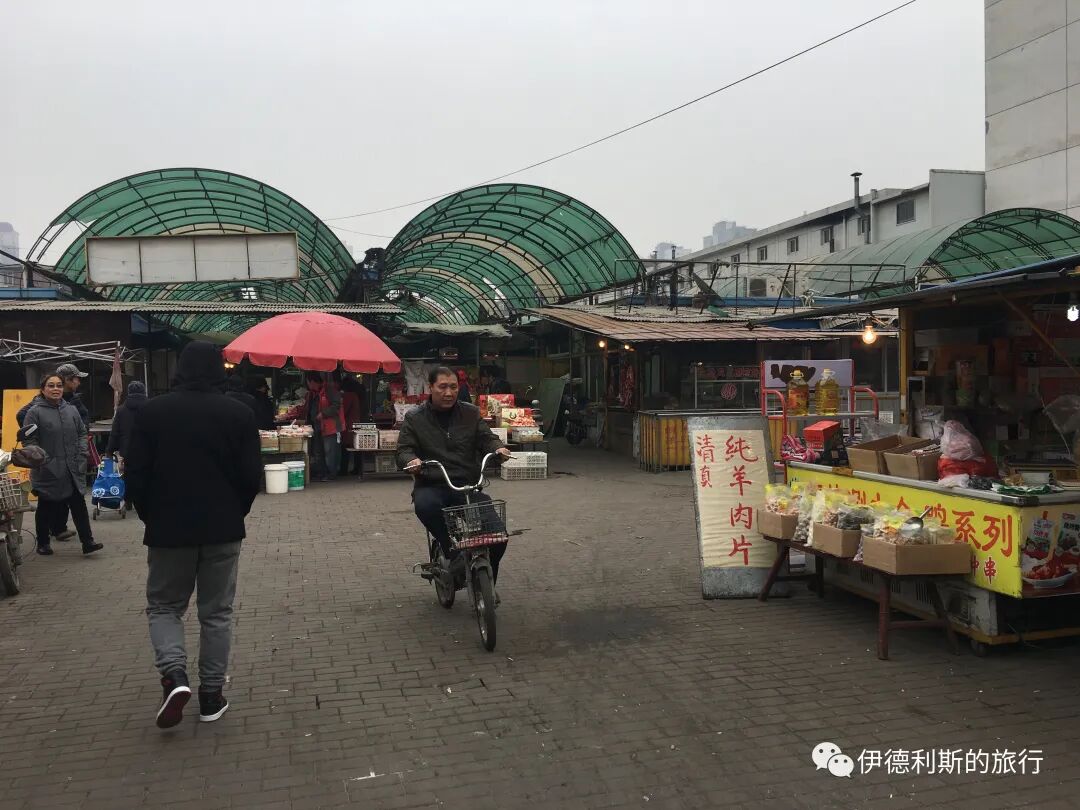
I continued exploring and ate the meat pie and wonton soup (lingjiaotang) from Haji Beef Pie. Tianjin's wonton soup (lingjiaotang), like the one in Jining, involves pouring a beaten egg into the soup, which I really like.
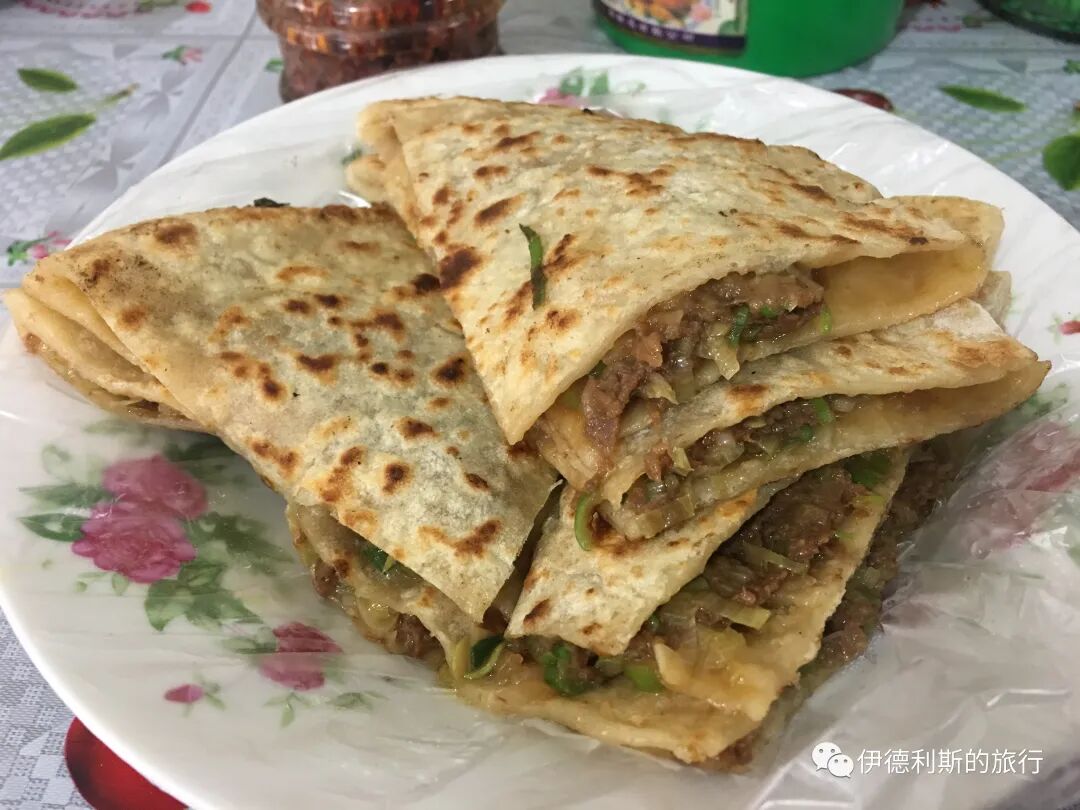
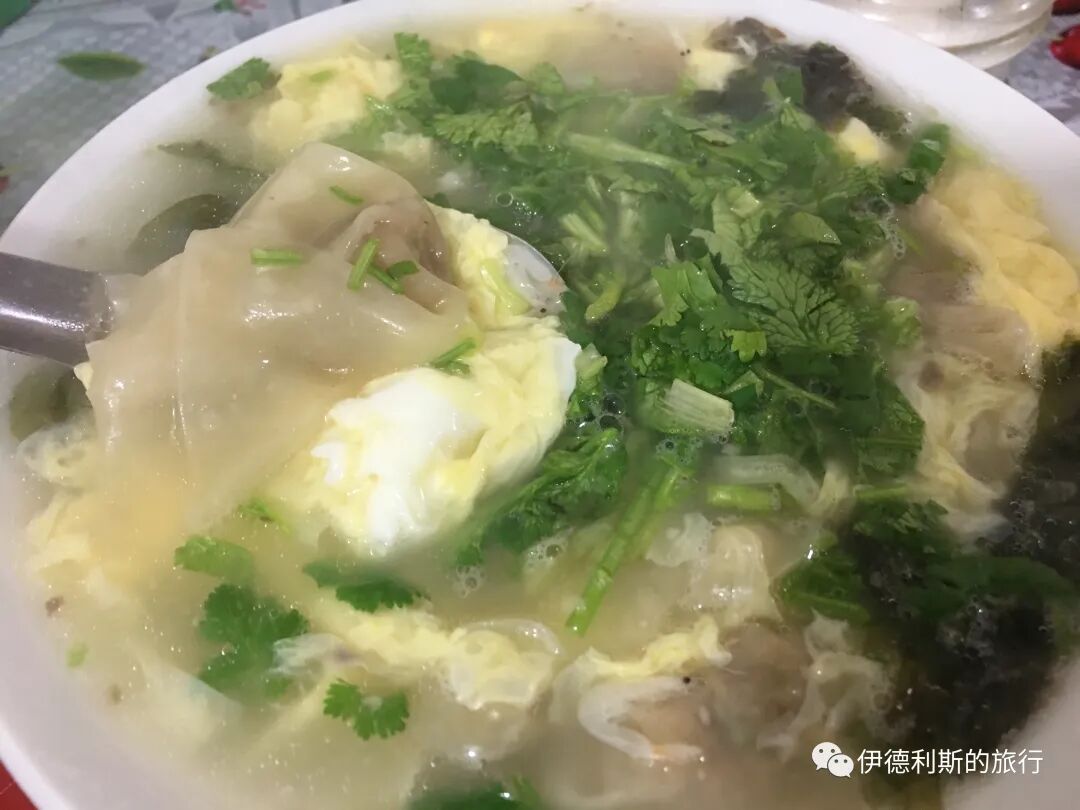
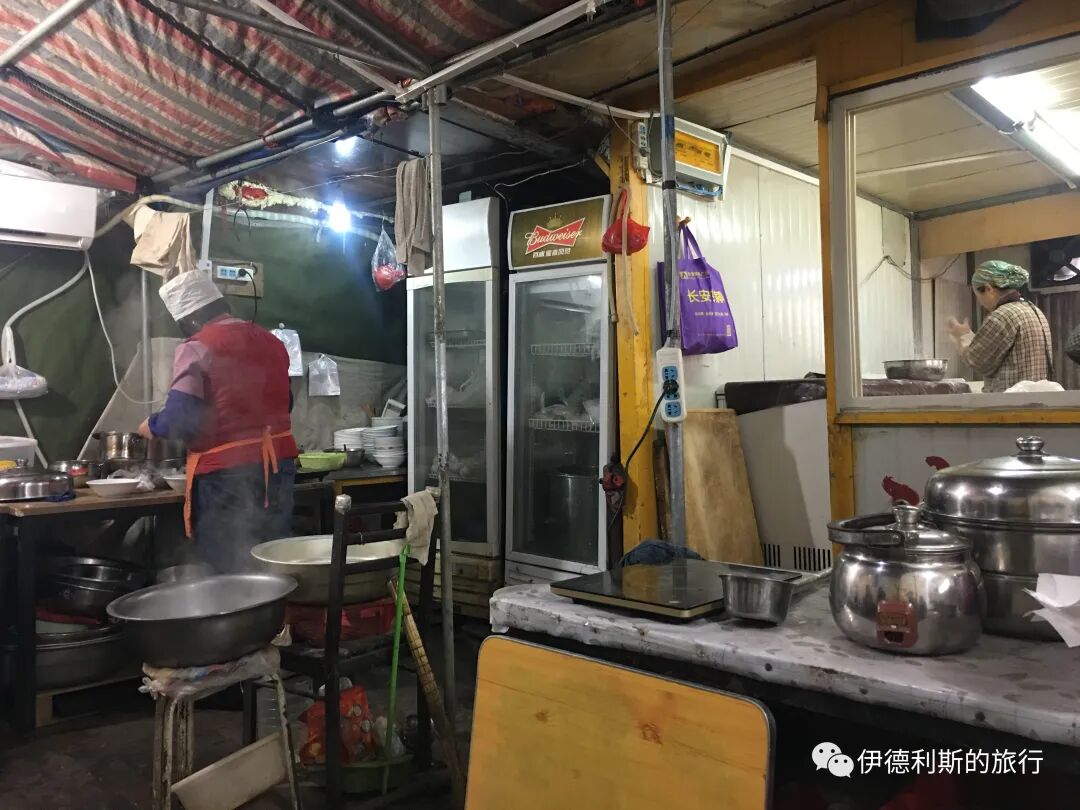
Men wearing prayer caps (libaimao) kept riding their bikes in groups toward the ruins of Tianmu Village. I checked the time and realized it was almost time for the afternoon prayer (peshini), so I followed the older men toward the North Mosque of Tianmu in Tianjin. The North Mosque of Tianmu was built in 1404, the second year of the Yongle reign. It was burned down by retreating Kuomintang troops on November 25, 1948. It was rebuilt in the 1950s and again in 1992, and today it is the most striking building among the ruins of Tianmu Village.
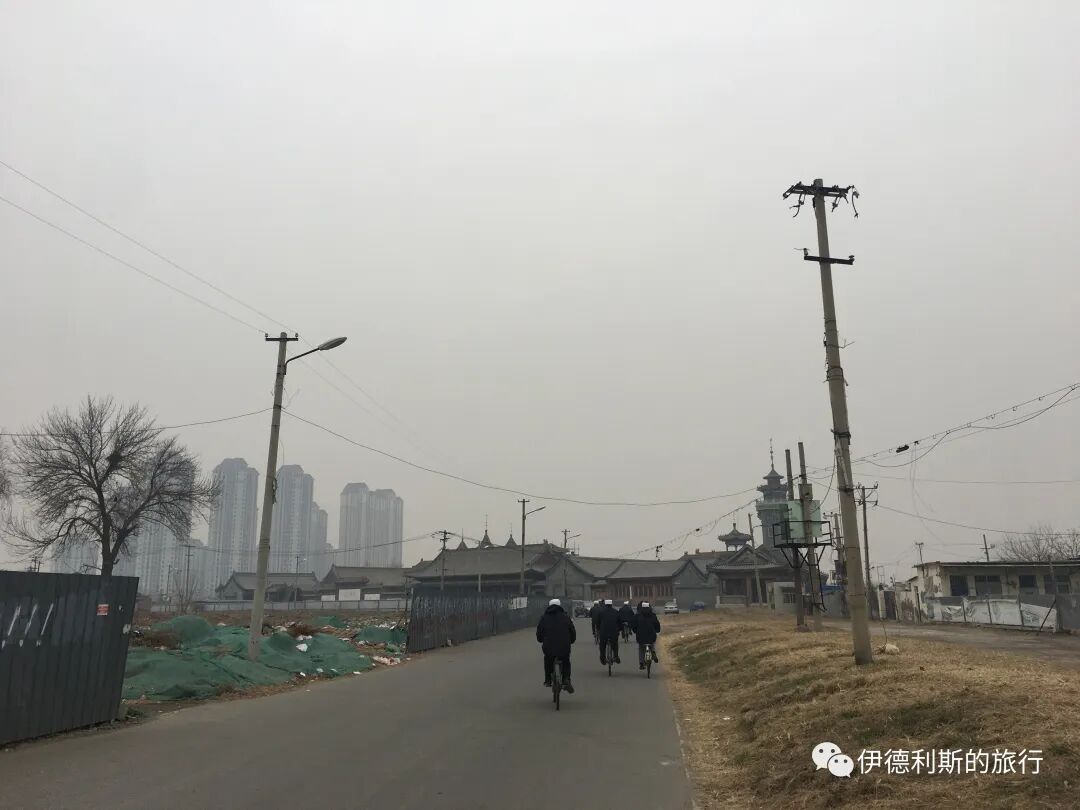
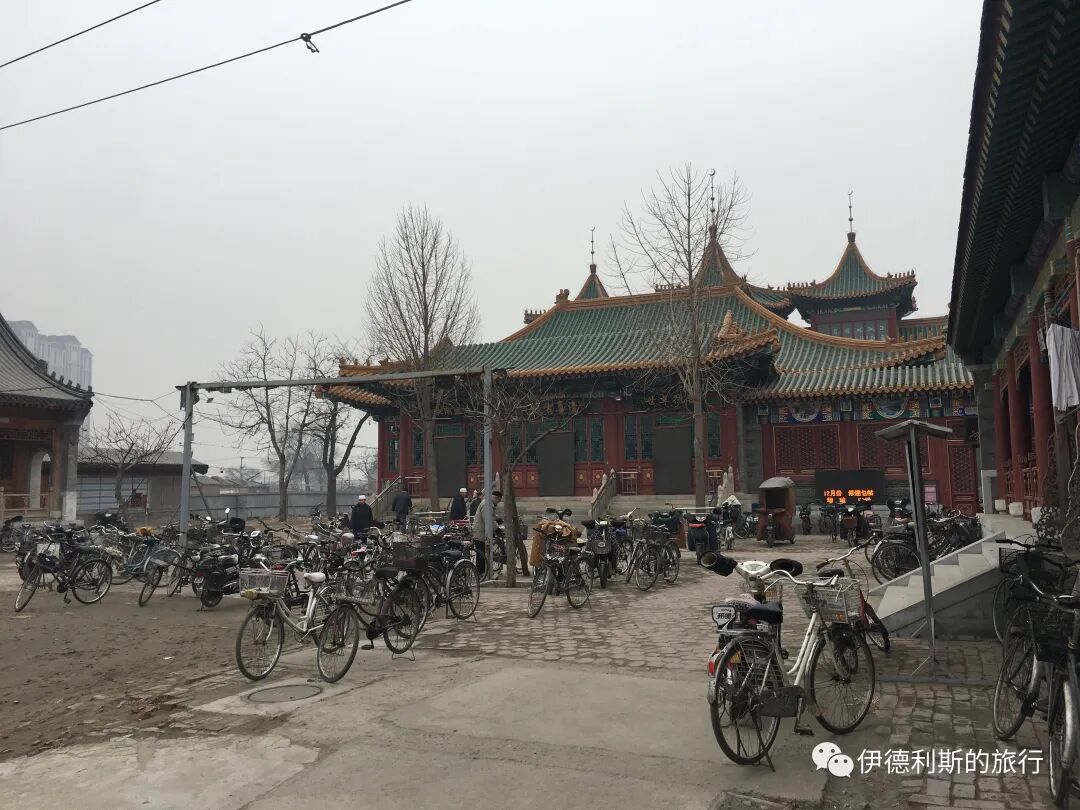
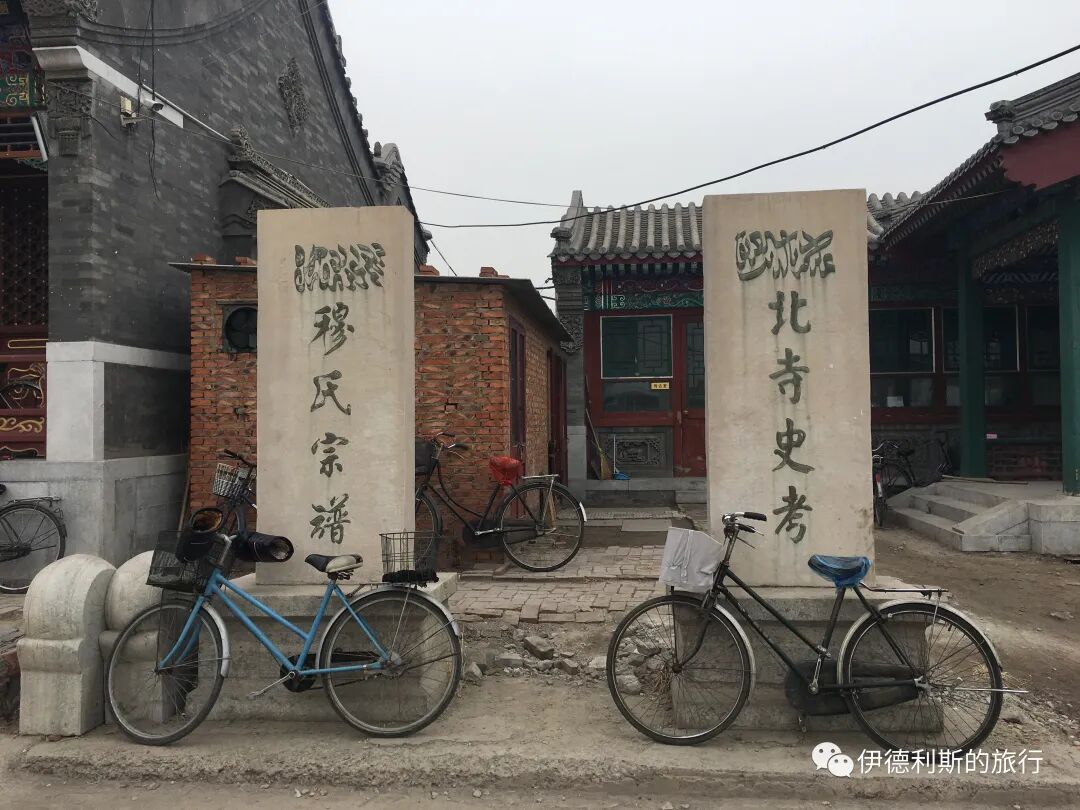
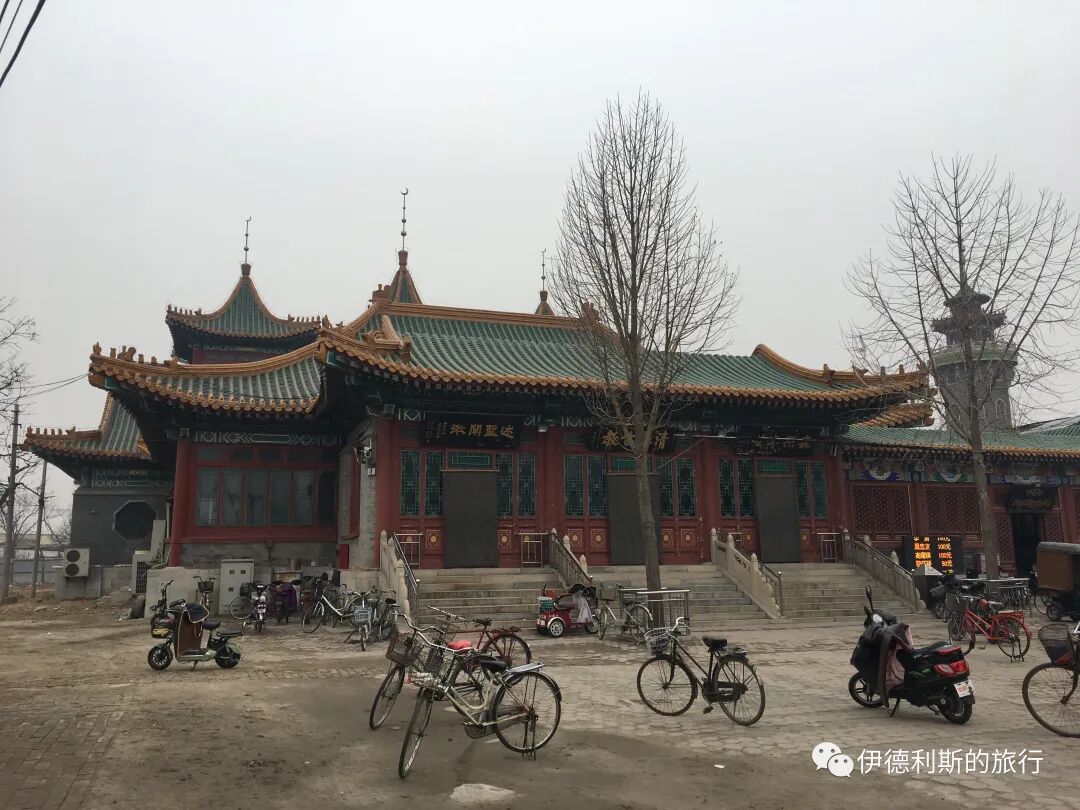
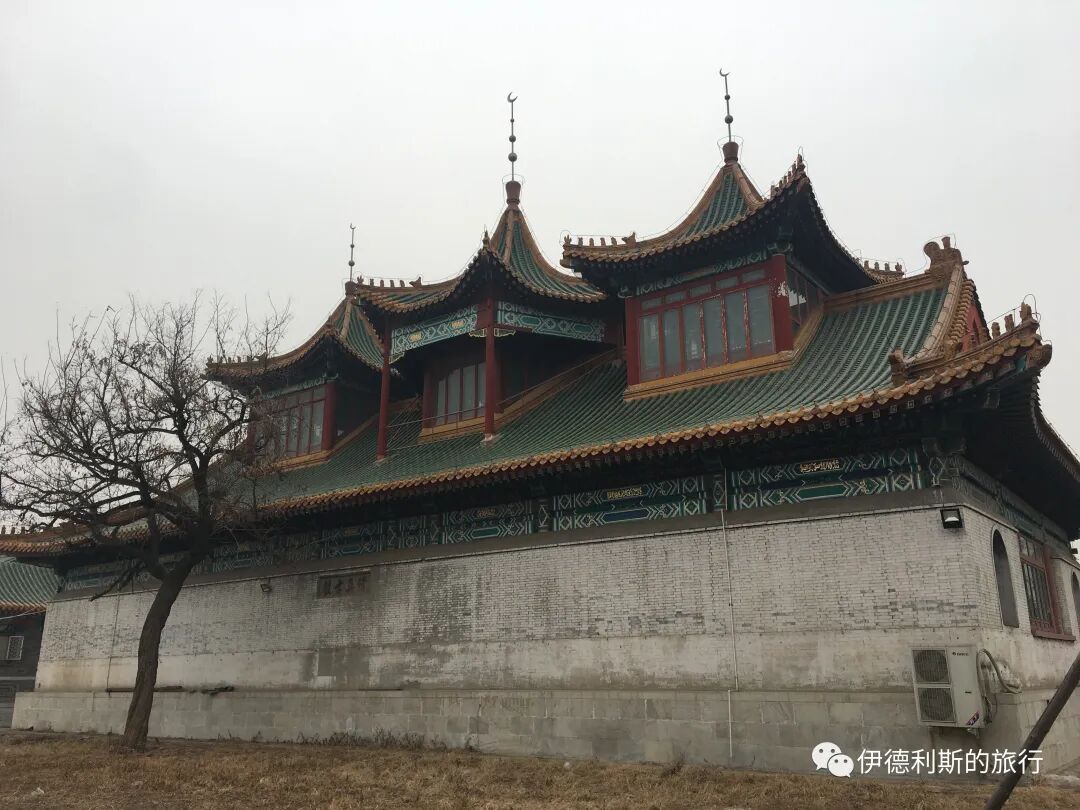
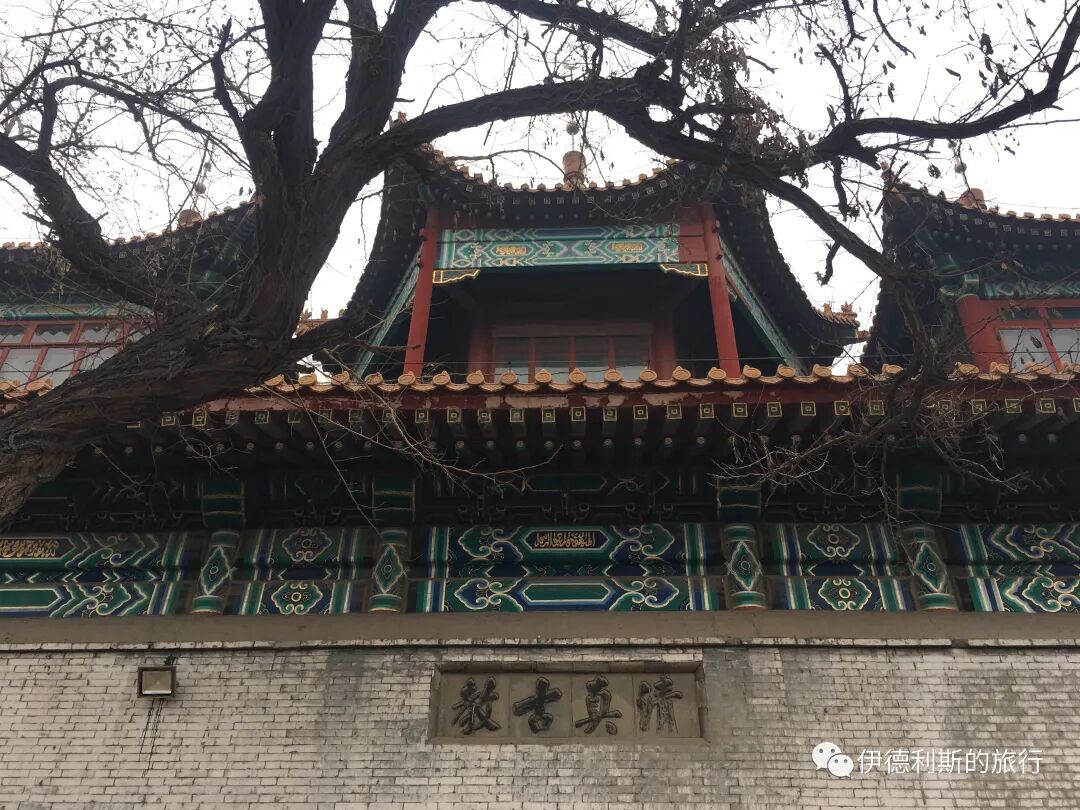
After leaving the mosque, I continued walking along Shunyi Road. My biggest find this time was at the Sanwei Bookstore on Shunyi Road, where I bought many hand-copied and lithographed small scriptures (xiaojing), which use Arabic script to write Chinese. This included the famous Weigaye Dictionary, a vocabulary list for the Weigaye religious law text. It is very interesting to see the xiaojing, Chinese characters, and Arabic side by side. I also found the Three-Character Classic of Islam (Huijiao Sanziwen) and a 1951 biography of Muhammad published by the Beijing Muslim Newspaper and Book Agency. I am very satisfied.
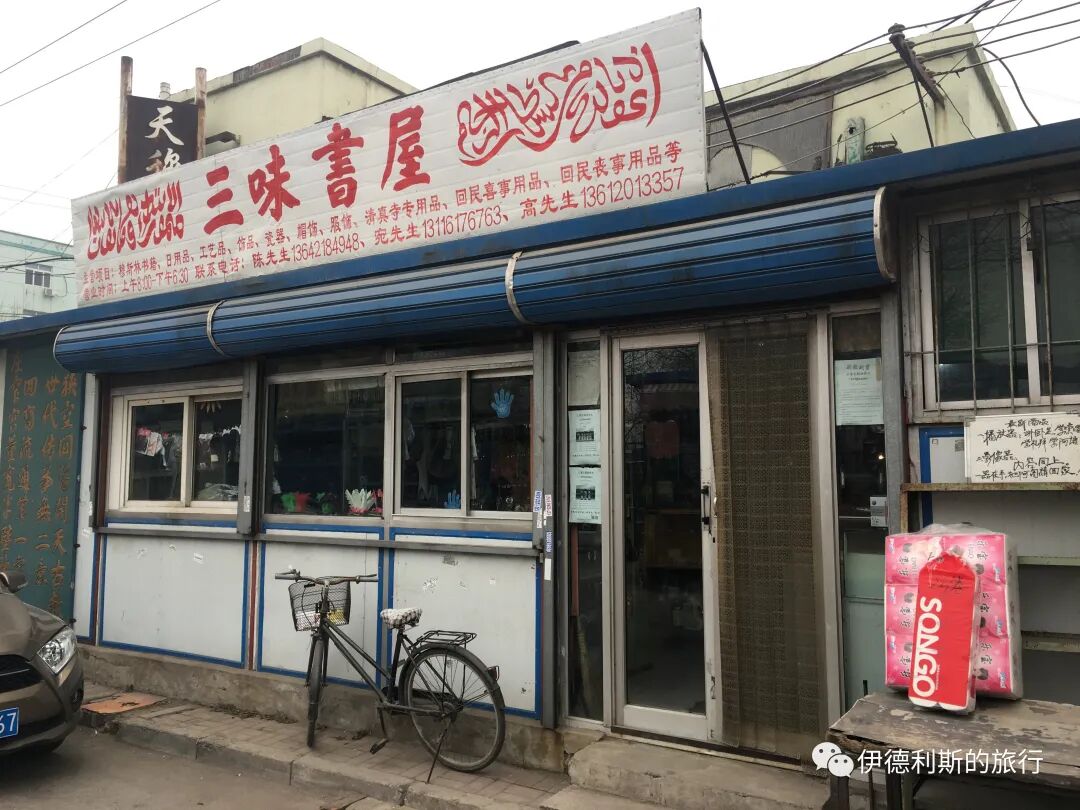
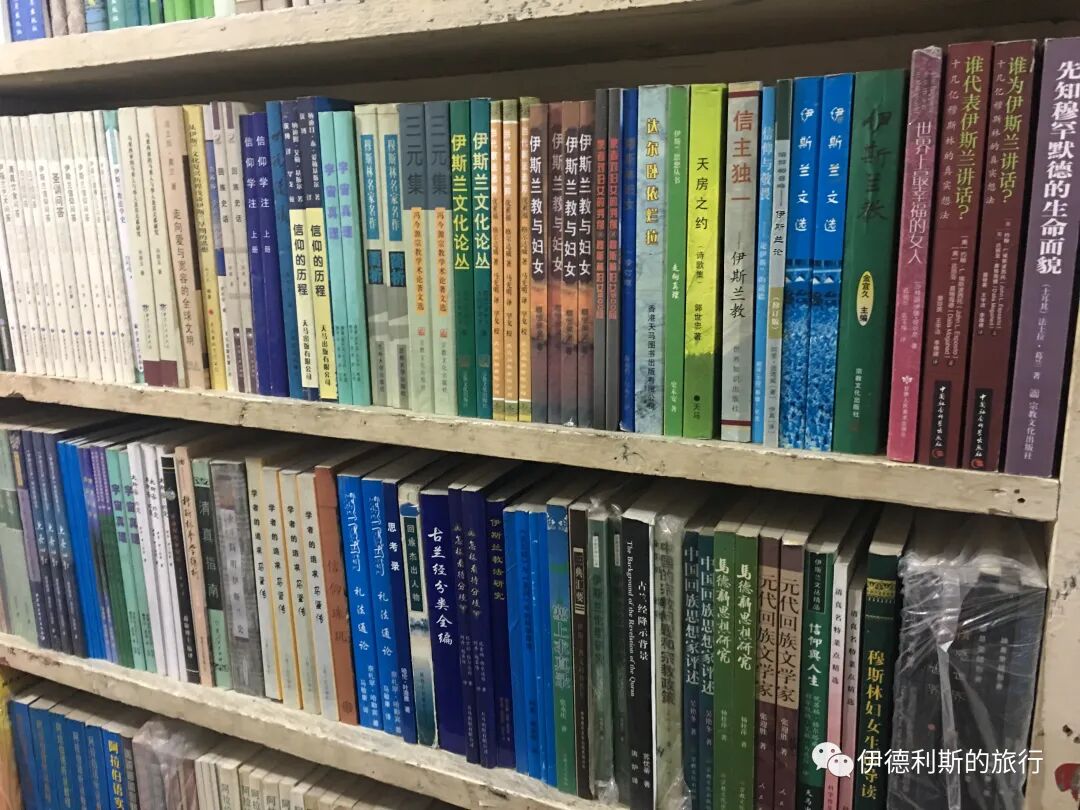
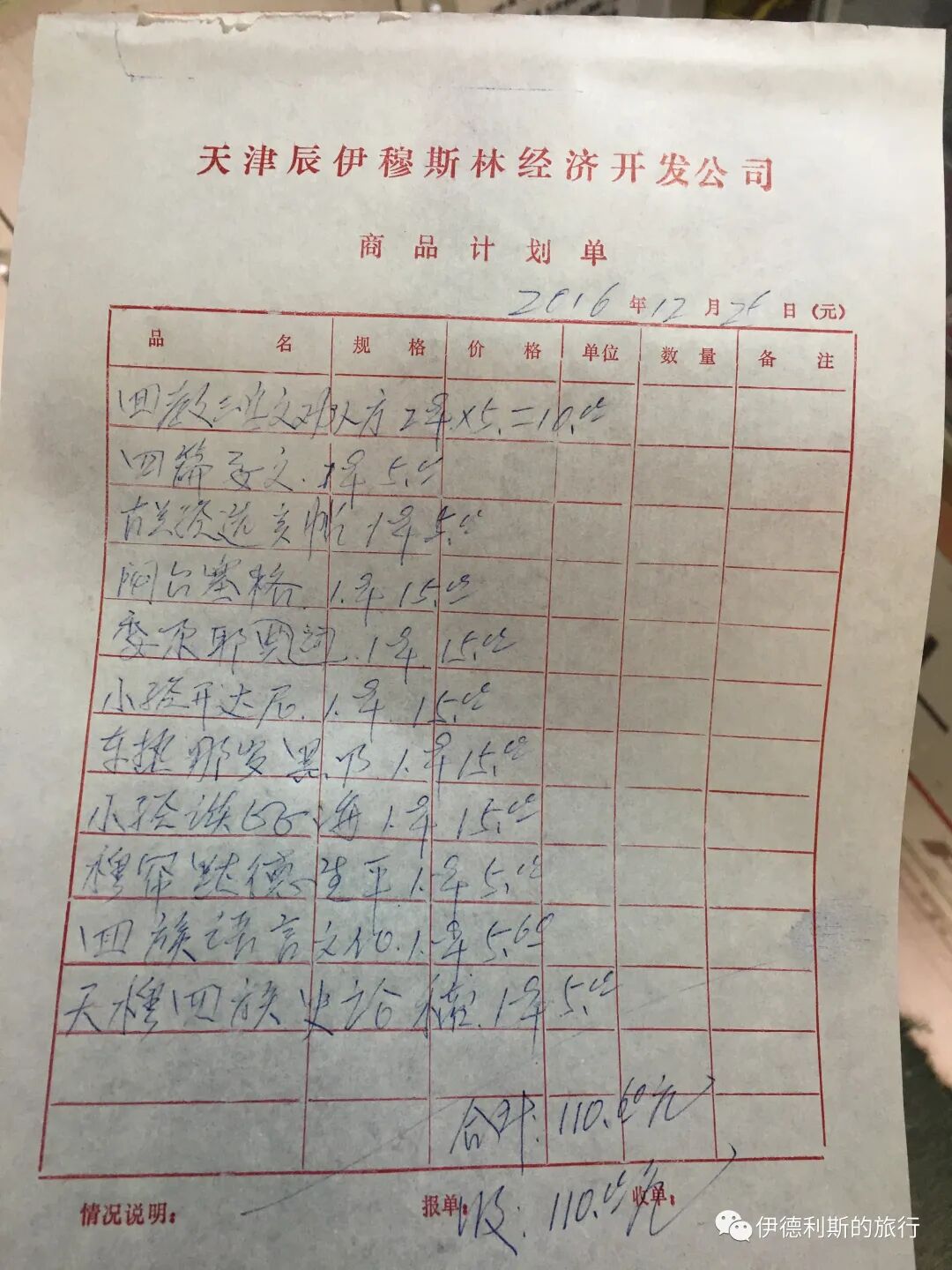
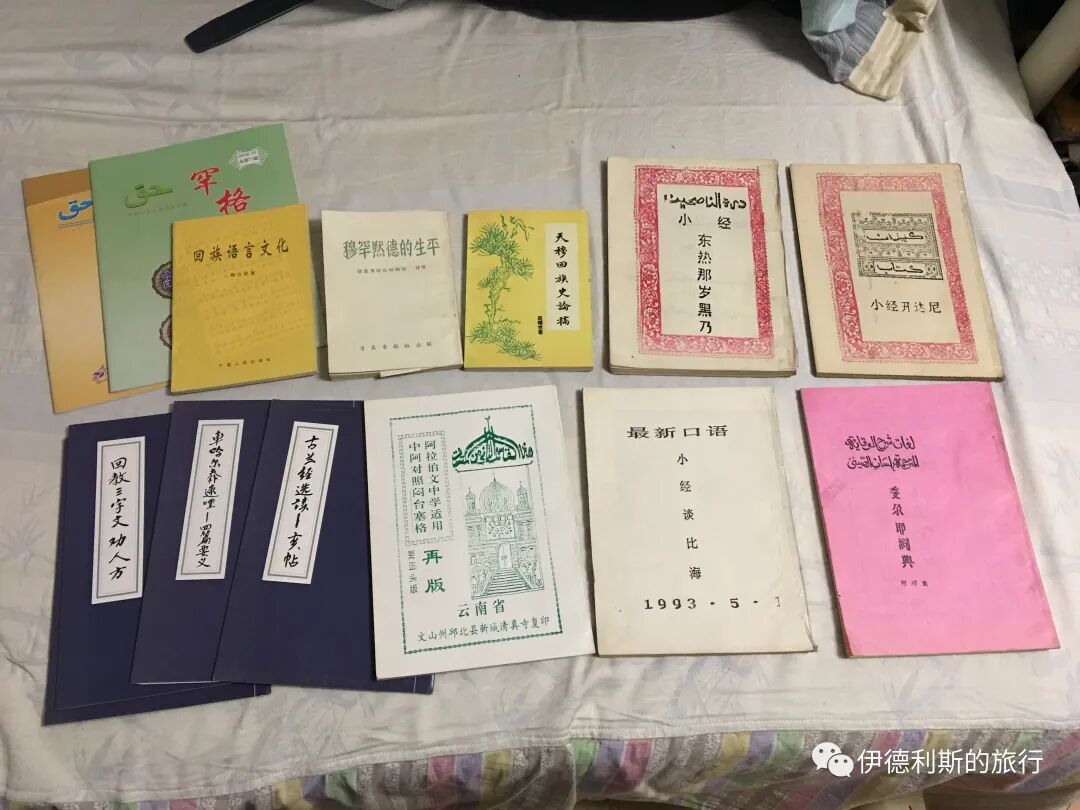
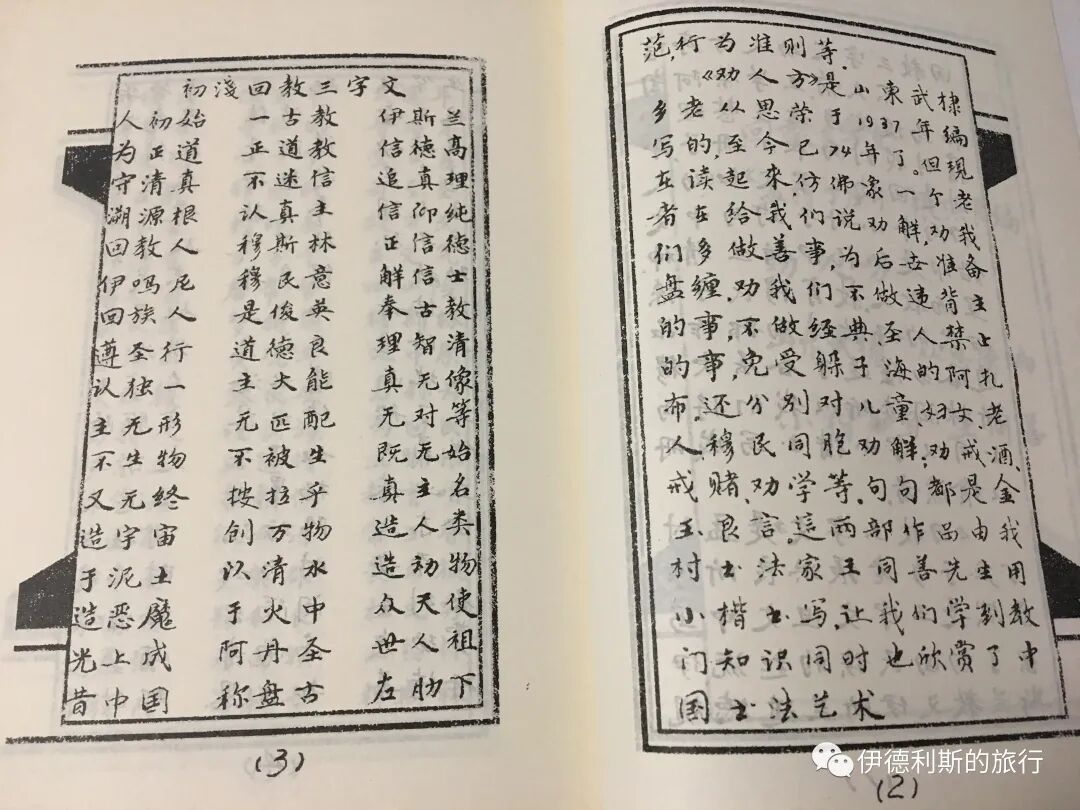 Collapse Read »
Summary: Tianjin Tianmu Village — Hui Muslim Food and Mosque History is presented here as a firsthand travel account in clear English, beginning with this scene: At noon on December 25, 2016, I went to Tianmu in Tianjin to explore and eat. I took the 9:55 high-speed train from Beijing South Railway Station to Tianjin West Railway Station, rode the subway for two stops to Qinjian. The account keeps its focus on Tianjin Tianmu, Hui Muslims, Halal Food while preserving the names, places, food, and historical details from the Chinese source.
At noon on December 25, 2016, I went to Tianmu in Tianjin to explore and eat. I took the 9:55 high-speed train from Beijing South Railway Station to Tianjin West Railway Station, rode the subway for two stops to Qinjian Road, and then transferred to a bus for one stop to reach Tianmu Village.
Tianmu Village was originally called Mujiazhuang, commonly known as Muzhuangzi. During the Hongwu reign of the Ming Dynasty, a boatman named Mu Zhonghe from Qiantang County, Hangzhou Prefecture, Zhejiang Province, followed Prince Yan Zhu Di along the Grand Canal to transport grain. After unloading, he traveled south with the current and settled by the North Grand Canal. He continued working in canal transport, which led to the formation of Mujiazhuang.
In 1404 (the second year of the Yongle reign), the Mu family built the first mosque, which later became the Tianmu North Mosque. After the Mujiazhuang mosque was built, Hui Muslims from places like Zhejiang, Jiangsu, Shandong, and Hebei kept arriving along the canal to settle down, and Mujiazhuang gradually grew.
During the Ming Dynasty and the early Qing Dynasty, most people in Mujiazhuang made a living from canal transport and were called boat keepers. In the middle and late Qing Dynasty, the upper reaches of the North Grand Canal gradually dried up, limiting canal transport, so some boat owners started driving carts or doing business. These cart drivers used a large cart gate as their symbol and were called cart keepers.
During the Xianfeng and Tongzhi reigns of the Qing Dynasty, a new village formed south of Mujiazhuang, named after the Tianqi Temple in the village. In 1951, Mujiazhuang and Tianqi Temple merged to become Tianmu Village.
In 2009, Tianmu Village began demolition. In 2010, 2,400 households moved into the Tianmu Dongyuan residential area, and construction of Tianmu Xiyuan began in 2012. By 2016, Tianmu Village had become ruins, and halal snacks were concentrated on Tianmu Shunyi Road.
The information about the history of Tianmu Village in this article comes partly from the Draft History of the Hui Muslims in Tianmu.
In the late Qing Dynasty, the cattle and sheep industry in Mujiazhuang developed, forming a trade called jizhuang, or consignment farming. Wealthy families in Mujiazhuang bought large numbers of cattle and sheep from the Mongolian grasslands in Zhangjiakou and Duolun County, Inner Mongolia. They bought them thin and fattened them up, hiring people to drive them all the way back to Tianjin, a process known in the trade as driving the herd. Consignment farming was divided into cattle and sheep; those who consigned cattle were called cattle pen keepers, and those who consigned sheep were called sheep pen keepers. In the late Qing and early Republic period, there were over twenty households in Mujiazhuang doing consignment farming. The four largest sheep pen keepers were Desheng, Yicheng, Yuanshun, and Yishuncheng, trading 100,000 sheep annually. After the Republic of China was established, frequent wars and blocked trade routes made it very easy for hundreds or thousands of cattle and sheep to be robbed by soldiers and bandits. By the Japanese occupation era, the consignment farming in Mujiazhuang had completely collapsed.
The cattle and sheep driven back by consignment farmers were wholesaled to small vendors, known as small-scale selling. The earliest small-scale selling involved a wooden box with two heavy ends placed on a wheelbarrow. The middle of the box had a hinged lid, with mutton inside and a meat cleaver on one side. The wooden box was brushed with tung oil, making it shiny, and the sides were painted with black characters reading, Halal Ancient Faith, Western Region Hui Muslims.
After the Republic of China, more and more Hui Muslims from Mujiazhuang opened beef and mutton shops across Tianjin, reaching 110 shops around the time of the July 7th Incident.
Now that I have introduced the general situation of Tianmu Village, let's start exploring and eating.
After getting off the bus, I saw an old man selling steamed pear paste (shuligao) next to the Tianmu Village bus stop. There were many flavors, and the fruit jam was also made by the old man himself. I chose red bean paste, brown sugar, and fruit jam flavors; the dark part at the bottom was made from purple sweet potato powder.
I went into Shunyi Road. Shunyi Road is the current commercial center of Tianmu, with snack shops lined up one after another. As I walked, I found a shop selling candied hawthorn skewers (tangdui). In Tianjin, some candied hawthorn skewers are stuffed with red bean paste and peanuts, which taste great.
I continued exploring and ate the meat pie and wonton soup (lingjiaotang) from Haji Beef Pie. Tianjin's wonton soup (lingjiaotang), like the one in Jining, involves pouring a beaten egg into the soup, which I really like.
Men wearing prayer caps (libaimao) kept riding their bikes in groups toward the ruins of Tianmu Village. I checked the time and realized it was almost time for the afternoon prayer (peshini), so I followed the older men toward the North Mosque of Tianmu in Tianjin. The North Mosque of Tianmu was built in 1404, the second year of the Yongle reign. It was burned down by retreating Kuomintang troops on November 25, 1948. It was rebuilt in the 1950s and again in 1992, and today it is the most striking building among the ruins of Tianmu Village.
After leaving the mosque, I continued walking along Shunyi Road. My biggest find this time was at the Sanwei Bookstore on Shunyi Road, where I bought many hand-copied and lithographed small scriptures (xiaojing), which use Arabic script to write Chinese. This included the famous Weigaye Dictionary, a vocabulary list for the Weigaye religious law text. It is very interesting to see the xiaojing, Chinese characters, and Arabic side by side. I also found the Three-Character Classic of Islam (Huijiao Sanziwen) and a 1951 biography of Muhammad published by the Beijing Muslim Newspaper and Book Agency. I am very satisfied.
Collapse Read »
