

Beijing Muslim History: Old Halal Notes from the Southern City (Part 2 of 5) — Section 1 of 2
Reposted from the web
Summary: Beijing Muslim History: Old Halal Notes from the Southern City is presented here as a firsthand travel account in clear English, beginning with this scene: Chongwen:. The account keeps its focus on Beijing Muslim History, Southern Beijing, Hui Muslims while preserving the names, places, food, and historical details from the Chinese source. This retry section is 1 of 2.
Section 1 of 2
Menkuang Hutong is full of individual stalls run by Hui Muslims. They pay attention to the hygiene of their utensils, and their food focuses on color, aroma, and taste, which attracts many customers and has earned them quite a reputation. Take Baodu Feng, which sells quick-boiled tripe (baodu). The lamb tripe and tripe kernels (duren) are cooked to the perfect texture—neither too tough nor too soft. The sauces, including fermented bean curd (jiang furu), chive flower paste (jiucaihua), and sesame paste (zhima jiang), are fresh and tasty, so the stall is full of customers every day who come for their fame.
Ye Zufu Talks About Beijing by Ye Zufu
7. Bai's Tofu Pudding (doufunao) in Menkuang Hutong outside Qianmen.
Bai's Tofu Pudding is run by an elderly man named Bai. The tofu pudding is incredibly white and tender. The mushroom and lamb gravy (koumo zha yangrou lu) smells so good that it makes your mouth water from far away. When you eat it, you add chili oil or garlic sauce, which is truly wonderful. It is no wonder that many financial professionals in suits squeeze into the market, hunching over on small, narrow stools to enjoy this unique tofu pudding.
Bai's Tofu Pudding has a branch stall at the entrance of Guanghe Tower in the meat market, specifically for theatergoers watching Peking opera. Baodu Feng and Bai's Tofu Pudding also sell freshly baked sesame flatbreads (shaobing). Some individual vendors even bring small baskets of these flatbreads here to sell to customers.
Ye Zufu Talks About Beijing by Ye Zufu
8. Niangao Wang (Rice Cake King) on Menkuang Hutong outside Qianmen
Nian Gao Wang sells traditional northern-style rice cakes (niangao). They are made from glutinous rice or glutinous rice flour, with layers of red bean paste in the middle and topped with shredded green or red silk. Sometimes they also sell pea flour cakes (wandouhuang). In the summer, these rice cakes are kept on large blocks of natural ice to keep them cool and refreshing. In the winter, they are steamed in small bamboo steamers (longti) to keep them soft and hot. When selling them in winter, the vendor takes a plate of steaming rice cakes from the steamer and adds a spoonful of white sugar, making them taste even better.
Ye Zufu Talks About Beijing by Ye Zufu
9. Mujiazhai at Zangjia Bridge outside Qianmen
My grandmother's family ran a restaurant outside Qianmen at Zangjiaqiao called Mujiazhai, also known as Guangfuguan. If you ask the elders in the southern part of the city, they usually know it. The stir-fried dough bits (chaogeda) at Guangfuguan were made by my grandmother's family. My great-grandmother was a widow. To make a living, she set up a noodle stall selling rice porridge and flour-based foods to passing porters and laborers. My grandmother was also a widow. She managed my great-grandmother's business and worked incredibly hard to build this small restaurant. Two generations of widows ran the place. The name Guangfu uses homophones for the words meaning 'widow's shop.' People say the Little Prince Gong gave it this name to mark it as a widow's restaurant, and that is how it came to be. They specialized in stir-fried dough bits, and this dish became famous.
I heard from my grandmother that the Little Prince Gong loved listening to the operas of Shang Xiaoyun, so he was very close to him. When Shang Xiaoyun first met my grandmother, he thought she looked just like his own mother, from her height to her facial features. He said, 'Old lady, let me adopt you as my godmother!' After saying that, he knelt down and kowtowed, and from then on, she was his godmother. Shang Xiaoyun loved eating stir-fried dough bits, which influenced the Little Prince Gong. He often told the Prince, 'The stir-fried dough bits at my godmother's place are excellent.' The Prince was convinced, so he sent people to carry their own pots, pans, bowls, and stoves to eat there. He held a banquet at Guangfuguan in the private room on the second floor.
My mother invited Madame Mei Lanfang to dinner. Because my mother inherited my grandmother's skills, her stir-fried dough bits tasted different from everyone else's—they really had my grandmother's flavor. She invited Madame Mei, along with Mr. Shang Xiaoyun and his wife, to eat. Shang Xiaoyun was my grandmother's godson, so he just kept eating and eating. Madame Mei said, 'That is enough, brother, stop eating, you are going to burst.'
Born in the South of the City: Decades of Joy and Sorrow on the Stage—Oral history by the three Ma brothers. Ding Yizhuang
(Note by Wang Dongsi: The speaker is Ma Chongnian, nephew of Peking Opera master Ma Lianliang)
Stir-fried dough bits at Mujiazhai
Mujiazhai was a small shop, but it was crowded every day with customers waiting to eat the dough bits stir-fried by Sister-in-law Mu herself.
To make stir-fried dough bits, you knead the dough, cut it into dice-sized cubes, and then use your thumb to roll them into small shapes, which we Shanxi people call cat ears (maoerduo). First, you boil them, then stir-fry them with mung bean sprouts, shredded meat, and chives. The juices from the meat and vegetables soak into the dough bits, making them taste the best.
People say Sister-in-law Mu, like the Mapo of Chengdu's Mapo Tofu, first served her neighbors for free before her reputation spread and she became a professional.
In winter at Mujiazhai, you could still eat fresh spring and summer vegetables, such as Chinese toon (xiangchun) mixed with tofu, smashed cucumber, sugar and vinegar pickled dandelion greens (qumacaiya), and small radishes with sesame paste. People say the Mu family restaurant even had a special heated cellar (nuandongzi) to grow these fresh vegetables.
Food of the Hometown: Eating in Beiping. Liu Zhenwei
(Note by Wang Dongsi: The author was born in 1934.)
10. Xiangjugong halal pastry shop on Qianmen Street
Wang Dianwen personally oversaw the quality of the pastries (bobo). First, he hired experienced and skilled head pastry chefs (zhang'anren) with high salaries. Second, he insisted on buying high-quality raw materials for making the pastries. Back then, the white flour from Renhe Mill was fine, and the small-mill sesame oil from Xihongmen had a pure flavor; even though they were expensive, Xiangjugong still ordered from them. Sugar and other fruit ingredients were all top-tier products. For example, they paid high prices for the best red and white sugar, bought large thin-skinned walnuts from the Western Hills, sourced locust flower honey, and selected Miyun small dates, Western Hills roses, Shandong pears, Shenzhou honey peaches, and hawthorn jelly (jingao) from Jingao Zhang. Even for eggs, Xiangjugong had specific suppliers. Third, they strictly followed production procedures, from mixing the dough and fruit ingredients to the final baking, being very careful with every step. In the pastry industry, there is a saying: 'Thirty percent making, seventy percent baking.' This means that no matter how carefully or well you do the first few steps, if you do not control the oven fire at the end, the heat might be too high and burn them; or the heat might be too low, and they will not be cooked through. Therefore, in a pastry workshop, besides the head chef, the oven worker is the most important. The head chefs and oven workers hired by Xiangjugong were all highly skilled at the time.
Pastry products are seasonal; in the past, Beijingers ate specific pastries at specific times. For example, people ate sweet rice balls (yuanxiao) on the fifteenth day of the first lunar month, sun cakes (taiyanggao) on the second day of the second month for the 'Dragon Raises Its Head' festival, wisteria cakes (tengluobing) when wisteria bloomed in the third month, sticky rice dumplings (zongzi) and five-poison cakes (wudubing) during the Dragon Boat Festival in the fifth month, mung bean cakes (lvdougao) to beat the heat in the sixth and seventh months, red and white mooncakes during the Mid-Autumn Festival in the eighth month, flower cakes (huagao) for the 'climbing high' custom in the ninth month, and in the cold winter months, wealthy families ate hibiscus cakes (furonggao), while ordinary families ate oven-fired cakes (ganglu)—which were pastries made while testing the oven temperature that had rough, broken edges but were still high quality. Xiangjugong produced and supplied all these pastries on time. for holidays, the fasting month of Ramadan, the Eid al-Fitr celebration, and visiting relatives and friends, it was customary to use large and small gift sets (bajian) as presents. The small and large eight-piece pastries (ba jian) made by Xiangjugong are very famous in the southern part of Beijing.
Miscellaneous Talks on Old Beijing by Wang Yongbin.
11. Ha's sesame flatbread (shaobing) shop at Liulichang outside Hepingmen
Haji Sesame Flatbread Shop (Haji Shaobing Pu) Collapse Read »
Summary: Beijing Muslim History: Old Halal Notes from the Southern City is presented here as a firsthand travel account in clear English, beginning with this scene: Chongwen:. The account keeps its focus on Beijing Muslim History, Southern Beijing, Hui Muslims while preserving the names, places, food, and historical details from the Chinese source. This retry section is 1 of 2.
Section 1 of 2
Menkuang Hutong is full of individual stalls run by Hui Muslims. They pay attention to the hygiene of their utensils, and their food focuses on color, aroma, and taste, which attracts many customers and has earned them quite a reputation. Take Baodu Feng, which sells quick-boiled tripe (baodu). The lamb tripe and tripe kernels (duren) are cooked to the perfect texture—neither too tough nor too soft. The sauces, including fermented bean curd (jiang furu), chive flower paste (jiucaihua), and sesame paste (zhima jiang), are fresh and tasty, so the stall is full of customers every day who come for their fame.
Ye Zufu Talks About Beijing by Ye Zufu
7. Bai's Tofu Pudding (doufunao) in Menkuang Hutong outside Qianmen.
Bai's Tofu Pudding is run by an elderly man named Bai. The tofu pudding is incredibly white and tender. The mushroom and lamb gravy (koumo zha yangrou lu) smells so good that it makes your mouth water from far away. When you eat it, you add chili oil or garlic sauce, which is truly wonderful. It is no wonder that many financial professionals in suits squeeze into the market, hunching over on small, narrow stools to enjoy this unique tofu pudding.
Bai's Tofu Pudding has a branch stall at the entrance of Guanghe Tower in the meat market, specifically for theatergoers watching Peking opera. Baodu Feng and Bai's Tofu Pudding also sell freshly baked sesame flatbreads (shaobing). Some individual vendors even bring small baskets of these flatbreads here to sell to customers.
Ye Zufu Talks About Beijing by Ye Zufu
8. Niangao Wang (Rice Cake King) on Menkuang Hutong outside Qianmen
Nian Gao Wang sells traditional northern-style rice cakes (niangao). They are made from glutinous rice or glutinous rice flour, with layers of red bean paste in the middle and topped with shredded green or red silk. Sometimes they also sell pea flour cakes (wandouhuang). In the summer, these rice cakes are kept on large blocks of natural ice to keep them cool and refreshing. In the winter, they are steamed in small bamboo steamers (longti) to keep them soft and hot. When selling them in winter, the vendor takes a plate of steaming rice cakes from the steamer and adds a spoonful of white sugar, making them taste even better.
Ye Zufu Talks About Beijing by Ye Zufu
9. Mujiazhai at Zangjia Bridge outside Qianmen
My grandmother's family ran a restaurant outside Qianmen at Zangjiaqiao called Mujiazhai, also known as Guangfuguan. If you ask the elders in the southern part of the city, they usually know it. The stir-fried dough bits (chaogeda) at Guangfuguan were made by my grandmother's family. My great-grandmother was a widow. To make a living, she set up a noodle stall selling rice porridge and flour-based foods to passing porters and laborers. My grandmother was also a widow. She managed my great-grandmother's business and worked incredibly hard to build this small restaurant. Two generations of widows ran the place. The name Guangfu uses homophones for the words meaning 'widow's shop.' People say the Little Prince Gong gave it this name to mark it as a widow's restaurant, and that is how it came to be. They specialized in stir-fried dough bits, and this dish became famous.
I heard from my grandmother that the Little Prince Gong loved listening to the operas of Shang Xiaoyun, so he was very close to him. When Shang Xiaoyun first met my grandmother, he thought she looked just like his own mother, from her height to her facial features. He said, 'Old lady, let me adopt you as my godmother!' After saying that, he knelt down and kowtowed, and from then on, she was his godmother. Shang Xiaoyun loved eating stir-fried dough bits, which influenced the Little Prince Gong. He often told the Prince, 'The stir-fried dough bits at my godmother's place are excellent.' The Prince was convinced, so he sent people to carry their own pots, pans, bowls, and stoves to eat there. He held a banquet at Guangfuguan in the private room on the second floor.
My mother invited Madame Mei Lanfang to dinner. Because my mother inherited my grandmother's skills, her stir-fried dough bits tasted different from everyone else's—they really had my grandmother's flavor. She invited Madame Mei, along with Mr. Shang Xiaoyun and his wife, to eat. Shang Xiaoyun was my grandmother's godson, so he just kept eating and eating. Madame Mei said, 'That is enough, brother, stop eating, you are going to burst.'
Born in the South of the City: Decades of Joy and Sorrow on the Stage—Oral history by the three Ma brothers. Ding Yizhuang
(Note by Wang Dongsi: The speaker is Ma Chongnian, nephew of Peking Opera master Ma Lianliang)
Stir-fried dough bits at Mujiazhai
Mujiazhai was a small shop, but it was crowded every day with customers waiting to eat the dough bits stir-fried by Sister-in-law Mu herself.
To make stir-fried dough bits, you knead the dough, cut it into dice-sized cubes, and then use your thumb to roll them into small shapes, which we Shanxi people call cat ears (maoerduo). First, you boil them, then stir-fry them with mung bean sprouts, shredded meat, and chives. The juices from the meat and vegetables soak into the dough bits, making them taste the best.
People say Sister-in-law Mu, like the Mapo of Chengdu's Mapo Tofu, first served her neighbors for free before her reputation spread and she became a professional.
In winter at Mujiazhai, you could still eat fresh spring and summer vegetables, such as Chinese toon (xiangchun) mixed with tofu, smashed cucumber, sugar and vinegar pickled dandelion greens (qumacaiya), and small radishes with sesame paste. People say the Mu family restaurant even had a special heated cellar (nuandongzi) to grow these fresh vegetables.
Food of the Hometown: Eating in Beiping. Liu Zhenwei
(Note by Wang Dongsi: The author was born in 1934.)
10. Xiangjugong halal pastry shop on Qianmen Street
Wang Dianwen personally oversaw the quality of the pastries (bobo). First, he hired experienced and skilled head pastry chefs (zhang'anren) with high salaries. Second, he insisted on buying high-quality raw materials for making the pastries. Back then, the white flour from Renhe Mill was fine, and the small-mill sesame oil from Xihongmen had a pure flavor; even though they were expensive, Xiangjugong still ordered from them. Sugar and other fruit ingredients were all top-tier products. For example, they paid high prices for the best red and white sugar, bought large thin-skinned walnuts from the Western Hills, sourced locust flower honey, and selected Miyun small dates, Western Hills roses, Shandong pears, Shenzhou honey peaches, and hawthorn jelly (jingao) from Jingao Zhang. Even for eggs, Xiangjugong had specific suppliers. Third, they strictly followed production procedures, from mixing the dough and fruit ingredients to the final baking, being very careful with every step. In the pastry industry, there is a saying: 'Thirty percent making, seventy percent baking.' This means that no matter how carefully or well you do the first few steps, if you do not control the oven fire at the end, the heat might be too high and burn them; or the heat might be too low, and they will not be cooked through. Therefore, in a pastry workshop, besides the head chef, the oven worker is the most important. The head chefs and oven workers hired by Xiangjugong were all highly skilled at the time.
Pastry products are seasonal; in the past, Beijingers ate specific pastries at specific times. For example, people ate sweet rice balls (yuanxiao) on the fifteenth day of the first lunar month, sun cakes (taiyanggao) on the second day of the second month for the 'Dragon Raises Its Head' festival, wisteria cakes (tengluobing) when wisteria bloomed in the third month, sticky rice dumplings (zongzi) and five-poison cakes (wudubing) during the Dragon Boat Festival in the fifth month, mung bean cakes (lvdougao) to beat the heat in the sixth and seventh months, red and white mooncakes during the Mid-Autumn Festival in the eighth month, flower cakes (huagao) for the 'climbing high' custom in the ninth month, and in the cold winter months, wealthy families ate hibiscus cakes (furonggao), while ordinary families ate oven-fired cakes (ganglu)—which were pastries made while testing the oven temperature that had rough, broken edges but were still high quality. Xiangjugong produced and supplied all these pastries on time. for holidays, the fasting month of Ramadan, the Eid al-Fitr celebration, and visiting relatives and friends, it was customary to use large and small gift sets (bajian) as presents. The small and large eight-piece pastries (ba jian) made by Xiangjugong are very famous in the southern part of Beijing.
Miscellaneous Talks on Old Beijing by Wang Yongbin.
11. Ha's sesame flatbread (shaobing) shop at Liulichang outside Hepingmen
Haji Sesame Flatbread Shop (Haji Shaobing Pu) Collapse Read »
Beijing Muslim History: Old Halal Notes from the Southern City (Part 1 of 5) — Section 1 of 2
Reposted from the web
Summary: Beijing Muslim History: Old Halal Notes from the Southern City is presented here as a firsthand travel account in clear English, beginning with this scene: Chongwen:. The account keeps its focus on Beijing Muslim History, Southern Beijing, Hui Muslims while preserving the names, places, food, and historical details from the Chinese source. This retry section is 1 of 2.
Section 1 of 2
Table of Contents
Chongwen:
1. Douzhi Ding (Jinxin Douzhi Shop) at Huashi outside Chongwenmen
2. Rongxiangcheng Hui Muslim snack shop (Jinfang Snack Shop) outside Chongwenmen
Xuanwu:
1. Xianbing Porridge Shop at Meishi Bridge outside Qianmen
2. Yangtou Ma (Sheep Head Ma) at Langfang Ertiao outside Qianmen
3. Yitiaolong Mutton Restaurant outside Qianmen
4. Ai's steamed rice cake (aiwowowo) stall on Menkuang Hutong outside Qianmen
5. Fushunzhai spiced beef shop at the south entrance of Menkuang Hutong outside Qianmen
6. Bai's tofu pudding (doufunao) on Menkuang Hutong outside Qianmen
7. Baodu Feng (quick-boiled tripe) on Menkuang Hutong outside Qianmen
8. Niangao Wang (Rice Cake King) on Menkuang Hutong outside Qianmen
9. Mujiazhai at Zangjia Bridge outside Qianmen
10. Xiangjugong halal pastry shop on Qianmen Street
11. Ha's sesame flatbread (shaobing) shop at Liulichang outside Hepingmen
12. Nanlaishun snack shop at Caishikou outside Xuanwumen
13. Zhengxingde tea house at Caishikou outside Xuanwumen
14. Scalded dough fried cake (tangmian zhagao) at the Hui Muslim breakfast shop a short distance left from the east entrance of Xiangluying Sitiao Hutong outside Xuanwumen
15. Jubaoyuan on Niujie
16. The large halal canteen at the north entrance of Niujie Street.
17. A child selling malt sugar sticks (maiyatang) on Niujie Street.
18. A vendor selling sticky rice cake (qiegao) on Niujie Street.
19. Steamed corn buns (wotou) from the old neighbors of Niujie Street.
20. Soybean paste noodles (zhajiangmian) from the old neighbors of Niujie Street.
21. The Barbecue King (Kaorou Wang) at Tianqiao.
Others:
1. Hui Muslim businesses roaming the streets and alleys.
2. A halal rice cake (niangao) stall at the temple fair.
3. Mutton stall (yangrou chuangzi).
4. Shopkeeper Hua, who sells beef head meat from a wheelbarrow.
5. Bai Family Sesame Flatbread Shop (shaobing pu).
6. A roasted mutton stall in the hutong.
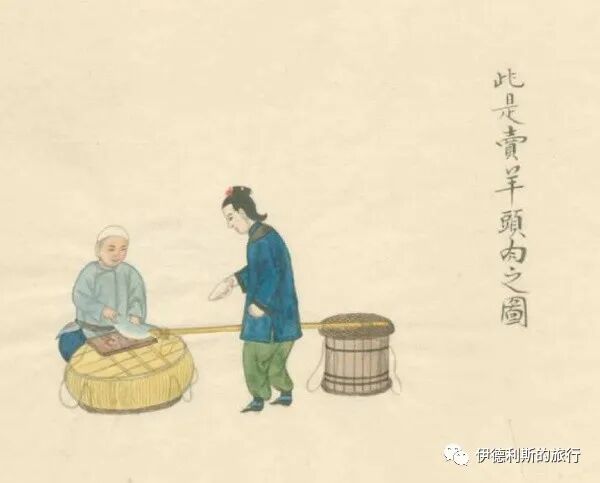
Chongwen.
1. Douzhi Ding (Jinxin Douzhi Shop) at Huashi outside Chongwenmen
Douzhi Ding's stall is in front of the Fire God Temple (Huoshen Miao) on the north side of the road, in the middle-west section of Xihuashi.
The owner of Douzhi Ding's stall is naturally surnamed Ding; he is a Hui Muslim named Ding Derui. His stall is unique. It features a large table over three meters long and one meter wide, with long benches lined up in front. On the table are two glass covers; one protects various pickled vegetables and spicy shredded salted vegetables, while the other holds sesame flatbreads (shaobing), crispy fried dough rings (jiaoquan), and other staples. There are also two wooden signs on the table, carved with eight large characters: 'Hui Muslims from the Western Regions, Douzhi Ding's Shop'. Ding Derui follows old traditions to boil the mung bean milk (douzhi). He uses a large clay pot and a betel nut ladle (binglang shao), simmering it over a low fire while adding raw mung bean milk to the pot as it cooks. He makes his mung bean milk (douzhir) with the perfect thickness, so it does not settle or become watery. It tastes sour, fragrant, and sweet, making it very delicious and addictive.
Outside Hademen by Zhang Fan
The stall is located to the left of the Fire God Temple gate in West Huashi. It has tables facing west and opens every day at noon. The table is over 10 feet long with benches in front. Two large glass covers sit on top, protecting large fruit plates filled with pickled cabbage, pickled cucumbers, small pickled radishes, and pickled asparagus. Spicy mustard greens are served with the mung bean milk. In spring, they serve quick-pickled kohlrabi, and in winter, they serve spicy dried radish cubes. Customers who buy fine pickles get chili oil. The food includes sesame flatbread (shaobing) and fried dough rings (jiaoquan).
The owner, surnamed Ding, is a Hui Muslim. He keeps two wooden signs on his table with eight green-painted characters: Western Region Hui, Ding's Mung Bean Milk. Most customers are regulars who visit every day at the same time. On market days, the benches are full, and business is booming. In January 1958, food stalls were merged into cooperatives. Ding's Mung Bean Milk moved to Suanshikou and is now the Jinxin Mung Bean Milk Shop, which still follows the traditions of Ding's Mung Bean Milk.
Reminiscing about Hademen by Niu Qingshan
Ding's Mung Bean Milk started as a shoulder-pole business. He was the first to sell it, and he was already famous in Beijing during the Qing Dynasty. People called this Hui Muslim man and his carrying pole Ding's Mung Bean Milk. It was not until 1910 that the third generation of Ding's Mung Bean Milk set up a stall in front of the Fire God Temple in the middle of Huashi Street. They finally had a long table and a permanent large pot. For a mung bean milk business, this was considered very successful. That was a famous open-air snack street in Beijing, second only to Menkuang Hutong. At that time, various stalls lined up in front of the Fire God Temple, stretching east all the way to Yangshikou.
Blues in the South of the City by Xiao Fuxing
2. Rongxiangcheng Hui Muslim snack shop (Jinfang Snack Shop) outside Chongwenmen
Rongxiangcheng Snack Shop, located at 17 Hademen Outer Street, is a well-known eatery in the Chongwenmen area.
The shop opened in the early Republic of China period. The owner was Man Leting, known as Man Liu, a Hui Muslim from Shandong. The manager was Ai Lianying. The shop's sign, Rongxiangcheng, was inscribed by the famous scholar Jiang Chaozong.
Inside the shop, there is another plaque, Cangzhen, inscribed by the Zhili clique warlord Wu Peifu. The shop started by selling beef and mutton. By the 1940s, business improved significantly, and it expanded from two storefronts to four. As the business grew, they changed their strategy to combine the mutton trade with the snack trade (qin hang).
In the past, Beijing mutton shops were called mutton trades (yang hang), and their business was very seasonal. Since spring and summer are the growing seasons for sheep, they could not be slaughtered until after autumn. Because of this, people in the trade said, 'The mutton business is idle for half the year.' Old Beijingers also said, 'When visiting graves at Qingming, the mutton sellers close their doors.' To change this idle period, the shop adapted to market needs by buying Japanese refrigeration equipment. During spring and summer, they sold homemade popsicles, soda, and other frozen foods (leng shi). In autumn and winter, they focused on mutton again. This change kept them busy all year and made the shop's name increasingly famous.
In Beijing, this combined business model was common, with different terms: two shops under one manager was called 'four edges' (si ba bian), and renting out a portion to others was called 'carrying a robe' (tiao pao). Rongxiangcheng was the former, and their snack section focused on frozen foods, which was quite new at the time.
Just before the liberation, war blocked mutton shipments from Inner Mongolia to Beijing. The mutton trade plummeted, and Rongxiangcheng was no exception. At this time, Man Kaiqi, a fellow townsman of Man Leting, came to the shop. He came from a background in a traditional pastry shop (bobo pu). In the old snack trade, a pastry shop was considered lower in status than a bakery but higher than a restaurant. Rongxiangcheng simply stopped selling mutton and switched to snacks and frozen foods. Man Kaiqi's skills were put to good use. Under his management, they offered up to 20 varieties of snacks: sticky rice cake (qiegao), fried cake (zhagao), sesame ball (matuan), fried dough twist (mahua), sweet rice ball (yuanxiao), sugar ear (tangerduo), steamed rice cake (aiwowo), soybean flour cake (lvdagun), apricot tea (xingcha), millet porridge (miancha), tofu pudding (doufunao), sesame flatbread (shaobing), fried dough cake (youbing), and bean paste bun (doubao). This made Rongxiangcheng a famous Hui Muslim snack shop in the Chongwai area.
After the Cultural Revolution, Rongxiangcheng was renamed Jinfang Snack Shop. In the mid-1990s, due to the expansion of Chongwai Street, the shop moved to the Tianqiao intersection for a time. Its current location is on the east side of the south entrance of Chongwai Street. This time-honored shop in the South City has started its glorious journey once again.
Reminiscing about Hademen by Niu Qingshan Collapse Read »
Summary: Beijing Muslim History: Old Halal Notes from the Southern City is presented here as a firsthand travel account in clear English, beginning with this scene: Chongwen:. The account keeps its focus on Beijing Muslim History, Southern Beijing, Hui Muslims while preserving the names, places, food, and historical details from the Chinese source. This retry section is 1 of 2.
Section 1 of 2
Table of Contents
Chongwen:
1. Douzhi Ding (Jinxin Douzhi Shop) at Huashi outside Chongwenmen
2. Rongxiangcheng Hui Muslim snack shop (Jinfang Snack Shop) outside Chongwenmen
Xuanwu:
1. Xianbing Porridge Shop at Meishi Bridge outside Qianmen
2. Yangtou Ma (Sheep Head Ma) at Langfang Ertiao outside Qianmen
3. Yitiaolong Mutton Restaurant outside Qianmen
4. Ai's steamed rice cake (aiwowowo) stall on Menkuang Hutong outside Qianmen
5. Fushunzhai spiced beef shop at the south entrance of Menkuang Hutong outside Qianmen
6. Bai's tofu pudding (doufunao) on Menkuang Hutong outside Qianmen
7. Baodu Feng (quick-boiled tripe) on Menkuang Hutong outside Qianmen
8. Niangao Wang (Rice Cake King) on Menkuang Hutong outside Qianmen
9. Mujiazhai at Zangjia Bridge outside Qianmen
10. Xiangjugong halal pastry shop on Qianmen Street
11. Ha's sesame flatbread (shaobing) shop at Liulichang outside Hepingmen
12. Nanlaishun snack shop at Caishikou outside Xuanwumen
13. Zhengxingde tea house at Caishikou outside Xuanwumen
14. Scalded dough fried cake (tangmian zhagao) at the Hui Muslim breakfast shop a short distance left from the east entrance of Xiangluying Sitiao Hutong outside Xuanwumen
15. Jubaoyuan on Niujie
16. The large halal canteen at the north entrance of Niujie Street.
17. A child selling malt sugar sticks (maiyatang) on Niujie Street.
18. A vendor selling sticky rice cake (qiegao) on Niujie Street.
19. Steamed corn buns (wotou) from the old neighbors of Niujie Street.
20. Soybean paste noodles (zhajiangmian) from the old neighbors of Niujie Street.
21. The Barbecue King (Kaorou Wang) at Tianqiao.
Others:
1. Hui Muslim businesses roaming the streets and alleys.
2. A halal rice cake (niangao) stall at the temple fair.
3. Mutton stall (yangrou chuangzi).
4. Shopkeeper Hua, who sells beef head meat from a wheelbarrow.
5. Bai Family Sesame Flatbread Shop (shaobing pu).
6. A roasted mutton stall in the hutong.
Chongwen.
1. Douzhi Ding (Jinxin Douzhi Shop) at Huashi outside Chongwenmen
Douzhi Ding's stall is in front of the Fire God Temple (Huoshen Miao) on the north side of the road, in the middle-west section of Xihuashi.
The owner of Douzhi Ding's stall is naturally surnamed Ding; he is a Hui Muslim named Ding Derui. His stall is unique. It features a large table over three meters long and one meter wide, with long benches lined up in front. On the table are two glass covers; one protects various pickled vegetables and spicy shredded salted vegetables, while the other holds sesame flatbreads (shaobing), crispy fried dough rings (jiaoquan), and other staples. There are also two wooden signs on the table, carved with eight large characters: 'Hui Muslims from the Western Regions, Douzhi Ding's Shop'. Ding Derui follows old traditions to boil the mung bean milk (douzhi). He uses a large clay pot and a betel nut ladle (binglang shao), simmering it over a low fire while adding raw mung bean milk to the pot as it cooks. He makes his mung bean milk (douzhir) with the perfect thickness, so it does not settle or become watery. It tastes sour, fragrant, and sweet, making it very delicious and addictive.
Outside Hademen by Zhang Fan
The stall is located to the left of the Fire God Temple gate in West Huashi. It has tables facing west and opens every day at noon. The table is over 10 feet long with benches in front. Two large glass covers sit on top, protecting large fruit plates filled with pickled cabbage, pickled cucumbers, small pickled radishes, and pickled asparagus. Spicy mustard greens are served with the mung bean milk. In spring, they serve quick-pickled kohlrabi, and in winter, they serve spicy dried radish cubes. Customers who buy fine pickles get chili oil. The food includes sesame flatbread (shaobing) and fried dough rings (jiaoquan).
The owner, surnamed Ding, is a Hui Muslim. He keeps two wooden signs on his table with eight green-painted characters: Western Region Hui, Ding's Mung Bean Milk. Most customers are regulars who visit every day at the same time. On market days, the benches are full, and business is booming. In January 1958, food stalls were merged into cooperatives. Ding's Mung Bean Milk moved to Suanshikou and is now the Jinxin Mung Bean Milk Shop, which still follows the traditions of Ding's Mung Bean Milk.
Reminiscing about Hademen by Niu Qingshan
Ding's Mung Bean Milk started as a shoulder-pole business. He was the first to sell it, and he was already famous in Beijing during the Qing Dynasty. People called this Hui Muslim man and his carrying pole Ding's Mung Bean Milk. It was not until 1910 that the third generation of Ding's Mung Bean Milk set up a stall in front of the Fire God Temple in the middle of Huashi Street. They finally had a long table and a permanent large pot. For a mung bean milk business, this was considered very successful. That was a famous open-air snack street in Beijing, second only to Menkuang Hutong. At that time, various stalls lined up in front of the Fire God Temple, stretching east all the way to Yangshikou.
Blues in the South of the City by Xiao Fuxing
2. Rongxiangcheng Hui Muslim snack shop (Jinfang Snack Shop) outside Chongwenmen
Rongxiangcheng Snack Shop, located at 17 Hademen Outer Street, is a well-known eatery in the Chongwenmen area.
The shop opened in the early Republic of China period. The owner was Man Leting, known as Man Liu, a Hui Muslim from Shandong. The manager was Ai Lianying. The shop's sign, Rongxiangcheng, was inscribed by the famous scholar Jiang Chaozong.
Inside the shop, there is another plaque, Cangzhen, inscribed by the Zhili clique warlord Wu Peifu. The shop started by selling beef and mutton. By the 1940s, business improved significantly, and it expanded from two storefronts to four. As the business grew, they changed their strategy to combine the mutton trade with the snack trade (qin hang).
In the past, Beijing mutton shops were called mutton trades (yang hang), and their business was very seasonal. Since spring and summer are the growing seasons for sheep, they could not be slaughtered until after autumn. Because of this, people in the trade said, 'The mutton business is idle for half the year.' Old Beijingers also said, 'When visiting graves at Qingming, the mutton sellers close their doors.' To change this idle period, the shop adapted to market needs by buying Japanese refrigeration equipment. During spring and summer, they sold homemade popsicles, soda, and other frozen foods (leng shi). In autumn and winter, they focused on mutton again. This change kept them busy all year and made the shop's name increasingly famous.
In Beijing, this combined business model was common, with different terms: two shops under one manager was called 'four edges' (si ba bian), and renting out a portion to others was called 'carrying a robe' (tiao pao). Rongxiangcheng was the former, and their snack section focused on frozen foods, which was quite new at the time.
Just before the liberation, war blocked mutton shipments from Inner Mongolia to Beijing. The mutton trade plummeted, and Rongxiangcheng was no exception. At this time, Man Kaiqi, a fellow townsman of Man Leting, came to the shop. He came from a background in a traditional pastry shop (bobo pu). In the old snack trade, a pastry shop was considered lower in status than a bakery but higher than a restaurant. Rongxiangcheng simply stopped selling mutton and switched to snacks and frozen foods. Man Kaiqi's skills were put to good use. Under his management, they offered up to 20 varieties of snacks: sticky rice cake (qiegao), fried cake (zhagao), sesame ball (matuan), fried dough twist (mahua), sweet rice ball (yuanxiao), sugar ear (tangerduo), steamed rice cake (aiwowo), soybean flour cake (lvdagun), apricot tea (xingcha), millet porridge (miancha), tofu pudding (doufunao), sesame flatbread (shaobing), fried dough cake (youbing), and bean paste bun (doubao). This made Rongxiangcheng a famous Hui Muslim snack shop in the Chongwai area.
After the Cultural Revolution, Rongxiangcheng was renamed Jinfang Snack Shop. In the mid-1990s, due to the expansion of Chongwai Street, the shop moved to the Tianqiao intersection for a time. Its current location is on the east side of the south entrance of Chongwai Street. This time-honored shop in the South City has started its glorious journey once again.
Reminiscing about Hademen by Niu Qingshan Collapse Read »
Halal Travel Guide: Istanbul — Mosques, Turkish Food and Ottoman Streets (Part 1 of 3) — Section 1 of 2
Reposted from the web
Summary: Istanbul — Mosques, Turkish Food and Ottoman Streets is presented here as a firsthand travel account in clear English, beginning with this scene: I spent half a month traveling in Turkey from September to October 2018. While visiting historical sites in Istanbul, I tried some local food and would like to share it with you here. The account keeps its focus on Istanbul Travel, Turkish Food, Ottoman Heritage while preserving the names, places, food, and historical details from the Chinese source. This retry section is 1 of 2.
Section 1 of 2
I spent half a month traveling in Turkey from September to October 2018. While visiting historical sites in Istanbul, I tried some local food and would like to share it with you here.
Street food.
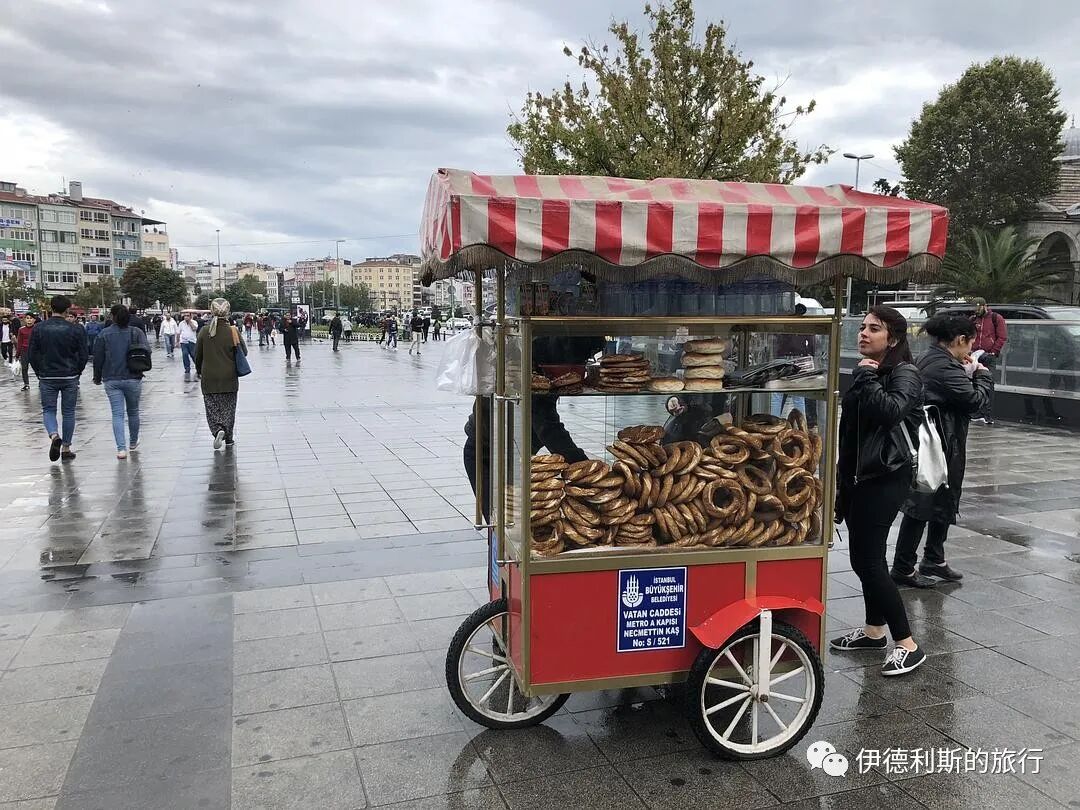
Simit is a type of bread ring popular in the former Ottoman territories and the Middle East, and it is a common street snack in Istanbul.
The word simit comes from the Arabic word samīd, which means white bread or fine flour. The earliest records of simit bread rings in Istanbul date back to 1525. By 1594, Istanbul had established the first regulations for the weight and price of simit bread rings. According to the famous 17th-century Ottoman traveler Evliya Çelebi, there were 70 simit bakeries in Istanbul in the 1630s.
Because of its low price, simit has become an important symbol for the working class in Turkey.
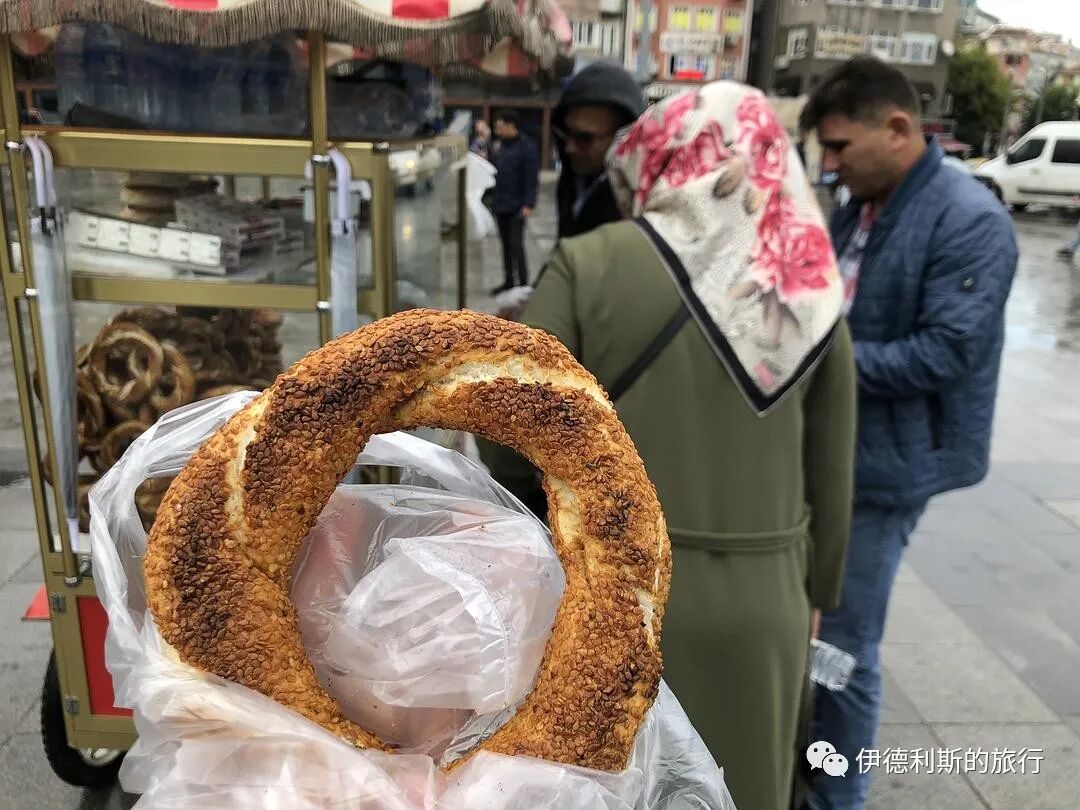
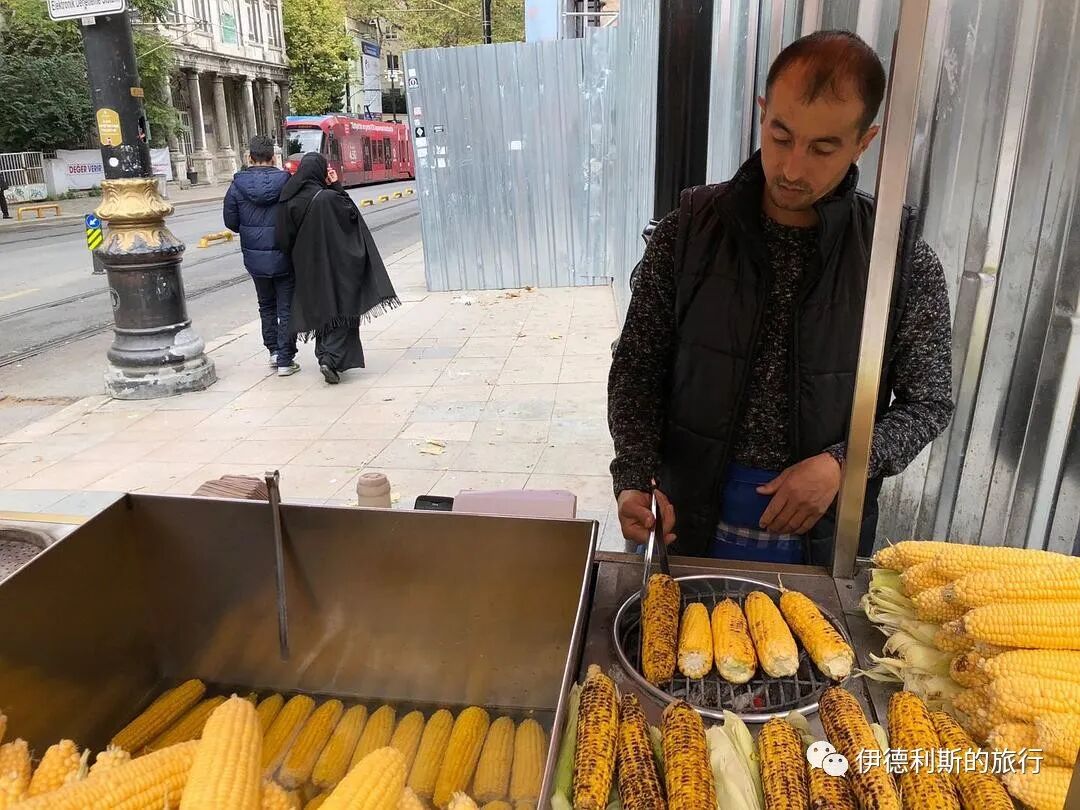
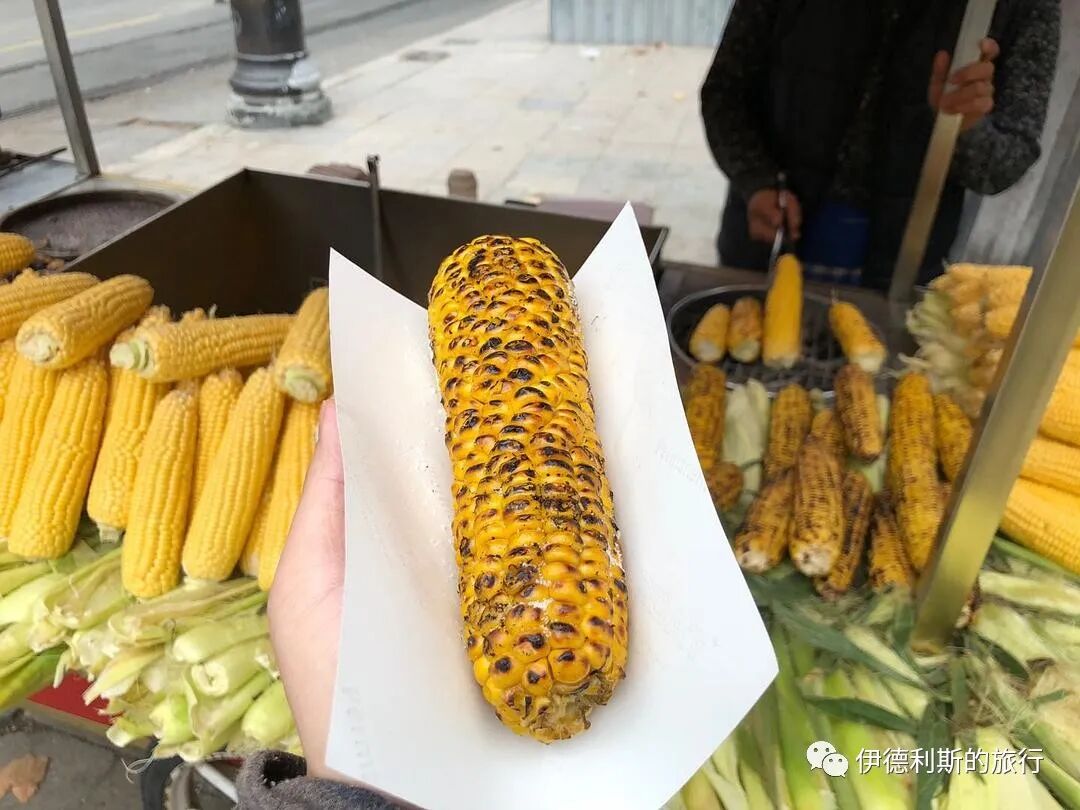
Roasted corn and boiled corn are street snacks just as common as the bread rings.
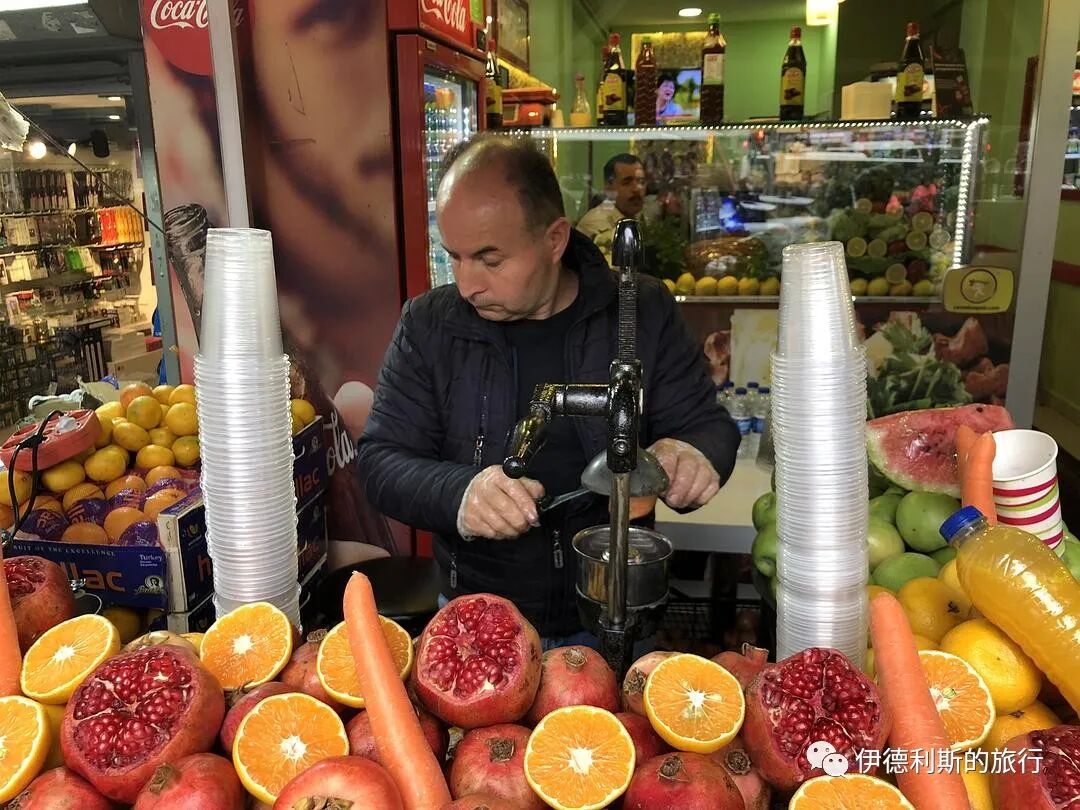
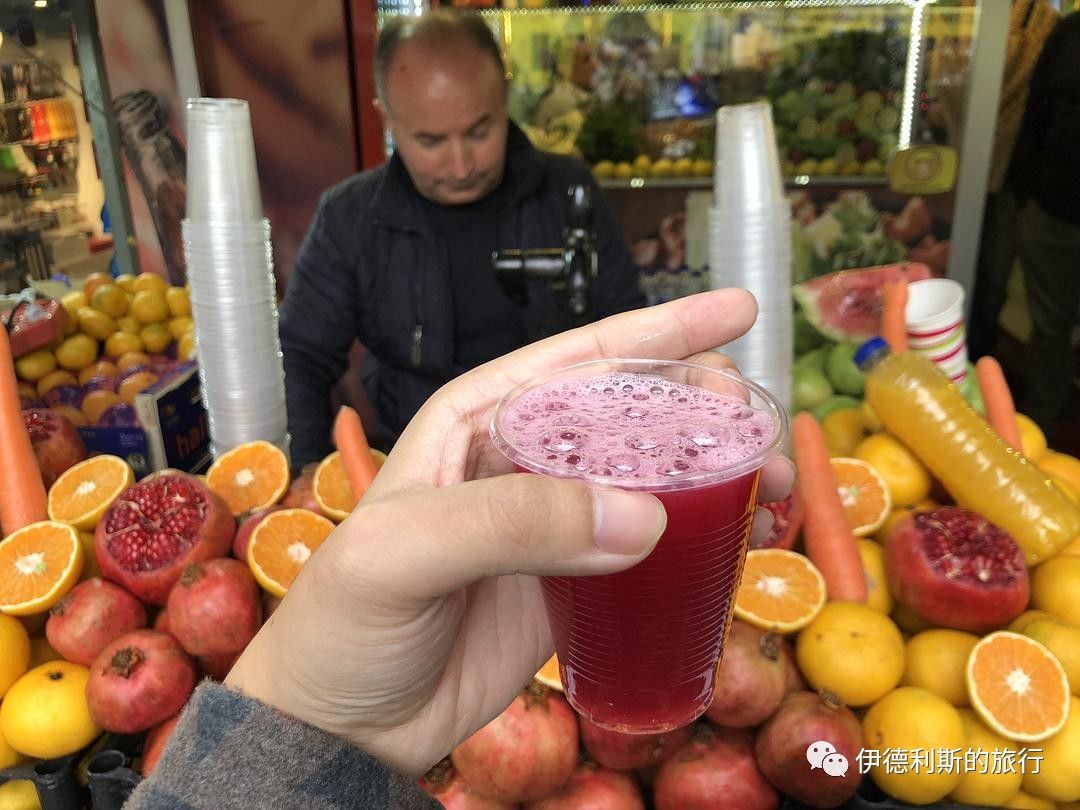
There are also various kinds of freshly squeezed fruit juices on the streets of Istanbul, and this time I had fresh pomegranate juice.
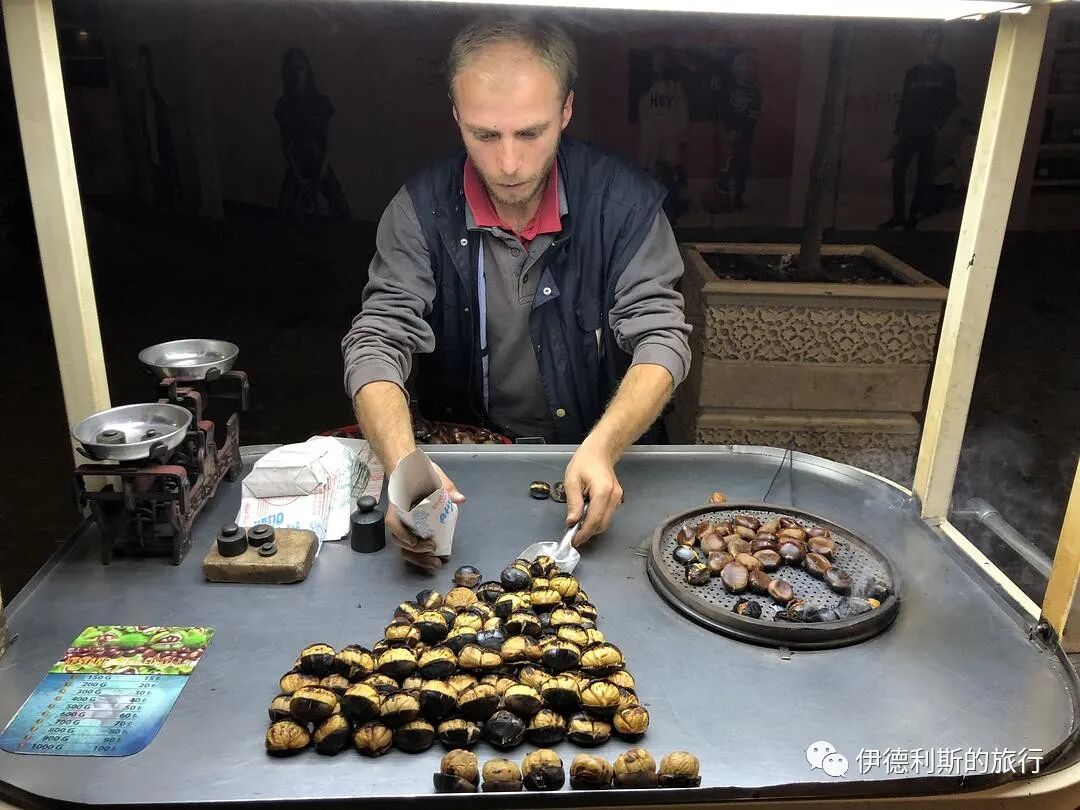
Autumn is the season for eating roasted chestnuts.
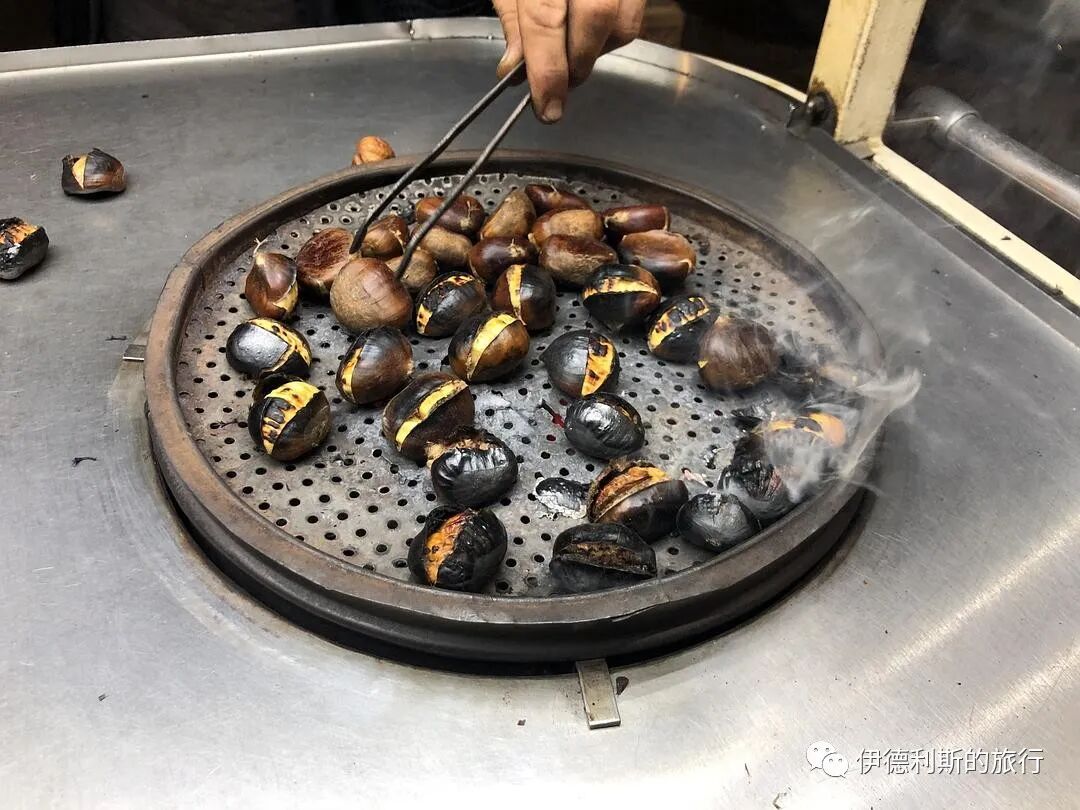
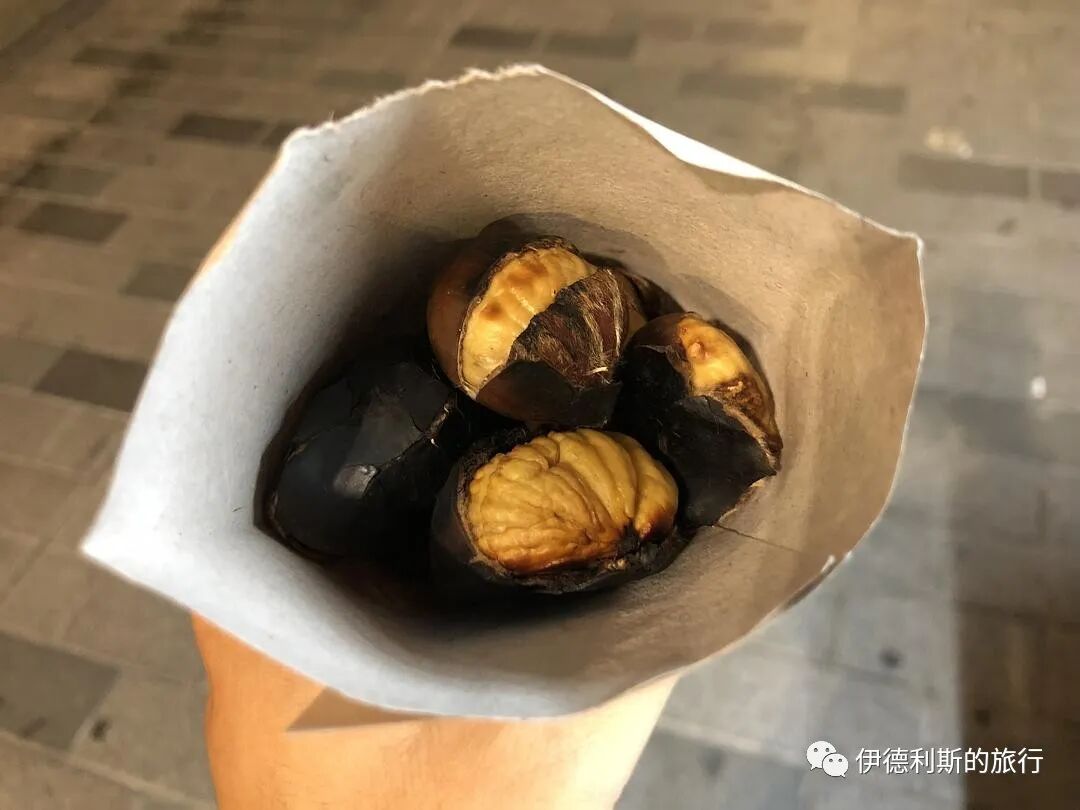
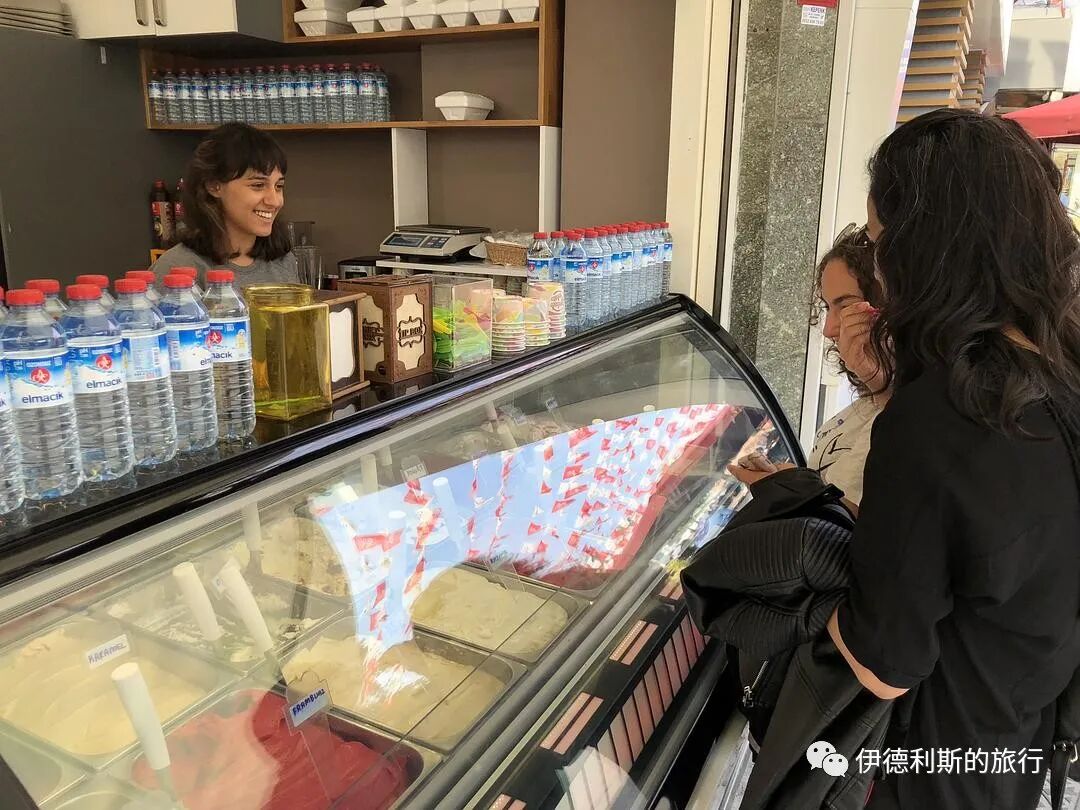
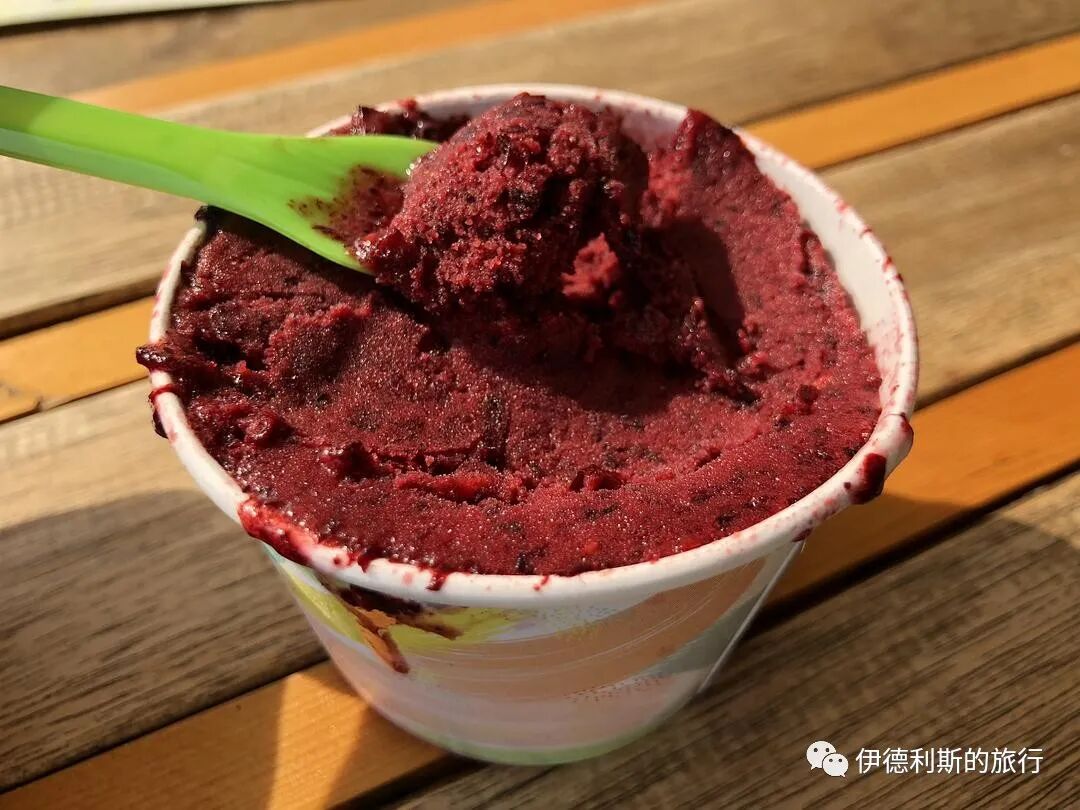
There are all kinds of ice cream shops on the streets of Istanbul. I had never eaten this black mulberry flavor before, and the young lady selling the ice cream was very sweet.
Desserts
1. Ashure porridge
There are many dessert shops in Istanbul with a wide variety of traditional sweets, and there are many on Istiklal Avenue alone. I had Turkish Ashure porridge at a dessert shop called Taxim Süitiş.
The Turkish word Ashure comes from the Arabic word Āshūrā, which means tenth. On the tenth day of the first month (Muharram) of the Islamic calendar in the year 61, the family of the Prophet's grandson, Husayn, died while fleeing Mecca due to the pursuit of the Umayyad dynasty. This day has become an important memorial day for Shia and some Sunni Muslims. For Sunni Muslims, the Day of Ashura is also an important memorial day for many events, such as when the Prophet Musa (Moses) was pursued by the Pharaoh to the Red Sea and the sea parted to create a path for them to escape, when the Prophet Nuh (Noah) left the ark, and when the Prophet Muhammad arrived in Medina.
Ashure porridge was popularized in Turkey by the Alevis. To commemorate the martyrdom of the saint Ali, the Alevis do not eat meat on this day, but instead eat Ashure porridge made from grains, fruits, dried fruits, and nuts.
The Alevis respect the saint Ali just like the Shia, but their rituals are completely different from the Shia. The Alevis are actually an Islamic sect that blends Shia and Sufi beliefs, native Turkish animism, and some Sunni elements. They are more used to expressing their faith through music and dance in a gathering hall (cemevi).
For traditional Sunni Muslims in Turkey, people share Ashura porridge (ashure) with friends, relatives, neighbors, colleagues, and classmates on the Day of Ashura, regardless of their religious beliefs. Legend says that on the Day of Ashura, after the Prophet Nuh (Noah) landed his ark, his family prepared a meal to celebrate. Because their supplies were almost gone, they mixed the remaining grains and dried fruits together to make Ashura porridge.
The recipe for Ashura porridge is not fixed; traditionally it has at least 7 ingredients, and some people use 10 to match the theme of the tenth day. The Alevis always use 12 ingredients.
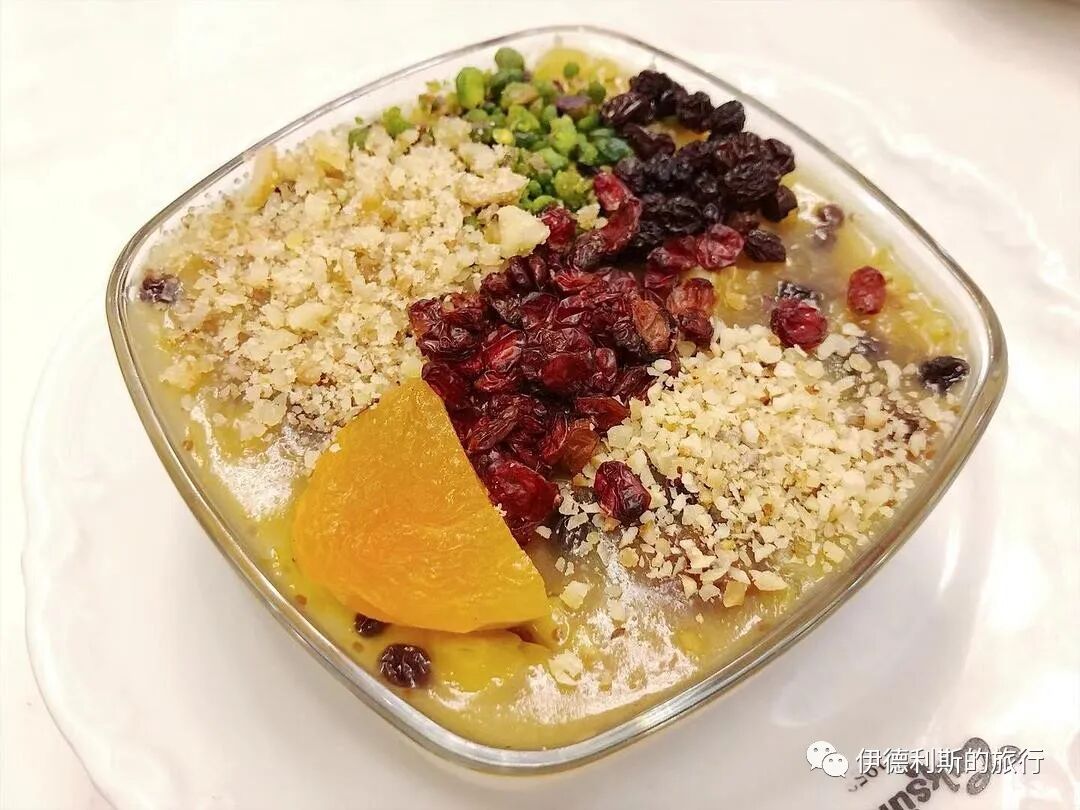
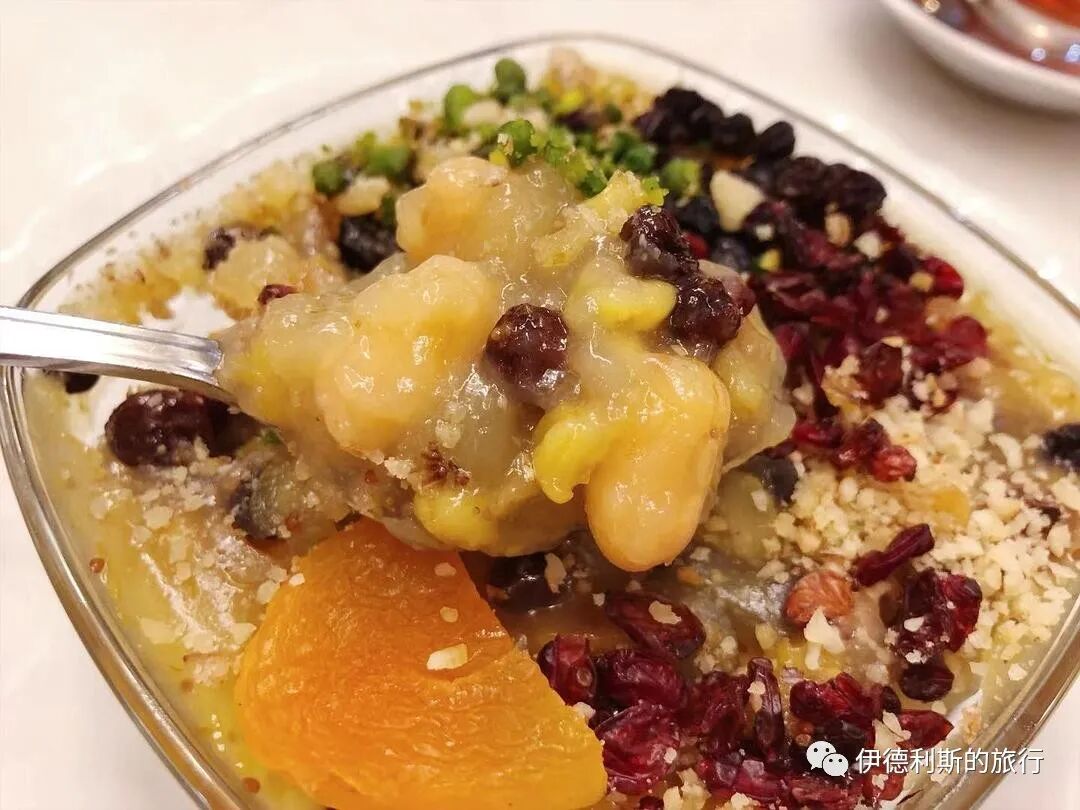
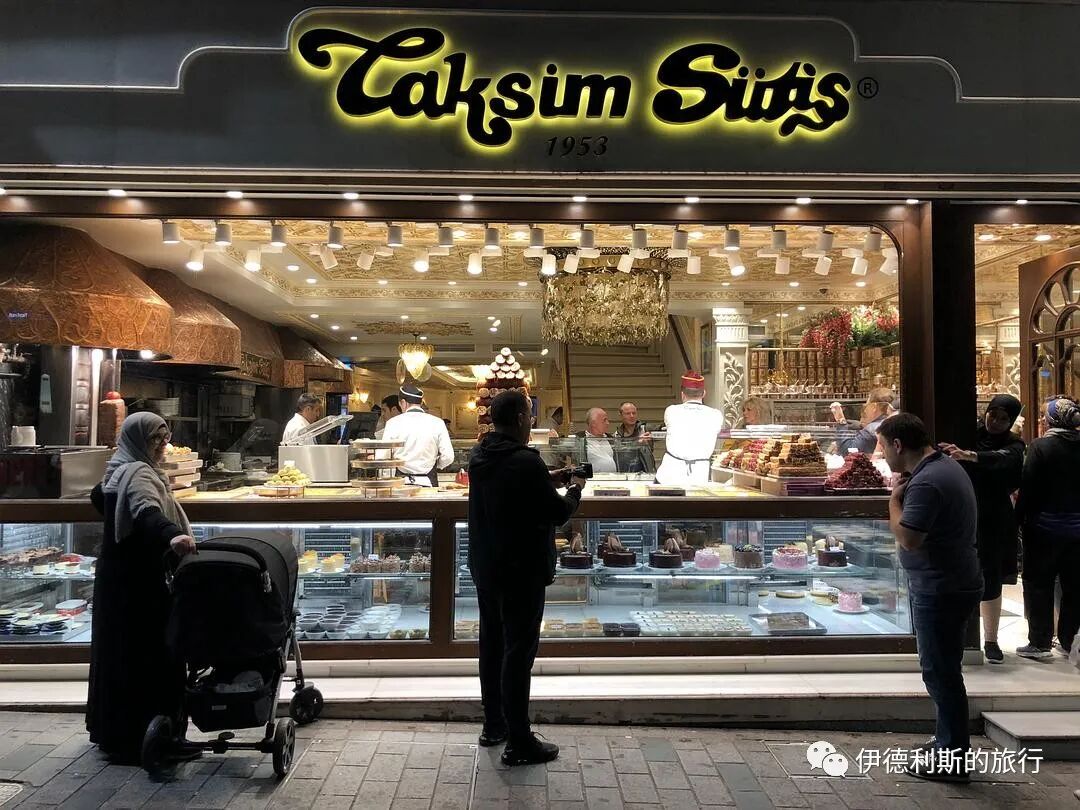
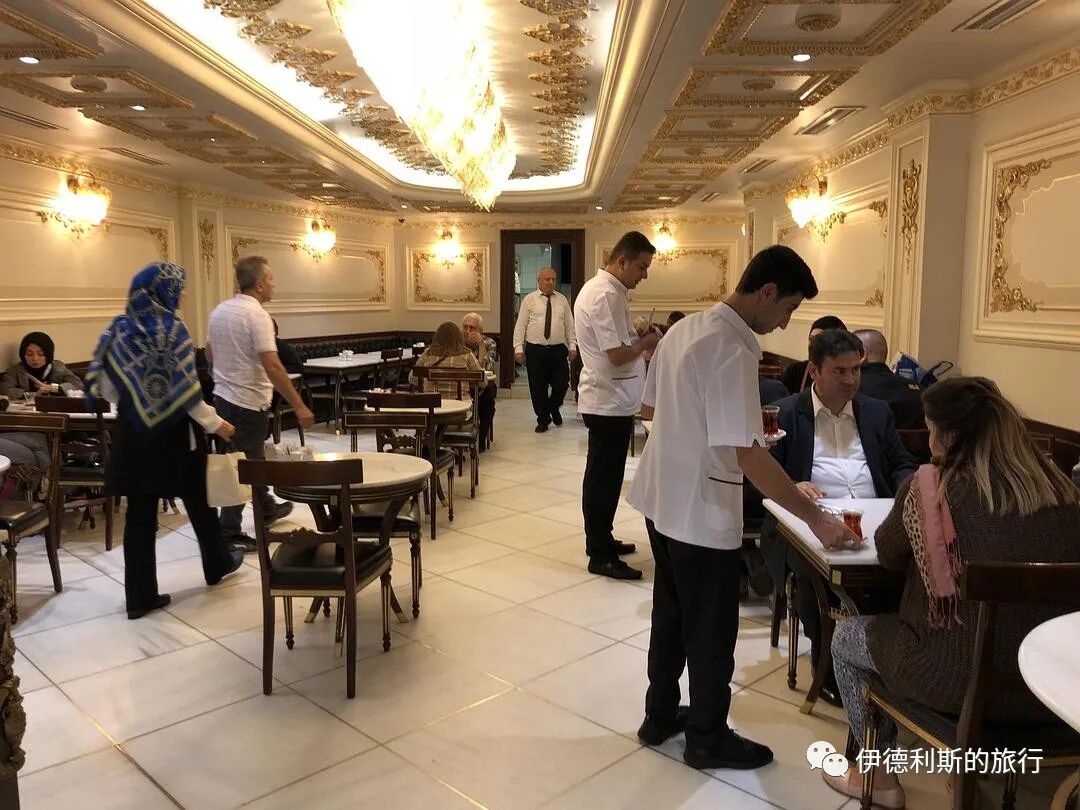
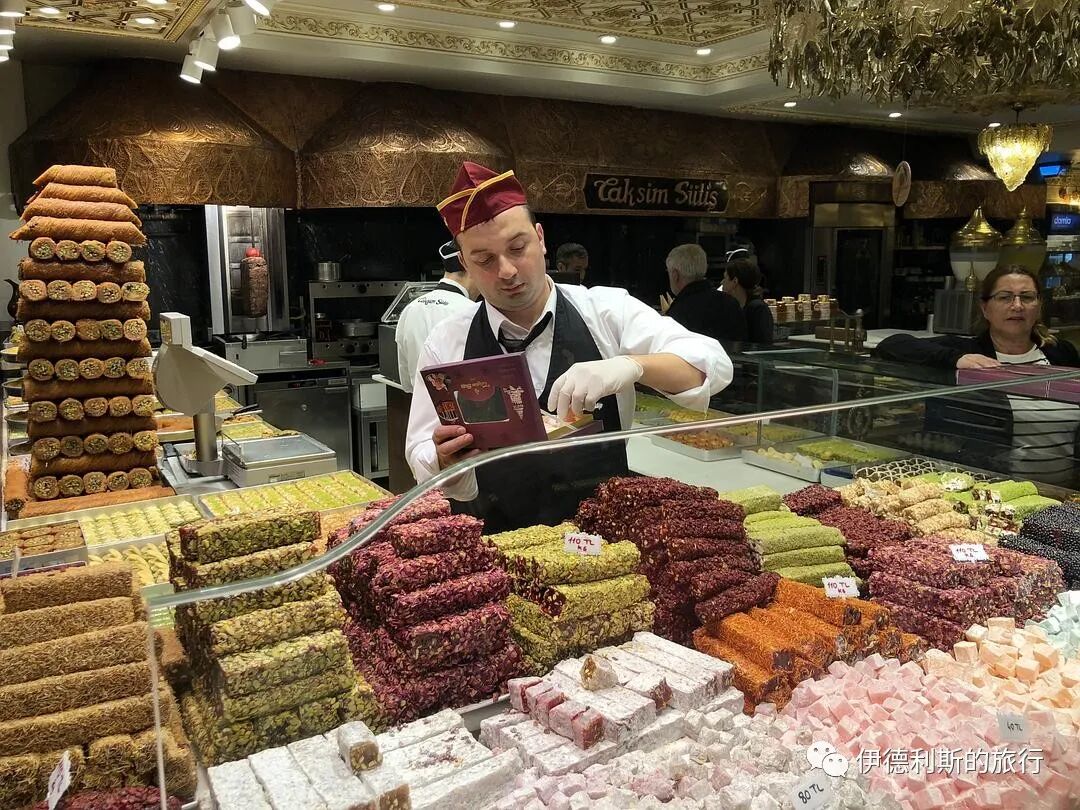
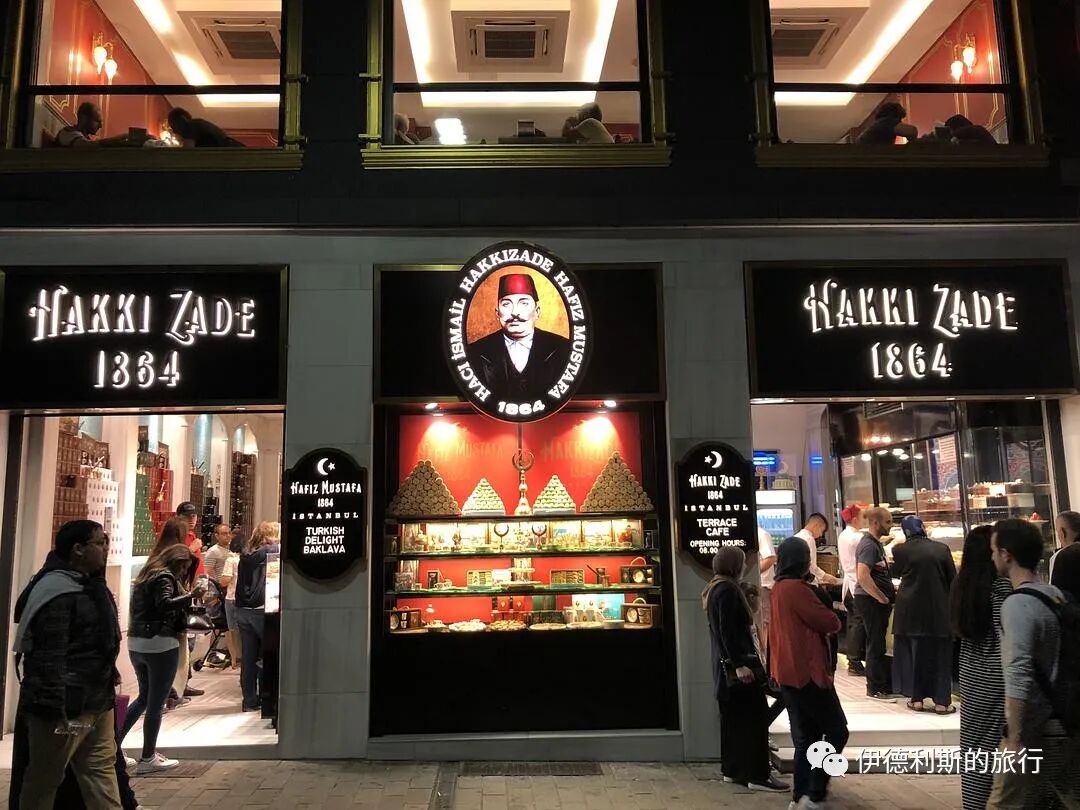
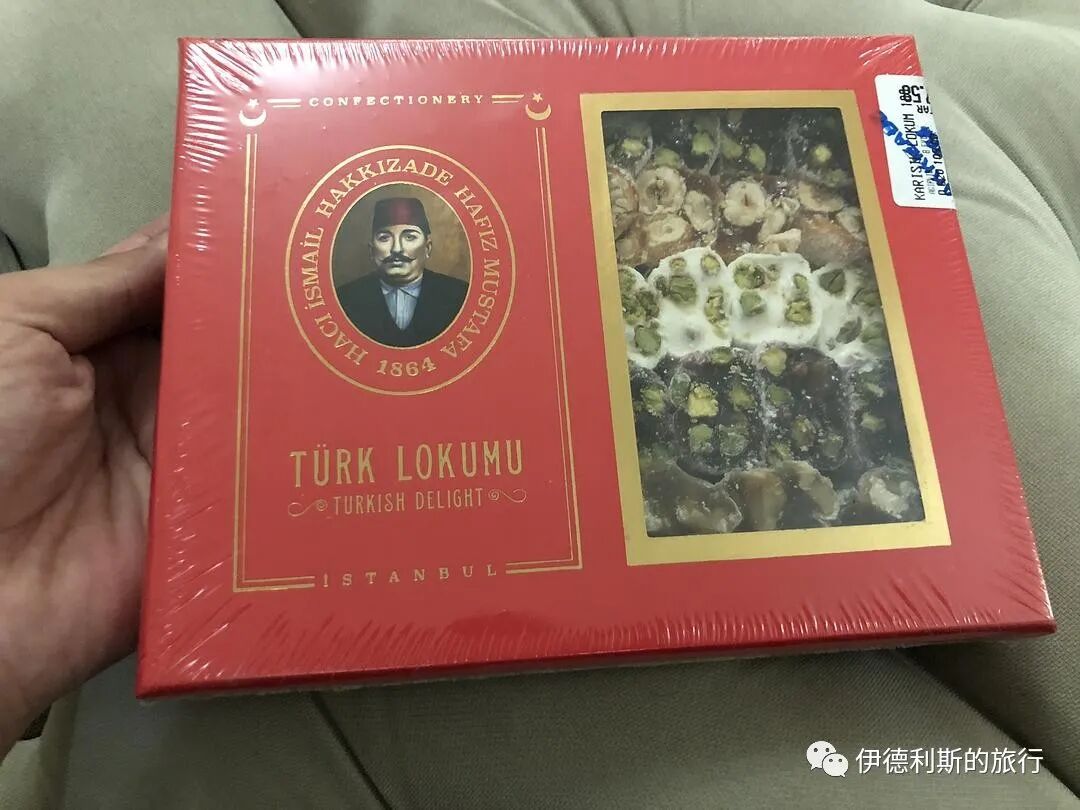
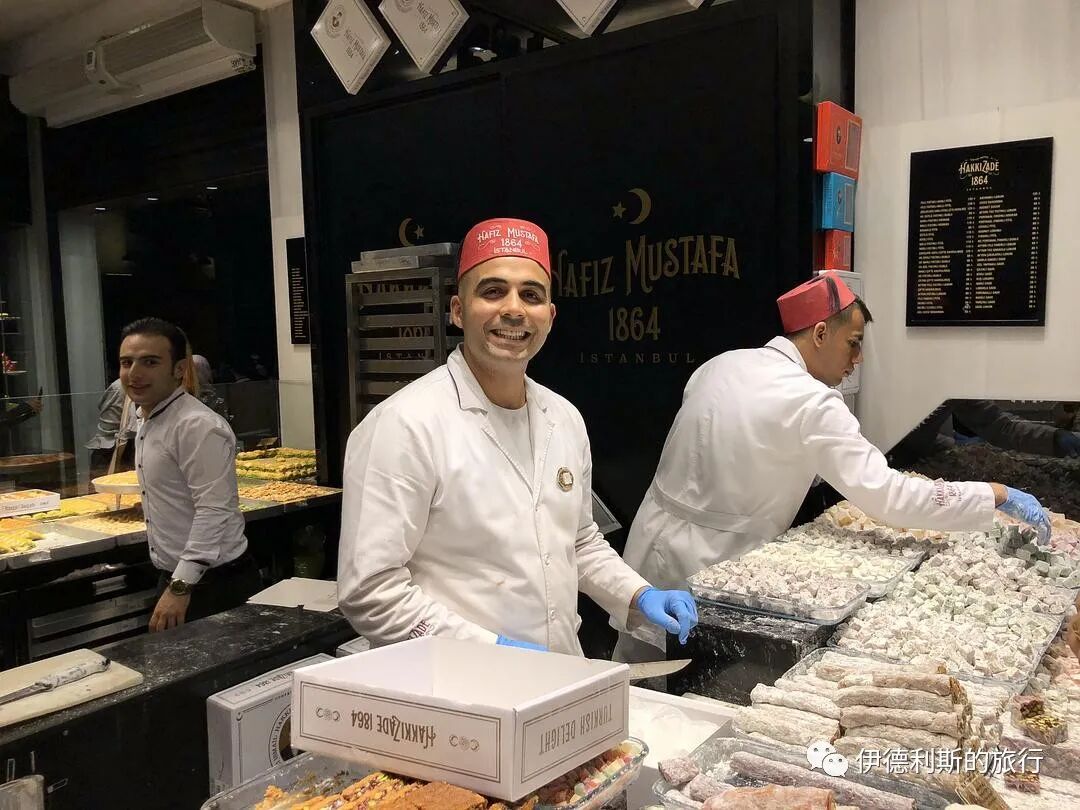
I bought a box of Turkish delight (lokum) as a gift at Hakki Zade, an old Ottoman brand and chain store on Istiklal Avenue.
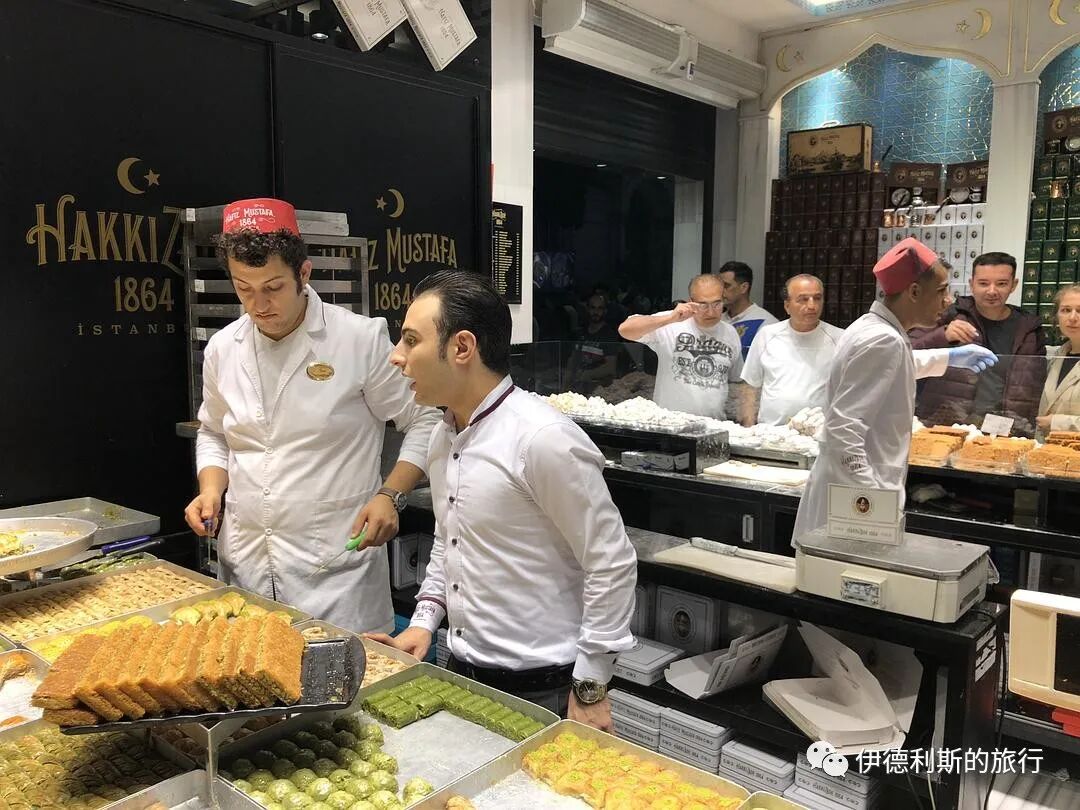
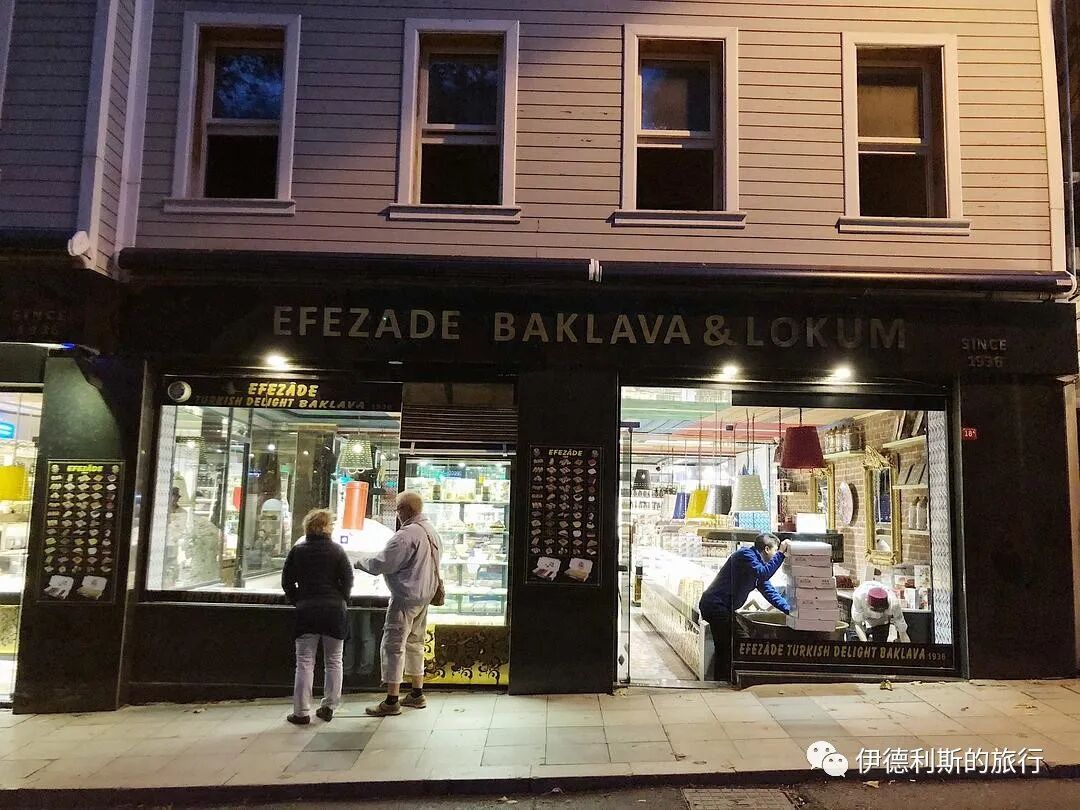
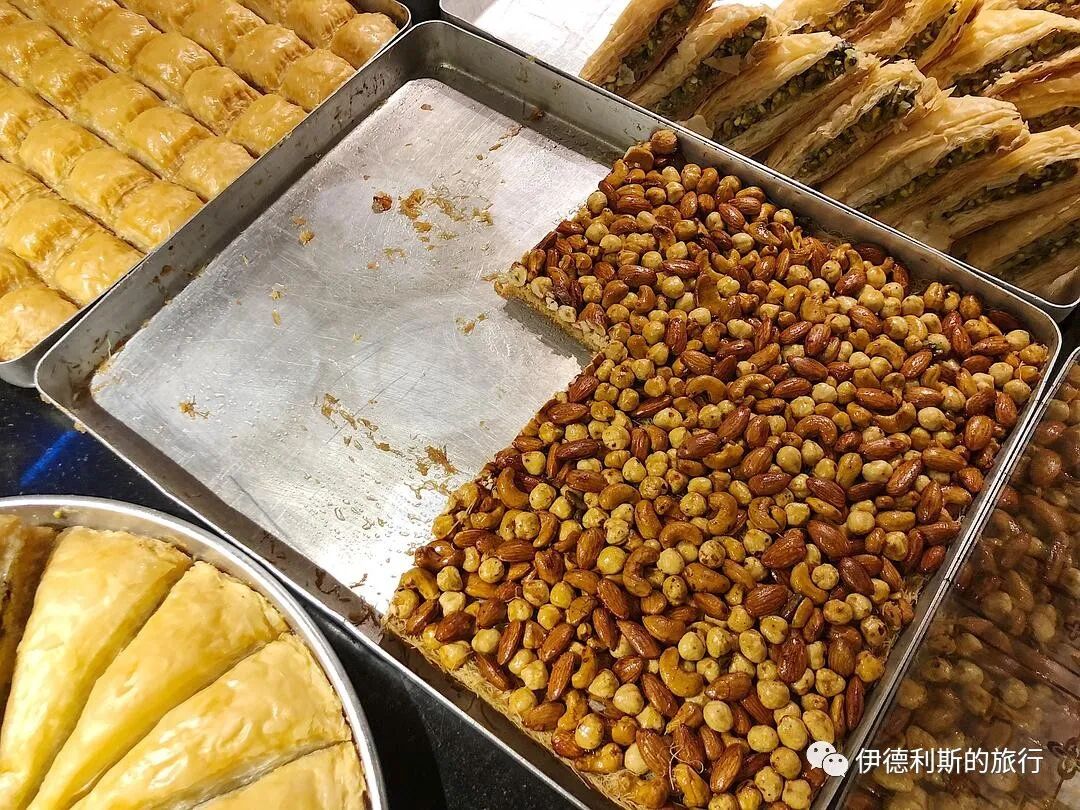
The dessert shop below, called Efezade, is not far southwest of the old Ottoman palace, and the words Baklava & Lokum above the shop name refer to Turkish pastries and Turkish delight.
Modern Turkish nut-filled pastry (baklava) is said to have come from the Ottoman court, where the Ottoman Sultan would distribute baklava on trays to the Janissaries during a procession on the 15th of Ramadan, a ceremony known as the Baklava Procession (Baklava Alayı).
There is no final conclusion about the origin of baklava in the pre-Ottoman era, but there are three mainstream views: the Byzantine Placenta pastry inherited from Rome, the layered pastry tradition of Central Asian Turks, and the Persian Lauzinaq pastry.
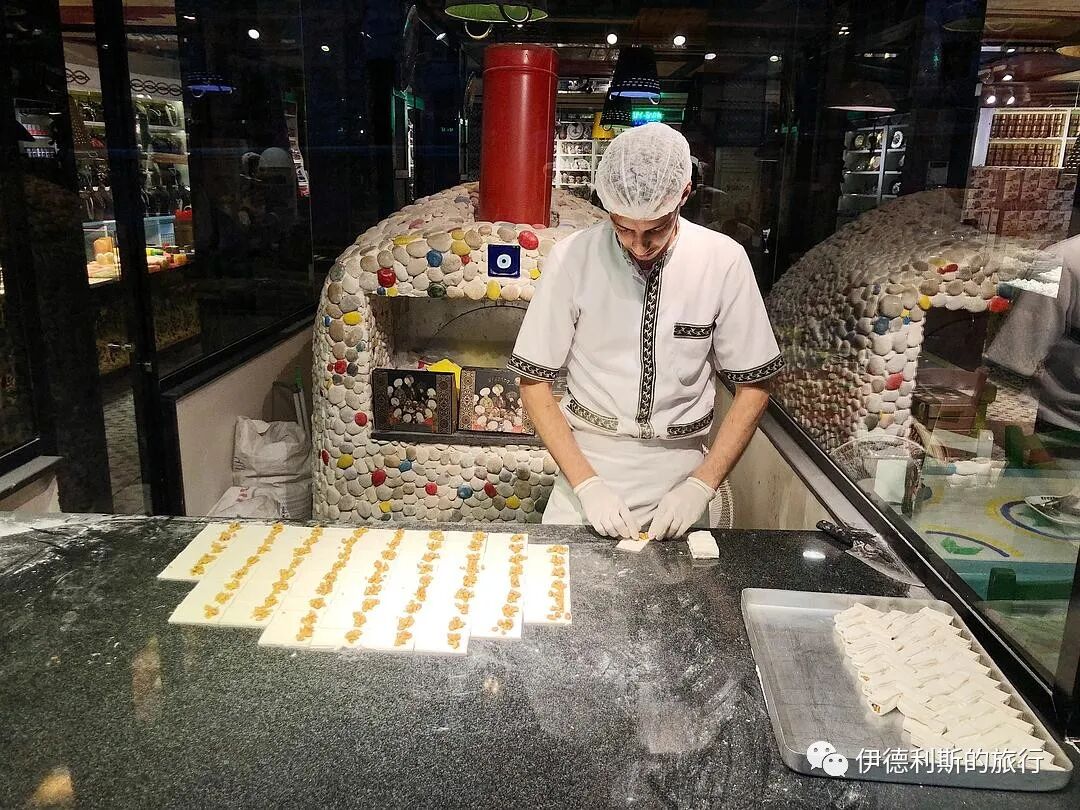
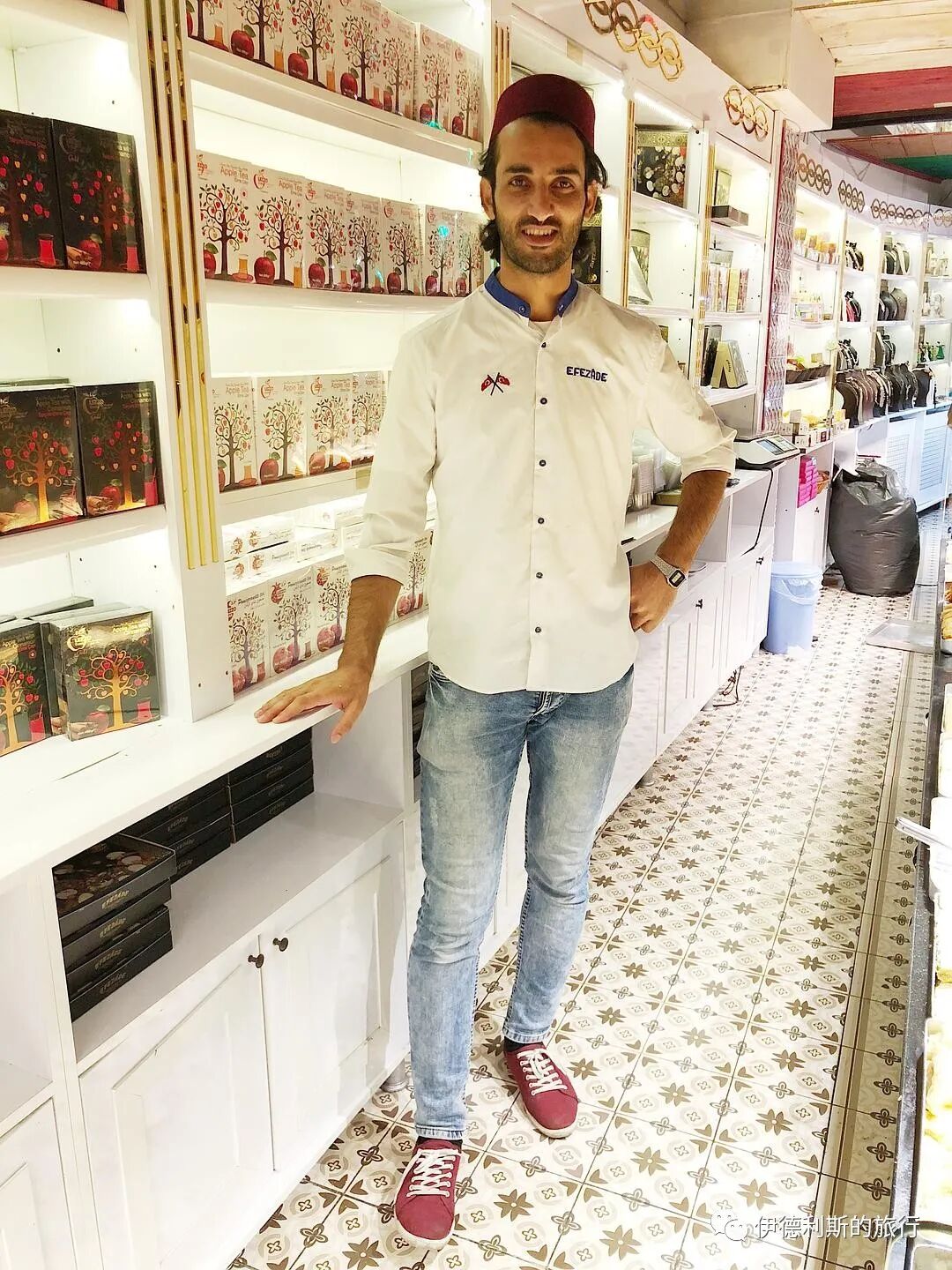
This young man was very enthusiastic and kept pestering me to teach him Chinese.
A diagram of various Turkish pastries.
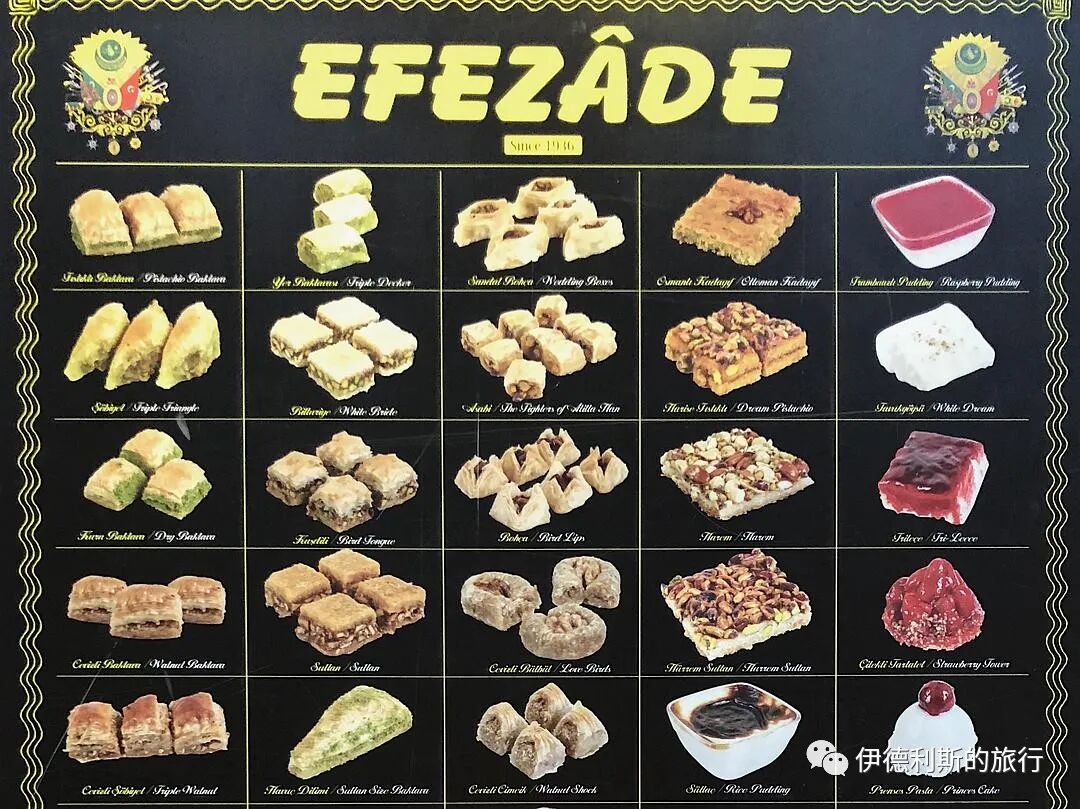
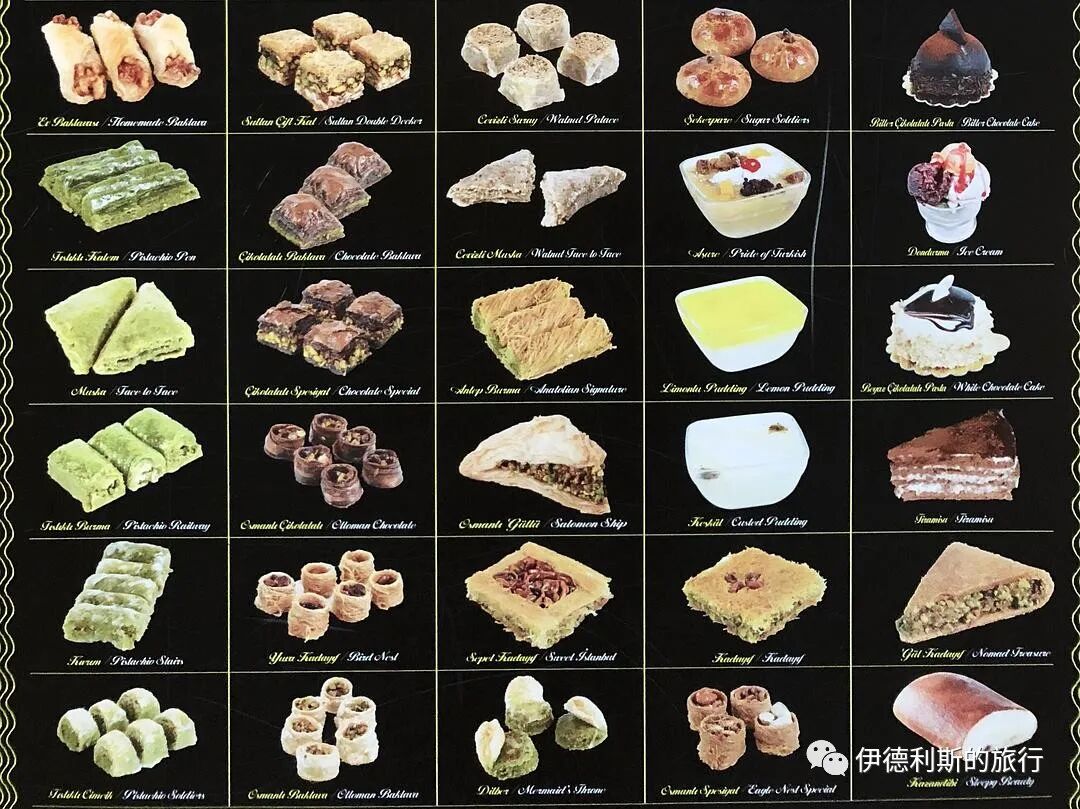
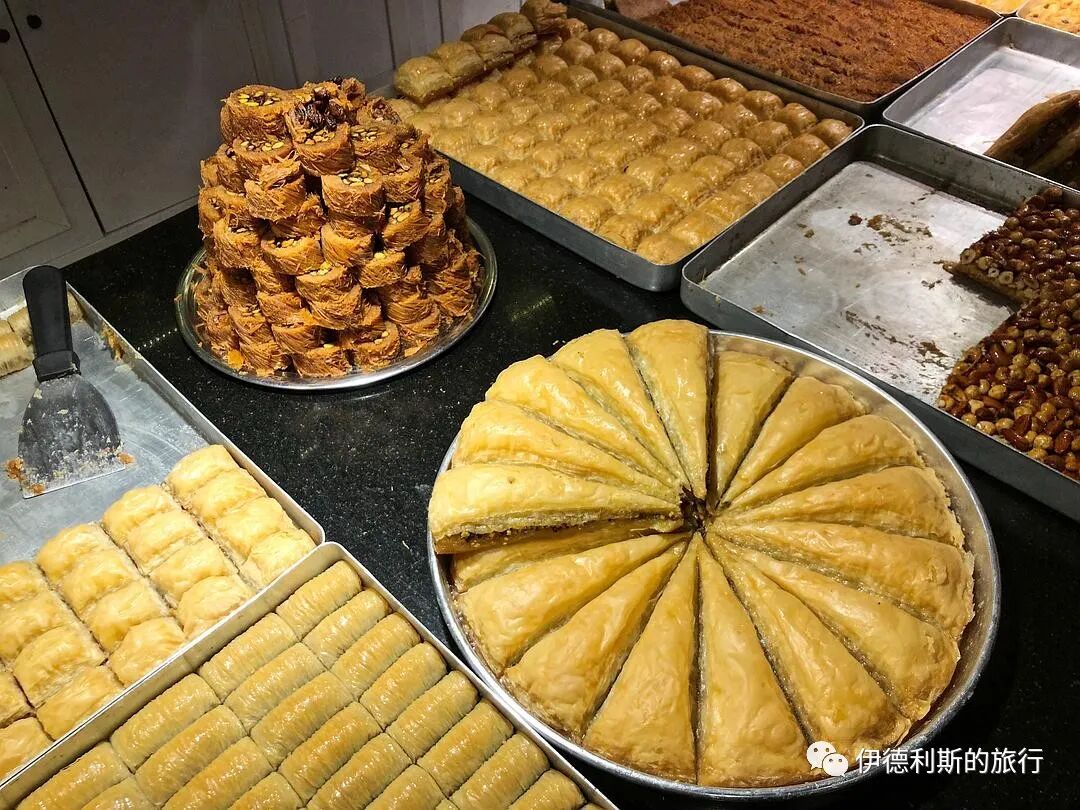
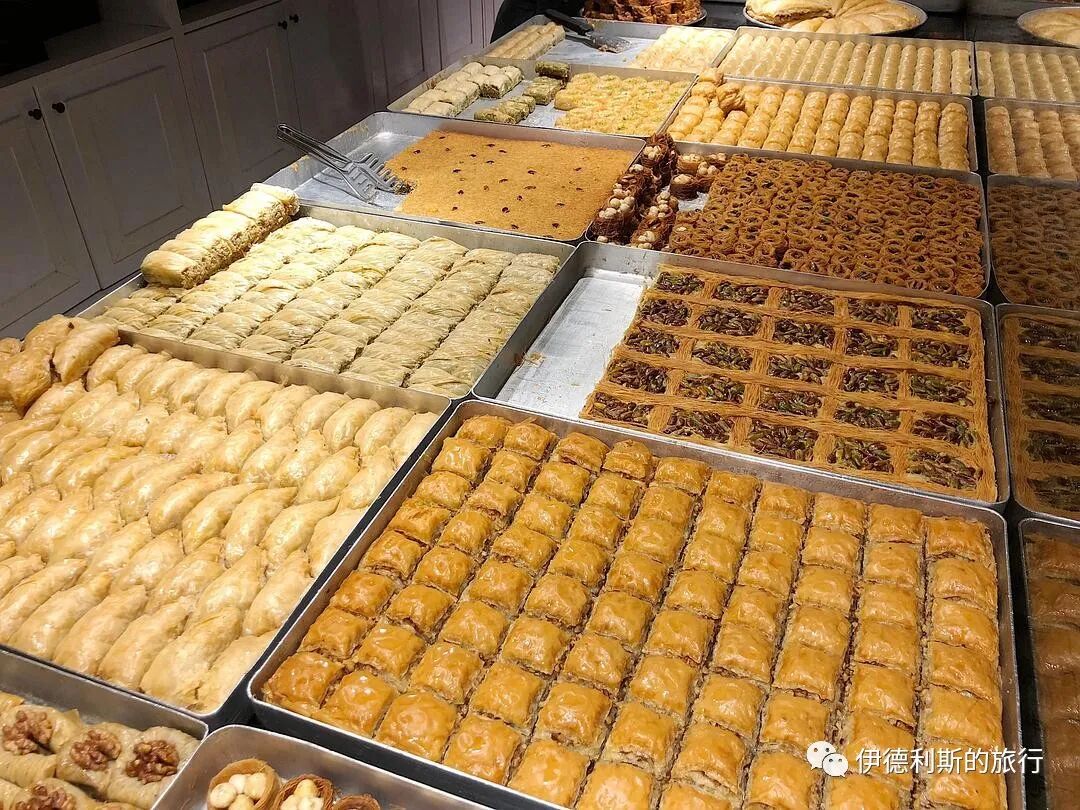
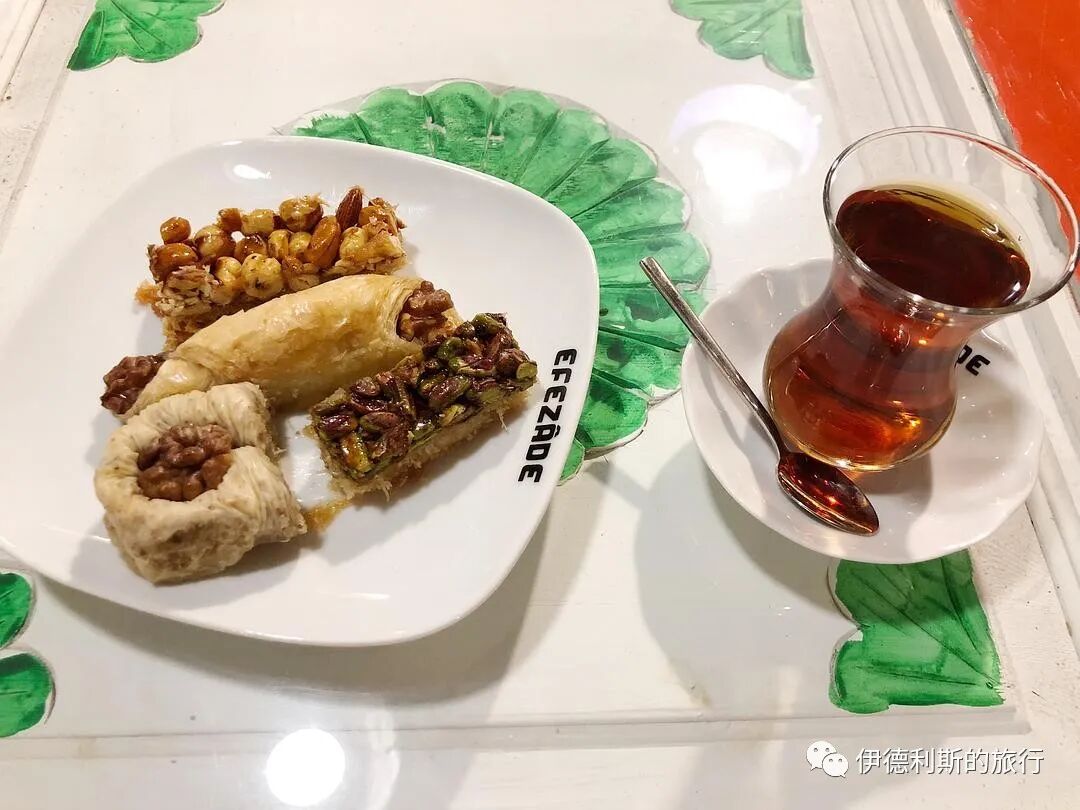
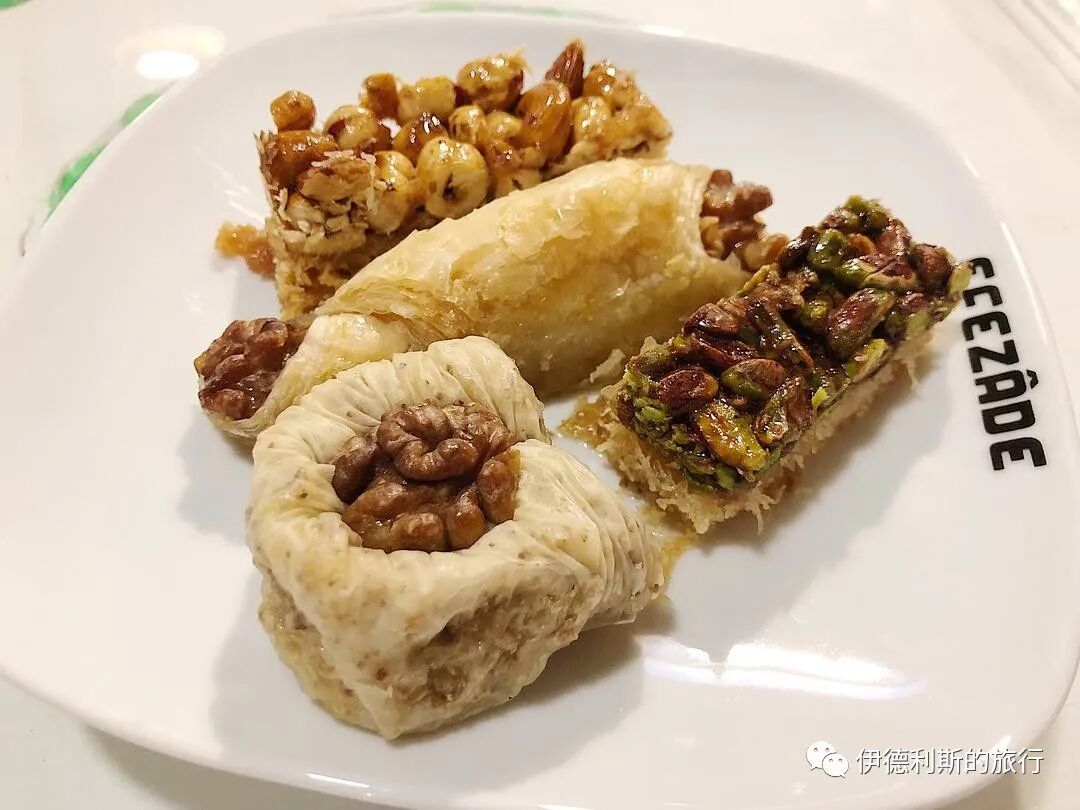
The pastry in the bottom left of the picture below is called nightingale's nest (bülbül yuvası), which translates literally to 'nightingale's nest'.
There are also various types of Turkish delight (lokum). The word lokum comes from the Arabic 'al-halkum'. Arabs call Turkish delight 'rāḥatal-ḥulqūm', which means 'throat comfort'.
According to the Hacı Bekir company, Turkish delight was brought to Istanbul from his hometown of Kastamonu by the founder, Hacı Bekir, in 1777. Some historians question this claim because similar soft candies made from starch and sugar appeared in Arab and Persian lands centuries earlier. Collapse Read »
Summary: Istanbul — Mosques, Turkish Food and Ottoman Streets is presented here as a firsthand travel account in clear English, beginning with this scene: I spent half a month traveling in Turkey from September to October 2018. While visiting historical sites in Istanbul, I tried some local food and would like to share it with you here. The account keeps its focus on Istanbul Travel, Turkish Food, Ottoman Heritage while preserving the names, places, food, and historical details from the Chinese source. This retry section is 1 of 2.
Section 1 of 2
I spent half a month traveling in Turkey from September to October 2018. While visiting historical sites in Istanbul, I tried some local food and would like to share it with you here.
Street food.
Simit is a type of bread ring popular in the former Ottoman territories and the Middle East, and it is a common street snack in Istanbul.
The word simit comes from the Arabic word samīd, which means white bread or fine flour. The earliest records of simit bread rings in Istanbul date back to 1525. By 1594, Istanbul had established the first regulations for the weight and price of simit bread rings. According to the famous 17th-century Ottoman traveler Evliya Çelebi, there were 70 simit bakeries in Istanbul in the 1630s.
Because of its low price, simit has become an important symbol for the working class in Turkey.
Roasted corn and boiled corn are street snacks just as common as the bread rings.
There are also various kinds of freshly squeezed fruit juices on the streets of Istanbul, and this time I had fresh pomegranate juice.
Autumn is the season for eating roasted chestnuts.
There are all kinds of ice cream shops on the streets of Istanbul. I had never eaten this black mulberry flavor before, and the young lady selling the ice cream was very sweet.
Desserts
1. Ashure porridge
There are many dessert shops in Istanbul with a wide variety of traditional sweets, and there are many on Istiklal Avenue alone. I had Turkish Ashure porridge at a dessert shop called Taxim Süitiş.
The Turkish word Ashure comes from the Arabic word Āshūrā, which means tenth. On the tenth day of the first month (Muharram) of the Islamic calendar in the year 61, the family of the Prophet's grandson, Husayn, died while fleeing Mecca due to the pursuit of the Umayyad dynasty. This day has become an important memorial day for Shia and some Sunni Muslims. For Sunni Muslims, the Day of Ashura is also an important memorial day for many events, such as when the Prophet Musa (Moses) was pursued by the Pharaoh to the Red Sea and the sea parted to create a path for them to escape, when the Prophet Nuh (Noah) left the ark, and when the Prophet Muhammad arrived in Medina.
Ashure porridge was popularized in Turkey by the Alevis. To commemorate the martyrdom of the saint Ali, the Alevis do not eat meat on this day, but instead eat Ashure porridge made from grains, fruits, dried fruits, and nuts.
The Alevis respect the saint Ali just like the Shia, but their rituals are completely different from the Shia. The Alevis are actually an Islamic sect that blends Shia and Sufi beliefs, native Turkish animism, and some Sunni elements. They are more used to expressing their faith through music and dance in a gathering hall (cemevi).
For traditional Sunni Muslims in Turkey, people share Ashura porridge (ashure) with friends, relatives, neighbors, colleagues, and classmates on the Day of Ashura, regardless of their religious beliefs. Legend says that on the Day of Ashura, after the Prophet Nuh (Noah) landed his ark, his family prepared a meal to celebrate. Because their supplies were almost gone, they mixed the remaining grains and dried fruits together to make Ashura porridge.
The recipe for Ashura porridge is not fixed; traditionally it has at least 7 ingredients, and some people use 10 to match the theme of the tenth day. The Alevis always use 12 ingredients.
I bought a box of Turkish delight (lokum) as a gift at Hakki Zade, an old Ottoman brand and chain store on Istiklal Avenue.
The dessert shop below, called Efezade, is not far southwest of the old Ottoman palace, and the words Baklava & Lokum above the shop name refer to Turkish pastries and Turkish delight.
Modern Turkish nut-filled pastry (baklava) is said to have come from the Ottoman court, where the Ottoman Sultan would distribute baklava on trays to the Janissaries during a procession on the 15th of Ramadan, a ceremony known as the Baklava Procession (Baklava Alayı).
There is no final conclusion about the origin of baklava in the pre-Ottoman era, but there are three mainstream views: the Byzantine Placenta pastry inherited from Rome, the layered pastry tradition of Central Asian Turks, and the Persian Lauzinaq pastry.
This young man was very enthusiastic and kept pestering me to teach him Chinese.
A diagram of various Turkish pastries.
The pastry in the bottom left of the picture below is called nightingale's nest (bülbül yuvası), which translates literally to 'nightingale's nest'.
There are also various types of Turkish delight (lokum). The word lokum comes from the Arabic 'al-halkum'. Arabs call Turkish delight 'rāḥatal-ḥulqūm', which means 'throat comfort'.
According to the Hacı Bekir company, Turkish delight was brought to Istanbul from his hometown of Kastamonu by the founder, Hacı Bekir, in 1777. Some historians question this claim because similar soft candies made from starch and sugar appeared in Arab and Persian lands centuries earlier. Collapse Read »
Beijing Muslim History: Old Halal Notes from the Northern City (Part 6 of 6)
Reposted from the web
Summary: Beijing Muslim History: Old Halal Notes from the Northern City is presented here as a firsthand travel account in clear English, beginning with this scene: East City:. The account keeps its focus on Beijing Muslim History, Northern Beijing, Hui Muslims while preserving the names, places, food, and historical details from the Chinese source. This is part 6 of 6.
Part 6 of 6
In the past, Madian Street ran north to south along an ancient road from the Ming and Qing dynasties. On both sides of the main street, lamb trading shops stood side by side. A few eateries and grocery stores were mixed in between them. Madian also had East Back Street and West Back Street. These were mainly residential areas for merchants, though they also had a few lamb shops and supporting businesses like grain shops, duck shops, and food service shops (qinhang).
Because business in Madian was booming and many people passed through, the service industry, especially the restaurant business, was very successful. Before the liberation, the restaurant business was called the food service trade (qinhang). The various snacks in the Madian food service trade were especially famous in northern Beijing. According to the village elders, the main snacks in the Madian area include sheep head meat (yangtou rou), quick-boiled tripe (baodu), mung bean jelly (liangfen), kidney bean cakes (yundou bing), and millet porridge with sesame paste (miancha). Most businesses are small, usually operating from street stalls or mobile carts.
History and Culture Research of the Garden Road Area in Beijing
9. Hui Muslim snack shops inside Xizhimen.
The halal snack shop is right at the entrance of Xinkai Alley. Inside, there is a wide variety of food like fried cakes (zhagao), sugar-coated ear-shaped fritters (tangerza), fried dough cakes (youbing), and sesame flatbreads (shaobing) piled high in baskets. Dark brown bean flour meatballs (doumian wanzi) float in a large soup pot about one meter in diameter. A fire burns underneath, and steam rises from the pot, which looks like it holds enough food to feed a hundred people for a day. It costs one mao and one liang of food stamps for a big bowl. Drizzle on some sesame paste and vinegar, then add seasonings like MSG and chopped cilantro. It arrives steaming hot with the scent of bean flour, making your mouth water.
The bean flour meatballs are deep-fried and contain thick vermicelli noodles. They are neither sticky nor hard, just right, and taste as savory and crispy as a boiled egg yolk.
Because we arrived late, we got the last two bowls, and the server scooped up all the remaining meatballs floating on top for us. The short-haired server went to the back to rest, leaving the two of us as the only customers in the empty shop. After finishing the meatballs, we could go to the big pot ourselves to ladle out more soup.
When An Heping went to get more soup, he found that even though the meatballs were gone, the bottom of the pot was full of meatball bits that were just as crispy and charred as the whole ones. An was so excited he whispered this discovery to me, his eyes shining like Aladdin finding an endless treasure chest. This was a once-in-a-lifetime chance. While the server was away, we kept an eye on the back room and carefully used the bowl-sized iron ladle to scoop up bits from the pot.
We ate bowl after bowl like royalty, completely satisfying our cravings.
In those simple and hard times, ten cents was a huge luxury, but the ten cents we spent that day became the best value in history. That day was like a bright festival, forever printed in our memories. Sina Blog
Past Events at Xinei (40) - Hui Muslim Snack Shop, by blogger 'Forever Badaowan' Collapse Read »
Summary: Beijing Muslim History: Old Halal Notes from the Northern City is presented here as a firsthand travel account in clear English, beginning with this scene: East City:. The account keeps its focus on Beijing Muslim History, Northern Beijing, Hui Muslims while preserving the names, places, food, and historical details from the Chinese source. This is part 6 of 6.
Part 6 of 6
In the past, Madian Street ran north to south along an ancient road from the Ming and Qing dynasties. On both sides of the main street, lamb trading shops stood side by side. A few eateries and grocery stores were mixed in between them. Madian also had East Back Street and West Back Street. These were mainly residential areas for merchants, though they also had a few lamb shops and supporting businesses like grain shops, duck shops, and food service shops (qinhang).
Because business in Madian was booming and many people passed through, the service industry, especially the restaurant business, was very successful. Before the liberation, the restaurant business was called the food service trade (qinhang). The various snacks in the Madian food service trade were especially famous in northern Beijing. According to the village elders, the main snacks in the Madian area include sheep head meat (yangtou rou), quick-boiled tripe (baodu), mung bean jelly (liangfen), kidney bean cakes (yundou bing), and millet porridge with sesame paste (miancha). Most businesses are small, usually operating from street stalls or mobile carts.
History and Culture Research of the Garden Road Area in Beijing
9. Hui Muslim snack shops inside Xizhimen.
The halal snack shop is right at the entrance of Xinkai Alley. Inside, there is a wide variety of food like fried cakes (zhagao), sugar-coated ear-shaped fritters (tangerza), fried dough cakes (youbing), and sesame flatbreads (shaobing) piled high in baskets. Dark brown bean flour meatballs (doumian wanzi) float in a large soup pot about one meter in diameter. A fire burns underneath, and steam rises from the pot, which looks like it holds enough food to feed a hundred people for a day. It costs one mao and one liang of food stamps for a big bowl. Drizzle on some sesame paste and vinegar, then add seasonings like MSG and chopped cilantro. It arrives steaming hot with the scent of bean flour, making your mouth water.
The bean flour meatballs are deep-fried and contain thick vermicelli noodles. They are neither sticky nor hard, just right, and taste as savory and crispy as a boiled egg yolk.
Because we arrived late, we got the last two bowls, and the server scooped up all the remaining meatballs floating on top for us. The short-haired server went to the back to rest, leaving the two of us as the only customers in the empty shop. After finishing the meatballs, we could go to the big pot ourselves to ladle out more soup.
When An Heping went to get more soup, he found that even though the meatballs were gone, the bottom of the pot was full of meatball bits that were just as crispy and charred as the whole ones. An was so excited he whispered this discovery to me, his eyes shining like Aladdin finding an endless treasure chest. This was a once-in-a-lifetime chance. While the server was away, we kept an eye on the back room and carefully used the bowl-sized iron ladle to scoop up bits from the pot.
We ate bowl after bowl like royalty, completely satisfying our cravings.
In those simple and hard times, ten cents was a huge luxury, but the ten cents we spent that day became the best value in history. That day was like a bright festival, forever printed in our memories. Sina Blog
Past Events at Xinei (40) - Hui Muslim Snack Shop, by blogger 'Forever Badaowan' Collapse Read »
Beijing Muslim History: Old Halal Notes from the Northern City (Part 5 of 6)
Reposted from the web
Summary: Beijing Muslim History: Old Halal Notes from the Northern City is presented here as a firsthand travel account in clear English, beginning with this scene: East City:. The account keeps its focus on Beijing Muslim History, Northern Beijing, Hui Muslims while preserving the names, places, food, and historical details from the Chinese source. This is part 5 of 6.
Part 5 of 6
When we arrived, the shop owner pointed to the young waiter as soon as we walked in and said, "Two people, seat them over there." The waiter then asked how much we wanted to eat and immediately brought over the meat and seasonings. Following the Beijing custom, we put our right foot on the ground and rested our left foot on the bench, then used long bamboo chopsticks to dip the meat slices in seasoning and place them on the grill. The grill was heated by a type of pine wood that produced very little smoke and had a faint, pleasant scent. The grill was very hot, and the meat slices sizzled the moment they touched it. After flipping them a few times, they were ready to eat. We had a sip of white liquor (baijiu) with each bite of meat, which felt a bit like being in a Mongolian yurt beyond the Great Wall. Toward the end of the meal, we stopped drinking and were served sesame flatbread (shaobing). We ate the flatbread with the grilled meat and finished with a bowl of porridge, which left us completely full. After putting down our bowls and chopsticks, we heard the shop owner calculating the bill: so much for this and that, with each unit of ten copper coins called a diao, adding it all up to the final total. Even while calculating the bill, he kept his knife moving and continued to slice. I was very satisfied with this meal and will definitely want to come back again. Every visit is rewarding. Eating well is one thing, but it is even more interesting to watch the owner’s style. With his big belly exposed, he stays busy but never flustered, truly living up to the description of being open and at ease.
Fuxuan Suohua by Zhang Zhongxing
Kaorou Wan as described by Jin Shoushen.
The owner of Kaorou Wan, Old Wan the Fifth, originally ran a stall selling flatbreads (bing). Back in the days when it was popular to sell grilled meat (zhengpao rou) from small carts, the Wan family was already selling grilled meat on a round iron plate (zhizi kaorou). They set up their stall at the west entrance of An'er Hutong. As time passed and business grew, they set up a shed to sell the meat and expanded from one iron grill plate to two. Every day, carriages and horses filled the entrance, yet the shop remained just a shed. Kaorou Wan uses only high-quality young beef (kaorou wan specializes in beef), which makes the meat tender and delicious. Wan Laowu is very skilled. He hand-cuts about 100 jin of beef every day. He handles all the sales himself, cutting meat and calculating the bill at the same time. He is so focused that he never makes a mistake, even with the price of a single cucumber.
Life in Old Beijing by Jin Shoushen, Kaorou Wan.
Kaorou Wan uses fuel like pine cones and pine branches that give off a fragrant scent while grilling. The fire at Kaorou Wan burns bright, and you can smell the pine aroma from far away.
Inside Kaorou Wan, the tables have special iron grills (zhizi) where diners grill the meat as they eat. First, marinate the meat slices in a sauce made of ginger juice, soy sauce, shrimp sauce (luxiayou), tomato, and egg white. Then, grease the grill with sheep tail fat and heat it up. When you are ready to eat, spread the sliced green onions on the hot grill and start cooking the meat. When the meat is almost cooked, sprinkle on some chopped cilantro and flip the slices. The beef tastes best when it turns purple, and the lamb tastes best when it turns pinkish-white. It is tender, smooth, juicy, and lean without being dry.
Time-Honored Brand: Wang Hong, Kaorou Wan.
Kaorou Wan is famous and busy because they pick high-quality meat, slice it thinly, use a full range of seasonings, and make it taste delicious. Kaorou Wan sends people to the beef and mutton market in Madian outside Deshengmen to buy fat sheep from north of the pass. The way Kaorou Wan slices meat is a family skill. They require every slice to be three inches long, one inch wide, and as thin as paper. This way, the meat on the grill (zhizi) cooks through, making it easy for customers to chew and swallow. You cannot have barbecue without green onions. They are cut into half-inch diagonal pieces for customers to use while grilling. Each customer gets a blue-rimmed porcelain bowl in front of them, filled with seasonings like dark soy sauce, sesame oil, cooking wine, sugar, chopped green onions, minced ginger, minced garlic, and salt. Back then, Kaorouwan let customers grill their own meat. Each person held a pair of wooden chopsticks over a foot long, stood with one foot on a bench and the other on the ground, and ate while they grilled.
Beijing's Commercial Streets and Time-Honored Brands by Wang Yongbin, Kaorouwan in 1930.
On the east side of the street inside Xuanwumen, near Rongxian Hutong, there used to be a small shop (really just a food stall) that only sold grilled beef. This was the famous Kaorouwan. This Kaorouwan has many unique features. Although the restaurant is small, it has been family-run for six generations. When I was around twenty years old, back in about 1930, the person running the place was a man over forty. Following the custom of Hui Muslims, Beijingers respectfully called him Wanba, which means Master Wan. He had a large head, thick eyebrows, and bright, piercing eyes. He was short and sturdy, moved quickly, and had a sharp mind with great organizational skills. He was very strict about choosing meat and only used the chuck (shangnao). His meat-slicing technique was fast and skillful. He cut large, thin slices that were free of gristle and veins, making the meat incredibly tender and rich. The beef had a milky aroma and tasted delicious when grilled, which is why Kaorou Wan has kept its fame for so long.
Kaorou Wan was just a small shop with two gray sheds set up on the sidewalk by the road. It was divided into an inner and outer room. The inner room held two grilling plates (zhizi). Because so many people came to eat, they used extra-large ones, with a diameter of up to three feet, set over a fire basin with an iron ring. Below were large round tables, and each table could fit ten people standing around it. People eating the grilled meat had no seats. They would stand with one foot on a long bench. All the seasonings, meat, bowls, flatbreads (bing), and wine were placed on the edge of the round table. Diners held wooden chopsticks two feet long—as thick as rattan, otherwise you could not reach the grill through the crowd—and waved their arms to eat heartily. You can imagine how wild and rugged the scene was. Beef is sold by the bowl, with each full bowl weighing ten taels (liang) by the old scale, and half-bowls are also available. For an average adult, ten taels is enough, and those with a bigger appetite can just add half a bowl more. Condiments are sold individually, such as a small dish of green onions or soy sauce, and you can add or remove items like sesame flatbread (shaobing) as you like. You had to bring your own liquor at first, but later they started selling liquor too, at two taels per bowl. Back then, a full meal for one person cost five or six jiao, which was a big expense. An ordinary person could eat a simple meal at a small restaurant without liquor for less than two jiao, so spending five or six jiao on a meal was considered extravagant for most residents.
Every late autumn, the smell of roasted meat would drift through Xuanwumen Street, which was quite tempting. The customers were mostly working-class people and ordinary citizens; the wealthy and powerful never came here. Later, Kaorou Wan became famous. Wealthy and powerful families heard about it, came to taste the delicious roast beef, and spread the word. Soon, prominent figures arrived in cars with their servants, and even noblewomen dripping in jewelry came to visit. These people did not mind losing their status, squeezing in between sweaty, hungry men to eat roast meat with long wooden chopsticks. Master Wan was not moved by this. He did not consider setting up a private room, nor did he stand up to flatter or entertain them. He kept doing things his own way and treated everyone the same. This style was a valuable quality among small Beijing merchants at the time.
Kaorou Wan not only had excellent meat, but Master Wan also had a unique, simple, and meticulous style, skilled and refined techniques, a sharp mind, and an organized memory. These things left a deep impression in my observations and memories. Since he only had a small business with two gray sheds, he did not have many staff. Besides himself, I remember there were only two young assistants. They just ran back and forth, moved supplies, and washed the bowls and chopsticks. Besides keeping the accounts, greeting guests, and looking after their coats, his main job was standing at the counter to slice meat. He was so skilled at slicing meat that even when twenty people ate at once, he never ran out. When the place was packed and people were bumping into each other looking for seats, he kept his eyes and ears open. He muttered calculations, sliced meat without stopping, greeted guests, and made sure people were served in the order they arrived. This person arrived first, please sit over there. Please wait a moment, you arrived just after this person. While doing all this, he also collected money and nodded goodbye to guests. At the same time, he noticed if someone took the wrong umbrella or where someone else had hung their hat and coat. His calm and organized way of working was truly amazing.
Memories of Snacks: Jin Yunzhen
3. Hui Muslim beef and mutton shop inside Xuanwumen
To the east of Liaoyuan Department Store, there used to be a Hui Muslim beef and mutton shop. It was the first shop on the west side of the north entrance of Xuannei Street before it was torn down for road expansion. The door is on the north side. Through the glass window on the south side, you can see the owner selling goods with high-quality beef and mutton behind him. This Hui Muslim beef and mutton shop had unique features, the first being its name. Shops selling halal beef and mutton are called beef and mutton shops or mutton shops, never just meat shops. The second feature is how they sell the meat. All the beef and mutton for sale is hung up on hooks. The third feature is how customers ask for meat. When a customer comes to buy meat, the shopkeeper asks how they plan to cook it—stewed, braised, or flash-fried—and then selects the right cut for them. Fourth, the knife technique. When using the knife, the shopkeeper grips the handle with their thumb, middle, ring, and little fingers, while resting their index finger on the spine of the blade. Fifth, the packaging. In summer and autumn, they wrap the meat in fresh lotus leaves, and in winter and spring, they use dried lotus leaves before handing it to the customer to carry away.
This Hui Muslim beef and lamb shop sells homemade roasted lamb (shao yangrou) every day after 4:00 p.m., and you can smell the delicious aroma all around the neighborhood. You can spend two or three jiao to buy some roasted lamb and ask the shopkeeper to let you take a bottle of old broth (laotang) on credit, then go home and pour the stewed meat broth over noodles for a truly great dinner.
Memories of the shops at the Xidan Archway from 'Past Stories of Xicheng, Beijing 7'. Ma Enci
4. Youyishun Restaurant at the Xidan intersection inside Xuanwumen
Fried dough cakes (youbing) from Youyishun Snack Bar
At that time (Wang Dongsi: 1970s), Youyishun Snack Bar occupied four and a half storefronts. The dining area was spacious with over 20 square tables, seating more than 120 people at once. However, more breakfast customers stood to eat than sat down. Just the breakfast production and service staff numbered over 20 people. For breakfast, they fried four bags of flour (200 jin) into dough cakes. Four people working two frying pans had to make about 2,000 dough cakes. Because they opened four windows for sales, four long lines formed as soon as they opened the doors. With such high sales, they could not keep up if they fried the dough cakes to order. They had to fry 500 of them before opening. If they placed them in enamel trays, the poor airflow would make them soft. They used specially made rectangular wire racks and had to fry them a bit crispier to ensure they did not go limp or collapse. Deep-frying until crispy uses more oil, which naturally lowers the profit margin, but we choose lower profits to ensure quality. Business hours are from 6:00 to 13:00, with daily sales around 1,000 yuan, and 400 to 500 yuan of that is sold in just the first two hours of breakfast. The shop assistant has to collect food stamps and cash while handing goods to customers, a job that requires a quick mind and fast hands and feet. The shop assistants are all young women around 20 years old, and after two hours of busy work, they take turns resting for a moment, which they call catching their breath.
Beijing Cultural and Historical Data: Youyishun and Beijing Snacks. Ling Enyue (Wang Dongsi: The author was an employee at Youyishun in the 1970s).
5. Dong Siba's spiced lamb head (jiangyangtou) inside Deshengmen
For red-style sheep head (hongzuo yangtou), besides the roasted sheep head sold at mutton shops in summer, there is also soy-sauce sheep head (jiang yangtou). Braised lamb head (jiang yangtou) also comes from outside Deshengmen. The inventor was Dong Siba. His braised lamb head has a deep flavor, and the 'walnut meat' part is especially interesting. Dong set up his stall at the entrance of Yixing Wine Vat (now changed to Beiyixing) north of Guozishi inside Deshengmen. Over time, he gained many customers, and some even wanted to sell his goods wholesale. It gradually became a workshop for braised lamb head, where he not only sold it himself but also produced it in large quantities for others.
The Life of Old Beijingers by Jin Shushen
6. Xue Siba's steamed lamb (zhengyangrou) outside Deshengmen
Regarding steamed lamb (zheng yangrou), the 'Dumen Jilue' only says, 'Steamed lamb, meat stall on the east side of Madian Road outside Deshengmen.' This is correct, but it is not very detailed. The inventor of steamed lamb was Xue Sanba from the Daoguang era. He was a Hui Muslim who lived in Madian outside Deshengmen. It is still a secret recipe of the Xue family, located on the west side of Guanxiang Road in Deshengmen. There are imitations, but the taste is nowhere near as good as what the Xue family makes. To make steamed lamb, select the finest lamb and cut it into large squares. Coat the raw meat thoroughly with yellow bean paste (huangjiang), add Sichuan peppercorns and five-spice powder, and let it marinate in a jar for three days. Take it out and steam it until cooked. The flavor goes deep, and it melts in your mouth like cheese. The difference between the real and the fake is that the real one has bright, clear colors and no bits of lamb spilling out. The second point is that the saltiness is even because it is braised in sauce before being steamed; it is not too salty, yet it can stay fresh for a long time without spoiling. The third point is that it melts in your mouth and does not have the problem of having tough, fatty bits.
The Life of Old Beijingers by Jin Shushen
7. Yang's lamb stall (yangrouchuangzi) on Guanxiang Street at Deshengmen
The Yang Family Lamb Shop (Yangji Yangrou Chuangzi) does not have a large storefront. The two-room front is the business area, while the small courtyard and three rooms in the back are used for raising sheep, slaughtering sheep, and housing the shop staff. The storefront of the Yang Family Lamb Shop consists of two rooms. One room is where they sell the lamb, featuring a plain, unpainted wooden cutting board (baicha) about 7 feet long and 4 feet wide, placed right under the window. They open the window to start business. Customers cannot enter the shop and must stand outside the cutting board to buy meat. Because the butcher's block for cutting meat was long and wide, like a bed, people called lamb shops lamb beds (yangrou chuangzi). In the past, lamb shops in Beijing were all set up this way. Another part of the shop had a wooden door, and outside the window next to it sat an oil table with bamboo steamers holding steaming hot white flour lamb and cabbage buns (baizi).
This Yang's Lamb Bed also sold white flour lamb buns. They bought their sheep at the Madian Sheep Market on the north side of the Deshengmen gate. They went to the market every four or five days, bringing back about ten fat, big-tailed white sheep each time to keep in the backyard pen for a few days before slaughtering them. With a steady rotation of sheep in the pen, they never ran out of stock and always had fresh, tender meat from live sheep to slaughter.
On a normal day, they sold two sheep, but when autumn arrived, they were busiest and could sell three or four sheep a day. The white flour lamb and cabbage buns at Yang's Lamb Bed had thin skins, big fillings, plenty of meat, and a great taste. They were famous for a time, and with so many people buying them, they were sold out every day. Local residents love buying steamed buns (baozi) from Yang's Lamb Stall (Yangji Yangrou Chuangzi). Cart drivers, street vendors, and travelers passing through Deshengmen Gate also come here to buy a few to eat.
Beijing's Suburban Towns and Old Brands by Wang Yongbin.
8. The sheep market (yanghang) in Madian outside Deshengmen Collapse Read »
Summary: Beijing Muslim History: Old Halal Notes from the Northern City is presented here as a firsthand travel account in clear English, beginning with this scene: East City:. The account keeps its focus on Beijing Muslim History, Northern Beijing, Hui Muslims while preserving the names, places, food, and historical details from the Chinese source. This is part 5 of 6.
Part 5 of 6
When we arrived, the shop owner pointed to the young waiter as soon as we walked in and said, "Two people, seat them over there." The waiter then asked how much we wanted to eat and immediately brought over the meat and seasonings. Following the Beijing custom, we put our right foot on the ground and rested our left foot on the bench, then used long bamboo chopsticks to dip the meat slices in seasoning and place them on the grill. The grill was heated by a type of pine wood that produced very little smoke and had a faint, pleasant scent. The grill was very hot, and the meat slices sizzled the moment they touched it. After flipping them a few times, they were ready to eat. We had a sip of white liquor (baijiu) with each bite of meat, which felt a bit like being in a Mongolian yurt beyond the Great Wall. Toward the end of the meal, we stopped drinking and were served sesame flatbread (shaobing). We ate the flatbread with the grilled meat and finished with a bowl of porridge, which left us completely full. After putting down our bowls and chopsticks, we heard the shop owner calculating the bill: so much for this and that, with each unit of ten copper coins called a diao, adding it all up to the final total. Even while calculating the bill, he kept his knife moving and continued to slice. I was very satisfied with this meal and will definitely want to come back again. Every visit is rewarding. Eating well is one thing, but it is even more interesting to watch the owner’s style. With his big belly exposed, he stays busy but never flustered, truly living up to the description of being open and at ease.
Fuxuan Suohua by Zhang Zhongxing
Kaorou Wan as described by Jin Shoushen.
The owner of Kaorou Wan, Old Wan the Fifth, originally ran a stall selling flatbreads (bing). Back in the days when it was popular to sell grilled meat (zhengpao rou) from small carts, the Wan family was already selling grilled meat on a round iron plate (zhizi kaorou). They set up their stall at the west entrance of An'er Hutong. As time passed and business grew, they set up a shed to sell the meat and expanded from one iron grill plate to two. Every day, carriages and horses filled the entrance, yet the shop remained just a shed. Kaorou Wan uses only high-quality young beef (kaorou wan specializes in beef), which makes the meat tender and delicious. Wan Laowu is very skilled. He hand-cuts about 100 jin of beef every day. He handles all the sales himself, cutting meat and calculating the bill at the same time. He is so focused that he never makes a mistake, even with the price of a single cucumber.
Life in Old Beijing by Jin Shoushen, Kaorou Wan.
Kaorou Wan uses fuel like pine cones and pine branches that give off a fragrant scent while grilling. The fire at Kaorou Wan burns bright, and you can smell the pine aroma from far away.
Inside Kaorou Wan, the tables have special iron grills (zhizi) where diners grill the meat as they eat. First, marinate the meat slices in a sauce made of ginger juice, soy sauce, shrimp sauce (luxiayou), tomato, and egg white. Then, grease the grill with sheep tail fat and heat it up. When you are ready to eat, spread the sliced green onions on the hot grill and start cooking the meat. When the meat is almost cooked, sprinkle on some chopped cilantro and flip the slices. The beef tastes best when it turns purple, and the lamb tastes best when it turns pinkish-white. It is tender, smooth, juicy, and lean without being dry.
Time-Honored Brand: Wang Hong, Kaorou Wan.
Kaorou Wan is famous and busy because they pick high-quality meat, slice it thinly, use a full range of seasonings, and make it taste delicious. Kaorou Wan sends people to the beef and mutton market in Madian outside Deshengmen to buy fat sheep from north of the pass. The way Kaorou Wan slices meat is a family skill. They require every slice to be three inches long, one inch wide, and as thin as paper. This way, the meat on the grill (zhizi) cooks through, making it easy for customers to chew and swallow. You cannot have barbecue without green onions. They are cut into half-inch diagonal pieces for customers to use while grilling. Each customer gets a blue-rimmed porcelain bowl in front of them, filled with seasonings like dark soy sauce, sesame oil, cooking wine, sugar, chopped green onions, minced ginger, minced garlic, and salt. Back then, Kaorouwan let customers grill their own meat. Each person held a pair of wooden chopsticks over a foot long, stood with one foot on a bench and the other on the ground, and ate while they grilled.
Beijing's Commercial Streets and Time-Honored Brands by Wang Yongbin, Kaorouwan in 1930.
On the east side of the street inside Xuanwumen, near Rongxian Hutong, there used to be a small shop (really just a food stall) that only sold grilled beef. This was the famous Kaorouwan. This Kaorouwan has many unique features. Although the restaurant is small, it has been family-run for six generations. When I was around twenty years old, back in about 1930, the person running the place was a man over forty. Following the custom of Hui Muslims, Beijingers respectfully called him Wanba, which means Master Wan. He had a large head, thick eyebrows, and bright, piercing eyes. He was short and sturdy, moved quickly, and had a sharp mind with great organizational skills. He was very strict about choosing meat and only used the chuck (shangnao). His meat-slicing technique was fast and skillful. He cut large, thin slices that were free of gristle and veins, making the meat incredibly tender and rich. The beef had a milky aroma and tasted delicious when grilled, which is why Kaorou Wan has kept its fame for so long.
Kaorou Wan was just a small shop with two gray sheds set up on the sidewalk by the road. It was divided into an inner and outer room. The inner room held two grilling plates (zhizi). Because so many people came to eat, they used extra-large ones, with a diameter of up to three feet, set over a fire basin with an iron ring. Below were large round tables, and each table could fit ten people standing around it. People eating the grilled meat had no seats. They would stand with one foot on a long bench. All the seasonings, meat, bowls, flatbreads (bing), and wine were placed on the edge of the round table. Diners held wooden chopsticks two feet long—as thick as rattan, otherwise you could not reach the grill through the crowd—and waved their arms to eat heartily. You can imagine how wild and rugged the scene was. Beef is sold by the bowl, with each full bowl weighing ten taels (liang) by the old scale, and half-bowls are also available. For an average adult, ten taels is enough, and those with a bigger appetite can just add half a bowl more. Condiments are sold individually, such as a small dish of green onions or soy sauce, and you can add or remove items like sesame flatbread (shaobing) as you like. You had to bring your own liquor at first, but later they started selling liquor too, at two taels per bowl. Back then, a full meal for one person cost five or six jiao, which was a big expense. An ordinary person could eat a simple meal at a small restaurant without liquor for less than two jiao, so spending five or six jiao on a meal was considered extravagant for most residents.
Every late autumn, the smell of roasted meat would drift through Xuanwumen Street, which was quite tempting. The customers were mostly working-class people and ordinary citizens; the wealthy and powerful never came here. Later, Kaorou Wan became famous. Wealthy and powerful families heard about it, came to taste the delicious roast beef, and spread the word. Soon, prominent figures arrived in cars with their servants, and even noblewomen dripping in jewelry came to visit. These people did not mind losing their status, squeezing in between sweaty, hungry men to eat roast meat with long wooden chopsticks. Master Wan was not moved by this. He did not consider setting up a private room, nor did he stand up to flatter or entertain them. He kept doing things his own way and treated everyone the same. This style was a valuable quality among small Beijing merchants at the time.
Kaorou Wan not only had excellent meat, but Master Wan also had a unique, simple, and meticulous style, skilled and refined techniques, a sharp mind, and an organized memory. These things left a deep impression in my observations and memories. Since he only had a small business with two gray sheds, he did not have many staff. Besides himself, I remember there were only two young assistants. They just ran back and forth, moved supplies, and washed the bowls and chopsticks. Besides keeping the accounts, greeting guests, and looking after their coats, his main job was standing at the counter to slice meat. He was so skilled at slicing meat that even when twenty people ate at once, he never ran out. When the place was packed and people were bumping into each other looking for seats, he kept his eyes and ears open. He muttered calculations, sliced meat without stopping, greeted guests, and made sure people were served in the order they arrived. This person arrived first, please sit over there. Please wait a moment, you arrived just after this person. While doing all this, he also collected money and nodded goodbye to guests. At the same time, he noticed if someone took the wrong umbrella or where someone else had hung their hat and coat. His calm and organized way of working was truly amazing.
Memories of Snacks: Jin Yunzhen
3. Hui Muslim beef and mutton shop inside Xuanwumen
To the east of Liaoyuan Department Store, there used to be a Hui Muslim beef and mutton shop. It was the first shop on the west side of the north entrance of Xuannei Street before it was torn down for road expansion. The door is on the north side. Through the glass window on the south side, you can see the owner selling goods with high-quality beef and mutton behind him. This Hui Muslim beef and mutton shop had unique features, the first being its name. Shops selling halal beef and mutton are called beef and mutton shops or mutton shops, never just meat shops. The second feature is how they sell the meat. All the beef and mutton for sale is hung up on hooks. The third feature is how customers ask for meat. When a customer comes to buy meat, the shopkeeper asks how they plan to cook it—stewed, braised, or flash-fried—and then selects the right cut for them. Fourth, the knife technique. When using the knife, the shopkeeper grips the handle with their thumb, middle, ring, and little fingers, while resting their index finger on the spine of the blade. Fifth, the packaging. In summer and autumn, they wrap the meat in fresh lotus leaves, and in winter and spring, they use dried lotus leaves before handing it to the customer to carry away.
This Hui Muslim beef and lamb shop sells homemade roasted lamb (shao yangrou) every day after 4:00 p.m., and you can smell the delicious aroma all around the neighborhood. You can spend two or three jiao to buy some roasted lamb and ask the shopkeeper to let you take a bottle of old broth (laotang) on credit, then go home and pour the stewed meat broth over noodles for a truly great dinner.
Memories of the shops at the Xidan Archway from 'Past Stories of Xicheng, Beijing 7'. Ma Enci
4. Youyishun Restaurant at the Xidan intersection inside Xuanwumen
Fried dough cakes (youbing) from Youyishun Snack Bar
At that time (Wang Dongsi: 1970s), Youyishun Snack Bar occupied four and a half storefronts. The dining area was spacious with over 20 square tables, seating more than 120 people at once. However, more breakfast customers stood to eat than sat down. Just the breakfast production and service staff numbered over 20 people. For breakfast, they fried four bags of flour (200 jin) into dough cakes. Four people working two frying pans had to make about 2,000 dough cakes. Because they opened four windows for sales, four long lines formed as soon as they opened the doors. With such high sales, they could not keep up if they fried the dough cakes to order. They had to fry 500 of them before opening. If they placed them in enamel trays, the poor airflow would make them soft. They used specially made rectangular wire racks and had to fry them a bit crispier to ensure they did not go limp or collapse. Deep-frying until crispy uses more oil, which naturally lowers the profit margin, but we choose lower profits to ensure quality. Business hours are from 6:00 to 13:00, with daily sales around 1,000 yuan, and 400 to 500 yuan of that is sold in just the first two hours of breakfast. The shop assistant has to collect food stamps and cash while handing goods to customers, a job that requires a quick mind and fast hands and feet. The shop assistants are all young women around 20 years old, and after two hours of busy work, they take turns resting for a moment, which they call catching their breath.
Beijing Cultural and Historical Data: Youyishun and Beijing Snacks. Ling Enyue (Wang Dongsi: The author was an employee at Youyishun in the 1970s).
5. Dong Siba's spiced lamb head (jiangyangtou) inside Deshengmen
For red-style sheep head (hongzuo yangtou), besides the roasted sheep head sold at mutton shops in summer, there is also soy-sauce sheep head (jiang yangtou). Braised lamb head (jiang yangtou) also comes from outside Deshengmen. The inventor was Dong Siba. His braised lamb head has a deep flavor, and the 'walnut meat' part is especially interesting. Dong set up his stall at the entrance of Yixing Wine Vat (now changed to Beiyixing) north of Guozishi inside Deshengmen. Over time, he gained many customers, and some even wanted to sell his goods wholesale. It gradually became a workshop for braised lamb head, where he not only sold it himself but also produced it in large quantities for others.
The Life of Old Beijingers by Jin Shushen
6. Xue Siba's steamed lamb (zhengyangrou) outside Deshengmen
Regarding steamed lamb (zheng yangrou), the 'Dumen Jilue' only says, 'Steamed lamb, meat stall on the east side of Madian Road outside Deshengmen.' This is correct, but it is not very detailed. The inventor of steamed lamb was Xue Sanba from the Daoguang era. He was a Hui Muslim who lived in Madian outside Deshengmen. It is still a secret recipe of the Xue family, located on the west side of Guanxiang Road in Deshengmen. There are imitations, but the taste is nowhere near as good as what the Xue family makes. To make steamed lamb, select the finest lamb and cut it into large squares. Coat the raw meat thoroughly with yellow bean paste (huangjiang), add Sichuan peppercorns and five-spice powder, and let it marinate in a jar for three days. Take it out and steam it until cooked. The flavor goes deep, and it melts in your mouth like cheese. The difference between the real and the fake is that the real one has bright, clear colors and no bits of lamb spilling out. The second point is that the saltiness is even because it is braised in sauce before being steamed; it is not too salty, yet it can stay fresh for a long time without spoiling. The third point is that it melts in your mouth and does not have the problem of having tough, fatty bits.
The Life of Old Beijingers by Jin Shushen
7. Yang's lamb stall (yangrouchuangzi) on Guanxiang Street at Deshengmen
The Yang Family Lamb Shop (Yangji Yangrou Chuangzi) does not have a large storefront. The two-room front is the business area, while the small courtyard and three rooms in the back are used for raising sheep, slaughtering sheep, and housing the shop staff. The storefront of the Yang Family Lamb Shop consists of two rooms. One room is where they sell the lamb, featuring a plain, unpainted wooden cutting board (baicha) about 7 feet long and 4 feet wide, placed right under the window. They open the window to start business. Customers cannot enter the shop and must stand outside the cutting board to buy meat. Because the butcher's block for cutting meat was long and wide, like a bed, people called lamb shops lamb beds (yangrou chuangzi). In the past, lamb shops in Beijing were all set up this way. Another part of the shop had a wooden door, and outside the window next to it sat an oil table with bamboo steamers holding steaming hot white flour lamb and cabbage buns (baizi).
This Yang's Lamb Bed also sold white flour lamb buns. They bought their sheep at the Madian Sheep Market on the north side of the Deshengmen gate. They went to the market every four or five days, bringing back about ten fat, big-tailed white sheep each time to keep in the backyard pen for a few days before slaughtering them. With a steady rotation of sheep in the pen, they never ran out of stock and always had fresh, tender meat from live sheep to slaughter.
On a normal day, they sold two sheep, but when autumn arrived, they were busiest and could sell three or four sheep a day. The white flour lamb and cabbage buns at Yang's Lamb Bed had thin skins, big fillings, plenty of meat, and a great taste. They were famous for a time, and with so many people buying them, they were sold out every day. Local residents love buying steamed buns (baozi) from Yang's Lamb Stall (Yangji Yangrou Chuangzi). Cart drivers, street vendors, and travelers passing through Deshengmen Gate also come here to buy a few to eat.
Beijing's Suburban Towns and Old Brands by Wang Yongbin.
8. The sheep market (yanghang) in Madian outside Deshengmen Collapse Read »
Beijing Muslim History: Old Halal Notes from the Northern City (Part 3 of 6)
Reposted from the web
Summary: Beijing Muslim History: Old Halal Notes from the Northern City is presented here as a firsthand travel account in clear English, beginning with this scene: East City:. The account keeps its focus on Beijing Muslim History, Northern Beijing, Hui Muslims while preserving the names, places, food, and historical details from the Chinese source. This is part 3 of 6.
Part 3 of 6
The Zhang family used to sell fried tofu and fried meatballs. These were affordable, but they didn't stand out, so the family stopped the business for a while and started pulling rickshaws instead. They later reopened and focused on selling meat pies (roubing) filled with green onion and lamb. They chose high-quality ingredients and had great skills. Each pie weighed over a pound and was perfectly even in thickness. They cut and sold the pies fresh based on how much the customer wanted. The pies were cheap, delicious, and earned a great reputation. Although the shop was named Longdezhai, people usually just called it Meat Pie Zhang (Roubing Zhang).
Market Records: A History of Beijing Dong'an Market by Dong Shanyuan.
6. Baikui at Longfu Mosque
Lamb head meat (yangtou rou) from the old Bai Kui shop.
The old Bai Kui shop was right across from the Changong Cinema on Longfu Mosque Street. I was young back then, so I only ever bought their lamb head meat. Cooked sheep heads are piled up above a bubbling pot that is three feet wide, or more accurately, they are stacked on an iron grate sitting on top of the pot. When someone buys one, the elderly man selling the sheep heads quickly uses a small iron hook to grab one and place it on the scale, then asks after weighing it, "Do you want it deboned?" If you say yes, in the blink of an eye, the entire sheep face is spread out flat on the large wooden table like a sheet of paper. I have watched the old man's hands closely more than once, but I still cannot figure out how he peels the meat off the sheep head in one whole piece. If a customer wants it sliced thin, the old man will do that too, then sprinkle on some seasoned salt (jiaoyan), add a small sprig of cilantro, and wrap it all up in yellow straw paper. I still cannot forget the unique, clean fragrance of the sheep head from Baikui.
From "Past Events in Beijing" by Zhang Zheng, "Baikui's Roasted Lamb".
When people mention roasted lamb, everyone thinks of Baikui on Longfusi Street in Dongsi. Bai Kui's braised lamb (shao yangrou) is famous because there is a noodle shop right across the street. You can borrow a bowl from the noodle shop, buy some lamb shank (yang jianzi) or a pair of lamb trotters (yang ti'er) at Bai Kui, and ask for extra braised lamb broth. Take it back to the noodle shop to fill a bowl with noodles, cook them in the lamb broth, and it tastes better than any stir-fried noodle dish.
From "Cuisine of Eastern Beijing" by Wu Zhengge: Bai Kui's Five-Spice Braised Lamb (wuxiang shao yangrou).
It is a tradition to give away free broth when selling braised lamb. The broth is fresh and delicious, which customers really love. Braised lamb is best eaten with a hanging-oven flatbread (gualu shaobing). The favorite way to eat it is to add the lamb and broth to noodles with some shredded cucumber. Beijingers have a saying: "Braised lamb mixed with noodles is delicious in every bite."
When my father ran the business, he added stir-fried (pao), roasted, and hot pot lamb. For the stir-fried lamb, we set up a large griddle at the entrance. Customers would buy half a jin or four liang of lamb slices, stand around the griddle with one foot on a stool, and eat it as it was cooked. It was a very fun experience. Eating braised lamb or stir-fried lamb with a flatbread, followed by a bowl of lotus leaf porridge or millet porridge, is both a treat and very affordable. Bai Kui was one of the first restaurants in Beijing to serve hot pot lamb (shuan yangrou), and they hired master chefs to slice the meat. You must use pine and cypress wood to roast the meat. The roasted meat takes on the scent of the wood, which is a unique and special pleasure.
Selected Historical Materials of Dongcheng District, Beijing, Volume 1: Bai Kui's spiced roast lamb (wuxiang shaoyangrou). Hei Deliang (Wang Dongsi: The author was the manager of Bai Kui from 1942 to 1957).
Bai Kui's roast lamb (shaoyangrou).
Beijing roast lamb is rich, tender, and crispy. This cooking method is unique to Beijing and I have not seen it anywhere else. It is not suitable for home cooking. Only lamb restaurants and lamb stalls (yangrou chuangzi) specialize in this dish. A lamb stall (yangrou chuangzi) is a specific name for a lamb shop. In the past, most lamb shops in Beijing were run by Hui Muslims. They would slaughter sheep at the morning market, and the cutting board looked like a wooden bed, which is why they were called lamb stalls (yangrou chuangzi). These lamb stalls (yangrou chuangzi) are a daily necessity for residents, and you can find them on almost every street. Except for the very smallest shops, almost every place makes roasted lamb (shao yangrou) in the summer, though the quality varies quite a bit. The earliest famous shop for roasted lamb is Bai Kui in the East City, which everyone in old Beijing knows.
Bai Kui was a person's name, and he was a Hui Muslim. He opened the Dongchangshun Halal Restaurant on Longfu Mosque Street near Dongsi Pailou during the Qianlong era of the Qing Dynasty, so it has a history of over two hundred years. The shop became famous for its roasted whole lamb. Although it changed owners several times, it always kept the Bai Kui roasting technique, so the shop has always been called Bai Kui. This roasted lamb is famous first because the ingredients used are very carefully selected. People say they use over twenty kinds of spices like fennel and cardamom in the broth, adding them in specific amounts to their aged stock (laotang), which gives the lamb a rich and mellow flavor. The second reason is that they raise their own sheep. The meat is fatty and tender, and they only use castrated male sheep. It is not affected by the seasons, and the feed has its own special features, so it hits the market every February.
The roasted lamb (shao yangrou) at typical lamb stalls is not as fancy as the kind at Baikui, but every shop follows the tradition of using a master stock (laotang). Because of this, the roasted lamb always has a unique flavor that you just cannot make at home. A whole lamb (quanyang) means the entire animal is used, as if the whole thing goes into the pot, and it is sold at different prices based on the quality of the cut. The lamb head and lamb neck are not sold in small pieces; you have to buy the whole part. Lamb chops, lamb shanks, and lamb spine (yangxiezi—the spine with the meat and marrow left on) are sold in chunks and are not cut into smaller pieces. Lamb meat is the richest and most delicious part, and it can be cut into small pieces. Also, the heart, liver, tripe, spleen, and intestines are collectively called offal (zasui), which is mostly sold in small pieces at a cheaper price. You can buy a pair of lamb trotters for just two copper coins. The most flavorful part is the lamb head, which includes the brain, tongue, eyes, and ears; it is fun to cut it up yourself. Every part of the lamb is a seasonal summer treat, whether you eat it with drinks, stuff it into a sesame paste flatbread (shaobing), or mix it into noodles.
When buying roasted lamb, you can ask the seller to deep-fry it again, but they will only do it if you spend a certain amount; they won't do it for less than ten cents. Deep-fried roasted lamb is crispy on the outside and tender on the inside, making the rich, fatty flavor even better. The sellers also give away meat broth with your purchase. The broth is fresh and fragrant. If you buy more than ten copper coins' worth of meat or offal, you get a small bowl of broth, and the more you buy, the more you get. If you buy a whole lamb head or twenty to thirty cents' worth of roasted lamb, you can get half a pot of the original broth. Using this broth to pour over noodles or to cook tofu is the most delicious and affordable side dish, and it is a common meal for native Beijing families. Some laborers, after a long day of work, come to the steamed bun shop in the evening. They cook a pound of noodles, borrow a bowl, go to the lamb stall to buy twenty copper coins' worth of roasted lamb (about five cents), and ask for a bowl of broth to pour over the noodles. With a few cloves of garlic on the side, it makes for a very cheap, delicious, and filling dinner. Most families are small, so they often use this method for summer dinners. It saves money and effort, and it is very common.
Memories of Snacks: Jin Yunzhen
7. Baodu Man at Dongsi Pailou
The halal restaurant Baoduman is located north of the Dongsi Mosque, right where the original Yitiaolong hot pot halal restaurant used to be. It was founded during the Guangxu reign and was originally run by a man named Man, which is why it is called Baoduman. In 1956, it became a joint state-private enterprise and kept the name Baoduman. The original owner, Man Ba'er, still works at the shop and handles the main preparation process for the tripe (baodu). Among Hui Muslims, the term ba'er is like saying comrade, mister, or boss in standard Chinese. Someone named Ma is called Ma Ba'er, someone named Ha is called Ha Ba'er, and someone named Man is naturally called Man Ba'er. Han Chinese acquaintances call it by the same name too.
When you eat quick-boiled tripe (baodu), you do not need to ask for the dipping sauce. As soon as you sit down, they bring a portion for everyone. The sauce is similar to the one used for hot pot lamb (shuan yangrou), but it is simpler and has more sesame paste, making it quite thick. Quick-boiled tripe is a classic Beijing snack, and few people from the south eat it. Quick-boiled tripe is actually just the stomach of a sheep or cow. No matter how fancy the name sounds, it is always this same thing. Both cow tripe and sheep tripe have a part called stomach kernel (duren), but other parts have different names. Cow tripe includes leaf tripe (baiye) and thick head (houtou), while sheep tripe has even more varieties like loose tripe (sandan), board core (banxin), stomach board (duban), stomach ridge (duling), and mushroom head (mogutou). These many names come from the different parts of the stomach, and the prices vary accordingly. The best parts are the stomach kernel and mushroom head. People say you need the stomachs of several sheep to make just one plate of these. The stomach kernel is crunchy, and the mushroom head is tender. The stomach kernel is crunchy but easy to chew, unlike the loose tripe or leaf tripe, which are tough and often have to be swallowed whole. Because of this, the stomach kernel and mushroom head are more expensive. When eating quick-boiled tripe (baodu), start with a plate of omasum (sandan) to chew on, then follow it with a plate of tripe center (duren); that is what we call 'clearing the skies after rain'. The quick-boiled tripe at Baoduman is truly excellent, both crispy and tender. It might be because the owner, Man Ba'er, prepares it himself, so the heat is just right. Pair it with a hot sesame flatbread (shaobing), and it tastes absolutely delicious.
In the mid-1950s, Baoduman expanded into a two-story building. The ground floor still sold quick-boiled tripe and offal (zasui), keeping it very accessible; you could get full on two sesame flatbreads and a plate of tripe. The upstairs served mutton hot pot (shuan yangrou) and traditional halal dishes (jiaomen caicai). After the Cultural Revolution began, the Baoduman at Dongsi Pailou closed down. In the early 1980s, the Ruizhenhou Restaurant, which had moved from Zhongshan Park, opened in the original two-story building where the old Baoduman once stood.
After the Reform and Opening-up, the descendants of Baoduman reopened at 27 Shuru Hutong in Niujie. The full name of the shop is 'Old Baoduman Five-Spice Roasted Beef and Mutton' (Lao Baoduman Wuxiang Shao Niuyangrou); the shop front is as wide as the sign is long. The shop has two sections: one is a takeout window for cooked beef and lamb, and the other is for dining in. The restaurant is quite small with only three rooms, which were originally part of a three-bedroom apartment. Each room holds three or four tables. They do not serve many items, focusing mainly on tripe (baodu), sesame flatbread (shaobing), and braised beef and lamb.
The Baoduman blog by ruiren491112 on Sina. The blogger, Chen Junyuan, was born in Beijing in 1949 and has lived there for generations.
8. The mutton shop at the corner of West Kushuijing and Xinxian Hutong inside Chaoyangmen.
There is a lamb shop at the intersection of Xikushui Jing and Xinxian Hutong that sells breakfast. Early in the morning, you can hear the owner tapping a rolling pin from far away, followed by the mouth-watering smell of baking flatbread (shaobing). The owner's wife looks like a typical person from the Western Regions. My Last Century by Guan Geng
9. The sesame flatbread shop (shaobing) on West Kushuijing Hutong inside Chaoyangmen.
At the entrance of Xikushuijing Hutong, there is a sesame flatbread (shaobing) shop run by an elderly Hui Muslim. He starts his business every morning before dawn. When he makes the bread, he taps his rolling pin loudly and creates a unique patterned crust. The sesame flatbreads (shaobing) made by this elderly Hui Muslim have plenty of sesame seeds, many flaky layers, and a generous amount of sesame paste. You can smell the fresh bread from far away. It has been about sixty years, but I still cannot forget that smell. I cannot find this kind of sesame flatbread (shaobing) anywhere anymore.
The shop also fries dough fritters (yougui). These fritters are similar to the crispy rings (jiaoquan) we have today, but they are shaped into a fine, net-like pattern, which is different from the large fried dough sticks (youtiao) sold now. If you buy a sesame flatbread (shaobing) and stuff a fried dough fritter (yougui) inside, the flavor is beyond words. Sometimes you can also ask for thin crispy crackers (baocui), which are fried until they are crunchy and golden, making them taste even better. I do not know why I cannot find the old taste anymore. Maybe the ingredients have changed or the traditional techniques were lost.
My Last Century by Guan Geng
10. Dongdeshun Restaurant inside Chaoyangmen
The fried meat sesame flatbread (shaobing) at Dongdeshun Restaurant
People say that sesame flatbreads (shaobing) are sweet in the south and salty in the north. The fried meat sesame flatbread (shaobing) created by Dongdeshun Restaurant has the flavor of Beijing meat pie (roubing) and the salty aroma of a sesame flatbread (shaobing). Beijingers call it the "double wonder."
To make it, you shape dough from regular flour, spread on sesame paste, wrap in seasoned meat filling, coat it with sesame seeds, bake it over a fire, and then deep-fry it until cooked. It is crispy on the outside, tender on the inside, and perfectly balances meat and vegetables.
Braised lamb brains (bai shao yang nao) at Dongdeshun Restaurant.
Braised lamb brains is a signature dish by Chef Song Enzhi at Dongdeshun Restaurant.
Fresh lamb brains are rich in calcium, phosphorus, and iron, making them a healthy food that helps strengthen the brain and body.
To make it, take fresh lamb brains, blanch them in hot water, remove the membrane, boil them in water until 80% cooked, let them cool, and cut them into small diamond-shaped pieces. Heat chicken fat in a wok, then stir-fry ginger, green onion, garlic slices, and star anise over high heat until golden. Add chicken broth, lamb brains, salt, MSG, and starch. Toss everything together and serve on a blue-patterned plate. The dish is bright white, soft, and tender, making it a delicious and nourishing halal meal.
Collected Delicacies of Beijing Dongcheng, edited by Wei Lisen.
11. Deshengzhai on Jingshan East Street.
Not far east of the Second Campus of Peking University, on the north side of the road, is a restaurant called Deshengzhai. Deshengzhai is a restaurant for Hui Muslims that only serves beef and lamb dishes. The specialty at Deshengzhai is sesame flatbread (shaobing) with beef stew, which is what most students order. What left a clear impression wasn't the food, but a waiter who was about twenty years old. His surname was Yu, and the students all called him Little Yu. He was friendly and hardworking, but also very worldly. He could name almost every student who came in often. When he saw them from a distance, he would call them 'Mr.' and greet them with a nod, a bow, and a big smile, always finding something to talk about. If he had more time, he would be extra polite, saying that after graduation they would surely get promoted and become wealthy, or at the very least, become a bureau chief.
Fuxuan Suohua by Zhang Zhongxing
12. Yueshengzhai on Hubu Lane inside Qianmen.
A bet at Yueshengzhai.
One day, a Japanese acquaintance from the tourism bureau challenged Mengzhang to a bet. They would both take a group of foreign tourists out for a day of sightseeing and see if the guests chose to eat Chinese or Western food. The man boasted that if he lost, he would give a voucher for a ten-person meal at the Grand Hotel (Liuguo Fandian). If he won, Mengzhang had to bring all his guests to eat in his territory for a month.
Mengzhang was furious when he heard this and said, "Kid, you're getting cocky too early. That ten-person meal voucher is mine!"
However, Mengzhang was not confident, so he went to ask Ding Ziqing, the old manager of Donglaishun, for advice.
Ding Ziqing, whose courtesy name was Deshan, was the founder of Donglaishun. He was a very strategic man and a famous figure in the Beijing catering industry. After Meng Zhang explained why he was there, Shopkeeper Ding stroked his beard and said with a smile, "That is not hard at all." I will arrange a show for you that is guaranteed to be a hit. When it is time to eat, just bring your guests to the front of Yueshengzhai and leave the rest to me... Collapse Read »
Summary: Beijing Muslim History: Old Halal Notes from the Northern City is presented here as a firsthand travel account in clear English, beginning with this scene: East City:. The account keeps its focus on Beijing Muslim History, Northern Beijing, Hui Muslims while preserving the names, places, food, and historical details from the Chinese source. This is part 3 of 6.
Part 3 of 6
The Zhang family used to sell fried tofu and fried meatballs. These were affordable, but they didn't stand out, so the family stopped the business for a while and started pulling rickshaws instead. They later reopened and focused on selling meat pies (roubing) filled with green onion and lamb. They chose high-quality ingredients and had great skills. Each pie weighed over a pound and was perfectly even in thickness. They cut and sold the pies fresh based on how much the customer wanted. The pies were cheap, delicious, and earned a great reputation. Although the shop was named Longdezhai, people usually just called it Meat Pie Zhang (Roubing Zhang).
Market Records: A History of Beijing Dong'an Market by Dong Shanyuan.
6. Baikui at Longfu Mosque
Lamb head meat (yangtou rou) from the old Bai Kui shop.
The old Bai Kui shop was right across from the Changong Cinema on Longfu Mosque Street. I was young back then, so I only ever bought their lamb head meat. Cooked sheep heads are piled up above a bubbling pot that is three feet wide, or more accurately, they are stacked on an iron grate sitting on top of the pot. When someone buys one, the elderly man selling the sheep heads quickly uses a small iron hook to grab one and place it on the scale, then asks after weighing it, "Do you want it deboned?" If you say yes, in the blink of an eye, the entire sheep face is spread out flat on the large wooden table like a sheet of paper. I have watched the old man's hands closely more than once, but I still cannot figure out how he peels the meat off the sheep head in one whole piece. If a customer wants it sliced thin, the old man will do that too, then sprinkle on some seasoned salt (jiaoyan), add a small sprig of cilantro, and wrap it all up in yellow straw paper. I still cannot forget the unique, clean fragrance of the sheep head from Baikui.
From "Past Events in Beijing" by Zhang Zheng, "Baikui's Roasted Lamb".
When people mention roasted lamb, everyone thinks of Baikui on Longfusi Street in Dongsi. Bai Kui's braised lamb (shao yangrou) is famous because there is a noodle shop right across the street. You can borrow a bowl from the noodle shop, buy some lamb shank (yang jianzi) or a pair of lamb trotters (yang ti'er) at Bai Kui, and ask for extra braised lamb broth. Take it back to the noodle shop to fill a bowl with noodles, cook them in the lamb broth, and it tastes better than any stir-fried noodle dish.
From "Cuisine of Eastern Beijing" by Wu Zhengge: Bai Kui's Five-Spice Braised Lamb (wuxiang shao yangrou).
It is a tradition to give away free broth when selling braised lamb. The broth is fresh and delicious, which customers really love. Braised lamb is best eaten with a hanging-oven flatbread (gualu shaobing). The favorite way to eat it is to add the lamb and broth to noodles with some shredded cucumber. Beijingers have a saying: "Braised lamb mixed with noodles is delicious in every bite."
When my father ran the business, he added stir-fried (pao), roasted, and hot pot lamb. For the stir-fried lamb, we set up a large griddle at the entrance. Customers would buy half a jin or four liang of lamb slices, stand around the griddle with one foot on a stool, and eat it as it was cooked. It was a very fun experience. Eating braised lamb or stir-fried lamb with a flatbread, followed by a bowl of lotus leaf porridge or millet porridge, is both a treat and very affordable. Bai Kui was one of the first restaurants in Beijing to serve hot pot lamb (shuan yangrou), and they hired master chefs to slice the meat. You must use pine and cypress wood to roast the meat. The roasted meat takes on the scent of the wood, which is a unique and special pleasure.
Selected Historical Materials of Dongcheng District, Beijing, Volume 1: Bai Kui's spiced roast lamb (wuxiang shaoyangrou). Hei Deliang (Wang Dongsi: The author was the manager of Bai Kui from 1942 to 1957).
Bai Kui's roast lamb (shaoyangrou).
Beijing roast lamb is rich, tender, and crispy. This cooking method is unique to Beijing and I have not seen it anywhere else. It is not suitable for home cooking. Only lamb restaurants and lamb stalls (yangrou chuangzi) specialize in this dish. A lamb stall (yangrou chuangzi) is a specific name for a lamb shop. In the past, most lamb shops in Beijing were run by Hui Muslims. They would slaughter sheep at the morning market, and the cutting board looked like a wooden bed, which is why they were called lamb stalls (yangrou chuangzi). These lamb stalls (yangrou chuangzi) are a daily necessity for residents, and you can find them on almost every street. Except for the very smallest shops, almost every place makes roasted lamb (shao yangrou) in the summer, though the quality varies quite a bit. The earliest famous shop for roasted lamb is Bai Kui in the East City, which everyone in old Beijing knows.
Bai Kui was a person's name, and he was a Hui Muslim. He opened the Dongchangshun Halal Restaurant on Longfu Mosque Street near Dongsi Pailou during the Qianlong era of the Qing Dynasty, so it has a history of over two hundred years. The shop became famous for its roasted whole lamb. Although it changed owners several times, it always kept the Bai Kui roasting technique, so the shop has always been called Bai Kui. This roasted lamb is famous first because the ingredients used are very carefully selected. People say they use over twenty kinds of spices like fennel and cardamom in the broth, adding them in specific amounts to their aged stock (laotang), which gives the lamb a rich and mellow flavor. The second reason is that they raise their own sheep. The meat is fatty and tender, and they only use castrated male sheep. It is not affected by the seasons, and the feed has its own special features, so it hits the market every February.
The roasted lamb (shao yangrou) at typical lamb stalls is not as fancy as the kind at Baikui, but every shop follows the tradition of using a master stock (laotang). Because of this, the roasted lamb always has a unique flavor that you just cannot make at home. A whole lamb (quanyang) means the entire animal is used, as if the whole thing goes into the pot, and it is sold at different prices based on the quality of the cut. The lamb head and lamb neck are not sold in small pieces; you have to buy the whole part. Lamb chops, lamb shanks, and lamb spine (yangxiezi—the spine with the meat and marrow left on) are sold in chunks and are not cut into smaller pieces. Lamb meat is the richest and most delicious part, and it can be cut into small pieces. Also, the heart, liver, tripe, spleen, and intestines are collectively called offal (zasui), which is mostly sold in small pieces at a cheaper price. You can buy a pair of lamb trotters for just two copper coins. The most flavorful part is the lamb head, which includes the brain, tongue, eyes, and ears; it is fun to cut it up yourself. Every part of the lamb is a seasonal summer treat, whether you eat it with drinks, stuff it into a sesame paste flatbread (shaobing), or mix it into noodles.
When buying roasted lamb, you can ask the seller to deep-fry it again, but they will only do it if you spend a certain amount; they won't do it for less than ten cents. Deep-fried roasted lamb is crispy on the outside and tender on the inside, making the rich, fatty flavor even better. The sellers also give away meat broth with your purchase. The broth is fresh and fragrant. If you buy more than ten copper coins' worth of meat or offal, you get a small bowl of broth, and the more you buy, the more you get. If you buy a whole lamb head or twenty to thirty cents' worth of roasted lamb, you can get half a pot of the original broth. Using this broth to pour over noodles or to cook tofu is the most delicious and affordable side dish, and it is a common meal for native Beijing families. Some laborers, after a long day of work, come to the steamed bun shop in the evening. They cook a pound of noodles, borrow a bowl, go to the lamb stall to buy twenty copper coins' worth of roasted lamb (about five cents), and ask for a bowl of broth to pour over the noodles. With a few cloves of garlic on the side, it makes for a very cheap, delicious, and filling dinner. Most families are small, so they often use this method for summer dinners. It saves money and effort, and it is very common.
Memories of Snacks: Jin Yunzhen
7. Baodu Man at Dongsi Pailou
The halal restaurant Baoduman is located north of the Dongsi Mosque, right where the original Yitiaolong hot pot halal restaurant used to be. It was founded during the Guangxu reign and was originally run by a man named Man, which is why it is called Baoduman. In 1956, it became a joint state-private enterprise and kept the name Baoduman. The original owner, Man Ba'er, still works at the shop and handles the main preparation process for the tripe (baodu). Among Hui Muslims, the term ba'er is like saying comrade, mister, or boss in standard Chinese. Someone named Ma is called Ma Ba'er, someone named Ha is called Ha Ba'er, and someone named Man is naturally called Man Ba'er. Han Chinese acquaintances call it by the same name too.
When you eat quick-boiled tripe (baodu), you do not need to ask for the dipping sauce. As soon as you sit down, they bring a portion for everyone. The sauce is similar to the one used for hot pot lamb (shuan yangrou), but it is simpler and has more sesame paste, making it quite thick. Quick-boiled tripe is a classic Beijing snack, and few people from the south eat it. Quick-boiled tripe is actually just the stomach of a sheep or cow. No matter how fancy the name sounds, it is always this same thing. Both cow tripe and sheep tripe have a part called stomach kernel (duren), but other parts have different names. Cow tripe includes leaf tripe (baiye) and thick head (houtou), while sheep tripe has even more varieties like loose tripe (sandan), board core (banxin), stomach board (duban), stomach ridge (duling), and mushroom head (mogutou). These many names come from the different parts of the stomach, and the prices vary accordingly. The best parts are the stomach kernel and mushroom head. People say you need the stomachs of several sheep to make just one plate of these. The stomach kernel is crunchy, and the mushroom head is tender. The stomach kernel is crunchy but easy to chew, unlike the loose tripe or leaf tripe, which are tough and often have to be swallowed whole. Because of this, the stomach kernel and mushroom head are more expensive. When eating quick-boiled tripe (baodu), start with a plate of omasum (sandan) to chew on, then follow it with a plate of tripe center (duren); that is what we call 'clearing the skies after rain'. The quick-boiled tripe at Baoduman is truly excellent, both crispy and tender. It might be because the owner, Man Ba'er, prepares it himself, so the heat is just right. Pair it with a hot sesame flatbread (shaobing), and it tastes absolutely delicious.
In the mid-1950s, Baoduman expanded into a two-story building. The ground floor still sold quick-boiled tripe and offal (zasui), keeping it very accessible; you could get full on two sesame flatbreads and a plate of tripe. The upstairs served mutton hot pot (shuan yangrou) and traditional halal dishes (jiaomen caicai). After the Cultural Revolution began, the Baoduman at Dongsi Pailou closed down. In the early 1980s, the Ruizhenhou Restaurant, which had moved from Zhongshan Park, opened in the original two-story building where the old Baoduman once stood.
After the Reform and Opening-up, the descendants of Baoduman reopened at 27 Shuru Hutong in Niujie. The full name of the shop is 'Old Baoduman Five-Spice Roasted Beef and Mutton' (Lao Baoduman Wuxiang Shao Niuyangrou); the shop front is as wide as the sign is long. The shop has two sections: one is a takeout window for cooked beef and lamb, and the other is for dining in. The restaurant is quite small with only three rooms, which were originally part of a three-bedroom apartment. Each room holds three or four tables. They do not serve many items, focusing mainly on tripe (baodu), sesame flatbread (shaobing), and braised beef and lamb.
The Baoduman blog by ruiren491112 on Sina. The blogger, Chen Junyuan, was born in Beijing in 1949 and has lived there for generations.
8. The mutton shop at the corner of West Kushuijing and Xinxian Hutong inside Chaoyangmen.
There is a lamb shop at the intersection of Xikushui Jing and Xinxian Hutong that sells breakfast. Early in the morning, you can hear the owner tapping a rolling pin from far away, followed by the mouth-watering smell of baking flatbread (shaobing). The owner's wife looks like a typical person from the Western Regions. My Last Century by Guan Geng
9. The sesame flatbread shop (shaobing) on West Kushuijing Hutong inside Chaoyangmen.
At the entrance of Xikushuijing Hutong, there is a sesame flatbread (shaobing) shop run by an elderly Hui Muslim. He starts his business every morning before dawn. When he makes the bread, he taps his rolling pin loudly and creates a unique patterned crust. The sesame flatbreads (shaobing) made by this elderly Hui Muslim have plenty of sesame seeds, many flaky layers, and a generous amount of sesame paste. You can smell the fresh bread from far away. It has been about sixty years, but I still cannot forget that smell. I cannot find this kind of sesame flatbread (shaobing) anywhere anymore.
The shop also fries dough fritters (yougui). These fritters are similar to the crispy rings (jiaoquan) we have today, but they are shaped into a fine, net-like pattern, which is different from the large fried dough sticks (youtiao) sold now. If you buy a sesame flatbread (shaobing) and stuff a fried dough fritter (yougui) inside, the flavor is beyond words. Sometimes you can also ask for thin crispy crackers (baocui), which are fried until they are crunchy and golden, making them taste even better. I do not know why I cannot find the old taste anymore. Maybe the ingredients have changed or the traditional techniques were lost.
My Last Century by Guan Geng
10. Dongdeshun Restaurant inside Chaoyangmen
The fried meat sesame flatbread (shaobing) at Dongdeshun Restaurant
People say that sesame flatbreads (shaobing) are sweet in the south and salty in the north. The fried meat sesame flatbread (shaobing) created by Dongdeshun Restaurant has the flavor of Beijing meat pie (roubing) and the salty aroma of a sesame flatbread (shaobing). Beijingers call it the "double wonder."
To make it, you shape dough from regular flour, spread on sesame paste, wrap in seasoned meat filling, coat it with sesame seeds, bake it over a fire, and then deep-fry it until cooked. It is crispy on the outside, tender on the inside, and perfectly balances meat and vegetables.
Braised lamb brains (bai shao yang nao) at Dongdeshun Restaurant.
Braised lamb brains is a signature dish by Chef Song Enzhi at Dongdeshun Restaurant.
Fresh lamb brains are rich in calcium, phosphorus, and iron, making them a healthy food that helps strengthen the brain and body.
To make it, take fresh lamb brains, blanch them in hot water, remove the membrane, boil them in water until 80% cooked, let them cool, and cut them into small diamond-shaped pieces. Heat chicken fat in a wok, then stir-fry ginger, green onion, garlic slices, and star anise over high heat until golden. Add chicken broth, lamb brains, salt, MSG, and starch. Toss everything together and serve on a blue-patterned plate. The dish is bright white, soft, and tender, making it a delicious and nourishing halal meal.
Collected Delicacies of Beijing Dongcheng, edited by Wei Lisen.
11. Deshengzhai on Jingshan East Street.
Not far east of the Second Campus of Peking University, on the north side of the road, is a restaurant called Deshengzhai. Deshengzhai is a restaurant for Hui Muslims that only serves beef and lamb dishes. The specialty at Deshengzhai is sesame flatbread (shaobing) with beef stew, which is what most students order. What left a clear impression wasn't the food, but a waiter who was about twenty years old. His surname was Yu, and the students all called him Little Yu. He was friendly and hardworking, but also very worldly. He could name almost every student who came in often. When he saw them from a distance, he would call them 'Mr.' and greet them with a nod, a bow, and a big smile, always finding something to talk about. If he had more time, he would be extra polite, saying that after graduation they would surely get promoted and become wealthy, or at the very least, become a bureau chief.
Fuxuan Suohua by Zhang Zhongxing
12. Yueshengzhai on Hubu Lane inside Qianmen.
A bet at Yueshengzhai.
One day, a Japanese acquaintance from the tourism bureau challenged Mengzhang to a bet. They would both take a group of foreign tourists out for a day of sightseeing and see if the guests chose to eat Chinese or Western food. The man boasted that if he lost, he would give a voucher for a ten-person meal at the Grand Hotel (Liuguo Fandian). If he won, Mengzhang had to bring all his guests to eat in his territory for a month.
Mengzhang was furious when he heard this and said, "Kid, you're getting cocky too early. That ten-person meal voucher is mine!"
However, Mengzhang was not confident, so he went to ask Ding Ziqing, the old manager of Donglaishun, for advice.
Ding Ziqing, whose courtesy name was Deshan, was the founder of Donglaishun. He was a very strategic man and a famous figure in the Beijing catering industry. After Meng Zhang explained why he was there, Shopkeeper Ding stroked his beard and said with a smile, "That is not hard at all." I will arrange a show for you that is guaranteed to be a hit. When it is time to eat, just bring your guests to the front of Yueshengzhai and leave the rest to me... Collapse Read »
Beijing Muslim History: Old Halal Notes from the Northern City (Part 2 of 6)
Reposted from the web
Summary: Beijing Muslim History: Old Halal Notes from the Northern City is presented here as a firsthand travel account in clear English, beginning with this scene: East City:. The account keeps its focus on Beijing Muslim History, Northern Beijing, Hui Muslims while preserving the names, places, food, and historical details from the Chinese source. This is part 2 of 6.
Part 2 of 6
To ensure the quality of the pickles, we buy produce directly from farmers. We require specific quality standards and strict adherence to delivery seasons and times. For example, when making sweet garlic with osmanthus (guihua tangsuan), the garlic must be the purple-skinned, six-clove variety. Each bulb must be the size of a 'tiger's mouth' (the space between the thumb and index finger). It must come from places like Gaozhuang, Huangzhuang, or Landianchang in the Haidian District. The garlic must be harvested three days before the start of summer. To keep the garlic from drying out and the cloves from getting tough, we water the field one day before harvest. We pull the garlic from the ground at night while the soil is still damp. We deliver it to the Tianyishun processing plant at daybreak to ensure the best quality. Once the garlic arrives at the plant, workers immediately peel off two to three layers of skin. We put the garlic into vats right away. For every 100 jin of garlic, we use one jin of salt, diluted in water, and pour it into the vat until the water covers the garlic. After three days, we take the garlic out and put it into empty vats, with 300 jin per vat. We soak it in fresh cold water for another three days, changing the water once a day to remove the sharp, spicy taste. After three days, we take the garlic out and squeeze each bulb by hand to remove excess water. We put it into jars, preferably yellow wine jars. For every 100 jin of garlic, we add 40 jin of white sugar and five liang of salt, diluted in cold water, and pour it into the jar. Finally, we seal the jar tightly with oil paper and white cloth, then lay the jar on its side at about a 45-degree angle. Roll the garlic jar once every day and let the air out every three days, preferably at night. It will be ready to eat after one month.
We buy lettuce (wosun) during the summer solstice, specifically the green lettuce from Xiju Village in Fengtai District. This lettuce is green, crisp, and sweet, making the sweet sauce lettuce taste delicious.
We only buy cucumbers from Wuluju outside Andingmen around the time of the Limit of Heat (chushu), because the quality is best during this period. The loofah (sigua) must be emerald green, about six or seven inches long, and uniform in size. Do not pick the ones with big bellies. This variety makes for a crispy and sweet pickled cucumber when processed with sweet sauce.
During the White Dew (bailu) period, we buy iron-stem bell peppers (tieba shizijiao) from Shawo Village in the western suburbs. Once they reach the factory, we trim the stems, poke holes in them with bamboo skewers, and put them in cloth bags inside the sauce vat. Turn them three times a day, and they are ready to eat in ten days. These pickled iron-stem bell peppers are large and thick-fleshed. They are sweet, not spicy, and are a favorite pickle for Beijing households.
Sweet sauce radish is made using white radishes grown on the ground. The best ones are the "Er Yingzi" radishes (about five to six inches long and uniform in size) grown in Wangjiayuan in the eastern suburbs. White radishes from Shicun, Macun, and Puhuangyu in the southern suburbs are also very good. You must buy these radishes after the Autumn Equinox, not at any other time. To prepare them, sort out the large and small ones and pick only the medium-sized ones. Carefully remove the fibrous roots, wash them clean, and use five jin of salt per hundred jin of radishes to brine them, turning the vat four times over two days. After taking them out, use fifty jin of yellow soybean paste (huangjiang) for every hundred jin of radishes, turning them twice a day. After seven days, switch to seventy-five jin of sweet flour paste (tianmianjiang) and one jin of caramel coloring (tangse), continuing to turn them twice a day for about seven or eight days until finished.
For five-spice soy-sauce peanuts, the ingredients are peanuts grown in various counties in Hebei Province. The peanuts must be shelled by hand so the kernels stay large and uniform, without broken pieces or insect holes. To make it, soak the ingredients in boiling water first, then peel off the red skin by hand. For every 100 jin, use 60 jin of high-quality soy sauce and half a jin of five-spice seasoning (Sichuan peppercorn, star anise, fennel, cinnamon, licorice, and cloves). Add water and boil until 60 percent cooked for a crisp and delicious texture.
For sweet sauce walnut kernels (tianjiang taoren), the main ingredient is white walnut kernels from Shanxi, commonly known as lion's head (shizitou). To prepare, put the walnut kernels in a ceramic basin and soak them in boiling water twice for about 15 minutes. Use a bamboo skewer to peel off the thin skin, then put the kernels into a cloth bag and place them in a large jar. For every 100 jin of kernels, use 150 jin of sweet flour paste (tianmianjiang). Use a sauce rake to turn them twice every day, and they will be ready to take out of the jar after 20 days. After taking them out of the jar, add two liang of white sugar to every jin of walnut kernels, mix well, and they are ready for sale.
Famous Old Shops of Beijing: Tianyishun Halal Sauce Shop. Liu Yingjie (Wang Dongsi: The author was a long-time employee of Tianyishun from 1933 until retiring in 1974).
2. Xideshun Tripe King (Baodu Wang) at Dong'an Market
Beijing's quick-boiled tripe (baodu) is a halal snack. The stalls selling it are run by Hui Muslims. Each stall has a copper plaque with Arabic script and the four Chinese characters for 'Halal Hui Muslim' (Qingzhen Huihui). The tables and chairs in front are spotless, and even the small jars for seasonings are polished until they shine, which makes you feel comfortable. When you eat quick-boiled tripe, the seasoning is mixed on the spot, and the lamb tripe is sliced and boiled right when you order it. The Quick-Boiled Tripe King (Baodu Wang) in the open space in front of Runming Building at Beijing's Dong'an Market is very famous. The quality of quick-boiled tripe depends entirely on how it is dipped in boiling water. If you boil it too long, it gets tough and chewy. If you don't boil it long enough, it is also too tough to chew. The method is to use plenty of boiling water and only dip it briefly. It is all about getting the timing just right.
Cuisine of East Beijing by Wu Zhengge
Quick-Boiled Tripe King's own account
My father's name was Wang Fukui, and he was from Linqing, Shandong. My name is Wang Jinliang, and I was born in Beijing. My father came to Beijing when he was young to work as an apprentice at a mutton shop. Because he knew how to clean tripe, he later switched to making quick-boiled tripe (baodu). My father set up his stall at the same time as Ding Ziqing, the founder of Donglaishun. We all lived on Lumicang Hutong, including Ding Ziqing and his son Ding Futing. Ding Ziqing started his business selling yellow soil. He would pull a broken cart at the Chaoyangmen city gate and shout to sell coal soil, which was mixed into coal dust to make coal balls. Ding Ziqing started with a porridge stall and grew his business bigger and bigger. Later, he opened Donglaishun, Tianyishun, and Yongchangshun, and eventually his son Ding Futing opened Youyishun.
My father was hardworking, clean, and had a good temper when doing business. Customers would say, 'This old man is truly kind.' However, he was conservative in his thinking and had no desire to expand the business. By the time I can remember, my father had already earned enough money from his stall to buy a house. My father ran a stall at the Dongan Market. When I was a child, I helped him pick up tripe. We mostly went to a lamb shop on the north side of the road, opposite the sugar market outside Chaoyangmen. Chaonei Small Street was also full of lamb shops. We picked up goods from two shops. We didn't have to pay for the tripe right away; we settled the bill every nine days, which we called a nine-day cycle. I handled the pickup, and my father handled the payments.
Beef tripe (niu baiye) became popular starting with my father. Originally, those selling quick-boiled tripe (baodu) didn't have beef tripe; it was all lamb. But beef tripe is easier to chew, so anyone can eat it.
My father sold only the best cuts of tripe at Dongan Market, such as lamb tripe collar (yang du ling), lamb tripe leaves (yang sandan), tripe slab (duban), lamb tripe center (yang du ren), mushroom tip (mogujian), and esophagus (shixin). Besides his stall at Dongan Market, he also carried a shoulder pole to sell quick-boiled tripe at the sugar market outside the North Water Gate of Chaoyangmen. He would sell there until nine or ten in the morning, offering scraps and trimmings like tripe gourd (du hulu) and large grass sprouts (da caoya). His customers were poor people. He didn't separate the parts; he just grabbed a bowlful to sell, charging a few coins per bowl, and would come back with a few strings of cash. The money earned from that one trip was enough to feed our whole family for over ten days, so we could save all the money he made at Dongan Market.
By the time of the Japanese occupation, my father had saved enough to buy two houses by running his stall and living frugally. But he never wanted to open a shop. He said opening a shop meant hiring people and having high expenses, while carrying a shoulder pole meant he would never go hungry or thirsty.
From Cuixianzhai to Xideshun.
I am the third child in my family. Did you find out my nickname? That's right, it's Wang San'er. I have older sisters above me and younger sisters below me, seven girls in total. When we were little, my older sisters also helped out with the chores. When I was a child, I was beaten every single day and sent to apprentice at a lamb shop in Zongbu Hutong, near the south entrance of Chaonei Nanxiaojie, where I sold steamed fried dough (zheng'erzha) and steamed buns (baozi). The way Han Chinese sell steamed buns is different from how Hui Muslims call out their wares, and Hou Baolin got it quite right in his crosstalk performance. Hui Muslims call out their steamed buns like this: Hot lamb-filled buns here...
I was not born with the ambition to run a big business. One thing had a big impact on me. When I was around 20, Ding Ziqing, the manager of Donglaishun, held a wedding for his son Ding Futing at an inn outside Dongzhimen, and I went there with my father to give a gift, thinking about how he had once done business with my father, yet look at how successful his business became. The courtyard was huge. Under the eaves, there were gongs and drums everywhere, making a very lively noise, and celebratory banners hung all over the yard. We were poor, and the host kept fawning over the wealthy guests while ignoring us. From that moment on, I made up my mind that a person has to run a big business; running a small street stall just doesn't get you any respect.
When I was 20, an old man named Zhang who worked in the machine room at Peking Union Medical College Hospital used to come to my father's stall to eat tripe (baodu). He helped me get a job in the hospital's machine room, where I worked for two years. At first, I earned 12 yuan a month, and later it went up to 15 yuan. But a real man shouldn't just earn a fixed, limited wage. I left the hospital at 22 and went back to helping my father sell tripe. Look at that photo of me on a bicycle; it was taken when I was 22. After I quit the hospital, I sold that nice bike. If I had kept using it to pick up tripe, it would have been dripping water everywhere, and that would have been a shame for such a good bike. This photo was taken before I sold the bike.
I took over my father's business during the Japanese occupation. I was twenty-seven or twenty-eight then. I rented a space that used to be a barbershop. At first, I only wanted to sell tripe and named the shop 'Cuixianzhai' (Crispy and Fresh Studio), because tripe has to be both crispy and fresh. But later, I wanted to sell everything, so I turned it into a full restaurant. Once I made that change, I couldn't handle it anymore, and it closed down in less than a year. I rented the house to others to run a restaurant, but they lost money and closed down after two or three years. I took the house back and focused exclusively on tripe (baodu) for the second time, and that is when business finally picked up.
I ran the business from the time I was 30 until I was 40. Those ten years or so were the most successful period of my life. I started the Xideshun brand when I was 30. It was hard to register a new name during the Japanese puppet regime, so I bought the name from a sesame flatbread (shaobing) shop.
Famous people gathered at Xideshun.
Xideshun had four rooms in total. Two rooms faced the street, with one displaying the shop sign. There was a kitchen in the back, and three rooms were for guests. The room with the sign had three small square tables (sixian zhuo). The three rooms inside, including the kitchen, were separated from the outer room. Each inner room had four small square tables, making 11 tables in total, which could seat 44 people when full.
3. Jinshenglong Baodu Feng at Dong'an Market.
Not long after Dong'an Market opened, two Hui Muslims, one surnamed Wang and one surnamed Feng, set up tripe (baodu) stalls one after another. Although the two families were cousins and their skills were similar, the competition between them was fierce as each worked hard to create their own specialties and attract customers. Later, the tripe master Baodu Wang became famous first, and by the 1940s, he had grown his business into the Xideshun Lamb Restaurant, which occupied two storefronts. Baodu Feng, however, kept running a street stall until after the liberation, when he finally built a shed and hung up the Jinshenglong sign, continuing to specialize in tripe.
Selling tripe is hard work. Jinshenglong founder Feng Tianjie had his whole family, including his wife and children, working together. They bought the beef and lamb tripe from the slaughterhouses and lamb shops located between Chaoyang Gate and Dongbian Gate. The supply was not steady, and since every vendor competed to buy it, they often had to run around everywhere, begging others for stock and still coming up empty-handed. When they managed to buy tripe, they would get 40 to 50 pounds at most or 20 to 30 pounds at least, and with no transport, they had to carry it home in bamboo baskets on their arms, walking for miles. Cleaning the tripe was even tougher work. The Feng family lived in the slums of Nanheyan outside Chaoyangmen. There was a bitter water well nearby. For over thirty years, Feng Tianjie's wife went to the well almost every day with a bucket and a clay basin to wash tripe. She washed each piece of tripe seven times, turning it inside out three times and right side out four times, cleaning every leaf of the honeycomb tripe (baiye) thoroughly. In winter, the water was freezing cold, and her hands would turn red and swollen. Sometimes her shoes even froze to the well platform. After cleaning the tripe, she carried a basket and walked five or six miles to sell it at the Dong'an Market.
Quick-boiled tripe (baodu) must be fresh, the fresher the better. It was usually sold out the same day, within twenty-four hours. When the weather was warm, she had to keep the cleaned tripe on ice to stay fresh. In cold weather, she had to keep it from freezing. Because it was hard to store, the price changed. When supplies were low, she sold it sparingly, but when there was a lot or the weather was bad and customers were few, she had to sell it off cheaply. Every year after spring begins, there is less cattle and sheep slaughtering, so the season for quick-boiled tripe (baodu) slows down. In midsummer, lamb shops clear their counters and lamb stalls put away their carts. Sellers of quick-boiled tripe (baodu) have to close their pots and temporarily sell items like mung bean jelly (liangfen) and rice cakes (paigao) to get through the slow season.
Market Records: A History of Beijing Dong'an Market by Dong Shanyuan.
4. Tofu Pudding Ma (Doufunao Ma) at Dong'an Market
Tofu Pudding Ma (Doufunao Ma) is a family-run business. Ma Kuan originally carried his goods on a shoulder pole to sell them around the Xiagongfu area, running what was known as an eight-rope business. He entered the market after the 1940s and paid a high price to rent a prime spot of land. He opened Yuelaixuan, and because his tofu pudding (doufunao) was carefully made and delicious, he quickly earned a good reputation.
The Ma family's tofu pudding (doufunao) is made by grinding soy milk with a hand-cranked stone mill, filtering it through fine bean-cloth, and pressing the liquid out with a wooden bucket. He thought tofu made with brine had a strange smell, so he started burning gypsum himself to set the tofu. You must use low heat to burn the gypsum, and you have to get the timing just right. Every step, from soaking the soybeans to setting the tofu curd (doufunao), has strict requirements. The family stays very busy selling products made from about thirty to forty jin of soybeans every day.
Tofu curd must be topped with a good savory sauce (lu) to taste right. Yuelaixuan has always used lamb slices and button mushrooms (koumo) thickened with high-quality seasonings for their sauce, and every bowl served must contain both lamb and mushrooms, plus soy sauce, chili, or minced garlic for a fresh and delicious flavor. Served with hot sesame flatbread (shaobing) baked fresh to order, it makes for a tasty and affordable everyday meal.
Market Records: A History of Beijing Dong'an Market by Dong Shanyuan.
5. Meat Pie Zhang (Roubing Zhang) at Dong'an Market Collapse Read »
Summary: Beijing Muslim History: Old Halal Notes from the Northern City is presented here as a firsthand travel account in clear English, beginning with this scene: East City:. The account keeps its focus on Beijing Muslim History, Northern Beijing, Hui Muslims while preserving the names, places, food, and historical details from the Chinese source. This is part 2 of 6.
Part 2 of 6
To ensure the quality of the pickles, we buy produce directly from farmers. We require specific quality standards and strict adherence to delivery seasons and times. For example, when making sweet garlic with osmanthus (guihua tangsuan), the garlic must be the purple-skinned, six-clove variety. Each bulb must be the size of a 'tiger's mouth' (the space between the thumb and index finger). It must come from places like Gaozhuang, Huangzhuang, or Landianchang in the Haidian District. The garlic must be harvested three days before the start of summer. To keep the garlic from drying out and the cloves from getting tough, we water the field one day before harvest. We pull the garlic from the ground at night while the soil is still damp. We deliver it to the Tianyishun processing plant at daybreak to ensure the best quality. Once the garlic arrives at the plant, workers immediately peel off two to three layers of skin. We put the garlic into vats right away. For every 100 jin of garlic, we use one jin of salt, diluted in water, and pour it into the vat until the water covers the garlic. After three days, we take the garlic out and put it into empty vats, with 300 jin per vat. We soak it in fresh cold water for another three days, changing the water once a day to remove the sharp, spicy taste. After three days, we take the garlic out and squeeze each bulb by hand to remove excess water. We put it into jars, preferably yellow wine jars. For every 100 jin of garlic, we add 40 jin of white sugar and five liang of salt, diluted in cold water, and pour it into the jar. Finally, we seal the jar tightly with oil paper and white cloth, then lay the jar on its side at about a 45-degree angle. Roll the garlic jar once every day and let the air out every three days, preferably at night. It will be ready to eat after one month.
We buy lettuce (wosun) during the summer solstice, specifically the green lettuce from Xiju Village in Fengtai District. This lettuce is green, crisp, and sweet, making the sweet sauce lettuce taste delicious.
We only buy cucumbers from Wuluju outside Andingmen around the time of the Limit of Heat (chushu), because the quality is best during this period. The loofah (sigua) must be emerald green, about six or seven inches long, and uniform in size. Do not pick the ones with big bellies. This variety makes for a crispy and sweet pickled cucumber when processed with sweet sauce.
During the White Dew (bailu) period, we buy iron-stem bell peppers (tieba shizijiao) from Shawo Village in the western suburbs. Once they reach the factory, we trim the stems, poke holes in them with bamboo skewers, and put them in cloth bags inside the sauce vat. Turn them three times a day, and they are ready to eat in ten days. These pickled iron-stem bell peppers are large and thick-fleshed. They are sweet, not spicy, and are a favorite pickle for Beijing households.
Sweet sauce radish is made using white radishes grown on the ground. The best ones are the "Er Yingzi" radishes (about five to six inches long and uniform in size) grown in Wangjiayuan in the eastern suburbs. White radishes from Shicun, Macun, and Puhuangyu in the southern suburbs are also very good. You must buy these radishes after the Autumn Equinox, not at any other time. To prepare them, sort out the large and small ones and pick only the medium-sized ones. Carefully remove the fibrous roots, wash them clean, and use five jin of salt per hundred jin of radishes to brine them, turning the vat four times over two days. After taking them out, use fifty jin of yellow soybean paste (huangjiang) for every hundred jin of radishes, turning them twice a day. After seven days, switch to seventy-five jin of sweet flour paste (tianmianjiang) and one jin of caramel coloring (tangse), continuing to turn them twice a day for about seven or eight days until finished.
For five-spice soy-sauce peanuts, the ingredients are peanuts grown in various counties in Hebei Province. The peanuts must be shelled by hand so the kernels stay large and uniform, without broken pieces or insect holes. To make it, soak the ingredients in boiling water first, then peel off the red skin by hand. For every 100 jin, use 60 jin of high-quality soy sauce and half a jin of five-spice seasoning (Sichuan peppercorn, star anise, fennel, cinnamon, licorice, and cloves). Add water and boil until 60 percent cooked for a crisp and delicious texture.
For sweet sauce walnut kernels (tianjiang taoren), the main ingredient is white walnut kernels from Shanxi, commonly known as lion's head (shizitou). To prepare, put the walnut kernels in a ceramic basin and soak them in boiling water twice for about 15 minutes. Use a bamboo skewer to peel off the thin skin, then put the kernels into a cloth bag and place them in a large jar. For every 100 jin of kernels, use 150 jin of sweet flour paste (tianmianjiang). Use a sauce rake to turn them twice every day, and they will be ready to take out of the jar after 20 days. After taking them out of the jar, add two liang of white sugar to every jin of walnut kernels, mix well, and they are ready for sale.
Famous Old Shops of Beijing: Tianyishun Halal Sauce Shop. Liu Yingjie (Wang Dongsi: The author was a long-time employee of Tianyishun from 1933 until retiring in 1974).
2. Xideshun Tripe King (Baodu Wang) at Dong'an Market
Beijing's quick-boiled tripe (baodu) is a halal snack. The stalls selling it are run by Hui Muslims. Each stall has a copper plaque with Arabic script and the four Chinese characters for 'Halal Hui Muslim' (Qingzhen Huihui). The tables and chairs in front are spotless, and even the small jars for seasonings are polished until they shine, which makes you feel comfortable. When you eat quick-boiled tripe, the seasoning is mixed on the spot, and the lamb tripe is sliced and boiled right when you order it. The Quick-Boiled Tripe King (Baodu Wang) in the open space in front of Runming Building at Beijing's Dong'an Market is very famous. The quality of quick-boiled tripe depends entirely on how it is dipped in boiling water. If you boil it too long, it gets tough and chewy. If you don't boil it long enough, it is also too tough to chew. The method is to use plenty of boiling water and only dip it briefly. It is all about getting the timing just right.
Cuisine of East Beijing by Wu Zhengge
Quick-Boiled Tripe King's own account
My father's name was Wang Fukui, and he was from Linqing, Shandong. My name is Wang Jinliang, and I was born in Beijing. My father came to Beijing when he was young to work as an apprentice at a mutton shop. Because he knew how to clean tripe, he later switched to making quick-boiled tripe (baodu). My father set up his stall at the same time as Ding Ziqing, the founder of Donglaishun. We all lived on Lumicang Hutong, including Ding Ziqing and his son Ding Futing. Ding Ziqing started his business selling yellow soil. He would pull a broken cart at the Chaoyangmen city gate and shout to sell coal soil, which was mixed into coal dust to make coal balls. Ding Ziqing started with a porridge stall and grew his business bigger and bigger. Later, he opened Donglaishun, Tianyishun, and Yongchangshun, and eventually his son Ding Futing opened Youyishun.
My father was hardworking, clean, and had a good temper when doing business. Customers would say, 'This old man is truly kind.' However, he was conservative in his thinking and had no desire to expand the business. By the time I can remember, my father had already earned enough money from his stall to buy a house. My father ran a stall at the Dongan Market. When I was a child, I helped him pick up tripe. We mostly went to a lamb shop on the north side of the road, opposite the sugar market outside Chaoyangmen. Chaonei Small Street was also full of lamb shops. We picked up goods from two shops. We didn't have to pay for the tripe right away; we settled the bill every nine days, which we called a nine-day cycle. I handled the pickup, and my father handled the payments.
Beef tripe (niu baiye) became popular starting with my father. Originally, those selling quick-boiled tripe (baodu) didn't have beef tripe; it was all lamb. But beef tripe is easier to chew, so anyone can eat it.
My father sold only the best cuts of tripe at Dongan Market, such as lamb tripe collar (yang du ling), lamb tripe leaves (yang sandan), tripe slab (duban), lamb tripe center (yang du ren), mushroom tip (mogujian), and esophagus (shixin). Besides his stall at Dongan Market, he also carried a shoulder pole to sell quick-boiled tripe at the sugar market outside the North Water Gate of Chaoyangmen. He would sell there until nine or ten in the morning, offering scraps and trimmings like tripe gourd (du hulu) and large grass sprouts (da caoya). His customers were poor people. He didn't separate the parts; he just grabbed a bowlful to sell, charging a few coins per bowl, and would come back with a few strings of cash. The money earned from that one trip was enough to feed our whole family for over ten days, so we could save all the money he made at Dongan Market.
By the time of the Japanese occupation, my father had saved enough to buy two houses by running his stall and living frugally. But he never wanted to open a shop. He said opening a shop meant hiring people and having high expenses, while carrying a shoulder pole meant he would never go hungry or thirsty.
From Cuixianzhai to Xideshun.
I am the third child in my family. Did you find out my nickname? That's right, it's Wang San'er. I have older sisters above me and younger sisters below me, seven girls in total. When we were little, my older sisters also helped out with the chores. When I was a child, I was beaten every single day and sent to apprentice at a lamb shop in Zongbu Hutong, near the south entrance of Chaonei Nanxiaojie, where I sold steamed fried dough (zheng'erzha) and steamed buns (baozi). The way Han Chinese sell steamed buns is different from how Hui Muslims call out their wares, and Hou Baolin got it quite right in his crosstalk performance. Hui Muslims call out their steamed buns like this: Hot lamb-filled buns here...
I was not born with the ambition to run a big business. One thing had a big impact on me. When I was around 20, Ding Ziqing, the manager of Donglaishun, held a wedding for his son Ding Futing at an inn outside Dongzhimen, and I went there with my father to give a gift, thinking about how he had once done business with my father, yet look at how successful his business became. The courtyard was huge. Under the eaves, there were gongs and drums everywhere, making a very lively noise, and celebratory banners hung all over the yard. We were poor, and the host kept fawning over the wealthy guests while ignoring us. From that moment on, I made up my mind that a person has to run a big business; running a small street stall just doesn't get you any respect.
When I was 20, an old man named Zhang who worked in the machine room at Peking Union Medical College Hospital used to come to my father's stall to eat tripe (baodu). He helped me get a job in the hospital's machine room, where I worked for two years. At first, I earned 12 yuan a month, and later it went up to 15 yuan. But a real man shouldn't just earn a fixed, limited wage. I left the hospital at 22 and went back to helping my father sell tripe. Look at that photo of me on a bicycle; it was taken when I was 22. After I quit the hospital, I sold that nice bike. If I had kept using it to pick up tripe, it would have been dripping water everywhere, and that would have been a shame for such a good bike. This photo was taken before I sold the bike.
I took over my father's business during the Japanese occupation. I was twenty-seven or twenty-eight then. I rented a space that used to be a barbershop. At first, I only wanted to sell tripe and named the shop 'Cuixianzhai' (Crispy and Fresh Studio), because tripe has to be both crispy and fresh. But later, I wanted to sell everything, so I turned it into a full restaurant. Once I made that change, I couldn't handle it anymore, and it closed down in less than a year. I rented the house to others to run a restaurant, but they lost money and closed down after two or three years. I took the house back and focused exclusively on tripe (baodu) for the second time, and that is when business finally picked up.
I ran the business from the time I was 30 until I was 40. Those ten years or so were the most successful period of my life. I started the Xideshun brand when I was 30. It was hard to register a new name during the Japanese puppet regime, so I bought the name from a sesame flatbread (shaobing) shop.
Famous people gathered at Xideshun.
Xideshun had four rooms in total. Two rooms faced the street, with one displaying the shop sign. There was a kitchen in the back, and three rooms were for guests. The room with the sign had three small square tables (sixian zhuo). The three rooms inside, including the kitchen, were separated from the outer room. Each inner room had four small square tables, making 11 tables in total, which could seat 44 people when full.
3. Jinshenglong Baodu Feng at Dong'an Market.
Not long after Dong'an Market opened, two Hui Muslims, one surnamed Wang and one surnamed Feng, set up tripe (baodu) stalls one after another. Although the two families were cousins and their skills were similar, the competition between them was fierce as each worked hard to create their own specialties and attract customers. Later, the tripe master Baodu Wang became famous first, and by the 1940s, he had grown his business into the Xideshun Lamb Restaurant, which occupied two storefronts. Baodu Feng, however, kept running a street stall until after the liberation, when he finally built a shed and hung up the Jinshenglong sign, continuing to specialize in tripe.
Selling tripe is hard work. Jinshenglong founder Feng Tianjie had his whole family, including his wife and children, working together. They bought the beef and lamb tripe from the slaughterhouses and lamb shops located between Chaoyang Gate and Dongbian Gate. The supply was not steady, and since every vendor competed to buy it, they often had to run around everywhere, begging others for stock and still coming up empty-handed. When they managed to buy tripe, they would get 40 to 50 pounds at most or 20 to 30 pounds at least, and with no transport, they had to carry it home in bamboo baskets on their arms, walking for miles. Cleaning the tripe was even tougher work. The Feng family lived in the slums of Nanheyan outside Chaoyangmen. There was a bitter water well nearby. For over thirty years, Feng Tianjie's wife went to the well almost every day with a bucket and a clay basin to wash tripe. She washed each piece of tripe seven times, turning it inside out three times and right side out four times, cleaning every leaf of the honeycomb tripe (baiye) thoroughly. In winter, the water was freezing cold, and her hands would turn red and swollen. Sometimes her shoes even froze to the well platform. After cleaning the tripe, she carried a basket and walked five or six miles to sell it at the Dong'an Market.
Quick-boiled tripe (baodu) must be fresh, the fresher the better. It was usually sold out the same day, within twenty-four hours. When the weather was warm, she had to keep the cleaned tripe on ice to stay fresh. In cold weather, she had to keep it from freezing. Because it was hard to store, the price changed. When supplies were low, she sold it sparingly, but when there was a lot or the weather was bad and customers were few, she had to sell it off cheaply. Every year after spring begins, there is less cattle and sheep slaughtering, so the season for quick-boiled tripe (baodu) slows down. In midsummer, lamb shops clear their counters and lamb stalls put away their carts. Sellers of quick-boiled tripe (baodu) have to close their pots and temporarily sell items like mung bean jelly (liangfen) and rice cakes (paigao) to get through the slow season.
Market Records: A History of Beijing Dong'an Market by Dong Shanyuan.
4. Tofu Pudding Ma (Doufunao Ma) at Dong'an Market
Tofu Pudding Ma (Doufunao Ma) is a family-run business. Ma Kuan originally carried his goods on a shoulder pole to sell them around the Xiagongfu area, running what was known as an eight-rope business. He entered the market after the 1940s and paid a high price to rent a prime spot of land. He opened Yuelaixuan, and because his tofu pudding (doufunao) was carefully made and delicious, he quickly earned a good reputation.
The Ma family's tofu pudding (doufunao) is made by grinding soy milk with a hand-cranked stone mill, filtering it through fine bean-cloth, and pressing the liquid out with a wooden bucket. He thought tofu made with brine had a strange smell, so he started burning gypsum himself to set the tofu. You must use low heat to burn the gypsum, and you have to get the timing just right. Every step, from soaking the soybeans to setting the tofu curd (doufunao), has strict requirements. The family stays very busy selling products made from about thirty to forty jin of soybeans every day.
Tofu curd must be topped with a good savory sauce (lu) to taste right. Yuelaixuan has always used lamb slices and button mushrooms (koumo) thickened with high-quality seasonings for their sauce, and every bowl served must contain both lamb and mushrooms, plus soy sauce, chili, or minced garlic for a fresh and delicious flavor. Served with hot sesame flatbread (shaobing) baked fresh to order, it makes for a tasty and affordable everyday meal.
Market Records: A History of Beijing Dong'an Market by Dong Shanyuan.
5. Meat Pie Zhang (Roubing Zhang) at Dong'an Market Collapse Read »
Beijing Muslim History: Old Halal Notes from the Northern City (Part 1 of 6)
Reposted from the web
Summary: Beijing Muslim History: Old Halal Notes from the Northern City is presented here as a firsthand travel account in clear English, beginning with this scene: East City:. The account keeps its focus on Beijing Muslim History, Northern Beijing, Hui Muslims while preserving the names, places, food, and historical details from the Chinese source. This is part 1 of 6.
Part 1 of 6
East City:
1. Donglaishun at Dong'an Market (including the Tianyishun halal sauce shop (Tianyi Shun Qingzhen Jiangyuan))
2. Xideshun Tripe King (Baodu Wang) at Dong'an Market
3. Jinshenglong Tripe Feng (Baodu Feng) at Dong'an Market
4. Tofu Pudding Ma (Doufunao Ma) at Dong'an Market
5. Meat Pie Zhang (Roubing Zhang) at Dong'an Market
6. Baikui at Longfu Mosque
7. Baodu Man at Dongsi Pailou
8. The mutton shop at the corner of West Kushuijing and Xinxian Hutong inside Chaoyangmen.
9. The sesame flatbread shop (shaobing) on West Kushuijing Hutong inside Chaoyangmen.
10. Deshun Restaurant inside Chaoyangmen.
11. Deshengzhai on Jingshan East Street.
12. Yueshengzhai on Hubu Lane inside Qianmen.
13. Fusheng Canteen in Dongdan.
14. Zengqingzhai on Yiliu Hutong outside Di'anmen.
Xicheng District:
1. Ruizhenhou inside Zhongshan Park
2. Kaorouwan inside Xuanwumen
3. Hui Muslim beef and mutton shop inside Xuanwumen
4. Youyishun Restaurant at the Xidan intersection inside Xuanwumen
5. Dong Siba's spiced lamb head (jiangyangtou) inside Deshengmen
6. Xue Siba's steamed lamb (zhengyangrou) outside Deshengmen
7. Yang's lamb stall (yangrouchuangzi) on Guanxiang Street at Deshengmen
8. The sheep market (yanghang) in Madian outside Deshengmen
9. Hui Muslim snack shops inside Xizhimen.
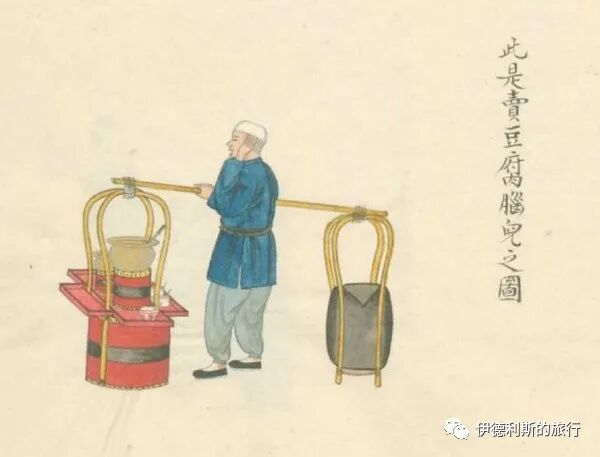
Dongcheng District.
1. Donglaishun at Dong'an Market.
Donglaishun as described by Zhang Zhongxing.
In the early 1930s, I lived in the dormitory of the Third Campus of Peking University, located at Beiheyan outside Donghuamen. I would walk south from the school gate, turn east, and cross Dong'anmen Street to reach Dong'an Market. Donglaishun was on the east side inside the north gate of the market. It had two entrances facing north. The western entrance was the main shop, which had three floors. The eastern entrance was the budget section, which did not connect to the upper floors. There are many restaurants in the market, ranging from high-end ones like Senlong Restaurant and Wufangzhai to small shops like Junshan Restaurant and various food stalls. There must be about twenty of them. As poor students, we liked going to Donglaishun because it had two advantages: the food was good and cheap, and it suited both big and small budgets. Plus, the staff were especially friendly to diners.
Let's talk about their friendliness first. Right inside the door, there was always someone sitting in a long gown. People said he was the second manager. When he saw someone walking toward the door, he would immediately stand up, smile, bow slightly, and say, 'You're here! Please, come in!' Then he would turn inside and shout, 'How many people? Make some room!' You could choose to stay on the ground floor or go up to the second or third floor as you liked. The waiter would help you get seated, smiling broadly, and ask what you wanted to eat. Back then, it wasn't common to look at a menu; you had to call out the names of the dishes. When choosing dishes, the waiter would often offer his opinion on how to pair them for a better meal. Sometimes they even suggest you don't need to order too much, or if it's not enough, they help you add more quickly. Everything is friendly. After eating, you settle the bill, pay, and exchange polite words: "Are you taking this with you?" You usually leave a small tip, like two jiao, and the waiter shouts out: "A tip of two mao." The cashier and the kitchen staff call back in a long, drawn-out tone: "Thank you—." When you leave your seat and walk out, the two managers at the door stand up from afar. As you get close, they smile, bow slightly, and say: "See you this evening." (for lunch) or "See you tomorrow." (for dinner)
Plus, the food is high quality and inexpensive. Donglaishun started out by selling meat pies (xianbing) and porridge from a pushcart. Their years of experience taught them that the surest way to make money is to offer high-quality goods at low prices and win through high sales volume. They have always stuck to this tradition. Take their famous hot pot lamb (shuan yangrou) as an example. People say the sheep are bought from outside the Great Wall and kept at their own farm, where they are fed grain for a month before slaughter. This makes the meat fatty and tender, unlike sheep that only eat grass. The seasonings are also homemade, produced at the Tianyishun Sauce Shop located across from the north gate of the market. Because the ingredients are good and the preparation is meticulous, everything tastes great, whether it is a high-end dish or a simple one. Their hot pot lamb is the best in the city, no question. Other dishes like braised beef (wei niurou), stir-fried lamb (bao yangrou), honey-glazed fritters (tasimi), crispy horns (sujiao), spiced beef tendon (jiang jianzi), as well as everyday foods like beef pies (niurou bing), lamb dumplings (yangrou jiaozi), soybean paste noodles (zhajiangmian), and millet and bean porridge (xiaomi douzhou) all have their own unique flavors and keep customers satisfied. The prices are all fair. Some lower-priced items might not make much money, like the lamb dumplings (yangrou jiaozi). The quality is great, and ten of them cost only four cents. You probably couldn't even make them that cheaply at home.
For us poor students, the fact that prices can be high or low is a huge advantage. If you have guests, you can go up to the second or third floor, or even sit in a private booth or a small room. You can order a few dishes and some wine. Everyone leaves full and happy, and it only costs two or three yuan. If you are alone and only have twenty cents in your pocket, you can still walk in, eat twenty dumplings and drink a bowl of millet and bean porridge (xiaomi douzhou) for a total of nine cents. You can confidently pay with a ten-cent coin, hear a "Thank you!" Then you walk out, go to the Dangui Market, pick out a used book for ten cents, and happily head back to school.
Looking back at the time I lived at Beiheyan, I went to Donglaishun so many times. Most of the time I didn't go upstairs. I just ate ten cents' worth of lamb dumplings and millet and bean porridge. Usually, I still had enough money left to browse the Dangui Market and look for old books. When I did go upstairs, I was always with one or two classmates or friends, so we could try things like crispy horns (sujiao) and honey-drizzled pastries (tasimi). In autumn and winter, when I am by myself, I often like to go to the working-class section near the east door. They say the owner first got rich through hard manual labor, so even after becoming wealthy, he wanted to keep his roots to show he had not forgotten his humble beginnings, or as they put it, he had not forgotten his poor brothers. There is no one to greet you at this east door, probably because the working-class regulars have never been ones for formalities. Once inside, you see a row of long tables running north to south with benches on both sides. No one offers you a seat, so you just find one yourself. After you sit down, a server asks what you want to eat, whether it is flatbread (bing) or noodles (mian), and how much you want by weight, because the regulars need to know exactly how much they are getting. If you order fancy dishes, they will bring those out just the same. The interesting thing is that the customers and the staff are all very blunt with each other; when people are drinking and lively, they might glare or slam the table, sometimes even shouting, which makes you think of Jing Ke and Gao Jianli in the markets of Yan.
Fuxuan Suohua by Zhang Zhongxing
The big tent at Donglaishun
People who ate at Donglaishun were all wealthy. But the big tent downstairs at Donglaishun served poor, everyday people. They took the leftover scraps from the hot pot meat, stewed them into a savory sauce, and poured it over noodles. You could buy a big bowl for very little money, which satisfied both your cravings and your hunger.
My Last Century by Guan Geng
The storefront of Donglaishun
In the early years, around noon every day, bicycles, pedicabs, rickshaws, flatbed carts, motorcycles, and cars would all head toward the west entrance of Jinyu Hutong. They packed the road from the west entrance of the hutong to the Jixiang Theater so tightly you could barely move.
These people were all men, mostly Beijing locals between twenty and forty years old, who headed straight into the shop as soon as they got off the bus. Back then, Donglaishun had a cafeteria-style shop selling dumplings, meat pies (xianbing), and big bowls of lamb bone broth (yangtang) noodles with gravy, all made from the leftover scraps of the hot pot lamb, since the costs were already covered by the hot pot. But they knew how to run a business, selling the scraps again as meat pies and dumplings that were oily, stuffed full, and cheap. The diners came for exactly this: it satisfied their cravings and kept them full for a long time.
Past Beijing by Zhang Zheng, Donglaishun's Hot Pot Lamb.
Han Ziqi sat in a private booth upstairs at the Donglaishun restaurant at the north entrance of the Dongan Market on Wangfujing Street, with no heart to enjoy the snowy view outside, his eyes just staring blankly at the boiling water in the copper hot pot as if studying the tiny waves. After staring for a while, he lazily lifted his chopsticks, picked up a thin slice of lamb, swished it in the boiling water once, twice, three times, pulled it out at the perfect moment, dipped it into the bowl of sauce in front of him, and then put it in his mouth to chew slowly. He was actually very hungry, but he still kept up his habit of many years, never wolfing down his food or making rude smacking sounds. Eating is not just about filling your stomach; it is a pleasure, and you should not waste good food. Even in these times when food is scarce and prices are sky-high, he did not order cabbage or glass noodles, which are only good for filling space. He only asked for two plates of sliced meat and a small dish of pickled garlic (tangsuan). He ate a slice of meat, then took a bite of the garlic, slowly savoring the taste that was sweet within the spice and spicy within the sweet. He did not order alcohol. Alcohol is forbidden for Muslims, and he strictly followed this rule. Like many Hui Muslims, he did not smoke either. Even when he was deeply troubled, he never puffed on cigarettes or used alcohol to drown his sorrows. Aside from the jade and treasures he poured his heart into, his lifelong passion was the delicious food at halal restaurants. He was a regular at the Donglaishun restaurant. He knew everything about the place almost as well as he knew the Qizhenzhai shop he dedicated his life to, or the special arts and crafts import and export company where he worked later.
He chewed on the fresh, tasty slices of meat. Where is the most tender hot pot lamb? It has to be Donglaishun. The lamb here is incomparable to anywhere else because of its unique standards. They only use castrated sheep from West Ujimqin Banner in Inner Mongolia. After a period of careful pen-feeding, the sheep are slaughtered. They only take the cuts known as modang'er, shangnao'er, huanggua tiao'er, and the large and small sancha'er. From a sheep weighing forty to fifty jin, only thirteen jin of meat is suitable for use. After being frozen, the meat is sliced with incredible skill into pieces as thin and even as paper. When placed on a plate, the patterns on the plate are clearly visible through the meat. One jin of lamb at Donglaishun is sliced into more than eighty pieces. The seasonings used to enhance the flavor are very particular. They include sesame paste (zhima jiang), Shaoxing yellow wine (Shaoxing huangjiu), fermented bean curd (jiang doufu), pickled chive flowers (jiucai hua), chili oil, shrimp oil, chopped green onions, minced cilantro, and Donglaishun's special drizzling soy sauce (pulin jiangyou). The soup base in the pot is flavored with dried shrimp and dried mushrooms (koumo). This hot pot has a unique charm that is clear, fragrant, fresh, and delicious. It is intoxicating to eat, much like how the famous jade expert Han Ziqi would carefully examine a rare treasure. But at this moment, neither the art of looking nor the art of eating occupied his mind. His heart was like the boiling water, and he could not say what he was thinking. From Donglaishun to Qizhenzhai, he chewed on the history of others and his own. Donglaishun's first owner, Ding Deshan, whose courtesy name was Ziqing, was from Cang County, Hebei. He later moved to Erlizhuang outside Dongzhimen. Back in the day, he was not much wealthier than the penniless wanderer Xiao Qizi. He pushed a handcart of yellow soil into Beijing and sold it at a low price to flower growers to make a difficult living. Around 1903, he saw the potential of the busy Dong'an Market and borrowed money to set up a stall. He started by selling flour-based cakes, flatbreads (tiebingzi), and rice porridge, eventually growing into the Donglaishun Porridge Stall. After over a decade of hard work, he added stir-fried, roasted, and hot pot meats. The hot pot became the most famous, and after several expansions, the business became the leader in its field.
The Muslim Funeral by Huo Da
Condiments for Donglaishun hot pot lamb
For the soy sauce used in the hot pot lamb, they use a special dripped soy sauce (pulin jiangyou). Every summer when the soybean paste is sun-dried, they spread it on tin sheets and collect the oil that drips out. They then refine it with the right amount of licorice, cinnamon, and rock sugar. This is one of the main reasons Donglaishun hot pot lamb keeps its unique flavor. Also, when pickling chive flowers, they add a certain amount of sour pears to make the taste more sweet and tangy. The garlic used for pickled sugar garlic must be large six-clove garlic bulbs harvested two or three days before the Summer Solstice. It takes three months to prepare for sale, involving peeling, soaking in brine, packing and turning the jars, and releasing gas.
Famous Old Beijing Brands: Donglaishun Restaurant, known for its hot pot lamb. Ma Xiangyu
Tianyi Shun Halal Sauce Shop.
(Wang Dongsi: Tianyi Shun Sauce Shop and Donglai Shun were sister stores owned by the same proprietor.)
The west counter at Tianyi Shun sells groceries and seasonings, focusing on Beijing-style sweet pickled vegetables (jiang xiaocai). To make it easy for customers to browse and buy, the display counter for these pickles is placed in the center of the shop. The various pickles are displayed in blue-patterned porcelain jars, which look nice and make it easy for customers to choose. They also provide oil baskets (youlou) in different sizes so customers from out of town can carry them easily.
Tianyi Shun has always been careful about selecting ingredients and crafting products with precision. For example, the soybeans used for making sauce must be large, yellow, and high in oil content, sourced from Majuqiao and Panggezhuang. The production method is: soak 100 jin of soybeans until they expand, then steam them. Add 50 jin of white flour, crush and press the mixture, cut it into rectangular blocks, and stack them on indoor racks to ferment. After fermentation, brush off the fuzz and put them into jars. For every 100 jin of beans, add 50 jin of salt and 200 jin of water. This ratio is called 'one part yellow, two parts water, and half a part salt'. After the mixture breaks down, it is passed through a sieve. It is turned four times a day with a sauce rake (jiangpa) and must be sun-dried for a long time, from February to August, before it is finished. This sauce is called dog days sauce (fujiang), also known as natural sauce. When you use it to make fried sauce, it saves oil and does not stick to the bottom of the pot. It makes beef and lamb look bright and taste delicious, which is why over 70 percent of sauce-meat shops in Beijing choose it.
To make sweet flour sauce (tianmianjiang), steam buns (mantou) using white flour, but do not add baking soda. After fermenting, crush them and put them into a vat. Add 80 jin of water for every 100 jin of flour, adding the water gradually rather than all at once, until it reaches the consistency of thin porridge. Use a sauce rake to stir it four times a day until it turns purple-red by the start of autumn (liqiu). It tastes sweet and is the raw material for making sweet sauce pickles, and it is also an essential condiment for eating roast duck.
For small-mill sesame oil (xiaomo xiangyou), you must buy high-quality sesame grown in the dog days from places like Zhangjiawan in Tongzhou, Panggezhuang in Daxing, and Gu'an County. When making it, strictly control the heat and time to get a high oil yield and excellent color, aroma, and taste. Collapse Read »
Summary: Beijing Muslim History: Old Halal Notes from the Northern City is presented here as a firsthand travel account in clear English, beginning with this scene: East City:. The account keeps its focus on Beijing Muslim History, Northern Beijing, Hui Muslims while preserving the names, places, food, and historical details from the Chinese source. This is part 1 of 6.
Part 1 of 6
East City:
1. Donglaishun at Dong'an Market (including the Tianyishun halal sauce shop (Tianyi Shun Qingzhen Jiangyuan))
2. Xideshun Tripe King (Baodu Wang) at Dong'an Market
3. Jinshenglong Tripe Feng (Baodu Feng) at Dong'an Market
4. Tofu Pudding Ma (Doufunao Ma) at Dong'an Market
5. Meat Pie Zhang (Roubing Zhang) at Dong'an Market
6. Baikui at Longfu Mosque
7. Baodu Man at Dongsi Pailou
8. The mutton shop at the corner of West Kushuijing and Xinxian Hutong inside Chaoyangmen.
9. The sesame flatbread shop (shaobing) on West Kushuijing Hutong inside Chaoyangmen.
10. Deshun Restaurant inside Chaoyangmen.
11. Deshengzhai on Jingshan East Street.
12. Yueshengzhai on Hubu Lane inside Qianmen.
13. Fusheng Canteen in Dongdan.
14. Zengqingzhai on Yiliu Hutong outside Di'anmen.
Xicheng District:
1. Ruizhenhou inside Zhongshan Park
2. Kaorouwan inside Xuanwumen
3. Hui Muslim beef and mutton shop inside Xuanwumen
4. Youyishun Restaurant at the Xidan intersection inside Xuanwumen
5. Dong Siba's spiced lamb head (jiangyangtou) inside Deshengmen
6. Xue Siba's steamed lamb (zhengyangrou) outside Deshengmen
7. Yang's lamb stall (yangrouchuangzi) on Guanxiang Street at Deshengmen
8. The sheep market (yanghang) in Madian outside Deshengmen
9. Hui Muslim snack shops inside Xizhimen.
Dongcheng District.
1. Donglaishun at Dong'an Market.
Donglaishun as described by Zhang Zhongxing.
In the early 1930s, I lived in the dormitory of the Third Campus of Peking University, located at Beiheyan outside Donghuamen. I would walk south from the school gate, turn east, and cross Dong'anmen Street to reach Dong'an Market. Donglaishun was on the east side inside the north gate of the market. It had two entrances facing north. The western entrance was the main shop, which had three floors. The eastern entrance was the budget section, which did not connect to the upper floors. There are many restaurants in the market, ranging from high-end ones like Senlong Restaurant and Wufangzhai to small shops like Junshan Restaurant and various food stalls. There must be about twenty of them. As poor students, we liked going to Donglaishun because it had two advantages: the food was good and cheap, and it suited both big and small budgets. Plus, the staff were especially friendly to diners.
Let's talk about their friendliness first. Right inside the door, there was always someone sitting in a long gown. People said he was the second manager. When he saw someone walking toward the door, he would immediately stand up, smile, bow slightly, and say, 'You're here! Please, come in!' Then he would turn inside and shout, 'How many people? Make some room!' You could choose to stay on the ground floor or go up to the second or third floor as you liked. The waiter would help you get seated, smiling broadly, and ask what you wanted to eat. Back then, it wasn't common to look at a menu; you had to call out the names of the dishes. When choosing dishes, the waiter would often offer his opinion on how to pair them for a better meal. Sometimes they even suggest you don't need to order too much, or if it's not enough, they help you add more quickly. Everything is friendly. After eating, you settle the bill, pay, and exchange polite words: "Are you taking this with you?" You usually leave a small tip, like two jiao, and the waiter shouts out: "A tip of two mao." The cashier and the kitchen staff call back in a long, drawn-out tone: "Thank you—." When you leave your seat and walk out, the two managers at the door stand up from afar. As you get close, they smile, bow slightly, and say: "See you this evening." (for lunch) or "See you tomorrow." (for dinner)
Plus, the food is high quality and inexpensive. Donglaishun started out by selling meat pies (xianbing) and porridge from a pushcart. Their years of experience taught them that the surest way to make money is to offer high-quality goods at low prices and win through high sales volume. They have always stuck to this tradition. Take their famous hot pot lamb (shuan yangrou) as an example. People say the sheep are bought from outside the Great Wall and kept at their own farm, where they are fed grain for a month before slaughter. This makes the meat fatty and tender, unlike sheep that only eat grass. The seasonings are also homemade, produced at the Tianyishun Sauce Shop located across from the north gate of the market. Because the ingredients are good and the preparation is meticulous, everything tastes great, whether it is a high-end dish or a simple one. Their hot pot lamb is the best in the city, no question. Other dishes like braised beef (wei niurou), stir-fried lamb (bao yangrou), honey-glazed fritters (tasimi), crispy horns (sujiao), spiced beef tendon (jiang jianzi), as well as everyday foods like beef pies (niurou bing), lamb dumplings (yangrou jiaozi), soybean paste noodles (zhajiangmian), and millet and bean porridge (xiaomi douzhou) all have their own unique flavors and keep customers satisfied. The prices are all fair. Some lower-priced items might not make much money, like the lamb dumplings (yangrou jiaozi). The quality is great, and ten of them cost only four cents. You probably couldn't even make them that cheaply at home.
For us poor students, the fact that prices can be high or low is a huge advantage. If you have guests, you can go up to the second or third floor, or even sit in a private booth or a small room. You can order a few dishes and some wine. Everyone leaves full and happy, and it only costs two or three yuan. If you are alone and only have twenty cents in your pocket, you can still walk in, eat twenty dumplings and drink a bowl of millet and bean porridge (xiaomi douzhou) for a total of nine cents. You can confidently pay with a ten-cent coin, hear a "Thank you!" Then you walk out, go to the Dangui Market, pick out a used book for ten cents, and happily head back to school.
Looking back at the time I lived at Beiheyan, I went to Donglaishun so many times. Most of the time I didn't go upstairs. I just ate ten cents' worth of lamb dumplings and millet and bean porridge. Usually, I still had enough money left to browse the Dangui Market and look for old books. When I did go upstairs, I was always with one or two classmates or friends, so we could try things like crispy horns (sujiao) and honey-drizzled pastries (tasimi). In autumn and winter, when I am by myself, I often like to go to the working-class section near the east door. They say the owner first got rich through hard manual labor, so even after becoming wealthy, he wanted to keep his roots to show he had not forgotten his humble beginnings, or as they put it, he had not forgotten his poor brothers. There is no one to greet you at this east door, probably because the working-class regulars have never been ones for formalities. Once inside, you see a row of long tables running north to south with benches on both sides. No one offers you a seat, so you just find one yourself. After you sit down, a server asks what you want to eat, whether it is flatbread (bing) or noodles (mian), and how much you want by weight, because the regulars need to know exactly how much they are getting. If you order fancy dishes, they will bring those out just the same. The interesting thing is that the customers and the staff are all very blunt with each other; when people are drinking and lively, they might glare or slam the table, sometimes even shouting, which makes you think of Jing Ke and Gao Jianli in the markets of Yan.
Fuxuan Suohua by Zhang Zhongxing
The big tent at Donglaishun
People who ate at Donglaishun were all wealthy. But the big tent downstairs at Donglaishun served poor, everyday people. They took the leftover scraps from the hot pot meat, stewed them into a savory sauce, and poured it over noodles. You could buy a big bowl for very little money, which satisfied both your cravings and your hunger.
My Last Century by Guan Geng
The storefront of Donglaishun
In the early years, around noon every day, bicycles, pedicabs, rickshaws, flatbed carts, motorcycles, and cars would all head toward the west entrance of Jinyu Hutong. They packed the road from the west entrance of the hutong to the Jixiang Theater so tightly you could barely move.
These people were all men, mostly Beijing locals between twenty and forty years old, who headed straight into the shop as soon as they got off the bus. Back then, Donglaishun had a cafeteria-style shop selling dumplings, meat pies (xianbing), and big bowls of lamb bone broth (yangtang) noodles with gravy, all made from the leftover scraps of the hot pot lamb, since the costs were already covered by the hot pot. But they knew how to run a business, selling the scraps again as meat pies and dumplings that were oily, stuffed full, and cheap. The diners came for exactly this: it satisfied their cravings and kept them full for a long time.
Past Beijing by Zhang Zheng, Donglaishun's Hot Pot Lamb.
Han Ziqi sat in a private booth upstairs at the Donglaishun restaurant at the north entrance of the Dongan Market on Wangfujing Street, with no heart to enjoy the snowy view outside, his eyes just staring blankly at the boiling water in the copper hot pot as if studying the tiny waves. After staring for a while, he lazily lifted his chopsticks, picked up a thin slice of lamb, swished it in the boiling water once, twice, three times, pulled it out at the perfect moment, dipped it into the bowl of sauce in front of him, and then put it in his mouth to chew slowly. He was actually very hungry, but he still kept up his habit of many years, never wolfing down his food or making rude smacking sounds. Eating is not just about filling your stomach; it is a pleasure, and you should not waste good food. Even in these times when food is scarce and prices are sky-high, he did not order cabbage or glass noodles, which are only good for filling space. He only asked for two plates of sliced meat and a small dish of pickled garlic (tangsuan). He ate a slice of meat, then took a bite of the garlic, slowly savoring the taste that was sweet within the spice and spicy within the sweet. He did not order alcohol. Alcohol is forbidden for Muslims, and he strictly followed this rule. Like many Hui Muslims, he did not smoke either. Even when he was deeply troubled, he never puffed on cigarettes or used alcohol to drown his sorrows. Aside from the jade and treasures he poured his heart into, his lifelong passion was the delicious food at halal restaurants. He was a regular at the Donglaishun restaurant. He knew everything about the place almost as well as he knew the Qizhenzhai shop he dedicated his life to, or the special arts and crafts import and export company where he worked later.
He chewed on the fresh, tasty slices of meat. Where is the most tender hot pot lamb? It has to be Donglaishun. The lamb here is incomparable to anywhere else because of its unique standards. They only use castrated sheep from West Ujimqin Banner in Inner Mongolia. After a period of careful pen-feeding, the sheep are slaughtered. They only take the cuts known as modang'er, shangnao'er, huanggua tiao'er, and the large and small sancha'er. From a sheep weighing forty to fifty jin, only thirteen jin of meat is suitable for use. After being frozen, the meat is sliced with incredible skill into pieces as thin and even as paper. When placed on a plate, the patterns on the plate are clearly visible through the meat. One jin of lamb at Donglaishun is sliced into more than eighty pieces. The seasonings used to enhance the flavor are very particular. They include sesame paste (zhima jiang), Shaoxing yellow wine (Shaoxing huangjiu), fermented bean curd (jiang doufu), pickled chive flowers (jiucai hua), chili oil, shrimp oil, chopped green onions, minced cilantro, and Donglaishun's special drizzling soy sauce (pulin jiangyou). The soup base in the pot is flavored with dried shrimp and dried mushrooms (koumo). This hot pot has a unique charm that is clear, fragrant, fresh, and delicious. It is intoxicating to eat, much like how the famous jade expert Han Ziqi would carefully examine a rare treasure. But at this moment, neither the art of looking nor the art of eating occupied his mind. His heart was like the boiling water, and he could not say what he was thinking. From Donglaishun to Qizhenzhai, he chewed on the history of others and his own. Donglaishun's first owner, Ding Deshan, whose courtesy name was Ziqing, was from Cang County, Hebei. He later moved to Erlizhuang outside Dongzhimen. Back in the day, he was not much wealthier than the penniless wanderer Xiao Qizi. He pushed a handcart of yellow soil into Beijing and sold it at a low price to flower growers to make a difficult living. Around 1903, he saw the potential of the busy Dong'an Market and borrowed money to set up a stall. He started by selling flour-based cakes, flatbreads (tiebingzi), and rice porridge, eventually growing into the Donglaishun Porridge Stall. After over a decade of hard work, he added stir-fried, roasted, and hot pot meats. The hot pot became the most famous, and after several expansions, the business became the leader in its field.
The Muslim Funeral by Huo Da
Condiments for Donglaishun hot pot lamb
For the soy sauce used in the hot pot lamb, they use a special dripped soy sauce (pulin jiangyou). Every summer when the soybean paste is sun-dried, they spread it on tin sheets and collect the oil that drips out. They then refine it with the right amount of licorice, cinnamon, and rock sugar. This is one of the main reasons Donglaishun hot pot lamb keeps its unique flavor. Also, when pickling chive flowers, they add a certain amount of sour pears to make the taste more sweet and tangy. The garlic used for pickled sugar garlic must be large six-clove garlic bulbs harvested two or three days before the Summer Solstice. It takes three months to prepare for sale, involving peeling, soaking in brine, packing and turning the jars, and releasing gas.
Famous Old Beijing Brands: Donglaishun Restaurant, known for its hot pot lamb. Ma Xiangyu
Tianyi Shun Halal Sauce Shop.
(Wang Dongsi: Tianyi Shun Sauce Shop and Donglai Shun were sister stores owned by the same proprietor.)
The west counter at Tianyi Shun sells groceries and seasonings, focusing on Beijing-style sweet pickled vegetables (jiang xiaocai). To make it easy for customers to browse and buy, the display counter for these pickles is placed in the center of the shop. The various pickles are displayed in blue-patterned porcelain jars, which look nice and make it easy for customers to choose. They also provide oil baskets (youlou) in different sizes so customers from out of town can carry them easily.
Tianyi Shun has always been careful about selecting ingredients and crafting products with precision. For example, the soybeans used for making sauce must be large, yellow, and high in oil content, sourced from Majuqiao and Panggezhuang. The production method is: soak 100 jin of soybeans until they expand, then steam them. Add 50 jin of white flour, crush and press the mixture, cut it into rectangular blocks, and stack them on indoor racks to ferment. After fermentation, brush off the fuzz and put them into jars. For every 100 jin of beans, add 50 jin of salt and 200 jin of water. This ratio is called 'one part yellow, two parts water, and half a part salt'. After the mixture breaks down, it is passed through a sieve. It is turned four times a day with a sauce rake (jiangpa) and must be sun-dried for a long time, from February to August, before it is finished. This sauce is called dog days sauce (fujiang), also known as natural sauce. When you use it to make fried sauce, it saves oil and does not stick to the bottom of the pot. It makes beef and lamb look bright and taste delicious, which is why over 70 percent of sauce-meat shops in Beijing choose it.
To make sweet flour sauce (tianmianjiang), steam buns (mantou) using white flour, but do not add baking soda. After fermenting, crush them and put them into a vat. Add 80 jin of water for every 100 jin of flour, adding the water gradually rather than all at once, until it reaches the consistency of thin porridge. Use a sauce rake to stir it four times a day until it turns purple-red by the start of autumn (liqiu). It tastes sweet and is the raw material for making sweet sauce pickles, and it is also an essential condiment for eating roast duck.
For small-mill sesame oil (xiaomo xiangyou), you must buy high-quality sesame grown in the dog days from places like Zhangjiawan in Tongzhou, Panggezhuang in Daxing, and Gu'an County. When making it, strictly control the heat and time to get a high oil yield and excellent color, aroma, and taste. Collapse Read »
Beijing Muslim History: Old Halal Notes from the Southern City (Part 5 of 5)
Reposted from the web
Summary: Beijing Muslim History: Old Halal Notes from the Southern City is presented here as a firsthand travel account in clear English, beginning with this scene: Chongwen:. The account keeps its focus on Beijing Muslim History, Southern Beijing, Hui Muslims while preserving the names, places, food, and historical details from the Chinese source. This is part 5 of 5.
Part 5 of 5
Shopkeeper Bai didn't mind people watching him bake; I was right there many times, and besides, can you really learn a great craft just by watching? I remember the general order: use half-leavened dough and mix in the edible alkali evenly. Once the dough has rested, it shouldn't be too hard. Roll out the dough, then add sesame paste (zhimajiang) that has been thinned with oil. Use your hands to pull, stretch, and spread the paste evenly, then sprinkle on some salt. Roll it up into a log and seal the edges. Set it aside to wait for the rest of the sesame flatbread (shaobing) dough portions. Seal the edges of the dough portions, flatten them slightly with a rolling pin, and brush the half-finished pieces with soy sauce. Take the soy-brushed dough pieces, dip them into cleaned sesame seeds, and line them up in the large flatbread griddle (bingdang). I watched the process, and there is really no mystery to it. Using real, honest ingredients is what truly matters. The young assistant dips the dough in sesame seeds, making sure the whole surface is covered; he does not just lightly touch it.
I have thought about why it is hard to find the original taste of these flatbreads, and the key is one word: baking. At Old Bai's shop, the delicious smell comes from the coal-fired oven. The oven is over three feet tall, with a layer of white clay on the outside, reinforced with large wire hoops on the inside to hold enough heat with its fireproof materials. The most important thing is the temperature inside the oven: if it is too high, the outside burns while the inside stays raw. If it is too low, baking for too long ruins the crispness. This is the real skill, and you have to admire it. The fire glows red, but you cannot see any flames. Exactly how hot is it? You can only understand it by feeling, not by words. In fact, it is just a matter of practice making perfect. Take some things for example: you might understand them clearly when watching, but if you try to do it yourself, it immediately goes wrong.
Let's talk about Old Bai's sesame flatbread (shaobing). When the dough in the large pan is browned on both sides and can stand up, Old Bai lifts the pan to feel the heat, then lines the flatbread dough around the edge of the stove. People waiting are often impatient and like to rush him. Old Bai stays calm and unhurried, turning back to continue his routine with the flatbread dough. After a short while, the toasted aroma pushes right into your nose, and Old Bai picks up long iron tongs to flip them over. A little later, they come out of the oven one by one. Each one is round and puffy, golden brown, and perfectly shaped. A little too long and they taste burnt, a little too short and the aroma doesn't come out; this is what you call just right.
You want me to describe how it feels to chew that flatbread? It is crispy and golden, with the flavors of flour, oil, sesame, savory sauce, and even a hint of salt all blended together; the temptation is impossible to resist. There are at least twenty layers, and the steam rising from them is both piping hot and fragrant! Put it this way, Hui Muslims hold them with both hands, afraid of dropping a single sesame seed or even a tiny crumb of dough!
The sesame flatbreads at the Bai family shop are available all year round, but they are constantly in high demand by all the neighbors. Sorry about that! You will have to wait a bit longer, which is a common occurrence. Actually, their other types of flatbreads (huoshao) sell just as well, and before the moon is even bright in the sky, they are all gone! It is not that there are leftovers; people want to buy them, but there is nothing left to buy. I have eaten the spiral-shaped flatbread (luosizhuan), and it really does not break; if you really played with it, you could stretch it out three to five feet. The puffy two-layered flatbread (huoshao) is great stuffed with spiced beef shank or sheep head meat, and you would drool just thinking about the taste.
I remember very clearly, it was three days after the Mid-Autumn Festival that year. For my grandfather's 80th birthday, my second uncle took me to see Manager Bai to ask if he could bake some longevity peach buns (shoutao). Grandpa Bai asked for my grandfather's Chinese zodiac sign and birth date, then agreed to the request right away.
Early that morning, the shop assistant delivered eighty longevity peach buns. The tips of the longevity peach buns were bright red. A pale yellow color you won't see anywhere else. The smell of beans, flour, and that special roasted aroma hit us, drawing in a bunch of us little foodies. The worker asked my uncle what ingredients were in the gloves. Sift the red bean paste through a fine sieve and carefully prepare the sweet osmanthus flowers. Mix steamed flour with white sugar, then bake and crush the black sesame seeds. Add green and red shredded candied fruit, mixed nuts, and crushed walnut and almond bits. Finely grind small dates from north of Beijing, and add lotus root starch and jasmine flowers. I was stunned listening to this, and even my well-traveled uncle could only nod in agreement. Is Manager Bai not here? My uncle asked the waiter in passing.
I am here! Turn slowly, sorry to trouble you, watch your step! Following the voice, Master Bai walked into the main hall carrying a large wicker tray (poluo). Huh, what is that? The whole room was filled with puzzled looks. Master Bai kept them guessing, Let everyone take a guess, is it another longevity peach (shoutao)? Or is it sesame flatbread (shaobing)? You are both wrong, take a good look!
Old Bai gently lifted the clean white cloth cover, and a baked tiger appeared, looking so lifelike! It was about two feet long, standing firmly, with eyes that seemed full of spirit, and yellow and white colors that looked just like tiger fur. This is filled with rose-flavored red bean paste, a gift from me to show my respect to you. I hope your family flourishes, stays full of energy, and thrives like a dragon and a tiger! The shopkeeper lost all his usual reserve and quietness, talking non-stop, which made Grandpa so happy that his beard was shaking. Grandpa wondered to himself, how did the shopkeeper find out that I was born in the Year of the Tiger?
Will there be any more animal-shaped roasted foods in the future? I have seen roasted rabbit gods (tu'erye), roasted swallows (shayan), roasted little monkeys, and roasted little ducks, but I have never seen a roasted big tiger. Perhaps the craft was lost with Old Bai's generation. Perhaps Old Bai passed away before he could even think about passing it on. Because Old Bai left too early and did not live to see the happy times.
Old Beijing Stories 2 by Liu Hui
6. A roasted mutton stall in the hutong.
In the past, there were far more than thirty or fifty shops selling roasted lamb (shaoyangrou) in Beijing, with one located every short distance. As soon as you enter the alley, you can smell the aroma of braised lamb (luzhu yangrou). It is just like being at Qianmen, where you can smell the spiced lamb (jiang yangrou) from Yueshengzhai long before you actually reach the shop. Not far into the alley, you see a polished brass tray about two or three feet wide sitting under a fabric canopy. It is shiny and clean, piled with cooked lamb neck, lamb liver (shagan), and lamb offal (yangzasui) in various cuts of fat and lean meat. The meat is drizzled with a layer of oil, making it look incredibly fresh and tender, which immediately makes your mouth water. A sign hanging next to the door frame reads "Newly Added Five-Spice Roasted Lamb" (xintian wuxiang shaoyangrou), and it is very easy to spot. Brass hooks hang above the counter, holding three or four cooked lamb heads with vegetable leaves in their mouths to attract customers. A wooden water basin sits in front of the door with a crossbar above it, from which a string of lamb suet (yangshuang'er) hangs. He also gives away the original broth from his roasted lamb. If you bring your own container when you buy two taels of roasted lamb, you can fill the container with the broth.
Lingering Fragrance: Memories of the Capital by Zhou Shaoliang. Collapse Read »
Summary: Beijing Muslim History: Old Halal Notes from the Southern City is presented here as a firsthand travel account in clear English, beginning with this scene: Chongwen:. The account keeps its focus on Beijing Muslim History, Southern Beijing, Hui Muslims while preserving the names, places, food, and historical details from the Chinese source. This is part 5 of 5.
Part 5 of 5
Shopkeeper Bai didn't mind people watching him bake; I was right there many times, and besides, can you really learn a great craft just by watching? I remember the general order: use half-leavened dough and mix in the edible alkali evenly. Once the dough has rested, it shouldn't be too hard. Roll out the dough, then add sesame paste (zhimajiang) that has been thinned with oil. Use your hands to pull, stretch, and spread the paste evenly, then sprinkle on some salt. Roll it up into a log and seal the edges. Set it aside to wait for the rest of the sesame flatbread (shaobing) dough portions. Seal the edges of the dough portions, flatten them slightly with a rolling pin, and brush the half-finished pieces with soy sauce. Take the soy-brushed dough pieces, dip them into cleaned sesame seeds, and line them up in the large flatbread griddle (bingdang). I watched the process, and there is really no mystery to it. Using real, honest ingredients is what truly matters. The young assistant dips the dough in sesame seeds, making sure the whole surface is covered; he does not just lightly touch it.
I have thought about why it is hard to find the original taste of these flatbreads, and the key is one word: baking. At Old Bai's shop, the delicious smell comes from the coal-fired oven. The oven is over three feet tall, with a layer of white clay on the outside, reinforced with large wire hoops on the inside to hold enough heat with its fireproof materials. The most important thing is the temperature inside the oven: if it is too high, the outside burns while the inside stays raw. If it is too low, baking for too long ruins the crispness. This is the real skill, and you have to admire it. The fire glows red, but you cannot see any flames. Exactly how hot is it? You can only understand it by feeling, not by words. In fact, it is just a matter of practice making perfect. Take some things for example: you might understand them clearly when watching, but if you try to do it yourself, it immediately goes wrong.
Let's talk about Old Bai's sesame flatbread (shaobing). When the dough in the large pan is browned on both sides and can stand up, Old Bai lifts the pan to feel the heat, then lines the flatbread dough around the edge of the stove. People waiting are often impatient and like to rush him. Old Bai stays calm and unhurried, turning back to continue his routine with the flatbread dough. After a short while, the toasted aroma pushes right into your nose, and Old Bai picks up long iron tongs to flip them over. A little later, they come out of the oven one by one. Each one is round and puffy, golden brown, and perfectly shaped. A little too long and they taste burnt, a little too short and the aroma doesn't come out; this is what you call just right.
You want me to describe how it feels to chew that flatbread? It is crispy and golden, with the flavors of flour, oil, sesame, savory sauce, and even a hint of salt all blended together; the temptation is impossible to resist. There are at least twenty layers, and the steam rising from them is both piping hot and fragrant! Put it this way, Hui Muslims hold them with both hands, afraid of dropping a single sesame seed or even a tiny crumb of dough!
The sesame flatbreads at the Bai family shop are available all year round, but they are constantly in high demand by all the neighbors. Sorry about that! You will have to wait a bit longer, which is a common occurrence. Actually, their other types of flatbreads (huoshao) sell just as well, and before the moon is even bright in the sky, they are all gone! It is not that there are leftovers; people want to buy them, but there is nothing left to buy. I have eaten the spiral-shaped flatbread (luosizhuan), and it really does not break; if you really played with it, you could stretch it out three to five feet. The puffy two-layered flatbread (huoshao) is great stuffed with spiced beef shank or sheep head meat, and you would drool just thinking about the taste.
I remember very clearly, it was three days after the Mid-Autumn Festival that year. For my grandfather's 80th birthday, my second uncle took me to see Manager Bai to ask if he could bake some longevity peach buns (shoutao). Grandpa Bai asked for my grandfather's Chinese zodiac sign and birth date, then agreed to the request right away.
Early that morning, the shop assistant delivered eighty longevity peach buns. The tips of the longevity peach buns were bright red. A pale yellow color you won't see anywhere else. The smell of beans, flour, and that special roasted aroma hit us, drawing in a bunch of us little foodies. The worker asked my uncle what ingredients were in the gloves. Sift the red bean paste through a fine sieve and carefully prepare the sweet osmanthus flowers. Mix steamed flour with white sugar, then bake and crush the black sesame seeds. Add green and red shredded candied fruit, mixed nuts, and crushed walnut and almond bits. Finely grind small dates from north of Beijing, and add lotus root starch and jasmine flowers. I was stunned listening to this, and even my well-traveled uncle could only nod in agreement. Is Manager Bai not here? My uncle asked the waiter in passing.
I am here! Turn slowly, sorry to trouble you, watch your step! Following the voice, Master Bai walked into the main hall carrying a large wicker tray (poluo). Huh, what is that? The whole room was filled with puzzled looks. Master Bai kept them guessing, Let everyone take a guess, is it another longevity peach (shoutao)? Or is it sesame flatbread (shaobing)? You are both wrong, take a good look!
Old Bai gently lifted the clean white cloth cover, and a baked tiger appeared, looking so lifelike! It was about two feet long, standing firmly, with eyes that seemed full of spirit, and yellow and white colors that looked just like tiger fur. This is filled with rose-flavored red bean paste, a gift from me to show my respect to you. I hope your family flourishes, stays full of energy, and thrives like a dragon and a tiger! The shopkeeper lost all his usual reserve and quietness, talking non-stop, which made Grandpa so happy that his beard was shaking. Grandpa wondered to himself, how did the shopkeeper find out that I was born in the Year of the Tiger?
Will there be any more animal-shaped roasted foods in the future? I have seen roasted rabbit gods (tu'erye), roasted swallows (shayan), roasted little monkeys, and roasted little ducks, but I have never seen a roasted big tiger. Perhaps the craft was lost with Old Bai's generation. Perhaps Old Bai passed away before he could even think about passing it on. Because Old Bai left too early and did not live to see the happy times.
Old Beijing Stories 2 by Liu Hui
6. A roasted mutton stall in the hutong.
In the past, there were far more than thirty or fifty shops selling roasted lamb (shaoyangrou) in Beijing, with one located every short distance. As soon as you enter the alley, you can smell the aroma of braised lamb (luzhu yangrou). It is just like being at Qianmen, where you can smell the spiced lamb (jiang yangrou) from Yueshengzhai long before you actually reach the shop. Not far into the alley, you see a polished brass tray about two or three feet wide sitting under a fabric canopy. It is shiny and clean, piled with cooked lamb neck, lamb liver (shagan), and lamb offal (yangzasui) in various cuts of fat and lean meat. The meat is drizzled with a layer of oil, making it look incredibly fresh and tender, which immediately makes your mouth water. A sign hanging next to the door frame reads "Newly Added Five-Spice Roasted Lamb" (xintian wuxiang shaoyangrou), and it is very easy to spot. Brass hooks hang above the counter, holding three or four cooked lamb heads with vegetable leaves in their mouths to attract customers. A wooden water basin sits in front of the door with a crossbar above it, from which a string of lamb suet (yangshuang'er) hangs. He also gives away the original broth from his roasted lamb. If you bring your own container when you buy two taels of roasted lamb, you can fill the container with the broth.
Lingering Fragrance: Memories of the Capital by Zhou Shaoliang. Collapse Read »
Beijing Muslim History: Old Halal Notes from the Southern City (Part 3 of 5)
Reposted from the web
Summary: Beijing Muslim History: Old Halal Notes from the Southern City is presented here as a firsthand travel account in clear English, beginning with this scene: Chongwen:. The account keeps its focus on Beijing Muslim History, Southern Beijing, Hui Muslims while preserving the names, places, food, and historical details from the Chinese source. This is part 3 of 5.
Part 3 of 5
When I was a child in the early 1950s, a breakfast shop run by Hui Muslims just a short walk from the east end of our alley sold these fried cakes. These fried cakes were flat and round, and they turned brown or dark red after being deep-fried. I remember some shops sold hot-water dough fried cakes (tangmian zhagao) that seemed to have a red stamp-like mark on one side. I do not know what the character was, but it looked very unique.
The preparation method is said to be simple: pour near-boiling water into a measured amount of flour, then stir and knead it until smooth. Then, mix brown sugar or white sugar with a little dry flour to make the filling. After wrapping the filling inside, pat it into a flat round shape by hand, drop it into a pot of oil to fry, and once both sides turn brownish-red (or dark red), use a strainer to scoop it out for sale.
The hot-water dough fried cake fresh out of the pot tastes a bit crispy, a bit sweet, and seems to have a bit of chewiness. The filling inside is like an open honey pot, thick, fragrant, and sweet, with a unique flavor. People say every shop or individual selling hot-water dough fried cakes has their own special tricks, but these mostly come down to heat control, the filling, and kneading techniques. I thought the hot-water dough fried cake was delicious when I ate it at a snack shop, and I heard that the owner added a little osmanthus to the filling.
Casual Talk on Beijing Past: Beijing Snacks Fried Cakes and Hot-Water Dough Fried Cakes. Ma Tianji
15. Jubaoyuan on Niujie
Jubaoyuan is located in the middle section of Niujie Street, at the corner of Shouliu Hutong on the east side of the road. It has two storefronts, and above the door hangs a black plaque with gold characters written in vigorous regular script: Jubaoyuan Beef and Mutton Shop. Inside the door is a large wooden counter, and on the counter are two large white square enamel trays containing ground beef and mutton. Above the counter is an iron pipe with many iron hooks, from which trimmed beef and mutton hang for customers to choose from. Meat was very cheap back then; mutton was 71 cents a jin, and beef was 70 cents a jin. My mother often sent me to buy meat. She would give me 14 cents and say, 'Go to Jubaoyuan and buy two liang of mutton. Get the fatty kind; we are having soybean paste noodles (zhajiangmian) today.' Because I went there so often, I got to know the salesperson. In my memory, the meat seller was a young man named Ma. He was fair-skinned, had a long face, and was very friendly to people. Everyone called him Little Ma. As soon as I arrived, he would say to me, 'Xiao Si, you are here. How much are you buying?' 'Do you want beef or mutton?' Are you having soybean paste noodles (zhajiangmian) again? I said, "Give me two liang of lamb, and make it fatty." "Alright!" Little Ma quickly cut the meat for me, weighed it, and handed it over, saying, "Here you go!" At this point, you might ask: why buy fatty meat? To be honest, I am talking about the 1950s and 60s. Life was hard back then. You needed a ration book or coupons to buy anything. Each person only got half a jin of cooking oil a month, which was never enough. That is why we bought fatty meat; it made the fried sauce smell so good!
Memories of Niujie by Chen Chunxi
16. The large halal canteen at the north entrance of Niujie Street.
This canteen had no formal name, but in my memory, it was just called the "Niujie Halal Canteen," and it was state-run. It was not until the late 1970s that it was renamed "Liangyixuan." The sign was written by Yang Jingren.
This big canteen was very popular with the locals, and it was always crowded for all three meals. For breakfast, they served sesame flatbread (shaobing), spiral rolls (luosizhuan), steamed buns (dun'er bobo), soy milk, and tofu pudding (doufunao). These were all snacks Beijingers loved, and they tasted great. The beef and green onion steamed buns (baozi) were especially good. They cost ten cents each and were delicious. One bite and the oil would ooze out, revealing a solid meatball inside. If you had a bowl of red bean porridge and two liang of buns, you had a complete breakfast.
At noon, they served main meals, mostly rice and stir-fried dishes. They had other things too, like stir-fried flatbread (chaobing). They made two kinds: vegetarian and meat, served in half-jin portions. The vegetarian one cost 25 cents and half a jin of grain coupons, while the meat one cost 30 cents and half a jin of grain coupons. The flatbread was stir-fried perfectly, with great color, smell, and taste. It was truly delicious. The stir-fried dishes were also very authentic. They were mostly home-style dishes, both vegetarian and meat. The cheapest vegetarian dish, braised fried tofu puffs (shaodou Pao), was only 25 cents, and meat dishes were only 30 or 40 cents. The braised eggplant (shao qiezi) there tastes amazing. The vegetarian version is 28 cents, and the meat version is 36 cents. It is a truly authentic Beijing flavor. Also, their pan-seared lamb (guota yangrou), stir-fried egg with vinegar (culiu muxu), and stir-fried lamb with scallions (congbao yangrou) have a unique taste and capture the special style of old Beijing cuisine.
When the weather gets cold, they also serve hot pot (shuanguozi), with lamb slices (shuan yangrou) and beef tripe (shuan baiye), which are all very good. I watched the chef slice the lamb myself. On a large cutting board, he had a fresh piece of lamb leg. He held the meat down with his left hand, using a white cloth on top of the meat—perhaps to keep it from slipping—and held a knife in his right hand. The knife was over a foot long and two inches wide with a square tip, and it looked very sharp. I saw the chef rub, pull, and swipe the knife across the meat, and a paper-thin slice of lamb fell away. His movements were very fast, and he filled a large plate in no time. Just go ahead and eat; it is guaranteed to be fresh and tender.
Memories of Niujie by Chen Chunxi
17. A child selling malt sugar sticks (maiyatang) on Niujie Street.
In Niujie, when children are just five or six years old, their parents give them a cardboard cigarette box. The four corners of the box are tied with thin strings, and it is filled with malt sugar sticks (maiyatang gun). The children walk through the alleys calling out, 'One bets for two!' This is a type of gambling business. If you do not gamble, one copper coin buys one malt sugar stick. If you want to gamble, both the buyer and seller take a stick and place them on a step. They use one hand to tap the sticks, and whoever taps theirs further wins. If the buyer wins, they get to eat two sticks, which is why it is called 'one bets for two'.
As the children grow a bit older, they learn to do business by carrying baskets to sell boiled peanuts, and in the summer, they sell things like salted long beans, cooked peas, and ice-covered hawthorn berries (binghe). Although they do not make much profit, they learn the skills of running a small business from a young age. When they get even older, they can change what they sell based on the season, a practice known as 'zazhua'.
Beijing Niujie by Liu Dongsheng and Liu Shenglin.
18. A vendor selling sticky rice cake (qiegao) on Niujie Street.
Hui Muslims in Niujie sell many types of sticky rice cake (qiegao), all made from sticky flour using ingredients like glutinous rice (jiangmi) or broomcorn millet (huangmi). Sticky rice cakes evolved into many varieties like aiwowo, yellow bean flour cakes (huangmian doumiangao), rolling donkey cakes (ludagun), and the New Year rice cake mounds (niangao tuor) eaten around the Spring Festival. There is also a porridge-like dish made from yellow rice called mogao. These are all sticky rice products, but they are not considered qiegao.
The qiegao people usually talk about includes these types: cakes made from yellow flour with kidney beans or peas, steamed basin cakes (pengao) made with dates in a perforated basin, sticky rice flour cakes with red bean paste and dates, fermented bean cakes (douchigao) made by mixing sticky rice flour with crushed cooked kidney beans, and rolled cakes (juangao) filled with pea paste and red bean paste (these taste better when heated in a small steamer during winter). There are also New Year rice cakes (niangao) made from steamed sticky rice. Qiegao ingredients vary in quality, and the processing ranges from fine to coarse. Some are mixed with rice flour, commonly called benmian. This lower-quality version is cheaper, but many people still enjoy eating it. Qiegao vendors push a single-wheeled handcart with a long wooden cutting board on top. Near the handles, they stand a bamboo tube to hold money.
There are quite a few famous figures among qiegao vendors. In Niujie, there is a vendor known as Qiegao Zhang, whom everyone, young and old, calls Zhang Liuba. He is famous for his fermented bean cakes and rolled cakes, making him a standout among qiegao sellers. The sticky rice flour, pea paste, and red bean paste he uses for his qiegao are all passed through a fine sieve. His cart is also the most elaborate. The edges of the wooden board and the area around the bamboo tube are inlaid with white and red copper decorations, featuring the hollowed-out words 'Halal Hui Muslim' (Qingzhen Huihui). On the board sits a glass display case with three sides, and it is kept spotless along with his water kettle (tangping) sign. The wooden board is scrubbed so clean that the wood grain is clearly visible. Qiegao Zhang himself looks sharp, wearing a blue cloth jacket, white sleeves rolled up high, a white apron, and a white namaz cap. His cart shines brightly, and he looks full of energy. The qiegao he sells has layers of cake and red bean paste, topped with colorful candied fruit strips (qinghongsi), melon seeds, raisins, and other dried fruits. He also keeps a large bowl of fine white sugar and adds a spoonful for customers upon request. The cart carries a basin of water so he can wash the porcelain plates and bamboo chopsticks as he sells. In winter, when Qiegao Zhang sells his fermented bean cakes, he brings a small stove and a set of small steamers so the cakes are served hot. While other qiegao vendors may not be as meticulous as him, they still keep their carts very clean. Just looking at them makes people hungry.
A qiegao vendor might look like he is just one person pushing a cart down the street, but he is like an actor on stage, while his entire family, young and old, works behind the scenes. This involves grinding sticky rice into flour, boiling small beans into bean paste, and selecting and cooking small dates. After the cake is steamed, it is patted into sheets with a damp cloth, then filled with bean paste and dates. This is usually a full day's work for several people and requires skilled technique. Even so, their profits are not high, as they depend on sales and the weather. During holidays, besides selling from carts, they also make extra cake mounds (gaotuo) to sell, which brings in better income. Some cut-cake sellers gradually became wealthy through good business management. For example, Ma Baogui, known as 'Cut-Cake Ma,' later invested with his brother to open the Jubao Yuan beef and mutton shop on Niujie Street. From the 1940s until the public-private partnership era, it remained a leader among the beef and mutton shops on Niujie Street. As for other cut-cake sellers, most lived in precarious conditions with very unstable lives.
Beijing Niujie by Liu Dongsheng and Liu Shenglin.
19. Steamed corn buns (wotou) from the old neighbors of Niujie Street.
My mother not only steamed cornmeal buns (wotou) well, but she could also make cornmeal into many varieties, such as 'gold-wrapped-silver' flower rolls (jinguoyin huajuan) (a lovely name for flower rolls made with a small amount of white flour wrapped around cornmeal). Actually, these are just flower rolls made with a little white flour wrapped around cornmeal. She also made shaken dumplings (yaogogo) (cornmeal mixed with a little white flour, shaped into one-centimeter cubes, tossed in a basin with dry flour, and shaken like sweet rice balls (yuanxiao) until they form small spheres, then boiled and topped with fried sauce or gravy) and large-filling dumplings (datuanzi) (the 'large filling' was just cabbage or radish).
But let's not get sidetracked; let's talk about cornmeal buns (wotou) again. My mother's cornmeal buns (wotou) had some variety. Besides regular ones, she sometimes steamed salty ones. She would add salt, chopped green onions, and floating oil cracklings (fuyou zha) to the cornmeal. We Hui Muslims make these by chopping mutton and rendering the fat in a pot; the leftovers are the cracklings. Salty cornmeal buns taste so good! Sweet cornmeal buns (wotou) have a unique flavor. After fermenting the cornmeal, she added brown sugar and sometimes a few large red dates. Those buns were incredibly sweet and delicious, but they were a luxury we rarely ate throughout the year.
Memories of Niujie by Chen Chunxi
20. Soybean paste noodles (zhajiangmian) from the old neighbors of Niujie Street.
I remember when I was a child, my mother would often give me 14 cents and say, 'Go to Jubao Yuan and buy two taels of mutton, the fatty kind.' Today we are having noodles with fried sauce (zhajiangmian). After I bought the meat, my mother started frying the sauce (the sauce was also bought from Wanji Small Shop for 10 cents). She first chopped the mutton into small pieces, then prepared chopped green onions, sliced garlic, and minced ginger. She heated oil in a wok. Once hot, she stir-fried the meat. When the meat changed color, she added the onions, ginger, and garlic to bring out the aroma. Then she added the sauce, salt, and a little water, stirring constantly with a spatula. The sauce bubbled in the pot. She didn't rush; she fried it for a while until the fragrance came out, then took it off the heat. She poured the fried sauce into a bowl. Because the meat was fatty, a layer of oil floated on top, which looked delicious. The vegetable toppings were simple back then. You just shredded half a cabbage, blanched it in boiling water, and put it on a plate. In winter, you could also shred a 'heart-is-beautiful' radish (xinlimei) as a topping. You could also cut it into chunks to eat with noodles; it was crunchy and had a unique flavor. In summer, you would just scoop up a big bowl of noodles rinsed in cold water (guoshuimian), pour on some fried soybean paste (zhajiang), grab a whole cucumber, and sit on a small stool in the courtyard. Eating a mouthful of noodles with a bite of cucumber was wonderful. It was even better with two stalks of green garlic. Add a little vinegar to your fried soybean paste noodles for a better taste, don't forget!
Memories of Niujie by Chen Chunxi
21. The Barbecue King (Kaorou Wang) at Tianqiao.
The 'Barbecue King' (Kaorou Wang) is a Hui Muslim who has run a barbecue stall on the open ground west of the Tianqiao market for decades. Now there is a building next to his stall called the Fuyuanhao Restaurant, and the Barbecue King sets up his stall right outside it. In summer, he sells various braised noodles and quick-boiled tripe (baodu). Every year at the start of autumn (Liqiu), he adds grilled and shabu-shabu beef and lamb, as well as crabs from Shengfang Town. Many people in Beijing sell barbecue, but the one in Tianqiao is unique, and the iron grill grate he uses is truly different from the rest. Every autumn, people flock there to eat. Regardless of whether the weather is hot or cold, he always starts selling the new items on the day of the start of autumn. I passed by there last night and saw many people gathered around the fire eating, all of them sweating profusely. They say the Barbecue King got his name because his business is honest and he never mixes other meats with his beef and lamb, though his prices are a bit higher than elsewhere. I heard his prices this year are 40 copper coins per plate of meat, plus a 10-coin pot fee per person.
A Glimpse of Tianqiao, Chen Bao, August 13, 1927, by Mingong.
Others
1. Hui Muslim businesses roaming the streets and alleys.
'Miancha, get your millet flour porridge (miancha)!' The stalls selling millet flour porridge are often set up on the side of the road in busy areas. The front of the carrying pole holds a stove with a clay pot on top, simmering millet flour tea (miancha). A large square wooden tray sits on the edge of the pot, with a small deep copper basin resting on the side, filled with sesame paste, a small tube for sprinkling salt and pepper, and small enamel spoons in a blue-rimmed porcelain bowl. In the middle of the square tray sits a copper plaque inscribed with Arabic script or the Chinese characters for 'Halal Hui Muslim' (Qingzhen Huihui), and some even say 'Western Regions Hui Muslim' (Xiyu Huihui). Red cloth strips hang below the plaque, signaling that this is a traditional food business run by Hui Muslims. When serving, the vendor uses a betel nut-shaped spoon to scoop the millet flour tea into a bowl, then uses a pair of chopsticks to flick sesame paste from the small copper basin onto the tea quickly and evenly, before sprinkling salt and pepper over the top. When drinking the millet flour tea, you should sip it while rotating the bowl, or use the small enamel spoon to slide it along the edge; you must not mix the tea and sesame paste together, or it will thin out and lose its good flavor. Collapse Read »
Summary: Beijing Muslim History: Old Halal Notes from the Southern City is presented here as a firsthand travel account in clear English, beginning with this scene: Chongwen:. The account keeps its focus on Beijing Muslim History, Southern Beijing, Hui Muslims while preserving the names, places, food, and historical details from the Chinese source. This is part 3 of 5.
Part 3 of 5
When I was a child in the early 1950s, a breakfast shop run by Hui Muslims just a short walk from the east end of our alley sold these fried cakes. These fried cakes were flat and round, and they turned brown or dark red after being deep-fried. I remember some shops sold hot-water dough fried cakes (tangmian zhagao) that seemed to have a red stamp-like mark on one side. I do not know what the character was, but it looked very unique.
The preparation method is said to be simple: pour near-boiling water into a measured amount of flour, then stir and knead it until smooth. Then, mix brown sugar or white sugar with a little dry flour to make the filling. After wrapping the filling inside, pat it into a flat round shape by hand, drop it into a pot of oil to fry, and once both sides turn brownish-red (or dark red), use a strainer to scoop it out for sale.
The hot-water dough fried cake fresh out of the pot tastes a bit crispy, a bit sweet, and seems to have a bit of chewiness. The filling inside is like an open honey pot, thick, fragrant, and sweet, with a unique flavor. People say every shop or individual selling hot-water dough fried cakes has their own special tricks, but these mostly come down to heat control, the filling, and kneading techniques. I thought the hot-water dough fried cake was delicious when I ate it at a snack shop, and I heard that the owner added a little osmanthus to the filling.
Casual Talk on Beijing Past: Beijing Snacks Fried Cakes and Hot-Water Dough Fried Cakes. Ma Tianji
15. Jubaoyuan on Niujie
Jubaoyuan is located in the middle section of Niujie Street, at the corner of Shouliu Hutong on the east side of the road. It has two storefronts, and above the door hangs a black plaque with gold characters written in vigorous regular script: Jubaoyuan Beef and Mutton Shop. Inside the door is a large wooden counter, and on the counter are two large white square enamel trays containing ground beef and mutton. Above the counter is an iron pipe with many iron hooks, from which trimmed beef and mutton hang for customers to choose from. Meat was very cheap back then; mutton was 71 cents a jin, and beef was 70 cents a jin. My mother often sent me to buy meat. She would give me 14 cents and say, 'Go to Jubaoyuan and buy two liang of mutton. Get the fatty kind; we are having soybean paste noodles (zhajiangmian) today.' Because I went there so often, I got to know the salesperson. In my memory, the meat seller was a young man named Ma. He was fair-skinned, had a long face, and was very friendly to people. Everyone called him Little Ma. As soon as I arrived, he would say to me, 'Xiao Si, you are here. How much are you buying?' 'Do you want beef or mutton?' Are you having soybean paste noodles (zhajiangmian) again? I said, "Give me two liang of lamb, and make it fatty." "Alright!" Little Ma quickly cut the meat for me, weighed it, and handed it over, saying, "Here you go!" At this point, you might ask: why buy fatty meat? To be honest, I am talking about the 1950s and 60s. Life was hard back then. You needed a ration book or coupons to buy anything. Each person only got half a jin of cooking oil a month, which was never enough. That is why we bought fatty meat; it made the fried sauce smell so good!
Memories of Niujie by Chen Chunxi
16. The large halal canteen at the north entrance of Niujie Street.
This canteen had no formal name, but in my memory, it was just called the "Niujie Halal Canteen," and it was state-run. It was not until the late 1970s that it was renamed "Liangyixuan." The sign was written by Yang Jingren.
This big canteen was very popular with the locals, and it was always crowded for all three meals. For breakfast, they served sesame flatbread (shaobing), spiral rolls (luosizhuan), steamed buns (dun'er bobo), soy milk, and tofu pudding (doufunao). These were all snacks Beijingers loved, and they tasted great. The beef and green onion steamed buns (baozi) were especially good. They cost ten cents each and were delicious. One bite and the oil would ooze out, revealing a solid meatball inside. If you had a bowl of red bean porridge and two liang of buns, you had a complete breakfast.
At noon, they served main meals, mostly rice and stir-fried dishes. They had other things too, like stir-fried flatbread (chaobing). They made two kinds: vegetarian and meat, served in half-jin portions. The vegetarian one cost 25 cents and half a jin of grain coupons, while the meat one cost 30 cents and half a jin of grain coupons. The flatbread was stir-fried perfectly, with great color, smell, and taste. It was truly delicious. The stir-fried dishes were also very authentic. They were mostly home-style dishes, both vegetarian and meat. The cheapest vegetarian dish, braised fried tofu puffs (shaodou Pao), was only 25 cents, and meat dishes were only 30 or 40 cents. The braised eggplant (shao qiezi) there tastes amazing. The vegetarian version is 28 cents, and the meat version is 36 cents. It is a truly authentic Beijing flavor. Also, their pan-seared lamb (guota yangrou), stir-fried egg with vinegar (culiu muxu), and stir-fried lamb with scallions (congbao yangrou) have a unique taste and capture the special style of old Beijing cuisine.
When the weather gets cold, they also serve hot pot (shuanguozi), with lamb slices (shuan yangrou) and beef tripe (shuan baiye), which are all very good. I watched the chef slice the lamb myself. On a large cutting board, he had a fresh piece of lamb leg. He held the meat down with his left hand, using a white cloth on top of the meat—perhaps to keep it from slipping—and held a knife in his right hand. The knife was over a foot long and two inches wide with a square tip, and it looked very sharp. I saw the chef rub, pull, and swipe the knife across the meat, and a paper-thin slice of lamb fell away. His movements were very fast, and he filled a large plate in no time. Just go ahead and eat; it is guaranteed to be fresh and tender.
Memories of Niujie by Chen Chunxi
17. A child selling malt sugar sticks (maiyatang) on Niujie Street.
In Niujie, when children are just five or six years old, their parents give them a cardboard cigarette box. The four corners of the box are tied with thin strings, and it is filled with malt sugar sticks (maiyatang gun). The children walk through the alleys calling out, 'One bets for two!' This is a type of gambling business. If you do not gamble, one copper coin buys one malt sugar stick. If you want to gamble, both the buyer and seller take a stick and place them on a step. They use one hand to tap the sticks, and whoever taps theirs further wins. If the buyer wins, they get to eat two sticks, which is why it is called 'one bets for two'.
As the children grow a bit older, they learn to do business by carrying baskets to sell boiled peanuts, and in the summer, they sell things like salted long beans, cooked peas, and ice-covered hawthorn berries (binghe). Although they do not make much profit, they learn the skills of running a small business from a young age. When they get even older, they can change what they sell based on the season, a practice known as 'zazhua'.
Beijing Niujie by Liu Dongsheng and Liu Shenglin.
18. A vendor selling sticky rice cake (qiegao) on Niujie Street.
Hui Muslims in Niujie sell many types of sticky rice cake (qiegao), all made from sticky flour using ingredients like glutinous rice (jiangmi) or broomcorn millet (huangmi). Sticky rice cakes evolved into many varieties like aiwowo, yellow bean flour cakes (huangmian doumiangao), rolling donkey cakes (ludagun), and the New Year rice cake mounds (niangao tuor) eaten around the Spring Festival. There is also a porridge-like dish made from yellow rice called mogao. These are all sticky rice products, but they are not considered qiegao.
The qiegao people usually talk about includes these types: cakes made from yellow flour with kidney beans or peas, steamed basin cakes (pengao) made with dates in a perforated basin, sticky rice flour cakes with red bean paste and dates, fermented bean cakes (douchigao) made by mixing sticky rice flour with crushed cooked kidney beans, and rolled cakes (juangao) filled with pea paste and red bean paste (these taste better when heated in a small steamer during winter). There are also New Year rice cakes (niangao) made from steamed sticky rice. Qiegao ingredients vary in quality, and the processing ranges from fine to coarse. Some are mixed with rice flour, commonly called benmian. This lower-quality version is cheaper, but many people still enjoy eating it. Qiegao vendors push a single-wheeled handcart with a long wooden cutting board on top. Near the handles, they stand a bamboo tube to hold money.
There are quite a few famous figures among qiegao vendors. In Niujie, there is a vendor known as Qiegao Zhang, whom everyone, young and old, calls Zhang Liuba. He is famous for his fermented bean cakes and rolled cakes, making him a standout among qiegao sellers. The sticky rice flour, pea paste, and red bean paste he uses for his qiegao are all passed through a fine sieve. His cart is also the most elaborate. The edges of the wooden board and the area around the bamboo tube are inlaid with white and red copper decorations, featuring the hollowed-out words 'Halal Hui Muslim' (Qingzhen Huihui). On the board sits a glass display case with three sides, and it is kept spotless along with his water kettle (tangping) sign. The wooden board is scrubbed so clean that the wood grain is clearly visible. Qiegao Zhang himself looks sharp, wearing a blue cloth jacket, white sleeves rolled up high, a white apron, and a white namaz cap. His cart shines brightly, and he looks full of energy. The qiegao he sells has layers of cake and red bean paste, topped with colorful candied fruit strips (qinghongsi), melon seeds, raisins, and other dried fruits. He also keeps a large bowl of fine white sugar and adds a spoonful for customers upon request. The cart carries a basin of water so he can wash the porcelain plates and bamboo chopsticks as he sells. In winter, when Qiegao Zhang sells his fermented bean cakes, he brings a small stove and a set of small steamers so the cakes are served hot. While other qiegao vendors may not be as meticulous as him, they still keep their carts very clean. Just looking at them makes people hungry.
A qiegao vendor might look like he is just one person pushing a cart down the street, but he is like an actor on stage, while his entire family, young and old, works behind the scenes. This involves grinding sticky rice into flour, boiling small beans into bean paste, and selecting and cooking small dates. After the cake is steamed, it is patted into sheets with a damp cloth, then filled with bean paste and dates. This is usually a full day's work for several people and requires skilled technique. Even so, their profits are not high, as they depend on sales and the weather. During holidays, besides selling from carts, they also make extra cake mounds (gaotuo) to sell, which brings in better income. Some cut-cake sellers gradually became wealthy through good business management. For example, Ma Baogui, known as 'Cut-Cake Ma,' later invested with his brother to open the Jubao Yuan beef and mutton shop on Niujie Street. From the 1940s until the public-private partnership era, it remained a leader among the beef and mutton shops on Niujie Street. As for other cut-cake sellers, most lived in precarious conditions with very unstable lives.
Beijing Niujie by Liu Dongsheng and Liu Shenglin.
19. Steamed corn buns (wotou) from the old neighbors of Niujie Street.
My mother not only steamed cornmeal buns (wotou) well, but she could also make cornmeal into many varieties, such as 'gold-wrapped-silver' flower rolls (jinguoyin huajuan) (a lovely name for flower rolls made with a small amount of white flour wrapped around cornmeal). Actually, these are just flower rolls made with a little white flour wrapped around cornmeal. She also made shaken dumplings (yaogogo) (cornmeal mixed with a little white flour, shaped into one-centimeter cubes, tossed in a basin with dry flour, and shaken like sweet rice balls (yuanxiao) until they form small spheres, then boiled and topped with fried sauce or gravy) and large-filling dumplings (datuanzi) (the 'large filling' was just cabbage or radish).
But let's not get sidetracked; let's talk about cornmeal buns (wotou) again. My mother's cornmeal buns (wotou) had some variety. Besides regular ones, she sometimes steamed salty ones. She would add salt, chopped green onions, and floating oil cracklings (fuyou zha) to the cornmeal. We Hui Muslims make these by chopping mutton and rendering the fat in a pot; the leftovers are the cracklings. Salty cornmeal buns taste so good! Sweet cornmeal buns (wotou) have a unique flavor. After fermenting the cornmeal, she added brown sugar and sometimes a few large red dates. Those buns were incredibly sweet and delicious, but they were a luxury we rarely ate throughout the year.
Memories of Niujie by Chen Chunxi
20. Soybean paste noodles (zhajiangmian) from the old neighbors of Niujie Street.
I remember when I was a child, my mother would often give me 14 cents and say, 'Go to Jubao Yuan and buy two taels of mutton, the fatty kind.' Today we are having noodles with fried sauce (zhajiangmian). After I bought the meat, my mother started frying the sauce (the sauce was also bought from Wanji Small Shop for 10 cents). She first chopped the mutton into small pieces, then prepared chopped green onions, sliced garlic, and minced ginger. She heated oil in a wok. Once hot, she stir-fried the meat. When the meat changed color, she added the onions, ginger, and garlic to bring out the aroma. Then she added the sauce, salt, and a little water, stirring constantly with a spatula. The sauce bubbled in the pot. She didn't rush; she fried it for a while until the fragrance came out, then took it off the heat. She poured the fried sauce into a bowl. Because the meat was fatty, a layer of oil floated on top, which looked delicious. The vegetable toppings were simple back then. You just shredded half a cabbage, blanched it in boiling water, and put it on a plate. In winter, you could also shred a 'heart-is-beautiful' radish (xinlimei) as a topping. You could also cut it into chunks to eat with noodles; it was crunchy and had a unique flavor. In summer, you would just scoop up a big bowl of noodles rinsed in cold water (guoshuimian), pour on some fried soybean paste (zhajiang), grab a whole cucumber, and sit on a small stool in the courtyard. Eating a mouthful of noodles with a bite of cucumber was wonderful. It was even better with two stalks of green garlic. Add a little vinegar to your fried soybean paste noodles for a better taste, don't forget!
Memories of Niujie by Chen Chunxi
21. The Barbecue King (Kaorou Wang) at Tianqiao.
The 'Barbecue King' (Kaorou Wang) is a Hui Muslim who has run a barbecue stall on the open ground west of the Tianqiao market for decades. Now there is a building next to his stall called the Fuyuanhao Restaurant, and the Barbecue King sets up his stall right outside it. In summer, he sells various braised noodles and quick-boiled tripe (baodu). Every year at the start of autumn (Liqiu), he adds grilled and shabu-shabu beef and lamb, as well as crabs from Shengfang Town. Many people in Beijing sell barbecue, but the one in Tianqiao is unique, and the iron grill grate he uses is truly different from the rest. Every autumn, people flock there to eat. Regardless of whether the weather is hot or cold, he always starts selling the new items on the day of the start of autumn. I passed by there last night and saw many people gathered around the fire eating, all of them sweating profusely. They say the Barbecue King got his name because his business is honest and he never mixes other meats with his beef and lamb, though his prices are a bit higher than elsewhere. I heard his prices this year are 40 copper coins per plate of meat, plus a 10-coin pot fee per person.
A Glimpse of Tianqiao, Chen Bao, August 13, 1927, by Mingong.
Others
1. Hui Muslim businesses roaming the streets and alleys.
'Miancha, get your millet flour porridge (miancha)!' The stalls selling millet flour porridge are often set up on the side of the road in busy areas. The front of the carrying pole holds a stove with a clay pot on top, simmering millet flour tea (miancha). A large square wooden tray sits on the edge of the pot, with a small deep copper basin resting on the side, filled with sesame paste, a small tube for sprinkling salt and pepper, and small enamel spoons in a blue-rimmed porcelain bowl. In the middle of the square tray sits a copper plaque inscribed with Arabic script or the Chinese characters for 'Halal Hui Muslim' (Qingzhen Huihui), and some even say 'Western Regions Hui Muslim' (Xiyu Huihui). Red cloth strips hang below the plaque, signaling that this is a traditional food business run by Hui Muslims. When serving, the vendor uses a betel nut-shaped spoon to scoop the millet flour tea into a bowl, then uses a pair of chopsticks to flick sesame paste from the small copper basin onto the tea quickly and evenly, before sprinkling salt and pepper over the top. When drinking the millet flour tea, you should sip it while rotating the bowl, or use the small enamel spoon to slide it along the edge; you must not mix the tea and sesame paste together, or it will thin out and lose its good flavor. Collapse Read »
Halal Travel Guide: Istanbul — Mosques, Turkish Food and Ottoman Streets (Part 3 of 3)
Reposted from the web
Summary: Istanbul — Mosques, Turkish Food and Ottoman Streets is presented here as a firsthand travel account in clear English, beginning with this scene: I spent half a month traveling in Turkey from September to October 2018. While visiting historical sites in Istanbul, I tried some local food and would like to share it with you here. The account keeps its focus on Istanbul Travel, Turkish Food, Ottoman Heritage while preserving the names, places, food, and historical details from the Chinese source. This is part 3 of 3.
Part 3 of 3
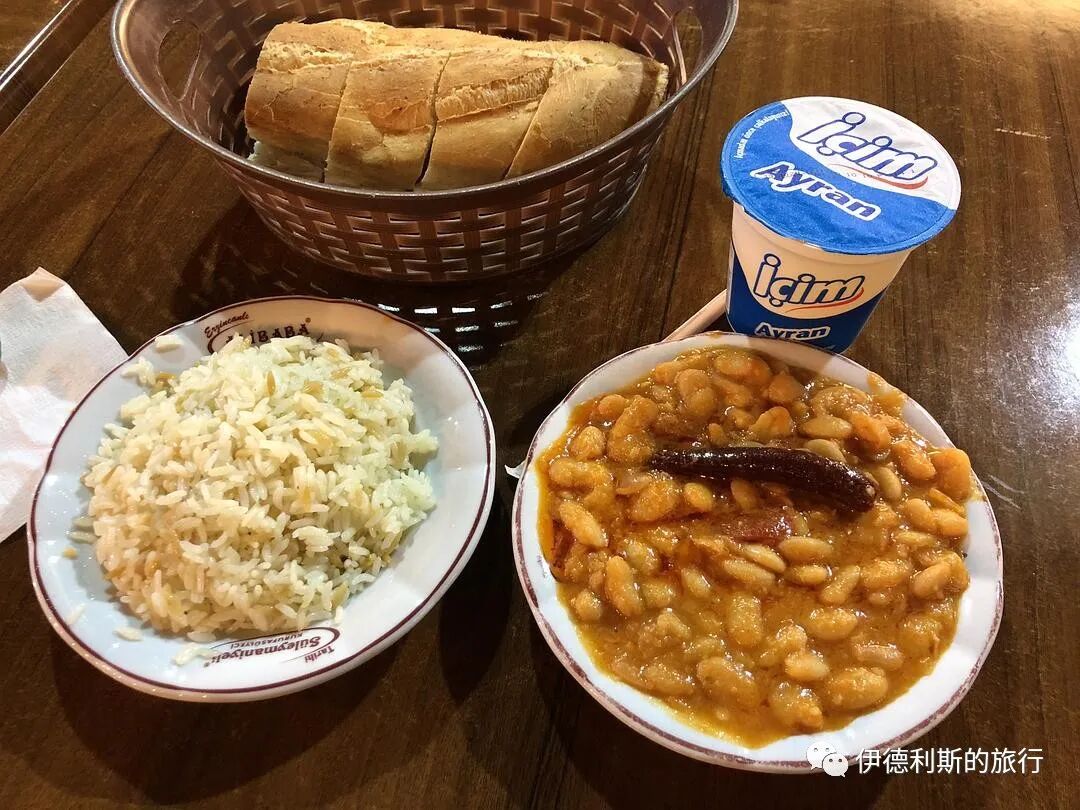
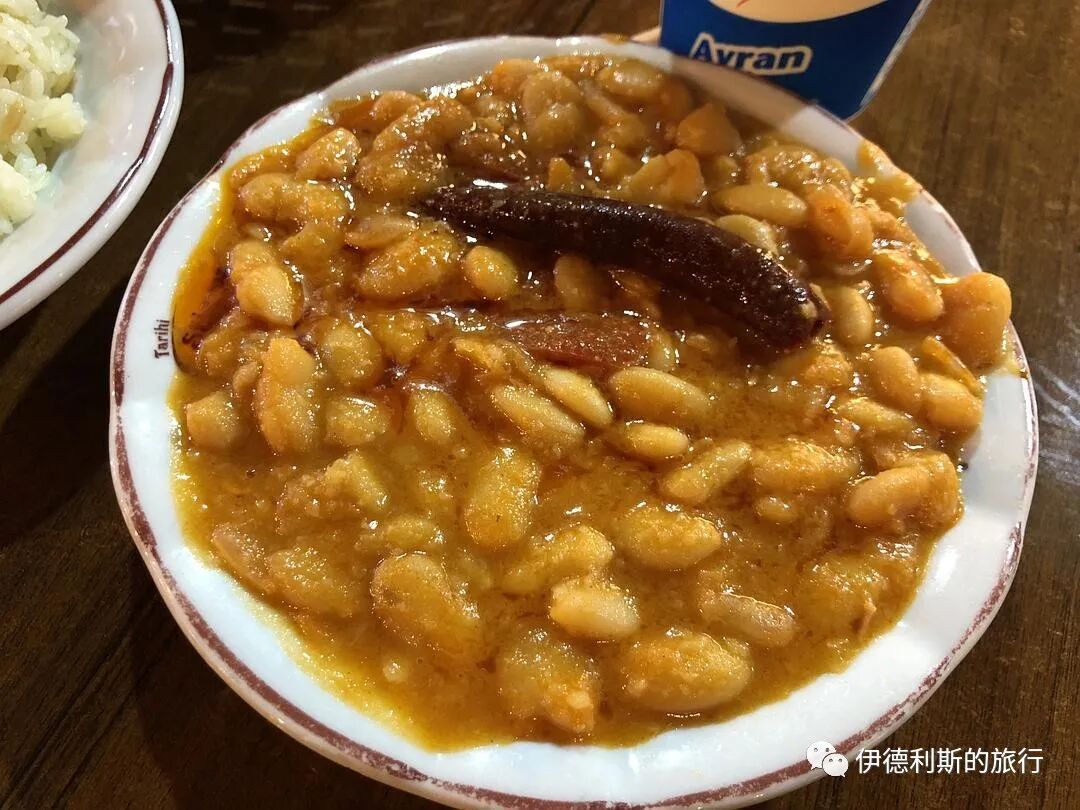
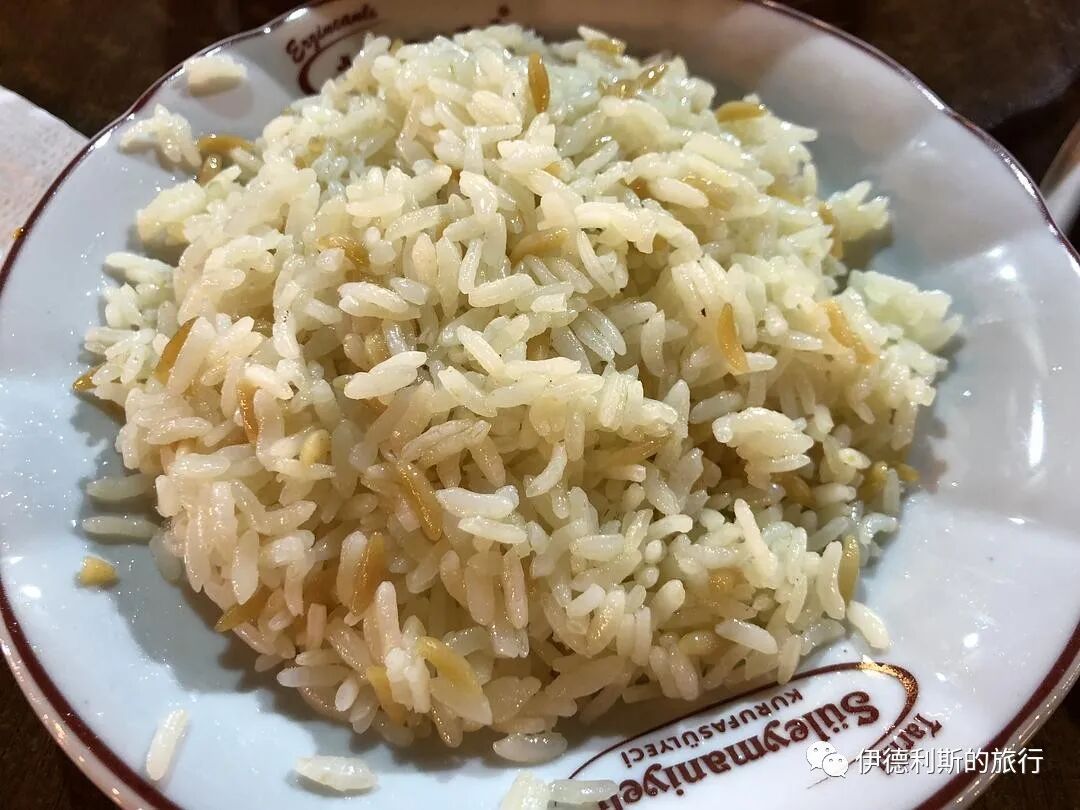
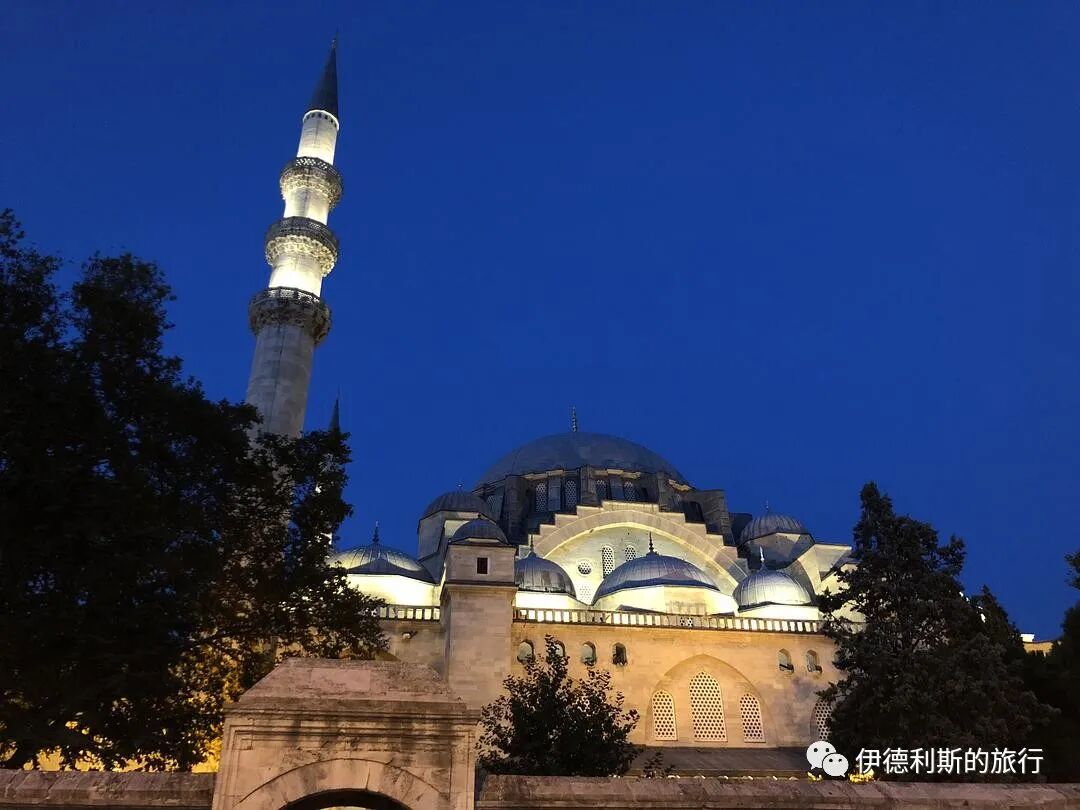 Collapse Read »
Summary: Istanbul — Mosques, Turkish Food and Ottoman Streets is presented here as a firsthand travel account in clear English, beginning with this scene: I spent half a month traveling in Turkey from September to October 2018. While visiting historical sites in Istanbul, I tried some local food and would like to share it with you here. The account keeps its focus on Istanbul Travel, Turkish Food, Ottoman Heritage while preserving the names, places, food, and historical details from the Chinese source. This is part 3 of 3.
Part 3 of 3
Collapse Read »
Halal Travel Guide: Istanbul — Mosques, Turkish Food and Ottoman Streets (Part 2 of 3)
Reposted from the web
Summary: Istanbul — Mosques, Turkish Food and Ottoman Streets is presented here as a firsthand travel account in clear English, beginning with this scene: I spent half a month traveling in Turkey from September to October 2018. While visiting historical sites in Istanbul, I tried some local food and would like to share it with you here. The account keeps its focus on Istanbul Travel, Turkish Food, Ottoman Heritage while preserving the names, places, food, and historical details from the Chinese source. This is part 2 of 3.
Part 2 of 3
This place serves naan and a salad of onions, peppers, and tomatoes (pilahong) right away, which feels very Inner Asian. By the end of the meal, the Uzbek guy in the red shirt in the middle of the picture helped me peel all the eggplant skins and rolled them up with roasted tomatoes, which was very touching.
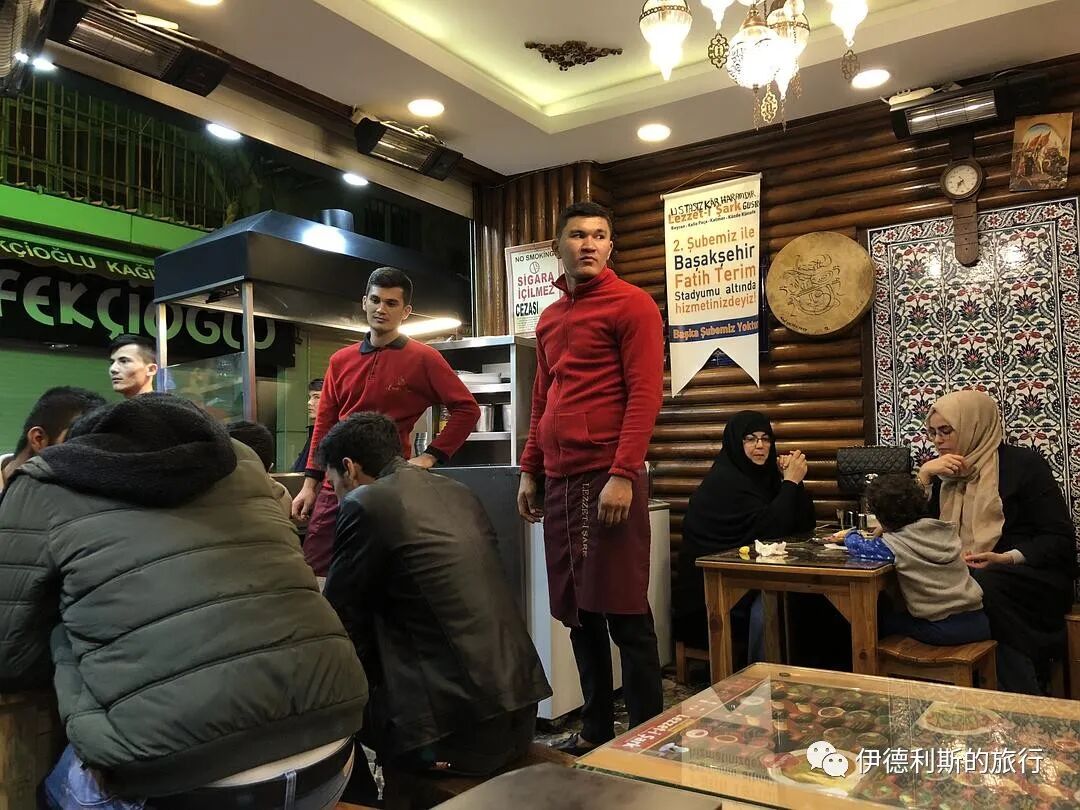
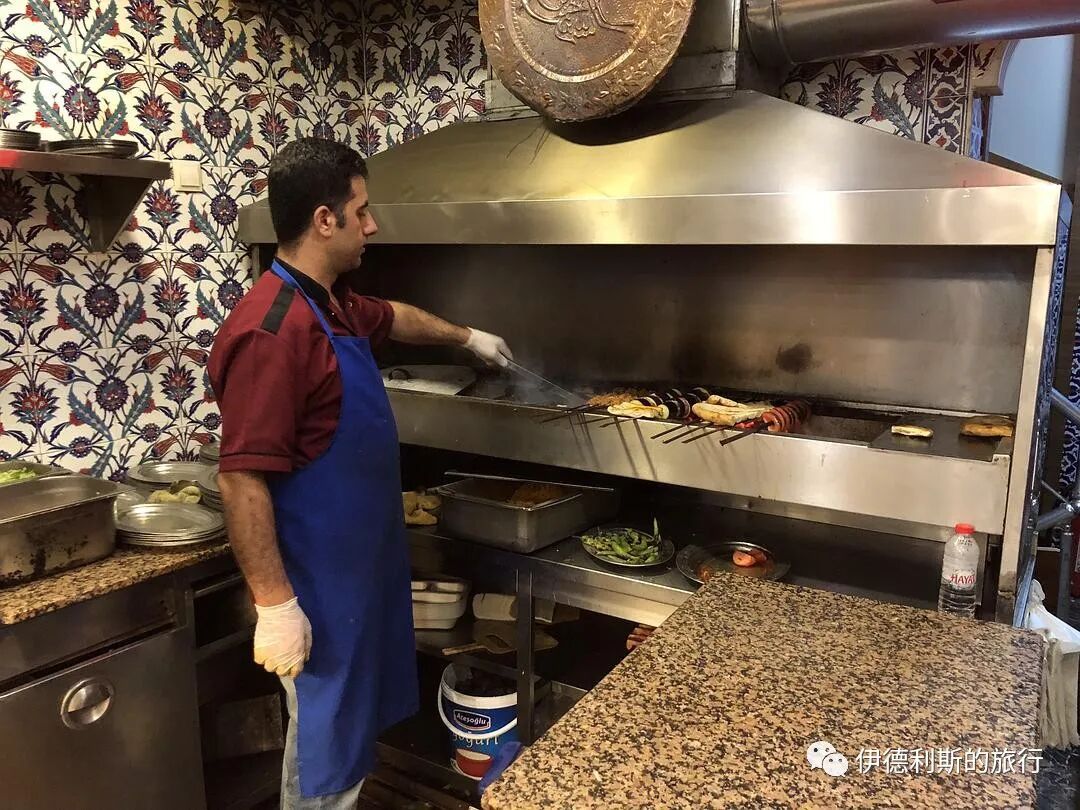
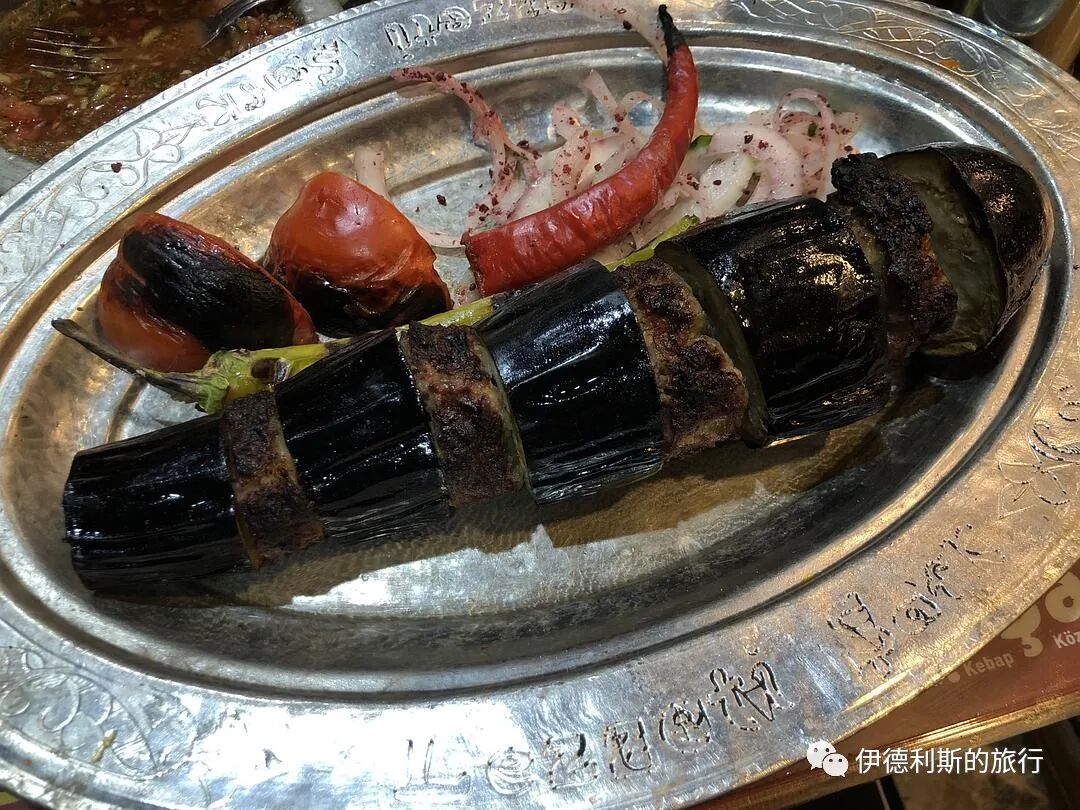
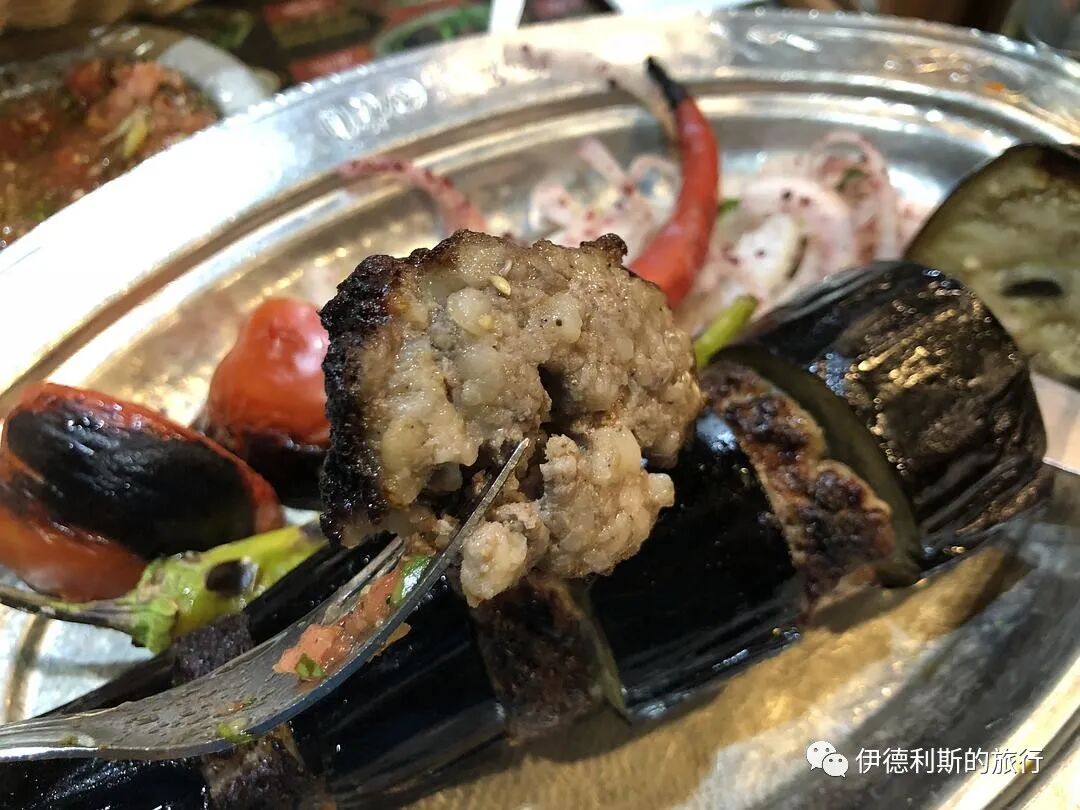
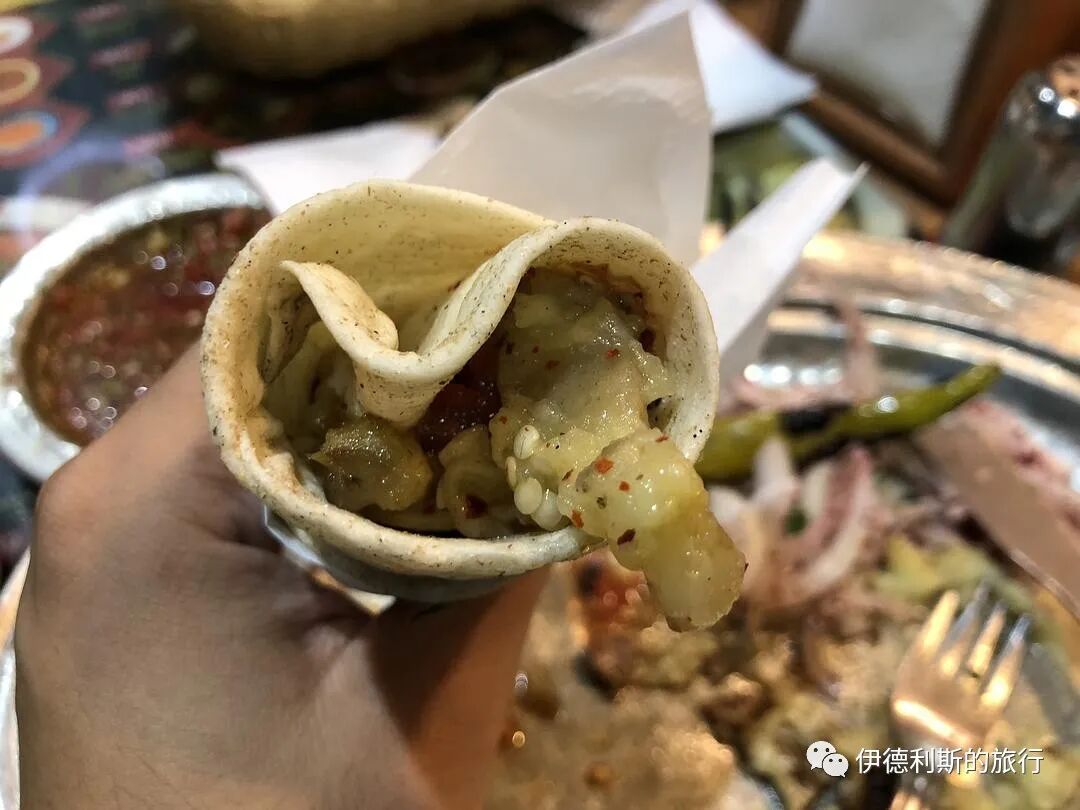
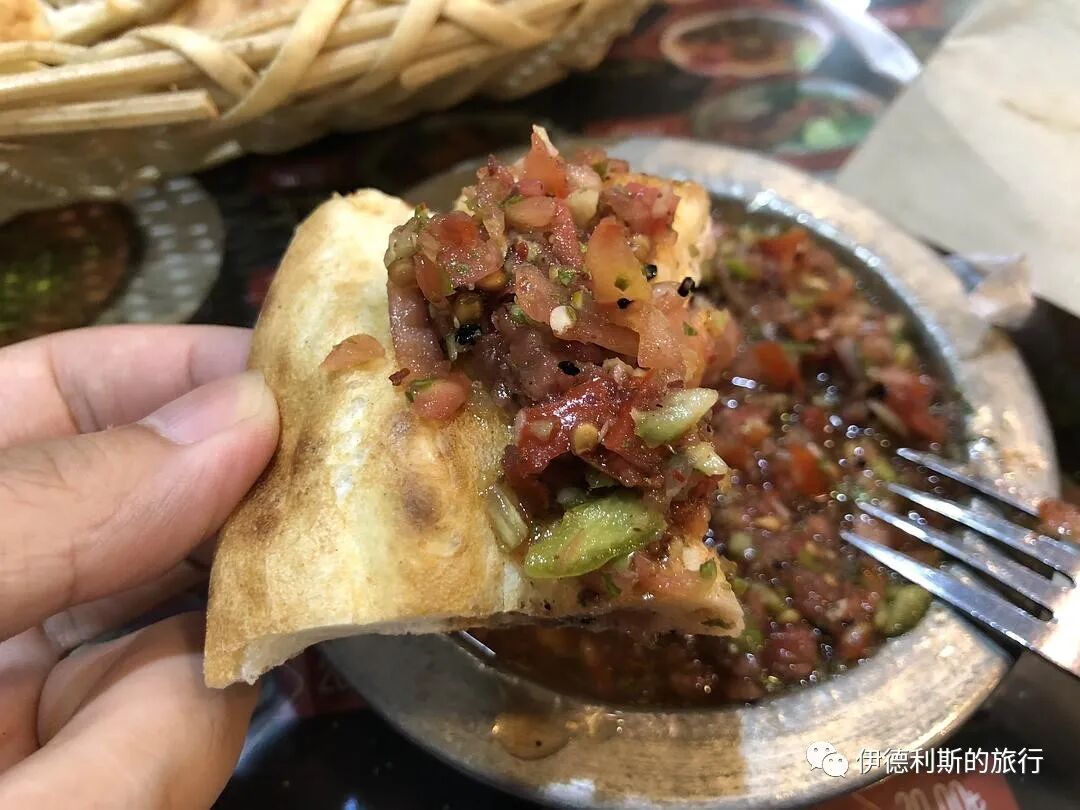
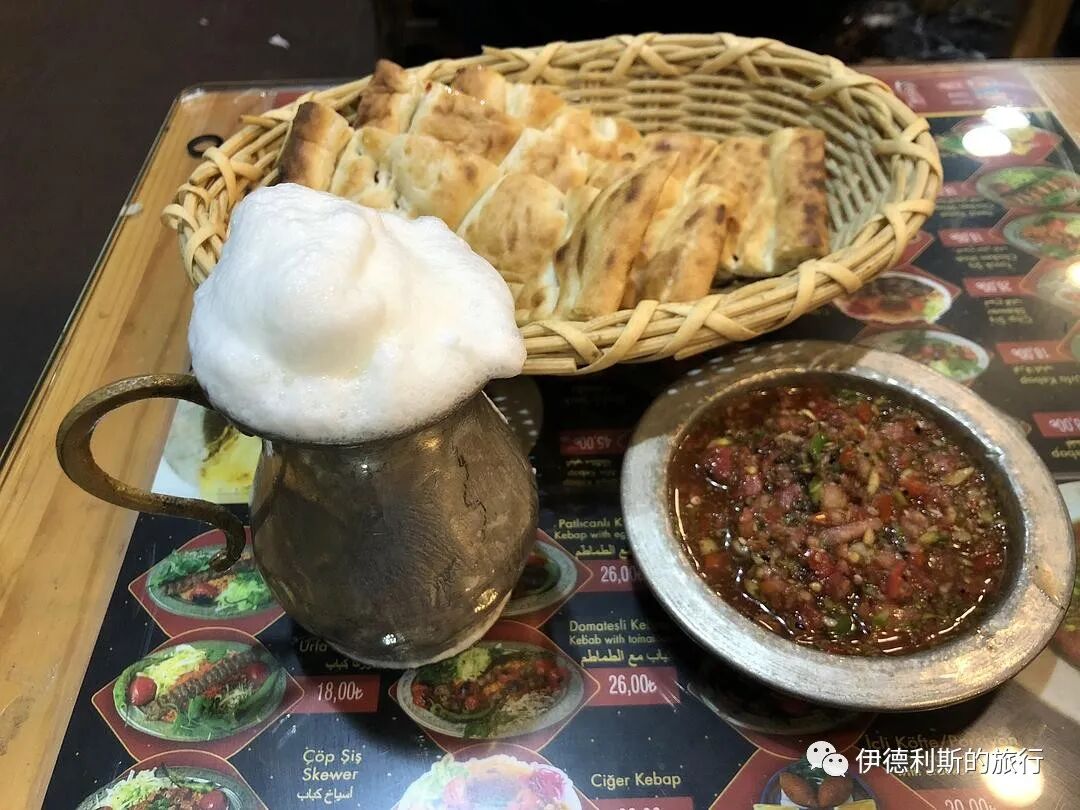
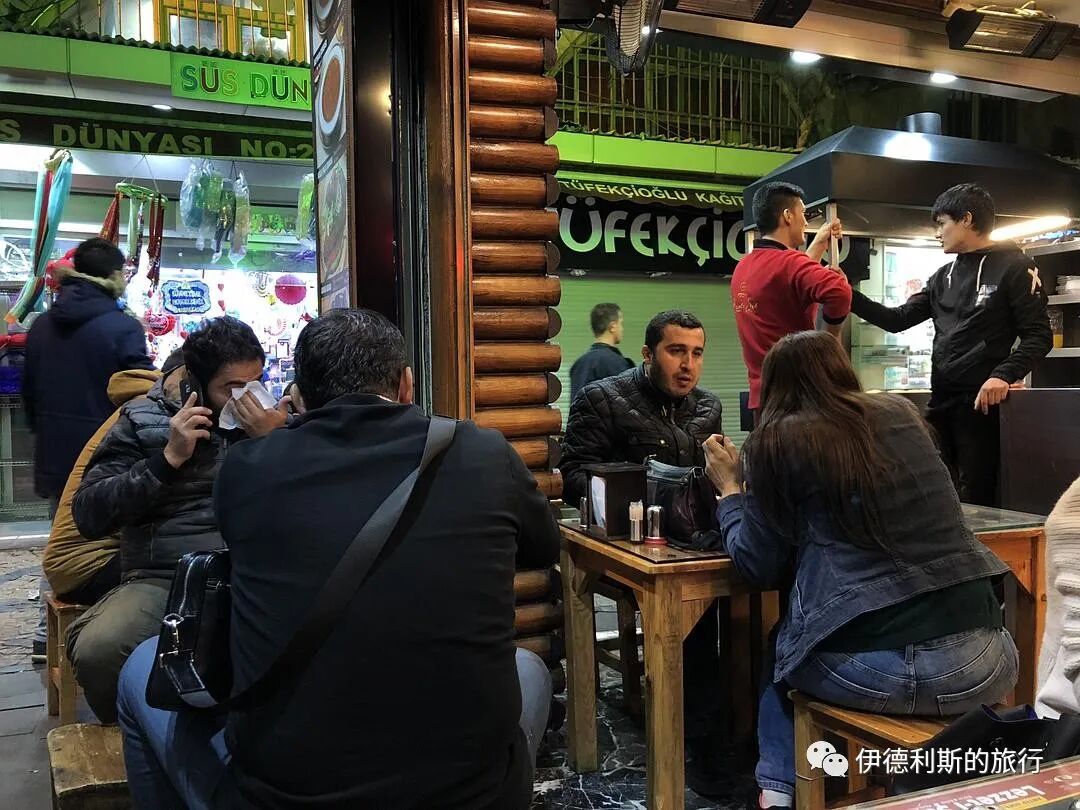
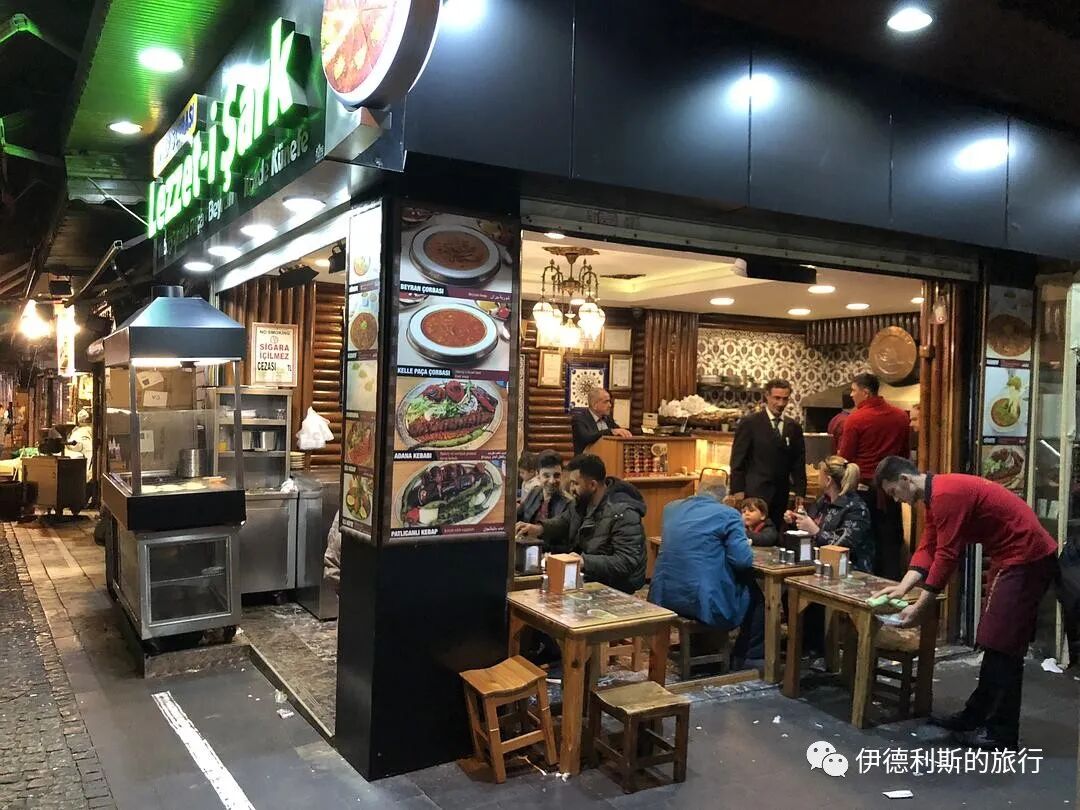
Roasted lamb eaten next to the Hagia Sophia, which was very fresh and tender.
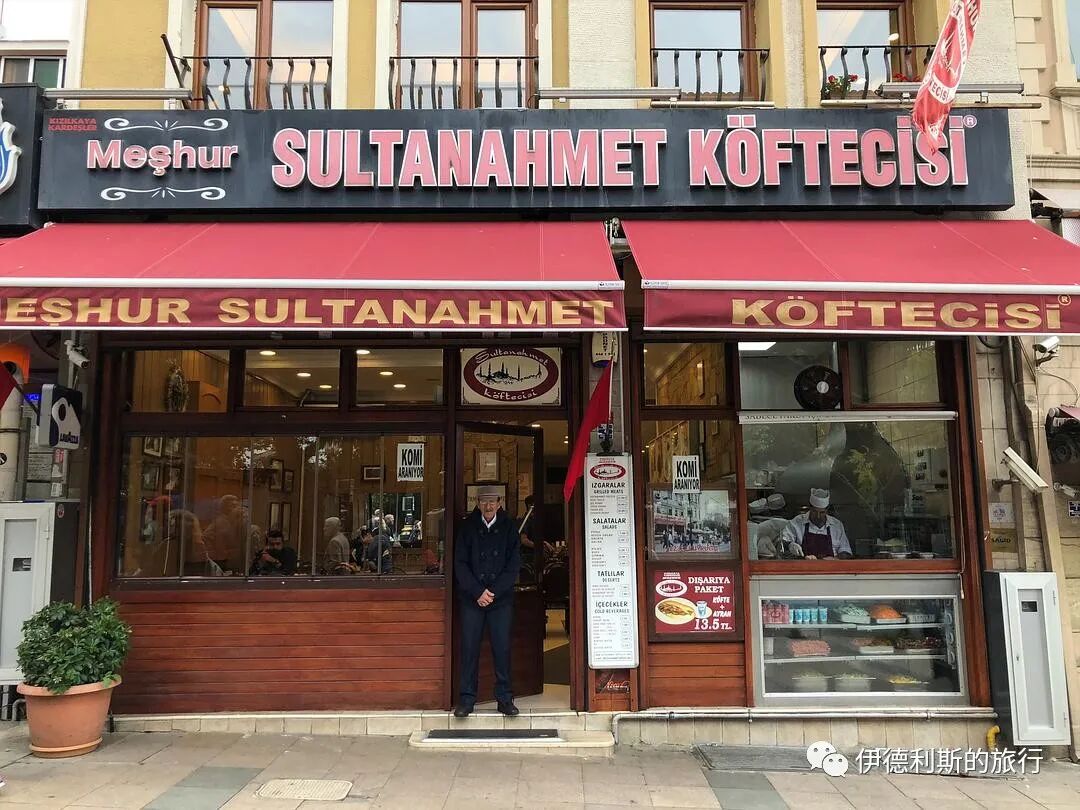
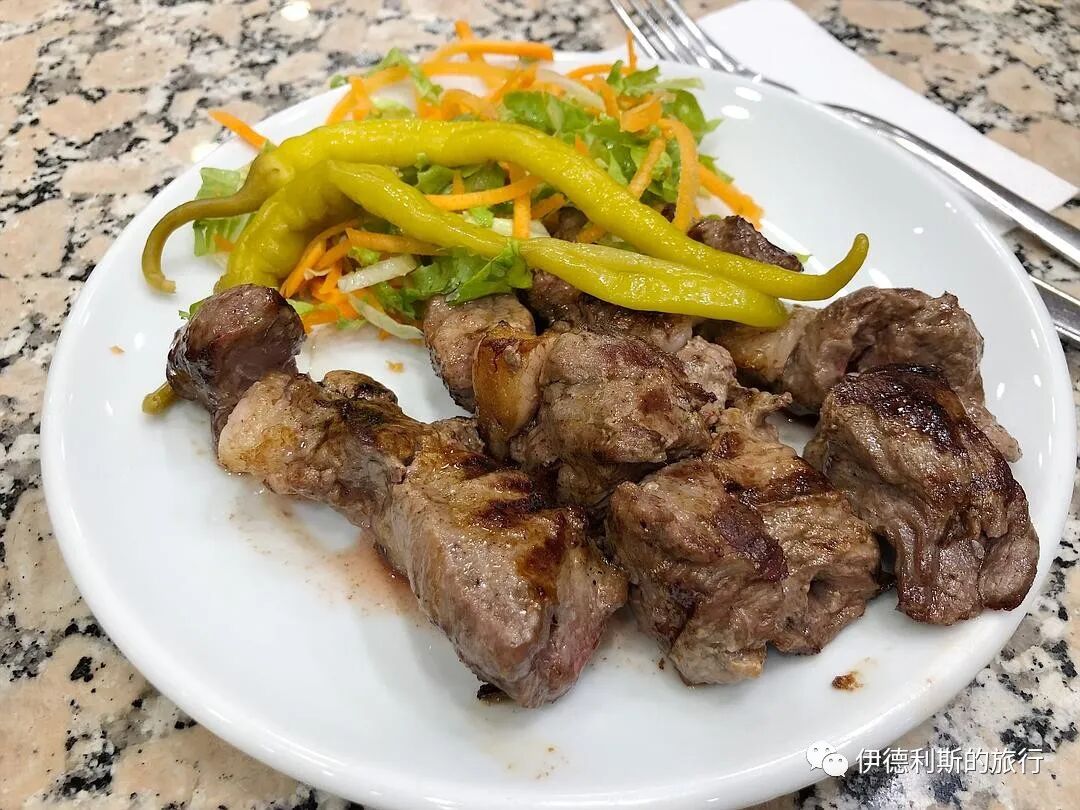
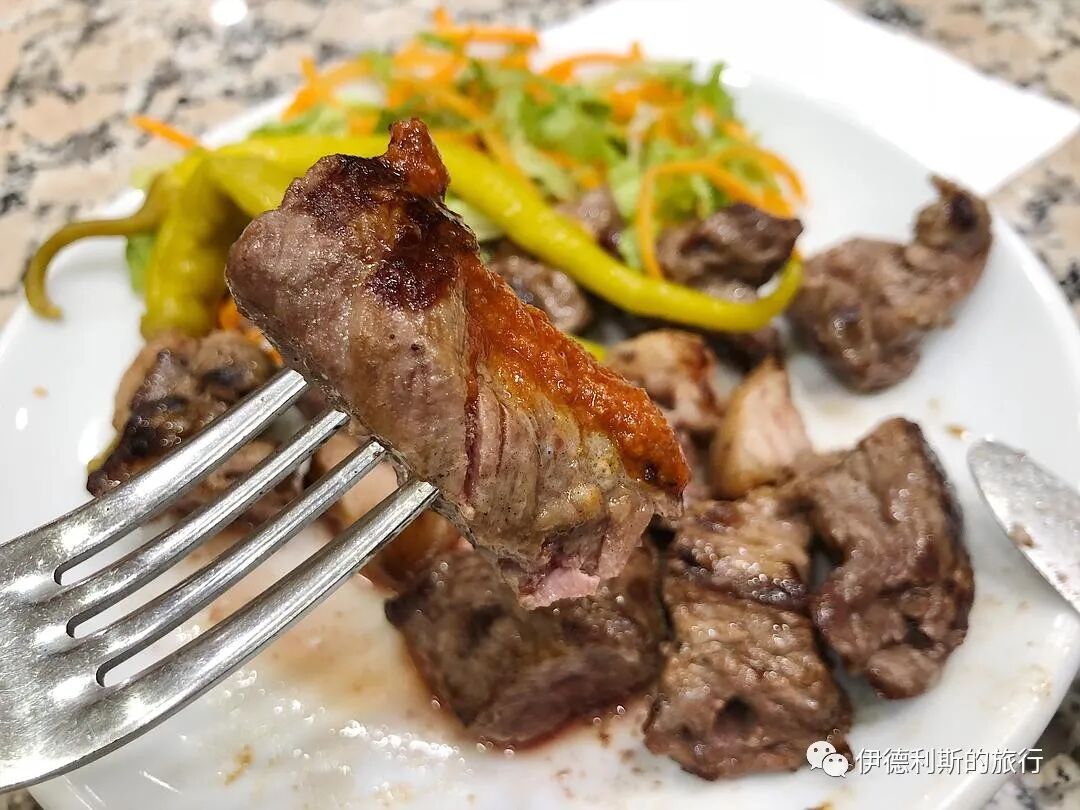
This soup is called chorba.
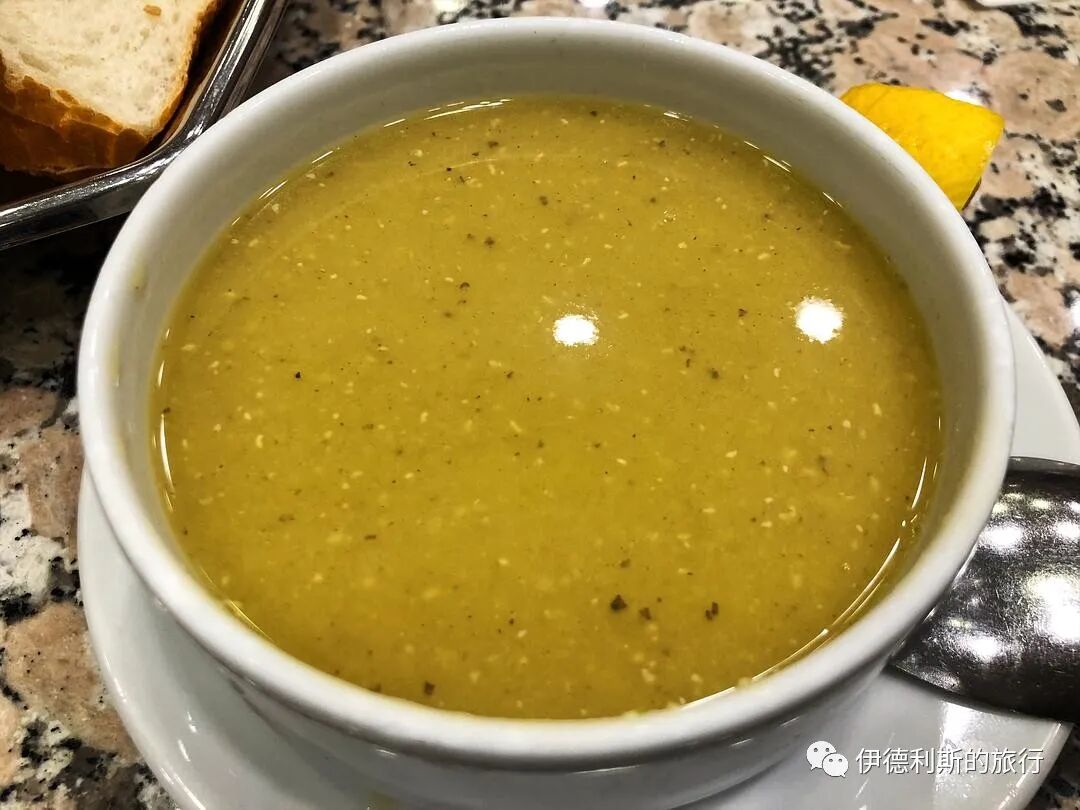
Bread in Turkish restaurants is free to eat.
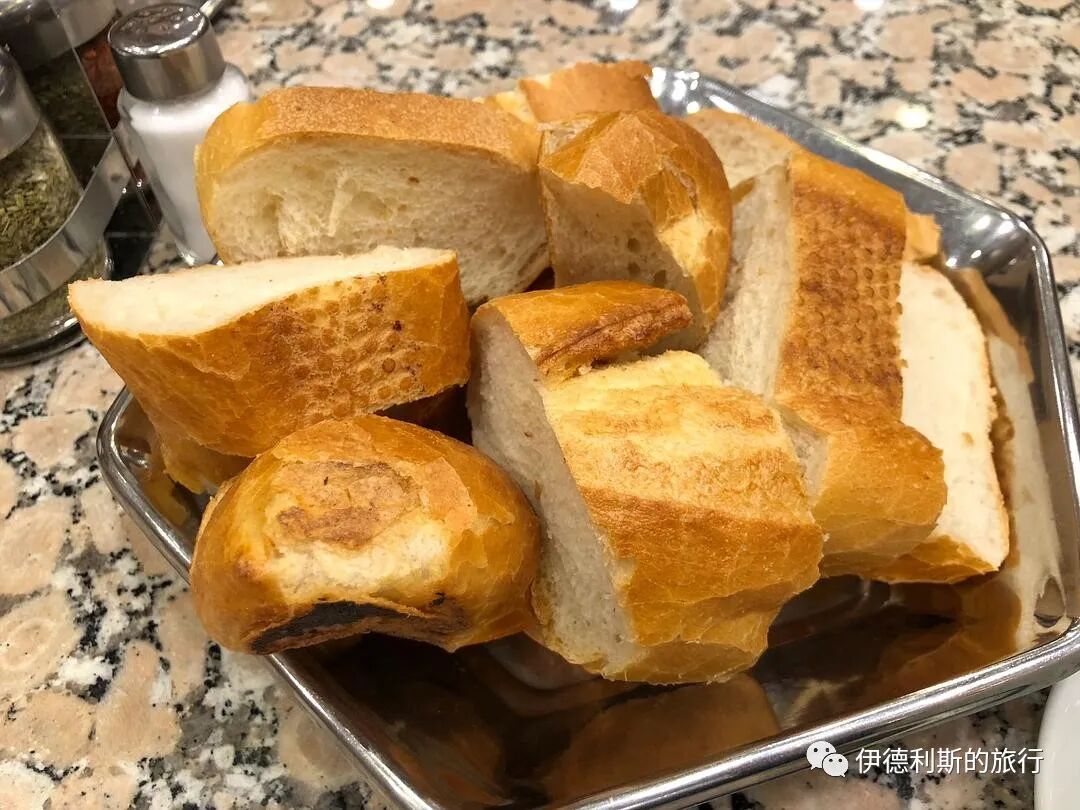
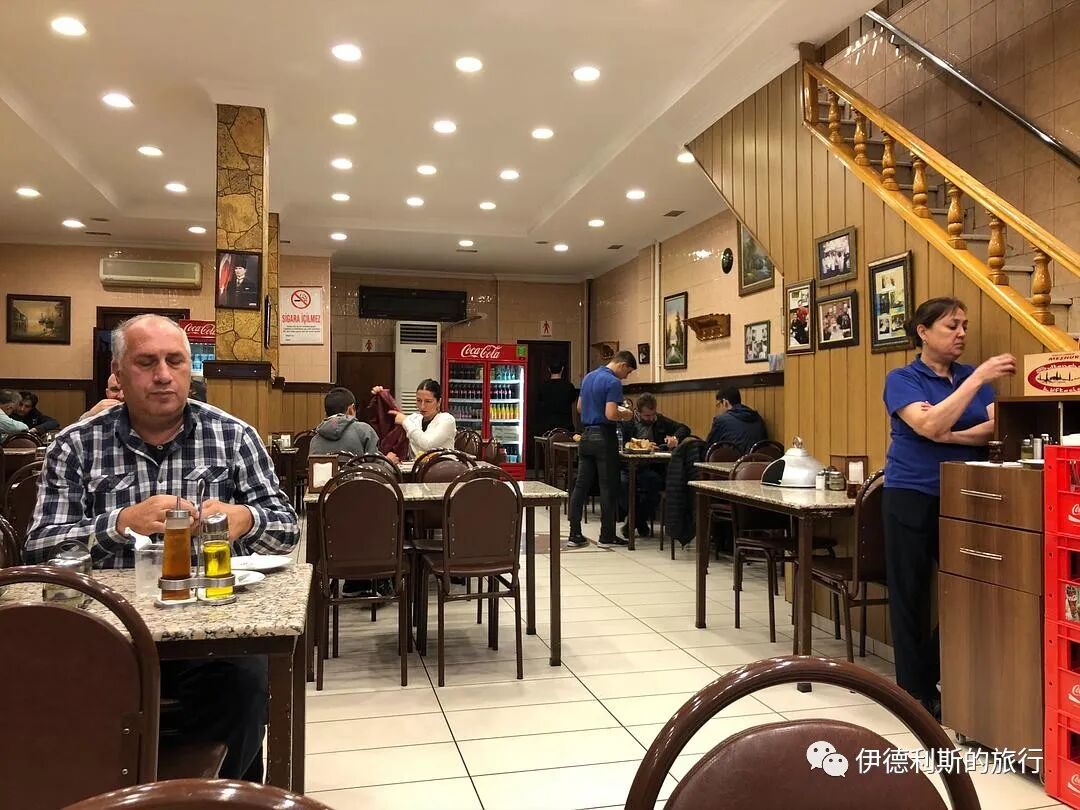
Eat a flaky pastry (börek) at a flaky pastry shop. The word börek comes from Turkish and can refer to any food made with thin dough sheets (yufka). Börek originated in Anatolia and became popular in the Balkans and North Africa during the Ottoman Empire. It was especially popular in Ottoman Jewish communities, where it was known as one of the three major Ottoman Jewish pastries alongside boyos de pan and bulemas.
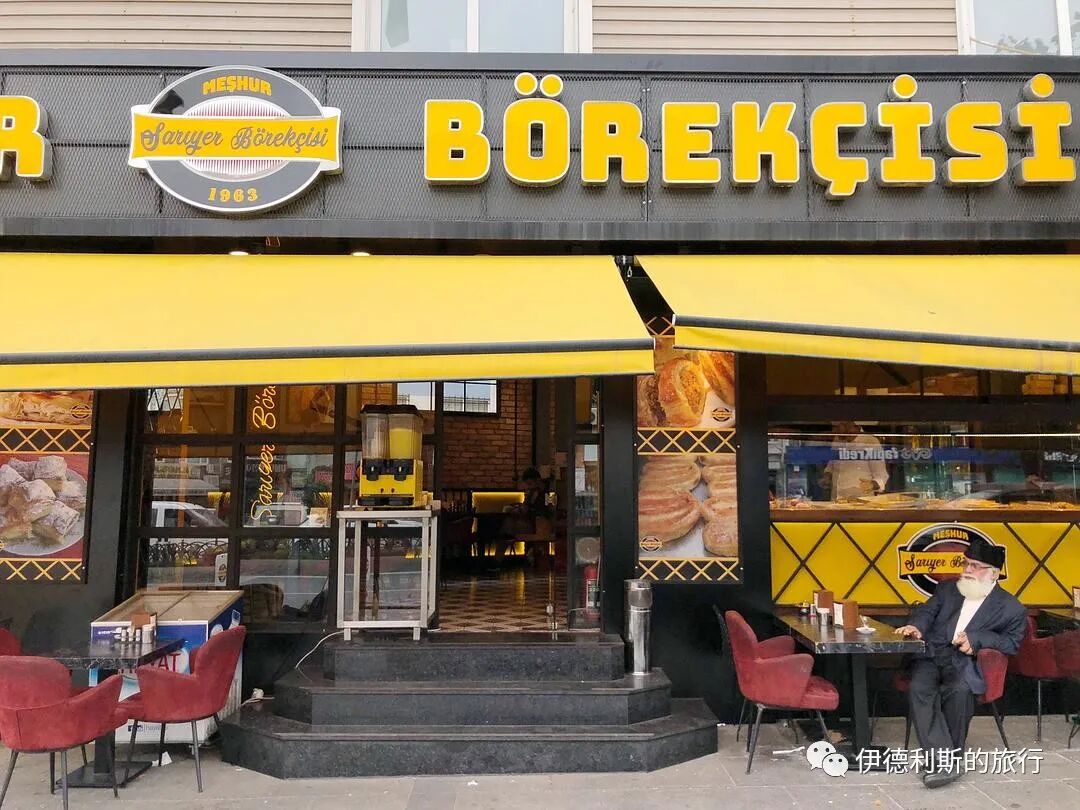
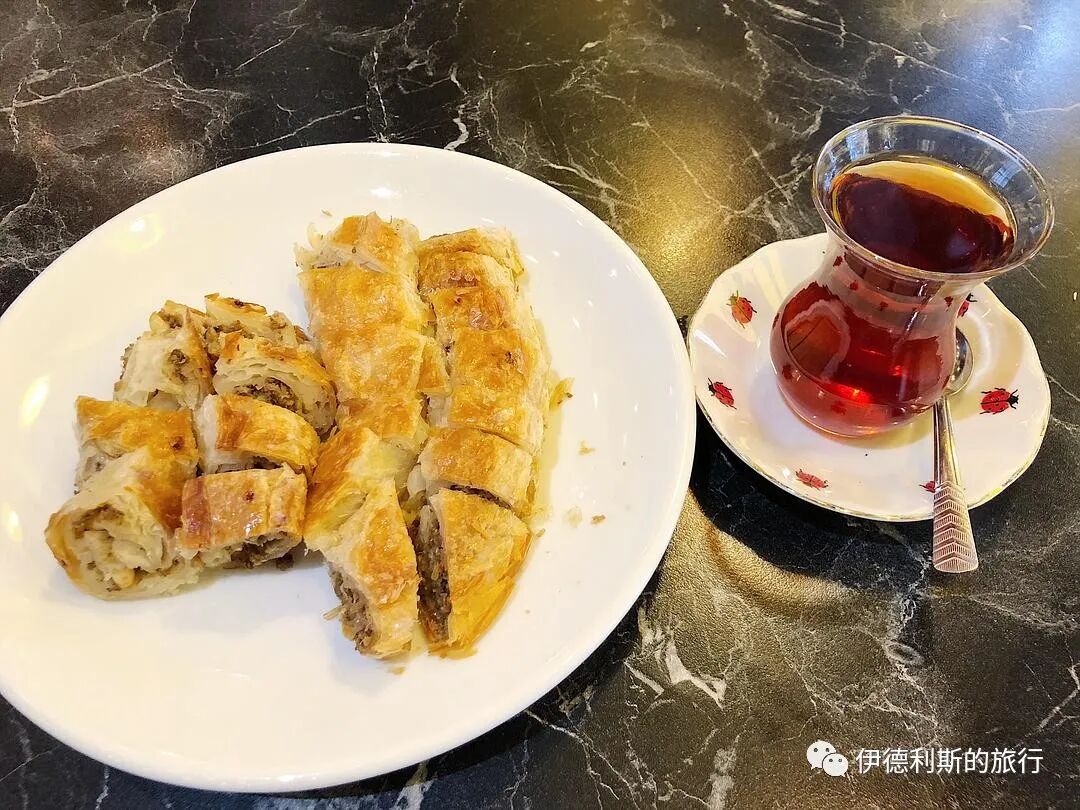
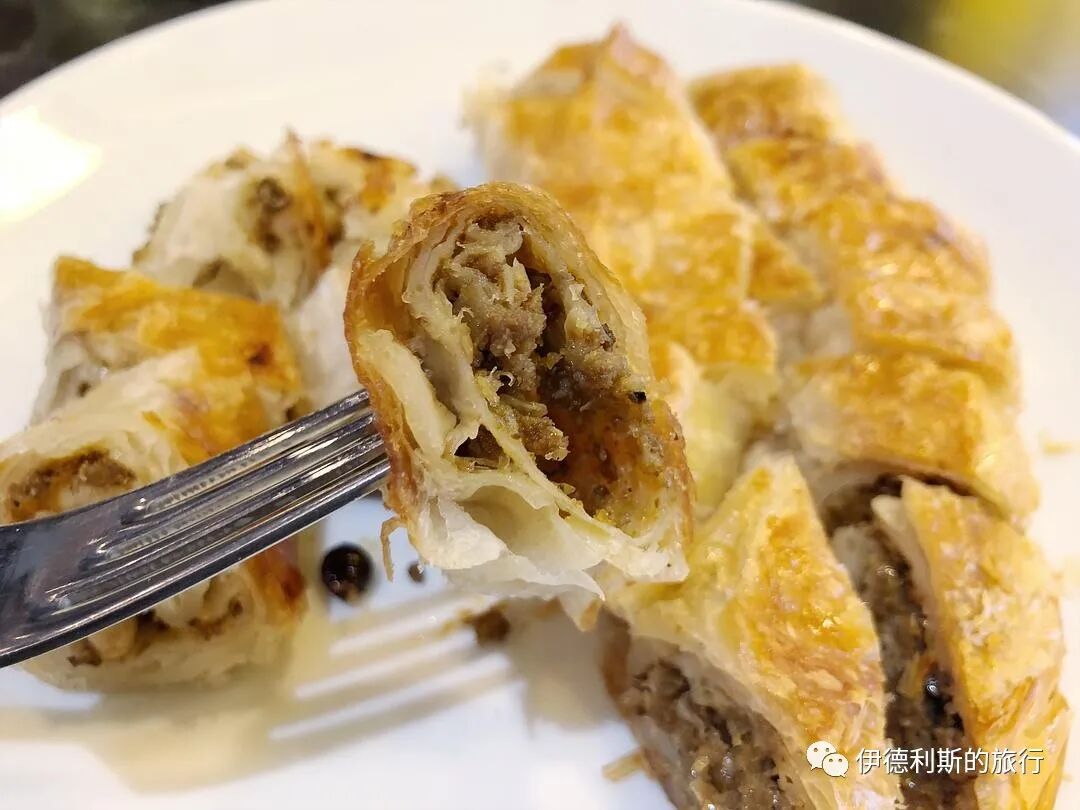
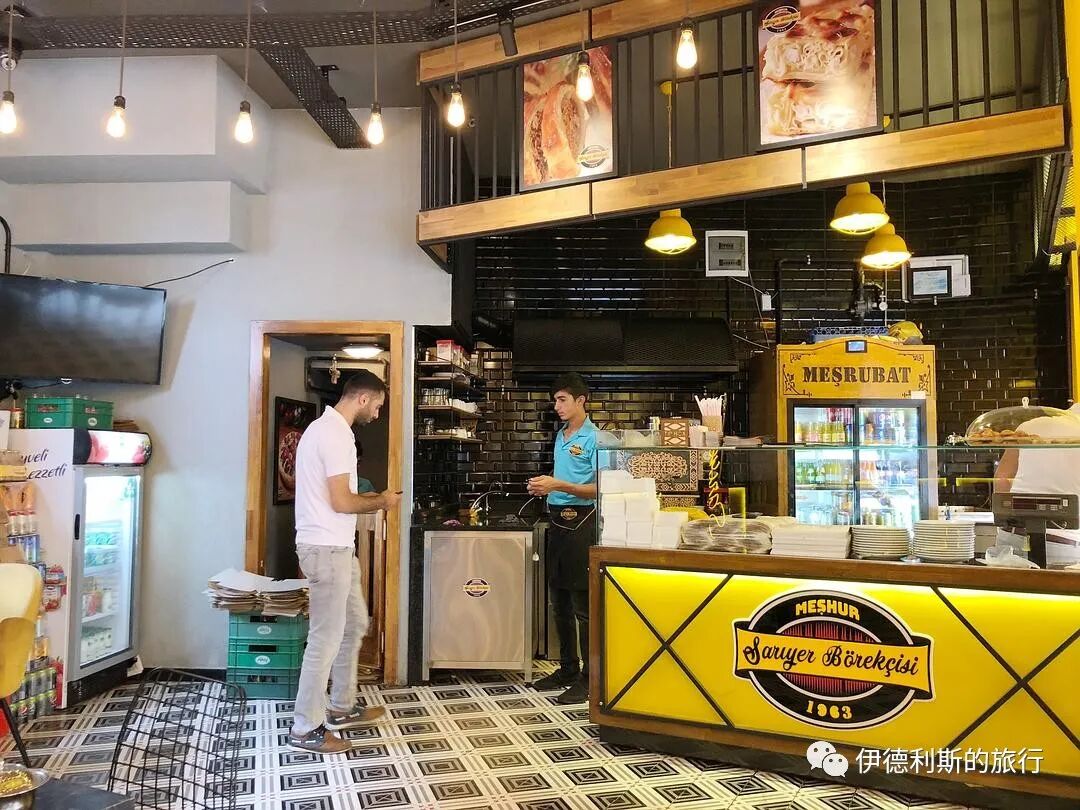
Eat iron-plate tomato grilled meat and scrambled eggs with vegetables (menemen) by the pier in the Asian district. Menemen is a Turkish food made of eggs, tomatoes, green peppers, and various spices, usually eaten for breakfast.
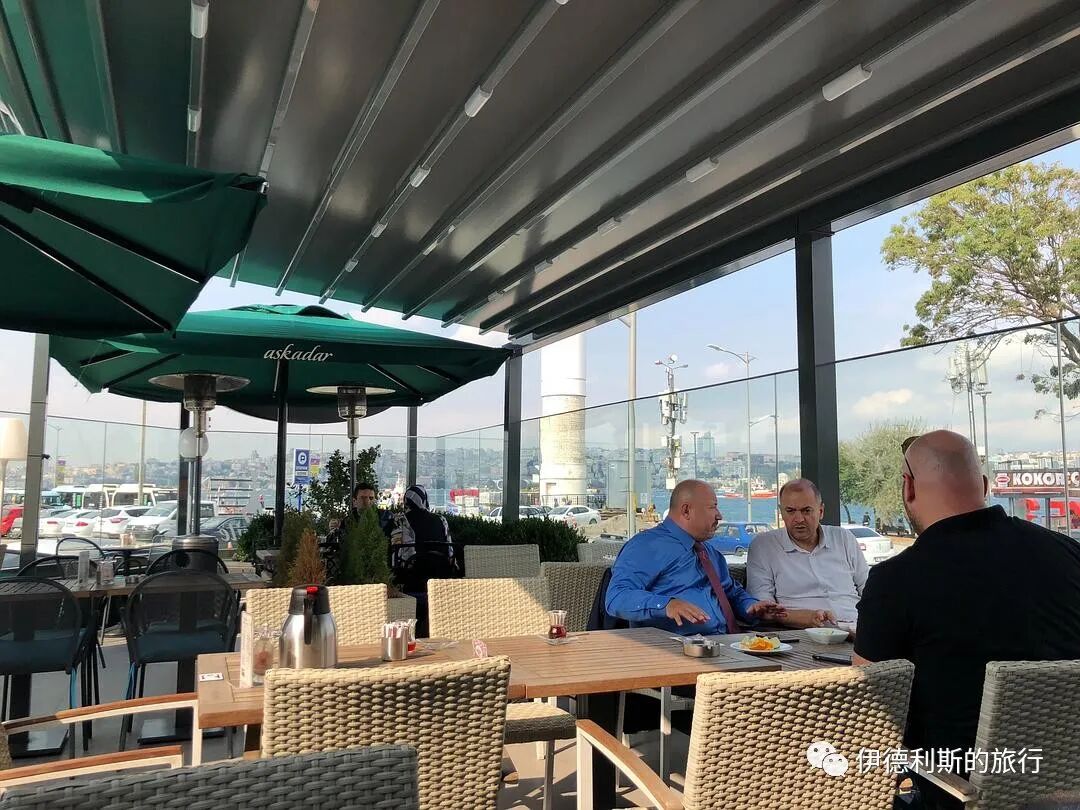
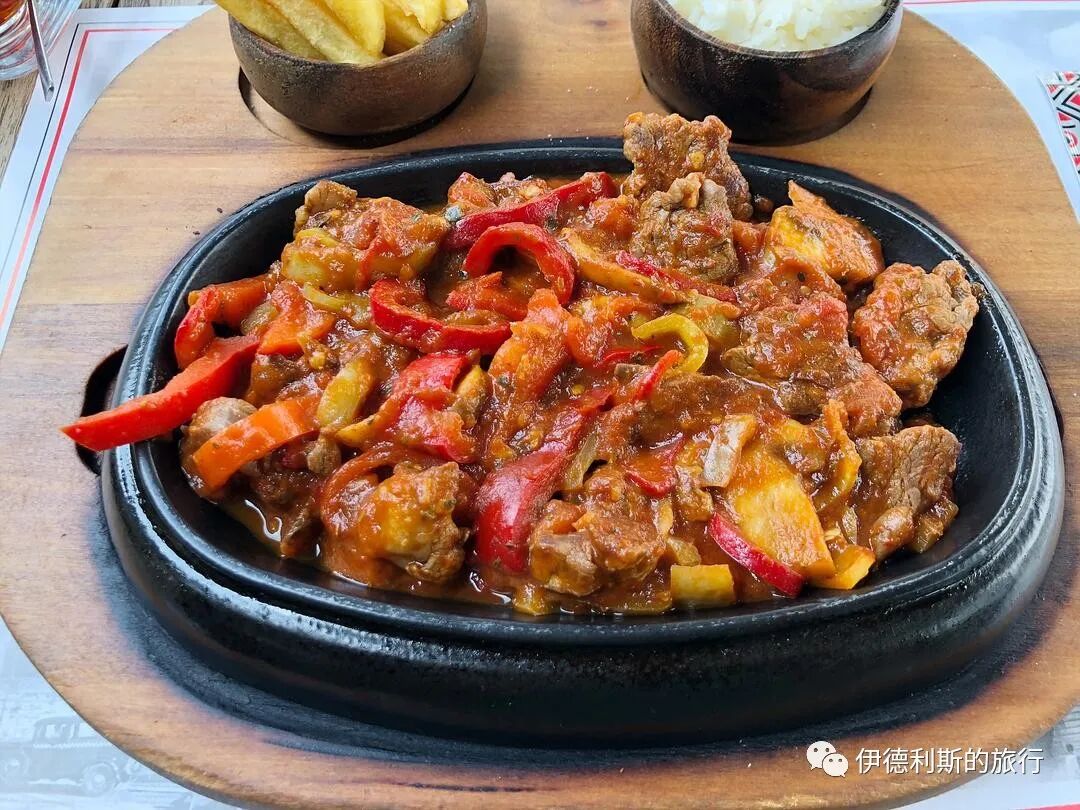
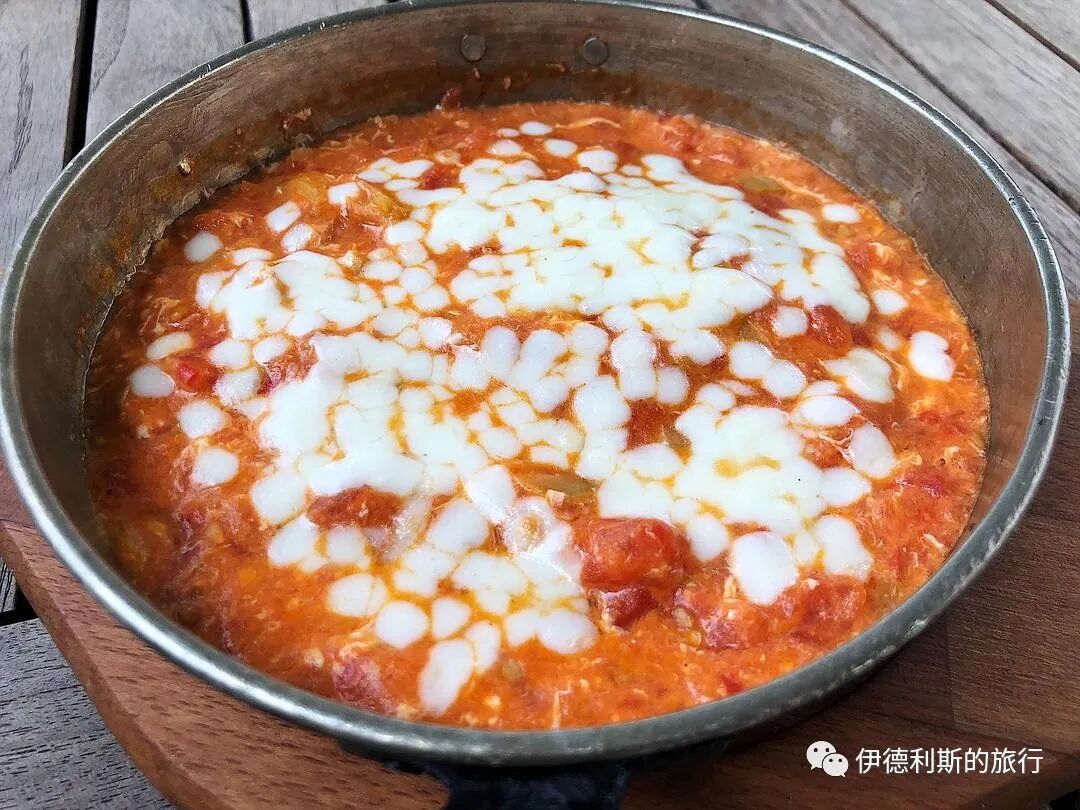
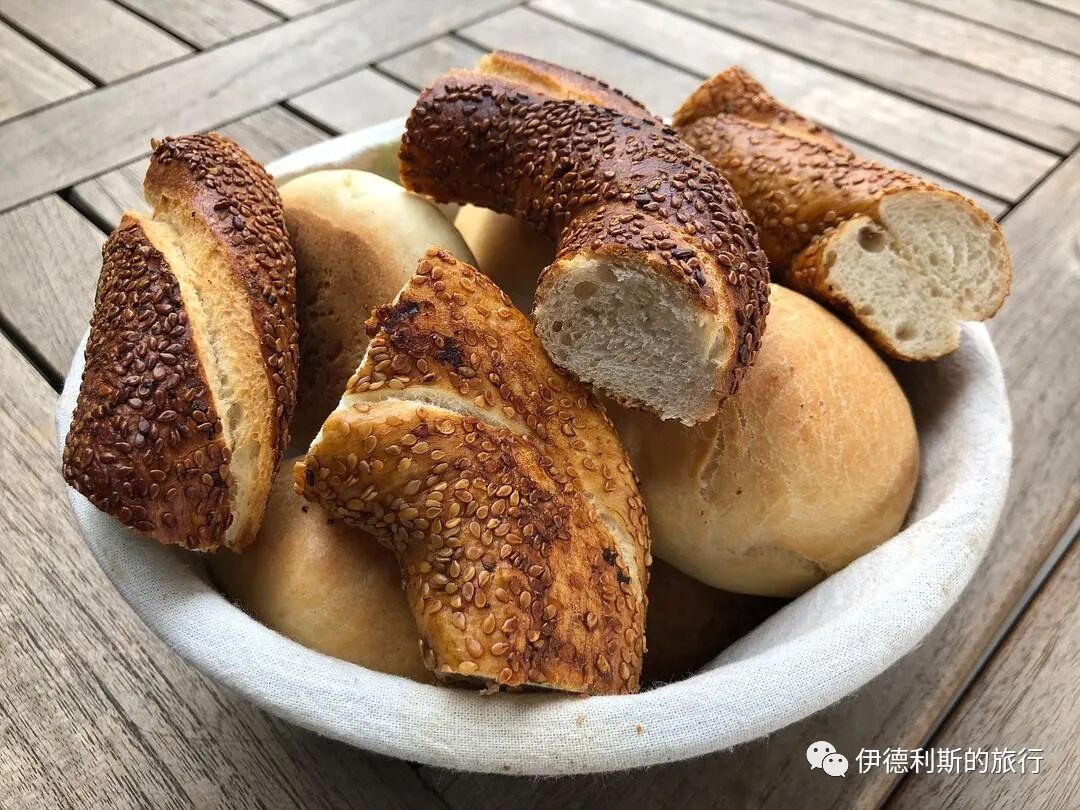
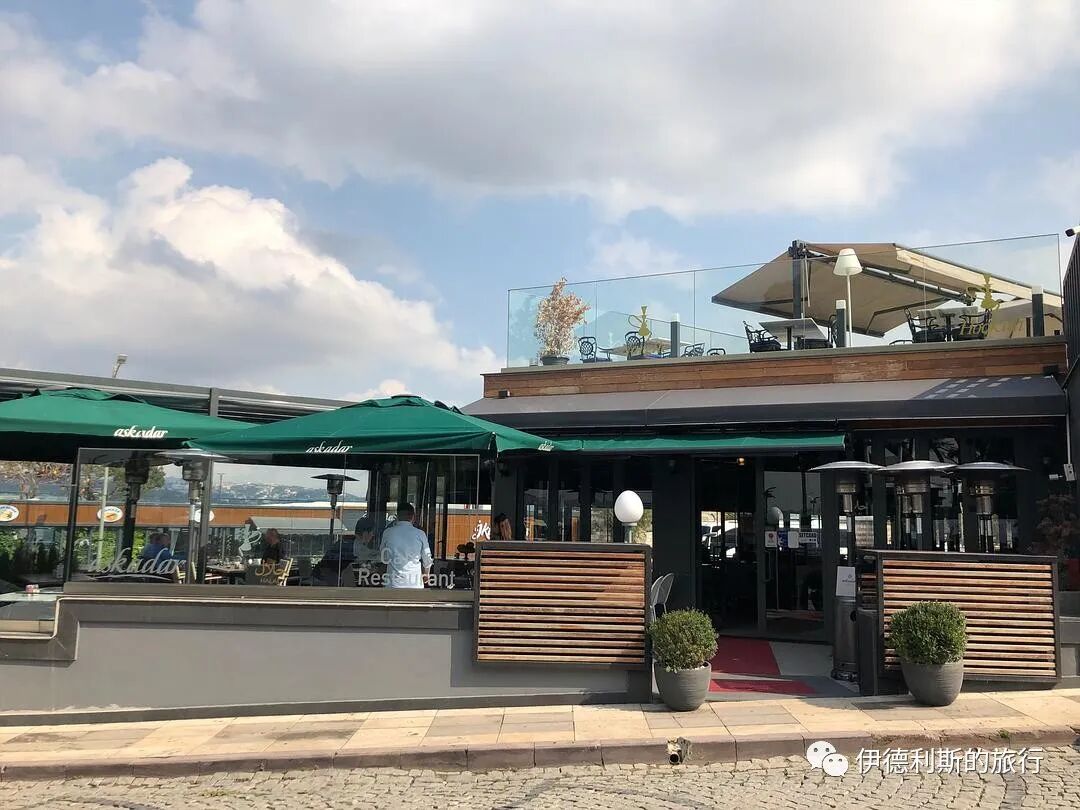
Foreign restaurants
While visiting historical sites in Istanbul, I passed through a neighborhood of Syrian people in the Fatih district. I went into a Syrian restaurant called Saruja and ordered three dishes. When I looked them up later, I found they were all Levantine cuisine.
The Levant refers to the eastern Mediterranean coastal region, including modern-day Jordan, Lebanon, Israel, Palestine, Syria, and parts of Turkey near Syria. During the Ottoman era, many Levantine foods spread to Turkey and Armenia and became local delicacies. The first dish was a minced meat flatbread (lahmacun). I chose a pomegranate-flavored one, and it tasted quite unique. The Turkish word lahmacun comes from the Arabic "laḥm'ajīn," which translates to "meat with dough." During the Ottoman era, this meat flatbread spread to Turkey and Armenia. In different places, it is called "Arab pizza," "Lebanese pizza," "Syrian pizza," "Armenian pizza," and "Turkish pizza."
The second dish is called kibbeh, known in Turkish as "içli köfte." Kibbeh is the North Levantine dialect version of the classical Arabic word "kubbah," which translates to "ball." Kibbeh is made of cracked wheat wrapped around a filling of minced meat, chopped onions, and Middle Eastern spices like cinnamon, nutmeg, cloves, and allspice. Kibbeh is most famous in Aleppo, northern Syria, where there are 17 different flavors. Besides the original, they add yogurt, lemon juice, pomegranate molasses, or cherry sauce.
Besides spreading to Turkey and Armenia during the Ottoman era, kibbeh also spread to Latin America with Levantine immigrants in the late 19th and early 20th centuries.
The third dish is chickpea puree (hummus). Hummus means "chickpea" in Arabic and is short for "ḥummuṣ bi ṭaḥīna" (chickpeas with sesame paste). Hummus is made by mixing chickpeas with sesame paste (tahini), olive oil, lemon juice, and garlic. It is very popular in the Middle East and the Mediterranean.
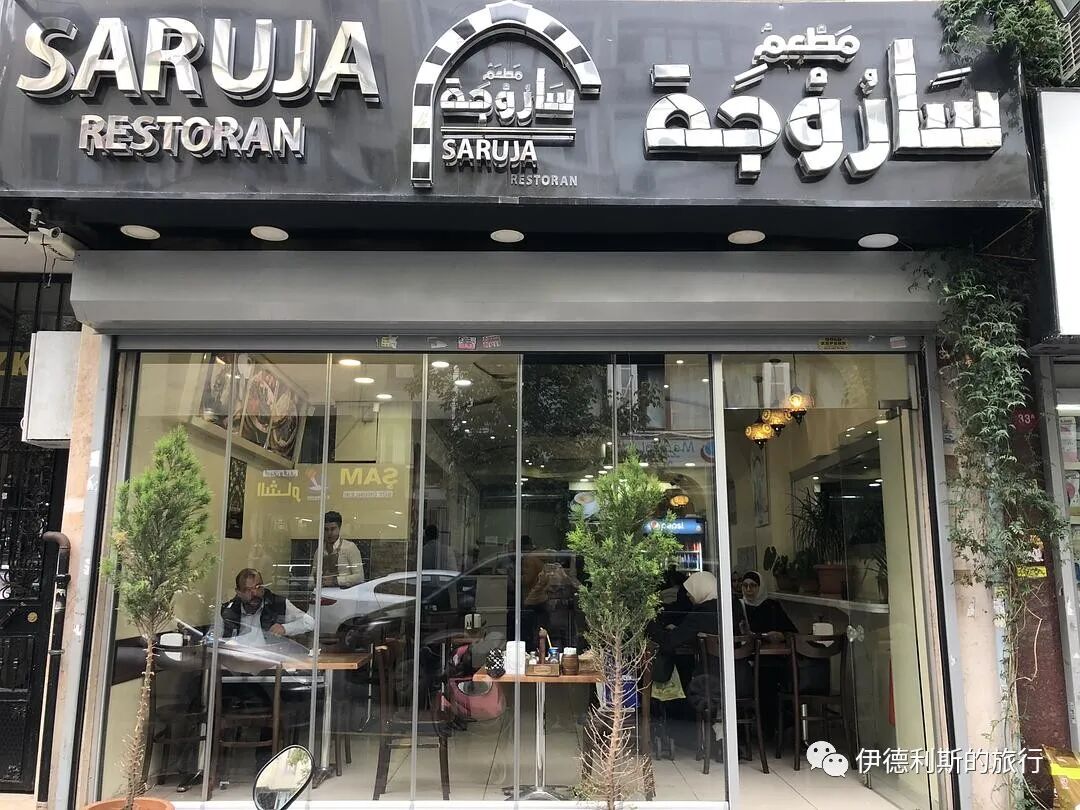
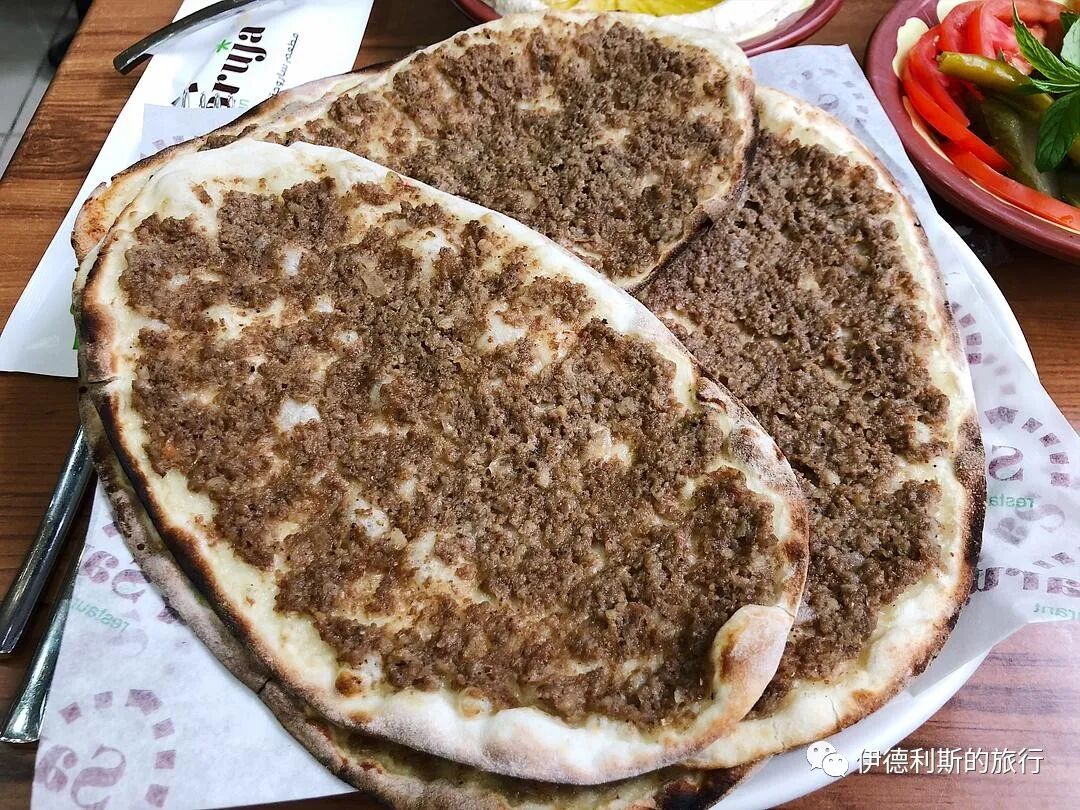
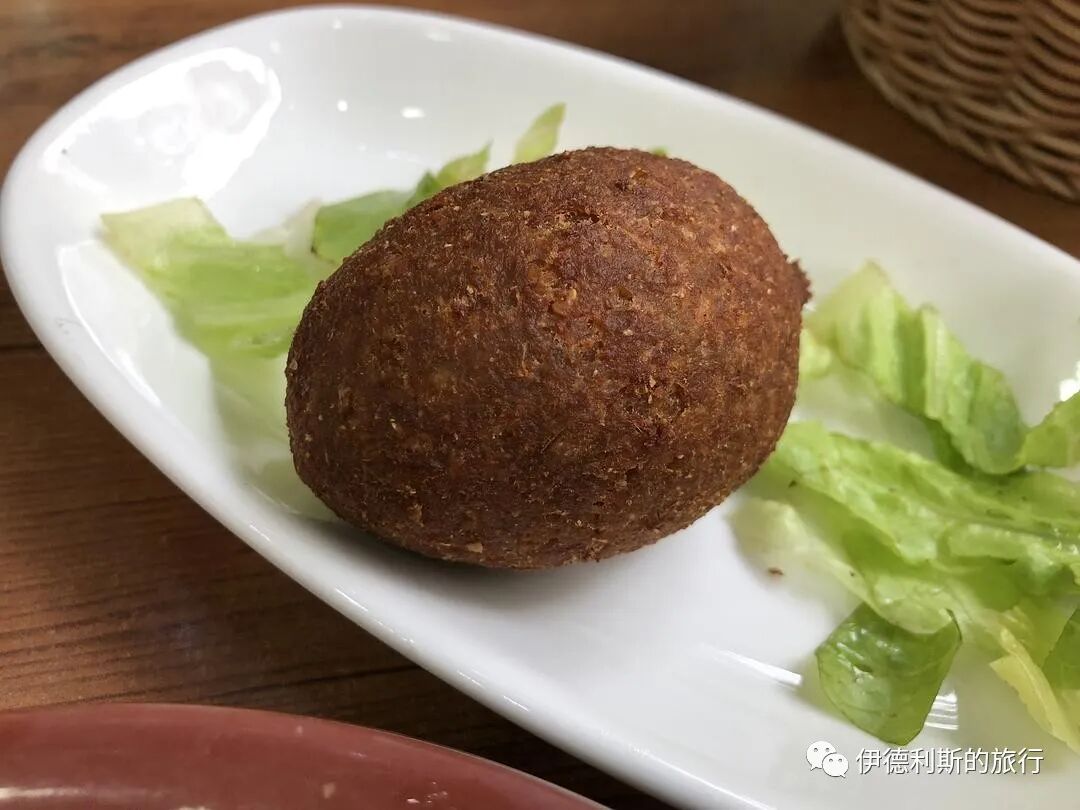
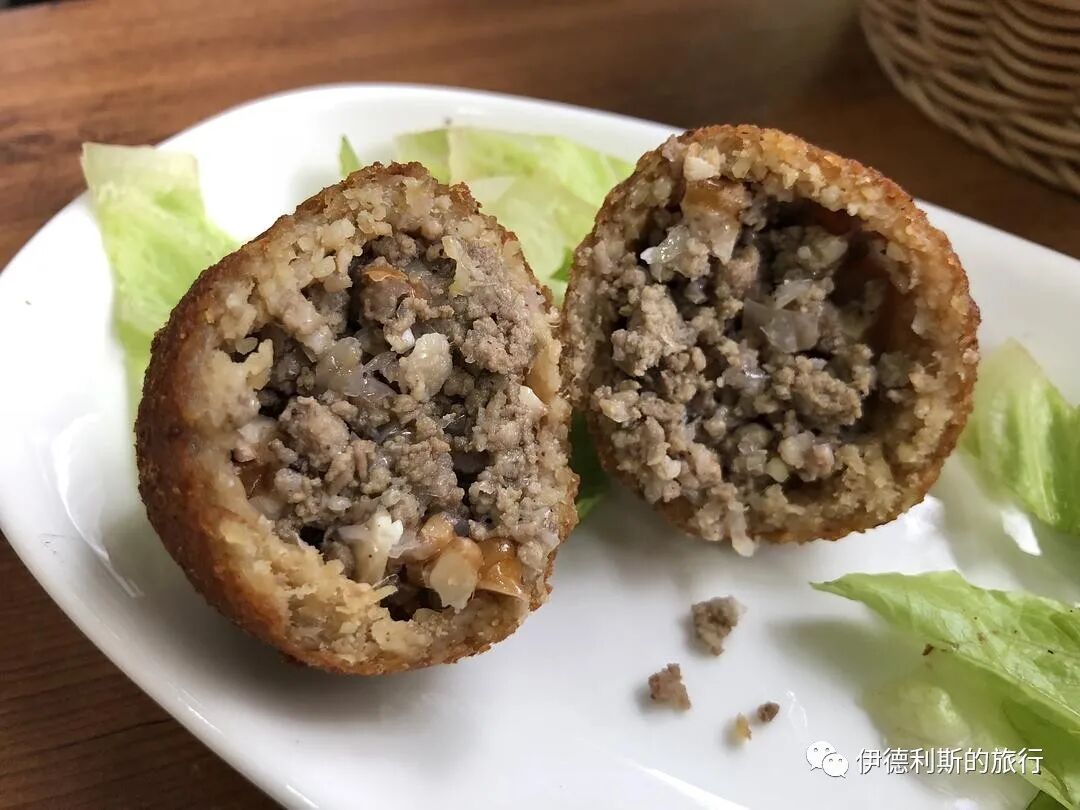
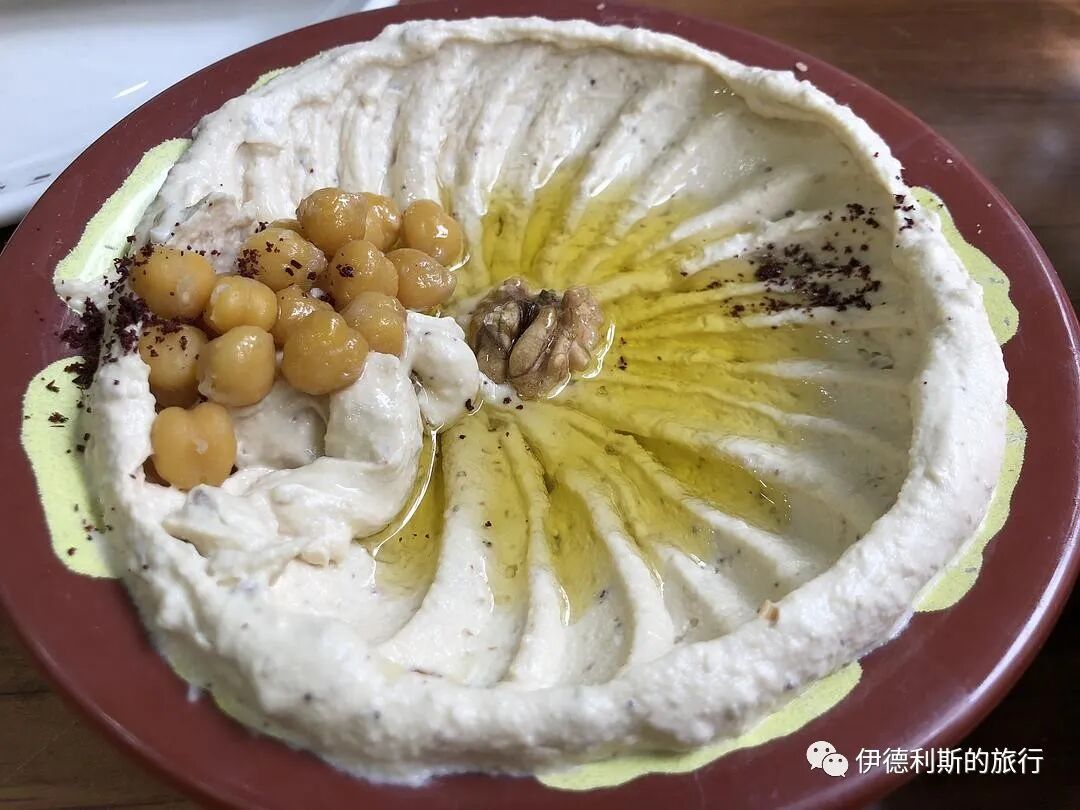
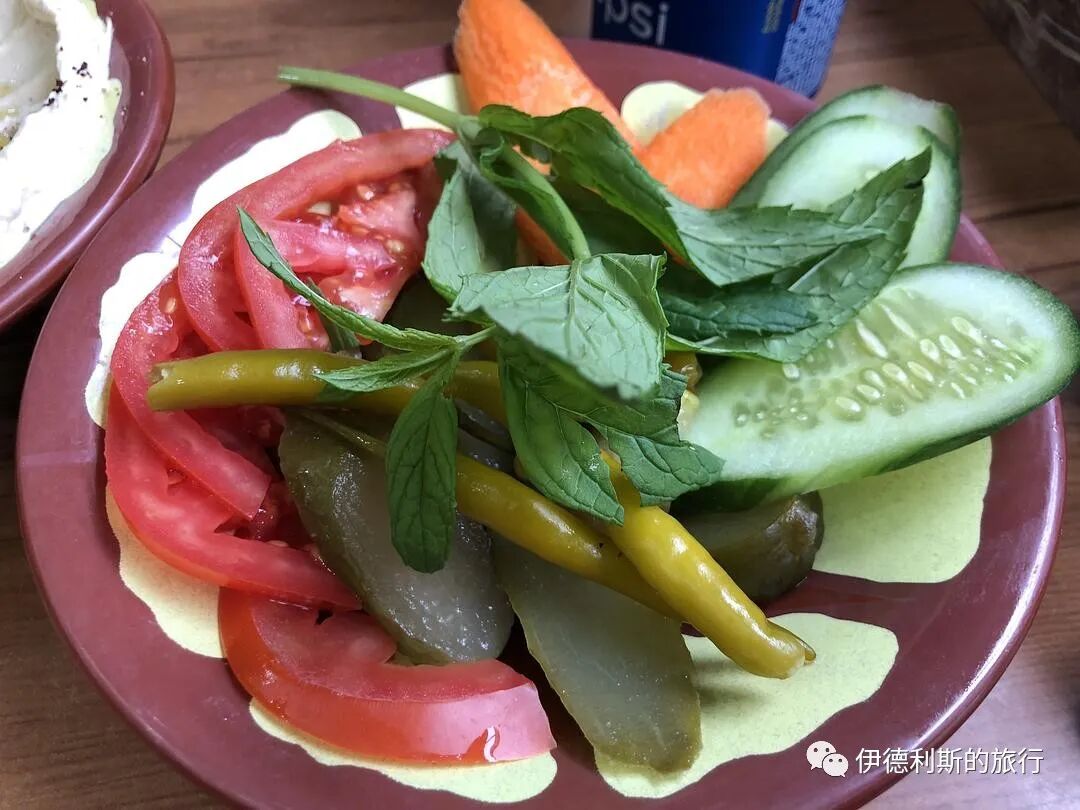
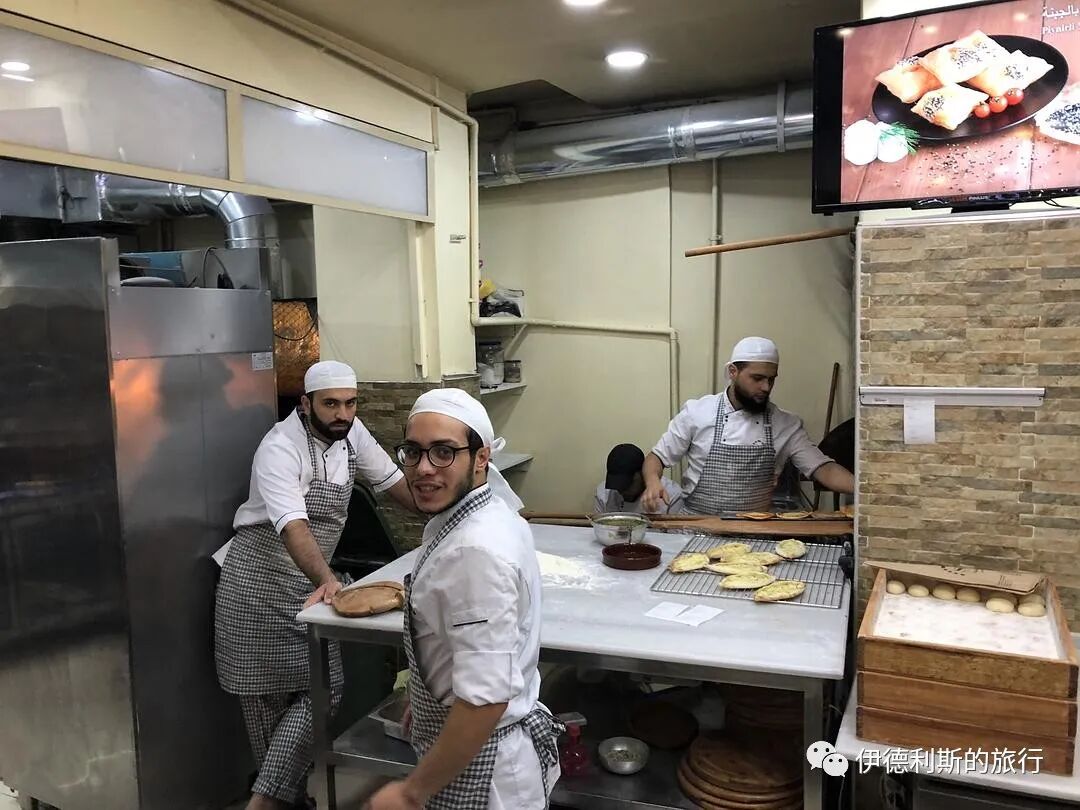
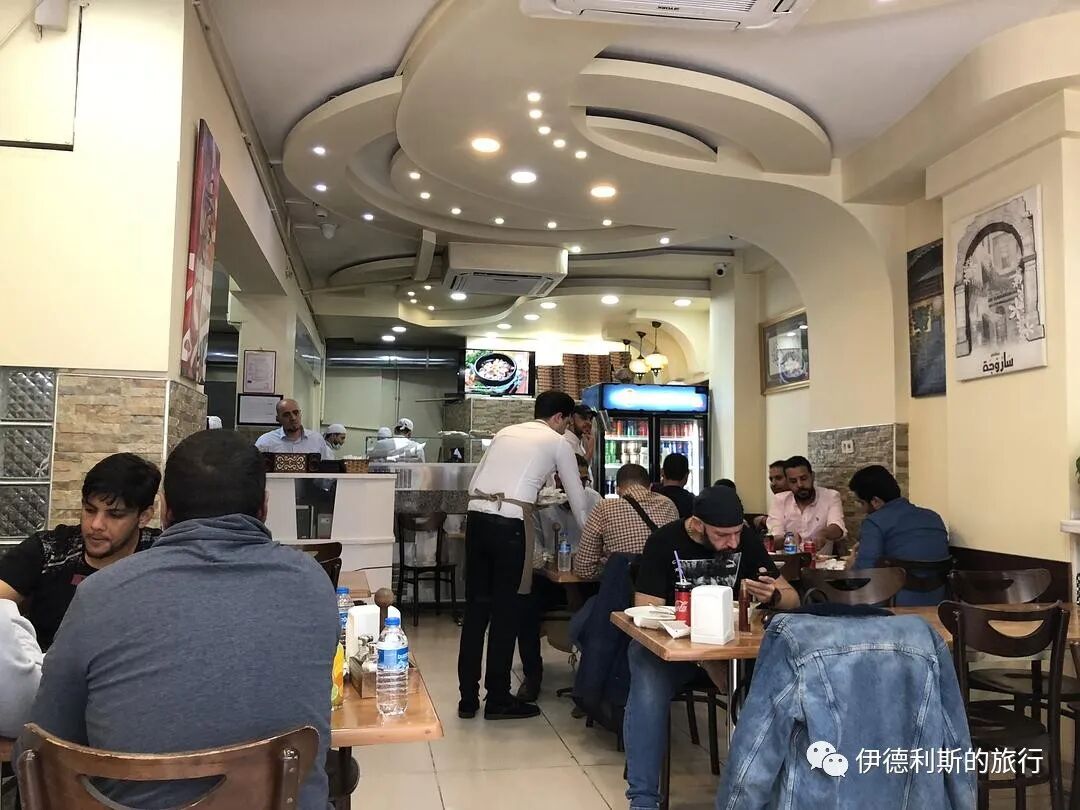
I ate pilaf (plov) and thin-skinned steamed buns (manti) at an Uzbek restaurant not far south of the Grand Bazaar. I have to praise these buns—the skin was incredibly thin! You cannot find them this thin in Beijing. A man sitting next to me spoke Chinese; he used to do business in Yiwu and Shanghai.
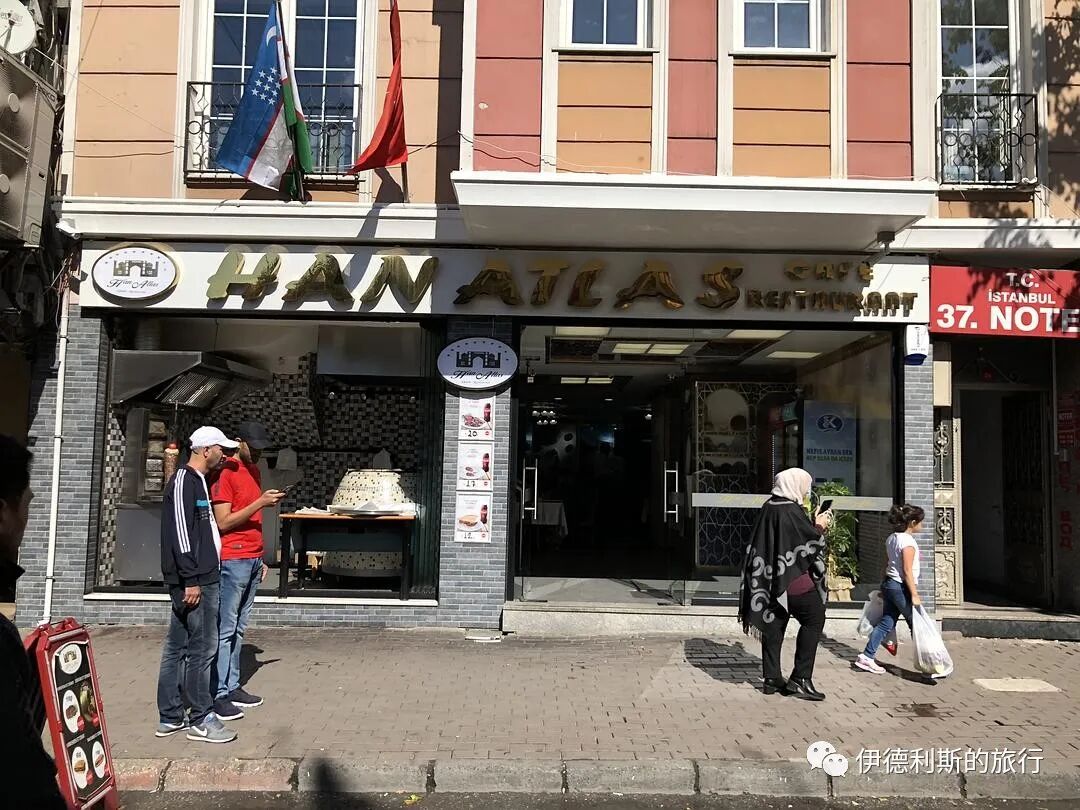
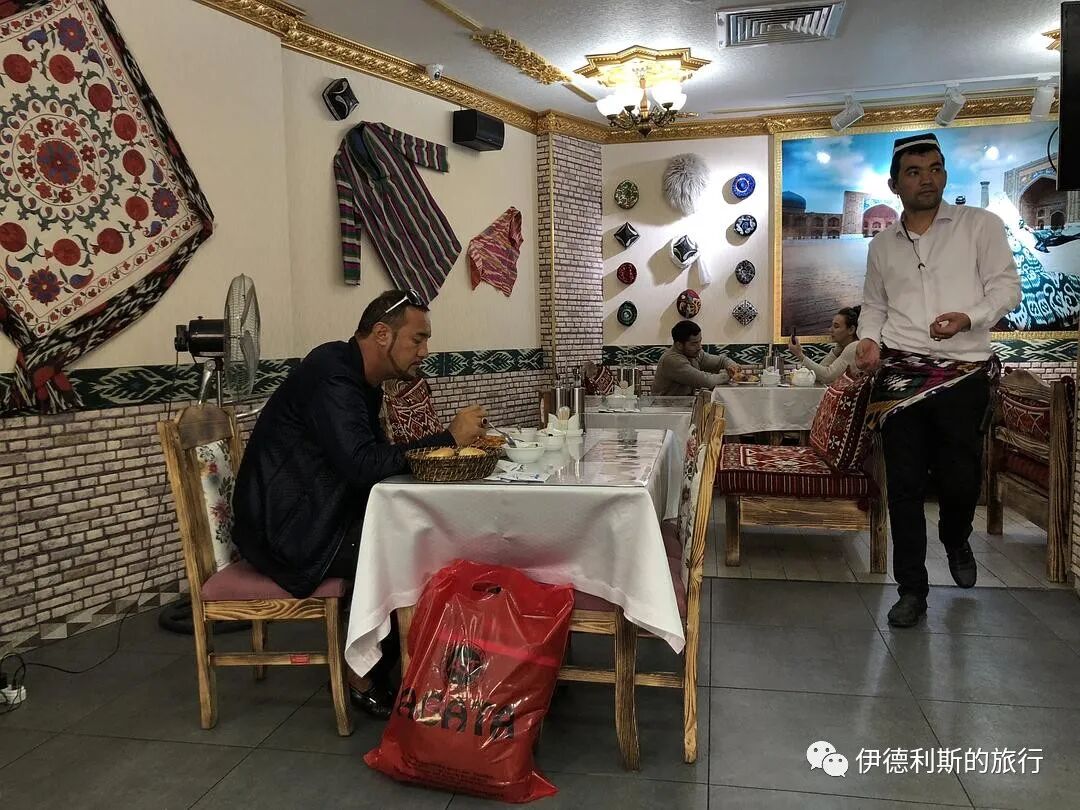
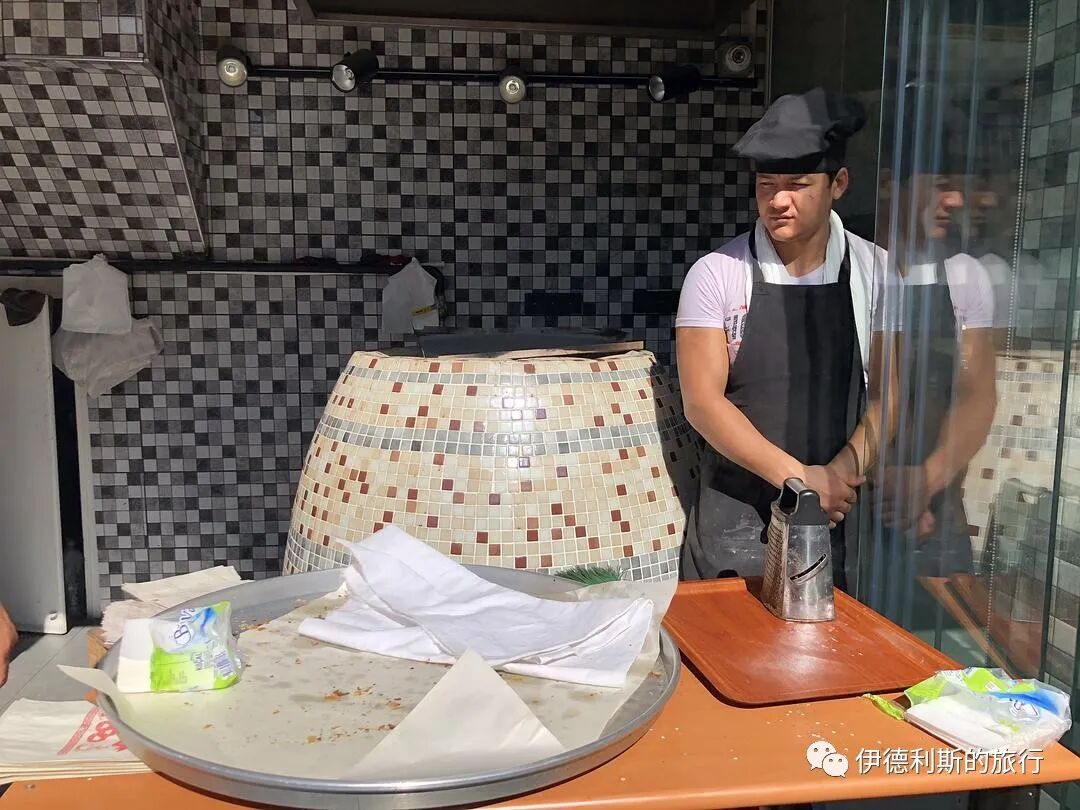
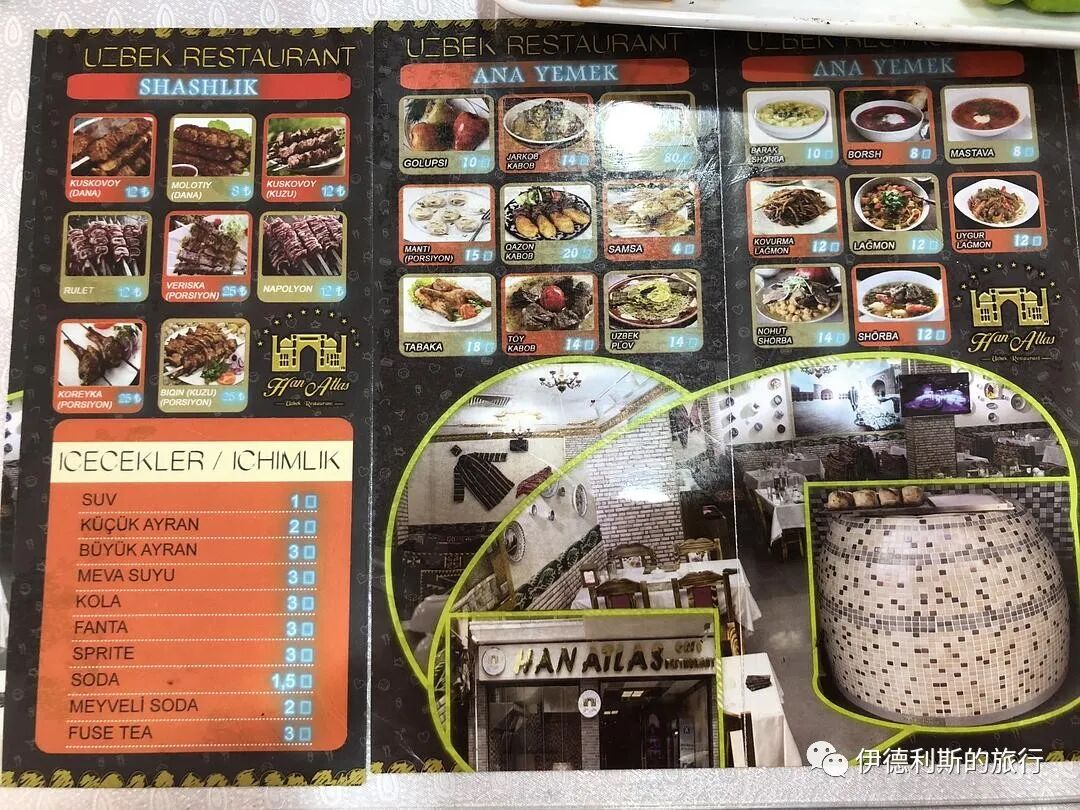
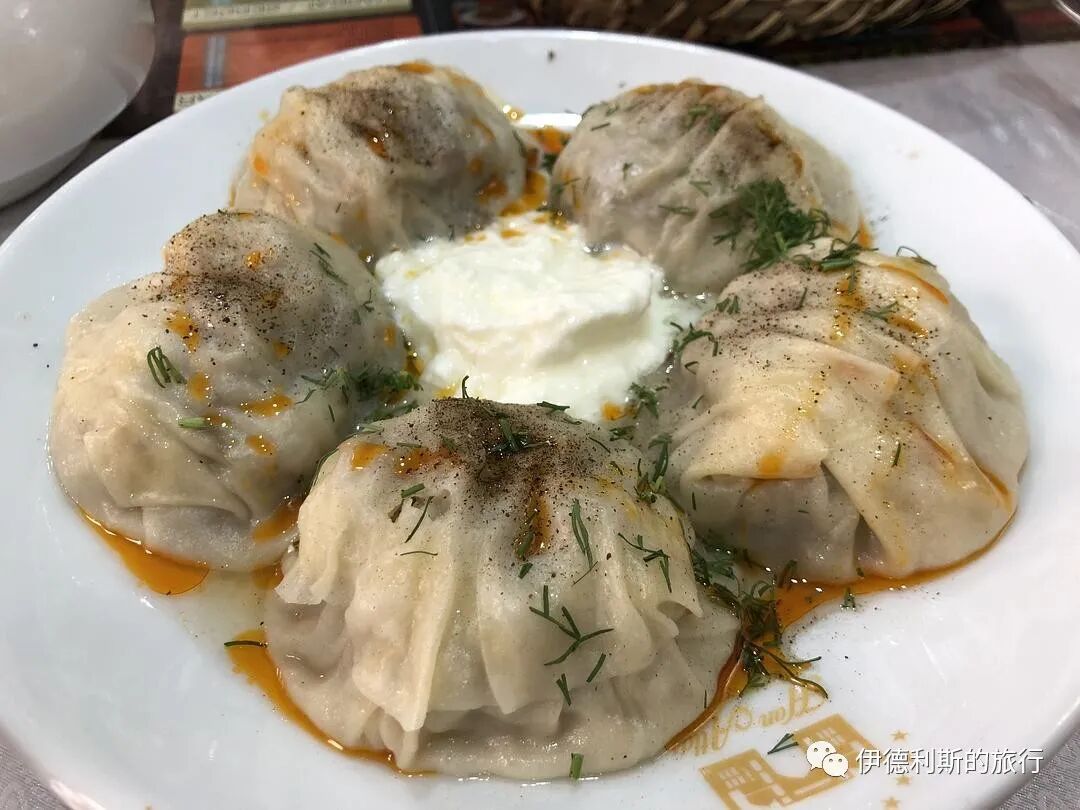
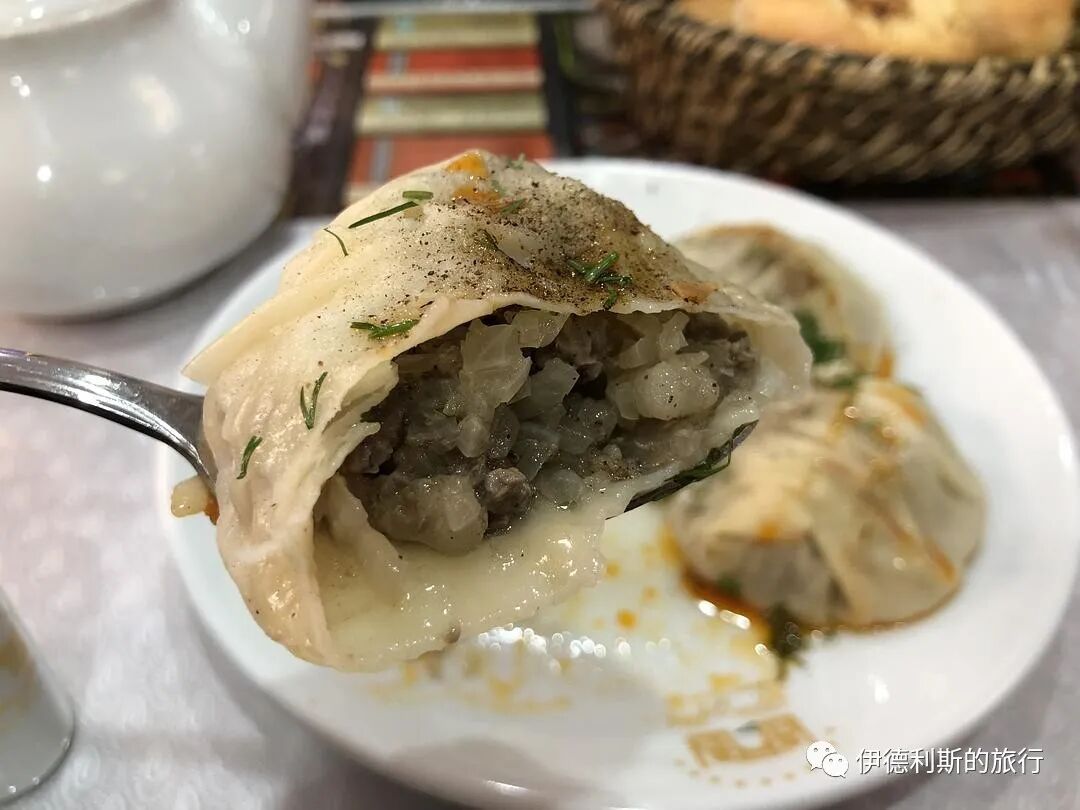
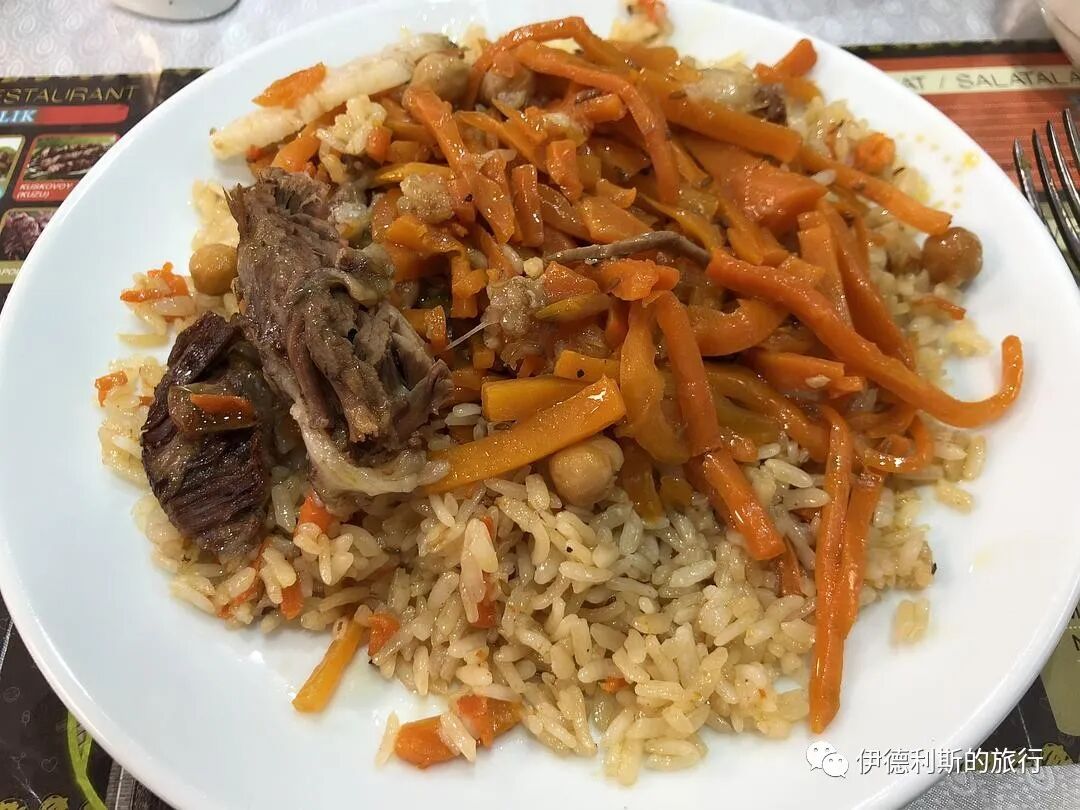
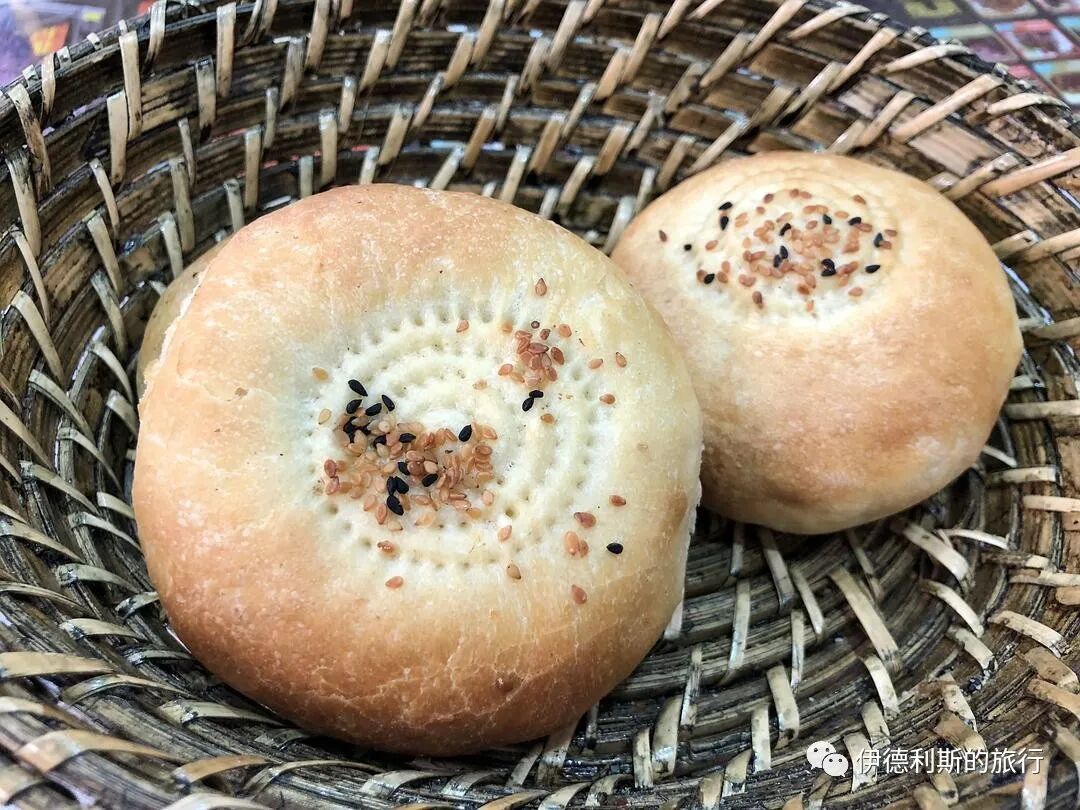
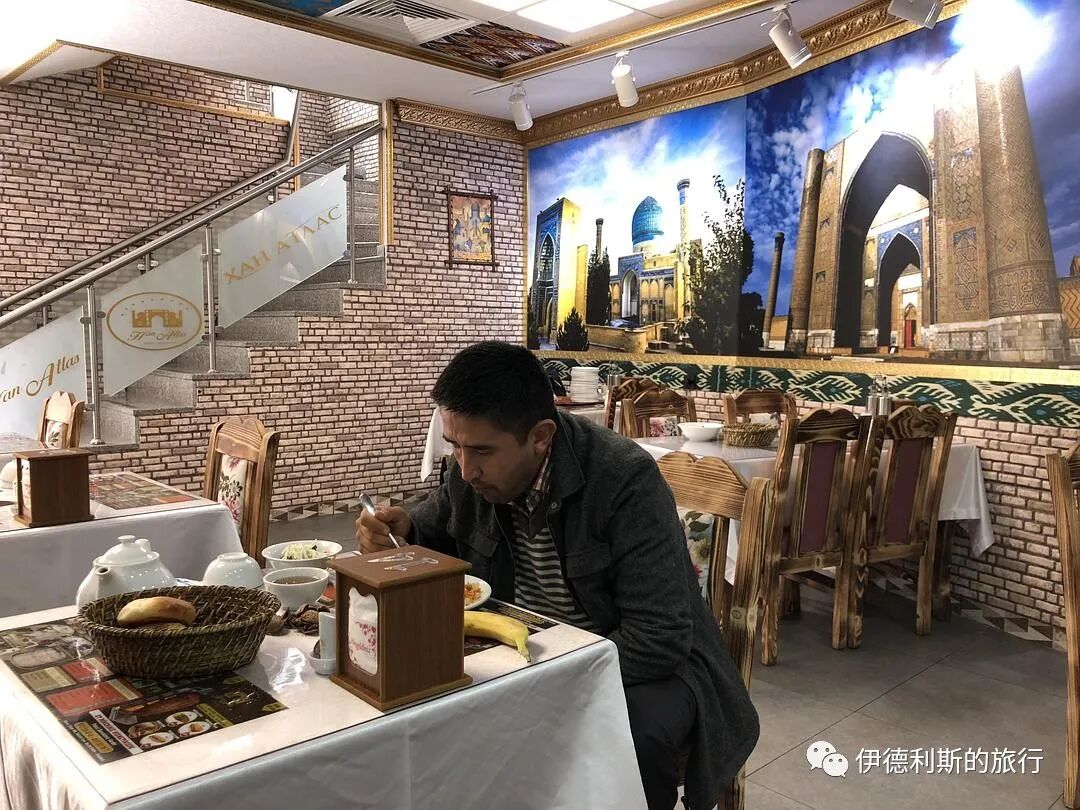
Grilled fish by the Golden Horn.
There are many places to eat grilled fish along the Golden Horn, and you can have it in a sandwich or just eat it on its own.
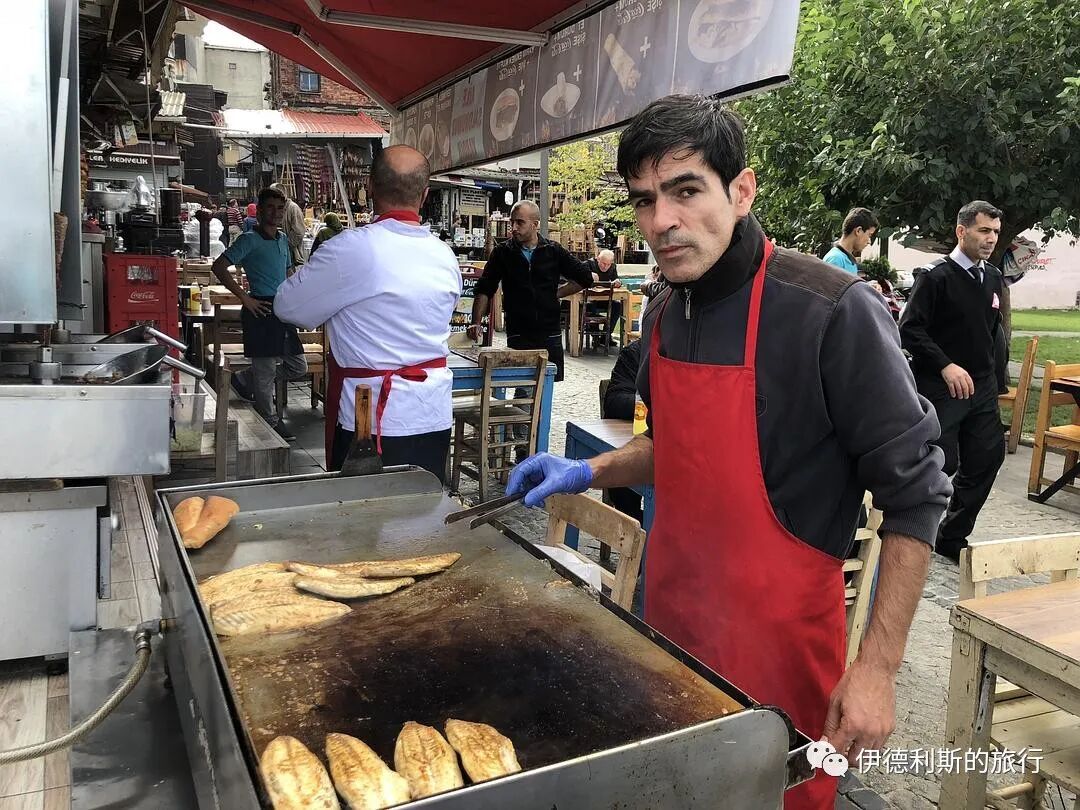
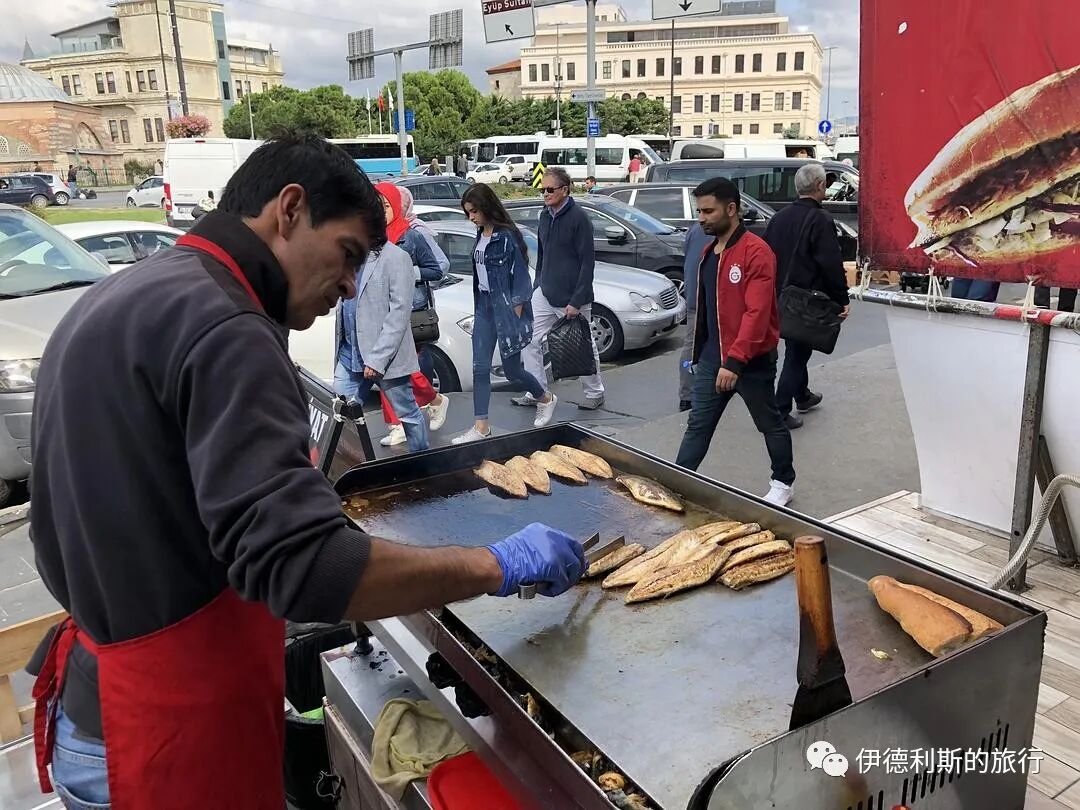
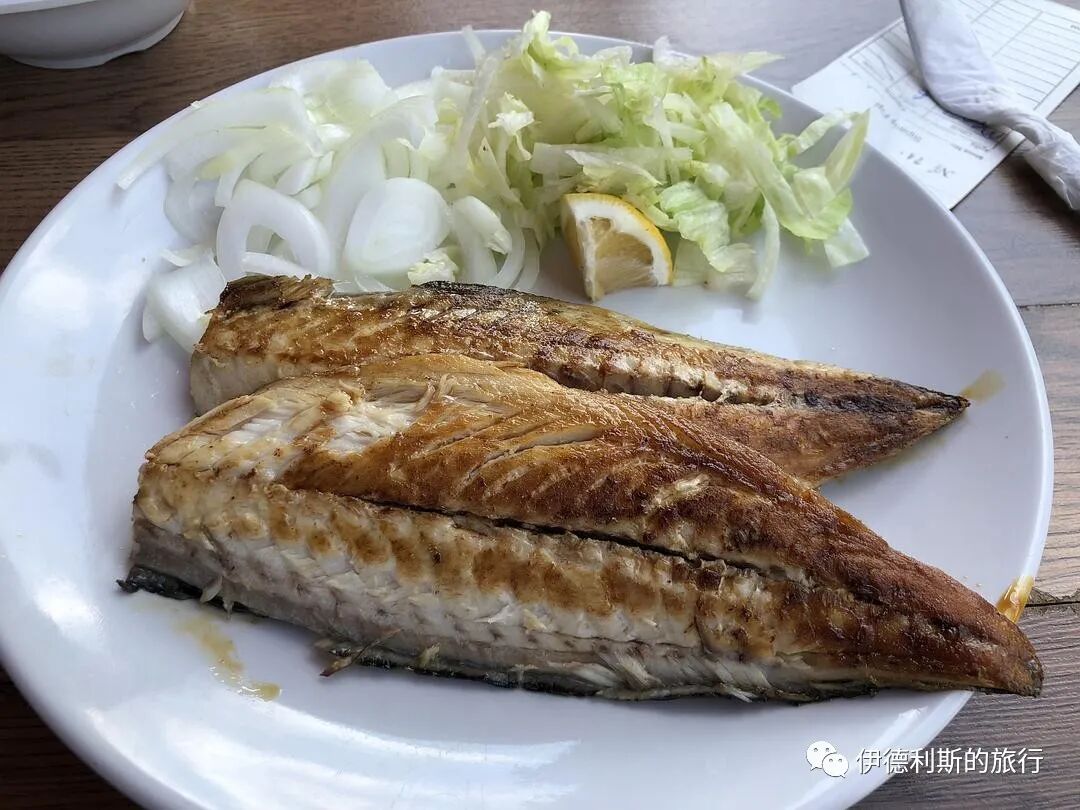
This restaurant is on the Galata Bridge. I ordered grilled salmon, and they gave me free tea after the meal.
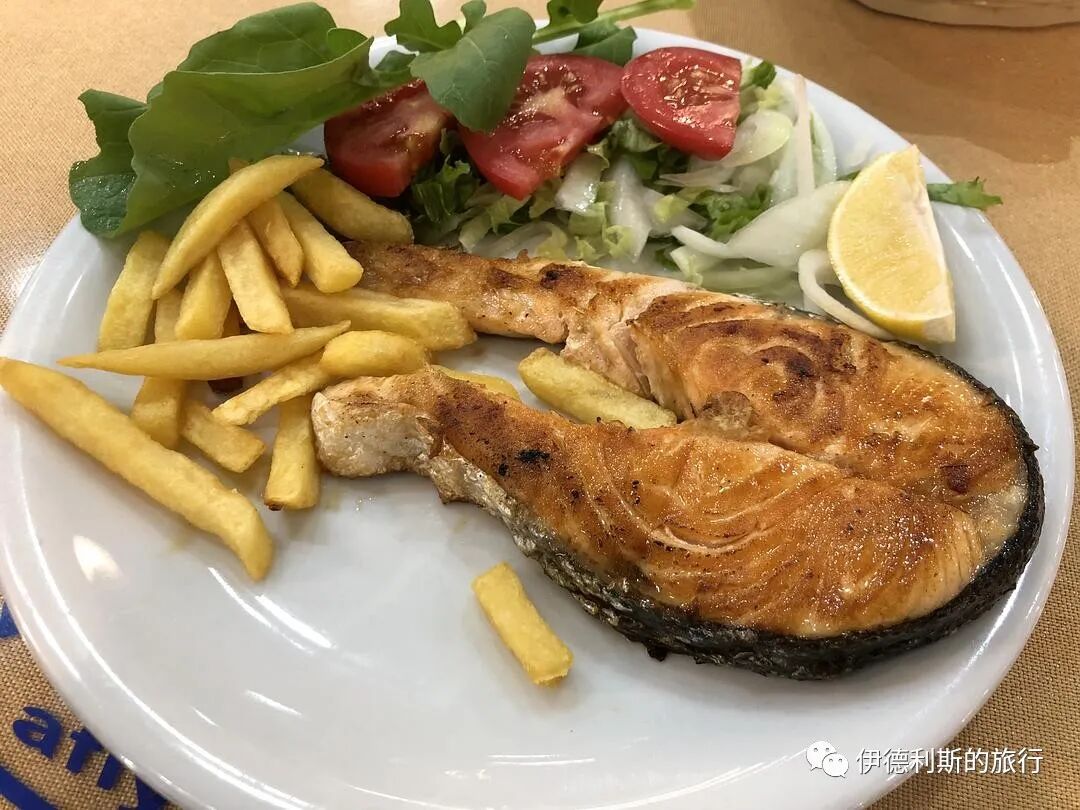
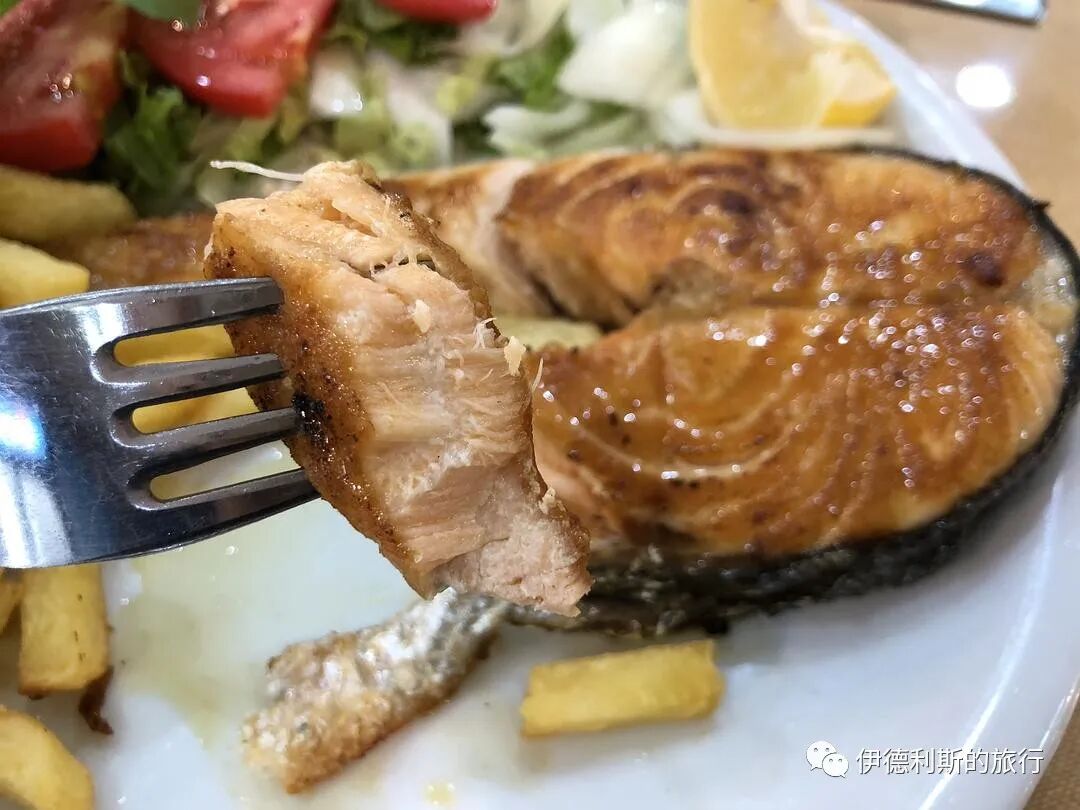
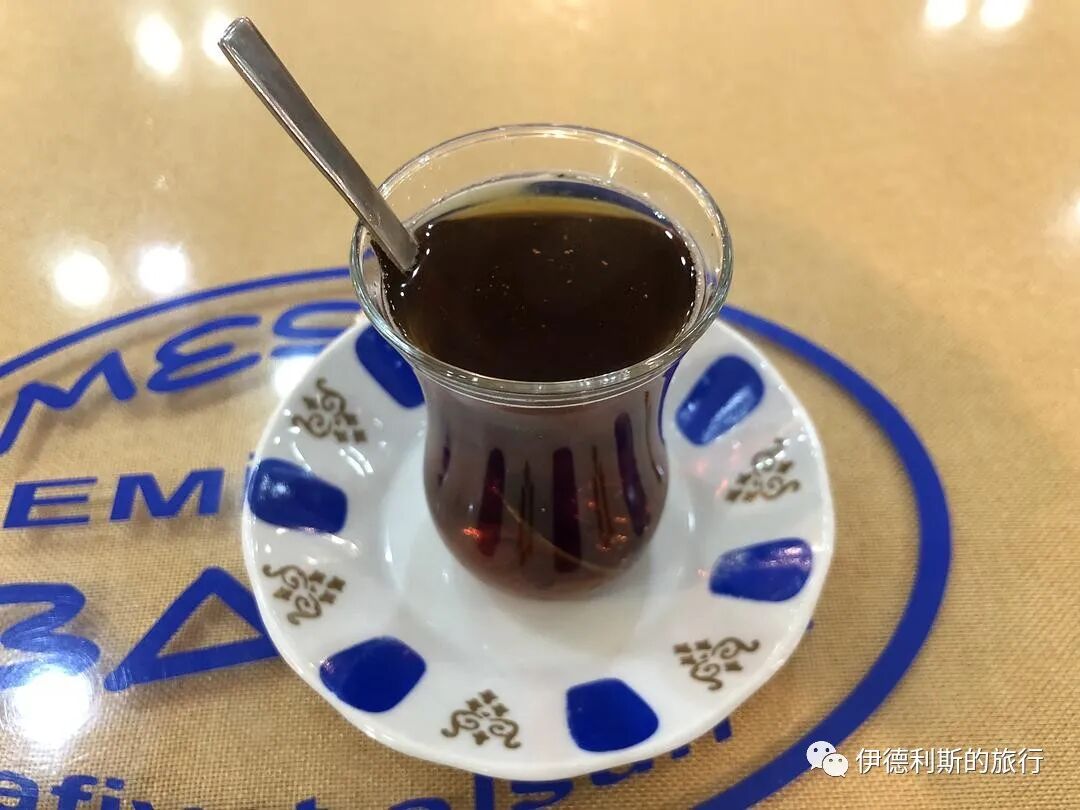
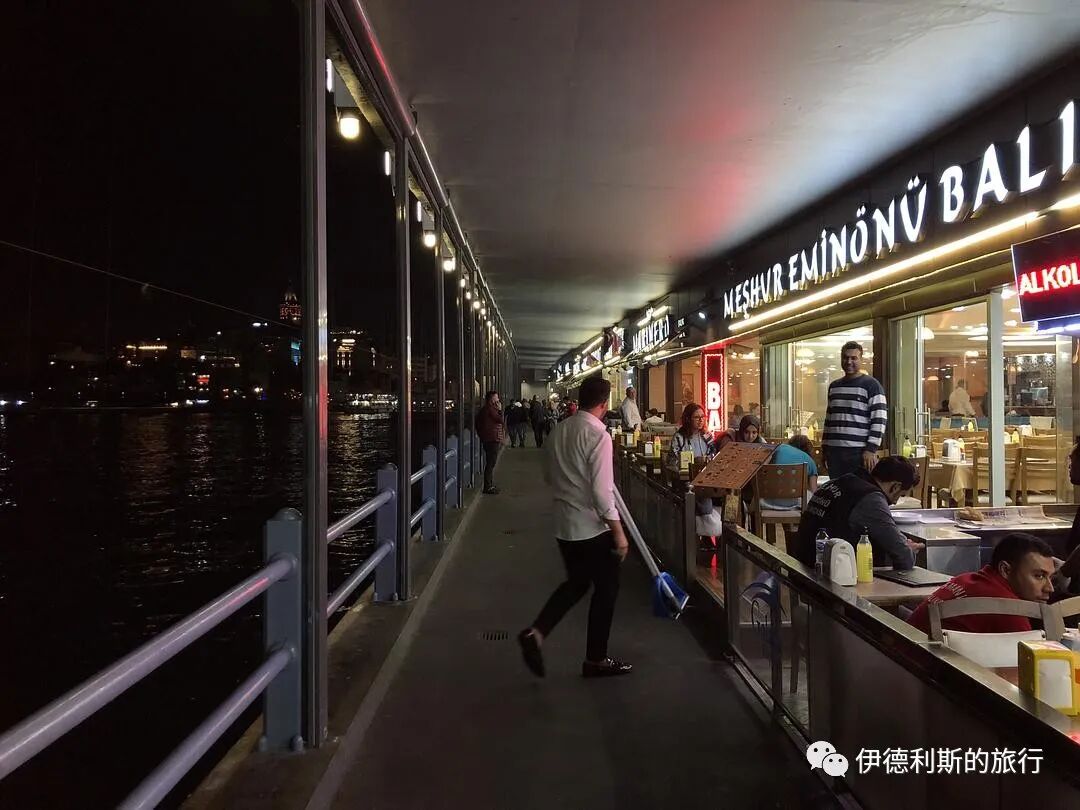
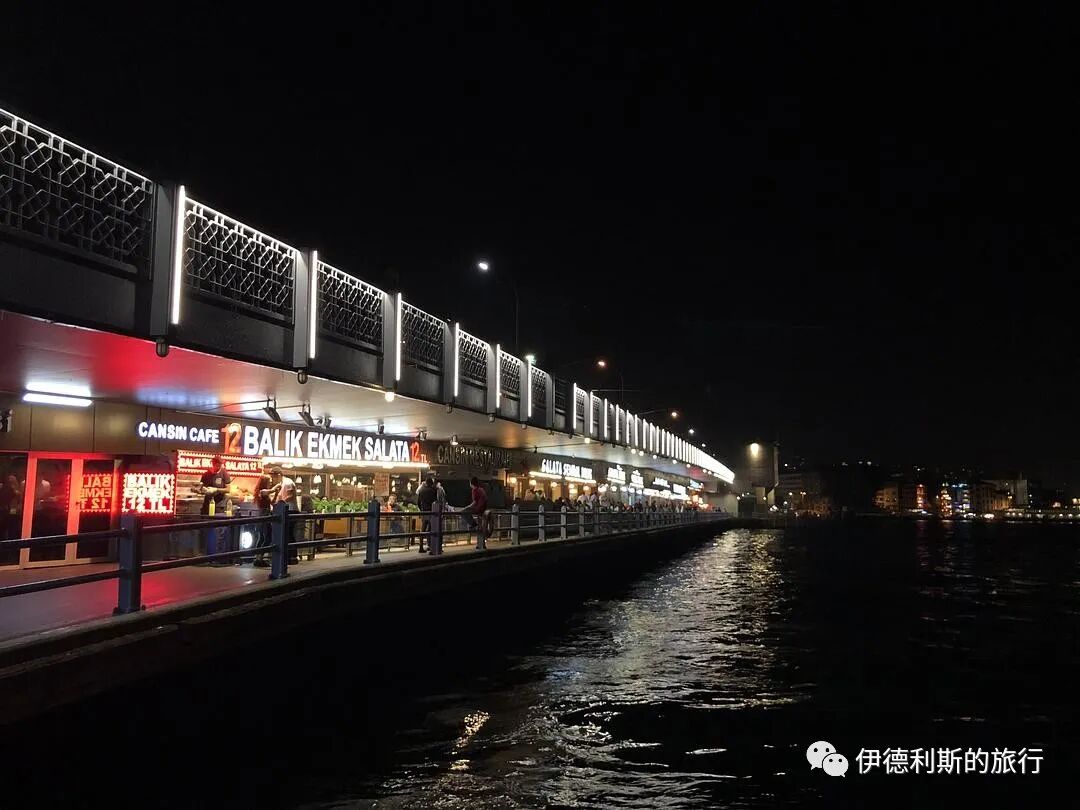
There are many street stalls selling grilled fish sandwiches next to the Eminonu pier on the Golden Horn.
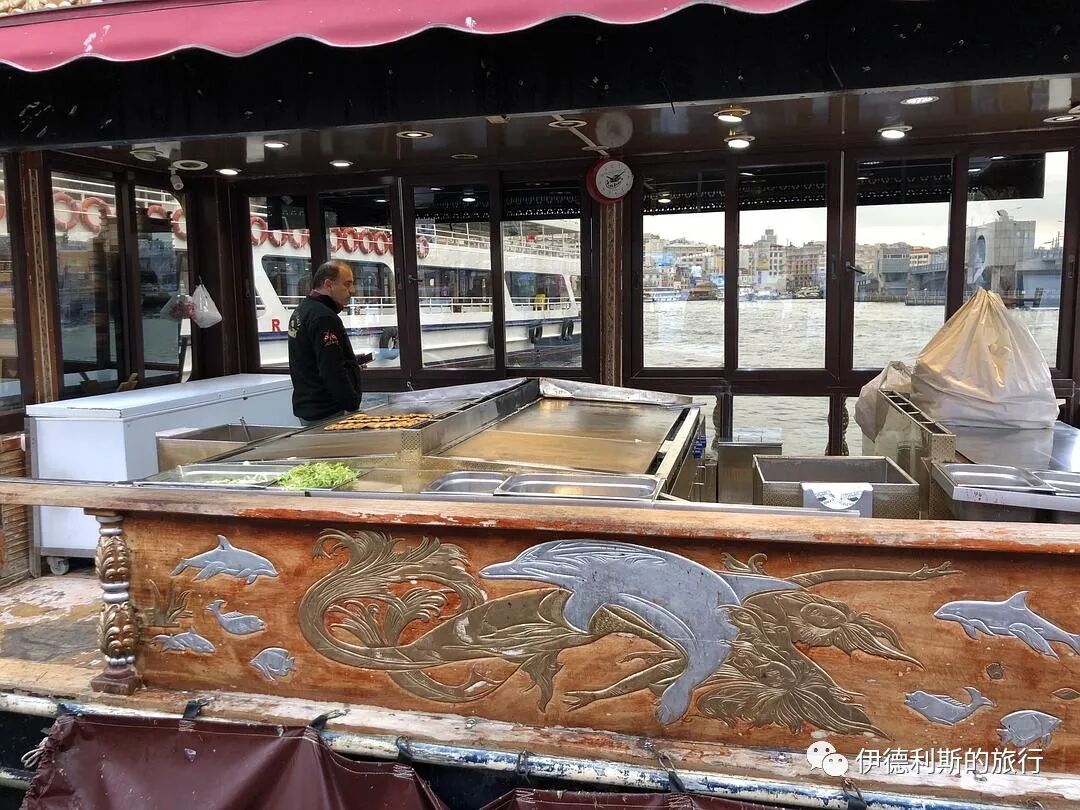
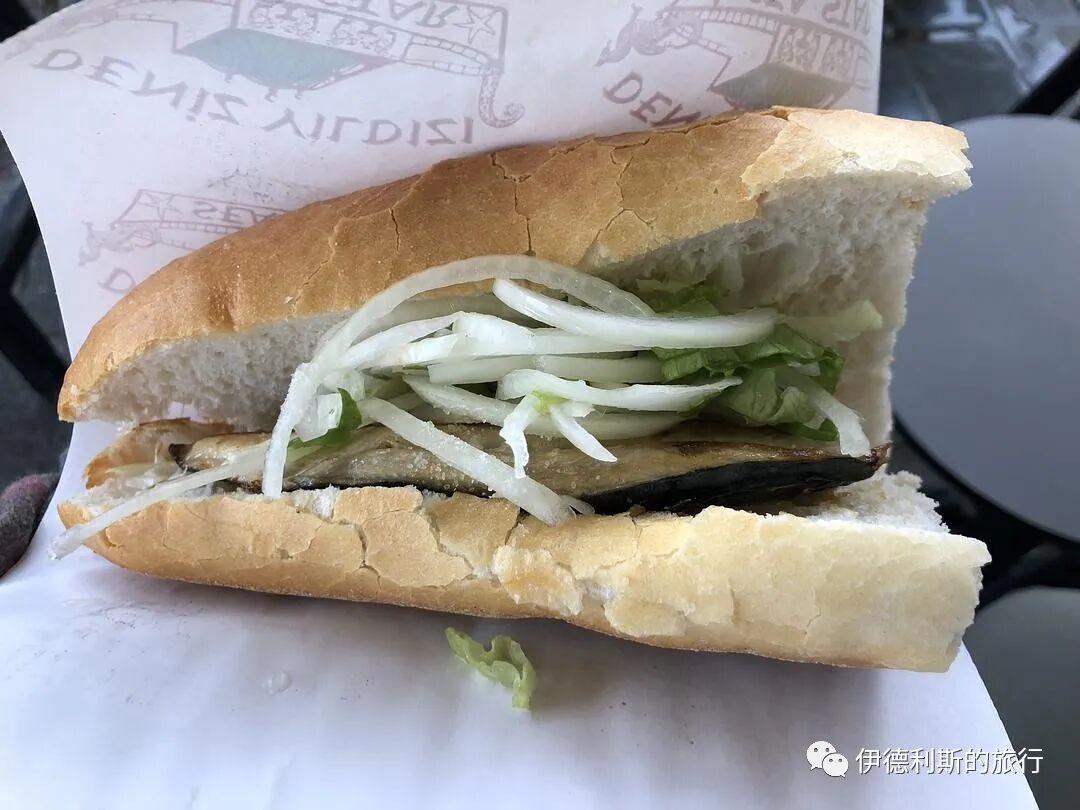
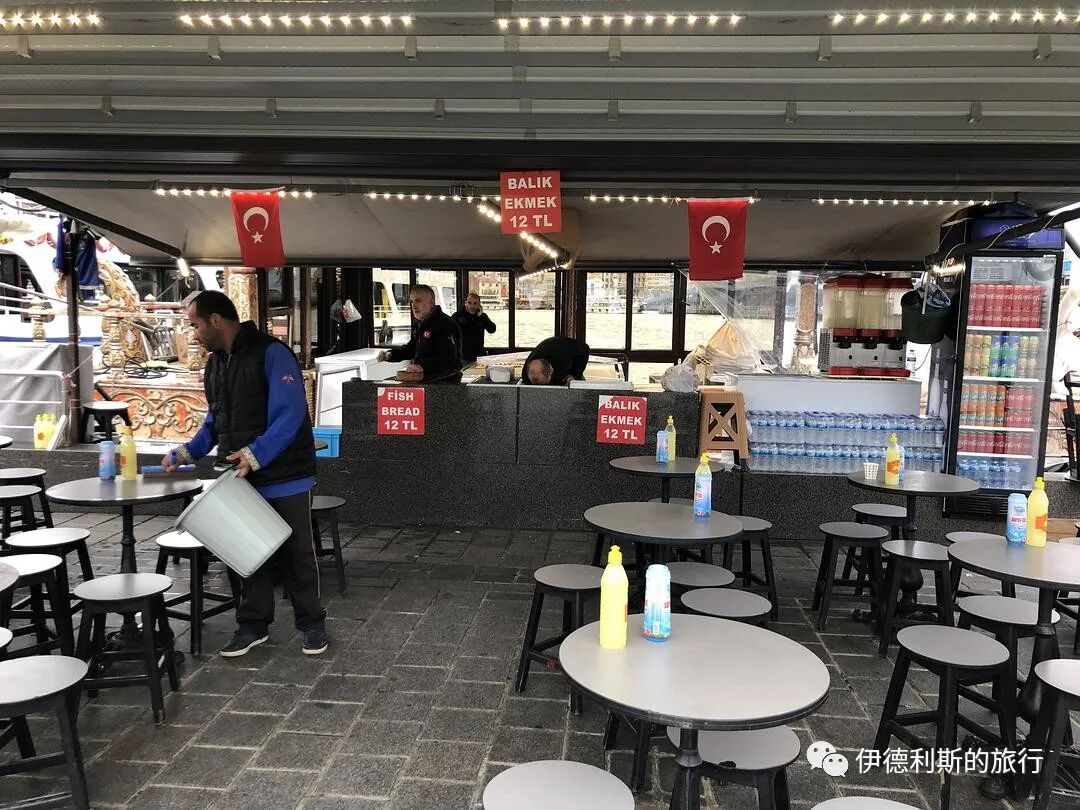
Rice.
Turkish rice shops are called Pilavcisi. While pilav refers to pilaf in Central and South Asia, in Turkey, they just call plain white rice pilav.
I ate rice mixed with chicken and liver (Pilav ustu Tavuk-Ciger) at this shop.
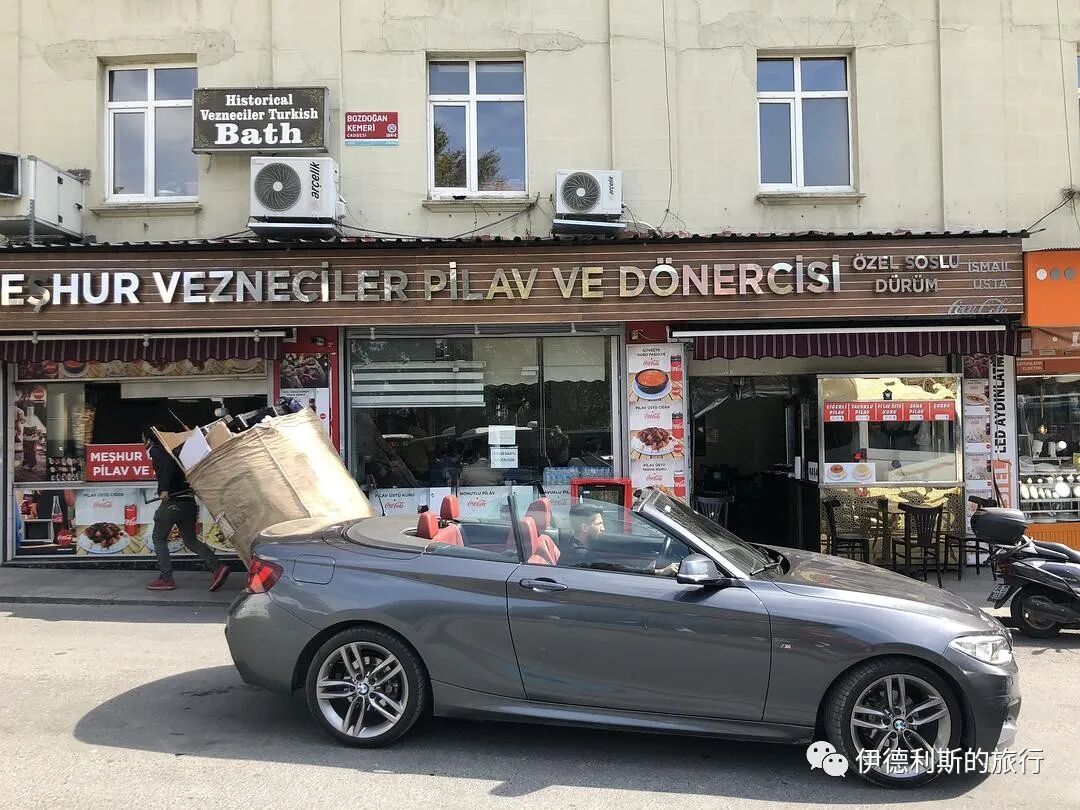
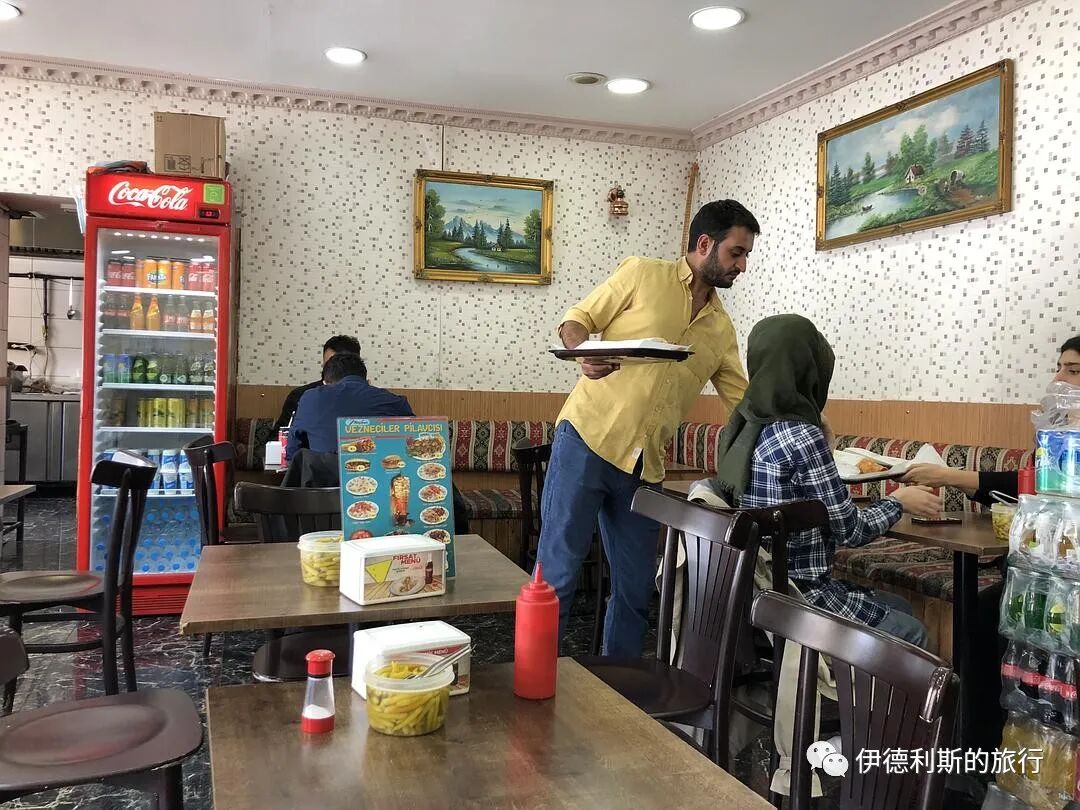
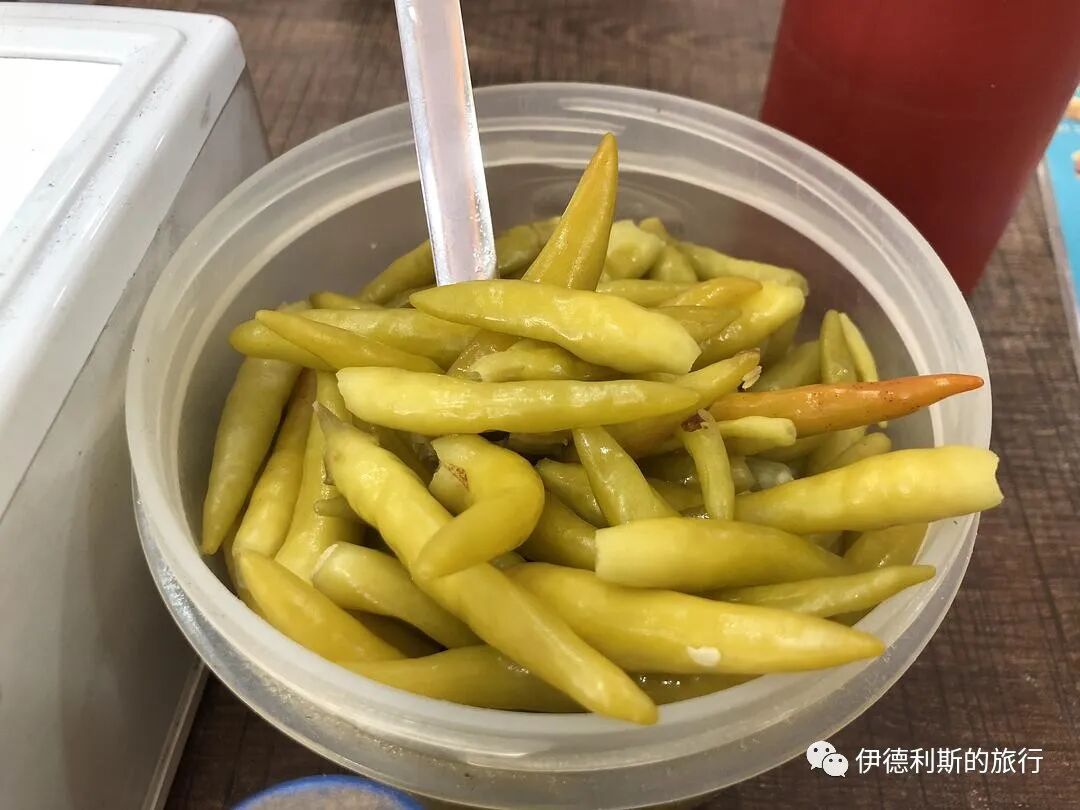
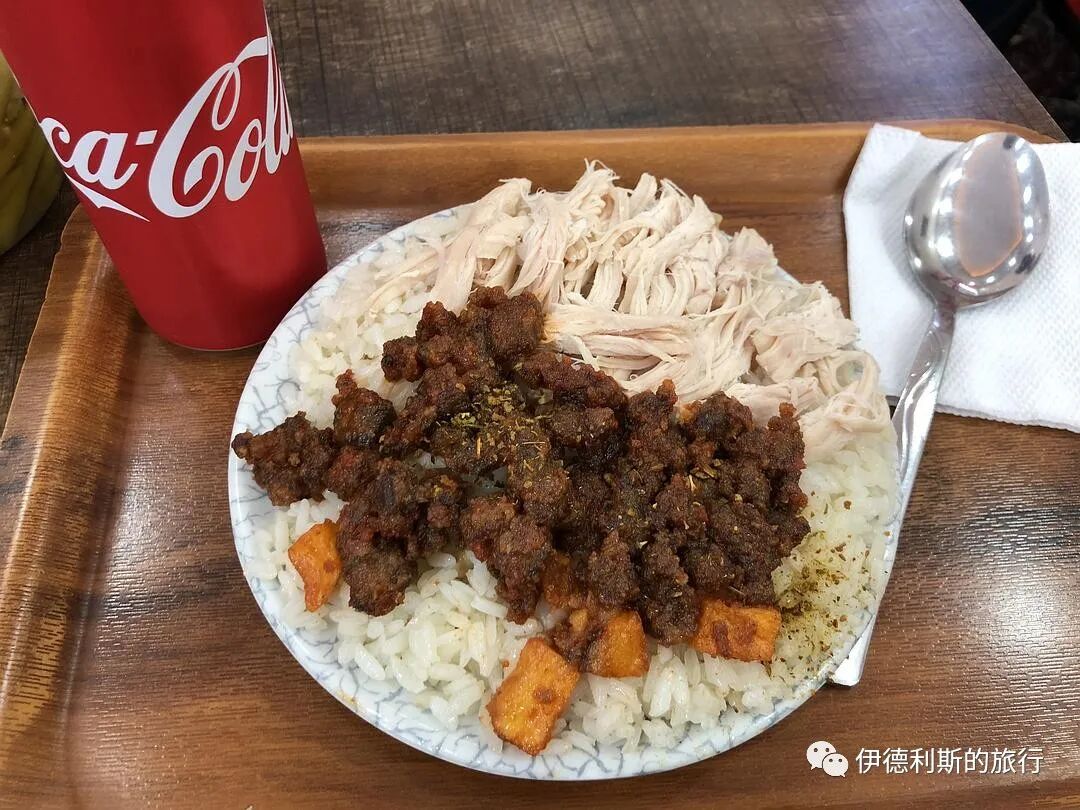
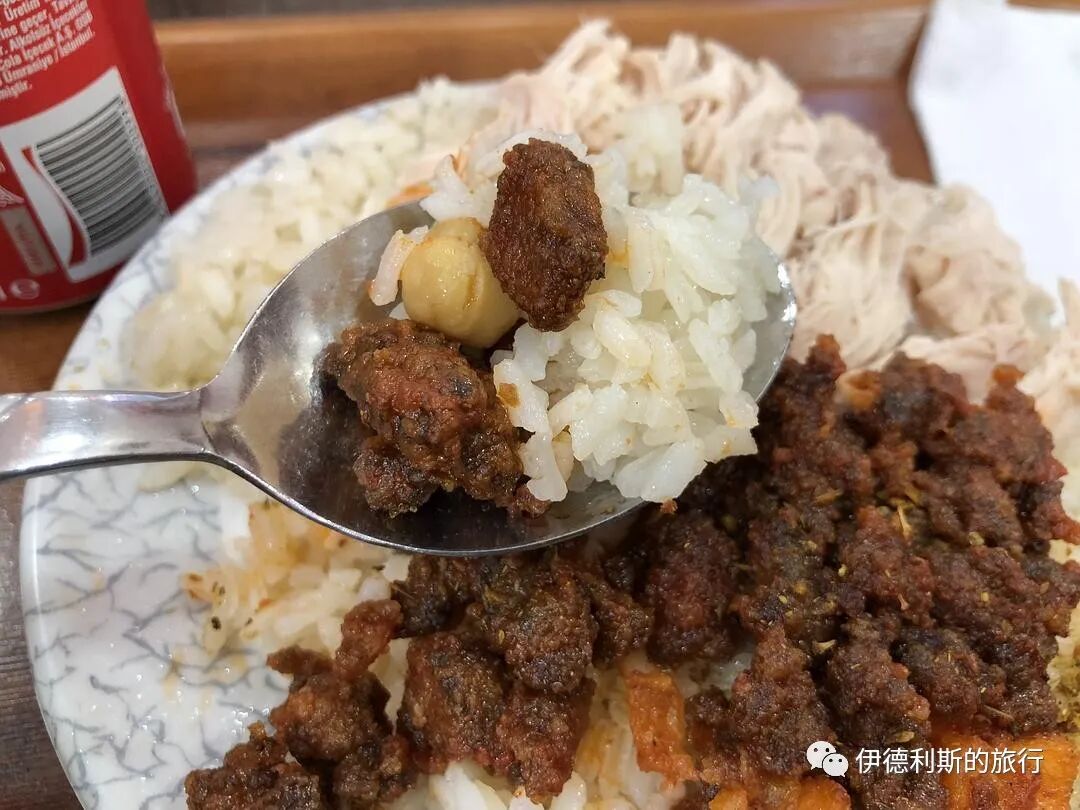
A street-facing section of one of the madrasas at the famous Suleymaniye Mosque is rented out to a restaurant called Ali Baba. This restaurant is known for its bean rice, or Kuru fasulye ve Pilav. Kuru fasulye is known as Turkey's national dish, made with white beans, olive oil, onions, and tomato paste.
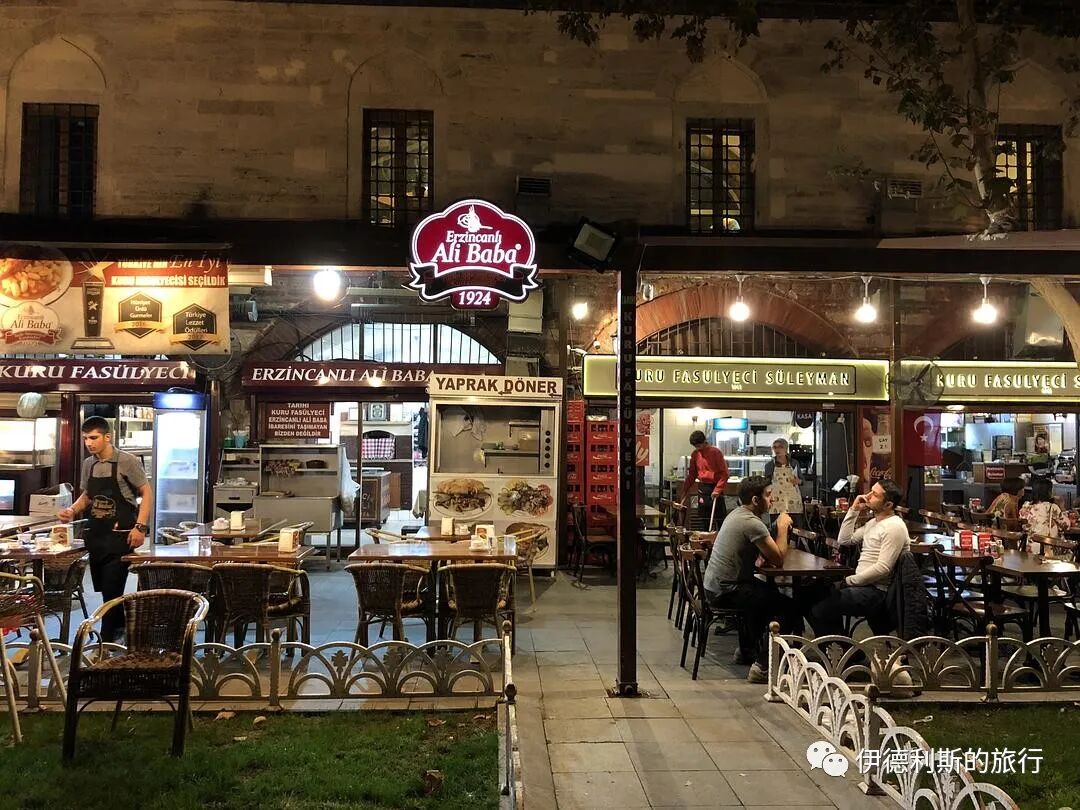
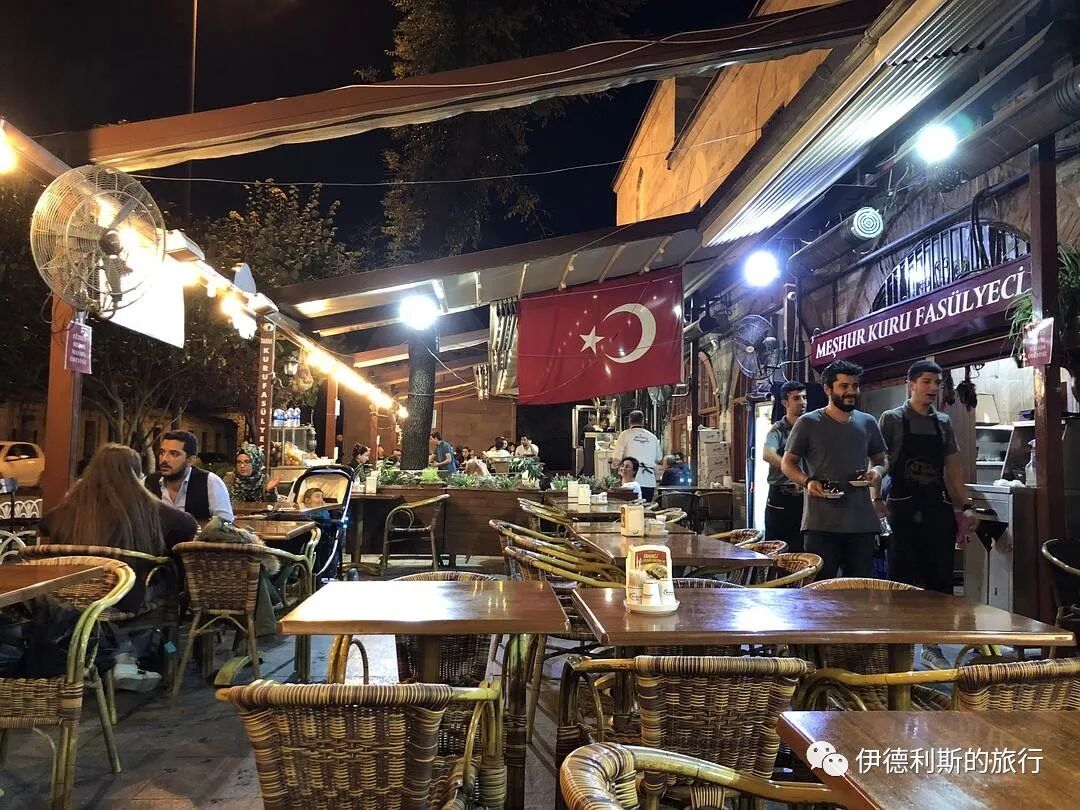 Collapse Read »
Summary: Istanbul — Mosques, Turkish Food and Ottoman Streets is presented here as a firsthand travel account in clear English, beginning with this scene: I spent half a month traveling in Turkey from September to October 2018. While visiting historical sites in Istanbul, I tried some local food and would like to share it with you here. The account keeps its focus on Istanbul Travel, Turkish Food, Ottoman Heritage while preserving the names, places, food, and historical details from the Chinese source. This is part 2 of 3.
Part 2 of 3
This place serves naan and a salad of onions, peppers, and tomatoes (pilahong) right away, which feels very Inner Asian. By the end of the meal, the Uzbek guy in the red shirt in the middle of the picture helped me peel all the eggplant skins and rolled them up with roasted tomatoes, which was very touching.
Roasted lamb eaten next to the Hagia Sophia, which was very fresh and tender.
This soup is called chorba.
Bread in Turkish restaurants is free to eat.
Eat a flaky pastry (börek) at a flaky pastry shop. The word börek comes from Turkish and can refer to any food made with thin dough sheets (yufka). Börek originated in Anatolia and became popular in the Balkans and North Africa during the Ottoman Empire. It was especially popular in Ottoman Jewish communities, where it was known as one of the three major Ottoman Jewish pastries alongside boyos de pan and bulemas.
Eat iron-plate tomato grilled meat and scrambled eggs with vegetables (menemen) by the pier in the Asian district. Menemen is a Turkish food made of eggs, tomatoes, green peppers, and various spices, usually eaten for breakfast.
Foreign restaurants
While visiting historical sites in Istanbul, I passed through a neighborhood of Syrian people in the Fatih district. I went into a Syrian restaurant called Saruja and ordered three dishes. When I looked them up later, I found they were all Levantine cuisine.
The Levant refers to the eastern Mediterranean coastal region, including modern-day Jordan, Lebanon, Israel, Palestine, Syria, and parts of Turkey near Syria. During the Ottoman era, many Levantine foods spread to Turkey and Armenia and became local delicacies. The first dish was a minced meat flatbread (lahmacun). I chose a pomegranate-flavored one, and it tasted quite unique. The Turkish word lahmacun comes from the Arabic "laḥm'ajīn," which translates to "meat with dough." During the Ottoman era, this meat flatbread spread to Turkey and Armenia. In different places, it is called "Arab pizza," "Lebanese pizza," "Syrian pizza," "Armenian pizza," and "Turkish pizza."
The second dish is called kibbeh, known in Turkish as "içli köfte." Kibbeh is the North Levantine dialect version of the classical Arabic word "kubbah," which translates to "ball." Kibbeh is made of cracked wheat wrapped around a filling of minced meat, chopped onions, and Middle Eastern spices like cinnamon, nutmeg, cloves, and allspice. Kibbeh is most famous in Aleppo, northern Syria, where there are 17 different flavors. Besides the original, they add yogurt, lemon juice, pomegranate molasses, or cherry sauce.
Besides spreading to Turkey and Armenia during the Ottoman era, kibbeh also spread to Latin America with Levantine immigrants in the late 19th and early 20th centuries.
The third dish is chickpea puree (hummus). Hummus means "chickpea" in Arabic and is short for "ḥummuṣ bi ṭaḥīna" (chickpeas with sesame paste). Hummus is made by mixing chickpeas with sesame paste (tahini), olive oil, lemon juice, and garlic. It is very popular in the Middle East and the Mediterranean.
I ate pilaf (plov) and thin-skinned steamed buns (manti) at an Uzbek restaurant not far south of the Grand Bazaar. I have to praise these buns—the skin was incredibly thin! You cannot find them this thin in Beijing. A man sitting next to me spoke Chinese; he used to do business in Yiwu and Shanghai.
Grilled fish by the Golden Horn.
There are many places to eat grilled fish along the Golden Horn, and you can have it in a sandwich or just eat it on its own.
This restaurant is on the Galata Bridge. I ordered grilled salmon, and they gave me free tea after the meal.
There are many street stalls selling grilled fish sandwiches next to the Eminonu pier on the Golden Horn.
Rice.
Turkish rice shops are called Pilavcisi. While pilav refers to pilaf in Central and South Asia, in Turkey, they just call plain white rice pilav.
I ate rice mixed with chicken and liver (Pilav ustu Tavuk-Ciger) at this shop.
A street-facing section of one of the madrasas at the famous Suleymaniye Mosque is rented out to a restaurant called Ali Baba. This restaurant is known for its bean rice, or Kuru fasulye ve Pilav. Kuru fasulye is known as Turkey's national dish, made with white beans, olive oil, onions, and tomato paste.
Collapse Read »
Beijing Muslim History: Old Halal Notes from the Northern City
Reposted from the web
Summary: Beijing Muslim History: Old Halal Notes from the Northern City is presented here as a firsthand travel account in clear English, beginning with this scene: East City:. The account keeps its focus on Beijing Muslim History, Northern Beijing, Hui Muslims while preserving the names, places, food, and historical details from the Chinese source.
East City:
1. Donglaishun at Dong'an Market (including the Tianyishun halal sauce shop (Tianyi Shun Qingzhen Jiangyuan))
2. Xideshun Tripe King (Baodu Wang) at Dong'an Market
3. Jinshenglong Tripe Feng (Baodu Feng) at Dong'an Market
4. Tofu Pudding Ma (Doufunao Ma) at Dong'an Market
5. Meat Pie Zhang (Roubing Zhang) at Dong'an Market
6. Baikui at Longfu Mosque
7. Baodu Man at Dongsi Pailou
8. The mutton shop at the corner of West Kushuijing and Xinxian Hutong inside Chaoyangmen.
9. The sesame flatbread shop (shaobing) on West Kushuijing Hutong inside Chaoyangmen.
10. Deshun Restaurant inside Chaoyangmen.
11. Deshengzhai on Jingshan East Street.
12. Yueshengzhai on Hubu Lane inside Qianmen.
13. Fusheng Canteen in Dongdan.
14. Zengqingzhai on Yiliu Hutong outside Di'anmen.
Xicheng District:
1. Ruizhenhou inside Zhongshan Park
2. Kaorouwan inside Xuanwumen
3. Hui Muslim beef and mutton shop inside Xuanwumen
4. Youyishun Restaurant at the Xidan intersection inside Xuanwumen
5. Dong Siba's spiced lamb head (jiangyangtou) inside Deshengmen
6. Xue Siba's steamed lamb (zhengyangrou) outside Deshengmen
7. Yang's lamb stall (yangrouchuangzi) on Guanxiang Street at Deshengmen
8. The sheep market (yanghang) in Madian outside Deshengmen
9. Hui Muslim snack shops inside Xizhimen.
Dongcheng District.
1. Donglaishun at Dong'an Market.
Donglaishun as described by Zhang Zhongxing.
In the early 1930s, I lived in the dormitory of the Third Campus of Peking University, located at Beiheyan outside Donghuamen. I would walk south from the school gate, turn east, and cross Dong'anmen Street to reach Dong'an Market. Donglaishun was on the east side inside the north gate of the market. It had two entrances facing north. The western entrance was the main shop, which had three floors. The eastern entrance was the budget section, which did not connect to the upper floors. There are many restaurants in the market, ranging from high-end ones like Senlong Restaurant and Wufangzhai to small shops like Junshan Restaurant and various food stalls. There must be about twenty of them. As poor students, we liked going to Donglaishun because it had two advantages: the food was good and cheap, and it suited both big and small budgets. Plus, the staff were especially friendly to diners.
Let's talk about their friendliness first. Right inside the door, there was always someone sitting in a long gown. People said he was the second manager. When he saw someone walking toward the door, he would immediately stand up, smile, bow slightly, and say, 'You're here! Please, come in!' Then he would turn inside and shout, 'How many people? Make some room!' You could choose to stay on the ground floor or go up to the second or third floor as you liked. The waiter would help you get seated, smiling broadly, and ask what you wanted to eat. Back then, it wasn't common to look at a menu; you had to call out the names of the dishes. When choosing dishes, the waiter would often offer his opinion on how to pair them for a better meal. Sometimes they even suggest you don't need to order too much, or if it's not enough, they help you add more quickly. Everything is friendly. After eating, you settle the bill, pay, and exchange polite words: "Are you taking this with you?" You usually leave a small tip, like two jiao, and the waiter shouts out: "A tip of two mao." The cashier and the kitchen staff call back in a long, drawn-out tone: "Thank you—." When you leave your seat and walk out, the two managers at the door stand up from afar. As you get close, they smile, bow slightly, and say: "See you this evening." (for lunch) or "See you tomorrow." (for dinner)
Plus, the food is high quality and inexpensive. Donglaishun started out by selling meat pies (xianbing) and porridge from a pushcart. Their years of experience taught them that the surest way to make money is to offer high-quality goods at low prices and win through high sales volume. They have always stuck to this tradition. Take their famous hot pot lamb (shuan yangrou) as an example. People say the sheep are bought from outside the Great Wall and kept at their own farm, where they are fed grain for a month before slaughter. This makes the meat fatty and tender, unlike sheep that only eat grass. The seasonings are also homemade, produced at the Tianyishun Sauce Shop located across from the north gate of the market. Because the ingredients are good and the preparation is meticulous, everything tastes great, whether it is a high-end dish or a simple one. Their hot pot lamb is the best in the city, no question. Other dishes like braised beef (wei niurou), stir-fried lamb (bao yangrou), honey-glazed fritters (tasimi), crispy horns (sujiao), spiced beef tendon (jiang jianzi), as well as everyday foods like beef pies (niurou bing), lamb dumplings (yangrou jiaozi), soybean paste noodles (zhajiangmian), and millet and bean porridge (xiaomi douzhou) all have their own unique flavors and keep customers satisfied. The prices are all fair. Some lower-priced items might not make much money, like the lamb dumplings (yangrou jiaozi). The quality is great, and ten of them cost only four cents. You probably couldn't even make them that cheaply at home.
For us poor students, the fact that prices can be high or low is a huge advantage. If you have guests, you can go up to the second or third floor, or even sit in a private booth or a small room. You can order a few dishes and some wine. Everyone leaves full and happy, and it only costs two or three yuan. If you are alone and only have twenty cents in your pocket, you can still walk in, eat twenty dumplings and drink a bowl of millet and bean porridge (xiaomi douzhou) for a total of nine cents. You can confidently pay with a ten-cent coin, hear a "Thank you!" Then you walk out, go to the Dangui Market, pick out a used book for ten cents, and happily head back to school.
Looking back at the time I lived at Beiheyan, I went to Donglaishun so many times. Most of the time I didn't go upstairs. I just ate ten cents' worth of lamb dumplings and millet and bean porridge. Usually, I still had enough money left to browse the Dangui Market and look for old books. When I did go upstairs, I was always with one or two classmates or friends, so we could try things like crispy horns (sujiao) and honey-drizzled pastries (tasimi). In autumn and winter, when I am by myself, I often like to go to the working-class section near the east door. They say the owner first got rich through hard manual labor, so even after becoming wealthy, he wanted to keep his roots to show he had not forgotten his humble beginnings, or as they put it, he had not forgotten his poor brothers. There is no one to greet you at this east door, probably because the working-class regulars have never been ones for formalities. Once inside, you see a row of long tables running north to south with benches on both sides. No one offers you a seat, so you just find one yourself. After you sit down, a server asks what you want to eat, whether it is flatbread (bing) or noodles (mian), and how much you want by weight, because the regulars need to know exactly how much they are getting. If you order fancy dishes, they will bring those out just the same. The interesting thing is that the customers and the staff are all very blunt with each other; when people are drinking and lively, they might glare or slam the table, sometimes even shouting, which makes you think of Jing Ke and Gao Jianli in the markets of Yan.
Fuxuan Suohua by Zhang Zhongxing
The big tent at Donglaishun
People who ate at Donglaishun were all wealthy. But the big tent downstairs at Donglaishun served poor, everyday people. They took the leftover scraps from the hot pot meat, stewed them into a savory sauce, and poured it over noodles. You could buy a big bowl for very little money, which satisfied both your cravings and your hunger.
My Last Century by Guan Geng
The storefront of Donglaishun
In the early years, around noon every day, bicycles, pedicabs, rickshaws, flatbed carts, motorcycles, and cars would all head toward the west entrance of Jinyu Hutong. They packed the road from the west entrance of the hutong to the Jixiang Theater so tightly you could barely move.
These people were all men, mostly Beijing locals between twenty and forty years old, who headed straight into the shop as soon as they got off the bus. Back then, Donglaishun had a cafeteria-style shop selling dumplings, meat pies (xianbing), and big bowls of lamb bone broth (yangtang) noodles with gravy, all made from the leftover scraps of the hot pot lamb, since the costs were already covered by the hot pot. But they knew how to run a business, selling the scraps again as meat pies and dumplings that were oily, stuffed full, and cheap. The diners came for exactly this: it satisfied their cravings and kept them full for a long time.
Past Beijing by Zhang Zheng, Donglaishun's Hot Pot Lamb.
Han Ziqi sat in a private booth upstairs at the Donglaishun restaurant at the north entrance of the Dongan Market on Wangfujing Street, with no heart to enjoy the snowy view outside, his eyes just staring blankly at the boiling water in the copper hot pot as if studying the tiny waves. After staring for a while, he lazily lifted his chopsticks, picked up a thin slice of lamb, swished it in the boiling water once, twice, three times, pulled it out at the perfect moment, dipped it into the bowl of sauce in front of him, and then put it in his mouth to chew slowly. He was actually very hungry, but he still kept up his habit of many years, never wolfing down his food or making rude smacking sounds. Eating is not just about filling your stomach; it is a pleasure, and you should not waste good food. Even in these times when food is scarce and prices are sky-high, he did not order cabbage or glass noodles, which are only good for filling space. He only asked for two plates of sliced meat and a small dish of pickled garlic (tangsuan). He ate a slice of meat, then took a bite of the garlic, slowly savoring the taste that was sweet within the spice and spicy within the sweet. He did not order alcohol. Alcohol is forbidden for Muslims, and he strictly followed this rule. Like many Hui Muslims, he did not smoke either. Even when he was deeply troubled, he never puffed on cigarettes or used alcohol to drown his sorrows. Aside from the jade and treasures he poured his heart into, his lifelong passion was the delicious food at halal restaurants. He was a regular at the Donglaishun restaurant. He knew everything about the place almost as well as he knew the Qizhenzhai shop he dedicated his life to, or the special arts and crafts import and export company where he worked later.
He chewed on the fresh, tasty slices of meat. Where is the most tender hot pot lamb? It has to be Donglaishun. The lamb here is incomparable to anywhere else because of its unique standards. They only use castrated sheep from West Ujimqin Banner in Inner Mongolia. After a period of careful pen-feeding, the sheep are slaughtered. They only take the cuts known as modang'er, shangnao'er, huanggua tiao'er, and the large and small sancha'er. From a sheep weighing forty to fifty jin, only thirteen jin of meat is suitable for use. After being frozen, the meat is sliced with incredible skill into pieces as thin and even as paper. When placed on a plate, the patterns on the plate are clearly visible through the meat. One jin of lamb at Donglaishun is sliced into more than eighty pieces. The seasonings used to enhance the flavor are very particular. They include sesame paste (zhima jiang), Shaoxing yellow wine (Shaoxing huangjiu), fermented bean curd (jiang doufu), pickled chive flowers (jiucai hua), chili oil, shrimp oil, chopped green onions, minced cilantro, and Donglaishun's special drizzling soy sauce (pulin jiangyou). The soup base in the pot is flavored with dried shrimp and dried mushrooms (koumo). This hot pot has a unique charm that is clear, fragrant, fresh, and delicious. It is intoxicating to eat, much like how the famous jade expert Han Ziqi would carefully examine a rare treasure. But at this moment, neither the art of looking nor the art of eating occupied his mind. His heart was like the boiling water, and he could not say what he was thinking. From Donglaishun to Qizhenzhai, he chewed on the history of others and his own. Donglaishun's first owner, Ding Deshan, whose courtesy name was Ziqing, was from Cang County, Hebei. He later moved to Erlizhuang outside Dongzhimen. Back in the day, he was not much wealthier than the penniless wanderer Xiao Qizi. He pushed a handcart of yellow soil into Beijing and sold it at a low price to flower growers to make a difficult living. Around 1903, he saw the potential of the busy Dong'an Market and borrowed money to set up a stall. He started by selling flour-based cakes, flatbreads (tiebingzi), and rice porridge, eventually growing into the Donglaishun Porridge Stall. After over a decade of hard work, he added stir-fried, roasted, and hot pot meats. The hot pot became the most famous, and after several expansions, the business became the leader in its field.
The Muslim Funeral by Huo Da
Condiments for Donglaishun hot pot lamb
For the soy sauce used in the hot pot lamb, they use a special dripped soy sauce (pulin jiangyou). Every summer when the soybean paste is sun-dried, they spread it on tin sheets and collect the oil that drips out. They then refine it with the right amount of licorice, cinnamon, and rock sugar. This is one of the main reasons Donglaishun hot pot lamb keeps its unique flavor. Also, when pickling chive flowers, they add a certain amount of sour pears to make the taste more sweet and tangy. The garlic used for pickled sugar garlic must be large six-clove garlic bulbs harvested two or three days before the Summer Solstice. It takes three months to prepare for sale, involving peeling, soaking in brine, packing and turning the jars, and releasing gas.
Famous Old Beijing Brands: Donglaishun Restaurant, known for its hot pot lamb. Ma Xiangyu
Tianyi Shun Halal Sauce Shop.
(Wang Dongsi: Tianyi Shun Sauce Shop and Donglai Shun were sister stores owned by the same proprietor.)
The west counter at Tianyi Shun sells groceries and seasonings, focusing on Beijing-style sweet pickled vegetables (jiang xiaocai). To make it easy for customers to browse and buy, the display counter for these pickles is placed in the center of the shop. The various pickles are displayed in blue-patterned porcelain jars, which look nice and make it easy for customers to choose. They also provide oil baskets (youlou) in different sizes so customers from out of town can carry them easily.
Tianyi Shun has always been careful about selecting ingredients and crafting products with precision. For example, the soybeans used for making sauce must be large, yellow, and high in oil content, sourced from Majuqiao and Panggezhuang. The production method is: soak 100 jin of soybeans until they expand, then steam them. Add 50 jin of white flour, crush and press the mixture, cut it into rectangular blocks, and stack them on indoor racks to ferment. After fermentation, brush off the fuzz and put them into jars. For every 100 jin of beans, add 50 jin of salt and 200 jin of water. This ratio is called 'one part yellow, two parts water, and half a part salt'. After the mixture breaks down, it is passed through a sieve. It is turned four times a day with a sauce rake (jiangpa) and must be sun-dried for a long time, from February to August, before it is finished. This sauce is called dog days sauce (fujiang), also known as natural sauce. When you use it to make fried sauce, it saves oil and does not stick to the bottom of the pot. It makes beef and lamb look bright and taste delicious, which is why over 70 percent of sauce-meat shops in Beijing choose it.
To make sweet flour sauce (tianmianjiang), steam buns (mantou) using white flour, but do not add baking soda. After fermenting, crush them and put them into a vat. Add 80 jin of water for every 100 jin of flour, adding the water gradually rather than all at once, until it reaches the consistency of thin porridge. Use a sauce rake to stir it four times a day until it turns purple-red by the start of autumn (liqiu). It tastes sweet and is the raw material for making sweet sauce pickles, and it is also an essential condiment for eating roast duck.
For small-mill sesame oil (xiaomo xiangyou), you must buy high-quality sesame grown in the dog days from places like Zhangjiawan in Tongzhou, Panggezhuang in Daxing, and Gu'an County. When making it, strictly control the heat and time to get a high oil yield and excellent color, aroma, and taste.
To ensure the quality of the pickles, we buy produce directly from farmers. We require specific quality standards and strict adherence to delivery seasons and times. For example, when making sweet garlic with osmanthus (guihua tangsuan), the garlic must be the purple-skinned, six-clove variety. Each bulb must be the size of a 'tiger's mouth' (the space between the thumb and index finger). It must come from places like Gaozhuang, Huangzhuang, or Landianchang in the Haidian District. The garlic must be harvested three days before the start of summer. To keep the garlic from drying out and the cloves from getting tough, we water the field one day before harvest. We pull the garlic from the ground at night while the soil is still damp. We deliver it to the Tianyishun processing plant at daybreak to ensure the best quality. Once the garlic arrives at the plant, workers immediately peel off two to three layers of skin. We put the garlic into vats right away. For every 100 jin of garlic, we use one jin of salt, diluted in water, and pour it into the vat until the water covers the garlic. After three days, we take the garlic out and put it into empty vats, with 300 jin per vat. We soak it in fresh cold water for another three days, changing the water once a day to remove the sharp, spicy taste. After three days, we take the garlic out and squeeze each bulb by hand to remove excess water. We put it into jars, preferably yellow wine jars. For every 100 jin of garlic, we add 40 jin of white sugar and five liang of salt, diluted in cold water, and pour it into the jar. Finally, we seal the jar tightly with oil paper and white cloth, then lay the jar on its side at about a 45-degree angle. Roll the garlic jar once every day and let the air out every three days, preferably at night. It will be ready to eat after one month.
We buy lettuce (wosun) during the summer solstice, specifically the green lettuce from Xiju Village in Fengtai District. This lettuce is green, crisp, and sweet, making the sweet sauce lettuce taste delicious.
We only buy cucumbers from Wuluju outside Andingmen around the time of the Limit of Heat (chushu), because the quality is best during this period. The loofah (sigua) must be emerald green, about six or seven inches long, and uniform in size. Do not pick the ones with big bellies. This variety makes for a crispy and sweet pickled cucumber when processed with sweet sauce.
During the White Dew (bailu) period, we buy iron-stem bell peppers (tieba shizijiao) from Shawo Village in the western suburbs. Once they reach the factory, we trim the stems, poke holes in them with bamboo skewers, and put them in cloth bags inside the sauce vat. Turn them three times a day, and they are ready to eat in ten days. These pickled iron-stem bell peppers are large and thick-fleshed. They are sweet, not spicy, and are a favorite pickle for Beijing households.
Sweet sauce radish is made using white radishes grown on the ground. The best ones are the "Er Yingzi" radishes (about five to six inches long and uniform in size) grown in Wangjiayuan in the eastern suburbs. White radishes from Shicun, Macun, and Puhuangyu in the southern suburbs are also very good. You must buy these radishes after the Autumn Equinox, not at any other time. To prepare them, sort out the large and small ones and pick only the medium-sized ones. Carefully remove the fibrous roots, wash them clean, and use five jin of salt per hundred jin of radishes to brine them, turning the vat four times over two days. After taking them out, use fifty jin of yellow soybean paste (huangjiang) for every hundred jin of radishes, turning them twice a day. After seven days, switch to seventy-five jin of sweet flour paste (tianmianjiang) and one jin of caramel coloring (tangse), continuing to turn them twice a day for about seven or eight days until finished.
For five-spice soy-sauce peanuts, the ingredients are peanuts grown in various counties in Hebei Province. The peanuts must be shelled by hand so the kernels stay large and uniform, without broken pieces or insect holes. To make it, soak the ingredients in boiling water first, then peel off the red skin by hand. For every 100 jin, use 60 jin of high-quality soy sauce and half a jin of five-spice seasoning (Sichuan peppercorn, star anise, fennel, cinnamon, licorice, and cloves). Add water and boil until 60 percent cooked for a crisp and delicious texture.
For sweet sauce walnut kernels (tianjiang taoren), the main ingredient is white walnut kernels from Shanxi, commonly known as lion's head (shizitou). To prepare, put the walnut kernels in a ceramic basin and soak them in boiling water twice for about 15 minutes. Use a bamboo skewer to peel off the thin skin, then put the kernels into a cloth bag and place them in a large jar. For every 100 jin of kernels, use 150 jin of sweet flour paste (tianmianjiang). Use a sauce rake to turn them twice every day, and they will be ready to take out of the jar after 20 days. After taking them out of the jar, add two liang of white sugar to every jin of walnut kernels, mix well, and they are ready for sale.
Famous Old Shops of Beijing: Tianyishun Halal Sauce Shop. Liu Yingjie (Wang Dongsi: The author was a long-time employee of Tianyishun from 1933 until retiring in 1974).
2. Xideshun Tripe King (Baodu Wang) at Dong'an Market
Beijing's quick-boiled tripe (baodu) is a halal snack. The stalls selling it are run by Hui Muslims. Each stall has a copper plaque with Arabic script and the four Chinese characters for 'Halal Hui Muslim' (Qingzhen Huihui). The tables and chairs in front are spotless, and even the small jars for seasonings are polished until they shine, which makes you feel comfortable. When you eat quick-boiled tripe, the seasoning is mixed on the spot, and the lamb tripe is sliced and boiled right when you order it. The Quick-Boiled Tripe King (Baodu Wang) in the open space in front of Runming Building at Beijing's Dong'an Market is very famous. The quality of quick-boiled tripe depends entirely on how it is dipped in boiling water. If you boil it too long, it gets tough and chewy. If you don't boil it long enough, it is also too tough to chew. The method is to use plenty of boiling water and only dip it briefly. It is all about getting the timing just right.
Cuisine of East Beijing by Wu Zhengge
Quick-Boiled Tripe King's own account
My father's name was Wang Fukui, and he was from Linqing, Shandong. My name is Wang Jinliang, and I was born in Beijing. My father came to Beijing when he was young to work as an apprentice at a mutton shop. Because he knew how to clean tripe, he later switched to making quick-boiled tripe (baodu). My father set up his stall at the same time as Ding Ziqing, the founder of Donglaishun. We all lived on Lumicang Hutong, including Ding Ziqing and his son Ding Futing. Ding Ziqing started his business selling yellow soil. He would pull a broken cart at the Chaoyangmen city gate and shout to sell coal soil, which was mixed into coal dust to make coal balls. Ding Ziqing started with a porridge stall and grew his business bigger and bigger. Later, he opened Donglaishun, Tianyishun, and Yongchangshun, and eventually his son Ding Futing opened Youyishun.
My father was hardworking, clean, and had a good temper when doing business. Customers would say, 'This old man is truly kind.' However, he was conservative in his thinking and had no desire to expand the business. By the time I can remember, my father had already earned enough money from his stall to buy a house. My father ran a stall at the Dongan Market. When I was a child, I helped him pick up tripe. We mostly went to a lamb shop on the north side of the road, opposite the sugar market outside Chaoyangmen. Chaonei Small Street was also full of lamb shops. We picked up goods from two shops. We didn't have to pay for the tripe right away; we settled the bill every nine days, which we called a nine-day cycle. I handled the pickup, and my father handled the payments.
Beef tripe (niu baiye) became popular starting with my father. Originally, those selling quick-boiled tripe (baodu) didn't have beef tripe; it was all lamb. But beef tripe is easier to chew, so anyone can eat it.
My father sold only the best cuts of tripe at Dongan Market, such as lamb tripe collar (yang du ling), lamb tripe leaves (yang sandan), tripe slab (duban), lamb tripe center (yang du ren), mushroom tip (mogujian), and esophagus (shixin). Besides his stall at Dongan Market, he also carried a shoulder pole to sell quick-boiled tripe at the sugar market outside the North Water Gate of Chaoyangmen. He would sell there until nine or ten in the morning, offering scraps and trimmings like tripe gourd (du hulu) and large grass sprouts (da caoya). His customers were poor people. He didn't separate the parts; he just grabbed a bowlful to sell, charging a few coins per bowl, and would come back with a few strings of cash. The money earned from that one trip was enough to feed our whole family for over ten days, so we could save all the money he made at Dongan Market.
By the time of the Japanese occupation, my father had saved enough to buy two houses by running his stall and living frugally. But he never wanted to open a shop. He said opening a shop meant hiring people and having high expenses, while carrying a shoulder pole meant he would never go hungry or thirsty.
From Cuixianzhai to Xideshun.
I am the third child in my family. Did you find out my nickname? That's right, it's Wang San'er. I have older sisters above me and younger sisters below me, seven girls in total. When we were little, my older sisters also helped out with the chores. When I was a child, I was beaten every single day and sent to apprentice at a lamb shop in Zongbu Hutong, near the south entrance of Chaonei Nanxiaojie, where I sold steamed fried dough (zheng'erzha) and steamed buns (baozi). The way Han Chinese sell steamed buns is different from how Hui Muslims call out their wares, and Hou Baolin got it quite right in his crosstalk performance. Hui Muslims call out their steamed buns like this: Hot lamb-filled buns here...
I was not born with the ambition to run a big business. One thing had a big impact on me. When I was around 20, Ding Ziqing, the manager of Donglaishun, held a wedding for his son Ding Futing at an inn outside Dongzhimen, and I went there with my father to give a gift, thinking about how he had once done business with my father, yet look at how successful his business became. The courtyard was huge. Under the eaves, there were gongs and drums everywhere, making a very lively noise, and celebratory banners hung all over the yard. We were poor, and the host kept fawning over the wealthy guests while ignoring us. From that moment on, I made up my mind that a person has to run a big business; running a small street stall just doesn't get you any respect.
When I was 20, an old man named Zhang who worked in the machine room at Peking Union Medical College Hospital used to come to my father's stall to eat tripe (baodu). He helped me get a job in the hospital's machine room, where I worked for two years. At first, I earned 12 yuan a month, and later it went up to 15 yuan. But a real man shouldn't just earn a fixed, limited wage. I left the hospital at 22 and went back to helping my father sell tripe. Look at that photo of me on a bicycle; it was taken when I was 22. After I quit the hospital, I sold that nice bike. If I had kept using it to pick up tripe, it would have been dripping water everywhere, and that would have been a shame for such a good bike. This photo was taken before I sold the bike.
I took over my father's business during the Japanese occupation. I was twenty-seven or twenty-eight then. I rented a space that used to be a barbershop. At first, I only wanted to sell tripe and named the shop 'Cuixianzhai' (Crispy and Fresh Studio), because tripe has to be both crispy and fresh. But later, I wanted to sell everything, so I turned it into a full restaurant. Once I made that change, I couldn't handle it anymore, and it closed down in less than a year. I rented the house to others to run a restaurant, but they lost money and closed down after two or three years. I took the house back and focused exclusively on tripe (baodu) for the second time, and that is when business finally picked up.
I ran the business from the time I was 30 until I was 40. Those ten years or so were the most successful period of my life. I started the Xideshun brand when I was 30. It was hard to register a new name during the Japanese puppet regime, so I bought the name from a sesame flatbread (shaobing) shop.
Famous people gathered at Xideshun.
Xideshun had four rooms in total. Two rooms faced the street, with one displaying the shop sign. There was a kitchen in the back, and three rooms were for guests. The room with the sign had three small square tables (sixian zhuo). The three rooms inside, including the kitchen, were separated from the outer room. Each inner room had four small square tables, making 11 tables in total, which could seat 44 people when full.
3. Jinshenglong Baodu Feng at Dong'an Market.
Not long after Dong'an Market opened, two Hui Muslims, one surnamed Wang and one surnamed Feng, set up tripe (baodu) stalls one after another. Although the two families were cousins and their skills were similar, the competition between them was fierce as each worked hard to create their own specialties and attract customers. Later, the tripe master Baodu Wang became famous first, and by the 1940s, he had grown his business into the Xideshun Lamb Restaurant, which occupied two storefronts. Baodu Feng, however, kept running a street stall until after the liberation, when he finally built a shed and hung up the Jinshenglong sign, continuing to specialize in tripe.
Selling tripe is hard work. Jinshenglong founder Feng Tianjie had his whole family, including his wife and children, working together. They bought the beef and lamb tripe from the slaughterhouses and lamb shops located between Chaoyang Gate and Dongbian Gate. The supply was not steady, and since every vendor competed to buy it, they often had to run around everywhere, begging others for stock and still coming up empty-handed. When they managed to buy tripe, they would get 40 to 50 pounds at most or 20 to 30 pounds at least, and with no transport, they had to carry it home in bamboo baskets on their arms, walking for miles. Cleaning the tripe was even tougher work. The Feng family lived in the slums of Nanheyan outside Chaoyangmen. There was a bitter water well nearby. For over thirty years, Feng Tianjie's wife went to the well almost every day with a bucket and a clay basin to wash tripe. She washed each piece of tripe seven times, turning it inside out three times and right side out four times, cleaning every leaf of the honeycomb tripe (baiye) thoroughly. In winter, the water was freezing cold, and her hands would turn red and swollen. Sometimes her shoes even froze to the well platform. After cleaning the tripe, she carried a basket and walked five or six miles to sell it at the Dong'an Market.
Quick-boiled tripe (baodu) must be fresh, the fresher the better. It was usually sold out the same day, within twenty-four hours. When the weather was warm, she had to keep the cleaned tripe on ice to stay fresh. In cold weather, she had to keep it from freezing. Because it was hard to store, the price changed. When supplies were low, she sold it sparingly, but when there was a lot or the weather was bad and customers were few, she had to sell it off cheaply. Every year after spring begins, there is less cattle and sheep slaughtering, so the season for quick-boiled tripe (baodu) slows down. In midsummer, lamb shops clear their counters and lamb stalls put away their carts. Sellers of quick-boiled tripe (baodu) have to close their pots and temporarily sell items like mung bean jelly (liangfen) and rice cakes (paigao) to get through the slow season.
Market Records: A History of Beijing Dong'an Market by Dong Shanyuan.
4. Tofu Pudding Ma (Doufunao Ma) at Dong'an Market
Tofu Pudding Ma (Doufunao Ma) is a family-run business. Ma Kuan originally carried his goods on a shoulder pole to sell them around the Xiagongfu area, running what was known as an eight-rope business. He entered the market after the 1940s and paid a high price to rent a prime spot of land. He opened Yuelaixuan, and because his tofu pudding (doufunao) was carefully made and delicious, he quickly earned a good reputation.
The Ma family's tofu pudding (doufunao) is made by grinding soy milk with a hand-cranked stone mill, filtering it through fine bean-cloth, and pressing the liquid out with a wooden bucket. He thought tofu made with brine had a strange smell, so he started burning gypsum himself to set the tofu. You must use low heat to burn the gypsum, and you have to get the timing just right. Every step, from soaking the soybeans to setting the tofu curd (doufunao), has strict requirements. The family stays very busy selling products made from about thirty to forty jin of soybeans every day.
Tofu curd must be topped with a good savory sauce (lu) to taste right. Yuelaixuan has always used lamb slices and button mushrooms (koumo) thickened with high-quality seasonings for their sauce, and every bowl served must contain both lamb and mushrooms, plus soy sauce, chili, or minced garlic for a fresh and delicious flavor. Served with hot sesame flatbread (shaobing) baked fresh to order, it makes for a tasty and affordable everyday meal.
Market Records: A History of Beijing Dong'an Market by Dong Shanyuan.
5. Meat Pie Zhang (Roubing Zhang) at Dong'an Market
The Zhang family used to sell fried tofu and fried meatballs. These were affordable, but they didn't stand out, so the family stopped the business for a while and started pulling rickshaws instead. They later reopened and focused on selling meat pies (roubing) filled with green onion and lamb. They chose high-quality ingredients and had great skills. Each pie weighed over a pound and was perfectly even in thickness. They cut and sold the pies fresh based on how much the customer wanted. The pies were cheap, delicious, and earned a great reputation. Although the shop was named Longdezhai, people usually just called it Meat Pie Zhang (Roubing Zhang).
Market Records: A History of Beijing Dong'an Market by Dong Shanyuan.
6. Baikui at Longfu Mosque
Lamb head meat (yangtou rou) from the old Bai Kui shop.
The old Bai Kui shop was right across from the Changong Cinema on Longfu Mosque Street. I was young back then, so I only ever bought their lamb head meat. Cooked sheep heads are piled up above a bubbling pot that is three feet wide, or more accurately, they are stacked on an iron grate sitting on top of the pot. When someone buys one, the elderly man selling the sheep heads quickly uses a small iron hook to grab one and place it on the scale, then asks after weighing it, "Do you want it deboned?" If you say yes, in the blink of an eye, the entire sheep face is spread out flat on the large wooden table like a sheet of paper. I have watched the old man's hands closely more than once, but I still cannot figure out how he peels the meat off the sheep head in one whole piece. If a customer wants it sliced thin, the old man will do that too, then sprinkle on some seasoned salt (jiaoyan), add a small sprig of cilantro, and wrap it all up in yellow straw paper. I still cannot forget the unique, clean fragrance of the sheep head from Baikui.
From "Past Events in Beijing" by Zhang Zheng, "Baikui's Roasted Lamb".
When people mention roasted lamb, everyone thinks of Baikui on Longfusi Street in Dongsi. Bai Kui's braised lamb (shao yangrou) is famous because there is a noodle shop right across the street. You can borrow a bowl from the noodle shop, buy some lamb shank (yang jianzi) or a pair of lamb trotters (yang ti'er) at Bai Kui, and ask for extra braised lamb broth. Take it back to the noodle shop to fill a bowl with noodles, cook them in the lamb broth, and it tastes better than any stir-fried noodle dish.
From "Cuisine of Eastern Beijing" by Wu Zhengge: Bai Kui's Five-Spice Braised Lamb (wuxiang shao yangrou).
It is a tradition to give away free broth when selling braised lamb. The broth is fresh and delicious, which customers really love. Braised lamb is best eaten with a hanging-oven flatbread (gualu shaobing). The favorite way to eat it is to add the lamb and broth to noodles with some shredded cucumber. Beijingers have a saying: "Braised lamb mixed with noodles is delicious in every bite."
When my father ran the business, he added stir-fried (pao), roasted, and hot pot lamb. For the stir-fried lamb, we set up a large griddle at the entrance. Customers would buy half a jin or four liang of lamb slices, stand around the griddle with one foot on a stool, and eat it as it was cooked. It was a very fun experience. Eating braised lamb or stir-fried lamb with a flatbread, followed by a bowl of lotus leaf porridge or millet porridge, is both a treat and very affordable. Bai Kui was one of the first restaurants in Beijing to serve hot pot lamb (shuan yangrou), and they hired master chefs to slice the meat. You must use pine and cypress wood to roast the meat. The roasted meat takes on the scent of the wood, which is a unique and special pleasure.
Selected Historical Materials of Dongcheng District, Beijing, Volume 1: Bai Kui's spiced roast lamb (wuxiang shaoyangrou). Hei Deliang (Wang Dongsi: The author was the manager of Bai Kui from 1942 to 1957).
Bai Kui's roast lamb (shaoyangrou).
Beijing roast lamb is rich, tender, and crispy. This cooking method is unique to Beijing and I have not seen it anywhere else. It is not suitable for home cooking. Only lamb restaurants and lamb stalls (yangrou chuangzi) specialize in this dish. A lamb stall (yangrou chuangzi) is a specific name for a lamb shop. In the past, most lamb shops in Beijing were run by Hui Muslims. They would slaughter sheep at the morning market, and the cutting board looked like a wooden bed, which is why they were called lamb stalls (yangrou chuangzi). These lamb stalls (yangrou chuangzi) are a daily necessity for residents, and you can find them on almost every street. Except for the very smallest shops, almost every place makes roasted lamb (shao yangrou) in the summer, though the quality varies quite a bit. The earliest famous shop for roasted lamb is Bai Kui in the East City, which everyone in old Beijing knows.
Bai Kui was a person's name, and he was a Hui Muslim. He opened the Dongchangshun Halal Restaurant on Longfu Mosque Street near Dongsi Pailou during the Qianlong era of the Qing Dynasty, so it has a history of over two hundred years. The shop became famous for its roasted whole lamb. Although it changed owners several times, it always kept the Bai Kui roasting technique, so the shop has always been called Bai Kui. This roasted lamb is famous first because the ingredients used are very carefully selected. People say they use over twenty kinds of spices like fennel and cardamom in the broth, adding them in specific amounts to their aged stock (laotang), which gives the lamb a rich and mellow flavor. The second reason is that they raise their own sheep. The meat is fatty and tender, and they only use castrated male sheep. It is not affected by the seasons, and the feed has its own special features, so it hits the market every February.
The roasted lamb (shao yangrou) at typical lamb stalls is not as fancy as the kind at Baikui, but every shop follows the tradition of using a master stock (laotang). Because of this, the roasted lamb always has a unique flavor that you just cannot make at home. A whole lamb (quanyang) means the entire animal is used, as if the whole thing goes into the pot, and it is sold at different prices based on the quality of the cut. The lamb head and lamb neck are not sold in small pieces; you have to buy the whole part. Lamb chops, lamb shanks, and lamb spine (yangxiezi—the spine with the meat and marrow left on) are sold in chunks and are not cut into smaller pieces. Lamb meat is the richest and most delicious part, and it can be cut into small pieces. Also, the heart, liver, tripe, spleen, and intestines are collectively called offal (zasui), which is mostly sold in small pieces at a cheaper price. You can buy a pair of lamb trotters for just two copper coins. The most flavorful part is the lamb head, which includes the brain, tongue, eyes, and ears; it is fun to cut it up yourself. Every part of the lamb is a seasonal summer treat, whether you eat it with drinks, stuff it into a sesame paste flatbread (shaobing), or mix it into noodles.
When buying roasted lamb, you can ask the seller to deep-fry it again, but they will only do it if you spend a certain amount; they won't do it for less than ten cents. Deep-fried roasted lamb is crispy on the outside and tender on the inside, making the rich, fatty flavor even better. The sellers also give away meat broth with your purchase. The broth is fresh and fragrant. If you buy more than ten copper coins' worth of meat or offal, you get a small bowl of broth, and the more you buy, the more you get. If you buy a whole lamb head or twenty to thirty cents' worth of roasted lamb, you can get half a pot of the original broth. Using this broth to pour over noodles or to cook tofu is the most delicious and affordable side dish, and it is a common meal for native Beijing families. Some laborers, after a long day of work, come to the steamed bun shop in the evening. They cook a pound of noodles, borrow a bowl, go to the lamb stall to buy twenty copper coins' worth of roasted lamb (about five cents), and ask for a bowl of broth to pour over the noodles. With a few cloves of garlic on the side, it makes for a very cheap, delicious, and filling dinner. Most families are small, so they often use this method for summer dinners. It saves money and effort, and it is very common.
Memories of Snacks: Jin Yunzhen
7. Baodu Man at Dongsi Pailou
The halal restaurant Baoduman is located north of the Dongsi Mosque, right where the original Yitiaolong hot pot halal restaurant used to be. It was founded during the Guangxu reign and was originally run by a man named Man, which is why it is called Baoduman. In 1956, it became a joint state-private enterprise and kept the name Baoduman. The original owner, Man Ba'er, still works at the shop and handles the main preparation process for the tripe (baodu). Among Hui Muslims, the term ba'er is like saying comrade, mister, or boss in standard Chinese. Someone named Ma is called Ma Ba'er, someone named Ha is called Ha Ba'er, and someone named Man is naturally called Man Ba'er. Han Chinese acquaintances call it by the same name too.
When you eat quick-boiled tripe (baodu), you do not need to ask for the dipping sauce. As soon as you sit down, they bring a portion for everyone. The sauce is similar to the one used for hot pot lamb (shuan yangrou), but it is simpler and has more sesame paste, making it quite thick. Quick-boiled tripe is a classic Beijing snack, and few people from the south eat it. Quick-boiled tripe is actually just the stomach of a sheep or cow. No matter how fancy the name sounds, it is always this same thing. Both cow tripe and sheep tripe have a part called stomach kernel (duren), but other parts have different names. Cow tripe includes leaf tripe (baiye) and thick head (houtou), while sheep tripe has even more varieties like loose tripe (sandan), board core (banxin), stomach board (duban), stomach ridge (duling), and mushroom head (mogutou). These many names come from the different parts of the stomach, and the prices vary accordingly. The best parts are the stomach kernel and mushroom head. People say you need the stomachs of several sheep to make just one plate of these. The stomach kernel is crunchy, and the mushroom head is tender. The stomach kernel is crunchy but easy to chew, unlike the loose tripe or leaf tripe, which are tough and often have to be swallowed whole. Because of this, the stomach kernel and mushroom head are more expensive. When eating quick-boiled tripe (baodu), start with a plate of omasum (sandan) to chew on, then follow it with a plate of tripe center (duren); that is what we call 'clearing the skies after rain'. The quick-boiled tripe at Baoduman is truly excellent, both crispy and tender. It might be because the owner, Man Ba'er, prepares it himself, so the heat is just right. Pair it with a hot sesame flatbread (shaobing), and it tastes absolutely delicious.
In the mid-1950s, Baoduman expanded into a two-story building. The ground floor still sold quick-boiled tripe and offal (zasui), keeping it very accessible; you could get full on two sesame flatbreads and a plate of tripe. The upstairs served mutton hot pot (shuan yangrou) and traditional halal dishes (jiaomen caicai). After the Cultural Revolution began, the Baoduman at Dongsi Pailou closed down. In the early 1980s, the Ruizhenhou Restaurant, which had moved from Zhongshan Park, opened in the original two-story building where the old Baoduman once stood.
After the Reform and Opening-up, the descendants of Baoduman reopened at 27 Shuru Hutong in Niujie. The full name of the shop is 'Old Baoduman Five-Spice Roasted Beef and Mutton' (Lao Baoduman Wuxiang Shao Niuyangrou); the shop front is as wide as the sign is long. The shop has two sections: one is a takeout window for cooked beef and lamb, and the other is for dining in. The restaurant is quite small with only three rooms, which were originally part of a three-bedroom apartment. Each room holds three or four tables. They do not serve many items, focusing mainly on tripe (baodu), sesame flatbread (shaobing), and braised beef and lamb.
The Baoduman blog by ruiren491112 on Sina. The blogger, Chen Junyuan, was born in Beijing in 1949 and has lived there for generations.
8. The mutton shop at the corner of West Kushuijing and Xinxian Hutong inside Chaoyangmen.
There is a lamb shop at the intersection of Xikushui Jing and Xinxian Hutong that sells breakfast. Early in the morning, you can hear the owner tapping a rolling pin from far away, followed by the mouth-watering smell of baking flatbread (shaobing). The owner's wife looks like a typical person from the Western Regions. My Last Century by Guan Geng
9. The sesame flatbread shop (shaobing) on West Kushuijing Hutong inside Chaoyangmen.
At the entrance of Xikushuijing Hutong, there is a sesame flatbread (shaobing) shop run by an elderly Hui Muslim. He starts his business every morning before dawn. When he makes the bread, he taps his rolling pin loudly and creates a unique patterned crust. The sesame flatbreads (shaobing) made by this elderly Hui Muslim have plenty of sesame seeds, many flaky layers, and a generous amount of sesame paste. You can smell the fresh bread from far away. It has been about sixty years, but I still cannot forget that smell. I cannot find this kind of sesame flatbread (shaobing) anywhere anymore.
The shop also fries dough fritters (yougui). These fritters are similar to the crispy rings (jiaoquan) we have today, but they are shaped into a fine, net-like pattern, which is different from the large fried dough sticks (youtiao) sold now. If you buy a sesame flatbread (shaobing) and stuff a fried dough fritter (yougui) inside, the flavor is beyond words. Sometimes you can also ask for thin crispy crackers (baocui), which are fried until they are crunchy and golden, making them taste even better. I do not know why I cannot find the old taste anymore. Maybe the ingredients have changed or the traditional techniques were lost.
My Last Century by Guan Geng
10. Dongdeshun Restaurant inside Chaoyangmen
The fried meat sesame flatbread (shaobing) at Dongdeshun Restaurant
People say that sesame flatbreads (shaobing) are sweet in the south and salty in the north. The fried meat sesame flatbread (shaobing) created by Dongdeshun Restaurant has the flavor of Beijing meat pie (roubing) and the salty aroma of a sesame flatbread (shaobing). Beijingers call it the "double wonder."
To make it, you shape dough from regular flour, spread on sesame paste, wrap in seasoned meat filling, coat it with sesame seeds, bake it over a fire, and then deep-fry it until cooked. It is crispy on the outside, tender on the inside, and perfectly balances meat and vegetables.
Braised lamb brains (bai shao yang nao) at Dongdeshun Restaurant.
Braised lamb brains is a signature dish by Chef Song Enzhi at Dongdeshun Restaurant.
Fresh lamb brains are rich in calcium, phosphorus, and iron, making them a healthy food that helps strengthen the brain and body.
To make it, take fresh lamb brains, blanch them in hot water, remove the membrane, boil them in water until 80% cooked, let them cool, and cut them into small diamond-shaped pieces. Heat chicken fat in a wok, then stir-fry ginger, green onion, garlic slices, and star anise over high heat until golden. Add chicken broth, lamb brains, salt, MSG, and starch. Toss everything together and serve on a blue-patterned plate. The dish is bright white, soft, and tender, making it a delicious and nourishing halal meal.
Collected Delicacies of Beijing Dongcheng, edited by Wei Lisen.
11. Deshengzhai on Jingshan East Street.
Not far east of the Second Campus of Peking University, on the north side of the road, is a restaurant called Deshengzhai. Deshengzhai is a restaurant for Hui Muslims that only serves beef and lamb dishes. The specialty at Deshengzhai is sesame flatbread (shaobing) with beef stew, which is what most students order. What left a clear impression wasn't the food, but a waiter who was about twenty years old. His surname was Yu, and the students all called him Little Yu. He was friendly and hardworking, but also very worldly. He could name almost every student who came in often. When he saw them from a distance, he would call them 'Mr.' and greet them with a nod, a bow, and a big smile, always finding something to talk about. If he had more time, he would be extra polite, saying that after graduation they would surely get promoted and become wealthy, or at the very least, become a bureau chief.
Fuxuan Suohua by Zhang Zhongxing
12. Yueshengzhai on Hubu Lane inside Qianmen.
A bet at Yueshengzhai.
One day, a Japanese acquaintance from the tourism bureau challenged Mengzhang to a bet. They would both take a group of foreign tourists out for a day of sightseeing and see if the guests chose to eat Chinese or Western food. The man boasted that if he lost, he would give a voucher for a ten-person meal at the Grand Hotel (Liuguo Fandian). If he won, Mengzhang had to bring all his guests to eat in his territory for a month.
Mengzhang was furious when he heard this and said, "Kid, you're getting cocky too early. That ten-person meal voucher is mine!"
However, Mengzhang was not confident, so he went to ask Ding Ziqing, the old manager of Donglaishun, for advice.
Ding Ziqing, whose courtesy name was Deshan, was the founder of Donglaishun. He was a very strategic man and a famous figure in the Beijing catering industry. After Meng Zhang explained why he was there, Shopkeeper Ding stroked his beard and said with a smile, "That is not hard at all." I will arrange a show for you that is guaranteed to be a hit. When it is time to eat, just bring your guests to the front of Yueshengzhai and leave the rest to me...
Yueshengzhai, also known as the "Old Ma Family Shop," has been famous in the capital since the Qianlong era for its beef and lamb cooked in a century-old broth that is constantly replenished. The recipe for the stewed meat is a closely guarded secret. People say back then, the aroma drifted into the palace, and even the Emperor would drool when he smelled it, so he specially bestowed a plaque to show his praise. Because it was located next to the Qing Dynasty Ministry of Revenue, the local people commonly called it "the stewed lamb on Hubu Street."
That day, just before the lamps were lit, Meng Zhang brought all his guests to the entrance of Yueshengzhai and found that it was already packed with diners.
As the crowd grew larger, someone inside the old shop shouted loudly, "The pot is open!" Then the windows in the courtyard were all opened at once, and along with a cloud of hot steam, that mouth-watering aroma filled the air. Then a worker dropped large chunks of lamb into a pot of hot oil. As it fried, he used a spoon to skim the foam off the top and tossed it into the stove, which immediately released a different kind of aroma.
He scooped the fried meat out and placed it on a cutting board, then—'Pop! Pop! Pop! '—he chopped it into pieces. You could hear the sizzling and see the crispy outside and tender inside. No one passing by could keep walking.
Children clapped and sang: 'Water buffalo, water buffalo, horns in front and head in back. Your mom and dad bought you fried lamb...' Adults held pots and bowls, rushing to buy some. Those who couldn't afford the meat just asked for two spoonfuls of lamb broth to pour over their noodles, stirred them with chopsticks, and slurped down a whole bowl.
Some rickshaw pullers even took steamed corn buns (wotou) out of their pockets and ate them dry while enjoying the scent filling the street. Before leaving with their rickshaws, they took a few deep breaths of the air to savor it one last time.
These hungry foreign tourists had never seen anything like this. They eagerly asked Mengzhang for food. Just then, the owner of Yueshengzhai came out and waved his hand, and the staff quickly set up tables and chairs. They brought out hot sesame flatbread with lamb (shaobing jia yangrou) and served it with a bowl of thin noodle soup (cu tang mian). Right there in the street, the foreigners started eating. They ate until they were completely stuffed, then held onto the corners of the tables to stand up. They burped and gave a thumbs-up to the front of the Yueshengzhai shop.
Mengzhang found the Japanese man in the crowd. The guy was busy munching on a sesame flatbread (shaobing). He looked a bit embarrassed as he used his meat-sauce-covered hand to pull a meal voucher from his pocket and hand it to Mengzhang. Right in front of him, Mengzhang slowly tore the Grand Hotel (Liuguo Fandian) meal voucher in half and put it back in his pocket. He said, 'I don't have time to take advantage of you!'
Three Generations of Baimen, Bai Ming, Yueshengzhai.
My great-great-grandfather started making spiced lamb (jiang yangrou), but it was during the Jiaqing reign of the Qing Dynasty that my ancestors Ma Yongxiang and Ma Yongfu truly perfected the five-spice spiced lamb (wuxiang jiang yangrou) and sold it across the country. At that time, my ancestors received help from doctors at the Imperial Hospital to improve the original recipe. They used cloves, amomum, cinnamon, and star anise as the main medicinal ingredients, adding soy sauce and salt for flavor. Spiced lamb (jiang yangrou) made with this proper recipe is not only delicious and nutritious, but it also helps stimulate the appetite and aids digestion. A good recipe needs careful, precise cooking techniques. To perfect his craft, my ancestor would often stay in the kitchen all night from the moment the lamb went into the pot until it was finished. After years of practice, he concluded that you must start with the right lamb, and the large white sheep from the West Pass (Xikou) are the best. Back then, these sheep were hard to find; they were either out of stock or too expensive for us to afford. Because of this, my ancestor and his team bought forty or fifty large white sheep from the West Pass, kept them in the backyard of Yueshengzhai, and assigned people to raise them carefully for our use. For our soy-sauce lamb, we only use the front half of the sheep. We have to cut it carefully based on the specific part of the meat; if the pieces are too small, they fall apart, but if they are too big, the flavor does not soak in, so you have to watch the meat as you cut. Second, the seasonings must be high quality. You must carefully select every spice, regardless of the cost, and only use the best raw ingredients. Third, controlling the heat is a key step. The cook must carefully watch how the meat color changes and how strong the fire is. Start by boiling it over high heat for about an hour. Once the pot boils and foam rises to the surface, keep skimming it off with a long-handled ladle, then switch to low heat to simmer for six or seven hours. Boiling over high heat removes gamey smells, impurities, and off-flavors, while simmering over low heat lets the flavors of the spices soak into the meat. Finally, add aged broth (laotang) to deepen the flavor of the meat. Aged broth is what we call leftover stock. After making braised lamb (jiang yangrou) each time, we save some of the thick liquid in a jar to add to the pot for the next batch, which is why our braised lamb is known for its century-old marinade. We are picky about more than just these steps; the tools we use must be wide pots and wide ladles. We especially insist on using only wide pots with three-line markings.
The season for making braised lamb (jiang yangrou) runs from autumn to spring, with the peak period during the three winter months. Every year, once summer arrives, braised lamb enters its off-season. To keep the business running in summer, my ancestor researched and developed a summer food called roasted lamb (shao yangrou). Beijingers love wheat-based foods like steamed buns (mantou), griddle-baked flatbread (laobing), and noodles, especially hand-pulled noodles (chen mian). How people eat noodles changes with the seasons; in winter, they eat hot noodles straight from the pot with soybean paste (zhajiangmian), braised sauce noodles (lumian), or hot soup noodles. After summer starts, people eat cold-water noodles (guoshuimian) to beat the heat, refresh their appetite, and add nutrition. The method for making braised lamb involves reducing the broth, while roasted lamb involves simmering it in a light sauce. Yueshengzhai makes its roasted lamb every day at noon and sells it in the afternoon. Locals use a big bowl, order less meat, and ask for more broth. They pour hot lamb bone broth (yangtang) over cold noodles, add shredded cucumber, and eat. The noodles are cool, the broth is warm, and the taste is fresh. It is a unique summer treat.
The famous old Beijing brand, Yueshengzhai Ma Family Shop. Ma Lin (Wang Dongsi: The author is the fifth-generation descendant of Yueshengzhai).
13. Fusheng Canteen in Dongdan.
For Chinese food, we ate at Xilaishun. For Western food, there was a halal place called Fusheng Canteen near Dongdan, started by a family from outside Hademen. Their Western food was excellent. Later, when my father got older, he only ate a little when we went out, not as much as I did. When I was quite young, I could order two dishes, like steak and fried salmon, plus a soup. Anyway, one day I would have this soup, the next day that soup, and I would eat appetizers and bread before that. I really ate a lot, plus desserts. In winter, I ate chestnut flour, which is all starch and sugar. I could really eat. Back then, the steaks were so big that we would order two for four people, so each person got half, which was just right.
On the east side of the road at Dongdan, there was the Star and Moon Restaurant (Xingyue Canting), which later turned into a bank branch. In the 1940s, when I was in middle school, I would ride my bike there all by myself to eat. I’d have the macaroni with tomato sauce and an ice cream, and that was it. I would just sign my name and have my family pay the bill later. That meal would probably cost over a hundred yuan today. That is why I feel like Western food today just doesn't taste right. It is a real shame that the Fusheng Canteen (Fusheng Shitang) didn't pass down its business, so it is gone forever.
Born in the South of the City (Sheng Zai Cheng Nan): Not Inferior to Men—Oral accounts by Li Bin and Xiao Cheng. Written by Ding Yizhuang (Note by Wang Dongsi: The narrator is the younger sister of the famous conductor Li Delun).
14. Zengqingzhai on Yiliu Hutong outside Di'anmen.
When I was a teenager, I was an apprentice at Zengqingzhai near the Back Gate (Houmen, also known as Di'anmen)... What did we sell? They sold pastries, and in the summer, they sold river produce like lotus root, water caltrops, and eight-treasure lotus seed porridge (babao lianzi zhou). All this river food came from Zengqingzhai, and they also sold ice cream. That is what we made back home. Later, when I made ice cream in Jiuxianqiao, I used what I learned here. Where did we sell it? In the middle of Shichahai, they drove piles into the lake bed, laid down boards, and connected them to build several room-like structures. They sold everything there—all kinds of food like fried dough rings (youzhuozi), eight-treasure lotus seed porridge (babao lianzi zhou), fox nuts (jitoumi), gorgon fruit (qianshimi), lotus seed pods, and all sorts of lotus root, like white lotus root. It was all kinds of cold snacks, really: dried fruit (guozigan), sour plum drink (suanmeitang), ice cream, and shaved ice (xuehualao). I carried everything there on a shoulder pole and set up my stall.
Born in the South of the City: Businesses Run by Hui Muslims—as told by Man Hengliang. Written by Ding Yizhuang.
Xicheng District
1. Ruizhenhou inside Zhongshan Park
Century-old Ruizhenhou
Inside Zhongshan Park, there used to be an old antique shop called Ruizhenhou, which opened in 1917. The name Ruizhenhou has a specific meaning: Rui stands for good luck and the sweet olive flower (ruixiang). Zhen means rare treasures, pearls, jade, and gemstones. Hou means being tolerant and kind, and treating people with honesty. Business was very successful after it opened, and it quickly became famous throughout Beijing. To make it easier to host guests and discuss business, the owner added a tea area and served food in the shop. There is an accurate written record about this: In 1917, the Zhongshan Park Board of Directors built 18 high-ceilinged rooms between Chunming Hall and Shanglinchun, with corridors on the east and west sides, to rent out to shops. One of these was the Ruizhenhou antique shop, which was opened by Hui Muslims.
By 1950, this business was no longer doing well. Owner Ma You'an used his business sense to realize the park lacked a decent halal restaurant, so he turned his antique shop into one. He hired the famous chef Ma Deqi to run the kitchen, and his halal dishes, especially his braised beef (wei niurou), quickly became famous in Beijing. Ma Deqi learned from Chu Lianxiang (known in the industry as Chu Xiang), a master who pioneered Beijing halal cuisine. Chu Xiang was once a royal chef who combined traditional Hui Muslim stir-frying, roasting, and hot pot techniques with cooking styles from both northern and southern China to create a unique Beijing halal flavor. As the top student among Chu Xiang's eight main disciples, Ma Deqi mastered his teacher's skills. The grand banquets Ruizhenhou offered, such as the whole lamb feast (quanyang xi), fish maw feast (yudu xi), and shark fin feast (yuchi xi), were far beyond what ordinary restaurants could prepare. Soon after opening, the restaurant became as famous as the long-standing Han Chine Collapse Read »
Summary: Beijing Muslim History: Old Halal Notes from the Northern City is presented here as a firsthand travel account in clear English, beginning with this scene: East City:. The account keeps its focus on Beijing Muslim History, Northern Beijing, Hui Muslims while preserving the names, places, food, and historical details from the Chinese source.
East City:
1. Donglaishun at Dong'an Market (including the Tianyishun halal sauce shop (Tianyi Shun Qingzhen Jiangyuan))
2. Xideshun Tripe King (Baodu Wang) at Dong'an Market
3. Jinshenglong Tripe Feng (Baodu Feng) at Dong'an Market
4. Tofu Pudding Ma (Doufunao Ma) at Dong'an Market
5. Meat Pie Zhang (Roubing Zhang) at Dong'an Market
6. Baikui at Longfu Mosque
7. Baodu Man at Dongsi Pailou
8. The mutton shop at the corner of West Kushuijing and Xinxian Hutong inside Chaoyangmen.
9. The sesame flatbread shop (shaobing) on West Kushuijing Hutong inside Chaoyangmen.
10. Deshun Restaurant inside Chaoyangmen.
11. Deshengzhai on Jingshan East Street.
12. Yueshengzhai on Hubu Lane inside Qianmen.
13. Fusheng Canteen in Dongdan.
14. Zengqingzhai on Yiliu Hutong outside Di'anmen.
Xicheng District:
1. Ruizhenhou inside Zhongshan Park
2. Kaorouwan inside Xuanwumen
3. Hui Muslim beef and mutton shop inside Xuanwumen
4. Youyishun Restaurant at the Xidan intersection inside Xuanwumen
5. Dong Siba's spiced lamb head (jiangyangtou) inside Deshengmen
6. Xue Siba's steamed lamb (zhengyangrou) outside Deshengmen
7. Yang's lamb stall (yangrouchuangzi) on Guanxiang Street at Deshengmen
8. The sheep market (yanghang) in Madian outside Deshengmen
9. Hui Muslim snack shops inside Xizhimen.
Dongcheng District.
1. Donglaishun at Dong'an Market.
Donglaishun as described by Zhang Zhongxing.
In the early 1930s, I lived in the dormitory of the Third Campus of Peking University, located at Beiheyan outside Donghuamen. I would walk south from the school gate, turn east, and cross Dong'anmen Street to reach Dong'an Market. Donglaishun was on the east side inside the north gate of the market. It had two entrances facing north. The western entrance was the main shop, which had three floors. The eastern entrance was the budget section, which did not connect to the upper floors. There are many restaurants in the market, ranging from high-end ones like Senlong Restaurant and Wufangzhai to small shops like Junshan Restaurant and various food stalls. There must be about twenty of them. As poor students, we liked going to Donglaishun because it had two advantages: the food was good and cheap, and it suited both big and small budgets. Plus, the staff were especially friendly to diners.
Let's talk about their friendliness first. Right inside the door, there was always someone sitting in a long gown. People said he was the second manager. When he saw someone walking toward the door, he would immediately stand up, smile, bow slightly, and say, 'You're here! Please, come in!' Then he would turn inside and shout, 'How many people? Make some room!' You could choose to stay on the ground floor or go up to the second or third floor as you liked. The waiter would help you get seated, smiling broadly, and ask what you wanted to eat. Back then, it wasn't common to look at a menu; you had to call out the names of the dishes. When choosing dishes, the waiter would often offer his opinion on how to pair them for a better meal. Sometimes they even suggest you don't need to order too much, or if it's not enough, they help you add more quickly. Everything is friendly. After eating, you settle the bill, pay, and exchange polite words: "Are you taking this with you?" You usually leave a small tip, like two jiao, and the waiter shouts out: "A tip of two mao." The cashier and the kitchen staff call back in a long, drawn-out tone: "Thank you—." When you leave your seat and walk out, the two managers at the door stand up from afar. As you get close, they smile, bow slightly, and say: "See you this evening." (for lunch) or "See you tomorrow." (for dinner)
Plus, the food is high quality and inexpensive. Donglaishun started out by selling meat pies (xianbing) and porridge from a pushcart. Their years of experience taught them that the surest way to make money is to offer high-quality goods at low prices and win through high sales volume. They have always stuck to this tradition. Take their famous hot pot lamb (shuan yangrou) as an example. People say the sheep are bought from outside the Great Wall and kept at their own farm, where they are fed grain for a month before slaughter. This makes the meat fatty and tender, unlike sheep that only eat grass. The seasonings are also homemade, produced at the Tianyishun Sauce Shop located across from the north gate of the market. Because the ingredients are good and the preparation is meticulous, everything tastes great, whether it is a high-end dish or a simple one. Their hot pot lamb is the best in the city, no question. Other dishes like braised beef (wei niurou), stir-fried lamb (bao yangrou), honey-glazed fritters (tasimi), crispy horns (sujiao), spiced beef tendon (jiang jianzi), as well as everyday foods like beef pies (niurou bing), lamb dumplings (yangrou jiaozi), soybean paste noodles (zhajiangmian), and millet and bean porridge (xiaomi douzhou) all have their own unique flavors and keep customers satisfied. The prices are all fair. Some lower-priced items might not make much money, like the lamb dumplings (yangrou jiaozi). The quality is great, and ten of them cost only four cents. You probably couldn't even make them that cheaply at home.
For us poor students, the fact that prices can be high or low is a huge advantage. If you have guests, you can go up to the second or third floor, or even sit in a private booth or a small room. You can order a few dishes and some wine. Everyone leaves full and happy, and it only costs two or three yuan. If you are alone and only have twenty cents in your pocket, you can still walk in, eat twenty dumplings and drink a bowl of millet and bean porridge (xiaomi douzhou) for a total of nine cents. You can confidently pay with a ten-cent coin, hear a "Thank you!" Then you walk out, go to the Dangui Market, pick out a used book for ten cents, and happily head back to school.
Looking back at the time I lived at Beiheyan, I went to Donglaishun so many times. Most of the time I didn't go upstairs. I just ate ten cents' worth of lamb dumplings and millet and bean porridge. Usually, I still had enough money left to browse the Dangui Market and look for old books. When I did go upstairs, I was always with one or two classmates or friends, so we could try things like crispy horns (sujiao) and honey-drizzled pastries (tasimi). In autumn and winter, when I am by myself, I often like to go to the working-class section near the east door. They say the owner first got rich through hard manual labor, so even after becoming wealthy, he wanted to keep his roots to show he had not forgotten his humble beginnings, or as they put it, he had not forgotten his poor brothers. There is no one to greet you at this east door, probably because the working-class regulars have never been ones for formalities. Once inside, you see a row of long tables running north to south with benches on both sides. No one offers you a seat, so you just find one yourself. After you sit down, a server asks what you want to eat, whether it is flatbread (bing) or noodles (mian), and how much you want by weight, because the regulars need to know exactly how much they are getting. If you order fancy dishes, they will bring those out just the same. The interesting thing is that the customers and the staff are all very blunt with each other; when people are drinking and lively, they might glare or slam the table, sometimes even shouting, which makes you think of Jing Ke and Gao Jianli in the markets of Yan.
Fuxuan Suohua by Zhang Zhongxing
The big tent at Donglaishun
People who ate at Donglaishun were all wealthy. But the big tent downstairs at Donglaishun served poor, everyday people. They took the leftover scraps from the hot pot meat, stewed them into a savory sauce, and poured it over noodles. You could buy a big bowl for very little money, which satisfied both your cravings and your hunger.
My Last Century by Guan Geng
The storefront of Donglaishun
In the early years, around noon every day, bicycles, pedicabs, rickshaws, flatbed carts, motorcycles, and cars would all head toward the west entrance of Jinyu Hutong. They packed the road from the west entrance of the hutong to the Jixiang Theater so tightly you could barely move.
These people were all men, mostly Beijing locals between twenty and forty years old, who headed straight into the shop as soon as they got off the bus. Back then, Donglaishun had a cafeteria-style shop selling dumplings, meat pies (xianbing), and big bowls of lamb bone broth (yangtang) noodles with gravy, all made from the leftover scraps of the hot pot lamb, since the costs were already covered by the hot pot. But they knew how to run a business, selling the scraps again as meat pies and dumplings that were oily, stuffed full, and cheap. The diners came for exactly this: it satisfied their cravings and kept them full for a long time.
Past Beijing by Zhang Zheng, Donglaishun's Hot Pot Lamb.
Han Ziqi sat in a private booth upstairs at the Donglaishun restaurant at the north entrance of the Dongan Market on Wangfujing Street, with no heart to enjoy the snowy view outside, his eyes just staring blankly at the boiling water in the copper hot pot as if studying the tiny waves. After staring for a while, he lazily lifted his chopsticks, picked up a thin slice of lamb, swished it in the boiling water once, twice, three times, pulled it out at the perfect moment, dipped it into the bowl of sauce in front of him, and then put it in his mouth to chew slowly. He was actually very hungry, but he still kept up his habit of many years, never wolfing down his food or making rude smacking sounds. Eating is not just about filling your stomach; it is a pleasure, and you should not waste good food. Even in these times when food is scarce and prices are sky-high, he did not order cabbage or glass noodles, which are only good for filling space. He only asked for two plates of sliced meat and a small dish of pickled garlic (tangsuan). He ate a slice of meat, then took a bite of the garlic, slowly savoring the taste that was sweet within the spice and spicy within the sweet. He did not order alcohol. Alcohol is forbidden for Muslims, and he strictly followed this rule. Like many Hui Muslims, he did not smoke either. Even when he was deeply troubled, he never puffed on cigarettes or used alcohol to drown his sorrows. Aside from the jade and treasures he poured his heart into, his lifelong passion was the delicious food at halal restaurants. He was a regular at the Donglaishun restaurant. He knew everything about the place almost as well as he knew the Qizhenzhai shop he dedicated his life to, or the special arts and crafts import and export company where he worked later.
He chewed on the fresh, tasty slices of meat. Where is the most tender hot pot lamb? It has to be Donglaishun. The lamb here is incomparable to anywhere else because of its unique standards. They only use castrated sheep from West Ujimqin Banner in Inner Mongolia. After a period of careful pen-feeding, the sheep are slaughtered. They only take the cuts known as modang'er, shangnao'er, huanggua tiao'er, and the large and small sancha'er. From a sheep weighing forty to fifty jin, only thirteen jin of meat is suitable for use. After being frozen, the meat is sliced with incredible skill into pieces as thin and even as paper. When placed on a plate, the patterns on the plate are clearly visible through the meat. One jin of lamb at Donglaishun is sliced into more than eighty pieces. The seasonings used to enhance the flavor are very particular. They include sesame paste (zhima jiang), Shaoxing yellow wine (Shaoxing huangjiu), fermented bean curd (jiang doufu), pickled chive flowers (jiucai hua), chili oil, shrimp oil, chopped green onions, minced cilantro, and Donglaishun's special drizzling soy sauce (pulin jiangyou). The soup base in the pot is flavored with dried shrimp and dried mushrooms (koumo). This hot pot has a unique charm that is clear, fragrant, fresh, and delicious. It is intoxicating to eat, much like how the famous jade expert Han Ziqi would carefully examine a rare treasure. But at this moment, neither the art of looking nor the art of eating occupied his mind. His heart was like the boiling water, and he could not say what he was thinking. From Donglaishun to Qizhenzhai, he chewed on the history of others and his own. Donglaishun's first owner, Ding Deshan, whose courtesy name was Ziqing, was from Cang County, Hebei. He later moved to Erlizhuang outside Dongzhimen. Back in the day, he was not much wealthier than the penniless wanderer Xiao Qizi. He pushed a handcart of yellow soil into Beijing and sold it at a low price to flower growers to make a difficult living. Around 1903, he saw the potential of the busy Dong'an Market and borrowed money to set up a stall. He started by selling flour-based cakes, flatbreads (tiebingzi), and rice porridge, eventually growing into the Donglaishun Porridge Stall. After over a decade of hard work, he added stir-fried, roasted, and hot pot meats. The hot pot became the most famous, and after several expansions, the business became the leader in its field.
The Muslim Funeral by Huo Da
Condiments for Donglaishun hot pot lamb
For the soy sauce used in the hot pot lamb, they use a special dripped soy sauce (pulin jiangyou). Every summer when the soybean paste is sun-dried, they spread it on tin sheets and collect the oil that drips out. They then refine it with the right amount of licorice, cinnamon, and rock sugar. This is one of the main reasons Donglaishun hot pot lamb keeps its unique flavor. Also, when pickling chive flowers, they add a certain amount of sour pears to make the taste more sweet and tangy. The garlic used for pickled sugar garlic must be large six-clove garlic bulbs harvested two or three days before the Summer Solstice. It takes three months to prepare for sale, involving peeling, soaking in brine, packing and turning the jars, and releasing gas.
Famous Old Beijing Brands: Donglaishun Restaurant, known for its hot pot lamb. Ma Xiangyu
Tianyi Shun Halal Sauce Shop.
(Wang Dongsi: Tianyi Shun Sauce Shop and Donglai Shun were sister stores owned by the same proprietor.)
The west counter at Tianyi Shun sells groceries and seasonings, focusing on Beijing-style sweet pickled vegetables (jiang xiaocai). To make it easy for customers to browse and buy, the display counter for these pickles is placed in the center of the shop. The various pickles are displayed in blue-patterned porcelain jars, which look nice and make it easy for customers to choose. They also provide oil baskets (youlou) in different sizes so customers from out of town can carry them easily.
Tianyi Shun has always been careful about selecting ingredients and crafting products with precision. For example, the soybeans used for making sauce must be large, yellow, and high in oil content, sourced from Majuqiao and Panggezhuang. The production method is: soak 100 jin of soybeans until they expand, then steam them. Add 50 jin of white flour, crush and press the mixture, cut it into rectangular blocks, and stack them on indoor racks to ferment. After fermentation, brush off the fuzz and put them into jars. For every 100 jin of beans, add 50 jin of salt and 200 jin of water. This ratio is called 'one part yellow, two parts water, and half a part salt'. After the mixture breaks down, it is passed through a sieve. It is turned four times a day with a sauce rake (jiangpa) and must be sun-dried for a long time, from February to August, before it is finished. This sauce is called dog days sauce (fujiang), also known as natural sauce. When you use it to make fried sauce, it saves oil and does not stick to the bottom of the pot. It makes beef and lamb look bright and taste delicious, which is why over 70 percent of sauce-meat shops in Beijing choose it.
To make sweet flour sauce (tianmianjiang), steam buns (mantou) using white flour, but do not add baking soda. After fermenting, crush them and put them into a vat. Add 80 jin of water for every 100 jin of flour, adding the water gradually rather than all at once, until it reaches the consistency of thin porridge. Use a sauce rake to stir it four times a day until it turns purple-red by the start of autumn (liqiu). It tastes sweet and is the raw material for making sweet sauce pickles, and it is also an essential condiment for eating roast duck.
For small-mill sesame oil (xiaomo xiangyou), you must buy high-quality sesame grown in the dog days from places like Zhangjiawan in Tongzhou, Panggezhuang in Daxing, and Gu'an County. When making it, strictly control the heat and time to get a high oil yield and excellent color, aroma, and taste.
To ensure the quality of the pickles, we buy produce directly from farmers. We require specific quality standards and strict adherence to delivery seasons and times. For example, when making sweet garlic with osmanthus (guihua tangsuan), the garlic must be the purple-skinned, six-clove variety. Each bulb must be the size of a 'tiger's mouth' (the space between the thumb and index finger). It must come from places like Gaozhuang, Huangzhuang, or Landianchang in the Haidian District. The garlic must be harvested three days before the start of summer. To keep the garlic from drying out and the cloves from getting tough, we water the field one day before harvest. We pull the garlic from the ground at night while the soil is still damp. We deliver it to the Tianyishun processing plant at daybreak to ensure the best quality. Once the garlic arrives at the plant, workers immediately peel off two to three layers of skin. We put the garlic into vats right away. For every 100 jin of garlic, we use one jin of salt, diluted in water, and pour it into the vat until the water covers the garlic. After three days, we take the garlic out and put it into empty vats, with 300 jin per vat. We soak it in fresh cold water for another three days, changing the water once a day to remove the sharp, spicy taste. After three days, we take the garlic out and squeeze each bulb by hand to remove excess water. We put it into jars, preferably yellow wine jars. For every 100 jin of garlic, we add 40 jin of white sugar and five liang of salt, diluted in cold water, and pour it into the jar. Finally, we seal the jar tightly with oil paper and white cloth, then lay the jar on its side at about a 45-degree angle. Roll the garlic jar once every day and let the air out every three days, preferably at night. It will be ready to eat after one month.
We buy lettuce (wosun) during the summer solstice, specifically the green lettuce from Xiju Village in Fengtai District. This lettuce is green, crisp, and sweet, making the sweet sauce lettuce taste delicious.
We only buy cucumbers from Wuluju outside Andingmen around the time of the Limit of Heat (chushu), because the quality is best during this period. The loofah (sigua) must be emerald green, about six or seven inches long, and uniform in size. Do not pick the ones with big bellies. This variety makes for a crispy and sweet pickled cucumber when processed with sweet sauce.
During the White Dew (bailu) period, we buy iron-stem bell peppers (tieba shizijiao) from Shawo Village in the western suburbs. Once they reach the factory, we trim the stems, poke holes in them with bamboo skewers, and put them in cloth bags inside the sauce vat. Turn them three times a day, and they are ready to eat in ten days. These pickled iron-stem bell peppers are large and thick-fleshed. They are sweet, not spicy, and are a favorite pickle for Beijing households.
Sweet sauce radish is made using white radishes grown on the ground. The best ones are the "Er Yingzi" radishes (about five to six inches long and uniform in size) grown in Wangjiayuan in the eastern suburbs. White radishes from Shicun, Macun, and Puhuangyu in the southern suburbs are also very good. You must buy these radishes after the Autumn Equinox, not at any other time. To prepare them, sort out the large and small ones and pick only the medium-sized ones. Carefully remove the fibrous roots, wash them clean, and use five jin of salt per hundred jin of radishes to brine them, turning the vat four times over two days. After taking them out, use fifty jin of yellow soybean paste (huangjiang) for every hundred jin of radishes, turning them twice a day. After seven days, switch to seventy-five jin of sweet flour paste (tianmianjiang) and one jin of caramel coloring (tangse), continuing to turn them twice a day for about seven or eight days until finished.
For five-spice soy-sauce peanuts, the ingredients are peanuts grown in various counties in Hebei Province. The peanuts must be shelled by hand so the kernels stay large and uniform, without broken pieces or insect holes. To make it, soak the ingredients in boiling water first, then peel off the red skin by hand. For every 100 jin, use 60 jin of high-quality soy sauce and half a jin of five-spice seasoning (Sichuan peppercorn, star anise, fennel, cinnamon, licorice, and cloves). Add water and boil until 60 percent cooked for a crisp and delicious texture.
For sweet sauce walnut kernels (tianjiang taoren), the main ingredient is white walnut kernels from Shanxi, commonly known as lion's head (shizitou). To prepare, put the walnut kernels in a ceramic basin and soak them in boiling water twice for about 15 minutes. Use a bamboo skewer to peel off the thin skin, then put the kernels into a cloth bag and place them in a large jar. For every 100 jin of kernels, use 150 jin of sweet flour paste (tianmianjiang). Use a sauce rake to turn them twice every day, and they will be ready to take out of the jar after 20 days. After taking them out of the jar, add two liang of white sugar to every jin of walnut kernels, mix well, and they are ready for sale.
Famous Old Shops of Beijing: Tianyishun Halal Sauce Shop. Liu Yingjie (Wang Dongsi: The author was a long-time employee of Tianyishun from 1933 until retiring in 1974).
2. Xideshun Tripe King (Baodu Wang) at Dong'an Market
Beijing's quick-boiled tripe (baodu) is a halal snack. The stalls selling it are run by Hui Muslims. Each stall has a copper plaque with Arabic script and the four Chinese characters for 'Halal Hui Muslim' (Qingzhen Huihui). The tables and chairs in front are spotless, and even the small jars for seasonings are polished until they shine, which makes you feel comfortable. When you eat quick-boiled tripe, the seasoning is mixed on the spot, and the lamb tripe is sliced and boiled right when you order it. The Quick-Boiled Tripe King (Baodu Wang) in the open space in front of Runming Building at Beijing's Dong'an Market is very famous. The quality of quick-boiled tripe depends entirely on how it is dipped in boiling water. If you boil it too long, it gets tough and chewy. If you don't boil it long enough, it is also too tough to chew. The method is to use plenty of boiling water and only dip it briefly. It is all about getting the timing just right.
Cuisine of East Beijing by Wu Zhengge
Quick-Boiled Tripe King's own account
My father's name was Wang Fukui, and he was from Linqing, Shandong. My name is Wang Jinliang, and I was born in Beijing. My father came to Beijing when he was young to work as an apprentice at a mutton shop. Because he knew how to clean tripe, he later switched to making quick-boiled tripe (baodu). My father set up his stall at the same time as Ding Ziqing, the founder of Donglaishun. We all lived on Lumicang Hutong, including Ding Ziqing and his son Ding Futing. Ding Ziqing started his business selling yellow soil. He would pull a broken cart at the Chaoyangmen city gate and shout to sell coal soil, which was mixed into coal dust to make coal balls. Ding Ziqing started with a porridge stall and grew his business bigger and bigger. Later, he opened Donglaishun, Tianyishun, and Yongchangshun, and eventually his son Ding Futing opened Youyishun.
My father was hardworking, clean, and had a good temper when doing business. Customers would say, 'This old man is truly kind.' However, he was conservative in his thinking and had no desire to expand the business. By the time I can remember, my father had already earned enough money from his stall to buy a house. My father ran a stall at the Dongan Market. When I was a child, I helped him pick up tripe. We mostly went to a lamb shop on the north side of the road, opposite the sugar market outside Chaoyangmen. Chaonei Small Street was also full of lamb shops. We picked up goods from two shops. We didn't have to pay for the tripe right away; we settled the bill every nine days, which we called a nine-day cycle. I handled the pickup, and my father handled the payments.
Beef tripe (niu baiye) became popular starting with my father. Originally, those selling quick-boiled tripe (baodu) didn't have beef tripe; it was all lamb. But beef tripe is easier to chew, so anyone can eat it.
My father sold only the best cuts of tripe at Dongan Market, such as lamb tripe collar (yang du ling), lamb tripe leaves (yang sandan), tripe slab (duban), lamb tripe center (yang du ren), mushroom tip (mogujian), and esophagus (shixin). Besides his stall at Dongan Market, he also carried a shoulder pole to sell quick-boiled tripe at the sugar market outside the North Water Gate of Chaoyangmen. He would sell there until nine or ten in the morning, offering scraps and trimmings like tripe gourd (du hulu) and large grass sprouts (da caoya). His customers were poor people. He didn't separate the parts; he just grabbed a bowlful to sell, charging a few coins per bowl, and would come back with a few strings of cash. The money earned from that one trip was enough to feed our whole family for over ten days, so we could save all the money he made at Dongan Market.
By the time of the Japanese occupation, my father had saved enough to buy two houses by running his stall and living frugally. But he never wanted to open a shop. He said opening a shop meant hiring people and having high expenses, while carrying a shoulder pole meant he would never go hungry or thirsty.
From Cuixianzhai to Xideshun.
I am the third child in my family. Did you find out my nickname? That's right, it's Wang San'er. I have older sisters above me and younger sisters below me, seven girls in total. When we were little, my older sisters also helped out with the chores. When I was a child, I was beaten every single day and sent to apprentice at a lamb shop in Zongbu Hutong, near the south entrance of Chaonei Nanxiaojie, where I sold steamed fried dough (zheng'erzha) and steamed buns (baozi). The way Han Chinese sell steamed buns is different from how Hui Muslims call out their wares, and Hou Baolin got it quite right in his crosstalk performance. Hui Muslims call out their steamed buns like this: Hot lamb-filled buns here...
I was not born with the ambition to run a big business. One thing had a big impact on me. When I was around 20, Ding Ziqing, the manager of Donglaishun, held a wedding for his son Ding Futing at an inn outside Dongzhimen, and I went there with my father to give a gift, thinking about how he had once done business with my father, yet look at how successful his business became. The courtyard was huge. Under the eaves, there were gongs and drums everywhere, making a very lively noise, and celebratory banners hung all over the yard. We were poor, and the host kept fawning over the wealthy guests while ignoring us. From that moment on, I made up my mind that a person has to run a big business; running a small street stall just doesn't get you any respect.
When I was 20, an old man named Zhang who worked in the machine room at Peking Union Medical College Hospital used to come to my father's stall to eat tripe (baodu). He helped me get a job in the hospital's machine room, where I worked for two years. At first, I earned 12 yuan a month, and later it went up to 15 yuan. But a real man shouldn't just earn a fixed, limited wage. I left the hospital at 22 and went back to helping my father sell tripe. Look at that photo of me on a bicycle; it was taken when I was 22. After I quit the hospital, I sold that nice bike. If I had kept using it to pick up tripe, it would have been dripping water everywhere, and that would have been a shame for such a good bike. This photo was taken before I sold the bike.
I took over my father's business during the Japanese occupation. I was twenty-seven or twenty-eight then. I rented a space that used to be a barbershop. At first, I only wanted to sell tripe and named the shop 'Cuixianzhai' (Crispy and Fresh Studio), because tripe has to be both crispy and fresh. But later, I wanted to sell everything, so I turned it into a full restaurant. Once I made that change, I couldn't handle it anymore, and it closed down in less than a year. I rented the house to others to run a restaurant, but they lost money and closed down after two or three years. I took the house back and focused exclusively on tripe (baodu) for the second time, and that is when business finally picked up.
I ran the business from the time I was 30 until I was 40. Those ten years or so were the most successful period of my life. I started the Xideshun brand when I was 30. It was hard to register a new name during the Japanese puppet regime, so I bought the name from a sesame flatbread (shaobing) shop.
Famous people gathered at Xideshun.
Xideshun had four rooms in total. Two rooms faced the street, with one displaying the shop sign. There was a kitchen in the back, and three rooms were for guests. The room with the sign had three small square tables (sixian zhuo). The three rooms inside, including the kitchen, were separated from the outer room. Each inner room had four small square tables, making 11 tables in total, which could seat 44 people when full.
3. Jinshenglong Baodu Feng at Dong'an Market.
Not long after Dong'an Market opened, two Hui Muslims, one surnamed Wang and one surnamed Feng, set up tripe (baodu) stalls one after another. Although the two families were cousins and their skills were similar, the competition between them was fierce as each worked hard to create their own specialties and attract customers. Later, the tripe master Baodu Wang became famous first, and by the 1940s, he had grown his business into the Xideshun Lamb Restaurant, which occupied two storefronts. Baodu Feng, however, kept running a street stall until after the liberation, when he finally built a shed and hung up the Jinshenglong sign, continuing to specialize in tripe.
Selling tripe is hard work. Jinshenglong founder Feng Tianjie had his whole family, including his wife and children, working together. They bought the beef and lamb tripe from the slaughterhouses and lamb shops located between Chaoyang Gate and Dongbian Gate. The supply was not steady, and since every vendor competed to buy it, they often had to run around everywhere, begging others for stock and still coming up empty-handed. When they managed to buy tripe, they would get 40 to 50 pounds at most or 20 to 30 pounds at least, and with no transport, they had to carry it home in bamboo baskets on their arms, walking for miles. Cleaning the tripe was even tougher work. The Feng family lived in the slums of Nanheyan outside Chaoyangmen. There was a bitter water well nearby. For over thirty years, Feng Tianjie's wife went to the well almost every day with a bucket and a clay basin to wash tripe. She washed each piece of tripe seven times, turning it inside out three times and right side out four times, cleaning every leaf of the honeycomb tripe (baiye) thoroughly. In winter, the water was freezing cold, and her hands would turn red and swollen. Sometimes her shoes even froze to the well platform. After cleaning the tripe, she carried a basket and walked five or six miles to sell it at the Dong'an Market.
Quick-boiled tripe (baodu) must be fresh, the fresher the better. It was usually sold out the same day, within twenty-four hours. When the weather was warm, she had to keep the cleaned tripe on ice to stay fresh. In cold weather, she had to keep it from freezing. Because it was hard to store, the price changed. When supplies were low, she sold it sparingly, but when there was a lot or the weather was bad and customers were few, she had to sell it off cheaply. Every year after spring begins, there is less cattle and sheep slaughtering, so the season for quick-boiled tripe (baodu) slows down. In midsummer, lamb shops clear their counters and lamb stalls put away their carts. Sellers of quick-boiled tripe (baodu) have to close their pots and temporarily sell items like mung bean jelly (liangfen) and rice cakes (paigao) to get through the slow season.
Market Records: A History of Beijing Dong'an Market by Dong Shanyuan.
4. Tofu Pudding Ma (Doufunao Ma) at Dong'an Market
Tofu Pudding Ma (Doufunao Ma) is a family-run business. Ma Kuan originally carried his goods on a shoulder pole to sell them around the Xiagongfu area, running what was known as an eight-rope business. He entered the market after the 1940s and paid a high price to rent a prime spot of land. He opened Yuelaixuan, and because his tofu pudding (doufunao) was carefully made and delicious, he quickly earned a good reputation.
The Ma family's tofu pudding (doufunao) is made by grinding soy milk with a hand-cranked stone mill, filtering it through fine bean-cloth, and pressing the liquid out with a wooden bucket. He thought tofu made with brine had a strange smell, so he started burning gypsum himself to set the tofu. You must use low heat to burn the gypsum, and you have to get the timing just right. Every step, from soaking the soybeans to setting the tofu curd (doufunao), has strict requirements. The family stays very busy selling products made from about thirty to forty jin of soybeans every day.
Tofu curd must be topped with a good savory sauce (lu) to taste right. Yuelaixuan has always used lamb slices and button mushrooms (koumo) thickened with high-quality seasonings for their sauce, and every bowl served must contain both lamb and mushrooms, plus soy sauce, chili, or minced garlic for a fresh and delicious flavor. Served with hot sesame flatbread (shaobing) baked fresh to order, it makes for a tasty and affordable everyday meal.
Market Records: A History of Beijing Dong'an Market by Dong Shanyuan.
5. Meat Pie Zhang (Roubing Zhang) at Dong'an Market
The Zhang family used to sell fried tofu and fried meatballs. These were affordable, but they didn't stand out, so the family stopped the business for a while and started pulling rickshaws instead. They later reopened and focused on selling meat pies (roubing) filled with green onion and lamb. They chose high-quality ingredients and had great skills. Each pie weighed over a pound and was perfectly even in thickness. They cut and sold the pies fresh based on how much the customer wanted. The pies were cheap, delicious, and earned a great reputation. Although the shop was named Longdezhai, people usually just called it Meat Pie Zhang (Roubing Zhang).
Market Records: A History of Beijing Dong'an Market by Dong Shanyuan.
6. Baikui at Longfu Mosque
Lamb head meat (yangtou rou) from the old Bai Kui shop.
The old Bai Kui shop was right across from the Changong Cinema on Longfu Mosque Street. I was young back then, so I only ever bought their lamb head meat. Cooked sheep heads are piled up above a bubbling pot that is three feet wide, or more accurately, they are stacked on an iron grate sitting on top of the pot. When someone buys one, the elderly man selling the sheep heads quickly uses a small iron hook to grab one and place it on the scale, then asks after weighing it, "Do you want it deboned?" If you say yes, in the blink of an eye, the entire sheep face is spread out flat on the large wooden table like a sheet of paper. I have watched the old man's hands closely more than once, but I still cannot figure out how he peels the meat off the sheep head in one whole piece. If a customer wants it sliced thin, the old man will do that too, then sprinkle on some seasoned salt (jiaoyan), add a small sprig of cilantro, and wrap it all up in yellow straw paper. I still cannot forget the unique, clean fragrance of the sheep head from Baikui.
From "Past Events in Beijing" by Zhang Zheng, "Baikui's Roasted Lamb".
When people mention roasted lamb, everyone thinks of Baikui on Longfusi Street in Dongsi. Bai Kui's braised lamb (shao yangrou) is famous because there is a noodle shop right across the street. You can borrow a bowl from the noodle shop, buy some lamb shank (yang jianzi) or a pair of lamb trotters (yang ti'er) at Bai Kui, and ask for extra braised lamb broth. Take it back to the noodle shop to fill a bowl with noodles, cook them in the lamb broth, and it tastes better than any stir-fried noodle dish.
From "Cuisine of Eastern Beijing" by Wu Zhengge: Bai Kui's Five-Spice Braised Lamb (wuxiang shao yangrou).
It is a tradition to give away free broth when selling braised lamb. The broth is fresh and delicious, which customers really love. Braised lamb is best eaten with a hanging-oven flatbread (gualu shaobing). The favorite way to eat it is to add the lamb and broth to noodles with some shredded cucumber. Beijingers have a saying: "Braised lamb mixed with noodles is delicious in every bite."
When my father ran the business, he added stir-fried (pao), roasted, and hot pot lamb. For the stir-fried lamb, we set up a large griddle at the entrance. Customers would buy half a jin or four liang of lamb slices, stand around the griddle with one foot on a stool, and eat it as it was cooked. It was a very fun experience. Eating braised lamb or stir-fried lamb with a flatbread, followed by a bowl of lotus leaf porridge or millet porridge, is both a treat and very affordable. Bai Kui was one of the first restaurants in Beijing to serve hot pot lamb (shuan yangrou), and they hired master chefs to slice the meat. You must use pine and cypress wood to roast the meat. The roasted meat takes on the scent of the wood, which is a unique and special pleasure.
Selected Historical Materials of Dongcheng District, Beijing, Volume 1: Bai Kui's spiced roast lamb (wuxiang shaoyangrou). Hei Deliang (Wang Dongsi: The author was the manager of Bai Kui from 1942 to 1957).
Bai Kui's roast lamb (shaoyangrou).
Beijing roast lamb is rich, tender, and crispy. This cooking method is unique to Beijing and I have not seen it anywhere else. It is not suitable for home cooking. Only lamb restaurants and lamb stalls (yangrou chuangzi) specialize in this dish. A lamb stall (yangrou chuangzi) is a specific name for a lamb shop. In the past, most lamb shops in Beijing were run by Hui Muslims. They would slaughter sheep at the morning market, and the cutting board looked like a wooden bed, which is why they were called lamb stalls (yangrou chuangzi). These lamb stalls (yangrou chuangzi) are a daily necessity for residents, and you can find them on almost every street. Except for the very smallest shops, almost every place makes roasted lamb (shao yangrou) in the summer, though the quality varies quite a bit. The earliest famous shop for roasted lamb is Bai Kui in the East City, which everyone in old Beijing knows.
Bai Kui was a person's name, and he was a Hui Muslim. He opened the Dongchangshun Halal Restaurant on Longfu Mosque Street near Dongsi Pailou during the Qianlong era of the Qing Dynasty, so it has a history of over two hundred years. The shop became famous for its roasted whole lamb. Although it changed owners several times, it always kept the Bai Kui roasting technique, so the shop has always been called Bai Kui. This roasted lamb is famous first because the ingredients used are very carefully selected. People say they use over twenty kinds of spices like fennel and cardamom in the broth, adding them in specific amounts to their aged stock (laotang), which gives the lamb a rich and mellow flavor. The second reason is that they raise their own sheep. The meat is fatty and tender, and they only use castrated male sheep. It is not affected by the seasons, and the feed has its own special features, so it hits the market every February.
The roasted lamb (shao yangrou) at typical lamb stalls is not as fancy as the kind at Baikui, but every shop follows the tradition of using a master stock (laotang). Because of this, the roasted lamb always has a unique flavor that you just cannot make at home. A whole lamb (quanyang) means the entire animal is used, as if the whole thing goes into the pot, and it is sold at different prices based on the quality of the cut. The lamb head and lamb neck are not sold in small pieces; you have to buy the whole part. Lamb chops, lamb shanks, and lamb spine (yangxiezi—the spine with the meat and marrow left on) are sold in chunks and are not cut into smaller pieces. Lamb meat is the richest and most delicious part, and it can be cut into small pieces. Also, the heart, liver, tripe, spleen, and intestines are collectively called offal (zasui), which is mostly sold in small pieces at a cheaper price. You can buy a pair of lamb trotters for just two copper coins. The most flavorful part is the lamb head, which includes the brain, tongue, eyes, and ears; it is fun to cut it up yourself. Every part of the lamb is a seasonal summer treat, whether you eat it with drinks, stuff it into a sesame paste flatbread (shaobing), or mix it into noodles.
When buying roasted lamb, you can ask the seller to deep-fry it again, but they will only do it if you spend a certain amount; they won't do it for less than ten cents. Deep-fried roasted lamb is crispy on the outside and tender on the inside, making the rich, fatty flavor even better. The sellers also give away meat broth with your purchase. The broth is fresh and fragrant. If you buy more than ten copper coins' worth of meat or offal, you get a small bowl of broth, and the more you buy, the more you get. If you buy a whole lamb head or twenty to thirty cents' worth of roasted lamb, you can get half a pot of the original broth. Using this broth to pour over noodles or to cook tofu is the most delicious and affordable side dish, and it is a common meal for native Beijing families. Some laborers, after a long day of work, come to the steamed bun shop in the evening. They cook a pound of noodles, borrow a bowl, go to the lamb stall to buy twenty copper coins' worth of roasted lamb (about five cents), and ask for a bowl of broth to pour over the noodles. With a few cloves of garlic on the side, it makes for a very cheap, delicious, and filling dinner. Most families are small, so they often use this method for summer dinners. It saves money and effort, and it is very common.
Memories of Snacks: Jin Yunzhen
7. Baodu Man at Dongsi Pailou
The halal restaurant Baoduman is located north of the Dongsi Mosque, right where the original Yitiaolong hot pot halal restaurant used to be. It was founded during the Guangxu reign and was originally run by a man named Man, which is why it is called Baoduman. In 1956, it became a joint state-private enterprise and kept the name Baoduman. The original owner, Man Ba'er, still works at the shop and handles the main preparation process for the tripe (baodu). Among Hui Muslims, the term ba'er is like saying comrade, mister, or boss in standard Chinese. Someone named Ma is called Ma Ba'er, someone named Ha is called Ha Ba'er, and someone named Man is naturally called Man Ba'er. Han Chinese acquaintances call it by the same name too.
When you eat quick-boiled tripe (baodu), you do not need to ask for the dipping sauce. As soon as you sit down, they bring a portion for everyone. The sauce is similar to the one used for hot pot lamb (shuan yangrou), but it is simpler and has more sesame paste, making it quite thick. Quick-boiled tripe is a classic Beijing snack, and few people from the south eat it. Quick-boiled tripe is actually just the stomach of a sheep or cow. No matter how fancy the name sounds, it is always this same thing. Both cow tripe and sheep tripe have a part called stomach kernel (duren), but other parts have different names. Cow tripe includes leaf tripe (baiye) and thick head (houtou), while sheep tripe has even more varieties like loose tripe (sandan), board core (banxin), stomach board (duban), stomach ridge (duling), and mushroom head (mogutou). These many names come from the different parts of the stomach, and the prices vary accordingly. The best parts are the stomach kernel and mushroom head. People say you need the stomachs of several sheep to make just one plate of these. The stomach kernel is crunchy, and the mushroom head is tender. The stomach kernel is crunchy but easy to chew, unlike the loose tripe or leaf tripe, which are tough and often have to be swallowed whole. Because of this, the stomach kernel and mushroom head are more expensive. When eating quick-boiled tripe (baodu), start with a plate of omasum (sandan) to chew on, then follow it with a plate of tripe center (duren); that is what we call 'clearing the skies after rain'. The quick-boiled tripe at Baoduman is truly excellent, both crispy and tender. It might be because the owner, Man Ba'er, prepares it himself, so the heat is just right. Pair it with a hot sesame flatbread (shaobing), and it tastes absolutely delicious.
In the mid-1950s, Baoduman expanded into a two-story building. The ground floor still sold quick-boiled tripe and offal (zasui), keeping it very accessible; you could get full on two sesame flatbreads and a plate of tripe. The upstairs served mutton hot pot (shuan yangrou) and traditional halal dishes (jiaomen caicai). After the Cultural Revolution began, the Baoduman at Dongsi Pailou closed down. In the early 1980s, the Ruizhenhou Restaurant, which had moved from Zhongshan Park, opened in the original two-story building where the old Baoduman once stood.
After the Reform and Opening-up, the descendants of Baoduman reopened at 27 Shuru Hutong in Niujie. The full name of the shop is 'Old Baoduman Five-Spice Roasted Beef and Mutton' (Lao Baoduman Wuxiang Shao Niuyangrou); the shop front is as wide as the sign is long. The shop has two sections: one is a takeout window for cooked beef and lamb, and the other is for dining in. The restaurant is quite small with only three rooms, which were originally part of a three-bedroom apartment. Each room holds three or four tables. They do not serve many items, focusing mainly on tripe (baodu), sesame flatbread (shaobing), and braised beef and lamb.
The Baoduman blog by ruiren491112 on Sina. The blogger, Chen Junyuan, was born in Beijing in 1949 and has lived there for generations.
8. The mutton shop at the corner of West Kushuijing and Xinxian Hutong inside Chaoyangmen.
There is a lamb shop at the intersection of Xikushui Jing and Xinxian Hutong that sells breakfast. Early in the morning, you can hear the owner tapping a rolling pin from far away, followed by the mouth-watering smell of baking flatbread (shaobing). The owner's wife looks like a typical person from the Western Regions. My Last Century by Guan Geng
9. The sesame flatbread shop (shaobing) on West Kushuijing Hutong inside Chaoyangmen.
At the entrance of Xikushuijing Hutong, there is a sesame flatbread (shaobing) shop run by an elderly Hui Muslim. He starts his business every morning before dawn. When he makes the bread, he taps his rolling pin loudly and creates a unique patterned crust. The sesame flatbreads (shaobing) made by this elderly Hui Muslim have plenty of sesame seeds, many flaky layers, and a generous amount of sesame paste. You can smell the fresh bread from far away. It has been about sixty years, but I still cannot forget that smell. I cannot find this kind of sesame flatbread (shaobing) anywhere anymore.
The shop also fries dough fritters (yougui). These fritters are similar to the crispy rings (jiaoquan) we have today, but they are shaped into a fine, net-like pattern, which is different from the large fried dough sticks (youtiao) sold now. If you buy a sesame flatbread (shaobing) and stuff a fried dough fritter (yougui) inside, the flavor is beyond words. Sometimes you can also ask for thin crispy crackers (baocui), which are fried until they are crunchy and golden, making them taste even better. I do not know why I cannot find the old taste anymore. Maybe the ingredients have changed or the traditional techniques were lost.
My Last Century by Guan Geng
10. Dongdeshun Restaurant inside Chaoyangmen
The fried meat sesame flatbread (shaobing) at Dongdeshun Restaurant
People say that sesame flatbreads (shaobing) are sweet in the south and salty in the north. The fried meat sesame flatbread (shaobing) created by Dongdeshun Restaurant has the flavor of Beijing meat pie (roubing) and the salty aroma of a sesame flatbread (shaobing). Beijingers call it the "double wonder."
To make it, you shape dough from regular flour, spread on sesame paste, wrap in seasoned meat filling, coat it with sesame seeds, bake it over a fire, and then deep-fry it until cooked. It is crispy on the outside, tender on the inside, and perfectly balances meat and vegetables.
Braised lamb brains (bai shao yang nao) at Dongdeshun Restaurant.
Braised lamb brains is a signature dish by Chef Song Enzhi at Dongdeshun Restaurant.
Fresh lamb brains are rich in calcium, phosphorus, and iron, making them a healthy food that helps strengthen the brain and body.
To make it, take fresh lamb brains, blanch them in hot water, remove the membrane, boil them in water until 80% cooked, let them cool, and cut them into small diamond-shaped pieces. Heat chicken fat in a wok, then stir-fry ginger, green onion, garlic slices, and star anise over high heat until golden. Add chicken broth, lamb brains, salt, MSG, and starch. Toss everything together and serve on a blue-patterned plate. The dish is bright white, soft, and tender, making it a delicious and nourishing halal meal.
Collected Delicacies of Beijing Dongcheng, edited by Wei Lisen.
11. Deshengzhai on Jingshan East Street.
Not far east of the Second Campus of Peking University, on the north side of the road, is a restaurant called Deshengzhai. Deshengzhai is a restaurant for Hui Muslims that only serves beef and lamb dishes. The specialty at Deshengzhai is sesame flatbread (shaobing) with beef stew, which is what most students order. What left a clear impression wasn't the food, but a waiter who was about twenty years old. His surname was Yu, and the students all called him Little Yu. He was friendly and hardworking, but also very worldly. He could name almost every student who came in often. When he saw them from a distance, he would call them 'Mr.' and greet them with a nod, a bow, and a big smile, always finding something to talk about. If he had more time, he would be extra polite, saying that after graduation they would surely get promoted and become wealthy, or at the very least, become a bureau chief.
Fuxuan Suohua by Zhang Zhongxing
12. Yueshengzhai on Hubu Lane inside Qianmen.
A bet at Yueshengzhai.
One day, a Japanese acquaintance from the tourism bureau challenged Mengzhang to a bet. They would both take a group of foreign tourists out for a day of sightseeing and see if the guests chose to eat Chinese or Western food. The man boasted that if he lost, he would give a voucher for a ten-person meal at the Grand Hotel (Liuguo Fandian). If he won, Mengzhang had to bring all his guests to eat in his territory for a month.
Mengzhang was furious when he heard this and said, "Kid, you're getting cocky too early. That ten-person meal voucher is mine!"
However, Mengzhang was not confident, so he went to ask Ding Ziqing, the old manager of Donglaishun, for advice.
Ding Ziqing, whose courtesy name was Deshan, was the founder of Donglaishun. He was a very strategic man and a famous figure in the Beijing catering industry. After Meng Zhang explained why he was there, Shopkeeper Ding stroked his beard and said with a smile, "That is not hard at all." I will arrange a show for you that is guaranteed to be a hit. When it is time to eat, just bring your guests to the front of Yueshengzhai and leave the rest to me...
Yueshengzhai, also known as the "Old Ma Family Shop," has been famous in the capital since the Qianlong era for its beef and lamb cooked in a century-old broth that is constantly replenished. The recipe for the stewed meat is a closely guarded secret. People say back then, the aroma drifted into the palace, and even the Emperor would drool when he smelled it, so he specially bestowed a plaque to show his praise. Because it was located next to the Qing Dynasty Ministry of Revenue, the local people commonly called it "the stewed lamb on Hubu Street."
That day, just before the lamps were lit, Meng Zhang brought all his guests to the entrance of Yueshengzhai and found that it was already packed with diners.
As the crowd grew larger, someone inside the old shop shouted loudly, "The pot is open!" Then the windows in the courtyard were all opened at once, and along with a cloud of hot steam, that mouth-watering aroma filled the air. Then a worker dropped large chunks of lamb into a pot of hot oil. As it fried, he used a spoon to skim the foam off the top and tossed it into the stove, which immediately released a different kind of aroma.
He scooped the fried meat out and placed it on a cutting board, then—'Pop! Pop! Pop! '—he chopped it into pieces. You could hear the sizzling and see the crispy outside and tender inside. No one passing by could keep walking.
Children clapped and sang: 'Water buffalo, water buffalo, horns in front and head in back. Your mom and dad bought you fried lamb...' Adults held pots and bowls, rushing to buy some. Those who couldn't afford the meat just asked for two spoonfuls of lamb broth to pour over their noodles, stirred them with chopsticks, and slurped down a whole bowl.
Some rickshaw pullers even took steamed corn buns (wotou) out of their pockets and ate them dry while enjoying the scent filling the street. Before leaving with their rickshaws, they took a few deep breaths of the air to savor it one last time.
These hungry foreign tourists had never seen anything like this. They eagerly asked Mengzhang for food. Just then, the owner of Yueshengzhai came out and waved his hand, and the staff quickly set up tables and chairs. They brought out hot sesame flatbread with lamb (shaobing jia yangrou) and served it with a bowl of thin noodle soup (cu tang mian). Right there in the street, the foreigners started eating. They ate until they were completely stuffed, then held onto the corners of the tables to stand up. They burped and gave a thumbs-up to the front of the Yueshengzhai shop.
Mengzhang found the Japanese man in the crowd. The guy was busy munching on a sesame flatbread (shaobing). He looked a bit embarrassed as he used his meat-sauce-covered hand to pull a meal voucher from his pocket and hand it to Mengzhang. Right in front of him, Mengzhang slowly tore the Grand Hotel (Liuguo Fandian) meal voucher in half and put it back in his pocket. He said, 'I don't have time to take advantage of you!'
Three Generations of Baimen, Bai Ming, Yueshengzhai.
My great-great-grandfather started making spiced lamb (jiang yangrou), but it was during the Jiaqing reign of the Qing Dynasty that my ancestors Ma Yongxiang and Ma Yongfu truly perfected the five-spice spiced lamb (wuxiang jiang yangrou) and sold it across the country. At that time, my ancestors received help from doctors at the Imperial Hospital to improve the original recipe. They used cloves, amomum, cinnamon, and star anise as the main medicinal ingredients, adding soy sauce and salt for flavor. Spiced lamb (jiang yangrou) made with this proper recipe is not only delicious and nutritious, but it also helps stimulate the appetite and aids digestion. A good recipe needs careful, precise cooking techniques. To perfect his craft, my ancestor would often stay in the kitchen all night from the moment the lamb went into the pot until it was finished. After years of practice, he concluded that you must start with the right lamb, and the large white sheep from the West Pass (Xikou) are the best. Back then, these sheep were hard to find; they were either out of stock or too expensive for us to afford. Because of this, my ancestor and his team bought forty or fifty large white sheep from the West Pass, kept them in the backyard of Yueshengzhai, and assigned people to raise them carefully for our use. For our soy-sauce lamb, we only use the front half of the sheep. We have to cut it carefully based on the specific part of the meat; if the pieces are too small, they fall apart, but if they are too big, the flavor does not soak in, so you have to watch the meat as you cut. Second, the seasonings must be high quality. You must carefully select every spice, regardless of the cost, and only use the best raw ingredients. Third, controlling the heat is a key step. The cook must carefully watch how the meat color changes and how strong the fire is. Start by boiling it over high heat for about an hour. Once the pot boils and foam rises to the surface, keep skimming it off with a long-handled ladle, then switch to low heat to simmer for six or seven hours. Boiling over high heat removes gamey smells, impurities, and off-flavors, while simmering over low heat lets the flavors of the spices soak into the meat. Finally, add aged broth (laotang) to deepen the flavor of the meat. Aged broth is what we call leftover stock. After making braised lamb (jiang yangrou) each time, we save some of the thick liquid in a jar to add to the pot for the next batch, which is why our braised lamb is known for its century-old marinade. We are picky about more than just these steps; the tools we use must be wide pots and wide ladles. We especially insist on using only wide pots with three-line markings.
The season for making braised lamb (jiang yangrou) runs from autumn to spring, with the peak period during the three winter months. Every year, once summer arrives, braised lamb enters its off-season. To keep the business running in summer, my ancestor researched and developed a summer food called roasted lamb (shao yangrou). Beijingers love wheat-based foods like steamed buns (mantou), griddle-baked flatbread (laobing), and noodles, especially hand-pulled noodles (chen mian). How people eat noodles changes with the seasons; in winter, they eat hot noodles straight from the pot with soybean paste (zhajiangmian), braised sauce noodles (lumian), or hot soup noodles. After summer starts, people eat cold-water noodles (guoshuimian) to beat the heat, refresh their appetite, and add nutrition. The method for making braised lamb involves reducing the broth, while roasted lamb involves simmering it in a light sauce. Yueshengzhai makes its roasted lamb every day at noon and sells it in the afternoon. Locals use a big bowl, order less meat, and ask for more broth. They pour hot lamb bone broth (yangtang) over cold noodles, add shredded cucumber, and eat. The noodles are cool, the broth is warm, and the taste is fresh. It is a unique summer treat.
The famous old Beijing brand, Yueshengzhai Ma Family Shop. Ma Lin (Wang Dongsi: The author is the fifth-generation descendant of Yueshengzhai).
13. Fusheng Canteen in Dongdan.
For Chinese food, we ate at Xilaishun. For Western food, there was a halal place called Fusheng Canteen near Dongdan, started by a family from outside Hademen. Their Western food was excellent. Later, when my father got older, he only ate a little when we went out, not as much as I did. When I was quite young, I could order two dishes, like steak and fried salmon, plus a soup. Anyway, one day I would have this soup, the next day that soup, and I would eat appetizers and bread before that. I really ate a lot, plus desserts. In winter, I ate chestnut flour, which is all starch and sugar. I could really eat. Back then, the steaks were so big that we would order two for four people, so each person got half, which was just right.
On the east side of the road at Dongdan, there was the Star and Moon Restaurant (Xingyue Canting), which later turned into a bank branch. In the 1940s, when I was in middle school, I would ride my bike there all by myself to eat. I’d have the macaroni with tomato sauce and an ice cream, and that was it. I would just sign my name and have my family pay the bill later. That meal would probably cost over a hundred yuan today. That is why I feel like Western food today just doesn't taste right. It is a real shame that the Fusheng Canteen (Fusheng Shitang) didn't pass down its business, so it is gone forever.
Born in the South of the City (Sheng Zai Cheng Nan): Not Inferior to Men—Oral accounts by Li Bin and Xiao Cheng. Written by Ding Yizhuang (Note by Wang Dongsi: The narrator is the younger sister of the famous conductor Li Delun).
14. Zengqingzhai on Yiliu Hutong outside Di'anmen.
When I was a teenager, I was an apprentice at Zengqingzhai near the Back Gate (Houmen, also known as Di'anmen)... What did we sell? They sold pastries, and in the summer, they sold river produce like lotus root, water caltrops, and eight-treasure lotus seed porridge (babao lianzi zhou). All this river food came from Zengqingzhai, and they also sold ice cream. That is what we made back home. Later, when I made ice cream in Jiuxianqiao, I used what I learned here. Where did we sell it? In the middle of Shichahai, they drove piles into the lake bed, laid down boards, and connected them to build several room-like structures. They sold everything there—all kinds of food like fried dough rings (youzhuozi), eight-treasure lotus seed porridge (babao lianzi zhou), fox nuts (jitoumi), gorgon fruit (qianshimi), lotus seed pods, and all sorts of lotus root, like white lotus root. It was all kinds of cold snacks, really: dried fruit (guozigan), sour plum drink (suanmeitang), ice cream, and shaved ice (xuehualao). I carried everything there on a shoulder pole and set up my stall.
Born in the South of the City: Businesses Run by Hui Muslims—as told by Man Hengliang. Written by Ding Yizhuang.
Xicheng District
1. Ruizhenhou inside Zhongshan Park
Century-old Ruizhenhou
Inside Zhongshan Park, there used to be an old antique shop called Ruizhenhou, which opened in 1917. The name Ruizhenhou has a specific meaning: Rui stands for good luck and the sweet olive flower (ruixiang). Zhen means rare treasures, pearls, jade, and gemstones. Hou means being tolerant and kind, and treating people with honesty. Business was very successful after it opened, and it quickly became famous throughout Beijing. To make it easier to host guests and discuss business, the owner added a tea area and served food in the shop. There is an accurate written record about this: In 1917, the Zhongshan Park Board of Directors built 18 high-ceilinged rooms between Chunming Hall and Shanglinchun, with corridors on the east and west sides, to rent out to shops. One of these was the Ruizhenhou antique shop, which was opened by Hui Muslims.
By 1950, this business was no longer doing well. Owner Ma You'an used his business sense to realize the park lacked a decent halal restaurant, so he turned his antique shop into one. He hired the famous chef Ma Deqi to run the kitchen, and his halal dishes, especially his braised beef (wei niurou), quickly became famous in Beijing. Ma Deqi learned from Chu Lianxiang (known in the industry as Chu Xiang), a master who pioneered Beijing halal cuisine. Chu Xiang was once a royal chef who combined traditional Hui Muslim stir-frying, roasting, and hot pot techniques with cooking styles from both northern and southern China to create a unique Beijing halal flavor. As the top student among Chu Xiang's eight main disciples, Ma Deqi mastered his teacher's skills. The grand banquets Ruizhenhou offered, such as the whole lamb feast (quanyang xi), fish maw feast (yudu xi), and shark fin feast (yuchi xi), were far beyond what ordinary restaurants could prepare. Soon after opening, the restaurant became as famous as the long-standing Han Chine Collapse Read »
Beijing Muslim History: Old Halal Notes from the Southern City
Reposted from the web
Summary: Beijing Muslim History: Old Halal Notes from the Southern City is presented here as a firsthand travel account in clear English, beginning with this scene: Chongwen:. The account keeps its focus on Beijing Muslim History, Southern Beijing, Hui Muslims while preserving the names, places, food, and historical details from the Chinese source.
Table of Contents
Chongwen:
1. Douzhi Ding (Jinxin Douzhi Shop) at Huashi outside Chongwenmen
2. Rongxiangcheng Hui Muslim snack shop (Jinfang Snack Shop) outside Chongwenmen
Xuanwu:
1. Xianbing Porridge Shop at Meishi Bridge outside Qianmen
2. Yangtou Ma (Sheep Head Ma) at Langfang Ertiao outside Qianmen
3. Yitiaolong Mutton Restaurant outside Qianmen
4. Ai's steamed rice cake (aiwowowo) stall on Menkuang Hutong outside Qianmen
5. Fushunzhai spiced beef shop at the south entrance of Menkuang Hutong outside Qianmen
6. Bai's tofu pudding (doufunao) on Menkuang Hutong outside Qianmen
7. Baodu Feng (quick-boiled tripe) on Menkuang Hutong outside Qianmen
8. Niangao Wang (Rice Cake King) on Menkuang Hutong outside Qianmen
9. Mujiazhai at Zangjia Bridge outside Qianmen
10. Xiangjugong halal pastry shop on Qianmen Street
11. Ha's sesame flatbread (shaobing) shop at Liulichang outside Hepingmen
12. Nanlaishun snack shop at Caishikou outside Xuanwumen
13. Zhengxingde tea house at Caishikou outside Xuanwumen
14. Scalded dough fried cake (tangmian zhagao) at the Hui Muslim breakfast shop a short distance left from the east entrance of Xiangluying Sitiao Hutong outside Xuanwumen
15. Jubaoyuan on Niujie
16. The large halal canteen at the north entrance of Niujie Street.
17. A child selling malt sugar sticks (maiyatang) on Niujie Street.
18. A vendor selling sticky rice cake (qiegao) on Niujie Street.
19. Steamed corn buns (wotou) from the old neighbors of Niujie Street.
20. Soybean paste noodles (zhajiangmian) from the old neighbors of Niujie Street.
21. The Barbecue King (Kaorou Wang) at Tianqiao.
Others:
1. Hui Muslim businesses roaming the streets and alleys.
2. A halal rice cake (niangao) stall at the temple fair.
3. Mutton stall (yangrou chuangzi).
4. Shopkeeper Hua, who sells beef head meat from a wheelbarrow.
5. Bai Family Sesame Flatbread Shop (shaobing pu).
6. A roasted mutton stall in the hutong.
Chongwen.
1. Douzhi Ding (Jinxin Douzhi Shop) at Huashi outside Chongwenmen
Douzhi Ding's stall is in front of the Fire God Temple (Huoshen Miao) on the north side of the road, in the middle-west section of Xihuashi.
The owner of Douzhi Ding's stall is naturally surnamed Ding; he is a Hui Muslim named Ding Derui. His stall is unique. It features a large table over three meters long and one meter wide, with long benches lined up in front. On the table are two glass covers; one protects various pickled vegetables and spicy shredded salted vegetables, while the other holds sesame flatbreads (shaobing), crispy fried dough rings (jiaoquan), and other staples. There are also two wooden signs on the table, carved with eight large characters: 'Hui Muslims from the Western Regions, Douzhi Ding's Shop'. Ding Derui follows old traditions to boil the mung bean milk (douzhi). He uses a large clay pot and a betel nut ladle (binglang shao), simmering it over a low fire while adding raw mung bean milk to the pot as it cooks. He makes his mung bean milk (douzhir) with the perfect thickness, so it does not settle or become watery. It tastes sour, fragrant, and sweet, making it very delicious and addictive.
Outside Hademen by Zhang Fan
The stall is located to the left of the Fire God Temple gate in West Huashi. It has tables facing west and opens every day at noon. The table is over 10 feet long with benches in front. Two large glass covers sit on top, protecting large fruit plates filled with pickled cabbage, pickled cucumbers, small pickled radishes, and pickled asparagus. Spicy mustard greens are served with the mung bean milk. In spring, they serve quick-pickled kohlrabi, and in winter, they serve spicy dried radish cubes. Customers who buy fine pickles get chili oil. The food includes sesame flatbread (shaobing) and fried dough rings (jiaoquan).
The owner, surnamed Ding, is a Hui Muslim. He keeps two wooden signs on his table with eight green-painted characters: Western Region Hui, Ding's Mung Bean Milk. Most customers are regulars who visit every day at the same time. On market days, the benches are full, and business is booming. In January 1958, food stalls were merged into cooperatives. Ding's Mung Bean Milk moved to Suanshikou and is now the Jinxin Mung Bean Milk Shop, which still follows the traditions of Ding's Mung Bean Milk.
Reminiscing about Hademen by Niu Qingshan
Ding's Mung Bean Milk started as a shoulder-pole business. He was the first to sell it, and he was already famous in Beijing during the Qing Dynasty. People called this Hui Muslim man and his carrying pole Ding's Mung Bean Milk. It was not until 1910 that the third generation of Ding's Mung Bean Milk set up a stall in front of the Fire God Temple in the middle of Huashi Street. They finally had a long table and a permanent large pot. For a mung bean milk business, this was considered very successful. That was a famous open-air snack street in Beijing, second only to Menkuang Hutong. At that time, various stalls lined up in front of the Fire God Temple, stretching east all the way to Yangshikou.
Blues in the South of the City by Xiao Fuxing
2. Rongxiangcheng Hui Muslim snack shop (Jinfang Snack Shop) outside Chongwenmen
Rongxiangcheng Snack Shop, located at 17 Hademen Outer Street, is a well-known eatery in the Chongwenmen area.
The shop opened in the early Republic of China period. The owner was Man Leting, known as Man Liu, a Hui Muslim from Shandong. The manager was Ai Lianying. The shop's sign, Rongxiangcheng, was inscribed by the famous scholar Jiang Chaozong.
Inside the shop, there is another plaque, Cangzhen, inscribed by the Zhili clique warlord Wu Peifu. The shop started by selling beef and mutton. By the 1940s, business improved significantly, and it expanded from two storefronts to four. As the business grew, they changed their strategy to combine the mutton trade with the snack trade (qin hang).
In the past, Beijing mutton shops were called mutton trades (yang hang), and their business was very seasonal. Since spring and summer are the growing seasons for sheep, they could not be slaughtered until after autumn. Because of this, people in the trade said, 'The mutton business is idle for half the year.' Old Beijingers also said, 'When visiting graves at Qingming, the mutton sellers close their doors.' To change this idle period, the shop adapted to market needs by buying Japanese refrigeration equipment. During spring and summer, they sold homemade popsicles, soda, and other frozen foods (leng shi). In autumn and winter, they focused on mutton again. This change kept them busy all year and made the shop's name increasingly famous.
In Beijing, this combined business model was common, with different terms: two shops under one manager was called 'four edges' (si ba bian), and renting out a portion to others was called 'carrying a robe' (tiao pao). Rongxiangcheng was the former, and their snack section focused on frozen foods, which was quite new at the time.
Just before the liberation, war blocked mutton shipments from Inner Mongolia to Beijing. The mutton trade plummeted, and Rongxiangcheng was no exception. At this time, Man Kaiqi, a fellow townsman of Man Leting, came to the shop. He came from a background in a traditional pastry shop (bobo pu). In the old snack trade, a pastry shop was considered lower in status than a bakery but higher than a restaurant. Rongxiangcheng simply stopped selling mutton and switched to snacks and frozen foods. Man Kaiqi's skills were put to good use. Under his management, they offered up to 20 varieties of snacks: sticky rice cake (qiegao), fried cake (zhagao), sesame ball (matuan), fried dough twist (mahua), sweet rice ball (yuanxiao), sugar ear (tangerduo), steamed rice cake (aiwowo), soybean flour cake (lvdagun), apricot tea (xingcha), millet porridge (miancha), tofu pudding (doufunao), sesame flatbread (shaobing), fried dough cake (youbing), and bean paste bun (doubao). This made Rongxiangcheng a famous Hui Muslim snack shop in the Chongwai area.
After the Cultural Revolution, Rongxiangcheng was renamed Jinfang Snack Shop. In the mid-1990s, due to the expansion of Chongwai Street, the shop moved to the Tianqiao intersection for a time. Its current location is on the east side of the south entrance of Chongwai Street. This time-honored shop in the South City has started its glorious journey once again.
Reminiscing about Hademen by Niu Qingshan
The place that stays in my memory the most is Jinfang Snack Shop. When I first returned to Beijing, it was winter, and it was still pitch black when I got up early for work. I didn't have time to eat breakfast at home, so I pushed my bike through the underpass and across the railway; down the slope was Baiqiao Street, and further west was Huashi Street. There were few people in the morning, the streetlights were dim, and it was very quiet; the northwest wind blowing head-on was so strong it made it hard to open my mouth. Luckily, after riding a short distance, I could see the bright lights of Jinfang Snack Shop on the north side of the road ahead. I locked my bike and lifted the cotton door curtain to go inside; the heat rushed into my face, and more than half of the chill on my body disappeared at once. My favorite thing to eat in this shop is the millet flour porridge (miancha); it is thick, fragrant, and hot enough to burn your mouth. You cannot rush drinking millet flour porridge; there is a trick to it: regular customers never use chopsticks or spoons, they rotate the bowl and drink from the edge, finishing it until the bottom is clean. With these two crispy fried dough rings (jiaoquan) and a bowl of millet flour porridge in my stomach, my whole body felt warm, and the next 40 minutes of the journey wouldn't leave me frozen with a twisted face and numb hands and feet.
Reading Beijing Figures: Impressions of Huashi (Postscript). Written by Chen Guangzhong.
Xuanwu.
1. Xianbing Porridge Shop at Meishi Bridge outside Qianmen
There are two meat pie and porridge shops at Meishi Bridge, and they are halal restaurants. These two shops have the same owner; one is on the east side of the road and the other is on the west, which is called one owner running two shops. They are open 24 hours a day without interruption; when the east shop puts up its door panels to close, the west shop takes its panels down to open, so customers can always get meat pies and porridge. Since it is a meat pie and porridge shop, the meat pies are naturally their specialty. The meat pies are filled with beef, also known as meat cakes (roubing); they are large, full of filling, and oily, which really satisfies a craving. If a guest asks for a full-sized meat pie (roubing), it is much larger than the standard version, measuring about 1.2 feet in diameter. Even someone with a big appetite cannot finish half of one.
Cuisine of East Beijing by Wu Zhengge
2. Yangtou Ma (Sheep Head Ma) at Langfang Ertiao outside Qianmen
Beijing lamb head is a local specialty. It is sliced as thin as paper and sprinkled with salt and pepper powder. Lamb head meat includes the cheek (lianzi), the tongue and root (xinzi), the roof of the mouth (tianhuaban), the tongue tip (tongtianti), the eyes, the hooves, and the tendons. Aside from the tendons, the cheek meat has the deepest flavor. The sellers of lamb head meat are all Hui Muslims. There was only one halal stall, located at the back door of the Yuxing Restaurant on Langfang Second Alley. The owner was a man named Ma who sold his own goods. Unlike other workshops that sold wholesale without cleaning, his meat was clean. He added five-spice powder to his salt and pepper, making it extra fragrant and clean. He also sold boiled beef tripe (niudu) at a very low price.
The Life of Old Beijingers by Jin Shushen
At the west entrance of Menkuang Hutong, there was a lamb head meat stall in front of the Yuxing Restaurant that was considered a famous local snack of the area. The vendor arrived every day near dusk. He brought his own light bulb and wire, which he connected to the restaurant's power to light up his stall. He used a special knife, one foot long and five inches wide, to slice the cheek, tongue (xinzi), and eyes for customers to enjoy with their drinks. When he sliced the cheek, he made it so thin it was almost transparent. He laid it on white paper, sprinkled salt and pepper from a long-necked glass bottle, mixed it by hand, and then wrapped it up. It tasted delicious. Customers loved the taste of the meat and admired the vendor's skill. Every night when the lights came on, a crowd would gather at the intersection of Langfang Second Alley and Menkuang Hutong to watch him slice the meat. People traveled from far away to Menkuang Hutong just to eat this lamb head meat. I once asked about that Hui Muslim vendor. I only knew his surname was Ma and he lived on Niujie. He likely passed away after the Cultural Revolution, and I do not know what happened to him.
Ye Zufu Talks About Beijing by Ye Zufu
3. Yitiaolong Mutton Restaurant outside Qianmen
Yitiao Long Lamb Restaurant processes its meat carefully and slices it very thin. After slaughtering and skinning the lamb, they select only the hind legs. They place the meat on a clean surface with natural water, cover it with a reed mat, place an oilcloth over the mat, and put a block of ice on top. This is called pressed meat (yarou). The meat is pressed for a full day and night to draw out the blood and impurities, which makes the meat firm and easy to slice. This pressed meat (ya rou) is better than frozen meat because frozen meat, like frozen cabbage, breaks down the lamb's texture and makes it lose its tender, savory flavor, which makes it taste bad. Yilong is just like Zhengyanglou; they slice the meat thinly and serve it on plates according to the cut. The seasonings are complete.
When eating hot pot lamb (shuan yangrou), people usually eat sesame flatbread (shaobing) as their staple food. The sesame flatbread (shaobing) at Nanhengshun (Wang Dongsi: Yilong's original name is Nanhengshun) is also different from other places; for every basin of dough, they use ten jin of flour, with nine jin of plain flour and one jin of leavened dough. Ten jin of flour requires one jin and two liang of sesame paste. The sesame flatbread (shaobing) is first seared on a griddle, then baked in an oven, searing the bottom first and then the sesame-topped side (just for a quick touch). This kind of sesame flatbread (shaobing) has plenty of sauce, is cooked through, and is perfectly flaky and crisp.
When customers are almost full, they order a bowl of Nanhengshun's homemade, thin and uniform mung bean mixed noodles (lvdou zamian) served dry. Mung bean mixed noodles (lvdou zamian) are great for cutting through the greasiness of meat; a bowl of these noodles absorbs the floating oil from the hot pot and cleanses the palate, making these thin and uniform noodles another specialty of Nanhengshun.
Miscellaneous Talks on Old Beijing by Wang Yongbin.
4. Ai's steamed rice cake (aiwowowo) stall on Menkuang Hutong outside Qianmen
It is currently the first lunar month, the time when ai'ou wowos are on the market. Beijing's ai'ou wowos are similar to Fengtian's cool rice cakes (lianggao) and are both sold during the first lunar month, but ai'ou wowos are soft and delicious, and cannot be compared to cool rice cakes (lianggao). Cool rice cakes (lianggao) are made by steaming glutinous rice flour, using it as a wrapper, filling it with sesame and white sugar, and sprinkling it with rice flour. On the surface, they look like ai'ou wowos, but they are essentially just a variation of sticky rice cakes (niangao); after a while, when the wind blows on them, they still get hard.
Ai'ou wowos are made by boiling whole glutinous rice grains until cooked, waiting for all the steam to evaporate, and then putting them in a basin to form a soft, fluffy texture. Using this rice-grain texture, they wrap in various sweet fillings, sprinkle with glutinous rice flour, and add red dots to distinguish the types of fillings. This item is called an ai'ou wowo, which is also a type of cold snack. Isn't the Changdian temple fair happening right now? Ai'ou wowos are a seasonal treat, but for the best-looking and best-tasting ones, go to the entrance of Tongle Teahouse on Menkuang Hutong. There is a small cart there that is kept very clean. A Hui Muslim man sells ai'ou wowos there throughout the year. He uses real glutinous rice and good fillings. Eating a couple of his is a unique experience that you must try.
Beijing Dream Splendor Record by Mu Ruga.
5. Fushunzhai Beef Shop on Menkuang Hutong outside Qianmen.
We must start with the famous Fushunzhai beef shop at the south entrance of the hutong. Its spiced beef (jiang niurou) is tender and delicious, easily matching the spiced lamb (jiang yangrou) from Yueshengzhai. They also use a pot of original beef broth to cook meat for sale every day, with a set amount sold at specific times, and it sells out very quickly. The shopkeeper is a Hui Muslim named Liu. Later, this spiced beef shop moved to Qianmen Street and merged with Yueshengzhai.
Ye Zufu Talks About Beijing by Ye Zufu
6. Baodu Feng in Menkuang Hutong outside Qianmen.
Menkuang Hutong is full of individual stalls run by Hui Muslims. They pay attention to the hygiene of their utensils, and their food focuses on color, aroma, and taste, which attracts many customers and has earned them quite a reputation. Take Baodu Feng, which sells quick-boiled tripe (baodu). The lamb tripe and tripe kernels (duren) are cooked to the perfect texture—neither too tough nor too soft. The sauces, including fermented bean curd (jiang furu), chive flower paste (jiucaihua), and sesame paste (zhima jiang), are fresh and tasty, so the stall is full of customers every day who come for their fame.
Ye Zufu Talks About Beijing by Ye Zufu
7. Bai's Tofu Pudding (doufunao) in Menkuang Hutong outside Qianmen.
Bai's Tofu Pudding is run by an elderly man named Bai. The tofu pudding is incredibly white and tender. The mushroom and lamb gravy (koumo zha yangrou lu) smells so good that it makes your mouth water from far away. When you eat it, you add chili oil or garlic sauce, which is truly wonderful. It is no wonder that many financial professionals in suits squeeze into the market, hunching over on small, narrow stools to enjoy this unique tofu pudding.
Bai's Tofu Pudding has a branch stall at the entrance of Guanghe Tower in the meat market, specifically for theatergoers watching Peking opera. Baodu Feng and Bai's Tofu Pudding also sell freshly baked sesame flatbreads (shaobing). Some individual vendors even bring small baskets of these flatbreads here to sell to customers.
Ye Zufu Talks About Beijing by Ye Zufu
8. Niangao Wang (Rice Cake King) on Menkuang Hutong outside Qianmen
Nian Gao Wang sells traditional northern-style rice cakes (niangao). They are made from glutinous rice or glutinous rice flour, with layers of red bean paste in the middle and topped with shredded green or red silk. Sometimes they also sell pea flour cakes (wandouhuang). In the summer, these rice cakes are kept on large blocks of natural ice to keep them cool and refreshing. In the winter, they are steamed in small bamboo steamers (longti) to keep them soft and hot. When selling them in winter, the vendor takes a plate of steaming rice cakes from the steamer and adds a spoonful of white sugar, making them taste even better.
Ye Zufu Talks About Beijing by Ye Zufu
9. Mujiazhai at Zangjia Bridge outside Qianmen
My grandmother's family ran a restaurant outside Qianmen at Zangjiaqiao called Mujiazhai, also known as Guangfuguan. If you ask the elders in the southern part of the city, they usually know it. The stir-fried dough bits (chaogeda) at Guangfuguan were made by my grandmother's family. My great-grandmother was a widow. To make a living, she set up a noodle stall selling rice porridge and flour-based foods to passing porters and laborers. My grandmother was also a widow. She managed my great-grandmother's business and worked incredibly hard to build this small restaurant. Two generations of widows ran the place. The name Guangfu uses homophones for the words meaning 'widow's shop.' People say the Little Prince Gong gave it this name to mark it as a widow's restaurant, and that is how it came to be. They specialized in stir-fried dough bits, and this dish became famous.
I heard from my grandmother that the Little Prince Gong loved listening to the operas of Shang Xiaoyun, so he was very close to him. When Shang Xiaoyun first met my grandmother, he thought she looked just like his own mother, from her height to her facial features. He said, 'Old lady, let me adopt you as my godmother!' After saying that, he knelt down and kowtowed, and from then on, she was his godmother. Shang Xiaoyun loved eating stir-fried dough bits, which influenced the Little Prince Gong. He often told the Prince, 'The stir-fried dough bits at my godmother's place are excellent.' The Prince was convinced, so he sent people to carry their own pots, pans, bowls, and stoves to eat there. He held a banquet at Guangfuguan in the private room on the second floor.
My mother invited Madame Mei Lanfang to dinner. Because my mother inherited my grandmother's skills, her stir-fried dough bits tasted different from everyone else's—they really had my grandmother's flavor. She invited Madame Mei, along with Mr. Shang Xiaoyun and his wife, to eat. Shang Xiaoyun was my grandmother's godson, so he just kept eating and eating. Madame Mei said, 'That is enough, brother, stop eating, you are going to burst.'
Born in the South of the City: Decades of Joy and Sorrow on the Stage—Oral history by the three Ma brothers. Ding Yizhuang
(Note by Wang Dongsi: The speaker is Ma Chongnian, nephew of Peking Opera master Ma Lianliang)
Stir-fried dough bits at Mujiazhai
Mujiazhai was a small shop, but it was crowded every day with customers waiting to eat the dough bits stir-fried by Sister-in-law Mu herself.
To make stir-fried dough bits, you knead the dough, cut it into dice-sized cubes, and then use your thumb to roll them into small shapes, which we Shanxi people call cat ears (maoerduo). First, you boil them, then stir-fry them with mung bean sprouts, shredded meat, and chives. The juices from the meat and vegetables soak into the dough bits, making them taste the best.
People say Sister-in-law Mu, like the Mapo of Chengdu's Mapo Tofu, first served her neighbors for free before her reputation spread and she became a professional.
In winter at Mujiazhai, you could still eat fresh spring and summer vegetables, such as Chinese toon (xiangchun) mixed with tofu, smashed cucumber, sugar and vinegar pickled dandelion greens (qumacaiya), and small radishes with sesame paste. People say the Mu family restaurant even had a special heated cellar (nuandongzi) to grow these fresh vegetables.
Food of the Hometown: Eating in Beiping. Liu Zhenwei
(Note by Wang Dongsi: The author was born in 1934.)
10. Xiangjugong halal pastry shop on Qianmen Street
Wang Dianwen personally oversaw the quality of the pastries (bobo). First, he hired experienced and skilled head pastry chefs (zhang'anren) with high salaries. Second, he insisted on buying high-quality raw materials for making the pastries. Back then, the white flour from Renhe Mill was fine, and the small-mill sesame oil from Xihongmen had a pure flavor; even though they were expensive, Xiangjugong still ordered from them. Sugar and other fruit ingredients were all top-tier products. For example, they paid high prices for the best red and white sugar, bought large thin-skinned walnuts from the Western Hills, sourced locust flower honey, and selected Miyun small dates, Western Hills roses, Shandong pears, Shenzhou honey peaches, and hawthorn jelly (jingao) from Jingao Zhang. Even for eggs, Xiangjugong had specific suppliers. Third, they strictly followed production procedures, from mixing the dough and fruit ingredients to the final baking, being very careful with every step. In the pastry industry, there is a saying: 'Thirty percent making, seventy percent baking.' This means that no matter how carefully or well you do the first few steps, if you do not control the oven fire at the end, the heat might be too high and burn them; or the heat might be too low, and they will not be cooked through. Therefore, in a pastry workshop, besides the head chef, the oven worker is the most important. The head chefs and oven workers hired by Xiangjugong were all highly skilled at the time.
Pastry products are seasonal; in the past, Beijingers ate specific pastries at specific times. For example, people ate sweet rice balls (yuanxiao) on the fifteenth day of the first lunar month, sun cakes (taiyanggao) on the second day of the second month for the 'Dragon Raises Its Head' festival, wisteria cakes (tengluobing) when wisteria bloomed in the third month, sticky rice dumplings (zongzi) and five-poison cakes (wudubing) during the Dragon Boat Festival in the fifth month, mung bean cakes (lvdougao) to beat the heat in the sixth and seventh months, red and white mooncakes during the Mid-Autumn Festival in the eighth month, flower cakes (huagao) for the 'climbing high' custom in the ninth month, and in the cold winter months, wealthy families ate hibiscus cakes (furonggao), while ordinary families ate oven-fired cakes (ganglu)—which were pastries made while testing the oven temperature that had rough, broken edges but were still high quality. Xiangjugong produced and supplied all these pastries on time. for holidays, the fasting month of Ramadan, the Eid al-Fitr celebration, and visiting relatives and friends, it was customary to use large and small gift sets (bajian) as presents. The small and large eight-piece pastries (ba jian) made by Xiangjugong are very famous in the southern part of Beijing.
Miscellaneous Talks on Old Beijing by Wang Yongbin.
11. Ha's sesame flatbread (shaobing) shop at Liulichang outside Hepingmen
Haji Sesame Flatbread Shop (Haji Shaobing Pu)
In my childhood memories, the snacks sold at Haji Sesame Flatbread Shop, located at the northeast corner of the east entrance of West Liulichang, were the most authentic.
This was a halal sesame flatbread shop opened by five brothers with the surname Ha. Compared to other nearby shops, it had a small storefront but the busiest business. Besides selling soy milk, sesame flatbreads (shaobing), and fried dough cakes (youbing), they also had snacks like top-grade sesame flatbreads (yipin shaobing), thick buns (dun bobo), and fried egg pockets (zha hebao). At that time, my favorite things to eat were thick buns and fried egg pockets.
Thick buns are small and made from leavened dough. They are mixed with lye, white sugar, and sweet osmanthus, then pinched into small pieces, pressed into thick, flat circles, and cooked over low heat on a griddle. After both sides turn yellow, they are baked in an oven until hard, without any burnt bits. After baking, a square or round red dot is stamped on them. The yellow and white colors with the red look beautiful, and they taste sweet, soft, and springy, with a bit of toughness that makes them great to chew. After chewing repeatedly, you can taste the faint wheat aroma from the leavened dough of the thick bun itself. The flavor is unique and makes my mouth water.
When mentioning fried egg pockets, some people might think it is just fried eggs, but that is not the case. Haji's fried egg pockets have a special flavor. They use dough for fried dough cakes, roll out two pieces of similar size, put them together, and pinch three sides shut to form a pocket, or what you could call a pouch shape. They crack an egg, pour it into the pocket, sprinkle a little salt, and then pinch the opening tight. They put it into a pan of oil and control the heat carefully. The fried pockets come out crispy on the outside and tender on the inside, suitable for both the old and the young.
"Our Old Beijing" by Li Weiji
Haji Kite Shop, Haji Restaurant
The location of "Haji Kite Shop" was at the north side of the east entrance of West Liulichang in the southern part of Beijing, which is the northwest corner of the intersection, today on the east side of Hongbaotang. It started as two sheds, then changed into two small storefront rooms. At that time, my grandfather and his fifth brother were local volunteer firefighters. If a fire broke out nearby, someone from the family had to go help put it out. In return, the fire brigade gave the two brothers two small rooms to stay in, and that is where they lived.
Although it was called the Haji Kite Shop, they did not sell kites all the time. Kite flying in Beijing was very seasonal, so they only sold kites from the Spring Festival until the third lunar month. During the other three seasons, they ran a Hui Muslim snack shop called the Haji Eatery. Later, they added a shed outside the rooms to block the wind and rain. It was bigger than the two rooms and served as a place for neighbors near Liulichang and passersby to eat breakfast, lunch, and dinner. This was their main business.
The Haji Eatery sold sesame flatbread (shaobing) and fried dough twists (mahua) in the morning, and beef noodles and other meals at noon and night to support a family of several dozen people. Many neighbors nearby would buy on credit and settle their bills once a month. During the Spring Festival and the months of early spring, the eatery switched to selling kites to support the family.
Haji Kites by Ha Yiqi (Note by Wang Dongsi: The author is the fourth-generation successor of the Haji Kite tradition).
12. Nanlaishun snack shop at Caishikou outside Xuanwumen
Nanlaishun Snack Shop was a spacious hall. Aside from the door, there were snacks all around the perimeter, with rows of dining tables in the middle and square stools for customers to sit on. Let's start from the east door: to the left, from south to north, were all desserts. They mainly sold layered sticky rice cake (qiegao) here. I have loved eating this since I was a child. These cakes were placed on a large wooden board, about 60 centimeters wide, 80 centimeters long, and 10 centimeters thick, with four or five layers of bean paste and glutinous rice. The top of the layered sticky rice cake was decorated with large red dates, which looked very beautiful. Buying two liang (100 grams) of cake cost 8 cents per liang, so 16 cents total, plus two liang of food ration coupons. Even though it was only two liang, the master cutting the cake would use a long knife to slice it in one go, weigh it on a scale, and put it on a plate. The layers were clearly visible, and with white sugar sprinkled on top, it was incredibly tempting. One bite was full of fragrance and sweetness; it was delicious. Besides layered sticky rice cake, they sold various old Beijing sweet snacks, including steamed rice cakes (aiwowo), rolled glutinous rice rolls (lvdagun), honey fried dough twists (mi mahua, also called tang'erduo), sugar-filled baked cakes (tanghuoshao), steamed buns (dun'er bobo), and pea flour cakes (wandouhuang). If you love sweets, you will be satisfied here!
Let's talk about the long counter from east to west. They sold savory snacks here, such as tofu pudding (doufunao), soy milk, fried dough cakes (youbing), fried dough sticks (youtiao), ring-shaped fried dough (jiequan), crispy crackers (baocui), sesame flatbread (shaobing), baked cakes (huoshao), and twisted rolls (luosizhuan). The tofu pudding was authentic; the gravy was a masterpiece, made with minced meat, daylily buds, wood ear mushrooms, and eggs, with a layer of Sichuan peppercorn oil floating on top. It cost one liang of food ration coupons and 8 cents a bowl. When the server scooped up the tender white tofu and poured the gravy over it, then sprinkled a pinch of cilantro on top, a tempting bowl of tofu pudding was handed to you. If you like it spicy, there were chili oil, minced garlic, and vinegar on the table for you to add yourself. If you bought two freshly baked sesame flatbreads and a fried dough cake, hey, you had a complete, delicious breakfast.
After finishing the east-to-west section, let's turn to the counter from north to south. They mainly sold meat pies here, with beef and green onion filling (I don't remember if they had meat-filled pancakes). The meat pies here were another specialty. You could smell the aroma from far away. As you got closer, you could not only smell them but also hear the tempting sizzling sound as they were being pan-fried. You could not only hear it but see it too. The master chef worked right behind the counter, so every customer could watch the whole process of making the meat pie (roubing). When you saw those golden-brown meat pies sizzling with oil and smelling so good, how could you not want to try one?
They also sold red bean porridge (xiaodouzhou) and sticky rice porridge (jiangmizhou). If you came for lunch, you could order two meat pies and a bowl of red bean porridge. With sliced salted vegetables on the table, tell me, doesn't that sound wonderful?
Memories of Niujie by Chen Chunxi
13. Zhengxingde tea house at Caishikou outside Xuanwumen
In the 1950s and 60s, my mother always walked from Niujie to Caishikou to buy tea at the old shop Zhengxingde. It was a halal tea shop, and most Niujie residents went there. She usually bought the tea that cost 40 cents per liang, which smelled quite fragrant when brewed. I often went with my mother to buy tea. As soon as we stepped into the shop, we smelled the jasmine tea. That scent has stayed in my memory ever since.
Back then, they did not use plastic bags. Everything was wrapped by hand in paper. The clerk would wrap it however the customer wanted, like buying four liang and splitting it into two two-liang packages. If you bought one jin, they would make two half-jin packages. Of course, some people just bought one package. The clerk's wrapping technique was amazing. They folded the paper into a perfect square that looked very solid. Then they stacked the two packages together, tied them with a paper string in a cross pattern, and made a handle on top so the customer could just hook a finger through and carry it away. That tea package was quite stylish at the time. During holidays when visiting relatives and friends, you would place the tea package on the table, and it looked both grand and traditional.
Memories of Niujie by Chen Chunxi
14. Scalded dough fried cake (tangmian zhagao) at the Hui Muslim breakfast shop a short distance left from the east entrance of Xiangluying Sitiao Hutong outside Xuanwumen
When I think of the hot-water dough fried cake (tangmian zhagao), I don't know why this simple old Beijing snack has disappeared from the streets and restaurants. Actually, in the 1950s and 60s, almost every snack shop run by Hui Muslims sold them. they were an essential snack at temple fairs in the capital back then.
When I was a child in the early 1950s, a breakfast shop run by Hui Muslims just a short walk from the east end of our alley sold these fried cakes. These fried cakes were flat and round, and they turned brown or dark red after being deep-fried. I remember some shops sold hot-water dough fried cakes (tangmian zhagao) that seemed to have a red stamp-like mark on one side. I do not know what the character was, but it looked very unique.
The preparation method is said to be simple: pour near-boiling water into a measured amount of flour, then stir and knead it until smooth. Then, mix brown sugar or white sugar with a little dry flour to make the filling. After wrapping the filling inside, pat it into a flat round shape by hand, drop it into a pot of oil to fry, and once both sides turn brownish-red (or dark red), use a strainer to scoop it out for sale.
The hot-water dough fried cake fresh out of the pot tastes a bit crispy, a bit sweet, and seems to have a bit of chewiness. The filling inside is like an open honey pot, thick, fragrant, and sweet, with a unique flavor. People say every shop or individual selling hot-water dough fried cakes has their own special tricks, but these mostly come down to heat control, the filling, and kneading techniques. I thought the hot-water dough fried cake was delicious when I ate it at a snack shop, and I heard that the owner added a little osmanthus to the filling.
Casual Talk on Beijing Past: Beijing Snacks Fried Cakes and Hot-Water Dough Fried Cakes. Ma Tianji
15. Jubaoyuan on Niujie
Jubaoyuan is located in the middle section of Niujie Street, at the corner of Shouliu Hutong on the east side of the road. It has two storefronts, and above the door hangs a black plaque with gold characters written in vigorous regular script: Jubaoyuan Beef and Mutton Shop. Inside the door is a large wooden counter, and on the counter are two large white square enamel trays containing ground beef and mutton. Above the counter is an iron pipe with many iron hooks, from which trimmed beef and mutton hang for customers to choose from. Meat was very cheap back then; mutton was 71 cents a jin, and beef was 70 cents a jin. My mother often sent me to buy meat. She would give me 14 cents and say, 'Go to Jubaoyuan and buy two liang of mutton. Get the fatty kind; we are having soybean paste noodles (zhajiangmian) today.' Because I went there so often, I got to know the salesperson. In my memory, the meat seller was a young man named Ma. He was fair-skinned, had a long face, and was very friendly to people. Everyone called him Little Ma. As soon as I arrived, he would say to me, 'Xiao Si, you are here. How much are you buying?' 'Do you want beef or mutton?' Are you having soybean paste noodles (zhajiangmian) again? I said, "Give me two liang of lamb, and make it fatty." "Alright!" Little Ma quickly cut the meat for me, weighed it, and handed it over, saying, "Here you go!" At this point, you might ask: why buy fatty meat? To be honest, I am talking about the 1950s and 60s. Life was hard back then. You needed a ration book or coupons to buy anything. Each person only got half a jin of cooking oil a month, which was never enough. That is why we bought fatty meat; it made the fried sauce smell so good!
Memories of Niujie by Chen Chunxi
16. The large halal canteen at the north entrance of Niujie Street.
This canteen had no formal name, but in my memory, it was just called the "Niujie Halal Canteen," and it was state-run. It was not until the late 1970s that it was renamed "Liangyixuan." The sign was written by Yang Jingren.
This big canteen was very popular with the locals, and it was always crowded for all three meals. For breakfast, they served sesame flatbread (shaobing), spiral rolls (luosizhuan), steamed buns (dun'er bobo), soy milk, and tofu pudding (doufunao). These were all snacks Beijingers loved, and they tasted great. The beef and green onion steamed buns (baozi) were especially good. They cost ten cents each and were delicious. One bite and the oil would ooze out, revealing a solid meatball inside. If you had a bowl of red bean porridge and two liang of buns, you had a complete breakfast.
At noon, they served main meals, mostly rice and stir-fried dishes. They had other things too, like stir-fried flatbread (chaobing). They made two kinds: vegetarian and meat, served in half-jin portions. The vegetarian one cost 25 cents and half a jin of grain coupons, while the meat one cost 30 cents and half a jin of grain coupons. The flatbread was stir-fried perfectly, with great color, smell, and taste. It was truly delicious. The stir-fried dishes were also very authentic. They were mostly home-style dishes, both vegetarian and meat. The cheapest vegetarian dish, braised fried tofu puffs (shaodou Pao), was only 25 cents, and meat dishes were only 30 or 40 cents. The braised eggplant (shao qiezi) there tastes amazing. The vegetarian version is 28 cents, and the meat version is 36 cents. It is a truly authentic Beijing flavor. Also, their pan-seared lamb (guota yangrou), stir-fried egg with vinegar (culiu muxu), and stir-fried lamb with scallions (congbao yangrou) have a unique taste and capture the special style of old Beijing cuisine.
When the weather gets cold, they also serve hot pot (shuanguozi), with lamb slices (shuan yangrou) and beef tripe (shuan baiye), which are all very good. I watched the chef slice the lamb myself. On a large cutting board, he had a fresh piece of lamb leg. He held the meat down with his left hand, using a white cloth on top of the meat—perhaps to keep it from slipping—and held a knife in his right hand. The knife was over a foot long and two inches wide with a square tip, and it looked very sharp. I saw the chef rub, pull, and swipe the knife across the meat, and a paper-thin slice of lamb fell away. His movements were very fast, and he filled a large plate in no time. Just go ahead and eat; it is guaranteed to be fresh and tender.
Memories of Niujie by Chen Chunxi
17. A child selling malt sugar sticks (maiyatang) on Niujie Street.
In Niujie, when children are just five or six years old, their parents give them a cardboard cigarette box. The four corners of the box are tied with thin strings, and it is filled with malt sugar sticks (maiyatang gun). The children walk through the alleys calling out, 'One bets for two!' This is a type of gambling business. If you do not gamble, one copper coin buys one malt sugar stick. If you want to gamble, both the buyer and seller take a stick and place them on a step. They use one hand to tap the sticks, and whoever taps theirs further wins. If the buyer wins, they get to eat two sticks, which is why it is called 'one bets for two'.
As the children grow a bit older, they learn to do business by carrying baskets to sell boiled peanuts, and in the summer, they sell things like salted long beans, cooked peas, and ice-covered hawthorn berries (binghe). Although they do not make much profit, they learn the skills of running a small business from a young age. When they get even older, they can change what they sell based on the season, a practice known as 'zazhua'.
Beijing Niujie by Liu Dongsheng and Liu Shenglin.
18. A vendor selling sticky rice cake (qiegao) on Niujie Street.
Hui Muslims in Niujie sell many types of sticky rice cake (qiegao), all made from sticky flour using ingredients like glutinous rice (jiangmi) or broomcorn millet (huangmi). Sticky rice cakes evolved into many varieties like aiwowo, yellow bean flour cakes (huangmian doumiangao), rolling donkey cakes (ludagun), and the New Year rice cake mounds (niangao tuor) eaten around the Spring Festival. There is also a porridge-like dish made from yellow rice called mogao. These are all sticky rice products, but they are not considered qiegao.
The qiegao people usually talk about includes these types: cakes made from yellow flour with kidney beans or peas, steamed basin cakes (pengao) made with dates in a perforated basin, sticky rice flour cakes with red bean paste and dates, fermented bean cakes (douchigao) made by mixing sticky rice flour with crushed cooked kidney beans, and rolled cakes (juangao) filled with pea paste and red bean paste (these taste better when heated in a small steamer during winter). There are also New Year rice cakes (niangao) made from steamed sticky rice. Qiegao ingredients vary in quality, and the processing ranges from fine to coarse. Some are mixed with rice flour, commonly called benmian. This lower-quality version is cheaper, but many people still enjoy eating it. Qiegao vendors push a single-wheeled handcart with a long wooden cutting board on top. Near the handles, they stand a bamboo tube to hold money.
There are quite a few famous figures among qiegao vendors. In Niujie, there is a vendor known as Qiegao Zhang, whom everyone, young and old, calls Zhang Liuba. He is famous for his fermented bean cakes and rolled cakes, making him a standout among qiegao sellers. The sticky rice flour, pea paste, and red bean paste he uses for his qiegao are all passed through a fine sieve. His cart is also the most elaborate. The edges of the wooden board and the area around the bamboo tube are inlaid with white and red copper decorations, featuring the hollowed-out words 'Halal Hui Muslim' (Qingzhen Huihui). On the board sits a glass display case with three sides, and it is kept spotless along with his water kettle (tangping) sign. The wooden board is scrubbed so clean that the wood grain is clearly visible. Qiegao Zhang himself looks sharp, wearing a blue cloth jacket, white sleeves rolled up high, a white apron, and a white namaz cap. His cart shines brightly, and he looks full of energy. The qiegao he sells has layers of cake and red bean paste, topped with colorful candied fruit strips (qinghongsi), melon seeds, raisins, and other dried fruits. He also keeps a large bowl of fine white sugar and adds a spoonful for customers upon request. The cart carries a basin of water so he can wash the porcelain plates and bamboo chopsticks as he sells. In winter, when Qiegao Zhang sells his fermented bean cakes, he brings a small stove and a set of small steamers so the cakes are served hot. While other qiegao vendors may not be as meticulous as him, they still keep their carts very clean. Just looking at them makes people hungry.
A qiegao vendor might look like he is just one person pushing a cart down the street, but he is like an actor on stage, while his entire family, young and old, works behind the scenes. This involves grinding sticky rice into flour, boiling small beans into bean paste, and selecting and cooking small dates. After the cake is steamed, it is patted into sheets with a damp cloth, then filled with bean paste and dates. This is usually a full day's work for several people and requires skilled technique. Even so, their profits are not high, as they depend on sales and the weather. During holidays, besides selling from carts, they also make extra cake mounds (gaotuo) to sell, which brings in better income. Some cut-cake sellers gradually became wealthy through good business management. For example, Ma Baogui, known as 'Cut-Cake Ma,' later invested with his brother to open the Jubao Yuan beef and mutton shop on Niujie Street. From the 1940s until the public-private partnership era, it remained a leader among the beef and mutton shops on Niujie Street. As for other cut-cake sellers, most lived in precarious conditions with very unstable lives.
Beijing Niujie by Liu Dongsheng and Liu Shenglin.
19. Steamed corn buns (wotou) from the old neighbors of Niujie Street.
My mother not only steamed cornmeal buns (wotou) well, but she could also make cornmeal into many varieties, such as 'gold-wrapped-silver' flower rolls (jinguoyin huajuan) (a lovely name for flower rolls made with a small amount of white flour wrapped around cornmeal). Actually, these are just flower rolls made with a little white flour wrapped around cornmeal. She also made shaken dumplings (yaogogo) (cornmeal mixed with a little white flour, shaped into one-centimeter cubes, tossed in a basin with dry flour, and shaken like sweet rice balls (yuanxiao) until they form small spheres, then boiled and topped with fried sauce or gravy) and large-filling dumplings (datuanzi) (the 'large filling' was just cabbage or radish).
But let's not get sidetracked; let's talk about cornmeal buns (wotou) again. My mother's cornmeal buns (wotou) had some variety. Besides regular ones, she sometimes steamed salty ones. She would add salt, chopped green onions, and floating oil cracklings (fuyou zha) to the cornmeal. We Hui Muslims make these by chopping mutton and rendering the fat in a pot; the leftovers are the cracklings. Salty cornmeal buns taste so good! Sweet cornmeal buns (wotou) have a unique flavor. After fermenting the cornmeal, she added brown sugar and sometimes a few large red dates. Those buns were incredibly sweet and delicious, but they were a luxury we rarely ate throughout the year.
Memories of Niujie by Chen Chunxi
20. Soybean paste noodles (zhajiangmian) from the old neighbors of Niujie Street.
I remember when I was a child, my mother would often give me 14 cents and say, 'Go to Jubao Yuan and buy two taels of mutton, the fatty kind.' Today we are having noodles with fried sauce (zhajiangmian). After I bought the meat, my mother started frying the sauce (the sauce was also bought from Wanji Small Shop for 10 cents). She first chopped the mutton into small pieces, then prepared chopped green onions, sliced garlic, and minced ginger. She heated oil in a wok. Once hot, she stir-fried the meat. When the meat changed color, she added the onions, ginger, and garlic to bring out the aroma. Then she added the sauce, salt, and a little water, stirring constantly with a spatula. The sauce bubbled in the pot. She didn't rush; she fried it for a while until the fragrance came out, then took it off the heat. She poured the fried sauce into a bowl. Because the meat was fatty, a layer of oil floated on top, which looked delicious. The vegetable toppings were simple back then. You just shredded half a cabbage, blanched it in boiling water, and put it on a plate. In winter, you could also shred a 'heart-is-beautiful' radish (xinlimei) as a topping. You could also cut it into chunks to eat with noodles; it was crunchy and had a unique flavor. In summer, you would just scoop up a big bowl of noodles rinsed in cold water (guoshuimian), pour on some fried soybean paste (zhajiang), grab a whole cucumber, and sit on a small stool in the courtyard. Eating a mouthful of noodles with a bite of cucumber was wonderful. It was even better with two stalks of green garlic. Add a little vinegar to your fried soybean paste noodles for a better taste, don't forget!
Memories of Niujie by Chen Chunxi
21. The Barbecue King (Kaorou Wang) at Tianqiao.
The 'Barbecue King' (Kaorou Wang) is a Hui Muslim who has run a barbecue stall on the open ground west of the Tianqiao market for decades. Now there is a building next to his stall called the Fuyuanhao Restaurant, and the Barbecue King sets up his stall right outside it. In summer, he sells various braised noodles and quick-boiled tripe (baodu). Every year at the start of autumn (Liqiu), he adds grilled and shabu-shabu beef and lamb, as well as crabs from Shengfang Town. Many people in Beijing sell barbecue, but the one in Tianqiao is unique, and the iron grill grate he uses is truly different from the rest. Every autumn, people flock there to eat. Regardless of whether the weather is hot or cold, he always starts selling the new items on the day of the start of autumn. I passed by there last night and saw many people gathered around the fire eating, all of them sweating profusely. They say the Barbecue King got his name because his business is honest and he never mixes other meats with his beef and lamb, though his prices are a bit higher than elsewhere. I heard his prices this year are 40 copper coins per plate of meat, plus a 10-coin pot fee per person.
A Glimpse of Tianqiao, Chen Bao, August 13, 1927, by Mingong.
Others
1. Hui Muslim businesses roaming the streets and alleys.
'Miancha, get your millet flour porridge (miancha)!' The stalls selling millet flour porridge are often set up on the side of the road in busy areas. The front of the carrying pole holds a stove with a clay pot on top, simmering millet flour tea (miancha). A large square wooden tray sits on the edge of the pot, with a small deep copper basin resting on the side, filled with sesame paste, a small tube for sprinkling salt and pepper, and small enamel spoons in a blue-rimmed porcelain bowl. In the middle of the square tray sits a copper plaque inscribed with Arabic script or the Chinese characters for 'Halal Hui Muslim' (Qingzhen Huihui), and some even say 'Western Regions Hui Muslim' (Xiyu Huihui). Red cloth strips hang below the plaque, signaling that this is a traditional food business run by Hui Muslims. When serving, the vendor uses a betel nut-shaped spoon to scoop the millet flour tea into a bowl, then uses a pair of chopsticks to flick sesame paste from the small copper basin onto the tea quickly and evenly, before sprinkling salt and pepper over the top. When drinking the millet flour tea, you should sip it while rotating the bowl, or use the small enamel spoon to slide it along the edge; you must not mix the tea and sesame paste together, or it will thin out and lose its good flavor.
The front carrying pole holds a large square wooden basin, and a copper plaque reading 'Western Regions Hui Muslim' (Xiyu Huihui) is displayed on the tray. In the center of the tray sits a copper pot filled with a savory sauce made from beef or lamb and button mushrooms (koumo). A long-handled flat copper spoon is used to serve the sauce, and spare bowls, small enamel spoons, and seasonings are placed on the edge of the tray. The rear carrying pole holds a deep, straight-sided pot filled with soft tofu custard (doufunao). The pot is wrapped in a cotton cover to keep it warm, as this tofu custard is much softer than standard firm tofu (laodoufu); eating a bowl of tofu custard topped with savory sauce, with garlic juice or chili oil added to taste, and served with sesame flatbread (shaobing) or baked wheat cake (huoshao), makes for an affordable and delicious meal. The tofu custard vendor does not travel through the alleys but stays parked at the street corner.
The vendor selling starch jelly sheets (fenpi) with sauce arrives, carrying a pot of beef or lamb and button mushroom sauce along with stacks of prepared starch jelly sheets, though some vendors make the sheets fresh on the spot; this is another unique food made by Hui Muslims. Every day after noon, the starch jelly sheet vendor goes out to walk the streets and alleys; some residents in the alleys bring their own bowls to take the food home, while passersby eat right at the stall using the bowls and chopsticks provided by the vendor. On a hot summer day, buying a bowl of sliced starch jelly sheets topped with a handful of shredded cucumber, even with the savory sauce, feels refreshing and light rather than greasy.
'Beef liver, beef!' 'Beef head!' The vendor pushes a single-wheeled cart with a cutting board and round bamboo steamers containing soy-braised beef, soy-braised beef tripe, beef tripe, beef offal, and beef head meat. to selling while walking the streets during the day, they also do business at night. The cart also hangs a 'Western Regions Hui Muslim' (Xiyu Huihui) copper plaque, so at a glance, you know it is a business run by Hui Muslims.
Customs and Anecdotes: Walking the streets and alleys to sell snacks. Liu Jiuru
2. A halal rice cake (niangao) stall at the temple fair.
The halal rice cake (nian gao) stalls at temple fairs change with the seasons and have everything you could want. In summer, they sell iced rice cakes and sticky rice dumplings (zongzi). In spring and autumn, they offer fried cakes (zha gao), cold rice cakes, lotus root with sticky rice (nuomi ou), steamed rice flour cakes (aiwowo), and rolled soybean flour cakes (ludagun). Only the "vegetarian dish" (su cai) is sold for three seasons.
The "vegetarian dish" is a type of honey-preserved tea snack. It is mainly made of fried sweet potato chips, mixed with honey dates, dried apricots, fried lotus root pieces, hawthorn cake, and green plums. It is then tossed in honey syrup and sold by weight. Fried sweet potato chips make up eighty percent of this dish, and they are the tastiest and most popular part. They are crispy, sweet, and crunchy, and the honey is not sticky, so you do not get tired of eating them even if you have a lot. The other ingredients have their own candied flavors and cost more than the sweet potato chips. As a tea snack, it is a top-tier treat. As for why it is called a "vegetarian dish," the reason is not clear.
Fried cakes (zha gao) are also a halal food, made by wrapping red bean paste in yellow millet flour and deep-frying it. They are also sweet, sticky, and crispy, but unlike the "vegetarian dish," they are not only found at temple fair stalls. Fried cakes can be seen everywhere. Products from halal stalls share one common advantage: they are clean and hygienic, which gives people peace of mind.
Memories of Snacks: Jin Yunzhen
3. Mutton stall (yangrou chuangzi).
Look at how clean the larger mutton stalls (yangrou chuangzi) are. The table for the mutton and the poles for hanging the meat are scrubbed until they are spotless. The edges of the table are lined with copper nails that are always polished until they shine.
The scale on the counter has a white copper pan, white copper chains, and a white copper weight. The Hui Muslim shopkeeper always handles it with a loud clatter, banging and crashing it down. He picks it up and drops it several times; I guess that is just the custom at the mutton stall (yangrou chuangzi).
In the old days, Beijing did not seem to have slaughterhouses, because sheep were slaughtered right at the door of the mutton stall. At a large mutton stall, early every morning, five or six large sheep would be tied up with a wooden blood basin placed nearby, waiting for the head imam (ahong) to come and recite prayers.
The Muslim imam, wearing a grey cotton robe and a black mandarin jacket (magua), would arrive by rickshaw—since he had to visit many mutton stalls each morning, he traveled by rickshaw to make his rounds—carrying a cloth bag containing the knives for slaughtering the sheep. When he reached the counter, he would take out his knife, mutter a prayer, and with one swift stroke across the sheep's neck held down by two young men, the blood would pour out; the sheep would stretch its legs, twitch a few times, and then go still.
Afterward, they would peel off the skin, cut off the head, chop off the hooves, remove the offal, wash everything clean with water, and hang the meat on a pole using copper meat hooks. Look at how fatty it is!
When it comes to northern sheep, few can compare to them, except for those from the Northwest. In the summer, they graze on green grass, becoming round and plump with thick wool, and their large tails drag behind them like a big pot lid.
If you go to a large mutton stall in the winter to buy meat for hot pot (shuan guozi), they will always take good care of you. There are cuts of meat like the neck (shangnao'er), the leg muscle (huangguatiao), the flank (yaowo), and the brisket (sancha'er); they cut exactly what you point to, and they have everything you could want. Once you leave Beijing, you can find mutton hot pot everywhere, but it is just mutton!
I remember before the war, in the old capital, one silver dollar could buy four jin of good mutton delivered to your door. Add some cabbage and glass noodles (fentiao), and one dollar's worth of meat was enough to feed three or four people. It was warm and satisfying; it was wonderful.
In the summer, every mutton stall sells fried mutton (shao yangrou). The meat, just out of the fryer, is placed on a large copper tray, and the aroma is so strong you can smell it from a mile away.
For an afternoon snack, if you have a few coins, you can buy a pair of sheep hooves or a piece of shank (jianzi), and eat it with two sesame flatbreads (shaobing); it is incredibly delicious. If you bring home a large sheep head, your family can make some pancakes, boil a pot of rice porridge (shui fan), and on a hot day, it is neither greasy nor too heavy, and it really satisfies your cravings. The sheep neck has a bit more meat and is even better to eat than the head.
If your family is small, dinner is easy to put together. Just take a pot to the mutton stall, buy seven or eight mao worth of fried mutton, and tell the shopkeeper, 'Boss, add some extra broth!' Once you get home, bring the pot of meat and broth to a boil, add a few coins' worth of noodles, and you have fried mutton noodles. Forget about leaving Beiping.
Most lamb stalls (yangrou chuangzi) have a separate area to sell lamb buns (yangrou baozi) to go. They squeeze the dough into shape with their hands. In winter, they are filled with lamb and cabbage, and in summer, lamb and chives. Every time a steamer is ready, the apprentice shouts: 'Lamb buns are here!' Fresh from the steamer, get them while they're hot!
Some lamb stalls also sell medicine. They hang a sign nearby that says 'Lamb Liver Eye-Brightening Pills' (yanggan mingmu wan), and they are all tested and approved with a license from the health bureau. Some also sell sesame paste flatbread (zhima jiang shaobing) and brown sugar cakes (tang huoshao), which are made with flour and brown sugar. They are yellowish and stamped with a red mark on top. They also carry honey-glazed fried dough twists (mi mahua), which are extremely sweet. That is the full range of side businesses found at a lamb stall.
Some lamb stalls also sell pickled cabbage (suancai). Whatever amount you buy, they tie it up with a piece of iris grass (malian cao) and hand it to you. If you buy some lamb to go with it, you can make a pot of hot lamb and pickled cabbage noodle soup. It is warm, refreshing, and delicious!
Mentioning pickled cabbage reminds me of winters in the old capital, when every family used small coal-ball stoves. Impatient people couldn't wait for the fire to catch properly, so they would bring the stove inside while it was still emitting blue flames. The coal gas could suffocate a person. Every winter, quite a few people actually died from this. The special remedy for 'coal gas poisoning' didn't require going to a pharmacy or calling a doctor. You just had to go to a lamb stall, buy a large portion of pickled cabbage, ask for extra broth, and pour the ice-cold, teeth-chattering cabbage soup into the victim's mouth. For mild cases, a few sips of the sour, cool liquid would make them feel better in no time.
Beiping Customs: Lamb Stalls. Chen Hongnian
4. Shopkeeper Hua, who sells beef head meat from a wheelbarrow.
Back then, the street cry went like this: 'Beef liver!' Beef head meat! Beef liver for sale, hey, hey! Beef head meat for sale! The wheelbarrow creaked as it rolled over the fallen leaves of late autumn, sometimes accompanied by a few drifting snowflakes. With the weather turning hot and cold, it is the perfect time for nourishing food. Most families can afford a few ounces of beef head meat, which is reasonably priced and tastes pretty good. My grandmother never bought from strangers; she only trusted the halal shop run by Manager Hua.
Manager Hua told me his ancestors had been doing this for generations. They never opened a storefront, but followed the tradition of walking through the streets and alleys to sell their goods. Manager Hua’s beef head meat was so popular that even if he went as far as Qianmen, he would always sell out completely. Whether they wore long gowns or mandarin jackets, everyone loved this treat. If he ran into military officers or police, he had to bow and scrape, and even offer a little bribe.
Halal means being particular. The slaughter is handled by an imam, who performs the proper rites before the blade draws blood, showing respect for a life. When you think about it, a cow works hard its whole life, only occasionally rolling its eyes or acting stubborn, but it never misses a day of work. Even when it can no longer walk, it gives its life for humans, making it a creature worthy of respect. Halal means being clean. There is not a single flaw, as they always strive for perfection. For so many years, as long as a shop has a halal sign, I trust it. I can eat the meat with peace of mind. Halal means being honest. They do not cheat people, shortchange them, or take advantage of the small, perhaps because these rules have been passed down for so many years. Halal means being loyal. As long as you visit his business often and become a regular customer, he will never overcharge you. Instead, he will always give you a little extra on the house.
Shopkeeper Hua lived in the crowded courtyard behind my grandmother's house, where a dozen families all ran small businesses to make a livi Collapse Read »
Summary: Beijing Muslim History: Old Halal Notes from the Southern City is presented here as a firsthand travel account in clear English, beginning with this scene: Chongwen:. The account keeps its focus on Beijing Muslim History, Southern Beijing, Hui Muslims while preserving the names, places, food, and historical details from the Chinese source.
Table of Contents
Chongwen:
1. Douzhi Ding (Jinxin Douzhi Shop) at Huashi outside Chongwenmen
2. Rongxiangcheng Hui Muslim snack shop (Jinfang Snack Shop) outside Chongwenmen
Xuanwu:
1. Xianbing Porridge Shop at Meishi Bridge outside Qianmen
2. Yangtou Ma (Sheep Head Ma) at Langfang Ertiao outside Qianmen
3. Yitiaolong Mutton Restaurant outside Qianmen
4. Ai's steamed rice cake (aiwowowo) stall on Menkuang Hutong outside Qianmen
5. Fushunzhai spiced beef shop at the south entrance of Menkuang Hutong outside Qianmen
6. Bai's tofu pudding (doufunao) on Menkuang Hutong outside Qianmen
7. Baodu Feng (quick-boiled tripe) on Menkuang Hutong outside Qianmen
8. Niangao Wang (Rice Cake King) on Menkuang Hutong outside Qianmen
9. Mujiazhai at Zangjia Bridge outside Qianmen
10. Xiangjugong halal pastry shop on Qianmen Street
11. Ha's sesame flatbread (shaobing) shop at Liulichang outside Hepingmen
12. Nanlaishun snack shop at Caishikou outside Xuanwumen
13. Zhengxingde tea house at Caishikou outside Xuanwumen
14. Scalded dough fried cake (tangmian zhagao) at the Hui Muslim breakfast shop a short distance left from the east entrance of Xiangluying Sitiao Hutong outside Xuanwumen
15. Jubaoyuan on Niujie
16. The large halal canteen at the north entrance of Niujie Street.
17. A child selling malt sugar sticks (maiyatang) on Niujie Street.
18. A vendor selling sticky rice cake (qiegao) on Niujie Street.
19. Steamed corn buns (wotou) from the old neighbors of Niujie Street.
20. Soybean paste noodles (zhajiangmian) from the old neighbors of Niujie Street.
21. The Barbecue King (Kaorou Wang) at Tianqiao.
Others:
1. Hui Muslim businesses roaming the streets and alleys.
2. A halal rice cake (niangao) stall at the temple fair.
3. Mutton stall (yangrou chuangzi).
4. Shopkeeper Hua, who sells beef head meat from a wheelbarrow.
5. Bai Family Sesame Flatbread Shop (shaobing pu).
6. A roasted mutton stall in the hutong.
Chongwen.
1. Douzhi Ding (Jinxin Douzhi Shop) at Huashi outside Chongwenmen
Douzhi Ding's stall is in front of the Fire God Temple (Huoshen Miao) on the north side of the road, in the middle-west section of Xihuashi.
The owner of Douzhi Ding's stall is naturally surnamed Ding; he is a Hui Muslim named Ding Derui. His stall is unique. It features a large table over three meters long and one meter wide, with long benches lined up in front. On the table are two glass covers; one protects various pickled vegetables and spicy shredded salted vegetables, while the other holds sesame flatbreads (shaobing), crispy fried dough rings (jiaoquan), and other staples. There are also two wooden signs on the table, carved with eight large characters: 'Hui Muslims from the Western Regions, Douzhi Ding's Shop'. Ding Derui follows old traditions to boil the mung bean milk (douzhi). He uses a large clay pot and a betel nut ladle (binglang shao), simmering it over a low fire while adding raw mung bean milk to the pot as it cooks. He makes his mung bean milk (douzhir) with the perfect thickness, so it does not settle or become watery. It tastes sour, fragrant, and sweet, making it very delicious and addictive.
Outside Hademen by Zhang Fan
The stall is located to the left of the Fire God Temple gate in West Huashi. It has tables facing west and opens every day at noon. The table is over 10 feet long with benches in front. Two large glass covers sit on top, protecting large fruit plates filled with pickled cabbage, pickled cucumbers, small pickled radishes, and pickled asparagus. Spicy mustard greens are served with the mung bean milk. In spring, they serve quick-pickled kohlrabi, and in winter, they serve spicy dried radish cubes. Customers who buy fine pickles get chili oil. The food includes sesame flatbread (shaobing) and fried dough rings (jiaoquan).
The owner, surnamed Ding, is a Hui Muslim. He keeps two wooden signs on his table with eight green-painted characters: Western Region Hui, Ding's Mung Bean Milk. Most customers are regulars who visit every day at the same time. On market days, the benches are full, and business is booming. In January 1958, food stalls were merged into cooperatives. Ding's Mung Bean Milk moved to Suanshikou and is now the Jinxin Mung Bean Milk Shop, which still follows the traditions of Ding's Mung Bean Milk.
Reminiscing about Hademen by Niu Qingshan
Ding's Mung Bean Milk started as a shoulder-pole business. He was the first to sell it, and he was already famous in Beijing during the Qing Dynasty. People called this Hui Muslim man and his carrying pole Ding's Mung Bean Milk. It was not until 1910 that the third generation of Ding's Mung Bean Milk set up a stall in front of the Fire God Temple in the middle of Huashi Street. They finally had a long table and a permanent large pot. For a mung bean milk business, this was considered very successful. That was a famous open-air snack street in Beijing, second only to Menkuang Hutong. At that time, various stalls lined up in front of the Fire God Temple, stretching east all the way to Yangshikou.
Blues in the South of the City by Xiao Fuxing
2. Rongxiangcheng Hui Muslim snack shop (Jinfang Snack Shop) outside Chongwenmen
Rongxiangcheng Snack Shop, located at 17 Hademen Outer Street, is a well-known eatery in the Chongwenmen area.
The shop opened in the early Republic of China period. The owner was Man Leting, known as Man Liu, a Hui Muslim from Shandong. The manager was Ai Lianying. The shop's sign, Rongxiangcheng, was inscribed by the famous scholar Jiang Chaozong.
Inside the shop, there is another plaque, Cangzhen, inscribed by the Zhili clique warlord Wu Peifu. The shop started by selling beef and mutton. By the 1940s, business improved significantly, and it expanded from two storefronts to four. As the business grew, they changed their strategy to combine the mutton trade with the snack trade (qin hang).
In the past, Beijing mutton shops were called mutton trades (yang hang), and their business was very seasonal. Since spring and summer are the growing seasons for sheep, they could not be slaughtered until after autumn. Because of this, people in the trade said, 'The mutton business is idle for half the year.' Old Beijingers also said, 'When visiting graves at Qingming, the mutton sellers close their doors.' To change this idle period, the shop adapted to market needs by buying Japanese refrigeration equipment. During spring and summer, they sold homemade popsicles, soda, and other frozen foods (leng shi). In autumn and winter, they focused on mutton again. This change kept them busy all year and made the shop's name increasingly famous.
In Beijing, this combined business model was common, with different terms: two shops under one manager was called 'four edges' (si ba bian), and renting out a portion to others was called 'carrying a robe' (tiao pao). Rongxiangcheng was the former, and their snack section focused on frozen foods, which was quite new at the time.
Just before the liberation, war blocked mutton shipments from Inner Mongolia to Beijing. The mutton trade plummeted, and Rongxiangcheng was no exception. At this time, Man Kaiqi, a fellow townsman of Man Leting, came to the shop. He came from a background in a traditional pastry shop (bobo pu). In the old snack trade, a pastry shop was considered lower in status than a bakery but higher than a restaurant. Rongxiangcheng simply stopped selling mutton and switched to snacks and frozen foods. Man Kaiqi's skills were put to good use. Under his management, they offered up to 20 varieties of snacks: sticky rice cake (qiegao), fried cake (zhagao), sesame ball (matuan), fried dough twist (mahua), sweet rice ball (yuanxiao), sugar ear (tangerduo), steamed rice cake (aiwowo), soybean flour cake (lvdagun), apricot tea (xingcha), millet porridge (miancha), tofu pudding (doufunao), sesame flatbread (shaobing), fried dough cake (youbing), and bean paste bun (doubao). This made Rongxiangcheng a famous Hui Muslim snack shop in the Chongwai area.
After the Cultural Revolution, Rongxiangcheng was renamed Jinfang Snack Shop. In the mid-1990s, due to the expansion of Chongwai Street, the shop moved to the Tianqiao intersection for a time. Its current location is on the east side of the south entrance of Chongwai Street. This time-honored shop in the South City has started its glorious journey once again.
Reminiscing about Hademen by Niu Qingshan
The place that stays in my memory the most is Jinfang Snack Shop. When I first returned to Beijing, it was winter, and it was still pitch black when I got up early for work. I didn't have time to eat breakfast at home, so I pushed my bike through the underpass and across the railway; down the slope was Baiqiao Street, and further west was Huashi Street. There were few people in the morning, the streetlights were dim, and it was very quiet; the northwest wind blowing head-on was so strong it made it hard to open my mouth. Luckily, after riding a short distance, I could see the bright lights of Jinfang Snack Shop on the north side of the road ahead. I locked my bike and lifted the cotton door curtain to go inside; the heat rushed into my face, and more than half of the chill on my body disappeared at once. My favorite thing to eat in this shop is the millet flour porridge (miancha); it is thick, fragrant, and hot enough to burn your mouth. You cannot rush drinking millet flour porridge; there is a trick to it: regular customers never use chopsticks or spoons, they rotate the bowl and drink from the edge, finishing it until the bottom is clean. With these two crispy fried dough rings (jiaoquan) and a bowl of millet flour porridge in my stomach, my whole body felt warm, and the next 40 minutes of the journey wouldn't leave me frozen with a twisted face and numb hands and feet.
Reading Beijing Figures: Impressions of Huashi (Postscript). Written by Chen Guangzhong.
Xuanwu.
1. Xianbing Porridge Shop at Meishi Bridge outside Qianmen
There are two meat pie and porridge shops at Meishi Bridge, and they are halal restaurants. These two shops have the same owner; one is on the east side of the road and the other is on the west, which is called one owner running two shops. They are open 24 hours a day without interruption; when the east shop puts up its door panels to close, the west shop takes its panels down to open, so customers can always get meat pies and porridge. Since it is a meat pie and porridge shop, the meat pies are naturally their specialty. The meat pies are filled with beef, also known as meat cakes (roubing); they are large, full of filling, and oily, which really satisfies a craving. If a guest asks for a full-sized meat pie (roubing), it is much larger than the standard version, measuring about 1.2 feet in diameter. Even someone with a big appetite cannot finish half of one.
Cuisine of East Beijing by Wu Zhengge
2. Yangtou Ma (Sheep Head Ma) at Langfang Ertiao outside Qianmen
Beijing lamb head is a local specialty. It is sliced as thin as paper and sprinkled with salt and pepper powder. Lamb head meat includes the cheek (lianzi), the tongue and root (xinzi), the roof of the mouth (tianhuaban), the tongue tip (tongtianti), the eyes, the hooves, and the tendons. Aside from the tendons, the cheek meat has the deepest flavor. The sellers of lamb head meat are all Hui Muslims. There was only one halal stall, located at the back door of the Yuxing Restaurant on Langfang Second Alley. The owner was a man named Ma who sold his own goods. Unlike other workshops that sold wholesale without cleaning, his meat was clean. He added five-spice powder to his salt and pepper, making it extra fragrant and clean. He also sold boiled beef tripe (niudu) at a very low price.
The Life of Old Beijingers by Jin Shushen
At the west entrance of Menkuang Hutong, there was a lamb head meat stall in front of the Yuxing Restaurant that was considered a famous local snack of the area. The vendor arrived every day near dusk. He brought his own light bulb and wire, which he connected to the restaurant's power to light up his stall. He used a special knife, one foot long and five inches wide, to slice the cheek, tongue (xinzi), and eyes for customers to enjoy with their drinks. When he sliced the cheek, he made it so thin it was almost transparent. He laid it on white paper, sprinkled salt and pepper from a long-necked glass bottle, mixed it by hand, and then wrapped it up. It tasted delicious. Customers loved the taste of the meat and admired the vendor's skill. Every night when the lights came on, a crowd would gather at the intersection of Langfang Second Alley and Menkuang Hutong to watch him slice the meat. People traveled from far away to Menkuang Hutong just to eat this lamb head meat. I once asked about that Hui Muslim vendor. I only knew his surname was Ma and he lived on Niujie. He likely passed away after the Cultural Revolution, and I do not know what happened to him.
Ye Zufu Talks About Beijing by Ye Zufu
3. Yitiaolong Mutton Restaurant outside Qianmen
Yitiao Long Lamb Restaurant processes its meat carefully and slices it very thin. After slaughtering and skinning the lamb, they select only the hind legs. They place the meat on a clean surface with natural water, cover it with a reed mat, place an oilcloth over the mat, and put a block of ice on top. This is called pressed meat (yarou). The meat is pressed for a full day and night to draw out the blood and impurities, which makes the meat firm and easy to slice. This pressed meat (ya rou) is better than frozen meat because frozen meat, like frozen cabbage, breaks down the lamb's texture and makes it lose its tender, savory flavor, which makes it taste bad. Yilong is just like Zhengyanglou; they slice the meat thinly and serve it on plates according to the cut. The seasonings are complete.
When eating hot pot lamb (shuan yangrou), people usually eat sesame flatbread (shaobing) as their staple food. The sesame flatbread (shaobing) at Nanhengshun (Wang Dongsi: Yilong's original name is Nanhengshun) is also different from other places; for every basin of dough, they use ten jin of flour, with nine jin of plain flour and one jin of leavened dough. Ten jin of flour requires one jin and two liang of sesame paste. The sesame flatbread (shaobing) is first seared on a griddle, then baked in an oven, searing the bottom first and then the sesame-topped side (just for a quick touch). This kind of sesame flatbread (shaobing) has plenty of sauce, is cooked through, and is perfectly flaky and crisp.
When customers are almost full, they order a bowl of Nanhengshun's homemade, thin and uniform mung bean mixed noodles (lvdou zamian) served dry. Mung bean mixed noodles (lvdou zamian) are great for cutting through the greasiness of meat; a bowl of these noodles absorbs the floating oil from the hot pot and cleanses the palate, making these thin and uniform noodles another specialty of Nanhengshun.
Miscellaneous Talks on Old Beijing by Wang Yongbin.
4. Ai's steamed rice cake (aiwowowo) stall on Menkuang Hutong outside Qianmen
It is currently the first lunar month, the time when ai'ou wowos are on the market. Beijing's ai'ou wowos are similar to Fengtian's cool rice cakes (lianggao) and are both sold during the first lunar month, but ai'ou wowos are soft and delicious, and cannot be compared to cool rice cakes (lianggao). Cool rice cakes (lianggao) are made by steaming glutinous rice flour, using it as a wrapper, filling it with sesame and white sugar, and sprinkling it with rice flour. On the surface, they look like ai'ou wowos, but they are essentially just a variation of sticky rice cakes (niangao); after a while, when the wind blows on them, they still get hard.
Ai'ou wowos are made by boiling whole glutinous rice grains until cooked, waiting for all the steam to evaporate, and then putting them in a basin to form a soft, fluffy texture. Using this rice-grain texture, they wrap in various sweet fillings, sprinkle with glutinous rice flour, and add red dots to distinguish the types of fillings. This item is called an ai'ou wowo, which is also a type of cold snack. Isn't the Changdian temple fair happening right now? Ai'ou wowos are a seasonal treat, but for the best-looking and best-tasting ones, go to the entrance of Tongle Teahouse on Menkuang Hutong. There is a small cart there that is kept very clean. A Hui Muslim man sells ai'ou wowos there throughout the year. He uses real glutinous rice and good fillings. Eating a couple of his is a unique experience that you must try.
Beijing Dream Splendor Record by Mu Ruga.
5. Fushunzhai Beef Shop on Menkuang Hutong outside Qianmen.
We must start with the famous Fushunzhai beef shop at the south entrance of the hutong. Its spiced beef (jiang niurou) is tender and delicious, easily matching the spiced lamb (jiang yangrou) from Yueshengzhai. They also use a pot of original beef broth to cook meat for sale every day, with a set amount sold at specific times, and it sells out very quickly. The shopkeeper is a Hui Muslim named Liu. Later, this spiced beef shop moved to Qianmen Street and merged with Yueshengzhai.
Ye Zufu Talks About Beijing by Ye Zufu
6. Baodu Feng in Menkuang Hutong outside Qianmen.
Menkuang Hutong is full of individual stalls run by Hui Muslims. They pay attention to the hygiene of their utensils, and their food focuses on color, aroma, and taste, which attracts many customers and has earned them quite a reputation. Take Baodu Feng, which sells quick-boiled tripe (baodu). The lamb tripe and tripe kernels (duren) are cooked to the perfect texture—neither too tough nor too soft. The sauces, including fermented bean curd (jiang furu), chive flower paste (jiucaihua), and sesame paste (zhima jiang), are fresh and tasty, so the stall is full of customers every day who come for their fame.
Ye Zufu Talks About Beijing by Ye Zufu
7. Bai's Tofu Pudding (doufunao) in Menkuang Hutong outside Qianmen.
Bai's Tofu Pudding is run by an elderly man named Bai. The tofu pudding is incredibly white and tender. The mushroom and lamb gravy (koumo zha yangrou lu) smells so good that it makes your mouth water from far away. When you eat it, you add chili oil or garlic sauce, which is truly wonderful. It is no wonder that many financial professionals in suits squeeze into the market, hunching over on small, narrow stools to enjoy this unique tofu pudding.
Bai's Tofu Pudding has a branch stall at the entrance of Guanghe Tower in the meat market, specifically for theatergoers watching Peking opera. Baodu Feng and Bai's Tofu Pudding also sell freshly baked sesame flatbreads (shaobing). Some individual vendors even bring small baskets of these flatbreads here to sell to customers.
Ye Zufu Talks About Beijing by Ye Zufu
8. Niangao Wang (Rice Cake King) on Menkuang Hutong outside Qianmen
Nian Gao Wang sells traditional northern-style rice cakes (niangao). They are made from glutinous rice or glutinous rice flour, with layers of red bean paste in the middle and topped with shredded green or red silk. Sometimes they also sell pea flour cakes (wandouhuang). In the summer, these rice cakes are kept on large blocks of natural ice to keep them cool and refreshing. In the winter, they are steamed in small bamboo steamers (longti) to keep them soft and hot. When selling them in winter, the vendor takes a plate of steaming rice cakes from the steamer and adds a spoonful of white sugar, making them taste even better.
Ye Zufu Talks About Beijing by Ye Zufu
9. Mujiazhai at Zangjia Bridge outside Qianmen
My grandmother's family ran a restaurant outside Qianmen at Zangjiaqiao called Mujiazhai, also known as Guangfuguan. If you ask the elders in the southern part of the city, they usually know it. The stir-fried dough bits (chaogeda) at Guangfuguan were made by my grandmother's family. My great-grandmother was a widow. To make a living, she set up a noodle stall selling rice porridge and flour-based foods to passing porters and laborers. My grandmother was also a widow. She managed my great-grandmother's business and worked incredibly hard to build this small restaurant. Two generations of widows ran the place. The name Guangfu uses homophones for the words meaning 'widow's shop.' People say the Little Prince Gong gave it this name to mark it as a widow's restaurant, and that is how it came to be. They specialized in stir-fried dough bits, and this dish became famous.
I heard from my grandmother that the Little Prince Gong loved listening to the operas of Shang Xiaoyun, so he was very close to him. When Shang Xiaoyun first met my grandmother, he thought she looked just like his own mother, from her height to her facial features. He said, 'Old lady, let me adopt you as my godmother!' After saying that, he knelt down and kowtowed, and from then on, she was his godmother. Shang Xiaoyun loved eating stir-fried dough bits, which influenced the Little Prince Gong. He often told the Prince, 'The stir-fried dough bits at my godmother's place are excellent.' The Prince was convinced, so he sent people to carry their own pots, pans, bowls, and stoves to eat there. He held a banquet at Guangfuguan in the private room on the second floor.
My mother invited Madame Mei Lanfang to dinner. Because my mother inherited my grandmother's skills, her stir-fried dough bits tasted different from everyone else's—they really had my grandmother's flavor. She invited Madame Mei, along with Mr. Shang Xiaoyun and his wife, to eat. Shang Xiaoyun was my grandmother's godson, so he just kept eating and eating. Madame Mei said, 'That is enough, brother, stop eating, you are going to burst.'
Born in the South of the City: Decades of Joy and Sorrow on the Stage—Oral history by the three Ma brothers. Ding Yizhuang
(Note by Wang Dongsi: The speaker is Ma Chongnian, nephew of Peking Opera master Ma Lianliang)
Stir-fried dough bits at Mujiazhai
Mujiazhai was a small shop, but it was crowded every day with customers waiting to eat the dough bits stir-fried by Sister-in-law Mu herself.
To make stir-fried dough bits, you knead the dough, cut it into dice-sized cubes, and then use your thumb to roll them into small shapes, which we Shanxi people call cat ears (maoerduo). First, you boil them, then stir-fry them with mung bean sprouts, shredded meat, and chives. The juices from the meat and vegetables soak into the dough bits, making them taste the best.
People say Sister-in-law Mu, like the Mapo of Chengdu's Mapo Tofu, first served her neighbors for free before her reputation spread and she became a professional.
In winter at Mujiazhai, you could still eat fresh spring and summer vegetables, such as Chinese toon (xiangchun) mixed with tofu, smashed cucumber, sugar and vinegar pickled dandelion greens (qumacaiya), and small radishes with sesame paste. People say the Mu family restaurant even had a special heated cellar (nuandongzi) to grow these fresh vegetables.
Food of the Hometown: Eating in Beiping. Liu Zhenwei
(Note by Wang Dongsi: The author was born in 1934.)
10. Xiangjugong halal pastry shop on Qianmen Street
Wang Dianwen personally oversaw the quality of the pastries (bobo). First, he hired experienced and skilled head pastry chefs (zhang'anren) with high salaries. Second, he insisted on buying high-quality raw materials for making the pastries. Back then, the white flour from Renhe Mill was fine, and the small-mill sesame oil from Xihongmen had a pure flavor; even though they were expensive, Xiangjugong still ordered from them. Sugar and other fruit ingredients were all top-tier products. For example, they paid high prices for the best red and white sugar, bought large thin-skinned walnuts from the Western Hills, sourced locust flower honey, and selected Miyun small dates, Western Hills roses, Shandong pears, Shenzhou honey peaches, and hawthorn jelly (jingao) from Jingao Zhang. Even for eggs, Xiangjugong had specific suppliers. Third, they strictly followed production procedures, from mixing the dough and fruit ingredients to the final baking, being very careful with every step. In the pastry industry, there is a saying: 'Thirty percent making, seventy percent baking.' This means that no matter how carefully or well you do the first few steps, if you do not control the oven fire at the end, the heat might be too high and burn them; or the heat might be too low, and they will not be cooked through. Therefore, in a pastry workshop, besides the head chef, the oven worker is the most important. The head chefs and oven workers hired by Xiangjugong were all highly skilled at the time.
Pastry products are seasonal; in the past, Beijingers ate specific pastries at specific times. For example, people ate sweet rice balls (yuanxiao) on the fifteenth day of the first lunar month, sun cakes (taiyanggao) on the second day of the second month for the 'Dragon Raises Its Head' festival, wisteria cakes (tengluobing) when wisteria bloomed in the third month, sticky rice dumplings (zongzi) and five-poison cakes (wudubing) during the Dragon Boat Festival in the fifth month, mung bean cakes (lvdougao) to beat the heat in the sixth and seventh months, red and white mooncakes during the Mid-Autumn Festival in the eighth month, flower cakes (huagao) for the 'climbing high' custom in the ninth month, and in the cold winter months, wealthy families ate hibiscus cakes (furonggao), while ordinary families ate oven-fired cakes (ganglu)—which were pastries made while testing the oven temperature that had rough, broken edges but were still high quality. Xiangjugong produced and supplied all these pastries on time. for holidays, the fasting month of Ramadan, the Eid al-Fitr celebration, and visiting relatives and friends, it was customary to use large and small gift sets (bajian) as presents. The small and large eight-piece pastries (ba jian) made by Xiangjugong are very famous in the southern part of Beijing.
Miscellaneous Talks on Old Beijing by Wang Yongbin.
11. Ha's sesame flatbread (shaobing) shop at Liulichang outside Hepingmen
Haji Sesame Flatbread Shop (Haji Shaobing Pu)
In my childhood memories, the snacks sold at Haji Sesame Flatbread Shop, located at the northeast corner of the east entrance of West Liulichang, were the most authentic.
This was a halal sesame flatbread shop opened by five brothers with the surname Ha. Compared to other nearby shops, it had a small storefront but the busiest business. Besides selling soy milk, sesame flatbreads (shaobing), and fried dough cakes (youbing), they also had snacks like top-grade sesame flatbreads (yipin shaobing), thick buns (dun bobo), and fried egg pockets (zha hebao). At that time, my favorite things to eat were thick buns and fried egg pockets.
Thick buns are small and made from leavened dough. They are mixed with lye, white sugar, and sweet osmanthus, then pinched into small pieces, pressed into thick, flat circles, and cooked over low heat on a griddle. After both sides turn yellow, they are baked in an oven until hard, without any burnt bits. After baking, a square or round red dot is stamped on them. The yellow and white colors with the red look beautiful, and they taste sweet, soft, and springy, with a bit of toughness that makes them great to chew. After chewing repeatedly, you can taste the faint wheat aroma from the leavened dough of the thick bun itself. The flavor is unique and makes my mouth water.
When mentioning fried egg pockets, some people might think it is just fried eggs, but that is not the case. Haji's fried egg pockets have a special flavor. They use dough for fried dough cakes, roll out two pieces of similar size, put them together, and pinch three sides shut to form a pocket, or what you could call a pouch shape. They crack an egg, pour it into the pocket, sprinkle a little salt, and then pinch the opening tight. They put it into a pan of oil and control the heat carefully. The fried pockets come out crispy on the outside and tender on the inside, suitable for both the old and the young.
"Our Old Beijing" by Li Weiji
Haji Kite Shop, Haji Restaurant
The location of "Haji Kite Shop" was at the north side of the east entrance of West Liulichang in the southern part of Beijing, which is the northwest corner of the intersection, today on the east side of Hongbaotang. It started as two sheds, then changed into two small storefront rooms. At that time, my grandfather and his fifth brother were local volunteer firefighters. If a fire broke out nearby, someone from the family had to go help put it out. In return, the fire brigade gave the two brothers two small rooms to stay in, and that is where they lived.
Although it was called the Haji Kite Shop, they did not sell kites all the time. Kite flying in Beijing was very seasonal, so they only sold kites from the Spring Festival until the third lunar month. During the other three seasons, they ran a Hui Muslim snack shop called the Haji Eatery. Later, they added a shed outside the rooms to block the wind and rain. It was bigger than the two rooms and served as a place for neighbors near Liulichang and passersby to eat breakfast, lunch, and dinner. This was their main business.
The Haji Eatery sold sesame flatbread (shaobing) and fried dough twists (mahua) in the morning, and beef noodles and other meals at noon and night to support a family of several dozen people. Many neighbors nearby would buy on credit and settle their bills once a month. During the Spring Festival and the months of early spring, the eatery switched to selling kites to support the family.
Haji Kites by Ha Yiqi (Note by Wang Dongsi: The author is the fourth-generation successor of the Haji Kite tradition).
12. Nanlaishun snack shop at Caishikou outside Xuanwumen
Nanlaishun Snack Shop was a spacious hall. Aside from the door, there were snacks all around the perimeter, with rows of dining tables in the middle and square stools for customers to sit on. Let's start from the east door: to the left, from south to north, were all desserts. They mainly sold layered sticky rice cake (qiegao) here. I have loved eating this since I was a child. These cakes were placed on a large wooden board, about 60 centimeters wide, 80 centimeters long, and 10 centimeters thick, with four or five layers of bean paste and glutinous rice. The top of the layered sticky rice cake was decorated with large red dates, which looked very beautiful. Buying two liang (100 grams) of cake cost 8 cents per liang, so 16 cents total, plus two liang of food ration coupons. Even though it was only two liang, the master cutting the cake would use a long knife to slice it in one go, weigh it on a scale, and put it on a plate. The layers were clearly visible, and with white sugar sprinkled on top, it was incredibly tempting. One bite was full of fragrance and sweetness; it was delicious. Besides layered sticky rice cake, they sold various old Beijing sweet snacks, including steamed rice cakes (aiwowo), rolled glutinous rice rolls (lvdagun), honey fried dough twists (mi mahua, also called tang'erduo), sugar-filled baked cakes (tanghuoshao), steamed buns (dun'er bobo), and pea flour cakes (wandouhuang). If you love sweets, you will be satisfied here!
Let's talk about the long counter from east to west. They sold savory snacks here, such as tofu pudding (doufunao), soy milk, fried dough cakes (youbing), fried dough sticks (youtiao), ring-shaped fried dough (jiequan), crispy crackers (baocui), sesame flatbread (shaobing), baked cakes (huoshao), and twisted rolls (luosizhuan). The tofu pudding was authentic; the gravy was a masterpiece, made with minced meat, daylily buds, wood ear mushrooms, and eggs, with a layer of Sichuan peppercorn oil floating on top. It cost one liang of food ration coupons and 8 cents a bowl. When the server scooped up the tender white tofu and poured the gravy over it, then sprinkled a pinch of cilantro on top, a tempting bowl of tofu pudding was handed to you. If you like it spicy, there were chili oil, minced garlic, and vinegar on the table for you to add yourself. If you bought two freshly baked sesame flatbreads and a fried dough cake, hey, you had a complete, delicious breakfast.
After finishing the east-to-west section, let's turn to the counter from north to south. They mainly sold meat pies here, with beef and green onion filling (I don't remember if they had meat-filled pancakes). The meat pies here were another specialty. You could smell the aroma from far away. As you got closer, you could not only smell them but also hear the tempting sizzling sound as they were being pan-fried. You could not only hear it but see it too. The master chef worked right behind the counter, so every customer could watch the whole process of making the meat pie (roubing). When you saw those golden-brown meat pies sizzling with oil and smelling so good, how could you not want to try one?
They also sold red bean porridge (xiaodouzhou) and sticky rice porridge (jiangmizhou). If you came for lunch, you could order two meat pies and a bowl of red bean porridge. With sliced salted vegetables on the table, tell me, doesn't that sound wonderful?
Memories of Niujie by Chen Chunxi
13. Zhengxingde tea house at Caishikou outside Xuanwumen
In the 1950s and 60s, my mother always walked from Niujie to Caishikou to buy tea at the old shop Zhengxingde. It was a halal tea shop, and most Niujie residents went there. She usually bought the tea that cost 40 cents per liang, which smelled quite fragrant when brewed. I often went with my mother to buy tea. As soon as we stepped into the shop, we smelled the jasmine tea. That scent has stayed in my memory ever since.
Back then, they did not use plastic bags. Everything was wrapped by hand in paper. The clerk would wrap it however the customer wanted, like buying four liang and splitting it into two two-liang packages. If you bought one jin, they would make two half-jin packages. Of course, some people just bought one package. The clerk's wrapping technique was amazing. They folded the paper into a perfect square that looked very solid. Then they stacked the two packages together, tied them with a paper string in a cross pattern, and made a handle on top so the customer could just hook a finger through and carry it away. That tea package was quite stylish at the time. During holidays when visiting relatives and friends, you would place the tea package on the table, and it looked both grand and traditional.
Memories of Niujie by Chen Chunxi
14. Scalded dough fried cake (tangmian zhagao) at the Hui Muslim breakfast shop a short distance left from the east entrance of Xiangluying Sitiao Hutong outside Xuanwumen
When I think of the hot-water dough fried cake (tangmian zhagao), I don't know why this simple old Beijing snack has disappeared from the streets and restaurants. Actually, in the 1950s and 60s, almost every snack shop run by Hui Muslims sold them. they were an essential snack at temple fairs in the capital back then.
When I was a child in the early 1950s, a breakfast shop run by Hui Muslims just a short walk from the east end of our alley sold these fried cakes. These fried cakes were flat and round, and they turned brown or dark red after being deep-fried. I remember some shops sold hot-water dough fried cakes (tangmian zhagao) that seemed to have a red stamp-like mark on one side. I do not know what the character was, but it looked very unique.
The preparation method is said to be simple: pour near-boiling water into a measured amount of flour, then stir and knead it until smooth. Then, mix brown sugar or white sugar with a little dry flour to make the filling. After wrapping the filling inside, pat it into a flat round shape by hand, drop it into a pot of oil to fry, and once both sides turn brownish-red (or dark red), use a strainer to scoop it out for sale.
The hot-water dough fried cake fresh out of the pot tastes a bit crispy, a bit sweet, and seems to have a bit of chewiness. The filling inside is like an open honey pot, thick, fragrant, and sweet, with a unique flavor. People say every shop or individual selling hot-water dough fried cakes has their own special tricks, but these mostly come down to heat control, the filling, and kneading techniques. I thought the hot-water dough fried cake was delicious when I ate it at a snack shop, and I heard that the owner added a little osmanthus to the filling.
Casual Talk on Beijing Past: Beijing Snacks Fried Cakes and Hot-Water Dough Fried Cakes. Ma Tianji
15. Jubaoyuan on Niujie
Jubaoyuan is located in the middle section of Niujie Street, at the corner of Shouliu Hutong on the east side of the road. It has two storefronts, and above the door hangs a black plaque with gold characters written in vigorous regular script: Jubaoyuan Beef and Mutton Shop. Inside the door is a large wooden counter, and on the counter are two large white square enamel trays containing ground beef and mutton. Above the counter is an iron pipe with many iron hooks, from which trimmed beef and mutton hang for customers to choose from. Meat was very cheap back then; mutton was 71 cents a jin, and beef was 70 cents a jin. My mother often sent me to buy meat. She would give me 14 cents and say, 'Go to Jubaoyuan and buy two liang of mutton. Get the fatty kind; we are having soybean paste noodles (zhajiangmian) today.' Because I went there so often, I got to know the salesperson. In my memory, the meat seller was a young man named Ma. He was fair-skinned, had a long face, and was very friendly to people. Everyone called him Little Ma. As soon as I arrived, he would say to me, 'Xiao Si, you are here. How much are you buying?' 'Do you want beef or mutton?' Are you having soybean paste noodles (zhajiangmian) again? I said, "Give me two liang of lamb, and make it fatty." "Alright!" Little Ma quickly cut the meat for me, weighed it, and handed it over, saying, "Here you go!" At this point, you might ask: why buy fatty meat? To be honest, I am talking about the 1950s and 60s. Life was hard back then. You needed a ration book or coupons to buy anything. Each person only got half a jin of cooking oil a month, which was never enough. That is why we bought fatty meat; it made the fried sauce smell so good!
Memories of Niujie by Chen Chunxi
16. The large halal canteen at the north entrance of Niujie Street.
This canteen had no formal name, but in my memory, it was just called the "Niujie Halal Canteen," and it was state-run. It was not until the late 1970s that it was renamed "Liangyixuan." The sign was written by Yang Jingren.
This big canteen was very popular with the locals, and it was always crowded for all three meals. For breakfast, they served sesame flatbread (shaobing), spiral rolls (luosizhuan), steamed buns (dun'er bobo), soy milk, and tofu pudding (doufunao). These were all snacks Beijingers loved, and they tasted great. The beef and green onion steamed buns (baozi) were especially good. They cost ten cents each and were delicious. One bite and the oil would ooze out, revealing a solid meatball inside. If you had a bowl of red bean porridge and two liang of buns, you had a complete breakfast.
At noon, they served main meals, mostly rice and stir-fried dishes. They had other things too, like stir-fried flatbread (chaobing). They made two kinds: vegetarian and meat, served in half-jin portions. The vegetarian one cost 25 cents and half a jin of grain coupons, while the meat one cost 30 cents and half a jin of grain coupons. The flatbread was stir-fried perfectly, with great color, smell, and taste. It was truly delicious. The stir-fried dishes were also very authentic. They were mostly home-style dishes, both vegetarian and meat. The cheapest vegetarian dish, braised fried tofu puffs (shaodou Pao), was only 25 cents, and meat dishes were only 30 or 40 cents. The braised eggplant (shao qiezi) there tastes amazing. The vegetarian version is 28 cents, and the meat version is 36 cents. It is a truly authentic Beijing flavor. Also, their pan-seared lamb (guota yangrou), stir-fried egg with vinegar (culiu muxu), and stir-fried lamb with scallions (congbao yangrou) have a unique taste and capture the special style of old Beijing cuisine.
When the weather gets cold, they also serve hot pot (shuanguozi), with lamb slices (shuan yangrou) and beef tripe (shuan baiye), which are all very good. I watched the chef slice the lamb myself. On a large cutting board, he had a fresh piece of lamb leg. He held the meat down with his left hand, using a white cloth on top of the meat—perhaps to keep it from slipping—and held a knife in his right hand. The knife was over a foot long and two inches wide with a square tip, and it looked very sharp. I saw the chef rub, pull, and swipe the knife across the meat, and a paper-thin slice of lamb fell away. His movements were very fast, and he filled a large plate in no time. Just go ahead and eat; it is guaranteed to be fresh and tender.
Memories of Niujie by Chen Chunxi
17. A child selling malt sugar sticks (maiyatang) on Niujie Street.
In Niujie, when children are just five or six years old, their parents give them a cardboard cigarette box. The four corners of the box are tied with thin strings, and it is filled with malt sugar sticks (maiyatang gun). The children walk through the alleys calling out, 'One bets for two!' This is a type of gambling business. If you do not gamble, one copper coin buys one malt sugar stick. If you want to gamble, both the buyer and seller take a stick and place them on a step. They use one hand to tap the sticks, and whoever taps theirs further wins. If the buyer wins, they get to eat two sticks, which is why it is called 'one bets for two'.
As the children grow a bit older, they learn to do business by carrying baskets to sell boiled peanuts, and in the summer, they sell things like salted long beans, cooked peas, and ice-covered hawthorn berries (binghe). Although they do not make much profit, they learn the skills of running a small business from a young age. When they get even older, they can change what they sell based on the season, a practice known as 'zazhua'.
Beijing Niujie by Liu Dongsheng and Liu Shenglin.
18. A vendor selling sticky rice cake (qiegao) on Niujie Street.
Hui Muslims in Niujie sell many types of sticky rice cake (qiegao), all made from sticky flour using ingredients like glutinous rice (jiangmi) or broomcorn millet (huangmi). Sticky rice cakes evolved into many varieties like aiwowo, yellow bean flour cakes (huangmian doumiangao), rolling donkey cakes (ludagun), and the New Year rice cake mounds (niangao tuor) eaten around the Spring Festival. There is also a porridge-like dish made from yellow rice called mogao. These are all sticky rice products, but they are not considered qiegao.
The qiegao people usually talk about includes these types: cakes made from yellow flour with kidney beans or peas, steamed basin cakes (pengao) made with dates in a perforated basin, sticky rice flour cakes with red bean paste and dates, fermented bean cakes (douchigao) made by mixing sticky rice flour with crushed cooked kidney beans, and rolled cakes (juangao) filled with pea paste and red bean paste (these taste better when heated in a small steamer during winter). There are also New Year rice cakes (niangao) made from steamed sticky rice. Qiegao ingredients vary in quality, and the processing ranges from fine to coarse. Some are mixed with rice flour, commonly called benmian. This lower-quality version is cheaper, but many people still enjoy eating it. Qiegao vendors push a single-wheeled handcart with a long wooden cutting board on top. Near the handles, they stand a bamboo tube to hold money.
There are quite a few famous figures among qiegao vendors. In Niujie, there is a vendor known as Qiegao Zhang, whom everyone, young and old, calls Zhang Liuba. He is famous for his fermented bean cakes and rolled cakes, making him a standout among qiegao sellers. The sticky rice flour, pea paste, and red bean paste he uses for his qiegao are all passed through a fine sieve. His cart is also the most elaborate. The edges of the wooden board and the area around the bamboo tube are inlaid with white and red copper decorations, featuring the hollowed-out words 'Halal Hui Muslim' (Qingzhen Huihui). On the board sits a glass display case with three sides, and it is kept spotless along with his water kettle (tangping) sign. The wooden board is scrubbed so clean that the wood grain is clearly visible. Qiegao Zhang himself looks sharp, wearing a blue cloth jacket, white sleeves rolled up high, a white apron, and a white namaz cap. His cart shines brightly, and he looks full of energy. The qiegao he sells has layers of cake and red bean paste, topped with colorful candied fruit strips (qinghongsi), melon seeds, raisins, and other dried fruits. He also keeps a large bowl of fine white sugar and adds a spoonful for customers upon request. The cart carries a basin of water so he can wash the porcelain plates and bamboo chopsticks as he sells. In winter, when Qiegao Zhang sells his fermented bean cakes, he brings a small stove and a set of small steamers so the cakes are served hot. While other qiegao vendors may not be as meticulous as him, they still keep their carts very clean. Just looking at them makes people hungry.
A qiegao vendor might look like he is just one person pushing a cart down the street, but he is like an actor on stage, while his entire family, young and old, works behind the scenes. This involves grinding sticky rice into flour, boiling small beans into bean paste, and selecting and cooking small dates. After the cake is steamed, it is patted into sheets with a damp cloth, then filled with bean paste and dates. This is usually a full day's work for several people and requires skilled technique. Even so, their profits are not high, as they depend on sales and the weather. During holidays, besides selling from carts, they also make extra cake mounds (gaotuo) to sell, which brings in better income. Some cut-cake sellers gradually became wealthy through good business management. For example, Ma Baogui, known as 'Cut-Cake Ma,' later invested with his brother to open the Jubao Yuan beef and mutton shop on Niujie Street. From the 1940s until the public-private partnership era, it remained a leader among the beef and mutton shops on Niujie Street. As for other cut-cake sellers, most lived in precarious conditions with very unstable lives.
Beijing Niujie by Liu Dongsheng and Liu Shenglin.
19. Steamed corn buns (wotou) from the old neighbors of Niujie Street.
My mother not only steamed cornmeal buns (wotou) well, but she could also make cornmeal into many varieties, such as 'gold-wrapped-silver' flower rolls (jinguoyin huajuan) (a lovely name for flower rolls made with a small amount of white flour wrapped around cornmeal). Actually, these are just flower rolls made with a little white flour wrapped around cornmeal. She also made shaken dumplings (yaogogo) (cornmeal mixed with a little white flour, shaped into one-centimeter cubes, tossed in a basin with dry flour, and shaken like sweet rice balls (yuanxiao) until they form small spheres, then boiled and topped with fried sauce or gravy) and large-filling dumplings (datuanzi) (the 'large filling' was just cabbage or radish).
But let's not get sidetracked; let's talk about cornmeal buns (wotou) again. My mother's cornmeal buns (wotou) had some variety. Besides regular ones, she sometimes steamed salty ones. She would add salt, chopped green onions, and floating oil cracklings (fuyou zha) to the cornmeal. We Hui Muslims make these by chopping mutton and rendering the fat in a pot; the leftovers are the cracklings. Salty cornmeal buns taste so good! Sweet cornmeal buns (wotou) have a unique flavor. After fermenting the cornmeal, she added brown sugar and sometimes a few large red dates. Those buns were incredibly sweet and delicious, but they were a luxury we rarely ate throughout the year.
Memories of Niujie by Chen Chunxi
20. Soybean paste noodles (zhajiangmian) from the old neighbors of Niujie Street.
I remember when I was a child, my mother would often give me 14 cents and say, 'Go to Jubao Yuan and buy two taels of mutton, the fatty kind.' Today we are having noodles with fried sauce (zhajiangmian). After I bought the meat, my mother started frying the sauce (the sauce was also bought from Wanji Small Shop for 10 cents). She first chopped the mutton into small pieces, then prepared chopped green onions, sliced garlic, and minced ginger. She heated oil in a wok. Once hot, she stir-fried the meat. When the meat changed color, she added the onions, ginger, and garlic to bring out the aroma. Then she added the sauce, salt, and a little water, stirring constantly with a spatula. The sauce bubbled in the pot. She didn't rush; she fried it for a while until the fragrance came out, then took it off the heat. She poured the fried sauce into a bowl. Because the meat was fatty, a layer of oil floated on top, which looked delicious. The vegetable toppings were simple back then. You just shredded half a cabbage, blanched it in boiling water, and put it on a plate. In winter, you could also shred a 'heart-is-beautiful' radish (xinlimei) as a topping. You could also cut it into chunks to eat with noodles; it was crunchy and had a unique flavor. In summer, you would just scoop up a big bowl of noodles rinsed in cold water (guoshuimian), pour on some fried soybean paste (zhajiang), grab a whole cucumber, and sit on a small stool in the courtyard. Eating a mouthful of noodles with a bite of cucumber was wonderful. It was even better with two stalks of green garlic. Add a little vinegar to your fried soybean paste noodles for a better taste, don't forget!
Memories of Niujie by Chen Chunxi
21. The Barbecue King (Kaorou Wang) at Tianqiao.
The 'Barbecue King' (Kaorou Wang) is a Hui Muslim who has run a barbecue stall on the open ground west of the Tianqiao market for decades. Now there is a building next to his stall called the Fuyuanhao Restaurant, and the Barbecue King sets up his stall right outside it. In summer, he sells various braised noodles and quick-boiled tripe (baodu). Every year at the start of autumn (Liqiu), he adds grilled and shabu-shabu beef and lamb, as well as crabs from Shengfang Town. Many people in Beijing sell barbecue, but the one in Tianqiao is unique, and the iron grill grate he uses is truly different from the rest. Every autumn, people flock there to eat. Regardless of whether the weather is hot or cold, he always starts selling the new items on the day of the start of autumn. I passed by there last night and saw many people gathered around the fire eating, all of them sweating profusely. They say the Barbecue King got his name because his business is honest and he never mixes other meats with his beef and lamb, though his prices are a bit higher than elsewhere. I heard his prices this year are 40 copper coins per plate of meat, plus a 10-coin pot fee per person.
A Glimpse of Tianqiao, Chen Bao, August 13, 1927, by Mingong.
Others
1. Hui Muslim businesses roaming the streets and alleys.
'Miancha, get your millet flour porridge (miancha)!' The stalls selling millet flour porridge are often set up on the side of the road in busy areas. The front of the carrying pole holds a stove with a clay pot on top, simmering millet flour tea (miancha). A large square wooden tray sits on the edge of the pot, with a small deep copper basin resting on the side, filled with sesame paste, a small tube for sprinkling salt and pepper, and small enamel spoons in a blue-rimmed porcelain bowl. In the middle of the square tray sits a copper plaque inscribed with Arabic script or the Chinese characters for 'Halal Hui Muslim' (Qingzhen Huihui), and some even say 'Western Regions Hui Muslim' (Xiyu Huihui). Red cloth strips hang below the plaque, signaling that this is a traditional food business run by Hui Muslims. When serving, the vendor uses a betel nut-shaped spoon to scoop the millet flour tea into a bowl, then uses a pair of chopsticks to flick sesame paste from the small copper basin onto the tea quickly and evenly, before sprinkling salt and pepper over the top. When drinking the millet flour tea, you should sip it while rotating the bowl, or use the small enamel spoon to slide it along the edge; you must not mix the tea and sesame paste together, or it will thin out and lose its good flavor.
The front carrying pole holds a large square wooden basin, and a copper plaque reading 'Western Regions Hui Muslim' (Xiyu Huihui) is displayed on the tray. In the center of the tray sits a copper pot filled with a savory sauce made from beef or lamb and button mushrooms (koumo). A long-handled flat copper spoon is used to serve the sauce, and spare bowls, small enamel spoons, and seasonings are placed on the edge of the tray. The rear carrying pole holds a deep, straight-sided pot filled with soft tofu custard (doufunao). The pot is wrapped in a cotton cover to keep it warm, as this tofu custard is much softer than standard firm tofu (laodoufu); eating a bowl of tofu custard topped with savory sauce, with garlic juice or chili oil added to taste, and served with sesame flatbread (shaobing) or baked wheat cake (huoshao), makes for an affordable and delicious meal. The tofu custard vendor does not travel through the alleys but stays parked at the street corner.
The vendor selling starch jelly sheets (fenpi) with sauce arrives, carrying a pot of beef or lamb and button mushroom sauce along with stacks of prepared starch jelly sheets, though some vendors make the sheets fresh on the spot; this is another unique food made by Hui Muslims. Every day after noon, the starch jelly sheet vendor goes out to walk the streets and alleys; some residents in the alleys bring their own bowls to take the food home, while passersby eat right at the stall using the bowls and chopsticks provided by the vendor. On a hot summer day, buying a bowl of sliced starch jelly sheets topped with a handful of shredded cucumber, even with the savory sauce, feels refreshing and light rather than greasy.
'Beef liver, beef!' 'Beef head!' The vendor pushes a single-wheeled cart with a cutting board and round bamboo steamers containing soy-braised beef, soy-braised beef tripe, beef tripe, beef offal, and beef head meat. to selling while walking the streets during the day, they also do business at night. The cart also hangs a 'Western Regions Hui Muslim' (Xiyu Huihui) copper plaque, so at a glance, you know it is a business run by Hui Muslims.
Customs and Anecdotes: Walking the streets and alleys to sell snacks. Liu Jiuru
2. A halal rice cake (niangao) stall at the temple fair.
The halal rice cake (nian gao) stalls at temple fairs change with the seasons and have everything you could want. In summer, they sell iced rice cakes and sticky rice dumplings (zongzi). In spring and autumn, they offer fried cakes (zha gao), cold rice cakes, lotus root with sticky rice (nuomi ou), steamed rice flour cakes (aiwowo), and rolled soybean flour cakes (ludagun). Only the "vegetarian dish" (su cai) is sold for three seasons.
The "vegetarian dish" is a type of honey-preserved tea snack. It is mainly made of fried sweet potato chips, mixed with honey dates, dried apricots, fried lotus root pieces, hawthorn cake, and green plums. It is then tossed in honey syrup and sold by weight. Fried sweet potato chips make up eighty percent of this dish, and they are the tastiest and most popular part. They are crispy, sweet, and crunchy, and the honey is not sticky, so you do not get tired of eating them even if you have a lot. The other ingredients have their own candied flavors and cost more than the sweet potato chips. As a tea snack, it is a top-tier treat. As for why it is called a "vegetarian dish," the reason is not clear.
Fried cakes (zha gao) are also a halal food, made by wrapping red bean paste in yellow millet flour and deep-frying it. They are also sweet, sticky, and crispy, but unlike the "vegetarian dish," they are not only found at temple fair stalls. Fried cakes can be seen everywhere. Products from halal stalls share one common advantage: they are clean and hygienic, which gives people peace of mind.
Memories of Snacks: Jin Yunzhen
3. Mutton stall (yangrou chuangzi).
Look at how clean the larger mutton stalls (yangrou chuangzi) are. The table for the mutton and the poles for hanging the meat are scrubbed until they are spotless. The edges of the table are lined with copper nails that are always polished until they shine.
The scale on the counter has a white copper pan, white copper chains, and a white copper weight. The Hui Muslim shopkeeper always handles it with a loud clatter, banging and crashing it down. He picks it up and drops it several times; I guess that is just the custom at the mutton stall (yangrou chuangzi).
In the old days, Beijing did not seem to have slaughterhouses, because sheep were slaughtered right at the door of the mutton stall. At a large mutton stall, early every morning, five or six large sheep would be tied up with a wooden blood basin placed nearby, waiting for the head imam (ahong) to come and recite prayers.
The Muslim imam, wearing a grey cotton robe and a black mandarin jacket (magua), would arrive by rickshaw—since he had to visit many mutton stalls each morning, he traveled by rickshaw to make his rounds—carrying a cloth bag containing the knives for slaughtering the sheep. When he reached the counter, he would take out his knife, mutter a prayer, and with one swift stroke across the sheep's neck held down by two young men, the blood would pour out; the sheep would stretch its legs, twitch a few times, and then go still.
Afterward, they would peel off the skin, cut off the head, chop off the hooves, remove the offal, wash everything clean with water, and hang the meat on a pole using copper meat hooks. Look at how fatty it is!
When it comes to northern sheep, few can compare to them, except for those from the Northwest. In the summer, they graze on green grass, becoming round and plump with thick wool, and their large tails drag behind them like a big pot lid.
If you go to a large mutton stall in the winter to buy meat for hot pot (shuan guozi), they will always take good care of you. There are cuts of meat like the neck (shangnao'er), the leg muscle (huangguatiao), the flank (yaowo), and the brisket (sancha'er); they cut exactly what you point to, and they have everything you could want. Once you leave Beijing, you can find mutton hot pot everywhere, but it is just mutton!
I remember before the war, in the old capital, one silver dollar could buy four jin of good mutton delivered to your door. Add some cabbage and glass noodles (fentiao), and one dollar's worth of meat was enough to feed three or four people. It was warm and satisfying; it was wonderful.
In the summer, every mutton stall sells fried mutton (shao yangrou). The meat, just out of the fryer, is placed on a large copper tray, and the aroma is so strong you can smell it from a mile away.
For an afternoon snack, if you have a few coins, you can buy a pair of sheep hooves or a piece of shank (jianzi), and eat it with two sesame flatbreads (shaobing); it is incredibly delicious. If you bring home a large sheep head, your family can make some pancakes, boil a pot of rice porridge (shui fan), and on a hot day, it is neither greasy nor too heavy, and it really satisfies your cravings. The sheep neck has a bit more meat and is even better to eat than the head.
If your family is small, dinner is easy to put together. Just take a pot to the mutton stall, buy seven or eight mao worth of fried mutton, and tell the shopkeeper, 'Boss, add some extra broth!' Once you get home, bring the pot of meat and broth to a boil, add a few coins' worth of noodles, and you have fried mutton noodles. Forget about leaving Beiping.
Most lamb stalls (yangrou chuangzi) have a separate area to sell lamb buns (yangrou baozi) to go. They squeeze the dough into shape with their hands. In winter, they are filled with lamb and cabbage, and in summer, lamb and chives. Every time a steamer is ready, the apprentice shouts: 'Lamb buns are here!' Fresh from the steamer, get them while they're hot!
Some lamb stalls also sell medicine. They hang a sign nearby that says 'Lamb Liver Eye-Brightening Pills' (yanggan mingmu wan), and they are all tested and approved with a license from the health bureau. Some also sell sesame paste flatbread (zhima jiang shaobing) and brown sugar cakes (tang huoshao), which are made with flour and brown sugar. They are yellowish and stamped with a red mark on top. They also carry honey-glazed fried dough twists (mi mahua), which are extremely sweet. That is the full range of side businesses found at a lamb stall.
Some lamb stalls also sell pickled cabbage (suancai). Whatever amount you buy, they tie it up with a piece of iris grass (malian cao) and hand it to you. If you buy some lamb to go with it, you can make a pot of hot lamb and pickled cabbage noodle soup. It is warm, refreshing, and delicious!
Mentioning pickled cabbage reminds me of winters in the old capital, when every family used small coal-ball stoves. Impatient people couldn't wait for the fire to catch properly, so they would bring the stove inside while it was still emitting blue flames. The coal gas could suffocate a person. Every winter, quite a few people actually died from this. The special remedy for 'coal gas poisoning' didn't require going to a pharmacy or calling a doctor. You just had to go to a lamb stall, buy a large portion of pickled cabbage, ask for extra broth, and pour the ice-cold, teeth-chattering cabbage soup into the victim's mouth. For mild cases, a few sips of the sour, cool liquid would make them feel better in no time.
Beiping Customs: Lamb Stalls. Chen Hongnian
4. Shopkeeper Hua, who sells beef head meat from a wheelbarrow.
Back then, the street cry went like this: 'Beef liver!' Beef head meat! Beef liver for sale, hey, hey! Beef head meat for sale! The wheelbarrow creaked as it rolled over the fallen leaves of late autumn, sometimes accompanied by a few drifting snowflakes. With the weather turning hot and cold, it is the perfect time for nourishing food. Most families can afford a few ounces of beef head meat, which is reasonably priced and tastes pretty good. My grandmother never bought from strangers; she only trusted the halal shop run by Manager Hua.
Manager Hua told me his ancestors had been doing this for generations. They never opened a storefront, but followed the tradition of walking through the streets and alleys to sell their goods. Manager Hua’s beef head meat was so popular that even if he went as far as Qianmen, he would always sell out completely. Whether they wore long gowns or mandarin jackets, everyone loved this treat. If he ran into military officers or police, he had to bow and scrape, and even offer a little bribe.
Halal means being particular. The slaughter is handled by an imam, who performs the proper rites before the blade draws blood, showing respect for a life. When you think about it, a cow works hard its whole life, only occasionally rolling its eyes or acting stubborn, but it never misses a day of work. Even when it can no longer walk, it gives its life for humans, making it a creature worthy of respect. Halal means being clean. There is not a single flaw, as they always strive for perfection. For so many years, as long as a shop has a halal sign, I trust it. I can eat the meat with peace of mind. Halal means being honest. They do not cheat people, shortchange them, or take advantage of the small, perhaps because these rules have been passed down for so many years. Halal means being loyal. As long as you visit his business often and become a regular customer, he will never overcharge you. Instead, he will always give you a little extra on the house.
Shopkeeper Hua lived in the crowded courtyard behind my grandmother's house, where a dozen families all ran small businesses to make a livi Collapse Read »
Halal Travel Guide: Istanbul — Mosques, Turkish Food and Ottoman Streets
Reposted from the web
Summary: Istanbul — Mosques, Turkish Food and Ottoman Streets is presented here as a firsthand travel account in clear English, beginning with this scene: I spent half a month traveling in Turkey from September to October 2018. While visiting historical sites in Istanbul, I tried some local food and would like to share it with you here. The account keeps its focus on Istanbul Travel, Turkish Food, Ottoman Heritage while preserving the names, places, food, and historical details from the Chinese source.
I spent half a month traveling in Turkey from September to October 2018. While visiting historical sites in Istanbul, I tried some local food and would like to share it with you here.
Street food.
Simit is a type of bread ring popular in the former Ottoman territories and the Middle East, and it is a common street snack in Istanbul.
The word simit comes from the Arabic word samīd, which means white bread or fine flour. The earliest records of simit bread rings in Istanbul date back to 1525. By 1594, Istanbul had established the first regulations for the weight and price of simit bread rings. According to the famous 17th-century Ottoman traveler Evliya Çelebi, there were 70 simit bakeries in Istanbul in the 1630s.
Because of its low price, simit has become an important symbol for the working class in Turkey.
Roasted corn and boiled corn are street snacks just as common as the bread rings.
There are also various kinds of freshly squeezed fruit juices on the streets of Istanbul, and this time I had fresh pomegranate juice.
Autumn is the season for eating roasted chestnuts.
There are all kinds of ice cream shops on the streets of Istanbul. I had never eaten this black mulberry flavor before, and the young lady selling the ice cream was very sweet.
Desserts
1. Ashure porridge
There are many dessert shops in Istanbul with a wide variety of traditional sweets, and there are many on Istiklal Avenue alone. I had Turkish Ashure porridge at a dessert shop called Taxim Süitiş.
The Turkish word Ashure comes from the Arabic word Āshūrā, which means tenth. On the tenth day of the first month (Muharram) of the Islamic calendar in the year 61, the family of the Prophet's grandson, Husayn, died while fleeing Mecca due to the pursuit of the Umayyad dynasty. This day has become an important memorial day for Shia and some Sunni Muslims. For Sunni Muslims, the Day of Ashura is also an important memorial day for many events, such as when the Prophet Musa (Moses) was pursued by the Pharaoh to the Red Sea and the sea parted to create a path for them to escape, when the Prophet Nuh (Noah) left the ark, and when the Prophet Muhammad arrived in Medina.
Ashure porridge was popularized in Turkey by the Alevis. To commemorate the martyrdom of the saint Ali, the Alevis do not eat meat on this day, but instead eat Ashure porridge made from grains, fruits, dried fruits, and nuts.
The Alevis respect the saint Ali just like the Shia, but their rituals are completely different from the Shia. The Alevis are actually an Islamic sect that blends Shia and Sufi beliefs, native Turkish animism, and some Sunni elements. They are more used to expressing their faith through music and dance in a gathering hall (cemevi).
For traditional Sunni Muslims in Turkey, people share Ashura porridge (ashure) with friends, relatives, neighbors, colleagues, and classmates on the Day of Ashura, regardless of their religious beliefs. Legend says that on the Day of Ashura, after the Prophet Nuh (Noah) landed his ark, his family prepared a meal to celebrate. Because their supplies were almost gone, they mixed the remaining grains and dried fruits together to make Ashura porridge.
The recipe for Ashura porridge is not fixed; traditionally it has at least 7 ingredients, and some people use 10 to match the theme of the tenth day. The Alevis always use 12 ingredients.
I bought a box of Turkish delight (lokum) as a gift at Hakki Zade, an old Ottoman brand and chain store on Istiklal Avenue.
The dessert shop below, called Efezade, is not far southwest of the old Ottoman palace, and the words Baklava & Lokum above the shop name refer to Turkish pastries and Turkish delight.
Modern Turkish nut-filled pastry (baklava) is said to have come from the Ottoman court, where the Ottoman Sultan would distribute baklava on trays to the Janissaries during a procession on the 15th of Ramadan, a ceremony known as the Baklava Procession (Baklava Alayı).
There is no final conclusion about the origin of baklava in the pre-Ottoman era, but there are three mainstream views: the Byzantine Placenta pastry inherited from Rome, the layered pastry tradition of Central Asian Turks, and the Persian Lauzinaq pastry.
This young man was very enthusiastic and kept pestering me to teach him Chinese.
A diagram of various Turkish pastries.
The pastry in the bottom left of the picture below is called nightingale's nest (bülbül yuvası), which translates literally to 'nightingale's nest'.
There are also various types of Turkish delight (lokum). The word lokum comes from the Arabic 'al-halkum'. Arabs call Turkish delight 'rāḥatal-ḥulqūm', which means 'throat comfort'.
According to the Hacı Bekir company, Turkish delight was brought to Istanbul from his hometown of Kastamonu by the founder, Hacı Bekir, in 1777. Some historians question this claim because similar soft candies made from starch and sugar appeared in Arab and Persian lands centuries earlier.
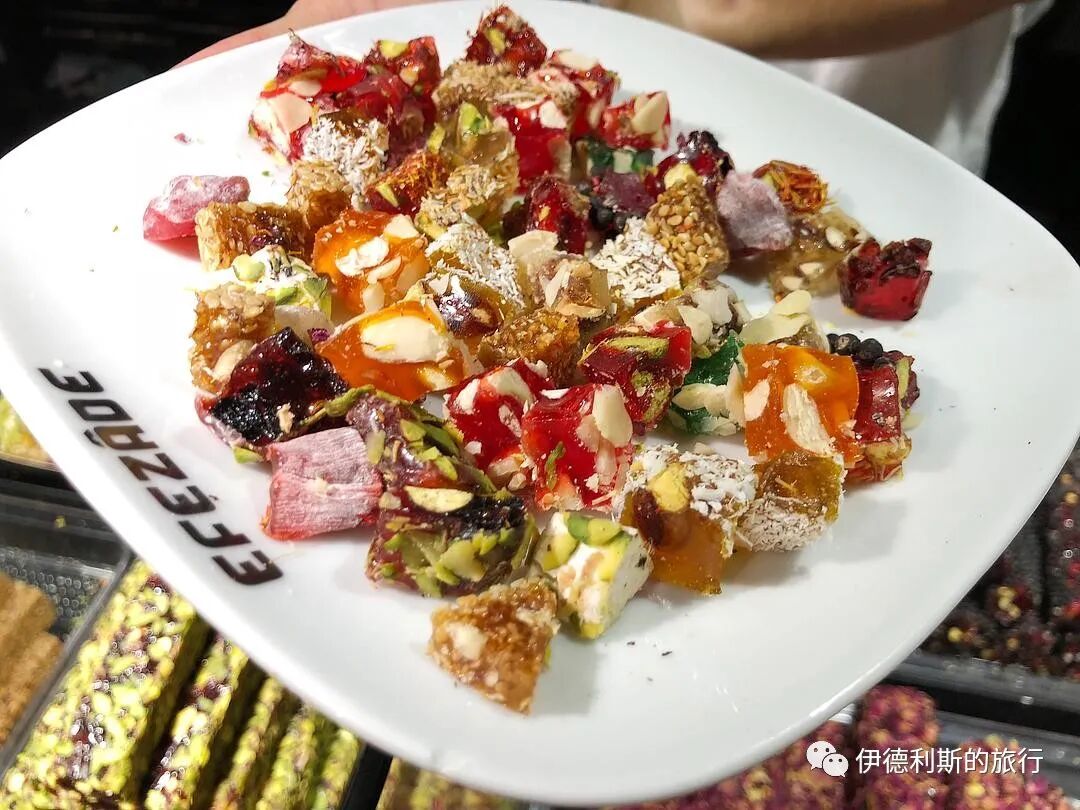
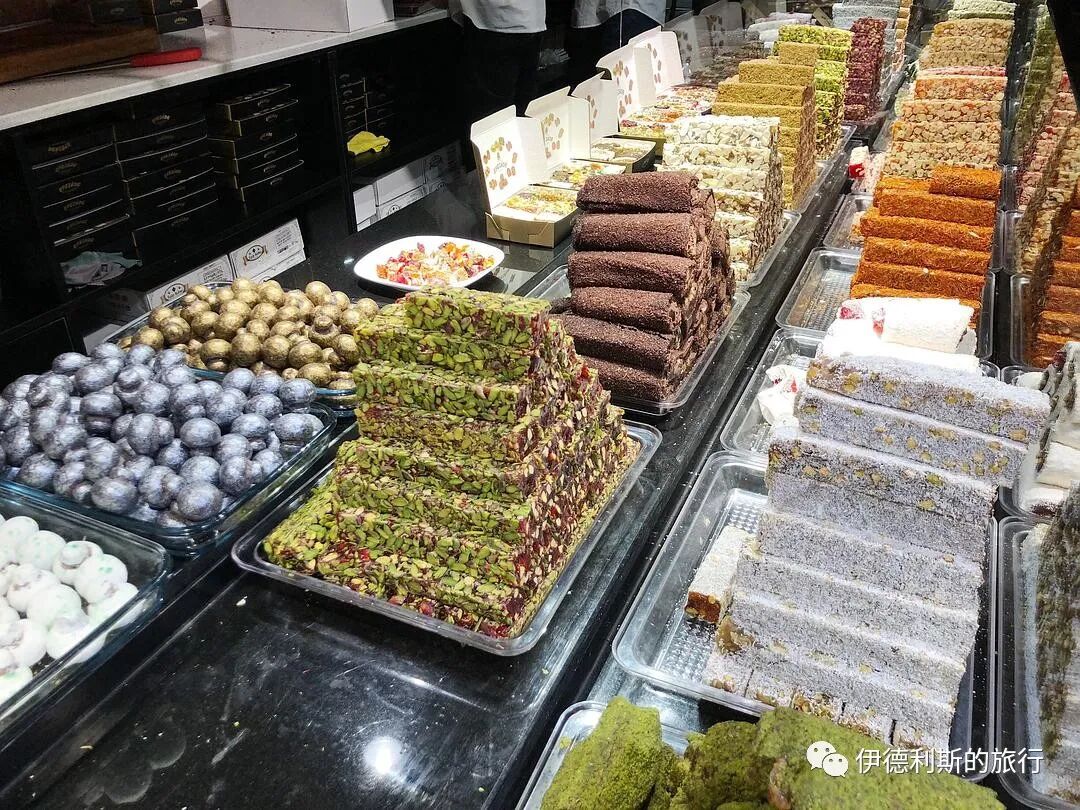
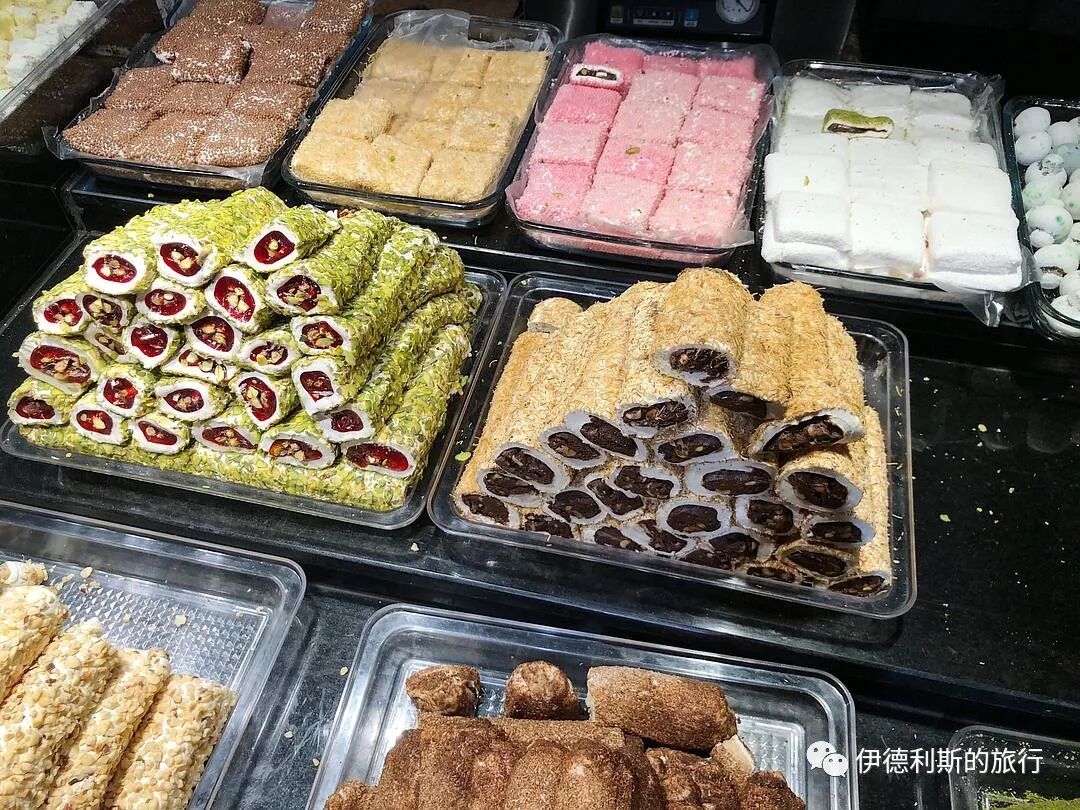
Turkish coffee served with pudding on the street.
In the early Ottoman Empire, strong coffee was banned as a medicine, but the Sultan eventually lifted the ban because it became so popular with the people.
Turkish coffee is recognized by UNESCO as part of Turkey's intangible cultural heritage.
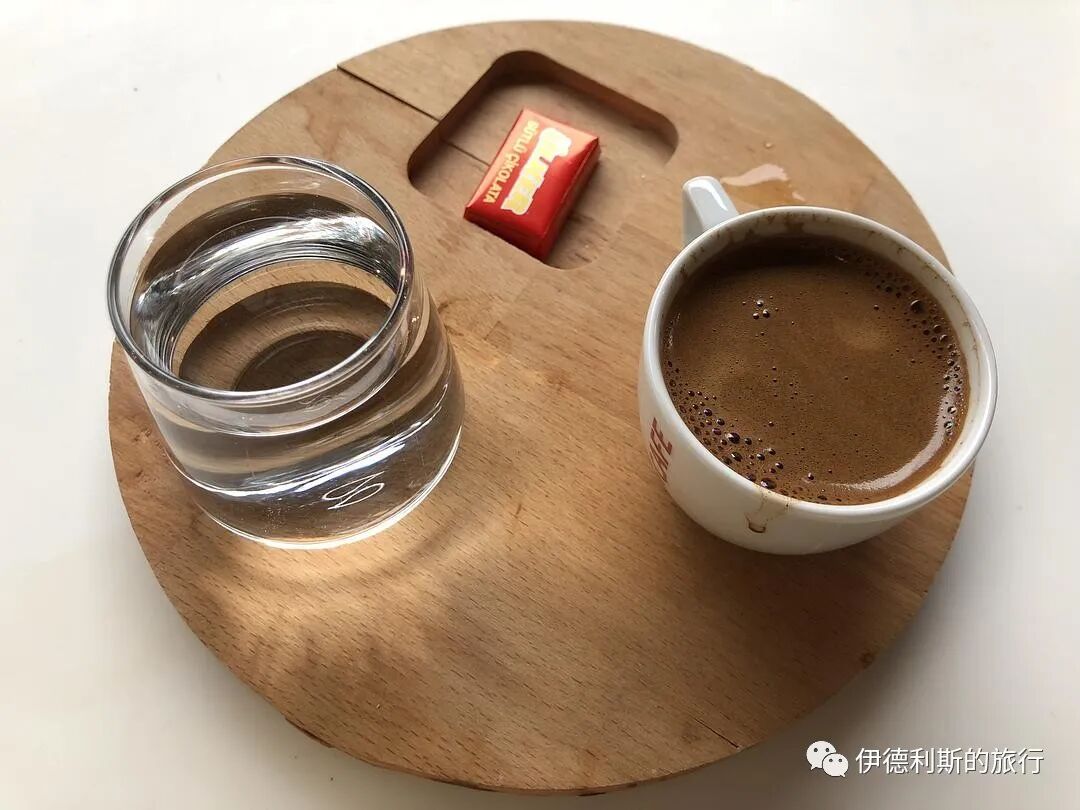
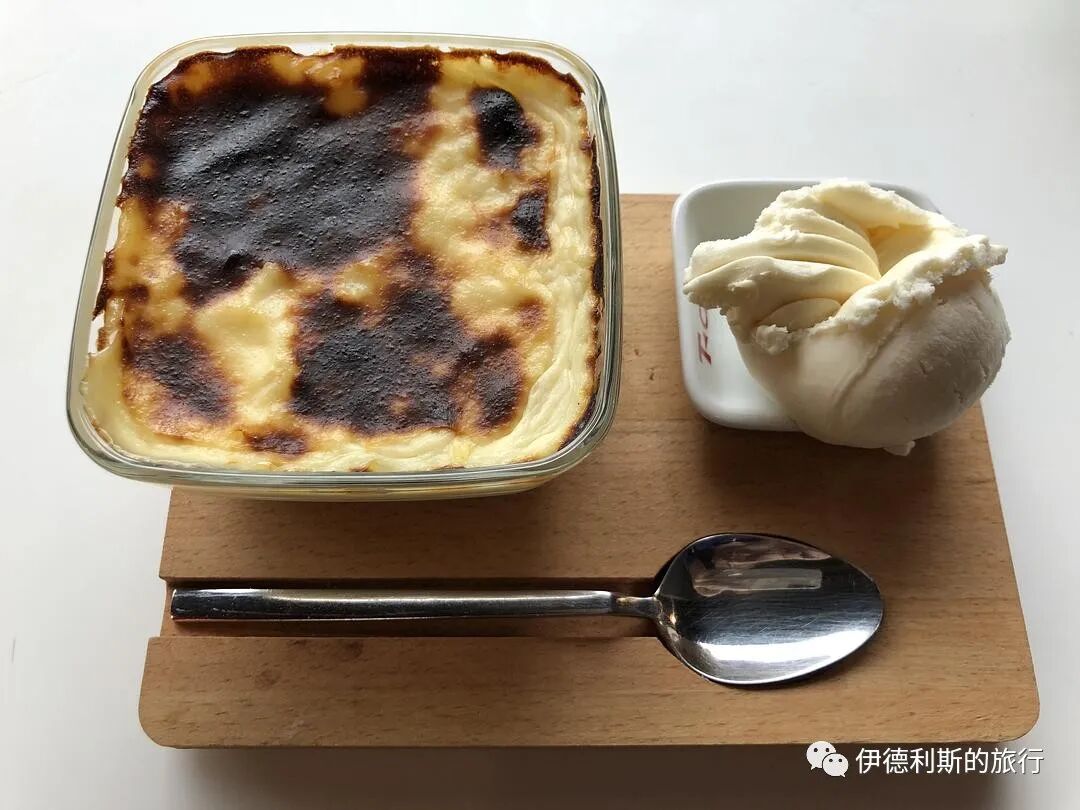
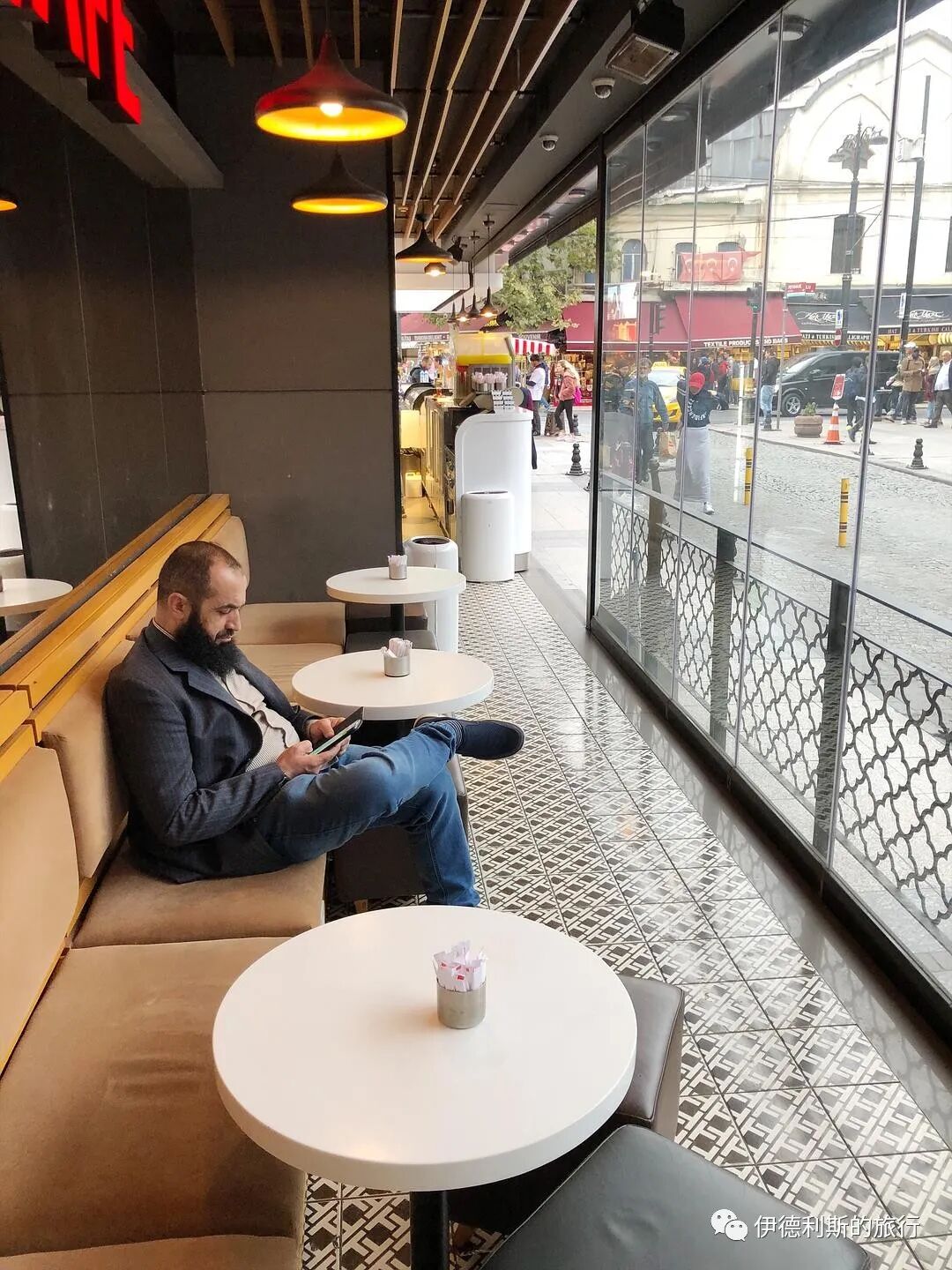
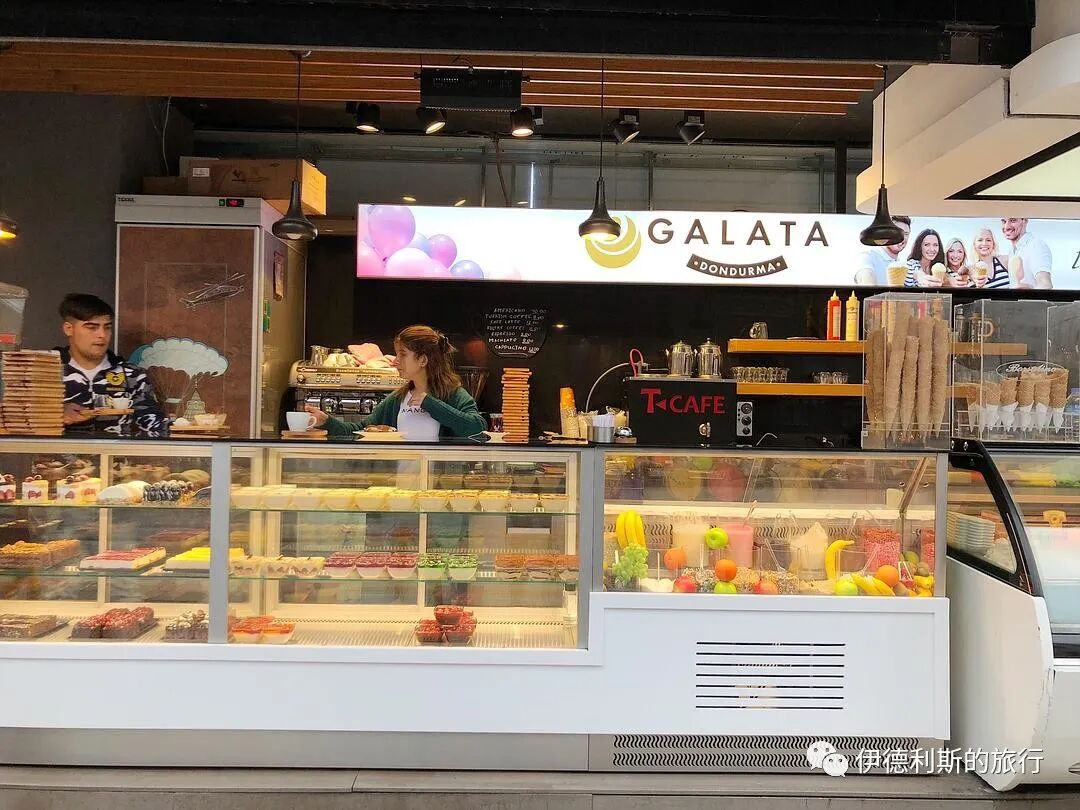
The picture below shows Vefa Bozacisi, the only boza shop in 19th-century Istanbul. It was opened in 1876 by brothers Haci Ibrahim and Haci Sadik in the Vefa district of Istanbul, near the entertainment center of the time, Direklerarası. It is still run by the great-grandchildren of Haci Sadik and Haci Ibrahim today.
Boza is a fermented grain drink popular in Turkey, Iran, the Balkans, Central Asia, and the Caucasus. In Turkey, it is usually made from fermented wheat. It is thick and tastes sweet with a hint of sourness.
In Chagatai Turkic, boza means a drink made from camel milk, while in Persian, büze is used to refer to millet. Central Asian Turkic people began calling fermented grain drinks, usually made from millet, boza in the 10th century. It later spread to the Caucasus and the Balkans and became an important town drink during the Ottoman Empire.
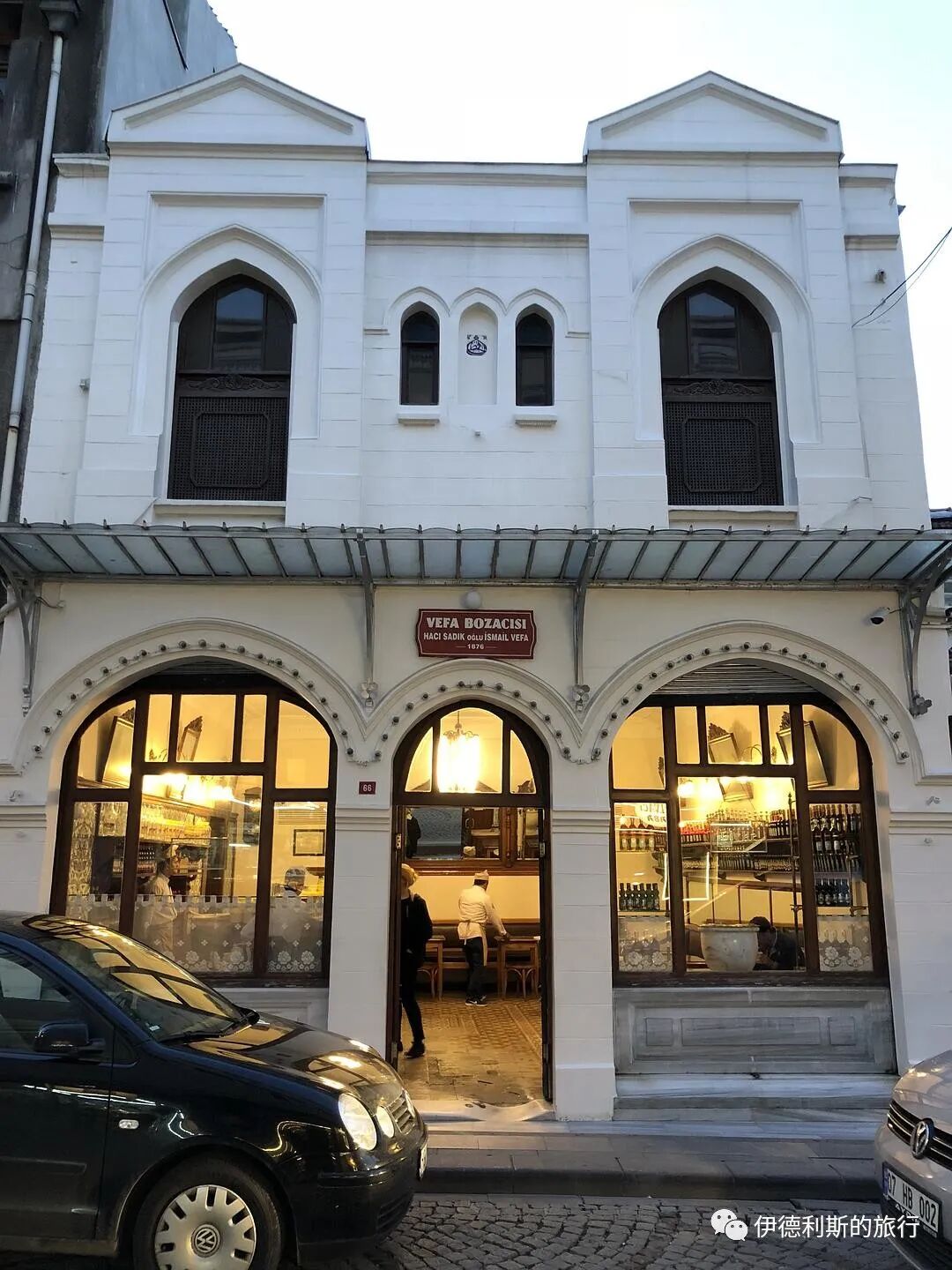
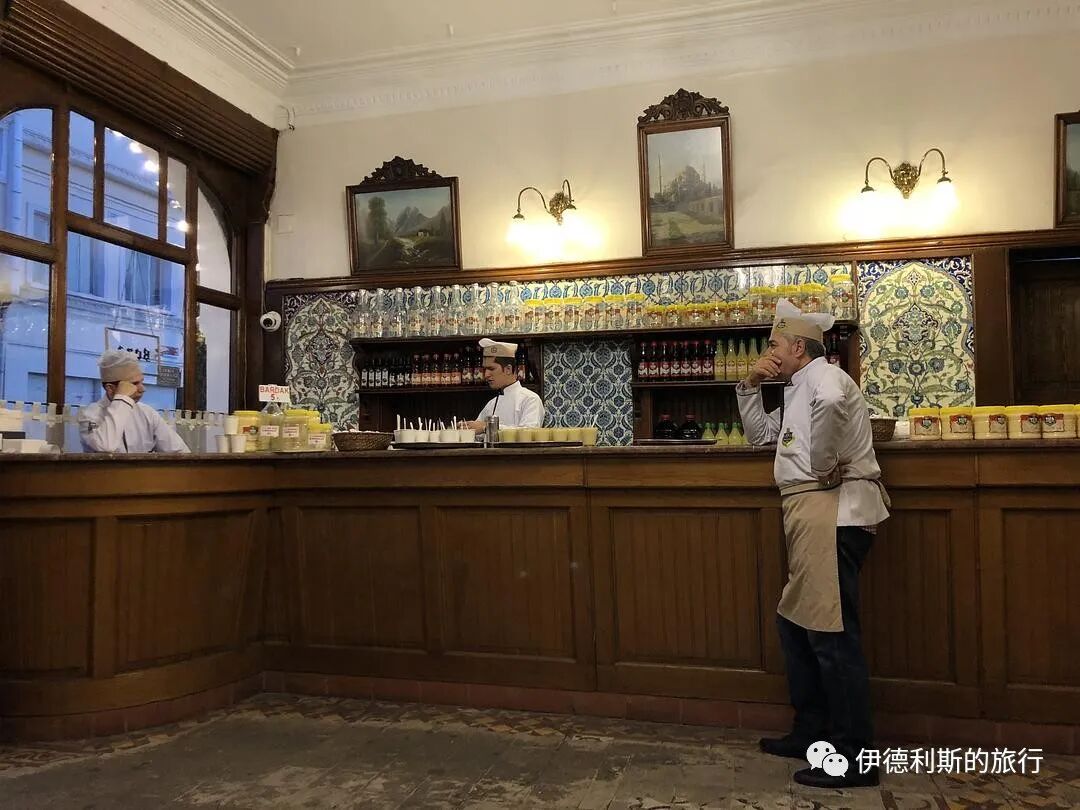
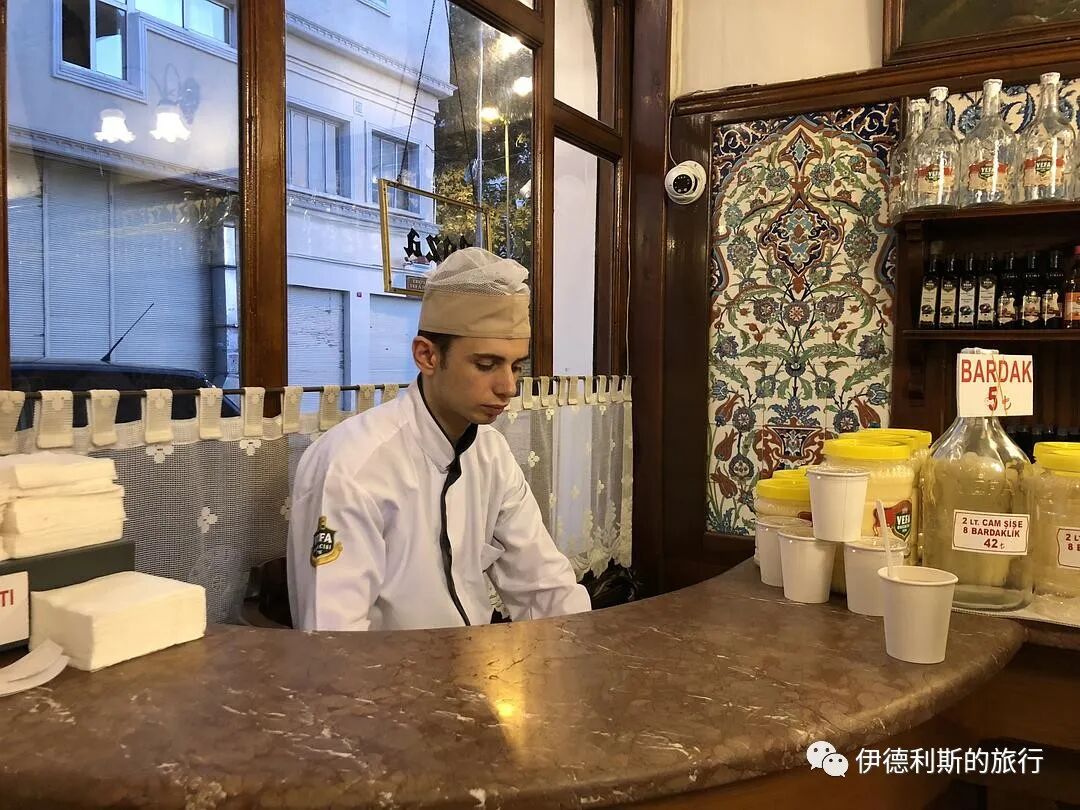
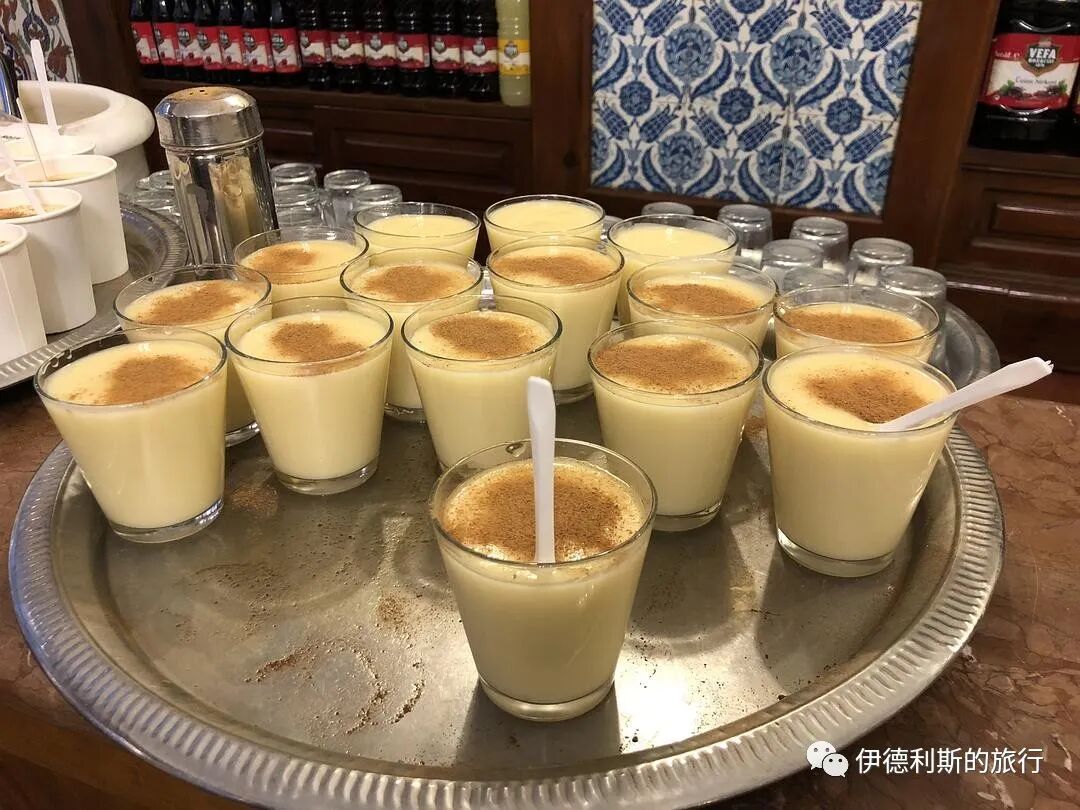
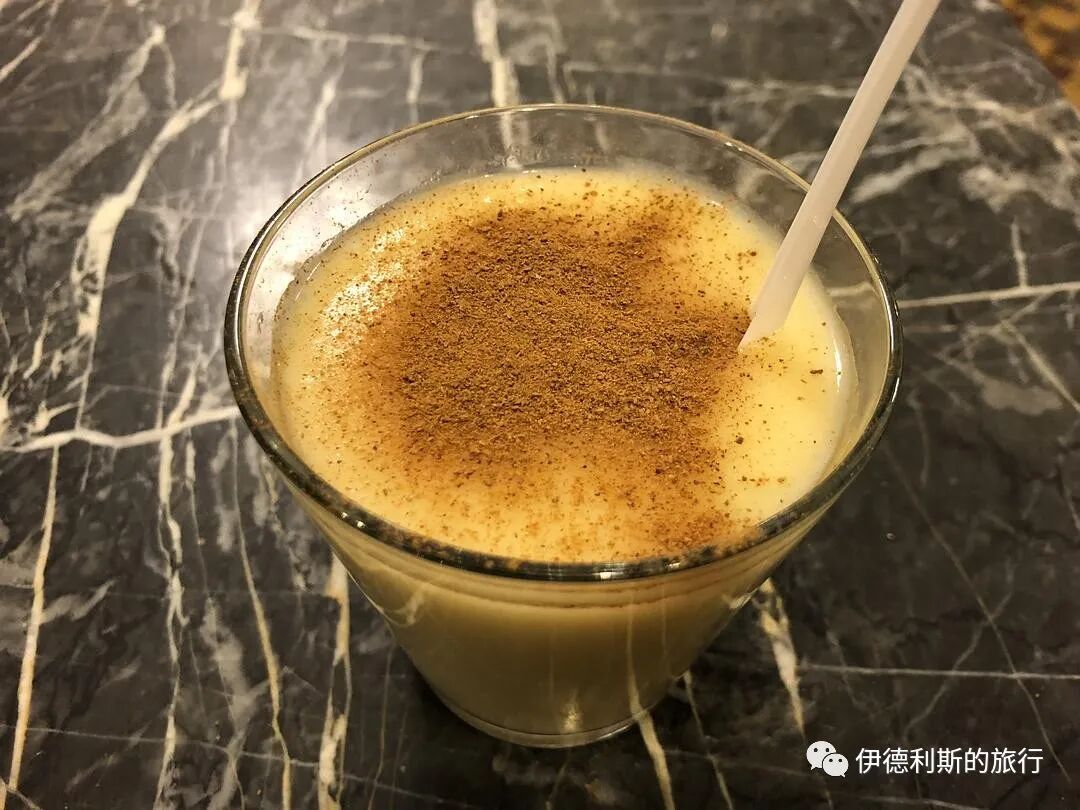
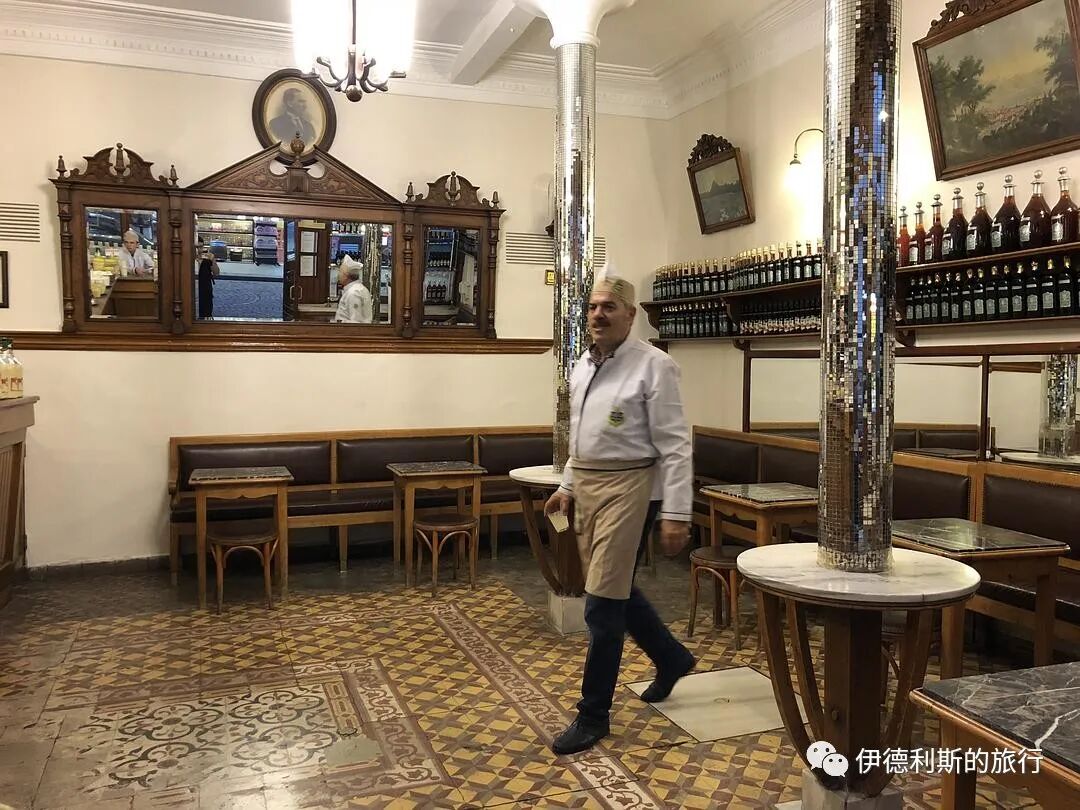
The snack in the picture below is called tulumba tatlısı, which is deep-fried dough soaked in syrup. It is widely popular in former Ottoman regions, including Turkey, the Balkans, and Armenia. It is also called balah alsham in Arab regions and is often eaten during Ramadan.
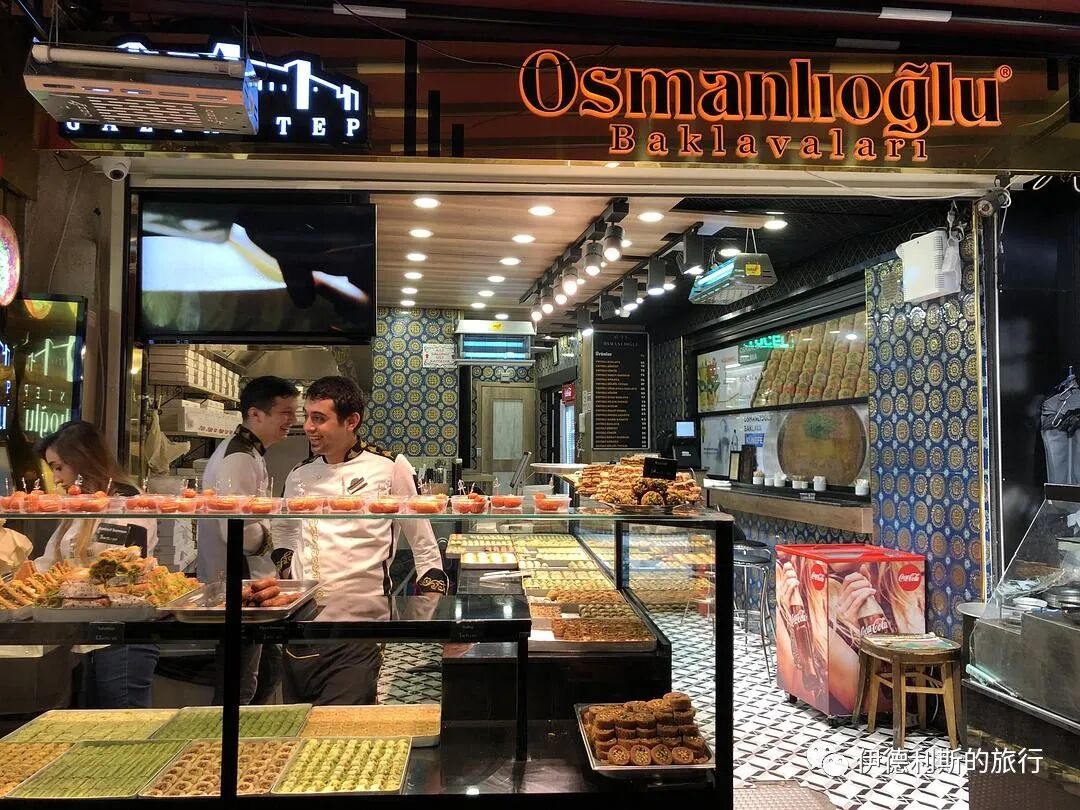
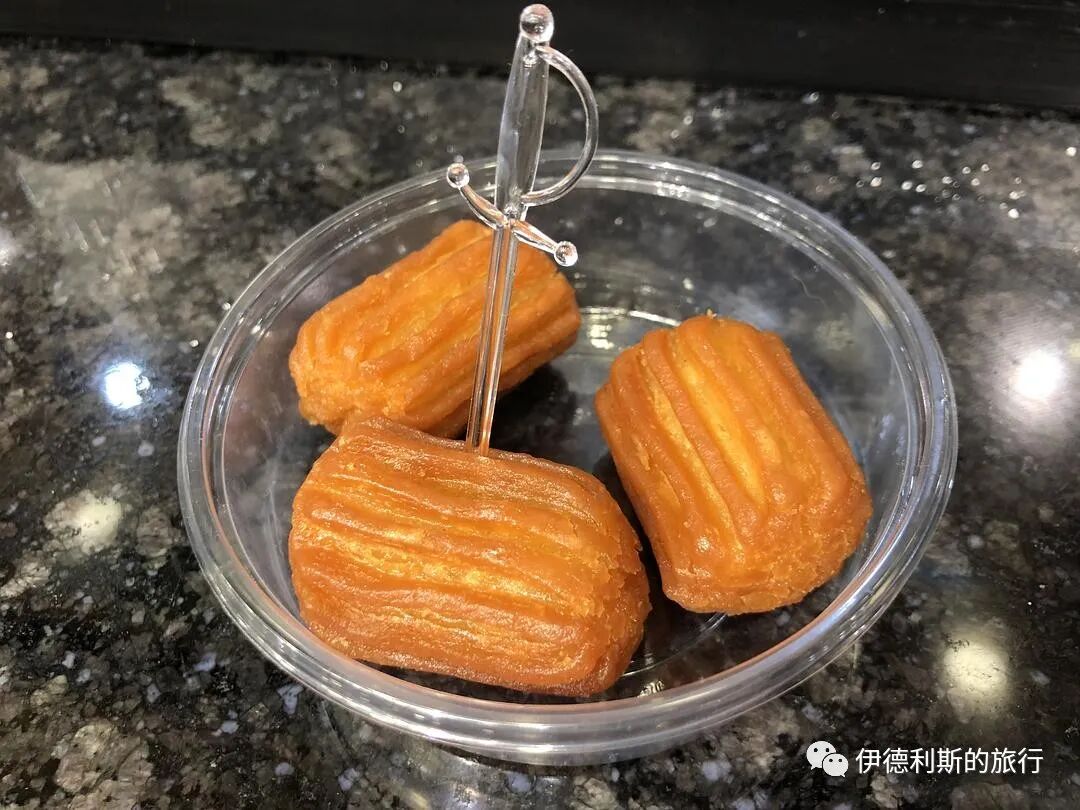
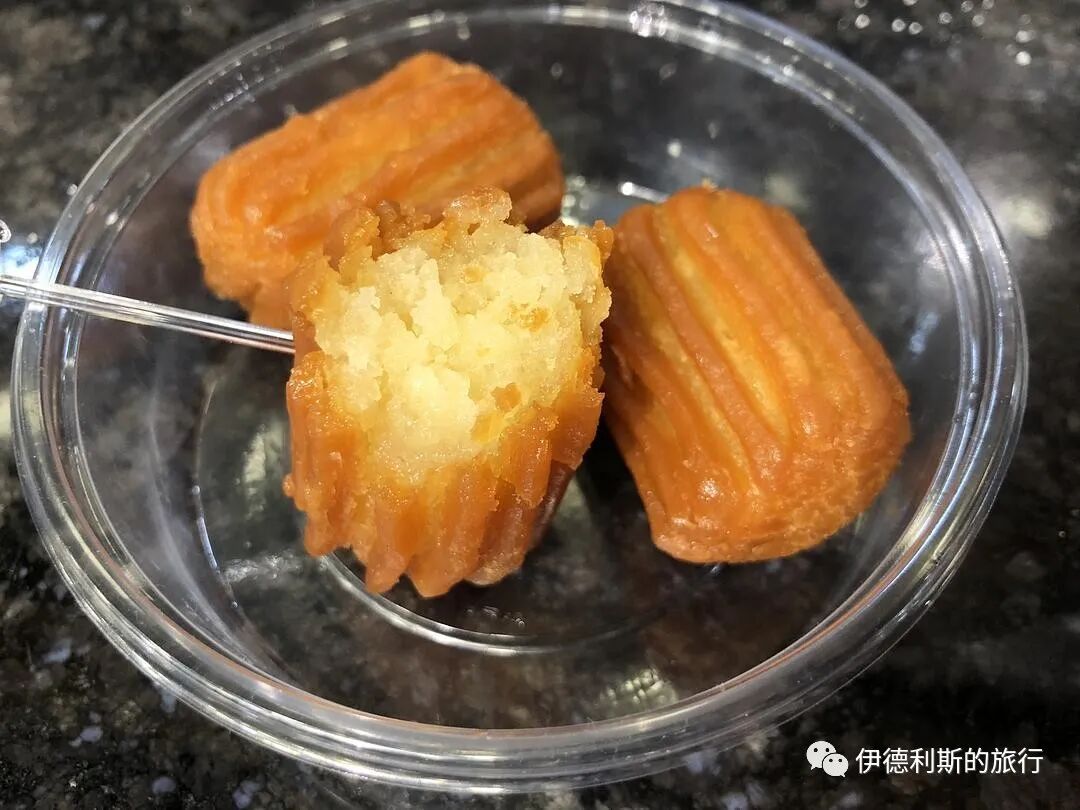
Main course
A type of kebab called testi kebab eaten at this restaurant called Urfalim Lahmacun. Testi kebab comes from Central Anatolia and the Black Sea region. Testi means jar or pot in Turkish, and it involves cooking various meats and vegetables in a clay pot.
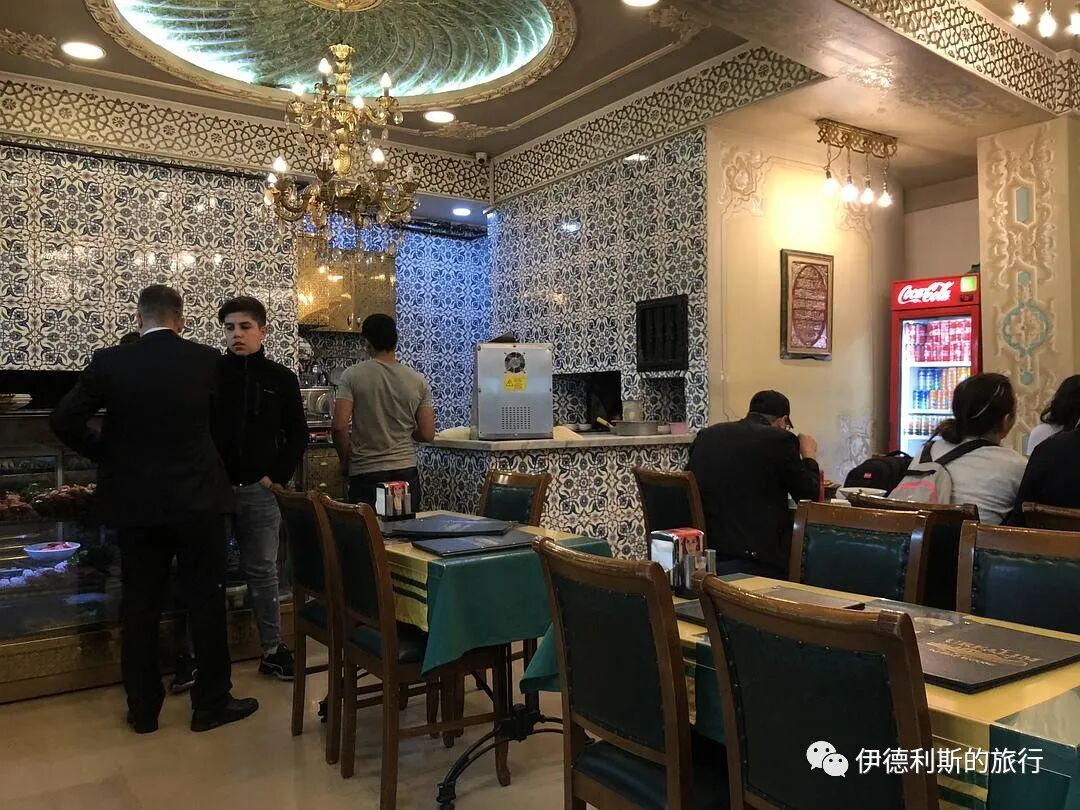
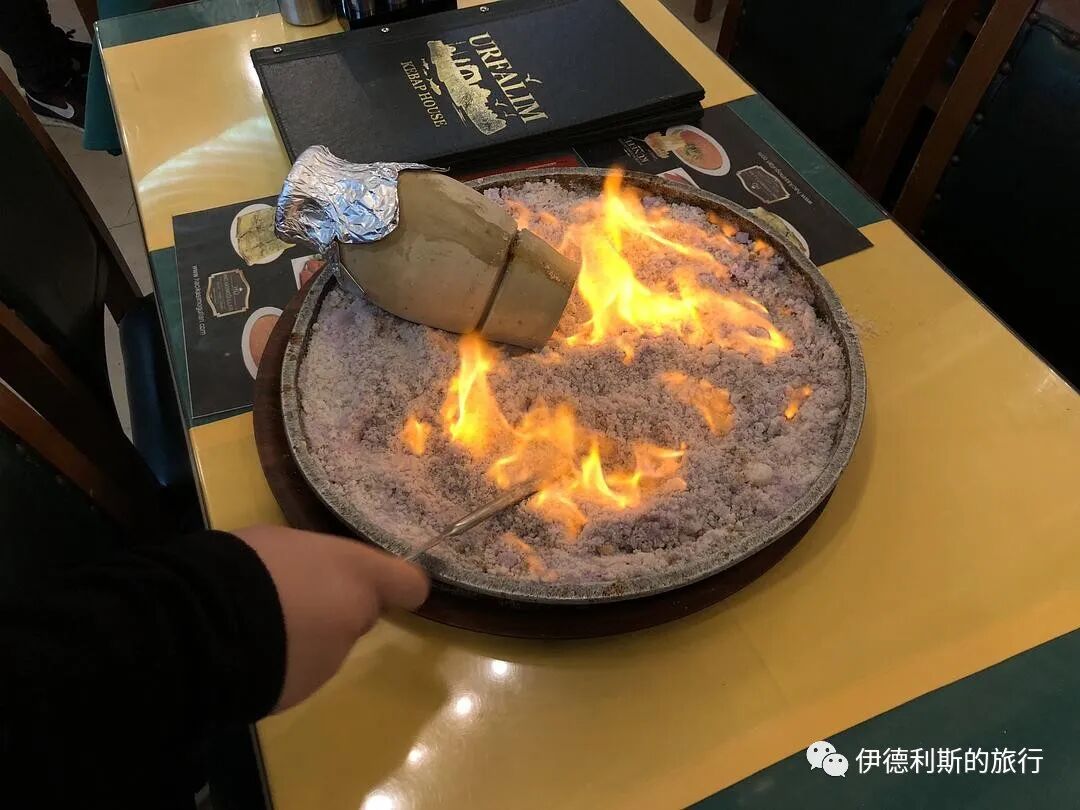
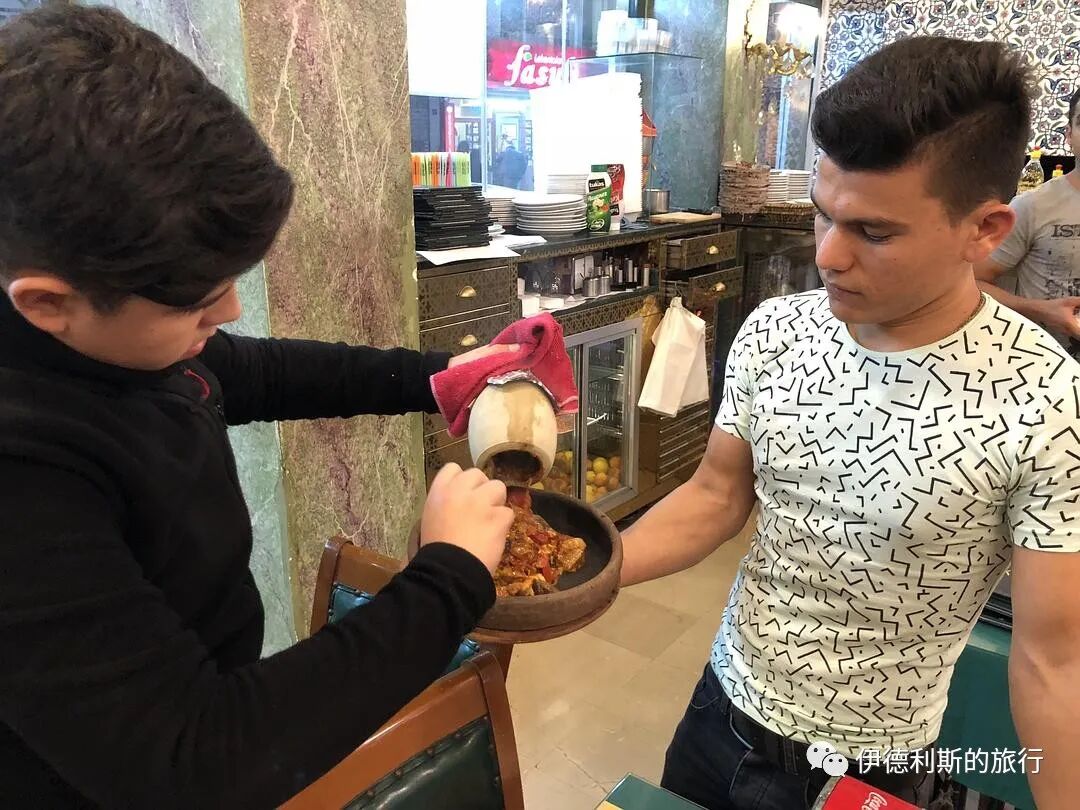
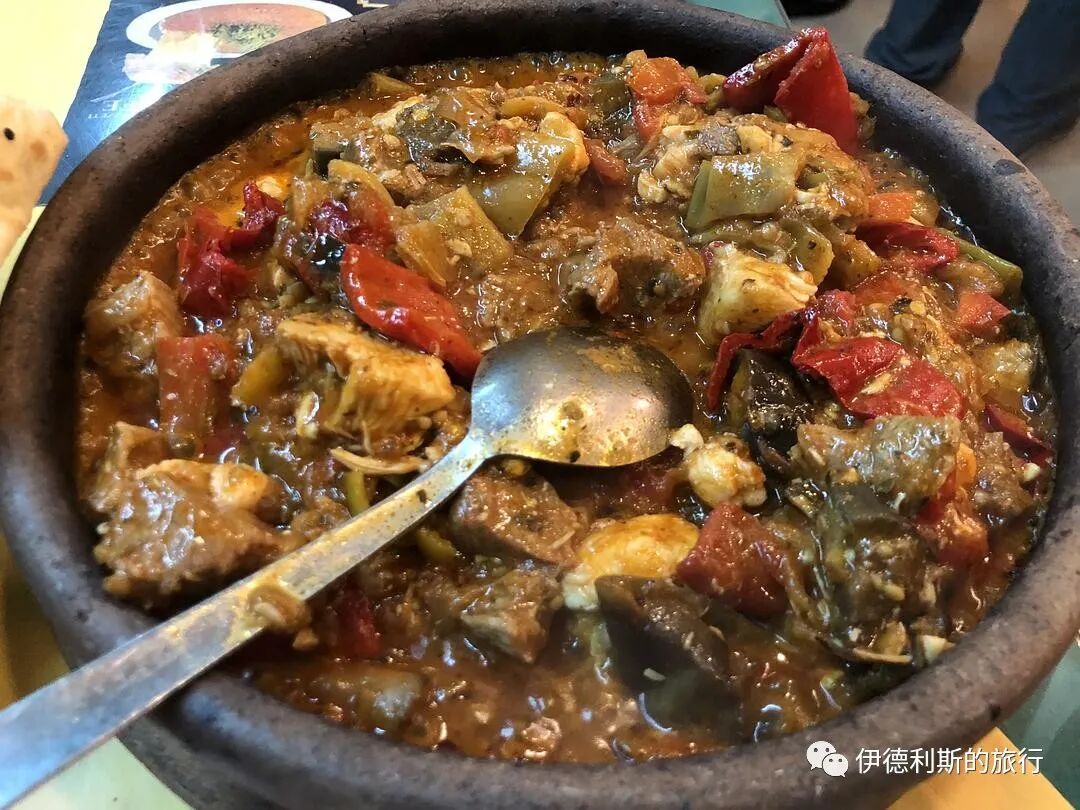
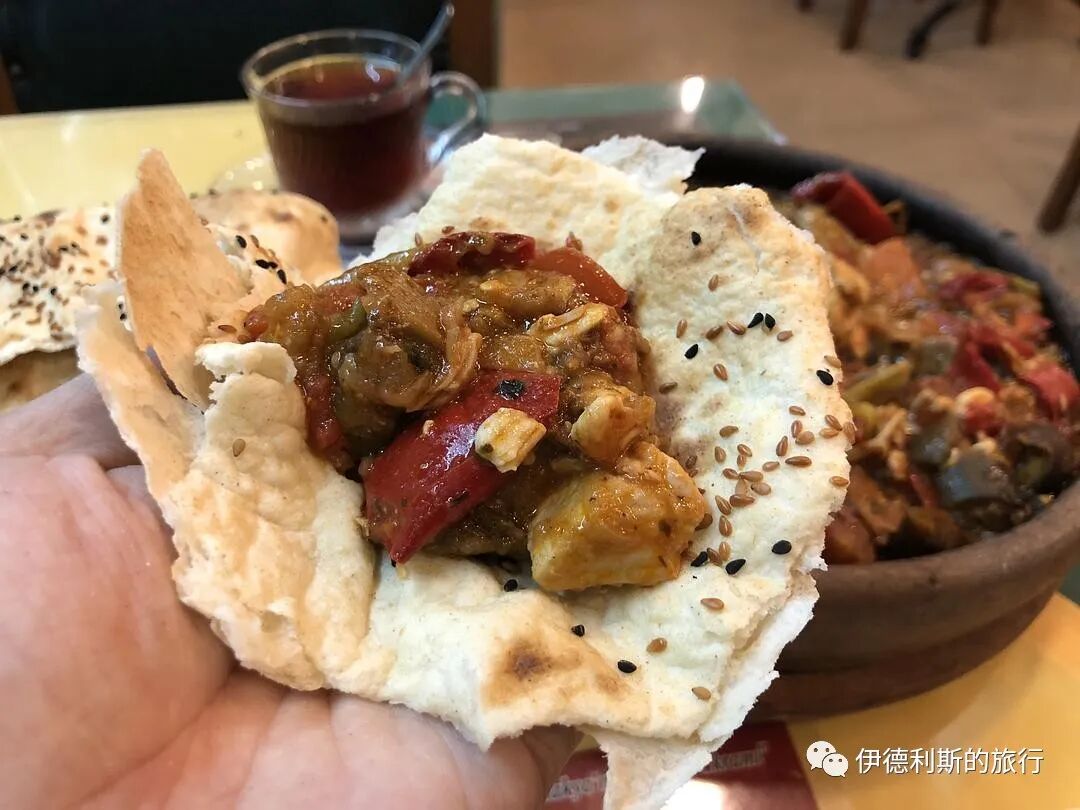
Arabic flatbread, which is very thin.
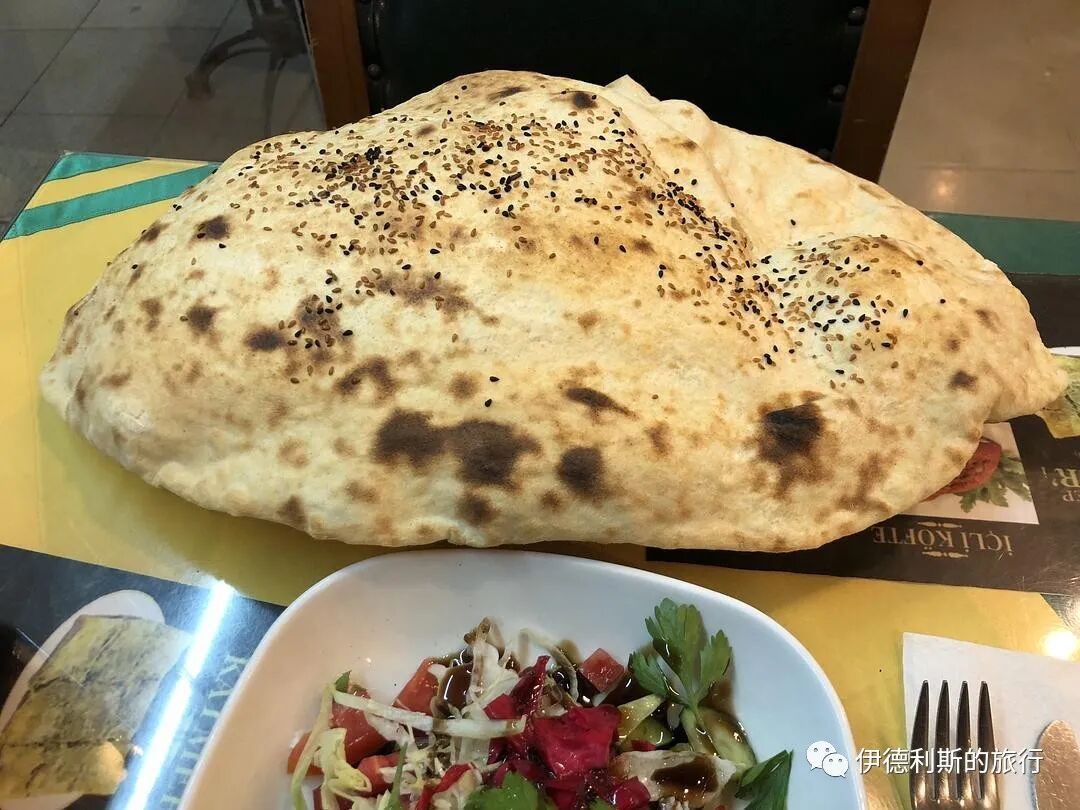
This soup is called ezogelin. It is made from crushed dried wheat and red lentils, with ingredients including rice, olive oil, butter, onions, garlic, tomatoes, chili peppers, dried mint, black pepper, and salt.
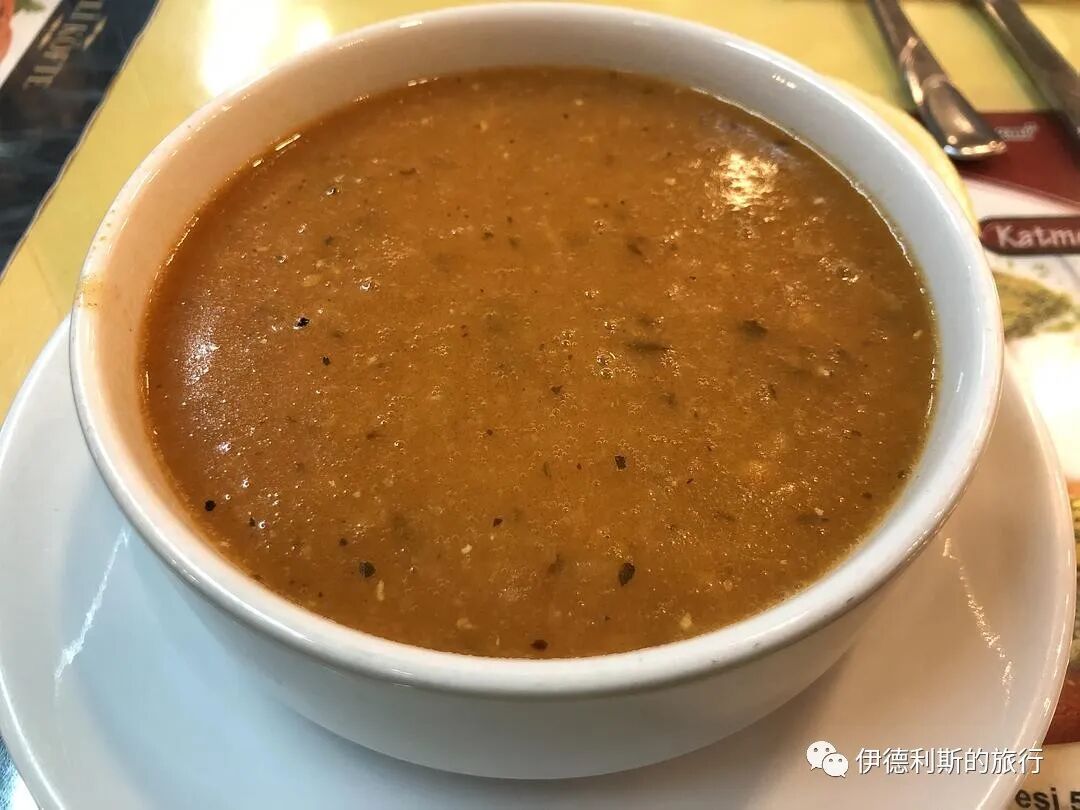
I had a dish called patlıcanlı kebab, which translates to eggplant kebab, at a bazaar next to the Rüstem Pasha Mosque in the evening, along with a drink called yayık ayran, which is a honey yogurt drink.
This place serves naan and a salad of onions, peppers, and tomatoes (pilahong) right away, which feels very Inner Asian. By the end of the meal, the Uzbek guy in the red shirt in the middle of the picture helped me peel all the eggplant skins and rolled them up with roasted tomatoes, which was very touching.
Roasted lamb eaten next to the Hagia Sophia, which was very fresh and tender.
This soup is called chorba.
Bread in Turkish restaurants is free to eat.
Eat a flaky pastry (börek) at a flaky pastry shop. The word börek comes from Turkish and can refer to any food made with thin dough sheets (yufka). Börek originated in Anatolia and became popular in the Balkans and North Africa during the Ottoman Empire. It was especially popular in Ottoman Jewish communities, where it was known as one of the three major Ottoman Jewish pastries alongside boyos de pan and bulemas.
Eat iron-plate tomato grilled meat and scrambled eggs with vegetables (menemen) by the pier in the Asian district. Menemen is a Turkish food made of eggs, tomatoes, green peppers, and various spices, usually eaten for breakfast.
Foreign restaurants
While visiting historical sites in Istanbul, I passed through a neighborhood of Syrian people in the Fatih district. I went into a Syrian restaurant called Saruja and ordered three dishes. When I looked them up later, I found they were all Levantine cuisine.
The Levant refers to the eastern Mediterranean coastal region, including modern-day Jordan, Lebanon, Israel, Palestine, Syria, and parts of Turkey near Syria. During the Ottoman era, many Levantine foods spread to Turkey and Armenia and became local delicacies. The first dish was a minced meat flatbread (lahmacun). I chose a pomegranate-flavored one, and it tasted quite unique. The Turkish word lahmacun comes from the Arabic "laḥm'ajīn," which translates to "meat with dough." During the Ottoman era, this meat flatbread spread to Turkey and Armenia. In different places, it is called "Arab pizza," "Lebanese pizza," "Syrian pizza," "Armenian pizza," and "Turkish pizza."
The second dish is called kibbeh, known in Turkish as "içli köfte." Kibbeh is the North Levantine dialect version of the classical Arabic word "kubbah," which translates to "ball." Kibbeh is made of cracked wheat wrapped around a filling of minced meat, chopped onions, and Middle Eastern spices like cinnamon, nutmeg, cloves, and allspice. Kibbeh is most famous in Aleppo, northern Syria, where there are 17 different flavors. Besides the original, they add yogurt, lemon juice, pomegranate molasses, or cherry sauce.
Besides spreading to Turkey and Armenia during the Ottoman era, kibbeh also spread to Latin America with Levantine immigrants in the late 19th and early 20th centuries.
The third dish is chickpea puree (hummus). Hummus means "chickpea" in Arabic and is short for "ḥummuṣ bi ṭaḥīna" (chickpeas with sesame paste). Hummus is made by mixing chickpeas with sesame paste (tahini), olive oil, lemon juice, and garlic. It is very popular in the Middle East and the Mediterranean.
I ate pilaf (plov) and thin-skinned steamed buns (manti) at an Uzbek restaurant not far south of the Grand Bazaar. I have to praise these buns—the skin was incredibly thin! You cannot find them this thin in Beijing. A man sitting next to me spoke Chinese; he used to do business in Yiwu and Shanghai.
Grilled fish by the Golden Horn.
There are many places to eat grilled fish along the Golden Horn, and you can have it in a sandwich or just eat it on its own.
This restaurant is on the Galata Bridge. I ordered grilled salmon, and they gave me free tea after the meal.
There are many street stalls selling grilled fish sandwiches next to the Eminonu pier on the Golden Horn.
Rice.
Turkish rice shops are called Pilavcisi. While pilav refers to pilaf in Central and South Asia, in Turkey, they just call plain white rice pilav.
I ate rice mixed with chicken and liver (Pilav ustu Tavuk-Ciger) at this shop.
A street-facing section of one of the madrasas at the famous Suleymaniye Mosque is rented out to a restaurant called Ali Baba. This restaurant is known for its bean rice, or Kuru fasulye ve Pilav. Kuru fasulye is known as Turkey's national dish, made with white beans, olive oil, onions, and tomato paste.
Collapse Read »
Summary: Istanbul — Mosques, Turkish Food and Ottoman Streets is presented here as a firsthand travel account in clear English, beginning with this scene: I spent half a month traveling in Turkey from September to October 2018. While visiting historical sites in Istanbul, I tried some local food and would like to share it with you here. The account keeps its focus on Istanbul Travel, Turkish Food, Ottoman Heritage while preserving the names, places, food, and historical details from the Chinese source.
I spent half a month traveling in Turkey from September to October 2018. While visiting historical sites in Istanbul, I tried some local food and would like to share it with you here.
Street food.
Simit is a type of bread ring popular in the former Ottoman territories and the Middle East, and it is a common street snack in Istanbul.
The word simit comes from the Arabic word samīd, which means white bread or fine flour. The earliest records of simit bread rings in Istanbul date back to 1525. By 1594, Istanbul had established the first regulations for the weight and price of simit bread rings. According to the famous 17th-century Ottoman traveler Evliya Çelebi, there were 70 simit bakeries in Istanbul in the 1630s.
Because of its low price, simit has become an important symbol for the working class in Turkey.
Roasted corn and boiled corn are street snacks just as common as the bread rings.
There are also various kinds of freshly squeezed fruit juices on the streets of Istanbul, and this time I had fresh pomegranate juice.
Autumn is the season for eating roasted chestnuts.
There are all kinds of ice cream shops on the streets of Istanbul. I had never eaten this black mulberry flavor before, and the young lady selling the ice cream was very sweet.
Desserts
1. Ashure porridge
There are many dessert shops in Istanbul with a wide variety of traditional sweets, and there are many on Istiklal Avenue alone. I had Turkish Ashure porridge at a dessert shop called Taxim Süitiş.
The Turkish word Ashure comes from the Arabic word Āshūrā, which means tenth. On the tenth day of the first month (Muharram) of the Islamic calendar in the year 61, the family of the Prophet's grandson, Husayn, died while fleeing Mecca due to the pursuit of the Umayyad dynasty. This day has become an important memorial day for Shia and some Sunni Muslims. For Sunni Muslims, the Day of Ashura is also an important memorial day for many events, such as when the Prophet Musa (Moses) was pursued by the Pharaoh to the Red Sea and the sea parted to create a path for them to escape, when the Prophet Nuh (Noah) left the ark, and when the Prophet Muhammad arrived in Medina.
Ashure porridge was popularized in Turkey by the Alevis. To commemorate the martyrdom of the saint Ali, the Alevis do not eat meat on this day, but instead eat Ashure porridge made from grains, fruits, dried fruits, and nuts.
The Alevis respect the saint Ali just like the Shia, but their rituals are completely different from the Shia. The Alevis are actually an Islamic sect that blends Shia and Sufi beliefs, native Turkish animism, and some Sunni elements. They are more used to expressing their faith through music and dance in a gathering hall (cemevi).
For traditional Sunni Muslims in Turkey, people share Ashura porridge (ashure) with friends, relatives, neighbors, colleagues, and classmates on the Day of Ashura, regardless of their religious beliefs. Legend says that on the Day of Ashura, after the Prophet Nuh (Noah) landed his ark, his family prepared a meal to celebrate. Because their supplies were almost gone, they mixed the remaining grains and dried fruits together to make Ashura porridge.
The recipe for Ashura porridge is not fixed; traditionally it has at least 7 ingredients, and some people use 10 to match the theme of the tenth day. The Alevis always use 12 ingredients.
I bought a box of Turkish delight (lokum) as a gift at Hakki Zade, an old Ottoman brand and chain store on Istiklal Avenue.
The dessert shop below, called Efezade, is not far southwest of the old Ottoman palace, and the words Baklava & Lokum above the shop name refer to Turkish pastries and Turkish delight.
Modern Turkish nut-filled pastry (baklava) is said to have come from the Ottoman court, where the Ottoman Sultan would distribute baklava on trays to the Janissaries during a procession on the 15th of Ramadan, a ceremony known as the Baklava Procession (Baklava Alayı).
There is no final conclusion about the origin of baklava in the pre-Ottoman era, but there are three mainstream views: the Byzantine Placenta pastry inherited from Rome, the layered pastry tradition of Central Asian Turks, and the Persian Lauzinaq pastry.
This young man was very enthusiastic and kept pestering me to teach him Chinese.
A diagram of various Turkish pastries.
The pastry in the bottom left of the picture below is called nightingale's nest (bülbül yuvası), which translates literally to 'nightingale's nest'.
There are also various types of Turkish delight (lokum). The word lokum comes from the Arabic 'al-halkum'. Arabs call Turkish delight 'rāḥatal-ḥulqūm', which means 'throat comfort'.
According to the Hacı Bekir company, Turkish delight was brought to Istanbul from his hometown of Kastamonu by the founder, Hacı Bekir, in 1777. Some historians question this claim because similar soft candies made from starch and sugar appeared in Arab and Persian lands centuries earlier.
Turkish coffee served with pudding on the street.
In the early Ottoman Empire, strong coffee was banned as a medicine, but the Sultan eventually lifted the ban because it became so popular with the people.
Turkish coffee is recognized by UNESCO as part of Turkey's intangible cultural heritage.
The picture below shows Vefa Bozacisi, the only boza shop in 19th-century Istanbul. It was opened in 1876 by brothers Haci Ibrahim and Haci Sadik in the Vefa district of Istanbul, near the entertainment center of the time, Direklerarası. It is still run by the great-grandchildren of Haci Sadik and Haci Ibrahim today.
Boza is a fermented grain drink popular in Turkey, Iran, the Balkans, Central Asia, and the Caucasus. In Turkey, it is usually made from fermented wheat. It is thick and tastes sweet with a hint of sourness.
In Chagatai Turkic, boza means a drink made from camel milk, while in Persian, büze is used to refer to millet. Central Asian Turkic people began calling fermented grain drinks, usually made from millet, boza in the 10th century. It later spread to the Caucasus and the Balkans and became an important town drink during the Ottoman Empire.
The snack in the picture below is called tulumba tatlısı, which is deep-fried dough soaked in syrup. It is widely popular in former Ottoman regions, including Turkey, the Balkans, and Armenia. It is also called balah alsham in Arab regions and is often eaten during Ramadan.
Main course
A type of kebab called testi kebab eaten at this restaurant called Urfalim Lahmacun. Testi kebab comes from Central Anatolia and the Black Sea region. Testi means jar or pot in Turkish, and it involves cooking various meats and vegetables in a clay pot.
Arabic flatbread, which is very thin.
This soup is called ezogelin. It is made from crushed dried wheat and red lentils, with ingredients including rice, olive oil, butter, onions, garlic, tomatoes, chili peppers, dried mint, black pepper, and salt.
I had a dish called patlıcanlı kebab, which translates to eggplant kebab, at a bazaar next to the Rüstem Pasha Mosque in the evening, along with a drink called yayık ayran, which is a honey yogurt drink.
This place serves naan and a salad of onions, peppers, and tomatoes (pilahong) right away, which feels very Inner Asian. By the end of the meal, the Uzbek guy in the red shirt in the middle of the picture helped me peel all the eggplant skins and rolled them up with roasted tomatoes, which was very touching.
Roasted lamb eaten next to the Hagia Sophia, which was very fresh and tender.
This soup is called chorba.
Bread in Turkish restaurants is free to eat.
Eat a flaky pastry (börek) at a flaky pastry shop. The word börek comes from Turkish and can refer to any food made with thin dough sheets (yufka). Börek originated in Anatolia and became popular in the Balkans and North Africa during the Ottoman Empire. It was especially popular in Ottoman Jewish communities, where it was known as one of the three major Ottoman Jewish pastries alongside boyos de pan and bulemas.
Eat iron-plate tomato grilled meat and scrambled eggs with vegetables (menemen) by the pier in the Asian district. Menemen is a Turkish food made of eggs, tomatoes, green peppers, and various spices, usually eaten for breakfast.
Foreign restaurants
While visiting historical sites in Istanbul, I passed through a neighborhood of Syrian people in the Fatih district. I went into a Syrian restaurant called Saruja and ordered three dishes. When I looked them up later, I found they were all Levantine cuisine.
The Levant refers to the eastern Mediterranean coastal region, including modern-day Jordan, Lebanon, Israel, Palestine, Syria, and parts of Turkey near Syria. During the Ottoman era, many Levantine foods spread to Turkey and Armenia and became local delicacies. The first dish was a minced meat flatbread (lahmacun). I chose a pomegranate-flavored one, and it tasted quite unique. The Turkish word lahmacun comes from the Arabic "laḥm'ajīn," which translates to "meat with dough." During the Ottoman era, this meat flatbread spread to Turkey and Armenia. In different places, it is called "Arab pizza," "Lebanese pizza," "Syrian pizza," "Armenian pizza," and "Turkish pizza."
The second dish is called kibbeh, known in Turkish as "içli köfte." Kibbeh is the North Levantine dialect version of the classical Arabic word "kubbah," which translates to "ball." Kibbeh is made of cracked wheat wrapped around a filling of minced meat, chopped onions, and Middle Eastern spices like cinnamon, nutmeg, cloves, and allspice. Kibbeh is most famous in Aleppo, northern Syria, where there are 17 different flavors. Besides the original, they add yogurt, lemon juice, pomegranate molasses, or cherry sauce.
Besides spreading to Turkey and Armenia during the Ottoman era, kibbeh also spread to Latin America with Levantine immigrants in the late 19th and early 20th centuries.
The third dish is chickpea puree (hummus). Hummus means "chickpea" in Arabic and is short for "ḥummuṣ bi ṭaḥīna" (chickpeas with sesame paste). Hummus is made by mixing chickpeas with sesame paste (tahini), olive oil, lemon juice, and garlic. It is very popular in the Middle East and the Mediterranean.
I ate pilaf (plov) and thin-skinned steamed buns (manti) at an Uzbek restaurant not far south of the Grand Bazaar. I have to praise these buns—the skin was incredibly thin! You cannot find them this thin in Beijing. A man sitting next to me spoke Chinese; he used to do business in Yiwu and Shanghai.
Grilled fish by the Golden Horn.
There are many places to eat grilled fish along the Golden Horn, and you can have it in a sandwich or just eat it on its own.
This restaurant is on the Galata Bridge. I ordered grilled salmon, and they gave me free tea after the meal.
There are many street stalls selling grilled fish sandwiches next to the Eminonu pier on the Golden Horn.
Rice.
Turkish rice shops are called Pilavcisi. While pilav refers to pilaf in Central and South Asia, in Turkey, they just call plain white rice pilav.
I ate rice mixed with chicken and liver (Pilav ustu Tavuk-Ciger) at this shop.
A street-facing section of one of the madrasas at the famous Suleymaniye Mosque is rented out to a restaurant called Ali Baba. This restaurant is known for its bean rice, or Kuru fasulye ve Pilav. Kuru fasulye is known as Turkey's national dish, made with white beans, olive oil, onions, and tomato paste.
Collapse Read »
Halal Travel Guide: Shanhaiguan — Great Wall, Mosques and Muslim Food
Reposted from the web
Summary: Shanhaiguan — Great Wall, Mosques and Muslim Food is presented here as a firsthand travel account in clear English, beginning with this scene: The winter sun was bright in 2018, and I took the early high-speed train from Beijing South Station, arriving in Shanhaiguan in just two hours. The account keeps its focus on Shanhaiguan Travel, Great Wall, Halal Food while preserving the names, places, food, and historical details from the Chinese source.
The winter sun was bright in 2018, and I took the early high-speed train from Beijing South Station, arriving in Shanhaiguan in just two hours. People in Shanhaiguan speak with an upward inflection at the end of their sentences, just like people in Huludao and Jinzhou. At first, it sounds a lot like the Liaoxi dialect, but if you listen closely, you can hear many elements from inside the pass. When it comes to halal food, Shanhaiguan is also very similar to the Northeast. They have steamed dumplings (shaomai), assorted hot pot (shijin hunguo), and peanut tofu (huasheng xiaodoufu), and the storefronts of the halal restaurants are the same blue color commonly seen in the Northeast. As the first stop on my trip to explore and eat my way through the Muslim communities of the Northeast, my journey in Shanhaiguan began this way.
Xiaobailou Soup Restaurant
I went straight to the Daonan branch of Xiaobailou Soup Restaurant after getting off the train, because it is said they only serve breakfast and lunch and close in the afternoon.
Xiaobailou offers two types of soup: tripe strip soup (dusi tang) and whole lamb soup (quanyang tang). You can add seaweed, eggs, and glass noodles, which makes for a very satisfying meal. Their freshly made sesame flatbread (shaobing) is also delicious. They have three kinds: meat, salt and pepper, and sesame paste. One older gentleman bought 50 of them to go all at once.
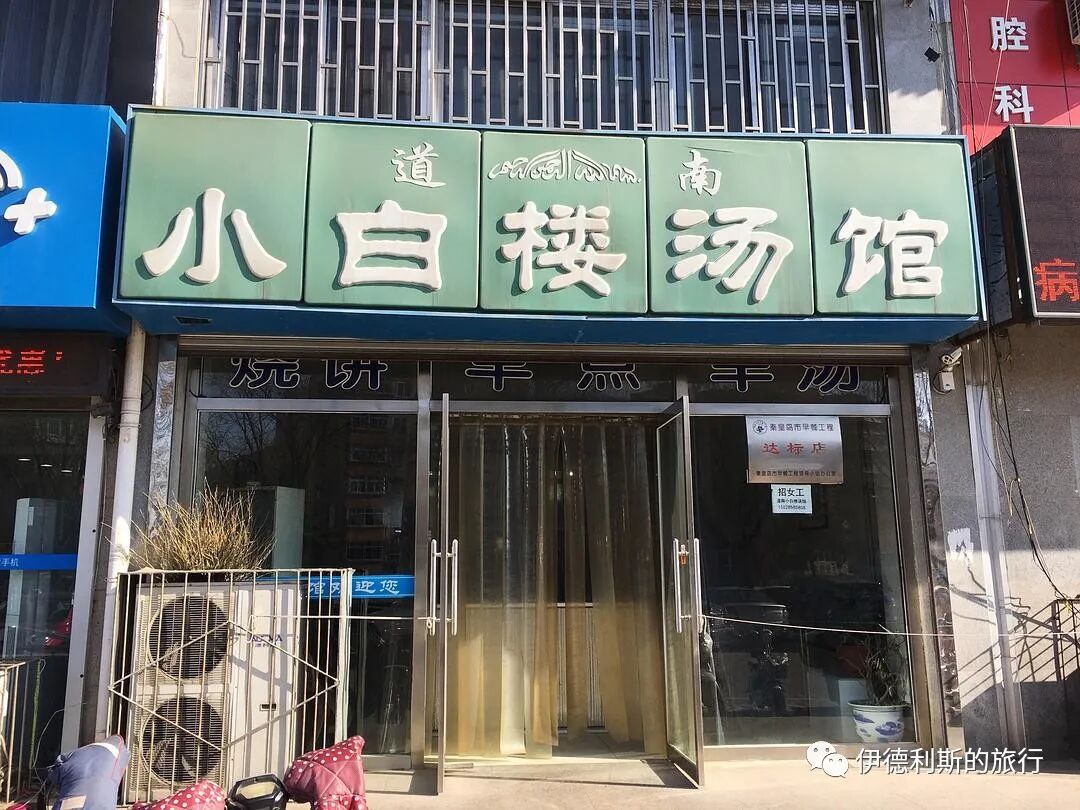
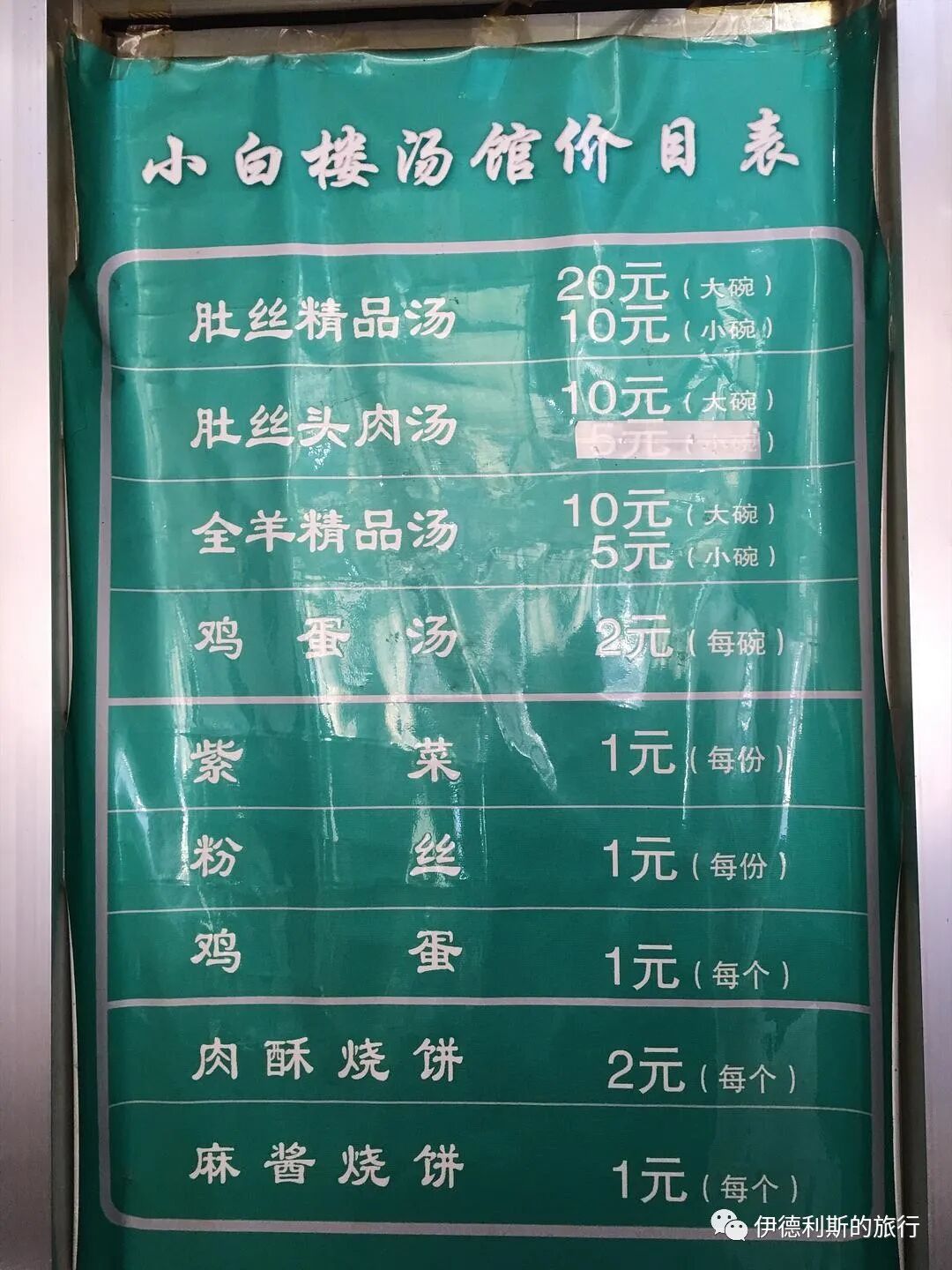
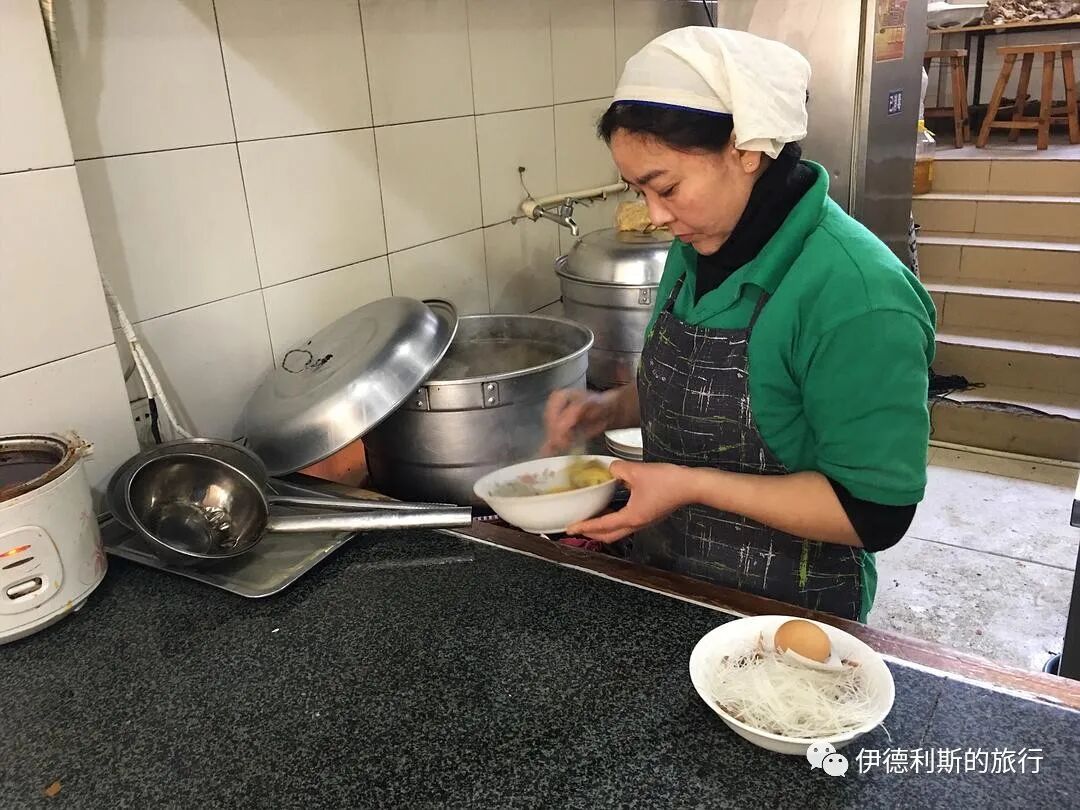
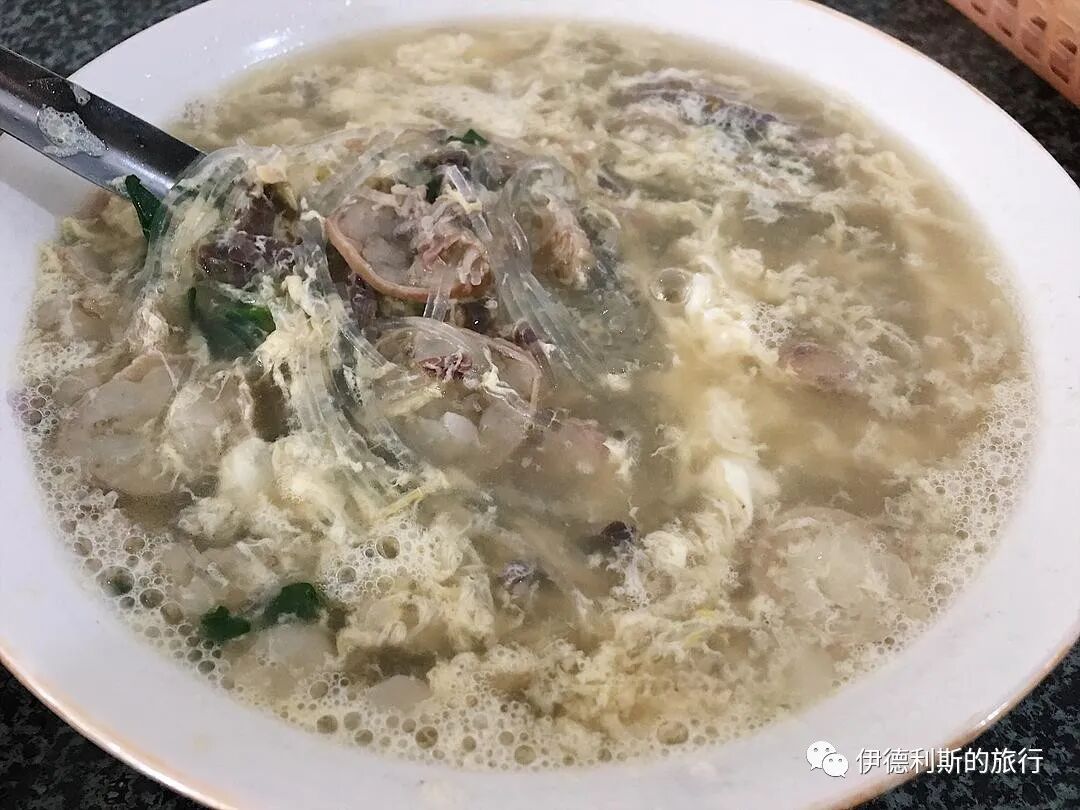
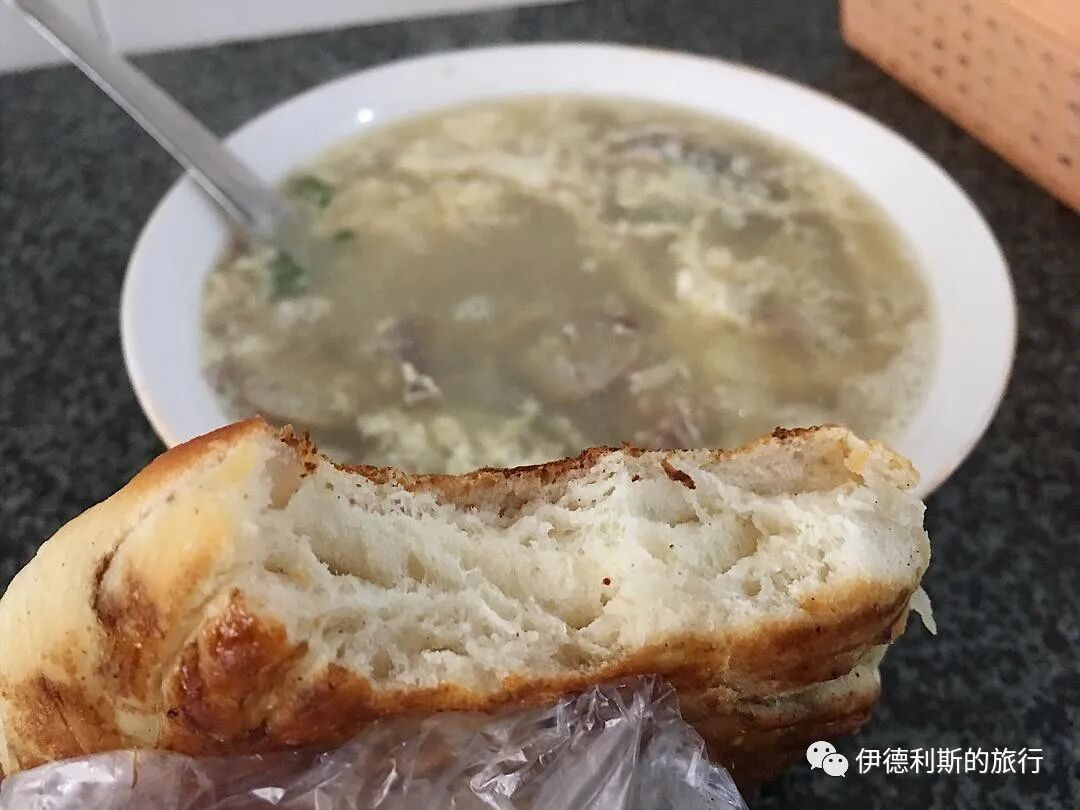
This was the first time I had seen the iron stands used for holding clay pots at home being used in a restaurant.
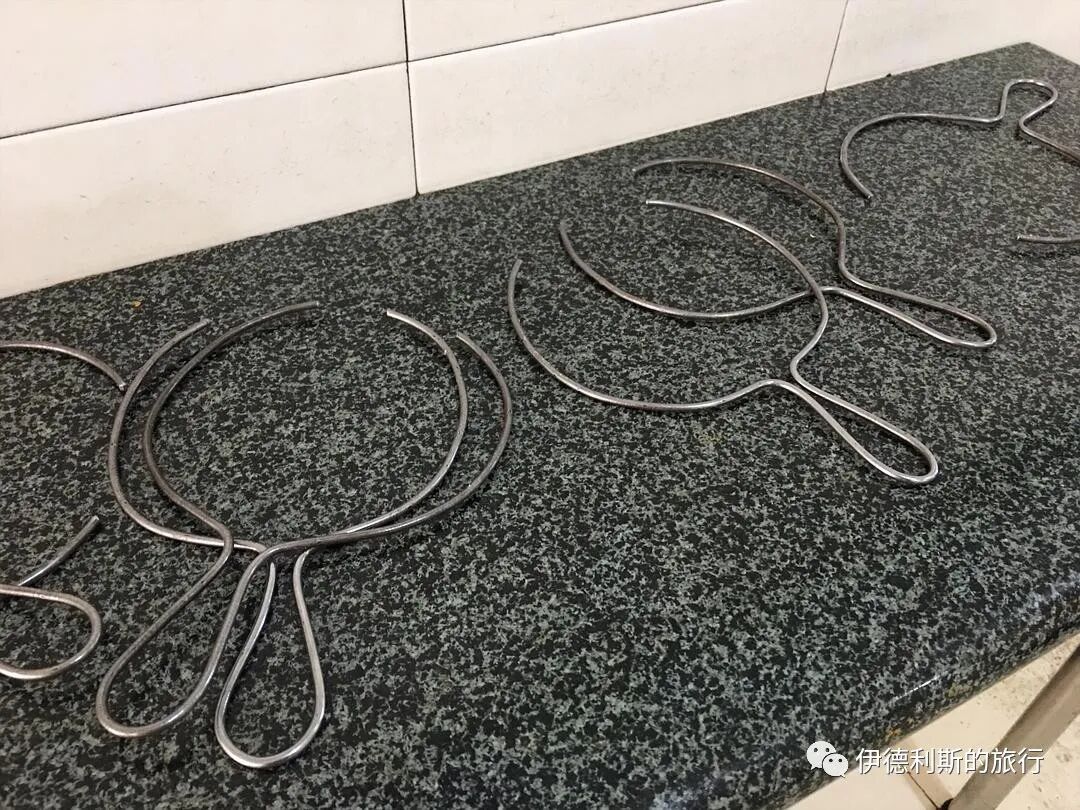
Huiji Halal Pastries
Huiji Pastries is a famous old halal brand in Qinhuangdao. The Qinhuangdao Daily featured a detailed report on Huiji Pastries in an article titled 'The Fragrance of Time in the Ancient City Alleys'.
Huiji Pastries was founded in 1945 by Hui Shulin. At that time, Hui Shulin lived on East Fifth Street in the Shanhaiguan city center. He would make pastries at home and then push a wheelbarrow to sell them at the South Gate barbican. Later, the family moved to the area between South Street Third and Fourth Alley and officially hung up a cloth sign that read 'Huiji Halal Pastry Shop'. After the public-private partnership in 1958, Hui Shulin's son, Hui Changzhong, worked at the Gulou Halal Pastry Shop for several more years.
In 1979, Hui Changzhong started a pastry processing unit in the courtyard of his home on Tianxin Alley. He started by making mung bean cakes (lvdougao), and because he had many regular customers, he soon added many more varieties. In 1983, Huiji opened a storefront, which was taken over by Hui Changzhong's son, the third-generation successor Hui Junliang. In 1999, Hui Junliang's son, the fourth-generation successor Hui Wei, officially took over.
Huiji mainly sells various traditional Beijing-style pastries. They sell assorted sweet rice balls (shijin yuanxiao) in the first lunar month, flower cakes (xianhuabing) in early spring, sticky rice dumplings (zongzi) in May, mung bean cakes in midsummer, mooncakes (yuebing) in August, fried dough twists (liaohua), sugar-coated fried dough twists (binghua), and fried flour cakes (saqima) after winter begins, and then start selling New Year goods after the twelfth lunar month.
Liaohua is also called 'liaohua' or 'liaohua' (using different characters). This name is used in Shaanxi, Henan, Hebei, and Tianjin. In other regions, it is called 'dajingzao', and the version sprinkled with white sugar is also called binghua.
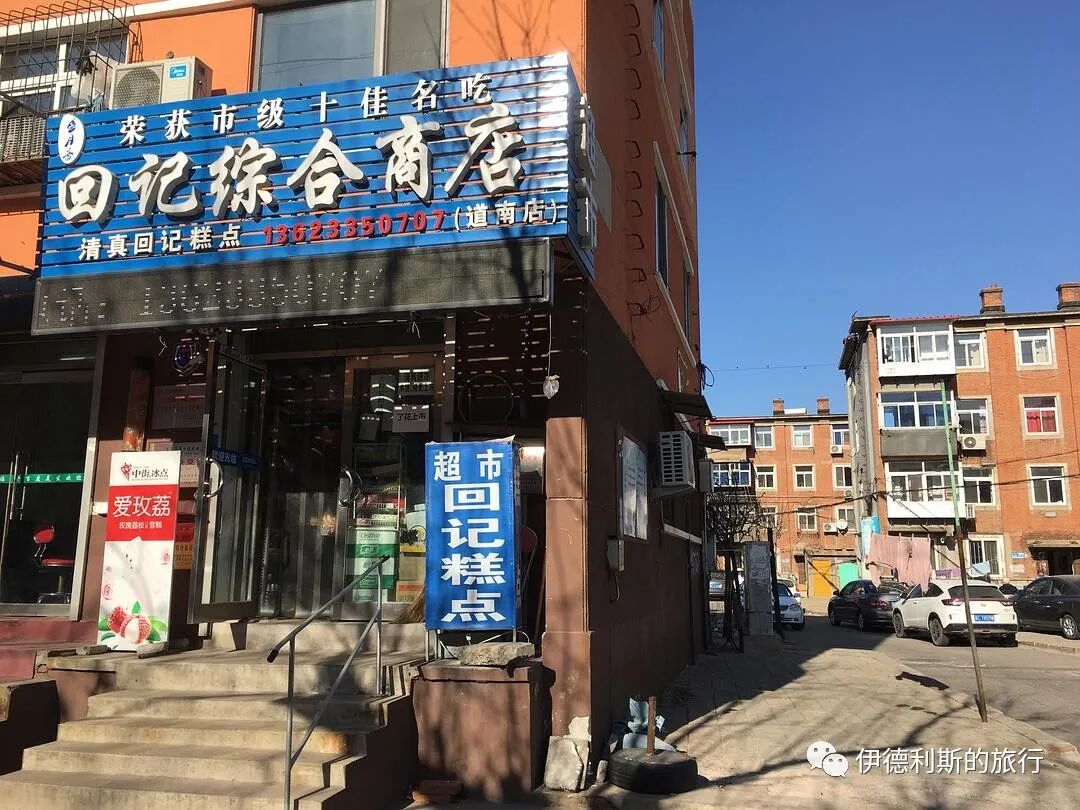
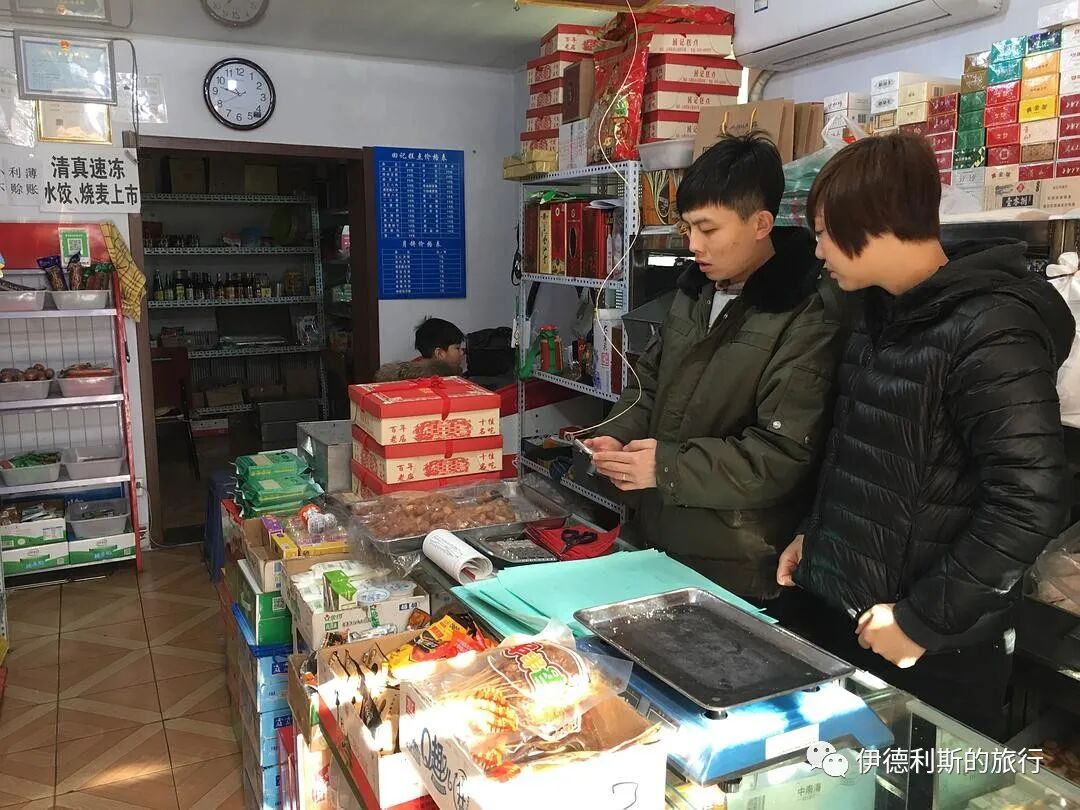
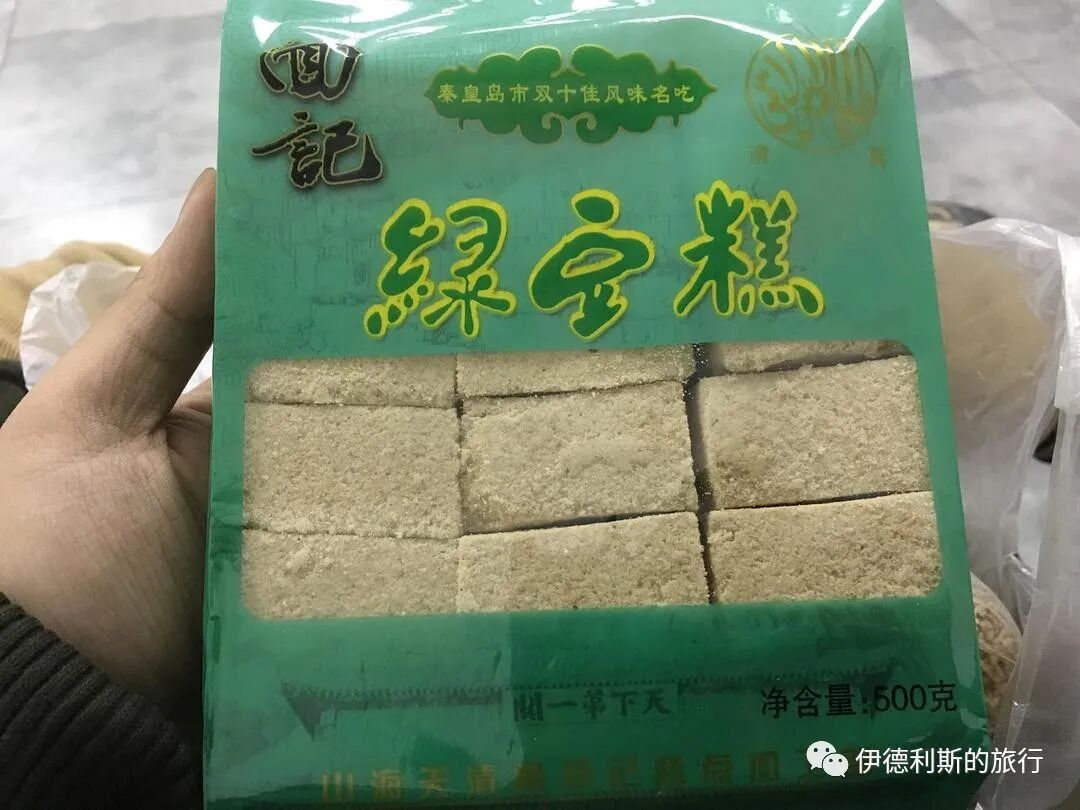
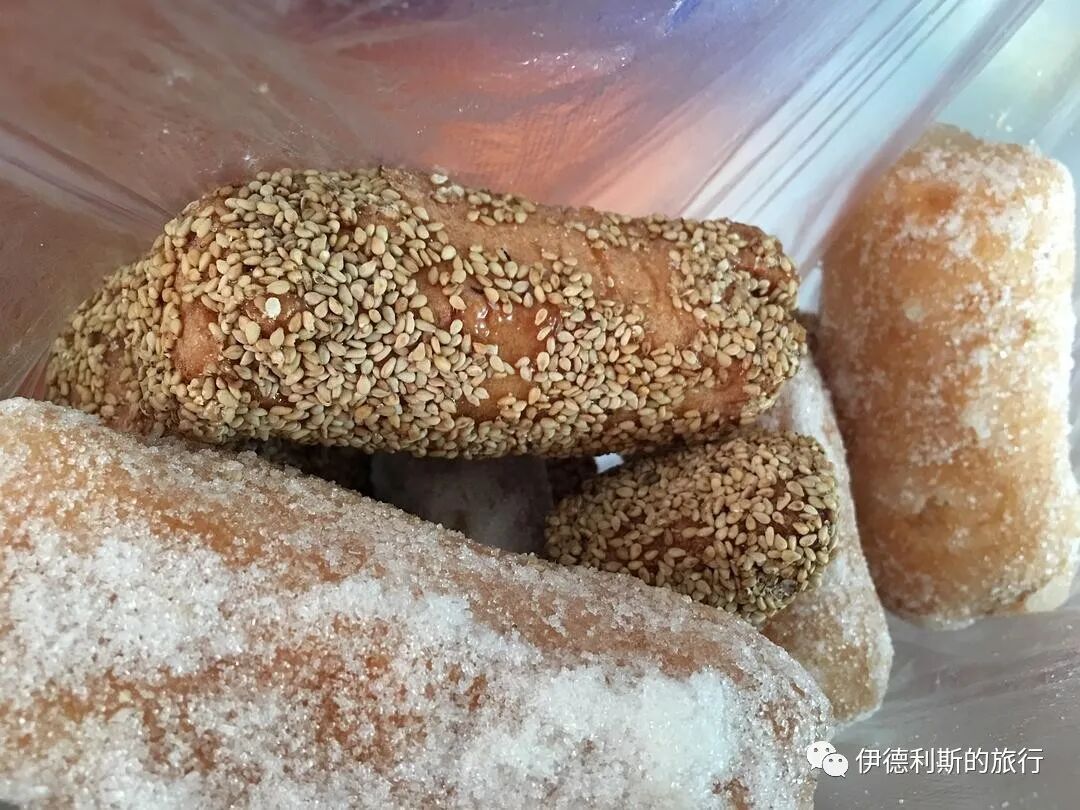
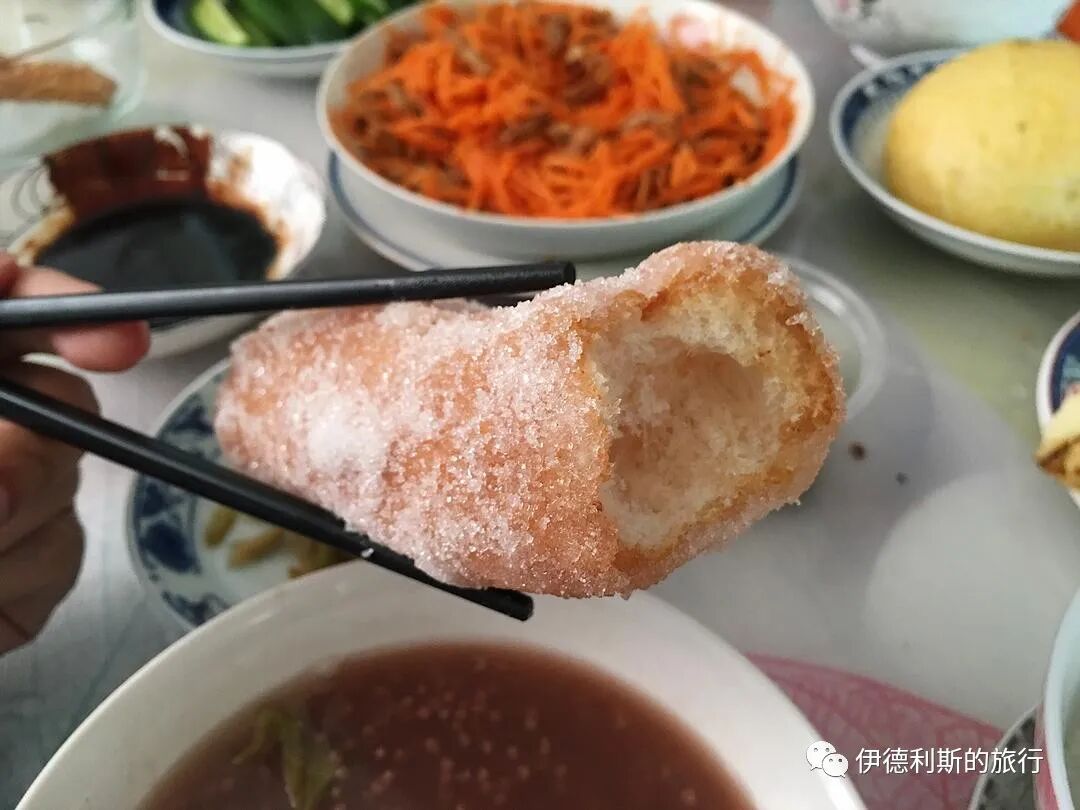
Yingxinyuan Restaurant
Yingxinyuan Restaurant is just south of the mosque on Guancheng West Road. An elder at the mosque recommended it to me, saying that when guests visit the mosque, they are always hosted here. I arrived after 3:00 p.m., so the cook made my meal and then took a break. They didn't start their afternoon shift until 4:30 p.m. The owner said that after 2:00 p.m., there might not be anyone around, so I was quite lucky.
Knowing that portions get bigger the further northeast you go, I ordered one steamer of beef and cabbage steamed dumplings (shaomai) and a plate of sweet and sour pork tenderloin (tangcu liji), but I still couldn't finish it all. The taste was excellent, though! The even larger Qinhuangdao mixed hot pot (hunguo) will have to wait until I can come back with a group of people.
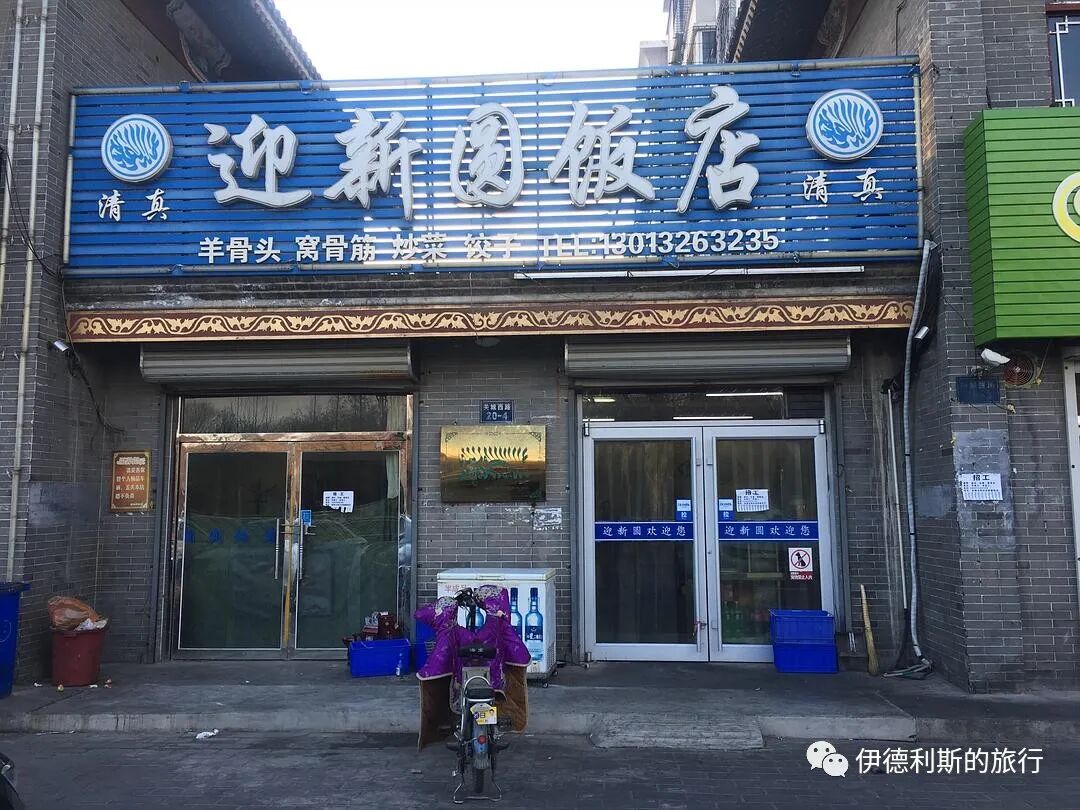
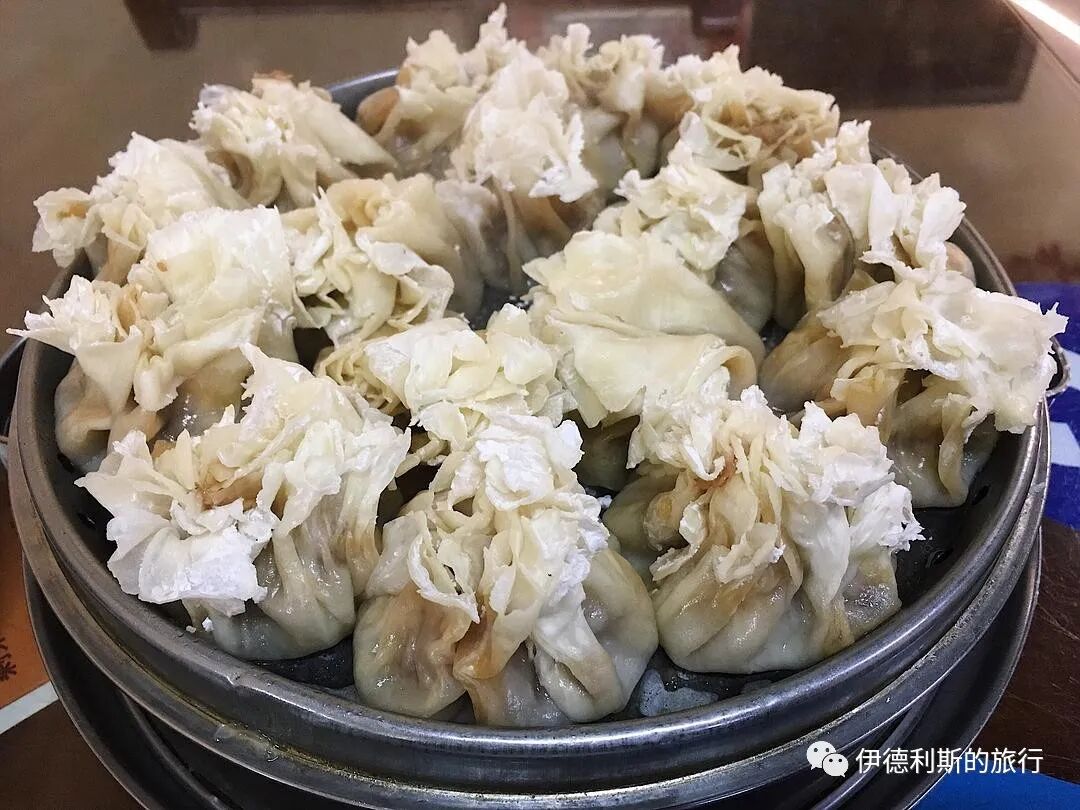
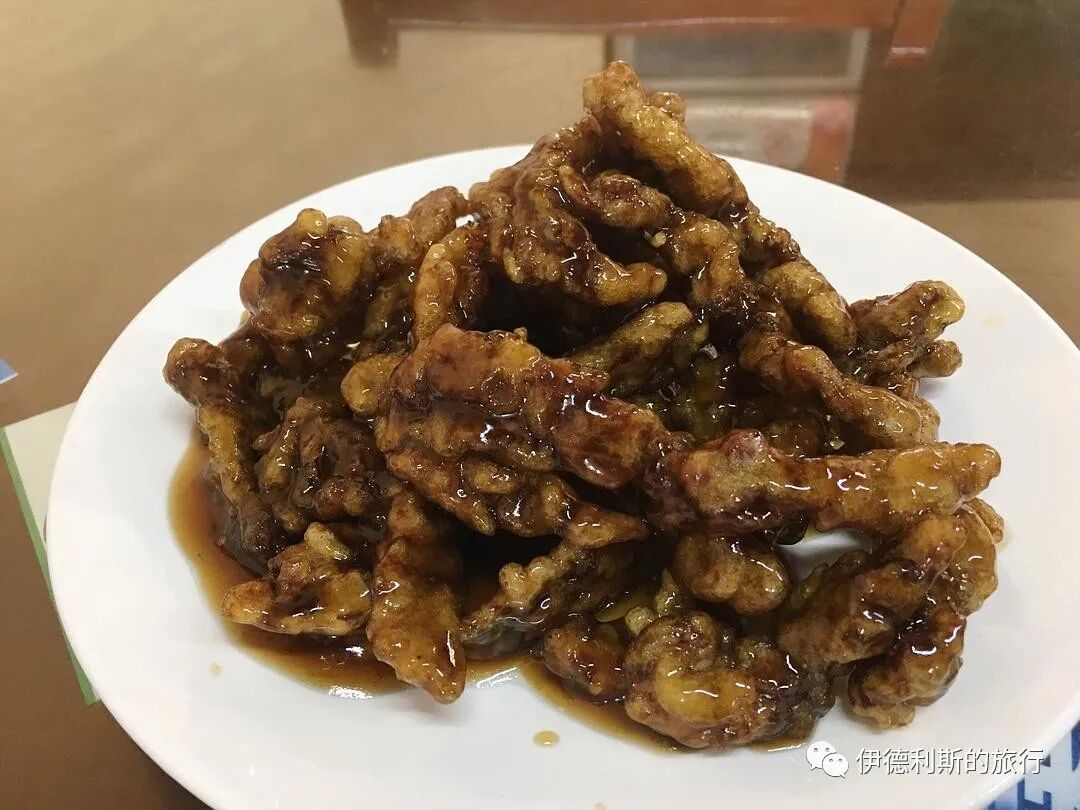
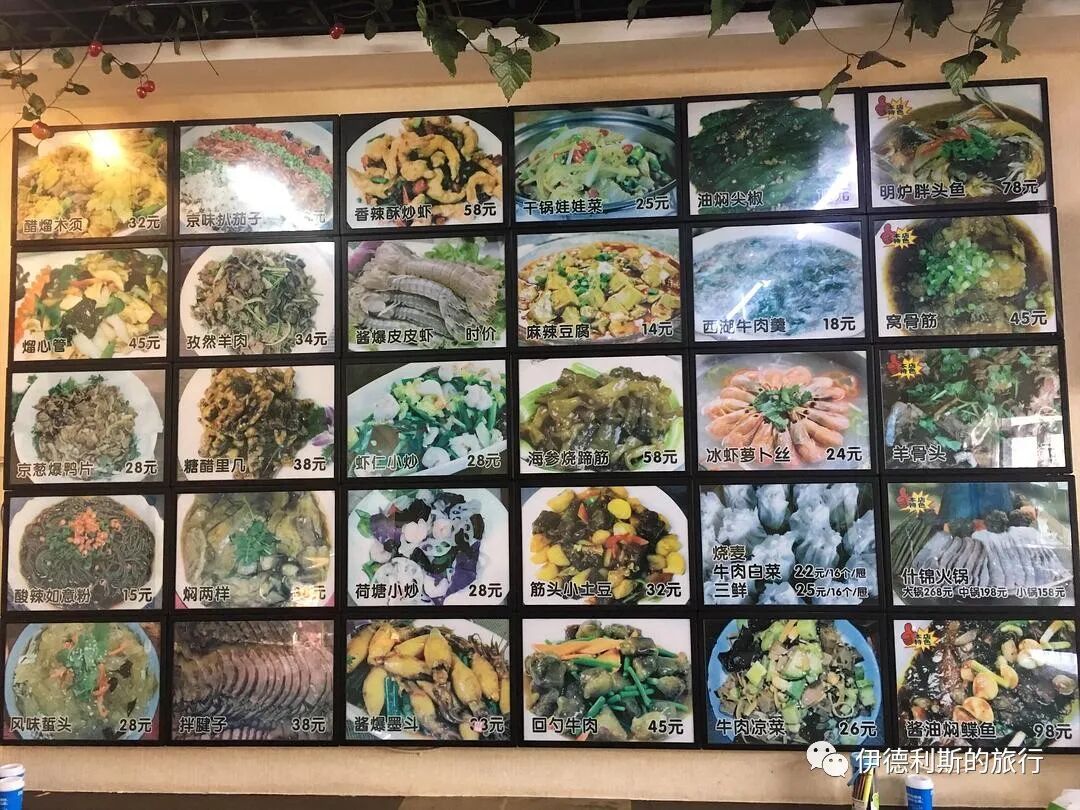
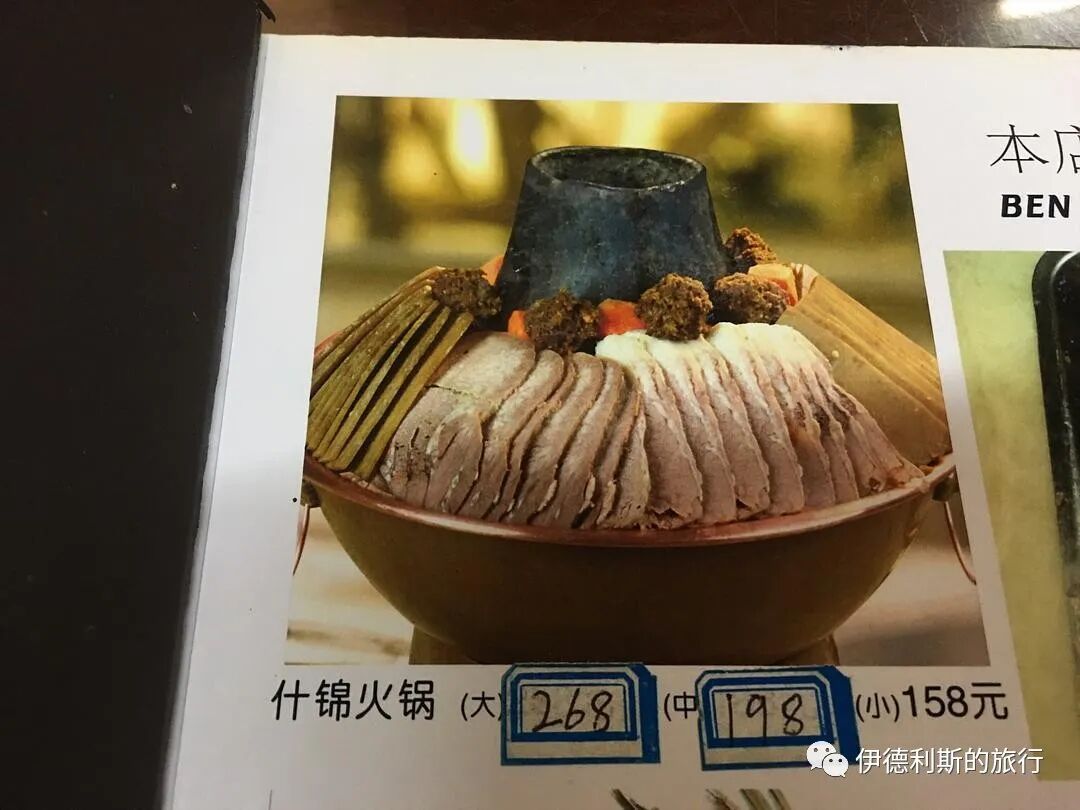
I came back in the summer to eat mantis shrimp (pipixia). They have several styles like spicy stir-fried or sauce-braised, but I chose the lightest option: steamed.
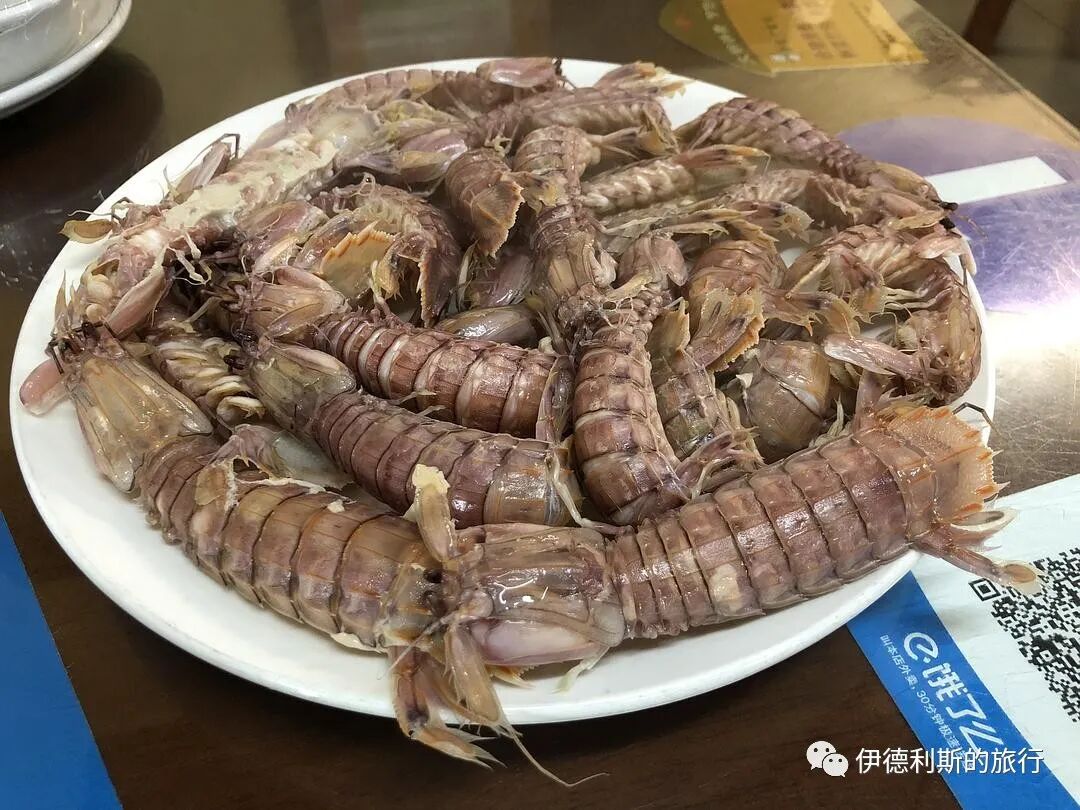
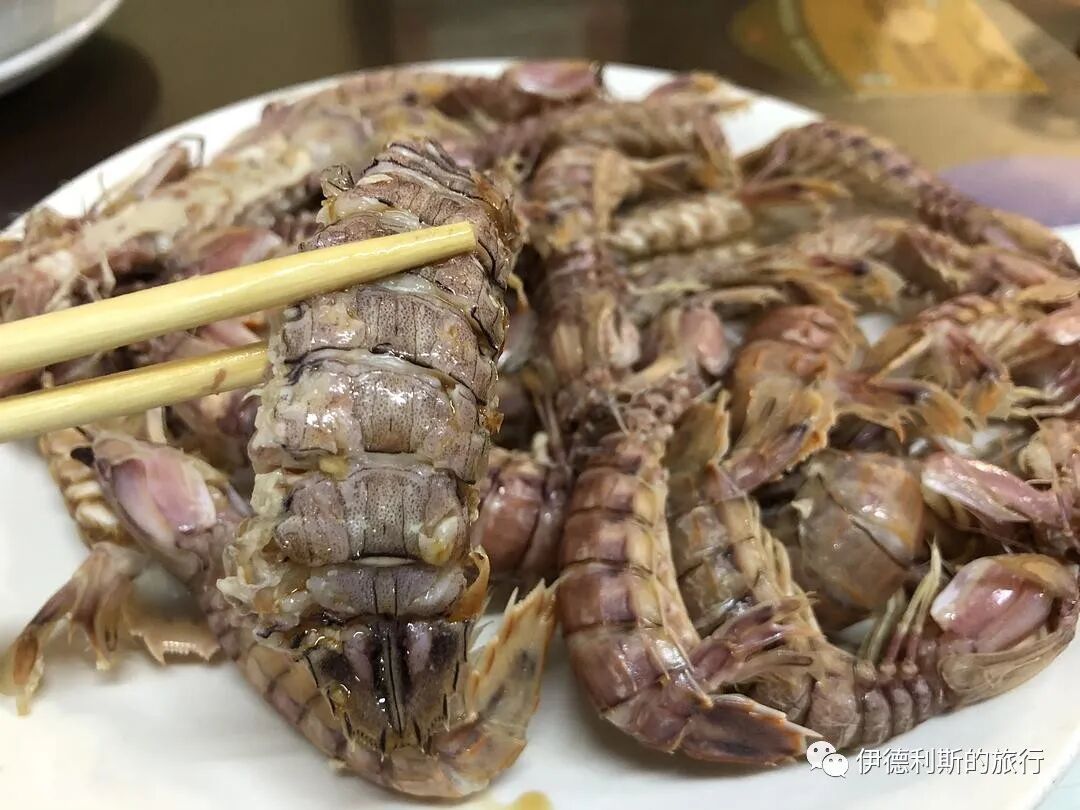
My first time eating the roe of the mantis shrimp.
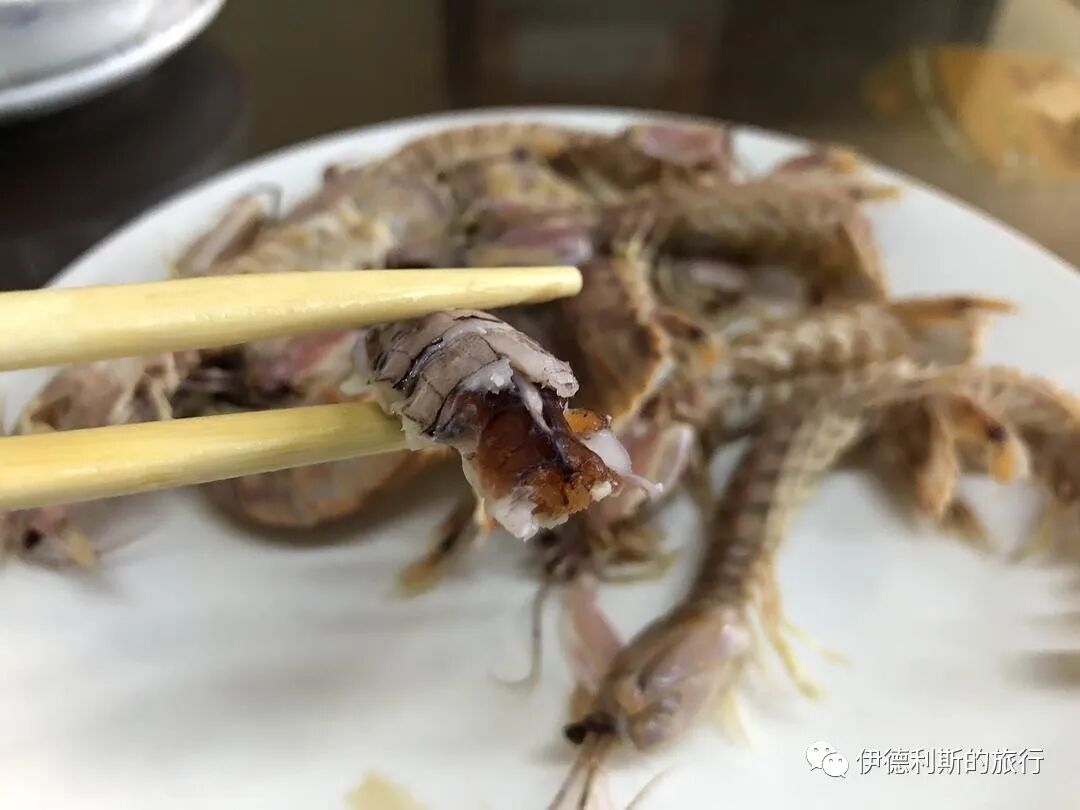
Paired with beef steamed dumplings (zhengjiao), it was also incredibly delicious.
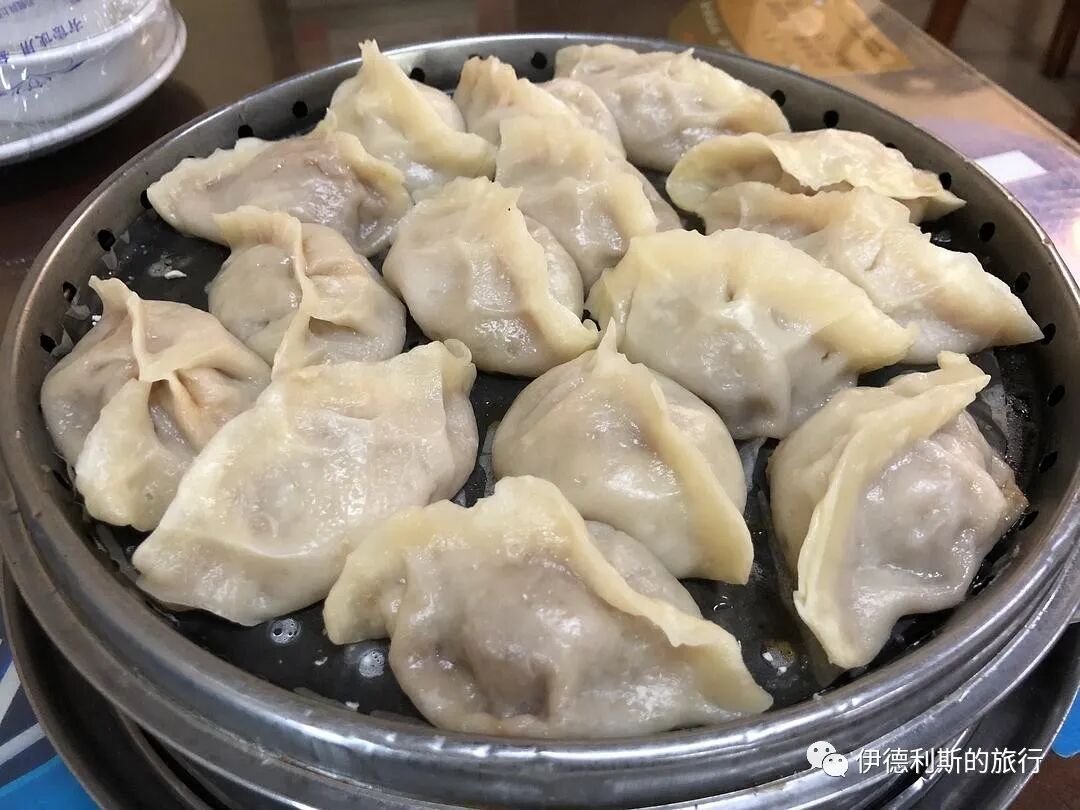
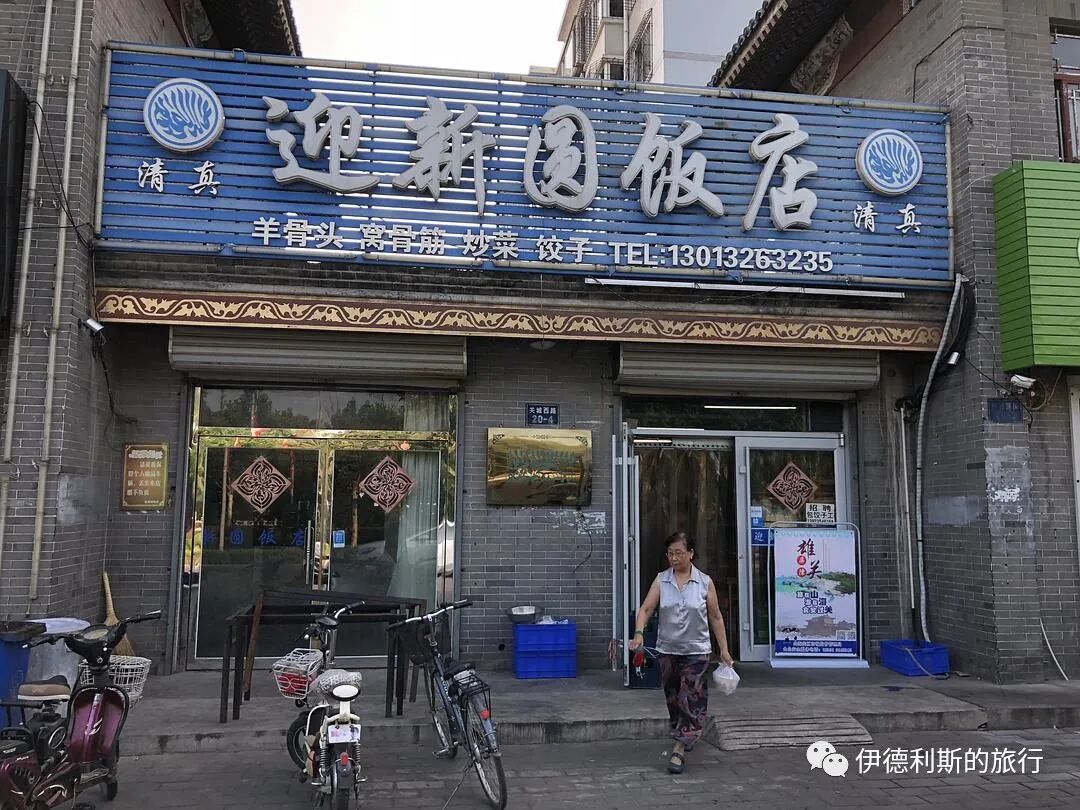
Peanut tofu mash (huasheng xiaodoufu).
Chaiheshi Farmers Market is on the south side of the road inside the West Gate of the Shanhai Pass ancient city. It is rare to see it still standing in a city that is constantly tearing down the old to build the new. This was my first time seeing peanut tofu mash. I looked it up online and it seems to be a specialty of the Qinhuangdao and Jinzhou areas in western Liaoning. Peanuts boiled with Sichuan peppercorns are ground into a paste. You take it home and stew it with cabbage. The rich fragrance of the peanuts mixes with the fresh scent of the cabbage, making it very unique.
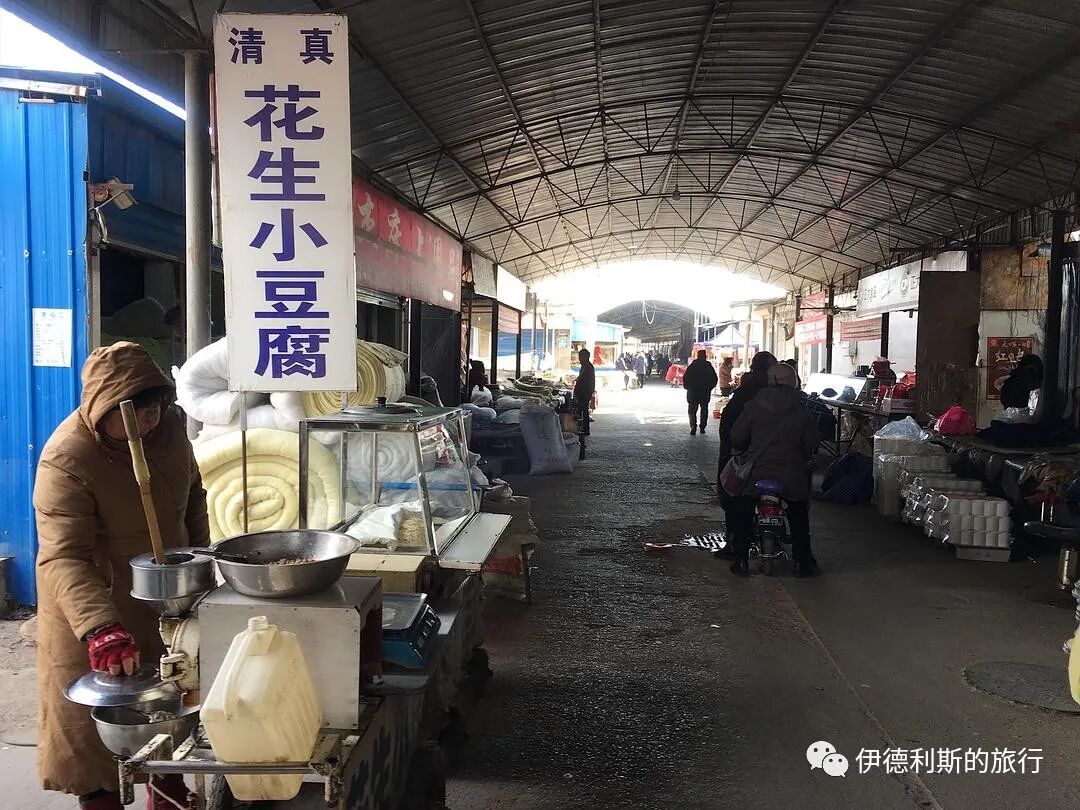
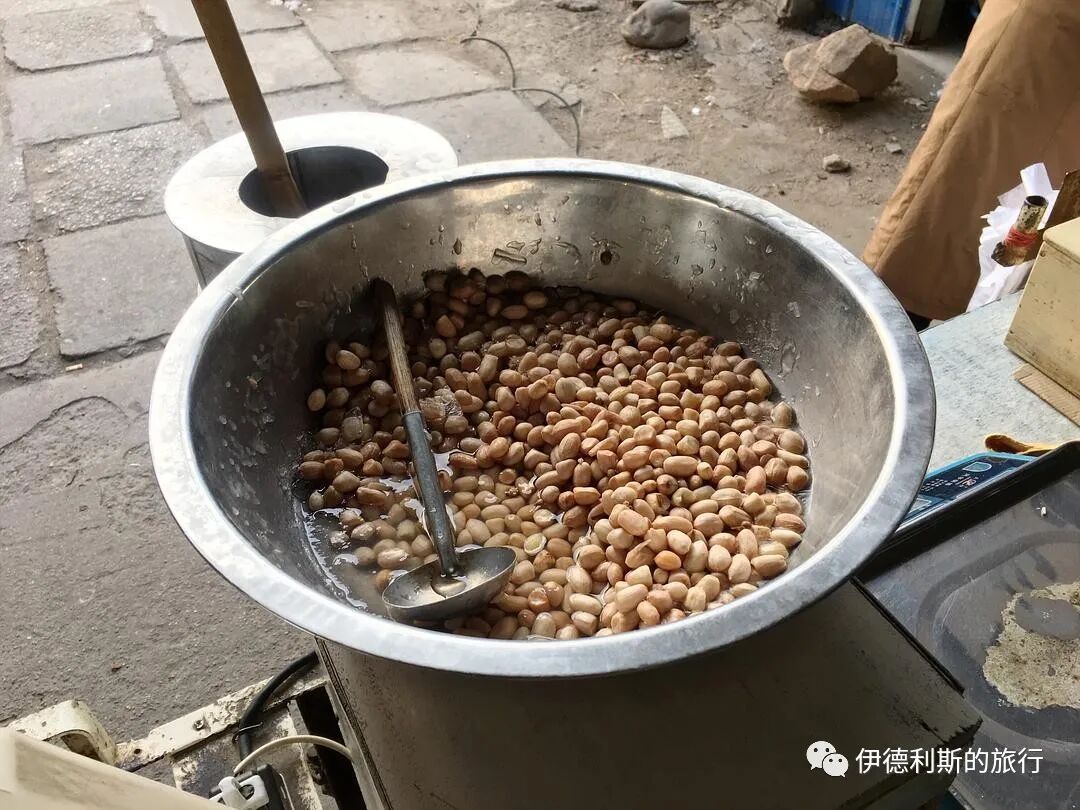
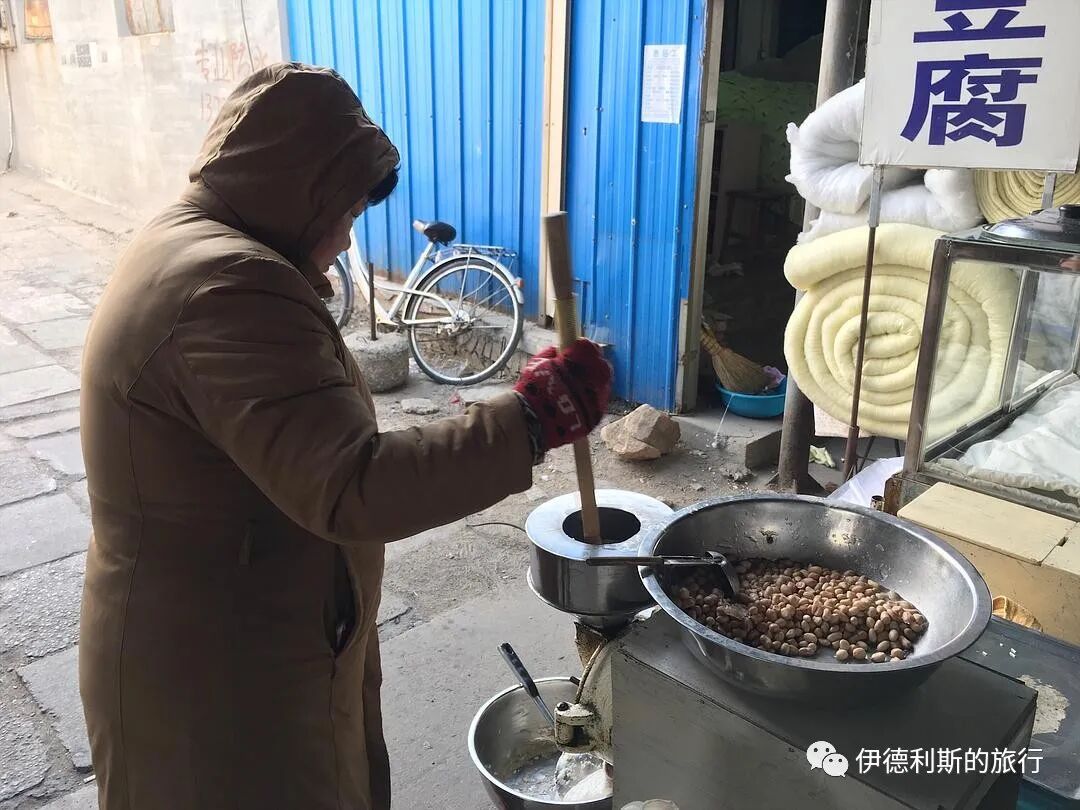
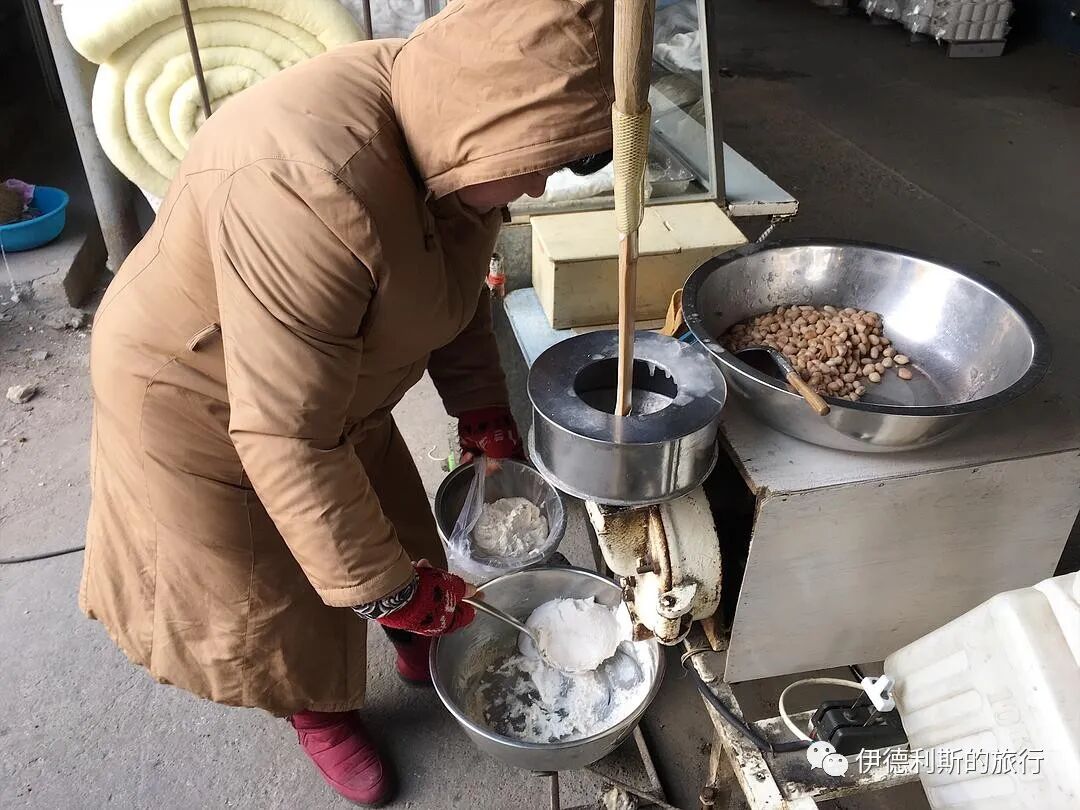
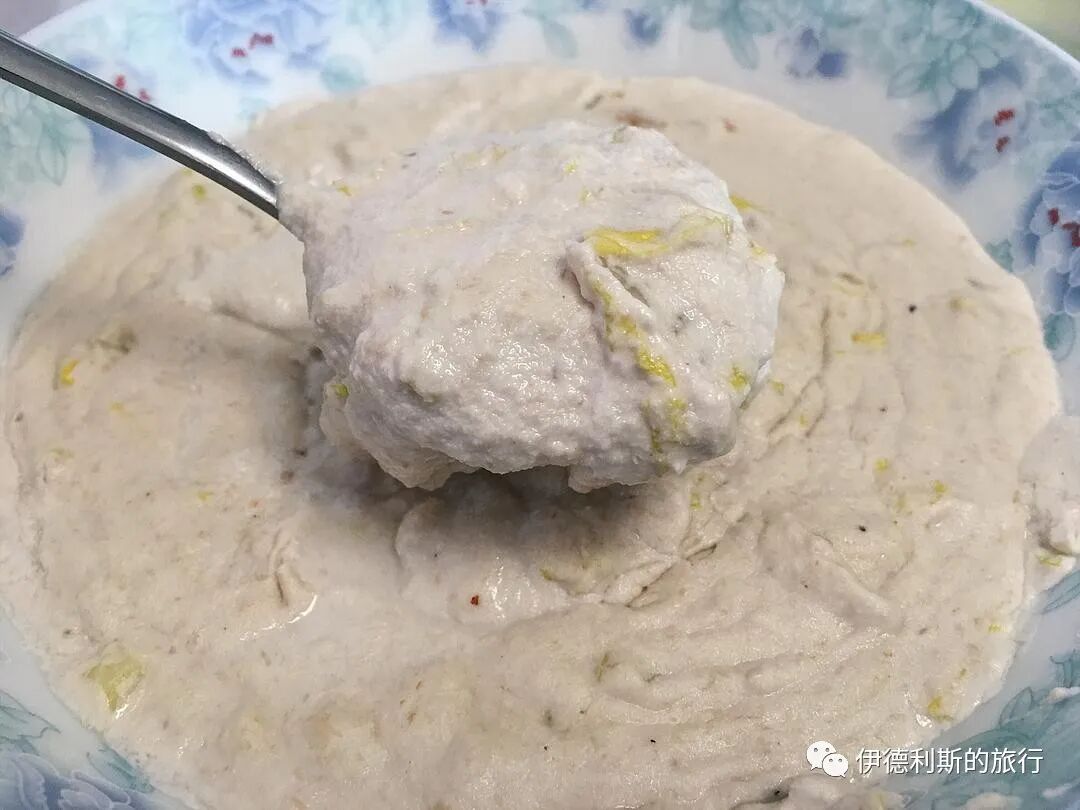
Eight-treasure rice (babao fan) and pan-fried starch jelly (jian menzi) at the night market.
The night market around the South Gate of Shanhai Pass is very lively. You can find all kinds of small seafood barbecues, as well as halal eight-treasure rice and pan-fried starch jelly. I took this photo when I visited in the summer.
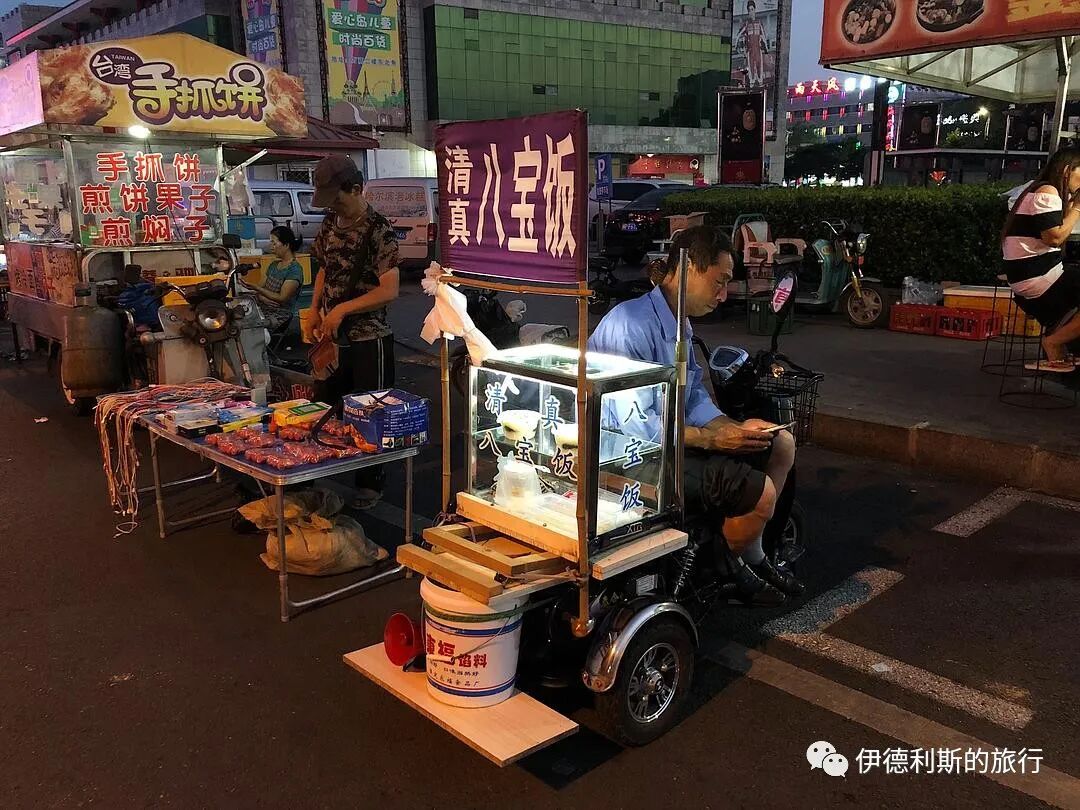
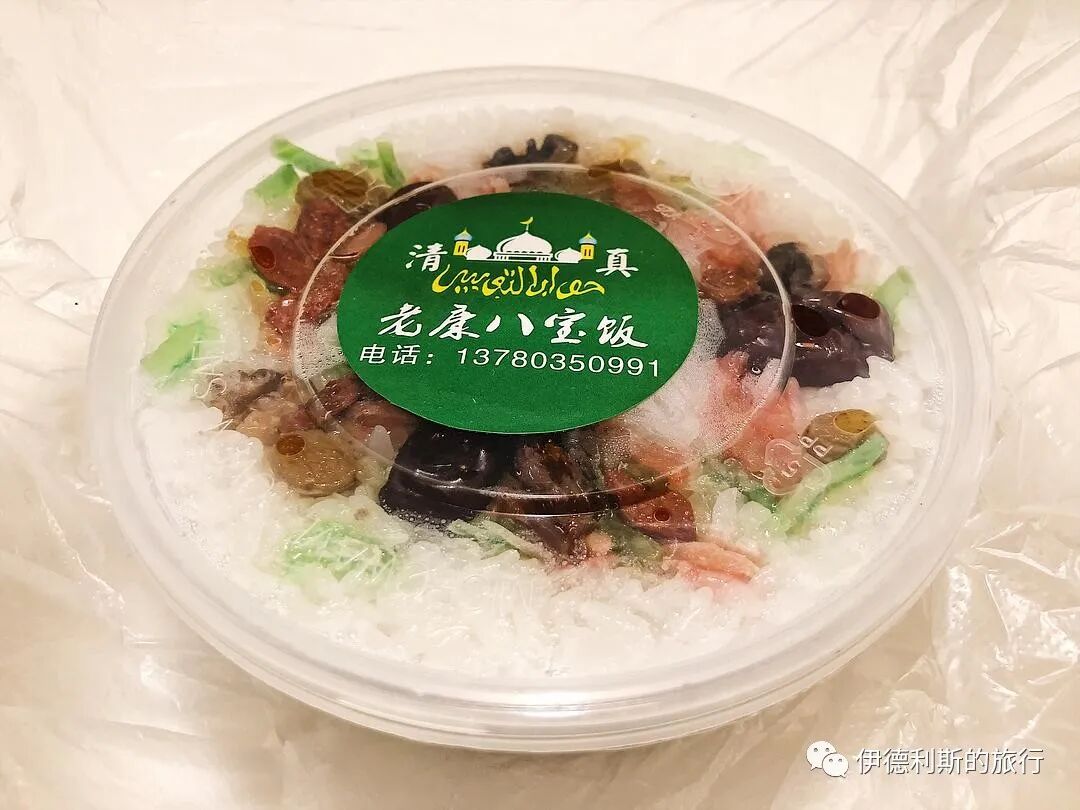
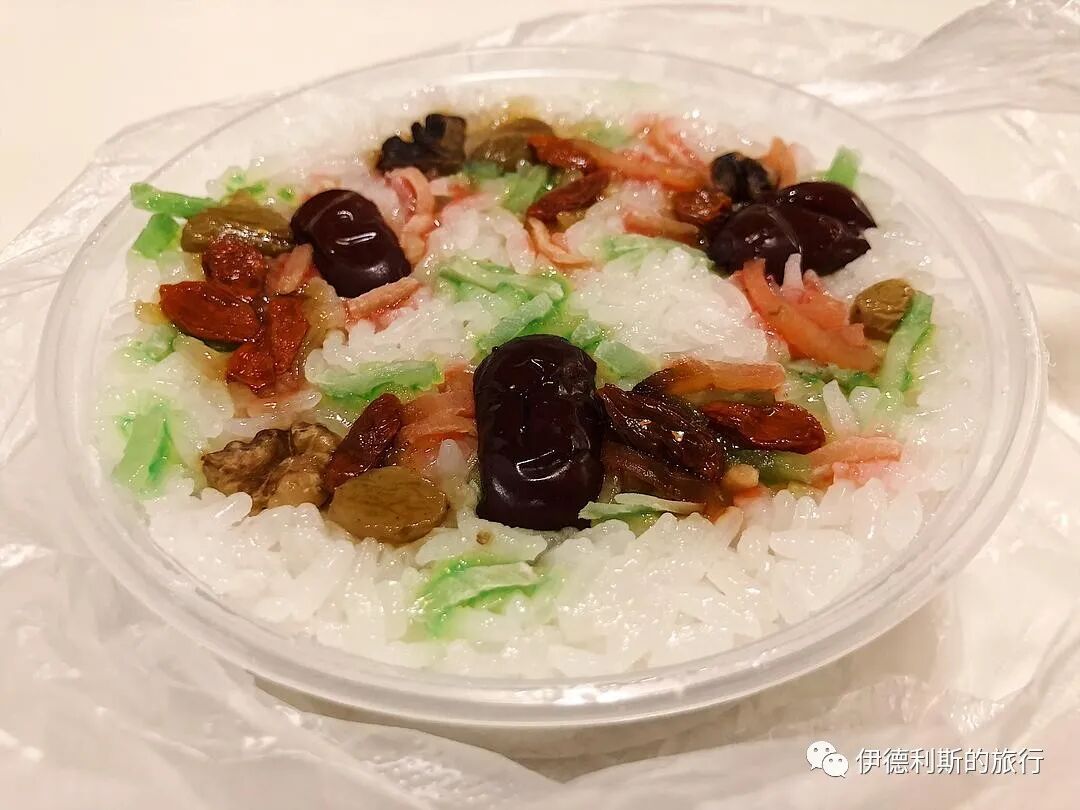
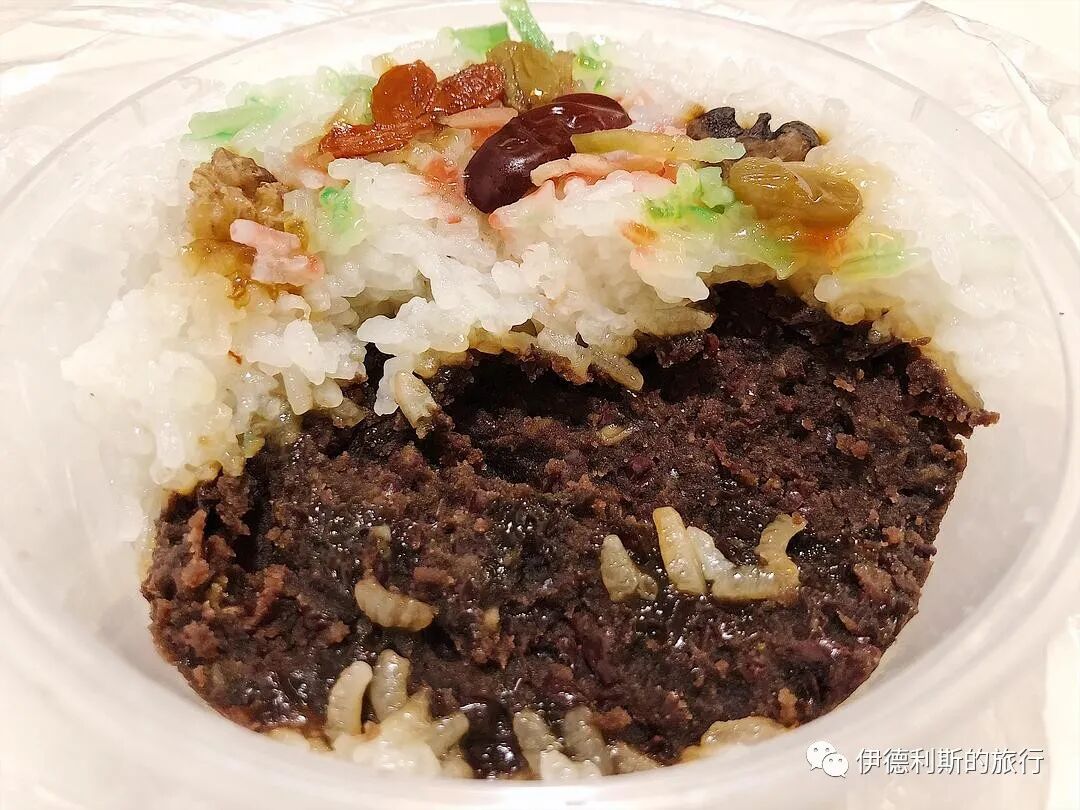
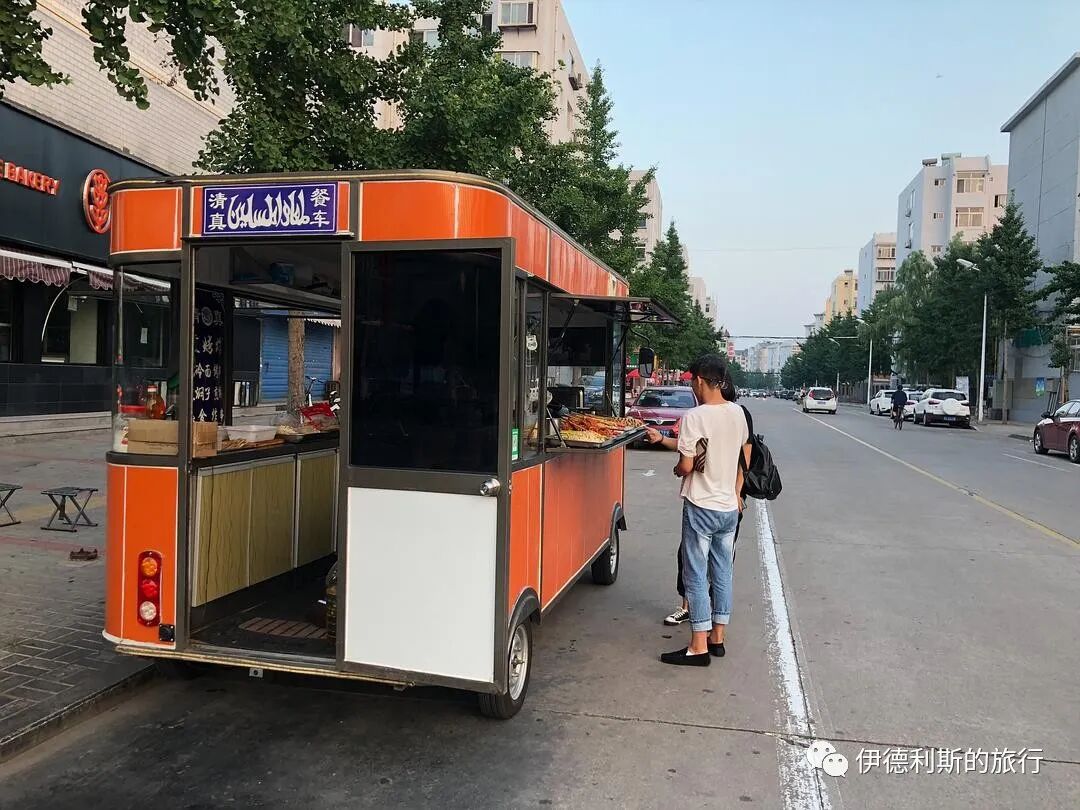
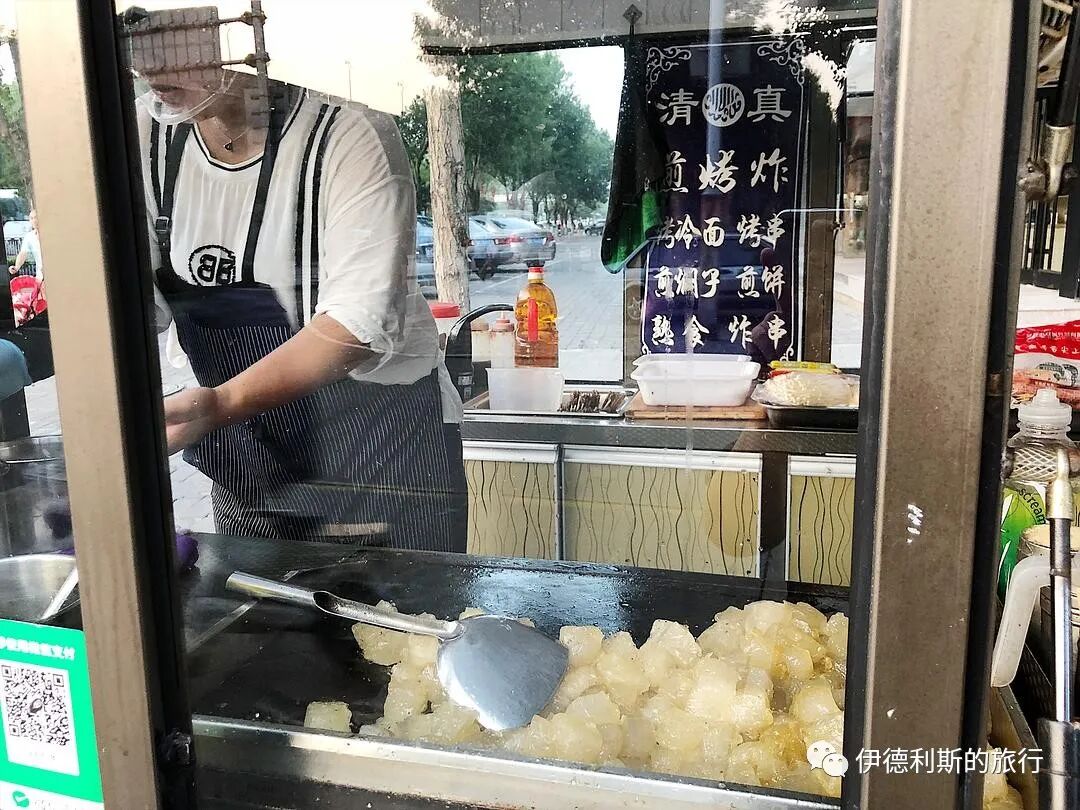
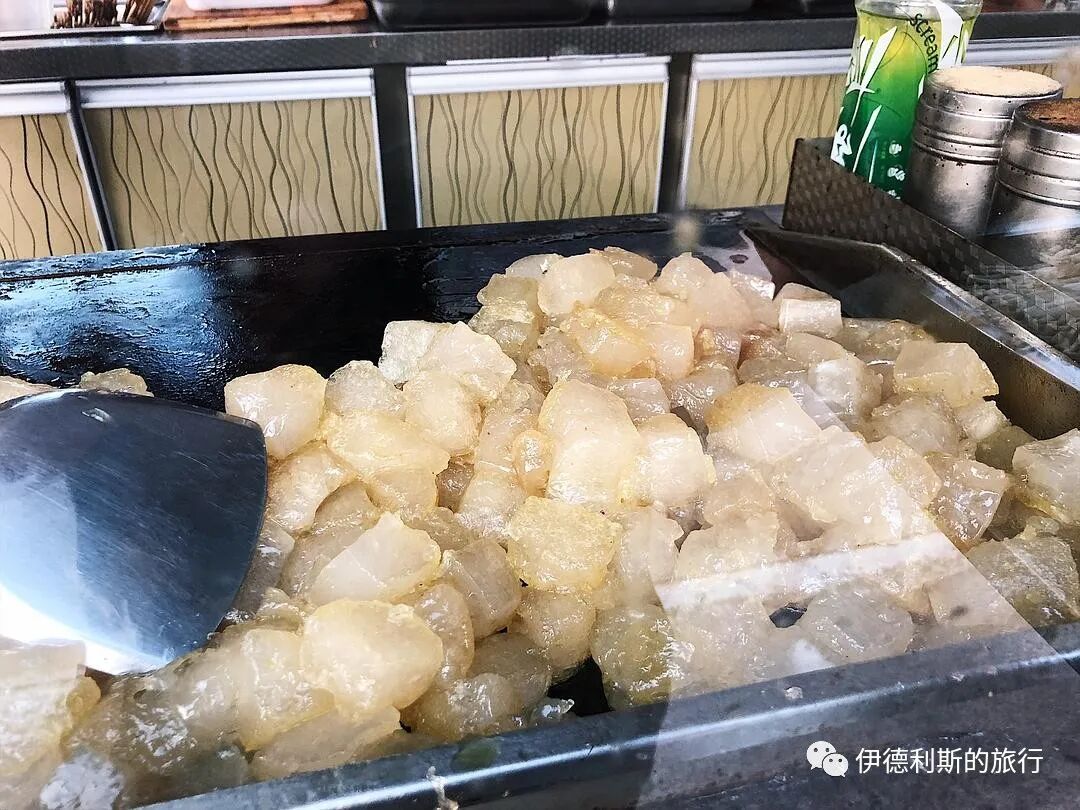
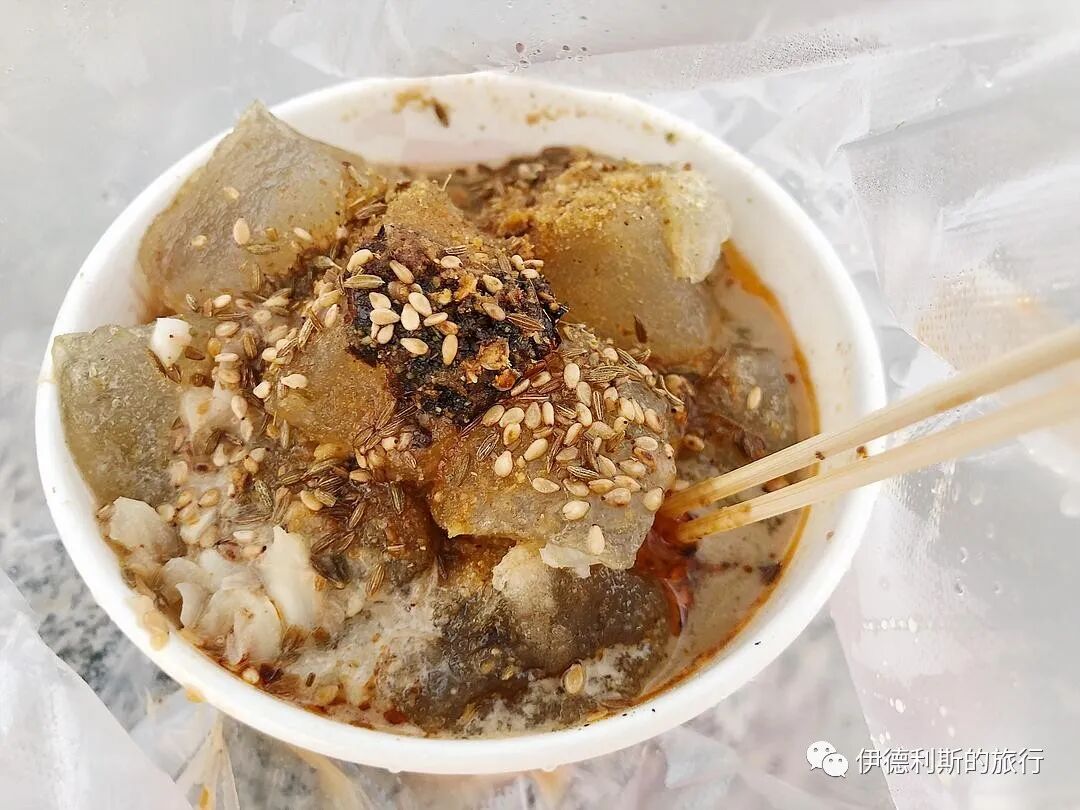
Shanhai Pass old city on a summer evening.
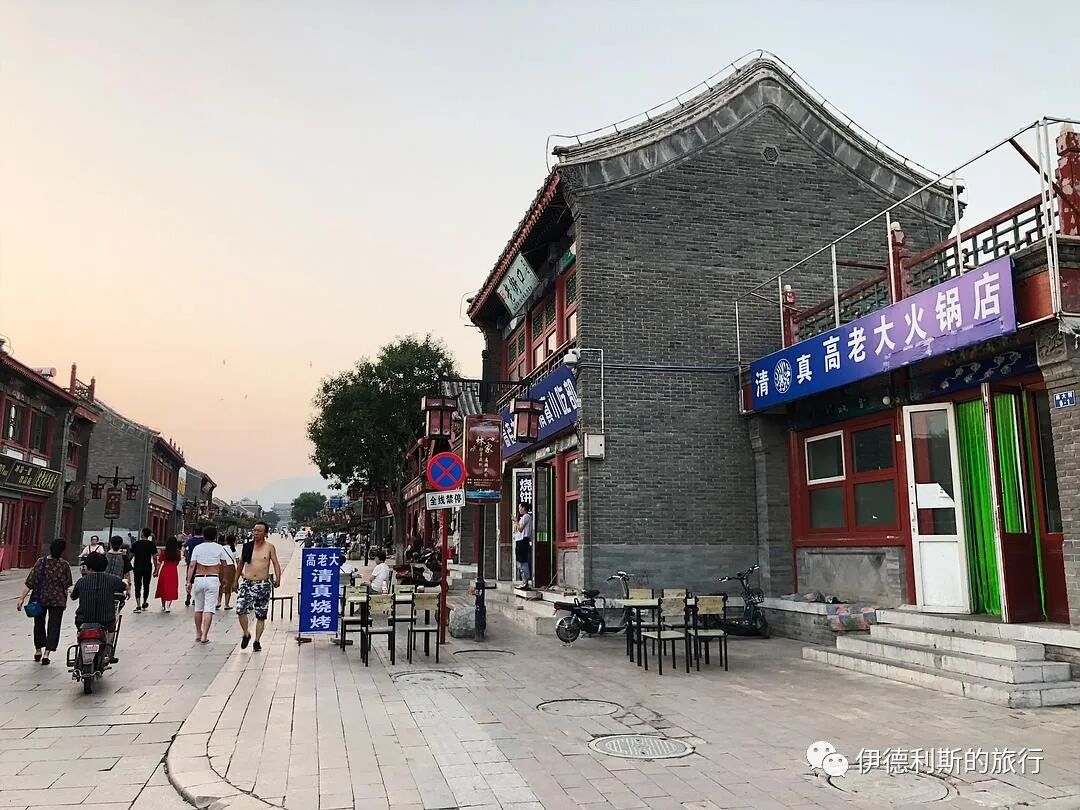
Shanhai Pass Mosque.
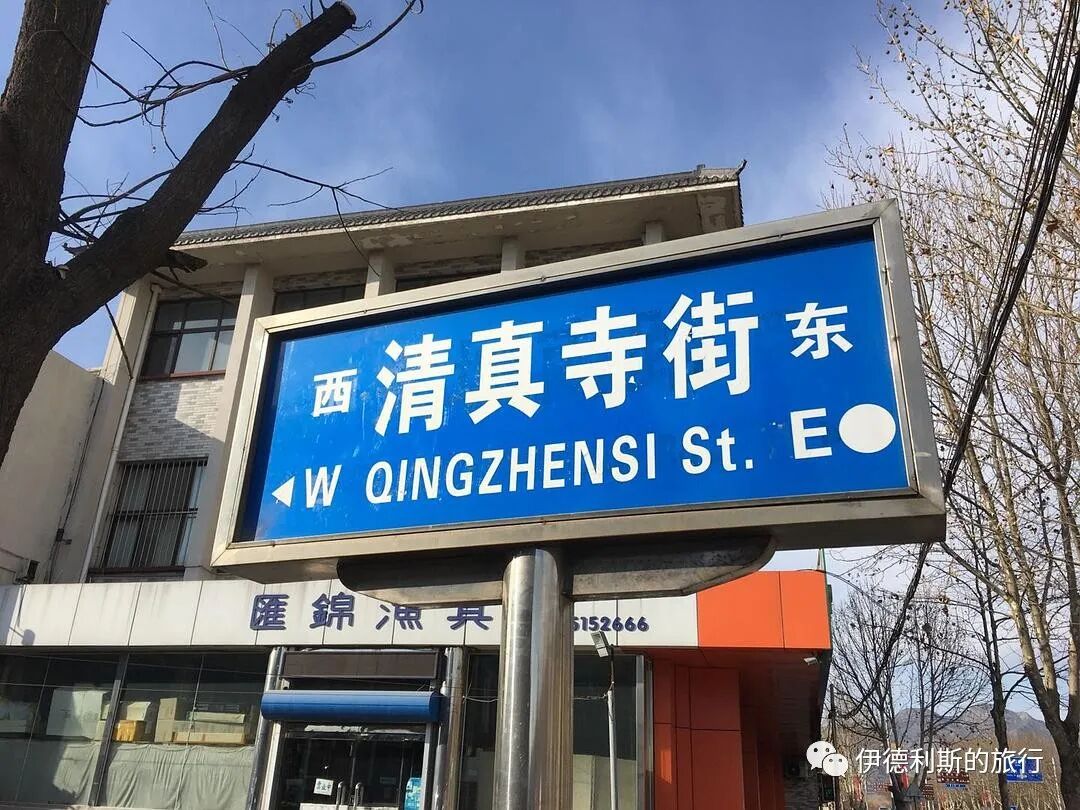
Shanhai Pass Mosque is located outside the West Gate of the Shanhai Pass city. According to the Kangxi-era 'Shanhai Pass Gazetteer,' in the first month of 1381 (the 14th year of the Hongwu reign), 'General Xu Da dispatched 15,100 soldiers from the Yanshan Guard to repair 32 passes, including Yongping and Jieling.' According to the 'Veritable Records of the Ming Taizu,' in the ninth month of the same year, the 'Shanhai Guard Command was established,' which marked the beginning of the founding of Shanhai Pass. The Shanhai Pass Mosque was reportedly built by Muslim soldiers under the command of Xu Da.
During the Cultural Revolution, a shoe factory occupied the mosque. It was returned and renovated in 1986. In 1998, the gatehouse and main prayer hall were torn down and rebuilt, with construction finishing in 2003.
Elder Wu from the mosque gave me a warm tour and explanation. Elder Wu is 60 years old and the only person with the surname Wu among the Hui Muslims in Shanhai Pass. His great-grandfather arrived here in the late 19th century.
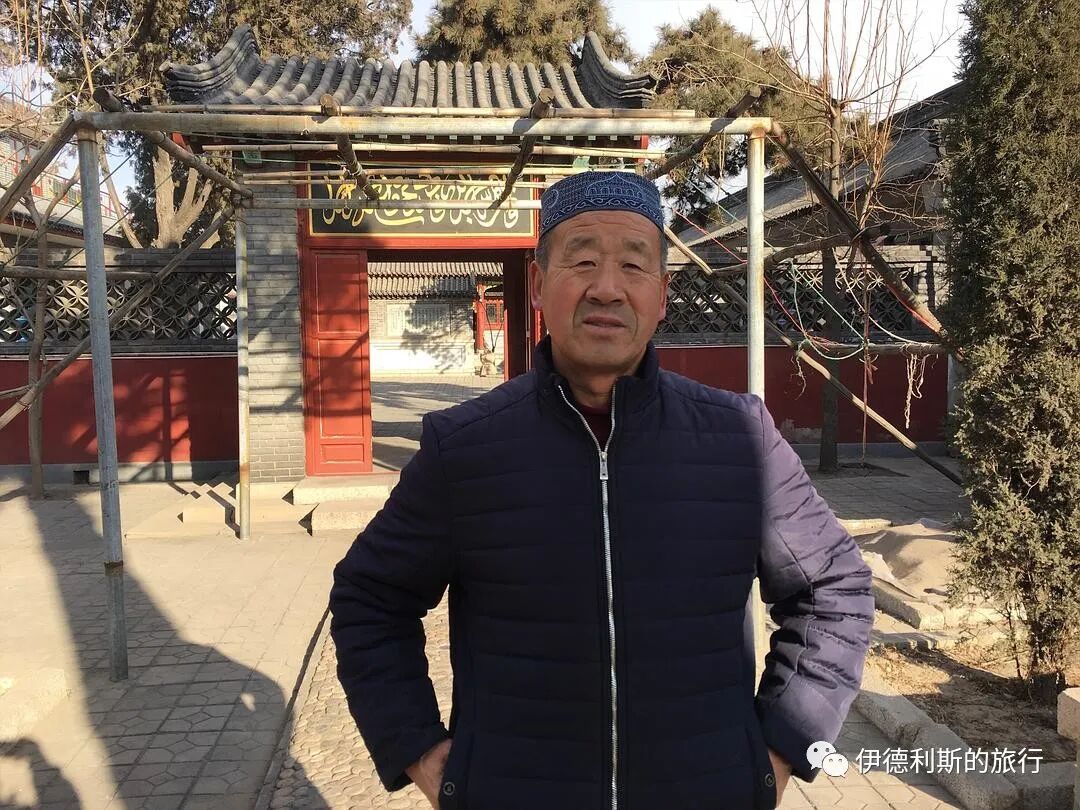
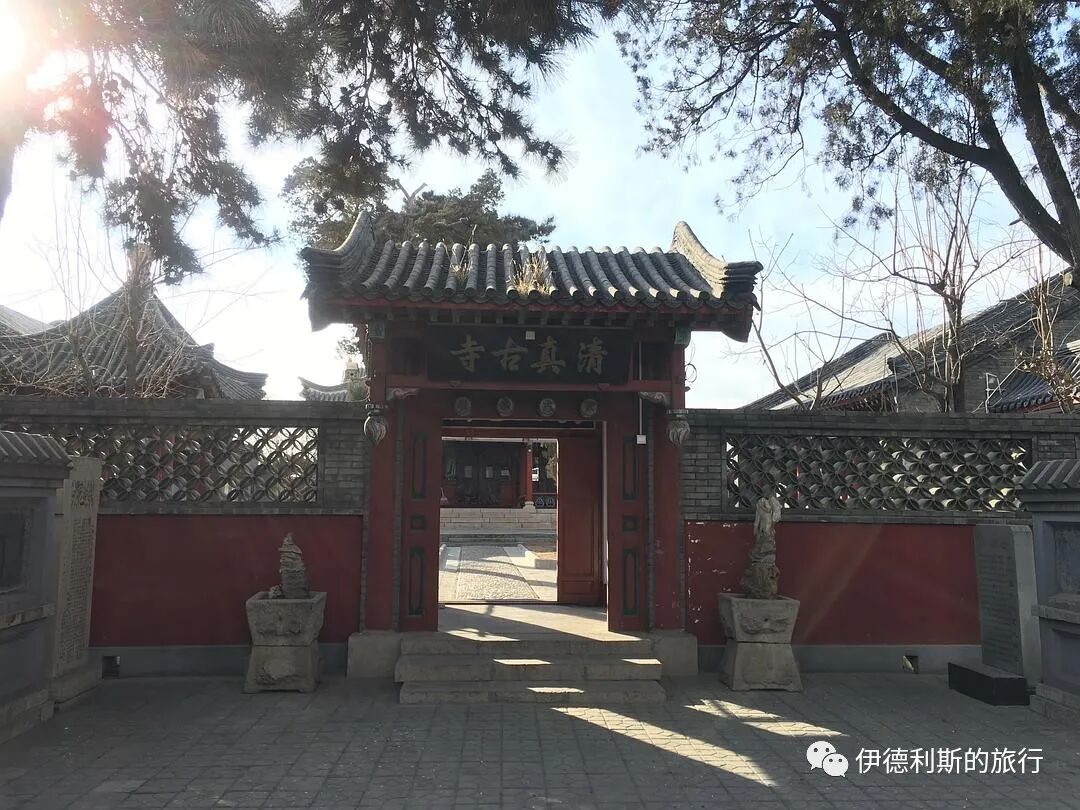
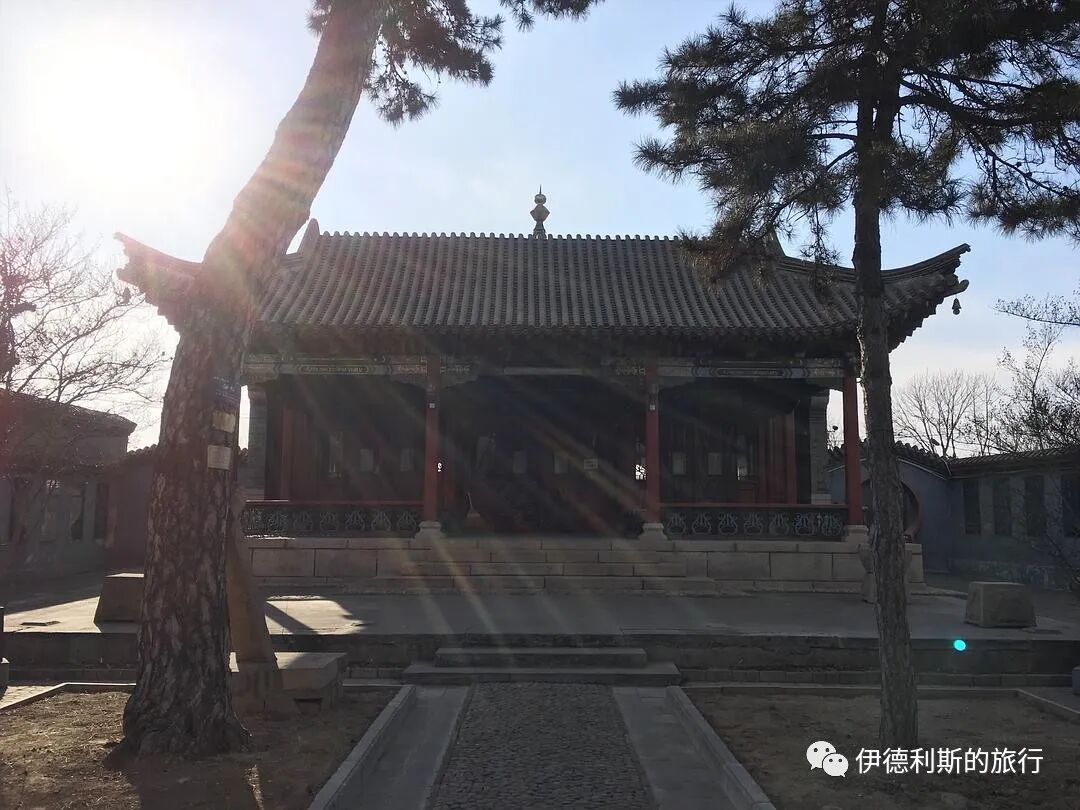
An ancient tree with 600 years of history.
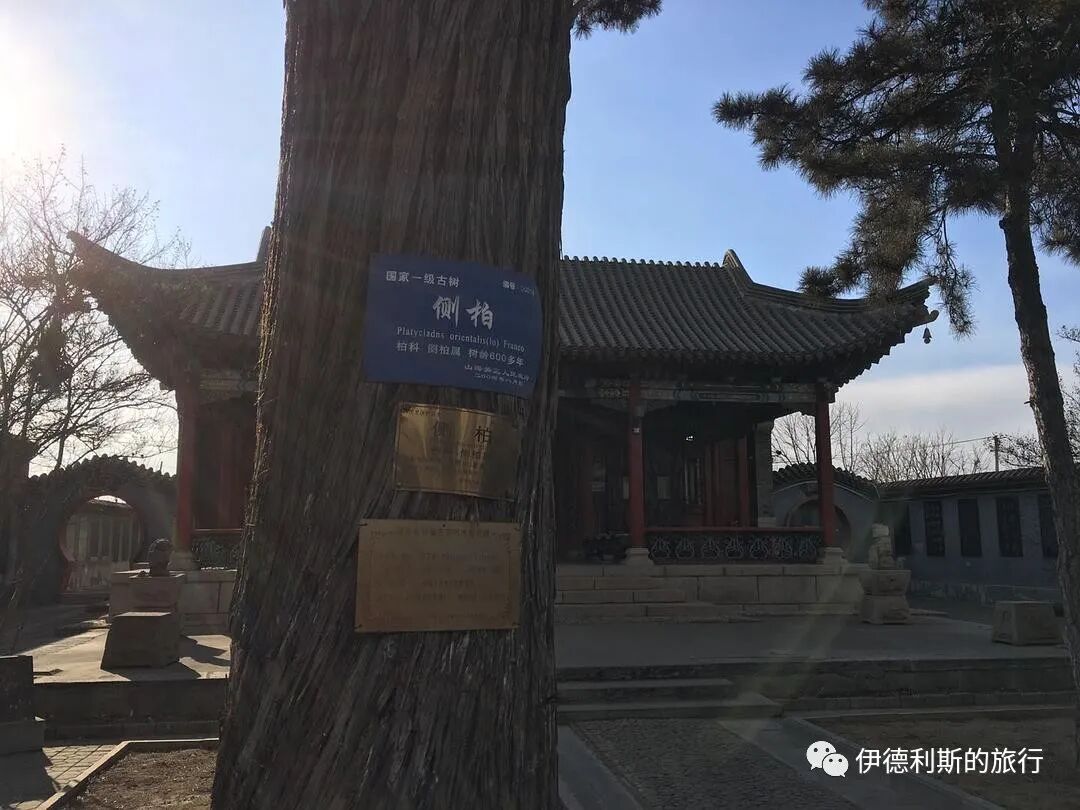
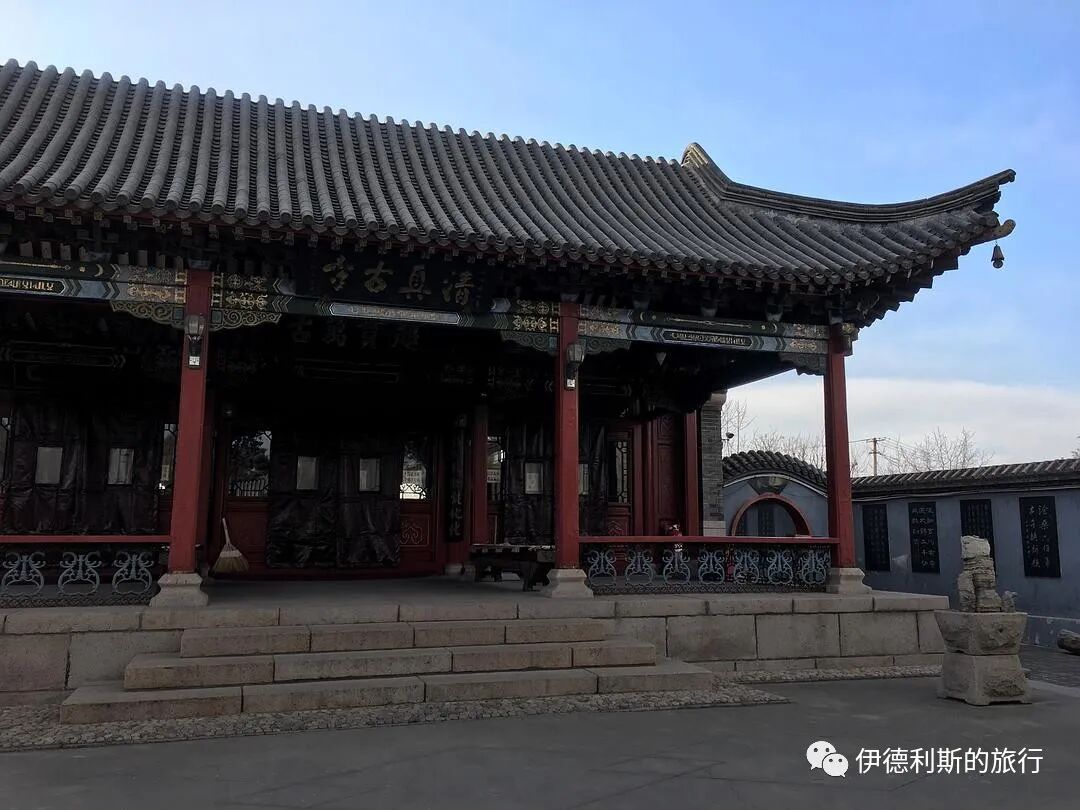
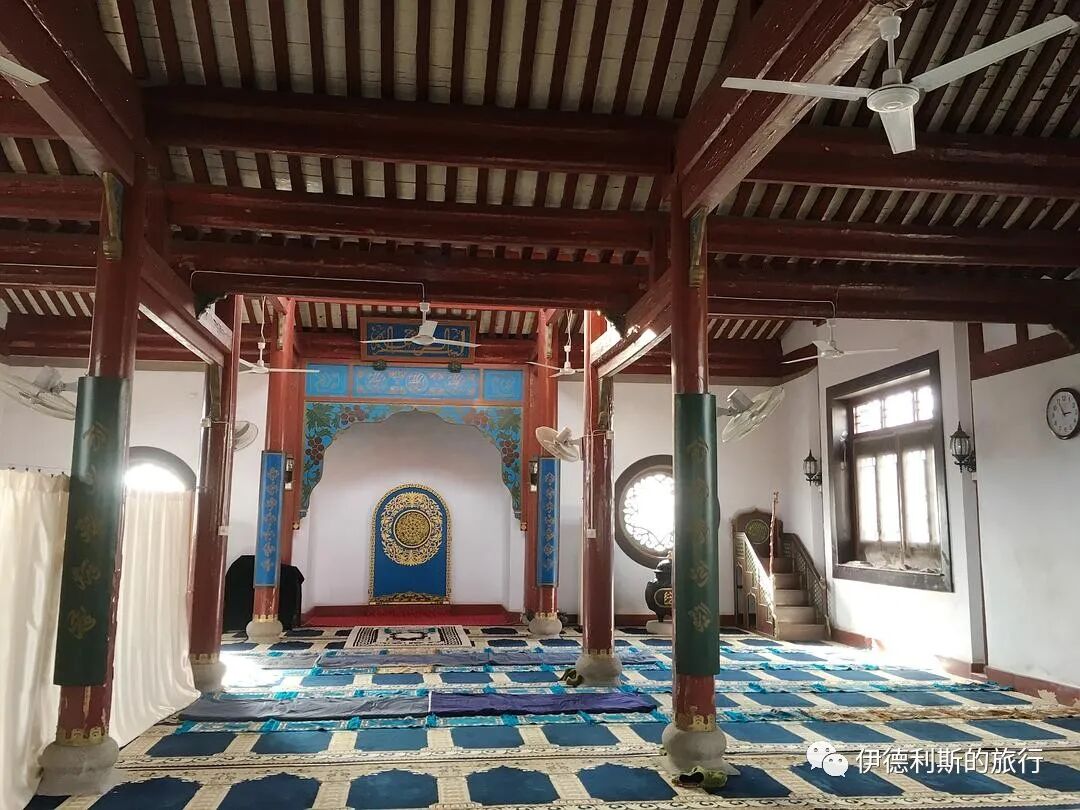
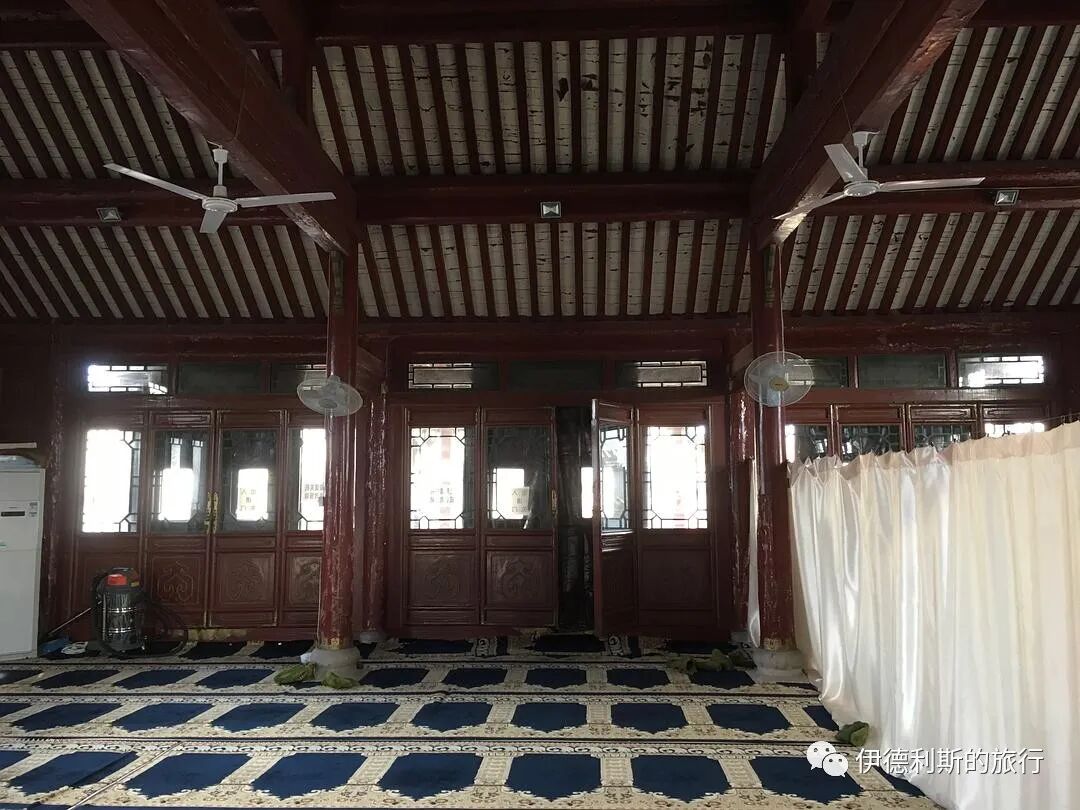
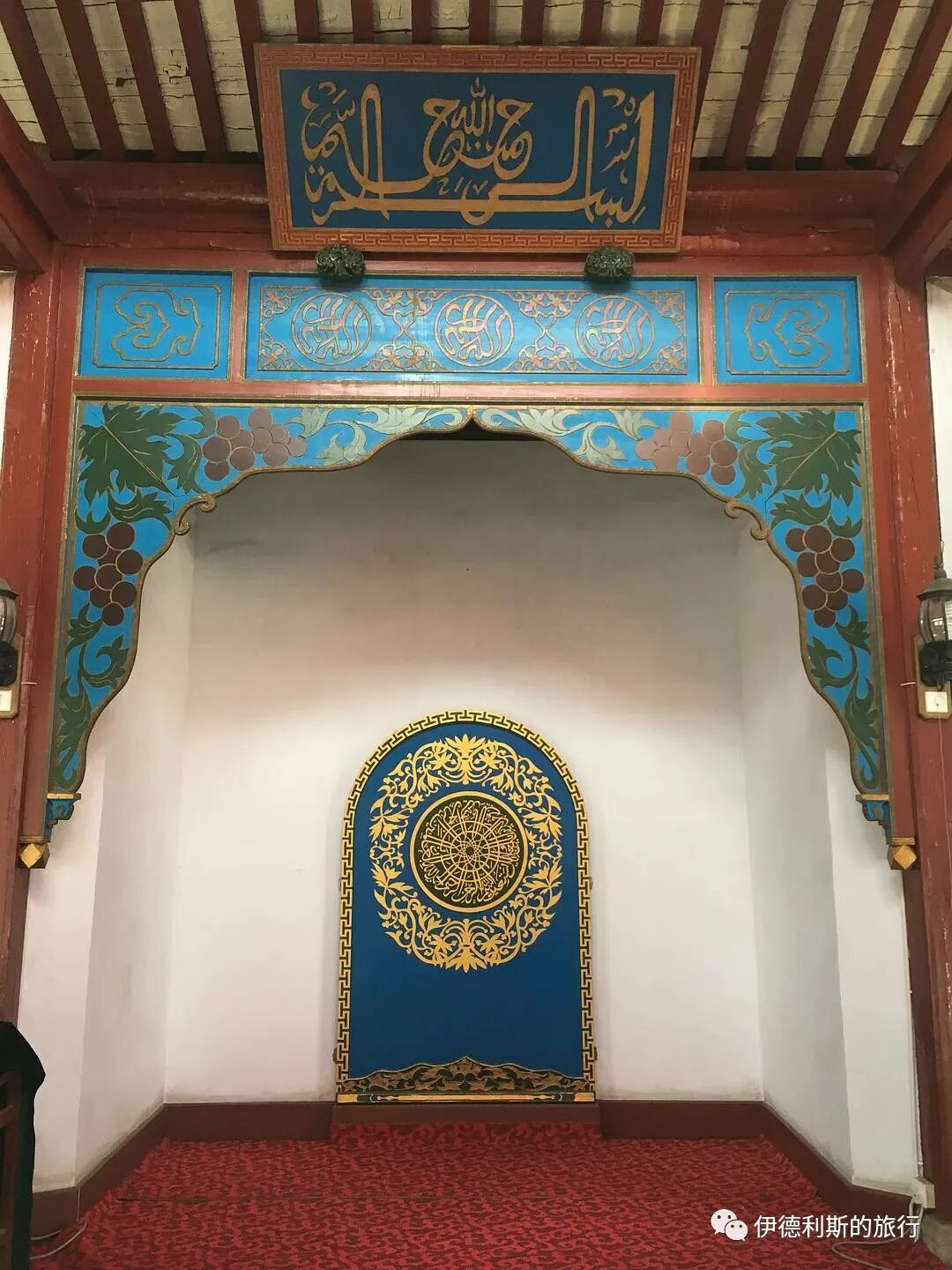
(Optional) Image description
Delete
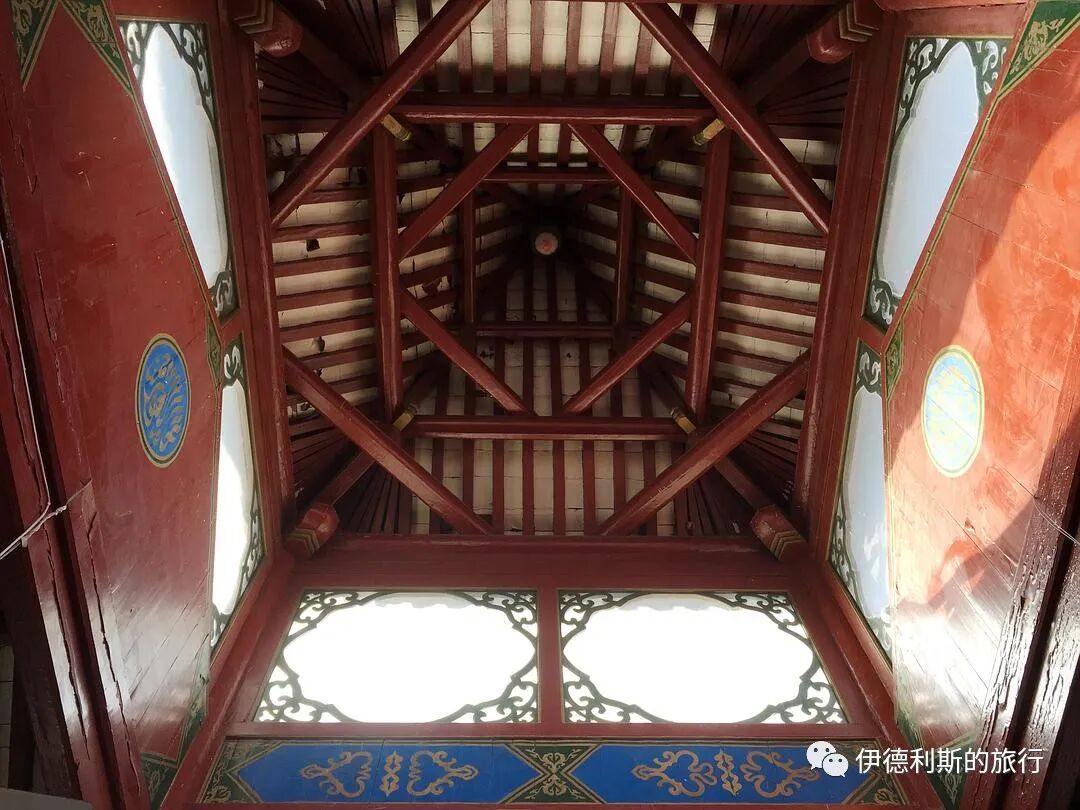
The mosque has an ancient well. Elder Wu said he used to wash the bodies (maiti) here himself when he was a child. Later, a factory was built nearby, and the water in the well was no longer clean.
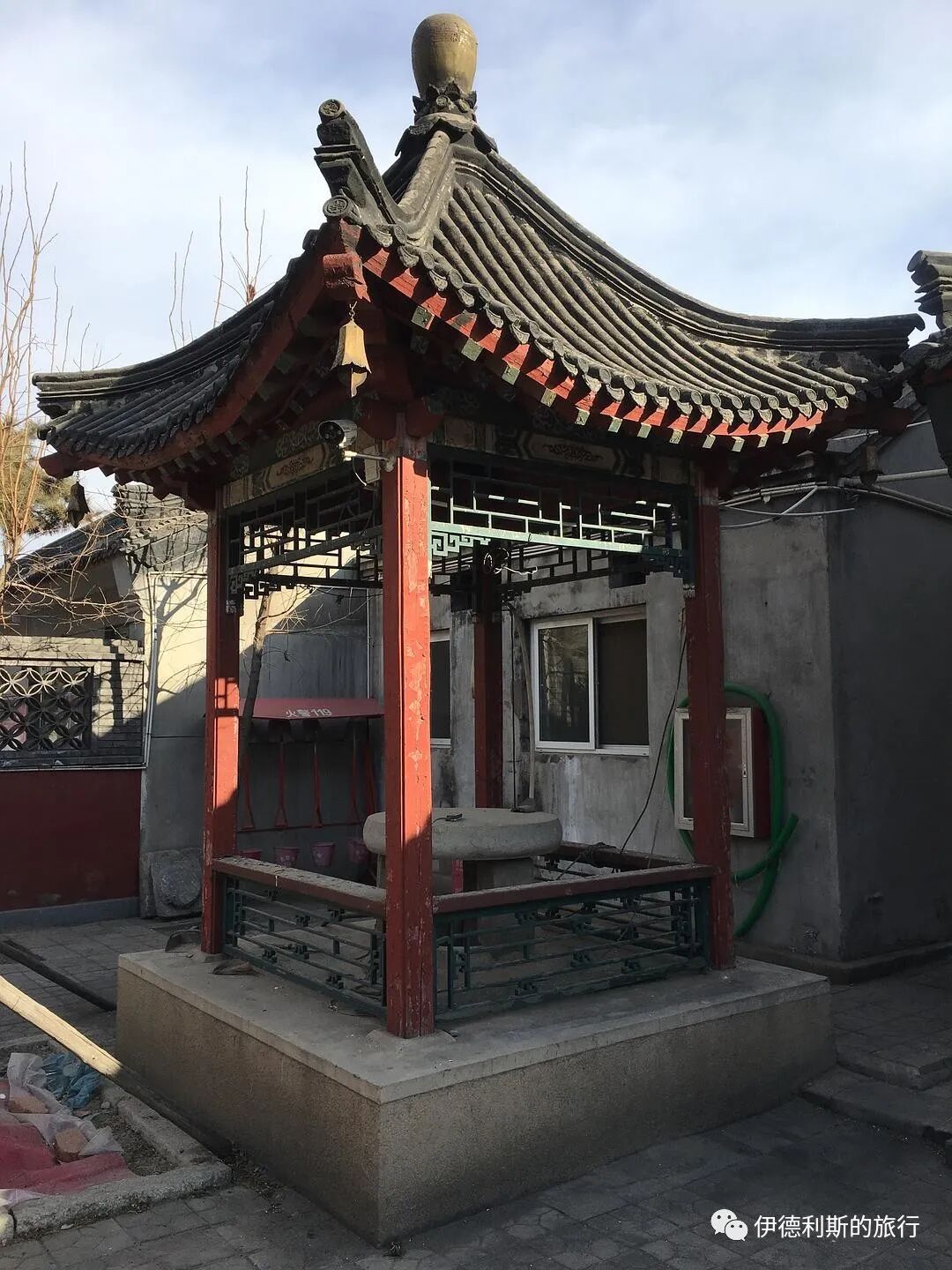
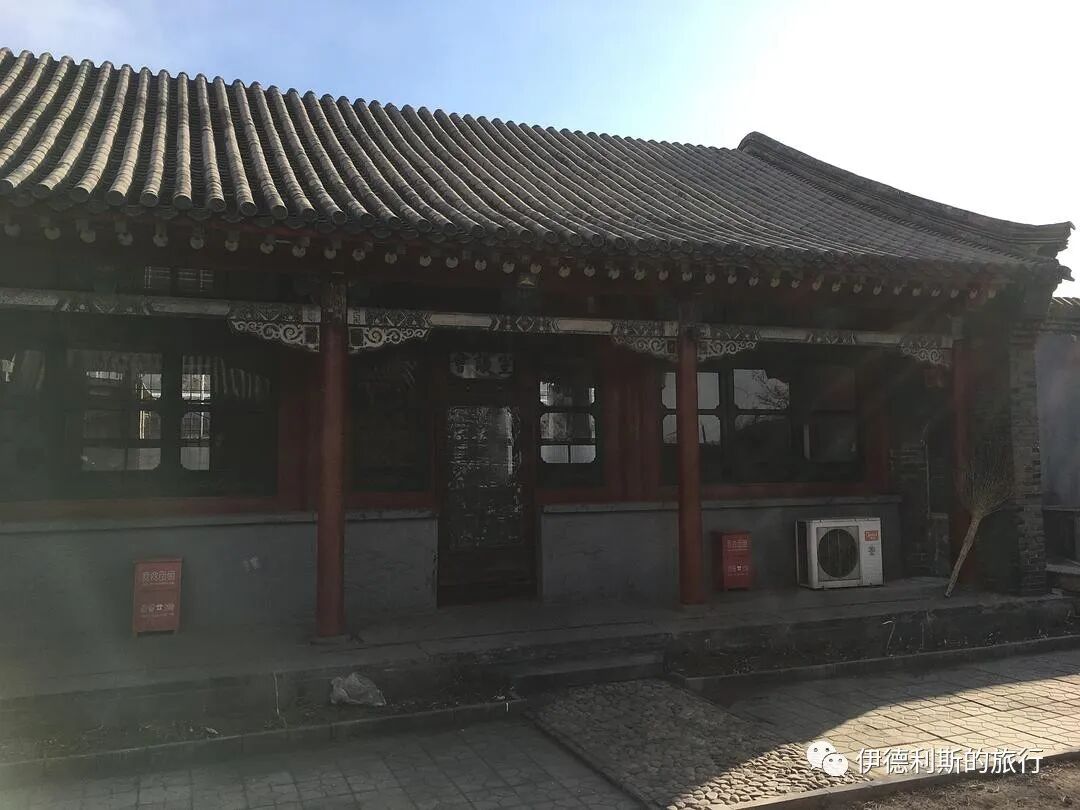
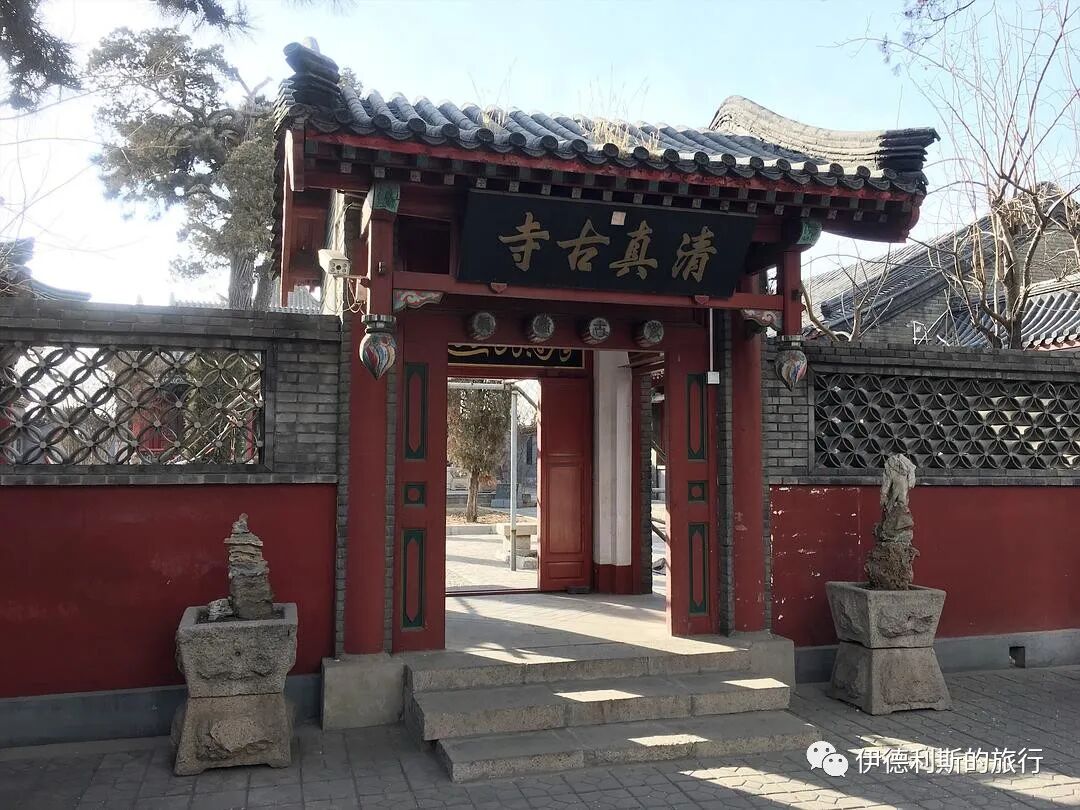
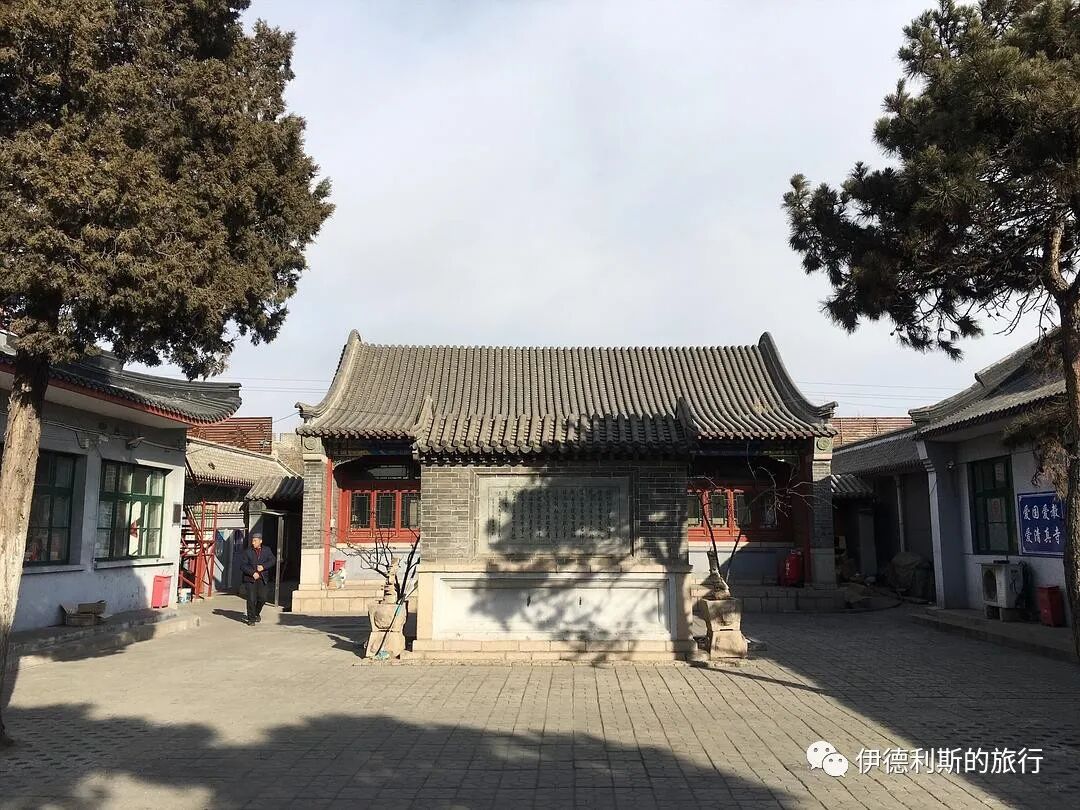
When I visited, the exhibition room happened to be open. It held many old architectural pieces removed during the 1998 reconstruction of the main hall and gatehouse.
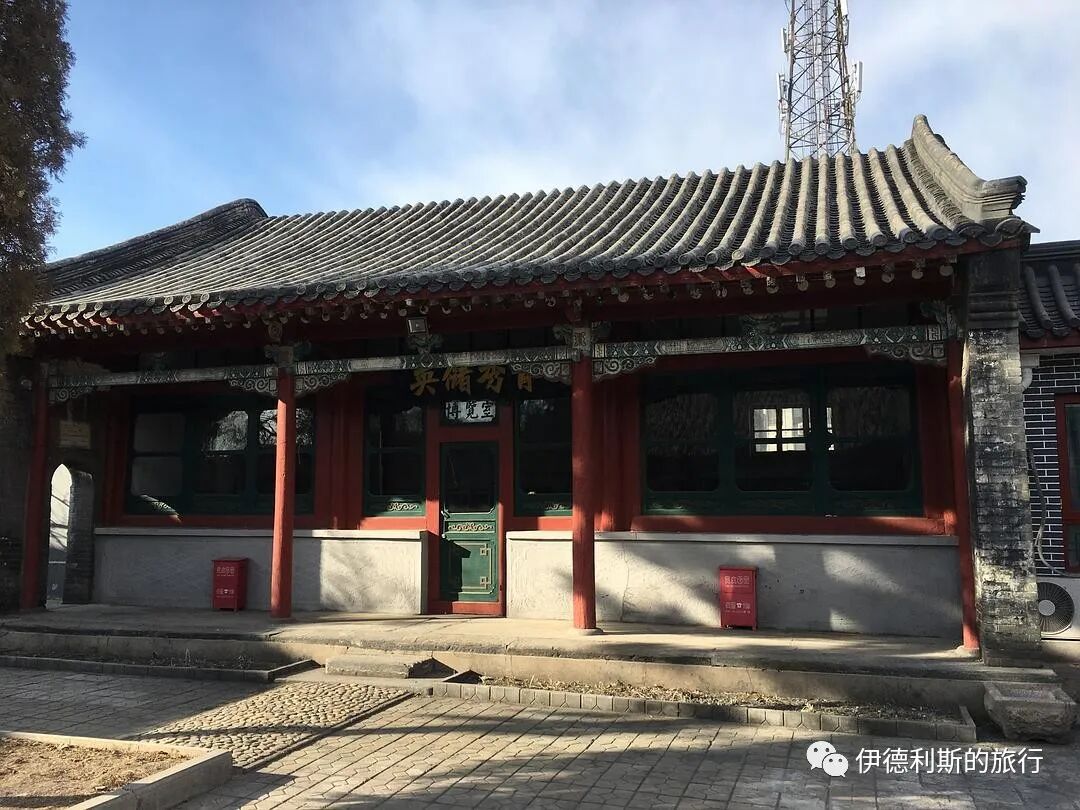
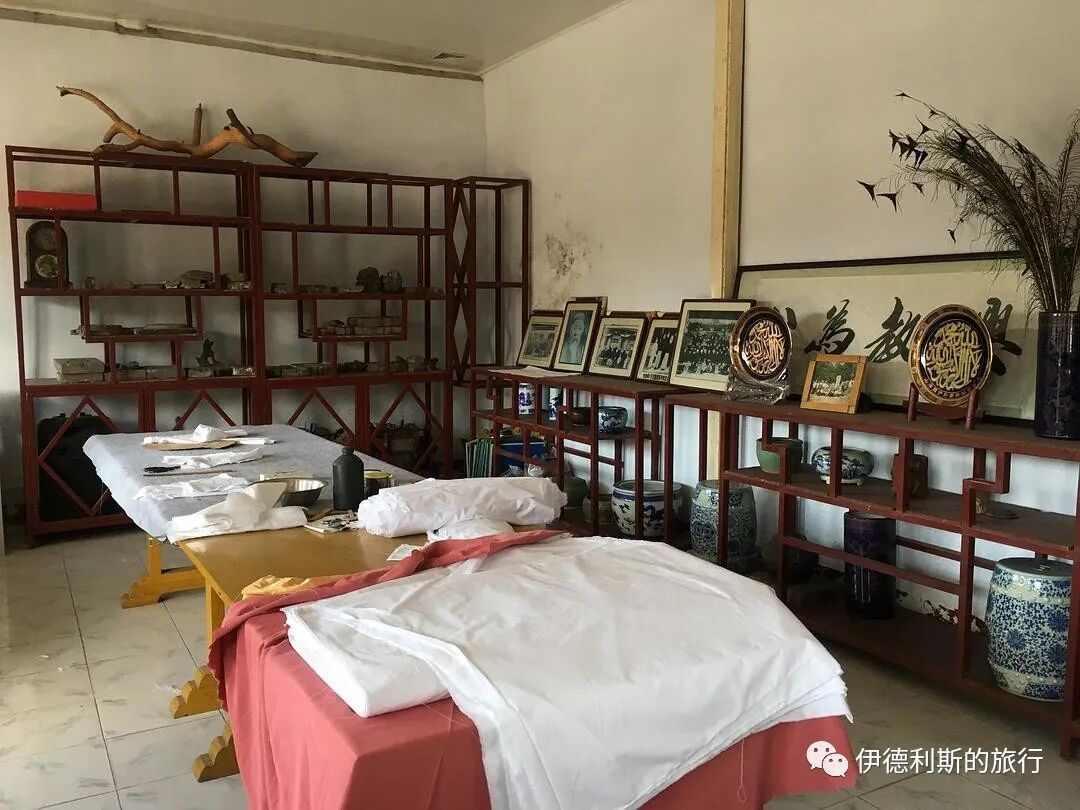
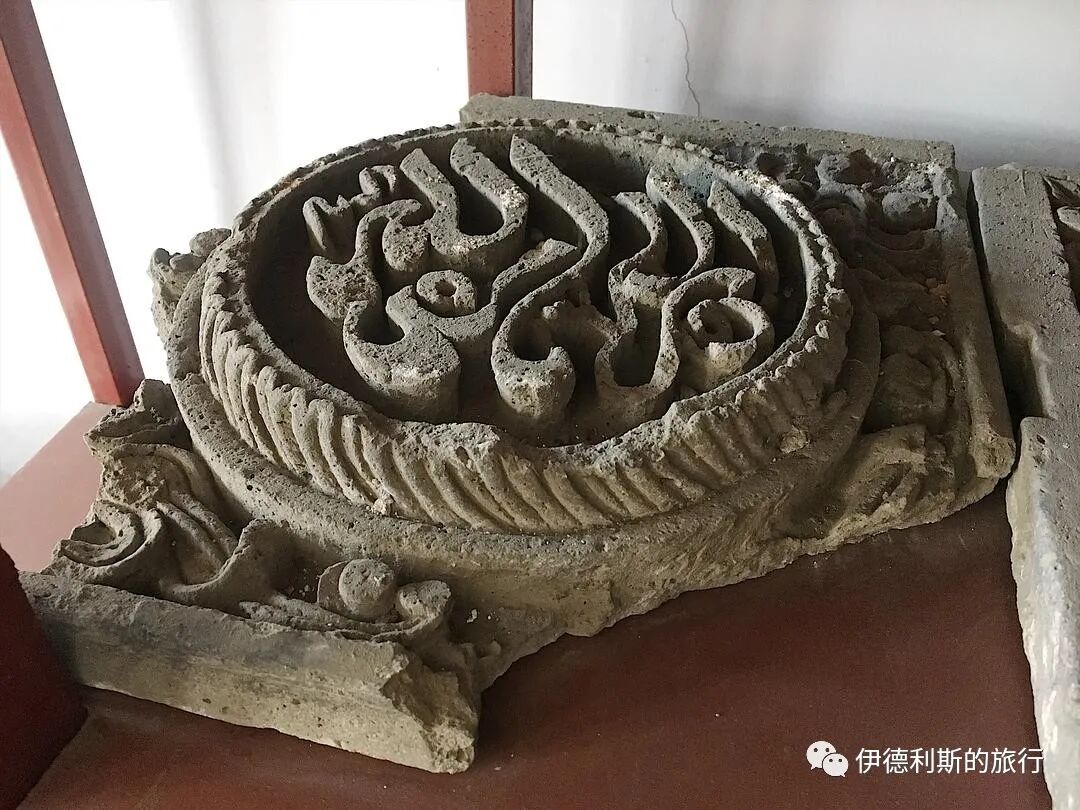
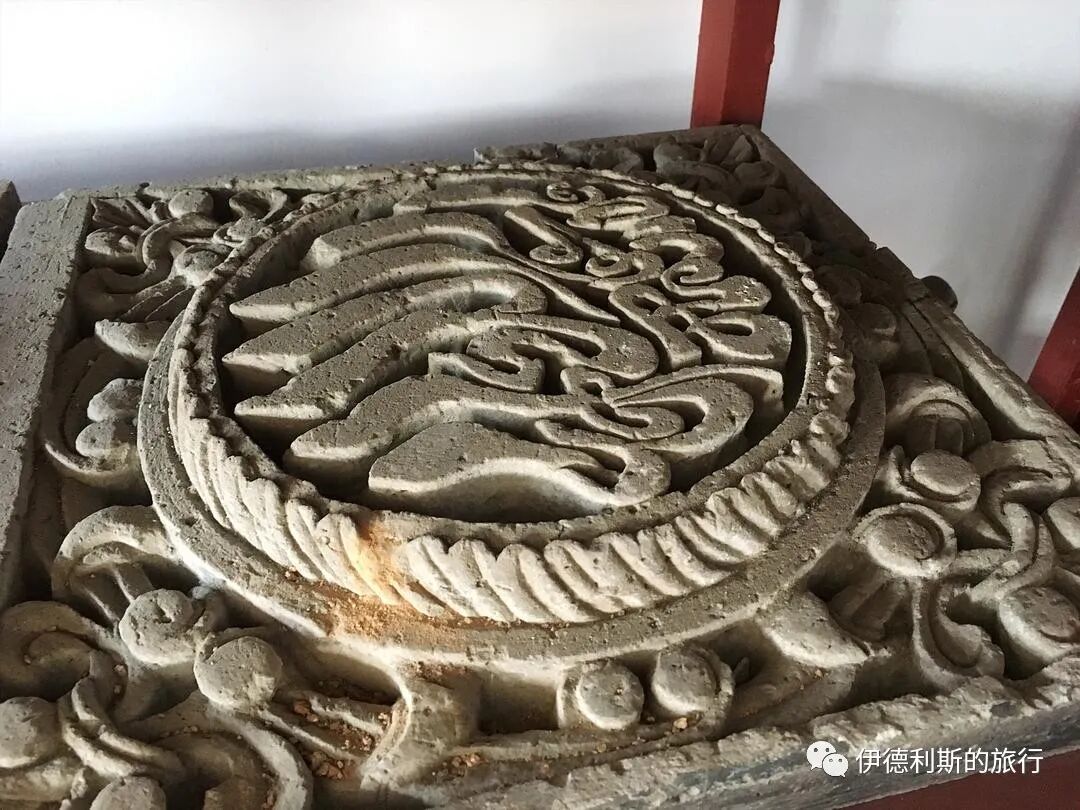
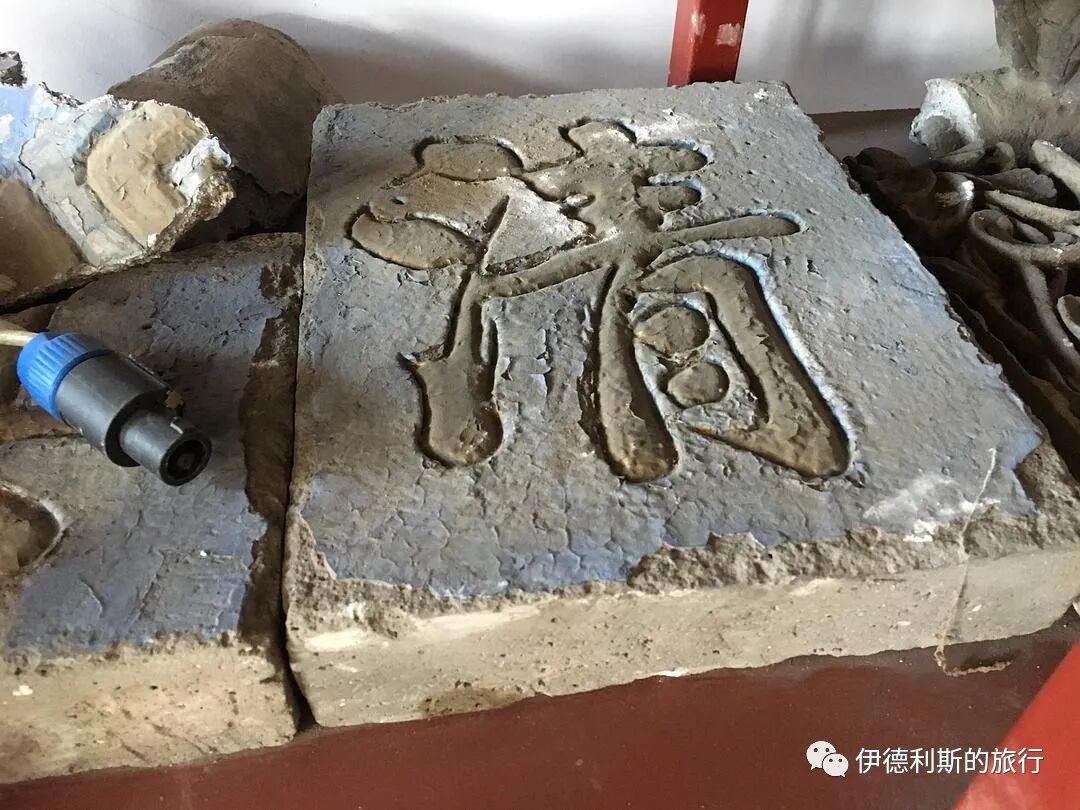
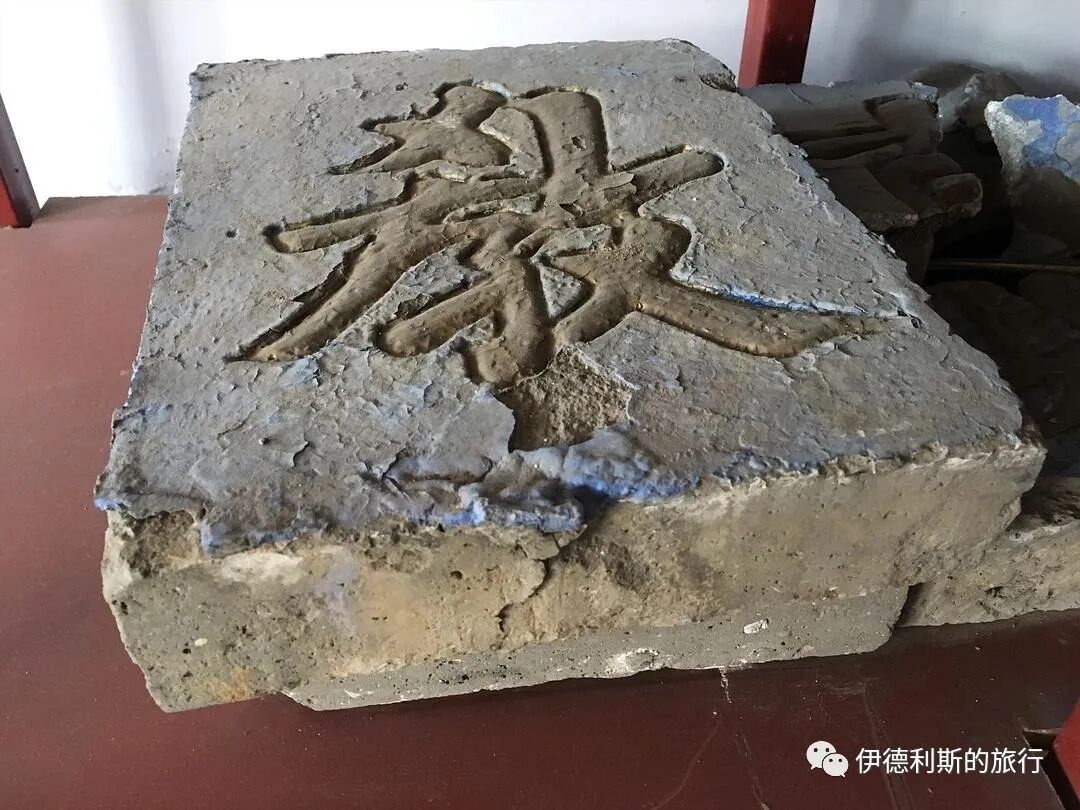
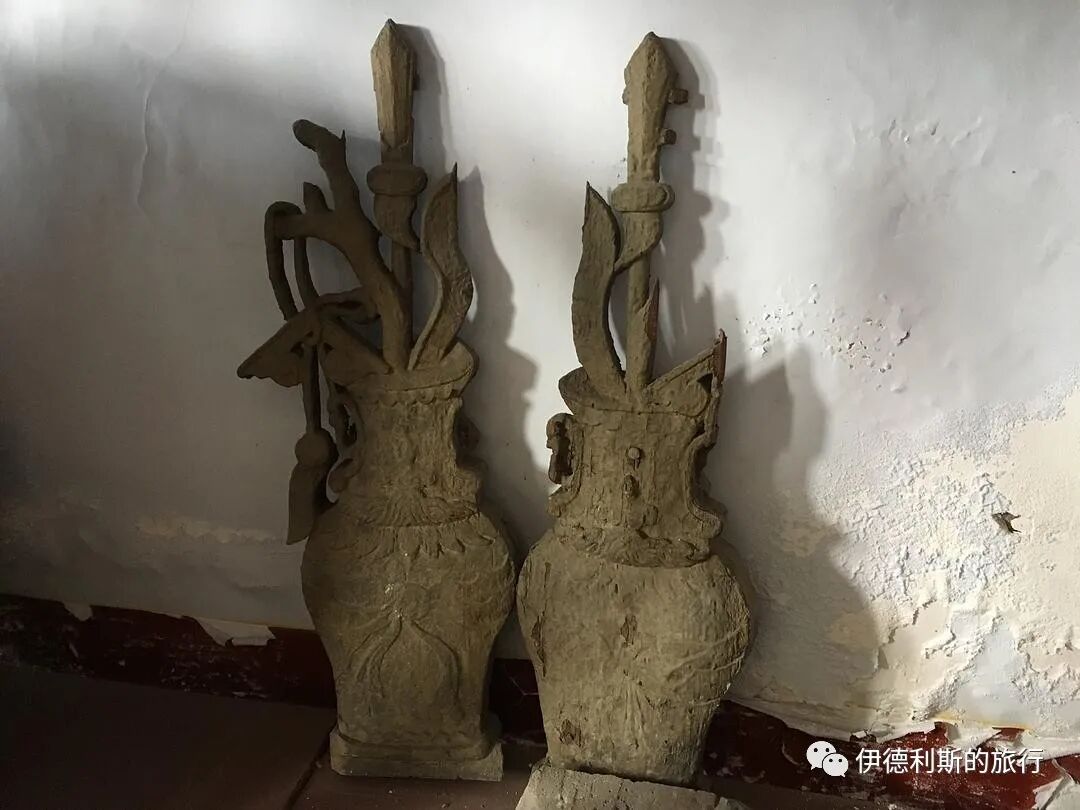
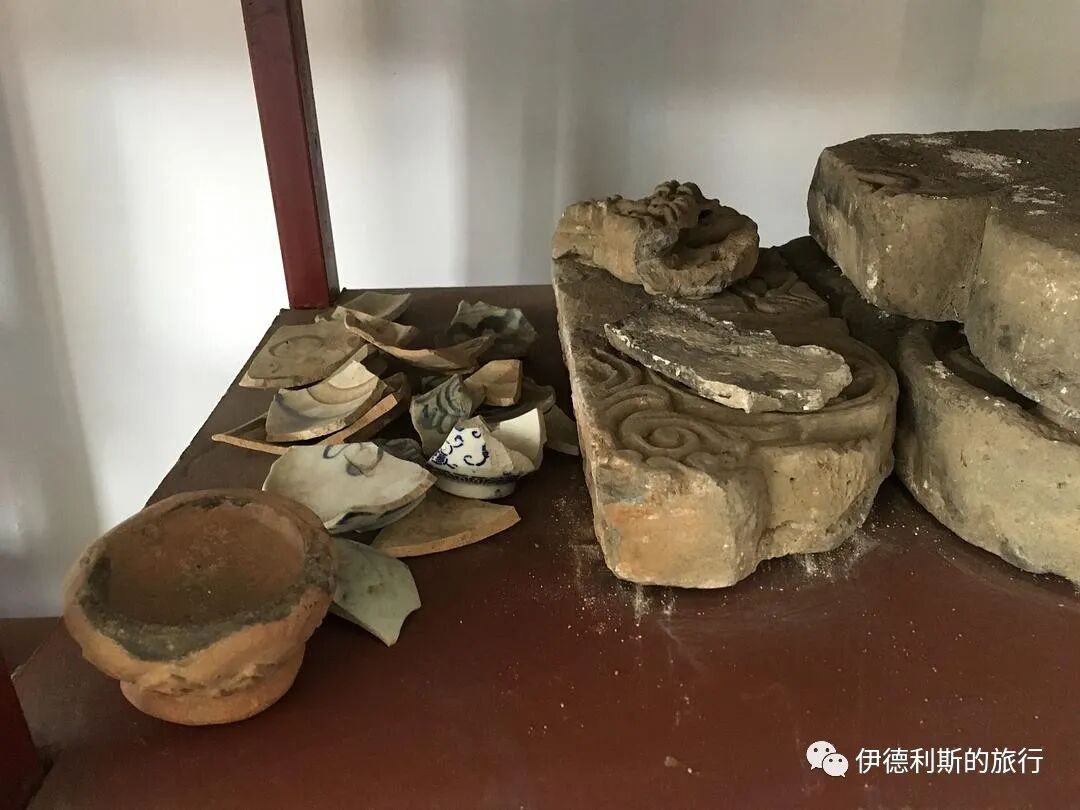
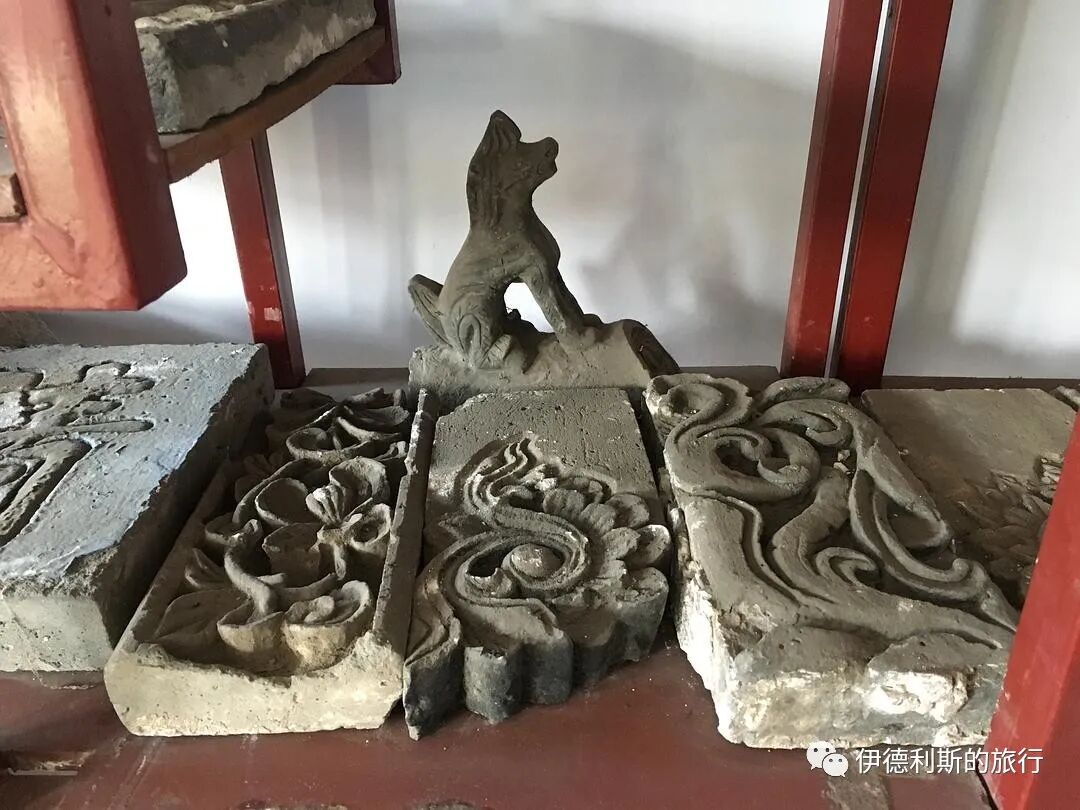
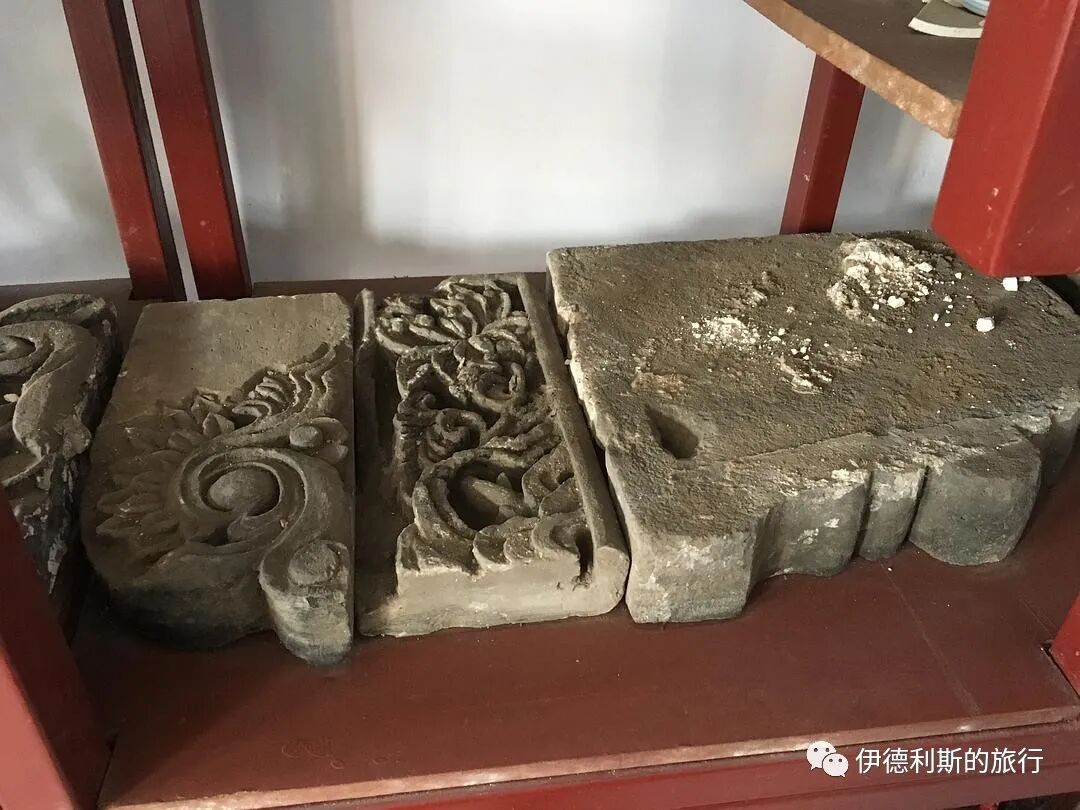
There were also some old photographs. A photo of the Muslim community in Shanhai Pass welcoming Mr. Mairsumu, a traveler from Turkey, in the 24th year of the Republic of China.
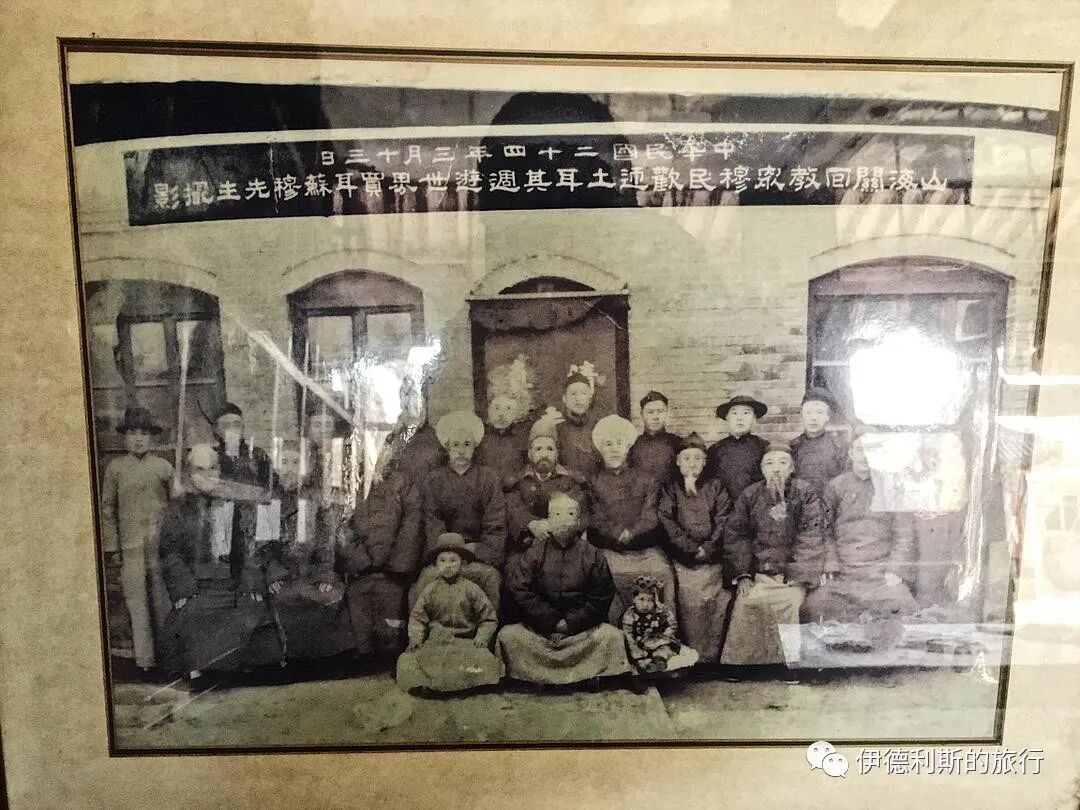
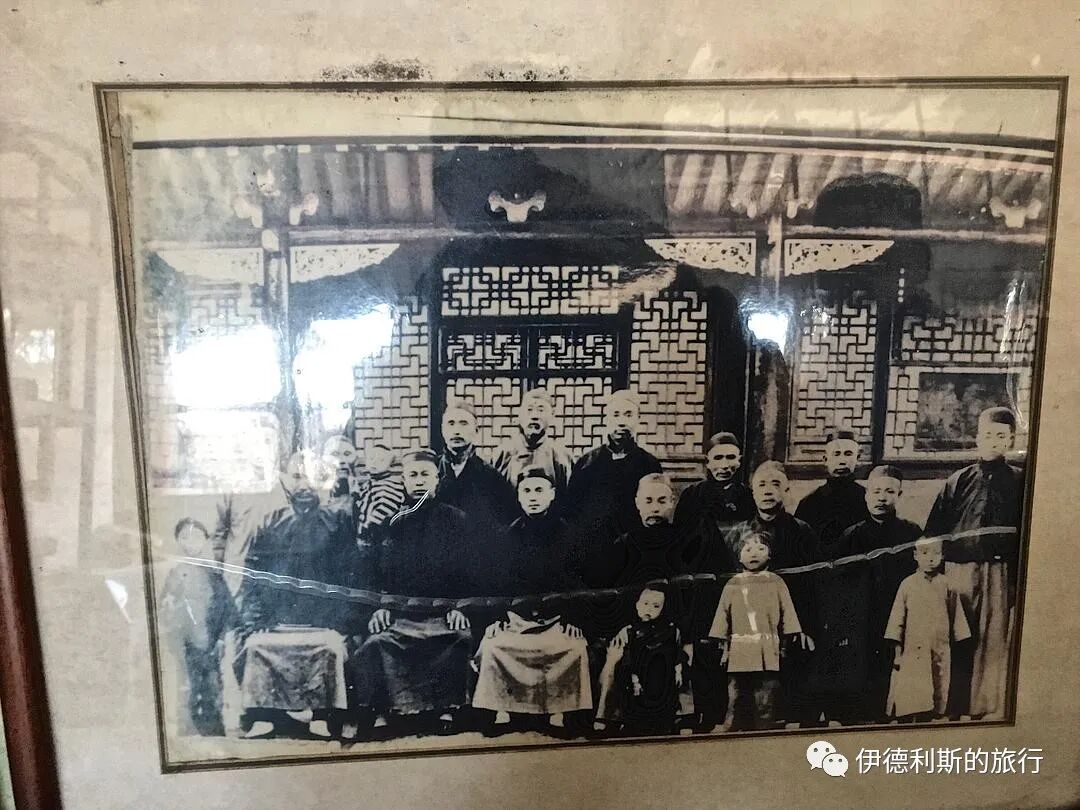
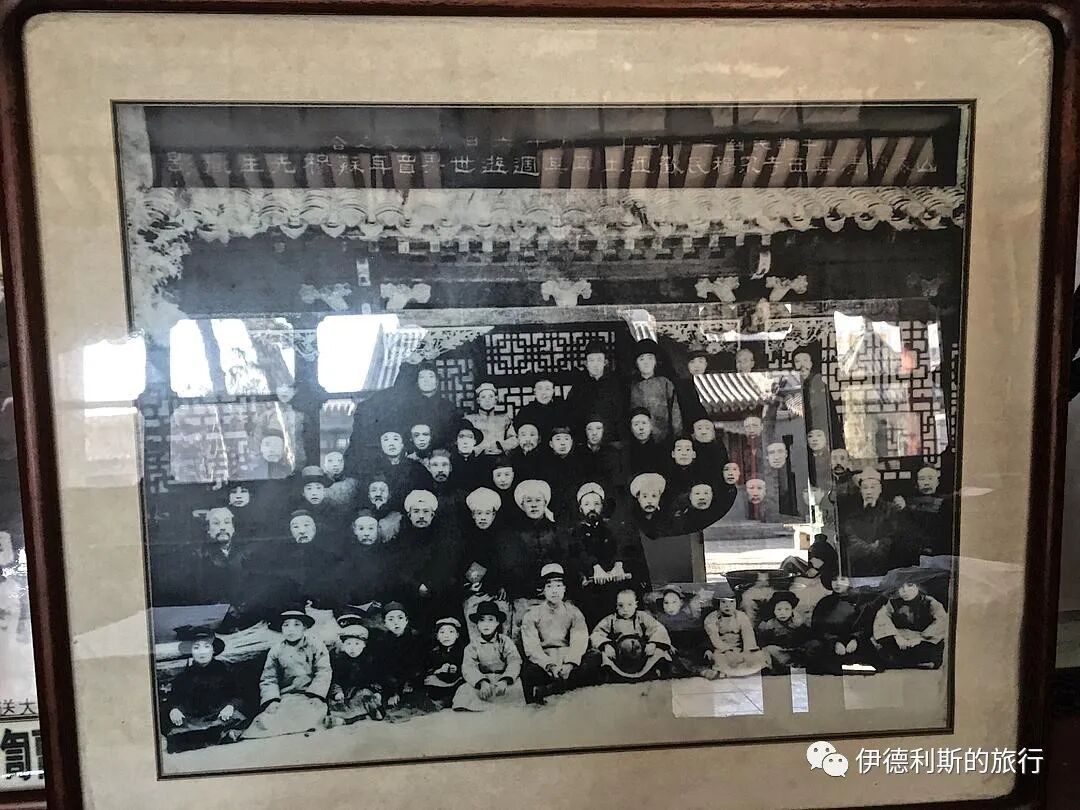
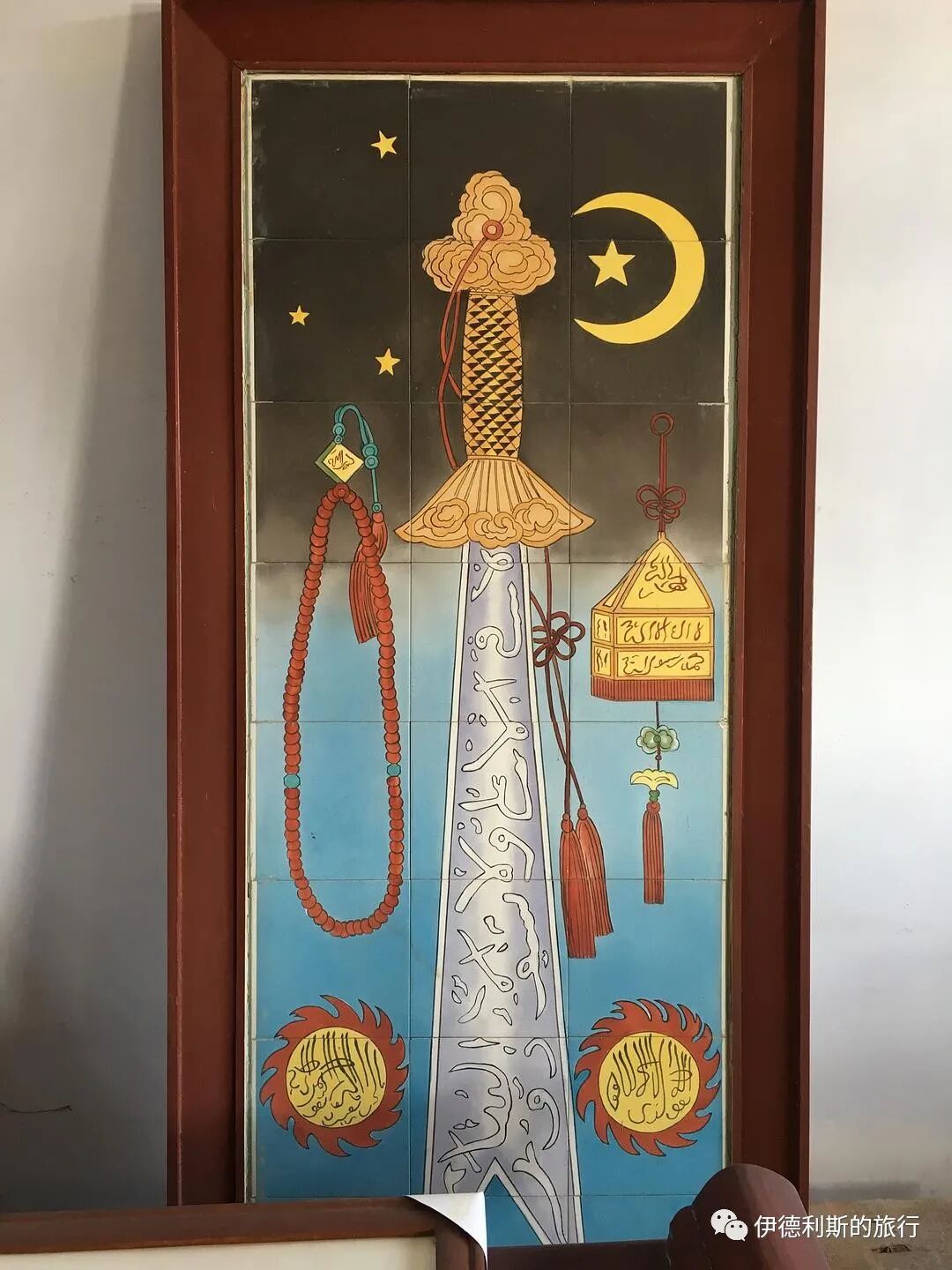
Street view of Shanhai Pass.
The West Gate of Shanhai Pass, located next to the mosque.
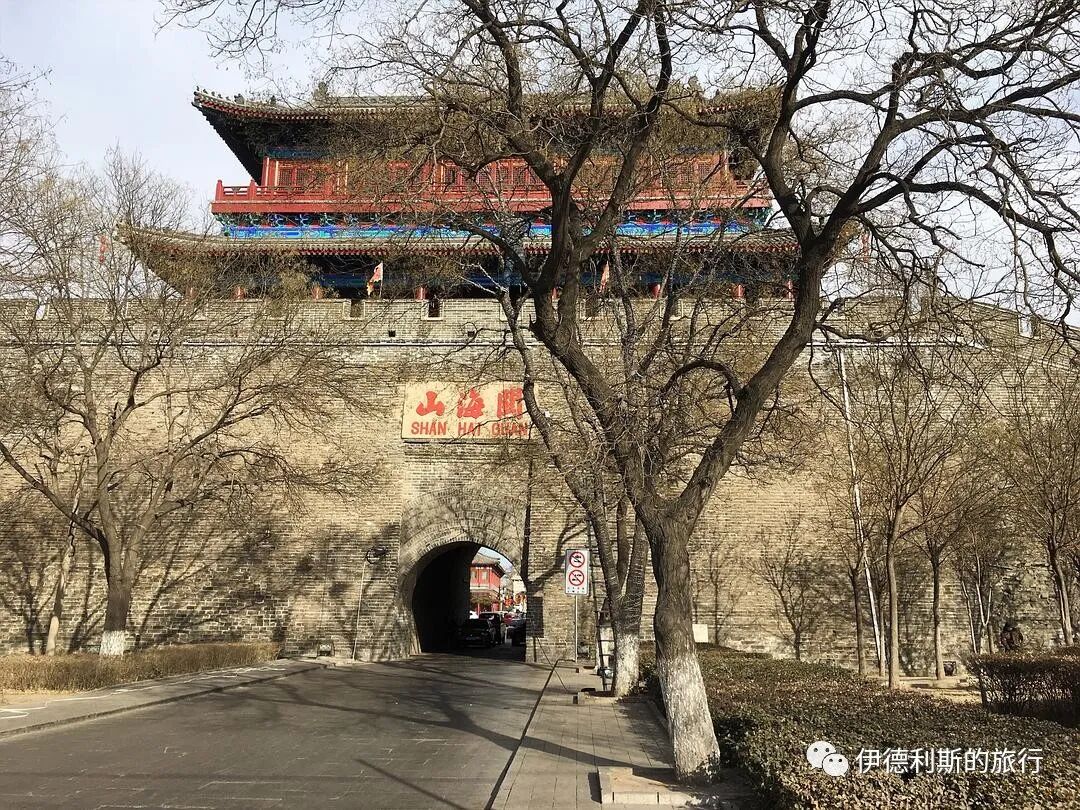
Snapshots of the street scene in Shanhai Pass.
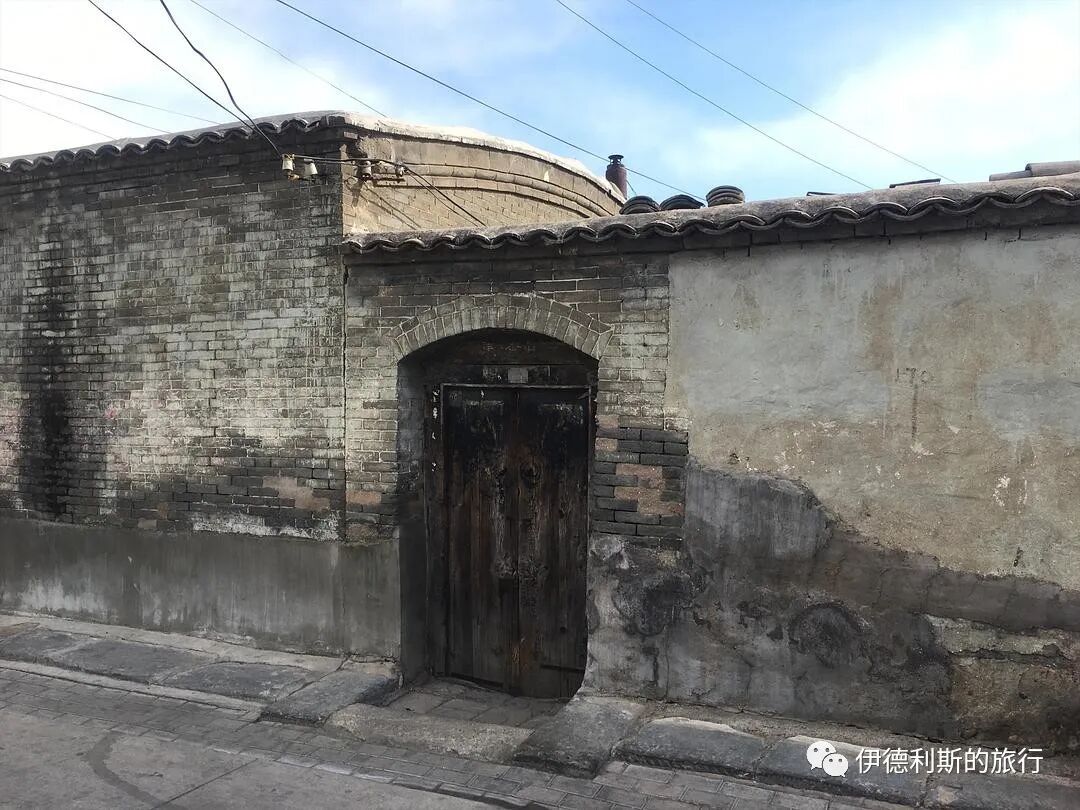
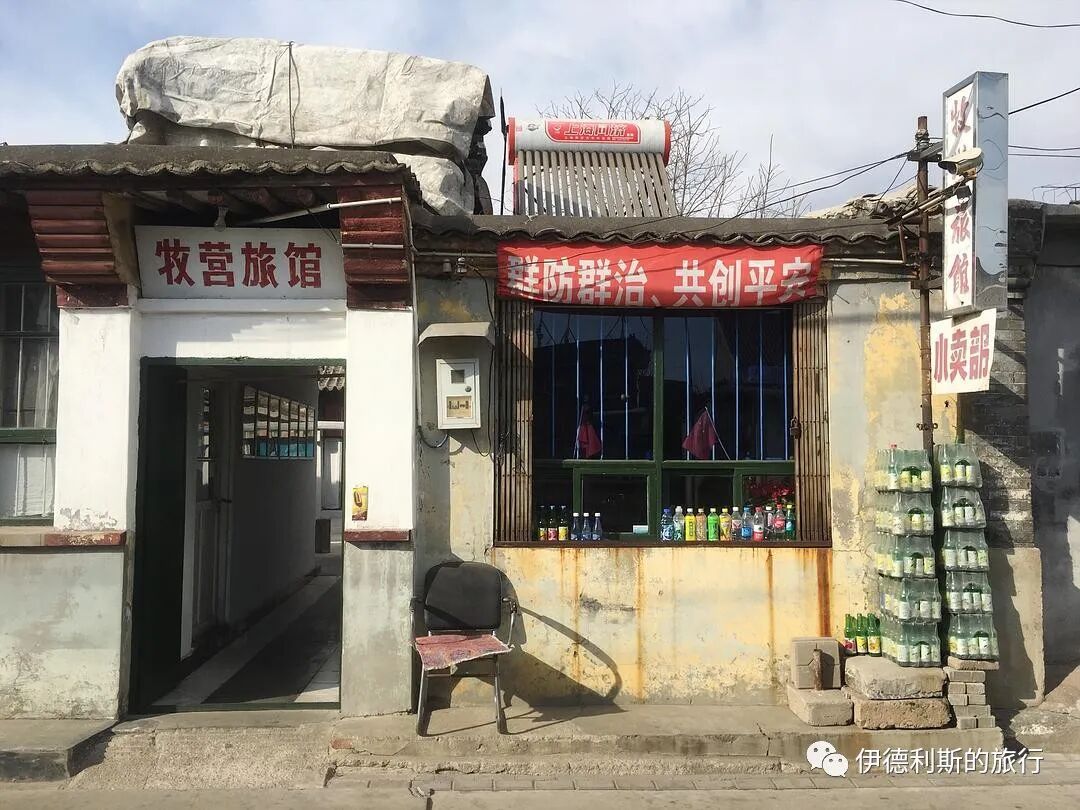
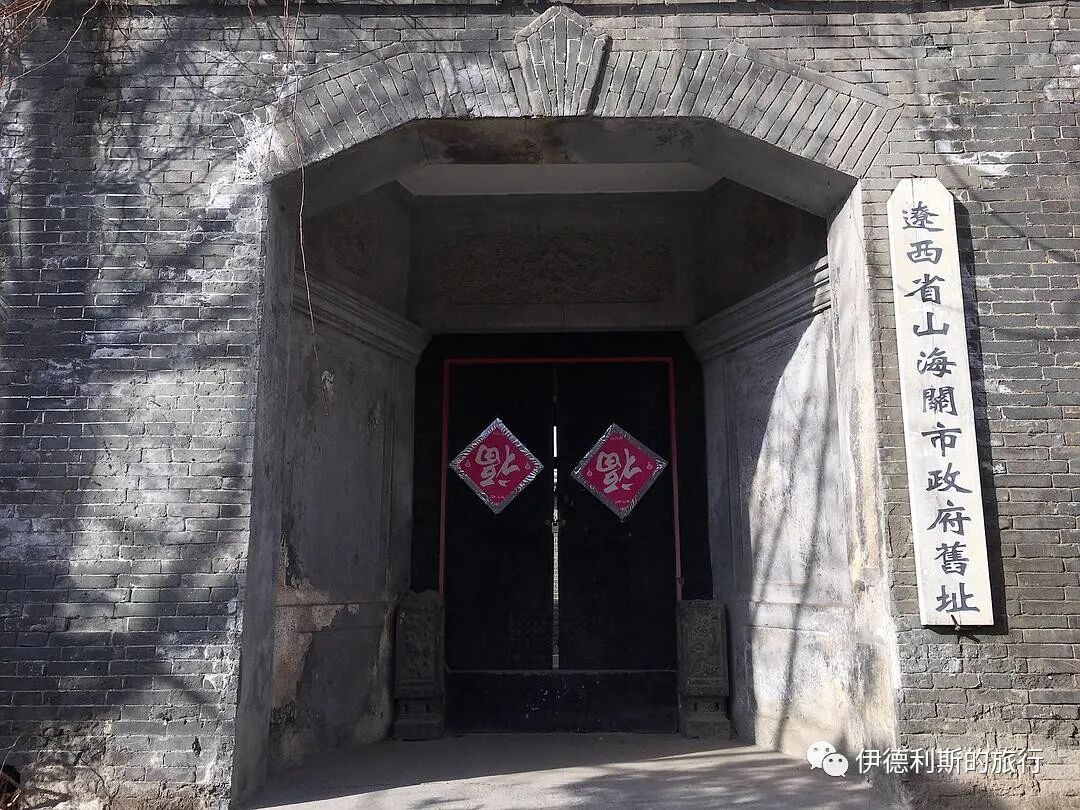
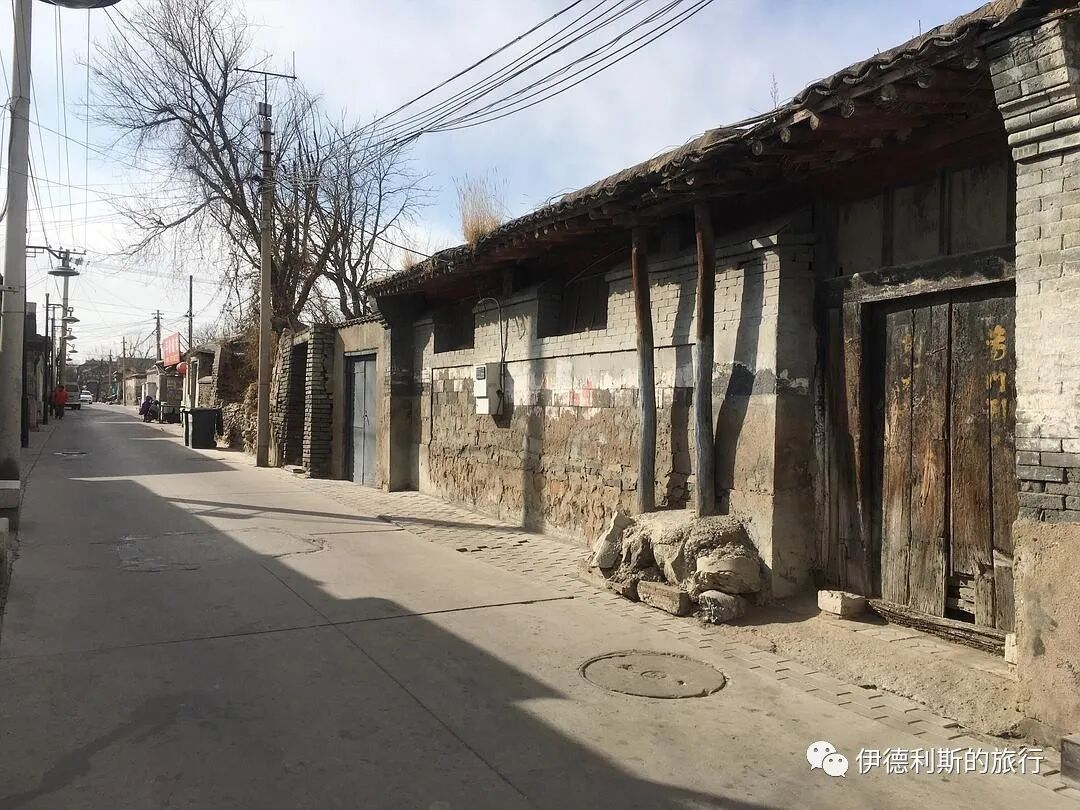
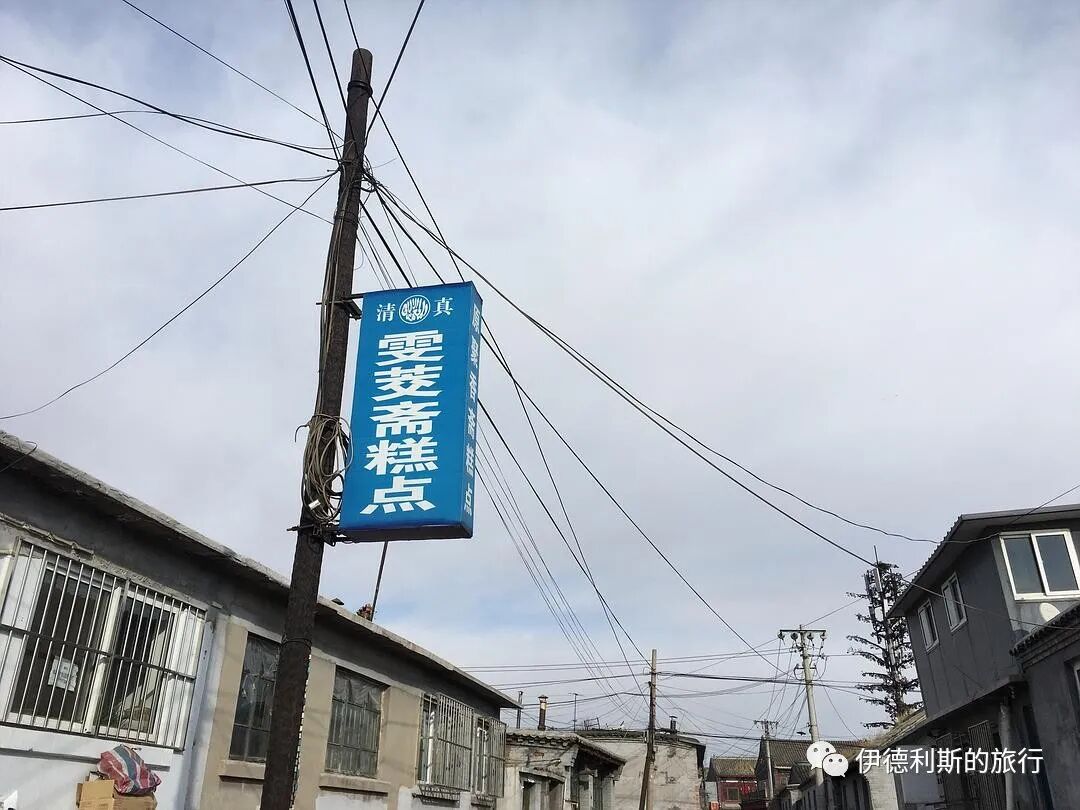
Old Dragon's Head (Laolongtou).
Old Dragon's Head in winter, where the Great Wall meets the sea.
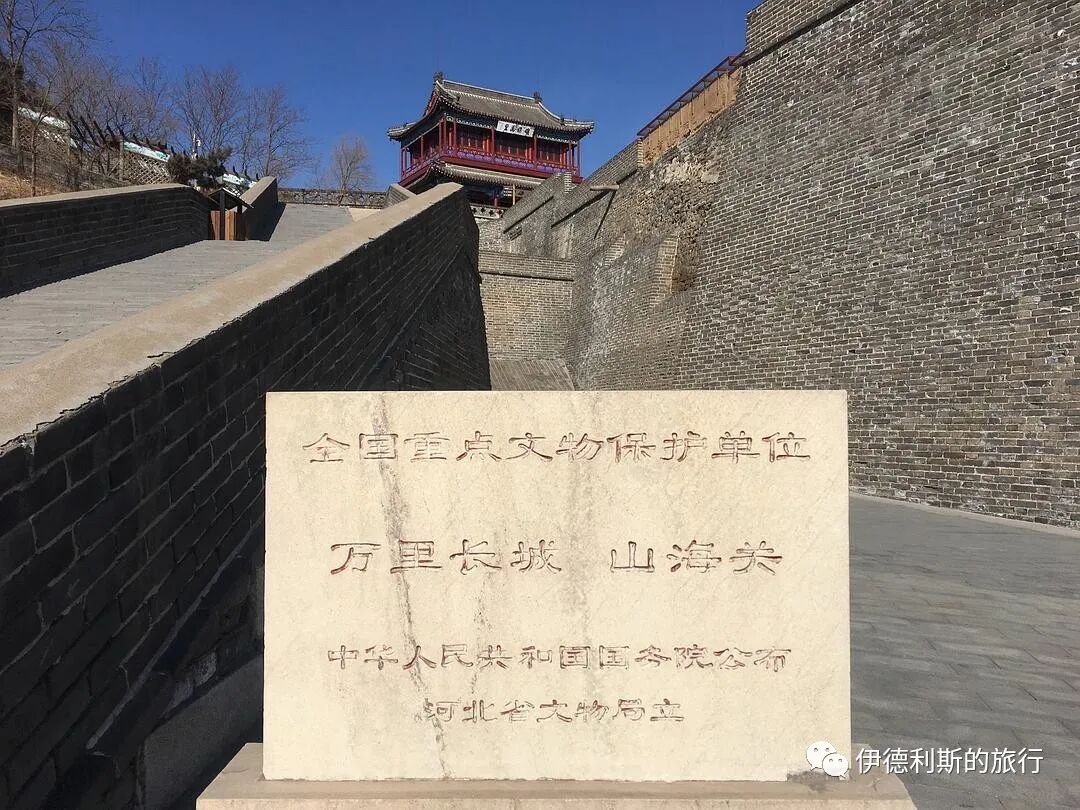
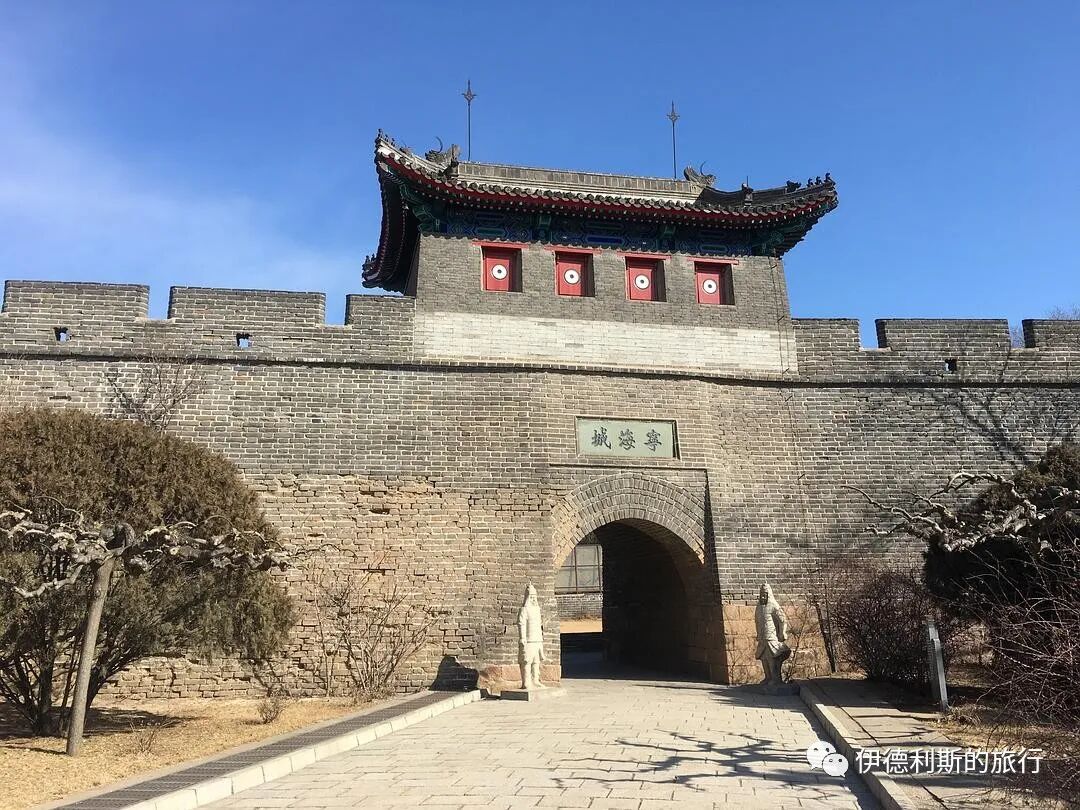
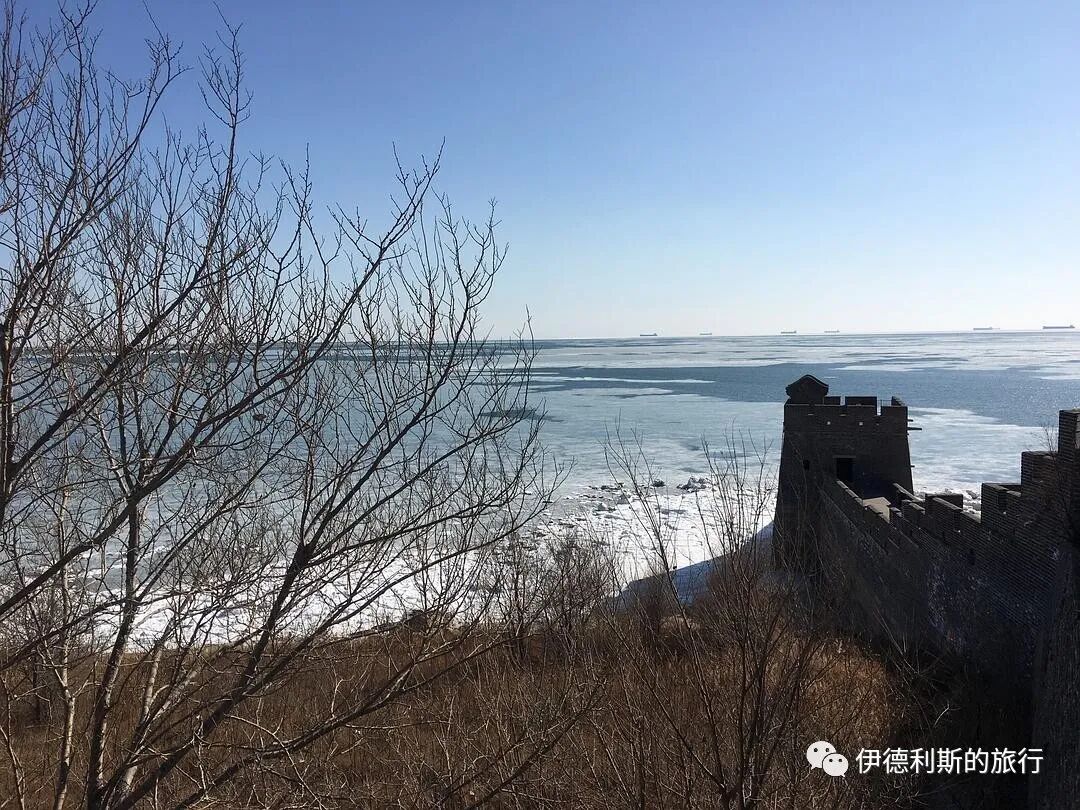
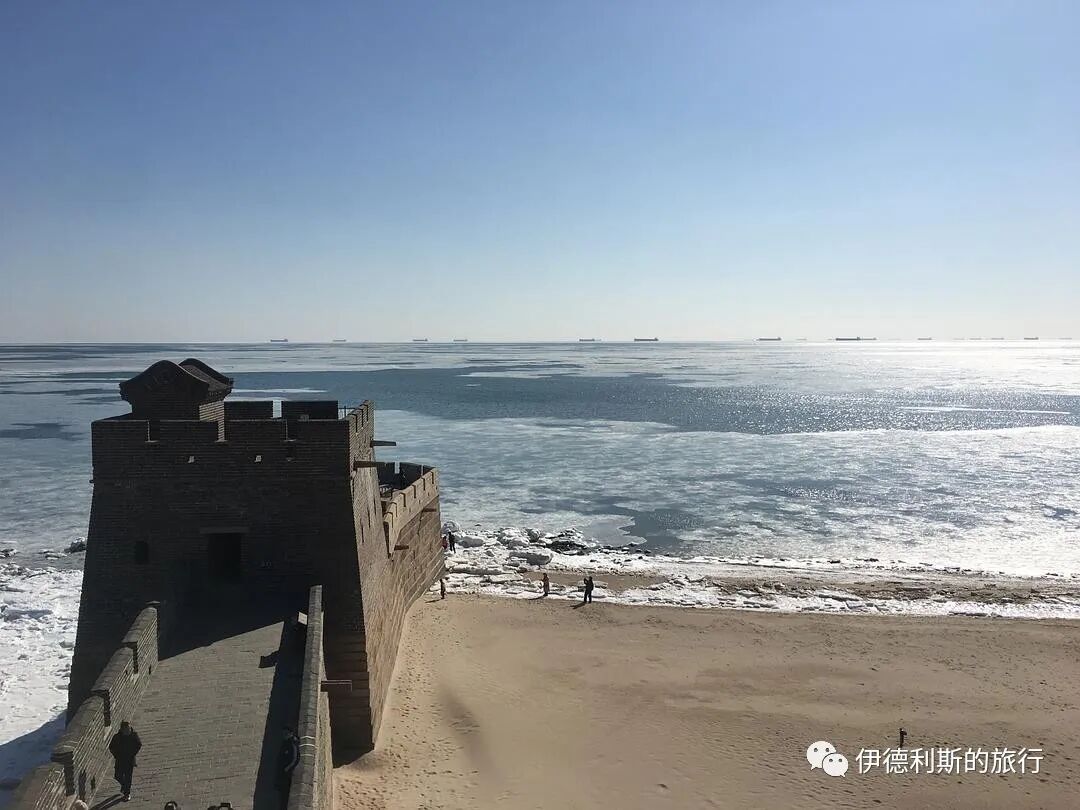


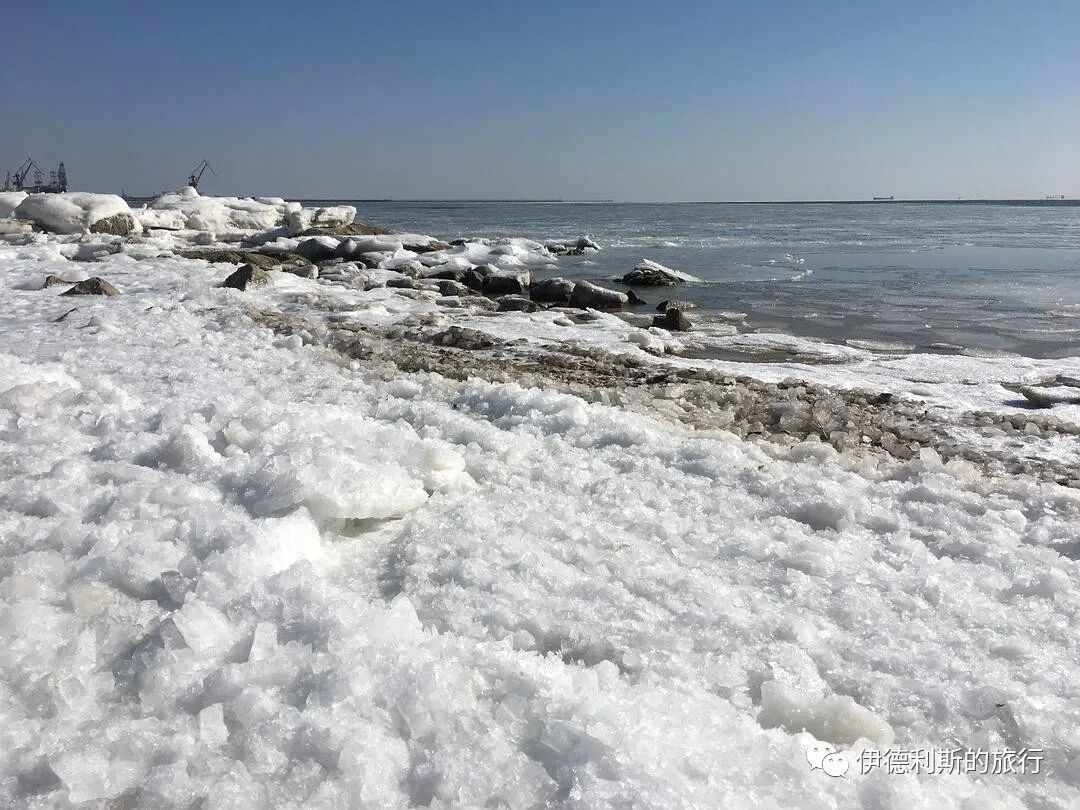
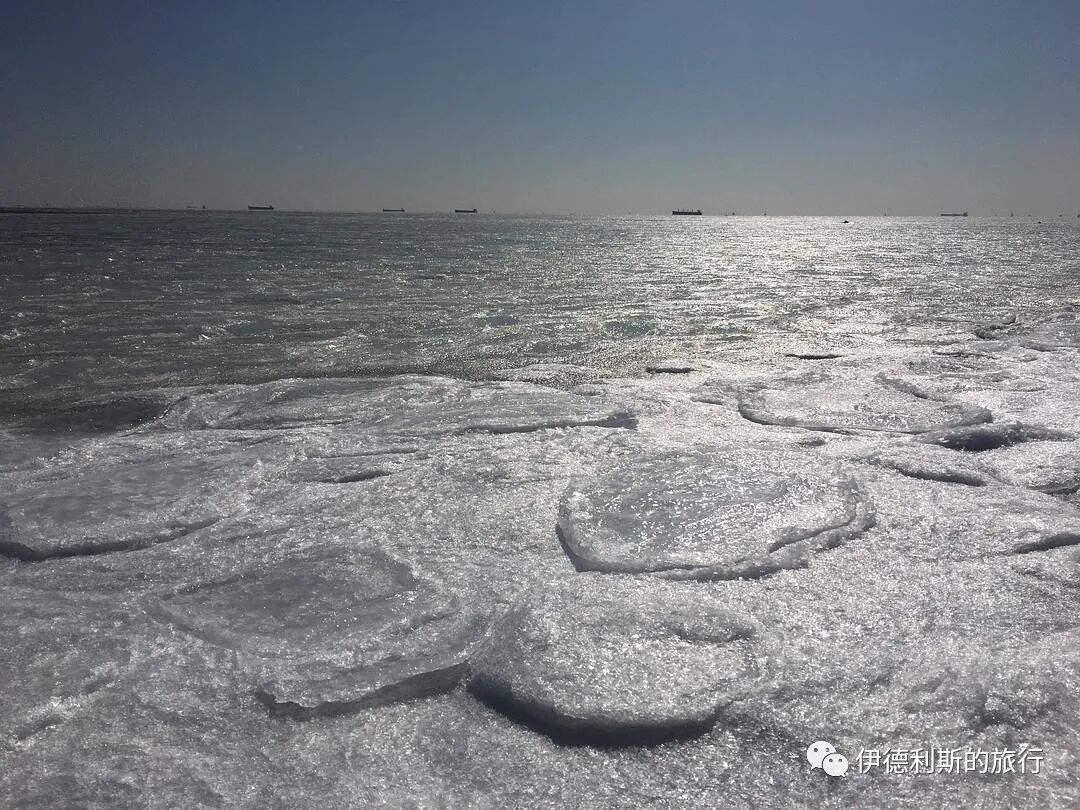 Collapse Read »
Summary: Shanhaiguan — Great Wall, Mosques and Muslim Food is presented here as a firsthand travel account in clear English, beginning with this scene: The winter sun was bright in 2018, and I took the early high-speed train from Beijing South Station, arriving in Shanhaiguan in just two hours. The account keeps its focus on Shanhaiguan Travel, Great Wall, Halal Food while preserving the names, places, food, and historical details from the Chinese source.
The winter sun was bright in 2018, and I took the early high-speed train from Beijing South Station, arriving in Shanhaiguan in just two hours. People in Shanhaiguan speak with an upward inflection at the end of their sentences, just like people in Huludao and Jinzhou. At first, it sounds a lot like the Liaoxi dialect, but if you listen closely, you can hear many elements from inside the pass. When it comes to halal food, Shanhaiguan is also very similar to the Northeast. They have steamed dumplings (shaomai), assorted hot pot (shijin hunguo), and peanut tofu (huasheng xiaodoufu), and the storefronts of the halal restaurants are the same blue color commonly seen in the Northeast. As the first stop on my trip to explore and eat my way through the Muslim communities of the Northeast, my journey in Shanhaiguan began this way.
Xiaobailou Soup Restaurant
I went straight to the Daonan branch of Xiaobailou Soup Restaurant after getting off the train, because it is said they only serve breakfast and lunch and close in the afternoon.
Xiaobailou offers two types of soup: tripe strip soup (dusi tang) and whole lamb soup (quanyang tang). You can add seaweed, eggs, and glass noodles, which makes for a very satisfying meal. Their freshly made sesame flatbread (shaobing) is also delicious. They have three kinds: meat, salt and pepper, and sesame paste. One older gentleman bought 50 of them to go all at once.
This was the first time I had seen the iron stands used for holding clay pots at home being used in a restaurant.
Huiji Halal Pastries
Huiji Pastries is a famous old halal brand in Qinhuangdao. The Qinhuangdao Daily featured a detailed report on Huiji Pastries in an article titled 'The Fragrance of Time in the Ancient City Alleys'.
Huiji Pastries was founded in 1945 by Hui Shulin. At that time, Hui Shulin lived on East Fifth Street in the Shanhaiguan city center. He would make pastries at home and then push a wheelbarrow to sell them at the South Gate barbican. Later, the family moved to the area between South Street Third and Fourth Alley and officially hung up a cloth sign that read 'Huiji Halal Pastry Shop'. After the public-private partnership in 1958, Hui Shulin's son, Hui Changzhong, worked at the Gulou Halal Pastry Shop for several more years.
In 1979, Hui Changzhong started a pastry processing unit in the courtyard of his home on Tianxin Alley. He started by making mung bean cakes (lvdougao), and because he had many regular customers, he soon added many more varieties. In 1983, Huiji opened a storefront, which was taken over by Hui Changzhong's son, the third-generation successor Hui Junliang. In 1999, Hui Junliang's son, the fourth-generation successor Hui Wei, officially took over.
Huiji mainly sells various traditional Beijing-style pastries. They sell assorted sweet rice balls (shijin yuanxiao) in the first lunar month, flower cakes (xianhuabing) in early spring, sticky rice dumplings (zongzi) in May, mung bean cakes in midsummer, mooncakes (yuebing) in August, fried dough twists (liaohua), sugar-coated fried dough twists (binghua), and fried flour cakes (saqima) after winter begins, and then start selling New Year goods after the twelfth lunar month.
Liaohua is also called 'liaohua' or 'liaohua' (using different characters). This name is used in Shaanxi, Henan, Hebei, and Tianjin. In other regions, it is called 'dajingzao', and the version sprinkled with white sugar is also called binghua.
Yingxinyuan Restaurant
Yingxinyuan Restaurant is just south of the mosque on Guancheng West Road. An elder at the mosque recommended it to me, saying that when guests visit the mosque, they are always hosted here. I arrived after 3:00 p.m., so the cook made my meal and then took a break. They didn't start their afternoon shift until 4:30 p.m. The owner said that after 2:00 p.m., there might not be anyone around, so I was quite lucky.
Knowing that portions get bigger the further northeast you go, I ordered one steamer of beef and cabbage steamed dumplings (shaomai) and a plate of sweet and sour pork tenderloin (tangcu liji), but I still couldn't finish it all. The taste was excellent, though! The even larger Qinhuangdao mixed hot pot (hunguo) will have to wait until I can come back with a group of people.
I came back in the summer to eat mantis shrimp (pipixia). They have several styles like spicy stir-fried or sauce-braised, but I chose the lightest option: steamed.
My first time eating the roe of the mantis shrimp.
Paired with beef steamed dumplings (zhengjiao), it was also incredibly delicious.
Peanut tofu mash (huasheng xiaodoufu).
Chaiheshi Farmers Market is on the south side of the road inside the West Gate of the Shanhai Pass ancient city. It is rare to see it still standing in a city that is constantly tearing down the old to build the new. This was my first time seeing peanut tofu mash. I looked it up online and it seems to be a specialty of the Qinhuangdao and Jinzhou areas in western Liaoning. Peanuts boiled with Sichuan peppercorns are ground into a paste. You take it home and stew it with cabbage. The rich fragrance of the peanuts mixes with the fresh scent of the cabbage, making it very unique.
Eight-treasure rice (babao fan) and pan-fried starch jelly (jian menzi) at the night market.
The night market around the South Gate of Shanhai Pass is very lively. You can find all kinds of small seafood barbecues, as well as halal eight-treasure rice and pan-fried starch jelly. I took this photo when I visited in the summer.
Shanhai Pass old city on a summer evening.
Shanhai Pass Mosque.
Shanhai Pass Mosque is located outside the West Gate of the Shanhai Pass city. According to the Kangxi-era 'Shanhai Pass Gazetteer,' in the first month of 1381 (the 14th year of the Hongwu reign), 'General Xu Da dispatched 15,100 soldiers from the Yanshan Guard to repair 32 passes, including Yongping and Jieling.' According to the 'Veritable Records of the Ming Taizu,' in the ninth month of the same year, the 'Shanhai Guard Command was established,' which marked the beginning of the founding of Shanhai Pass. The Shanhai Pass Mosque was reportedly built by Muslim soldiers under the command of Xu Da.
During the Cultural Revolution, a shoe factory occupied the mosque. It was returned and renovated in 1986. In 1998, the gatehouse and main prayer hall were torn down and rebuilt, with construction finishing in 2003.
Elder Wu from the mosque gave me a warm tour and explanation. Elder Wu is 60 years old and the only person with the surname Wu among the Hui Muslims in Shanhai Pass. His great-grandfather arrived here in the late 19th century.
An ancient tree with 600 years of history.
(Optional) Image description
Delete
The mosque has an ancient well. Elder Wu said he used to wash the bodies (maiti) here himself when he was a child. Later, a factory was built nearby, and the water in the well was no longer clean.
When I visited, the exhibition room happened to be open. It held many old architectural pieces removed during the 1998 reconstruction of the main hall and gatehouse.
There were also some old photographs. A photo of the Muslim community in Shanhai Pass welcoming Mr. Mairsumu, a traveler from Turkey, in the 24th year of the Republic of China.
Street view of Shanhai Pass.
The West Gate of Shanhai Pass, located next to the mosque.
Snapshots of the street scene in Shanhai Pass.
Old Dragon's Head (Laolongtou).
Old Dragon's Head in winter, where the Great Wall meets the sea.
Collapse Read »
Halal Food Guide: Lanzhou Night Market — Muslim Snacks and Local Streets
Reposted from the web
Summary: Halal Food Guide: Lanzhou Night Market — Muslim Snacks and Local Streets is presented here as a firsthand travel account in clear English, beginning with this scene: On the 28th day of the fourth lunar month in 2019, I came to Lanzhou to see the famous Songmingyan Flower Festival (hua'er hui) and took the chance to explore the night markets. The account keeps its focus on Lanzhou Night Market, Halal Snacks, Gansu Food while preserving the names, places, food, and historical details from the Chinese source.
On the 28th day of the fourth lunar month in 2019, I came to Lanzhou to see the famous Songmingyan Flower Festival (hua'er hui) and took the chance to explore the night markets. I mainly ate at the Xizhan and Nanguan night markets.
Xizhan Night Market
Xizhan Night Market is located on the southern section of Jianlan Road at the Xizhan intersection in Lanzhou. It is not as famous as the Nanguan or Zhengning Road night markets, but it has a better vibe. It has not been affected by tourism and has no internet-famous shops; it is a purely authentic, local night market.
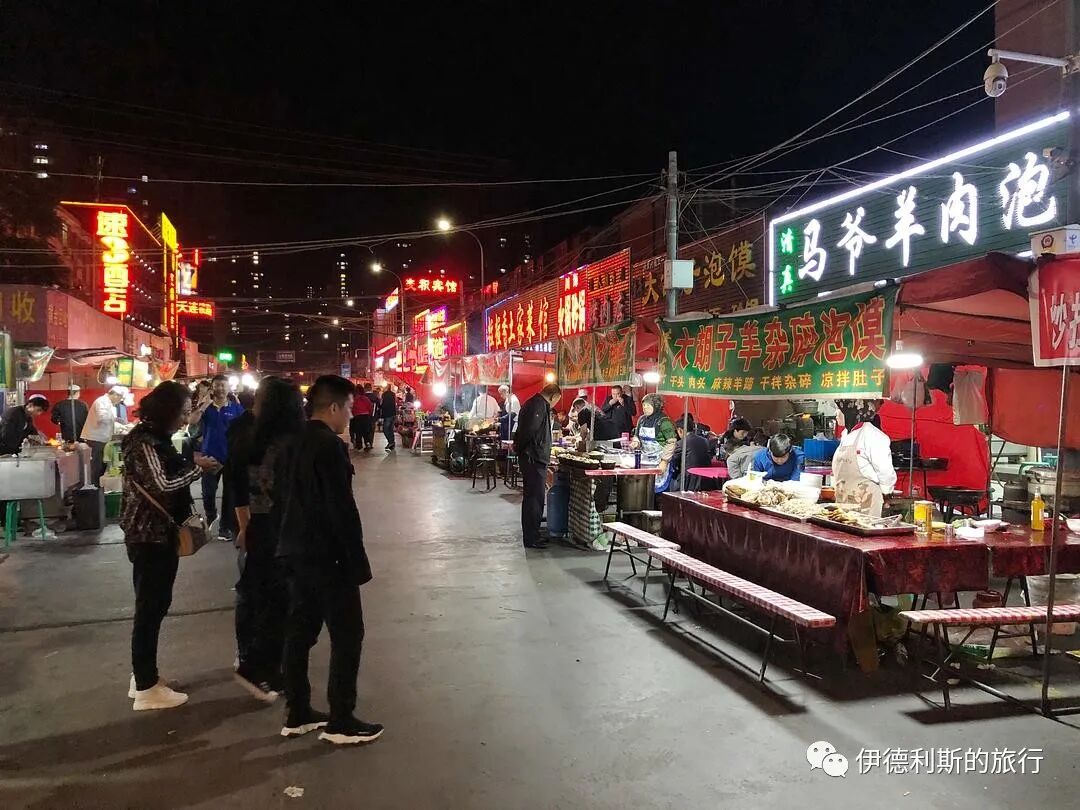
I started with a bowl of lamb offal soup (yangza tang), which was about ten times better than the one back home.
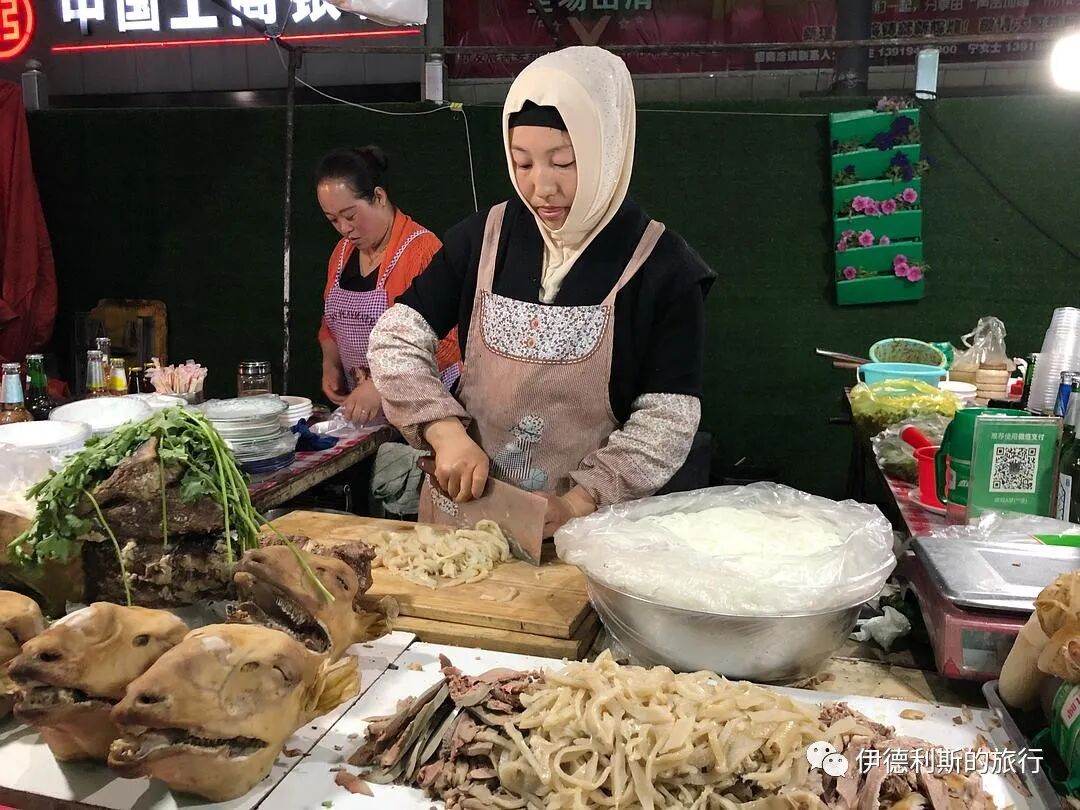
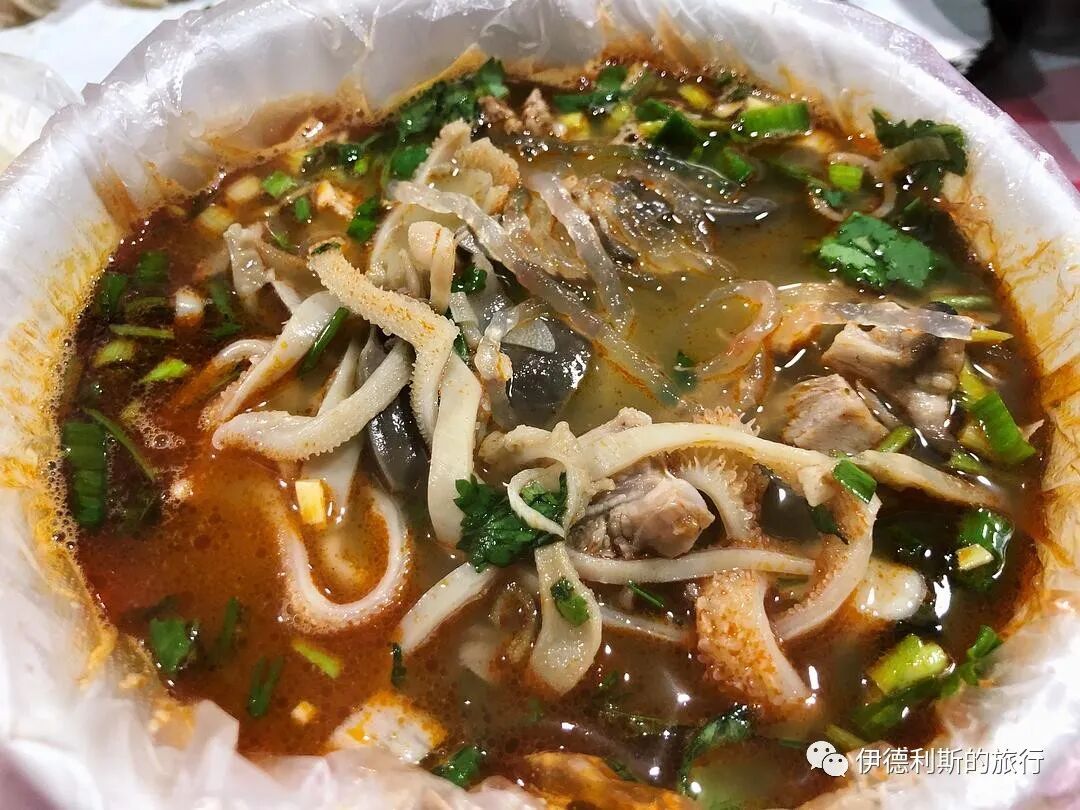
Then I had the Lanzhou specialty, milk egg fermented rice (niunai jidan laozao), which was sweet and delicious.
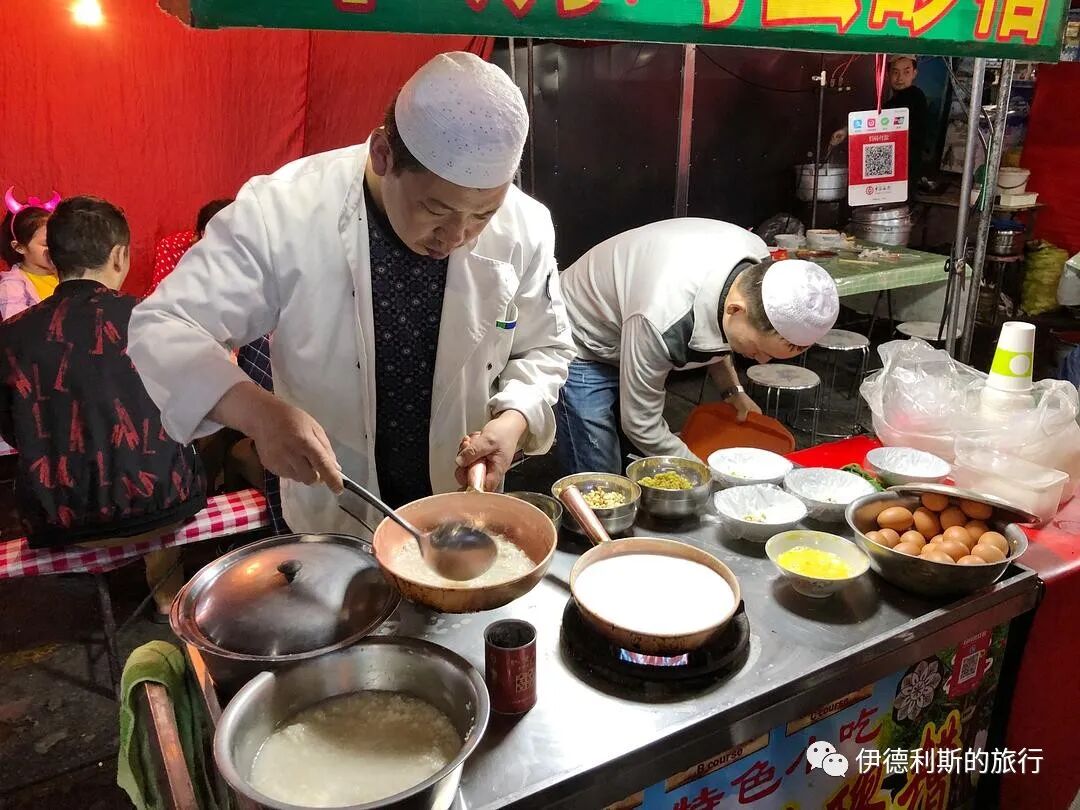
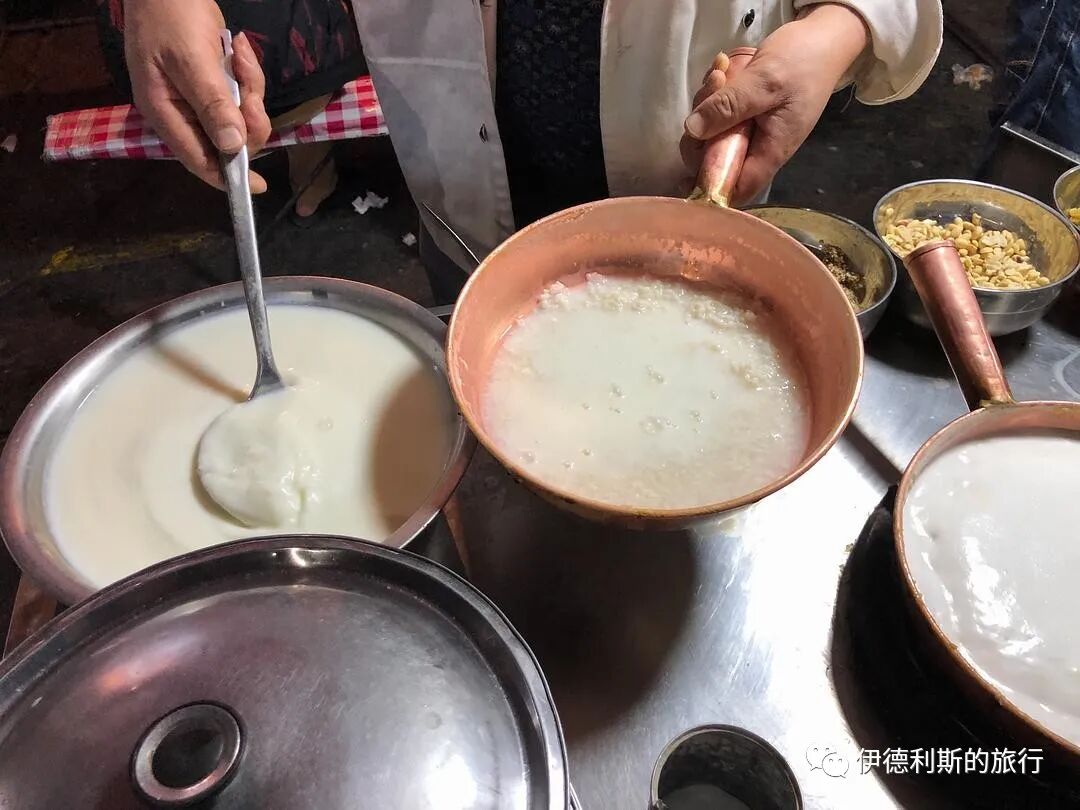
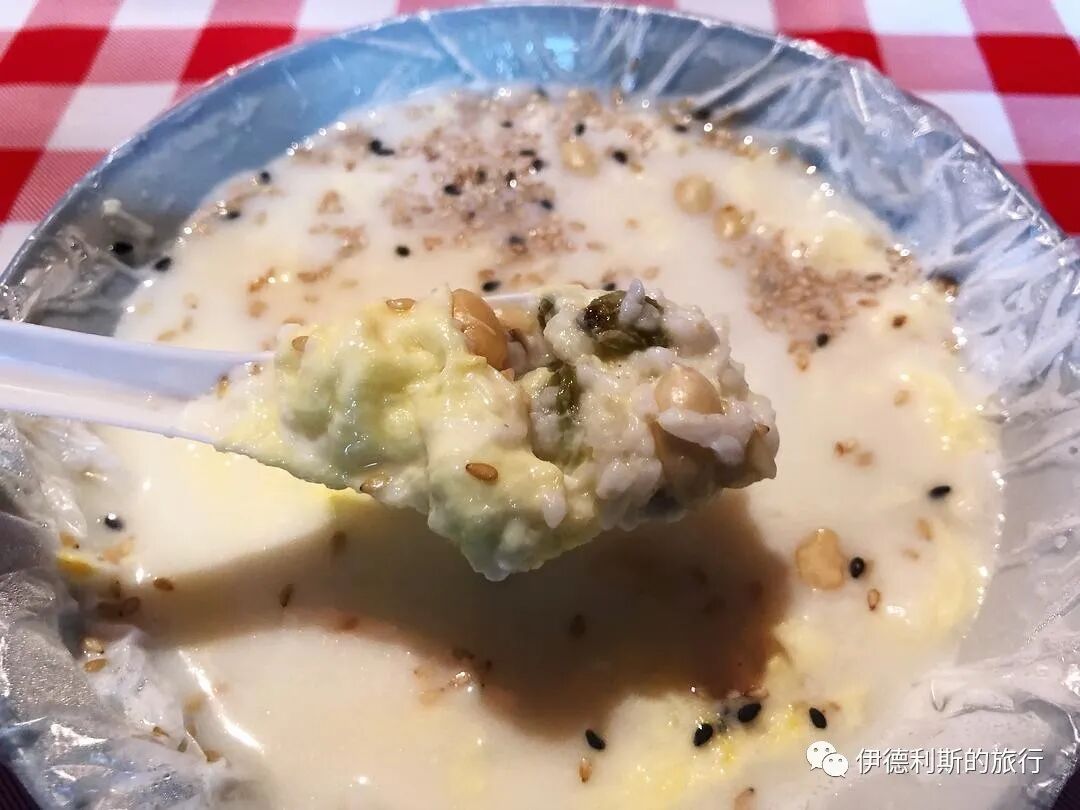
After that, I ate grilled lamb skewers. At a night market, it is best to choose a stall where they cut the meat and thread the skewers right in front of you.
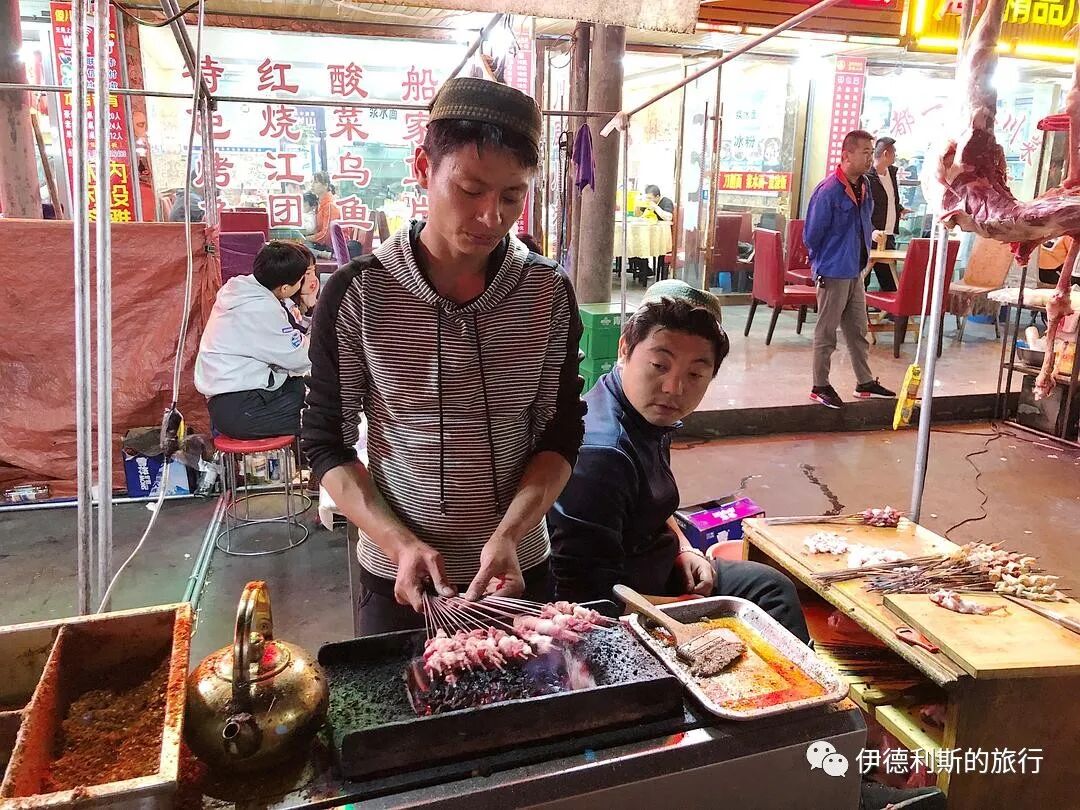
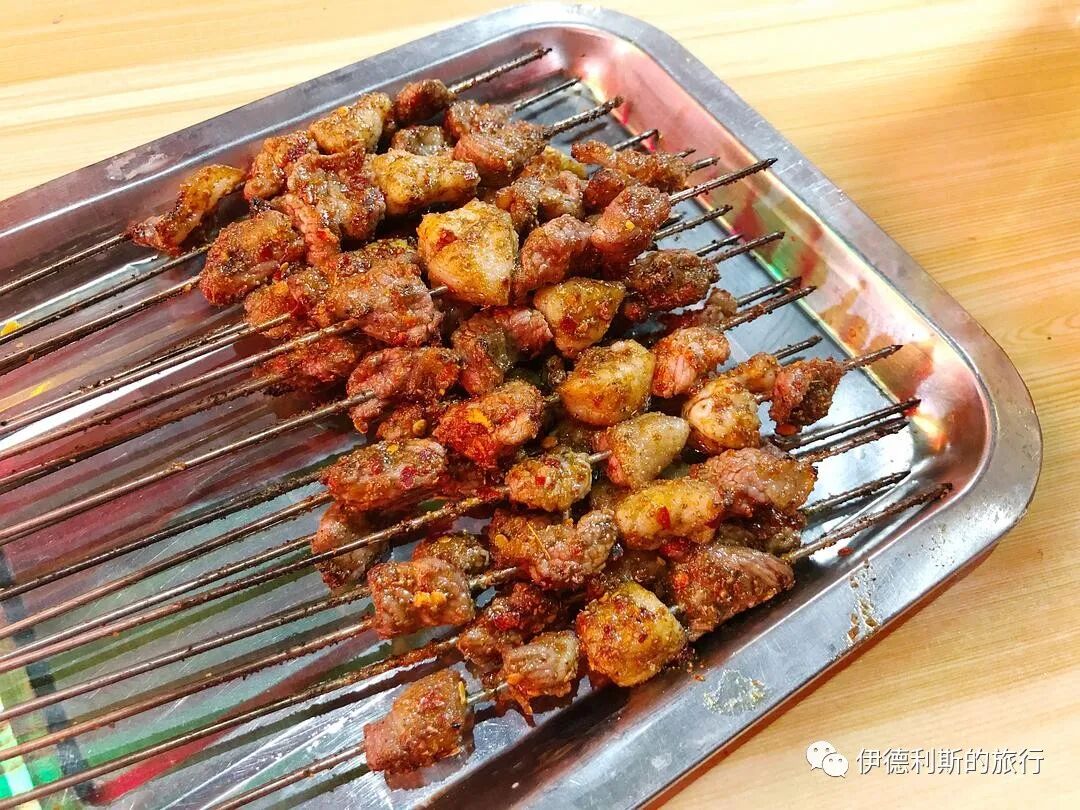
The young man cutting the meat.
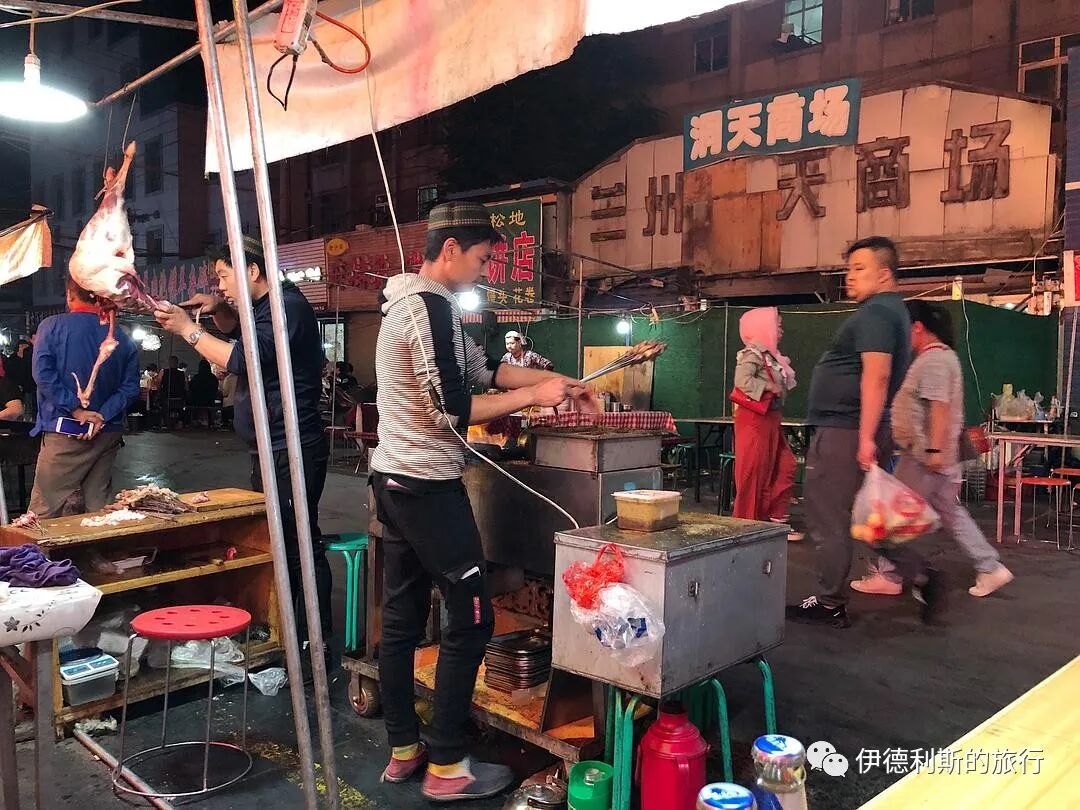
Nanguan Night Market
Nanguan Night Market opened in 2018. Because of its good location, it is very crowded, though not as internet-famous as Zhengning Road.
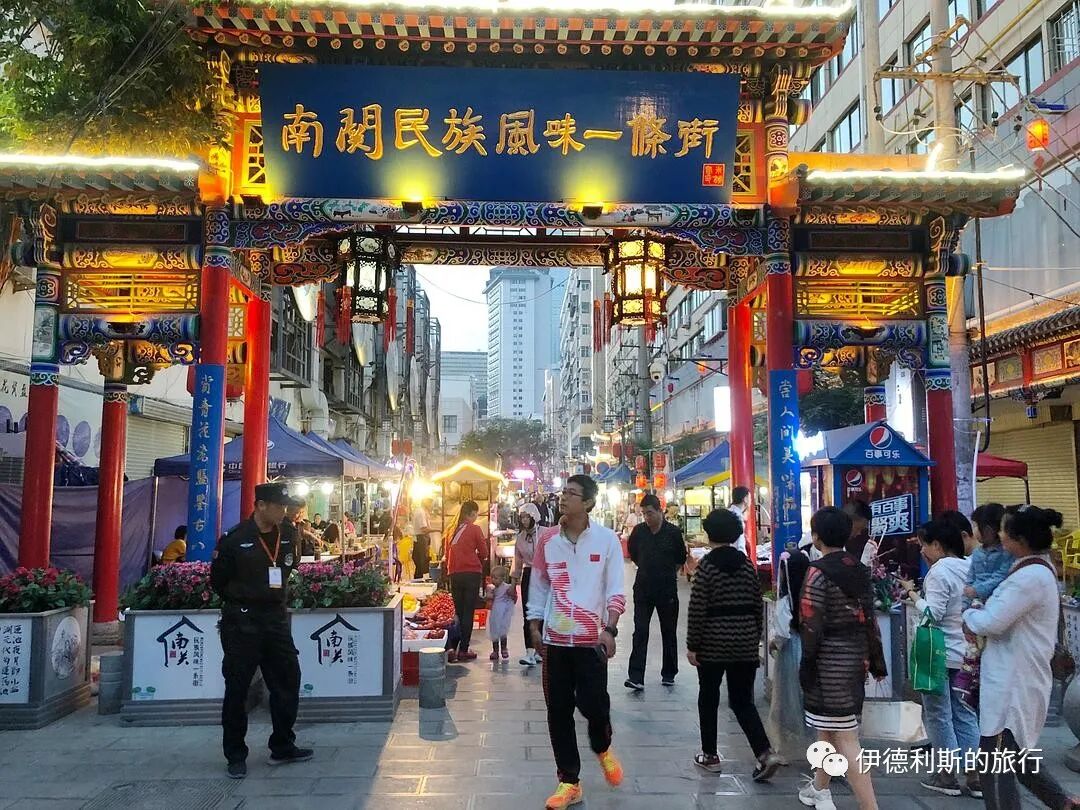
I drank hot winter fruit tea (re dongguo) and apricot skin tea (xingpi shui) here. Hot winter fruit tea is usually drunk in winter; it is made by steaming and boiling frozen pears.
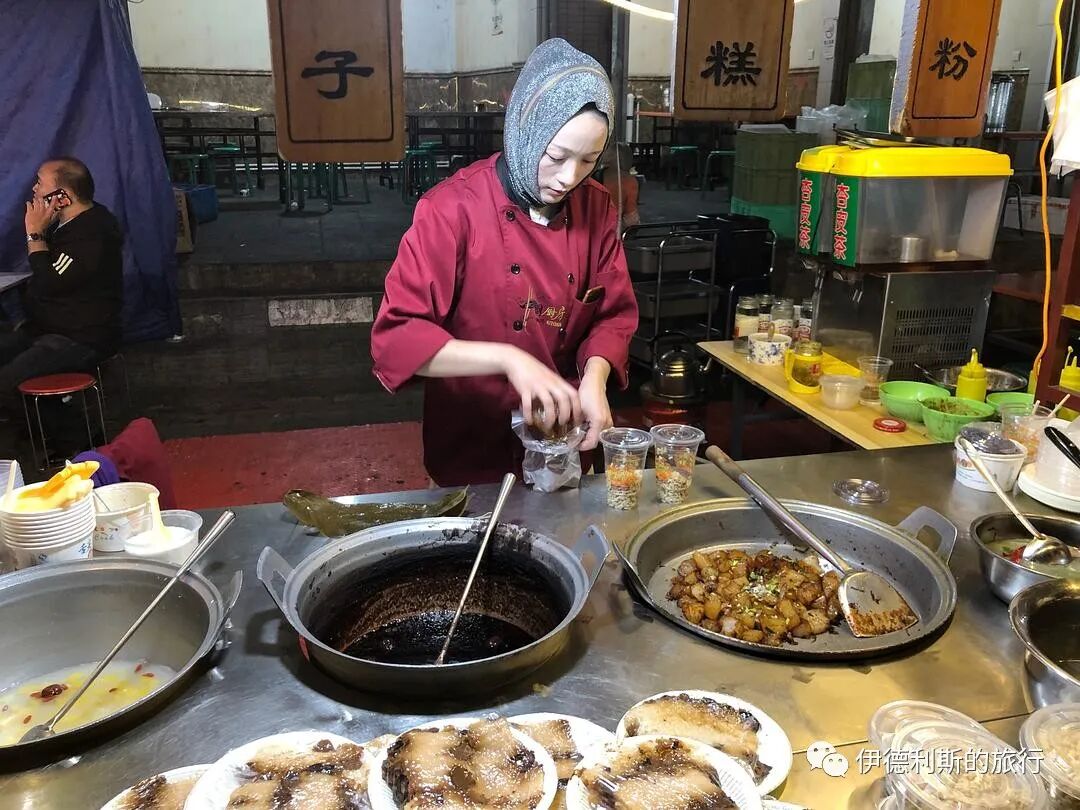
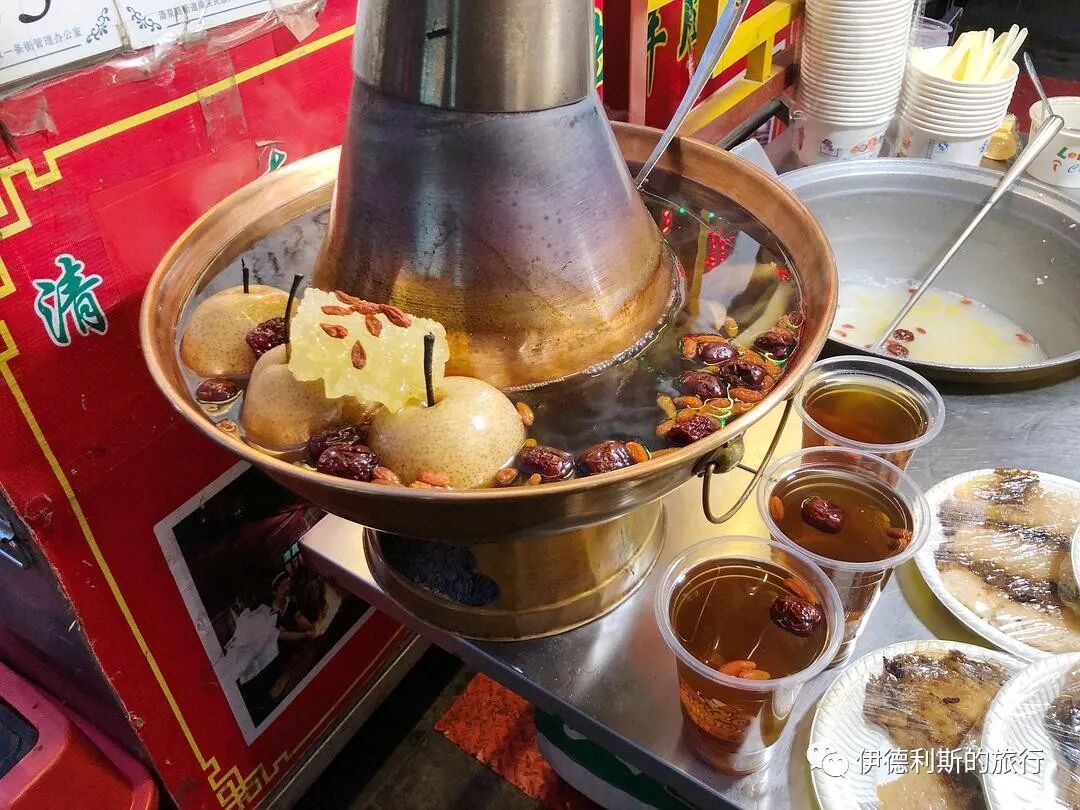
I had tried apricot skin tea before in Zhangye; it is made from dried apricots and is very refreshing.
I ate the Linxia specialty, raft noodle sausage (fazi mianchang), which gets its name because it looks like a sheepskin raft.
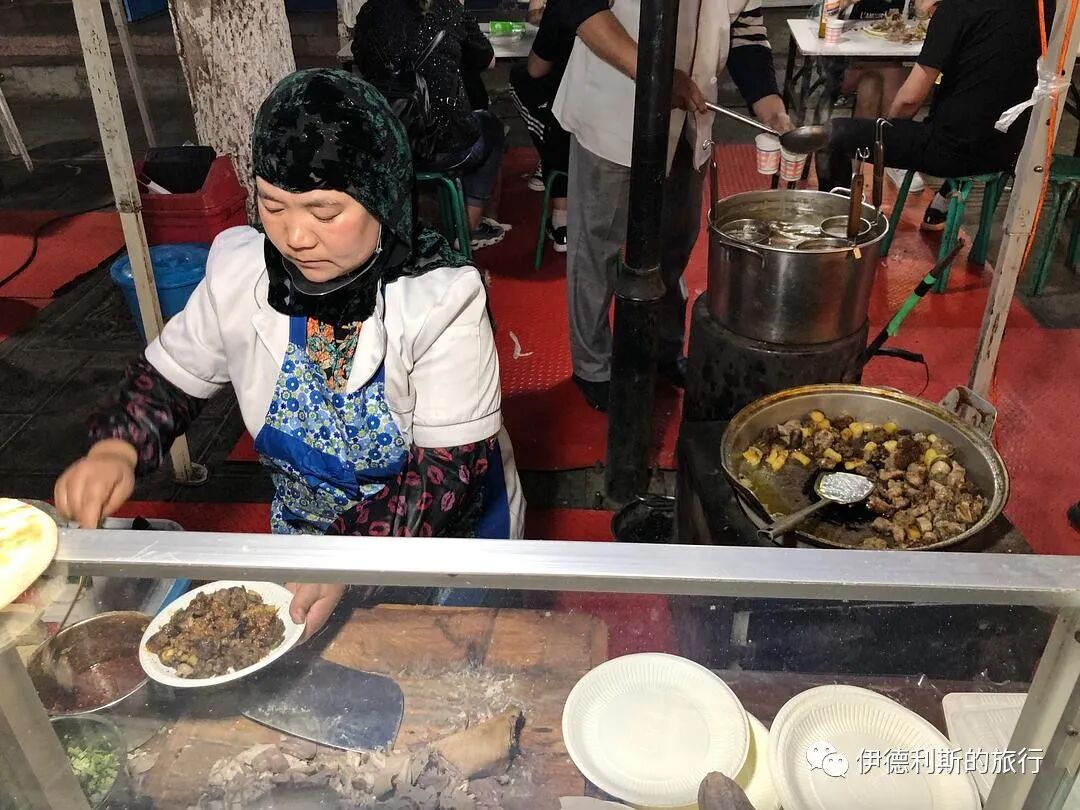
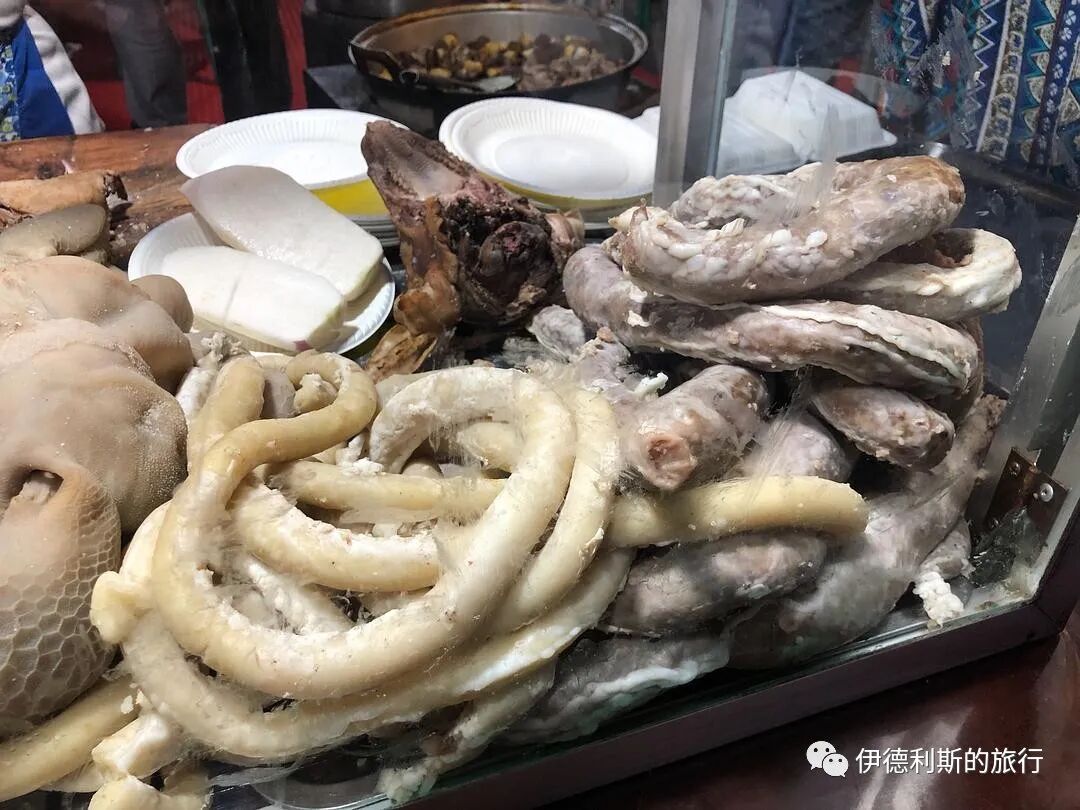
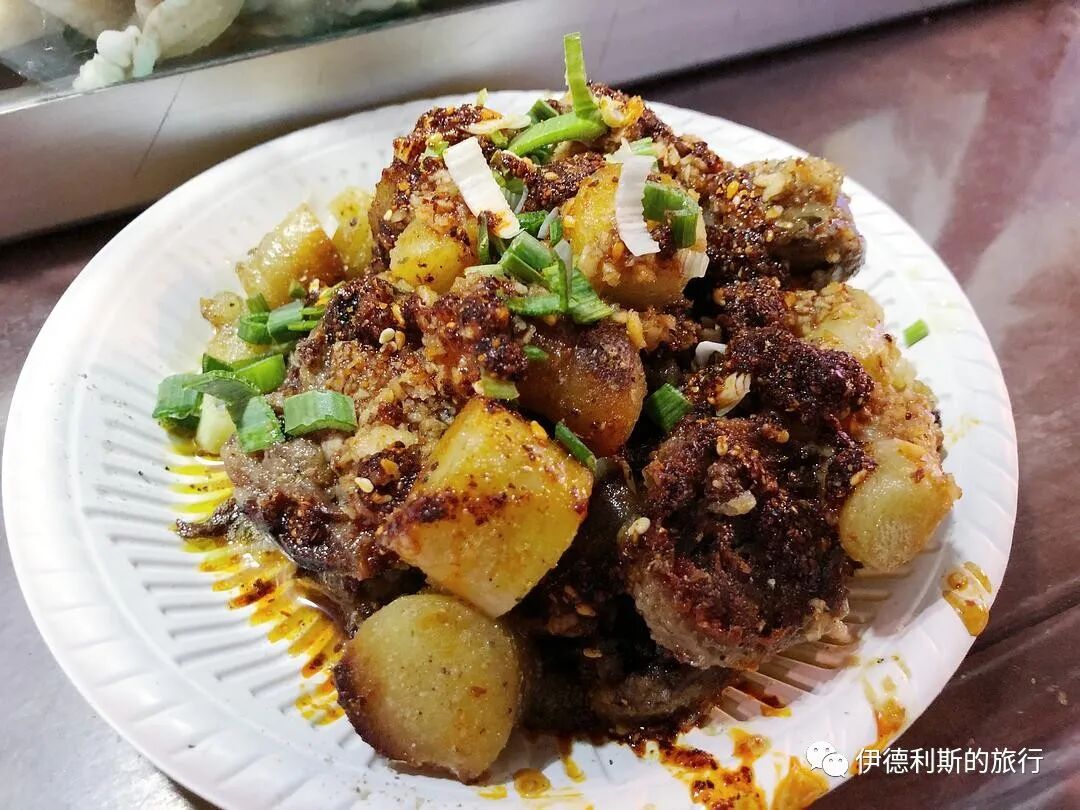
The lamb soup served with it was truly delicious.
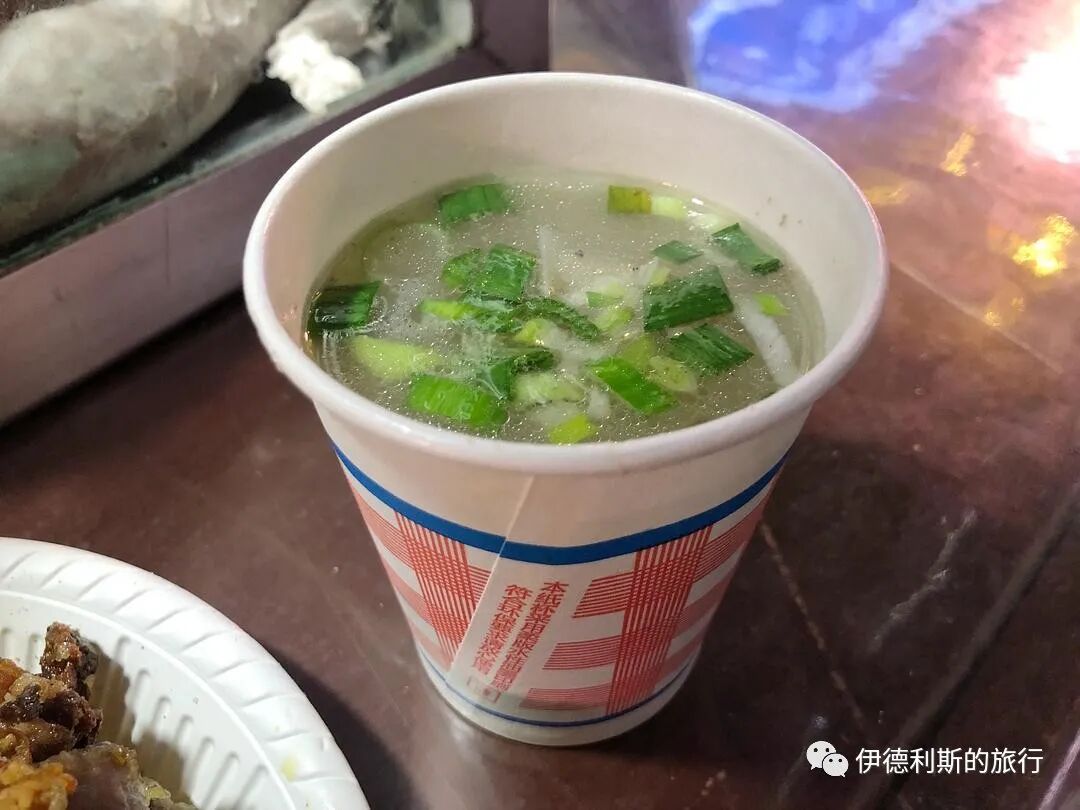
Then I bought a sugar oil cake (tangyou gao), which is usually sold for breakfast in Lanzhou; the sugar filling tasted great.
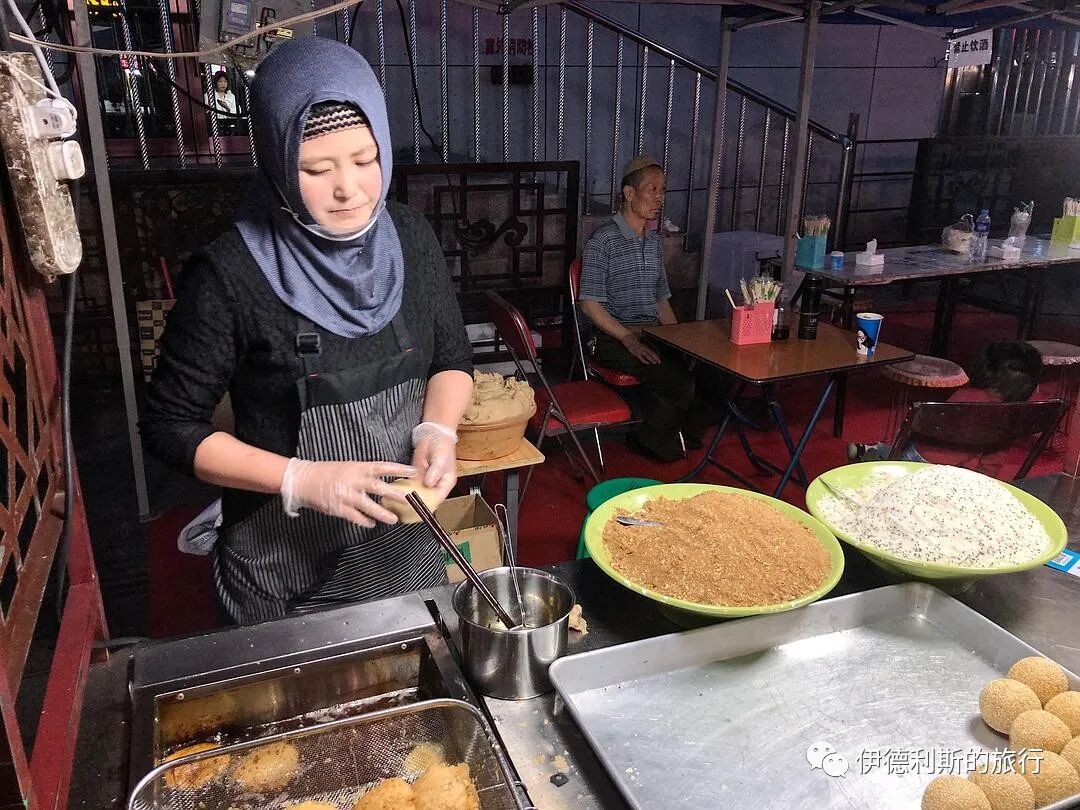
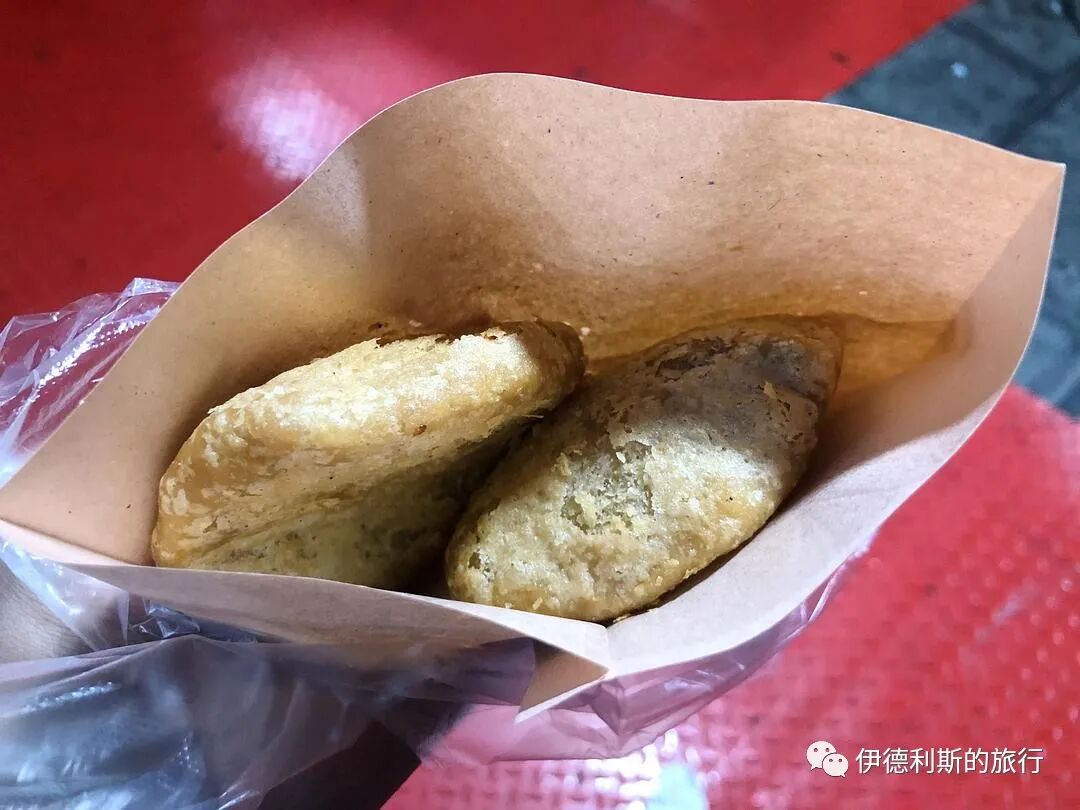
I bought fermented vegetable jelly noodles (jiangshui louyu) and fermented vegetable noodle soup (jiangshui saozi mian) at this stall.
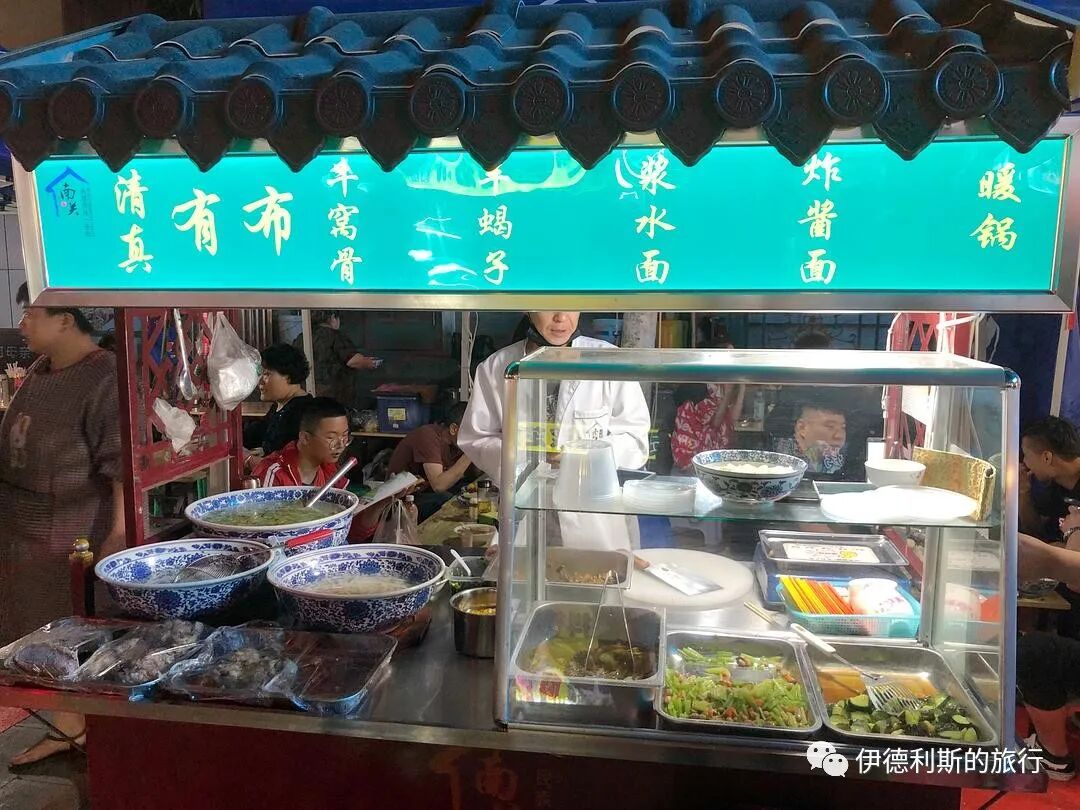
Fermented vegetable broth (jiangshui) is made from celery and cabbage. It has a slightly sour taste and is very refreshing in the summer.
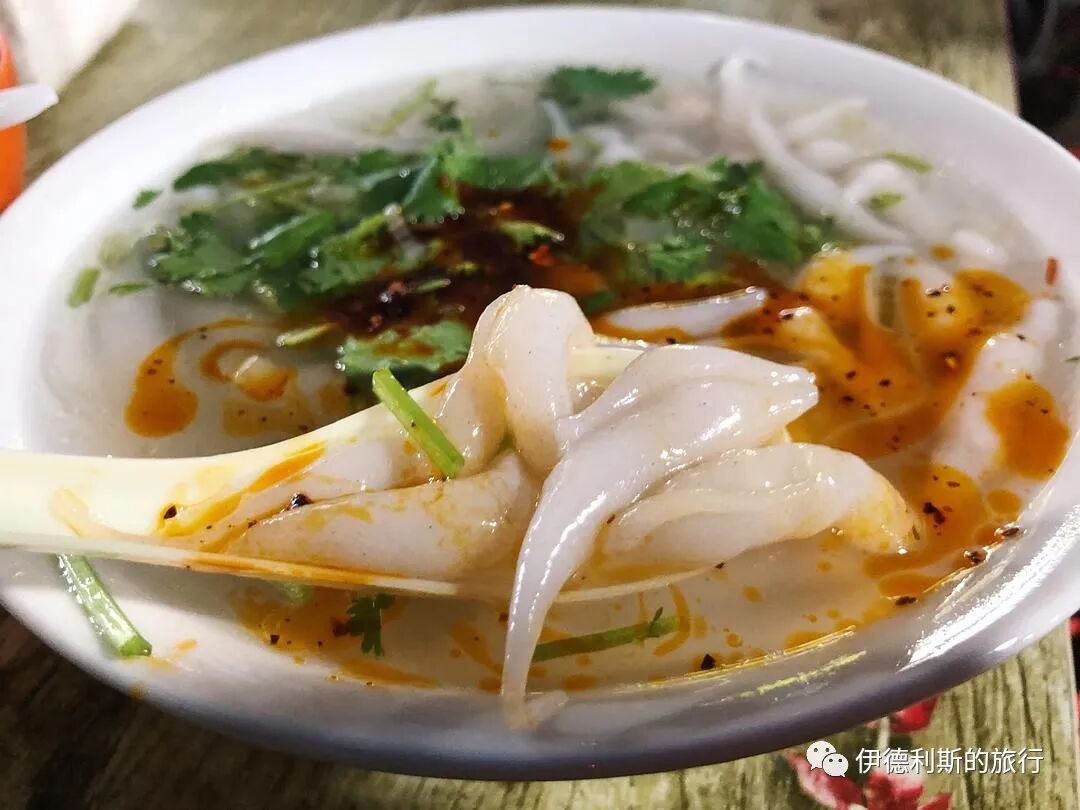
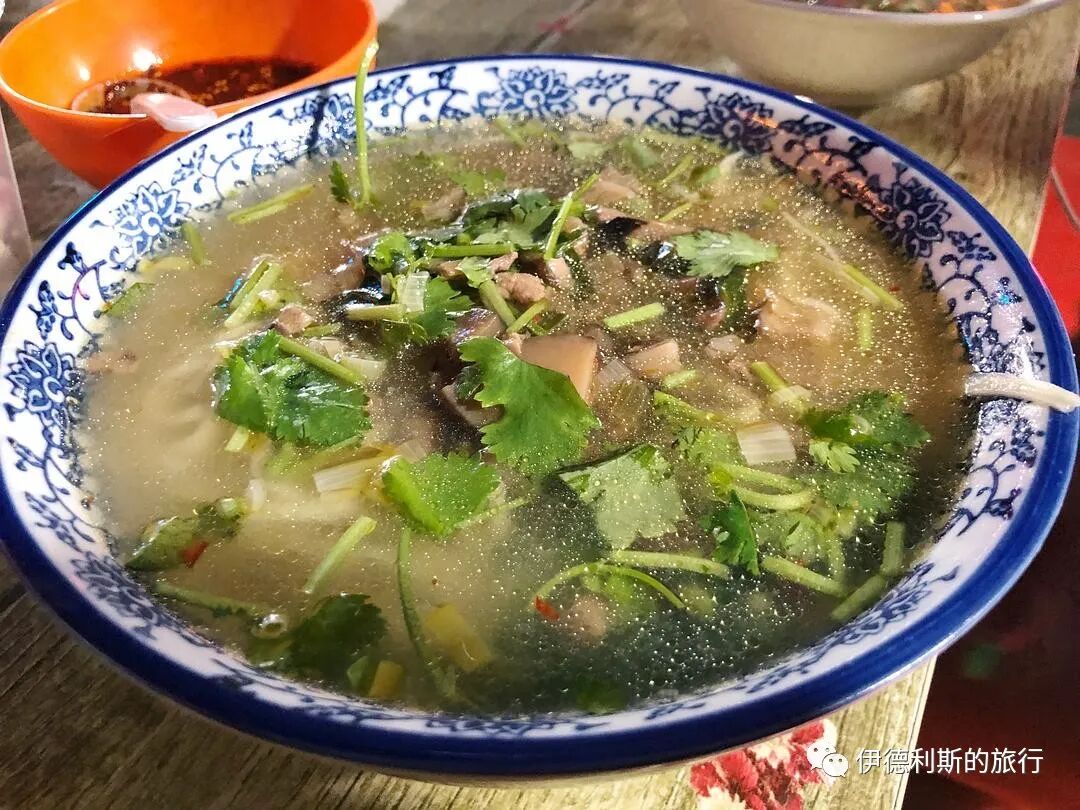
I had some sweet fermented wheat (tianbeizi) here, which is made from wheat.
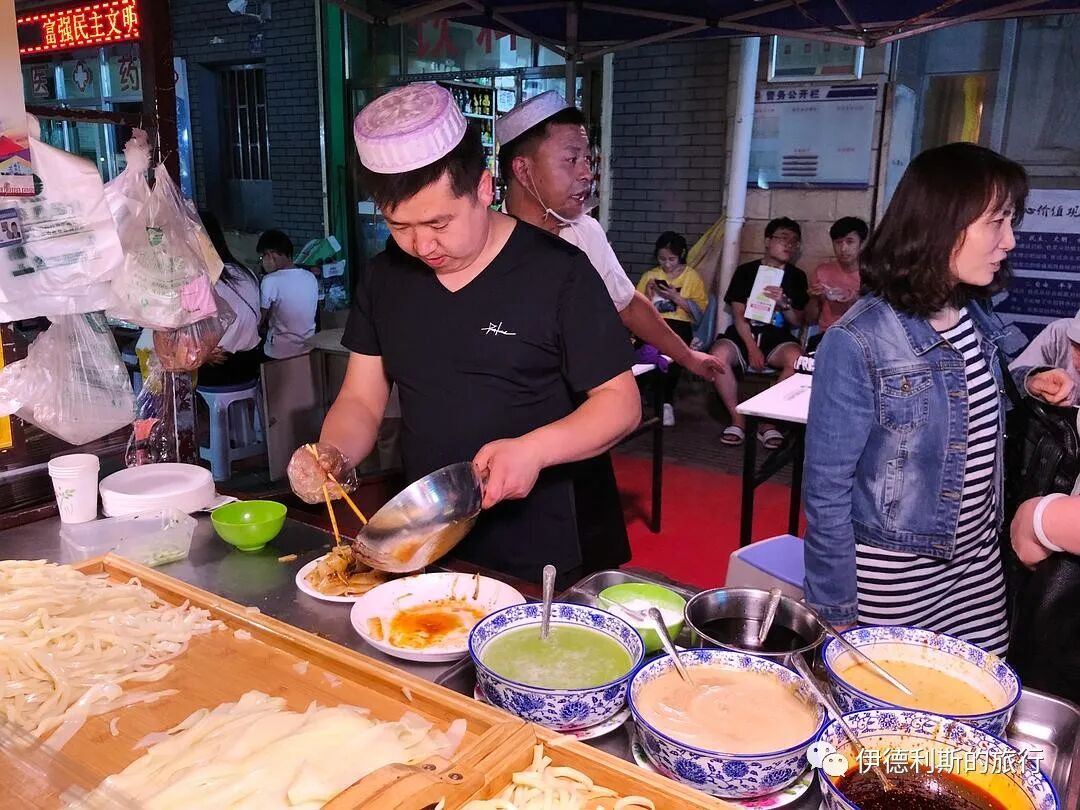
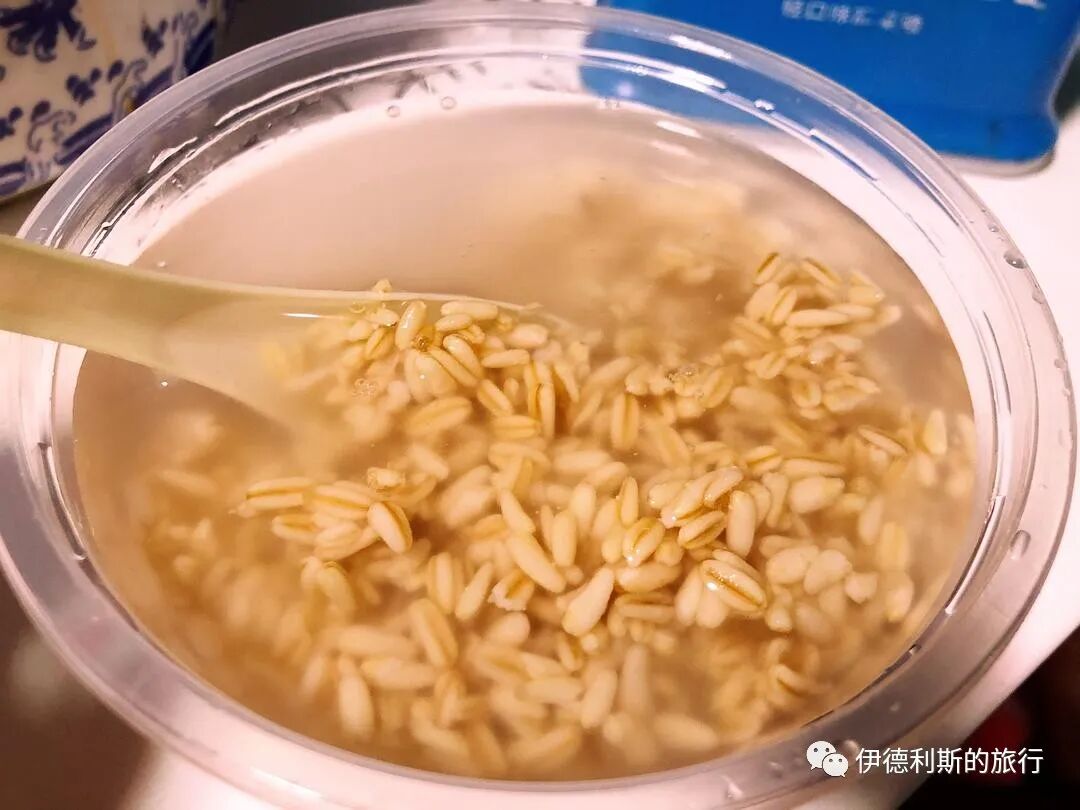
The stir-fried lamb offal (chaobola) here looked delicious, but I was too full to try it.
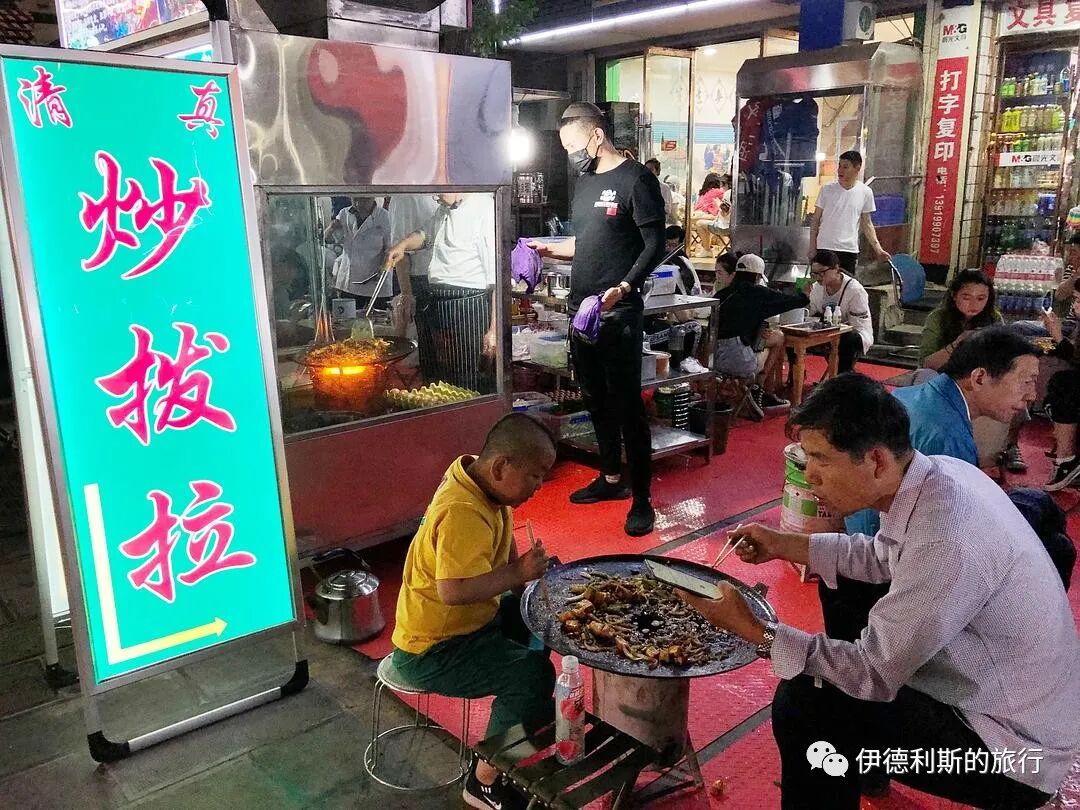
Old Ma's Milk and Egg Fermented Rice (laoma niunai jidan laozao) on Zhengning Road.
I walked from Nanguan Night Market to Lanzhou's most famous Zhengning Road Night Market. While there, I grabbed a bowl of Old Ma's Milk and Egg Fermented Rice, which had the longest line.
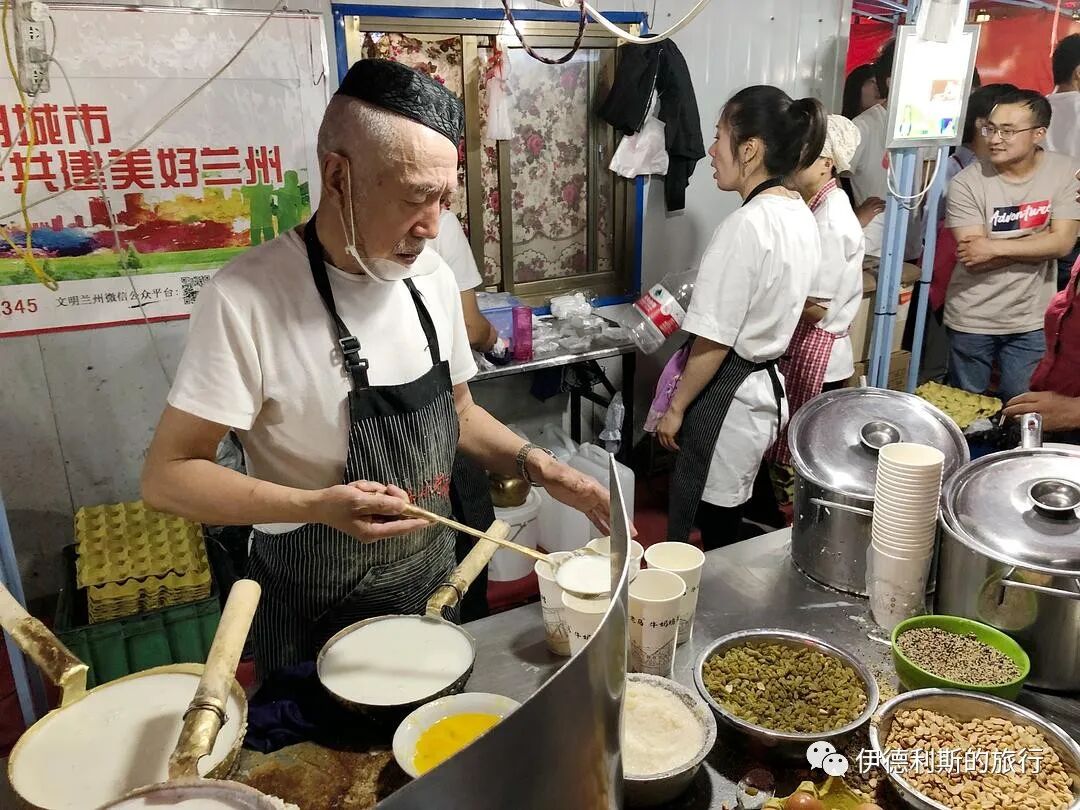
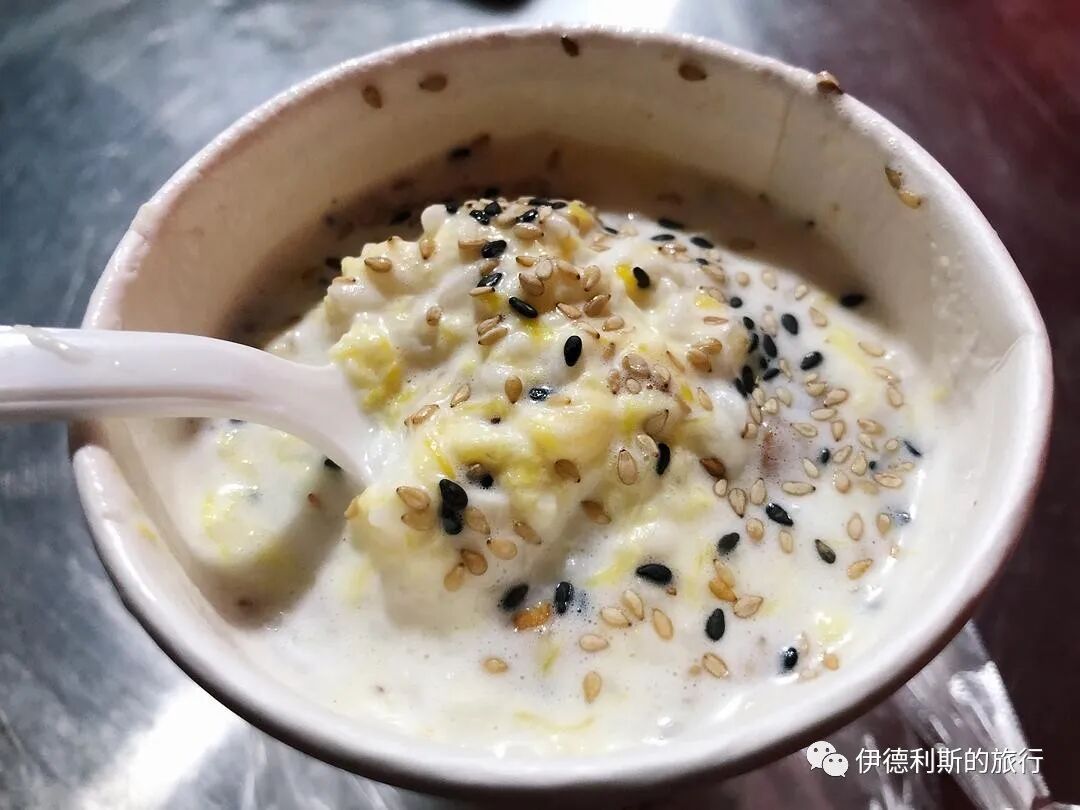 Collapse Read »
Summary: Halal Food Guide: Lanzhou Night Market — Muslim Snacks and Local Streets is presented here as a firsthand travel account in clear English, beginning with this scene: On the 28th day of the fourth lunar month in 2019, I came to Lanzhou to see the famous Songmingyan Flower Festival (hua'er hui) and took the chance to explore the night markets. The account keeps its focus on Lanzhou Night Market, Halal Snacks, Gansu Food while preserving the names, places, food, and historical details from the Chinese source.
On the 28th day of the fourth lunar month in 2019, I came to Lanzhou to see the famous Songmingyan Flower Festival (hua'er hui) and took the chance to explore the night markets. I mainly ate at the Xizhan and Nanguan night markets.
Xizhan Night Market
Xizhan Night Market is located on the southern section of Jianlan Road at the Xizhan intersection in Lanzhou. It is not as famous as the Nanguan or Zhengning Road night markets, but it has a better vibe. It has not been affected by tourism and has no internet-famous shops; it is a purely authentic, local night market.
I started with a bowl of lamb offal soup (yangza tang), which was about ten times better than the one back home.
Then I had the Lanzhou specialty, milk egg fermented rice (niunai jidan laozao), which was sweet and delicious.
After that, I ate grilled lamb skewers. At a night market, it is best to choose a stall where they cut the meat and thread the skewers right in front of you.
The young man cutting the meat.
Nanguan Night Market
Nanguan Night Market opened in 2018. Because of its good location, it is very crowded, though not as internet-famous as Zhengning Road.
I drank hot winter fruit tea (re dongguo) and apricot skin tea (xingpi shui) here. Hot winter fruit tea is usually drunk in winter; it is made by steaming and boiling frozen pears.
I had tried apricot skin tea before in Zhangye; it is made from dried apricots and is very refreshing.
I ate the Linxia specialty, raft noodle sausage (fazi mianchang), which gets its name because it looks like a sheepskin raft.
The lamb soup served with it was truly delicious.
Then I bought a sugar oil cake (tangyou gao), which is usually sold for breakfast in Lanzhou; the sugar filling tasted great.
I bought fermented vegetable jelly noodles (jiangshui louyu) and fermented vegetable noodle soup (jiangshui saozi mian) at this stall.
Fermented vegetable broth (jiangshui) is made from celery and cabbage. It has a slightly sour taste and is very refreshing in the summer.
I had some sweet fermented wheat (tianbeizi) here, which is made from wheat.
The stir-fried lamb offal (chaobola) here looked delicious, but I was too full to try it.
Old Ma's Milk and Egg Fermented Rice (laoma niunai jidan laozao) on Zhengning Road.
I walked from Nanguan Night Market to Lanzhou's most famous Zhengning Road Night Market. While there, I grabbed a bowl of Old Ma's Milk and Egg Fermented Rice, which had the longest line.
Collapse Read »
Halal Food Guide: Lanzhou Xiaoxihu — Dongxiang Muslim Food and Local Eats
Reposted from the web
Summary: Halal Food Guide: Lanzhou Xiaoxihu — Dongxiang Muslim Food and Local Eats is presented here as a firsthand travel account in clear English, beginning with this scene: The Dongxiang people are a Muslim ethnic group who speak the Dongxiang language, which belongs to the Mongolic language family. The account keeps its focus on Lanzhou Halal Food, Dongxiang Food, Xiaoxihu while preserving the names, places, food, and historical details from the Chinese source.
The Dongxiang people are a Muslim ethnic group who speak the Dongxiang language, which belongs to the Mongolic language family. They mainly live in Dongxiang Autonomous County, Hezheng County, and Guanghe County within the Linxia Hui Autonomous Prefecture of Gansu Province. The loess hills where the Dongxiang people live are quite barren, so many people chose to move to Lanzhou to make a living after the 1980s. Xiaoxihu is located at the end of the road from Linxia to Lanzhou. It is near the Xiyuan and Xihu Hui Muslim communities that have existed since the Qing Dynasty. With the commercial growth driven by the Xiaoxihu Yiwu Trade City since the 1990s, Xiaoxihu has become the main residential area for Dongxiang people in Lanzhou.
In Xiaoxihu, the Dongxiang people are most concentrated in Baishu Lane, Jiangouyan, and Shangxiyuan, where you can find all kinds of Dongxiang food.
Pre-dawn meal (suhoor)
I first visited Xiaoxihu during Ramadan. At three in the morning, I ate a Dongxiang pre-dawn meal (suhoor) there, ordering hand-grabbed lamb (shouzhua) and lamb noodle soup (yangrou mianpian). Because it was the last of the hand-grabbed lamb (shouzhua) for the day, it didn't look very pretty, but it tasted great.
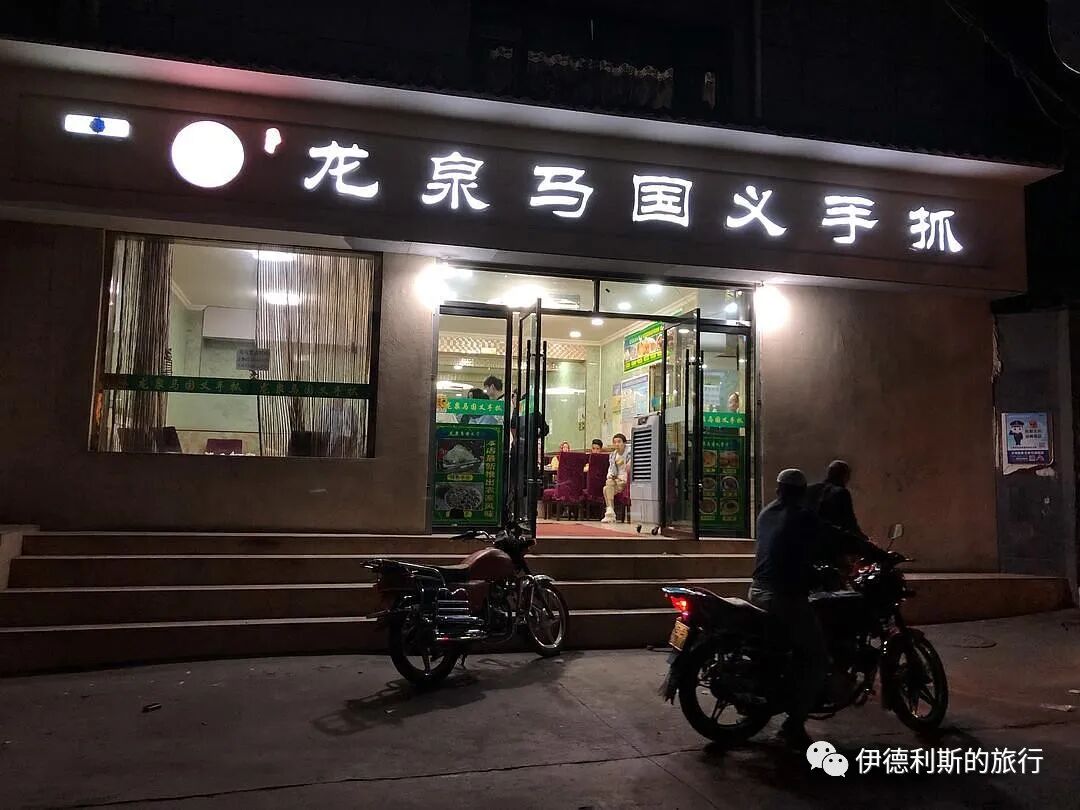
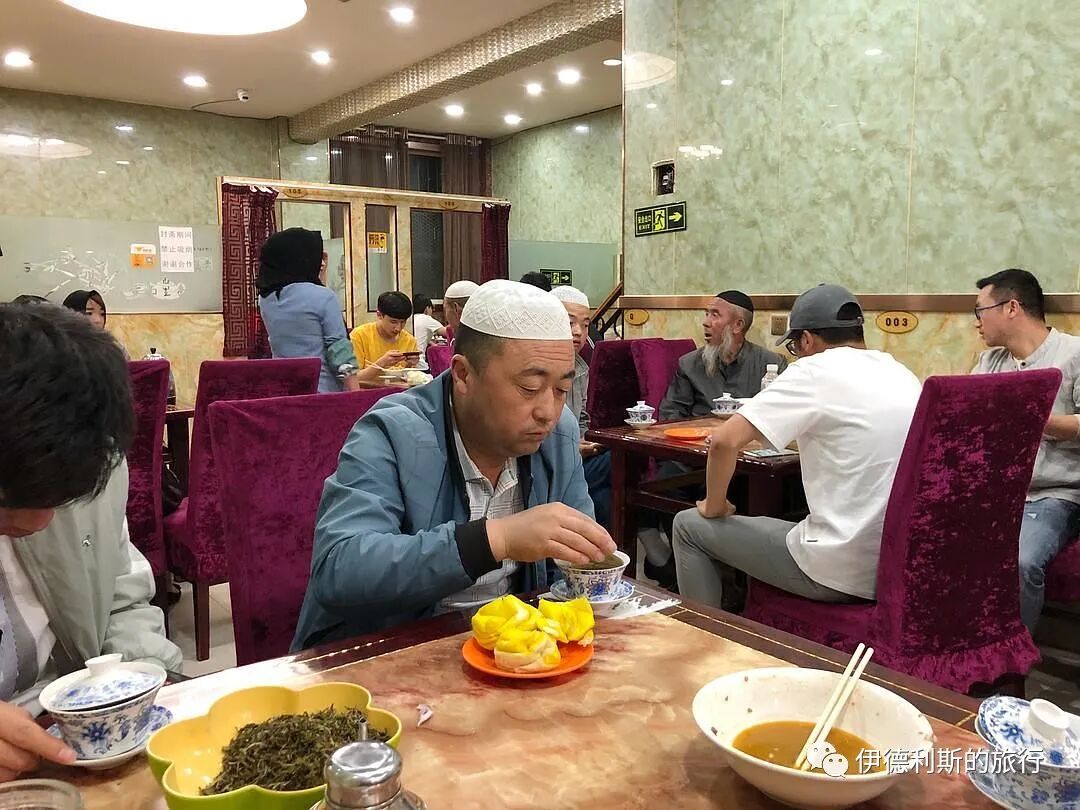
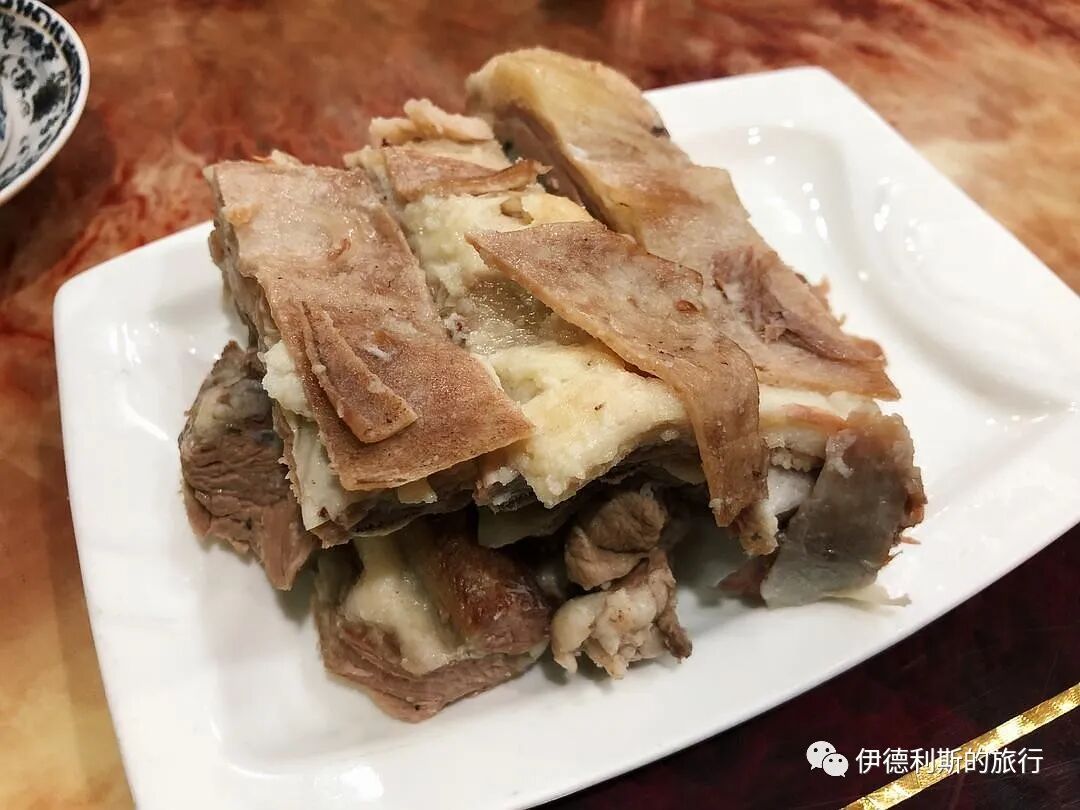
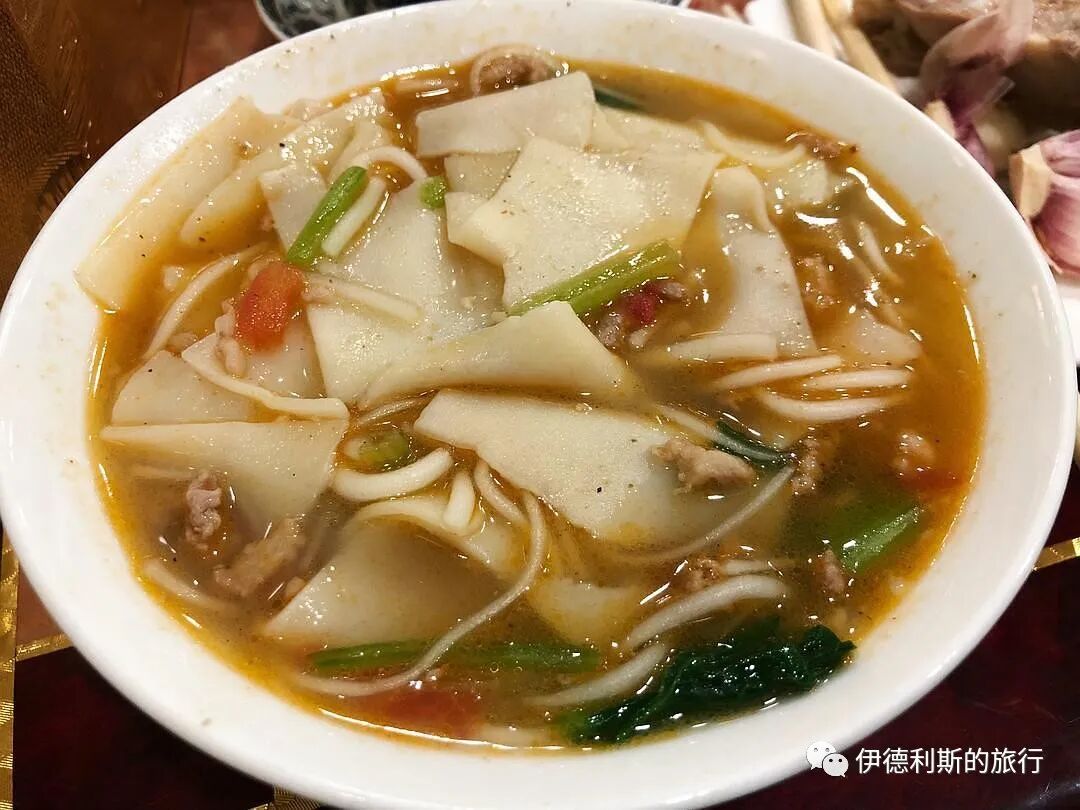
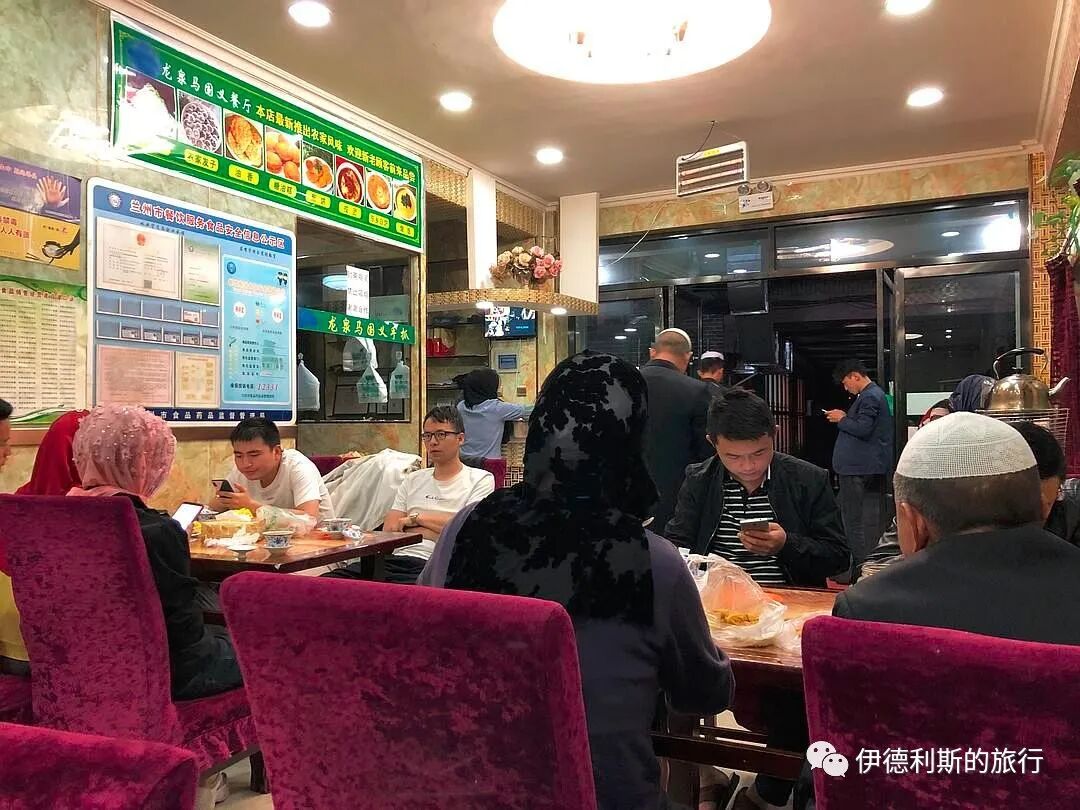
During Ramadan, many restaurants in Xiaoxihu stay open until four in the morning.
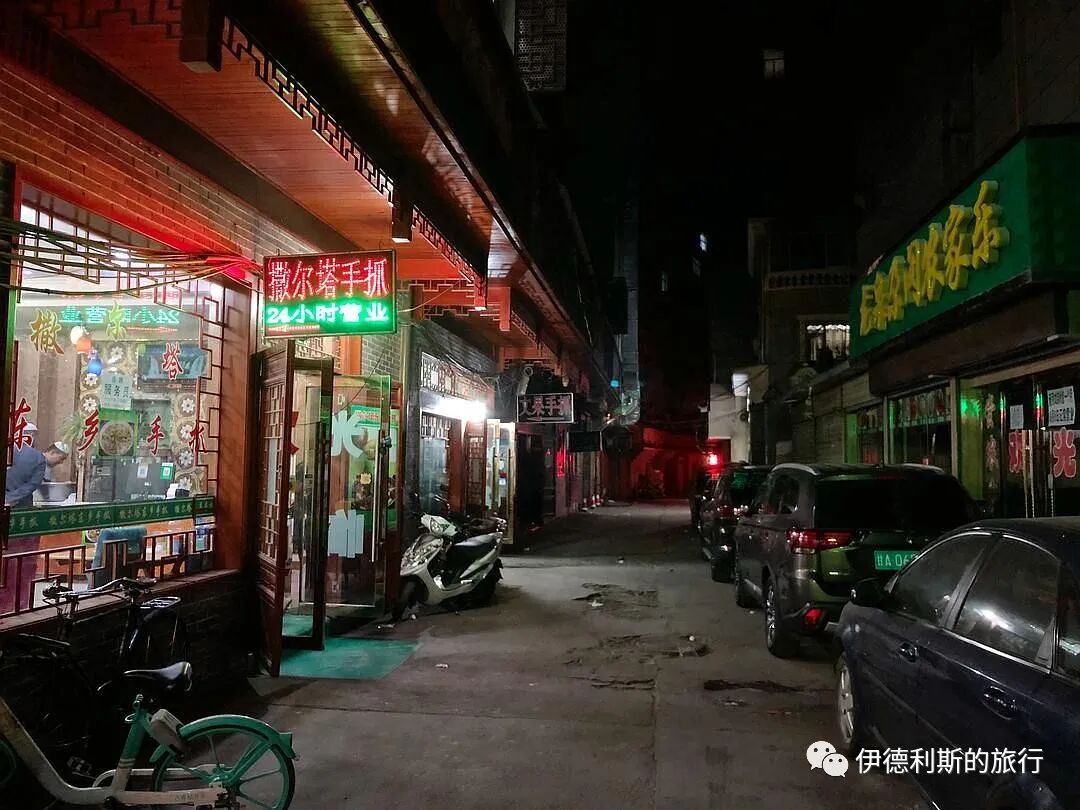
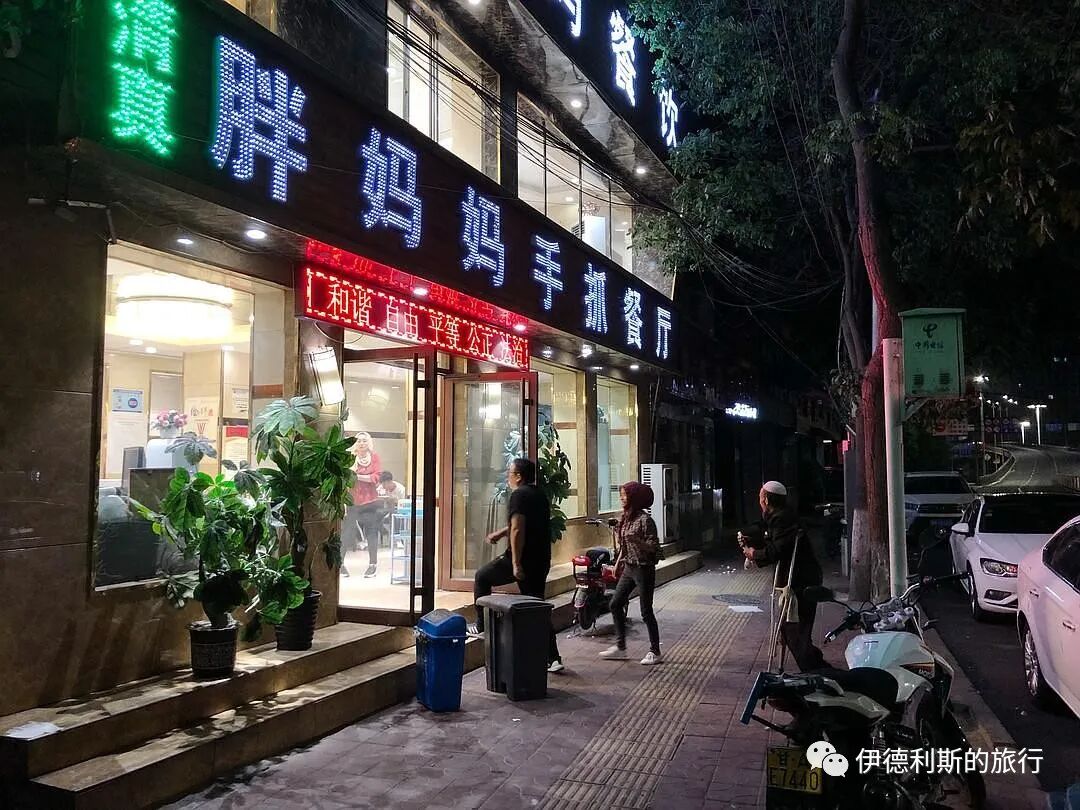
Zhonghua Hand-grabbed Lamb King (Zhonghua Shouzhua Dawang)
I went back to Xiaoxihu to eat and explore the week after Eid al-Fitr. As soon as I got off the plane, I headed straight to Zhonghua Hand-grabbed Lamb King (Zhonghua Shouzhua Dawang) on Jiangouyan Street. This place is very popular in Xiaoxihu, and you have to share tables at noon. I felt very satisfied drinking tea with dried fruits and rock sugar (sanpaotai) while eating half a jin of lamb ribs, a small bowl of lentil and sparrow-tongue noodles (biandou queshe mian), and a plate of cold starch noodles (liangpizi). The environment and service here are both good. They refill your tea often, and the tea with dried fruits and rock sugar (sanpaotai) itself is delicious.
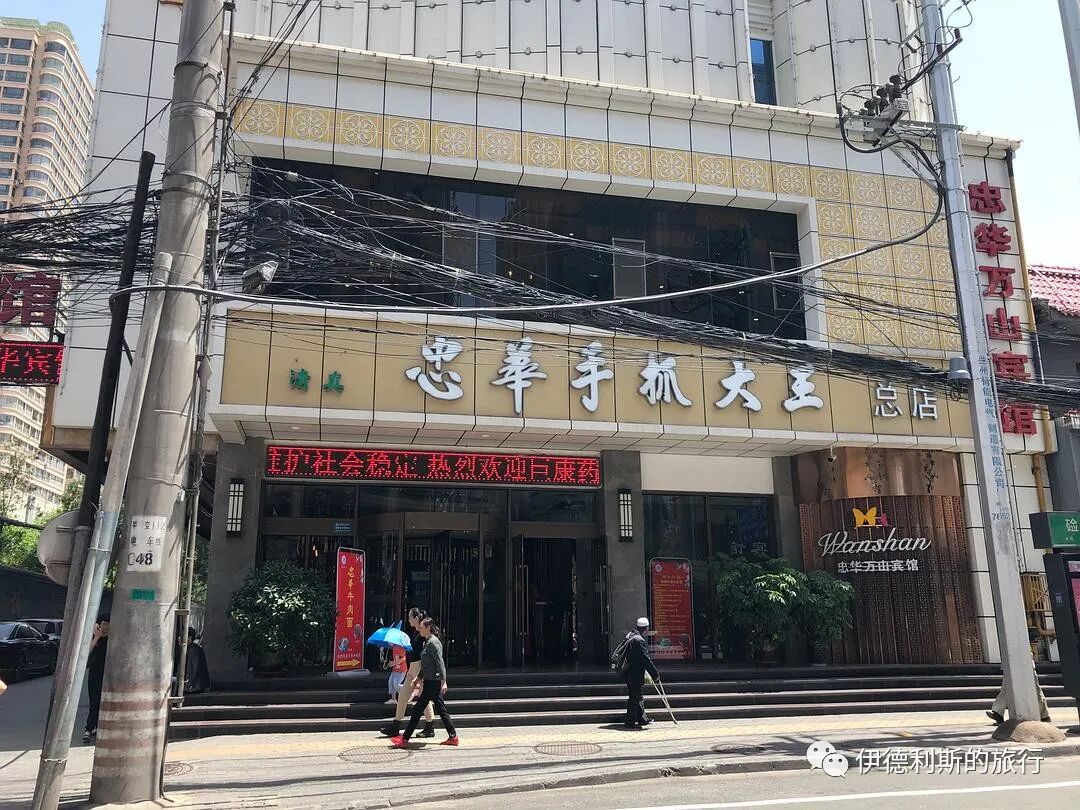
The lamb tastes very authentic. You basically eat one piece of meat with one clove of garlic, and the garlic is very fragrant too.
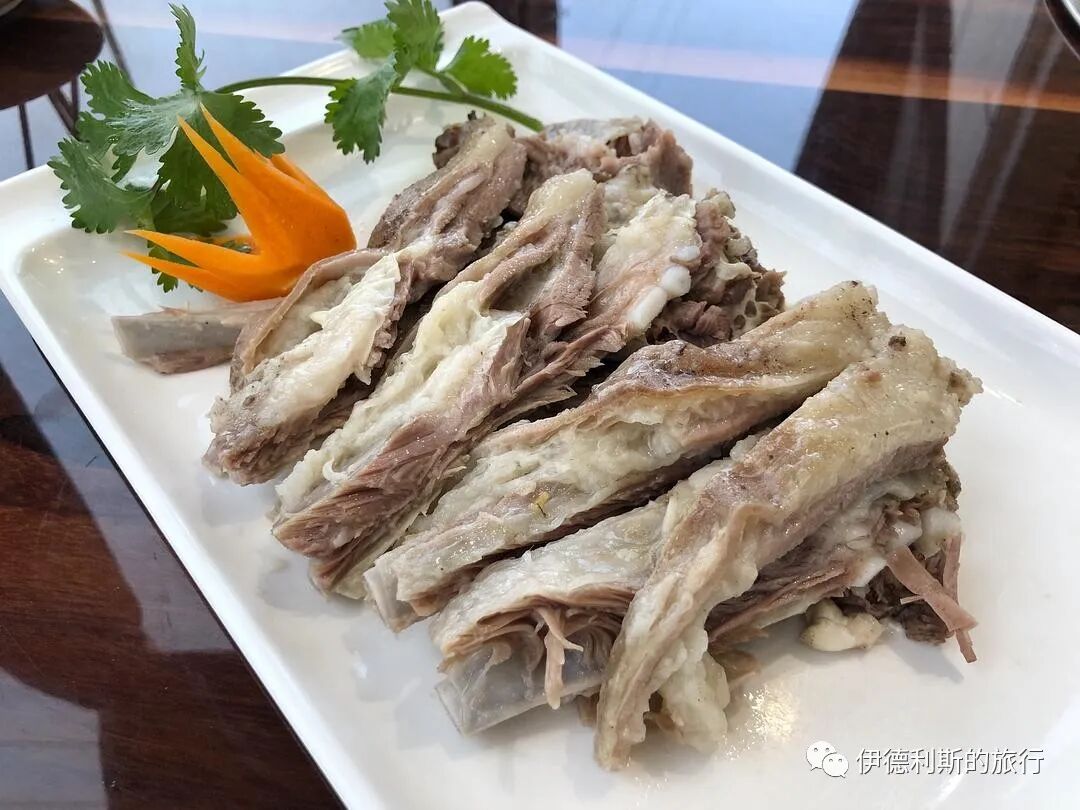
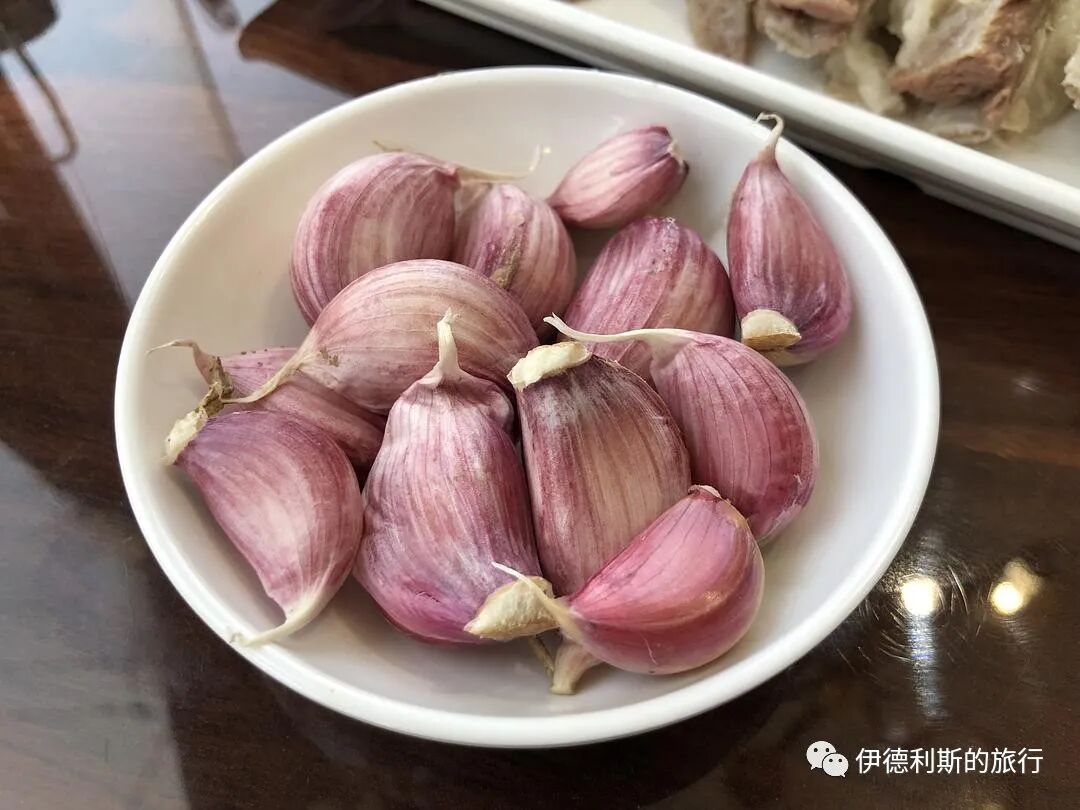
Cold starch noodles (liangpizi)
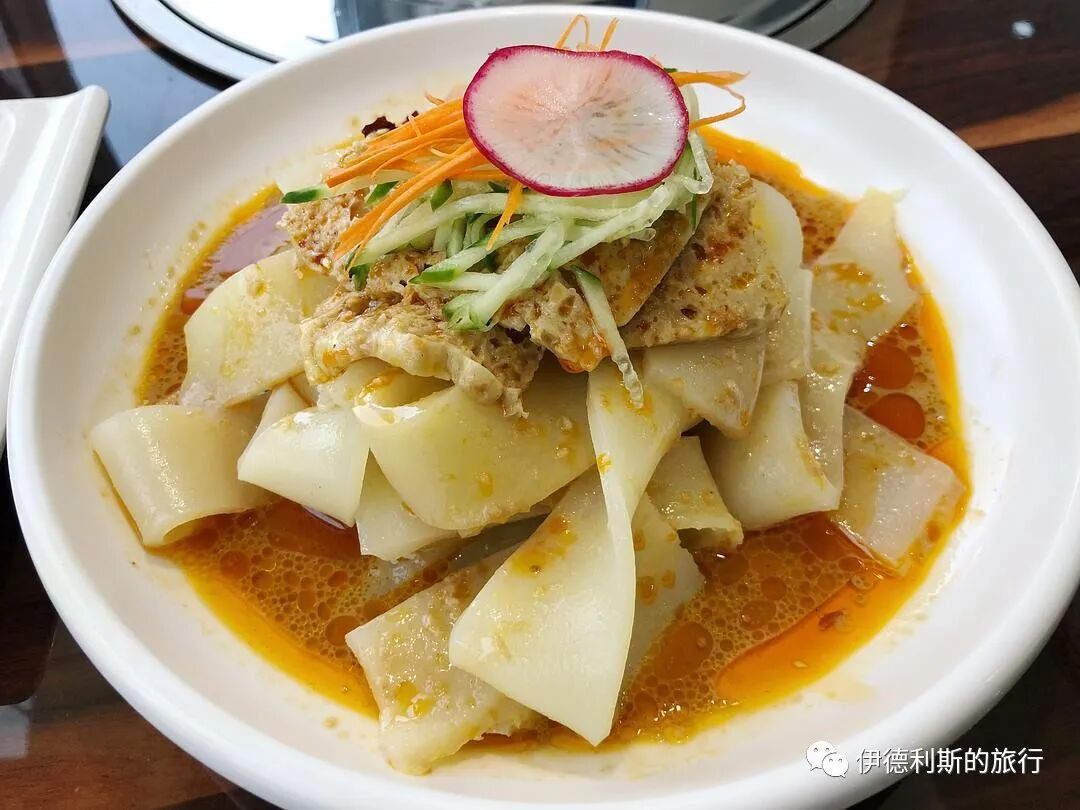
Lentil and sparrow-tongue noodles (biandou queshe mian)
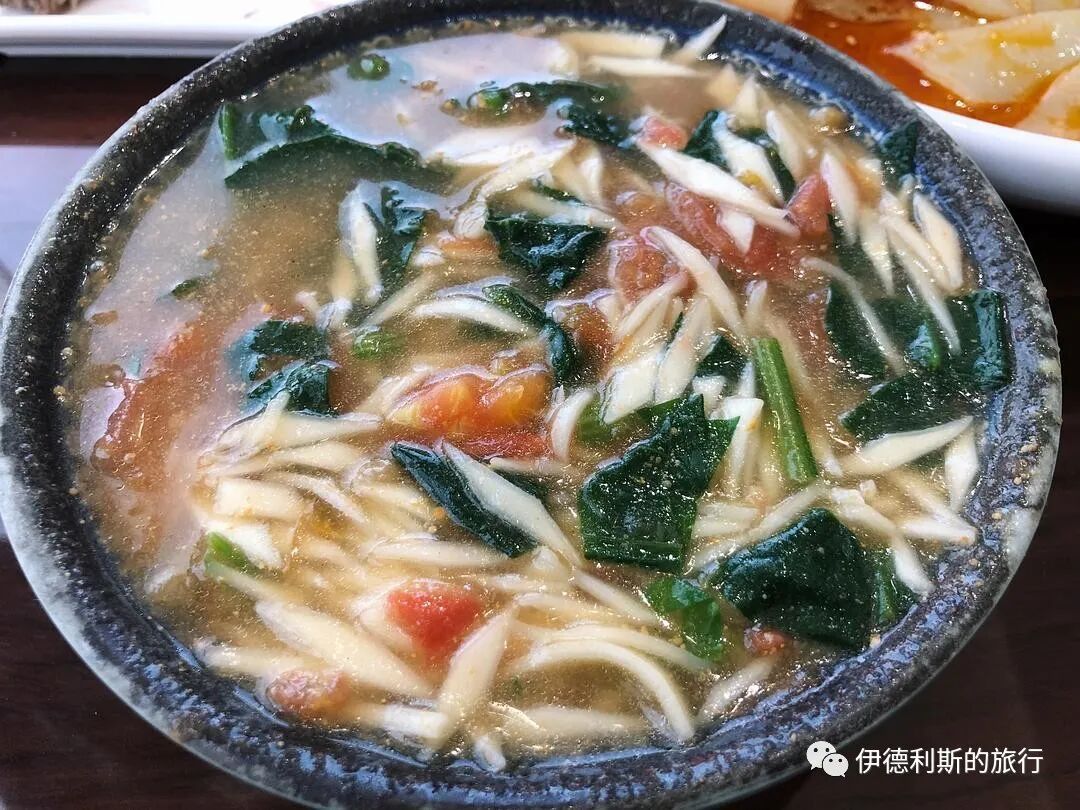
Rose-flavored tea with dried fruits and rock sugar (meigui sanpaotai). I wanted more after finishing it, so I ended up buying a lot at the supermarket to take home.
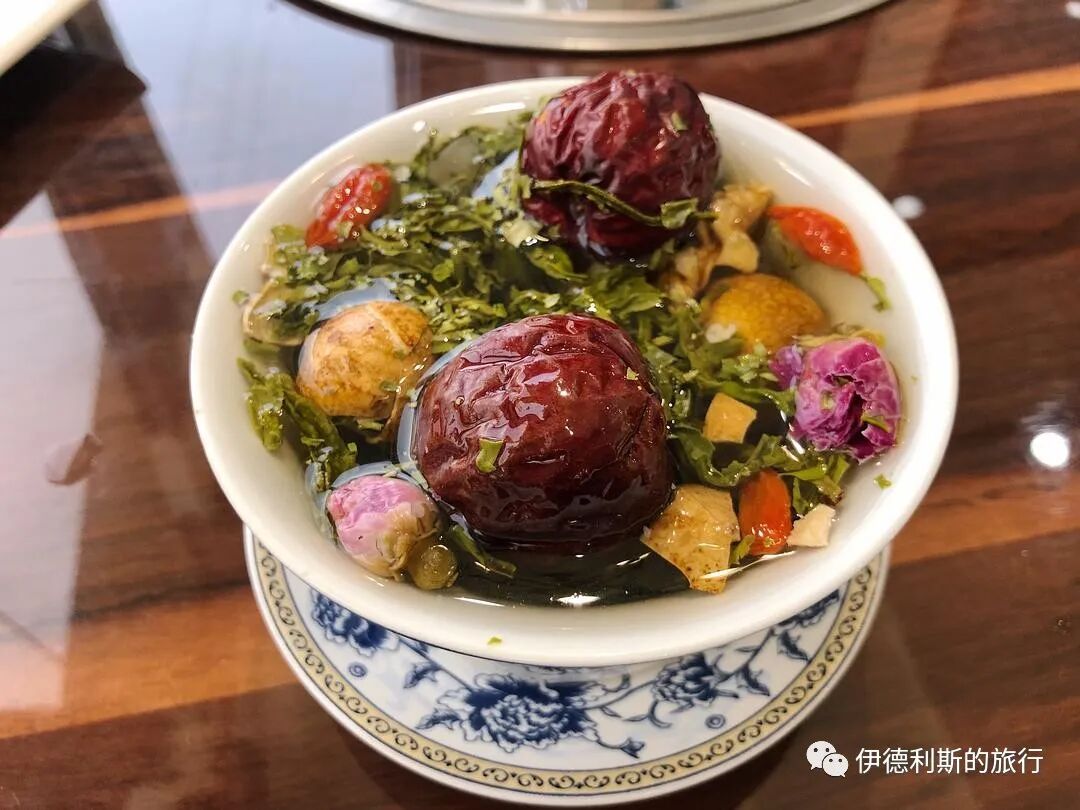
River-style noodle soup (heyan mianpian)
There are many restaurants one after another on Jiangouyan Street. I also ate river-style noodle soup (heyan mianpian) and braised lamb (huangmen yangrou) at this place. River-style noodle soup (heyan mianpian) originated in Guanghe County, Linxia. It evolved from stir-fried noodle soup (chao mianpian), but the flavor is much richer.
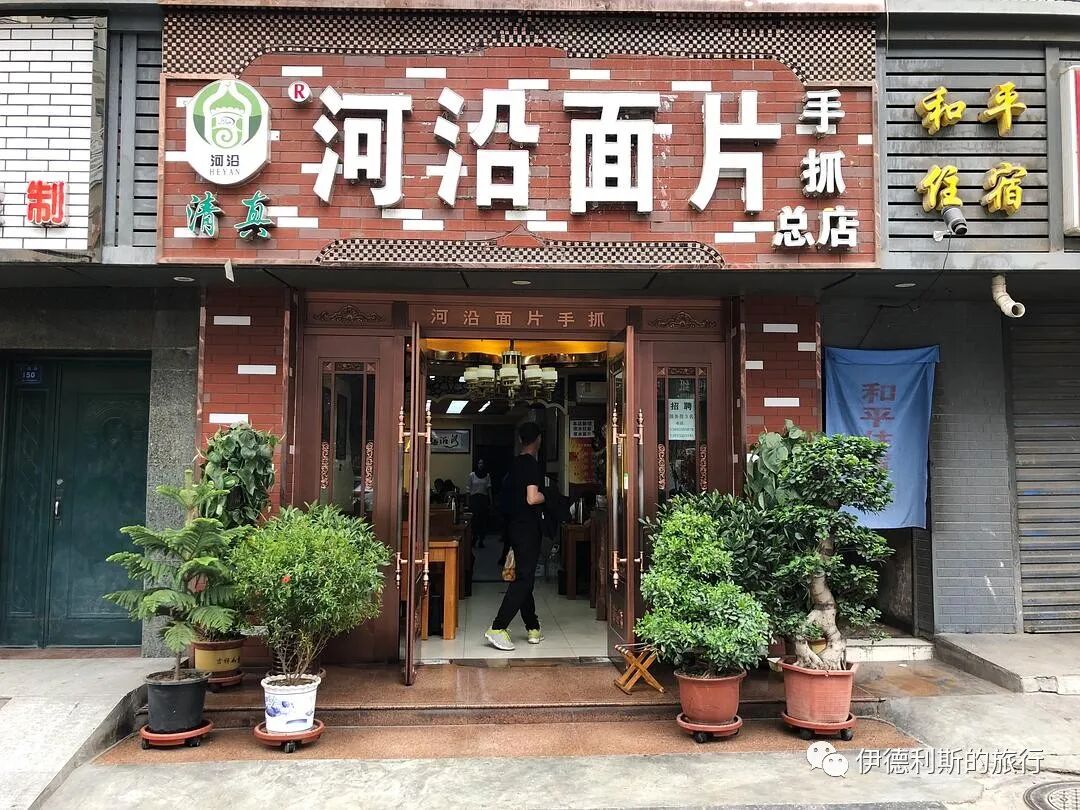
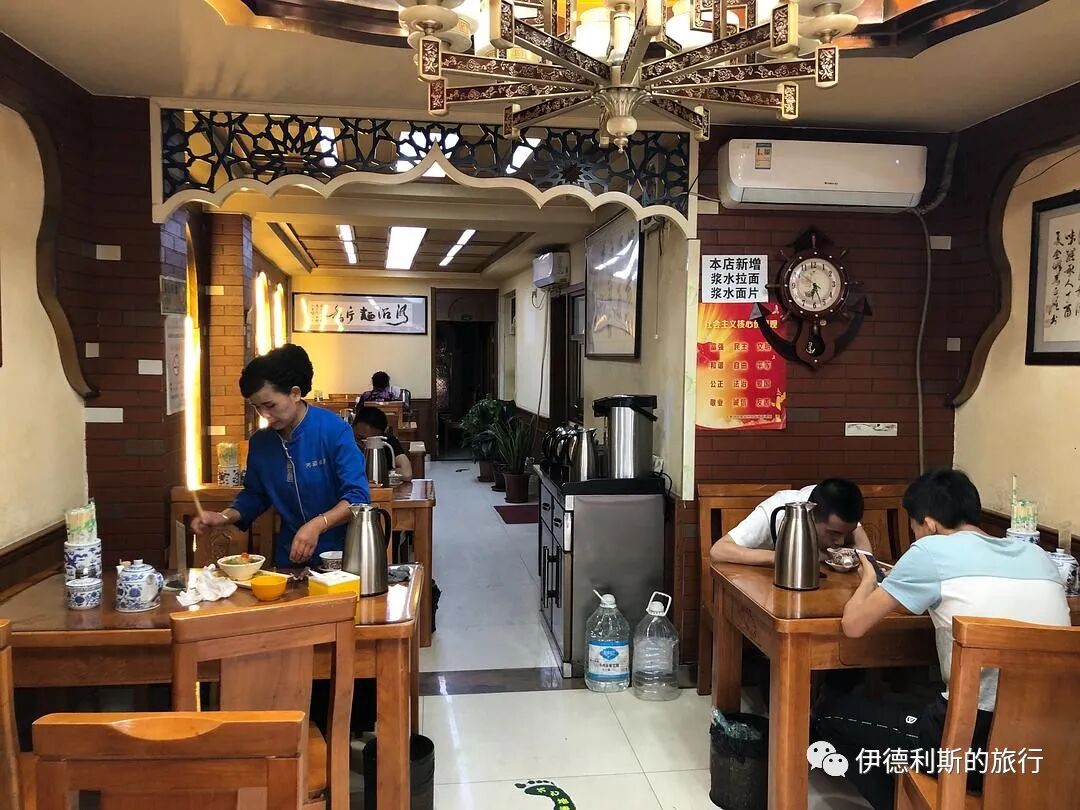
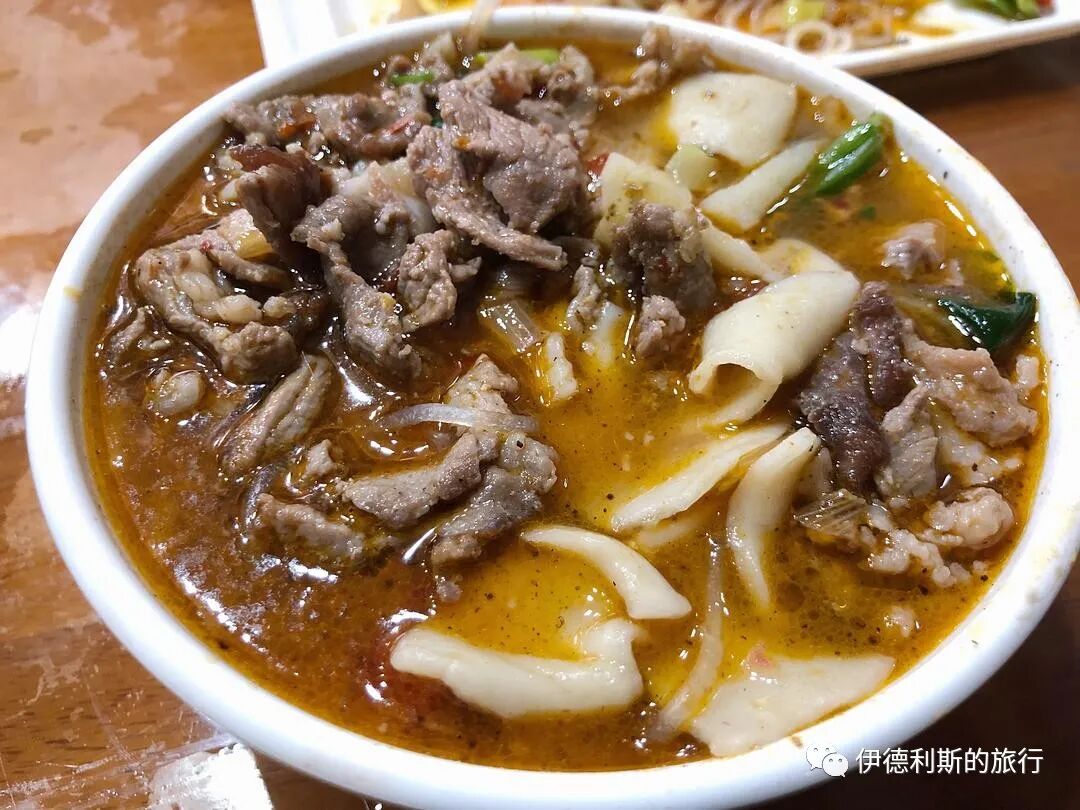
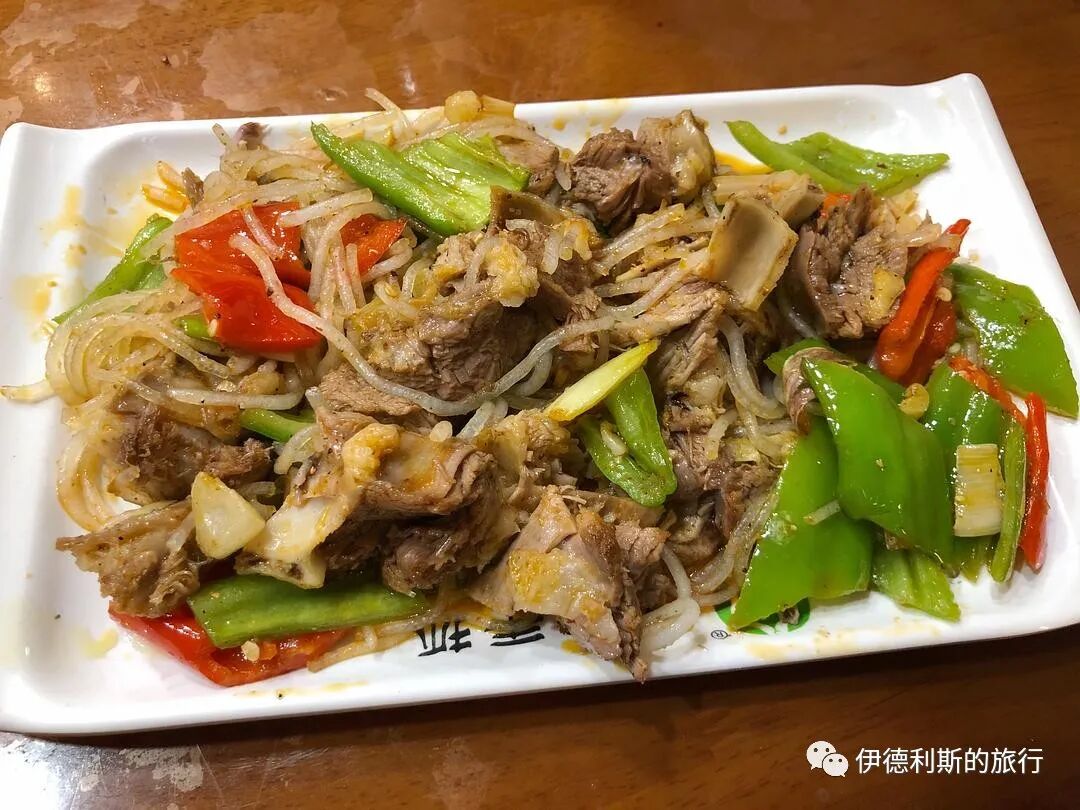
Shangxiyuan Market
There is an alley on the south side of the road in Shangxiyuan where residents near Little West Lake buy their groceries. I bought cold skin noodles (liangpizi), honey sticky rice cake (fengmi niangao), and black rice sticky rice dumpling (heimi zongzi) here.
Street view of Shangxiyuan Market
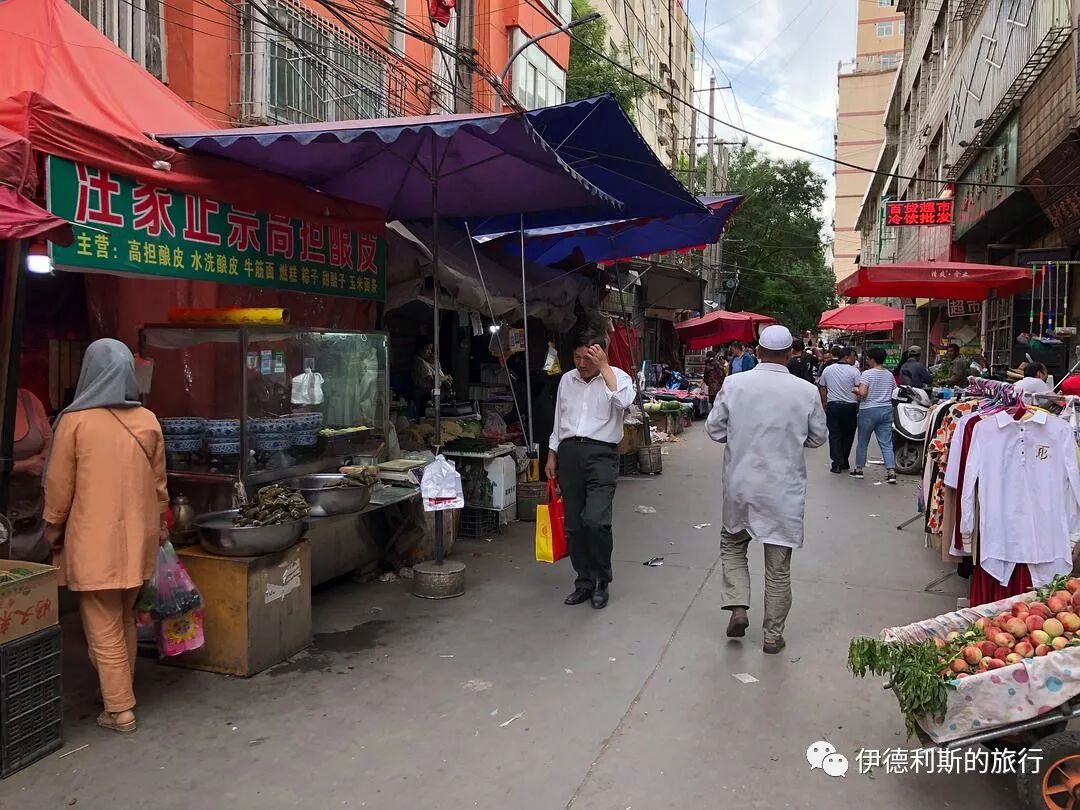
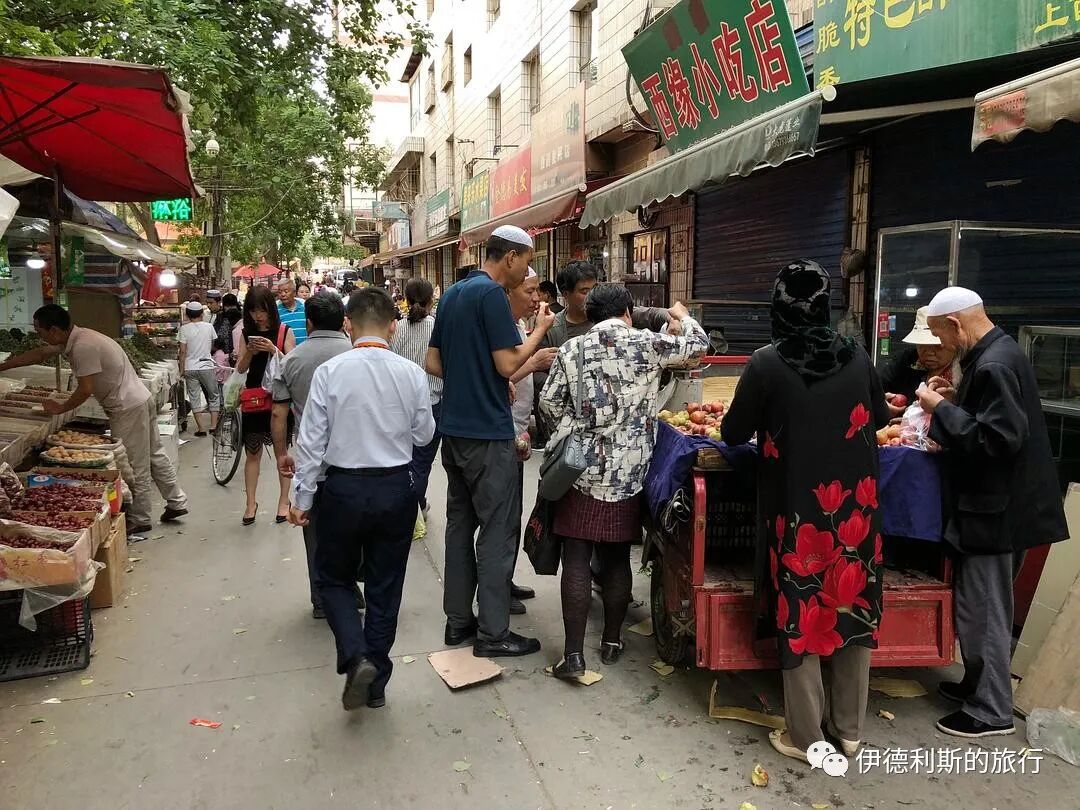
Cold starch noodles (liangpizi)
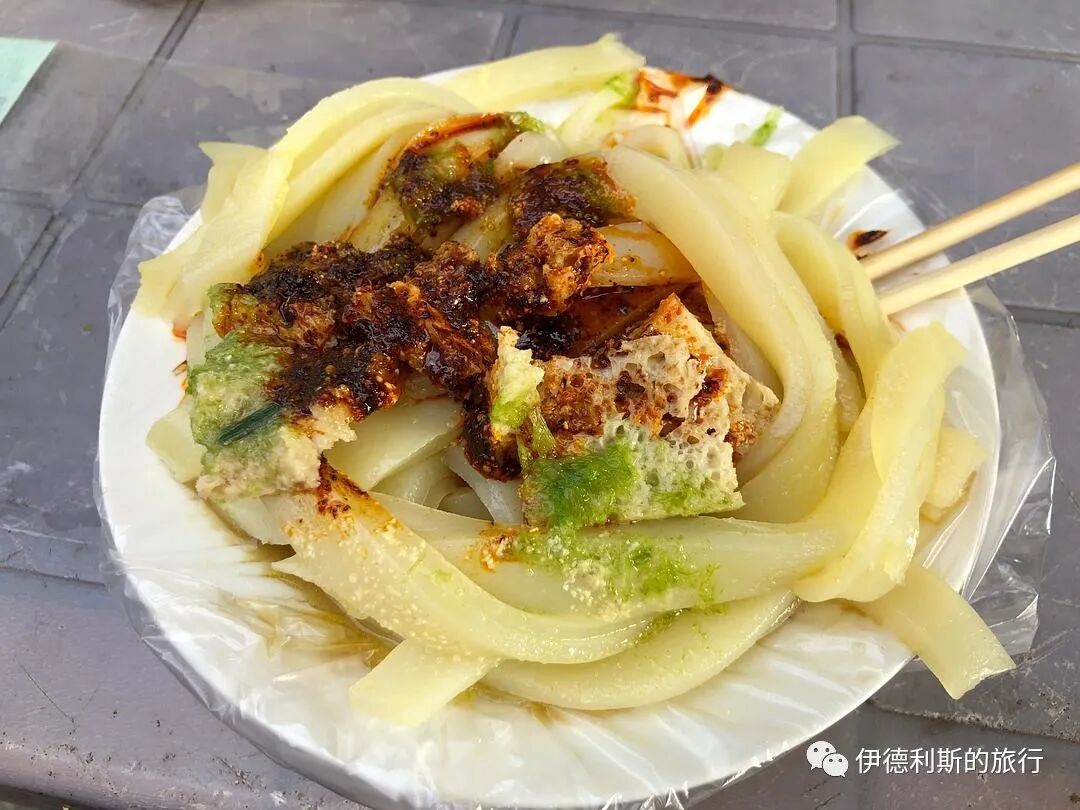
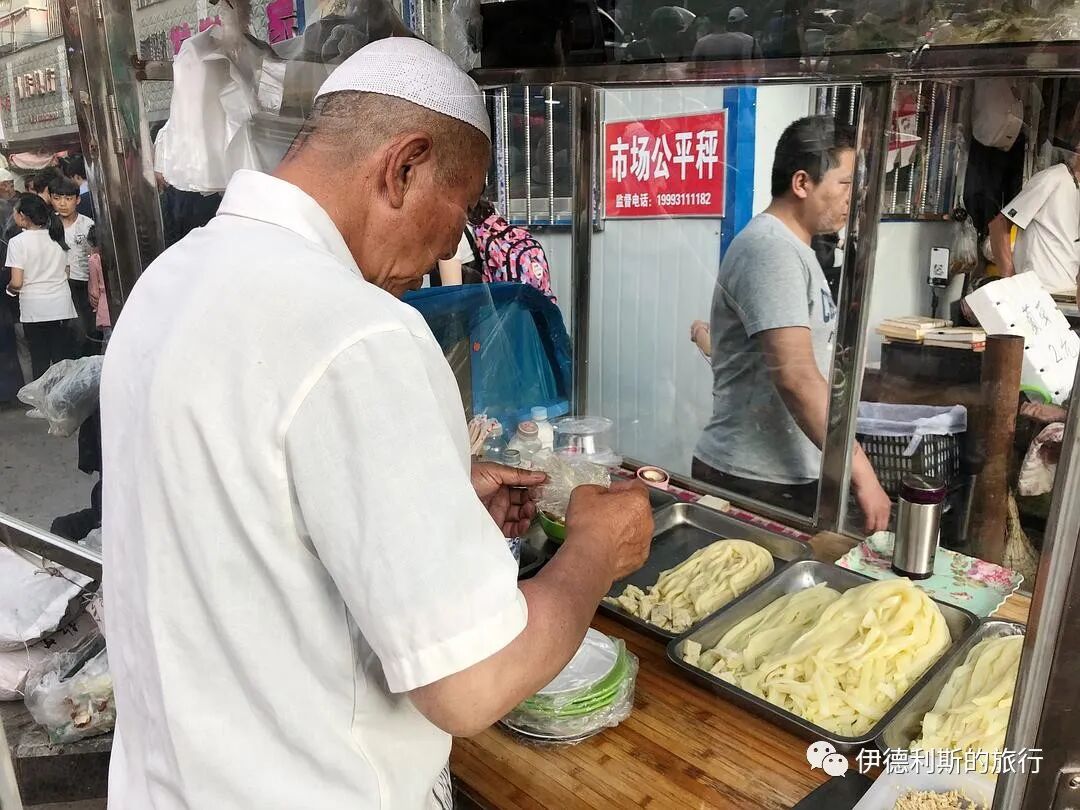
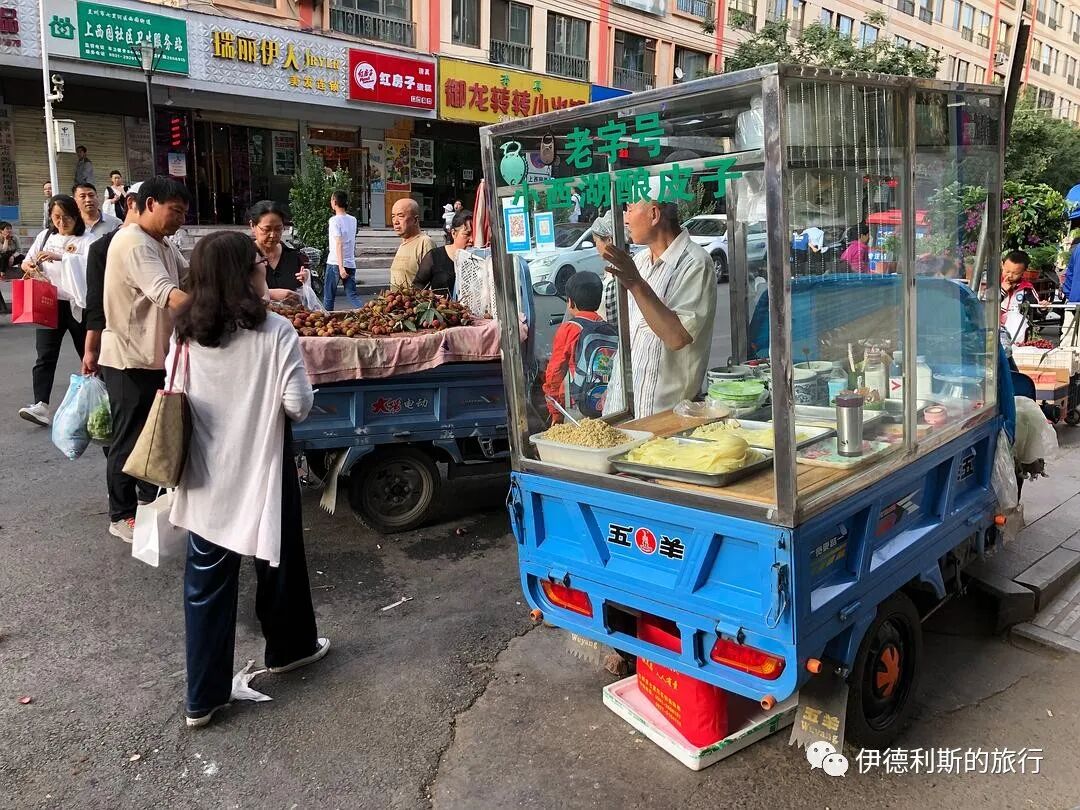
Honey sticky rice cake (fengmi niangao)
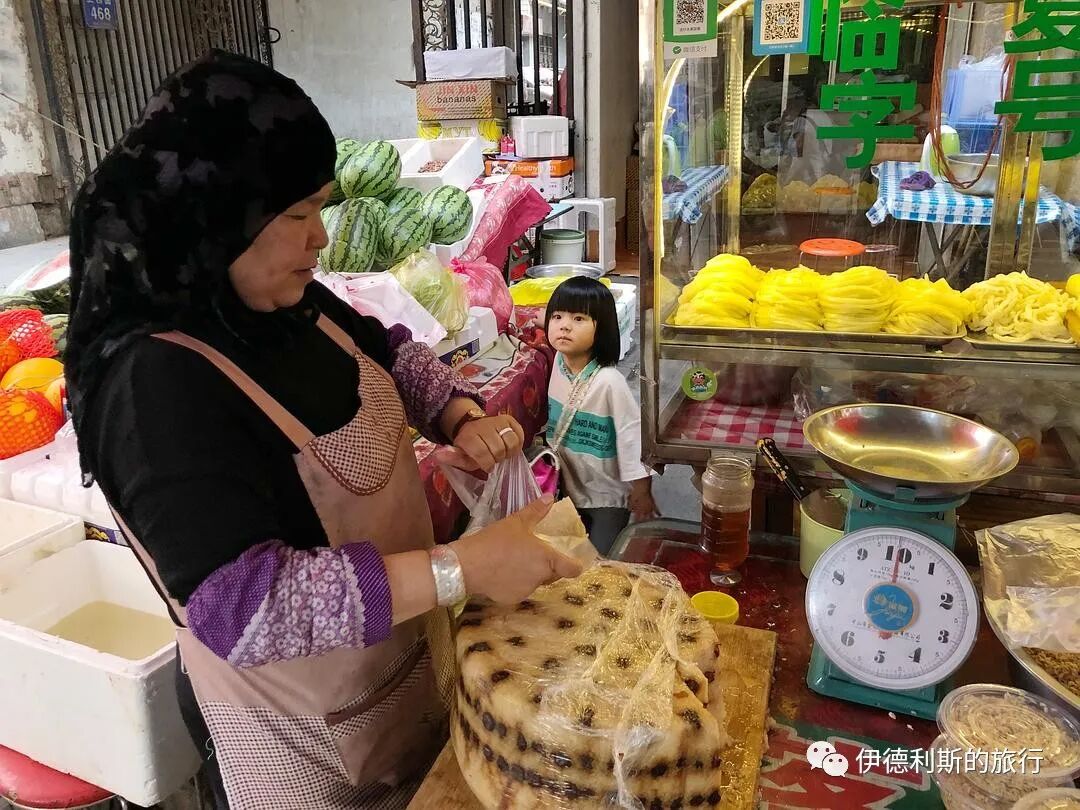
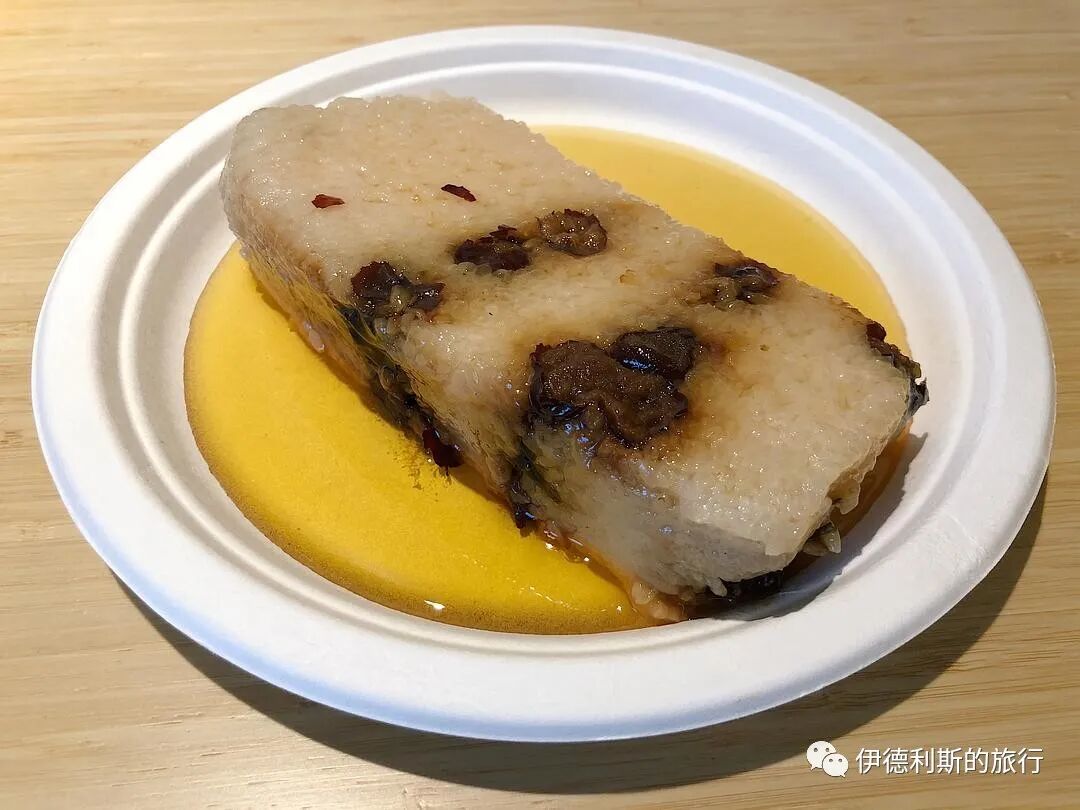
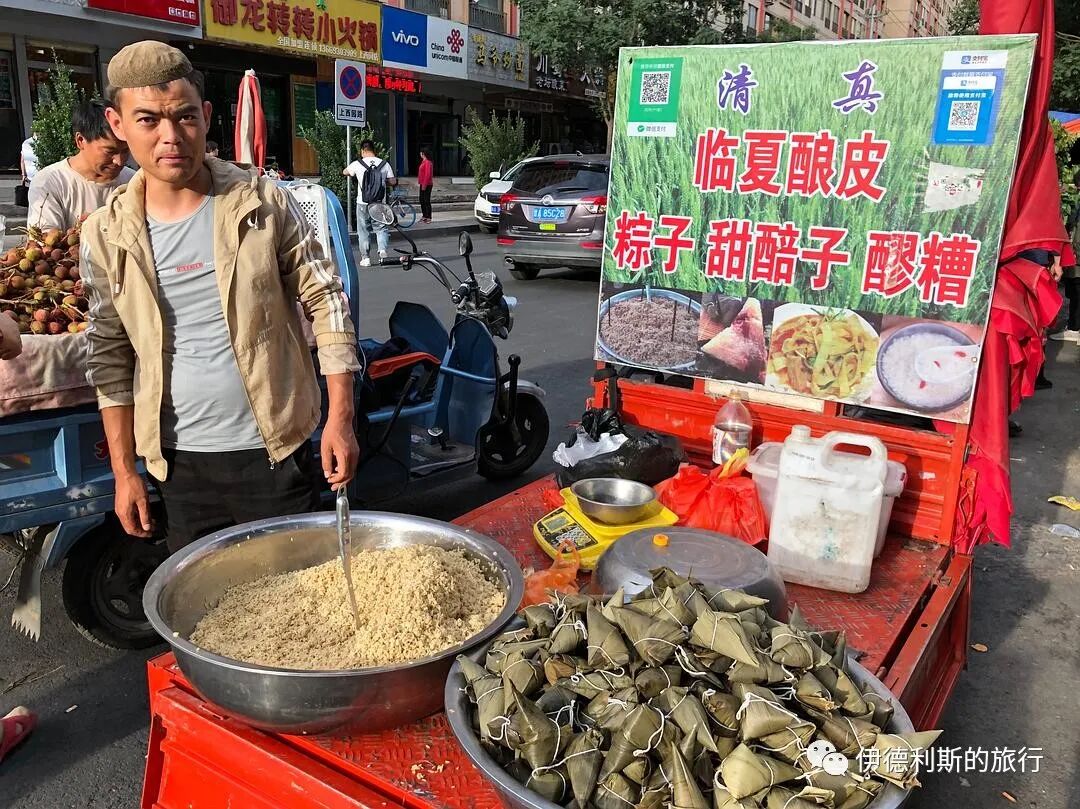
Black rice sticky rice dumpling (heimi zongzi), which you should actually peel and dip in honey to eat.
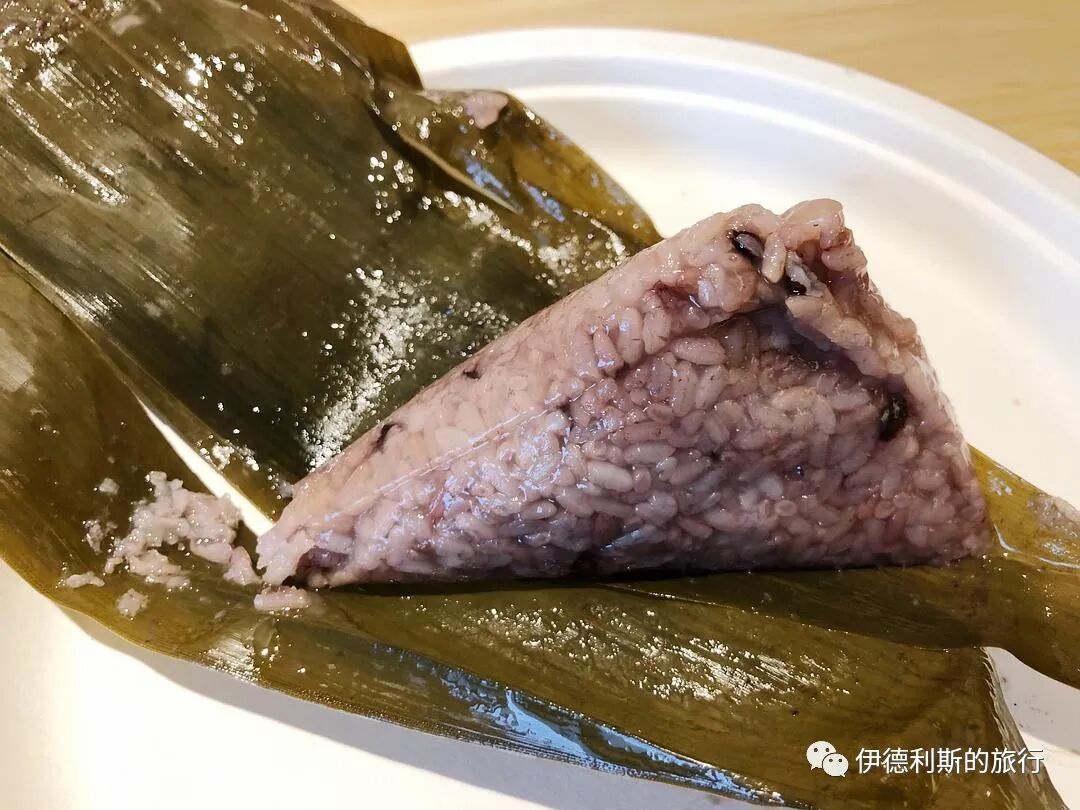
A big pot of fermented oat drink (tianpeizi)
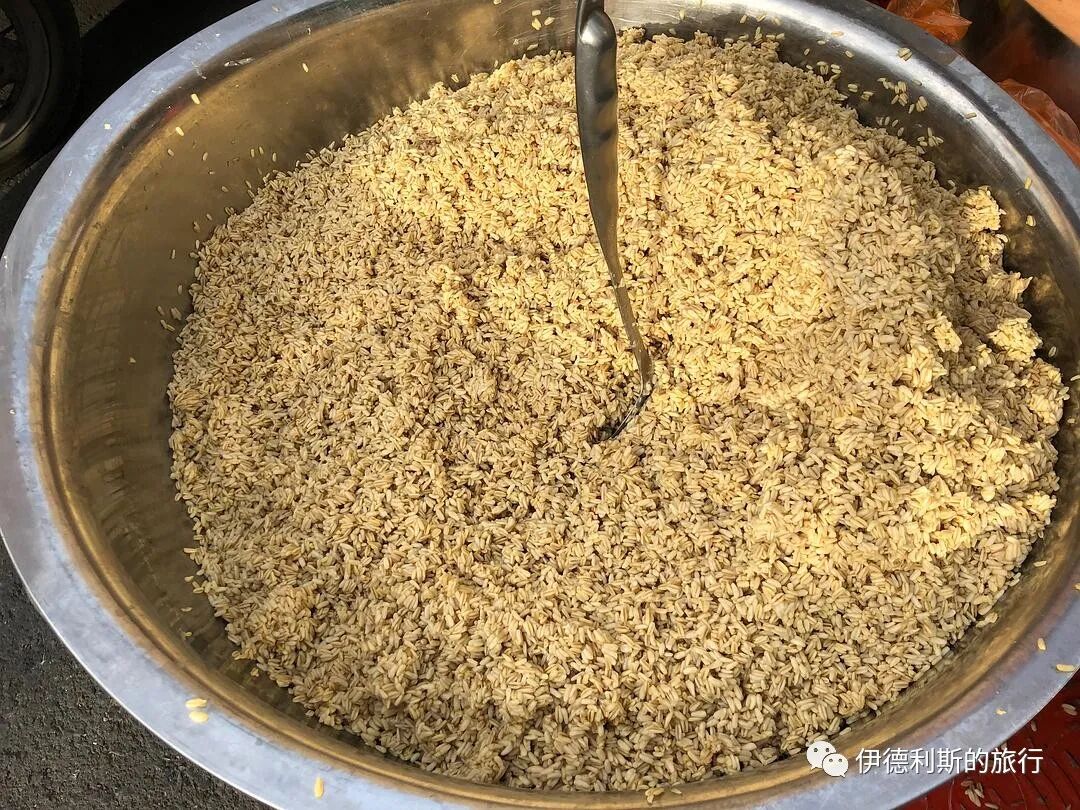
Fried dough twists (sanzi)
The alley behind Yiwu Trade City has dozens of Dongxiang restaurants. They mostly serve Dongxiang-style hand-grabbed lamb (shouzhua), but you can also buy steamed buns (baozi), old-broth chicken (laotang ji), and various snacks like fried dough twists (sanzi).
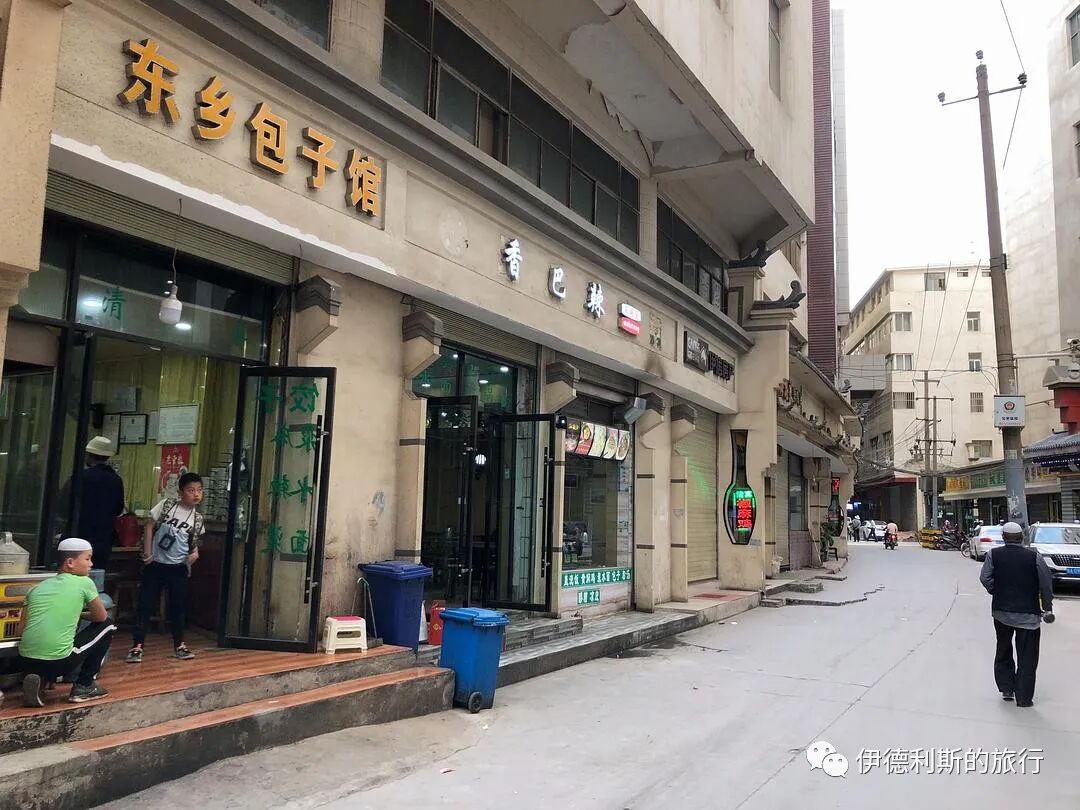
Sesame fried dough twists (sanzi) I bought at this shop
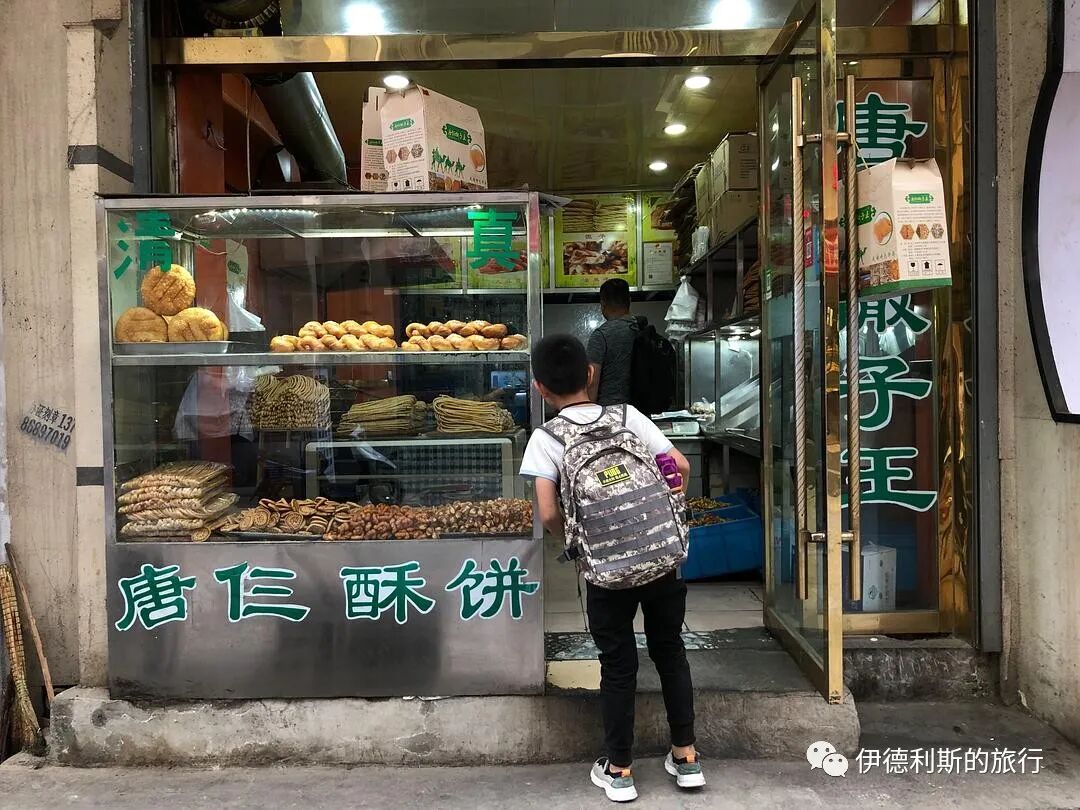
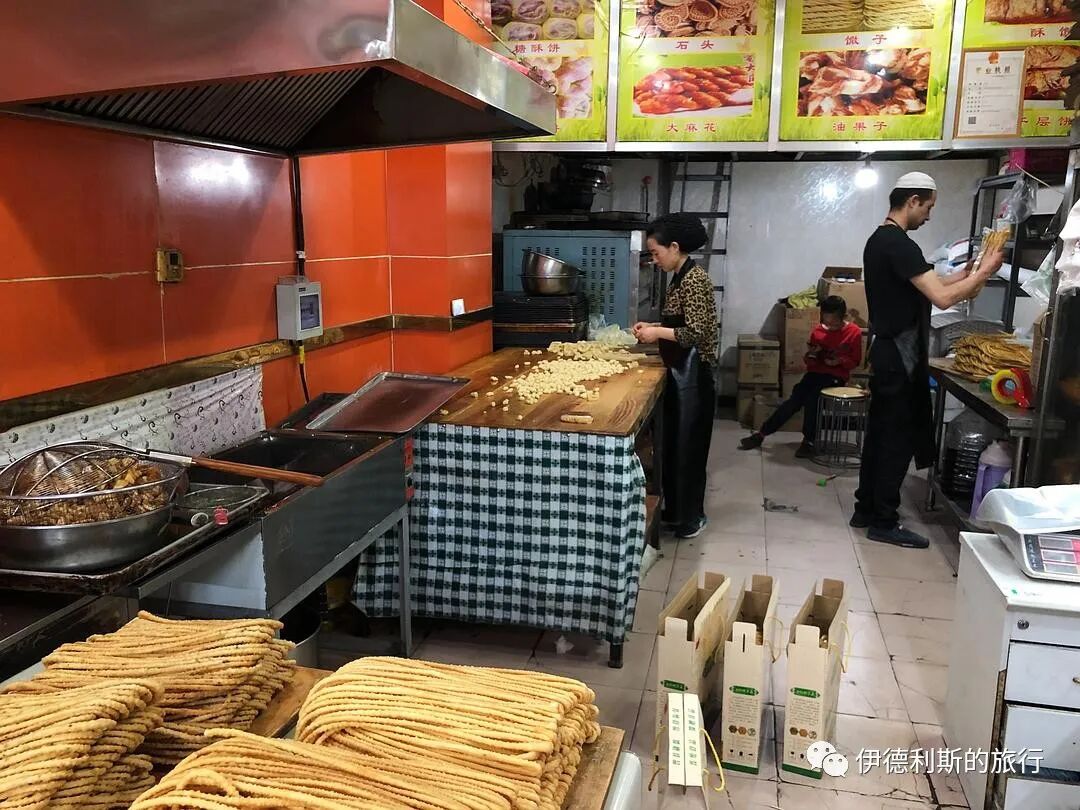
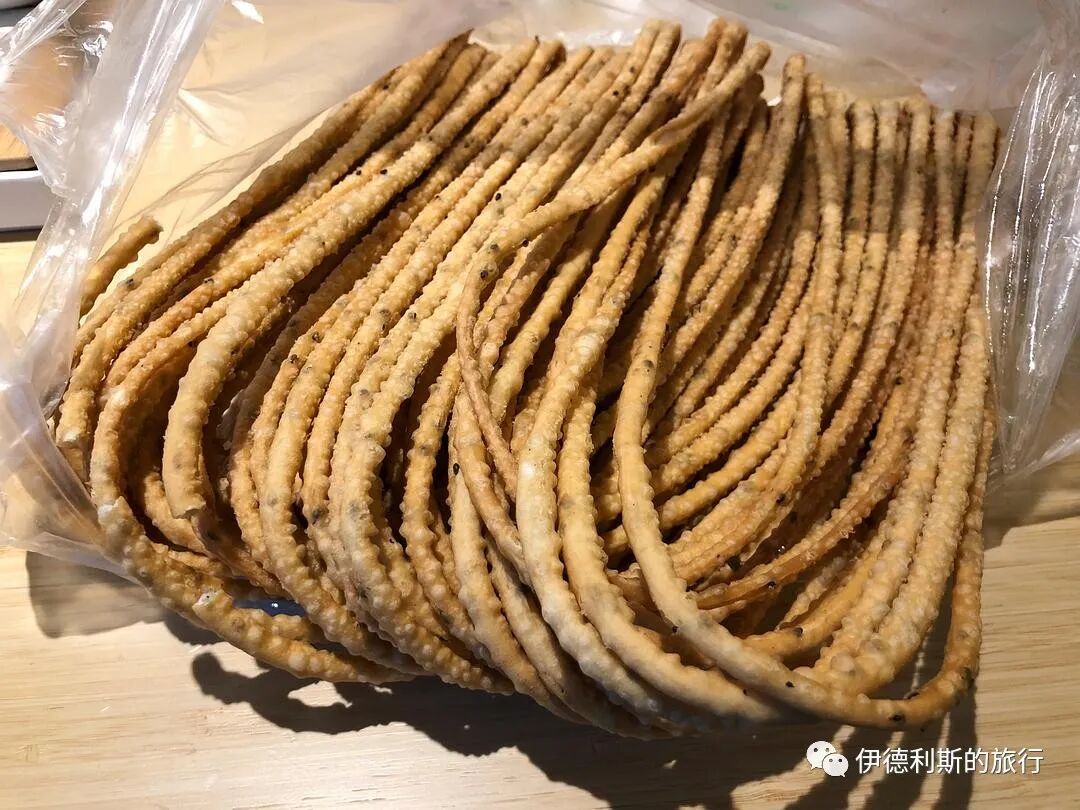 Collapse Read »
Summary: Halal Food Guide: Lanzhou Xiaoxihu — Dongxiang Muslim Food and Local Eats is presented here as a firsthand travel account in clear English, beginning with this scene: The Dongxiang people are a Muslim ethnic group who speak the Dongxiang language, which belongs to the Mongolic language family. The account keeps its focus on Lanzhou Halal Food, Dongxiang Food, Xiaoxihu while preserving the names, places, food, and historical details from the Chinese source.
The Dongxiang people are a Muslim ethnic group who speak the Dongxiang language, which belongs to the Mongolic language family. They mainly live in Dongxiang Autonomous County, Hezheng County, and Guanghe County within the Linxia Hui Autonomous Prefecture of Gansu Province. The loess hills where the Dongxiang people live are quite barren, so many people chose to move to Lanzhou to make a living after the 1980s. Xiaoxihu is located at the end of the road from Linxia to Lanzhou. It is near the Xiyuan and Xihu Hui Muslim communities that have existed since the Qing Dynasty. With the commercial growth driven by the Xiaoxihu Yiwu Trade City since the 1990s, Xiaoxihu has become the main residential area for Dongxiang people in Lanzhou.
In Xiaoxihu, the Dongxiang people are most concentrated in Baishu Lane, Jiangouyan, and Shangxiyuan, where you can find all kinds of Dongxiang food.
Pre-dawn meal (suhoor)
I first visited Xiaoxihu during Ramadan. At three in the morning, I ate a Dongxiang pre-dawn meal (suhoor) there, ordering hand-grabbed lamb (shouzhua) and lamb noodle soup (yangrou mianpian). Because it was the last of the hand-grabbed lamb (shouzhua) for the day, it didn't look very pretty, but it tasted great.
During Ramadan, many restaurants in Xiaoxihu stay open until four in the morning.
Zhonghua Hand-grabbed Lamb King (Zhonghua Shouzhua Dawang)
I went back to Xiaoxihu to eat and explore the week after Eid al-Fitr. As soon as I got off the plane, I headed straight to Zhonghua Hand-grabbed Lamb King (Zhonghua Shouzhua Dawang) on Jiangouyan Street. This place is very popular in Xiaoxihu, and you have to share tables at noon. I felt very satisfied drinking tea with dried fruits and rock sugar (sanpaotai) while eating half a jin of lamb ribs, a small bowl of lentil and sparrow-tongue noodles (biandou queshe mian), and a plate of cold starch noodles (liangpizi). The environment and service here are both good. They refill your tea often, and the tea with dried fruits and rock sugar (sanpaotai) itself is delicious.
The lamb tastes very authentic. You basically eat one piece of meat with one clove of garlic, and the garlic is very fragrant too.
Cold starch noodles (liangpizi)
Lentil and sparrow-tongue noodles (biandou queshe mian)
Rose-flavored tea with dried fruits and rock sugar (meigui sanpaotai). I wanted more after finishing it, so I ended up buying a lot at the supermarket to take home.
River-style noodle soup (heyan mianpian)
There are many restaurants one after another on Jiangouyan Street. I also ate river-style noodle soup (heyan mianpian) and braised lamb (huangmen yangrou) at this place. River-style noodle soup (heyan mianpian) originated in Guanghe County, Linxia. It evolved from stir-fried noodle soup (chao mianpian), but the flavor is much richer.
Shangxiyuan Market
There is an alley on the south side of the road in Shangxiyuan where residents near Little West Lake buy their groceries. I bought cold skin noodles (liangpizi), honey sticky rice cake (fengmi niangao), and black rice sticky rice dumpling (heimi zongzi) here.
Street view of Shangxiyuan Market
Cold starch noodles (liangpizi)
Honey sticky rice cake (fengmi niangao)
Black rice sticky rice dumpling (heimi zongzi), which you should actually peel and dip in honey to eat.
A big pot of fermented oat drink (tianpeizi)
Fried dough twists (sanzi)
The alley behind Yiwu Trade City has dozens of Dongxiang restaurants. They mostly serve Dongxiang-style hand-grabbed lamb (shouzhua), but you can also buy steamed buns (baozi), old-broth chicken (laotang ji), and various snacks like fried dough twists (sanzi).
Sesame fried dough twists (sanzi) I bought at this shop
Collapse Read »
Halal Travel Guide: Baku Old City — Mugham Music, Muslim Food and Heritage
Reposted from the web
Summary: Baku Old City — Mugham Music, Muslim Food and Heritage is presented here as a firsthand travel account in clear English, beginning with this scene: In 2000, UNESCO added the Old City of Baku in Azerbaijan to its World Heritage List. The account keeps its focus on Baku Old City, Azerbaijan Food, Mugham Music while preserving the names, places, food, and historical details from the Chinese source.
In 2000, UNESCO added the Old City of Baku in Azerbaijan to its World Heritage List. In 2003, UNESCO added Azerbaijani Mugham to its Representative List of the Intangible Cultural Heritage of Humanity. I was very lucky to experience the charm of both these tangible and intangible cultural heritages in the Old City of Baku.
1. Mugham performances in the Old City of Baku
Two restaurants in the Old City of Baku host Azerbaijani Mugham performances all year round. Both restaurants are located in Silk Road inns built during the Middle Ages; one is called Han Restaurant Baku, and the other is called Mugam Club. Both restaurants hold performances in the evening, but not necessarily every day, so you can ask ahead before you go. The servers at both restaurants speak English.
The building housing Han Restaurant Baku is a small inn (Kiçik karvansaray) built in the 12th century. During the Middle Ages, merchants from Iran, Turkey, the Caucasus, and even India would stay here.
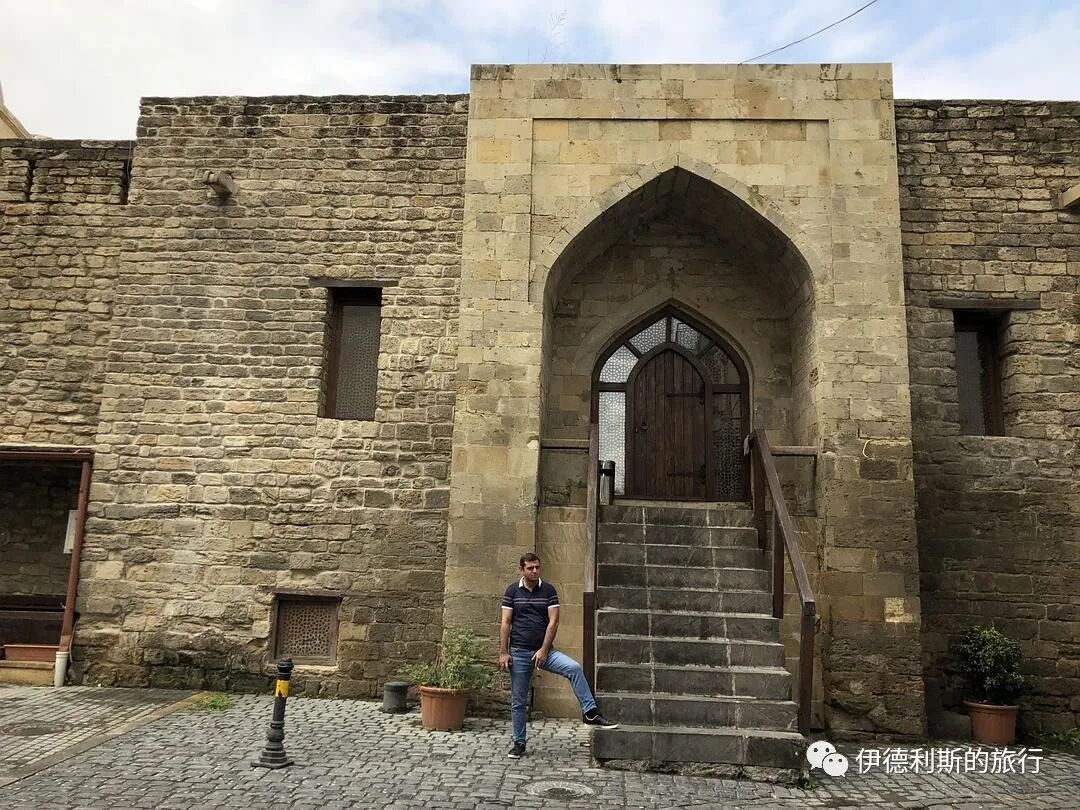
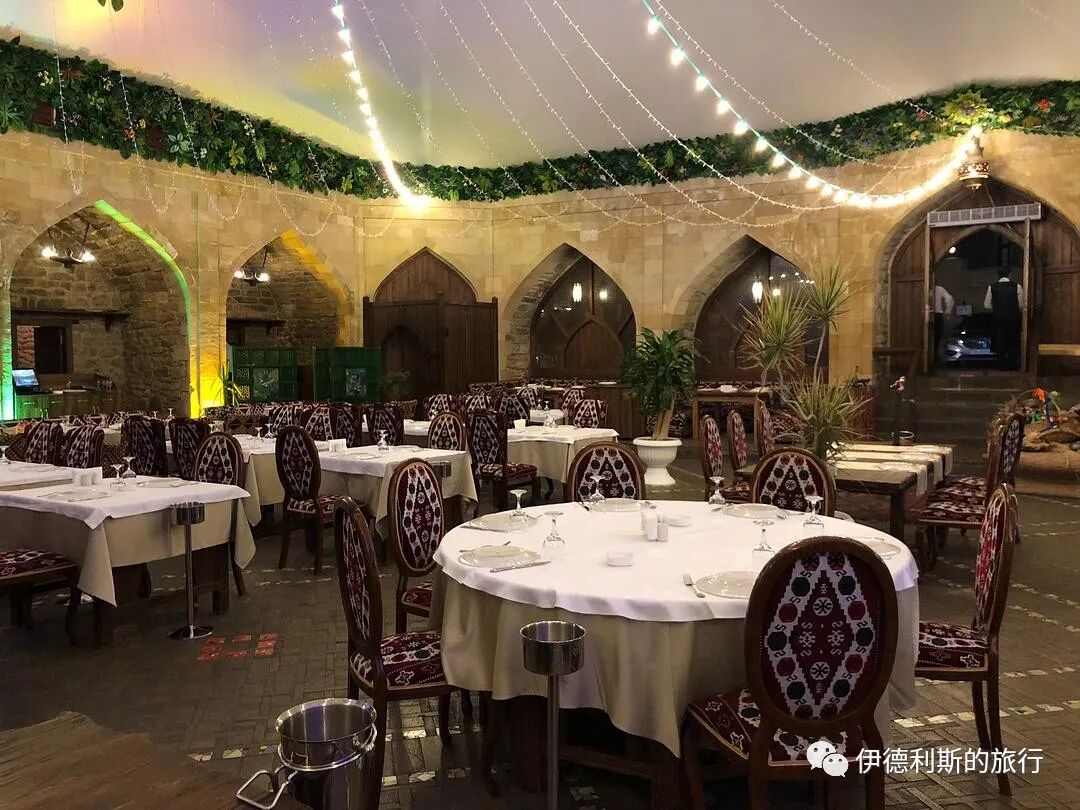
Azerbaijani Mugham originated from classical Persian music. It was court music in the 16th and 17th centuries, then moved into folk circles after the 19th century, blending with folk music from across Azerbaijan.
Azerbaijani Mugham usually consists of a lead singer (khanandas), a long-necked lute (tar), a bowed string instrument (kamancheh), and a frame drum (daf). The lead singer often doubles as the drummer.
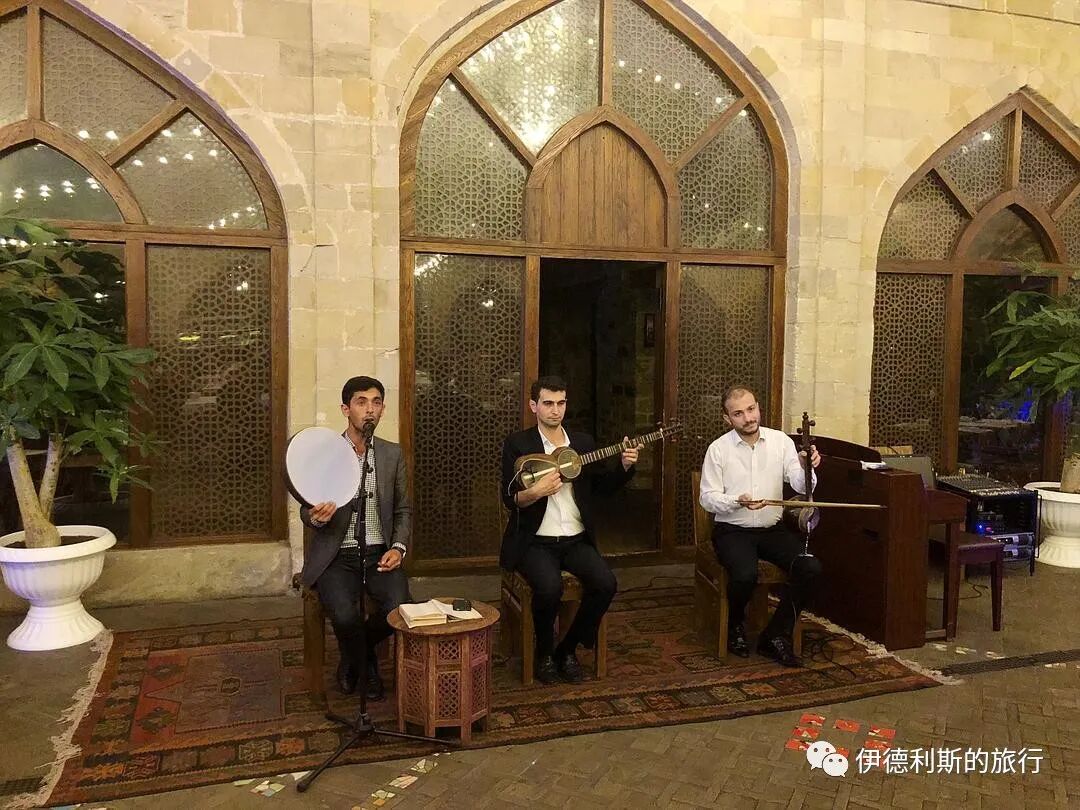
The book in front of the singer
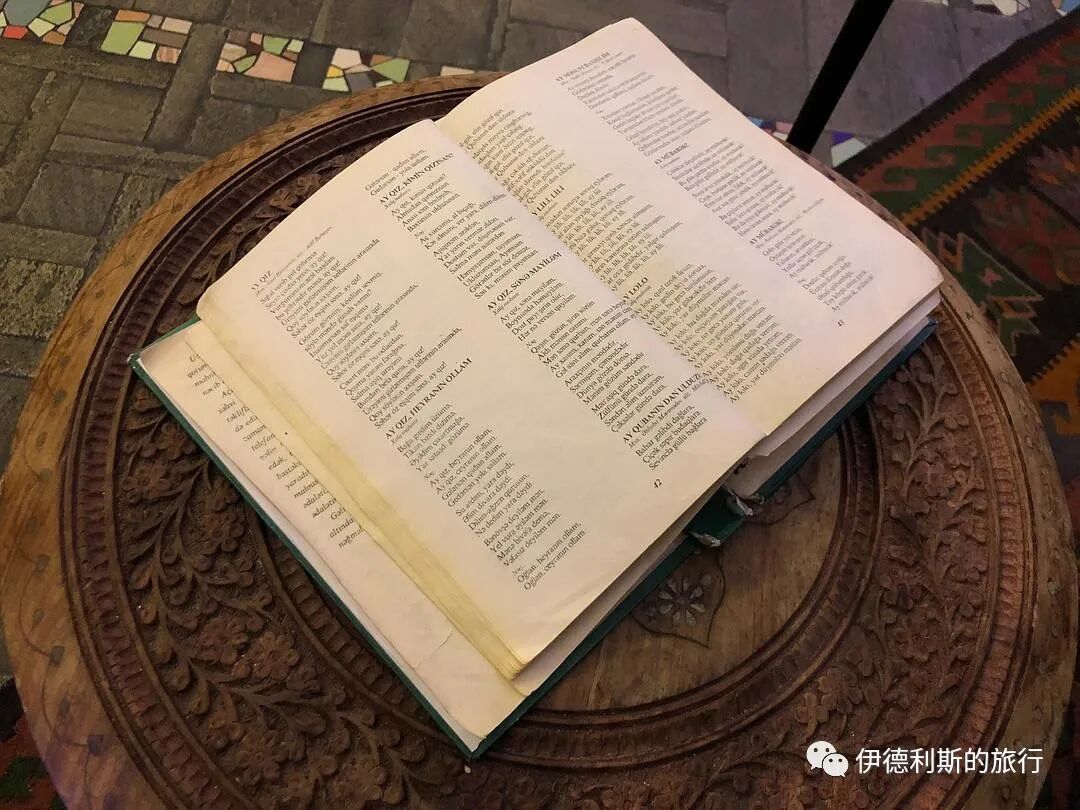
The long-necked lute (tar) and bowed string instrument (kamancheh)
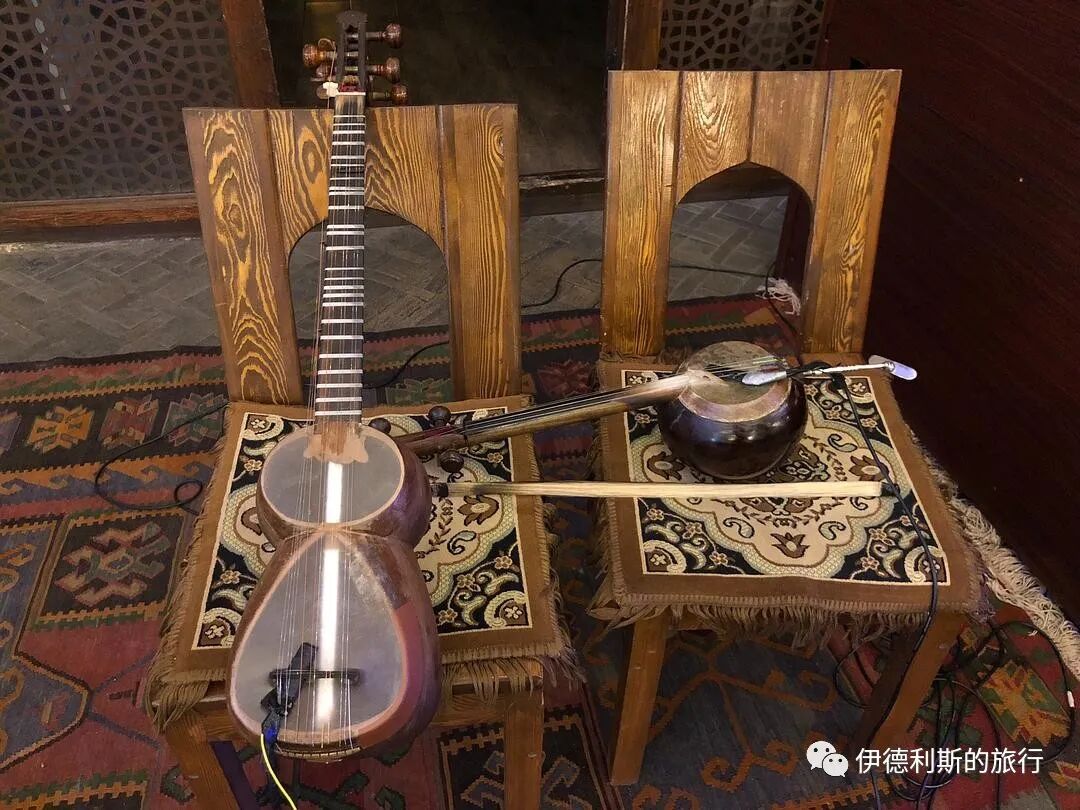
I ate some very delicious grilled meat here; it was fresh, tender, and tasty.
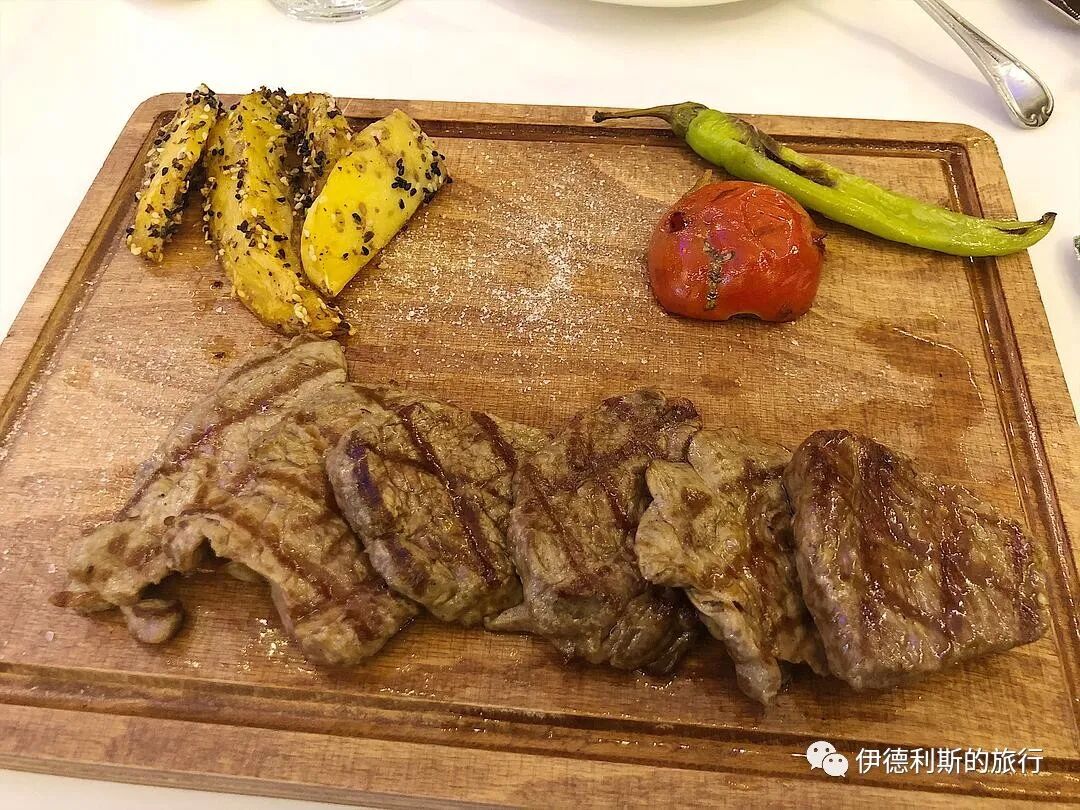
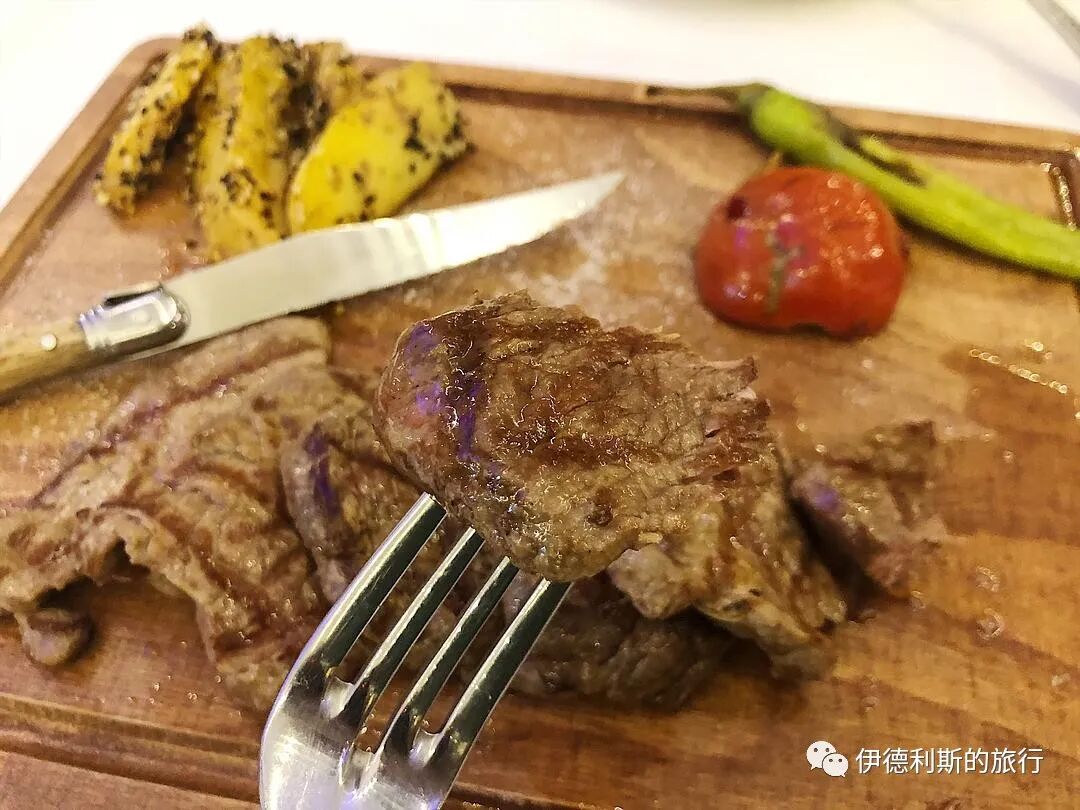
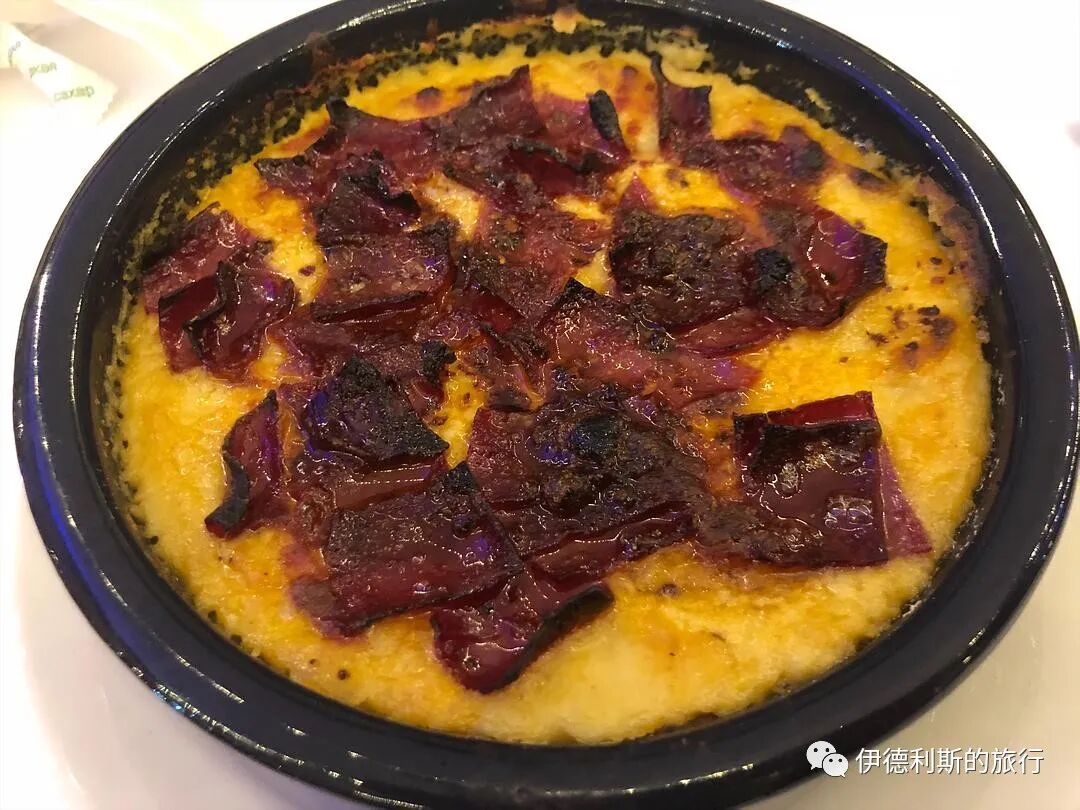
You can eat as much bread as you want here.
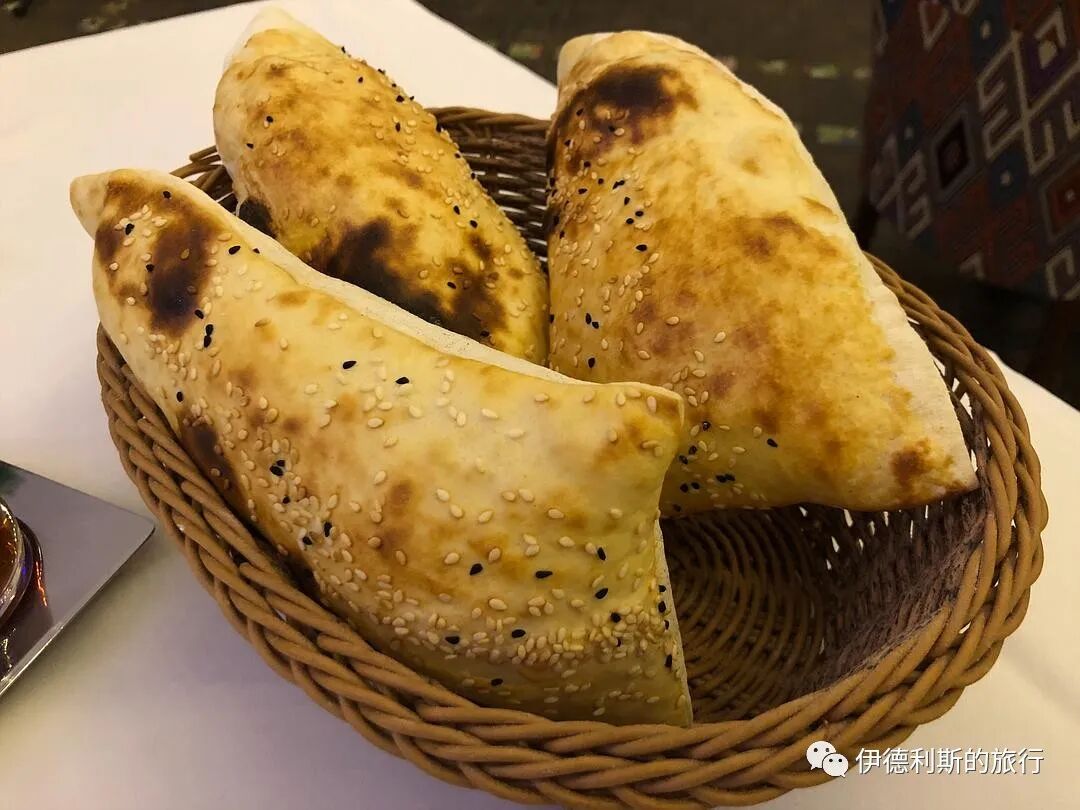
Finally, the shop served us complimentary traditional coffee.
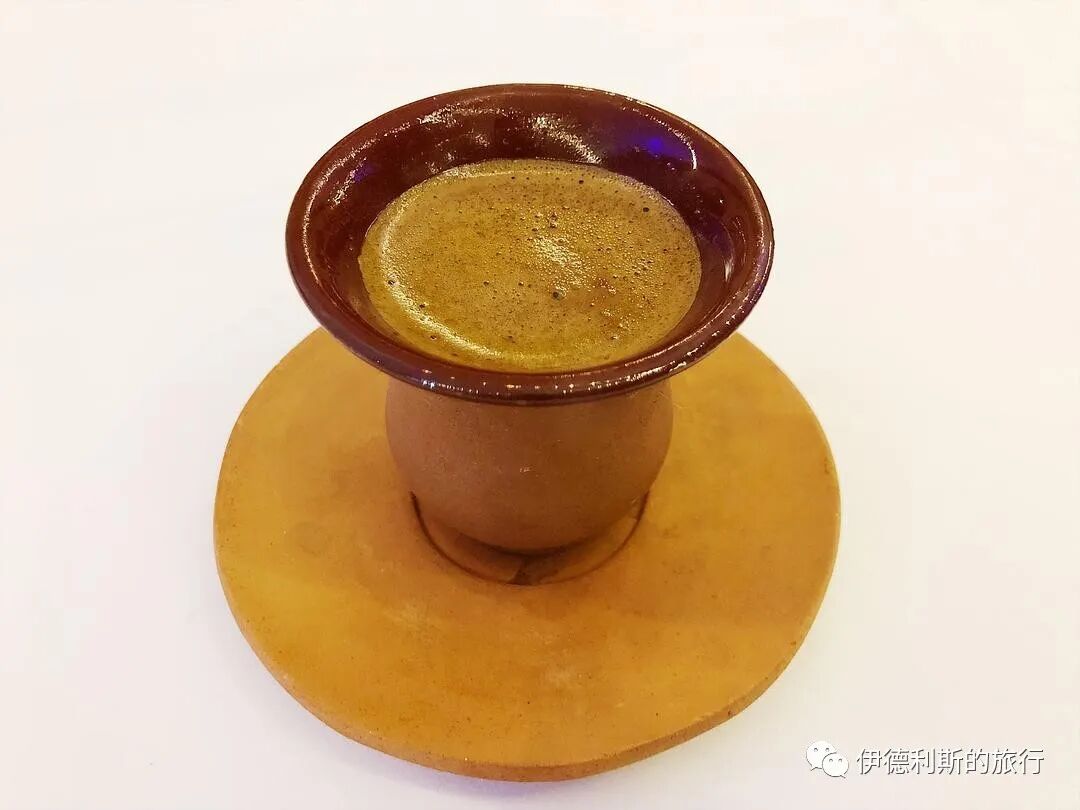
The other restaurant, Mugam Club, is located in a two-story inn (İkimərtəbəli karvansaray) built in the 15th century. The two-story inn is the largest Silk Road inn in Baku, built by order of Khalilullah I, the 34th king of the Shirvan dynasty, who reigned from 1417 to 1465. The Shirvan dynasty reached its peak during the reign of Khalilullah I, and he also built many structures in the Old City of Baku.
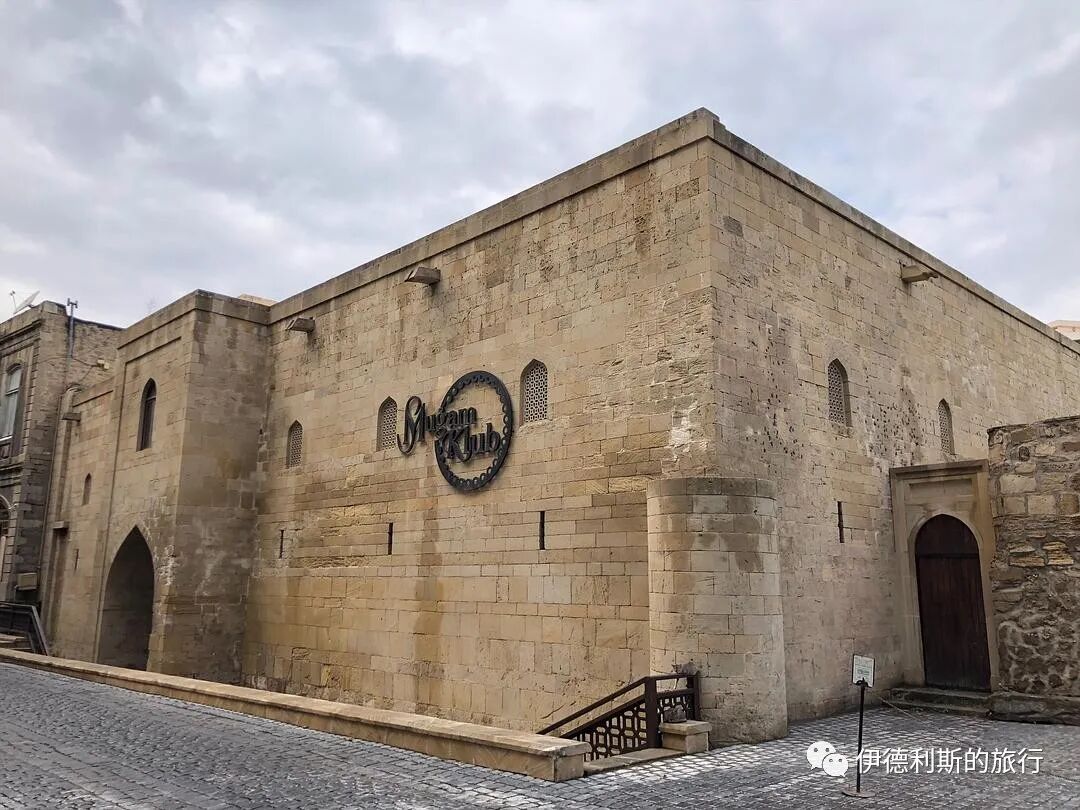
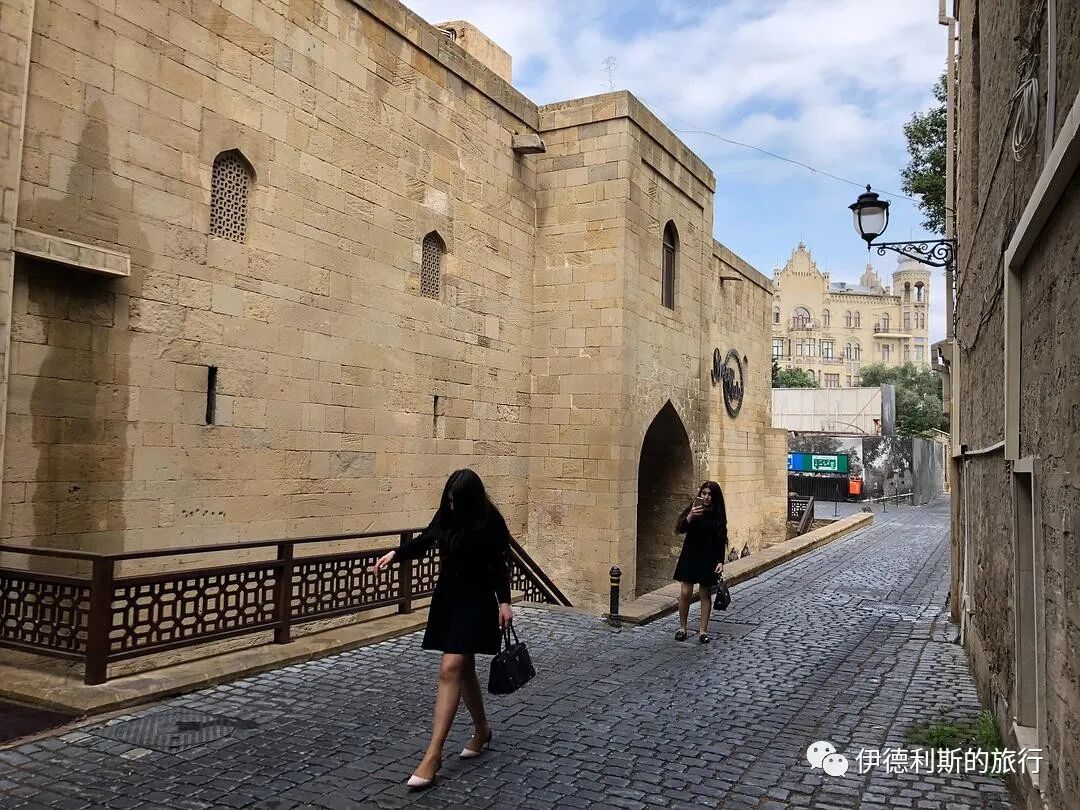
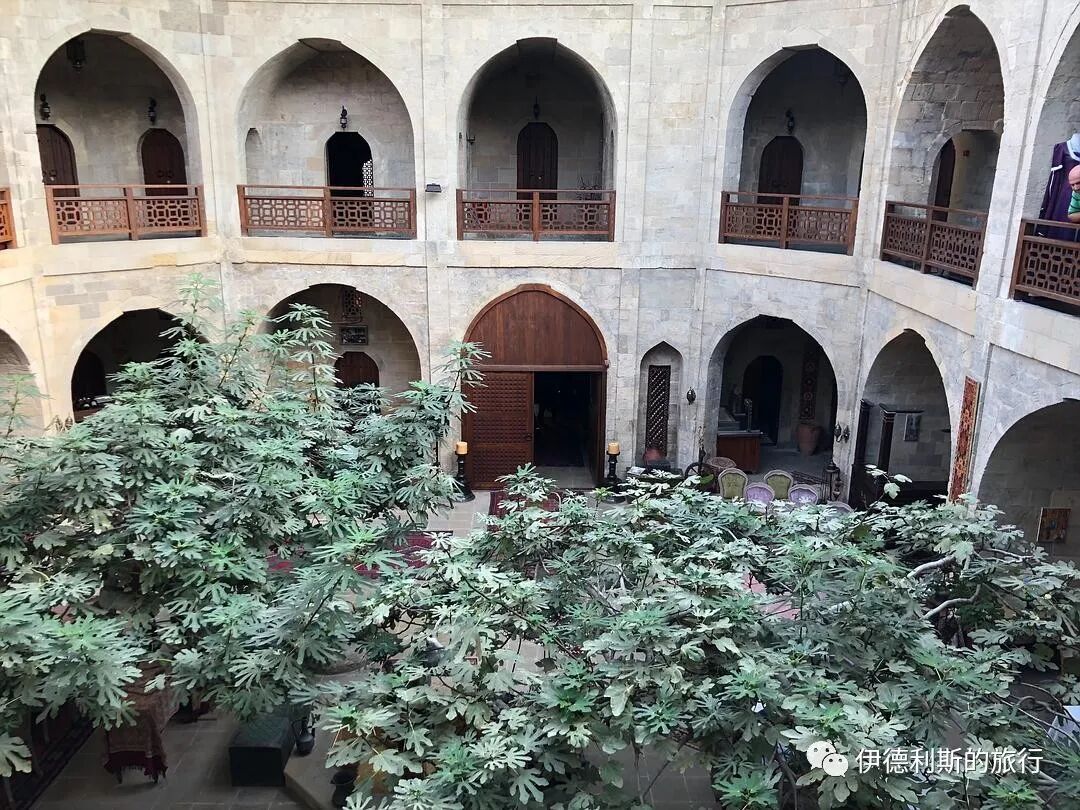
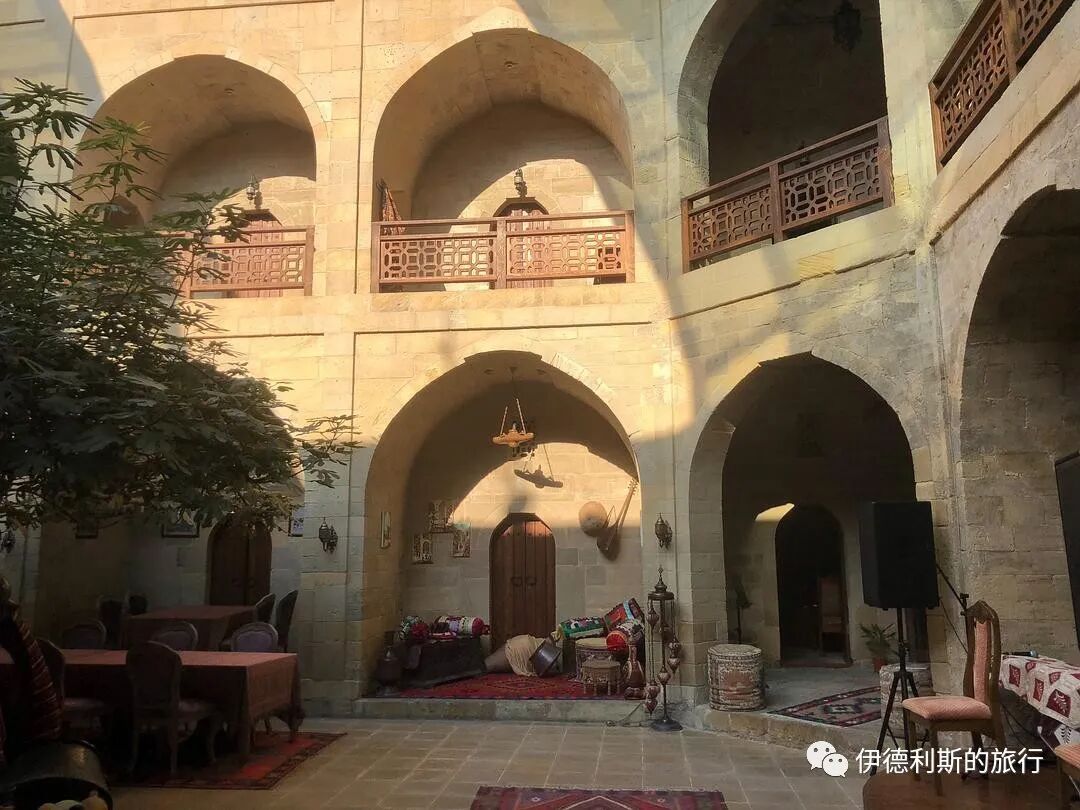
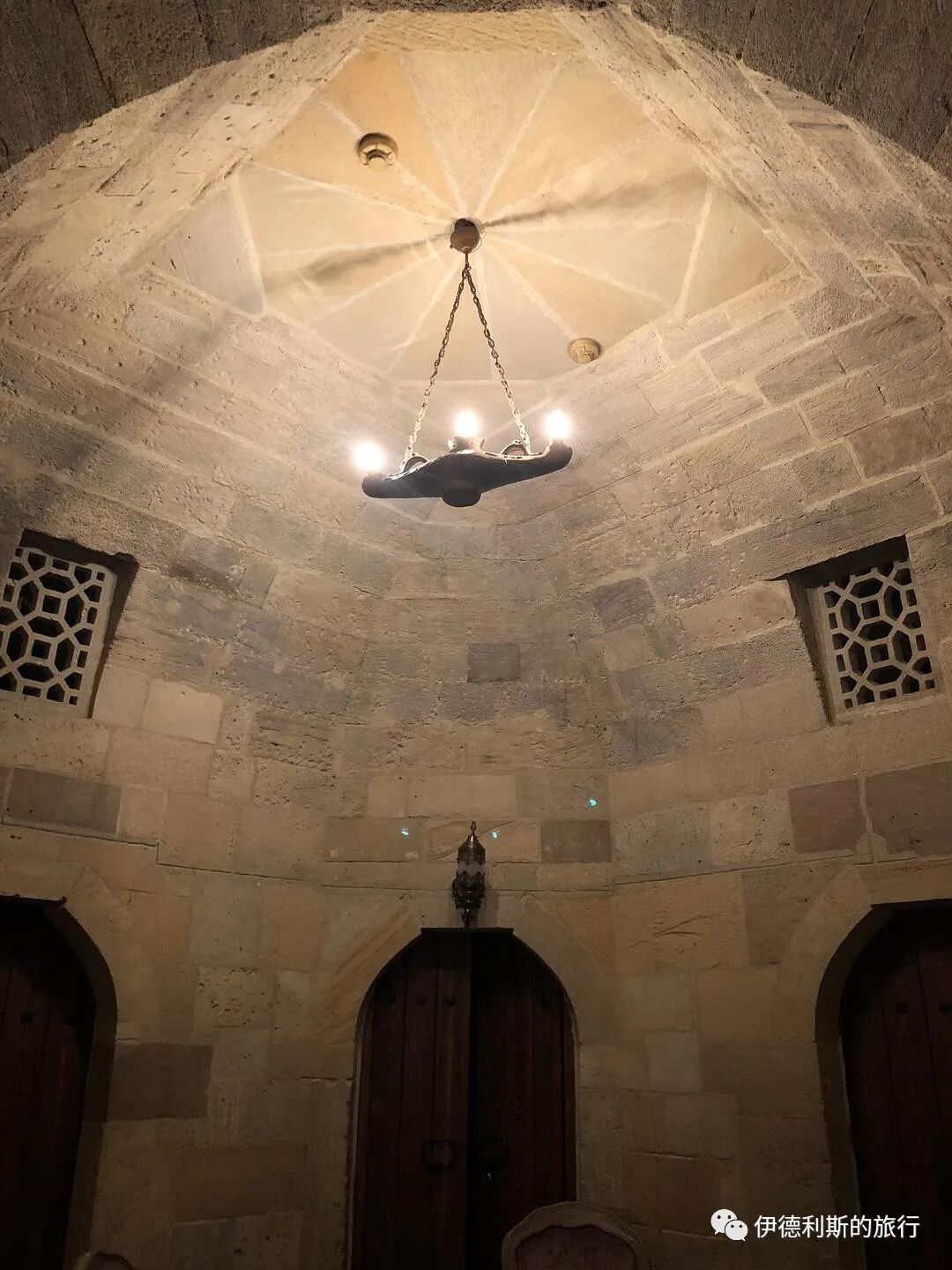
The painting hanging on the wall depicts a night view of the Old City of Baku.
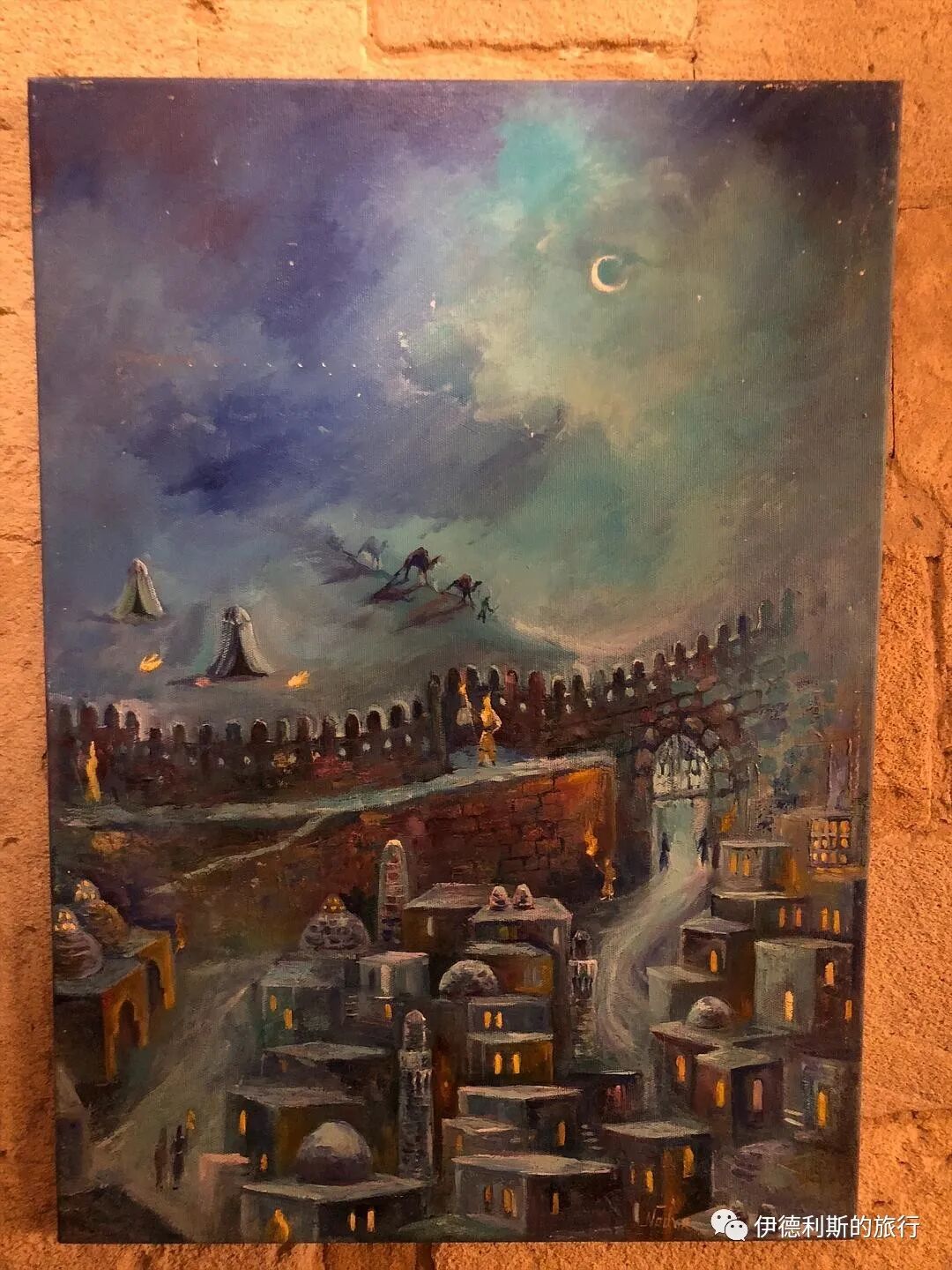
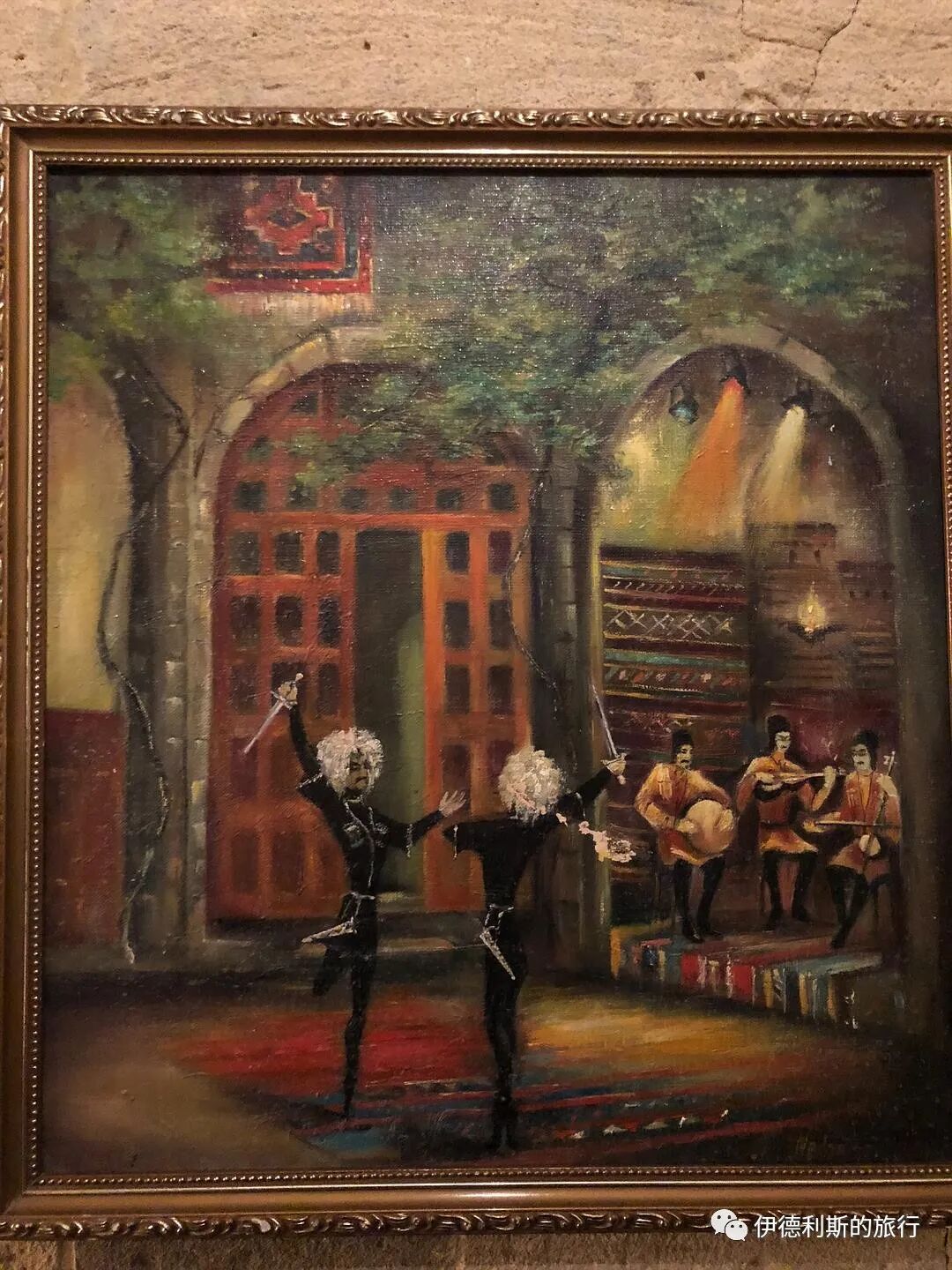
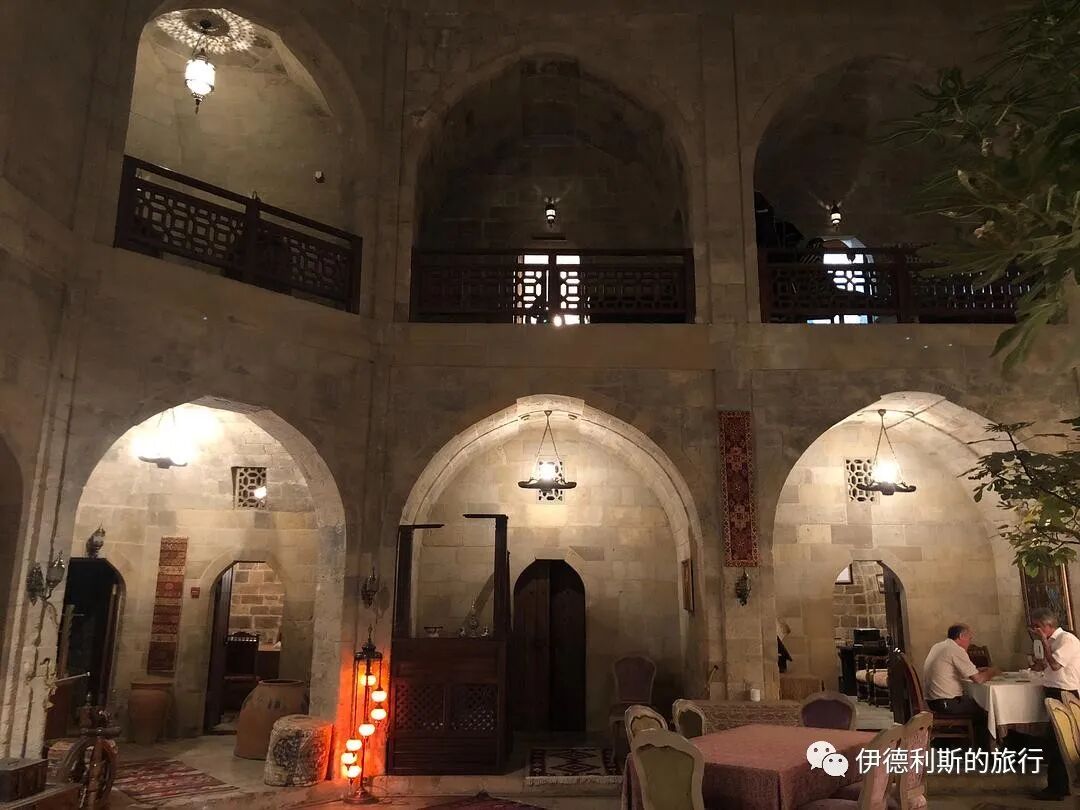
The long-necked lute (tar) used for this Mugham performance was replaced by a keyboard, but the young man's voice was very professional.
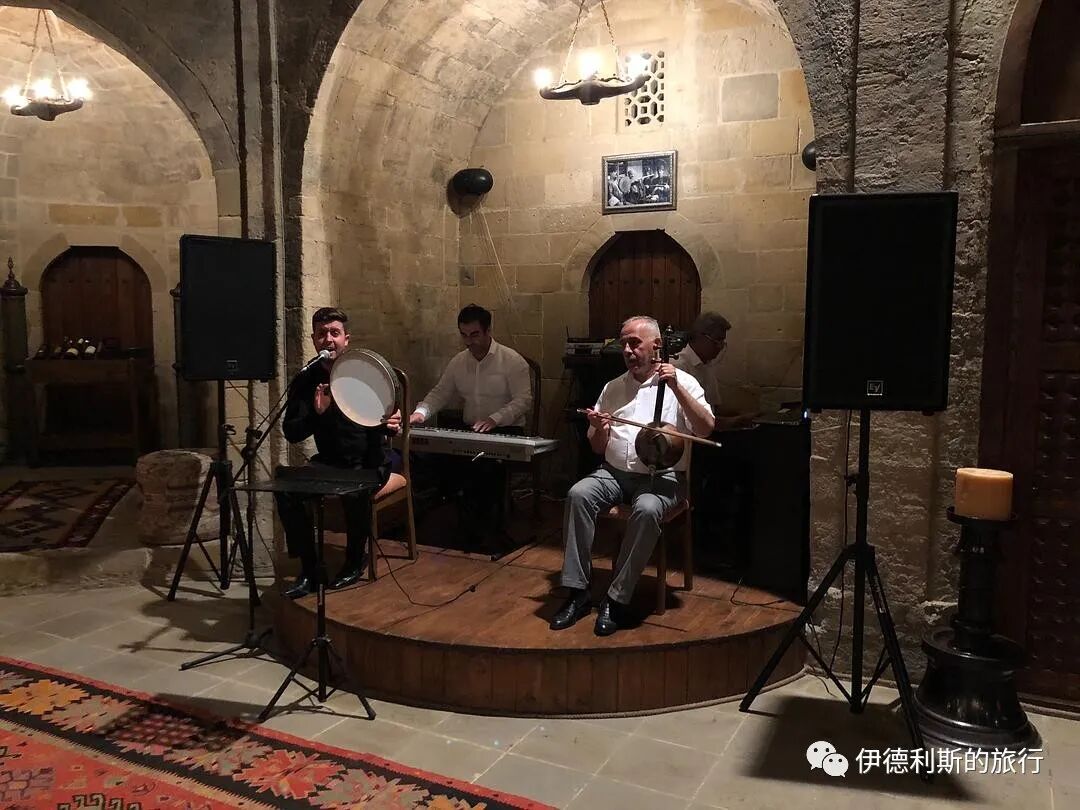
I ate Kavkaz barbecue, chicken soup, and sweet rice here.
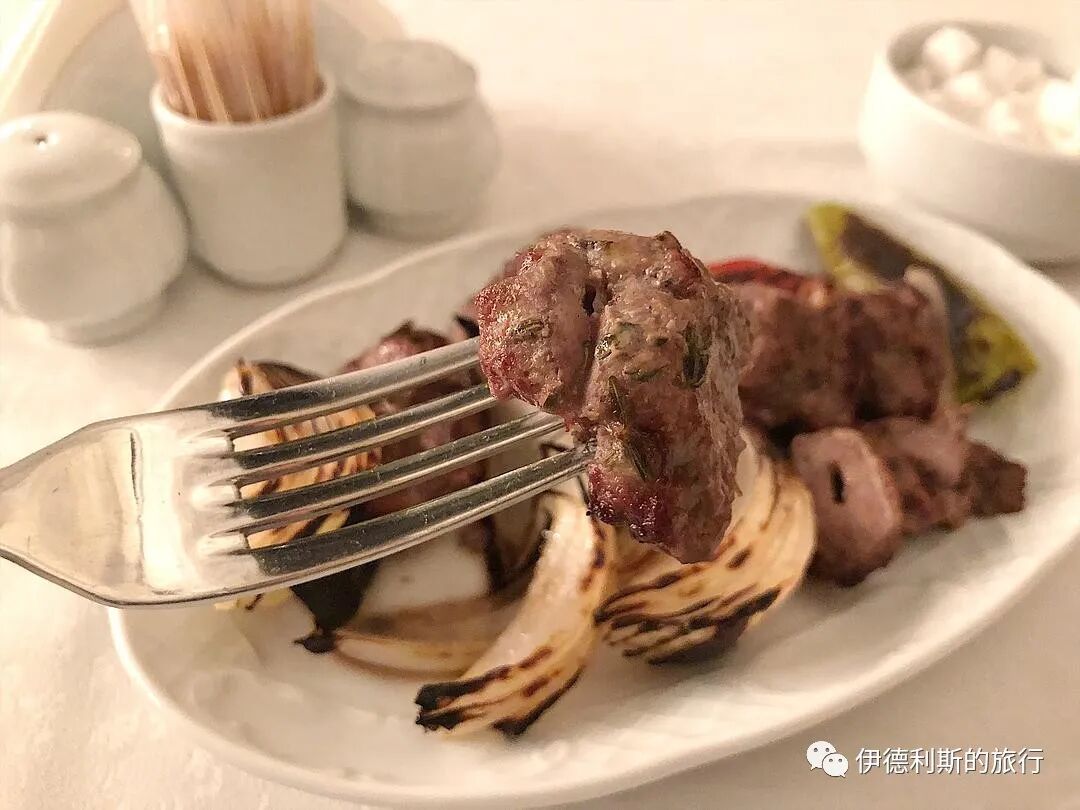
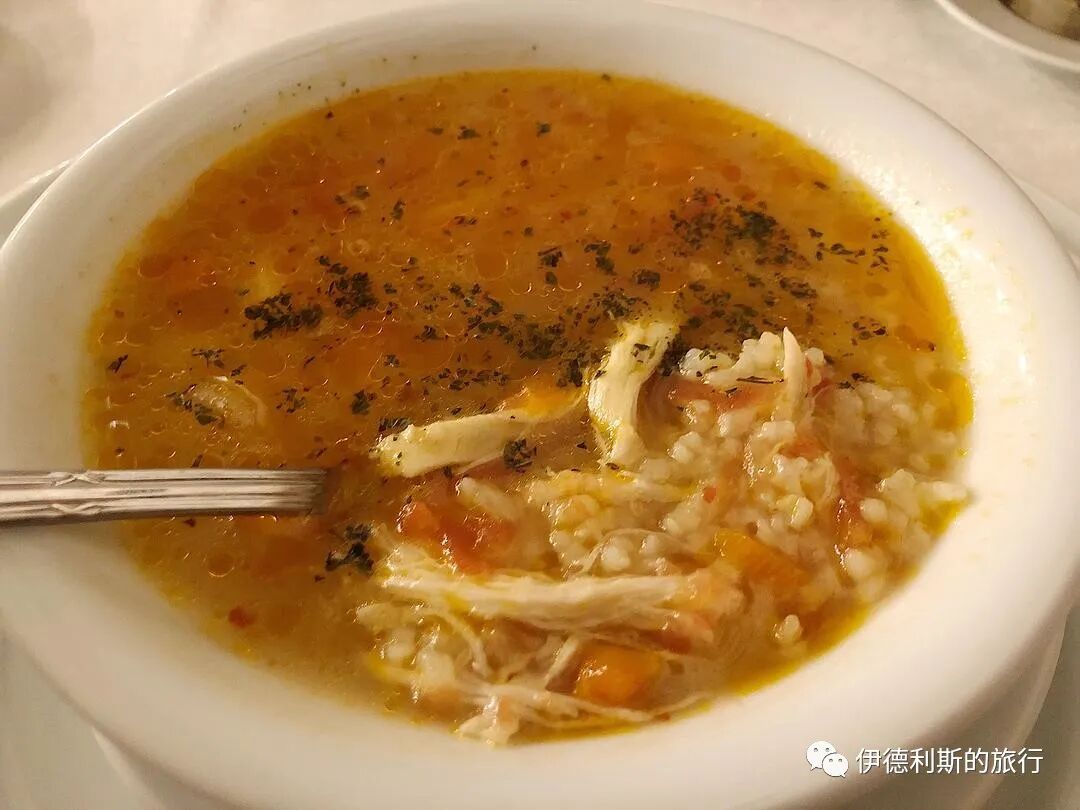
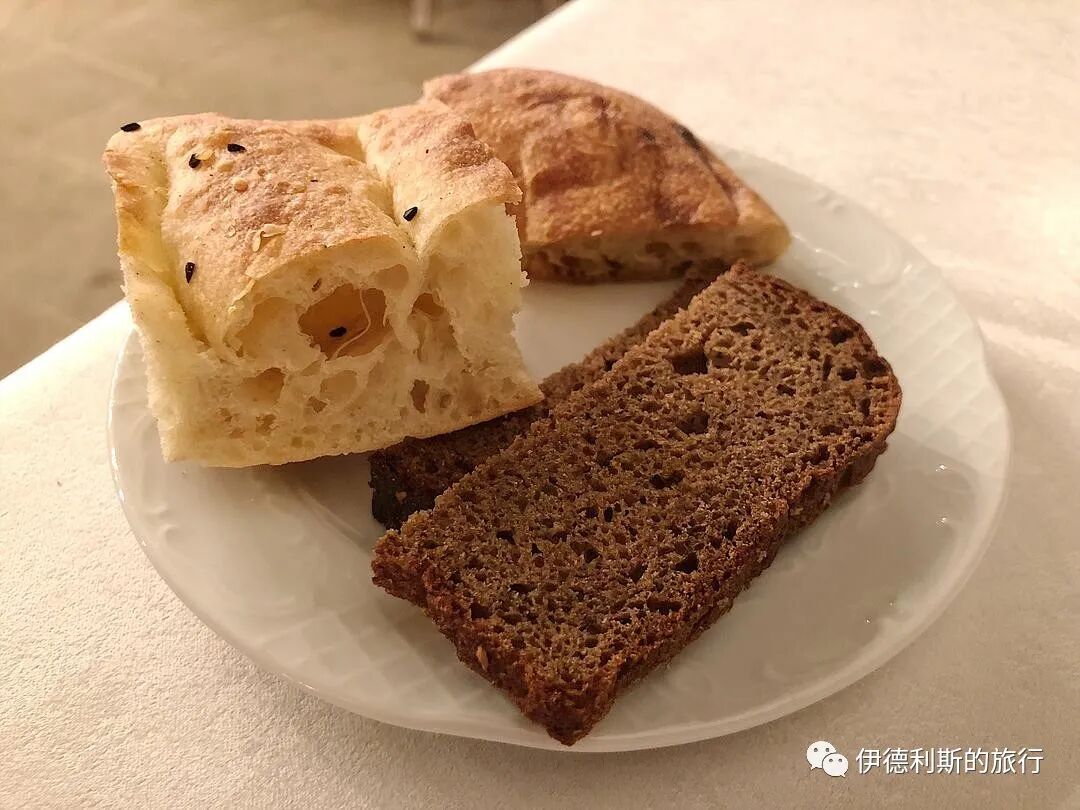
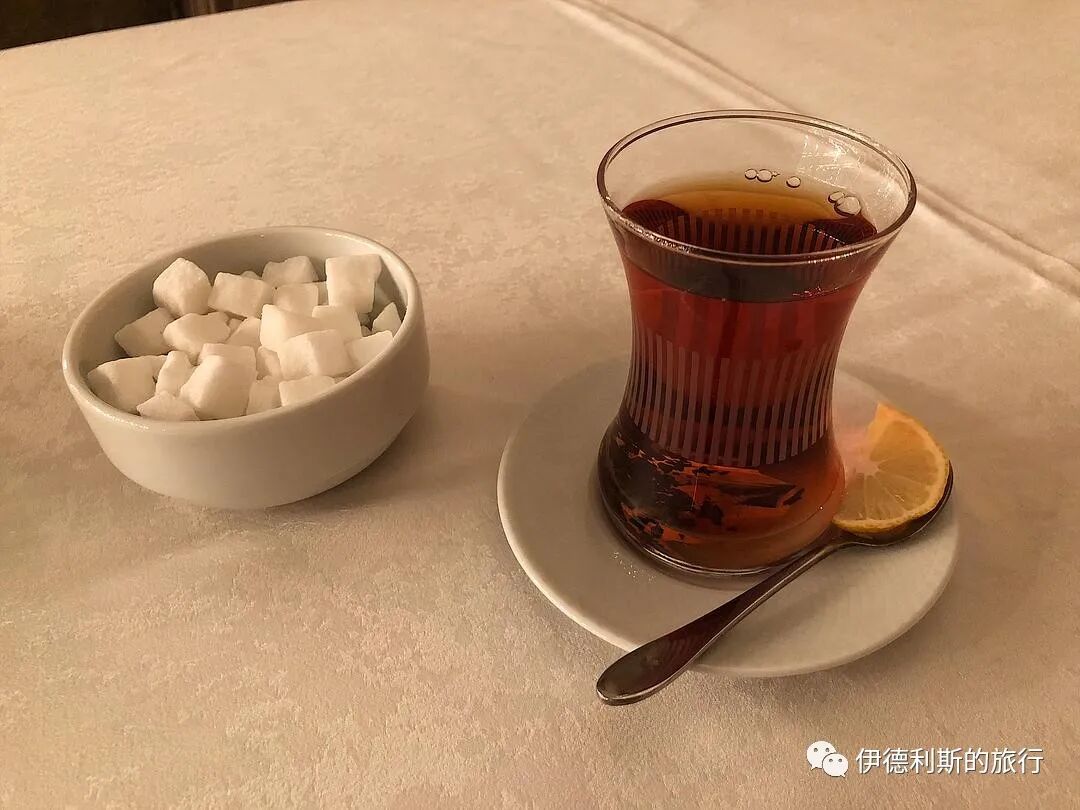
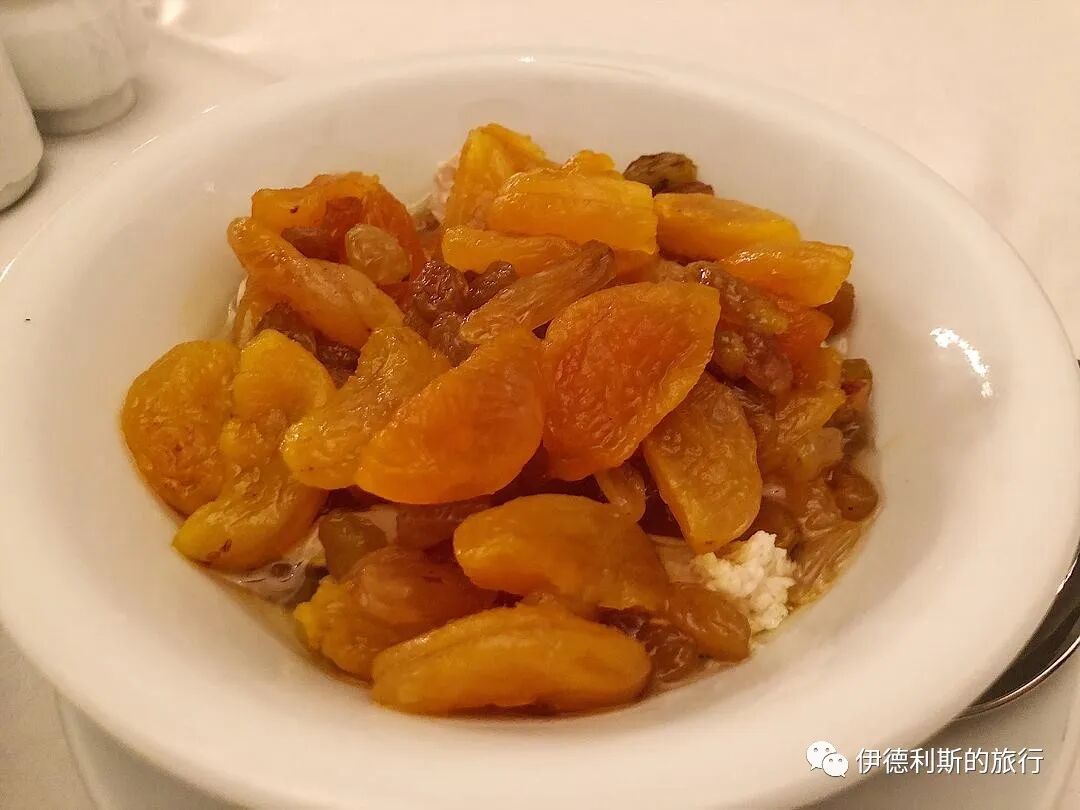
I also saw a young man playing the tar at a restaurant called Art Club, and he had a very graceful style.
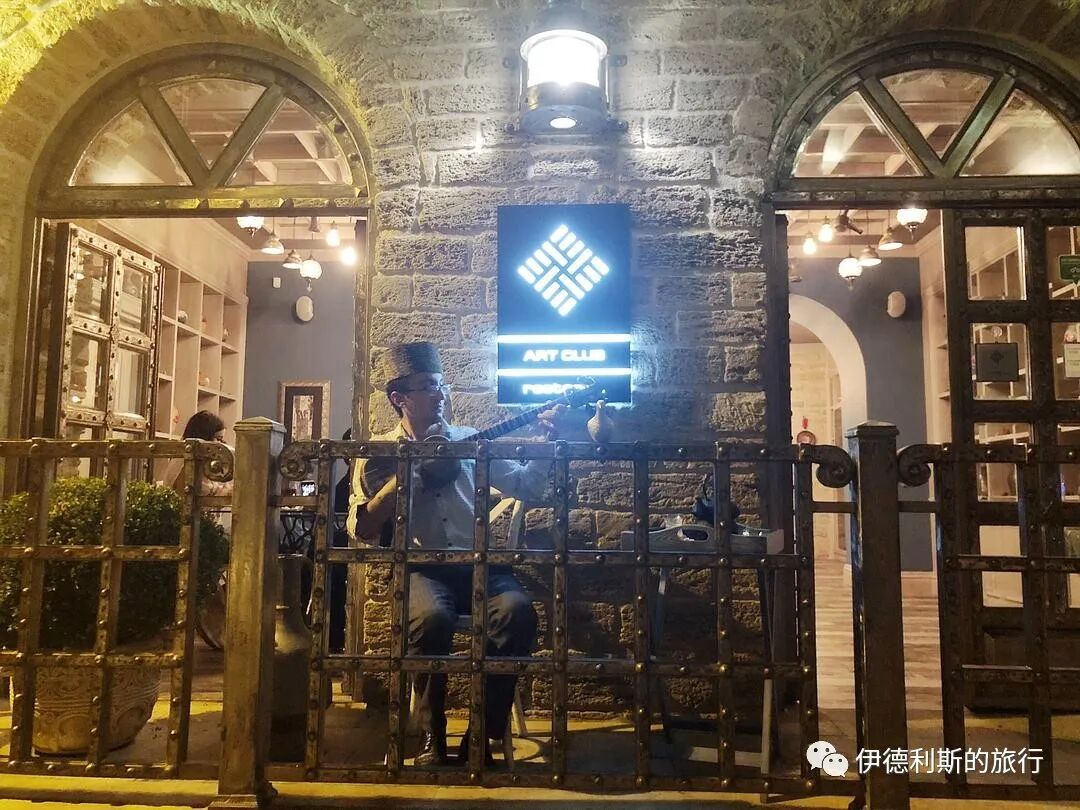
2. Sharing knowledge about Azerbaijani mugham.
Traditional Azerbaijani mugham usually consists of a lead singer (khanandas), a plucked string instrument (tar), a bowed string instrument (kamancheh), and a frame drum (daf), with the lead singer often doubling as the drummer.
The word khananda means singer in Persian, and since the Middle Ages, they have sung Persian poetry at weddings, bazaars, caravanserais, and teahouses in cities. Khanandas singers reached their peak from the 19th century to the early 20th century. In the 1870s, a khanandas singer named Kharrat Gulu established the first professional Azerbaijani mugham school, where students were required to have a vocal range of at least two octaves. After finishing their studies, khanandas singers who passed the exam would receive the title of ustad (master).
The word tar means string in Persian, and the tar is an important classical Persian string instrument. It appeared in the mid-18th century and became one of the most important string instruments in Iran and the Caucasus. The Azerbaijani tar, also called the 11-string tar, was invented by Mirza Sadiq Asad (1846-1902) in the 1870s based on the Iranian tar. He changed the tar to 11 strings and moved its playing position from the knee to the chest.
The word kamancheh means little bow in Persian and is an important bowed string instrument in Iran, the Caucasus, and Central Asia. During the Persian Safavid dynasty, the kamancheh was a very important instrument for celebrations.
The daf is a frame drum widely popular in the Middle East, Persia, South Asia, and Central Asia, dating back to the Sassanid Persian period and used in Nowruz festivals and Zoroastrian chanting. Starting in the 15th century, the daf drum was widely used in Sufi rituals.
The picture below shows an Azerbaijani mugham ensemble in 1911; from left to right are the daf, kamancheh, and tar.
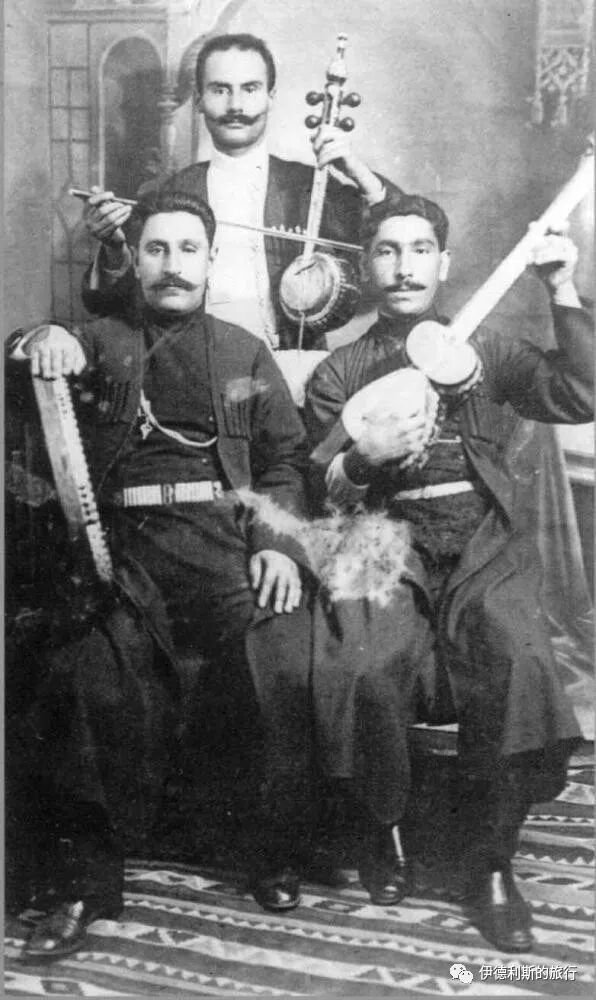
Jabbar Garyaghdioglu is known as the greatest khanandas singer and holds an important place in the history of Azerbaijani music. He was the first singer to perform mugham in the Azerbaijani language instead of Persian, and the first to bring Azerbaijani mugham to grand theaters and concert halls.
Jabbar was born into a family that ran a dye workshop, and his father wanted his son to inherit the family business, but the son was determined to become a singer. Between 1871 and 1876, Jabbar studied vocal music, music theory, and Persian at school. After graduating, he joined the band of a famous local musician. By age 20, Jabbar was famous across the South Caucasus. He sang in inns and caravans along trade routes, and his influence reached Iran, Central Asia, and Turkey.
In 1901, Jabbar moved to Baku, which was booming because of oil. He built a club in the suburbs specifically to host charity concerts. Between 1906 and 1912, Jabbar and the best singers of the time, known as Khanandas, traveled to Kiev, Moscow, and Warsaw to record vinyl records and hold concerts.
During the Soviet era, Jabbar taught classical music at the Azerbaijan National Conservatory and was a singer for the Azerbaijan State Philharmonic Society.
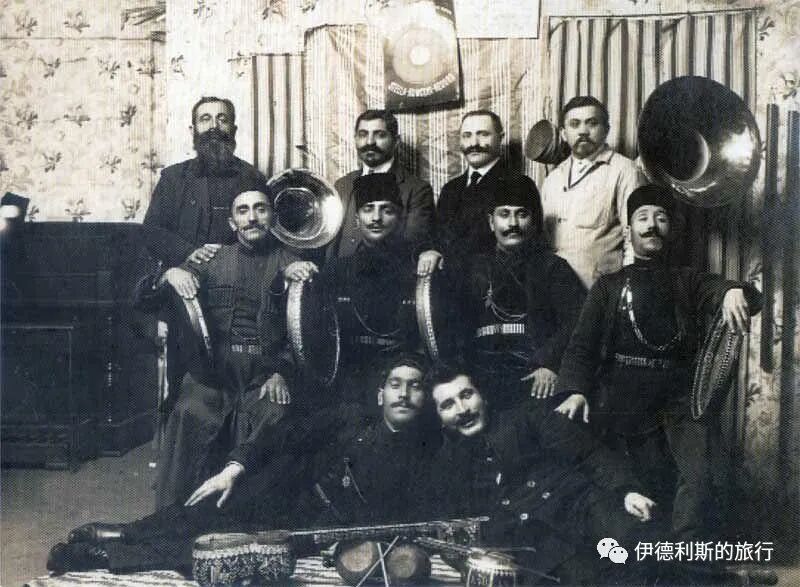
Jabbar Garyaghdioglu recording in Warsaw in 1912, sitting first on the left.
After Jabbar, Seyid Shushinski (1889-1965) was known as the most famous Azerbaijani mugham Khanandas singer in the first half of the 20th century.
Seyid lost his father when he was young and grew up with his aunt, who was skilled at folk songs. Because of his great musical talent, he joined his first band at age 15. In 1908, 19-year-old Seyid had his public debut and it was a huge success. At his uncle's insistence, Seyid finished two years of professional music education at Mir Mohsun Navvab's school, and after that, he became a professional Khanandas singer.
In 1911, Seyid went to Georgia to hold a concert. In 1913, he released a vinyl record in Kiev, and in 1919, he moved to Baku.
During the Soviet era, Seyid sang at the Baku Theater and taught at the Azerbaijan Conservatory between 1926 and 1933. In 1933, Shushinski founded the "Eastern Orchestra" and toured in Russia, Ukraine, and Kazakhstan.
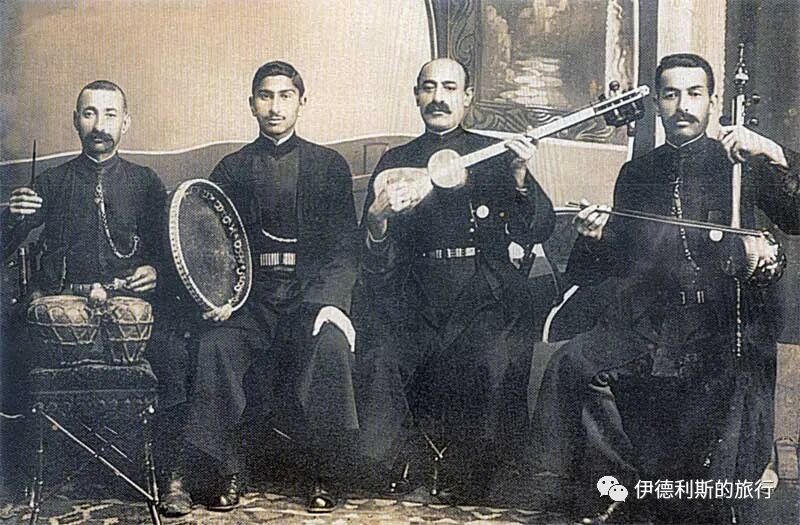
Seyid with his band in 1916.
Street food.
Freshly squeezed pomegranate juice on the street.
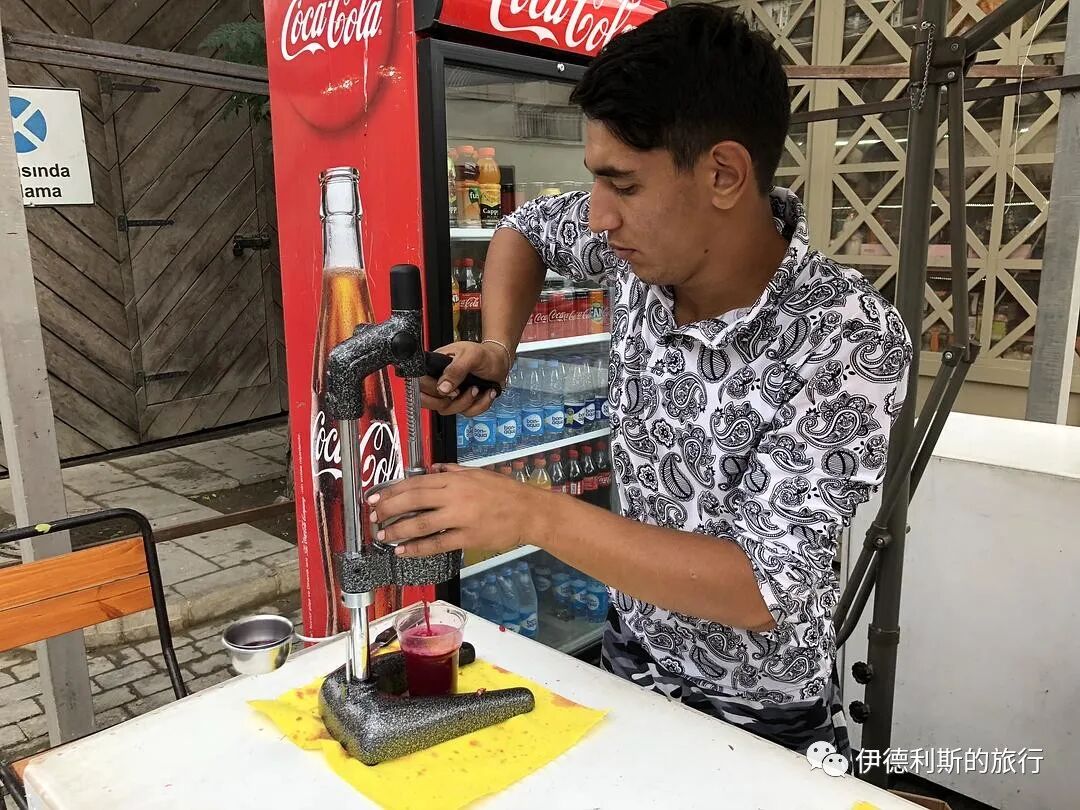
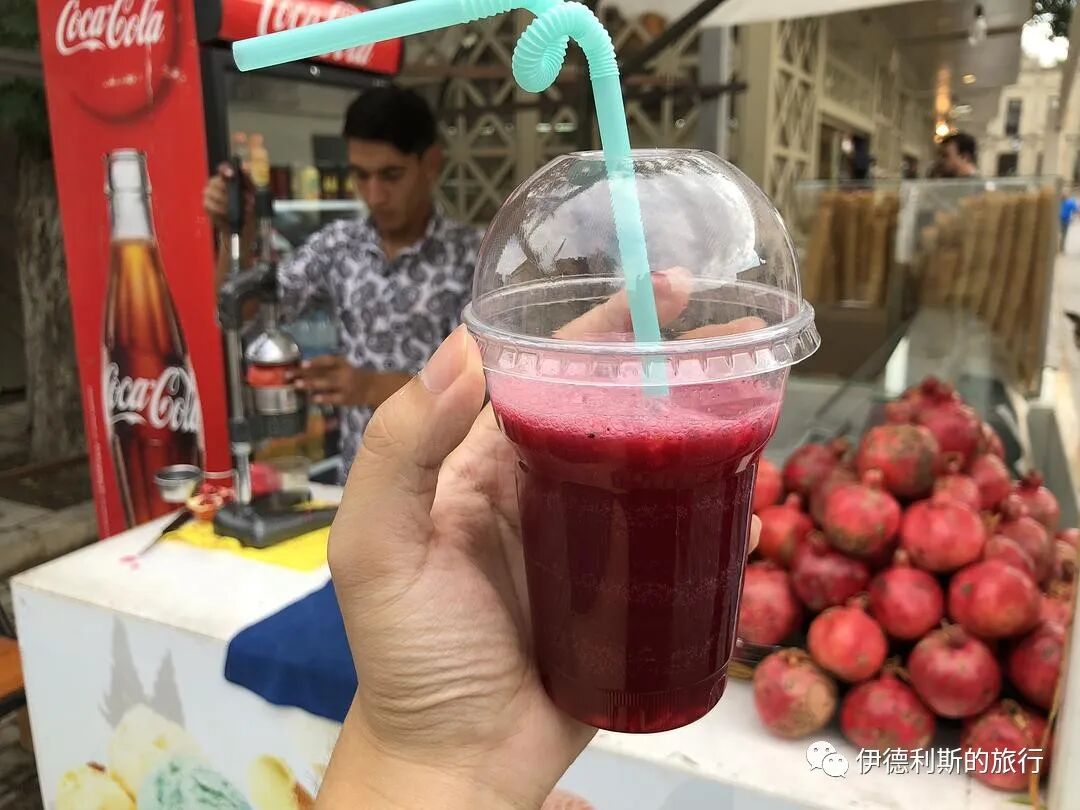
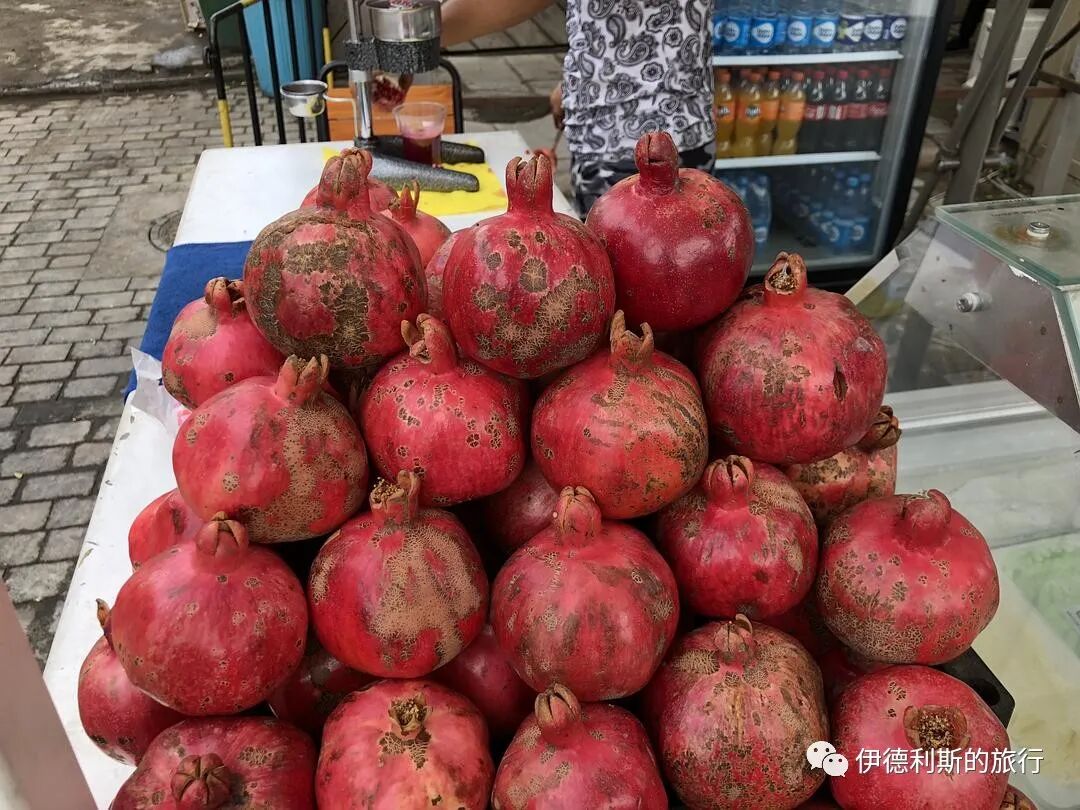
Street-side nut-filled honey pastry (baklava) served with black tea.
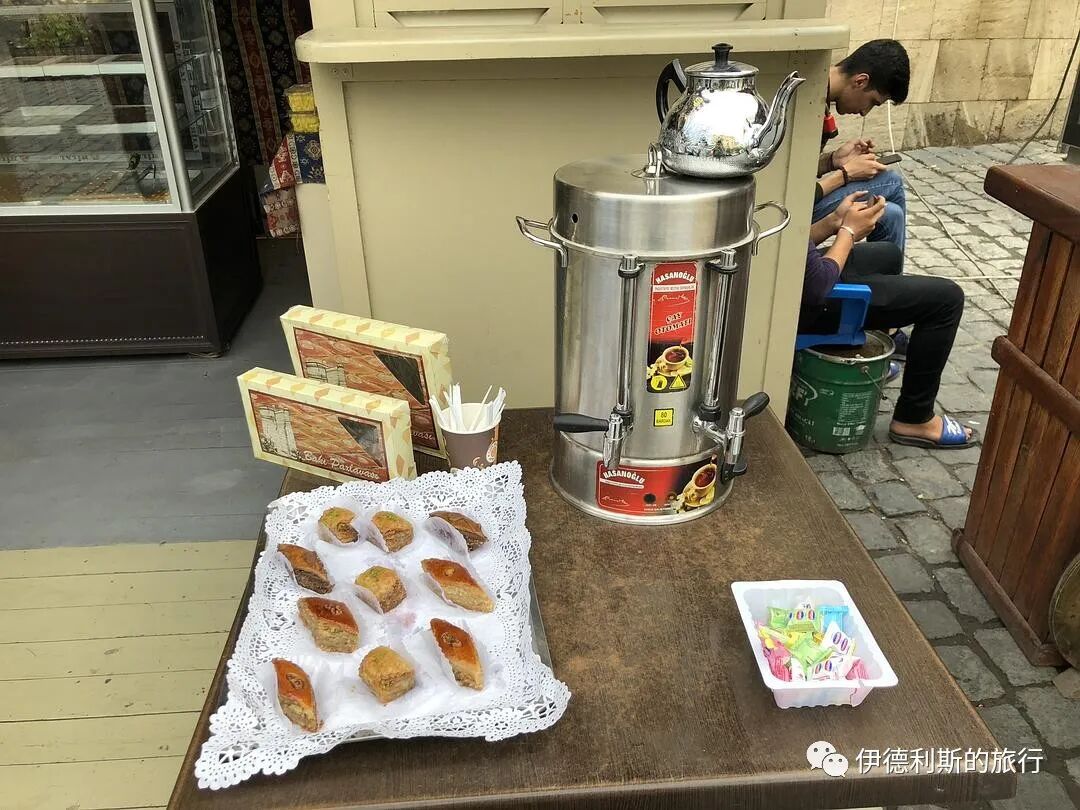
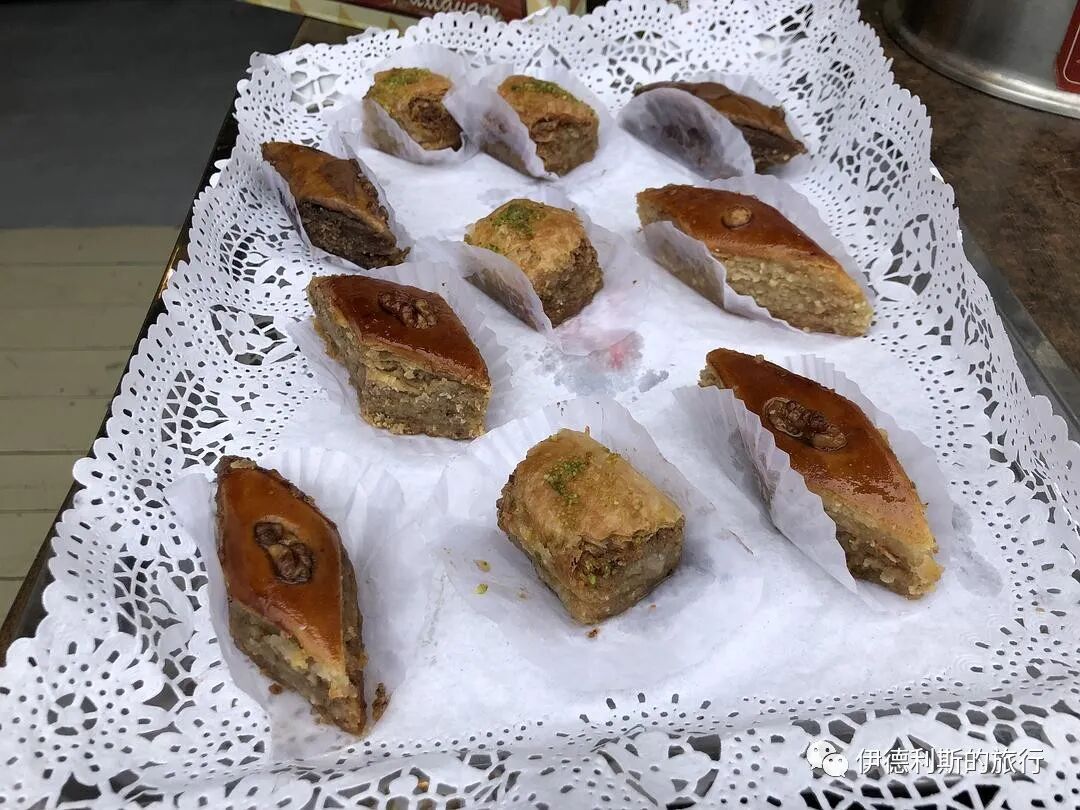
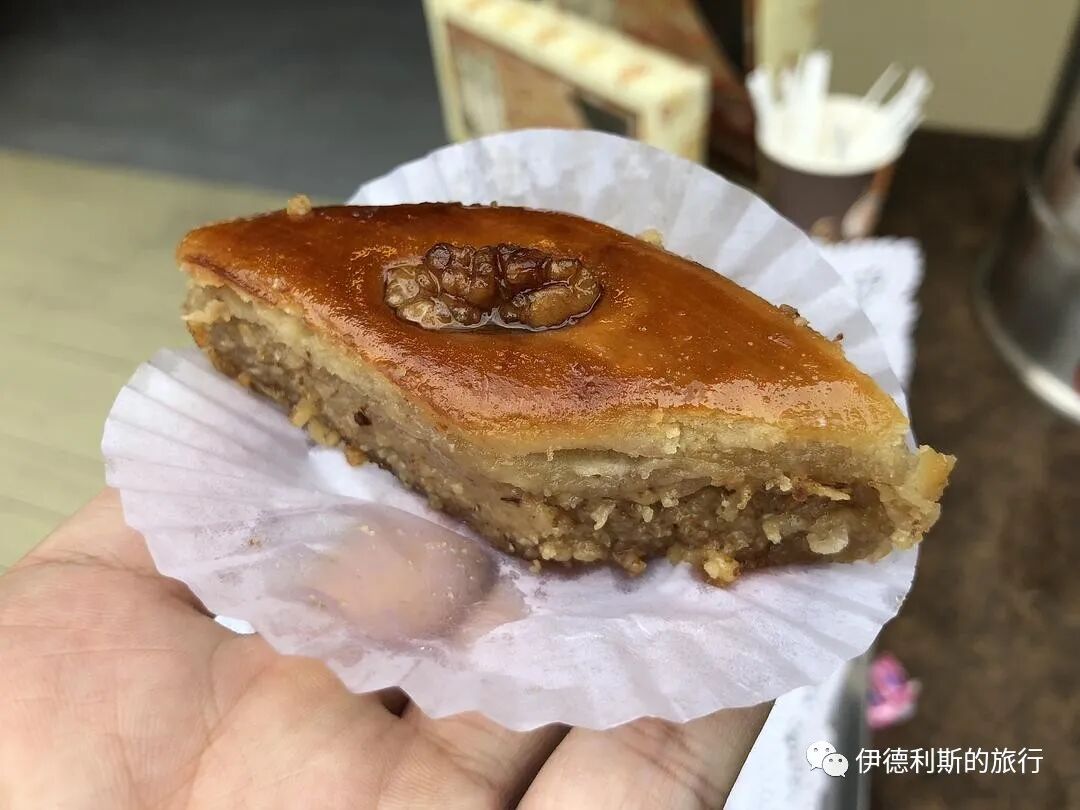
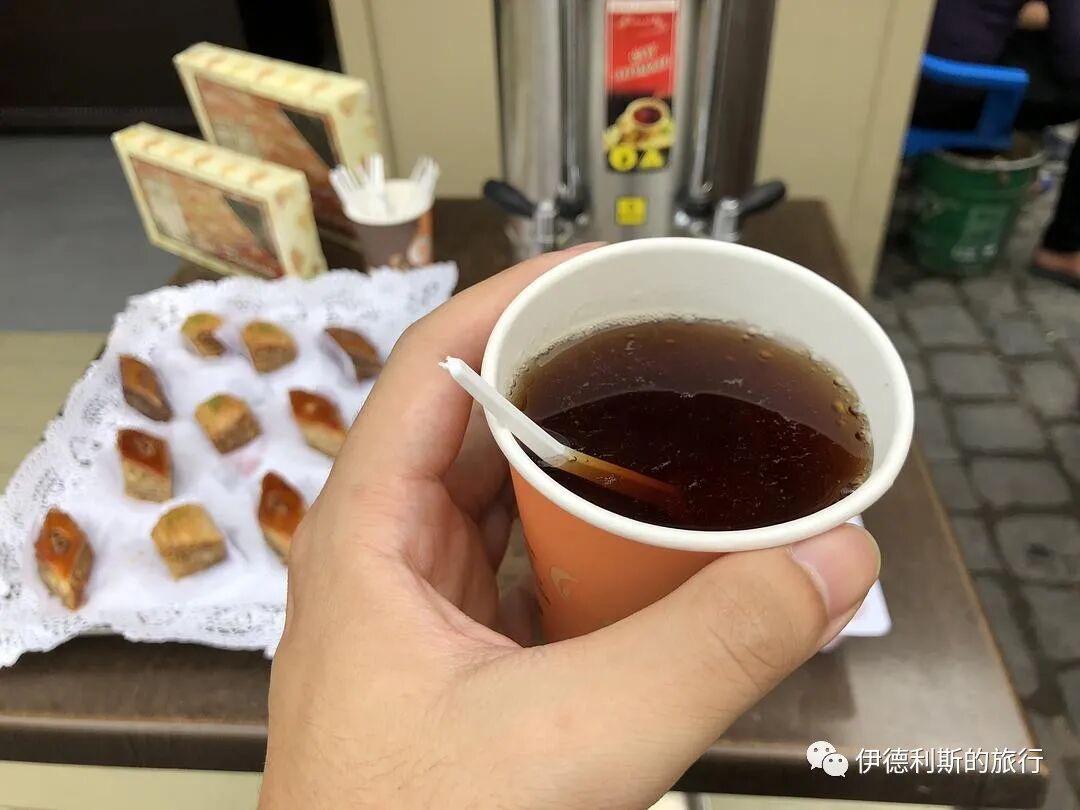
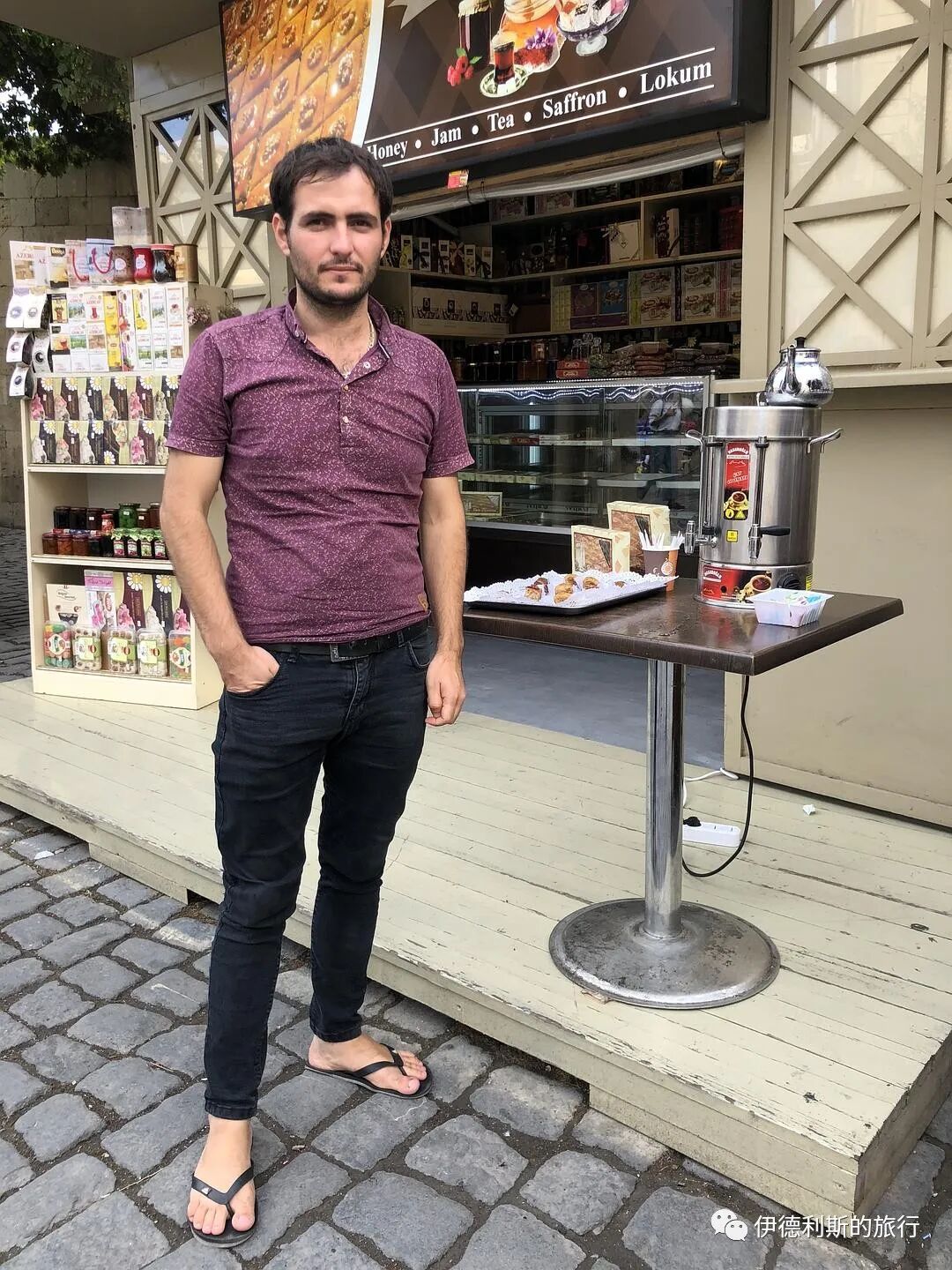
I highly recommend this street bakery. The bread is super cheap. After I bought some and started eating it at the door, the owner offered to make me free tea. After I took a bite, the grandmother making the bread even added a big piece of butter to my bread.
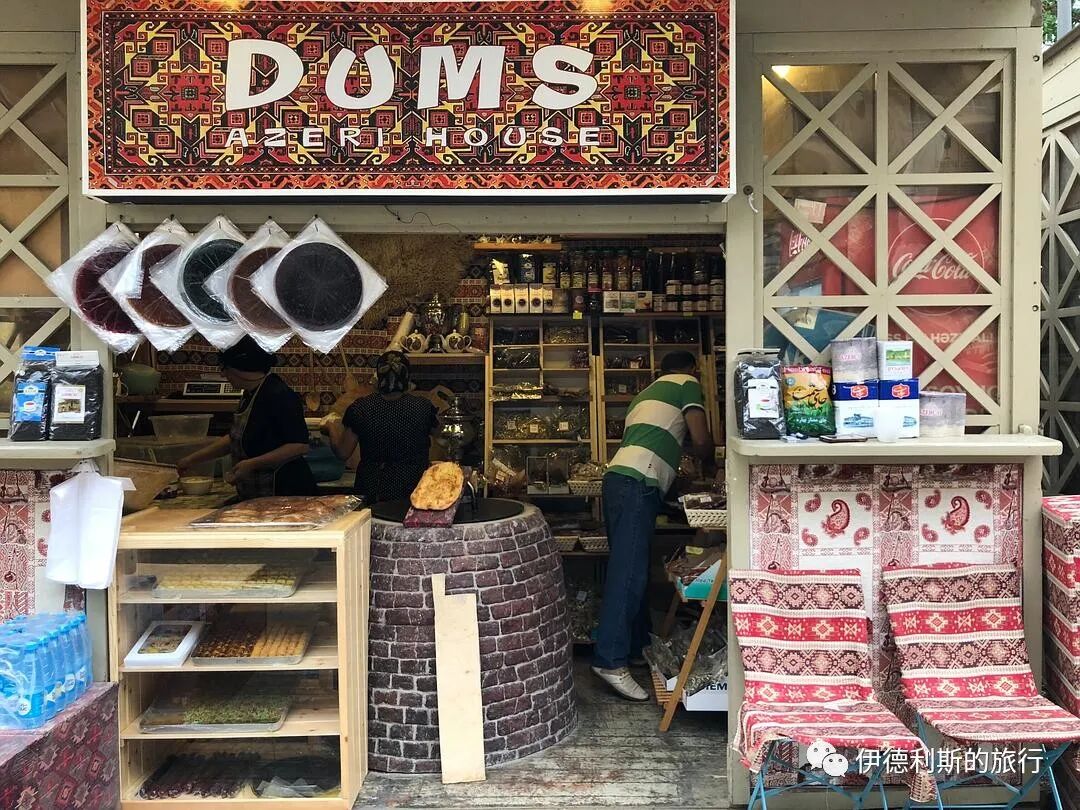
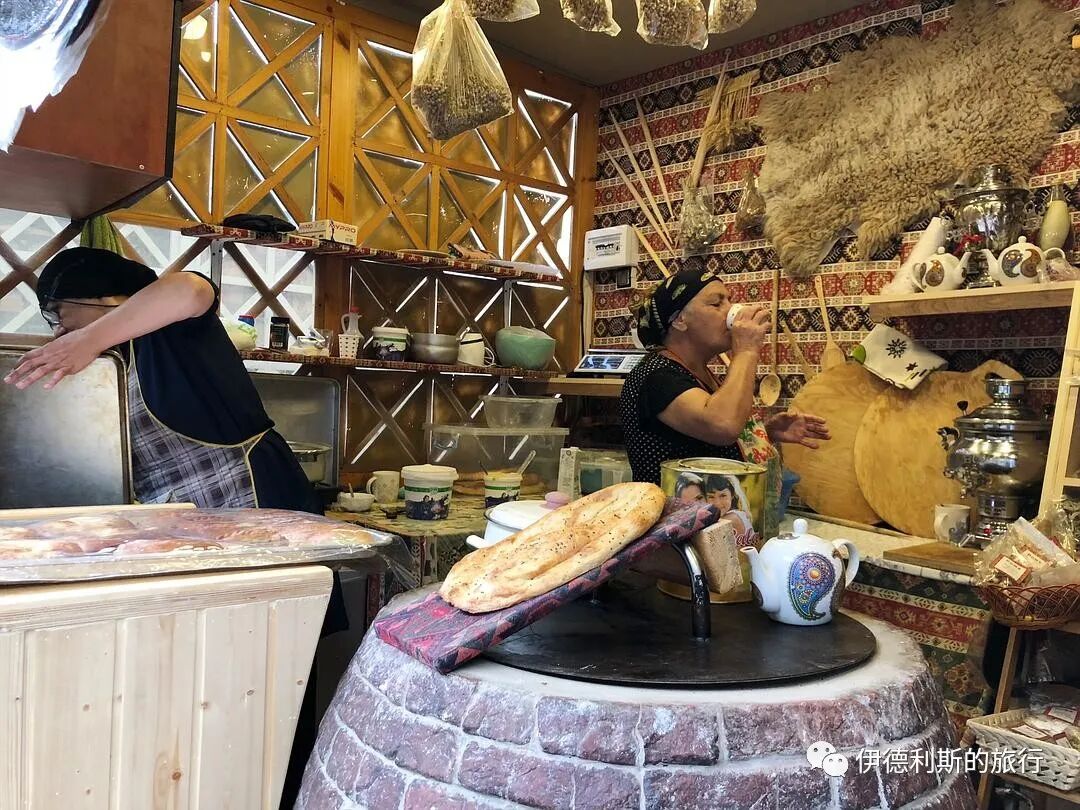
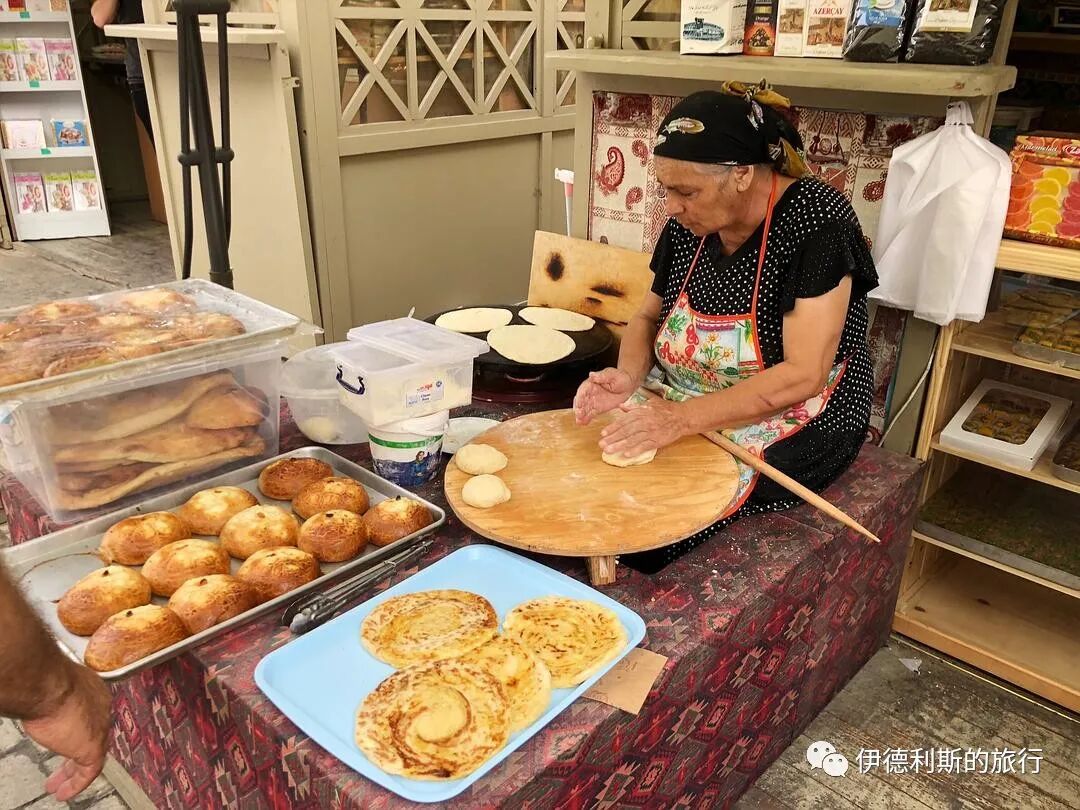
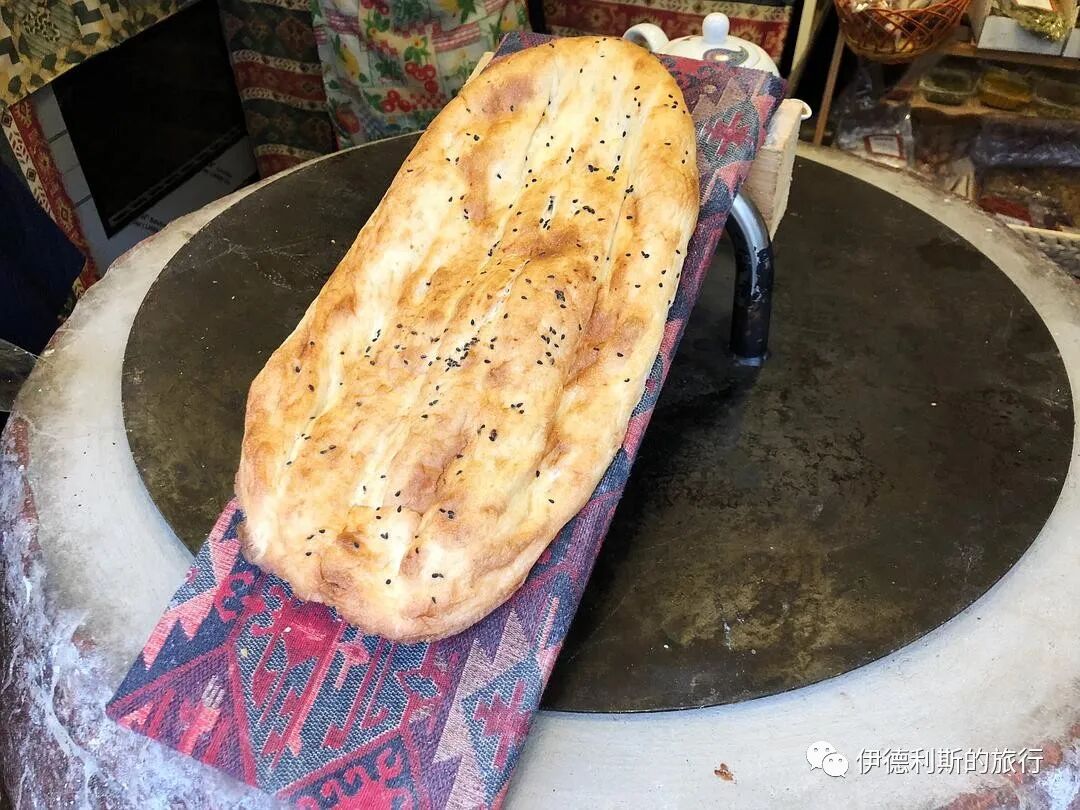
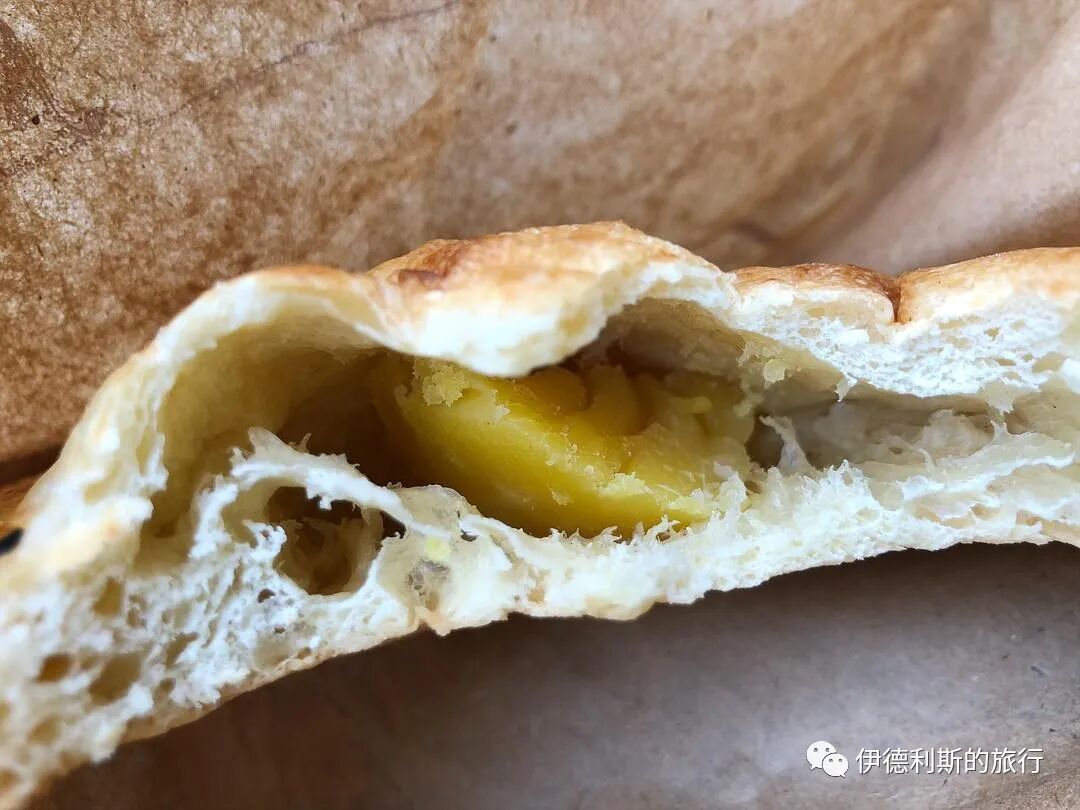
The owner is wearing a Caucasian pastoral wool hat while taking a photo with his friend, and everyone is super happy.
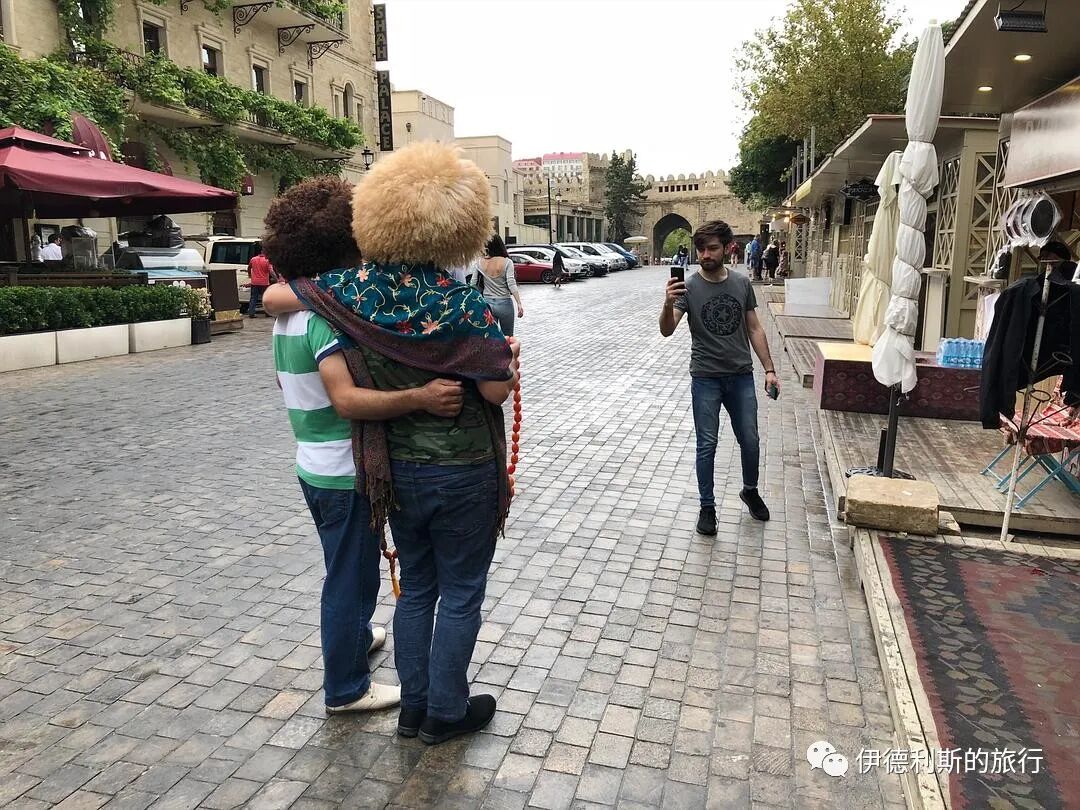
Another bakery next door.
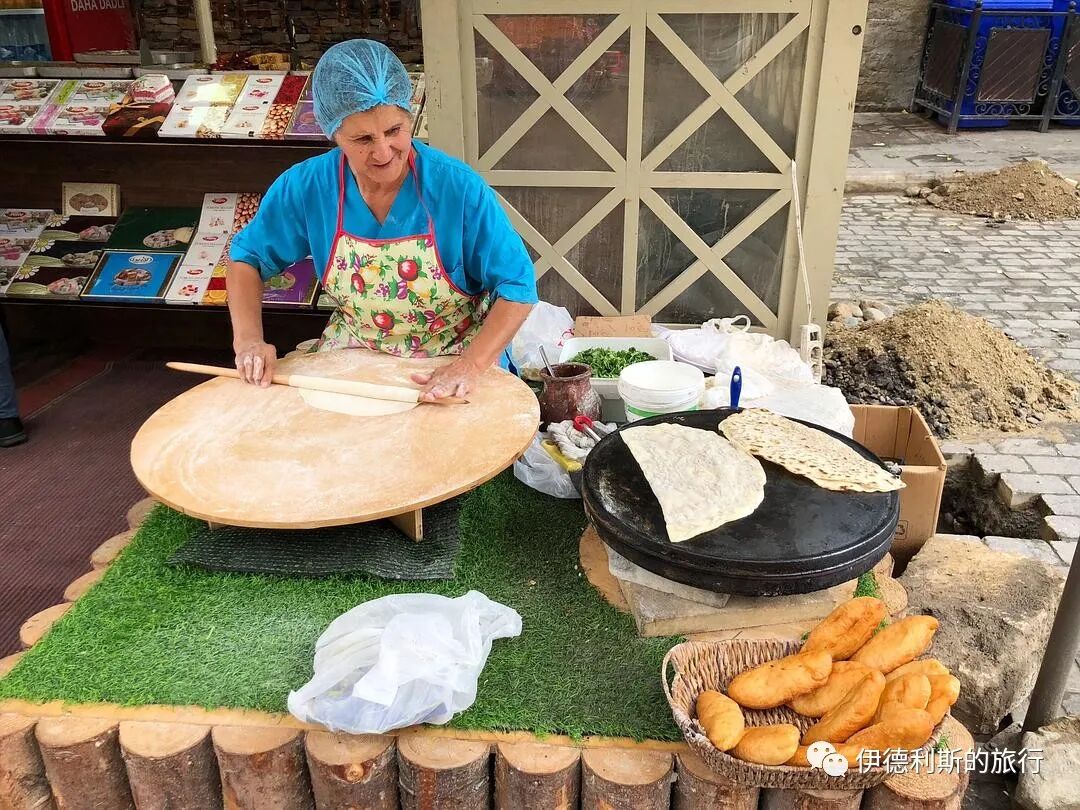
In the old city of Baku, there is a lovely open-air restaurant called 145group, located right on the roof of the 15th-century Haji Gayib Bathhouse (Hacı Qayıb Hamamı). This Turkish bathhouse was buried underground for hundreds of years until it was uncovered during an archaeological survey in 1964.
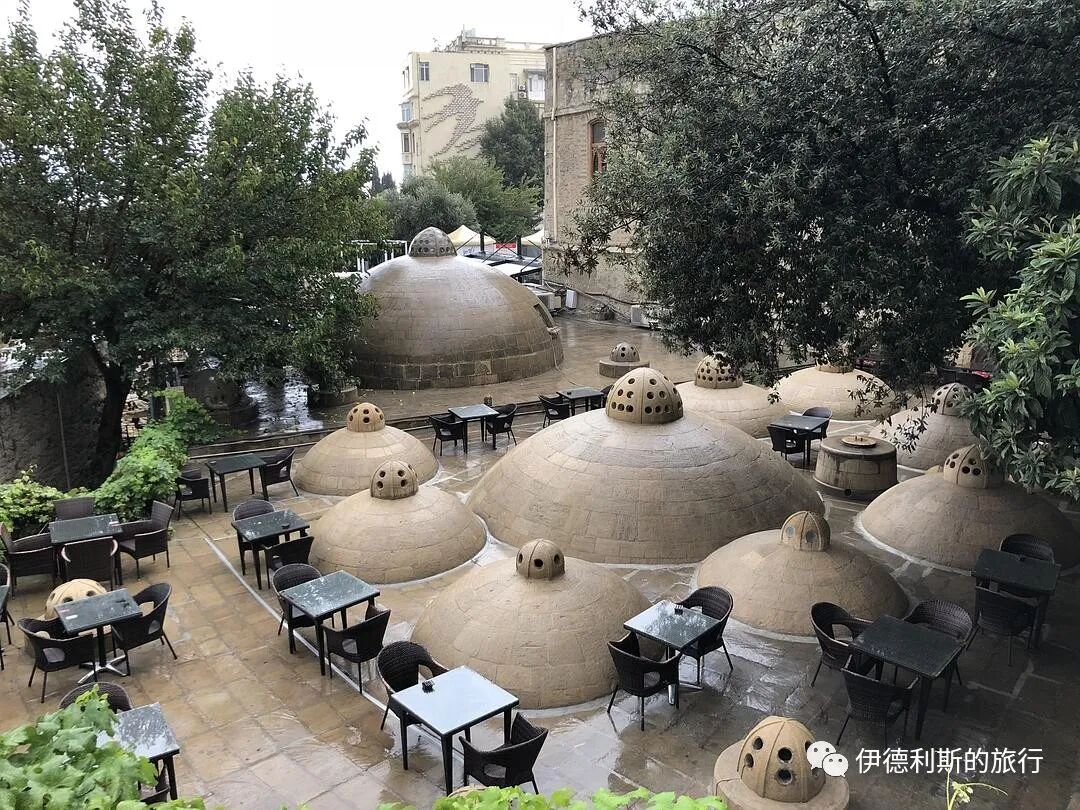
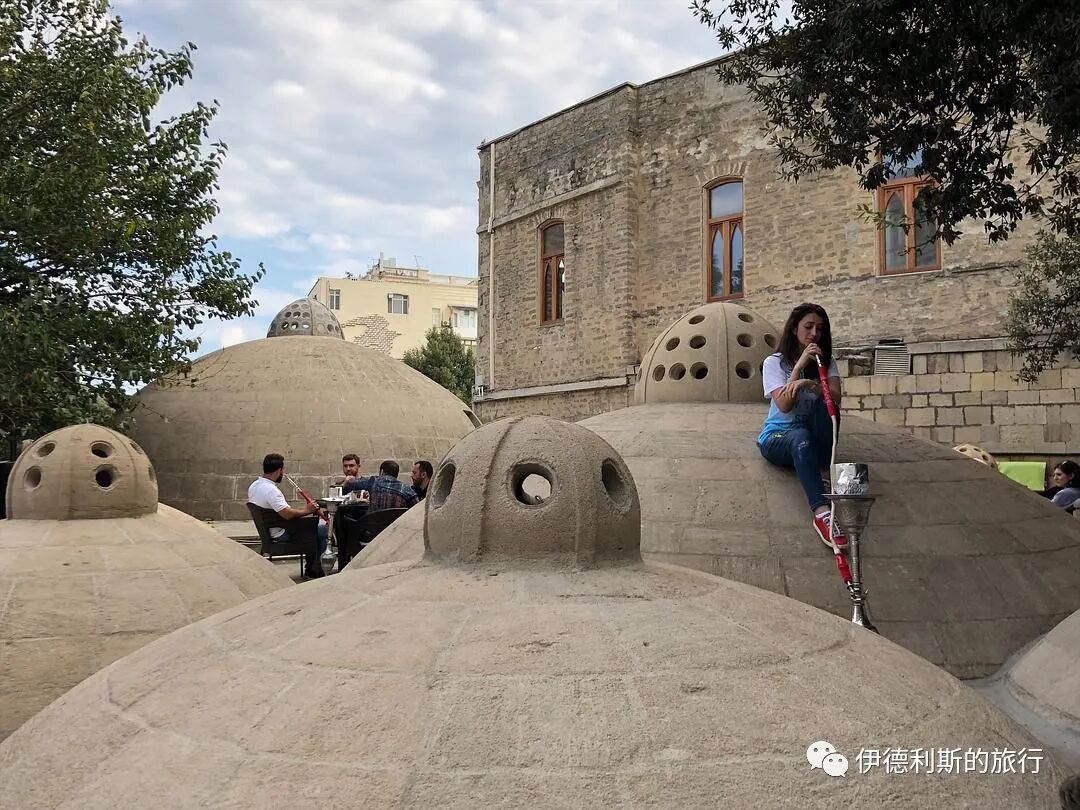
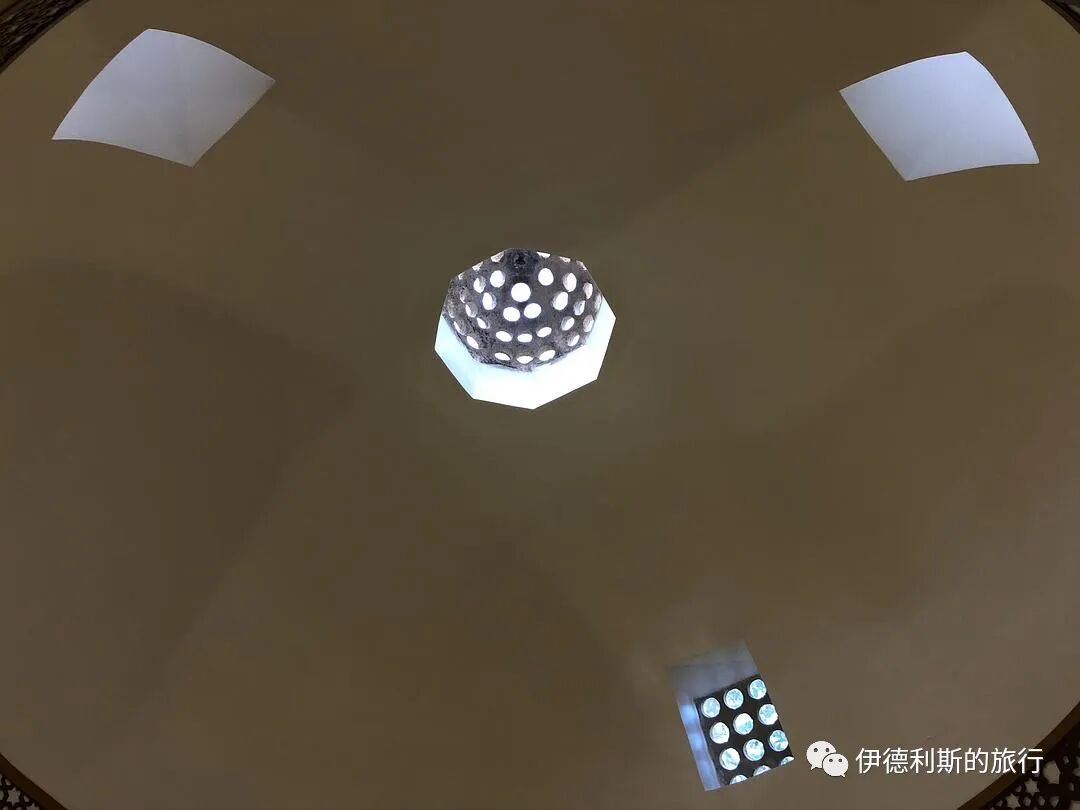
Inside the bathhouse ventilation hole.
I ate the Azerbaijani specialty, stuffed grape leaves (dolma). In 2017, the art of making dolma in Azerbaijan was added to the UNESCO Intangible Cultural Heritage list.
The word "dolma" comes from the Turkish word "dolmak," which means "to fill." Its exact origin is unclear, but it may have come from the Ottoman court. The records say from Persian court chefs, between the 17th and 19th centuries, dolma was made by wrapping grape leaves, cabbage leaves, cucumbers, eggplants, and apples, with fillings of minced meat, fried mint, rice, and saffron. In Azerbaijan, dolma is usually made with grape leaves.
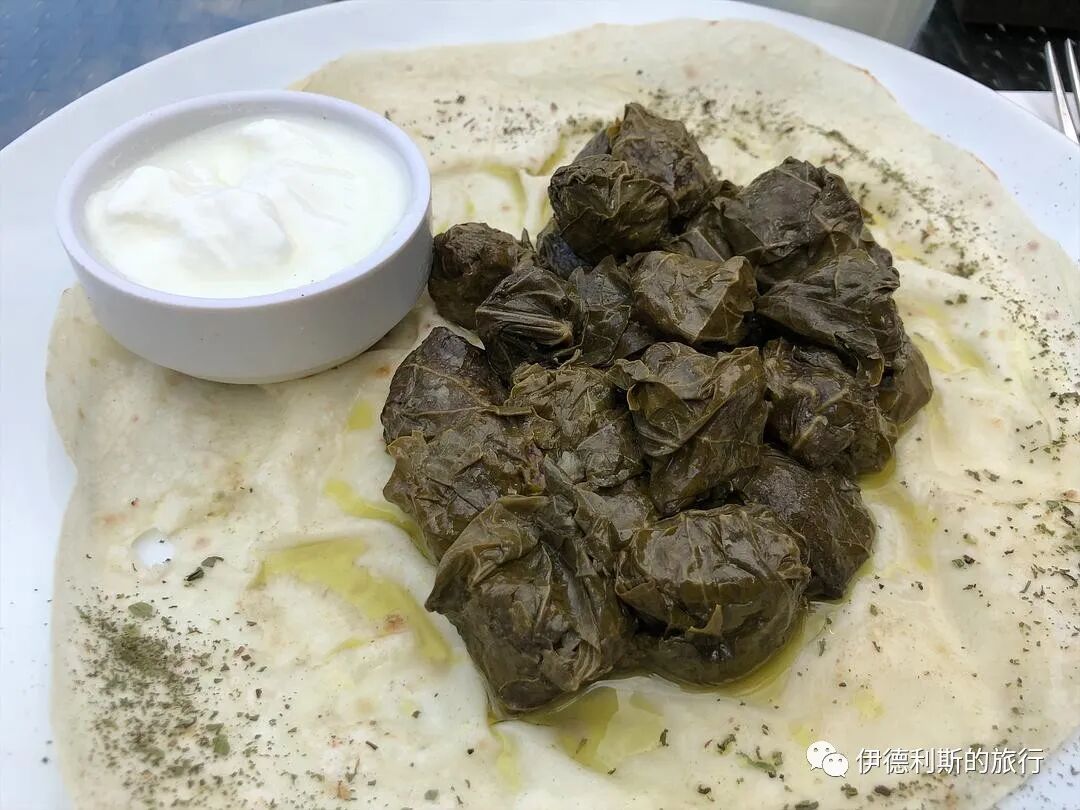
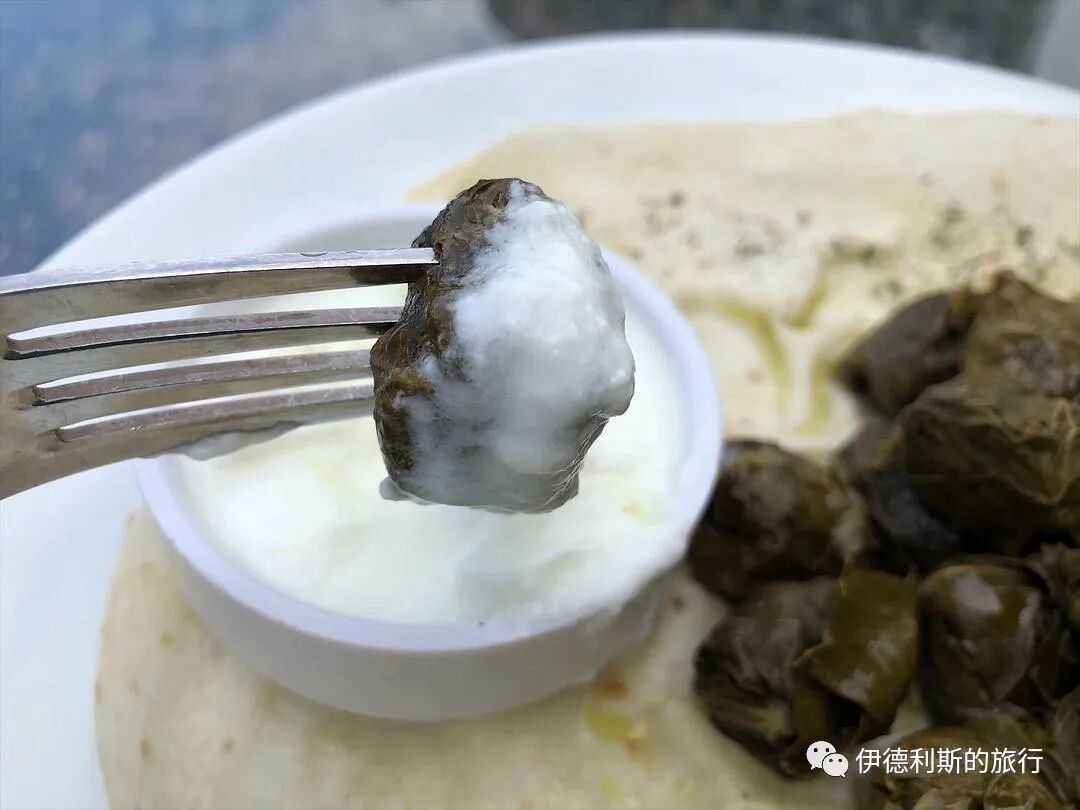
Two little kittens kept eyeing my dolma, so I gave them each one, and they left feeling satisfied.
Yogurt drink (ayran).
Looking down at the view.
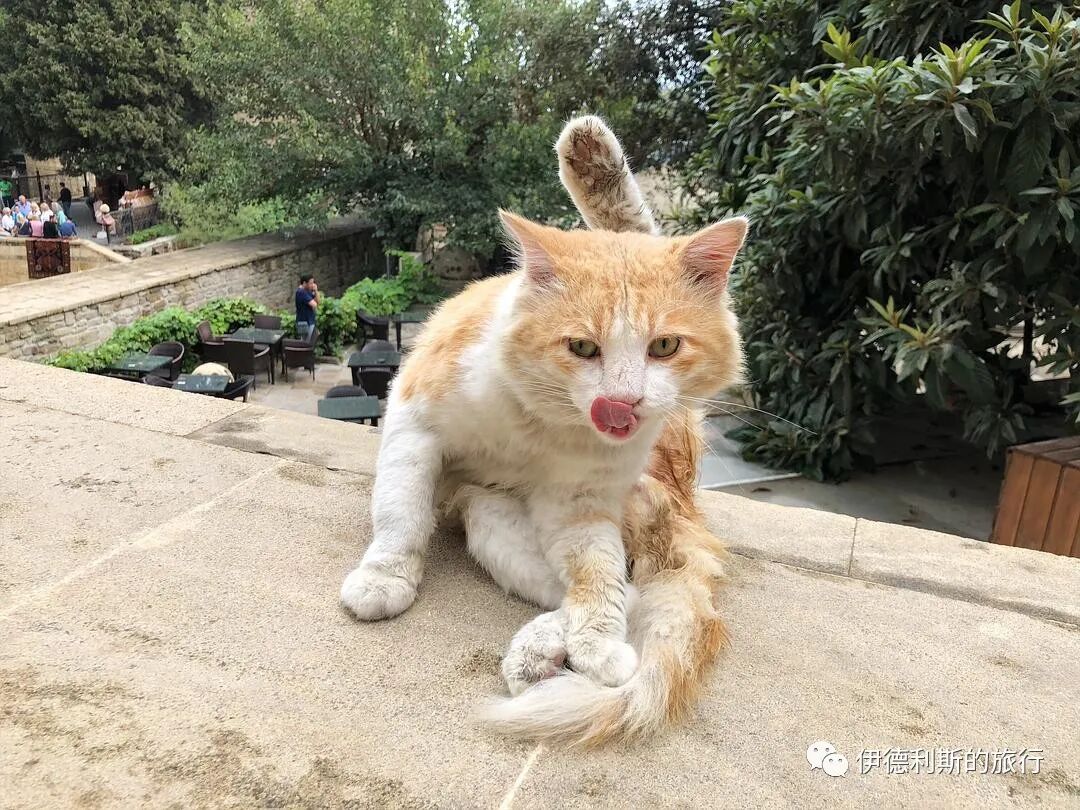
Grilled meat (kebab).
I had some delicious chicken kebab at this restaurant called Shah Palace.
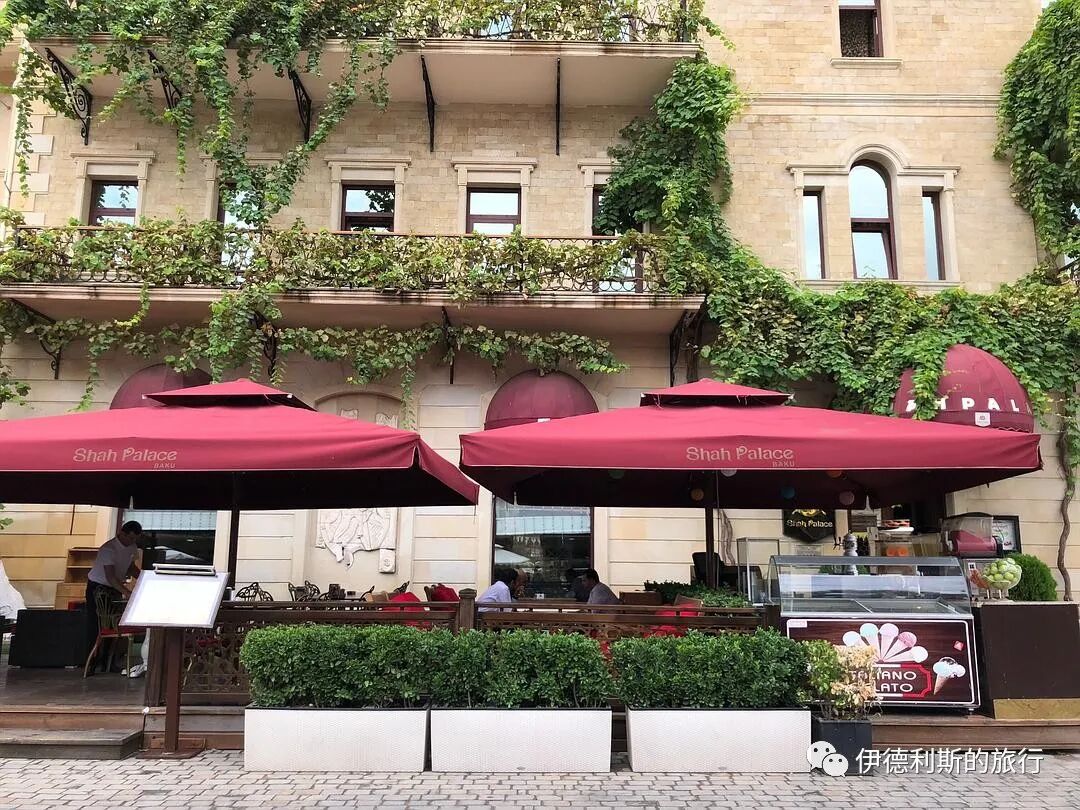
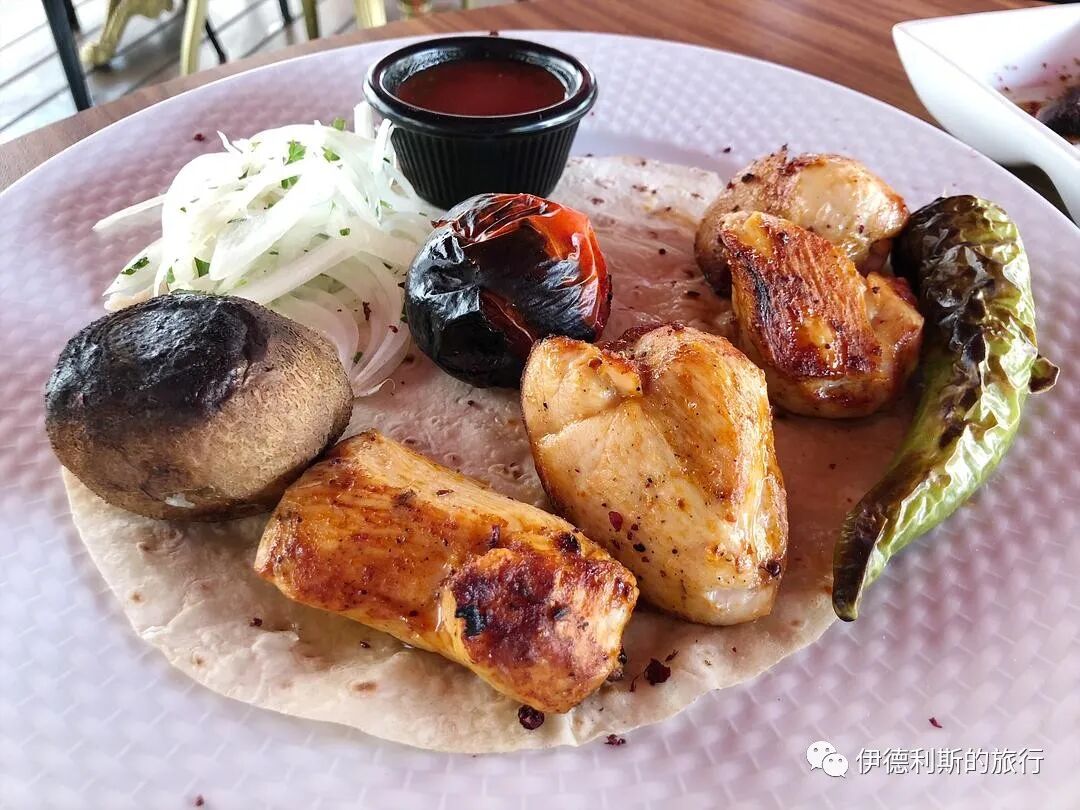
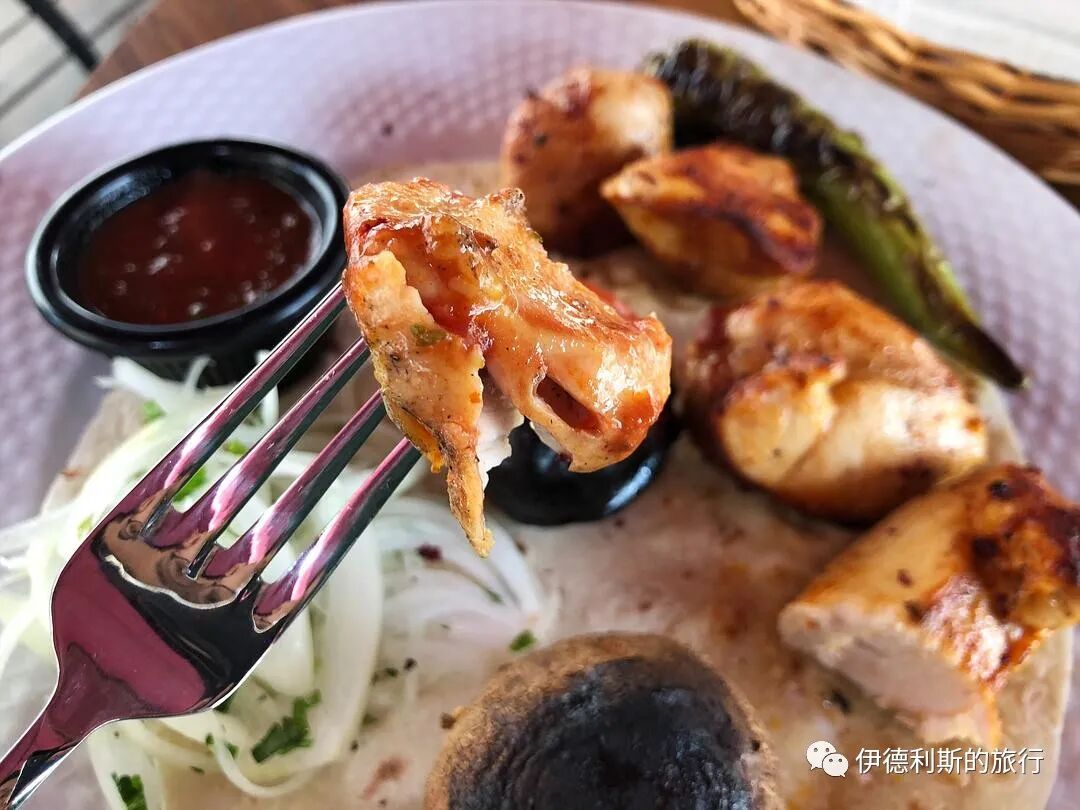
These roasted potatoes were also incredibly fragrant.
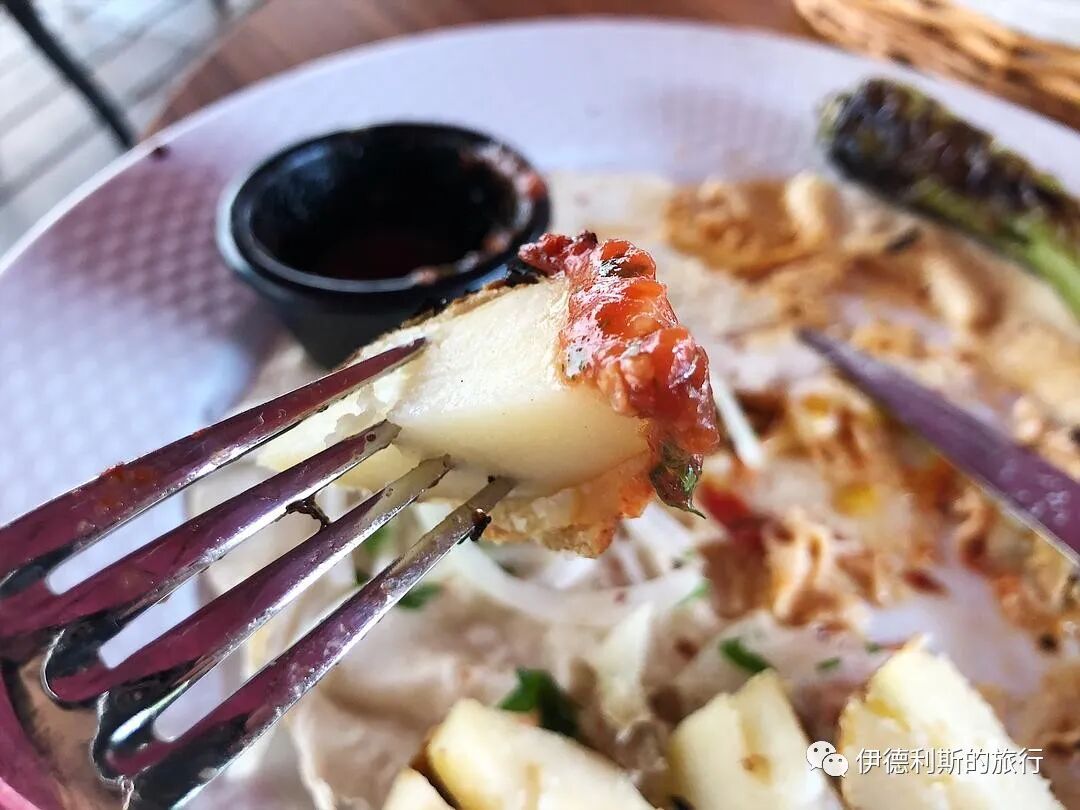
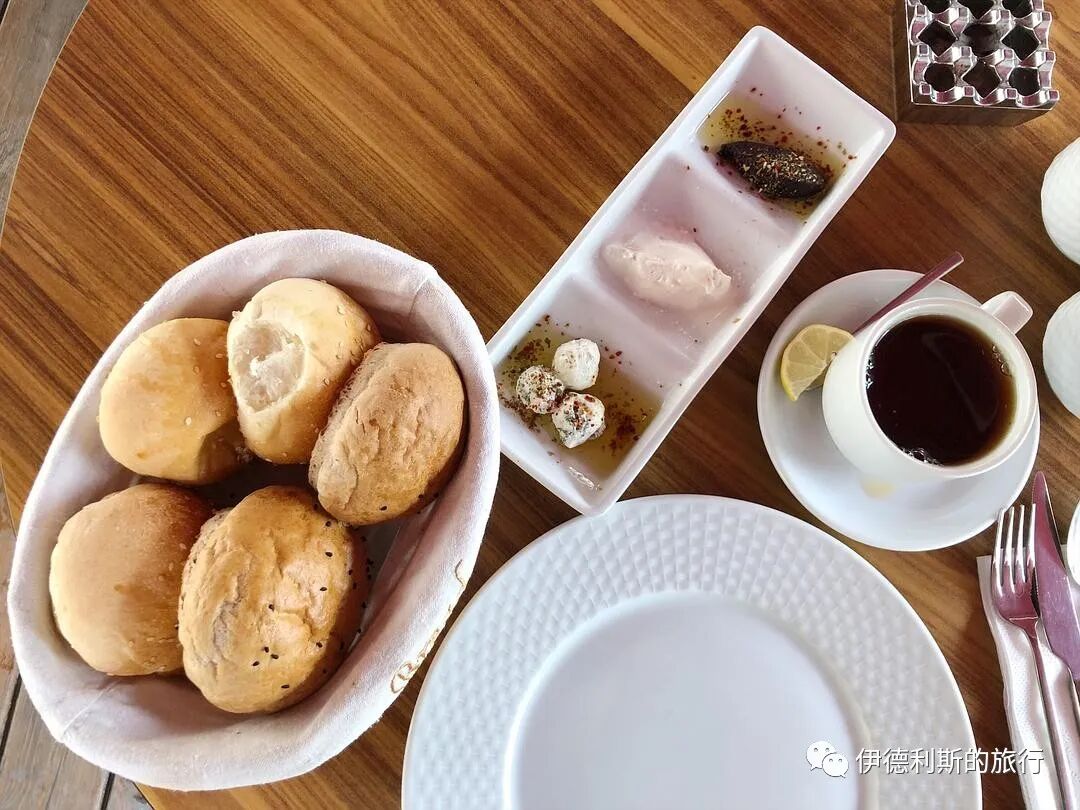
Yogurt dipping sauce.
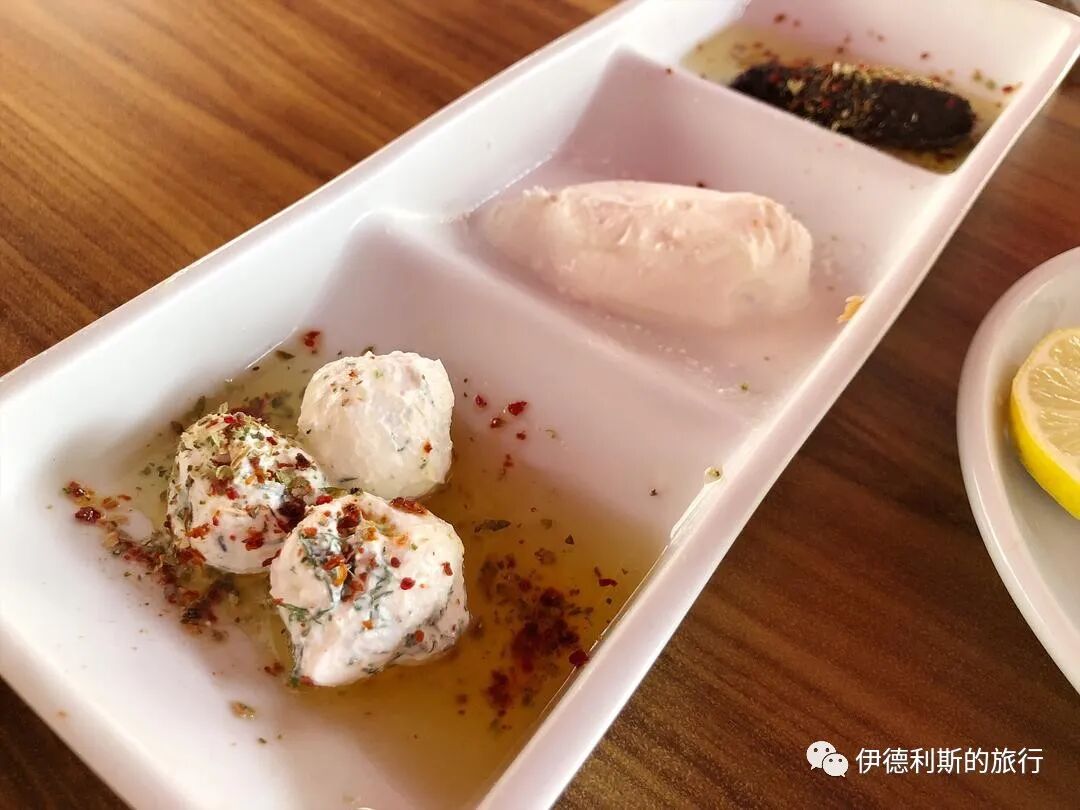
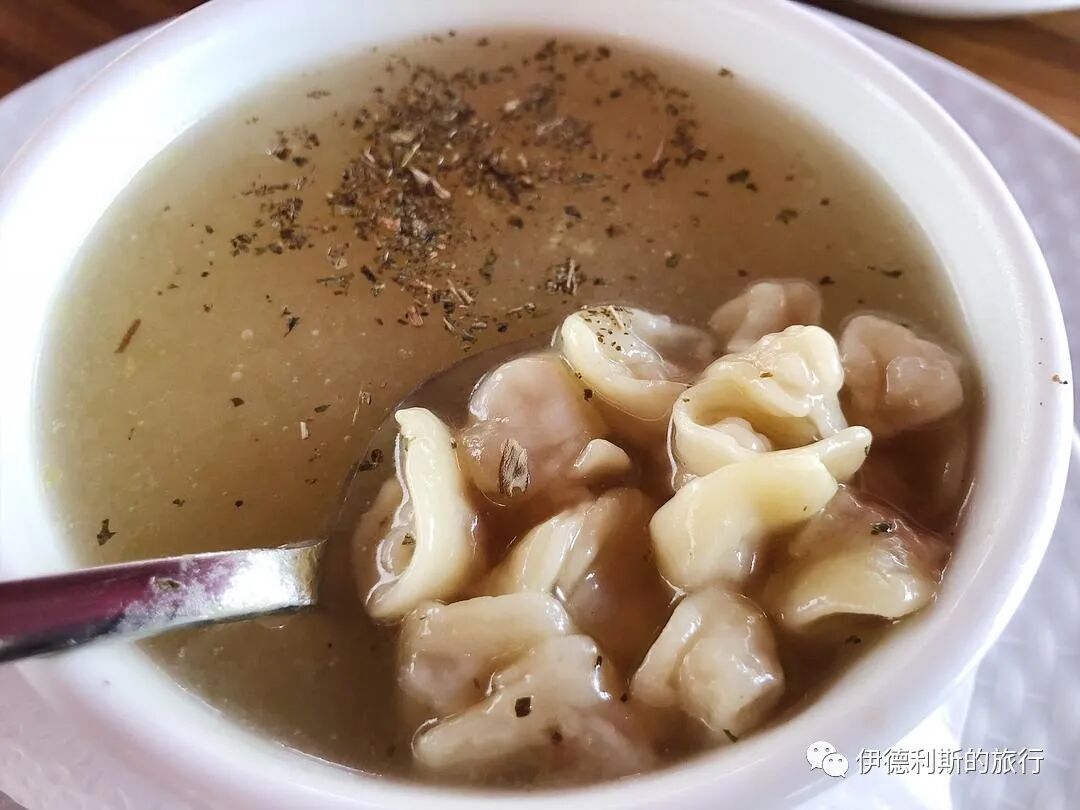
Accommodation.
Finally, let me talk about where I stayed. Many hotels in the old city of Baku are converted from historic buildings. I stayed at a place called Premier Old Gates, right inside the southwest gate of the old city of Baku. There is a restaurant upstairs where I had a beef rice dish.
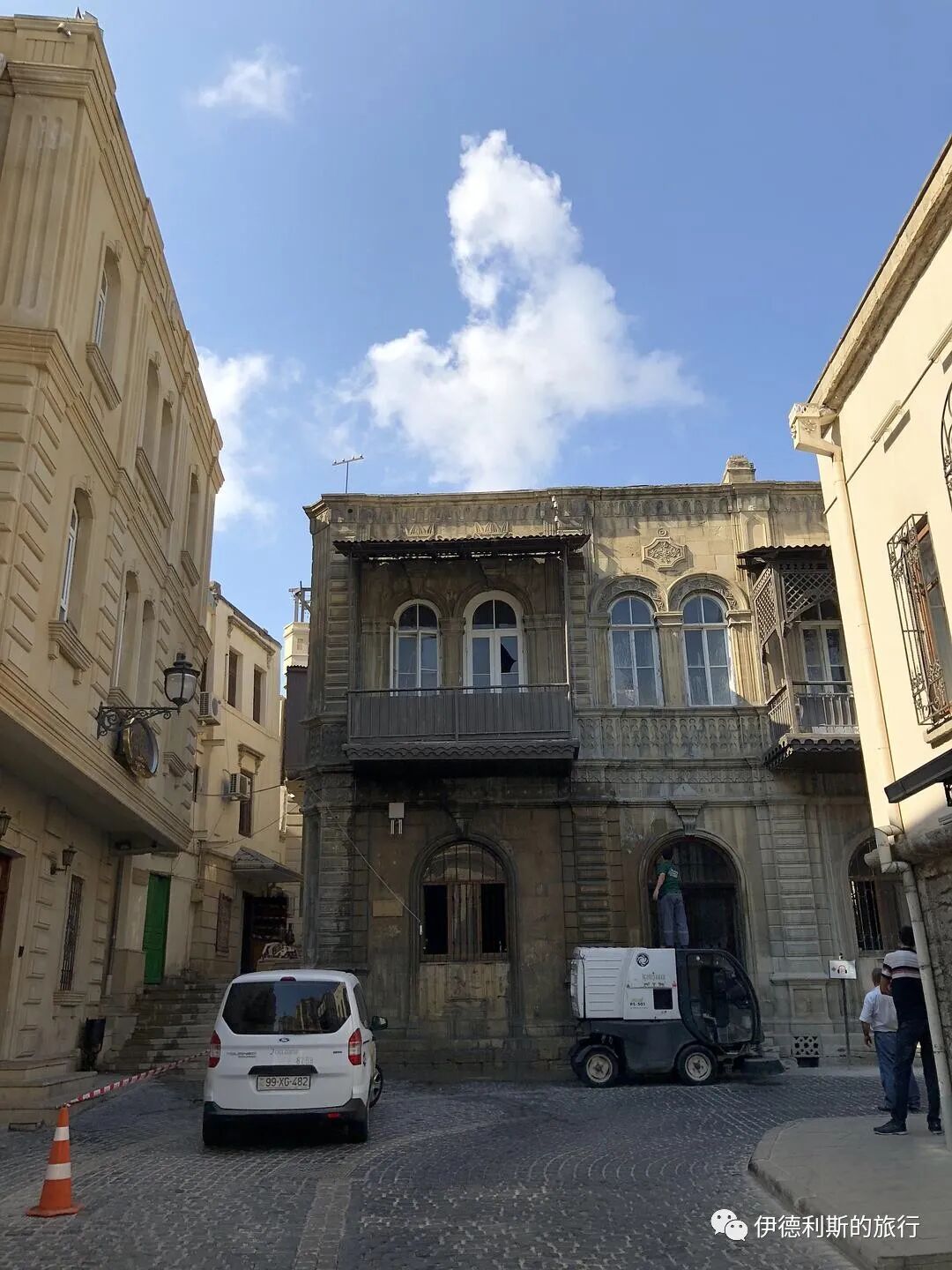
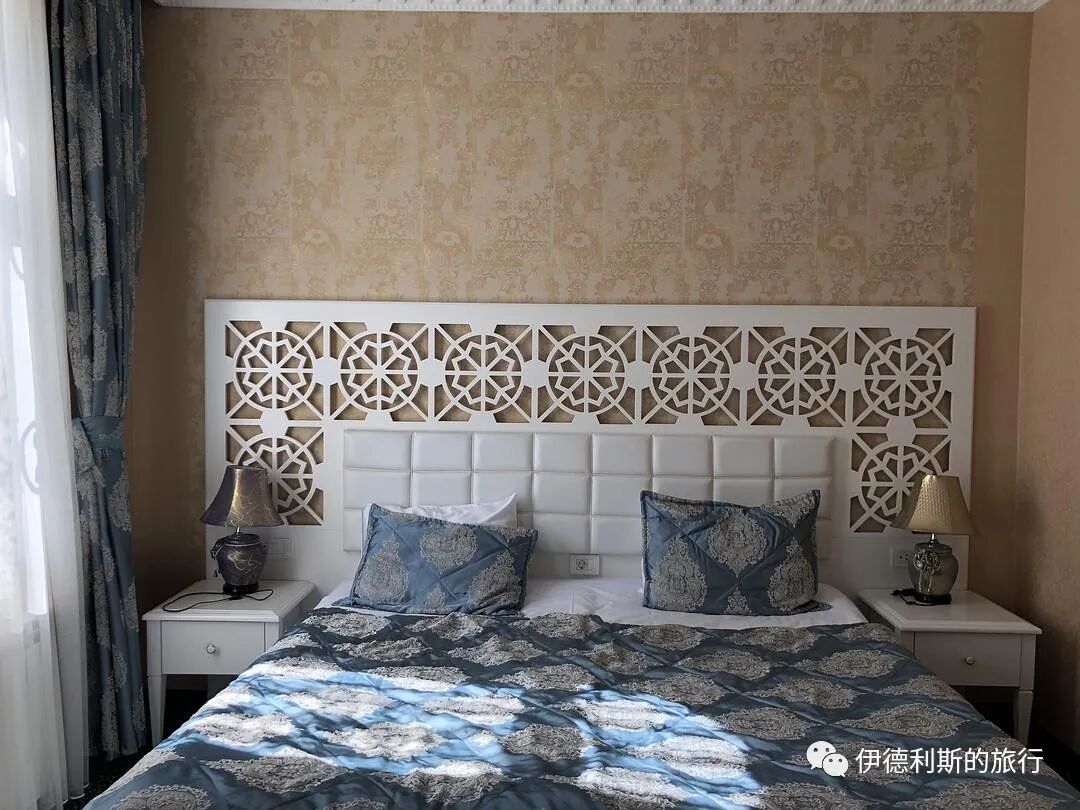
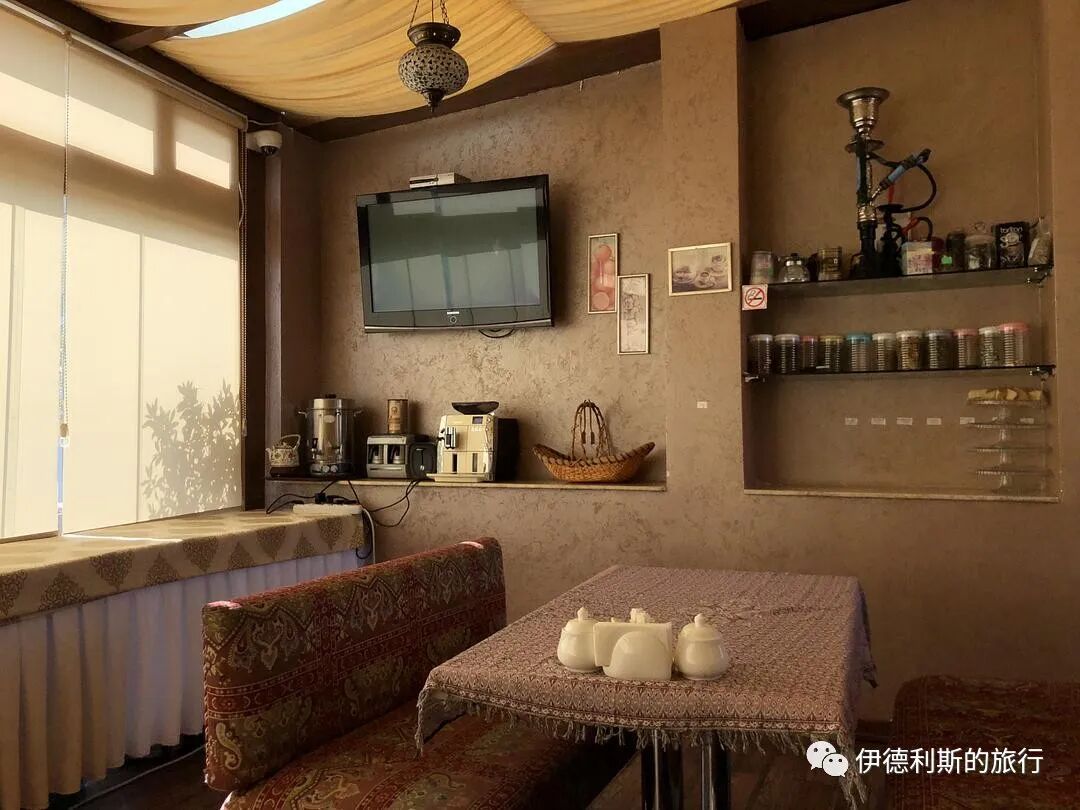
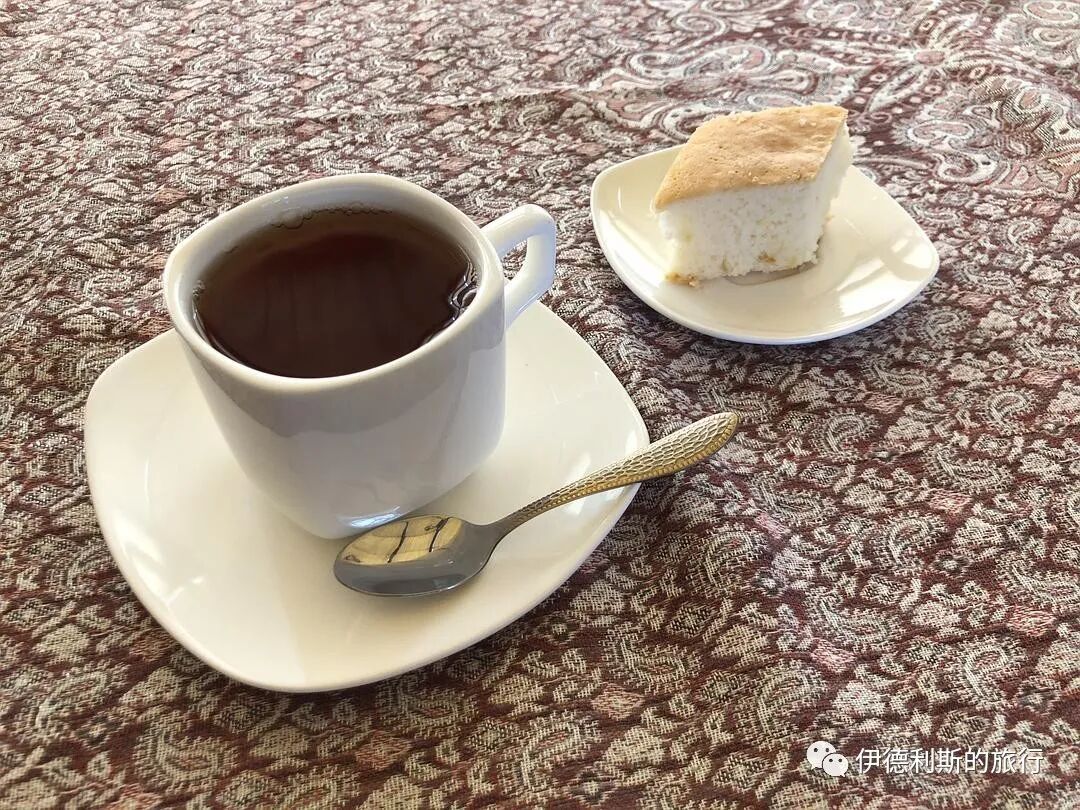
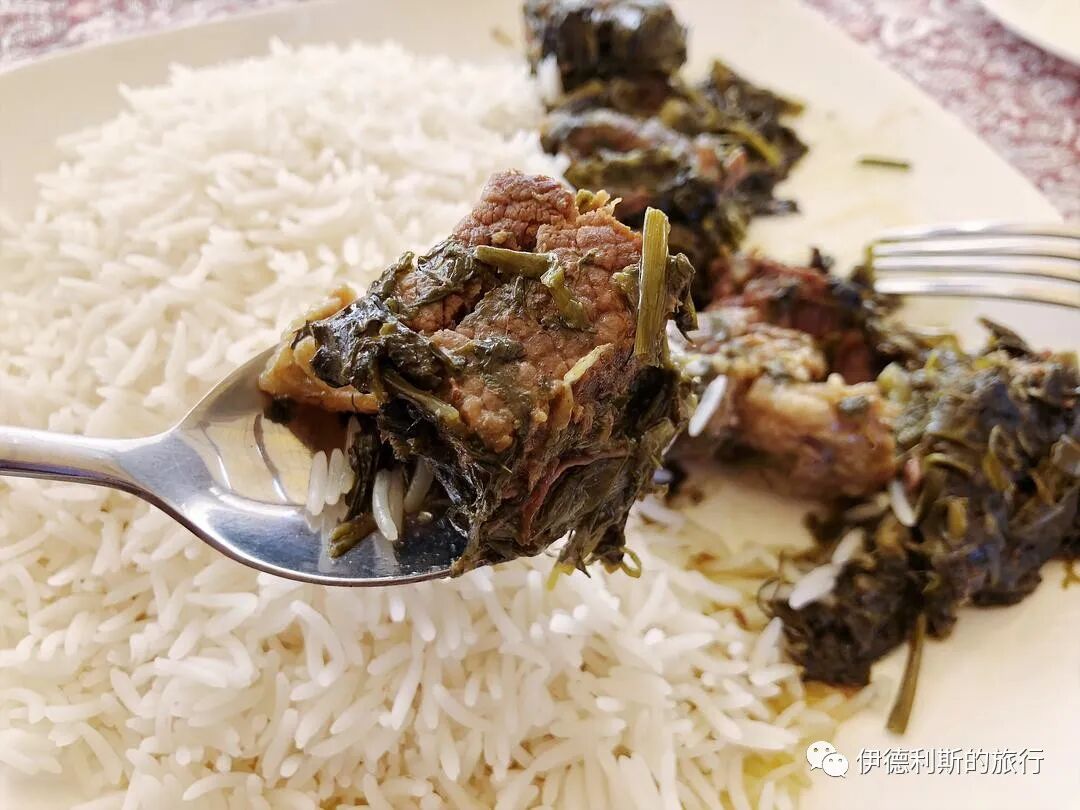 Collapse Read »
Summary: Baku Old City — Mugham Music, Muslim Food and Heritage is presented here as a firsthand travel account in clear English, beginning with this scene: In 2000, UNESCO added the Old City of Baku in Azerbaijan to its World Heritage List. The account keeps its focus on Baku Old City, Azerbaijan Food, Mugham Music while preserving the names, places, food, and historical details from the Chinese source.
In 2000, UNESCO added the Old City of Baku in Azerbaijan to its World Heritage List. In 2003, UNESCO added Azerbaijani Mugham to its Representative List of the Intangible Cultural Heritage of Humanity. I was very lucky to experience the charm of both these tangible and intangible cultural heritages in the Old City of Baku.
1. Mugham performances in the Old City of Baku
Two restaurants in the Old City of Baku host Azerbaijani Mugham performances all year round. Both restaurants are located in Silk Road inns built during the Middle Ages; one is called Han Restaurant Baku, and the other is called Mugam Club. Both restaurants hold performances in the evening, but not necessarily every day, so you can ask ahead before you go. The servers at both restaurants speak English.
The building housing Han Restaurant Baku is a small inn (Kiçik karvansaray) built in the 12th century. During the Middle Ages, merchants from Iran, Turkey, the Caucasus, and even India would stay here.
Azerbaijani Mugham originated from classical Persian music. It was court music in the 16th and 17th centuries, then moved into folk circles after the 19th century, blending with folk music from across Azerbaijan.
Azerbaijani Mugham usually consists of a lead singer (khanandas), a long-necked lute (tar), a bowed string instrument (kamancheh), and a frame drum (daf). The lead singer often doubles as the drummer.
The book in front of the singer
The long-necked lute (tar) and bowed string instrument (kamancheh)
I ate some very delicious grilled meat here; it was fresh, tender, and tasty.
You can eat as much bread as you want here.
Finally, the shop served us complimentary traditional coffee.
The other restaurant, Mugam Club, is located in a two-story inn (İkimərtəbəli karvansaray) built in the 15th century. The two-story inn is the largest Silk Road inn in Baku, built by order of Khalilullah I, the 34th king of the Shirvan dynasty, who reigned from 1417 to 1465. The Shirvan dynasty reached its peak during the reign of Khalilullah I, and he also built many structures in the Old City of Baku.
The painting hanging on the wall depicts a night view of the Old City of Baku.
The long-necked lute (tar) used for this Mugham performance was replaced by a keyboard, but the young man's voice was very professional.
I ate Kavkaz barbecue, chicken soup, and sweet rice here.
I also saw a young man playing the tar at a restaurant called Art Club, and he had a very graceful style.
2. Sharing knowledge about Azerbaijani mugham.
Traditional Azerbaijani mugham usually consists of a lead singer (khanandas), a plucked string instrument (tar), a bowed string instrument (kamancheh), and a frame drum (daf), with the lead singer often doubling as the drummer.
The word khananda means singer in Persian, and since the Middle Ages, they have sung Persian poetry at weddings, bazaars, caravanserais, and teahouses in cities. Khanandas singers reached their peak from the 19th century to the early 20th century. In the 1870s, a khanandas singer named Kharrat Gulu established the first professional Azerbaijani mugham school, where students were required to have a vocal range of at least two octaves. After finishing their studies, khanandas singers who passed the exam would receive the title of ustad (master).
The word tar means string in Persian, and the tar is an important classical Persian string instrument. It appeared in the mid-18th century and became one of the most important string instruments in Iran and the Caucasus. The Azerbaijani tar, also called the 11-string tar, was invented by Mirza Sadiq Asad (1846-1902) in the 1870s based on the Iranian tar. He changed the tar to 11 strings and moved its playing position from the knee to the chest.
The word kamancheh means little bow in Persian and is an important bowed string instrument in Iran, the Caucasus, and Central Asia. During the Persian Safavid dynasty, the kamancheh was a very important instrument for celebrations.
The daf is a frame drum widely popular in the Middle East, Persia, South Asia, and Central Asia, dating back to the Sassanid Persian period and used in Nowruz festivals and Zoroastrian chanting. Starting in the 15th century, the daf drum was widely used in Sufi rituals.
The picture below shows an Azerbaijani mugham ensemble in 1911; from left to right are the daf, kamancheh, and tar.
Jabbar Garyaghdioglu is known as the greatest khanandas singer and holds an important place in the history of Azerbaijani music. He was the first singer to perform mugham in the Azerbaijani language instead of Persian, and the first to bring Azerbaijani mugham to grand theaters and concert halls.
Jabbar was born into a family that ran a dye workshop, and his father wanted his son to inherit the family business, but the son was determined to become a singer. Between 1871 and 1876, Jabbar studied vocal music, music theory, and Persian at school. After graduating, he joined the band of a famous local musician. By age 20, Jabbar was famous across the South Caucasus. He sang in inns and caravans along trade routes, and his influence reached Iran, Central Asia, and Turkey.
In 1901, Jabbar moved to Baku, which was booming because of oil. He built a club in the suburbs specifically to host charity concerts. Between 1906 and 1912, Jabbar and the best singers of the time, known as Khanandas, traveled to Kiev, Moscow, and Warsaw to record vinyl records and hold concerts.
During the Soviet era, Jabbar taught classical music at the Azerbaijan National Conservatory and was a singer for the Azerbaijan State Philharmonic Society.
Jabbar Garyaghdioglu recording in Warsaw in 1912, sitting first on the left.
After Jabbar, Seyid Shushinski (1889-1965) was known as the most famous Azerbaijani mugham Khanandas singer in the first half of the 20th century.
Seyid lost his father when he was young and grew up with his aunt, who was skilled at folk songs. Because of his great musical talent, he joined his first band at age 15. In 1908, 19-year-old Seyid had his public debut and it was a huge success. At his uncle's insistence, Seyid finished two years of professional music education at Mir Mohsun Navvab's school, and after that, he became a professional Khanandas singer.
In 1911, Seyid went to Georgia to hold a concert. In 1913, he released a vinyl record in Kiev, and in 1919, he moved to Baku.
During the Soviet era, Seyid sang at the Baku Theater and taught at the Azerbaijan Conservatory between 1926 and 1933. In 1933, Shushinski founded the "Eastern Orchestra" and toured in Russia, Ukraine, and Kazakhstan.
Seyid with his band in 1916.
Street food.
Freshly squeezed pomegranate juice on the street.
Street-side nut-filled honey pastry (baklava) served with black tea.
I highly recommend this street bakery. The bread is super cheap. After I bought some and started eating it at the door, the owner offered to make me free tea. After I took a bite, the grandmother making the bread even added a big piece of butter to my bread.
The owner is wearing a Caucasian pastoral wool hat while taking a photo with his friend, and everyone is super happy.
Another bakery next door.
In the old city of Baku, there is a lovely open-air restaurant called 145group, located right on the roof of the 15th-century Haji Gayib Bathhouse (Hacı Qayıb Hamamı). This Turkish bathhouse was buried underground for hundreds of years until it was uncovered during an archaeological survey in 1964.
Inside the bathhouse ventilation hole.
I ate the Azerbaijani specialty, stuffed grape leaves (dolma). In 2017, the art of making dolma in Azerbaijan was added to the UNESCO Intangible Cultural Heritage list.
The word "dolma" comes from the Turkish word "dolmak," which means "to fill." Its exact origin is unclear, but it may have come from the Ottoman court. The records say from Persian court chefs, between the 17th and 19th centuries, dolma was made by wrapping grape leaves, cabbage leaves, cucumbers, eggplants, and apples, with fillings of minced meat, fried mint, rice, and saffron. In Azerbaijan, dolma is usually made with grape leaves.
Two little kittens kept eyeing my dolma, so I gave them each one, and they left feeling satisfied.
Yogurt drink (ayran).
Looking down at the view.
Grilled meat (kebab).
I had some delicious chicken kebab at this restaurant called Shah Palace.
These roasted potatoes were also incredibly fragrant.
Yogurt dipping sauce.
Accommodation.
Finally, let me talk about where I stayed. Many hotels in the old city of Baku are converted from historic buildings. I stayed at a place called Premier Old Gates, right inside the southwest gate of the old city of Baku. There is a restaurant upstairs where I had a beef rice dish.
Collapse Read »
Halal Food Guide: Yogyakarta — Javanese Dishes, Markets and Muslim Food
Reposted from the web
Summary: Halal Food Guide: Yogyakarta — Javanese Dishes, Markets and Muslim Food is presented here as a firsthand travel account in clear English, beginning with this scene: Yogyakarta is an ancient cultural city in central Java that is still ruled by a sultan today. The account keeps its focus on Yogyakarta, Java Islam, Sultanate History while preserving the names, places, food, and historical details from the Chinese source.
Yogyakarta is an ancient cultural city in central Java that is still ruled by a sultan today. Beyond traditional Javanese architecture, gamelan music, and wayang shadow puppetry, Yogyakarta also has many local Javanese foods that I want to share with you.
1. Drinks
In the muggy tropical heat, drinking a cold street drink feels really good.
Es Dawet Ayu is a specialty iced drink from Central Java that comes from the small town of Banjarnegara. Its main ingredients are rice flour, glutinous rice flour, coconut milk, palm sugar syrup, and grass jelly.
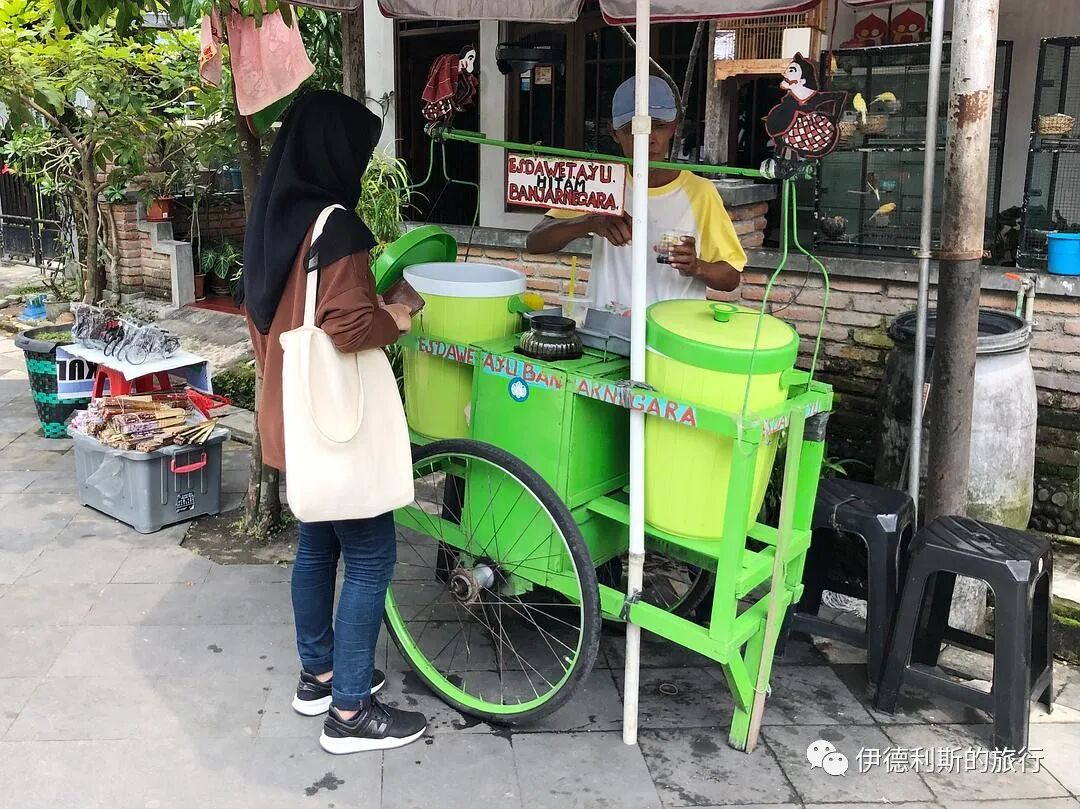
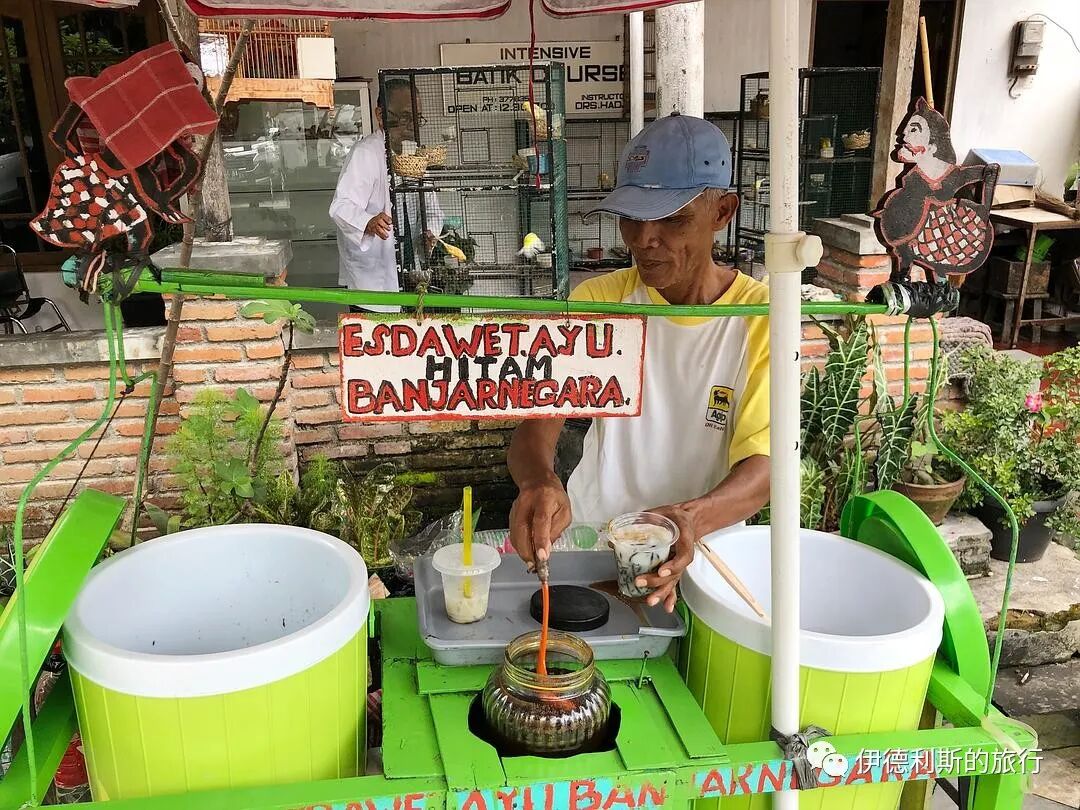
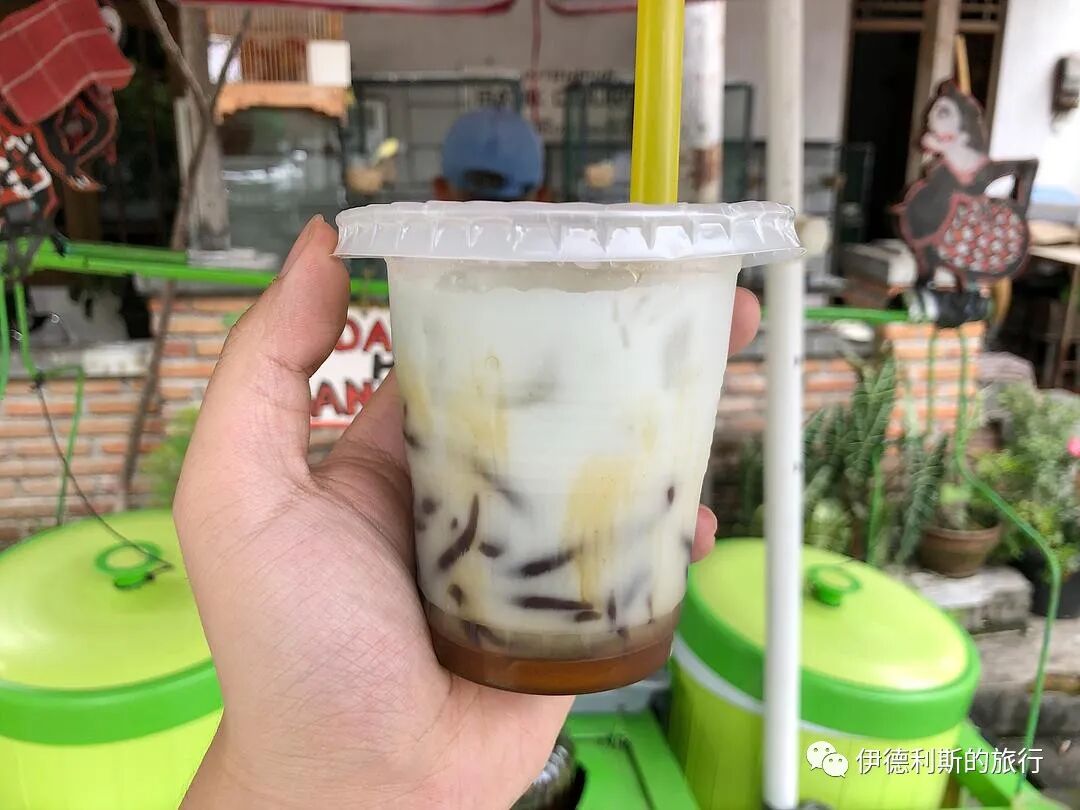
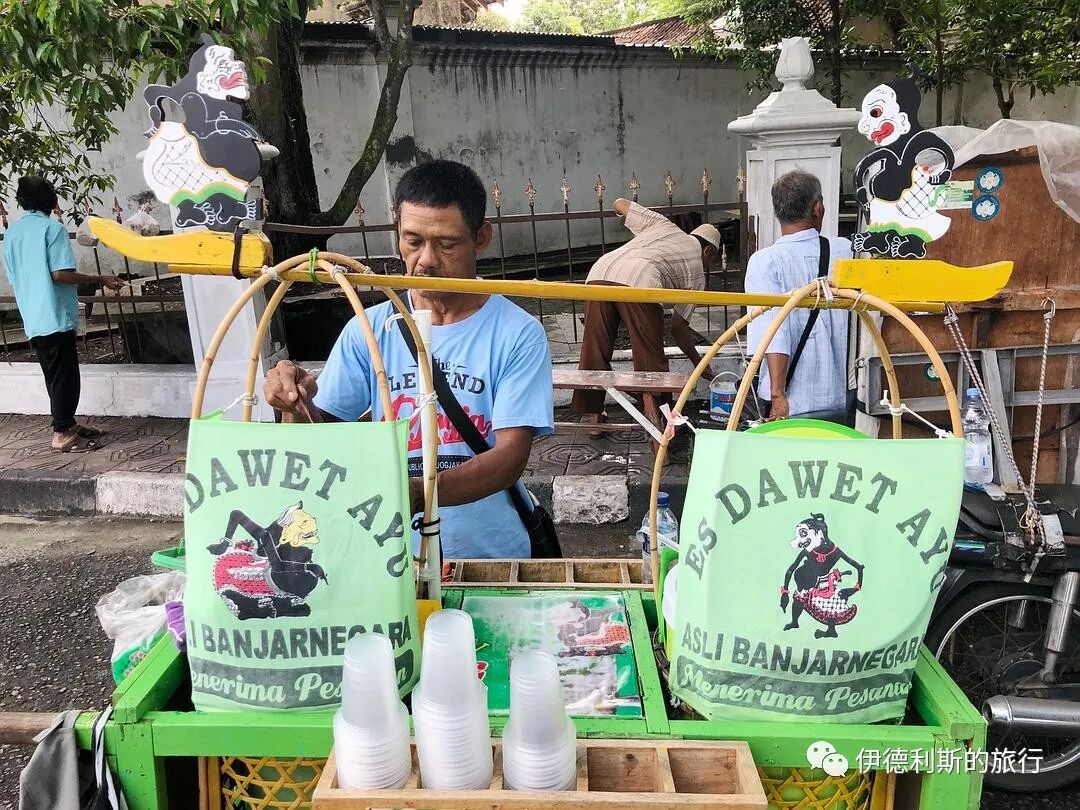
Coconut water
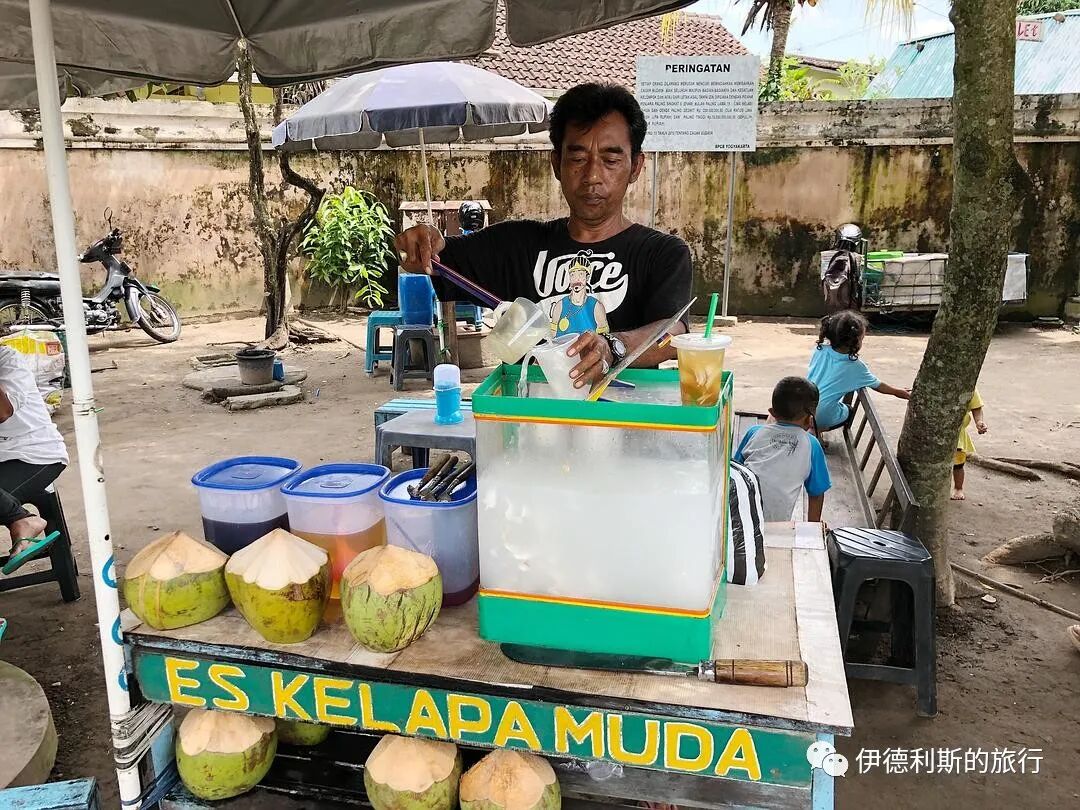
Freshly squeezed dragon fruit juice; the juice selection in Java is truly rich.
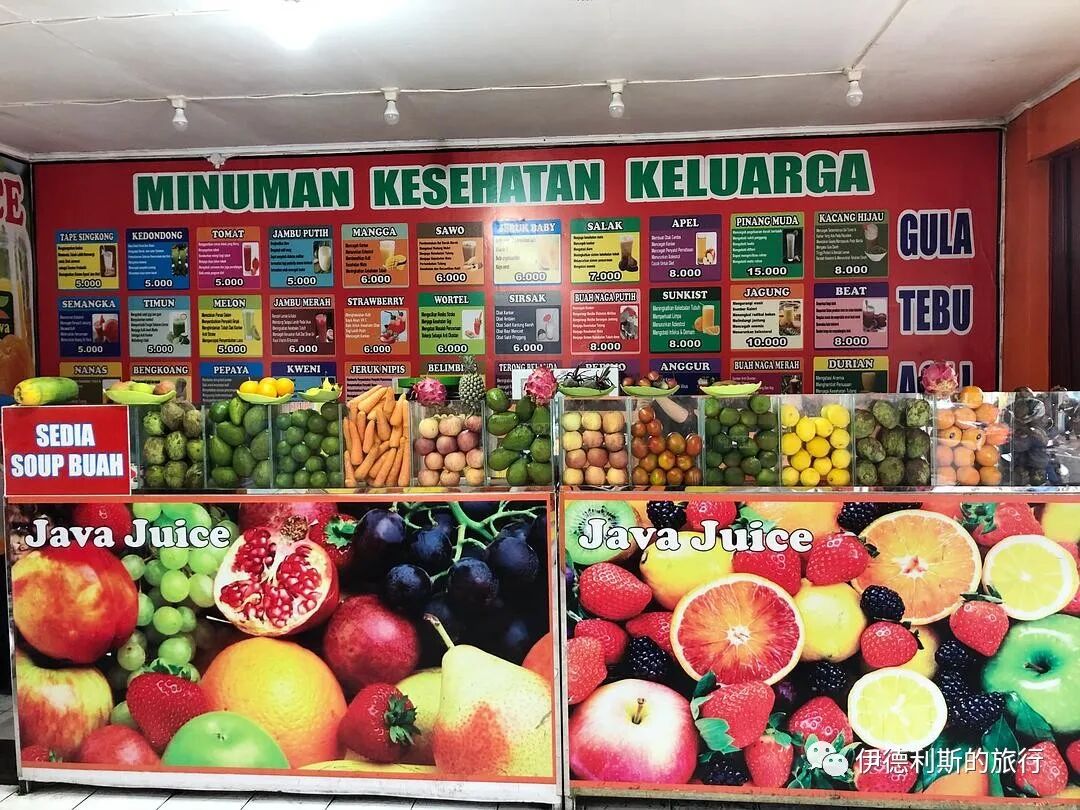
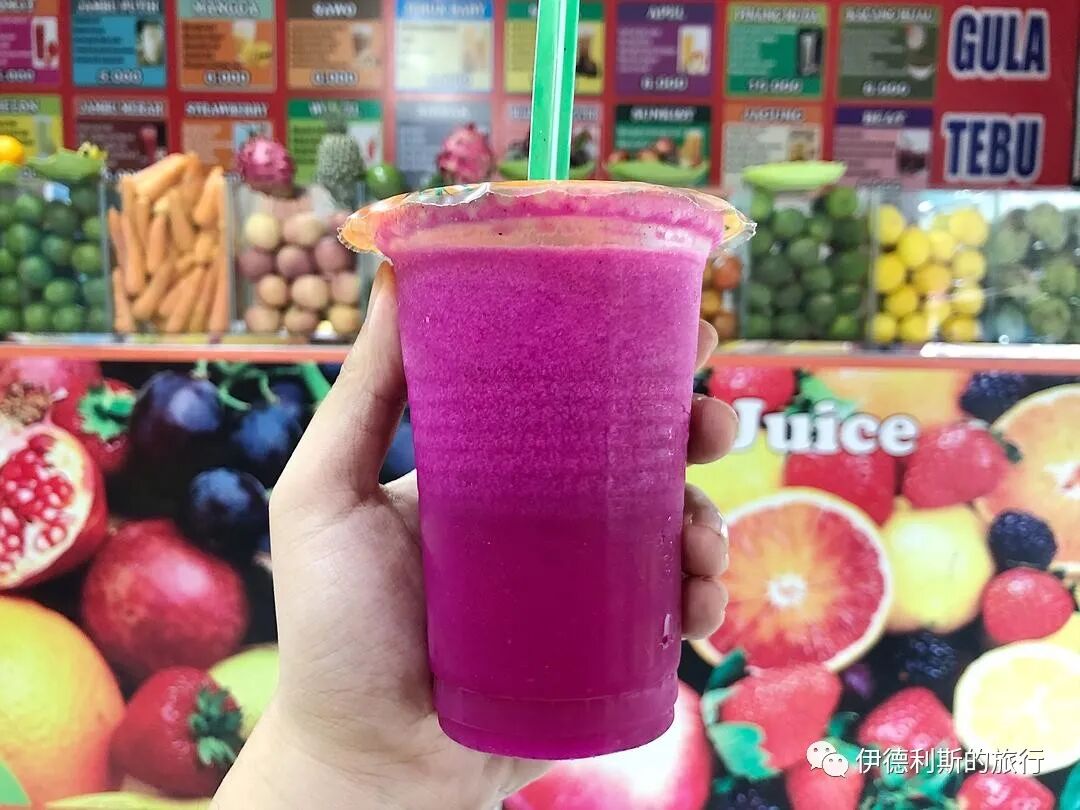
Sekoteng is a Javanese ginger-flavored hot drink that includes peanuts, bread slices, and rice balls. Hot drinks are relatively rare in Java, but it feels like the ginger helps remove dampness.
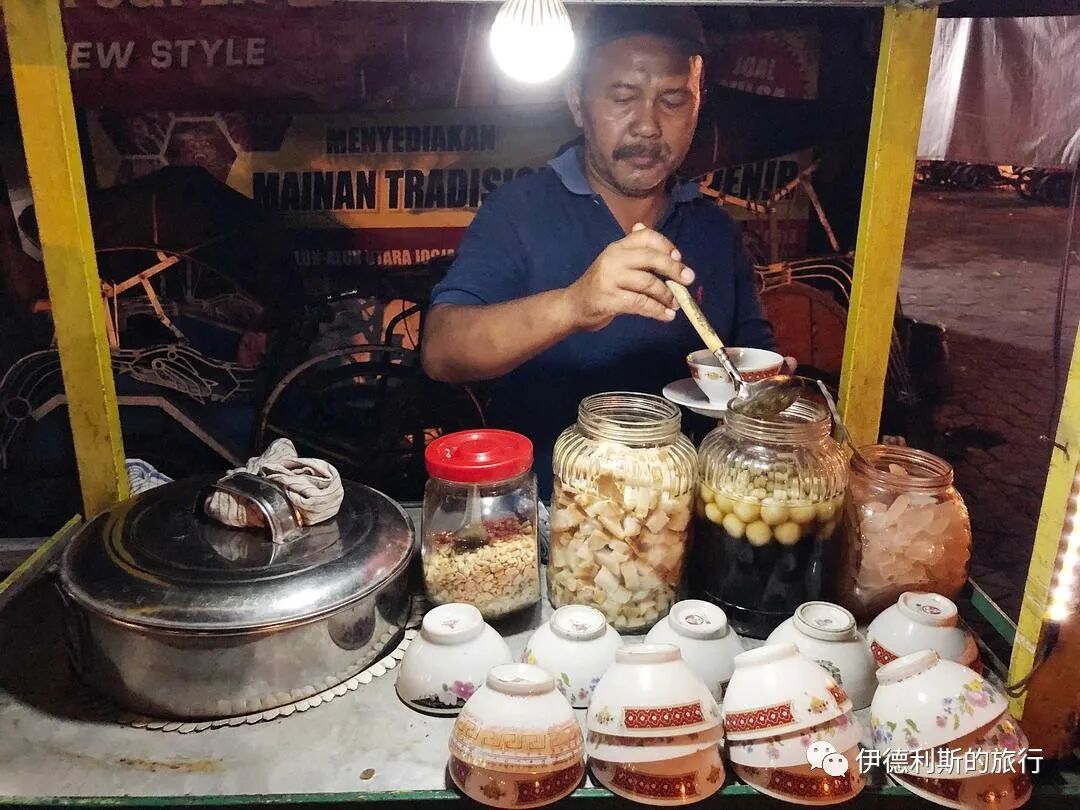
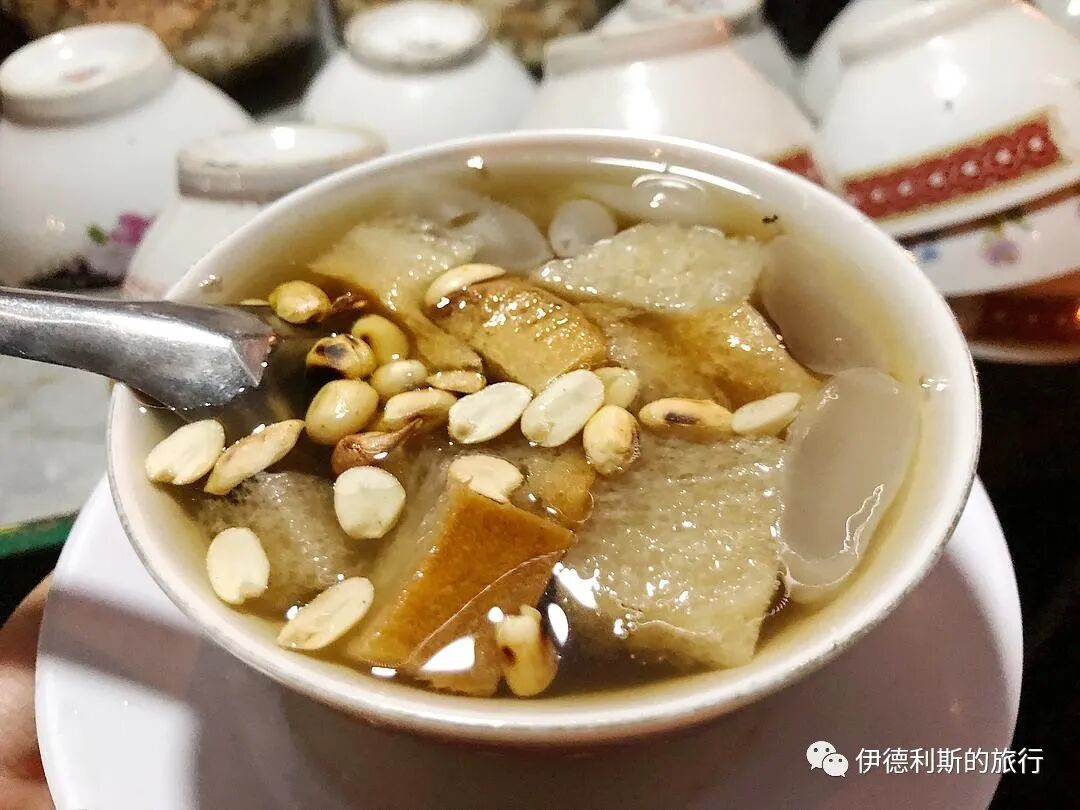
Freshly squeezed lemon juice
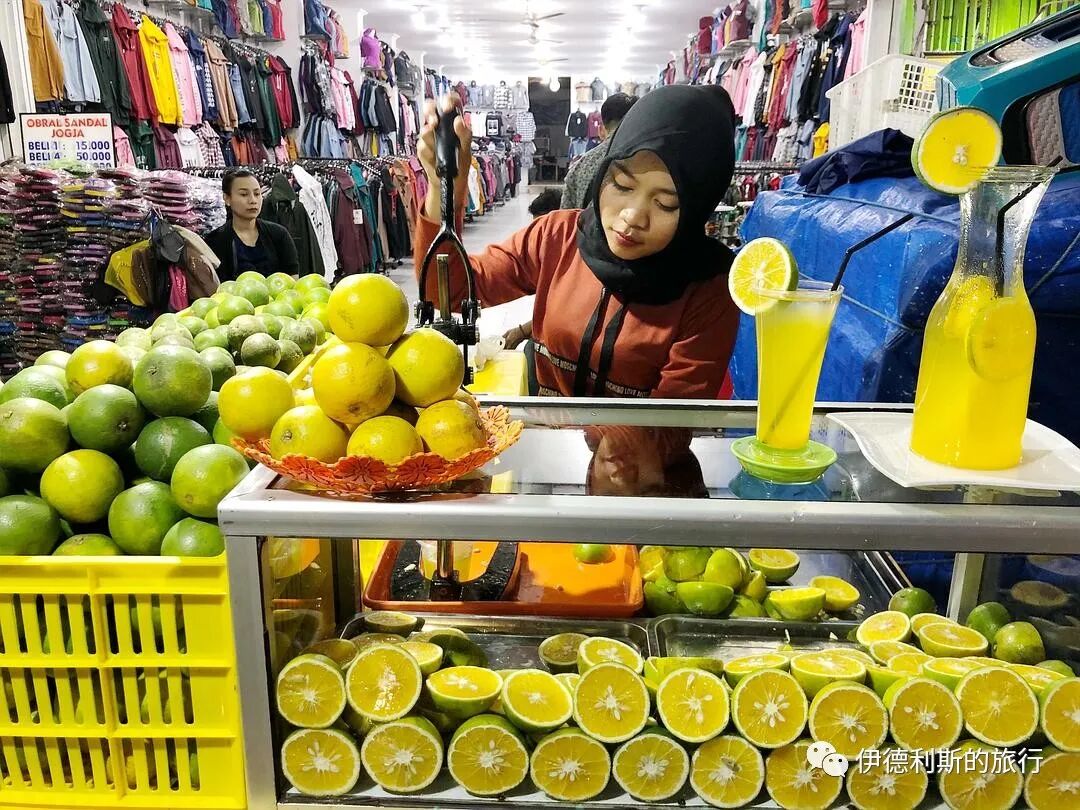
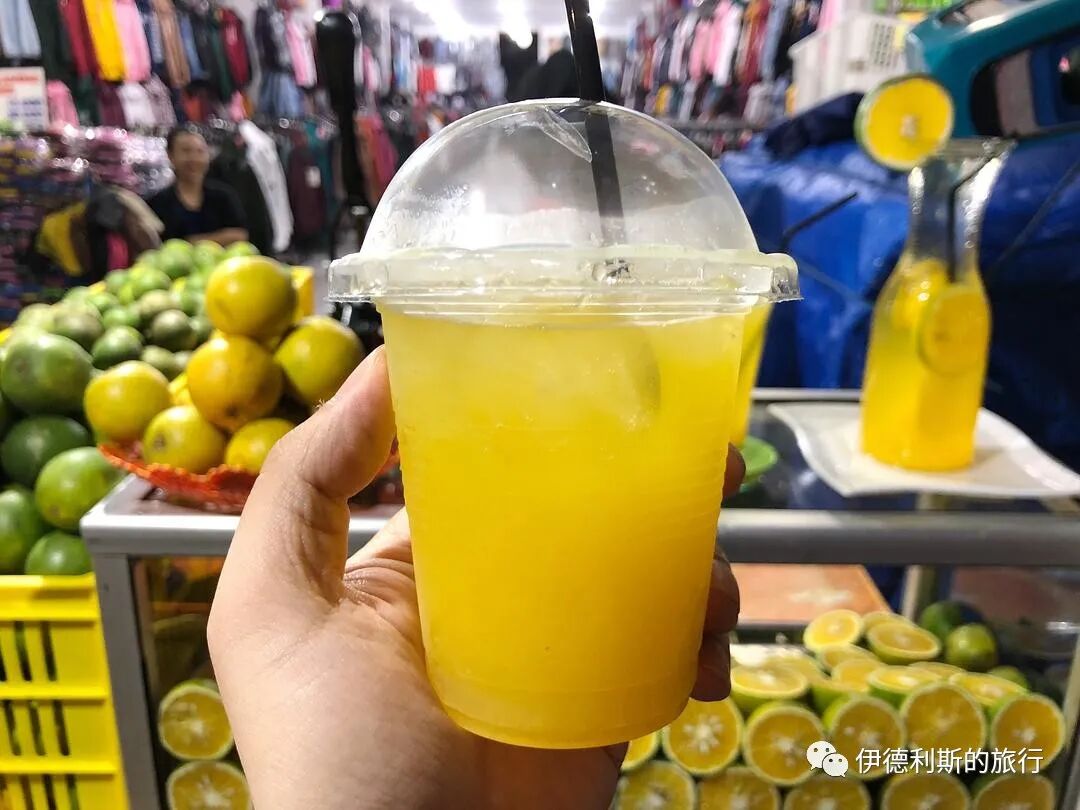
2. Snacks
Putu Bumbung is a pastry made by mixing glutinous rice flour with pandan leaf juice and palm sugar, then steaming it in bamboo tubes. You eat it with shredded coconut.
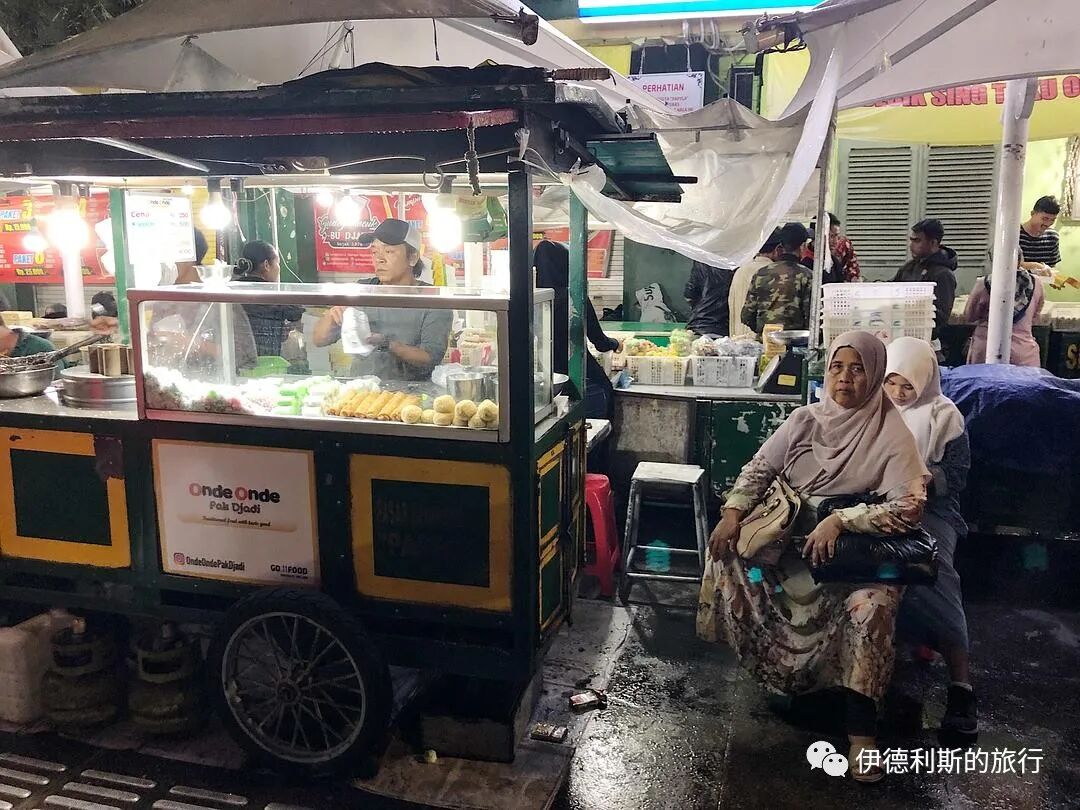
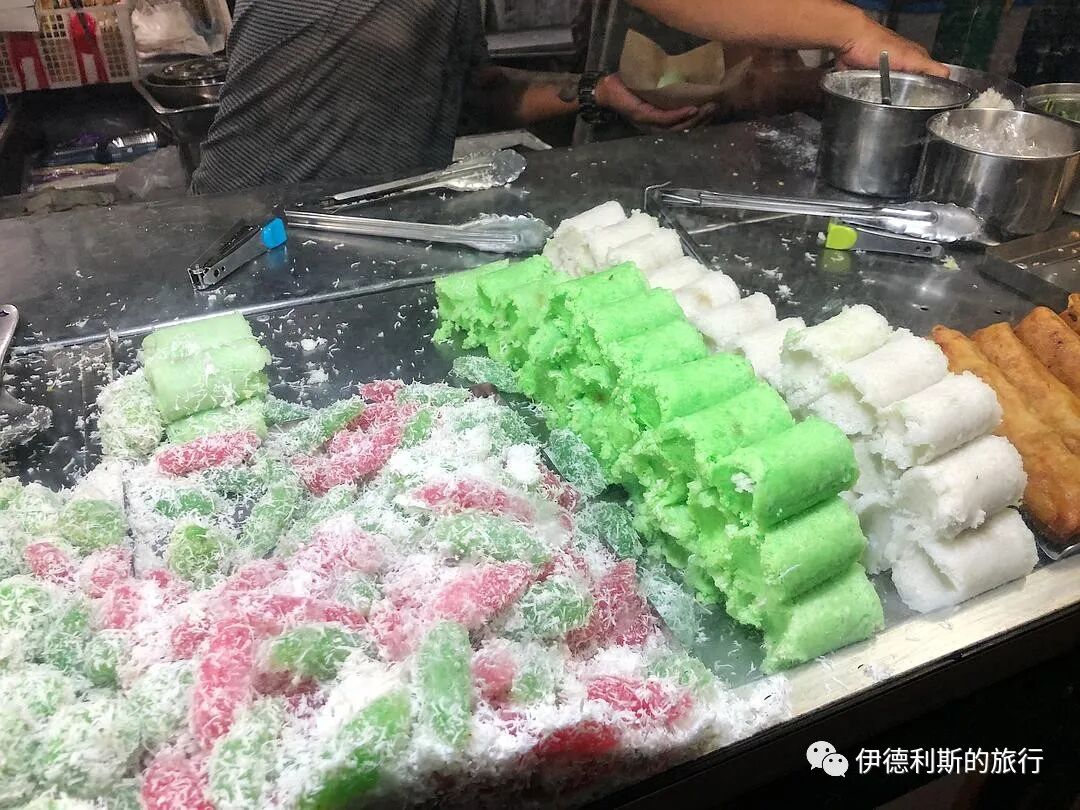
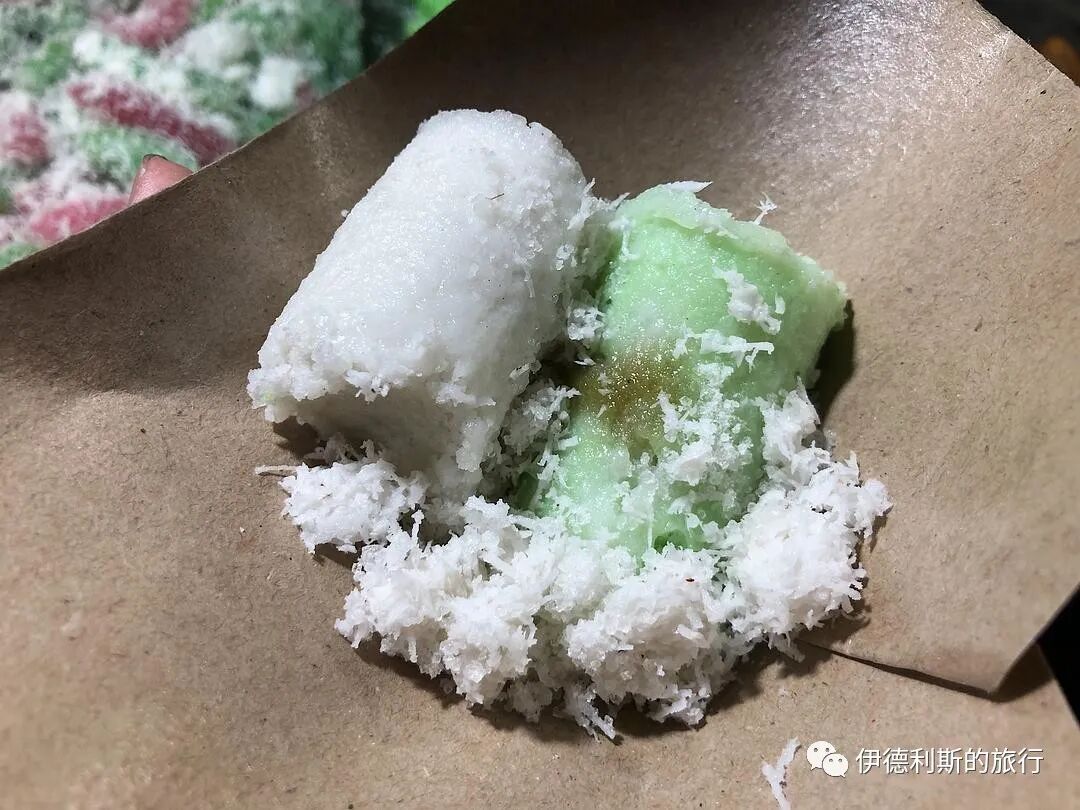
Pecel is a Javanese salad that usually includes spinach, amaranth, bean sprouts, water spinach, yardlong beans, cucumber, cassava leaves, and lemon basil. The sauce contains peanut butter, crushed peanuts, salt, palm sugar, tamarind juice, chili, galangal, kaffir lime leaves, and garlic. Pecel originated in Java and was later brought to Malaysia and Suriname by Javanese people.
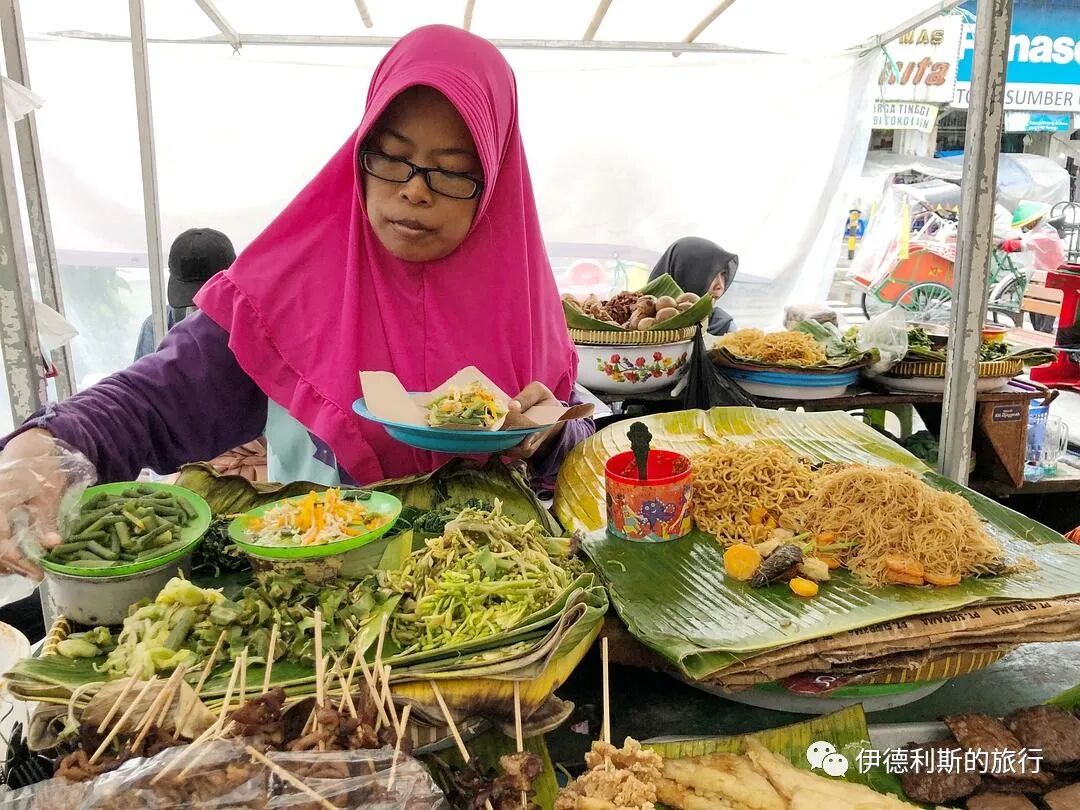
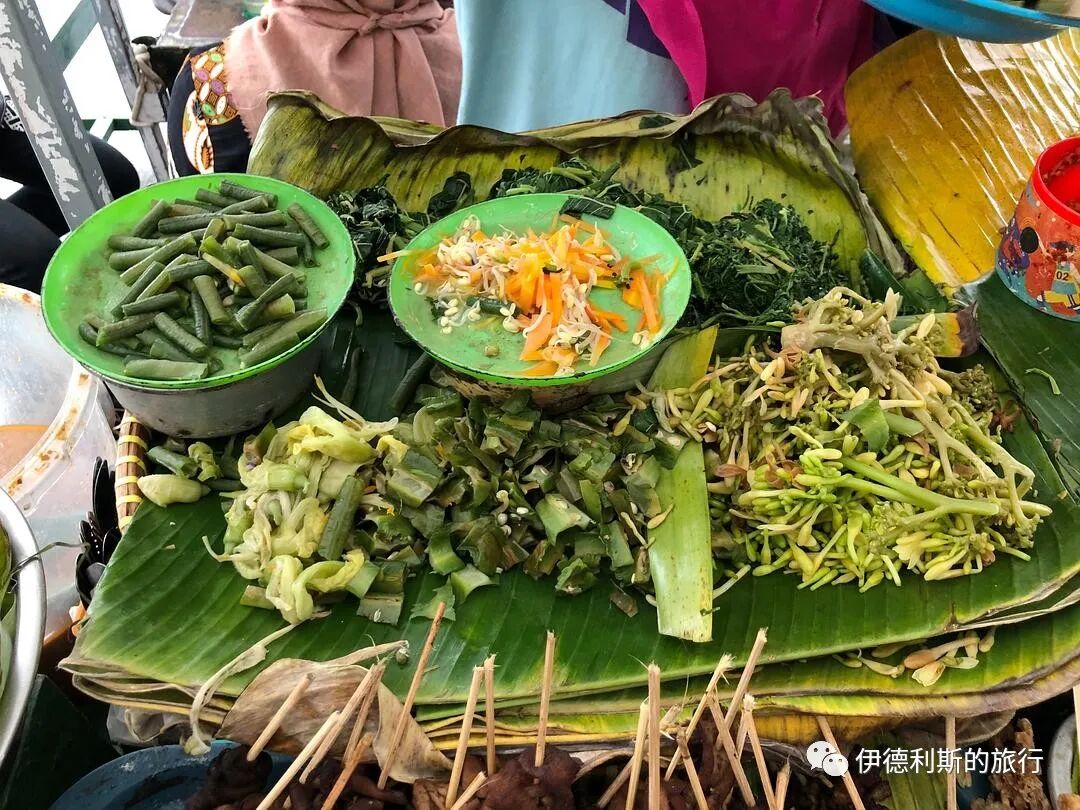
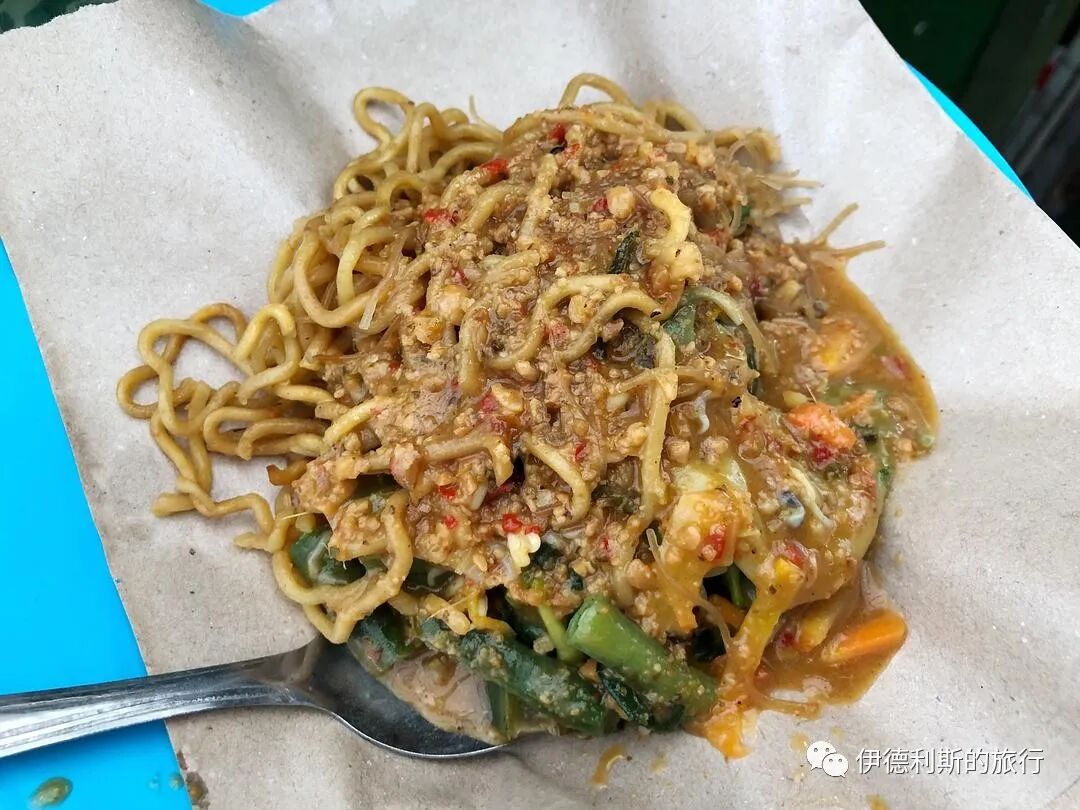
3. Restaurants
Lesehan is a Javanese style of dining where you sit cross-legged on the floor. The Malioboro night market in Yogyakarta is the birthplace of this dining style. I ate the Yogyakarta specialty, Gudeg rice with chicken. Gudeg is made by stewing unripe jackfruit, palm sugar, and coconut milk for several hours. The ingredients include shallots, ginger, garlic, coriander seeds, bay leaves, and teak leaves.
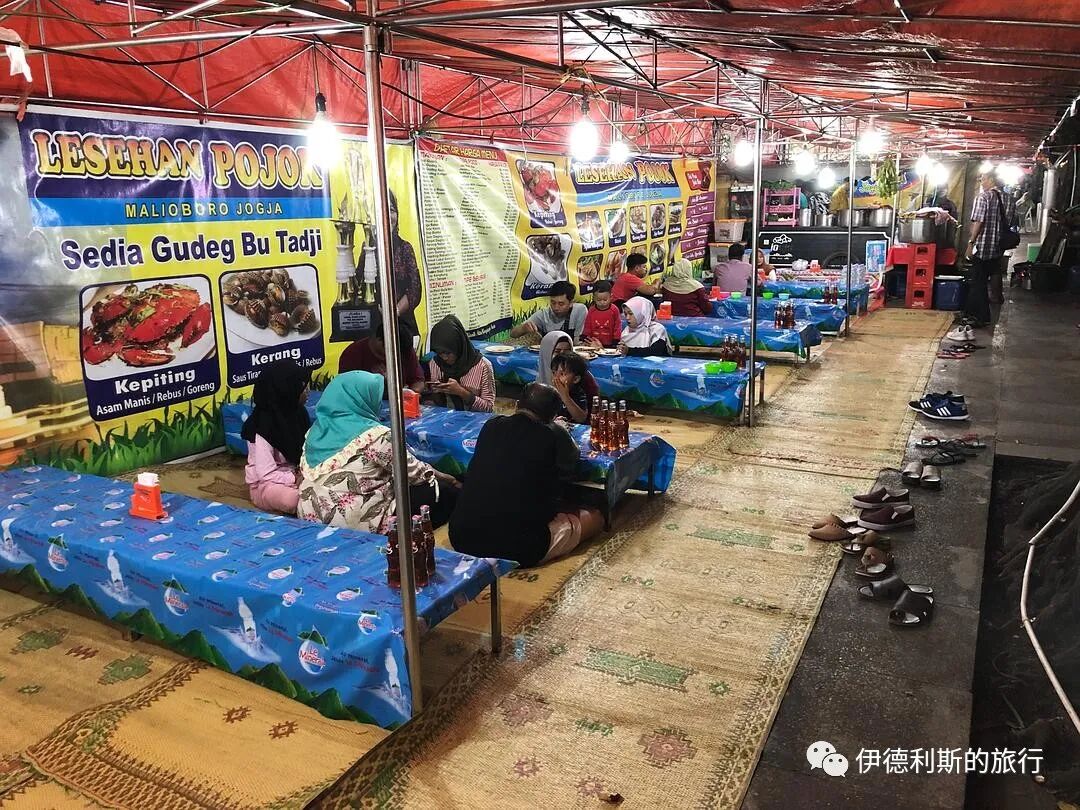
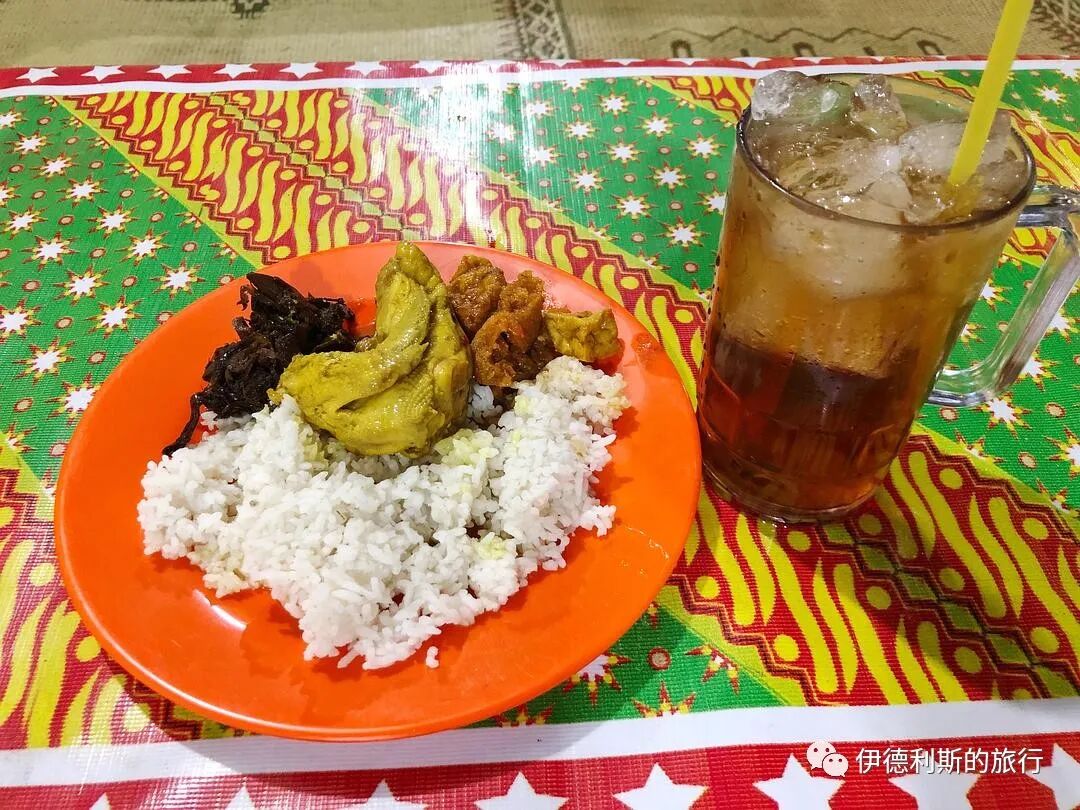
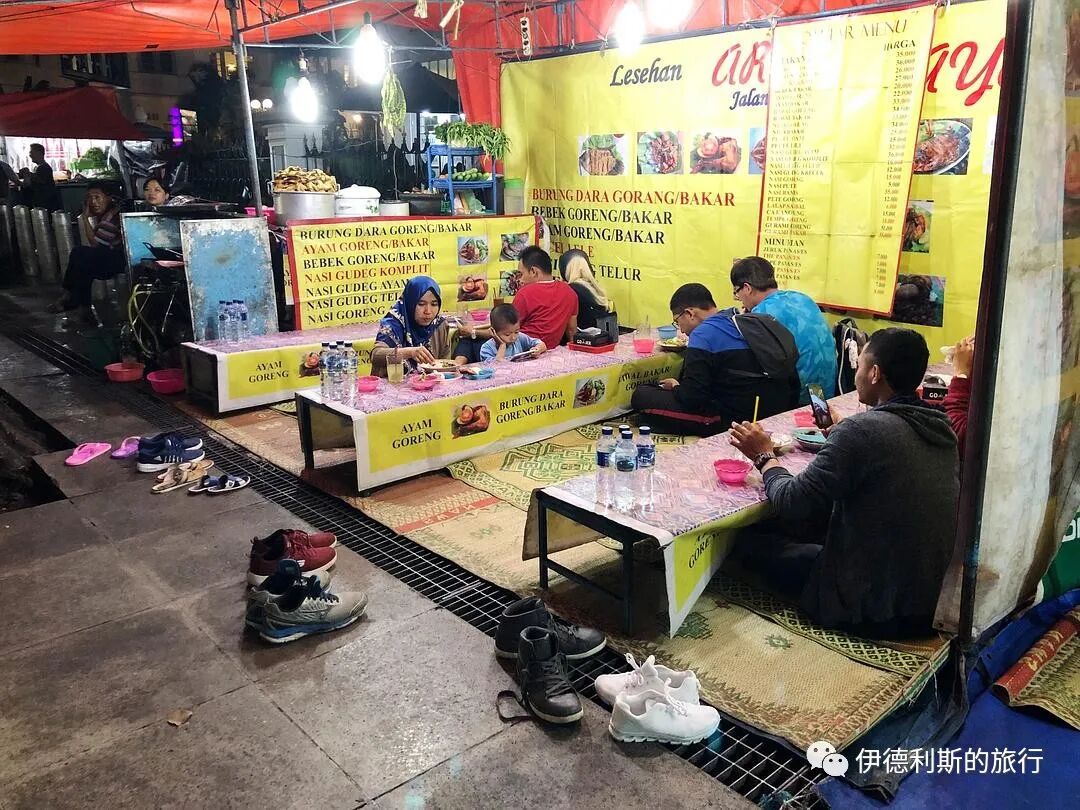
At a small shop specializing in fish cakes, I ordered the fish cake omelet (Lenggang) and fish cake noodles (Mie Laksan). The fish cakes were stuffed with tofu.
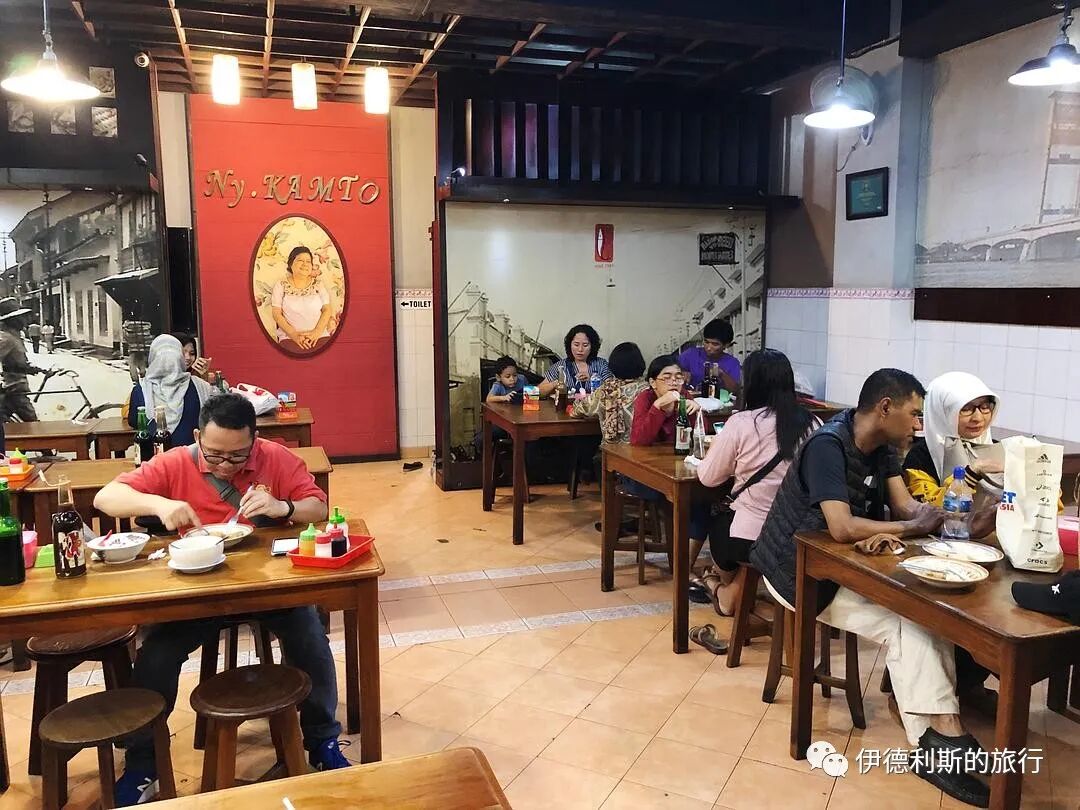
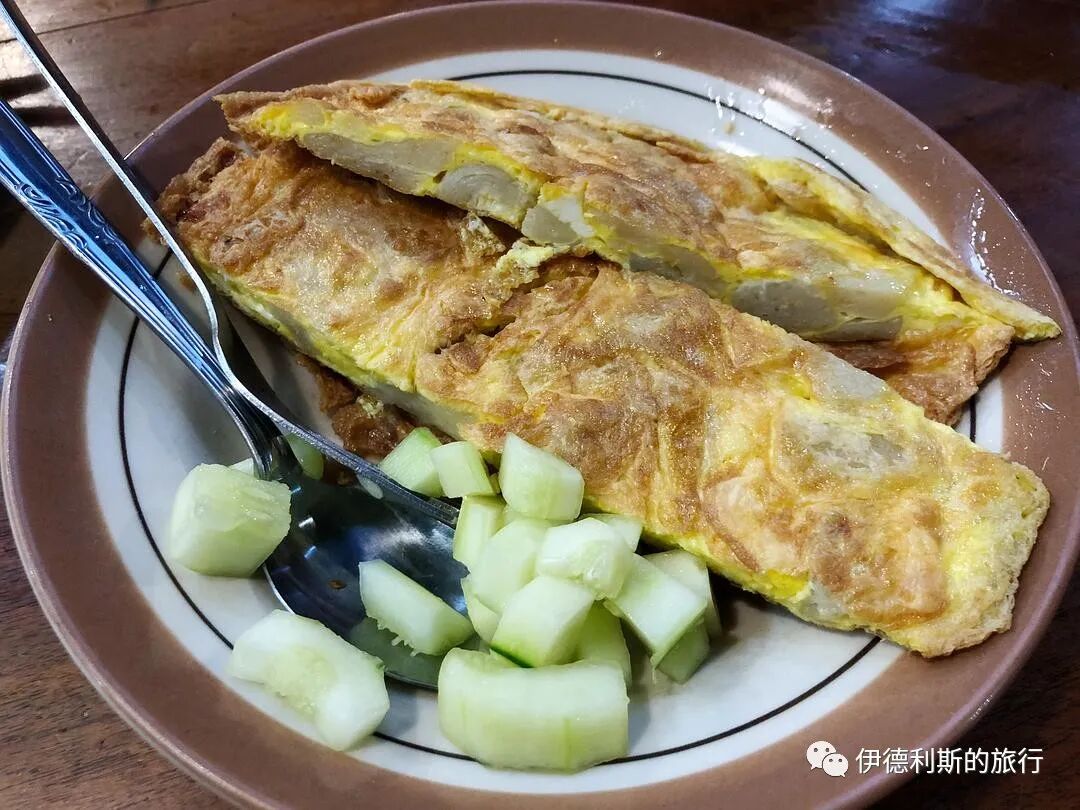
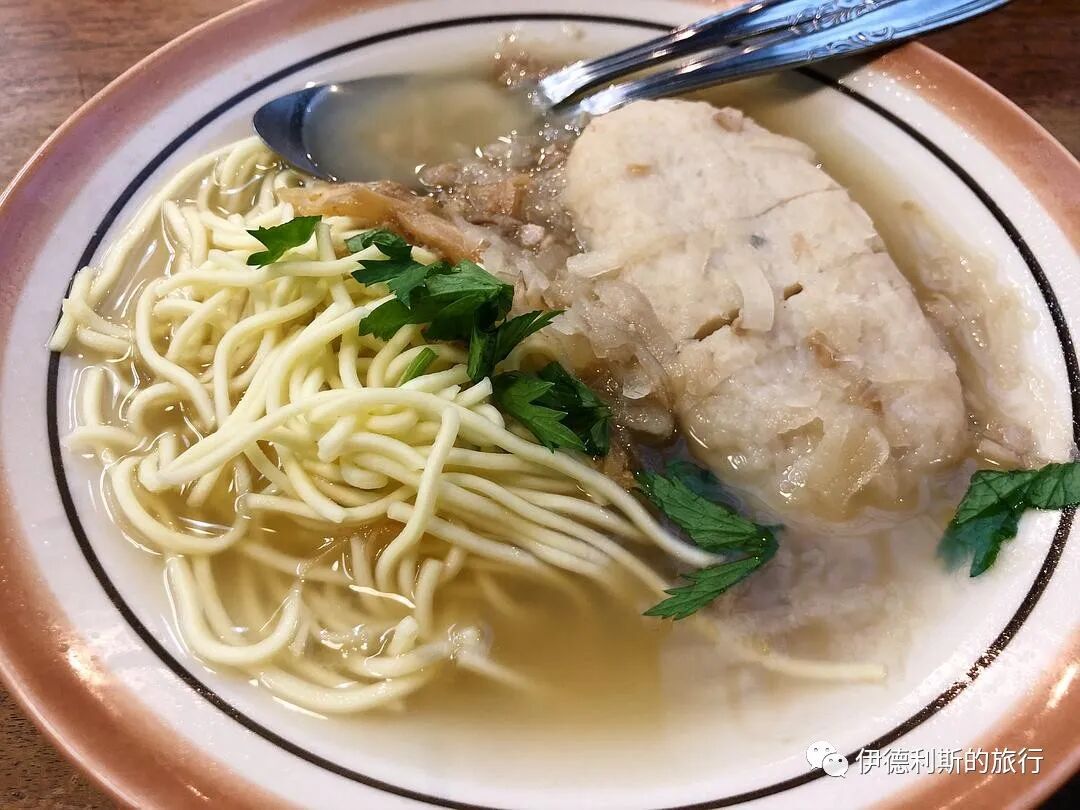
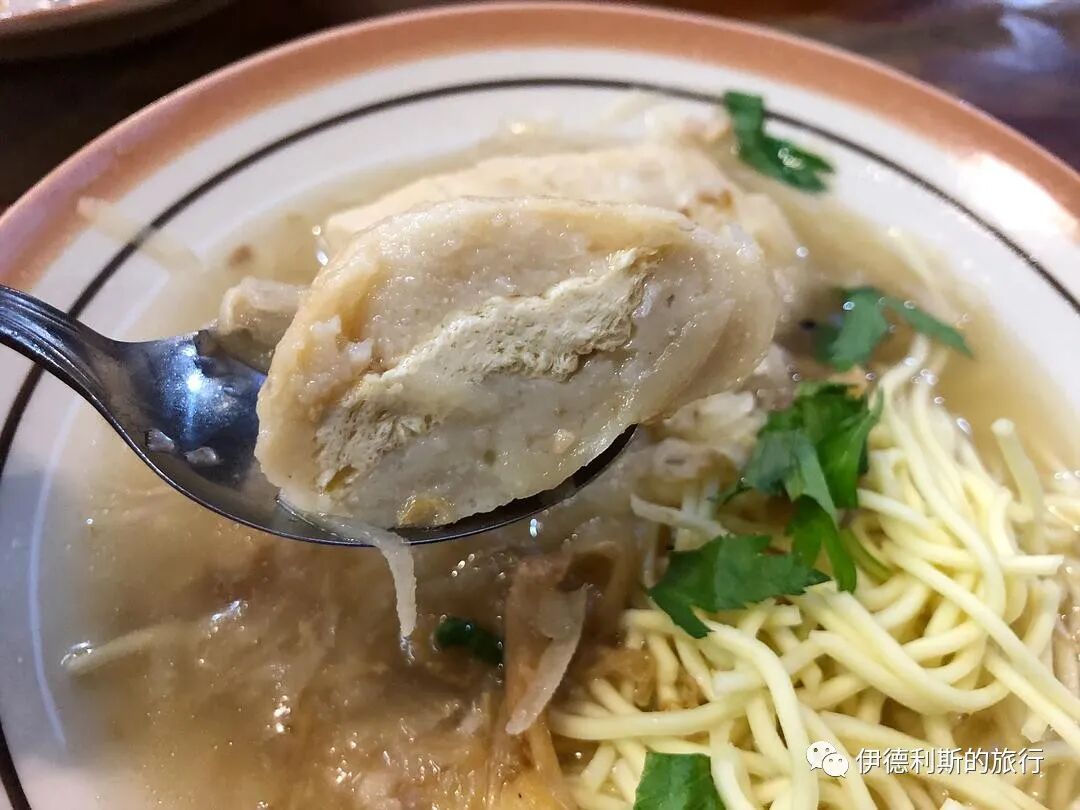
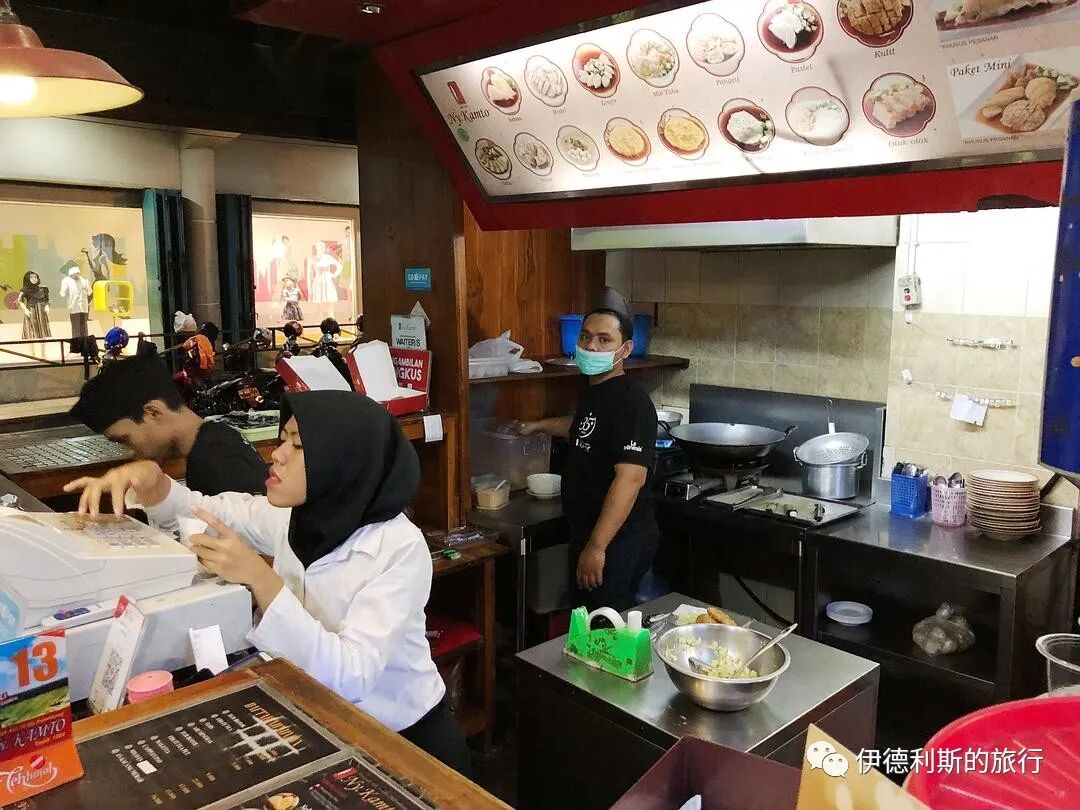
I ate meatball soup (Bakso) and grilled chicken skin (Thaichan Kulit Ayam) at a shop.
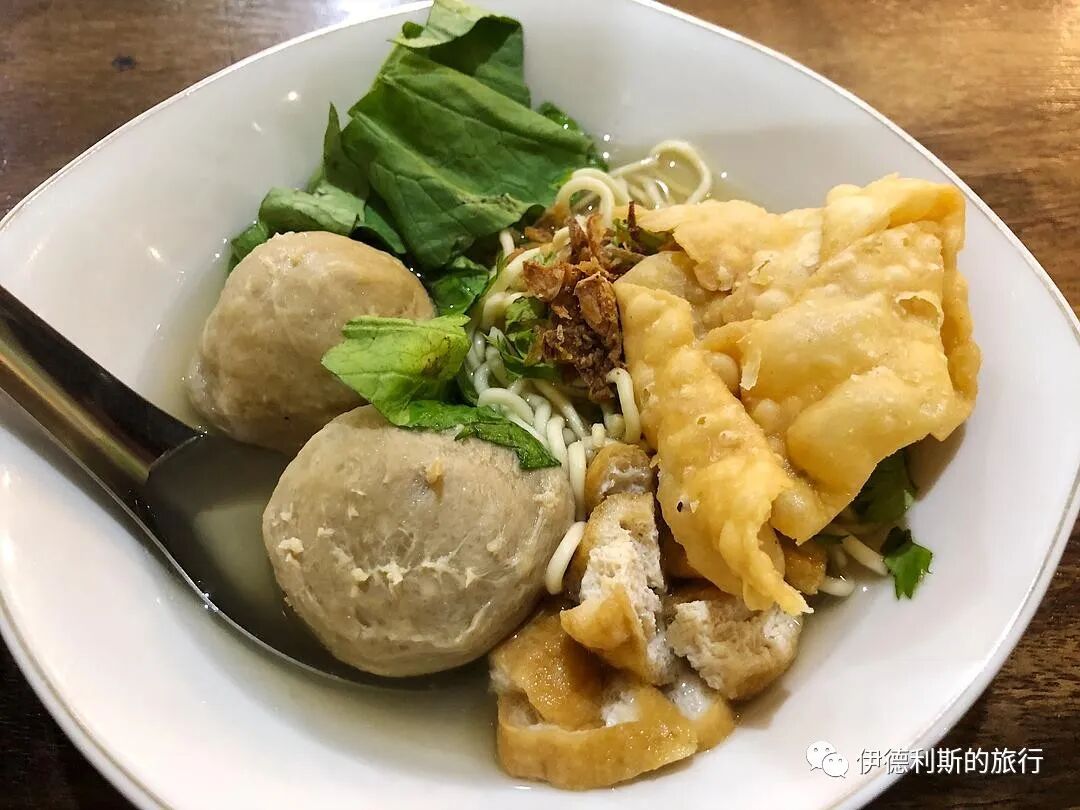
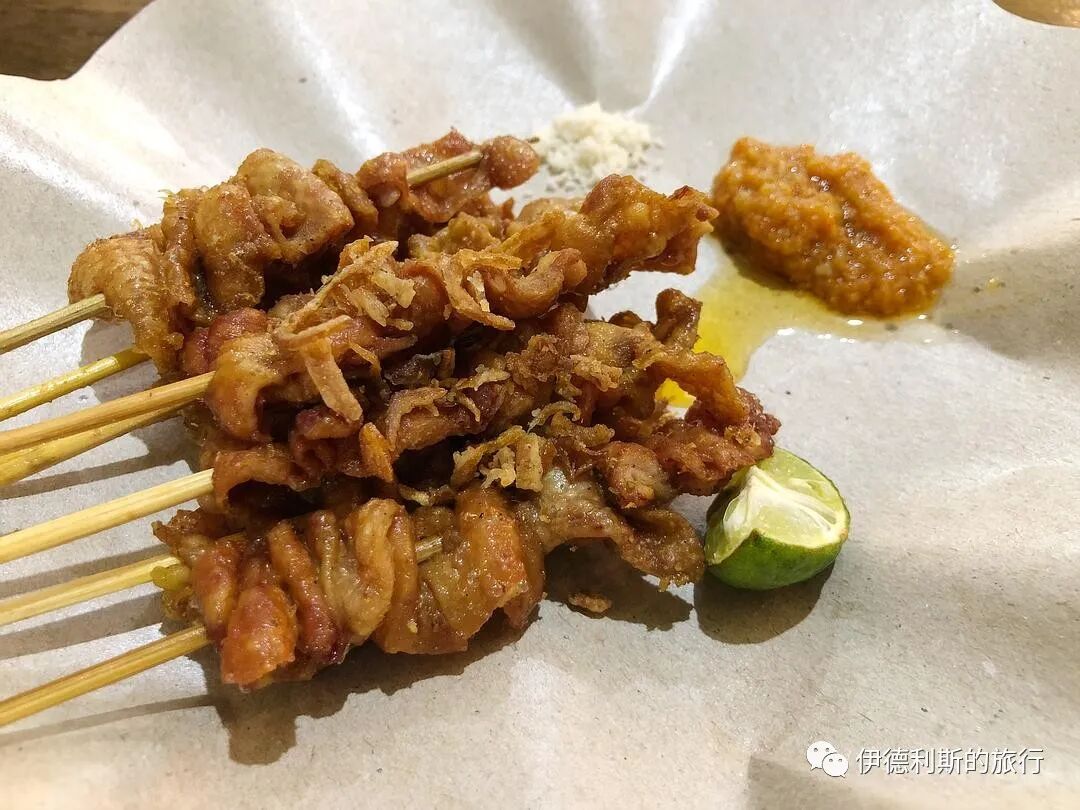
I had fried fish with Indonesian chili sauce (sambal) at this shop, and it was super spicy!
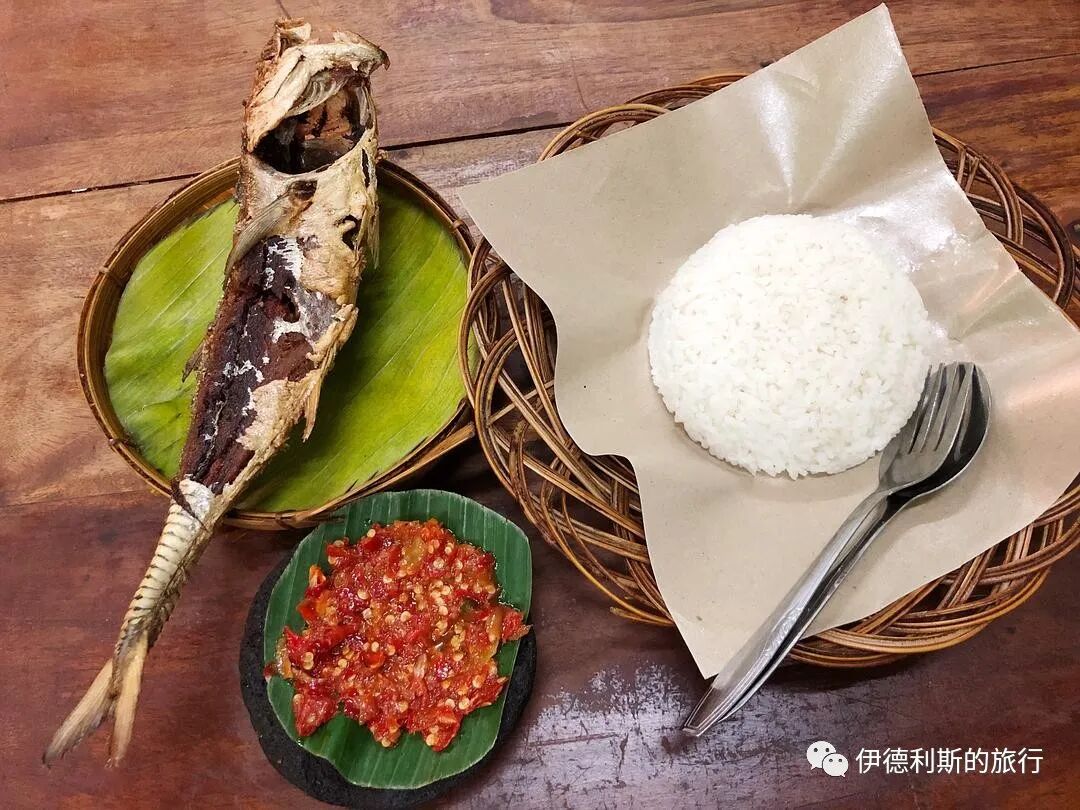
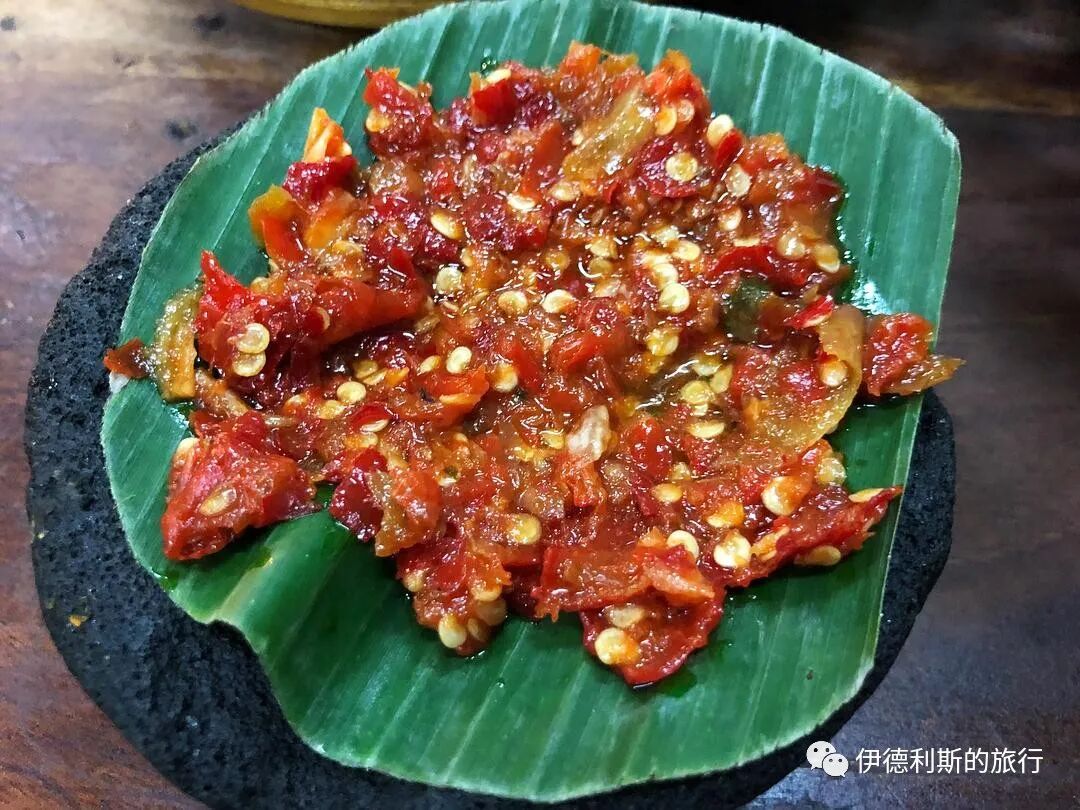
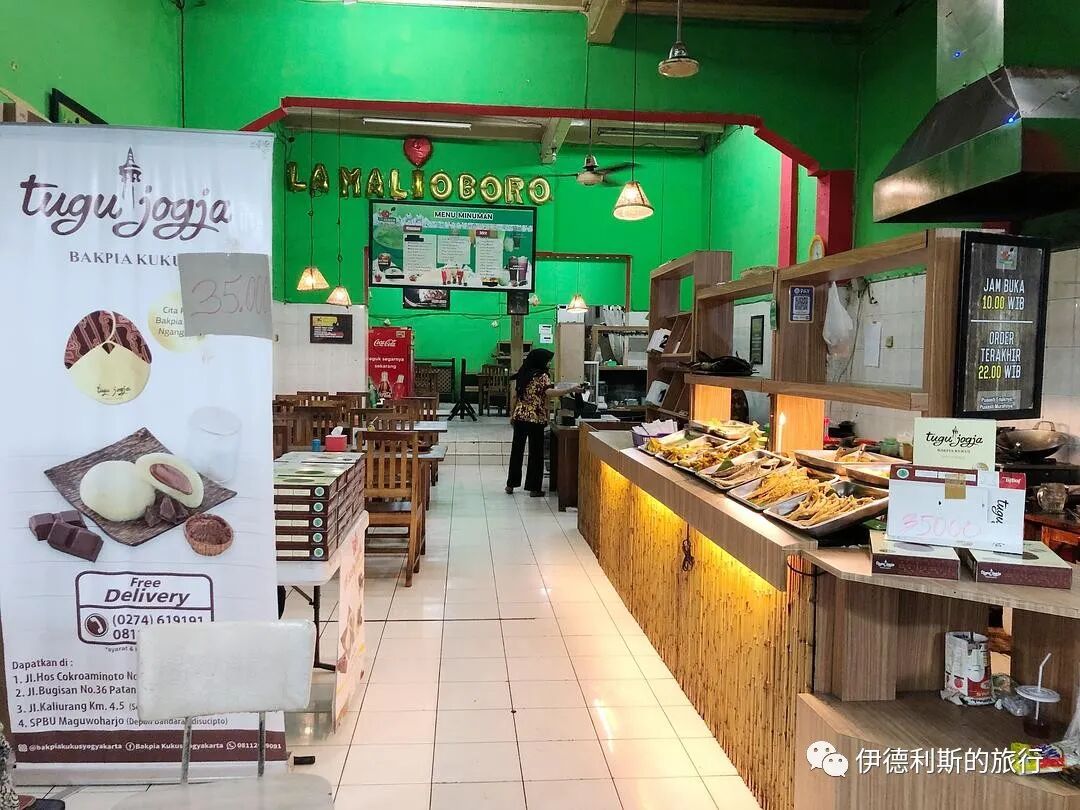
The breakfast at my hotel in Yogyakarta had a great variety of food.
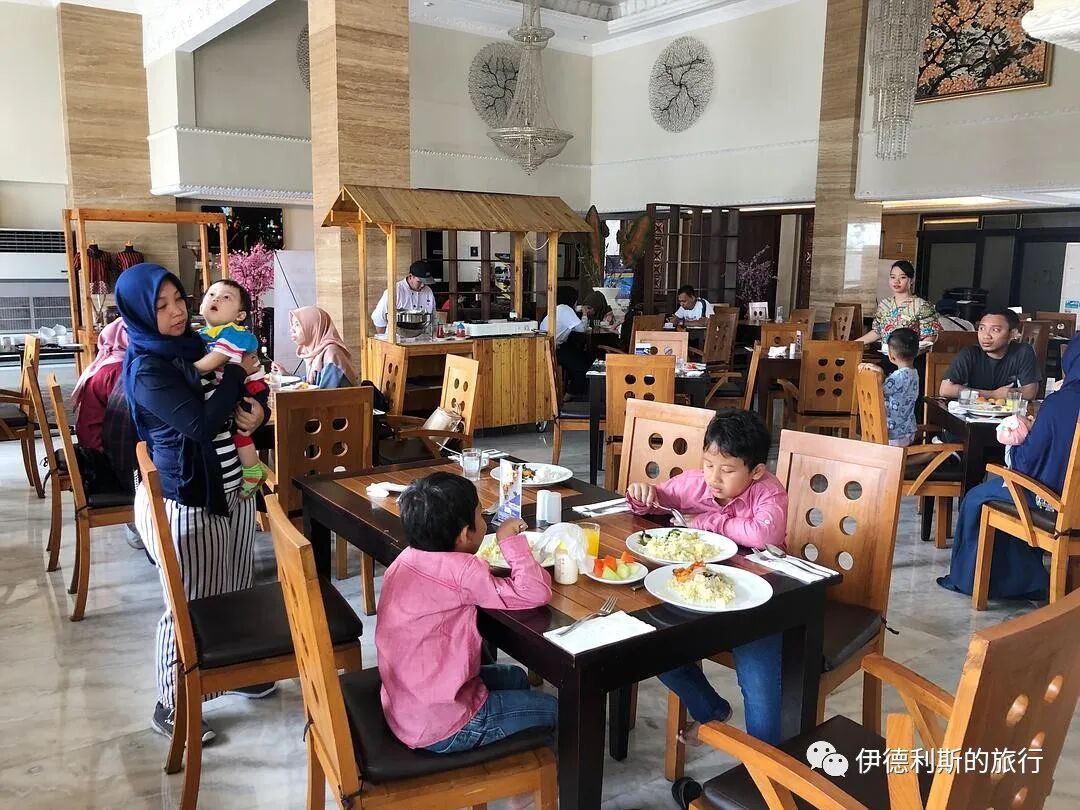
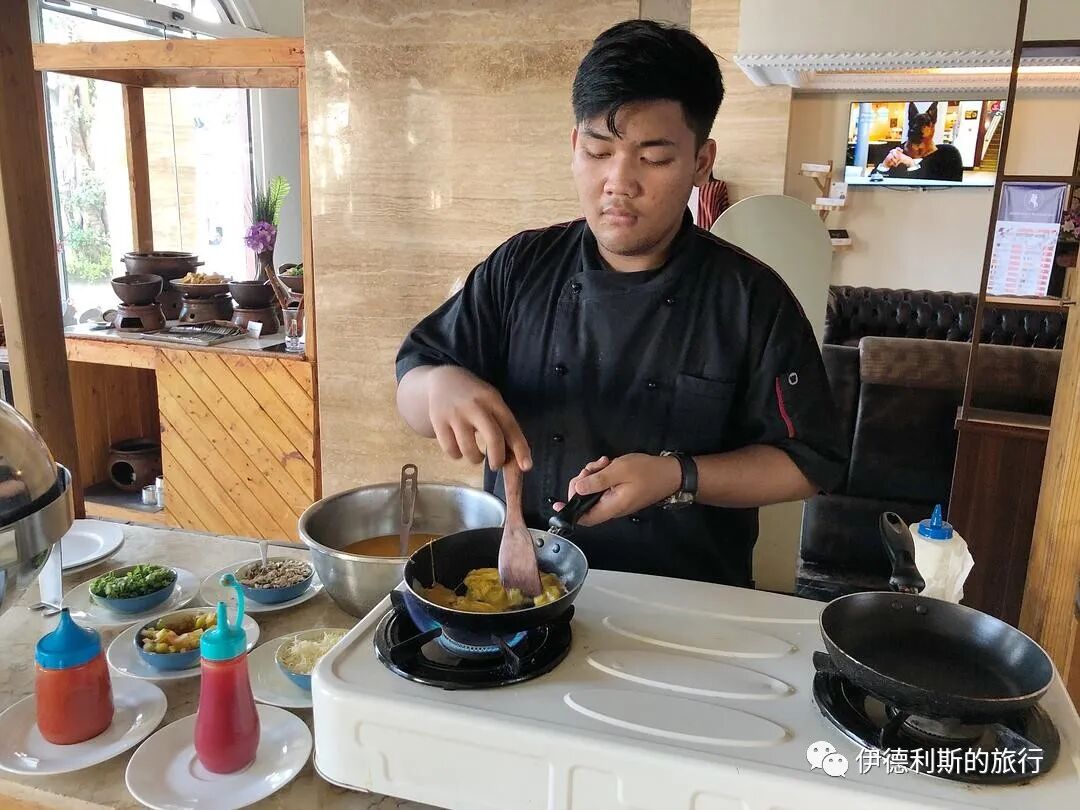
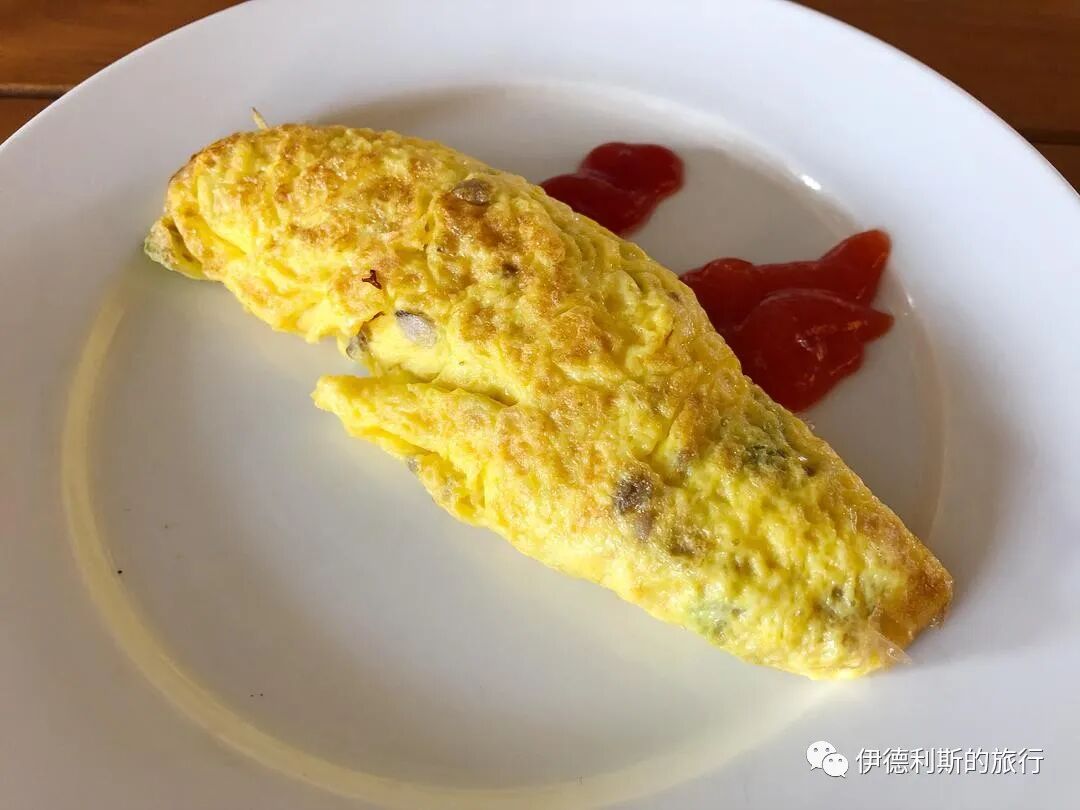
On the left are Indonesian rice cakes (klepon), topped with shredded coconut and served on a banana leaf. Klepon is made from a mix of glutinous rice flour, palm sugar, and juice from pandan or dracaena leaves. On the right are Indonesian snacks (kue), known in Java as market snacks (jajan pasar), which play an important role in traditional Javanese ceremonies.
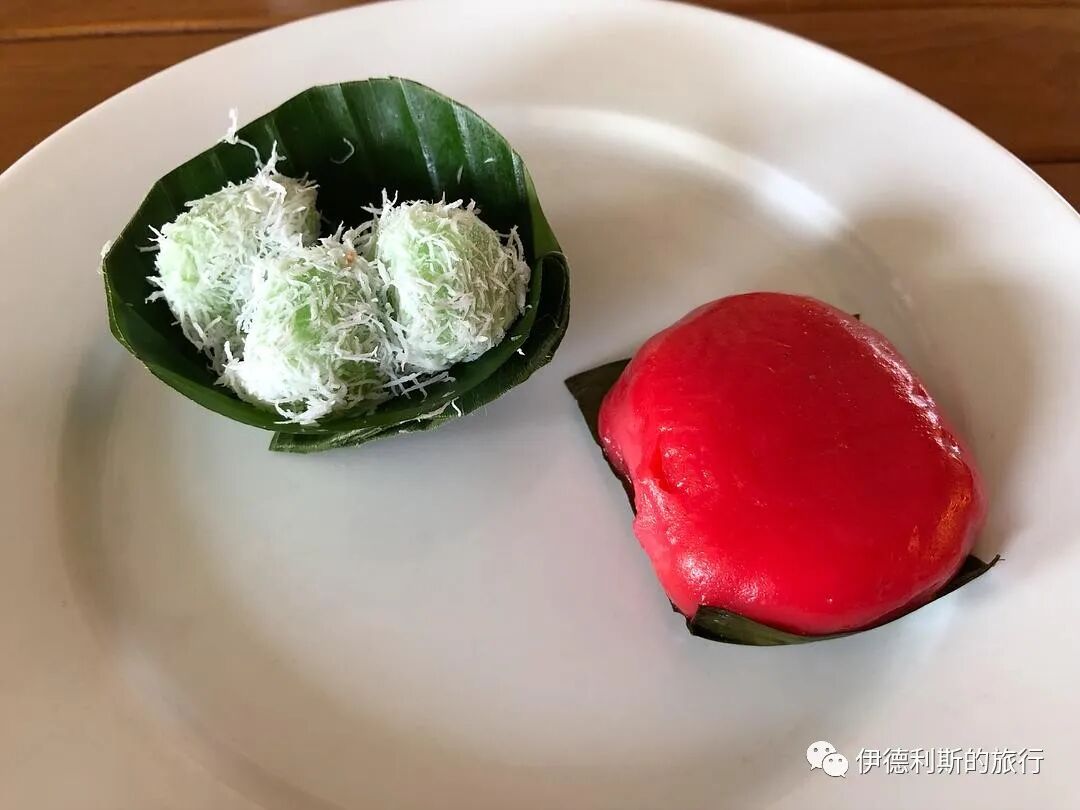
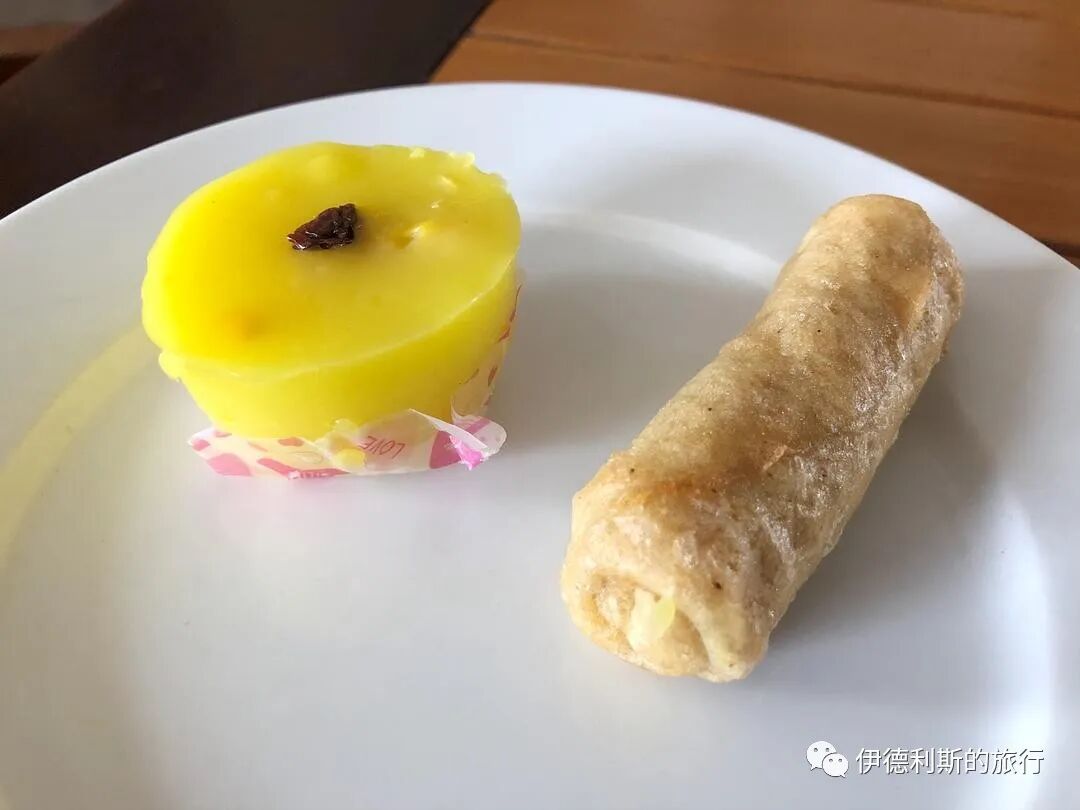
In the bottom right is eggplant with chili sauce (balado), a spicy sauce that comes from the island of Sumatra. In the bottom left is lemon basil chicken (ayam kemangi).
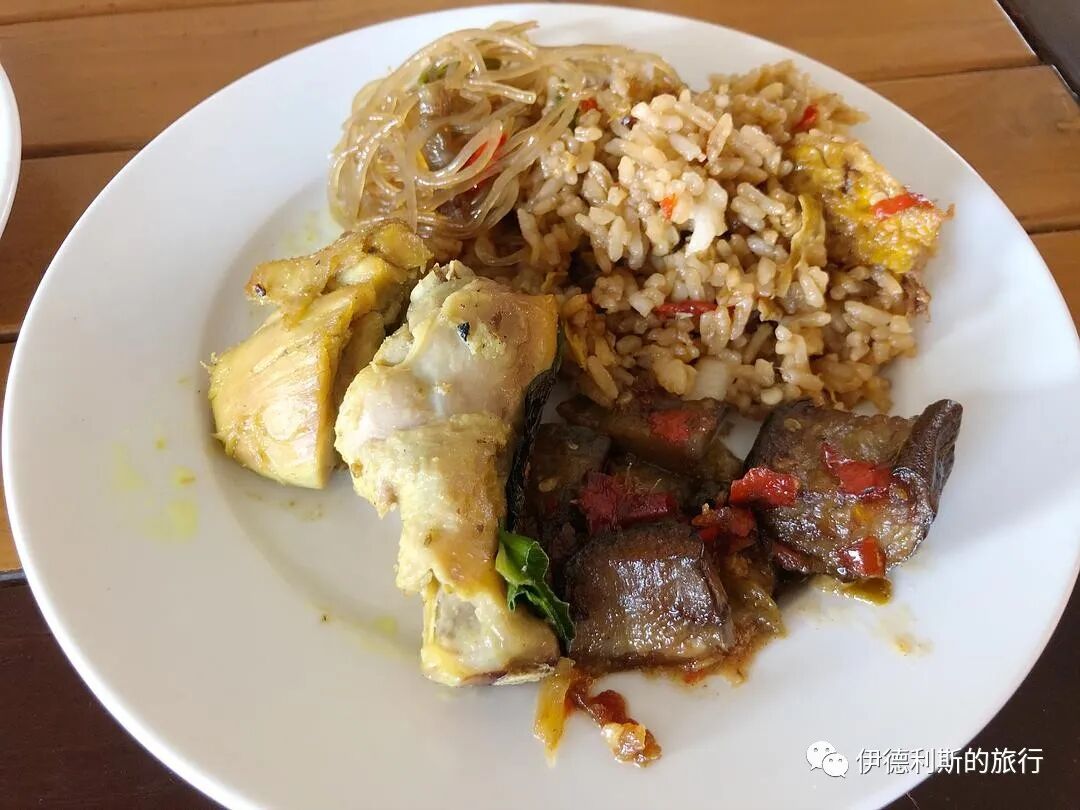
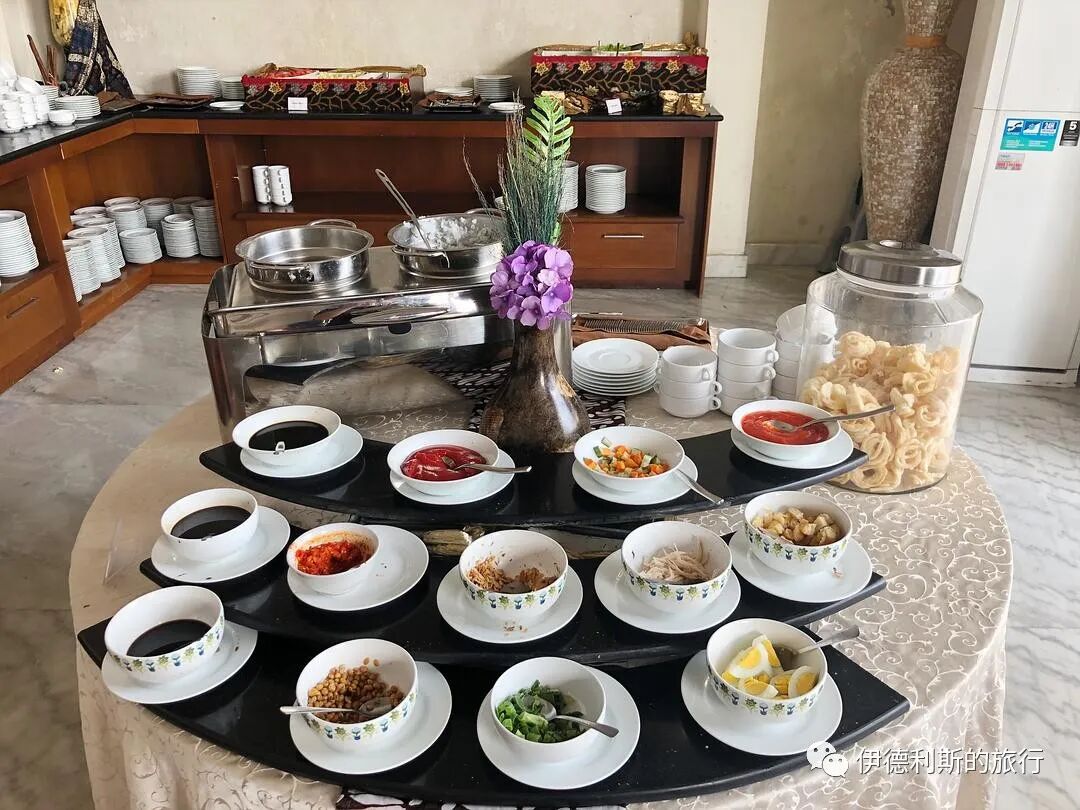
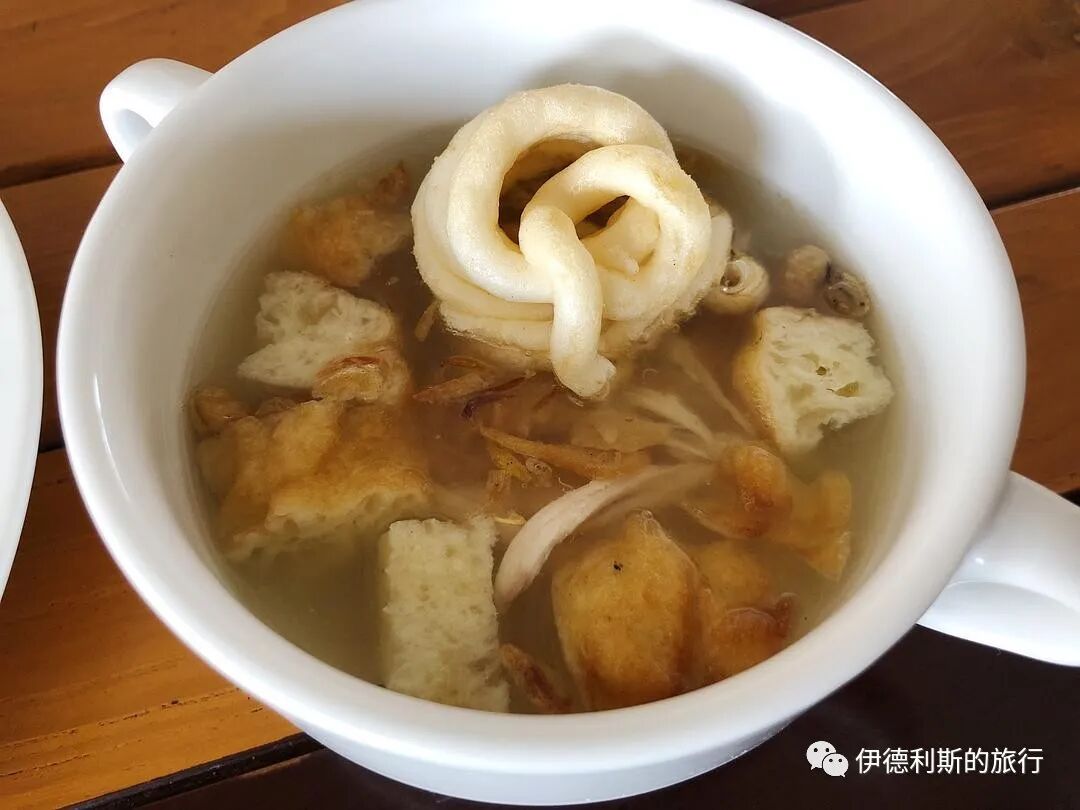
4. Royal Sultan Cuisine
Located next to the Yogyakarta Sultan's Palace, nDalem Joyokusuman was the home of Prince Gusti Haryo Haji Joyokusumo and is now open as a cultural center and restaurant. I ate Nasi Blawong and Telo ijo here. Nasi Blawong is a specialty dish of the Yogyakarta Sultan. It was once only served at the Sultan's birthday banquets, and the reddish Blawong rice used in it is considered sacred. Telo ijo is a cassava cake drizzled with pandan coconut milk.
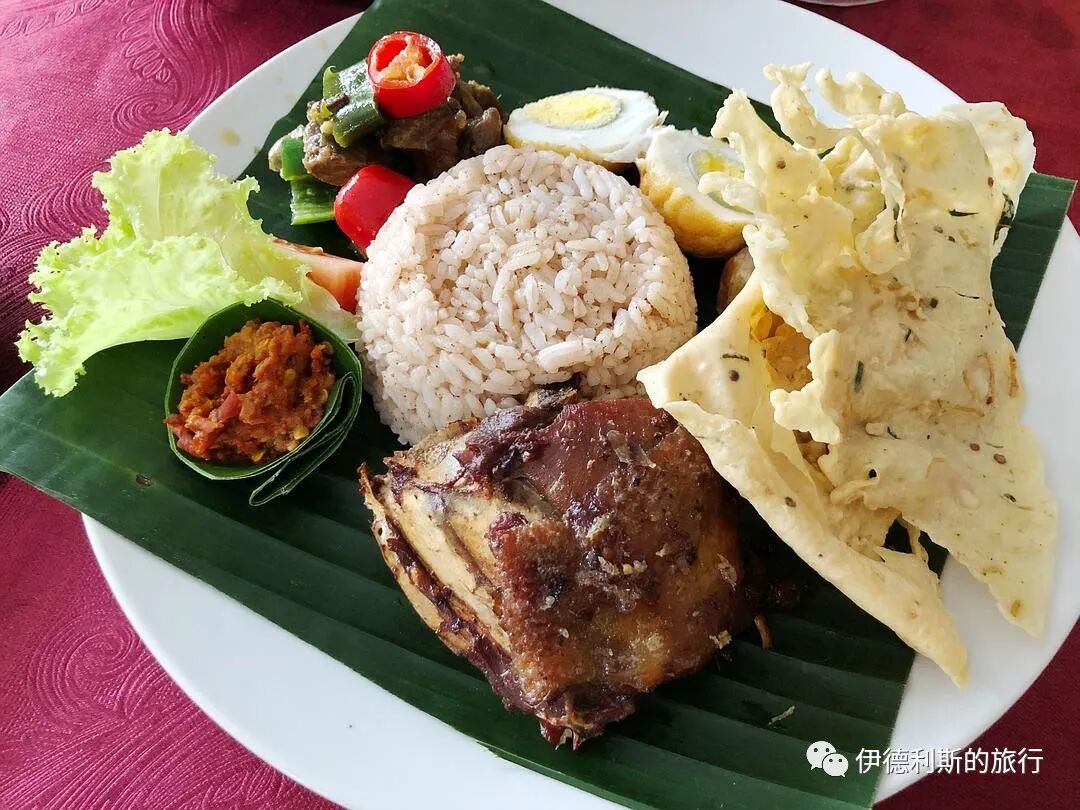
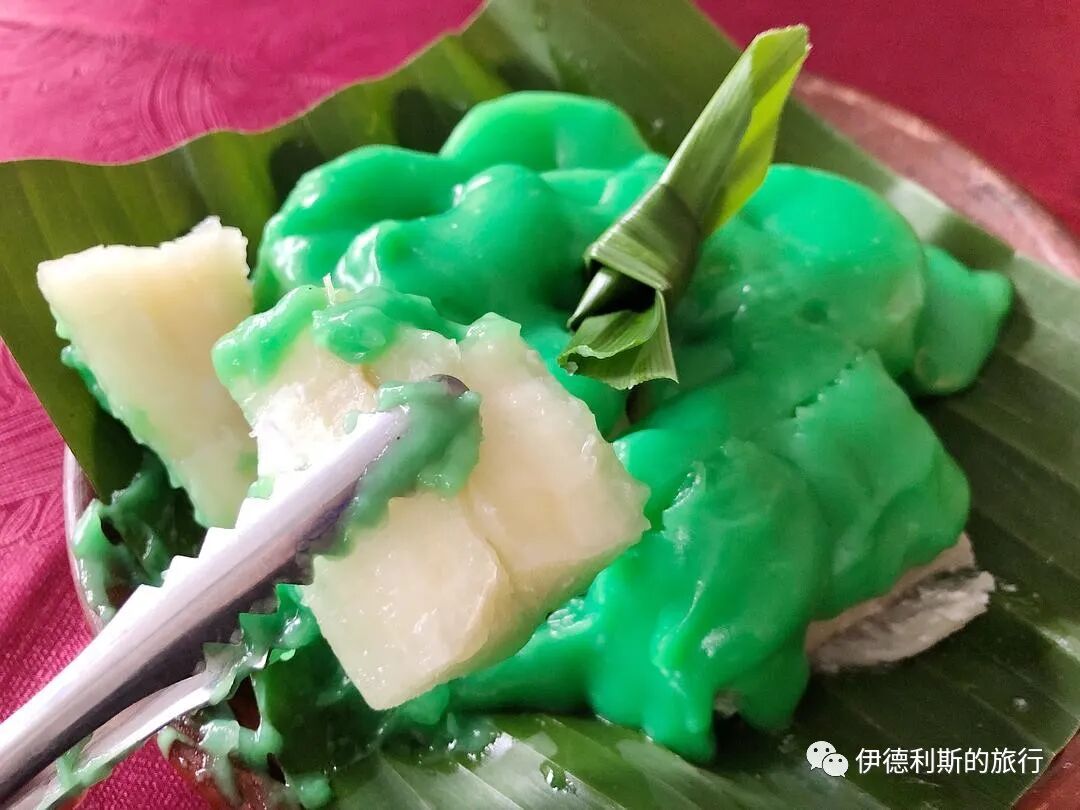
nDalem Joyokusuman was built in 1916 during the reign of the eighth Sultan of Yogyakarta, Hamengkubuwono VIII, and has been home to members of the Sultan's family ever since. The Peringgitan is the inner hall behind the main living room. It is where the prince's family spent their time and houses the valuable gifts the prince received.
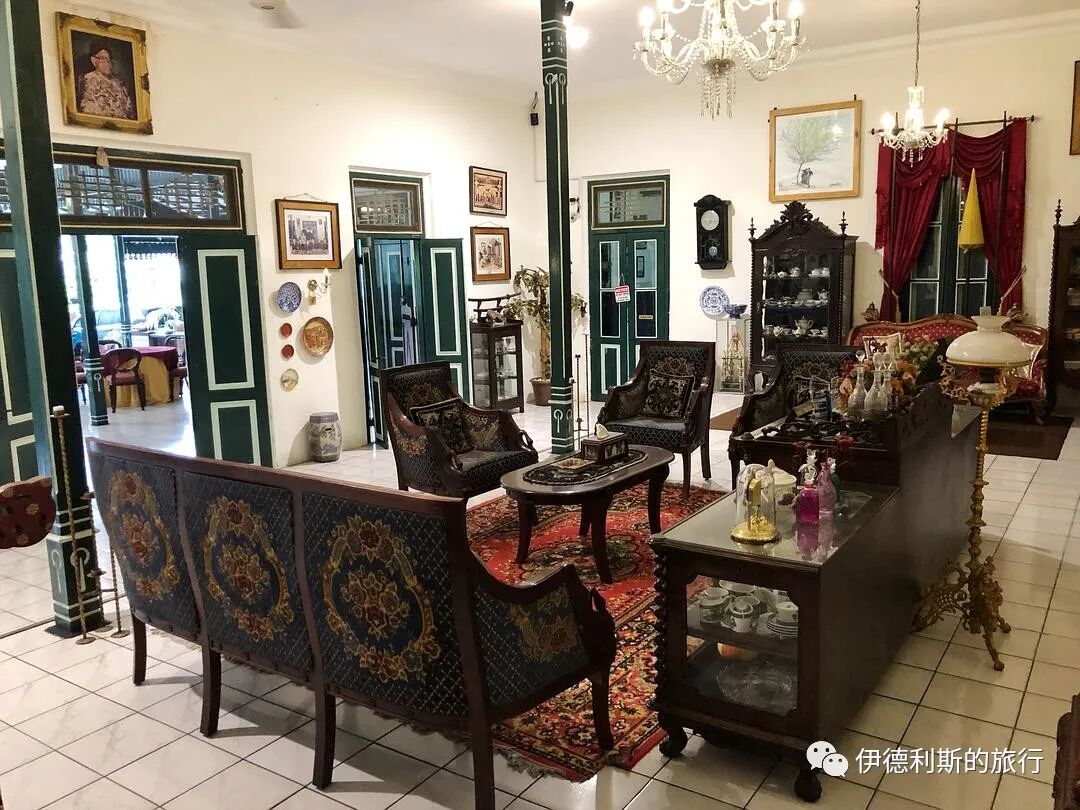
The Sentong Kiwo was originally a guest room and now serves as an exhibition hall.
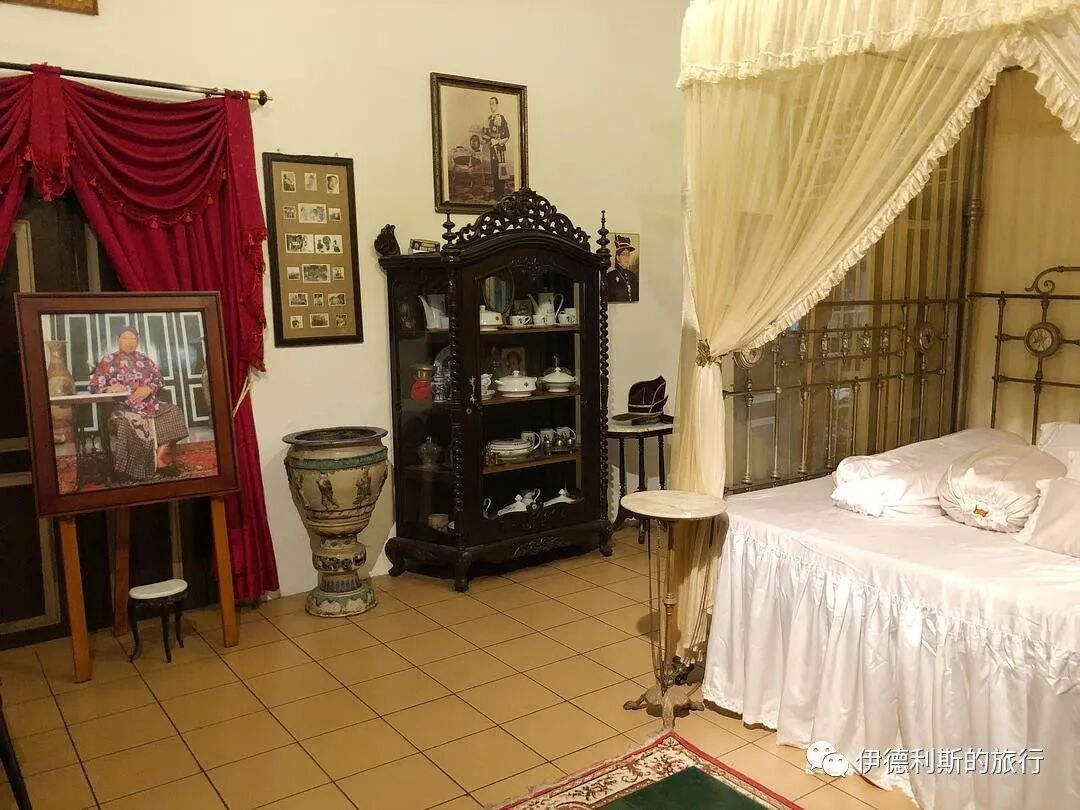
The area in the courtyard where gamelan music is performed.
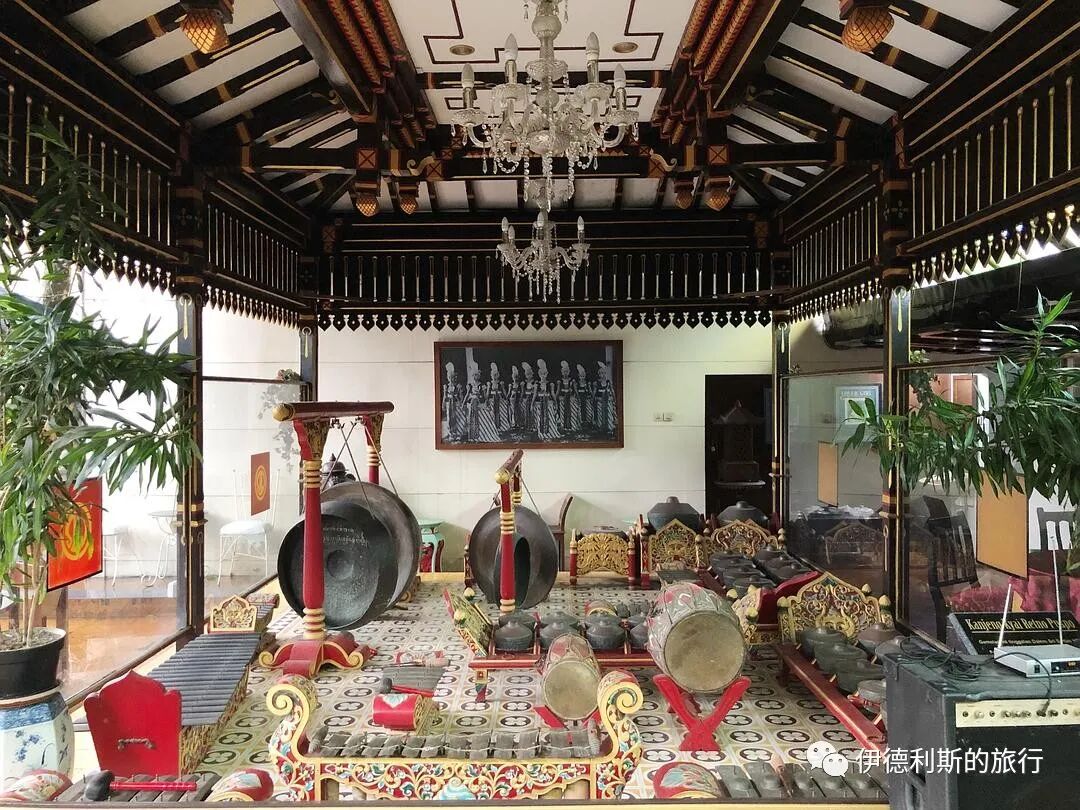
Photos of the prince's family when they were young.
 Collapse Read »
Summary: Halal Food Guide: Yogyakarta — Javanese Dishes, Markets and Muslim Food is presented here as a firsthand travel account in clear English, beginning with this scene: Yogyakarta is an ancient cultural city in central Java that is still ruled by a sultan today. The account keeps its focus on Yogyakarta, Java Islam, Sultanate History while preserving the names, places, food, and historical details from the Chinese source.
Yogyakarta is an ancient cultural city in central Java that is still ruled by a sultan today. Beyond traditional Javanese architecture, gamelan music, and wayang shadow puppetry, Yogyakarta also has many local Javanese foods that I want to share with you.
1. Drinks
In the muggy tropical heat, drinking a cold street drink feels really good.
Es Dawet Ayu is a specialty iced drink from Central Java that comes from the small town of Banjarnegara. Its main ingredients are rice flour, glutinous rice flour, coconut milk, palm sugar syrup, and grass jelly.
Coconut water
Freshly squeezed dragon fruit juice; the juice selection in Java is truly rich.
Sekoteng is a Javanese ginger-flavored hot drink that includes peanuts, bread slices, and rice balls. Hot drinks are relatively rare in Java, but it feels like the ginger helps remove dampness.
Freshly squeezed lemon juice
2. Snacks
Putu Bumbung is a pastry made by mixing glutinous rice flour with pandan leaf juice and palm sugar, then steaming it in bamboo tubes. You eat it with shredded coconut.
Pecel is a Javanese salad that usually includes spinach, amaranth, bean sprouts, water spinach, yardlong beans, cucumber, cassava leaves, and lemon basil. The sauce contains peanut butter, crushed peanuts, salt, palm sugar, tamarind juice, chili, galangal, kaffir lime leaves, and garlic. Pecel originated in Java and was later brought to Malaysia and Suriname by Javanese people.
3. Restaurants
Lesehan is a Javanese style of dining where you sit cross-legged on the floor. The Malioboro night market in Yogyakarta is the birthplace of this dining style. I ate the Yogyakarta specialty, Gudeg rice with chicken. Gudeg is made by stewing unripe jackfruit, palm sugar, and coconut milk for several hours. The ingredients include shallots, ginger, garlic, coriander seeds, bay leaves, and teak leaves.
At a small shop specializing in fish cakes, I ordered the fish cake omelet (Lenggang) and fish cake noodles (Mie Laksan). The fish cakes were stuffed with tofu.
I ate meatball soup (Bakso) and grilled chicken skin (Thaichan Kulit Ayam) at a shop.
I had fried fish with Indonesian chili sauce (sambal) at this shop, and it was super spicy!
The breakfast at my hotel in Yogyakarta had a great variety of food.
On the left are Indonesian rice cakes (klepon), topped with shredded coconut and served on a banana leaf. Klepon is made from a mix of glutinous rice flour, palm sugar, and juice from pandan or dracaena leaves. On the right are Indonesian snacks (kue), known in Java as market snacks (jajan pasar), which play an important role in traditional Javanese ceremonies.
In the bottom right is eggplant with chili sauce (balado), a spicy sauce that comes from the island of Sumatra. In the bottom left is lemon basil chicken (ayam kemangi).
4. Royal Sultan Cuisine
Located next to the Yogyakarta Sultan's Palace, nDalem Joyokusuman was the home of Prince Gusti Haryo Haji Joyokusumo and is now open as a cultural center and restaurant. I ate Nasi Blawong and Telo ijo here. Nasi Blawong is a specialty dish of the Yogyakarta Sultan. It was once only served at the Sultan's birthday banquets, and the reddish Blawong rice used in it is considered sacred. Telo ijo is a cassava cake drizzled with pandan coconut milk.
nDalem Joyokusuman was built in 1916 during the reign of the eighth Sultan of Yogyakarta, Hamengkubuwono VIII, and has been home to members of the Sultan's family ever since. The Peringgitan is the inner hall behind the main living room. It is where the prince's family spent their time and houses the valuable gifts the prince received.
The Sentong Kiwo was originally a guest room and now serves as an exhibition hall.
The area in the courtyard where gamelan music is performed.
Photos of the prince's family when they were young.
Collapse Read »
Halal Travel Guide: Central Java — Semarang, Solo, Kudus Food and Muslim Heritage
Reposted from the web
Summary: Central Java — Semarang, Solo, Kudus Food and Muslim Heritage is presented here as a firsthand travel account in clear English, beginning with this scene: During the 2019 May Day holiday, I traveled to Central Java, Indonesia, to explore and eat. The account keeps its focus on Kudus Travel, Java Islam, Muslim Heritage while preserving the names, places, food, and historical details from the Chinese source.
During the 2019 May Day holiday, I traveled to Central Java, Indonesia, to explore and eat. I visited the capital, Semarang, the cultural city of Solo, and the religious site of Kudus. I am sharing some of the things I saw and ate during this trip.
Solo
In 1755, the Dutch East India Company represented Sultan Pakubuwono III of the Mataram Sultanate in negotiations with Prince Mangkubumi. A treaty was signed, and the Mataram Sultanate, once the most powerful Islamic kingdom on Java, was split into the Yogyakarta Sultanate and the Surakarta Sunanate. The city of Solo officially became the capital of the Surakarta Sunanate.
During the Dutch East Indies era, the Surakarta Sunanate, like the Yogyakarta Sultanate, enjoyed autonomous status and was considered a vassal state of the Dutch Empire. In 1945, the Republic of Indonesia was declared. In 1946, an anti-monarchy movement broke out, the Surakarta Sunan was stripped of ruling power, and the Sunanate was incorporated into Central Java Province. Although they have no real power, the Surakarta Sunan still holds royal authority and a special status in maintaining traditional Javanese culture, and they still command high prestige.
I ate breakfast at my hotel in Solo. I was the only guest in the entire hotel, and the palace of the Surakarta Sunan was right behind the woods.
Solo's specialty iced drink is Es Dawet Telasih, made with coconut milk, palm sugar, rice flour jelly (cendol), coconut rice pudding (bubur sumsum), basil seeds, and black glutinous rice.
Es Dawet Durian is Es Dawet Telasih with durian added.
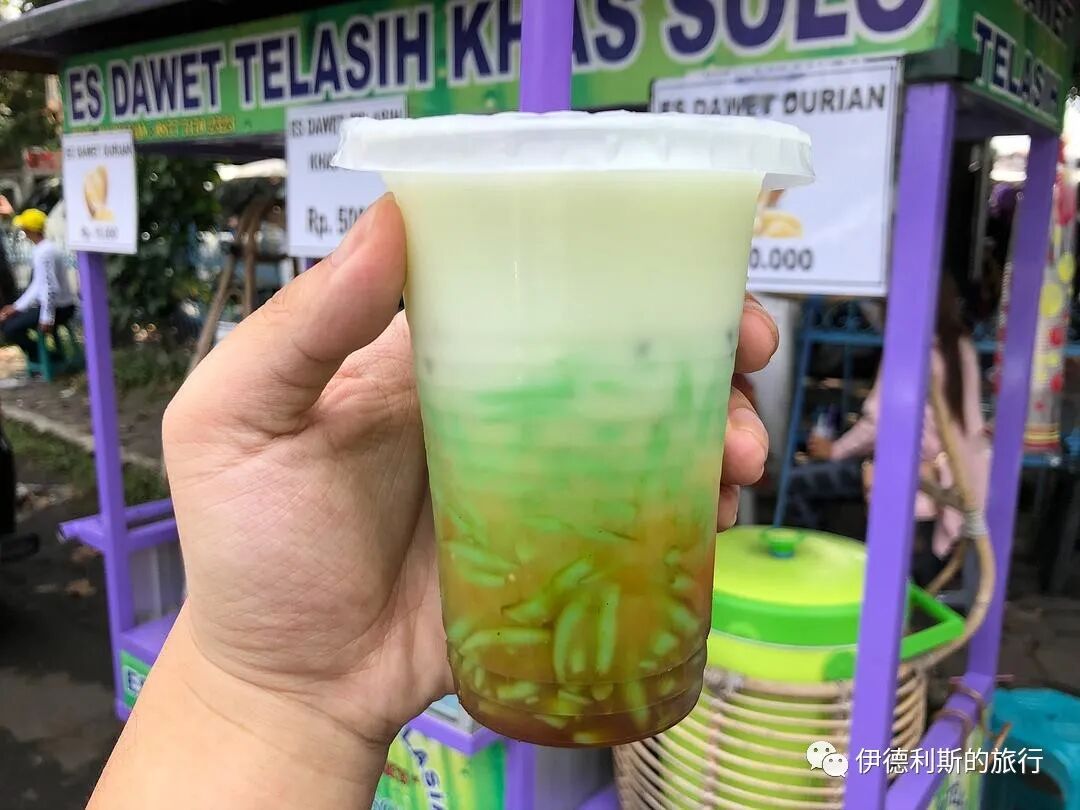
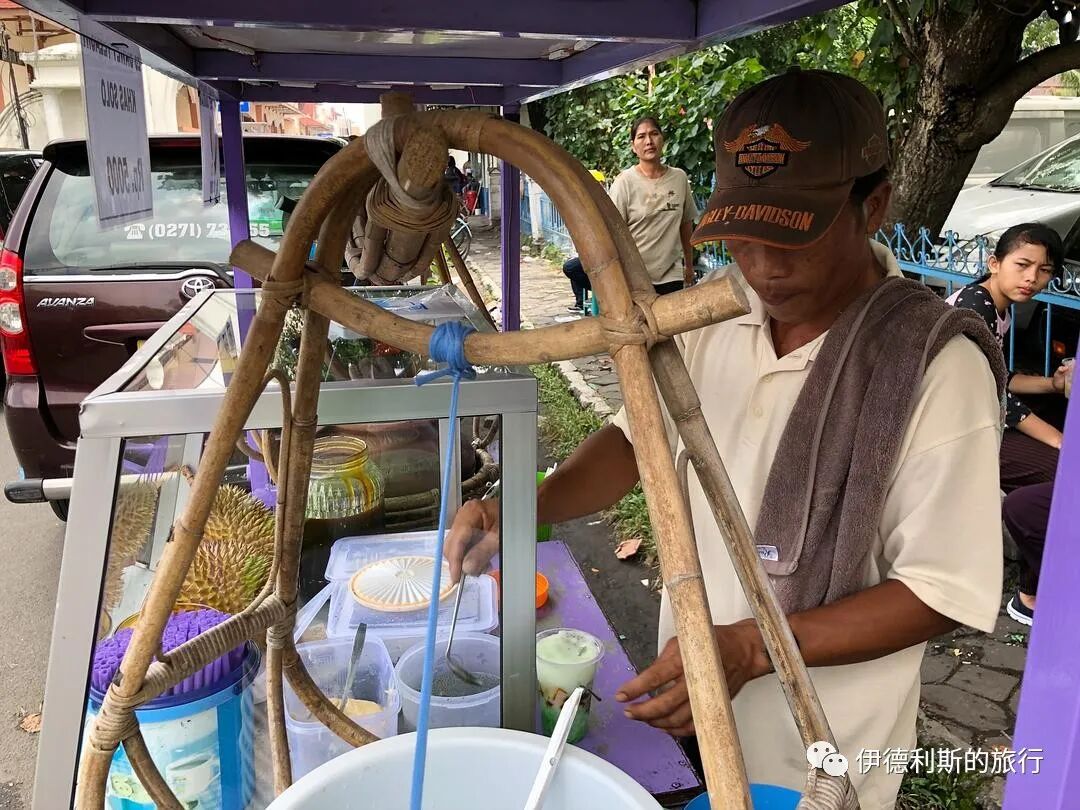
Indonesian pancakes (serabi) are made from rice flour and coconut milk.
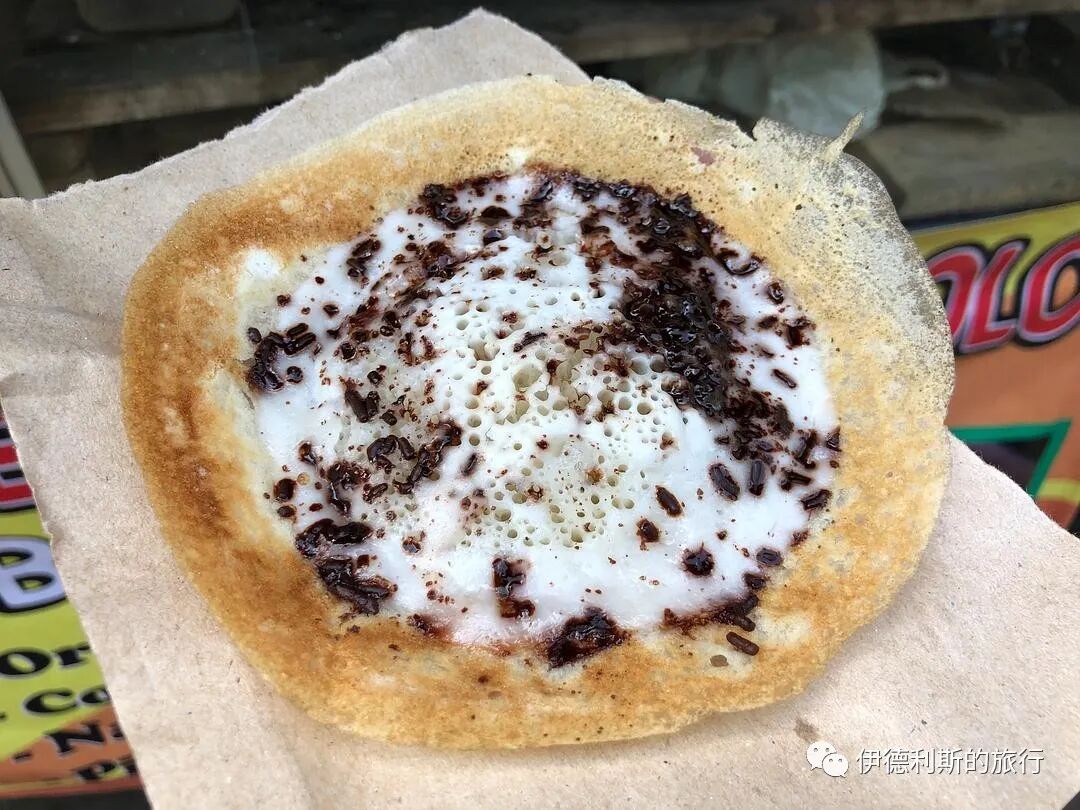
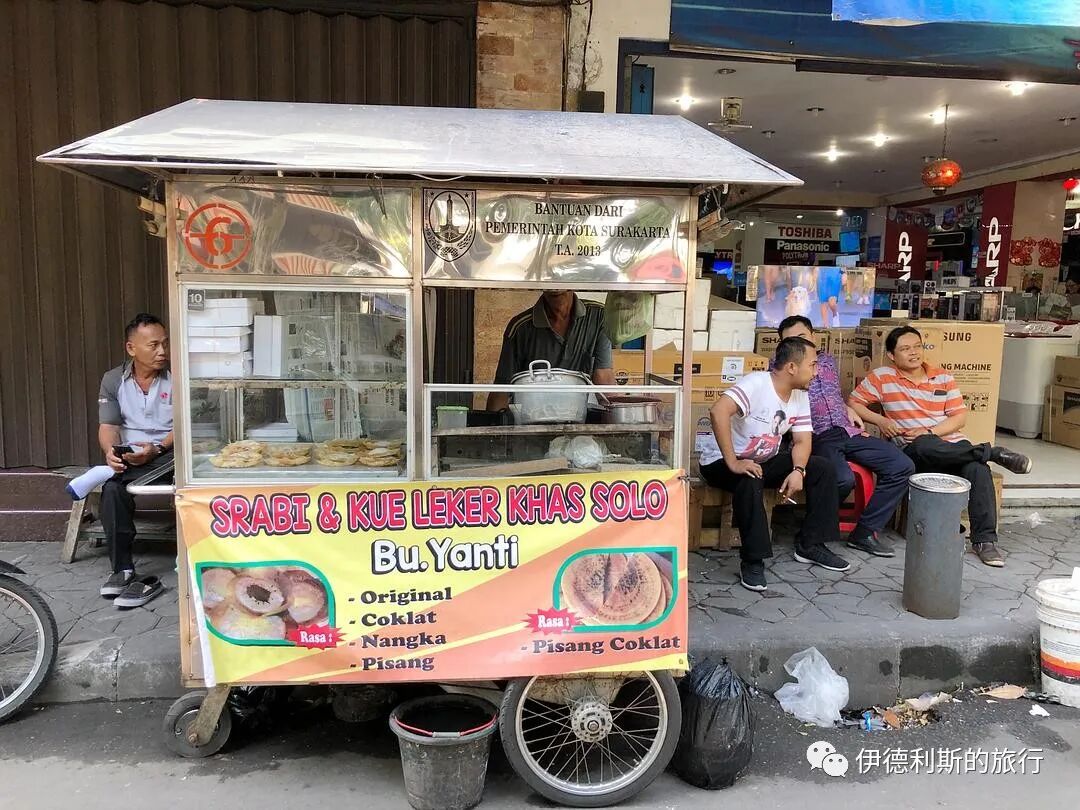
I ate beef meatballs (bakso daging sapi) at a street stall next to the Solo palace. Bakso meatballs are a classic Indonesian street snack made from a mixture of ground beef and tapioca flour. The word "bak-so" originally comes from the Hokkien term for "meat crisp," but the method of making meatballs likely came from 19th-century Dutch colonists. Today, the best bakso meatballs are widely considered to come from Solo in Central Java and Malang in East Java.
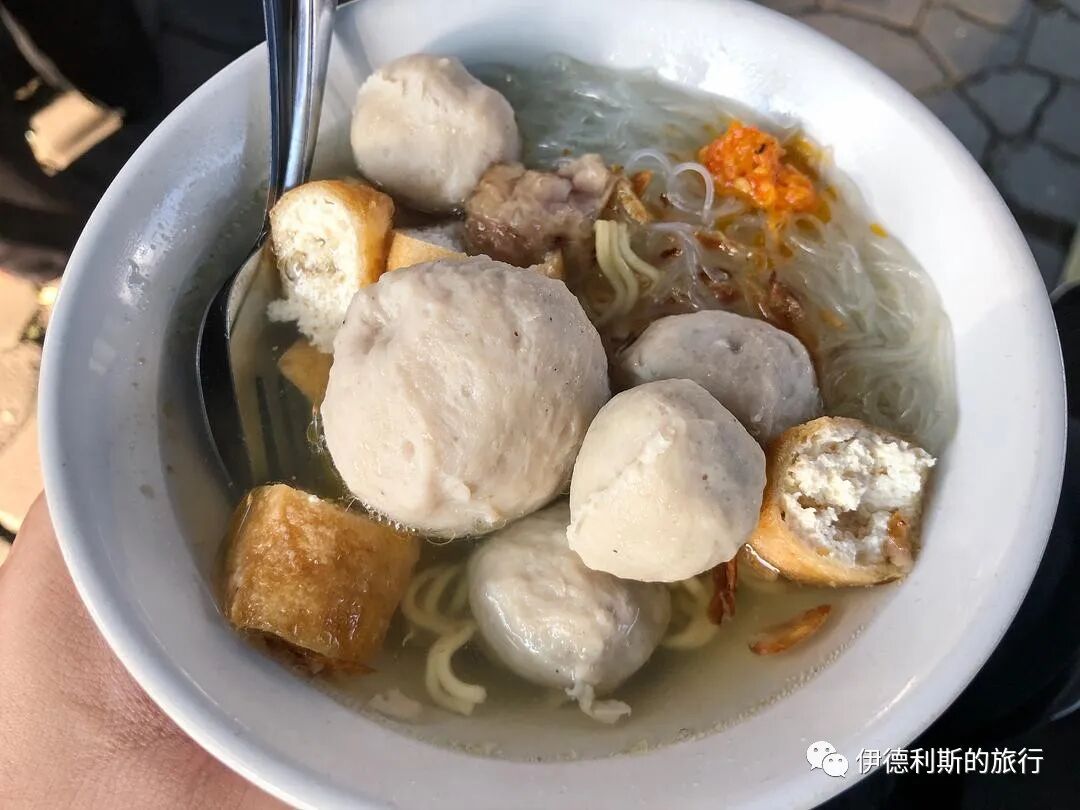
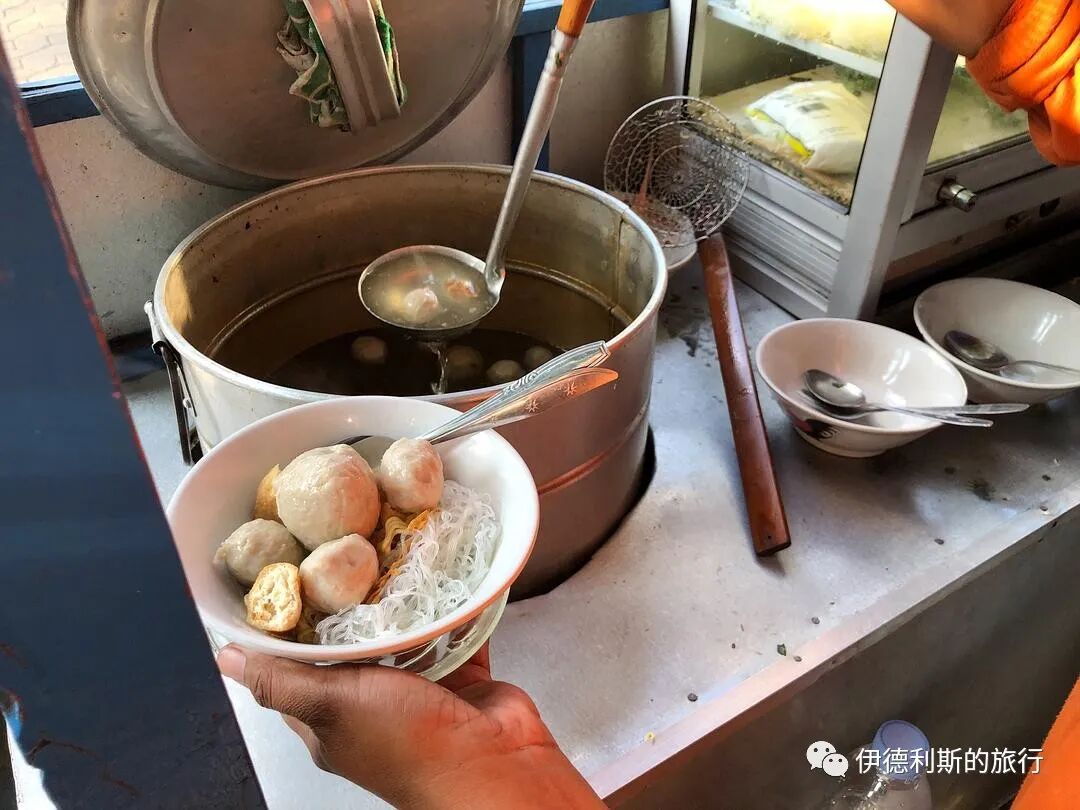
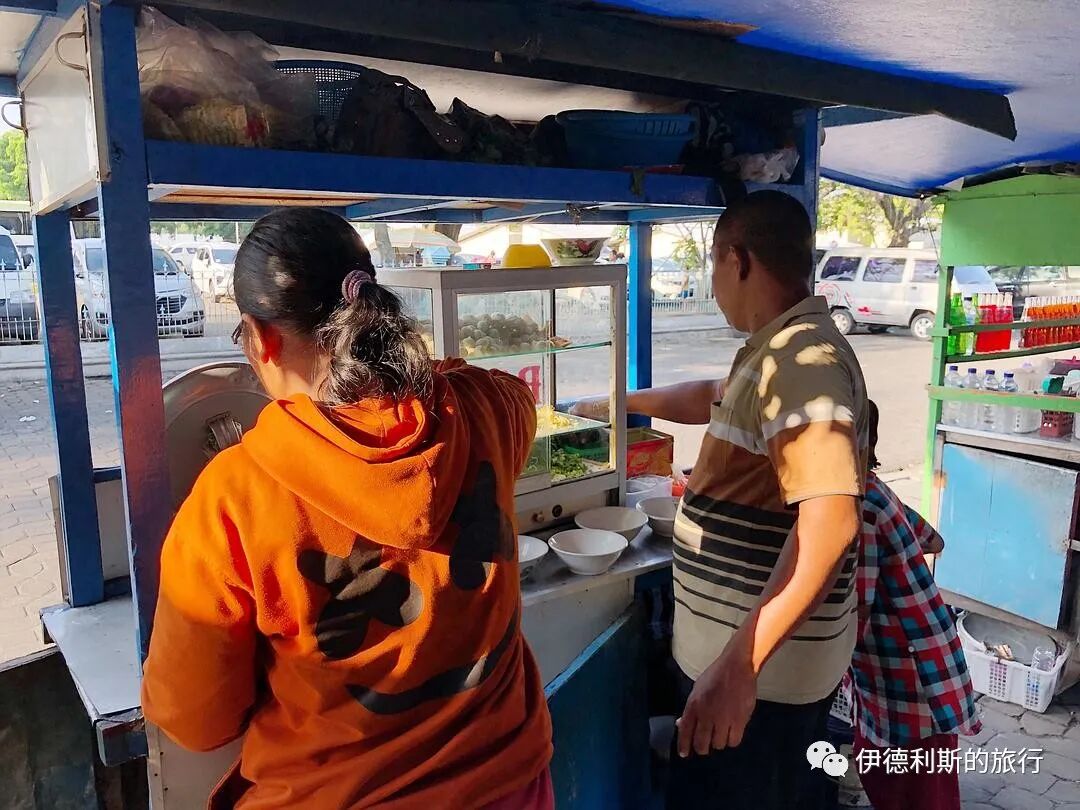
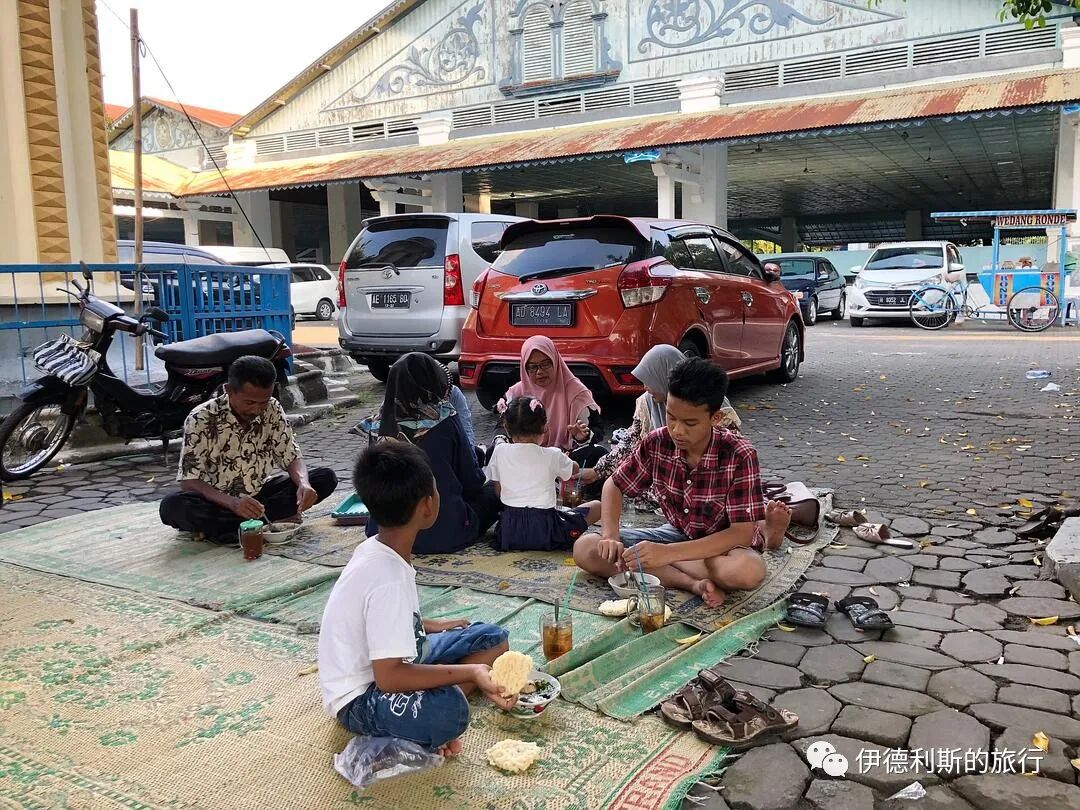
I ate beef rib soup (rawon) and grilled chicken (ayam bakar kuah) at a late-night street stall in Solo. This shop is open from 6 p.m. to midnight. Rawon is a beef soup that originated in Surabaya, East Java. It has a rich, nutty flavor and a black color because it uses the Indonesian black nut (keluak) as its main seasoning. Rawon has a very long history, dating back to the ancient Mataram Kingdom of Java in the 10th century.
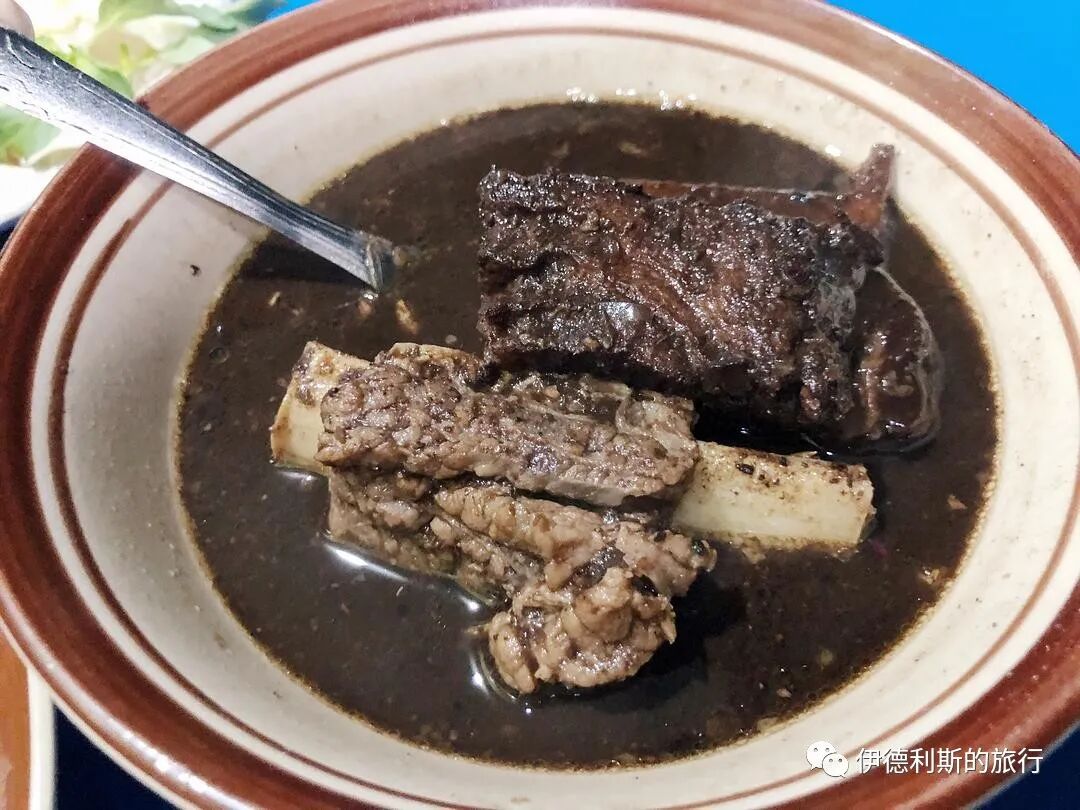
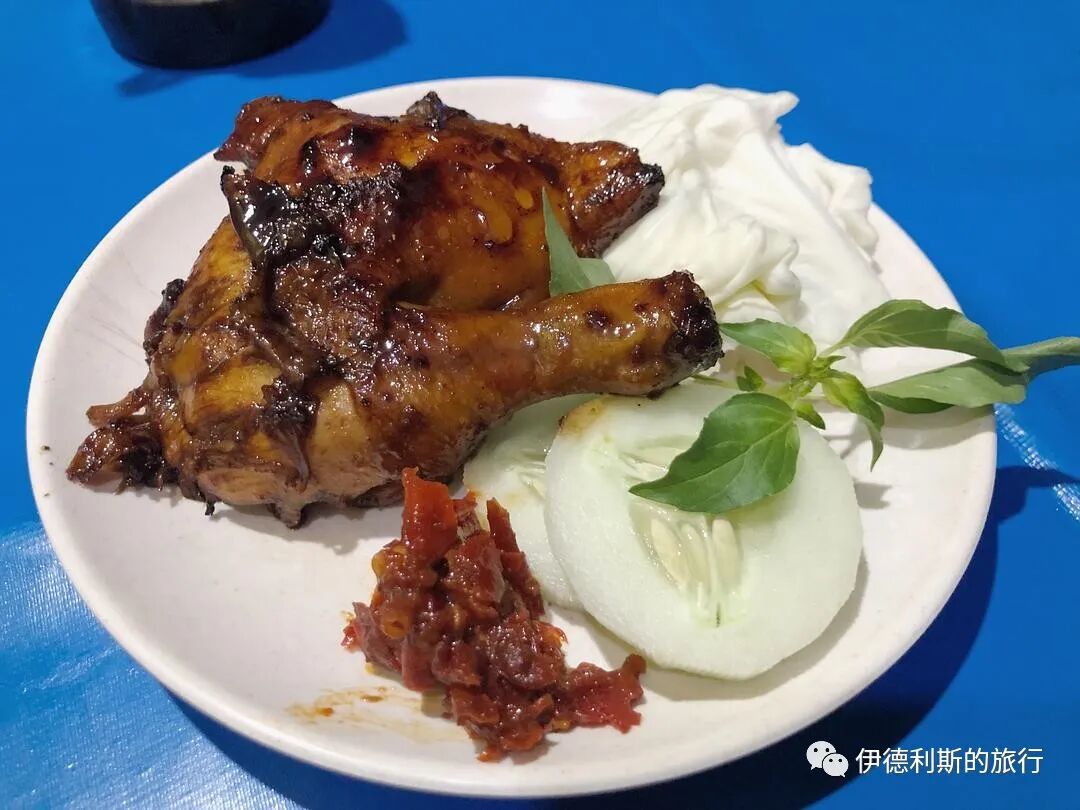
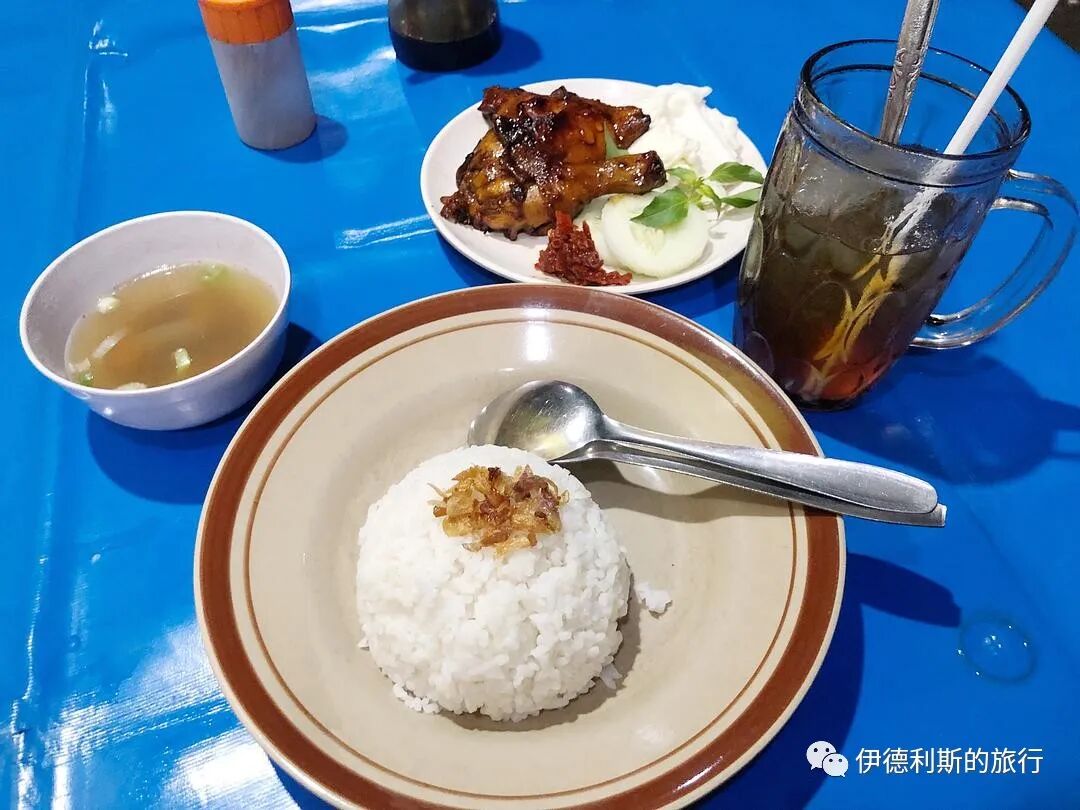
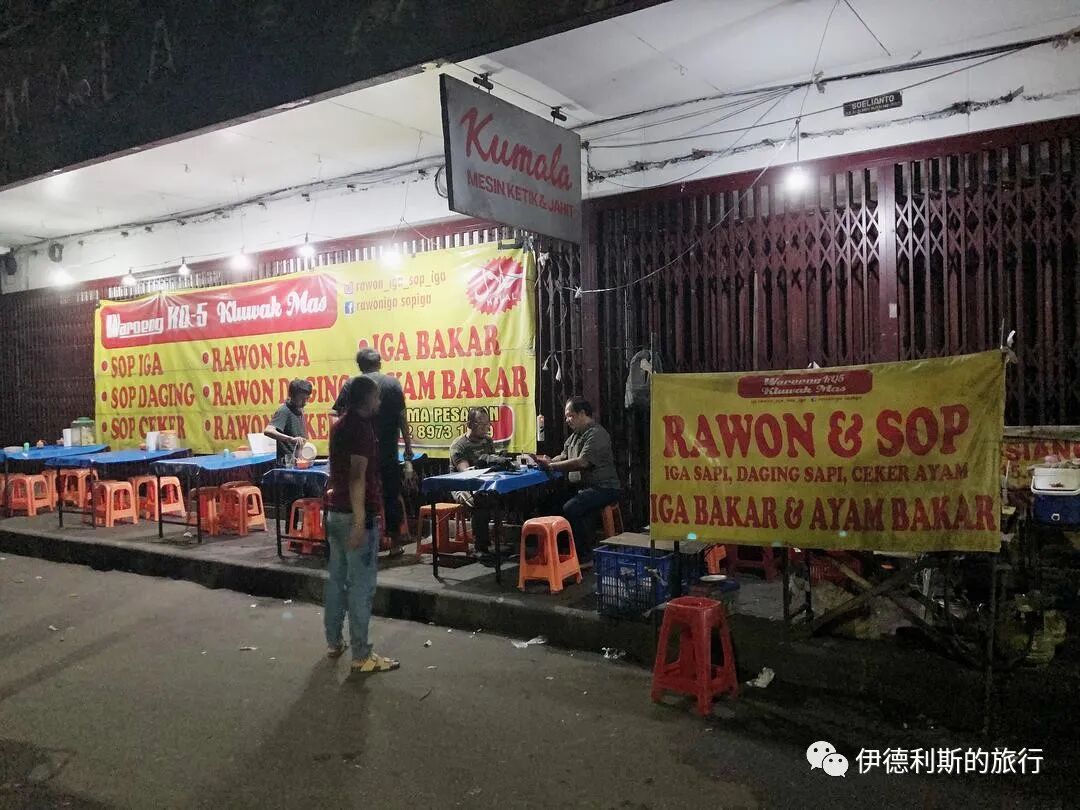
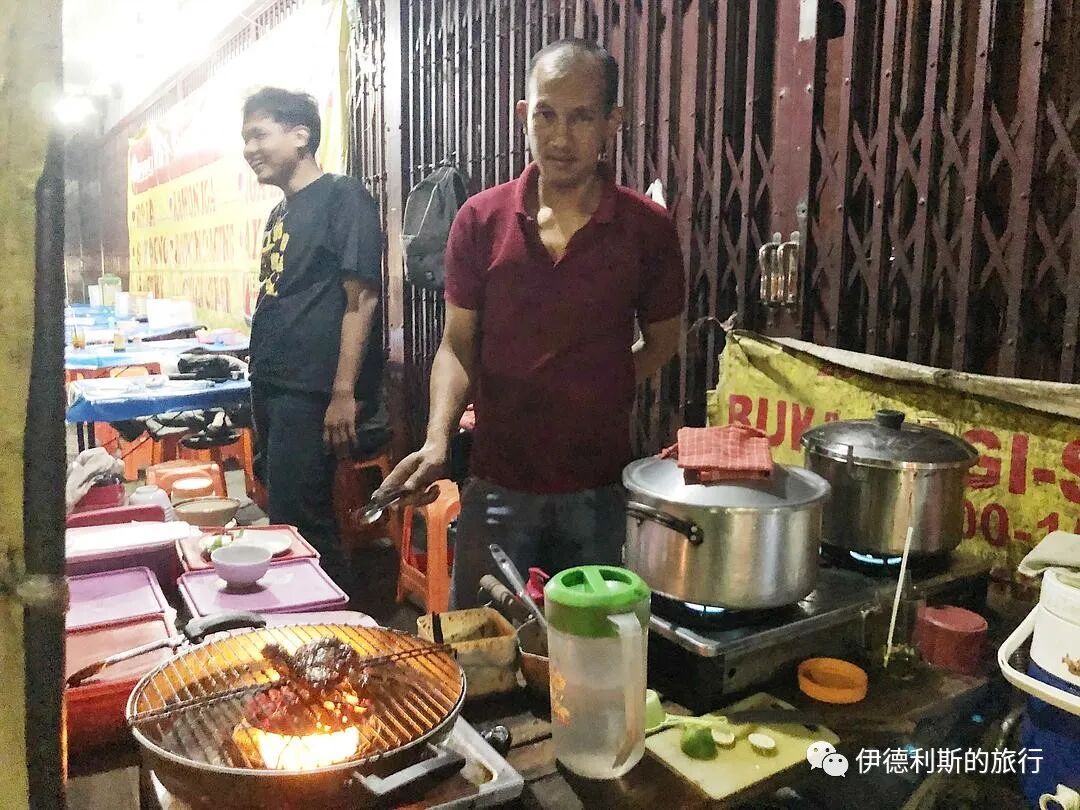
I ate at a self-service restaurant. For a solo traveler like me, this kind of restaurant allows me to try a wider variety of dishes.
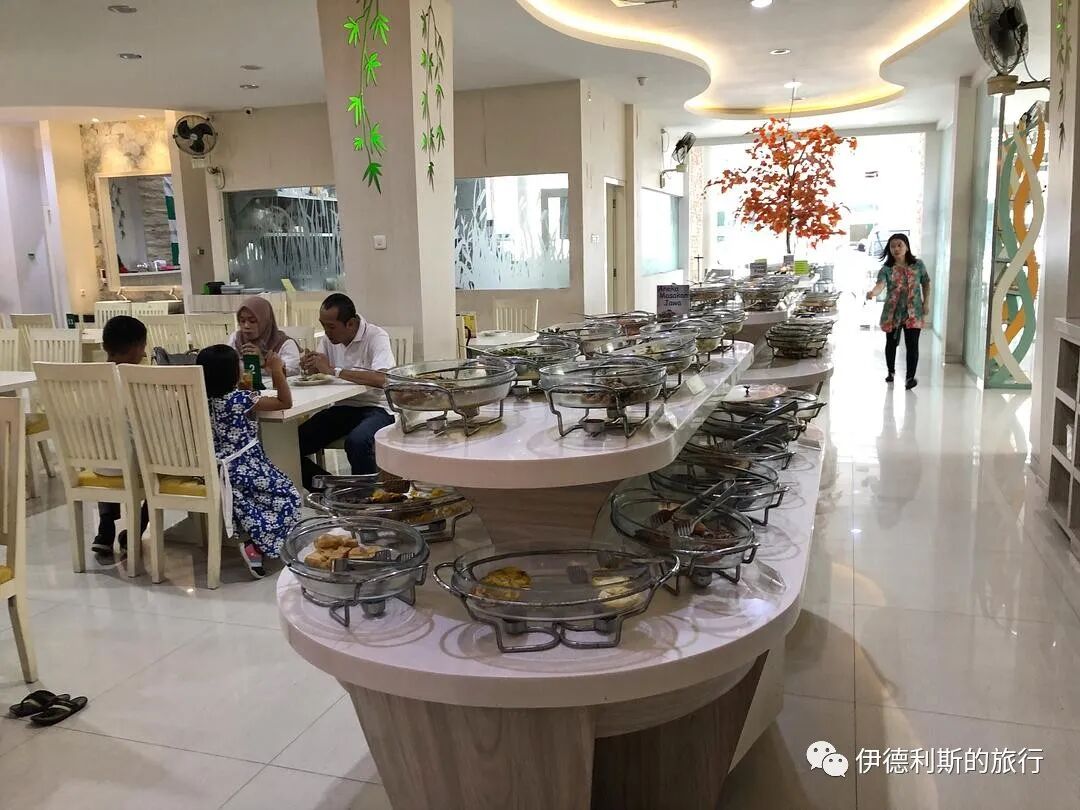
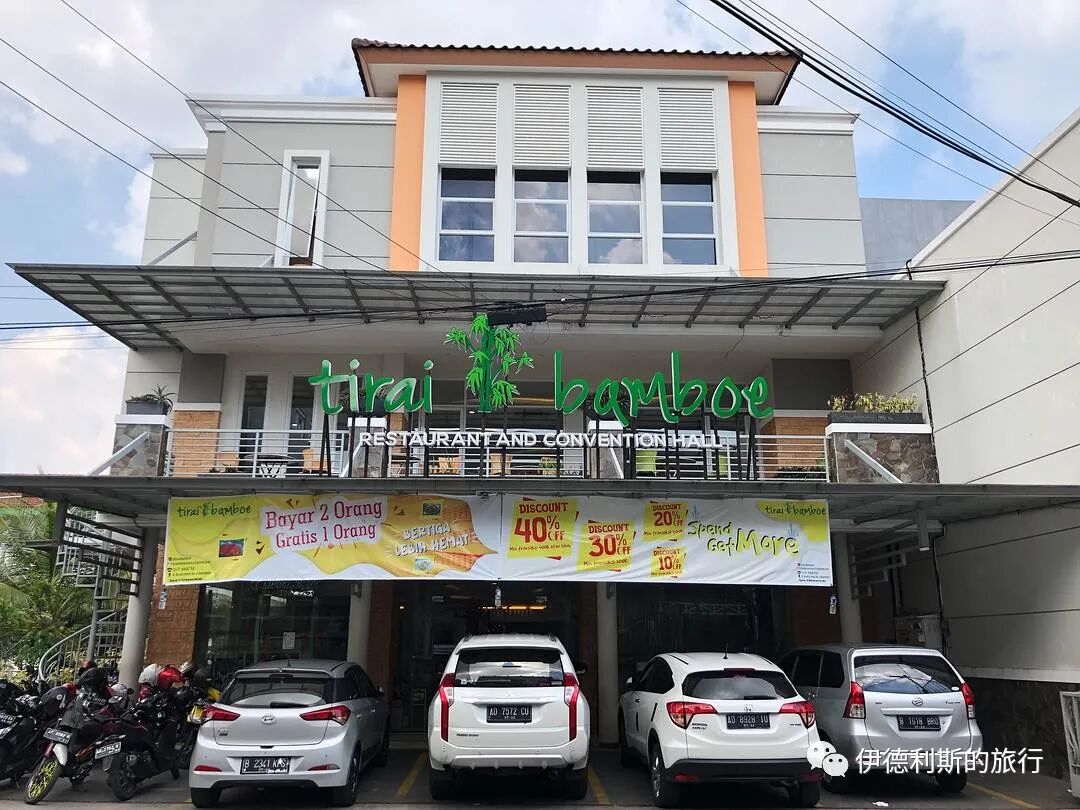
In the middle are yellow rice (nasi kuning) made with coconut milk and turmeric, and red rice (nasi merah). From bottom to top on the right are beef meatballs (kreni), potatoes (kentang), beef tendon (cecek), and liver (ati), all made with chili paste (sambal goreng).
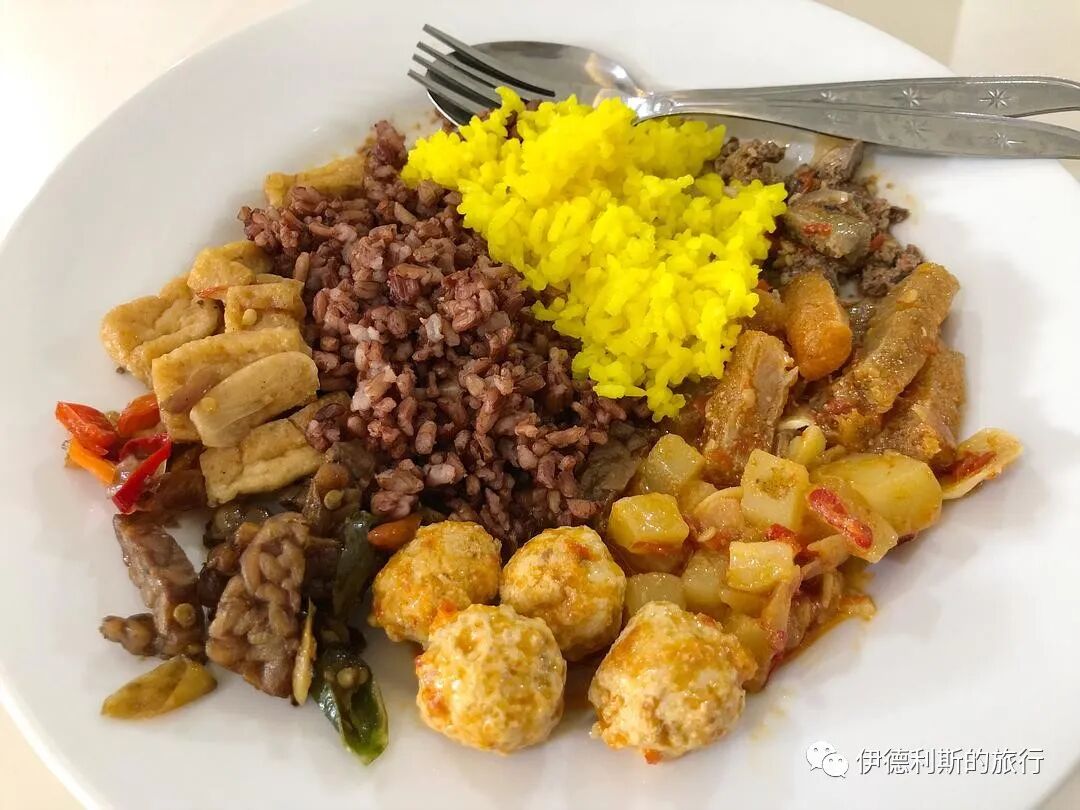
In the middle is green rice (nasi hijau), on the right is Indonesian vegetable fritter (bakwan sayur), and on the left is black pepper tofu (tahu lada hitam).
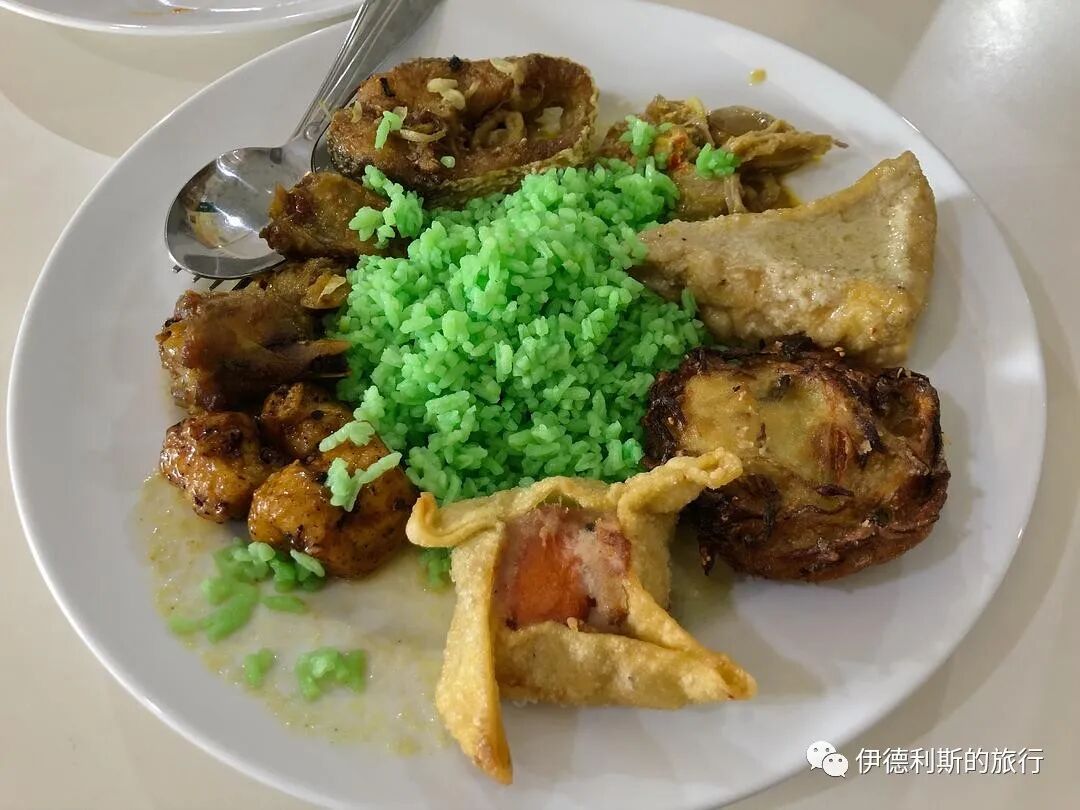
Semarang
Semarang is the capital and largest city of Central Java and was a major port during the Dutch colonial era. The old town of Semarang, established in the 18th century, is also known as Little Netherlands.
I ate at a restaurant in the Dutch old town of Semarang that specializes in satay and curry soup.
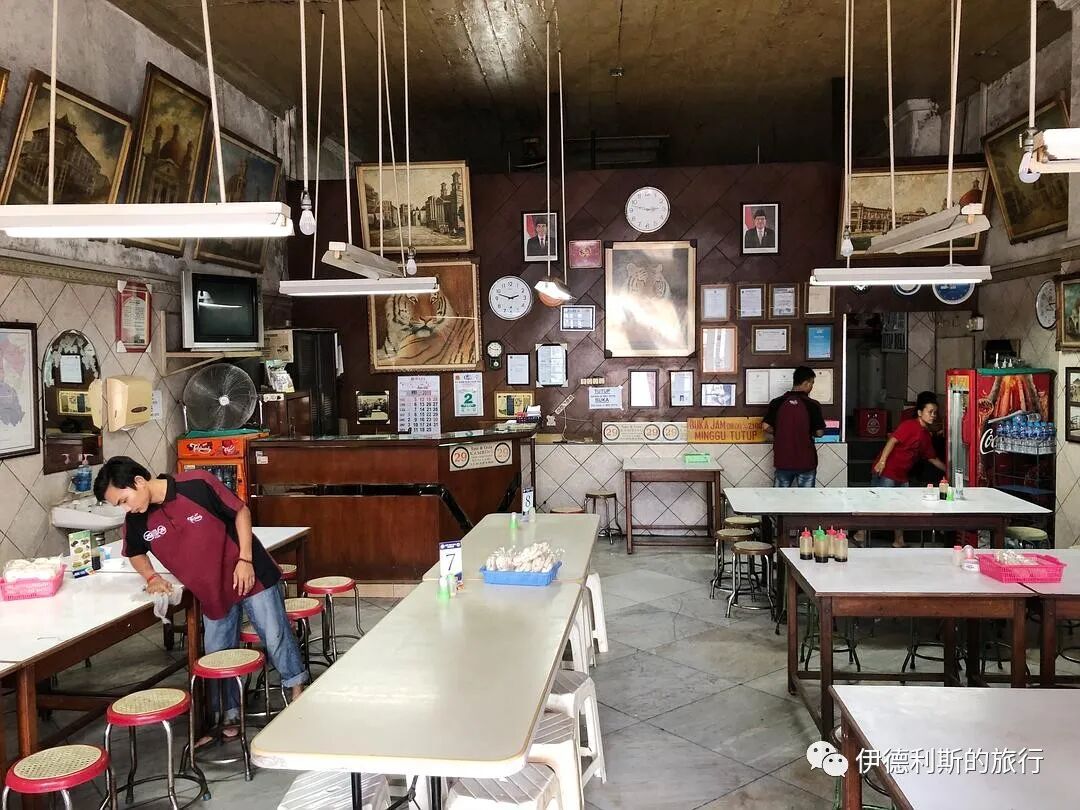
Goat meat satay (sate buntel) is a skewer featuring a mix of fat and lean meat. It is served with tamarind juice, coconut milk, sweet soy sauce, and various spices. It was invented in 1948 by Lim Hwa Youe from Yogyakarta.
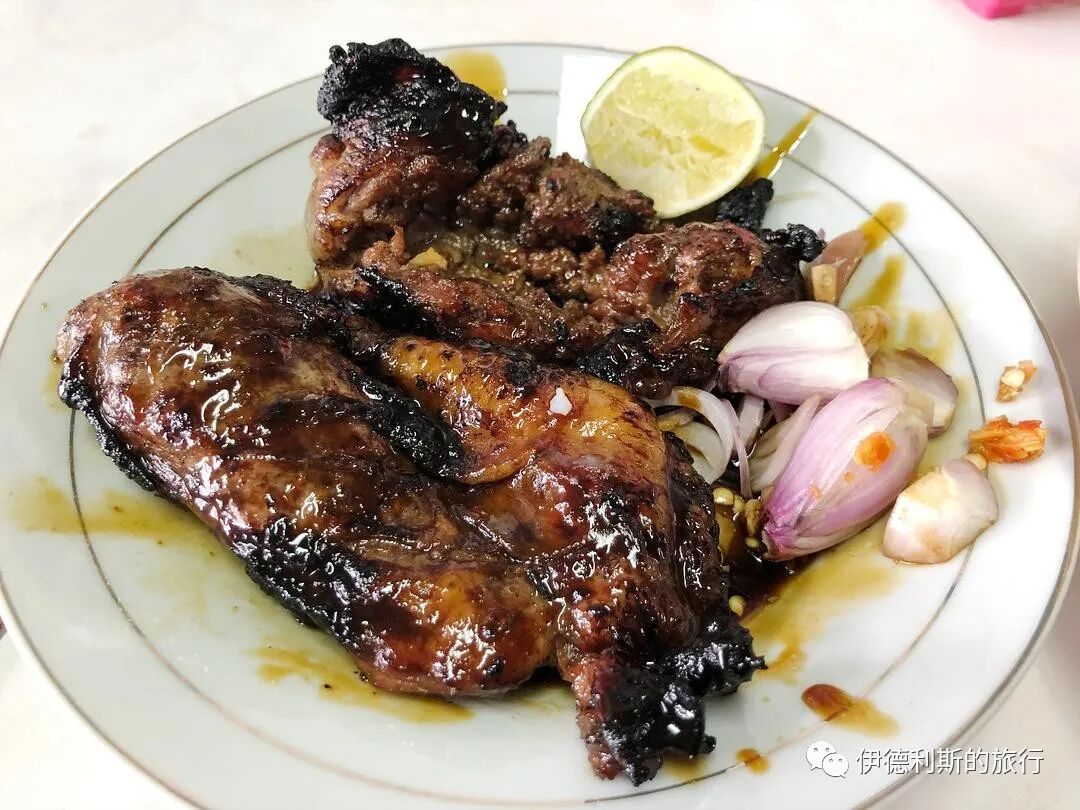
Goat offal curry soup (gulai kambing) is a specialty Indonesian dish. Curry (gulai) originated in Sumatra. Its deep yellow color comes mainly from turmeric. It also uses spices like black pepper, galangal, lemongrass, and cinnamon. To make it, spices and coconut milk are mixed and stewed with the meat for a long time.
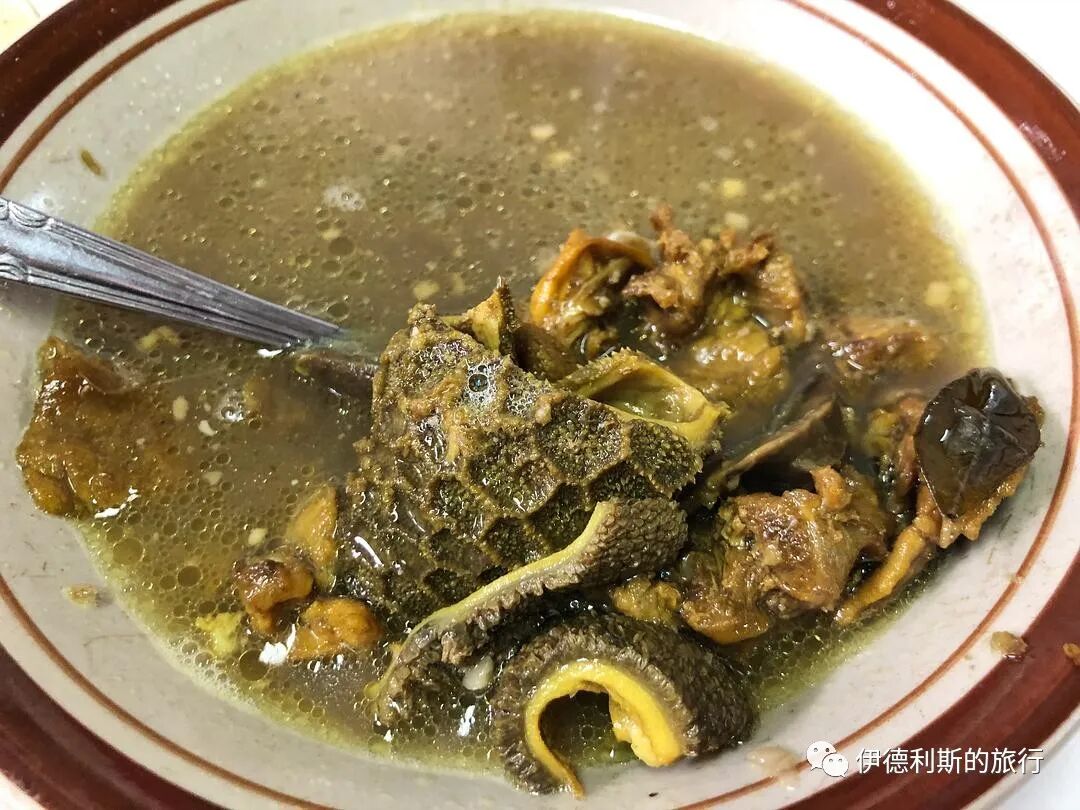
At a restaurant in Semarang, I had Javanese tripe fried rice (nasi goreng babat jawa), boneless fillet of giant gourami in sauce (gurame fillet saos), chicken satay (sate ayam), and kiwi soda (kiwi squash). Besides various street stalls and small eateries, Semarang has many restaurants with nice environments like this one.
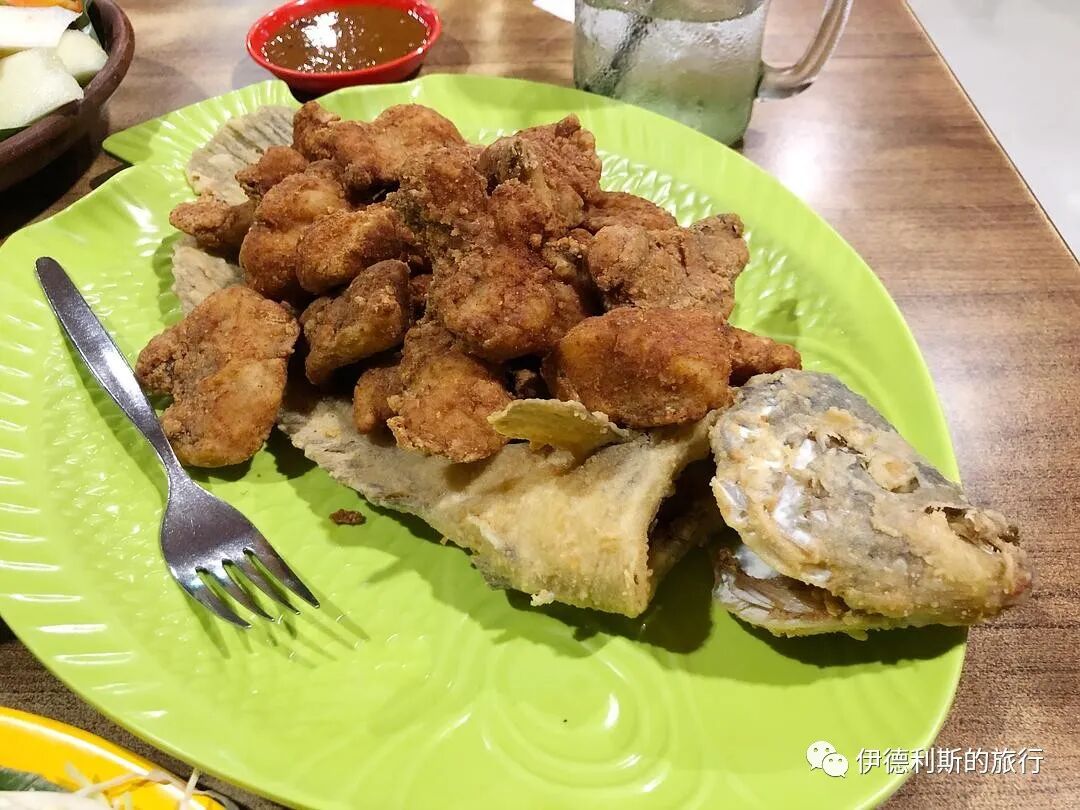
Boneless fillet of giant gourami in sauce (gurame fillet saos)
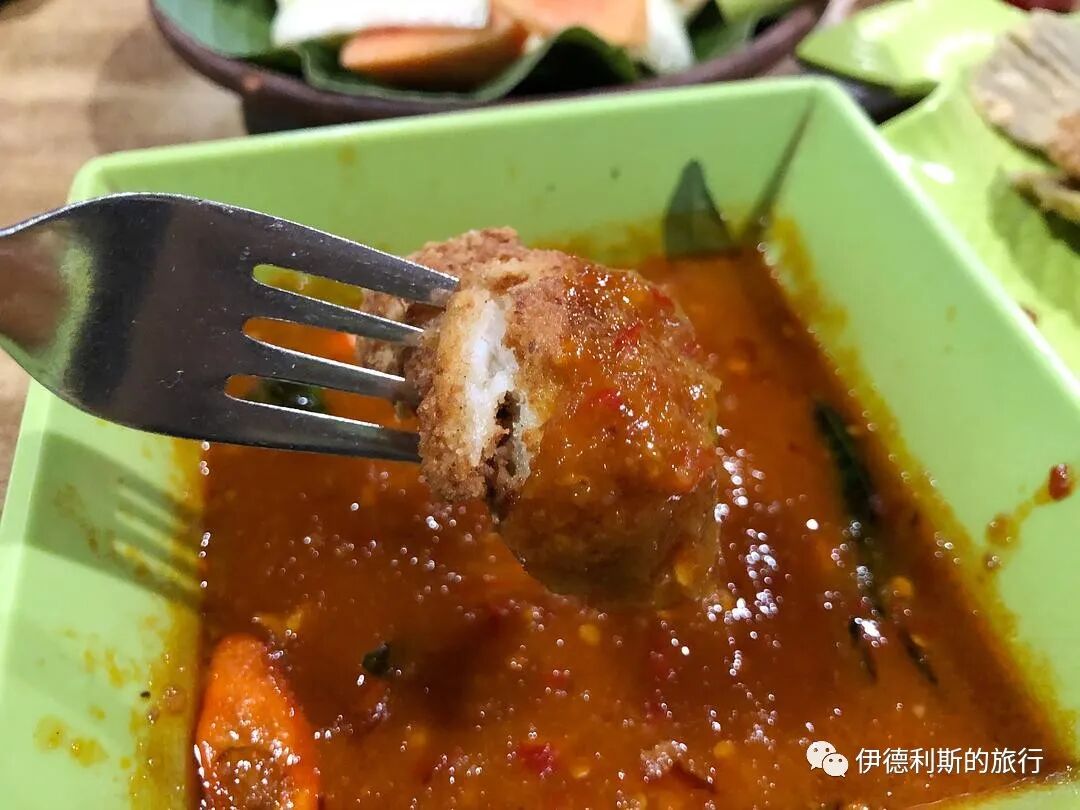
Boneless fillet of giant gourami in sauce (gurame fillet saos)
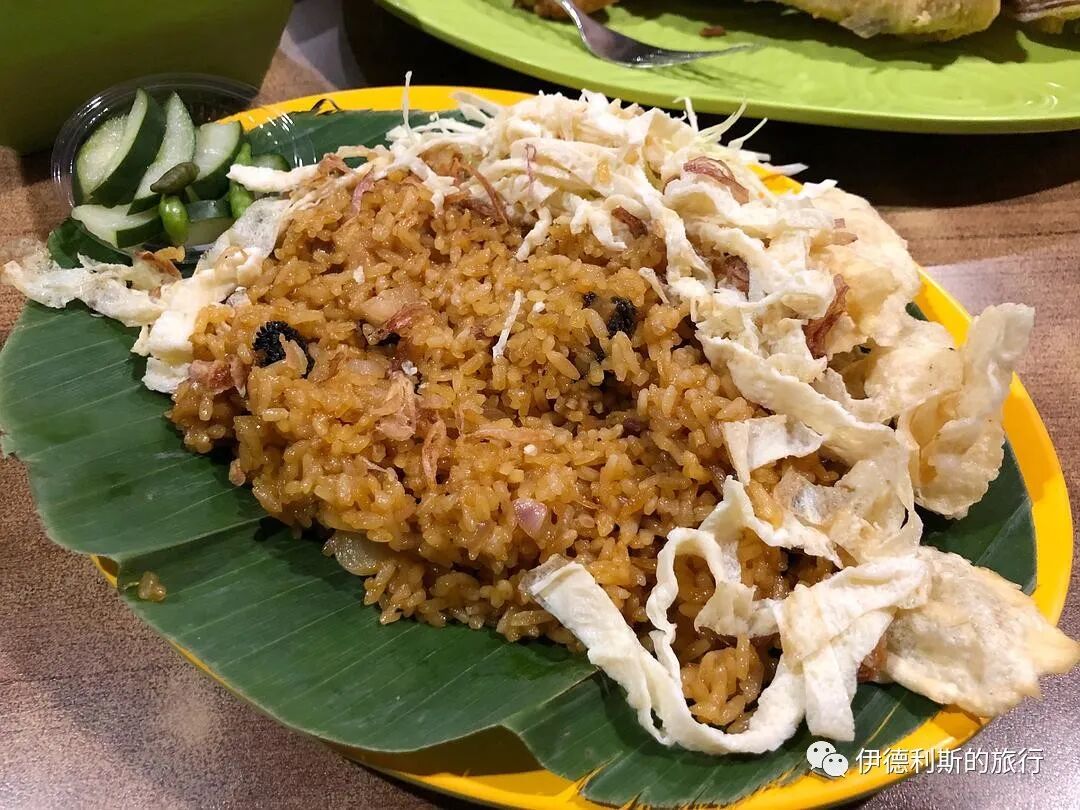
Javanese tripe fried rice (nasi goreng babat jawa)
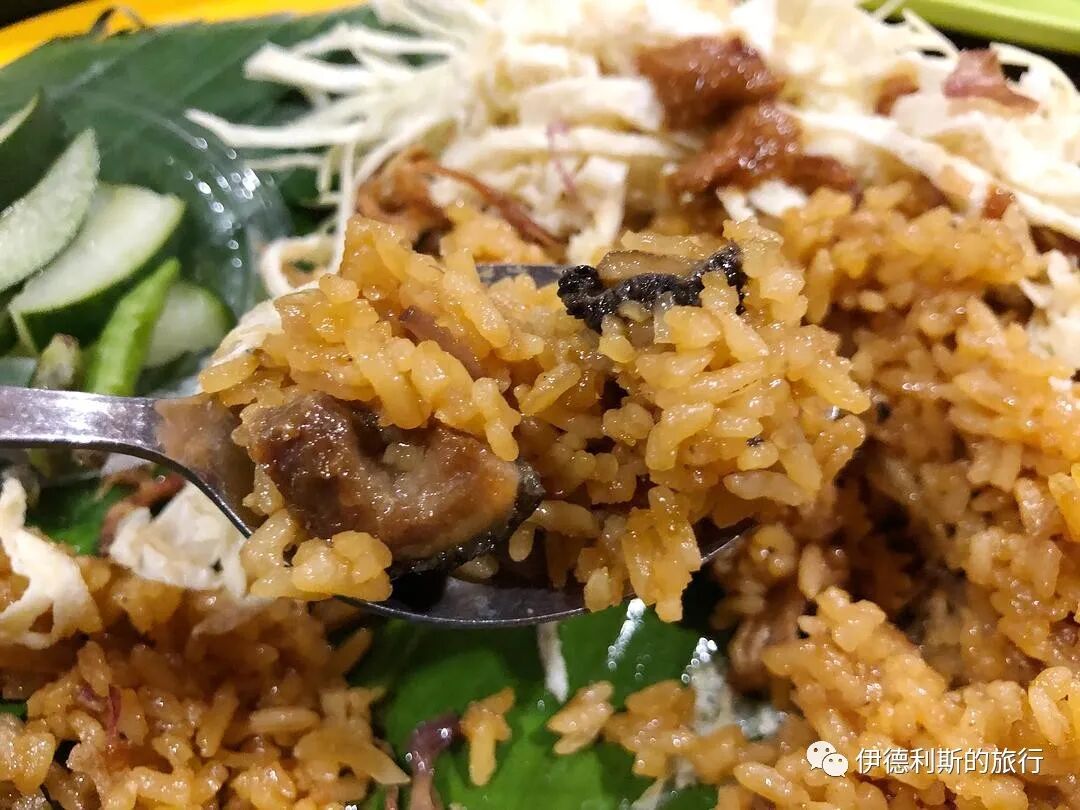
Javanese tripe fried rice (nasi goreng babat jawa)
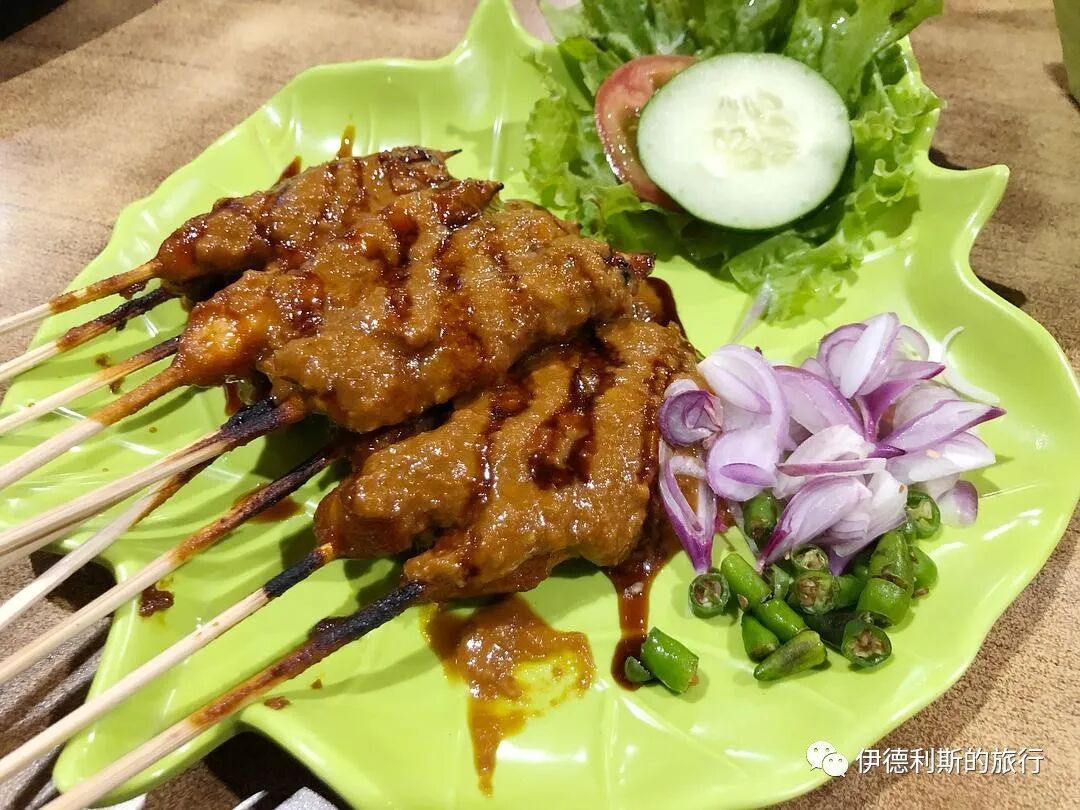
Chicken satay (sate ayam)
Kiwi soda (kiwi squash)
Before leaving, I ate fried oxtail soup (sop buntut goreng) at a restaurant in the Semarang airport. The oxtail is fried and dried, and served separately from the broth.
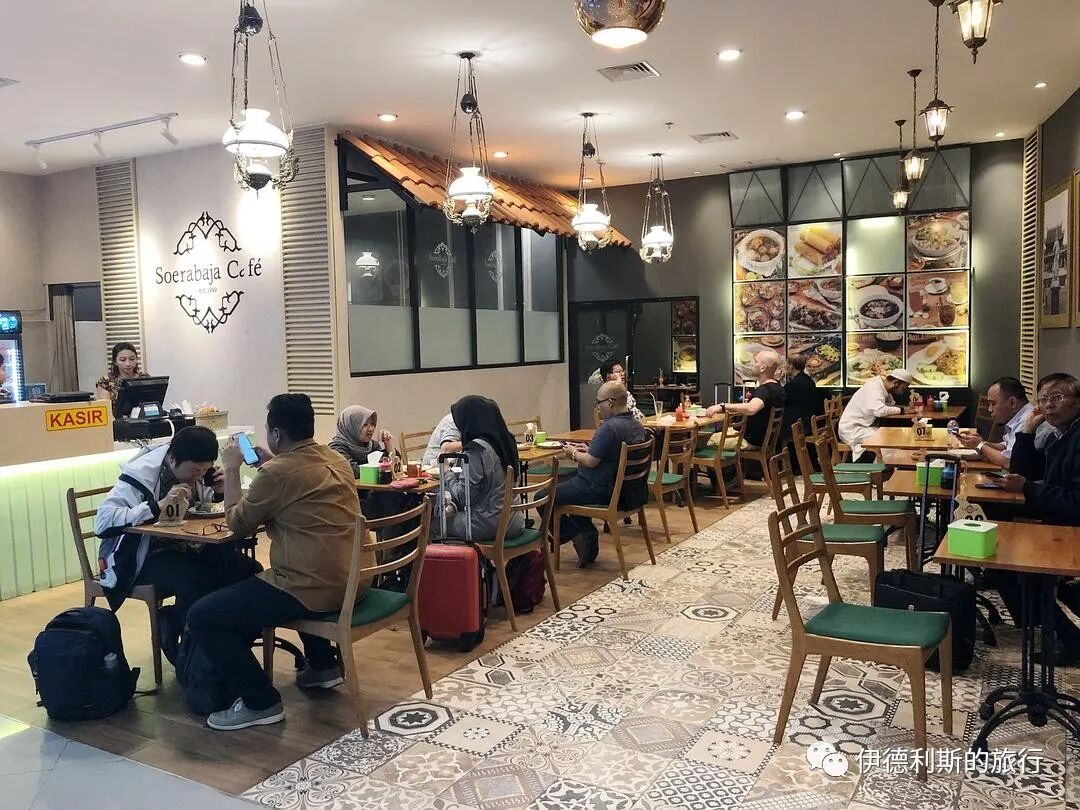
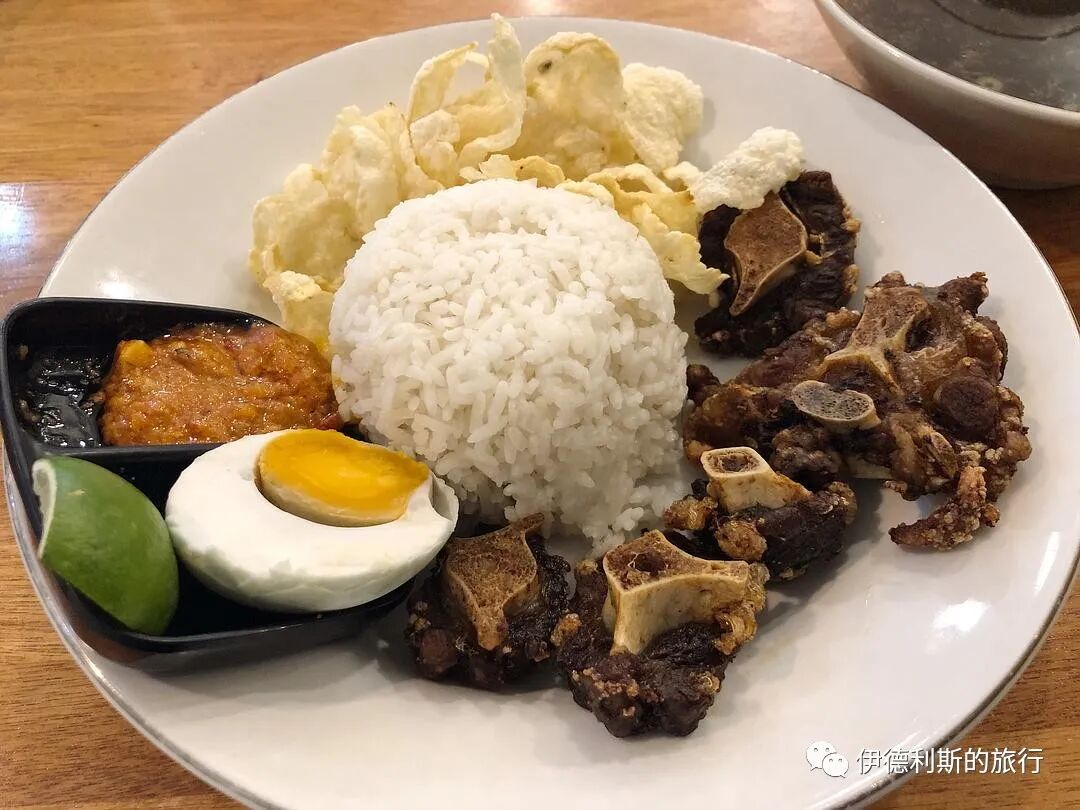
I had the buffet breakfast at the hotel where I stayed in Semarang, and the environment was quite nice.
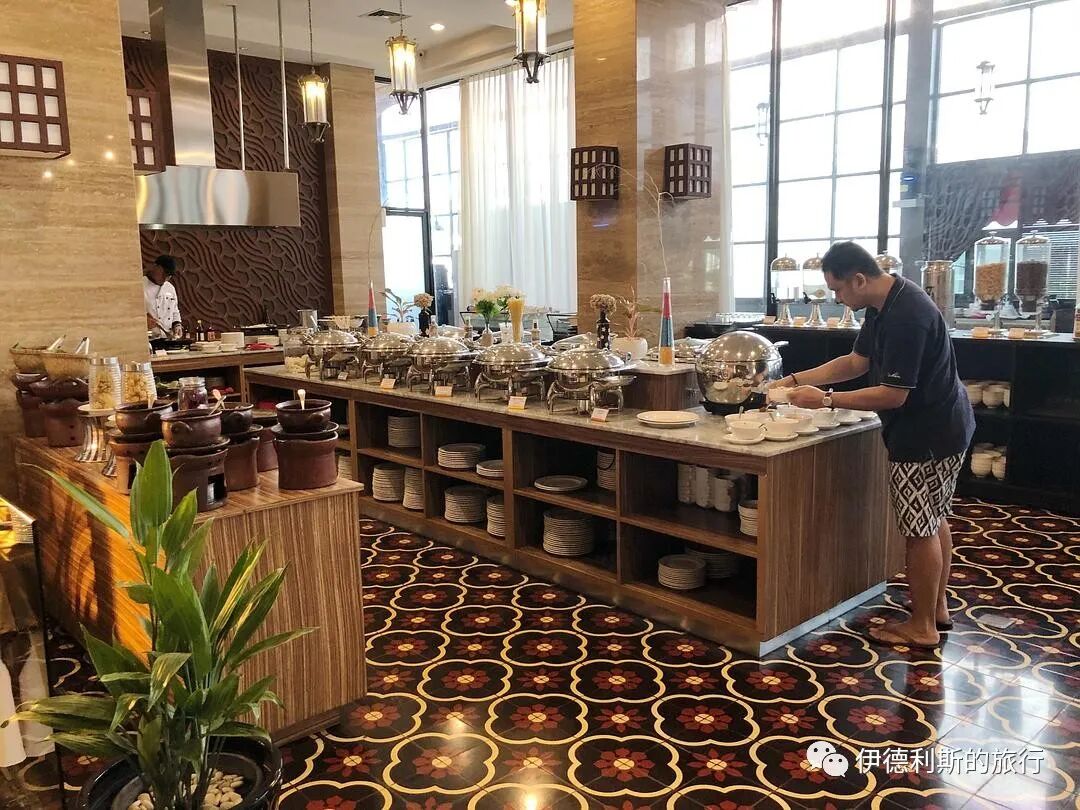
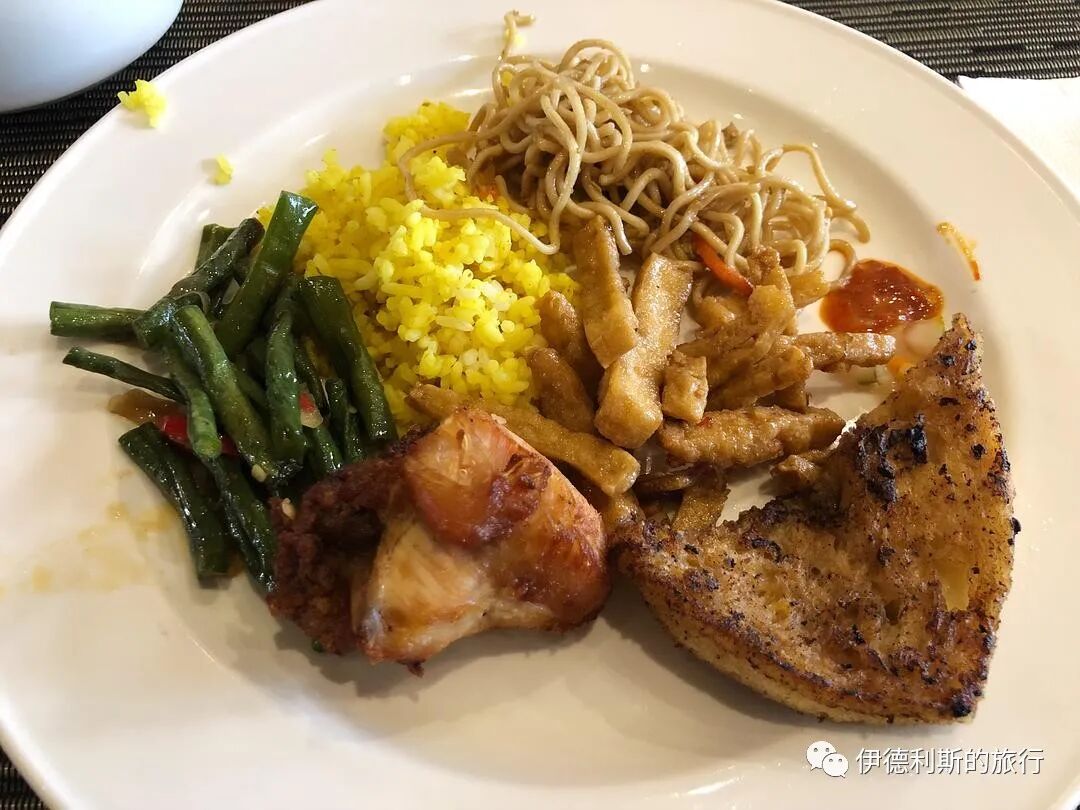
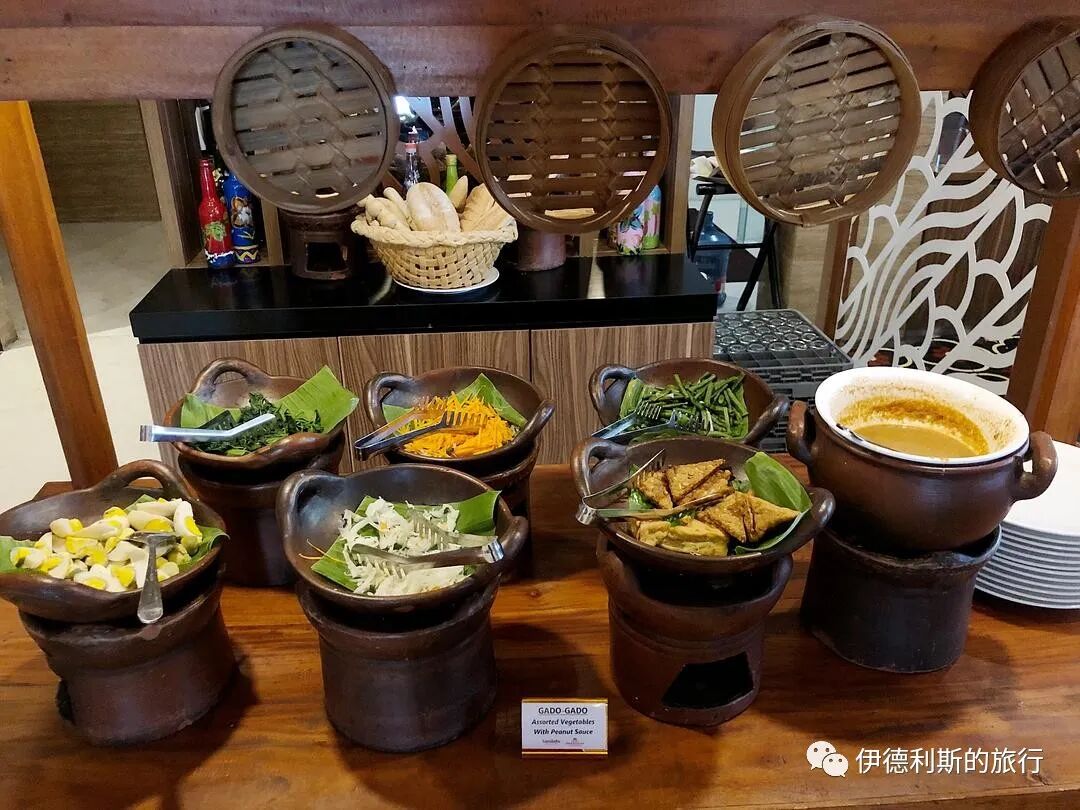
Javanese herbal drink (jamu) is a traditional Javanese herbal medicine mixed with honey and palm sugar.
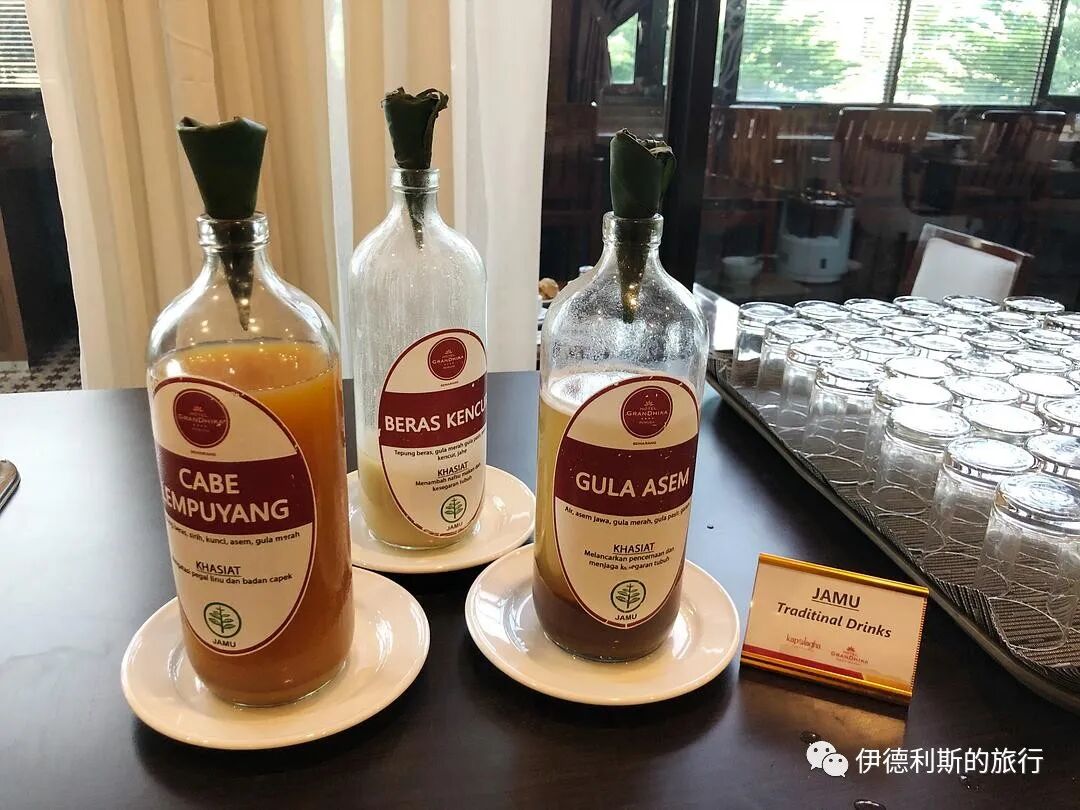
Kudus
Kudus is a two-hour drive from Semarang. It is the only city on Java island with an Arabic name. Kudus is actually the Arabic pronunciation of Jerusalem, al-Quds. The tomb in Kudus is now an important religious site on Java. Next to the tomb, the Al-Aqsa Mosque is famous for its minaret, which features a unique, early Javanese traditional style.
Ketoprak eaten in Kudus. Ketoprak is a vegetarian dish from Jakarta. It is made of fried tofu, vegetables, steamed rice cakes (lontong), rice vermicelli, and peanut sauce.
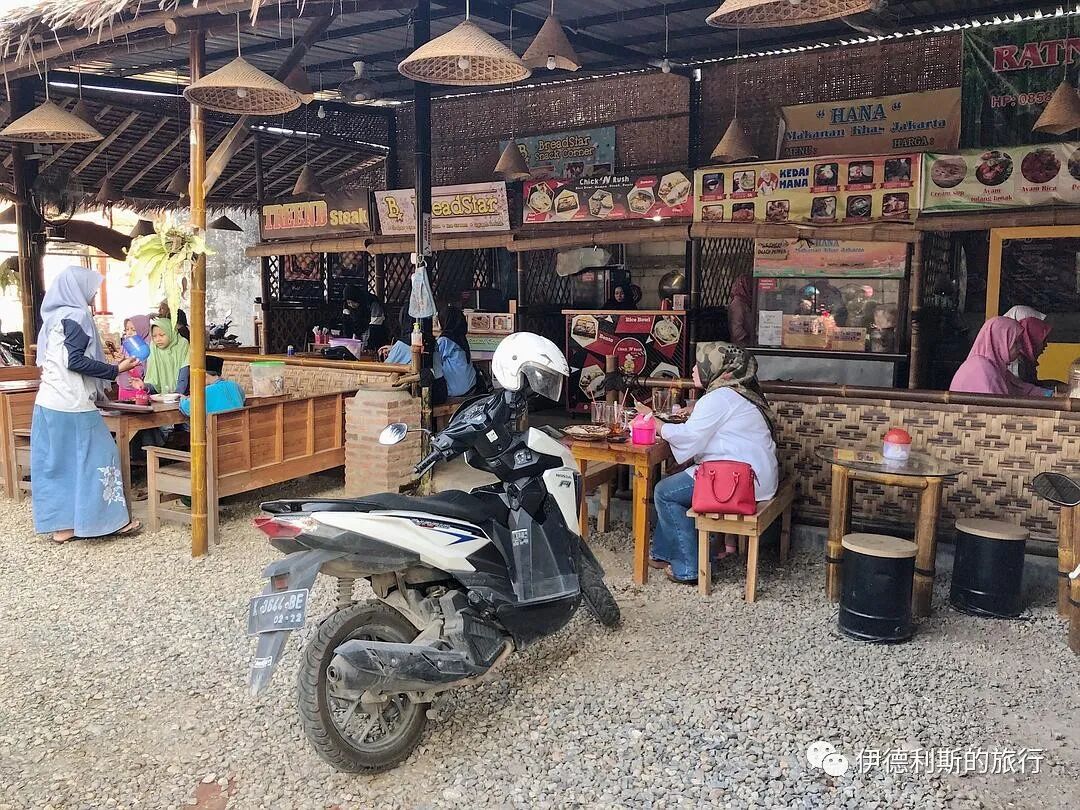
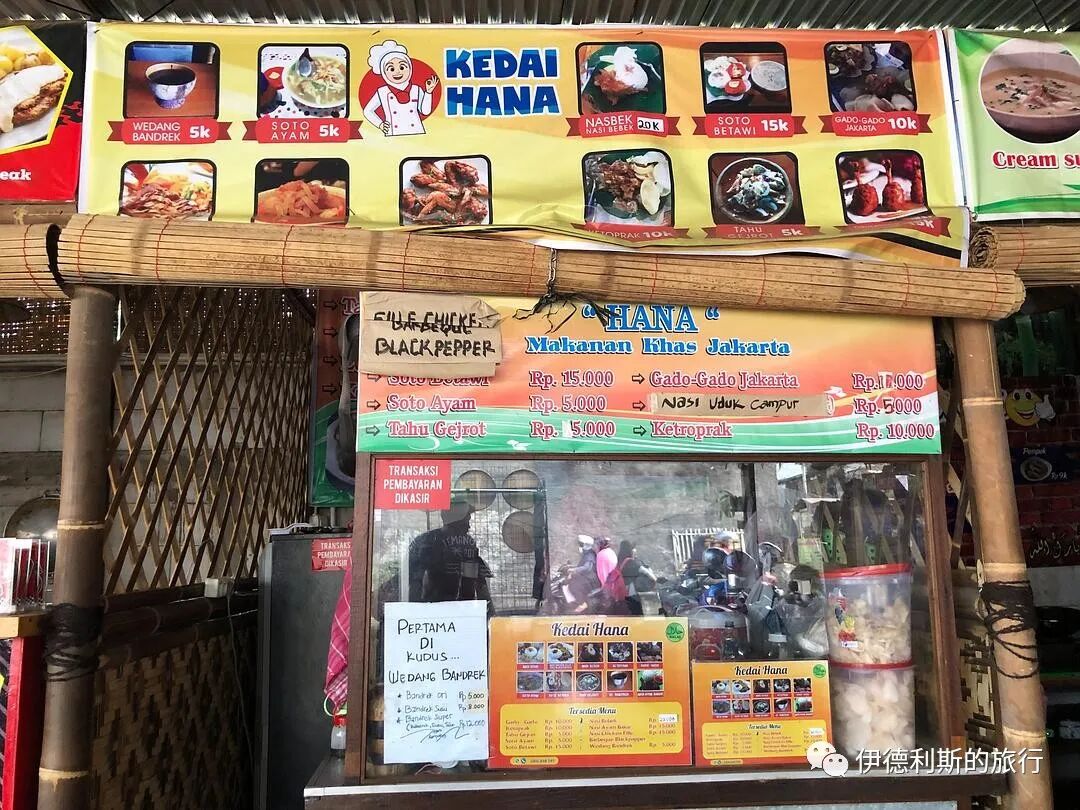
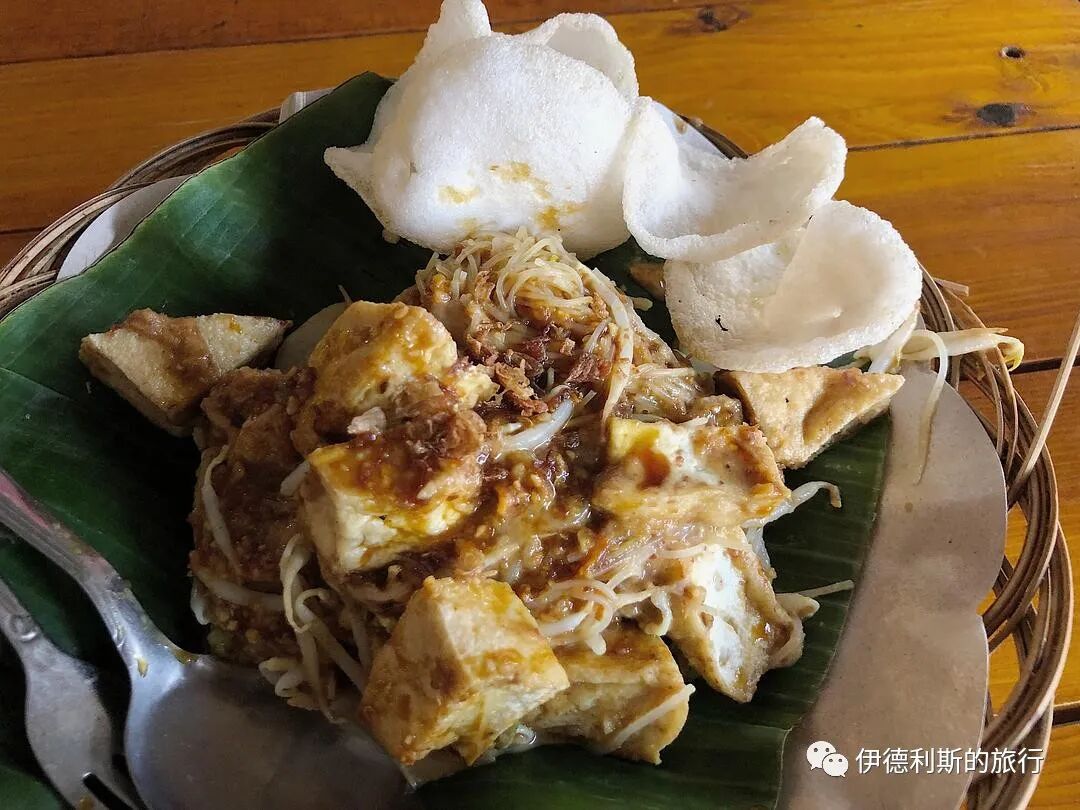
Javanese fruit ice drink (Es Buah) enjoyed in Kudus, which contains various fruits.
Geprek chicken eaten in Kudus. Geprek chicken is fried chicken mixed with spicy chili paste (Sambal). A woman named Ruminah invented this recipe in 2003, and it has become very popular in recent years. Ruminah originally sold fried chicken at a stall in Yogyakarta. Later, a college student asked her to spread chili paste on the fried chicken. It tasted very good, so she and the student started a brand together to sell Geprek chicken.
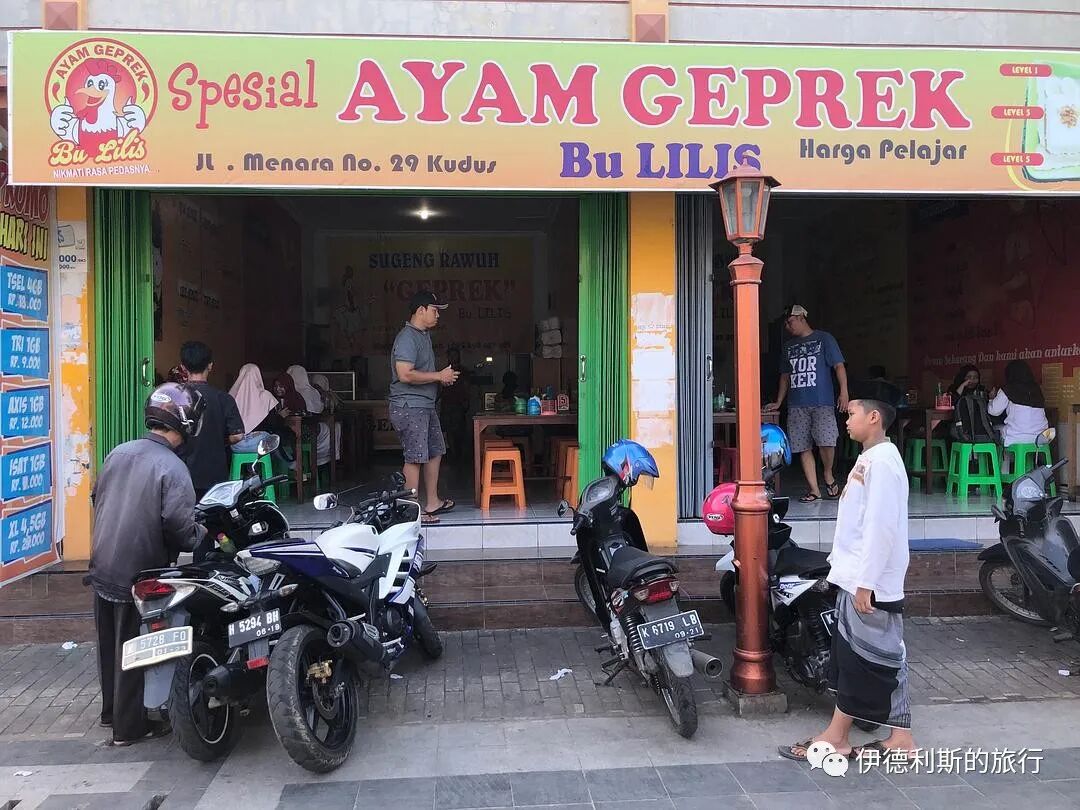
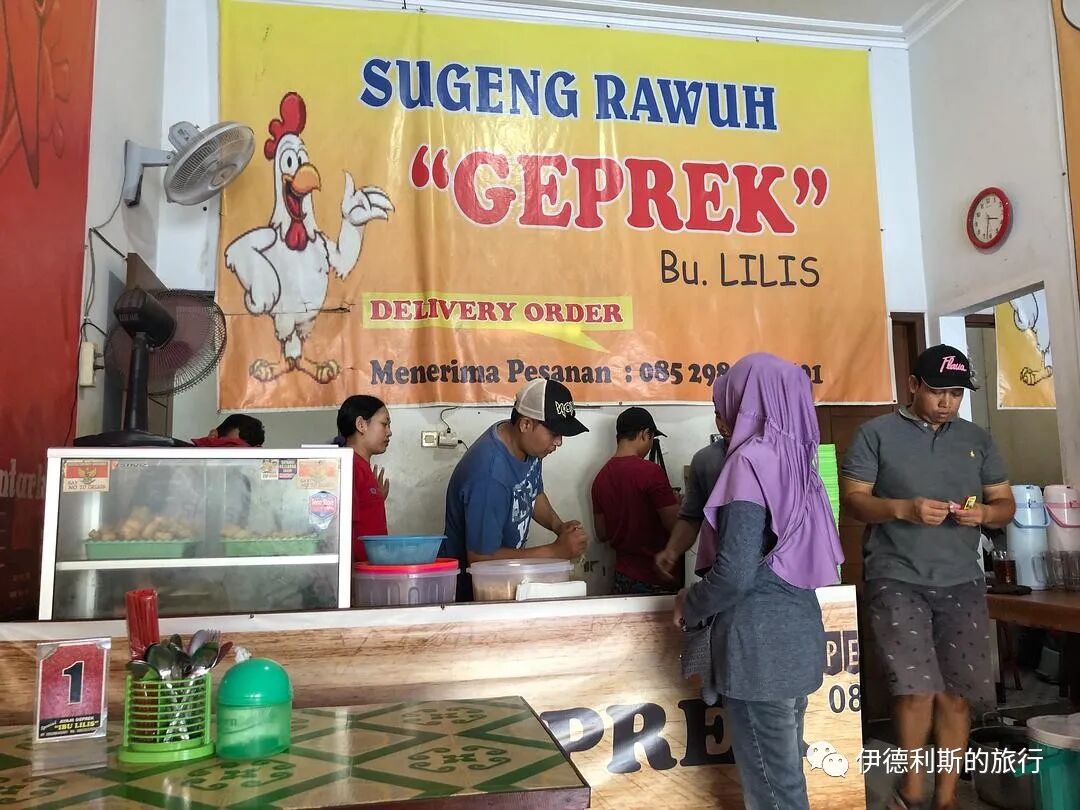
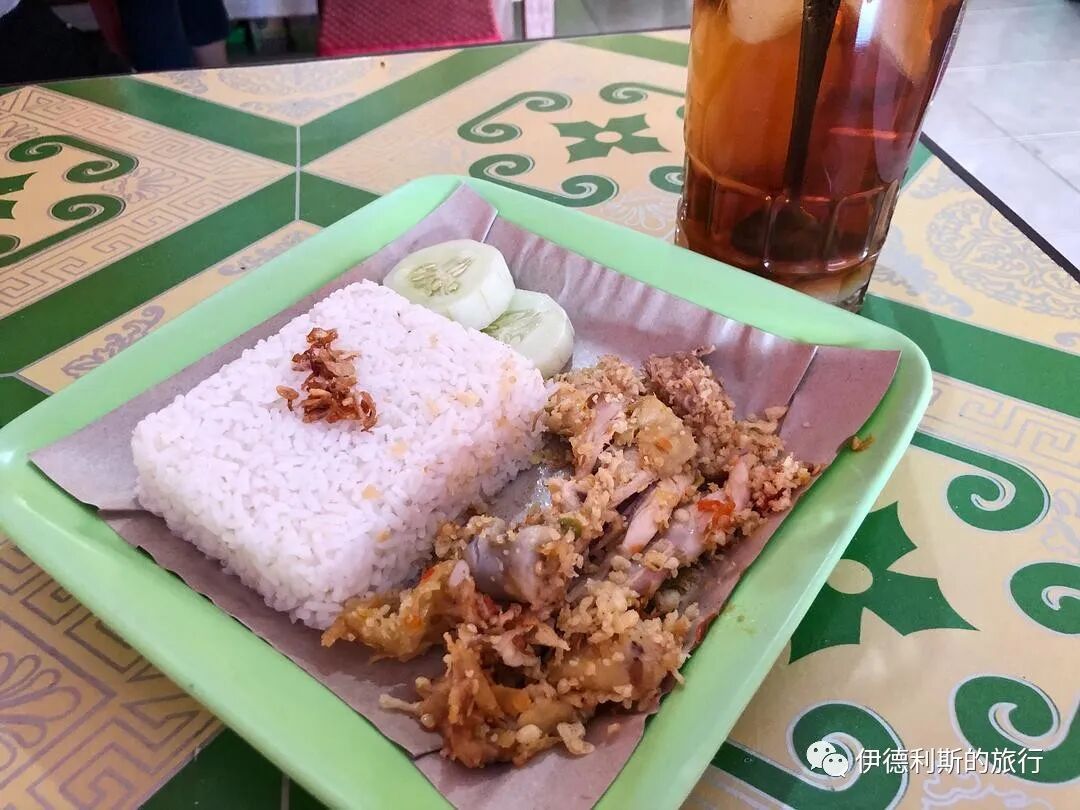 Collapse Read »
Summary: Central Java — Semarang, Solo, Kudus Food and Muslim Heritage is presented here as a firsthand travel account in clear English, beginning with this scene: During the 2019 May Day holiday, I traveled to Central Java, Indonesia, to explore and eat. The account keeps its focus on Kudus Travel, Java Islam, Muslim Heritage while preserving the names, places, food, and historical details from the Chinese source.
During the 2019 May Day holiday, I traveled to Central Java, Indonesia, to explore and eat. I visited the capital, Semarang, the cultural city of Solo, and the religious site of Kudus. I am sharing some of the things I saw and ate during this trip.
Solo
In 1755, the Dutch East India Company represented Sultan Pakubuwono III of the Mataram Sultanate in negotiations with Prince Mangkubumi. A treaty was signed, and the Mataram Sultanate, once the most powerful Islamic kingdom on Java, was split into the Yogyakarta Sultanate and the Surakarta Sunanate. The city of Solo officially became the capital of the Surakarta Sunanate.
During the Dutch East Indies era, the Surakarta Sunanate, like the Yogyakarta Sultanate, enjoyed autonomous status and was considered a vassal state of the Dutch Empire. In 1945, the Republic of Indonesia was declared. In 1946, an anti-monarchy movement broke out, the Surakarta Sunan was stripped of ruling power, and the Sunanate was incorporated into Central Java Province. Although they have no real power, the Surakarta Sunan still holds royal authority and a special status in maintaining traditional Javanese culture, and they still command high prestige.
I ate breakfast at my hotel in Solo. I was the only guest in the entire hotel, and the palace of the Surakarta Sunan was right behind the woods.
Solo's specialty iced drink is Es Dawet Telasih, made with coconut milk, palm sugar, rice flour jelly (cendol), coconut rice pudding (bubur sumsum), basil seeds, and black glutinous rice.
Es Dawet Durian is Es Dawet Telasih with durian added.
Indonesian pancakes (serabi) are made from rice flour and coconut milk.
I ate beef meatballs (bakso daging sapi) at a street stall next to the Solo palace. Bakso meatballs are a classic Indonesian street snack made from a mixture of ground beef and tapioca flour. The word "bak-so" originally comes from the Hokkien term for "meat crisp," but the method of making meatballs likely came from 19th-century Dutch colonists. Today, the best bakso meatballs are widely considered to come from Solo in Central Java and Malang in East Java.
I ate beef rib soup (rawon) and grilled chicken (ayam bakar kuah) at a late-night street stall in Solo. This shop is open from 6 p.m. to midnight. Rawon is a beef soup that originated in Surabaya, East Java. It has a rich, nutty flavor and a black color because it uses the Indonesian black nut (keluak) as its main seasoning. Rawon has a very long history, dating back to the ancient Mataram Kingdom of Java in the 10th century.
I ate at a self-service restaurant. For a solo traveler like me, this kind of restaurant allows me to try a wider variety of dishes.
In the middle are yellow rice (nasi kuning) made with coconut milk and turmeric, and red rice (nasi merah). From bottom to top on the right are beef meatballs (kreni), potatoes (kentang), beef tendon (cecek), and liver (ati), all made with chili paste (sambal goreng).
In the middle is green rice (nasi hijau), on the right is Indonesian vegetable fritter (bakwan sayur), and on the left is black pepper tofu (tahu lada hitam).
Semarang
Semarang is the capital and largest city of Central Java and was a major port during the Dutch colonial era. The old town of Semarang, established in the 18th century, is also known as Little Netherlands.
I ate at a restaurant in the Dutch old town of Semarang that specializes in satay and curry soup.
Goat meat satay (sate buntel) is a skewer featuring a mix of fat and lean meat. It is served with tamarind juice, coconut milk, sweet soy sauce, and various spices. It was invented in 1948 by Lim Hwa Youe from Yogyakarta.
Goat offal curry soup (gulai kambing) is a specialty Indonesian dish. Curry (gulai) originated in Sumatra. Its deep yellow color comes mainly from turmeric. It also uses spices like black pepper, galangal, lemongrass, and cinnamon. To make it, spices and coconut milk are mixed and stewed with the meat for a long time.
At a restaurant in Semarang, I had Javanese tripe fried rice (nasi goreng babat jawa), boneless fillet of giant gourami in sauce (gurame fillet saos), chicken satay (sate ayam), and kiwi soda (kiwi squash). Besides various street stalls and small eateries, Semarang has many restaurants with nice environments like this one.
Boneless fillet of giant gourami in sauce (gurame fillet saos)
Boneless fillet of giant gourami in sauce (gurame fillet saos)
Javanese tripe fried rice (nasi goreng babat jawa)
Javanese tripe fried rice (nasi goreng babat jawa)
Chicken satay (sate ayam)
Kiwi soda (kiwi squash)
Before leaving, I ate fried oxtail soup (sop buntut goreng) at a restaurant in the Semarang airport. The oxtail is fried and dried, and served separately from the broth.
I had the buffet breakfast at the hotel where I stayed in Semarang, and the environment was quite nice.
Javanese herbal drink (jamu) is a traditional Javanese herbal medicine mixed with honey and palm sugar.
Kudus
Kudus is a two-hour drive from Semarang. It is the only city on Java island with an Arabic name. Kudus is actually the Arabic pronunciation of Jerusalem, al-Quds. The tomb in Kudus is now an important religious site on Java. Next to the tomb, the Al-Aqsa Mosque is famous for its minaret, which features a unique, early Javanese traditional style.
Ketoprak eaten in Kudus. Ketoprak is a vegetarian dish from Jakarta. It is made of fried tofu, vegetables, steamed rice cakes (lontong), rice vermicelli, and peanut sauce.
Javanese fruit ice drink (Es Buah) enjoyed in Kudus, which contains various fruits.
Geprek chicken eaten in Kudus. Geprek chicken is fried chicken mixed with spicy chili paste (Sambal). A woman named Ruminah invented this recipe in 2003, and it has become very popular in recent years. Ruminah originally sold fried chicken at a stall in Yogyakarta. Later, a college student asked her to spread chili paste on the fried chicken. It tasted very good, so she and the student started a brand together to sell Geprek chicken.
Collapse Read »
Malaysia Islamic Arts Museum: Chinese Muslim Artifacts and Islamic Heritage
Reposted from the web
Summary: Malaysia Islamic Arts Museum: Chinese Muslim Artifacts and Islamic Heritage is presented here as a firsthand travel account in clear English, beginning with this scene: The Islamic Arts Museum Malaysia (Muzium Kesenian Islam Malaysia) is in Kuala Lumpur. It is the largest Islamic museum in Southeast Asia and holds over 7,000 Islamic art pieces from all over the world. The account keeps its focus on Malaysia Islamic Art, Chinese Artifacts, Museum Visit while preserving the names, places, food, and historical details from the Chinese source.
The Islamic Arts Museum Malaysia (Muzium Kesenian Islam Malaysia) is in Kuala Lumpur. It is the largest Islamic museum in Southeast Asia and holds over 7,000 Islamic art pieces from all over the world.
First, let's look at the museum's collection of artifacts related to China.
The history of Chinese-made porcelain with Arabic and Persian script.
Starting in the Yuan Dynasty, China exported large amounts of blue and white porcelain to the Middle East. Pieces have been dug up in Egypt, Iran, and Syria. During the Ming Dynasty, starting in the Yongle period (1403-1424), blue and white porcelain with Arabic and Persian script appeared. Most were modeled after metal and glass items from Arab and Persian regions and were made mainly for export. During the Zhengde period (1506-1521), blue and white porcelain with Arabic and Persian script mostly consisted of bowls, cups, brush rests, and boxes that matched the shapes of official imperial kiln pieces. Many were traditional stationery items. Because they often featured Quranic verses and praises to Allah, it is believed they were mostly ordered by Hui Muslims living in China.
Starting in the 16th century, folk kilns in Chaoshan and southern Fujian began producing Arabic-script export porcelain. These were mainly for the Southeast Asian market. The quality was lower than that of Jingdezhen, but the output was much higher.
After the Thirteen Factories were set up in Guangzhou during the Kangxi period, the amount of export porcelain grew rapidly. Porcelain began to be exported with long passages of scripture and the names of Caliphs. The higher-quality pieces were usually from Jingdezhen, while the lower-quality ones came from folk kilns in Chaoshan and southern Fujian. Because the folk kiln artisans were not familiar with the script, the Quranic text was often written incorrectly.
By the 18th and 19th centuries, the British East India Company imported large amounts of Chinese export porcelain. Wealthy Muslim families began ordering a lot of porcelain with Arabic and Persian script. The most famous examples were for the Asaf Jahi dynasty court in Hyderabad, India, and the Qajar dynasty court in Persia. However, most of these Muslim families ordered through the British East India Company in London rather than directly from Guangzhou.
1. Ming Zhengde porcelain.
The Arabic and Persian script on Ming Zhengde porcelain is mostly written inside diamond or square-shaped panels. The outer walls are decorated with scrolling flowers or cloud patterns. The bottom has a mark reading 'Made in the Zhengde period of the Great Ming'. Most are blue and white, with only a few featuring overglaze red enamel.
The text inside the four diamond and square panels on the overglaze red enamel Zhengde piece in the picture translates to: 'O Allah, protect Hui Ma Yun from the anger of the wicked.'
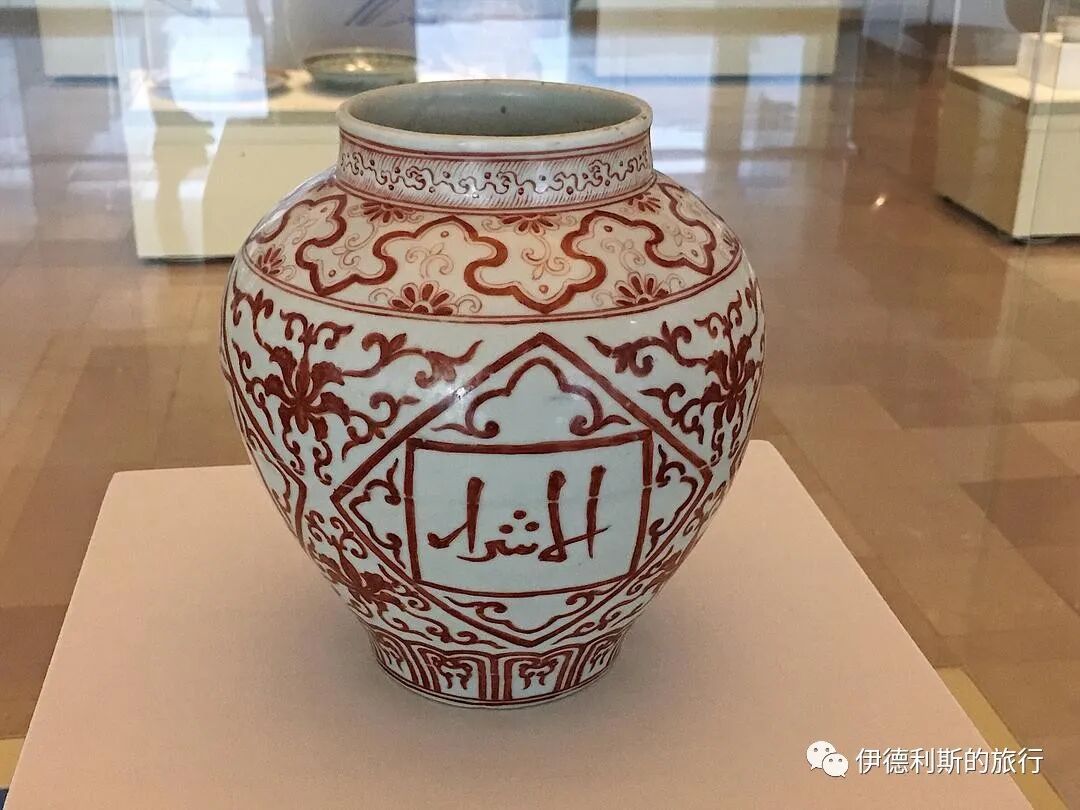
2. Swatow ware (Shantou qi) ordered by the Aceh Sultanate royal family.
Swatow ware, also called Zhangzhou ware (Zhangzhou qi), is a type of export porcelain that appeared in the late Ming Dynasty. It was mainly for the Southeast Asian and Japanese markets and was popular from the mid-16th to mid-17th centuries. Most Swatow ware was produced by folk kilns in the Chaoshan and southern Fujian regions, with the most coming from near Zhangzhou, Fujian.
Compared to Jingdezhen porcelain, Swatow ware is rougher. Its biggest feature is the 'sandy base' (shadi zu). To save space in the kiln, artisans skipped using pads and saggers and instead dipped the foot ring of the porcelain in fine sand. After firing, sand grains remained on the base and foot ring. At first, Swatow ware only had underglaze blue and white, but later, overglaze enamel styles became very diverse.
15th-century Arabic-script Swatow ware exported to Muslim regions in Southeast Asia.
The most famous Arabic-script Swatow ware was ordered by the royal family of the Aceh Sultanate. The Aceh Sultanate was a powerful maritime trading state established in 1496 on the northwest coast of Sumatra. After the fall of the Malacca Sultanate, it became the center of Islam in Southeast Asia. The 16th and 17th centuries were the peak of the Aceh Sultanate. Most Aceh Shantou ware came from the court of Sultan Iskandar Muda (reigned 1607-1636) and several other sultans.
Most Aceh Shantou ware features nine circles. The center circle holds the name of the current sultan, while the eight surrounding circles hold the names of famous past sultans.
Shantou ware commissioned by the Aceh Sultanate royal family in the 16th and 17th centuries.
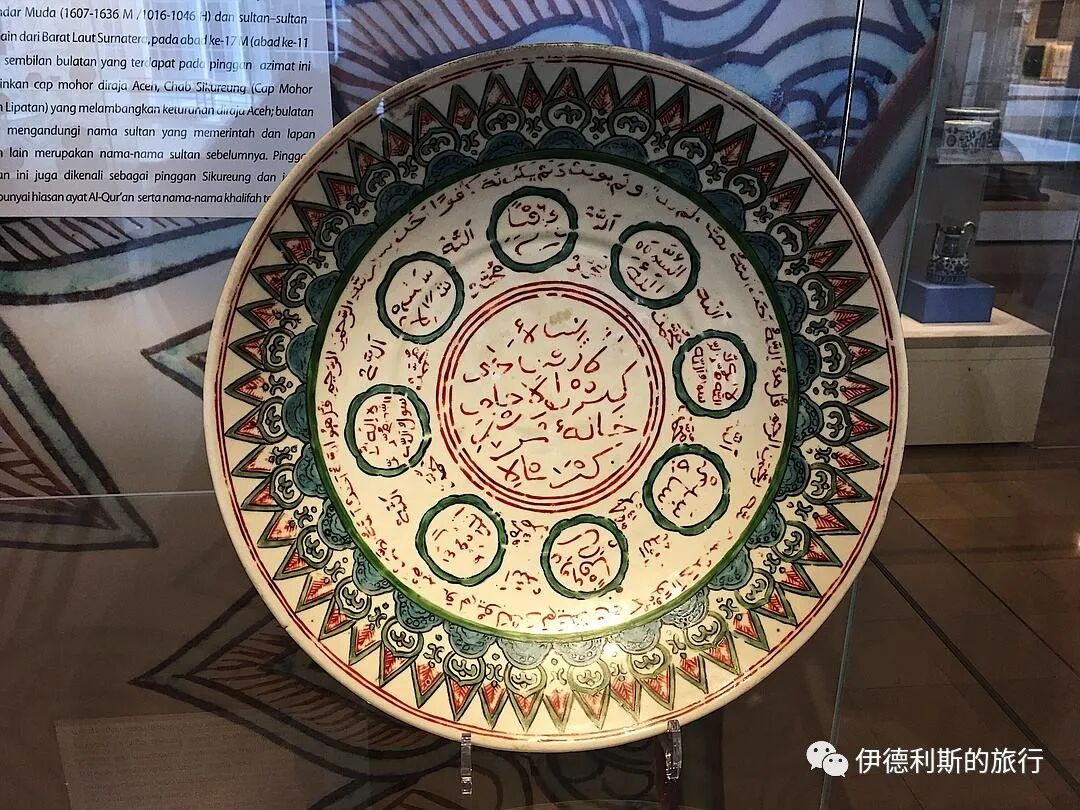
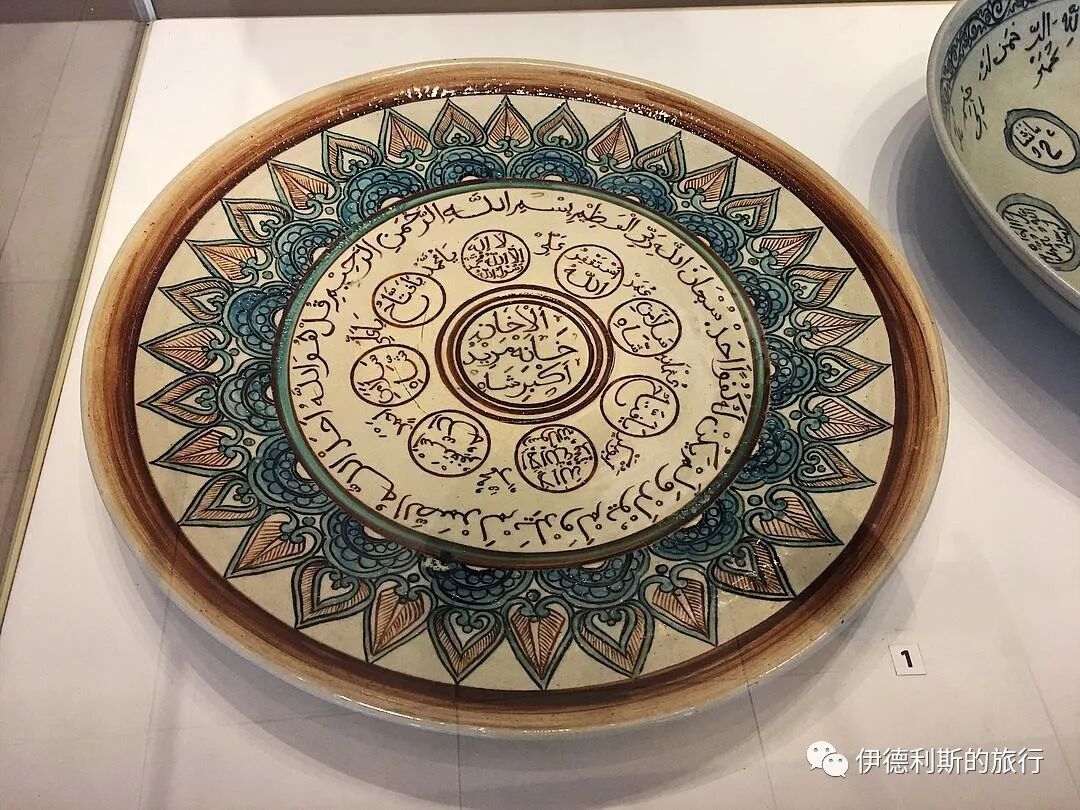
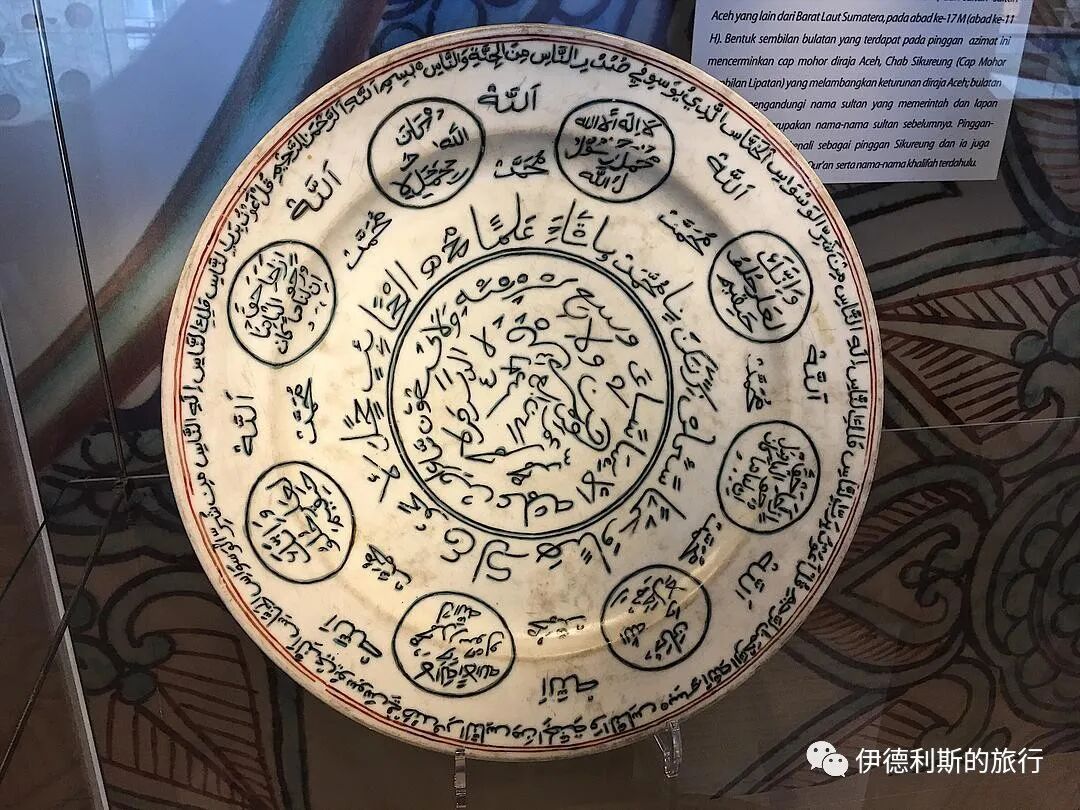
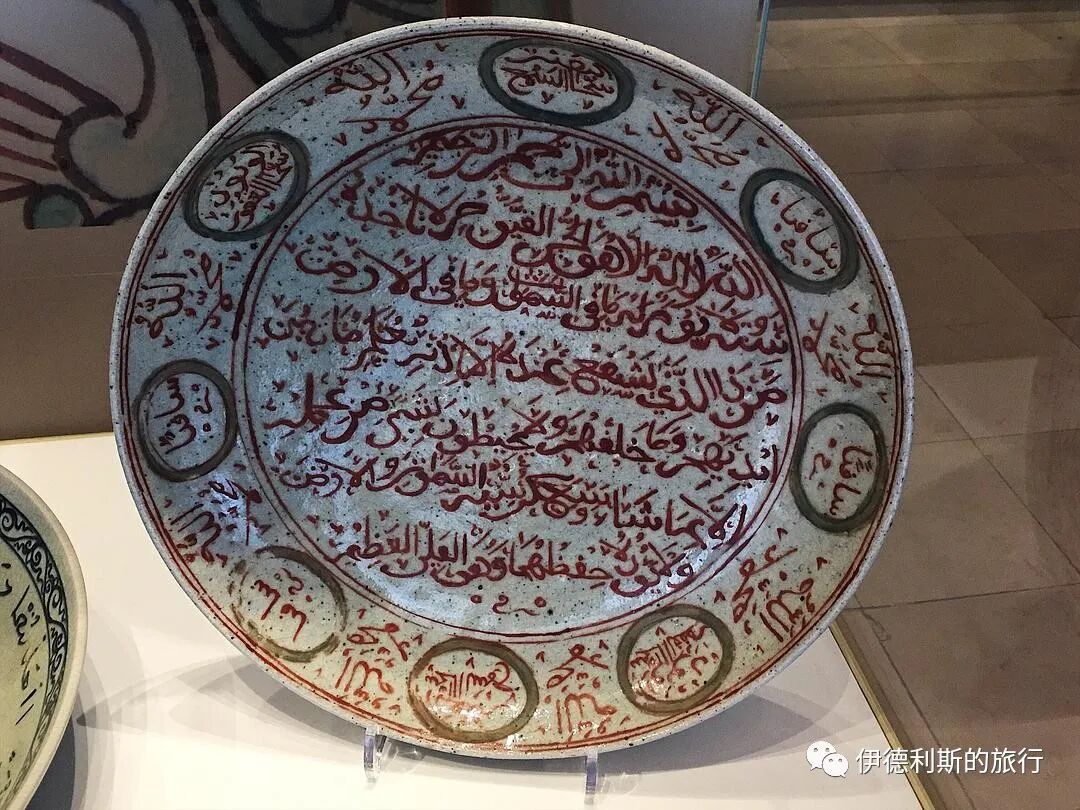
3. Magic square (huanfang) porcelain produced in China.
Magic squares, also called grid charts (zonghengtu), were believed to have predictive and healing powers.
A magic square is divided into 16 squares, each containing a number. The sum of the numbers in any row, column, or diagonal should be the same. Among these numbers, 1 is a symbol of Allah, and 7 represents the seven heavens, the seven hells, and the seven days of the week. In astrology, the 3 in a magic square represents Saturn, 4 represents Jupiter, 5 represents Mars, 6 represents the Sun, 7 represents Venus, 8 represents Mercury, and 9 represents the Moon.
Most 18th-century magic square export porcelain was produced in Jingdezhen. The squares are surrounded by excerpts from scriptures and classic texts. After the 19th century, folk kilns began mass-producing imitations. The surrounding text degraded into decorative patterns, and the numbers in the magic squares were simplified into symbols or disappeared entirely. By this time, the predictive function of magic square porcelain had changed, and it was used only for decoration.
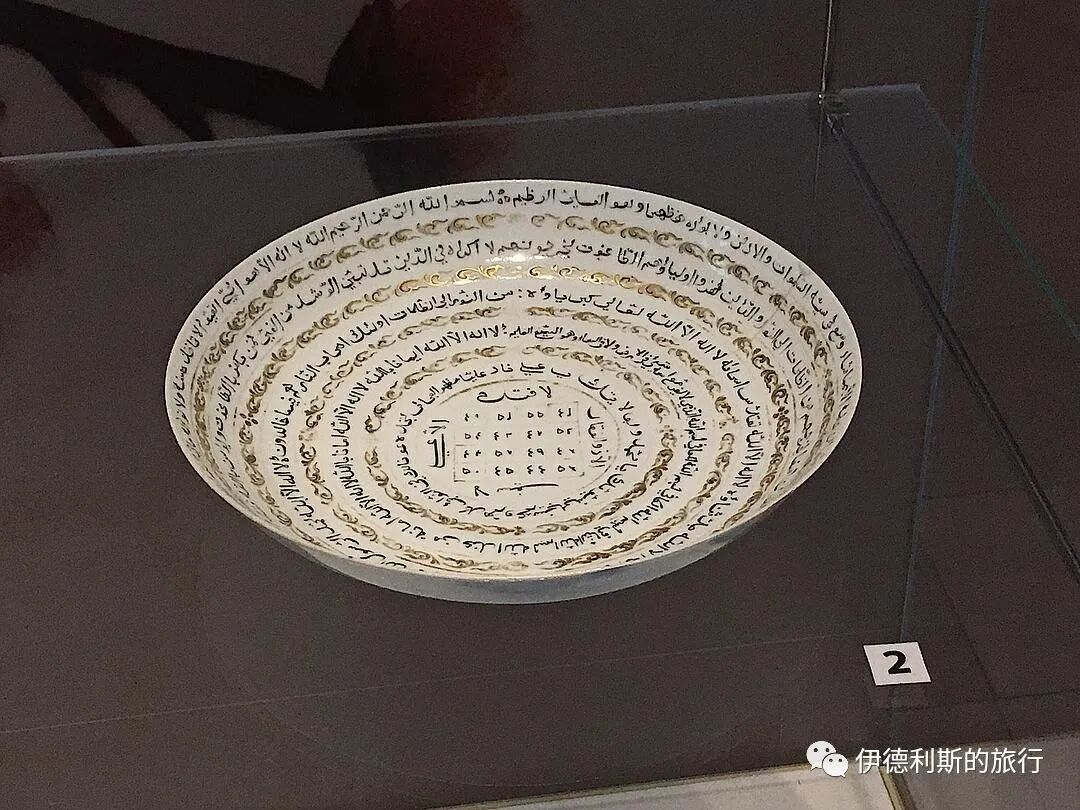
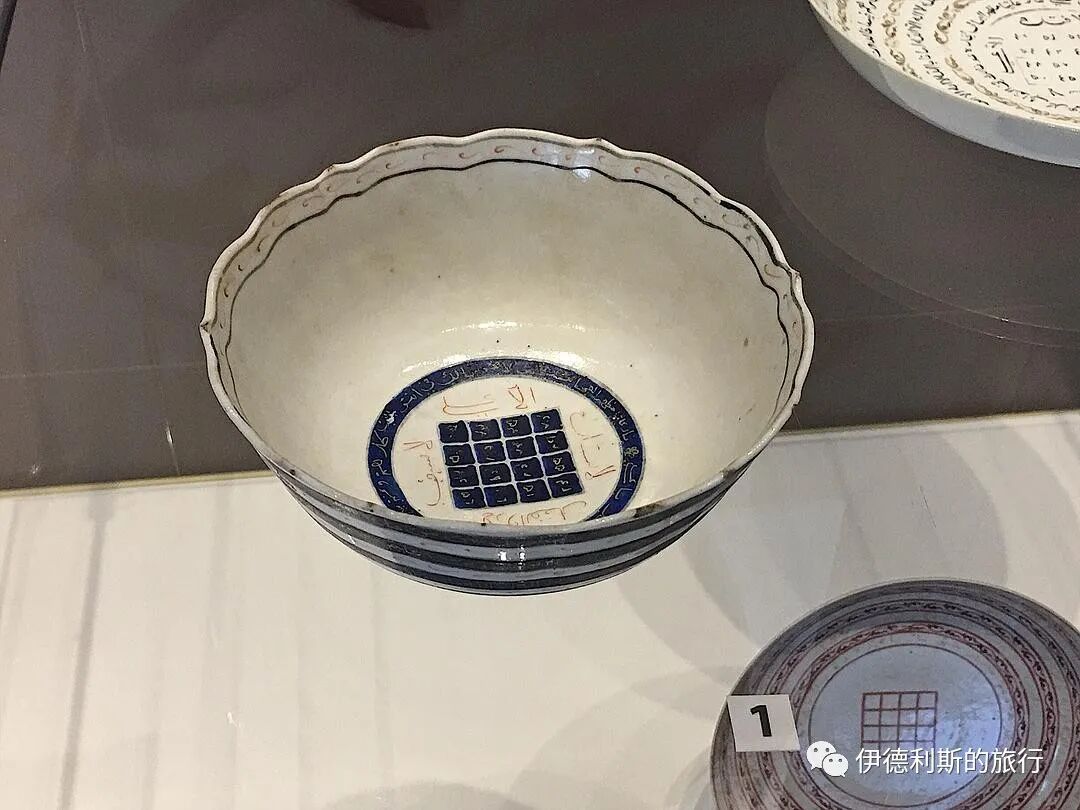
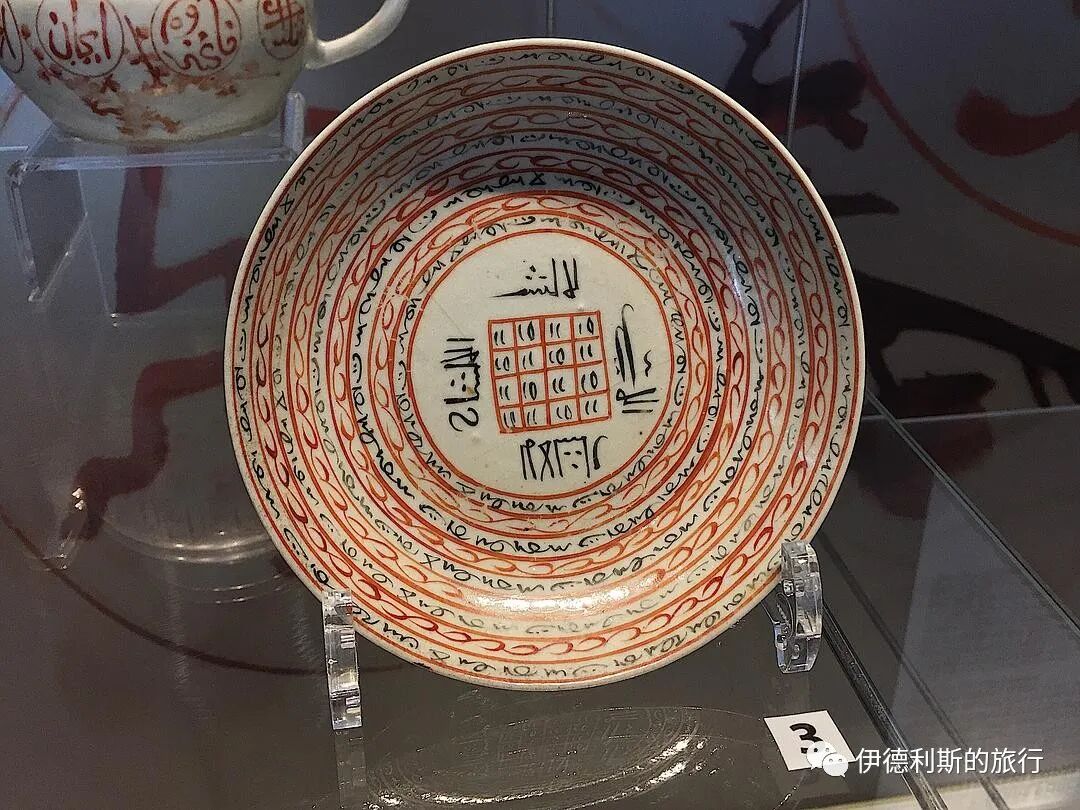
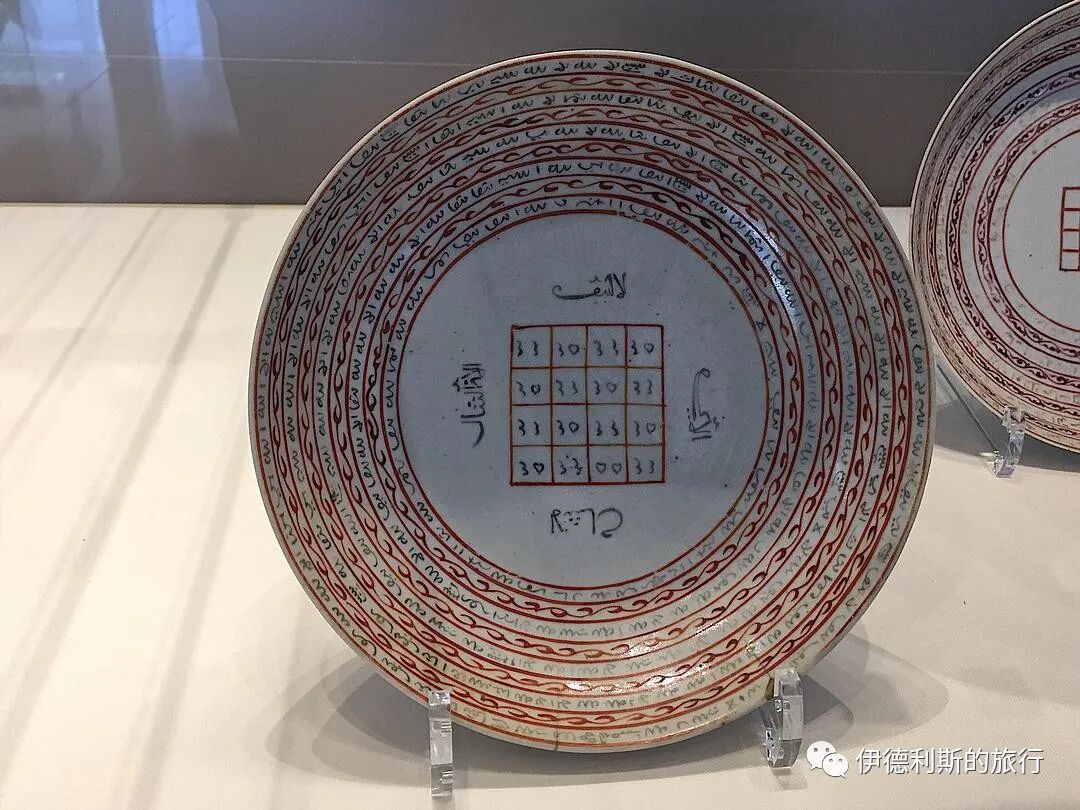
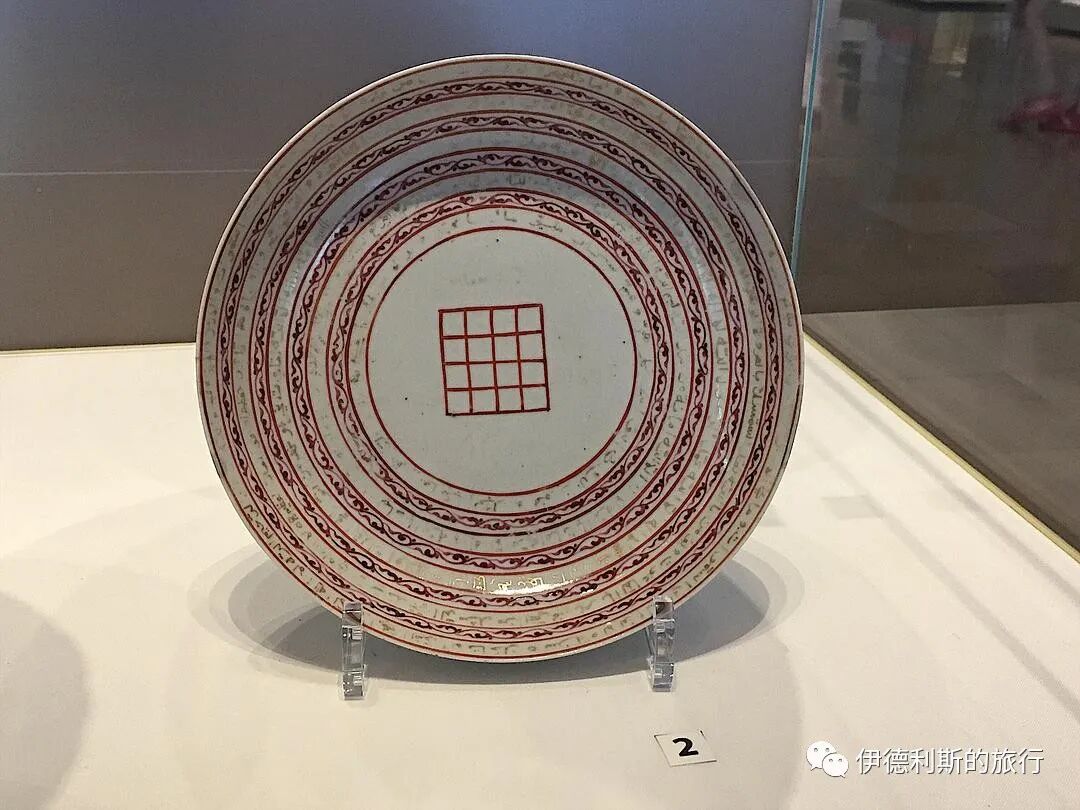
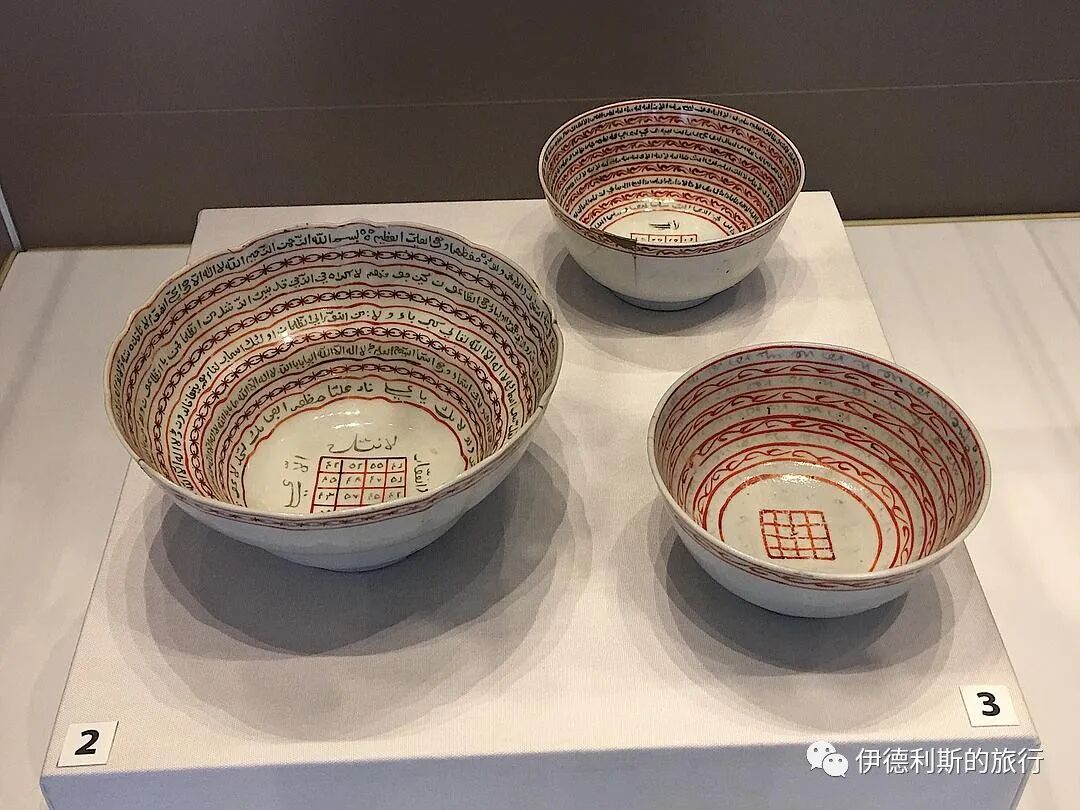
4. Chinese Imari porcelain.
Imari porcelain comes from the Arita kilns on Kyushu Island, Japan. In the mid-17th century, during the transition between the Ming and Qing dynasties, Chinese people who moved to Kyushu Island brought overglaze painting techniques, which helped the colorful Arita kilns take shape. The Ming-Qing transition also interrupted the export of Jingdezhen porcelain. In the late 17th century, Arita porcelain began to be exported in large quantities from the port of Imari in northwestern Kyushu, becoming the main source of export porcelain.
At the end of the 17th century, as China resumed porcelain exports from Guangzhou, Guangzhou export porcelain began to imitate Imari porcelain on a large scale, eventually surpassing Japan's export volume.
Chinese Imari porcelain mostly uses underglaze cobalt blue or iron-red enamel, with heavy gold painting applied over the glaze. Imari teapots with swan-neck spouts were also classic styles exported to Europe.
Chinese Imari porcelain from the Kangxi period.
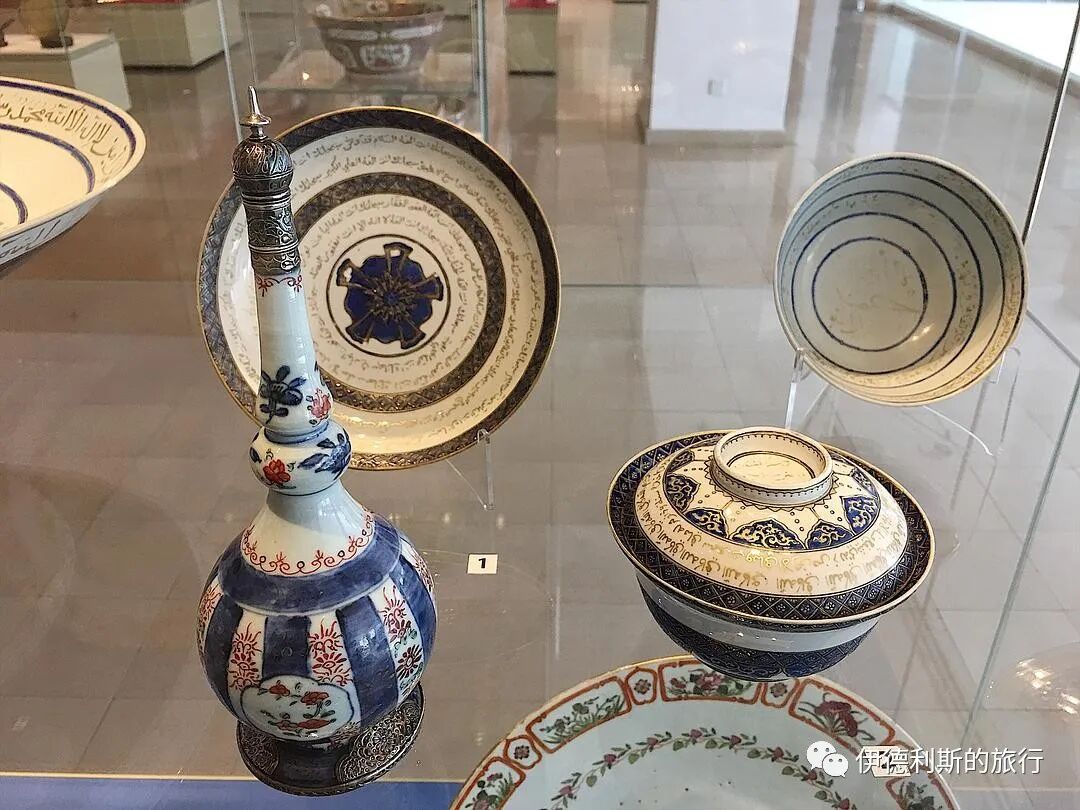
Chinese Imari porcelain from the Qianlong era.
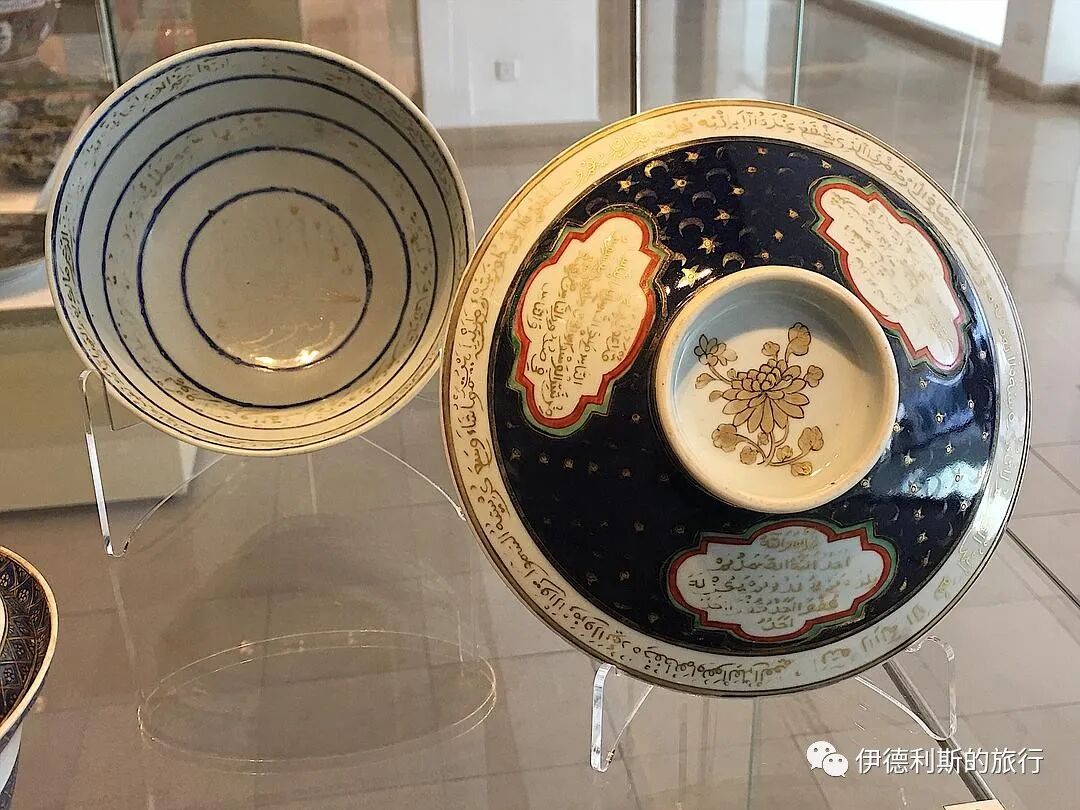
5. A Qianlong peach-shaped porcelain box ordered by the court of the Asaf Jahi dynasty in India.
The inscription on the porcelain box has Latin text on the outer ring reading 'NABOB ASUF UT DOWLAH VAZIR UL MUMULLECK ASUPJAH' and Latin text on the inner ring reading 'BEHADRE HOZBUR JUNG IEAYAA CAWN'. The Persian text in the center says the same thing, meaning it was dedicated to Muhyi ad-Din Muzaffar Jang Hidayat of the Asaf Jahi dynasty. Muzaffar Jang ruled the Asaf Jahi dynasty from 1750 to 1751.
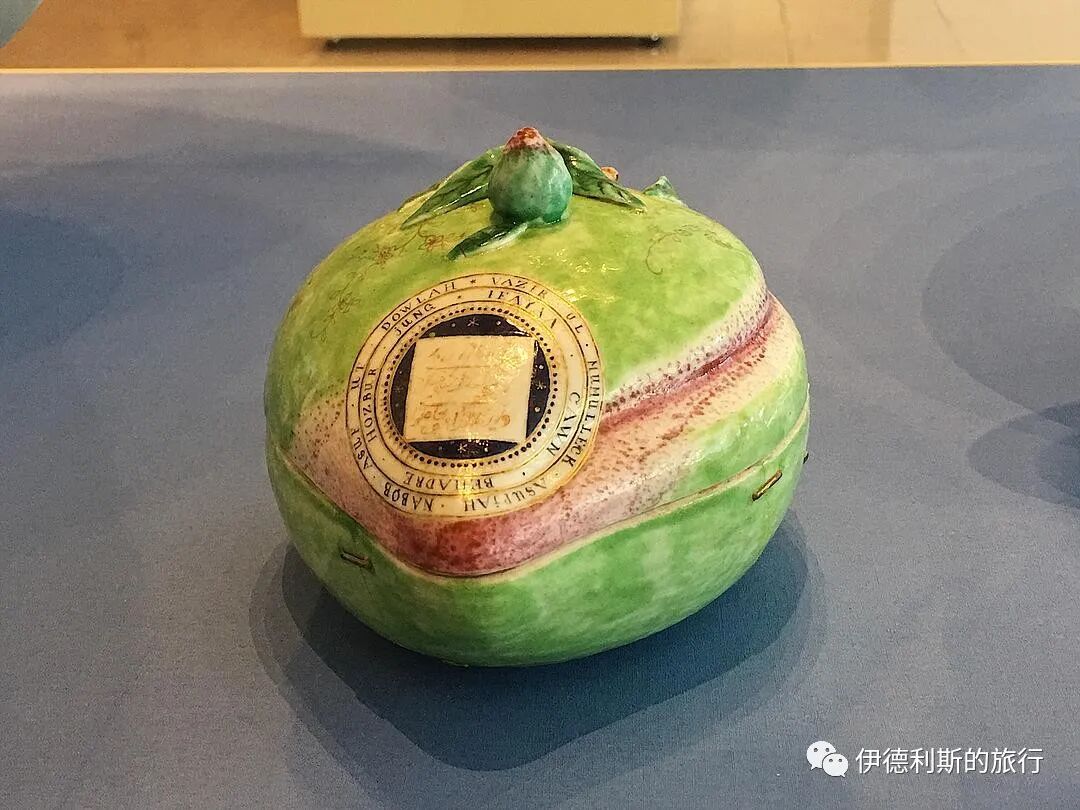
The Asaf Jahi dynasty was a Muslim kingdom on the Deccan Plateau in southern India from 1724 to 1948, centered in the city of Hyderabad.
The Asaf Jahi family was originally a Turkic family from Samarkand. They arrived in the Mughal Empire in the late 17th century to serve as court officials. In 1724, the Mughal Empire fell into chaos. Mir Qamar-ud-Din Siddiqi, who had served as the Governor of the Deccan, declared independence using the Asaf Jah title granted by the Mughal Emperor. He established the Asaf Jahi dynasty in Hyderabad and called himself the Nizam-ul-Mulk of Hyderabad (the ruler of Hyderabad).
Asaf Jah I died in 1748. His son Nasir Jung and his grandson Muzaffar Jung fought for the throne with support from the British and French. Nasir Jung died in battle in 1750. Muzaffar Jung ruled for one year before dying in battle in 1751. Finally, Asaf Jah I's third son, Salabat Jung, became Asaf Jah II.
6. Chinese export porcelain ordered by the Persian Qajar dynasty.
The fourth monarch of the Persian Qajar dynasty, Naser al-Din Shah Qajar (reigned 1848-1896), and his eldest son, Mass'oud Mirza Zell-e Soltan (1850-1918), ordered a large amount of Chinese export porcelain. These porcelains were mainly Canton enamel (guangcai), but also included blue and white porcelain and Fitzhugh porcelain.
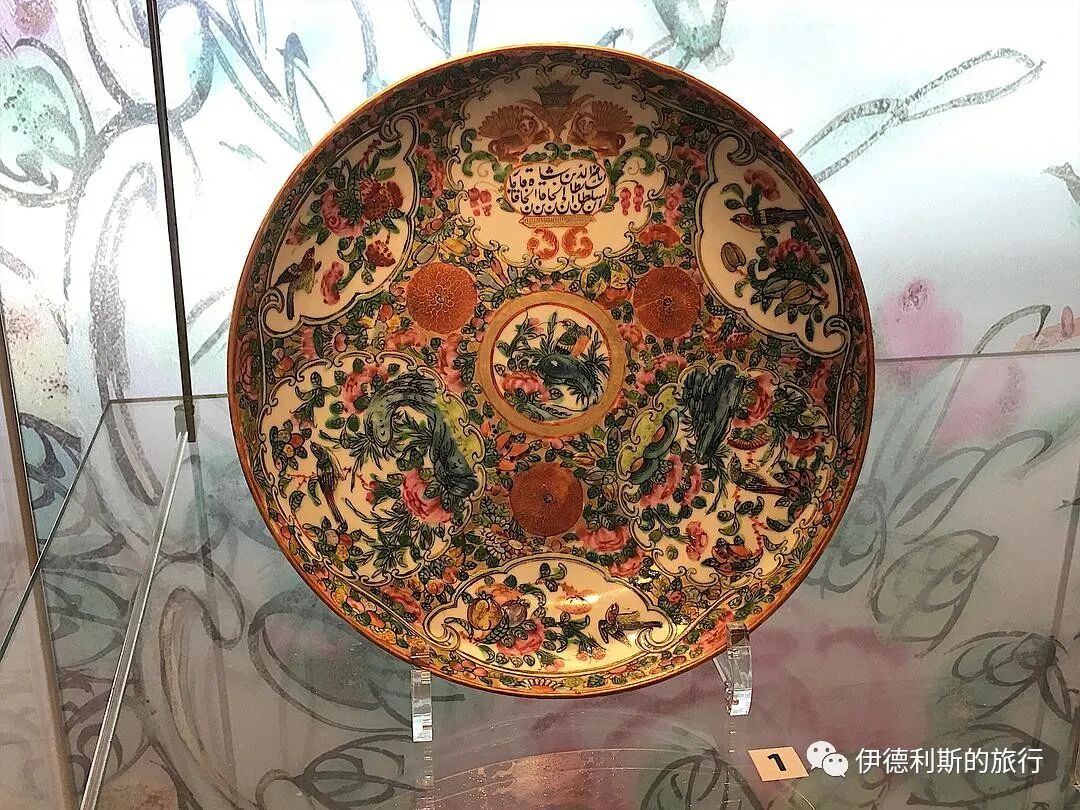
The porcelain plate below features the emblem of the Qajar dynasty at the top.
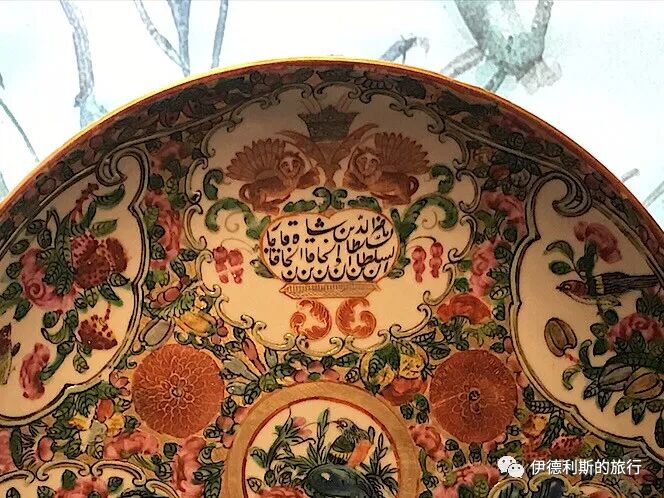
Canton enamel (guangcai).
The full name of Canton enamel is Guangzhou gold-woven colored porcelain (Guangzhou zhijin caici). It was a famous export porcelain from Guangzhou during the middle and late Qing dynasty.
In 1685 (the 24th year of the Kangxi reign), the Yuehai Customs was established, followed by the Thirteen Factories of Guangzhou for foreign trade. Porcelain was an important export commodity. Initial export porcelain was ordered directly from Jingdezhen. By the Yongzheng era, porcelain merchants in Guangzhou began shipping white porcelain blanks from Jingdezhen to Guangzhou. They hired Jingdezhen masters to perform low-temperature overglaze painting in Guangzhou, which is how Canton enamel began.
After the Qianlong era, Canton enamel entered a mature stage and formed its own colorful and gorgeous style. The colors were mainly Western red, crane-spring color, eggplant color, deep ochre, and powder green, all produced locally in Guangzhou. After the Daoguang era, the number of colors increased to more than a dozen.
Canton enamel from the late Qing dynasty was mass-produced with neat patterns. Bowls, plates, and dishes mostly had a gold-trimmed circle in the center. The surrounding area was filled with 'full-ground' patterns of various flowers, fruits, birds, insects, people, and landscapes, along with logos specified by foreign merchants.
Below is Canton enamel ordered by the court of the Persian Qajar dynasty (1779-1921) between the late 19th century and 1915.
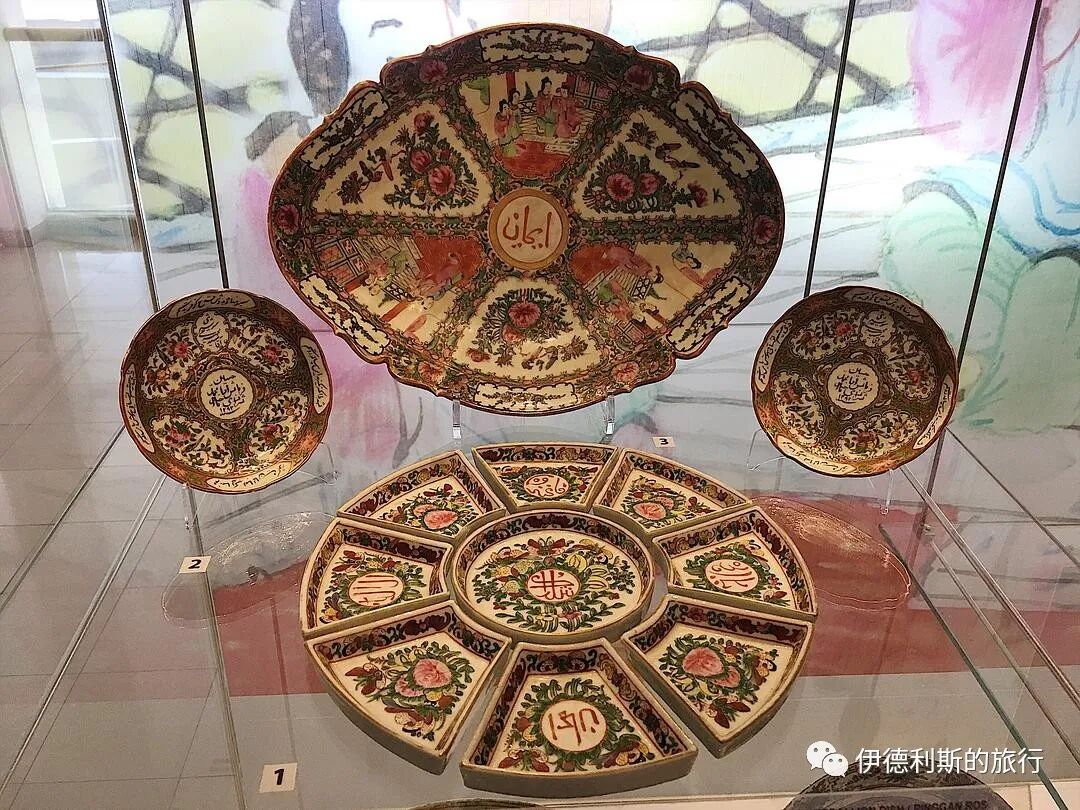
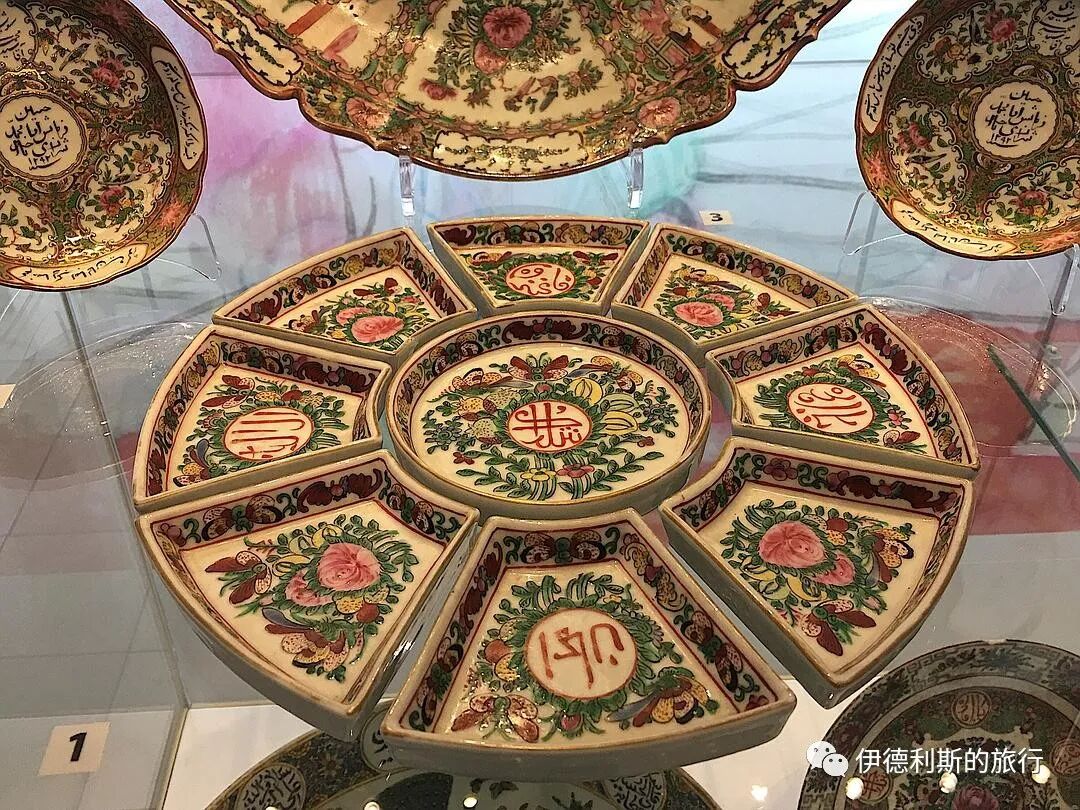
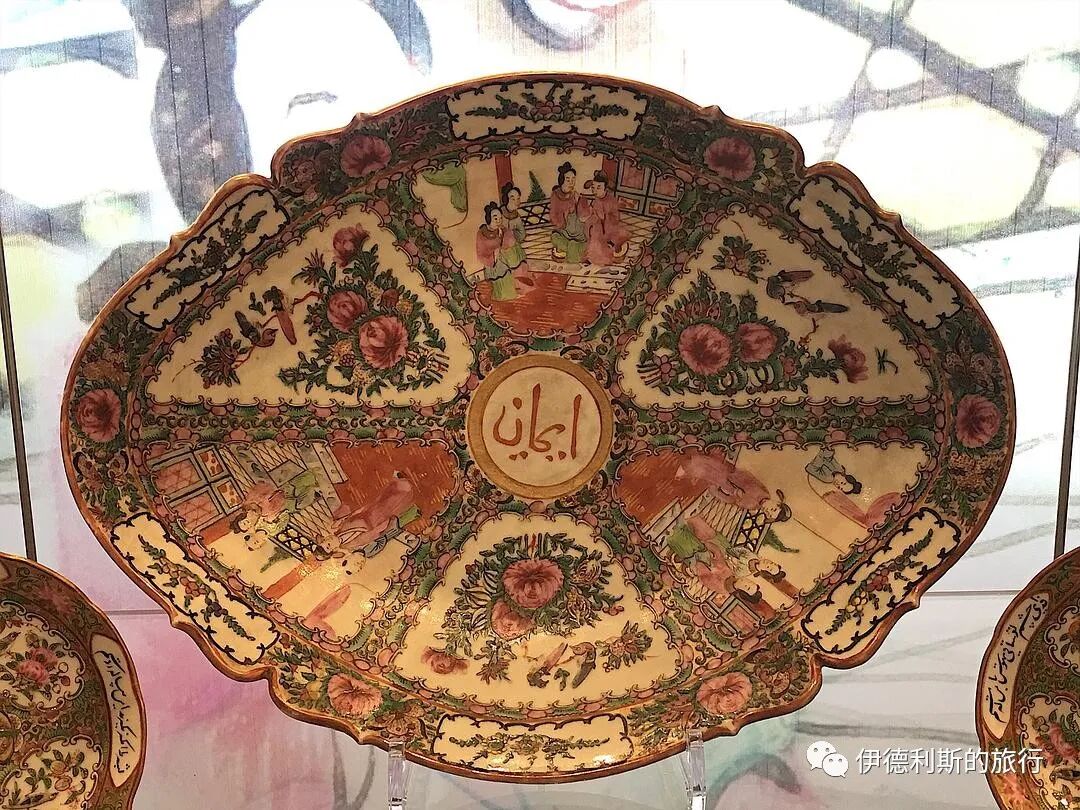
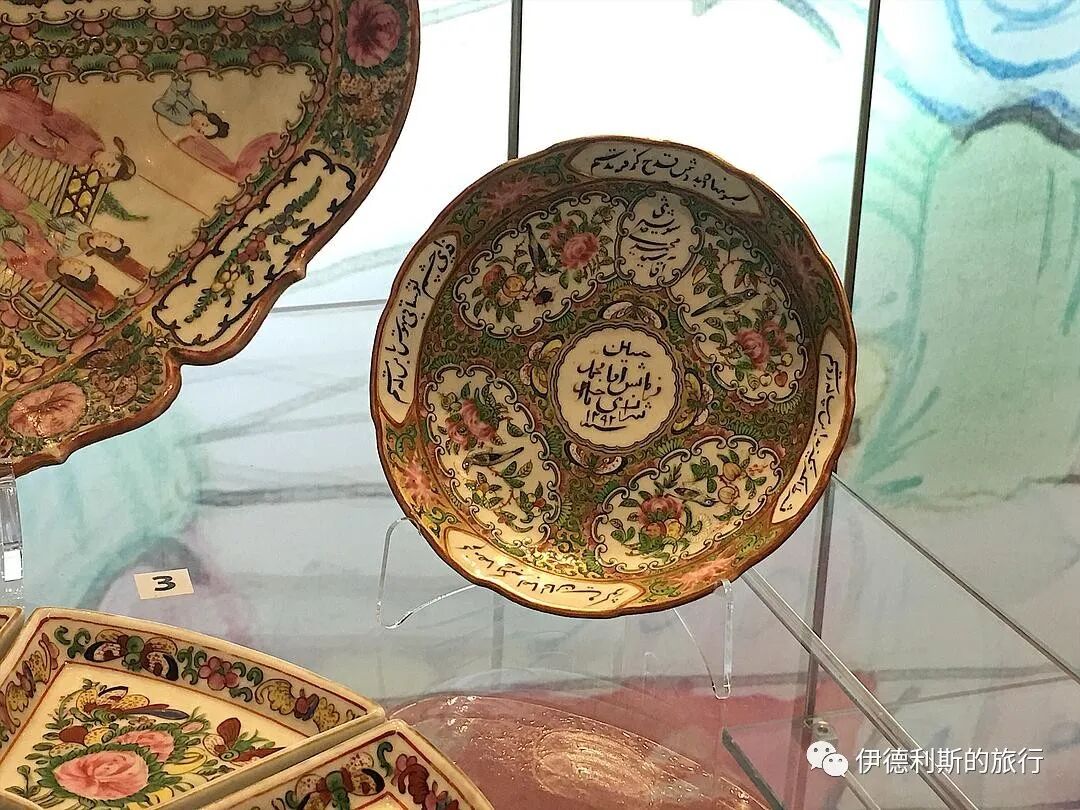
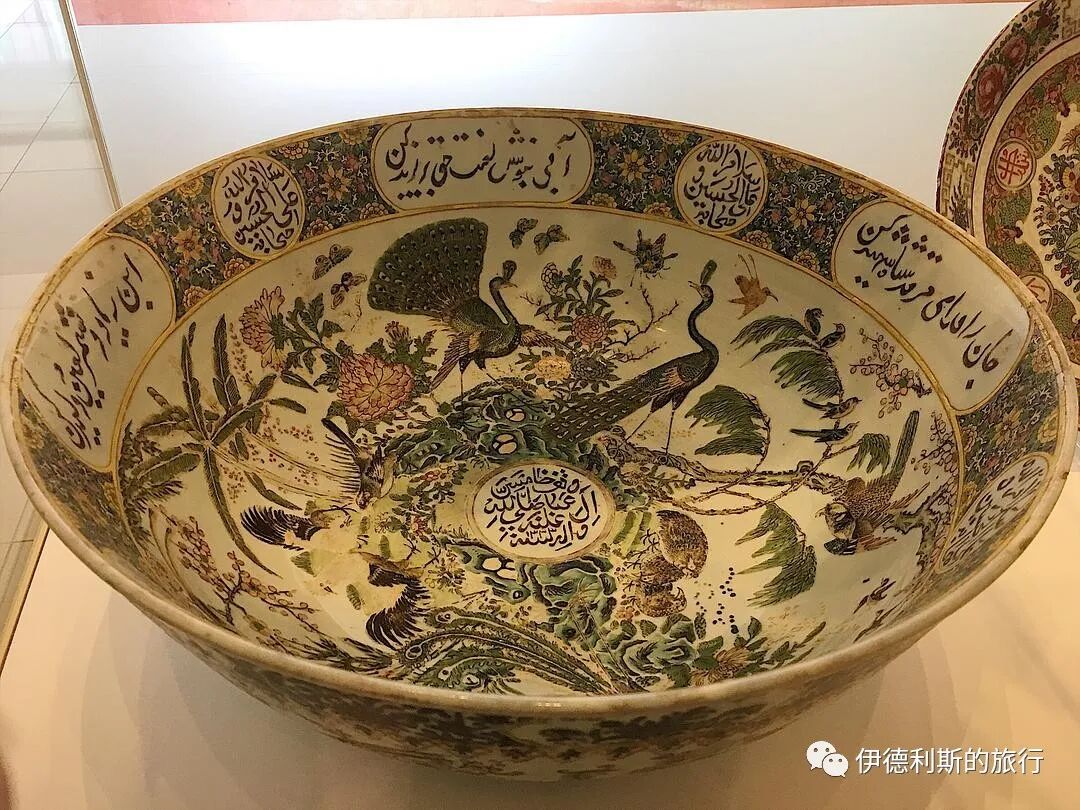
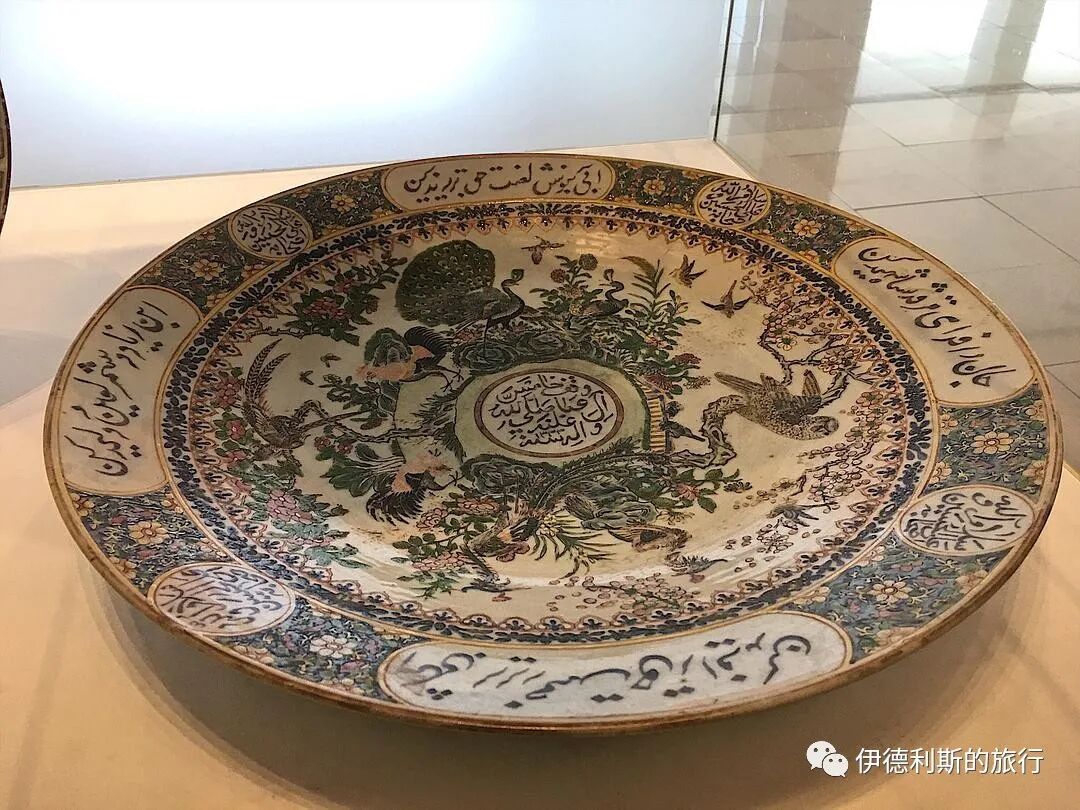
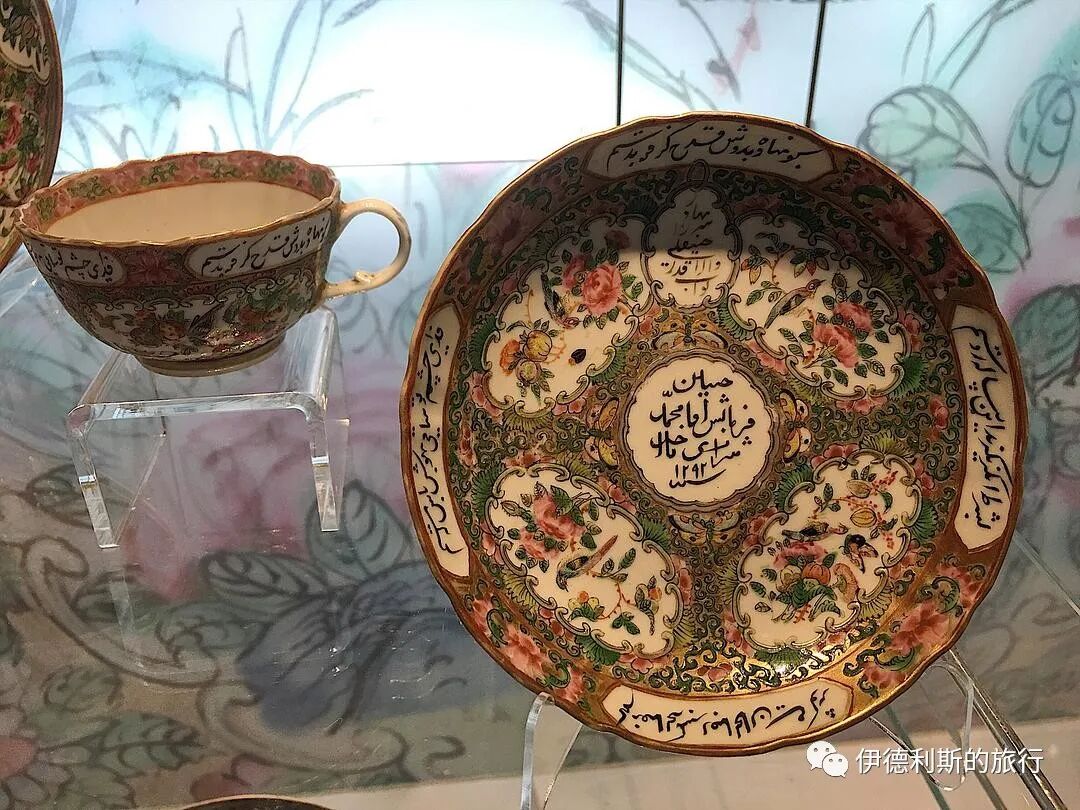
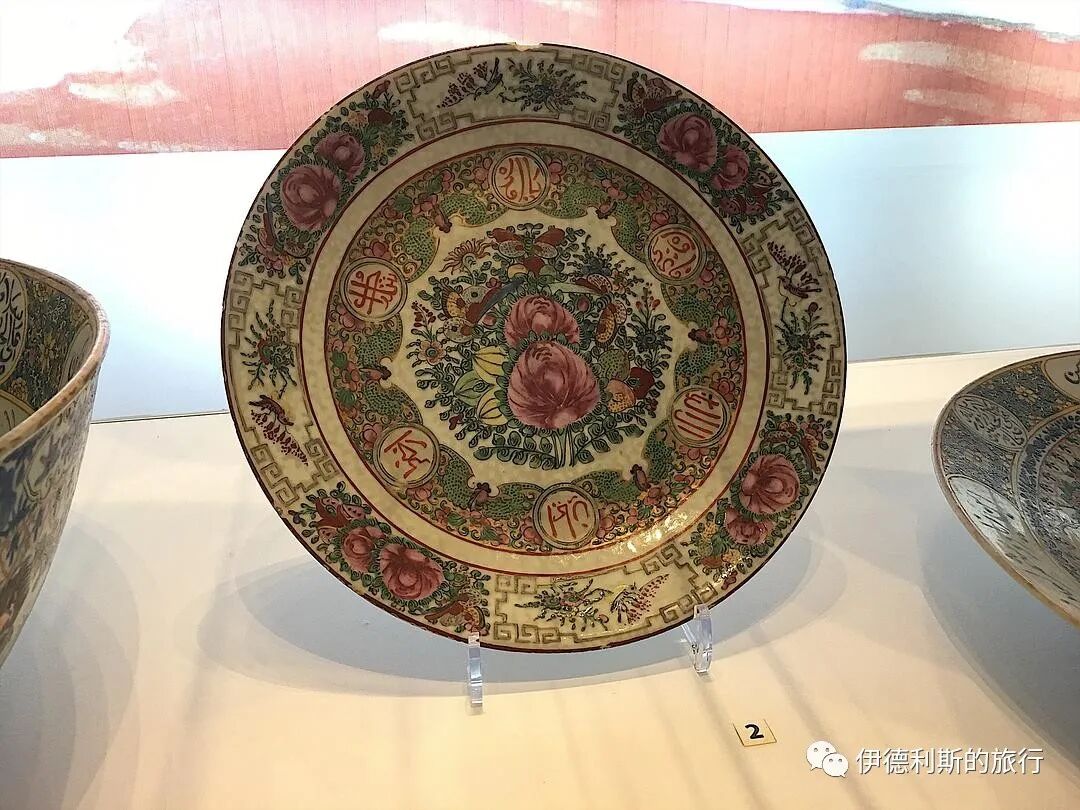
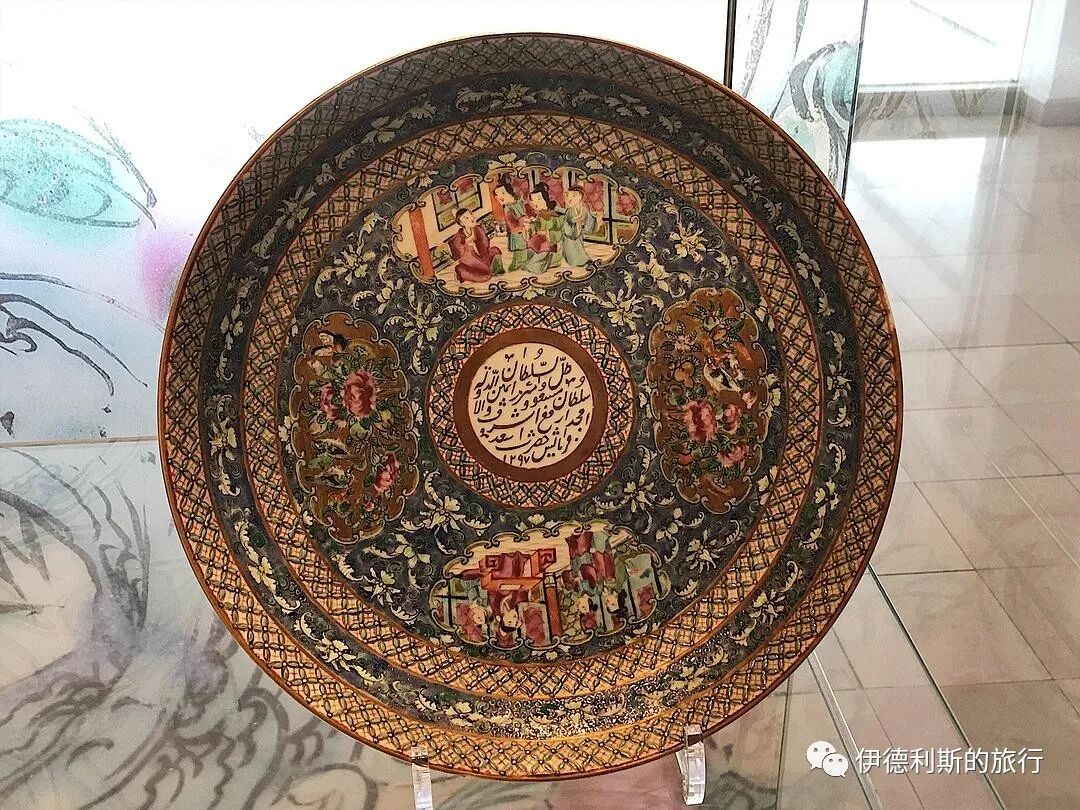
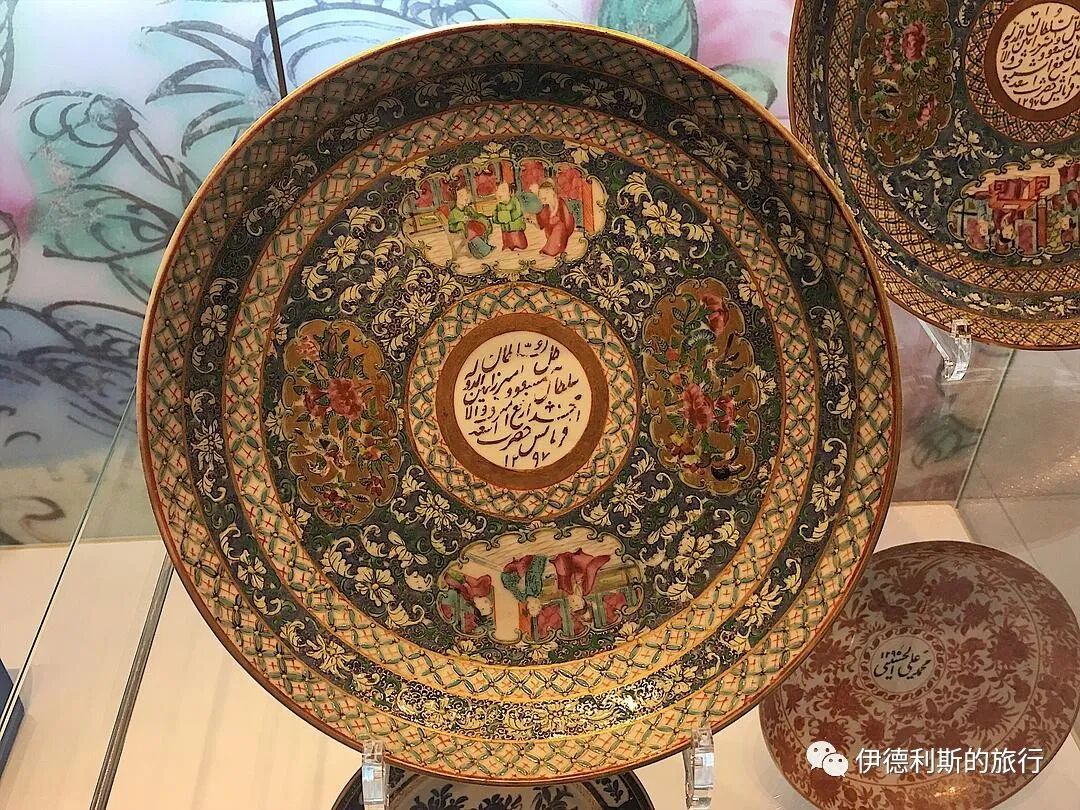
Guangzhou blue porcelain from 1882.
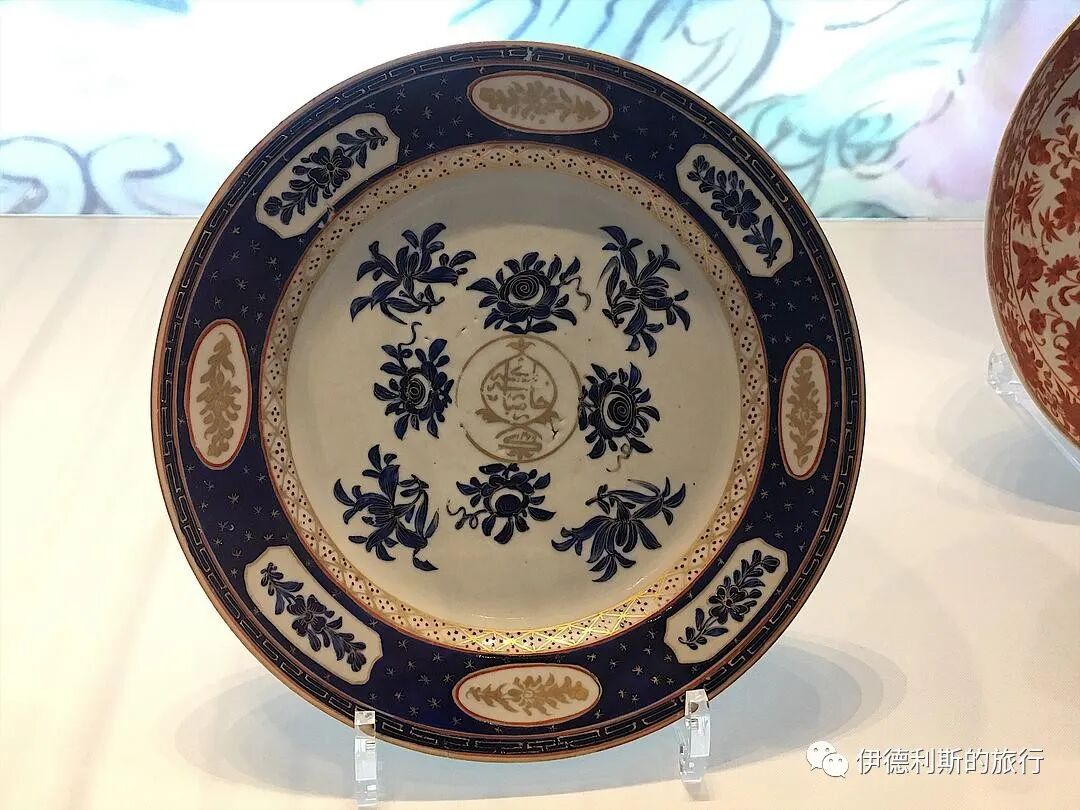
Fitzhugh porcelain from 1878.
Fitzhugh porcelain is named after Thomas Fitzhugh, a director of the British East India Company in Guangzhou during the 1760s. He ordered many pieces in this style between 1787 and 1800. This made the porcelain very popular for export during the Jiaqing period (1796-1820), and it remained popular through the Daoguang period (1821-1850). The main feature of Fitzhugh porcelain is a medallion pattern in the center, surrounded by various traditional Chinese elements.
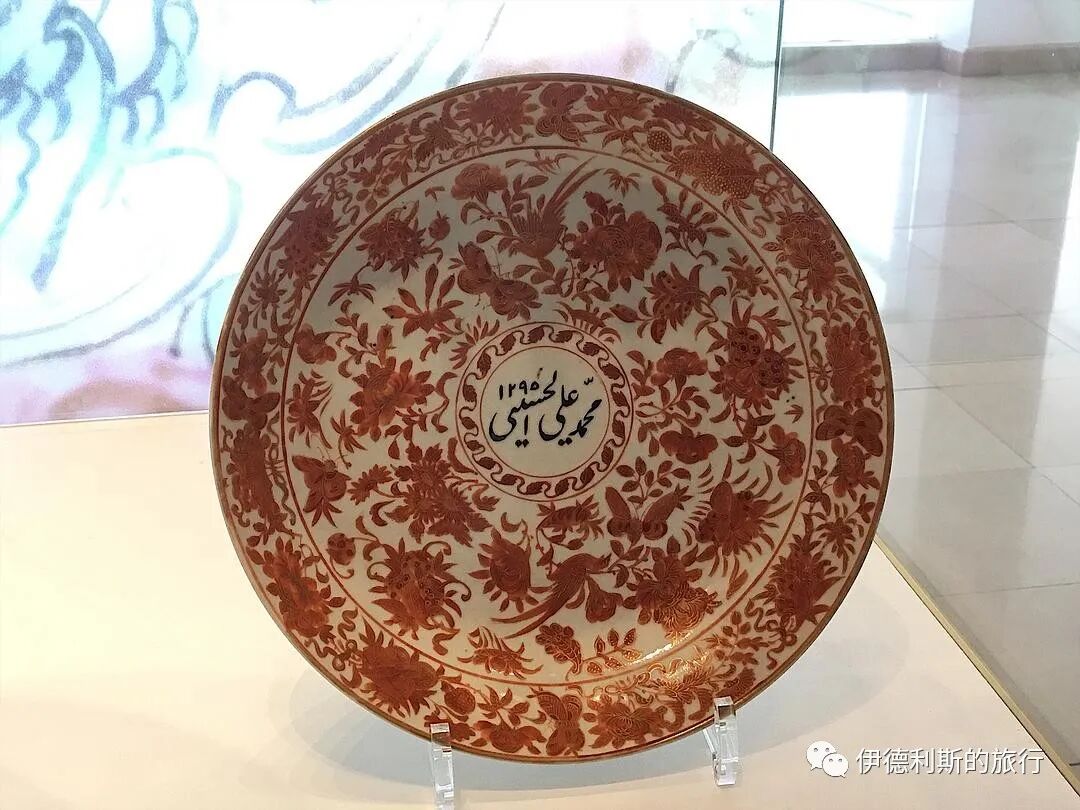
7. Other export porcelain with Arabic and Persian script.
18th-century multicolored porcelain plate.
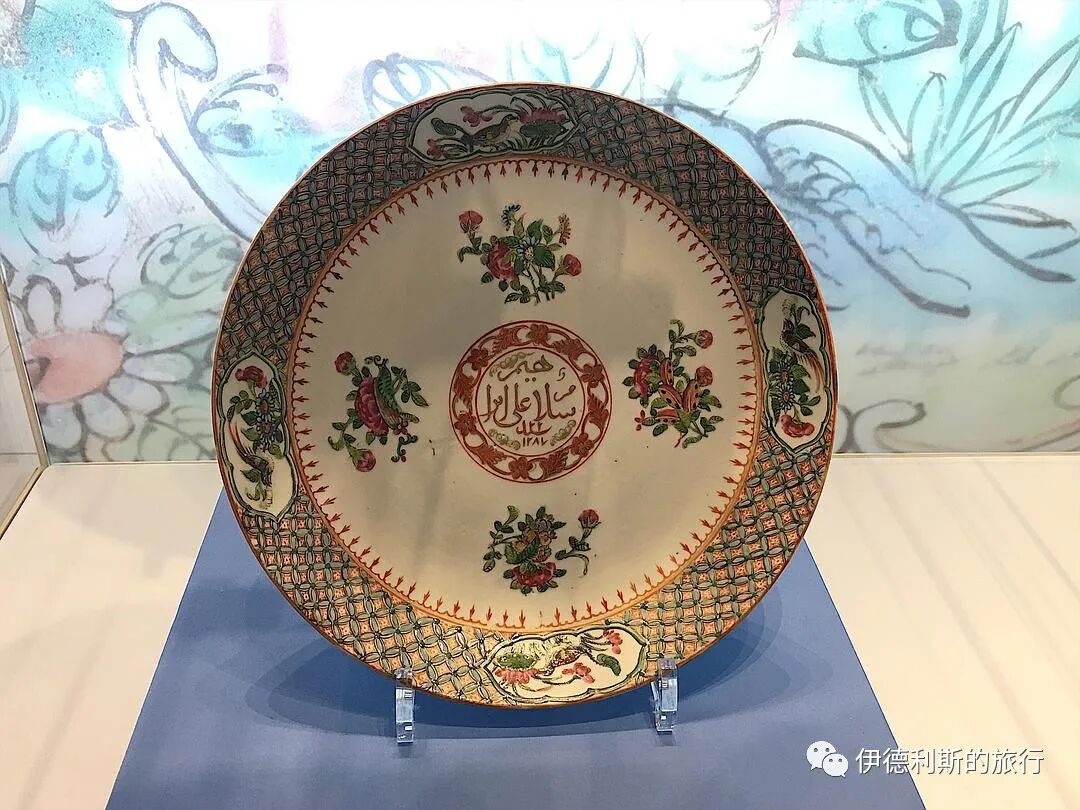
19th-century brush pot.
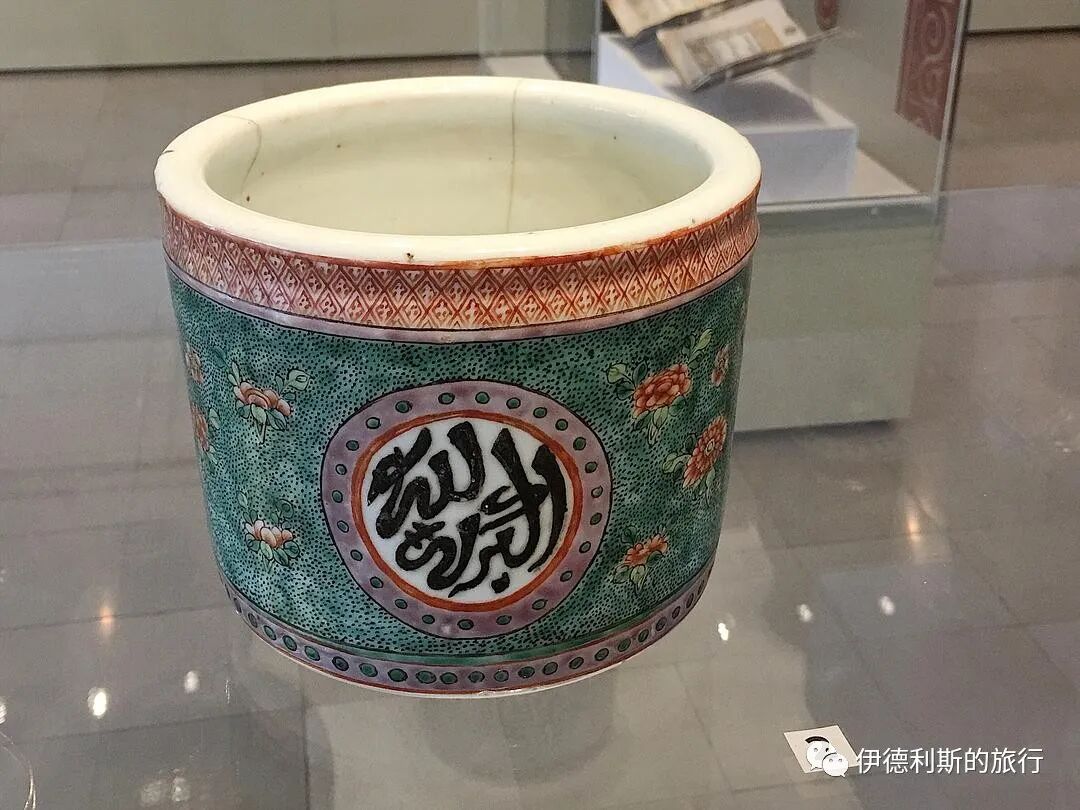
18th-century jar.
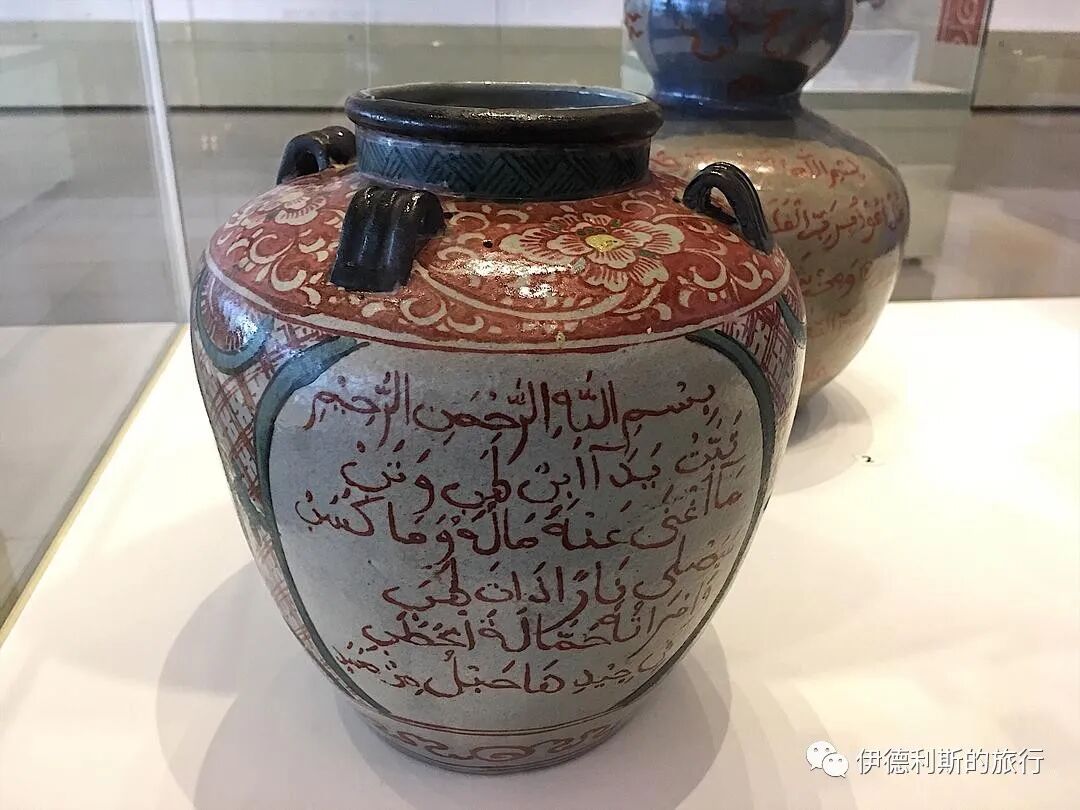
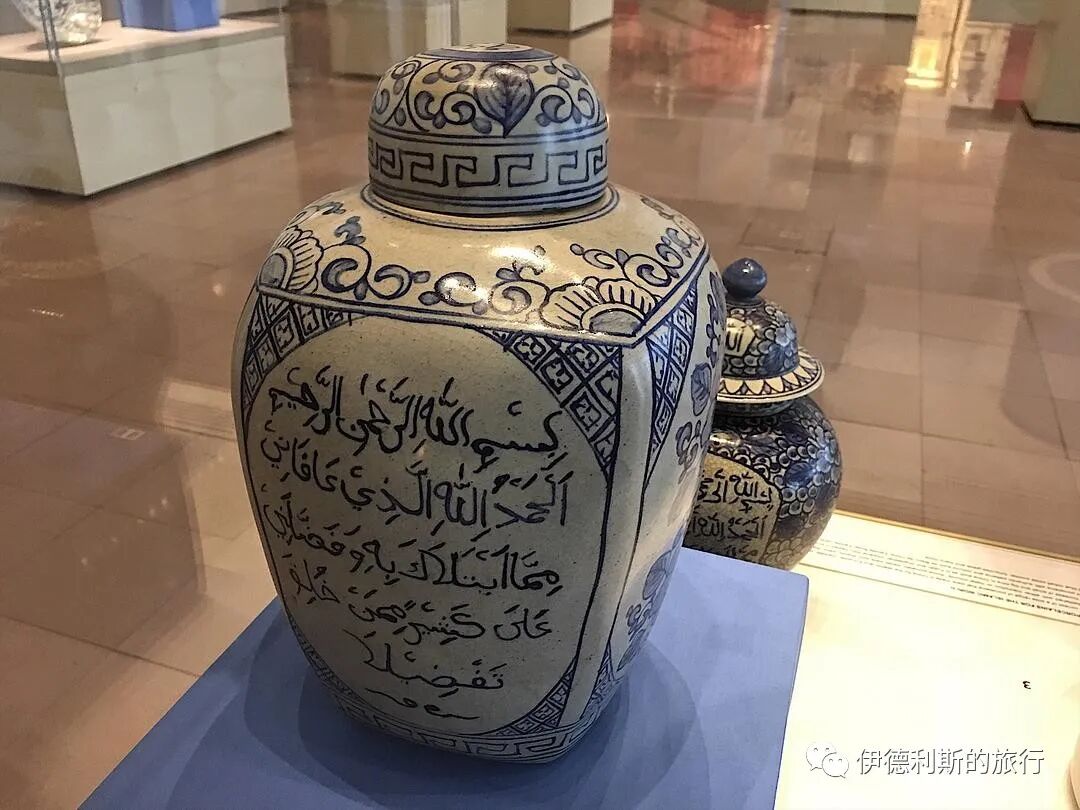
19th-century teapot.
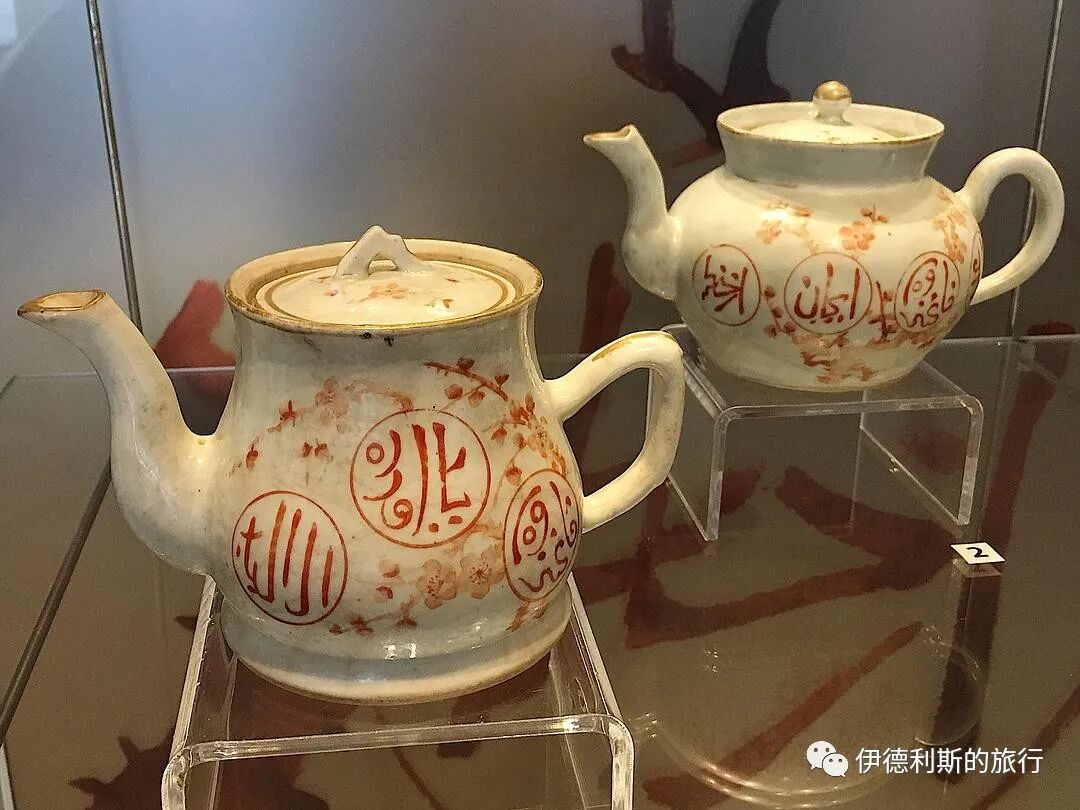
8. Ming and Qing dynasty scripture manuscripts.
A 30-volume scripture manuscript from Gansu Province, dated March to April 1546. It is signed by Khaili Ibrahim Yunus Al-sini and features peony and cloud patterns.
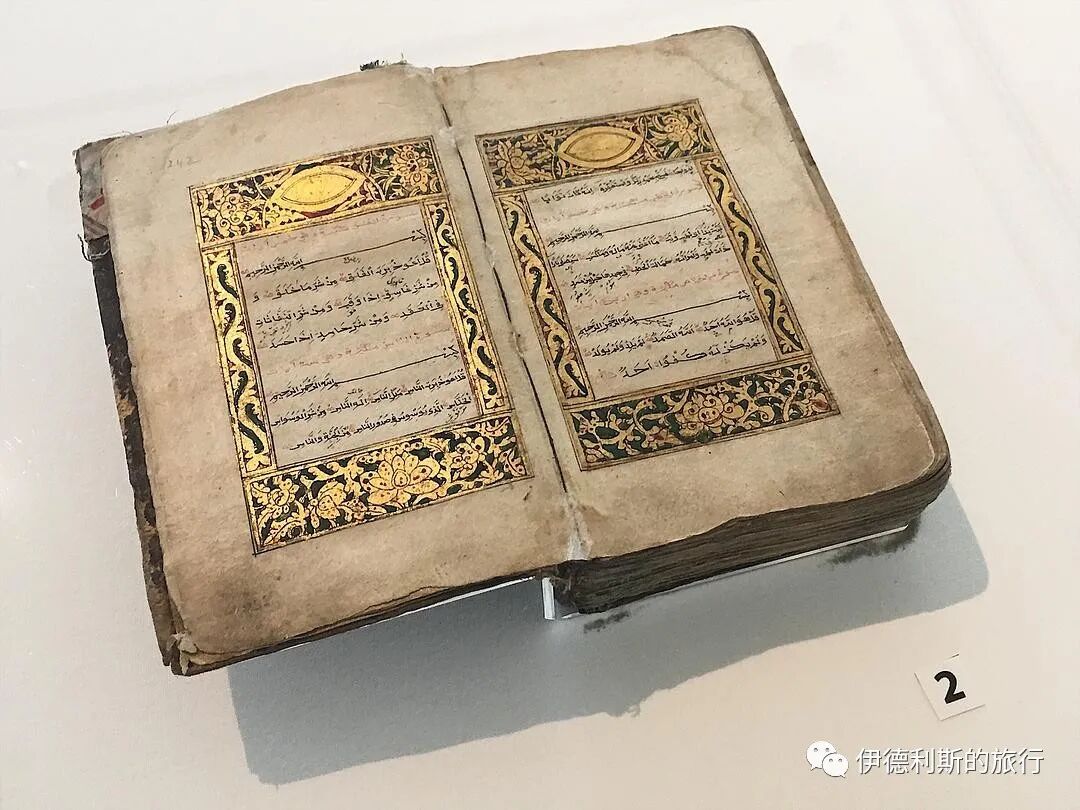
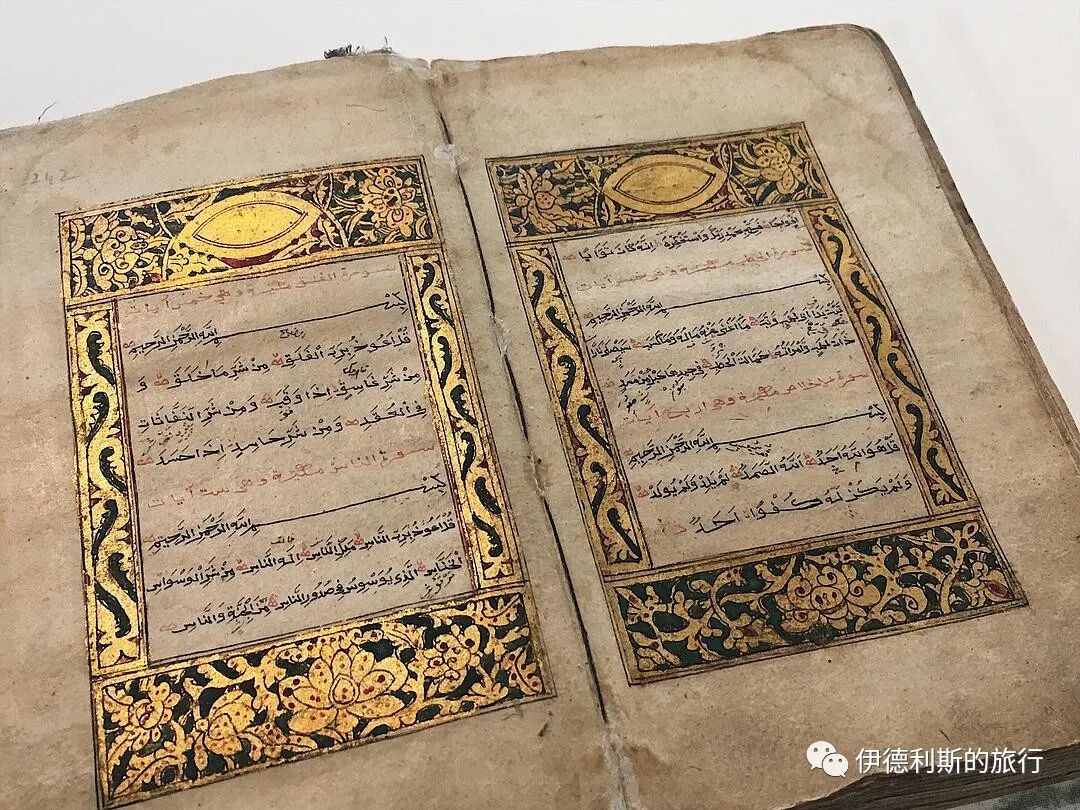
A 30-volume scripture manuscript from the 17th-century Qing dynasty.
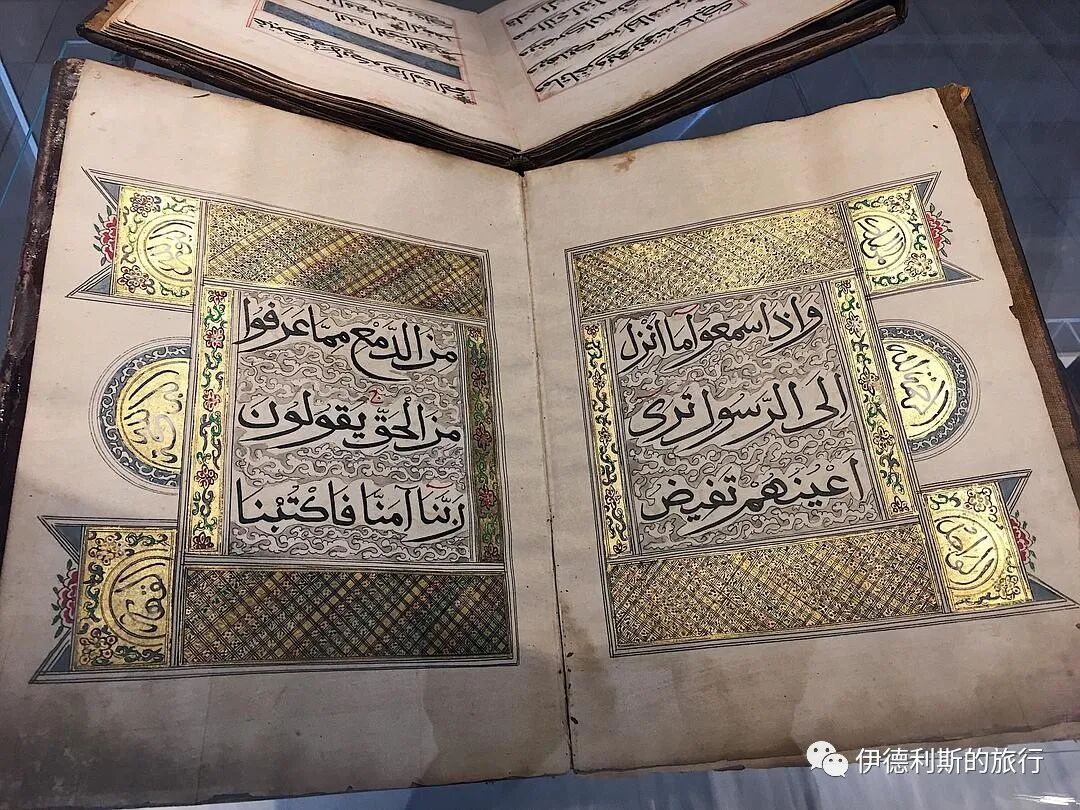
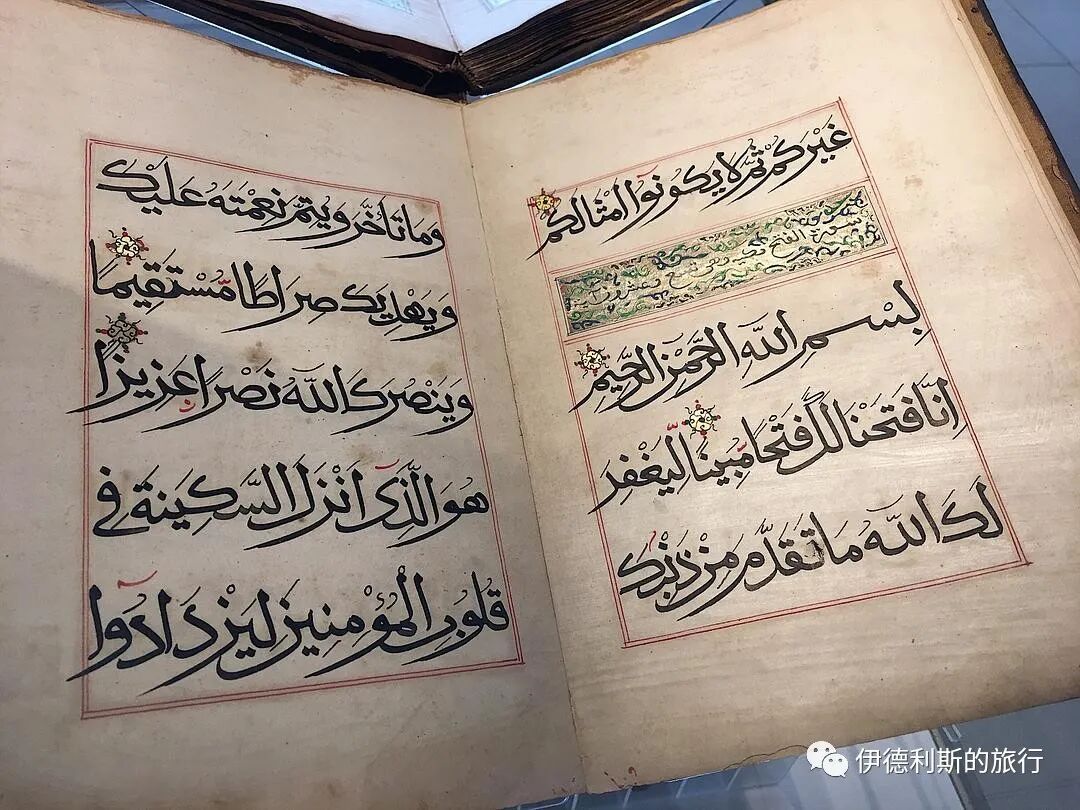
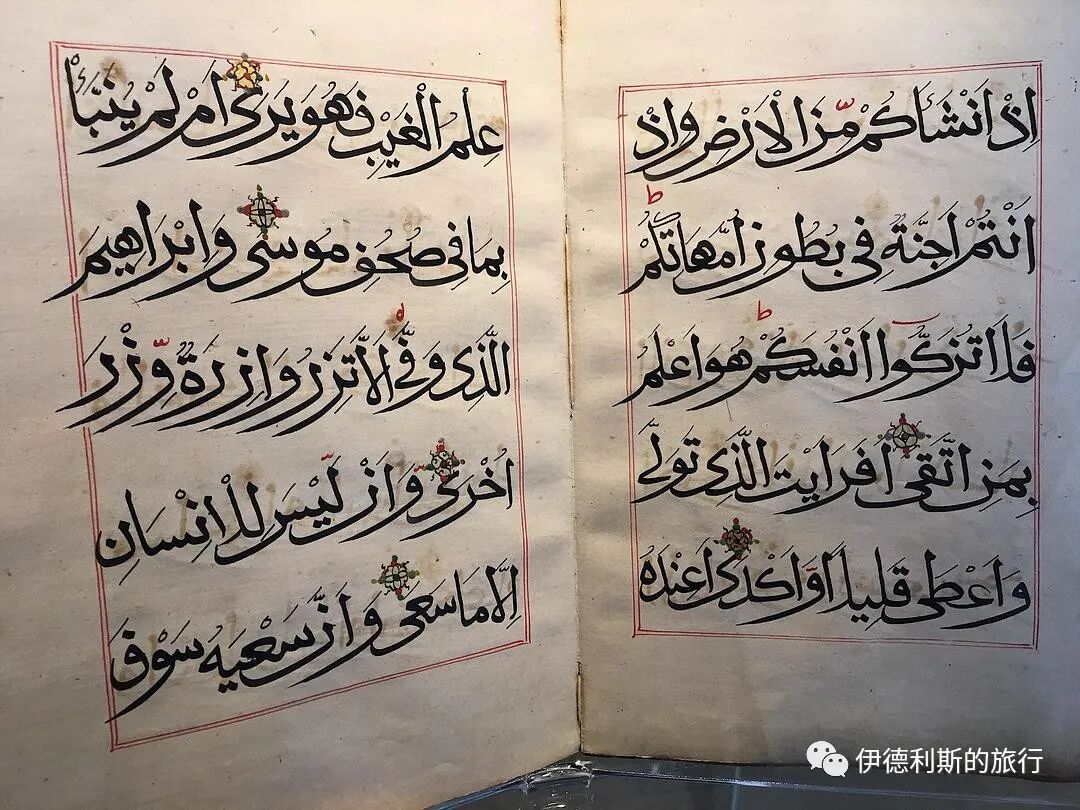
A 30-volume scripture manuscript from 1730 during the Qing dynasty, with a brown embossed leather cover.
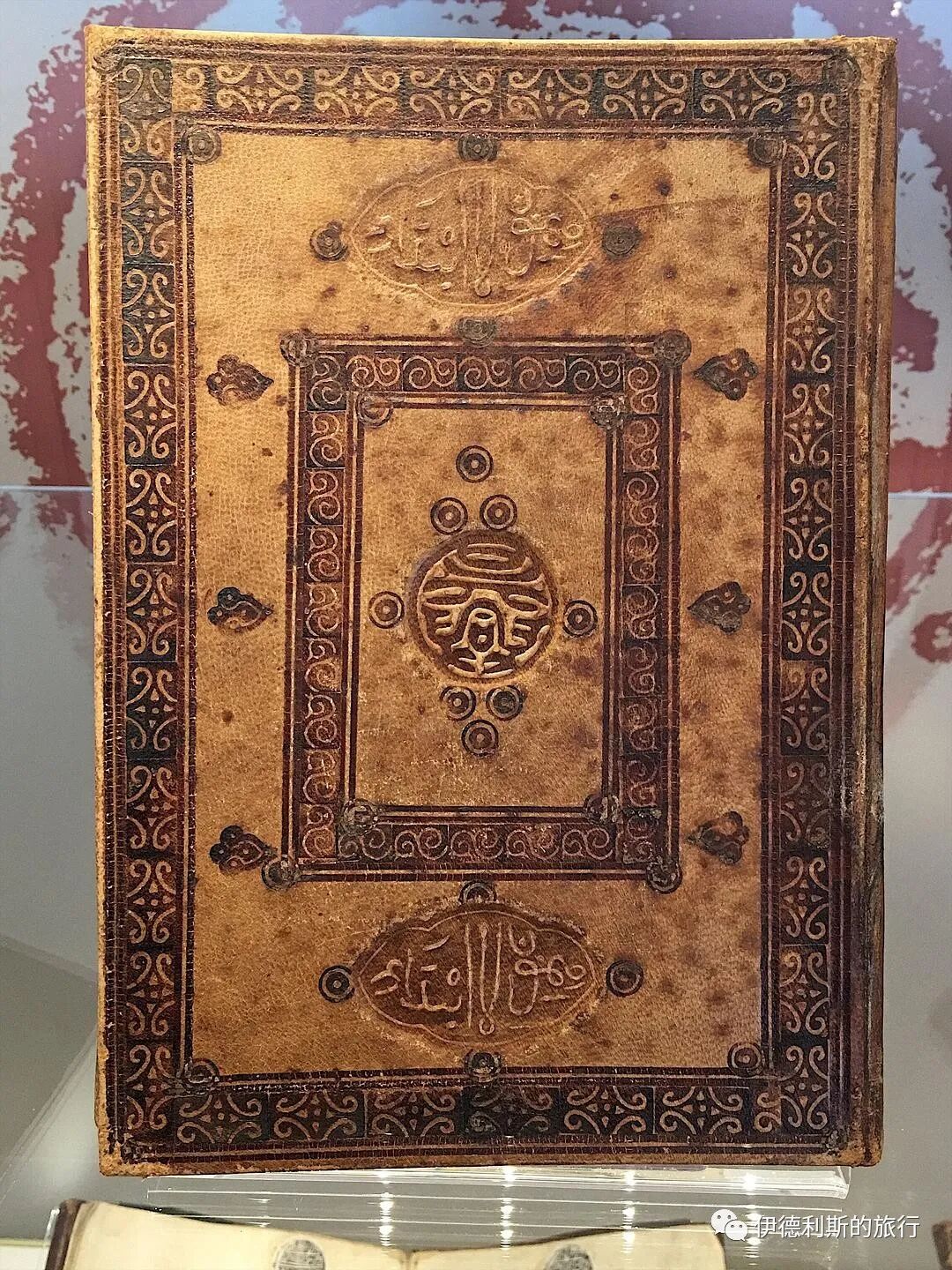
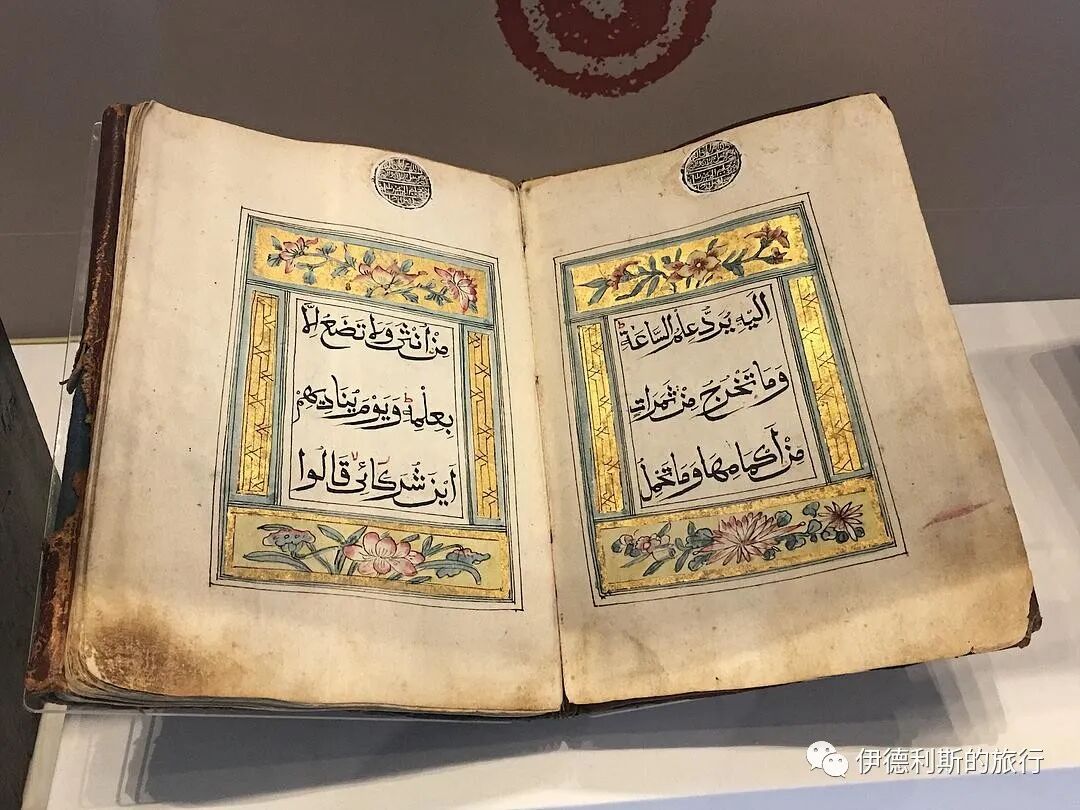
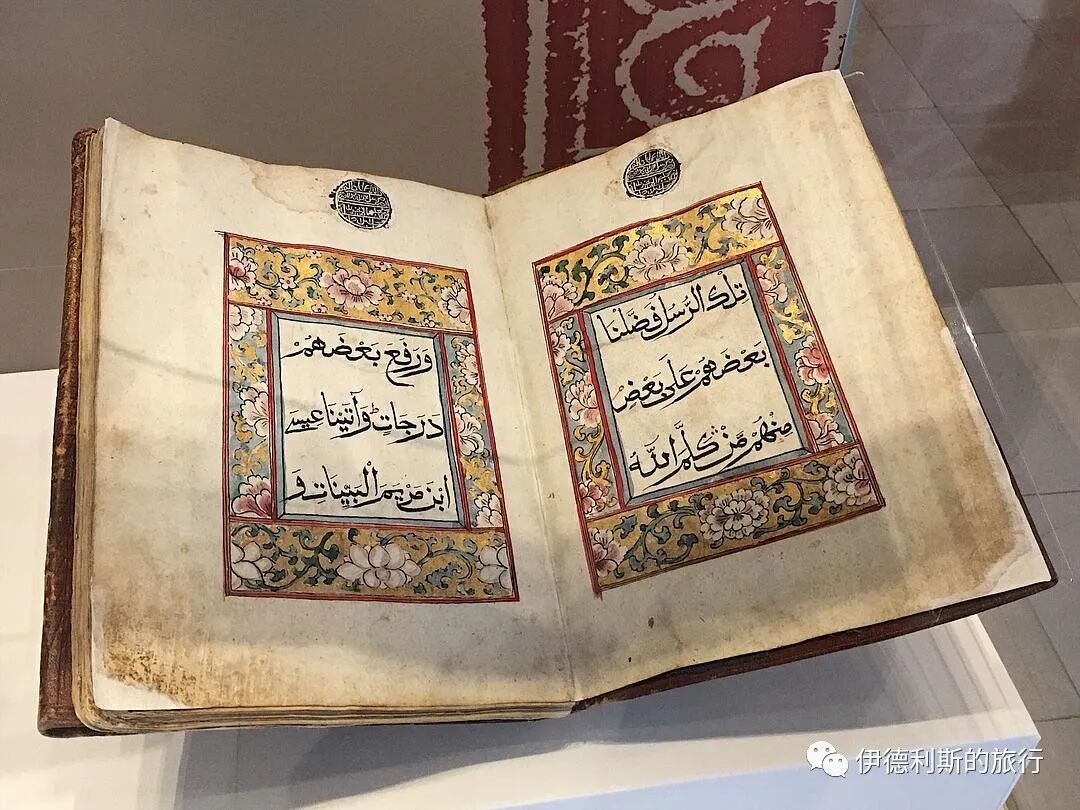
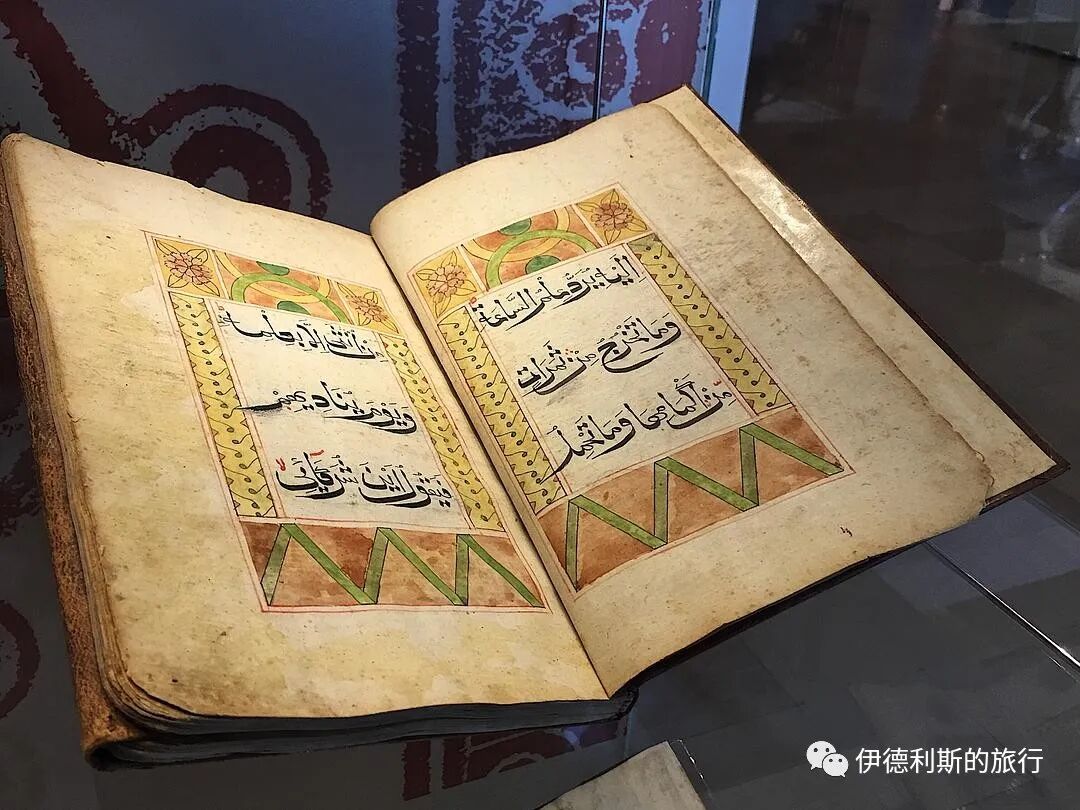
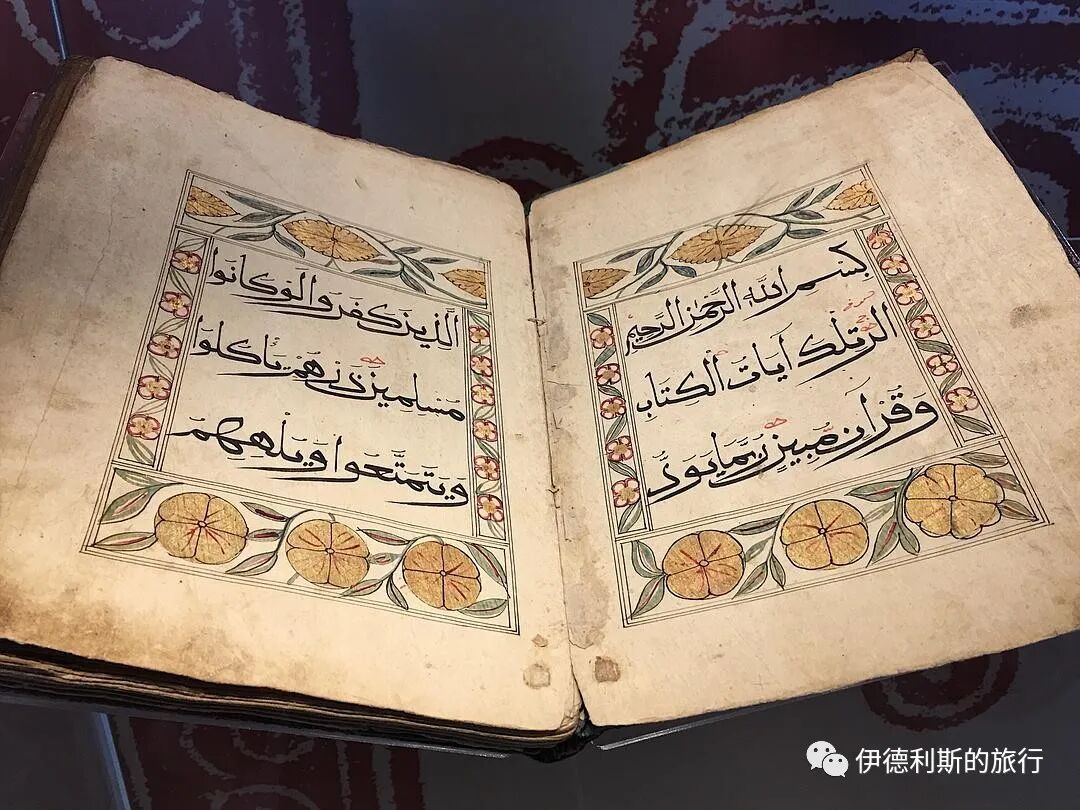
9. Xuande incense burners (Xuande lu).
Bronze incense burners appeared at the end of the Yuan dynasty. They reached their peak during the Ming dynasty Xuande period (1425-1435), when they were cast in brass for the first time. Xuande burners are made using the lost-wax casting method, so you cannot see any mold marks after polishing. Most have an open mouth, a short neck, and a flat belly. Some have three blunt cone-shaped solid feet, while others have bridge-shaped handles on the rim. They are dark purple or blackish-brown, and many are gilded or inlaid with gold flakes on the outside.
The production of imitation Xuande burners continued from the Xuande period through the Republic of China era. Xuande burners from different eras have different features. Those from the late Ming dynasty are heavier, those from the Yongzheng period are softer, and those from the Qianlong period show higher craftsmanship. After the 19th century, Xuande burners became increasingly rough, and their quality dropped significantly.
Starting in the Ming dynasty Zhengde period (1506-1521), Xuande burners featuring the Basmala or the Shahada appeared and continued to be made.
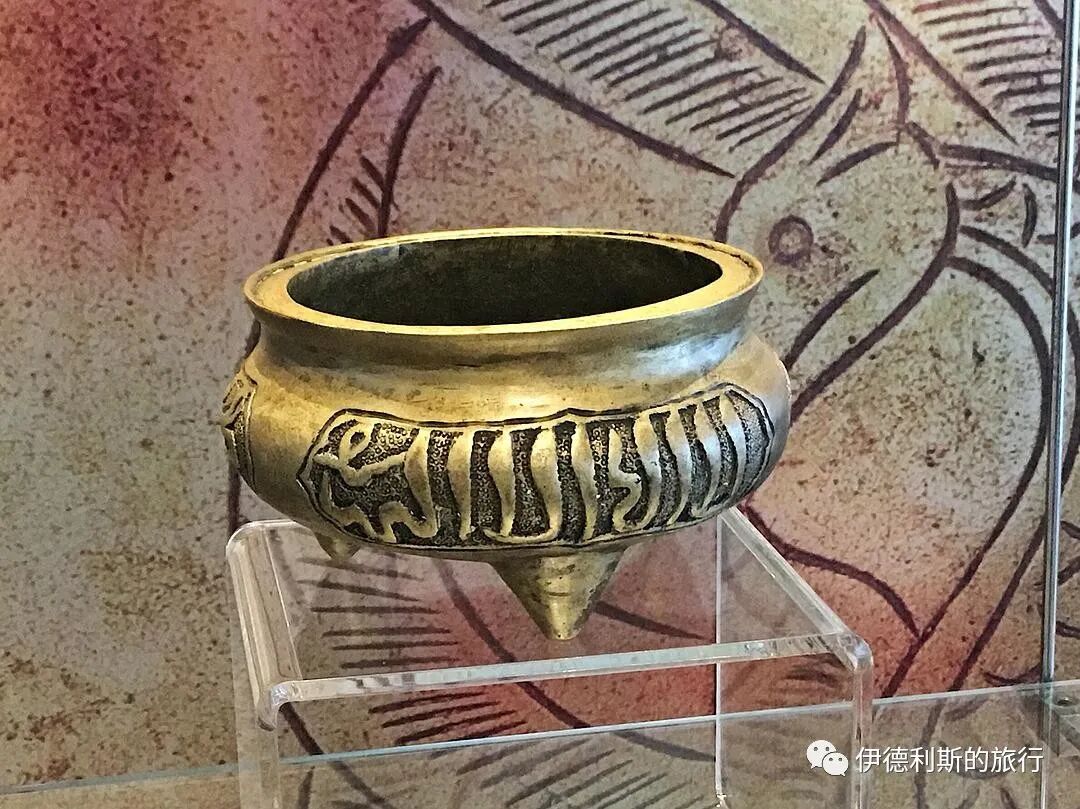
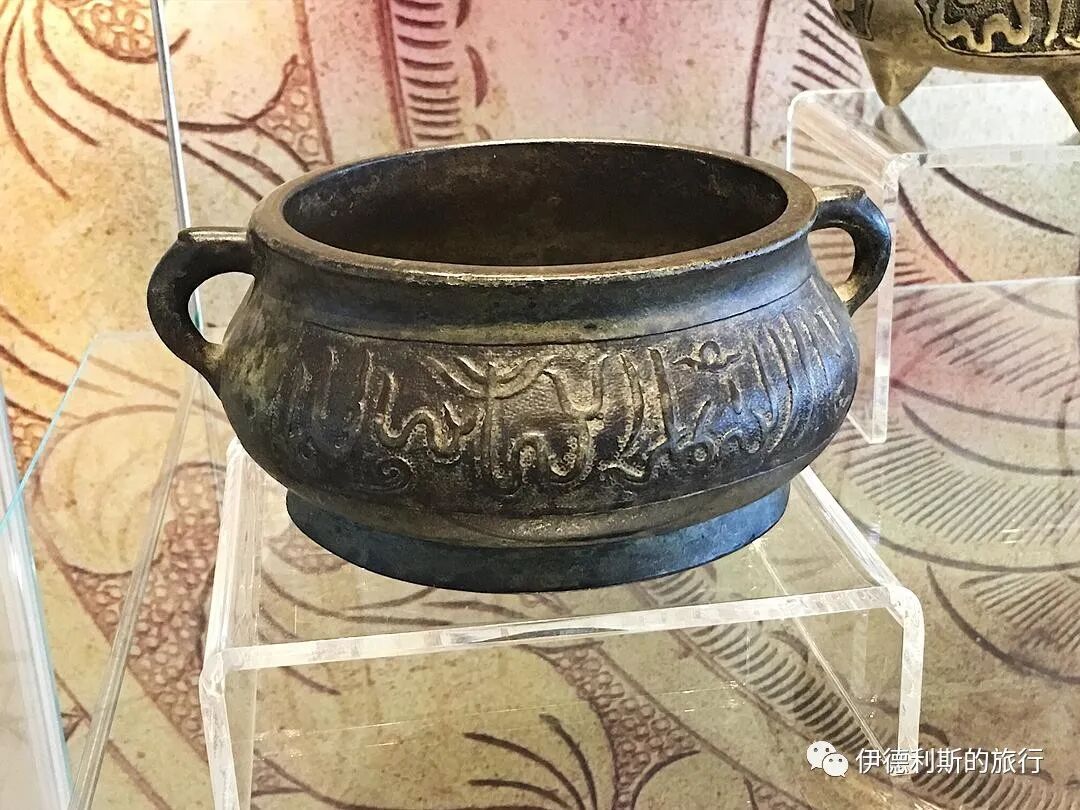
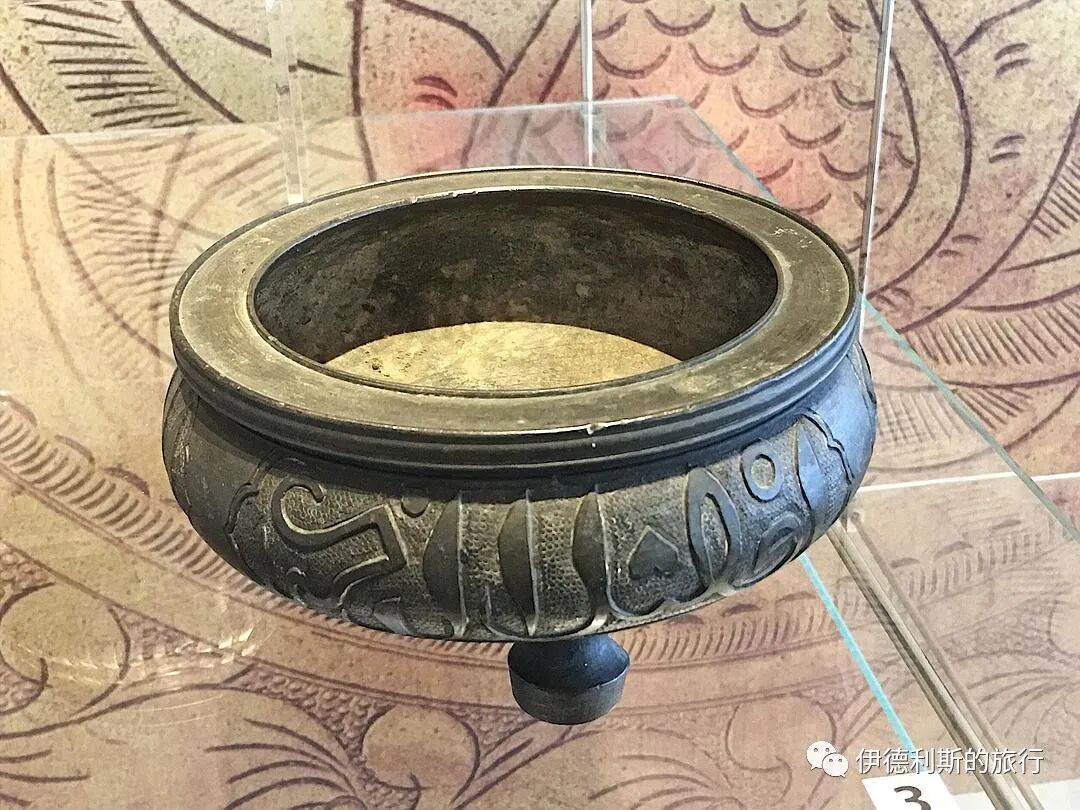
10. Qing Dynasty copperware and cloisonné enamel (jingtailan)
After the Canton Customs was set up in 1685 (the 24th year of the Kangxi reign) and the Thirteen Factories were established in Guangdong, copperware and cloisonné enamel (jingtailan) featuring Arabic and Persian script began to be exported during the 18th and 19th centuries.
The one on the left is from 1815, and the one on the right is from the 18th century.
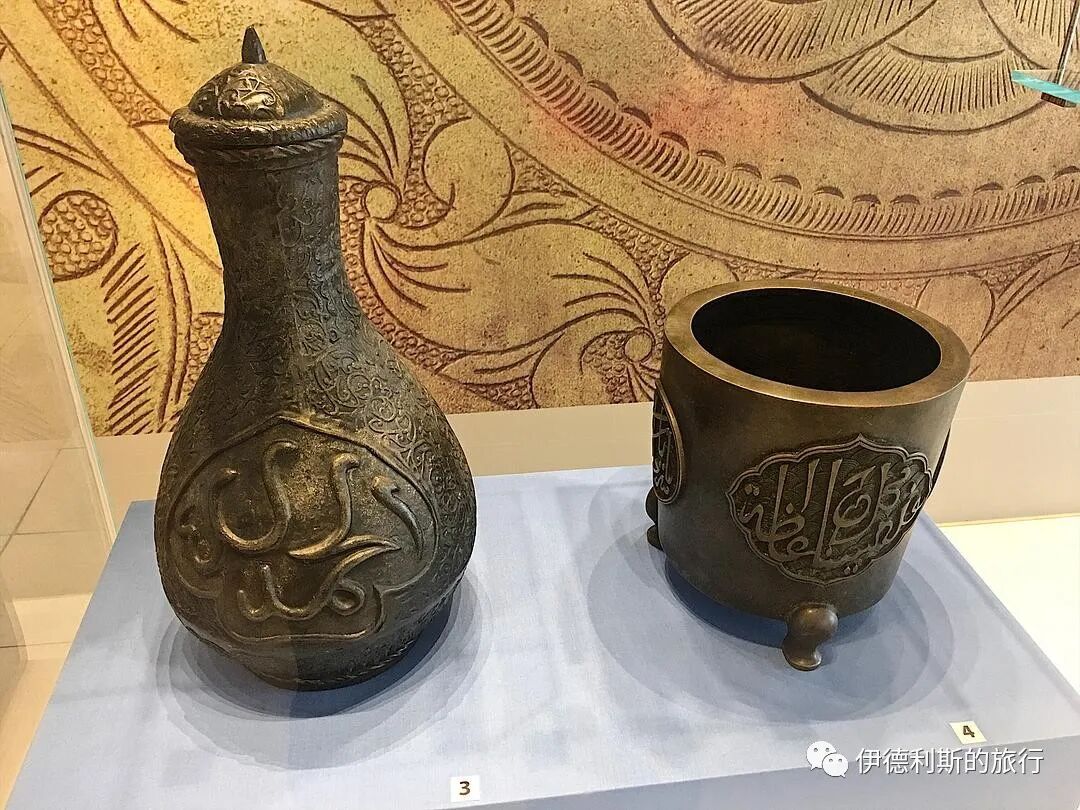
18th-century copperware
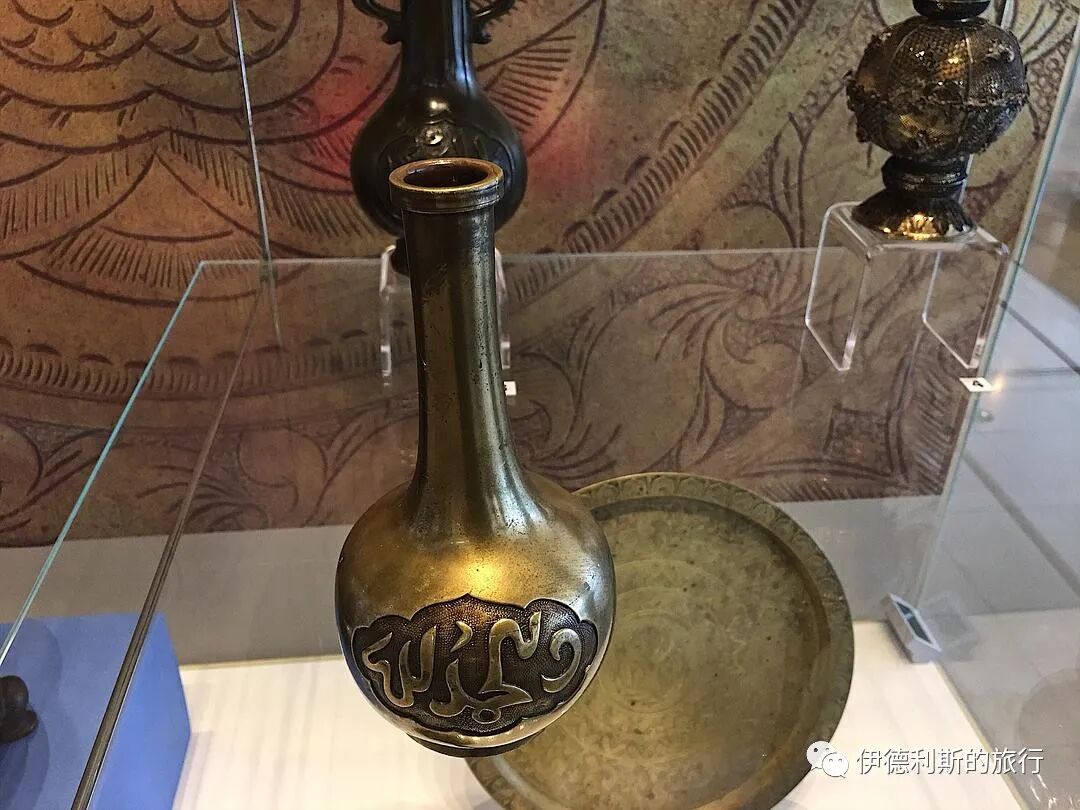
Cloisonné enamel (jingtailan)
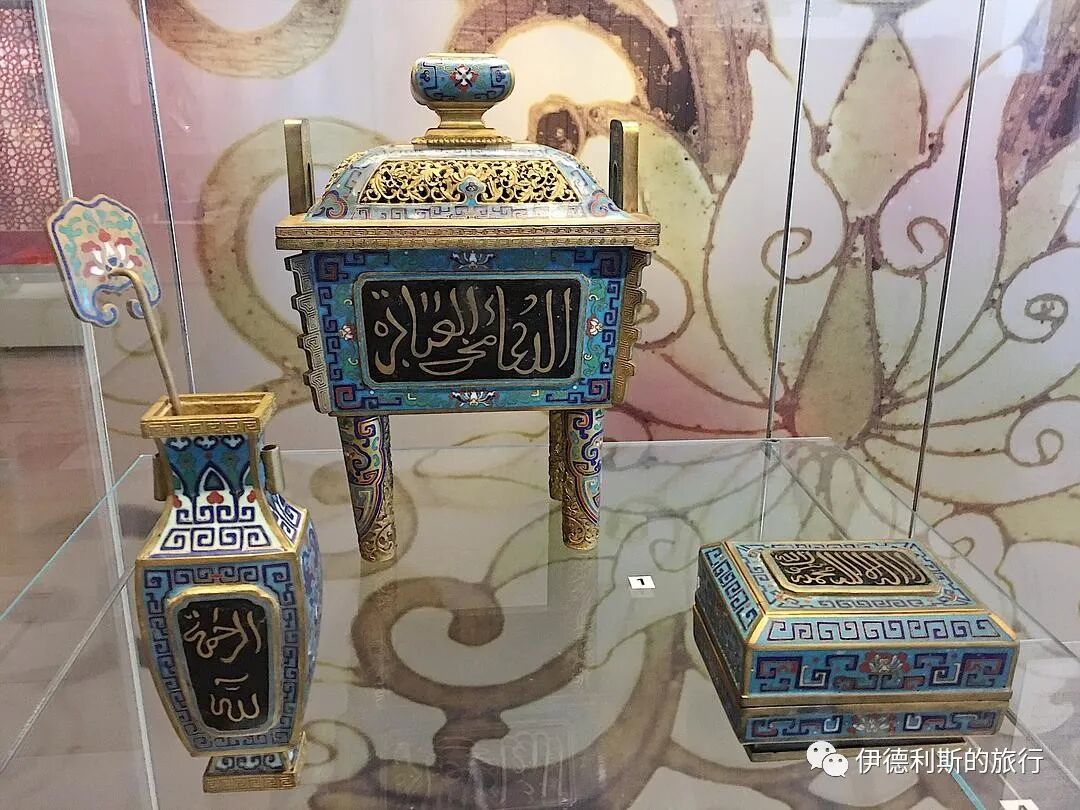
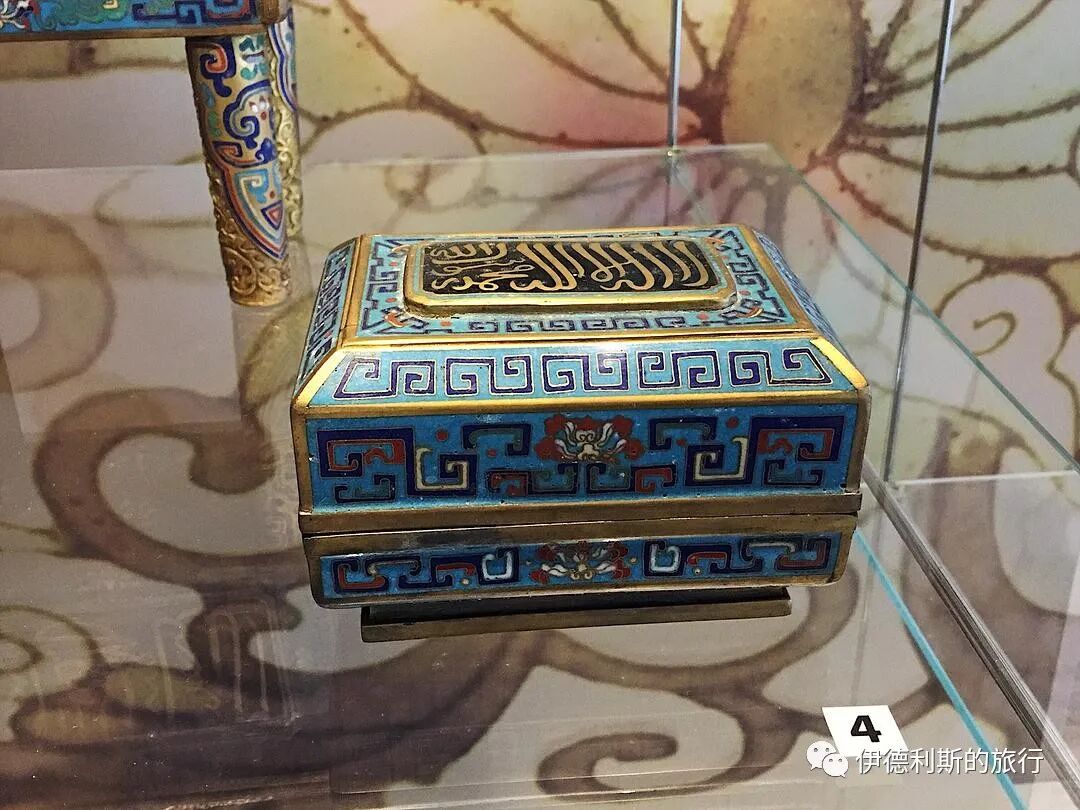
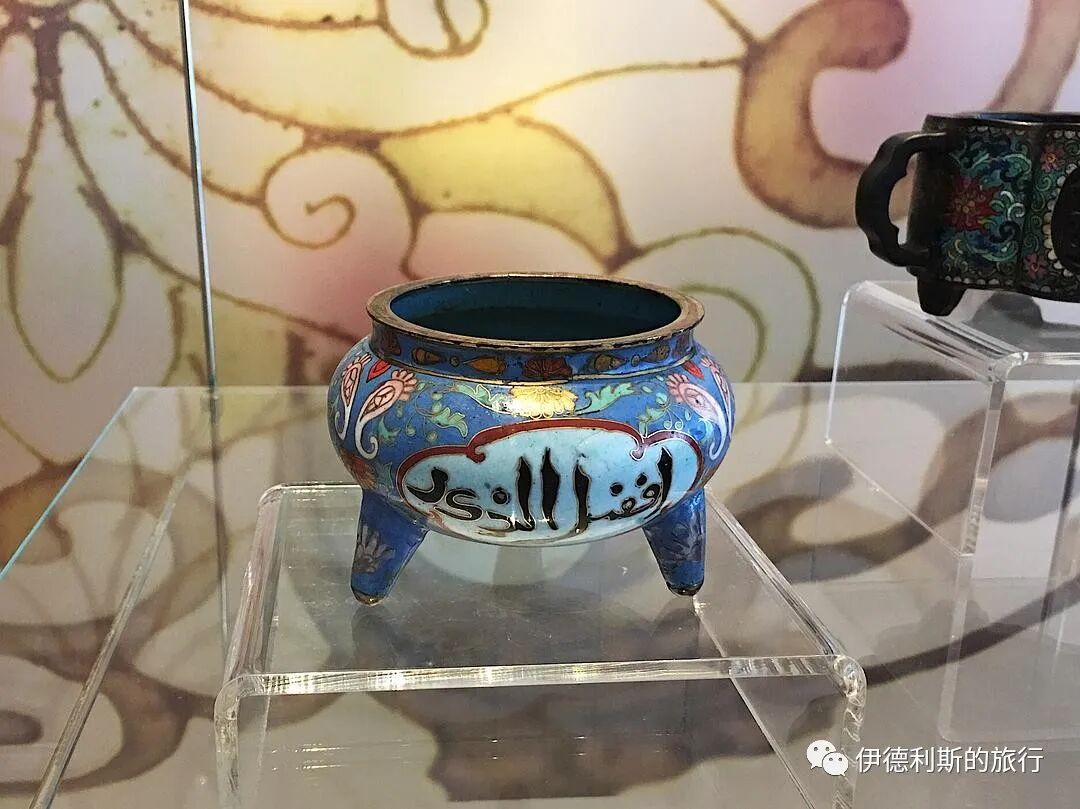
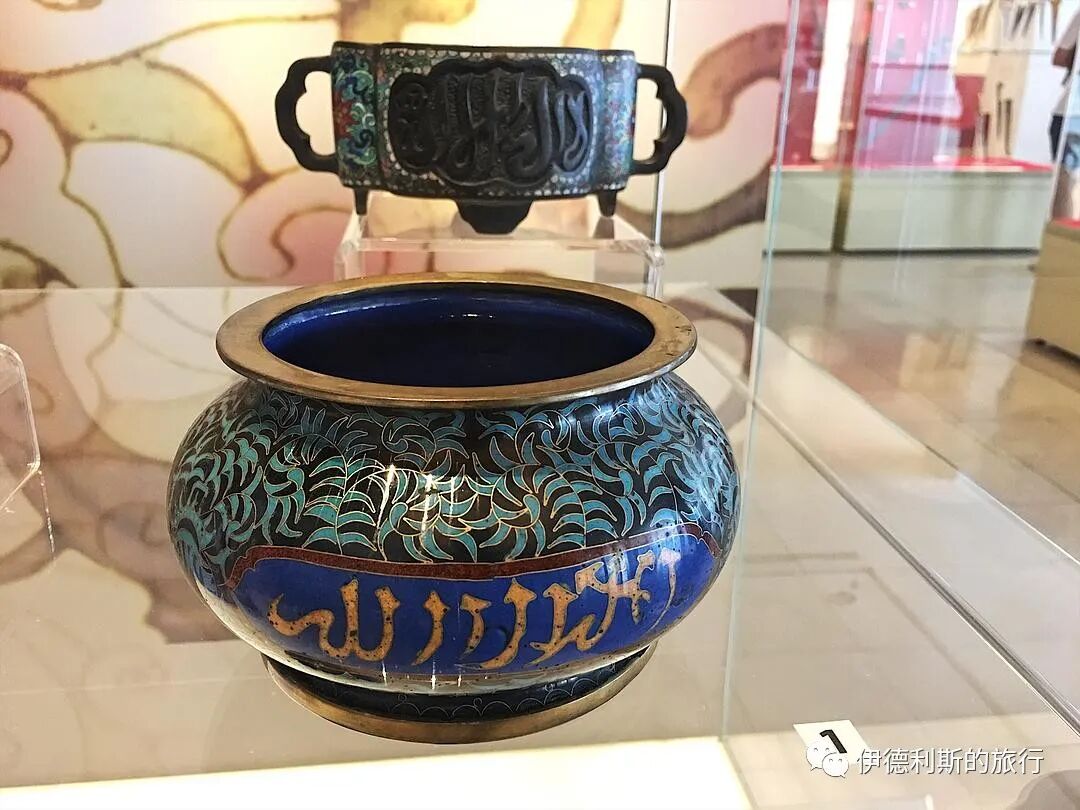 Collapse Read »
Summary: Malaysia Islamic Arts Museum: Chinese Muslim Artifacts and Islamic Heritage is presented here as a firsthand travel account in clear English, beginning with this scene: The Islamic Arts Museum Malaysia (Muzium Kesenian Islam Malaysia) is in Kuala Lumpur. It is the largest Islamic museum in Southeast Asia and holds over 7,000 Islamic art pieces from all over the world. The account keeps its focus on Malaysia Islamic Art, Chinese Artifacts, Museum Visit while preserving the names, places, food, and historical details from the Chinese source.
The Islamic Arts Museum Malaysia (Muzium Kesenian Islam Malaysia) is in Kuala Lumpur. It is the largest Islamic museum in Southeast Asia and holds over 7,000 Islamic art pieces from all over the world.
First, let's look at the museum's collection of artifacts related to China.
The history of Chinese-made porcelain with Arabic and Persian script.
Starting in the Yuan Dynasty, China exported large amounts of blue and white porcelain to the Middle East. Pieces have been dug up in Egypt, Iran, and Syria. During the Ming Dynasty, starting in the Yongle period (1403-1424), blue and white porcelain with Arabic and Persian script appeared. Most were modeled after metal and glass items from Arab and Persian regions and were made mainly for export. During the Zhengde period (1506-1521), blue and white porcelain with Arabic and Persian script mostly consisted of bowls, cups, brush rests, and boxes that matched the shapes of official imperial kiln pieces. Many were traditional stationery items. Because they often featured Quranic verses and praises to Allah, it is believed they were mostly ordered by Hui Muslims living in China.
Starting in the 16th century, folk kilns in Chaoshan and southern Fujian began producing Arabic-script export porcelain. These were mainly for the Southeast Asian market. The quality was lower than that of Jingdezhen, but the output was much higher.
After the Thirteen Factories were set up in Guangzhou during the Kangxi period, the amount of export porcelain grew rapidly. Porcelain began to be exported with long passages of scripture and the names of Caliphs. The higher-quality pieces were usually from Jingdezhen, while the lower-quality ones came from folk kilns in Chaoshan and southern Fujian. Because the folk kiln artisans were not familiar with the script, the Quranic text was often written incorrectly.
By the 18th and 19th centuries, the British East India Company imported large amounts of Chinese export porcelain. Wealthy Muslim families began ordering a lot of porcelain with Arabic and Persian script. The most famous examples were for the Asaf Jahi dynasty court in Hyderabad, India, and the Qajar dynasty court in Persia. However, most of these Muslim families ordered through the British East India Company in London rather than directly from Guangzhou.
1. Ming Zhengde porcelain.
The Arabic and Persian script on Ming Zhengde porcelain is mostly written inside diamond or square-shaped panels. The outer walls are decorated with scrolling flowers or cloud patterns. The bottom has a mark reading 'Made in the Zhengde period of the Great Ming'. Most are blue and white, with only a few featuring overglaze red enamel.
The text inside the four diamond and square panels on the overglaze red enamel Zhengde piece in the picture translates to: 'O Allah, protect Hui Ma Yun from the anger of the wicked.'
2. Swatow ware (Shantou qi) ordered by the Aceh Sultanate royal family.
Swatow ware, also called Zhangzhou ware (Zhangzhou qi), is a type of export porcelain that appeared in the late Ming Dynasty. It was mainly for the Southeast Asian and Japanese markets and was popular from the mid-16th to mid-17th centuries. Most Swatow ware was produced by folk kilns in the Chaoshan and southern Fujian regions, with the most coming from near Zhangzhou, Fujian.
Compared to Jingdezhen porcelain, Swatow ware is rougher. Its biggest feature is the 'sandy base' (shadi zu). To save space in the kiln, artisans skipped using pads and saggers and instead dipped the foot ring of the porcelain in fine sand. After firing, sand grains remained on the base and foot ring. At first, Swatow ware only had underglaze blue and white, but later, overglaze enamel styles became very diverse.
15th-century Arabic-script Swatow ware exported to Muslim regions in Southeast Asia.
The most famous Arabic-script Swatow ware was ordered by the royal family of the Aceh Sultanate. The Aceh Sultanate was a powerful maritime trading state established in 1496 on the northwest coast of Sumatra. After the fall of the Malacca Sultanate, it became the center of Islam in Southeast Asia. The 16th and 17th centuries were the peak of the Aceh Sultanate. Most Aceh Shantou ware came from the court of Sultan Iskandar Muda (reigned 1607-1636) and several other sultans.
Most Aceh Shantou ware features nine circles. The center circle holds the name of the current sultan, while the eight surrounding circles hold the names of famous past sultans.
Shantou ware commissioned by the Aceh Sultanate royal family in the 16th and 17th centuries.
3. Magic square (huanfang) porcelain produced in China.
Magic squares, also called grid charts (zonghengtu), were believed to have predictive and healing powers.
A magic square is divided into 16 squares, each containing a number. The sum of the numbers in any row, column, or diagonal should be the same. Among these numbers, 1 is a symbol of Allah, and 7 represents the seven heavens, the seven hells, and the seven days of the week. In astrology, the 3 in a magic square represents Saturn, 4 represents Jupiter, 5 represents Mars, 6 represents the Sun, 7 represents Venus, 8 represents Mercury, and 9 represents the Moon.
Most 18th-century magic square export porcelain was produced in Jingdezhen. The squares are surrounded by excerpts from scriptures and classic texts. After the 19th century, folk kilns began mass-producing imitations. The surrounding text degraded into decorative patterns, and the numbers in the magic squares were simplified into symbols or disappeared entirely. By this time, the predictive function of magic square porcelain had changed, and it was used only for decoration.
4. Chinese Imari porcelain.
Imari porcelain comes from the Arita kilns on Kyushu Island, Japan. In the mid-17th century, during the transition between the Ming and Qing dynasties, Chinese people who moved to Kyushu Island brought overglaze painting techniques, which helped the colorful Arita kilns take shape. The Ming-Qing transition also interrupted the export of Jingdezhen porcelain. In the late 17th century, Arita porcelain began to be exported in large quantities from the port of Imari in northwestern Kyushu, becoming the main source of export porcelain.
At the end of the 17th century, as China resumed porcelain exports from Guangzhou, Guangzhou export porcelain began to imitate Imari porcelain on a large scale, eventually surpassing Japan's export volume.
Chinese Imari porcelain mostly uses underglaze cobalt blue or iron-red enamel, with heavy gold painting applied over the glaze. Imari teapots with swan-neck spouts were also classic styles exported to Europe.
Chinese Imari porcelain from the Kangxi period.
Chinese Imari porcelain from the Qianlong era.
5. A Qianlong peach-shaped porcelain box ordered by the court of the Asaf Jahi dynasty in India.
The inscription on the porcelain box has Latin text on the outer ring reading 'NABOB ASUF UT DOWLAH VAZIR UL MUMULLECK ASUPJAH' and Latin text on the inner ring reading 'BEHADRE HOZBUR JUNG IEAYAA CAWN'. The Persian text in the center says the same thing, meaning it was dedicated to Muhyi ad-Din Muzaffar Jang Hidayat of the Asaf Jahi dynasty. Muzaffar Jang ruled the Asaf Jahi dynasty from 1750 to 1751.
The Asaf Jahi dynasty was a Muslim kingdom on the Deccan Plateau in southern India from 1724 to 1948, centered in the city of Hyderabad.
The Asaf Jahi family was originally a Turkic family from Samarkand. They arrived in the Mughal Empire in the late 17th century to serve as court officials. In 1724, the Mughal Empire fell into chaos. Mir Qamar-ud-Din Siddiqi, who had served as the Governor of the Deccan, declared independence using the Asaf Jah title granted by the Mughal Emperor. He established the Asaf Jahi dynasty in Hyderabad and called himself the Nizam-ul-Mulk of Hyderabad (the ruler of Hyderabad).
Asaf Jah I died in 1748. His son Nasir Jung and his grandson Muzaffar Jung fought for the throne with support from the British and French. Nasir Jung died in battle in 1750. Muzaffar Jung ruled for one year before dying in battle in 1751. Finally, Asaf Jah I's third son, Salabat Jung, became Asaf Jah II.
6. Chinese export porcelain ordered by the Persian Qajar dynasty.
The fourth monarch of the Persian Qajar dynasty, Naser al-Din Shah Qajar (reigned 1848-1896), and his eldest son, Mass'oud Mirza Zell-e Soltan (1850-1918), ordered a large amount of Chinese export porcelain. These porcelains were mainly Canton enamel (guangcai), but also included blue and white porcelain and Fitzhugh porcelain.
The porcelain plate below features the emblem of the Qajar dynasty at the top.
Canton enamel (guangcai).
The full name of Canton enamel is Guangzhou gold-woven colored porcelain (Guangzhou zhijin caici). It was a famous export porcelain from Guangzhou during the middle and late Qing dynasty.
In 1685 (the 24th year of the Kangxi reign), the Yuehai Customs was established, followed by the Thirteen Factories of Guangzhou for foreign trade. Porcelain was an important export commodity. Initial export porcelain was ordered directly from Jingdezhen. By the Yongzheng era, porcelain merchants in Guangzhou began shipping white porcelain blanks from Jingdezhen to Guangzhou. They hired Jingdezhen masters to perform low-temperature overglaze painting in Guangzhou, which is how Canton enamel began.
After the Qianlong era, Canton enamel entered a mature stage and formed its own colorful and gorgeous style. The colors were mainly Western red, crane-spring color, eggplant color, deep ochre, and powder green, all produced locally in Guangzhou. After the Daoguang era, the number of colors increased to more than a dozen.
Canton enamel from the late Qing dynasty was mass-produced with neat patterns. Bowls, plates, and dishes mostly had a gold-trimmed circle in the center. The surrounding area was filled with 'full-ground' patterns of various flowers, fruits, birds, insects, people, and landscapes, along with logos specified by foreign merchants.
Below is Canton enamel ordered by the court of the Persian Qajar dynasty (1779-1921) between the late 19th century and 1915.
Guangzhou blue porcelain from 1882.
Fitzhugh porcelain from 1878.
Fitzhugh porcelain is named after Thomas Fitzhugh, a director of the British East India Company in Guangzhou during the 1760s. He ordered many pieces in this style between 1787 and 1800. This made the porcelain very popular for export during the Jiaqing period (1796-1820), and it remained popular through the Daoguang period (1821-1850). The main feature of Fitzhugh porcelain is a medallion pattern in the center, surrounded by various traditional Chinese elements.
7. Other export porcelain with Arabic and Persian script.
18th-century multicolored porcelain plate.
19th-century brush pot.
18th-century jar.
19th-century teapot.
8. Ming and Qing dynasty scripture manuscripts.
A 30-volume scripture manuscript from Gansu Province, dated March to April 1546. It is signed by Khaili Ibrahim Yunus Al-sini and features peony and cloud patterns.
A 30-volume scripture manuscript from the 17th-century Qing dynasty.
A 30-volume scripture manuscript from 1730 during the Qing dynasty, with a brown embossed leather cover.
9. Xuande incense burners (Xuande lu).
Bronze incense burners appeared at the end of the Yuan dynasty. They reached their peak during the Ming dynasty Xuande period (1425-1435), when they were cast in brass for the first time. Xuande burners are made using the lost-wax casting method, so you cannot see any mold marks after polishing. Most have an open mouth, a short neck, and a flat belly. Some have three blunt cone-shaped solid feet, while others have bridge-shaped handles on the rim. They are dark purple or blackish-brown, and many are gilded or inlaid with gold flakes on the outside.
The production of imitation Xuande burners continued from the Xuande period through the Republic of China era. Xuande burners from different eras have different features. Those from the late Ming dynasty are heavier, those from the Yongzheng period are softer, and those from the Qianlong period show higher craftsmanship. After the 19th century, Xuande burners became increasingly rough, and their quality dropped significantly.
Starting in the Ming dynasty Zhengde period (1506-1521), Xuande burners featuring the Basmala or the Shahada appeared and continued to be made.
10. Qing Dynasty copperware and cloisonné enamel (jingtailan)
After the Canton Customs was set up in 1685 (the 24th year of the Kangxi reign) and the Thirteen Factories were established in Guangdong, copperware and cloisonné enamel (jingtailan) featuring Arabic and Persian script began to be exported during the 18th and 19th centuries.
The one on the left is from 1815, and the one on the right is from the 18th century.
18th-century copperware
Cloisonné enamel (jingtailan)
Collapse Read »
Halal Travel Guide: Beijing Autumn Mosque Walk — Old Mosques and Muslim Heritage
Reposted from the web
Summary: Beijing Autumn Mosque Walk — Old Mosques and Muslim Heritage is presented here as a firsthand travel account in clear English, beginning with this scene: Between late September and early October, I visited seven old mosques in Beijing: Guanzhuang Mosque, Xihui Mosque, Yangzha Mosque, and Wanziying Mosque in Chaoyang District, as well as Landianchang Mosque, Siwangfu. The account keeps its focus on Beijing Mosques, Autumn Travel, Muslim Heritage while preserving the names, places, food, and historical details from the Chinese source.
Between late September and early October, I visited seven old mosques in Beijing: Guanzhuang Mosque, Xihui Mosque, Yangzha Mosque, and Wanziying Mosque in Chaoyang District, as well as Landianchang Mosque, Siwangfu Mosque, and Shucun Mosque in Haidian District. I will share them with you below.
1. Guanzhuang Mosque
The founding date of Guanzhuang Mosque is unknown. The main hall was renovated in 1946. From 1958 until the 1980s, the site was used by a large canteen, a straw rope factory, and a production team. It was renovated and rebuilt again between 2003 and 2004. The finial on the moon-viewing tower (wangyuelou) was cast by craftsmen from Hexiwu, Tianjin, following the design of the original. Guanzhuang has now been demolished and replaced by apartment buildings.
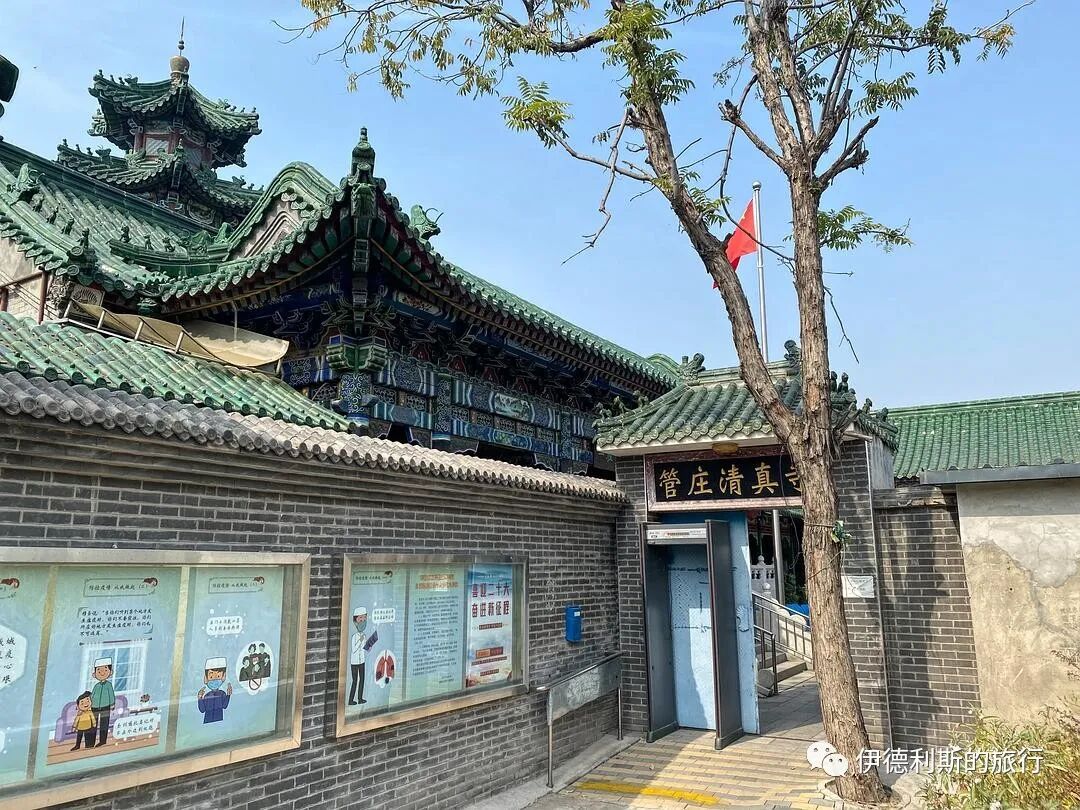
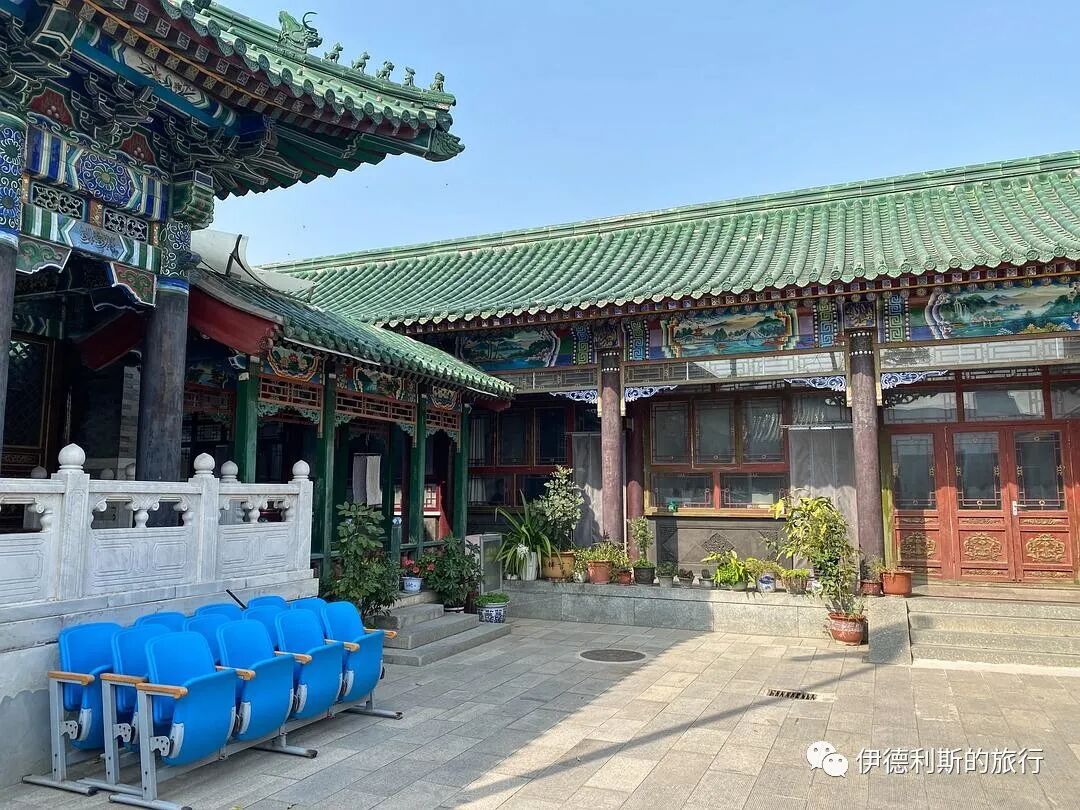
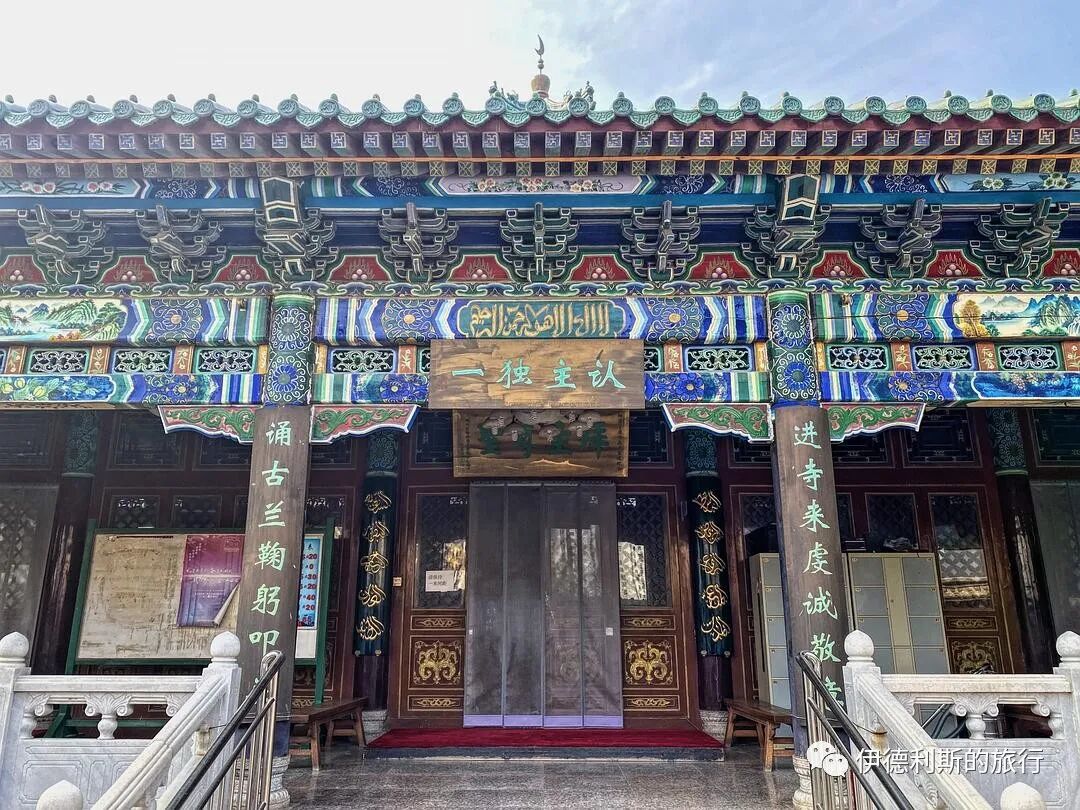
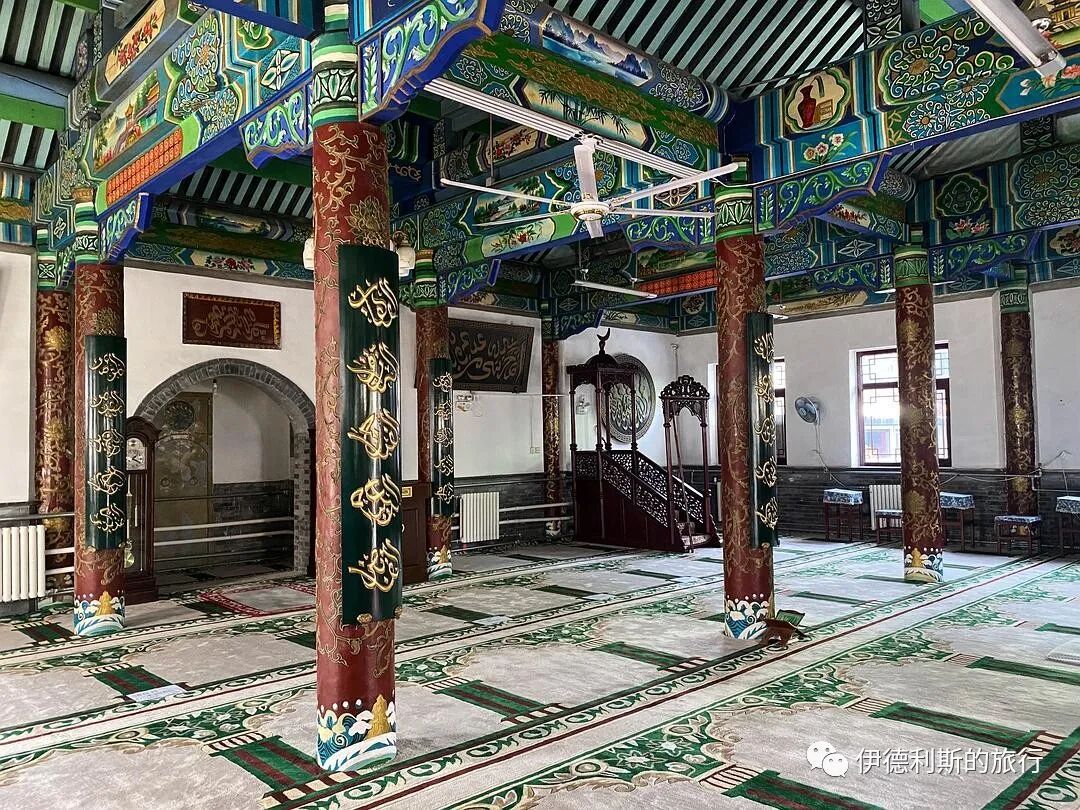
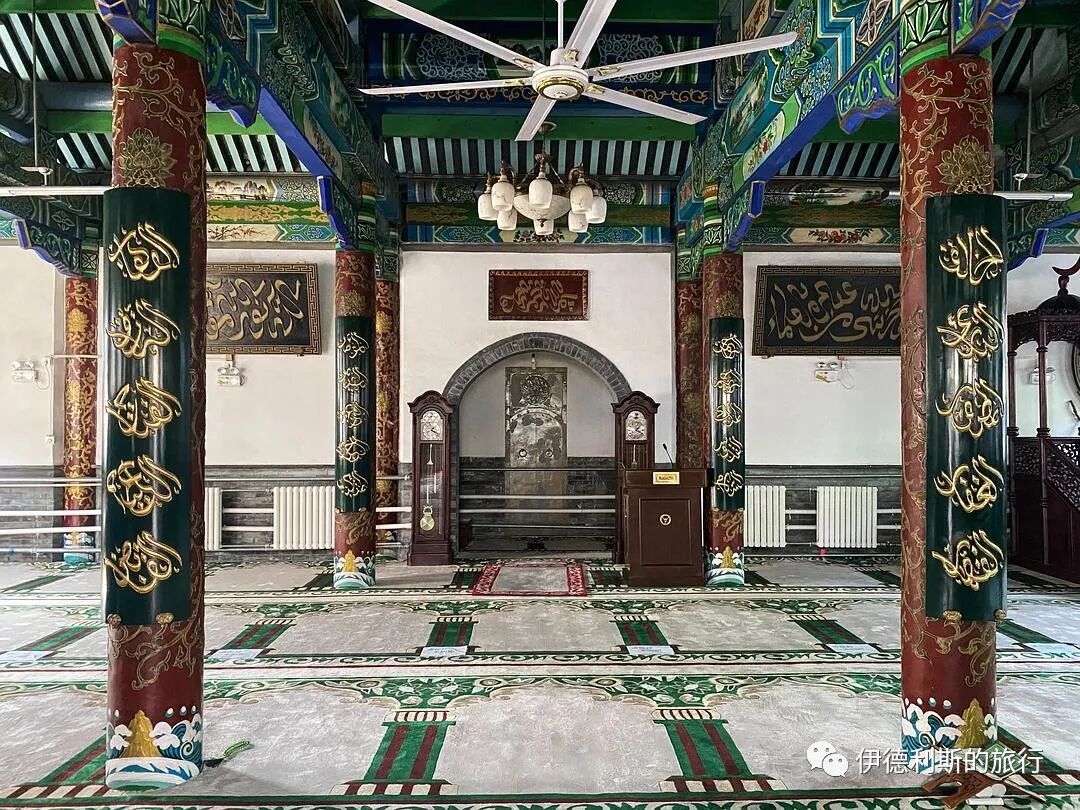
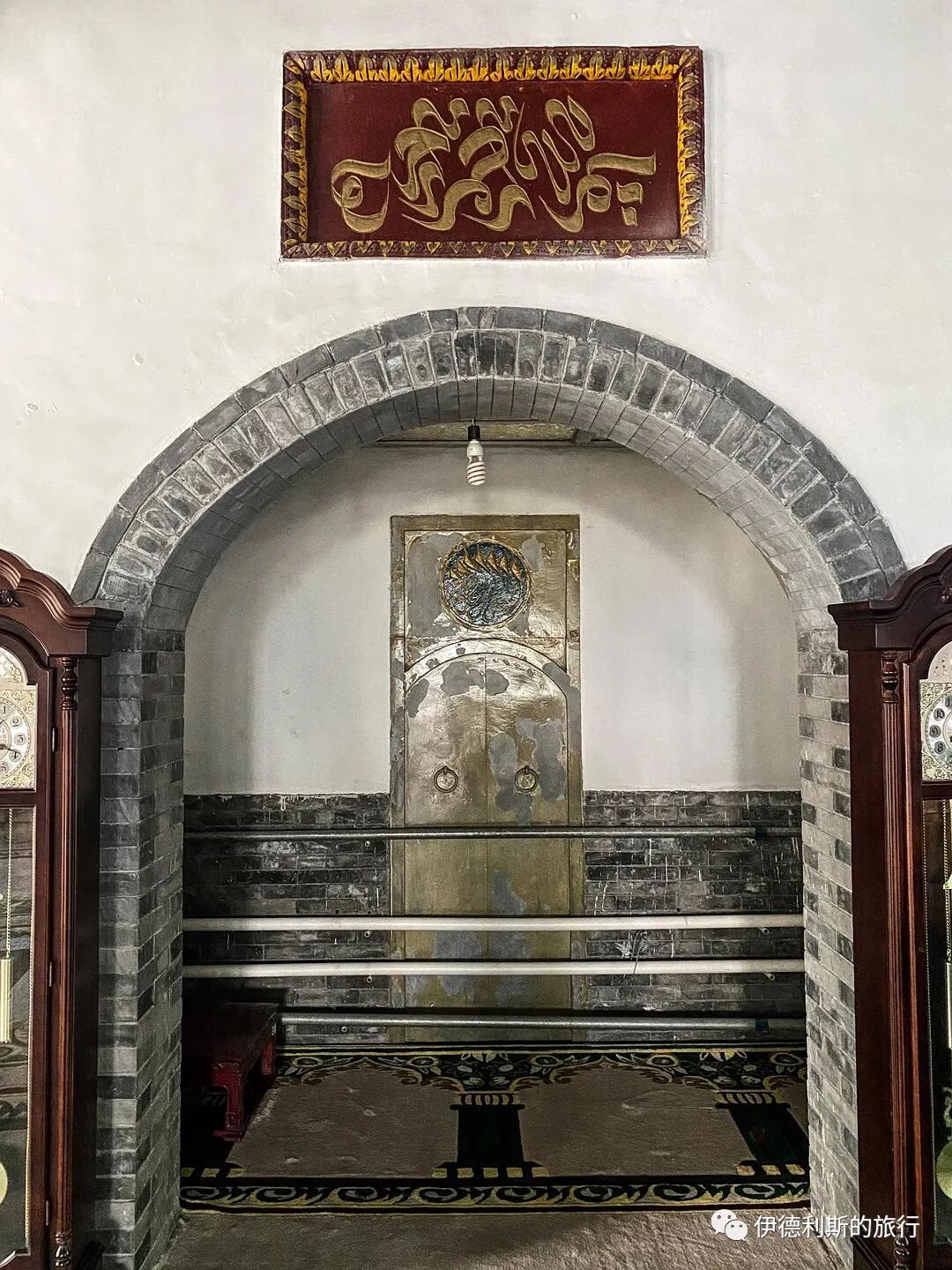
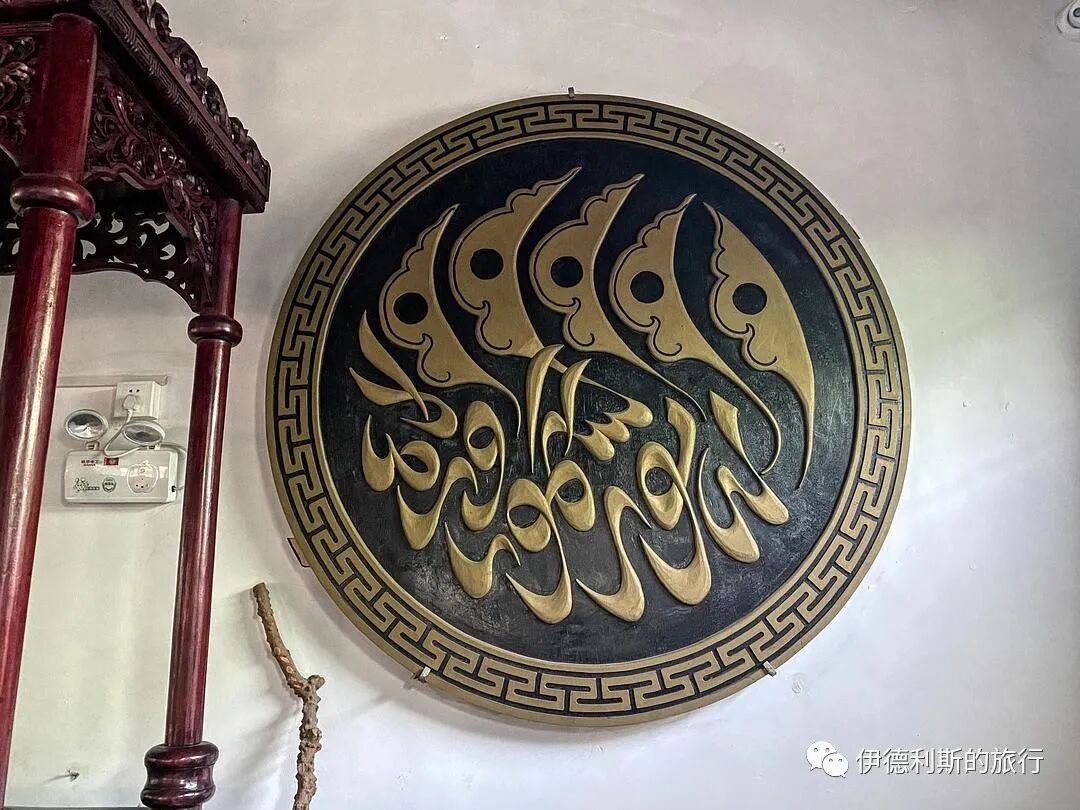
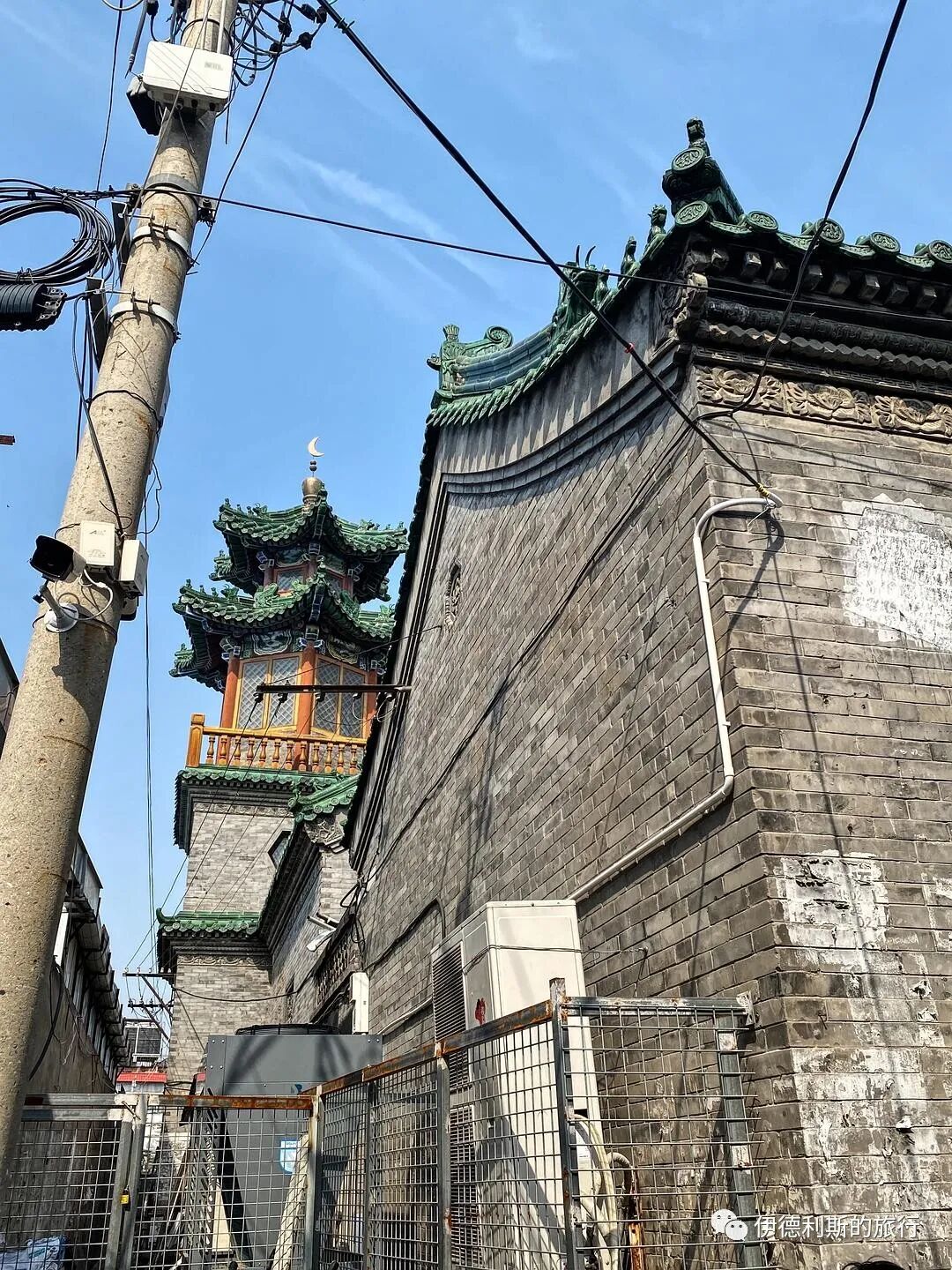
2. Xihui Mosque
Xihui Mosque sits by the Tonghui River, on the north bank of the former Puji Sluice Bridge. It was built in 1821, the first year of the Daoguang reign. A plaque inscribed with the words "Qingzhen Wu'er" (The Truth is One) by Cao Zhenyong, a Grand Secretary of the Tiren Pavilion, still hangs above the main hall. Xihui Mosque was closed from 1966 to 1984. It later reopened and has undergone several renovations. It has been over ten years since the residents of Xihui Village moved into high-rise apartments after the demolition of their old homes. It is truly special that the village elders still insist on riding their bikes up the hill to visit the mosque.
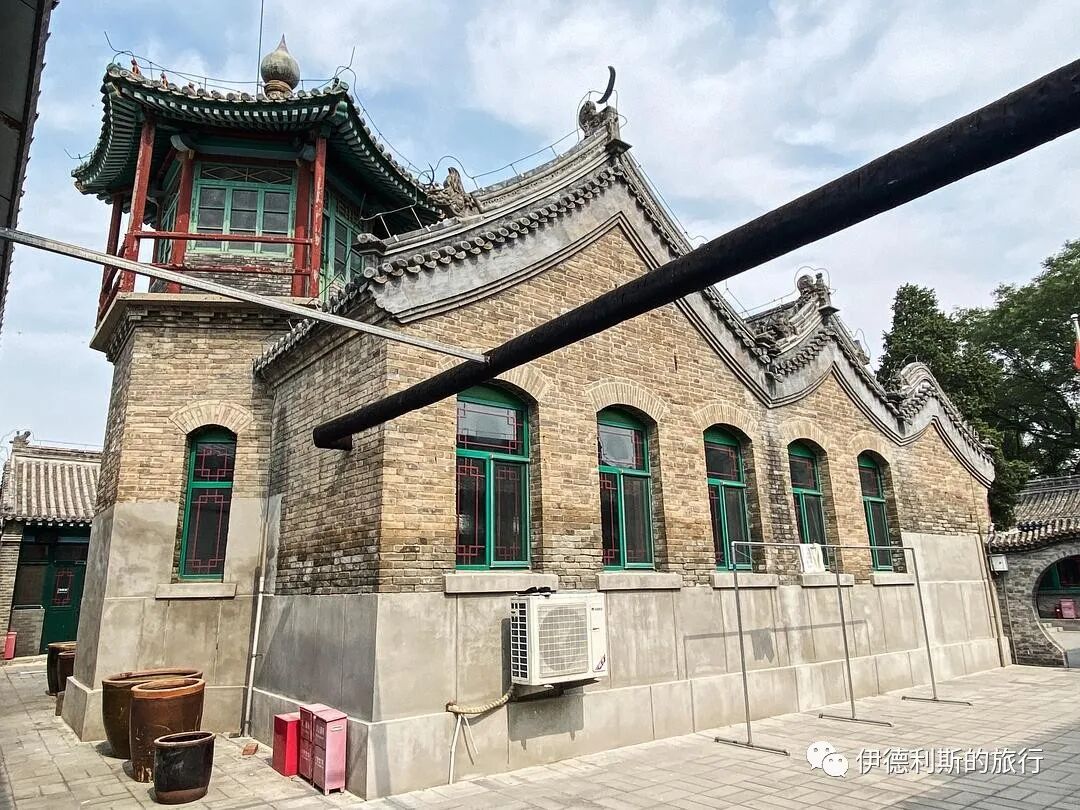
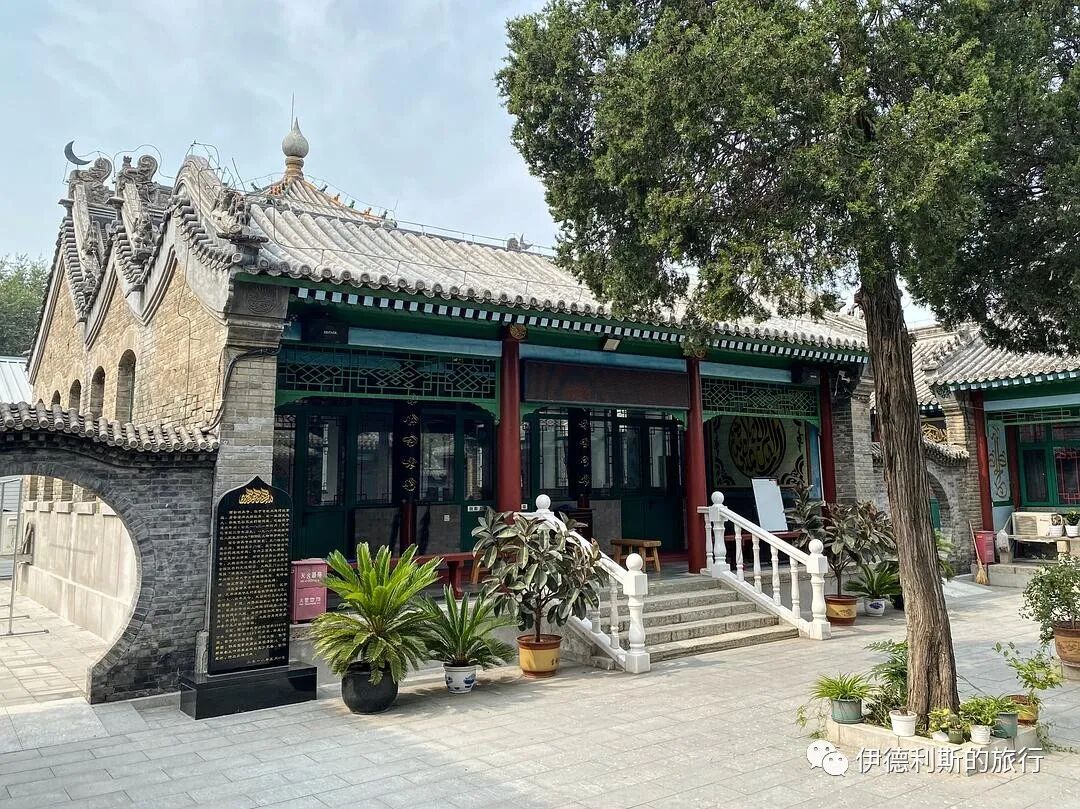
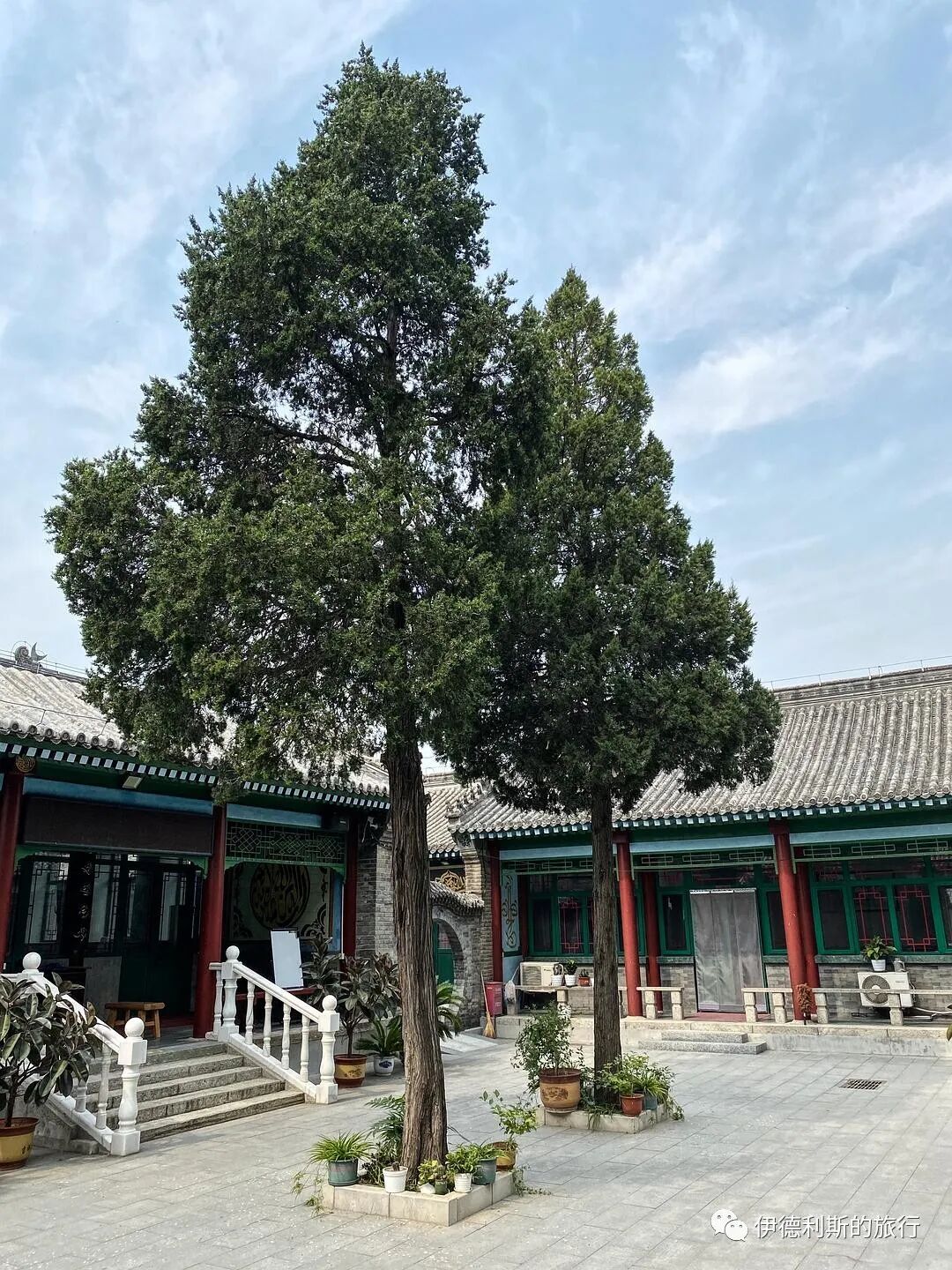
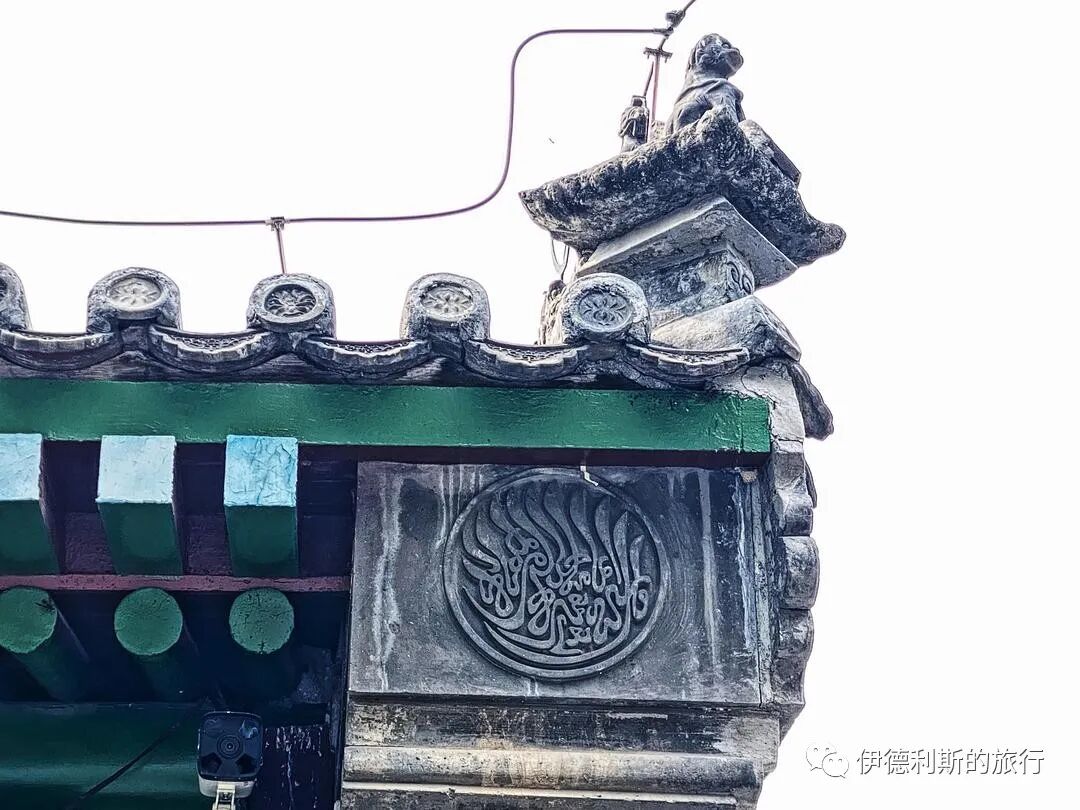
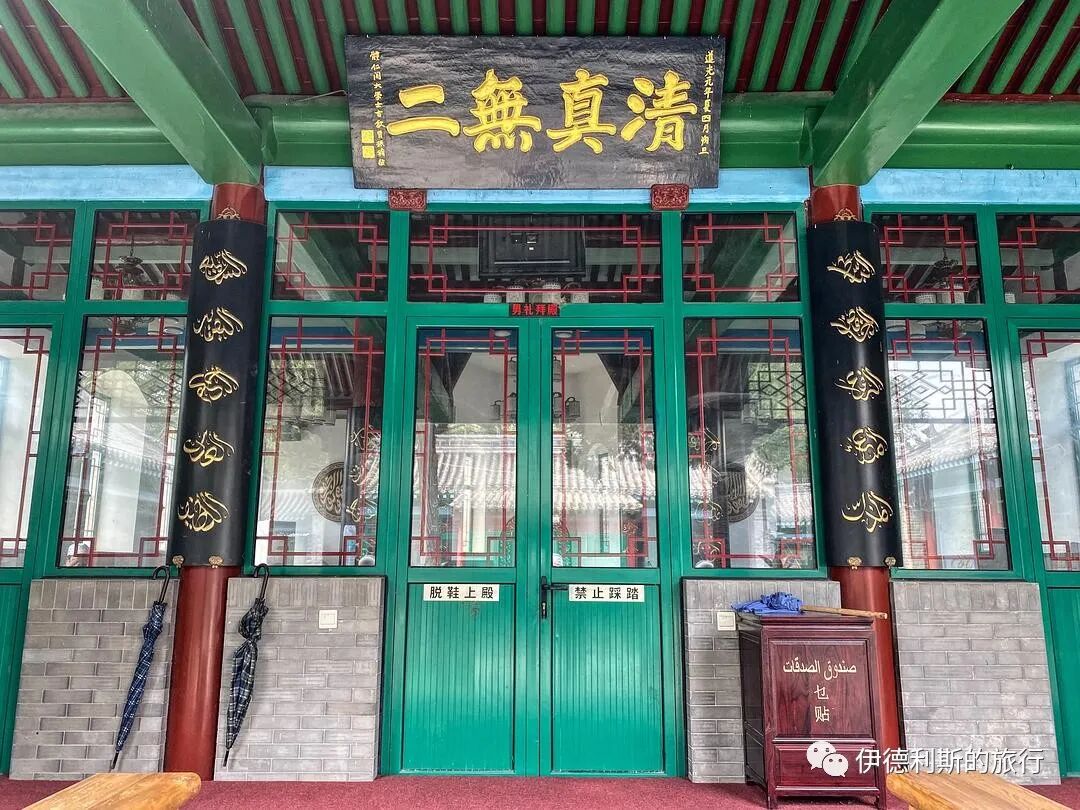
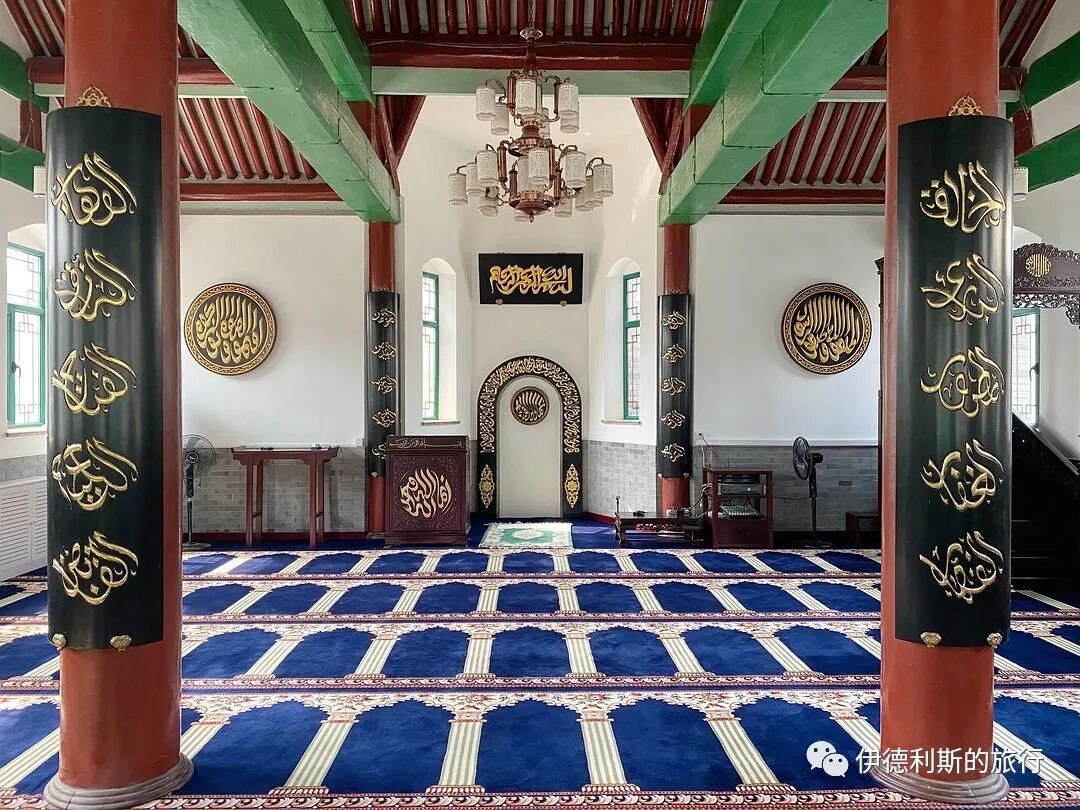
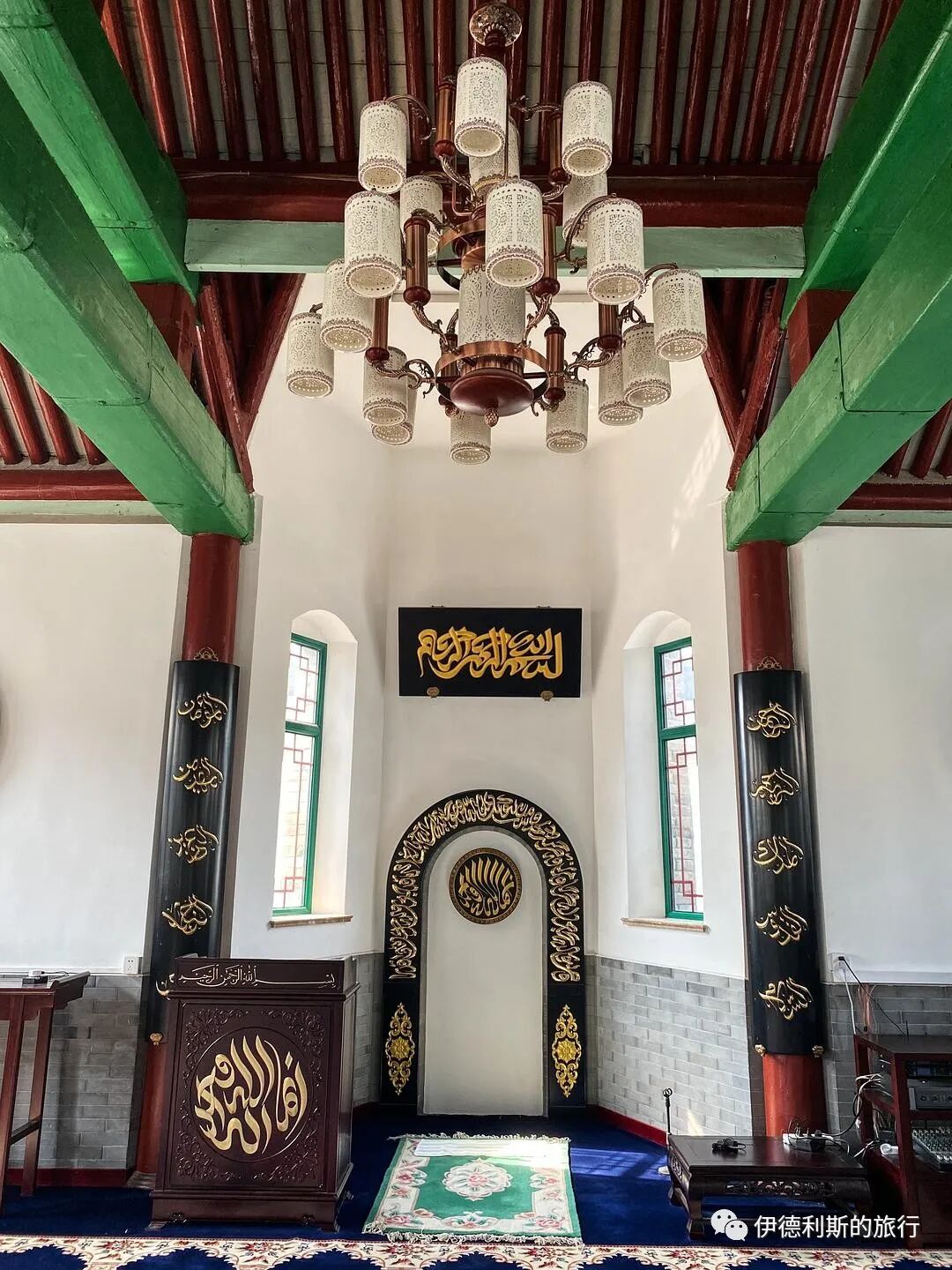
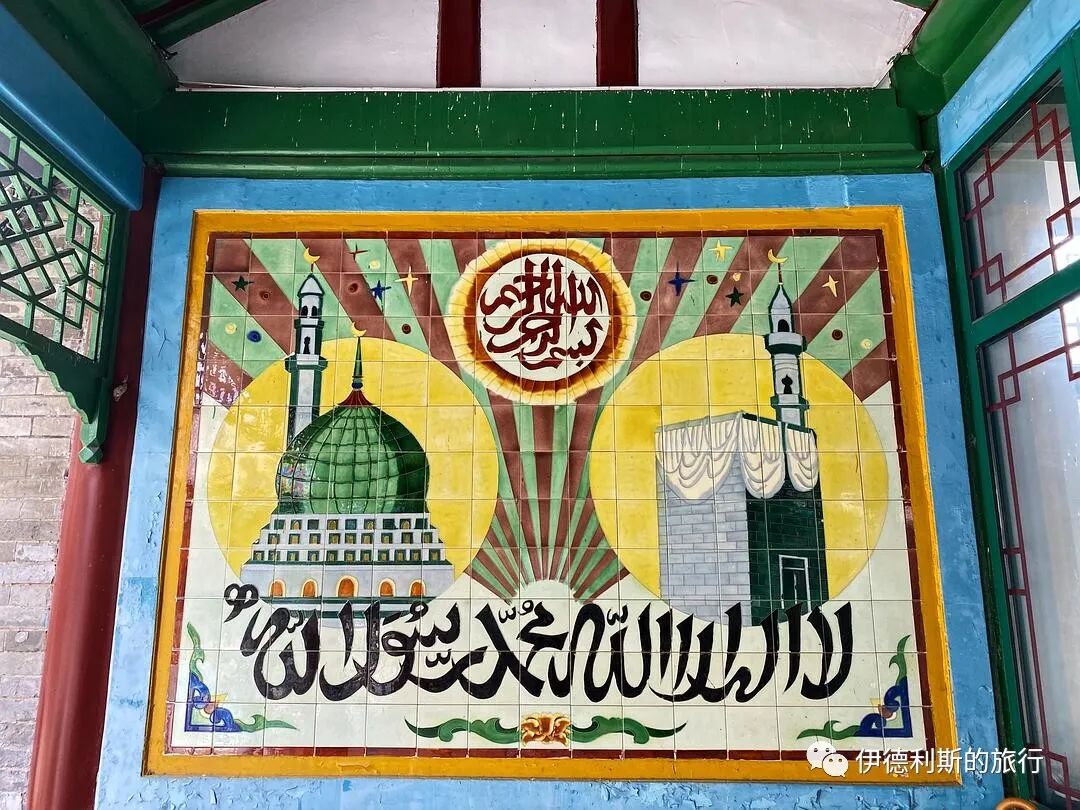
3. Yangzha Mosque
Historically, Yangzha Mosque sat right next to the main road from Chaoyangmen in Beijing to Tongzhou. It is said to have been built during the Wanli era of the Ming Dynasty. The current structure was rebuilt in 1994 and renovated again in 2006. The mosque features covered walkways and pavilions, along with pine and cypress trees transplanted from Jixian, Tianjin, in 1998, making for a very pleasant environment.
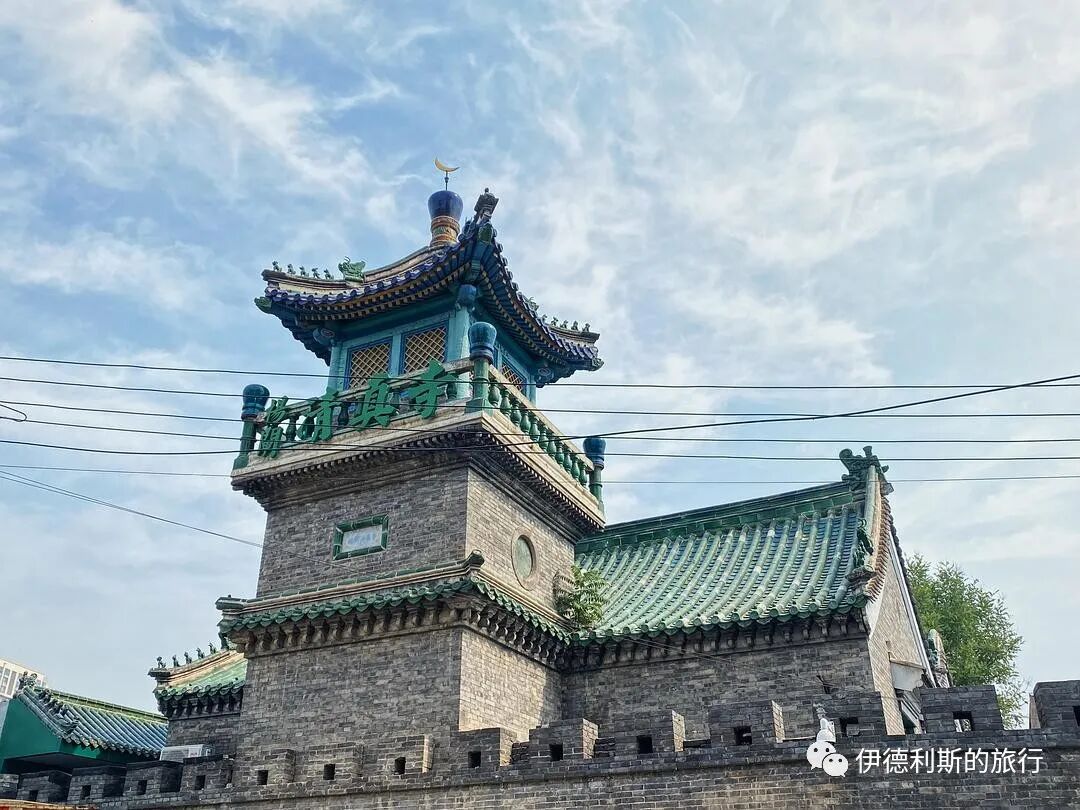
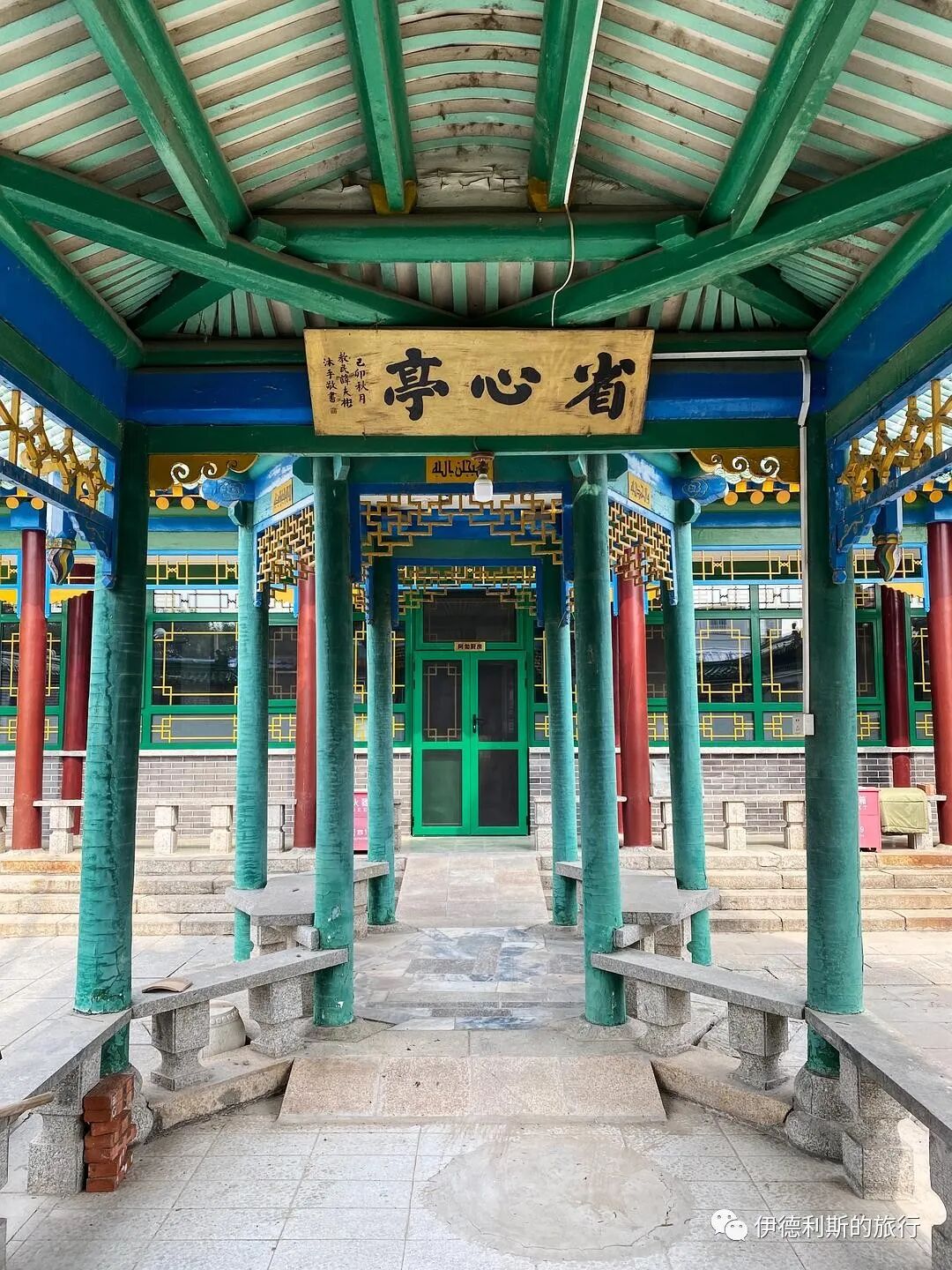
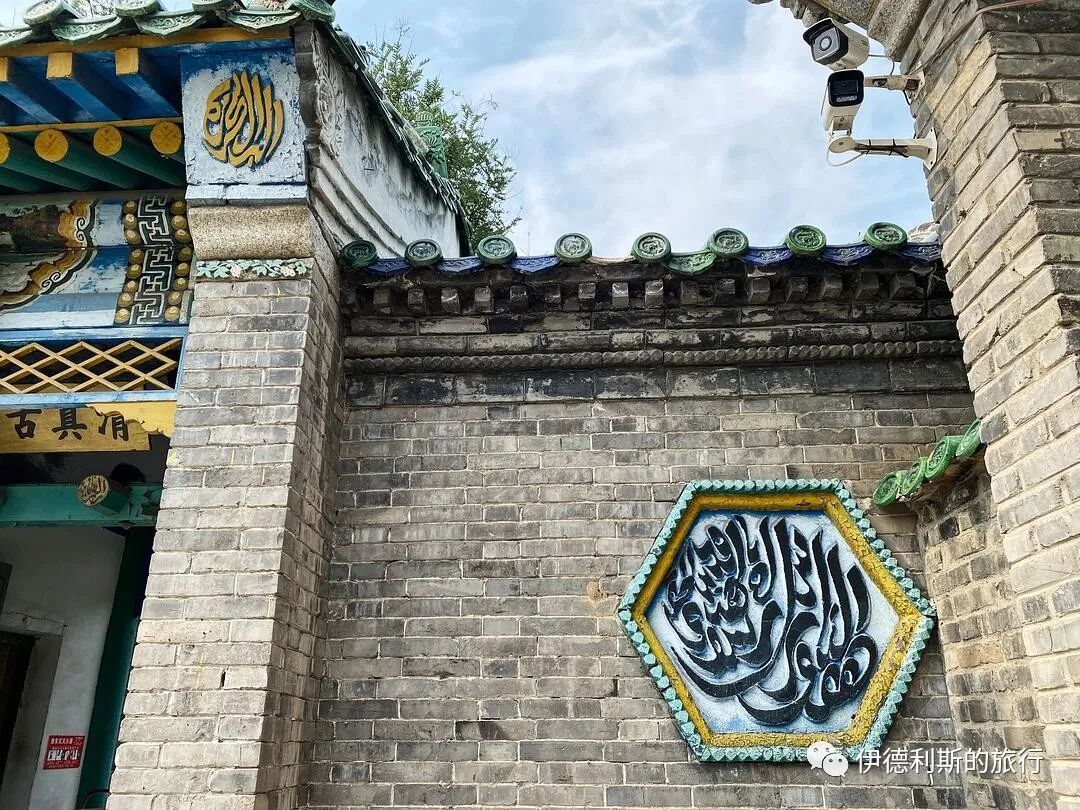
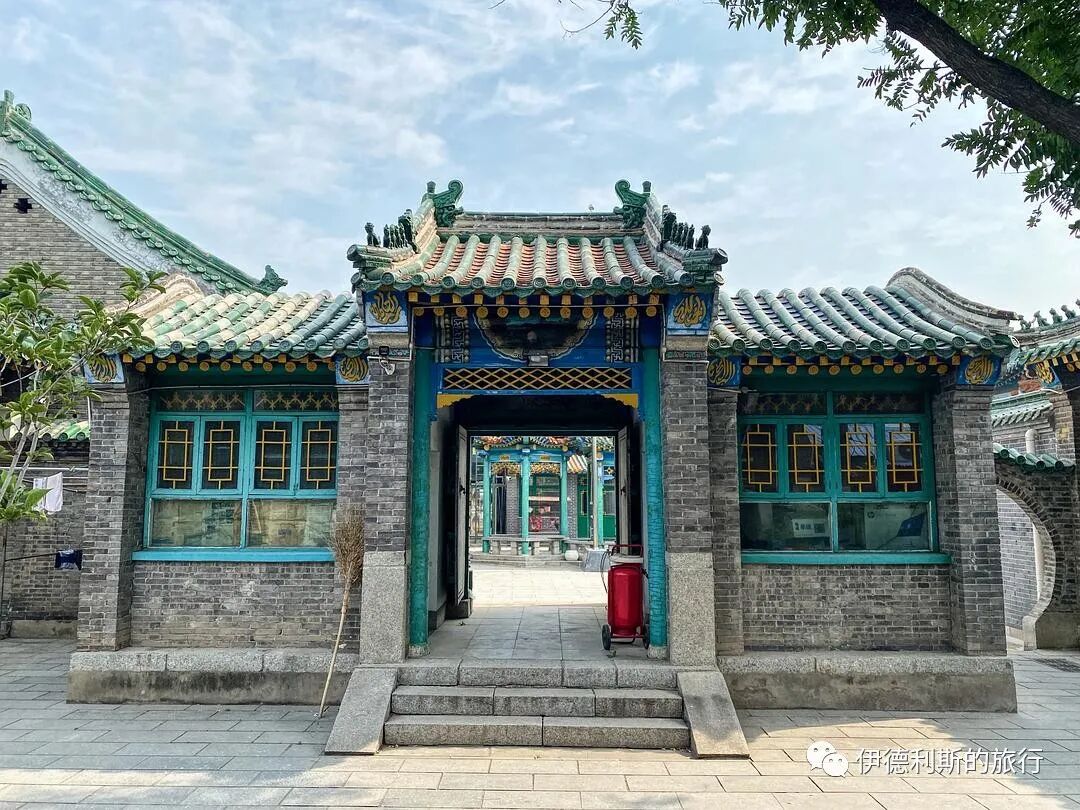
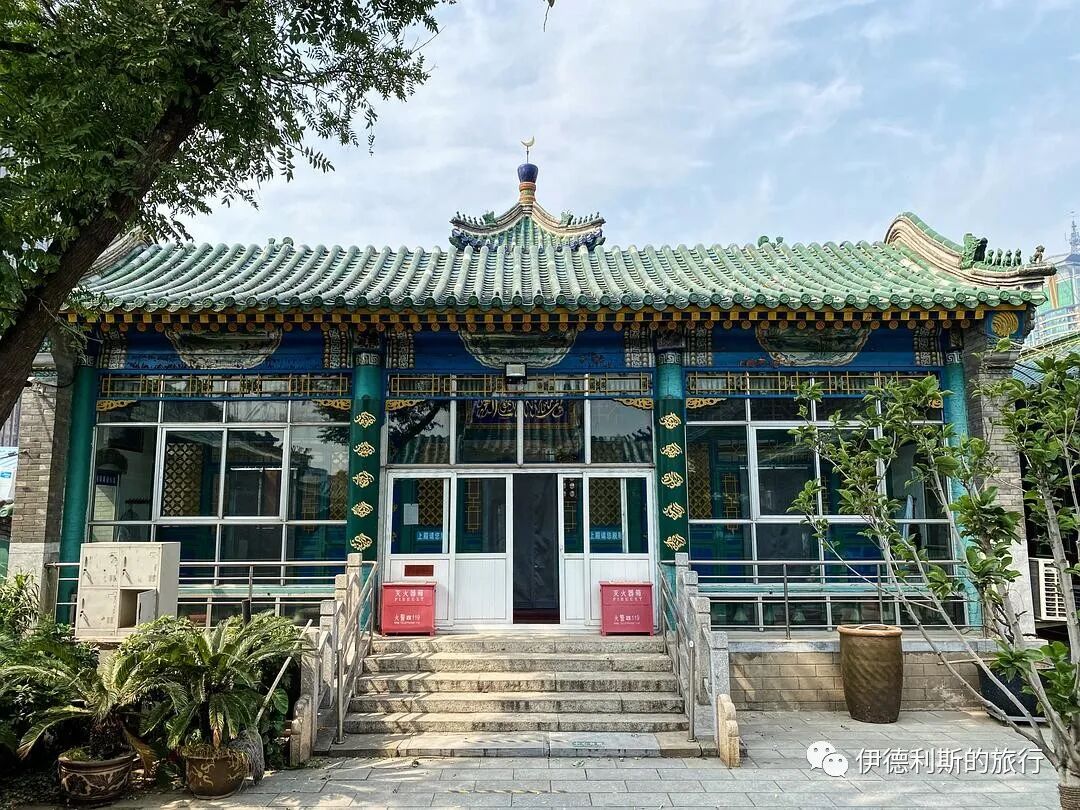
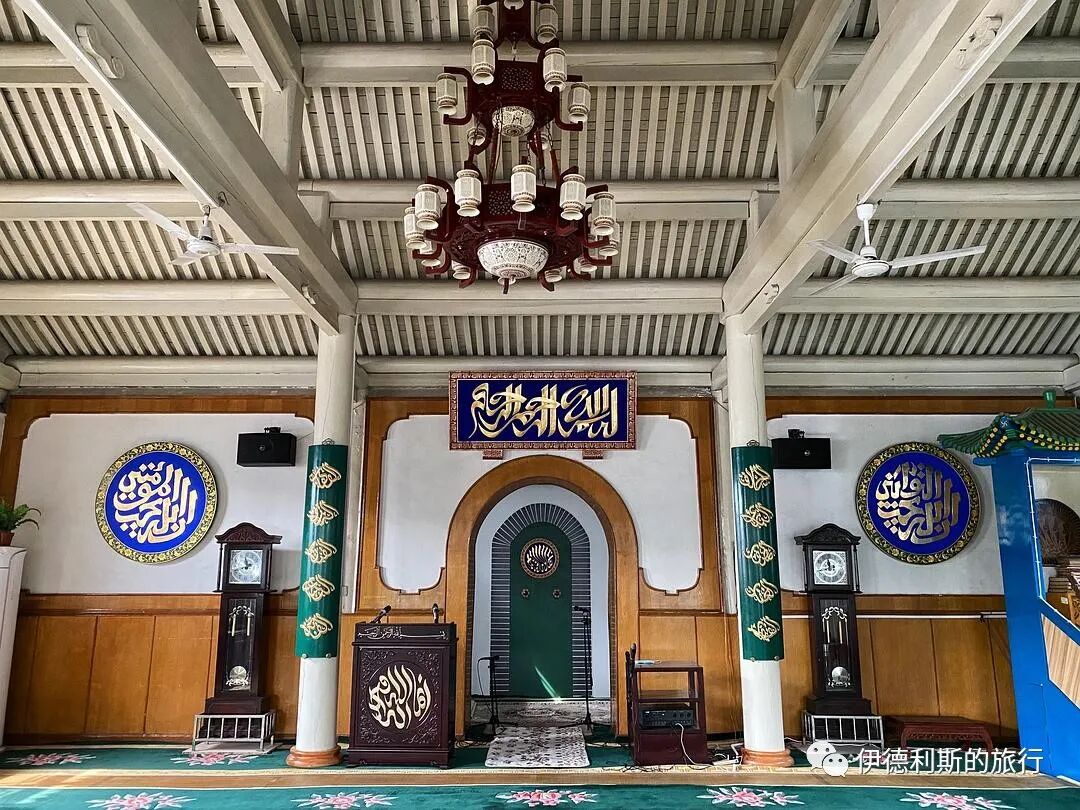
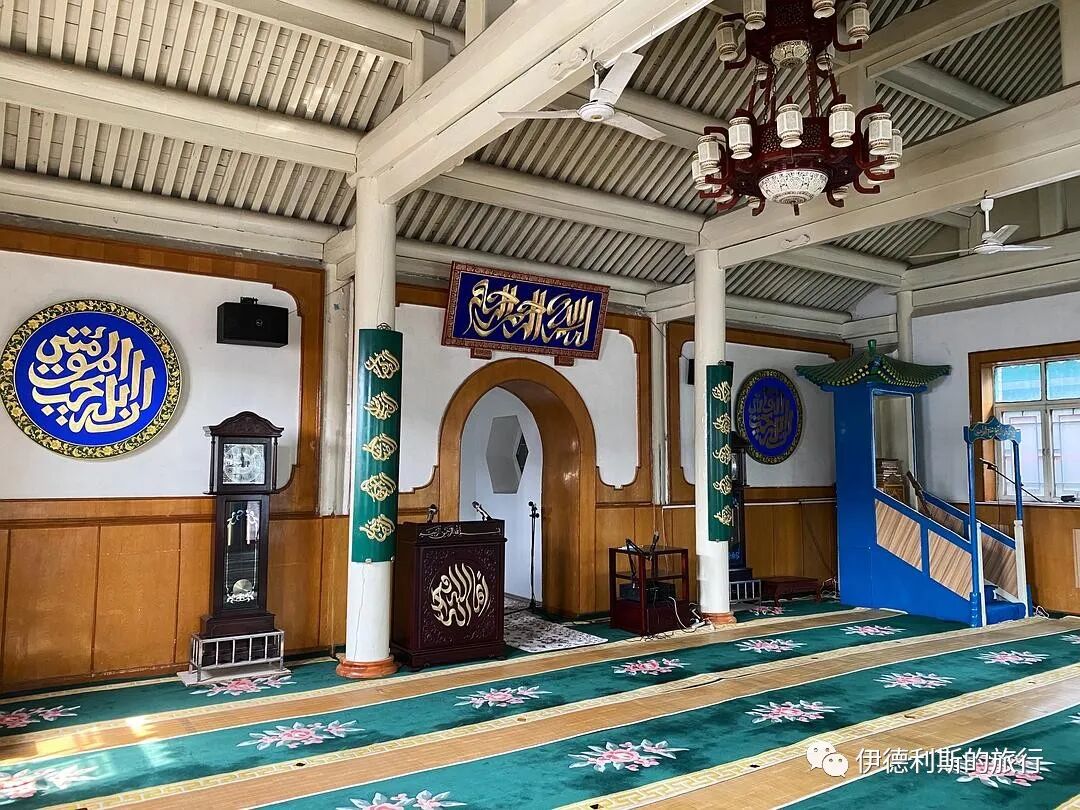
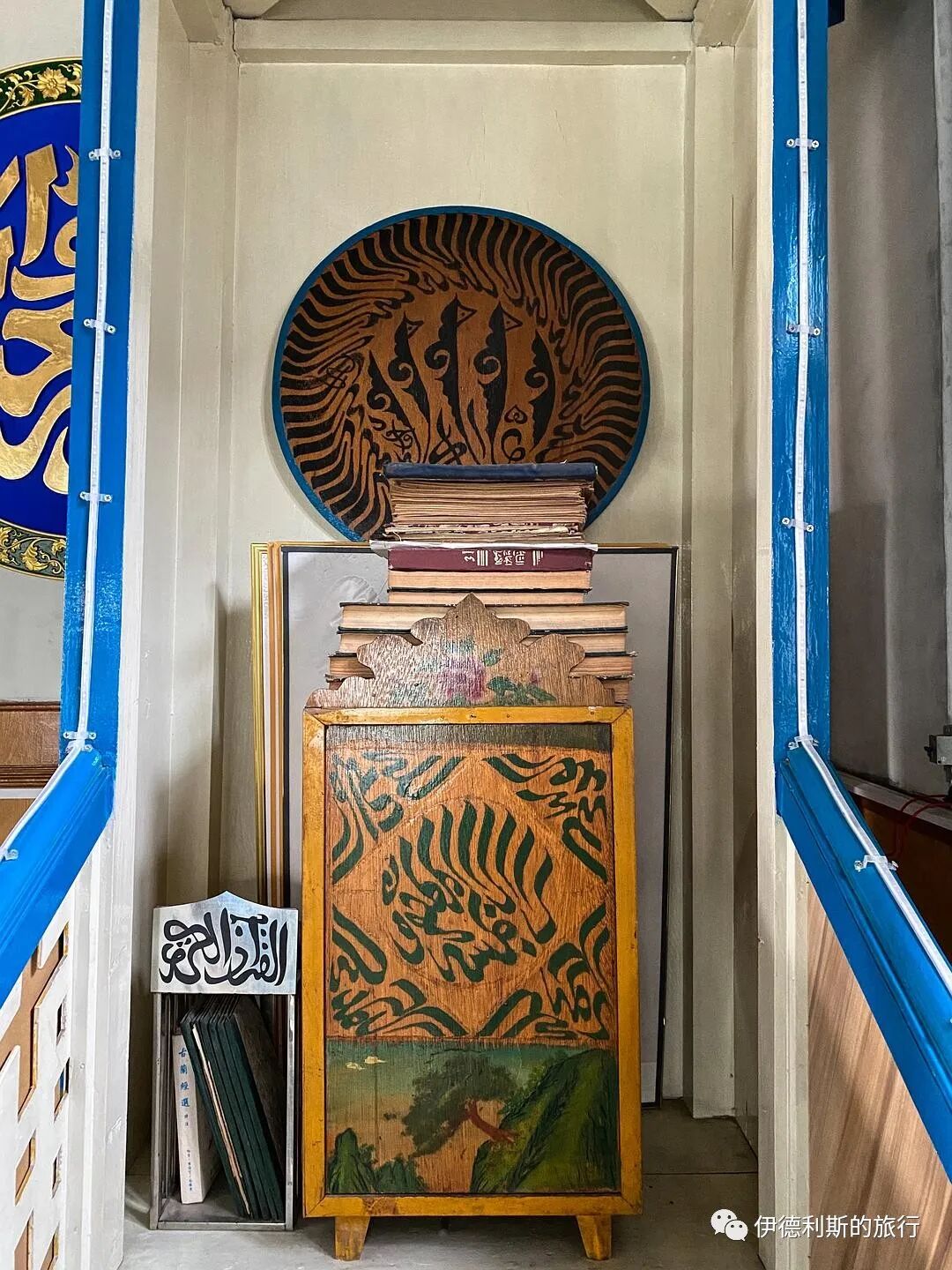
4. Wanziying Mosque
Wanziying Village sits on the border of Chaoyang and Tongzhou. Hui Muslims and Han people live there together, and it has now been developed into a beautiful village with a very nice environment. I had a simple bowl of soybean paste noodles (zhajiangmian) at the village entrance, and the prices were much more affordable than in the city. There is a halal pastry shop at the village entrance called Baoyuanzhai that is apparently quite popular online. I bought some old-fashioned bread (laomianbao), ox-tongue-shaped biscuits (niushebing), and five-kernel flaky pastries (wuren supi). The old-fashioned bread was especially fluffy and perfect for breakfast.
The founding date of Wanziying Mosque is unknown. When it was renovated in the late 1980s, a 90-year-old village elder named Li Shiqing provided a hand-drawn picture of the mosque, and the repairs followed the architectural style shown in his drawing. The mosque is small but the environment is lovely, quiet, and pleasant, far away from the noise. According to Imam Yang, Wanziying Village used to be very good at making halal banquet dishes (qingzhen dapengcai). The atmosphere and taste were more authentic than what you find in restaurants, and I hope to have a chance to experience it in the future!
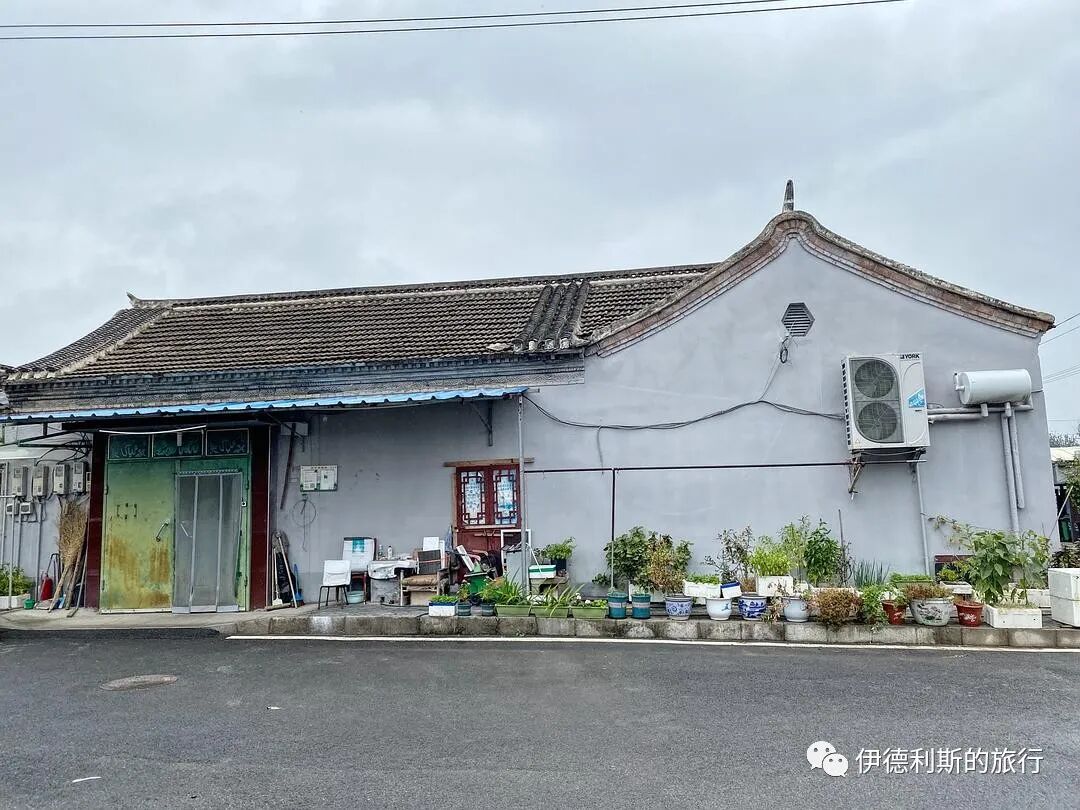
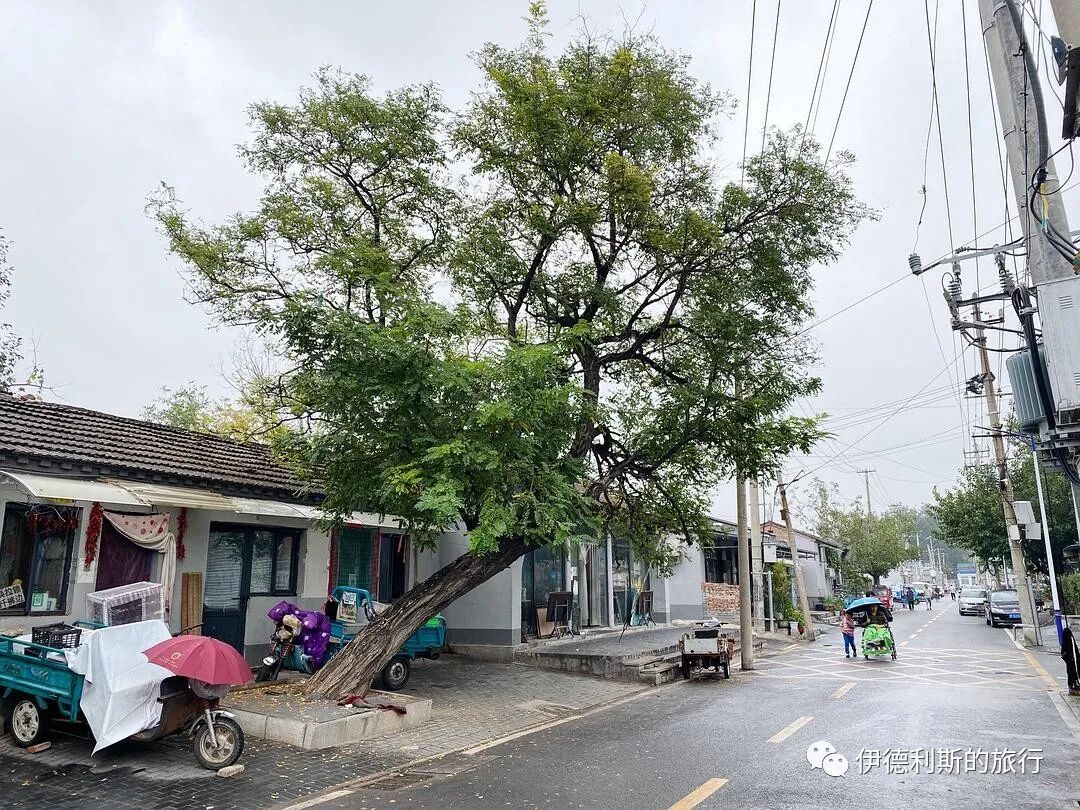
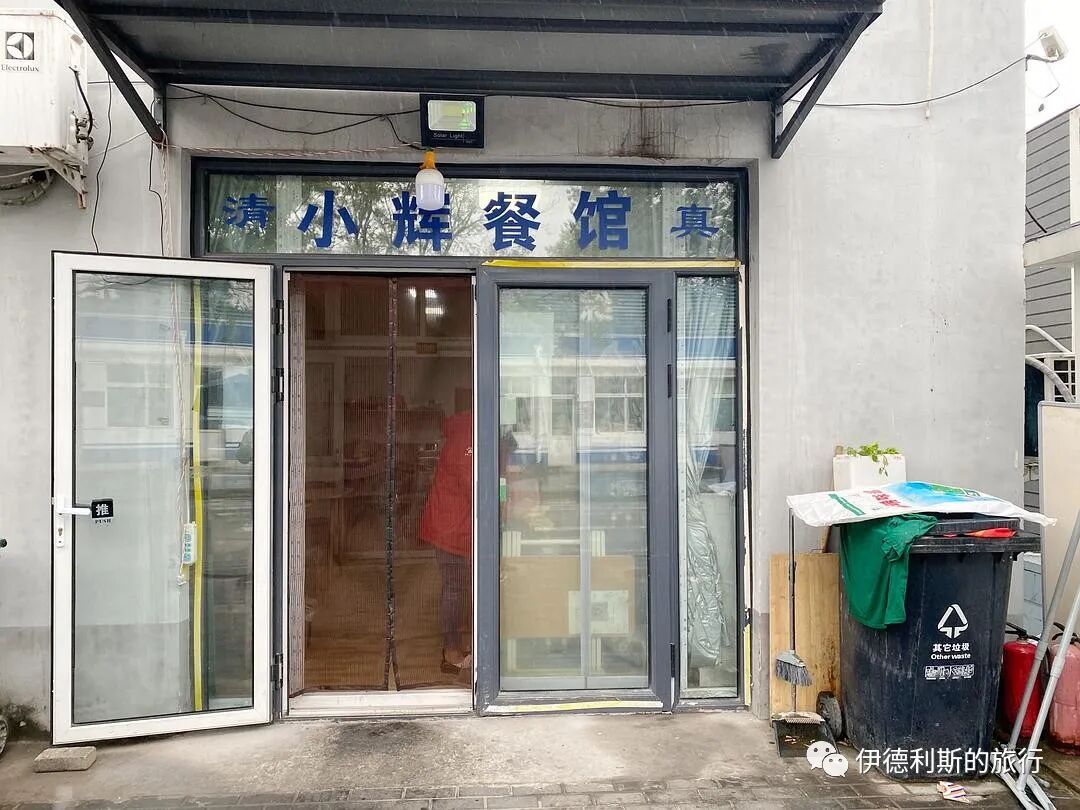
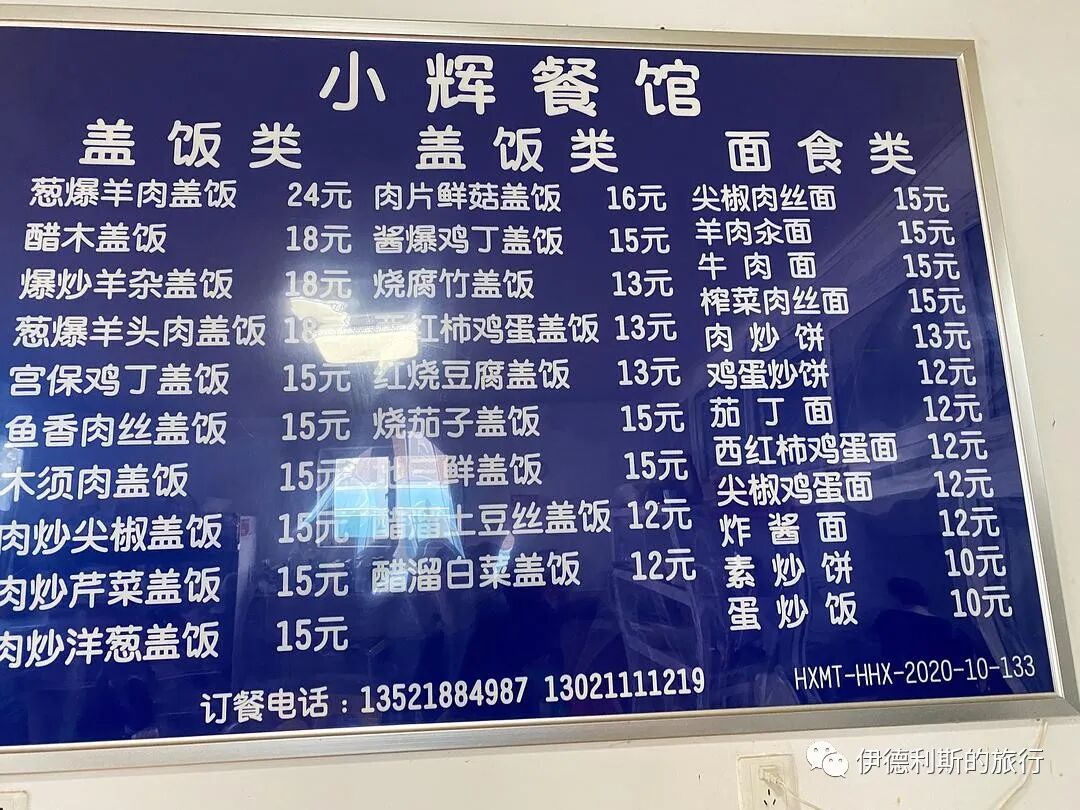
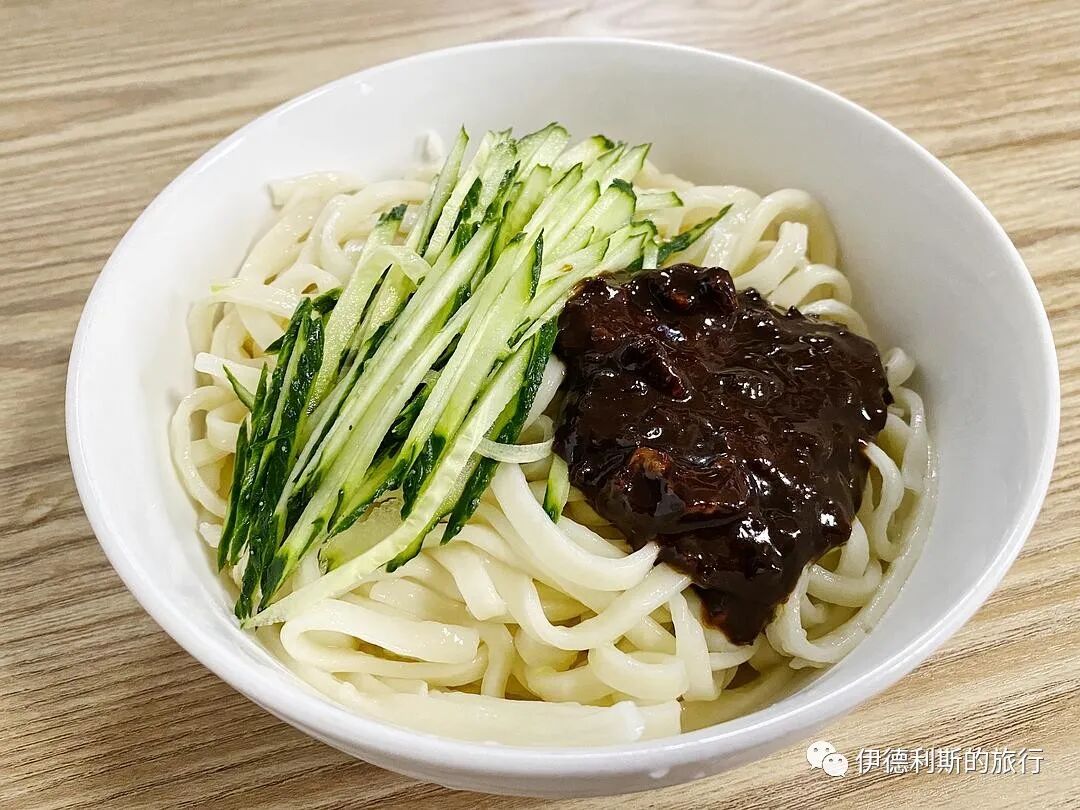
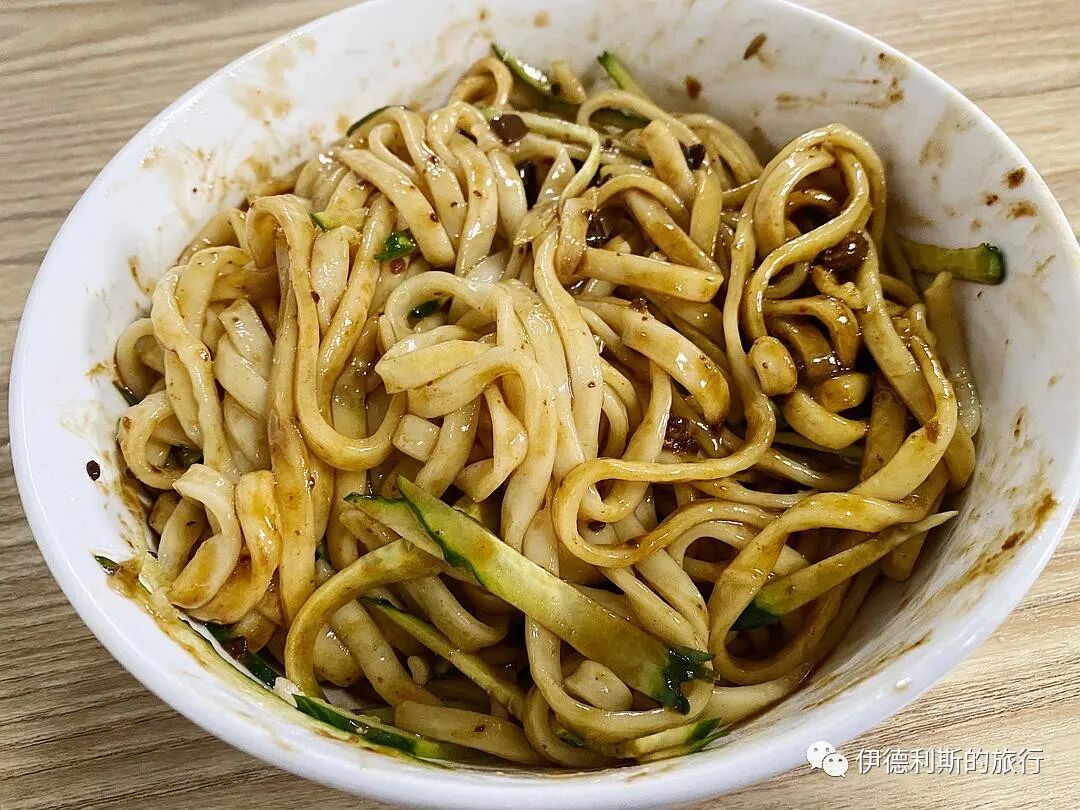
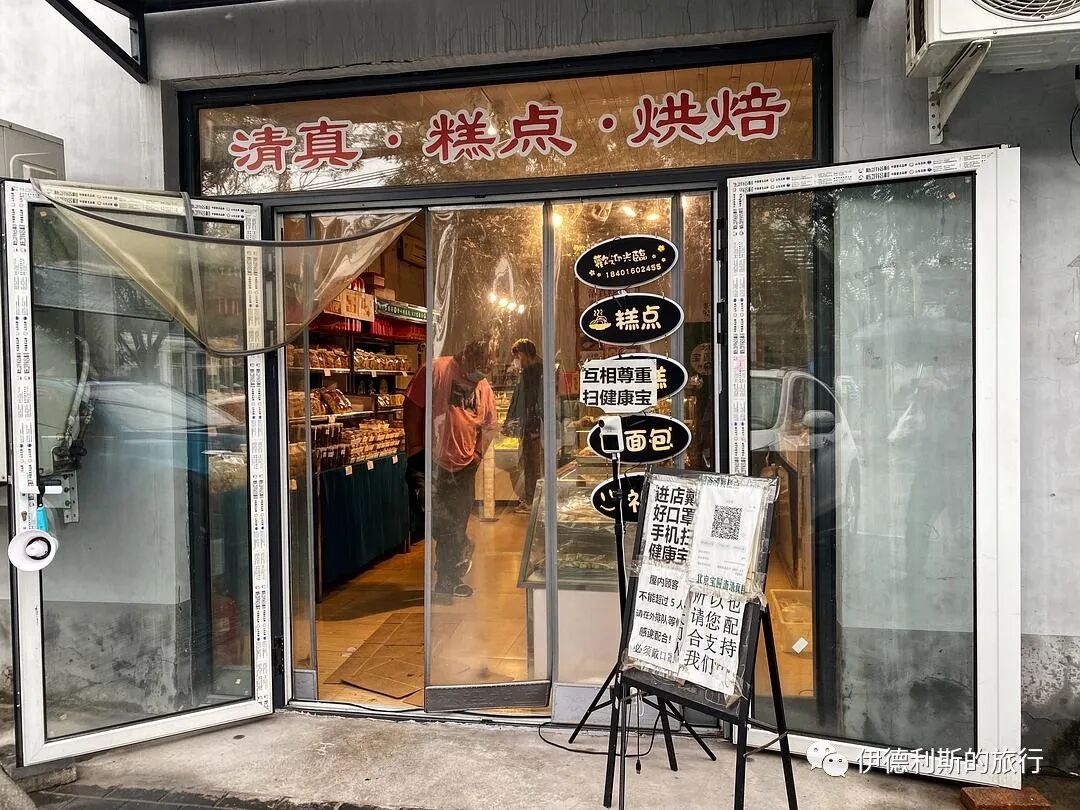
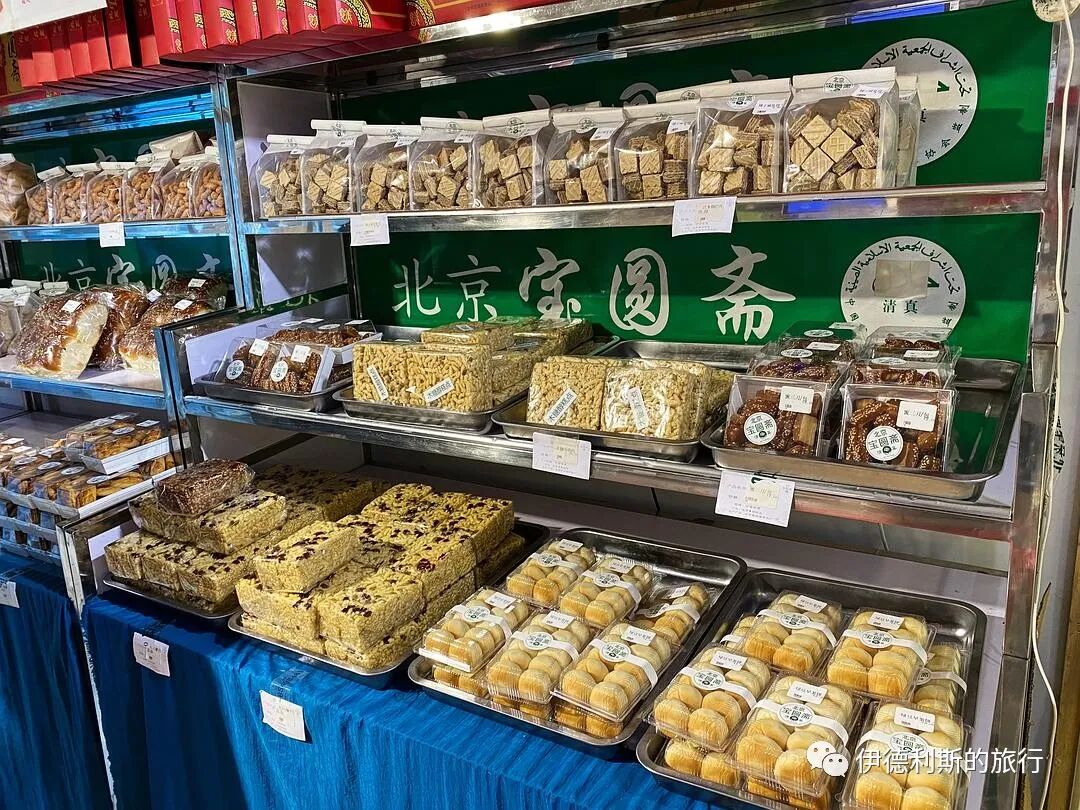
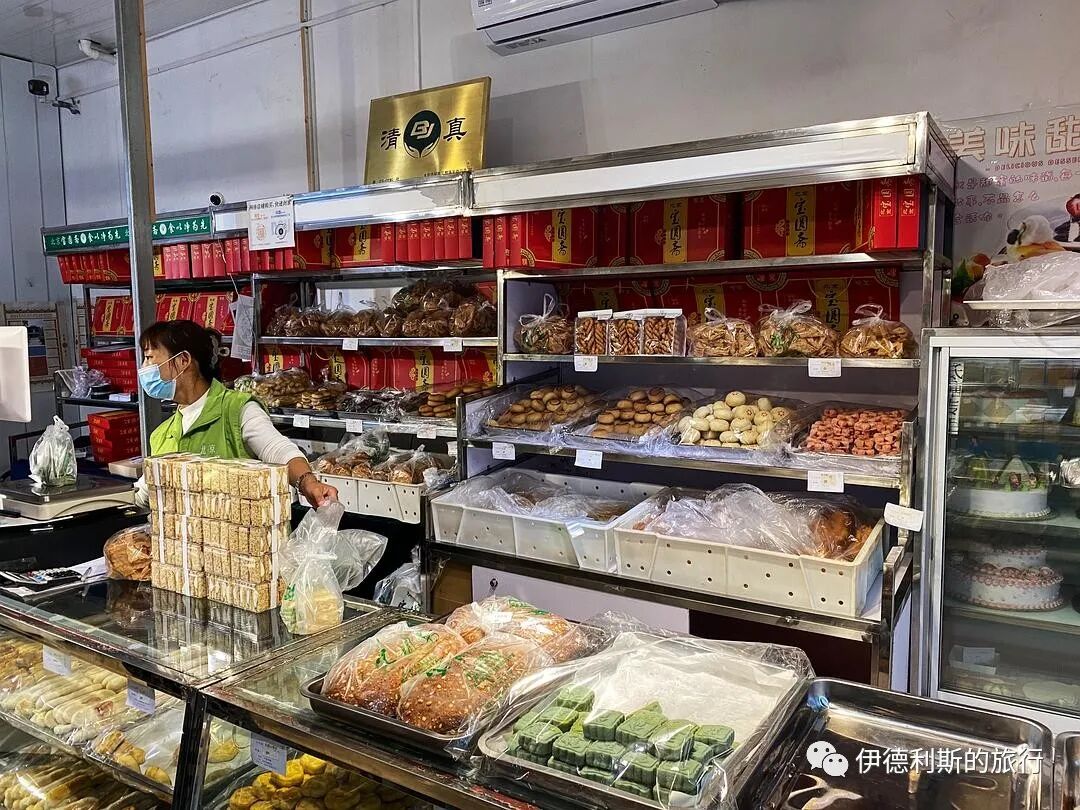
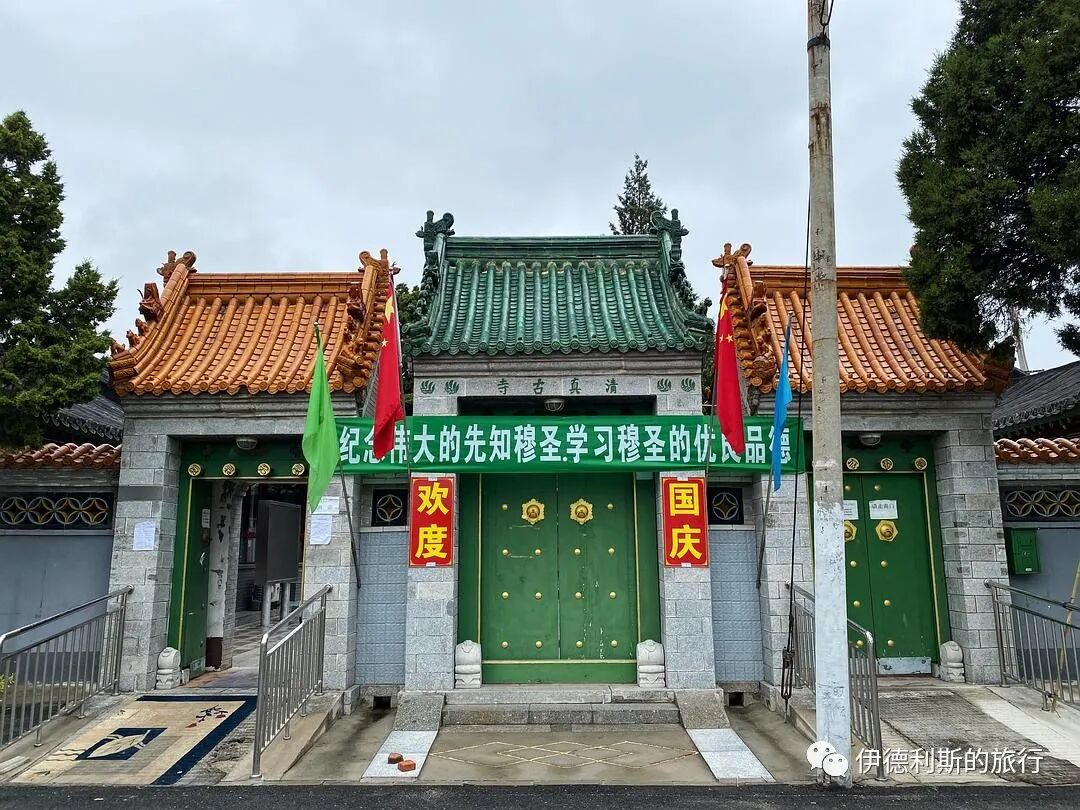
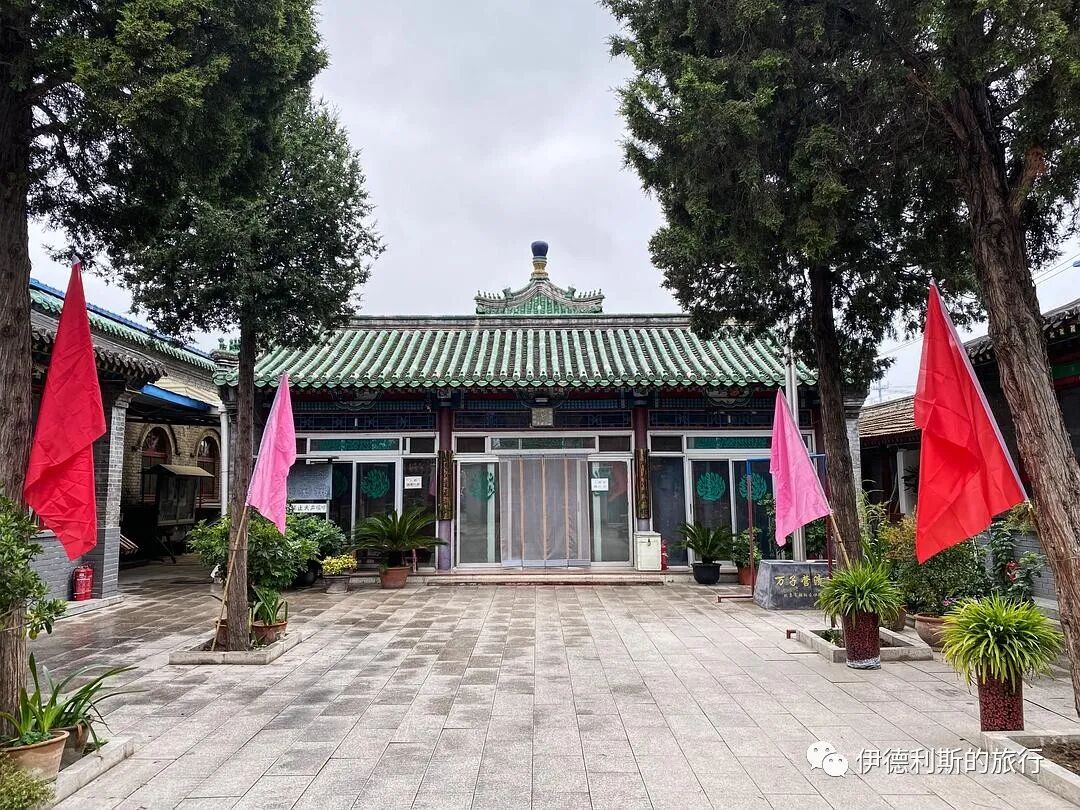
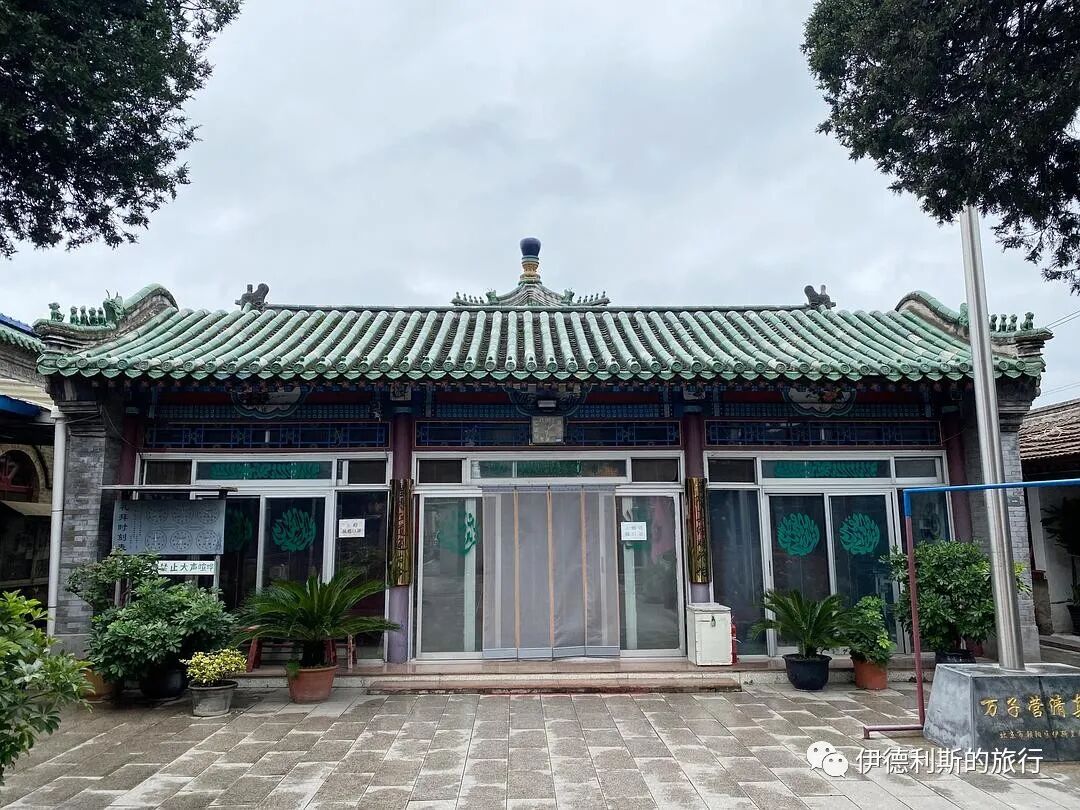
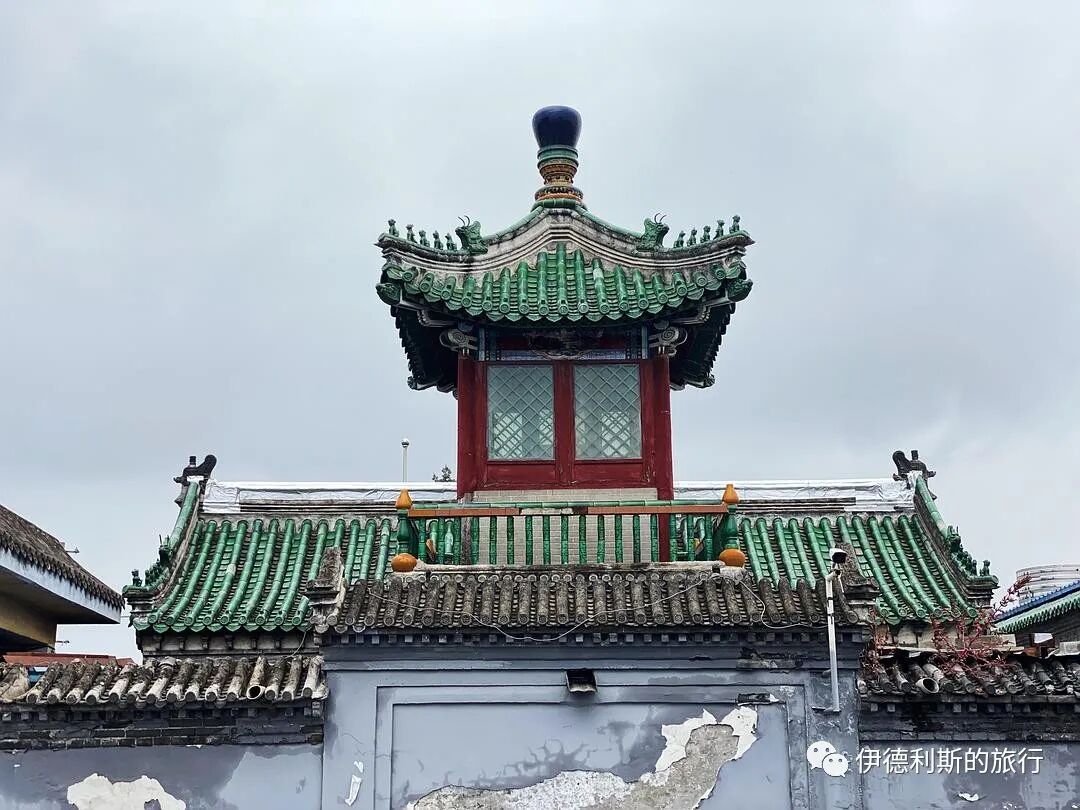
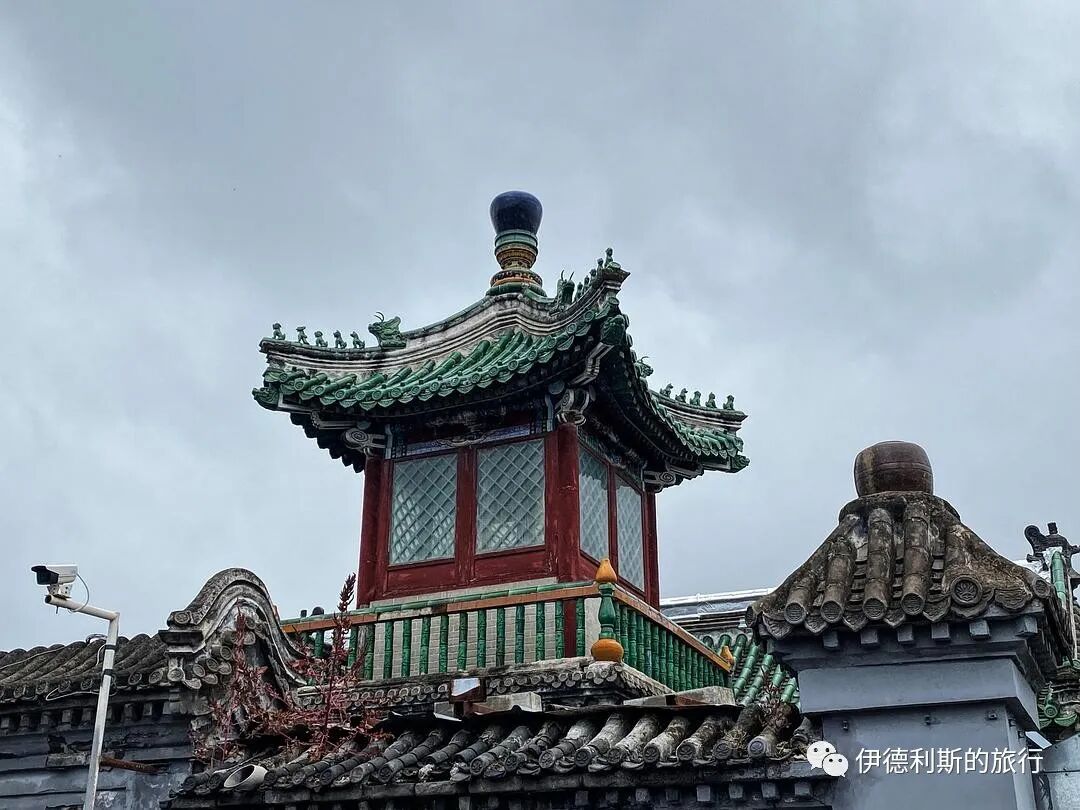
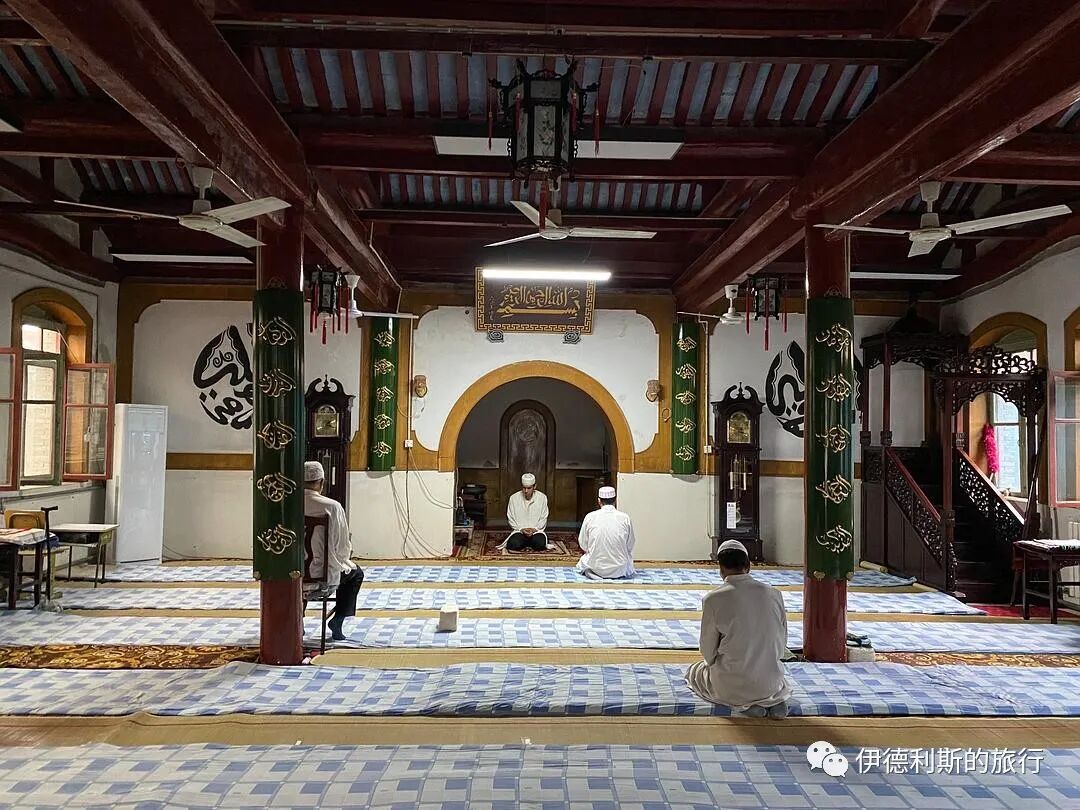
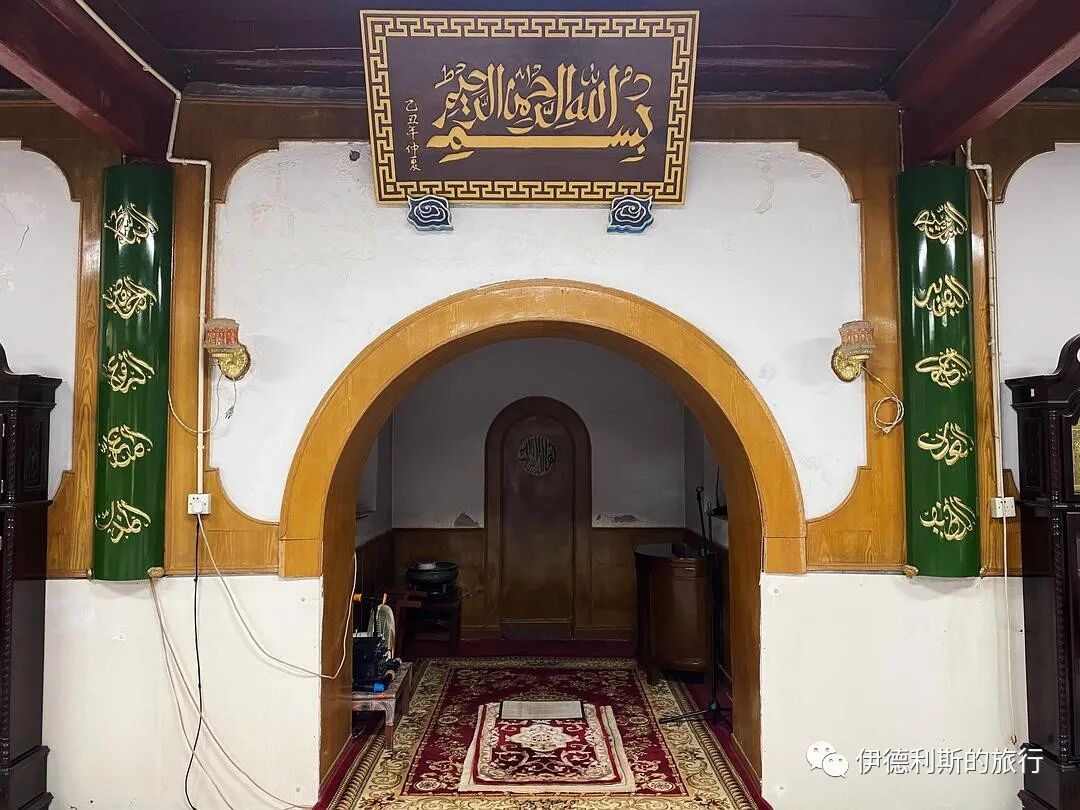
5. Landianchang Mosque
Landianchang Mosque was first built during the Ming Dynasty. It was renovated many times during the Jiaqing and Daoguang periods of the Qing Dynasty and the Republic of China. It stayed open during the 1960s, though some of its buildings were occupied. The property was returned in 1979 and renovated in 1987. After the Landianchang area was demolished in 2004, the mosque started reconstruction in 2007 and was completed in 2009.
In the late Qing Dynasty, Landianchang Mosque was called the Little Jiyang of West Beijing because most of the local residents had ancestral roots in Jiyang, Shandong. The mosque houses a collection of Republic-era items, including a sword of Ali (Ali Xianjian) and a set of three incense burner and vase pictures (luping sanshi tu), which were likely printed by the Niujie Muslim Book and Newspaper Society in Beijing during the Republic of China period.
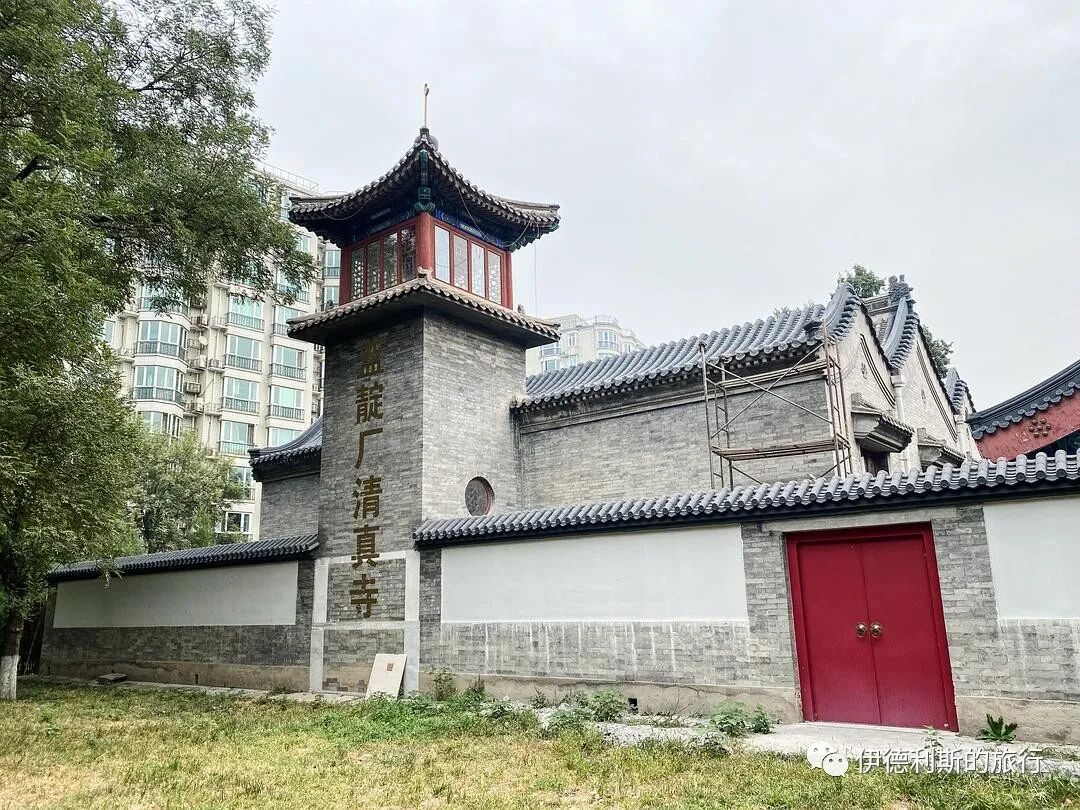
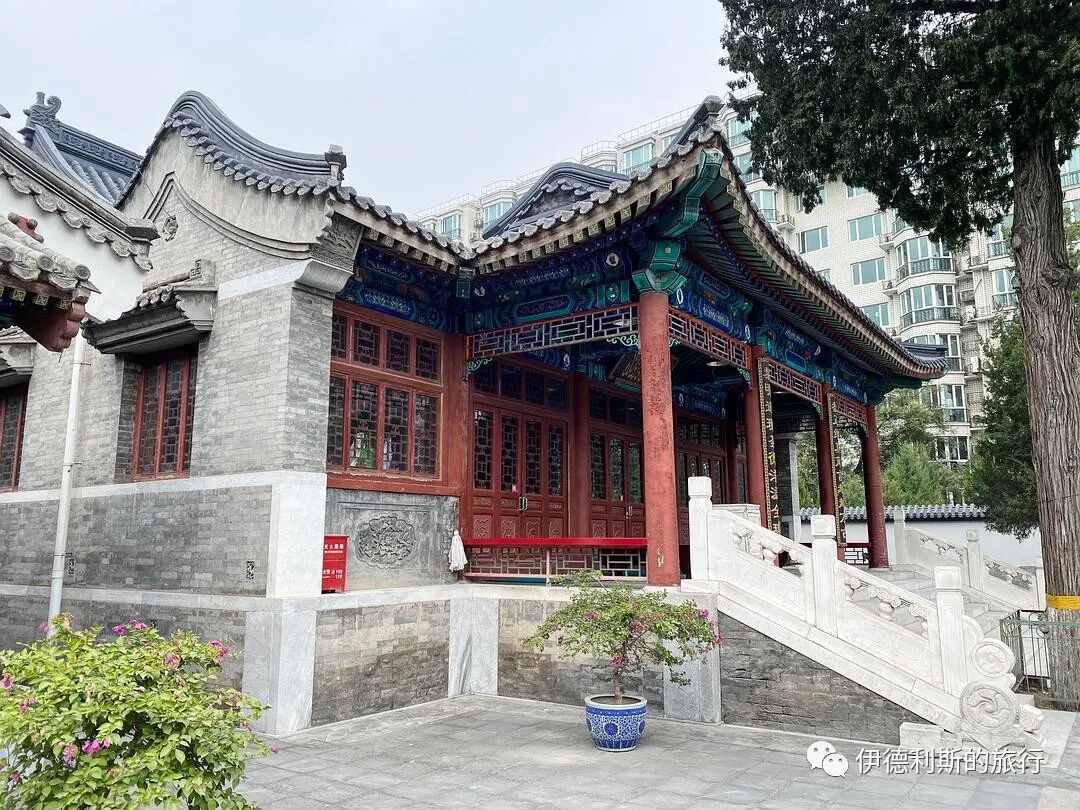
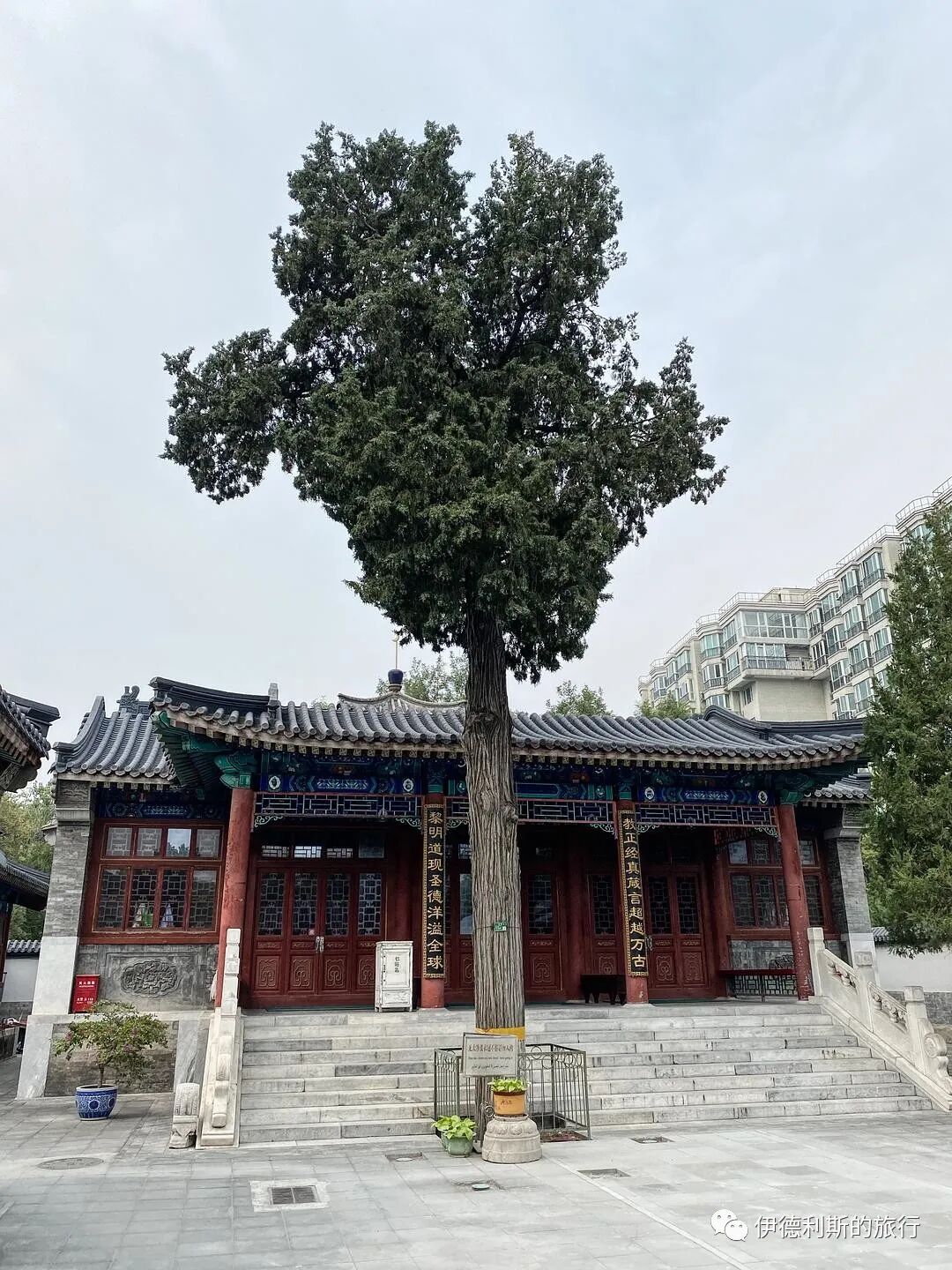
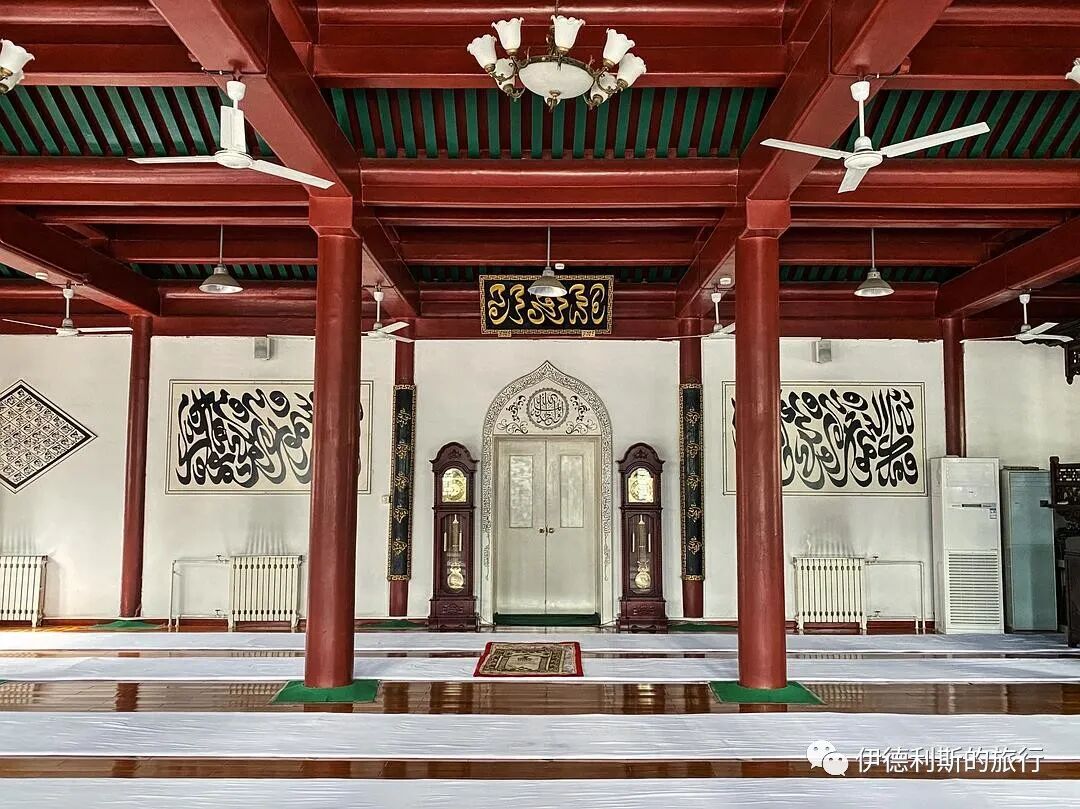
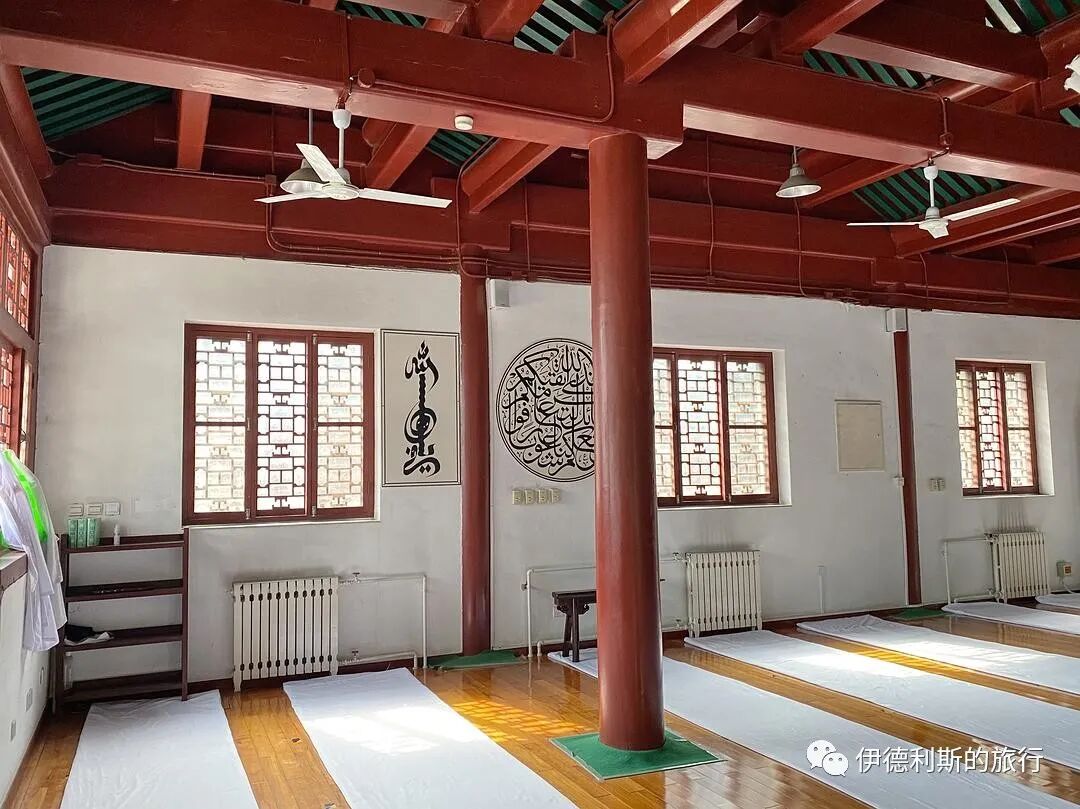
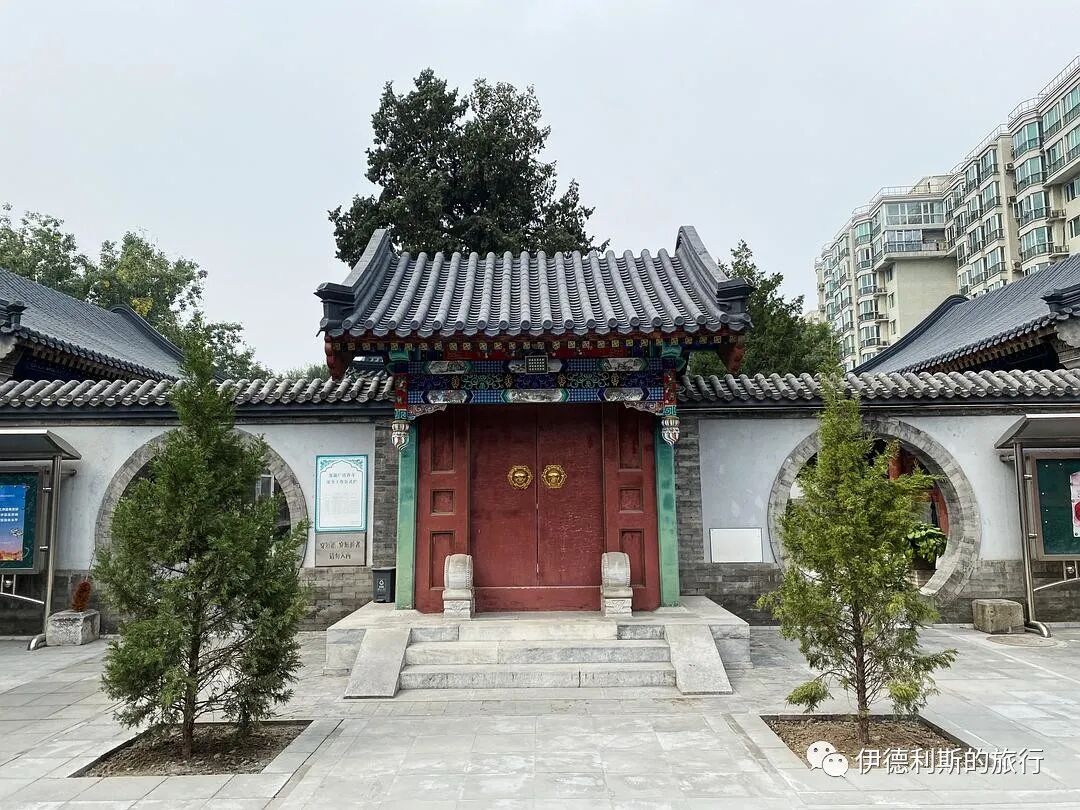
The original vase-shaped roof ornament on the moon-sighting tower of the Landianchang Mosque.
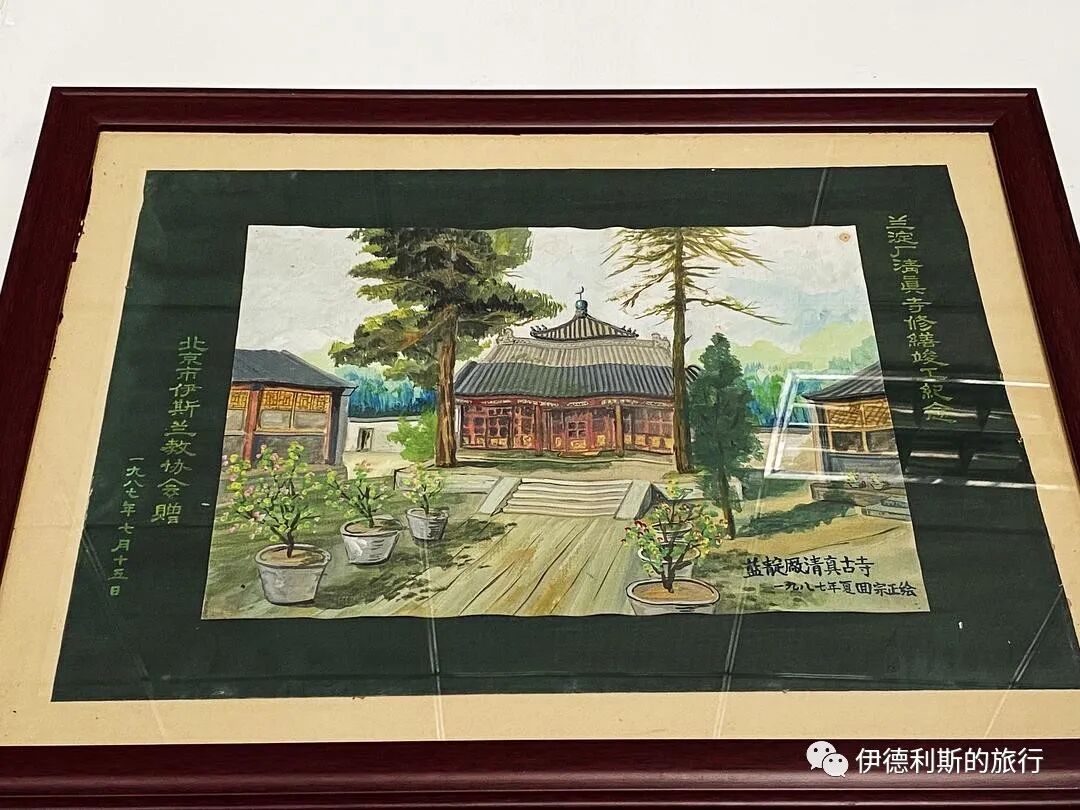
A drawing of the Landianchang Mosque as it looked in 1987, created by Hui Muslim artist Zongzheng.
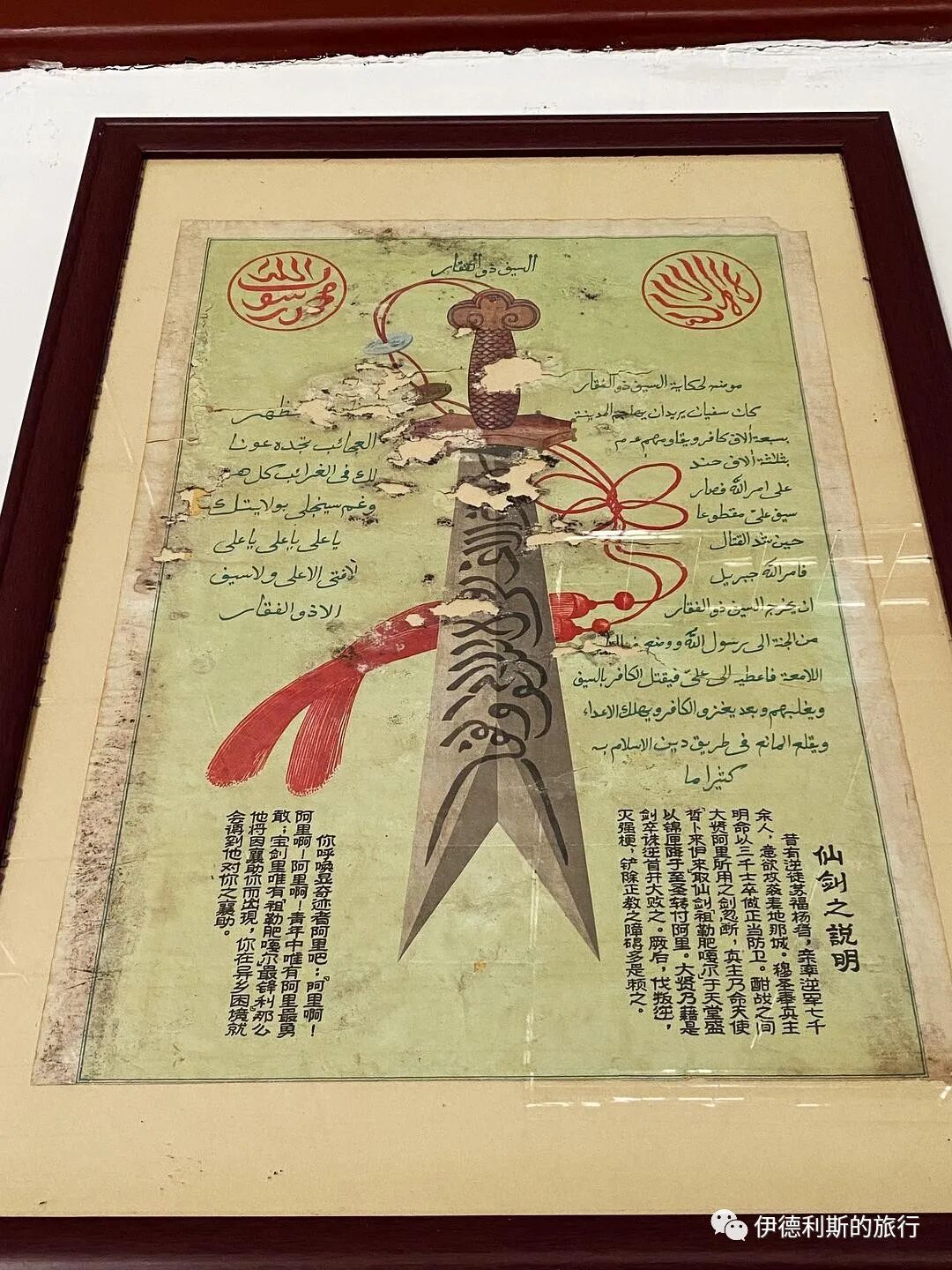
6. Siwangfu Mosque.
Siwangfu Mosque sits just east of the Botanical Garden and is shared by Hui Muslims from five local communities: Xiangshan, Siwangfu, Mentou, Nanhetan, and Xiaotun.
Legend says the mosque was founded during the Qianlong era by elders from Houmenqiao and the local community. It was renovated during the Republic of China era, then closed between the 1960s and 1980s. The main prayer hall fell into disrepair and nearly collapsed, so it was torn down and the wood and bricks were sold to build north-facing rooms and a perimeter wall, where prayers were held instead. After much effort from many people, the main prayer hall was rebuilt in 1990. Due to a construction error, the hall was moved to the east side of the original site, resulting in its current layout.
The small courtyard is clean and tidy now, reminding visitors of the old-fashioned charm of the Beijing suburbs.
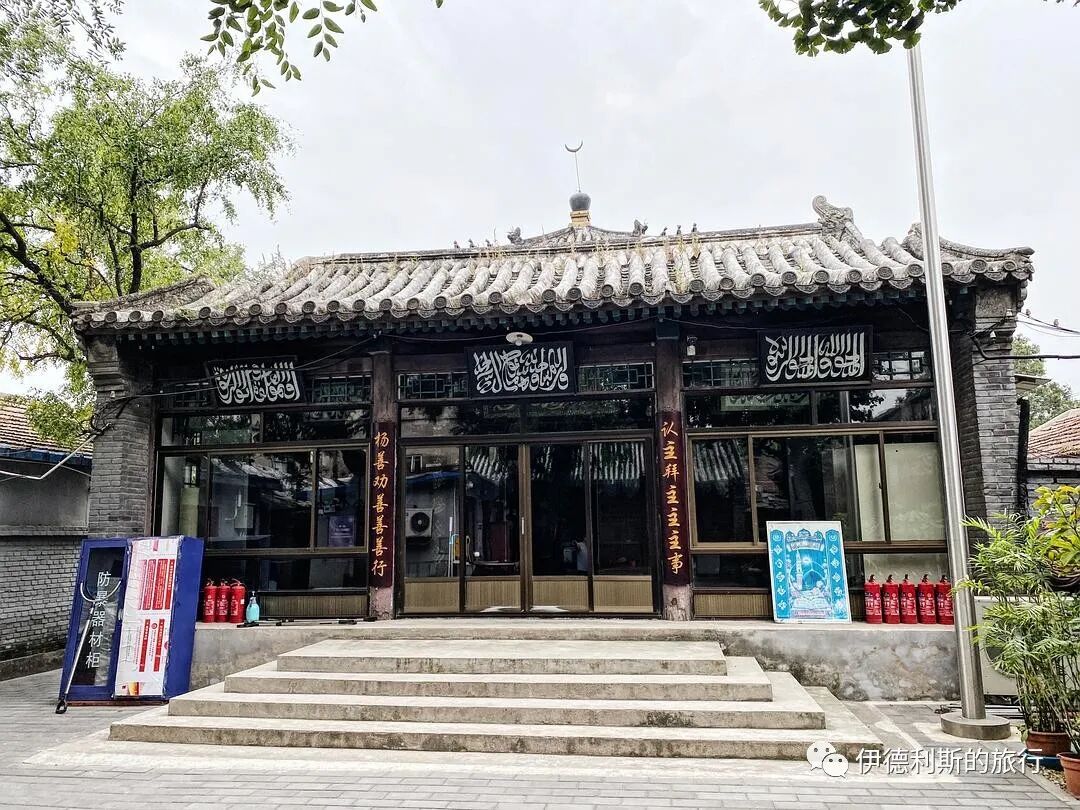
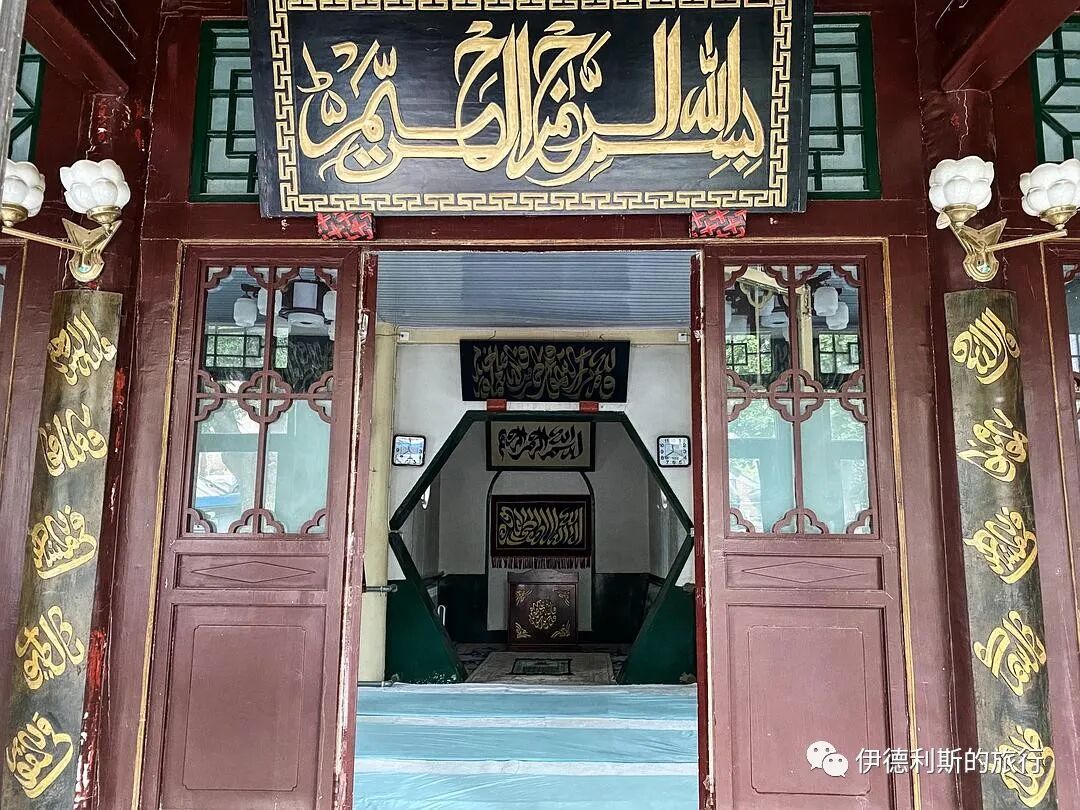
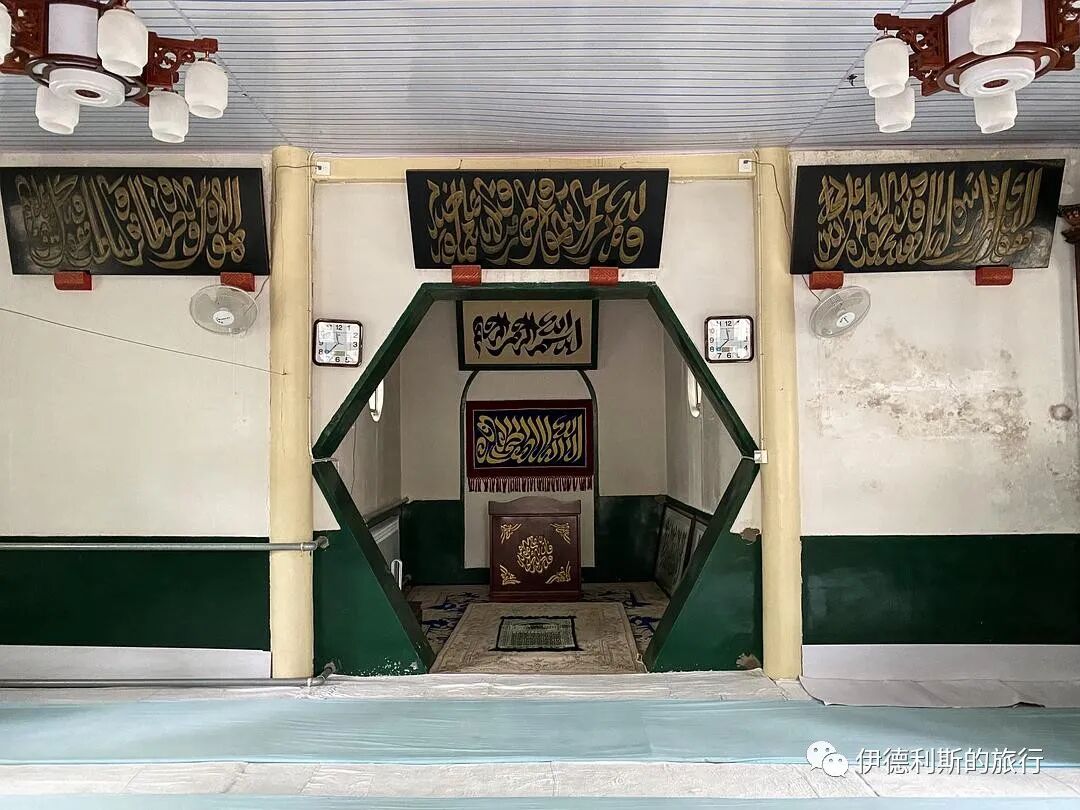
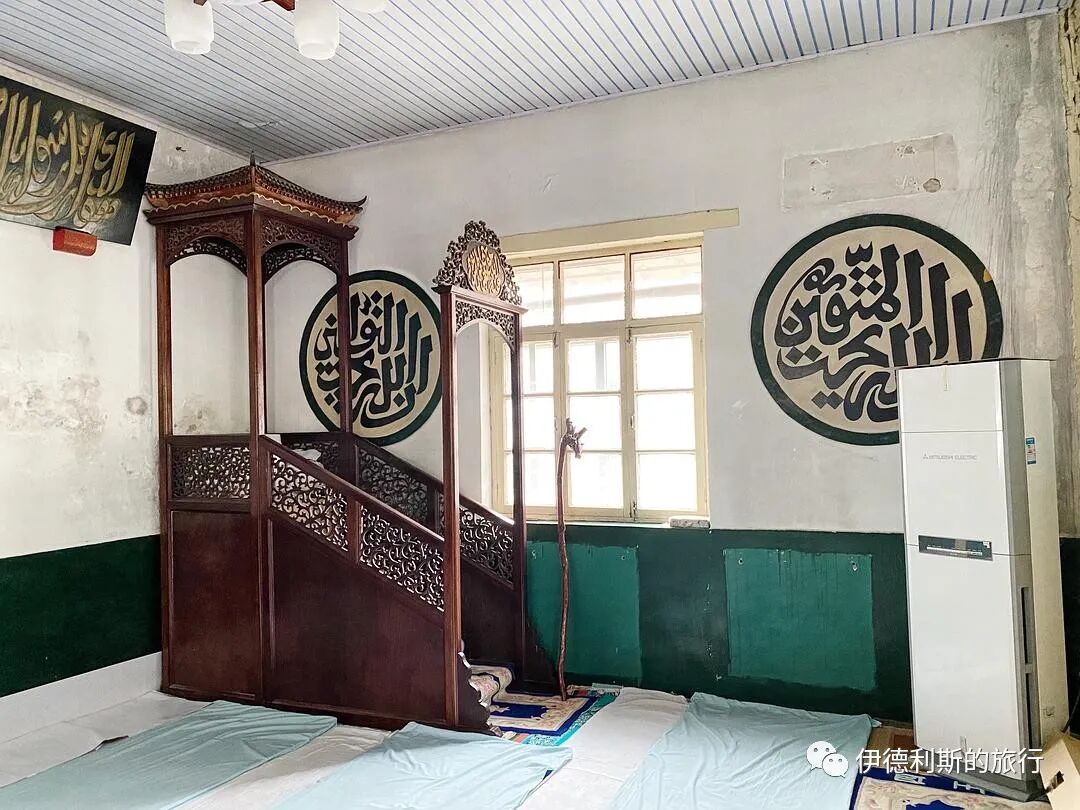
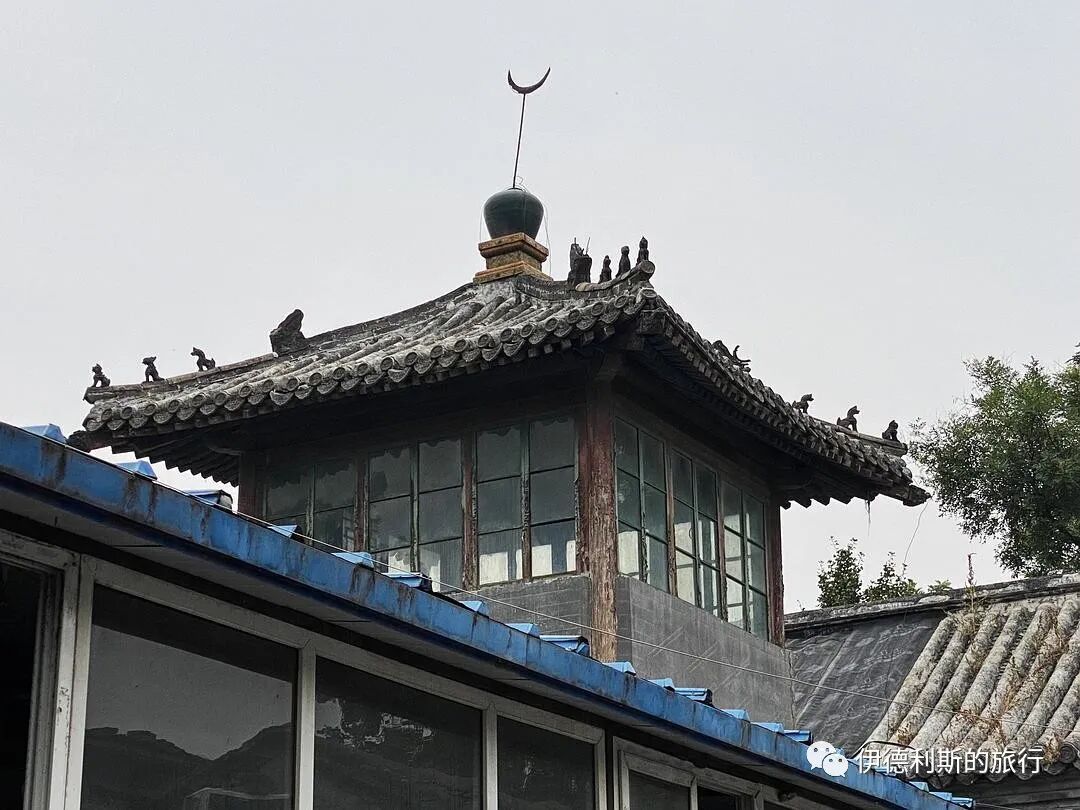
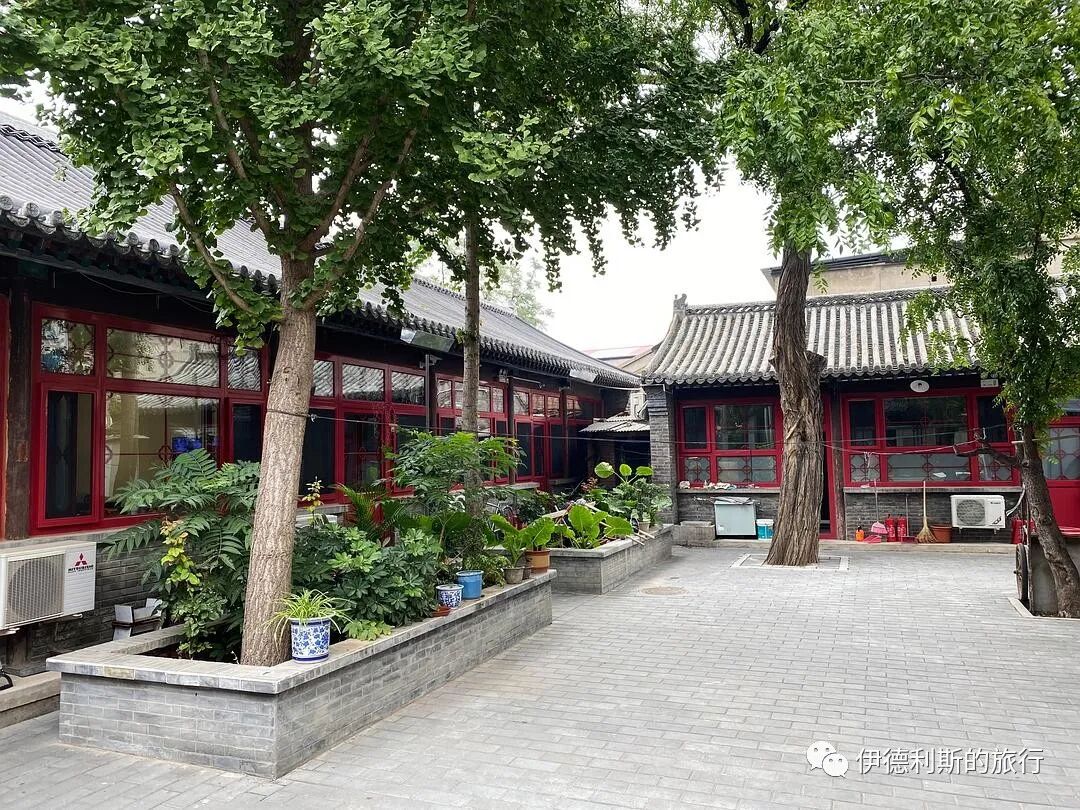
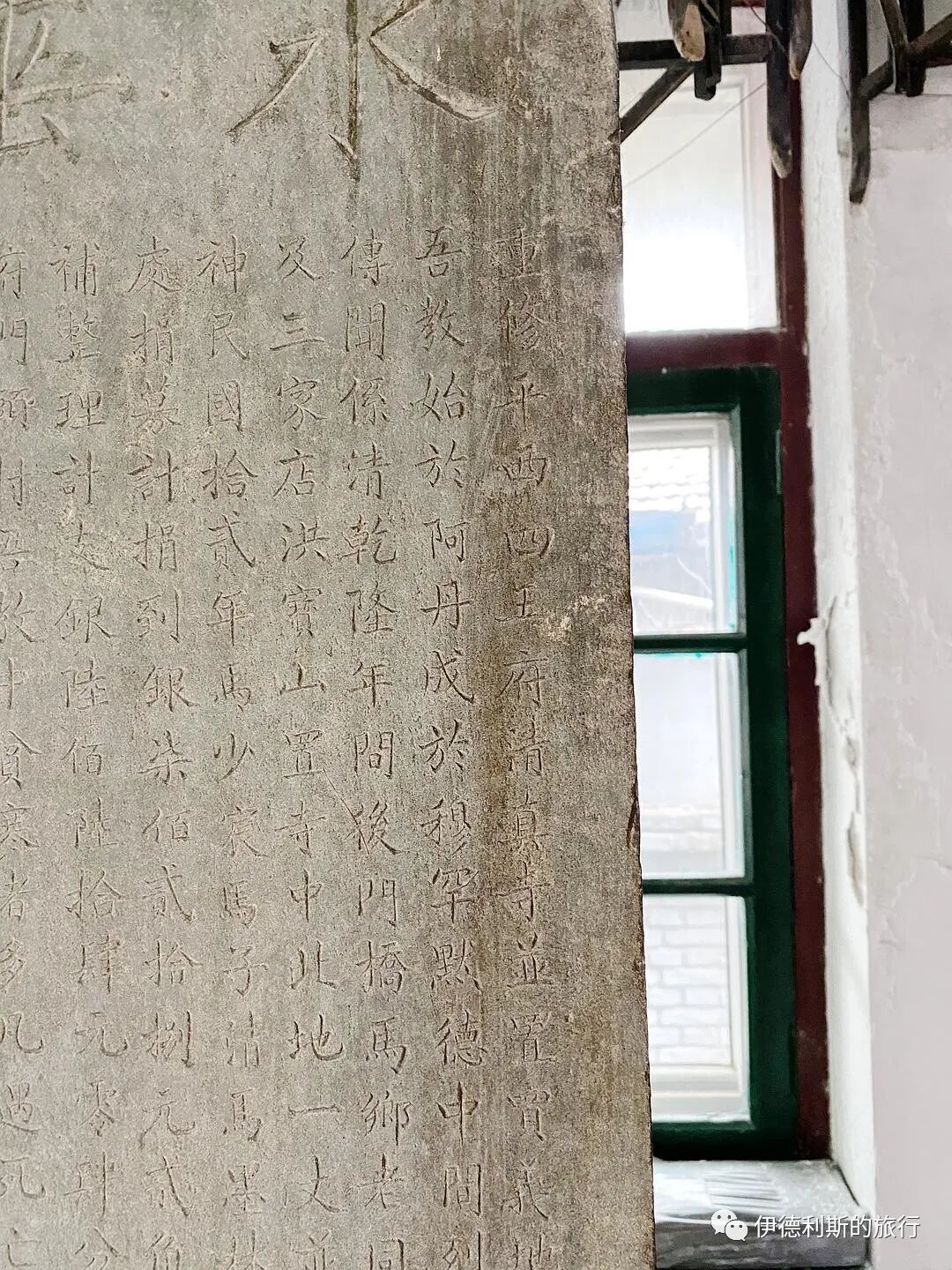
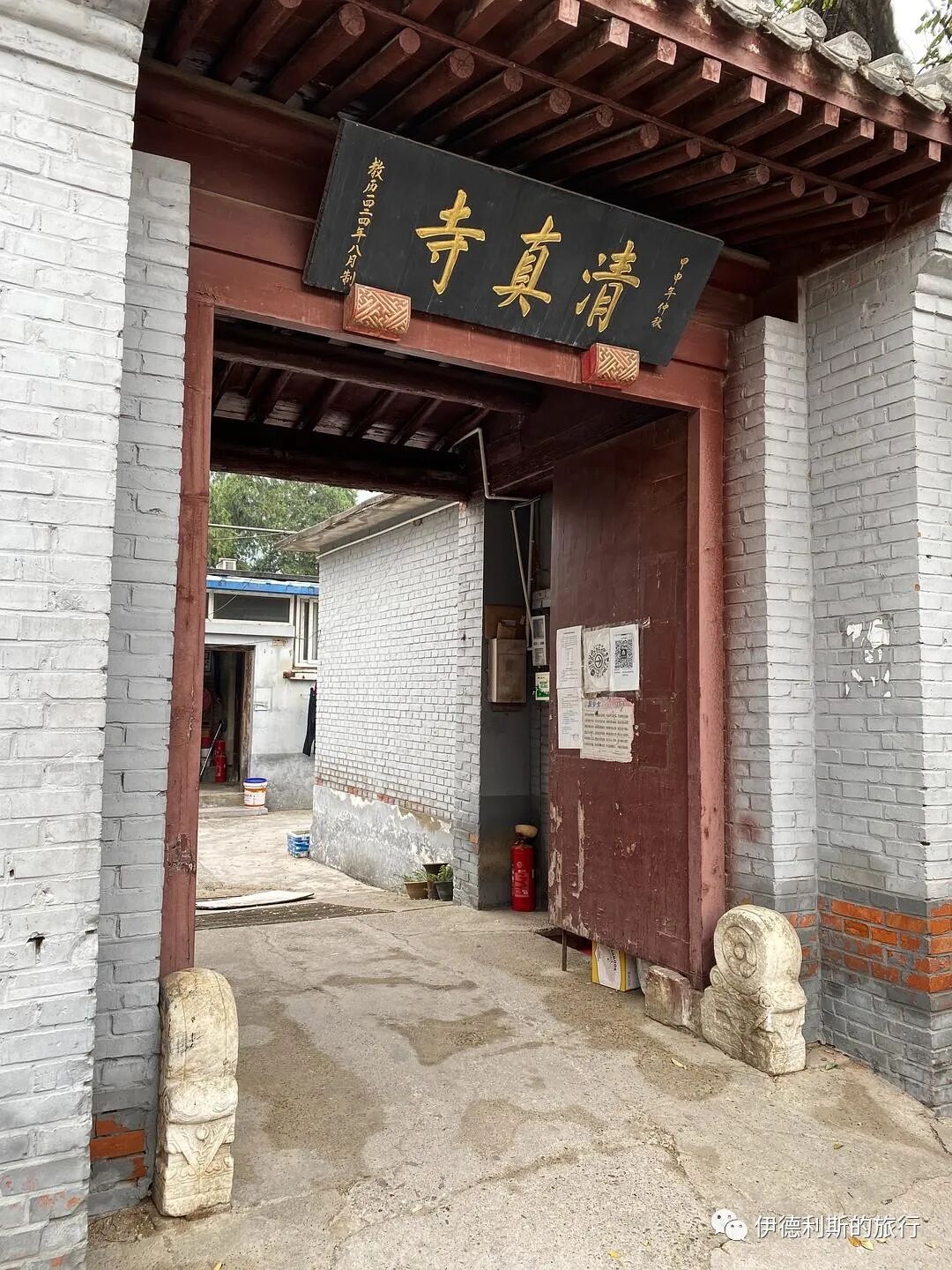
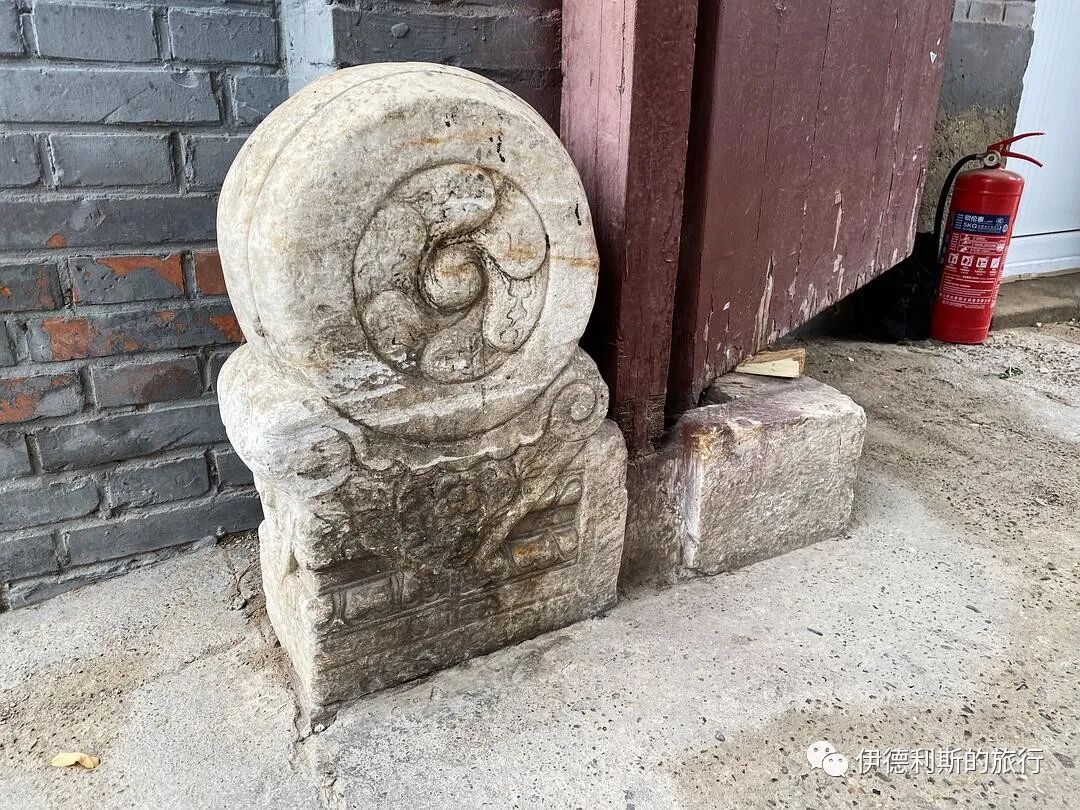
7. Shucun Mosque
Shucun Mosque is located outside the north gate of the Old Summer Palace. It was first built during the Kangxi reign and was renovated many times during the Yongzheng, Tongzhi, and Xuantong periods, as well as during the Republic of China era. The mosque was occupied in the 1950s and damaged in the 1960s. It resumed religious activities in 1983 and has been renovated several times since then. Shucun village has been demolished, and the villagers have moved into apartment buildings.
The mosque grounds contain two ancient cypress trees from the Qing dynasty, one dead and one alive. There is also a plaque inscribed with the words "Heaven is close at hand" (tiantang zhichi), which was gifted by a fourth-rank imperial bodyguard during the 1873 (the 12th year of the Tongzhi reign) renovation. The main donor for that renovation was a palace eunuch named Ma.
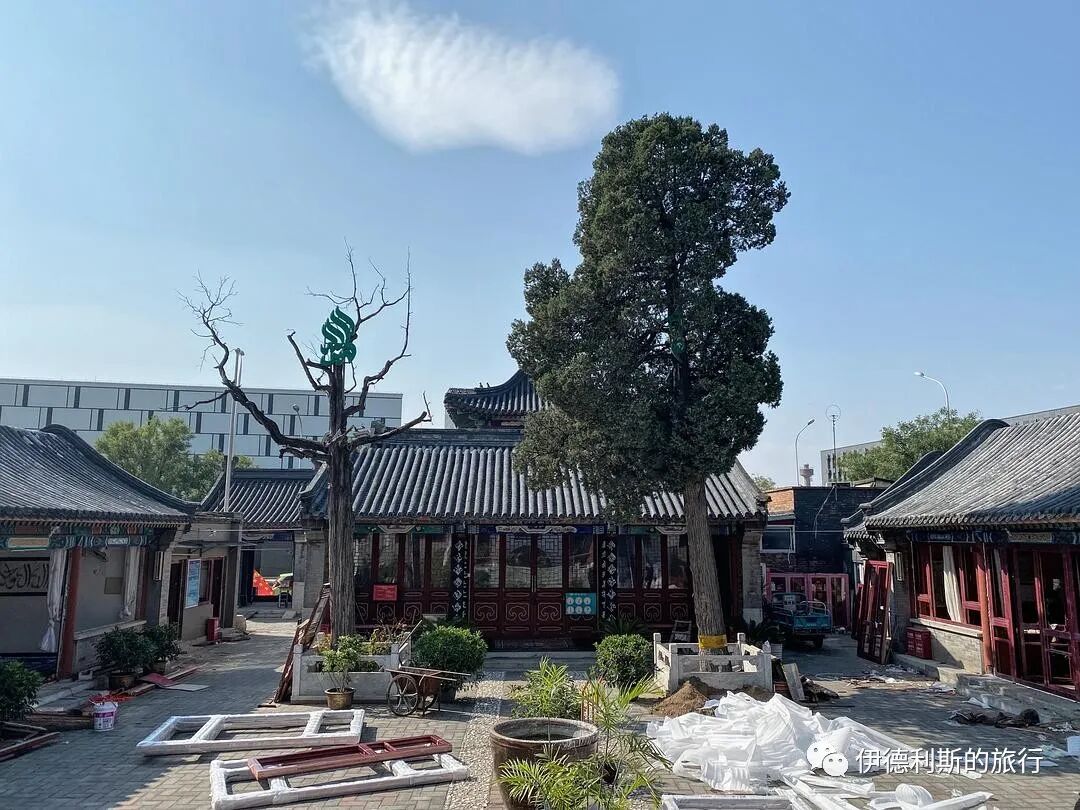
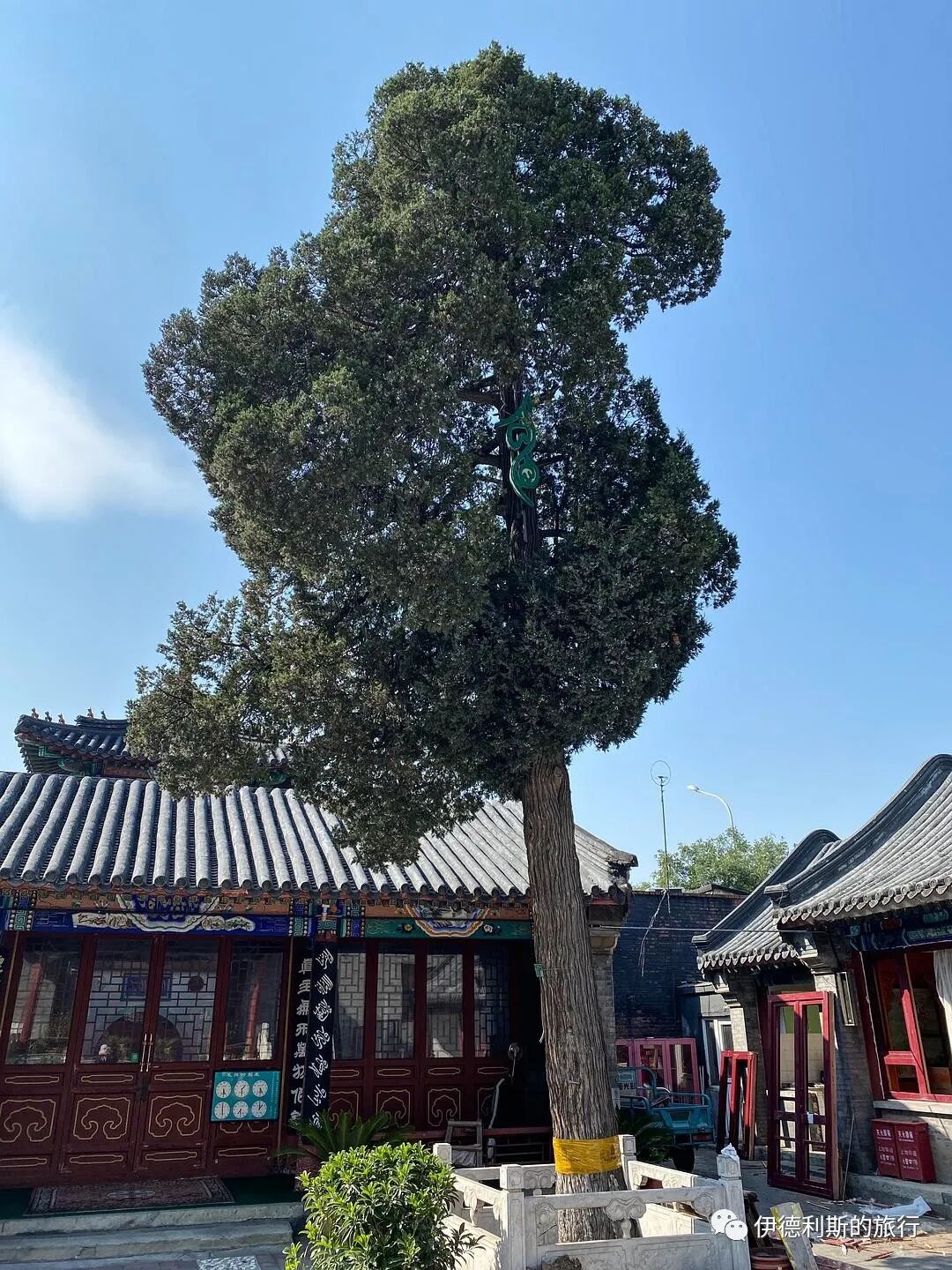
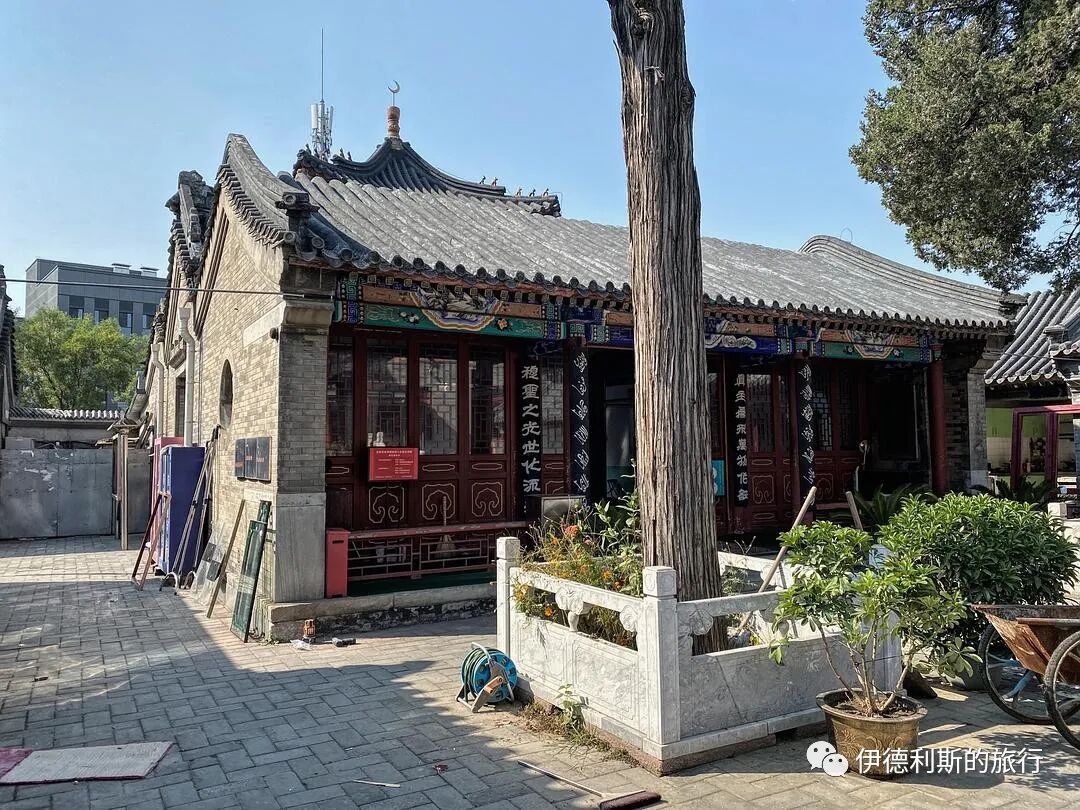
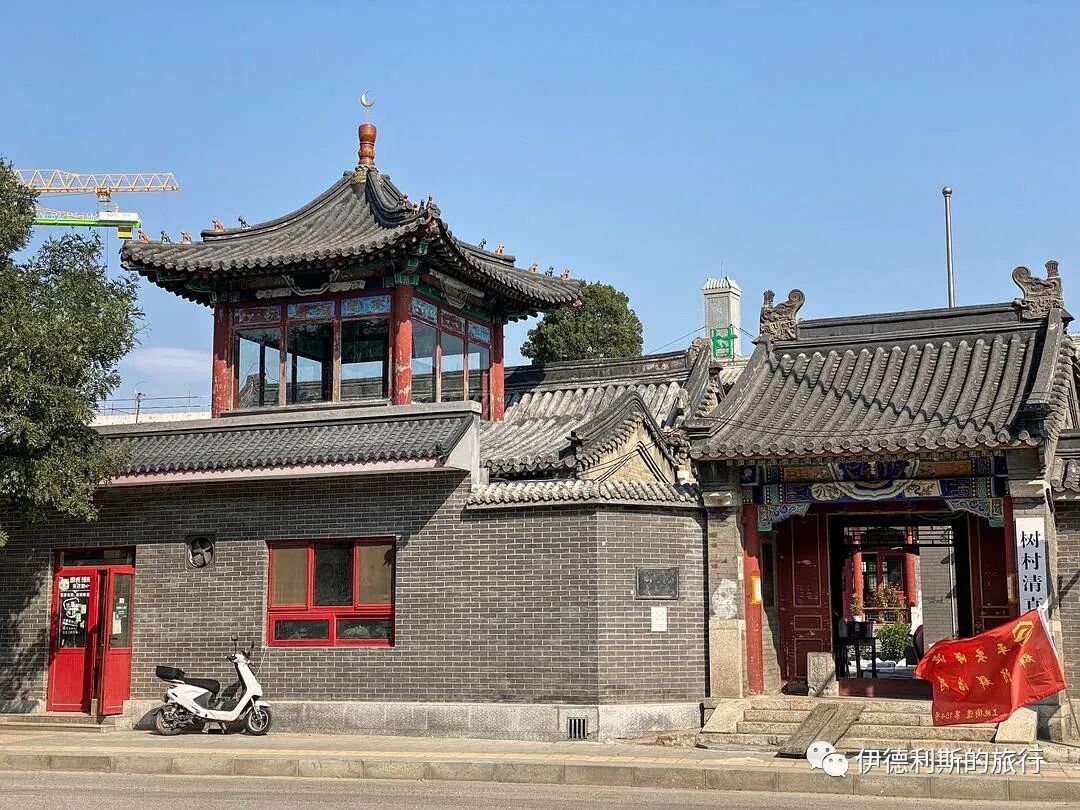
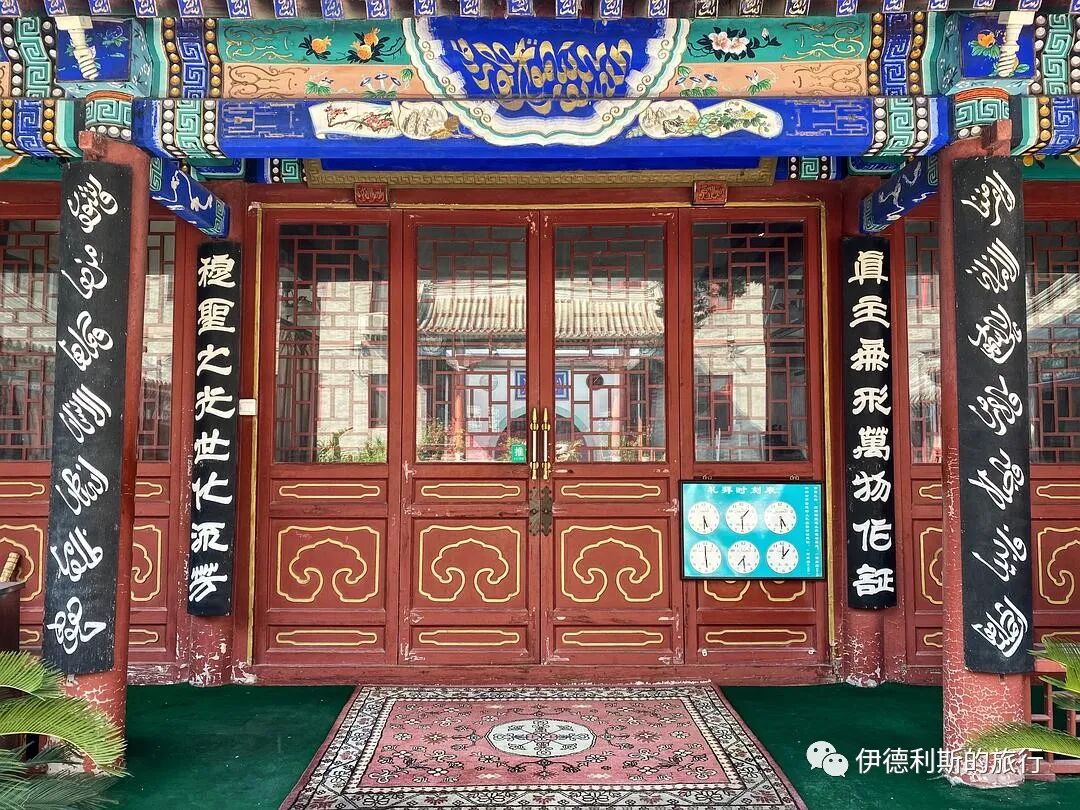
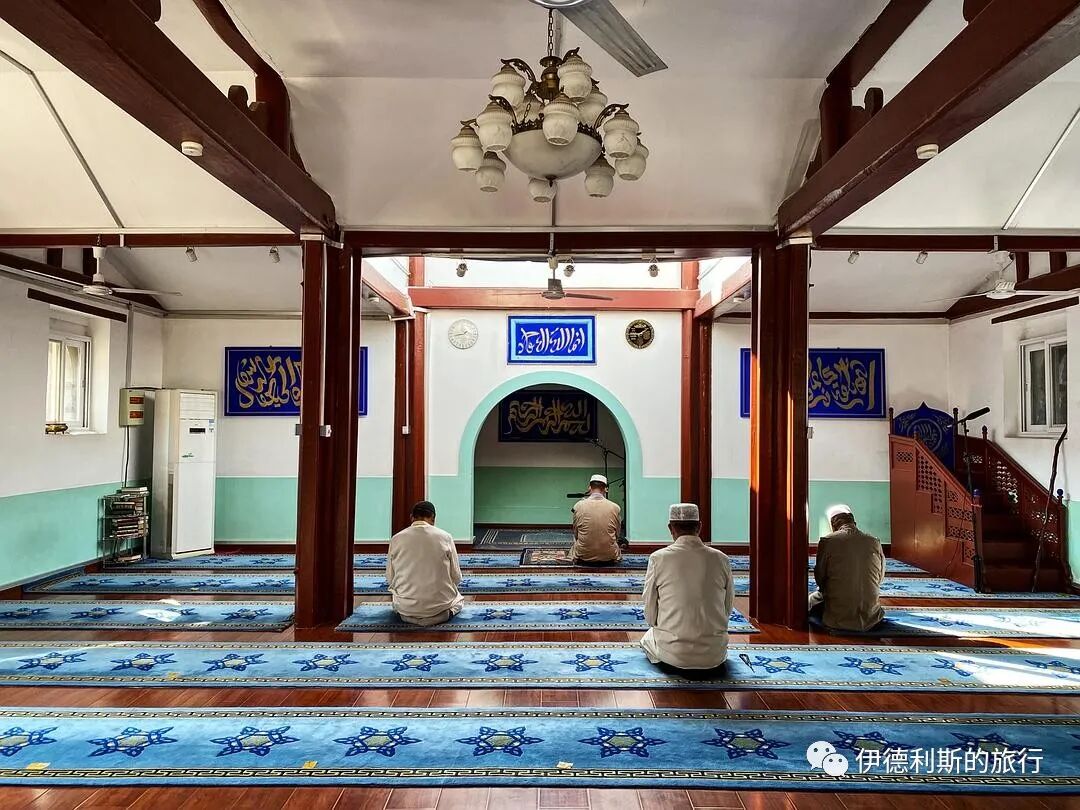
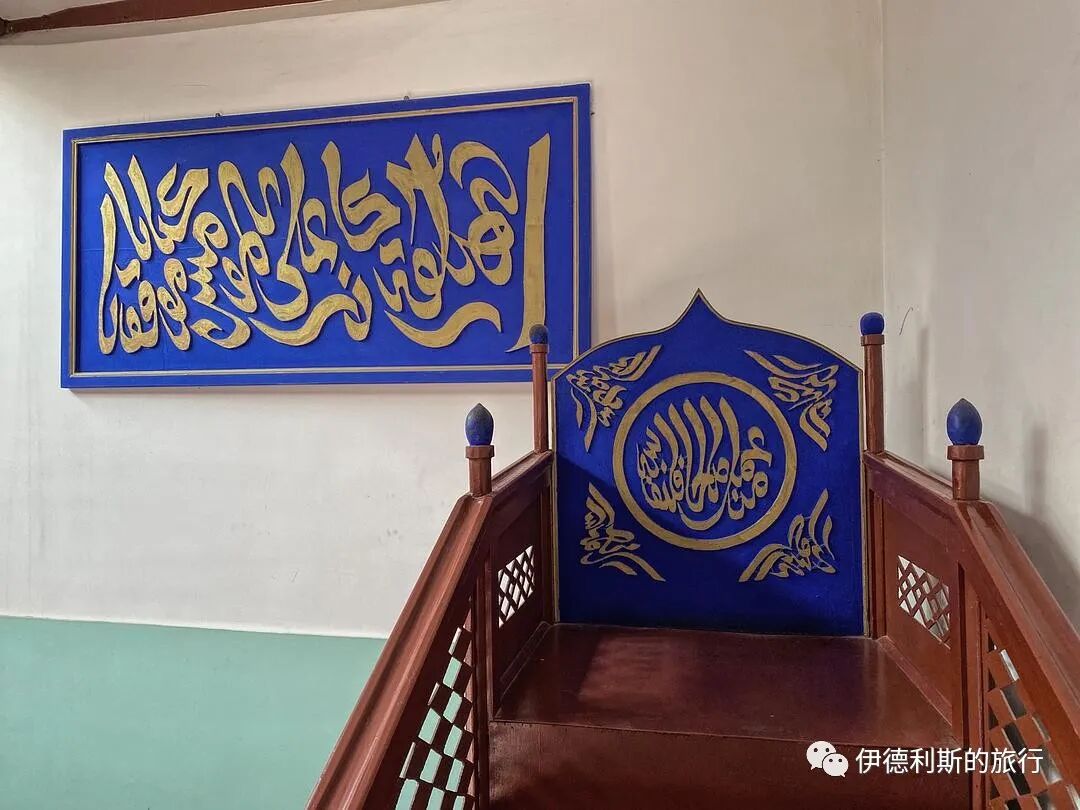
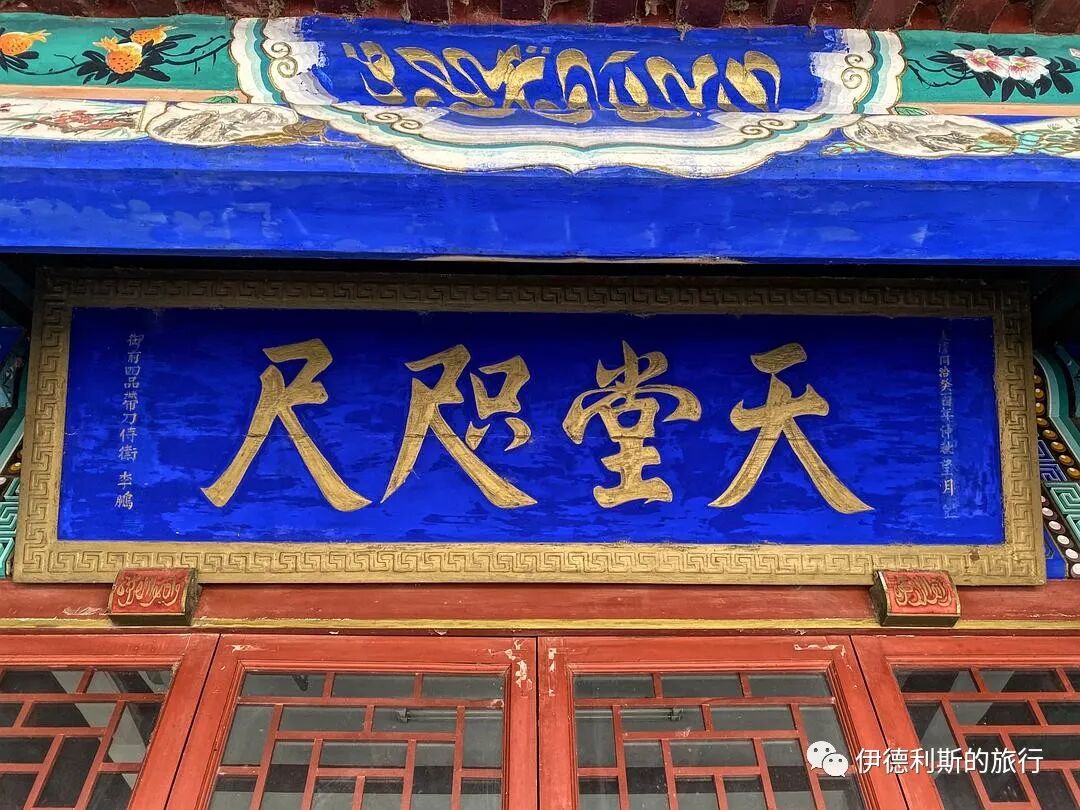 Collapse Read »
Summary: Beijing Autumn Mosque Walk — Old Mosques and Muslim Heritage is presented here as a firsthand travel account in clear English, beginning with this scene: Between late September and early October, I visited seven old mosques in Beijing: Guanzhuang Mosque, Xihui Mosque, Yangzha Mosque, and Wanziying Mosque in Chaoyang District, as well as Landianchang Mosque, Siwangfu. The account keeps its focus on Beijing Mosques, Autumn Travel, Muslim Heritage while preserving the names, places, food, and historical details from the Chinese source.
Between late September and early October, I visited seven old mosques in Beijing: Guanzhuang Mosque, Xihui Mosque, Yangzha Mosque, and Wanziying Mosque in Chaoyang District, as well as Landianchang Mosque, Siwangfu Mosque, and Shucun Mosque in Haidian District. I will share them with you below.
1. Guanzhuang Mosque
The founding date of Guanzhuang Mosque is unknown. The main hall was renovated in 1946. From 1958 until the 1980s, the site was used by a large canteen, a straw rope factory, and a production team. It was renovated and rebuilt again between 2003 and 2004. The finial on the moon-viewing tower (wangyuelou) was cast by craftsmen from Hexiwu, Tianjin, following the design of the original. Guanzhuang has now been demolished and replaced by apartment buildings.
2. Xihui Mosque
Xihui Mosque sits by the Tonghui River, on the north bank of the former Puji Sluice Bridge. It was built in 1821, the first year of the Daoguang reign. A plaque inscribed with the words "Qingzhen Wu'er" (The Truth is One) by Cao Zhenyong, a Grand Secretary of the Tiren Pavilion, still hangs above the main hall. Xihui Mosque was closed from 1966 to 1984. It later reopened and has undergone several renovations. It has been over ten years since the residents of Xihui Village moved into high-rise apartments after the demolition of their old homes. It is truly special that the village elders still insist on riding their bikes up the hill to visit the mosque.
3. Yangzha Mosque
Historically, Yangzha Mosque sat right next to the main road from Chaoyangmen in Beijing to Tongzhou. It is said to have been built during the Wanli era of the Ming Dynasty. The current structure was rebuilt in 1994 and renovated again in 2006. The mosque features covered walkways and pavilions, along with pine and cypress trees transplanted from Jixian, Tianjin, in 1998, making for a very pleasant environment.
4. Wanziying Mosque
Wanziying Village sits on the border of Chaoyang and Tongzhou. Hui Muslims and Han people live there together, and it has now been developed into a beautiful village with a very nice environment. I had a simple bowl of soybean paste noodles (zhajiangmian) at the village entrance, and the prices were much more affordable than in the city. There is a halal pastry shop at the village entrance called Baoyuanzhai that is apparently quite popular online. I bought some old-fashioned bread (laomianbao), ox-tongue-shaped biscuits (niushebing), and five-kernel flaky pastries (wuren supi). The old-fashioned bread was especially fluffy and perfect for breakfast.
The founding date of Wanziying Mosque is unknown. When it was renovated in the late 1980s, a 90-year-old village elder named Li Shiqing provided a hand-drawn picture of the mosque, and the repairs followed the architectural style shown in his drawing. The mosque is small but the environment is lovely, quiet, and pleasant, far away from the noise. According to Imam Yang, Wanziying Village used to be very good at making halal banquet dishes (qingzhen dapengcai). The atmosphere and taste were more authentic than what you find in restaurants, and I hope to have a chance to experience it in the future!
5. Landianchang Mosque
Landianchang Mosque was first built during the Ming Dynasty. It was renovated many times during the Jiaqing and Daoguang periods of the Qing Dynasty and the Republic of China. It stayed open during the 1960s, though some of its buildings were occupied. The property was returned in 1979 and renovated in 1987. After the Landianchang area was demolished in 2004, the mosque started reconstruction in 2007 and was completed in 2009.
In the late Qing Dynasty, Landianchang Mosque was called the Little Jiyang of West Beijing because most of the local residents had ancestral roots in Jiyang, Shandong. The mosque houses a collection of Republic-era items, including a sword of Ali (Ali Xianjian) and a set of three incense burner and vase pictures (luping sanshi tu), which were likely printed by the Niujie Muslim Book and Newspaper Society in Beijing during the Republic of China period.
The original vase-shaped roof ornament on the moon-sighting tower of the Landianchang Mosque.
A drawing of the Landianchang Mosque as it looked in 1987, created by Hui Muslim artist Zongzheng.
6. Siwangfu Mosque.
Siwangfu Mosque sits just east of the Botanical Garden and is shared by Hui Muslims from five local communities: Xiangshan, Siwangfu, Mentou, Nanhetan, and Xiaotun.
Legend says the mosque was founded during the Qianlong era by elders from Houmenqiao and the local community. It was renovated during the Republic of China era, then closed between the 1960s and 1980s. The main prayer hall fell into disrepair and nearly collapsed, so it was torn down and the wood and bricks were sold to build north-facing rooms and a perimeter wall, where prayers were held instead. After much effort from many people, the main prayer hall was rebuilt in 1990. Due to a construction error, the hall was moved to the east side of the original site, resulting in its current layout.
The small courtyard is clean and tidy now, reminding visitors of the old-fashioned charm of the Beijing suburbs.
7. Shucun Mosque
Shucun Mosque is located outside the north gate of the Old Summer Palace. It was first built during the Kangxi reign and was renovated many times during the Yongzheng, Tongzhi, and Xuantong periods, as well as during the Republic of China era. The mosque was occupied in the 1950s and damaged in the 1960s. It resumed religious activities in 1983 and has been renovated several times since then. Shucun village has been demolished, and the villagers have moved into apartment buildings.
The mosque grounds contain two ancient cypress trees from the Qing dynasty, one dead and one alive. There is also a plaque inscribed with the words "Heaven is close at hand" (tiantang zhichi), which was gifted by a fourth-rank imperial bodyguard during the 1873 (the 12th year of the Tongzhi reign) renovation. The main donor for that renovation was a palace eunuch named Ma.
Collapse Read »
Beijing Halal Food Guide: Syrian Cafe and Damascus-Style Flavors
Reposted from the web
Summary: Beijing Halal Food Guide: Syrian Cafe and Damascus-Style Flavors is presented here as a firsthand travel account in clear English, beginning with this scene: I went to the Syrian cafe BRBR in Wudaokou, Beijing, over the weekend, and the flavors felt like a trip back to Damascus during the Ottoman era. The account keeps its focus on Beijing Halal Food, Syrian Cafe, Damascus Food while preserving the names, places, food, and historical details from the Chinese source.
I went to the Syrian cafe BRBR in Wudaokou, Beijing, over the weekend, and the flavors felt like a trip back to Damascus during the Ottoman era. I drank sand-brewed coffee and ate cheese pastry (Kunafa), sweet cheese rolls (Halawa Baljben), sesame cookies (Barazek), pistachio Turkish delight (Raha Alhajaj), and Syrian ice cream (Booza).
Records of coffee drinking in the Arab world date back to the 15th century, when Sufis would drink it to stay alert during their night prayers (qiyam al-layl). In 1555, two merchants from Damascus, Syria, opened the first coffee house of the Ottoman Empire in Istanbul. From then on, coffee houses became an important part of Ottoman culture. Ottoman coffeehouses became important places for sharing news and meeting people. People gathered here to talk about daily events and share their thoughts and feelings. Coffee shops have become a fourth space for people, outside of their homes, workplaces, and the mosque.
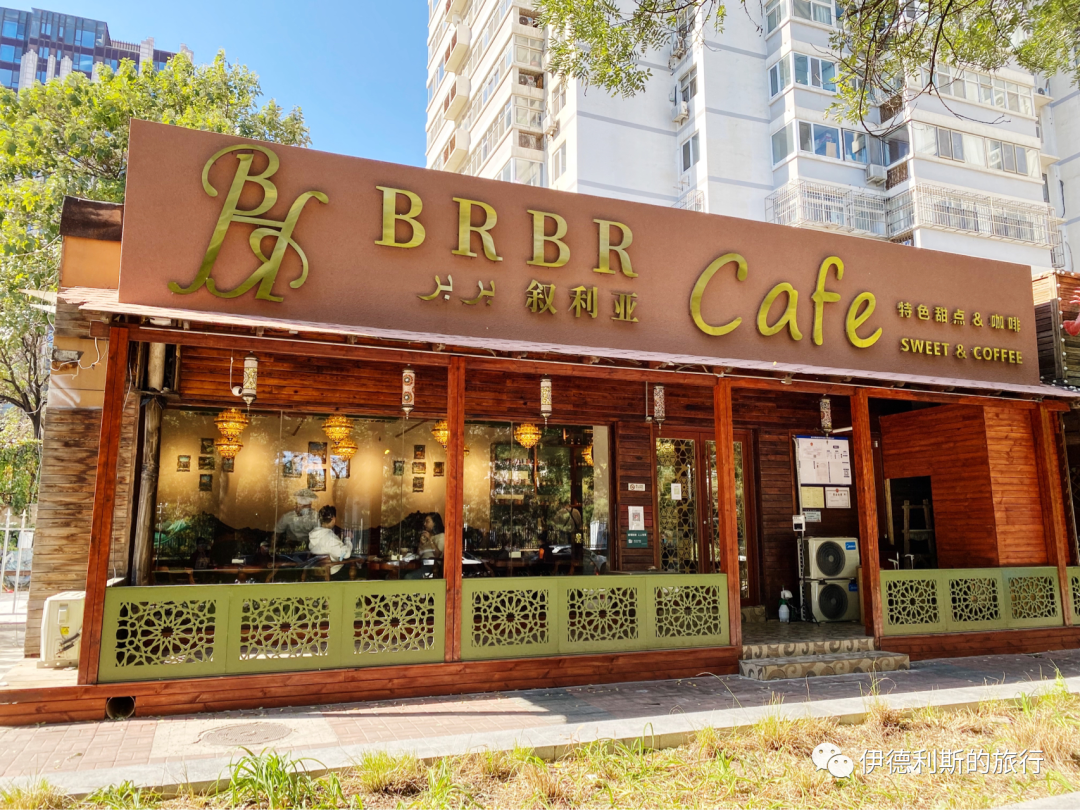
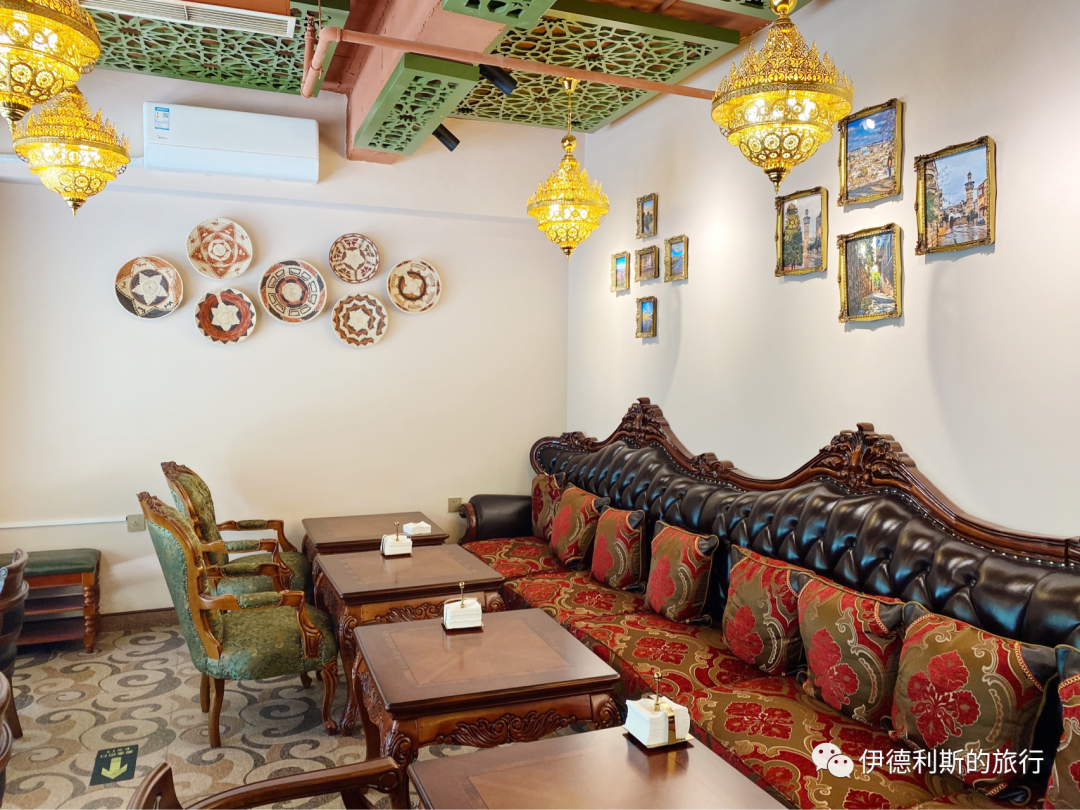
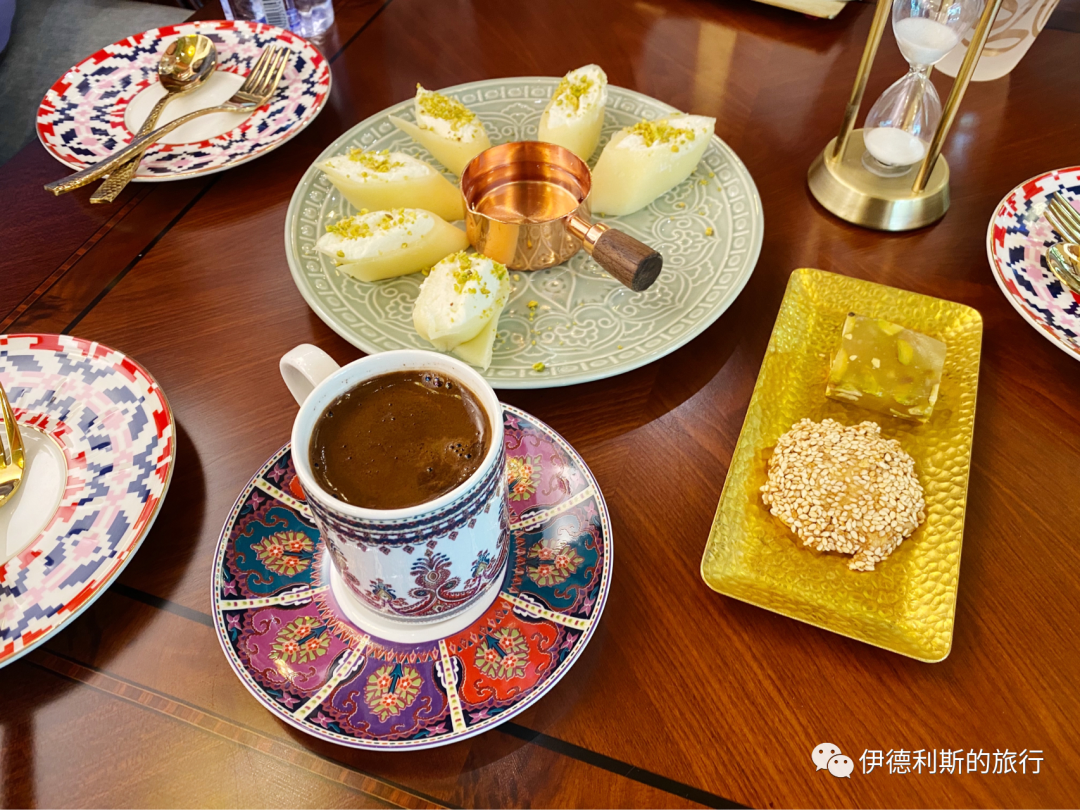
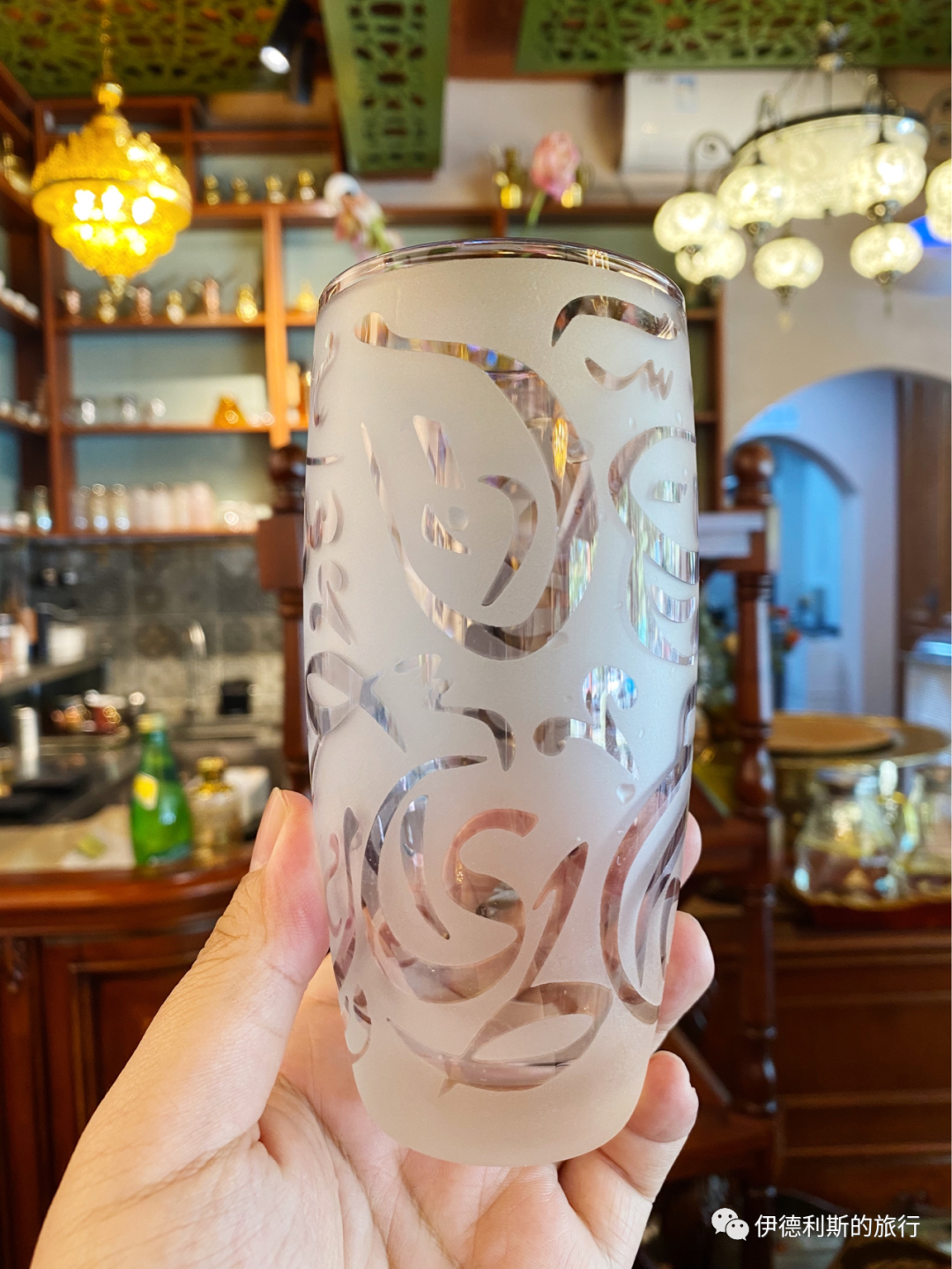
Syria sits at the crossroads of Ottoman and Arab cultures, so people drink both Arab and Turkish coffee. Both are strong, unfiltered coffees. The main difference is that Arab coffee is flavored with cardamom and served without sugar.
Sand-boiled coffee is a traditional Ottoman style. It uses a long-handled brass coffee pot called a cezve. The pot sits in a pan filled with hot sand, and you control the brewing temperature by how deep you bury the pot in the sand.
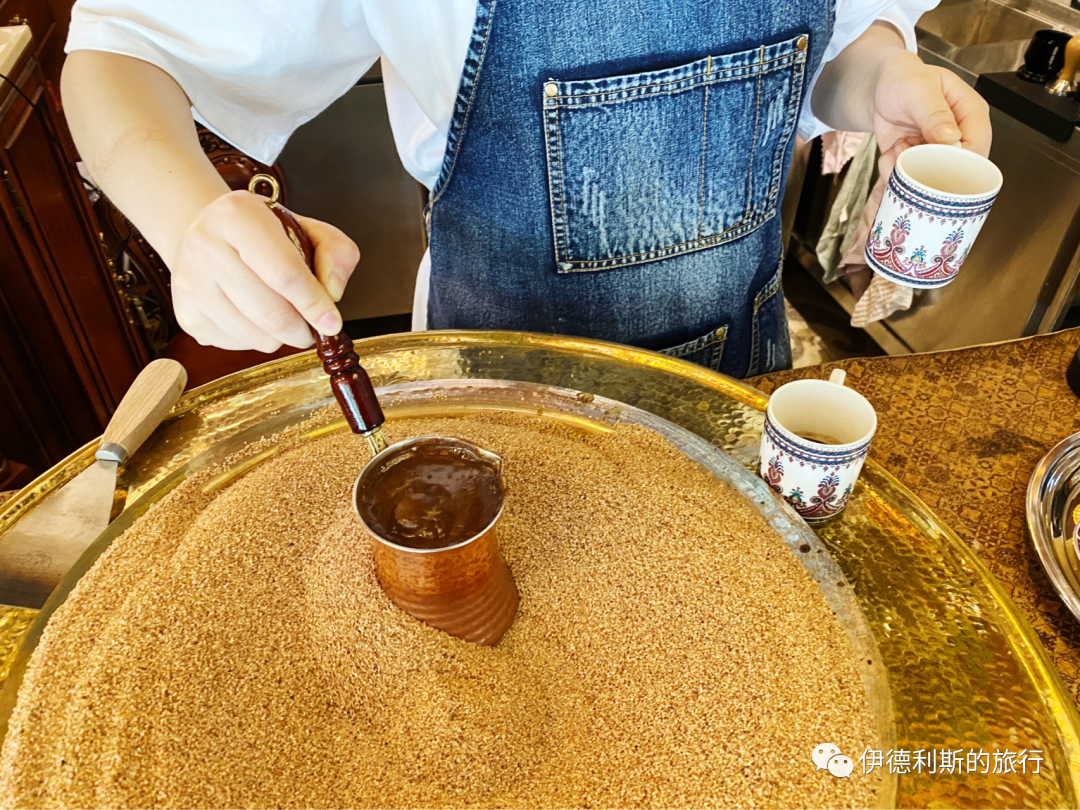
Besides coffee, desserts are a key part of the Ottoman cafe experience.
The top recommendation is the cheese roll (Halawa Baljben), also called Halawet el Jibn. It is a signature Syrian treat and likely the only one of its kind in Beijing. This dessert comes from Hama city in west-central Syria. It uses handmade cheese dough and fresh cheese, topped with crushed pistachios, and you can pour syrup over it yourself.
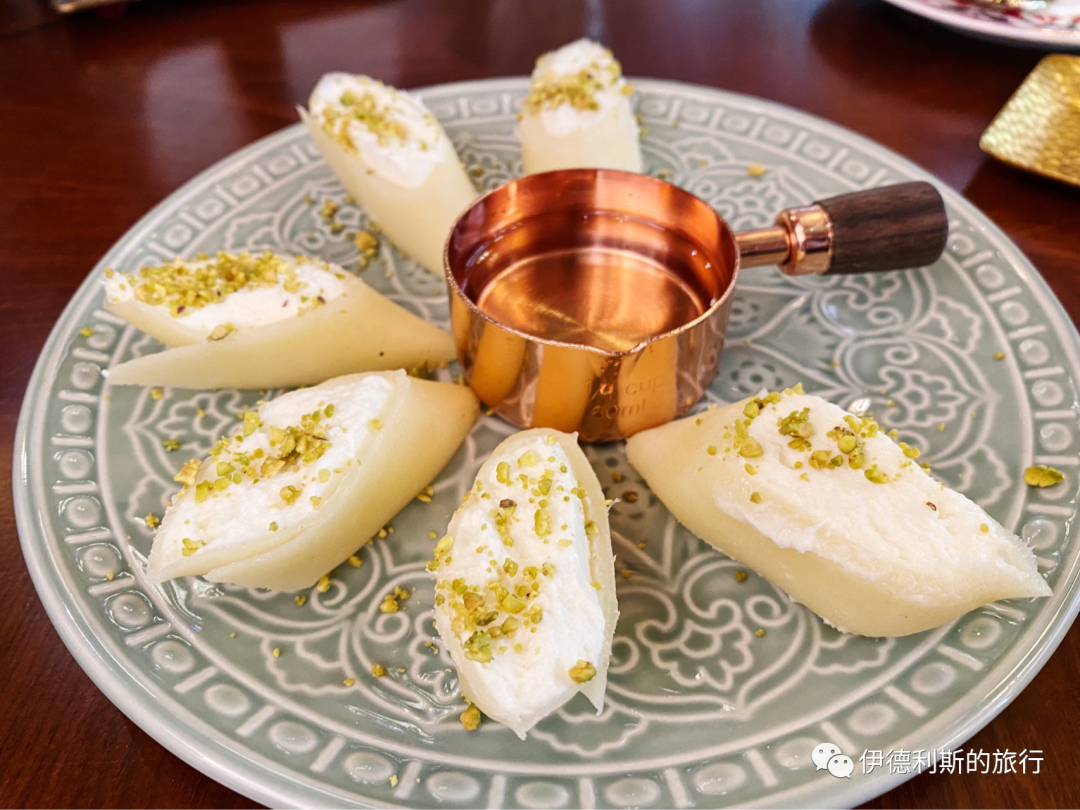
Kunafa (kunafa) is a classic Arab dessert mentioned as early as in One Thousand and One Nights. It is made of buttery crispy pastry, stretchy cheese, and crushed pistachios. Although it has a history of over a thousand years, this fried, stretchy version first appeared in the mid-15th century during the Ottoman period. It then spread from the Arab world to Greece and Turkey under Ottoman rule.
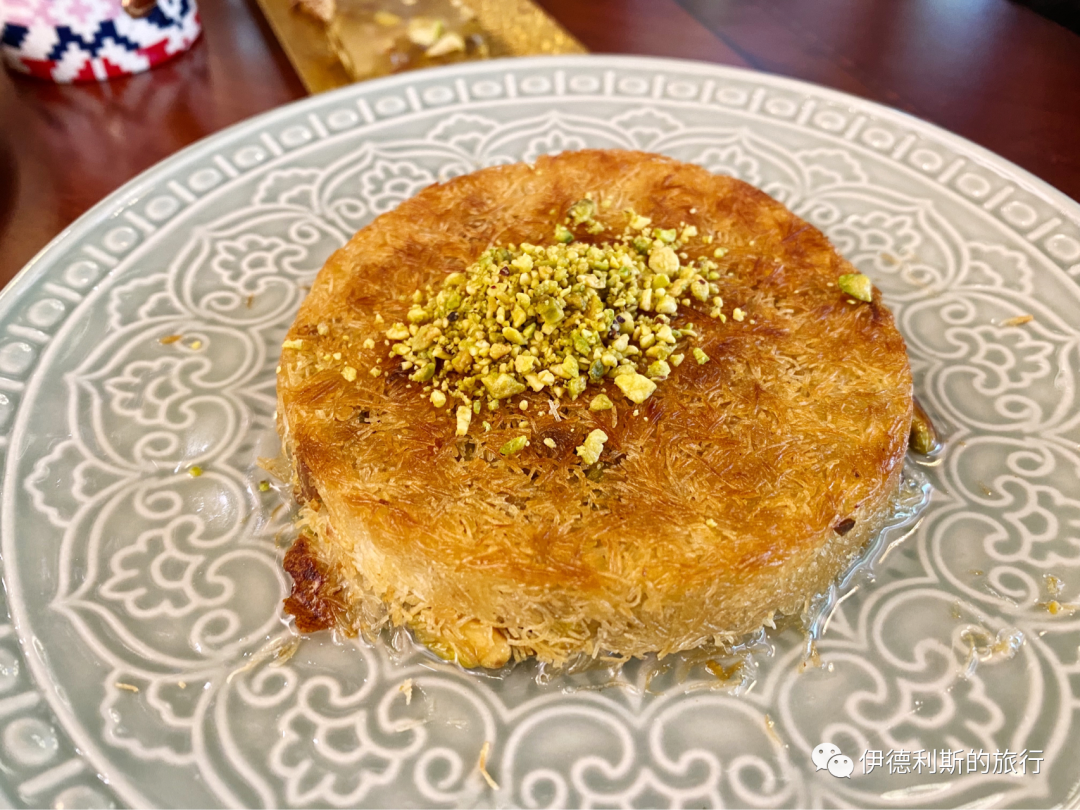
Syrian ice cream (Booza) is a true specialty of the old markets in Damascus. It is famous for being stretchy and chewy, and BRBR recreates this very well. To make Booza, they add classic Ottoman spices like mastic and salep, along with plenty of nuts, to the milk. Mastic is the resin from the mastic tree, which is recorded as "mashitaqi" in the Hui Muslim medical text Huihui Yaofang. Salep (lanjingfen) is a powder made from orchid tubers and was an important spice during the Ottoman Empire. Booza is not made by churning like regular ice cream; instead, it is made by pounding and constantly stretching the mixture in an ice bucket.
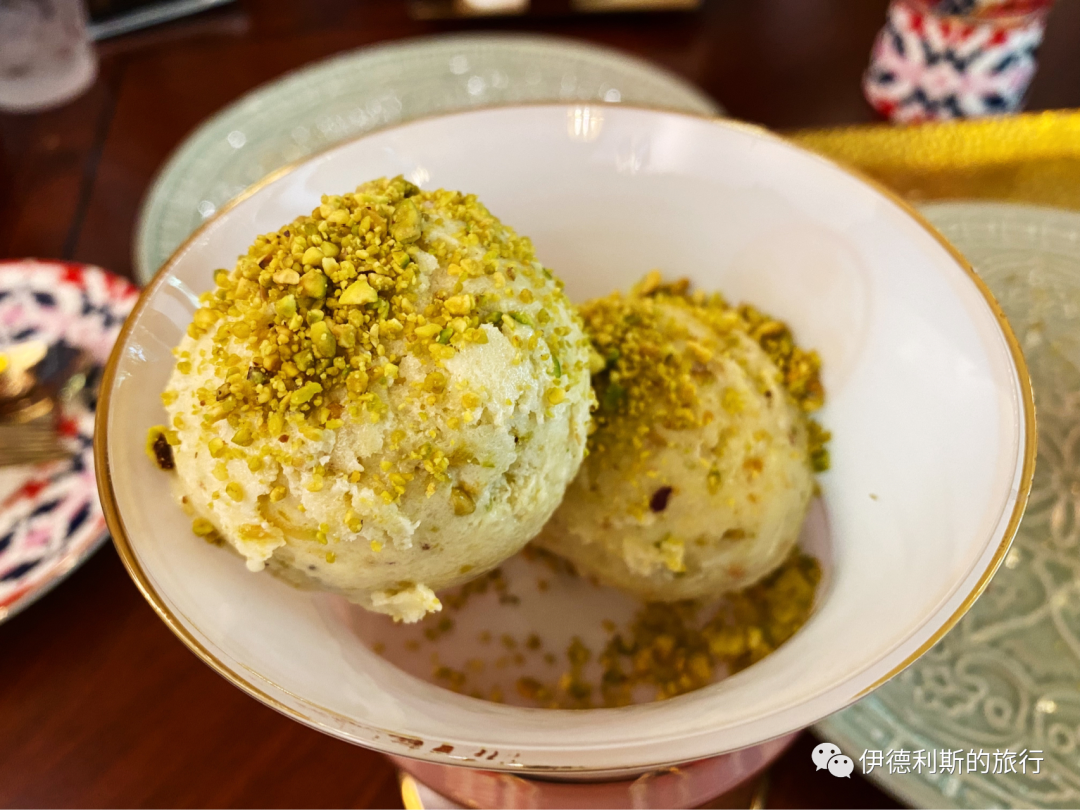
The formal Arabic name for Syrian delight (Raha) is "rāḥat al-hulqūm," which means "throat comfort." The origin of this soft candy is uncertain, but it was already popular in Ottoman regions by the 18th century. It is jelly-like and elastic, and usually contains various nuts.
Sesame cookies (Barazek) are known as the most famous dessert in Syria. They are thought to have originated in Damascus, the Syrian capital, during the Ottoman period. They later spread throughout the Levant region, including Lebanon, Jordan, Palestine, and Syria, and you can often see them on the streets of Jerusalem.
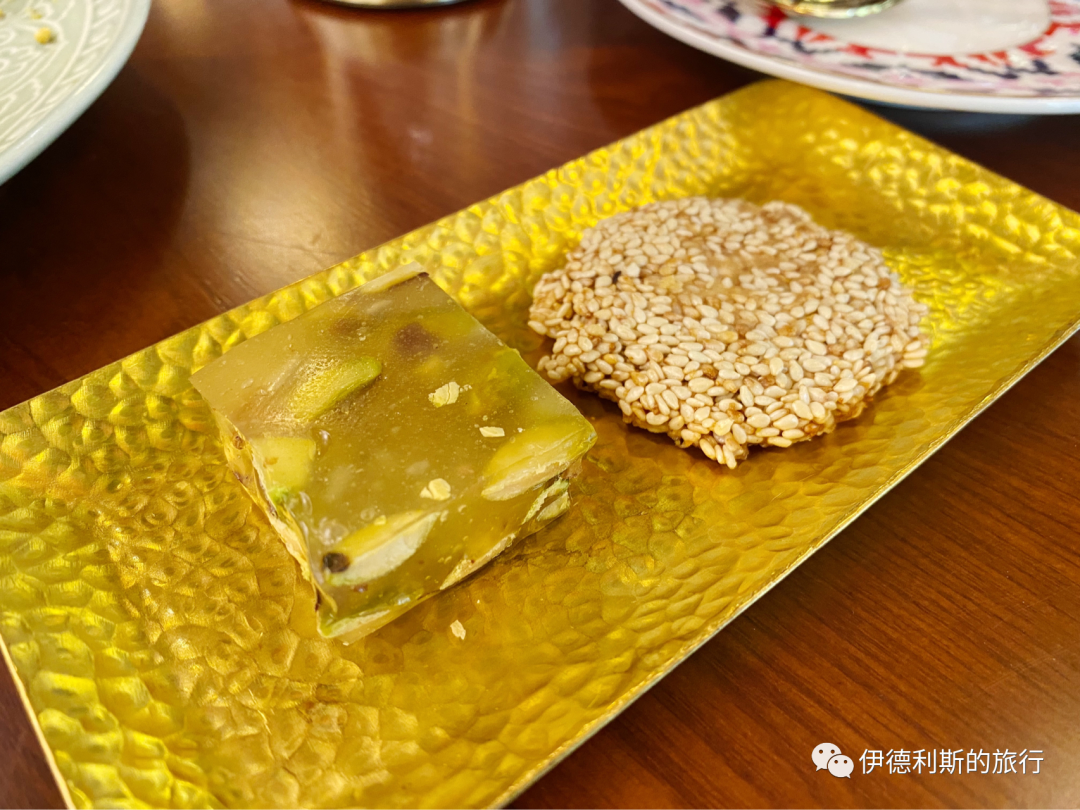 Collapse Read »
Summary: Beijing Halal Food Guide: Syrian Cafe and Damascus-Style Flavors is presented here as a firsthand travel account in clear English, beginning with this scene: I went to the Syrian cafe BRBR in Wudaokou, Beijing, over the weekend, and the flavors felt like a trip back to Damascus during the Ottoman era. The account keeps its focus on Beijing Halal Food, Syrian Cafe, Damascus Food while preserving the names, places, food, and historical details from the Chinese source.
I went to the Syrian cafe BRBR in Wudaokou, Beijing, over the weekend, and the flavors felt like a trip back to Damascus during the Ottoman era. I drank sand-brewed coffee and ate cheese pastry (Kunafa), sweet cheese rolls (Halawa Baljben), sesame cookies (Barazek), pistachio Turkish delight (Raha Alhajaj), and Syrian ice cream (Booza).
Records of coffee drinking in the Arab world date back to the 15th century, when Sufis would drink it to stay alert during their night prayers (qiyam al-layl). In 1555, two merchants from Damascus, Syria, opened the first coffee house of the Ottoman Empire in Istanbul. From then on, coffee houses became an important part of Ottoman culture. Ottoman coffeehouses became important places for sharing news and meeting people. People gathered here to talk about daily events and share their thoughts and feelings. Coffee shops have become a fourth space for people, outside of their homes, workplaces, and the mosque.
Syria sits at the crossroads of Ottoman and Arab cultures, so people drink both Arab and Turkish coffee. Both are strong, unfiltered coffees. The main difference is that Arab coffee is flavored with cardamom and served without sugar.
Sand-boiled coffee is a traditional Ottoman style. It uses a long-handled brass coffee pot called a cezve. The pot sits in a pan filled with hot sand, and you control the brewing temperature by how deep you bury the pot in the sand.
Besides coffee, desserts are a key part of the Ottoman cafe experience.
The top recommendation is the cheese roll (Halawa Baljben), also called Halawet el Jibn. It is a signature Syrian treat and likely the only one of its kind in Beijing. This dessert comes from Hama city in west-central Syria. It uses handmade cheese dough and fresh cheese, topped with crushed pistachios, and you can pour syrup over it yourself.
Kunafa (kunafa) is a classic Arab dessert mentioned as early as in One Thousand and One Nights. It is made of buttery crispy pastry, stretchy cheese, and crushed pistachios. Although it has a history of over a thousand years, this fried, stretchy version first appeared in the mid-15th century during the Ottoman period. It then spread from the Arab world to Greece and Turkey under Ottoman rule.
Syrian ice cream (Booza) is a true specialty of the old markets in Damascus. It is famous for being stretchy and chewy, and BRBR recreates this very well. To make Booza, they add classic Ottoman spices like mastic and salep, along with plenty of nuts, to the milk. Mastic is the resin from the mastic tree, which is recorded as "mashitaqi" in the Hui Muslim medical text Huihui Yaofang. Salep (lanjingfen) is a powder made from orchid tubers and was an important spice during the Ottoman Empire. Booza is not made by churning like regular ice cream; instead, it is made by pounding and constantly stretching the mixture in an ice bucket.
The formal Arabic name for Syrian delight (Raha) is "rāḥat al-hulqūm," which means "throat comfort." The origin of this soft candy is uncertain, but it was already popular in Ottoman regions by the 18th century. It is jelly-like and elastic, and usually contains various nuts.
Sesame cookies (Barazek) are known as the most famous dessert in Syria. They are thought to have originated in Damascus, the Syrian capital, during the Ottoman period. They later spread throughout the Levant region, including Lebanon, Jordan, Palestine, and Syria, and you can often see them on the streets of Jerusalem.
Collapse Read »
Halal Travel Guide: Jakarta — Indonesian Food, Mosques and Muslim Heritage
Reposted from the web
Summary: Jakarta — Indonesian Food, Mosques and Muslim Heritage is presented here as a firsthand travel account in clear English, beginning with this scene: I visited Jakarta for the Qingming Festival holiday in 2019 and stayed at a large commercial complex called Ciputra. The account keeps its focus on Jakarta Travel, Indonesian Food, Muslim Heritage while preserving the names, places, food, and historical details from the Chinese source.
Ciputra Commercial Center
I visited Jakarta for the Qingming Festival holiday in 2019 and stayed at a large commercial complex called Ciputra. The hotel was quite good, and there was a big shopping mall right inside the building. Jakarta has many large malls like this, but most are in the new city to the south. This one is relatively close to the airport, the bus station, and the old town.
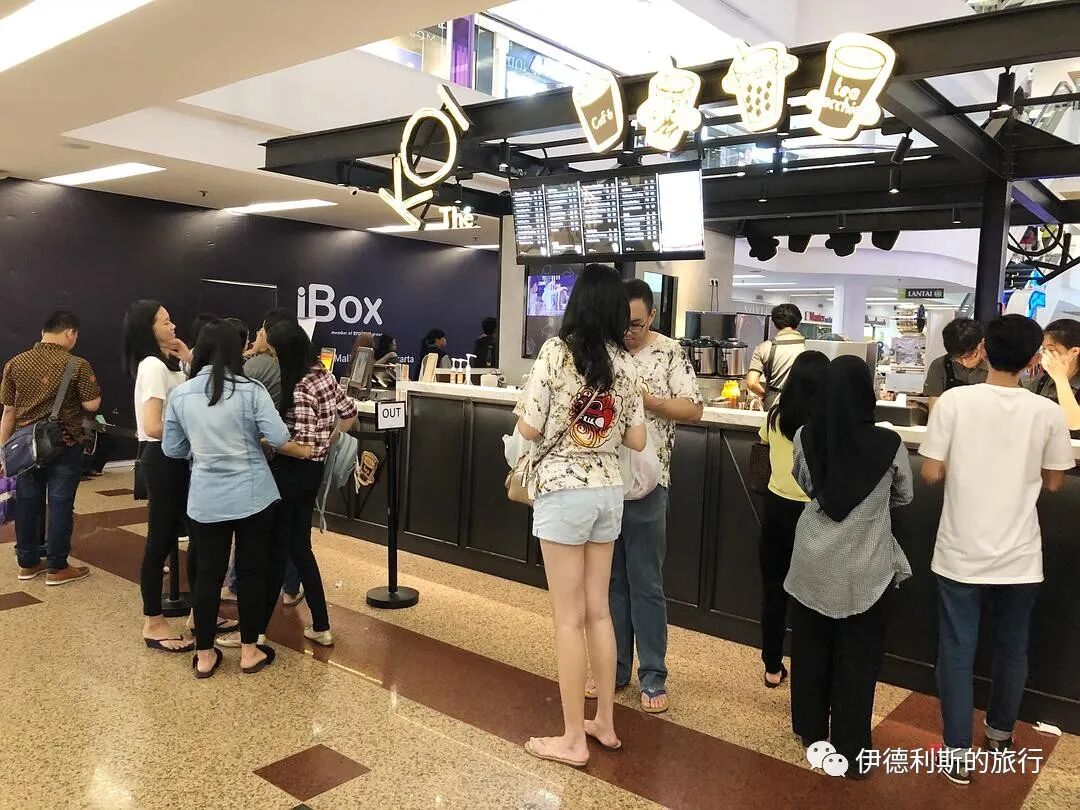
There are many different restaurants inside the mall, and I chose two to eat at. At the first place, I had sour fish soup (Sop Ikan Asam Pedas) and fish rolls (Lumpia Ikan). The sour soup used pineapple for flavor and was delicious; I ate a whole fish by myself.
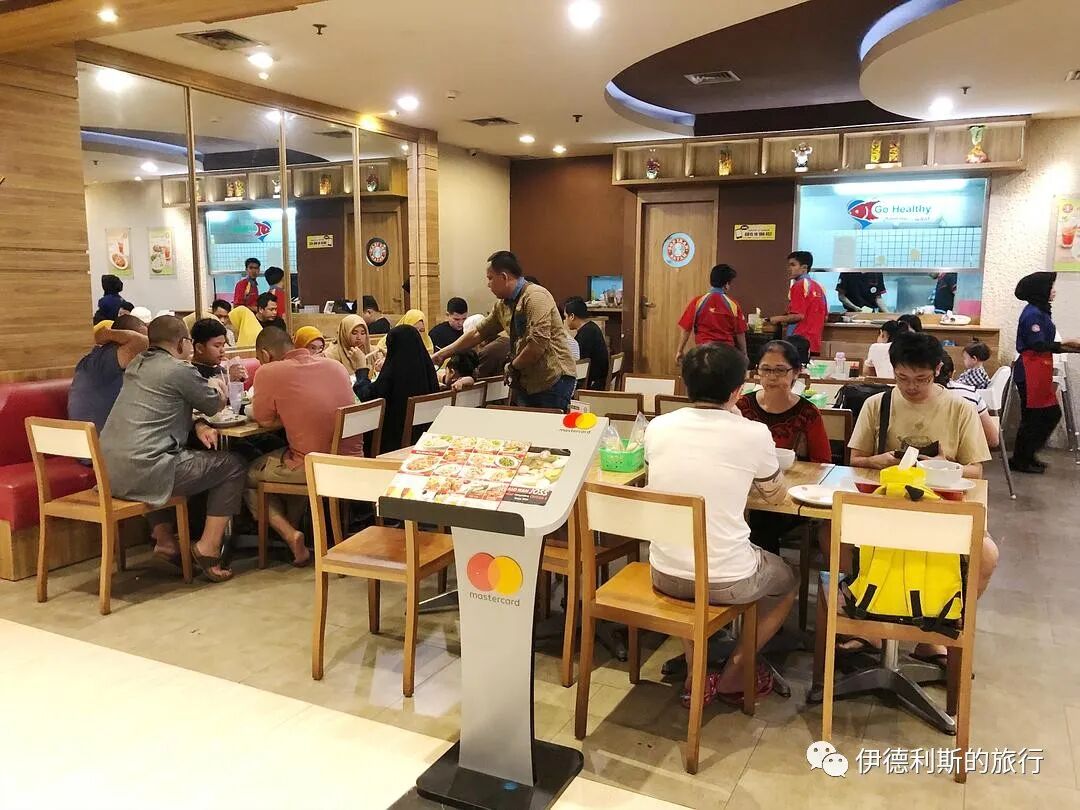
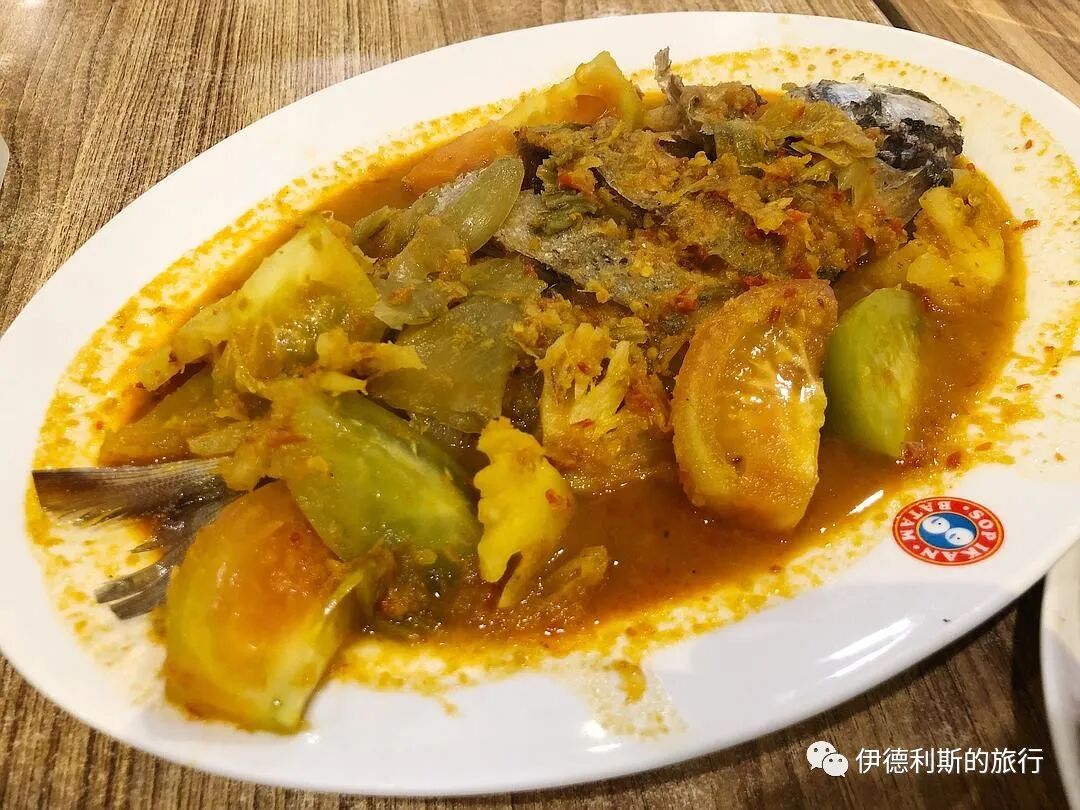
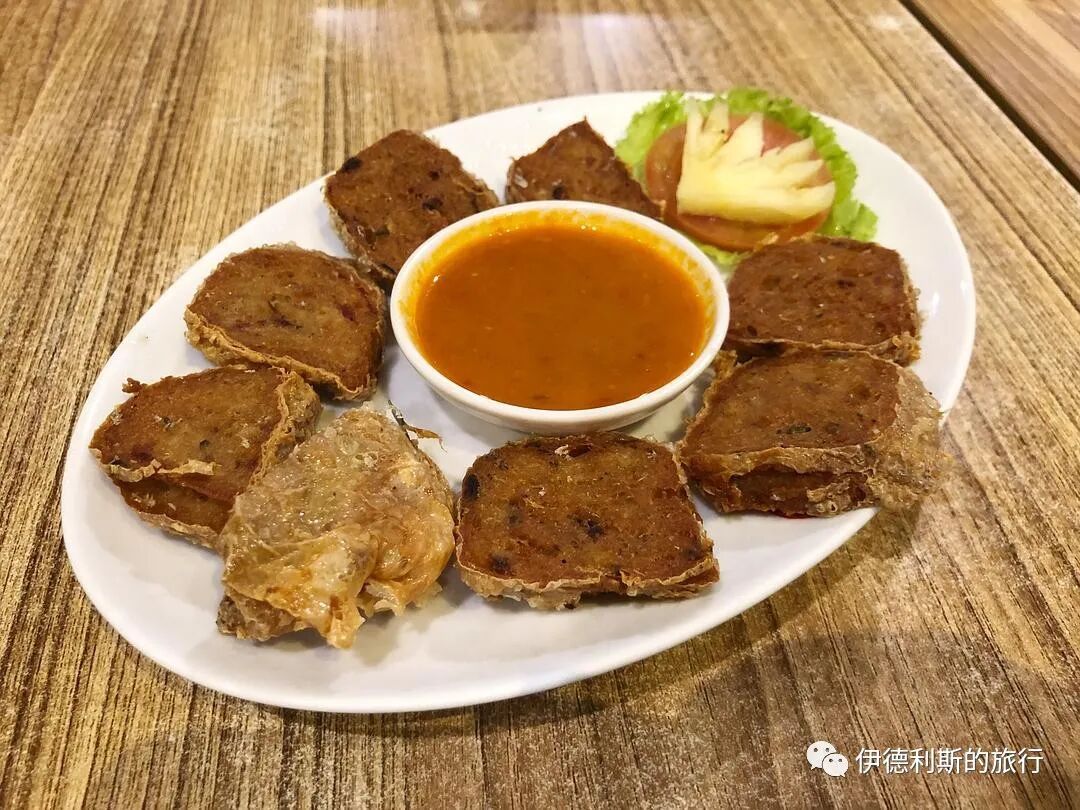
At the second place, I had garlic water spinach (Kangkung Bawang Putih), squid stir-fried in Padang sauce (Cumi Saus Padang), and a large crab in black pepper sauce (Kepiting Jantan Saus Lada Hitam). The advantage of this restaurant is that they post photos of all their dishes on the wall. There is a small card in front of each photo, so you just take the card and give it to the front desk. It is very simple.
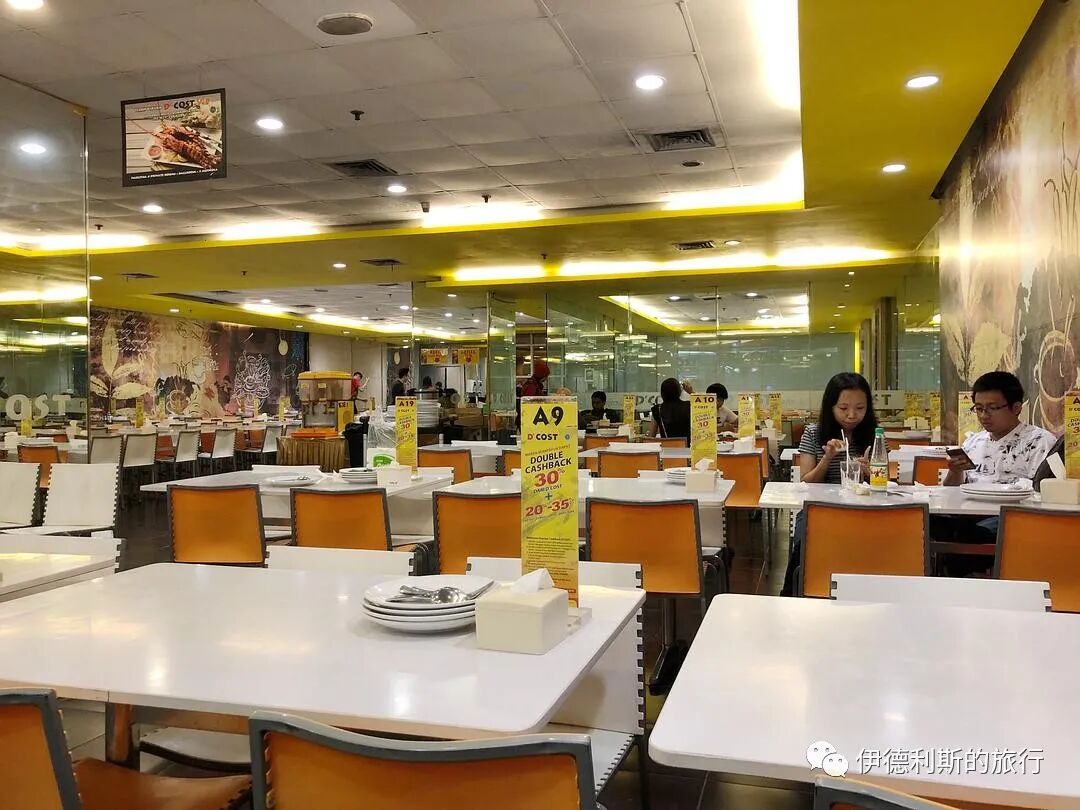
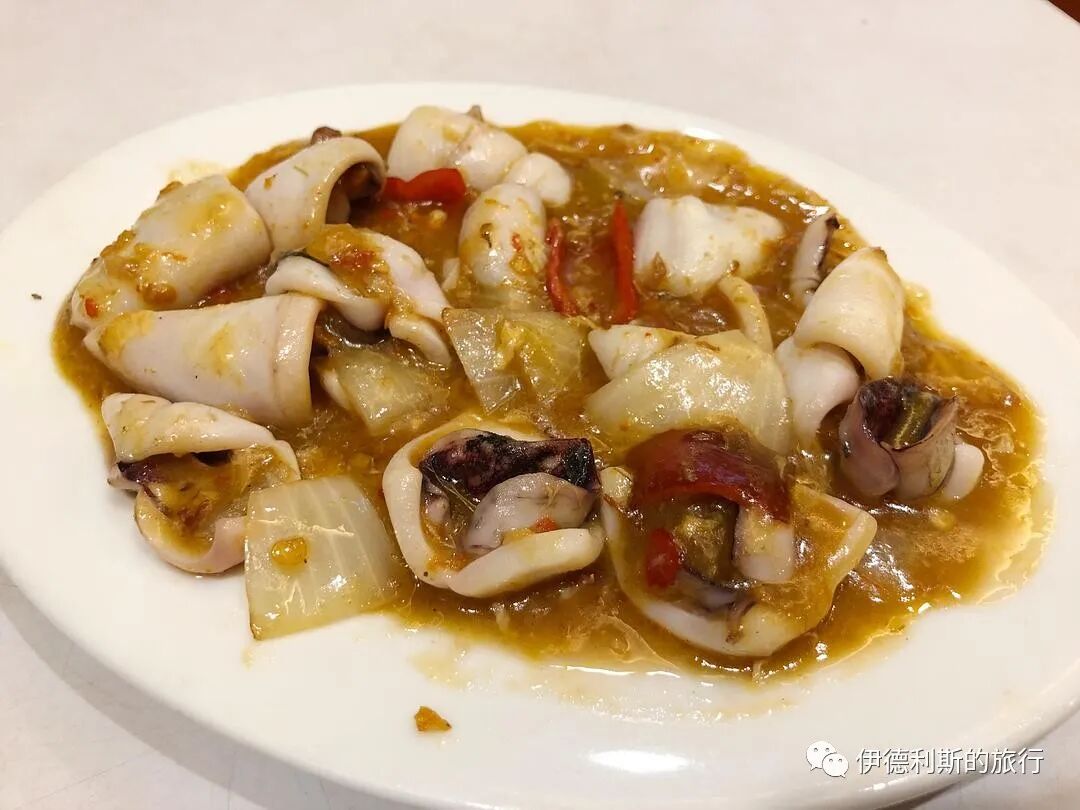
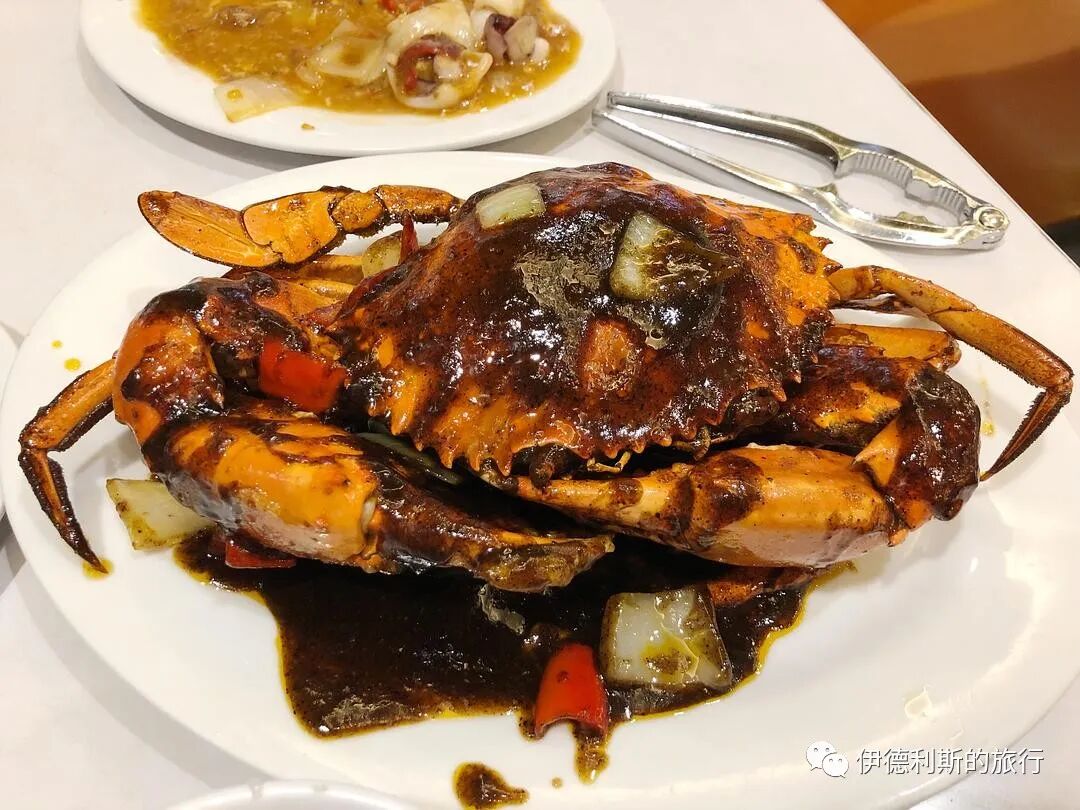
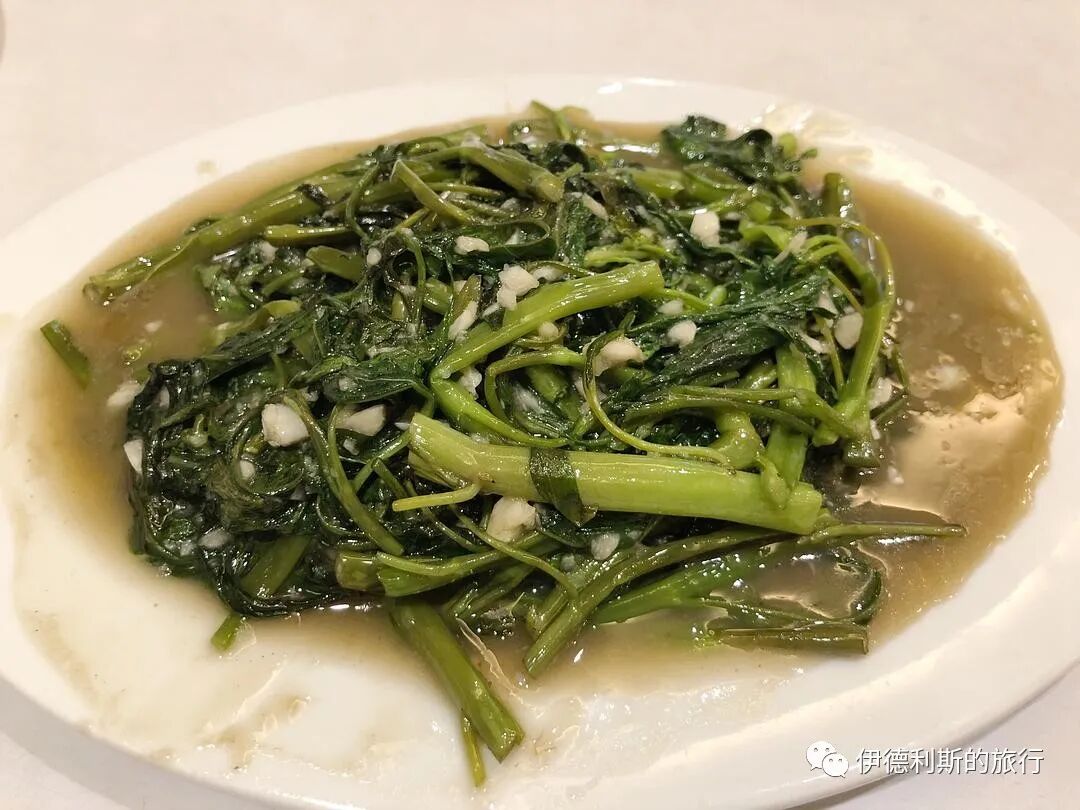
Jakarta Old Town
Jakarta Old Town (Kota Tua Jakarta), also called Old Batavia (Oud Batavia), was the most important Dutch colonial site in Southeast Asia. From the 17th to the 19th century, it served as the headquarters for the Dutch East India Company.
Old Batavia was founded in 1619. When I visited in 2019, it was exactly 400 years old.
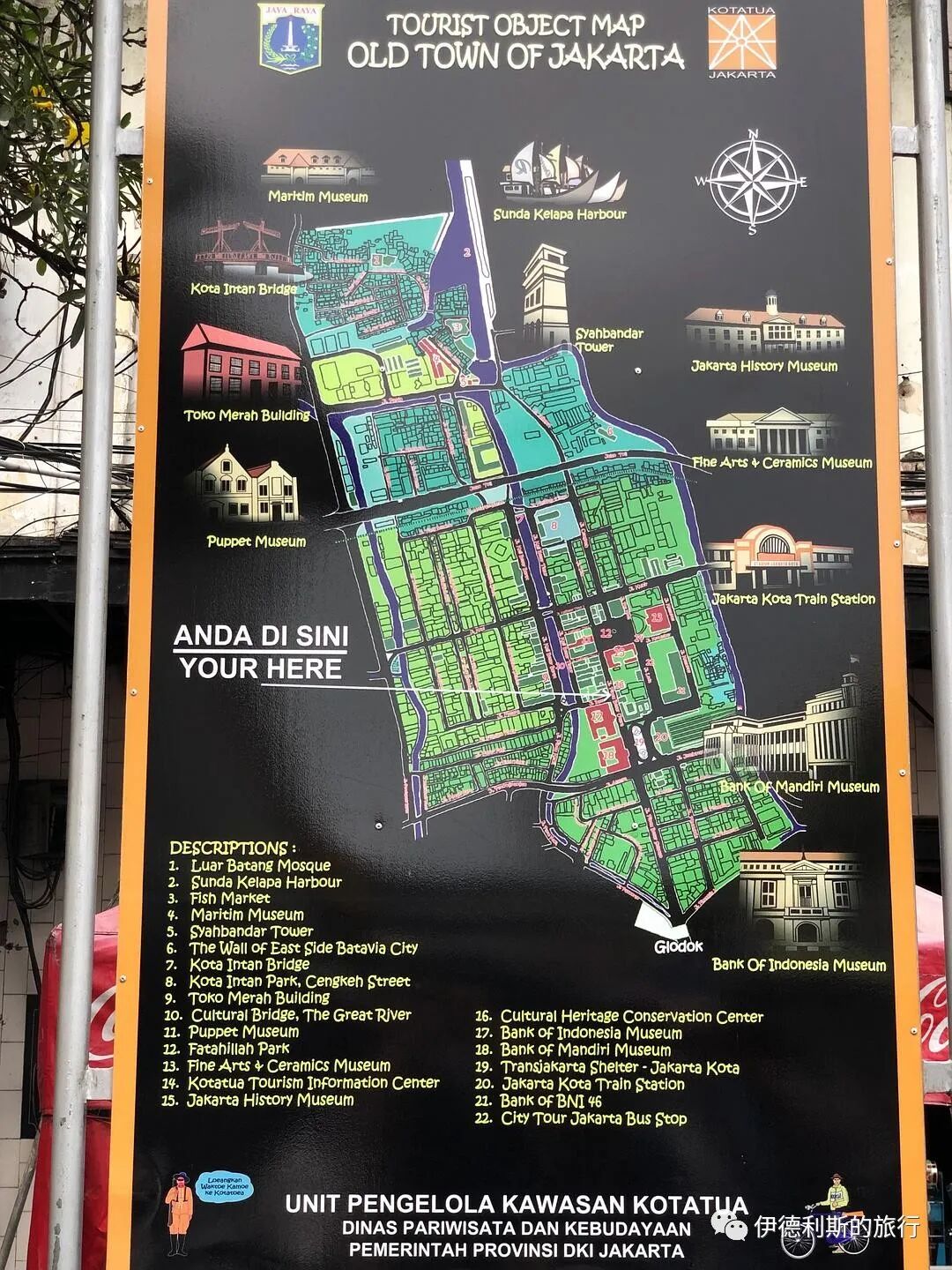
Batavia in 1682, drawn by Weduwe van Jacob van Meurs.
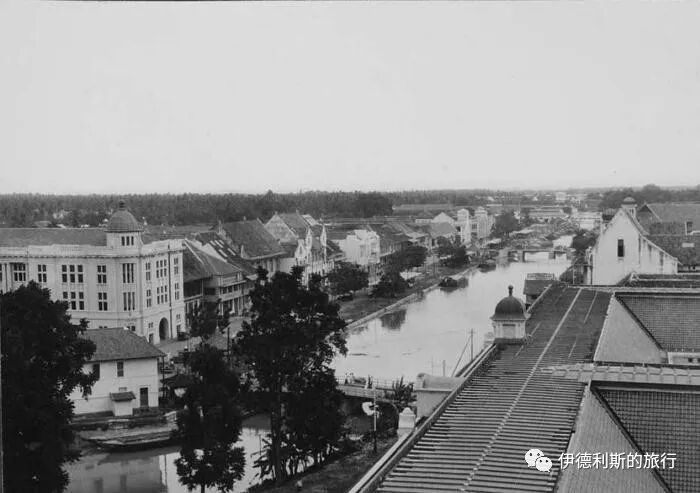
Old Batavia in 1931. The building on the left is the same one shown in the picture above.
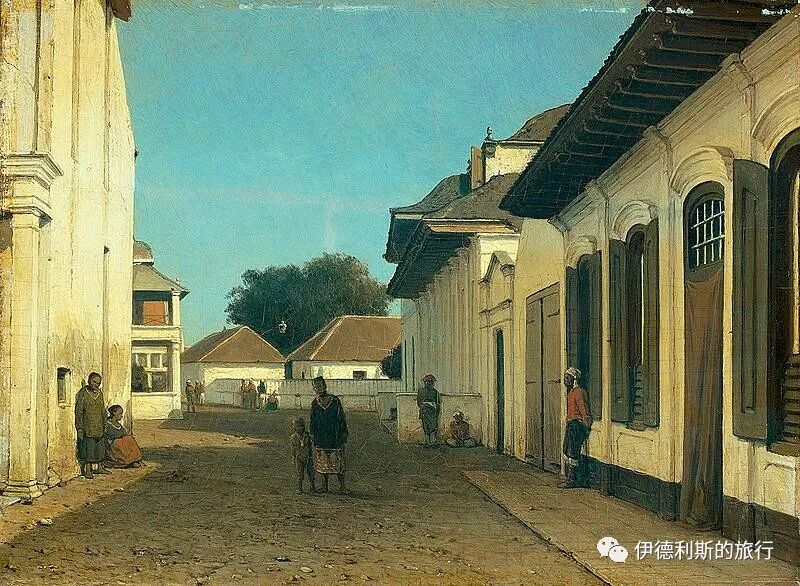
Old Batavia in the 19th century, painted by Johannes Weissenbruch.
Today, the old town is very lively, just like a temple fair. You can find people taking photos, reading palms, singing, getting henna tattoos, and drawing portraits.
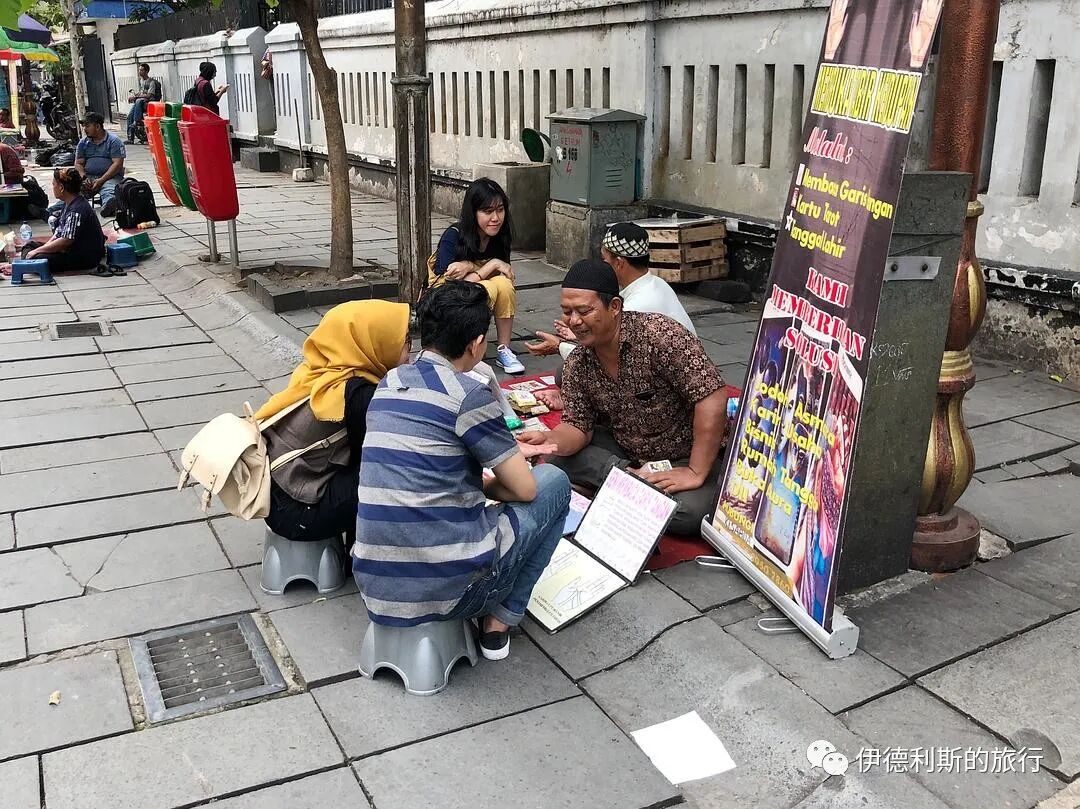
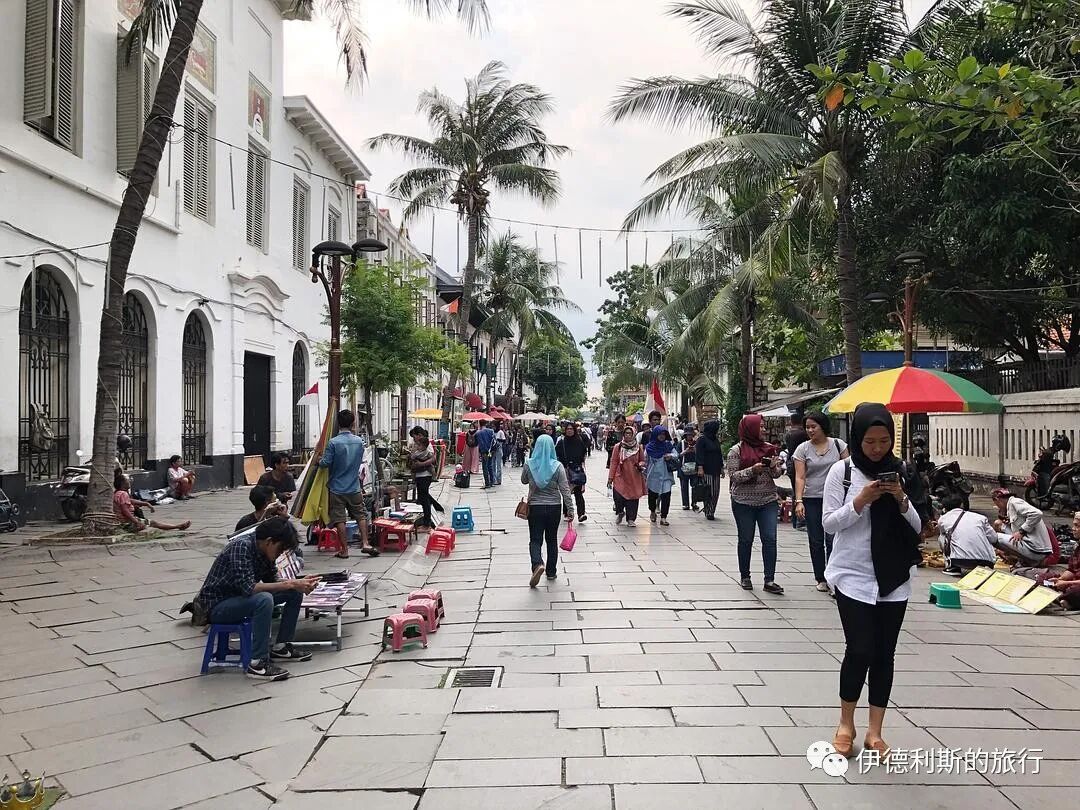
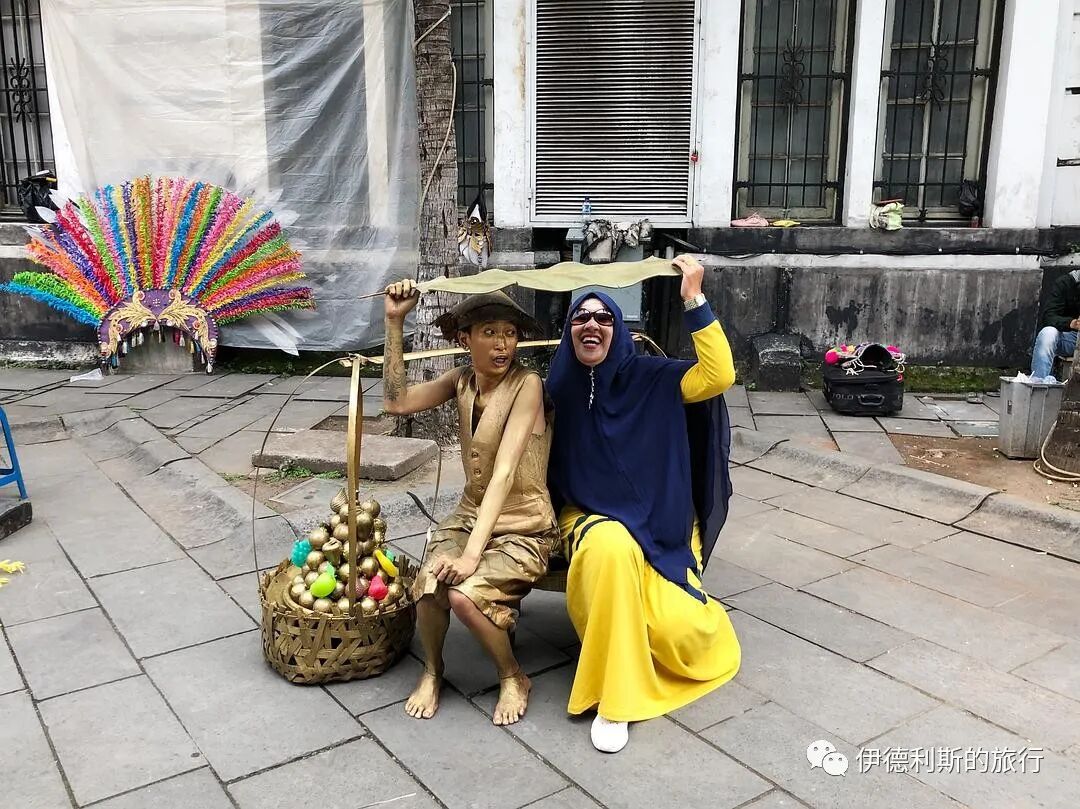
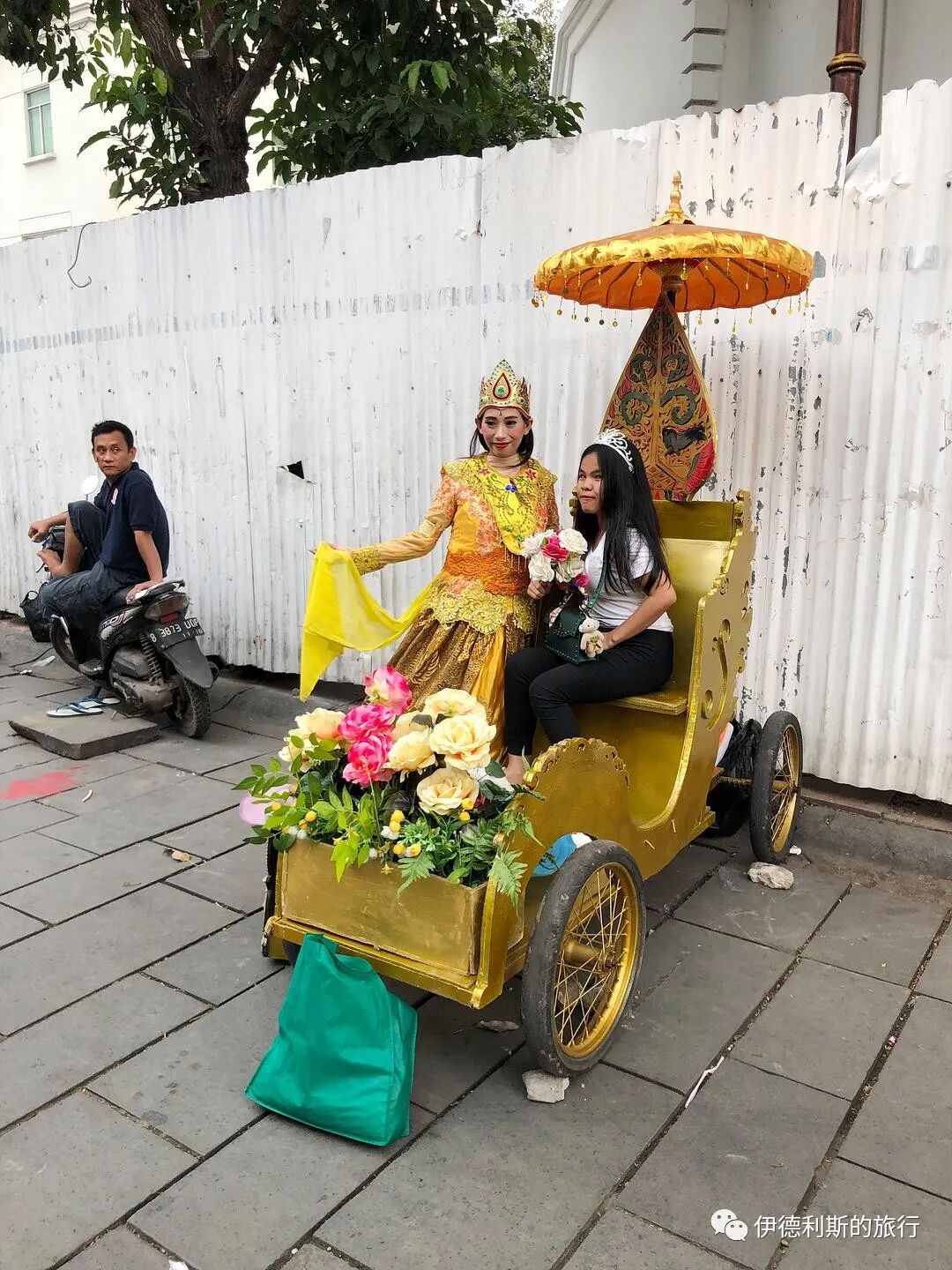
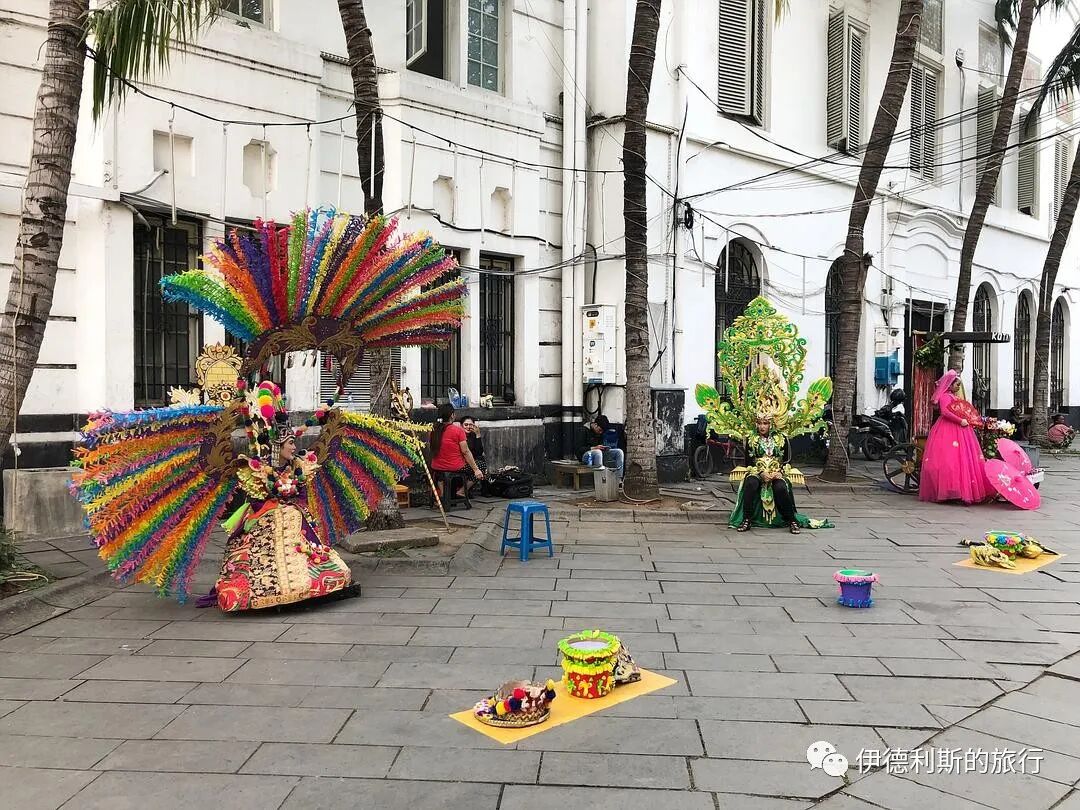
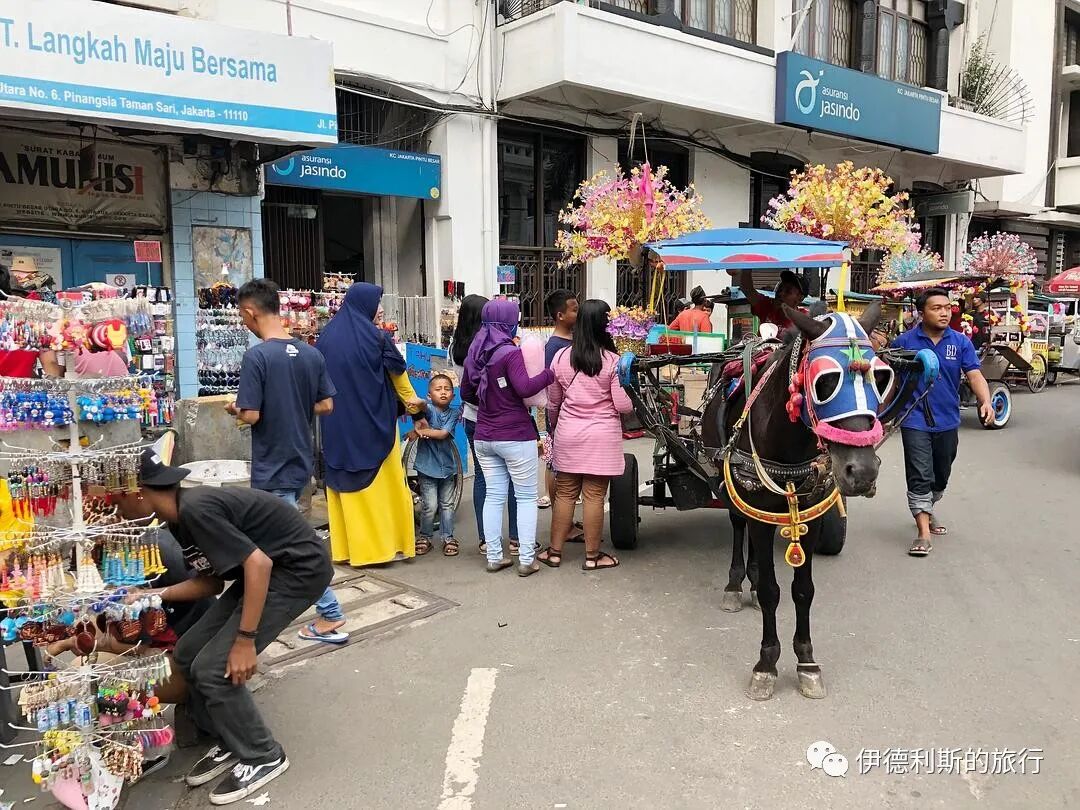
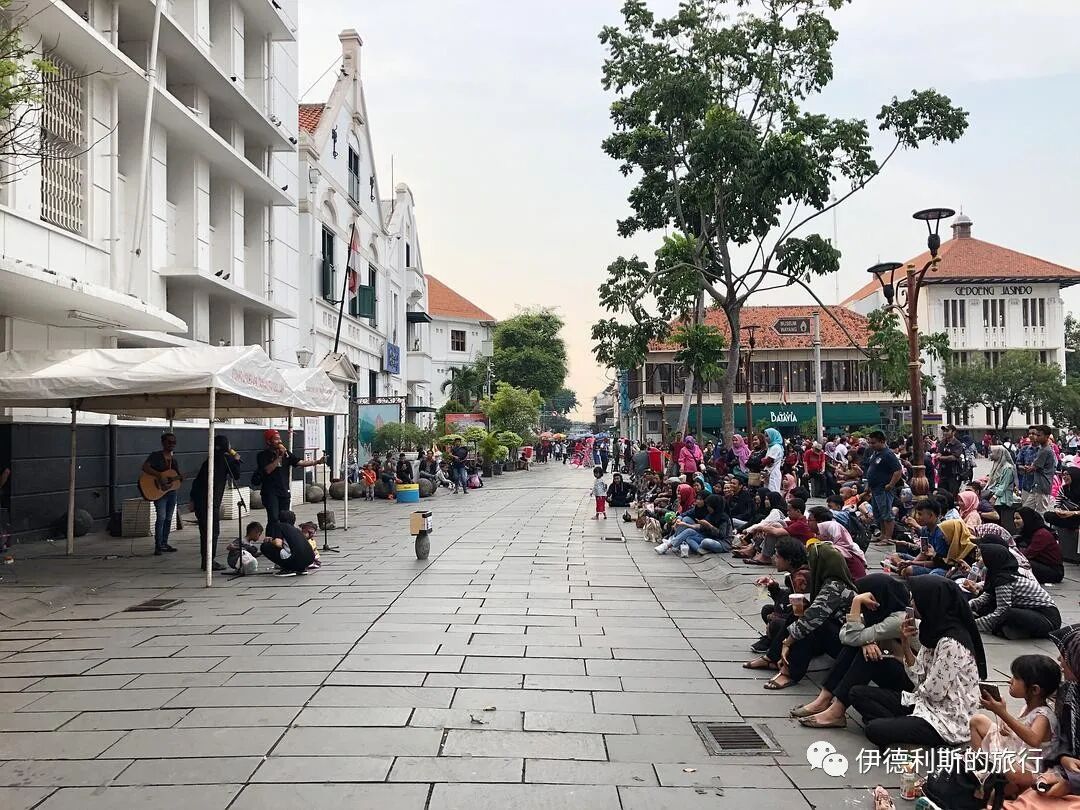
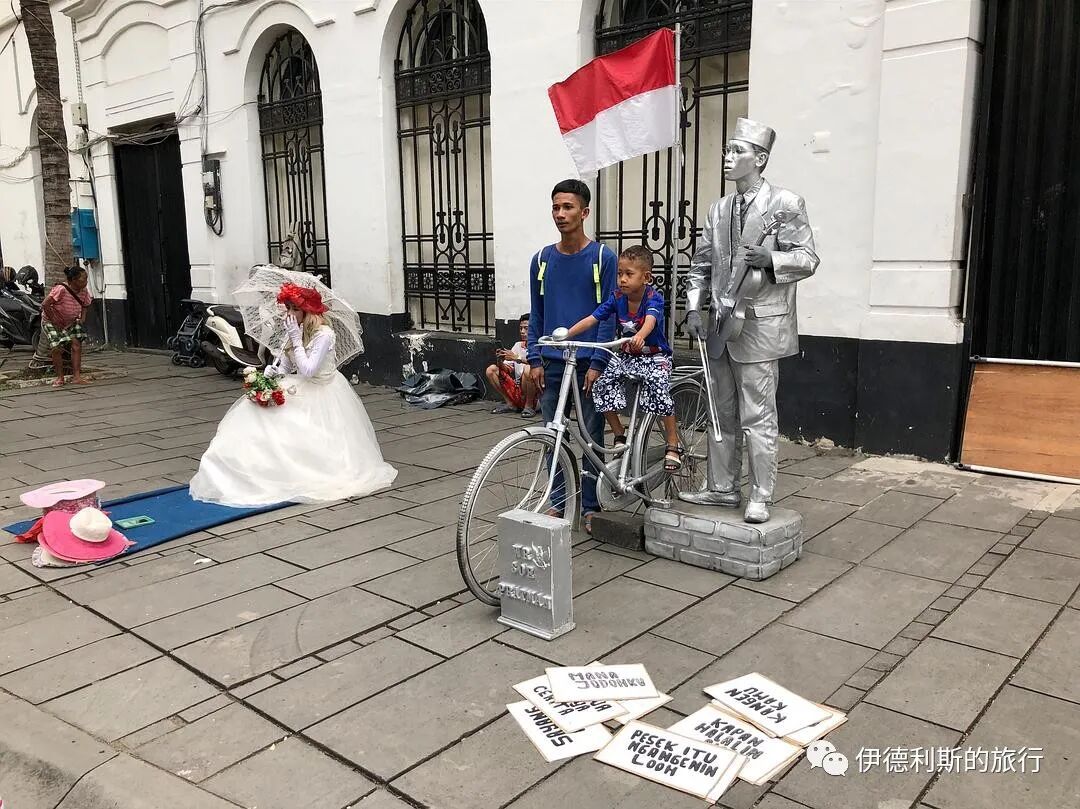
Jakarta History Museum.
The center of Old Batavia is Fatahillah Square, and the most important building there is the Jakarta History Museum. The Jakarta History Museum was built in 1710 and was once the Batavia City Hall.
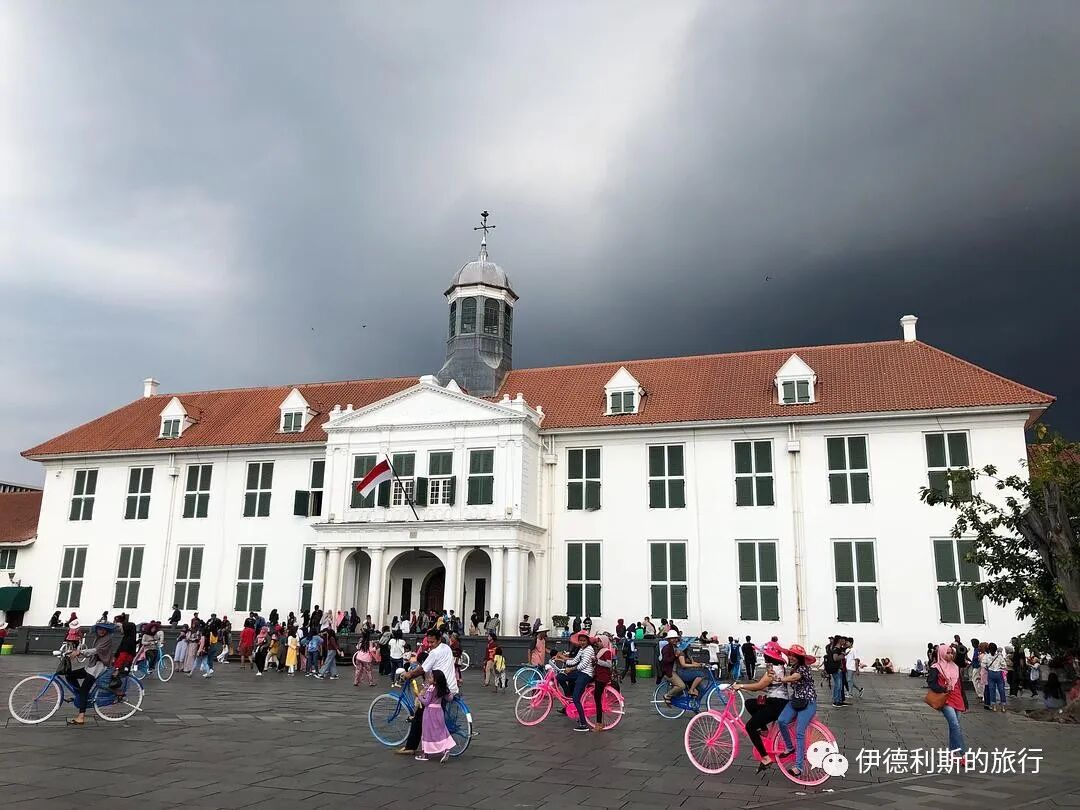
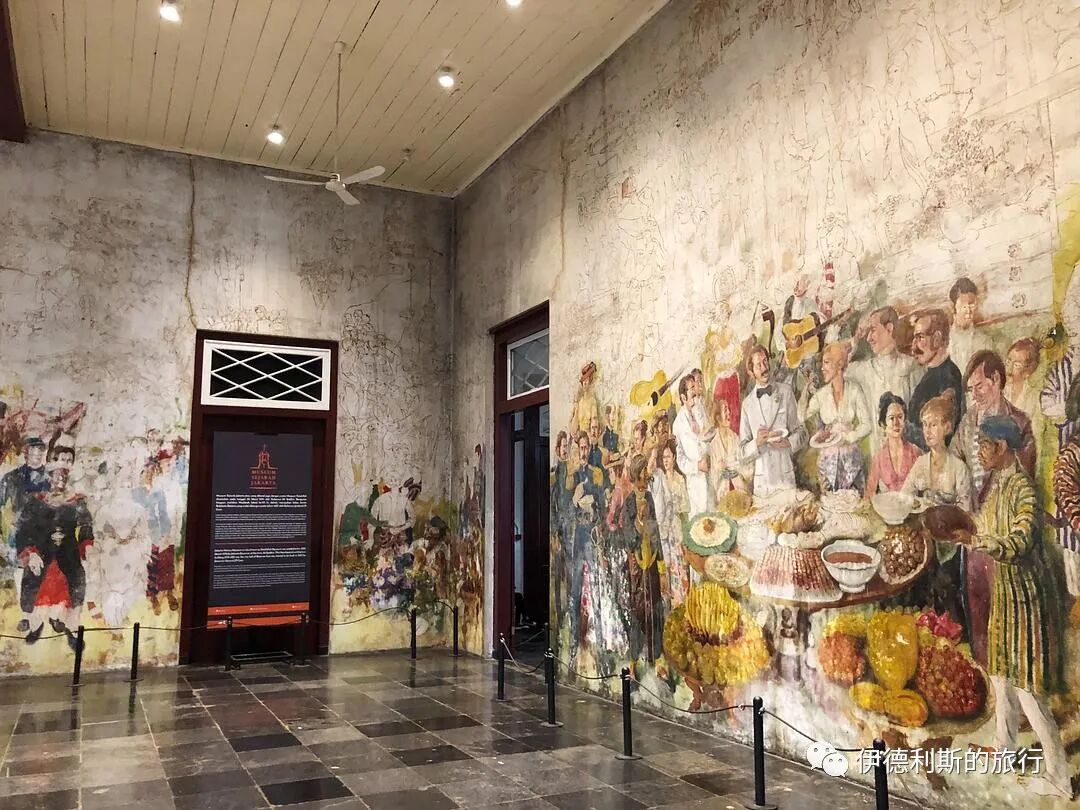
The museum courtyard has a small area serving local Betawi snacks. I ate a spicy omelet (kerak telor) and a cold drink (selendang mayang). I really regret not knowing that these snacks are hard to find elsewhere, otherwise I would have tried every single one.
Kerak telor is made with sticky rice and eggs, topped with fried shredded coconut, fried shallots, and dried shrimp. During the colonial era, this food was only served at gatherings for the Dutch or wealthy Betawi merchants, and it was invented to improve the texture of sticky rice. Selendang mayang is rare today. It is a historic Batavian cold drink made from rice flour, vanilla powder, pandan leaves, red sugar syrup, and coconut milk.
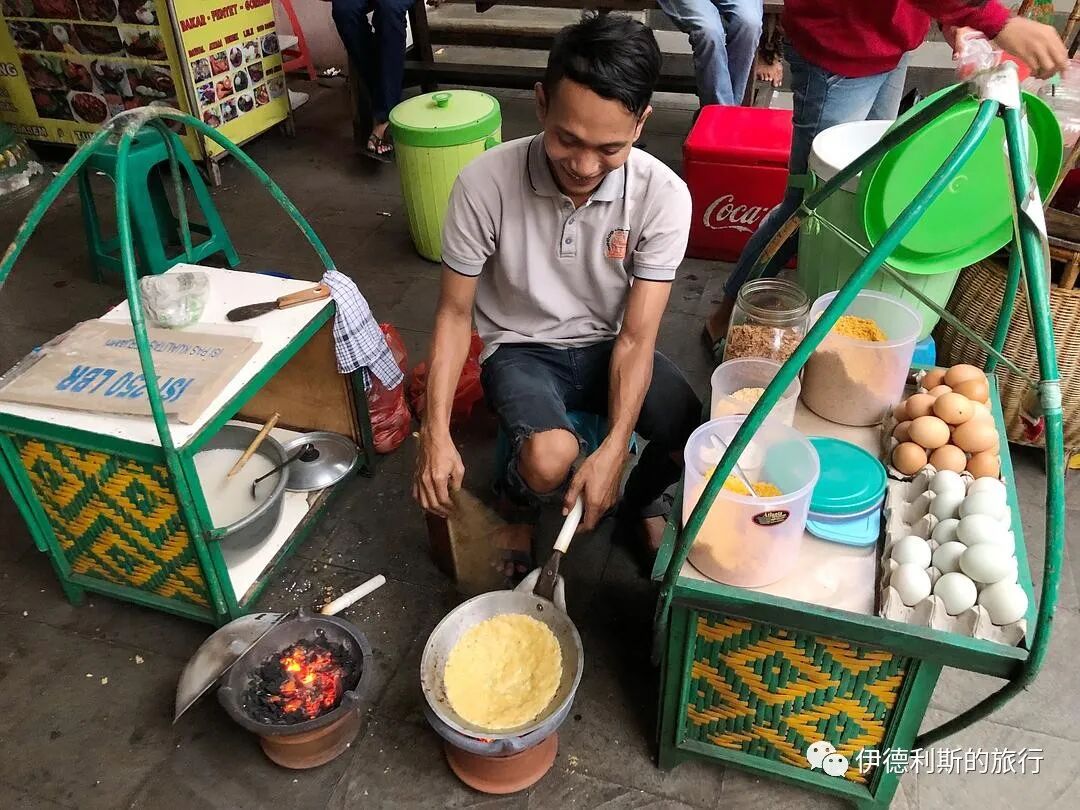
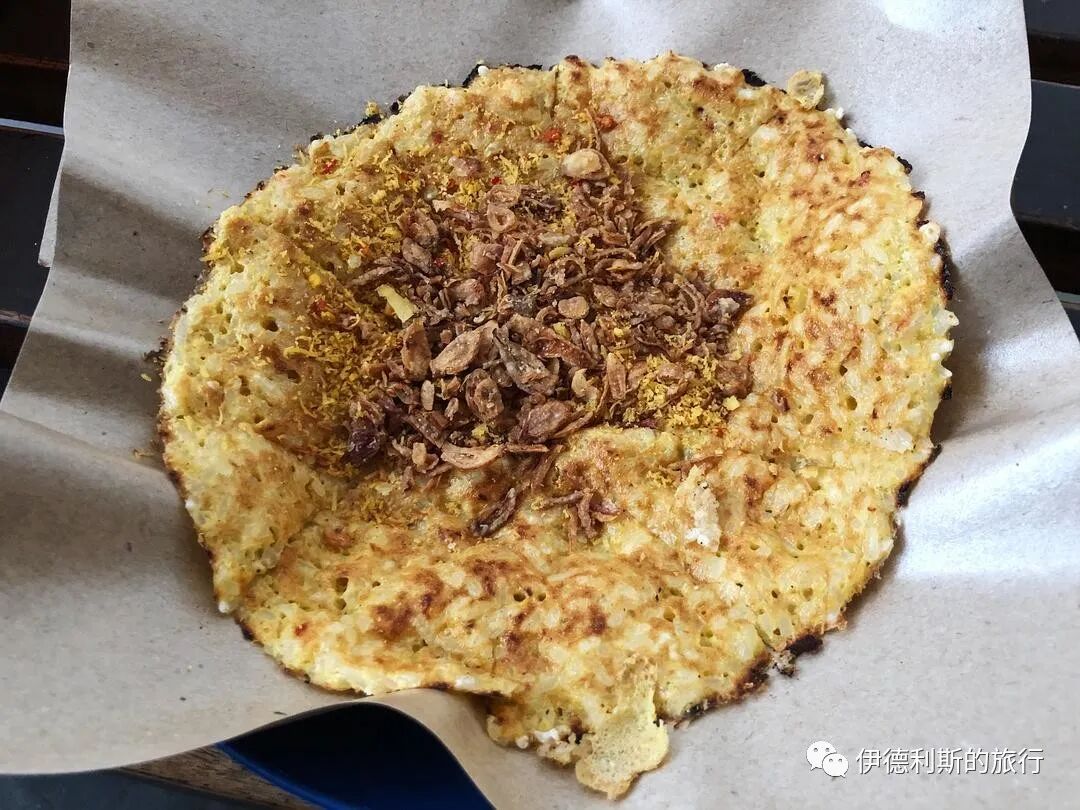
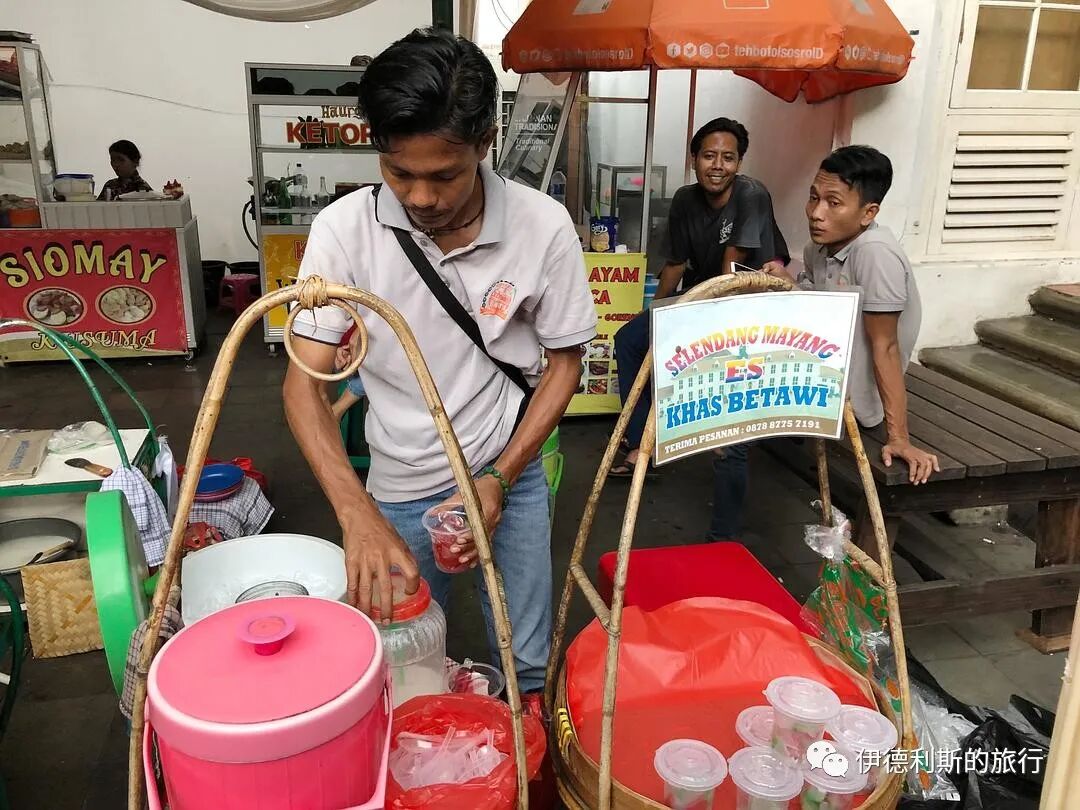
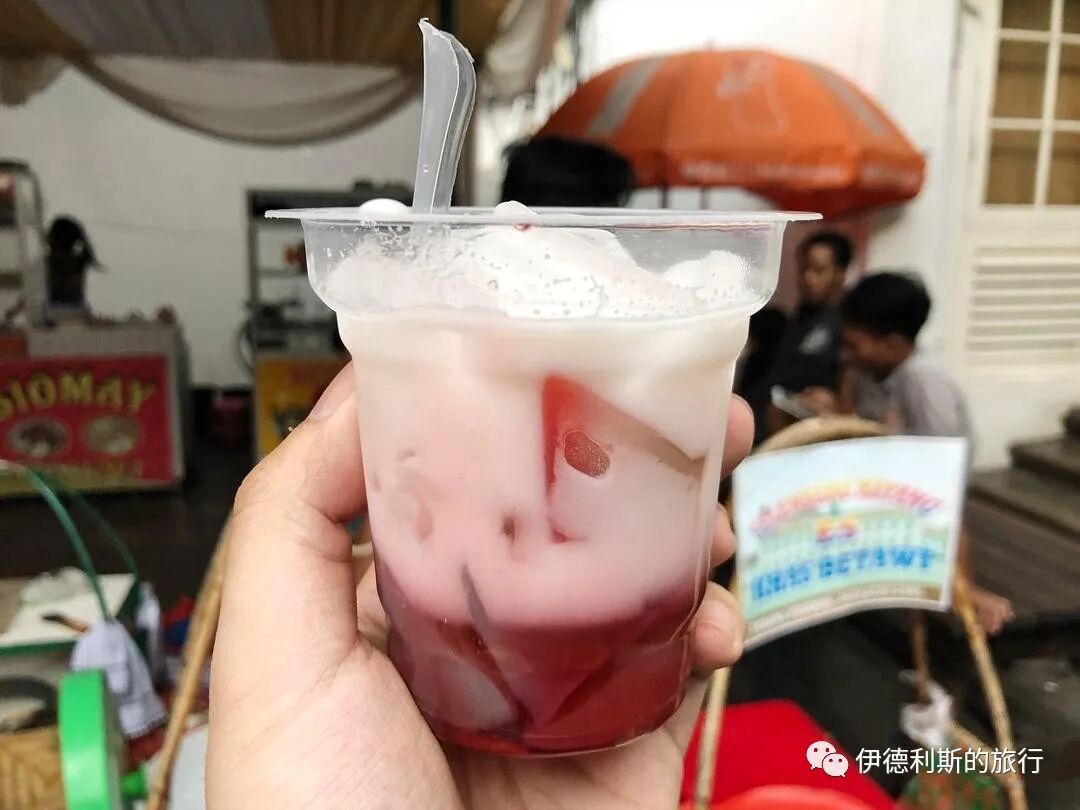
The Betawi people are a unique ethnic group that formed in Jakarta. Here is a brief introduction to their origins:
In 1619, the Dutch leveled Jakarta, which was under the rule of the Banten Sultanate, and renamed it Batavia to serve as the trade and administrative center for the Dutch East India Company.
Because they feared attacks from the Banten Sultanate, the city of Batavia initially banned local Javanese people from living inside. Besides the Dutch and their slaves, most people living in the city were Chinese and Mardijker people, along with a small number of Arab and Indian merchants. The Mardijker people came from Portuguese slaves in India, Africa, and the Malay Peninsula. After the Dutch defeated the Portuguese in the 17th century, the Dutch East India Company freed them and brought them to Indonesia. Most of these people spoke Portuguese and practiced Catholicism.
Since almost no Dutch women moved to Batavia, most Dutch men in the city chose to have local women as partners, but they almost never married them. These women also had no right to return to the Netherlands with the Dutch men. This social pattern led to many mixed-race children in Batavia. Most of the boys from these mixed-race families chose to go to Europe, while the girls had to stay in Batavia.
A 1699 census shows that Batavia had 3,679 Chinese, 2,407 Mardijkers, 1,783 Europeans, 670 people of mixed heritage, and 867 others.
After the Dutch East India Company and the Sultanate of Banten made peace in 1659, many people from the East Indies began moving to the outskirts of Batavia. The Dutch East India Company signed a formal peace treaty with the Sultanate of Banten in 1684. This allowed for the clearing of swamps around Batavia, and more people began living outside the city walls, including Malays, Sundanese, Javanese, Minangkabau, and Bugis people.
Between the 18th and 19th centuries, the different ethnic groups living in Batavia began to blend. After a hundred years, they finally formed the Betawi people by the early 20th century.
The Betawi people speak a version of Malay mixed with many words from Hokkien Chinese, Arabic, and Dutch, known as Betawi Malay. It is the only Malay-speaking area on the northern coast of Java. Betawi food is strongly influenced by the cuisines of Indonesian Chinese, Arabs, Europeans, and local Sundanese and Javanese people.
Wayang Museum
The Wayang Museum is on the west side of the square. It was originally a Dutch church built in 1640. The current building was built in 1912 in a Neo-Renaissance style. It was renovated in 1938 in a Dutch colonial style, then bought by the Batavia Society of Arts and Sciences. It opened as the Old Batavia Museum in 1939 and officially opened as the Wayang Museum in 1975.
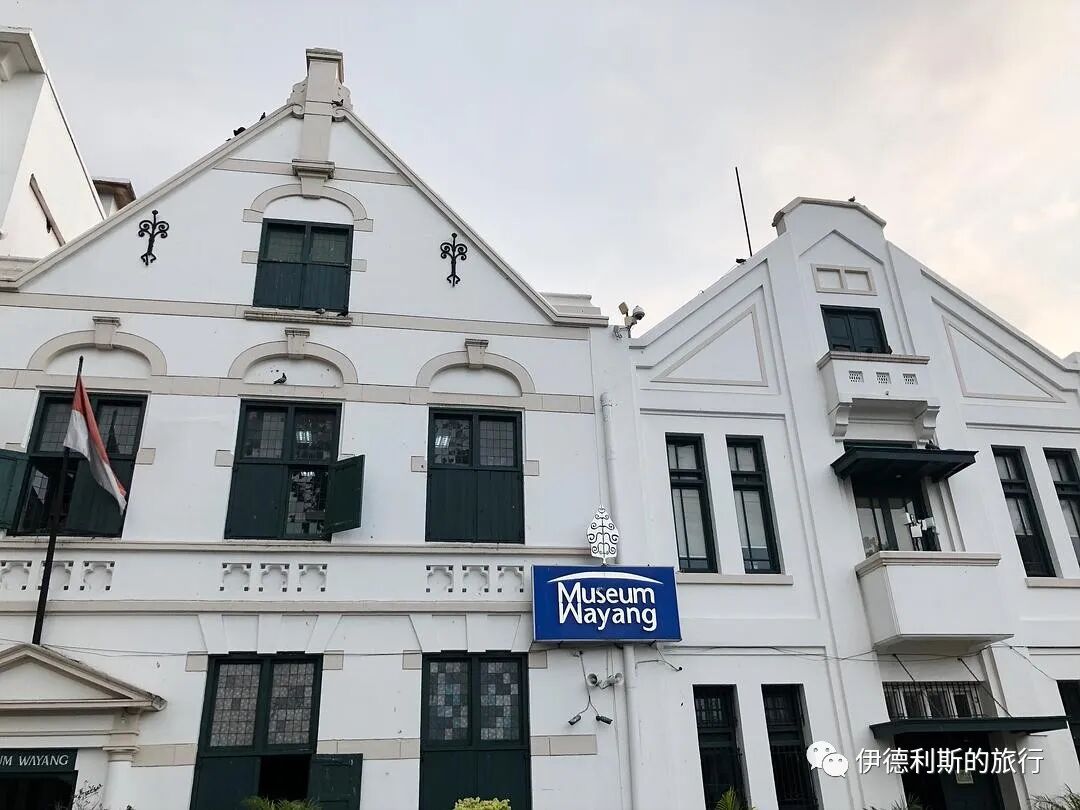
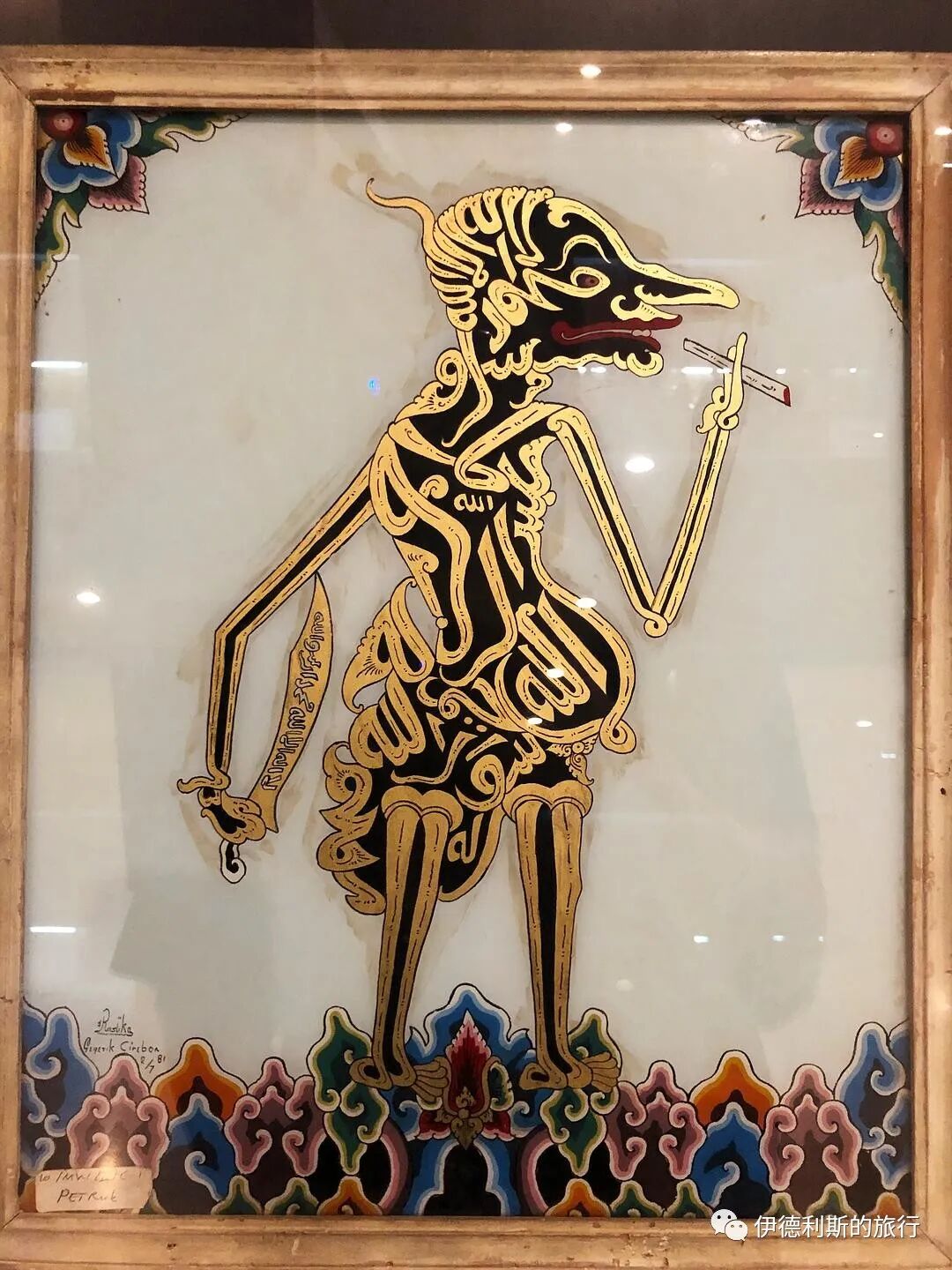
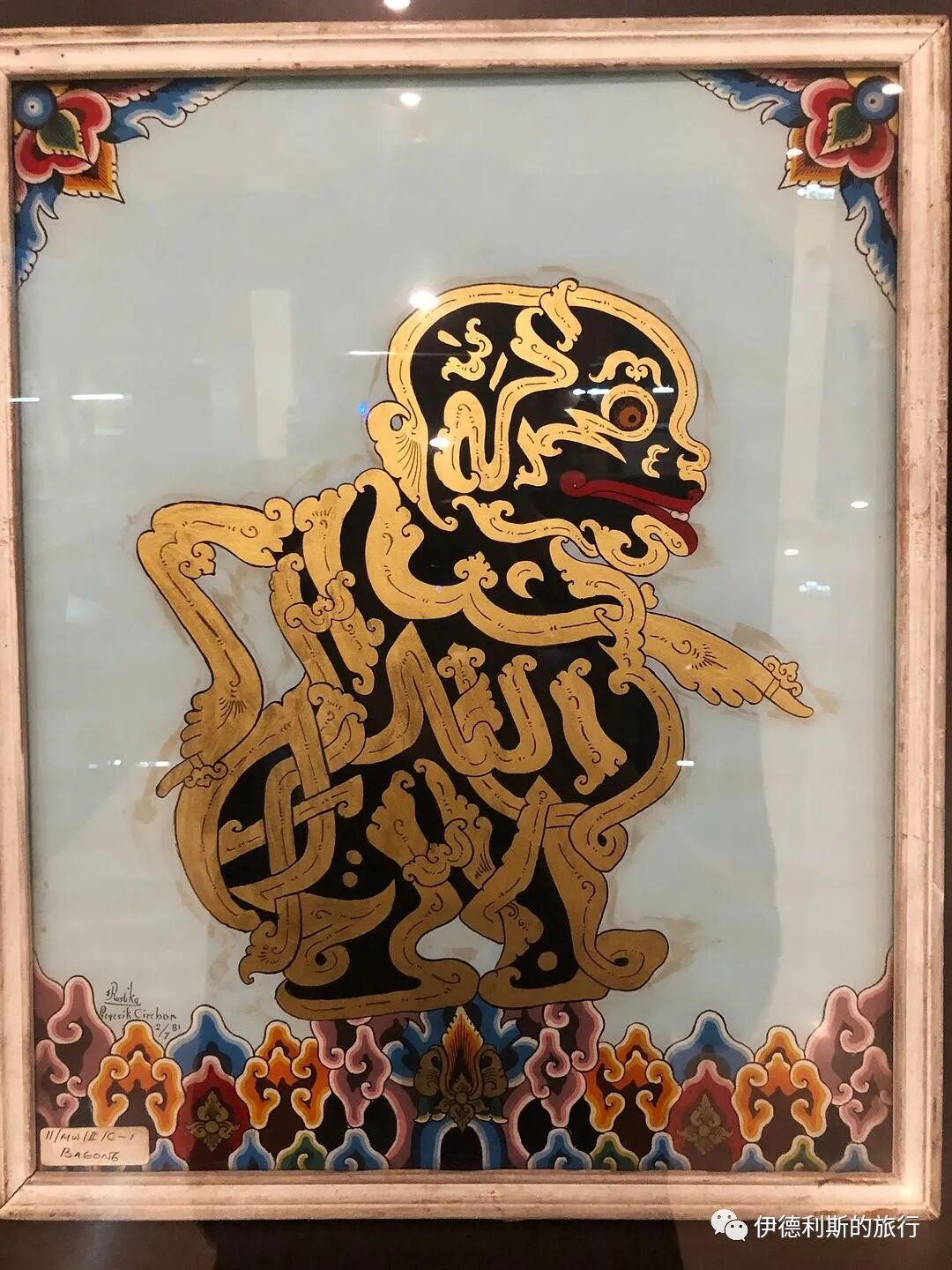
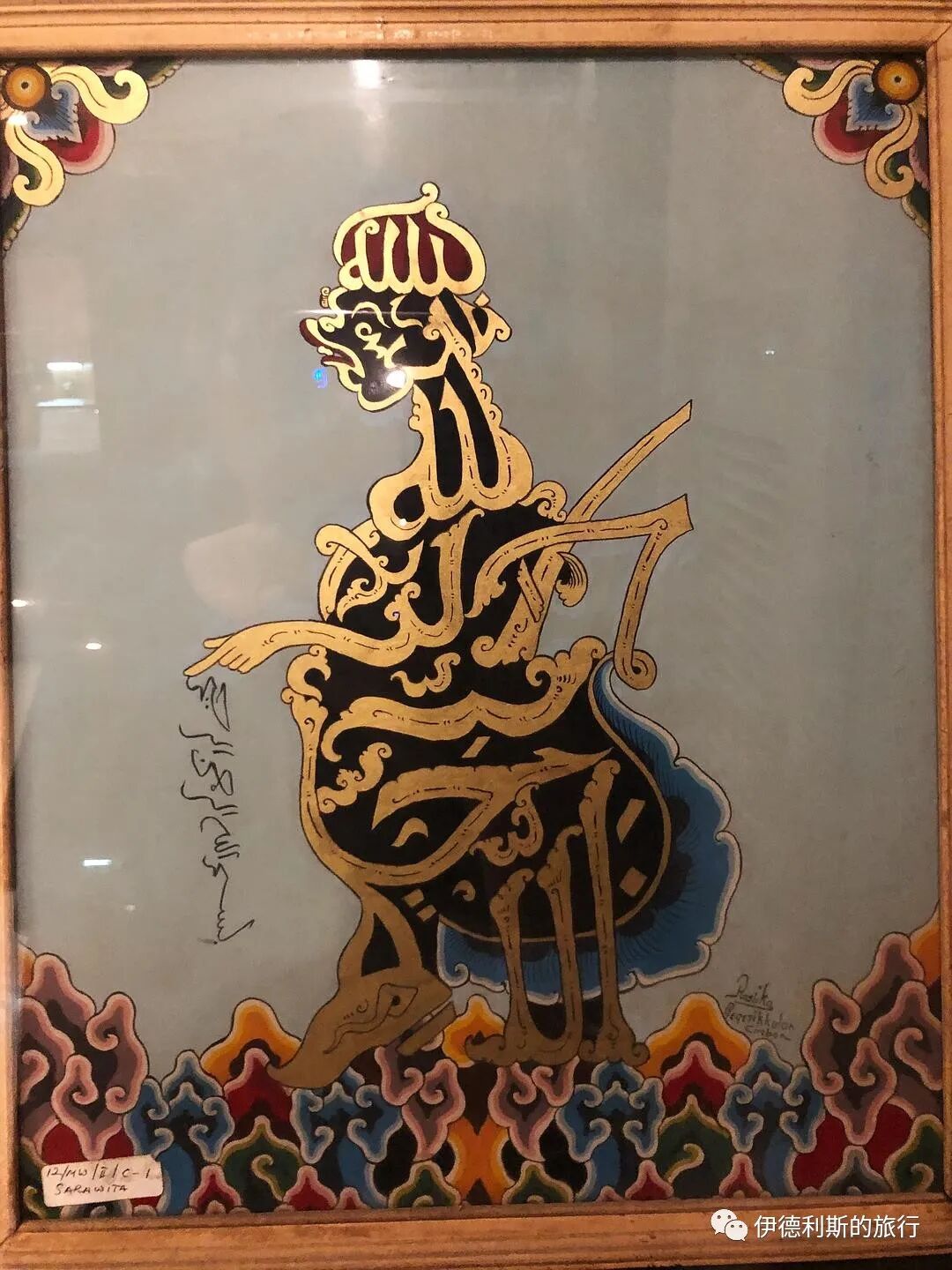
The Wayang Museum hosts a shadow puppet (wayang) show every Sunday morning and afternoon. They invite a different troupe each week. When I visited, it was a shadow puppet team from Yogyakarta, but I had already seen them in Yogyakarta, so I did not go.
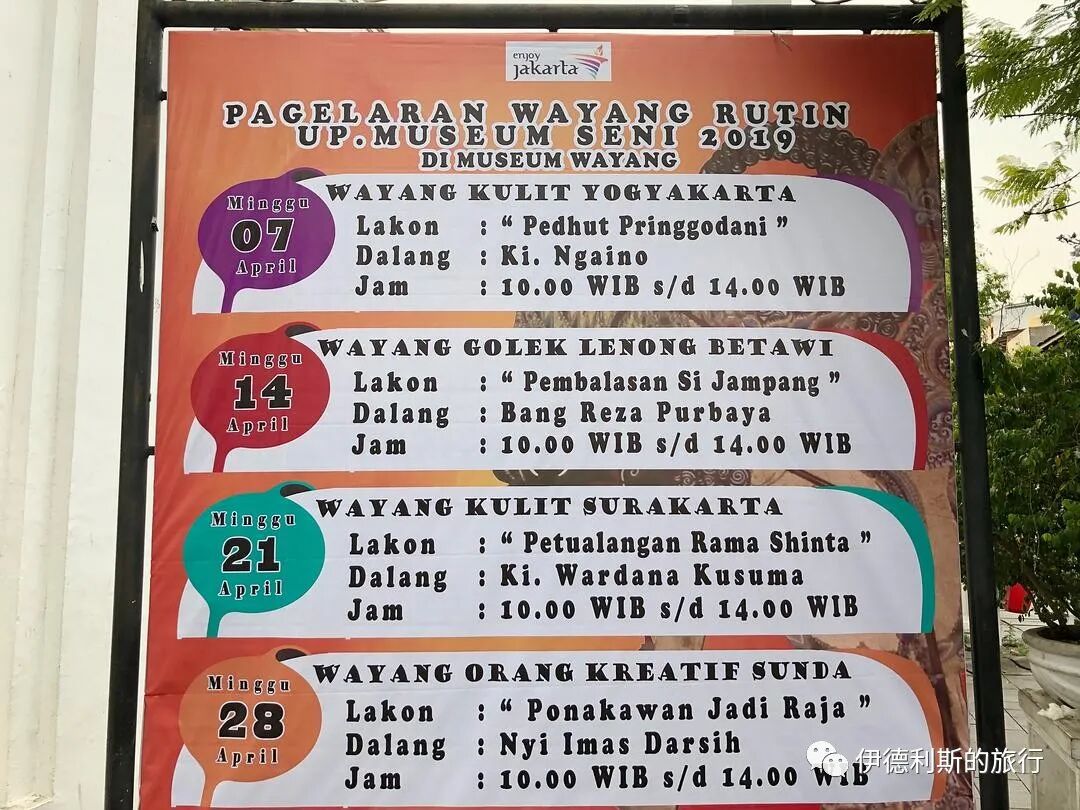
Old Town Food
I had grilled chicken rice at Bangi Kopitiam, a restaurant next to the Wayang Museum. Bangi Kopitiam is an Indonesian, Malay, and Singaporean restaurant chain that specializes in Indonesian and Peranakan food. The restaurant is inside a historic Dutch building. The atmosphere is nice, the servers are friendly, and you can even pet cats while you eat.
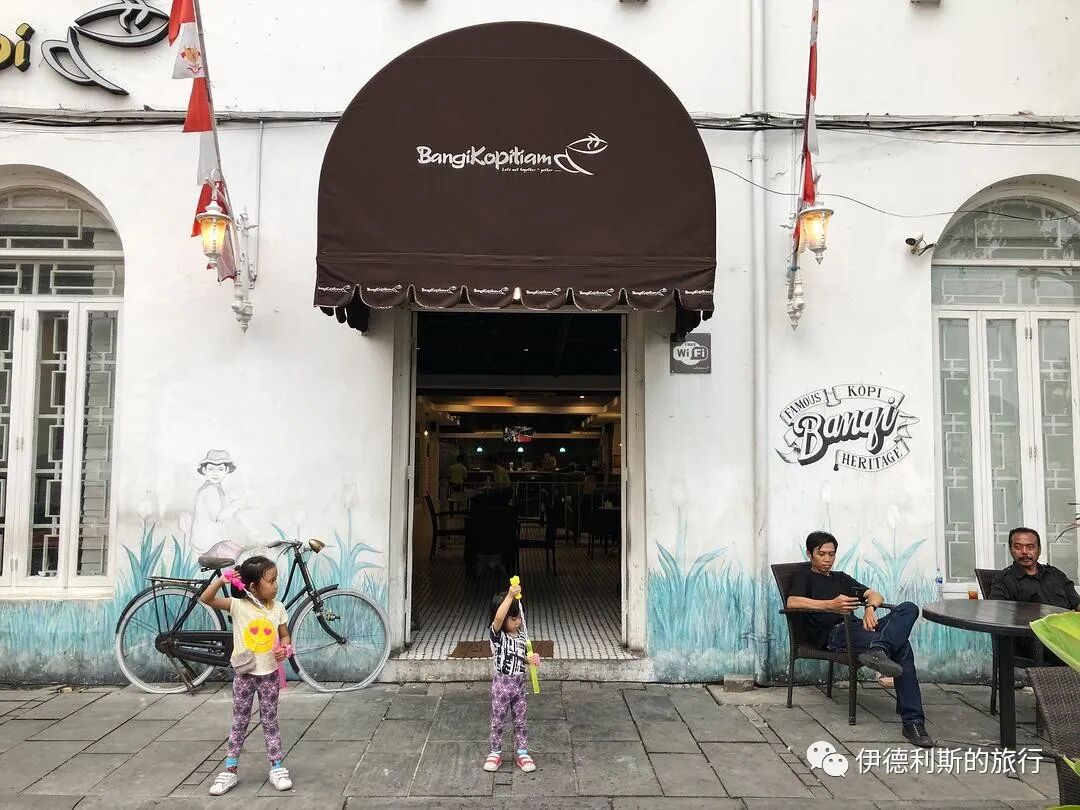
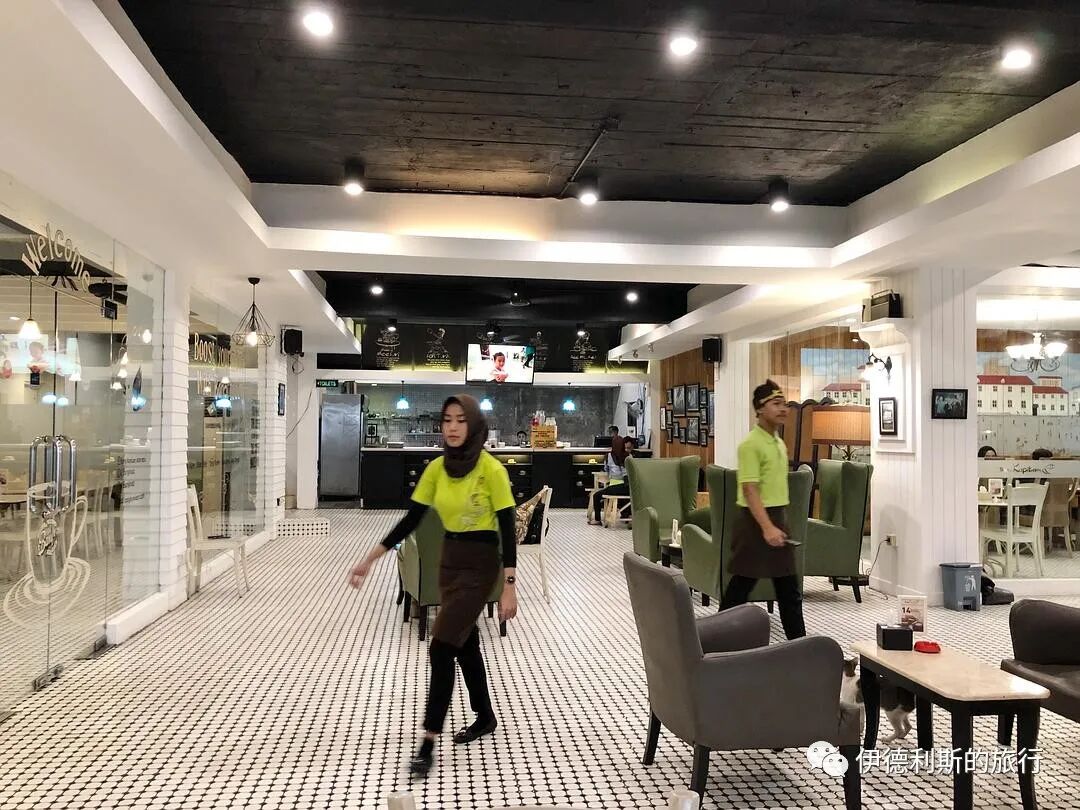
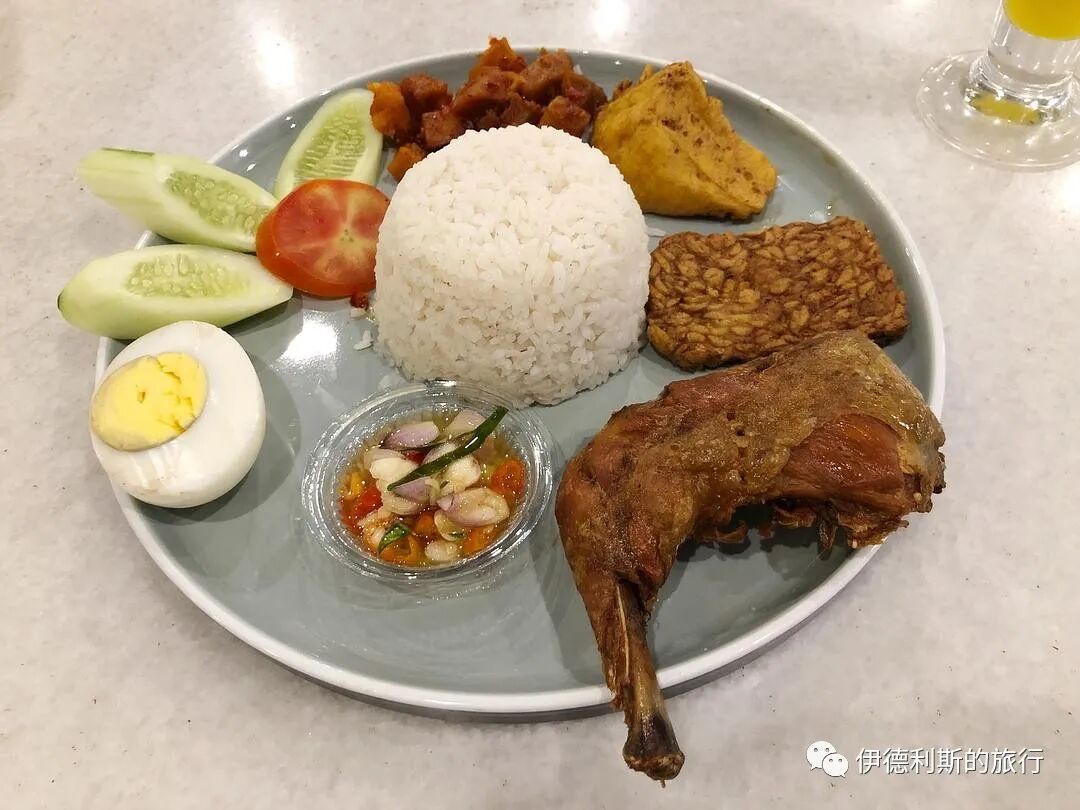
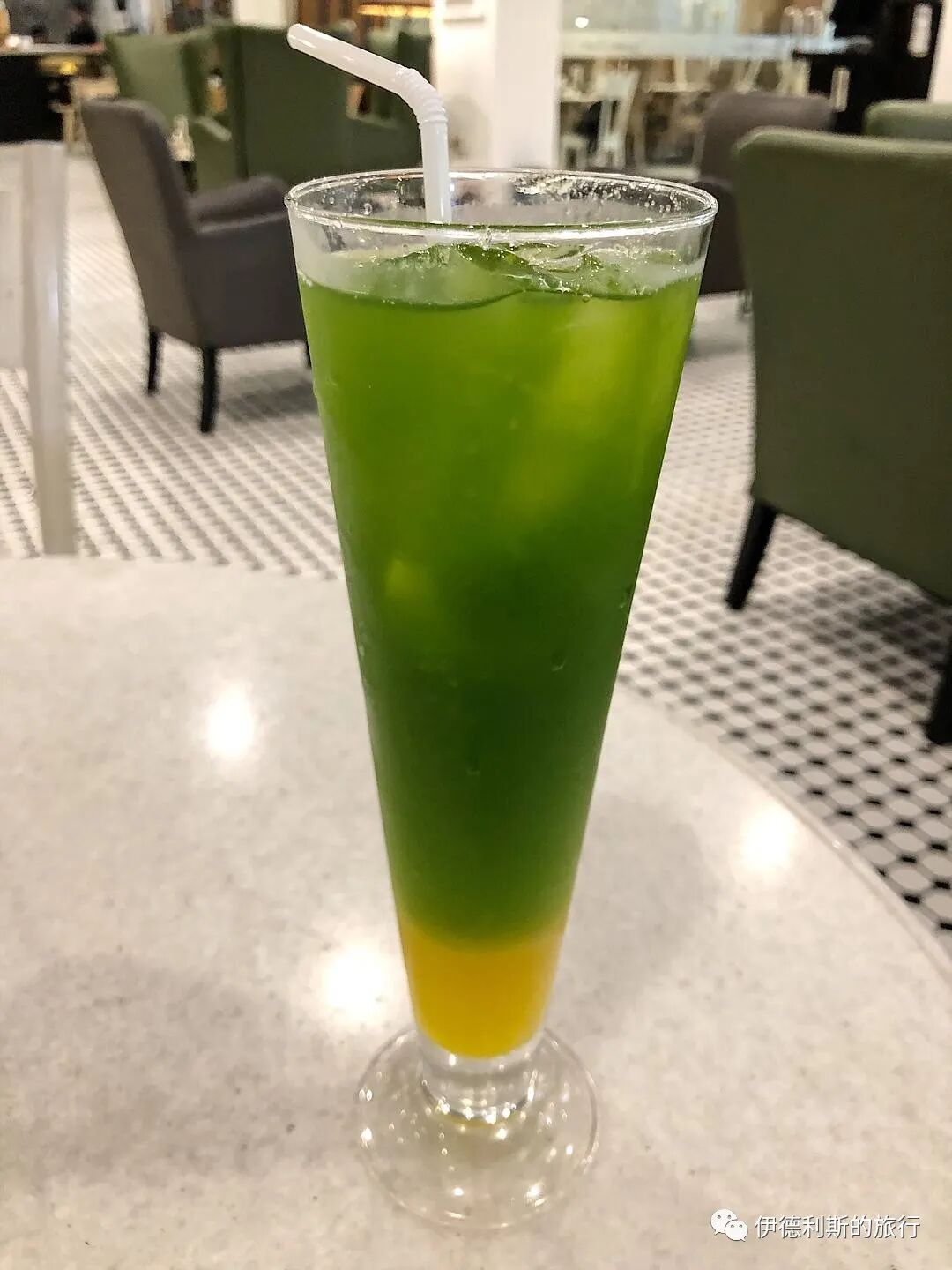
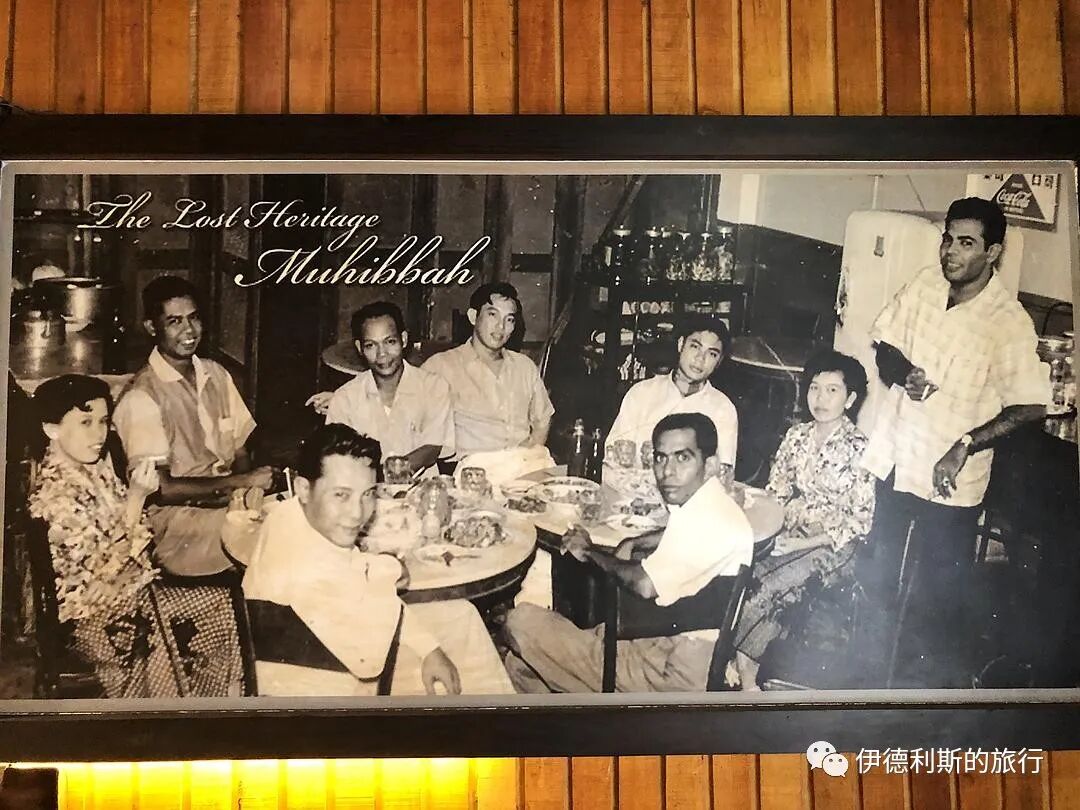
I ate wax apples (jambu air) and fried fish sticks at the night market on the street north of Fatahillah Square (Batavia City Square). The spicy sauce on the wax apples was very fragrant but extremely hot. I had to drink a lot of water to cool down.
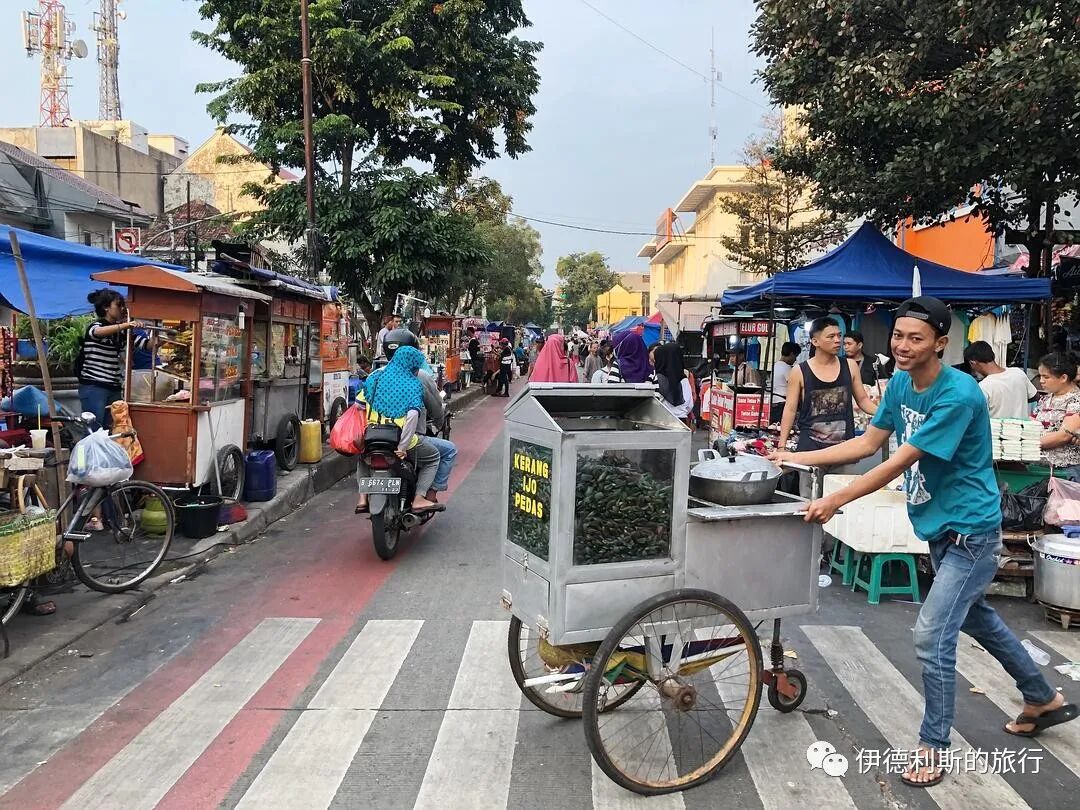
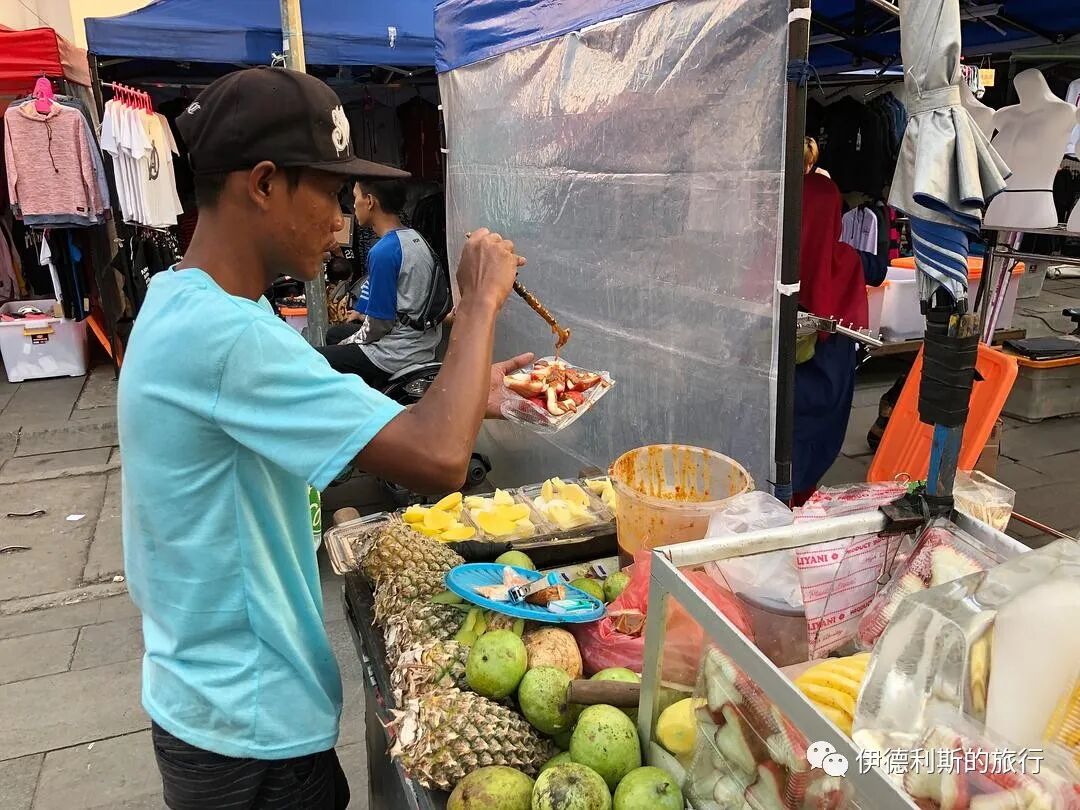
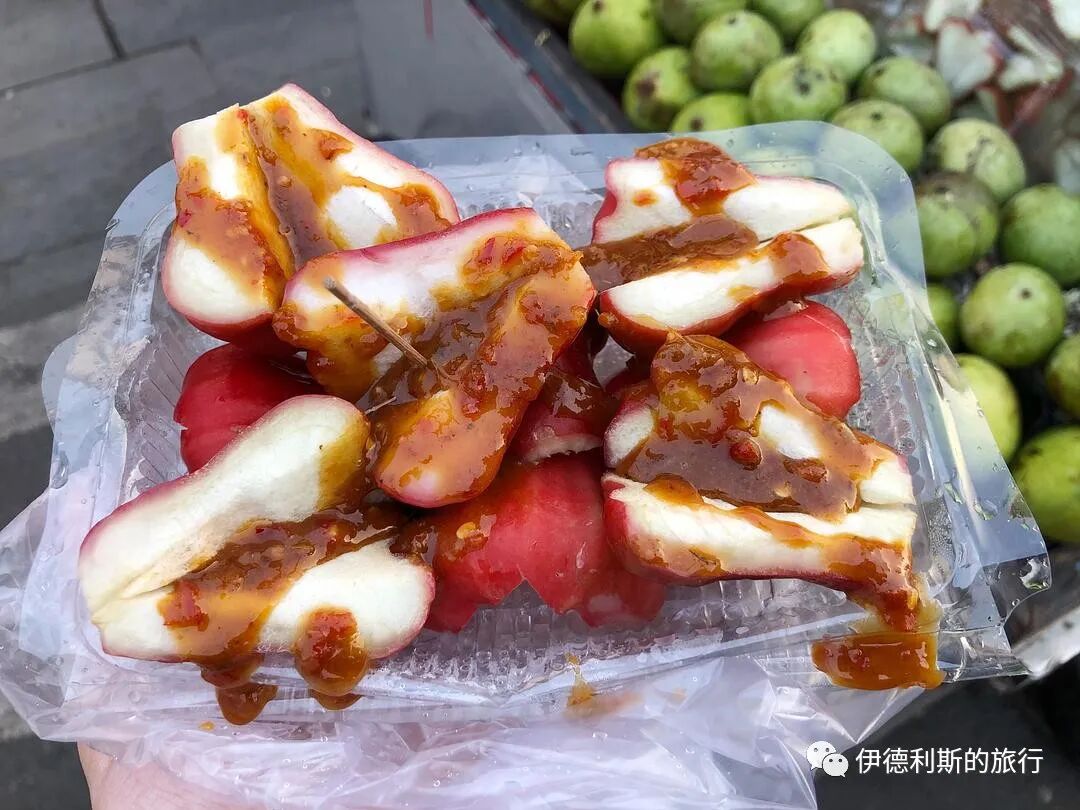
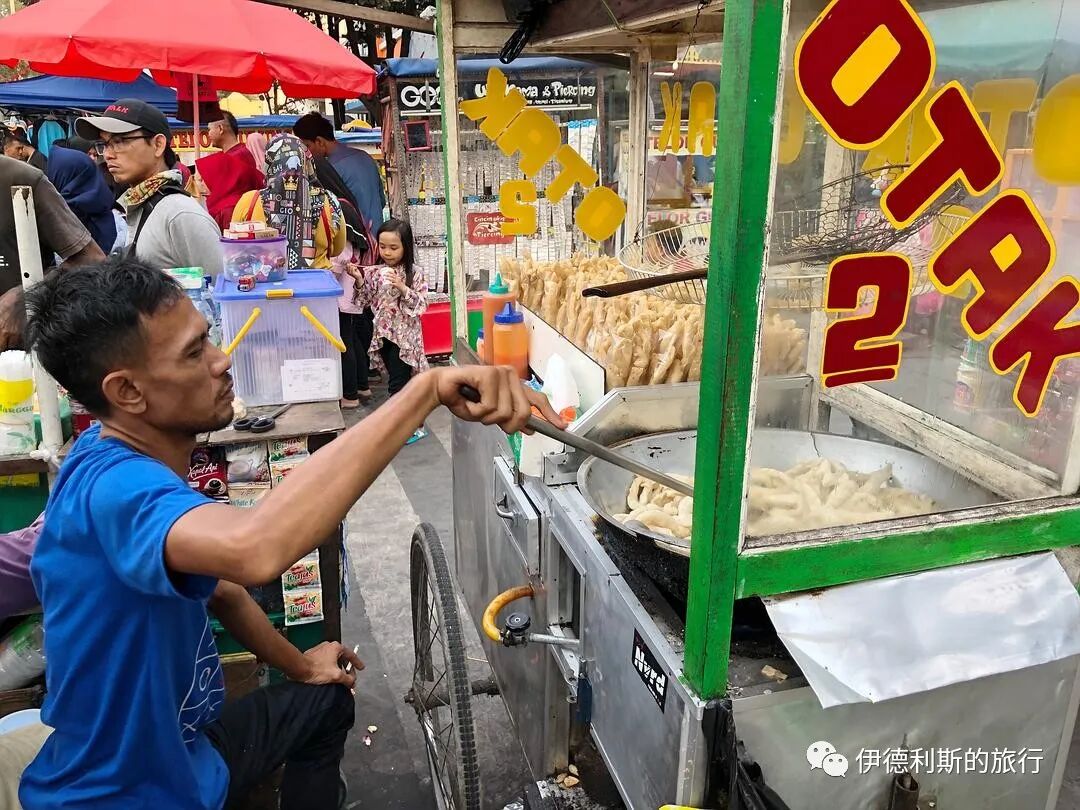
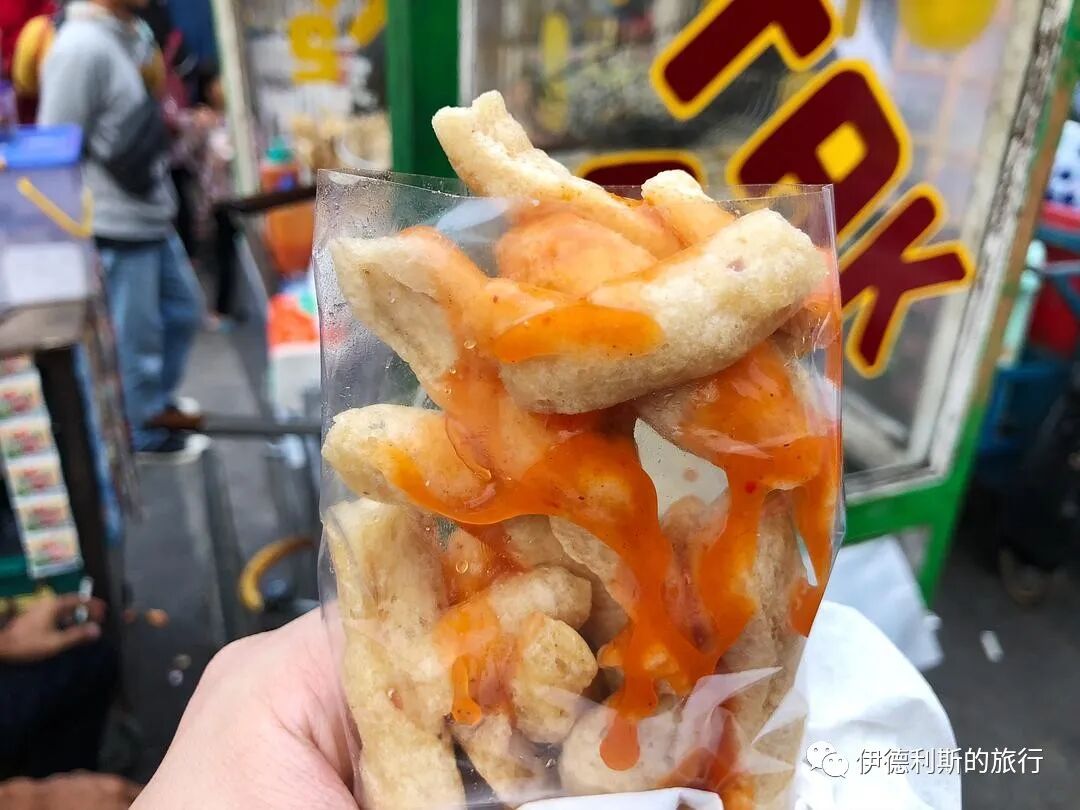
Seaside
There is a seaside boardwalk on the northeast side of the Old Town of Batavia, and the view is beautiful at sunset. Once the most important trading port for the Dutch East India Company, it is now a place where people go for evening walks. Back then, the Dutch trapped inside the castle by Zheng Chenggong desperately hoped for warships to sail from here to rescue them.
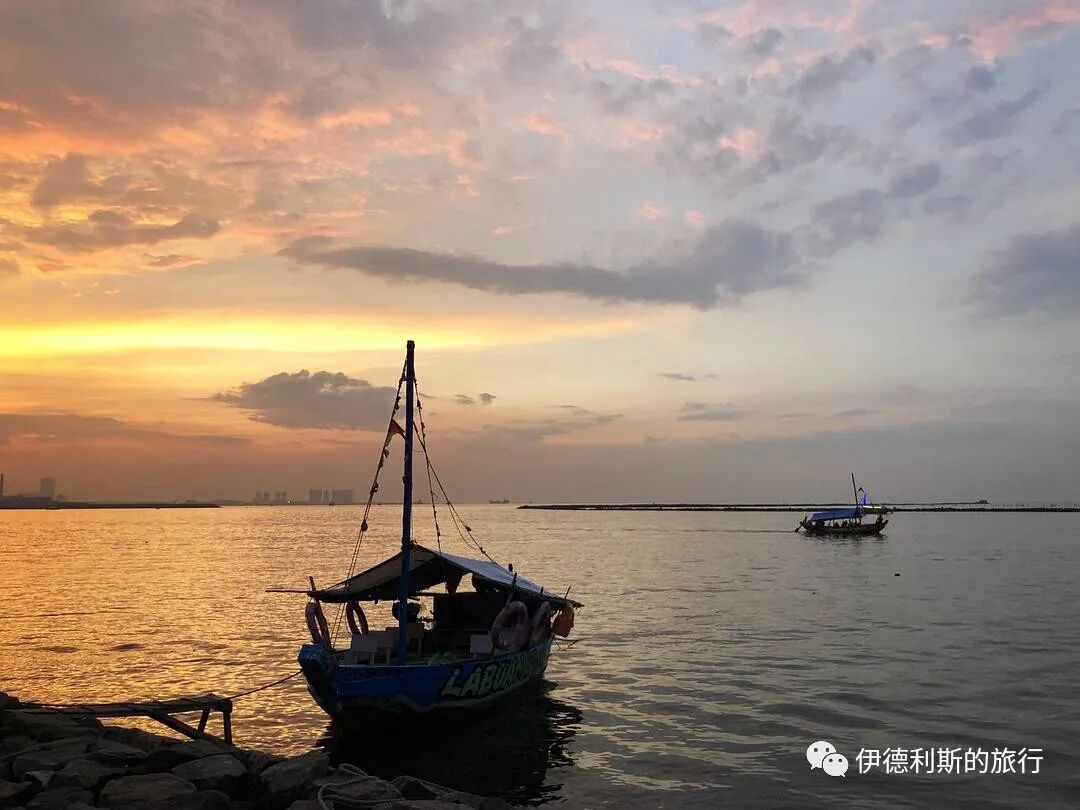
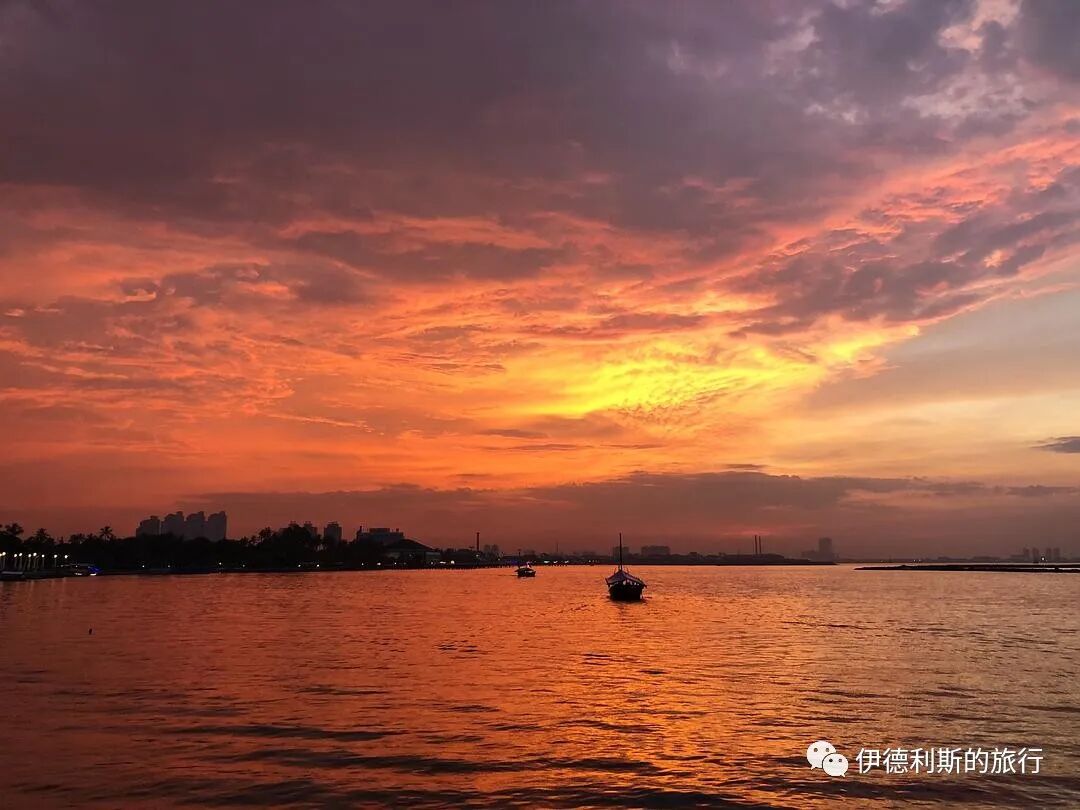
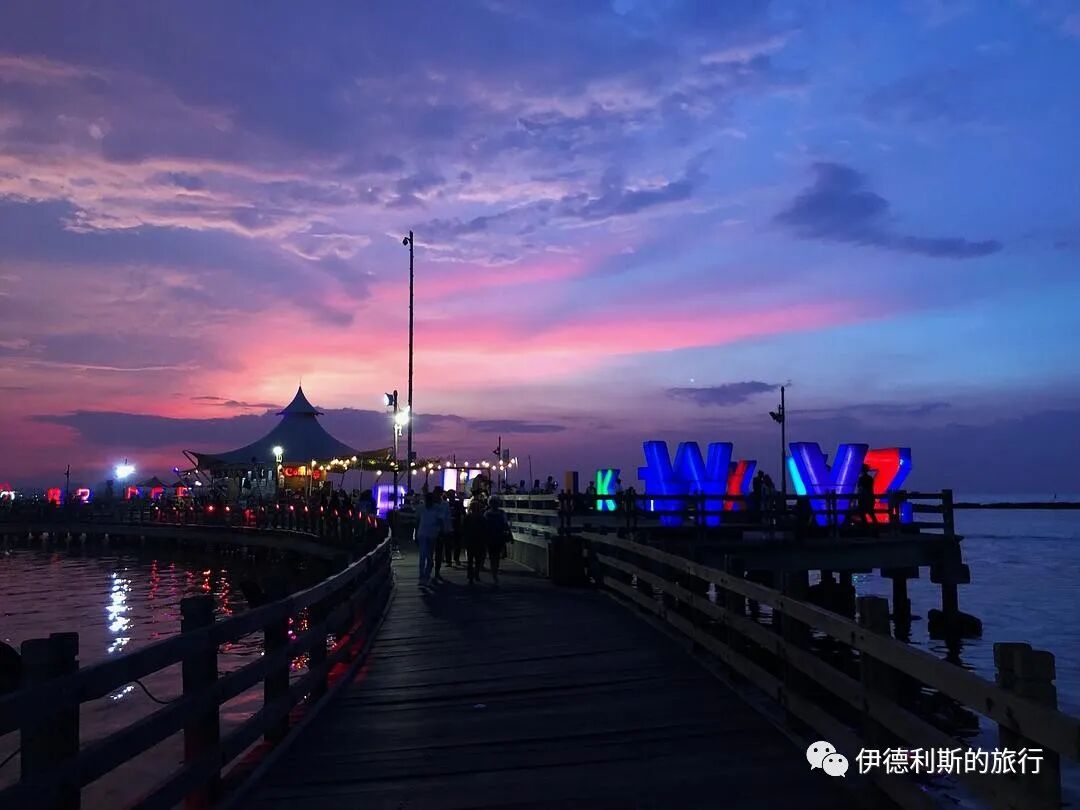
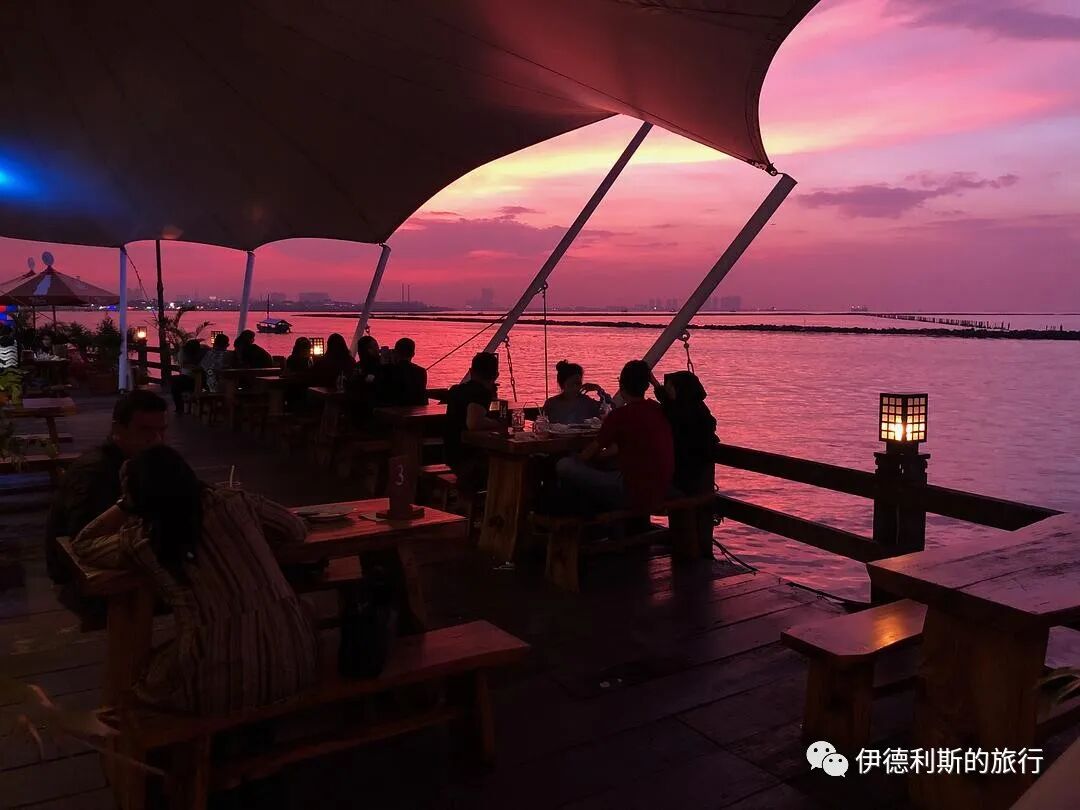
 Collapse Read »
Summary: Jakarta — Indonesian Food, Mosques and Muslim Heritage is presented here as a firsthand travel account in clear English, beginning with this scene: I visited Jakarta for the Qingming Festival holiday in 2019 and stayed at a large commercial complex called Ciputra. The account keeps its focus on Jakarta Travel, Indonesian Food, Muslim Heritage while preserving the names, places, food, and historical details from the Chinese source.
Ciputra Commercial Center
I visited Jakarta for the Qingming Festival holiday in 2019 and stayed at a large commercial complex called Ciputra. The hotel was quite good, and there was a big shopping mall right inside the building. Jakarta has many large malls like this, but most are in the new city to the south. This one is relatively close to the airport, the bus station, and the old town.
There are many different restaurants inside the mall, and I chose two to eat at. At the first place, I had sour fish soup (Sop Ikan Asam Pedas) and fish rolls (Lumpia Ikan). The sour soup used pineapple for flavor and was delicious; I ate a whole fish by myself.
At the second place, I had garlic water spinach (Kangkung Bawang Putih), squid stir-fried in Padang sauce (Cumi Saus Padang), and a large crab in black pepper sauce (Kepiting Jantan Saus Lada Hitam). The advantage of this restaurant is that they post photos of all their dishes on the wall. There is a small card in front of each photo, so you just take the card and give it to the front desk. It is very simple.
Jakarta Old Town
Jakarta Old Town (Kota Tua Jakarta), also called Old Batavia (Oud Batavia), was the most important Dutch colonial site in Southeast Asia. From the 17th to the 19th century, it served as the headquarters for the Dutch East India Company.
Old Batavia was founded in 1619. When I visited in 2019, it was exactly 400 years old.
Batavia in 1682, drawn by Weduwe van Jacob van Meurs.
Old Batavia in 1931. The building on the left is the same one shown in the picture above.
Old Batavia in the 19th century, painted by Johannes Weissenbruch.
Today, the old town is very lively, just like a temple fair. You can find people taking photos, reading palms, singing, getting henna tattoos, and drawing portraits.
Jakarta History Museum.
The center of Old Batavia is Fatahillah Square, and the most important building there is the Jakarta History Museum. The Jakarta History Museum was built in 1710 and was once the Batavia City Hall.
The museum courtyard has a small area serving local Betawi snacks. I ate a spicy omelet (kerak telor) and a cold drink (selendang mayang). I really regret not knowing that these snacks are hard to find elsewhere, otherwise I would have tried every single one.
Kerak telor is made with sticky rice and eggs, topped with fried shredded coconut, fried shallots, and dried shrimp. During the colonial era, this food was only served at gatherings for the Dutch or wealthy Betawi merchants, and it was invented to improve the texture of sticky rice. Selendang mayang is rare today. It is a historic Batavian cold drink made from rice flour, vanilla powder, pandan leaves, red sugar syrup, and coconut milk.
The Betawi people are a unique ethnic group that formed in Jakarta. Here is a brief introduction to their origins:
In 1619, the Dutch leveled Jakarta, which was under the rule of the Banten Sultanate, and renamed it Batavia to serve as the trade and administrative center for the Dutch East India Company.
Because they feared attacks from the Banten Sultanate, the city of Batavia initially banned local Javanese people from living inside. Besides the Dutch and their slaves, most people living in the city were Chinese and Mardijker people, along with a small number of Arab and Indian merchants. The Mardijker people came from Portuguese slaves in India, Africa, and the Malay Peninsula. After the Dutch defeated the Portuguese in the 17th century, the Dutch East India Company freed them and brought them to Indonesia. Most of these people spoke Portuguese and practiced Catholicism.
Since almost no Dutch women moved to Batavia, most Dutch men in the city chose to have local women as partners, but they almost never married them. These women also had no right to return to the Netherlands with the Dutch men. This social pattern led to many mixed-race children in Batavia. Most of the boys from these mixed-race families chose to go to Europe, while the girls had to stay in Batavia.
A 1699 census shows that Batavia had 3,679 Chinese, 2,407 Mardijkers, 1,783 Europeans, 670 people of mixed heritage, and 867 others.
After the Dutch East India Company and the Sultanate of Banten made peace in 1659, many people from the East Indies began moving to the outskirts of Batavia. The Dutch East India Company signed a formal peace treaty with the Sultanate of Banten in 1684. This allowed for the clearing of swamps around Batavia, and more people began living outside the city walls, including Malays, Sundanese, Javanese, Minangkabau, and Bugis people.
Between the 18th and 19th centuries, the different ethnic groups living in Batavia began to blend. After a hundred years, they finally formed the Betawi people by the early 20th century.
The Betawi people speak a version of Malay mixed with many words from Hokkien Chinese, Arabic, and Dutch, known as Betawi Malay. It is the only Malay-speaking area on the northern coast of Java. Betawi food is strongly influenced by the cuisines of Indonesian Chinese, Arabs, Europeans, and local Sundanese and Javanese people.
Wayang Museum
The Wayang Museum is on the west side of the square. It was originally a Dutch church built in 1640. The current building was built in 1912 in a Neo-Renaissance style. It was renovated in 1938 in a Dutch colonial style, then bought by the Batavia Society of Arts and Sciences. It opened as the Old Batavia Museum in 1939 and officially opened as the Wayang Museum in 1975.
The Wayang Museum hosts a shadow puppet (wayang) show every Sunday morning and afternoon. They invite a different troupe each week. When I visited, it was a shadow puppet team from Yogyakarta, but I had already seen them in Yogyakarta, so I did not go.
Old Town Food
I had grilled chicken rice at Bangi Kopitiam, a restaurant next to the Wayang Museum. Bangi Kopitiam is an Indonesian, Malay, and Singaporean restaurant chain that specializes in Indonesian and Peranakan food. The restaurant is inside a historic Dutch building. The atmosphere is nice, the servers are friendly, and you can even pet cats while you eat.
I ate wax apples (jambu air) and fried fish sticks at the night market on the street north of Fatahillah Square (Batavia City Square). The spicy sauce on the wax apples was very fragrant but extremely hot. I had to drink a lot of water to cool down.
Seaside
There is a seaside boardwalk on the northeast side of the Old Town of Batavia, and the view is beautiful at sunset. Once the most important trading port for the Dutch East India Company, it is now a place where people go for evening walks. Back then, the Dutch trapped inside the castle by Zheng Chenggong desperately hoped for warships to sail from here to rescue them.
Collapse Read »
Halal Travel Guide: Tashkent — Old City Food, Mosques and Uzbek Heritage
Reposted from the web
Summary: Tashkent — Old City Food, Mosques and Uzbek Heritage is presented here as a firsthand travel account in clear English, beginning with this scene: On February 5, 2019, the first day of the Lunar New Year, I flew directly from Beijing to Tashkent on Uzbekistan Airways to start my food and travel tour of Uzbekistan and Tajikistan. The account keeps its focus on Tashkent Travel, Uzbek Food, Muslim Heritage while preserving the names, places, food, and historical details from the Chinese source.
On February 5, 2019, the first day of the Lunar New Year, I flew directly from Beijing to Tashkent on Uzbekistan Airways to start my food and travel tour of Uzbekistan and Tajikistan.
I stayed at Gulnara Guesthouse, which I booked on Booking.com and is recommended by Lonely Planet. It is located in the center of the old city, very close to Chorsu Bazaar, and the owner speaks great English.
The breakfast is simple, but it is enough.
The room where we eat breakfast.
In the evening, I spent time hanging out with the staff, drinking tea and chatting.
The bread the staff eats with their tea.
After checking in, I headed out to explore the bazaar!
My place is less than 500 meters from the bazaar.
Chorsu Bazaar.
Chorsu Bazaar is in the heart of the old city (Eski Shakhar) in Tashkent and is the busiest spot in the old town. The words Chorsu and Bazaar both come from Persian and mean market at the crossroads. In winter, Chorsu Bazaar opens around 10 a.m. and stays open until dark, selling all kinds of goods.

The entrance to the bazaar is packed with all sorts of cars.
Baby cribs.
Various tourist souvenirs.
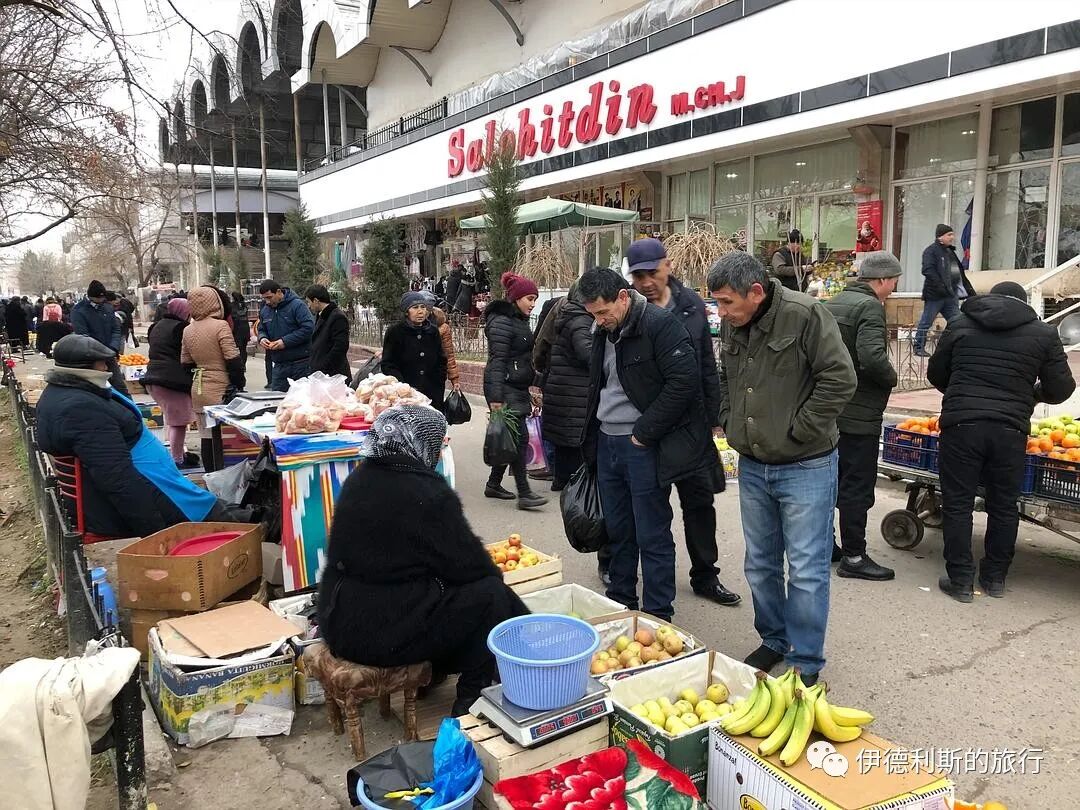
Fruit seller
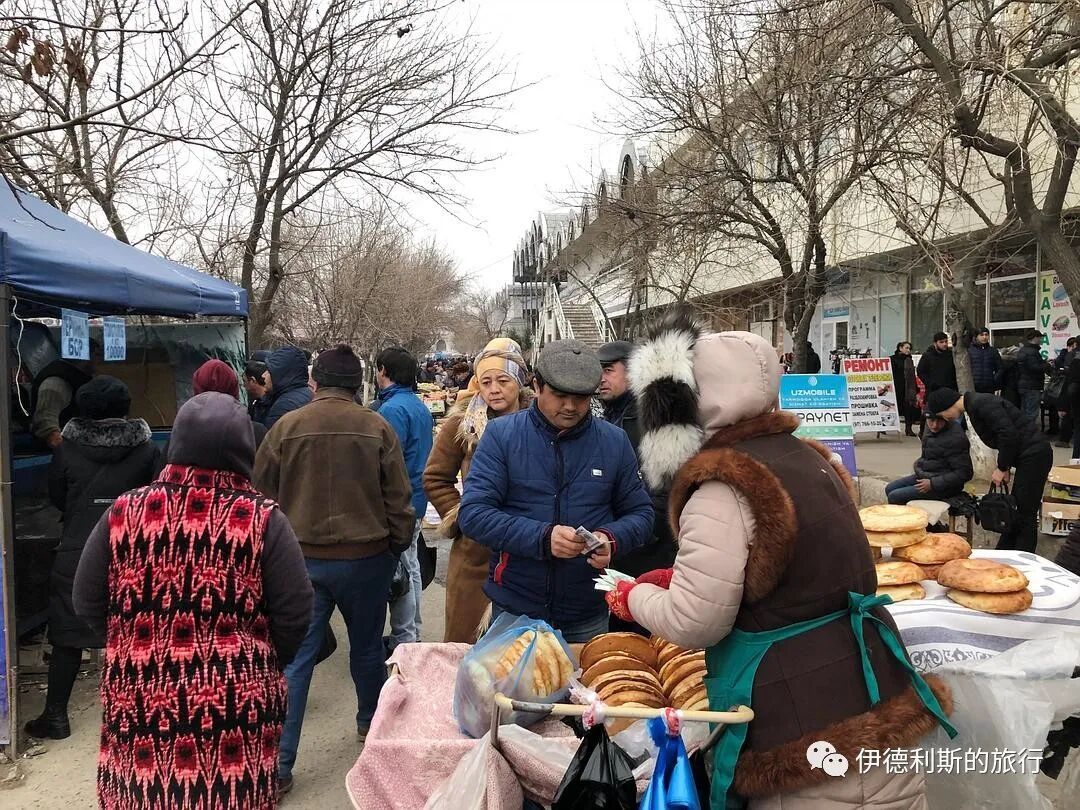
Naan bread seller
1. Snack area
The snack area is on the east side of Chorsu Bazaar. In winter, it is open daily from morning until around four or five in the afternoon. You can eat all kinds of Uzbek snacks there.
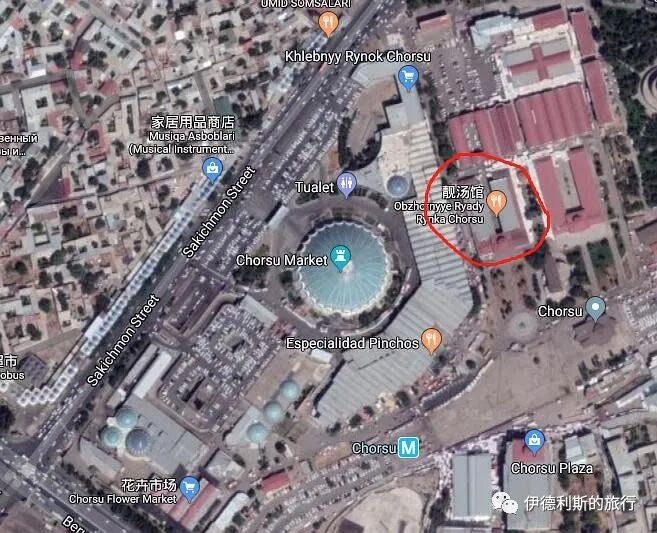
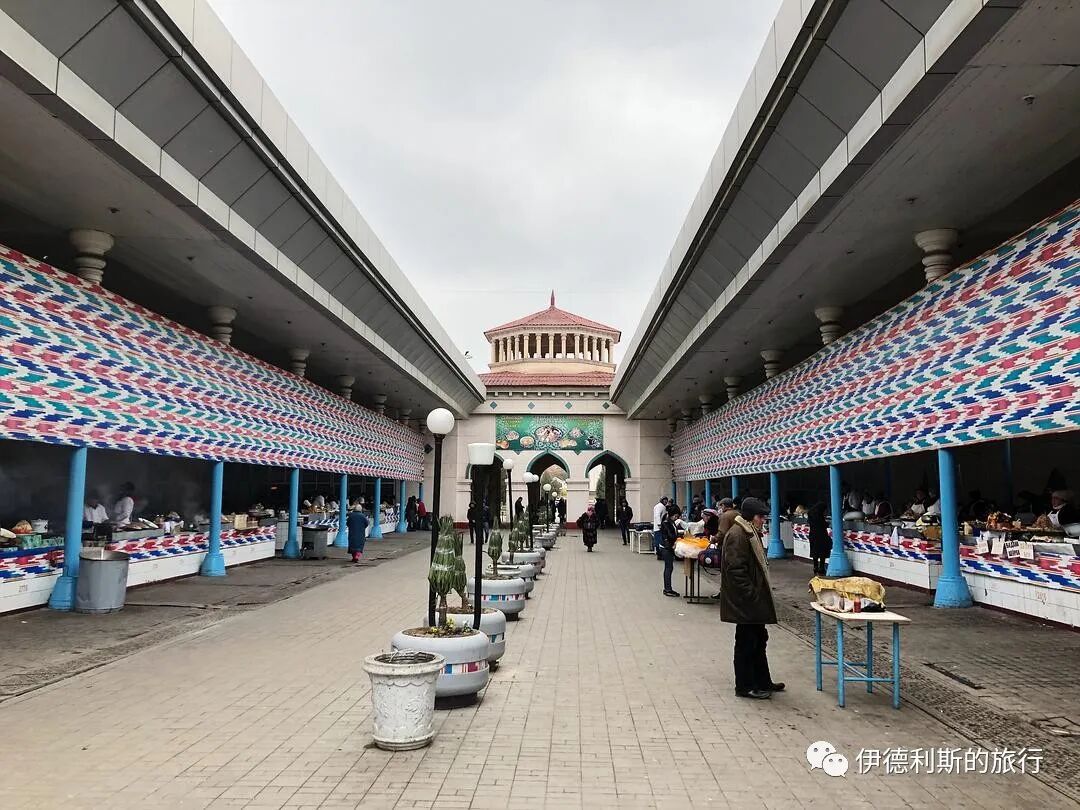
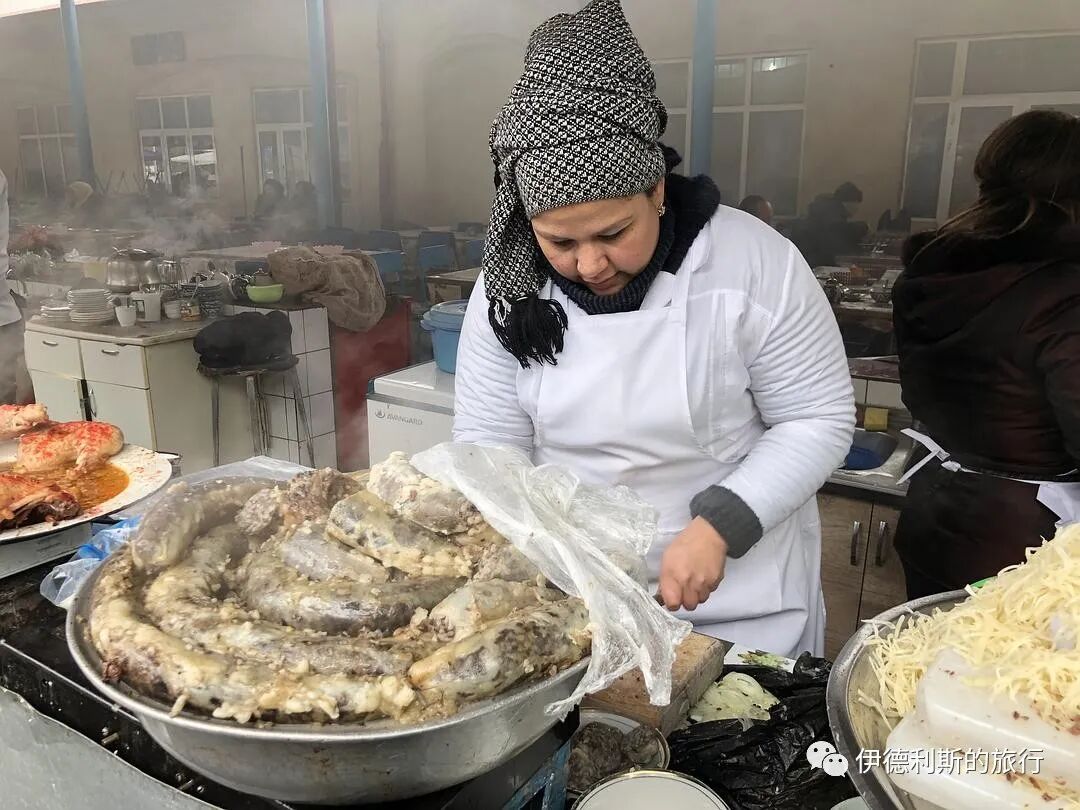
Rice sausage seller
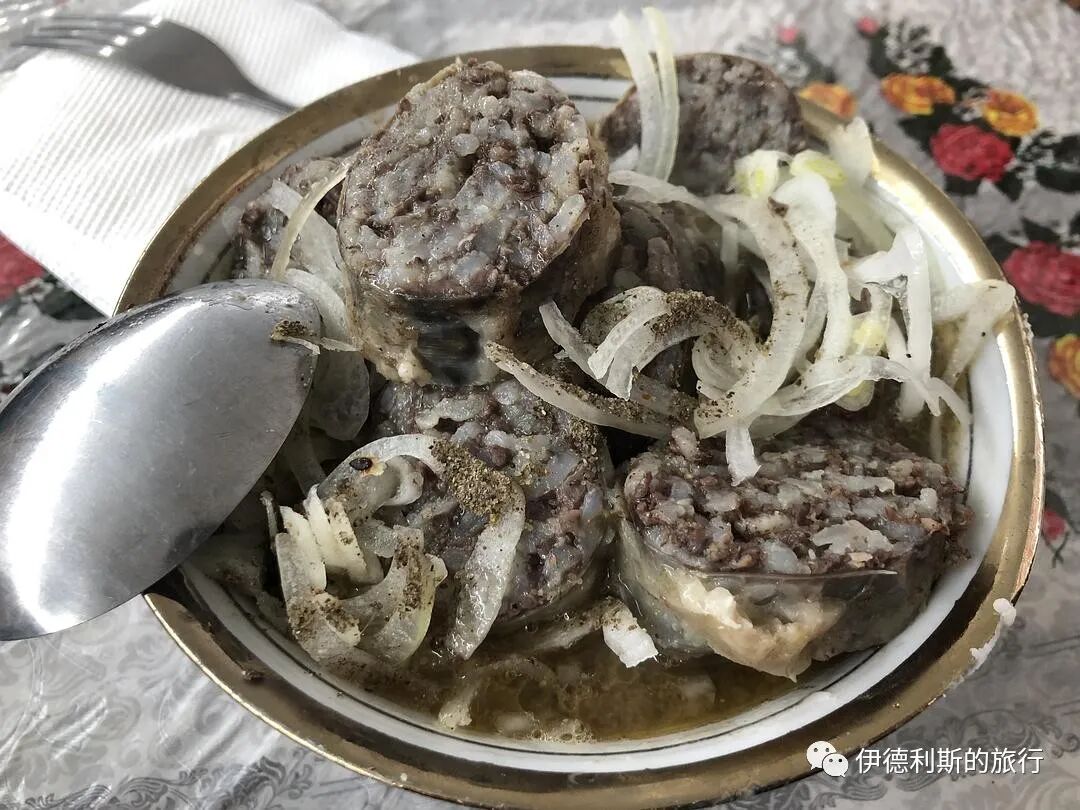
Rice sausage seller
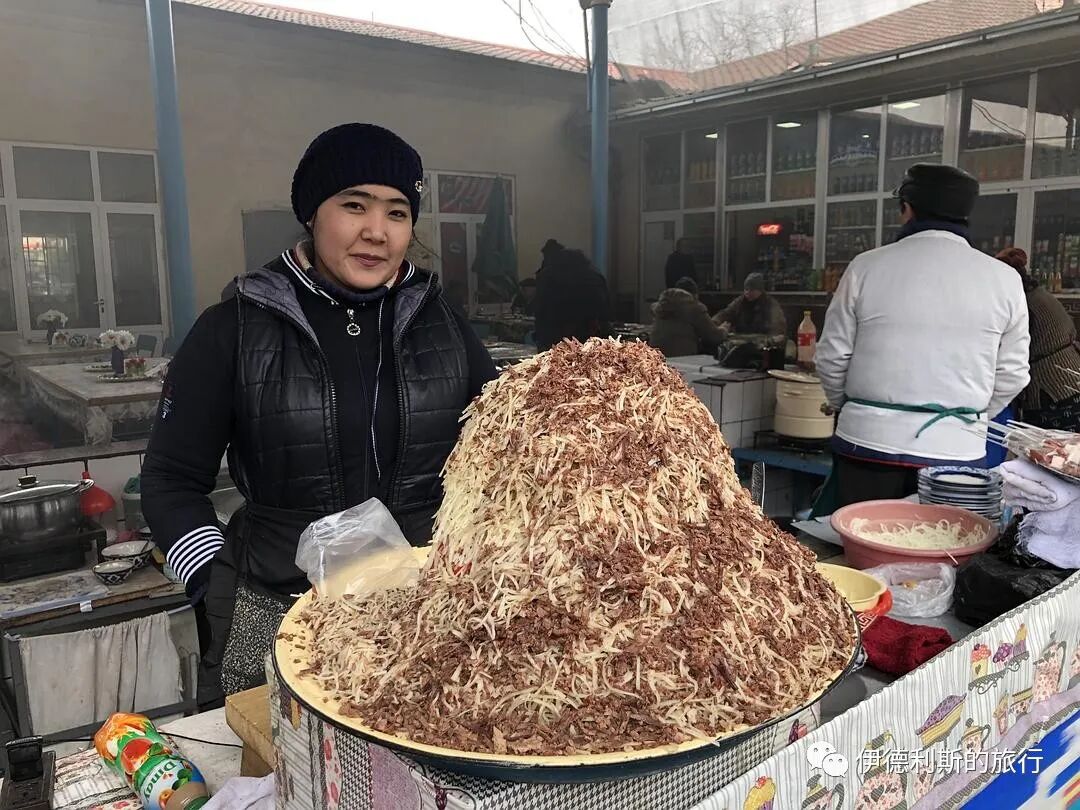
Naryn
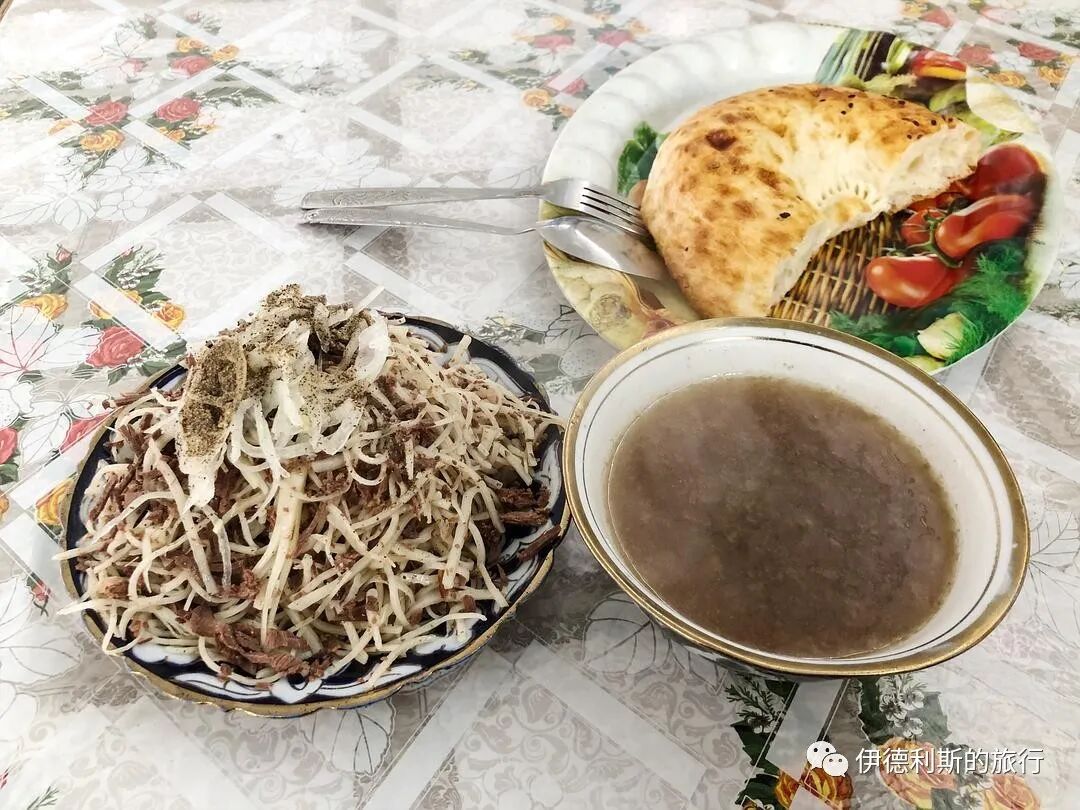
Served with meat broth and naan bread
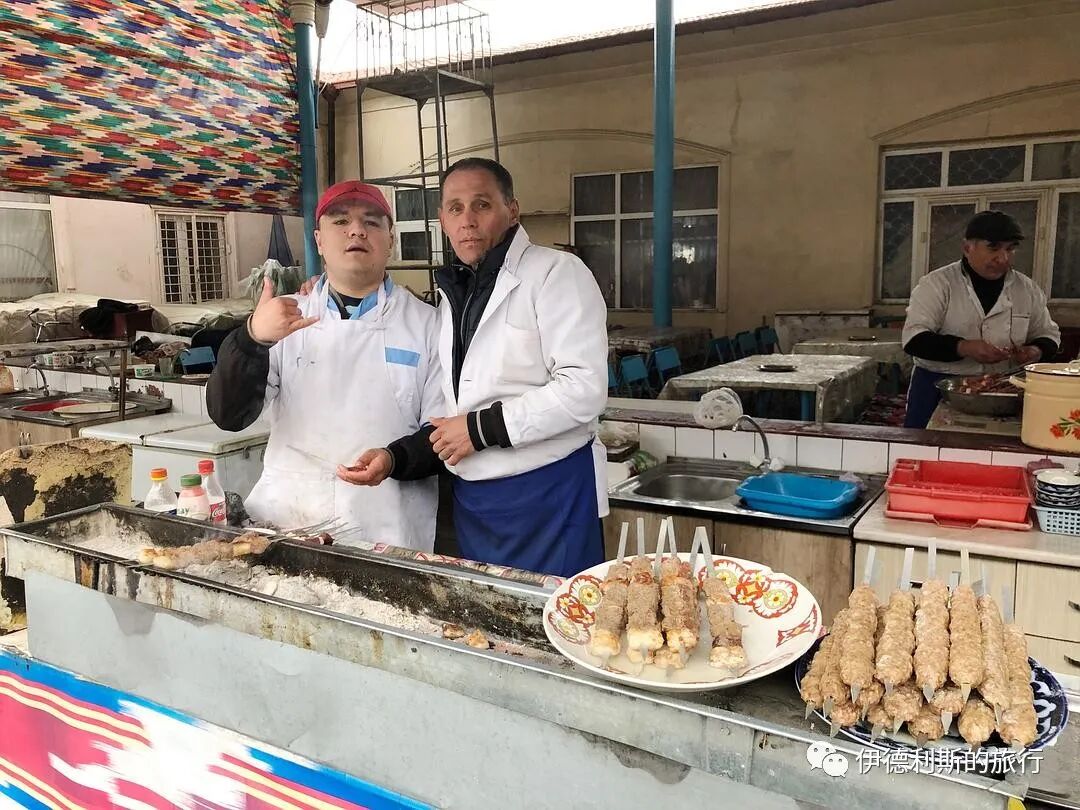
A person selling grilled meat (kaorou).
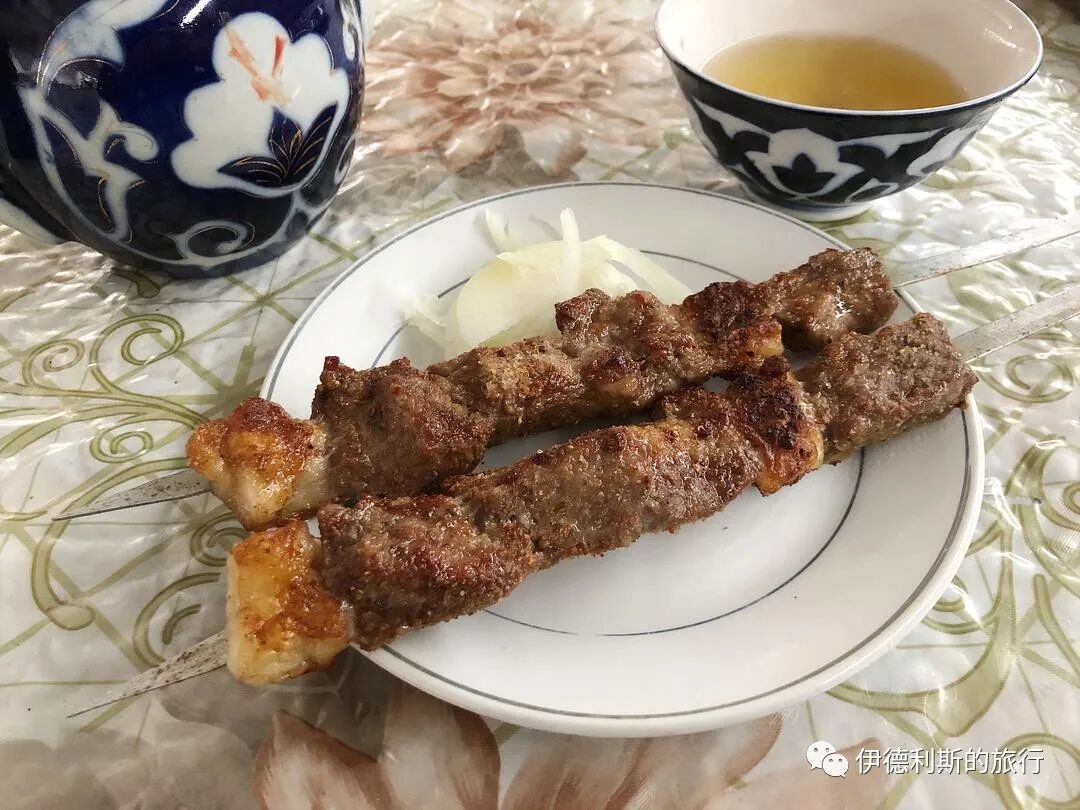
The grilled meat is super delicious.
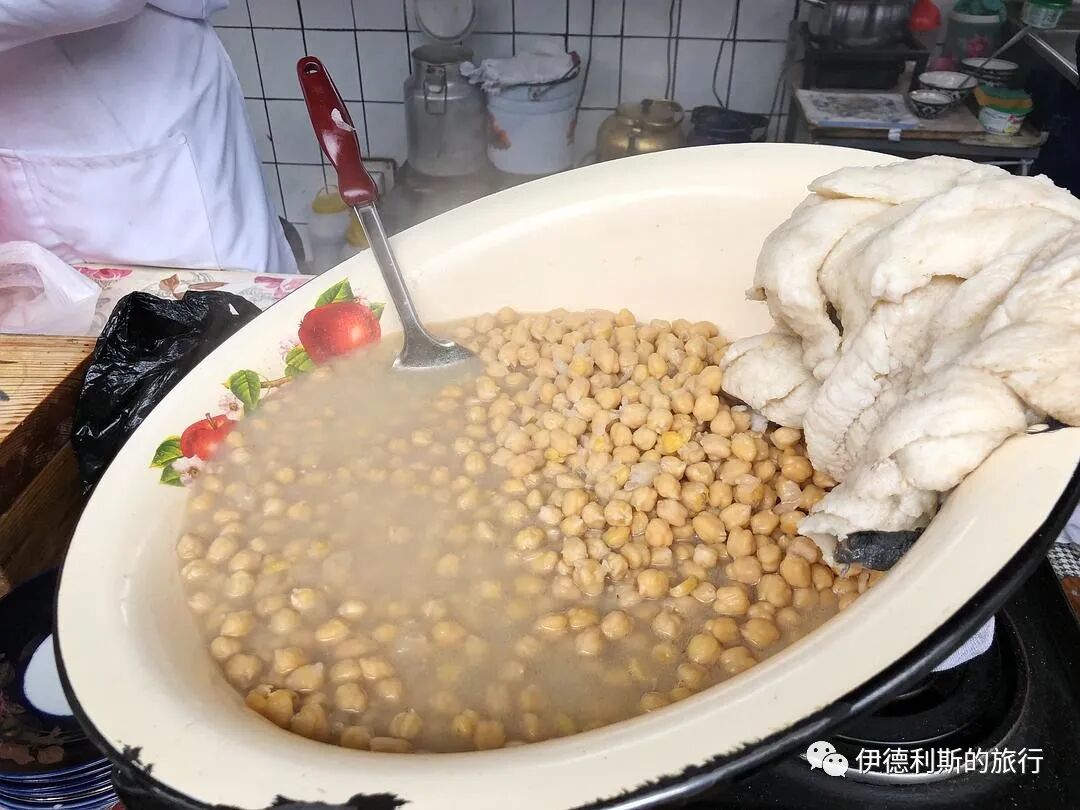
There is also someone selling chickpea soup.
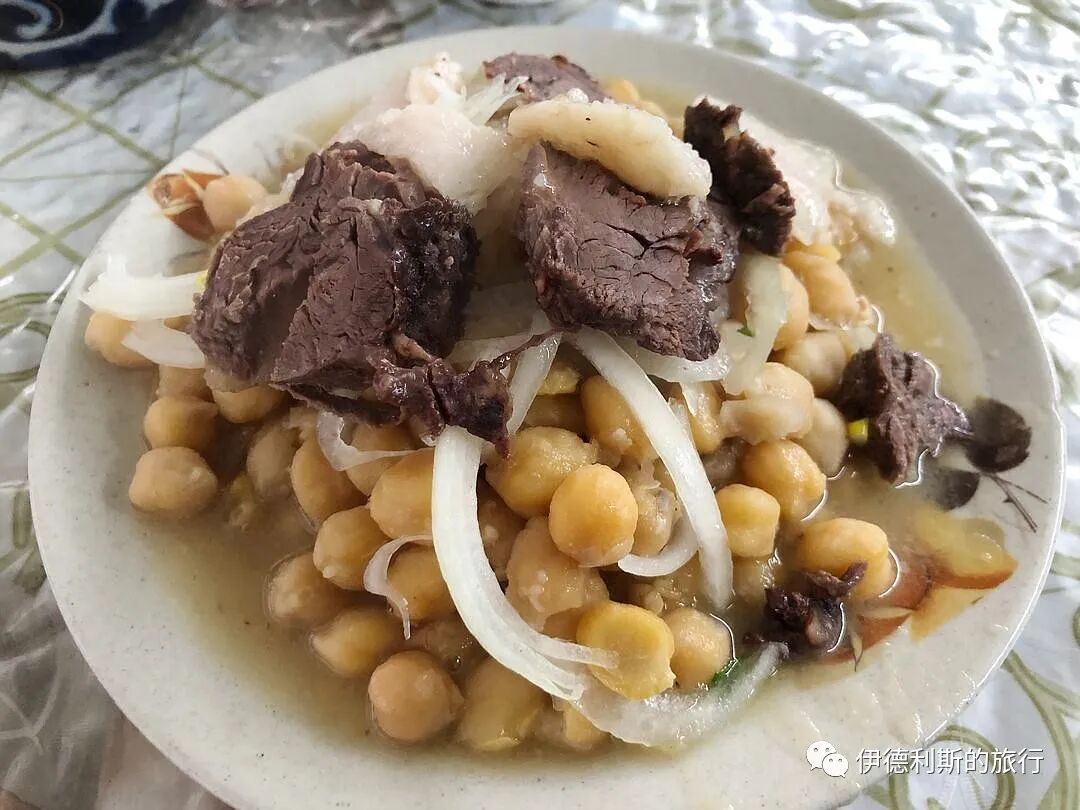
2. Fruit and vegetable section.
Fruits and vegetables take up most of the domed market. I visited in winter, so there was not much to buy. If you come in summer, you should be able to eat more delicious fruits.
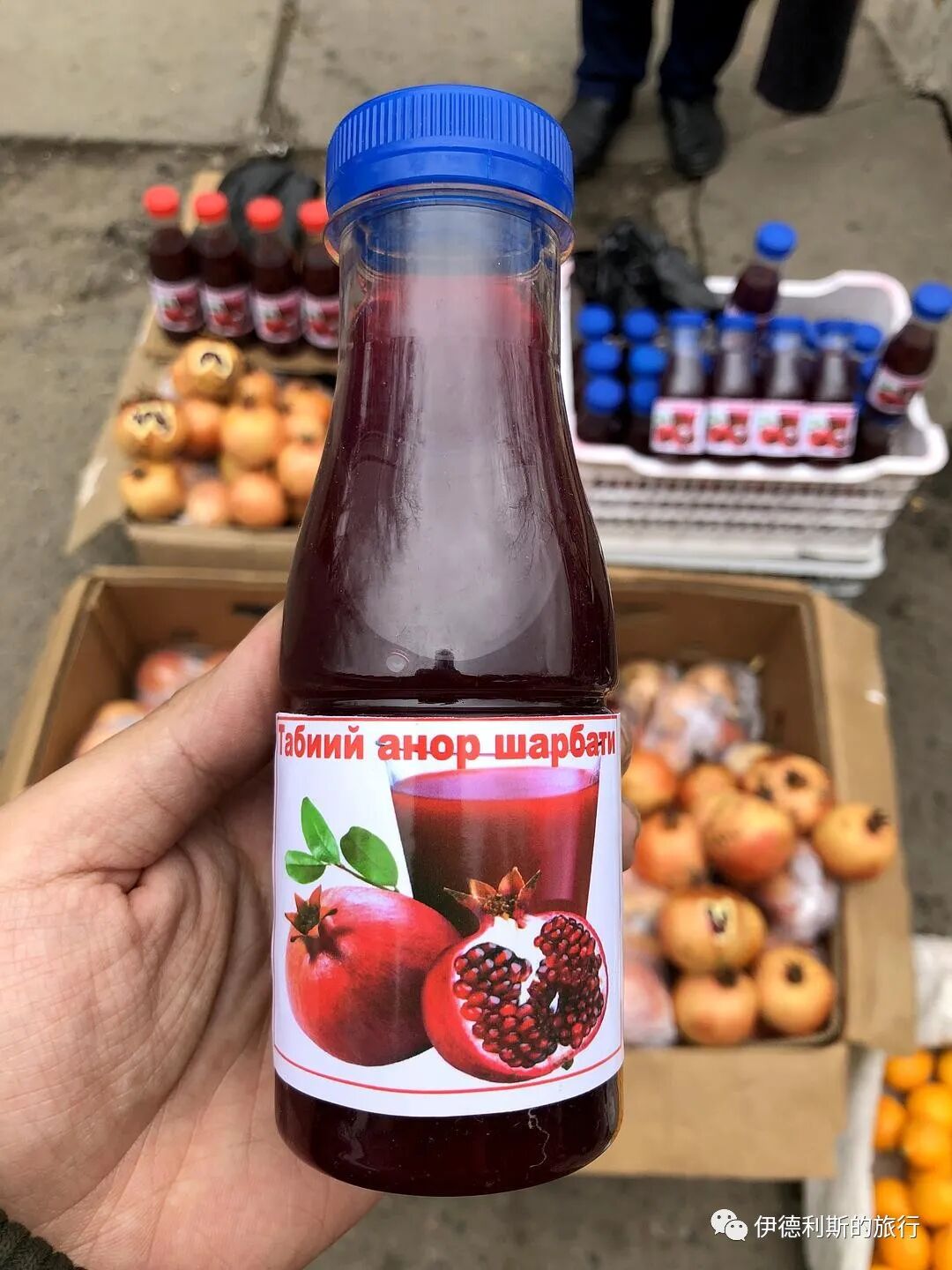
I personally think pomegranate juice in Uzbekistan tastes a bit worse than in Xinjiang, but it is better than in Azerbaijan and Turkey.
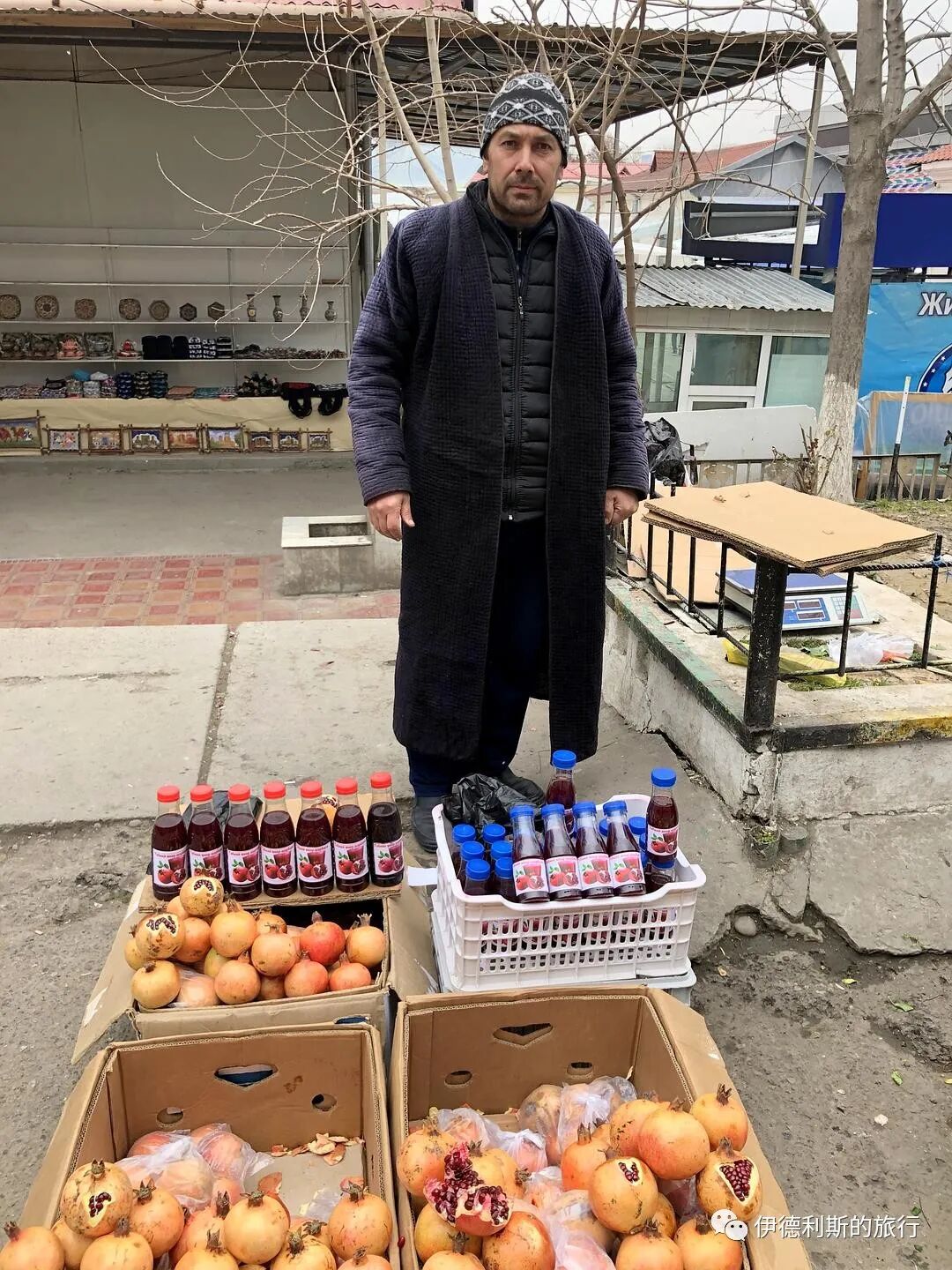
The uncle is wearing a casual-style robe (chapan).
When eating and shopping at an Uzbek bazaar, the first sentence you need to learn is "Necha pul" (how much). The uncle's answer is "Besh ming som" (five thousand som).
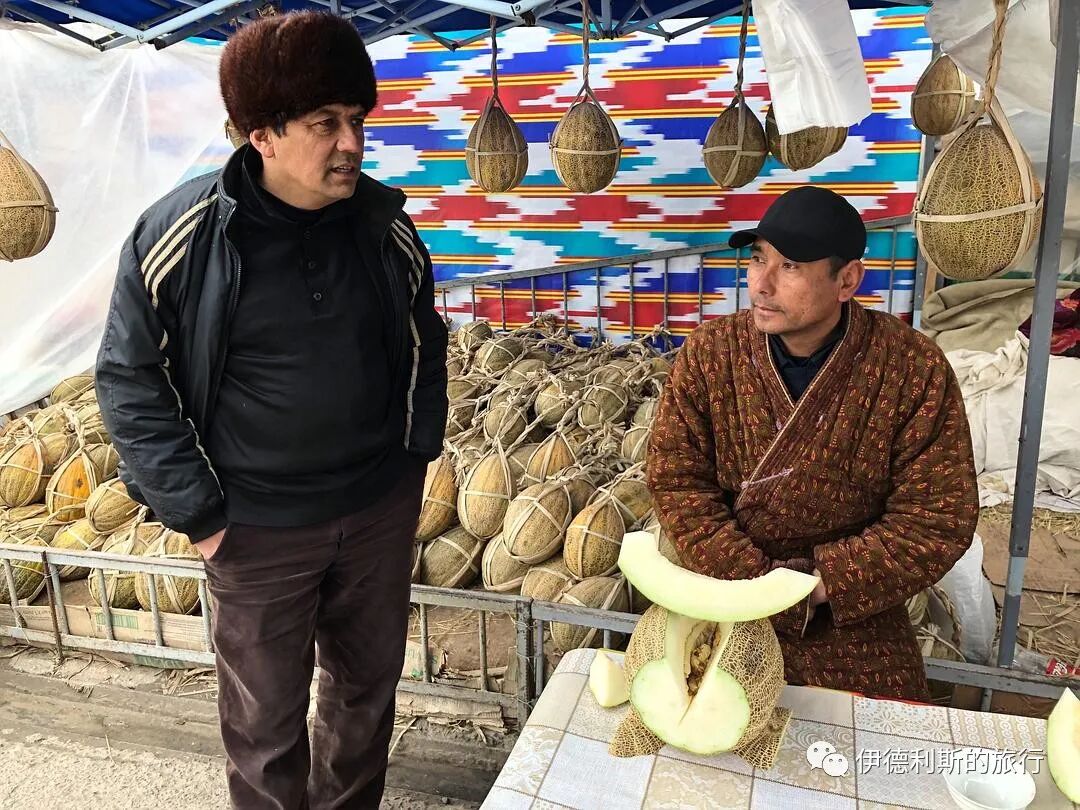
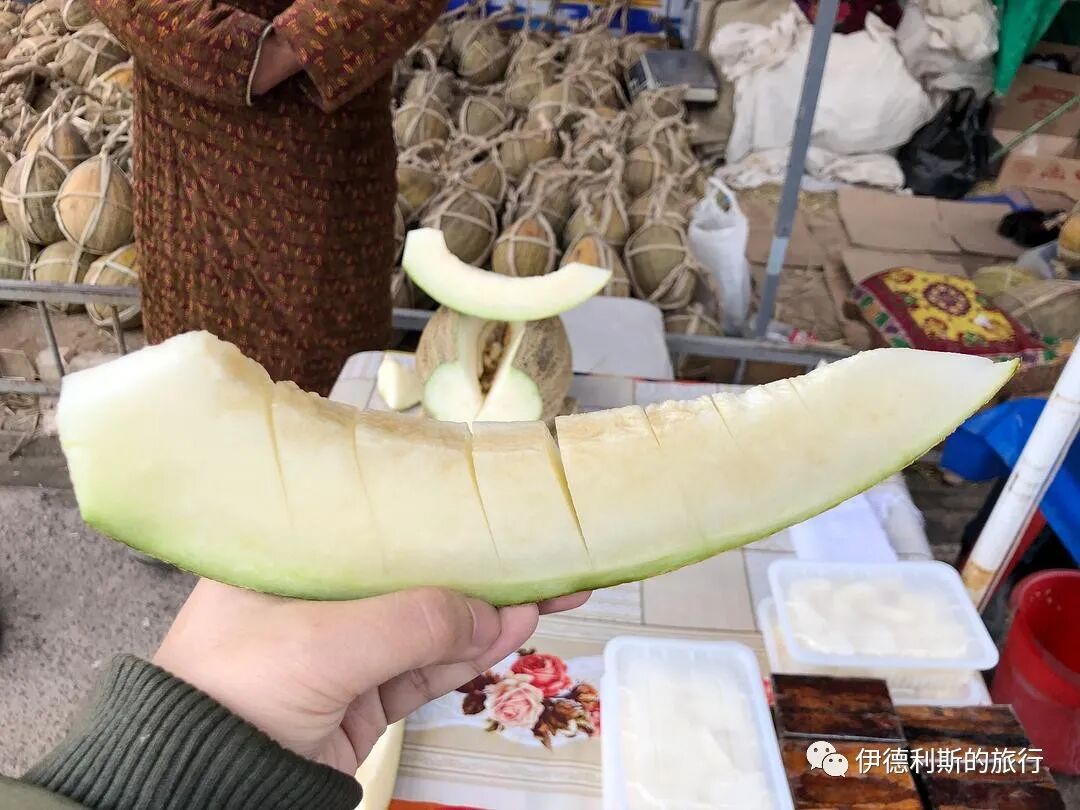
Melon
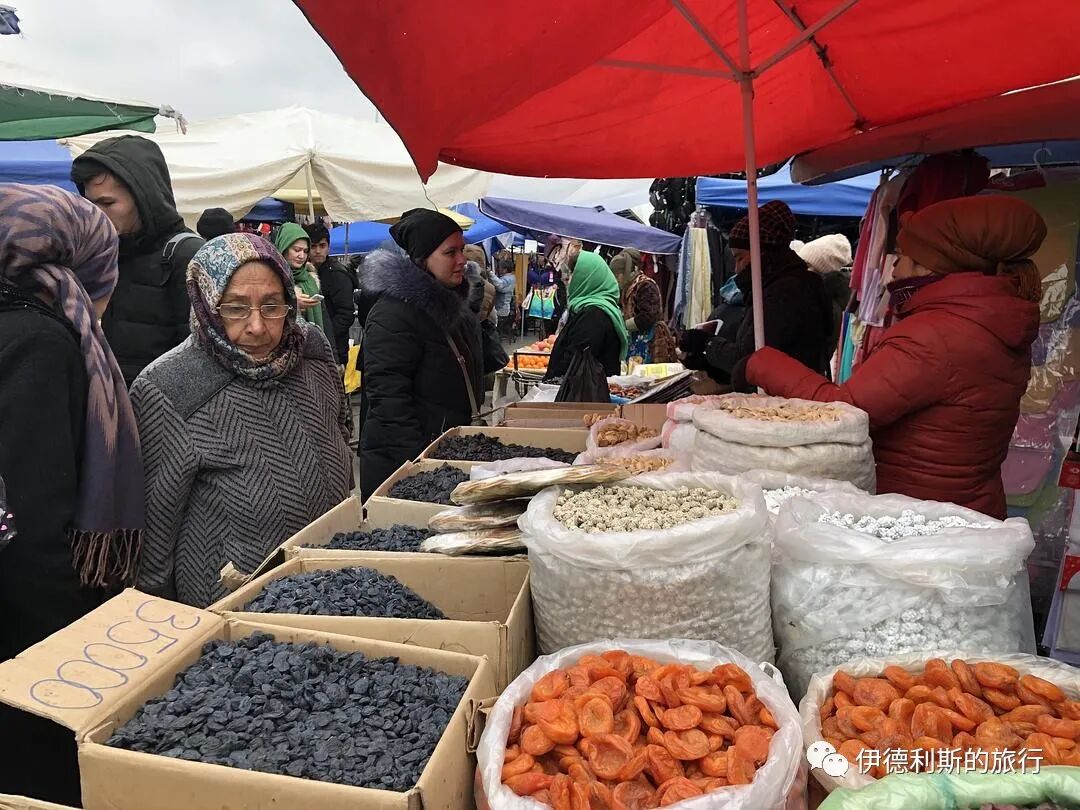
Various dried fruits
3. Clothing section
The area selling traditional clothing is at the far south end of the bazaar. You can buy traditional robes (chapan), embroidered cushions (kurpacha), and caps (doppi).
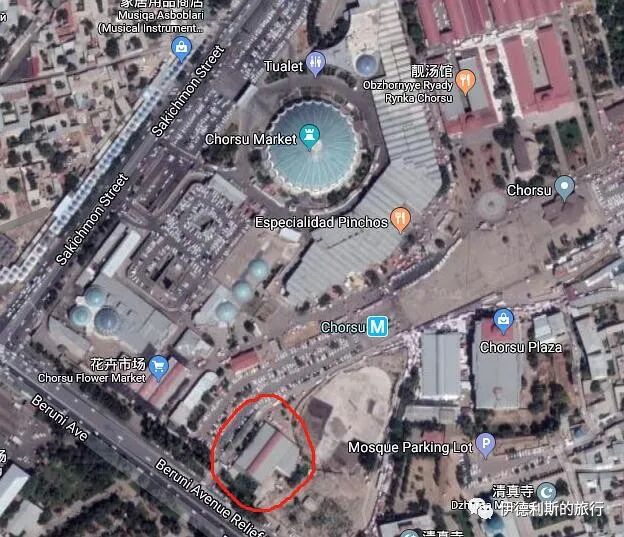
I really wanted to buy a robe, but I couldn't fit that much in my luggage, so I bought a few classic caps instead.
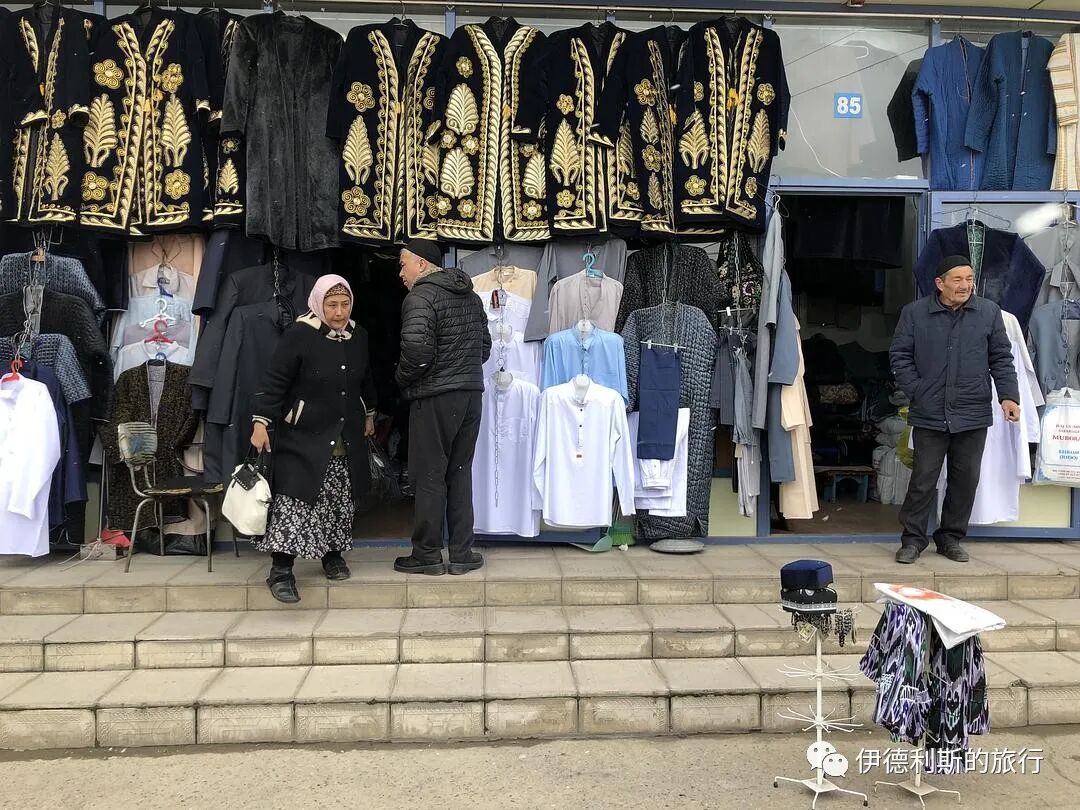
A classic traditional robe (chapan)
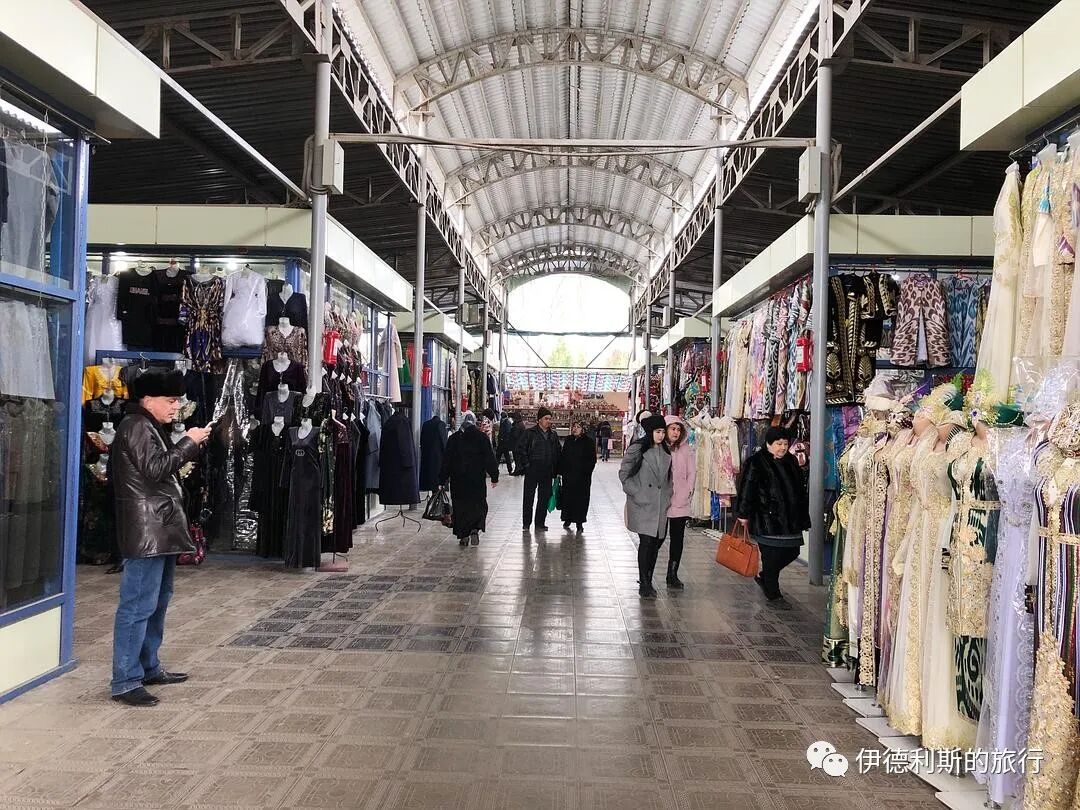
I bought two everyday almond-pattern caps (badam doppa) at the first shop. The almond-pattern cap is a style shared by Uyghur, Uzbek, and Tajik people. In Uzbekistan, it is called a Chust do‘ppisi. Chust is a handicraft center in the Fergana Valley, famous for making skullcaps (doppa). The almond-patterned skullcap (badam doppa) likely started in the 19th century. It spread quickly among Uzbeks, lowland Tajiks, and Uyghurs from the late 1800s to the early 1900s, becoming very popular.
I bought a colorful skullcap (doppa) at the second shop. You do not see these on the street often now, as people mostly wear them for festivals.
I bought this black felt hat at the third shop. This was my first time seeing this kind of black felt hat. I have seen similar white versions in Azerbaijan and Kyrgyzstan. These black felt hats are very common on the streets of Tashkent and are a local specialty.
Tashkent Food
1. Lagman House
The grandmother where we stayed highly recommended this noodle shop called Lagman House. It is not far from our place or the Chorsu Bazaar. The shop is very clean. We ordered mixed noodles (lagman), a rice, beef, and potato soup called Mastava, and a type of grilled meat called jaz. The meat in the mixed noodles was tasty, but the noodles were a bit thin. The grilled meat was super tender and really amazing.
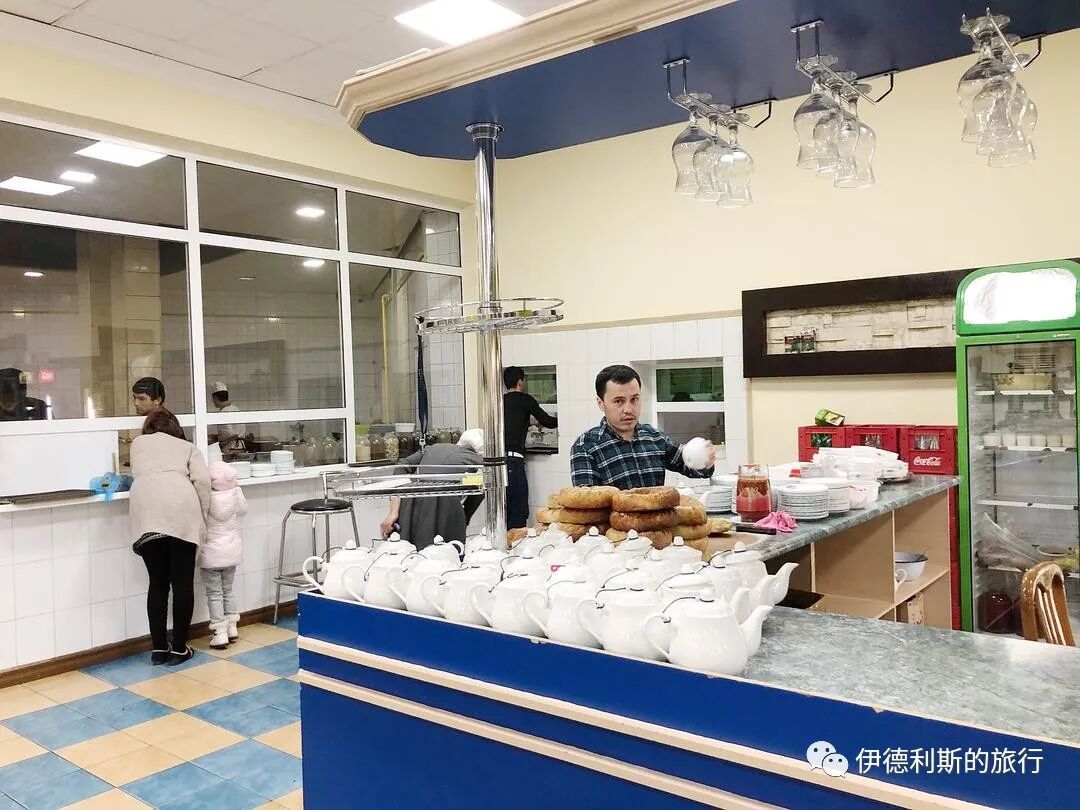
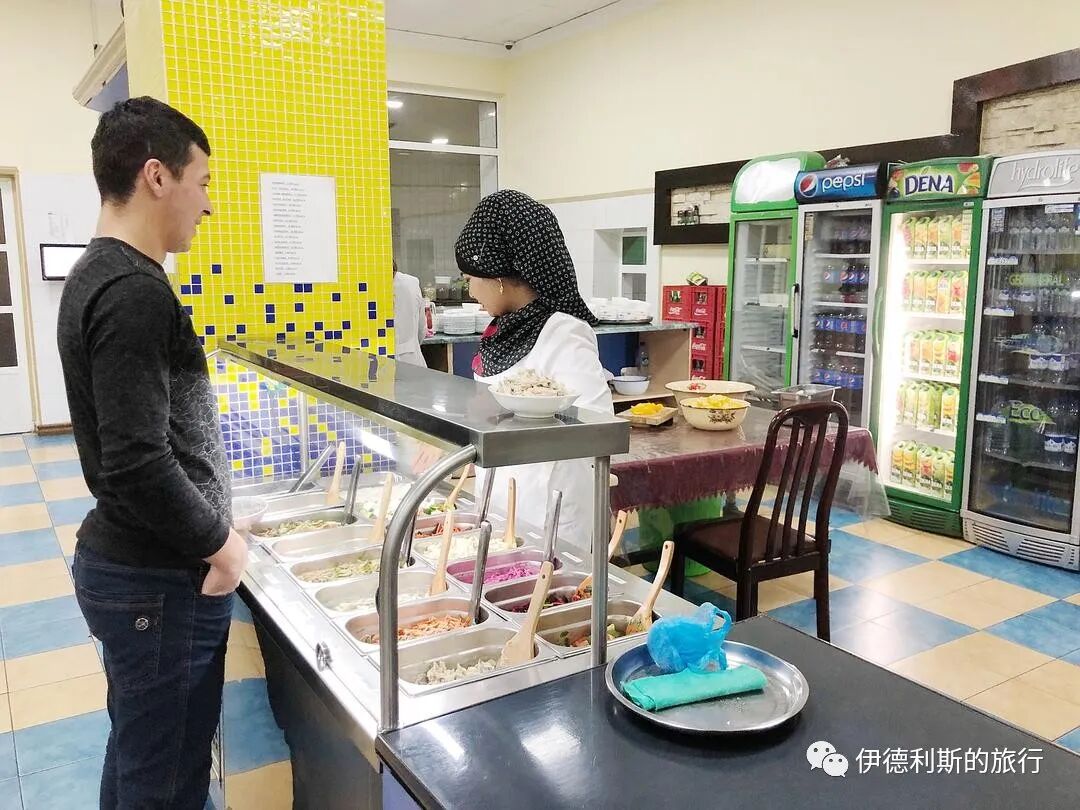
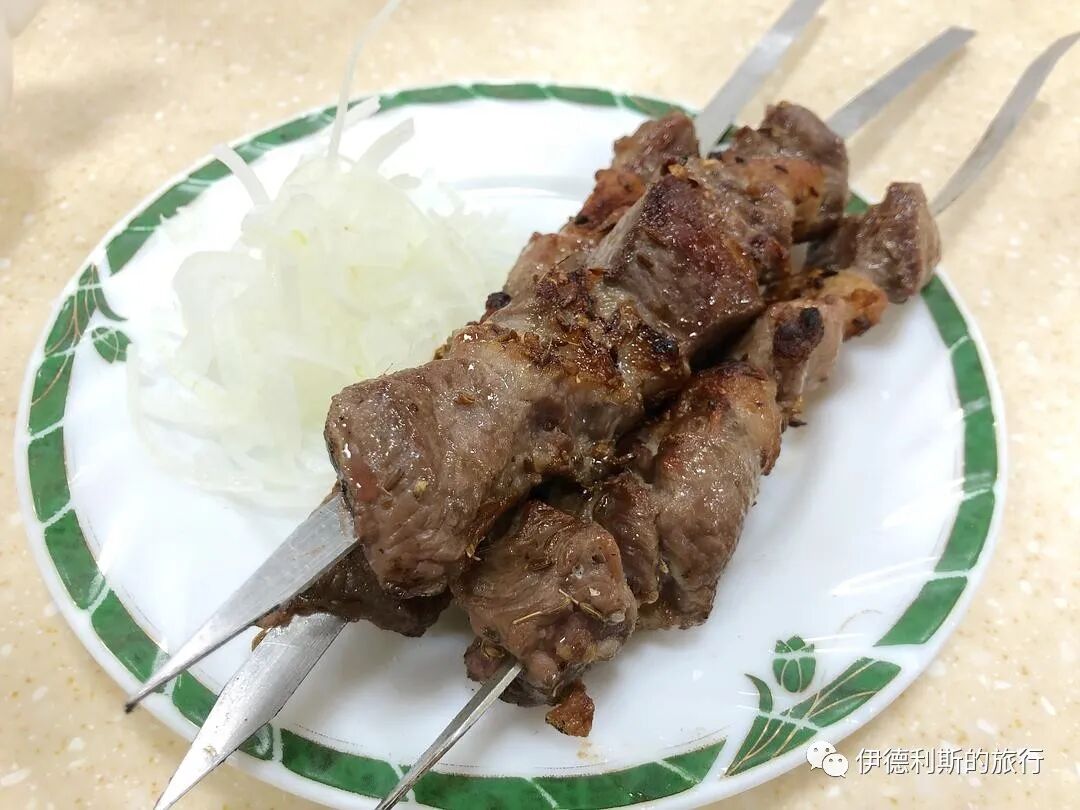
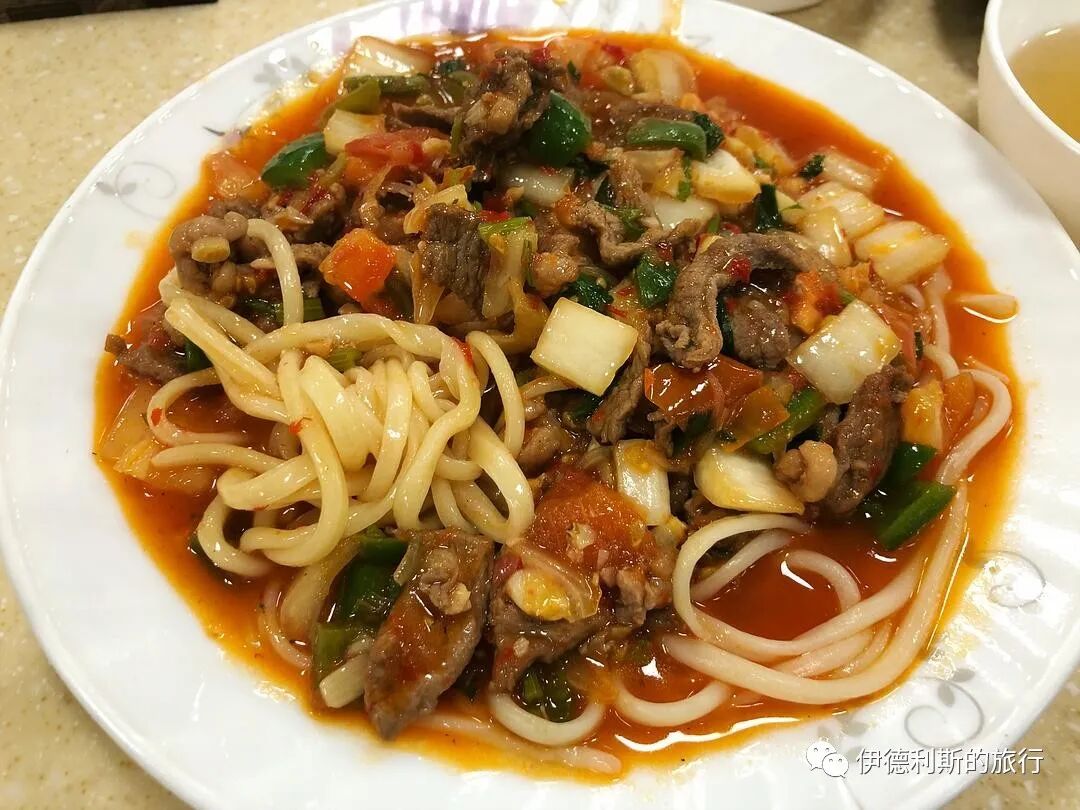
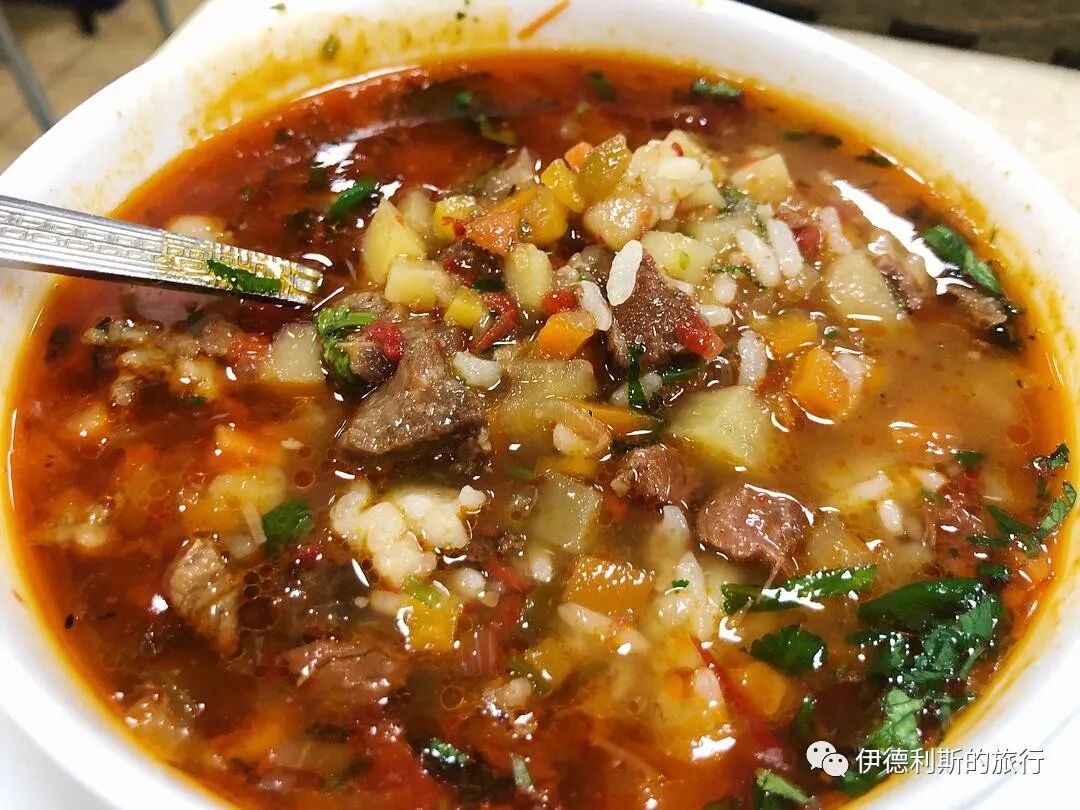
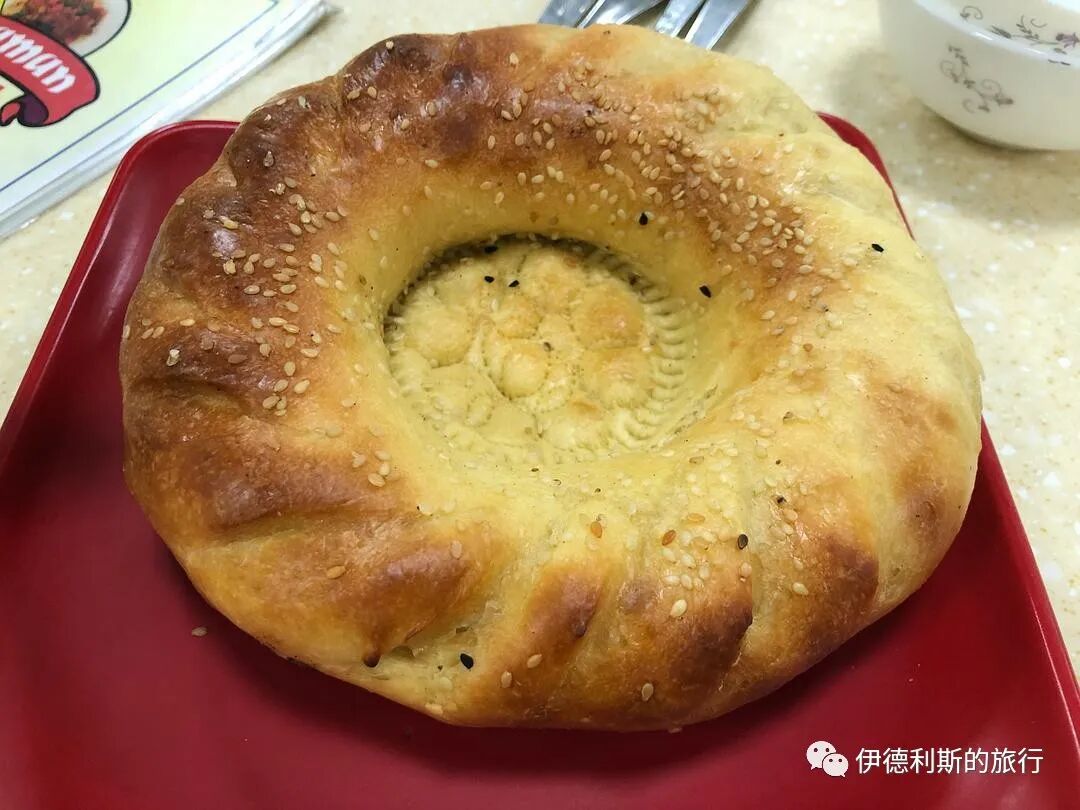
2. Plov Centre
The Plov Centre is known as a must-visit restaurant in Tashkent. There are two Plov Centres, a new one and an old one, and they are not far apart. The new one is right under the TV tower; you will see the tower when you arrive. The Plov Centre only serves lunch every day, so watch the time because it runs out if you come too late.
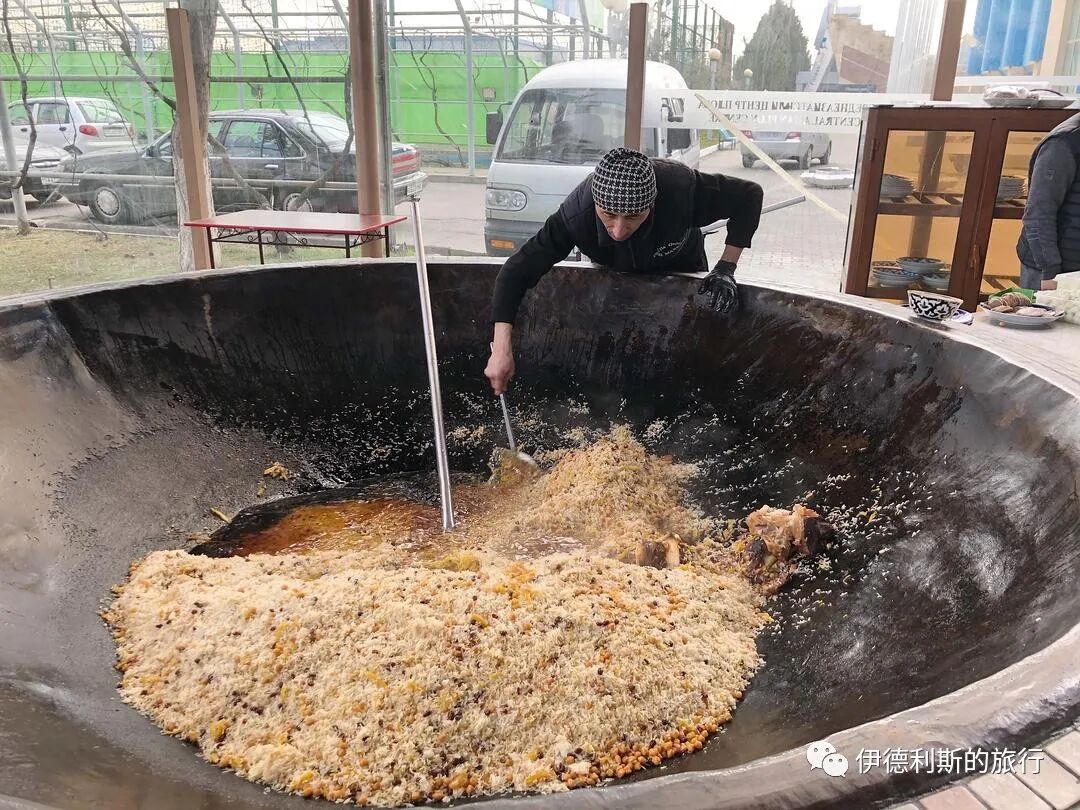
The super-sized plov pots are a real visual spectacle.
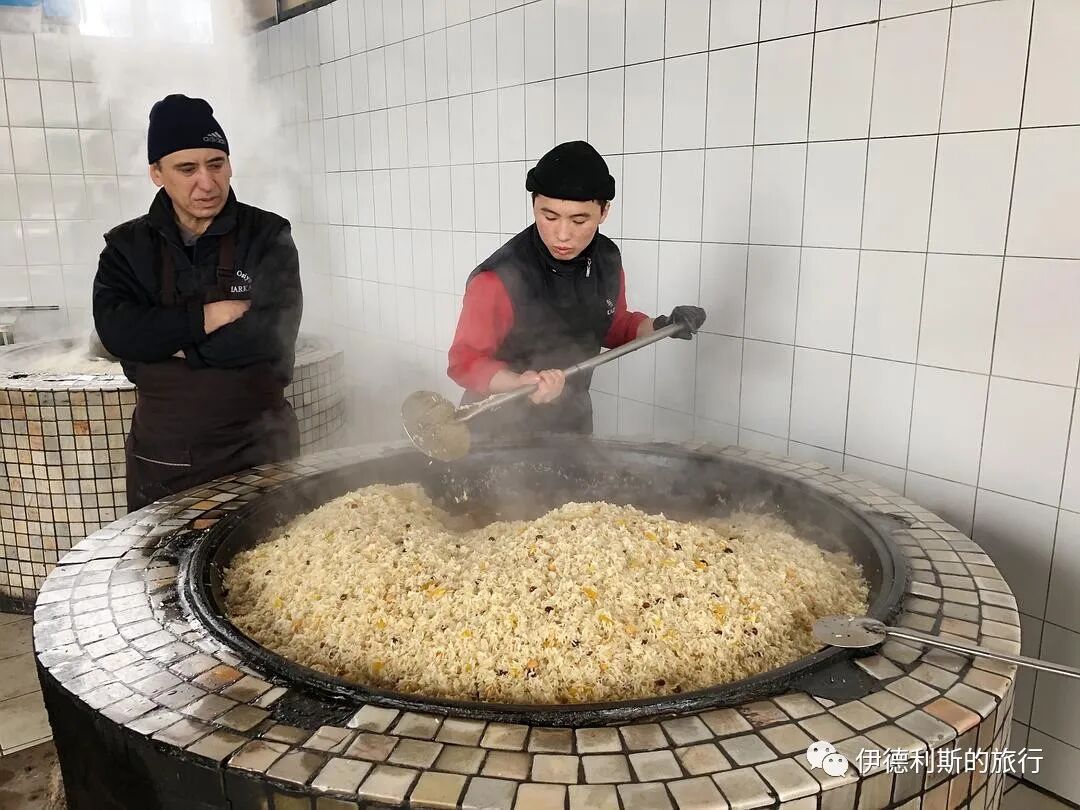
There are also small pots.
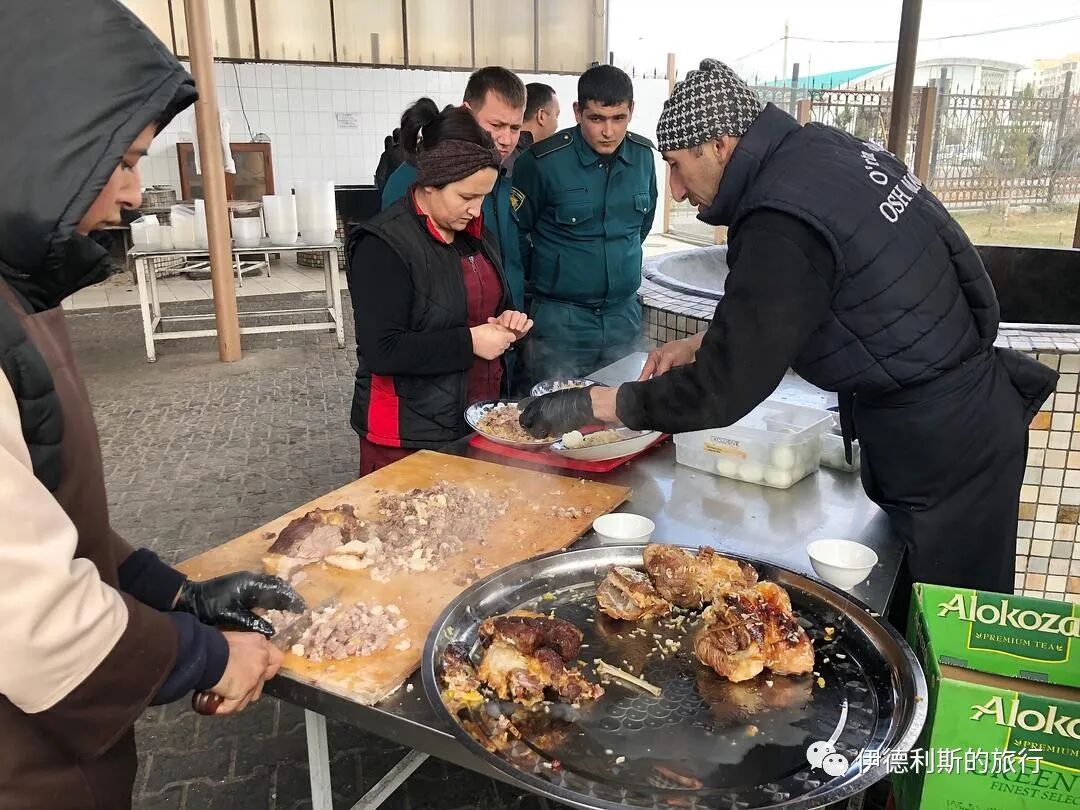
Slicing the beef, the beef is super delicious.
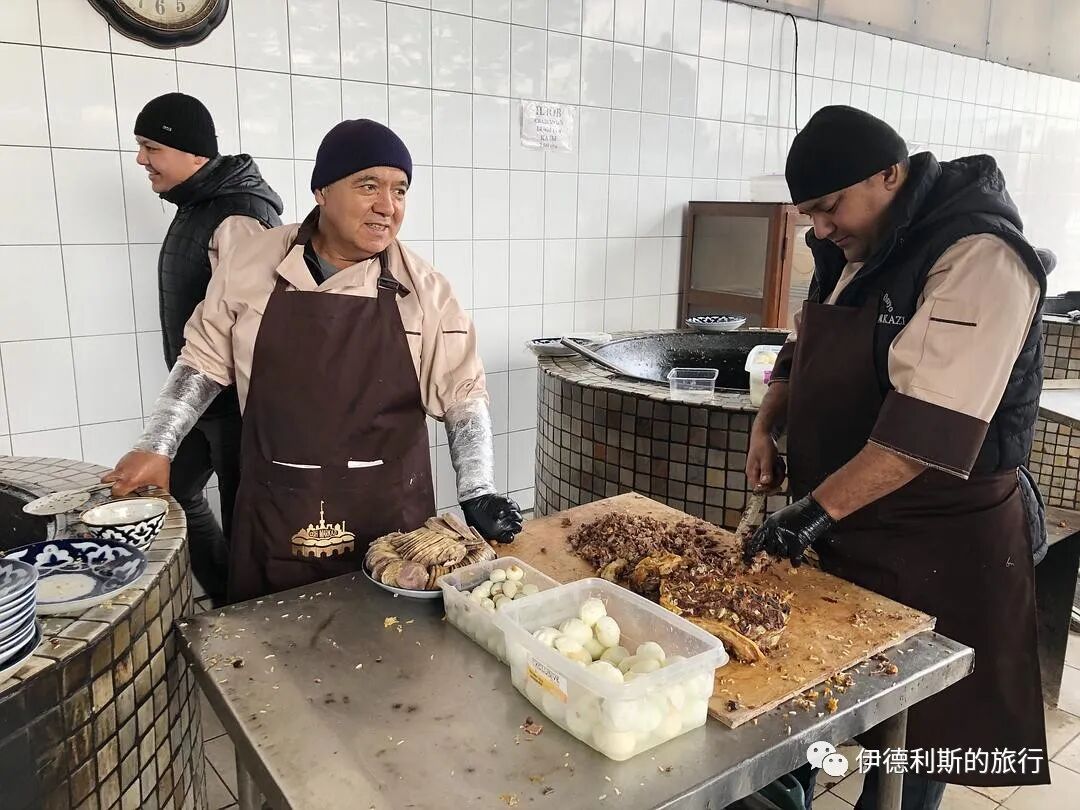
Slicing the horse meat.
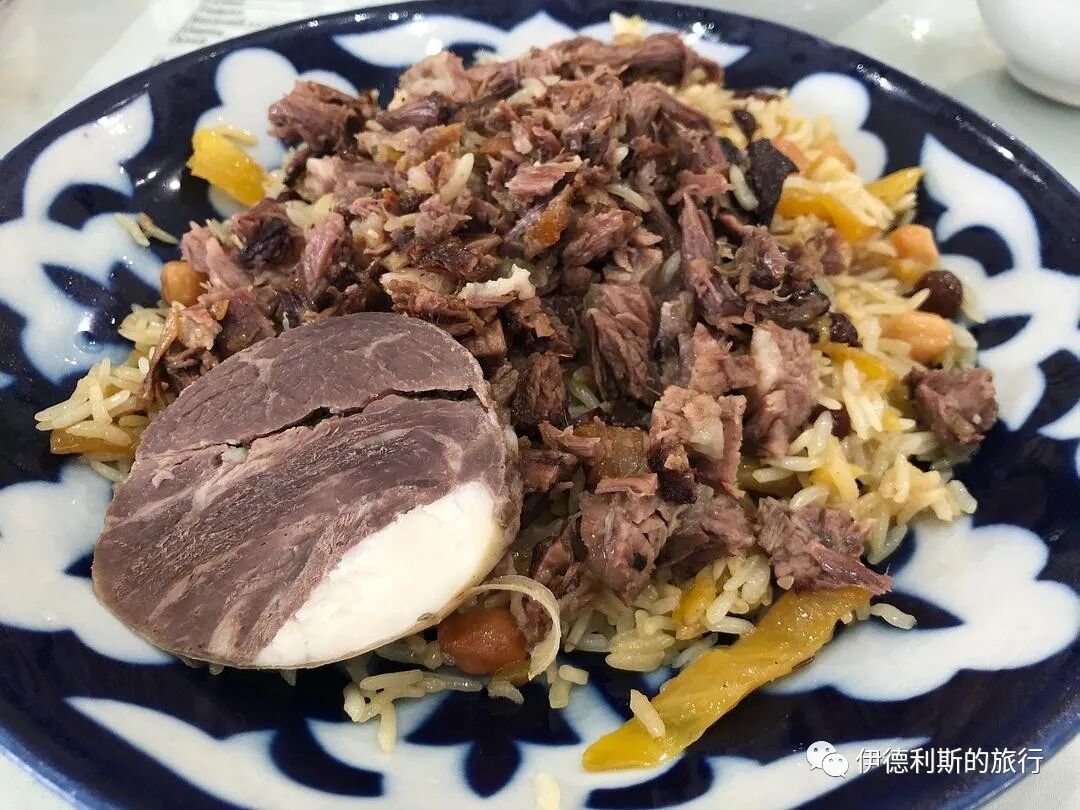
Tashkent pilaf (plov).
The menu is in Cyrillic, with three types of pilaf. You can order a large portion or extra meat. There are also small cold dishes of horse meat and tea to drink.
I took the subway to the pilaf center. The Tashkent Metro opened in 1977, but photography was only allowed starting in 2018, so I made sure to take a few photos.
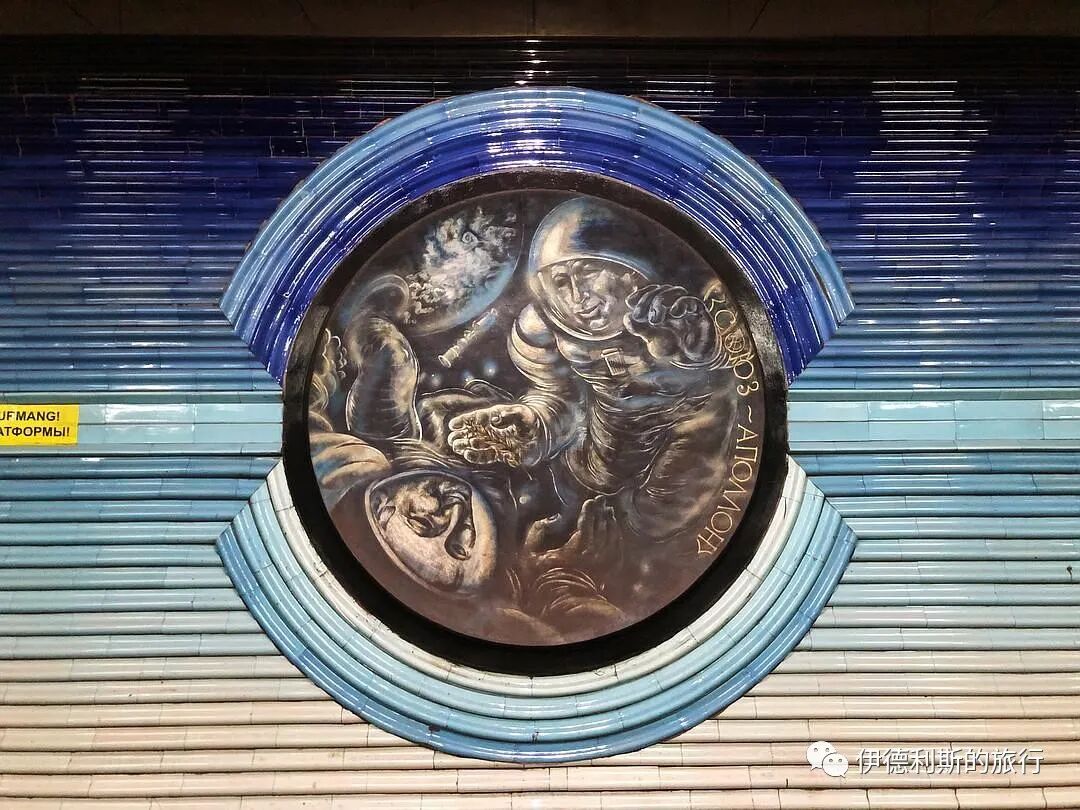
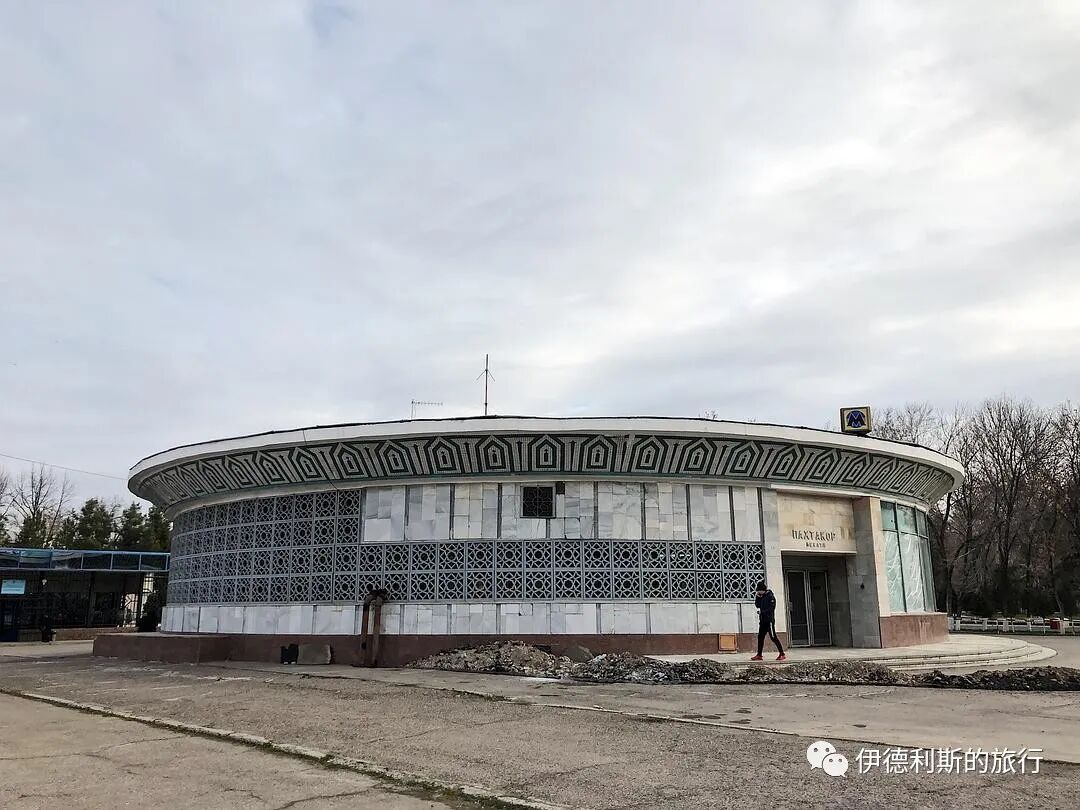
Station entrance.
3, Plov-samsa.uz
I ate at a restaurant called Plov-Samsa.uz near Amir Timur Square in Tashkent with a friend. Plov means rice pilaf (plov) and Samsa means baked bun (samsa). I highly recommend their baked buns, they are delicious! They have a flaky crust and the portions are quite large.
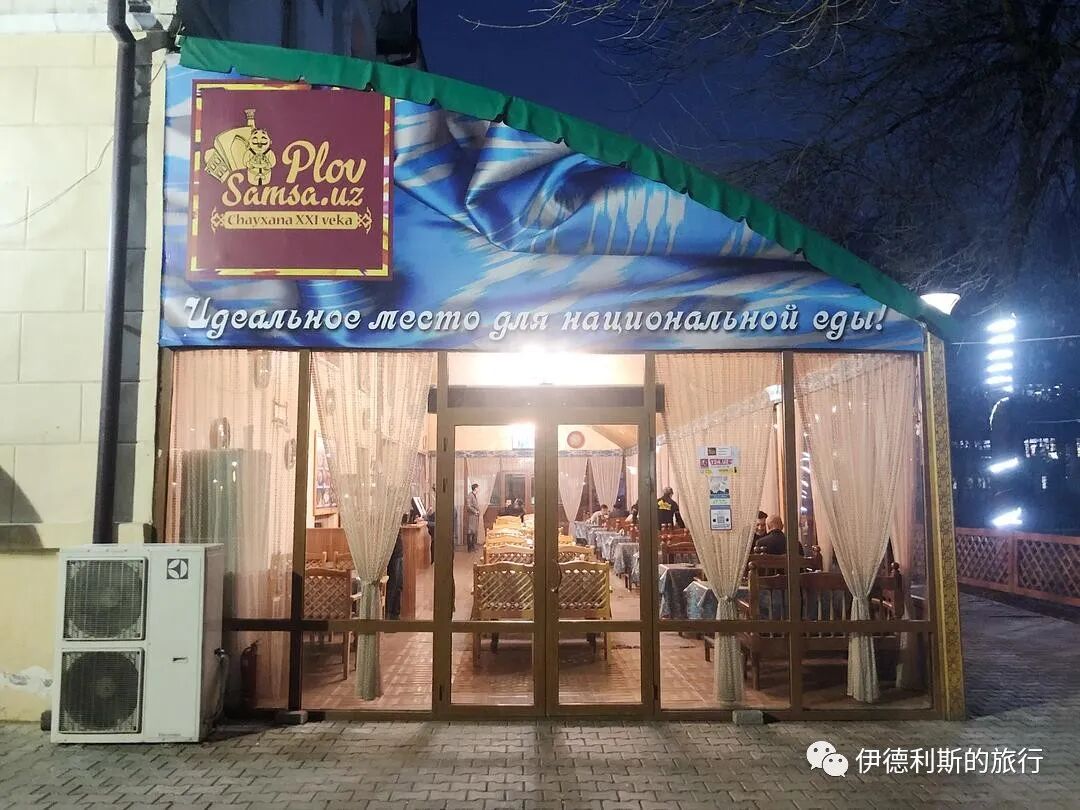
This was my first time eating a baked bun in this shape.
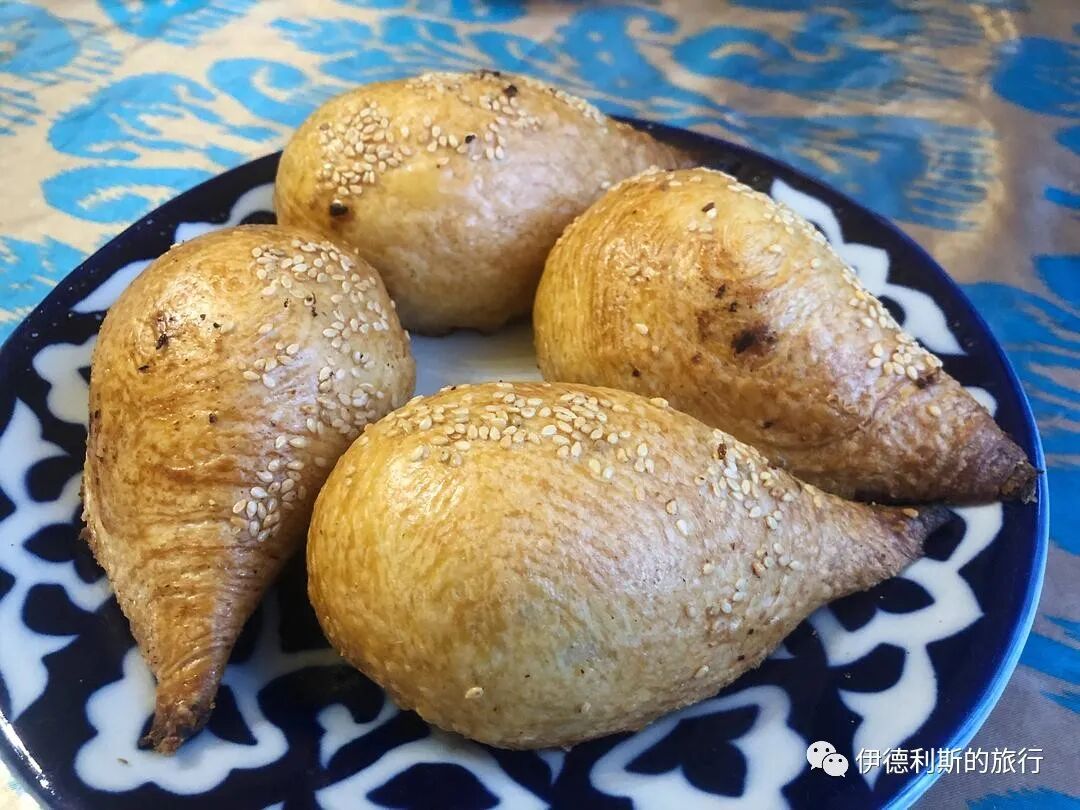
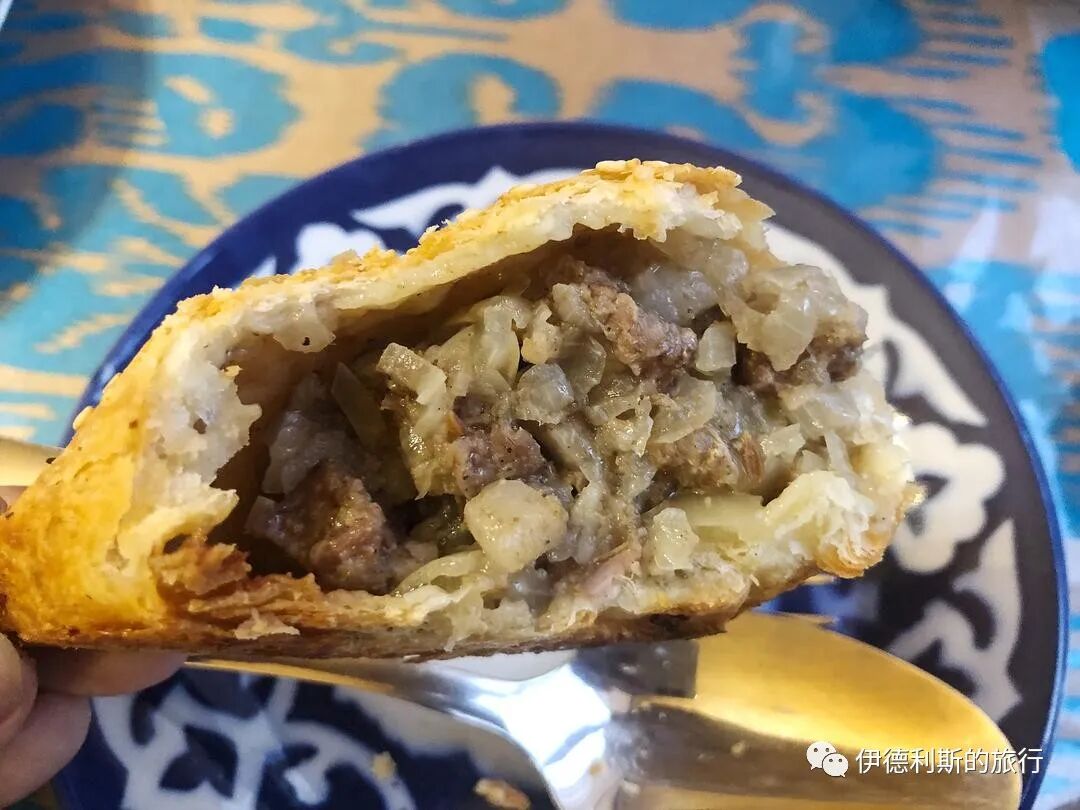
The rice pilaf (plov) is topped with horse meat and quail eggs.
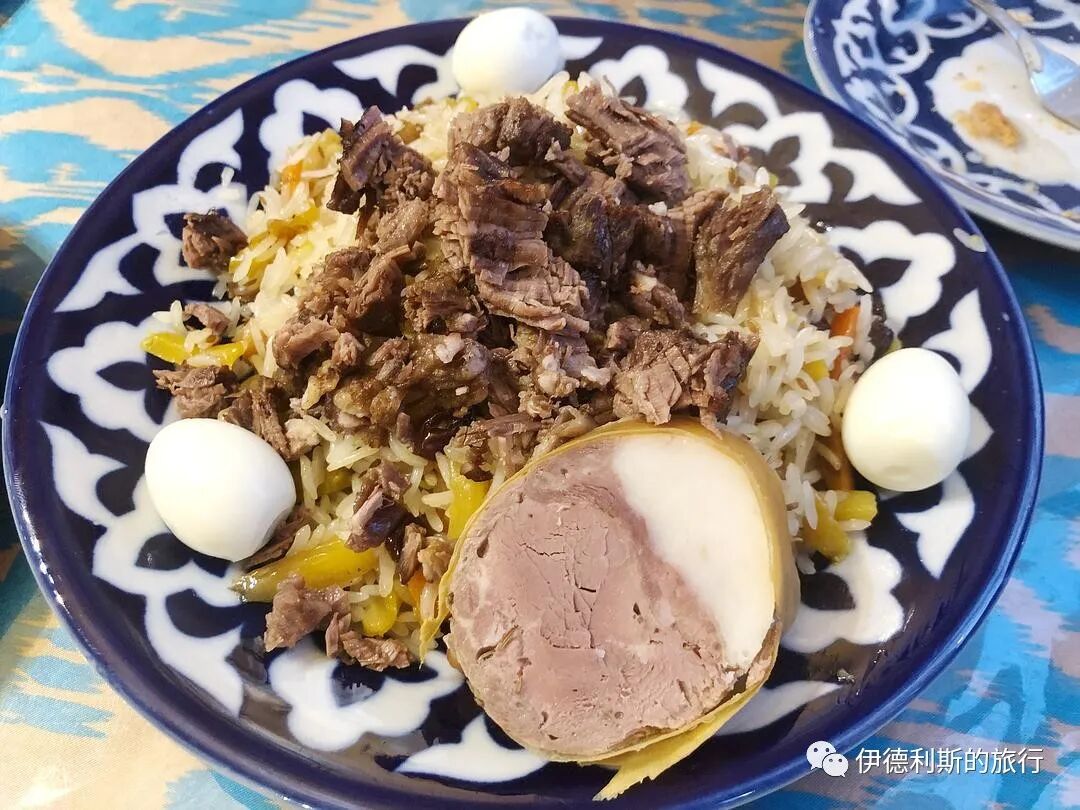
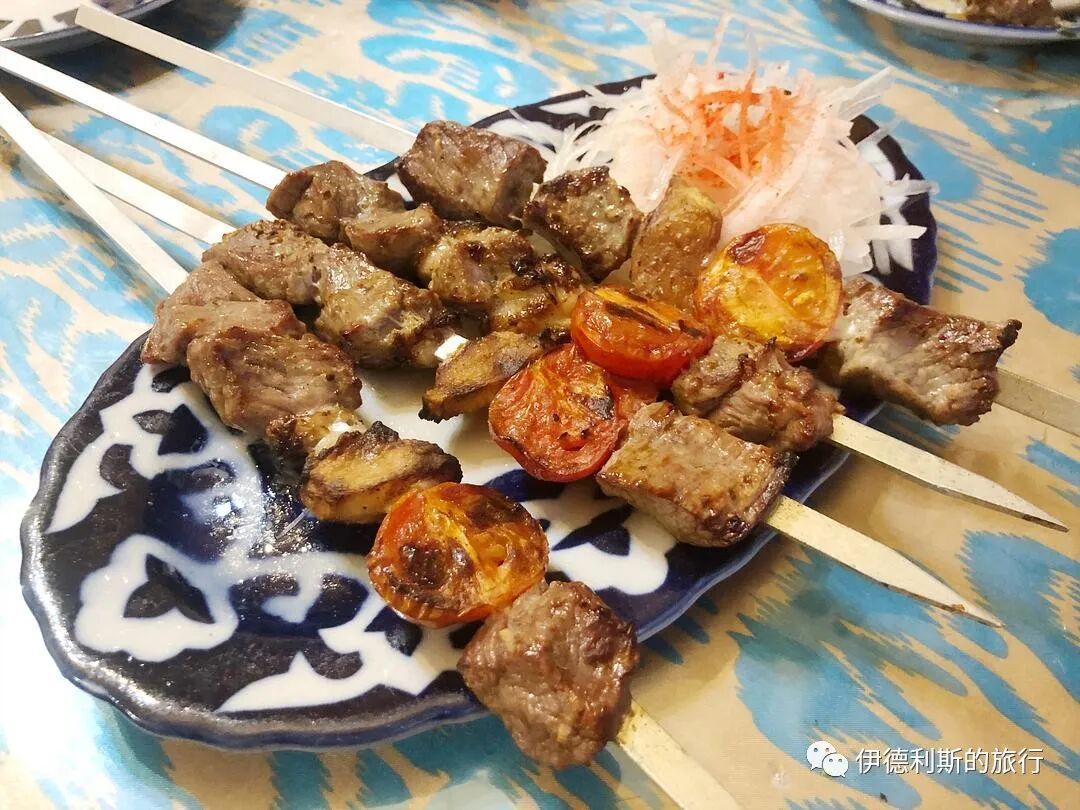
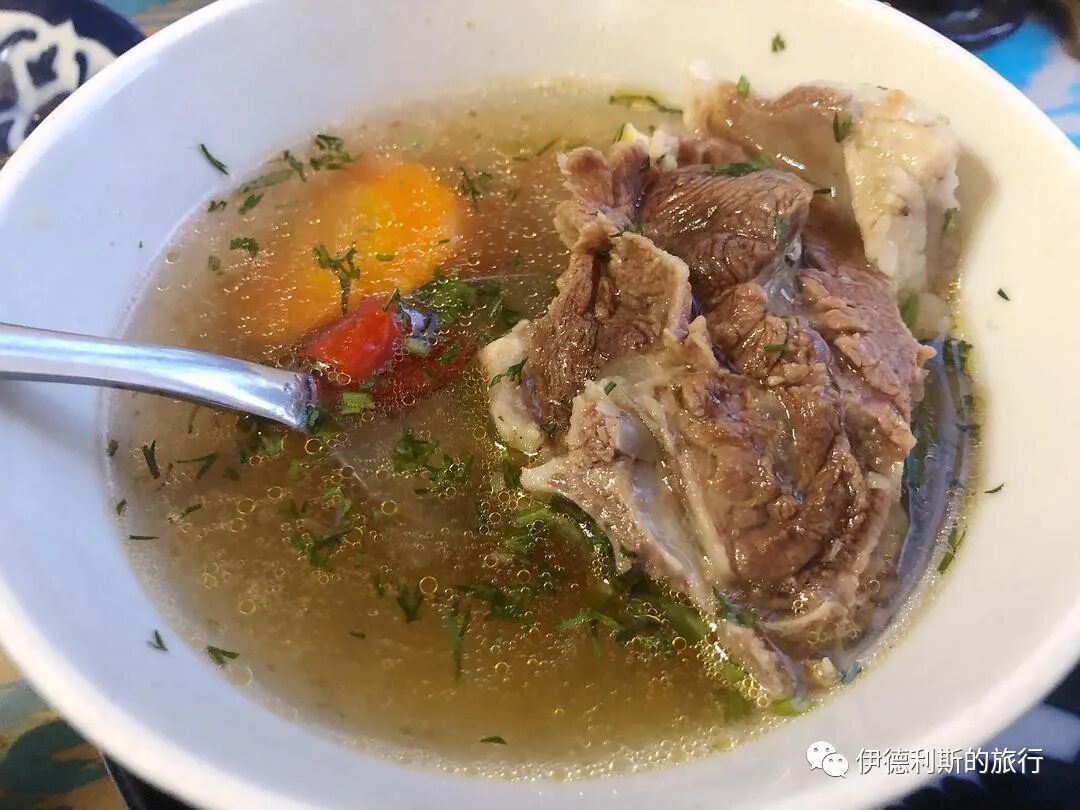
Meat soup (sho'rva).
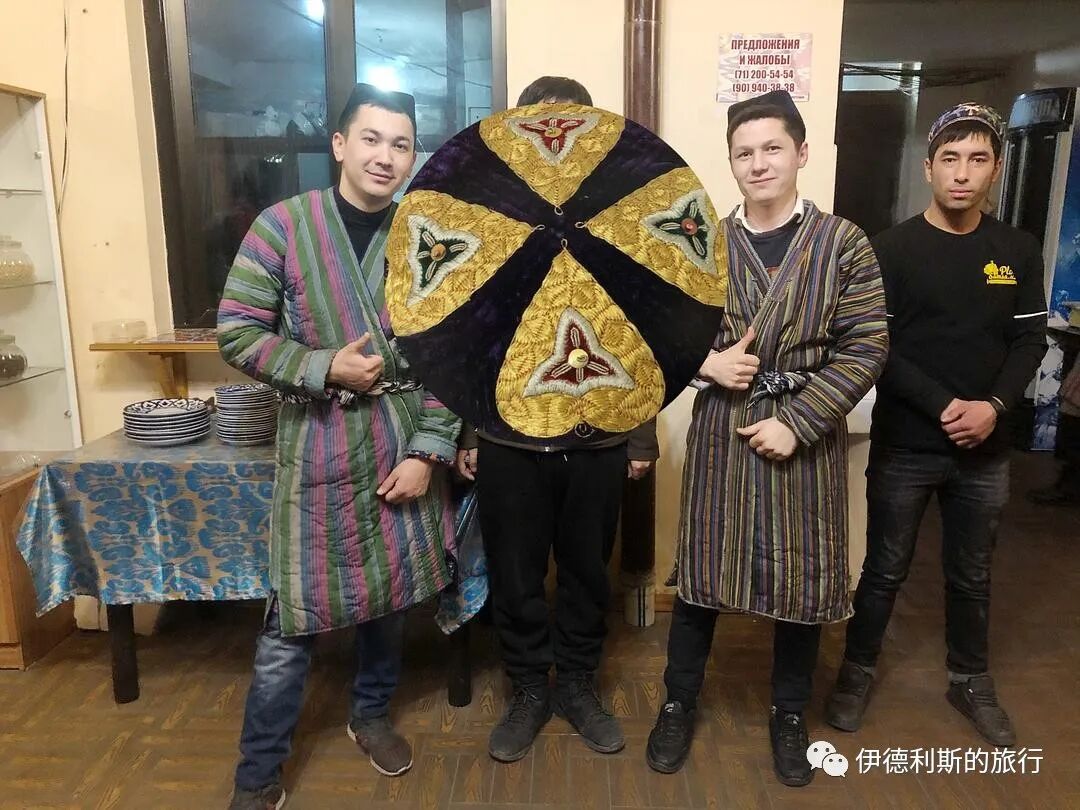
I took a photo with a young man wearing a traditional robe (chapan) and a skullcap (doppa).
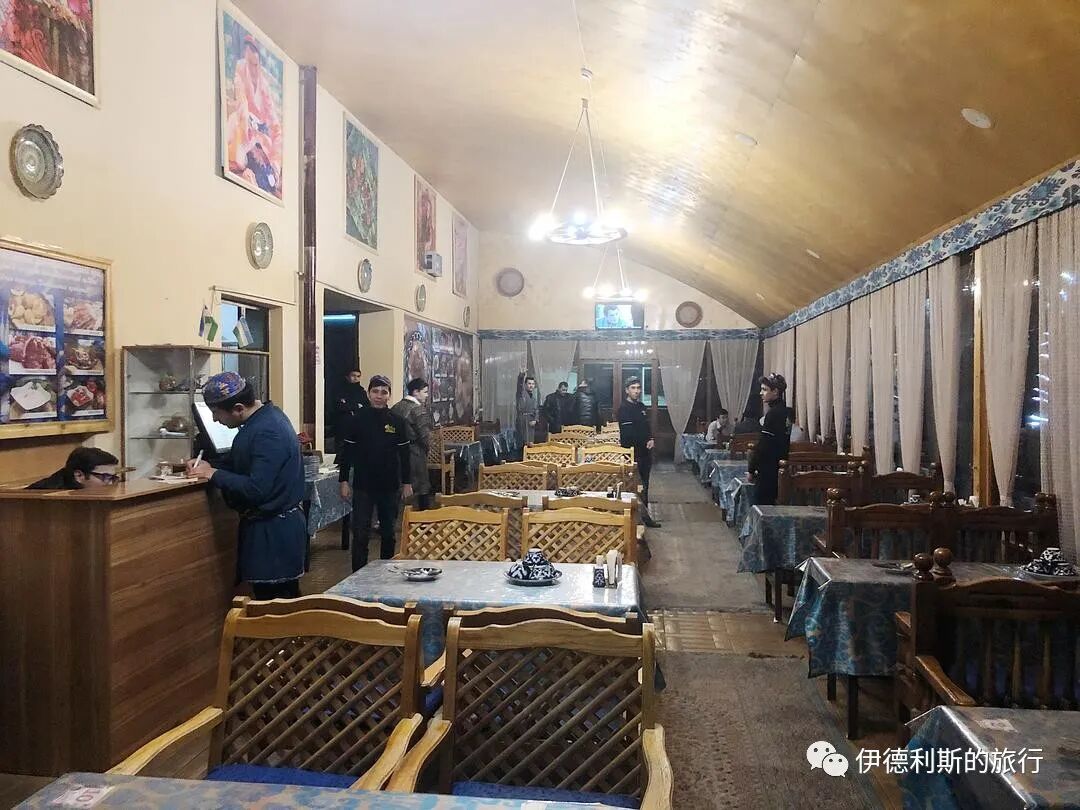
Maidie.
Near the old town of Tashkent, there is a large shopping mall called Samarqand Darvoza. It is one of the busier malls in the city and even has a KFC inside. I found a chain music store inside and bought two discs.
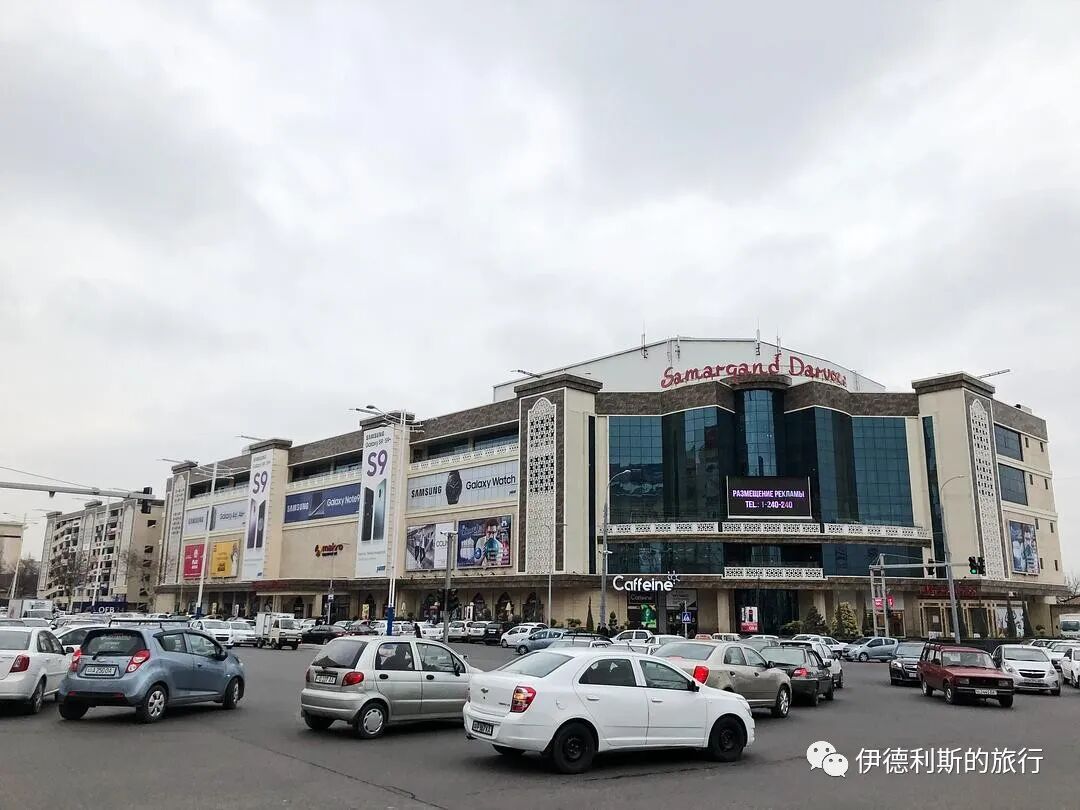
One is a traditional music group called Tashkent that plays drums and the suona horn. They formed in 1998. The combination of suona horns and drums stretches from inland China and Xinjiang through Central Asia all the way to Turkey. I have bought albums of this music in both Xinjiang and Turkey.
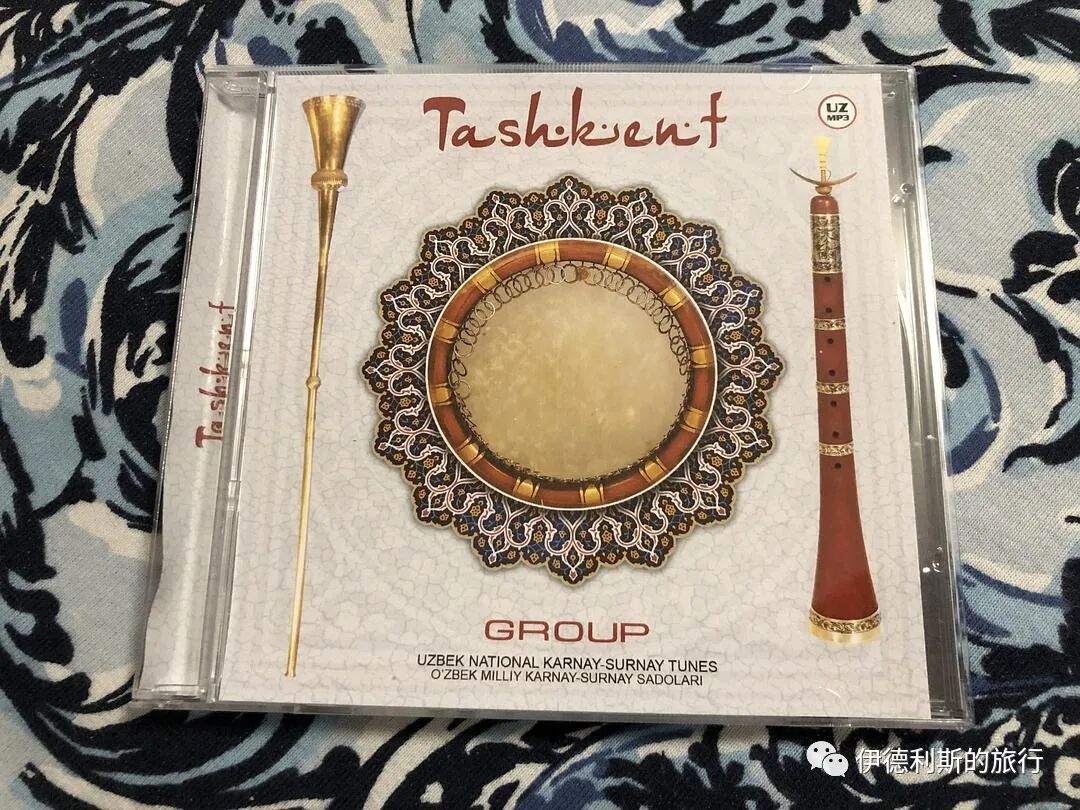
This is an album featuring the rawap.
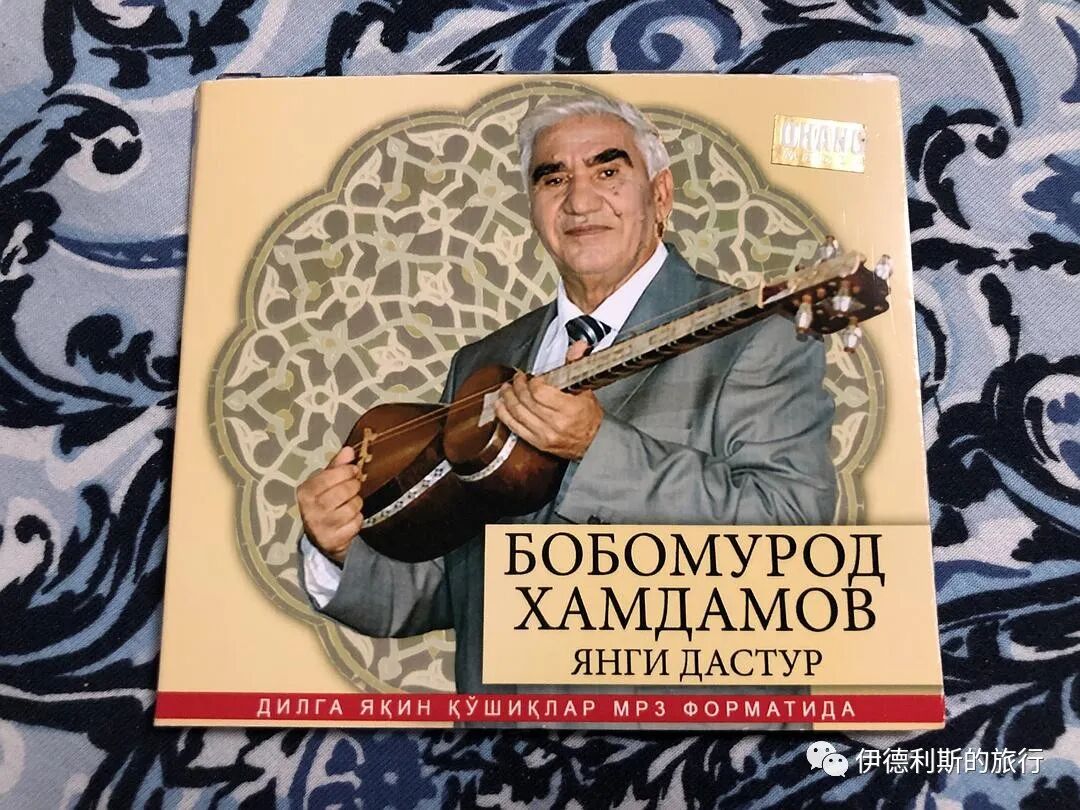
You can walk south from Chorsu Bazaar to reach Samarqand Darvoza. On the way, you will pass through a neighborhood with a very Soviet feel.
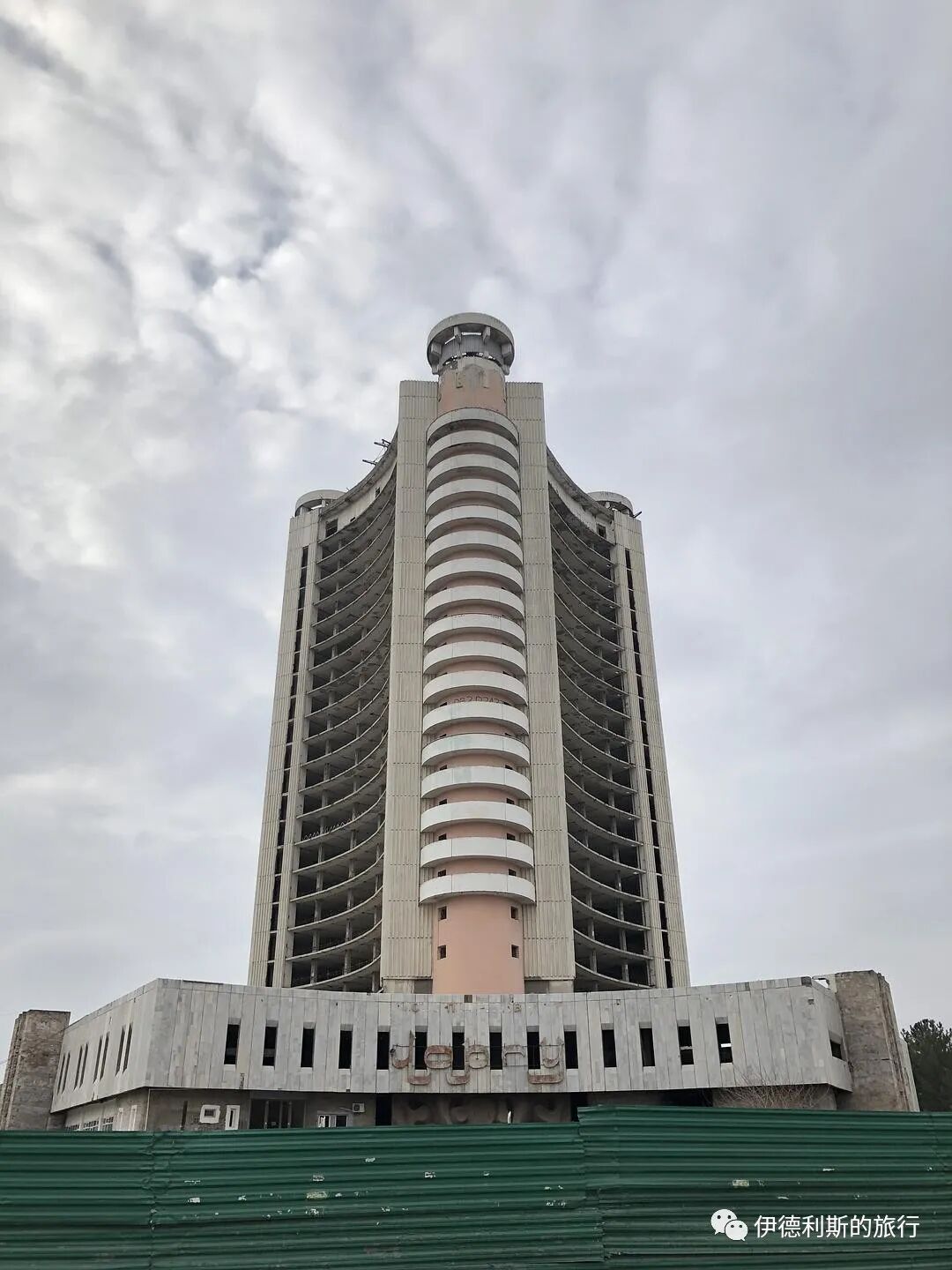
Leaving.
After finishing my tour of Tashkent, I am getting ready to fly to Bukhara. I took a Yandex ride from my place to the airport. The driver and I chatted the whole way in elementary-level English, and he told me it was his first time talking to a foreigner. It is always fun to talk with people who are not good at English because you do not feel shy if you do not understand something.
At Tashkent Airport, I met a girl who goes to college in Guangzhou. She was doing a survey for her graduation thesis, so I helped her fill it out.
 Collapse Read »
Summary: Tashkent — Old City Food, Mosques and Uzbek Heritage is presented here as a firsthand travel account in clear English, beginning with this scene: On February 5, 2019, the first day of the Lunar New Year, I flew directly from Beijing to Tashkent on Uzbekistan Airways to start my food and travel tour of Uzbekistan and Tajikistan. The account keeps its focus on Tashkent Travel, Uzbek Food, Muslim Heritage while preserving the names, places, food, and historical details from the Chinese source.
On February 5, 2019, the first day of the Lunar New Year, I flew directly from Beijing to Tashkent on Uzbekistan Airways to start my food and travel tour of Uzbekistan and Tajikistan.
I stayed at Gulnara Guesthouse, which I booked on Booking.com and is recommended by Lonely Planet. It is located in the center of the old city, very close to Chorsu Bazaar, and the owner speaks great English.
The breakfast is simple, but it is enough.
The room where we eat breakfast.
In the evening, I spent time hanging out with the staff, drinking tea and chatting.
The bread the staff eats with their tea.
After checking in, I headed out to explore the bazaar!
My place is less than 500 meters from the bazaar.
Chorsu Bazaar.
Chorsu Bazaar is in the heart of the old city (Eski Shakhar) in Tashkent and is the busiest spot in the old town. The words Chorsu and Bazaar both come from Persian and mean market at the crossroads. In winter, Chorsu Bazaar opens around 10 a.m. and stays open until dark, selling all kinds of goods.
The entrance to the bazaar is packed with all sorts of cars.
Baby cribs.
Various tourist souvenirs.
Fruit seller
Naan bread seller
1. Snack area
The snack area is on the east side of Chorsu Bazaar. In winter, it is open daily from morning until around four or five in the afternoon. You can eat all kinds of Uzbek snacks there.
Rice sausage seller
Rice sausage seller
Naryn
Served with meat broth and naan bread
A person selling grilled meat (kaorou).
The grilled meat is super delicious.
There is also someone selling chickpea soup.
2. Fruit and vegetable section.
Fruits and vegetables take up most of the domed market. I visited in winter, so there was not much to buy. If you come in summer, you should be able to eat more delicious fruits.
I personally think pomegranate juice in Uzbekistan tastes a bit worse than in Xinjiang, but it is better than in Azerbaijan and Turkey.
The uncle is wearing a casual-style robe (chapan).
When eating and shopping at an Uzbek bazaar, the first sentence you need to learn is "Necha pul" (how much). The uncle's answer is "Besh ming som" (five thousand som).
Melon
Various dried fruits
3. Clothing section
The area selling traditional clothing is at the far south end of the bazaar. You can buy traditional robes (chapan), embroidered cushions (kurpacha), and caps (doppi).
I really wanted to buy a robe, but I couldn't fit that much in my luggage, so I bought a few classic caps instead.
A classic traditional robe (chapan)
I bought two everyday almond-pattern caps (badam doppa) at the first shop. The almond-pattern cap is a style shared by Uyghur, Uzbek, and Tajik people. In Uzbekistan, it is called a Chust do‘ppisi. Chust is a handicraft center in the Fergana Valley, famous for making skullcaps (doppa). The almond-patterned skullcap (badam doppa) likely started in the 19th century. It spread quickly among Uzbeks, lowland Tajiks, and Uyghurs from the late 1800s to the early 1900s, becoming very popular.
I bought a colorful skullcap (doppa) at the second shop. You do not see these on the street often now, as people mostly wear them for festivals.
I bought this black felt hat at the third shop. This was my first time seeing this kind of black felt hat. I have seen similar white versions in Azerbaijan and Kyrgyzstan. These black felt hats are very common on the streets of Tashkent and are a local specialty.
Tashkent Food
1. Lagman House
The grandmother where we stayed highly recommended this noodle shop called Lagman House. It is not far from our place or the Chorsu Bazaar. The shop is very clean. We ordered mixed noodles (lagman), a rice, beef, and potato soup called Mastava, and a type of grilled meat called jaz. The meat in the mixed noodles was tasty, but the noodles were a bit thin. The grilled meat was super tender and really amazing.
2. Plov Centre
The Plov Centre is known as a must-visit restaurant in Tashkent. There are two Plov Centres, a new one and an old one, and they are not far apart. The new one is right under the TV tower; you will see the tower when you arrive. The Plov Centre only serves lunch every day, so watch the time because it runs out if you come too late.
The super-sized plov pots are a real visual spectacle.
There are also small pots.
Slicing the beef, the beef is super delicious.
Slicing the horse meat.
Tashkent pilaf (plov).
The menu is in Cyrillic, with three types of pilaf. You can order a large portion or extra meat. There are also small cold dishes of horse meat and tea to drink.
I took the subway to the pilaf center. The Tashkent Metro opened in 1977, but photography was only allowed starting in 2018, so I made sure to take a few photos.
Station entrance.
3, Plov-samsa.uz
I ate at a restaurant called Plov-Samsa.uz near Amir Timur Square in Tashkent with a friend. Plov means rice pilaf (plov) and Samsa means baked bun (samsa). I highly recommend their baked buns, they are delicious! They have a flaky crust and the portions are quite large.
This was my first time eating a baked bun in this shape.
The rice pilaf (plov) is topped with horse meat and quail eggs.
Meat soup (sho'rva).
I took a photo with a young man wearing a traditional robe (chapan) and a skullcap (doppa).
Maidie.
Near the old town of Tashkent, there is a large shopping mall called Samarqand Darvoza. It is one of the busier malls in the city and even has a KFC inside. I found a chain music store inside and bought two discs.
One is a traditional music group called Tashkent that plays drums and the suona horn. They formed in 1998. The combination of suona horns and drums stretches from inland China and Xinjiang through Central Asia all the way to Turkey. I have bought albums of this music in both Xinjiang and Turkey.
This is an album featuring the rawap.
You can walk south from Chorsu Bazaar to reach Samarqand Darvoza. On the way, you will pass through a neighborhood with a very Soviet feel.
Leaving.
After finishing my tour of Tashkent, I am getting ready to fly to Bukhara. I took a Yandex ride from my place to the airport. The driver and I chatted the whole way in elementary-level English, and he told me it was his first time talking to a foreigner. It is always fun to talk with people who are not good at English because you do not feel shy if you do not understand something.
At Tashkent Airport, I met a girl who goes to college in Guangzhou. She was doing a survey for her graduation thesis, so I helped her fill it out.
Collapse Read »
Halal Travel Guide: Samarkand — Old City Food, Mosques and Timurid Heritage
Reposted from the web
Summary: Samarkand — Old City Food, Mosques and Timurid Heritage is presented here as a firsthand travel account in clear English, beginning with this scene: I traveled to Uzbekistan and Tajikistan during the 2019 Spring Festival holiday. This post shares what I ate in Samarkand. The account keeps its focus on Samarkand Travel, Uzbek Food, Muslim Heritage while preserving the names, places, food, and historical details from the Chinese source.
I traveled to Uzbekistan and Tajikistan during the 2019 Spring Festival holiday. This post shares what I ate in Samarkand.
Grand Bazaar
The grand bazaar in the old city of Samarkand is called Siab Bazaar, located just north of the Bibi-Khanym Mosque.
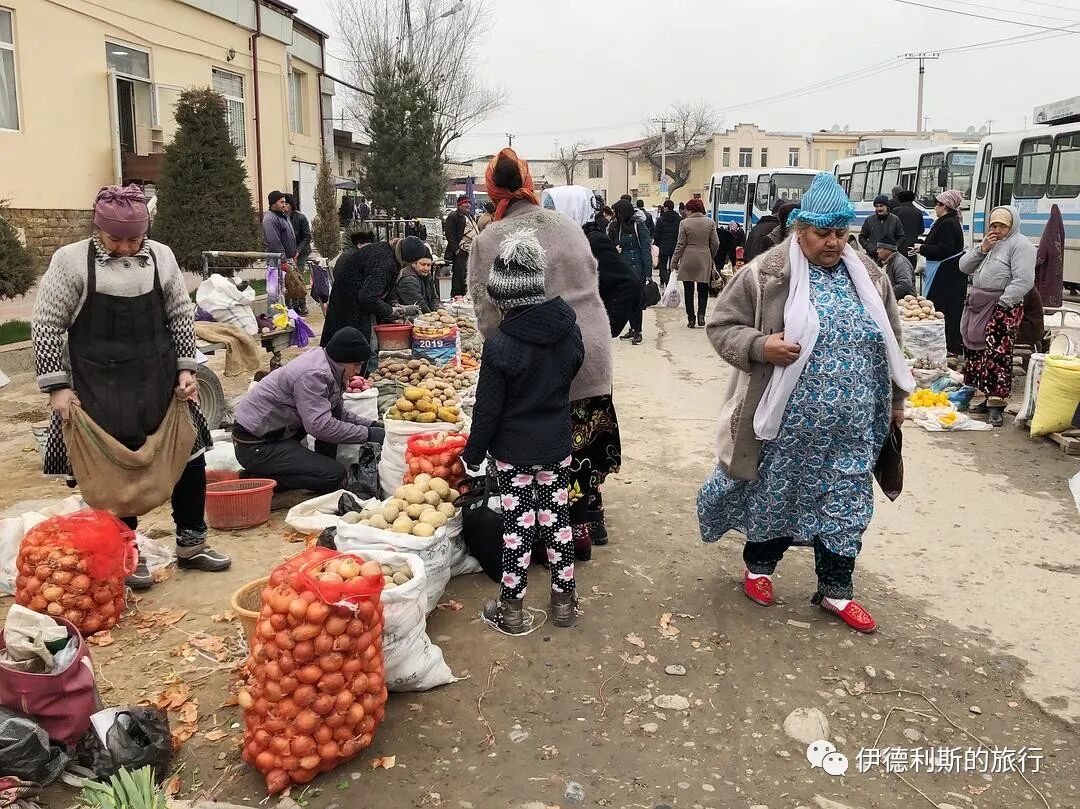
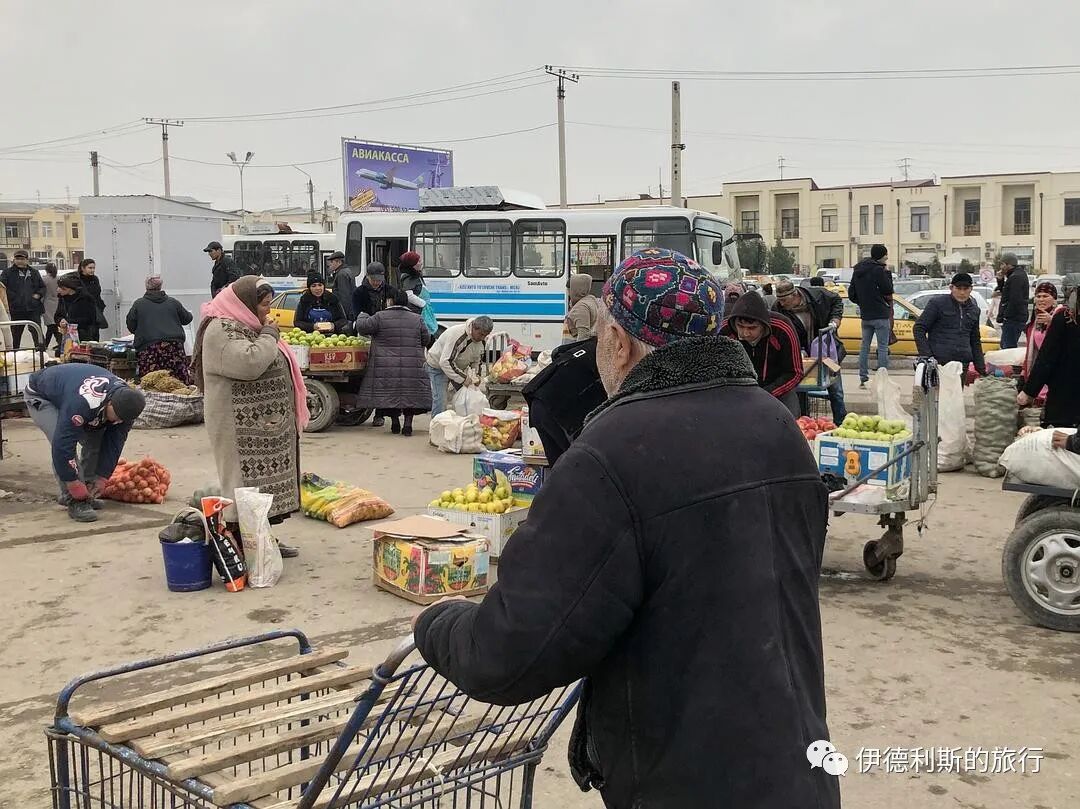
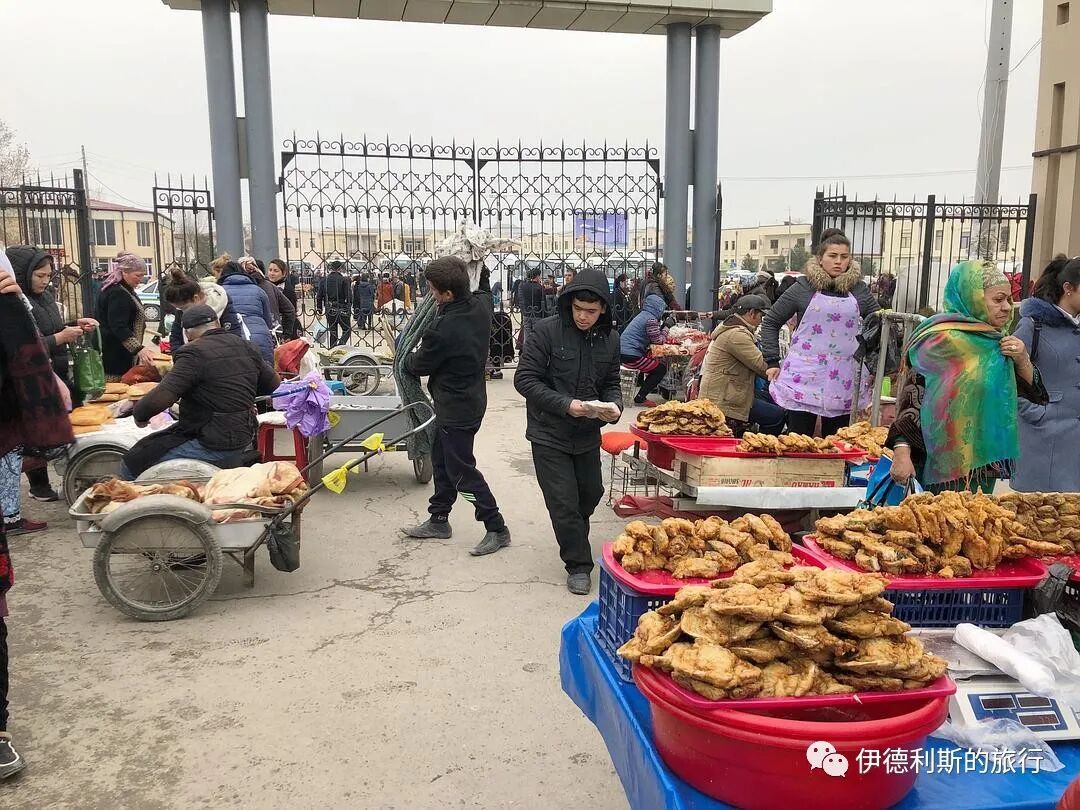
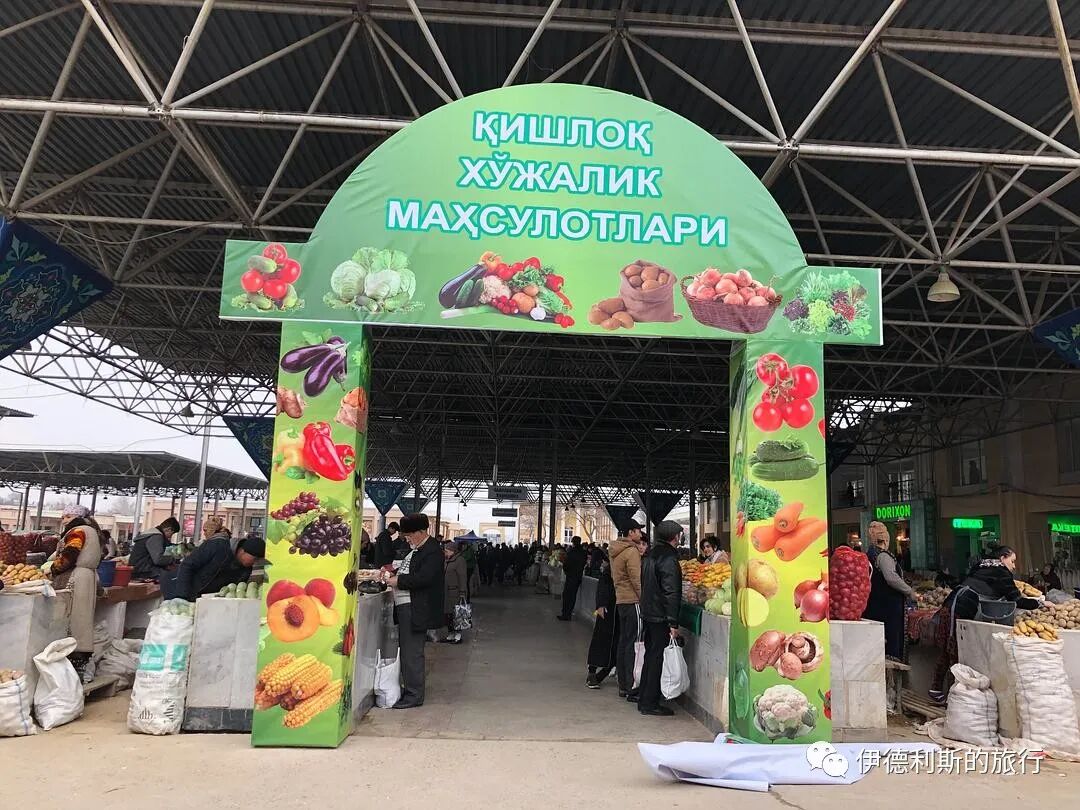
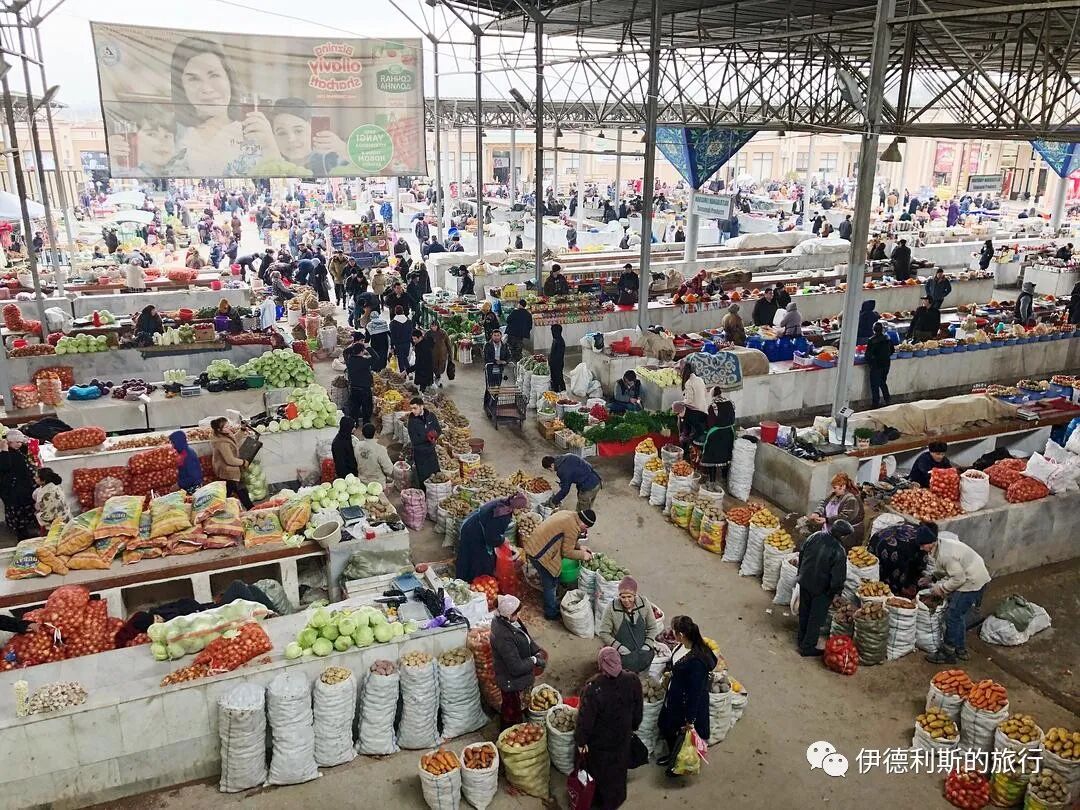
The most common snack at the bazaar is the baked bun (samsa). Samarkand's baked buns have flaky crusts, which makes them different from the ones in Xinjiang.
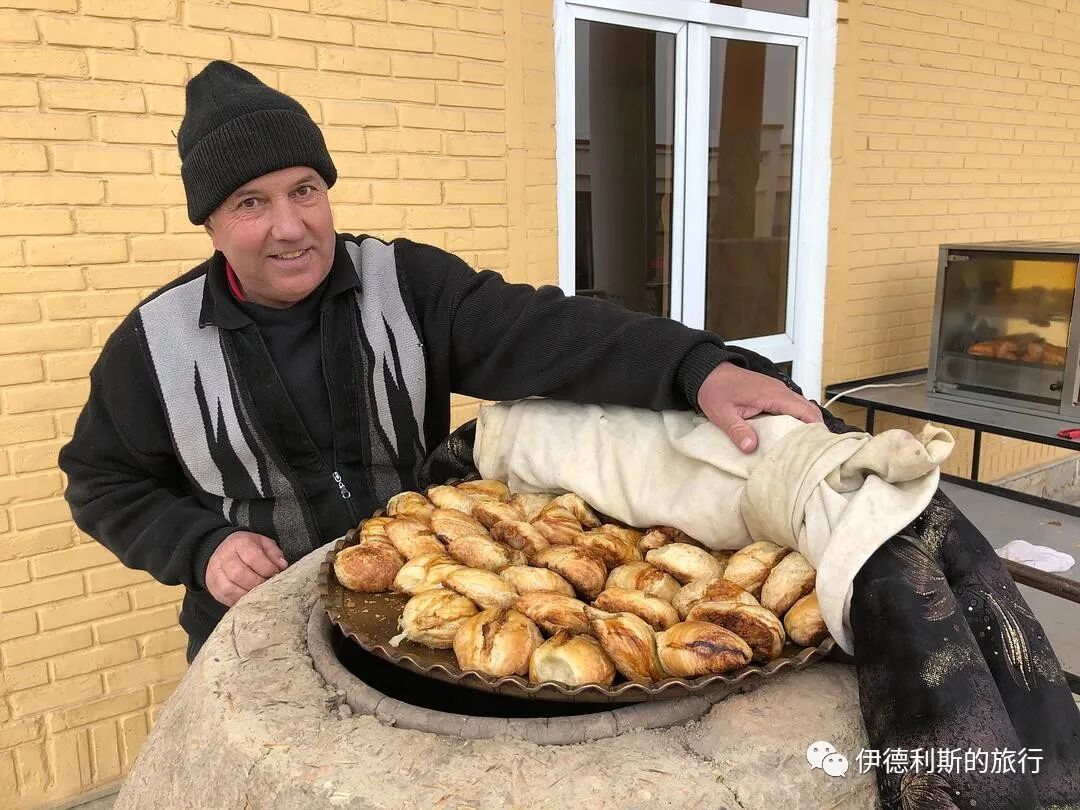
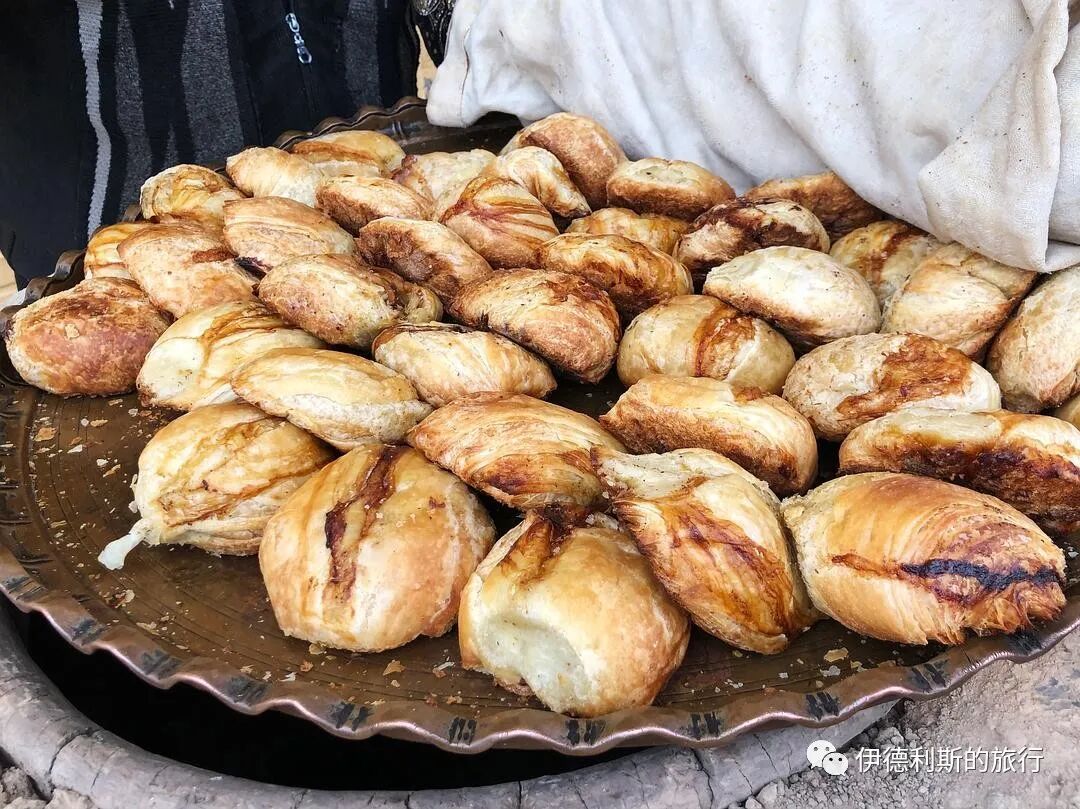
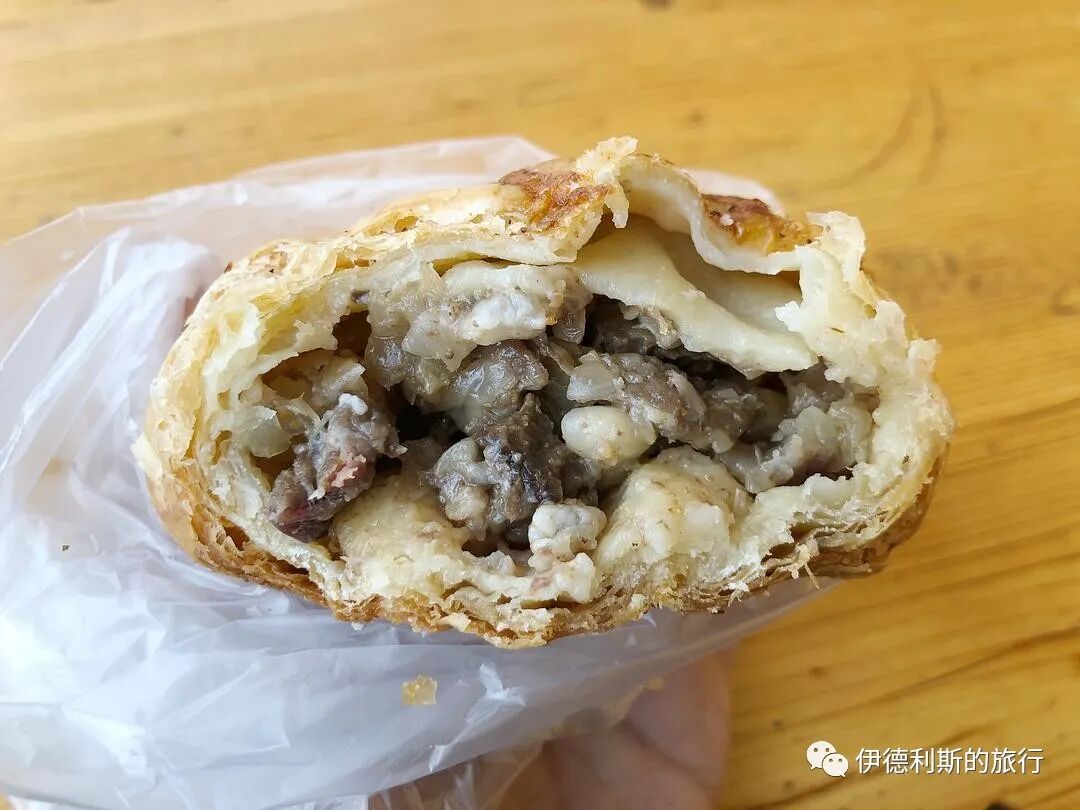
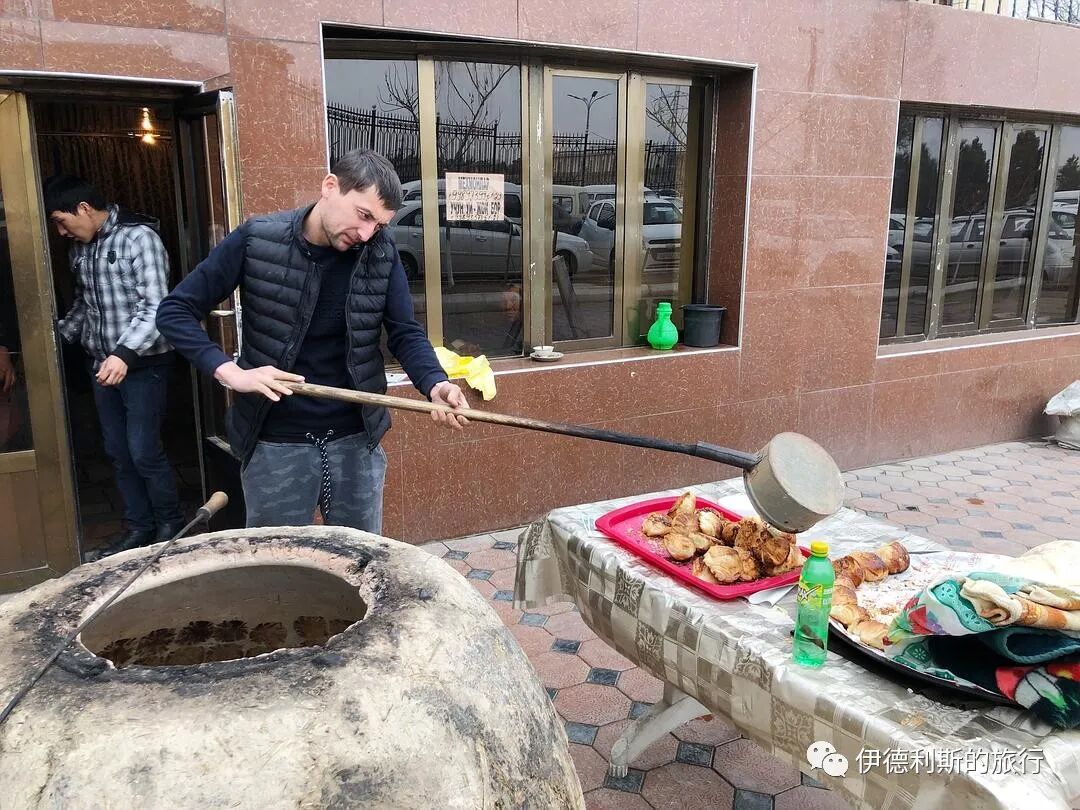
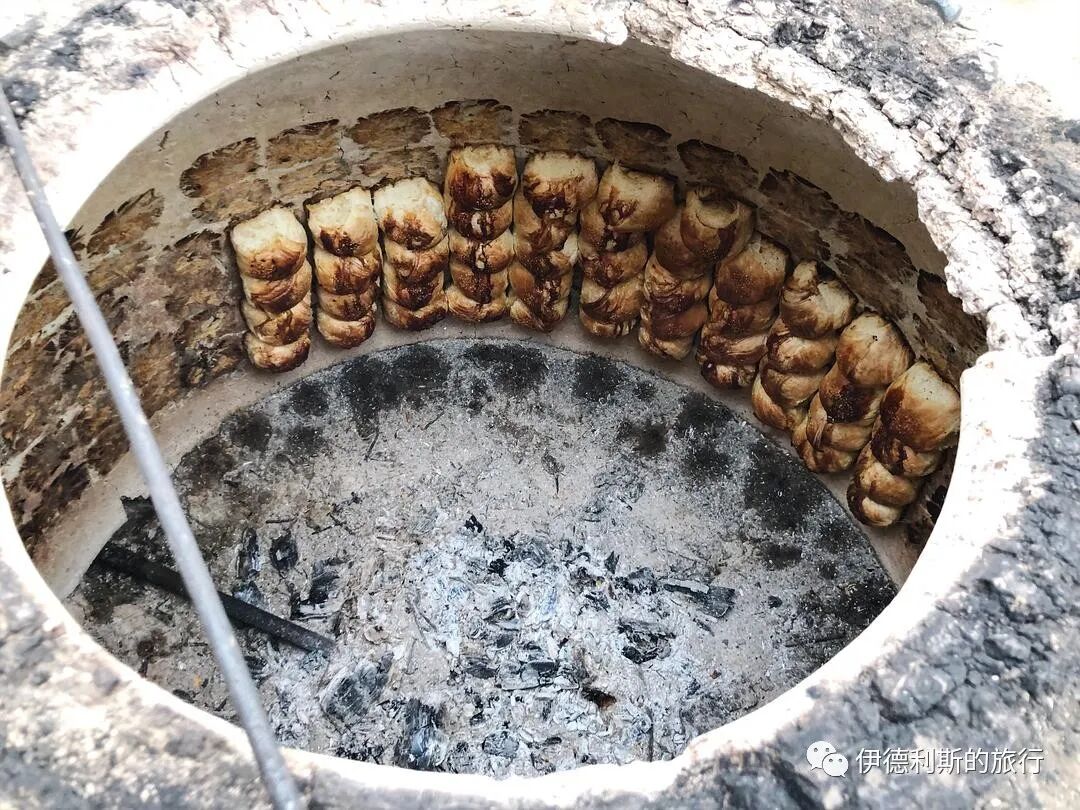
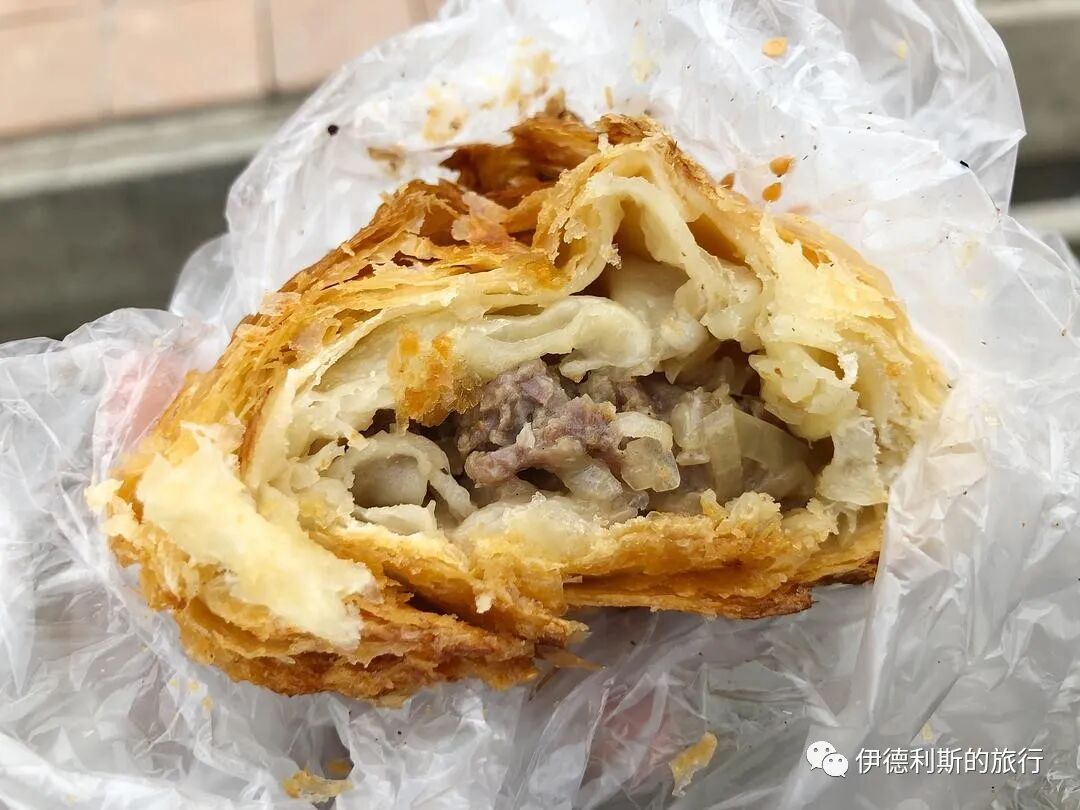
There are far fewer fruits and melons in winter than in summer, but you can still drink pomegranate juice.
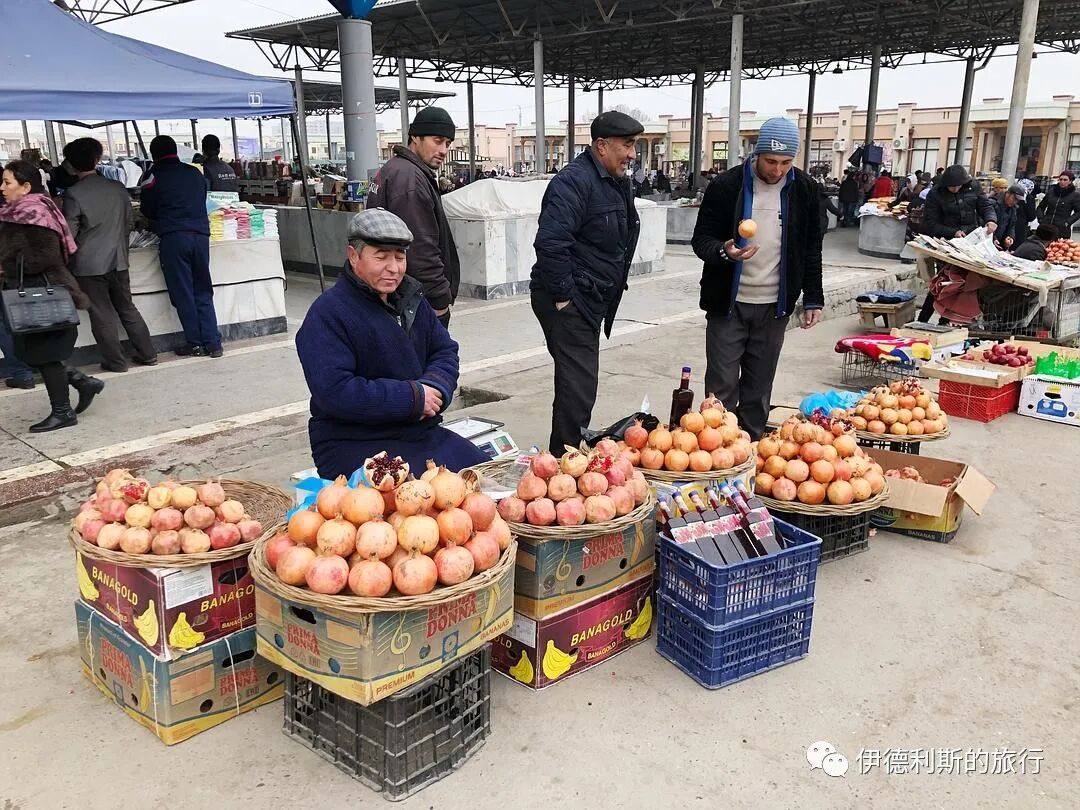
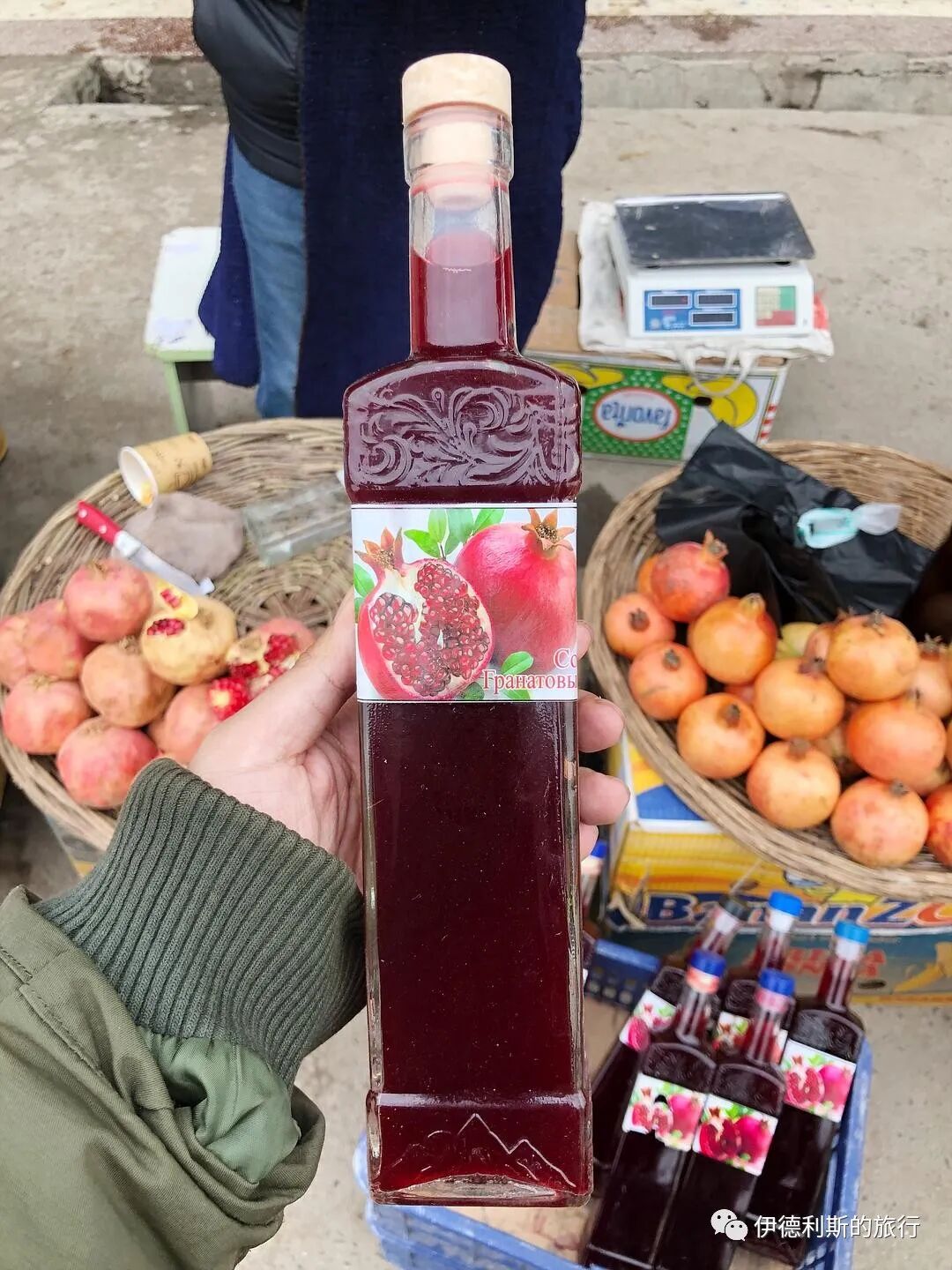
A Central Asian fast food specialty is shaurma, which is rotisserie meat served with yogurt.
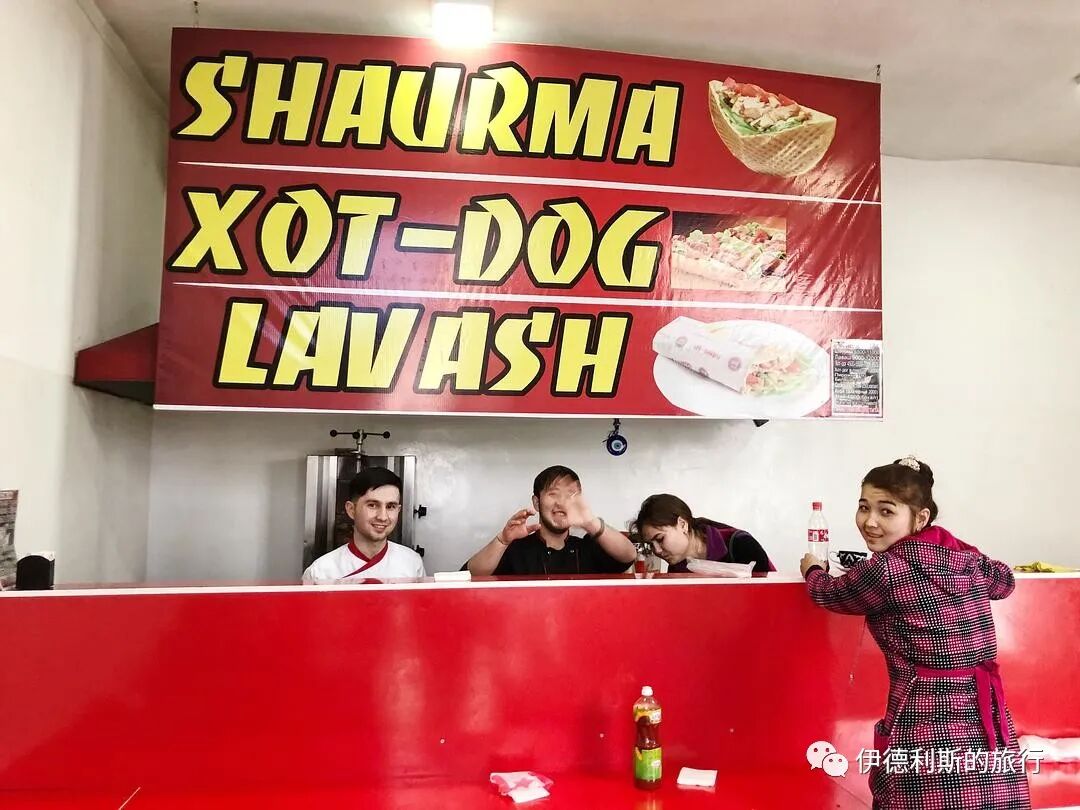
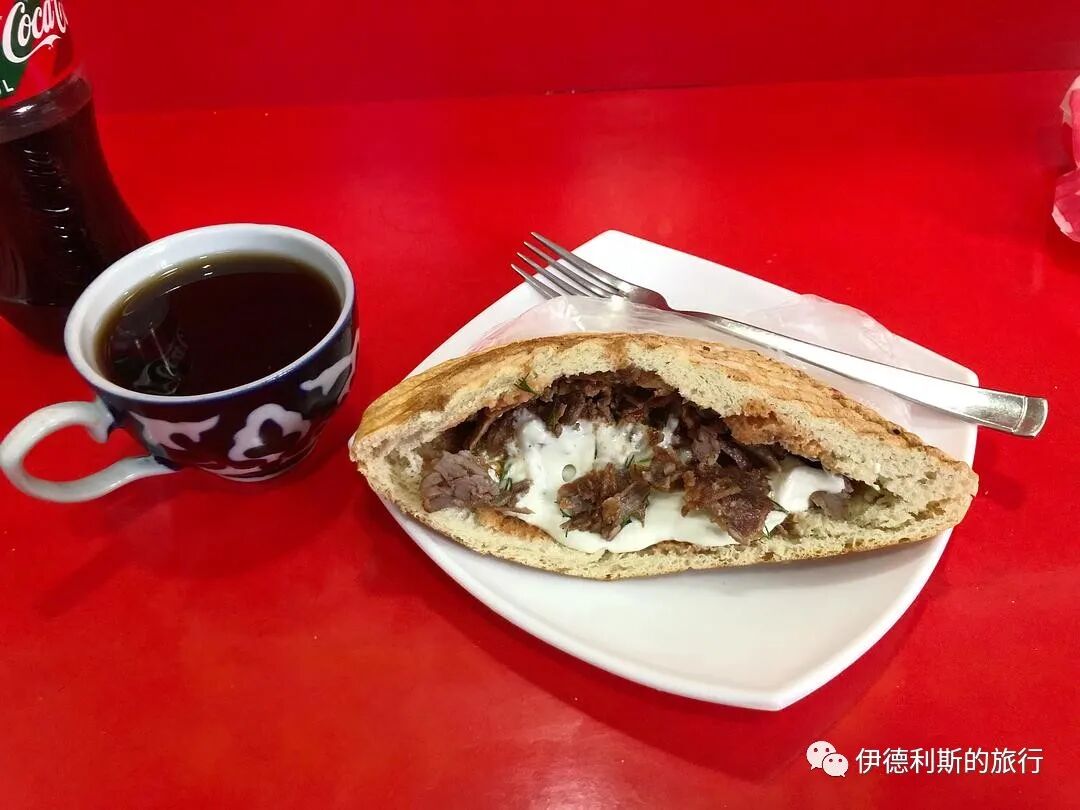
Restaurants
I ate pilaf (zhua fan) and wheat porridge (halisa) at a restaurant next to the Bibi-Khanym Mosque. Halisa is made by simmering cracked wheat and meat for a long time, and it is often eaten during Eid al-Adha. Halisa is very popular across the Middle East, Central Asia, and South Asia, where it goes by different names like Keshkek, Hareesa, Halim, and Khichra.
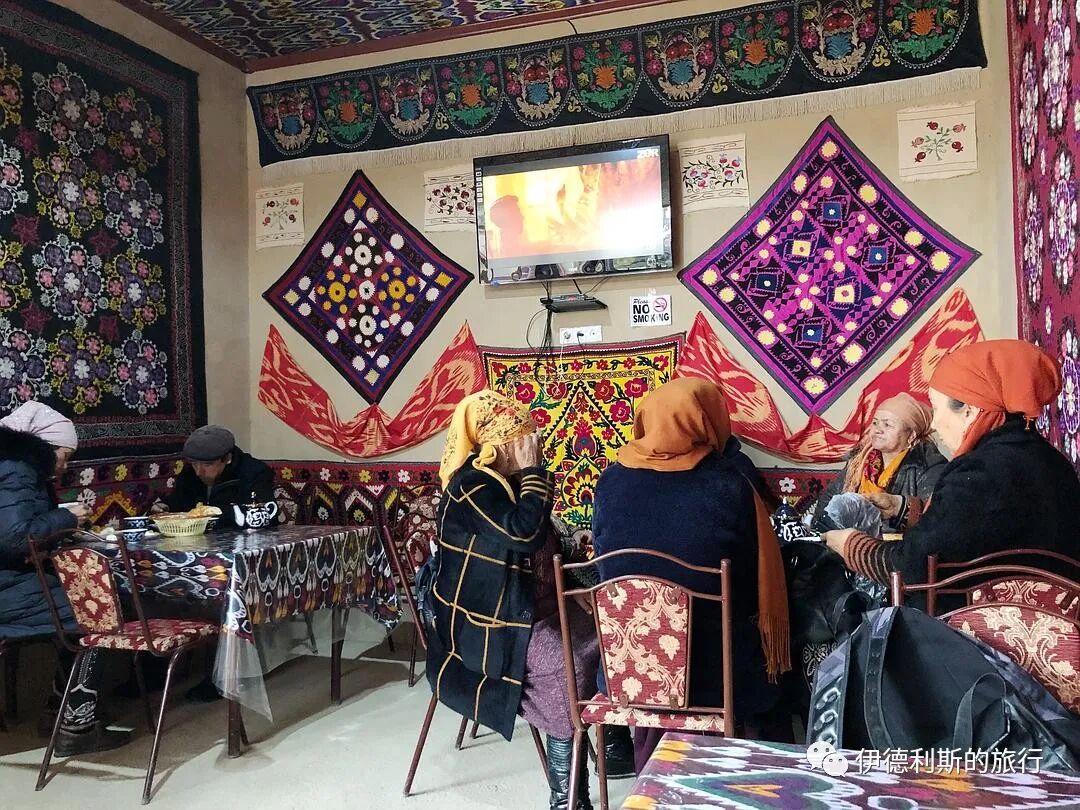
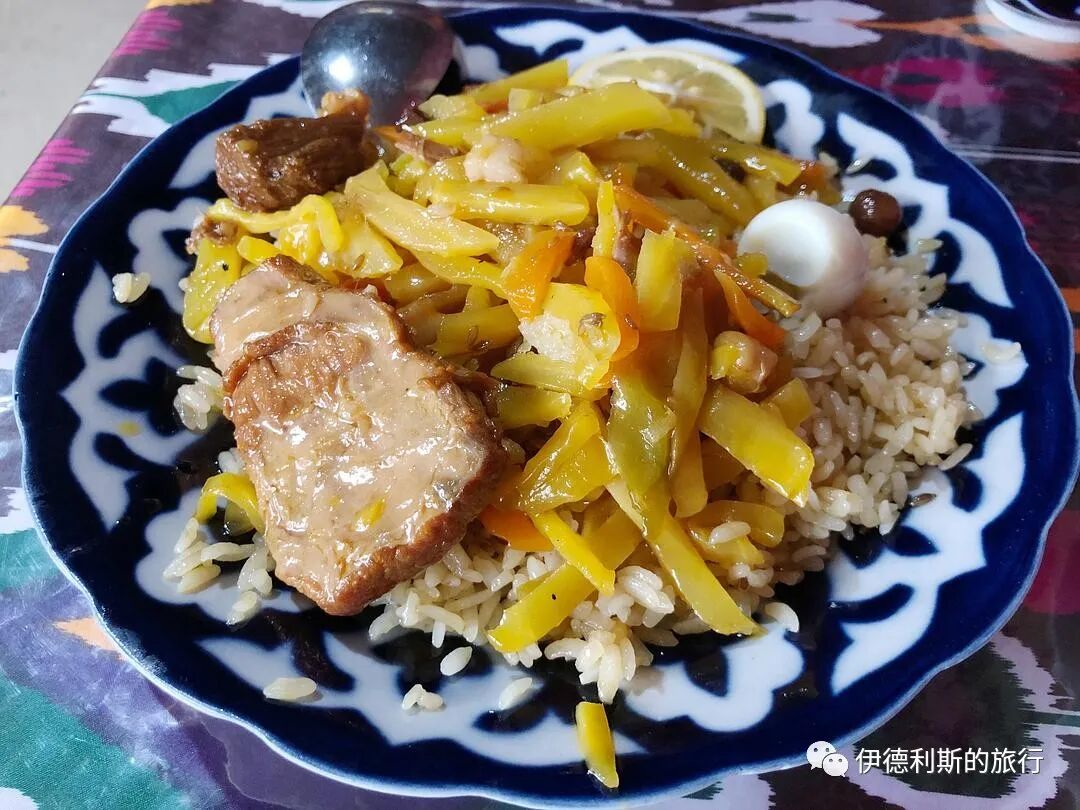
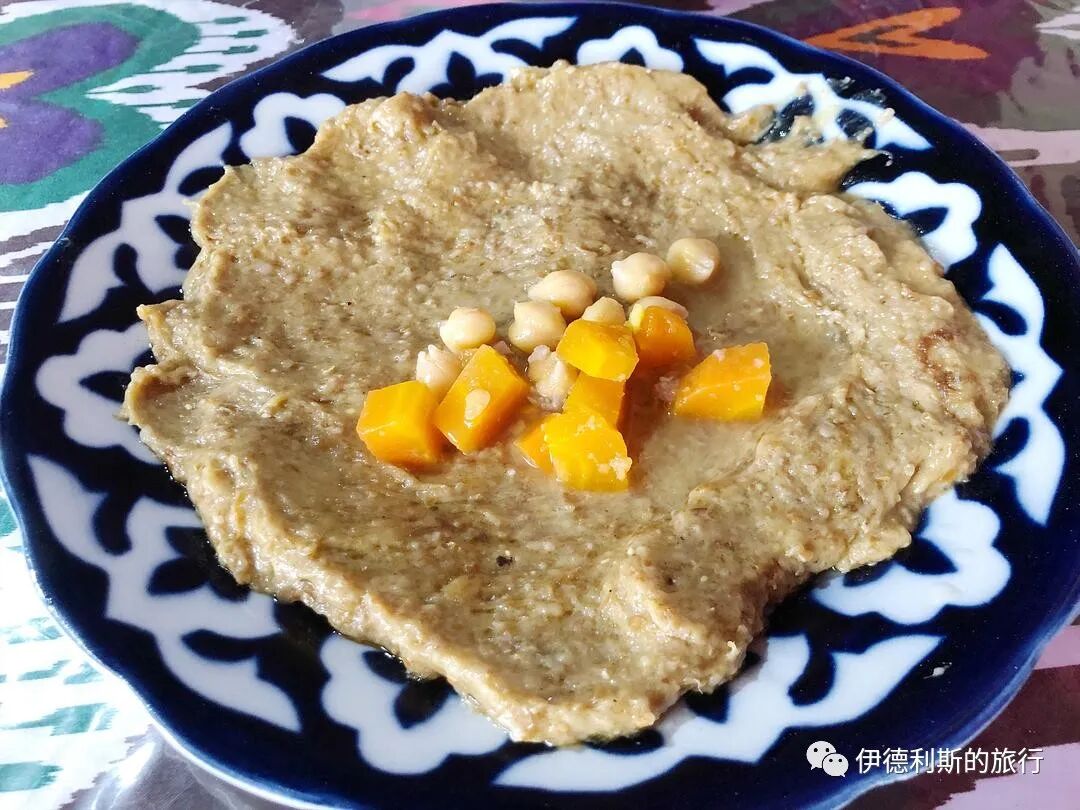
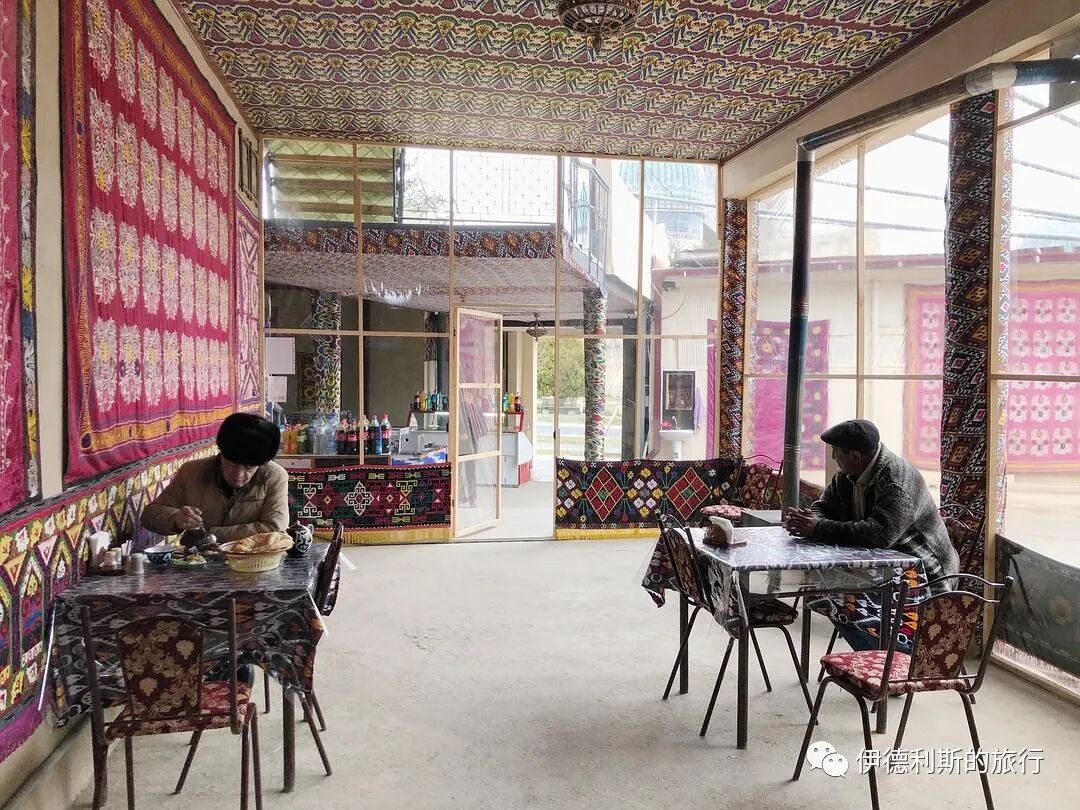
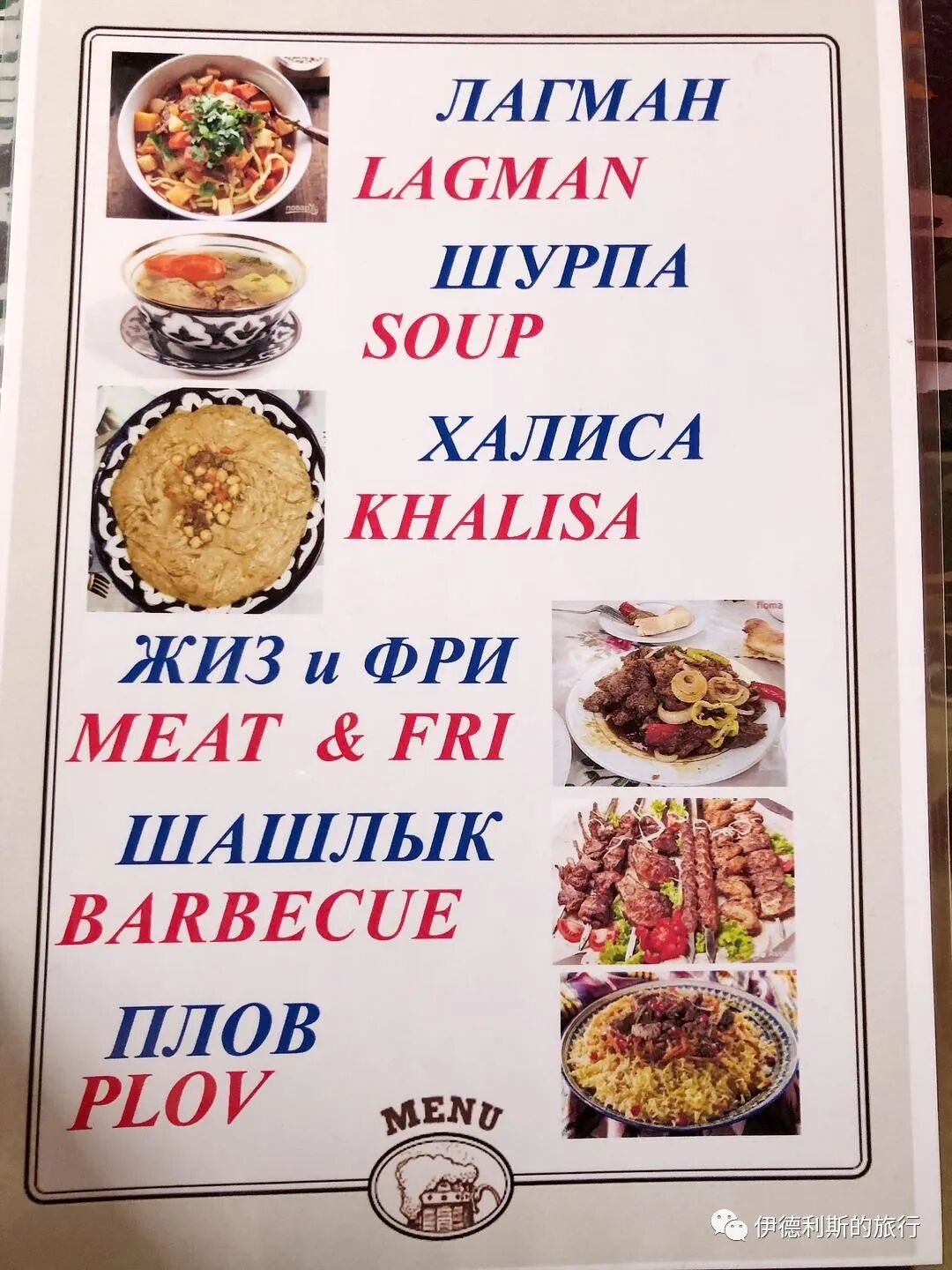
I had pilaf and steamed meat dumplings (baozi) at a restaurant near Registan Square; after a few days of traveling, I can now read the menu perfectly.
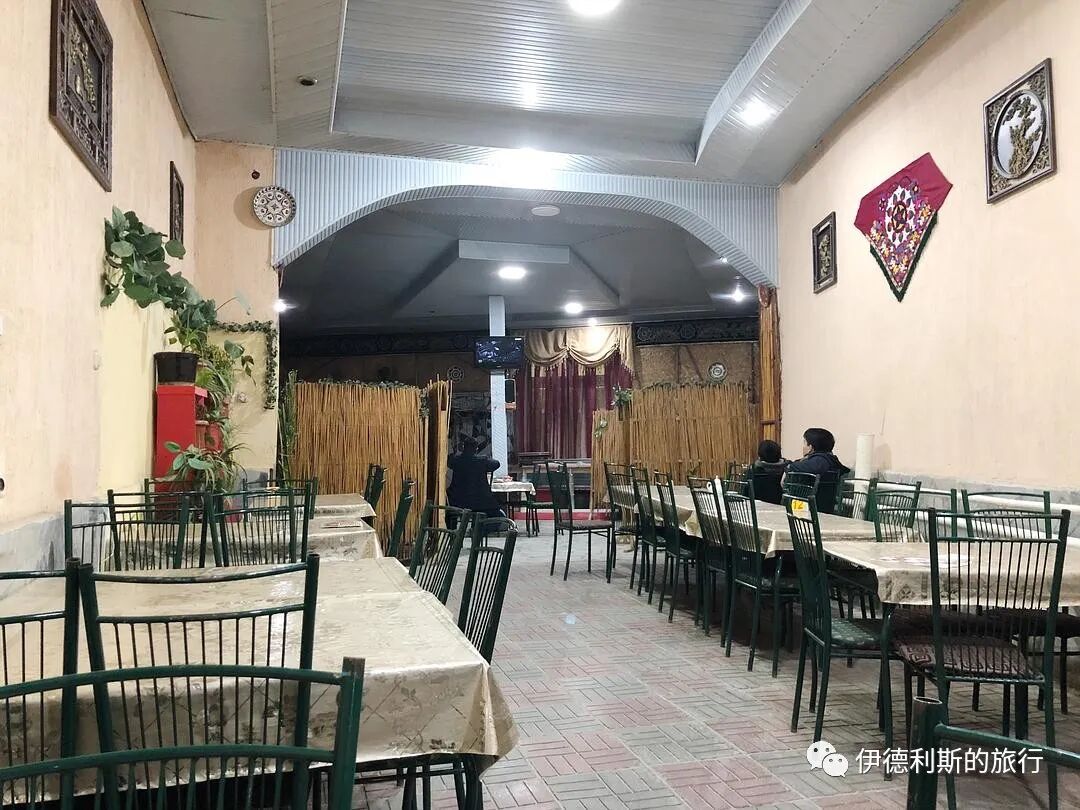
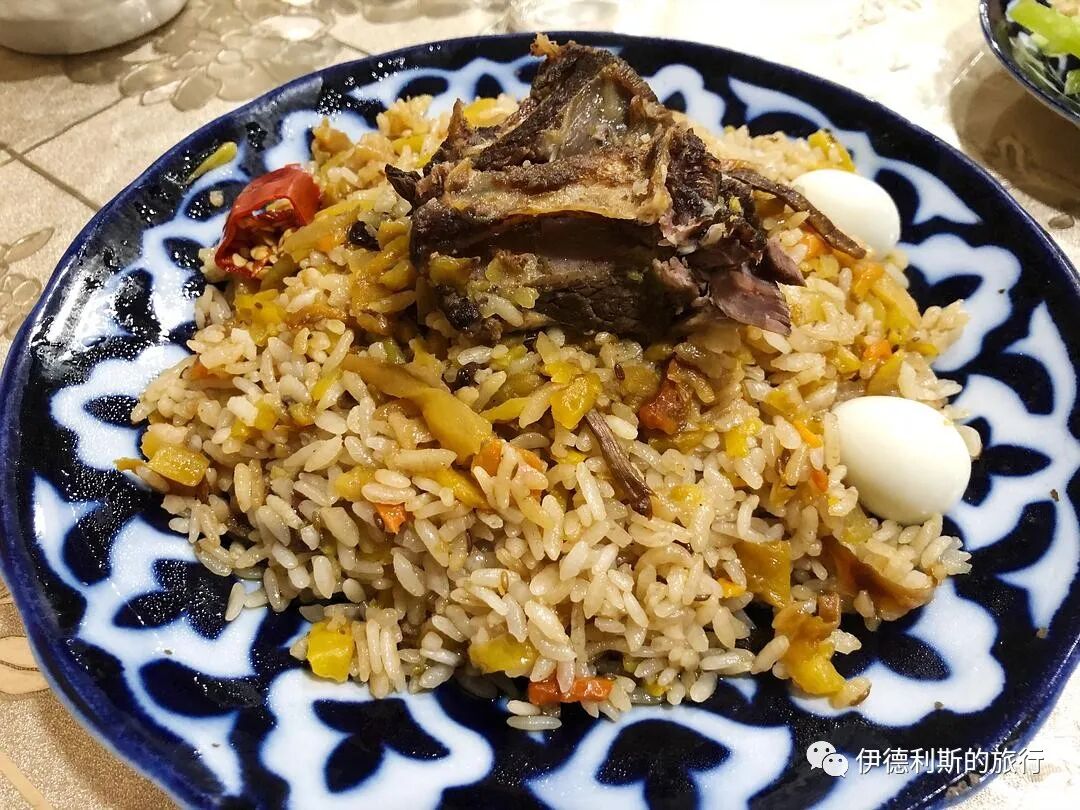
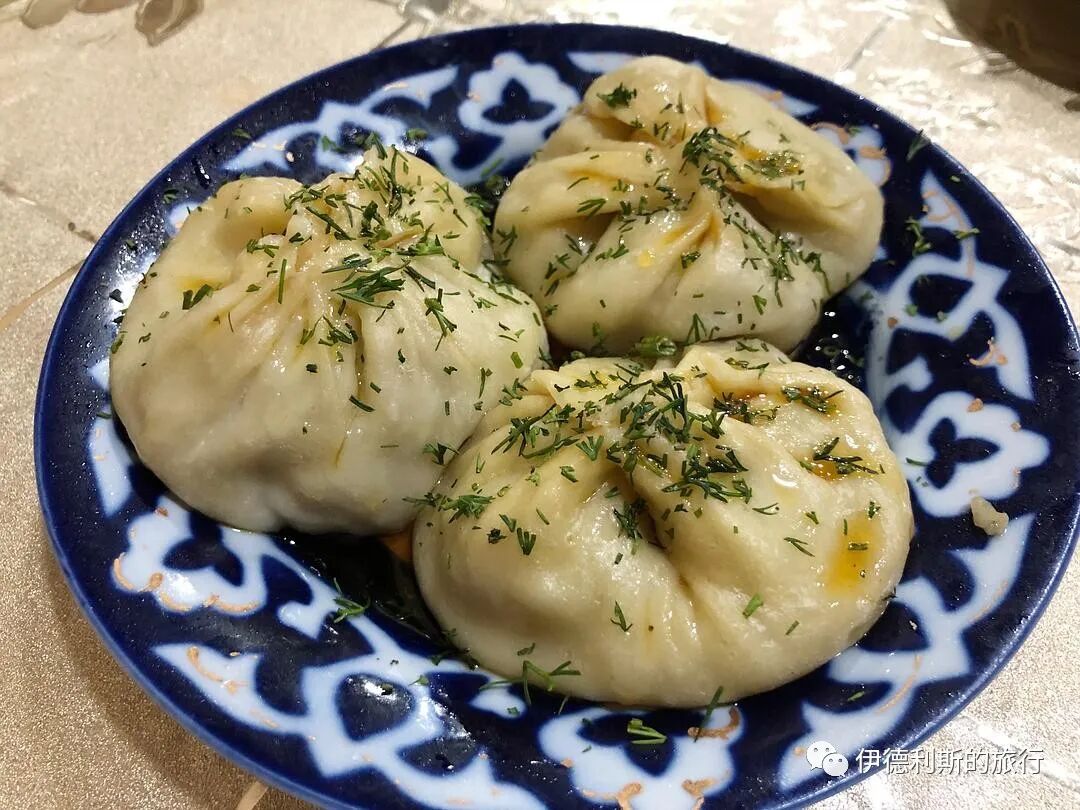
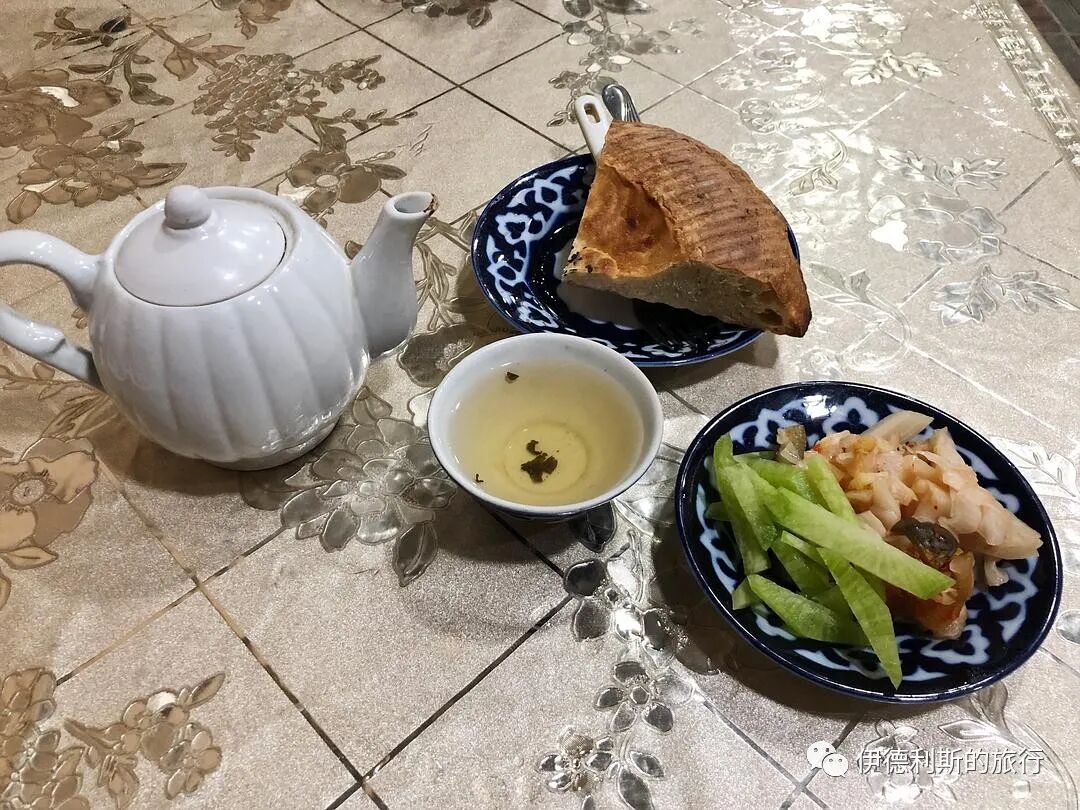
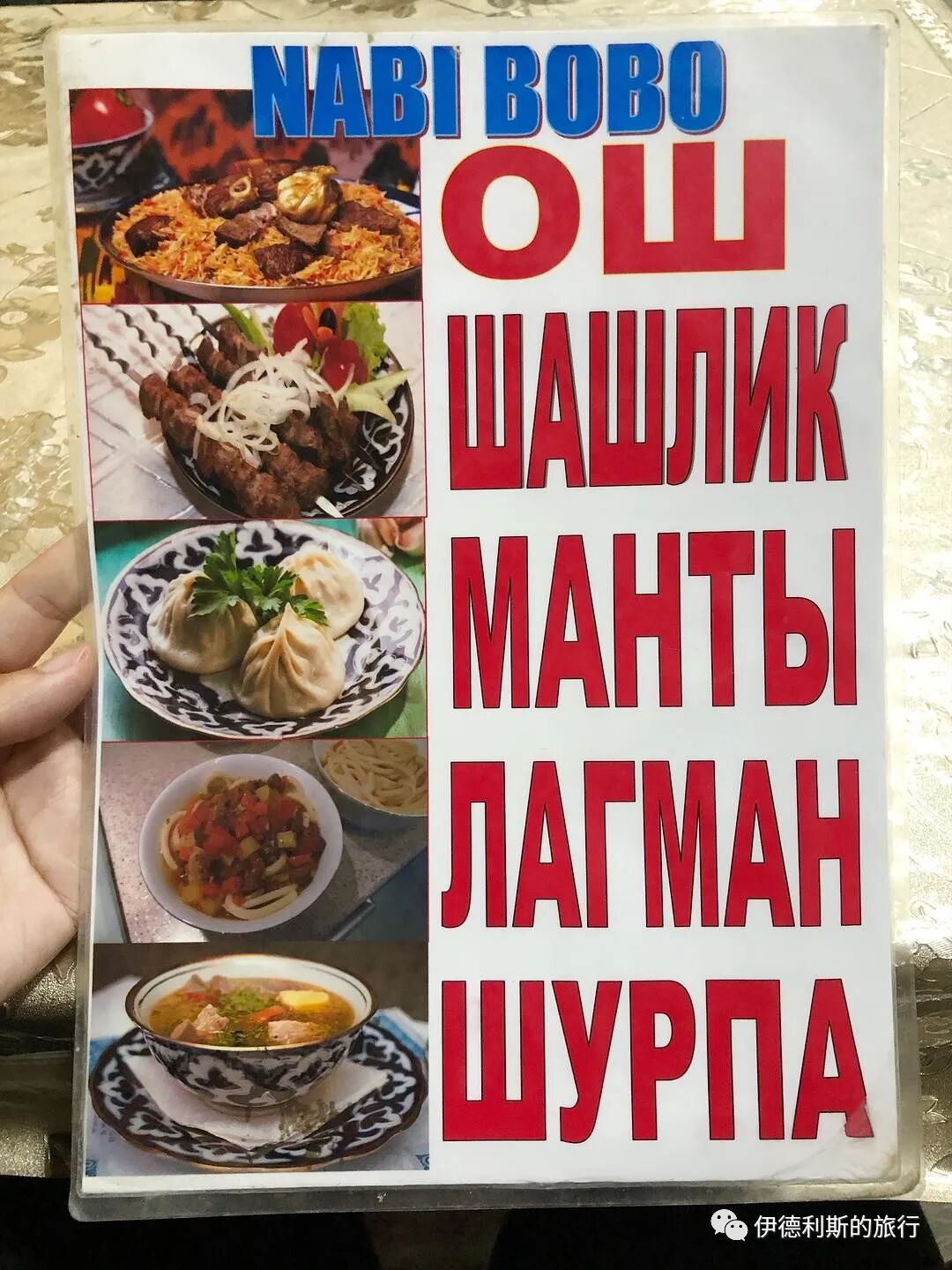
Samarkand Restaurant is a classic banquet hall in Samarkand. We ate lamb shoulder, horse meat, mushroom soup, and various types of flatbread (nang), and we even caught the banquet where the groom's family welcomed the bride after a lively wedding.
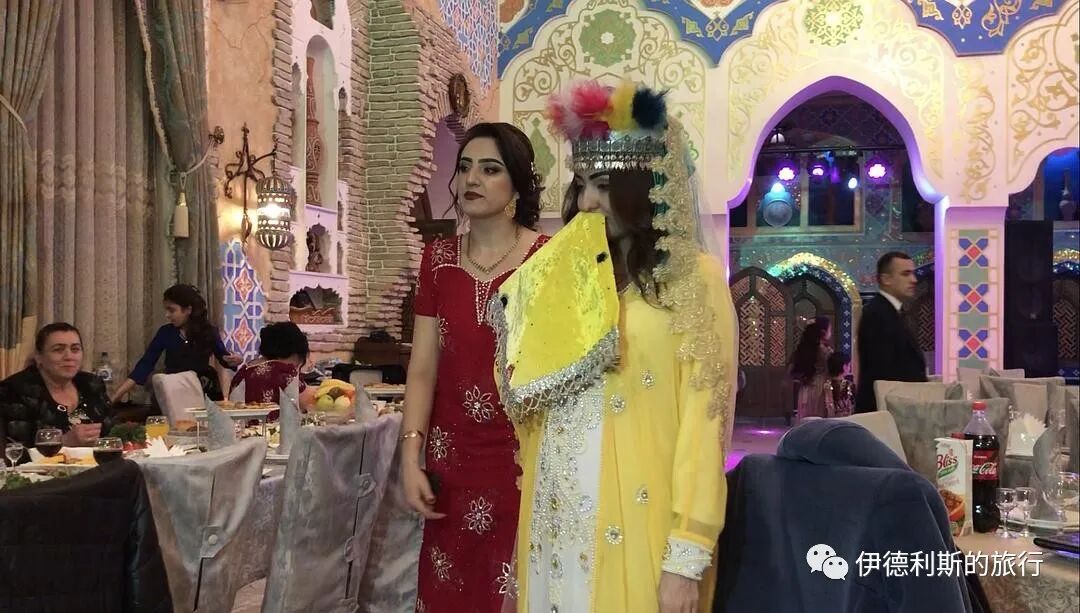
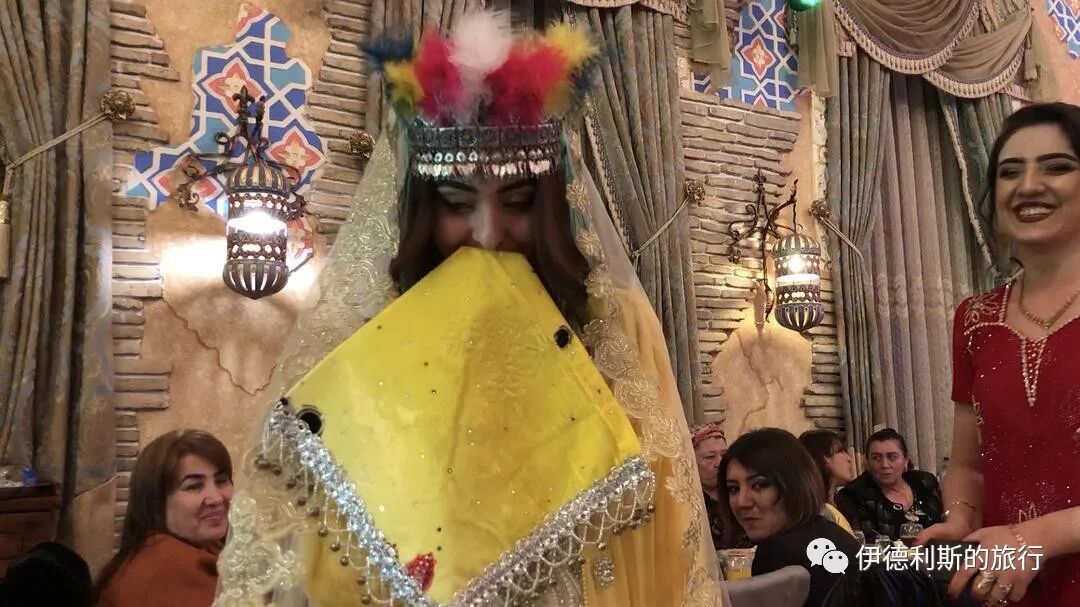
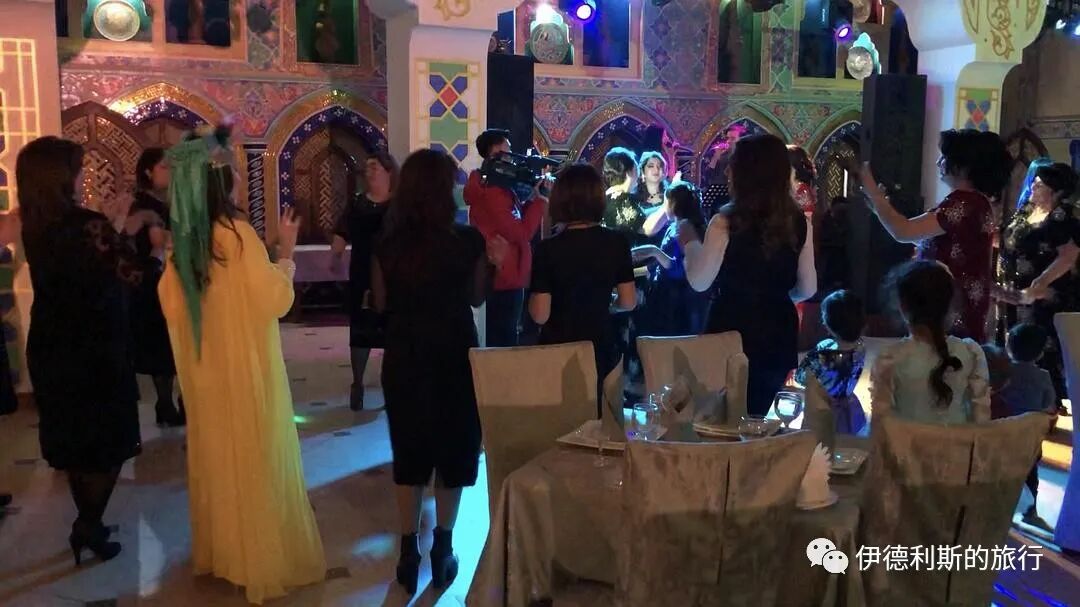
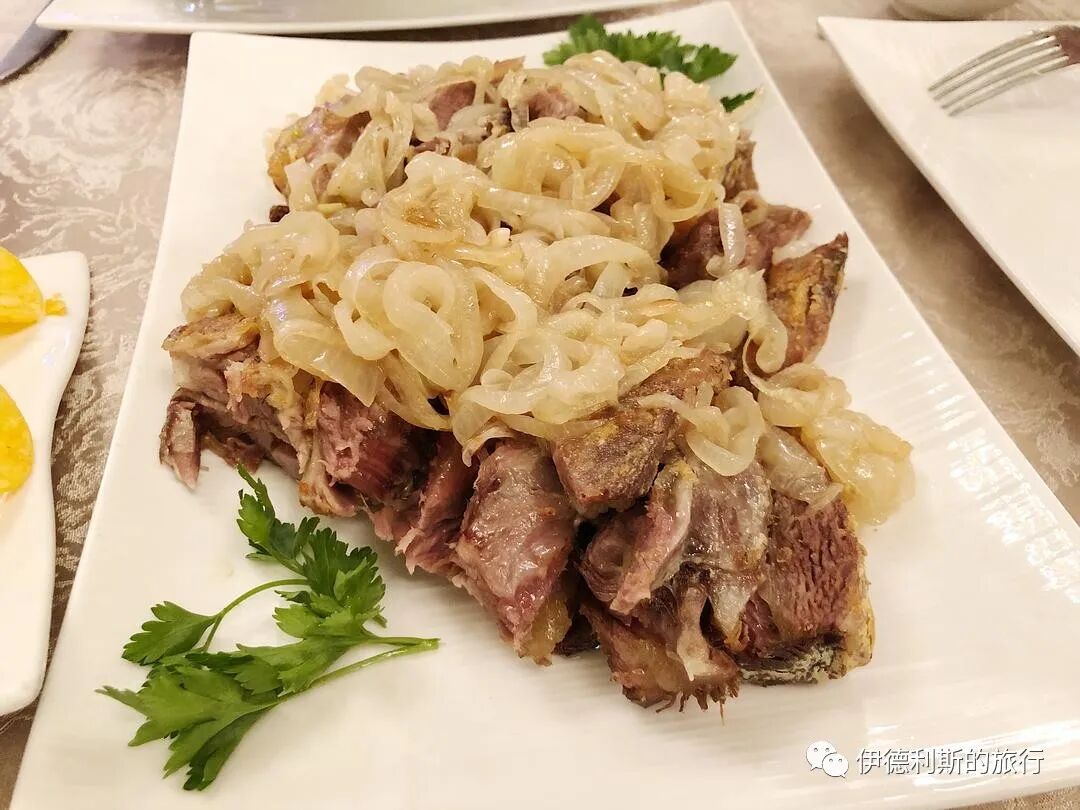
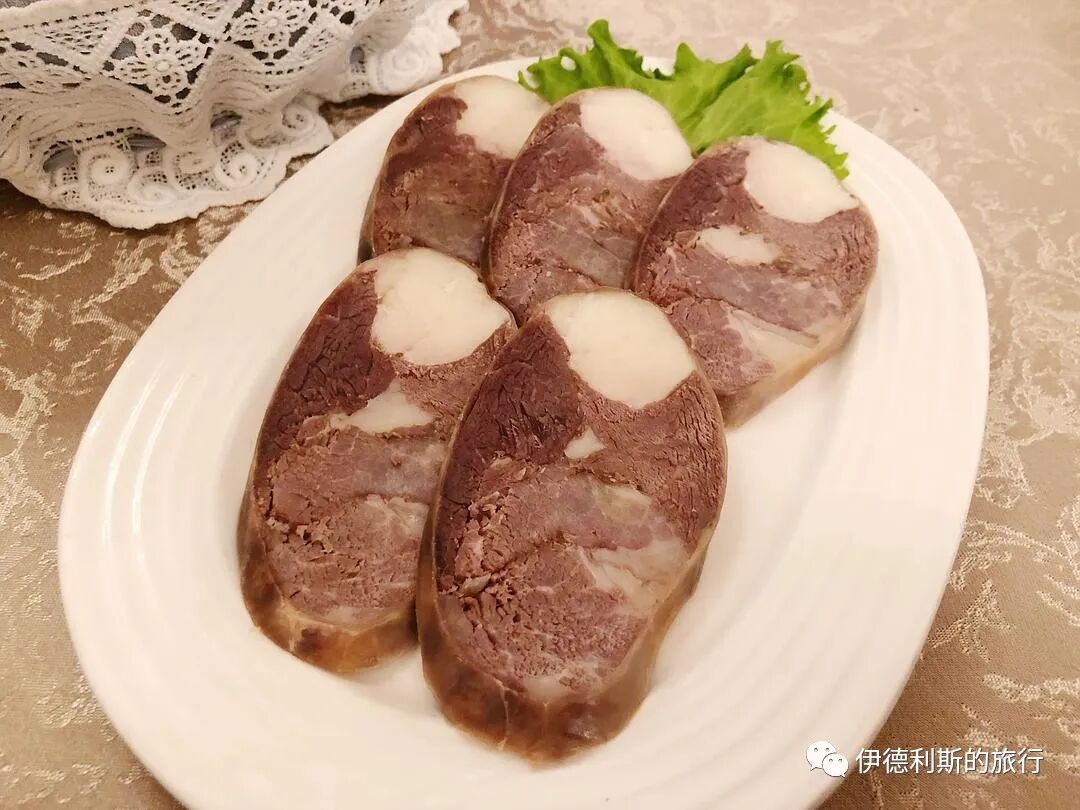
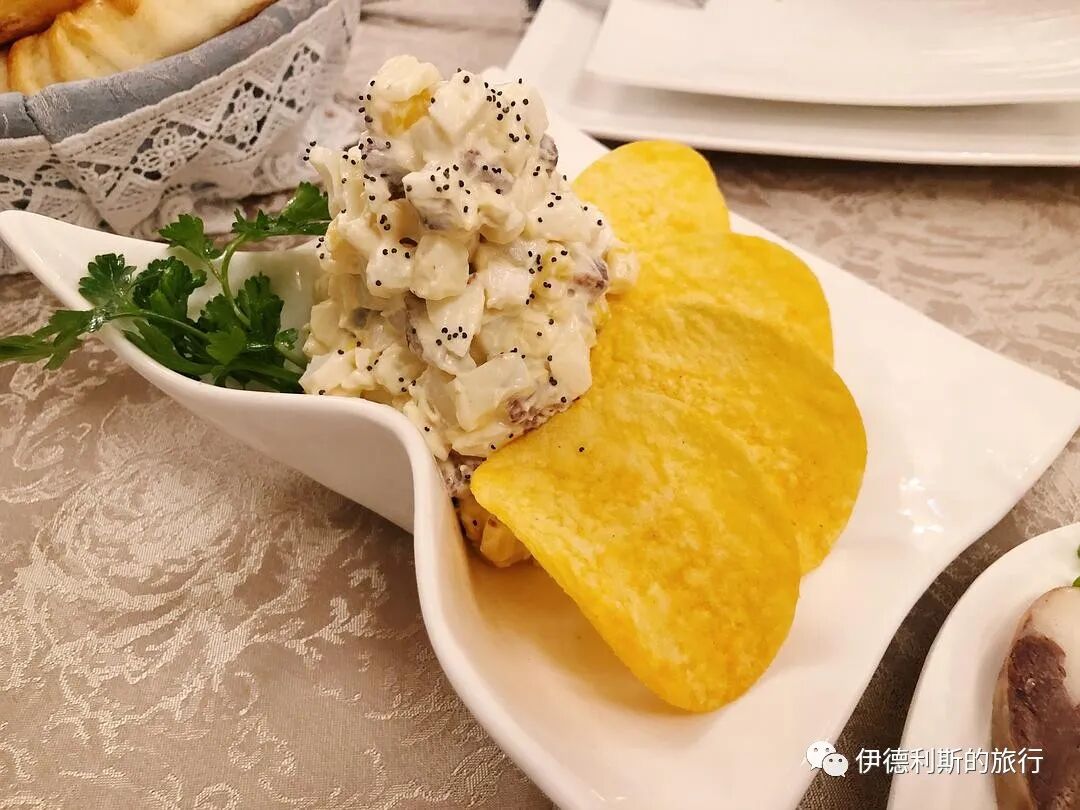
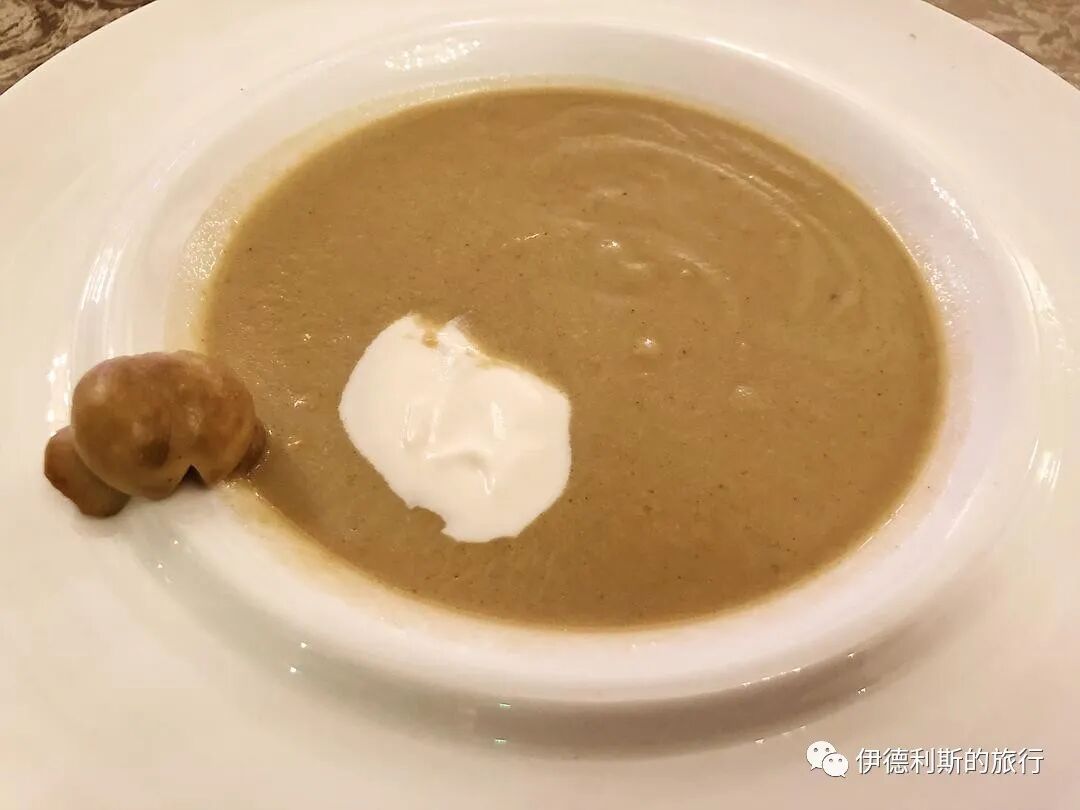
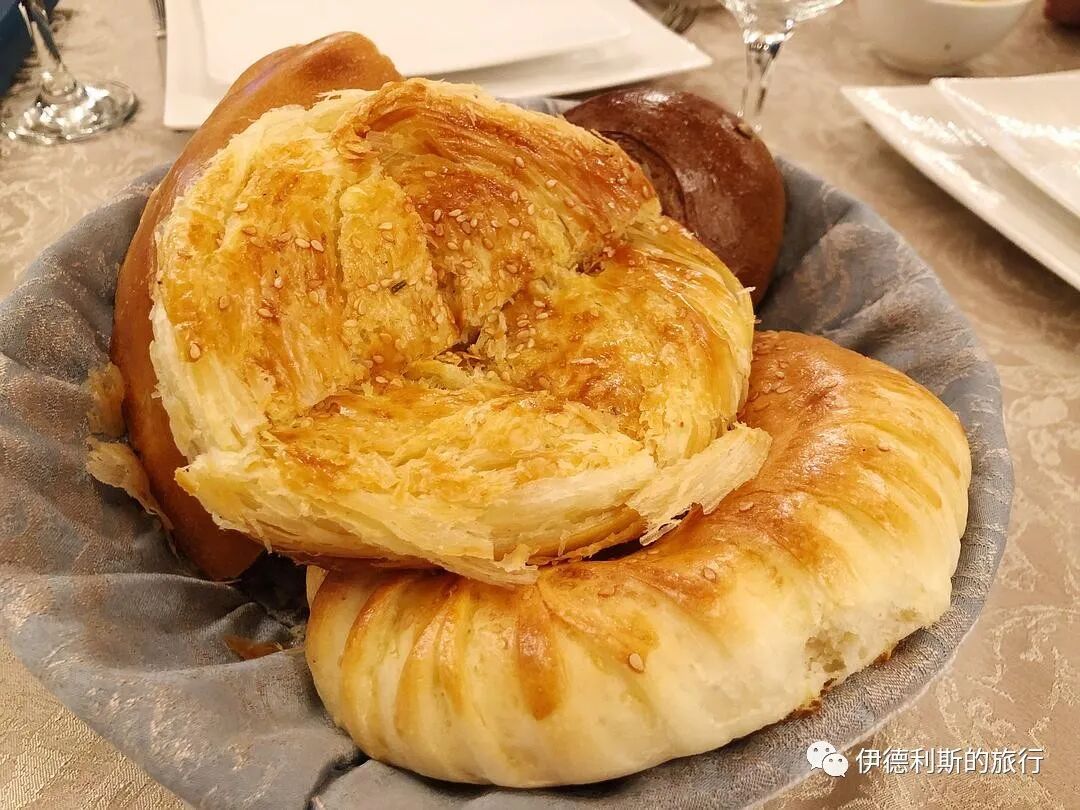
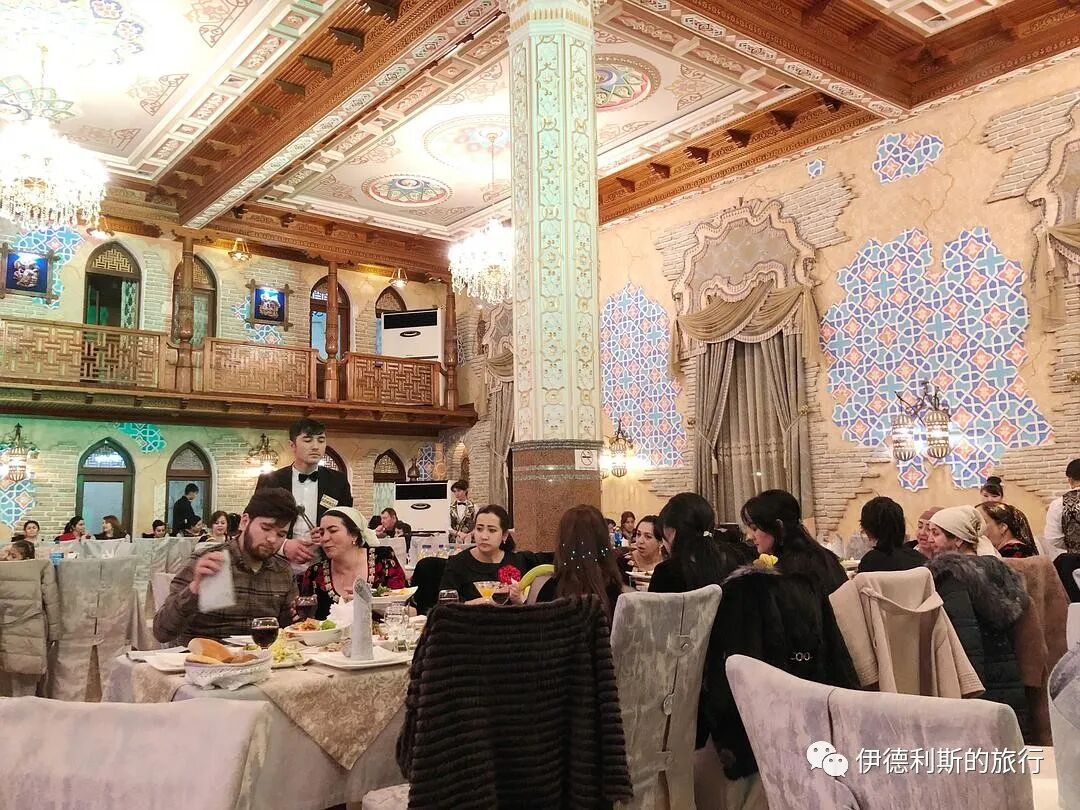
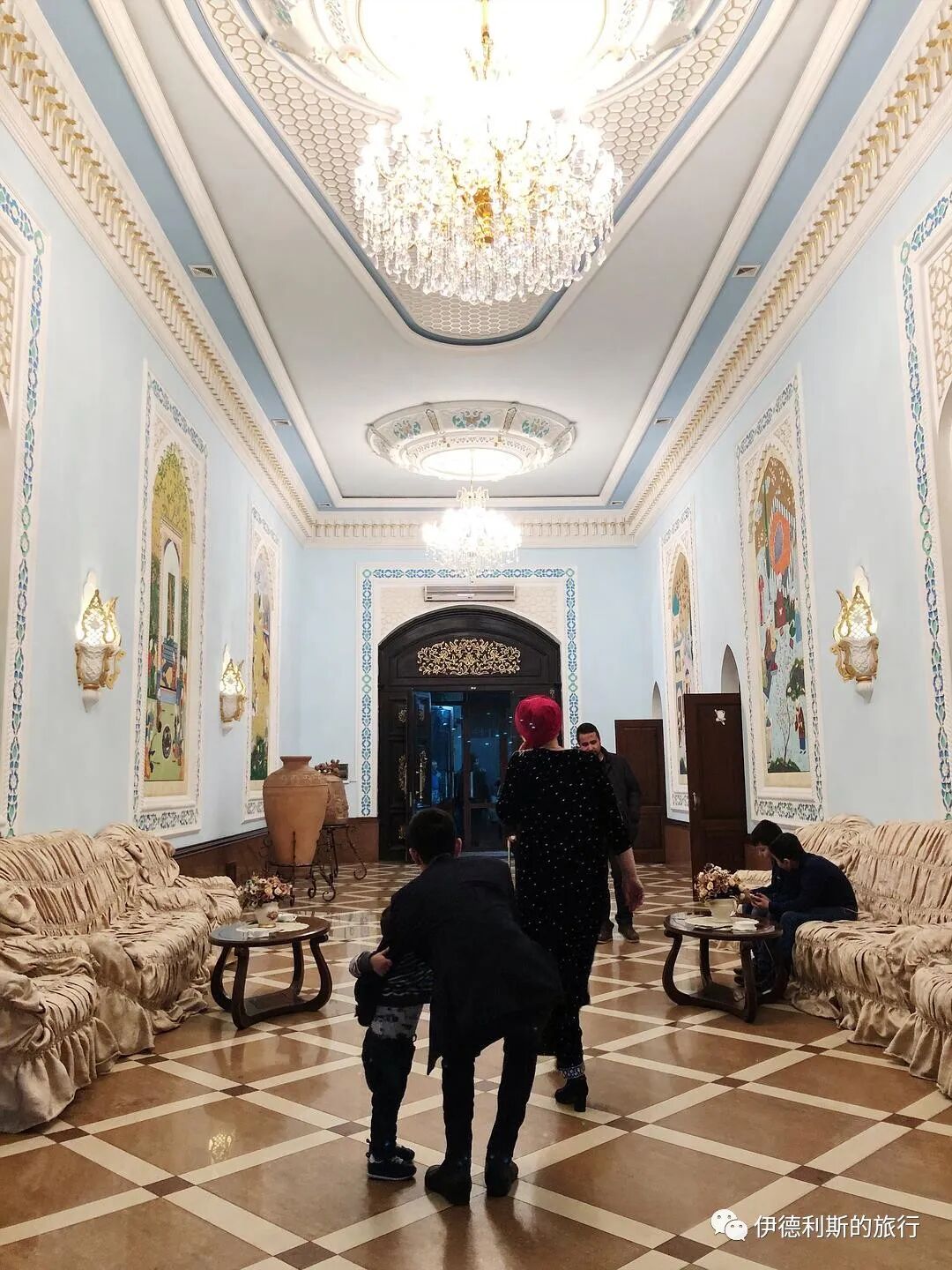
Sheepskin calligraphy.
There are traditional music performances inside Registan in the summer, but unfortunately, there were none when we visited in the winter. However, we met a retired teacher writing calligraphy on parchment. I asked him to write my name and Allah is Kind (Yinshan Allah) for me.
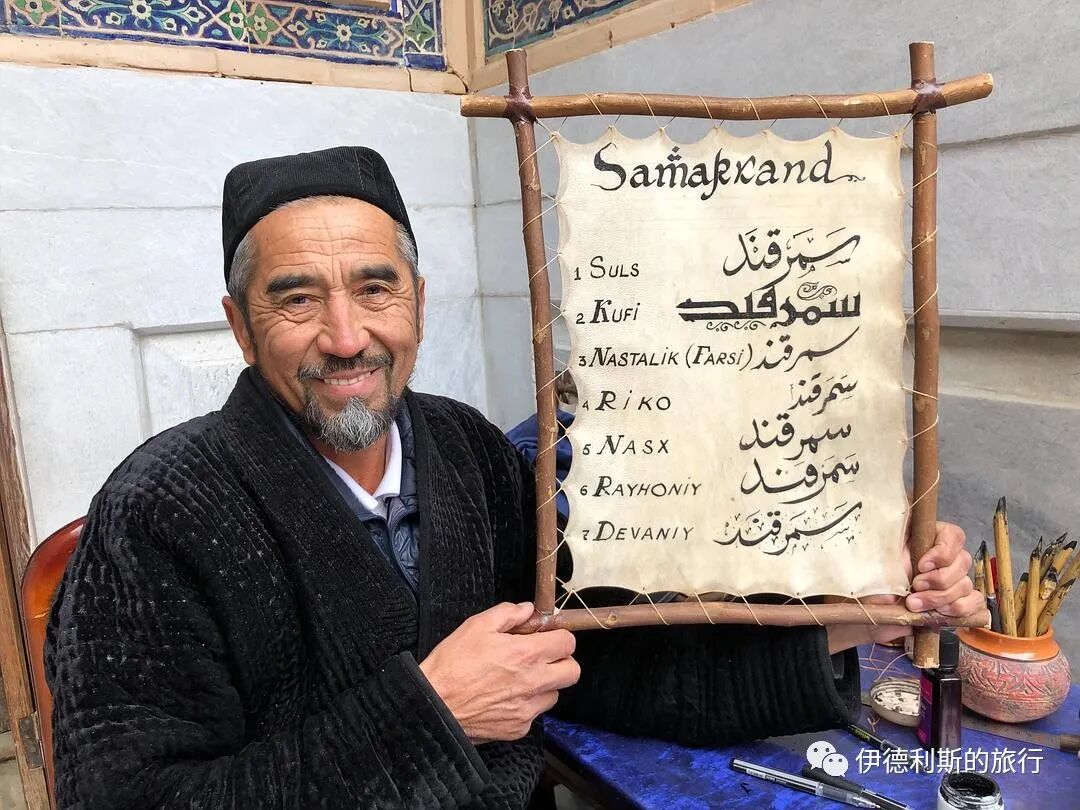
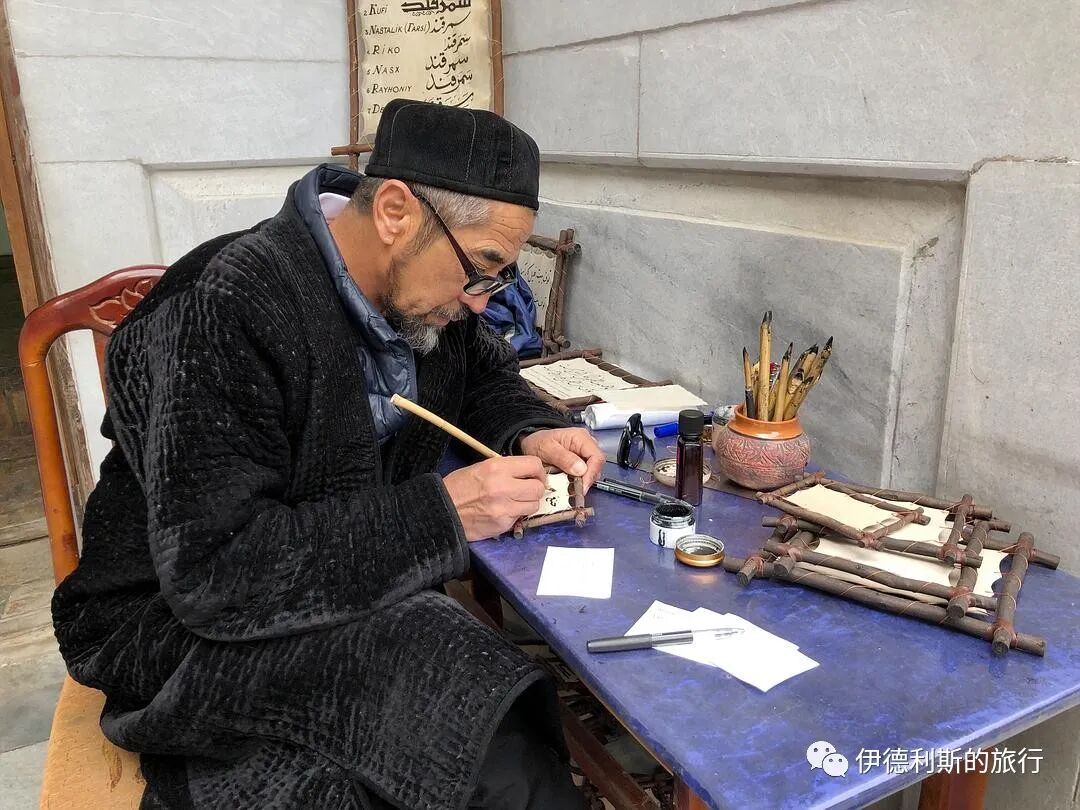
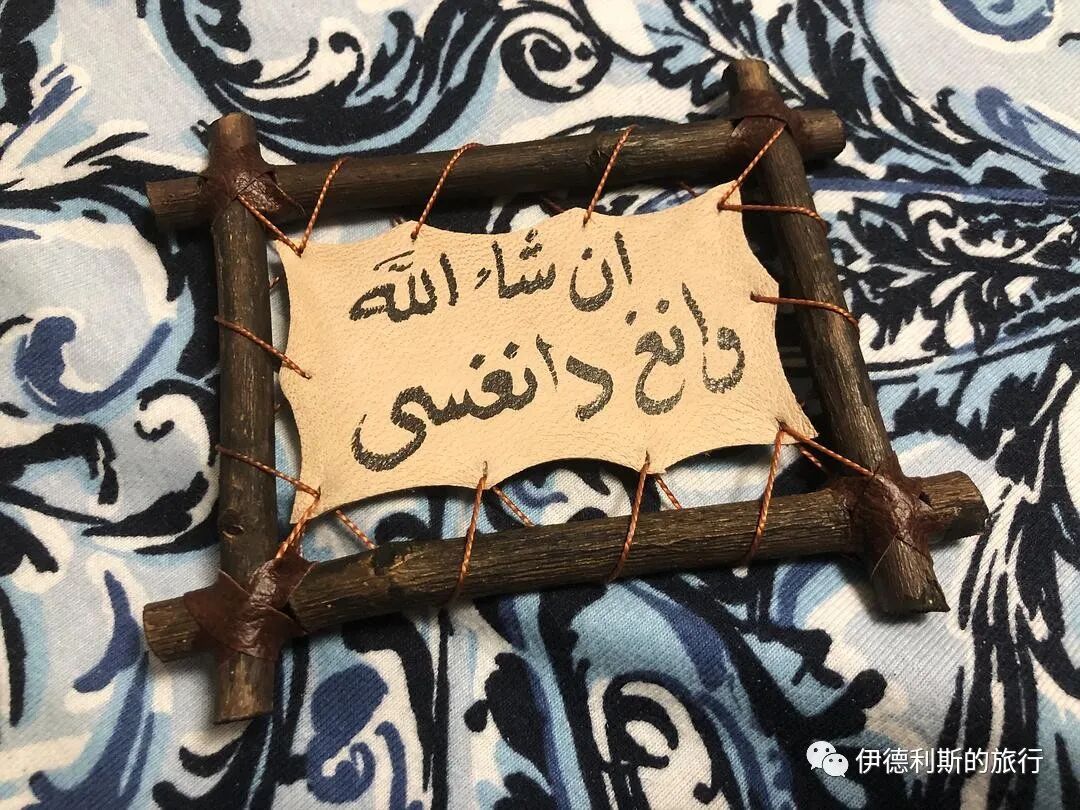
Buying a hat
The street between Registan Square and Bibi-Khanym Mosque is full of souvenir shops. I bought a hat with a pomegranate pattern at one shop, and the sisters there even invited me to eat rice pilaf (zhua fan).
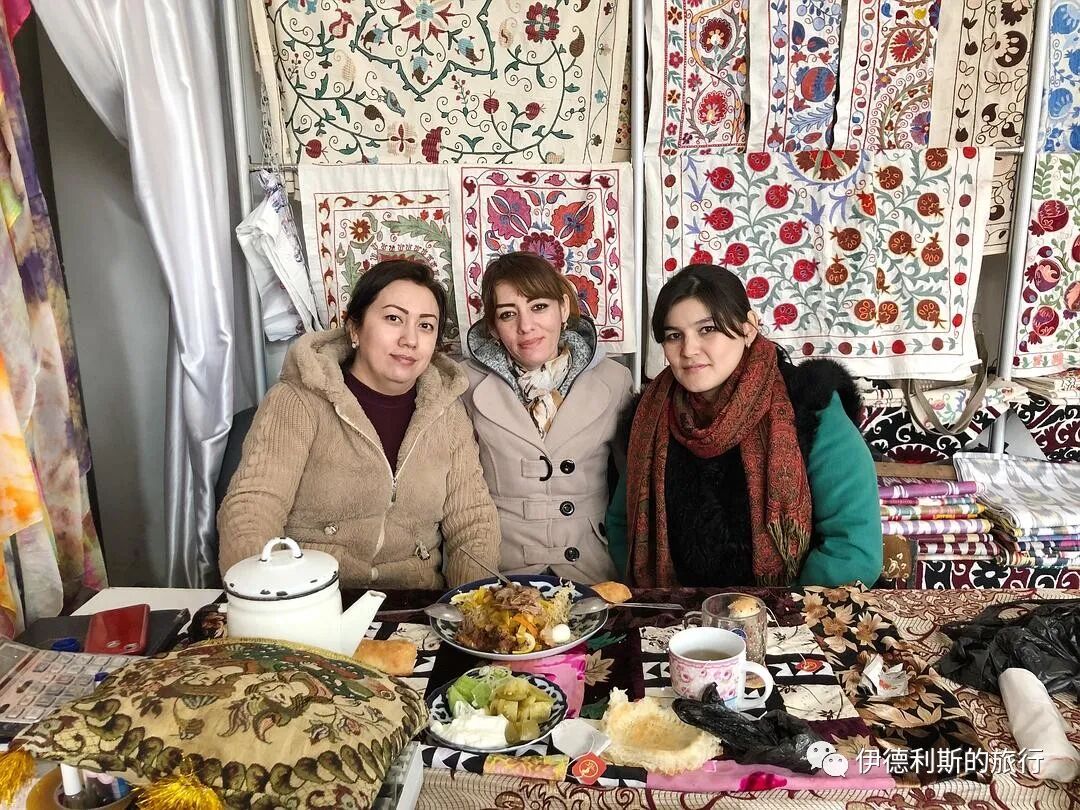
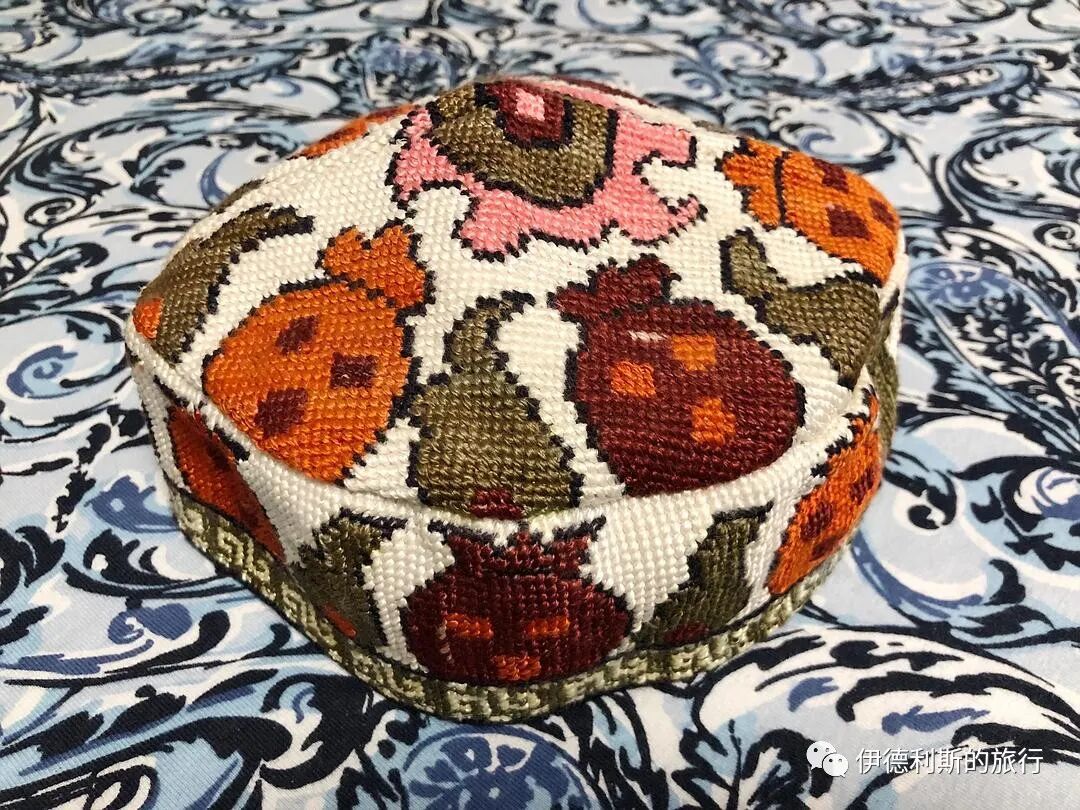
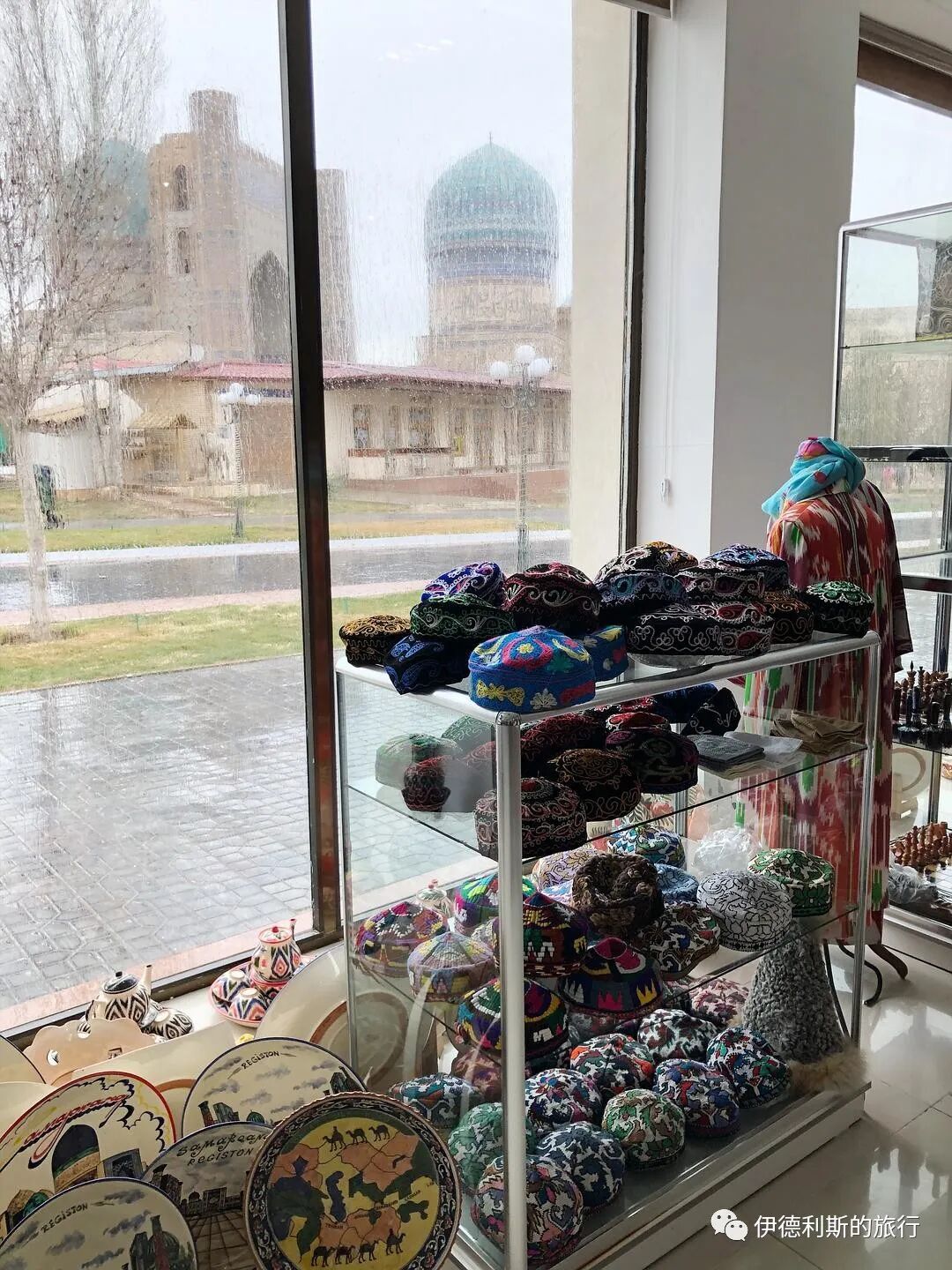 Collapse Read »
Summary: Samarkand — Old City Food, Mosques and Timurid Heritage is presented here as a firsthand travel account in clear English, beginning with this scene: I traveled to Uzbekistan and Tajikistan during the 2019 Spring Festival holiday. This post shares what I ate in Samarkand. The account keeps its focus on Samarkand Travel, Uzbek Food, Muslim Heritage while preserving the names, places, food, and historical details from the Chinese source.
I traveled to Uzbekistan and Tajikistan during the 2019 Spring Festival holiday. This post shares what I ate in Samarkand.
Grand Bazaar
The grand bazaar in the old city of Samarkand is called Siab Bazaar, located just north of the Bibi-Khanym Mosque.
The most common snack at the bazaar is the baked bun (samsa). Samarkand's baked buns have flaky crusts, which makes them different from the ones in Xinjiang.
There are far fewer fruits and melons in winter than in summer, but you can still drink pomegranate juice.
A Central Asian fast food specialty is shaurma, which is rotisserie meat served with yogurt.
Restaurants
I ate pilaf (zhua fan) and wheat porridge (halisa) at a restaurant next to the Bibi-Khanym Mosque. Halisa is made by simmering cracked wheat and meat for a long time, and it is often eaten during Eid al-Adha. Halisa is very popular across the Middle East, Central Asia, and South Asia, where it goes by different names like Keshkek, Hareesa, Halim, and Khichra.
I had pilaf and steamed meat dumplings (baozi) at a restaurant near Registan Square; after a few days of traveling, I can now read the menu perfectly.
Samarkand Restaurant is a classic banquet hall in Samarkand. We ate lamb shoulder, horse meat, mushroom soup, and various types of flatbread (nang), and we even caught the banquet where the groom's family welcomed the bride after a lively wedding.
Sheepskin calligraphy.
There are traditional music performances inside Registan in the summer, but unfortunately, there were none when we visited in the winter. However, we met a retired teacher writing calligraphy on parchment. I asked him to write my name and Allah is Kind (Yinshan Allah) for me.
Buying a hat
The street between Registan Square and Bibi-Khanym Mosque is full of souvenir shops. I bought a hat with a pomegranate pattern at one shop, and the sisters there even invited me to eat rice pilaf (zhua fan).
Collapse Read »
Halal Travel Guide: Ho Chi Minh City — Malay Muslims, Mosques and Food
Reposted from the web
Summary: Ho Chi Minh City — Malay Muslims, Mosques and Food is presented here as a firsthand travel account in clear English, beginning with this scene: Southern Vietnam has a long history of close contact with the Malay Archipelago. In the 15th century, the Malacca Sultanate (1400–1511) became a major power in Southeast Asia and maintained close ties with Champa, which. The account keeps its focus on Ho Chi Minh City, Malay Muslims, Vietnam Muslims while preserving the names, places, food, and historical details from the Chinese source.
Southern Vietnam has a long history of close contact with the Malay Archipelago. In the 15th century, the Malacca Sultanate (1400–1511) became a major power in Southeast Asia and maintained close ties with Champa, which then ruled southern Vietnam. The classic Cham literature piece, The Princess of Kelantan, tells the story of a princess from Kelantan on the Malay Peninsula who practiced her faith in Champa. After the Portuguese occupied the Malacca Sultanate in 1511, many Malay people moved away, and some settled in southern Vietnam, where they integrated with the Cham Muslims.
The Western missionary M. Mahot MEP began living in Champa in 1676. In a letter written in July 1678, he noted: 'Regarding the Cham religion, the Malay Muslims are more vigilant than we are. They have immigrated to Champa in large numbers and have brought the Cham king and his court into Islam.'
In 1692, Vietnam invaded Champa and established Binh Thuan Prefecture on former Cham lands, then continued to invade the Mekong Delta, which was ruled by Cambodia. In 1698, they established Gia Dinh Prefecture in the Mekong Delta, which was the predecessor to Ho Chi Minh City. In the early 19th century, Emperor Gia Long (reigned 1802–1820) of the Vietnamese Nguyen Dynasty sent troops to guard Gia Dinh City. Because he lacked enough soldiers, he recruited many Cham and Malay troops.
In 1859, the joint French and Spanish forces captured the city of Gia Dinh. In 1862, France and the Nguyen Dynasty of Vietnam signed the Treaty of Saigon, officially occupying Gia Dinh. From then on, Gia Dinh gradually developed into Saigon, a commercial hub for the French in Southeast Asia.
During French rule, the government had a relatively relaxed policy toward the faith. Many Malay and Indonesian people came to Saigon for business, and the first mosque in Saigon was the Al Rahim Mosque, built by Malay and Indonesian Muslims in 1885.
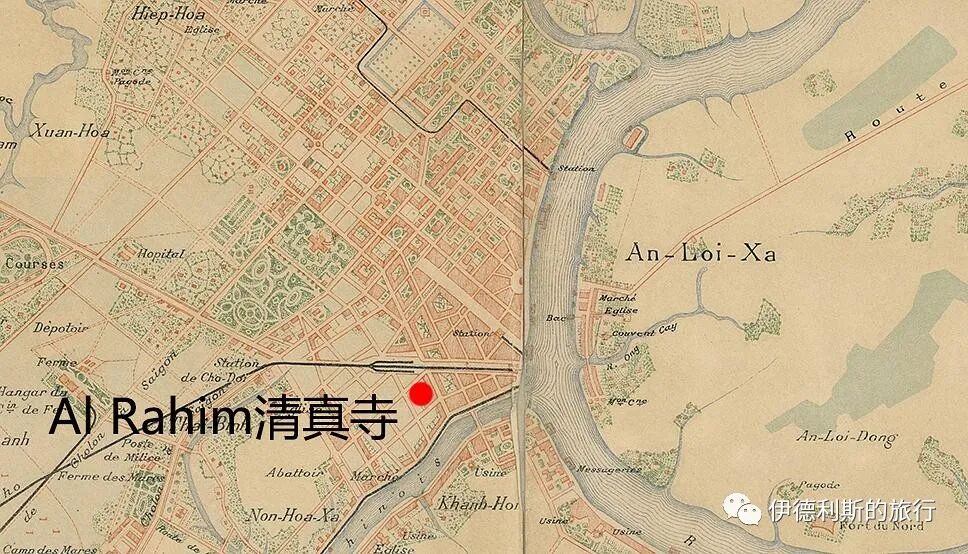
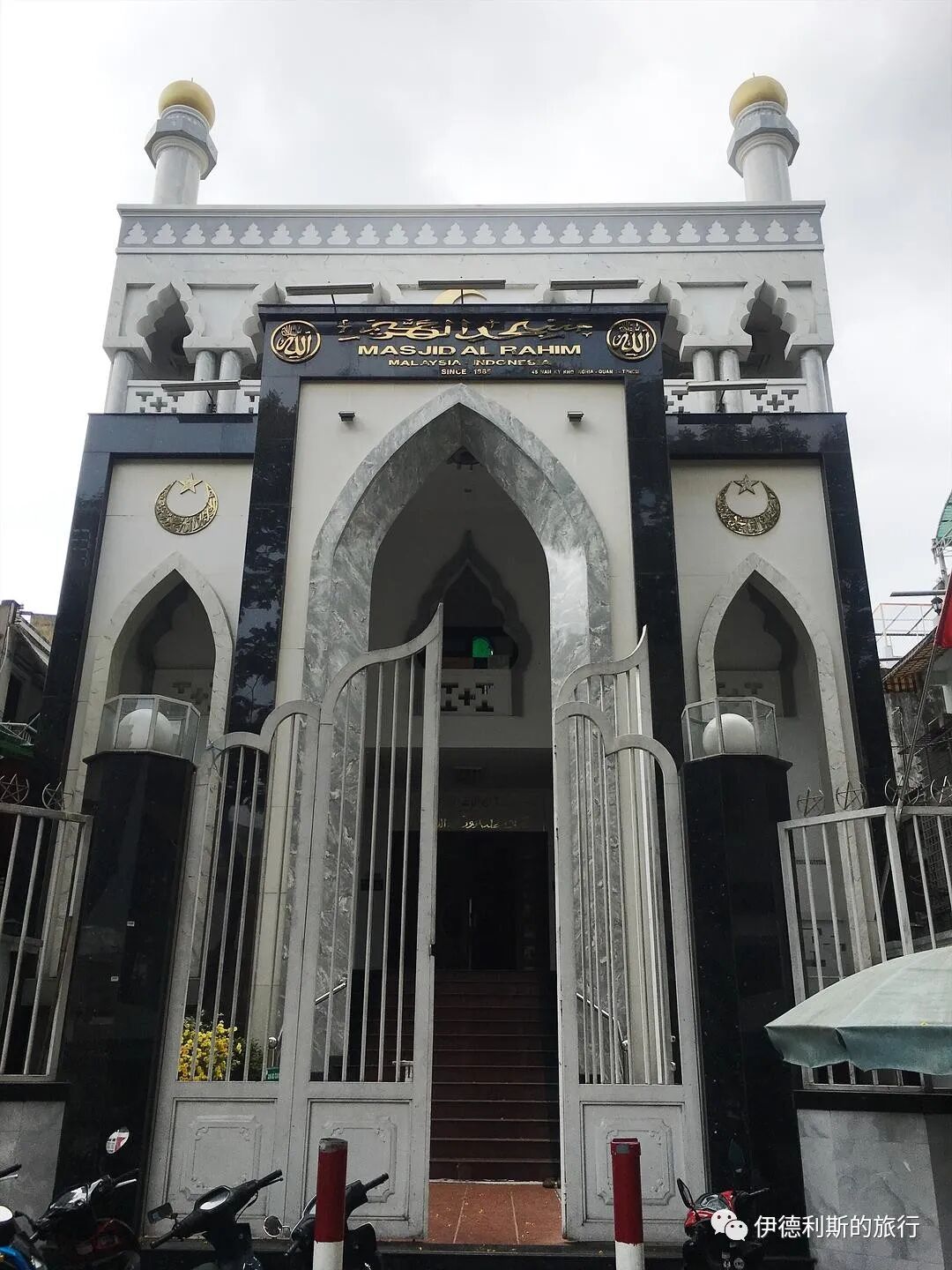
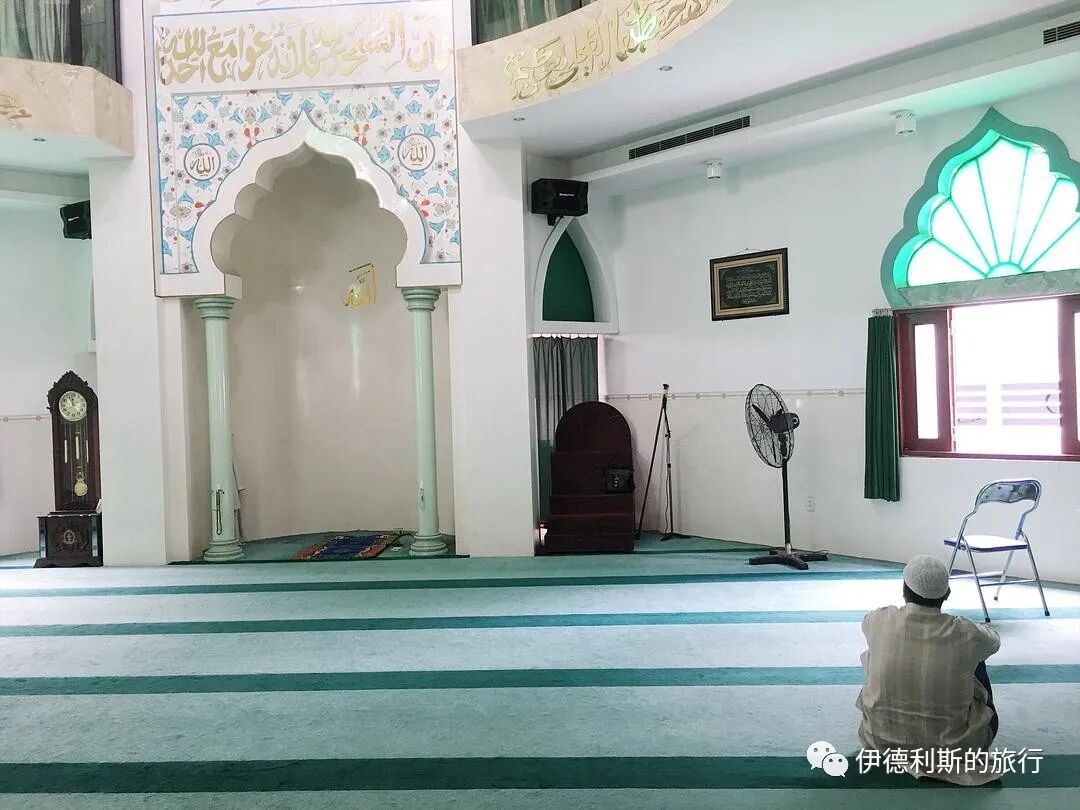
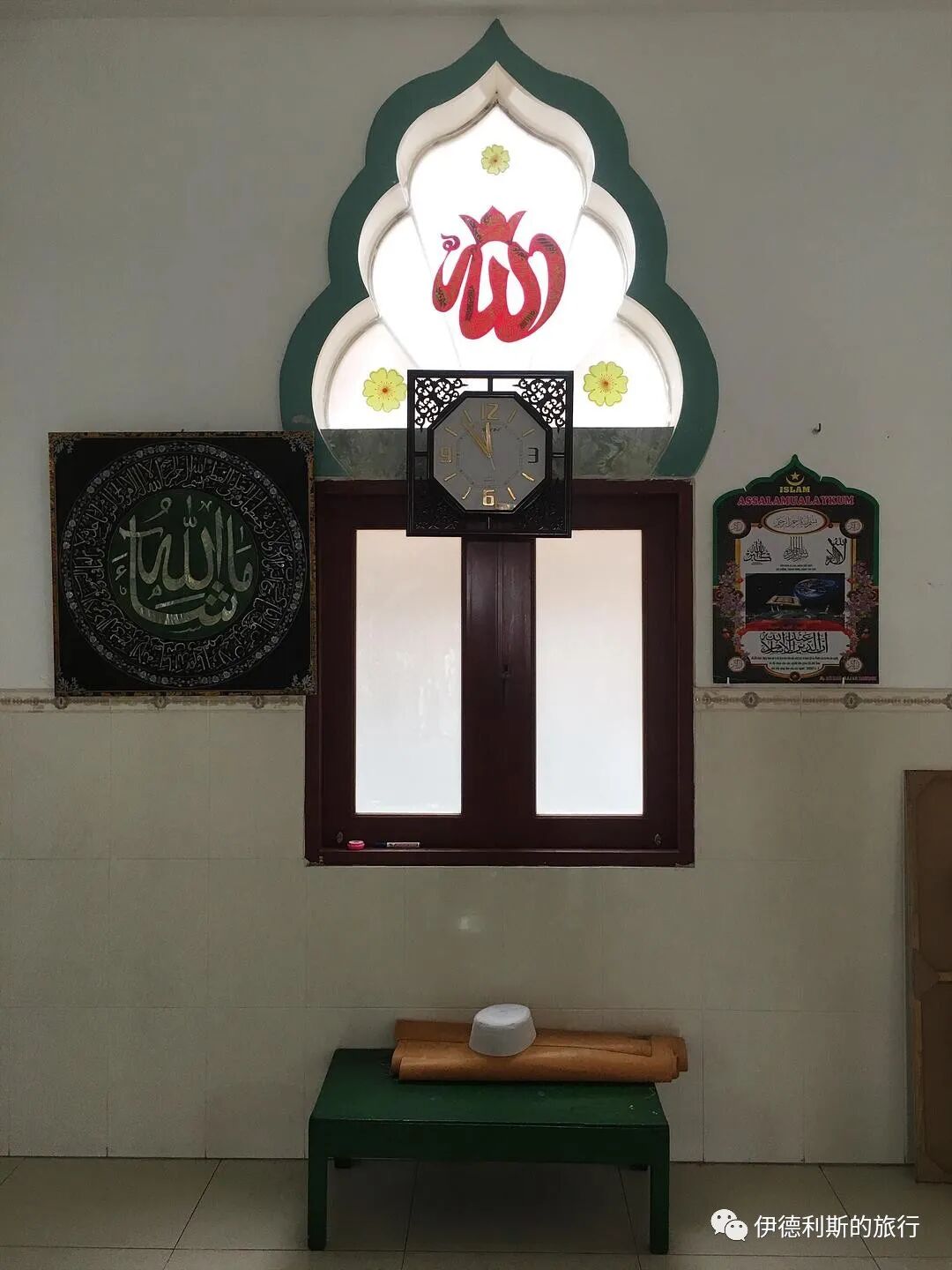
After entering the 20th century, the Malay community had a greater influence on the faith in Vietnam. At that time, religious publications were all imported from Malaya, and mosques were accustomed to inviting Malay imams to give sermons (waaz) in the Malay language. Local Cham youth were used to traveling to Malaya to study the scriptures, returning to Vietnam to practice their faith after completing their studies. In 1954, Vietnam was divided into North and South, and South Vietnam maintained good diplomatic relations with the then Federation of Malaya and later Malaysia. Many mosques in Vietnam were built with help from Malaysia in the 1950s and 1960s. In Saigon, you can find the Haiyat Al Islam mosque built in 1962, the Alsa Adah mosque built in 1968, and the Jamiul Anwar mosque built in 1969.
Jamiul Anwar mosque
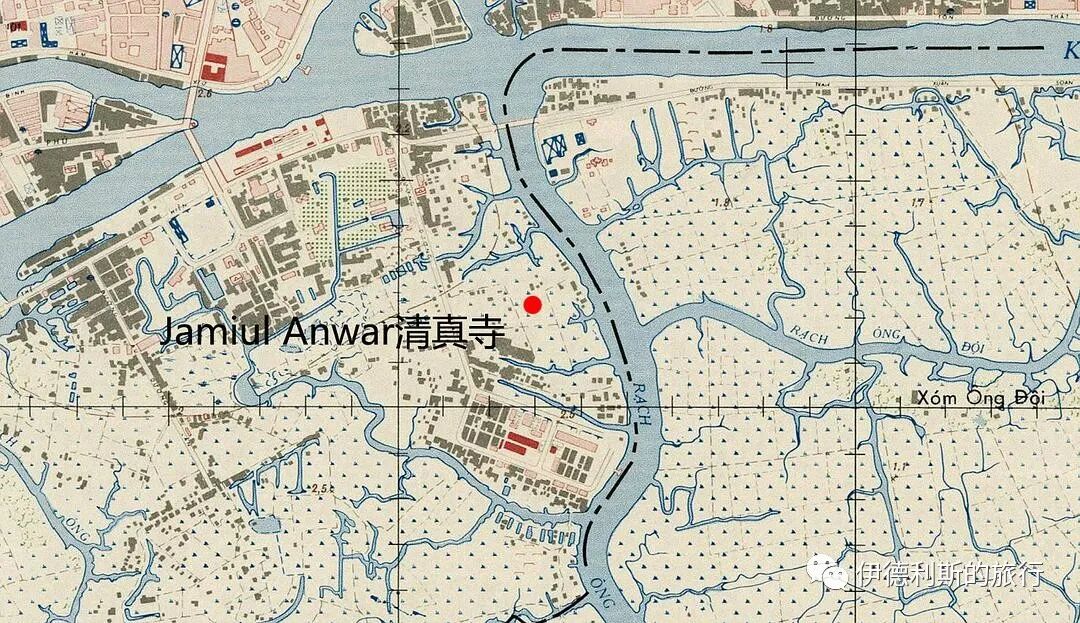
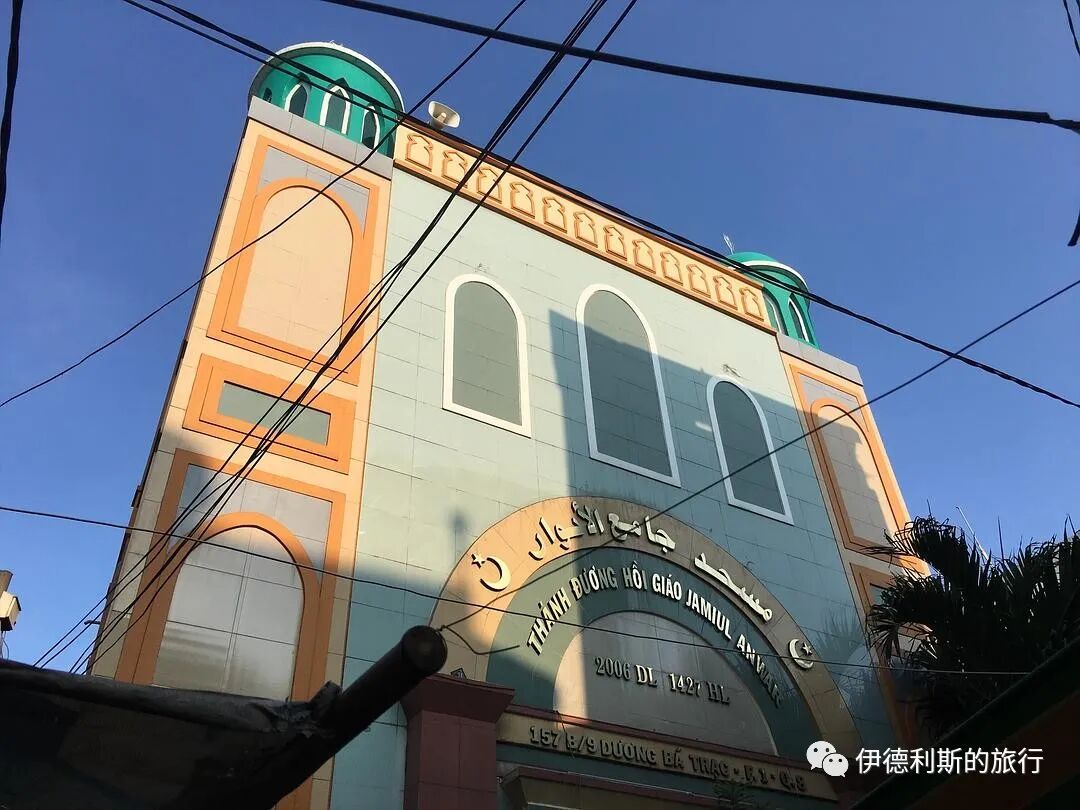
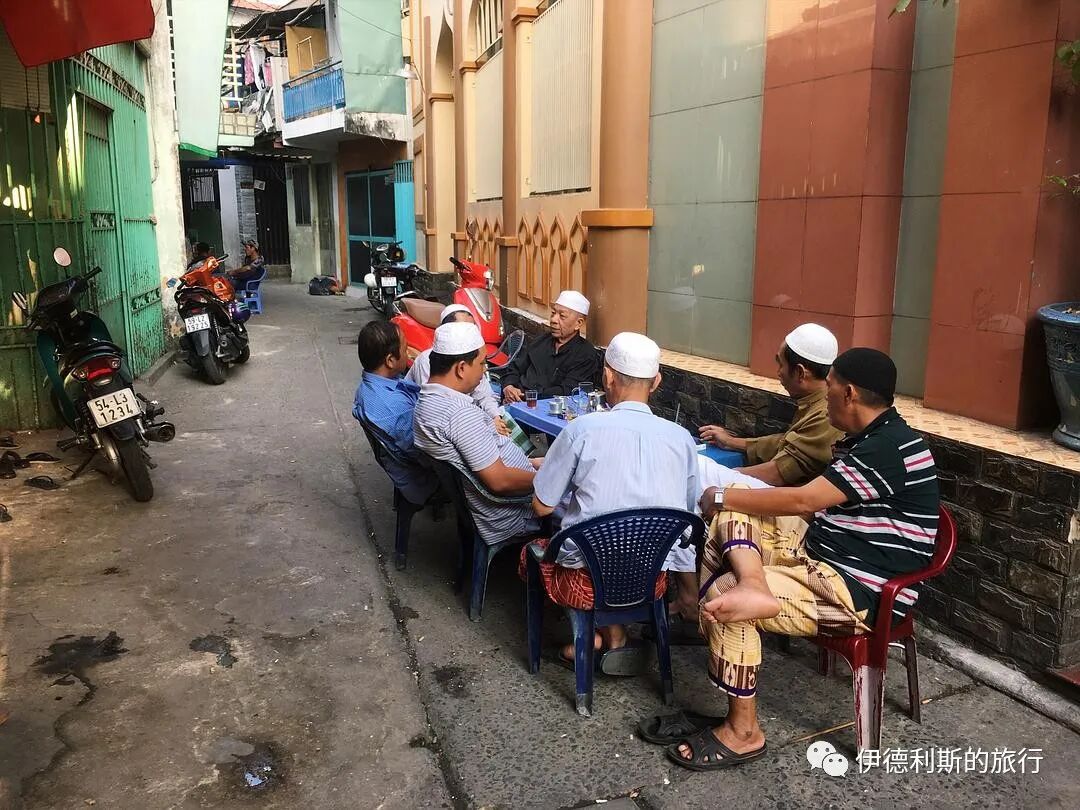
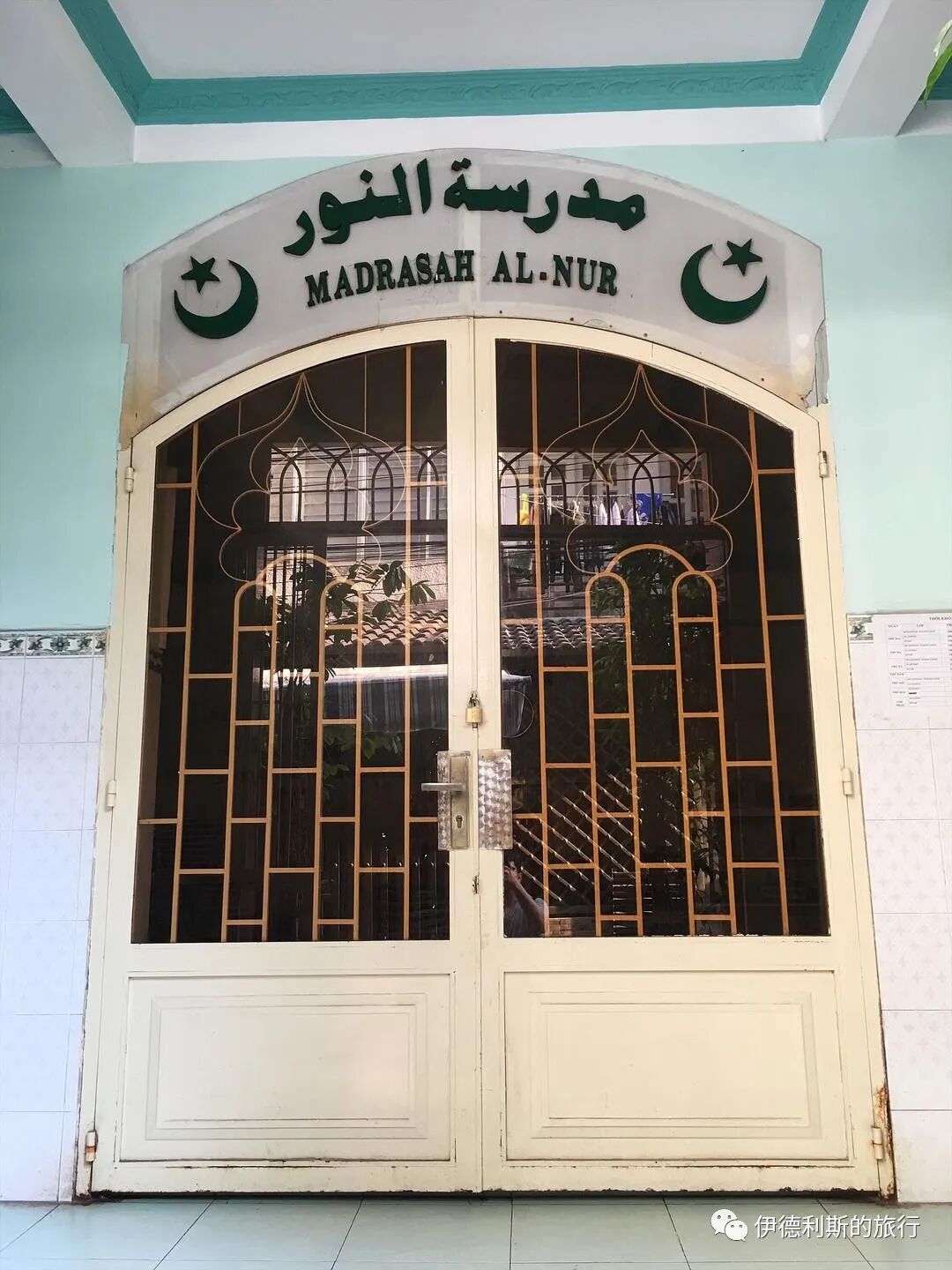
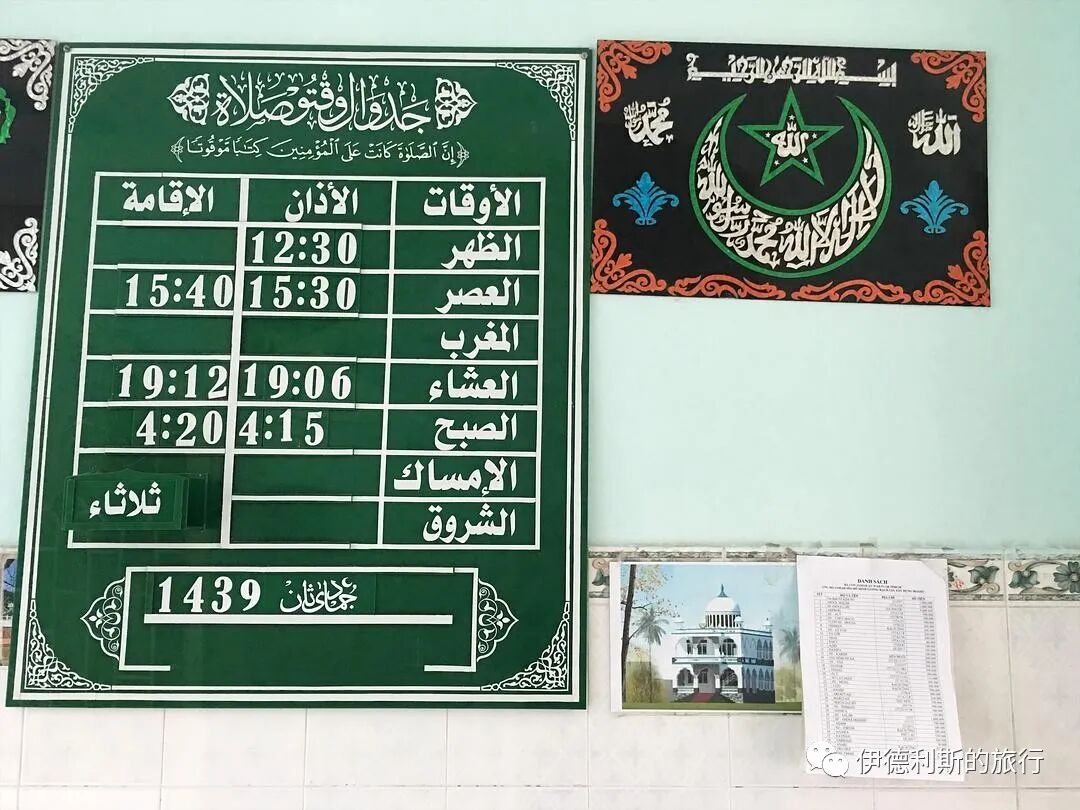
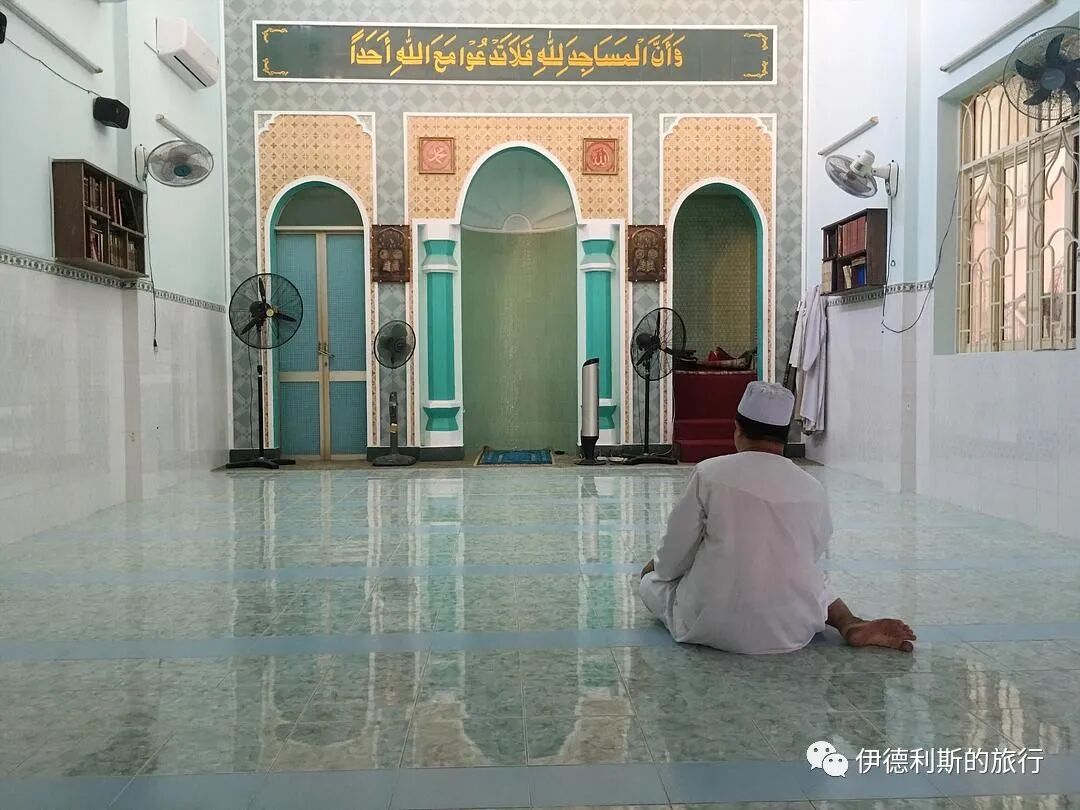
The area in Ho Chi Minh City with the most Malay people is currently Malay Street, located outside the west gate of Ben Thanh Market.
Since these restaurants mainly serve Malay tourists, they also offer Vietnamese food. This makes it very easy for Malay Muslims to try local Vietnamese dishes.
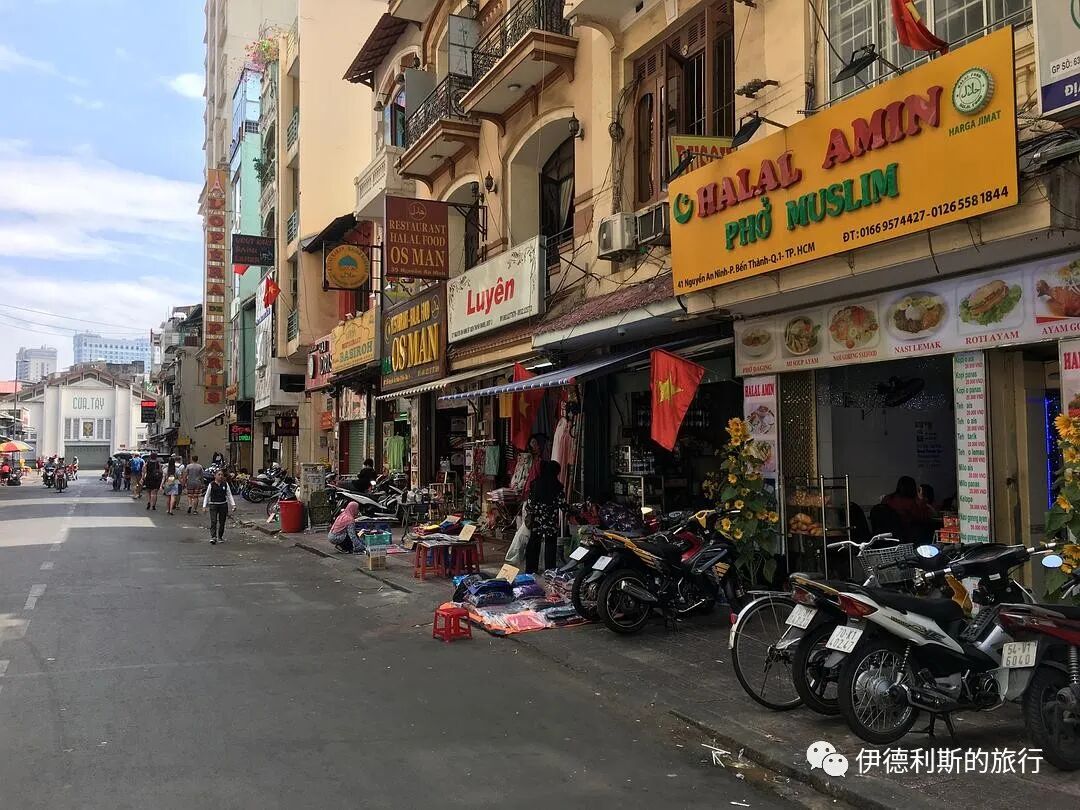
The west gate of Ben Thanh Market is at the end of the road.
The street has many stalls and shops selling women's clothing for Muslims.
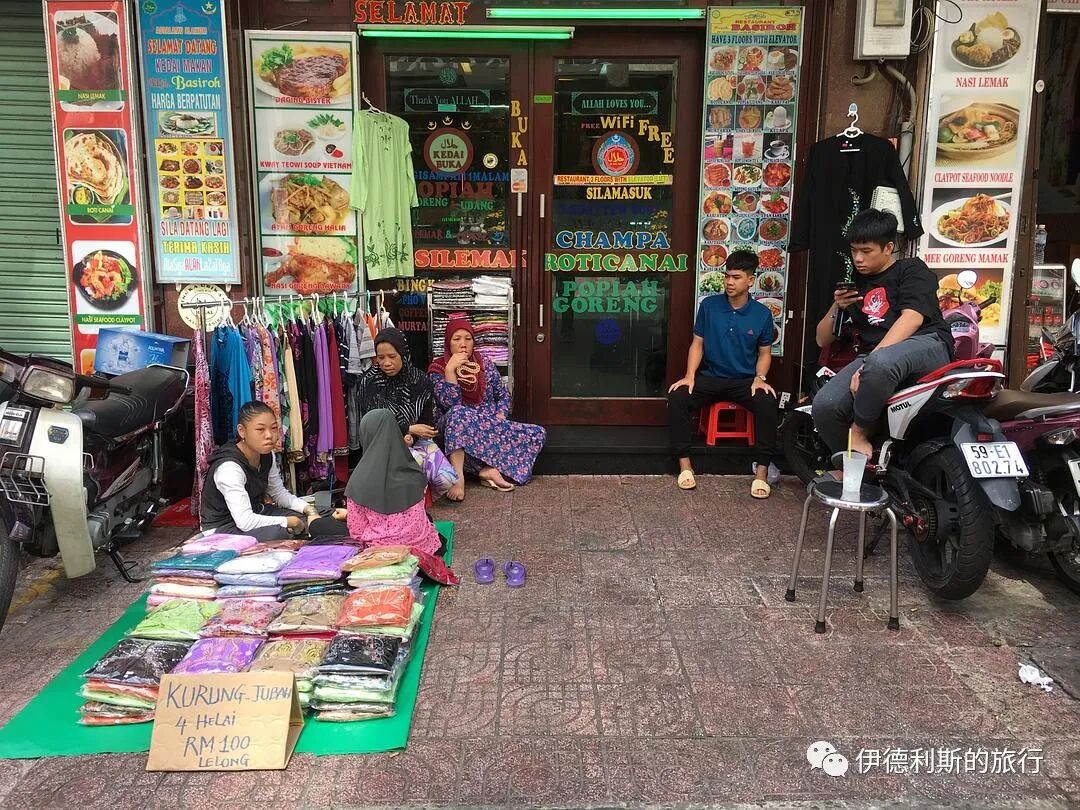
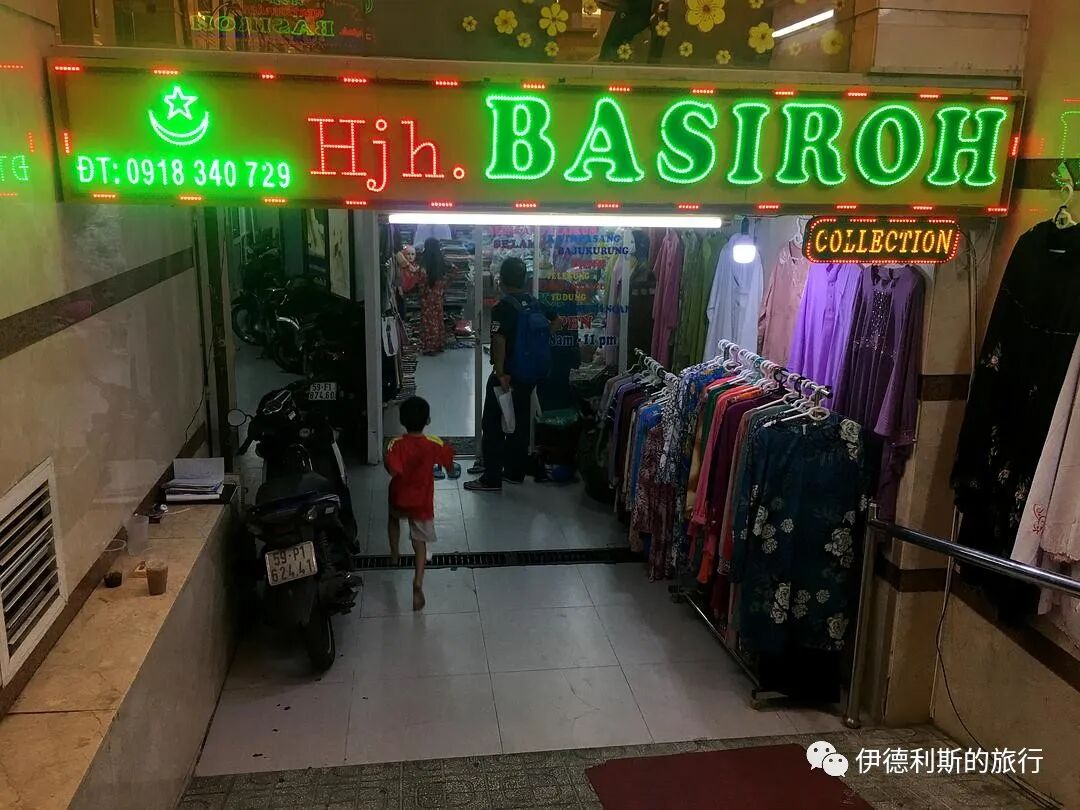
There are also Muslim travel agencies. Among them, Bismillah means the basmala.
Haji Osman Restaurant
I flew from Beijing to Ho Chi Minh City and headed straight to Malay Street first thing in the morning. Malay Street was still quiet in the morning, so I walked around and picked Haji Osman Restaurant, which looked like the busiest spot.
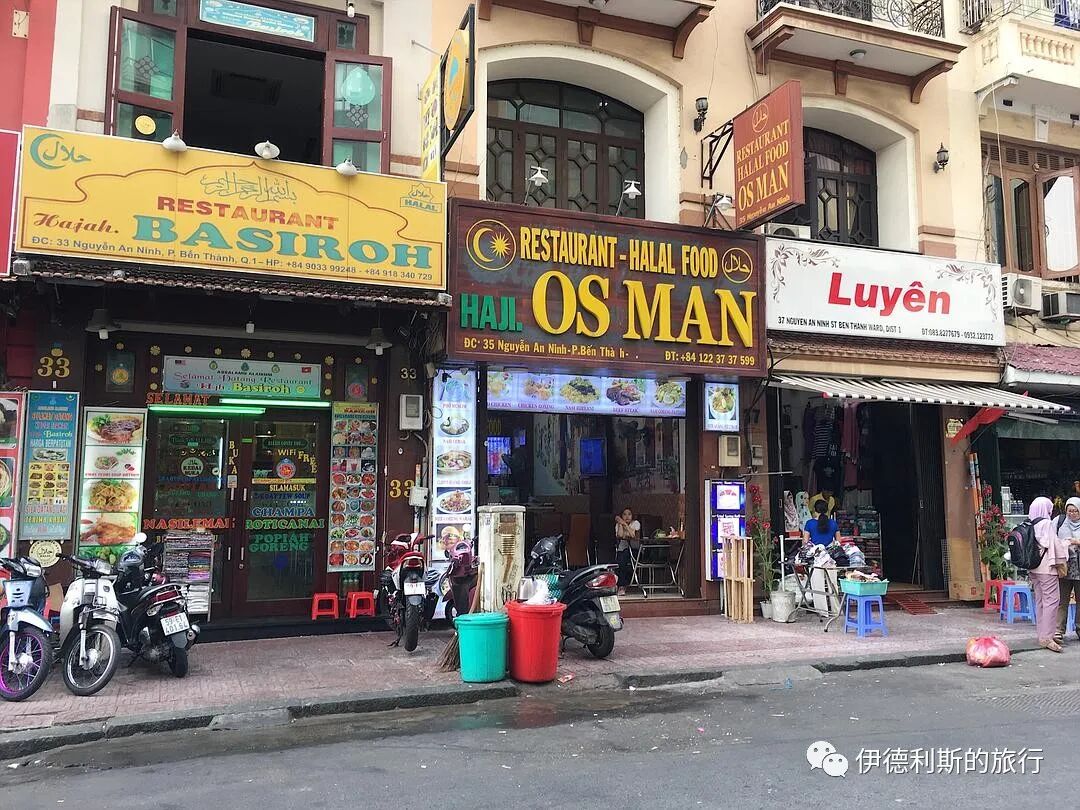
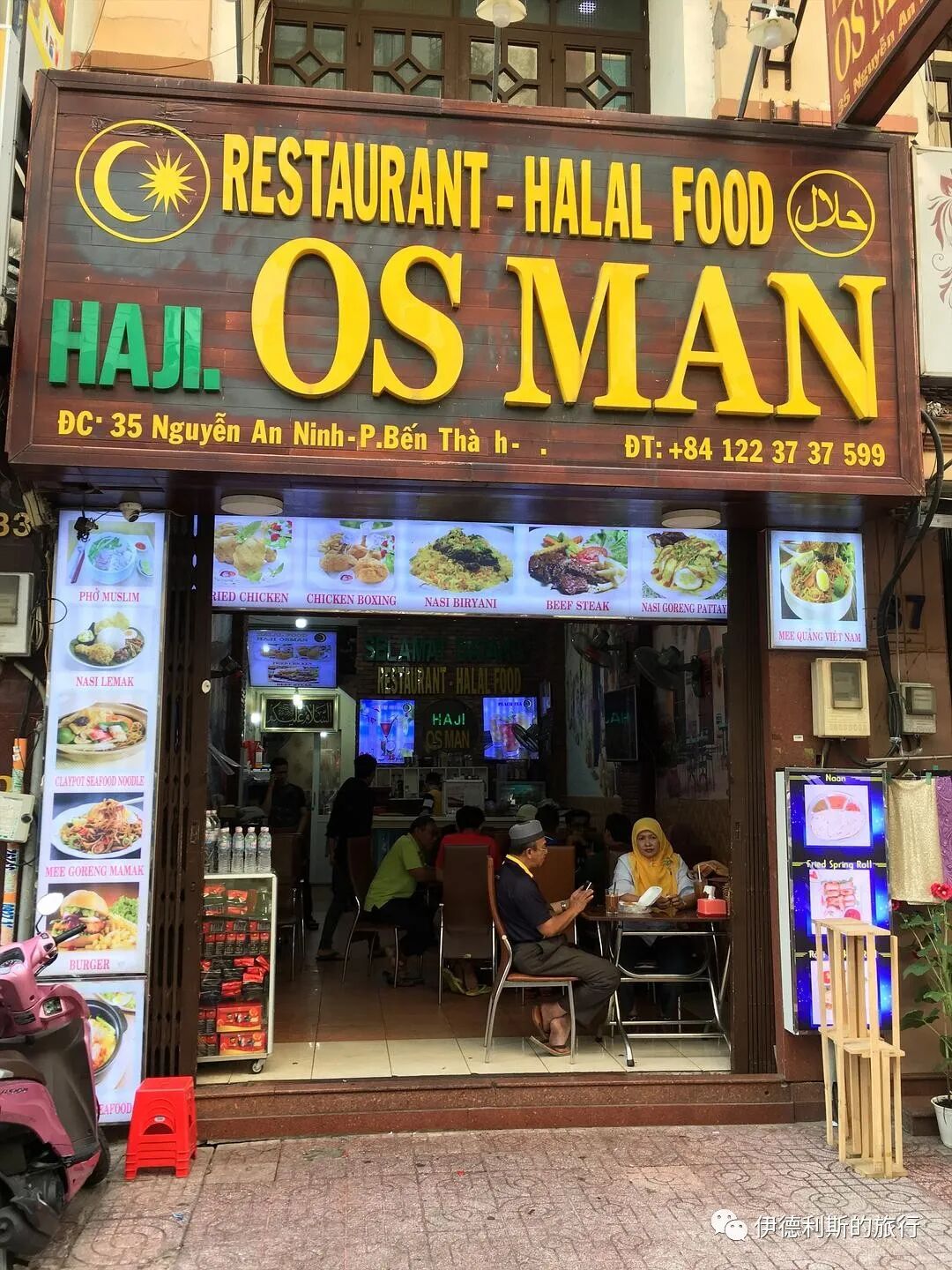
I ordered Vietnamese-style baguette, rice noodle soup (pho), and coffee, and everything was excellent. I never used to like coffee, but I was surprised to find that I really enjoyed it this time.
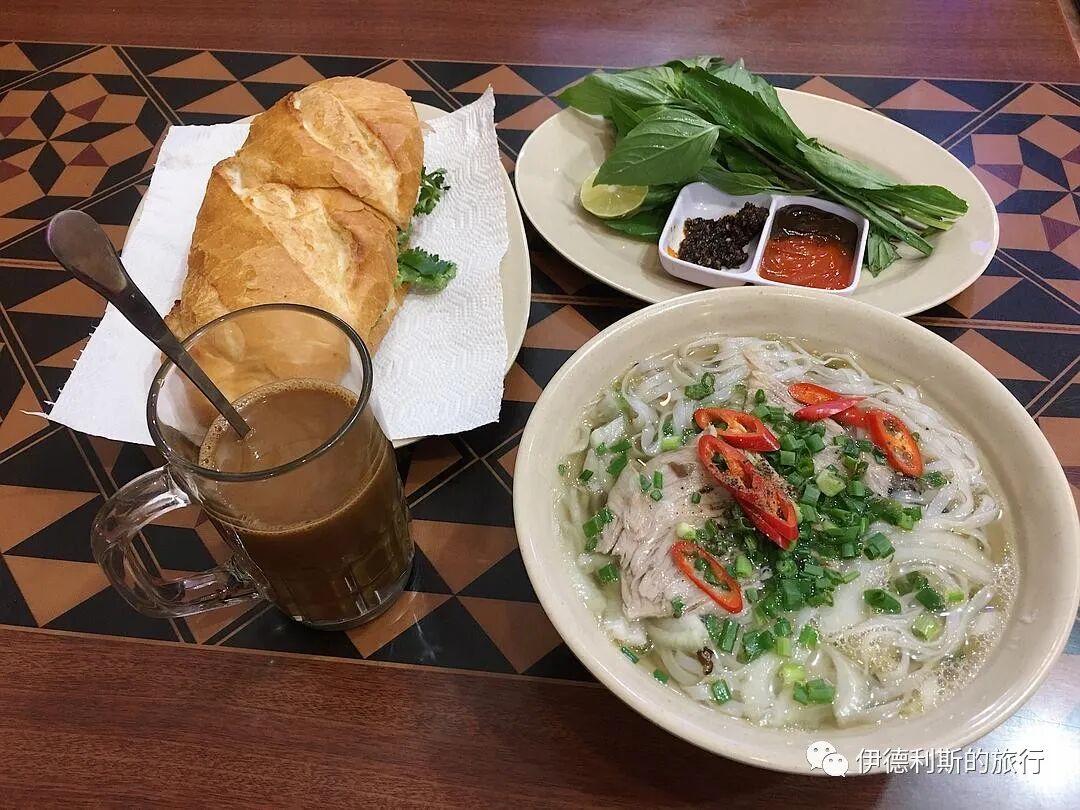
Vietnamese baguette (banh mi) is a classic breakfast on the streets of Saigon. The baguette arrived in Saigon after the French occupied the city in 1861. Back then, wheat was expensive to import, so the baguette was considered a luxury item. During World War I, wheat imports stopped, so more cheap rice flour was added to Vietnamese baguettes, making them much fluffier. Because the price dropped, baguettes became a regular part of the Vietnamese diet.
Before the 1950s, Vietnamese baguettes were still strictly French-style, served with mayonnaise or jam. After Vietnam was divided into North and South in 1954, over a million people moved from the north to the south, which changed the food scene in Saigon. In the late 1950s, some northern migrants started selling baguettes on the street, and the modern Vietnamese baguette began to take shape.
After the Fall of Saigon in 1975, baguettes were only sold in state-run restaurants and often served with other dishes, which is how the modern habit of dipping baguettes into rice noodle soup (pho) began. It was not until the socialist market economic reforms in 1986 that baguettes returned to the streets as a common snack.
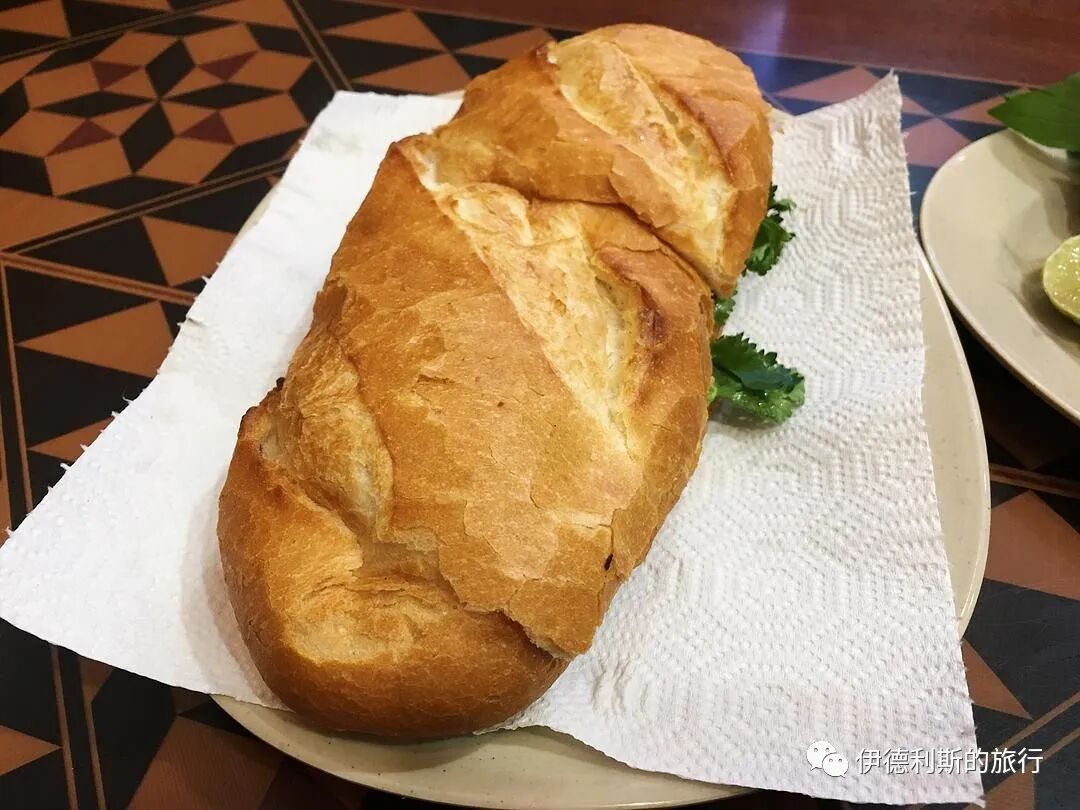
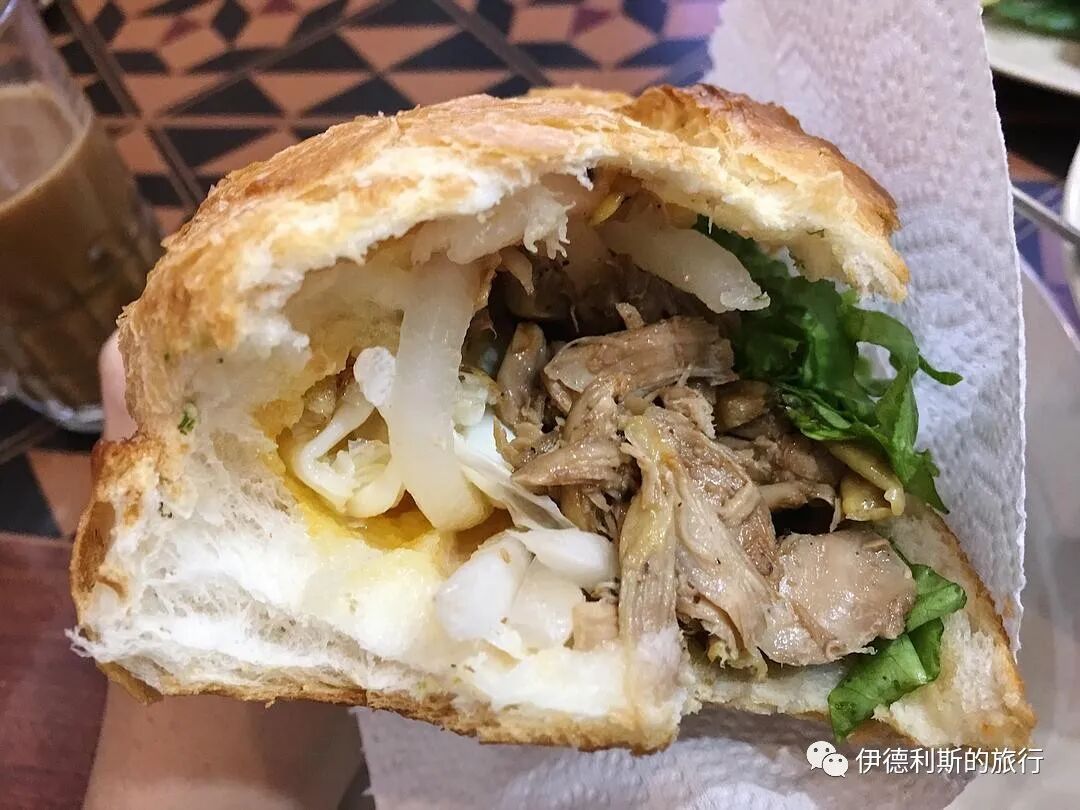
Vietnamese rice noodle soup (pho) appeared in northern Vietnam in the early 20th century, but it was not very popular in Saigon until the 1950s. After Vietnam was divided into North and South in 1954, over a million people moved from the north to the south. Rice noodle soup (pho) became popular in Saigon and developed a unique flavor different from the north.
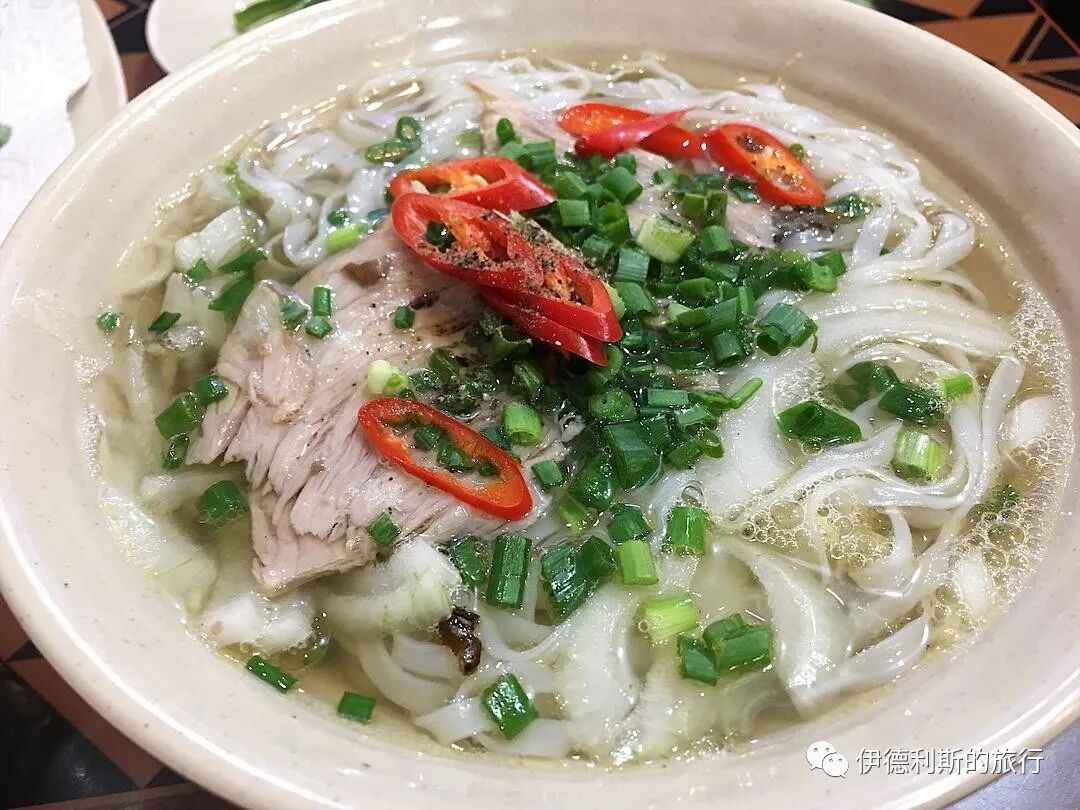
Thai basil is served with the rice noodle soup, though the Malay people at the next table did not seem to enjoy it much.
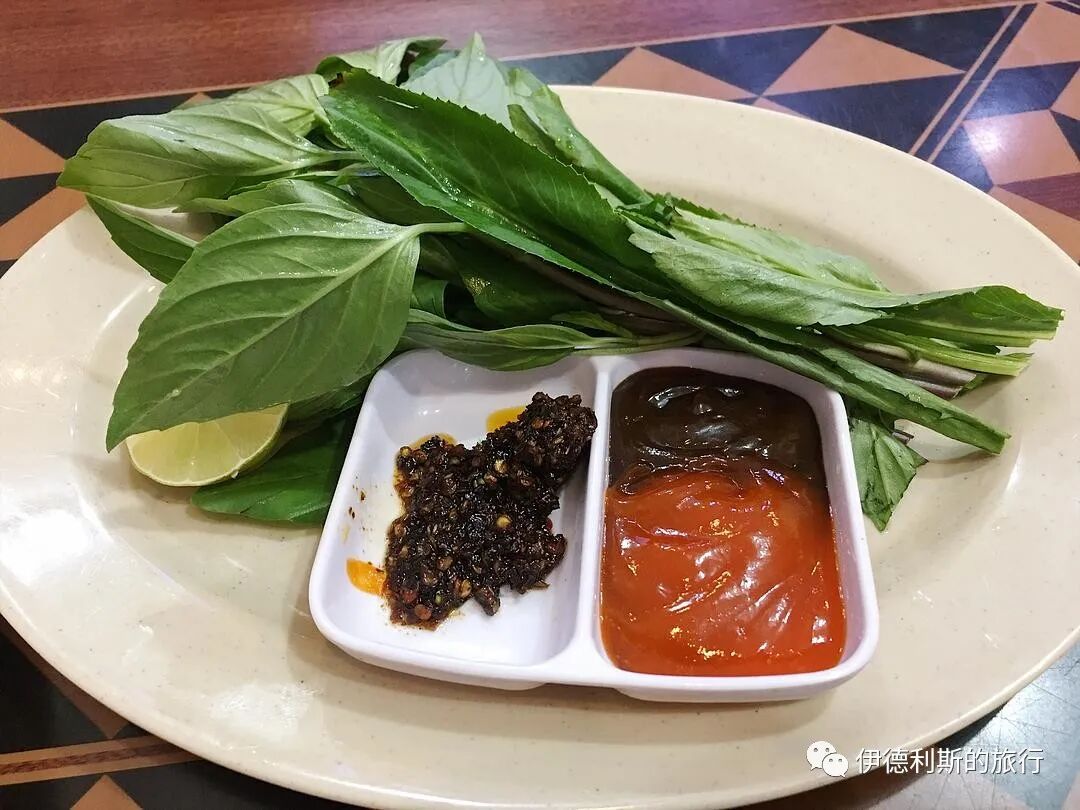
Delicious Vietnamese coffee.
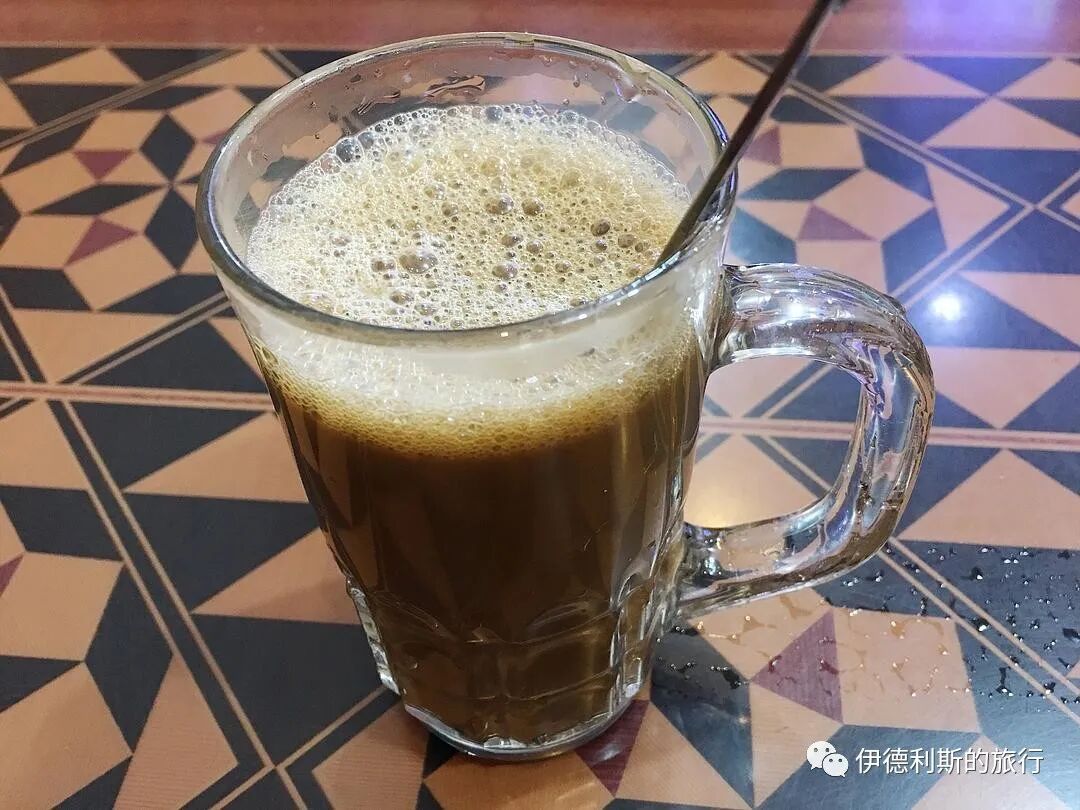
HALAL AMIN restaurant.
HALAL AMIN is another halal restaurant on Malay Street. The words "PHỞ MUSLIM" below mean Muslim rice noodle soup.
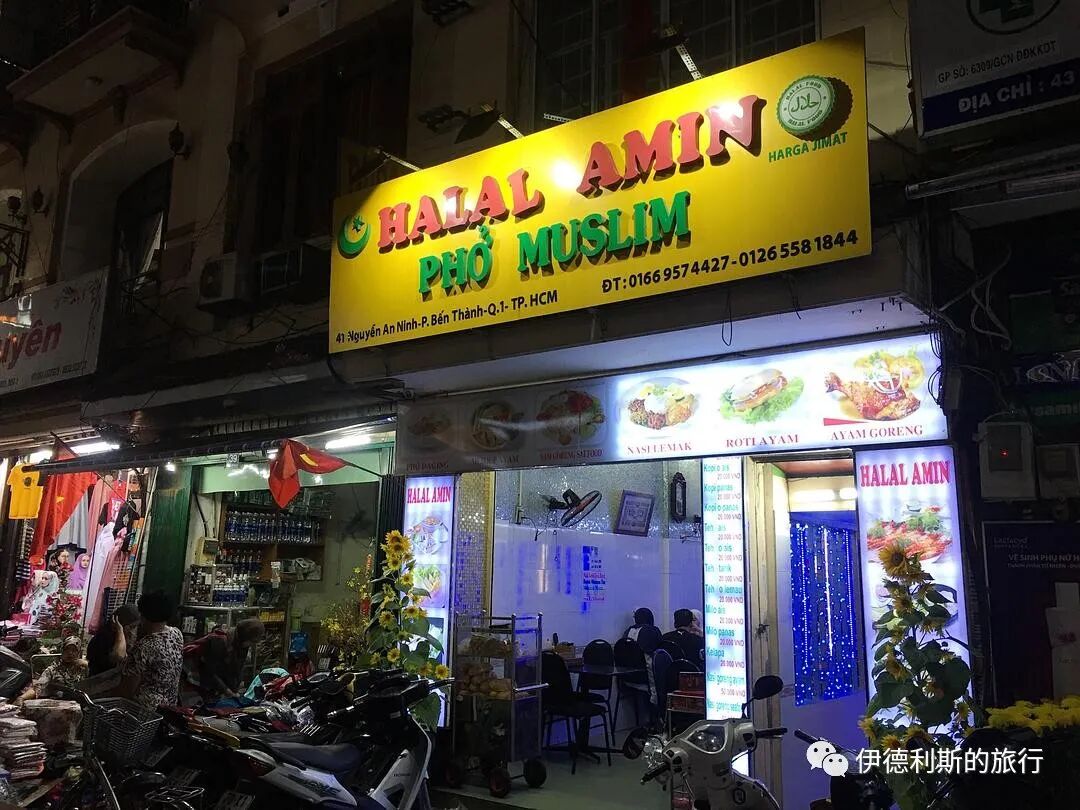
How it looks during the day.
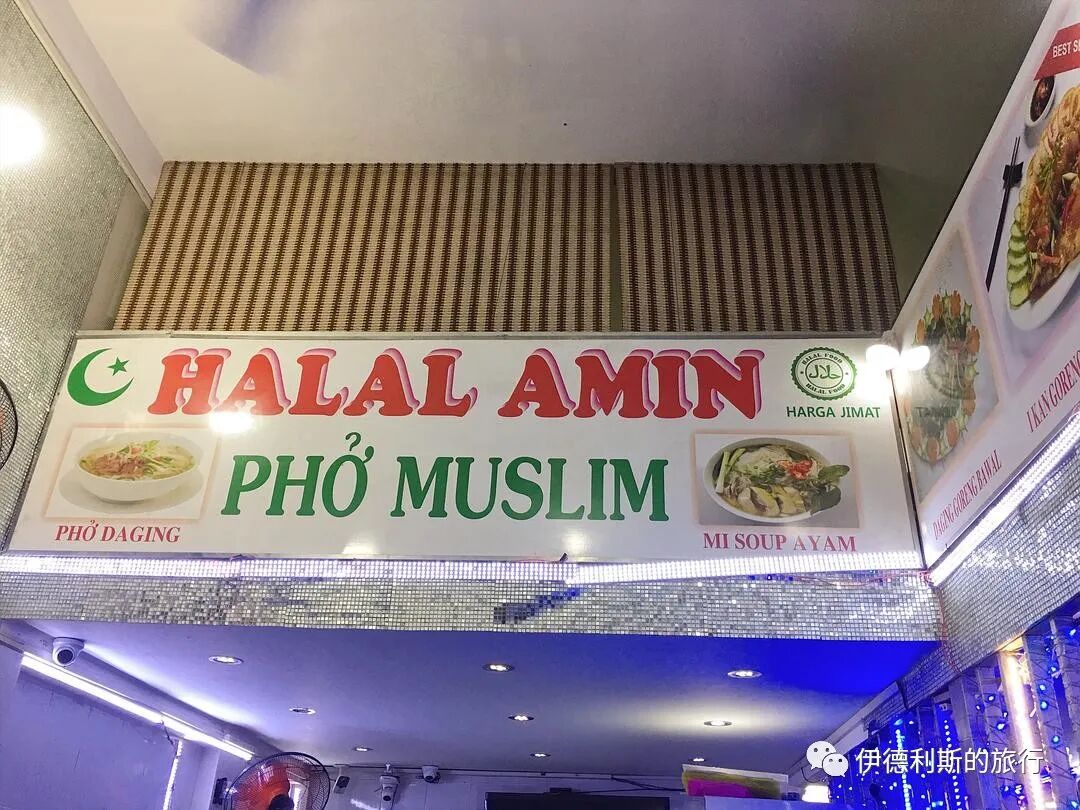
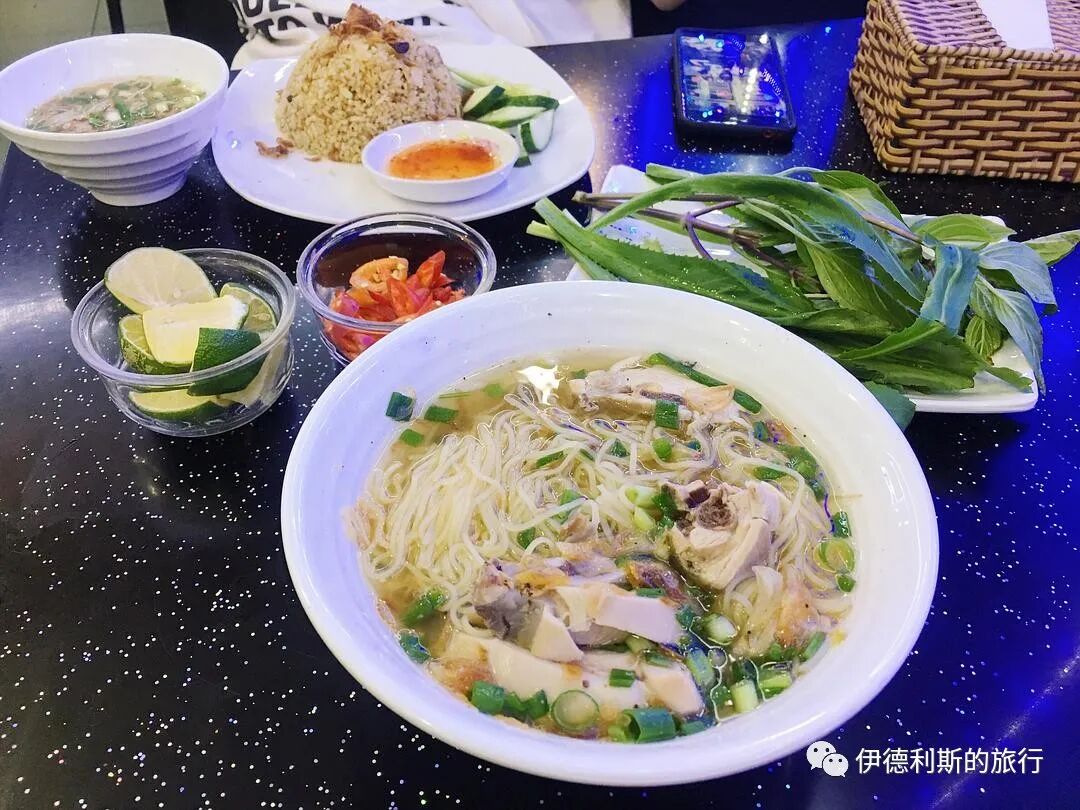
Vietnamese spring rolls (Gỏi cuốn) contain rice vermicelli (bún) wrapped in translucent rice paper (Bánh tráng). The rice paper is a bit tough to chew, and it felt strange the first time I ate it.
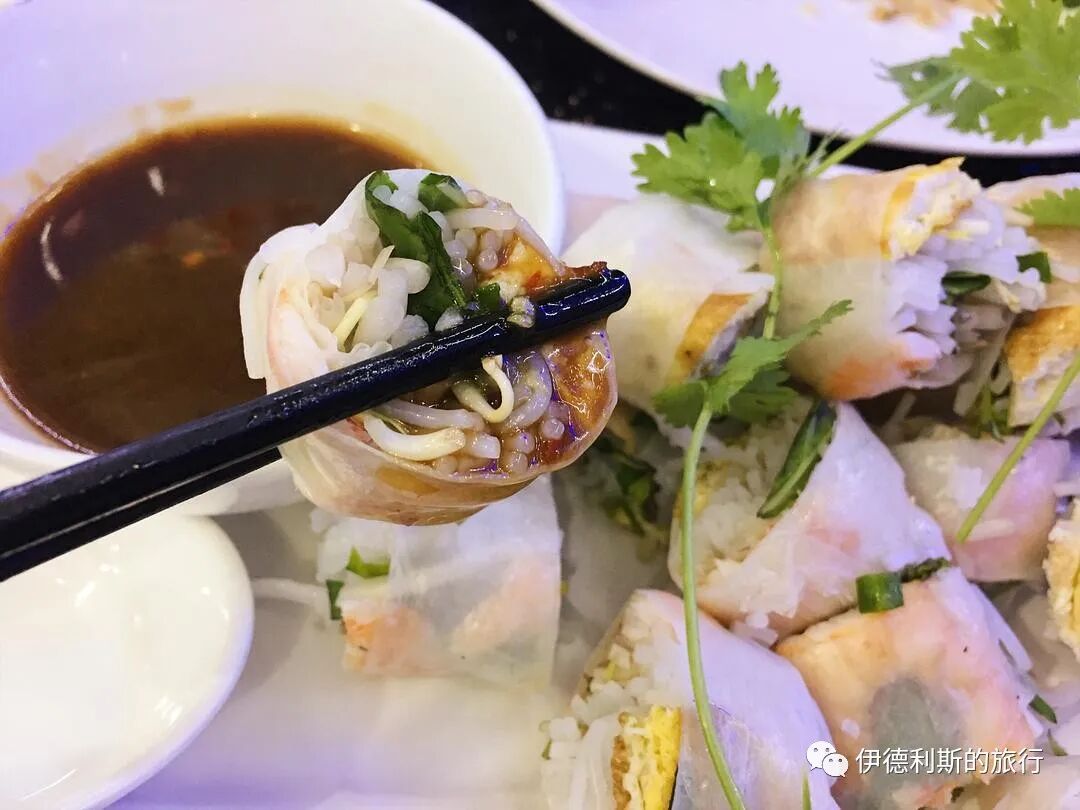
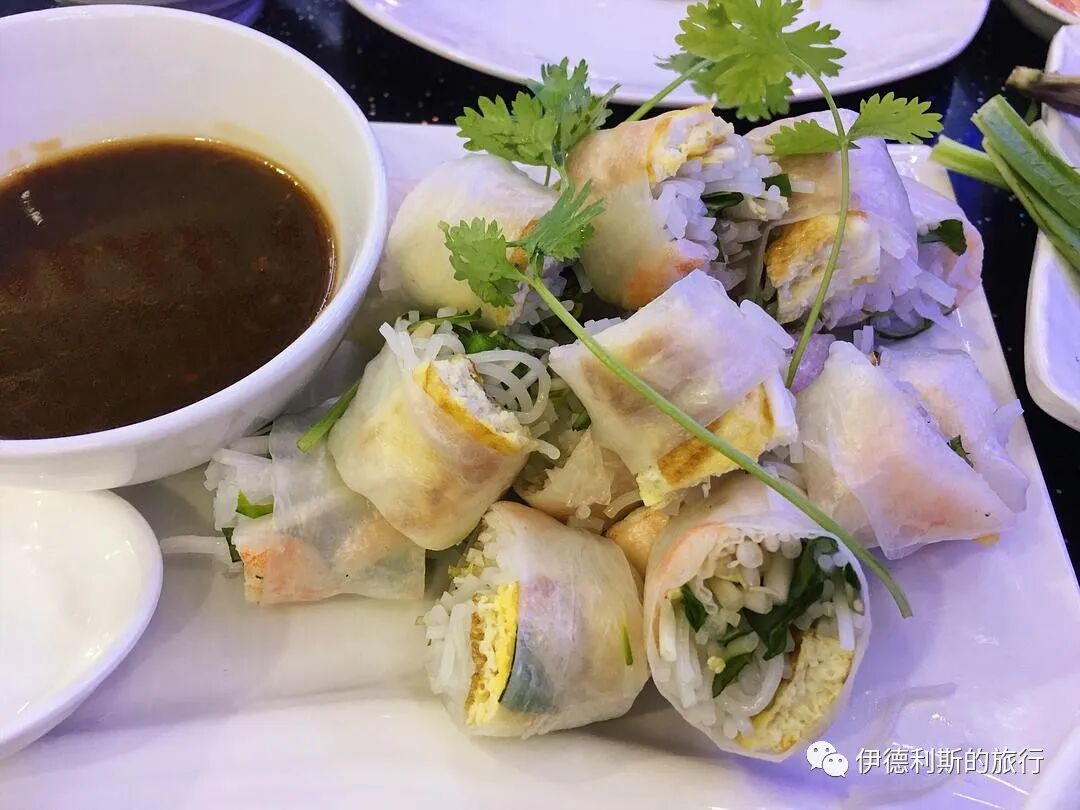
I ordered wide beef noodles at the last place, but this time I had thin chicken noodles.
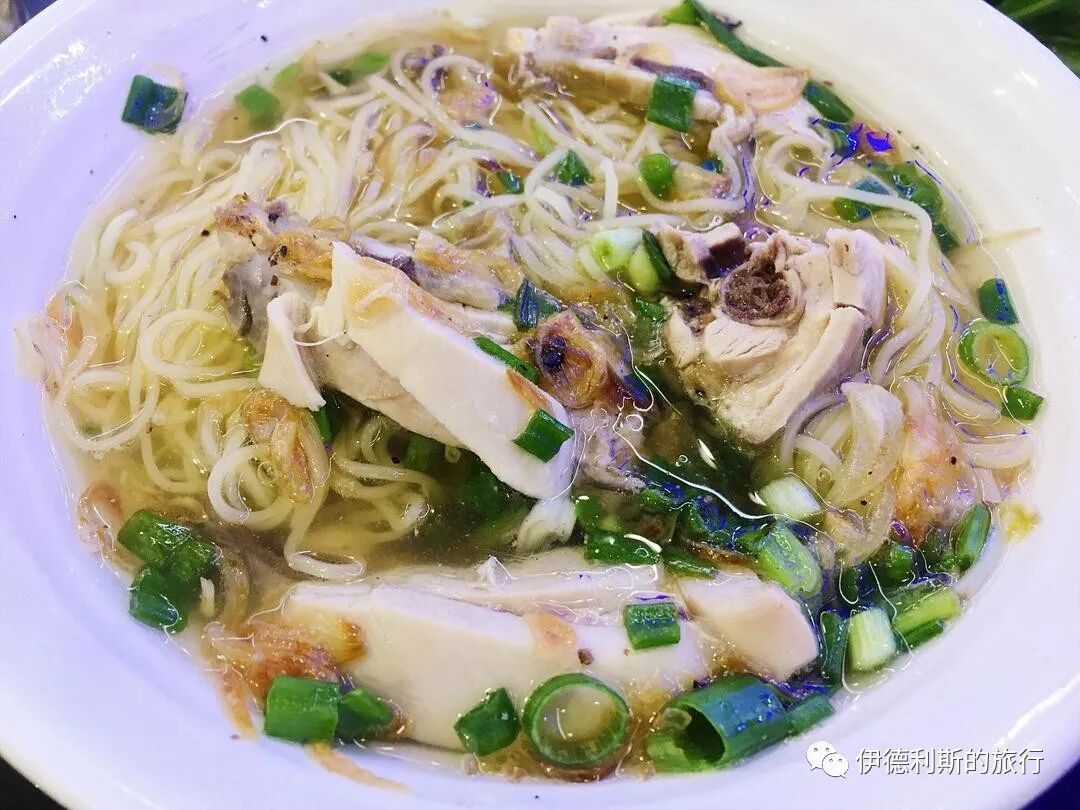
Hajah BASIROH Restaurant
I also tried the Malaysian chicken rice at Hajah BASIROH Restaurant on Malay Street.
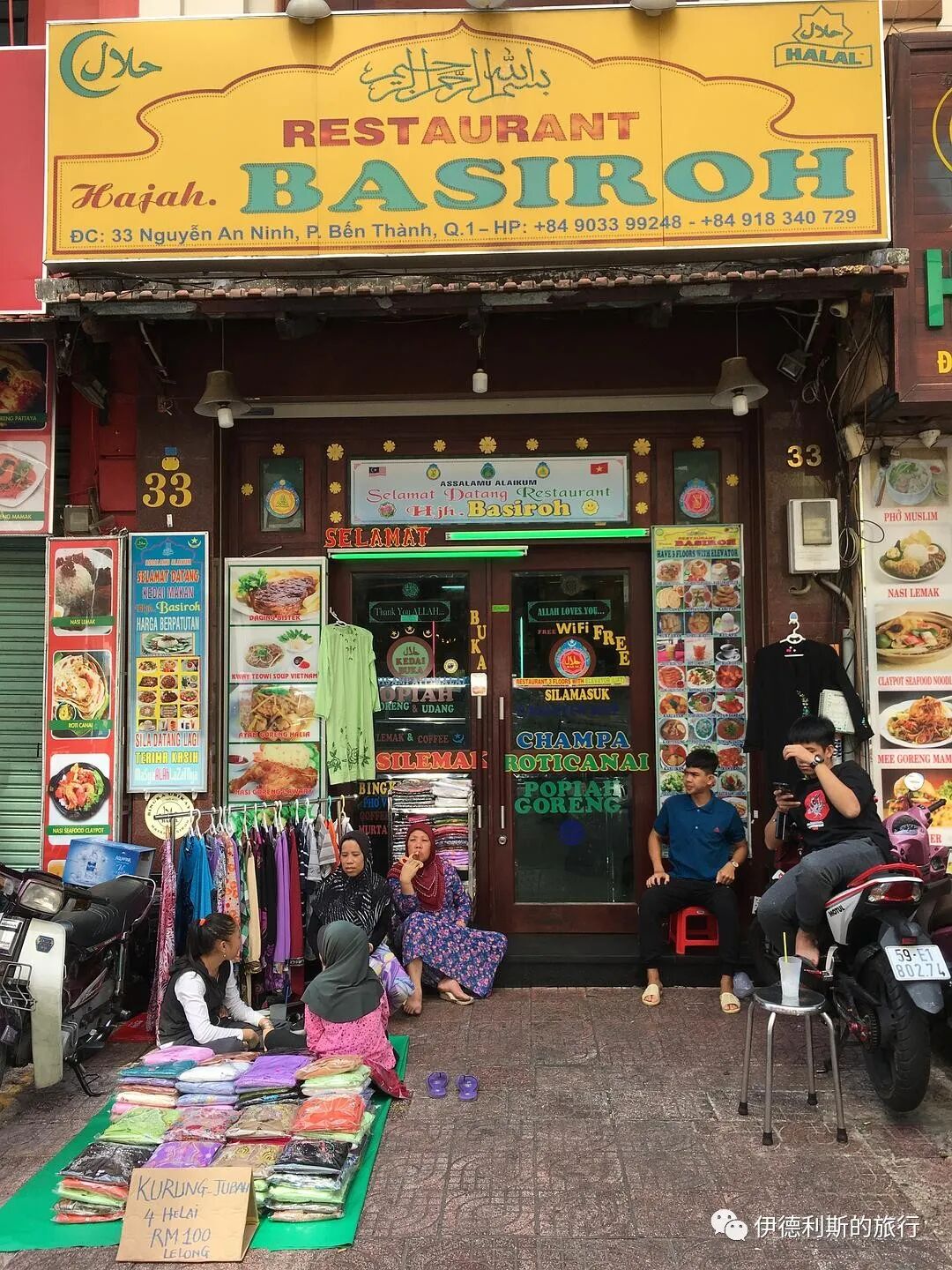
In tropical countries like Malaysia, Vietnam, or Thailand, restaurants often bring you a big glass of ice first. You pour your own water or drink into it, which feels amazing in the hot and humid weather.
Street-style Malay cake (Kuih)
One morning on Malay Street, I met an uncle selling Malay cake (Kuih).
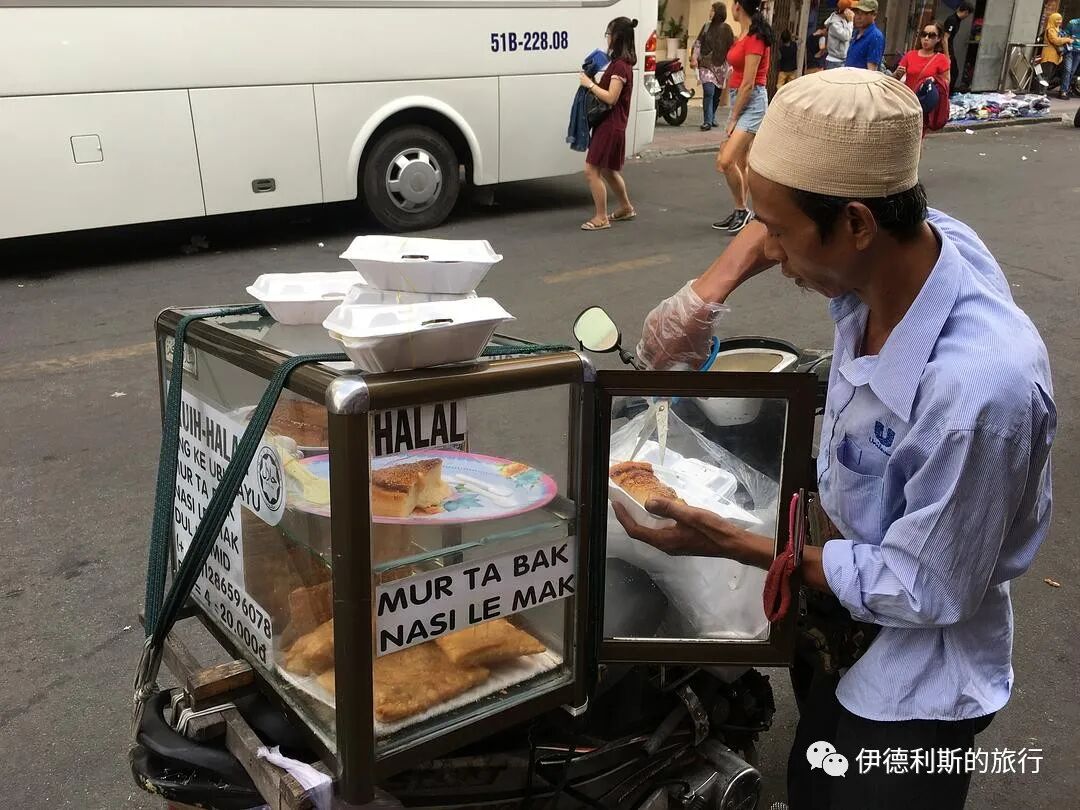
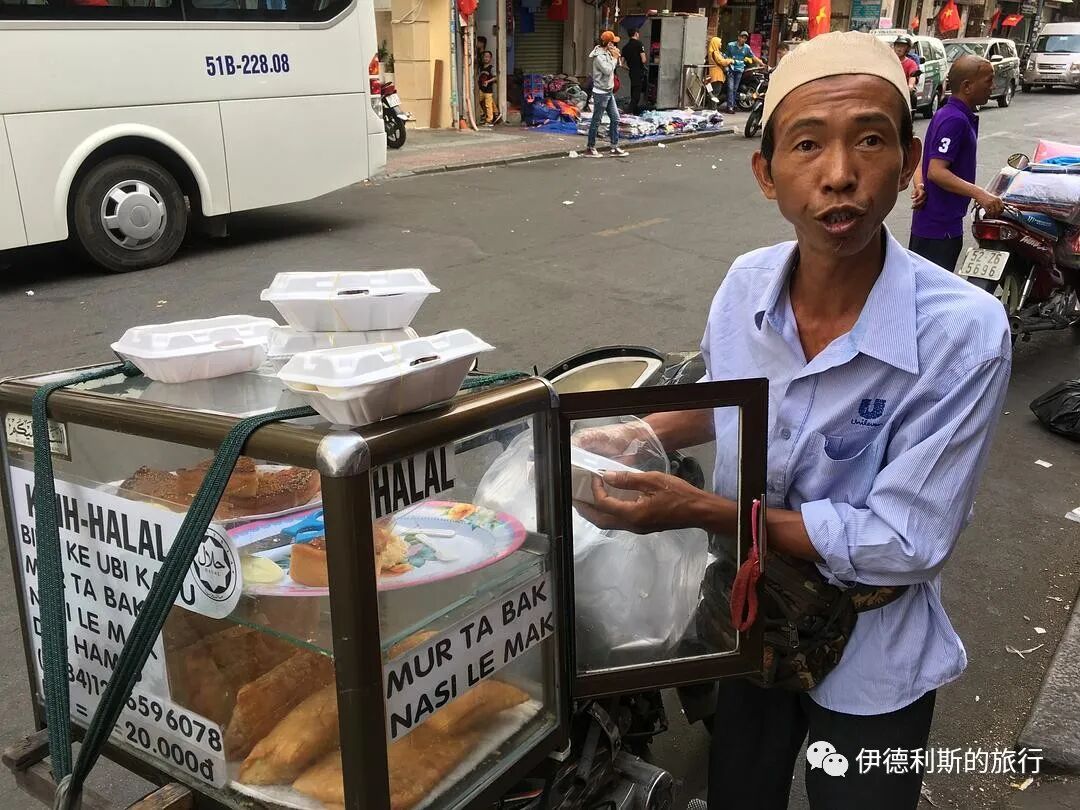
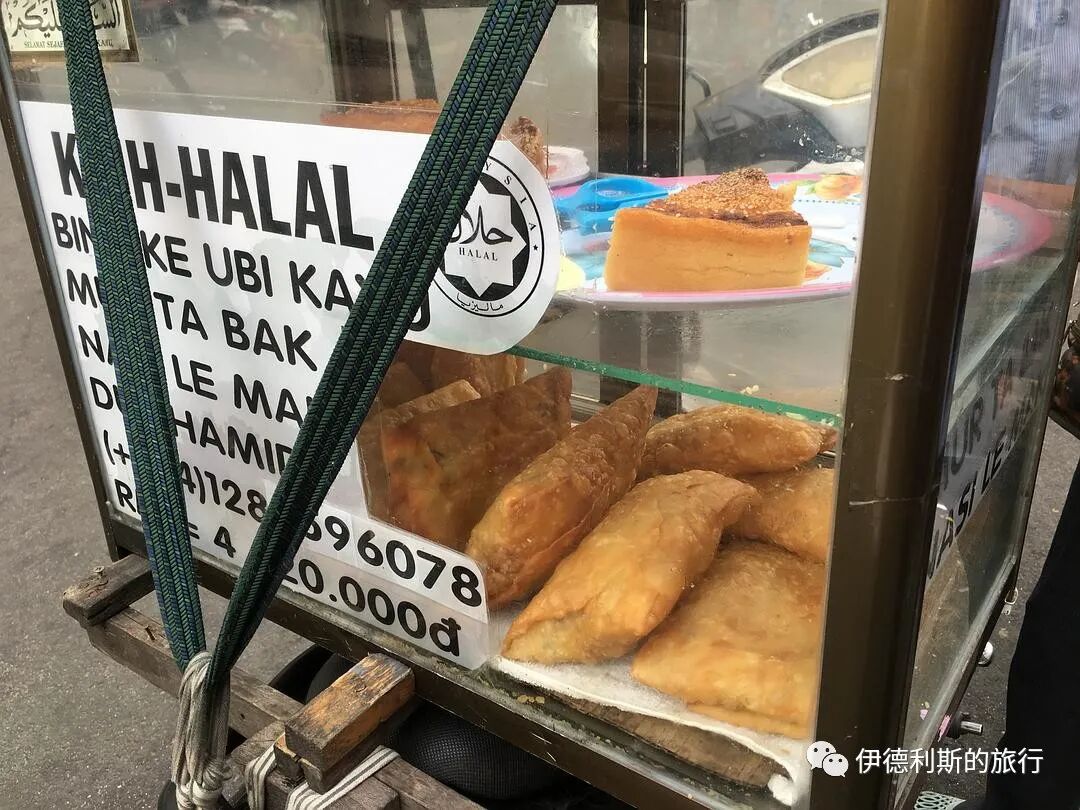
The uncle specifically showed me the words on his cart. The title KUIH-HALAL means halal Malay cake, and on the right is the Malaysian halal certification logo.
The 'Bingke Ubi Kayu' on the first line, also written as 'Kuih Bingka Ubi Kayu' or 'Bingka Ubi', is a Malay cake made by mixing coconut and cassava with coconut milk and salt. This simple recipe is very common in Malaysia.
The 'Murtabak' on the second line is a vegetable pancake popular across the Middle East, South Asia, and Southeast Asia.
The 'Nasi Lemak' on the third line is Malay coconut milk rice.
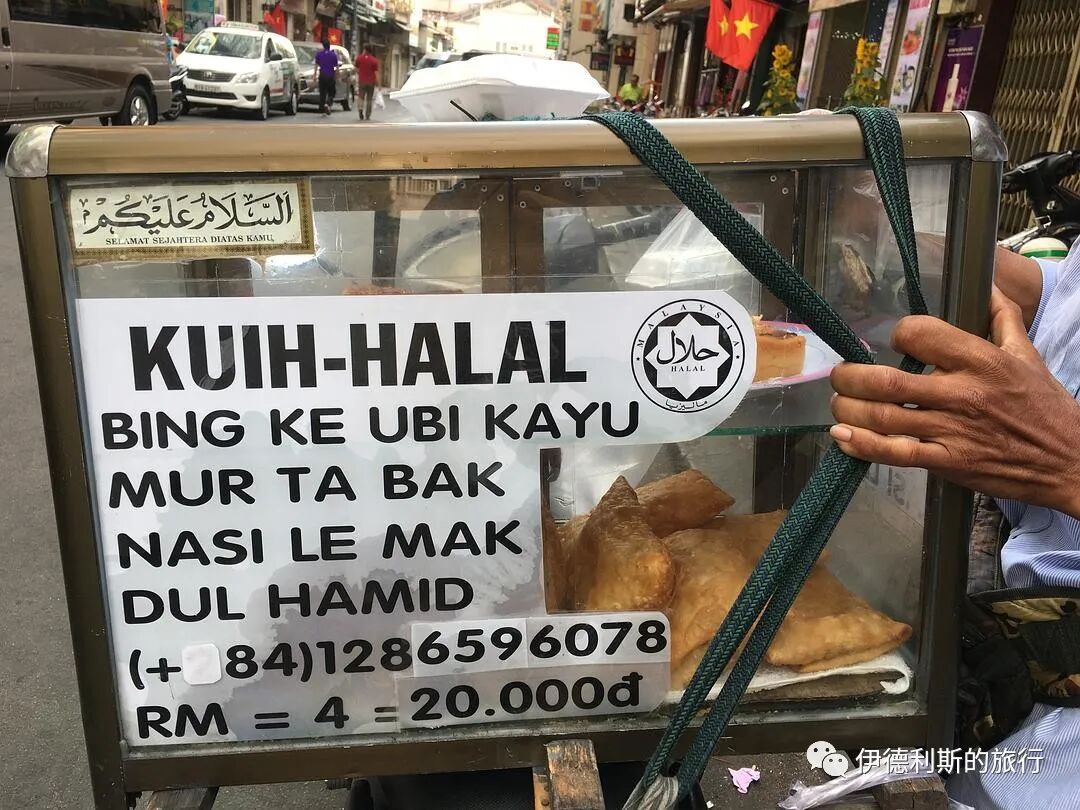
I bought a piece of Bingka Ubi cake made from a mix of cassava and coconut to eat.
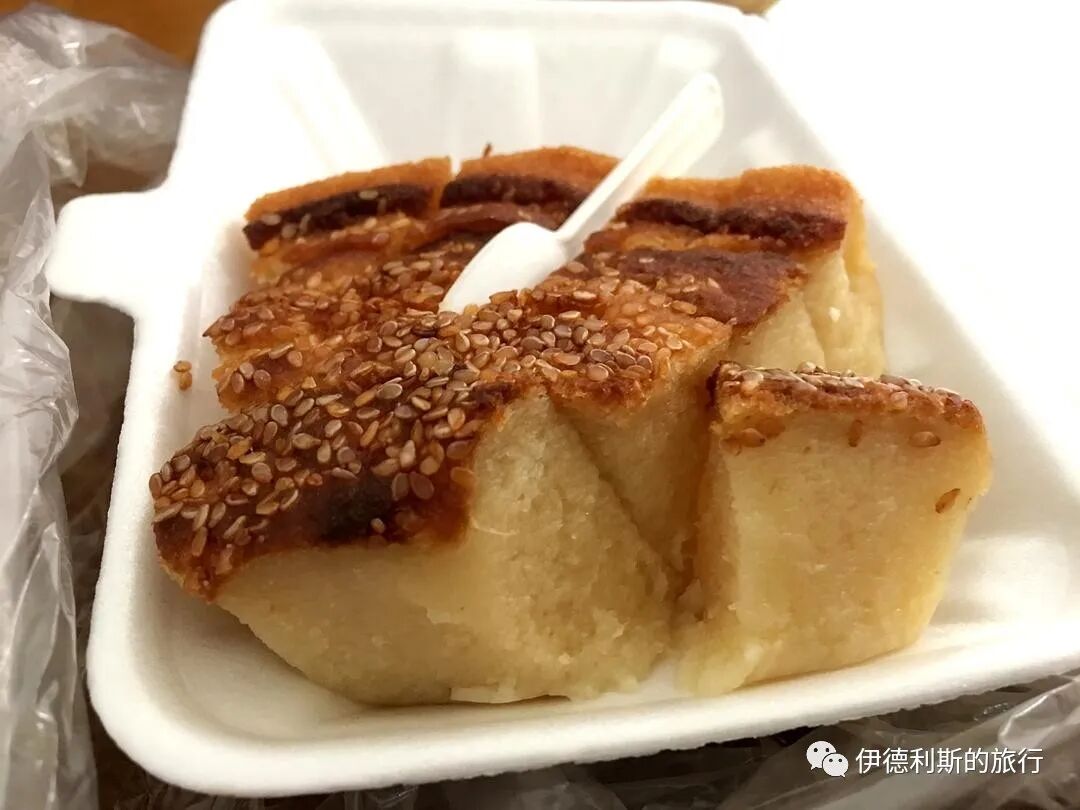
5. Street cold drinks
A cold drink stall on Malay Street sits right in front of a shop selling clothes for Muslim women.
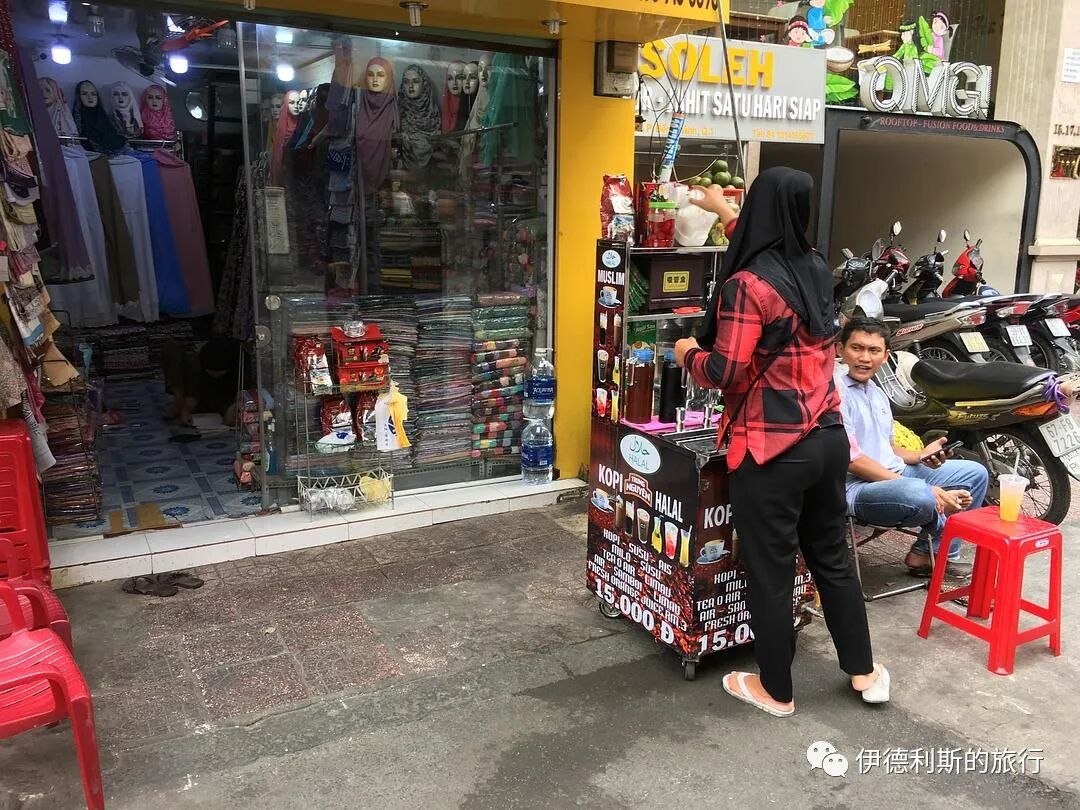
The word 'kopi' written on the stall means coffee.
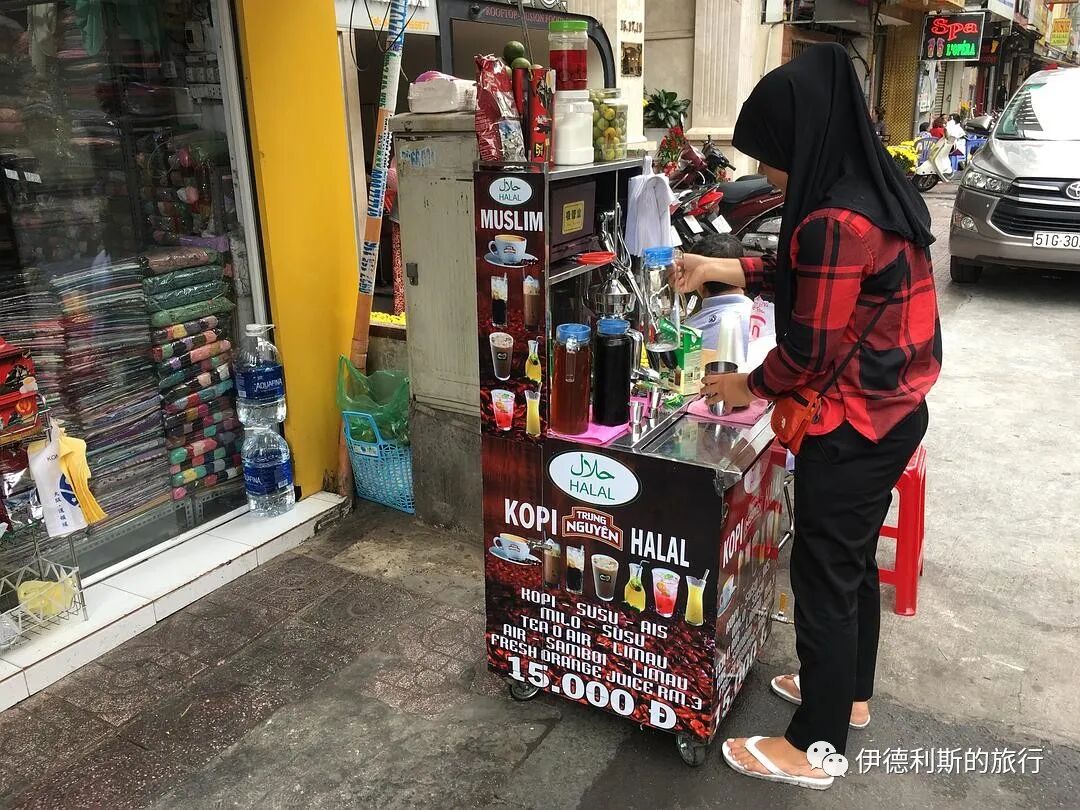
I bought a cup of rice milk to drink.
Kampung Panda Restaurant
Besides Malay Street, there are many Malaysian restaurants near the Bianqing Market, and the most famous one is Kampung Punda. The word "Kampung" means "village" in Malay.
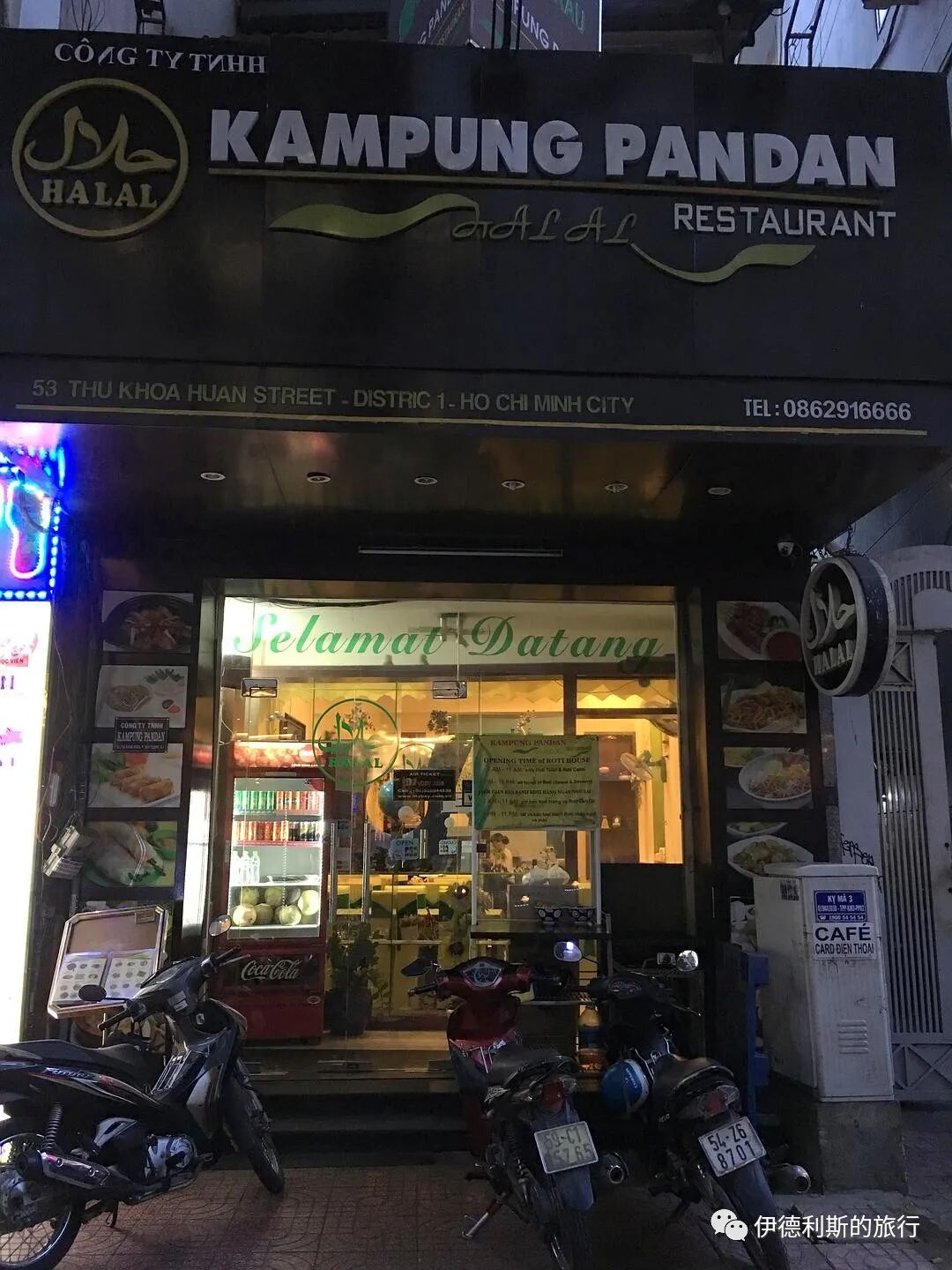
This restaurant also serves a lot of Vietnamese food.
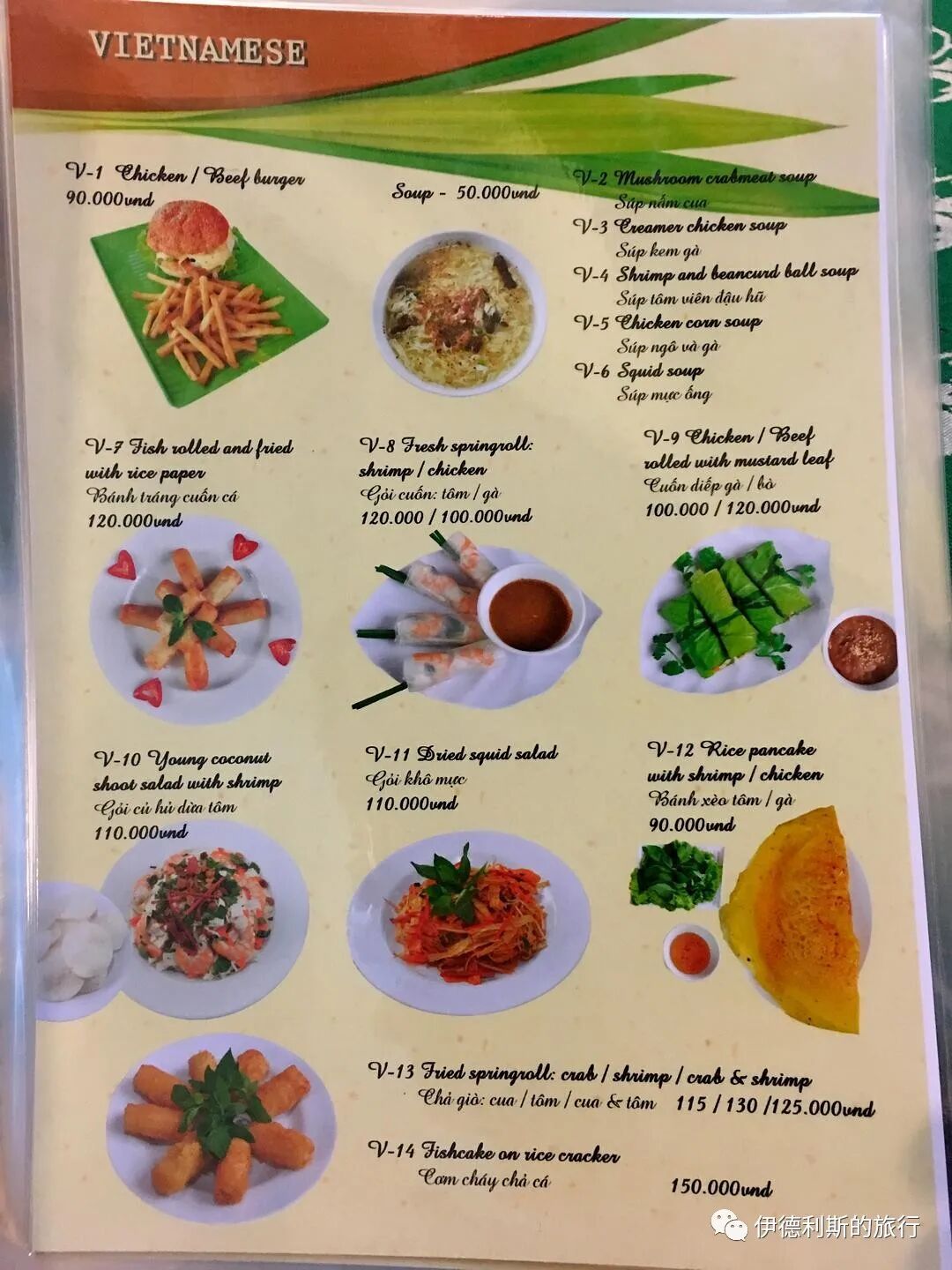
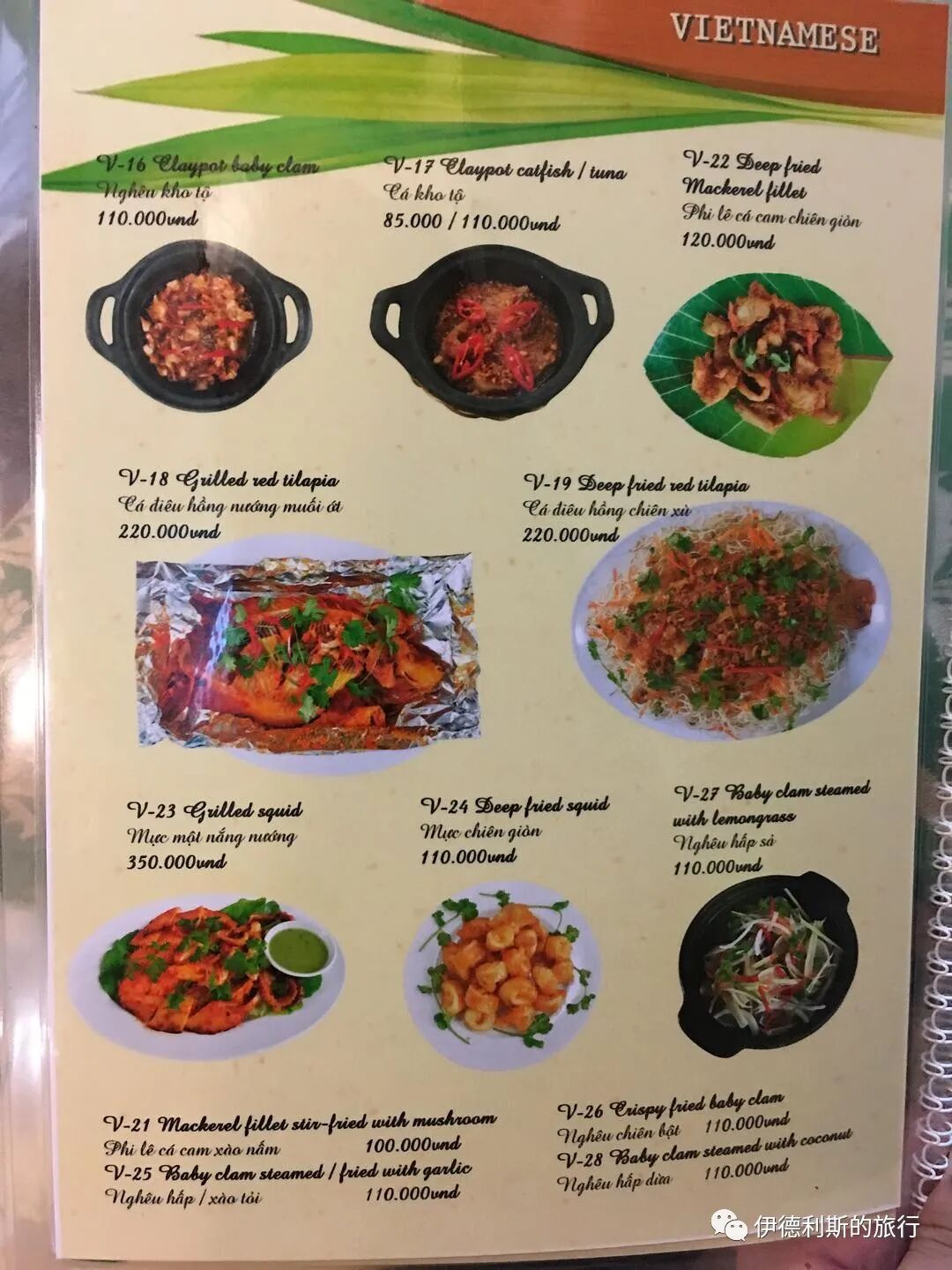
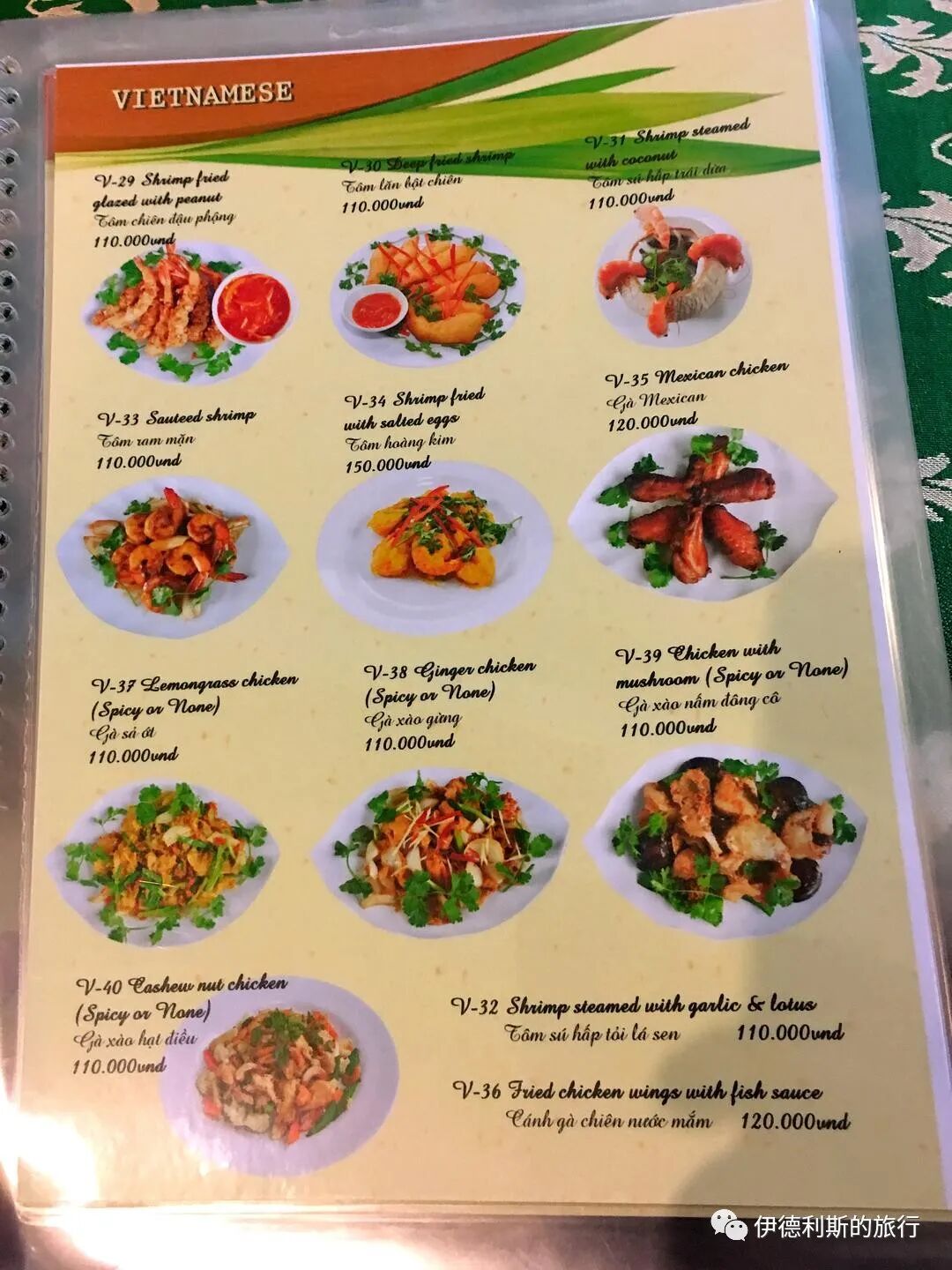
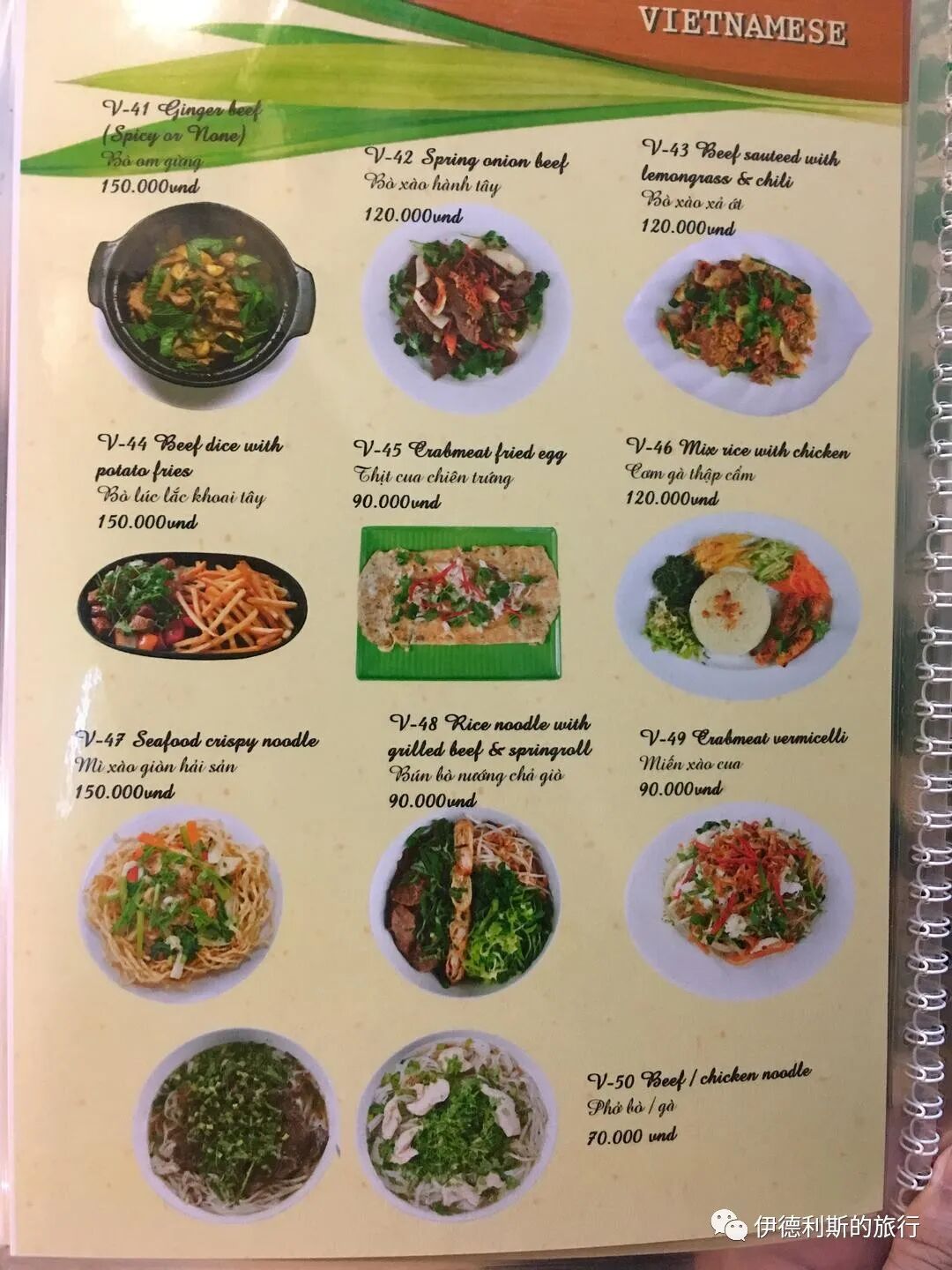
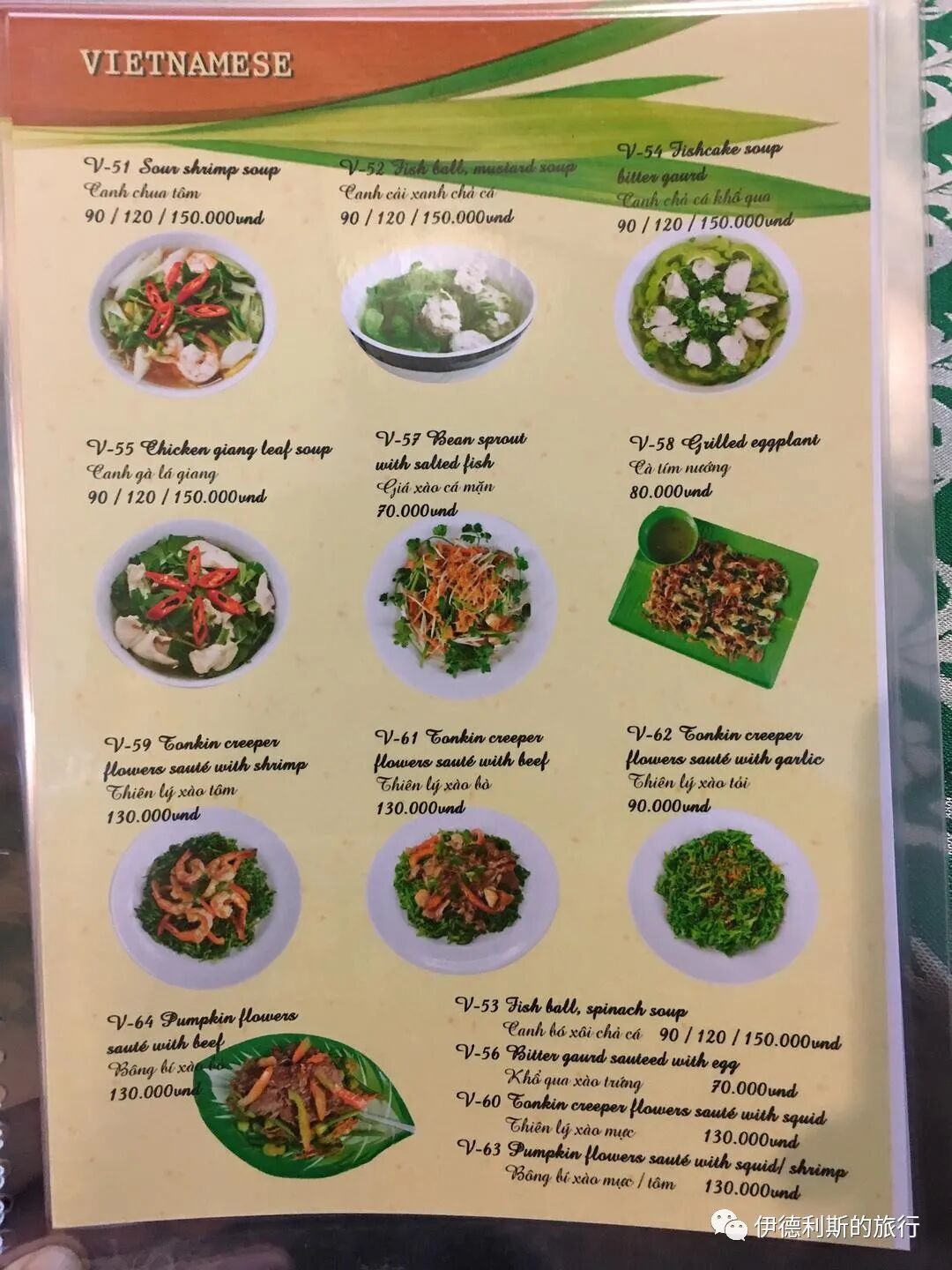
Start by drinking some coconut juice.
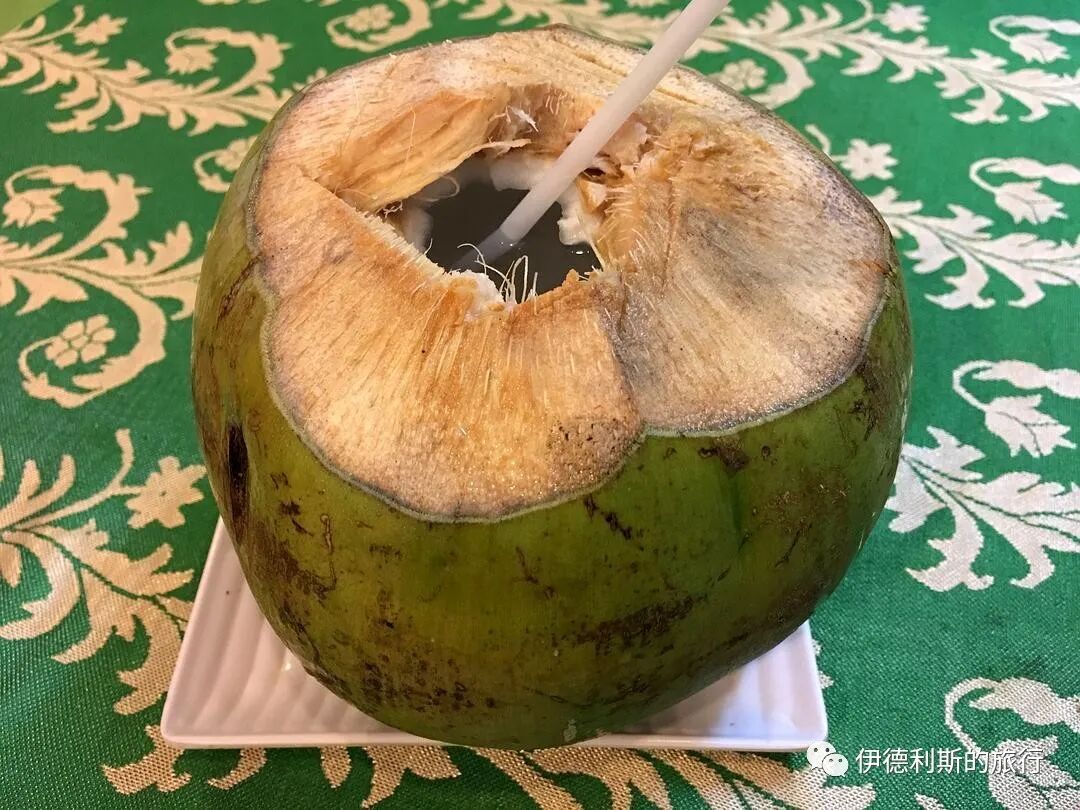
This type of spring roll is called Cuốn diếp. It is popular in northern Vietnam and is made by wrapping chicken, carrots, and other ingredients in lettuce. It tastes quite good.
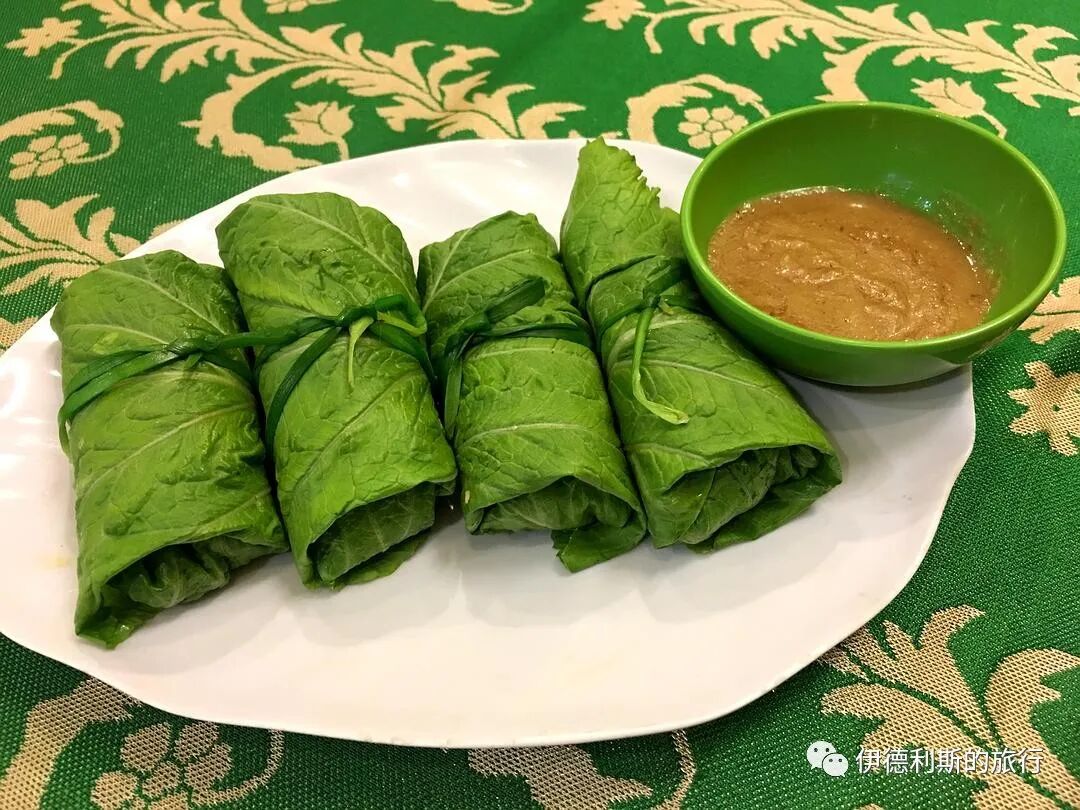
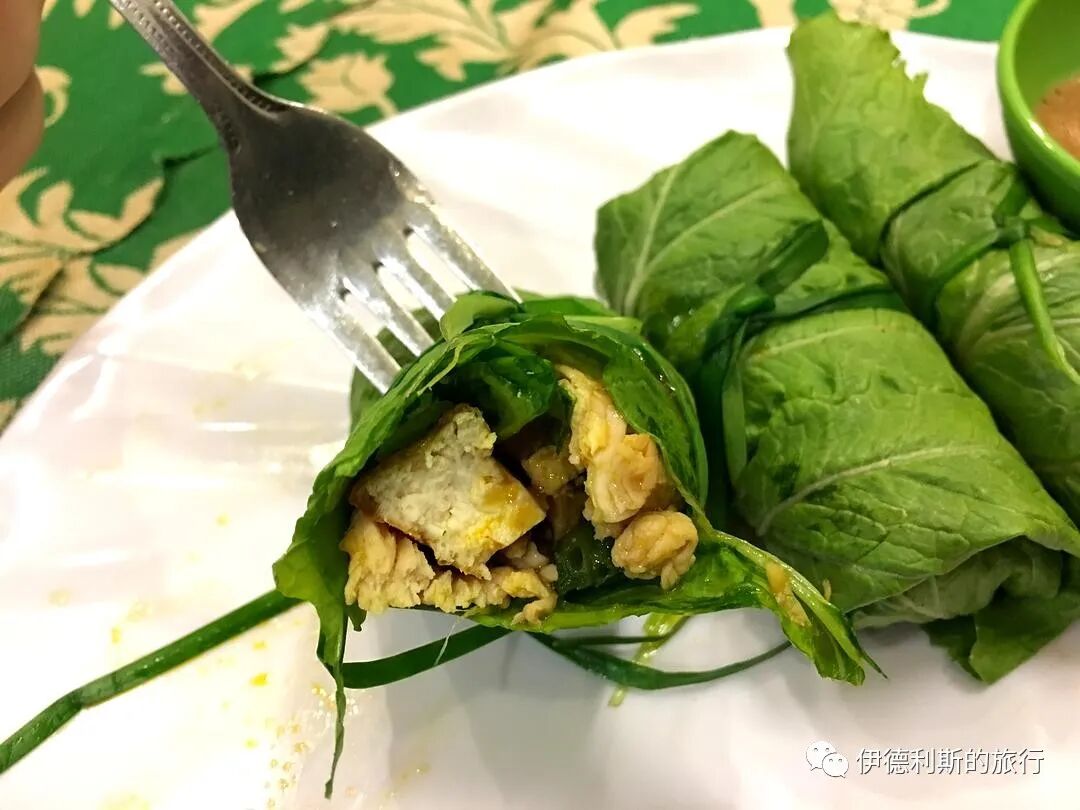
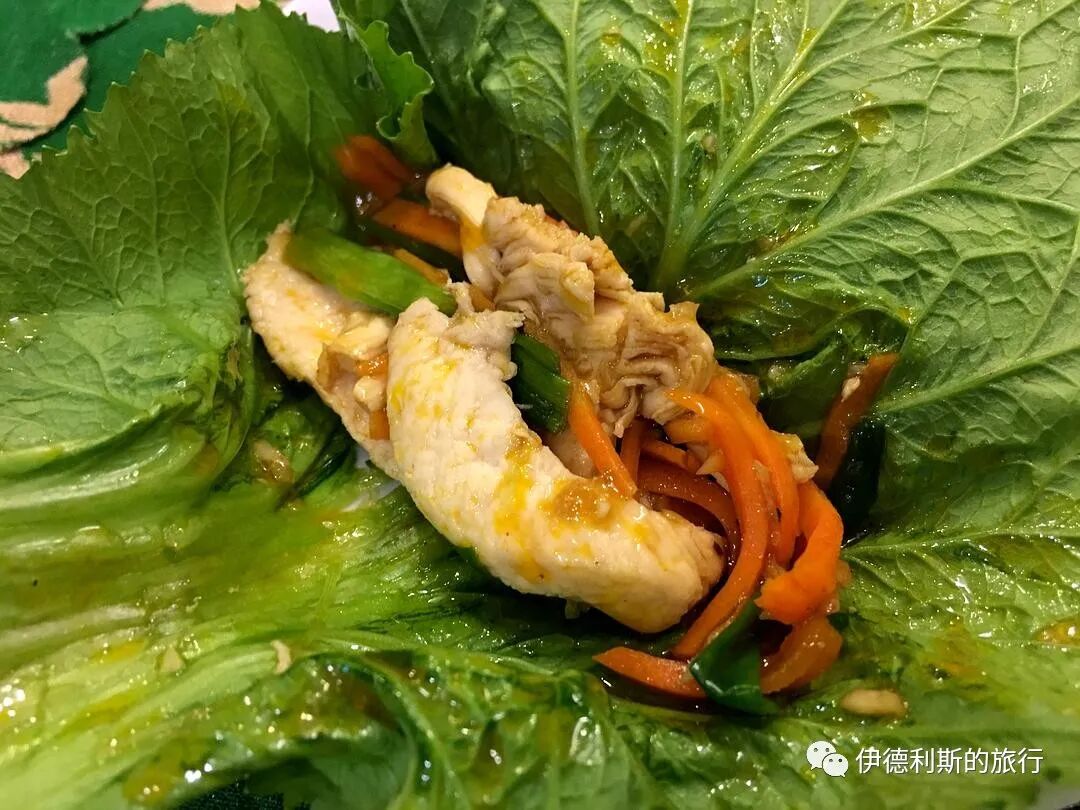
Stir-fried seafood noodles (Mì xào)
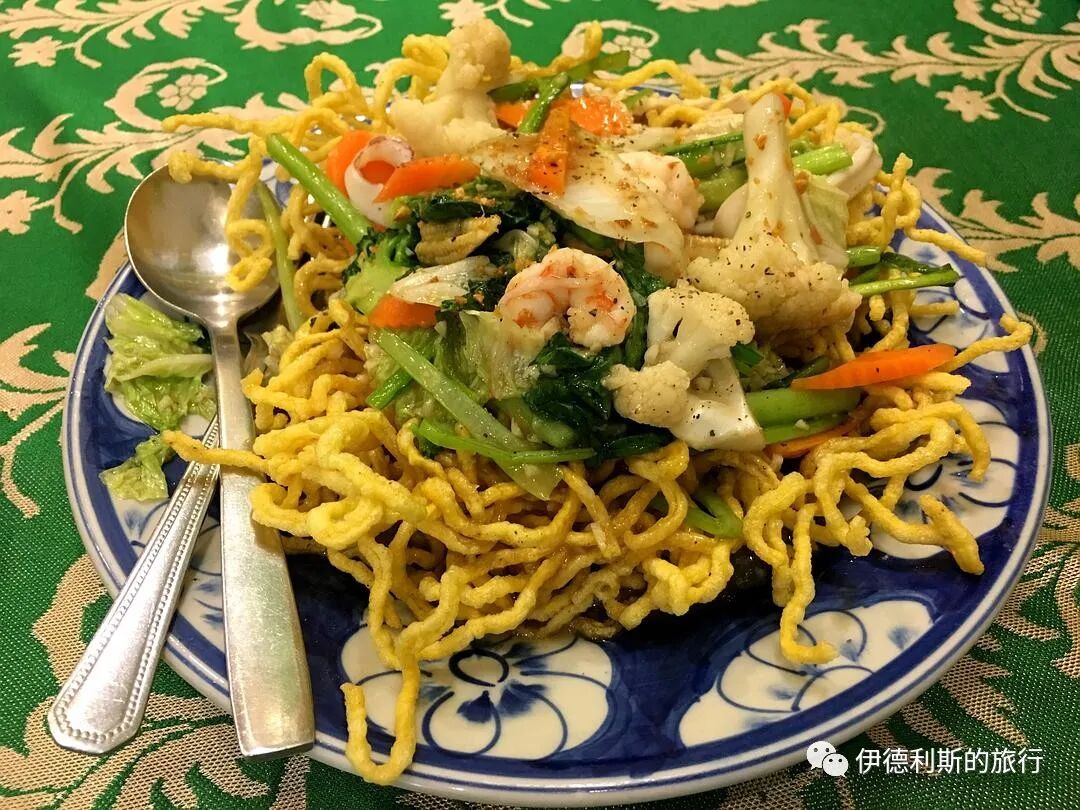
Vegetable and seafood squid rolls
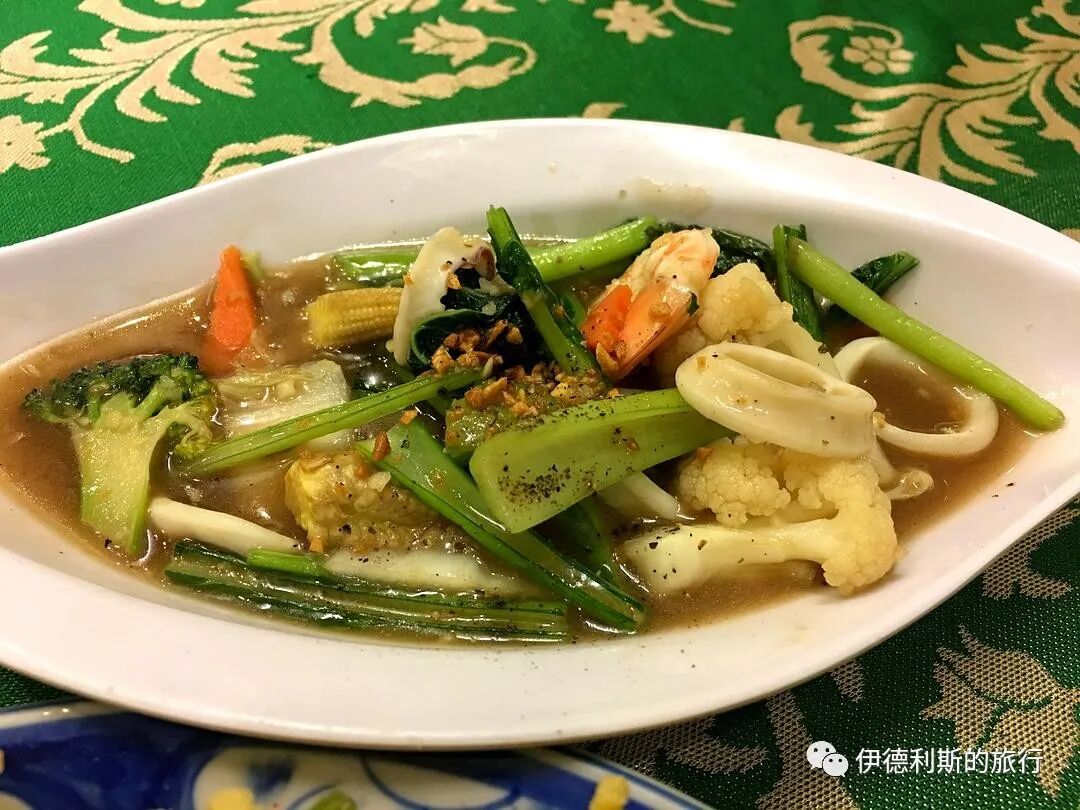
The Daun restaurant
Besides the Malaysian restaurants, there is a halal place near Ben Thanh Market run by Singaporeans. They hire Vietnamese chefs who make excellent halal Vietnamese food.
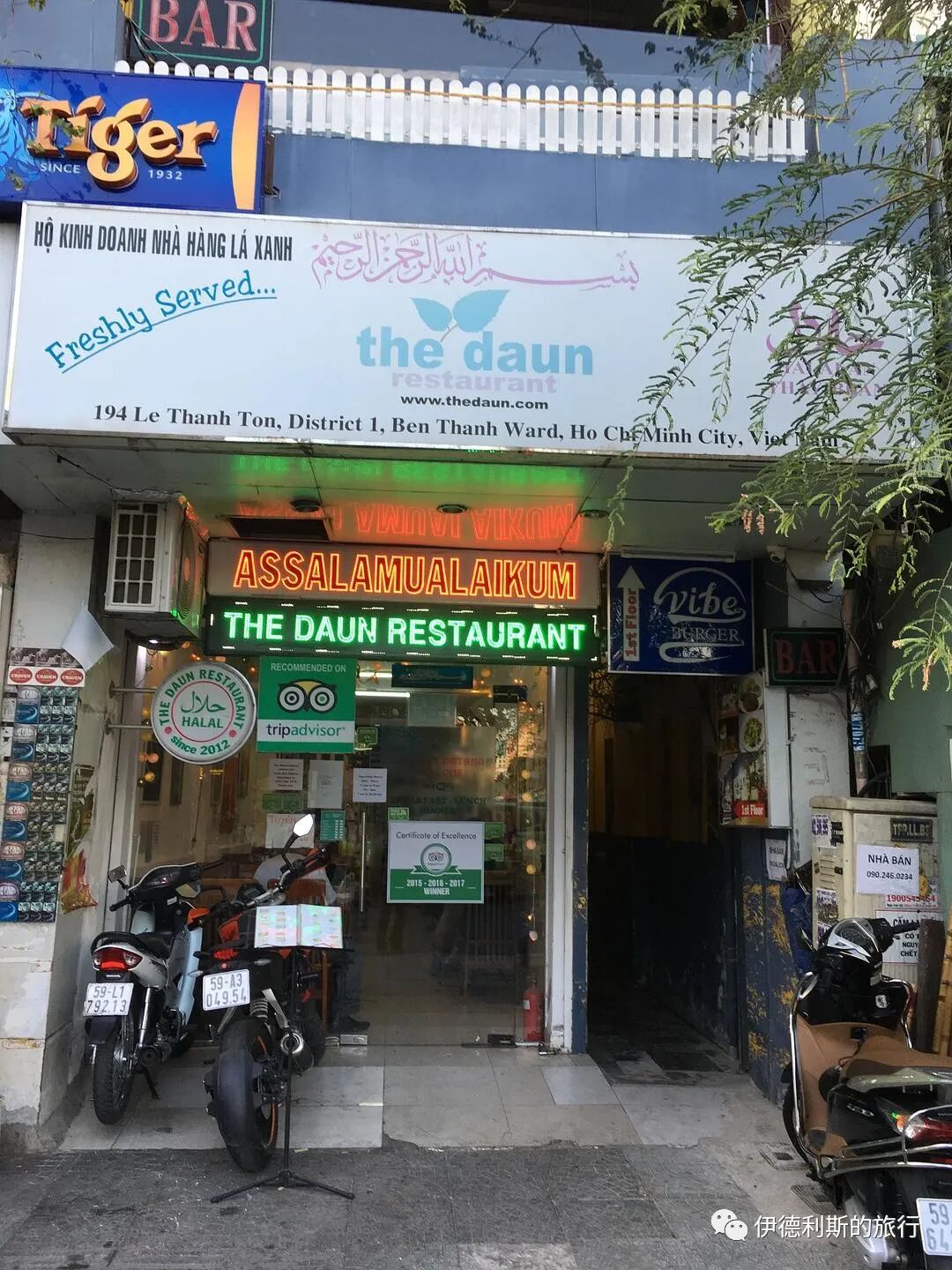
The man sitting across from us is the owner, and he is very kind and polite.
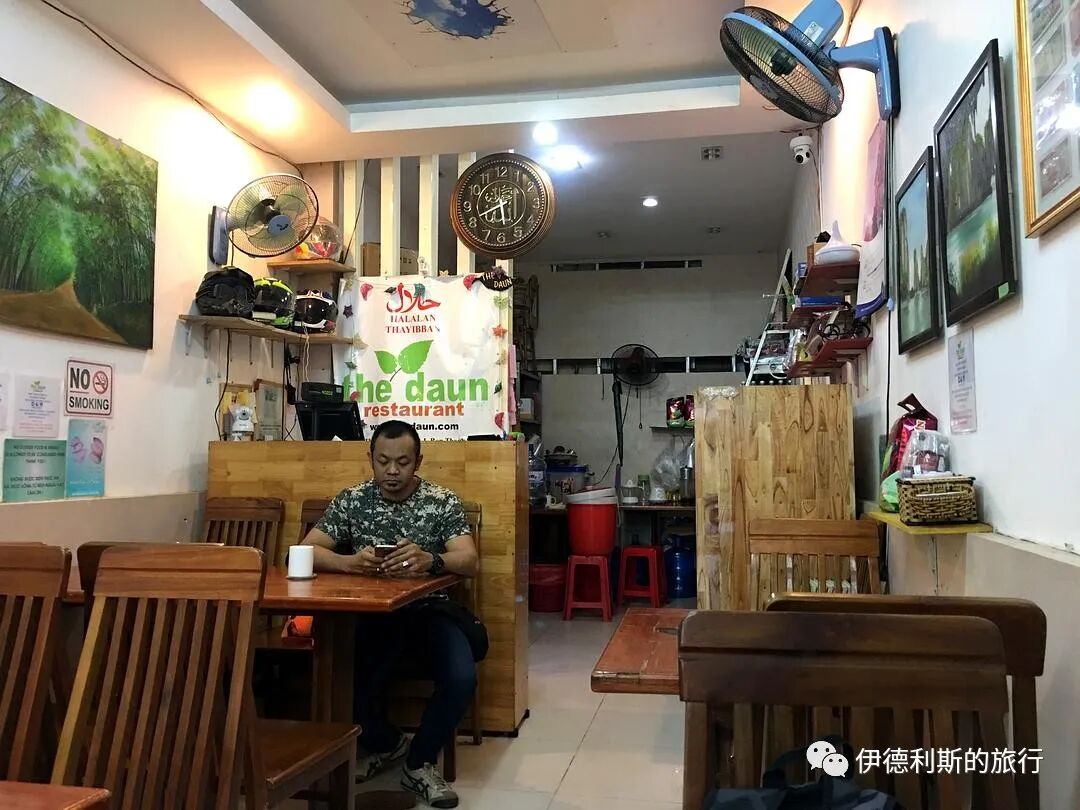
Menu
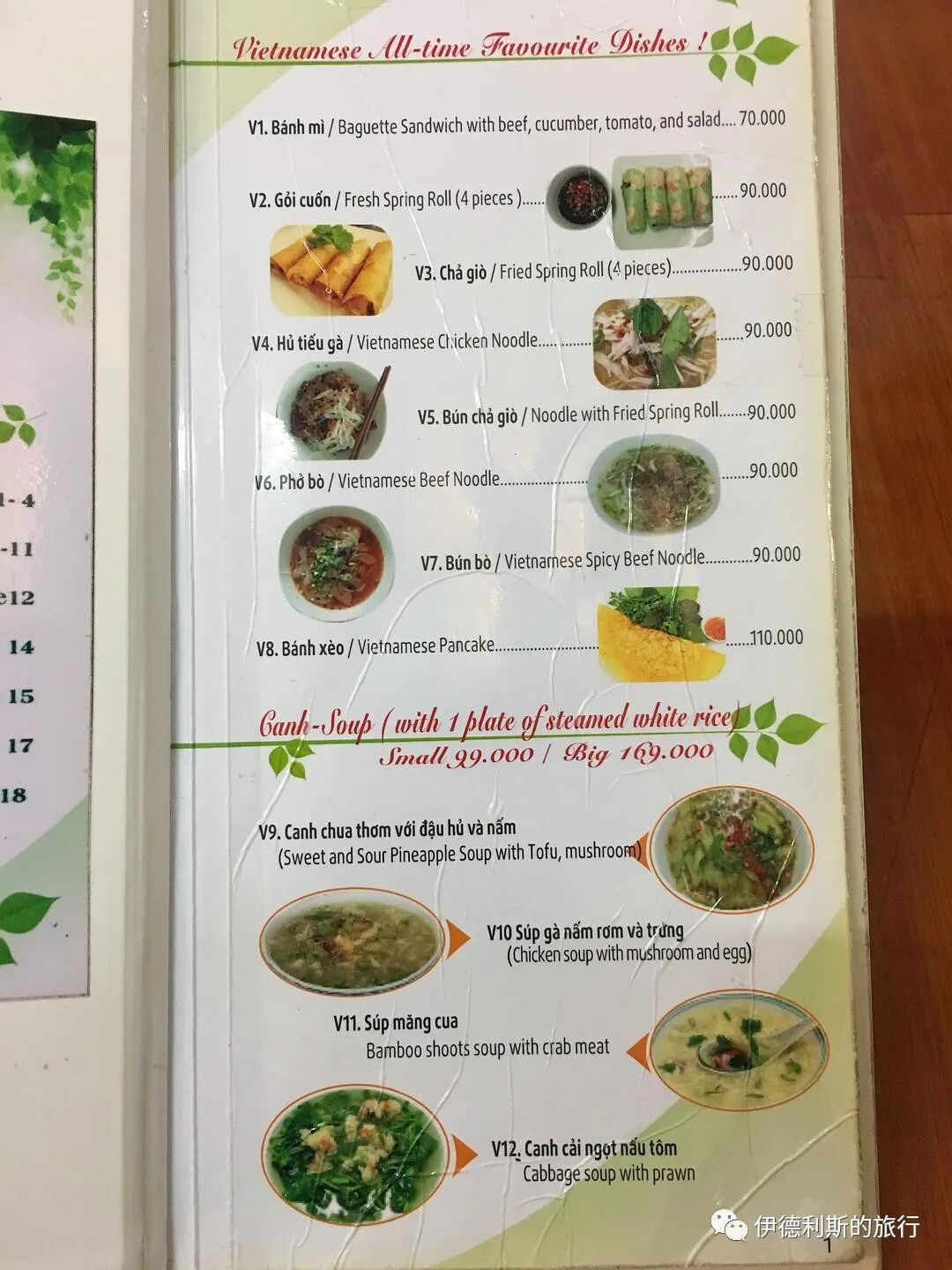
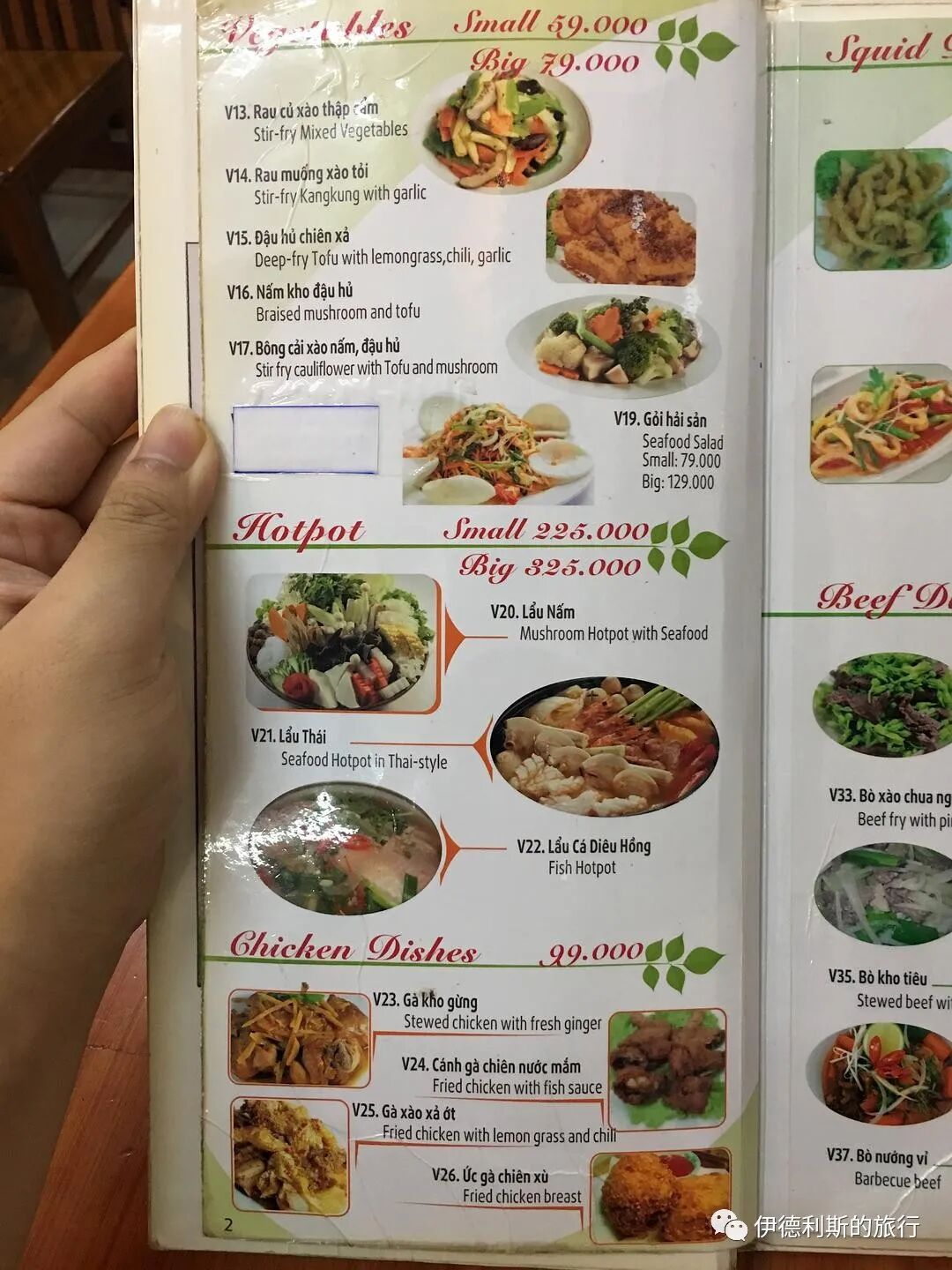
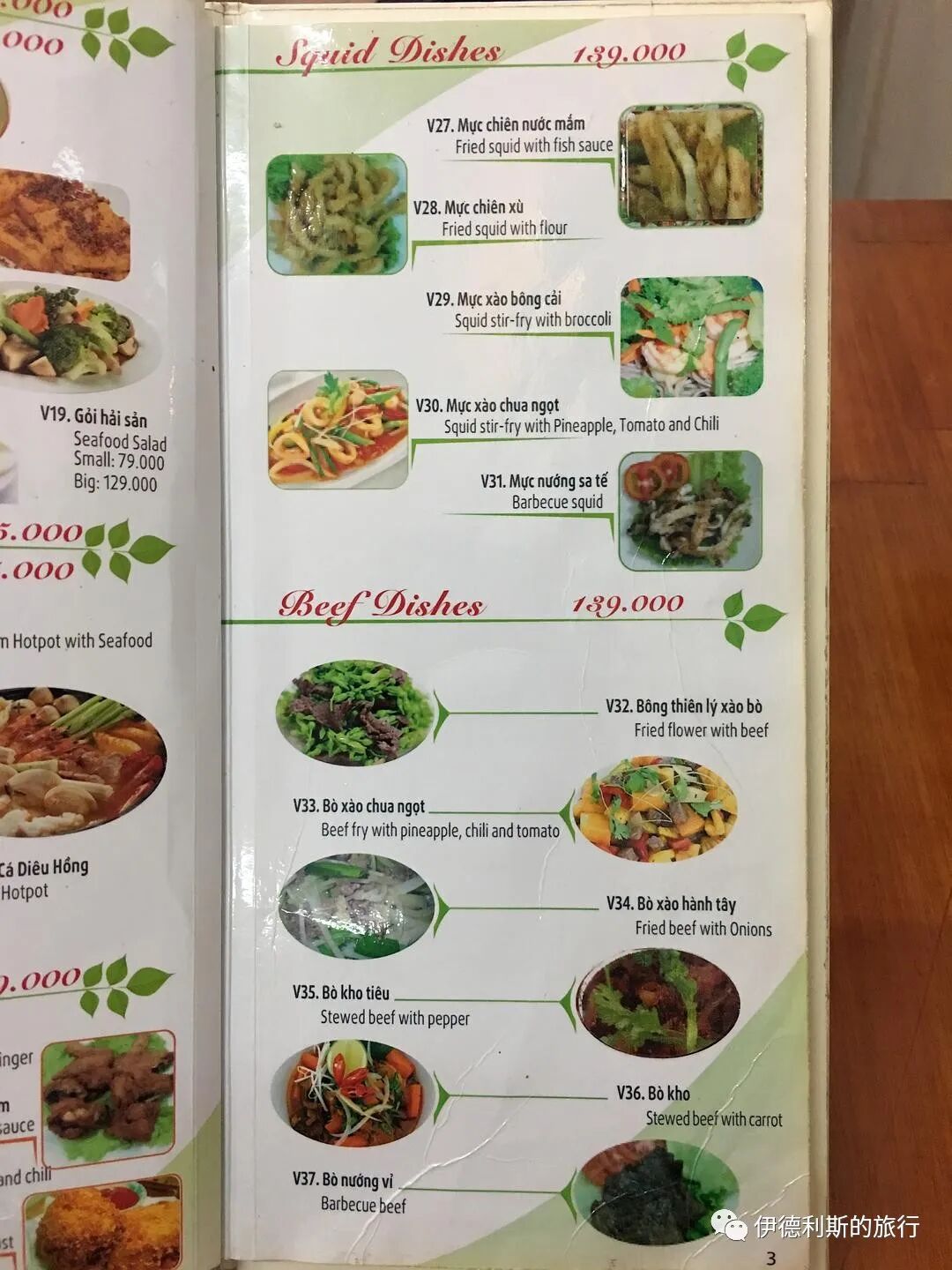
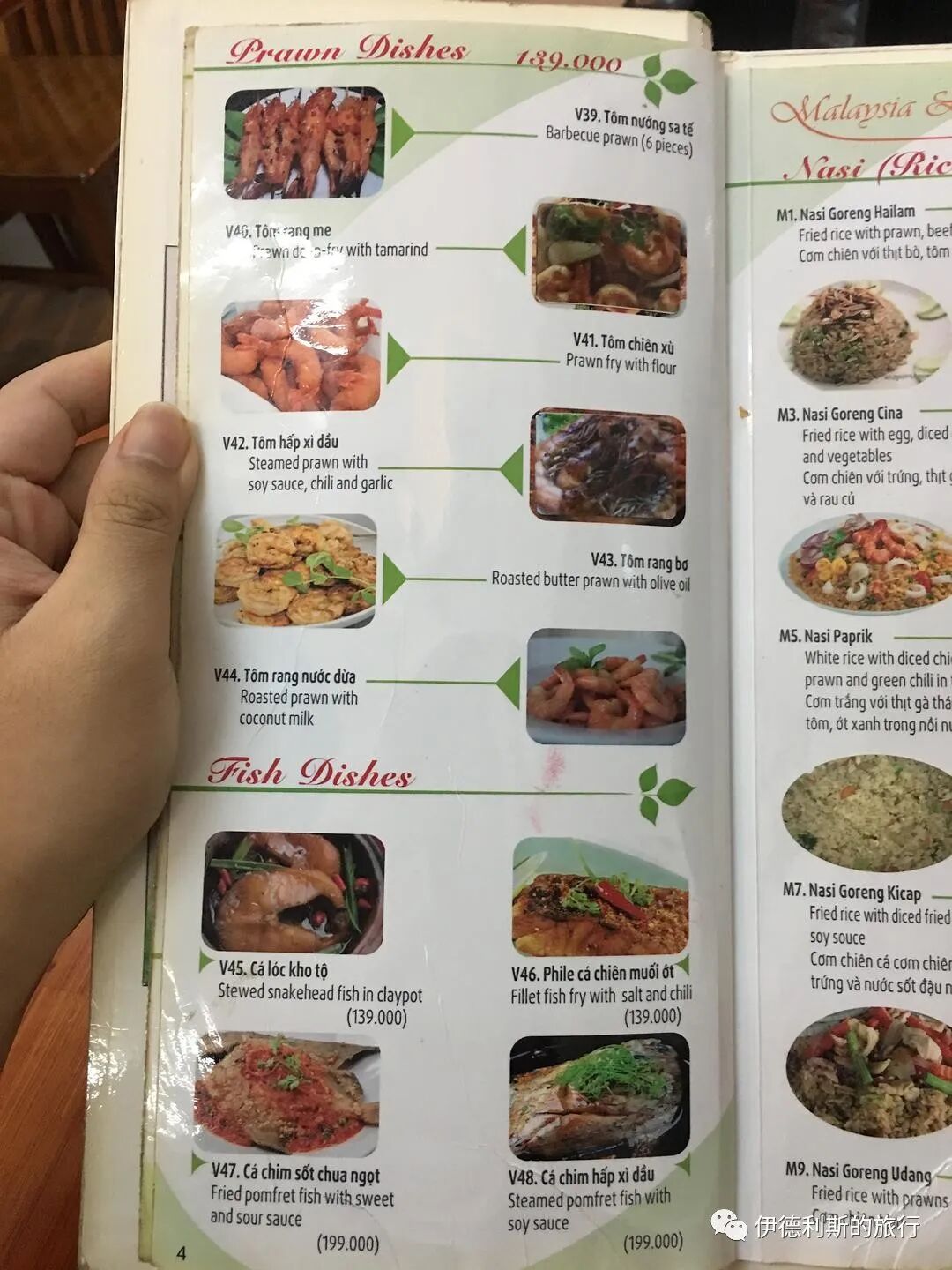
Start with an iced coffee!
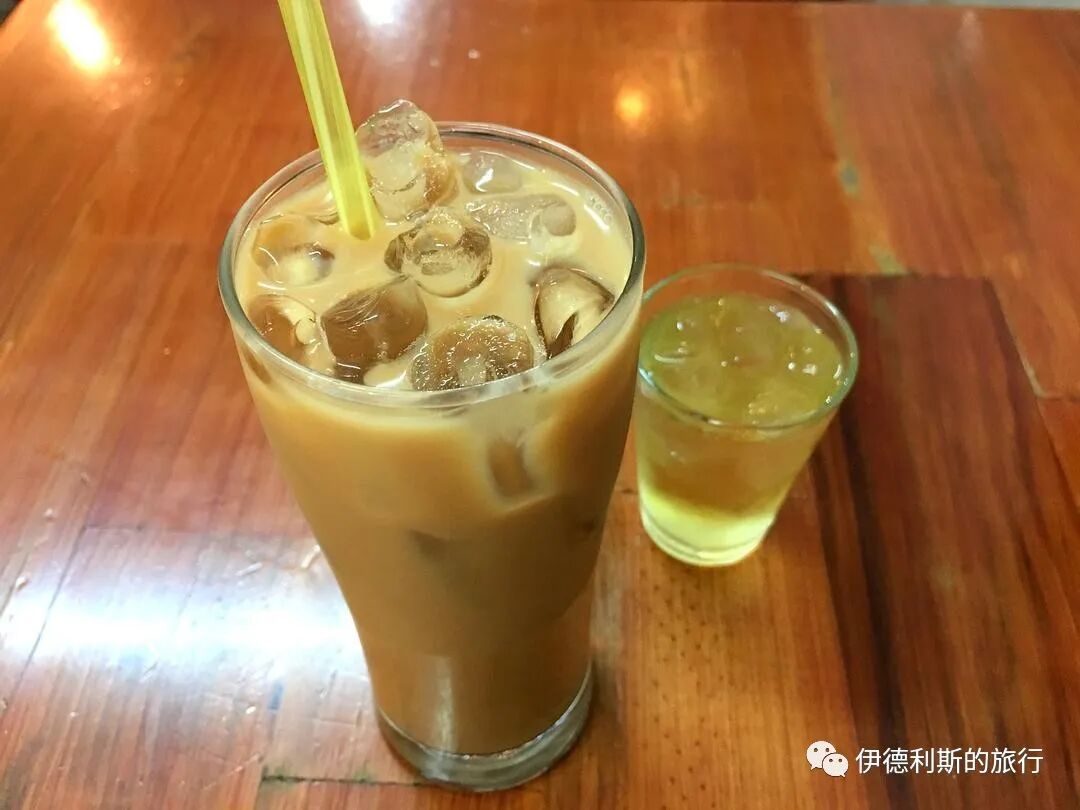
The noodles with fried spring rolls (bun cha gio) come with a delicious sweet and spicy fish sauce.
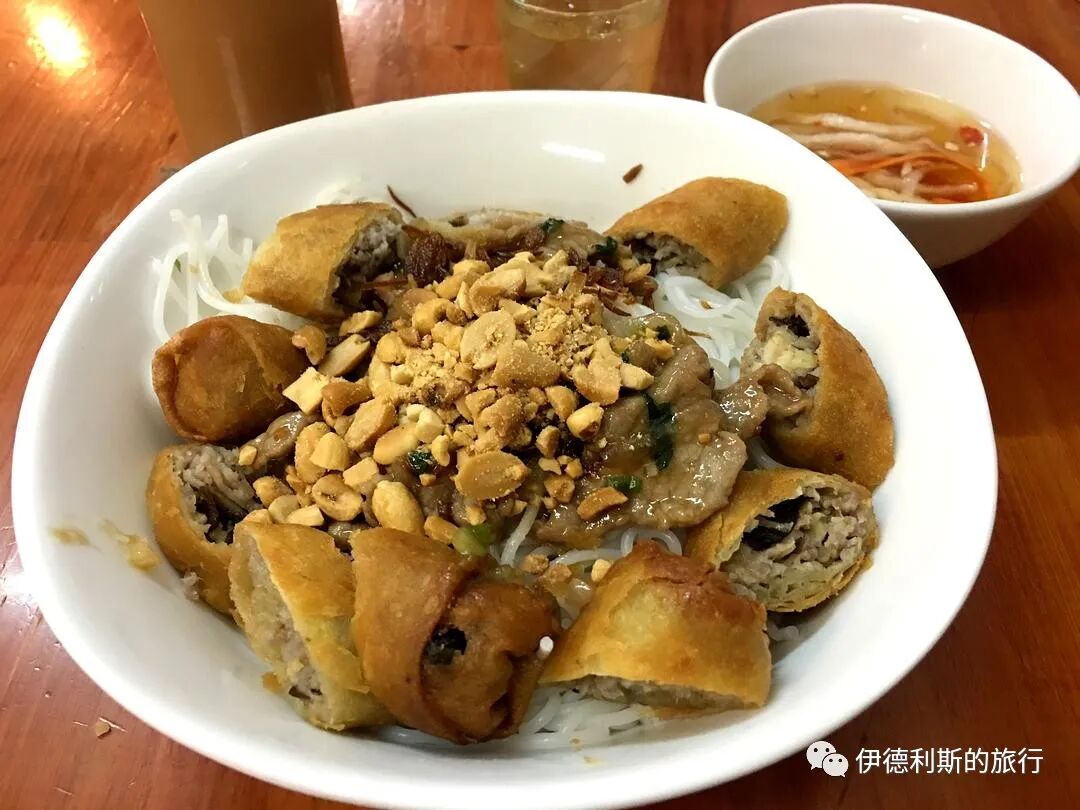
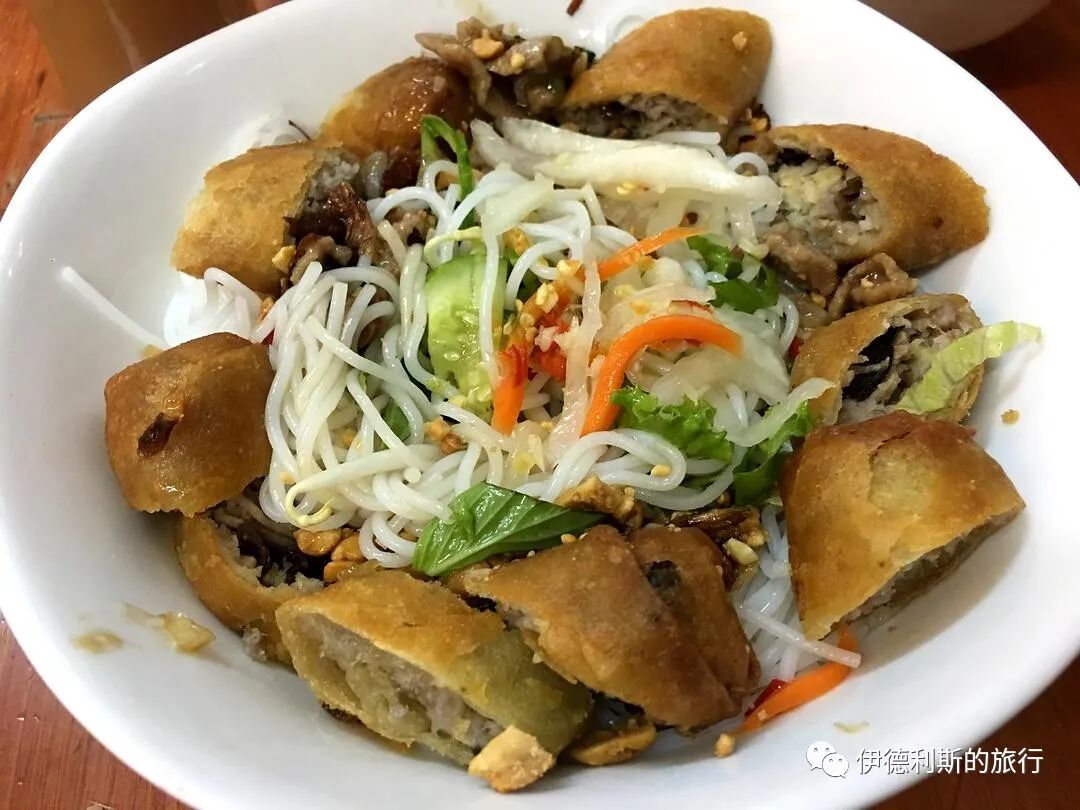
Pineapple and mushrooms
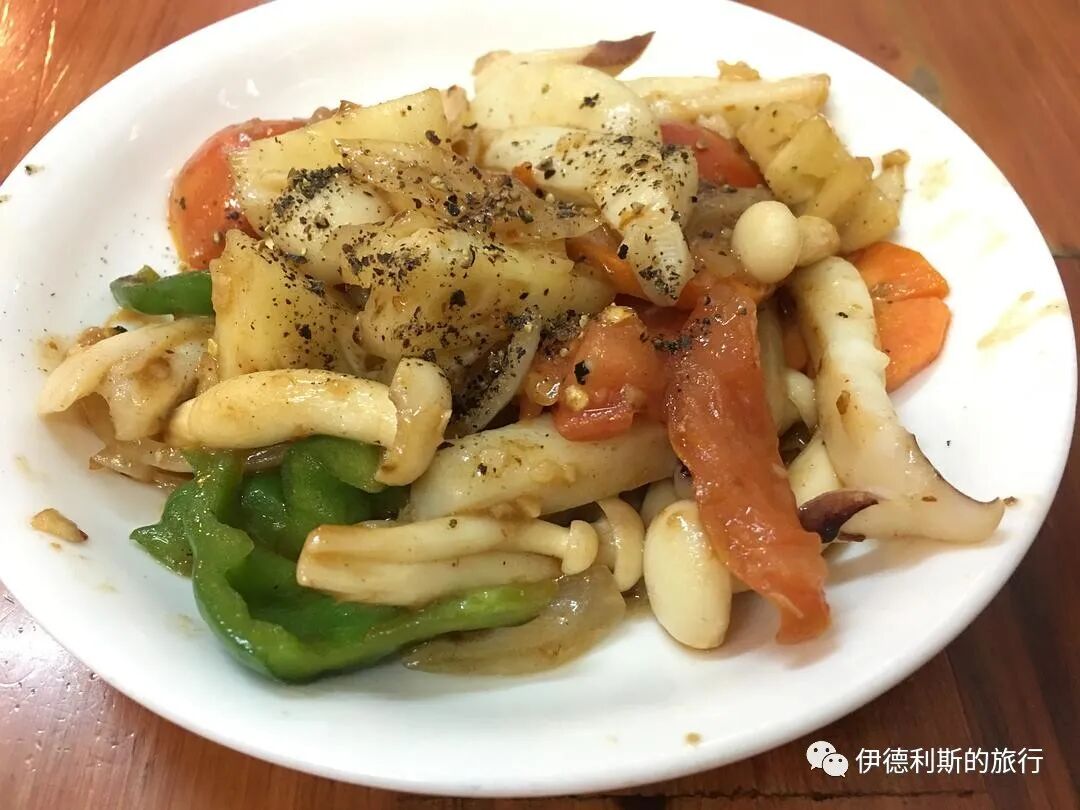
In Ho Chi Minh City, besides Malaysian and Singaporean halal restaurants, there are many halal eateries and stalls run by local Cham people. You can see more in my previous diary entry, "Mosques and Cham Muslims in Ho Chi Minh City, Vietnam." Collapse Read »
Summary: Ho Chi Minh City — Malay Muslims, Mosques and Food is presented here as a firsthand travel account in clear English, beginning with this scene: Southern Vietnam has a long history of close contact with the Malay Archipelago. In the 15th century, the Malacca Sultanate (1400–1511) became a major power in Southeast Asia and maintained close ties with Champa, which. The account keeps its focus on Ho Chi Minh City, Malay Muslims, Vietnam Muslims while preserving the names, places, food, and historical details from the Chinese source.
Southern Vietnam has a long history of close contact with the Malay Archipelago. In the 15th century, the Malacca Sultanate (1400–1511) became a major power in Southeast Asia and maintained close ties with Champa, which then ruled southern Vietnam. The classic Cham literature piece, The Princess of Kelantan, tells the story of a princess from Kelantan on the Malay Peninsula who practiced her faith in Champa. After the Portuguese occupied the Malacca Sultanate in 1511, many Malay people moved away, and some settled in southern Vietnam, where they integrated with the Cham Muslims.
The Western missionary M. Mahot MEP began living in Champa in 1676. In a letter written in July 1678, he noted: 'Regarding the Cham religion, the Malay Muslims are more vigilant than we are. They have immigrated to Champa in large numbers and have brought the Cham king and his court into Islam.'
In 1692, Vietnam invaded Champa and established Binh Thuan Prefecture on former Cham lands, then continued to invade the Mekong Delta, which was ruled by Cambodia. In 1698, they established Gia Dinh Prefecture in the Mekong Delta, which was the predecessor to Ho Chi Minh City. In the early 19th century, Emperor Gia Long (reigned 1802–1820) of the Vietnamese Nguyen Dynasty sent troops to guard Gia Dinh City. Because he lacked enough soldiers, he recruited many Cham and Malay troops.
In 1859, the joint French and Spanish forces captured the city of Gia Dinh. In 1862, France and the Nguyen Dynasty of Vietnam signed the Treaty of Saigon, officially occupying Gia Dinh. From then on, Gia Dinh gradually developed into Saigon, a commercial hub for the French in Southeast Asia.
During French rule, the government had a relatively relaxed policy toward the faith. Many Malay and Indonesian people came to Saigon for business, and the first mosque in Saigon was the Al Rahim Mosque, built by Malay and Indonesian Muslims in 1885.
After entering the 20th century, the Malay community had a greater influence on the faith in Vietnam. At that time, religious publications were all imported from Malaya, and mosques were accustomed to inviting Malay imams to give sermons (waaz) in the Malay language. Local Cham youth were used to traveling to Malaya to study the scriptures, returning to Vietnam to practice their faith after completing their studies. In 1954, Vietnam was divided into North and South, and South Vietnam maintained good diplomatic relations with the then Federation of Malaya and later Malaysia. Many mosques in Vietnam were built with help from Malaysia in the 1950s and 1960s. In Saigon, you can find the Haiyat Al Islam mosque built in 1962, the Alsa Adah mosque built in 1968, and the Jamiul Anwar mosque built in 1969.
Jamiul Anwar mosque
The area in Ho Chi Minh City with the most Malay people is currently Malay Street, located outside the west gate of Ben Thanh Market.
Since these restaurants mainly serve Malay tourists, they also offer Vietnamese food. This makes it very easy for Malay Muslims to try local Vietnamese dishes.
The west gate of Ben Thanh Market is at the end of the road.
The street has many stalls and shops selling women's clothing for Muslims.
There are also Muslim travel agencies. Among them, Bismillah means the basmala.
Haji Osman Restaurant
I flew from Beijing to Ho Chi Minh City and headed straight to Malay Street first thing in the morning. Malay Street was still quiet in the morning, so I walked around and picked Haji Osman Restaurant, which looked like the busiest spot.
I ordered Vietnamese-style baguette, rice noodle soup (pho), and coffee, and everything was excellent. I never used to like coffee, but I was surprised to find that I really enjoyed it this time.
Vietnamese baguette (banh mi) is a classic breakfast on the streets of Saigon. The baguette arrived in Saigon after the French occupied the city in 1861. Back then, wheat was expensive to import, so the baguette was considered a luxury item. During World War I, wheat imports stopped, so more cheap rice flour was added to Vietnamese baguettes, making them much fluffier. Because the price dropped, baguettes became a regular part of the Vietnamese diet.
Before the 1950s, Vietnamese baguettes were still strictly French-style, served with mayonnaise or jam. After Vietnam was divided into North and South in 1954, over a million people moved from the north to the south, which changed the food scene in Saigon. In the late 1950s, some northern migrants started selling baguettes on the street, and the modern Vietnamese baguette began to take shape.
After the Fall of Saigon in 1975, baguettes were only sold in state-run restaurants and often served with other dishes, which is how the modern habit of dipping baguettes into rice noodle soup (pho) began. It was not until the socialist market economic reforms in 1986 that baguettes returned to the streets as a common snack.
Vietnamese rice noodle soup (pho) appeared in northern Vietnam in the early 20th century, but it was not very popular in Saigon until the 1950s. After Vietnam was divided into North and South in 1954, over a million people moved from the north to the south. Rice noodle soup (pho) became popular in Saigon and developed a unique flavor different from the north.
Thai basil is served with the rice noodle soup, though the Malay people at the next table did not seem to enjoy it much.
Delicious Vietnamese coffee.
HALAL AMIN restaurant.
HALAL AMIN is another halal restaurant on Malay Street. The words "PHỞ MUSLIM" below mean Muslim rice noodle soup.
How it looks during the day.
Vietnamese spring rolls (Gỏi cuốn) contain rice vermicelli (bún) wrapped in translucent rice paper (Bánh tráng). The rice paper is a bit tough to chew, and it felt strange the first time I ate it.
I ordered wide beef noodles at the last place, but this time I had thin chicken noodles.
Hajah BASIROH Restaurant
I also tried the Malaysian chicken rice at Hajah BASIROH Restaurant on Malay Street.
In tropical countries like Malaysia, Vietnam, or Thailand, restaurants often bring you a big glass of ice first. You pour your own water or drink into it, which feels amazing in the hot and humid weather.
Street-style Malay cake (Kuih)
One morning on Malay Street, I met an uncle selling Malay cake (Kuih).
The uncle specifically showed me the words on his cart. The title KUIH-HALAL means halal Malay cake, and on the right is the Malaysian halal certification logo.
The 'Bingke Ubi Kayu' on the first line, also written as 'Kuih Bingka Ubi Kayu' or 'Bingka Ubi', is a Malay cake made by mixing coconut and cassava with coconut milk and salt. This simple recipe is very common in Malaysia.
The 'Murtabak' on the second line is a vegetable pancake popular across the Middle East, South Asia, and Southeast Asia.
The 'Nasi Lemak' on the third line is Malay coconut milk rice.
I bought a piece of Bingka Ubi cake made from a mix of cassava and coconut to eat.
5. Street cold drinks
A cold drink stall on Malay Street sits right in front of a shop selling clothes for Muslim women.
The word 'kopi' written on the stall means coffee.
I bought a cup of rice milk to drink.
Kampung Panda Restaurant
Besides Malay Street, there are many Malaysian restaurants near the Bianqing Market, and the most famous one is Kampung Punda. The word "Kampung" means "village" in Malay.
This restaurant also serves a lot of Vietnamese food.
Start by drinking some coconut juice.
This type of spring roll is called Cuốn diếp. It is popular in northern Vietnam and is made by wrapping chicken, carrots, and other ingredients in lettuce. It tastes quite good.
Stir-fried seafood noodles (Mì xào)
Vegetable and seafood squid rolls
The Daun restaurant
Besides the Malaysian restaurants, there is a halal place near Ben Thanh Market run by Singaporeans. They hire Vietnamese chefs who make excellent halal Vietnamese food.
The man sitting across from us is the owner, and he is very kind and polite.
Menu
Start with an iced coffee!
The noodles with fried spring rolls (bun cha gio) come with a delicious sweet and spicy fish sauce.
Pineapple and mushrooms
In Ho Chi Minh City, besides Malaysian and Singaporean halal restaurants, there are many halal eateries and stalls run by local Cham people. You can see more in my previous diary entry, "Mosques and Cham Muslims in Ho Chi Minh City, Vietnam." Collapse Read »
Halal Food Guide: Kazan — Tatar Pastries and Muslim Food Traditions
Reposted from the web
Summary: Halal Food Guide: Kazan — Tatar Pastries and Muslim Food Traditions is presented here as a firsthand travel account in clear English, beginning with this scene: The Chak-Chak Museum in Kazan is the most direct place to experience traditional Tatar culture. The account keeps its focus on Kazan Food, Tatar Pastries, Halal Food while preserving the names, places, food, and historical details from the Chinese source.
The Chak-Chak Museum in Kazan is the most direct place to experience traditional Tatar culture. The museum is located in a Tatar wooden house in the historic Tatar district of Kazan, and the interior does a great job of recreating a traditional Tatar home, giving it a very special atmosphere. If you have a group of 6, they can teach you how to make Chak-Chak on the spot. Since I was alone, I booked a tasting and guided tour session on their official website (https://www.muzeino.ru/), and the museum staff will email you to confirm if you prefer English or Russian.
The experience that day was fantastic. When I arrived at the museum at the scheduled time, a Tatar lady who spoke fluent English was already waiting for me. The whole process felt just like visiting a Tatar family. The lady told me various Tatar legends, daily customs, and cultural traditions, and then explained the making process of the national dessert, Chak-Chak, in detail.
Chak-Chak is very similar to Sachima; it is made by mixing flour with milk and eggs, deep-frying the dough, and then drizzling it with honey. Chak-Chak is popular in Tatarstan and Bashkortostan. It is said to have originated in the ancient Volga Bulgaria, and similar desserts also exist among Kazakh, Kyrgyz, and Uzbek people. Chak-Chak is an important food at Kazan Tatar weddings. In the past, every Kazan Tatar woman had to learn how to make it, usually passed down from mother to daughter or grandmother to granddaughter.
After that, a young Tatar lady made me some Tatar tea. As I tasted traditional Tatar desserts, she told me about Tatar clothing, silver jewelry, and embroidery crafts. We had a great time chatting.
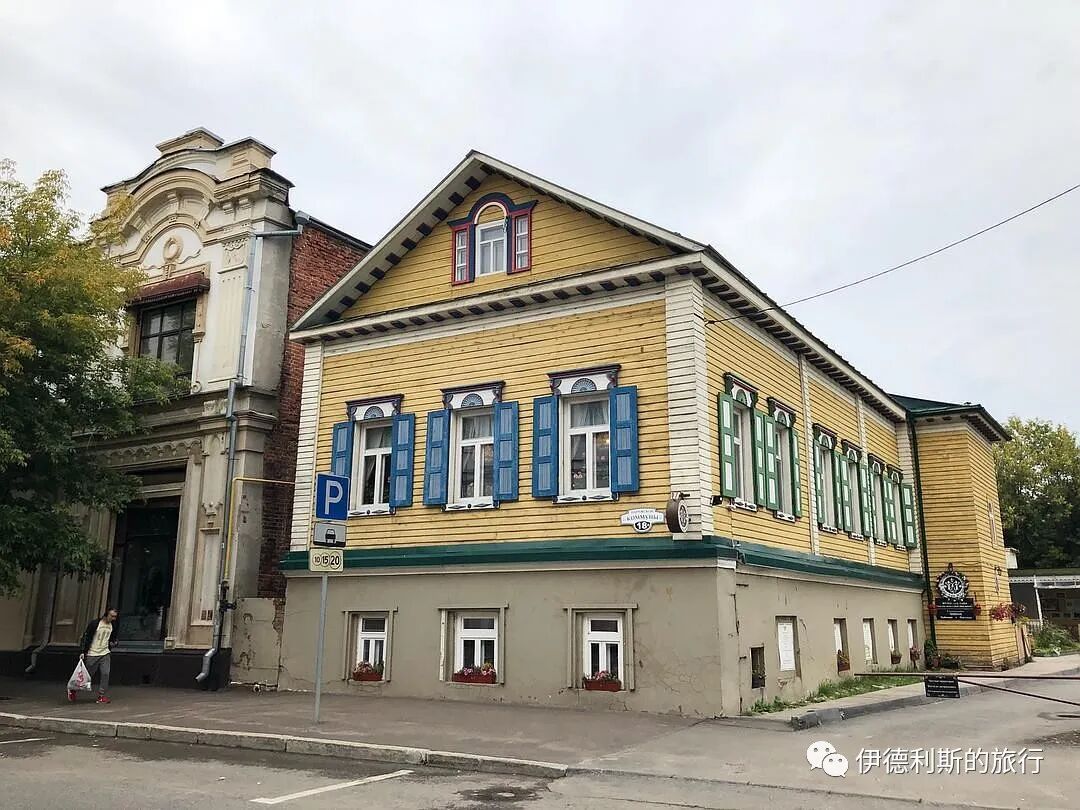
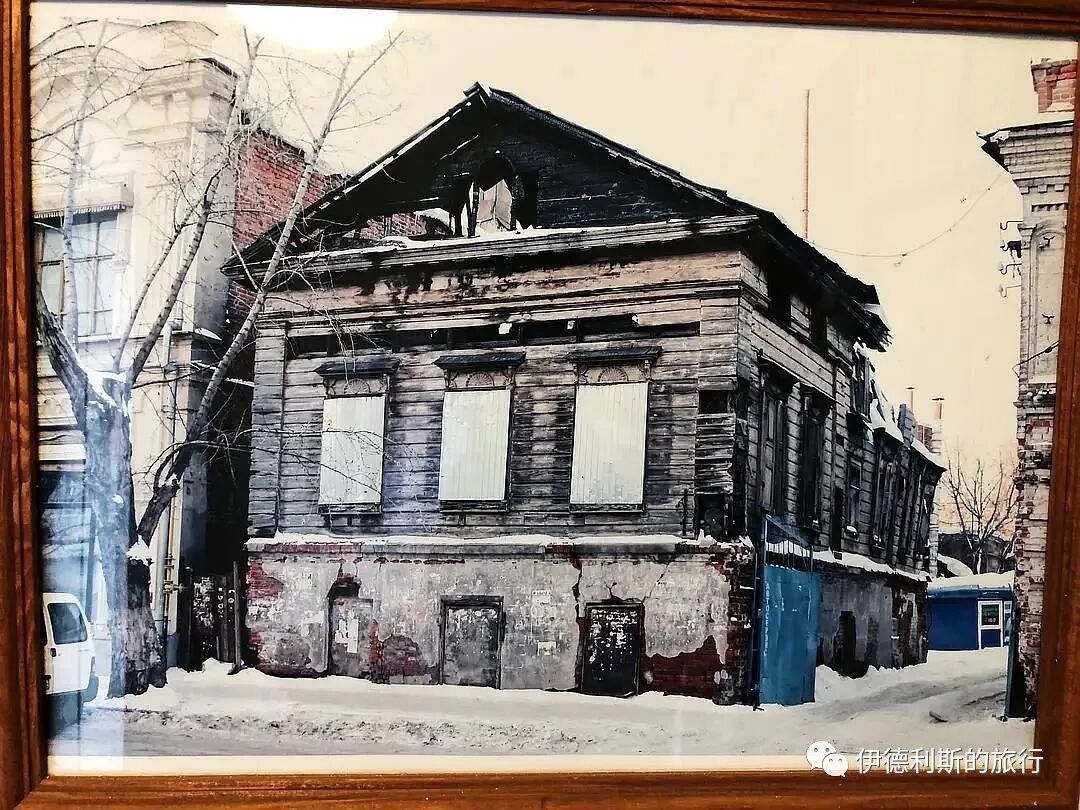
The museum before it was restored.
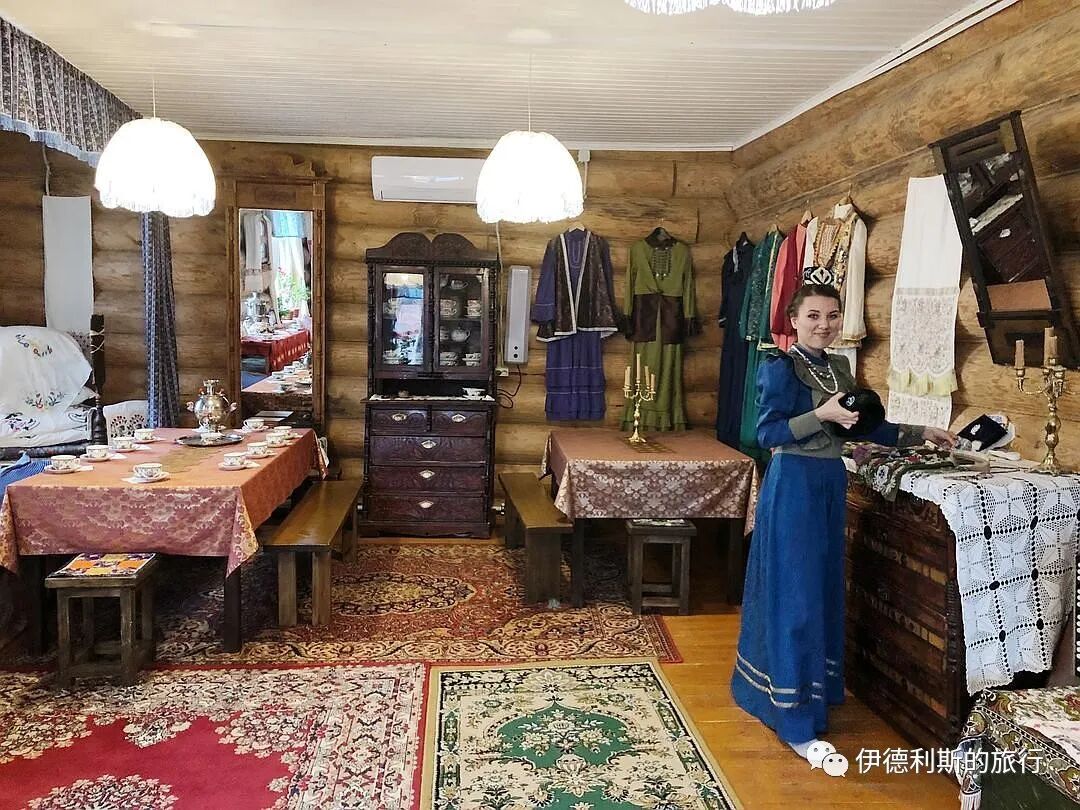
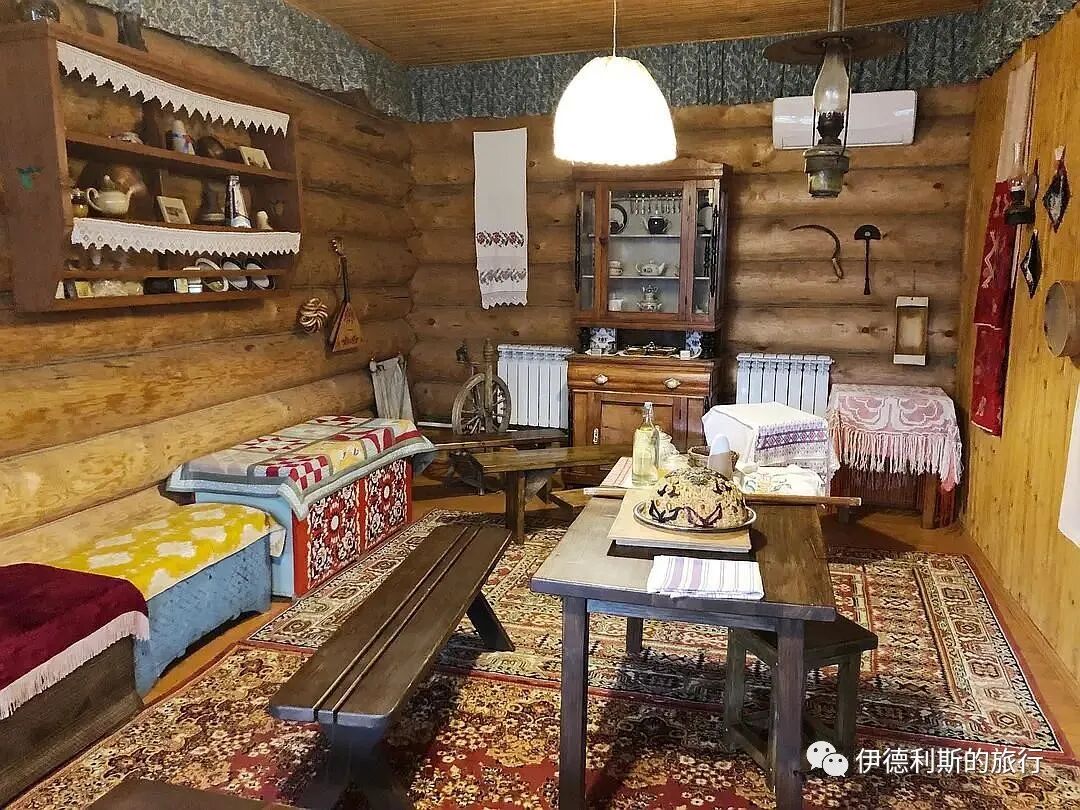
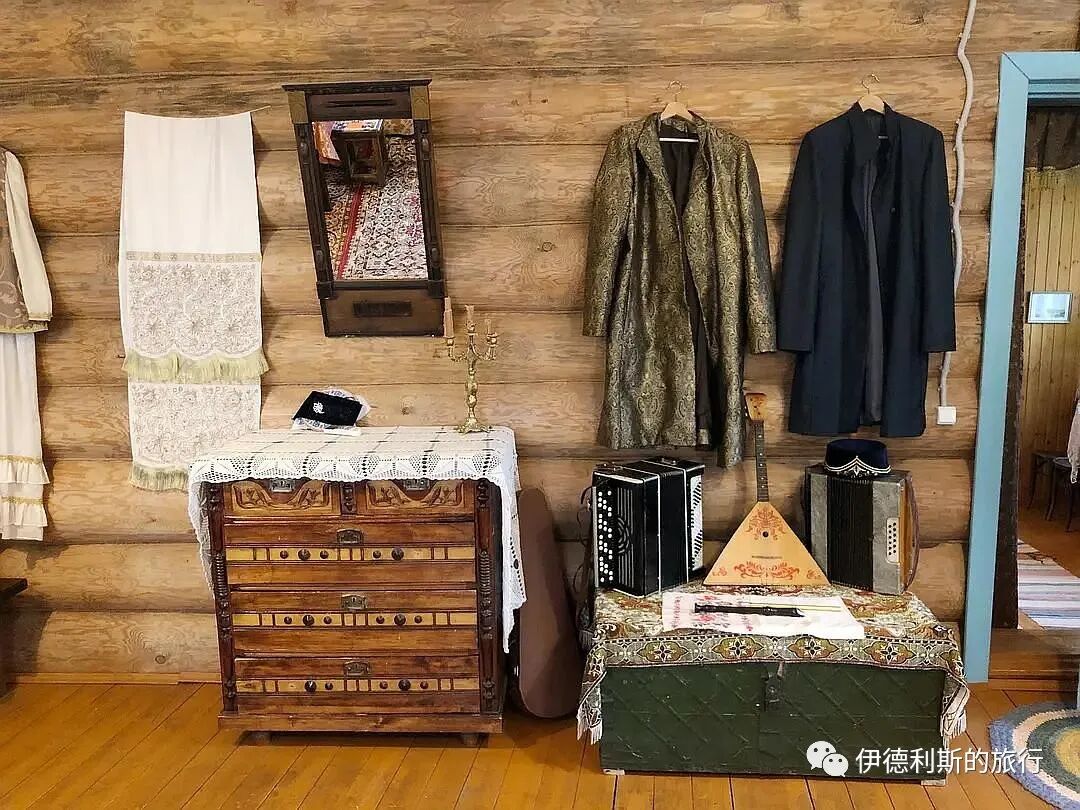
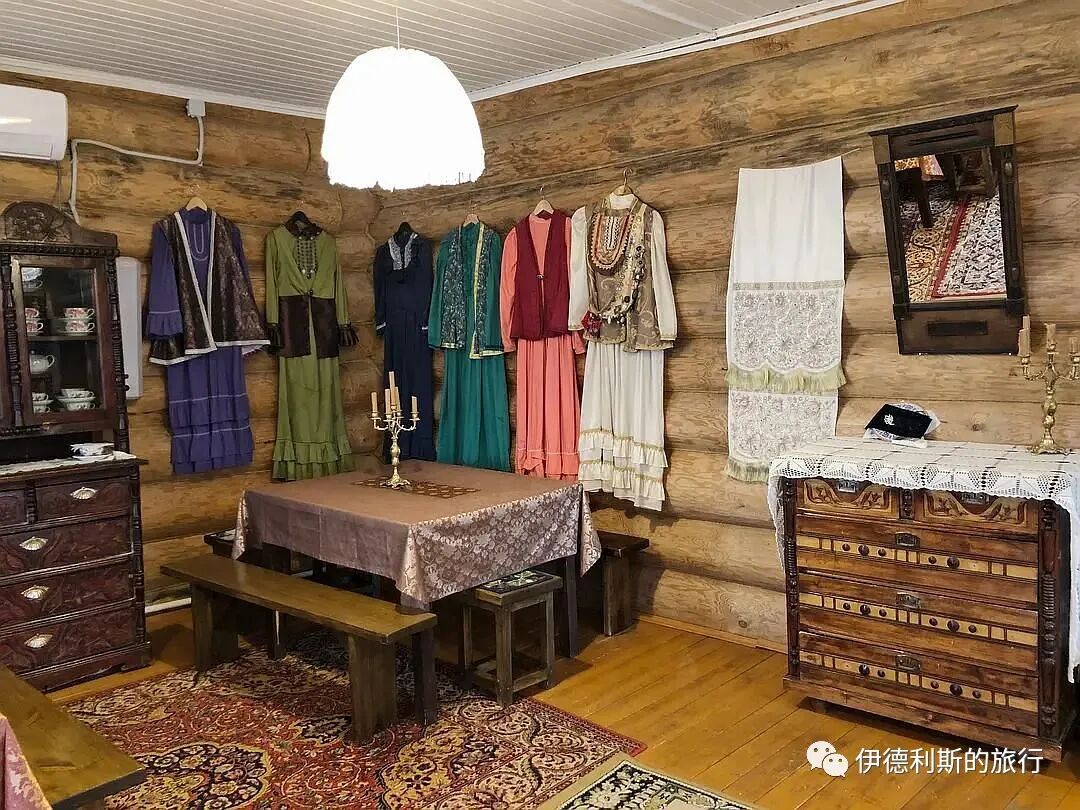
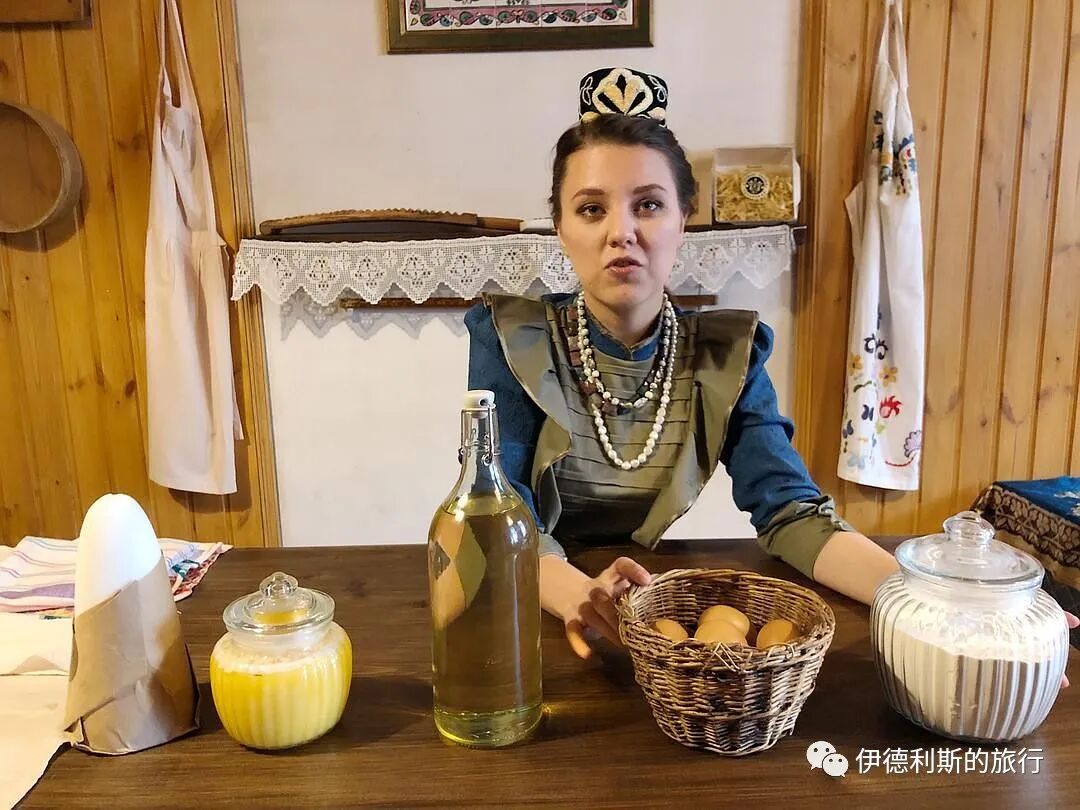
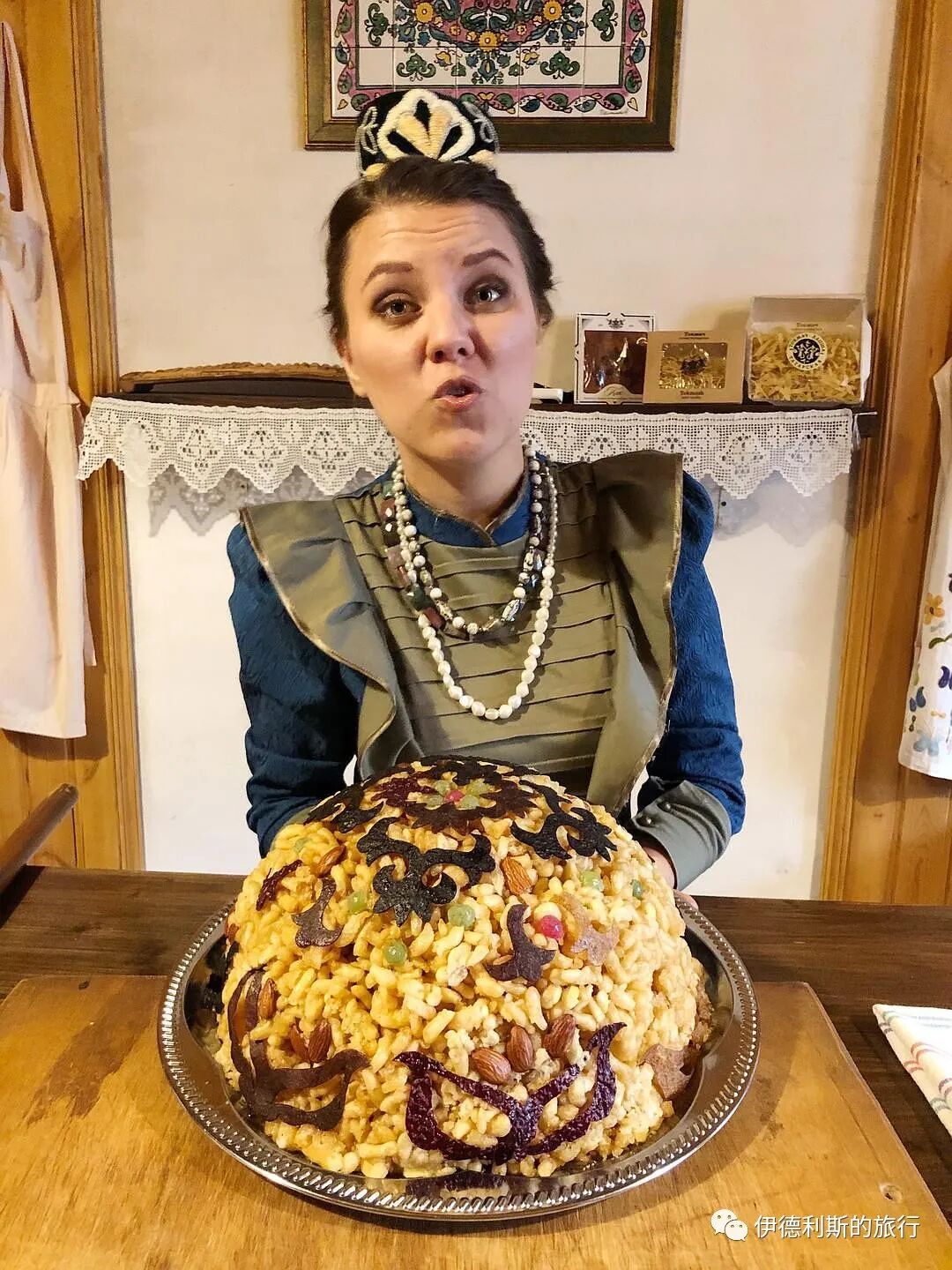
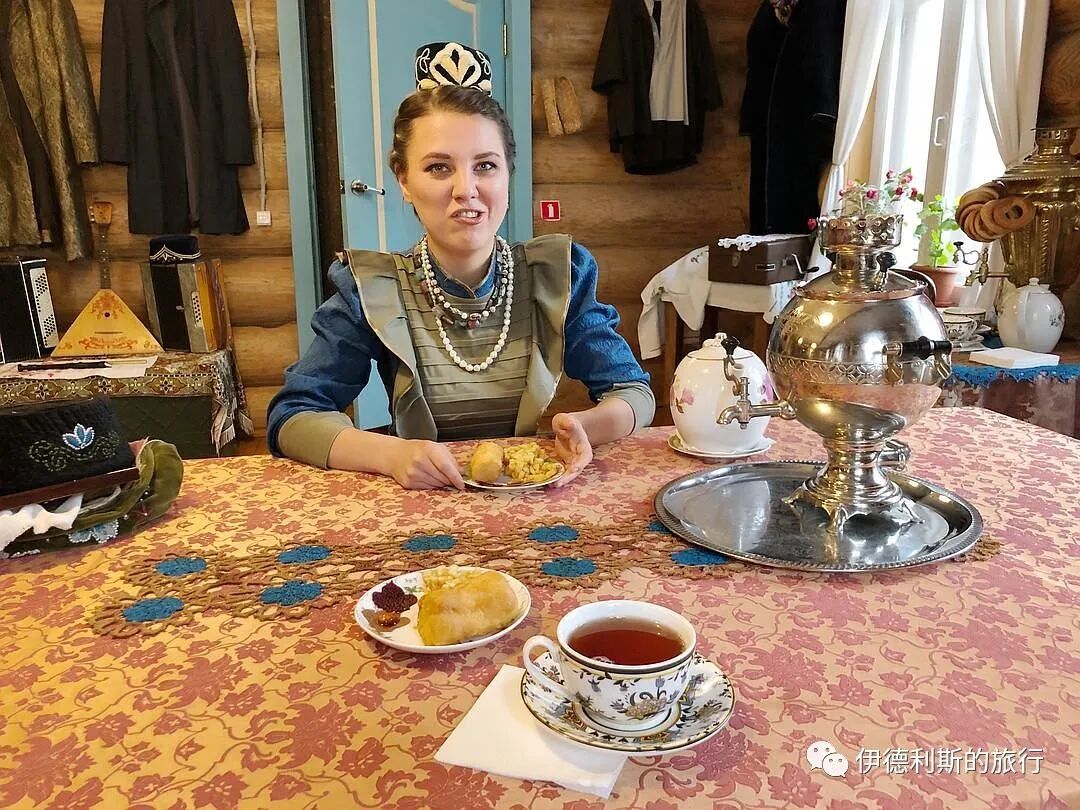
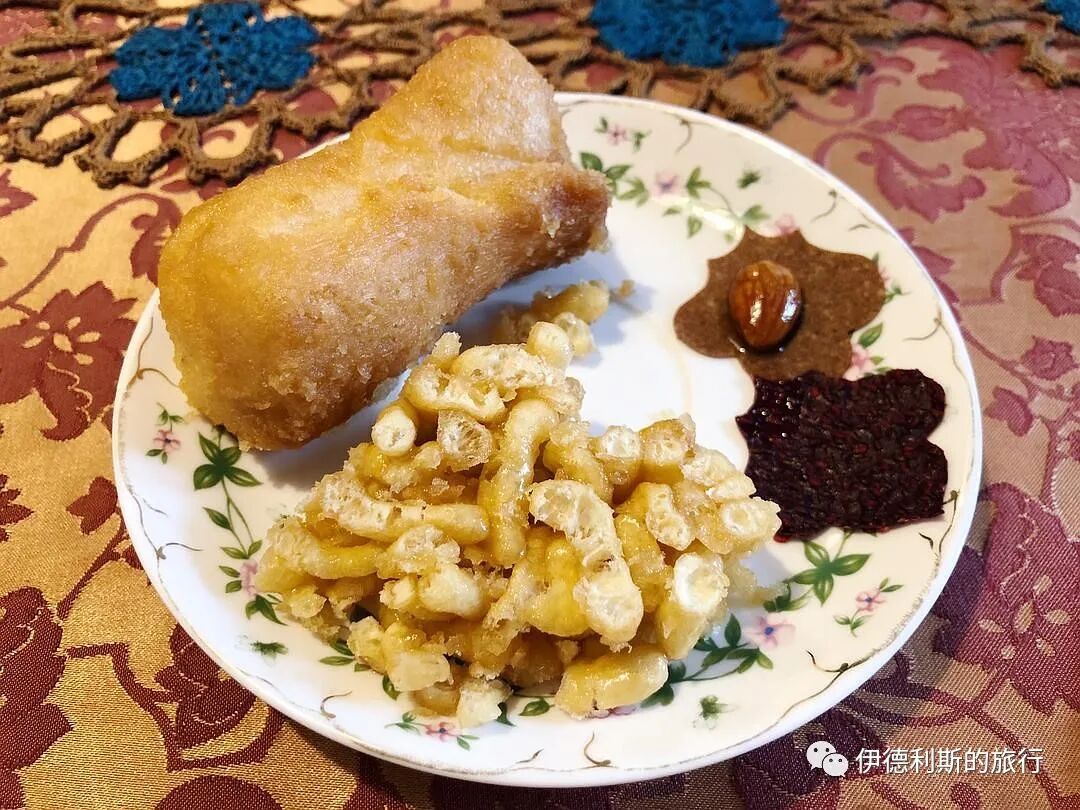
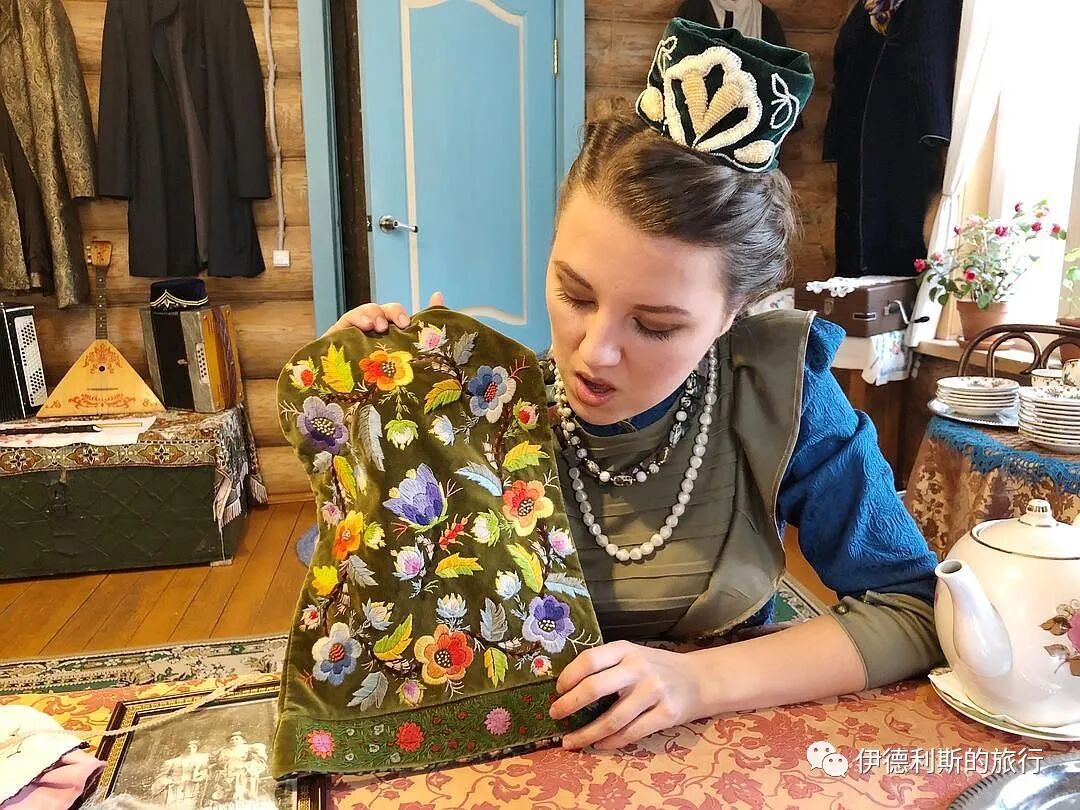
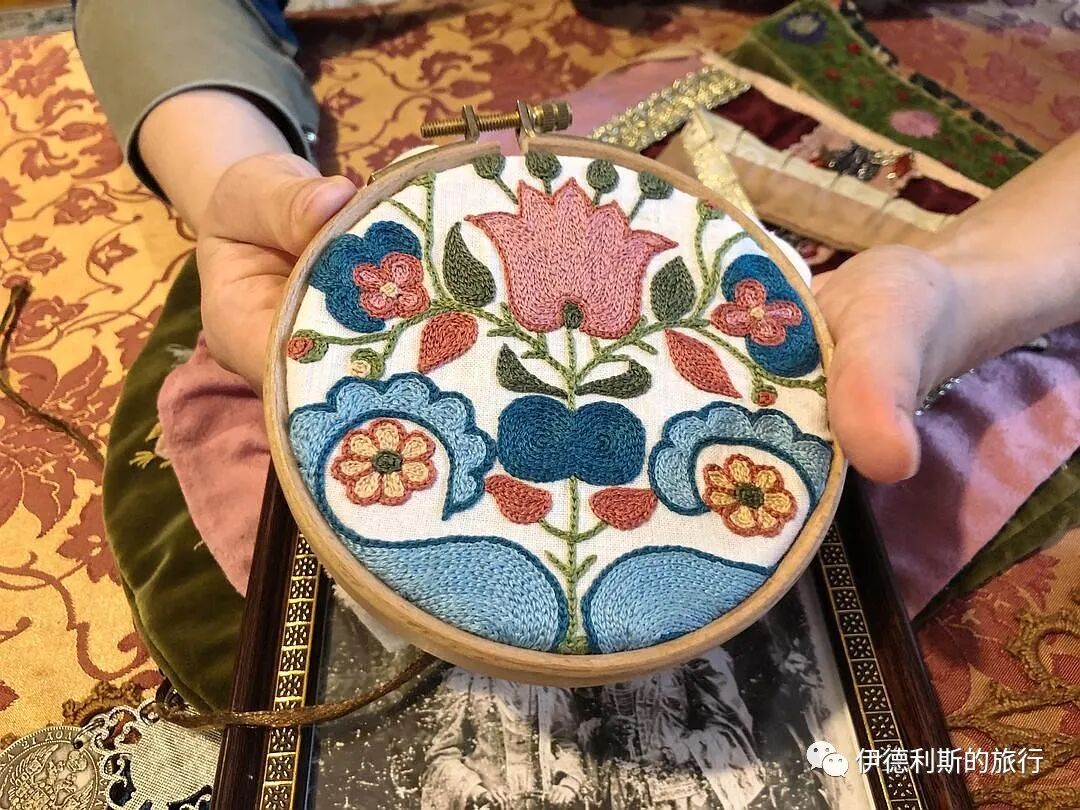
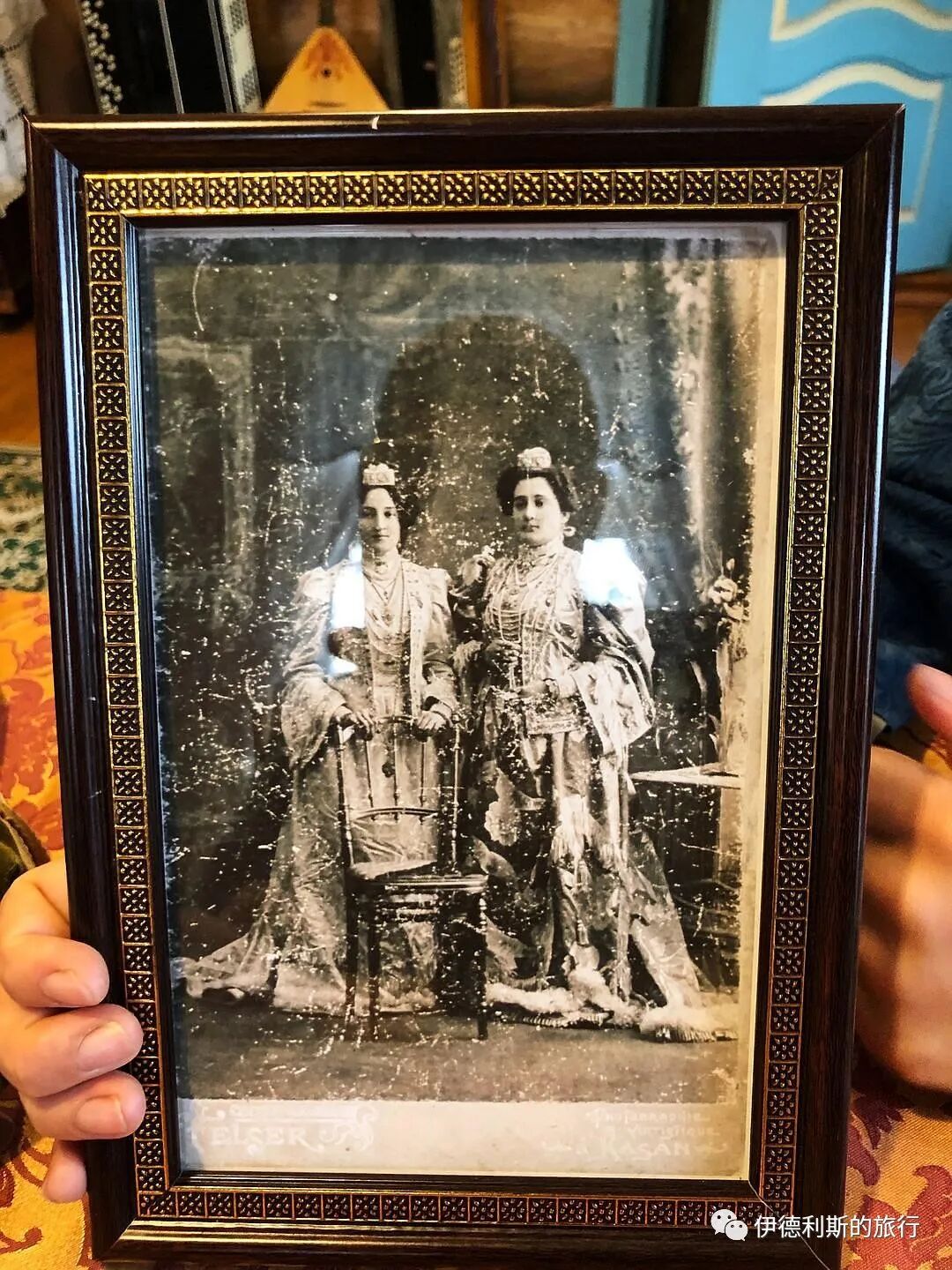
A magnet I bought at the museum.
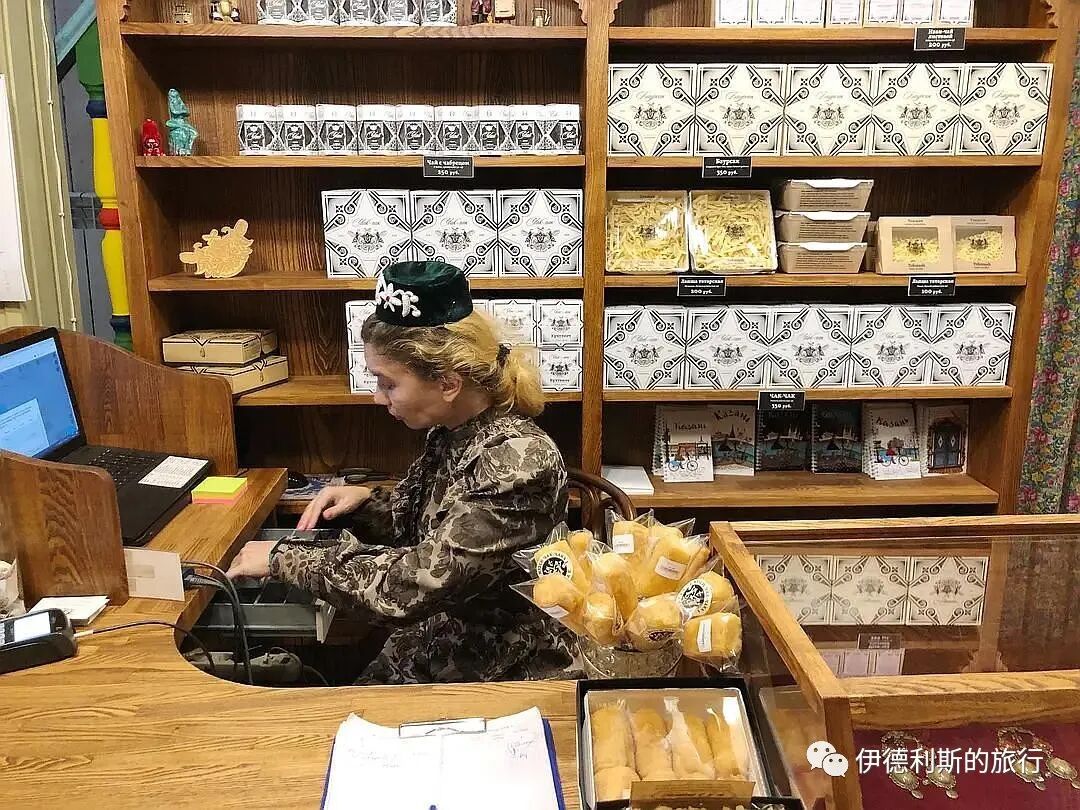
 Collapse Read »
Summary: Halal Food Guide: Kazan — Tatar Pastries and Muslim Food Traditions is presented here as a firsthand travel account in clear English, beginning with this scene: The Chak-Chak Museum in Kazan is the most direct place to experience traditional Tatar culture. The account keeps its focus on Kazan Food, Tatar Pastries, Halal Food while preserving the names, places, food, and historical details from the Chinese source.
The Chak-Chak Museum in Kazan is the most direct place to experience traditional Tatar culture. The museum is located in a Tatar wooden house in the historic Tatar district of Kazan, and the interior does a great job of recreating a traditional Tatar home, giving it a very special atmosphere. If you have a group of 6, they can teach you how to make Chak-Chak on the spot. Since I was alone, I booked a tasting and guided tour session on their official website (https://www.muzeino.ru/), and the museum staff will email you to confirm if you prefer English or Russian.
The experience that day was fantastic. When I arrived at the museum at the scheduled time, a Tatar lady who spoke fluent English was already waiting for me. The whole process felt just like visiting a Tatar family. The lady told me various Tatar legends, daily customs, and cultural traditions, and then explained the making process of the national dessert, Chak-Chak, in detail.
Chak-Chak is very similar to Sachima; it is made by mixing flour with milk and eggs, deep-frying the dough, and then drizzling it with honey. Chak-Chak is popular in Tatarstan and Bashkortostan. It is said to have originated in the ancient Volga Bulgaria, and similar desserts also exist among Kazakh, Kyrgyz, and Uzbek people. Chak-Chak is an important food at Kazan Tatar weddings. In the past, every Kazan Tatar woman had to learn how to make it, usually passed down from mother to daughter or grandmother to granddaughter.
After that, a young Tatar lady made me some Tatar tea. As I tasted traditional Tatar desserts, she told me about Tatar clothing, silver jewelry, and embroidery crafts. We had a great time chatting.
The museum before it was restored.
A magnet I bought at the museum.
Collapse Read »
Moscow Oriental Art Museum: Islamic Art, Central Asia and Muslim Heritage
Reposted from the web
Summary: Moscow Oriental Art Museum: Islamic Art, Central Asia and Muslim Heritage is presented here as a firsthand travel account in clear English, beginning with this scene: The museum's collection comes from many regions, including China, Japan, Korea, Southeast Asia, the Caucasus, Central Asia, Iran, and India. The account keeps its focus on Moscow Museum, Islamic Art, Oriental Art while preserving the names, places, food, and historical details from the Chinese source.
The museum's collection comes from many regions, including China, Japan, Korea, Southeast Asia, the Caucasus, Central Asia, Iran, and India. When the museum first opened, some items came from the Russian Museum of Decorative Arts, the Pushkin State Museum of Fine Arts, and the State Historical Museum in the 1920s, while others came from private collections. Art collector Pyotr Ivanovich Shchukin once owned a large number of Chinese, Iranian, and Indian artworks. After the October Revolution, these pieces were nationalized and transferred to the Museum of Oriental Art. Most of the Persian artifacts in the museum were donated by General Tardov in 1929. Since 1924, the museum has launched many expeditions to the Far East and collected a large number of artifacts. Today, the museum's new items mainly come from private donations and archaeological excavations.
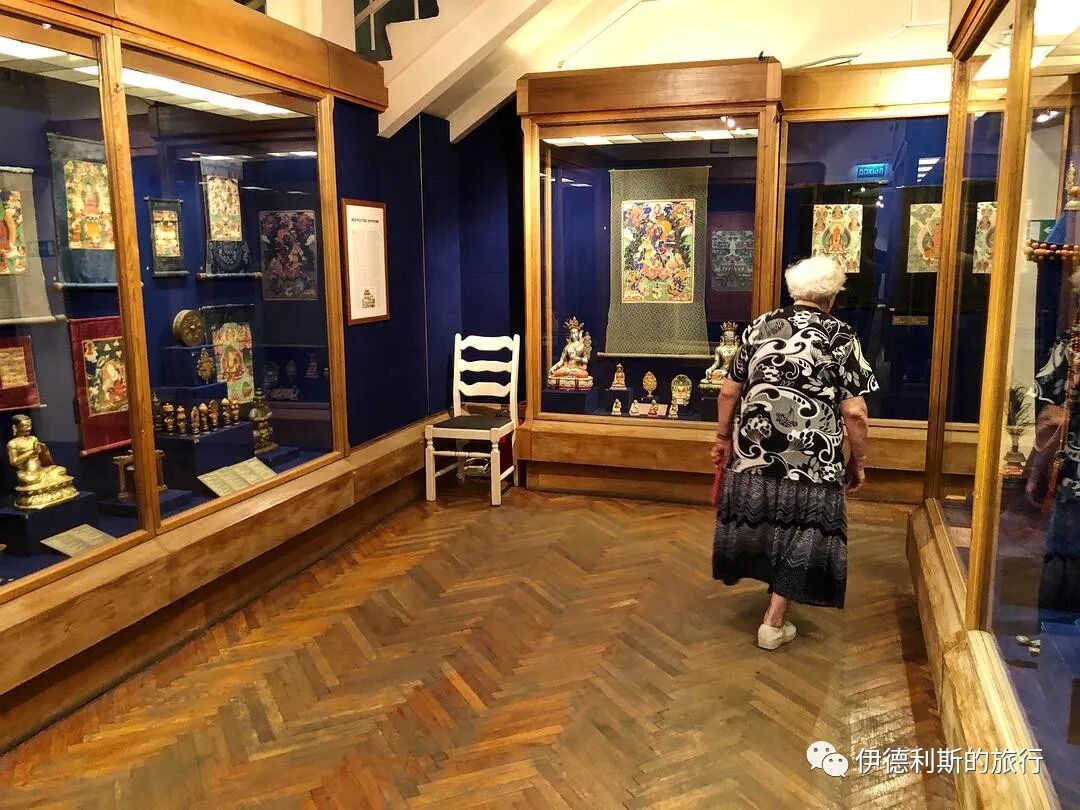
1. Iran
1. Iranian porcelain
An Iranian ceramic plate from the 12th to 13th century.
After the 12th century began, the massive Seljuk Empire slowly declined and was finally destroyed by the Khwarazmian Empire in 1194. In 1221, the Khwarazmian Empire faced an invasion by the Mongol Empire, and by 1237, the Mongols occupied most of Iran. In 1256, Hulagu Khan was named Ilkhan, and Iran began to be ruled by the Ilkhanate.
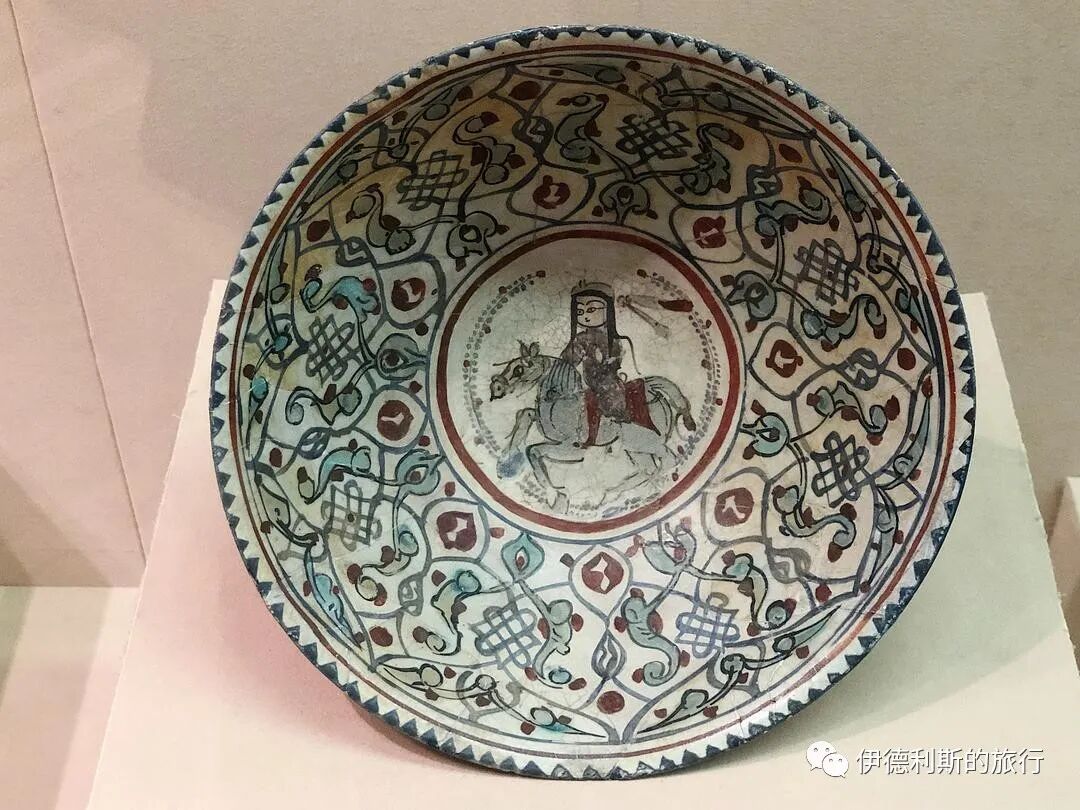
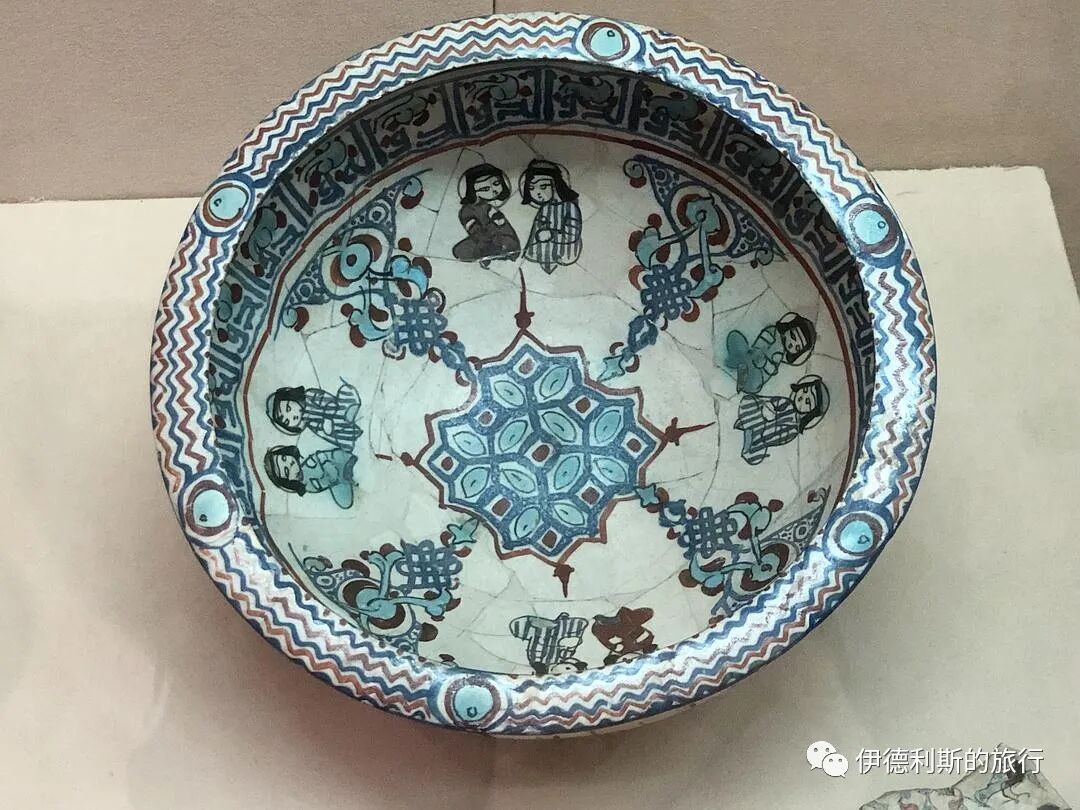
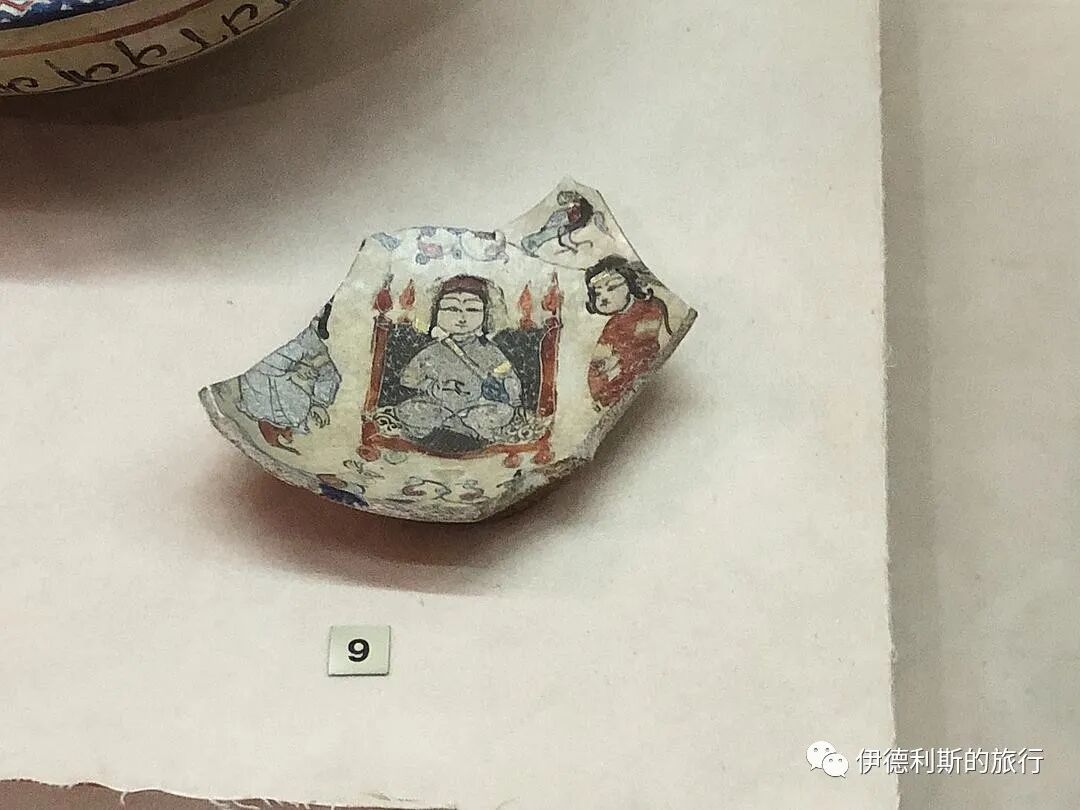
Iranian ceramic tiles from the 13th to 14th century.
After 1335, the Ilkhanate fell into division until it was conquered by Timur in 1381, and Iran came under the rule of the Timurid Empire.
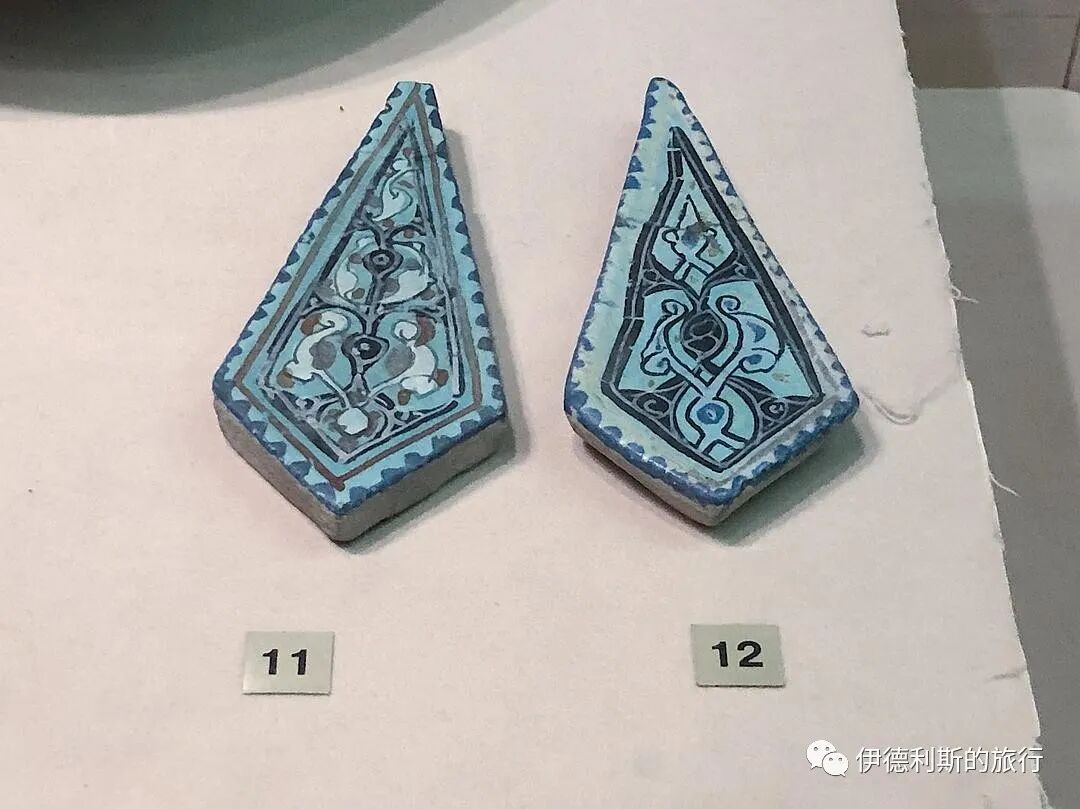
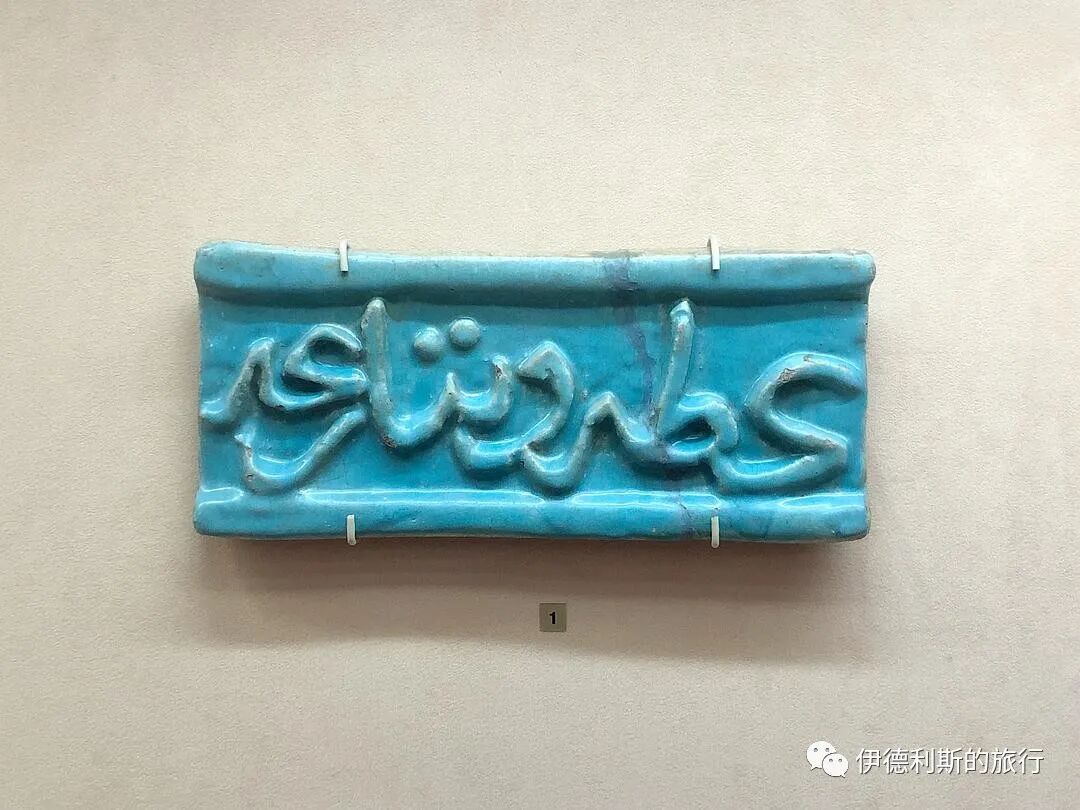
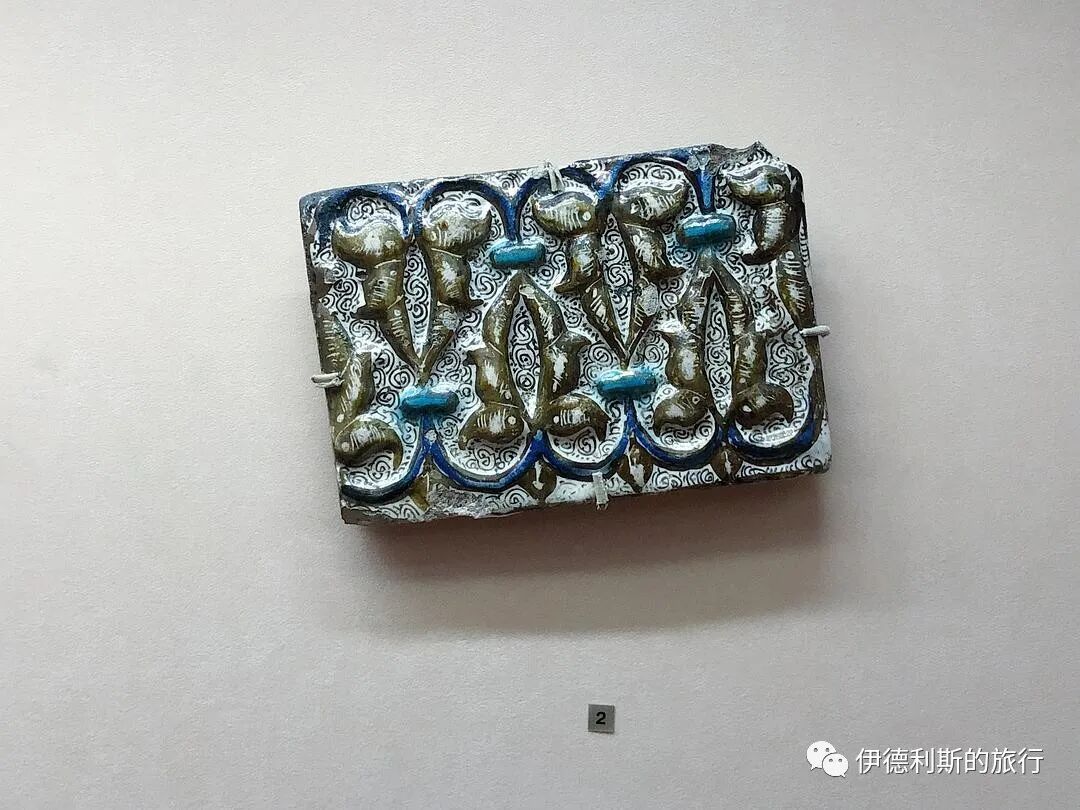
Iranian ceramic tiles from the 17th century, Safavid Dynasty (1501–1736).
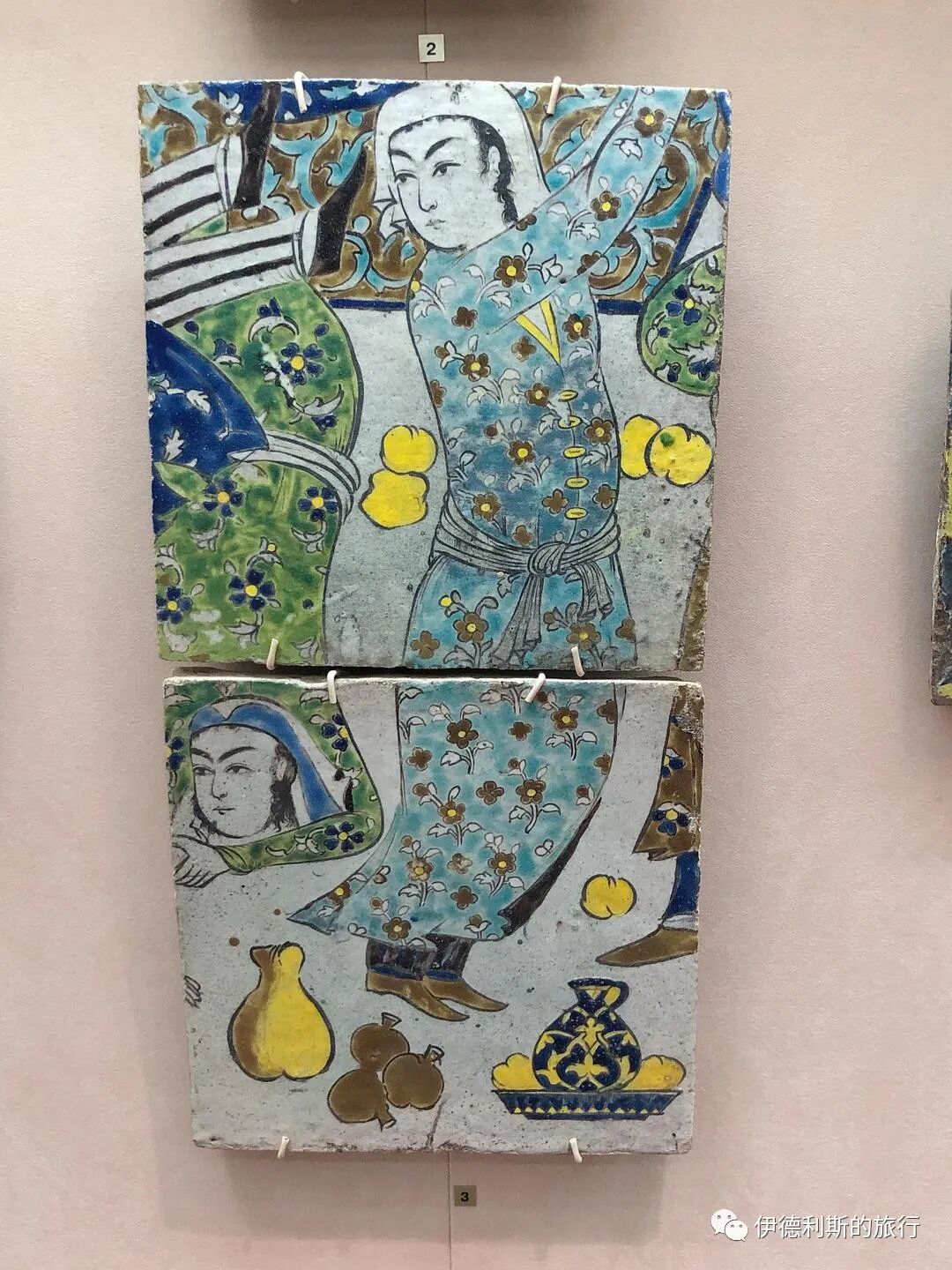
Ceramic tiles from the 18th century, Safavid Dynasty (1501–1736) or Afsharid Dynasty (1736–1796).
2. Calligraphy and painting from the 18th century.
Entering the 18th century, Iran faced both internal troubles and external threats. The Russian Empire and the Ottoman Empire invaded Iran one after another. The Safavid dynasty, which had ruled Iran for over two hundred years, collapsed. Pashtuns from Afghanistan, Turkmens from Khorasan, and other tribes established the Hotaki dynasty (ruling Iran from 1722 to 1729), the Afsharid dynasty (1736-1796), and the Zand dynasty (1750-1794) in succession.
Although the Afsharid dynasty reached the largest territory in Iran since the Sasanian Empire in the 1730s, it soon fell into civil strife and turmoil. After 1750, the Zand dynasty brought a period of relative peace and prosperity to Iran.
In 1765, Karim Khan promoted art in the capital, Shiraz. This formed the unique Zand school of Iranian painting, which influenced the painting art of the Qajar dynasty in the 19th century.
Calligraphy written by Riza ad-Din Khan ibn Ibragim khan in 1706/7, during the final years of the Safavid dynasty.
18th-century Persian miniature painting.
3. 19th-century Persian miniature paintings
In the 19th century, Iran was ruled by the Qajar dynasty (1789-1925). The Qajars were a Turkic-speaking tribe from northern Iran, now part of the Turkmen people, and their rulers called themselves Shah. Peace returned to Iran in the 19th century, and art flourished as a result.
An illustration from the Persian epic Shahnameh shows the legendary hero Rostam fighting the White Demon (Div-e Sepid). In the Shahnameh, the White Demon is the leader of the demons in the Mazandaran region; he is huge and skilled at all kinds of magic. He destroyed the army of the Iranian King Kay Kavus by summoning hail, boulders, and tree trunks, then captured and imprisoned the king. In the end, the hero Rostam killed the White Demon to save the king, and he even turned the demon's head into a helmet to wear.
Inside the palace.
A Sufi performing the whirling dance ceremony.
An introduction to the turban (chantou).
The Sufi allegorical poem Salaman va Absal by the famous 15th-century Sufi poet Jami (Nūr ad-Dīn 'Abd ar-Rahmān Jāmī). The story appears to be about a prince who feels a physical attraction to his wet nurse, but it actually uses allegory to describe the key stages of Sufi spiritual practice.
A Qajar dynasty Shah in battle.
A page from a manuscript.
A young man wearing a turban (chantou).
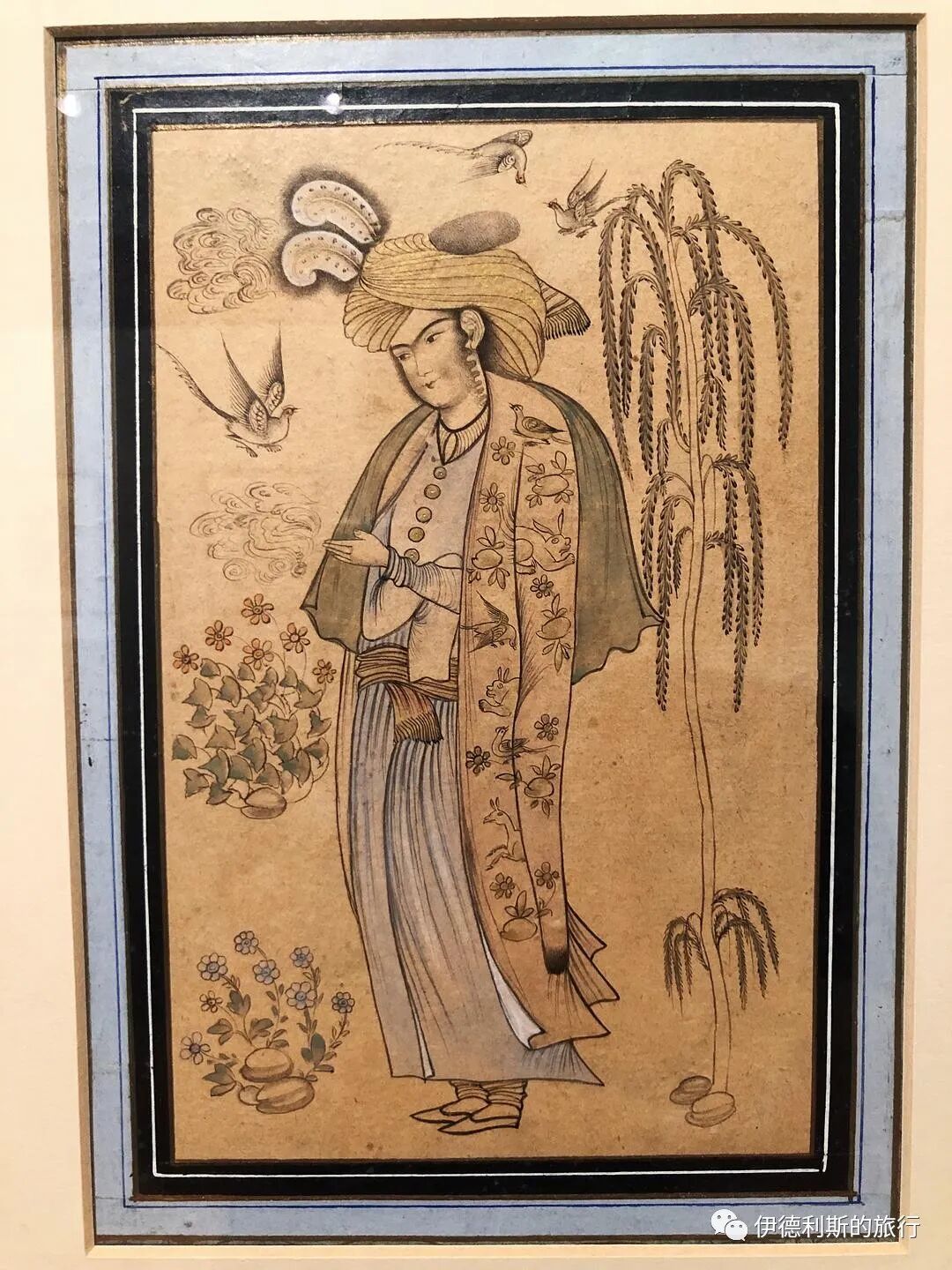
Relaxing.
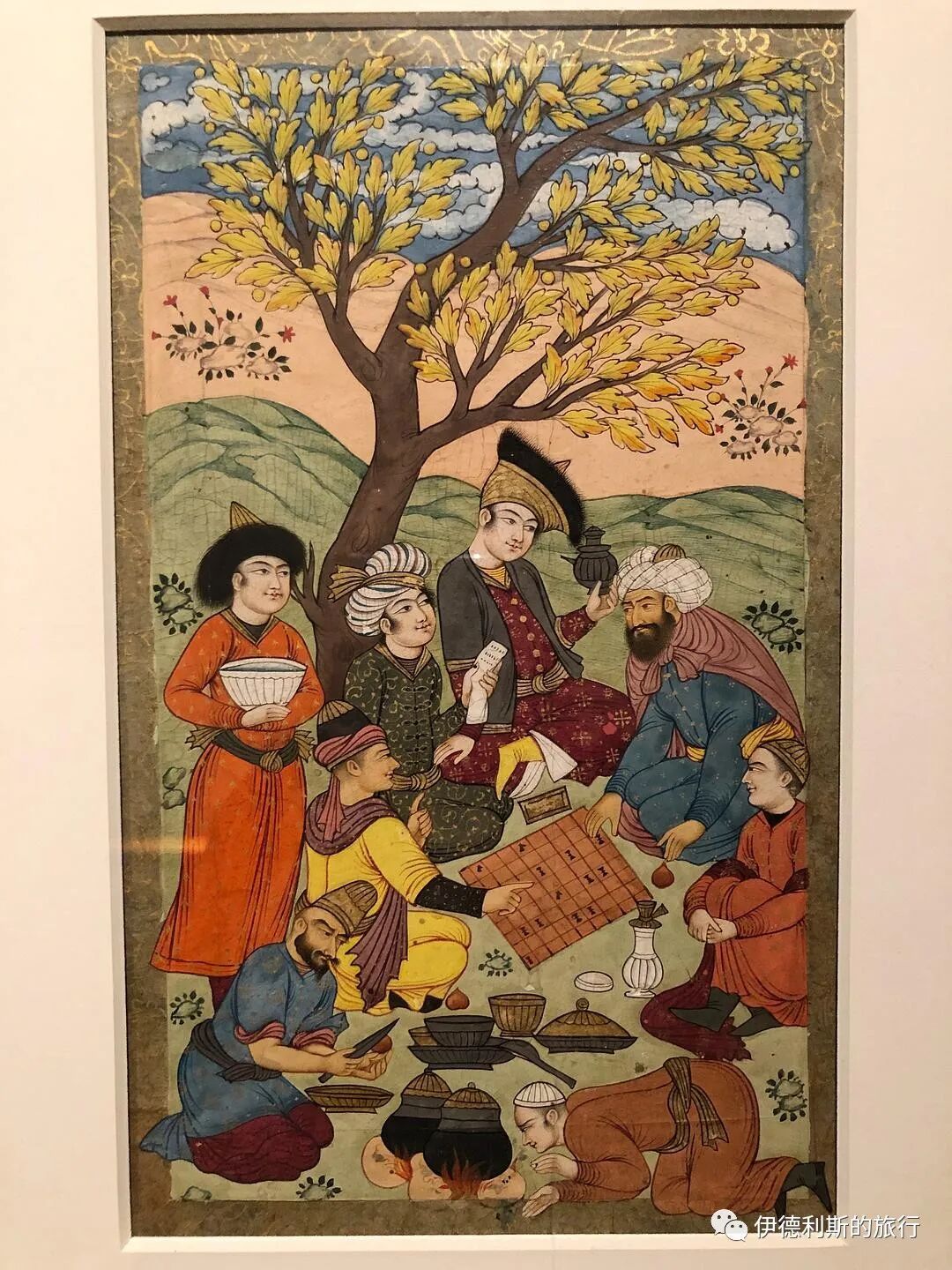
4. Qajar Dynasty portraits.
The Qajar Dynasty is famous for its unique portrait paintings. Qajar portraits were influenced by European realism in oil painting. They use many dark, rich, and saturated colors. The backgrounds are very realistic, but the people in the paintings still look stiff.
This early 19th-century painting shows Bahram V (reigned 420-438) while hunting. Bahram V was known as the Wild Ass (Gor). He was a 5th-century king of the Persian Sasanian Empire. He loved hunting and often appears in classic Persian literature.
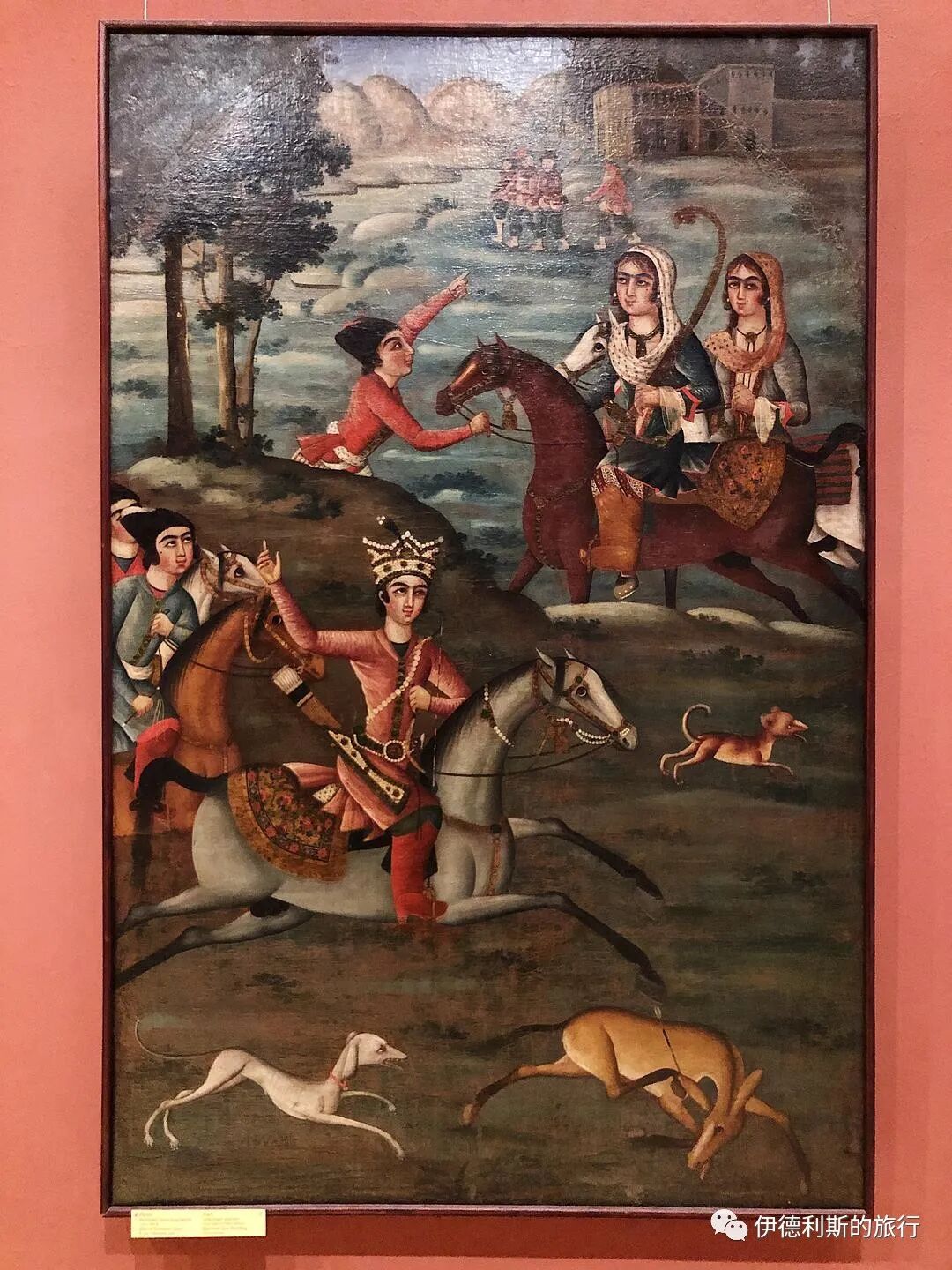
Painted by Muhammad Ali in 1834, this shows the Qajar court with the Shah receiving his officials.
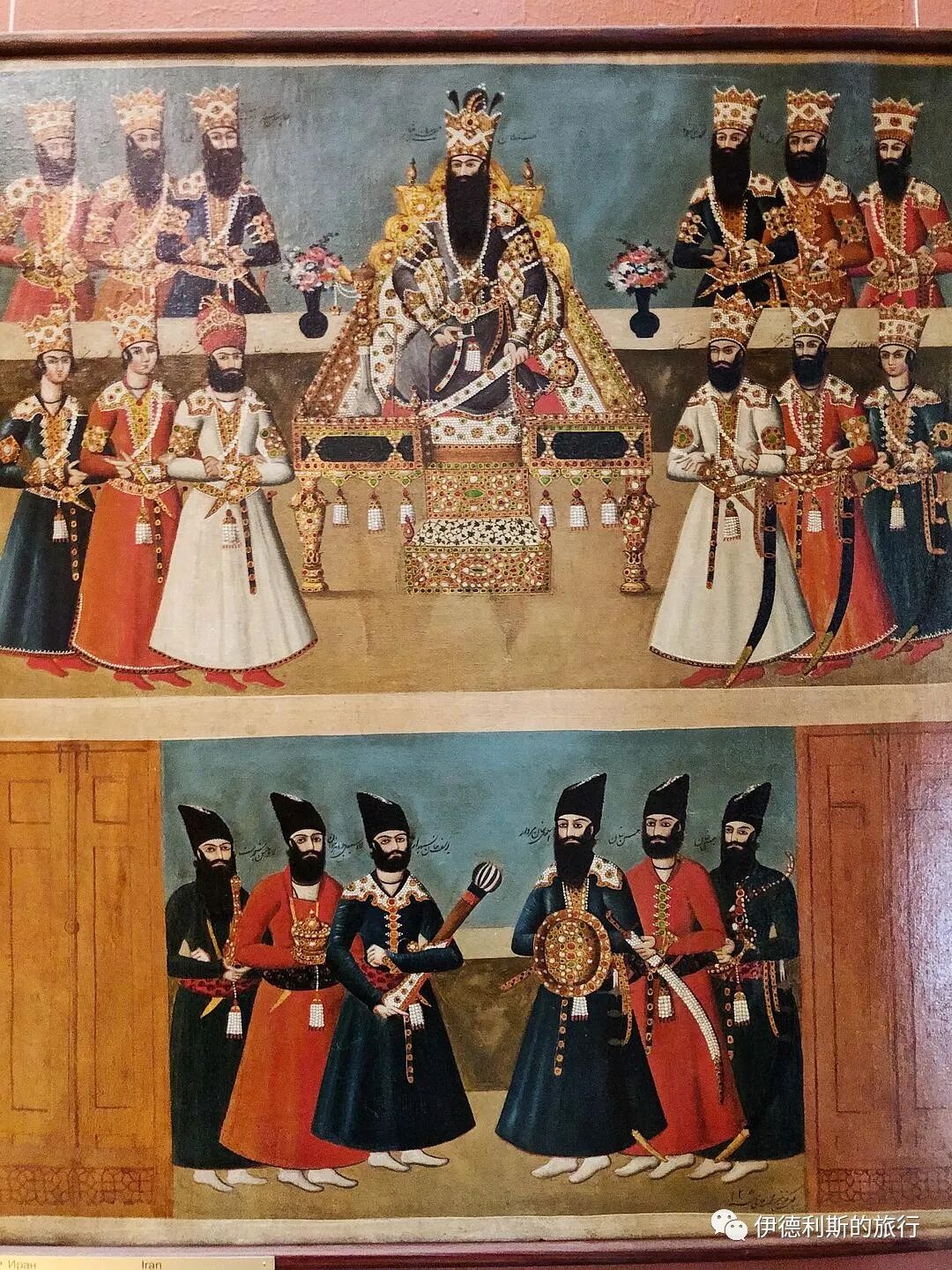
A woman in a garden, 19th century. Early Iranian portraits often blurred gender lines, making the bodies and faces of many beautiful men and women look very similar. It was not until the 19th century that women began to have more individualized features. In portraits of women from the Qajar dynasty, women often hold mirrors, fruit, or drinks, which usually represent beauty and pleasure in Persian poetry.
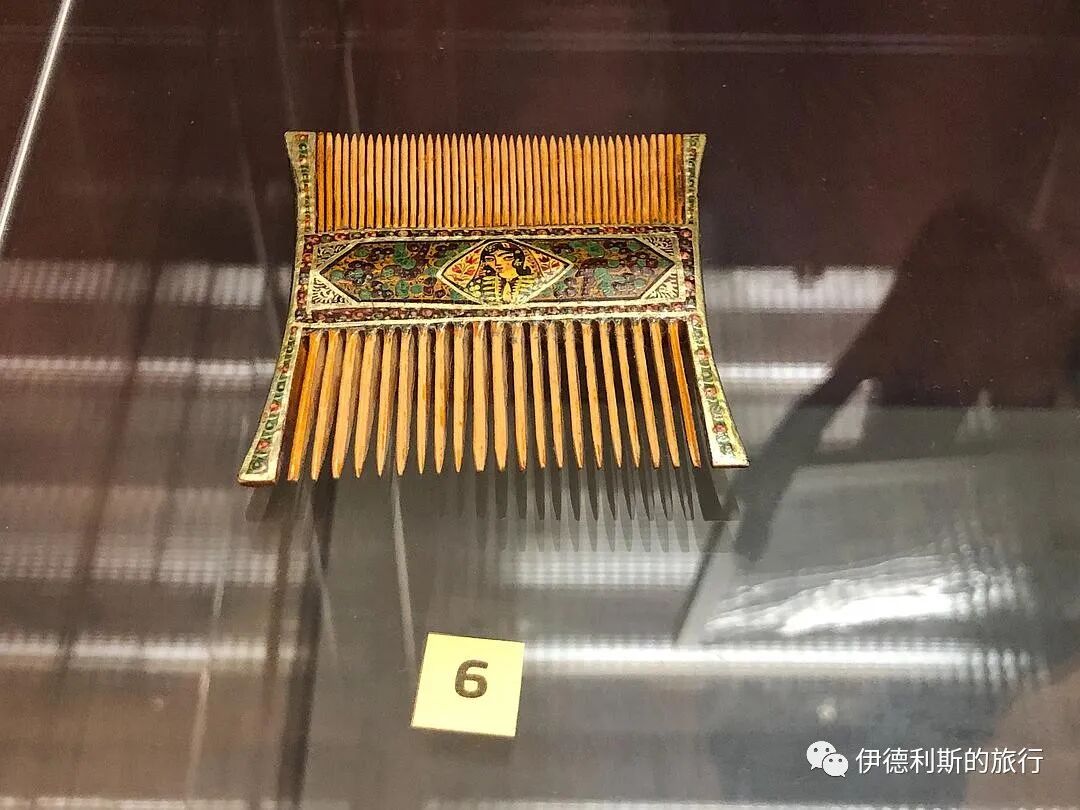
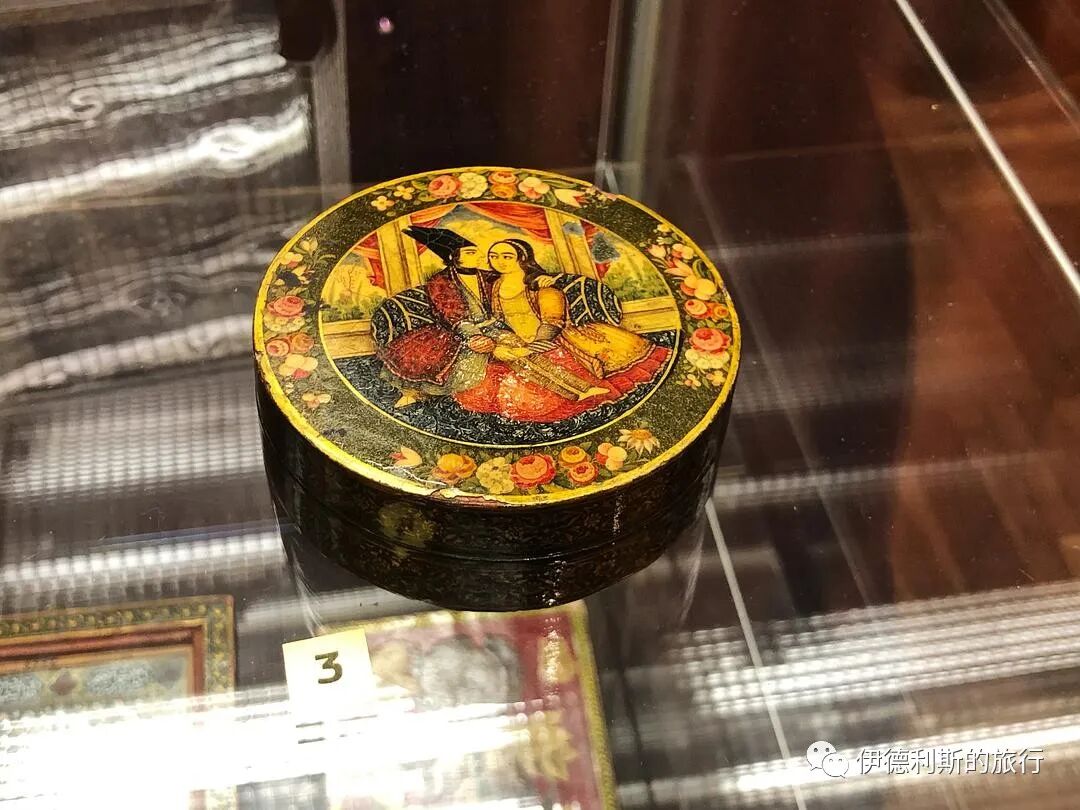
2. Clothing in Afghanistan and Pakistan
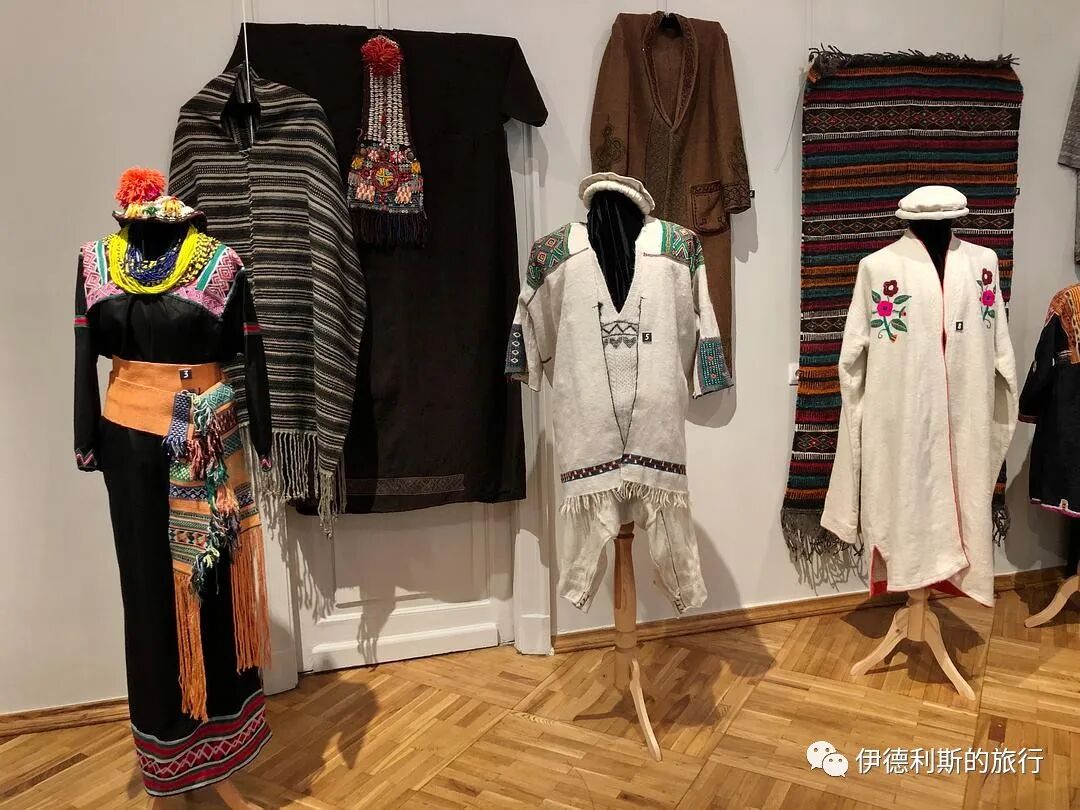
A 20th-century hat worn by the Pashtun people of Afghanistan.
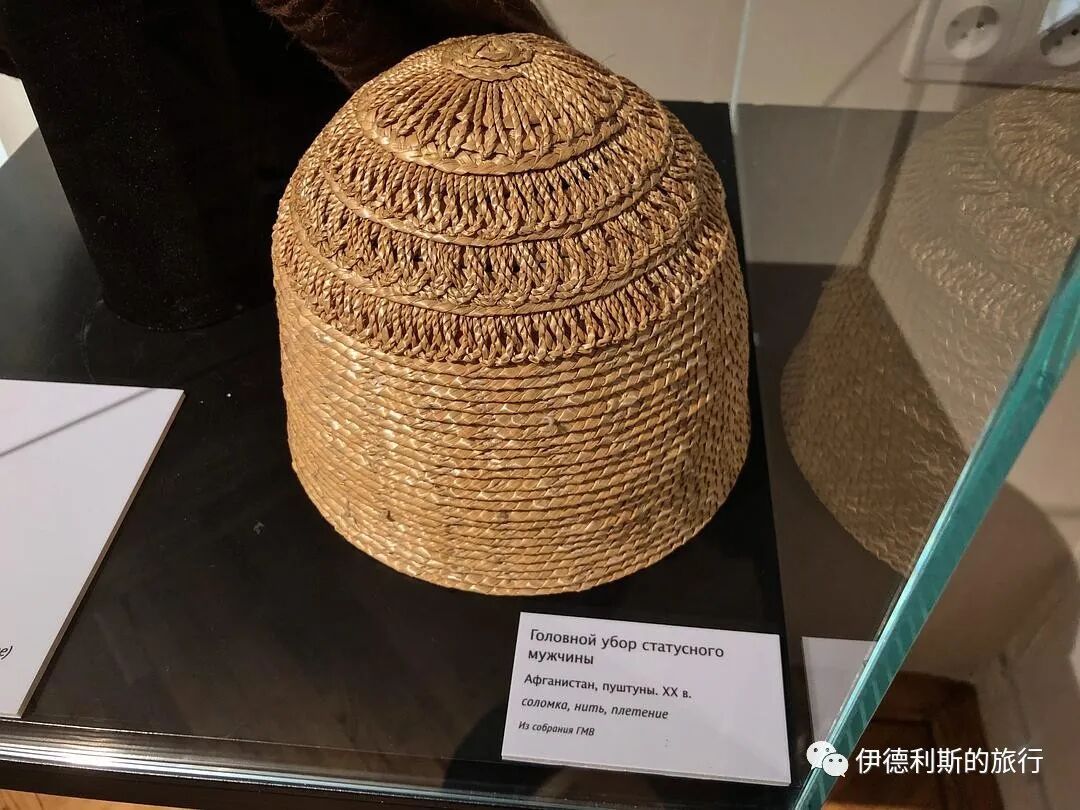
A wool cap (pakol) worn by the Pashtun people in Khost Province, southeastern Afghanistan, which has a wider brim than the common version. The wool cap (pakol) originated from the flat hat (kausia) worn by the Macedonians in ancient Greece and later spread to Hellenistic Afghanistan during the eastern conquests of Alexander the Great. The word pakol comes from the Urdu language in the Chitral region on the border of Afghanistan and Pakistan, meaning round hat. The pakol also spread from Chitral across Afghanistan, Pakistan, and the Pamir region, becoming a hat people wear to keep warm in winter.
A Sindhi cap worn by Pashtuns in Afghanistan in the early 20th century. This cap with a front opening originated in the Sindh region of Pakistan. It later spread to Afghanistan through the Balochistan region and became popular among all Pashtuns during the 20th century.
A woman's dress worn by Pashtuns in Afghanistan in the early 20th century.
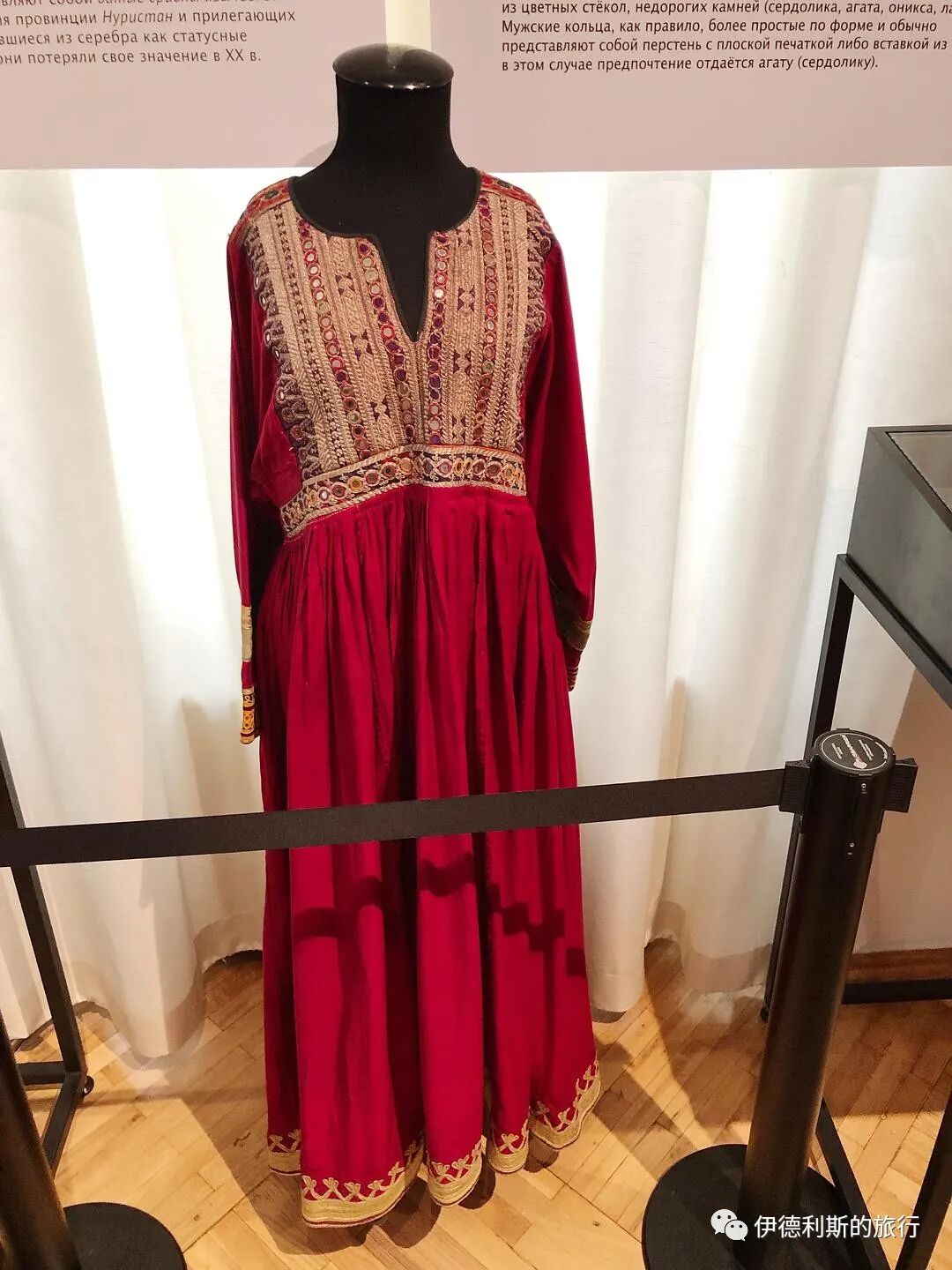
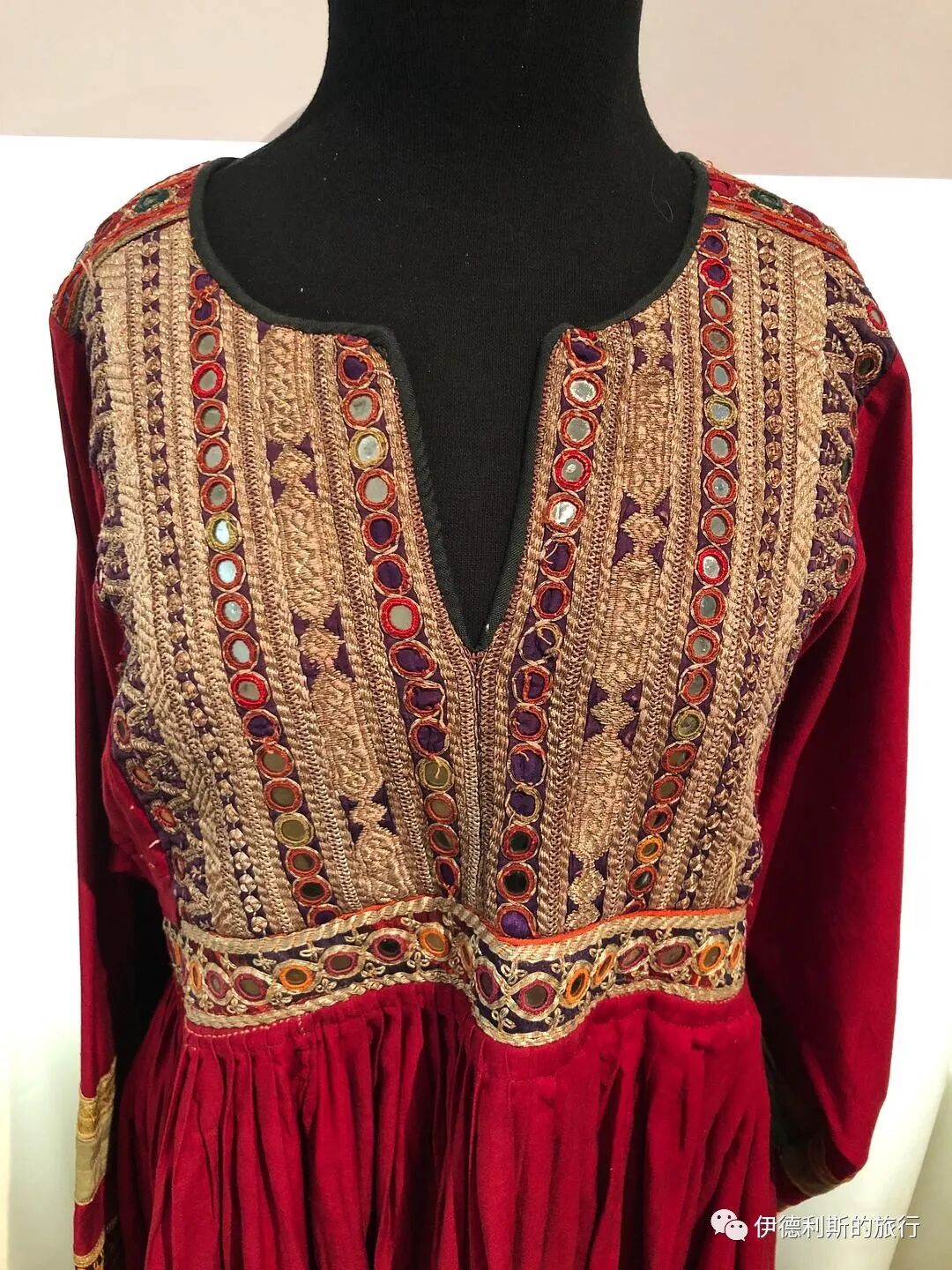
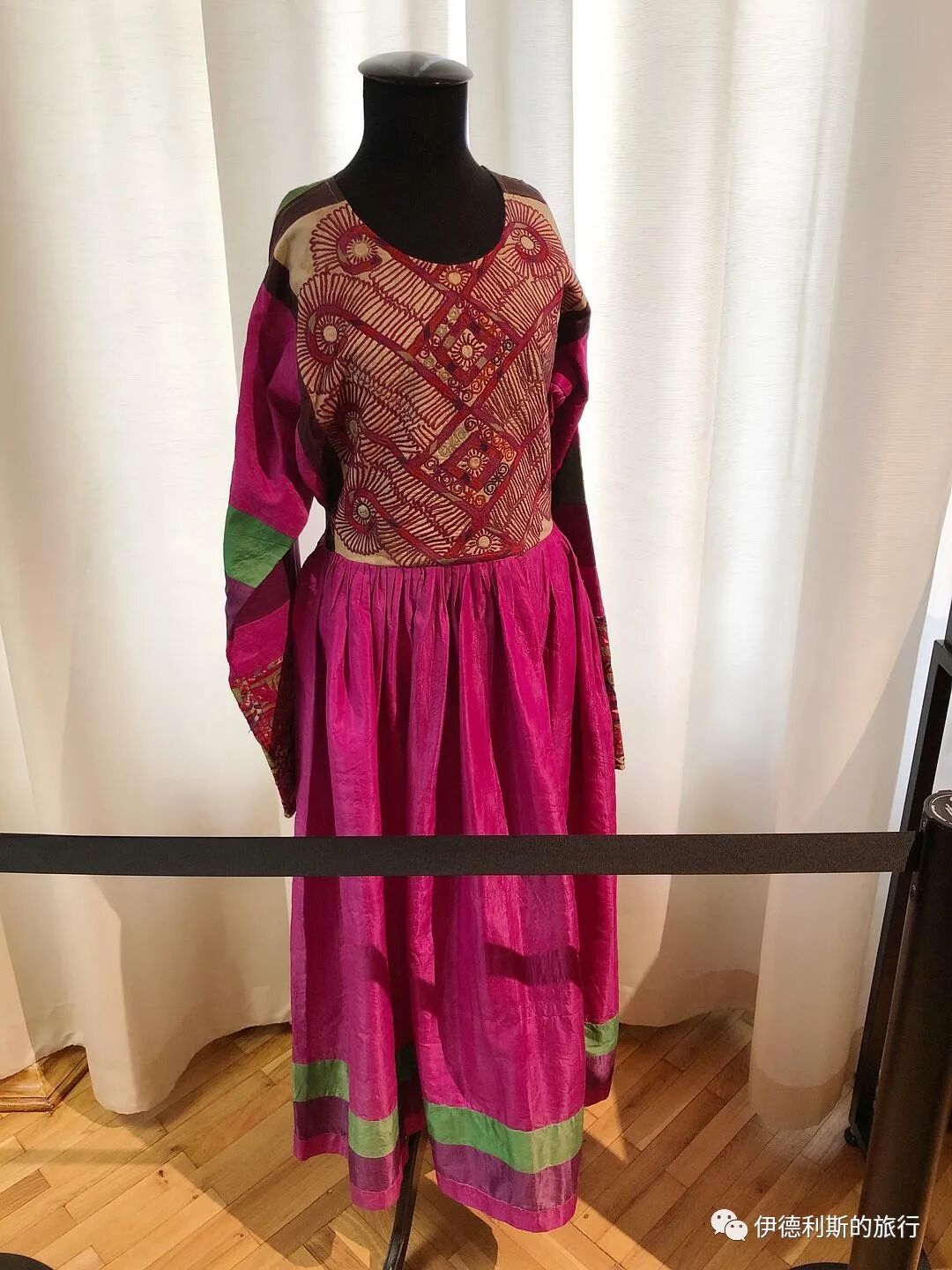
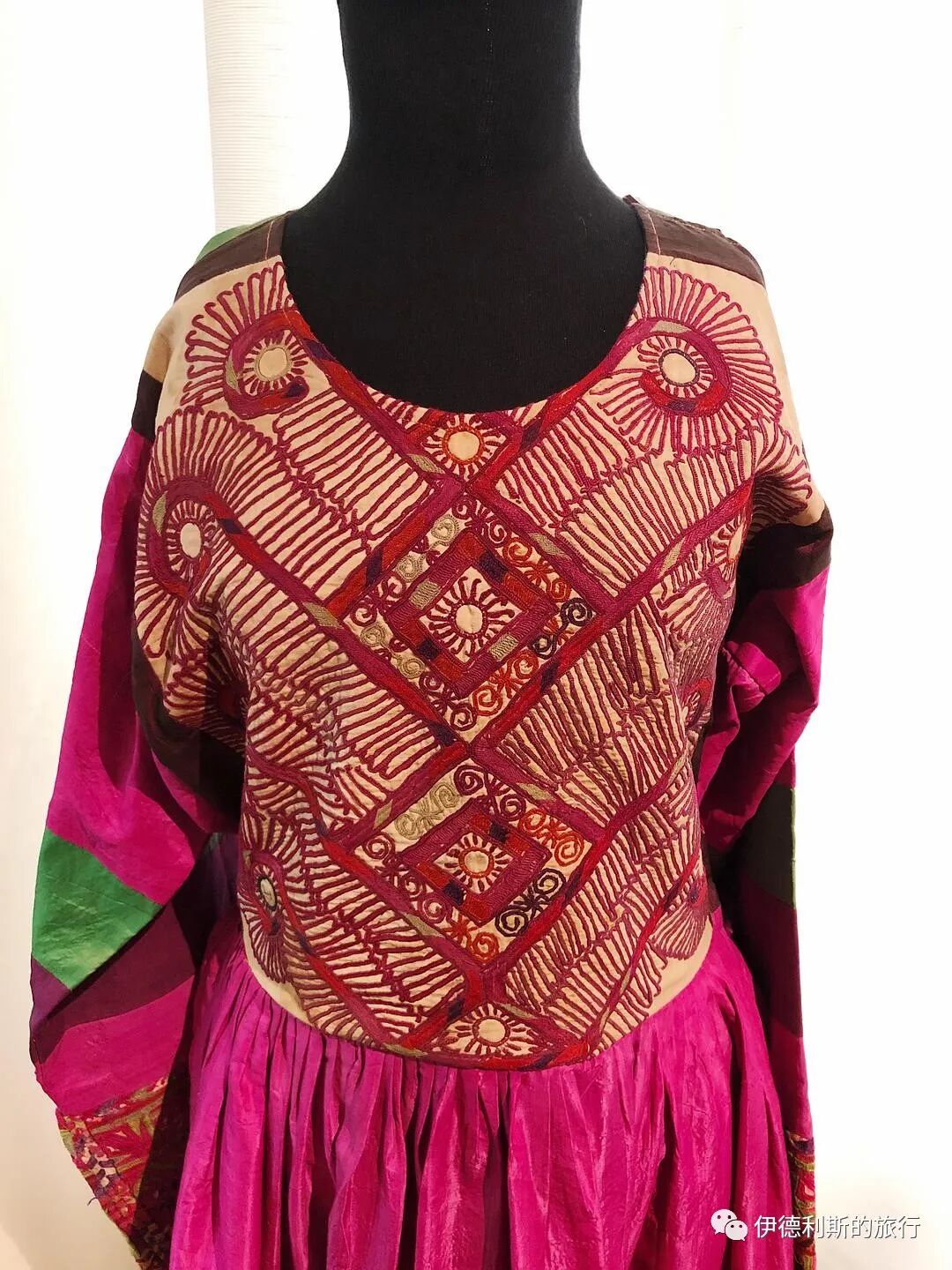
Clothing from the Kalasha people in the Parun Valley of eastern Afghanistan from the late 20th century, and trousers from the Kalasha people in northwestern Pakistan from the mid-20th century. The Kalasha people follow an animistic religion that comes from ancient India and speak Kalasha, a language in the Indo-Aryan branch.
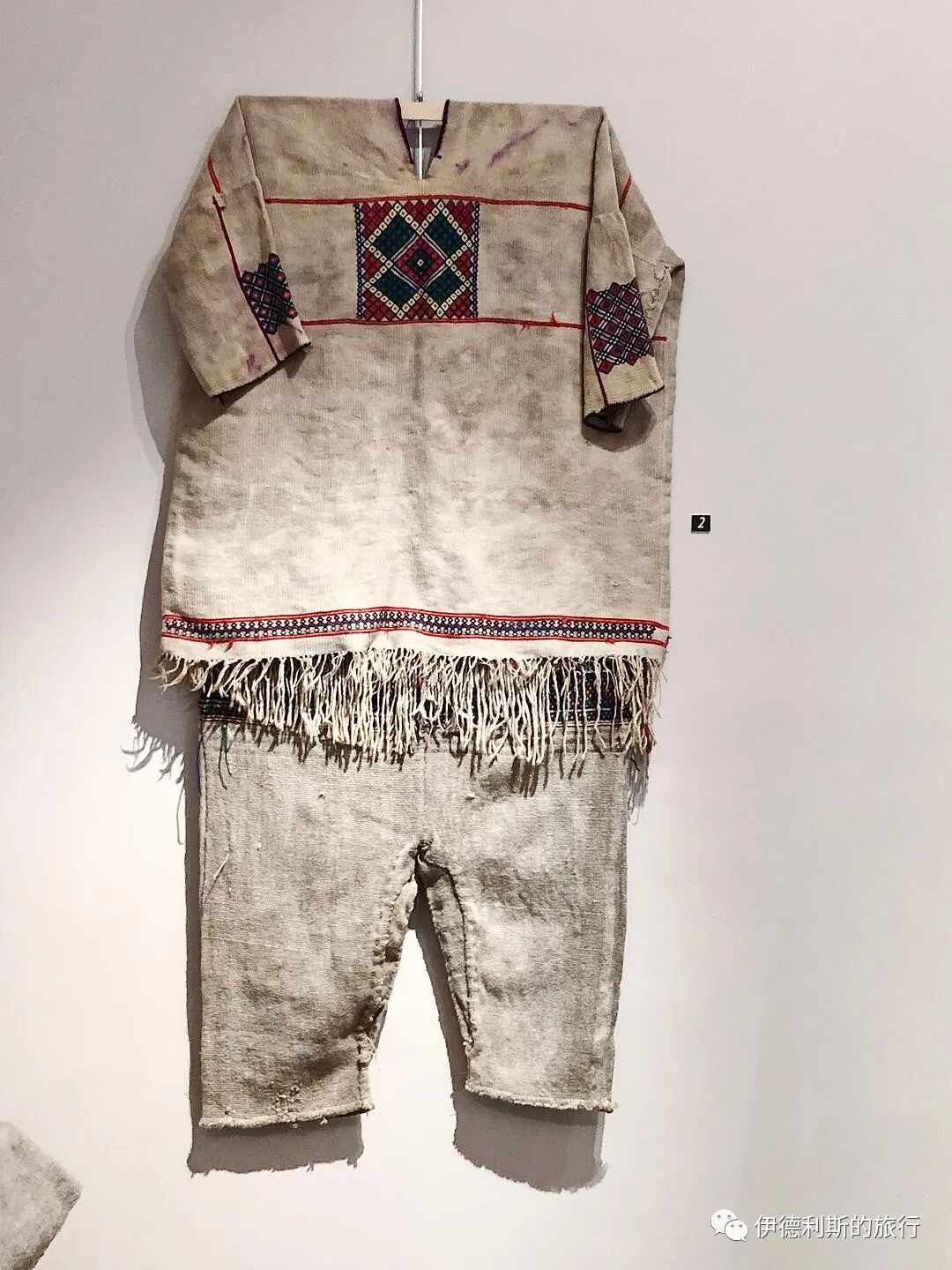
Clothing worn by the Nuristanis of eastern Afghanistan. Nuristani culture is very similar to Kalasha culture. They also once followed an animistic religion from ancient India before converting to Islam in the 1890s.
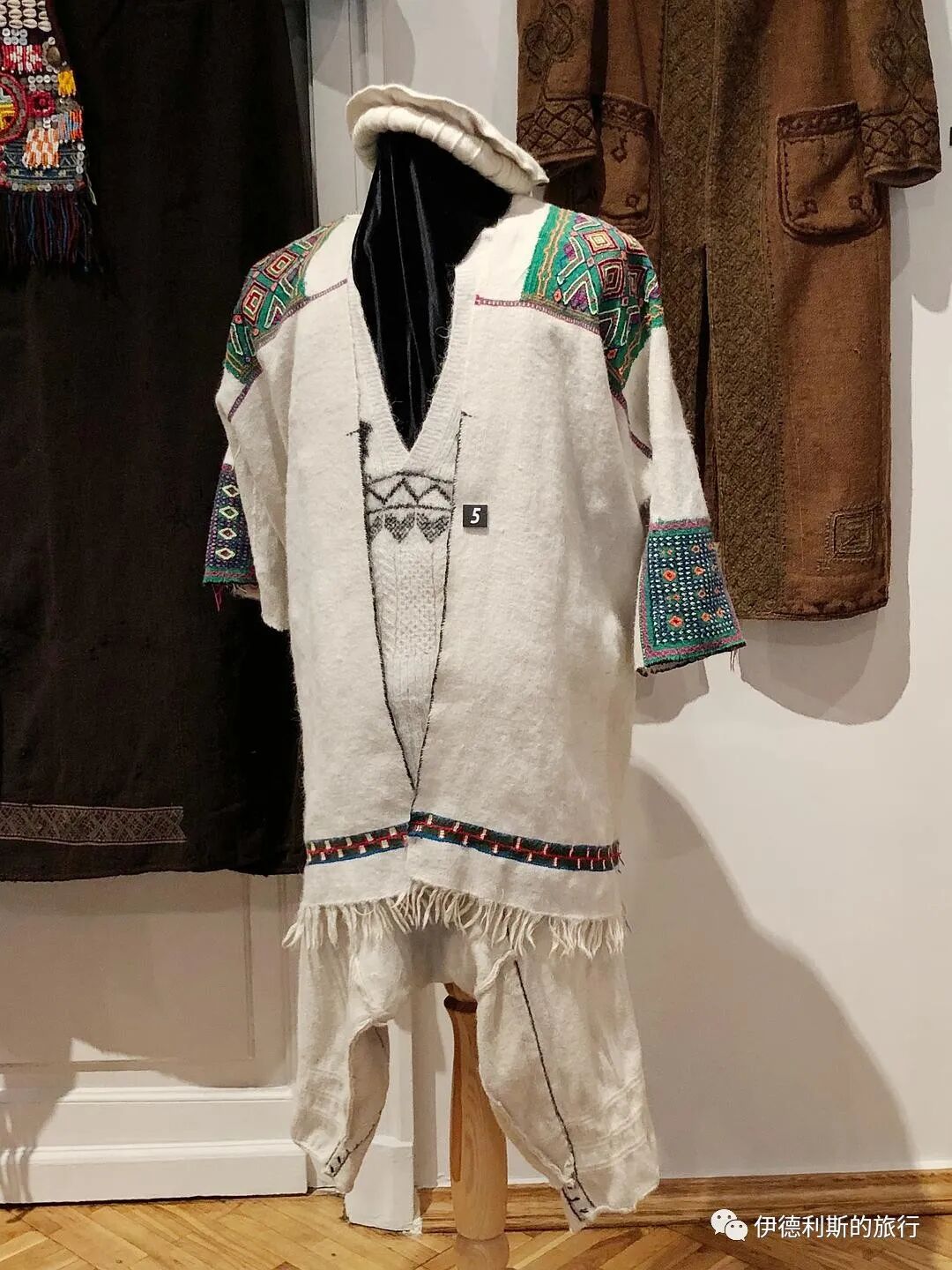
A hat and coat worn by the Wakhi people in the Hunza Valley of northeastern Pakistan in the late 20th century. The Wakhi people are a branch of the Pamiri people. They live at the borders of Afghanistan, Pakistan, Tajikistan, and Taxkorgan in China, where they are classified as part of the Tajik ethnic group. The Wakhi people speak the Wakhi language, which belongs to the Eastern Iranian sub-branch, and they follow the Ismaili branch of Shia Islam.
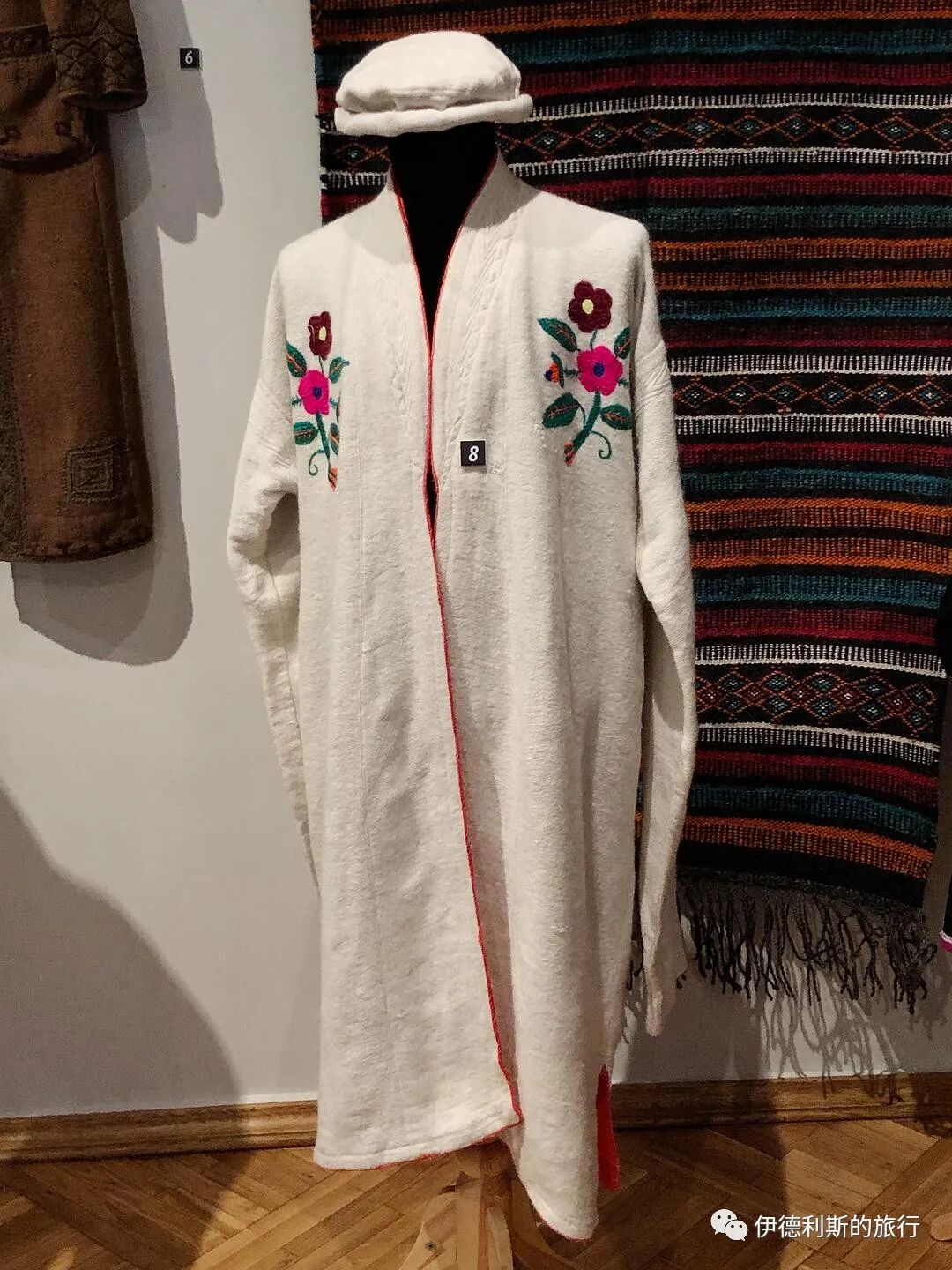
A woman's hat worn by the Wakhi people in the Hunza Valley of northeastern Pakistan.
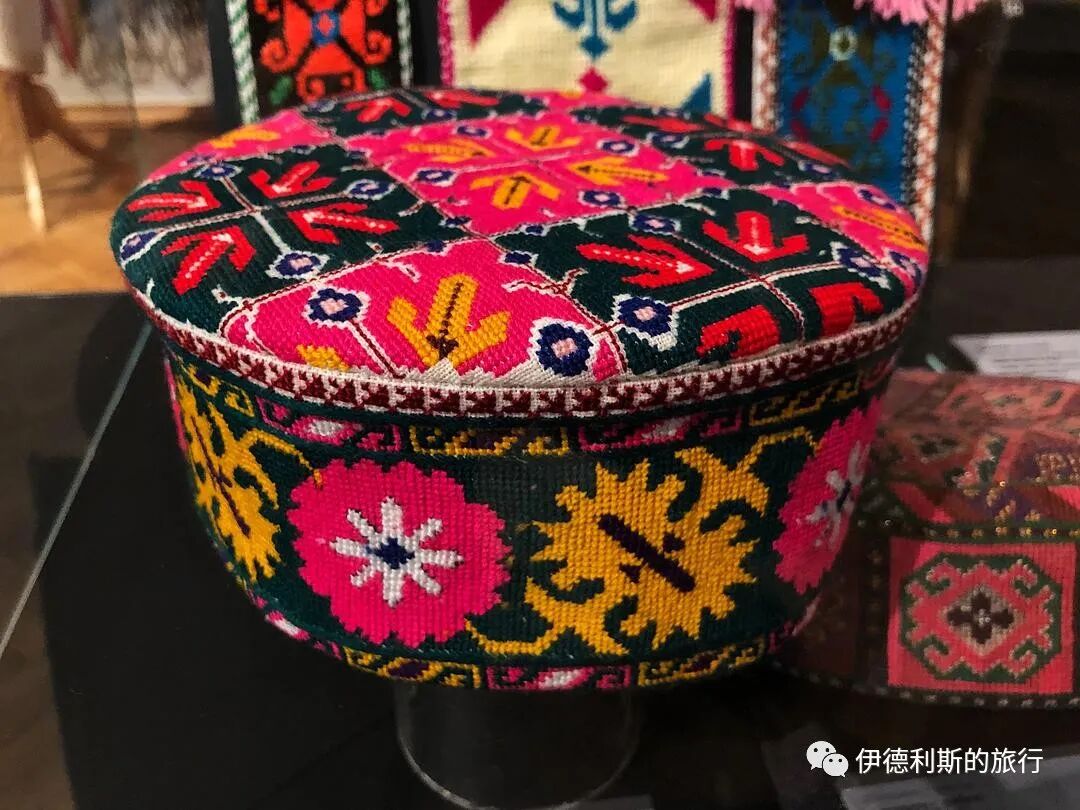
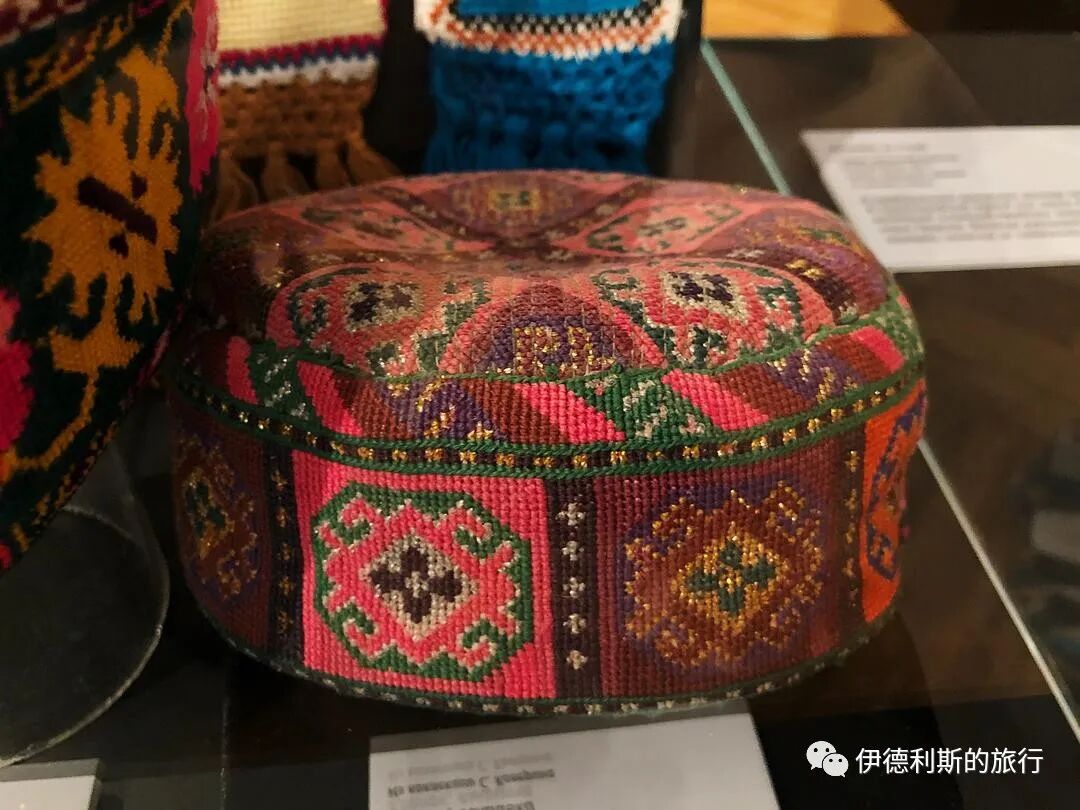
A jacket worn by the Pashayi people in eastern Afghanistan. The Pashayi people are a branch of the Indo-Aryan ethnic group and are one of the oldest ethnic groups in Afghanistan.
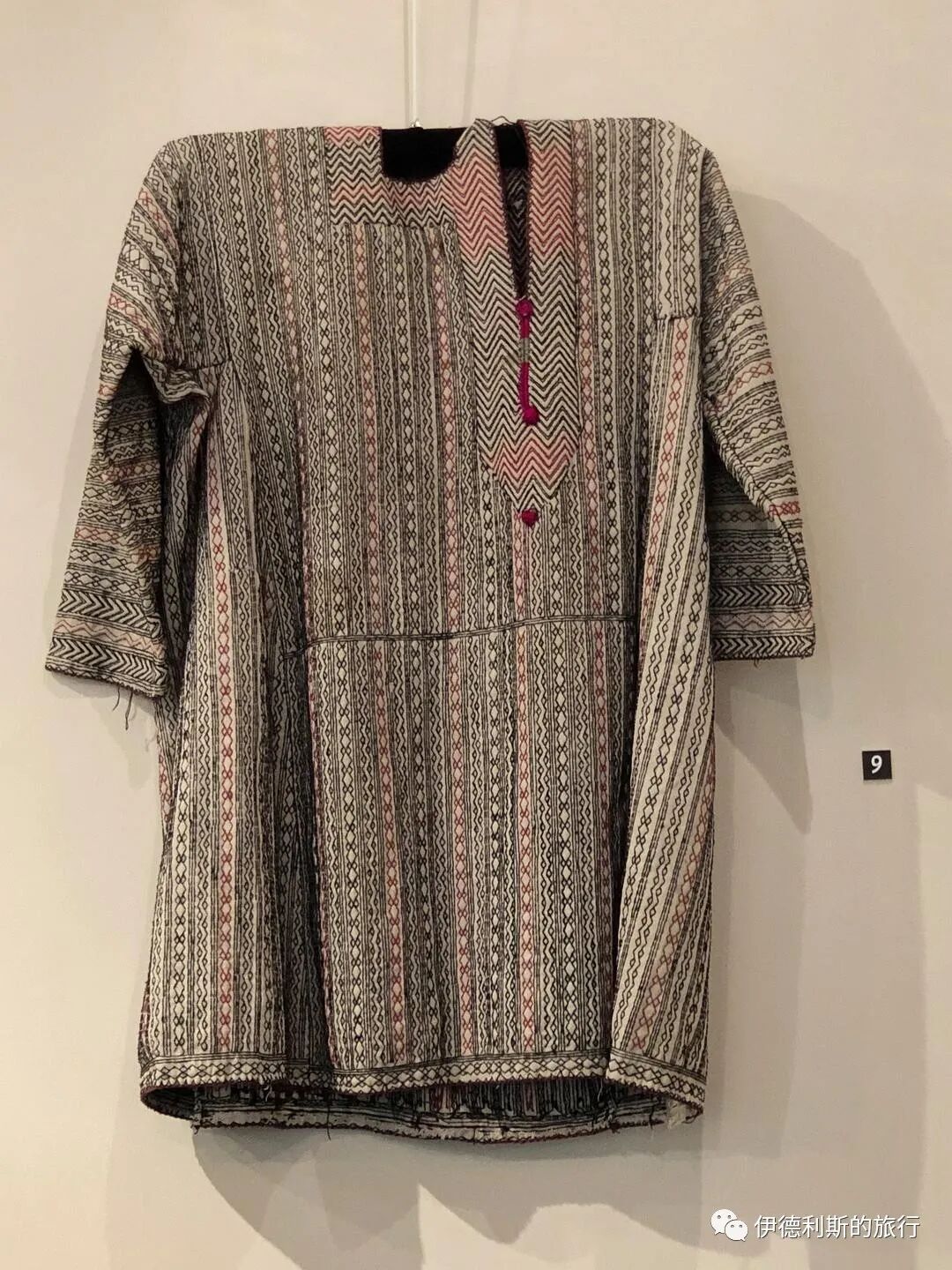
A robe from the eastern region of Afghanistan.
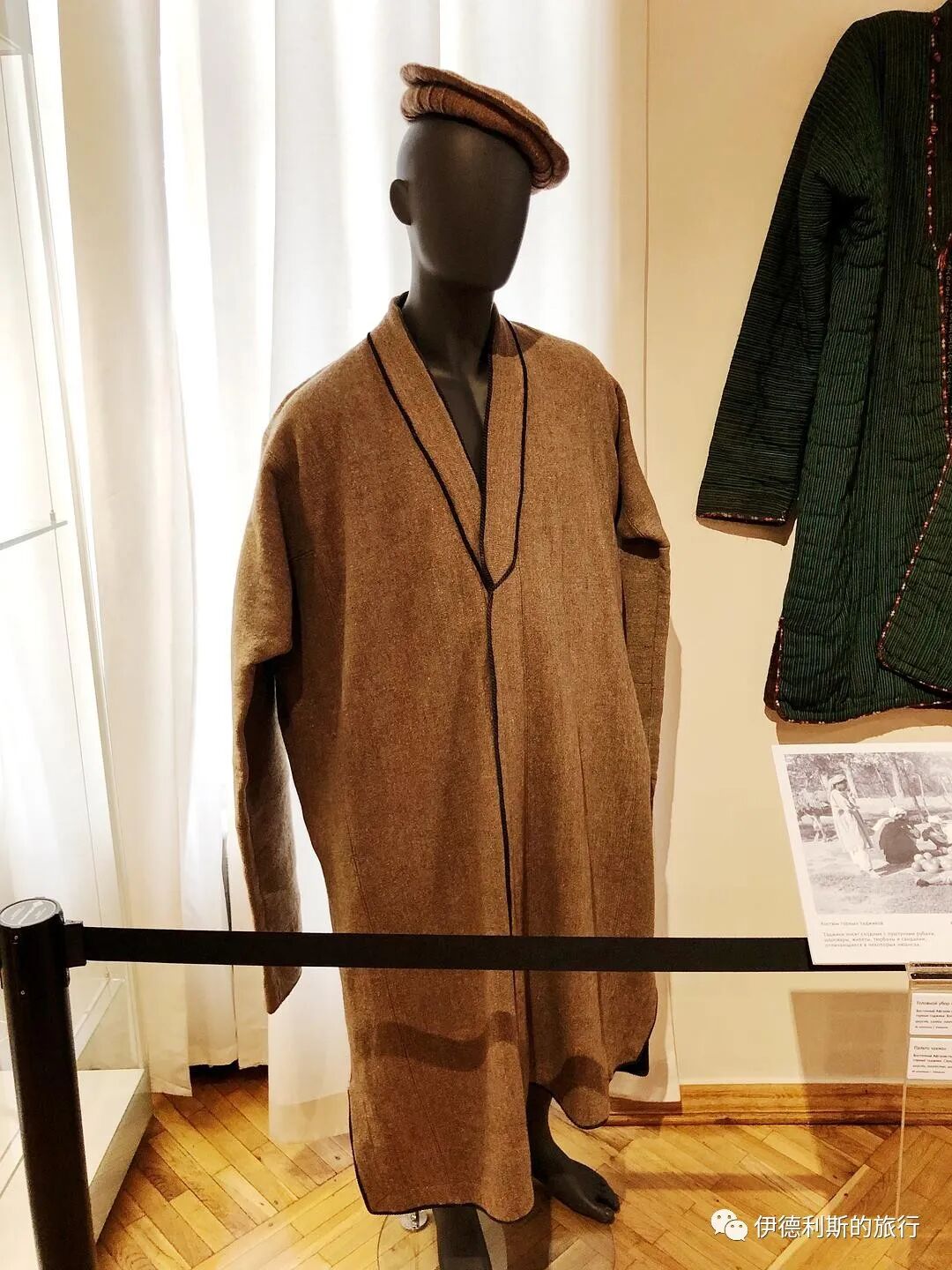
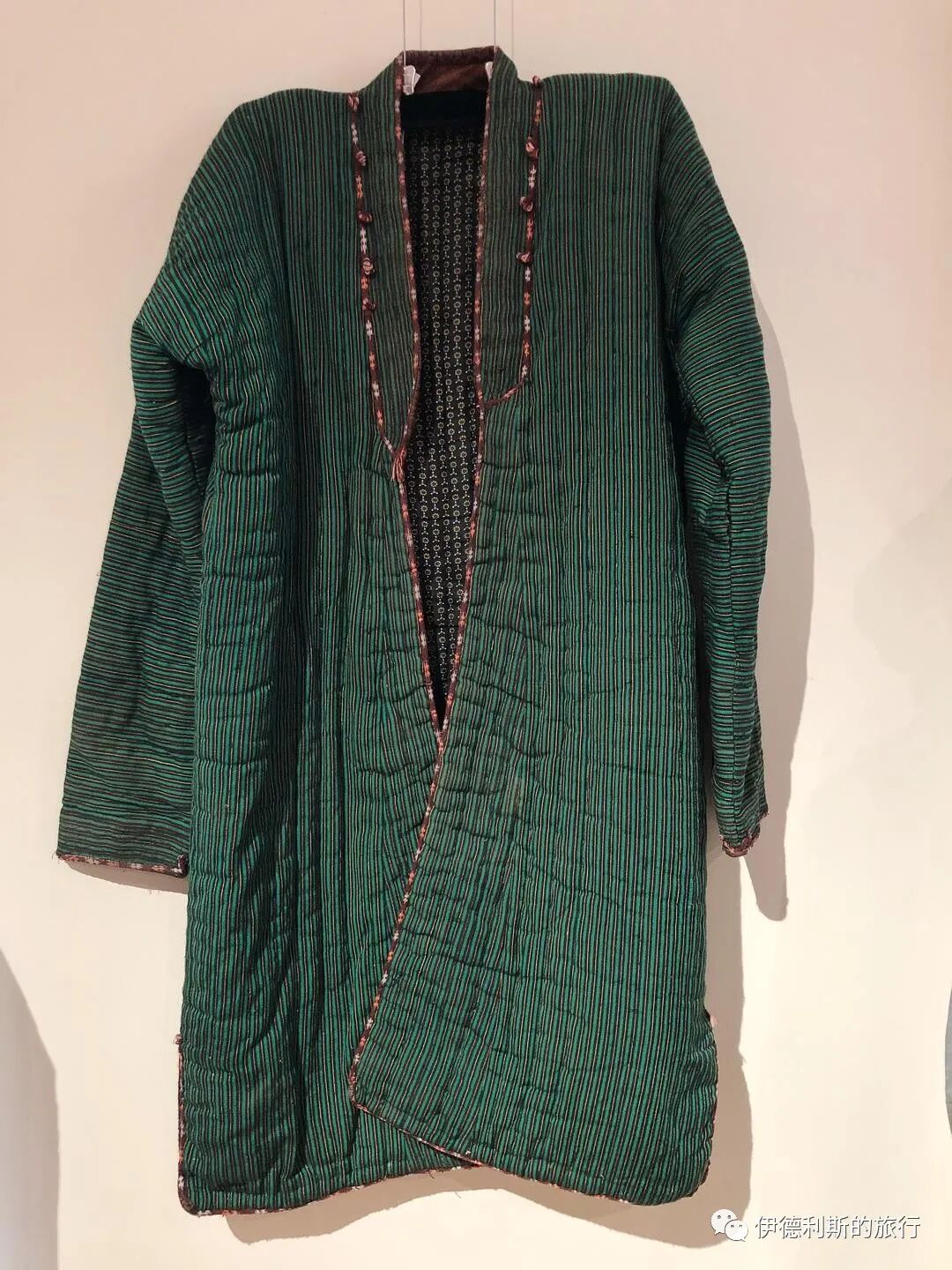
An Afghan hat from the early 20th century.
3. Siberian clothing
Clothing of the Nanai people on the north bank of the Heilongjiang River. The Nanai people are the Hezhen ethnic group, a Tungusic-speaking people living along the Heilongjiang River.
Clothing of the Nivkh people on the north bank of the Heilongjiang River. The Nivkh people live from the lower reaches of the Heilongjiang River to the river mouth and the northern part of Sakhalin Island, making a living by fishing, hunting, and raising dogs. The Nivkh language is a language isolate, sometimes grouped under Paleo-Siberian languages for convenience. After the Russo-Japanese War ended in 1905, the Nivkh people were divided into Russian and Japanese territories. During the Soviet era, the Russian language was forced upon the Nivkh people, and they were compelled to work on collective farms. Japan forced the Nivkh people to learn Japanese through the Japanization movement, making them stop their traditional customs and adopt Japanese ways of adopt Japanese ways. In 1945, the Soviet Union reclaimed Sakhalin Island, and some Nivkh people were forced to move to Hokkaido. Nivkh people in the Soviet Union were forced to live on collective farms until the Soviet Union collapsed in 1991.
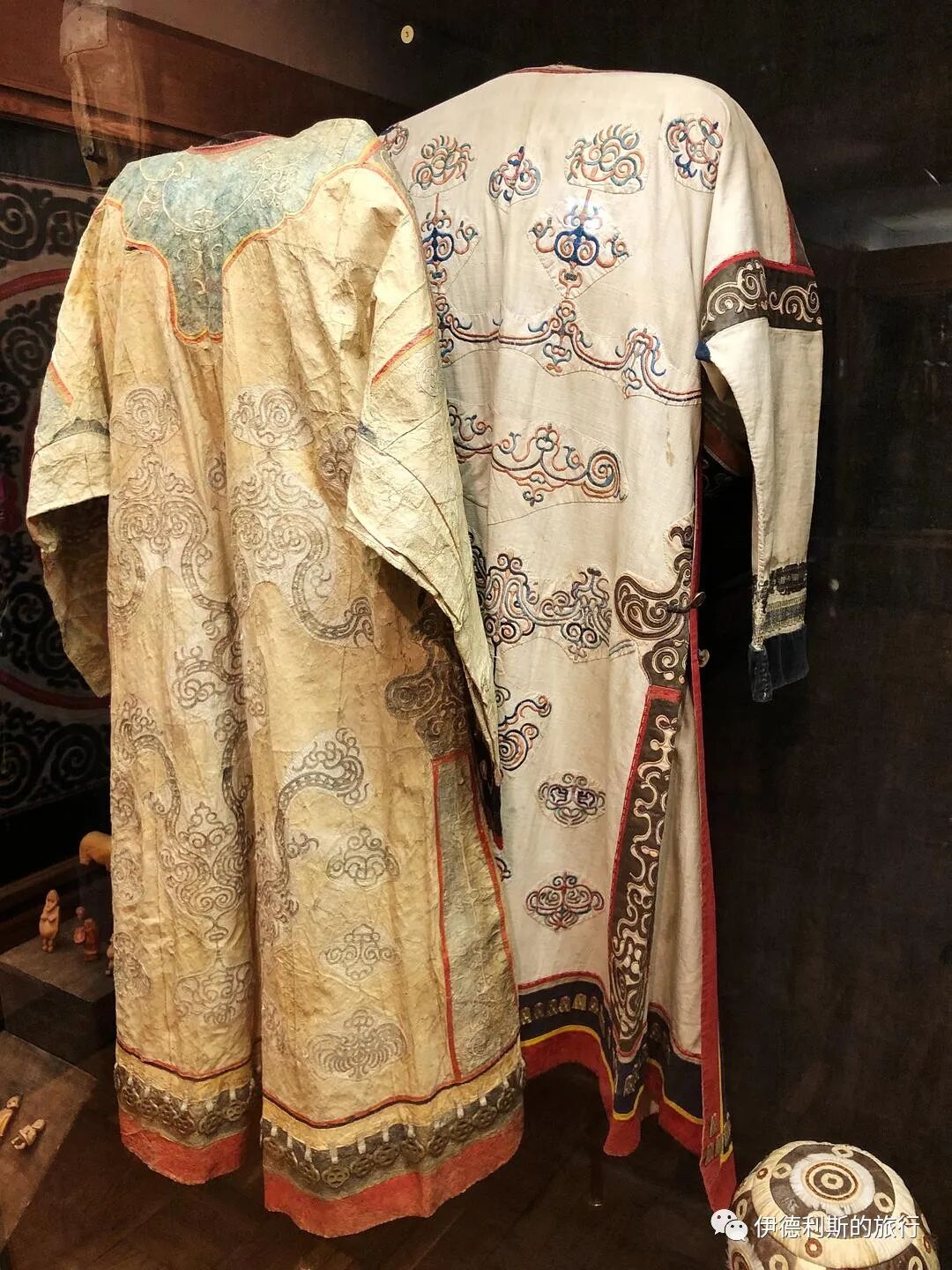
Animal statues made from walrus ivory by the Chukchi people in the 1930s. The Chukchi people live in the Chukotka Autonomous Okrug in the far east of Siberia and are divided into two groups: the maritime Chukchi and the reindeer Chukchi. The Chukchi living along the coast survive by hunting marine mammals, while those living on the inland tundra migrate seasonally with their reindeer. According to molecular anthropology research, the Chukchi people are the Asian ethnic group most genetically similar to Native Americans.
After the 1920s, the Soviet Union established walrus ivory carving cooperatives in Chukchi villages like Uelen to specialize in this craft. Uelen village is the center of Chukchi walrus ivory carving art and houses the world's only walrus ivory carving museum. Archaeological digs in Uelen village uncovered a burial site dating from 500 BC to 1000 AD, where they found walrus ivory carvings from a thousand years ago.
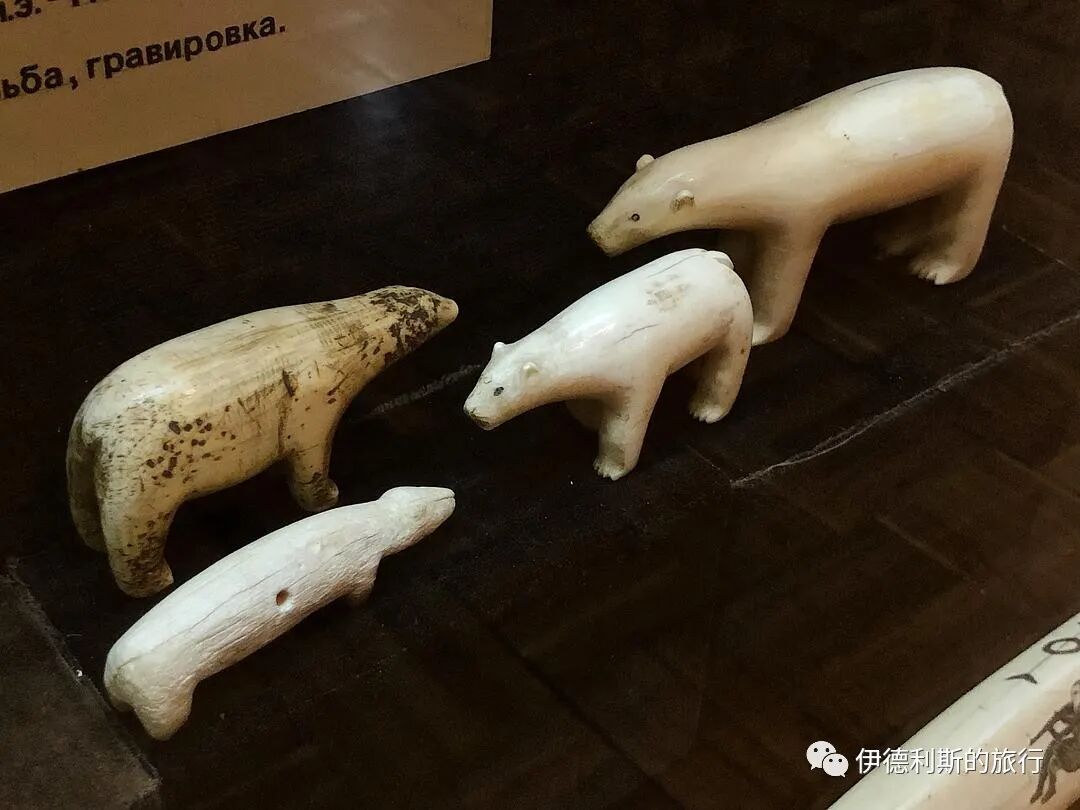
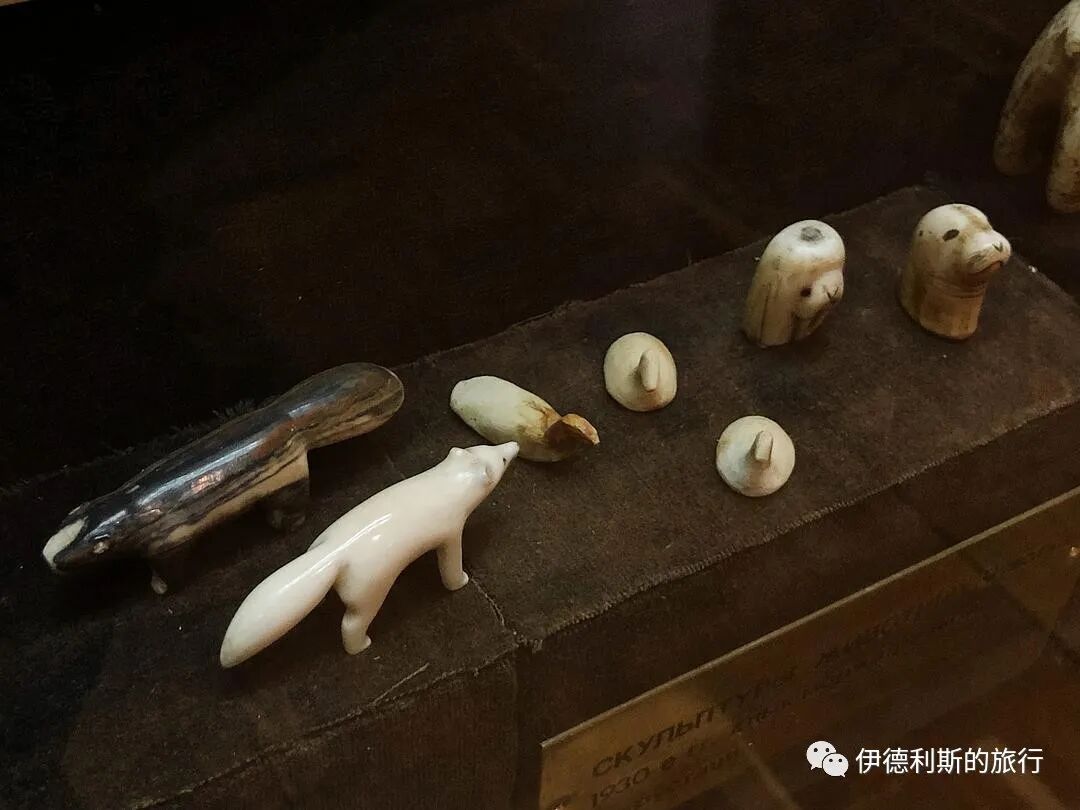
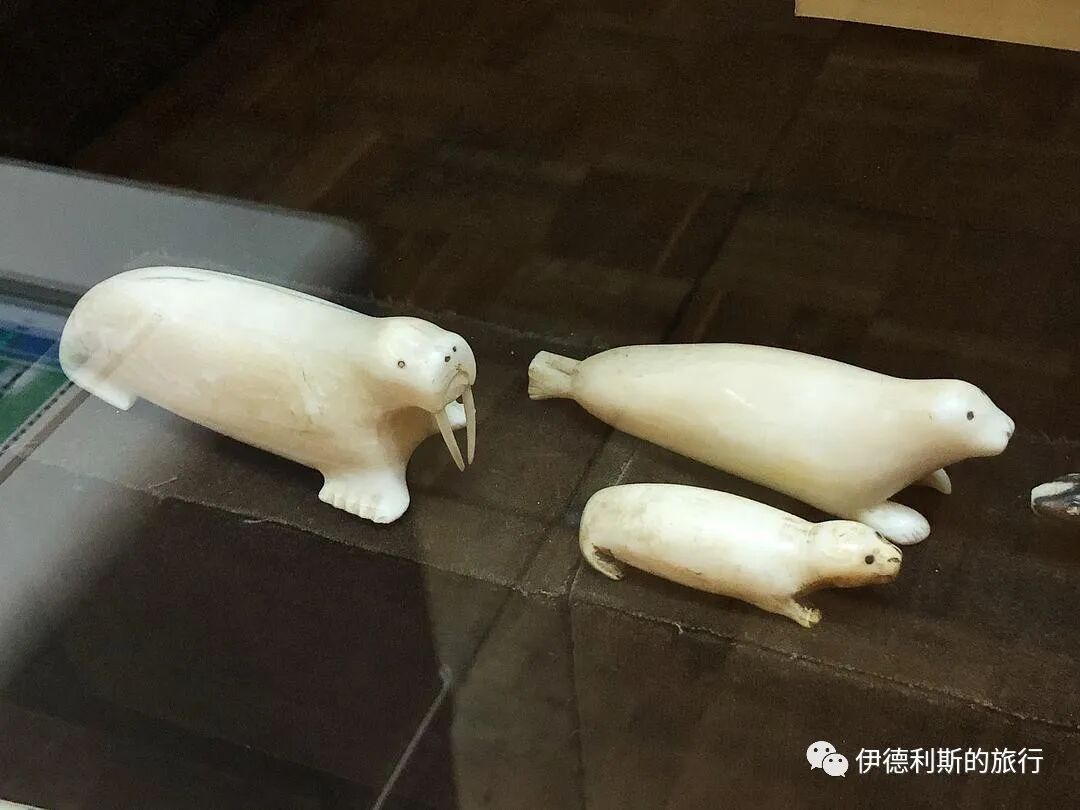
The Dolgan people wear clothing paired with Evenki leather boots. The Dolgans are a Turkic-speaking people living in Siberia. The Dolgan language belongs to the Northern Turkic branch and is closest to the Yakut language. Dolgans are considered a Turkicized Tungusic group who likely switched to a Turkic language during the 18th century. Dolgans originally lived by hunting and herding reindeer, but they were forced to work on collective farms during the Soviet era.
The Evenks are a Tungusic-speaking group native to Siberia, living across Hulunbuir, Siberia, and Mongolia. Some Evenks hunt reindeer, while others raise cattle and horses.
A box lid belonging to the Yakut people. The Yakuts, also called the Sakha, live mainly in the Sakha Republic of Siberia. They speak the Yakut language, which belongs to the Northern Turkic branch, and traditionally make a living by herding horses, cattle, and reindeer.
4. Central Asian Clothing
A 19th-century robe from Central Asia.
A woman's dress from Tajikistan, dating from the 1950s to the 1960s.
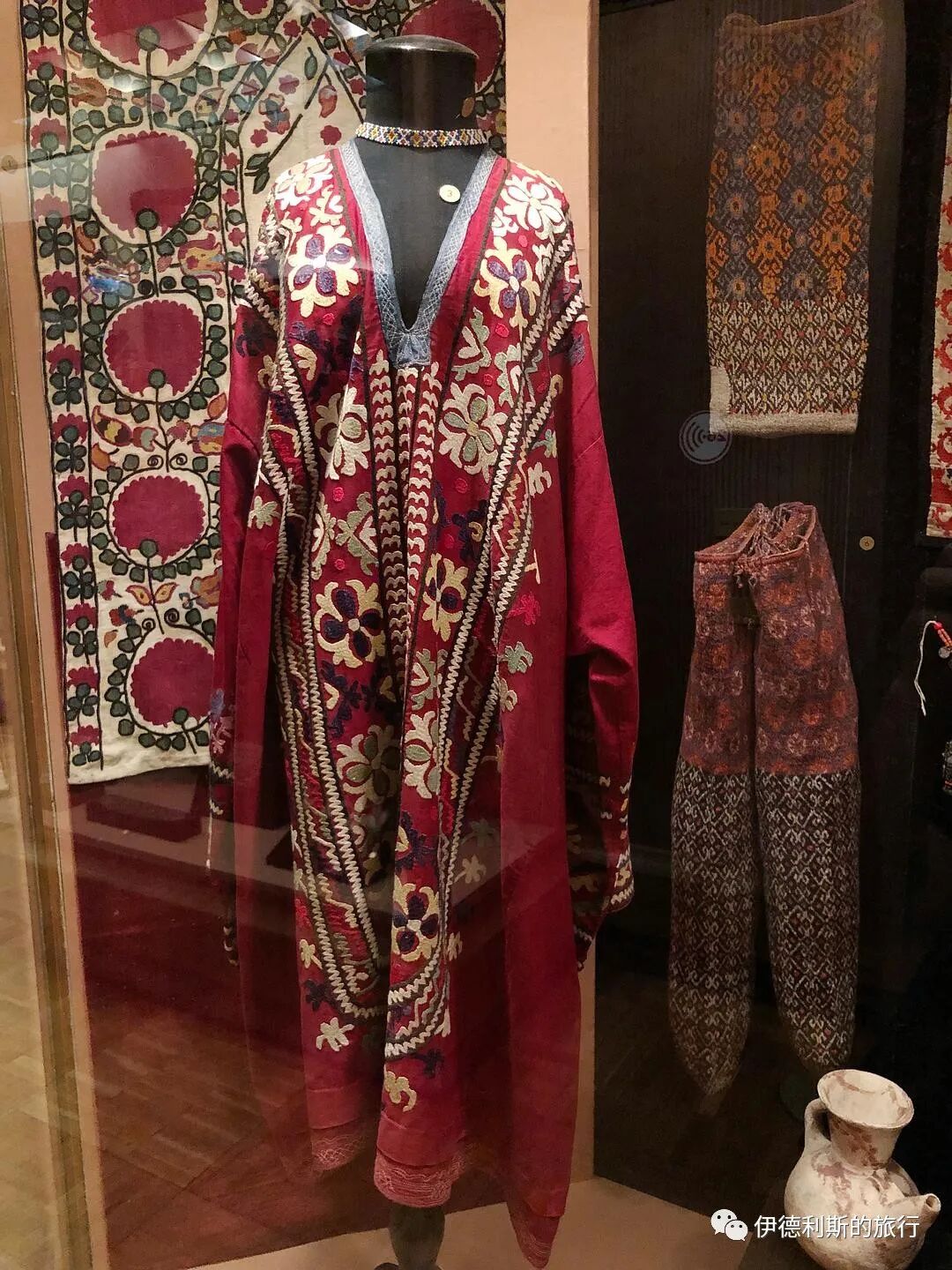
An early 20th-century ikat dress (atlas) from Uzbekistan, featuring a 19th-century chest ornament from Bukhara.
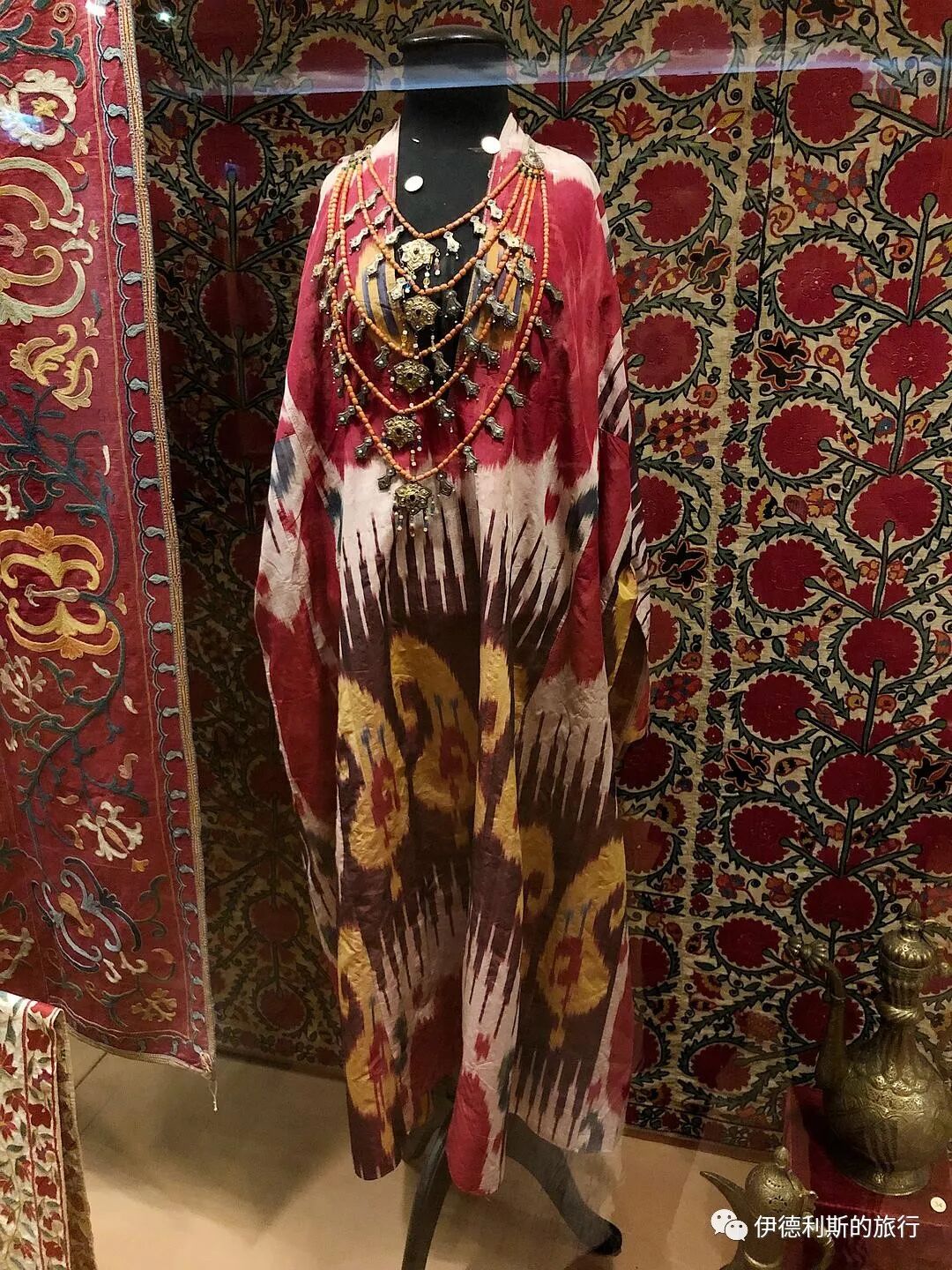
Women's clothing from Tajikistan, dating to the early 20th century.
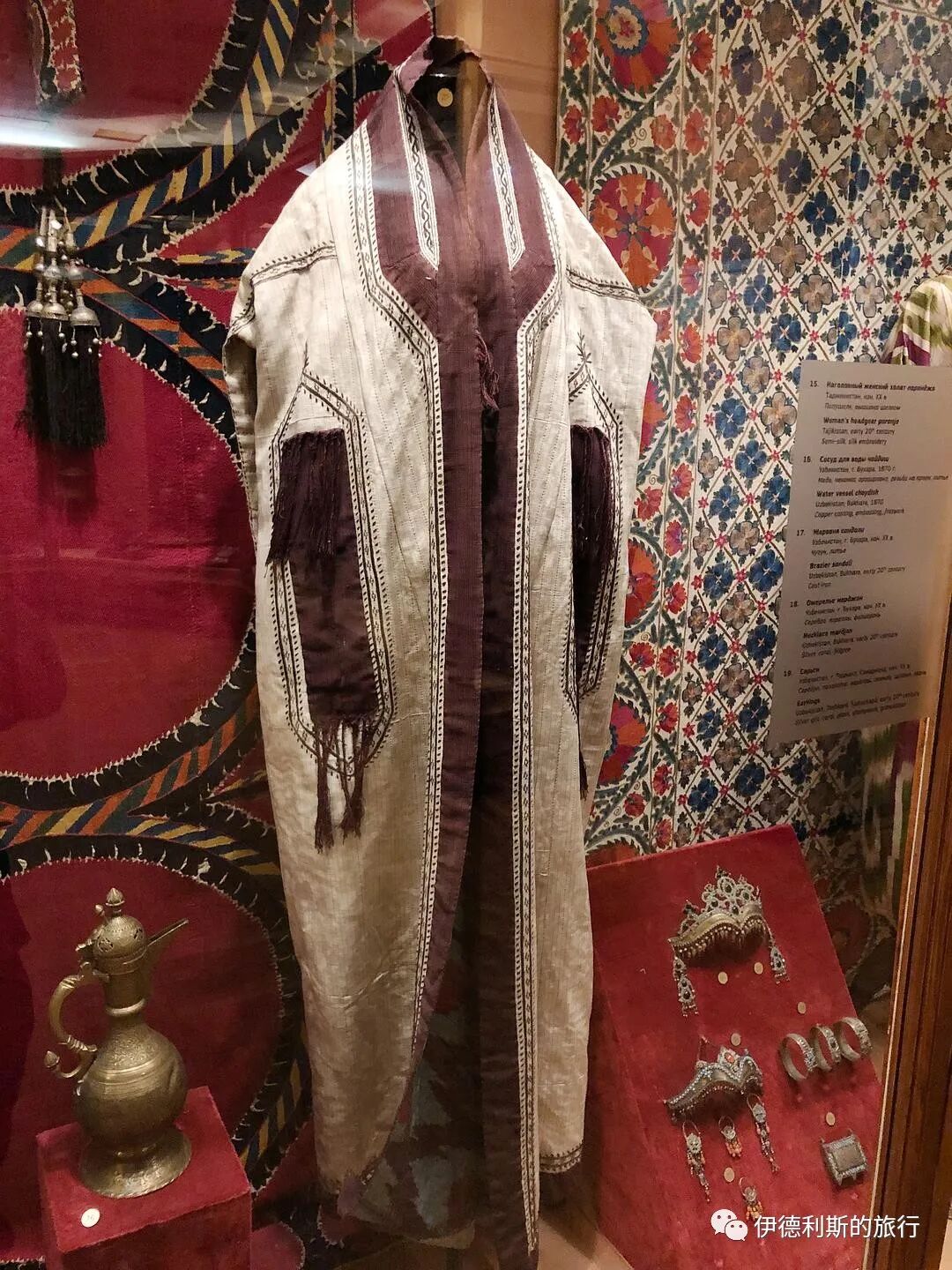
A man's robe from Bukhara, dating to the late 19th century.
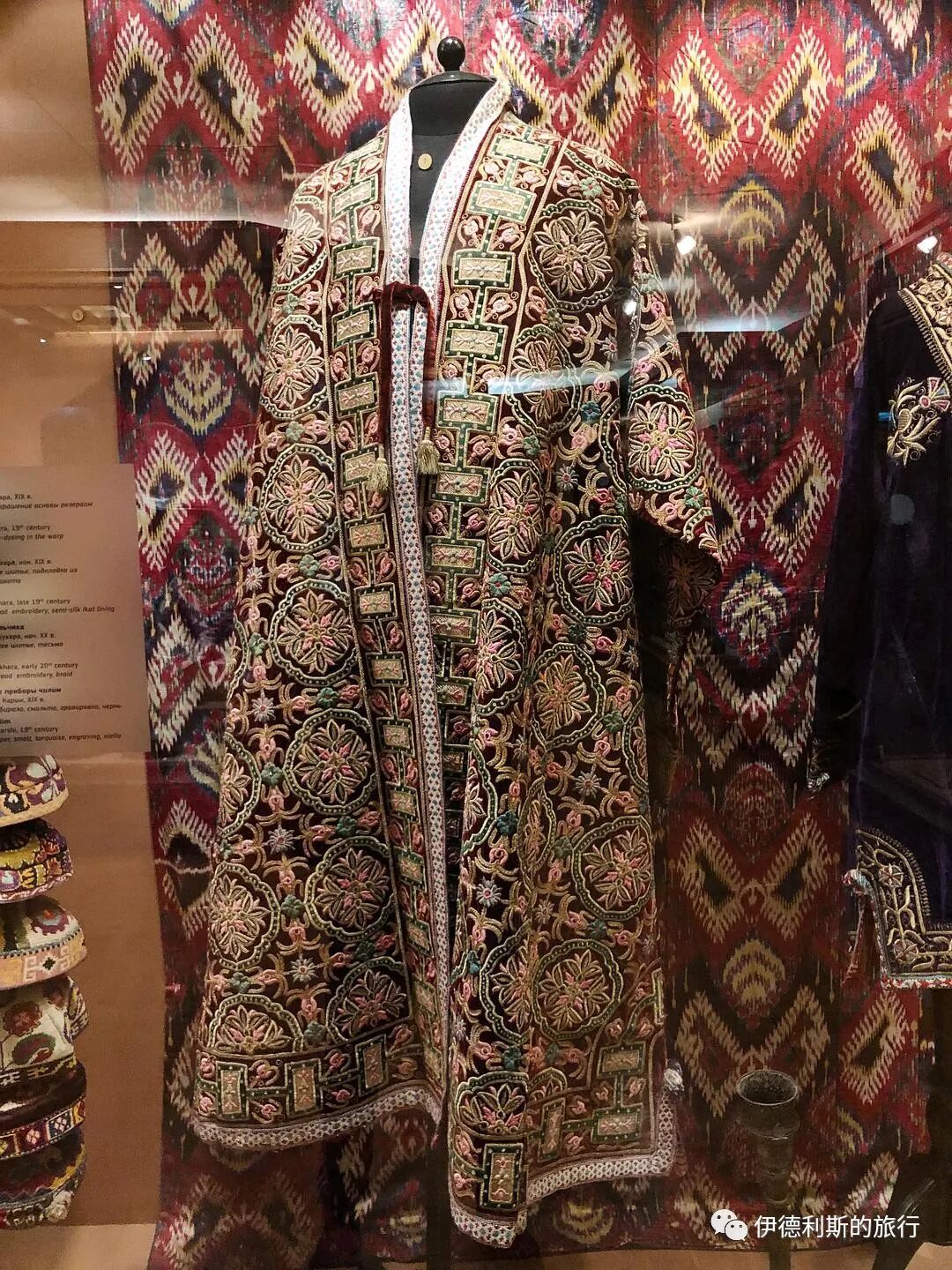
A boy's robe from Bukhara, dating to the early 20th century.
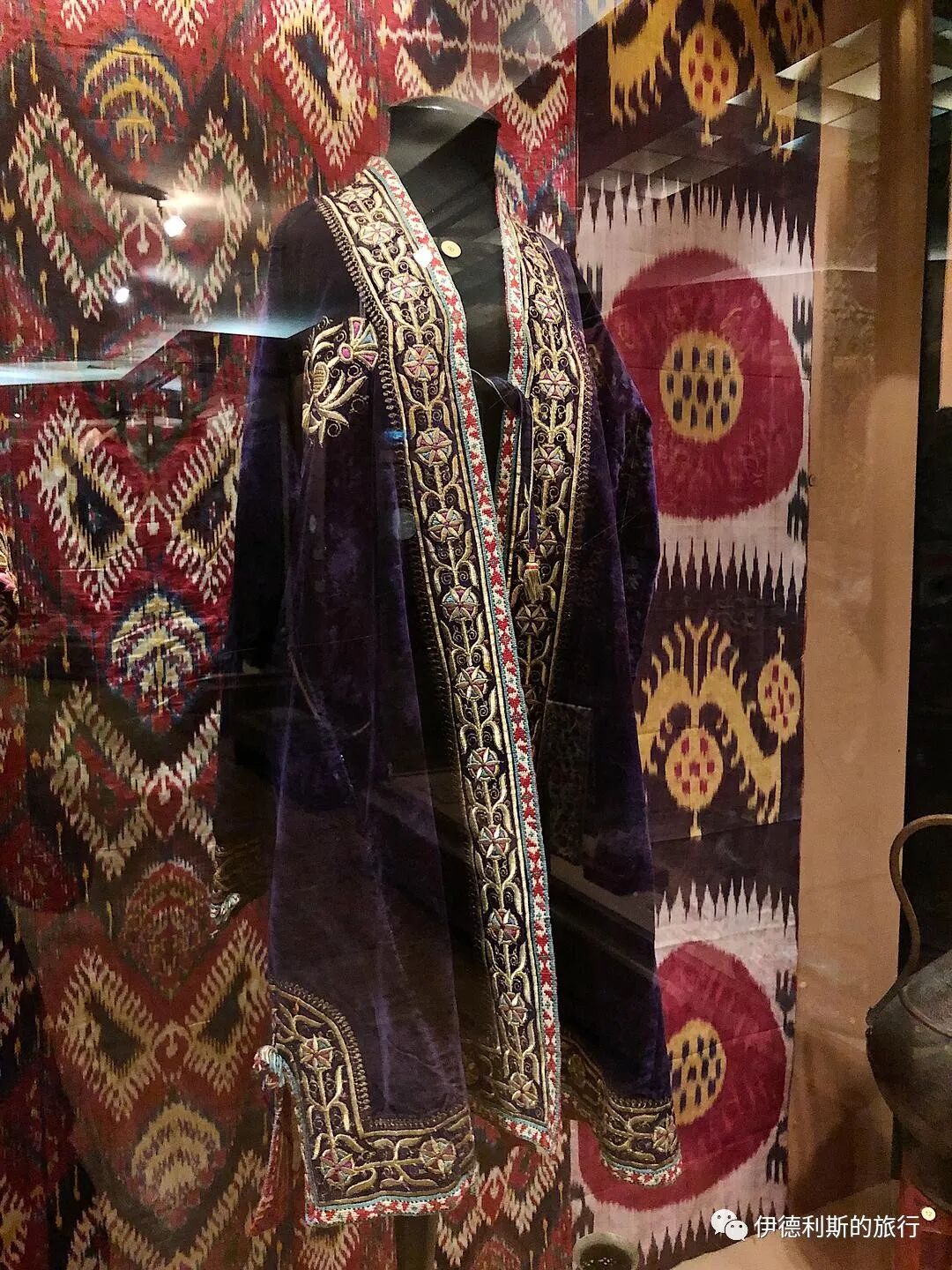
On the left is women's clothing from Bukhara in the early 20th century. In the middle is a 19th-century men's ikat robe (atlas) from Bukhara and a 19th-century belt from Shahrisabz. On the right are various hats from Uzbekistan and Tajikistan from the early 20th century.
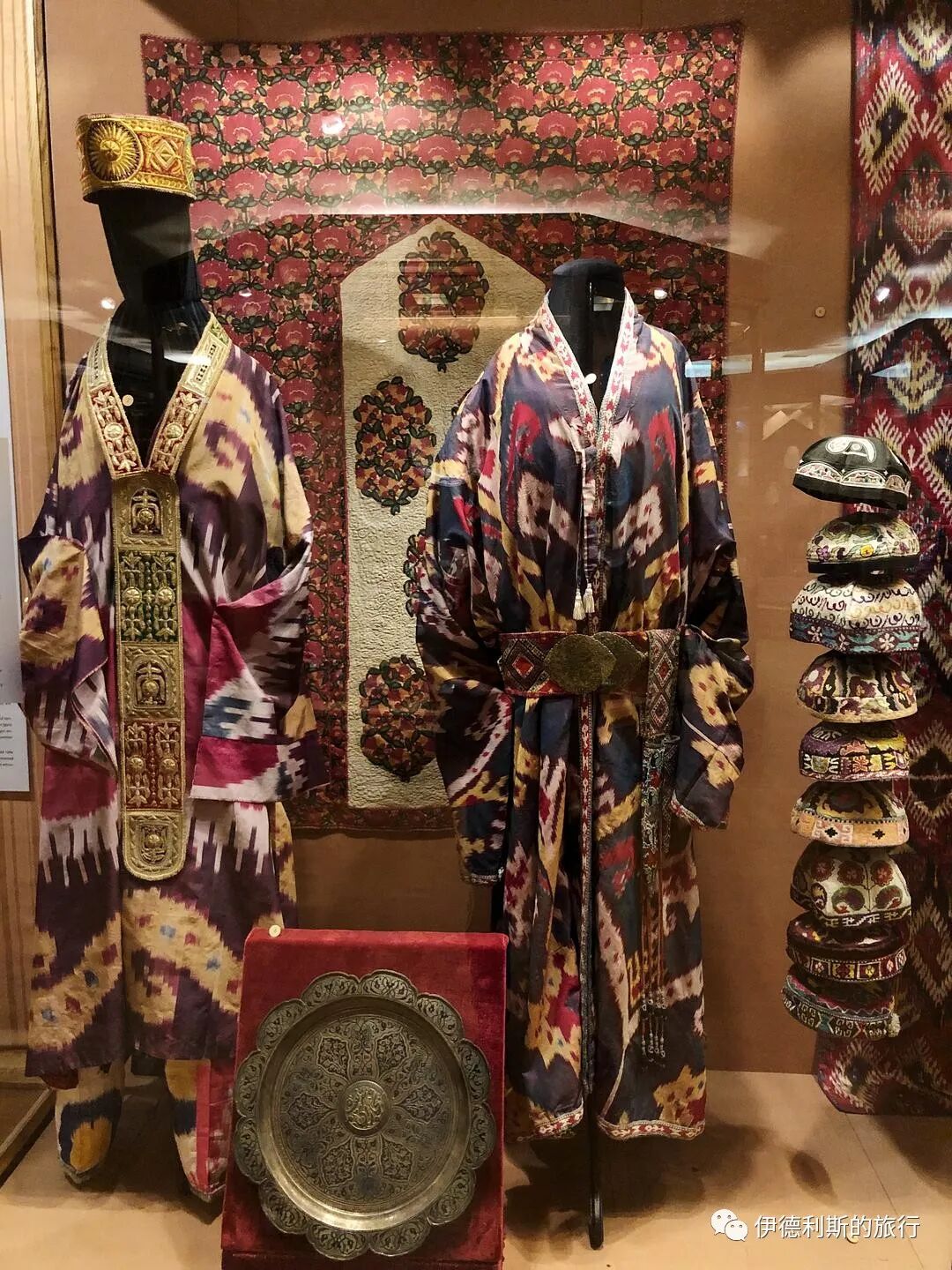
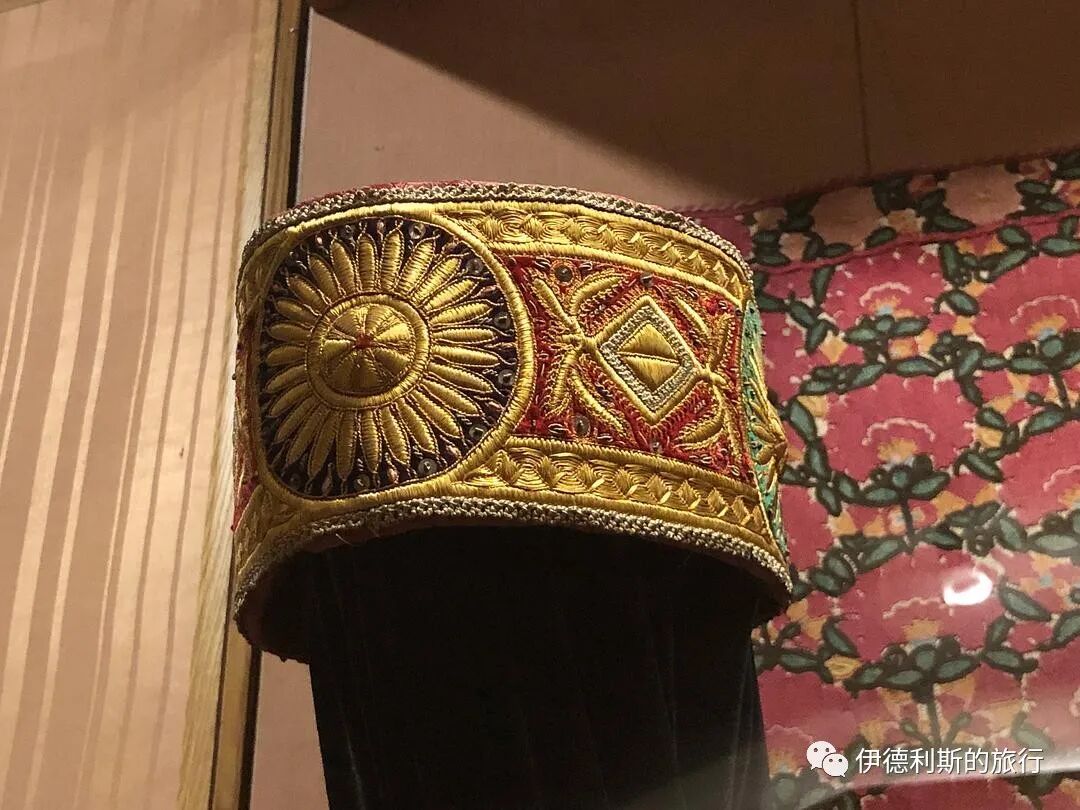
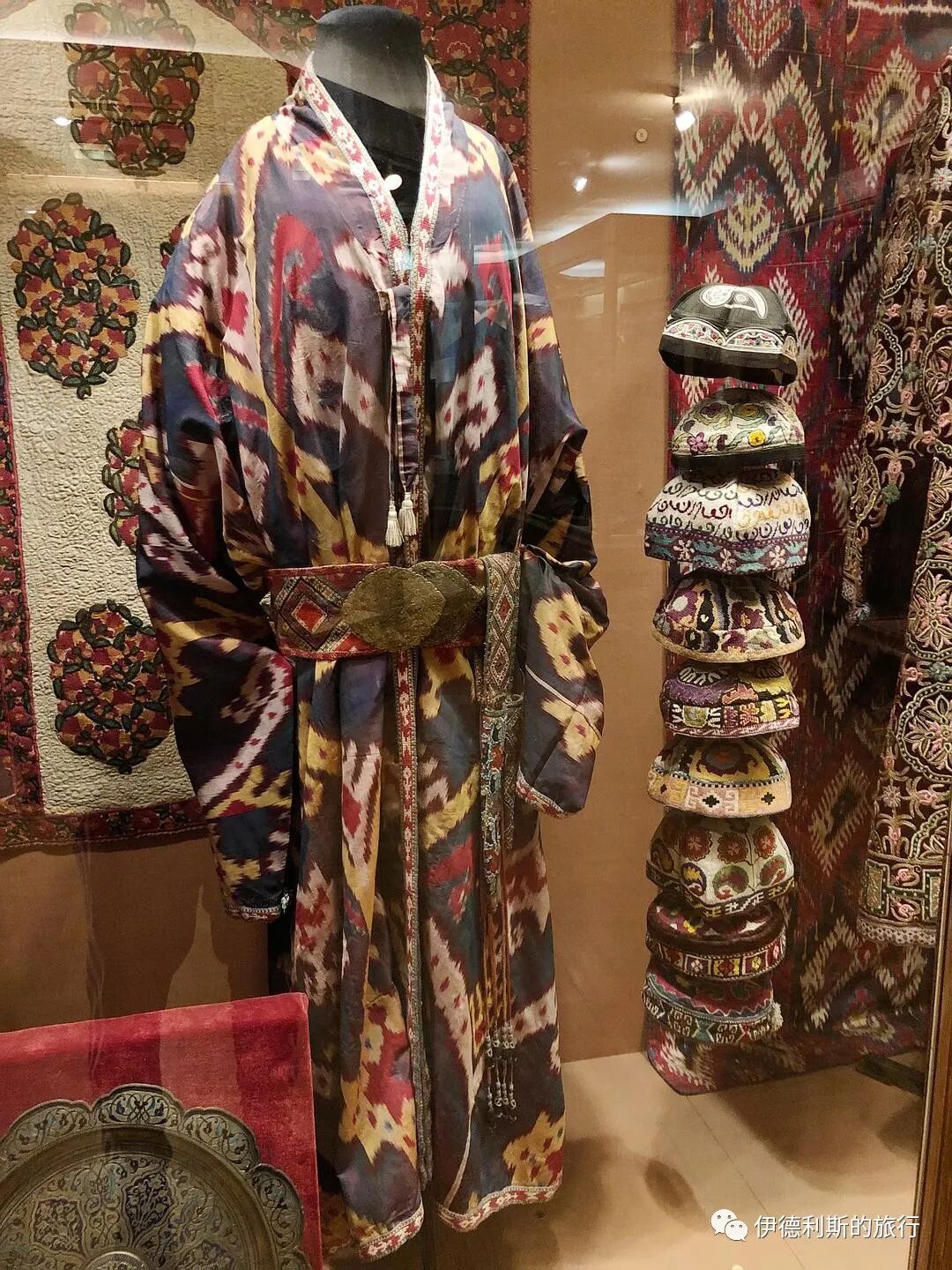
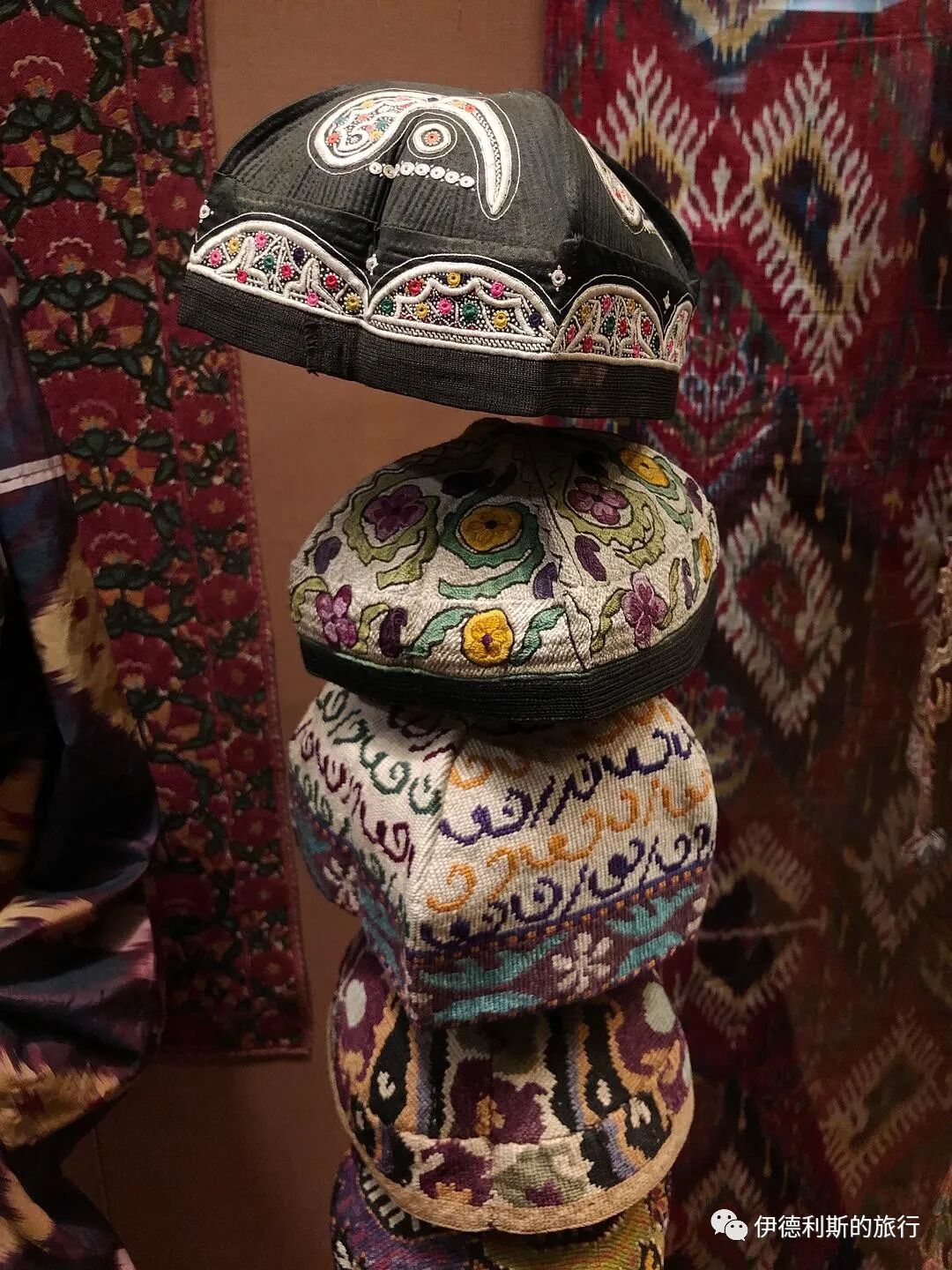
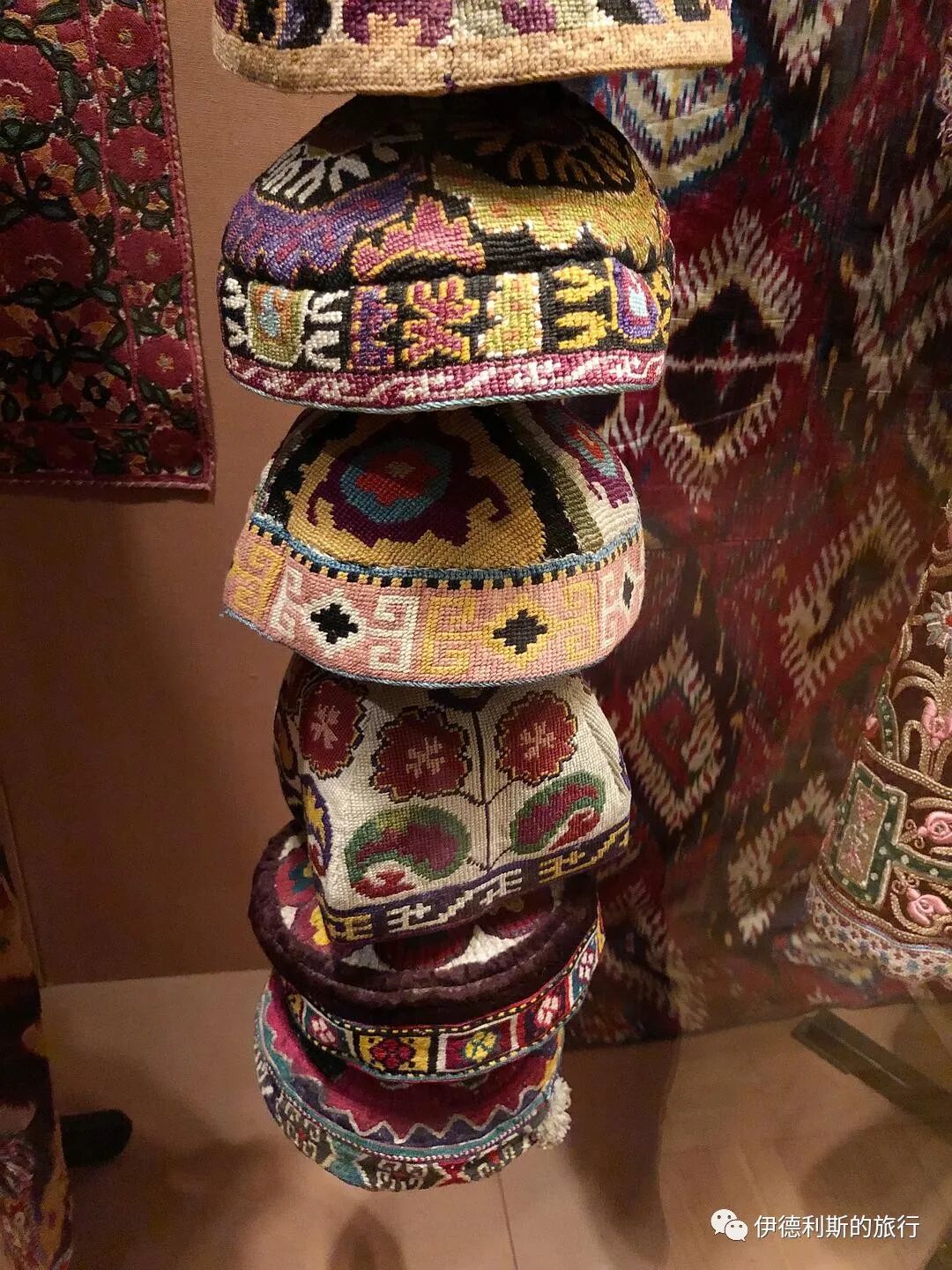
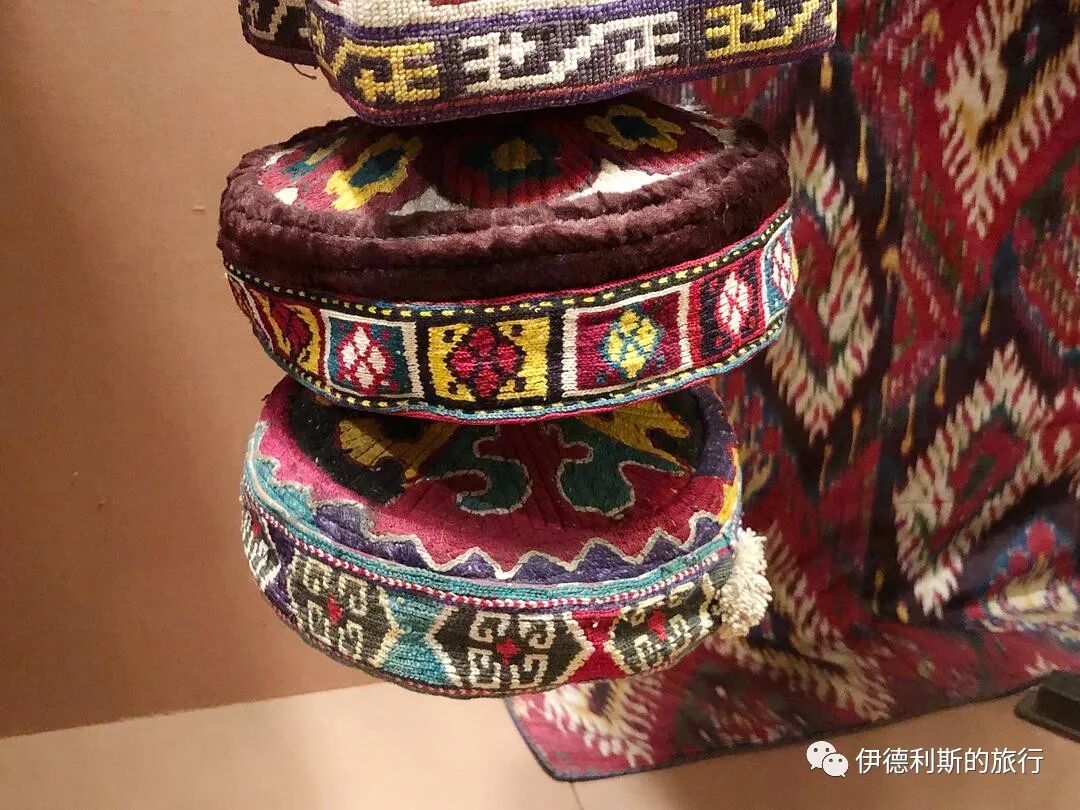 Collapse Read »
Summary: Moscow Oriental Art Museum: Islamic Art, Central Asia and Muslim Heritage is presented here as a firsthand travel account in clear English, beginning with this scene: The museum's collection comes from many regions, including China, Japan, Korea, Southeast Asia, the Caucasus, Central Asia, Iran, and India. The account keeps its focus on Moscow Museum, Islamic Art, Oriental Art while preserving the names, places, food, and historical details from the Chinese source.
The museum's collection comes from many regions, including China, Japan, Korea, Southeast Asia, the Caucasus, Central Asia, Iran, and India. When the museum first opened, some items came from the Russian Museum of Decorative Arts, the Pushkin State Museum of Fine Arts, and the State Historical Museum in the 1920s, while others came from private collections. Art collector Pyotr Ivanovich Shchukin once owned a large number of Chinese, Iranian, and Indian artworks. After the October Revolution, these pieces were nationalized and transferred to the Museum of Oriental Art. Most of the Persian artifacts in the museum were donated by General Tardov in 1929. Since 1924, the museum has launched many expeditions to the Far East and collected a large number of artifacts. Today, the museum's new items mainly come from private donations and archaeological excavations.
1. Iran
1. Iranian porcelain
An Iranian ceramic plate from the 12th to 13th century.
After the 12th century began, the massive Seljuk Empire slowly declined and was finally destroyed by the Khwarazmian Empire in 1194. In 1221, the Khwarazmian Empire faced an invasion by the Mongol Empire, and by 1237, the Mongols occupied most of Iran. In 1256, Hulagu Khan was named Ilkhan, and Iran began to be ruled by the Ilkhanate.
Iranian ceramic tiles from the 13th to 14th century.
After 1335, the Ilkhanate fell into division until it was conquered by Timur in 1381, and Iran came under the rule of the Timurid Empire.
Iranian ceramic tiles from the 17th century, Safavid Dynasty (1501–1736).
Ceramic tiles from the 18th century, Safavid Dynasty (1501–1736) or Afsharid Dynasty (1736–1796).
2. Calligraphy and painting from the 18th century.
Entering the 18th century, Iran faced both internal troubles and external threats. The Russian Empire and the Ottoman Empire invaded Iran one after another. The Safavid dynasty, which had ruled Iran for over two hundred years, collapsed. Pashtuns from Afghanistan, Turkmens from Khorasan, and other tribes established the Hotaki dynasty (ruling Iran from 1722 to 1729), the Afsharid dynasty (1736-1796), and the Zand dynasty (1750-1794) in succession.
Although the Afsharid dynasty reached the largest territory in Iran since the Sasanian Empire in the 1730s, it soon fell into civil strife and turmoil. After 1750, the Zand dynasty brought a period of relative peace and prosperity to Iran.
In 1765, Karim Khan promoted art in the capital, Shiraz. This formed the unique Zand school of Iranian painting, which influenced the painting art of the Qajar dynasty in the 19th century.
Calligraphy written by Riza ad-Din Khan ibn Ibragim khan in 1706/7, during the final years of the Safavid dynasty.
18th-century Persian miniature painting.
3. 19th-century Persian miniature paintings
In the 19th century, Iran was ruled by the Qajar dynasty (1789-1925). The Qajars were a Turkic-speaking tribe from northern Iran, now part of the Turkmen people, and their rulers called themselves Shah. Peace returned to Iran in the 19th century, and art flourished as a result.
An illustration from the Persian epic Shahnameh shows the legendary hero Rostam fighting the White Demon (Div-e Sepid). In the Shahnameh, the White Demon is the leader of the demons in the Mazandaran region; he is huge and skilled at all kinds of magic. He destroyed the army of the Iranian King Kay Kavus by summoning hail, boulders, and tree trunks, then captured and imprisoned the king. In the end, the hero Rostam killed the White Demon to save the king, and he even turned the demon's head into a helmet to wear.
Inside the palace.
A Sufi performing the whirling dance ceremony.
An introduction to the turban (chantou).
The Sufi allegorical poem Salaman va Absal by the famous 15th-century Sufi poet Jami (Nūr ad-Dīn 'Abd ar-Rahmān Jāmī). The story appears to be about a prince who feels a physical attraction to his wet nurse, but it actually uses allegory to describe the key stages of Sufi spiritual practice.
A Qajar dynasty Shah in battle.
A page from a manuscript.
A young man wearing a turban (chantou).
Relaxing.
4. Qajar Dynasty portraits.
The Qajar Dynasty is famous for its unique portrait paintings. Qajar portraits were influenced by European realism in oil painting. They use many dark, rich, and saturated colors. The backgrounds are very realistic, but the people in the paintings still look stiff.
This early 19th-century painting shows Bahram V (reigned 420-438) while hunting. Bahram V was known as the Wild Ass (Gor). He was a 5th-century king of the Persian Sasanian Empire. He loved hunting and often appears in classic Persian literature.
Painted by Muhammad Ali in 1834, this shows the Qajar court with the Shah receiving his officials.
A woman in a garden, 19th century. Early Iranian portraits often blurred gender lines, making the bodies and faces of many beautiful men and women look very similar. It was not until the 19th century that women began to have more individualized features. In portraits of women from the Qajar dynasty, women often hold mirrors, fruit, or drinks, which usually represent beauty and pleasure in Persian poetry.
2. Clothing in Afghanistan and Pakistan
A 20th-century hat worn by the Pashtun people of Afghanistan.
A wool cap (pakol) worn by the Pashtun people in Khost Province, southeastern Afghanistan, which has a wider brim than the common version. The wool cap (pakol) originated from the flat hat (kausia) worn by the Macedonians in ancient Greece and later spread to Hellenistic Afghanistan during the eastern conquests of Alexander the Great. The word pakol comes from the Urdu language in the Chitral region on the border of Afghanistan and Pakistan, meaning round hat. The pakol also spread from Chitral across Afghanistan, Pakistan, and the Pamir region, becoming a hat people wear to keep warm in winter.
A Sindhi cap worn by Pashtuns in Afghanistan in the early 20th century. This cap with a front opening originated in the Sindh region of Pakistan. It later spread to Afghanistan through the Balochistan region and became popular among all Pashtuns during the 20th century.
A woman's dress worn by Pashtuns in Afghanistan in the early 20th century.
Clothing from the Kalasha people in the Parun Valley of eastern Afghanistan from the late 20th century, and trousers from the Kalasha people in northwestern Pakistan from the mid-20th century. The Kalasha people follow an animistic religion that comes from ancient India and speak Kalasha, a language in the Indo-Aryan branch.
Clothing worn by the Nuristanis of eastern Afghanistan. Nuristani culture is very similar to Kalasha culture. They also once followed an animistic religion from ancient India before converting to Islam in the 1890s.
A hat and coat worn by the Wakhi people in the Hunza Valley of northeastern Pakistan in the late 20th century. The Wakhi people are a branch of the Pamiri people. They live at the borders of Afghanistan, Pakistan, Tajikistan, and Taxkorgan in China, where they are classified as part of the Tajik ethnic group. The Wakhi people speak the Wakhi language, which belongs to the Eastern Iranian sub-branch, and they follow the Ismaili branch of Shia Islam.
A woman's hat worn by the Wakhi people in the Hunza Valley of northeastern Pakistan.
A jacket worn by the Pashayi people in eastern Afghanistan. The Pashayi people are a branch of the Indo-Aryan ethnic group and are one of the oldest ethnic groups in Afghanistan.
A robe from the eastern region of Afghanistan.
An Afghan hat from the early 20th century.
3. Siberian clothing
Clothing of the Nanai people on the north bank of the Heilongjiang River. The Nanai people are the Hezhen ethnic group, a Tungusic-speaking people living along the Heilongjiang River.
Clothing of the Nivkh people on the north bank of the Heilongjiang River. The Nivkh people live from the lower reaches of the Heilongjiang River to the river mouth and the northern part of Sakhalin Island, making a living by fishing, hunting, and raising dogs. The Nivkh language is a language isolate, sometimes grouped under Paleo-Siberian languages for convenience. After the Russo-Japanese War ended in 1905, the Nivkh people were divided into Russian and Japanese territories. During the Soviet era, the Russian language was forced upon the Nivkh people, and they were compelled to work on collective farms. Japan forced the Nivkh people to learn Japanese through the Japanization movement, making them stop their traditional customs and adopt Japanese ways of adopt Japanese ways. In 1945, the Soviet Union reclaimed Sakhalin Island, and some Nivkh people were forced to move to Hokkaido. Nivkh people in the Soviet Union were forced to live on collective farms until the Soviet Union collapsed in 1991.
Animal statues made from walrus ivory by the Chukchi people in the 1930s. The Chukchi people live in the Chukotka Autonomous Okrug in the far east of Siberia and are divided into two groups: the maritime Chukchi and the reindeer Chukchi. The Chukchi living along the coast survive by hunting marine mammals, while those living on the inland tundra migrate seasonally with their reindeer. According to molecular anthropology research, the Chukchi people are the Asian ethnic group most genetically similar to Native Americans.
After the 1920s, the Soviet Union established walrus ivory carving cooperatives in Chukchi villages like Uelen to specialize in this craft. Uelen village is the center of Chukchi walrus ivory carving art and houses the world's only walrus ivory carving museum. Archaeological digs in Uelen village uncovered a burial site dating from 500 BC to 1000 AD, where they found walrus ivory carvings from a thousand years ago.
The Dolgan people wear clothing paired with Evenki leather boots. The Dolgans are a Turkic-speaking people living in Siberia. The Dolgan language belongs to the Northern Turkic branch and is closest to the Yakut language. Dolgans are considered a Turkicized Tungusic group who likely switched to a Turkic language during the 18th century. Dolgans originally lived by hunting and herding reindeer, but they were forced to work on collective farms during the Soviet era.
The Evenks are a Tungusic-speaking group native to Siberia, living across Hulunbuir, Siberia, and Mongolia. Some Evenks hunt reindeer, while others raise cattle and horses.
A box lid belonging to the Yakut people. The Yakuts, also called the Sakha, live mainly in the Sakha Republic of Siberia. They speak the Yakut language, which belongs to the Northern Turkic branch, and traditionally make a living by herding horses, cattle, and reindeer.
4. Central Asian Clothing
A 19th-century robe from Central Asia.
A woman's dress from Tajikistan, dating from the 1950s to the 1960s.
An early 20th-century ikat dress (atlas) from Uzbekistan, featuring a 19th-century chest ornament from Bukhara.
Women's clothing from Tajikistan, dating to the early 20th century.
A man's robe from Bukhara, dating to the late 19th century.
A boy's robe from Bukhara, dating to the early 20th century.
On the left is women's clothing from Bukhara in the early 20th century. In the middle is a 19th-century men's ikat robe (atlas) from Bukhara and a 19th-century belt from Shahrisabz. On the right are various hats from Uzbekistan and Tajikistan from the early 20th century.
Collapse Read »
