Muslim Dynasty Travel Project: Historic Islamic Cities Across Eurasia
Reposted from the web
Summary: Muslim Dynasty Travel Project: Historic Islamic Cities Across Eurasia is presented here as a firsthand travel account in clear English, beginning with this scene: Between 2017 and 2019, I used my vacations to visit 10 countries and regions: Russia, Crimea (Russian-occupied), Uzbekistan, Iran, Azerbaijan, Turkey, India, Malaysia, Indonesia, and Xinjiang, China. The account keeps its focus on Muslim Dynasties, Islamic History, Travel Project while preserving the names, places, food, and historical details from the Chinese source.
Between 2017 and 2019, I used my vacations to visit 10 countries and regions: Russia, Crimea (Russian-occupied), Uzbekistan, Iran, Azerbaijan, Turkey, India, Malaysia, Indonesia, and Xinjiang, China. I visited 35 ancient Muslim cities, covering 24 Muslim dynasties from the 11th to the 20th century. Afterward, I used my spare time to look up information and gradually put together some articles. I had already made plans for my 2020 visits, but they were suddenly interrupted. From being unable to leave the country to being unable to leave Beijing, my journey had to pause.
So far, I have finished sharing all 35 ancient cities. I am making a directory here to make it easier to look them up later. Also, my other project, Exploring and Eating in Muslim Communities, is still going on. During the year I could not leave Beijing, I started focusing on local historical sites of Hui Muslims and Islam in Beijing and visited some of them.
Eastern Europe: Volga Bulgaria (Bulgar Khanate), Golden Horde, Crimean Khanate, and Kazan Khanate.
The first article, 'Bulgar: A Thousand-Year-Old Capital on the Volga,' introduces the ancient city of Bulgar in Tatarstan, Russia. It was the capital of Volga Bulgaria in the 10th and 11th centuries and adopted Islam in 922. The Mongol army destroyed Bulgar in the 13th century, but it was soon rebuilt into an important economic, commercial, cultural, and religious center for the Golden Horde. Influenced by the Bulgar people, the Mongol rulers of the Golden Horde also began to follow Islam, building a series of mosques, minarets, and Muslim tombs in the city. Along with secular palaces and bathhouses, most of the ruins remaining in Bulgar today date back to this period. After the Golden Horde declined, the ancient city of Bulgar remained a Muslim religious center until the mid-16th century. The ancient city fell into complete decline after Ivan the Terrible of Russia conquered the Khanate of Kazan in 1552.

The second article, 'Chufut-Kale: The Founding Capital of the Crimean Khanate,' introduces the thousand-year-old Crimean city of Chufut-Kale. Chufut-Kale was first built by the Byzantines in the 5th to 6th centuries and was later inhabited by the Christian Alans. In 1299, the Golden Horde captured the Jewish fortress, and Tatar Muslims and Karaite Jews began living inside. In 1441, Hacı Giray, a descendant of Genghis Khan, minted coins with his name at the fortress, officially established the Crimean Khanate, and built many structures there. After the fortress well dried up in the mid-17th century, all the Tatars left, leaving only the Karaite Jews behind. From then on, Crimean Tatars began calling it the Jewish fortress. After the 19th century, the Karaite Jews also left, and the fortress eventually fell into ruins.

The third article, 'The Former Capital of the Crimean Khanate: Bakhchysarai,' explains that around 1500, Crimean Khan Meñli Giray built a new capital called Salachik in the valley west of the Jewish fortress. Salachik once had a complex of buildings including a palace, a court, baths, and a mosque, but now only a madrasa and the tomb of the founding Khan, Hacı Giray, remain. In 1532, Meñli Giray's son, Sahib Giray, built a new capital, Bakhchysarai, in the valley two kilometers downstream from Salachik. For the next 250 years, Bakhchysarai served as the capital of the Crimean Khanate, where successive Khans built palaces and various mosque structures. To the west of Bakhchisaray lies Eski Yurt, a large trading town that was already thriving during the Golden Horde era. It preserves several 14th to 16th-century tombs, including that of the Crimean Khan Mehmed II Giray.

The fourth chapter, 'Kazan Kremlin and the National Museum of the Republic of Tatarstan,' explains that Kazan started as a fortress for the Volga Bulgaria. After it joined the Golden Horde in the 13th century, it quickly became a central city in the middle reaches of the Volga River. After the Golden Horde collapsed in the 15th century, the Khanate of Kazan (1438–1552) was established. As the capital, Kazan's population grew rapidly. Many homes and public buildings were built, including the Khan's palace, courtyards, mosques, and tombs. In 1552, Ivan the Terrible of Russia attacked Kazan and destroyed the Khanate. He later ordered the Kazan Kremlin to be built on the site of the old fortress. The mosques, the Khan's palace, and the tombs were first used as armories and ammunition depots, but they were all eventually torn down in the 18th century. In 1977, hydraulic engineers accidentally dug up the tombs of the Kazan Khans while laying rainwater pipes at the Kazan Kremlin. It took until May 2017, after persistent efforts, to rebury the two Khans that were unearthed.

Uzbekistan: Timurid Empire, Khanate of Bukhara
The first article, 'Timur's Hometown: Shahrisabz,' introduces the ancient Sogdian city of Kesh, south of Samarkand. After the Mongol conquest of Central Asia in 1225, it became part of the Chagatai Khanate and was ruled by the Barlas tribe. In 1346, the last khan of the Chagatai Khanate was killed, and the khanate fell into chaos. Emir Timur, a noble from the Barlas tribe in Kesh, gradually united the Transoxiana region and established the vast Timurid Empire. After founding the Timurid Empire, Timur renamed his hometown Kesh to Shahrisabz. He built a massive palace and family mausoleum there, and many of these ruins still stand today. After Timur passed away, his grandson Ulugh Beg continued to develop Shahrisabz, building a grand mosque and new tombs in the city.

The second article, 'Timur's Capital: Samarkand,' explains that in 1370, Emperor Timur established the Timurid Empire on the ruins of the Chagatai Khanate and made Samarkand his capital. Over the next 35 years, Timur brought in great craftsmen, artists, and architects from across his empire to rebuild Samarkand, making it the undisputed center of Central Asia. During Timur's reign, Samarkand's population exceeded 150,000. Important landmarks like the Shah-i-Zinda necropolis and the Bibi-Khanym mosque remain preserved today. Between 1409 and 1449, for 40 years, Samarkand continued to grow as a city of science and culture under the rule of Timur's grandson, Ulugh Beg. Besides the Gur-e-Amir Mausoleum built for Emperor Timur, the Ulugh Beg Madrasah and the Ulugh Beg Observatory are both important pieces of evidence.

The third article, 'Bukhara: Capital of the Bukhara Khanate,' explains that in the early 16th century, Muhammad Shaybani led the Uzbek people from the northern Central Asian steppes to overthrow the Timurid dynasty in Transoxiana. He established the Shaybanid dynasty, and in 1533, the dynasty moved its capital to Bukhara. The Shaybanid dynasty line ended in 1598, and power passed to the Janid Dynasty, which continued to rule from Bukhara until 1785. Later generations refer to the Shaybanid and Janid dynasties collectively as the Bukhara Khanate. Bukhara served as the capital of the Bukhara Khanate for 252 years, from 1533 to 1785, and many buildings from that time still stand today. The most abundant architecture comes from the reign of Abdullah Khan II, who ruled Bukhara from 1557 to 1598, which was also the peak of the Bukhara Khanate's power.

The fourth article, 'Tashkent: An Ancient City in Central Asia,' describes how Tashkent's population and size gradually recovered during the 14th to 16th centuries under the Timurid and Shaybanid dynasties, becoming a commercial and cultural hub along the Silk Road. Most of the historical buildings still found in Tashkent today were built during this period. During the chaos of the late Timurid dynasty, Tashkent briefly served as the capital of the Moghulistan Khanate, and the tomb of Yunus Khan still stands there today. Tashkent was incorporated into the Kazakh Khanate between the 17th and 18th centuries and became its capital in the 18th century. Today, Tashkent still preserves the tomb of a Kazakh hero.

Iran: Seljuk Empire, Qajar Dynasty
The first article, 'Rey: The Seljuk Ancient Capital Outside Tehran,' introduces the ancient city of Rey in the southern suburbs of Tehran. In the 9th century, the Shah Abdol-Azim Shrine was built in Rey, making it an important religious site in Iran. In 1043, Tughril Beg, the founder of the Seljuk Empire, made Rey the capital of the empire and carried out large-scale reconstruction of the ancient city. Under the rule of the Seljuk Empire, Rey reached its peak, featuring a massive market and a very prosperous trade scene. Import and export trade, mainly in silk, connected the entire Eurasian continent. Rayy was the center for making painted pottery in Iran at the time, and Rayy-style painted pottery was an important Iranian handicraft during this period. After the Mongol army invaded Iran in 1220, Rayy became a ghost town and was finally abandoned in the 16th century.

The second article, 'Palaces of the Qajar Dynasty in Iran: Golestan Palace (Kākh-e Golestān),' introduces how Golestan Palace was first called the Tehran Citadel (Arg) and was originally built during the Persian Safavid Dynasty. After Agha Mohammad Khan (reigned 1789-1797) of the Qajar Dynasty made Tehran the capital, he officially rebuilt the Tehran Citadel into Golestan Palace. Between 1925 and 1945, Reza Shah (reigned 1925-1941) of the Pahlavi Dynasty ordered the demolition of most of the buildings in Golestan Palace for modern urban construction, and only a portion remains today.

Azerbaijan: Shirvanshah Dynasty
The article 'Historical Buildings in the Old City of Baku, Azerbaijan' introduces the Shirvanshah Dynasty, established in Azerbaijan by the descendants of an Arab general, which moved its capital to Baku in 1191. Baku remained the capital of the Shirvanshah Dynasty for over 300 years after that. Baku held a key position in ancient Eurasian trade. It served as a major hub in the trade network, where many merchants from India and Central Asia stopped to transfer goods. Today, the old city preserves the palace complex from the Shirvanshah dynasty, relatively intact ancient city walls, over a dozen ancient mosques built between the 11th and 18th centuries, four large caravanserais that witnessed ancient trade, and several traditional bathhouses. It is well worth a visit.

Turkey: Sultanate of Rum, Ottoman Empire
The first article, 'Konya: The Last Capital of the Seljuk Empire,' introduces the Seljuk Turks. They came from the Central Asian steppes, were deeply influenced by Persian culture, established the Sultanate of Rum in Asia Minor in 1077, and made Konya their capital in 1097. After the Mongols invaded Central Asia and Persia in the early 13th century, many Turks and Persians fled to Konya. Many were educated intellectuals or skilled craftsmen, including the famous poet Rumi. In 1243, the Seljuk Sultanate of Rum was defeated by the Mongol Empire and became a vassal state. However, Konya remained the capital of the sultanate until 1328. People lived in peace, and many existing Seljuk buildings were constructed during this period. After the Seljuk Empire fell, Konya became the final center of Seljuk 'Turko-Persian' culture. Seljuk culture is most famous for its tiles and stone carvings featuring human and animal figures, which are not found in later Turkish culture.

The second article, 'The Birth of the Ottoman Empire—Bursa,' explains how the Ottomans broke away from the Sultanate of Rum in the late 13th century and officially made Bursa their capital in 1326. From then on, the Ottomans used Bursa as a base to grow into the massive Ottoman Empire over the next hundred years. Bursa stands as the best witness to the birth of the Ottoman Empire. In 2014, UNESCO named the old city of Bursa a World Heritage site. Five of these heritage areas are located within Bursa. The builders of these five building complexes (külliye) were the second, third, fourth, fifth, and sixth rulers of the Ottoman dynasty. They cover the entire history of the Ottomans from the founding of the state to the conquest of Istanbul.

The third article, 'The Ottoman Capital in Europe—Edirne,' describes how the Ottomans captured Adrianople, an important Byzantine city in the Balkans, in 1369. They renamed it Edirne, and it became the Ottoman center in Europe. In 1413, Edirne officially became the capital of the Ottoman Empire, remaining so until the fall of Constantinople in 1453. After Prince Suleiman made Edirne his capital in 1403, he immediately began building the Old Mosque complex (Eski Cami) east of the old city. During the reign of Sultan Murad II, the second Muradiye complex and the third Three-Balcony Mosque complex (Üç Şerefeli Cami) were built in Edirne, along with a royal palace in the north.

The fourth article, 'The Palace of the Ottoman Empire—Topkapi Palace (Topkapi Saray),' introduces the palace. It sits on the site of the former Byzantine acropolis in the eastern part of Istanbul's old city, overlooking the Golden Horn. Sultan Mehmed the Conqueror ordered its construction in 1459. Topkapi Palace was first called the New Palace (Yeni Saray) to tell it apart from the Old Palace (Eski Saray), which was built between 1454 and 1459. Topkapi Palace went through several major expansions and renovations in the 16th century. Its importance faded after the 17th century, and by the 19th century, it only served as a treasury, library, and mint.

India: Delhi Sultanate, Sur Empire, Mughal Empire, Qutb Shahi dynasty, and Asaf Jahi dynasty.
The first article, "The First City of Delhi: A Minaret Reaching the Clouds," introduces the ancient city of Lal Kot. In 1193, the Ghurid dynasty from Iran and Afghanistan conquered Lal Kot, the first city of Delhi. The Ghurid dynasty soon split apart, and Qutb, the general left in charge of Delhi, established the Delhi Sultanate. Qutb tore down Hindu and Jain temples in the city to build a massive mosque. Later, the Qutb Mosque underwent two major expansions by succeeding sultans, Iltutmish in 1225 and Alauddin Khalji in 1310, making Lal Kot the political, religious, and cultural center of the Delhi Sultanate.

The second article, "The Second City of Delhi: A Turkic Fortress Against the Mongol Army," introduces the ancient city of Siri. In 1299, Duwa, the Khan of the Mongol Chagatai Khanate, sent his son Qutlugh Khwaja to lead an expedition against the Delhi Sultanate. Both sides suffered heavy losses in a decisive battle on the outskirts of Delhi, but the Chagatai army eventually retreated because their commander was seriously wounded. To defend against the next invasion by the Chagatai army, Sultan Alauddin Khalji decided to build the second city of Delhi, Siri, to the northeast of Delhi's first city, Lal Kot. In 1303, the Chagatai Khanate launched another major expedition and besieged the unfinished city of Siri. After two months of siege, the Chagatai army could not break through the city and chose to retreat. After the siege ended, Alauddin Khalji built a palace in Siri, making it the new capital of the Delhi Sultanate, replacing Lal Kot.

The third article, 'The Third City of Delhi: The Indestructible Beautiful Ruins,' introduces the ancient city of Tughlaqabad. After Alauddin died in 1316, the Delhi Sultanate fell into civil war. In 1320, General Ghazi-ud-Din Tughlaq became the Sultan. The following year, Ghazi built a massive city to the east of Lal Kot and Siri, which became the third city of Delhi, Tughlaqabad. Ghazi dreamed of building this fortress to be indestructible, strong enough to withstand the fiercest attacks from the Mongol army, but fate did not go as he wished. After the Delhi Sultanate fell, the nomadic Gurjar people took over the city. It became a wilderness, leaving behind only massive walls and ruins.

The fourth article, 'The Fourth City of Delhi: The Mysterious Sultan's Palace,' introduces the ancient city of Jahanpanah. In 1325, Muhammad bin Tughluq, the son of Ghazi ud-Din Tughluq, took the throne. To stop the Mongol army from invading, Muhammad connected Delhi's first city, Lal Kot, and its second city, Siri, with walls to build the fourth city of Delhi, Jahanpanah. The famous traveler Ibn Battuta lived in Delhi. He wrote in his travelogues that Lal Kot was the city center, Siri was the military camp, and Jahanpanah in the middle was the palace area.

The fifth article, 'The Fifth City of Delhi: Spirits and the Ashoka Pillar,' introduces the ancient city of Ferozabad. In 1351, Firoz Shah Tughluq, the cousin of Muhammad who built Delhi's fourth city, took the throne. He built a new capital in the north of Delhi. Today, the Feroz Shah Kotla fort, the heart of Ferozabad, is filled with palace ruins. The most famous is the Delhi-Topra Ashoka Pillar, which Firoz Shah found and brought back to Delhi during an expedition. Every Thursday afternoon, many people come to Feroz Shah Kotla. They place milk and grains against the walls and write their wishes on paper, asking the spirits (Jinn) in the castle to make their wishes come true.

The sixth chapter, The Sixth City of Delhi—The Birth of the Mughal Dynasty, introduces the ancient city of Din Panah. Din Panah was the first Mughal city in Delhi, built in 1533 by Humayun, the second ruler of the Mughal Empire. In 1540, Sher Shah defeated Humayun to establish the Sur Dynasty, and Din Panah became the capital of the Sur Dynasty. Humayun recaptured Din Panah in 1555, but he fell and died there the following year. The inner city walls of Din Panah, now known as the Old Fort (Purana Qila), are still well-preserved today. Inside the Old Fort are significant historical buildings, including the Sur Dynasty's royal mosque and the library where Humayun fell to his death. These are vital historical sites for the early Mughal and Sur dynasties.

The seventh chapter, The Seventh City of Delhi—The Mughal Capital, introduces the ancient city of Shahjahanabad. In 1628, the fifth emperor of the Mughal Empire, Shah Jahan, took the throne. Under his rule, Mughal architectural aesthetics reached a new height, and this period is recognized as the golden age of Mughal architecture. Besides building the Taj Mahal, Shah Jahan built the seventh city of Delhi between 1639 and 1648, naming it Shahjahanabad after himself. Shah Jahan made Shahjahanabad the capital of the Mughal Empire, aiming to show the grandeur and power of the empire. Shahjahanabad is now known as Old Delhi and still keeps many historical sites and traditional neighborhoods. The most important site inside the city, the Red Fort, was added to the UNESCO World Heritage list in 2007.

The eighth article, 'An Ancient Muslim City on the Deccan Plateau: Golconda Fort,' introduces Golconda Fort on the Deccan Plateau in southern India. Because it had the only diamond mine in the world at the time, it was once the center of the global diamond trade. In 1518, Quli Qutb Mulk established the Qutb Shahi dynasty here, also known as the Golconda Sultanate. In 1687, the Mughal Emperor Aurangzeb captured Golconda Fort after an eight-month siege, and the site gradually fell into ruins. Today, many ruins of palaces, mosques, and gardens still remain here. Near Golconda Fort, you can find the tombs of the sultans from the Qutb Shahi dynasty. These tombs feature the classic style of Muslim architecture on the Deccan Plateau and are well worth seeing.

The ninth article, 'Hyderabad: An Ancient Muslim Capital in South India,' explains that in 1591, the Qutb Shahi dynasty moved its capital to the banks of the Musi River, east of the old city, to solve water shortages at Golconda Fort, establishing the city of Hyderabad. At that time, Sultan Muhammad Quli Qutb Shah invited several famous Persian architects to plan the city of Hyderabad and build landmarks like the Charminar gate and the Mecca Mosque. Hyderabad is also an important center for Shia Muslims in southern India, and it still preserves a hall built in 1594 to commemorate Imam Hussain.

The tenth article, 'The Asaf Jahi Dynasty: A Muslim State on the Deccan Plateau in South India,' explains that in 1687, the Mughal Emperor Aurangzeb captured Hyderabad after an eight-month siege and incorporated it into the Mughal Empire. In 1724, a high-ranking Mughal official named Mir Qamar-ud-Din Siddiqi set up his own government in Hyderabad. Because he used the highest honorific title of the Mughal Empire, Asaf Jahi, his line became known as the Asaf Jahi dynasty. Hyderabad currently preserves the Chowmahalla Palace built by the Asaf Jahi dynasty, as well as the Paigah Tombs, which are famous for their exquisite plaster and marble carvings.

China: Moghulistan (East Chagatai Khanate), Yarkand Khanate
The first article, 'From Ili to Turpan—Two Royal Tombs of the East Chagatai Khanate,' introduces the early history of the East Chagatai Khanate through the tombs of its founding Khan, Tughluq Timur, and its third Khan, Khizr Khoja, located in Ili and Turpan. After the 14th century, conflicts deepened between the settled Chagatai Mongols in Transoxiana and those on the eastern steppes, eventually causing the Chagatai Khanate to split into eastern and western parts. In 1348, Tughluq Timur established the East Chagatai Khanate with Almalik as its capital. After taking the throne, Khan Tughluq Timur ordered all Chagatai Mongols in the East Chagatai Khanate to convert to Islam. He later unified the entire khanate through two western campaigns, but shortly after his death, the khanate fell into chaos again, and almost all of his descendants were killed. In 1389, Tughluq Timur's youngest son, Khizr Khoja, who had been in hiding for many years, took the throne. To escape the eastern campaign of Tamerlane the Great, Khizr Khoja moved the royal court east to Turpan, where he eventually died.

The second article, 'The Last Capital of the Chagatai—Yarkand,' introduces how Sultan Said Khan, a descendant of the East Chagatai royal family, established the Yarkand Khanate in 1514 with Yarkand as its capital, ruling southern Xinjiang until 1680. During the Yarkand Khanate's rule over southern Xinjiang, the Chagatai Mongols shifted from a nomadic lifestyle to a settled one and blended into the Uyghur people. The Uyghur people also gradually developed into a modern ethnic group during this period. Culturally, the Yarkand Khanate era saw the creation of famous historical works like the Tarikh-i-Rashidi and the Chronicles, and the Twelve Muqam musical tradition was also finalized during this time. In the later years of the Yarkand Khanate, the Black Mountain faction of the Sufi Naqshbandi order took control of Yarkand city. After the Dzungar Khanate and the White Mountain faction occupied southern Xinjiang in 1680, the Black Mountain faction withdrew for a time, but they returned to rule Yarkand city for half a century between 1697 and 1755.

Malaysia: Malacca Sultanate
The book The First Sultanate in Southeast Asia: Malacca explains that Paramesvara, a prince of the Srivijaya kingdom, was named King of Malacca by the Yongle Emperor in 1406. Since most merchants trading with Malacca were Muslims, the rulers of Malacca increasingly saw the importance of Islam in trade. During the reign of the third ruler, Raja Tengah (1424-1444), all royal ministers converted to Islam, the king became a sultan, and the Malacca Sultanate became the first sultanate in Southeast Asia. In 1511, the Portuguese captured Malacca and destroyed all of the city's original palaces, cemeteries, and mosques. After the Dutch took over Malacca, they adopted a relatively tolerant religious policy and began building mosques with unique Malaccan features in the early 18th century.

Indonesia: Demak Sultanate, Banten Sultanate, Mataram Sultanate, Yogyakarta Sultanate, and Surakarta Sunanate.
The first article, 'The Earliest Sultanate on Java—Demak,' explains that Arab and Indian Muslim merchants began settling on the north coast of Java in the 15th century. The port of Demak became a powerful trading hub by importing spices from the Spice Islands and exporting rice to the Malacca Sultanate. Established between 1475 and 1568, the Demak Sultanate was the first sultanate on Java and played a major role in spreading Islam across the island. Today, the Great Mosque of Demak remains the most important early traditional mosque in Java, and the tomb of Sunan Kalijaga in the southeastern suburbs of Demak is also a significant Islamic holy site in Java.

The second article, 'The Jerusalem of Java—Kudus,' introduces how Sunan Kudus, one of the nine Islamic saints of Java (Wali Sanga), preached on the island during the 16th century. He blended Islamic culture with traditional Javanese culture and built the unique Al-Aqsa Mosque of Kudus. After he passed away, he was buried in the backyard of the Al-Aqsa Mosque, and his tomb became a famous Islamic holy site in Java.

The third article, 'Ocean City at the Western Tip of Java: Banten,' introduces how the Banten Sultanate rose to become a powerful maritime trading nation in the 16th century, controlling the pepper trade in Southeast Asia. The Banten Sultanate reached its peak in the 17th century and had intense conflicts with the Dutch East India Company. After the 18th century, the Banten Sultanate gradually came under the control of the Dutch East India Company and was finally incorporated into the Dutch East Indies in the 19th century. Today, the ancient city of Banten still preserves many ruins, and the Great Mosque of Banten, built in the 16th century, remains a famous religious site. two palaces of the Banten Sultanate, a Dutch fortress, and several tombs of the Banten Sultans are still preserved.

The fourth article, 'The Lost Ancient Capital of Java: Kotagede,' introduces the town of Kotagede in the southeastern suburbs of the ancient Javanese city of Yogyakarta. Its name means 'great city,' and it served as the first capital of the Mataram Sultanate between the 1570s and 1613. The Mataram Sultanate was the most powerful Islamic kingdom on Java in the 17th century. It later split into the two sultanates of Yogyakarta and Surakarta in 1755, which continue to exist today. Kota Gede still keeps the mosque and royal tombs of the Mataram Sultanate. The tomb guards work for both the royal families of Yogyakarta and Solo, making this a famous pilgrimage site for people from both cities.

The fifth article, 'Indonesia's Last Sultanate Territory—Yogyakarta,' explains how the Mataram Sultanate fell into power struggles in the late 17th century and finally split into the Yogyakarta Sultanate and the Surakarta Sunanate in 1755. After Indonesia gained independence, the Yogyakarta Sultanate became the Yogyakarta Special Region. The Sultan serves as the governor, making it the only region in Indonesia currently ruled by a Sultan. Today, Yogyakarta preserves the palace, water palace garden, and Great Mosque built by the Sultan in the 18th century. You can also eat royal palace food and enjoy court music there.

The sixth article, 'Central Java's Ancient City—Solo,' introduces how a Chinese-Javanese coalition destroyed the Mataram Sultanate capital of Kartasura in 1742. The last Sultan, Pakubuwono II, officially moved the capital to Solo (Surakarta) in 1745. In 1755, the Mataram Sultanate officially split into the Surakarta Sunanate and the Yogyakarta Sultanate, and Solo became the capital of the Surakarta Sunanate. Today, the Sunan still lives in most of the Solo palace, with only a part open as a museum. There is also the Solo Mosque built in 1768, where many Islamic ceremonies are held. In 1757, the former Mataram Sultanate rebel Raden Mas Said established the Mangkunegaran princely state near Solo. That same year, he built the Mangkunegara Palace in Solo, which is now open to the public as a tourist attraction.
Collapse Read »
Summary: Muslim Dynasty Travel Project: Historic Islamic Cities Across Eurasia is presented here as a firsthand travel account in clear English, beginning with this scene: Between 2017 and 2019, I used my vacations to visit 10 countries and regions: Russia, Crimea (Russian-occupied), Uzbekistan, Iran, Azerbaijan, Turkey, India, Malaysia, Indonesia, and Xinjiang, China. The account keeps its focus on Muslim Dynasties, Islamic History, Travel Project while preserving the names, places, food, and historical details from the Chinese source.
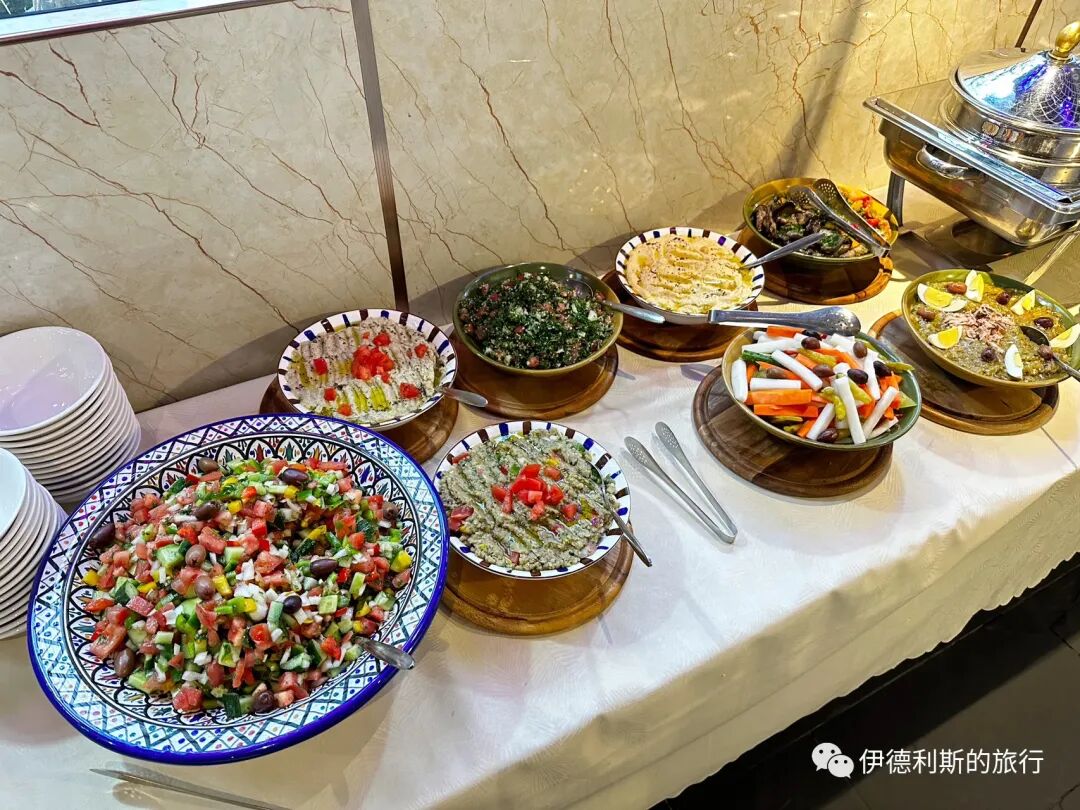
Between 2017 and 2019, I used my vacations to visit 10 countries and regions: Russia, Crimea (Russian-occupied), Uzbekistan, Iran, Azerbaijan, Turkey, India, Malaysia, Indonesia, and Xinjiang, China. I visited 35 ancient Muslim cities, covering 24 Muslim dynasties from the 11th to the 20th century. Afterward, I used my spare time to look up information and gradually put together some articles. I had already made plans for my 2020 visits, but they were suddenly interrupted. From being unable to leave the country to being unable to leave Beijing, my journey had to pause.
So far, I have finished sharing all 35 ancient cities. I am making a directory here to make it easier to look them up later. Also, my other project, Exploring and Eating in Muslim Communities, is still going on. During the year I could not leave Beijing, I started focusing on local historical sites of Hui Muslims and Islam in Beijing and visited some of them.
Eastern Europe: Volga Bulgaria (Bulgar Khanate), Golden Horde, Crimean Khanate, and Kazan Khanate.
The first article, 'Bulgar: A Thousand-Year-Old Capital on the Volga,' introduces the ancient city of Bulgar in Tatarstan, Russia. It was the capital of Volga Bulgaria in the 10th and 11th centuries and adopted Islam in 922. The Mongol army destroyed Bulgar in the 13th century, but it was soon rebuilt into an important economic, commercial, cultural, and religious center for the Golden Horde. Influenced by the Bulgar people, the Mongol rulers of the Golden Horde also began to follow Islam, building a series of mosques, minarets, and Muslim tombs in the city. Along with secular palaces and bathhouses, most of the ruins remaining in Bulgar today date back to this period. After the Golden Horde declined, the ancient city of Bulgar remained a Muslim religious center until the mid-16th century. The ancient city fell into complete decline after Ivan the Terrible of Russia conquered the Khanate of Kazan in 1552.

The second article, 'Chufut-Kale: The Founding Capital of the Crimean Khanate,' introduces the thousand-year-old Crimean city of Chufut-Kale. Chufut-Kale was first built by the Byzantines in the 5th to 6th centuries and was later inhabited by the Christian Alans. In 1299, the Golden Horde captured the Jewish fortress, and Tatar Muslims and Karaite Jews began living inside. In 1441, Hacı Giray, a descendant of Genghis Khan, minted coins with his name at the fortress, officially established the Crimean Khanate, and built many structures there. After the fortress well dried up in the mid-17th century, all the Tatars left, leaving only the Karaite Jews behind. From then on, Crimean Tatars began calling it the Jewish fortress. After the 19th century, the Karaite Jews also left, and the fortress eventually fell into ruins.

The third article, 'The Former Capital of the Crimean Khanate: Bakhchysarai,' explains that around 1500, Crimean Khan Meñli Giray built a new capital called Salachik in the valley west of the Jewish fortress. Salachik once had a complex of buildings including a palace, a court, baths, and a mosque, but now only a madrasa and the tomb of the founding Khan, Hacı Giray, remain. In 1532, Meñli Giray's son, Sahib Giray, built a new capital, Bakhchysarai, in the valley two kilometers downstream from Salachik. For the next 250 years, Bakhchysarai served as the capital of the Crimean Khanate, where successive Khans built palaces and various mosque structures. To the west of Bakhchisaray lies Eski Yurt, a large trading town that was already thriving during the Golden Horde era. It preserves several 14th to 16th-century tombs, including that of the Crimean Khan Mehmed II Giray.

The fourth chapter, 'Kazan Kremlin and the National Museum of the Republic of Tatarstan,' explains that Kazan started as a fortress for the Volga Bulgaria. After it joined the Golden Horde in the 13th century, it quickly became a central city in the middle reaches of the Volga River. After the Golden Horde collapsed in the 15th century, the Khanate of Kazan (1438–1552) was established. As the capital, Kazan's population grew rapidly. Many homes and public buildings were built, including the Khan's palace, courtyards, mosques, and tombs. In 1552, Ivan the Terrible of Russia attacked Kazan and destroyed the Khanate. He later ordered the Kazan Kremlin to be built on the site of the old fortress. The mosques, the Khan's palace, and the tombs were first used as armories and ammunition depots, but they were all eventually torn down in the 18th century. In 1977, hydraulic engineers accidentally dug up the tombs of the Kazan Khans while laying rainwater pipes at the Kazan Kremlin. It took until May 2017, after persistent efforts, to rebury the two Khans that were unearthed.

Uzbekistan: Timurid Empire, Khanate of Bukhara
The first article, 'Timur's Hometown: Shahrisabz,' introduces the ancient Sogdian city of Kesh, south of Samarkand. After the Mongol conquest of Central Asia in 1225, it became part of the Chagatai Khanate and was ruled by the Barlas tribe. In 1346, the last khan of the Chagatai Khanate was killed, and the khanate fell into chaos. Emir Timur, a noble from the Barlas tribe in Kesh, gradually united the Transoxiana region and established the vast Timurid Empire. After founding the Timurid Empire, Timur renamed his hometown Kesh to Shahrisabz. He built a massive palace and family mausoleum there, and many of these ruins still stand today. After Timur passed away, his grandson Ulugh Beg continued to develop Shahrisabz, building a grand mosque and new tombs in the city.

The second article, 'Timur's Capital: Samarkand,' explains that in 1370, Emperor Timur established the Timurid Empire on the ruins of the Chagatai Khanate and made Samarkand his capital. Over the next 35 years, Timur brought in great craftsmen, artists, and architects from across his empire to rebuild Samarkand, making it the undisputed center of Central Asia. During Timur's reign, Samarkand's population exceeded 150,000. Important landmarks like the Shah-i-Zinda necropolis and the Bibi-Khanym mosque remain preserved today. Between 1409 and 1449, for 40 years, Samarkand continued to grow as a city of science and culture under the rule of Timur's grandson, Ulugh Beg. Besides the Gur-e-Amir Mausoleum built for Emperor Timur, the Ulugh Beg Madrasah and the Ulugh Beg Observatory are both important pieces of evidence.

The third article, 'Bukhara: Capital of the Bukhara Khanate,' explains that in the early 16th century, Muhammad Shaybani led the Uzbek people from the northern Central Asian steppes to overthrow the Timurid dynasty in Transoxiana. He established the Shaybanid dynasty, and in 1533, the dynasty moved its capital to Bukhara. The Shaybanid dynasty line ended in 1598, and power passed to the Janid Dynasty, which continued to rule from Bukhara until 1785. Later generations refer to the Shaybanid and Janid dynasties collectively as the Bukhara Khanate. Bukhara served as the capital of the Bukhara Khanate for 252 years, from 1533 to 1785, and many buildings from that time still stand today. The most abundant architecture comes from the reign of Abdullah Khan II, who ruled Bukhara from 1557 to 1598, which was also the peak of the Bukhara Khanate's power.

The fourth article, 'Tashkent: An Ancient City in Central Asia,' describes how Tashkent's population and size gradually recovered during the 14th to 16th centuries under the Timurid and Shaybanid dynasties, becoming a commercial and cultural hub along the Silk Road. Most of the historical buildings still found in Tashkent today were built during this period. During the chaos of the late Timurid dynasty, Tashkent briefly served as the capital of the Moghulistan Khanate, and the tomb of Yunus Khan still stands there today. Tashkent was incorporated into the Kazakh Khanate between the 17th and 18th centuries and became its capital in the 18th century. Today, Tashkent still preserves the tomb of a Kazakh hero.

Iran: Seljuk Empire, Qajar Dynasty
The first article, 'Rey: The Seljuk Ancient Capital Outside Tehran,' introduces the ancient city of Rey in the southern suburbs of Tehran. In the 9th century, the Shah Abdol-Azim Shrine was built in Rey, making it an important religious site in Iran. In 1043, Tughril Beg, the founder of the Seljuk Empire, made Rey the capital of the empire and carried out large-scale reconstruction of the ancient city. Under the rule of the Seljuk Empire, Rey reached its peak, featuring a massive market and a very prosperous trade scene. Import and export trade, mainly in silk, connected the entire Eurasian continent. Rayy was the center for making painted pottery in Iran at the time, and Rayy-style painted pottery was an important Iranian handicraft during this period. After the Mongol army invaded Iran in 1220, Rayy became a ghost town and was finally abandoned in the 16th century.

The second article, 'Palaces of the Qajar Dynasty in Iran: Golestan Palace (Kākh-e Golestān),' introduces how Golestan Palace was first called the Tehran Citadel (Arg) and was originally built during the Persian Safavid Dynasty. After Agha Mohammad Khan (reigned 1789-1797) of the Qajar Dynasty made Tehran the capital, he officially rebuilt the Tehran Citadel into Golestan Palace. Between 1925 and 1945, Reza Shah (reigned 1925-1941) of the Pahlavi Dynasty ordered the demolition of most of the buildings in Golestan Palace for modern urban construction, and only a portion remains today.

Azerbaijan: Shirvanshah Dynasty
The article 'Historical Buildings in the Old City of Baku, Azerbaijan' introduces the Shirvanshah Dynasty, established in Azerbaijan by the descendants of an Arab general, which moved its capital to Baku in 1191. Baku remained the capital of the Shirvanshah Dynasty for over 300 years after that. Baku held a key position in ancient Eurasian trade. It served as a major hub in the trade network, where many merchants from India and Central Asia stopped to transfer goods. Today, the old city preserves the palace complex from the Shirvanshah dynasty, relatively intact ancient city walls, over a dozen ancient mosques built between the 11th and 18th centuries, four large caravanserais that witnessed ancient trade, and several traditional bathhouses. It is well worth a visit.

Turkey: Sultanate of Rum, Ottoman Empire
The first article, 'Konya: The Last Capital of the Seljuk Empire,' introduces the Seljuk Turks. They came from the Central Asian steppes, were deeply influenced by Persian culture, established the Sultanate of Rum in Asia Minor in 1077, and made Konya their capital in 1097. After the Mongols invaded Central Asia and Persia in the early 13th century, many Turks and Persians fled to Konya. Many were educated intellectuals or skilled craftsmen, including the famous poet Rumi. In 1243, the Seljuk Sultanate of Rum was defeated by the Mongol Empire and became a vassal state. However, Konya remained the capital of the sultanate until 1328. People lived in peace, and many existing Seljuk buildings were constructed during this period. After the Seljuk Empire fell, Konya became the final center of Seljuk 'Turko-Persian' culture. Seljuk culture is most famous for its tiles and stone carvings featuring human and animal figures, which are not found in later Turkish culture.

The second article, 'The Birth of the Ottoman Empire—Bursa,' explains how the Ottomans broke away from the Sultanate of Rum in the late 13th century and officially made Bursa their capital in 1326. From then on, the Ottomans used Bursa as a base to grow into the massive Ottoman Empire over the next hundred years. Bursa stands as the best witness to the birth of the Ottoman Empire. In 2014, UNESCO named the old city of Bursa a World Heritage site. Five of these heritage areas are located within Bursa. The builders of these five building complexes (külliye) were the second, third, fourth, fifth, and sixth rulers of the Ottoman dynasty. They cover the entire history of the Ottomans from the founding of the state to the conquest of Istanbul.

The third article, 'The Ottoman Capital in Europe—Edirne,' describes how the Ottomans captured Adrianople, an important Byzantine city in the Balkans, in 1369. They renamed it Edirne, and it became the Ottoman center in Europe. In 1413, Edirne officially became the capital of the Ottoman Empire, remaining so until the fall of Constantinople in 1453. After Prince Suleiman made Edirne his capital in 1403, he immediately began building the Old Mosque complex (Eski Cami) east of the old city. During the reign of Sultan Murad II, the second Muradiye complex and the third Three-Balcony Mosque complex (Üç Şerefeli Cami) were built in Edirne, along with a royal palace in the north.

The fourth article, 'The Palace of the Ottoman Empire—Topkapi Palace (Topkapi Saray),' introduces the palace. It sits on the site of the former Byzantine acropolis in the eastern part of Istanbul's old city, overlooking the Golden Horn. Sultan Mehmed the Conqueror ordered its construction in 1459. Topkapi Palace was first called the New Palace (Yeni Saray) to tell it apart from the Old Palace (Eski Saray), which was built between 1454 and 1459. Topkapi Palace went through several major expansions and renovations in the 16th century. Its importance faded after the 17th century, and by the 19th century, it only served as a treasury, library, and mint.

India: Delhi Sultanate, Sur Empire, Mughal Empire, Qutb Shahi dynasty, and Asaf Jahi dynasty.
The first article, "The First City of Delhi: A Minaret Reaching the Clouds," introduces the ancient city of Lal Kot. In 1193, the Ghurid dynasty from Iran and Afghanistan conquered Lal Kot, the first city of Delhi. The Ghurid dynasty soon split apart, and Qutb, the general left in charge of Delhi, established the Delhi Sultanate. Qutb tore down Hindu and Jain temples in the city to build a massive mosque. Later, the Qutb Mosque underwent two major expansions by succeeding sultans, Iltutmish in 1225 and Alauddin Khalji in 1310, making Lal Kot the political, religious, and cultural center of the Delhi Sultanate.

The second article, "The Second City of Delhi: A Turkic Fortress Against the Mongol Army," introduces the ancient city of Siri. In 1299, Duwa, the Khan of the Mongol Chagatai Khanate, sent his son Qutlugh Khwaja to lead an expedition against the Delhi Sultanate. Both sides suffered heavy losses in a decisive battle on the outskirts of Delhi, but the Chagatai army eventually retreated because their commander was seriously wounded. To defend against the next invasion by the Chagatai army, Sultan Alauddin Khalji decided to build the second city of Delhi, Siri, to the northeast of Delhi's first city, Lal Kot. In 1303, the Chagatai Khanate launched another major expedition and besieged the unfinished city of Siri. After two months of siege, the Chagatai army could not break through the city and chose to retreat. After the siege ended, Alauddin Khalji built a palace in Siri, making it the new capital of the Delhi Sultanate, replacing Lal Kot.

The third article, 'The Third City of Delhi: The Indestructible Beautiful Ruins,' introduces the ancient city of Tughlaqabad. After Alauddin died in 1316, the Delhi Sultanate fell into civil war. In 1320, General Ghazi-ud-Din Tughlaq became the Sultan. The following year, Ghazi built a massive city to the east of Lal Kot and Siri, which became the third city of Delhi, Tughlaqabad. Ghazi dreamed of building this fortress to be indestructible, strong enough to withstand the fiercest attacks from the Mongol army, but fate did not go as he wished. After the Delhi Sultanate fell, the nomadic Gurjar people took over the city. It became a wilderness, leaving behind only massive walls and ruins.

The fourth article, 'The Fourth City of Delhi: The Mysterious Sultan's Palace,' introduces the ancient city of Jahanpanah. In 1325, Muhammad bin Tughluq, the son of Ghazi ud-Din Tughluq, took the throne. To stop the Mongol army from invading, Muhammad connected Delhi's first city, Lal Kot, and its second city, Siri, with walls to build the fourth city of Delhi, Jahanpanah. The famous traveler Ibn Battuta lived in Delhi. He wrote in his travelogues that Lal Kot was the city center, Siri was the military camp, and Jahanpanah in the middle was the palace area.

The fifth article, 'The Fifth City of Delhi: Spirits and the Ashoka Pillar,' introduces the ancient city of Ferozabad. In 1351, Firoz Shah Tughluq, the cousin of Muhammad who built Delhi's fourth city, took the throne. He built a new capital in the north of Delhi. Today, the Feroz Shah Kotla fort, the heart of Ferozabad, is filled with palace ruins. The most famous is the Delhi-Topra Ashoka Pillar, which Firoz Shah found and brought back to Delhi during an expedition. Every Thursday afternoon, many people come to Feroz Shah Kotla. They place milk and grains against the walls and write their wishes on paper, asking the spirits (Jinn) in the castle to make their wishes come true.

The sixth chapter, The Sixth City of Delhi—The Birth of the Mughal Dynasty, introduces the ancient city of Din Panah. Din Panah was the first Mughal city in Delhi, built in 1533 by Humayun, the second ruler of the Mughal Empire. In 1540, Sher Shah defeated Humayun to establish the Sur Dynasty, and Din Panah became the capital of the Sur Dynasty. Humayun recaptured Din Panah in 1555, but he fell and died there the following year. The inner city walls of Din Panah, now known as the Old Fort (Purana Qila), are still well-preserved today. Inside the Old Fort are significant historical buildings, including the Sur Dynasty's royal mosque and the library where Humayun fell to his death. These are vital historical sites for the early Mughal and Sur dynasties.

The seventh chapter, The Seventh City of Delhi—The Mughal Capital, introduces the ancient city of Shahjahanabad. In 1628, the fifth emperor of the Mughal Empire, Shah Jahan, took the throne. Under his rule, Mughal architectural aesthetics reached a new height, and this period is recognized as the golden age of Mughal architecture. Besides building the Taj Mahal, Shah Jahan built the seventh city of Delhi between 1639 and 1648, naming it Shahjahanabad after himself. Shah Jahan made Shahjahanabad the capital of the Mughal Empire, aiming to show the grandeur and power of the empire. Shahjahanabad is now known as Old Delhi and still keeps many historical sites and traditional neighborhoods. The most important site inside the city, the Red Fort, was added to the UNESCO World Heritage list in 2007.

The eighth article, 'An Ancient Muslim City on the Deccan Plateau: Golconda Fort,' introduces Golconda Fort on the Deccan Plateau in southern India. Because it had the only diamond mine in the world at the time, it was once the center of the global diamond trade. In 1518, Quli Qutb Mulk established the Qutb Shahi dynasty here, also known as the Golconda Sultanate. In 1687, the Mughal Emperor Aurangzeb captured Golconda Fort after an eight-month siege, and the site gradually fell into ruins. Today, many ruins of palaces, mosques, and gardens still remain here. Near Golconda Fort, you can find the tombs of the sultans from the Qutb Shahi dynasty. These tombs feature the classic style of Muslim architecture on the Deccan Plateau and are well worth seeing.

The ninth article, 'Hyderabad: An Ancient Muslim Capital in South India,' explains that in 1591, the Qutb Shahi dynasty moved its capital to the banks of the Musi River, east of the old city, to solve water shortages at Golconda Fort, establishing the city of Hyderabad. At that time, Sultan Muhammad Quli Qutb Shah invited several famous Persian architects to plan the city of Hyderabad and build landmarks like the Charminar gate and the Mecca Mosque. Hyderabad is also an important center for Shia Muslims in southern India, and it still preserves a hall built in 1594 to commemorate Imam Hussain.

The tenth article, 'The Asaf Jahi Dynasty: A Muslim State on the Deccan Plateau in South India,' explains that in 1687, the Mughal Emperor Aurangzeb captured Hyderabad after an eight-month siege and incorporated it into the Mughal Empire. In 1724, a high-ranking Mughal official named Mir Qamar-ud-Din Siddiqi set up his own government in Hyderabad. Because he used the highest honorific title of the Mughal Empire, Asaf Jahi, his line became known as the Asaf Jahi dynasty. Hyderabad currently preserves the Chowmahalla Palace built by the Asaf Jahi dynasty, as well as the Paigah Tombs, which are famous for their exquisite plaster and marble carvings.

China: Moghulistan (East Chagatai Khanate), Yarkand Khanate
The first article, 'From Ili to Turpan—Two Royal Tombs of the East Chagatai Khanate,' introduces the early history of the East Chagatai Khanate through the tombs of its founding Khan, Tughluq Timur, and its third Khan, Khizr Khoja, located in Ili and Turpan. After the 14th century, conflicts deepened between the settled Chagatai Mongols in Transoxiana and those on the eastern steppes, eventually causing the Chagatai Khanate to split into eastern and western parts. In 1348, Tughluq Timur established the East Chagatai Khanate with Almalik as its capital. After taking the throne, Khan Tughluq Timur ordered all Chagatai Mongols in the East Chagatai Khanate to convert to Islam. He later unified the entire khanate through two western campaigns, but shortly after his death, the khanate fell into chaos again, and almost all of his descendants were killed. In 1389, Tughluq Timur's youngest son, Khizr Khoja, who had been in hiding for many years, took the throne. To escape the eastern campaign of Tamerlane the Great, Khizr Khoja moved the royal court east to Turpan, where he eventually died.

The second article, 'The Last Capital of the Chagatai—Yarkand,' introduces how Sultan Said Khan, a descendant of the East Chagatai royal family, established the Yarkand Khanate in 1514 with Yarkand as its capital, ruling southern Xinjiang until 1680. During the Yarkand Khanate's rule over southern Xinjiang, the Chagatai Mongols shifted from a nomadic lifestyle to a settled one and blended into the Uyghur people. The Uyghur people also gradually developed into a modern ethnic group during this period. Culturally, the Yarkand Khanate era saw the creation of famous historical works like the Tarikh-i-Rashidi and the Chronicles, and the Twelve Muqam musical tradition was also finalized during this time. In the later years of the Yarkand Khanate, the Black Mountain faction of the Sufi Naqshbandi order took control of Yarkand city. After the Dzungar Khanate and the White Mountain faction occupied southern Xinjiang in 1680, the Black Mountain faction withdrew for a time, but they returned to rule Yarkand city for half a century between 1697 and 1755.

Malaysia: Malacca Sultanate
The book The First Sultanate in Southeast Asia: Malacca explains that Paramesvara, a prince of the Srivijaya kingdom, was named King of Malacca by the Yongle Emperor in 1406. Since most merchants trading with Malacca were Muslims, the rulers of Malacca increasingly saw the importance of Islam in trade. During the reign of the third ruler, Raja Tengah (1424-1444), all royal ministers converted to Islam, the king became a sultan, and the Malacca Sultanate became the first sultanate in Southeast Asia. In 1511, the Portuguese captured Malacca and destroyed all of the city's original palaces, cemeteries, and mosques. After the Dutch took over Malacca, they adopted a relatively tolerant religious policy and began building mosques with unique Malaccan features in the early 18th century.

Indonesia: Demak Sultanate, Banten Sultanate, Mataram Sultanate, Yogyakarta Sultanate, and Surakarta Sunanate.
The first article, 'The Earliest Sultanate on Java—Demak,' explains that Arab and Indian Muslim merchants began settling on the north coast of Java in the 15th century. The port of Demak became a powerful trading hub by importing spices from the Spice Islands and exporting rice to the Malacca Sultanate. Established between 1475 and 1568, the Demak Sultanate was the first sultanate on Java and played a major role in spreading Islam across the island. Today, the Great Mosque of Demak remains the most important early traditional mosque in Java, and the tomb of Sunan Kalijaga in the southeastern suburbs of Demak is also a significant Islamic holy site in Java.

The second article, 'The Jerusalem of Java—Kudus,' introduces how Sunan Kudus, one of the nine Islamic saints of Java (Wali Sanga), preached on the island during the 16th century. He blended Islamic culture with traditional Javanese culture and built the unique Al-Aqsa Mosque of Kudus. After he passed away, he was buried in the backyard of the Al-Aqsa Mosque, and his tomb became a famous Islamic holy site in Java.

The third article, 'Ocean City at the Western Tip of Java: Banten,' introduces how the Banten Sultanate rose to become a powerful maritime trading nation in the 16th century, controlling the pepper trade in Southeast Asia. The Banten Sultanate reached its peak in the 17th century and had intense conflicts with the Dutch East India Company. After the 18th century, the Banten Sultanate gradually came under the control of the Dutch East India Company and was finally incorporated into the Dutch East Indies in the 19th century. Today, the ancient city of Banten still preserves many ruins, and the Great Mosque of Banten, built in the 16th century, remains a famous religious site. two palaces of the Banten Sultanate, a Dutch fortress, and several tombs of the Banten Sultans are still preserved.

The fourth article, 'The Lost Ancient Capital of Java: Kotagede,' introduces the town of Kotagede in the southeastern suburbs of the ancient Javanese city of Yogyakarta. Its name means 'great city,' and it served as the first capital of the Mataram Sultanate between the 1570s and 1613. The Mataram Sultanate was the most powerful Islamic kingdom on Java in the 17th century. It later split into the two sultanates of Yogyakarta and Surakarta in 1755, which continue to exist today. Kota Gede still keeps the mosque and royal tombs of the Mataram Sultanate. The tomb guards work for both the royal families of Yogyakarta and Solo, making this a famous pilgrimage site for people from both cities.

The fifth article, 'Indonesia's Last Sultanate Territory—Yogyakarta,' explains how the Mataram Sultanate fell into power struggles in the late 17th century and finally split into the Yogyakarta Sultanate and the Surakarta Sunanate in 1755. After Indonesia gained independence, the Yogyakarta Sultanate became the Yogyakarta Special Region. The Sultan serves as the governor, making it the only region in Indonesia currently ruled by a Sultan. Today, Yogyakarta preserves the palace, water palace garden, and Great Mosque built by the Sultan in the 18th century. You can also eat royal palace food and enjoy court music there.

The sixth article, 'Central Java's Ancient City—Solo,' introduces how a Chinese-Javanese coalition destroyed the Mataram Sultanate capital of Kartasura in 1742. The last Sultan, Pakubuwono II, officially moved the capital to Solo (Surakarta) in 1745. In 1755, the Mataram Sultanate officially split into the Surakarta Sunanate and the Yogyakarta Sultanate, and Solo became the capital of the Surakarta Sunanate. Today, the Sunan still lives in most of the Solo palace, with only a part open as a museum. There is also the Solo Mosque built in 1768, where many Islamic ceremonies are held. In 1757, the former Mataram Sultanate rebel Raden Mas Said established the Mangkunegaran princely state near Solo. That same year, he built the Mangkunegara Palace in Solo, which is now open to the public as a tourist attraction.
Collapse Read »
Halal Travel Guide: Melaka — First Southeast Asian Sultanate and Muslim Heritage
Reposted from the web
Summary: Melaka — First Southeast Asian Sultanate and Muslim Heritage is presented here as a firsthand travel account in clear English, beginning with this scene: Malacca sits on the west coast of the Malay Peninsula. Before the 14th century, it was just a fishing village in the Srivijaya Kingdom of Sumatra. The account keeps its focus on Melaka Sultanate, Southeast Asian Islam, Muslim Heritage while preserving the names, places, food, and historical details from the Chinese source.
Malacca sits on the west coast of the Malay Peninsula. Before the 14th century, it was just a fishing village in the Srivijaya Kingdom of Sumatra. In the late 14th century, the Majapahit Kingdom of Java conquered Srivijaya. Prince Paramesvara fled the capital of Palembang and eventually settled in Malacca in 1400.
To defend against threats from the Siamese Kingdom, Paramesvara reached out to the Ming Dynasty. In 1406, the Yongle Emperor officially named him the King of Malacca. Under Paramesvara’s leadership, Arab, Indian, and Persian merchants began trading in Malacca. The city grew into a vital port connecting East Asia, West Asia, and South Asia.
Since most merchants trading in Malacca were Muslims, the rulers of Malacca increasingly recognized the importance of Islam to their trade. During the reign of the third ruler, Raja Tengah (1424-1444), all royal ministers converted to Islam. The king changed his name to Muhammad Shah and took the title of Sultan, making the Malacca Sultanate the first sultanate in Southeast Asia.
The Malacca Sultanate began to flourish in the mid-to-late 15th century. It controlled the Strait of Malacca and became a trade hub for Southeast Asia, with many Persian and Arab merchants using the port to trade with the Ming Dynasty and other parts of East Asia. Around 1500, the Malacca Sultanate reached its peak. It was a marketplace for Indian pepper and cloth, Chinese porcelain and silk, and Indonesian spices.

The Malacca Sultanate at its peak in the late 15th century, from Wikipedia.
The tomb of the Malacca Sultanate warrior Hang Kasturi.
Hang Kasturi was one of the five great warriors of the Malacca Sultanate who lived during the reign of Sultan Mansur Shah (1456-1477). "Hang" is the highest honorary title given by the Sultan of Malacca to Malay warriors. The tomb of Hang Kasturi has a typical Indian style, which was likely built by later generations to commemorate him.


The fall of the Malacca Sultanate.
Until the end of the 15th century, spices in Europe were obtained through Venice, which got them from Arabia and India, while Arabia and India got them from Malacca. This process was complex and cumbersome. Driven by a desire for spices, the King of Portugal ordered his people to bypass the Cape of Good Hope to break the trade chain and establish a direct trade route with the East.
In 1509, a Portuguese representative arrived in Malacca with a letter from the King, hoping to establish direct trade with Malacca. Because the Portuguese had once used Catholics to fight against non-believers in India, the powerful Tamil Muslim faction in the Malacca court was very hostile toward them. The Malacca Sultanate eventually decided to arrest the Portuguese representatives. One representative escaped alone, while his companions were imprisoned.
In 1511, the Portuguese governor of India led 18 ships and 1,400 men to Malacca to negotiate the release of the prisoners with the Sultan. After three months of stalling, the Portuguese bribed the castle guards to open the main gate. The Portuguese army entered Malacca, and the last Sultan fled. His descendants later established the Johor Sultanate.
The Portuguese castle on the ruins of the Sultan's palace.
After occupying Malacca in 1511, the Portuguese built the A Famosa fort on the site of the original Malacca Sultanate palace. They planned to turn Malacca into a key trading port on the spice route between Europe and China, while also defending against attacks from the remaining forces of the Malacca Sultanate and the emerging Aceh Sultanate. A Famosa means "the famous" in Portuguese.
To build the castle, the Portuguese tore down Malacca's original palaces, graveyards, and every mosque. The original castle consisted of walls and four main towers. One was a four-story main building, while the other three served as an ammunition room, a captain's room, and officers' quarters. Most residents lived in the town inside the castle. As the population grew, the castle was expanded in 1586.

Malacca in 1780, with the castle on the right and the town on the left, from Wikipedia.


St. Paul's Church, built inside the castle in 1521, is the oldest church building in Southeast Asia.


The revival of the faith in the 18th century—traditional mosques in Malacca.
After the Portuguese occupied Malacca, they destroyed all the mosques of the Malacca Sultanate and promoted Catholicism in the city. However, the Portuguese were not successful. Catholicism did not have much influence in Malacca until the Dutch took over.
The Dutch adopted a more tolerant religious policy in Malacca, allowing Islam and Hinduism to spread. In 1728, the Dutch East India Company hired a Chinese convert to build a new mosque near the ruins of one destroyed by the Portuguese. This became the Kampung Hulu Mosque (Masjid Kampung Hulu). Kampong means village in the Malay language.


The mosque consists of a main prayer hall, a small ablution pool, and a minaret. The main hall uses the traditional Javanese Tajug multi-layered pyramid roof. The decoration at the very top is called a Mustoko or Memolo in Javanese. This roof design leaves space between the upper and middle layers for ventilation and light, which helps it handle the humid and rainy tropical climate.

Unlike traditional Javanese mosques built entirely of wood, the Kampung Hulu Mosque is made of brick and stone with plaster-coated roofs, showing the influence of Dutch colonial architecture.
The mosque's ceramic tiles and floor tiles were all imported from China, and the patterns on the windows also show Chinese influence.

The minbar inside the main hall features rich patterns and is very characteristic of Javanese style.


The minaret looks like a lighthouse, which is a first for the entire Malay Peninsula. Before this, mosques in the Malay Peninsula did not have a tradition of building minarets. On Java Island, the Great Mosque of Banten, built in 1632, was the first to have a lighthouse-style minaret designed and built by a Chinese man named Cek-ban-cut.

A traditional drum called a beduk (Beduk) sits above the mosque gate. Early traditional mosques in Southeast Asia used drums to call people to prayer. Today, many mosques still use drums to call people to prayer and signal the end of the daily fast during Jumu'ah and Ramadan.

Wudu pool


Tengkera Mosque (Masjid Tengkera) was the second mosque built in Malacca with funding from the Dutch East India Company. It was also completed in 1728, and its architectural style is similar to Kampung Kling Mosque, featuring the same traditional Javanese mosque roof.
Tengkera Mosque was originally a wooden structure made from timber that the Dutch East India Company bought from Kalimantan, Indonesia. After two renovations in 1890 and 1910, it was changed to the same brick and stone structure as Kampung Kling Mosque, and the roof was changed to glazed tiles.


The main prayer hall also has a beautifully carved minbar.


Water pool

Unlike the Kampung Hulu Mosque, the minaret of the Kampung Kling Mosque is modeled after a Chinese pagoda. This was the first of its kind on the Malay Peninsula and is now a major landmark in Malacca.


I bought a painting of the Kampung Kling Mosque from a Malay man on the mountain road next to St. Paul's Church.

The artist

Tomb of Sultan Hussein Shah of Johor
The tomb of Sultan Hussein Shah of Johor is in the backyard of the mosque. He played a key role in the founding of Singapore. After the Portuguese occupied Malacca in 1511, the Sultan of Malacca fled to Johor to continue his rule. In 1528, the last Sultan of Malacca passed away. His son, Alauddin Riayat Shah II, officially established the Johor Sultanate, viewing it as the legitimate continuation of the Malacca Sultanate.
Hussein Shah was born in 1776 and was the eldest son of Sultan Mahmud Shah III of Johor. When Mahmud Shah III passed away in 1812, Hussein Shah was not in the capital. His younger brother took the throne quickly with the support of government ministers, forcing Hussein Shah to flee to the Riau Islands.
In 1819, the British East India Company decided to build a new base in Southeast Asia. They found the exiled Hussein Shah and named him Sultan of Johor and Singapore in exchange for the right to establish a trading post in Singapore. Hussein Shah then came to Singapore and became a Sultan under British control.
In 1824, the British bought Singapore for 33,200 dollars, and Sultan Hussein Shah received 1,300 dollars every month. He held no real power in Singapore and served only as a symbolic figure.
Sultan Hussein Shah lived in Singapore until 1834, then moved to Malacca with his family. He passed away in 1835 and was buried at the Tengkera Mosque (Dongjiena qingzhensi).


Minaret ruins
Not far east of the Kampung Kling Mosque (Masjid Kampong Kling) stands a minaret built in the style of a Chinese pagoda. It bears the inscription 'Menara lama surau tengkera di bina pada tahun 1728,' which means 'old mosque tower built in 1728.' This is likely a remnant of another mosque funded by the Dutch East India Company in 1728.

The Kampung Kling Mosque (Masjid Kampong Kling) was built in 1748 by Indian Muslims who were doing business in Malacca. The name Kling comes from the local term for Indian people, 'Kalinga'. This area was a settlement for Indian Muslims in the 18th century. However, after the rubber industry boomed in Malacca from the 19th to the early 20th century, it became a residential area for Chinese people who came to work in the rubber industry.

The Kampung Kling Mosque (Masjid Kampong Kling) shares a similar style with the two mosques built earlier. The main prayer hall was originally a wooden structure, but it was rebuilt with brick and wood in 1872.


There are students visiting in the courtyard.

The Corinthian columns around and inside the main hall are a special feature of this mosque. The floor tiles were imported from China, and the hall has a Victorian-style ceiling and a beautifully carved pulpit (minbar).


The minaret is also built in the style of a Chinese pagoda.


Water pool

The 1940 flagpole.

Malaysian Architectural Museum (Muzium Seni Bina Malaysia).
At the foot of the A Famosa fortress, there is a series of museums converted from historic buildings, many of which are related to Islam. Let's start our tour at the Malaysian Architectural Museum.

Acehnese-style gravestones
During the era of the Malacca Sultanate, many royals and important figures were buried using Acehnese-style gravestones. Aceh is located in the northern part of Sumatra, Indonesia. From the early 16th century to the early 20th century, the Acehnese people established the highly influential Aceh Sultanate.
There are two types of Acehnese-style gravestones: the men's version is wider with two distinct corners, while the women's version is pyramid-shaped. The gravestones usually feature the name of the deceased, their birth and death dates, as well as Quranic verses and some poetry.


Traditional wooden doors in the style of the Malay East Coast
Wooden doors in the Malay East Coast style, carved with traditional Arabic calligraphy and floral patterns.


Malacca Islamic Museum (Muzium Islam Melaka)
The building housing the Malacca Islamic Museum was once the Malacca Islamic Council office. Its exact construction date is unknown, but it is estimated to be from the British colonial period in the 1850s. Some believe the lower level was built during the Dutch colonial period (1641-1824) and the upper level was added later by the British.
This building served as the Malacca Islamic Council office until 1990, after which it became the Malacca Islamic Museum.

Two sundials used to indicate prayer times at the Kampung Kling Mosque in Malacca. These sundials are usually used for the Friday prayer (Jumu'ah) and the afternoon prayers. Because they require sunlight, they cannot be used for the dawn (Fajr) or night (Isha) prayers.


The prayer drum (beduk) used for the call to prayer at Kampung Kling Mosque is usually kept in the mosque corridor. The prayer drum was brought to Malacca from Java. It is typically made from tropical hardwoods like merbau or chegal, and it is played in a way similar to the Japanese taiko drum.
The prayer drum is played differently during the Friday prayer (Jumu'ah) than at other times. During Ramadan, the beduk drum signals the nightly breaking of the fast, and during Eid al-Fitr, people beat the beduk drum while reciting the takbir.

These two wooden tombstones are among the oldest Muslim grave markers found in Malacca, and they were moved from the Tengkera Mosque (Masjid Tengkera) to the museum in 2014.

These tombstones made of laterite stone were often used for Muslim graves during the Portuguese occupation (1511-1641), and they were also moved from the Tengkera Mosque to the museum in 2014.

This is a handwritten Quran manuscript by a haji in Malacca, copied in 1881. The dark text is the scripture, and the light text is the Indonesian translation.

A handwritten Quran manuscript from the museum collection.

A porcelain plate from the Dutch occupation period (1641-1824).

This is a typical traditional Malaysian hardwood carved pulpit (minbar), usually found to the right of the mihrab.

The Malay World and Islamic World Museum (Muzium Dunia Melayu Dunia Islam) in Malaysia.
The Malay World and Islamic World Museum in Malacca sits next to the A Famosa gate. The building was originally the office for a British rubber company built in 1910. Malacca saw a brief boom in the early 20th century thanks to the rubber industry. This era left behind many large homes belonging to Nanyang Chinese families, as well as this British-style building.

The museum houses handwritten scriptures and the traditional tools used to copy them.


A beduk drum from the Bukit Darat mosque in Malacca, dating back 70 or 80 years.

A traditional Malay pulpit (minbar).

When I visited, the museum was hosting a special exhibition from the South Sumatra Provincial Museum in Indonesia.

Headdresses and traditional musical instruments from the people of South Sumatra province.


This is a model of a traditional mosque from South Sumatra province. You can see that the mosques built in Malacca during the Dutch colonial period used this same three-tiered roof design.

Students resting and eating lunch in front of the museum, along with an auntie selling watermelon juice and coconut water.


Malacca Quran Museum (Muzium Al-quran Melaka).
The Malacca Quran Museum is next to the Malacca State Mosque. It opened in 2008 and holds some interesting collections.


Handwritten scriptures from the Aceh region in northwestern Sumatra.

Handwritten scriptures from Java.

A collection from a professor at Universiti Putra Malaysia.

Handwritten scriptures from the 18th-century Sultanate of Patani. The Sultanate of Patani was located on the border of present-day northern Malaysia and Thailand, and it served as a center for Islamic faith and scripture printing in northern Malaysia from the 15th to the 18th century.

This early 19th-century manuscript from Java is made from a local Javanese tree leaf called deluwang.

A manuscript from the Aceh region in northwestern Sumatra, dating between the 18th and 19th centuries.

An early 19th-century handwritten Quran from the east coast of the Malay Peninsula.

The most common colors used for manuscripts across Malaysia. These are Johor, Malacca, Sarawak, Selangor, and Pahang.


Collapse Read »
Summary: Melaka — First Southeast Asian Sultanate and Muslim Heritage is presented here as a firsthand travel account in clear English, beginning with this scene: Malacca sits on the west coast of the Malay Peninsula. Before the 14th century, it was just a fishing village in the Srivijaya Kingdom of Sumatra. The account keeps its focus on Melaka Sultanate, Southeast Asian Islam, Muslim Heritage while preserving the names, places, food, and historical details from the Chinese source.
Malacca sits on the west coast of the Malay Peninsula. Before the 14th century, it was just a fishing village in the Srivijaya Kingdom of Sumatra. In the late 14th century, the Majapahit Kingdom of Java conquered Srivijaya. Prince Paramesvara fled the capital of Palembang and eventually settled in Malacca in 1400.
To defend against threats from the Siamese Kingdom, Paramesvara reached out to the Ming Dynasty. In 1406, the Yongle Emperor officially named him the King of Malacca. Under Paramesvara’s leadership, Arab, Indian, and Persian merchants began trading in Malacca. The city grew into a vital port connecting East Asia, West Asia, and South Asia.
Since most merchants trading in Malacca were Muslims, the rulers of Malacca increasingly recognized the importance of Islam to their trade. During the reign of the third ruler, Raja Tengah (1424-1444), all royal ministers converted to Islam. The king changed his name to Muhammad Shah and took the title of Sultan, making the Malacca Sultanate the first sultanate in Southeast Asia.
The Malacca Sultanate began to flourish in the mid-to-late 15th century. It controlled the Strait of Malacca and became a trade hub for Southeast Asia, with many Persian and Arab merchants using the port to trade with the Ming Dynasty and other parts of East Asia. Around 1500, the Malacca Sultanate reached its peak. It was a marketplace for Indian pepper and cloth, Chinese porcelain and silk, and Indonesian spices.

The Malacca Sultanate at its peak in the late 15th century, from Wikipedia.
The tomb of the Malacca Sultanate warrior Hang Kasturi.
Hang Kasturi was one of the five great warriors of the Malacca Sultanate who lived during the reign of Sultan Mansur Shah (1456-1477). "Hang" is the highest honorary title given by the Sultan of Malacca to Malay warriors. The tomb of Hang Kasturi has a typical Indian style, which was likely built by later generations to commemorate him.


The fall of the Malacca Sultanate.
Until the end of the 15th century, spices in Europe were obtained through Venice, which got them from Arabia and India, while Arabia and India got them from Malacca. This process was complex and cumbersome. Driven by a desire for spices, the King of Portugal ordered his people to bypass the Cape of Good Hope to break the trade chain and establish a direct trade route with the East.
In 1509, a Portuguese representative arrived in Malacca with a letter from the King, hoping to establish direct trade with Malacca. Because the Portuguese had once used Catholics to fight against non-believers in India, the powerful Tamil Muslim faction in the Malacca court was very hostile toward them. The Malacca Sultanate eventually decided to arrest the Portuguese representatives. One representative escaped alone, while his companions were imprisoned.
In 1511, the Portuguese governor of India led 18 ships and 1,400 men to Malacca to negotiate the release of the prisoners with the Sultan. After three months of stalling, the Portuguese bribed the castle guards to open the main gate. The Portuguese army entered Malacca, and the last Sultan fled. His descendants later established the Johor Sultanate.
The Portuguese castle on the ruins of the Sultan's palace.
After occupying Malacca in 1511, the Portuguese built the A Famosa fort on the site of the original Malacca Sultanate palace. They planned to turn Malacca into a key trading port on the spice route between Europe and China, while also defending against attacks from the remaining forces of the Malacca Sultanate and the emerging Aceh Sultanate. A Famosa means "the famous" in Portuguese.
To build the castle, the Portuguese tore down Malacca's original palaces, graveyards, and every mosque. The original castle consisted of walls and four main towers. One was a four-story main building, while the other three served as an ammunition room, a captain's room, and officers' quarters. Most residents lived in the town inside the castle. As the population grew, the castle was expanded in 1586.

Malacca in 1780, with the castle on the right and the town on the left, from Wikipedia.


St. Paul's Church, built inside the castle in 1521, is the oldest church building in Southeast Asia.


The revival of the faith in the 18th century—traditional mosques in Malacca.
After the Portuguese occupied Malacca, they destroyed all the mosques of the Malacca Sultanate and promoted Catholicism in the city. However, the Portuguese were not successful. Catholicism did not have much influence in Malacca until the Dutch took over.
The Dutch adopted a more tolerant religious policy in Malacca, allowing Islam and Hinduism to spread. In 1728, the Dutch East India Company hired a Chinese convert to build a new mosque near the ruins of one destroyed by the Portuguese. This became the Kampung Hulu Mosque (Masjid Kampung Hulu). Kampong means village in the Malay language.


The mosque consists of a main prayer hall, a small ablution pool, and a minaret. The main hall uses the traditional Javanese Tajug multi-layered pyramid roof. The decoration at the very top is called a Mustoko or Memolo in Javanese. This roof design leaves space between the upper and middle layers for ventilation and light, which helps it handle the humid and rainy tropical climate.

Unlike traditional Javanese mosques built entirely of wood, the Kampung Hulu Mosque is made of brick and stone with plaster-coated roofs, showing the influence of Dutch colonial architecture.
The mosque's ceramic tiles and floor tiles were all imported from China, and the patterns on the windows also show Chinese influence.

The minbar inside the main hall features rich patterns and is very characteristic of Javanese style.


The minaret looks like a lighthouse, which is a first for the entire Malay Peninsula. Before this, mosques in the Malay Peninsula did not have a tradition of building minarets. On Java Island, the Great Mosque of Banten, built in 1632, was the first to have a lighthouse-style minaret designed and built by a Chinese man named Cek-ban-cut.

A traditional drum called a beduk (Beduk) sits above the mosque gate. Early traditional mosques in Southeast Asia used drums to call people to prayer. Today, many mosques still use drums to call people to prayer and signal the end of the daily fast during Jumu'ah and Ramadan.

Wudu pool


Tengkera Mosque (Masjid Tengkera) was the second mosque built in Malacca with funding from the Dutch East India Company. It was also completed in 1728, and its architectural style is similar to Kampung Kling Mosque, featuring the same traditional Javanese mosque roof.
Tengkera Mosque was originally a wooden structure made from timber that the Dutch East India Company bought from Kalimantan, Indonesia. After two renovations in 1890 and 1910, it was changed to the same brick and stone structure as Kampung Kling Mosque, and the roof was changed to glazed tiles.


The main prayer hall also has a beautifully carved minbar.


Water pool

Unlike the Kampung Hulu Mosque, the minaret of the Kampung Kling Mosque is modeled after a Chinese pagoda. This was the first of its kind on the Malay Peninsula and is now a major landmark in Malacca.


I bought a painting of the Kampung Kling Mosque from a Malay man on the mountain road next to St. Paul's Church.

The artist

Tomb of Sultan Hussein Shah of Johor
The tomb of Sultan Hussein Shah of Johor is in the backyard of the mosque. He played a key role in the founding of Singapore. After the Portuguese occupied Malacca in 1511, the Sultan of Malacca fled to Johor to continue his rule. In 1528, the last Sultan of Malacca passed away. His son, Alauddin Riayat Shah II, officially established the Johor Sultanate, viewing it as the legitimate continuation of the Malacca Sultanate.
Hussein Shah was born in 1776 and was the eldest son of Sultan Mahmud Shah III of Johor. When Mahmud Shah III passed away in 1812, Hussein Shah was not in the capital. His younger brother took the throne quickly with the support of government ministers, forcing Hussein Shah to flee to the Riau Islands.
In 1819, the British East India Company decided to build a new base in Southeast Asia. They found the exiled Hussein Shah and named him Sultan of Johor and Singapore in exchange for the right to establish a trading post in Singapore. Hussein Shah then came to Singapore and became a Sultan under British control.
In 1824, the British bought Singapore for 33,200 dollars, and Sultan Hussein Shah received 1,300 dollars every month. He held no real power in Singapore and served only as a symbolic figure.
Sultan Hussein Shah lived in Singapore until 1834, then moved to Malacca with his family. He passed away in 1835 and was buried at the Tengkera Mosque (Dongjiena qingzhensi).


Minaret ruins
Not far east of the Kampung Kling Mosque (Masjid Kampong Kling) stands a minaret built in the style of a Chinese pagoda. It bears the inscription 'Menara lama surau tengkera di bina pada tahun 1728,' which means 'old mosque tower built in 1728.' This is likely a remnant of another mosque funded by the Dutch East India Company in 1728.

The Kampung Kling Mosque (Masjid Kampong Kling) was built in 1748 by Indian Muslims who were doing business in Malacca. The name Kling comes from the local term for Indian people, 'Kalinga'. This area was a settlement for Indian Muslims in the 18th century. However, after the rubber industry boomed in Malacca from the 19th to the early 20th century, it became a residential area for Chinese people who came to work in the rubber industry.

The Kampung Kling Mosque (Masjid Kampong Kling) shares a similar style with the two mosques built earlier. The main prayer hall was originally a wooden structure, but it was rebuilt with brick and wood in 1872.


There are students visiting in the courtyard.

The Corinthian columns around and inside the main hall are a special feature of this mosque. The floor tiles were imported from China, and the hall has a Victorian-style ceiling and a beautifully carved pulpit (minbar).


The minaret is also built in the style of a Chinese pagoda.


Water pool

The 1940 flagpole.

Malaysian Architectural Museum (Muzium Seni Bina Malaysia).
At the foot of the A Famosa fortress, there is a series of museums converted from historic buildings, many of which are related to Islam. Let's start our tour at the Malaysian Architectural Museum.

Acehnese-style gravestones
During the era of the Malacca Sultanate, many royals and important figures were buried using Acehnese-style gravestones. Aceh is located in the northern part of Sumatra, Indonesia. From the early 16th century to the early 20th century, the Acehnese people established the highly influential Aceh Sultanate.
There are two types of Acehnese-style gravestones: the men's version is wider with two distinct corners, while the women's version is pyramid-shaped. The gravestones usually feature the name of the deceased, their birth and death dates, as well as Quranic verses and some poetry.


Traditional wooden doors in the style of the Malay East Coast
Wooden doors in the Malay East Coast style, carved with traditional Arabic calligraphy and floral patterns.


Malacca Islamic Museum (Muzium Islam Melaka)
The building housing the Malacca Islamic Museum was once the Malacca Islamic Council office. Its exact construction date is unknown, but it is estimated to be from the British colonial period in the 1850s. Some believe the lower level was built during the Dutch colonial period (1641-1824) and the upper level was added later by the British.
This building served as the Malacca Islamic Council office until 1990, after which it became the Malacca Islamic Museum.

Two sundials used to indicate prayer times at the Kampung Kling Mosque in Malacca. These sundials are usually used for the Friday prayer (Jumu'ah) and the afternoon prayers. Because they require sunlight, they cannot be used for the dawn (Fajr) or night (Isha) prayers.


The prayer drum (beduk) used for the call to prayer at Kampung Kling Mosque is usually kept in the mosque corridor. The prayer drum was brought to Malacca from Java. It is typically made from tropical hardwoods like merbau or chegal, and it is played in a way similar to the Japanese taiko drum.
The prayer drum is played differently during the Friday prayer (Jumu'ah) than at other times. During Ramadan, the beduk drum signals the nightly breaking of the fast, and during Eid al-Fitr, people beat the beduk drum while reciting the takbir.

These two wooden tombstones are among the oldest Muslim grave markers found in Malacca, and they were moved from the Tengkera Mosque (Masjid Tengkera) to the museum in 2014.

These tombstones made of laterite stone were often used for Muslim graves during the Portuguese occupation (1511-1641), and they were also moved from the Tengkera Mosque to the museum in 2014.

This is a handwritten Quran manuscript by a haji in Malacca, copied in 1881. The dark text is the scripture, and the light text is the Indonesian translation.

A handwritten Quran manuscript from the museum collection.

A porcelain plate from the Dutch occupation period (1641-1824).

This is a typical traditional Malaysian hardwood carved pulpit (minbar), usually found to the right of the mihrab.

The Malay World and Islamic World Museum (Muzium Dunia Melayu Dunia Islam) in Malaysia.
The Malay World and Islamic World Museum in Malacca sits next to the A Famosa gate. The building was originally the office for a British rubber company built in 1910. Malacca saw a brief boom in the early 20th century thanks to the rubber industry. This era left behind many large homes belonging to Nanyang Chinese families, as well as this British-style building.

The museum houses handwritten scriptures and the traditional tools used to copy them.


A beduk drum from the Bukit Darat mosque in Malacca, dating back 70 or 80 years.

A traditional Malay pulpit (minbar).

When I visited, the museum was hosting a special exhibition from the South Sumatra Provincial Museum in Indonesia.

Headdresses and traditional musical instruments from the people of South Sumatra province.


This is a model of a traditional mosque from South Sumatra province. You can see that the mosques built in Malacca during the Dutch colonial period used this same three-tiered roof design.

Students resting and eating lunch in front of the museum, along with an auntie selling watermelon juice and coconut water.


Malacca Quran Museum (Muzium Al-quran Melaka).
The Malacca Quran Museum is next to the Malacca State Mosque. It opened in 2008 and holds some interesting collections.


Handwritten scriptures from the Aceh region in northwestern Sumatra.

Handwritten scriptures from Java.

A collection from a professor at Universiti Putra Malaysia.

Handwritten scriptures from the 18th-century Sultanate of Patani. The Sultanate of Patani was located on the border of present-day northern Malaysia and Thailand, and it served as a center for Islamic faith and scripture printing in northern Malaysia from the 15th to the 18th century.

This early 19th-century manuscript from Java is made from a local Javanese tree leaf called deluwang.

A manuscript from the Aceh region in northwestern Sumatra, dating between the 18th and 19th centuries.

An early 19th-century handwritten Quran from the east coast of the Malay Peninsula.

The most common colors used for manuscripts across Malaysia. These are Johor, Malacca, Sarawak, Selangor, and Pahang.


Collapse Read »
Halal Travel Guide: Topkapi Palace — Ottoman History and Imperial Istanbul
Reposted from the web
Summary: Topkapi Palace — Ottoman History and Imperial Istanbul is presented here as a firsthand travel account in clear English, beginning with this scene: Topkapi Palace (Topkapi Saray) sits on the site of the old Byzantine acropolis in the eastern part of Istanbul's old city, overlooking the Golden Horn. The account keeps its focus on Topkapi Palace, Ottoman History, Istanbul while preserving the names, places, food, and historical details from the Chinese source.
Topkapi Palace (Topkapi Saray) sits on the site of the old Byzantine acropolis in the eastern part of Istanbul's old city, overlooking the Golden Horn. Ottoman Sultan Mehmed the Conqueror ordered its construction in 1459. Topkapi Palace was first called the New Palace (Yeni Saray) to tell it apart from the Old Palace (Eski Saray), which was built between 1454 and 1459. Topkapi Palace went through several major expansions and renovations in the 16th century. Its importance faded after the 17th century, and by the 19th century, it only served as a treasury, library, and mint.
Imperial Gate (Bâb-ı Hümâyûn)
The Imperial Gate (Bâb-ı Hümâyûn) is the main entrance to Topkapi Palace. The Imperial Gate was built in 1478 and covered in marble during the 19th century. Above the central arch is gilded Ottoman calligraphy. Besides verses, it features the tughras of two sultans who renovated the gate: Mehmed the Conqueror (reigned 1444-46, 1451-81) and Abdülaziz I (reigned 1861-76). There are guard rooms on both sides of the arch. The gate opens every day at the time of the dawn namaz and closes after the night namaz.

Hagia Irene Church (Hagia Irene)
After passing through the Gate of the Emperors, you enter the First Courtyard (I. Avlu), also known as the Court of the Janissaries or the Parade Court. Ottoman Janissaries would line both sides of the path here to welcome important guests.
On the west side of the path in the First Courtyard, you can see the Hagia Irene Church (Hagia Irene), which was built during the Byzantine period. After the palace was completed, the church was turned into an armory, and today it serves as a concert hall.

Middle Gate (Orta Kapı)
The Middle Gate (Orta Kapı) sits between the First Courtyard and the Second Courtyard (II. Avlu). This gate has two octagonal towers, and inscriptions on the gate show it dates back to 1542. During the Ottoman era, only the Sultan and the Queen Mother could ride horses through the Middle Gate. Everyone else had to dismount here.

Palace Kitchens (Saray Mutfakları)
The eastern part of the second courtyard holds the Imperial Kitchens (Saray Mutfakları). They were built in the 15th century based on the kitchens at Edirne Palace and were expanded during the reign of Suleiman the Magnificent. After a fire destroyed the kitchens in 1574, the chief Ottoman architect Mimar Sinan led the reconstruction. He added the two rows of 20 chimneys you see today.
The kitchens consist of 10 domed buildings connected together. These include the Harem kitchen, the outer court kitchen (Birûn), and kitchens for drinks, sweets, and dairy, along with storage rooms and staff quarters. About 800 kitchen staff members prepared food for 4,000 people.


The kitchens now display a large collection of gold, silver, and porcelain from the Ottoman court, including many pieces of Chinese porcelain.


Tower of Justice (Adalet Kulesi)
On the west side of the third courtyard is the Imperial Council Chamber (Dîvân-ı Hümâyûn), where ministers held meetings. Further to the northwest is the Sultan's Harem. A tall Tower of Justice (Adalet Kulesi) stands between the council chamber and the Harem.
The Tower of Justice is the tallest building in Topkapi Palace, and you can see it clearly from the Bosphorus Strait. The Ottoman Sultan could discuss matters with the Imperial Council through a gold-framed window in the Tower of Justice. In 1527, the scholar Celalzade Mustafa Çelebi first mentioned this window: 'His Majesty... built a towering throne and a grand loggia above the outer council hall where the viziers sat, overlooking the council hall below through a curtained window.'
The Tower of Justice was first built by Mehmed the Conqueror, expanded by Suleiman the Magnificent between 1527 and 1529, and the top was rebuilt in 1825 to give it a neoclassical style.


Gate of Carriages (Arabalar Kapısı)
The entrance connecting the Second Courtyard to the Harem is called the Gate of Carriages (Arabalar Kapısı). Inside is the Domed Cupboard Room (Dolaplı Kubbe), built in 1587 during the reign of Murad III. It served as the finance office for the Harem. The cupboards held financial records, contracts, and foundation funds for the Harem, all managed by the Chief Harem Eunuch.


Fountain Hall (Şadirvanli Sofa)
The front hall leading into the Harem is called the Fountain Hall (Şadirvanli Sofa). It connects the Harem, the private gardens, the Harem Eunuch mosque, and the Tower of Justice, and it is guarded by the Harem eunuchs. The Ablution Fountain Hall was destroyed by fire in 1665 and rebuilt in 1666, decorated with 17th-century Kutahya tiles. The bench under the tiles was for guards to rest, and there is a mounting block nearby that the Sultan used to get on his horse. There used to be a fountain here, but it was later moved to the private chamber of Murad III.


Courtyard of the Black Eunuchs (Harem Ağaları Taşlığı)
One side of the Ablution Fountain Hall leads to the Courtyard of the Black Eunuchs (Harem Ağaları Taşlığı), which is the first courtyard of the Harem. On the left side of the courtyard are the dormitories for the black eunuchs, the Princes' School, and the rooms of the Chief Black Eunuch (Kızlar Ağası), while the right side has the eunuchs' mosque and the rooms of the Harem supervisor. The buildings around the courtyard were destroyed by fire in 1665 and were later rebuilt.
On the left side of the courtyard, you can see valuable 17th to 18th-century tiles and gilded wainscoting, which feature the decrees of Sultan Mustafa IV (reigned 1807-08), Mahmud II (reigned 1808-39), and Abdulmejid I (reigned 1839-61).
The courtyard also has a beautiful fireplace decorated with 18th-century Kutahya tiles.


Queen Mother's Apartments (Valide Sultan Dairesi)
Moving forward, you reach the Queen Mother's Apartments (Valide Sultan Dairesi), which served as the center of power for the entire harem. The Queen Mother's Apartments were destroyed in a harem fire in 1665, rebuilt between 1666 and 1668, and expanded throughout the 18th century. The rooms are covered in 17th-century blue and white, yellow and green, and Iznik tiles, while the upper levels feature 18th to 19th-century European paintings and various floral patterns.


Imperial Hall (Hünkâr Sofası)
The Imperial Hall (Hünkâr Sofası), also known as the Imperial Sofa or Throne Room, has the largest dome in the harem. The Imperial Hall served as the reception room and entertainment space for the Ottoman Sultan. The Sultan received his inner circle, guests, and family here. Various court events, including religious holidays and weddings, were held here.
The Imperial Hall was first built in the late 16th century and renovated into the Rococo style during the reign of Sultan Osman III (reigned 1754-1757). The walls of the hall are decorated with 18th-century blue and white Delftware tiles and Venetian glass mirrors, but the original classical paintings remain on the dome arches and pendentives.
The hall contains a gilded throne gifted to the Sultan by German Emperor Wilhelm II, with seats for the Queen Mother and the Sultan's wives located in the side galleries. The grandfather clock inside the hall was a gift from Queen Victoria of England.


Private Chamber of Murad III (III. Murad Has Odası)
The Private Chamber of Murad III (III. Murad Has Odası) is one of the best-preserved and most complete buildings in the harem, built in 1578 by the chief Ottoman architect Mimar Sinan. The private chamber of Murad III has balanced proportions and a sensible design, showing the peak of Ottoman architecture in the late 16th century.
This private chamber has the second-largest dome in the harem, smaller only than the Imperial Hall. The room is lined with blue, white, and red Iznik tiles framed in orange, with a band of calligraphy tiles running across the middle of the walls. Inside, there is a two-story fountain; the sound of running water prevents eavesdropping and creates a relaxing atmosphere. The room also features a large fireplace decorated with colorful marble. Two luxurious 18th-century beds are also on display in the room.
Sultan Murad III reigned from 1574 to 1595. During his final years, he rarely left the palace and spent his days reading and resting in this private chamber.


Harem Mosque (Harem Mescidi)
The Harem Mosque (Harem Mescidi) is in the northeast part of the Harem. It is where the concubines prayed and features beautiful tile decorations. This area once had fancy carpets, but now only the plain floor remains.


Courtyard of the Favorites (Gözdeler/Mabeyn Taşlığı ve Dairesi)
The Courtyard of the Favorites (Gözdeler/Mabeyn Taşlığı ve Dairesi) is at the northernmost end of the Harem. It was expanded in the 18th century and overlooks the large pool and Boxwood Garden (Şimşirlik Bahçesi) behind the Harem. This is where the favorites (Gözdeler/İkballer) lived. If they became pregnant, they could be promoted to official consorts (Kadınefendi).


Golden Road (Altınyol)
The Golden Road (Altınyol) is a narrow passage along the main axis of the Harem. It connects the Courtyard of the Eunuchs, the Queen Mother's Courtyard, the consorts' courtyard, and the princes' chambers. You can reach the Harem exit through the Golden Road to continue touring other parts of the palace.


Mosque of the Eunuchs (Ağalar Camii)
The Servants' Mosque (Ağalar Camii) is the main mosque in the palace, dating back to the 15th-century reign of Mehmed the Conqueror. Ottoman sultans, servants (ağas), and guards all came here to perform namaz. After 1928, it became the Palace Library (Sarayı Kütüphanesi), housing tens of thousands of books and manuscripts in Turkish, Arabic, Persian, and Greek from the Ottoman Empire era.


Privy Chamber
The Privy Chamber was built in the 16th century by the Ottoman architect Mimar Sinan and served as the Sultan's office. The room holds precious sacred relics (Mukaddes emanetler), including the Prophet Muhammad's cloak, sword, bow, tooth, beard, saber, and handwritten letters. It also contains relics of the prophets Ibrahim, Musa, and Yusuf, as well as the four Rightly Guided Caliphs. Photography is not allowed inside.
In 1517, Ottoman Sultan Selim I (reigned 1512–1520) conquered the Mamluk Sultanate, and the last Abbasid Caliph, al-Mutawakkil III, handed the Prophet Muhammad's sword and cloak to the Ottoman Empire. According to tradition, every year on the 15th day of Ramadan, the Ottoman Sultan would lead the court to visit the sacred relics and kiss the Holy Cloak.


Inner Palace Library (Enderûn Kütüphanesi)
The Inner Palace Library (Enderûn Kütüphanesi), also called the Sultan Ahmed III Library (III. Ahmed Kütüphanesi), was built in 1719 by order of Sultan Ahmed III (reigned 1703-1730). It is known as a model of 18th-century Ottoman architecture. The library holds over 3,500 precious manuscripts, which are currently kept in the Servant Mosque (Ağalar Camii).


Balcony Mosque (Sofa Camii)
The Balcony Mosque, also called the Sofa Mosque (Sofa Camii), was built by order of Sultan Mahmud II (reigned 1808-1839) for the Sofa Ocağı military corps.

Erevan Pavilion (Revan Köşkü)
The Erevan Pavilion (Revan Köşkü) is known as the final model of classical Ottoman palace architecture. Its walls are decorated with colored marble and Iznik tiles. Ottoman Sultan Murad IV (reigned 1623-1640) built this structure in 1635-1636 to commemorate the Ottoman Empire's victory over the Persian Safavid dynasty and the capture of Erevan, which is the current capital of Armenia. The Yerevan Pavilion is called the Turban Room (Sark Odasi) because it was once the place where the Sultan's turbans were kept. In 1733, Sultan Mahmud I (reigned 1730-54) converted the Yerevan Pavilion into a private library for the Sultan.


Baghdad Pavilion (Bağdat Köşkü)
The Baghdad Pavilion (Bağdat Köşkü) is also known as the final example of classic Ottoman palace architecture. Sultan Murad IV built it in 1638 to celebrate the Ottoman Empire's victory over the Persian Safavid dynasty and the capture of Baghdad. The Baghdad Pavilion has a similar shape to the Yerevan Pavilion. It is a prime example of Ottoman hall architecture and features high-level craftsmanship. The marble panels in the porch have a Cairo Mamluk style, and the window frames are decorated with mother-of-pearl and tortoiseshell. The charcoal brazier (Mangal) in the center room was a gift from King Louis XIV of France (reigned 1643-1715). Starting in the mid-18th century, this place was also used as the Sultan's private library.


Circumcision Room (Sünnet Odası)
The Circumcision Room (Sünnet Odası) was built in 1640 by the Ottoman Sultan Ibrahim (reigned 1640-1648) as a place for Ottoman princes to have their circumcisions. The inside and outside of the Circumcision Room are decorated with rare tiles collected from many different places. The most precious ones are the blue and white tiles made in 1529, which were used to decorate the palace during the time of Suleiman the Magnificent (reigned 1520-1566).


Collapse Read »
Summary: Topkapi Palace — Ottoman History and Imperial Istanbul is presented here as a firsthand travel account in clear English, beginning with this scene: Topkapi Palace (Topkapi Saray) sits on the site of the old Byzantine acropolis in the eastern part of Istanbul's old city, overlooking the Golden Horn. The account keeps its focus on Topkapi Palace, Ottoman History, Istanbul while preserving the names, places, food, and historical details from the Chinese source.
Topkapi Palace (Topkapi Saray) sits on the site of the old Byzantine acropolis in the eastern part of Istanbul's old city, overlooking the Golden Horn. Ottoman Sultan Mehmed the Conqueror ordered its construction in 1459. Topkapi Palace was first called the New Palace (Yeni Saray) to tell it apart from the Old Palace (Eski Saray), which was built between 1454 and 1459. Topkapi Palace went through several major expansions and renovations in the 16th century. Its importance faded after the 17th century, and by the 19th century, it only served as a treasury, library, and mint.
Imperial Gate (Bâb-ı Hümâyûn)
The Imperial Gate (Bâb-ı Hümâyûn) is the main entrance to Topkapi Palace. The Imperial Gate was built in 1478 and covered in marble during the 19th century. Above the central arch is gilded Ottoman calligraphy. Besides verses, it features the tughras of two sultans who renovated the gate: Mehmed the Conqueror (reigned 1444-46, 1451-81) and Abdülaziz I (reigned 1861-76). There are guard rooms on both sides of the arch. The gate opens every day at the time of the dawn namaz and closes after the night namaz.

Hagia Irene Church (Hagia Irene)
After passing through the Gate of the Emperors, you enter the First Courtyard (I. Avlu), also known as the Court of the Janissaries or the Parade Court. Ottoman Janissaries would line both sides of the path here to welcome important guests.
On the west side of the path in the First Courtyard, you can see the Hagia Irene Church (Hagia Irene), which was built during the Byzantine period. After the palace was completed, the church was turned into an armory, and today it serves as a concert hall.

Middle Gate (Orta Kapı)
The Middle Gate (Orta Kapı) sits between the First Courtyard and the Second Courtyard (II. Avlu). This gate has two octagonal towers, and inscriptions on the gate show it dates back to 1542. During the Ottoman era, only the Sultan and the Queen Mother could ride horses through the Middle Gate. Everyone else had to dismount here.

Palace Kitchens (Saray Mutfakları)
The eastern part of the second courtyard holds the Imperial Kitchens (Saray Mutfakları). They were built in the 15th century based on the kitchens at Edirne Palace and were expanded during the reign of Suleiman the Magnificent. After a fire destroyed the kitchens in 1574, the chief Ottoman architect Mimar Sinan led the reconstruction. He added the two rows of 20 chimneys you see today.
The kitchens consist of 10 domed buildings connected together. These include the Harem kitchen, the outer court kitchen (Birûn), and kitchens for drinks, sweets, and dairy, along with storage rooms and staff quarters. About 800 kitchen staff members prepared food for 4,000 people.


The kitchens now display a large collection of gold, silver, and porcelain from the Ottoman court, including many pieces of Chinese porcelain.


Tower of Justice (Adalet Kulesi)
On the west side of the third courtyard is the Imperial Council Chamber (Dîvân-ı Hümâyûn), where ministers held meetings. Further to the northwest is the Sultan's Harem. A tall Tower of Justice (Adalet Kulesi) stands between the council chamber and the Harem.
The Tower of Justice is the tallest building in Topkapi Palace, and you can see it clearly from the Bosphorus Strait. The Ottoman Sultan could discuss matters with the Imperial Council through a gold-framed window in the Tower of Justice. In 1527, the scholar Celalzade Mustafa Çelebi first mentioned this window: 'His Majesty... built a towering throne and a grand loggia above the outer council hall where the viziers sat, overlooking the council hall below through a curtained window.'
The Tower of Justice was first built by Mehmed the Conqueror, expanded by Suleiman the Magnificent between 1527 and 1529, and the top was rebuilt in 1825 to give it a neoclassical style.


Gate of Carriages (Arabalar Kapısı)
The entrance connecting the Second Courtyard to the Harem is called the Gate of Carriages (Arabalar Kapısı). Inside is the Domed Cupboard Room (Dolaplı Kubbe), built in 1587 during the reign of Murad III. It served as the finance office for the Harem. The cupboards held financial records, contracts, and foundation funds for the Harem, all managed by the Chief Harem Eunuch.


Fountain Hall (Şadirvanli Sofa)
The front hall leading into the Harem is called the Fountain Hall (Şadirvanli Sofa). It connects the Harem, the private gardens, the Harem Eunuch mosque, and the Tower of Justice, and it is guarded by the Harem eunuchs. The Ablution Fountain Hall was destroyed by fire in 1665 and rebuilt in 1666, decorated with 17th-century Kutahya tiles. The bench under the tiles was for guards to rest, and there is a mounting block nearby that the Sultan used to get on his horse. There used to be a fountain here, but it was later moved to the private chamber of Murad III.


Courtyard of the Black Eunuchs (Harem Ağaları Taşlığı)
One side of the Ablution Fountain Hall leads to the Courtyard of the Black Eunuchs (Harem Ağaları Taşlığı), which is the first courtyard of the Harem. On the left side of the courtyard are the dormitories for the black eunuchs, the Princes' School, and the rooms of the Chief Black Eunuch (Kızlar Ağası), while the right side has the eunuchs' mosque and the rooms of the Harem supervisor. The buildings around the courtyard were destroyed by fire in 1665 and were later rebuilt.
On the left side of the courtyard, you can see valuable 17th to 18th-century tiles and gilded wainscoting, which feature the decrees of Sultan Mustafa IV (reigned 1807-08), Mahmud II (reigned 1808-39), and Abdulmejid I (reigned 1839-61).
The courtyard also has a beautiful fireplace decorated with 18th-century Kutahya tiles.


Queen Mother's Apartments (Valide Sultan Dairesi)
Moving forward, you reach the Queen Mother's Apartments (Valide Sultan Dairesi), which served as the center of power for the entire harem. The Queen Mother's Apartments were destroyed in a harem fire in 1665, rebuilt between 1666 and 1668, and expanded throughout the 18th century. The rooms are covered in 17th-century blue and white, yellow and green, and Iznik tiles, while the upper levels feature 18th to 19th-century European paintings and various floral patterns.


Imperial Hall (Hünkâr Sofası)
The Imperial Hall (Hünkâr Sofası), also known as the Imperial Sofa or Throne Room, has the largest dome in the harem. The Imperial Hall served as the reception room and entertainment space for the Ottoman Sultan. The Sultan received his inner circle, guests, and family here. Various court events, including religious holidays and weddings, were held here.
The Imperial Hall was first built in the late 16th century and renovated into the Rococo style during the reign of Sultan Osman III (reigned 1754-1757). The walls of the hall are decorated with 18th-century blue and white Delftware tiles and Venetian glass mirrors, but the original classical paintings remain on the dome arches and pendentives.
The hall contains a gilded throne gifted to the Sultan by German Emperor Wilhelm II, with seats for the Queen Mother and the Sultan's wives located in the side galleries. The grandfather clock inside the hall was a gift from Queen Victoria of England.


Private Chamber of Murad III (III. Murad Has Odası)
The Private Chamber of Murad III (III. Murad Has Odası) is one of the best-preserved and most complete buildings in the harem, built in 1578 by the chief Ottoman architect Mimar Sinan. The private chamber of Murad III has balanced proportions and a sensible design, showing the peak of Ottoman architecture in the late 16th century.
This private chamber has the second-largest dome in the harem, smaller only than the Imperial Hall. The room is lined with blue, white, and red Iznik tiles framed in orange, with a band of calligraphy tiles running across the middle of the walls. Inside, there is a two-story fountain; the sound of running water prevents eavesdropping and creates a relaxing atmosphere. The room also features a large fireplace decorated with colorful marble. Two luxurious 18th-century beds are also on display in the room.
Sultan Murad III reigned from 1574 to 1595. During his final years, he rarely left the palace and spent his days reading and resting in this private chamber.


Harem Mosque (Harem Mescidi)
The Harem Mosque (Harem Mescidi) is in the northeast part of the Harem. It is where the concubines prayed and features beautiful tile decorations. This area once had fancy carpets, but now only the plain floor remains.


Courtyard of the Favorites (Gözdeler/Mabeyn Taşlığı ve Dairesi)
The Courtyard of the Favorites (Gözdeler/Mabeyn Taşlığı ve Dairesi) is at the northernmost end of the Harem. It was expanded in the 18th century and overlooks the large pool and Boxwood Garden (Şimşirlik Bahçesi) behind the Harem. This is where the favorites (Gözdeler/İkballer) lived. If they became pregnant, they could be promoted to official consorts (Kadınefendi).


Golden Road (Altınyol)
The Golden Road (Altınyol) is a narrow passage along the main axis of the Harem. It connects the Courtyard of the Eunuchs, the Queen Mother's Courtyard, the consorts' courtyard, and the princes' chambers. You can reach the Harem exit through the Golden Road to continue touring other parts of the palace.


Mosque of the Eunuchs (Ağalar Camii)
The Servants' Mosque (Ağalar Camii) is the main mosque in the palace, dating back to the 15th-century reign of Mehmed the Conqueror. Ottoman sultans, servants (ağas), and guards all came here to perform namaz. After 1928, it became the Palace Library (Sarayı Kütüphanesi), housing tens of thousands of books and manuscripts in Turkish, Arabic, Persian, and Greek from the Ottoman Empire era.


Privy Chamber
The Privy Chamber was built in the 16th century by the Ottoman architect Mimar Sinan and served as the Sultan's office. The room holds precious sacred relics (Mukaddes emanetler), including the Prophet Muhammad's cloak, sword, bow, tooth, beard, saber, and handwritten letters. It also contains relics of the prophets Ibrahim, Musa, and Yusuf, as well as the four Rightly Guided Caliphs. Photography is not allowed inside.
In 1517, Ottoman Sultan Selim I (reigned 1512–1520) conquered the Mamluk Sultanate, and the last Abbasid Caliph, al-Mutawakkil III, handed the Prophet Muhammad's sword and cloak to the Ottoman Empire. According to tradition, every year on the 15th day of Ramadan, the Ottoman Sultan would lead the court to visit the sacred relics and kiss the Holy Cloak.


Inner Palace Library (Enderûn Kütüphanesi)
The Inner Palace Library (Enderûn Kütüphanesi), also called the Sultan Ahmed III Library (III. Ahmed Kütüphanesi), was built in 1719 by order of Sultan Ahmed III (reigned 1703-1730). It is known as a model of 18th-century Ottoman architecture. The library holds over 3,500 precious manuscripts, which are currently kept in the Servant Mosque (Ağalar Camii).


Balcony Mosque (Sofa Camii)
The Balcony Mosque, also called the Sofa Mosque (Sofa Camii), was built by order of Sultan Mahmud II (reigned 1808-1839) for the Sofa Ocağı military corps.

Erevan Pavilion (Revan Köşkü)
The Erevan Pavilion (Revan Köşkü) is known as the final model of classical Ottoman palace architecture. Its walls are decorated with colored marble and Iznik tiles. Ottoman Sultan Murad IV (reigned 1623-1640) built this structure in 1635-1636 to commemorate the Ottoman Empire's victory over the Persian Safavid dynasty and the capture of Erevan, which is the current capital of Armenia. The Yerevan Pavilion is called the Turban Room (Sark Odasi) because it was once the place where the Sultan's turbans were kept. In 1733, Sultan Mahmud I (reigned 1730-54) converted the Yerevan Pavilion into a private library for the Sultan.


Baghdad Pavilion (Bağdat Köşkü)
The Baghdad Pavilion (Bağdat Köşkü) is also known as the final example of classic Ottoman palace architecture. Sultan Murad IV built it in 1638 to celebrate the Ottoman Empire's victory over the Persian Safavid dynasty and the capture of Baghdad. The Baghdad Pavilion has a similar shape to the Yerevan Pavilion. It is a prime example of Ottoman hall architecture and features high-level craftsmanship. The marble panels in the porch have a Cairo Mamluk style, and the window frames are decorated with mother-of-pearl and tortoiseshell. The charcoal brazier (Mangal) in the center room was a gift from King Louis XIV of France (reigned 1643-1715). Starting in the mid-18th century, this place was also used as the Sultan's private library.


Circumcision Room (Sünnet Odası)
The Circumcision Room (Sünnet Odası) was built in 1640 by the Ottoman Sultan Ibrahim (reigned 1640-1648) as a place for Ottoman princes to have their circumcisions. The inside and outside of the Circumcision Room are decorated with rare tiles collected from many different places. The most precious ones are the blue and white tiles made in 1529, which were used to decorate the palace during the time of Suleiman the Magnificent (reigned 1520-1566).


Collapse Read »
Beijing Halal History: Muslim Shops West of Caishikou Road
Reposted from the web
Summary: Beijing Halal History: Muslim Shops West of Caishikou Road is presented here as a firsthand travel account in clear English, beginning with this scene: Caishikou was once the main wholesale vegetable market in Beijing. Guang'anmen Street, located west of Caishikou, was lined with shops and very busy, and many of these businesses were run by Hui Muslims. The account keeps its focus on Beijing Halal Food, Caishikou, Hui Muslims while preserving the names, places, food, and historical details from the Chinese source.
Caishikou was once the main wholesale vegetable market in Beijing. Guang'anmen Street, located west of Caishikou, was lined with shops and very busy, and many of these businesses were run by Hui Muslims.
The book "Xuanwu History and Culture Volume 5" includes an article by Liu Xiangbo called "Memories of Shops Along the Street West of Caishikou." The author wrote this in 1993, just before the road widening project on Guang'anmen Inner Street. I copied the parts about Hui Muslims from the text to use as reference material. For the locations of the shops mentioned in the text, you can refer to the 1935 map of the outer four districts of Beiping.

North side of the road west of Caishikou:
1. Sha's Shop. Run by a Hui Muslim family named Sha. It had no storefront, but was set back with a gate large enough for a cart to enter. There are two small rooms built over the gate, with a tinware shop located above them. Like Yaojia Inn on the west side of the entrance to Beibanjie Hutong, Shajiadian mostly houses rural peddlers who come into the city to sell vegetables and fruit. A descendant of the Sha family lives in the first house on the north side of the west entrance of Hongluochang, on the east side of Lanman Hutong.
2. Laiba's tripe (baodu). A two-room wine shop (jiugang) called Taiyuan has a Hui Muslim man named Laiba who runs a permanent stall selling tripe (baodu) right in front.
[Living Forest (Huoshuyun)]
Zhengxingde Tea House. The words 'Tianjin Branch' are written in front of the door. This is a tea shop run by Hui Muslims. Most of the customers are also Hui Muslims. There are not many houses behind the shop, and the village goods are kept in a separate warehouse (duifang) on the east side of the inner road of Lanman Hutong. For many years, Zhengxingde used white paper with red woodblock-printed labels to package its tea.
[Sesame Shop Alley (Zhima Dian Hutong)]
Mutton stall (yangrou chuangzi). It has two storefronts, but I do not remember the name. This is a long-standing beef and mutton shop run by Hui Muslims. Near the entrance on the east side sits a meat cutting table (rouchuangzi). It is scrubbed so clean that the white wood grain shows through. Beef and lamb are laid out on the table, and more meat hangs from copper hooks on a horizontal bar above it. In front of the meat table sits a long, unpainted wooden bench about a foot wide. It is not for sitting. Customers use it to hold their shopping baskets and other belongings. Customers are not allowed to put their things on the meat table to keep it clean and halal. People say this rule was agreed upon by Hui Muslims and Han residents to avoid conflicts over their different daily habits.
The lamb shop also sells cooked items like soy-sauce beef (jiang niurou), roasted lamb (shao yangrou), and beef and lamb offal (niuyang zasui). Especially in summer, the shop always has a pot of meat broth simmering on the stove. When people buy offal, they often bring a green glazed jar. The shopkeeper gives them half a jar of broth for free. It is light and not greasy, making it a cheap and delicious way to dress noodles in the summer.
Guang'anmen Vegetable Market. Just west of Dafeng Hao, there is a Hui Muslim tofu pudding (doufunao) stall and a Hui Muslim sticky rice cake (qiegao) stall right at the entrance. They have been there for a long time.
Dachangheng Kerosene Shop. The shop had two storefronts and was three rooms deep. It was opened by Liu Fazeng, a Hui Muslim from Baigou River in Xincheng, Hebei Province. Electric lights only reached every street and alley in Beijing after the founding of the People's Republic of China. In the past, most homes and shops used kerosene lamps, so they consumed a lot of kerosene. Back then, there was no domestic oil, so it was called foreign oil (yangyou). Naturally, Dachangheng sold foreign oil from Texaco and Shell.
Besides kerosene, Dachangheng also sold kerosene lamps, lamp wicks (dengnian), and matches (which Beijingers call qudeng or yanghuo). They also sold brown sugar, white sugar, rock sugar, and cigarettes, and business was very good. Wealthy families bought several pounds or more of kerosene at a time to use slowly, while poor citizens mostly bought only what they needed for the day. Every evening, families would take out their kerosene lamps, use rough paper (maotouzhi) to wipe the soot off the glass lamp shades (dengzhao), and check if there was enough oil for the night. If not, they would carry their lamp or a glass bottle to the kerosene shop. At the kerosene shop, kerosene was stored in large drums. The shopkeeper used a metal scoop (tizi)—which looked like a wine dipper but was welded from tinplate instead of bamboo—to measure the amount and pour it through a funnel into a kerosene lamp or bottle. That is why Beijingers usually call buying kerosene 'hitting' (da) kerosene.
Outer Fourth District Police Station
Sesame flatbread (shaobing) shop. The shop had a one-room storefront that went three rooms deep. I cannot remember its name, which ended in 'zhai'. In the early morning, they mainly sold sesame flatbread (shaobing), fried dough twists (mahua), crispy fried rings (jiaoquan), and soy milk (doujiang). They also made honey-glazed fried dough twists (mi mahua), brown sugar flatbread (tang huoshao), steamed buns (dun bobo), triangular sugar cakes (tang sanjiao), and date cakes (zaobing). During the Dragon Boat Festival, they wrapped sticky rice dumplings (zongzi), and for the Spring Festival, they made seasonal foods like New Year rice cakes (niangao) to sell. In the afternoon, they only baked a few batches of fresh sesame flatbread (shaobing) and stopped making fried items. Two Hui Muslim brothers ran the shop and had one or two assistants. One assistant, surnamed Tie, had worked there for many years and opened his own sesame flatbread (shaobing) shop nearby after liberation. Later, I went into the Nanlaishun snack shop.
Yuelai Inn. It was called an inn, but it had long stopped being a place for traveling merchants to stay and was instead filled with all kinds of long-term residents. The courtyard was huge with over a hundred rooms. The landlord was a Hui Muslim named Ma, whom everyone called Fifth Master Ma. At the north end of the courtyard, he used a decorative wall to section off a small yard. He left a moon gate (yue liang men) in the wall and kept many pigeons there. There was a back door in the northeast corner of the courtyard that led to Guang'an Xili. Inside the door was a large pit where children could jump in and splash around. It was filled with wastewater from the bean sprout workshop in the courtyard where they washed beans to grow sprouts. The courtyard had a vegetable shop, a mat shop, a straw bag shop, and street vendors selling various things like roasted sweet potatoes (kao baishu).
[Juguo Hutong]
Magpie Alley (Xique Hutong)
Liu Siba's hay shop. Guang'an Alley used to be called Jar Alley (Guan'er Hutong), and it was the site of the daily morning market. On the west side of the entrance, there is a hay shop run by a Hui Muslim named Liu Siba. Liu is from the same family as the owners of the Roast Meat Liu (Kaorou Liu) shop east of Hufang Bridge. The shop sold hay for livestock, and they hired several workers to spend all day cutting the grass with a fodder cutter. It is the only hay shop near Caishikou that I remember seeing in my childhood.
South of the road, west of Caishikou:
Nanlaishun Snack Shop. In the late 1950s, the Guixinzhai pastry shop, Deyigong stationery store, and a popsicle shop at the entrance of Chengxiang Alley were torn down. The Xuanwu District Catering Management Office built the Nanlaishun Snack Shop there, which could seat over a hundred people. It gathered all kinds of snacks favored by Beijing's Hui Muslims: sesame flatbread (shaobing), brown sugar flatbread (tanghuoshao), crispy fried rings (jiaoquan), thin crispy crackers (baocui), fried dough cakes (youbing), sugar cakes (tangbing), honey twists (mimahua), sugar twists (tangmahua), fried rice cakes (zhagao), sticky rice cakes (qiegao), steamed sponge cakes (fenggao), date cakes (zaobing), large flatbreads (dabing), stuffed pies (xianbing), red bean porridge (xiaodouzhou), sweet porridge (tianzhou), millet flour porridge (miancha), and tofu pudding (doufunao). You could find almost every snack that ever existed in Beijing here. You could buy them to take home or sit inside the shop to eat. It did not cost much, and if you picked different items, you could eat there for ten days or half a month without ever repeating a dish. Morning, noon, and night, the shop was always bustling and packed with people. Later, they added a private dining area to serve stir-fried dishes, hot pot (shuanrou), and to host full banquet tables. The waiter, Master Ji, lived in Huashi outside Chongwen Gate. He had worked in this industry his whole life, starting early on at Yimuyuan in Xidan, and knew the dishes of Beijing's Hui Muslim restaurants like the back of his hand. He was warm when greeting guests and knew how to read and care for a customer's needs. If you wanted to save trouble and avoid waste, you could tell him your budget, and he would arrange the meal so you spent little but ate very well. Even though he served several tables by himself, he stayed focused and took great care of every guest until they finished their meal and walked out the door. After the Turpan Restaurant (Tulufan Canting) opened, Master Ji was hired as the front-of-house manager.
A pigment shop. It was a small storefront, also called an alkali shop (jianpu), and it looked very plain. During the Japanese occupation, it briefly became an electrical supply store selling light bulbs, wires, porcelain cleats, porcelain insulators, fuses, electrical tape, and other electrical materials. The owner was a Hui Muslim who always rode a nice bicycle with a friction-drive generator (modiangun) to get around. Later, he closed this shop and opened another electrical supply store on the west side of Xizhuan Hutong. Besides selling electrical parts, the store also took on jobs like installing electric lights.
Junwang Sesame Flatbread Shop (Junwang Shaobing Pu). The shopkeeper is young but wears a handsome beard in the tradition of Hui Muslims, which is likely how he earned the nickname Handsome Wang (Jun Wang). He sells snacks like sesame flatbread (shaobing) and twisted fried dough (mahua tanghuoshao). The fried crispy ring (zha jiaoquan) is his most famous item, which is crunchy and not greasy when tucked into a sesame flatbread or wrapped in a thin pancake (jianbing). The shop also grinds its own soy milk. The shop is often full of customers early in the morning.
Pass-through door (chuantang men)
Shihong Steamed Bun Shop is a Hui Muslim shop. Outside the door, a steamer sits on a stove made from a large oil drum, puffing out steam all day long. A young apprentice stands in front of the door, shouting at the top of his lungs, "Fresh steamed buns are hot!" His calls echo back and forth with the young clerk at Yongfahu Steamed Bun Shop across the street, adding a lively atmosphere to the street. The steamed buns (baozi) at the Hui Muslim bun shop are wrapped differently than those made by Han Chinese, with fewer pleats on top. They are mostly filled with lamb and chives. The worker fills a steamer basket and adds it to the bottom of the stack in the steamer. A wooden, cylindrical cover sits over all the baskets, so fresh buns are always ready.
Shihong sold other flour-based foods besides buns. It closed around the time of the Liberation, though some say it moved to the east gate of Liulichang. Later, a shop making large and small steelyard scales opened here. The owner of Shihong was reportedly a Hui Muslim from Dezhou, Shandong.
Gas welding shop. It was a storefront run by a Hui Muslim named Ma Dewen, who used to sell sticky rice cake (qiegao) in front of the Guang'an vegetable market. In the early days after Liberation, he changed his trade to take on all kinds of gas welding work here, and business was quite good. Ma was also a neighborhood activist in the 1950s.
Lanman Hutong
Qinghuazhai. Near Caishikou, the only pastry shop for Hui Muslims was Qinghuazhai, located on the west side of the road just inside the entrance of Lanman Hutong, and it was opened by a Hui Muslim named Ma Lanting. The shop was gone by about the 1960s, but the name Qinghuazhai Pastry Factory is still kept today.
Hui Muslim beef and mutton shop. It had two storefronts with a blue tent with white characters set up in front, and the owner and the shop assistants were all from Dezhou, Shandong. It operates much like the lamb shop on the north side of the road, so I will not repeat the details here. They also sell spiced beef (jiang niurou) and lamb offal soup (yangzasui), and serve free meat broth.
Xizhuan Alley
Electrical supply store. This is a single-frontage shop run by Hui Muslims. They originally had an electrical store on the south side of Xuanwai Street, right across from Caishikou, before moving here. Two brothers run the shop without any hired help. Besides selling electrical parts, they also go out to install and repair lights.
Large crowded courtyard (dazayuan). This is also a long, narrow courtyard (tongziyuan) with a path in the middle. Low, gray-roofed bungalows are built against the east and west walls, and most of the residents are poor city dwellers. The Wang family set up a snack stall right in front of Yuhua Middle School (now Guang'an Middle School) across the street. They sold everything you could eat or drink, including sugar-coated beans (tangdou), melons and fruits, cigarettes, toilet paper, chilled soda, sour plum drink (suanmeitang), and shaved ice dessert (xuehualao). Later, they added glass and picture frames to their stock, cutting glass to order at the stall and even going out to install window and door glass for construction jobs. The business supported a family of seven or eight people. Old Man Wang was a devout Hui Muslim who set up his stall at daybreak and packed up at ten at night, working hard through wind and sun, but during Ramadan, he would not eat or drink a drop until he saw the stars and the moon. Collapse Read »
Summary: Beijing Halal History: Muslim Shops West of Caishikou Road is presented here as a firsthand travel account in clear English, beginning with this scene: Caishikou was once the main wholesale vegetable market in Beijing. Guang'anmen Street, located west of Caishikou, was lined with shops and very busy, and many of these businesses were run by Hui Muslims. The account keeps its focus on Beijing Halal Food, Caishikou, Hui Muslims while preserving the names, places, food, and historical details from the Chinese source.
Caishikou was once the main wholesale vegetable market in Beijing. Guang'anmen Street, located west of Caishikou, was lined with shops and very busy, and many of these businesses were run by Hui Muslims.
The book "Xuanwu History and Culture Volume 5" includes an article by Liu Xiangbo called "Memories of Shops Along the Street West of Caishikou." The author wrote this in 1993, just before the road widening project on Guang'anmen Inner Street. I copied the parts about Hui Muslims from the text to use as reference material. For the locations of the shops mentioned in the text, you can refer to the 1935 map of the outer four districts of Beiping.

North side of the road west of Caishikou:
1. Sha's Shop. Run by a Hui Muslim family named Sha. It had no storefront, but was set back with a gate large enough for a cart to enter. There are two small rooms built over the gate, with a tinware shop located above them. Like Yaojia Inn on the west side of the entrance to Beibanjie Hutong, Shajiadian mostly houses rural peddlers who come into the city to sell vegetables and fruit. A descendant of the Sha family lives in the first house on the north side of the west entrance of Hongluochang, on the east side of Lanman Hutong.
2. Laiba's tripe (baodu). A two-room wine shop (jiugang) called Taiyuan has a Hui Muslim man named Laiba who runs a permanent stall selling tripe (baodu) right in front.
[Living Forest (Huoshuyun)]
Zhengxingde Tea House. The words 'Tianjin Branch' are written in front of the door. This is a tea shop run by Hui Muslims. Most of the customers are also Hui Muslims. There are not many houses behind the shop, and the village goods are kept in a separate warehouse (duifang) on the east side of the inner road of Lanman Hutong. For many years, Zhengxingde used white paper with red woodblock-printed labels to package its tea.
[Sesame Shop Alley (Zhima Dian Hutong)]
Mutton stall (yangrou chuangzi). It has two storefronts, but I do not remember the name. This is a long-standing beef and mutton shop run by Hui Muslims. Near the entrance on the east side sits a meat cutting table (rouchuangzi). It is scrubbed so clean that the white wood grain shows through. Beef and lamb are laid out on the table, and more meat hangs from copper hooks on a horizontal bar above it. In front of the meat table sits a long, unpainted wooden bench about a foot wide. It is not for sitting. Customers use it to hold their shopping baskets and other belongings. Customers are not allowed to put their things on the meat table to keep it clean and halal. People say this rule was agreed upon by Hui Muslims and Han residents to avoid conflicts over their different daily habits.
The lamb shop also sells cooked items like soy-sauce beef (jiang niurou), roasted lamb (shao yangrou), and beef and lamb offal (niuyang zasui). Especially in summer, the shop always has a pot of meat broth simmering on the stove. When people buy offal, they often bring a green glazed jar. The shopkeeper gives them half a jar of broth for free. It is light and not greasy, making it a cheap and delicious way to dress noodles in the summer.
Guang'anmen Vegetable Market. Just west of Dafeng Hao, there is a Hui Muslim tofu pudding (doufunao) stall and a Hui Muslim sticky rice cake (qiegao) stall right at the entrance. They have been there for a long time.
Dachangheng Kerosene Shop. The shop had two storefronts and was three rooms deep. It was opened by Liu Fazeng, a Hui Muslim from Baigou River in Xincheng, Hebei Province. Electric lights only reached every street and alley in Beijing after the founding of the People's Republic of China. In the past, most homes and shops used kerosene lamps, so they consumed a lot of kerosene. Back then, there was no domestic oil, so it was called foreign oil (yangyou). Naturally, Dachangheng sold foreign oil from Texaco and Shell.
Besides kerosene, Dachangheng also sold kerosene lamps, lamp wicks (dengnian), and matches (which Beijingers call qudeng or yanghuo). They also sold brown sugar, white sugar, rock sugar, and cigarettes, and business was very good. Wealthy families bought several pounds or more of kerosene at a time to use slowly, while poor citizens mostly bought only what they needed for the day. Every evening, families would take out their kerosene lamps, use rough paper (maotouzhi) to wipe the soot off the glass lamp shades (dengzhao), and check if there was enough oil for the night. If not, they would carry their lamp or a glass bottle to the kerosene shop. At the kerosene shop, kerosene was stored in large drums. The shopkeeper used a metal scoop (tizi)—which looked like a wine dipper but was welded from tinplate instead of bamboo—to measure the amount and pour it through a funnel into a kerosene lamp or bottle. That is why Beijingers usually call buying kerosene 'hitting' (da) kerosene.
Outer Fourth District Police Station
Sesame flatbread (shaobing) shop. The shop had a one-room storefront that went three rooms deep. I cannot remember its name, which ended in 'zhai'. In the early morning, they mainly sold sesame flatbread (shaobing), fried dough twists (mahua), crispy fried rings (jiaoquan), and soy milk (doujiang). They also made honey-glazed fried dough twists (mi mahua), brown sugar flatbread (tang huoshao), steamed buns (dun bobo), triangular sugar cakes (tang sanjiao), and date cakes (zaobing). During the Dragon Boat Festival, they wrapped sticky rice dumplings (zongzi), and for the Spring Festival, they made seasonal foods like New Year rice cakes (niangao) to sell. In the afternoon, they only baked a few batches of fresh sesame flatbread (shaobing) and stopped making fried items. Two Hui Muslim brothers ran the shop and had one or two assistants. One assistant, surnamed Tie, had worked there for many years and opened his own sesame flatbread (shaobing) shop nearby after liberation. Later, I went into the Nanlaishun snack shop.
Yuelai Inn. It was called an inn, but it had long stopped being a place for traveling merchants to stay and was instead filled with all kinds of long-term residents. The courtyard was huge with over a hundred rooms. The landlord was a Hui Muslim named Ma, whom everyone called Fifth Master Ma. At the north end of the courtyard, he used a decorative wall to section off a small yard. He left a moon gate (yue liang men) in the wall and kept many pigeons there. There was a back door in the northeast corner of the courtyard that led to Guang'an Xili. Inside the door was a large pit where children could jump in and splash around. It was filled with wastewater from the bean sprout workshop in the courtyard where they washed beans to grow sprouts. The courtyard had a vegetable shop, a mat shop, a straw bag shop, and street vendors selling various things like roasted sweet potatoes (kao baishu).
[Juguo Hutong]
Magpie Alley (Xique Hutong)
Liu Siba's hay shop. Guang'an Alley used to be called Jar Alley (Guan'er Hutong), and it was the site of the daily morning market. On the west side of the entrance, there is a hay shop run by a Hui Muslim named Liu Siba. Liu is from the same family as the owners of the Roast Meat Liu (Kaorou Liu) shop east of Hufang Bridge. The shop sold hay for livestock, and they hired several workers to spend all day cutting the grass with a fodder cutter. It is the only hay shop near Caishikou that I remember seeing in my childhood.
South of the road, west of Caishikou:
Nanlaishun Snack Shop. In the late 1950s, the Guixinzhai pastry shop, Deyigong stationery store, and a popsicle shop at the entrance of Chengxiang Alley were torn down. The Xuanwu District Catering Management Office built the Nanlaishun Snack Shop there, which could seat over a hundred people. It gathered all kinds of snacks favored by Beijing's Hui Muslims: sesame flatbread (shaobing), brown sugar flatbread (tanghuoshao), crispy fried rings (jiaoquan), thin crispy crackers (baocui), fried dough cakes (youbing), sugar cakes (tangbing), honey twists (mimahua), sugar twists (tangmahua), fried rice cakes (zhagao), sticky rice cakes (qiegao), steamed sponge cakes (fenggao), date cakes (zaobing), large flatbreads (dabing), stuffed pies (xianbing), red bean porridge (xiaodouzhou), sweet porridge (tianzhou), millet flour porridge (miancha), and tofu pudding (doufunao). You could find almost every snack that ever existed in Beijing here. You could buy them to take home or sit inside the shop to eat. It did not cost much, and if you picked different items, you could eat there for ten days or half a month without ever repeating a dish. Morning, noon, and night, the shop was always bustling and packed with people. Later, they added a private dining area to serve stir-fried dishes, hot pot (shuanrou), and to host full banquet tables. The waiter, Master Ji, lived in Huashi outside Chongwen Gate. He had worked in this industry his whole life, starting early on at Yimuyuan in Xidan, and knew the dishes of Beijing's Hui Muslim restaurants like the back of his hand. He was warm when greeting guests and knew how to read and care for a customer's needs. If you wanted to save trouble and avoid waste, you could tell him your budget, and he would arrange the meal so you spent little but ate very well. Even though he served several tables by himself, he stayed focused and took great care of every guest until they finished their meal and walked out the door. After the Turpan Restaurant (Tulufan Canting) opened, Master Ji was hired as the front-of-house manager.
A pigment shop. It was a small storefront, also called an alkali shop (jianpu), and it looked very plain. During the Japanese occupation, it briefly became an electrical supply store selling light bulbs, wires, porcelain cleats, porcelain insulators, fuses, electrical tape, and other electrical materials. The owner was a Hui Muslim who always rode a nice bicycle with a friction-drive generator (modiangun) to get around. Later, he closed this shop and opened another electrical supply store on the west side of Xizhuan Hutong. Besides selling electrical parts, the store also took on jobs like installing electric lights.
Junwang Sesame Flatbread Shop (Junwang Shaobing Pu). The shopkeeper is young but wears a handsome beard in the tradition of Hui Muslims, which is likely how he earned the nickname Handsome Wang (Jun Wang). He sells snacks like sesame flatbread (shaobing) and twisted fried dough (mahua tanghuoshao). The fried crispy ring (zha jiaoquan) is his most famous item, which is crunchy and not greasy when tucked into a sesame flatbread or wrapped in a thin pancake (jianbing). The shop also grinds its own soy milk. The shop is often full of customers early in the morning.
Pass-through door (chuantang men)
Shihong Steamed Bun Shop is a Hui Muslim shop. Outside the door, a steamer sits on a stove made from a large oil drum, puffing out steam all day long. A young apprentice stands in front of the door, shouting at the top of his lungs, "Fresh steamed buns are hot!" His calls echo back and forth with the young clerk at Yongfahu Steamed Bun Shop across the street, adding a lively atmosphere to the street. The steamed buns (baozi) at the Hui Muslim bun shop are wrapped differently than those made by Han Chinese, with fewer pleats on top. They are mostly filled with lamb and chives. The worker fills a steamer basket and adds it to the bottom of the stack in the steamer. A wooden, cylindrical cover sits over all the baskets, so fresh buns are always ready.
Shihong sold other flour-based foods besides buns. It closed around the time of the Liberation, though some say it moved to the east gate of Liulichang. Later, a shop making large and small steelyard scales opened here. The owner of Shihong was reportedly a Hui Muslim from Dezhou, Shandong.
Gas welding shop. It was a storefront run by a Hui Muslim named Ma Dewen, who used to sell sticky rice cake (qiegao) in front of the Guang'an vegetable market. In the early days after Liberation, he changed his trade to take on all kinds of gas welding work here, and business was quite good. Ma was also a neighborhood activist in the 1950s.
Lanman Hutong
Qinghuazhai. Near Caishikou, the only pastry shop for Hui Muslims was Qinghuazhai, located on the west side of the road just inside the entrance of Lanman Hutong, and it was opened by a Hui Muslim named Ma Lanting. The shop was gone by about the 1960s, but the name Qinghuazhai Pastry Factory is still kept today.
Hui Muslim beef and mutton shop. It had two storefronts with a blue tent with white characters set up in front, and the owner and the shop assistants were all from Dezhou, Shandong. It operates much like the lamb shop on the north side of the road, so I will not repeat the details here. They also sell spiced beef (jiang niurou) and lamb offal soup (yangzasui), and serve free meat broth.
Xizhuan Alley
Electrical supply store. This is a single-frontage shop run by Hui Muslims. They originally had an electrical store on the south side of Xuanwai Street, right across from Caishikou, before moving here. Two brothers run the shop without any hired help. Besides selling electrical parts, they also go out to install and repair lights.
Large crowded courtyard (dazayuan). This is also a long, narrow courtyard (tongziyuan) with a path in the middle. Low, gray-roofed bungalows are built against the east and west walls, and most of the residents are poor city dwellers. The Wang family set up a snack stall right in front of Yuhua Middle School (now Guang'an Middle School) across the street. They sold everything you could eat or drink, including sugar-coated beans (tangdou), melons and fruits, cigarettes, toilet paper, chilled soda, sour plum drink (suanmeitang), and shaved ice dessert (xuehualao). Later, they added glass and picture frames to their stock, cutting glass to order at the stall and even going out to install window and door glass for construction jobs. The business supported a family of seven or eight people. Old Man Wang was a devout Hui Muslim who set up his stall at daybreak and packed up at ten at night, working hard through wind and sun, but during Ramadan, he would not eat or drink a drop until he saw the stars and the moon. Collapse Read »
Ottoman Architecture Guide: Mimar Sinan — Early Mosques and Imperial Works
Reposted from the web
Summary: Ottoman Architecture Guide: Mimar Sinan — Early Mosques and Imperial Works is presented here as a firsthand travel account in clear English, beginning with this scene: Mimar Sinan (1488/1490-1588) is known as the great architect of the Ottoman Empire, and people often compare him to Michelangelo. The account keeps its focus on Mimar Sinan, Ottoman Architecture, Istanbul Mosques while preserving the names, places, food, and historical details from the Chinese source.
Mimar Sinan (1488/1490-1588) is known as the great architect of the Ottoman Empire, and people often compare him to Michelangelo. In the autumn of 2018, I visited dozens of Mimar Sinan's works in Istanbul, Edirne, and Konya, Turkey, which helped me feel closer to him. Sinan's work reflects that era and shows the spirit of the Ottoman Empire at its peak. By learning about Sinan's work, we can also better understand the 16th-century Ottoman Empire.
Mimar Sinan was an officer and military engineer in his youth and middle age, and he did not become the chief Ottoman architect until he was 50. During his nearly 50-year career as an architect, Sinan led top building teams to construct 476 buildings for the Ottoman Empire, 196 of which still stand today.
Sinan's career can be roughly divided into three periods: the growth period, the mature period, and the peak period. These three periods can be summarized by three specific buildings. Built in 1548, the Prince Mosque (Şehzade Camii) was the first large mosque designed by Sinan and stands as an early masterpiece. The Suleymaniye Mosque (Süleymaniye Camii), completed in 1557, became a landmark for all of Istanbul. The Selimiye Mosque (Selimiye Camii), built in Edirne in 1574, represents the absolute peak of Sinan's architectural skill.
Next, I will introduce the first stage of Sinan's career: his growth period. Starting with the first building complex Sinan constructed in Istanbul in 1539, you can see him move from following traditional Ottoman designs to gradually innovating and developing his own unique style. The nine works I am sharing below are all located in Istanbul. If you are traveling to Istanbul, you have the chance to visit them in person.
Table of Contents
1. Hurrem Sultan Complex: 1539, 1540, 1550
2. Mihrimah Sultan Complex: 1543-1548
3. Sehzade Complex: 1543-1548
4. Hüsrev Pasha Tomb: 1545
5. Yavuz Sultan Selim Madrasa: 1549
6. Rüstem Pasha Madrasa: 1550
7. Hadim Ibrahim Pasha Mosque: 1551
8. Sinan Pasha Complex: 1555
9. Hurrem Sultan Bathhouse: 1556
1. Hurrem Sultan Complex: 1539, 1540, 1550
The Haseki Hürrem Sultan Complex (Haseki Hürrem Sultan Külliyesi) is in the southwest of Istanbul's old city. Built in 1539, it was the first complex Mimar Sinan designed after he became the royal architect.
Suleiman the Magnificent's wife, Haseki Hürrem Sultan, commissioned the complex. Haseki Hürrem Sultan, also known as Roxelana, was the first empress in Ottoman history to hold the title of Haseki Sultan, or the Sultan's favorite. She is also known as the most powerful and controversial woman in Ottoman history.
After becoming empress, Haseki Hürrem Sultan began building a series of public structures, starting with this royal complex. The complex includes a Friday mosque, a public kitchen (Imaret), a religious school (madrasa), an elementary school (Mektep), and a hospital (Darüssifa). The mosque was finished in 1539, the school and kitchen were finished the following year, and the hospital was not completed until 1550. When designing the complex, Sinan arranged the different buildings at various angles, leaving only narrow paths or gaps between them. This layout creates a rich perspective effect that almost never appeared in his later works.

The layout of the building complex is based on a map from the book Sinan's Istanbul.
The mosque (1539) sits at the southernmost part of the complex, separated from the rest by a narrow alley. The mosque was originally a simple, traditional design with one dome and one minaret, built with alternating layers of brick and stone. Its porch has six marble columns supporting five small domes. The mosque was expanded in 1612, growing from one dome to two and doubling in size. The mosque has no tiles, and the current painted decorations were added later. During this period, Sinan had not yet started to innovate in mosque architecture.
The madrasa (1540) is directly across from the mosque, featuring sixteen student rooms and a large lecture hall arranged in a rectangle.
The primary school (1540) is known as the most beautiful one built by Mimar Sinan.
The hospital (1550) is in the far north and was built by Hurrem Sultan specifically for women. The hospital courtyard is octagonal, with rooms on three sides and windows facing the street on the fourth. The two arched gateways (iwan) at the corners of the octagonal courtyard and the dome show how Sinan would later develop his use of arches and domes.

Unfortunately, the mosque was under renovation and closed when I visited.

The dome of the mosque.

The front porch of the mosque.

A diagram of the mosque published by Cornelius Gurlitt in 1912, showing the layout before the expansion on the left and after on the right.

Public kitchen

A diagram of a public kitchen published by Cornelius Gurlitt in 1912
2. Mihrimah Sultan Complex: 1543-1548
The Mihrimah Sultan Complex (Mihrimah Sultan Külliyesi) sits next to the Üsküdar pier on the east bank of the Bosphorus. Built between 1543 and 1548, it is one of the most famous landmarks in the Üsküdar area and the second complex by Mimar Sinan still standing in Istanbul.
The complex was commissioned in 1543 by Mihrimah Sultan, the daughter of Suleiman the Magnificent and Hurrem Sultan. She was the wife of the Grand Vizier Rüstem Pasha and is known as the most powerful princess in Ottoman history.
The entire complex is cleverly built on a slope that stretches to the coast. It includes a mosque, a religious school (madrasa), a guesthouse, a dining hall (imaret), an elementary school, and several tombs added later. The guesthouse and dining hall were destroyed by fire in 1772.

The layout of the building complex is based on a map from the book Sinan's Istanbul.

On the left is the Mihrimah Sultan Complex.
This mosque is the first semi-domed mosque designed by Mimar Sinan. The mosque consists of one main dome and three semi-domes. This shape expands the interior space, so you feel like you are under a dome as soon as you enter the main hall. Although the mosque itself is not very deep, this design makes the space feel much larger. Mimar Sinan also added a T-shaped canopy in front of the porch to soften the look of the entrance.

A diagram of the mosque published by Cornelius Gurlitt in 1912.


The canopy in front of the porch.

The main gate.

The main dome and the semi-domes.

Main dome

Half-dome

The mihrab and minbar under the half-dome

Mihrab

Minbar
The madrasa consists of sixteen student dorms and a large lecture hall arranged in a rectangle. It is now a hospital, and the integrity of this cultural heritage site has been damaged.

The passage from the mosque to the madrasa

Exterior of the madrasa

Inside the madrasa.
The primary school consists of two domed buildings.

3. Sehzade Complex: 1543-1548
The Prince Complex (Şehzade Külliye) sits on the third hill of Istanbul's old city. Built between 1543 and 1548, it is known as the most important early work by Mimar Sinan and his first masterpiece.
Suleiman the Magnificent built the complex to honor his beloved son, Prince Mehmed (Şehzade Mehmed), who died young. Prince Mehmed was the son of Suleiman the Magnificent and Hurrem Sultan. He was favored from a young age and was the most likely heir, but he sadly died of smallpox in 1543 (some say he was murdered). Suleiman the Magnificent was heartbroken after the prince died. Traditionally, princes were buried in Bursa, but the Sultan decided to commission Mimar Sinan to build a tomb for the prince in Istanbul and add a complex to match it.
The Prince Complex (Sehzade Mosque complex) was the first project Mimar Sinan built under the direct order of Suleiman the Magnificent. It was his most ambitious early work, featuring a much grander scale and more decorations than his previous designs.
The complex includes a mosque, five tombs, a madrasa (religious school), a guest house, a caravanserai (traveler's inn), a public kitchen, and a primary school. These buildings are spread out freely across the flat ground without any forced symmetry. The mosque is not physically connected to the other buildings, which are scattered throughout the gardens or along the streets surrounding the mosque.

The layout of the building complex is based on a map from the book Sinan's Istanbul.
The mosque (built between 1543 and 1548) was the second semi-domed mosque designed by Mimar Sinan, featuring one main dome supported by four semi-domes. This design improved upon his earlier work at the Mihrimah Sultan Mosque, which had three semi-domes, and offered a new take on older designs like the Fatih Mosque (1471) and the Bayezid II Mosque (1506). This layout separates the four pillars that support the central dome, creating a more striking visual effect.
The interior of the mosque is a square laid out along a central vertical axis, and you can immediately feel the dominance of the central dome when you walk in.
The porticos on the side walls of the mosque are also a bold innovation, which points toward the future development of Ottoman mosques. This design softens the building's flanks and hides the buttresses, helping the facade blend in more perfectly.
The design of the Prince Mosque has gradually moved away from the traditional Ottoman mosque model and started to head toward Sinan's own unique style.

A diagram of the mosque published by Cornelius Gurlitt in 1912.

The mosque at noon

The mosque at sunset

You can see two minarets, the main dome, and the semi-domes.

The entrance to the mosque courtyard.

The courtyard gate.

Looking at the main prayer hall of the mosque from the courtyard.

Looking at the main prayer hall of the mosque from the courtyard.

The courtyard.

The main dome and the semi-domes.


Mihrab
The Tomb of Prince Muhammad (1543) is southeast of the mosque. It is an octagonal structure with Persian inscriptions at the entrance and Cuerda Seca tiles inside.


The tomb of Grand Vizier Rustem Pasha (1560) sits south of the tomb of Prince Mehmed and was also designed by Mimar Sinan. Rustem Pasha was the husband of Mihrimah Sultan and the son-in-law of Suleiman the Magnificent. Later generations remember him as one of the most accomplished Grand Viziers of the Ottoman Empire.


The madrasa (1546) is located outside the garden on the north side of the mosque. It is a rectangular building surrounded by a gallery, with 21 student rooms and one large lecture hall on three sides. The fountain in the middle of the courtyard still keeps its Seljuk-era tomb structure (kumbet) from the 11th to 13th centuries.

Madrasa gate

Madrasa inner courtyard

Madrasa inner courtyard

The lecture hall of the madrasa.
The public kitchen (imaret) built between 1543 and 1548 sits across the street east of the mosque. It has two buildings, each with six domes, and a courtyard in the middle.

The primary school is nearby, and the public kitchen is in the distance.

The main gate of the public kitchen.

Inside the courtyard of the public kitchen.
4. Hüsrev Pasha Tomb: 1545
The octagonal tomb of Hüsrev Paşa is in the west of Istanbul. It is known as one of the most beautiful tombs built by Mimar Sinan.
Hüsrev Paşa was a grand vizier of the Ottoman Empire. People called him 'Hüsrev the Mad' because he had a bad temper. Hüsrev Pasha was born in Bosnia in 1495 and came from the famous Sokollu family. He became the governor of Egypt in 1535 and the Second Vizier in 1538. In 1544, Hüsrev Pasha lost the race for Grand Vizier to Rüstem Paşa. He fell ill and died shortly after, and Mimar Sinan built his tomb.


5. Yavuz Sultan Selim Madrasa: 1549
The Yavuz Sultan Selim Madrasa is located in the west of Istanbul. Suleiman the Magnificent commissioned Mimar Sinan to build it, and it is named after the Sultan's father, Sultan Selim I. The madrasa consists of 20 student rooms on three sides and one large lecture hall. In 1563, the lecture hall was turned into a prayer hall and a minaret was added. The minaret is now destroyed, and the madrasa has become a hospital.

From the book Sinan's Istanbul.


6. Rüstem Pasha Madrasa: 1550
The Rustem Pasha Madrasa (Rüstem Paşa Medrese) was built in 1550, just northeast of the Grand Bazaar in Istanbul. Mimar Sinan designed this madrasa as a new take on the famous Buyuk Aga Madrasa (Büyük Ağa Medrese) built in Amasya in 1488. The Buyuk Aga Madrasa was the first octagonal madrasa in Turkey. Mimar Sinan kept the octagonal courtyard inside but changed the outside to a rectangle, which helped advance Ottoman madrasa architecture.

From the book Sinan's Istanbul.


7. Hadim Ibrahim Pasha Mosque: 1551
The Hadim Ibrahim Pasha Mosque (Hadım İbrahim Paşa Camii) sits inside the Silivrikapi gate in the southwest of Istanbul's old city. It was built in 1551 by Mimar Sinan for the Vizier Ibrahim Pasha, who was known as the Eunuch (Hadım).
Ibrahim Pasha started as the chief eunuch in the court of Suleiman the Magnificent. He rose steadily to become the Second Vizier and was one of the few eunuchs in the Ottoman Empire to earn such a high reputation.
In 1562, Ibrahim Pasha set up a charitable endowment (Waqf) managed by white eunuchs from the Ottoman court to support the operations of several schools and mosques. These schools and mosques were located inside the western walls of Istanbul in a less populated area mainly inhabited by Christians. The Hadim Ibrahim Pasha Mosque is the most important one among them.
This mosque represents the first phase of Mimar Sinan's single-dome mosque designs. During this phase, Sinan used eight buttresses to support the main dome. This design hinted at the octagonal dome style he would use in his next phase. This mosque also looks very similar to the Bali Pasha Mosque in Istanbul, which was built in 1504. Sinan likely used that building as a reference for his design.

From the book Sinan's Istanbul.

The pagoda (bangta) was rebuilt in 1763.

Inside the main hall, Sinan used a stepped structure hidden from the outside to create a smooth transition from the walls to the dome.
The interior is decorated with Iznik tile panels. The most prominent ones are above the mihrab, featuring Thuluth calligraphy in cobalt blue, turquoise, and dark olive green.


8. Sinan Pasha Complex: 1555
The Sinan Pasha Complex (Sinan Paşa Külliyesi) is in the Beşiktaş district of northern Istanbul. Built in 1555, it included a mosque, a madrasa, and a bathhouse, though the bathhouse was torn down in 1957.
Sinan Pasha commissioned the complex. He was the brother of the Ottoman Grand Vizier Rustem Pasha, served as the Ottoman naval commander from 1550 to 1553, and died in Istanbul at the end of 1553. Shortly before he died, Sinan Pasha asked Mimar Sinan to build this complex for him and expressed his wish to be buried there. Because Sinan Pasha died suddenly, construction did not start until 1554 and was finished in 1555.
This mosque is Mimar Sinan's reinterpretation of the famous Three-Balcony Mosque (Üç Şerefeli Camii) in Edirne, so it is often called the smaller version of that mosque. The main prayer hall of the mosque consists of one large dome and four smaller domes. In 1749, the porch with five small domes was incorporated into the main prayer hall.
This madrasa was the first time Mimar Sinan tried to place a madrasa opposite a mosque to form a courtyard, while also removing the large lecture hall.


mosque

courtyard

madrasa corridor

large dome

small dome

The side of the mosque.

Mihrab

The mihrab and minbar.
9. Hurrem Sultan Bathhouse: 1556
The Haseki Hürrem Sultan Hamamı is located south of the Hagia Sophia in Istanbul. Built in 1556, it was one of many public charity buildings commissioned by Queen Hürrem, the wife of Suleiman the Magnificent, and designed by Mimar Sinan. It is still open to the public today.
The bathhouse was built on the site of the famous Byzantine Baths of Zeuxippus. Although the building design follows early Ottoman style, Sinan pioneered a layout where the men's and women's sections are perfect mirror images. It was the first Turkish bathhouse to have both sections on the same axis.
The bathhouse closed in 1910 and was later used as a prison and a warehouse. It was restored between 1957 and 1958 and later became a carpet bazaar. In 2007, the Istanbul city government decided to restore the bathhouse. After three years of restoration work by the Faculty of Architecture at Kocaeli University in Turkey, the bathhouse reopened in 2011.
The bathhouse is now called Ayasofya Hurrem Sultan Hamami, and its official website is https://www.ayasofyahamami.com/. The price seems to be 160 euros. If you have some extra money, I really recommend experiencing this bathhouse designed by Mimar Sinan.


To the left is the Hagia Sophia, and to the right is the bathhouse. Collapse Read »
Summary: Ottoman Architecture Guide: Mimar Sinan — Early Mosques and Imperial Works is presented here as a firsthand travel account in clear English, beginning with this scene: Mimar Sinan (1488/1490-1588) is known as the great architect of the Ottoman Empire, and people often compare him to Michelangelo. The account keeps its focus on Mimar Sinan, Ottoman Architecture, Istanbul Mosques while preserving the names, places, food, and historical details from the Chinese source.
Mimar Sinan (1488/1490-1588) is known as the great architect of the Ottoman Empire, and people often compare him to Michelangelo. In the autumn of 2018, I visited dozens of Mimar Sinan's works in Istanbul, Edirne, and Konya, Turkey, which helped me feel closer to him. Sinan's work reflects that era and shows the spirit of the Ottoman Empire at its peak. By learning about Sinan's work, we can also better understand the 16th-century Ottoman Empire.
Mimar Sinan was an officer and military engineer in his youth and middle age, and he did not become the chief Ottoman architect until he was 50. During his nearly 50-year career as an architect, Sinan led top building teams to construct 476 buildings for the Ottoman Empire, 196 of which still stand today.
Sinan's career can be roughly divided into three periods: the growth period, the mature period, and the peak period. These three periods can be summarized by three specific buildings. Built in 1548, the Prince Mosque (Şehzade Camii) was the first large mosque designed by Sinan and stands as an early masterpiece. The Suleymaniye Mosque (Süleymaniye Camii), completed in 1557, became a landmark for all of Istanbul. The Selimiye Mosque (Selimiye Camii), built in Edirne in 1574, represents the absolute peak of Sinan's architectural skill.
Next, I will introduce the first stage of Sinan's career: his growth period. Starting with the first building complex Sinan constructed in Istanbul in 1539, you can see him move from following traditional Ottoman designs to gradually innovating and developing his own unique style. The nine works I am sharing below are all located in Istanbul. If you are traveling to Istanbul, you have the chance to visit them in person.
Table of Contents
1. Hurrem Sultan Complex: 1539, 1540, 1550
2. Mihrimah Sultan Complex: 1543-1548
3. Sehzade Complex: 1543-1548
4. Hüsrev Pasha Tomb: 1545
5. Yavuz Sultan Selim Madrasa: 1549
6. Rüstem Pasha Madrasa: 1550
7. Hadim Ibrahim Pasha Mosque: 1551
8. Sinan Pasha Complex: 1555
9. Hurrem Sultan Bathhouse: 1556
1. Hurrem Sultan Complex: 1539, 1540, 1550
The Haseki Hürrem Sultan Complex (Haseki Hürrem Sultan Külliyesi) is in the southwest of Istanbul's old city. Built in 1539, it was the first complex Mimar Sinan designed after he became the royal architect.
Suleiman the Magnificent's wife, Haseki Hürrem Sultan, commissioned the complex. Haseki Hürrem Sultan, also known as Roxelana, was the first empress in Ottoman history to hold the title of Haseki Sultan, or the Sultan's favorite. She is also known as the most powerful and controversial woman in Ottoman history.
After becoming empress, Haseki Hürrem Sultan began building a series of public structures, starting with this royal complex. The complex includes a Friday mosque, a public kitchen (Imaret), a religious school (madrasa), an elementary school (Mektep), and a hospital (Darüssifa). The mosque was finished in 1539, the school and kitchen were finished the following year, and the hospital was not completed until 1550. When designing the complex, Sinan arranged the different buildings at various angles, leaving only narrow paths or gaps between them. This layout creates a rich perspective effect that almost never appeared in his later works.

The layout of the building complex is based on a map from the book Sinan's Istanbul.
The mosque (1539) sits at the southernmost part of the complex, separated from the rest by a narrow alley. The mosque was originally a simple, traditional design with one dome and one minaret, built with alternating layers of brick and stone. Its porch has six marble columns supporting five small domes. The mosque was expanded in 1612, growing from one dome to two and doubling in size. The mosque has no tiles, and the current painted decorations were added later. During this period, Sinan had not yet started to innovate in mosque architecture.
The madrasa (1540) is directly across from the mosque, featuring sixteen student rooms and a large lecture hall arranged in a rectangle.
The primary school (1540) is known as the most beautiful one built by Mimar Sinan.
The hospital (1550) is in the far north and was built by Hurrem Sultan specifically for women. The hospital courtyard is octagonal, with rooms on three sides and windows facing the street on the fourth. The two arched gateways (iwan) at the corners of the octagonal courtyard and the dome show how Sinan would later develop his use of arches and domes.

Unfortunately, the mosque was under renovation and closed when I visited.

The dome of the mosque.

The front porch of the mosque.

A diagram of the mosque published by Cornelius Gurlitt in 1912, showing the layout before the expansion on the left and after on the right.

Public kitchen

A diagram of a public kitchen published by Cornelius Gurlitt in 1912
2. Mihrimah Sultan Complex: 1543-1548
The Mihrimah Sultan Complex (Mihrimah Sultan Külliyesi) sits next to the Üsküdar pier on the east bank of the Bosphorus. Built between 1543 and 1548, it is one of the most famous landmarks in the Üsküdar area and the second complex by Mimar Sinan still standing in Istanbul.
The complex was commissioned in 1543 by Mihrimah Sultan, the daughter of Suleiman the Magnificent and Hurrem Sultan. She was the wife of the Grand Vizier Rüstem Pasha and is known as the most powerful princess in Ottoman history.
The entire complex is cleverly built on a slope that stretches to the coast. It includes a mosque, a religious school (madrasa), a guesthouse, a dining hall (imaret), an elementary school, and several tombs added later. The guesthouse and dining hall were destroyed by fire in 1772.

The layout of the building complex is based on a map from the book Sinan's Istanbul.

On the left is the Mihrimah Sultan Complex.
This mosque is the first semi-domed mosque designed by Mimar Sinan. The mosque consists of one main dome and three semi-domes. This shape expands the interior space, so you feel like you are under a dome as soon as you enter the main hall. Although the mosque itself is not very deep, this design makes the space feel much larger. Mimar Sinan also added a T-shaped canopy in front of the porch to soften the look of the entrance.

A diagram of the mosque published by Cornelius Gurlitt in 1912.


The canopy in front of the porch.

The main gate.

The main dome and the semi-domes.

Main dome

Half-dome

The mihrab and minbar under the half-dome

Mihrab

Minbar
The madrasa consists of sixteen student dorms and a large lecture hall arranged in a rectangle. It is now a hospital, and the integrity of this cultural heritage site has been damaged.

The passage from the mosque to the madrasa

Exterior of the madrasa

Inside the madrasa.
The primary school consists of two domed buildings.

3. Sehzade Complex: 1543-1548
The Prince Complex (Şehzade Külliye) sits on the third hill of Istanbul's old city. Built between 1543 and 1548, it is known as the most important early work by Mimar Sinan and his first masterpiece.
Suleiman the Magnificent built the complex to honor his beloved son, Prince Mehmed (Şehzade Mehmed), who died young. Prince Mehmed was the son of Suleiman the Magnificent and Hurrem Sultan. He was favored from a young age and was the most likely heir, but he sadly died of smallpox in 1543 (some say he was murdered). Suleiman the Magnificent was heartbroken after the prince died. Traditionally, princes were buried in Bursa, but the Sultan decided to commission Mimar Sinan to build a tomb for the prince in Istanbul and add a complex to match it.
The Prince Complex (Sehzade Mosque complex) was the first project Mimar Sinan built under the direct order of Suleiman the Magnificent. It was his most ambitious early work, featuring a much grander scale and more decorations than his previous designs.
The complex includes a mosque, five tombs, a madrasa (religious school), a guest house, a caravanserai (traveler's inn), a public kitchen, and a primary school. These buildings are spread out freely across the flat ground without any forced symmetry. The mosque is not physically connected to the other buildings, which are scattered throughout the gardens or along the streets surrounding the mosque.

The layout of the building complex is based on a map from the book Sinan's Istanbul.
The mosque (built between 1543 and 1548) was the second semi-domed mosque designed by Mimar Sinan, featuring one main dome supported by four semi-domes. This design improved upon his earlier work at the Mihrimah Sultan Mosque, which had three semi-domes, and offered a new take on older designs like the Fatih Mosque (1471) and the Bayezid II Mosque (1506). This layout separates the four pillars that support the central dome, creating a more striking visual effect.
The interior of the mosque is a square laid out along a central vertical axis, and you can immediately feel the dominance of the central dome when you walk in.
The porticos on the side walls of the mosque are also a bold innovation, which points toward the future development of Ottoman mosques. This design softens the building's flanks and hides the buttresses, helping the facade blend in more perfectly.
The design of the Prince Mosque has gradually moved away from the traditional Ottoman mosque model and started to head toward Sinan's own unique style.

A diagram of the mosque published by Cornelius Gurlitt in 1912.

The mosque at noon

The mosque at sunset

You can see two minarets, the main dome, and the semi-domes.

The entrance to the mosque courtyard.

The courtyard gate.

Looking at the main prayer hall of the mosque from the courtyard.

Looking at the main prayer hall of the mosque from the courtyard.

The courtyard.

The main dome and the semi-domes.


Mihrab
The Tomb of Prince Muhammad (1543) is southeast of the mosque. It is an octagonal structure with Persian inscriptions at the entrance and Cuerda Seca tiles inside.


The tomb of Grand Vizier Rustem Pasha (1560) sits south of the tomb of Prince Mehmed and was also designed by Mimar Sinan. Rustem Pasha was the husband of Mihrimah Sultan and the son-in-law of Suleiman the Magnificent. Later generations remember him as one of the most accomplished Grand Viziers of the Ottoman Empire.


The madrasa (1546) is located outside the garden on the north side of the mosque. It is a rectangular building surrounded by a gallery, with 21 student rooms and one large lecture hall on three sides. The fountain in the middle of the courtyard still keeps its Seljuk-era tomb structure (kumbet) from the 11th to 13th centuries.

Madrasa gate

Madrasa inner courtyard

Madrasa inner courtyard

The lecture hall of the madrasa.
The public kitchen (imaret) built between 1543 and 1548 sits across the street east of the mosque. It has two buildings, each with six domes, and a courtyard in the middle.

The primary school is nearby, and the public kitchen is in the distance.

The main gate of the public kitchen.

Inside the courtyard of the public kitchen.
4. Hüsrev Pasha Tomb: 1545
The octagonal tomb of Hüsrev Paşa is in the west of Istanbul. It is known as one of the most beautiful tombs built by Mimar Sinan.
Hüsrev Paşa was a grand vizier of the Ottoman Empire. People called him 'Hüsrev the Mad' because he had a bad temper. Hüsrev Pasha was born in Bosnia in 1495 and came from the famous Sokollu family. He became the governor of Egypt in 1535 and the Second Vizier in 1538. In 1544, Hüsrev Pasha lost the race for Grand Vizier to Rüstem Paşa. He fell ill and died shortly after, and Mimar Sinan built his tomb.


5. Yavuz Sultan Selim Madrasa: 1549
The Yavuz Sultan Selim Madrasa is located in the west of Istanbul. Suleiman the Magnificent commissioned Mimar Sinan to build it, and it is named after the Sultan's father, Sultan Selim I. The madrasa consists of 20 student rooms on three sides and one large lecture hall. In 1563, the lecture hall was turned into a prayer hall and a minaret was added. The minaret is now destroyed, and the madrasa has become a hospital.

From the book Sinan's Istanbul.


6. Rüstem Pasha Madrasa: 1550
The Rustem Pasha Madrasa (Rüstem Paşa Medrese) was built in 1550, just northeast of the Grand Bazaar in Istanbul. Mimar Sinan designed this madrasa as a new take on the famous Buyuk Aga Madrasa (Büyük Ağa Medrese) built in Amasya in 1488. The Buyuk Aga Madrasa was the first octagonal madrasa in Turkey. Mimar Sinan kept the octagonal courtyard inside but changed the outside to a rectangle, which helped advance Ottoman madrasa architecture.

From the book Sinan's Istanbul.


7. Hadim Ibrahim Pasha Mosque: 1551
The Hadim Ibrahim Pasha Mosque (Hadım İbrahim Paşa Camii) sits inside the Silivrikapi gate in the southwest of Istanbul's old city. It was built in 1551 by Mimar Sinan for the Vizier Ibrahim Pasha, who was known as the Eunuch (Hadım).
Ibrahim Pasha started as the chief eunuch in the court of Suleiman the Magnificent. He rose steadily to become the Second Vizier and was one of the few eunuchs in the Ottoman Empire to earn such a high reputation.
In 1562, Ibrahim Pasha set up a charitable endowment (Waqf) managed by white eunuchs from the Ottoman court to support the operations of several schools and mosques. These schools and mosques were located inside the western walls of Istanbul in a less populated area mainly inhabited by Christians. The Hadim Ibrahim Pasha Mosque is the most important one among them.
This mosque represents the first phase of Mimar Sinan's single-dome mosque designs. During this phase, Sinan used eight buttresses to support the main dome. This design hinted at the octagonal dome style he would use in his next phase. This mosque also looks very similar to the Bali Pasha Mosque in Istanbul, which was built in 1504. Sinan likely used that building as a reference for his design.

From the book Sinan's Istanbul.

The pagoda (bangta) was rebuilt in 1763.

Inside the main hall, Sinan used a stepped structure hidden from the outside to create a smooth transition from the walls to the dome.
The interior is decorated with Iznik tile panels. The most prominent ones are above the mihrab, featuring Thuluth calligraphy in cobalt blue, turquoise, and dark olive green.


8. Sinan Pasha Complex: 1555
The Sinan Pasha Complex (Sinan Paşa Külliyesi) is in the Beşiktaş district of northern Istanbul. Built in 1555, it included a mosque, a madrasa, and a bathhouse, though the bathhouse was torn down in 1957.
Sinan Pasha commissioned the complex. He was the brother of the Ottoman Grand Vizier Rustem Pasha, served as the Ottoman naval commander from 1550 to 1553, and died in Istanbul at the end of 1553. Shortly before he died, Sinan Pasha asked Mimar Sinan to build this complex for him and expressed his wish to be buried there. Because Sinan Pasha died suddenly, construction did not start until 1554 and was finished in 1555.
This mosque is Mimar Sinan's reinterpretation of the famous Three-Balcony Mosque (Üç Şerefeli Camii) in Edirne, so it is often called the smaller version of that mosque. The main prayer hall of the mosque consists of one large dome and four smaller domes. In 1749, the porch with five small domes was incorporated into the main prayer hall.
This madrasa was the first time Mimar Sinan tried to place a madrasa opposite a mosque to form a courtyard, while also removing the large lecture hall.


mosque

courtyard

madrasa corridor

large dome

small dome

The side of the mosque.

Mihrab

The mihrab and minbar.
9. Hurrem Sultan Bathhouse: 1556
The Haseki Hürrem Sultan Hamamı is located south of the Hagia Sophia in Istanbul. Built in 1556, it was one of many public charity buildings commissioned by Queen Hürrem, the wife of Suleiman the Magnificent, and designed by Mimar Sinan. It is still open to the public today.
The bathhouse was built on the site of the famous Byzantine Baths of Zeuxippus. Although the building design follows early Ottoman style, Sinan pioneered a layout where the men's and women's sections are perfect mirror images. It was the first Turkish bathhouse to have both sections on the same axis.
The bathhouse closed in 1910 and was later used as a prison and a warehouse. It was restored between 1957 and 1958 and later became a carpet bazaar. In 2007, the Istanbul city government decided to restore the bathhouse. After three years of restoration work by the Faculty of Architecture at Kocaeli University in Turkey, the bathhouse reopened in 2011.
The bathhouse is now called Ayasofya Hurrem Sultan Hamami, and its official website is https://www.ayasofyahamami.com/. The price seems to be 160 euros. If you have some extra money, I really recommend experiencing this bathhouse designed by Mimar Sinan.


To the left is the Hagia Sophia, and to the right is the bathhouse. Collapse Read »
Halal Travel Guide: Hyderabad — Asaf Jahi Dynasty, Mosques and Deccan History
Reposted from the web
Summary: Hyderabad — Asaf Jahi Dynasty, Mosques and Deccan History is presented here as a firsthand travel account in clear English, beginning with this scene: Hyderabad sits on the Deccan Plateau in South India. Its name means the city (abad) of the lion (Hyder). The account keeps its focus on Asaf Jahi Dynasty, Hyderabad, Deccan History while preserving the names, places, food, and historical details from the Chinese source.
Hyderabad sits on the Deccan Plateau in South India. Its name means the city (abad) of the lion (Hyder). In 1591, the Qutb Shahi dynasty, founded by Deccan Muslims, built the city of Hyderabad and made it their capital. In 1687, the Mughal Emperor Aurangzeb captured Hyderabad after an eight-month siege and added it to the Mughal Empire.
In 1724, a high-ranking Mughal official named Mir Qamar-ud-Din Siddiqi set up his own government in Hyderabad. Because he used the highest honorific title of the Mughal Empire, Asaf Jahi, his line became known as the Asaf Jahi dynasty. The rulers of the Asaf Jahi dynasty also kept using the title Nizam ul-Mulk granted by the Mughal Empire, so the state was also called the Kingdom of the Nizam of Hyderabad.
The Asaf Jahi family came from the Transoxiana region of Central Asia. The grandfather of Asaf Jah I moved from Samarkand to the Deccan in 1654. Asaf Jah I followed the Mughal Emperor Aurangzeb on military campaigns from a young age and earned many honors in battle. After Aurangzeb died, Asaf Jah I gradually took control of the Deccan region.
In fact, the Asaf Jahi dynasty was never truly independent from the Mughal Empire, and they still used the Mughal flag. Until 1948, the Friday khutbah (sermon) during Jumu'ah prayers was still delivered in the name of the Mughal Emperor Aurangzeb.
Chowmahalla Palace
After Asaf Jah I died in 1748, his sons fought a civil war to take power. Eventually, Asaf Jah I's third son, Salabat Jung, ruled Hyderabad with help from the French and started building the Chowmahalla Palace in 1750.
The name Chowmahalla comes from the Dakhini Urdu words char mahallat, which mean four palaces. The palace is still the property of Barkat Ali Khan Mukarram Jah, the grandson of the last Nizam, and the Nizam family holds their weddings here. Mukarram Jah was the richest person in India until the 1980s, with an estimated net worth of 1 billion dollars.
Chowmahalla Palace originally covered 180,000 square meters, but only 49,000 square meters remain today. The existing palace is divided into a south section and a north section.
The clock tower (Khilwat Clock) above the palace gate has been running for over 200 years, and a family of clockmakers who have passed the skill down through generations winds the mechanical clock every week.
On the east side of the north section is the Bara Imam, which was used for administrative offices and is decorated with Deccan-style domes and arches, along with many Persian elements. The Shishe-Alat, built as a mirror image on the west side, served as guest rooms for visiting dignitaries.


Khilwat Mubarak is the most important building in Chowmahalla Palace, used for various official events and religious ceremonies, including the coronation of the eighth Nizam in 1967. Inside the hall is a marble platform that holds the Takht-e-Nishan throne. Nineteen luxury Belgian crystal chandeliers were recently installed in the main hall.


Portraits and photos of the Nizam of Hyderabad, along with the tableware he used.
A photo of the seventh Nizam and his wife taken in 1916.

A photo of the seventh Nizam and his two sons taken in 1908.

The Nizam drinking tea.


Uniforms of the Maisram Regiment, the palace guards of the Nizam of Hyderabad.


Photos of the Maisram Regiment attending the Nizam's birthday celebrations in 1935 and 1956.


Walls covered in weapons.

The royal gilded copper fish-shaped flag of the Nizam of Hyderabad from the 18th to 19th century, known as Mahi wau Maratib. The fish has been a symbol of power since the Timurid era. The fish-shaped flag of the Asaf Jahi dynasty was an honor bestowed upon the Nizam of Hyderabad by the Mughal imperial court. The flag consists of one fish head (Mahi) and two scepters (Maratib), which were held high at the front of the procession during royal ceremonies.

A painting of the Mahi wau Maratib from 1880.

Enter the south section from the north section of Chowmahalla Palace. The south section contains four palaces: Afzal Mahal, Mahtab Mahal, Tahniyat Mahal, and Aftab Mahal, which is where the palace gets its name. The southern palaces were destroyed in a gunpowder explosion at the end of the 18th century and rebuilt in the 19th century in a neoclassical style, incorporating many European elements.
First, let's look at the gate between the north and south sections.


Enter the south section from the north section of Chowmahalla Palace. The south section contains four palaces: Afzal Mahal, Mahtab Mahal, Tahniyat Mahal, and Aftab Mahal, which is where the palace gets its name. The southern palaces were destroyed in a gunpowder explosion at the end of the 18th century and rebuilt in the 19th century in a neoclassical style, incorporating many European elements.
The two buildings on the east and west sides are named after the moon (Mahtab) and the sun (Aftab). The two buildings have slightly different decorations to reflect the characteristics of the moon and the sun, and they display court costumes from the Nizam of Hyderabad.


The Afzal Mahal on the south side is the largest, and it displays French furniture and Turkish chandeliers used by the sixth Nizam of Hyderabad.


Tombs of the Nizams
South of the main hall of the Mecca Mosque (Mecca Masjid) in Hyderabad are the tombs of the second through sixth Nizams of Hyderabad. The building housing the tombs was built in 1914 by the last Nizam, Mir Osman Ali Khan. I was at the mosque in Mecca for Friday namaz when I happened to hear everyone inside the tomb building praising Allah and the Prophet. It sounded beautiful.


Paigah Tombs
The Paigah family was the most powerful family in the Asaf Jahi dynasty after the Nizam. They were the only family in Hyderabad besides the Nizam to own palaces. The 18th and 19th-century tombs of the Paigah family are famous for their beautiful plasterwork and marble carvings.
When you enter the Paigah Tombs, the first thing you see is the tomb of Ghansimiyan. Sardar-ul-mulk Ghansi Miyan was a general during the reign of Nizam Ali Khan of Hyderabad (who ruled from 1762 to 1803) and was a close relative of the Paigah family. The tombs are currently being restored by the Aga Khan Trust for Culture in partnership with the Telangana Heritage Department, but progress is slow due to the pandemic.


To the right is Khavas Pura, where many children of the Paigah family who died young are buried.


North of Khavas Pura is the tomb of Lateef Unnisa, who was said to be a very beautiful lady. The tombstone is very simple, but the room is covered in intricate carvings, including stucco panels shaped like flowers and decorative bands shaped like pineapples. Pineapples were rare, so they became a symbol of wealth in Hyderabad.


At the far northwest end of the tomb area is the mosque used for prayer, and across from it are the connected tombs of the main figures of the Paigah family. The tomb uses complex perforated screen (jaali) techniques to carve the wooden doors and window screens.


This is the tomb of Fakhruddin Khan, the second leader of the Paigah family. He became the leader after his father died in 1791 and received the title Amir-e-Kabir, which means head of the nobles. He married the daughter of Asaf Jah II in 1797, starting the tradition of the Nizam of Hyderabad marrying his daughters to young nobles from the Paigah family.


Behind is the tomb of Asman Jah (1839-1898), with beautiful marble carvings around the tombstone. Asman Jah was the grandson of Fakhruddin Khan, the second leader of the Paigah family. He served as the Prime Minister of the Asaf Jahi dynasty in Hyderabad from 1887 to 1894 and represented Hyderabad at the 50th anniversary celebration of Queen Victoria's reign.
None of the Paigah family tombs have roofs, which follows the style of the tomb of the Mughal Emperor Aurangzeb.


Salar Jung Museum
The Salar Jung family was the most prominent family in the Asaf Jahi dynasty of Hyderabad after the Nizam family and the Paigah family. Five of its members served as Prime Ministers of the Asaf Jahi dynasty during the 19th century. Salar Jung III (1889–1949) was a passionate collector. Over 35 years, he spent a great deal of energy and money collecting artifacts from all over the world. After Salar Jung III passed away in 1949, these collections were kept in their family's Diwan Devdi palace. They opened to the public as the Salar Jung Museum in 1951 and moved to the current location after 1968.
A portrait of Salar Jung III as a child

The hat worn by Salar Jung III.


19th-century Canton famille rose porcelain (guangcai) with Persian script made for export.
Canton famille rose porcelain (guangcai) is short for Guangzhou gold-woven colored porcelain, a famous export porcelain from the mid-to-late Qing dynasty. During the Kangxi reign, the Thirteen Factories (shisanhang) were established in Guangzhou for foreign trade, and porcelain was a major export item. At first, export porcelain was ordered directly from Jingdezhen. By the Yongzheng reign, Guangzhou porcelain merchants began shipping plain white porcelain blanks from Jingdezhen to Guangzhou. They hired Jingdezhen craftsmen to paint them in Guangzhou using low-temperature overglaze colors, which is how Canton famille rose porcelain (guangcai) began.
After the Qianlong reign, Canton famille rose porcelain (guangcai) matured and developed its own colorful, ornate style. The main colors were locally made Western red, crane-spring color, eggplant color, deep ochre, and powder green. After the Daoguang reign, the number of colors grew to over a dozen. In the late Qing dynasty, Canton famille rose porcelain (guangcai) was mass-produced with uniform patterns. Bowls, plates, and dishes often featured a gold-rimmed circle in the center, with the surrounding area filled in a 'full-coverage' style with flowers, fruits, birds, fish, insects, figures, and landscapes, along with logos specified by foreign merchants.
During the 18th and 19th centuries, as the British East India Company imported large amounts of Chinese export porcelain, wealthy Muslim families began ordering custom pieces with Arabic and Persian inscriptions. The most famous of these were the Asaf Jahi dynasty of Hyderabad and the Qajar dynasty of Persia. However, most of these Muslim families placed their orders through the British East India Company in London rather than directly in Guangzhou.


The porcelain plates and bowls are inscribed with the name 'Siraj ud-Daulah Bahadur'. Siraj ud-Daulah (1733-1757) was the last independent Nawab of Bengal. The end of his rule marked the beginning of British rule in India.


Porcelain inscribed with Arabic and Persian.


Telangana State Archaeology Museum.
The Telangana State Archaeology Museum is commonly known as the Hyderabad Museum. It was founded in 1930 by the last ruler of the Asaf Jahi dynasty of Hyderabad, Mir Osman Ali Khan, Asaf Jah VII (reigned 1911-1948).
Mir Osman Ali Khan owned the world's only diamond mines and was considered the richest man in the world at the time. He appeared on the cover of Time magazine in 1937. He is also known as the 'Architect of Modern Hyderabad.' He brought electricity, roads, railways, and airports to Hyderabad and founded many public institutions such as universities, hospitals, and banks. The Hyderabad Museum is one of them.


The Quran, copied in 1647 by Dara Shikoh using Naskh script, includes a Persian translation.

Miniature paintings from the museum collection.
An 18th-century painting of Nizam Ali Khan, Asaf Jah II (1762-1803), the second ruler of the Asaf Jahi dynasty in Hyderabad.

A 17th-century painting of a Sultan from the Qutb Shahi dynasty (1518-1687) in Hyderabad.

An 18th-century painting of a teacher.

A 16th-century painting of nobles at a dinner party.

A 17th-century painting of Jahangir (reigned 1605-1627), the fourth emperor of the Mughal Empire.

A miniature painting from the time of Akbar (reigned 1556-1605), the third emperor of the 16th-century Mughal Empire.

A miniature painting from the 16th-century Persian epic, the Shahnameh.
Collapse Read »
Summary: Hyderabad — Asaf Jahi Dynasty, Mosques and Deccan History is presented here as a firsthand travel account in clear English, beginning with this scene: Hyderabad sits on the Deccan Plateau in South India. Its name means the city (abad) of the lion (Hyder). The account keeps its focus on Asaf Jahi Dynasty, Hyderabad, Deccan History while preserving the names, places, food, and historical details from the Chinese source.
Hyderabad sits on the Deccan Plateau in South India. Its name means the city (abad) of the lion (Hyder). In 1591, the Qutb Shahi dynasty, founded by Deccan Muslims, built the city of Hyderabad and made it their capital. In 1687, the Mughal Emperor Aurangzeb captured Hyderabad after an eight-month siege and added it to the Mughal Empire.
In 1724, a high-ranking Mughal official named Mir Qamar-ud-Din Siddiqi set up his own government in Hyderabad. Because he used the highest honorific title of the Mughal Empire, Asaf Jahi, his line became known as the Asaf Jahi dynasty. The rulers of the Asaf Jahi dynasty also kept using the title Nizam ul-Mulk granted by the Mughal Empire, so the state was also called the Kingdom of the Nizam of Hyderabad.
The Asaf Jahi family came from the Transoxiana region of Central Asia. The grandfather of Asaf Jah I moved from Samarkand to the Deccan in 1654. Asaf Jah I followed the Mughal Emperor Aurangzeb on military campaigns from a young age and earned many honors in battle. After Aurangzeb died, Asaf Jah I gradually took control of the Deccan region.
In fact, the Asaf Jahi dynasty was never truly independent from the Mughal Empire, and they still used the Mughal flag. Until 1948, the Friday khutbah (sermon) during Jumu'ah prayers was still delivered in the name of the Mughal Emperor Aurangzeb.
Chowmahalla Palace
After Asaf Jah I died in 1748, his sons fought a civil war to take power. Eventually, Asaf Jah I's third son, Salabat Jung, ruled Hyderabad with help from the French and started building the Chowmahalla Palace in 1750.
The name Chowmahalla comes from the Dakhini Urdu words char mahallat, which mean four palaces. The palace is still the property of Barkat Ali Khan Mukarram Jah, the grandson of the last Nizam, and the Nizam family holds their weddings here. Mukarram Jah was the richest person in India until the 1980s, with an estimated net worth of 1 billion dollars.
Chowmahalla Palace originally covered 180,000 square meters, but only 49,000 square meters remain today. The existing palace is divided into a south section and a north section.
The clock tower (Khilwat Clock) above the palace gate has been running for over 200 years, and a family of clockmakers who have passed the skill down through generations winds the mechanical clock every week.
On the east side of the north section is the Bara Imam, which was used for administrative offices and is decorated with Deccan-style domes and arches, along with many Persian elements. The Shishe-Alat, built as a mirror image on the west side, served as guest rooms for visiting dignitaries.


Khilwat Mubarak is the most important building in Chowmahalla Palace, used for various official events and religious ceremonies, including the coronation of the eighth Nizam in 1967. Inside the hall is a marble platform that holds the Takht-e-Nishan throne. Nineteen luxury Belgian crystal chandeliers were recently installed in the main hall.


Portraits and photos of the Nizam of Hyderabad, along with the tableware he used.
A photo of the seventh Nizam and his wife taken in 1916.

A photo of the seventh Nizam and his two sons taken in 1908.

The Nizam drinking tea.


Uniforms of the Maisram Regiment, the palace guards of the Nizam of Hyderabad.


Photos of the Maisram Regiment attending the Nizam's birthday celebrations in 1935 and 1956.


Walls covered in weapons.

The royal gilded copper fish-shaped flag of the Nizam of Hyderabad from the 18th to 19th century, known as Mahi wau Maratib. The fish has been a symbol of power since the Timurid era. The fish-shaped flag of the Asaf Jahi dynasty was an honor bestowed upon the Nizam of Hyderabad by the Mughal imperial court. The flag consists of one fish head (Mahi) and two scepters (Maratib), which were held high at the front of the procession during royal ceremonies.

A painting of the Mahi wau Maratib from 1880.

Enter the south section from the north section of Chowmahalla Palace. The south section contains four palaces: Afzal Mahal, Mahtab Mahal, Tahniyat Mahal, and Aftab Mahal, which is where the palace gets its name. The southern palaces were destroyed in a gunpowder explosion at the end of the 18th century and rebuilt in the 19th century in a neoclassical style, incorporating many European elements.
First, let's look at the gate between the north and south sections.


Enter the south section from the north section of Chowmahalla Palace. The south section contains four palaces: Afzal Mahal, Mahtab Mahal, Tahniyat Mahal, and Aftab Mahal, which is where the palace gets its name. The southern palaces were destroyed in a gunpowder explosion at the end of the 18th century and rebuilt in the 19th century in a neoclassical style, incorporating many European elements.
The two buildings on the east and west sides are named after the moon (Mahtab) and the sun (Aftab). The two buildings have slightly different decorations to reflect the characteristics of the moon and the sun, and they display court costumes from the Nizam of Hyderabad.


The Afzal Mahal on the south side is the largest, and it displays French furniture and Turkish chandeliers used by the sixth Nizam of Hyderabad.


Tombs of the Nizams
South of the main hall of the Mecca Mosque (Mecca Masjid) in Hyderabad are the tombs of the second through sixth Nizams of Hyderabad. The building housing the tombs was built in 1914 by the last Nizam, Mir Osman Ali Khan. I was at the mosque in Mecca for Friday namaz when I happened to hear everyone inside the tomb building praising Allah and the Prophet. It sounded beautiful.


Paigah Tombs
The Paigah family was the most powerful family in the Asaf Jahi dynasty after the Nizam. They were the only family in Hyderabad besides the Nizam to own palaces. The 18th and 19th-century tombs of the Paigah family are famous for their beautiful plasterwork and marble carvings.
When you enter the Paigah Tombs, the first thing you see is the tomb of Ghansimiyan. Sardar-ul-mulk Ghansi Miyan was a general during the reign of Nizam Ali Khan of Hyderabad (who ruled from 1762 to 1803) and was a close relative of the Paigah family. The tombs are currently being restored by the Aga Khan Trust for Culture in partnership with the Telangana Heritage Department, but progress is slow due to the pandemic.


To the right is Khavas Pura, where many children of the Paigah family who died young are buried.


North of Khavas Pura is the tomb of Lateef Unnisa, who was said to be a very beautiful lady. The tombstone is very simple, but the room is covered in intricate carvings, including stucco panels shaped like flowers and decorative bands shaped like pineapples. Pineapples were rare, so they became a symbol of wealth in Hyderabad.


At the far northwest end of the tomb area is the mosque used for prayer, and across from it are the connected tombs of the main figures of the Paigah family. The tomb uses complex perforated screen (jaali) techniques to carve the wooden doors and window screens.


This is the tomb of Fakhruddin Khan, the second leader of the Paigah family. He became the leader after his father died in 1791 and received the title Amir-e-Kabir, which means head of the nobles. He married the daughter of Asaf Jah II in 1797, starting the tradition of the Nizam of Hyderabad marrying his daughters to young nobles from the Paigah family.


Behind is the tomb of Asman Jah (1839-1898), with beautiful marble carvings around the tombstone. Asman Jah was the grandson of Fakhruddin Khan, the second leader of the Paigah family. He served as the Prime Minister of the Asaf Jahi dynasty in Hyderabad from 1887 to 1894 and represented Hyderabad at the 50th anniversary celebration of Queen Victoria's reign.
None of the Paigah family tombs have roofs, which follows the style of the tomb of the Mughal Emperor Aurangzeb.


Salar Jung Museum
The Salar Jung family was the most prominent family in the Asaf Jahi dynasty of Hyderabad after the Nizam family and the Paigah family. Five of its members served as Prime Ministers of the Asaf Jahi dynasty during the 19th century. Salar Jung III (1889–1949) was a passionate collector. Over 35 years, he spent a great deal of energy and money collecting artifacts from all over the world. After Salar Jung III passed away in 1949, these collections were kept in their family's Diwan Devdi palace. They opened to the public as the Salar Jung Museum in 1951 and moved to the current location after 1968.
A portrait of Salar Jung III as a child

The hat worn by Salar Jung III.


19th-century Canton famille rose porcelain (guangcai) with Persian script made for export.
Canton famille rose porcelain (guangcai) is short for Guangzhou gold-woven colored porcelain, a famous export porcelain from the mid-to-late Qing dynasty. During the Kangxi reign, the Thirteen Factories (shisanhang) were established in Guangzhou for foreign trade, and porcelain was a major export item. At first, export porcelain was ordered directly from Jingdezhen. By the Yongzheng reign, Guangzhou porcelain merchants began shipping plain white porcelain blanks from Jingdezhen to Guangzhou. They hired Jingdezhen craftsmen to paint them in Guangzhou using low-temperature overglaze colors, which is how Canton famille rose porcelain (guangcai) began.
After the Qianlong reign, Canton famille rose porcelain (guangcai) matured and developed its own colorful, ornate style. The main colors were locally made Western red, crane-spring color, eggplant color, deep ochre, and powder green. After the Daoguang reign, the number of colors grew to over a dozen. In the late Qing dynasty, Canton famille rose porcelain (guangcai) was mass-produced with uniform patterns. Bowls, plates, and dishes often featured a gold-rimmed circle in the center, with the surrounding area filled in a 'full-coverage' style with flowers, fruits, birds, fish, insects, figures, and landscapes, along with logos specified by foreign merchants.
During the 18th and 19th centuries, as the British East India Company imported large amounts of Chinese export porcelain, wealthy Muslim families began ordering custom pieces with Arabic and Persian inscriptions. The most famous of these were the Asaf Jahi dynasty of Hyderabad and the Qajar dynasty of Persia. However, most of these Muslim families placed their orders through the British East India Company in London rather than directly in Guangzhou.


The porcelain plates and bowls are inscribed with the name 'Siraj ud-Daulah Bahadur'. Siraj ud-Daulah (1733-1757) was the last independent Nawab of Bengal. The end of his rule marked the beginning of British rule in India.


Porcelain inscribed with Arabic and Persian.


Telangana State Archaeology Museum.
The Telangana State Archaeology Museum is commonly known as the Hyderabad Museum. It was founded in 1930 by the last ruler of the Asaf Jahi dynasty of Hyderabad, Mir Osman Ali Khan, Asaf Jah VII (reigned 1911-1948).
Mir Osman Ali Khan owned the world's only diamond mines and was considered the richest man in the world at the time. He appeared on the cover of Time magazine in 1937. He is also known as the 'Architect of Modern Hyderabad.' He brought electricity, roads, railways, and airports to Hyderabad and founded many public institutions such as universities, hospitals, and banks. The Hyderabad Museum is one of them.


The Quran, copied in 1647 by Dara Shikoh using Naskh script, includes a Persian translation.

Miniature paintings from the museum collection.
An 18th-century painting of Nizam Ali Khan, Asaf Jah II (1762-1803), the second ruler of the Asaf Jahi dynasty in Hyderabad.

A 17th-century painting of a Sultan from the Qutb Shahi dynasty (1518-1687) in Hyderabad.

An 18th-century painting of a teacher.

A 16th-century painting of nobles at a dinner party.

A 17th-century painting of Jahangir (reigned 1605-1627), the fourth emperor of the Mughal Empire.

A miniature painting from the time of Akbar (reigned 1556-1605), the third emperor of the 16th-century Mughal Empire.

A miniature painting from the 16th-century Persian epic, the Shahnameh.
Collapse Read »
Halal Travel Guide: Delhi's Seventh City — Mughal Capital and Muslim History
Reposted from the web
Summary: Delhi's Seventh City — Mughal Capital and Muslim History is presented here as a firsthand travel account in clear English, beginning with this scene: In my last article, The Sixth City of Delhi: The Birth of the Mughal Empire, I wrote about how Humayun, the second Mughal emperor, fell to his death from his library in the sixth city of Delhi, Dinpanah, in 1556. The account keeps its focus on Delhi Travel, Mughal History, Muslim Heritage while preserving the names, places, food, and historical details from the Chinese source.
In my last article, The Sixth City of Delhi: The Birth of the Mughal Empire, I wrote about how Humayun, the second Mughal emperor, fell to his death from his library in the sixth city of Delhi, Dinpanah, in 1556. His son, Emperor Akbar, moved the Mughal capital to Agra in 1558, and Delhi lost its status as the capital.
In 1628, Shah Jahan became the fifth emperor of the Mughal Empire. Under his rule, Mughal architectural aesthetics reached a new height, and this period is widely recognized as the golden age of Mughal architecture. Besides building the Taj Mahal, Shah Jahan built the seventh city of Delhi between 1639 and 1648, naming it Shahjahanabad after himself. Shah Jahan made Shahjahanabad the capital of the Mughal Empire, aiming to show the grandeur and power of the empire.
Shahjahanabad is now known as Old Delhi and still keeps many historical sites and traditional neighborhoods. The most important site inside the city, the Red Fort, was added to the UNESCO World Heritage list in 2007.
The layout of Shahjahanabad was inspired by the ancient Persian city of Isfahan and inherited urban planning ideas from the Agra Fort and Fatehpur Sikri, which were built by the previous Mughal emperor, Akbar. The city has an irregular shape, with the eastern wall built along the course of the Yamuna River. The Yamuna River later changed its course and moved away from the walls, and the original riverbed is now the Delhi Inner Ring Road.
The city has two main roads: Chandni Chowk running east-west and Faiz Bazaar running north-south, with major commercial areas on both sides of the streets. The Red Fort, where the Mughal royal family lived, is located at the junction of these two main roads.

1858

1914
Table of Contents
1. Red Fort: 1639-1648
1. Lahore Gate
2. Chhatta Chowk (market)
3. Naubat Khana (drum house)
4. Diwan-i-Aam (public audience hall)
5. Rang Mahal (palace of the empresses)
6. Khas Mahal (emperor's private palace)
7. Diwan-i-Khas (private audience hall)
8. Hammam-e-Lal Qila (bathhouse)
9. Pearl Mosque (Moti Masjid)
10. King's Tower (Shah Burj)
11. Life-Giving Garden (Hayat Bakhsh Bagh)
2. Jama Mosque: 1650-1656
3. Fatehpuri Mosque: 1650
4. Golden Mosque (Sunehri Masjid): 1751
5. Great Mosque (Kalan Masjid): 1387
6. Hauzwali Mosque: 15th century
1. Red Fort: 1639-1648
Shah Jahan decided to move the capital from Agra back to Delhi in 1638. On May 12, 1639, he ordered the construction of the Red Fort. The designer was Ustad Ahmad Lahauri, the architect who built the Taj Mahal.
On the north side of the Red Fort is the Salimgarh Fort, built by the Sur dynasty in 1546 (I introduced this in my previous article, 'The Sixth City of Delhi: The Birth of the Mughal Empire'). The Red Fort was designed to connect to Salimgarh Fort via a bridge, joining the two castles together.
In 1857, the last Mughal emperor, Bahadur Shah II, left the Red Fort and was arrested by the British army. He was tried at the Red Fort in 1858 and exiled to Yangon, marking the end of the Mughal Empire. Afterward, the Red Fort was used as a British military barracks. Most of the buildings were demolished. Only the marble structures in the far east survived because they were repurposed as barracks, offices, dormitories, and canteens.
After India's independence, the Red Fort continued to be used as an Indian Army barracks until 2003, when the Archaeological Survey of India was finally authorized to begin restoration. In 2009, the Archaeological Survey of India developed a comprehensive protection and management plan for the Red Fort under the direction of the Supreme Court.
The Red Fort viewed from east to west, painted in 1785.

The Red Fort viewed from east to west, painted by Ghulam Ali Khan between 1852 and 1854.

1. Lahore Gate
The Lahore Gate is the west gate of the Red Fort. It is named for facing the city of Lahore. During the reign of the sixth Mughal emperor, Aurangzeb (reigned 1658-1707), a barbican was added to the outside of the gate. Since 1947, the Prime Minister of India has stood at the Lahore Gate to deliver a speech every Indian Independence Day.


Painted by Ghulam Ali Khan between 1852 and 1854.


2. Chhatta Chowk (market)
After entering the Lahore Gate, you find a market called Chhatta Chowk. During the Mughal era, this was where silk and jewelry were sold to members of the royal family.


Painted by Ghulam Ali Khan between 1852 and 1854.

(Optional) Image description
3. Naubat Khana (drum house)
After walking through the Chhatta Chowk market, you reach the outer courtyard of the Red Fort. The building in the center of the outer courtyard is called the Naubat Khana, which serves as the main gate to the inner court. Naubat Khana means 'drum house.' During the Mughal era, ceremonial music was played here five times a day, and everyone except members of the royal family had to dismount from their horses when they reached this point. After 1857, the British army destroyed the arcades on both sides of the Naubat Khana and the central pool, leaving only the central building.

Photographed in 1858 by British army officer Robert Christopher Tytler and his wife Harriet.


4. Diwan-i-Aam (public audience hall)
After passing through the Naubat Khana, you enter the inner courtyard of the Red Fort, where the Diwan-i-Aam stands directly in front of you. Diwan-i-Aam means 'Hall of Public Audience.' It was the place where the Mughal emperor met with the public to hear their concerns.


In the center of the hall is the throne where the emperor sat. The marble steps below the throne were where the prime minister (wazir) received petitions from the public.

The door behind the throne, painted by Ghulam Ali Khan between 1852 and 1854.


5. Rang Mahal (palace of the empresses)
After entering the Diwan-i-Aam, you reach the harem section of the Red Fort. Rang Mahal means 'Palace of Colors.' It was the living quarters for the concubines of the Mughal emperor.


Painted by Ghulam Ali Khan between 1852 and 1854.
A shallow canal called the Stream of Paradise (Nahr-i-Bihist) flows into the marble pool in front of the Rang Mahal. During the hot summer, the women of the Mughal royal family would stay in the basement of the Diwan-i-Aam to escape the heat.


Painted by Ghulam Ali Khan between 1852 and 1854.
6. Khas Mahal (emperor's private palace)
To the north of the Rang Mahal is the Khass Mahal, which was the sleeping quarters of the Mughal emperor. The Rang Mahal was built of white marble. Its walls were originally inlaid with various jewels and the ceiling was gilded, but these features have not been preserved.


Painted by Sir Thomas Theophilus Metcalfe in 1843.
The last Mughal emperor, Bahadur Shah II, ascends the throne in the Khas Mahal, painted by Ghulam Ali Khan between 1837 and 1838.

7. Hall of Private Audience (Diwan-i-Khas)
North of the Khas Mahal is the Hall of Private Audience (Diwan-i-Khas), where the Mughal emperor met with courtiers and state guests. The Hall of Private Audience (Diwan-i-Khas) means "private reception room." It is built of white marble and was once inlaid with various jewels, featuring the exquisite Peacock Throne in the center. The hall once had a ceiling inlaid with gold and silver, but these were later removed. The current ceiling was installed in 1911.
Outside the hall, there used to be red awnings, and the arches below were inscribed with verses by the famous Sufi master Amir Khusrow:
If there is a paradise on earth,
It is this, it is this, it is this.


Painted by Ghulam 'Ali Khan in 1817.


Painted by Ghulam Ali Khan between 1852 and 1854.

The Peacock Throne in 1850.
8. Hammam-e-Lal Qila (bathhouse)
North of the Hall of Private Audience (Diwan-i-Khas) is the Red Fort Bathhouse (Hammam-e-Lal Qila), which was used by the Mughal royal family. The Red Fort Bathhouse (Hammam-e-Lal Qila) is a Turkish-style bath consisting of three sections: a children's bath, a dressing room, and a hot bath. Legend has it that the water flowing from the taps at that time was mixed with rose perfume.


Painted by Ghulam Ali Khan between 1852 and 1854.
9. Pearl Mosque (Moti Masjid)
The Pearl Mosque (Moti Masjid) is west of the bathhouse. It was built by the sixth Mughal emperor, Aurangzeb, between 1659 and 1660 for his second wife, Nawab Bai. Pearl (Moti) means "pearl." It is built of white marble, and its three domes were originally covered with gilded copper plates, which were lost after 1857.


Painted by Ghulam Ali Khan between 1852 and 1854.

Painted by Vasily Vereshchagin in the late 1880s.
10. King's Tower (Shah Burj)
The northernmost part of the harem is a white marble pavilion built during the Aurangzeb period. Behind the pavilion is the Shahi Burj, the northeast corner tower of the Red Fort, which means "Imperial Tower." Inside the tower is a hydraulic system that carries water from outside the Red Fort into its gardens and buildings.


Painted by Sir Thomas Metcalfe in 1843.
11. Life-Giving Garden (Hayat Bakhsh Bagh)
In the northwest part of the harem is the royal water garden Hayat Bakhsh Bagh, which means 'Life-Giving Garden'. Most of the garden's buildings were destroyed after 1857, and only three survive today.
At the center of the garden is the red sandstone building Zafar Mahal, built in 1842 by the last Mughal emperor, Bahadur Shah II. The building sits in a pool and was originally connected to the shore by a red sandstone bridge, but it was destroyed after 1857. After 1857, the British army used this area as a swimming pool.


Painted by Ghulam Ali Khan between 1852 and 1854.
To the north and south of the garden are two white marble pavilions called Sawan and Bhadon, named after the months of July and August in the Indian rainy season, as the ladies of the Mughal palace loved to visit the garden during these two months. The pavilions have wall niches that held vases with golden flowers during the day and small oil lamps at night.


To the west of Hayat Bakhsh Bagh, there was originally another water garden called Mehtab Bagh, meaning 'Moon Garden,' but after 1857, the site was turned into a British military barracks, and now only ruins remain.

2. Jama Mosque: 1650-1656
The Jama Masjid mosque is located southwest of the Red Fort; it was built between 1650 and 1656 by order of Shah Jahan and served as the royal mosque of the Mughal Empire.
The mosque was built by more than 5,000 workers under the leadership of Shah Jahan's vizier (wazir) Saadullah Khan, costing over 1 million rupees. The mosque stands on a platform more than 9 meters above the ground and is made of red sandstone and marble, featuring a main hall connected by colonnades, two 40-meter-high minarets, and three gates. The east gate was reserved for the Mughal royal family and had a path that connected directly to the Delhi Gate of the Red Fort.
After 1857, the British seized the Jama Masjid mosque and stationed troops inside. They originally wanted to demolish the mosque, but they failed due to strong opposition, though the madrasa (Islamic school) on the south side of the mosque was destroyed as a result.


The mihrab in the center of the main hall indicates the direction of prayer toward Mecca:


Besides the main mihrab in the center, there is a smaller mihrab on each side.

During Jumu'ah, the imam stands on this stone platform to deliver the khutbah.

There is a tower at each of the four corners of the colonnade.


The east gate is the main entrance:


South Gate

North Gate

The water pool in the courtyard for wudu:


Jama means Jumu'ah, which refers to the Friday congregational prayer. The Jumu'ah mosque is usually the largest in the community, and the most important weekly prayer is held here every Friday at noon. I was lucky enough to attend a Friday Jumu'ah prayer at the Jama Mosque.
On the morning of Jumu'ah, more prayer rugs were already laid out in the courtyard.

People are performing wudu for the Jumu'ah prayer:

More and more people are arriving.


The imam leading the prayer climbs onto the stone platform.

After the prayer, people take photos:


3. Fatehpuri Mosque: 1650
Fatehpuri Mosque is located at the western end of Chandni Chowk, the main east-west road in Shahjahanabad. It was built in 1650 under the direction of Fatehpuri Begum, the wife of Shah Jahan. The mosque is in the classic Mughal style, built with red sandstone, featuring minarets on both sides and a main prayer hall in the middle. The main hall has seven arched bays, and the central iwan arch is topped with a Mughal-style dome.


4. Golden Mosque (Sunehri Masjid): 1751
Sunehri Mosque is located south of the Red Fort. It was built in 1751 by Qudsia Begum, the wife of the twelfth Mughal Emperor, Muhammad Shah. After Muhammad Shah died, Qudsia Begum's son, Ahmad Shah Bahadur, succeeded to the throne, making Qudsia Begum the de facto ruler of the Mughal Empire between 1748 and 1754.
During her rule, Qudsia Begum built a series of structures in Delhi, and the Sunehri Mosque is the most understated in its architectural style. The mosque's dome was originally copper-plated, but during renovations in 1852, sandstone replaced the damaged copper plates.


5. Great Mosque (Kalan Masjid): 1387
Kalan Mosque is one of the very few mosques in Shahjahanabad that existed before the city was built. It was constructed in 1387 by Khan-i-Jahan Maqbul, the vizier of Sultan Feroz Shah Tughlaq (reigned 1351-1388) of the Delhi Sultanate's Tughlaq dynasty. It is believed to have been built to commemorate a Sufi saint.
The mosque has been in continuous use, so the interior has changed significantly.


6. Hauzwali Mosque: 15th century
Hauzwali Mosque is another mosque that existed before the city of Shahjahanabad was built. Because the ground level has changed so much over time, the bottom half of the mosque is now underground, leaving only the top parts of the arches and the mihrab visible.


Collapse Read »
Summary: Delhi's Seventh City — Mughal Capital and Muslim History is presented here as a firsthand travel account in clear English, beginning with this scene: In my last article, The Sixth City of Delhi: The Birth of the Mughal Empire, I wrote about how Humayun, the second Mughal emperor, fell to his death from his library in the sixth city of Delhi, Dinpanah, in 1556. The account keeps its focus on Delhi Travel, Mughal History, Muslim Heritage while preserving the names, places, food, and historical details from the Chinese source.
In my last article, The Sixth City of Delhi: The Birth of the Mughal Empire, I wrote about how Humayun, the second Mughal emperor, fell to his death from his library in the sixth city of Delhi, Dinpanah, in 1556. His son, Emperor Akbar, moved the Mughal capital to Agra in 1558, and Delhi lost its status as the capital.
In 1628, Shah Jahan became the fifth emperor of the Mughal Empire. Under his rule, Mughal architectural aesthetics reached a new height, and this period is widely recognized as the golden age of Mughal architecture. Besides building the Taj Mahal, Shah Jahan built the seventh city of Delhi between 1639 and 1648, naming it Shahjahanabad after himself. Shah Jahan made Shahjahanabad the capital of the Mughal Empire, aiming to show the grandeur and power of the empire.
Shahjahanabad is now known as Old Delhi and still keeps many historical sites and traditional neighborhoods. The most important site inside the city, the Red Fort, was added to the UNESCO World Heritage list in 2007.
The layout of Shahjahanabad was inspired by the ancient Persian city of Isfahan and inherited urban planning ideas from the Agra Fort and Fatehpur Sikri, which were built by the previous Mughal emperor, Akbar. The city has an irregular shape, with the eastern wall built along the course of the Yamuna River. The Yamuna River later changed its course and moved away from the walls, and the original riverbed is now the Delhi Inner Ring Road.
The city has two main roads: Chandni Chowk running east-west and Faiz Bazaar running north-south, with major commercial areas on both sides of the streets. The Red Fort, where the Mughal royal family lived, is located at the junction of these two main roads.

1858

1914
Table of Contents
1. Red Fort: 1639-1648
1. Lahore Gate
2. Chhatta Chowk (market)
3. Naubat Khana (drum house)
4. Diwan-i-Aam (public audience hall)
5. Rang Mahal (palace of the empresses)
6. Khas Mahal (emperor's private palace)
7. Diwan-i-Khas (private audience hall)
8. Hammam-e-Lal Qila (bathhouse)
9. Pearl Mosque (Moti Masjid)
10. King's Tower (Shah Burj)
11. Life-Giving Garden (Hayat Bakhsh Bagh)
2. Jama Mosque: 1650-1656
3. Fatehpuri Mosque: 1650
4. Golden Mosque (Sunehri Masjid): 1751
5. Great Mosque (Kalan Masjid): 1387
6. Hauzwali Mosque: 15th century
1. Red Fort: 1639-1648
Shah Jahan decided to move the capital from Agra back to Delhi in 1638. On May 12, 1639, he ordered the construction of the Red Fort. The designer was Ustad Ahmad Lahauri, the architect who built the Taj Mahal.
On the north side of the Red Fort is the Salimgarh Fort, built by the Sur dynasty in 1546 (I introduced this in my previous article, 'The Sixth City of Delhi: The Birth of the Mughal Empire'). The Red Fort was designed to connect to Salimgarh Fort via a bridge, joining the two castles together.
In 1857, the last Mughal emperor, Bahadur Shah II, left the Red Fort and was arrested by the British army. He was tried at the Red Fort in 1858 and exiled to Yangon, marking the end of the Mughal Empire. Afterward, the Red Fort was used as a British military barracks. Most of the buildings were demolished. Only the marble structures in the far east survived because they were repurposed as barracks, offices, dormitories, and canteens.
After India's independence, the Red Fort continued to be used as an Indian Army barracks until 2003, when the Archaeological Survey of India was finally authorized to begin restoration. In 2009, the Archaeological Survey of India developed a comprehensive protection and management plan for the Red Fort under the direction of the Supreme Court.
The Red Fort viewed from east to west, painted in 1785.

The Red Fort viewed from east to west, painted by Ghulam Ali Khan between 1852 and 1854.

1. Lahore Gate
The Lahore Gate is the west gate of the Red Fort. It is named for facing the city of Lahore. During the reign of the sixth Mughal emperor, Aurangzeb (reigned 1658-1707), a barbican was added to the outside of the gate. Since 1947, the Prime Minister of India has stood at the Lahore Gate to deliver a speech every Indian Independence Day.


Painted by Ghulam Ali Khan between 1852 and 1854.


2. Chhatta Chowk (market)
After entering the Lahore Gate, you find a market called Chhatta Chowk. During the Mughal era, this was where silk and jewelry were sold to members of the royal family.


Painted by Ghulam Ali Khan between 1852 and 1854.

(Optional) Image description
3. Naubat Khana (drum house)
After walking through the Chhatta Chowk market, you reach the outer courtyard of the Red Fort. The building in the center of the outer courtyard is called the Naubat Khana, which serves as the main gate to the inner court. Naubat Khana means 'drum house.' During the Mughal era, ceremonial music was played here five times a day, and everyone except members of the royal family had to dismount from their horses when they reached this point. After 1857, the British army destroyed the arcades on both sides of the Naubat Khana and the central pool, leaving only the central building.

Photographed in 1858 by British army officer Robert Christopher Tytler and his wife Harriet.


4. Diwan-i-Aam (public audience hall)
After passing through the Naubat Khana, you enter the inner courtyard of the Red Fort, where the Diwan-i-Aam stands directly in front of you. Diwan-i-Aam means 'Hall of Public Audience.' It was the place where the Mughal emperor met with the public to hear their concerns.


In the center of the hall is the throne where the emperor sat. The marble steps below the throne were where the prime minister (wazir) received petitions from the public.

The door behind the throne, painted by Ghulam Ali Khan between 1852 and 1854.


5. Rang Mahal (palace of the empresses)
After entering the Diwan-i-Aam, you reach the harem section of the Red Fort. Rang Mahal means 'Palace of Colors.' It was the living quarters for the concubines of the Mughal emperor.


Painted by Ghulam Ali Khan between 1852 and 1854.
A shallow canal called the Stream of Paradise (Nahr-i-Bihist) flows into the marble pool in front of the Rang Mahal. During the hot summer, the women of the Mughal royal family would stay in the basement of the Diwan-i-Aam to escape the heat.


Painted by Ghulam Ali Khan between 1852 and 1854.
6. Khas Mahal (emperor's private palace)
To the north of the Rang Mahal is the Khass Mahal, which was the sleeping quarters of the Mughal emperor. The Rang Mahal was built of white marble. Its walls were originally inlaid with various jewels and the ceiling was gilded, but these features have not been preserved.


Painted by Sir Thomas Theophilus Metcalfe in 1843.
The last Mughal emperor, Bahadur Shah II, ascends the throne in the Khas Mahal, painted by Ghulam Ali Khan between 1837 and 1838.

7. Hall of Private Audience (Diwan-i-Khas)
North of the Khas Mahal is the Hall of Private Audience (Diwan-i-Khas), where the Mughal emperor met with courtiers and state guests. The Hall of Private Audience (Diwan-i-Khas) means "private reception room." It is built of white marble and was once inlaid with various jewels, featuring the exquisite Peacock Throne in the center. The hall once had a ceiling inlaid with gold and silver, but these were later removed. The current ceiling was installed in 1911.
Outside the hall, there used to be red awnings, and the arches below were inscribed with verses by the famous Sufi master Amir Khusrow:
If there is a paradise on earth,
It is this, it is this, it is this.


Painted by Ghulam 'Ali Khan in 1817.


Painted by Ghulam Ali Khan between 1852 and 1854.

The Peacock Throne in 1850.
8. Hammam-e-Lal Qila (bathhouse)
North of the Hall of Private Audience (Diwan-i-Khas) is the Red Fort Bathhouse (Hammam-e-Lal Qila), which was used by the Mughal royal family. The Red Fort Bathhouse (Hammam-e-Lal Qila) is a Turkish-style bath consisting of three sections: a children's bath, a dressing room, and a hot bath. Legend has it that the water flowing from the taps at that time was mixed with rose perfume.


Painted by Ghulam Ali Khan between 1852 and 1854.
9. Pearl Mosque (Moti Masjid)
The Pearl Mosque (Moti Masjid) is west of the bathhouse. It was built by the sixth Mughal emperor, Aurangzeb, between 1659 and 1660 for his second wife, Nawab Bai. Pearl (Moti) means "pearl." It is built of white marble, and its three domes were originally covered with gilded copper plates, which were lost after 1857.


Painted by Ghulam Ali Khan between 1852 and 1854.

Painted by Vasily Vereshchagin in the late 1880s.
10. King's Tower (Shah Burj)
The northernmost part of the harem is a white marble pavilion built during the Aurangzeb period. Behind the pavilion is the Shahi Burj, the northeast corner tower of the Red Fort, which means "Imperial Tower." Inside the tower is a hydraulic system that carries water from outside the Red Fort into its gardens and buildings.


Painted by Sir Thomas Metcalfe in 1843.
11. Life-Giving Garden (Hayat Bakhsh Bagh)
In the northwest part of the harem is the royal water garden Hayat Bakhsh Bagh, which means 'Life-Giving Garden'. Most of the garden's buildings were destroyed after 1857, and only three survive today.
At the center of the garden is the red sandstone building Zafar Mahal, built in 1842 by the last Mughal emperor, Bahadur Shah II. The building sits in a pool and was originally connected to the shore by a red sandstone bridge, but it was destroyed after 1857. After 1857, the British army used this area as a swimming pool.


Painted by Ghulam Ali Khan between 1852 and 1854.
To the north and south of the garden are two white marble pavilions called Sawan and Bhadon, named after the months of July and August in the Indian rainy season, as the ladies of the Mughal palace loved to visit the garden during these two months. The pavilions have wall niches that held vases with golden flowers during the day and small oil lamps at night.


To the west of Hayat Bakhsh Bagh, there was originally another water garden called Mehtab Bagh, meaning 'Moon Garden,' but after 1857, the site was turned into a British military barracks, and now only ruins remain.

2. Jama Mosque: 1650-1656
The Jama Masjid mosque is located southwest of the Red Fort; it was built between 1650 and 1656 by order of Shah Jahan and served as the royal mosque of the Mughal Empire.
The mosque was built by more than 5,000 workers under the leadership of Shah Jahan's vizier (wazir) Saadullah Khan, costing over 1 million rupees. The mosque stands on a platform more than 9 meters above the ground and is made of red sandstone and marble, featuring a main hall connected by colonnades, two 40-meter-high minarets, and three gates. The east gate was reserved for the Mughal royal family and had a path that connected directly to the Delhi Gate of the Red Fort.
After 1857, the British seized the Jama Masjid mosque and stationed troops inside. They originally wanted to demolish the mosque, but they failed due to strong opposition, though the madrasa (Islamic school) on the south side of the mosque was destroyed as a result.


The mihrab in the center of the main hall indicates the direction of prayer toward Mecca:


Besides the main mihrab in the center, there is a smaller mihrab on each side.

During Jumu'ah, the imam stands on this stone platform to deliver the khutbah.

There is a tower at each of the four corners of the colonnade.


The east gate is the main entrance:


South Gate

North Gate

The water pool in the courtyard for wudu:


Jama means Jumu'ah, which refers to the Friday congregational prayer. The Jumu'ah mosque is usually the largest in the community, and the most important weekly prayer is held here every Friday at noon. I was lucky enough to attend a Friday Jumu'ah prayer at the Jama Mosque.
On the morning of Jumu'ah, more prayer rugs were already laid out in the courtyard.

People are performing wudu for the Jumu'ah prayer:

More and more people are arriving.


The imam leading the prayer climbs onto the stone platform.

After the prayer, people take photos:


3. Fatehpuri Mosque: 1650
Fatehpuri Mosque is located at the western end of Chandni Chowk, the main east-west road in Shahjahanabad. It was built in 1650 under the direction of Fatehpuri Begum, the wife of Shah Jahan. The mosque is in the classic Mughal style, built with red sandstone, featuring minarets on both sides and a main prayer hall in the middle. The main hall has seven arched bays, and the central iwan arch is topped with a Mughal-style dome.


4. Golden Mosque (Sunehri Masjid): 1751
Sunehri Mosque is located south of the Red Fort. It was built in 1751 by Qudsia Begum, the wife of the twelfth Mughal Emperor, Muhammad Shah. After Muhammad Shah died, Qudsia Begum's son, Ahmad Shah Bahadur, succeeded to the throne, making Qudsia Begum the de facto ruler of the Mughal Empire between 1748 and 1754.
During her rule, Qudsia Begum built a series of structures in Delhi, and the Sunehri Mosque is the most understated in its architectural style. The mosque's dome was originally copper-plated, but during renovations in 1852, sandstone replaced the damaged copper plates.


5. Great Mosque (Kalan Masjid): 1387
Kalan Mosque is one of the very few mosques in Shahjahanabad that existed before the city was built. It was constructed in 1387 by Khan-i-Jahan Maqbul, the vizier of Sultan Feroz Shah Tughlaq (reigned 1351-1388) of the Delhi Sultanate's Tughlaq dynasty. It is believed to have been built to commemorate a Sufi saint.
The mosque has been in continuous use, so the interior has changed significantly.


6. Hauzwali Mosque: 15th century
Hauzwali Mosque is another mosque that existed before the city of Shahjahanabad was built. Because the ground level has changed so much over time, the bottom half of the mosque is now underground, leaving only the top parts of the arches and the mihrab visible.


Collapse Read »
Urumqi Hui Muslim Home Cooking: 15 Halal Dishes (Part 1)
Reposted from the web
Summary: Urumqi Hui Muslim Home Cooking: 15 Halal Dishes is presented here as a firsthand travel account in clear English, beginning with this scene: My mother-in-law came to Beijing in March and made us 15 Urumqi Hui Muslim dishes: big plate chicken with belt noodles (dapanji pidaimian), lamb hand-torn noodle soup (yangrou jiupianzi), Xinjiang meatball soup. The account keeps its focus on Urumqi Halal Food, Hui Muslim Food, Xinjiang Travel while preserving the names, places, food, and historical details from the Chinese source.
My mother-in-law came to Beijing in March and made us 15 Urumqi Hui Muslim dishes: big plate chicken with belt noodles (dapanji pidaimian), lamb hand-torn noodle soup (yangrou jiupianzi), Xinjiang meatball soup (xinjiang wanzitang), dry-mixed noodles with lamb bean paste (yangrou zhajiang ganbanmian), lamb sour soup wontons (yangrou suantang huntun), Jingzhe oil tea eggs (jingzhe youcha dan), thin-skinned buns (baopi baozi), lamb vermicelli soup (yangrou fentang), cold-dressed chicken (liangban ji), diced stir-fried noodles (dingding chaomian), sour soup noodles with minced meat (suantang saozi mian), fragrant bean flower rolls (xiangdou huajuan), plate noodles (panzi mian), flavored fried starch jelly (fengwei zha menzi), and lamb and celery dumplings (yangrou qincai jiaozi). Since the official account can only insert 10 video channel clips, I will share the first 8 this time.
1. Big plate chicken with belt noodles (dapanji pidaimian)
My mother-in-law brought free-range chicken all the way from Urumqi. First, stir-fry the chicken with plenty of oil. Add chicken pieces, dried chili skins (lapizi), and ginger slices to the pot. Then add salt, Sichuan peppercorn powder, black pepper powder, tomato paste, bean paste, green onions, and garlic. Stir-fry until the blood is gone, then add soy sauce. Next, stew the chicken in a pressure cooker, adding water, the chicken, and potato chunks. After opening the pot, take out the potatoes, then add green onions, garlic, and vinegar.
Once finished, stretch the belt noodles; they taste best soaked in the big plate chicken broth.


2. Lamb hand-torn noodle soup (yangrou jiupianzi)
First, stir-fry lamb slices with tomatoes (yangshizi), green onions, and garlic. Add soy sauce and stir-fried potato slices, then add water. Stretch the dough and tear off small pieces into the pot. Finally, add black pepper powder and cilantro, and finish with a splash of vinegar.


3. Xinjiang meatball soup (xinjiang wanzitang)
For the Iftar meal, my mother-in-law made this Xinjiang specialty meatball soup using meat ground fresh at the Ma family shop in Douban Alley. The secret to the fried meatballs is pouring hot oil over the black pepper powder while mixing the filling. The best base for the meatball soup is broth made from beef marrow bones. You can add side dishes like spinach, king oyster mushrooms, tofu, carrots, or wood ear mushrooms.


4. Dry-mixed noodles with lamb bean paste (yangrou zhajiang ganbanmian)
Zainab said Urumqi has its own local version of bean paste noodles. I had never noticed it before and was very curious, so I finally got to eat it this time. These are hand-rolled cut noodles; our cutting board is still not quite big enough. Besides lamb, the bean paste sauce includes potatoes, carrots, and celery. It uses Pixian bean paste, so the flavor is completely different from Beijing-style bean paste noodles.


5. Lamb sour soup wontons (yangrou suantang huntun)
I especially love the stewed lamb sour soup wontons (hong dong) made by Xinjiang Hui Muslims. After the lamb is stewed, add tomatoes, spinach, scallions, and cilantro. The wontons have the classic lamb and onion (piyazi) filling.


6. Jingzhe oil tea eggs (jingzhe youcha dan)
March 5th is the Awakening of Insects (Jingzhe), when all things come back to life. In the morning, we ate this seasonal Xinjiang Hui Muslim delicacy, Jingzhe oil tea eggs. Stir-fry eggs with dried fruits like raisins and walnut kernels, then pour in brewed brick tea and add rock sugar. Traditional oil tea with egg (youcha dan) must be stir-fried with mutton fat, but we use olive oil.


7. Thin-skinned steamed buns (baopi baozi)
Thin-skinned steamed buns (manti) filled with mutton and onions. Manti is a classic Silk Road snack. It spread to Central and West Asia with Turkic soldiers during the Mongol conquests and was later spread further by the Ottoman Empire. The word manti comes from mantou. Even today, the Wu dialect uses mantou to refer to meat-filled flour dishes. In 1330, the first year of the Zhishun era of the Yuan Dynasty, the imperial physician Hu Sihui wrote the Principles of Correct Diet (Yinshan Zhengyao). It records many ways to make mantou, all using mutton, mutton fat, green onions, dried tangerine peel, and salt for the filling. It even mentions the term thin-skinned mantou.


8. Mutton noodle soup (yangrou fentang)
This is the festive noodle soup made during the Mawlid (Zhuo Bailati). First, braise the mutton, then stir the pea starch and let it sit overnight before cutting it into starch blocks. Next, make a topping with cabbage, small radishes, mutton slices, and tomatoes. When you eat it, soak some fried dough (youxiang) in the soup.


Collapse Read »
Summary: Urumqi Hui Muslim Home Cooking: 15 Halal Dishes is presented here as a firsthand travel account in clear English, beginning with this scene: My mother-in-law came to Beijing in March and made us 15 Urumqi Hui Muslim dishes: big plate chicken with belt noodles (dapanji pidaimian), lamb hand-torn noodle soup (yangrou jiupianzi), Xinjiang meatball soup. The account keeps its focus on Urumqi Halal Food, Hui Muslim Food, Xinjiang Travel while preserving the names, places, food, and historical details from the Chinese source.
My mother-in-law came to Beijing in March and made us 15 Urumqi Hui Muslim dishes: big plate chicken with belt noodles (dapanji pidaimian), lamb hand-torn noodle soup (yangrou jiupianzi), Xinjiang meatball soup (xinjiang wanzitang), dry-mixed noodles with lamb bean paste (yangrou zhajiang ganbanmian), lamb sour soup wontons (yangrou suantang huntun), Jingzhe oil tea eggs (jingzhe youcha dan), thin-skinned buns (baopi baozi), lamb vermicelli soup (yangrou fentang), cold-dressed chicken (liangban ji), diced stir-fried noodles (dingding chaomian), sour soup noodles with minced meat (suantang saozi mian), fragrant bean flower rolls (xiangdou huajuan), plate noodles (panzi mian), flavored fried starch jelly (fengwei zha menzi), and lamb and celery dumplings (yangrou qincai jiaozi). Since the official account can only insert 10 video channel clips, I will share the first 8 this time.
1. Big plate chicken with belt noodles (dapanji pidaimian)
My mother-in-law brought free-range chicken all the way from Urumqi. First, stir-fry the chicken with plenty of oil. Add chicken pieces, dried chili skins (lapizi), and ginger slices to the pot. Then add salt, Sichuan peppercorn powder, black pepper powder, tomato paste, bean paste, green onions, and garlic. Stir-fry until the blood is gone, then add soy sauce. Next, stew the chicken in a pressure cooker, adding water, the chicken, and potato chunks. After opening the pot, take out the potatoes, then add green onions, garlic, and vinegar.
Once finished, stretch the belt noodles; they taste best soaked in the big plate chicken broth.


2. Lamb hand-torn noodle soup (yangrou jiupianzi)
First, stir-fry lamb slices with tomatoes (yangshizi), green onions, and garlic. Add soy sauce and stir-fried potato slices, then add water. Stretch the dough and tear off small pieces into the pot. Finally, add black pepper powder and cilantro, and finish with a splash of vinegar.


3. Xinjiang meatball soup (xinjiang wanzitang)
For the Iftar meal, my mother-in-law made this Xinjiang specialty meatball soup using meat ground fresh at the Ma family shop in Douban Alley. The secret to the fried meatballs is pouring hot oil over the black pepper powder while mixing the filling. The best base for the meatball soup is broth made from beef marrow bones. You can add side dishes like spinach, king oyster mushrooms, tofu, carrots, or wood ear mushrooms.


4. Dry-mixed noodles with lamb bean paste (yangrou zhajiang ganbanmian)
Zainab said Urumqi has its own local version of bean paste noodles. I had never noticed it before and was very curious, so I finally got to eat it this time. These are hand-rolled cut noodles; our cutting board is still not quite big enough. Besides lamb, the bean paste sauce includes potatoes, carrots, and celery. It uses Pixian bean paste, so the flavor is completely different from Beijing-style bean paste noodles.


5. Lamb sour soup wontons (yangrou suantang huntun)
I especially love the stewed lamb sour soup wontons (hong dong) made by Xinjiang Hui Muslims. After the lamb is stewed, add tomatoes, spinach, scallions, and cilantro. The wontons have the classic lamb and onion (piyazi) filling.


6. Jingzhe oil tea eggs (jingzhe youcha dan)
March 5th is the Awakening of Insects (Jingzhe), when all things come back to life. In the morning, we ate this seasonal Xinjiang Hui Muslim delicacy, Jingzhe oil tea eggs. Stir-fry eggs with dried fruits like raisins and walnut kernels, then pour in brewed brick tea and add rock sugar. Traditional oil tea with egg (youcha dan) must be stir-fried with mutton fat, but we use olive oil.


7. Thin-skinned steamed buns (baopi baozi)
Thin-skinned steamed buns (manti) filled with mutton and onions. Manti is a classic Silk Road snack. It spread to Central and West Asia with Turkic soldiers during the Mongol conquests and was later spread further by the Ottoman Empire. The word manti comes from mantou. Even today, the Wu dialect uses mantou to refer to meat-filled flour dishes. In 1330, the first year of the Zhishun era of the Yuan Dynasty, the imperial physician Hu Sihui wrote the Principles of Correct Diet (Yinshan Zhengyao). It records many ways to make mantou, all using mutton, mutton fat, green onions, dried tangerine peel, and salt for the filling. It even mentions the term thin-skinned mantou.


8. Mutton noodle soup (yangrou fentang)
This is the festive noodle soup made during the Mawlid (Zhuo Bailati). First, braise the mutton, then stir the pea starch and let it sit overnight before cutting it into starch blocks. Next, make a topping with cabbage, small radishes, mutton slices, and tomatoes. When you eat it, soak some fried dough (youxiang) in the soup.


Collapse Read »
Halal Travel Guide: Beijing Winter Diary — Mosques, Halal Food and Muslim Heritage (Part 1)
Reposted from the web
Summary: Beijing Winter Diary — Mosques, Halal Food and Muslim Heritage is presented here as a firsthand travel account in clear English, beginning with this scene: Everything I ate in Beijing between December 2021 and February 2022, starting with the resumption of Jumu'ah prayers in Beijing and ending with the Night Journey (Isra and Mi'raj) dinner. The account keeps its focus on Beijing Mosques, Halal Food, Muslim Heritage while preserving the names, places, food, and historical details from the Chinese source.
Everything I ate in Beijing between December 2021 and February 2022, starting with the resumption of Jumu'ah prayers in Beijing and ending with the Night Journey (Isra and Mi'raj) dinner. Thinking about winter during the summer, it feels so good to dine in at restaurants.
December 3, Xinyuezhai at Douban Hutong.
Alhamdulillah, the mosques in Beijing have finally opened. I attended Jumu'ah at Nandouyacai Mosque, then went to the nearby Xinyuezhai for beef noodles and a small bowl of beef.


December 4, clear-stewed lamb spine (yangxiezi).
I bought some lamb spine at the entrance of the Chaoyangmen Life Supermarket and made clear-stewed lamb spine at home.


You can add green beans and mushrooms to the leftover clear-stewed lamb spine.

December 9, Gulou Chimian at Jinbao Street.
After work, I went to Gulou Chimian on Jinbao Street to have my favorite braised lamb and Sichuan peppercorn noodle soup (huajiao cuamian). I never get tired of it, and even though they have so many kinds of noodles, I rarely try anything else. I also had the newly added deep-fried crispy pork (xiaosurou), which was quite fragrant and worth ordering again.


December 10, Longxianghui's flatbread stew (hubo).
The Gansu Pingliang restaurant Longxianghui on Dongsi North Street added flatbread stew, meat sauce noodles (saozimian), and cold noodles to their menu. I tried the flatbread stew last night, and it really suits my taste. Pingliang flatbread stew is the opposite of lamb pita soup (yangrou paomo). For lamb pita soup, you have to eat the semi-leavened bread quickly after soaking it, but for flatbread stew, the longer the fried dough sticks (youbangzi) soak, the better they taste.


December 17, home-cooked meal.
I made braised pomfret with diced potatoes, carrots, and cucumbers. Zainabu made braised eggplant with green beans and onions (piyanzi) with wood ear mushrooms. Zainabu's braised eggplant and green beans capture the essence of our Beijing home cooking, and I love it so much.


December 18, Urumqi Office in Beijing.
After visiting the Xinqiao Market at noon, I went to the Urumqi Office in Beijing at Chegongzhuang. I realized I hadn't been there in seven years. This was the Xinjiang restaurant I visited most when I was a kid. Most of my childhood memories of Xinjiang food come from here. I definitely didn't expect back then that I would eventually become a son-in-law from Urumqi, haha.
I ordered horse sausage (machangzi) and vegetable pilaf (zhuafan) to make my own horse sausage pilaf. The pilaf was oily and delicious, but the horse sausage wasn't oily enough and felt a bit dry. The grilled meat (kaorou) tasted great. The baked buns (kaobaozi) weren't very crispy, and I finished by ordering a mixed vegetable stew (huicai).


December 26, chain restaurant Quanzhou Beef House Niujiufen.
Passing through Xihongmen in Daxing, I ate at the chain restaurant Quanzhou Beef House (Niujiufen) inside the Livat shopping center. The famous Xue Family (Xuejia), known as the number one hot pot in southern Beijing from the Hui Muslim village of Xueying in Daxing, has opened three halal restaurants in Livat: Speed Pizza, Niujiufen, and Lou Sanshao. They are all halal, though you cannot tell from the outside.
I ate Quanzhou-style beef ribs, beef soup, abalone sauce vermicelli (mianxian), and drank seaweed jelly (shihuagao) made from agar-agar. Zainab really likes the taste of the Quanzhou-style soy-braised beef; it is not greasy and a little sweet.


December 27, Muyixuan Lamb Spine Hot Pot.
In the evening, I ate lamb spine hot pot at Muyixuan in Ping'anli.


January 9, Ali Restaurant on Shenlu Street.
Ali Restaurant on Shenlu Street uses pilaf (zhuafan) inside their rice sausages. It is the most authentic I have had in Beijing, and the other dishes were quite good too. The meat in the pilaf was very fragrant, though the liver slices were a bit tough.


Account.
January 10, Syrian restaurant One Thousand and One Nights.
It is my second wedding anniversary with Zainab, so we celebrated at One Thousand and One Nights after work. One Thousand and One Nights is a long-standing Arabic restaurant in Beijing. The owner is Syrian, and the shop opened in 2004, making it 17 years old now. When I was in middle school, I would pass by their place every time I went home from Chaoyang Park. Back then, they were the symbol of a high-end restaurant in my mind, perfectly matching the vibe of the embassy district. At that time, the major shopping malls in Sanlitun had not been built yet, so their place was really eye-catching. In the blink of an eye, more than ten years have passed, and I can finally afford to eat at One Thousand and One Nights.
To this day, One Thousand and One Nights remains the highest-class, most diverse, and best-tasting Arabic restaurant in Beijing. We ordered seafood soup, Kofta meatball soup, pine nut hummus, mozzarella cheese salad, Kashkash kebab, lamb mandi rice in a tagine, and cauliflower with eggplant. Except for the cauliflower and eggplant being a bit oily, everything else was delicious. Their lamb mandi rice is definitely the best I have had in Beijing. The lamb is fresh and tender, and the rice is filled with saffron, raisins, cashews, and various spices, making it smell amazing. The Kashkash kebab is made with parsley, green and red peppers, and garlic, which I think is a Syrian specialty.


January 14, Madeburg inside Chaoyangmen.
My second visit to Madeburg inside Chaoyangmen; I ordered a whole chicken, fries, and milk tea. I have fallen in love with their freshly made whole chicken. It is much better than burgers, haha. Putting on gloves and tearing it apart to eat is very satisfying. Freshly fried french fries are, of course, both fragrant and have a great texture. Boss Zhang said he found that pizza baked a little longer tastes even better than the standard way, so he shared one with me. I found that pizza baked a bit longer has a scent like naan bread and is both crispy and crunchy, haha.
Before leaving, I received a distributed Islamic calendar from Maidebao. When I got home, I took down the one from last year issued by the Grace Bookstore on Niujie Street and put up the new one. I feel that changing the Islamic calendar every year gives a special sense of ritual that a year has passed. The second month is Isra and Mi'raj, the third is Bara'at, the fourth is the start of Ramadan and Laylat al-Qadr, the fifth is Eid al-Fitr, the seventh is Arafah, Eid al-Adha, and the Islamic New Year, the eighth is Ashura, and the tenth is Mawlid. A new year begins just like that.


January 15, Indian food Mirch Masala.
I ate Indian food at Mirch Masala on Xiushui Street; the shop name 'mirch' means chili pepper. The restaurant is quite small, with two Indian guys, one as the chef and one as the waiter. It is not big but the food is delicious, reminding me of the South Asian eateries found everywhere in Dubai.
We ordered lamb korma curry, chicken biryani rice, masala tea, kadhai paneer (curry tofu), and their homemade yogurt. Putting the curry, rice, and yogurt on a plate and eating them together is especially fragrant. Finally, we packed the korma curry to take home, planning to add a little bit when we stir-fry dishes over the next few days.
Korma is a type of curry stewed with coconut milk or yogurt. The etymology of 'korma' comes from 'Qawirma' in Turkic, which originally meant to fry, but after evolving into the Urdu word 'Qormā', the meaning changed to stew. Korma is a classic Mughal court dish that started in the 16th century. People say Shah Jahan and his guests ate Korma at the banquet for the completion of the Taj Mahal.
Biryani is a Persian loanword in Urdu, also likely originating from the Mughal court. People say the Mughal imperial chefs created it by combining Indian spicy rice with Persian pilaf. In Mughal dynasty documents, the terms 'biryanis' and 'Pulao' (pilaf) appeared separately, and at that time, the two could be used interchangeably. It is generally believed that biryani is mixed with more spices than pilaf and has a stronger curry flavor.
The recipe for masala tea is not fixed, but it basically includes black tea, milk, sugar, cardamom, black pepper, and ginger. Other spices include cinnamon, star anise, fennel seeds, cloves, and so on.
Kadhai comes from 'Kataha' in the ancient Indian Prakrit dialect, meaning iron pot, which was even mentioned in the Ramayana. This cooking method is relatively popular in northern South Asia and Afghanistan.


January 16, Kashgar Mahmuti Restaurant.
In the afternoon, I went to the Kashgar Mahmuti Restaurant near Baiyun Temple. It is a restaurant that opened in 2005, yet this was my first time eating there. I used to stop at Jiasan and never walked any further. Who knew there was such a restaurant right next to Jiasan!
First, look at the shop name, then look at the freshly baked naan at the entrance, and then look at the interior decoration; it is absolutely like arriving in Erdaoqiao in a second. The staff are all Uyghurs, and when we walked in, a large Uyghur family was celebrating a birthday. We ordered yogurt, roasted lamb chops, lamb liver, lamb skewers (chuanr), Kashgar stew (Kashi duncai), and guirou langman. We wanted to order pigeon soup, but the waiter heard dough drop soup (gedatang) instead. Later, he told us they were out of pigeon soup and swapped it for lamb skewers.
Their yogurt is the most authentic thing on the menu! I have never had such authentic Xinjiang yogurt in Beijing. This homemade yogurt is twenty times better than the packaged Xinjiang brands in supermarket freezers, ten times better than the yogurt at chain restaurants like Bayi Laoye, and five times better than the yogurt at Uyghur spots like Baizuan. I would even say that many restaurants in Urumqi don't have yogurt as good as theirs.
The roasted meat is very fragrant and tender, and the liver is better than the one at Ali on Shenlu Street. The lamb chops are a bit tough, but some people love them that way. The meat in the guirou langman is very authentic; it is the kind that is a bit hard after being deep-fried. The noodles (langman) are a bit soft and average, not as good as the ones at Baizuan. The meat in the stew is a bit hard, maybe because they used air-dried meat, so we packed it to go to stew it again at home. Also, they didn't have the meat jelly (jiasha) listed on the menu and used fried tofu puffs instead, but the flavor was still very authentic.
Overall, I think this place is top-tier among Uyghur restaurants in Beijing, right up there with Ali and Baizuan. Next time I want to try their pilaf (zhuafan) to see how it tastes.


January 19, Kuqa Uyghur Restaurant, Crescent Moon (Wanwan Yueliang)
I ate at the Kuqa Uyghur Restaurant, Crescent Moon, on Dongsi Liutiao before seeing a play in the evening. This is truly the oldest Uyghur restaurant in Dongsi; I have been eating here for over a decade, ever since I was in middle school. To be honest, their quality isn't as good as what I've had in Xinjiang. In Beijing, they only rank as mid-tier, behind Baizuan, Ali, and Maihemuti.
This time I ordered my usuals: kebabs (kawapu), pilaf (poluo), and stew (huo'erdun). The roasted meat is great, no complaints there. The rice in the pilaf is fine, but their minced meat has always been too dry. The stew is the opposite; the potatoes and carrots are delicious, but the lamb chops are too tough and have very little lean meat.
In short, if I want to satisfy my longing for Xinjiang, I would definitely choose Ali or Baizuan first. But if I am in the Dongsi area for an exhibition or a play, grabbing a meal at Crescent Moon is fine too.


January 21, Yangfang Shengli Hot Pot, Liujiayao branch
It rarely snows, so tonight we had a hot pot at Yangfang Shengli Shuanrou in Liujiayao, which opened in 2021! Although Yangfang Shengli Shuanrou is very famous, this was my first time eating there. I used to think they were mostly in the north, so I was surprised to see one open in the south.
To give a quick introduction, the main branch of Yangfang Shengli Shuanrou is located in a place called Xiguanshi. Hui Muslims from Xiguanshi followed Prince Yan north to Beijing in the early Ming Dynasty. Because they lived near the main trade route from Beijing to Zhangjiakou and were skilled in martial arts, many Xiguanshi Hui Muslims opened security escort agencies outside Qianmen during the Qing Dynasty. They specialized in protecting goods across the five northwestern provinces, mainly serving wealthy Shanxi merchants. People say Li Wuye, the master of the magic pellet in the novel 'Shi Gong An', was a Hui Muslim from Xiguanshi. The depictions of Li Guoliang, the 'Little Hero of the Golden Bow', and the Dongguangyu Escort Agency outside Qianmen in the novel 'Yongzheng Jianxia Tu' vividly show the life of the Xiguanshi Hui Muslim escort agencies during the Qing Dynasty. Because it sits on the essential path to the Mongolian grasslands, the mutton hot pot here is also very famous.
I feel that the Yangfang Shengli Shuanrou in Liujiayao is excellent in terms of environment, service, meat quality, and vegetable freshness. Our family was very satisfied, and we will come here often for gatherings. We ordered their whole lamb combo (lamb brain, 'half-side cloud' flank, lamb tendon, lamb spine, lamb 'emperor' cut, lamb rib, and lamb shoulder), a vegetable platter, crunchy tripe mushrooms, and frozen tofu. First, they opened a bottle of Nongfu Spring water and poured it into the pot, which felt very sincere, haha. They use 6-8 month old black-headed white lambs from Xilingol. The meat is truly fresh, and I personally feel the quality is better than the hot pot places I usually visit near Dongsi (I won't name them). Their pickled garlic (tangsuan) is also homemade, and the flavor is noticeably richer than the store-bought garlic at most hot pot restaurants.
Also, even though the place was very noisy during the dinner rush, the servers came immediately whenever we called. They never ignored us, so it feels like they really know how to run a business.


January 27, Qiqihar BBQ at Toupiqi.
In the evening, we went to Toupiqi BBQ in the Weilaiyu area of Changying. It is a chain of Qiqihar-style BBQ, and this Changying branch is halal. We ordered freshly sliced family-style marinated meat, beef tongue, pickled cabbage (suancai), Dandong yellow clams, Jixi cold noodles (lengmian), and grilled vegetables. At the front desk, we helped ourselves to shredded tofu, peanuts, Korean kimchi, cantaloupe, oranges, and pumpkin porridge. The dipping sauces were also quite varied.
I really liked their yellow clams. When the cold noodles arrived, they were clumped together, likely because they had just come out of the fridge, but the taste was quite good. The marinated meat was okay, but the beef tongue felt a bit tough and the texture wasn't great. Overall, their food is decent, but I personally think their BBQ isn't as good as Qingu (though Qingu's fried chicken isn't great), I still prefer Qingu's BBQ. Speaking of which, Beijing now has Heilongjiang iron pot stew (Hao Shu) and BBQ, we are just missing a traditional Heilongjiang home-style restaurant! There used to be a Heilongjiang restaurant in Xihongmen called Xingyuege. I had their sweet and sour pork (guobaorou) and steamed dumplings (shaomai) there, but unfortunately, they have closed down.


January 29, Uyghur restaurant Xiapuna.
After ice skating in the afternoon, I ate stir-fried lamb liver, braised lamb chops with green beans, and home-style mixed noodles (banmian) at the Uyghur restaurant Xiapuna on Shenlu Street. We arrived at Xinjiang lunch time, and sure enough, all the diners in the room were Uyghur, haha.
Their stir-fried lamb liver is super delicious and incredibly tender. It is better than any grilled liver I have had at restaurants in Beijing, and after eating it, I do not even want to eat grilled liver anymore. The braised lamb chops with green beans (jiangdou) are also great. The beans are actually yardlong beans, and they are crispy and fragrant after being fried. The lamb must be from Xinjiang because it lacks the gamey smell found in Beijing. The flatbread (nang) is an oily version that was fried again, and soaking it in the lamb chop sauce is so appetizing.
The meat in the home-style mixed noodles is delicious, but they give you too little. The overall flavor is a bit bland, and the noodles are so thin that I first thought they were dried noodles (guamian). But they taste chewy, so they must be hand-pulled.


January 31, New Year's Eve dinner.
A dish I made with simple stewed meat.


Stewed meat over rice.

Everyone worked together to knead the dough and mix the filling.


February 1, eating dumplings (jiaozi).
We ate the dumplings as we wrapped them, including lamb with lentils, beef with fennel, and beef with celery, using both Urumqi and Beijing wrapping styles. They were wrapped perfectly and tasted super delicious. Then we opened the Laba garlic (labasuan) that we pickled on Laba Festival, which also turned out great and smelled amazing. We used the leftover dough after finishing the filling to make hand-cut noodles.


Then we had pan-fried dumplings (jianjiao) as well. Collapse Read »
Summary: Beijing Winter Diary — Mosques, Halal Food and Muslim Heritage is presented here as a firsthand travel account in clear English, beginning with this scene: Everything I ate in Beijing between December 2021 and February 2022, starting with the resumption of Jumu'ah prayers in Beijing and ending with the Night Journey (Isra and Mi'raj) dinner. The account keeps its focus on Beijing Mosques, Halal Food, Muslim Heritage while preserving the names, places, food, and historical details from the Chinese source.
Everything I ate in Beijing between December 2021 and February 2022, starting with the resumption of Jumu'ah prayers in Beijing and ending with the Night Journey (Isra and Mi'raj) dinner. Thinking about winter during the summer, it feels so good to dine in at restaurants.
December 3, Xinyuezhai at Douban Hutong.
Alhamdulillah, the mosques in Beijing have finally opened. I attended Jumu'ah at Nandouyacai Mosque, then went to the nearby Xinyuezhai for beef noodles and a small bowl of beef.


December 4, clear-stewed lamb spine (yangxiezi).
I bought some lamb spine at the entrance of the Chaoyangmen Life Supermarket and made clear-stewed lamb spine at home.


You can add green beans and mushrooms to the leftover clear-stewed lamb spine.

December 9, Gulou Chimian at Jinbao Street.
After work, I went to Gulou Chimian on Jinbao Street to have my favorite braised lamb and Sichuan peppercorn noodle soup (huajiao cuamian). I never get tired of it, and even though they have so many kinds of noodles, I rarely try anything else. I also had the newly added deep-fried crispy pork (xiaosurou), which was quite fragrant and worth ordering again.


December 10, Longxianghui's flatbread stew (hubo).
The Gansu Pingliang restaurant Longxianghui on Dongsi North Street added flatbread stew, meat sauce noodles (saozimian), and cold noodles to their menu. I tried the flatbread stew last night, and it really suits my taste. Pingliang flatbread stew is the opposite of lamb pita soup (yangrou paomo). For lamb pita soup, you have to eat the semi-leavened bread quickly after soaking it, but for flatbread stew, the longer the fried dough sticks (youbangzi) soak, the better they taste.


December 17, home-cooked meal.
I made braised pomfret with diced potatoes, carrots, and cucumbers. Zainabu made braised eggplant with green beans and onions (piyanzi) with wood ear mushrooms. Zainabu's braised eggplant and green beans capture the essence of our Beijing home cooking, and I love it so much.


December 18, Urumqi Office in Beijing.
After visiting the Xinqiao Market at noon, I went to the Urumqi Office in Beijing at Chegongzhuang. I realized I hadn't been there in seven years. This was the Xinjiang restaurant I visited most when I was a kid. Most of my childhood memories of Xinjiang food come from here. I definitely didn't expect back then that I would eventually become a son-in-law from Urumqi, haha.
I ordered horse sausage (machangzi) and vegetable pilaf (zhuafan) to make my own horse sausage pilaf. The pilaf was oily and delicious, but the horse sausage wasn't oily enough and felt a bit dry. The grilled meat (kaorou) tasted great. The baked buns (kaobaozi) weren't very crispy, and I finished by ordering a mixed vegetable stew (huicai).


December 26, chain restaurant Quanzhou Beef House Niujiufen.
Passing through Xihongmen in Daxing, I ate at the chain restaurant Quanzhou Beef House (Niujiufen) inside the Livat shopping center. The famous Xue Family (Xuejia), known as the number one hot pot in southern Beijing from the Hui Muslim village of Xueying in Daxing, has opened three halal restaurants in Livat: Speed Pizza, Niujiufen, and Lou Sanshao. They are all halal, though you cannot tell from the outside.
I ate Quanzhou-style beef ribs, beef soup, abalone sauce vermicelli (mianxian), and drank seaweed jelly (shihuagao) made from agar-agar. Zainab really likes the taste of the Quanzhou-style soy-braised beef; it is not greasy and a little sweet.


December 27, Muyixuan Lamb Spine Hot Pot.
In the evening, I ate lamb spine hot pot at Muyixuan in Ping'anli.


January 9, Ali Restaurant on Shenlu Street.
Ali Restaurant on Shenlu Street uses pilaf (zhuafan) inside their rice sausages. It is the most authentic I have had in Beijing, and the other dishes were quite good too. The meat in the pilaf was very fragrant, though the liver slices were a bit tough.


Account.
January 10, Syrian restaurant One Thousand and One Nights.
It is my second wedding anniversary with Zainab, so we celebrated at One Thousand and One Nights after work. One Thousand and One Nights is a long-standing Arabic restaurant in Beijing. The owner is Syrian, and the shop opened in 2004, making it 17 years old now. When I was in middle school, I would pass by their place every time I went home from Chaoyang Park. Back then, they were the symbol of a high-end restaurant in my mind, perfectly matching the vibe of the embassy district. At that time, the major shopping malls in Sanlitun had not been built yet, so their place was really eye-catching. In the blink of an eye, more than ten years have passed, and I can finally afford to eat at One Thousand and One Nights.
To this day, One Thousand and One Nights remains the highest-class, most diverse, and best-tasting Arabic restaurant in Beijing. We ordered seafood soup, Kofta meatball soup, pine nut hummus, mozzarella cheese salad, Kashkash kebab, lamb mandi rice in a tagine, and cauliflower with eggplant. Except for the cauliflower and eggplant being a bit oily, everything else was delicious. Their lamb mandi rice is definitely the best I have had in Beijing. The lamb is fresh and tender, and the rice is filled with saffron, raisins, cashews, and various spices, making it smell amazing. The Kashkash kebab is made with parsley, green and red peppers, and garlic, which I think is a Syrian specialty.


January 14, Madeburg inside Chaoyangmen.
My second visit to Madeburg inside Chaoyangmen; I ordered a whole chicken, fries, and milk tea. I have fallen in love with their freshly made whole chicken. It is much better than burgers, haha. Putting on gloves and tearing it apart to eat is very satisfying. Freshly fried french fries are, of course, both fragrant and have a great texture. Boss Zhang said he found that pizza baked a little longer tastes even better than the standard way, so he shared one with me. I found that pizza baked a bit longer has a scent like naan bread and is both crispy and crunchy, haha.
Before leaving, I received a distributed Islamic calendar from Maidebao. When I got home, I took down the one from last year issued by the Grace Bookstore on Niujie Street and put up the new one. I feel that changing the Islamic calendar every year gives a special sense of ritual that a year has passed. The second month is Isra and Mi'raj, the third is Bara'at, the fourth is the start of Ramadan and Laylat al-Qadr, the fifth is Eid al-Fitr, the seventh is Arafah, Eid al-Adha, and the Islamic New Year, the eighth is Ashura, and the tenth is Mawlid. A new year begins just like that.


January 15, Indian food Mirch Masala.
I ate Indian food at Mirch Masala on Xiushui Street; the shop name 'mirch' means chili pepper. The restaurant is quite small, with two Indian guys, one as the chef and one as the waiter. It is not big but the food is delicious, reminding me of the South Asian eateries found everywhere in Dubai.
We ordered lamb korma curry, chicken biryani rice, masala tea, kadhai paneer (curry tofu), and their homemade yogurt. Putting the curry, rice, and yogurt on a plate and eating them together is especially fragrant. Finally, we packed the korma curry to take home, planning to add a little bit when we stir-fry dishes over the next few days.
Korma is a type of curry stewed with coconut milk or yogurt. The etymology of 'korma' comes from 'Qawirma' in Turkic, which originally meant to fry, but after evolving into the Urdu word 'Qormā', the meaning changed to stew. Korma is a classic Mughal court dish that started in the 16th century. People say Shah Jahan and his guests ate Korma at the banquet for the completion of the Taj Mahal.
Biryani is a Persian loanword in Urdu, also likely originating from the Mughal court. People say the Mughal imperial chefs created it by combining Indian spicy rice with Persian pilaf. In Mughal dynasty documents, the terms 'biryanis' and 'Pulao' (pilaf) appeared separately, and at that time, the two could be used interchangeably. It is generally believed that biryani is mixed with more spices than pilaf and has a stronger curry flavor.
The recipe for masala tea is not fixed, but it basically includes black tea, milk, sugar, cardamom, black pepper, and ginger. Other spices include cinnamon, star anise, fennel seeds, cloves, and so on.
Kadhai comes from 'Kataha' in the ancient Indian Prakrit dialect, meaning iron pot, which was even mentioned in the Ramayana. This cooking method is relatively popular in northern South Asia and Afghanistan.


January 16, Kashgar Mahmuti Restaurant.
In the afternoon, I went to the Kashgar Mahmuti Restaurant near Baiyun Temple. It is a restaurant that opened in 2005, yet this was my first time eating there. I used to stop at Jiasan and never walked any further. Who knew there was such a restaurant right next to Jiasan!
First, look at the shop name, then look at the freshly baked naan at the entrance, and then look at the interior decoration; it is absolutely like arriving in Erdaoqiao in a second. The staff are all Uyghurs, and when we walked in, a large Uyghur family was celebrating a birthday. We ordered yogurt, roasted lamb chops, lamb liver, lamb skewers (chuanr), Kashgar stew (Kashi duncai), and guirou langman. We wanted to order pigeon soup, but the waiter heard dough drop soup (gedatang) instead. Later, he told us they were out of pigeon soup and swapped it for lamb skewers.
Their yogurt is the most authentic thing on the menu! I have never had such authentic Xinjiang yogurt in Beijing. This homemade yogurt is twenty times better than the packaged Xinjiang brands in supermarket freezers, ten times better than the yogurt at chain restaurants like Bayi Laoye, and five times better than the yogurt at Uyghur spots like Baizuan. I would even say that many restaurants in Urumqi don't have yogurt as good as theirs.
The roasted meat is very fragrant and tender, and the liver is better than the one at Ali on Shenlu Street. The lamb chops are a bit tough, but some people love them that way. The meat in the guirou langman is very authentic; it is the kind that is a bit hard after being deep-fried. The noodles (langman) are a bit soft and average, not as good as the ones at Baizuan. The meat in the stew is a bit hard, maybe because they used air-dried meat, so we packed it to go to stew it again at home. Also, they didn't have the meat jelly (jiasha) listed on the menu and used fried tofu puffs instead, but the flavor was still very authentic.
Overall, I think this place is top-tier among Uyghur restaurants in Beijing, right up there with Ali and Baizuan. Next time I want to try their pilaf (zhuafan) to see how it tastes.


January 19, Kuqa Uyghur Restaurant, Crescent Moon (Wanwan Yueliang)
I ate at the Kuqa Uyghur Restaurant, Crescent Moon, on Dongsi Liutiao before seeing a play in the evening. This is truly the oldest Uyghur restaurant in Dongsi; I have been eating here for over a decade, ever since I was in middle school. To be honest, their quality isn't as good as what I've had in Xinjiang. In Beijing, they only rank as mid-tier, behind Baizuan, Ali, and Maihemuti.
This time I ordered my usuals: kebabs (kawapu), pilaf (poluo), and stew (huo'erdun). The roasted meat is great, no complaints there. The rice in the pilaf is fine, but their minced meat has always been too dry. The stew is the opposite; the potatoes and carrots are delicious, but the lamb chops are too tough and have very little lean meat.
In short, if I want to satisfy my longing for Xinjiang, I would definitely choose Ali or Baizuan first. But if I am in the Dongsi area for an exhibition or a play, grabbing a meal at Crescent Moon is fine too.


January 21, Yangfang Shengli Hot Pot, Liujiayao branch
It rarely snows, so tonight we had a hot pot at Yangfang Shengli Shuanrou in Liujiayao, which opened in 2021! Although Yangfang Shengli Shuanrou is very famous, this was my first time eating there. I used to think they were mostly in the north, so I was surprised to see one open in the south.
To give a quick introduction, the main branch of Yangfang Shengli Shuanrou is located in a place called Xiguanshi. Hui Muslims from Xiguanshi followed Prince Yan north to Beijing in the early Ming Dynasty. Because they lived near the main trade route from Beijing to Zhangjiakou and were skilled in martial arts, many Xiguanshi Hui Muslims opened security escort agencies outside Qianmen during the Qing Dynasty. They specialized in protecting goods across the five northwestern provinces, mainly serving wealthy Shanxi merchants. People say Li Wuye, the master of the magic pellet in the novel 'Shi Gong An', was a Hui Muslim from Xiguanshi. The depictions of Li Guoliang, the 'Little Hero of the Golden Bow', and the Dongguangyu Escort Agency outside Qianmen in the novel 'Yongzheng Jianxia Tu' vividly show the life of the Xiguanshi Hui Muslim escort agencies during the Qing Dynasty. Because it sits on the essential path to the Mongolian grasslands, the mutton hot pot here is also very famous.
I feel that the Yangfang Shengli Shuanrou in Liujiayao is excellent in terms of environment, service, meat quality, and vegetable freshness. Our family was very satisfied, and we will come here often for gatherings. We ordered their whole lamb combo (lamb brain, 'half-side cloud' flank, lamb tendon, lamb spine, lamb 'emperor' cut, lamb rib, and lamb shoulder), a vegetable platter, crunchy tripe mushrooms, and frozen tofu. First, they opened a bottle of Nongfu Spring water and poured it into the pot, which felt very sincere, haha. They use 6-8 month old black-headed white lambs from Xilingol. The meat is truly fresh, and I personally feel the quality is better than the hot pot places I usually visit near Dongsi (I won't name them). Their pickled garlic (tangsuan) is also homemade, and the flavor is noticeably richer than the store-bought garlic at most hot pot restaurants.
Also, even though the place was very noisy during the dinner rush, the servers came immediately whenever we called. They never ignored us, so it feels like they really know how to run a business.


January 27, Qiqihar BBQ at Toupiqi.
In the evening, we went to Toupiqi BBQ in the Weilaiyu area of Changying. It is a chain of Qiqihar-style BBQ, and this Changying branch is halal. We ordered freshly sliced family-style marinated meat, beef tongue, pickled cabbage (suancai), Dandong yellow clams, Jixi cold noodles (lengmian), and grilled vegetables. At the front desk, we helped ourselves to shredded tofu, peanuts, Korean kimchi, cantaloupe, oranges, and pumpkin porridge. The dipping sauces were also quite varied.
I really liked their yellow clams. When the cold noodles arrived, they were clumped together, likely because they had just come out of the fridge, but the taste was quite good. The marinated meat was okay, but the beef tongue felt a bit tough and the texture wasn't great. Overall, their food is decent, but I personally think their BBQ isn't as good as Qingu (though Qingu's fried chicken isn't great), I still prefer Qingu's BBQ. Speaking of which, Beijing now has Heilongjiang iron pot stew (Hao Shu) and BBQ, we are just missing a traditional Heilongjiang home-style restaurant! There used to be a Heilongjiang restaurant in Xihongmen called Xingyuege. I had their sweet and sour pork (guobaorou) and steamed dumplings (shaomai) there, but unfortunately, they have closed down.


January 29, Uyghur restaurant Xiapuna.
After ice skating in the afternoon, I ate stir-fried lamb liver, braised lamb chops with green beans, and home-style mixed noodles (banmian) at the Uyghur restaurant Xiapuna on Shenlu Street. We arrived at Xinjiang lunch time, and sure enough, all the diners in the room were Uyghur, haha.
Their stir-fried lamb liver is super delicious and incredibly tender. It is better than any grilled liver I have had at restaurants in Beijing, and after eating it, I do not even want to eat grilled liver anymore. The braised lamb chops with green beans (jiangdou) are also great. The beans are actually yardlong beans, and they are crispy and fragrant after being fried. The lamb must be from Xinjiang because it lacks the gamey smell found in Beijing. The flatbread (nang) is an oily version that was fried again, and soaking it in the lamb chop sauce is so appetizing.
The meat in the home-style mixed noodles is delicious, but they give you too little. The overall flavor is a bit bland, and the noodles are so thin that I first thought they were dried noodles (guamian). But they taste chewy, so they must be hand-pulled.


January 31, New Year's Eve dinner.
A dish I made with simple stewed meat.


Stewed meat over rice.

Everyone worked together to knead the dough and mix the filling.


February 1, eating dumplings (jiaozi).
We ate the dumplings as we wrapped them, including lamb with lentils, beef with fennel, and beef with celery, using both Urumqi and Beijing wrapping styles. They were wrapped perfectly and tasted super delicious. Then we opened the Laba garlic (labasuan) that we pickled on Laba Festival, which also turned out great and smelled amazing. We used the leftover dough after finishing the filling to make hand-cut noodles.


Then we had pan-fried dumplings (jianjiao) as well. Collapse Read »
Halal Travel Guide: Beijing Winter Diary — Mosques, Halal Food and Muslim Heritage (Part 2)
Reposted from the web
Summary: Beijing Winter Diary — Mosques, Halal Food and Muslim Heritage is presented here as a firsthand travel account in clear English, beginning with this scene: After ice skating in the afternoon, we went to Hongbinlou on Zhanlan Road for dinner. The account keeps its focus on Beijing Mosques, Halal Food, Muslim Heritage while preserving the names, places, food, and historical details from the Chinese source.

February 2, Hongbinlou Zhanlan Road branch.
After ice skating in the afternoon, we went to Hongbinlou on Zhanlan Road for dinner. We ordered stir-fried chicken with walnuts and bean paste (taoren jiangbao jiding), braised sheep eyes (du yangyan), stir-fried seasonal vegetables, and a mixed corn stew (yumi quanhui). It was my first time having the mixed corn stew. It contained fish maw, fish cartilage, diced chicken, and diced bamboo shoots. The texture was very rich, and everyone liked it. We actually came here for the roast lamb, but after arriving, we found that the roast lamb at the Zhanlan Road branch was more than twice as expensive as at the Chaoyangmen branch. It was a bit too pricey, so we didn't order it.
Hongbinlou has long been Beijing's most expensive traditional halal stir-fry restaurant. It has always used the title of "Beijing's Number One Halal Restaurant," and I think it really lives up to the name. Every time I come here to eat, I never order a bad dish. Everything is delicious and worth the price. I can usually eat two bowls of rice with their stir-fried dishes like the honey-glazed lamb (ta simi), braised meat strips (ba routiao), and stir-fried chicken with bean paste.
Hongbinlou was founded in Tianjin in 1853 and moved to Beijing in 1955. Its "beef and lamb cooking techniques (Hongbinlou whole sheep banquet production techniques)" are listed as a national intangible cultural heritage. During the Qing Dynasty and the Republic of China era, the whole sheep banquet was a high-level feast in traditional Muslim restaurants in the Beijing-Tianjin area. Hongbinlou's famous chef Song Shaoshan created a signature banquet featuring 120 dishes.


Cracking melon seeds while watching a movie.

I used the leftover cut noodles from making dumplings to make minced meat and eggplant noodles.


February 4, 798 electric grilled skewers.
While walking around 798, I found an electric skewer shop run by Hui Muslims from Niujie. We ordered lamb skewers, chicken skewers, and grilled prawns. I wanted to try the boneless grilled hairtail, but unfortunately, it was sold out. The shop has many old photos of Niujie and some vintage items.


February 4, Kolkata restaurant Sadhu.
After seeing the exhibition at the Guanfu Museum, Zainab said she really wanted to drink yogurt, so we headed straight to the place Zainab thinks makes the best yogurt in Beijing—the Indian Kolkata Muslim restaurant Sadhu in Beiluogu Lane. Their thin yogurt drink (lassi) is well-deservedly the best in Beijing. For thick yogurt, I still have to say it's the Kashgar Mahmut Restaurant on Baiyunguan Street.
Lassi comes from the Sanskrit word Lasika, which originally meant serum. Lassi comes in sweet and salty versions. The sweet version is mainly found in the Gujarat, Rajasthan, and Sindh regions, while the salty version is widely distributed in other parts of North India. Sadhu's lassi tastes slightly sweet and is mainly defined by the aroma of the yogurt, which is why Zainab likes it the most.
Besides the thin lassi, I also ordered a vegetable yogurt called raita, which had diced cucumber and diced carrots in it. I think it is very refreshing when paired with curry. Raita is a Hindi word formed by combining the Sanskrit words "rajika" and "tiktaka," which originally meant "black mustard seeds" and "pungent," because making raita requires frying black mustard seeds and cumin before mixing them into chopped vegetables and then adding them to the yogurt.
We ordered two types of curry, beef Bhuna and vegetable Korma. Bhuna means 'fried' in Urdu. It usually includes onion, ginger, and garlic. The curry is fried in hot oil until it becomes a thick paste. I think it tastes better than regular curry. Korma is a type of curry stewed with coconut milk or yogurt. The word 'Korma' comes from the Turkic word 'Qawirma,' which originally meant fried. In Urdu, the meaning changed to stew. Korma is a classic Mughal court dish that started in the 16th century. People say Shah Jahan and his guests ate Korma at the banquet for the completion of the Taj Mahal.
When ordering a main dish at Saduli, I usually choose South Asian flatbread (Naan) or fried rice (Biryani). This time, I picked something I had never tried there before: raisin pilaf (Shejhani Pulao). The style of cooking rice in a large pot only became popular from Andalusia to Afghanistan during the Abbasid Caliphate. The word pilaf (Pilāv) comes from Persian. The earliest record of pilaf dates back to the 10th century in the writings of the Persian scholar Ibn Sina, so some people call him the father of modern pilaf. After the 16th century, pilaf became popular in India along with the rise of the Mughal Empire.
We also ordered grilled salmon (Tikka). Tikka comes from the Turkic word tikkü, which means 'piece.' The Mughal Empire brought this method of grilling spice-marinated boneless meat or vegetable chunks to India. The most common Tikka is chicken.


February 5, Xilaisun
After listening to Wang Yuebo perform the Sword Hero Map (Jianxia Tu) at the Lao She Teahouse, I strolled to Xilaisun at Hepingmen for dinner. It was super busy after four o'clock. It seems Beijingers don't want to cook at home during the Chinese New Year, haha.
Zainab pushed me to try something new instead of always ordering their stir-fried chicken cubes with bean paste (jiangbao jiding) and Ma Lianliang duck. We ordered meatballs in sauce (liu wanzi), braised mixed vegetables (shao quansu), and dry-braised sturgeon (gan shao xunyu), plus our must-order bamboo shoot jasmine soup. I have to say, everything at Xilaisun tastes good. Their meatballs in sauce have a great texture! At least they are stuffed much better than the fillings at some unnamed restaurants where you can actually taste the meat, while other places just taste like starch. Their dry-braised sturgeon isn't the traditional Shandong cuisine (Lu cuisine) style. It's sweet, sour, and spicy, which feels a bit like the Southwest region. I really like it! The sturgeon has no bones, so it's great to eat with rice. I noticed that besides the Ma Lianliang duck, the dry-braised sturgeon was the most popular dish on every table. The chef has to go catch a fish from the tank every little while.


February 7, Beef Stew
I made old-fashioned beef stew with green beans, button mushrooms, potatoes, and carrots. I personally think it tastes better than what you get in restaurants! It takes at least an hour and a half to make, so I don't usually have time for it.


February 8, Changying Equator Yakiniku Lunch Set
A twisty and surprising lunch experience in Changying at noon. First, we went to a Korean barbecue place, but it was closed for a break. Then we tried a Qiqihar-style barbecue place we like, but they had just stopped serving five minutes earlier so the staff could go for COVID testing, so we had to go to a Japanese-style restaurant called Chidao BBQ. To our surprise, Chidao BBQ now offers Japanese set meals (teishoku) for lunch! This must be the only halal Japanese set meal in Beijing.
We bought teriyaki chicken rice and beef sukiyaki, and also ordered matsutake mushroom soup and fried squid tentacles. The set meal comes with a salad, steamed egg custard (chawanmushi), miso soup, seaweed salad, and a mochi dessert (daifuku). The teriyaki chicken rice tasted pretty good! Next time I want to try the beef rice. Actually, you can also order the sukiyaki as a single dish that comes with rice.


February 12, Maidebao
We ate steak pizza and a small whole chicken at Maidebao in Galaxy SOHO, Chaoyangmen. Their pizza is packed with toppings; the crust is crispy and the middle is tender, which gives it a great texture that both Zainab and I really love. The owners are very warm toward fellow Muslims (dosti), and if they aren't busy, we always chat about the faith, so visiting them is a treat for both the spirit and the stomach.


February 15, hand-pulled noodles (latiaozi) made by Zainab.
I just love the hand-pulled noodles Zainab makes; it's a real perk of being a Xinjiang son-in-law.


Sweet rice balls (yuanxiao) and almond tofu in Changying.


February 16, Yanlanlou at Dongsishitiao.
At Yanlanlou in Dongsishitiao, we ate a pound of lamb neck, hand-pulled noodles (lamian), sweet pea soup (huidouzi), three kinds of small mushrooms, pea sprout soup with beans, and corn steamed cake (fagao). I personally prefer their lamb neck because it is leaner than the rib meat. I think their meat is quite tender for Beijing standards! Of course, it still doesn't compare to the one I had at Fuyuan Noodle Restaurant in Yinchuan, which was the most tender lamb neck I have ever eaten.
Actually, every time I go to Yanlanlou, I order the lentil and sparrow-tongue noodles; the slightly sour, warm soup is perfect for winter, but this time I saw everyone at the next table eating hand-pulled noodles, so I got tempted and changed my order on the spot, haha. In the summer, I prefer their fermented vegetable noodles (jiangshuimian), as the fermented broth is very refreshing. They also serve sturgeon and mandarin fish made with fermented vegetable broth (jiangshui), though I am not sure how they taste.
Zainab likes their pea sprout soup with beans (doutang wandou miao), which is like a vegetable porridge and hard to find in other restaurants. We packed some corn steamed cake (yumi fagao) to take home, and it tastes even better when toasted in a pan the next day.


February 18: Made zucchini pancakes (hutazi) and stir-fried kohlrabi strips with meat at home.
I made zucchini pancakes (hutazi) and stir-fried kohlrabi strips with meat at home. The zucchini pancakes were a bit thick, but they still tasted good. The kohlrabi strips were stir-fried in lamb fat.


February 20: Turkish clay pot beef (Testikebabı) at Xiting Xiuse.
We had Turkish clay pot beef (Testikebabı) for lunch at Xiting Xiuse. The chef cracked the pot open when serving, just like when I last had it in Istanbul!
Testikebabı is a popular dish in central Anatolia and the western Black Sea region. It is made by putting beef, mushrooms, tomatoes, and shallots into a clay pot, sealing the opening with bread, and slow-cooking it in an oven. After it is cooked, they heat butter on an iron plate, crack the pot open, and pour the bread and stew onto the plate. It smells amazing!
Zainab and I both love Testikebabı. The tomato flavor is so rich, and it is delicious dipped with bread. The beef is quite lean, so those who prefer a mix of fat and lean meat might find it a bit dry.


We had a very rich Turkish brunch at Xiting Xiuse, and Zainab ordered her favorite chickpea dip (Hummus).
There were four types of cheese: Greek feta sheep milk cheese, Turkish Tulum goat milk cheese, Turkish Eski kaşar sheep and goat milk blend, and southern Italian Mozzarella buffalo milk cheese.
In Turkish, Tulum refers to cheese aged inside a goat skin. The traditional method involves stuffing the cheese into a goat skin, tying it tightly with rope, and keeping it in a cellar or cave at 10-12 degrees for up to 6 months. Eski kaşar is a hard yellow cheese that can be stored for up to 3 years after air-drying.
Then there were 3 types of Turkish jam, 2 types of Turkish olives, sesame paste (Tahini), grape molasses (Pekmez), clotted cream (Kaymak), Turkish honey, Turkish fried spring rolls (Sigara Böreği), Turkish beef sausage with eggs (Sucuklu yumurta), bread, cucumbers, and other dishes.
Tahini comes from Levantine Arabic and originally meant to grind. As the Ottoman Empire expanded, this sesame paste spread to the eastern Mediterranean, southern Caucasus, and North Africa, becoming a common bread dip in Middle Eastern restaurants. In Turkey, sesame paste (Tahini) is usually served with grape molasses (Pekmez). Pekmez comes from a Turkic language and first appeared in the Compendium of the Turkic Dialects written by Mahmud al-Kashgari in the 1070s. Pekmez is a syrup made by boiling grapes with crushed carob seeds, sometimes with added pomegranate or mulberry.
The word Kaymak comes from a Turkic language and originally meant to melt, also appearing first in the Compendium of the Turkic Dialects. Kaymak is made by simmering milk for 2 hours, then letting it cool and ferment for several days, resulting in a milk fat content as high as 60%.
The sujuk in sujuklu yumurta first appeared in the Compendium of the Turkic Dialects. It is made by grinding beef, adding tail fat and other fats, stuffing it into casings, tying it with string, and then letting it ferment slowly.


February 25: Mother-in-law's huoldun.
On my mother-in-law's first day in Beijing, we ate huoldun soaked in naan, made with a front leg of lamb she carried all the way from Urumqi!


February 25: Mother-in-law's big plate chicken with belt noodles.
The second meal my mother-in-law made was big plate chicken with belt noodles (dapanji pidaimian). She brought the free-range chicken with her from Urumqi.


February 26: Mother-in-law's lamb hand-torn noodles.
The third meal my mother-in-law made was lamb hand-torn noodles (jiupianzi).


February 26: The Syrian restaurant One Thousand and One Nights in Sanlitun.
We ate the famous Syrian snack, Arais beef pies, at the Syrian restaurant One Thousand and One Nights in Sanlitun. Arais is known as a Syrian sandwich. It is made by stuffing pita bread with meat, brushing it with oil, and grilling it. The grilled pita bread is very crispy, and the meat filling is very tender. Arais comes in chicken, lamb, and beef versions, and sometimes cheese is added.
Arais is the plural form of the Arabic word for bride. People think this dish symbolizes a wedding between the white pita bread, like a wedding dress, and the meat filling, so brides in some places eat Arais at their weddings.


We had kofta meatball yogurt, eggplant puree kebab, chickpeas with tomatoes and vegetables, rice porridge soup, lentil soup, and vegetable soup. The owner served every dish politely.


February 28: Iftar for the Night of Ascension.
For the Iftar on the Night of Ascension, my mother-in-law made meatball soup using meat ground fresh on Douban Hutong. The secret to fried meatballs is to pour hot oil into the meat mixture first!


Collapse Read »
Summary: Beijing Winter Diary — Mosques, Halal Food and Muslim Heritage is presented here as a firsthand travel account in clear English, beginning with this scene: After ice skating in the afternoon, we went to Hongbinlou on Zhanlan Road for dinner. The account keeps its focus on Beijing Mosques, Halal Food, Muslim Heritage while preserving the names, places, food, and historical details from the Chinese source.

February 2, Hongbinlou Zhanlan Road branch.
After ice skating in the afternoon, we went to Hongbinlou on Zhanlan Road for dinner. We ordered stir-fried chicken with walnuts and bean paste (taoren jiangbao jiding), braised sheep eyes (du yangyan), stir-fried seasonal vegetables, and a mixed corn stew (yumi quanhui). It was my first time having the mixed corn stew. It contained fish maw, fish cartilage, diced chicken, and diced bamboo shoots. The texture was very rich, and everyone liked it. We actually came here for the roast lamb, but after arriving, we found that the roast lamb at the Zhanlan Road branch was more than twice as expensive as at the Chaoyangmen branch. It was a bit too pricey, so we didn't order it.
Hongbinlou has long been Beijing's most expensive traditional halal stir-fry restaurant. It has always used the title of "Beijing's Number One Halal Restaurant," and I think it really lives up to the name. Every time I come here to eat, I never order a bad dish. Everything is delicious and worth the price. I can usually eat two bowls of rice with their stir-fried dishes like the honey-glazed lamb (ta simi), braised meat strips (ba routiao), and stir-fried chicken with bean paste.
Hongbinlou was founded in Tianjin in 1853 and moved to Beijing in 1955. Its "beef and lamb cooking techniques (Hongbinlou whole sheep banquet production techniques)" are listed as a national intangible cultural heritage. During the Qing Dynasty and the Republic of China era, the whole sheep banquet was a high-level feast in traditional Muslim restaurants in the Beijing-Tianjin area. Hongbinlou's famous chef Song Shaoshan created a signature banquet featuring 120 dishes.


Cracking melon seeds while watching a movie.

I used the leftover cut noodles from making dumplings to make minced meat and eggplant noodles.


February 4, 798 electric grilled skewers.
While walking around 798, I found an electric skewer shop run by Hui Muslims from Niujie. We ordered lamb skewers, chicken skewers, and grilled prawns. I wanted to try the boneless grilled hairtail, but unfortunately, it was sold out. The shop has many old photos of Niujie and some vintage items.


February 4, Kolkata restaurant Sadhu.
After seeing the exhibition at the Guanfu Museum, Zainab said she really wanted to drink yogurt, so we headed straight to the place Zainab thinks makes the best yogurt in Beijing—the Indian Kolkata Muslim restaurant Sadhu in Beiluogu Lane. Their thin yogurt drink (lassi) is well-deservedly the best in Beijing. For thick yogurt, I still have to say it's the Kashgar Mahmut Restaurant on Baiyunguan Street.
Lassi comes from the Sanskrit word Lasika, which originally meant serum. Lassi comes in sweet and salty versions. The sweet version is mainly found in the Gujarat, Rajasthan, and Sindh regions, while the salty version is widely distributed in other parts of North India. Sadhu's lassi tastes slightly sweet and is mainly defined by the aroma of the yogurt, which is why Zainab likes it the most.
Besides the thin lassi, I also ordered a vegetable yogurt called raita, which had diced cucumber and diced carrots in it. I think it is very refreshing when paired with curry. Raita is a Hindi word formed by combining the Sanskrit words "rajika" and "tiktaka," which originally meant "black mustard seeds" and "pungent," because making raita requires frying black mustard seeds and cumin before mixing them into chopped vegetables and then adding them to the yogurt.
We ordered two types of curry, beef Bhuna and vegetable Korma. Bhuna means 'fried' in Urdu. It usually includes onion, ginger, and garlic. The curry is fried in hot oil until it becomes a thick paste. I think it tastes better than regular curry. Korma is a type of curry stewed with coconut milk or yogurt. The word 'Korma' comes from the Turkic word 'Qawirma,' which originally meant fried. In Urdu, the meaning changed to stew. Korma is a classic Mughal court dish that started in the 16th century. People say Shah Jahan and his guests ate Korma at the banquet for the completion of the Taj Mahal.
When ordering a main dish at Saduli, I usually choose South Asian flatbread (Naan) or fried rice (Biryani). This time, I picked something I had never tried there before: raisin pilaf (Shejhani Pulao). The style of cooking rice in a large pot only became popular from Andalusia to Afghanistan during the Abbasid Caliphate. The word pilaf (Pilāv) comes from Persian. The earliest record of pilaf dates back to the 10th century in the writings of the Persian scholar Ibn Sina, so some people call him the father of modern pilaf. After the 16th century, pilaf became popular in India along with the rise of the Mughal Empire.
We also ordered grilled salmon (Tikka). Tikka comes from the Turkic word tikkü, which means 'piece.' The Mughal Empire brought this method of grilling spice-marinated boneless meat or vegetable chunks to India. The most common Tikka is chicken.


February 5, Xilaisun
After listening to Wang Yuebo perform the Sword Hero Map (Jianxia Tu) at the Lao She Teahouse, I strolled to Xilaisun at Hepingmen for dinner. It was super busy after four o'clock. It seems Beijingers don't want to cook at home during the Chinese New Year, haha.
Zainab pushed me to try something new instead of always ordering their stir-fried chicken cubes with bean paste (jiangbao jiding) and Ma Lianliang duck. We ordered meatballs in sauce (liu wanzi), braised mixed vegetables (shao quansu), and dry-braised sturgeon (gan shao xunyu), plus our must-order bamboo shoot jasmine soup. I have to say, everything at Xilaisun tastes good. Their meatballs in sauce have a great texture! At least they are stuffed much better than the fillings at some unnamed restaurants where you can actually taste the meat, while other places just taste like starch. Their dry-braised sturgeon isn't the traditional Shandong cuisine (Lu cuisine) style. It's sweet, sour, and spicy, which feels a bit like the Southwest region. I really like it! The sturgeon has no bones, so it's great to eat with rice. I noticed that besides the Ma Lianliang duck, the dry-braised sturgeon was the most popular dish on every table. The chef has to go catch a fish from the tank every little while.


February 7, Beef Stew
I made old-fashioned beef stew with green beans, button mushrooms, potatoes, and carrots. I personally think it tastes better than what you get in restaurants! It takes at least an hour and a half to make, so I don't usually have time for it.


February 8, Changying Equator Yakiniku Lunch Set
A twisty and surprising lunch experience in Changying at noon. First, we went to a Korean barbecue place, but it was closed for a break. Then we tried a Qiqihar-style barbecue place we like, but they had just stopped serving five minutes earlier so the staff could go for COVID testing, so we had to go to a Japanese-style restaurant called Chidao BBQ. To our surprise, Chidao BBQ now offers Japanese set meals (teishoku) for lunch! This must be the only halal Japanese set meal in Beijing.
We bought teriyaki chicken rice and beef sukiyaki, and also ordered matsutake mushroom soup and fried squid tentacles. The set meal comes with a salad, steamed egg custard (chawanmushi), miso soup, seaweed salad, and a mochi dessert (daifuku). The teriyaki chicken rice tasted pretty good! Next time I want to try the beef rice. Actually, you can also order the sukiyaki as a single dish that comes with rice.


February 12, Maidebao
We ate steak pizza and a small whole chicken at Maidebao in Galaxy SOHO, Chaoyangmen. Their pizza is packed with toppings; the crust is crispy and the middle is tender, which gives it a great texture that both Zainab and I really love. The owners are very warm toward fellow Muslims (dosti), and if they aren't busy, we always chat about the faith, so visiting them is a treat for both the spirit and the stomach.


February 15, hand-pulled noodles (latiaozi) made by Zainab.
I just love the hand-pulled noodles Zainab makes; it's a real perk of being a Xinjiang son-in-law.


Sweet rice balls (yuanxiao) and almond tofu in Changying.


February 16, Yanlanlou at Dongsishitiao.
At Yanlanlou in Dongsishitiao, we ate a pound of lamb neck, hand-pulled noodles (lamian), sweet pea soup (huidouzi), three kinds of small mushrooms, pea sprout soup with beans, and corn steamed cake (fagao). I personally prefer their lamb neck because it is leaner than the rib meat. I think their meat is quite tender for Beijing standards! Of course, it still doesn't compare to the one I had at Fuyuan Noodle Restaurant in Yinchuan, which was the most tender lamb neck I have ever eaten.
Actually, every time I go to Yanlanlou, I order the lentil and sparrow-tongue noodles; the slightly sour, warm soup is perfect for winter, but this time I saw everyone at the next table eating hand-pulled noodles, so I got tempted and changed my order on the spot, haha. In the summer, I prefer their fermented vegetable noodles (jiangshuimian), as the fermented broth is very refreshing. They also serve sturgeon and mandarin fish made with fermented vegetable broth (jiangshui), though I am not sure how they taste.
Zainab likes their pea sprout soup with beans (doutang wandou miao), which is like a vegetable porridge and hard to find in other restaurants. We packed some corn steamed cake (yumi fagao) to take home, and it tastes even better when toasted in a pan the next day.


February 18: Made zucchini pancakes (hutazi) and stir-fried kohlrabi strips with meat at home.
I made zucchini pancakes (hutazi) and stir-fried kohlrabi strips with meat at home. The zucchini pancakes were a bit thick, but they still tasted good. The kohlrabi strips were stir-fried in lamb fat.


February 20: Turkish clay pot beef (Testikebabı) at Xiting Xiuse.
We had Turkish clay pot beef (Testikebabı) for lunch at Xiting Xiuse. The chef cracked the pot open when serving, just like when I last had it in Istanbul!
Testikebabı is a popular dish in central Anatolia and the western Black Sea region. It is made by putting beef, mushrooms, tomatoes, and shallots into a clay pot, sealing the opening with bread, and slow-cooking it in an oven. After it is cooked, they heat butter on an iron plate, crack the pot open, and pour the bread and stew onto the plate. It smells amazing!
Zainab and I both love Testikebabı. The tomato flavor is so rich, and it is delicious dipped with bread. The beef is quite lean, so those who prefer a mix of fat and lean meat might find it a bit dry.


We had a very rich Turkish brunch at Xiting Xiuse, and Zainab ordered her favorite chickpea dip (Hummus).
There were four types of cheese: Greek feta sheep milk cheese, Turkish Tulum goat milk cheese, Turkish Eski kaşar sheep and goat milk blend, and southern Italian Mozzarella buffalo milk cheese.
In Turkish, Tulum refers to cheese aged inside a goat skin. The traditional method involves stuffing the cheese into a goat skin, tying it tightly with rope, and keeping it in a cellar or cave at 10-12 degrees for up to 6 months. Eski kaşar is a hard yellow cheese that can be stored for up to 3 years after air-drying.
Then there were 3 types of Turkish jam, 2 types of Turkish olives, sesame paste (Tahini), grape molasses (Pekmez), clotted cream (Kaymak), Turkish honey, Turkish fried spring rolls (Sigara Böreği), Turkish beef sausage with eggs (Sucuklu yumurta), bread, cucumbers, and other dishes.
Tahini comes from Levantine Arabic and originally meant to grind. As the Ottoman Empire expanded, this sesame paste spread to the eastern Mediterranean, southern Caucasus, and North Africa, becoming a common bread dip in Middle Eastern restaurants. In Turkey, sesame paste (Tahini) is usually served with grape molasses (Pekmez). Pekmez comes from a Turkic language and first appeared in the Compendium of the Turkic Dialects written by Mahmud al-Kashgari in the 1070s. Pekmez is a syrup made by boiling grapes with crushed carob seeds, sometimes with added pomegranate or mulberry.
The word Kaymak comes from a Turkic language and originally meant to melt, also appearing first in the Compendium of the Turkic Dialects. Kaymak is made by simmering milk for 2 hours, then letting it cool and ferment for several days, resulting in a milk fat content as high as 60%.
The sujuk in sujuklu yumurta first appeared in the Compendium of the Turkic Dialects. It is made by grinding beef, adding tail fat and other fats, stuffing it into casings, tying it with string, and then letting it ferment slowly.


February 25: Mother-in-law's huoldun.
On my mother-in-law's first day in Beijing, we ate huoldun soaked in naan, made with a front leg of lamb she carried all the way from Urumqi!


February 25: Mother-in-law's big plate chicken with belt noodles.
The second meal my mother-in-law made was big plate chicken with belt noodles (dapanji pidaimian). She brought the free-range chicken with her from Urumqi.


February 26: Mother-in-law's lamb hand-torn noodles.
The third meal my mother-in-law made was lamb hand-torn noodles (jiupianzi).


February 26: The Syrian restaurant One Thousand and One Nights in Sanlitun.
We ate the famous Syrian snack, Arais beef pies, at the Syrian restaurant One Thousand and One Nights in Sanlitun. Arais is known as a Syrian sandwich. It is made by stuffing pita bread with meat, brushing it with oil, and grilling it. The grilled pita bread is very crispy, and the meat filling is very tender. Arais comes in chicken, lamb, and beef versions, and sometimes cheese is added.
Arais is the plural form of the Arabic word for bride. People think this dish symbolizes a wedding between the white pita bread, like a wedding dress, and the meat filling, so brides in some places eat Arais at their weddings.


We had kofta meatball yogurt, eggplant puree kebab, chickpeas with tomatoes and vegetables, rice porridge soup, lentil soup, and vegetable soup. The owner served every dish politely.


February 28: Iftar for the Night of Ascension.
For the Iftar on the Night of Ascension, my mother-in-law made meatball soup using meat ground fresh on Douban Hutong. The secret to fried meatballs is to pour hot oil into the meat mixture first!


Collapse Read »
Halal Travel Guide: Hyderabad — Muslim Old City, Mosques and Halal Food
Reposted from the web
Summary: Hyderabad — Muslim Old City, Mosques and Halal Food is presented here as a firsthand travel account in clear English, beginning with this scene: Hyderabad means 'City (abad) of the Lion (Hyder)' and is a bustling ancient capital on the Deccan Plateau. The account keeps its focus on Hyderabad Travel, Muslim Heritage, Halal Food while preserving the names, places, food, and historical details from the Chinese source.
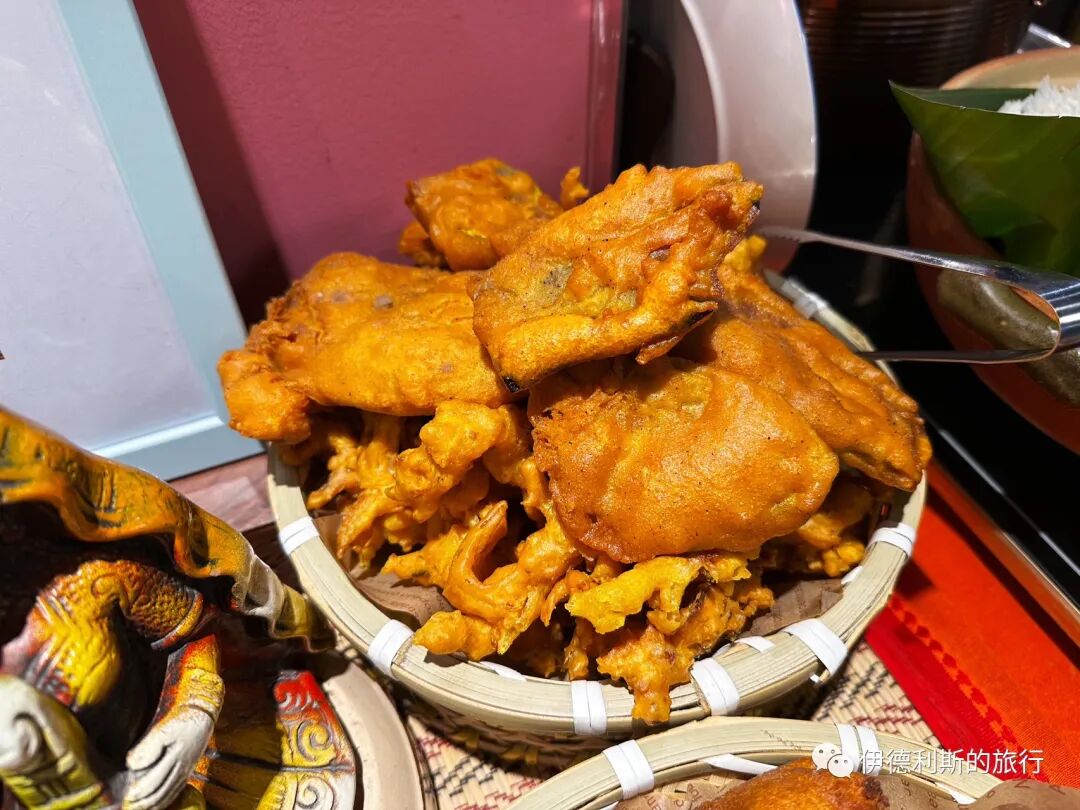
Hyderabad means 'City (abad) of the Lion (Hyder)' and is a bustling ancient capital on the Deccan Plateau. From 1364 to 1948, this place was ruled by Muslims for nearly six hundred years and served as the capital for both the Qutb Shahi and Asaf Jahi dynasties.
The earliest castle in Hyderabad is Golkonda, built between the 11th and 13th centuries, which became the capital of the Qutb Shahi dynasty in 1518. In 1591, to solve water shortages at Golkonda Fort, the Qutb Shahi dynasty moved the capital east to the banks of the Musi River and established Hyderabad, which is now the Old City.
Part 1: Qutb Shahi Dynasty
1. Charminar: 1591
In 1591, the fifth sultan of the Qutb Shahi dynasty, Muhammad Quli Qutb Shah, moved the capital from Golkonda Fort to Hyderabad and built the Charminar that same year. It has been the landmark of Hyderabad for over four hundred years.
Muhammad Quli Qutb Shah invited many famous Persian architects to plan Hyderabad. They chose the Charminar as the city center and the intersection for trade routes.
Charminar comes from the Urdu words 'Chār' and 'Minar,' which literally translate to 'four towers.' The Charminar has four 56-meter-tall minarets supported by 20-meter-long arches, with a mosque and a madrasa built between the minarets and arches.


2. Char Kaman: 1592
Char Kaman means 'four arches.' After the Charminar was completed, Muhammad Quli Qutb Shah built four high arches around it in 1592 as an important part of the city plan.


3. Old City Bazaar
The four main roads extending from the Charminar are very busy bazaars. The most famous is Laad Bazaar, where the whole street sells Indian saris and various jewelry.


They sell Shia flags here.


4. Mecca Mosque (Mecca Masjid)
The Mecca Mosque was also ordered to be built by the fifth sultan of the Qutb Shahi dynasty, Muhammad Quli Qutb Shah (reigned 1580-1611). He sent people to bring back soil from the holy city of Mecca to make bricks for the arches, which is how the mosque got its name.
The three arched exterior walls of the mosque were carved from a single piece of granite, and the quarrying alone took five years. The entire mosque was built by over 8,000 workers, and Muhammad Quli Qutb Shah personally laid the foundation and oversaw the construction.


I arrived late for Jumu'ah prayer at the Mecca Mosque, and there were so many people that I had to stand in the courtyard.


5. Bad-e-Shahi Ashur Khana: 1594
Bad-e-Shahi Ashur Khana is the Shia center of Hyderabad and the first Imambargah in India. An Imambargah, also called a Hussainiya, is a hall where Shia Muslims of the Twelver branch mourn Imam Hussain. It is busiest during Ashura, but there are also events held here every week.
The fifth Sultan of the Qutb Shahi dynasty, Muhammad Quli Qutb Shah, ordered the construction of Bad-e-Shahi Ashur Khana in 1594, and the seventh Sultan, Abdullah Qutb Shah, added tiles in 1611. In 1764, the second Nizam of the Asaf Jahi dynasty, Ali Khan, added a wooden colonnade, an outer hall, and a gate. The caretakers here are from a hereditary family, and the current 11th Mutawalli is Mujawer Mir Nawazish Ali Moosvi.
The Arabic calligraphy and floral tiles inside the building use the Cuerda Seca technique, which was created by Persian craftsmen. This technique uses lines of dark pigment mixed with grease on the tile surface to separate different colors of water-soluble glaze, which is why every area has dark lines. Scholars believe the Cuerda Seca technique originated in 10th-century Andalusia in southern Spain and later spread to Asia through Arabs and Persians. The Mughal dynasty often used this technique to fire tiles during the 17th century.


Clay tablets used by Shia Muslims for namaz.

We arrived in Hyderabad just in time for a Shia event at Bad-e-Shahi Ashur Khana.
Shia Islam developed in the Deccan Plateau of South India during the Bahmani Sultanate (1347-1527). After the Bahmani Sultanate declined, the Qutb Shahi dynasty became independent in 1518 and declared Shia Islam the state religion.
Hyderabad became a center for Shia culture in India during the 16th and 17th centuries. The fifth Sultan of the Qutb Shahi dynasty, Muhammad Quli Qutb Shah, was a talented Urdu poet and the first person to write Marsiya, which are Shia mourning poems for Imam Hussain, in Urdu. The Shia scholar and scientist Mir Muhammad Momin arrived in the Qutb Shahi dynasty in 1581 and helped design and build the city of Hyderabad in 1591.


Collapse Read »
Summary: Hyderabad — Muslim Old City, Mosques and Halal Food is presented here as a firsthand travel account in clear English, beginning with this scene: Hyderabad means 'City (abad) of the Lion (Hyder)' and is a bustling ancient capital on the Deccan Plateau. The account keeps its focus on Hyderabad Travel, Muslim Heritage, Halal Food while preserving the names, places, food, and historical details from the Chinese source.
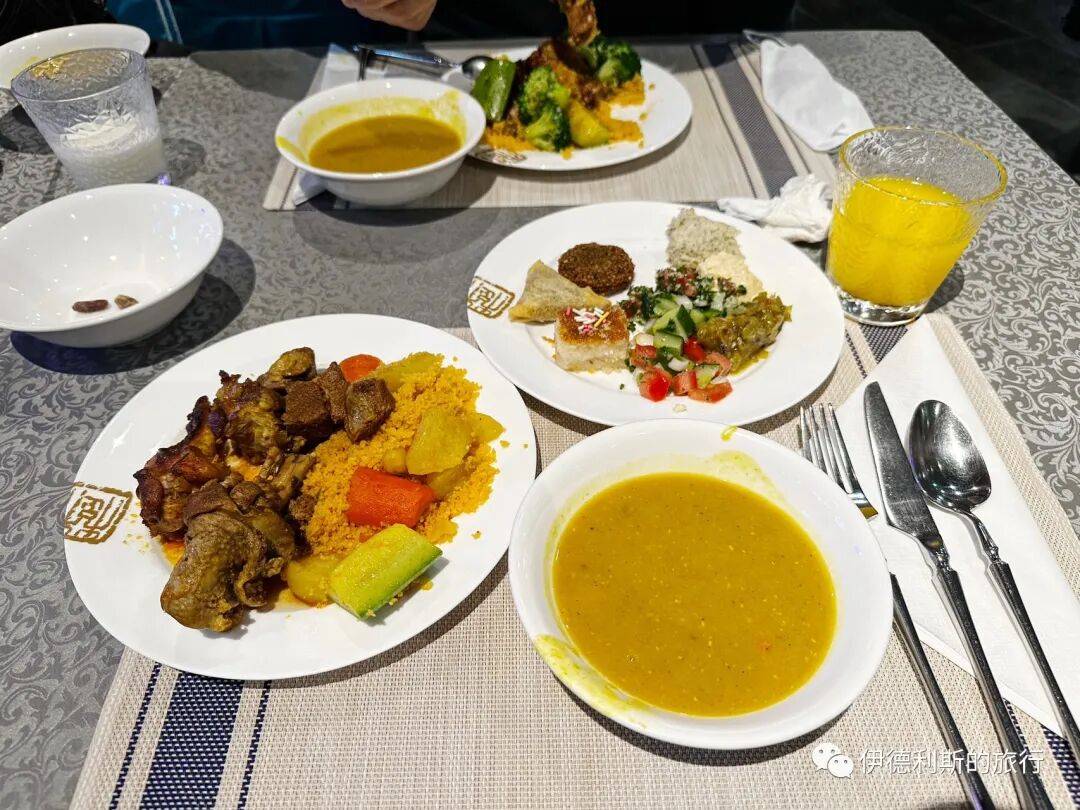
Hyderabad means 'City (abad) of the Lion (Hyder)' and is a bustling ancient capital on the Deccan Plateau. From 1364 to 1948, this place was ruled by Muslims for nearly six hundred years and served as the capital for both the Qutb Shahi and Asaf Jahi dynasties.
The earliest castle in Hyderabad is Golkonda, built between the 11th and 13th centuries, which became the capital of the Qutb Shahi dynasty in 1518. In 1591, to solve water shortages at Golkonda Fort, the Qutb Shahi dynasty moved the capital east to the banks of the Musi River and established Hyderabad, which is now the Old City.
Part 1: Qutb Shahi Dynasty
1. Charminar: 1591
In 1591, the fifth sultan of the Qutb Shahi dynasty, Muhammad Quli Qutb Shah, moved the capital from Golkonda Fort to Hyderabad and built the Charminar that same year. It has been the landmark of Hyderabad for over four hundred years.
Muhammad Quli Qutb Shah invited many famous Persian architects to plan Hyderabad. They chose the Charminar as the city center and the intersection for trade routes.
Charminar comes from the Urdu words 'Chār' and 'Minar,' which literally translate to 'four towers.' The Charminar has four 56-meter-tall minarets supported by 20-meter-long arches, with a mosque and a madrasa built between the minarets and arches.


2. Char Kaman: 1592
Char Kaman means 'four arches.' After the Charminar was completed, Muhammad Quli Qutb Shah built four high arches around it in 1592 as an important part of the city plan.


3. Old City Bazaar
The four main roads extending from the Charminar are very busy bazaars. The most famous is Laad Bazaar, where the whole street sells Indian saris and various jewelry.


They sell Shia flags here.


4. Mecca Mosque (Mecca Masjid)
The Mecca Mosque was also ordered to be built by the fifth sultan of the Qutb Shahi dynasty, Muhammad Quli Qutb Shah (reigned 1580-1611). He sent people to bring back soil from the holy city of Mecca to make bricks for the arches, which is how the mosque got its name.
The three arched exterior walls of the mosque were carved from a single piece of granite, and the quarrying alone took five years. The entire mosque was built by over 8,000 workers, and Muhammad Quli Qutb Shah personally laid the foundation and oversaw the construction.


I arrived late for Jumu'ah prayer at the Mecca Mosque, and there were so many people that I had to stand in the courtyard.


5. Bad-e-Shahi Ashur Khana: 1594
Bad-e-Shahi Ashur Khana is the Shia center of Hyderabad and the first Imambargah in India. An Imambargah, also called a Hussainiya, is a hall where Shia Muslims of the Twelver branch mourn Imam Hussain. It is busiest during Ashura, but there are also events held here every week.
The fifth Sultan of the Qutb Shahi dynasty, Muhammad Quli Qutb Shah, ordered the construction of Bad-e-Shahi Ashur Khana in 1594, and the seventh Sultan, Abdullah Qutb Shah, added tiles in 1611. In 1764, the second Nizam of the Asaf Jahi dynasty, Ali Khan, added a wooden colonnade, an outer hall, and a gate. The caretakers here are from a hereditary family, and the current 11th Mutawalli is Mujawer Mir Nawazish Ali Moosvi.
The Arabic calligraphy and floral tiles inside the building use the Cuerda Seca technique, which was created by Persian craftsmen. This technique uses lines of dark pigment mixed with grease on the tile surface to separate different colors of water-soluble glaze, which is why every area has dark lines. Scholars believe the Cuerda Seca technique originated in 10th-century Andalusia in southern Spain and later spread to Asia through Arabs and Persians. The Mughal dynasty often used this technique to fire tiles during the 17th century.


Clay tablets used by Shia Muslims for namaz.

We arrived in Hyderabad just in time for a Shia event at Bad-e-Shahi Ashur Khana.
Shia Islam developed in the Deccan Plateau of South India during the Bahmani Sultanate (1347-1527). After the Bahmani Sultanate declined, the Qutb Shahi dynasty became independent in 1518 and declared Shia Islam the state religion.
Hyderabad became a center for Shia culture in India during the 16th and 17th centuries. The fifth Sultan of the Qutb Shahi dynasty, Muhammad Quli Qutb Shah, was a talented Urdu poet and the first person to write Marsiya, which are Shia mourning poems for Imam Hussain, in Urdu. The Shia scholar and scientist Mir Muhammad Momin arrived in the Qutb Shahi dynasty in 1581 and helped design and build the city of Hyderabad in 1591.


Collapse Read »
Halal Travel Guide: Ili to Turpan — Chagatai Khanate Tombs and Muslim History
Reposted from the web
Summary: Ili to Turpan — Chagatai Khanate Tombs and Muslim History is presented here as a firsthand travel account in clear English, beginning with this scene: In the 61st Regiment of Huocheng County in Yili and Aiding Lake Town in the Gaochang District of Turpan, you can find the tombs of Tughlugh Timur, the founding khan of the Eastern Chagatai Khanate, and Khizr Khoja, the. The account keeps its focus on Chagatai Khanate, Muslim History, Xinjiang Travel while preserving the names, places, food, and historical details from the Chinese source.
In the 61st Regiment of Huocheng County in Yili and Aiding Lake Town in the Gaochang District of Turpan, you can find the tombs of Tughlugh Timur, the founding khan of the Eastern Chagatai Khanate, and Khizr Khoja, the third khan. These are the only two remaining royal tombs from the Eastern Chagatai Khanate. I have visited both of these tombs, and I want to use them to give you a brief introduction to the early history of the Eastern Chagatai Khanate.

The Tughlugh Timur tomb (mazar) in Yili.

The Khizr Khoja tomb (mazar) in Turpan.
The Chagatai Khanate was formed in 1225 after Genghis Khan conquered the Western Liao Dynasty during his western campaign and divided the vast lands north and south of the Tianshan Mountains among his second son, Chagatai. Chagatai's royal court was located near Almaliq in Yili, which served as the center of the entire khanate.
After the 14th century, the Chagatai Mongols who had long lived in the Transoxiana region grew accustomed to settled city life and converted to the faith. This created growing conflict with the Chagatai Mongols in the eastern grasslands who insisted on a nomadic lifestyle. Eventually, the eastern Chagatai Mongol nobles killed the khan who had settled in the west to protect their traditions, causing the Chagatai Khanate to split into eastern and western parts. In 1348, the Dughlat tribe, which ruled the southern Xinjiang region, installed Tughlugh Timur, a descendant of Chagatai Khan, as the khan. He became the founding khan of the Eastern Chagatai Khanate.
After taking the throne, Khan Tughlugh Timur ordered all Chagatai Mongols in the Eastern Chagatai Khanate to convert to the faith. He later unified the entire khanate through two western campaigns, but the khanate fell back into chaos shortly after his death.
In 1368, the Dughlat noble Qamar ud-Din massacred almost all of Khan Tughlugh Timur's descendants. Only the khan's infant son, Khizr Khoja, was hidden away.
In 1370, the Chagatai noble Amir Timur unified the Western Chagatai Khanate. He established the Timurid Dynasty with a Chagatai khan as his puppet and became known to later generations as Timur the Great.
It was not until 1389, after Qamar ud-Din was completely defeated by Timur the Great, that Khizr Khoja, who had been in hiding for years, was able to take the throne as the third khan of the Eastern Chagatai Khanate. After Khizr Khoja took the throne, Timur the Great marched east and captured the city of Almaliq. Khizr Khoja had to move his court east to Turpan, where he eventually passed away.
In the late 15th century, the Eastern Chagatai Khanate split again into eastern and western parts. In 1514, Said Khan, a descendant of Khan Tughlugh Timur, made Yarkand his capital and ruled the entire southern Xinjiang region. This is known in history as the Yarkand Khanate.

The map of the Chagatai Khanate's territory is based on the Historical Atlas of China, which primarily relies on the Jingshi Dadian from 1330-31 and the Appendix on Northwest Geography in the History of Yuan.
1. Traveling to the Tughlugh Timur tomb (mazar).
In the midsummer of 2016, I set off from the Yili Prefecture Passenger Transport Center on Jiefang West Road in Yining and first took a bus to Qingshuihe Town in Huocheng County. After leaving the Qingshuihe bus station, I crossed the street and caught a small car to the 61st Regiment at the northwest corner of the intersection. The "Big Mazar" was actually 3 kilometers away from the 61st Regiment base. When the driver heard I wanted to see it, he drove me straight to the gate and waited for me to finish my visit before taking me back to Qingshuihe Town.
Looking from a distance, the gate of the mazar was tightly shut. When I walked up, I found an old man sleeping in the ticket office. After I woke him up, he gave me a large ring of keys. He told me which one was for the main gate, which was for the Big Mazar, and which was for the Small Mazar. Then he collected the ticket fee and let me go in with the keys.
The Tughlugh Timur mazar is the only remaining Yuan Dynasty royal tomb building in Xinjiang. It is also the only surviving ground-level ruin of the Chagatai Khanate's capital, Almaliq, making it extremely valuable.
Standing in front of the tomb is truly moving. I take out the key to open the gate of the shrine (mazar), and it feels like I have stepped back into the Chagatai Khanate from over 600 years ago.


Taken by a Russian in 1904.


Next to the shrine (mazar) of Tughluq Timur is the shrine said to belong to his sister.


I lock the door and return to the real world.

2. The diverse city of Almaliq.
To the west of Tughluq Timur's shrine lies Almaliq, the capital of the Chagatai Khanate. Almaliq gets its name from the word for apple, and it first rose to prominence due to the Northern Silk Road during the Tang Dynasty. A Sogdian document unearthed at Mount Mug in the early 8th century already mentions the name Almaliq.
During the Western Liao period, Almaliq was ruled by the Muslim Karluks (a Western Turkic tribe known as Geluolu in the Tang Dynasty), and history refers to it as the Kingdom of Almaliq. In 1211, Kuchlug, a prince of the Turkic Naiman tribe, seized power in the Western Liao with the help of the Khwarazmian Empire and then repeatedly besieged Almaliq. To defend against Kuchlug's attacks, the Karluk leader Ozar Khan chose to submit to Genghis Khan.
In 1214, Ozar Khan was captured by Kuchlug's soldiers while out hunting. Kuchlug's soldiers chained Ozar Khan and brought him to the gates of Almaliq, but the city's defenders kept the gates shut. Just then, Kuchlug learned that the Chagatai Khan's army was on its way to Almaliq, so he retreated and killed Ozar Khan along the way.
In 1218, the Mongol army killed Kuchlug, and the Western Liao dynasty fell. Soon after, Genghis Khan divided his lands among his sons, and Almaliq became the location of the Chagatai Ulus's main camp (khan court).

At that time, the city of Almaliq was home to Han Chinese, Mongols, and Uyghurs, as well as Muslims, Christians, and even Taoists. The Taoist master Qiu Chuji passed through Almaliq on his way west to Afghanistan to meet Genghis Khan in 1220, and again on his return east in 1222. The Travels of Master Changchun records:
After another stage, we arrived at Almaliq on the 27th day of the ninth month... and stayed in the western fruit orchard. The locals call fruit 'alima,' and because there are many fruit trees, the city is named after them.
When Qiu Chuji returned east, he met a master craftsman named Zhang who was building bridges and roads for Chagatai. Zhang invited Qiu Chuji to his home and told him that he was also a Taoist, with three altars and over 400 followers in Almaliq who practiced morning and evening prayers.
Yelü Chucai also lived in Almaliq for a period of time. He wrote in his Record of a Journey to the West:
Westerners call apples 'almaliq,' and the city is surrounded by apple orchards, which is why it is named so.
At the same time, the Yuan Dynasty city of Almalik was a center for Nestorian Christianity in Central Asia. Archaeologists found over ten Nestorian gravestones with Syriac inscriptions in the city, and their style matches other Nestorian stones found in the Seven Rivers region. Additionally, seven 13th to 14th-century Nestorian epitaphs in Syriac were found in the Seven Rivers region, all noting that the deceased came from Almalik.
On December 31, 2016, at the Ili Grassland Culture Exhibition held at the Zhenjiang Museum, I was lucky enough to see one of the Almalik Nestorian gravestones from the Ili Kazakh Autonomous Prefecture Museum collection. The owner of this gravestone was named Georges, who died in 1362 or 1365, during the period of the Eastern Chagatai Khanate.

3. Settled or Nomadic?
Two cultural systems existed within the Chagatai Khanate: the western Transoxiana region followed the Islamic faith and lived in cities, while the eastern Moghulistan region kept its nomadic traditions. After the 14th century, the conflict between settled and nomadic life grew, making the split of the khanate inevitable.

The base map comes from the Historical Atlas of China, which is mainly based on the 1330-31 Compendium of Governance (Jingshi Dadian) and the Geography Section of the History of Yuan (Yuan Shi).
In 1331, the Muslim Chagatai Khan Tarmashirin took the throne. He kept promoting the Islamic faith among the Chagatai Mongols in Transoxiana, but the Chagatai Mongols in the eastern Ili River valley stuck to their traditions.
Tarmashirin loved the city life of Transoxiana so much that he even stopped the tradition of traveling to Almalik every year. Because of this, the Chagatai Mongol nobles living in Almalik grew to oppose Tarmashirin, believing he had abandoned Mongol traditions and the roots of the Chagatai Khanate—Almalik.
In 1334, Tarmashirin’s nephew Buzan, who lived in the east, killed Tarmashirin near Samarkand to protect Mongol traditions. Historians believe the death of Tarmashirin was a major turning point in the decline of the Chagatai Khanate.
In 1343, the last Chagatai Khan, Qazan Sultan, took the throne. Qazan Sultan was cruel and killed many innocent people, leading to rebellions across the khanate. In 1346, Qazan Sultan was killed by Qazghan, the leader of the Barlas tribe—the most powerful Chagatai Mongol tribe at the time and the tribe of Tamerlane—and the Chagatai Khanate fell into division.
4. Establishing the Eastern Chagatai Khanate
1. Tughluq Timur becomes Khan
After Qazan Sultan died, every powerful Chagatai Mongol tribe in Transoxiana chose a descendant of the Chagatai Khan to be their own khan. This period is known as the era of the tribal kings (muluk-i tavaif) of the Chagatai Khanate.
In 1346, amid the trend of tribes searching for Chagatai descendants, Bulaji, the leader of the Dughlat tribe that ruled Aksu, Kashgar, Yarkand, and Hotan, did not want to be left behind. He claimed to have found Tughluq Timur, the 16-year-old grandson of the Great Khan D'ua. In 1348, Tughluq Timur was made khan in Aksu, establishing the Eastern Chagatai Khanate.
2. The Eastern Chagatai Mongols convert to the Islamic faith
The most detailed account of Tughluq Timur leading the Chagatai Mongols to convert to the Islamic faith is in the Tarikh-i-Rashidi. However, as a descendant of Tughluq Timur, the author included many legends and stories when telling his ancestor's history.
The first chapter of the Tarikh-i-Rashidi begins with the scene of Tughluq Timur meeting his Islamic teacher, Shaikh Jamal al-Din.
One day, while Tughluq Timur Khan was feeding pork to his dogs, an attendant brought Shaikh Jamal al-Din to meet him. The Khan asked the Shaikh, "Are you better than this dog? Or is this dog better than you?" The Shaikh replied, "If I believe in Allah, then I am certainly better; if I do not believe in Allah, then this dog is better than me." The Khan was deeply moved by these words, and a love for Islam grew in his heart.
According to the Tarikh-i-Rashidi, the ancestors of Shaikh Jamal al-Din were Sufi sages from Bukhara in Central Asia. After Genghis Khan conquered Bukhara, they moved around and eventually settled in the city of Katak near Lop Nur. Regarding Jamal al-Din's journey to Aksu to meet Tughluq Timur, the Tarikh-i-Rashidi records:
After a Friday Jumu'ah prayer, Jamal al-Din told everyone he had received a revelation from Allah that the city of Katak would face a disaster, so he had to leave immediately. The muezzin responsible for the call to prayer (adhan) at the mosque begged Jamal al-Din to take him along, and Jamal al-Din agreed. After traveling for a while, the muezzin said he had something to do and wanted to return to the city. Once back, he climbed the minaret of the mosque and gave the call to prayer one last time. Just as he finished the call, sand fell from the sky and buried the entire town, leaving only the top of the minaret visible above the sand dunes. Terrified, the muezzin chased after Jamal al-Din through the night to tell him what had happened to Katak. Upon hearing this, Jamal al-Din hurried on until he reached the area near the city of Aksu.
At that time, eighteen-year-old Tughluq Timur was hunting outside Aksu. His men reported that someone was hiding nearby, so Tughluq Timur sent them to bring the person before him, which led to the meeting mentioned earlier. Jamal al-Din explained the teachings of Islam to Tughluq Timur, and Tughluq Timur promised that once he became the Great Khan, he would convert to the faith. This story is recorded in the Tarikh-i-Rashidi as follows:
When he came to the Khan, he saw the Khan standing alone in a quiet place with a sad expression on his face. The Khan asked the Shaikh, "What must a person have to be better than a dog? The Shaikh replied, "Faith." Then, the Shaikh explained to the Khan what faith is and the various duties of a Muslim. The Khan wept bitterly right there and said, "If I become Khan and hold supreme power, you must come to me. I promise you that I will convert to Islam."
However, Jamal al-Din passed away shortly after. Before he died, Jamal al-Din instructed his son, Arshad al-Din, to fulfill his final wish: to help Tughluq Timur convert to the faith once he became the Great Khan. He told his son that before meeting Tughluq Timur, he had a dream where Arshad al-Din carried a lamp to the top of a mountain, and the light made the entire East shine brightly.
In 1348, Tughluq Timur officially took the throne. In 1456, Arshad al-Din traveled from Aksu to the Khan's royal court (ordu) near the city of Almalik to try and meet the Great Khan. The royal court was heavily guarded, and Arshad al-Din could not get in. He began calling the call to prayer (adhan) loudly every morning at dawn. The Great Khan finally heard the call, and the two were able to meet.
That very morning, Arshad al-Din led the conversion ceremony for Great Khan Tughluq Timur. He then met with the royal ministers one by one. 160,000 Chagatai Mongols converted to the faith, which became a major turning point for the eastern Chagatai Mongols.
5. The Final Unification of the Khanate
By 1360, the Chagatai Mongol tribes in the Transoxiana region had been fighting each other for over a decade. To end the chaos, Great Khan Tughluq Timur decided to lead a large army west to unify the Chagatai Khanate. In March 1360, the army marched all the way to the city of Kesh (located in southern Uzbekistan). A young noble commander (amir) named Timur (Amir Timur, the future Timur the Great) from the Barlas tribe, which had lived in Kesh for generations, surrendered to the Eastern Chagatai Khanate. He was granted Kesh and the surrounding territory, and Great Khan Tughluq Timur returned home victorious.
Not long after the Great Khan left, the eastern generals left in charge of Transoxiana argued with the local generals. Timur fled north of the Amu Darya river and gathered an army.
In 1361, Great Khan Tughluq Timur led a second western campaign, and the Chagatai generals in Transoxiana surrendered one after another. To ease the tension between the eastern and western generals, Great Khan Tughluq Timur negotiated with Timur again and appointed him as the governor of Kesh and the surrounding area.
After fully controlling Transoxiana and reunifying the entire Chagatai Khanate, Great Khan Tughluq Timur left his son Ilyas Khoja to rule Transoxiana while he returned to the east.
After the Great Khan left, Timur had a falling out with the commander left in charge. He fled to the upper reaches of the Amu Darya to join his brother-in-law, Amir Husayn, and gathered another army. In the famous Battle of the Stone Bridge, Timur used a smaller force to defeat the Eastern Chagatai army and retook Kesh.


After the Timurid Empire was established, Timur renamed his hometown of Kesh to Shahrisabz.
6. The Death of the Great Khan
1. Ilyas Khoja Takes the Throne
In 1363, Timur and Prince Ilyas Khoja prepared for a decisive battle just outside Kesh. Just then, news arrived that Great Khan Tughluq Timur had passed away. The Eastern Chagatai generals urged the prince to return to Almalik quickly to take the throne, but Timur's army was already close, so the battle had to go on.
The battle began with deafening war cries. Prince Ilyas Khoja led his cavalry in an attack, but they were driven back by Timur's archers. The Eastern Chagatai army was completely defeated. The prince fled back to Almalik to take the throne, and Timur occupied a large part of Transoxiana.
In 1364, all the Chagatai generals in Transoxiana held a meeting and decided to name Khabul Shah, a descendant of the Chagatai Khan, as the Western Chagatai Khan. With this, the Chagatai Khanate, once unified by Tughluq Timur Khan, split apart again. Soon after, the vast Timurid Empire would rise from the ruins of the Western Chagatai Khanate.
2. Battle of the Muddy Swamp
In 1364, Prince Ilyas Khoja returned to Almalik to take the throne as the second Khan of the Eastern Chagatai Khanate.
In May 1365, Ilyas Khoja fought another major battle against the allied forces of Timur and Amir Husayn near the Syr Darya River. Just as the decisive battle began, a sudden downpour turned the ground into a quagmire, trapping the horses in deep mud. This is why later generations call it the Battle of the Muddy Swamp (ni zhao zhi zhan).
Timur's army could not move in the mud. Ilyas Khoja was prepared; his Eastern Chagatai troops covered themselves with felt blankets and waited for Timur's men to charge before throwing them off to fight. Countless soldiers died in the mud.
The Tarikh-i-Rashidi (Rashide Shi) describes this scene vividly:
Although the sun was still in the position of the Orion constellation, the sky suddenly filled with dark clouds, thunder rumbled, and lightning flashed. Wind and rain rushed into the sky from their hiding places. The heavens echoed with continuous thunder, and within the clouds brewing with lightning, thousands of golden rays shot out like arrows of light. The rain poured down, and the raindrops whistled as they cut through the air. It was as if the god of fate had once again fallen ill and decided to stir up trouble. The stars shed so many tears that it seemed the great floods of the primordial age were about to return. People heard Nuh (Noah) once again offering a dua for the rain to stop.
The livestock on the battlefield seemed to float in the air like fish. The horses' feet sank so deep into the mud that their bellies touched the ground, and the dampness made them look thin and bony. They became weak and emaciated, paralyzed, and their bones felt loose. The feathers on the arrow shafts fell off, and the nocks dropped away. Clothes and equipment became heavy from the rain, making it difficult for both infantry and cavalry to move. Because of this, our army (Timur's) lost confidence and courage, but the enemy remained in place, covering themselves with felt to keep their clothes and weapons dry. When our army reached them, they threw off the felt covers and entered the battle with energetic horses and dry weapons, and so the fighting officially began.
Timur defeated the Eastern Chagatai army with a brave attack, but the victory caused a conflict between Timur and his brother-in-law, Husayn. The next morning, the Eastern Chagatai army turned defeat into victory, killing tens of thousands of Timur's soldiers.
After the Battle of the Muddy Swamp, the Western Chagatai lords retreated south of the Amu Darya River, and Ilyas Khoja began to besiege Samarkand. Just as the city-defending army was struggling, a plague broke out in the East Chagatai army. Most of the horses died from the sickness, and Ilyas Khoja was forced to return to Almaliq.
In 1370, Timur unified the entire Western Chagatai Khanate. He established the Timurid Empire as the protector of the Chagatai Khan and became known to later generations as Timur the Great.

Timur the Great holds a grand feast in Samarkand, painted by Sharuf ad-din Ali Yesdy in 1628.
7. The succession of Khizr Khoja
1. The Khan's entire family is killed
Tughluq Timur Khan was originally placed on the throne by Bulaji, the leader of the Dughlat tribe. After Bulaji passed away, the Khan wanted to weaken the power of the Dughlat tribe. Instead of following tradition and letting Bulaji's brother succeed him, he let Bulaji's 6-year-old son, Khudaidad, take the position. This caused dissatisfaction among Bulaji's brothers, especially the third brother, Qamar ud-Din, who held a grudge.
After returning to Almaliq, Ilyas Khoja lost his authority because of the defeat. In 1368, Qamar ud-Din started a rebellion. He killed Ilyas Khoja while he was sleeping and slaughtered almost all members of the royal family. Only Tughluq Timur Khan's youngest son, Khizr Khoja, was hidden by Khudaidad and his mother. They moved around to hide in places like the Pamir Mountains, the Kunlun Mountains, and Lop Nur.
After Qamar ud-Din ruled the East Chagatai Khanate, Timur launched six wars against it, historically known as the Eastern Expeditions against Chagatai. In 1389, Qamar ud-Din was finally completely defeated. His subordinates hid him deep in the dense forests by the Irtysh River, and his whereabouts became unknown.
2. The succession of Khizr Khoja
In 1389, the 16-year-old prince Khizr Khoja took the throne with the help of Khudaidad, becoming the third Great Khan of the Chagatai Khanate.
Hearing that Khizr Khoja had succeeded to the throne, Timur immediately led his army to fight a decisive battle. He defeated the East Chagatai army in one strike, looted a large number of subjects and livestock from the East Chagatai Khanate, and completely destroyed the city of Almaliq. Because the Timurids in the west were too powerful, Khizr Khoja chose to conquer Turpan around 1392 and moved the Khan's court to Anle City in Turpan. Khizr Khoja promoted Islam in Turpan, which gradually made Turpan a cultural center for Islam.
During the reign of Khizr Khoja, the East Chagatai Khanate finally regained stability. The Tarikh-i-Rashidi states:
At the time of his accession, because Qamar ud-Din had usurped the throne and the Emir Timur was aggressive, the state was on the verge of collapse, but it became strong and consolidated again. Old systems that had been abandoned were restored, and the administration of the Khan's court and the affairs of the nobles were back on track.
3. Anle City in Turpan
Anle City is located south of the Emin Minaret (Sugong Ta). It is 300 meters wide from north to south and 700 meters long from east to west, with a karez well (kan'erjing) running underground through the city. The south of the city rises 8 to 10 meters above the ground, and every courtyard or house inside the city has storage pits and water wells.
In 1422, the East Chagatai Great Khan Uwais Khan defeated the Oirats and reoccupied Anle City. He used Anle City as his main residence, and since then, Anle City has been an important city of the East Chagatai Khanate.
In the second half of the 15th century, the East Chagatai Khanate split again. Ahmad Alaq (reigned 1487–1503) ruled the eastern part of the Khanate with Anle City as the center. It is called the Turpan Khanate in the History of Ming, and Anle City was later replaced by the name Turpan.
In 1514, Sultan Said Khan founded the Yarkent Khanate, while his older brother, Mansur Khan (reigned 1503–1543), continued to rule the eastern part of the Eastern Chagatai Khanate with Turpan as his capital. In 1570, the army of the Yarkent Khanate invaded Turpan, captured Muhammad Khan, the last ruler of the Turpan Khanate, and brought the khanate to an end.
In 1679, Galdan, the leader of the Dzungar Khanate, occupied Turpan. After years of fighting between the Dzungars and the Qing Dynasty, the region was finally incorporated into the Qing Empire in 1755. In 1780, the Qing government built Guang'an City northwest of Anle City. The administrative center of Turpan moved to Guang'an City (the current urban area of Turpan), and Anle City was gradually abandoned.


I picked some incredibly sweet mulberries at the ancient city of Anle! They tasted just like honey. May is truly the season for mulberries.


The Emin Minaret (Sugong Ta) is located just north of the ancient city of Anle.

8. Visiting the Mazar of Khizr Khoja
Khizr Khoja passed away in Turpan between 1402 and 1404. In 1415, Chen Cheng, an envoy sent by the Ming Dynasty to the Western Regions, wrote in his Record of Mountains, Rivers, and Customs of the Western Regions:
There are two high mounds in the city, surrounded by trees and enclosed by walls. These are the tombs of the former king, Khizr Khoja, and his wife. Near the tombs is a small mound, said to be where his favorite minister was buried with him.
Even locals might not know this place well. When using navigation, you can search for 'Xie'erniji,' and the mazar is in the southeast of the village.


A prayer rug used when visiting the graves.


When visiting the graves, people tie triangular flags to the tree branches. Some scholars believe this is a remnant of shamanic customs.

9. Further Reading
The historical information in this article mainly comes from several books: History of the Mughals in Central Asia: Tarikh-i-Rashidi, A Brief History of the Islamic Khanates in Xinjiang, Research on the History of the Chagatai Khanate, Research on the Silk Road and the History of the Eastern Chagatai Khanate, and History of Islam in China's Xinjiang Region.

History of the Mughals in Central Asia: Tarikh-i-Rashidi (Volume 1)
Mirza Muhammad Haidar / 1985 / Xinjiang People's Publishing House

Research on the History of the Chagatai Khanate
Liu Yingsheng / 2006 / Shanghai Classics Publishing House

Research on the Silk Road and the History of the Eastern Chagatai Khanate
Tian Weijiang / 1999 / Xinjiang People's Publishing House Collapse Read »
Summary: Ili to Turpan — Chagatai Khanate Tombs and Muslim History is presented here as a firsthand travel account in clear English, beginning with this scene: In the 61st Regiment of Huocheng County in Yili and Aiding Lake Town in the Gaochang District of Turpan, you can find the tombs of Tughlugh Timur, the founding khan of the Eastern Chagatai Khanate, and Khizr Khoja, the. The account keeps its focus on Chagatai Khanate, Muslim History, Xinjiang Travel while preserving the names, places, food, and historical details from the Chinese source.
In the 61st Regiment of Huocheng County in Yili and Aiding Lake Town in the Gaochang District of Turpan, you can find the tombs of Tughlugh Timur, the founding khan of the Eastern Chagatai Khanate, and Khizr Khoja, the third khan. These are the only two remaining royal tombs from the Eastern Chagatai Khanate. I have visited both of these tombs, and I want to use them to give you a brief introduction to the early history of the Eastern Chagatai Khanate.

The Tughlugh Timur tomb (mazar) in Yili.

The Khizr Khoja tomb (mazar) in Turpan.
The Chagatai Khanate was formed in 1225 after Genghis Khan conquered the Western Liao Dynasty during his western campaign and divided the vast lands north and south of the Tianshan Mountains among his second son, Chagatai. Chagatai's royal court was located near Almaliq in Yili, which served as the center of the entire khanate.
After the 14th century, the Chagatai Mongols who had long lived in the Transoxiana region grew accustomed to settled city life and converted to the faith. This created growing conflict with the Chagatai Mongols in the eastern grasslands who insisted on a nomadic lifestyle. Eventually, the eastern Chagatai Mongol nobles killed the khan who had settled in the west to protect their traditions, causing the Chagatai Khanate to split into eastern and western parts. In 1348, the Dughlat tribe, which ruled the southern Xinjiang region, installed Tughlugh Timur, a descendant of Chagatai Khan, as the khan. He became the founding khan of the Eastern Chagatai Khanate.
After taking the throne, Khan Tughlugh Timur ordered all Chagatai Mongols in the Eastern Chagatai Khanate to convert to the faith. He later unified the entire khanate through two western campaigns, but the khanate fell back into chaos shortly after his death.
In 1368, the Dughlat noble Qamar ud-Din massacred almost all of Khan Tughlugh Timur's descendants. Only the khan's infant son, Khizr Khoja, was hidden away.
In 1370, the Chagatai noble Amir Timur unified the Western Chagatai Khanate. He established the Timurid Dynasty with a Chagatai khan as his puppet and became known to later generations as Timur the Great.
It was not until 1389, after Qamar ud-Din was completely defeated by Timur the Great, that Khizr Khoja, who had been in hiding for years, was able to take the throne as the third khan of the Eastern Chagatai Khanate. After Khizr Khoja took the throne, Timur the Great marched east and captured the city of Almaliq. Khizr Khoja had to move his court east to Turpan, where he eventually passed away.
In the late 15th century, the Eastern Chagatai Khanate split again into eastern and western parts. In 1514, Said Khan, a descendant of Khan Tughlugh Timur, made Yarkand his capital and ruled the entire southern Xinjiang region. This is known in history as the Yarkand Khanate.

The map of the Chagatai Khanate's territory is based on the Historical Atlas of China, which primarily relies on the Jingshi Dadian from 1330-31 and the Appendix on Northwest Geography in the History of Yuan.
1. Traveling to the Tughlugh Timur tomb (mazar).
In the midsummer of 2016, I set off from the Yili Prefecture Passenger Transport Center on Jiefang West Road in Yining and first took a bus to Qingshuihe Town in Huocheng County. After leaving the Qingshuihe bus station, I crossed the street and caught a small car to the 61st Regiment at the northwest corner of the intersection. The "Big Mazar" was actually 3 kilometers away from the 61st Regiment base. When the driver heard I wanted to see it, he drove me straight to the gate and waited for me to finish my visit before taking me back to Qingshuihe Town.
Looking from a distance, the gate of the mazar was tightly shut. When I walked up, I found an old man sleeping in the ticket office. After I woke him up, he gave me a large ring of keys. He told me which one was for the main gate, which was for the Big Mazar, and which was for the Small Mazar. Then he collected the ticket fee and let me go in with the keys.
The Tughlugh Timur mazar is the only remaining Yuan Dynasty royal tomb building in Xinjiang. It is also the only surviving ground-level ruin of the Chagatai Khanate's capital, Almaliq, making it extremely valuable.
Standing in front of the tomb is truly moving. I take out the key to open the gate of the shrine (mazar), and it feels like I have stepped back into the Chagatai Khanate from over 600 years ago.


Taken by a Russian in 1904.


Next to the shrine (mazar) of Tughluq Timur is the shrine said to belong to his sister.


I lock the door and return to the real world.

2. The diverse city of Almaliq.
To the west of Tughluq Timur's shrine lies Almaliq, the capital of the Chagatai Khanate. Almaliq gets its name from the word for apple, and it first rose to prominence due to the Northern Silk Road during the Tang Dynasty. A Sogdian document unearthed at Mount Mug in the early 8th century already mentions the name Almaliq.
During the Western Liao period, Almaliq was ruled by the Muslim Karluks (a Western Turkic tribe known as Geluolu in the Tang Dynasty), and history refers to it as the Kingdom of Almaliq. In 1211, Kuchlug, a prince of the Turkic Naiman tribe, seized power in the Western Liao with the help of the Khwarazmian Empire and then repeatedly besieged Almaliq. To defend against Kuchlug's attacks, the Karluk leader Ozar Khan chose to submit to Genghis Khan.
In 1214, Ozar Khan was captured by Kuchlug's soldiers while out hunting. Kuchlug's soldiers chained Ozar Khan and brought him to the gates of Almaliq, but the city's defenders kept the gates shut. Just then, Kuchlug learned that the Chagatai Khan's army was on its way to Almaliq, so he retreated and killed Ozar Khan along the way.
In 1218, the Mongol army killed Kuchlug, and the Western Liao dynasty fell. Soon after, Genghis Khan divided his lands among his sons, and Almaliq became the location of the Chagatai Ulus's main camp (khan court).

At that time, the city of Almaliq was home to Han Chinese, Mongols, and Uyghurs, as well as Muslims, Christians, and even Taoists. The Taoist master Qiu Chuji passed through Almaliq on his way west to Afghanistan to meet Genghis Khan in 1220, and again on his return east in 1222. The Travels of Master Changchun records:
After another stage, we arrived at Almaliq on the 27th day of the ninth month... and stayed in the western fruit orchard. The locals call fruit 'alima,' and because there are many fruit trees, the city is named after them.
When Qiu Chuji returned east, he met a master craftsman named Zhang who was building bridges and roads for Chagatai. Zhang invited Qiu Chuji to his home and told him that he was also a Taoist, with three altars and over 400 followers in Almaliq who practiced morning and evening prayers.
Yelü Chucai also lived in Almaliq for a period of time. He wrote in his Record of a Journey to the West:
Westerners call apples 'almaliq,' and the city is surrounded by apple orchards, which is why it is named so.
At the same time, the Yuan Dynasty city of Almalik was a center for Nestorian Christianity in Central Asia. Archaeologists found over ten Nestorian gravestones with Syriac inscriptions in the city, and their style matches other Nestorian stones found in the Seven Rivers region. Additionally, seven 13th to 14th-century Nestorian epitaphs in Syriac were found in the Seven Rivers region, all noting that the deceased came from Almalik.
On December 31, 2016, at the Ili Grassland Culture Exhibition held at the Zhenjiang Museum, I was lucky enough to see one of the Almalik Nestorian gravestones from the Ili Kazakh Autonomous Prefecture Museum collection. The owner of this gravestone was named Georges, who died in 1362 or 1365, during the period of the Eastern Chagatai Khanate.

3. Settled or Nomadic?
Two cultural systems existed within the Chagatai Khanate: the western Transoxiana region followed the Islamic faith and lived in cities, while the eastern Moghulistan region kept its nomadic traditions. After the 14th century, the conflict between settled and nomadic life grew, making the split of the khanate inevitable.

The base map comes from the Historical Atlas of China, which is mainly based on the 1330-31 Compendium of Governance (Jingshi Dadian) and the Geography Section of the History of Yuan (Yuan Shi).
In 1331, the Muslim Chagatai Khan Tarmashirin took the throne. He kept promoting the Islamic faith among the Chagatai Mongols in Transoxiana, but the Chagatai Mongols in the eastern Ili River valley stuck to their traditions.
Tarmashirin loved the city life of Transoxiana so much that he even stopped the tradition of traveling to Almalik every year. Because of this, the Chagatai Mongol nobles living in Almalik grew to oppose Tarmashirin, believing he had abandoned Mongol traditions and the roots of the Chagatai Khanate—Almalik.
In 1334, Tarmashirin’s nephew Buzan, who lived in the east, killed Tarmashirin near Samarkand to protect Mongol traditions. Historians believe the death of Tarmashirin was a major turning point in the decline of the Chagatai Khanate.
In 1343, the last Chagatai Khan, Qazan Sultan, took the throne. Qazan Sultan was cruel and killed many innocent people, leading to rebellions across the khanate. In 1346, Qazan Sultan was killed by Qazghan, the leader of the Barlas tribe—the most powerful Chagatai Mongol tribe at the time and the tribe of Tamerlane—and the Chagatai Khanate fell into division.
4. Establishing the Eastern Chagatai Khanate
1. Tughluq Timur becomes Khan
After Qazan Sultan died, every powerful Chagatai Mongol tribe in Transoxiana chose a descendant of the Chagatai Khan to be their own khan. This period is known as the era of the tribal kings (muluk-i tavaif) of the Chagatai Khanate.
In 1346, amid the trend of tribes searching for Chagatai descendants, Bulaji, the leader of the Dughlat tribe that ruled Aksu, Kashgar, Yarkand, and Hotan, did not want to be left behind. He claimed to have found Tughluq Timur, the 16-year-old grandson of the Great Khan D'ua. In 1348, Tughluq Timur was made khan in Aksu, establishing the Eastern Chagatai Khanate.
2. The Eastern Chagatai Mongols convert to the Islamic faith
The most detailed account of Tughluq Timur leading the Chagatai Mongols to convert to the Islamic faith is in the Tarikh-i-Rashidi. However, as a descendant of Tughluq Timur, the author included many legends and stories when telling his ancestor's history.
The first chapter of the Tarikh-i-Rashidi begins with the scene of Tughluq Timur meeting his Islamic teacher, Shaikh Jamal al-Din.
One day, while Tughluq Timur Khan was feeding pork to his dogs, an attendant brought Shaikh Jamal al-Din to meet him. The Khan asked the Shaikh, "Are you better than this dog? Or is this dog better than you?" The Shaikh replied, "If I believe in Allah, then I am certainly better; if I do not believe in Allah, then this dog is better than me." The Khan was deeply moved by these words, and a love for Islam grew in his heart.
According to the Tarikh-i-Rashidi, the ancestors of Shaikh Jamal al-Din were Sufi sages from Bukhara in Central Asia. After Genghis Khan conquered Bukhara, they moved around and eventually settled in the city of Katak near Lop Nur. Regarding Jamal al-Din's journey to Aksu to meet Tughluq Timur, the Tarikh-i-Rashidi records:
After a Friday Jumu'ah prayer, Jamal al-Din told everyone he had received a revelation from Allah that the city of Katak would face a disaster, so he had to leave immediately. The muezzin responsible for the call to prayer (adhan) at the mosque begged Jamal al-Din to take him along, and Jamal al-Din agreed. After traveling for a while, the muezzin said he had something to do and wanted to return to the city. Once back, he climbed the minaret of the mosque and gave the call to prayer one last time. Just as he finished the call, sand fell from the sky and buried the entire town, leaving only the top of the minaret visible above the sand dunes. Terrified, the muezzin chased after Jamal al-Din through the night to tell him what had happened to Katak. Upon hearing this, Jamal al-Din hurried on until he reached the area near the city of Aksu.
At that time, eighteen-year-old Tughluq Timur was hunting outside Aksu. His men reported that someone was hiding nearby, so Tughluq Timur sent them to bring the person before him, which led to the meeting mentioned earlier. Jamal al-Din explained the teachings of Islam to Tughluq Timur, and Tughluq Timur promised that once he became the Great Khan, he would convert to the faith. This story is recorded in the Tarikh-i-Rashidi as follows:
When he came to the Khan, he saw the Khan standing alone in a quiet place with a sad expression on his face. The Khan asked the Shaikh, "What must a person have to be better than a dog? The Shaikh replied, "Faith." Then, the Shaikh explained to the Khan what faith is and the various duties of a Muslim. The Khan wept bitterly right there and said, "If I become Khan and hold supreme power, you must come to me. I promise you that I will convert to Islam."
However, Jamal al-Din passed away shortly after. Before he died, Jamal al-Din instructed his son, Arshad al-Din, to fulfill his final wish: to help Tughluq Timur convert to the faith once he became the Great Khan. He told his son that before meeting Tughluq Timur, he had a dream where Arshad al-Din carried a lamp to the top of a mountain, and the light made the entire East shine brightly.
In 1348, Tughluq Timur officially took the throne. In 1456, Arshad al-Din traveled from Aksu to the Khan's royal court (ordu) near the city of Almalik to try and meet the Great Khan. The royal court was heavily guarded, and Arshad al-Din could not get in. He began calling the call to prayer (adhan) loudly every morning at dawn. The Great Khan finally heard the call, and the two were able to meet.
That very morning, Arshad al-Din led the conversion ceremony for Great Khan Tughluq Timur. He then met with the royal ministers one by one. 160,000 Chagatai Mongols converted to the faith, which became a major turning point for the eastern Chagatai Mongols.
5. The Final Unification of the Khanate
By 1360, the Chagatai Mongol tribes in the Transoxiana region had been fighting each other for over a decade. To end the chaos, Great Khan Tughluq Timur decided to lead a large army west to unify the Chagatai Khanate. In March 1360, the army marched all the way to the city of Kesh (located in southern Uzbekistan). A young noble commander (amir) named Timur (Amir Timur, the future Timur the Great) from the Barlas tribe, which had lived in Kesh for generations, surrendered to the Eastern Chagatai Khanate. He was granted Kesh and the surrounding territory, and Great Khan Tughluq Timur returned home victorious.
Not long after the Great Khan left, the eastern generals left in charge of Transoxiana argued with the local generals. Timur fled north of the Amu Darya river and gathered an army.
In 1361, Great Khan Tughluq Timur led a second western campaign, and the Chagatai generals in Transoxiana surrendered one after another. To ease the tension between the eastern and western generals, Great Khan Tughluq Timur negotiated with Timur again and appointed him as the governor of Kesh and the surrounding area.
After fully controlling Transoxiana and reunifying the entire Chagatai Khanate, Great Khan Tughluq Timur left his son Ilyas Khoja to rule Transoxiana while he returned to the east.
After the Great Khan left, Timur had a falling out with the commander left in charge. He fled to the upper reaches of the Amu Darya to join his brother-in-law, Amir Husayn, and gathered another army. In the famous Battle of the Stone Bridge, Timur used a smaller force to defeat the Eastern Chagatai army and retook Kesh.


After the Timurid Empire was established, Timur renamed his hometown of Kesh to Shahrisabz.
6. The Death of the Great Khan
1. Ilyas Khoja Takes the Throne
In 1363, Timur and Prince Ilyas Khoja prepared for a decisive battle just outside Kesh. Just then, news arrived that Great Khan Tughluq Timur had passed away. The Eastern Chagatai generals urged the prince to return to Almalik quickly to take the throne, but Timur's army was already close, so the battle had to go on.
The battle began with deafening war cries. Prince Ilyas Khoja led his cavalry in an attack, but they were driven back by Timur's archers. The Eastern Chagatai army was completely defeated. The prince fled back to Almalik to take the throne, and Timur occupied a large part of Transoxiana.
In 1364, all the Chagatai generals in Transoxiana held a meeting and decided to name Khabul Shah, a descendant of the Chagatai Khan, as the Western Chagatai Khan. With this, the Chagatai Khanate, once unified by Tughluq Timur Khan, split apart again. Soon after, the vast Timurid Empire would rise from the ruins of the Western Chagatai Khanate.
2. Battle of the Muddy Swamp
In 1364, Prince Ilyas Khoja returned to Almalik to take the throne as the second Khan of the Eastern Chagatai Khanate.
In May 1365, Ilyas Khoja fought another major battle against the allied forces of Timur and Amir Husayn near the Syr Darya River. Just as the decisive battle began, a sudden downpour turned the ground into a quagmire, trapping the horses in deep mud. This is why later generations call it the Battle of the Muddy Swamp (ni zhao zhi zhan).
Timur's army could not move in the mud. Ilyas Khoja was prepared; his Eastern Chagatai troops covered themselves with felt blankets and waited for Timur's men to charge before throwing them off to fight. Countless soldiers died in the mud.
The Tarikh-i-Rashidi (Rashide Shi) describes this scene vividly:
Although the sun was still in the position of the Orion constellation, the sky suddenly filled with dark clouds, thunder rumbled, and lightning flashed. Wind and rain rushed into the sky from their hiding places. The heavens echoed with continuous thunder, and within the clouds brewing with lightning, thousands of golden rays shot out like arrows of light. The rain poured down, and the raindrops whistled as they cut through the air. It was as if the god of fate had once again fallen ill and decided to stir up trouble. The stars shed so many tears that it seemed the great floods of the primordial age were about to return. People heard Nuh (Noah) once again offering a dua for the rain to stop.
The livestock on the battlefield seemed to float in the air like fish. The horses' feet sank so deep into the mud that their bellies touched the ground, and the dampness made them look thin and bony. They became weak and emaciated, paralyzed, and their bones felt loose. The feathers on the arrow shafts fell off, and the nocks dropped away. Clothes and equipment became heavy from the rain, making it difficult for both infantry and cavalry to move. Because of this, our army (Timur's) lost confidence and courage, but the enemy remained in place, covering themselves with felt to keep their clothes and weapons dry. When our army reached them, they threw off the felt covers and entered the battle with energetic horses and dry weapons, and so the fighting officially began.
Timur defeated the Eastern Chagatai army with a brave attack, but the victory caused a conflict between Timur and his brother-in-law, Husayn. The next morning, the Eastern Chagatai army turned defeat into victory, killing tens of thousands of Timur's soldiers.
After the Battle of the Muddy Swamp, the Western Chagatai lords retreated south of the Amu Darya River, and Ilyas Khoja began to besiege Samarkand. Just as the city-defending army was struggling, a plague broke out in the East Chagatai army. Most of the horses died from the sickness, and Ilyas Khoja was forced to return to Almaliq.
In 1370, Timur unified the entire Western Chagatai Khanate. He established the Timurid Empire as the protector of the Chagatai Khan and became known to later generations as Timur the Great.

Timur the Great holds a grand feast in Samarkand, painted by Sharuf ad-din Ali Yesdy in 1628.
7. The succession of Khizr Khoja
1. The Khan's entire family is killed
Tughluq Timur Khan was originally placed on the throne by Bulaji, the leader of the Dughlat tribe. After Bulaji passed away, the Khan wanted to weaken the power of the Dughlat tribe. Instead of following tradition and letting Bulaji's brother succeed him, he let Bulaji's 6-year-old son, Khudaidad, take the position. This caused dissatisfaction among Bulaji's brothers, especially the third brother, Qamar ud-Din, who held a grudge.
After returning to Almaliq, Ilyas Khoja lost his authority because of the defeat. In 1368, Qamar ud-Din started a rebellion. He killed Ilyas Khoja while he was sleeping and slaughtered almost all members of the royal family. Only Tughluq Timur Khan's youngest son, Khizr Khoja, was hidden by Khudaidad and his mother. They moved around to hide in places like the Pamir Mountains, the Kunlun Mountains, and Lop Nur.
After Qamar ud-Din ruled the East Chagatai Khanate, Timur launched six wars against it, historically known as the Eastern Expeditions against Chagatai. In 1389, Qamar ud-Din was finally completely defeated. His subordinates hid him deep in the dense forests by the Irtysh River, and his whereabouts became unknown.
2. The succession of Khizr Khoja
In 1389, the 16-year-old prince Khizr Khoja took the throne with the help of Khudaidad, becoming the third Great Khan of the Chagatai Khanate.
Hearing that Khizr Khoja had succeeded to the throne, Timur immediately led his army to fight a decisive battle. He defeated the East Chagatai army in one strike, looted a large number of subjects and livestock from the East Chagatai Khanate, and completely destroyed the city of Almaliq. Because the Timurids in the west were too powerful, Khizr Khoja chose to conquer Turpan around 1392 and moved the Khan's court to Anle City in Turpan. Khizr Khoja promoted Islam in Turpan, which gradually made Turpan a cultural center for Islam.
During the reign of Khizr Khoja, the East Chagatai Khanate finally regained stability. The Tarikh-i-Rashidi states:
At the time of his accession, because Qamar ud-Din had usurped the throne and the Emir Timur was aggressive, the state was on the verge of collapse, but it became strong and consolidated again. Old systems that had been abandoned were restored, and the administration of the Khan's court and the affairs of the nobles were back on track.
3. Anle City in Turpan
Anle City is located south of the Emin Minaret (Sugong Ta). It is 300 meters wide from north to south and 700 meters long from east to west, with a karez well (kan'erjing) running underground through the city. The south of the city rises 8 to 10 meters above the ground, and every courtyard or house inside the city has storage pits and water wells.
In 1422, the East Chagatai Great Khan Uwais Khan defeated the Oirats and reoccupied Anle City. He used Anle City as his main residence, and since then, Anle City has been an important city of the East Chagatai Khanate.
In the second half of the 15th century, the East Chagatai Khanate split again. Ahmad Alaq (reigned 1487–1503) ruled the eastern part of the Khanate with Anle City as the center. It is called the Turpan Khanate in the History of Ming, and Anle City was later replaced by the name Turpan.
In 1514, Sultan Said Khan founded the Yarkent Khanate, while his older brother, Mansur Khan (reigned 1503–1543), continued to rule the eastern part of the Eastern Chagatai Khanate with Turpan as his capital. In 1570, the army of the Yarkent Khanate invaded Turpan, captured Muhammad Khan, the last ruler of the Turpan Khanate, and brought the khanate to an end.
In 1679, Galdan, the leader of the Dzungar Khanate, occupied Turpan. After years of fighting between the Dzungars and the Qing Dynasty, the region was finally incorporated into the Qing Empire in 1755. In 1780, the Qing government built Guang'an City northwest of Anle City. The administrative center of Turpan moved to Guang'an City (the current urban area of Turpan), and Anle City was gradually abandoned.


I picked some incredibly sweet mulberries at the ancient city of Anle! They tasted just like honey. May is truly the season for mulberries.


The Emin Minaret (Sugong Ta) is located just north of the ancient city of Anle.

8. Visiting the Mazar of Khizr Khoja
Khizr Khoja passed away in Turpan between 1402 and 1404. In 1415, Chen Cheng, an envoy sent by the Ming Dynasty to the Western Regions, wrote in his Record of Mountains, Rivers, and Customs of the Western Regions:
There are two high mounds in the city, surrounded by trees and enclosed by walls. These are the tombs of the former king, Khizr Khoja, and his wife. Near the tombs is a small mound, said to be where his favorite minister was buried with him.
Even locals might not know this place well. When using navigation, you can search for 'Xie'erniji,' and the mazar is in the southeast of the village.


A prayer rug used when visiting the graves.


When visiting the graves, people tie triangular flags to the tree branches. Some scholars believe this is a remnant of shamanic customs.

9. Further Reading
The historical information in this article mainly comes from several books: History of the Mughals in Central Asia: Tarikh-i-Rashidi, A Brief History of the Islamic Khanates in Xinjiang, Research on the History of the Chagatai Khanate, Research on the Silk Road and the History of the Eastern Chagatai Khanate, and History of Islam in China's Xinjiang Region.

History of the Mughals in Central Asia: Tarikh-i-Rashidi (Volume 1)
Mirza Muhammad Haidar / 1985 / Xinjiang People's Publishing House

Research on the History of the Chagatai Khanate
Liu Yingsheng / 2006 / Shanghai Classics Publishing House

Research on the Silk Road and the History of the Eastern Chagatai Khanate
Tian Weijiang / 1999 / Xinjiang People's Publishing House Collapse Read »
Halal Travel Guide: Golconda Fort — Deccan Muslim City and History (Part 1)
Reposted from the web
Summary: Golconda Fort — Deccan Muslim City and History is presented here as a firsthand travel account in clear English, beginning with this scene: I visited the ancient city of Hyderabad in southern India during the 2019 October holiday and explored the historic Golconda Fort. The account keeps its focus on Golconda Fort, Deccan History, Muslim Heritage while preserving the names, places, food, and historical details from the Chinese source.
I visited the ancient city of Hyderabad in southern India during the 2019 October holiday and explored the historic Golconda Fort.
1. Golconda Fort
Golconda Fort (Golconda Fort) is located west of Hyderabad on the Deccan Plateau in southern India and served as the early capital of the Qutb Shahi dynasty. Because it held the world's only diamond mines at the time, Golconda was a major diamond trading hub. Many world-famous diamonds came from here, including the Koh-i-Noor in the British crown and the Hope Diamond, the largest blue diamond in existence. From the Renaissance to the early modern period, Golconda had a shining reputation in the West and became a synonym for immense wealth.
Golconda Fort was first built by the Kakatiya dynasty, established by the Telugu people between the 12th and 14th centuries. It was incorporated into the territory of the Bahmani Sultanate, the first Muslim state in southern India, in 1364, after which its status gradually rose. In 1501, Quli Qutb Mulk, a minister under the Bahmani Sultan, became the governor of Golconda. When the Bahmani Sultanate split into five parts in 1518, Quli Qutb Mulk made Golconda his capital. Over the next 60 years, the first three sultans expanded Golconda Fort into a massive complex, which is why the Qutb Shahi dynasty is also known as the Golconda Sultanate.
After the Qutb Shahi dynasty moved its capital to Hyderabad in 1591, Golconda Fort remained important. It only began to fall into ruins after the Mughal Emperor Aurangzeb captured it following an eight-month siege in 1687. Today, many palace, mosque, and garden ruins are still preserved here and are well worth seeing.
City Walls
Golconda Fort is actually made up of four castles. Its outer wall is 10 kilometers long and features 87 semicircular bastions, 8 gates, and 4 drawbridges.
The inner city is built on a 120-meter-high granite hill. Currently, only the east gate, Bala Hissar Darwaza, is open for visitors. Bala Hissar Darwaza is a massive archway featuring carvings of lions and peacocks, which are common in Hindu architecture. The gate also has iron spikes specifically designed to stop Mughal war elephants.
Between January and September 1687, Mughal Emperor Aurangzeb led a massive army in an eight-month siege of Golconda Fort. Defending it was the last sultan of the Qutb Shahi dynasty, Abul Hasan Qutb Shah. As one of the most secure fortresses on the Deccan Plateau and in all of India at the time, this siege pushed the Mughal army to its limits.
During the siege, the Mughal army used nearly 100 cannons to bombard the walls. This included two powerful cannons favored by Aurangzeb, Rahban and Fateh Rahber, as well as a special bronze cannon called Azhdaha-Paikar that could fire 35-kilogram cannonballs. At the same time, the defenders of Golconda Fort set up many cannons on the bastions to fire back, even killing the experienced Mughal commander Kilich Khan Khwaja Abid Siddiqi.
At night, the Mughal army would assemble complex scaffolding to climb the walls, and soldiers would throw huqqa grenades into the city once they climbed up. Although most of the attacks were ineffective, the morale of the defenders kept dropping.
Even though the last sultan did his best to defend the city, his generals could no longer endure the situation. Eventually, Sarandaz Khan opened the back gate of Golconda Fort. The Mughal army immediately charged into the castle, and the Qutb Shahi dynasty fell. Aurangzeb took all the diamonds from the castle, instantly becoming the wealthiest monarch in the world.


Akkanna Madanna Offices
After entering the fort from the main gate, the ruins directly in front are called the Akkanna Madanna Offices. The brothers Akkanna and Madanna held great prestige in the Qutb Shahi dynasty between 1674 and 1685. Madanna started as a simple clerk, but later used his talent and various methods to rise through the ranks, eventually gaining control over the treasury and nearly ruling the entire dynasty by 1685. As Madanna rose to power, he promoted his brother Akkanna to the rank of general.
Madanna is most famous for blocking the invasion of the Mughal Empire and carrying out tax reforms. He cut out middlemen to collect taxes directly from farmers, merchants, and craftsmen as much as possible, using the funds to appease the Mughal Emperor Aurangzeb. One night in 1685, the two brothers were beheaded by a mob at their residence in Golconda Fort, and just two years later, the Qutb Shahi dynasty was destroyed by the Mughal Empire.
As early as the 18th century, locals called the brothers' rule a golden age, and residents of Hyderabad and the surrounding areas still remember them fondly today. The brothers' office inside Golconda Fort has become the best memorial site for them. This area was also where various officials of the Qutb Shahi dynasty worked.


Aslah Khana
The tall, three-story building on the south side of the main gate is called the Aslah Khana armory, which was used to store guns and ammunition during the Mughal era. However, historians have verified that during the Qutb Shahi dynasty, this was actually a place for various officials to work.

Nakkar Khana
Nakkar Khana is a palace complex where archaeologists have now excavated a series of water channels.


Taramati Mosque
Located next to the palace area, Taramati Mosque was built in 1518 for the Sultan's court and nobles. This mosque features the typical Muslim architectural style of the Deccan region, with small lotus-topped onion domes on the balcony.


Bhagamati Palace
Further inside is the Bhagamati Palace. According to legend, Bhagamati was the wife of the fifth Sultan of the Qutb Shahi dynasty, Muhammad Quli Qutb Shah (reigned 1580–1611). Legend says she was originally a Hindu dancer (nautch) whom the Sultan saw while riding his horse and immediately fell in love with, and they eventually married. Later, Bhagamati converted to Islam and took the title Hyder Mahal, and the Sultan even named the city of Hyderabad after her.
Bhagmati has no surviving tomb, and no documents or coins from her time mention her name. Records about her only appeared long after she died, so the truth of this story remains unproven.


Queen's Palace (Rani Mahal)
Passing through the Bhagamati Palace leads to the Queen's Palace (Rani Mahal) area in the southern part of the fort, where a sound and light show takes place at night. In the middle of the spacious courtyard stands a complex metal fountain. During the Qutb Shahi era, the fountain could spray water on its own thanks to hydraulic engineering. When there was no rain, the fort's water system ran using Persian water wheels. Today, a set of clay drainage pipes that have survived for hundreds of years can still be found behind the Queen's Palace (Rani Mahal).
Historians believe the building now called the Queen's Palace (Rani Mahal) should actually be called the Father's Palace (Dad Mahal). This was where the Sultan handled state affairs and listened to the opinions of his subjects and the people.


Private Chamber (Kilwat)
Behind the Queen's Palace (Rani Mahal) is the Private Chamber (Kilwat), the Sultan's private bedroom. Although small, it is decorated beautifully. The hollow latticework was once inlaid with Golconda's most famous diamonds and other gemstones.


Women's Mosque (Zanana Mosque)
Continuing west from the Queen's Palace (Rani Mahal) area, you leave the palace grounds and can see the multiple tall walls inside the fort. Behind one of these walls stands a mosque called the Women's Mosque (Zanana Mosque), which still has its mihrab and courtyard.


Twelve-Door Hall (Baradari) (Darbar Hall)
After passing the Women's Mosque (Zanana Mosque), you leave the palace area. A stone staircase leads to the fortress at the top of the hill. Some of the fortress walls are built directly onto giant rocks, and from the stairs, you can look down over the entire palace area. After climbing to the top, you reach a building called the Twelve-Door Hall (Baradari) (Darbar Hall), where you can overlook the vast area behind the fort.


Ibrahim Mosque
The Ibrahim Mosque is on the north side of the hilltop. It was built by Sultan Ibrahim Quli Qutb Shah (reigned 1550-1580). The mosque is small. The double-layered balconies on the two minarets and the onion domes sitting on lotus-shaped bases are typical of Muslim architecture in the Deccan region.


Granary (Ambar Khana)
Heading east from the Ibrahim Mosque, you start the path down the hill, first passing the city's granary, the Granary (Ambar Khana). A Persian inscription in front of the granary says it was built by Khairat Khan in 1642.


Ramdas Prison
Continuing down the hill, you pass the Ramdas Prison. Bhakt Ramdas was a court tax official for the Qutb Shahi dynasty. He was imprisoned in a dark cell for 12 years by the last Sultan, Abul Hasan Qutb Shah, for using money from the national treasury to build a temple.


Boli reservoir
You can see a series of water facilities in the northern part of the fort. The first thing you see is the Boli reservoir, a type of water storage structure often found in Indian forts.


Nagina Bagh garden
In the fort's Nagina Bagh garden, there is a pool that diverted hot and cold water, along with the original water tanks.


Bathhouse
Next to the fort gate is a Turkish bath building with pipes at different heights inside, which allowed for mixing scented cold and hot water, though it was not open when I visited. Historians still disagree on whether this bath was for women or for washing the bodies of the deceased.


Pavilions
Two large pavilions outside the fort gate.


2. Qutb Shahi Tombs
The Qutb Shahi Tombs are located north of Golconda Fort and contain the tombs of the sultans of the Qutb Shahi dynasty and their attached mosques. These tombs feature the typical style of Deccan Plateau Muslim architecture, with a layered structure of a square base and round top emphasized by decorative small towers, and onion domes sitting on lotus-petal bases, representing an organic blend of Persian and Indian architectural styles.
Tomb of the first sultan: 1543
The tomb of Quli Qutb Mulk (reigned 1512–1543), the founder of the Qutb Shahi dynasty, is the earliest one built in the cemetery, and the designs of later tombs were developed based on this one.
Quli was a Turkmen from Hamadan, Iran, and a descendant of Qara Yusuf (reigned 1380–1420), the ruler of the Kara Koyunlu dynasty. In the early 16th century, Quli came to India from Iran with some relatives and friends. They were first in Delhi, then moved south to the Deccan to serve in the court of the Bahmani Sultanate. In 1518, the Bahmani Sultanate broke into five Deccan sultanates, and Quli conquered Golconda Fort to establish the Golconda Sultanate, also known as the Qutb Shahi dynasty.


Tomb of the second sultan: 1550
The tomb of Jamsheed Quli Qutb Shah (reigned 1543–1550), the second sultan of the Qutb Shahi dynasty, is the only sultan's tomb in the cemetery that does not use black basalt, and its design, consisting of two levels, is also different from the others.
Jamsheed seized the throne in 1543 after assassinating his father. Few records remain of his reign, other than that it was very cruel. Jamsheed died of illness in 1550 and was buried next to his father's tomb.


Tomb of the third Sultan: 1550.
After the second Sultan, Jamshed, died of illness in 1550, his 7-year-old son, Subhan Quli Qutb Shah, took the throne. However, Subhan's uncle, Ibrahim Quli Qutb Shah, soon rushed back to Golconda Fort to seize the throne. Subhan was deposed and died shortly after.
Subhan's tomb sits on the same platform as his grandfather, the first Sultan Quli Qutb Mulk, and it is the smallest of all the Sultan tombs.


Tomb of the fourth Sultan: 1580.
The tomb of the fourth Sultan of the Qutb Shahi dynasty, Ibrahim Quli Qutb Shah (reigned 1550–1580), was built in 1580 and is slightly larger than the first Sultan's tomb. The south wall of the tomb has some rare surviving tile patterns, offering a glimpse into the original style of the Qutb Shahi royal tombs. Inside the tomb are 2 grave stones, and the platform holds 16 grave stones, including those of Ibrahim's 6 sons and 3 daughters.
Ibrahim was the son of Quli Qutb Mulk, the founder of the Qutb Shahi dynasty. In 1543, Quli was killed by his other son, Jamshed, who then began arresting and harming his other brothers. Ibrahim managed to escape Golconda and took refuge in the Vijayanagara Empire of South India. Ibrahim lived in the Vijayanagara Empire as a guest of honor for 7 years.
During his time in the Vijayanagara Empire, Ibrahim was deeply influenced by South Indian Telugu culture. He wore Telugu clothing, ate Telugu-style food, developed a strong interest in the Telugu language, and gave himself the Telugu name Malki BhaRama.
In 1550, the second Sultan of the Qutb Shahi dynasty, Jamshed, died of illness, and his son Subhan took the throne. Ibrahim immediately returned to Golconda Fort to seize the throne and became the fourth Sultan. During his reign, Ibrahim appointed Hindus as ministers, hired many Telugu poets, and also sponsored many Arabic and Persian poets.
In 1565, Ibrahim betrayed the Vijayanagara Empire that had once sheltered him, joining four other Deccan Sultanates to launch an attack against it. On January 23, the two sides fought a decisive battle at Talikota, where the Vijayanagara king who had once helped Ibrahim was defeated and killed. The allied Sultanate forces then stormed the capital of the Vijayanagara Empire, and the city where Ibrahim had lived happily and safely for 7 years was completely burned down.
After this, Ibrahim continued to expand the territory of the Qutb Shahi dynasty until he died of illness in 1580.


Tomb of the fifth Sultan: 1602.
The tomb of the fifth Sultan of the Qutb Shahi dynasty, Muhammad Quli Qutb Shah (reigned 1580–1611), is the largest in the Qutb Shahi tomb complex and is built on a platform 65 meters long and 4 meters high.
To solve the water shortage at Golconda Fort, Muhammad Quli founded the city of Hyderabad on the south bank of the Musi River, east of the fort, in 1591. Landmark buildings in the city commissioned by Muhammad Quli, including the Charminar gate and the Makkah Masjid mosque, still stand today.
Muhammad Quli was also an accomplished poet who wrote in Persian, Telugu, and Urdu, leaving behind a collection of poems called Kulliyat-e-Quli Qutub Shah. His Urdu poetry, written in the Persian Diwan style, made a major contribution to the development of Urdu literature.


Tomb of the Sixth Sultan: 1626
The tomb of the sixth sultan of the Qutb Shahi dynasty, Muhammad Qutb Shah (reigned 1611-1626), was built in 1626 and is another large tomb in the cemetery. The outer walls of the tomb were once covered in tiles, but they are no longer there.
Muhammad was the nephew of the fifth sultan, Muhammad Quli. He married Muhammad Quli's only daughter, Hayat Baksh Begum, in 1607 and was later named his successor. During Muhammad's reign, as the Mughal Empire grew stronger in northern and central India, the Qutb Shahi dynasty formed alliances with Shah Abbas the Great of the Safavid dynasty in Persia and their Muslim neighbor to the west, the Adil Shahi dynasty. The first history book of the Qutb Shahi dynasty was also compiled during his reign.


Tomb of the Sixth Sultan's Queen: 1667
Hayat Baksh Begum was the only daughter of the fifth sultan, Muhammad Quli, the wife of the sixth sultan, Muhammad, and the mother of the seventh sultan, Abdullah. She was affectionately known as Ma Saheba (revered mother). Her tomb is the largest tomb for a woman in the cemetery and follows the same design as her husband Muhammad's tomb.
After Muhammad died in 1626, his 12-year-old son Abdullah succeeded him. Because Abdullah was not yet an adult, Hayat Bakshi ruled the country as regent until he turned 18. During her rule, Hayat Bakshi continued Muhammad's strategy of maintaining peace with neighboring countries and avoiding conflict with the Mughal Empire.

Tomb of the Sixth Sultan's Sister
The tomb of Fatima Sultan, sister of the sixth sultan Muhammad, is on the east side of the cemetery.


Tomb of the Sixth Sultan's Granddaughter
The tomb of Kulthoom, granddaughter of the sixth sultan Muhammad, is on the west side of the fifth sultan Muhammad Quli's tomb.


Tomb of the Seventh Sultan: 1672
The tomb of the seventh sultan of the Qutb Shahi dynasty, Abdullah Qutb Shah (reigned 1626-1672), is located on the outermost edge of the Qutb Shahi cemetery and is the last sultan's tomb built there.
Abdullah was fluent in many languages and loved poetry and music. He once invited Kshetrayya, the most famous Telugu poet and musician in South India at the time, to his court, but his reign was filled with sorrow.
Abdullah finally defeated the Hindu Vijayanagara Empire in South India in 1652, but he was soon defeated by the Mughal prince and Deccan governor, Aurangzeb. In 1656, Aurangzeb attacked Hyderabad and trapped Abdullah inside Golconda Fort, but he had to pull back after the Mughal Emperor Shah Jahan stepped in. If Aurangzeb had stayed in the Deccan for one more year, he likely would have convinced his father to conquer the Qutb Shahi dynasty. However, Shah Jahan fell ill in 1657, and Aurangzeb got caught up in the war for the throne, which allowed the Qutb Shahi dynasty to survive for another 30 years.
When Aurangzeb besieged Golconda Fort in 1656, Abdullah married his daughter Padshah Bibi to Aurangzeb’s eldest son, Muhammad Sultan, and named Muhammad as the heir to the Qutb Shahi dynasty. But after the war of succession broke out in the Mughal Empire in 1657, Muhammad joined his uncle Shah Shuja’s army, and his father imprisoned him in 1660.
After Abdullah died in 1672, he was buried in the Qutb Shahi Tombs, and his successor was his other son-in-law, the final sultan, Abul Hasan Qutb Shah. Because Abul Hasan was eventually captured by the Mughal dynasty and buried near Aurangabad, Abdullah’s tomb became the last sultan’s tomb in the Qutb Shahi Tombs.


The unfinished tomb of the seventh sultan's family member.
Across from the tomb of the seventh sultan, Abdullah, was a tomb originally built by the final sultan, Abul Hasan Qutb Shah (reigned 1672-1686), for himself, but it was later given to Abdullah’s grandson, Mirza Nizamuddin Ahmed, who died in 1674. The dome of the tomb was never finished.
Collapse Read »
Summary: Golconda Fort — Deccan Muslim City and History is presented here as a firsthand travel account in clear English, beginning with this scene: I visited the ancient city of Hyderabad in southern India during the 2019 October holiday and explored the historic Golconda Fort. The account keeps its focus on Golconda Fort, Deccan History, Muslim Heritage while preserving the names, places, food, and historical details from the Chinese source.
I visited the ancient city of Hyderabad in southern India during the 2019 October holiday and explored the historic Golconda Fort.
1. Golconda Fort
Golconda Fort (Golconda Fort) is located west of Hyderabad on the Deccan Plateau in southern India and served as the early capital of the Qutb Shahi dynasty. Because it held the world's only diamond mines at the time, Golconda was a major diamond trading hub. Many world-famous diamonds came from here, including the Koh-i-Noor in the British crown and the Hope Diamond, the largest blue diamond in existence. From the Renaissance to the early modern period, Golconda had a shining reputation in the West and became a synonym for immense wealth.
Golconda Fort was first built by the Kakatiya dynasty, established by the Telugu people between the 12th and 14th centuries. It was incorporated into the territory of the Bahmani Sultanate, the first Muslim state in southern India, in 1364, after which its status gradually rose. In 1501, Quli Qutb Mulk, a minister under the Bahmani Sultan, became the governor of Golconda. When the Bahmani Sultanate split into five parts in 1518, Quli Qutb Mulk made Golconda his capital. Over the next 60 years, the first three sultans expanded Golconda Fort into a massive complex, which is why the Qutb Shahi dynasty is also known as the Golconda Sultanate.
After the Qutb Shahi dynasty moved its capital to Hyderabad in 1591, Golconda Fort remained important. It only began to fall into ruins after the Mughal Emperor Aurangzeb captured it following an eight-month siege in 1687. Today, many palace, mosque, and garden ruins are still preserved here and are well worth seeing.
City Walls
Golconda Fort is actually made up of four castles. Its outer wall is 10 kilometers long and features 87 semicircular bastions, 8 gates, and 4 drawbridges.
The inner city is built on a 120-meter-high granite hill. Currently, only the east gate, Bala Hissar Darwaza, is open for visitors. Bala Hissar Darwaza is a massive archway featuring carvings of lions and peacocks, which are common in Hindu architecture. The gate also has iron spikes specifically designed to stop Mughal war elephants.
Between January and September 1687, Mughal Emperor Aurangzeb led a massive army in an eight-month siege of Golconda Fort. Defending it was the last sultan of the Qutb Shahi dynasty, Abul Hasan Qutb Shah. As one of the most secure fortresses on the Deccan Plateau and in all of India at the time, this siege pushed the Mughal army to its limits.
During the siege, the Mughal army used nearly 100 cannons to bombard the walls. This included two powerful cannons favored by Aurangzeb, Rahban and Fateh Rahber, as well as a special bronze cannon called Azhdaha-Paikar that could fire 35-kilogram cannonballs. At the same time, the defenders of Golconda Fort set up many cannons on the bastions to fire back, even killing the experienced Mughal commander Kilich Khan Khwaja Abid Siddiqi.
At night, the Mughal army would assemble complex scaffolding to climb the walls, and soldiers would throw huqqa grenades into the city once they climbed up. Although most of the attacks were ineffective, the morale of the defenders kept dropping.
Even though the last sultan did his best to defend the city, his generals could no longer endure the situation. Eventually, Sarandaz Khan opened the back gate of Golconda Fort. The Mughal army immediately charged into the castle, and the Qutb Shahi dynasty fell. Aurangzeb took all the diamonds from the castle, instantly becoming the wealthiest monarch in the world.


Akkanna Madanna Offices
After entering the fort from the main gate, the ruins directly in front are called the Akkanna Madanna Offices. The brothers Akkanna and Madanna held great prestige in the Qutb Shahi dynasty between 1674 and 1685. Madanna started as a simple clerk, but later used his talent and various methods to rise through the ranks, eventually gaining control over the treasury and nearly ruling the entire dynasty by 1685. As Madanna rose to power, he promoted his brother Akkanna to the rank of general.
Madanna is most famous for blocking the invasion of the Mughal Empire and carrying out tax reforms. He cut out middlemen to collect taxes directly from farmers, merchants, and craftsmen as much as possible, using the funds to appease the Mughal Emperor Aurangzeb. One night in 1685, the two brothers were beheaded by a mob at their residence in Golconda Fort, and just two years later, the Qutb Shahi dynasty was destroyed by the Mughal Empire.
As early as the 18th century, locals called the brothers' rule a golden age, and residents of Hyderabad and the surrounding areas still remember them fondly today. The brothers' office inside Golconda Fort has become the best memorial site for them. This area was also where various officials of the Qutb Shahi dynasty worked.


Aslah Khana
The tall, three-story building on the south side of the main gate is called the Aslah Khana armory, which was used to store guns and ammunition during the Mughal era. However, historians have verified that during the Qutb Shahi dynasty, this was actually a place for various officials to work.

Nakkar Khana
Nakkar Khana is a palace complex where archaeologists have now excavated a series of water channels.


Taramati Mosque
Located next to the palace area, Taramati Mosque was built in 1518 for the Sultan's court and nobles. This mosque features the typical Muslim architectural style of the Deccan region, with small lotus-topped onion domes on the balcony.


Bhagamati Palace
Further inside is the Bhagamati Palace. According to legend, Bhagamati was the wife of the fifth Sultan of the Qutb Shahi dynasty, Muhammad Quli Qutb Shah (reigned 1580–1611). Legend says she was originally a Hindu dancer (nautch) whom the Sultan saw while riding his horse and immediately fell in love with, and they eventually married. Later, Bhagamati converted to Islam and took the title Hyder Mahal, and the Sultan even named the city of Hyderabad after her.
Bhagmati has no surviving tomb, and no documents or coins from her time mention her name. Records about her only appeared long after she died, so the truth of this story remains unproven.


Queen's Palace (Rani Mahal)
Passing through the Bhagamati Palace leads to the Queen's Palace (Rani Mahal) area in the southern part of the fort, where a sound and light show takes place at night. In the middle of the spacious courtyard stands a complex metal fountain. During the Qutb Shahi era, the fountain could spray water on its own thanks to hydraulic engineering. When there was no rain, the fort's water system ran using Persian water wheels. Today, a set of clay drainage pipes that have survived for hundreds of years can still be found behind the Queen's Palace (Rani Mahal).
Historians believe the building now called the Queen's Palace (Rani Mahal) should actually be called the Father's Palace (Dad Mahal). This was where the Sultan handled state affairs and listened to the opinions of his subjects and the people.


Private Chamber (Kilwat)
Behind the Queen's Palace (Rani Mahal) is the Private Chamber (Kilwat), the Sultan's private bedroom. Although small, it is decorated beautifully. The hollow latticework was once inlaid with Golconda's most famous diamonds and other gemstones.


Women's Mosque (Zanana Mosque)
Continuing west from the Queen's Palace (Rani Mahal) area, you leave the palace grounds and can see the multiple tall walls inside the fort. Behind one of these walls stands a mosque called the Women's Mosque (Zanana Mosque), which still has its mihrab and courtyard.


Twelve-Door Hall (Baradari) (Darbar Hall)
After passing the Women's Mosque (Zanana Mosque), you leave the palace area. A stone staircase leads to the fortress at the top of the hill. Some of the fortress walls are built directly onto giant rocks, and from the stairs, you can look down over the entire palace area. After climbing to the top, you reach a building called the Twelve-Door Hall (Baradari) (Darbar Hall), where you can overlook the vast area behind the fort.


Ibrahim Mosque
The Ibrahim Mosque is on the north side of the hilltop. It was built by Sultan Ibrahim Quli Qutb Shah (reigned 1550-1580). The mosque is small. The double-layered balconies on the two minarets and the onion domes sitting on lotus-shaped bases are typical of Muslim architecture in the Deccan region.


Granary (Ambar Khana)
Heading east from the Ibrahim Mosque, you start the path down the hill, first passing the city's granary, the Granary (Ambar Khana). A Persian inscription in front of the granary says it was built by Khairat Khan in 1642.


Ramdas Prison
Continuing down the hill, you pass the Ramdas Prison. Bhakt Ramdas was a court tax official for the Qutb Shahi dynasty. He was imprisoned in a dark cell for 12 years by the last Sultan, Abul Hasan Qutb Shah, for using money from the national treasury to build a temple.


Boli reservoir
You can see a series of water facilities in the northern part of the fort. The first thing you see is the Boli reservoir, a type of water storage structure often found in Indian forts.


Nagina Bagh garden
In the fort's Nagina Bagh garden, there is a pool that diverted hot and cold water, along with the original water tanks.


Bathhouse
Next to the fort gate is a Turkish bath building with pipes at different heights inside, which allowed for mixing scented cold and hot water, though it was not open when I visited. Historians still disagree on whether this bath was for women or for washing the bodies of the deceased.


Pavilions
Two large pavilions outside the fort gate.


2. Qutb Shahi Tombs
The Qutb Shahi Tombs are located north of Golconda Fort and contain the tombs of the sultans of the Qutb Shahi dynasty and their attached mosques. These tombs feature the typical style of Deccan Plateau Muslim architecture, with a layered structure of a square base and round top emphasized by decorative small towers, and onion domes sitting on lotus-petal bases, representing an organic blend of Persian and Indian architectural styles.
Tomb of the first sultan: 1543
The tomb of Quli Qutb Mulk (reigned 1512–1543), the founder of the Qutb Shahi dynasty, is the earliest one built in the cemetery, and the designs of later tombs were developed based on this one.
Quli was a Turkmen from Hamadan, Iran, and a descendant of Qara Yusuf (reigned 1380–1420), the ruler of the Kara Koyunlu dynasty. In the early 16th century, Quli came to India from Iran with some relatives and friends. They were first in Delhi, then moved south to the Deccan to serve in the court of the Bahmani Sultanate. In 1518, the Bahmani Sultanate broke into five Deccan sultanates, and Quli conquered Golconda Fort to establish the Golconda Sultanate, also known as the Qutb Shahi dynasty.


Tomb of the second sultan: 1550
The tomb of Jamsheed Quli Qutb Shah (reigned 1543–1550), the second sultan of the Qutb Shahi dynasty, is the only sultan's tomb in the cemetery that does not use black basalt, and its design, consisting of two levels, is also different from the others.
Jamsheed seized the throne in 1543 after assassinating his father. Few records remain of his reign, other than that it was very cruel. Jamsheed died of illness in 1550 and was buried next to his father's tomb.


Tomb of the third Sultan: 1550.
After the second Sultan, Jamshed, died of illness in 1550, his 7-year-old son, Subhan Quli Qutb Shah, took the throne. However, Subhan's uncle, Ibrahim Quli Qutb Shah, soon rushed back to Golconda Fort to seize the throne. Subhan was deposed and died shortly after.
Subhan's tomb sits on the same platform as his grandfather, the first Sultan Quli Qutb Mulk, and it is the smallest of all the Sultan tombs.


Tomb of the fourth Sultan: 1580.
The tomb of the fourth Sultan of the Qutb Shahi dynasty, Ibrahim Quli Qutb Shah (reigned 1550–1580), was built in 1580 and is slightly larger than the first Sultan's tomb. The south wall of the tomb has some rare surviving tile patterns, offering a glimpse into the original style of the Qutb Shahi royal tombs. Inside the tomb are 2 grave stones, and the platform holds 16 grave stones, including those of Ibrahim's 6 sons and 3 daughters.
Ibrahim was the son of Quli Qutb Mulk, the founder of the Qutb Shahi dynasty. In 1543, Quli was killed by his other son, Jamshed, who then began arresting and harming his other brothers. Ibrahim managed to escape Golconda and took refuge in the Vijayanagara Empire of South India. Ibrahim lived in the Vijayanagara Empire as a guest of honor for 7 years.
During his time in the Vijayanagara Empire, Ibrahim was deeply influenced by South Indian Telugu culture. He wore Telugu clothing, ate Telugu-style food, developed a strong interest in the Telugu language, and gave himself the Telugu name Malki BhaRama.
In 1550, the second Sultan of the Qutb Shahi dynasty, Jamshed, died of illness, and his son Subhan took the throne. Ibrahim immediately returned to Golconda Fort to seize the throne and became the fourth Sultan. During his reign, Ibrahim appointed Hindus as ministers, hired many Telugu poets, and also sponsored many Arabic and Persian poets.
In 1565, Ibrahim betrayed the Vijayanagara Empire that had once sheltered him, joining four other Deccan Sultanates to launch an attack against it. On January 23, the two sides fought a decisive battle at Talikota, where the Vijayanagara king who had once helped Ibrahim was defeated and killed. The allied Sultanate forces then stormed the capital of the Vijayanagara Empire, and the city where Ibrahim had lived happily and safely for 7 years was completely burned down.
After this, Ibrahim continued to expand the territory of the Qutb Shahi dynasty until he died of illness in 1580.


Tomb of the fifth Sultan: 1602.
The tomb of the fifth Sultan of the Qutb Shahi dynasty, Muhammad Quli Qutb Shah (reigned 1580–1611), is the largest in the Qutb Shahi tomb complex and is built on a platform 65 meters long and 4 meters high.
To solve the water shortage at Golconda Fort, Muhammad Quli founded the city of Hyderabad on the south bank of the Musi River, east of the fort, in 1591. Landmark buildings in the city commissioned by Muhammad Quli, including the Charminar gate and the Makkah Masjid mosque, still stand today.
Muhammad Quli was also an accomplished poet who wrote in Persian, Telugu, and Urdu, leaving behind a collection of poems called Kulliyat-e-Quli Qutub Shah. His Urdu poetry, written in the Persian Diwan style, made a major contribution to the development of Urdu literature.


Tomb of the Sixth Sultan: 1626
The tomb of the sixth sultan of the Qutb Shahi dynasty, Muhammad Qutb Shah (reigned 1611-1626), was built in 1626 and is another large tomb in the cemetery. The outer walls of the tomb were once covered in tiles, but they are no longer there.
Muhammad was the nephew of the fifth sultan, Muhammad Quli. He married Muhammad Quli's only daughter, Hayat Baksh Begum, in 1607 and was later named his successor. During Muhammad's reign, as the Mughal Empire grew stronger in northern and central India, the Qutb Shahi dynasty formed alliances with Shah Abbas the Great of the Safavid dynasty in Persia and their Muslim neighbor to the west, the Adil Shahi dynasty. The first history book of the Qutb Shahi dynasty was also compiled during his reign.


Tomb of the Sixth Sultan's Queen: 1667
Hayat Baksh Begum was the only daughter of the fifth sultan, Muhammad Quli, the wife of the sixth sultan, Muhammad, and the mother of the seventh sultan, Abdullah. She was affectionately known as Ma Saheba (revered mother). Her tomb is the largest tomb for a woman in the cemetery and follows the same design as her husband Muhammad's tomb.
After Muhammad died in 1626, his 12-year-old son Abdullah succeeded him. Because Abdullah was not yet an adult, Hayat Bakshi ruled the country as regent until he turned 18. During her rule, Hayat Bakshi continued Muhammad's strategy of maintaining peace with neighboring countries and avoiding conflict with the Mughal Empire.

Tomb of the Sixth Sultan's Sister
The tomb of Fatima Sultan, sister of the sixth sultan Muhammad, is on the east side of the cemetery.


Tomb of the Sixth Sultan's Granddaughter
The tomb of Kulthoom, granddaughter of the sixth sultan Muhammad, is on the west side of the fifth sultan Muhammad Quli's tomb.


Tomb of the Seventh Sultan: 1672
The tomb of the seventh sultan of the Qutb Shahi dynasty, Abdullah Qutb Shah (reigned 1626-1672), is located on the outermost edge of the Qutb Shahi cemetery and is the last sultan's tomb built there.
Abdullah was fluent in many languages and loved poetry and music. He once invited Kshetrayya, the most famous Telugu poet and musician in South India at the time, to his court, but his reign was filled with sorrow.
Abdullah finally defeated the Hindu Vijayanagara Empire in South India in 1652, but he was soon defeated by the Mughal prince and Deccan governor, Aurangzeb. In 1656, Aurangzeb attacked Hyderabad and trapped Abdullah inside Golconda Fort, but he had to pull back after the Mughal Emperor Shah Jahan stepped in. If Aurangzeb had stayed in the Deccan for one more year, he likely would have convinced his father to conquer the Qutb Shahi dynasty. However, Shah Jahan fell ill in 1657, and Aurangzeb got caught up in the war for the throne, which allowed the Qutb Shahi dynasty to survive for another 30 years.
When Aurangzeb besieged Golconda Fort in 1656, Abdullah married his daughter Padshah Bibi to Aurangzeb’s eldest son, Muhammad Sultan, and named Muhammad as the heir to the Qutb Shahi dynasty. But after the war of succession broke out in the Mughal Empire in 1657, Muhammad joined his uncle Shah Shuja’s army, and his father imprisoned him in 1660.
After Abdullah died in 1672, he was buried in the Qutb Shahi Tombs, and his successor was his other son-in-law, the final sultan, Abul Hasan Qutb Shah. Because Abul Hasan was eventually captured by the Mughal dynasty and buried near Aurangabad, Abdullah’s tomb became the last sultan’s tomb in the Qutb Shahi Tombs.


The unfinished tomb of the seventh sultan's family member.
Across from the tomb of the seventh sultan, Abdullah, was a tomb originally built by the final sultan, Abul Hasan Qutb Shah (reigned 1672-1686), for himself, but it was later given to Abdullah’s grandson, Mirza Nizamuddin Ahmed, who died in 1674. The dome of the tomb was never finished.
Collapse Read »
Halal Travel Guide: Golconda Fort — Deccan Muslim City and History (Part 2)
Reposted from the web
Summary: Golconda Fort — Deccan Muslim City and History is presented here as a firsthand travel account in clear English, beginning with this scene: Next to it is the tomb of Abdullah's daughter, Fadma Khanum, who passed away in 1676. This is also the only tomb in the cemetery built without a dome. The account keeps its focus on Golconda Fort, Deccan History, Muslim Heritage while preserving the names, places, food, and historical details from the Chinese source.

Next to it is the tomb of Abdullah's daughter, Fadma Khanum, who passed away in 1676. This is also the only tomb in the cemetery built without a dome.


Tomb of the Seventh Sultan's Court Physicians: mid-17th century.
Hakim Nizamuddin Gilani and Hakim Abdul Jabbar Gilani were two physicians for the seventh sultan, Abdullah. Being buried in the sultan's cemetery shows they held a very high status at the time. The stucco carvings on the tomb walls are even more intricate than those on the sultan's tomb, featuring various floral and animal patterns.


Bathhouse
The bathhouse (Hamam) in the Qutb Shahi Tombs is a typical Persian/Turkish bath. It was built by order of the fifth sultan, Muhammad Quli, and served as the place where later sultans and royal family members were bathed and prepared for their grand funerals.


Water Tank
The water tank (Baoli) is at the entrance of the cemetery and provides water for the entire site.


Collapse Read »
Summary: Golconda Fort — Deccan Muslim City and History is presented here as a firsthand travel account in clear English, beginning with this scene: Next to it is the tomb of Abdullah's daughter, Fadma Khanum, who passed away in 1676. This is also the only tomb in the cemetery built without a dome. The account keeps its focus on Golconda Fort, Deccan History, Muslim Heritage while preserving the names, places, food, and historical details from the Chinese source.

Next to it is the tomb of Abdullah's daughter, Fadma Khanum, who passed away in 1676. This is also the only tomb in the cemetery built without a dome.


Tomb of the Seventh Sultan's Court Physicians: mid-17th century.
Hakim Nizamuddin Gilani and Hakim Abdul Jabbar Gilani were two physicians for the seventh sultan, Abdullah. Being buried in the sultan's cemetery shows they held a very high status at the time. The stucco carvings on the tomb walls are even more intricate than those on the sultan's tomb, featuring various floral and animal patterns.


Bathhouse
The bathhouse (Hamam) in the Qutb Shahi Tombs is a typical Persian/Turkish bath. It was built by order of the fifth sultan, Muhammad Quli, and served as the place where later sultans and royal family members were bathed and prepared for their grand funerals.


Water Tank
The water tank (Baoli) is at the entrance of the cemetery and provides water for the entire site.


Collapse Read »
Halal Travel Guide: Delhi's Sixth City — Mughal Beginnings and Muslim History
Reposted from the web
Summary: Delhi's Sixth City — Mughal Beginnings and Muslim History is presented here as a firsthand travel account in clear English, beginning with this scene: Din Panah is known as the sixth historical city of Delhi. It was the first city built by the Mughal Empire in Delhi and served as the capital for the Afghan-led Sur Empire. The account keeps its focus on Delhi Travel, Mughal History, Muslim Heritage while preserving the names, places, food, and historical details from the Chinese source.
Din Panah is known as the sixth historical city of Delhi. It was the first city built by the Mughal Empire in Delhi and served as the capital for the Afghan-led Sur Empire. Most of the original site of Din Panah is now covered by New Delhi, which was built in the early 20th century. Very little of the outer city remains, but the inner city walls, known as the Old Fort (Purana Qila), are still well-preserved. Inside the Old Fort, you can find significant historical buildings like the royal mosque of the Sur Empire and the library where Humayun fell to his death. These are vital historical sites for understanding the early Mughal and Sur periods.
Table of Contents
I. The Origins of Din Panah
1. The First City of the Mughal Empire
2. The Capital of the Sur Empire
3. The Mughal Return to Din Panah
4. Losing Capital Status
5. Modern Changes to the Ancient City
II. Old Fort Gates
III. Qila-i-Kuhna Mosque: 1541
IV. Sher Mandal
V. Bathhouse Ruins
VI. Water Reservoir
VII. Outer City Gates
VIII. Khairul Manazil Mosque: 1561
IX. Sur Empire Architecture Around Din Panah
1. Salimgarh Fort: 1546
2. Tomb and Mosque of Isa Khan: 1547
I. The Origins of Din Panah
1. The First City of the Mughal Empire
In 1526, Babur, a Chagatai Mongol noble and descendant of Tamerlane, invaded India from Afghanistan. He defeated the 100,000-strong army and 100 war elephants of the Delhi Sultanate's Lodi Dynasty. The last Sultan, Ibrahim Lodi, was killed in battle. This ended the 320-year-old Delhi Sultanate and marked the official birth of the Mughal Empire.
Emperor Babur died in 1530, and his son Humayun succeeded him as the second emperor of the Mughal Empire. When Emperor Babur ruled India, he kept Agra as his capital, just as the Lodi dynasty of the Delhi Sultanate had done. After Humayun took the throne, he officially moved the capital to Delhi. In 1533, Humayun began building the Mughal capital of Din Panah in Delhi, which means 'Refuge of the Faith'. Just ten months later, the city walls, gates, and the inner city were all finished.

A 1590 miniature painting of Humayun in battle, held by the Los Angeles County Museum of Art.
2. The Capital of the Sur Empire
In 1539, Humayun led a large army east to Bengal, but he was defeated by Sher Shah, a general from the Afghan Pashtun Sur tribe. In 1540, Sher Shah followed up his victory and completely crushed Humayun. Humayun fled to Persia, and Sher Shah established the Suri Dynasty in Delhi.
After taking Delhi, Sher Shah immediately started building his own capital on the site of Din Panah and named the new inner city Shergarh.
There is still no reliable evidence to show if Sher Shah renovated the Din Panah city built by Humayun or rebuilt it entirely. Historical records about Sher Shah suggest he ordered the construction of the walls and inner city of Din Panah, and that the work was still unfinished when he died. However, the biography of Sher Shah's son, Salim Shah, records that in 1546, after finishing another Delhi fortress called Salimgarh, Salim Shah ordered new walls built around the castle Humayun had constructed. One theory is that Salim Shah renovated the walls of Din Panah or finished the final construction.
3. The Mughal Return to Din Panah
In 1554, the second Sultan of the Suri Dynasty, Islam Shah, died. His twelve-year-old son, Firuz Shah, took the throne but was killed immediately. The empire fell into chaos with lords fighting each other, and four different rulers took power in just one year. Meanwhile, with help from the Safavid dynasty of Persia, Humayun had established a base in Afghanistan and built up a strong army.
In 1555, the ruler of Lahore, Sikandar Shah, led an army to occupy Delhi. Taking advantage of Lahore's weak defenses, Humayun sent his commander Bairam Khan to lead an official military campaign into India with help from the Persian Safavid dynasty. On June 22, 1555, the Mughal army completely defeated the 80,000-horse army led by Sikandar Shah. On July 23, 1555, Humayun returned to the city of Din Panah in Delhi after fifteen years, and the Mughal Empire began ruling northern India once again.

An 18th-century portrait of Humayun, held by the Victoria and Albert Museum in London.
4. Losing Capital Status
On January 24, 1556, Humayun was reading in the library on the second floor of the city of Din Panah. When the muezzin called the adhan, Humayun hurried downstairs to prepare for namaz, but he tripped on the stairs and died. Humayun's thirteen-year-old son, Akbar, succeeded to the throne with Bairam Khan serving as regent.
After Humayun passed away, he was initially buried inside the palace at Din Panah. However, the Sur dynasty general Hemu soon traveled through the night from Bengal to quickly sweep across Mughal territory. On October 7, 1556, Hemu captured Delhi after a fierce battle, and Humayun's remains were dug up and transported to Punjab.
On November 5, 1556, Delhi was recaptured by Akbar and Bairam Khan, who had arrived from Punjab. Hemu was struck by an arrow and fell unconscious during the decisive battle, and he was killed shortly after. Akbar only stayed in Delhi for one month before returning to Punjab to continue fighting the Sur dynasty army.
In 1558, Akbar officially moved the capital from Din Panah to Agra, ending Din Panah's history as the capital of the Mughal Empire.

A portrait of Akbar in his youth.
5. Modern Changes to the Ancient City
The inner city of Din Panah, Shergarh, is now known as the Old Fort (Purana Qila). In the early 20th century, 1,900 people lived here. They were moved out in 1913, and the site became a historical heritage site.
During the 1947 partition of India and Pakistan, the Old Fort and the nearby Humayun's Tomb housed 200,000 Indian Muslims waiting to go to Pakistan. Trains transported them one after another until early 1948.
In the 1970s, the Old Fort began to be used as an open-air theater by the National School of Drama, and it has since become an important venue in Delhi for plays, concerts, and cultural events.
Today, it is a paid historical site open to all visitors.


A map of the attractions at the Old Fort.
II. Old Fort Gates
The walls of the Old Fort are 18 meters high and 1.5 kilometers long, with three gates. The west gate is the main entrance to the fort and the scenic area, called Bara Darwaza. The south gate is called Humayun Darwaza. One theory is that this gate was built by Humayun, while another is that it faces Humayun's Tomb. The north gate is called Talaqi Darwaza, also known as the Forbidden Gate.
All three gates are double-layered sandstone structures with two massive semi-circular towers on either side. The gates feature overhanging balconies and small pavilions (chhatris) on top, a style that would be repeated throughout later Mughal architecture.

The main gate was likely built by Humayun and stands 20 meters high.


Inside the main gate.

Outside the corner tower, with the moat below.

Inside the west city wall.
III. Qila-i-Kuhna Mosque: 1541
The Qila-i-Kuna mosque was built by Sher Shah in 1541 and served as the royal mosque for the Suri dynasty. This mosque with its semi-domed design is known as a key marker in the transition of Indian Islamic architecture from the Lodi style to the Mughal style, and it is the largest and most exquisite five-arched mosque in India.
The five-arched mosque is a style of mosque architecture that developed during the Sayyid and Lodi dynasties of the Delhi Sultanate. The main hall of the mosque is divided into five sections by five arches, and each section has a mihrab. The mihrab inside the central arch is the largest, topped by a Lodi-style semi-domed vault.


Main dome.

Small dome.


Mihrab.

Mihrab.
There are two octagonal towers on both sides of the main hall, featuring the style of the Tughlaq dynasty.


A small door specifically for royal family members to enter for namaz.
IV. Sher Mandal
Sher Mandal is an octagonal pavilion with a very simple style. This simple beauty comes from a return to Persian style, which is quite different from the architectural forms of the late Lodi dynasty of the Delhi Sultanate, and it is the earliest building of this style in Delhi.
Although it looks very much like an early Mughal building, it is actually recognized as part of a palace built by Sher Shah, which was later converted by Humayun into a library and observatory, and it is also known as the first observatory in Delhi.
On January 24, 1556, when the call to prayer sounded, Humayun hurried down the stairs from the second floor of Sher Mandal to prepare for namaz, but he slipped and fell to his death.


V. Bathhouse Ruins
Next to Sher Mandal are the ruins of a bathhouse (hammam), likely built in the late 16th century. Steps lead into a room with decorative niches, and one side has a channel for flowing water.

VI. Water Reservoir
The water reservoir (baoli) used for storing water in the city.

VII. Outer City Gates
After exiting through the main gate of the Old Fort, you can see the historical ruins of the outer city of Dinpanah. Among the seven cities of Delhi, Dinpanah is the one we know the least about. Some early descriptions suggest that Dinpanah was an extension to the south of Ferozabad, the fifth city of Delhi.
Only two gates remain of the outer city walls of Dinpanah. The north gate of the outer city (Khuni Darwaza) is located near Ferozabad. It is also called the "Bloody Gate" because Mughal princes were shot there in 1857.
The south gate of the outer city (Lal Darwaza) is right next to the main gate of the Old Fort. Outside the gate is a wide road with the ruins of shops on both sides.
The relationship between the outer city walls of Dinpanah and the Old Fort walls is still unclear. However, judging by the moat outside the Old Fort, the outer walls were likely not connected to the Old Fort walls. In the 19th century, the archaeologist Cunningham speculated that the walls of Dinpanah should have covered a much larger area than these two gates suggest, possibly reaching over 14 kilometers. However, there was not enough archaeological evidence at the time to prove this.

Unfortunately, the south gate of the outer city was under renovation when I visited, so I could only look at it from a distance.

The ruins of the shops on both sides of the road outside the gate.
VIII. Khairul Manazil Mosque: 1561
Right next to the south gate of Dinpanah is the Khairul Manazil mosque, built in 1561 by Maham Anga, the wet nurse of the Mughal Emperor Akbar the Great. Between 1560 and 1562, she was the de facto regent of the Mughal Empire.
The gate of the mosque is a typical Mughal-style building, while the main hall with its semi-domed roof is in the Delhi Sultanate style. This is a characteristic of the transitional period in the early Mughal dynasty.
There is a water pool in the center of the courtyard, surrounded by a two-story madrasa.

The main gate.

Looking inside from the main gate.

The mosque is on the left and the madrasa is on the right.

The madrasa is on the left and the main gate is on the right.


The main hall and the water pool in the courtyard.


Inside the main hall.

Mihrab.

The patterns on the mihrab.
IX. Sur Empire Architecture Around Din Panah
On the north and south sides of Dinpanah, there are two very important buildings from the Sur dynasty. To the north is Salimgarh Fort, and to the south is the tomb and mosque of Isa Khan.
1. Salimgarh Fort: 1546
Salimgarh Fort is located on the north side of the Red Fort in Delhi. It was built in 1546 by Salim Shah, the son of the Sur dynasty ruler Sher Shah. People say in 1555, Humayun stayed here for three days before recapturing Delhi. In 1639, when the Mughal Emperor Shahjahan was building the seventh city of Delhi, Shahjahanabad, he also camped here.
The place turned dark after the Mughal Emperor Aurangzeb turned it into a prison. Aurangzeb imprisoned his brother Murad Baksh here, and it is said he also held his favorite eldest daughter, Zebunnisa, captive here for twenty-one years.
In 1857, an anti-British uprising broke out in India, eventually leading to the fall of the Mughals. From August to early September 1857, the last Mughal Emperor, Bahadur Shah Zafar, held strategic meetings at Salimgarh Fort and announced that the Mughal Emperor would lead the Indian people in their resistance against the British. He called on all Indian people, regardless of caste or faith, to join the resistance together.
But by mid-September, the British army began to surround the fort. The emperor's men urged him to retreat to a safe place, but the emperor refused. The emperor ordered his army to evacuate the fort, while he went to the tomb of Humayun. Therefore, when the British army entered the fort, they only encountered one sentry. On September 20, the emperor was arrested by the British army at Humayun's Tomb, marking the end of the Mughal Empire, which had lasted for over three hundred years.
After the uprising ended, the fort was used as an artillery camp for the British army and later became a prison. Between 1945 and 1947, leading up to India's independence, many members of the Indian National Army (INA) were tortured to death here, and many more disappeared forever. Because of this, Salimgarh Fort is now also called Swatantrata Senani Smarak to commemorate the prisoners who were treated cruelly within the fort.
There are many legends about ghosts haunting Salimgarh Fort. The most famous ghost is the Mughal Emperor Aurangzeb's daughter, Zebunnisa. Legend says she wears a black veil and sings poems she wrote herself under the moonlight. Additionally, some people claim they can hear the groans of the Indian National Army soldiers who were tortured to death here at night.
In 2007, this place became a UNESCO World Heritage site.

Salimgarh Fort in 1866, drawn by Alfred Frederick Pollock Harcourt.

The mosque by the city wall.


Inside the mosque.

The other side of the city wall.
Some scattered architectural pieces inside the fortress.


2. Tomb and Mosque of Isa Khan: 1547
Isa Khan was a nobleman of the Sur Empire, coming from the Niazi tribe of the Pashtuns in Afghanistan. Isa Khan died in 1548. Before he passed away, he built his own tomb and mosque in the southern suburbs of Dinpanah, near the shrine of Nizamuddin. Later, this place also became the site of Humayun's tomb.
As a prominent figure in the Sur Empire, Isa Khan was one of the last nobles of the dynasty to be buried in an Afghan-style tomb.
On August 5, 2011, the oldest sunken garden in India was discovered during the restoration of the tomb. This is considered the first Indian-style sunken garden attached to a tomb in India. This design was later further developed at Akbar's Tomb and the Taj Mahal.


The dome of the outer corridor.


The dome inside.


The mihrab of the tomb.
The Isa Khan Mosque was built during the same period as the tomb, and its biggest feature is the use of two pavilions instead of a dome. many details in the mosque were further developed in the later Humayun's Tomb.


Collapse Read »
Summary: Delhi's Sixth City — Mughal Beginnings and Muslim History is presented here as a firsthand travel account in clear English, beginning with this scene: Din Panah is known as the sixth historical city of Delhi. It was the first city built by the Mughal Empire in Delhi and served as the capital for the Afghan-led Sur Empire. The account keeps its focus on Delhi Travel, Mughal History, Muslim Heritage while preserving the names, places, food, and historical details from the Chinese source.
Din Panah is known as the sixth historical city of Delhi. It was the first city built by the Mughal Empire in Delhi and served as the capital for the Afghan-led Sur Empire. Most of the original site of Din Panah is now covered by New Delhi, which was built in the early 20th century. Very little of the outer city remains, but the inner city walls, known as the Old Fort (Purana Qila), are still well-preserved. Inside the Old Fort, you can find significant historical buildings like the royal mosque of the Sur Empire and the library where Humayun fell to his death. These are vital historical sites for understanding the early Mughal and Sur periods.
Table of Contents
I. The Origins of Din Panah
1. The First City of the Mughal Empire
2. The Capital of the Sur Empire
3. The Mughal Return to Din Panah
4. Losing Capital Status
5. Modern Changes to the Ancient City
II. Old Fort Gates
III. Qila-i-Kuhna Mosque: 1541
IV. Sher Mandal
V. Bathhouse Ruins
VI. Water Reservoir
VII. Outer City Gates
VIII. Khairul Manazil Mosque: 1561
IX. Sur Empire Architecture Around Din Panah
1. Salimgarh Fort: 1546
2. Tomb and Mosque of Isa Khan: 1547
I. The Origins of Din Panah
1. The First City of the Mughal Empire
In 1526, Babur, a Chagatai Mongol noble and descendant of Tamerlane, invaded India from Afghanistan. He defeated the 100,000-strong army and 100 war elephants of the Delhi Sultanate's Lodi Dynasty. The last Sultan, Ibrahim Lodi, was killed in battle. This ended the 320-year-old Delhi Sultanate and marked the official birth of the Mughal Empire.
Emperor Babur died in 1530, and his son Humayun succeeded him as the second emperor of the Mughal Empire. When Emperor Babur ruled India, he kept Agra as his capital, just as the Lodi dynasty of the Delhi Sultanate had done. After Humayun took the throne, he officially moved the capital to Delhi. In 1533, Humayun began building the Mughal capital of Din Panah in Delhi, which means 'Refuge of the Faith'. Just ten months later, the city walls, gates, and the inner city were all finished.

A 1590 miniature painting of Humayun in battle, held by the Los Angeles County Museum of Art.
2. The Capital of the Sur Empire
In 1539, Humayun led a large army east to Bengal, but he was defeated by Sher Shah, a general from the Afghan Pashtun Sur tribe. In 1540, Sher Shah followed up his victory and completely crushed Humayun. Humayun fled to Persia, and Sher Shah established the Suri Dynasty in Delhi.
After taking Delhi, Sher Shah immediately started building his own capital on the site of Din Panah and named the new inner city Shergarh.
There is still no reliable evidence to show if Sher Shah renovated the Din Panah city built by Humayun or rebuilt it entirely. Historical records about Sher Shah suggest he ordered the construction of the walls and inner city of Din Panah, and that the work was still unfinished when he died. However, the biography of Sher Shah's son, Salim Shah, records that in 1546, after finishing another Delhi fortress called Salimgarh, Salim Shah ordered new walls built around the castle Humayun had constructed. One theory is that Salim Shah renovated the walls of Din Panah or finished the final construction.
3. The Mughal Return to Din Panah
In 1554, the second Sultan of the Suri Dynasty, Islam Shah, died. His twelve-year-old son, Firuz Shah, took the throne but was killed immediately. The empire fell into chaos with lords fighting each other, and four different rulers took power in just one year. Meanwhile, with help from the Safavid dynasty of Persia, Humayun had established a base in Afghanistan and built up a strong army.
In 1555, the ruler of Lahore, Sikandar Shah, led an army to occupy Delhi. Taking advantage of Lahore's weak defenses, Humayun sent his commander Bairam Khan to lead an official military campaign into India with help from the Persian Safavid dynasty. On June 22, 1555, the Mughal army completely defeated the 80,000-horse army led by Sikandar Shah. On July 23, 1555, Humayun returned to the city of Din Panah in Delhi after fifteen years, and the Mughal Empire began ruling northern India once again.

An 18th-century portrait of Humayun, held by the Victoria and Albert Museum in London.
4. Losing Capital Status
On January 24, 1556, Humayun was reading in the library on the second floor of the city of Din Panah. When the muezzin called the adhan, Humayun hurried downstairs to prepare for namaz, but he tripped on the stairs and died. Humayun's thirteen-year-old son, Akbar, succeeded to the throne with Bairam Khan serving as regent.
After Humayun passed away, he was initially buried inside the palace at Din Panah. However, the Sur dynasty general Hemu soon traveled through the night from Bengal to quickly sweep across Mughal territory. On October 7, 1556, Hemu captured Delhi after a fierce battle, and Humayun's remains were dug up and transported to Punjab.
On November 5, 1556, Delhi was recaptured by Akbar and Bairam Khan, who had arrived from Punjab. Hemu was struck by an arrow and fell unconscious during the decisive battle, and he was killed shortly after. Akbar only stayed in Delhi for one month before returning to Punjab to continue fighting the Sur dynasty army.
In 1558, Akbar officially moved the capital from Din Panah to Agra, ending Din Panah's history as the capital of the Mughal Empire.

A portrait of Akbar in his youth.
5. Modern Changes to the Ancient City
The inner city of Din Panah, Shergarh, is now known as the Old Fort (Purana Qila). In the early 20th century, 1,900 people lived here. They were moved out in 1913, and the site became a historical heritage site.
During the 1947 partition of India and Pakistan, the Old Fort and the nearby Humayun's Tomb housed 200,000 Indian Muslims waiting to go to Pakistan. Trains transported them one after another until early 1948.
In the 1970s, the Old Fort began to be used as an open-air theater by the National School of Drama, and it has since become an important venue in Delhi for plays, concerts, and cultural events.
Today, it is a paid historical site open to all visitors.


A map of the attractions at the Old Fort.
II. Old Fort Gates
The walls of the Old Fort are 18 meters high and 1.5 kilometers long, with three gates. The west gate is the main entrance to the fort and the scenic area, called Bara Darwaza. The south gate is called Humayun Darwaza. One theory is that this gate was built by Humayun, while another is that it faces Humayun's Tomb. The north gate is called Talaqi Darwaza, also known as the Forbidden Gate.
All three gates are double-layered sandstone structures with two massive semi-circular towers on either side. The gates feature overhanging balconies and small pavilions (chhatris) on top, a style that would be repeated throughout later Mughal architecture.

The main gate was likely built by Humayun and stands 20 meters high.


Inside the main gate.

Outside the corner tower, with the moat below.

Inside the west city wall.
III. Qila-i-Kuhna Mosque: 1541
The Qila-i-Kuna mosque was built by Sher Shah in 1541 and served as the royal mosque for the Suri dynasty. This mosque with its semi-domed design is known as a key marker in the transition of Indian Islamic architecture from the Lodi style to the Mughal style, and it is the largest and most exquisite five-arched mosque in India.
The five-arched mosque is a style of mosque architecture that developed during the Sayyid and Lodi dynasties of the Delhi Sultanate. The main hall of the mosque is divided into five sections by five arches, and each section has a mihrab. The mihrab inside the central arch is the largest, topped by a Lodi-style semi-domed vault.


Main dome.

Small dome.


Mihrab.

Mihrab.
There are two octagonal towers on both sides of the main hall, featuring the style of the Tughlaq dynasty.


A small door specifically for royal family members to enter for namaz.
IV. Sher Mandal
Sher Mandal is an octagonal pavilion with a very simple style. This simple beauty comes from a return to Persian style, which is quite different from the architectural forms of the late Lodi dynasty of the Delhi Sultanate, and it is the earliest building of this style in Delhi.
Although it looks very much like an early Mughal building, it is actually recognized as part of a palace built by Sher Shah, which was later converted by Humayun into a library and observatory, and it is also known as the first observatory in Delhi.
On January 24, 1556, when the call to prayer sounded, Humayun hurried down the stairs from the second floor of Sher Mandal to prepare for namaz, but he slipped and fell to his death.


V. Bathhouse Ruins
Next to Sher Mandal are the ruins of a bathhouse (hammam), likely built in the late 16th century. Steps lead into a room with decorative niches, and one side has a channel for flowing water.

VI. Water Reservoir
The water reservoir (baoli) used for storing water in the city.

VII. Outer City Gates
After exiting through the main gate of the Old Fort, you can see the historical ruins of the outer city of Dinpanah. Among the seven cities of Delhi, Dinpanah is the one we know the least about. Some early descriptions suggest that Dinpanah was an extension to the south of Ferozabad, the fifth city of Delhi.
Only two gates remain of the outer city walls of Dinpanah. The north gate of the outer city (Khuni Darwaza) is located near Ferozabad. It is also called the "Bloody Gate" because Mughal princes were shot there in 1857.
The south gate of the outer city (Lal Darwaza) is right next to the main gate of the Old Fort. Outside the gate is a wide road with the ruins of shops on both sides.
The relationship between the outer city walls of Dinpanah and the Old Fort walls is still unclear. However, judging by the moat outside the Old Fort, the outer walls were likely not connected to the Old Fort walls. In the 19th century, the archaeologist Cunningham speculated that the walls of Dinpanah should have covered a much larger area than these two gates suggest, possibly reaching over 14 kilometers. However, there was not enough archaeological evidence at the time to prove this.

Unfortunately, the south gate of the outer city was under renovation when I visited, so I could only look at it from a distance.

The ruins of the shops on both sides of the road outside the gate.
VIII. Khairul Manazil Mosque: 1561
Right next to the south gate of Dinpanah is the Khairul Manazil mosque, built in 1561 by Maham Anga, the wet nurse of the Mughal Emperor Akbar the Great. Between 1560 and 1562, she was the de facto regent of the Mughal Empire.
The gate of the mosque is a typical Mughal-style building, while the main hall with its semi-domed roof is in the Delhi Sultanate style. This is a characteristic of the transitional period in the early Mughal dynasty.
There is a water pool in the center of the courtyard, surrounded by a two-story madrasa.

The main gate.

Looking inside from the main gate.

The mosque is on the left and the madrasa is on the right.

The madrasa is on the left and the main gate is on the right.


The main hall and the water pool in the courtyard.


Inside the main hall.

Mihrab.

The patterns on the mihrab.
IX. Sur Empire Architecture Around Din Panah
On the north and south sides of Dinpanah, there are two very important buildings from the Sur dynasty. To the north is Salimgarh Fort, and to the south is the tomb and mosque of Isa Khan.
1. Salimgarh Fort: 1546
Salimgarh Fort is located on the north side of the Red Fort in Delhi. It was built in 1546 by Salim Shah, the son of the Sur dynasty ruler Sher Shah. People say in 1555, Humayun stayed here for three days before recapturing Delhi. In 1639, when the Mughal Emperor Shahjahan was building the seventh city of Delhi, Shahjahanabad, he also camped here.
The place turned dark after the Mughal Emperor Aurangzeb turned it into a prison. Aurangzeb imprisoned his brother Murad Baksh here, and it is said he also held his favorite eldest daughter, Zebunnisa, captive here for twenty-one years.
In 1857, an anti-British uprising broke out in India, eventually leading to the fall of the Mughals. From August to early September 1857, the last Mughal Emperor, Bahadur Shah Zafar, held strategic meetings at Salimgarh Fort and announced that the Mughal Emperor would lead the Indian people in their resistance against the British. He called on all Indian people, regardless of caste or faith, to join the resistance together.
But by mid-September, the British army began to surround the fort. The emperor's men urged him to retreat to a safe place, but the emperor refused. The emperor ordered his army to evacuate the fort, while he went to the tomb of Humayun. Therefore, when the British army entered the fort, they only encountered one sentry. On September 20, the emperor was arrested by the British army at Humayun's Tomb, marking the end of the Mughal Empire, which had lasted for over three hundred years.
After the uprising ended, the fort was used as an artillery camp for the British army and later became a prison. Between 1945 and 1947, leading up to India's independence, many members of the Indian National Army (INA) were tortured to death here, and many more disappeared forever. Because of this, Salimgarh Fort is now also called Swatantrata Senani Smarak to commemorate the prisoners who were treated cruelly within the fort.
There are many legends about ghosts haunting Salimgarh Fort. The most famous ghost is the Mughal Emperor Aurangzeb's daughter, Zebunnisa. Legend says she wears a black veil and sings poems she wrote herself under the moonlight. Additionally, some people claim they can hear the groans of the Indian National Army soldiers who were tortured to death here at night.
In 2007, this place became a UNESCO World Heritage site.

Salimgarh Fort in 1866, drawn by Alfred Frederick Pollock Harcourt.

The mosque by the city wall.


Inside the mosque.

The other side of the city wall.
Some scattered architectural pieces inside the fortress.


2. Tomb and Mosque of Isa Khan: 1547
Isa Khan was a nobleman of the Sur Empire, coming from the Niazi tribe of the Pashtuns in Afghanistan. Isa Khan died in 1548. Before he passed away, he built his own tomb and mosque in the southern suburbs of Dinpanah, near the shrine of Nizamuddin. Later, this place also became the site of Humayun's tomb.
As a prominent figure in the Sur Empire, Isa Khan was one of the last nobles of the dynasty to be buried in an Afghan-style tomb.
On August 5, 2011, the oldest sunken garden in India was discovered during the restoration of the tomb. This is considered the first Indian-style sunken garden attached to a tomb in India. This design was later further developed at Akbar's Tomb and the Taj Mahal.


The dome of the outer corridor.


The dome inside.


The mihrab of the tomb.
The Isa Khan Mosque was built during the same period as the tomb, and its biggest feature is the use of two pavilions instead of a dome. many details in the mosque were further developed in the later Humayun's Tomb.


Collapse Read »
Urumqi Hui Muslim Home Cooking: 15 Halal Dishes (Part 2)
Reposted from the web
Summary: Urumqi Hui Muslim Home Cooking: 15 Halal Dishes is presented here as a firsthand travel account in clear English, beginning with this scene: My mother-in-law came to Beijing in March and made us 15 Urumqi Hui Muslim dishes. The account keeps its focus on Urumqi Halal Food, Hui Muslim Food, Xinjiang Travel while preserving the names, places, food, and historical details from the Chinese source.
My mother-in-law came to Beijing in March and made us 15 Urumqi Hui Muslim dishes. They are big plate chicken with belt noodles (dapanji pidaimian), lamb hand-torn noodles (yangrou jiupianzi), Xinjiang meatball soup (Xinjiang wanzi tang), dry-mixed noodles with lamb bean sauce (yangrou zhajiang ganbanmian), lamb sour soup wontons (yangrou suantang huntun), Jingzhe oil tea eggs (Jingzhe youcha dan), thin-skinned buns (baopi baozi), lamb vermicelli soup (yangrou fentang), cold shredded chicken (liangban ji), diced stir-fried noodles (dingding chaomian), sour soup minced meat noodles (suantang saozi mian), fragrant bean flour rolls (xiangdou huajuan), plate noodles (panzi mian), flavored fried starch jelly (fengwei zha menzi), and lamb and celery dumplings (yangrou qincai jiaozi). Yesterday I shared the first 8 dishes in '15 Urumqi Hui Muslim Dishes Made by My Mother-in-law (Part 1)', and today I will continue with the remaining 7.
9. Cold shredded chicken (liangban ji)
The cold shredded chicken made in Xinjiang Hui Muslim homes is actually the same as the pepper-numbing chicken (jiaoma ji) in restaurants, but it is not as salty or heavy. First, you must choose free-range chicken, not yellow-feathered broiler chicken (sanhuang ji). You should buy a whole chicken, stew it, and tear it by hand, but I went to the market and had the butcher chop it for me, haha. When stewing the chicken, you must add chili peppers and Sichuan peppercorns, and when making the dressing, you must also fry Sichuan peppercorn oil first.


I bought the chicken at the Dazhang Halal Free-range Chicken specialty store in Changying Market.

10. Diced stir-fried noodles (dingding chaomian)
For these classic diced stir-fried noodles, we usually don't use tomato paste at home, just fresh tomatoes.


11. Sour soup minced meat noodles (suantang saozi mian)
The Urumqi Hui Muslim version of sour soup minced meat noodles also uses hand-rolled cut noodles.


12. Fragrant bean flour rolls (xiangdou huajuan)
These are steamed rolls made with fragrant bean flour (xiangdou fen) and rapeseed oil. It is hard to buy fragrant bean flour in Beijing, so I bought it online specifically.


Steamed rolls served with shredded potatoes and corn grits are a classic Urumqi Hui Muslim breakfast.

13. Plate noodles (panzi mian)
Xinjiang pulled noodles (latiaozi) come in two types: plate noodles and stretched noodles (zhangzi mian); plate noodles are chewier than stretched noodles.


They are served with bamboo shoots and meat, or bok choy and meat; it seems rare to find these two types of Xinjiang mixed noodles in local Xinjiang restaurants.


14. Flavored fried starch jelly (fengwei zha menzi)
Flavored fried starch jelly is a banquet dish for Xinjiang Hui Muslims; the last time I ate it was at my engagement banquet with Zainab.
The starch jelly (menzi) is made with minced beef. When mixing the filling, you must beat it repeatedly, then shape it into a cylinder, pinch the top to look like a fence, pour egg into the center, and steam it. Once steamed, slice the jelly, coat it in egg wash, and fry it. Take it out, sprinkle with cumin, chili powder, and salt, and a delicious plate of flavored fried starch jelly is ready.


15. Lamb and celery dumplings (jiaozi).
There is a saying that you eat dumplings before a trip and noodles when you return home. My mother-in-law is leaving, so she made us lamb and celery dumplings for her final meal. She added eggs to the dough, which gave it a slightly yellow color.


You have to eat them with chili oil (youpo lazi).


Collapse Read »
Summary: Urumqi Hui Muslim Home Cooking: 15 Halal Dishes is presented here as a firsthand travel account in clear English, beginning with this scene: My mother-in-law came to Beijing in March and made us 15 Urumqi Hui Muslim dishes. The account keeps its focus on Urumqi Halal Food, Hui Muslim Food, Xinjiang Travel while preserving the names, places, food, and historical details from the Chinese source.
My mother-in-law came to Beijing in March and made us 15 Urumqi Hui Muslim dishes. They are big plate chicken with belt noodles (dapanji pidaimian), lamb hand-torn noodles (yangrou jiupianzi), Xinjiang meatball soup (Xinjiang wanzi tang), dry-mixed noodles with lamb bean sauce (yangrou zhajiang ganbanmian), lamb sour soup wontons (yangrou suantang huntun), Jingzhe oil tea eggs (Jingzhe youcha dan), thin-skinned buns (baopi baozi), lamb vermicelli soup (yangrou fentang), cold shredded chicken (liangban ji), diced stir-fried noodles (dingding chaomian), sour soup minced meat noodles (suantang saozi mian), fragrant bean flour rolls (xiangdou huajuan), plate noodles (panzi mian), flavored fried starch jelly (fengwei zha menzi), and lamb and celery dumplings (yangrou qincai jiaozi). Yesterday I shared the first 8 dishes in '15 Urumqi Hui Muslim Dishes Made by My Mother-in-law (Part 1)', and today I will continue with the remaining 7.
9. Cold shredded chicken (liangban ji)
The cold shredded chicken made in Xinjiang Hui Muslim homes is actually the same as the pepper-numbing chicken (jiaoma ji) in restaurants, but it is not as salty or heavy. First, you must choose free-range chicken, not yellow-feathered broiler chicken (sanhuang ji). You should buy a whole chicken, stew it, and tear it by hand, but I went to the market and had the butcher chop it for me, haha. When stewing the chicken, you must add chili peppers and Sichuan peppercorns, and when making the dressing, you must also fry Sichuan peppercorn oil first.


I bought the chicken at the Dazhang Halal Free-range Chicken specialty store in Changying Market.

10. Diced stir-fried noodles (dingding chaomian)
For these classic diced stir-fried noodles, we usually don't use tomato paste at home, just fresh tomatoes.


11. Sour soup minced meat noodles (suantang saozi mian)
The Urumqi Hui Muslim version of sour soup minced meat noodles also uses hand-rolled cut noodles.


12. Fragrant bean flour rolls (xiangdou huajuan)
These are steamed rolls made with fragrant bean flour (xiangdou fen) and rapeseed oil. It is hard to buy fragrant bean flour in Beijing, so I bought it online specifically.


Steamed rolls served with shredded potatoes and corn grits are a classic Urumqi Hui Muslim breakfast.

13. Plate noodles (panzi mian)
Xinjiang pulled noodles (latiaozi) come in two types: plate noodles and stretched noodles (zhangzi mian); plate noodles are chewier than stretched noodles.


They are served with bamboo shoots and meat, or bok choy and meat; it seems rare to find these two types of Xinjiang mixed noodles in local Xinjiang restaurants.


14. Flavored fried starch jelly (fengwei zha menzi)
Flavored fried starch jelly is a banquet dish for Xinjiang Hui Muslims; the last time I ate it was at my engagement banquet with Zainab.
The starch jelly (menzi) is made with minced beef. When mixing the filling, you must beat it repeatedly, then shape it into a cylinder, pinch the top to look like a fence, pour egg into the center, and steam it. Once steamed, slice the jelly, coat it in egg wash, and fry it. Take it out, sprinkle with cumin, chili powder, and salt, and a delicious plate of flavored fried starch jelly is ready.


15. Lamb and celery dumplings (jiaozi).
There is a saying that you eat dumplings before a trip and noodles when you return home. My mother-in-law is leaving, so she made us lamb and celery dumplings for her final meal. She added eggs to the dough, which gave it a slightly yellow color.


You have to eat them with chili oil (youpo lazi).


Collapse Read »
Halal Food Guide: Beijing Ramadan Iftar — Middle Eastern and South Asian Restaurants
Reposted from the web
Summary: Halal Food Guide: Beijing Ramadan Iftar — Middle Eastern and South Asian Restaurants is presented here as a firsthand travel account in clear English, beginning with this scene: The iftar buffets in Beijing during Ramadan each year are a real highlight. This year, several restaurants are offering Middle Eastern and South Asian iftar buffets, making it a good chance for a food tour. The account keeps its focus on Beijing Halal Food, Ramadan Dining, Muslim Food while preserving the names, places, food, and historical details from the Chinese source.
The iftar buffets in Beijing during Ramadan each year are a real highlight. This year, four restaurants from Turkey, Tunisia, Jordan, and Pakistan are offering iftar buffets, making it the perfect chance for a food tour of the Middle East and South Asia.
1. Turkey
The first stop is Dardanelles, a long-standing Ramadan iftar buffet spot on Ritan Upper Street. It is a Turkish restaurant run by Azerbaijanis, so they serve both Turkish and Azerbaijani flavors.
The best part is the unlimited grilled meat from their open-flame oven, including roast chicken, lamb chops, and kebab meat paste—you can eat your fill! They also have all kinds of flatbread (nang) and bread, plus Levantine appetizers and stews. They serve lentil soup made from three colors of lentils. For drinks, they have lemonade, salty yogurt drink (ayran), and Turkish black tea. For dessert, there is classic baklava and milk pudding, along with various fruits. Overall, their selection is really rich.


Freshly grilled in an open oven


Baklava is the most famous dessert of the Ottoman Empire, developed by the royal chefs at the Ottoman Topkapi Palace. Every year on the 15th day of Ramadan, the Ottoman Sultan would attend a ceremony called Baklava Alayı, where trays of baklava were distributed to the Janissaries.
Baklava is a flaky pastry made by layering very thin unleavened dough (filo), topped with crushed pistachios, crushed walnuts, syrup, or honey.


Traditional Levantine appetizers were brought to Turkey and Azerbaijan following the Ottoman Empire.


Adana kebab served with yogurt.

Azerbaijani pilaf (plov) and saffron rice served with various stews.

Beef stewed with apricots and lamb liver are my favorites; eating them feels like being back in the Old City of Baku.


Stuffed vegetable rolls (dolma) can be made with grape leaves or cabbage, and this dish is very popular in former Ottoman regions.


2. Tunisia
The second stop is La Medina, a Tunisian restaurant on Liangma River. First, follow the Sunnah by eating dates, then drink harissa soup. The first plate includes North African sausage (merguez), grilled meat (kebab), six types of Levantine and Maghreb appetizers (meze), fried chickpea balls (falafel), and fried meat balls (kibbeh). You can put the appetizers (meze) and fried chickpea balls (falafel) inside pita bread.


Harissa is known as the national condiment of Tunisia. It is a signature spicy sauce from the Maghreb region made with Maghreb-style Baklouti peppers mixed with caraway, coriander seeds, cumin, garlic, and other spices. The name Baklouti comes from the coastal Tunisian city of Bekalta.

North African sausage (merguez) is made with lamb and beef, mixed with fennel seeds, harissa, chili, and various other spices, and is usually grilled. Merguez sausage (merguez) first appeared in 12th-century Andalusia and later spread across North Africa. In Beijing, you can only find it at La Medina.

Falafel is common in restaurants across the former Ottoman regions, but Kibbeh is not found everywhere. Kibbeh originated in the Levant. It is made of cracked wheat wrapped around a filling of minced meat, chopped onions, and Middle Eastern spices like cinnamon, nutmeg, cloves, and allspice.

The Tunisian appetizer Mechouia is only available at this restaurant in Beijing. Mechouia is made by roasting onions, green peppers, tomatoes, and garlic in an oven, then seasoning them with caraway, salt, and black pepper. After it is prepared, it is drizzled with olive oil and garnished with olives, tuna, and boiled eggs.

Classic chickpea dip (hummus) is available in almost every Middle Eastern restaurant.

Tabbouleh (tabbouleh) is made of chopped parsley, tomatoes, mint, onions, and bulgur (cracked dried wheat). It is seasoned with olive oil, lemon juice, salt, and pepper.

Roasted eggplant dip (mutabbal) is served with olive oil and lemon juice.

North African eggs (shakshouka) is a traditional Maghreb dish. It is made by poaching eggs in a sauce of tomatoes, olive oil, peppers, onions, and garlic, seasoned with cumin and chili. This dish appeared in the mid-16th century after tomatoes and peppers were introduced to North Africa from the Americas during the Ottoman period.

The second dish was the classic North African Berber meal of couscous (couscous) served with a clay pot stew (tajine). Couscous is a staple food for the Berber people. It is made by rolling semolina flour into millet-sized grains and then drying them. A tagine (tajigu) is a clay pot with a flat, round bottom and a cone-shaped or domed lid. This design lets steam condense and drip back to the bottom, and you can also add water through a hole in the lid.


For dessert, we had Basbousa, which comes from Egypt. They let you add your own crushed pistachios, so I scooped on a big spoonful. Basbousa is a semolina cake soaked in syrup. It is baked in a pan and then soaked in orange blossom water, rose water, or simple syrup.

3. Jordan
Our third stop was Al Safir, a Levantine restaurant at Sanyuanqiao. The owner is a Palestinian from Jordan.
The three Ramadan iftar buffets I have tried so far each have their own style. Dardanelles has the most variety, and their open-flame grilled meat is unlimited. La Medina is the only place in Beijing where you can find a Maghreb buffet, which makes it very unique. Al Safir has the best selection of Levantine appetizers known as meze, and their falafel and grilled chicken wraps are the tastiest.


For a traditional Arab iftar, you follow the Sunnah by eating dates first, then drinking soup, usually lentil or chicken soup. Then you pray Maghrib, and after that, you start the main meal. At Al Safir, you can eat the most classic lamb fried dumplings (sambousek) that Arabs enjoy during Ramadan. This snack started as the Iranian sanbosag and later spread to many places along with Persian culture. It entered the Arab diet after the 10th century, reached South Asia with the Delhi Sultanate after the 13th century, and later traveled to China, Indonesia, and Africa with Muslim merchants.


The classic Levantine way to eat it is to put falafel and various sauces inside pita bread, or just dip the pita bread directly into the sauce. Among the various appetizers (meze), my favorite is the red tomato stew (qalayet bandora), which is probably only available at Al Safir in Beijing. This dish is made with tomatoes, onions, chili peppers, and olive oil. It is said to have originated in the villages near the Dead Sea, where the hot climate of the Jordan Valley is perfect for growing tomatoes. They also serve a walnut, red bell pepper, pomegranate molasses, and breadcrumb dip (muhammara), which is said to have originated in Aleppo, Syria.


Every year during the Ramadan iftar buffet, Al Safir makes dishes that are not on the regular menu. This time, I tried two types of lamb stewed with cheese for the first time, and there was also very tender lamb with potatoes, both of which go perfectly with long-grain rice.


Finally, they serve everyone a semolina cake (basbousa) for dessert. La Medina's buffet also has this dessert, but Al Safir's is less sweet, which I think tastes better.

4. Pakistan
The fourth stop is the Pakistani restaurant Khan Baba in Sanlitun. Because there are very few people lately, the meal today felt more relaxed, though the portion sizes are not as large as they used to be. We started with dates and water. For the main course, Zaynab chose flatbread (naan), and I picked the classic biryani rice with masala chicken, chicken tikka, and grilled fish. We had rose syrup water to drink. For dessert, we had milk pudding (kheer). Their yogurt tasted very authentic and sour. A few dishes here are worth mentioning.


The first is pea and minced beef curry (matar qeema). This dish was brought to South Asia by the Mughal Empire. The word qeema comes from the Chagatai language and means minced meat. Chagatai is an extinct Turkic language. It was once popular across the territory of the Chagatai Khanate in Central Asia. It served as a literary language in Central Asia until the early 20th century and is the direct ancestor of modern Uzbek. Pea and minced beef curry (keema matar) was very popular in the Mughal court. It was a must-have dish at weddings and various Eid feasts.

The second is vegetable fritters (pakora). Pakora comes from Sanskrit and means a small cooked piece. It is a classic South Asian street snack made by dipping vegetables in spiced batter and deep-frying them.

The third is tempered lentil curry (tarka dal). Tempered lentil curry (tarka dal) is a popular vegetarian curry in North India. In South Asia, dal can refer to various dried beans like pigeon peas, yellow peas, or lentils. Tarka is a vegetarian curry cooking method where garlic, onions, and chili are quickly fried together.

The fourth is milk pudding (kheer). This is an ancient Indian dish that was mentioned in ancient Indian texts over two thousand years ago. Kheer comes from the Sanskrit word for milk. It is made with milk, sugar, and rice, and topped with shredded coconut, saffron, pistachios, raisins, and almonds.

Collapse Read »
Summary: Halal Food Guide: Beijing Ramadan Iftar — Middle Eastern and South Asian Restaurants is presented here as a firsthand travel account in clear English, beginning with this scene: The iftar buffets in Beijing during Ramadan each year are a real highlight. This year, several restaurants are offering Middle Eastern and South Asian iftar buffets, making it a good chance for a food tour. The account keeps its focus on Beijing Halal Food, Ramadan Dining, Muslim Food while preserving the names, places, food, and historical details from the Chinese source.
The iftar buffets in Beijing during Ramadan each year are a real highlight. This year, four restaurants from Turkey, Tunisia, Jordan, and Pakistan are offering iftar buffets, making it the perfect chance for a food tour of the Middle East and South Asia.
1. Turkey
The first stop is Dardanelles, a long-standing Ramadan iftar buffet spot on Ritan Upper Street. It is a Turkish restaurant run by Azerbaijanis, so they serve both Turkish and Azerbaijani flavors.
The best part is the unlimited grilled meat from their open-flame oven, including roast chicken, lamb chops, and kebab meat paste—you can eat your fill! They also have all kinds of flatbread (nang) and bread, plus Levantine appetizers and stews. They serve lentil soup made from three colors of lentils. For drinks, they have lemonade, salty yogurt drink (ayran), and Turkish black tea. For dessert, there is classic baklava and milk pudding, along with various fruits. Overall, their selection is really rich.


Freshly grilled in an open oven


Baklava is the most famous dessert of the Ottoman Empire, developed by the royal chefs at the Ottoman Topkapi Palace. Every year on the 15th day of Ramadan, the Ottoman Sultan would attend a ceremony called Baklava Alayı, where trays of baklava were distributed to the Janissaries.
Baklava is a flaky pastry made by layering very thin unleavened dough (filo), topped with crushed pistachios, crushed walnuts, syrup, or honey.


Traditional Levantine appetizers were brought to Turkey and Azerbaijan following the Ottoman Empire.


Adana kebab served with yogurt.

Azerbaijani pilaf (plov) and saffron rice served with various stews.

Beef stewed with apricots and lamb liver are my favorites; eating them feels like being back in the Old City of Baku.


Stuffed vegetable rolls (dolma) can be made with grape leaves or cabbage, and this dish is very popular in former Ottoman regions.


2. Tunisia
The second stop is La Medina, a Tunisian restaurant on Liangma River. First, follow the Sunnah by eating dates, then drink harissa soup. The first plate includes North African sausage (merguez), grilled meat (kebab), six types of Levantine and Maghreb appetizers (meze), fried chickpea balls (falafel), and fried meat balls (kibbeh). You can put the appetizers (meze) and fried chickpea balls (falafel) inside pita bread.


Harissa is known as the national condiment of Tunisia. It is a signature spicy sauce from the Maghreb region made with Maghreb-style Baklouti peppers mixed with caraway, coriander seeds, cumin, garlic, and other spices. The name Baklouti comes from the coastal Tunisian city of Bekalta.

North African sausage (merguez) is made with lamb and beef, mixed with fennel seeds, harissa, chili, and various other spices, and is usually grilled. Merguez sausage (merguez) first appeared in 12th-century Andalusia and later spread across North Africa. In Beijing, you can only find it at La Medina.

Falafel is common in restaurants across the former Ottoman regions, but Kibbeh is not found everywhere. Kibbeh originated in the Levant. It is made of cracked wheat wrapped around a filling of minced meat, chopped onions, and Middle Eastern spices like cinnamon, nutmeg, cloves, and allspice.

The Tunisian appetizer Mechouia is only available at this restaurant in Beijing. Mechouia is made by roasting onions, green peppers, tomatoes, and garlic in an oven, then seasoning them with caraway, salt, and black pepper. After it is prepared, it is drizzled with olive oil and garnished with olives, tuna, and boiled eggs.

Classic chickpea dip (hummus) is available in almost every Middle Eastern restaurant.

Tabbouleh (tabbouleh) is made of chopped parsley, tomatoes, mint, onions, and bulgur (cracked dried wheat). It is seasoned with olive oil, lemon juice, salt, and pepper.

Roasted eggplant dip (mutabbal) is served with olive oil and lemon juice.

North African eggs (shakshouka) is a traditional Maghreb dish. It is made by poaching eggs in a sauce of tomatoes, olive oil, peppers, onions, and garlic, seasoned with cumin and chili. This dish appeared in the mid-16th century after tomatoes and peppers were introduced to North Africa from the Americas during the Ottoman period.

The second dish was the classic North African Berber meal of couscous (couscous) served with a clay pot stew (tajine). Couscous is a staple food for the Berber people. It is made by rolling semolina flour into millet-sized grains and then drying them. A tagine (tajigu) is a clay pot with a flat, round bottom and a cone-shaped or domed lid. This design lets steam condense and drip back to the bottom, and you can also add water through a hole in the lid.


For dessert, we had Basbousa, which comes from Egypt. They let you add your own crushed pistachios, so I scooped on a big spoonful. Basbousa is a semolina cake soaked in syrup. It is baked in a pan and then soaked in orange blossom water, rose water, or simple syrup.

3. Jordan
Our third stop was Al Safir, a Levantine restaurant at Sanyuanqiao. The owner is a Palestinian from Jordan.
The three Ramadan iftar buffets I have tried so far each have their own style. Dardanelles has the most variety, and their open-flame grilled meat is unlimited. La Medina is the only place in Beijing where you can find a Maghreb buffet, which makes it very unique. Al Safir has the best selection of Levantine appetizers known as meze, and their falafel and grilled chicken wraps are the tastiest.


For a traditional Arab iftar, you follow the Sunnah by eating dates first, then drinking soup, usually lentil or chicken soup. Then you pray Maghrib, and after that, you start the main meal. At Al Safir, you can eat the most classic lamb fried dumplings (sambousek) that Arabs enjoy during Ramadan. This snack started as the Iranian sanbosag and later spread to many places along with Persian culture. It entered the Arab diet after the 10th century, reached South Asia with the Delhi Sultanate after the 13th century, and later traveled to China, Indonesia, and Africa with Muslim merchants.


The classic Levantine way to eat it is to put falafel and various sauces inside pita bread, or just dip the pita bread directly into the sauce. Among the various appetizers (meze), my favorite is the red tomato stew (qalayet bandora), which is probably only available at Al Safir in Beijing. This dish is made with tomatoes, onions, chili peppers, and olive oil. It is said to have originated in the villages near the Dead Sea, where the hot climate of the Jordan Valley is perfect for growing tomatoes. They also serve a walnut, red bell pepper, pomegranate molasses, and breadcrumb dip (muhammara), which is said to have originated in Aleppo, Syria.


Every year during the Ramadan iftar buffet, Al Safir makes dishes that are not on the regular menu. This time, I tried two types of lamb stewed with cheese for the first time, and there was also very tender lamb with potatoes, both of which go perfectly with long-grain rice.


Finally, they serve everyone a semolina cake (basbousa) for dessert. La Medina's buffet also has this dessert, but Al Safir's is less sweet, which I think tastes better.

4. Pakistan
The fourth stop is the Pakistani restaurant Khan Baba in Sanlitun. Because there are very few people lately, the meal today felt more relaxed, though the portion sizes are not as large as they used to be. We started with dates and water. For the main course, Zaynab chose flatbread (naan), and I picked the classic biryani rice with masala chicken, chicken tikka, and grilled fish. We had rose syrup water to drink. For dessert, we had milk pudding (kheer). Their yogurt tasted very authentic and sour. A few dishes here are worth mentioning.


The first is pea and minced beef curry (matar qeema). This dish was brought to South Asia by the Mughal Empire. The word qeema comes from the Chagatai language and means minced meat. Chagatai is an extinct Turkic language. It was once popular across the territory of the Chagatai Khanate in Central Asia. It served as a literary language in Central Asia until the early 20th century and is the direct ancestor of modern Uzbek. Pea and minced beef curry (keema matar) was very popular in the Mughal court. It was a must-have dish at weddings and various Eid feasts.

The second is vegetable fritters (pakora). Pakora comes from Sanskrit and means a small cooked piece. It is a classic South Asian street snack made by dipping vegetables in spiced batter and deep-frying them.

The third is tempered lentil curry (tarka dal). Tempered lentil curry (tarka dal) is a popular vegetarian curry in North India. In South Asia, dal can refer to various dried beans like pigeon peas, yellow peas, or lentils. Tarka is a vegetarian curry cooking method where garlic, onions, and chili are quickly fried together.

The fourth is milk pudding (kheer). This is an ancient Indian dish that was mentioned in ancient Indian texts over two thousand years ago. Kheer comes from the Sanskrit word for milk. It is made with milk, sugar, and rice, and topped with shredded coconut, saffron, pistachios, raisins, and almonds.

Collapse Read »
Halal Food Guide: Ramadan in Beijing — Turkish, Tunisian, Jordanian and Pakistani Buffets
Reposted from the web
Summary: Halal Food Guide: Ramadan in Beijing — Turkish, Tunisian, Jordanian and Pakistani Buffets is presented here as a firsthand travel account in clear English, beginning with this scene: The iftar buffets in Beijing during Ramadan each year are a real highlight. This year, four restaurants from Turkey, Tunisia, Jordan, and Pakistan are offering iftar buffets, making it the perfect chance for a food tour. The account keeps its focus on Beijing Halal Food, Ramadan Dining, Muslim Food while preserving the names, places, food, and historical details from the Chinese source.
The iftar buffets in Beijing during Ramadan each year are a real highlight. This year, four restaurants from Turkey, Tunisia, Jordan, and Pakistan are offering iftar buffets, making it the perfect chance for a food tour of the Middle East and South Asia.
1. Turkey
The first stop is Dardanelles, a long-standing Ramadan iftar buffet spot on Ritan Upper Street. It is a Turkish restaurant run by Azerbaijanis, so they serve both Turkish and Azerbaijani flavors.
The best part is the unlimited grilled meat from their open-flame oven, including roast chicken, lamb chops, and kebab meat paste—you can eat your fill! They also have all kinds of flatbread (nang) and bread, plus Levantine appetizers and stews. They serve lentil soup made from three colors of lentils. For drinks, they have lemonade, salty yogurt drink (ayran), and Turkish black tea. For dessert, there is classic baklava and milk pudding, along with various fruits. Overall, their selection is really rich.


Freshly grilled in an open oven


Baklava is the most famous dessert of the Ottoman Empire, developed by the royal chefs at the Ottoman Topkapi Palace. Every year on the 15th day of Ramadan, the Ottoman Sultan would attend a ceremony called Baklava Alayı, where trays of baklava were distributed to the Janissaries.
Baklava is a flaky pastry made by layering very thin unleavened dough (filo), topped with crushed pistachios, crushed walnuts, syrup, or honey.


Traditional Levantine appetizers were brought to Turkey and Azerbaijan following the Ottoman Empire.


Adana kebab served with yogurt.

Azerbaijani pilaf (plov) and saffron rice served with various stews.

Beef stewed with apricots and lamb liver are my favorites; eating them feels like being back in the Old City of Baku.


Stuffed vegetable rolls (dolma) can be made with grape leaves or cabbage, and this dish is very popular in former Ottoman regions.


2. Tunisia
The second stop is La Medina, a Tunisian restaurant on Liangma River. First, follow the Sunnah by eating dates, then drink harissa soup. The first plate includes North African sausage (merguez), grilled meat (kebab), six types of Levantine and Maghreb appetizers (meze), fried chickpea balls (falafel), and fried meat balls (kibbeh). You can put the appetizers (meze) and fried chickpea balls (falafel) inside pita bread.


Harissa is known as the national condiment of Tunisia. It is a signature spicy sauce from the Maghreb region made with Maghreb-style Baklouti peppers mixed with caraway, coriander seeds, cumin, garlic, and other spices. The name Baklouti comes from the coastal Tunisian city of Bekalta.

North African sausage (merguez) is made with lamb and beef, mixed with fennel seeds, harissa, chili, and various other spices, and is usually grilled. Merguez sausage (merguez) first appeared in 12th-century Andalusia and later spread across North Africa. In Beijing, you can only find it at La Medina.

Falafel is common in restaurants across the former Ottoman regions, but Kibbeh is not found everywhere. Kibbeh originated in the Levant. It is made of cracked wheat wrapped around a filling of minced meat, chopped onions, and Middle Eastern spices like cinnamon, nutmeg, cloves, and allspice.

The Tunisian appetizer Mechouia is only available at this restaurant in Beijing. Mechouia is made by roasting onions, green peppers, tomatoes, and garlic in an oven, then seasoning them with caraway, salt, and black pepper. After it is prepared, it is drizzled with olive oil and garnished with olives, tuna, and boiled eggs.

Classic chickpea dip (hummus) is available in almost every Middle Eastern restaurant.

Tabbouleh (tabbouleh) is made of chopped parsley, tomatoes, mint, onions, and bulgur (cracked dried wheat). It is seasoned with olive oil, lemon juice, salt, and pepper.

Roasted eggplant dip (mutabbal) is served with olive oil and lemon juice.

North African eggs (shakshouka) is a traditional Maghreb dish. It is made by poaching eggs in a sauce of tomatoes, olive oil, peppers, onions, and garlic, seasoned with cumin and chili. This dish appeared in the mid-16th century after tomatoes and peppers were introduced to North Africa from the Americas during the Ottoman period.

The second dish was the classic North African Berber meal of couscous (couscous) served with a clay pot stew (tajine). Couscous is a staple food for the Berber people. It is made by rolling semolina flour into millet-sized grains and then drying them. A tagine (tajigu) is a clay pot with a flat, round bottom and a cone-shaped or domed lid. This design lets steam condense and drip back to the bottom, and you can also add water through a hole in the lid.


For dessert, we had Basbousa, which comes from Egypt. They let you add your own crushed pistachios, so I scooped on a big spoonful. Basbousa is a semolina cake soaked in syrup. It is baked in a pan and then soaked in orange blossom water, rose water, or simple syrup.

3. Jordan
Our third stop was Al Safir, a Levantine restaurant at Sanyuanqiao. The owner is a Palestinian from Jordan.
The three Ramadan iftar buffets I have tried so far each have their own style. Dardanelles has the most variety, and their open-flame grilled meat is unlimited. La Medina is the only place in Beijing where you can find a Maghreb buffet, which makes it very unique. Al Safir has the best selection of Levantine appetizers known as meze, and their falafel and grilled chicken wraps are the tastiest.


For a traditional Arab iftar, you follow the Sunnah by eating dates first, then drinking soup, usually lentil or chicken soup. Then you pray Maghrib, and after that, you start the main meal. At Al Safir, you can eat the most classic lamb fried dumplings (sambousek) that Arabs enjoy during Ramadan. This snack started as the Iranian sanbosag and later spread to many places along with Persian culture. It entered the Arab diet after the 10th century, reached South Asia with the Delhi Sultanate after the 13th century, and later traveled to China, Indonesia, and Africa with Muslim merchants.


The classic Levantine way to eat it is to put falafel and various sauces inside pita bread, or just dip the pita bread directly into the sauce. Among the various appetizers (meze), my favorite is the red tomato stew (qalayet bandora), which is probably only available at Al Safir in Beijing. This dish is made with tomatoes, onions, chili peppers, and olive oil. It is said to have originated in the villages near the Dead Sea, where the hot climate of the Jordan Valley is perfect for growing tomatoes. They also serve a walnut, red bell pepper, pomegranate molasses, and breadcrumb dip (muhammara), which is said to have originated in Aleppo, Syria.


Every year during the Ramadan iftar buffet, Al Safir makes dishes that are not on the regular menu. This time, I tried two types of lamb stewed with cheese for the first time, and there was also very tender lamb with potatoes, both of which go perfectly with long-grain rice.


Finally, they serve everyone a semolina cake (basbousa) for dessert. La Medina's buffet also has this dessert, but Al Safir's is less sweet, which I think tastes better.

4. Pakistan
The fourth stop is the Pakistani restaurant Khan Baba in Sanlitun. Because there are very few people lately, the meal today felt more relaxed, though the portion sizes are not as large as they used to be. We started with dates and water. For the main course, Zaynab chose flatbread (naan), and I picked the classic biryani rice with masala chicken, chicken tikka, and grilled fish. We had rose syrup water to drink. For dessert, we had milk pudding (kheer). Their yogurt tasted very authentic and sour. A few dishes here are worth mentioning.


The first is pea and minced beef curry (matar qeema). This dish was brought to South Asia by the Mughal Empire. The word qeema comes from the Chagatai language and means minced meat. Chagatai is an extinct Turkic language. It was once popular across the territory of the Chagatai Khanate in Central Asia. It served as a literary language in Central Asia until the early 20th century and is the direct ancestor of modern Uzbek. Pea and minced beef curry (keema matar) was very popular in the Mughal court. It was a must-have dish at weddings and various Eid feasts.

The second is vegetable fritters (pakora). Pakora comes from Sanskrit and means a small cooked piece. It is a classic South Asian street snack made by dipping vegetables in spiced batter and deep-frying them.

The third is tempered lentil curry (tarka dal). Tempered lentil curry (tarka dal) is a popular vegetarian curry in North India. In South Asia, dal can refer to various dried beans like pigeon peas, yellow peas, or lentils. Tarka is a vegetarian curry cooking method where garlic, onions, and chili are quickly fried together.

The fourth is milk pudding (kheer). This is an ancient Indian dish that was mentioned in ancient Indian texts over two thousand years ago. Kheer comes from the Sanskrit word for milk. It is made with milk, sugar, and rice, and topped with shredded coconut, saffron, pistachios, raisins, and almonds.

Collapse Read »
Summary: Halal Food Guide: Ramadan in Beijing — Turkish, Tunisian, Jordanian and Pakistani Buffets is presented here as a firsthand travel account in clear English, beginning with this scene: The iftar buffets in Beijing during Ramadan each year are a real highlight. This year, four restaurants from Turkey, Tunisia, Jordan, and Pakistan are offering iftar buffets, making it the perfect chance for a food tour. The account keeps its focus on Beijing Halal Food, Ramadan Dining, Muslim Food while preserving the names, places, food, and historical details from the Chinese source.
The iftar buffets in Beijing during Ramadan each year are a real highlight. This year, four restaurants from Turkey, Tunisia, Jordan, and Pakistan are offering iftar buffets, making it the perfect chance for a food tour of the Middle East and South Asia.
1. Turkey
The first stop is Dardanelles, a long-standing Ramadan iftar buffet spot on Ritan Upper Street. It is a Turkish restaurant run by Azerbaijanis, so they serve both Turkish and Azerbaijani flavors.
The best part is the unlimited grilled meat from their open-flame oven, including roast chicken, lamb chops, and kebab meat paste—you can eat your fill! They also have all kinds of flatbread (nang) and bread, plus Levantine appetizers and stews. They serve lentil soup made from three colors of lentils. For drinks, they have lemonade, salty yogurt drink (ayran), and Turkish black tea. For dessert, there is classic baklava and milk pudding, along with various fruits. Overall, their selection is really rich.


Freshly grilled in an open oven


Baklava is the most famous dessert of the Ottoman Empire, developed by the royal chefs at the Ottoman Topkapi Palace. Every year on the 15th day of Ramadan, the Ottoman Sultan would attend a ceremony called Baklava Alayı, where trays of baklava were distributed to the Janissaries.
Baklava is a flaky pastry made by layering very thin unleavened dough (filo), topped with crushed pistachios, crushed walnuts, syrup, or honey.


Traditional Levantine appetizers were brought to Turkey and Azerbaijan following the Ottoman Empire.


Adana kebab served with yogurt.

Azerbaijani pilaf (plov) and saffron rice served with various stews.

Beef stewed with apricots and lamb liver are my favorites; eating them feels like being back in the Old City of Baku.


Stuffed vegetable rolls (dolma) can be made with grape leaves or cabbage, and this dish is very popular in former Ottoman regions.


2. Tunisia
The second stop is La Medina, a Tunisian restaurant on Liangma River. First, follow the Sunnah by eating dates, then drink harissa soup. The first plate includes North African sausage (merguez), grilled meat (kebab), six types of Levantine and Maghreb appetizers (meze), fried chickpea balls (falafel), and fried meat balls (kibbeh). You can put the appetizers (meze) and fried chickpea balls (falafel) inside pita bread.


Harissa is known as the national condiment of Tunisia. It is a signature spicy sauce from the Maghreb region made with Maghreb-style Baklouti peppers mixed with caraway, coriander seeds, cumin, garlic, and other spices. The name Baklouti comes from the coastal Tunisian city of Bekalta.

North African sausage (merguez) is made with lamb and beef, mixed with fennel seeds, harissa, chili, and various other spices, and is usually grilled. Merguez sausage (merguez) first appeared in 12th-century Andalusia and later spread across North Africa. In Beijing, you can only find it at La Medina.

Falafel is common in restaurants across the former Ottoman regions, but Kibbeh is not found everywhere. Kibbeh originated in the Levant. It is made of cracked wheat wrapped around a filling of minced meat, chopped onions, and Middle Eastern spices like cinnamon, nutmeg, cloves, and allspice.

The Tunisian appetizer Mechouia is only available at this restaurant in Beijing. Mechouia is made by roasting onions, green peppers, tomatoes, and garlic in an oven, then seasoning them with caraway, salt, and black pepper. After it is prepared, it is drizzled with olive oil and garnished with olives, tuna, and boiled eggs.

Classic chickpea dip (hummus) is available in almost every Middle Eastern restaurant.

Tabbouleh (tabbouleh) is made of chopped parsley, tomatoes, mint, onions, and bulgur (cracked dried wheat). It is seasoned with olive oil, lemon juice, salt, and pepper.

Roasted eggplant dip (mutabbal) is served with olive oil and lemon juice.

North African eggs (shakshouka) is a traditional Maghreb dish. It is made by poaching eggs in a sauce of tomatoes, olive oil, peppers, onions, and garlic, seasoned with cumin and chili. This dish appeared in the mid-16th century after tomatoes and peppers were introduced to North Africa from the Americas during the Ottoman period.

The second dish was the classic North African Berber meal of couscous (couscous) served with a clay pot stew (tajine). Couscous is a staple food for the Berber people. It is made by rolling semolina flour into millet-sized grains and then drying them. A tagine (tajigu) is a clay pot with a flat, round bottom and a cone-shaped or domed lid. This design lets steam condense and drip back to the bottom, and you can also add water through a hole in the lid.


For dessert, we had Basbousa, which comes from Egypt. They let you add your own crushed pistachios, so I scooped on a big spoonful. Basbousa is a semolina cake soaked in syrup. It is baked in a pan and then soaked in orange blossom water, rose water, or simple syrup.

3. Jordan
Our third stop was Al Safir, a Levantine restaurant at Sanyuanqiao. The owner is a Palestinian from Jordan.
The three Ramadan iftar buffets I have tried so far each have their own style. Dardanelles has the most variety, and their open-flame grilled meat is unlimited. La Medina is the only place in Beijing where you can find a Maghreb buffet, which makes it very unique. Al Safir has the best selection of Levantine appetizers known as meze, and their falafel and grilled chicken wraps are the tastiest.


For a traditional Arab iftar, you follow the Sunnah by eating dates first, then drinking soup, usually lentil or chicken soup. Then you pray Maghrib, and after that, you start the main meal. At Al Safir, you can eat the most classic lamb fried dumplings (sambousek) that Arabs enjoy during Ramadan. This snack started as the Iranian sanbosag and later spread to many places along with Persian culture. It entered the Arab diet after the 10th century, reached South Asia with the Delhi Sultanate after the 13th century, and later traveled to China, Indonesia, and Africa with Muslim merchants.


The classic Levantine way to eat it is to put falafel and various sauces inside pita bread, or just dip the pita bread directly into the sauce. Among the various appetizers (meze), my favorite is the red tomato stew (qalayet bandora), which is probably only available at Al Safir in Beijing. This dish is made with tomatoes, onions, chili peppers, and olive oil. It is said to have originated in the villages near the Dead Sea, where the hot climate of the Jordan Valley is perfect for growing tomatoes. They also serve a walnut, red bell pepper, pomegranate molasses, and breadcrumb dip (muhammara), which is said to have originated in Aleppo, Syria.


Every year during the Ramadan iftar buffet, Al Safir makes dishes that are not on the regular menu. This time, I tried two types of lamb stewed with cheese for the first time, and there was also very tender lamb with potatoes, both of which go perfectly with long-grain rice.


Finally, they serve everyone a semolina cake (basbousa) for dessert. La Medina's buffet also has this dessert, but Al Safir's is less sweet, which I think tastes better.

4. Pakistan
The fourth stop is the Pakistani restaurant Khan Baba in Sanlitun. Because there are very few people lately, the meal today felt more relaxed, though the portion sizes are not as large as they used to be. We started with dates and water. For the main course, Zaynab chose flatbread (naan), and I picked the classic biryani rice with masala chicken, chicken tikka, and grilled fish. We had rose syrup water to drink. For dessert, we had milk pudding (kheer). Their yogurt tasted very authentic and sour. A few dishes here are worth mentioning.


The first is pea and minced beef curry (matar qeema). This dish was brought to South Asia by the Mughal Empire. The word qeema comes from the Chagatai language and means minced meat. Chagatai is an extinct Turkic language. It was once popular across the territory of the Chagatai Khanate in Central Asia. It served as a literary language in Central Asia until the early 20th century and is the direct ancestor of modern Uzbek. Pea and minced beef curry (keema matar) was very popular in the Mughal court. It was a must-have dish at weddings and various Eid feasts.

The second is vegetable fritters (pakora). Pakora comes from Sanskrit and means a small cooked piece. It is a classic South Asian street snack made by dipping vegetables in spiced batter and deep-frying them.

The third is tempered lentil curry (tarka dal). Tempered lentil curry (tarka dal) is a popular vegetarian curry in North India. In South Asia, dal can refer to various dried beans like pigeon peas, yellow peas, or lentils. Tarka is a vegetarian curry cooking method where garlic, onions, and chili are quickly fried together.

The fourth is milk pudding (kheer). This is an ancient Indian dish that was mentioned in ancient Indian texts over two thousand years ago. Kheer comes from the Sanskrit word for milk. It is made with milk, sugar, and rice, and topped with shredded coconut, saffron, pistachios, raisins, and almonds.

Collapse Read »
Beijing Muslim History: Ma Fuxiang's Former Residence
Reposted from the web
Summary: Beijing Muslim History: Ma Fuxiang's Former Residence is presented here as a firsthand travel account in clear English, beginning with this scene: The former residence of Ma Fuxiang in Beijing is at 11 Xisi North Third Alley (formerly 5 Baozi Alley). The account keeps its focus on Ma Fuxiang, Beijing Muslim History, Hui Muslims while preserving the names, places, food, and historical details from the Chinese source.
The former residence of Ma Fuxiang in Beijing is at 11 Xisi North Third Alley (formerly 5 Baozi Alley). The house is on the west side, and a garden is on the east. The garden features rockeries, a climbing corridor, an embroidery tower, and an octagonal pavilion. It is a protected cultural site in Beijing.
Ma Fuxiang, also known as Yunting, was born in 1876 in Hanjiaji, west of Hezhou, Gansu. He practiced martial arts with his brothers as a child, joined the army at 19, and passed the military examinations at 21. In 1900, at age 24, Ma Fuxiang fought the Eight-Nation Alliance at Zhengyangmen in Beijing, where five of his cousins were killed in action. In 1912, Ma Fuxiang supported the republic and became the commander of the Ningxia garrison. Ma Fuxiang and his relatives Ma Hongbin and Ma Hongkui ruled Ningxia for the next 37 years, becoming known as the Ningxia Ma family.
In 1924, Feng Yuxiang launched a coup in Beijing and led the National Army into the Northwest. To control Suiyuan, Feng moved Ma Fuxiang, who had governed the area for five years, to the position of Northwest Border Defense Deputy, which was actually just a figurehead role. Wary of Feng Yuxiang's power, Ma Fuxiang left Suiyuan for Beijing, where he bought the house at 5 Baozi Alley and turned it into his private residence.
While living in Beijing, Ma Fuxiang studied Islamic texts. He edited a manuscript of Wang Daiyu's "True Answers to Questions" (Xizhen Zhengda), had it printed by the Beiping Muslim Press, and later wrote a preface and donated money to print the "Essential Guide to Islam" (Qingzhen Zhinan Yaoyan).
In 1928, Bai Chongxi, Ma Fuxiang, and local leaders from Niujie worked together to start the first middle school for Hui Muslims in Niujie. It was named Beiping Muslim Middle School and later renamed Northwest Public School. Bai Chongxi served as chairman and Ma Fuxiang as vice chairman. In 1929, Ma Fuxiang donated 6,000 yuan to expand the school.
In 1928, Chengda Normal School in Jinan faced financial trouble. When Ma Fuxiang heard this, he insisted on moving the school to Beiping. He donated dozens of rooms he had bought behind the Dongsi Mosque, which he originally intended for a Muslim university, to serve as the new school building. In 1929, Chengda Normal School officially moved to the Dongsi Mosque in Beiping. Ma Fuxiang became the chairman of the board. He donated 500 yuan for startup costs and invested 40,000 yuan into the Yongbaozhai jade factory, owned by Hui Muslim businessman Chang Zichun, using the dividends to keep the school running. As the most famous Islamic teacher training school during the Republic of China era, Chengda Normal School trained many Islamic scholars.
After Chengda Normal School moved to Beiping, Ma Fuxiang invited the school's leaders to his residence on Baozi Hutong to discuss starting an Islamic publication called Yuehua. In November 1929, Yuehua was officially published and became the most influential Islamic magazine of the Republic of China era. From the time the magazine started until he passed away in 1932, Ma Fuxiang donated over 100 yuan every month to both Yuehua and Chengda Normal School. If he ever missed a donation because he was busy with government work, he always made sure to pay it the following month.
In 1930, Ma Fuxiang was appointed chairman of the Mongolian and Tibetan Affairs Commission and moved to Nanjing. In 1932, Chengda Normal School decided to send four graduates to Al-Azhar University in Egypt for further study. When Ma Fuxiang heard this, he immediately decided to go to Beiping to discuss the candidates and offered to cover half of the expenses. Sadly, Ma Fuxiang soon fell ill. While his son Ma Hongkui was escorting him to Peking Union Medical College Hospital for treatment, he passed away on the train near Liulihe, south of Beijing, at the age of 57. At the end of 1932, Imam Ma Songting led the Chengda Normal School graduates to Cairo. Following his father's final wishes, Ma Hongkui provided half of the travel expenses.
After 1949, the Ma family mansion on Baozi Hutong was used by the Education Bureau. When policies changed, it was returned to the Ma family descendants, who donated it for public use. It later became the Xisi North Kindergarten, which it remains today.


Collapse Read »
Summary: Beijing Muslim History: Ma Fuxiang's Former Residence is presented here as a firsthand travel account in clear English, beginning with this scene: The former residence of Ma Fuxiang in Beijing is at 11 Xisi North Third Alley (formerly 5 Baozi Alley). The account keeps its focus on Ma Fuxiang, Beijing Muslim History, Hui Muslims while preserving the names, places, food, and historical details from the Chinese source.
The former residence of Ma Fuxiang in Beijing is at 11 Xisi North Third Alley (formerly 5 Baozi Alley). The house is on the west side, and a garden is on the east. The garden features rockeries, a climbing corridor, an embroidery tower, and an octagonal pavilion. It is a protected cultural site in Beijing.
Ma Fuxiang, also known as Yunting, was born in 1876 in Hanjiaji, west of Hezhou, Gansu. He practiced martial arts with his brothers as a child, joined the army at 19, and passed the military examinations at 21. In 1900, at age 24, Ma Fuxiang fought the Eight-Nation Alliance at Zhengyangmen in Beijing, where five of his cousins were killed in action. In 1912, Ma Fuxiang supported the republic and became the commander of the Ningxia garrison. Ma Fuxiang and his relatives Ma Hongbin and Ma Hongkui ruled Ningxia for the next 37 years, becoming known as the Ningxia Ma family.
In 1924, Feng Yuxiang launched a coup in Beijing and led the National Army into the Northwest. To control Suiyuan, Feng moved Ma Fuxiang, who had governed the area for five years, to the position of Northwest Border Defense Deputy, which was actually just a figurehead role. Wary of Feng Yuxiang's power, Ma Fuxiang left Suiyuan for Beijing, where he bought the house at 5 Baozi Alley and turned it into his private residence.
While living in Beijing, Ma Fuxiang studied Islamic texts. He edited a manuscript of Wang Daiyu's "True Answers to Questions" (Xizhen Zhengda), had it printed by the Beiping Muslim Press, and later wrote a preface and donated money to print the "Essential Guide to Islam" (Qingzhen Zhinan Yaoyan).
In 1928, Bai Chongxi, Ma Fuxiang, and local leaders from Niujie worked together to start the first middle school for Hui Muslims in Niujie. It was named Beiping Muslim Middle School and later renamed Northwest Public School. Bai Chongxi served as chairman and Ma Fuxiang as vice chairman. In 1929, Ma Fuxiang donated 6,000 yuan to expand the school.
In 1928, Chengda Normal School in Jinan faced financial trouble. When Ma Fuxiang heard this, he insisted on moving the school to Beiping. He donated dozens of rooms he had bought behind the Dongsi Mosque, which he originally intended for a Muslim university, to serve as the new school building. In 1929, Chengda Normal School officially moved to the Dongsi Mosque in Beiping. Ma Fuxiang became the chairman of the board. He donated 500 yuan for startup costs and invested 40,000 yuan into the Yongbaozhai jade factory, owned by Hui Muslim businessman Chang Zichun, using the dividends to keep the school running. As the most famous Islamic teacher training school during the Republic of China era, Chengda Normal School trained many Islamic scholars.
After Chengda Normal School moved to Beiping, Ma Fuxiang invited the school's leaders to his residence on Baozi Hutong to discuss starting an Islamic publication called Yuehua. In November 1929, Yuehua was officially published and became the most influential Islamic magazine of the Republic of China era. From the time the magazine started until he passed away in 1932, Ma Fuxiang donated over 100 yuan every month to both Yuehua and Chengda Normal School. If he ever missed a donation because he was busy with government work, he always made sure to pay it the following month.
In 1930, Ma Fuxiang was appointed chairman of the Mongolian and Tibetan Affairs Commission and moved to Nanjing. In 1932, Chengda Normal School decided to send four graduates to Al-Azhar University in Egypt for further study. When Ma Fuxiang heard this, he immediately decided to go to Beiping to discuss the candidates and offered to cover half of the expenses. Sadly, Ma Fuxiang soon fell ill. While his son Ma Hongkui was escorting him to Peking Union Medical College Hospital for treatment, he passed away on the train near Liulihe, south of Beijing, at the age of 57. At the end of 1932, Imam Ma Songting led the Chengda Normal School graduates to Cairo. Following his father's final wishes, Ma Hongkui provided half of the travel expenses.
After 1949, the Ma family mansion on Baozi Hutong was used by the Education Bureau. When policies changed, it was returned to the Ma family descendants, who donated it for public use. It later became the Xisi North Kindergarten, which it remains today.


Collapse Read »
Halal Travel Guide: Yuanmingyuan Mosque — Muslim History in the Old Summer Palace
Reposted from the web
Summary: Yuanmingyuan Mosque — Muslim History in the Old Summer Palace is presented here as a firsthand travel account in clear English, beginning with this scene: The Fangwaiguan is part of the Western-style building complex in the Old Summer Palace. The account keeps its focus on Yuanmingyuan, Beijing Muslim History, Mosque History while preserving the names, places, food, and historical details from the Chinese source.
The Fangwaiguan is part of the Western-style building complex in the Old Summer Palace. It was first called the Three-Room Water-Feature Hall (Shuifadian Sanjianlou) and was built between 1756 and 1759. The Italian court painter Giuseppe Castiglione led the design, and Chinese craftsmen built it in the late Renaissance Italian Baroque style. In 1760, Emperor Qianlong summoned Hui Muslim figures from the Western Regions who helped suppress the White Mountain Sect rebellion to the capital. He named the hero Tu'erdu Zhuo a first-rank Taiji and gave his sister the title of Noble Lady He (He Guiren). In 1761, Lady Zhuo was promoted to Concubine Rong (Rong Pin) and later to Consort Rong (Rong Fei). Emperor Qianlong then turned the Fangwaiguan into a prayer hall specifically for her to perform namaz. Lady Zhuo lived in the palace for 28 years until she passed away (guizhen) at the Old Summer Palace in 1788. The Fangwaiguan has two floors and a double-eaved hip roof. Its main structure consists of four giant square pillars, and circular stairs outside the building lead directly to the second floor. In 1920, after visiting the site, the Frenchman Maurice Adam recorded in his book, The Old Summer Palace Projects by 18th-Century Jesuits, that the interior of the Fangwaiguan once held two white marble tablets with Arabic inscriptions. They bore the names of the third and fourth Caliphs, Uthman and Ali. It is believed that the Fangwaiguan originally also held tablets with the names of the first and second Caliphs, Abu Bakr and Umar, but these have been lost.
When the Old Summer Palace was burned in 1860, the Fangwaiguan was the only Western-style building that remained intact. However, over the next hundred years, its components were stolen or destroyed, and now only the four main stone pillars remain. The two sets of stone bridges outside the Fangwaiguan were moved to Yenching University during the Republic of China era. One set is now in the grass inside the west gate of Peking University, and the other is on the north side of the island in Weiming Lake. For detailed information about the Fangwaiguan, I recommend reading the 2022 book by Liu Yang, Emperor Qianlong's European-Style Garden.


The Fangwaiguan as seen in the 1786 Copperplate Prints of Western-Style Buildings.

The Fangwaiguan photographed in 1873 by Ernst Ohlmer, a German working for the Tianjin Customs. At that time, the building was still largely intact.

Fangwaiguan photographed in the autumn of 1877.

Yuanyingguan sits on a high platform on the east side of the Western-style building complex. It became the residence of Concubine Rong in the Old Summer Palace after it was built in 1783. Yuanyingguan is made of dozens of large white marble pillars. The center has a three-story hip-roof, while both sides feature two-story bell-tower style roofs. The walls were inlaid with 1,206 pieces of glass and included 24 cast-copper water spouts that created a spectacular sight when it rained. The interior of Yuanyingguan was also very luxurious. To please Concubine Rong, Emperor Qianlong chose Western-style gilded copper beds, bathtubs, and other furniture. There were also various Western toys, gold and silver, and enamel art treasures, including Turkish tapestries gifted by the King of France and an armillary sphere gifted by the King of England.
After the Old Summer Palace was burned in 1860, the gate and interior of Yuanyingguan were destroyed, but the main structure remained intact. Later, its components were gradually stolen or damaged. Wang Jizeng, the father of the famous collector Wang Shixiang, bought a garden outside the east gate of Yanyuan and moved a piece of Yuanyingguan into it. It now belongs to the Peking University Elementary School.


Yuanyingguan as seen in the 1786 Copperplate Engravings of Western-style Buildings.
Collapse Read »
Summary: Yuanmingyuan Mosque — Muslim History in the Old Summer Palace is presented here as a firsthand travel account in clear English, beginning with this scene: The Fangwaiguan is part of the Western-style building complex in the Old Summer Palace. The account keeps its focus on Yuanmingyuan, Beijing Muslim History, Mosque History while preserving the names, places, food, and historical details from the Chinese source.
The Fangwaiguan is part of the Western-style building complex in the Old Summer Palace. It was first called the Three-Room Water-Feature Hall (Shuifadian Sanjianlou) and was built between 1756 and 1759. The Italian court painter Giuseppe Castiglione led the design, and Chinese craftsmen built it in the late Renaissance Italian Baroque style. In 1760, Emperor Qianlong summoned Hui Muslim figures from the Western Regions who helped suppress the White Mountain Sect rebellion to the capital. He named the hero Tu'erdu Zhuo a first-rank Taiji and gave his sister the title of Noble Lady He (He Guiren). In 1761, Lady Zhuo was promoted to Concubine Rong (Rong Pin) and later to Consort Rong (Rong Fei). Emperor Qianlong then turned the Fangwaiguan into a prayer hall specifically for her to perform namaz. Lady Zhuo lived in the palace for 28 years until she passed away (guizhen) at the Old Summer Palace in 1788. The Fangwaiguan has two floors and a double-eaved hip roof. Its main structure consists of four giant square pillars, and circular stairs outside the building lead directly to the second floor. In 1920, after visiting the site, the Frenchman Maurice Adam recorded in his book, The Old Summer Palace Projects by 18th-Century Jesuits, that the interior of the Fangwaiguan once held two white marble tablets with Arabic inscriptions. They bore the names of the third and fourth Caliphs, Uthman and Ali. It is believed that the Fangwaiguan originally also held tablets with the names of the first and second Caliphs, Abu Bakr and Umar, but these have been lost.
When the Old Summer Palace was burned in 1860, the Fangwaiguan was the only Western-style building that remained intact. However, over the next hundred years, its components were stolen or destroyed, and now only the four main stone pillars remain. The two sets of stone bridges outside the Fangwaiguan were moved to Yenching University during the Republic of China era. One set is now in the grass inside the west gate of Peking University, and the other is on the north side of the island in Weiming Lake. For detailed information about the Fangwaiguan, I recommend reading the 2022 book by Liu Yang, Emperor Qianlong's European-Style Garden.


The Fangwaiguan as seen in the 1786 Copperplate Prints of Western-Style Buildings.

The Fangwaiguan photographed in 1873 by Ernst Ohlmer, a German working for the Tianjin Customs. At that time, the building was still largely intact.

Fangwaiguan photographed in the autumn of 1877.

Yuanyingguan sits on a high platform on the east side of the Western-style building complex. It became the residence of Concubine Rong in the Old Summer Palace after it was built in 1783. Yuanyingguan is made of dozens of large white marble pillars. The center has a three-story hip-roof, while both sides feature two-story bell-tower style roofs. The walls were inlaid with 1,206 pieces of glass and included 24 cast-copper water spouts that created a spectacular sight when it rained. The interior of Yuanyingguan was also very luxurious. To please Concubine Rong, Emperor Qianlong chose Western-style gilded copper beds, bathtubs, and other furniture. There were also various Western toys, gold and silver, and enamel art treasures, including Turkish tapestries gifted by the King of France and an armillary sphere gifted by the King of England.
After the Old Summer Palace was burned in 1860, the gate and interior of Yuanyingguan were destroyed, but the main structure remained intact. Later, its components were gradually stolen or damaged. Wang Jizeng, the father of the famous collector Wang Shixiang, bought a garden outside the east gate of Yanyuan and moved a piece of Yuanyingguan into it. It now belongs to the Peking University Elementary School.


Yuanyingguan as seen in the 1786 Copperplate Engravings of Western-style Buildings.
Collapse Read »
Chinese Republican-Era Mosque Architecture: Chinese and Western Design Elements
Reposted from the web
Summary: Chinese Republican-Era Mosque Architecture: Chinese and Western Design Elements is presented here as a firsthand travel account in clear English, beginning with this scene: During the Republic of China era, the introduction of Western architectural styles meant Chinese mosques were no longer limited to traditional Chinese designs and began to incorporate Western elements. The account keeps its focus on Mosque Architecture, Republican China, Muslim Heritage while preserving the names, places, food, and historical details from the Chinese source.
During the Republic of China era, the introduction of Western architectural styles meant Chinese mosques were no longer limited to traditional Chinese designs and began to incorporate Western elements. I will share 10 mosques I have visited that feature unique Republic-era architectural styles: the 1935 main hall of the Shenyang East Mosque, the 1936 gate of the Datong Mosque, the 1926 arched porch (juanpeng) of the Longshengzhuang Mosque in Fengzhen, Inner Mongolia, the 1923 main hall of the Hohhot Great Mosque, the rear hall of the Daxinzhuang East Mosque in Bo'ai, Henan, the 1935 gate of the Fuyou Road Mosque in Shanghai, the 1925 Xiaotaoyuan Mosque, the 1940 Beiying Mosque in Dezhou, Shandong, the 1920 gate of the Shahe Mosque in Beijing, and the 1920 first courtyard of the Dongsi Mosque.
1. Shenyang East Mosque
The Shenyang East Mosque was first built in 1803 (the eighth year of the Jiaqing reign). In 1935, the prayer hall was rebuilt in a Western style, while the moon-viewing tower (wangyuelou) kept its original Chinese style.


2. Datong Mosque
The gate of the Datong Mosque was rebuilt in 1936 and features a typical Republic-era style.


3. Longshengzhuang Mosque in Fengzhen, Inner Mongolia
Longshengzhuang in Fengzhen sits on the border of Shanxi and Inner Mongolia. From the Qing Dynasty to the early Republic era, it was at the intersection of trade routes between Hohhot, Datong, and Zhangjiakou, serving as an important market town for Shanxi merchants trading in Mongolia. Longshengzhuang reached its peak in the early Republic era, with over 300 shops and nearly 2 kilometers of storefronts lined up side by side.
The arched porch (juanpeng) of the Longshengzhuang Mosque was expanded in 1926 and features exquisite Republic-era ironwork decorations.


4. Hohhot Great Mosque
The prayer hall of the Hohhot Great Mosque was expanded in 1923. Its arched porch (juanpeng) blends Chinese and Western styles, featuring arched doors and walls decorated with beautiful Arabic calligraphy plaques, couplets, and floral patterns.


5. East Mosque in Daxinzhuang, Bo'ai, Henan
The East Mosque in Daxinzhuang, Bo'ai, Henan added a rear hall during the Republic of China era. It features five Roman-style arched doorways decorated with exquisite cement carvings from that period.


6. Fuyou Road Mosque, Shanghai
Fuyou Road Mosque is commonly known as the North Mosque. It was first built in 1870 (the ninth year of the Tongzhi reign) and was originally used by Hui Muslims from Nanjing who lived near the Old North Gate of Shanghai. In 1935, a famous Hui merchant named Ha Shaofu led the effort to convert the street-facing stone-gate houses (shikumen) into a three-story reinforced concrete building, with a moon-sighting pavilion built on the rooftop terrace.


7. Xiaotaoyuan Mosque, Shanghai
Xiaotaoyuan Mosque is commonly known as the West Mosque. It was built in 1917 after the famous Hui merchant Jin Ziyun donated the land and funds, and it was rebuilt into its current form in 1925. During the Republic of China era, many Hui Muslims from Northwest and Northern China chose to travel by steamship from Shanghai to perform the Hajj. Starting in 1930, Xiaotaoyuan Mosque became a place for pilgrims to rest and wait before their departure. People used the mosque to process passports and book ship tickets. Doctors from the customs quarantine office would come to the mosque to perform physical exams, administer smallpox vaccinations, and give other shots. Pilgrims also met friends and exchanged information here. On the day of departure, the mosque provided transport to take them to the ship. After returning from the Hajj, the Hajis would rest at the mosque before heading home. This place became an important cultural exchange center for Islam in China during the Republic of China era.


8. Beiying Mosque, Dezhou, Shandong
During the Wanli reign of the Ming Dynasty, the descendants of the Sultan of Sulu built a mosque southwest of the Sultan of Sulu's tomb. A Ming Dynasty imperial decree ordered that one person be chosen from the Wen and An families to serve as the imam, carry on the sect, and manage the Hui Muslims. In 1917, the canal burst its banks, washing away the mosque and the entire Beiying Village, until it was rebuilt in 1940. The newly built gate has a Western style, while the overall structure remains in the traditional North China style.


9. Beijing Shahe Mosque
During the Wanli reign of the Ming Dynasty, the main road north of Beijing leading to Zhangjiakou moved to Shahe, and Hui Muslims who traded cattle and sheep began to settle there. Shahe Mosque was first built during the Ming Dynasty, and the current Western-style gate was added in 1920.


10. Beijing Dongsi Mosque
Dongsi Mosque is one of the four major official mosques of the Ming Dynasty, and its gate and first courtyard were rebuilt in 1920. The gate is a traditional Chinese building with a ridge-style hard mountain roof, while the first courtyard and the second gate feature Western architectural styles.


Collapse Read »
Summary: Chinese Republican-Era Mosque Architecture: Chinese and Western Design Elements is presented here as a firsthand travel account in clear English, beginning with this scene: During the Republic of China era, the introduction of Western architectural styles meant Chinese mosques were no longer limited to traditional Chinese designs and began to incorporate Western elements. The account keeps its focus on Mosque Architecture, Republican China, Muslim Heritage while preserving the names, places, food, and historical details from the Chinese source.
During the Republic of China era, the introduction of Western architectural styles meant Chinese mosques were no longer limited to traditional Chinese designs and began to incorporate Western elements. I will share 10 mosques I have visited that feature unique Republic-era architectural styles: the 1935 main hall of the Shenyang East Mosque, the 1936 gate of the Datong Mosque, the 1926 arched porch (juanpeng) of the Longshengzhuang Mosque in Fengzhen, Inner Mongolia, the 1923 main hall of the Hohhot Great Mosque, the rear hall of the Daxinzhuang East Mosque in Bo'ai, Henan, the 1935 gate of the Fuyou Road Mosque in Shanghai, the 1925 Xiaotaoyuan Mosque, the 1940 Beiying Mosque in Dezhou, Shandong, the 1920 gate of the Shahe Mosque in Beijing, and the 1920 first courtyard of the Dongsi Mosque.
1. Shenyang East Mosque
The Shenyang East Mosque was first built in 1803 (the eighth year of the Jiaqing reign). In 1935, the prayer hall was rebuilt in a Western style, while the moon-viewing tower (wangyuelou) kept its original Chinese style.


2. Datong Mosque
The gate of the Datong Mosque was rebuilt in 1936 and features a typical Republic-era style.


3. Longshengzhuang Mosque in Fengzhen, Inner Mongolia
Longshengzhuang in Fengzhen sits on the border of Shanxi and Inner Mongolia. From the Qing Dynasty to the early Republic era, it was at the intersection of trade routes between Hohhot, Datong, and Zhangjiakou, serving as an important market town for Shanxi merchants trading in Mongolia. Longshengzhuang reached its peak in the early Republic era, with over 300 shops and nearly 2 kilometers of storefronts lined up side by side.
The arched porch (juanpeng) of the Longshengzhuang Mosque was expanded in 1926 and features exquisite Republic-era ironwork decorations.


4. Hohhot Great Mosque
The prayer hall of the Hohhot Great Mosque was expanded in 1923. Its arched porch (juanpeng) blends Chinese and Western styles, featuring arched doors and walls decorated with beautiful Arabic calligraphy plaques, couplets, and floral patterns.


5. East Mosque in Daxinzhuang, Bo'ai, Henan
The East Mosque in Daxinzhuang, Bo'ai, Henan added a rear hall during the Republic of China era. It features five Roman-style arched doorways decorated with exquisite cement carvings from that period.


6. Fuyou Road Mosque, Shanghai
Fuyou Road Mosque is commonly known as the North Mosque. It was first built in 1870 (the ninth year of the Tongzhi reign) and was originally used by Hui Muslims from Nanjing who lived near the Old North Gate of Shanghai. In 1935, a famous Hui merchant named Ha Shaofu led the effort to convert the street-facing stone-gate houses (shikumen) into a three-story reinforced concrete building, with a moon-sighting pavilion built on the rooftop terrace.


7. Xiaotaoyuan Mosque, Shanghai
Xiaotaoyuan Mosque is commonly known as the West Mosque. It was built in 1917 after the famous Hui merchant Jin Ziyun donated the land and funds, and it was rebuilt into its current form in 1925. During the Republic of China era, many Hui Muslims from Northwest and Northern China chose to travel by steamship from Shanghai to perform the Hajj. Starting in 1930, Xiaotaoyuan Mosque became a place for pilgrims to rest and wait before their departure. People used the mosque to process passports and book ship tickets. Doctors from the customs quarantine office would come to the mosque to perform physical exams, administer smallpox vaccinations, and give other shots. Pilgrims also met friends and exchanged information here. On the day of departure, the mosque provided transport to take them to the ship. After returning from the Hajj, the Hajis would rest at the mosque before heading home. This place became an important cultural exchange center for Islam in China during the Republic of China era.


8. Beiying Mosque, Dezhou, Shandong
During the Wanli reign of the Ming Dynasty, the descendants of the Sultan of Sulu built a mosque southwest of the Sultan of Sulu's tomb. A Ming Dynasty imperial decree ordered that one person be chosen from the Wen and An families to serve as the imam, carry on the sect, and manage the Hui Muslims. In 1917, the canal burst its banks, washing away the mosque and the entire Beiying Village, until it was rebuilt in 1940. The newly built gate has a Western style, while the overall structure remains in the traditional North China style.


9. Beijing Shahe Mosque
During the Wanli reign of the Ming Dynasty, the main road north of Beijing leading to Zhangjiakou moved to Shahe, and Hui Muslims who traded cattle and sheep began to settle there. Shahe Mosque was first built during the Ming Dynasty, and the current Western-style gate was added in 1920.


10. Beijing Dongsi Mosque
Dongsi Mosque is one of the four major official mosques of the Ming Dynasty, and its gate and first courtyard were rebuilt in 1920. The gate is a traditional Chinese building with a ridge-style hard mountain roof, while the first courtyard and the second gate feature Western architectural styles.


Collapse Read »
Beijing Museum Guide: Islamic Artifacts in Four Museums
Reposted from the web
Summary: Beijing Museum Guide: Islamic Artifacts in Four Museums is presented here as a firsthand travel account in clear English, beginning with this scene: I am sharing Islamic artifacts I photographed at the Palace Museum, the National Museum of China, the Capital Museum, and the Guanfu Museum. The account keeps its focus on Beijing Museums, Islamic Artifacts, Muslim Heritage while preserving the names, places, food, and historical details from the Chinese source.
I am sharing Islamic artifacts I photographed at the Palace Museum, the National Museum of China, the Capital Museum, and the Guanfu Museum.
1. The Palace Museum
Photographed in 2021 at the Ceramics Gallery in the Hall of Martial Valor (Wuyingdian). This blue and white porcelain vase with Arabic calligraphy and scrolling floral patterns was made at the Jingdezhen imperial kilns during the Ming Yongle period and was part of the old Qing palace collection. Its shape and patterns mimic 14th-century Middle Eastern brass vessels inlaid with silver. A white-glazed vase of the same shape from the Yongle period was also unearthed at the Ming imperial kiln site at Zhushan in Jingdezhen. This piece originally had no name, but Emperor Qianlong gave it the name 'Wudang Zun' (bottomless vase) because he thought it looked like a vase without a base.
This porcelain uses imported 'Sumali blue' (sumaliqing) glaze, which is characteristic of the Yongle and Xuande periods. Because this cobalt material is high in iron and low in manganese, the patterns often show dark blue, metallic-looking iron oxide spots. You can feel the uneven texture when looking at it from the side, and the dark blue contrasts beautifully with the lighter blue.


After the recent renovation of the Ceramics Gallery, they displayed a comparison photo of this vase next to a 14th-century Egyptian Mamluk dynasty brass stand inlaid with silver from the British Museum. The shapes are exactly the same!

Photographed in 2021 at the Ceramics Gallery in the Hall of Martial Valor, these are a blue and white candlestick with Arabic calligraphy and a white-glazed plate with iron-red Arabic and Persian calligraphy, both made at the imperial kilns during the Ming Zhengde period (1506–1521). The imperial court during the Zhengde era really loved using porcelain with Arabic and Persian writing. Most Zhengde-period blue and white porcelain with Arabic and Persian writing consists of bowls, cups, brush rests, and boxes that share the same shapes as other official kiln wares of the time. Many are traditional stationery items, and they frequently feature verses from the Quran, Hadith, and praises to Allah. Therefore, it is believed these were mostly for use within China rather than for export.
The third issue of the 1984 'Journal of the Palace Museum' published an article by Li Yihua titled 'Two Pieces of Zhengde-Period Arabic and Persian Porcelain: Also Discussing the Influence of Islamic Culture.' It mentions that the Palace Museum holds over 20 pieces of Zhengde-period porcelain with Arabic and Persian writing, but only one of them is red-glazed. The four Arabic phrases in the center of the porcelain plate mean 'Allah, the Exalted and Majestic, says.' The three lines of Arabic in the center of the plate are from the second half of Chapter 17, Verse 29 of the Quran: 'And do not make your hand chained to your neck nor extend it completely and [thereby] become blamed and insolvent.' Additionally, there are four lines of Hadith on the wall of the plate, which mean: 'Allah, the Exalted and Majestic, says: Whoever does an atom's weight of good, or whoever does an atom's weight of evil, He (Allah) will see it. This is the reward for those who do good.'
The most interesting part is the three lines of text on the bottom of the plate. Li Yihua interprets them as 'Dimani Khan is Aman Suleiman Shah' and thinks they might have been custom-ordered for a country in the Arab region. However, some scholars lean toward the idea that 'Dimani' should be 'Da Mink,' meaning 'Great Ming.' Based on this, the text says 'The ruler of Great Ming is King Suleiman.' This means the Zhengde Emperor's Arabic or Persian name was likely 'Suleiman' (Solomon), so some people jokingly call this piece of porcelain 'King Solomon's Treasure'. Also, the ruler of the Ottoman Empire during almost the same period was the famous Suleiman the Magnificent (reigned 1520-1566), which is quite a coincidence.


This blue and white porcelain bowl with Arabic script from the Zhengde period of the Ming Dynasty is in the Palace Museum collection. I photographed it in 2019 at the 'Beauty of Transmitting the Heart: Exhibition of Chinese Cultural Relics from the Vatican Museums' at the Gate of Divine Prowess (Shenwumen).
Most Arabic and Persian script on Ming Zhengde porcelain is written inside diamond or square-shaped panels. The outer walls are decorated with scrolling flowers or cloud patterns, and the bottom has a mark reading 'Made in the Zhengde Period of the Great Ming.' The vast majority are blue and white porcelain, with only a small number featuring red overglaze enamel.


I photographed this in 2021 at the Wuyingdian Ceramics Gallery. It is a very classic blue and white porcelain three-legged cylindrical incense burner with Persian poetry and a 'Tianshun Period' mark, fired at the imperial kiln during the Ming Tianshun period (1457-1464). The outer wall features poetry from 'The Orchard' (Bustan) by the famous Persian poet Saadi. After the gallery was rearranged, they thoughtfully added a translation of the poem. Appreciating Persian poetry fired over 500 years ago at the Palace Museum adds 10,086 points to my Inner Asia interest level.


This Qing Dynasty cloisonné enamel incense burner set with Arabic script is in the Palace Museum collection. I photographed it in 2019 at the 'Beauty of Transmitting the Heart: Exhibition of Chinese Cultural Relics from the Vatican Museums' at the Gate of Divine Prowess (Shenwumen).


2. National Museum of China
This Yuan Dynasty iron magic square with Arabic script was found in Xi'an. For the entire six-order magic square, the sum of every row, column, and diagonal is 111. For the four-order magic square inside, the sum of every row, column, and diagonal is 74.

A copper incense burner with the Islamic declaration of faith (Shahada) from the Ming Zhengde period.


A Qing Dynasty copper box with Arabic script, engraved with 'Alhamdulillah' (Praise be to Allah).

A Qing Dynasty cloisonné enamel incense burner and vase set (lu ping san shi) with Arabic calligraphy.


3. Capital Museum
Photographed in 2022, a Ming Dynasty Zhengde period blue and white porcelain jar with a lingzhi mushroom pattern.


Photographed in 2022, a Qing Dynasty enamel incense burner and vase. It is a pity it is missing one piece, so it is not a complete set.


4. Guanfu Museum
An iron stationery box with gold inlay (tie wan jin) and Arabic calligraphy. It is very beautiful! It likely comes from 14th or 15th century Iran. Ma Weidu previously mentioned on a show that it was found in Qinghai, but he did not provide specific details.
The iron gold-inlay technique involves carving a grid pattern onto an iron base, then using a heated hammer to quickly drive gold foil into the grid. The hammered gold foil bonds firmly with the iron base. Then, the object is heated to soften the metal, and tools like steel needles and agate knives are used to refine the details and make the surface smooth.


Collapse Read »
Summary: Beijing Museum Guide: Islamic Artifacts in Four Museums is presented here as a firsthand travel account in clear English, beginning with this scene: I am sharing Islamic artifacts I photographed at the Palace Museum, the National Museum of China, the Capital Museum, and the Guanfu Museum. The account keeps its focus on Beijing Museums, Islamic Artifacts, Muslim Heritage while preserving the names, places, food, and historical details from the Chinese source.
I am sharing Islamic artifacts I photographed at the Palace Museum, the National Museum of China, the Capital Museum, and the Guanfu Museum.
1. The Palace Museum
Photographed in 2021 at the Ceramics Gallery in the Hall of Martial Valor (Wuyingdian). This blue and white porcelain vase with Arabic calligraphy and scrolling floral patterns was made at the Jingdezhen imperial kilns during the Ming Yongle period and was part of the old Qing palace collection. Its shape and patterns mimic 14th-century Middle Eastern brass vessels inlaid with silver. A white-glazed vase of the same shape from the Yongle period was also unearthed at the Ming imperial kiln site at Zhushan in Jingdezhen. This piece originally had no name, but Emperor Qianlong gave it the name 'Wudang Zun' (bottomless vase) because he thought it looked like a vase without a base.
This porcelain uses imported 'Sumali blue' (sumaliqing) glaze, which is characteristic of the Yongle and Xuande periods. Because this cobalt material is high in iron and low in manganese, the patterns often show dark blue, metallic-looking iron oxide spots. You can feel the uneven texture when looking at it from the side, and the dark blue contrasts beautifully with the lighter blue.


After the recent renovation of the Ceramics Gallery, they displayed a comparison photo of this vase next to a 14th-century Egyptian Mamluk dynasty brass stand inlaid with silver from the British Museum. The shapes are exactly the same!

Photographed in 2021 at the Ceramics Gallery in the Hall of Martial Valor, these are a blue and white candlestick with Arabic calligraphy and a white-glazed plate with iron-red Arabic and Persian calligraphy, both made at the imperial kilns during the Ming Zhengde period (1506–1521). The imperial court during the Zhengde era really loved using porcelain with Arabic and Persian writing. Most Zhengde-period blue and white porcelain with Arabic and Persian writing consists of bowls, cups, brush rests, and boxes that share the same shapes as other official kiln wares of the time. Many are traditional stationery items, and they frequently feature verses from the Quran, Hadith, and praises to Allah. Therefore, it is believed these were mostly for use within China rather than for export.
The third issue of the 1984 'Journal of the Palace Museum' published an article by Li Yihua titled 'Two Pieces of Zhengde-Period Arabic and Persian Porcelain: Also Discussing the Influence of Islamic Culture.' It mentions that the Palace Museum holds over 20 pieces of Zhengde-period porcelain with Arabic and Persian writing, but only one of them is red-glazed. The four Arabic phrases in the center of the porcelain plate mean 'Allah, the Exalted and Majestic, says.' The three lines of Arabic in the center of the plate are from the second half of Chapter 17, Verse 29 of the Quran: 'And do not make your hand chained to your neck nor extend it completely and [thereby] become blamed and insolvent.' Additionally, there are four lines of Hadith on the wall of the plate, which mean: 'Allah, the Exalted and Majestic, says: Whoever does an atom's weight of good, or whoever does an atom's weight of evil, He (Allah) will see it. This is the reward for those who do good.'
The most interesting part is the three lines of text on the bottom of the plate. Li Yihua interprets them as 'Dimani Khan is Aman Suleiman Shah' and thinks they might have been custom-ordered for a country in the Arab region. However, some scholars lean toward the idea that 'Dimani' should be 'Da Mink,' meaning 'Great Ming.' Based on this, the text says 'The ruler of Great Ming is King Suleiman.' This means the Zhengde Emperor's Arabic or Persian name was likely 'Suleiman' (Solomon), so some people jokingly call this piece of porcelain 'King Solomon's Treasure'. Also, the ruler of the Ottoman Empire during almost the same period was the famous Suleiman the Magnificent (reigned 1520-1566), which is quite a coincidence.


This blue and white porcelain bowl with Arabic script from the Zhengde period of the Ming Dynasty is in the Palace Museum collection. I photographed it in 2019 at the 'Beauty of Transmitting the Heart: Exhibition of Chinese Cultural Relics from the Vatican Museums' at the Gate of Divine Prowess (Shenwumen).
Most Arabic and Persian script on Ming Zhengde porcelain is written inside diamond or square-shaped panels. The outer walls are decorated with scrolling flowers or cloud patterns, and the bottom has a mark reading 'Made in the Zhengde Period of the Great Ming.' The vast majority are blue and white porcelain, with only a small number featuring red overglaze enamel.


I photographed this in 2021 at the Wuyingdian Ceramics Gallery. It is a very classic blue and white porcelain three-legged cylindrical incense burner with Persian poetry and a 'Tianshun Period' mark, fired at the imperial kiln during the Ming Tianshun period (1457-1464). The outer wall features poetry from 'The Orchard' (Bustan) by the famous Persian poet Saadi. After the gallery was rearranged, they thoughtfully added a translation of the poem. Appreciating Persian poetry fired over 500 years ago at the Palace Museum adds 10,086 points to my Inner Asia interest level.


This Qing Dynasty cloisonné enamel incense burner set with Arabic script is in the Palace Museum collection. I photographed it in 2019 at the 'Beauty of Transmitting the Heart: Exhibition of Chinese Cultural Relics from the Vatican Museums' at the Gate of Divine Prowess (Shenwumen).


2. National Museum of China
This Yuan Dynasty iron magic square with Arabic script was found in Xi'an. For the entire six-order magic square, the sum of every row, column, and diagonal is 111. For the four-order magic square inside, the sum of every row, column, and diagonal is 74.

A copper incense burner with the Islamic declaration of faith (Shahada) from the Ming Zhengde period.


A Qing Dynasty copper box with Arabic script, engraved with 'Alhamdulillah' (Praise be to Allah).

A Qing Dynasty cloisonné enamel incense burner and vase set (lu ping san shi) with Arabic calligraphy.


3. Capital Museum
Photographed in 2022, a Ming Dynasty Zhengde period blue and white porcelain jar with a lingzhi mushroom pattern.


Photographed in 2022, a Qing Dynasty enamel incense burner and vase. It is a pity it is missing one piece, so it is not a complete set.


4. Guanfu Museum
An iron stationery box with gold inlay (tie wan jin) and Arabic calligraphy. It is very beautiful! It likely comes from 14th or 15th century Iran. Ma Weidu previously mentioned on a show that it was found in Qinghai, but he did not provide specific details.
The iron gold-inlay technique involves carving a grid pattern onto an iron base, then using a heated hammer to quickly drive gold foil into the grid. The hammered gold foil bonds firmly with the iron base. Then, the object is heated to soften the metal, and tools like steel needles and agate knives are used to refine the details and make the surface smooth.


Collapse Read »
Halal Travel Guide: Seven Beijing Mosques in Ramadan (Part 1)
Reposted from the web
Summary: Seven Beijing Mosques in Ramadan is presented here as a firsthand travel account in clear English, beginning with this scene: During Ramadan in 2022, I visited 7 mosques in Beijing. These included four in Changping: Shahe, Wujie, Heying, and Nankou; Chadao Mosque in Yanqing; Majuqiao Mosque in Tongzhou; and Mishi Hutong Mosque in Xicheng. The account keeps its focus on Beijing Mosques, Ramadan Travel, Muslim Heritage while preserving the names, places, food, and historical details from the Chinese source.
During Ramadan in 2022, I visited 7 mosques in Beijing. These included four in Changping: Shahe, Wujie, Heying, and Nankou; Chadao Mosque in Yanqing; Majuqiao Mosque in Tongzhou; and Mishi Hutong Mosque in Xicheng. I am sharing my experiences here.
1. Shahe Mosque
For the first Jumu'ah of Ramadan, I felt very grateful that some mosques in Beijing's Changping, Fangshan, and Tongzhou districts were open. I went to Shahe Mosque for Jumu'ah prayers because it was relatively easy to reach from my home.
During the Wanli reign of the Ming Dynasty, the main road north of Beijing leading to Zhangjiakou moved to Shahe, and Hui Muslims who traded cattle and sheep began to settle there. Shahe Mosque was first built in the Ming Dynasty and renovated twice during the Qing Guangxu reign and the Republican period. It is a typical traditional mosque courtyard in North China.


On the north side of the main hall's porch stands a renovation stele from the 31st year of the Qing Guangxu reign (1905), which records the mosque's restoration between 1895 and 1905. The text notes that local sheep traders donated five wen for every sheep sold and one hundred wen for every cow or camel sold to cover the mosque's various expenses.

The 1920 renovation stele on the south side of the main hall's porch records that the mosque renovated its ablution room in 1917, and later collected donations (niatie) to build the rear hall and a Western-style gate in 1920. Among the donors, the first mentioned is the Republican-era Hui Muslim general Yang Kaijia. His ancestral home was Dachang, Hebei, and he served for a long time as a bodyguard officer for Yuan Shikai, eventually being promoted to Lieutenant General for his many contributions. Most of the others listed are various merchant firms, many from Madian outside Deshengmen, with the most famous likely being Donglaishun.

The mosque features works by the famous Arabic calligrapher Haji Chen Jinhui, who taught Arabic calligraphy at the China Islamic Institute for many years.

The Western-style gate built for the mosque in 1920.


A Chinese-style second gate (erdaomen).

2. Mishi Hutong Mosque.
Today, next to the Caishikou subway station in Beijing, two historical buildings remain inside a large construction site. They were saved 10 years ago during the Daji area demolition. One of them is the famous former residence of Kang Youwei. The other is a small two-story building that once housed the old Bianyifang Restaurant, which opened in 1416 during the 14th year of the Yongle reign of the Ming Dynasty. The old Bianyifang closed in 1937 due to the war. Soon after, Hui Muslims from the five northwestern provinces living in Beijing raised over 10,000 yuan to buy the building. After renovations, it officially became the Mishi Hutong Mosque on January 1, 1940, and also served as the office for the Northwestern Five Provinces Association.
The building housing the Mishi Hutong Mosque was originally built in the mid-to-late Qing Dynasty. It started as an L-shaped structure with three rooms in the north wing and four in the west wing. It featured a hard-mountain roof with a rolled-shed ridge (yingshan juanpeng ding) and a suspended-mountain open corridor (xuanshan changlang) connected together, with a garden on the east side. When it was converted into a mosque in 1940, three open-pavilion rooms were added to the south, changing the L-shaped layout into a U-shaped one. At the same time, a two-story flat-roofed open hall was built in the recessed area, connecting to the south pavilion. This created a semi-enclosed open space on the second floor to serve as the main prayer hall. After the renovation, the building only kept a small courtyard on the east side. You have to pass through the open hall to enter each room, which is a typical feature of southern architecture.
In the 1940s, the Mishi Hutong Mosque became the activity center for northwestern Hui Muslims in Beijing, with Imam Ye Liangpu serving as the first head imam. At that time, the Mishi Hutong Mosque and the Tianqiao Mosque, also built during the Republic of China era, were sister mosques that often invited each other's imams to lead prayers.
After the 1960s, the Mishi Hutong Mosque was turned into a dormitory for a toy factory, and later it became a residential compound. After the Daji area southeast of Caishikou was demolished, more than 30 guild halls, various temples, shops, and the former homes of famous people were turned into ruins. By 2012, only two historical buildings remained: the former home of Kang Youwei and the Mishi Hutong Mosque. It is a pity that the original gate of the Mishi Hutong Mosque, which featured traditional Arabic calligraphy, has been torn down, leaving only the small two-story building inside. People say that both the Mishi Hutong Mosque and the former home of Kang Youwei will be renovated and used for other purposes, but I do not know what they will look like then.
For a detailed introduction to the Mishi Hutong Mosque, you can read my article, Beijing's Only Southern-Style Mosque: Mishi Hutong Mosque.


3. Changping Wujie Mosque
The Changping Wujie Mosque under renovation. The Wujie Mosque is also called the Changping City Mosque. Legend says it was built by Chang Yuchun during his northern military campaign. It was rebuilt during the Wanli era using stone and wood left over from the construction of the Ming Tombs, and the golden nanmu wood beams in the main prayer hall have been preserved to this day.


The prayer rug used by Imam Jin Zichang at the Changping Mosque between 1946 and 1947. Imam Jin Zichang came from the Jinjiadian Daotang in Jinan, Shandong. He was an Eastern Rais of the Jahriyya order and managed Jahriyya religious affairs in Jiangsu, Shandong, Hebei, and the three northeastern provinces. The Imam's ancestor, Jin Shizhang, began studying Jahriyya teachings under Ma Mingxin in 1770. He was later appointed as the Rais in charge of religious affairs in Shandong, Zhili, and Jiangsu, and he founded the Jinjiadian Daotang in Xiguan, Jinan. Imam Jin's great-grandfather, Jin Zhong, once led religious affairs at the Nanshangpo Mosque and Changping Mosque outside Chaoyangmen in Beijing. His grandfather, Jin Shiyi, became the rais (leader) of Jahriyya religious affairs in Xinjiang in 1912 and helped expand the Southern Great Mosque of Urumqi.
Imam Jin Zichang was originally named Jin Zhiyan. He lost his father as a child and went to Xinjiang at age 9 to live with his grandfather. Later, he went to Gansu to continue his studies. In 1925, he returned to Jinan to manage the Jinjiadian Daotang (a religious hall). In 1928, he was admitted to the Shanghai Islamic Normal College, where he was deeply favored by the great Imam Da Pusheng, who gave him the name Jin Zichang. In 1934, Jin Zichang went to study at Al-Azhar University in Egypt. He went on Hajj in 1936 and returned to China in 1937 to continue managing religious affairs at the Jinjiadian Daotang. Later, Imam Jin managed religious affairs at several mosques, including the Changping Mosque in Beijing, Nanshangpo Mosque, Urumqi Southern Great Mosque, Lanzhou Changjiaxiang Mosque, and Tianshui Taizi Mosque. In 1958, he was placed under isolation and investigation. Shortly after his release, he passed away in 1961 at the age of 59.

Window lattices from the Ming and Qing dynasties, which were removed during a major renovation of the Changping Mosque in the Republican era, were discovered after 1949 inside a spare casket for a maiti (deceased person).


Ancient Quran (Gu Re'ani) copies and traditional scripture school textbooks preserved at the Changping Mosque.


4. Majuqiao Mosque
Going to Majuqiao Mosque in Tongzhou for Jumu'ah prayer. Majuqiao is located on the south bank of the Liangshui River. After the Ming Emperor Chengzu moved the capital, he built the Nanhaizi Royal Hunting Park here. In 1463 (the seventh year of the Tianshun reign), a stone arch bridge was built across the Liangshui River. From then on, Majuqiao became a key road in the capital region, attracting many merchants, and Hui Muslims continuously moved there to do business. The Majuqiao Mosque was built during the Ming Dynasty, renovated during the Qianlong reign, and expanded again in 1937. In 1999, all the wood, bricks, and tiles from the demolished Niujie Women's Mosque were used to renovate the Majuqiao Mosque, and a towering moon-sighting tower (wangyuelou) was added behind the main hall.


Inside the main hall of Majuqiao Mosque, there is a hand-copied Quran (Gure'ani) from the Qing Dynasty, and in front of the hall door, there are beautiful circular flower pedestals made of green sandstone.


Majuqiao has many local elders (gaomu), making it livelier than many mosques in the city. There are also many young people working nearby, which creates a great atmosphere. After the service, there were flower-shaped steamed buns (huajuan) and stone-ground sesame oil (xiaomo xiangyou) distributed by the community members (dost).


Plaques and calligraphy.


5. Heying Mosque.
A mosque was built near Heying in Changping by the early Ming Dynasty at the latest. According to the tombstone record of the sage Bo Hazhi from the 46th year of the Wanli reign of the Ming Dynasty (1618), there was a mosque less than a mile northwest of Beishao Village. During the Hongwu reign of the Ming Dynasty, the sage Bo Hazhi from the Western Regions passed through Beishao Village, settled in the mosque, and was buried nearby after he passed away (guizhen). According to Uncle Zhang, whose family has guarded the tomb of Bo Hazhi for generations, the original mosque was destroyed by a flood and later moved outside the gate of Bo Hazhi's tomb. In the 1930s, Uncle Zhang's family raised funds to rebuild the current Heying Mosque.
Currently, the only remaining historical building of Heying Mosque is the north room. You can see that the middle of the walls is built with stones, which were hauled back from the mountains by Uncle Zhang's family back then. After the 1960s, the imam (ahong) was forced to leave. Since then, the mosque has mainly been used for Hui Muslims from other places to visit graves and for local Hui Muslims to hold funeral prayers (maiti). Due to a mistake during the policy implementation in the 1980s, the mosque was not included in the cultural relic protection zone for the Tomb of Bo Hazhi. Because of this, the nearly 100-year-old mosque still has no official status as a protected cultural site. Currently, Uncle Zhang's family is slowly saving money through donations (nieti) from the community and has started planning repairs for the old building.
For more information about the Tomb of Bo Hazhi, please see my diary entry, Visiting the Tomb of the Western Region Sage Bo Hazhi.


On April 23, we visited the Tomb of Bo Hazhi and met many new friends. The praise for the Prophet (zansheng) sung by the Jahriyya was beautiful.


6. Nankou Mosque
Nankou is the first gateway from Beijing to Datong, Xuanhua, and the Mongolian grasslands via the Jundu Pass, one of the eight passes of the Taihang Mountains. It was also the final line of defense for the capital and has been a strategic military location since ancient times. According to the Zizhi Tongjian, the Northern Qi dynasty built a Great Wall from Nankou to Datong in 555 (the sixth year of the Tianbao era). It was rebuilt many times during the Northern Wei, Liao, and Jin dynasties. The Mongol army fought a decisive battle against the Jin army here before breaking through the defense line to enter the Jin capital, Zhongdu.
To resist the Mongol invasion, the Ming dynasty built Nankou City in 1404 (the second year of the Yongle era), which was later rebuilt several times. After the Qing dynasty, as trade with the grasslands flourished, Nankou City was filled with shops and busy with traveling merchants. After the Beijing-Zhangjiakou Railway was completed in 1909, the trade in Nankou City was gradually replaced by the Nankou town area near the railway station to the south.
Today, Nankou City still has its south wall and south gate, as well as watchtowers on the east and west mountains. The Nankou city wall is unique because it is built with river pebbles. As time passed, the city wall has now sunk one meter into the ground.


Nankou Mosque is located outside the south gate of Nankou City. Its exact founding date is unknown, but it is believed to have been built during the Ming Dynasty. The mosque houses a stone tablet from the 20th year of the Guangxu reign (1894) titled "Record of the Reconstruction of Nankou Mosque in Yanqing Prefecture." It records that Imam Yang Xiaoshan from Shixia City in Miyun was hired by Nankou Mosque in 1876. He traveled everywhere to raise donations (nietie), then built the south lecture hall in 1879, the north quiet room in 1880, and a water well in 1881. In 1887, Imam Yang moved to Shacheng Mosque in Huailai County. Nankou Mosque then hired Imam Shan Hong'en, who continued to build a water room next to the well and a main gate in the northeast corner. The current Nankou Mosque generally maintains the layout from its reconstruction during the Guangxu reign.
Nankou Mosque closed in 1958 and has not been open since. In 2005, the Changping District Cultural Relics Management Office renovated the main prayer hall and the north quiet room. There were plans to reopen it, but it has remained closed due to disputes over the mosque's property. Between 2020 and 2021, the Changping District Cultural Relics Management Office carried out another renovation of the mosque.


The "Record of the Reconstruction of Nankou Mosque in Yanqing Prefecture" tablet from 1894 in front of the main hall was written by Ma Zhaoqing, a Hui Muslim from Xiguanshi. He was dedicated to writing local chronicles, authored the "Changping Waizhi," and also wrote couplets for the Xiguanshi Mosque. The back of the stone tablet lists the donors who contributed to the reconstruction of Nankou Mosque during the Guangxu reign, serving as very precious historical material for the Hui Muslim community.

The officials who donated include the Yanqing Prefecture Magistrate (zheng tang), the Fangshan Garrison Commander (shou fu), and officials from the Zhangjiaying Department, the Second Department, the Wanquanying Administration, the Zhangjiaying Administration, and the Shandianhe Department. The zheng tang was the chief official of the prefecture, and the shou fu was a military defense officer. Zhangjiaying and Wanquanying were both Green Standard Army (Luying) units in Xuanhua Town, Zhili Province. Wanquanying is now Wanquan District in Zhangjiakou.


The businesses that donated money included horse traders, camel caravan operators from the east and west gates, sheep traders from the west gate, and tea merchants from Tongzhou. These are all witnesses to the modern-day 'Zou Xikou' migration and the 'Tea Horse Road'.


As many as 20 Hui Muslim merchant shops in Nankou town donated funds, which shows how busy Nankou was at that time. These shops were Yuanyuancheng, Deshenghao, Deshenggong, Yonghegong, Yongshenghe, Qingyugong, Yuanshengchang, Yonghehao, Yongyuanchang, Demaoju, Xiechenghao, Kangjiadian, Guangxingdian, Fuyuandian, Jintaide, Beifuxing, Heshenghao, Wangwenzhao, Jinheqing, and Yutongju.
Local Hui Muslim donors from Beijing included those from Changping Prefecture, Shahe Town, and Xiguanshi Village in Changping; Chadaocheng in Yanqing; Miyun County, Gubeikou, and Shixia Town in Miyun; as well as Tongzhou, Qinghe Town, outside Chongwenmen, and Madian outside Deshengmen. These were all Hui Muslim residential areas focused on trade, mostly located along the official road leading from outside the Great Wall into Beijing. Among these, the areas outside Chongwenmen and Madian were the most concentrated centers for Beijing's halal sheep trade. Outside Chongwenmen, there were the North and South Sheep Markets. The North Sheep Market was where Hui Muslims sold live sheep raised in the Northwest, while the South Sheep Market was the hub for Hui Muslims to slaughter and sell mutton. Madian was the main base for Beijing's sheep trade. Many people traveled thousands of miles to drive sheep from the Mongolian grasslands outside the Great Wall to Madian, where sheep shops sold them to various mutton stalls across Beijing. The stone inscription records five sheep shops that donated funds: Yuanhe, Demao, Yongli, Xinxing, and Hengde.
Heading north from Madian, the Hui Muslim donors came from Qinghe Town, Shahe Town, and Changping Prefecture, before reaching Nankou. Qinghe and Shahe were both commercially prosperous because they were located on the official road leading out of the pass, which led Hui Muslims to settle there. donors included those from Xiguanshi, an important Hui Muslim village near Nankou. The Hui Muslims there were skilled at running security escort agencies (biaoju) and made a living by providing protection for those traveling the 'Zou Xikou' route. Continuing north from Nankou is Chadao City, which was a very important fortress. The Yushanguan restaurant was funded by the descendants of Yu Wannian, a Hui Muslim from Xuanhua County who served as a garrison commander in Chadao in the ninth year of the Xianfeng reign (1859). To this day, the Yu family remains the only Hui Muslim household in Chadao City.
Leaving Chadao City, you enter the area of present-day Zhangjiakou City. The Hui Muslims who provided funding came from Shacheng Fort (Shacheng Town, Huailai County), Jiu Bao'an (Zhuolu County), Langwo (Zhuolu County), Xuanhua Prefecture (Xuanhua District), and the upper and lower forts of Zhangjiakou (Zhangjiakou urban area). Traveling out of the pass from Zhangjiakou, the Hui Muslims who provided funding reached as far as important trading ports on the Mongolian Plateau, such as Guihua City (Hohhot), Duolun (Duolun County, Xilin Gol League), and Kulun (Ulaanbaatar). some of the Hui Muslims who provided funding came from southern Hebei, including Xiling Yizhou (Yi County) and Tangjiazhuang (Dingzhou) in Baoding, as well as Suning County and Hejian Prefecture in Cangzhou. This may be related to the fact that Imam Yang Xiaoshan once lived in Hejian.

The ancient cypress tree preserved in the courtyard is the only relic from the Ming Dynasty in the mosque.


The South Lecture Hall, built in 1879, now only has its foundation remaining.


The North Quiet Room, built in 1880.

The water well, built in 1881.


Brick carvings on the main hall.

7. Chadao Mosque.
Chadao City is the first fortress gate when entering Beijing from outside the Great Wall via the Jundu Pass, one of the eight passes of the Taihang Mountains. It served as an outpost for Juyong Pass. From here, you can head west through Huailai to reach Xuanhua and Zhangjiakou, or head north to reach Yanqing and Yongning, which is why it is called Chadao, meaning 'Forked Road'. Chadao City was built in 1473 during the Chenghua reign of the Ming Dynasty. It was rebuilt with brick reinforcements twice during the Jiajing and Longqing reigns and served as an important pass to defend against Mongol invasions. After the Qing Dynasty began, Chadao City became a key route for merchants traveling to the capital from the northwest. Trade grew frequent, the city became increasingly prosperous, and many shops and inns opened. To meet the needs of traveling Hui Muslim merchants, a mosque was built inside the city.


The exact founding date of the Chadao Mosque is unknown. According to the late Qing Dynasty record 'Summary of Local Gazetteers of Yanqing Prefecture,' a Hui Muslim from Xuanhua County named Yu Wannian was appointed as a local military officer (bazong) in Chadao in 1859. After he left office, his descendants settled there. Later, Hui Muslim families named Li and Jin also moved to Chadao, bringing the total number of Hui Muslims to 51. In the book 'Outside the City Walls,' a collection of Beijing oral histories by Ding Yizhuang, a Hui Muslim named Li Shouxun from Xiguanshi says his great-uncle opened a shop in Chadao City and eventually settled there. This confirms the record in the 'Summary of Local Gazetteers of Yanqing Prefecture' about the Li family of Hui Muslims living in Chadao City. According to a 1894 stone tablet titled 'Record of the Reconstruction of the Nankou Mosque in Yanqing Prefecture,' three businesses from Chadao City donated to the Nankou Mosque: Yushengguan, Jinmanhe, and Ma Ahong. Yushengguan was run by the descendants of the Chadao military officer Yu Wannian, Jinman was a Hui Muslim who later settled in Chadao, and Ma Ahong was likely the imam of the Chadao Mosque.
The Chadao Mosque was renovated in 1957 but destroyed in the 1960s. It was never restored, and only the Yu family remained as the sole Hui Muslim household in Chadao City. After enduring many hardships and overcoming numerous difficulties, the Yu family finally started rebuilding the mosque in 2008, and it officially opened in October 2012. The rebuilt mosque follows the traditional connected-roof (goulianda) style. The prayer hall (yaodian) does not have a protruding roof, and there is no front porch (baoxia), making it quite small and delicate. Although the Chadao Mosque now serves only the Yu family, it is the only mosque in Yanqing and provides great convenience for Muslims working in the area. Some Muslims from Beijing also travel here specifically to attend Friday prayers at Chadao Mosque, making the mosque very busy on Fridays.
I visited Chadao Mosque during the May Day holiday and received a warm welcome from Imam Zhang. Imam Zhang is from Mengcun, Cangzhou. He took over from Imam He in 2019 and works with the mosque management committee director, Uncle Yu, to keep the mosque running smoothly. The mosque was closed this year due to the pandemic, so Imam Zhang stayed at the mosque the whole time. That day, Imam Zhang went to the mountain behind the mosque to pick some dandelions to dry. Dried dandelions taste great when steeped in water or eaten with dipping sauce.


Across from the mosque is Yuxinzhai, a place run by the Yu family where you can eat and stay overnight. Since it was Ramadan, I did not visit, but I will definitely go back to Yuxinzhai to try the food once this wave of the pandemic ends.

I originally planned to go to Xiguanshi Mosque in Changping with my friends (dostani) for Eid prayers, but I could not go for well-known reasons. Insha'Allah, I will have to wait for another chance to go.
So, I decided to visit Gubeikou Mosque in Gubeikou, Miyun, for Eid instead. See my diary entry 'Visiting the Ancient Mosque in Gubeikou' for details.


Collapse Read »
Summary: Seven Beijing Mosques in Ramadan is presented here as a firsthand travel account in clear English, beginning with this scene: During Ramadan in 2022, I visited 7 mosques in Beijing. These included four in Changping: Shahe, Wujie, Heying, and Nankou; Chadao Mosque in Yanqing; Majuqiao Mosque in Tongzhou; and Mishi Hutong Mosque in Xicheng. The account keeps its focus on Beijing Mosques, Ramadan Travel, Muslim Heritage while preserving the names, places, food, and historical details from the Chinese source.
During Ramadan in 2022, I visited 7 mosques in Beijing. These included four in Changping: Shahe, Wujie, Heying, and Nankou; Chadao Mosque in Yanqing; Majuqiao Mosque in Tongzhou; and Mishi Hutong Mosque in Xicheng. I am sharing my experiences here.
1. Shahe Mosque
For the first Jumu'ah of Ramadan, I felt very grateful that some mosques in Beijing's Changping, Fangshan, and Tongzhou districts were open. I went to Shahe Mosque for Jumu'ah prayers because it was relatively easy to reach from my home.
During the Wanli reign of the Ming Dynasty, the main road north of Beijing leading to Zhangjiakou moved to Shahe, and Hui Muslims who traded cattle and sheep began to settle there. Shahe Mosque was first built in the Ming Dynasty and renovated twice during the Qing Guangxu reign and the Republican period. It is a typical traditional mosque courtyard in North China.


On the north side of the main hall's porch stands a renovation stele from the 31st year of the Qing Guangxu reign (1905), which records the mosque's restoration between 1895 and 1905. The text notes that local sheep traders donated five wen for every sheep sold and one hundred wen for every cow or camel sold to cover the mosque's various expenses.

The 1920 renovation stele on the south side of the main hall's porch records that the mosque renovated its ablution room in 1917, and later collected donations (niatie) to build the rear hall and a Western-style gate in 1920. Among the donors, the first mentioned is the Republican-era Hui Muslim general Yang Kaijia. His ancestral home was Dachang, Hebei, and he served for a long time as a bodyguard officer for Yuan Shikai, eventually being promoted to Lieutenant General for his many contributions. Most of the others listed are various merchant firms, many from Madian outside Deshengmen, with the most famous likely being Donglaishun.

The mosque features works by the famous Arabic calligrapher Haji Chen Jinhui, who taught Arabic calligraphy at the China Islamic Institute for many years.

The Western-style gate built for the mosque in 1920.


A Chinese-style second gate (erdaomen).

2. Mishi Hutong Mosque.
Today, next to the Caishikou subway station in Beijing, two historical buildings remain inside a large construction site. They were saved 10 years ago during the Daji area demolition. One of them is the famous former residence of Kang Youwei. The other is a small two-story building that once housed the old Bianyifang Restaurant, which opened in 1416 during the 14th year of the Yongle reign of the Ming Dynasty. The old Bianyifang closed in 1937 due to the war. Soon after, Hui Muslims from the five northwestern provinces living in Beijing raised over 10,000 yuan to buy the building. After renovations, it officially became the Mishi Hutong Mosque on January 1, 1940, and also served as the office for the Northwestern Five Provinces Association.
The building housing the Mishi Hutong Mosque was originally built in the mid-to-late Qing Dynasty. It started as an L-shaped structure with three rooms in the north wing and four in the west wing. It featured a hard-mountain roof with a rolled-shed ridge (yingshan juanpeng ding) and a suspended-mountain open corridor (xuanshan changlang) connected together, with a garden on the east side. When it was converted into a mosque in 1940, three open-pavilion rooms were added to the south, changing the L-shaped layout into a U-shaped one. At the same time, a two-story flat-roofed open hall was built in the recessed area, connecting to the south pavilion. This created a semi-enclosed open space on the second floor to serve as the main prayer hall. After the renovation, the building only kept a small courtyard on the east side. You have to pass through the open hall to enter each room, which is a typical feature of southern architecture.
In the 1940s, the Mishi Hutong Mosque became the activity center for northwestern Hui Muslims in Beijing, with Imam Ye Liangpu serving as the first head imam. At that time, the Mishi Hutong Mosque and the Tianqiao Mosque, also built during the Republic of China era, were sister mosques that often invited each other's imams to lead prayers.
After the 1960s, the Mishi Hutong Mosque was turned into a dormitory for a toy factory, and later it became a residential compound. After the Daji area southeast of Caishikou was demolished, more than 30 guild halls, various temples, shops, and the former homes of famous people were turned into ruins. By 2012, only two historical buildings remained: the former home of Kang Youwei and the Mishi Hutong Mosque. It is a pity that the original gate of the Mishi Hutong Mosque, which featured traditional Arabic calligraphy, has been torn down, leaving only the small two-story building inside. People say that both the Mishi Hutong Mosque and the former home of Kang Youwei will be renovated and used for other purposes, but I do not know what they will look like then.
For a detailed introduction to the Mishi Hutong Mosque, you can read my article, Beijing's Only Southern-Style Mosque: Mishi Hutong Mosque.


3. Changping Wujie Mosque
The Changping Wujie Mosque under renovation. The Wujie Mosque is also called the Changping City Mosque. Legend says it was built by Chang Yuchun during his northern military campaign. It was rebuilt during the Wanli era using stone and wood left over from the construction of the Ming Tombs, and the golden nanmu wood beams in the main prayer hall have been preserved to this day.


The prayer rug used by Imam Jin Zichang at the Changping Mosque between 1946 and 1947. Imam Jin Zichang came from the Jinjiadian Daotang in Jinan, Shandong. He was an Eastern Rais of the Jahriyya order and managed Jahriyya religious affairs in Jiangsu, Shandong, Hebei, and the three northeastern provinces. The Imam's ancestor, Jin Shizhang, began studying Jahriyya teachings under Ma Mingxin in 1770. He was later appointed as the Rais in charge of religious affairs in Shandong, Zhili, and Jiangsu, and he founded the Jinjiadian Daotang in Xiguan, Jinan. Imam Jin's great-grandfather, Jin Zhong, once led religious affairs at the Nanshangpo Mosque and Changping Mosque outside Chaoyangmen in Beijing. His grandfather, Jin Shiyi, became the rais (leader) of Jahriyya religious affairs in Xinjiang in 1912 and helped expand the Southern Great Mosque of Urumqi.
Imam Jin Zichang was originally named Jin Zhiyan. He lost his father as a child and went to Xinjiang at age 9 to live with his grandfather. Later, he went to Gansu to continue his studies. In 1925, he returned to Jinan to manage the Jinjiadian Daotang (a religious hall). In 1928, he was admitted to the Shanghai Islamic Normal College, where he was deeply favored by the great Imam Da Pusheng, who gave him the name Jin Zichang. In 1934, Jin Zichang went to study at Al-Azhar University in Egypt. He went on Hajj in 1936 and returned to China in 1937 to continue managing religious affairs at the Jinjiadian Daotang. Later, Imam Jin managed religious affairs at several mosques, including the Changping Mosque in Beijing, Nanshangpo Mosque, Urumqi Southern Great Mosque, Lanzhou Changjiaxiang Mosque, and Tianshui Taizi Mosque. In 1958, he was placed under isolation and investigation. Shortly after his release, he passed away in 1961 at the age of 59.

Window lattices from the Ming and Qing dynasties, which were removed during a major renovation of the Changping Mosque in the Republican era, were discovered after 1949 inside a spare casket for a maiti (deceased person).


Ancient Quran (Gu Re'ani) copies and traditional scripture school textbooks preserved at the Changping Mosque.


4. Majuqiao Mosque
Going to Majuqiao Mosque in Tongzhou for Jumu'ah prayer. Majuqiao is located on the south bank of the Liangshui River. After the Ming Emperor Chengzu moved the capital, he built the Nanhaizi Royal Hunting Park here. In 1463 (the seventh year of the Tianshun reign), a stone arch bridge was built across the Liangshui River. From then on, Majuqiao became a key road in the capital region, attracting many merchants, and Hui Muslims continuously moved there to do business. The Majuqiao Mosque was built during the Ming Dynasty, renovated during the Qianlong reign, and expanded again in 1937. In 1999, all the wood, bricks, and tiles from the demolished Niujie Women's Mosque were used to renovate the Majuqiao Mosque, and a towering moon-sighting tower (wangyuelou) was added behind the main hall.


Inside the main hall of Majuqiao Mosque, there is a hand-copied Quran (Gure'ani) from the Qing Dynasty, and in front of the hall door, there are beautiful circular flower pedestals made of green sandstone.


Majuqiao has many local elders (gaomu), making it livelier than many mosques in the city. There are also many young people working nearby, which creates a great atmosphere. After the service, there were flower-shaped steamed buns (huajuan) and stone-ground sesame oil (xiaomo xiangyou) distributed by the community members (dost).


Plaques and calligraphy.


5. Heying Mosque.
A mosque was built near Heying in Changping by the early Ming Dynasty at the latest. According to the tombstone record of the sage Bo Hazhi from the 46th year of the Wanli reign of the Ming Dynasty (1618), there was a mosque less than a mile northwest of Beishao Village. During the Hongwu reign of the Ming Dynasty, the sage Bo Hazhi from the Western Regions passed through Beishao Village, settled in the mosque, and was buried nearby after he passed away (guizhen). According to Uncle Zhang, whose family has guarded the tomb of Bo Hazhi for generations, the original mosque was destroyed by a flood and later moved outside the gate of Bo Hazhi's tomb. In the 1930s, Uncle Zhang's family raised funds to rebuild the current Heying Mosque.
Currently, the only remaining historical building of Heying Mosque is the north room. You can see that the middle of the walls is built with stones, which were hauled back from the mountains by Uncle Zhang's family back then. After the 1960s, the imam (ahong) was forced to leave. Since then, the mosque has mainly been used for Hui Muslims from other places to visit graves and for local Hui Muslims to hold funeral prayers (maiti). Due to a mistake during the policy implementation in the 1980s, the mosque was not included in the cultural relic protection zone for the Tomb of Bo Hazhi. Because of this, the nearly 100-year-old mosque still has no official status as a protected cultural site. Currently, Uncle Zhang's family is slowly saving money through donations (nieti) from the community and has started planning repairs for the old building.
For more information about the Tomb of Bo Hazhi, please see my diary entry, Visiting the Tomb of the Western Region Sage Bo Hazhi.


On April 23, we visited the Tomb of Bo Hazhi and met many new friends. The praise for the Prophet (zansheng) sung by the Jahriyya was beautiful.


6. Nankou Mosque
Nankou is the first gateway from Beijing to Datong, Xuanhua, and the Mongolian grasslands via the Jundu Pass, one of the eight passes of the Taihang Mountains. It was also the final line of defense for the capital and has been a strategic military location since ancient times. According to the Zizhi Tongjian, the Northern Qi dynasty built a Great Wall from Nankou to Datong in 555 (the sixth year of the Tianbao era). It was rebuilt many times during the Northern Wei, Liao, and Jin dynasties. The Mongol army fought a decisive battle against the Jin army here before breaking through the defense line to enter the Jin capital, Zhongdu.
To resist the Mongol invasion, the Ming dynasty built Nankou City in 1404 (the second year of the Yongle era), which was later rebuilt several times. After the Qing dynasty, as trade with the grasslands flourished, Nankou City was filled with shops and busy with traveling merchants. After the Beijing-Zhangjiakou Railway was completed in 1909, the trade in Nankou City was gradually replaced by the Nankou town area near the railway station to the south.
Today, Nankou City still has its south wall and south gate, as well as watchtowers on the east and west mountains. The Nankou city wall is unique because it is built with river pebbles. As time passed, the city wall has now sunk one meter into the ground.


Nankou Mosque is located outside the south gate of Nankou City. Its exact founding date is unknown, but it is believed to have been built during the Ming Dynasty. The mosque houses a stone tablet from the 20th year of the Guangxu reign (1894) titled "Record of the Reconstruction of Nankou Mosque in Yanqing Prefecture." It records that Imam Yang Xiaoshan from Shixia City in Miyun was hired by Nankou Mosque in 1876. He traveled everywhere to raise donations (nietie), then built the south lecture hall in 1879, the north quiet room in 1880, and a water well in 1881. In 1887, Imam Yang moved to Shacheng Mosque in Huailai County. Nankou Mosque then hired Imam Shan Hong'en, who continued to build a water room next to the well and a main gate in the northeast corner. The current Nankou Mosque generally maintains the layout from its reconstruction during the Guangxu reign.
Nankou Mosque closed in 1958 and has not been open since. In 2005, the Changping District Cultural Relics Management Office renovated the main prayer hall and the north quiet room. There were plans to reopen it, but it has remained closed due to disputes over the mosque's property. Between 2020 and 2021, the Changping District Cultural Relics Management Office carried out another renovation of the mosque.


The "Record of the Reconstruction of Nankou Mosque in Yanqing Prefecture" tablet from 1894 in front of the main hall was written by Ma Zhaoqing, a Hui Muslim from Xiguanshi. He was dedicated to writing local chronicles, authored the "Changping Waizhi," and also wrote couplets for the Xiguanshi Mosque. The back of the stone tablet lists the donors who contributed to the reconstruction of Nankou Mosque during the Guangxu reign, serving as very precious historical material for the Hui Muslim community.

The officials who donated include the Yanqing Prefecture Magistrate (zheng tang), the Fangshan Garrison Commander (shou fu), and officials from the Zhangjiaying Department, the Second Department, the Wanquanying Administration, the Zhangjiaying Administration, and the Shandianhe Department. The zheng tang was the chief official of the prefecture, and the shou fu was a military defense officer. Zhangjiaying and Wanquanying were both Green Standard Army (Luying) units in Xuanhua Town, Zhili Province. Wanquanying is now Wanquan District in Zhangjiakou.


The businesses that donated money included horse traders, camel caravan operators from the east and west gates, sheep traders from the west gate, and tea merchants from Tongzhou. These are all witnesses to the modern-day 'Zou Xikou' migration and the 'Tea Horse Road'.


As many as 20 Hui Muslim merchant shops in Nankou town donated funds, which shows how busy Nankou was at that time. These shops were Yuanyuancheng, Deshenghao, Deshenggong, Yonghegong, Yongshenghe, Qingyugong, Yuanshengchang, Yonghehao, Yongyuanchang, Demaoju, Xiechenghao, Kangjiadian, Guangxingdian, Fuyuandian, Jintaide, Beifuxing, Heshenghao, Wangwenzhao, Jinheqing, and Yutongju.
Local Hui Muslim donors from Beijing included those from Changping Prefecture, Shahe Town, and Xiguanshi Village in Changping; Chadaocheng in Yanqing; Miyun County, Gubeikou, and Shixia Town in Miyun; as well as Tongzhou, Qinghe Town, outside Chongwenmen, and Madian outside Deshengmen. These were all Hui Muslim residential areas focused on trade, mostly located along the official road leading from outside the Great Wall into Beijing. Among these, the areas outside Chongwenmen and Madian were the most concentrated centers for Beijing's halal sheep trade. Outside Chongwenmen, there were the North and South Sheep Markets. The North Sheep Market was where Hui Muslims sold live sheep raised in the Northwest, while the South Sheep Market was the hub for Hui Muslims to slaughter and sell mutton. Madian was the main base for Beijing's sheep trade. Many people traveled thousands of miles to drive sheep from the Mongolian grasslands outside the Great Wall to Madian, where sheep shops sold them to various mutton stalls across Beijing. The stone inscription records five sheep shops that donated funds: Yuanhe, Demao, Yongli, Xinxing, and Hengde.
Heading north from Madian, the Hui Muslim donors came from Qinghe Town, Shahe Town, and Changping Prefecture, before reaching Nankou. Qinghe and Shahe were both commercially prosperous because they were located on the official road leading out of the pass, which led Hui Muslims to settle there. donors included those from Xiguanshi, an important Hui Muslim village near Nankou. The Hui Muslims there were skilled at running security escort agencies (biaoju) and made a living by providing protection for those traveling the 'Zou Xikou' route. Continuing north from Nankou is Chadao City, which was a very important fortress. The Yushanguan restaurant was funded by the descendants of Yu Wannian, a Hui Muslim from Xuanhua County who served as a garrison commander in Chadao in the ninth year of the Xianfeng reign (1859). To this day, the Yu family remains the only Hui Muslim household in Chadao City.
Leaving Chadao City, you enter the area of present-day Zhangjiakou City. The Hui Muslims who provided funding came from Shacheng Fort (Shacheng Town, Huailai County), Jiu Bao'an (Zhuolu County), Langwo (Zhuolu County), Xuanhua Prefecture (Xuanhua District), and the upper and lower forts of Zhangjiakou (Zhangjiakou urban area). Traveling out of the pass from Zhangjiakou, the Hui Muslims who provided funding reached as far as important trading ports on the Mongolian Plateau, such as Guihua City (Hohhot), Duolun (Duolun County, Xilin Gol League), and Kulun (Ulaanbaatar). some of the Hui Muslims who provided funding came from southern Hebei, including Xiling Yizhou (Yi County) and Tangjiazhuang (Dingzhou) in Baoding, as well as Suning County and Hejian Prefecture in Cangzhou. This may be related to the fact that Imam Yang Xiaoshan once lived in Hejian.

The ancient cypress tree preserved in the courtyard is the only relic from the Ming Dynasty in the mosque.


The South Lecture Hall, built in 1879, now only has its foundation remaining.


The North Quiet Room, built in 1880.

The water well, built in 1881.


Brick carvings on the main hall.

7. Chadao Mosque.
Chadao City is the first fortress gate when entering Beijing from outside the Great Wall via the Jundu Pass, one of the eight passes of the Taihang Mountains. It served as an outpost for Juyong Pass. From here, you can head west through Huailai to reach Xuanhua and Zhangjiakou, or head north to reach Yanqing and Yongning, which is why it is called Chadao, meaning 'Forked Road'. Chadao City was built in 1473 during the Chenghua reign of the Ming Dynasty. It was rebuilt with brick reinforcements twice during the Jiajing and Longqing reigns and served as an important pass to defend against Mongol invasions. After the Qing Dynasty began, Chadao City became a key route for merchants traveling to the capital from the northwest. Trade grew frequent, the city became increasingly prosperous, and many shops and inns opened. To meet the needs of traveling Hui Muslim merchants, a mosque was built inside the city.


The exact founding date of the Chadao Mosque is unknown. According to the late Qing Dynasty record 'Summary of Local Gazetteers of Yanqing Prefecture,' a Hui Muslim from Xuanhua County named Yu Wannian was appointed as a local military officer (bazong) in Chadao in 1859. After he left office, his descendants settled there. Later, Hui Muslim families named Li and Jin also moved to Chadao, bringing the total number of Hui Muslims to 51. In the book 'Outside the City Walls,' a collection of Beijing oral histories by Ding Yizhuang, a Hui Muslim named Li Shouxun from Xiguanshi says his great-uncle opened a shop in Chadao City and eventually settled there. This confirms the record in the 'Summary of Local Gazetteers of Yanqing Prefecture' about the Li family of Hui Muslims living in Chadao City. According to a 1894 stone tablet titled 'Record of the Reconstruction of the Nankou Mosque in Yanqing Prefecture,' three businesses from Chadao City donated to the Nankou Mosque: Yushengguan, Jinmanhe, and Ma Ahong. Yushengguan was run by the descendants of the Chadao military officer Yu Wannian, Jinman was a Hui Muslim who later settled in Chadao, and Ma Ahong was likely the imam of the Chadao Mosque.
The Chadao Mosque was renovated in 1957 but destroyed in the 1960s. It was never restored, and only the Yu family remained as the sole Hui Muslim household in Chadao City. After enduring many hardships and overcoming numerous difficulties, the Yu family finally started rebuilding the mosque in 2008, and it officially opened in October 2012. The rebuilt mosque follows the traditional connected-roof (goulianda) style. The prayer hall (yaodian) does not have a protruding roof, and there is no front porch (baoxia), making it quite small and delicate. Although the Chadao Mosque now serves only the Yu family, it is the only mosque in Yanqing and provides great convenience for Muslims working in the area. Some Muslims from Beijing also travel here specifically to attend Friday prayers at Chadao Mosque, making the mosque very busy on Fridays.
I visited Chadao Mosque during the May Day holiday and received a warm welcome from Imam Zhang. Imam Zhang is from Mengcun, Cangzhou. He took over from Imam He in 2019 and works with the mosque management committee director, Uncle Yu, to keep the mosque running smoothly. The mosque was closed this year due to the pandemic, so Imam Zhang stayed at the mosque the whole time. That day, Imam Zhang went to the mountain behind the mosque to pick some dandelions to dry. Dried dandelions taste great when steeped in water or eaten with dipping sauce.


Across from the mosque is Yuxinzhai, a place run by the Yu family where you can eat and stay overnight. Since it was Ramadan, I did not visit, but I will definitely go back to Yuxinzhai to try the food once this wave of the pandemic ends.

I originally planned to go to Xiguanshi Mosque in Changping with my friends (dostani) for Eid prayers, but I could not go for well-known reasons. Insha'Allah, I will have to wait for another chance to go.
So, I decided to visit Gubeikou Mosque in Gubeikou, Miyun, for Eid instead. See my diary entry 'Visiting the Ancient Mosque in Gubeikou' for details.


Collapse Read »
Halal Travel Guide: Seven Beijing Mosques in Ramadan (Part 2)
Reposted from the web
Summary: Seven Beijing Mosques in Ramadan is presented here as a firsthand travel account in clear English. The account keeps its focus on Beijing Mosques, Ramadan Travel, Muslim Heritage while preserving the names, places, food, and historical details from the Chinese source.
Collapse Read »
Summary: Seven Beijing Mosques in Ramadan is presented here as a firsthand travel account in clear English. The account keeps its focus on Beijing Mosques, Ramadan Travel, Muslim Heritage while preserving the names, places, food, and historical details from the Chinese source.
Collapse Read »
Halal Travel Guide: Gubeikou Mosque — Muslim Heritage Near the Great Wall
Reposted from the web
Summary: Gubeikou Mosque — Muslim Heritage Near the Great Wall is presented here as a firsthand travel account in clear English, beginning with this scene: On the first day after Eid al-Fitr, I decided to visit the mosque in Gubeikou, Miyun. The account keeps its focus on Gubeikou Mosque, Beijing Mosques, Muslim Heritage while preserving the names, places, food, and historical details from the Chinese source.
On the first day after Eid al-Fitr, I decided to visit the mosque in Gubeikou, Miyun. I left home just after 5:00 a.m. to catch the Huaimi suburban railway line at Beijing North Station. The Baikui shop on Kuanjie Street was already open at 5:30 a.m., so I bought a savory crepe (jianbing), tofu pudding (doufunao), and tea-boiled eggs (chajidan). The tofu pudding had plenty of meat in it!


You don't need to enter the main train station to catch the Huaimi line; you can board right from the underground plaza at the Xizhimen subway exit, which is very convenient.

I ate my breakfast after getting on the train.


I arrived in Gubeikou after more than two hours. Gubeikou train station sits halfway up Wohu Mountain. The Great Wall is above it, and a wooden boardwalk leading to Hexi Village is below. The scenery is beautiful.


I arrived at the Gubeikou Mosque at the east end of the village, and a Hui Muslim man from the neighborhood opened the door for me. The original construction date of the mosque is unknown, but a stone tablet from the Ming Dynasty inside the mosque records that it was renovated in the second year of the Chongzhen reign (1629).
During the Kangxi reign, Gubeikou was a vital military hub for the Emperor's campaigns against the Dzungars and served as an imperial route for his trips to Rehe for hunting and inspections. In the 32nd year of the Kangxi reign (1693), a military camp called Liulinying was established on the mountain in Hexi, Gubeikou, and was guarded by a large force. In the 34th year of the Kangxi reign (1695), a Hui Muslim officer named Ma Jinliang was transferred to Gubeikou to serve as the regional commander due to his military achievements. In the 42nd year of the Kangxi reign (1703), he was promoted to commander-in-chief of the Zhili region. People called him General Ma the Hui, and he was stationed in Hexi Village, Gubeikou. While in Gubeikou, Ma Jinliang oversaw the renovation of the Gubeikou Mosque. The current mosque is basically the same size as it was after that renovation during the Kangxi reign. Ma Jinliang also rebuilt the tomb of Bo Hazhi Shaihai Baba in Heying, Changping. The tomb still keeps a stone tablet inscribed by Ma Jinliang in the 53rd year of the Kangxi reign (1714).
As the imperial road fell into disrepair at the end of the Qing Dynasty, Liulinying was abolished in the 16th year of the Guangxu reign (1890), and Hexi Village gradually became quiet. After the 1960s, the Gubeikou Mosque was taken over by the brigade headquarters, and religious activities stopped. It was renovated in 2004 for the Olympics, but religious activities have not resumed to this day.


On the east side of the main hall are the north and south side rooms. Like the Heying Mosque in Changping, they are built with stone in the middle and bricks around the edges, which is a traditional feature of mountain architecture. I only noticed the original murals preserved on the side rooms when I looked at my photos later. It is a pity I was careless and did not record them. I hope fellow friends (dost) who visit in the future can take pictures and share them.


Outside the south side room sits a casket for the deceased (maiti). When the faith in a community declines, a mosque gradually changes from a place for Allah's worship into a place only for funeral rites (maiti). The next step is abandonment. I have encountered all these situations during my travels.

In the middle of the courtyard stands a pavilion-style building. The stone tablet lying on the ground next to it was unearthed earlier. It is still unclear if it is a tablet pavilion or the remains of a hanging flower gate (chuihuamen) from the second courtyard. On the east side of the pavilion are some foundation stones. According to the layout of traditional northern mosques, these should be the remains of the main gate and the gatehouse (daozuofang).


The brick carvings of dua and colorful paintings at Gubeikou Mosque.


The tablet from the 9th year of the Chongzhen reign in the courtyard commemorates a renovation, but unfortunately, the text is too worn to read.

The National Library also holds a stone tablet record from the Gubeikou Mosque dated 1870, the ninth year of the Tongzhi reign of the Qing Dynasty. It records that in 1870, the late Qing general Zheng Kuishi, who was the Gubeikou commander at the time, joined local elders from Rehe, Dage Town (now Fengning, Chengde), and Gubeikou to donate funds to rebuild the mosque's kiln hall (yaodian), expanding it from one story to two.

Right next to the south side of the mosque lives the Hui Muslim uncle who holds the key. This is a very beautiful traditional courtyard, and the main house features exquisite brick carvings. I originally wanted to visit, but the uncle later rode off on his three-wheeled motorcycle and never came back, which was another regret of this trip.


Some Hui Muslims still live at the east end of Hexi Village, mostly with the surnames Ha and Ma, who are descendants of the former Gubeikou garrison. In the village's East Stockade (Dongzhazi), I saw a house with a Bismillah door plaque (tasimi mendu), which is also a very traditional residence inside. The East Stockade (Dongzhazi) is the former east gate of the Liulin Camp.


Crossing the Chao River eastward from Hexi Village brings you to Gubeikou Village. There is a halal snack shop here, but unfortunately, the owner hadn't started cooking because they weren't offering dine-in service. I will have to try it next time.


The village preserves many historical sites, including an old stone bridge built in 1378, the eleventh year of the Hongwu reign of the Ming Dynasty, where the stone slabs on the bridge deck are connected by iron clamps.


Gubeikou Town is located between Shanhai Pass and Juyong Pass, serving as an important gateway to the capital from Mongolia and the Northeast. The town was built in 1378 (the eleventh year of the Hongwu reign of the Ming Dynasty) under the direction of Xu Da on the foundation of the Northern Qi Great Wall, and it was extensively renovated in 1567 (the first year of the Longqing reign of the Ming Dynasty) under the direction of Qi Jiguang. After the Japanese army occupied Gubeikou in 1933, they tore down the north gate, which was then restored in 2012. North of Gubeikou is the Crouching Tiger Mountain (Wohushan) Great Wall. The mountain top looks like two tigers lying down. It faces the Panlong Mountain Great Wall to the south, and together they guard the main pass at Gubeikou.


I took a green-skinned train back. The carriage was very empty. With the green fans and windows that actually open, it felt just like being a kid again.


The train stops at every small station.

The train passes through the Miyun Reservoir.


Collapse Read »
Summary: Gubeikou Mosque — Muslim Heritage Near the Great Wall is presented here as a firsthand travel account in clear English, beginning with this scene: On the first day after Eid al-Fitr, I decided to visit the mosque in Gubeikou, Miyun. The account keeps its focus on Gubeikou Mosque, Beijing Mosques, Muslim Heritage while preserving the names, places, food, and historical details from the Chinese source.
On the first day after Eid al-Fitr, I decided to visit the mosque in Gubeikou, Miyun. I left home just after 5:00 a.m. to catch the Huaimi suburban railway line at Beijing North Station. The Baikui shop on Kuanjie Street was already open at 5:30 a.m., so I bought a savory crepe (jianbing), tofu pudding (doufunao), and tea-boiled eggs (chajidan). The tofu pudding had plenty of meat in it!


You don't need to enter the main train station to catch the Huaimi line; you can board right from the underground plaza at the Xizhimen subway exit, which is very convenient.

I ate my breakfast after getting on the train.


I arrived in Gubeikou after more than two hours. Gubeikou train station sits halfway up Wohu Mountain. The Great Wall is above it, and a wooden boardwalk leading to Hexi Village is below. The scenery is beautiful.


I arrived at the Gubeikou Mosque at the east end of the village, and a Hui Muslim man from the neighborhood opened the door for me. The original construction date of the mosque is unknown, but a stone tablet from the Ming Dynasty inside the mosque records that it was renovated in the second year of the Chongzhen reign (1629).
During the Kangxi reign, Gubeikou was a vital military hub for the Emperor's campaigns against the Dzungars and served as an imperial route for his trips to Rehe for hunting and inspections. In the 32nd year of the Kangxi reign (1693), a military camp called Liulinying was established on the mountain in Hexi, Gubeikou, and was guarded by a large force. In the 34th year of the Kangxi reign (1695), a Hui Muslim officer named Ma Jinliang was transferred to Gubeikou to serve as the regional commander due to his military achievements. In the 42nd year of the Kangxi reign (1703), he was promoted to commander-in-chief of the Zhili region. People called him General Ma the Hui, and he was stationed in Hexi Village, Gubeikou. While in Gubeikou, Ma Jinliang oversaw the renovation of the Gubeikou Mosque. The current mosque is basically the same size as it was after that renovation during the Kangxi reign. Ma Jinliang also rebuilt the tomb of Bo Hazhi Shaihai Baba in Heying, Changping. The tomb still keeps a stone tablet inscribed by Ma Jinliang in the 53rd year of the Kangxi reign (1714).
As the imperial road fell into disrepair at the end of the Qing Dynasty, Liulinying was abolished in the 16th year of the Guangxu reign (1890), and Hexi Village gradually became quiet. After the 1960s, the Gubeikou Mosque was taken over by the brigade headquarters, and religious activities stopped. It was renovated in 2004 for the Olympics, but religious activities have not resumed to this day.


On the east side of the main hall are the north and south side rooms. Like the Heying Mosque in Changping, they are built with stone in the middle and bricks around the edges, which is a traditional feature of mountain architecture. I only noticed the original murals preserved on the side rooms when I looked at my photos later. It is a pity I was careless and did not record them. I hope fellow friends (dost) who visit in the future can take pictures and share them.


Outside the south side room sits a casket for the deceased (maiti). When the faith in a community declines, a mosque gradually changes from a place for Allah's worship into a place only for funeral rites (maiti). The next step is abandonment. I have encountered all these situations during my travels.

In the middle of the courtyard stands a pavilion-style building. The stone tablet lying on the ground next to it was unearthed earlier. It is still unclear if it is a tablet pavilion or the remains of a hanging flower gate (chuihuamen) from the second courtyard. On the east side of the pavilion are some foundation stones. According to the layout of traditional northern mosques, these should be the remains of the main gate and the gatehouse (daozuofang).


The brick carvings of dua and colorful paintings at Gubeikou Mosque.


The tablet from the 9th year of the Chongzhen reign in the courtyard commemorates a renovation, but unfortunately, the text is too worn to read.

The National Library also holds a stone tablet record from the Gubeikou Mosque dated 1870, the ninth year of the Tongzhi reign of the Qing Dynasty. It records that in 1870, the late Qing general Zheng Kuishi, who was the Gubeikou commander at the time, joined local elders from Rehe, Dage Town (now Fengning, Chengde), and Gubeikou to donate funds to rebuild the mosque's kiln hall (yaodian), expanding it from one story to two.

Right next to the south side of the mosque lives the Hui Muslim uncle who holds the key. This is a very beautiful traditional courtyard, and the main house features exquisite brick carvings. I originally wanted to visit, but the uncle later rode off on his three-wheeled motorcycle and never came back, which was another regret of this trip.


Some Hui Muslims still live at the east end of Hexi Village, mostly with the surnames Ha and Ma, who are descendants of the former Gubeikou garrison. In the village's East Stockade (Dongzhazi), I saw a house with a Bismillah door plaque (tasimi mendu), which is also a very traditional residence inside. The East Stockade (Dongzhazi) is the former east gate of the Liulin Camp.


Crossing the Chao River eastward from Hexi Village brings you to Gubeikou Village. There is a halal snack shop here, but unfortunately, the owner hadn't started cooking because they weren't offering dine-in service. I will have to try it next time.


The village preserves many historical sites, including an old stone bridge built in 1378, the eleventh year of the Hongwu reign of the Ming Dynasty, where the stone slabs on the bridge deck are connected by iron clamps.


Gubeikou Town is located between Shanhai Pass and Juyong Pass, serving as an important gateway to the capital from Mongolia and the Northeast. The town was built in 1378 (the eleventh year of the Hongwu reign of the Ming Dynasty) under the direction of Xu Da on the foundation of the Northern Qi Great Wall, and it was extensively renovated in 1567 (the first year of the Longqing reign of the Ming Dynasty) under the direction of Qi Jiguang. After the Japanese army occupied Gubeikou in 1933, they tore down the north gate, which was then restored in 2012. North of Gubeikou is the Crouching Tiger Mountain (Wohushan) Great Wall. The mountain top looks like two tigers lying down. It faces the Panlong Mountain Great Wall to the south, and together they guard the main pass at Gubeikou.


I took a green-skinned train back. The carriage was very empty. With the green fans and windows that actually open, it felt just like being a kid again.


The train stops at every small station.

The train passes through the Miyun Reservoir.


Collapse Read »
Halal Travel Guide: Niujie Shahai Tomb — Beijing Muslim History and Cultural Room
Reposted from the web
Summary: Niujie Shahai Tomb — Beijing Muslim History and Cultural Room is presented here as a firsthand travel account in clear English, beginning with this scene: In 2016, I visited the Niujie Mosque and took photos of the Sheikh tombs (shaihai fen) and the cultural relic exhibition hall. The account keeps its focus on Niujie, Beijing Muslim History, Muslim Heritage while preserving the names, places, food, and historical details from the Chinese source.
In 2016, I visited the Niujie Mosque and took photos of the Sheikh tombs (shaihai fen) and the cultural relic exhibition hall. My phone camera quality was just okay back then, so I planned to take better photos to share later, but both the tombs and the hall ended up being closed for several years. I heard the exhibition hall has been renovated, and I hope to see it in its new state soon.
Sheikh tombs (shaihai fen)
Inside the Niujie Mosque in Beijing, there are two tombs of sages from the Western Regions who came to China during the Yuan Dynasty. The one on the west side belongs to Ahmed Burtani, who passed away in 1280, and the one on the east side belongs to Ali Imad al-Din, who passed away in 1283.


According to the Republic of China era Beijing City Annals, after the Song Dynasty moved south, two men came from the West. One was Muhammad, the grandson of Sheikh Ahmed Burtani, from Ghazni in the Western Regions. The other was Ali, the son of Sheikh Imad al-Din, from Bukhara in the Western Regions. They lived in the mosque, spoke with great eloquence, and carried themselves with elegance. After they passed away, they were buried in the mosque. Their tombs remain there today, and the inscriptions on the tombstones still serve as proof.
It is now generally accepted that Ali Imad al-Din came from the ancient Central Asian city of Bukhara. However, the birthplace of Ahmed Burtani varies significantly across different translations. According to the translation by Zhao Zhenwu, a famous Hui Muslim scholar and teacher at Chengda Normal School during the Republic of China era, Ahmed Burtani came from Ghazni, an ancient city in Afghanistan. This is the version widely used today. Ma Jinpeng, who studied at Al-Azhar University in Egypt and later became an Arabic professor at Peking University, translated it as 'E'lu' and noted it was a place near Medina. Additionally, the Niujie Mosque once kept a wooden plaque from the Qianlong period of the Qing Dynasty, commonly known as the 'White Plaque,' which stated he came from 'Alepu,' the ancient Syrian city of Aleppo.
The ancient cities of Bukhara and Ghazni were incorporated into the Mongol Empire in 1220 and 1221, respectively, during Genghis Khan's western campaign against the Khwarazmian Empire. Aleppo was captured by Hulagu Khan in 1260, but it was soon recaptured by the Mamluk Sultanate of Egypt. The expansion of the Mongol Empire removed travel barriers across the Eurasian interior, and Muslims from Central and West Asia began to enter China in large numbers.
According to the Yuan dynasty collection Qiujian Ji, there were 2,953 households of Hui Muslims in Beijing by 1263, most of whom were wealthy merchants. Before the Yuan dynasty finished building the capital of Dadu in 1285 and ordered residents to move in, most people lived in the old city of Zhongdu from the Jin dynasty. Niujie was located in the heart of this old city and was the most important residential area for Muslims in Beijing at the time.


Cultural Exhibition Hall
On the east side of the Niujie Mosque stands a building with seven large tiled rooms, commonly known as the Seven Rooms (qijianfang). It was first built in 1442 during the seventh year of the Zhengtong reign. The main rooms were used for teaching scriptures, while the side rooms were used to store them. Today, it serves as a cultural exhibition hall.


Inside the cultural exhibition hall is a plaque featuring an imperial edict from the Kangxi Emperor, which reads: Inform all provinces: if officials or civilians hold grudges over minor matters. And falsely accuse Muslims of plotting a rebellion, officials in charge have the authority to execute them first and report it later. Hui Muslims across the land must follow their faith and not disobey this order, so as not to betray my grace and my intention to protect the path.
Legend has it that in March 1694, during the month of Ramadan, the Kangxi Emperor received a secret report from Li Yu, the official in charge of the southern city of Beijing, claiming that the Muslims of Niujie were gathering at night to plot a rebellion. The Kangxi Emperor asked the Grand Councilors Niu Xi and Wang Xi, who lived near Niujie, and neither of them had heard anything about it. Emperor Kangxi traveled in disguise with two ministers. One night, he saw many people praying Taraweeh inside the brightly lit Niujie Mosque. Seeing they were doing nothing wrong, he issued an imperial decree.
Additionally, the Niujie local chronicle "Gangzhi," copied by Shen Fengyi during the Daoguang era (and likely written during the Yongzheng era), records that in 1694, the Niujie Mosque imam Saiyide Ma Tengyun was involved in a spy case. The story goes that Galdan of the Dzungar Khanate sent two Hami Muslims to Beijing as spies, and Ma Tengyun of the Niujie Mosque often hosted them for meals. Later, one of the men was caught by the Lifanyuan (Court of Colonial Affairs) guards, and he named Ma Tengyun. The Lifanyuan immediately arrested Ma Tengyun and Yin Liangxiang from the Jiaozihutong Mosque, while the city patrol troops blocked off Niujie. The Lifanyuan petitioned to slaughter all Hui Muslims in the capital, but Kangxi rejected the request. Kangxi ordered, "The Hui Muslims of the capital are also my children... just strictly hunt down the spies, do not implicate innocent people." In the end, Ma Tengyun and Yin Liangxiang were released, and mosques across Beijing held prayer services to give thanks. This event matches the timing and content of the imperial decree stele, and it is likely the reason the decree was issued.


A hanging scroll for Imam Wang Yousan from 1868 (the seventh year of the Tongzhi era). Imam Wang Yousan, whose given name was Zhenyi and courtesy name was Yousan, was known as "Yibaba" and came from a family of Niujie imams. Chunfeng Hutong in Niujie was originally called Wang Laoshifu Hutong. It sits right next to the south side of the Niujie Mosque and was named after the Wang family who lived there for generations. The words 'Shouqian Wang Si Lao Aheng' on the left side of the banner refer to Imam Wang Shouqian, the father of Imam Wang Yousan. He was a very famous imam in Niujie, known as Master Wang Si, and was hailed as the 'leading authority on Islamic scripture in the North'.
Inside the Niujie Mosque stands a stone tablet from 1903, written by Xu Qi, a cabinet scholar and vice minister of the Ministry of Rites. It is titled 'Stele Describing the Virtuous Deeds of Wang Yousan and Haoran in Protecting the Hui Muslim Community' and records two heroic acts by Imam Wang Yousan.
The first story tells of 1900, when the Eight-Nation Alliance entered Beijing and bandits in the city took the chance to loot, throwing society into chaos. Niujie Mosque Imam Wang Yousan and his nephew, Imam Wang Haoran, organized the local families to watch over and help each other. They punished those who broke the law, which finally saved Niujie from disaster.
The second story tells of 1902, when the Qing government built a railway and planned to tear down the Hui Muslim cemetery at Sanlihe outside Xibianmen. Imam Wang Yousan and Imam Wang Haoran used their connections with local elders to find the minister in charge of the railway to negotiate. In the end, the Qing government decided to change the plans and build around the Sanlihe Hui Muslim cemetery.

Glazed glassware from the Kangxi era
Incense box with Arabic calligraphy

Lotus-shaped incense burner

Three-legged incense burner with cloud-shaped handles and Arabic calligraphy


Lotus-shaped incense burner with two handles and Arabic calligraphy


Vase (gu) with Arabic calligraphy

Ming Dynasty blue and white flower vase with Arabic calligraphy and unique shape

A Ming Dynasty Zhengde period blue and white porcelain tripod incense burner with Arabic calligraphy.

A Qing Dynasty cloud-shaped incense holder inscribed with the words Niujie Great Mosque (Niujie Da Libaisi).

A Qing Dynasty bronze tripod incense burner with Arabic calligraphy.


Books published by the Niujie Islamic Press including 'Chinese-Arabic Mieta', 'Beginner's Doctrine Textbook', 'Verification of Doubts', and 'Guide to Islam (Qingzhen Zhinan)', along with a stamp from the 'Manager Ma Kuilin Publishing House'.
The Islamic Press was founded in the early Republic of China era by Imam Ma Kuilin, a long-time resident of Niujie. In the 1920s and 1930s, it printed various religious textbooks and scholarly works that were sold across the country. After Imam Ma Kuilin passed away in 1940, his fourth son, Ma Zhongdao, continued the business until it was merged into the Xuanwu Xinhua Bookstore in 1956. After 1966, all the books from the Islamic Press held by the Xuanwu Xinhua Bookstore went missing, and Ma Zhongdao was forced to burn his own personal collection. Because of this, the books from the Islamic Press collected by Bi Jingshi have become the most precious records.


The 'Guide to Islam' on the left is printed with: 'Reprinted in the ninth year of Tongzhi, written by Mr. Ma Wenbing, a descendant of the Prophet, and held by the Haopan Street Mosque in the provincial capital of Guangdong'.
The author of 'Guide to Islam' was Ma Zhu, courtesy name Wenbing, from Baoshan, Yunnan. Born in 1640, he was said to be the 15th-generation descendant of the Xianyang King Sayyid Ajjal Shams al-Din, which is why he was called a 'descendant of the Prophet'. Ma Zhu was poor as a child but loved to learn. At 18, he was recommended as an imperial guard for the Southern Ming dynasty, but he resigned in less than two years to return home and focus on his studies. After turning 30, he left Yunnan to visit scholars and teach in various places. At the same time, he began compiling his research into the book 'Guide to Islam'. He finished the first draft at 35 and continued to add to and revise it until he finalized the text at age 70.
Ma Zhu began copying and printing the Guide to Islam (Qingzhen Zhinan) during his lifetime, but early versions are lost. The oldest surviving version is the 1811 Jinling edition. Later editions include the 1828 Chengdu Ma Da'en edition, the 1884 Guanzhong Hanyutang edition, and the 1885 Chengdu Baozhentang edition. The Niujie Mosque holds the 1870 edition printed by the Haopan Street Mosque in Guangzhou. The preface of the Haopan Street edition says that Bao Anji used the Guide to Islam as a textbook while studying at a mosque as a child. He was very sad when he lost the book later in life. In 1868, Bao Anji accidentally found the book, paid a high price to buy it, and finished reprinting it after careful proofreading.

The thirteen traditional mosque education books include handwritten copies of the Five Linked Volumes (Lianwuben), the Hutobu, the Baiyani, the Zaowu Misuhaba, the Gulostan (Garden of Truth), and the Quran with Persian annotations.

The Five Linked Volumes (Lianwuben) is a collective name for five textbooks used as the foundation for learning Arabic grammar and syntax.

The Zaowu Misuhaba means lighting a bright lamp. It is a further explanation of the fifth Arabic syntax textbook in the Five Linked Volumes, called the Misubaha.

The Baiyani means to clarify. It is a book on Arabic rhetoric.

The Hutobu was originally written in Arabic and later translated into Persian. It is a Persian commentary on 40 Hadiths.

The Gulostan (Garden of Truth) is a literary masterpiece by the 13th-century Persian poet Saadi. It is a textbook for studying Persian literature.

These include the Ming dynasty Confucian work Complete Collection of Human Nature and Principle (Xingli Daquan), the book Explanation of the Five Pillars of Islam (Tianfang Wugong Shiyi) where the famous Qing scholar Liu Zhi uses Confucian philosophy to explain the five pillars of Islam, the poetic Islamic primer Tianfang Sanzijing which Liu Zhi wrote in the style of the Three Character Classic, and Yuan Guozuo's annotated version, the Simple Explanation of the Tianfang Sanzijing (Tianfang Sanzijing Zhujie Qianshuo).
Yuan Guozuo was born in Nanjing in 1712. He studied Liu Zhi's Chinese Islamic classics deeply from a young age and later published many of Liu Zhi's works. In 1809, he wrote annotations for the Tianfang Sanzijing, which became an important version of the book.


There is also the Chinese-Arabic primer (Zhong-A wen haitie) published in 1947 by the Arabic primary and middle school on Xiaosi Street in the Xuanwai district of Beiping.

I also want to share a large copper pot in the courtyard. It is inscribed with 'Made in the month of Ramadan, Renyin year of the Kangxi reign of the Great Qing, by imperial decree for the mosque' and 'Remade in the month of Ramadan, Bingzi year of the Qianlong reign of the Great Qing, by imperial decree for the mosque.' This means it was made in 1702 and remade in 1739, which was eight years after the imperial decree plaque from the Kangxi era. This pot was used to cook meat porridge during mosque gatherings. In the 1960s and 1970s, it was hidden inside the minaret (bangkelou) under a pile of junk, which is how it survived.


Collapse Read »
Summary: Niujie Shahai Tomb — Beijing Muslim History and Cultural Room is presented here as a firsthand travel account in clear English, beginning with this scene: In 2016, I visited the Niujie Mosque and took photos of the Sheikh tombs (shaihai fen) and the cultural relic exhibition hall. The account keeps its focus on Niujie, Beijing Muslim History, Muslim Heritage while preserving the names, places, food, and historical details from the Chinese source.
In 2016, I visited the Niujie Mosque and took photos of the Sheikh tombs (shaihai fen) and the cultural relic exhibition hall. My phone camera quality was just okay back then, so I planned to take better photos to share later, but both the tombs and the hall ended up being closed for several years. I heard the exhibition hall has been renovated, and I hope to see it in its new state soon.
Sheikh tombs (shaihai fen)
Inside the Niujie Mosque in Beijing, there are two tombs of sages from the Western Regions who came to China during the Yuan Dynasty. The one on the west side belongs to Ahmed Burtani, who passed away in 1280, and the one on the east side belongs to Ali Imad al-Din, who passed away in 1283.


According to the Republic of China era Beijing City Annals, after the Song Dynasty moved south, two men came from the West. One was Muhammad, the grandson of Sheikh Ahmed Burtani, from Ghazni in the Western Regions. The other was Ali, the son of Sheikh Imad al-Din, from Bukhara in the Western Regions. They lived in the mosque, spoke with great eloquence, and carried themselves with elegance. After they passed away, they were buried in the mosque. Their tombs remain there today, and the inscriptions on the tombstones still serve as proof.
It is now generally accepted that Ali Imad al-Din came from the ancient Central Asian city of Bukhara. However, the birthplace of Ahmed Burtani varies significantly across different translations. According to the translation by Zhao Zhenwu, a famous Hui Muslim scholar and teacher at Chengda Normal School during the Republic of China era, Ahmed Burtani came from Ghazni, an ancient city in Afghanistan. This is the version widely used today. Ma Jinpeng, who studied at Al-Azhar University in Egypt and later became an Arabic professor at Peking University, translated it as 'E'lu' and noted it was a place near Medina. Additionally, the Niujie Mosque once kept a wooden plaque from the Qianlong period of the Qing Dynasty, commonly known as the 'White Plaque,' which stated he came from 'Alepu,' the ancient Syrian city of Aleppo.
The ancient cities of Bukhara and Ghazni were incorporated into the Mongol Empire in 1220 and 1221, respectively, during Genghis Khan's western campaign against the Khwarazmian Empire. Aleppo was captured by Hulagu Khan in 1260, but it was soon recaptured by the Mamluk Sultanate of Egypt. The expansion of the Mongol Empire removed travel barriers across the Eurasian interior, and Muslims from Central and West Asia began to enter China in large numbers.
According to the Yuan dynasty collection Qiujian Ji, there were 2,953 households of Hui Muslims in Beijing by 1263, most of whom were wealthy merchants. Before the Yuan dynasty finished building the capital of Dadu in 1285 and ordered residents to move in, most people lived in the old city of Zhongdu from the Jin dynasty. Niujie was located in the heart of this old city and was the most important residential area for Muslims in Beijing at the time.


Cultural Exhibition Hall
On the east side of the Niujie Mosque stands a building with seven large tiled rooms, commonly known as the Seven Rooms (qijianfang). It was first built in 1442 during the seventh year of the Zhengtong reign. The main rooms were used for teaching scriptures, while the side rooms were used to store them. Today, it serves as a cultural exhibition hall.


Inside the cultural exhibition hall is a plaque featuring an imperial edict from the Kangxi Emperor, which reads: Inform all provinces: if officials or civilians hold grudges over minor matters. And falsely accuse Muslims of plotting a rebellion, officials in charge have the authority to execute them first and report it later. Hui Muslims across the land must follow their faith and not disobey this order, so as not to betray my grace and my intention to protect the path.
Legend has it that in March 1694, during the month of Ramadan, the Kangxi Emperor received a secret report from Li Yu, the official in charge of the southern city of Beijing, claiming that the Muslims of Niujie were gathering at night to plot a rebellion. The Kangxi Emperor asked the Grand Councilors Niu Xi and Wang Xi, who lived near Niujie, and neither of them had heard anything about it. Emperor Kangxi traveled in disguise with two ministers. One night, he saw many people praying Taraweeh inside the brightly lit Niujie Mosque. Seeing they were doing nothing wrong, he issued an imperial decree.
Additionally, the Niujie local chronicle "Gangzhi," copied by Shen Fengyi during the Daoguang era (and likely written during the Yongzheng era), records that in 1694, the Niujie Mosque imam Saiyide Ma Tengyun was involved in a spy case. The story goes that Galdan of the Dzungar Khanate sent two Hami Muslims to Beijing as spies, and Ma Tengyun of the Niujie Mosque often hosted them for meals. Later, one of the men was caught by the Lifanyuan (Court of Colonial Affairs) guards, and he named Ma Tengyun. The Lifanyuan immediately arrested Ma Tengyun and Yin Liangxiang from the Jiaozihutong Mosque, while the city patrol troops blocked off Niujie. The Lifanyuan petitioned to slaughter all Hui Muslims in the capital, but Kangxi rejected the request. Kangxi ordered, "The Hui Muslims of the capital are also my children... just strictly hunt down the spies, do not implicate innocent people." In the end, Ma Tengyun and Yin Liangxiang were released, and mosques across Beijing held prayer services to give thanks. This event matches the timing and content of the imperial decree stele, and it is likely the reason the decree was issued.


A hanging scroll for Imam Wang Yousan from 1868 (the seventh year of the Tongzhi era). Imam Wang Yousan, whose given name was Zhenyi and courtesy name was Yousan, was known as "Yibaba" and came from a family of Niujie imams. Chunfeng Hutong in Niujie was originally called Wang Laoshifu Hutong. It sits right next to the south side of the Niujie Mosque and was named after the Wang family who lived there for generations. The words 'Shouqian Wang Si Lao Aheng' on the left side of the banner refer to Imam Wang Shouqian, the father of Imam Wang Yousan. He was a very famous imam in Niujie, known as Master Wang Si, and was hailed as the 'leading authority on Islamic scripture in the North'.
Inside the Niujie Mosque stands a stone tablet from 1903, written by Xu Qi, a cabinet scholar and vice minister of the Ministry of Rites. It is titled 'Stele Describing the Virtuous Deeds of Wang Yousan and Haoran in Protecting the Hui Muslim Community' and records two heroic acts by Imam Wang Yousan.
The first story tells of 1900, when the Eight-Nation Alliance entered Beijing and bandits in the city took the chance to loot, throwing society into chaos. Niujie Mosque Imam Wang Yousan and his nephew, Imam Wang Haoran, organized the local families to watch over and help each other. They punished those who broke the law, which finally saved Niujie from disaster.
The second story tells of 1902, when the Qing government built a railway and planned to tear down the Hui Muslim cemetery at Sanlihe outside Xibianmen. Imam Wang Yousan and Imam Wang Haoran used their connections with local elders to find the minister in charge of the railway to negotiate. In the end, the Qing government decided to change the plans and build around the Sanlihe Hui Muslim cemetery.

Glazed glassware from the Kangxi era
Incense box with Arabic calligraphy

Lotus-shaped incense burner

Three-legged incense burner with cloud-shaped handles and Arabic calligraphy


Lotus-shaped incense burner with two handles and Arabic calligraphy


Vase (gu) with Arabic calligraphy

Ming Dynasty blue and white flower vase with Arabic calligraphy and unique shape

A Ming Dynasty Zhengde period blue and white porcelain tripod incense burner with Arabic calligraphy.

A Qing Dynasty cloud-shaped incense holder inscribed with the words Niujie Great Mosque (Niujie Da Libaisi).

A Qing Dynasty bronze tripod incense burner with Arabic calligraphy.


Books published by the Niujie Islamic Press including 'Chinese-Arabic Mieta', 'Beginner's Doctrine Textbook', 'Verification of Doubts', and 'Guide to Islam (Qingzhen Zhinan)', along with a stamp from the 'Manager Ma Kuilin Publishing House'.
The Islamic Press was founded in the early Republic of China era by Imam Ma Kuilin, a long-time resident of Niujie. In the 1920s and 1930s, it printed various religious textbooks and scholarly works that were sold across the country. After Imam Ma Kuilin passed away in 1940, his fourth son, Ma Zhongdao, continued the business until it was merged into the Xuanwu Xinhua Bookstore in 1956. After 1966, all the books from the Islamic Press held by the Xuanwu Xinhua Bookstore went missing, and Ma Zhongdao was forced to burn his own personal collection. Because of this, the books from the Islamic Press collected by Bi Jingshi have become the most precious records.


The 'Guide to Islam' on the left is printed with: 'Reprinted in the ninth year of Tongzhi, written by Mr. Ma Wenbing, a descendant of the Prophet, and held by the Haopan Street Mosque in the provincial capital of Guangdong'.
The author of 'Guide to Islam' was Ma Zhu, courtesy name Wenbing, from Baoshan, Yunnan. Born in 1640, he was said to be the 15th-generation descendant of the Xianyang King Sayyid Ajjal Shams al-Din, which is why he was called a 'descendant of the Prophet'. Ma Zhu was poor as a child but loved to learn. At 18, he was recommended as an imperial guard for the Southern Ming dynasty, but he resigned in less than two years to return home and focus on his studies. After turning 30, he left Yunnan to visit scholars and teach in various places. At the same time, he began compiling his research into the book 'Guide to Islam'. He finished the first draft at 35 and continued to add to and revise it until he finalized the text at age 70.
Ma Zhu began copying and printing the Guide to Islam (Qingzhen Zhinan) during his lifetime, but early versions are lost. The oldest surviving version is the 1811 Jinling edition. Later editions include the 1828 Chengdu Ma Da'en edition, the 1884 Guanzhong Hanyutang edition, and the 1885 Chengdu Baozhentang edition. The Niujie Mosque holds the 1870 edition printed by the Haopan Street Mosque in Guangzhou. The preface of the Haopan Street edition says that Bao Anji used the Guide to Islam as a textbook while studying at a mosque as a child. He was very sad when he lost the book later in life. In 1868, Bao Anji accidentally found the book, paid a high price to buy it, and finished reprinting it after careful proofreading.

The thirteen traditional mosque education books include handwritten copies of the Five Linked Volumes (Lianwuben), the Hutobu, the Baiyani, the Zaowu Misuhaba, the Gulostan (Garden of Truth), and the Quran with Persian annotations.

The Five Linked Volumes (Lianwuben) is a collective name for five textbooks used as the foundation for learning Arabic grammar and syntax.

The Zaowu Misuhaba means lighting a bright lamp. It is a further explanation of the fifth Arabic syntax textbook in the Five Linked Volumes, called the Misubaha.

The Baiyani means to clarify. It is a book on Arabic rhetoric.

The Hutobu was originally written in Arabic and later translated into Persian. It is a Persian commentary on 40 Hadiths.

The Gulostan (Garden of Truth) is a literary masterpiece by the 13th-century Persian poet Saadi. It is a textbook for studying Persian literature.

These include the Ming dynasty Confucian work Complete Collection of Human Nature and Principle (Xingli Daquan), the book Explanation of the Five Pillars of Islam (Tianfang Wugong Shiyi) where the famous Qing scholar Liu Zhi uses Confucian philosophy to explain the five pillars of Islam, the poetic Islamic primer Tianfang Sanzijing which Liu Zhi wrote in the style of the Three Character Classic, and Yuan Guozuo's annotated version, the Simple Explanation of the Tianfang Sanzijing (Tianfang Sanzijing Zhujie Qianshuo).
Yuan Guozuo was born in Nanjing in 1712. He studied Liu Zhi's Chinese Islamic classics deeply from a young age and later published many of Liu Zhi's works. In 1809, he wrote annotations for the Tianfang Sanzijing, which became an important version of the book.


There is also the Chinese-Arabic primer (Zhong-A wen haitie) published in 1947 by the Arabic primary and middle school on Xiaosi Street in the Xuanwai district of Beiping.

I also want to share a large copper pot in the courtyard. It is inscribed with 'Made in the month of Ramadan, Renyin year of the Kangxi reign of the Great Qing, by imperial decree for the mosque' and 'Remade in the month of Ramadan, Bingzi year of the Qianlong reign of the Great Qing, by imperial decree for the mosque.' This means it was made in 1702 and remade in 1739, which was eight years after the imperial decree plaque from the Kangxi era. This pot was used to cook meat porridge during mosque gatherings. In the 1960s and 1970s, it was hidden inside the minaret (bangkelou) under a pile of junk, which is how it survived.


Collapse Read »
Bohaji Tomb Inscriptions: Beijing Muslim History and the Stele Writer
Reposted from the web
Summary: Bohaji Tomb Inscriptions: Beijing Muslim History and the Stele Writer is presented here as a firsthand travel account in clear English, beginning with this scene: In mid-April, I visited the tomb of the Western Regions sage Bo Hazhi, who came to China in the early Ming Dynasty, located in Heying Village, east of Changping, Beijing. The account keeps its focus on Bohaji Tomb, Islamic Inscriptions, Beijing Muslim History while preserving the names, places, food, and historical details from the Chinese source.
In mid-April, I visited the tomb of the Western Regions sage Bo Hazhi, who came to China in the early Ming Dynasty, located in Heying Village, east of Changping, Beijing. I was warmly welcomed by Uncle Zhang Youjin, whose family has guarded the tomb for generations. See my article, 'Visiting the Tomb of the Western Regions Sage Bo Hazhi'. Later, at Uncle Zhang's request, I transcribed and proofread the inscriptions on the three Ming Dynasty Wanli era steles, one Qing Dynasty Kangxi era stele, and one Qing Dynasty Xuantong era stele currently in the cemetery. The National Library of China holds a rubbing of one of the Ming Wanli steles. Uncle Zhang told me that after the 1960s, the nearby primary school took it to weigh down a basketball hoop, and its whereabouts are now unknown. I transcribed it based on images from the library's official website, though many characters are hard to read because they are unclear.
I also researched the authors of the steles and the information about the mosque donations mentioned in the Xuantong stele, and I have attached these details below the transcriptions.

1. Stele from the first year of the Xuantong era


In Heying Village, east of the city in Changping Prefecture, Shuntian Prefecture, there is an old
tomb of a Sheikh (shaihai) built during the early Ming Dynasty. Every year on the 24th day of the third lunar month, which is the anniversary of the Sheikh, Hui Muslims from near and far gather to recite
dua for the sage Bo Hazhi, remembering the kindness he showed people during his life. This tradition of visiting the tomb has existed for a long time and does not cause any trouble for the local area. The Han people have their own temples, and the
Imperial Court has its ancestral temples; all have set times for paying respects to show gratitude. This is not unique to Islam. We Hui Muslims follow the path of faith as our guide, observing the principles of benevolence, righteousness, propriety, wisdom, and trust. Our faith requires us to
practice charity, fasting, and pilgrimage, keeping ourselves free from the corruption of alcohol, lust, wealth, and vanity to achieve spiritual perfection. The Han people frequently build temples to honor their sages, so how much more should we honor our
sage's original tomb? There were many pine and cypress trees in front of the tomb, but now they have been cut down to pay for school expenses. Since the Tang and Han dynasties, Hui and Han people have had their own religious rules. Being born into the Hui
faith, who would not feel heartbroken to see the traces of this tomb destroyed and trampled? It is a pity that those who claim to follow the path have drifted away, and we Hui Muslims have no way to guide the simple-hearted.
Hearing this, I could not sit by. I rushed to the prefecture to report it. By the grace of the authorities, an order was issued to stop the cutting of trees and protect the site, and the case was officially filed and posted.
I feared the paper notice would rot over time, so I have now carved it into a stone tablet to preserve it.
This shows the kind heart of the honorable official from Yangzhou. May it last forever, and this is my record of it.
Yang, a candidate for prefect wearing a peacock feather, serving as the magistrate of Changping Prefecture, with five honorary ranks and ten recorded merits.
A formal notice strictly forbidding this act. The case is based on a petition from Hui Muslims in villages including Shahe Town, Gaoliying, the capital, Madian, and Shangqinghe, stating that outside the east gate of the city, Hejia...
Guanshi Village, Pingxifu, Haidian, Shucun, and Anheqiao.
There is an old tomb of a saint (shaihai) in Yingcun, built during the Ming Dynasty. It has stood for hundreds of years without any controversy or rumors, and there is even a stone tablet record.
The text lists the titles of officials from past dynasties. Every year on the 24th day of the third month, the anniversary of the saint, Hui Muslims from near and far gather to honor his great virtue.
They visit the tomb to pay respects, a tradition held for a long time. However, there is a rumor that people want to sell the old pine and cypress trees inside the tomb grounds to fund the local school.
The Hui Muslims could not sit by and watch, so they petitioned for an order to stop the cutting and save the old trees. Based on this, besides the official report, I am issuing this notice.
This is a strict prohibition. Everyone must know that from the date of this notice, no one may suggest cutting down the pine and cypress trees in front of the saint's tomb, or they will face investigation.
Everyone must obey this and not violate it. Take note of this notice.
The eighth day of the ninth lunar month in the first year of the Xuantong reign.
A public notice was posted at the Hejiaying tomb of the sheikh.
From this day on, no one is allowed to bury anyone within this tomb courtyard, regardless of their religious background. This rule applies to all existing tomb markers, regulations, and grave foundations.
No one is allowed to cut down pine or cypress trees. Anyone who breaks this rule is not a true follower of the faith. We have investigated and confirmed the original ancient site.
The names of those who helped repair the stone tablets and trees are all recorded on the back of the tablet.
Back side:


We have confirmed the existence of one tomb of the sage Bo Haji, seven ancient graves, and one tomb of the sage who originally rode a white camel. All are brick tombs surrounded by pine and cypress trees.
There are 85 trees, four stone tablets from the Ming Dynasty, and one stone tablet from the Kangxi reign of the current dynasty. All are listed on the tablet as a permanent record. The donations from various parties are listed below.
Imam Ma Jinsheng of the Xiguanshi Village mosque, along with Zhang Jizong (rank 7), Gao Zhaoming (rank 7), Li Chunze (rank 7), and the village leader with a peacock feather (rank 2).
Li Jintang (expectant circuit intendant of Zhejiang, rank 2), Li Minghe (rank 5), Li Mingda (rank 5), and Li Fengrui (rank 5).
Li Baochen (rank 3), Yang Deqing (rank 5), Li Xilun (expectant assistant magistrate, rank 5), Huang Jinbao (rank 6), and Li Qingyuan (rank 6).
Li Xilin (assistant prefect, rank 7), Li Guishen (scholar), and Ma Qi, a graduate of the Shuntian Police Academy. The village of He together donated 30 silver dollars. Gaoliying.
At Pingxifu Mosque, Imam Zhang Hexiang, community leaders Ma Ling, Ma Wengui, Yang Xiufeng, Ma Gong, and Ma Kai donated 10 silver yuan to the Xiyu Pavilion.
At Shangqinghe Mosque, community members Ma Kuisheng, Zhao Yong'an, Yong Kui, Zhao Quan, Zhao Yongshan, and Zhao Wanchang donated 3 taels of silver, and Zhao Liang donated 5 taels, for a total of 8 taels.
At Shucun Mosque, community members Bai Ruzhen, Gao Yuting, Xia Jun, and An Dechun donated 10 silver yuan. Imam Ma Douxuan and mosque leader Xia Yongqing led the effort.
At Anheqiao Mosque, community members Man Wenmo, Ma Yunde, Li Qinggui, Xia Ruibin, and An Hongxiang donated 5 silver yuan.
At Haidian Mosque, community members Yang Dianhong, Zhongying reserve lieutenant Liu Cheng, Bai Jingwen, Bai Jingzhang, Liu Wanheng, Yang Lin, and Zhang Xi donated 7 silver yuan, while Xia Ruiwang donated 4 silver yuan, totaling 11 silver yuan.
At Haidian Mosque, community members Yang Jiantong, Hong En, Zhao Ming, and Zhao Yongkuan, along with imperial physician Feng Guozhi, Ma Xingkui, Shen Zhongkuan, and Zhang Xing'an, donated 5 silver yuan.
Yang Mao from Changying in Tongzhou donated 3 silver yuan, Han Yongxing from Manziying in Tongzhou donated 1 tael of silver, and Wang Fusheng from Yujiawu in Tongzhou donated 1 tael of silver.
Baodi County resident and Shun-tian cavalry drill officer, also serving as a scout team officer for the third cavalry troop, Gao Qingshan donated 1 tael of silver. At Madian Mosque, Imam Zhang Dechun and community members Ding Chengliang,
Wang Dechen, Ding Shan'en, and Ma Heming donated a total of 5 silver yuan.
At Shahe Town, Ma Lin, a fourth-rank official with a peacock feather and reserve lieutenant, donated 5 taels of silver. Zhang Tianhe donated 5 taels, and Hai Deshun and Gu Zhen each donated 1 tael.
Gu Wang, Li Wanshan, Li Wanyou, Li Wanyu, Li Cheng, and Huang Ming each donated 1 tael of silver.
Ma Bin, An Yonghe, Wei Fushun, Wang Xiangchen, Jin Yonglong, and Wang Hongsheng each donated 1 tael of silver.
Jin Yongxiang donated one tael of silver, Huang Fuxiang donated one tael of silver, Li Chengshun donated one tael of silver, and Wang Shaoxiang donated one tael of silver. The whole county donated another two taels, making a total donation of thirty taels.
The total amount received was ninety-eight taels, six mace, and seven candareens of silver. The cost for the stone tablet, materials, and labor was sixty-seven taels of silver.
The remaining thirty-one taels, six mace, and seven candareens of silver will be used in the spring of the following year to renovate the old grave, build a stone tablet pavilion, repair the surrounding walls, and rebuild the two gates. A separate record is available for verification.
Written by Li Tinghua, a student of the Confucian school in Yanqing Prefecture. The mosque committee members are Li Quancheng, Jin Yongxiang, Wei Fushun, Li Wanshan, and An Yonghe.
The managers are Imam Li Chengyu of the Shahe Town mosque and Ma Lin, a local official with a fourth-rank peacock feather and the title of lieutenant.
The three religious leaders are Li Quanming, Ma Fuquan, Li Chenggu, Wang Guzhen, and Zhang Tianhe.
Established on the third day of the twelfth lunar month in the first year of the Xuantong reign of the Great Qing Dynasty.
Brief introduction to the mosques mentioned in the text:
Xiguanshi Village Mosque is located in Yangfang Town, Changping District. It was founded in the seventh year of the Hongzhi reign of the Ming Dynasty (1494), renovated in the twenty-seventh year of the Jiajing reign (1548), and the main hall was rebuilt in the forty-eighth year of the Kangxi reign (1709). It underwent multiple renovations and expansions during the Yongzheng and Qianlong reigns. Empress Dowager Cixi rested at the mosque while fleeing in 1900. After returning to the capital, she bestowed a plaque and provided silver for repairs.
Gaoliying Mosque, now known as Gaoliying Mosque, is located in the seventh village of Gaoliying Town. It formerly belonged to Changping County and was transferred to Shunyi in 1955. The mosque was first built during the Kangxi reign of the Qing Dynasty, renovated during the Tongzhi reign, and repaired again in 1939.
Pingxifu Mosque is now known as Xiaoxinzhuang Mosque. It is located south of Pingxifu in Beiqijia Town, Changping District. It was first built during the Qing Dynasty, renovated in 1951, and rebuilt in 1997.
Shangqinghe Mosque is located on Second Street in Qinghe Town, Haidian District. It was first built during the Kangxi reign of the Qing Dynasty, though some say it was during the Qianlong reign. It was originally located on the south bank of the Qinghe River. In the 27th year of the Guangxu reign (1901), Empress Dowager Cixi was renovating the Summer Palace. The mosque used connections through palace eunuchs to hire the craftsmen working on the Summer Palace to rebuild the mosque on the north bank of the Qinghe River. It was renovated again in 1940.
Shucun Mosque is located outside the north gate of the Old Summer Palace in Haidian District. It was first built during the Kangxi reign of the Qing Dynasty, though some say it was during the Yongzheng reign. It was renovated during the Tongzhi reign.
Anheqiao Mosque is located next to Xiangshan Road at the southern foot of Hongshan Mountain in Haidian District. It was built by Hui Muslims who came here to make a living after the Changchun Garden was established during the Kangxi reign. It was renovated many times during the Qianlong and Guangxu reigns and the Republican period. In 1950, it was relocated due to the dredging of the Jingmi Diversion Canal, and it was rebuilt again between 2003 and 2005.
Haidian Mosque is located on Suzhou Street in Haidian District. It was first built during the Ming Dynasty, though some say it was during the Qing Kangxi reign. It was expanded during the Jiaqing reign and renovated during the Guangxu reign. In 1997, it was demolished and moved westward during the renovation of Xilu in Haidian Town.
Madian Mosque is located on the west side of Madian Street outside Deshengmen in Haidian District. It was first built during the Qing Kangxi reign and renovated during the Daoguang reign and the Republican period.
Shahe Town Mosque is located in Nanyi Village, Shahe Town, Changping District, on the north bank of the South Shahe River. It was first built during the Ming Dynasty and renovated between the 21st and 31st years of the Guangxu reign (1895-1905). In 1911, a rear hall and a Western-style gate were added.
Tongzhou Changying is now known as Changying in Chaoyang District. Legend says it was a military camp for Chang Yuchun's troops when they attacked the Yuan capital in the early Ming Dynasty. Changying Mosque was first built during the Zhengde reign of the Ming Dynasty and rebuilt during the Qing Jiaqing reign. It was renovated many times afterward and expanded again in 2002.
Tongzhou Manziying is now known as Wanziying in Chaoyang District. Wanziying Mosque was first built during the Qing Dynasty and expanded during the Republican period.
Yujiawu in Tongzhou is now Yujiawu Township in Tongzhou District. The Yujiawu mosque was first built during the Yongle reign of the Ming Dynasty, renovated during the Jiaqing reign of the Qing Dynasty, and rebuilt in 2003.
2. Stele record of the sage's tomb from the 46th year of the Wanli reign of the Ming Dynasty.
Front side:

Stele record of the sage's tomb.
To build a great legacy over thousands of years, one must be a person of great virtue... to establish great achievements. At the edge of the sky, there is the Western Regions Huihui Kingdom, tens of thousands of miles away.
The people of this land all show respect.
Without shadow or image, unique and one, it is...
Taking repentance and goodness as the teaching. This teaching has words, which are the words of heaven... the scriptures of heaven... incomparable. Now, those who follow this teaching clean their clothes and hats,
watch their diet, examine their hearts and minds, and perform namaz five times a day, facing west to bow and pray. If one follows the teaching, one will surely receive good... fearing perhaps one... there is a reason.
The Haji was a person from the Western Regions. He arrived in the capital years ago, traveled to this place, and passed away in Beishao... as... a pair of gauze lanterns led the way, all...
His heart was upright and he was strict with the doctrines. Whatever he did, there was always a response. I carefully record the precious signs of his manifestation...
The sage came to the capital in the previous dynasty with three or four others. They traveled to different places. Now, outside Fucheng Gate, there is a precious... and outside the gate, there is also a tomb from years ago.
The emperor was captured and taken to the north.
A saint once appeared in a dream and said on a certain date he would return to the dynasty. Unexpectedly, it came true on that day. This shows the saint's divine response.
Years ago, the saint visited Beishao Village. Less than a mile northwest of the village, there was a mosque (libaisi). The saint stayed there, close to Mang Mountain, where there were often large...
Pythons would appear and hurt people. After our saint stayed here and recited the holy scripture, the pythons fled and disappeared. To this day, even insects do not hurt people. This is where the saint showed his holiness.
In the 29th year of the Jiajing reign, during the Gengxu Incident, enemies gathered here. Over a thousand local men and women wanted to die inside the Hui Muslims' cemetery. I saw a...
A great saint wearing a turban came riding a white camel, and the enemies fled far away. All the people in the area were safe. Only then did they know the saint had appeared to save them from suffering.
Years ago, soldiers and civilians often gathered firewood near the saint's tomb. Many people saw a white camel eating grass there. This was also the saint showing his holiness...
Written on an auspicious day in the first month of autumn in the 46th year of the Wanli reign of the Ming Dynasty.
Zhang Dajin, Deputy General of the Divine Engine Battalion and Assistant Commissioner of the Chief Military Commission, along with his son Zhang Fu'an, Commander of the Divine Pivot Battalion.
Zhang Funing, a Confucian student from Changping Prefecture, Shuntian Prefecture.
Zhang FuX, a captain under the Changping Circuit.
Back side:

People of the X generation have not... seized the matter and cannot explain it clearly, so the words of the sages and worthies will X... no...
X comes out appropriately... the lesson is already very... the prayer is very effective, but... must be sincere... perform ritual washing (wudu)... first inside...
...say Huaxiuha once, Gulu huwanla three times, Salabite once, keep the heart very... the prayer is clear and everything will be answered...
X sins, sincere and X, there will be no response.
X its name Ali, passed down a method of divination to the world, but only those who follow the Hui Muslim faith... regardless of man or woman... with sincerity before Allah.
X all matters of good or bad luck before doing them, use the right hand to grab a large handful of stones into a X... at the end... this is the good or bad luck of the stars.
If the person themselves cannot recite X, they must be sincere and ask someone nearby to recite it for them, which is also acceptable.
If you divine one stone, it is the Venus star, which governs planning... easy to succeed... progress is satisfying.
If you divine two stones, it is the Mars star, which governs... not... people's hearts... turn...
If you divine three stones, it is the Ketu star, which governs the matter you are planning, X thinking, but... must...
If you divine four stones, it is the Saturn star, which governs the matter you are planning, it will not succeed.
If you divine five stones, it is the Jupiter star, which governs the matter you are planning, peace... hope for quick success...
If you draw the sixth sign, it is the Moon Star, which is what Allah hopes for... it is satisfactory...
If you draw the seventh sign, it is the Mercury Star, which means victory over others... the hope will be fulfilled quickly...
If you draw the eighth sign, it is the Sun Star, which means planning... Allah will renew your original intention XX.
Right Vice-General of the Divine Engine Division, Commander of the Front Military Commission...
3. The 47th year of the Wanli reign of the Ming Dynasty, stele record of the loyal and righteous sages.


When sages live in the world, their birth has a source and their passing has a purpose. When they are alive, they are respected.
Xian Di Wei.
The king comes to the next world to uplift customs and provide support.
The holy religion is immortal, revering the commandments and warning people forever. When they pass away,
their heroic spirits shine brightly. Though dead, they still live. They trigger responses, like a sound reaching a drum or a shadow following a form. Oh... nothing like Beishao.
The spiritual responses of the sages.
The sage's surname is Bo, and his name is Haji. He started his career in the Western Regions and came here out of admiration for righteousness.
Towards me.
The founding emperor praised his military strategy and offered him an official position, but he refused it.
An imperial decree ordered the building of a mosque for him to live in. He accumulated merit and performed good deeds, connecting the ancient to the present. People from far away were happy and those nearby came to visit. He spread the faith widely...
The holy faith had declined but was revived, and the halal way had been cut off but was continued. On the day he passed away, people from all walks of life mourned him. They chose a good burial site to the left of Yingping for Ma Dake.
Strangely, even children saw his appearance as if he were still walking around the area. The camel he rode also did not die and was buried beside his grave. In the Gengxu year of the Jiajing reign, the invaders entered the Gubeikou pass and reached the outskirts.
The enemy scouts had already reached the suburbs of the capital. The civil and military officials were panicked and did not know what to do. A large crowd gathered and suddenly saw...
The sage rode his camel and held a spear to chase the invaders. The invaders were terrified and thought he was a god, so they fled in the night. The local area was saved. The officials were moved and grateful.
The sage drove back the invaders and the whole city celebrated. It was just like Zhang Suiyang who became a spirit to kill the enemy, or Wu Mingfu who turned into bees and scorpions to sting the enemy. Ancient and modern times follow the same path. If it were not for his loyal heart and righteous...
courage and divine power, who could have done this? Therefore...
The sage's reputation grew even greater. People from all directions came and went, and visitors never stopped. He was granted military honors and passed the imperial examinations. From childhood to adulthood, he followed his father's path. Now, in my spare time from work in Changzhen...
I often pay my respects there and feel deeply moved.
I fear that the sage's legacy and noble conduct will be forgotten as time passes. Since the Manchu invaders from Liaodong attacked Liang and Jibei, this is to commemorate...
The traces remain from the past.
To help the future, we carefully carve these words into stone to tell the story so it will not be forgotten.
An auspicious day in the ninth lunar month of the year of Jiwei during the Wanli reign of the Great Ming Dynasty.
Imperial envoy and commander of the Right Army Battalion under the Changping Garrison, Guerrilla General (Regional Commander) Yang Yingrui, led his son.
Military graduate and vanguard squad leader of the Second Battalion of the Firearms Division, Yang Rusong.
Military graduate and vanguard squad leader of the Second Battalion of the Divine Engine Division, Yang Rubai.
Student Yang RuX.
Note: Yang Yingrui was a Hui Muslim general from Niujie in Beijing who was very devoted to his faith. The Qing Dynasty Niujie local gazetteer, Gangzhi, records: Yang Xiangyu, courtesy name Yingrui, was a hereditary commander during the Ming Dynasty who was promoted to Assistant Commissioner-in-Chief of the Rear Chief Military Commission for his repeated merits. He was sent to garrison Datong and held the seal of the General Who Guards the North. He had a beautiful beard, was skilled in riding and archery, and was well-versed in Islamic teachings. He wrote a book called Essential Records of the True Religion (Zhengjiao Yaoce) which circulated widely.
Yang Yingrui was first in charge of patrolling the southwest of the capital. Later, he was promoted to garrison commander of Zhangjiawan, then Guerrilla General of the Right Army of Changping, and finally Commander-in-Chief of the Xuanfu Garrison. He erected the stone tablet at the tomb of Bo Haji while he was stationed in Changping. The 1613 stone tablet at Niujie Mosque, titled 'Record of the Imperial Gifted Mosque,' mentions Yang Yingrui, the Vice Commander of the Capital's Southwest Patrol. The 'Veritable Records of the Ming Shenzong' state that in September 1617, Yang Yingrui, the garrison commander of Zhangjiawan, was promoted to guerrilla general of the Changping Right Army Camp. The 'Veritable Records of the Ming Xizong' record that in 1624, Yang Yingrui became a general and commander-in-chief stationed in Xuanfu.
4. Tablet record of the renovation of the sages in the sixth year of the Wanli reign of the Ming Dynasty.


Tablet record of the renovation of the sages.
During my free time, I met Mr. Li Chenxuan, who visited me and asked, 'Do you know why I have come?' I replied, 'I do not.' Mr. Li then stepped forward to donate.
He said, 'Outside the east gate of Changping Prefecture, there is a plot of land of about 40 mu used for burning, which was once...'
The tomb of the sage and ancestor named Baha Zhi, which was originally...
Granted by our Emperor Taizu Gao because of his contribution in offering military strategies. A mosque was built there with magnificent halls and lush pine and bamboo trees. People recited the holy scripture day and night and performed namaz facing west, partly to pray for the Emperor's boundless longevity.
Because of the passage of time, the site collapsed and was damaged, and the inscriptions became too faded to be passed down. This year, we received...
The former commander-in-chief of the Xuan-Da region, Ma Nanxi.
He was determined to re-erect the tablet and asked me to write a few words to be carved on it. I have always enjoyed talking about the path of virtue.
Doing good without seeking praise for one's virtue is what the Book of Changes describes.
Doing good brings a hundred blessings, and a family that accumulates goodness will have extra joy; this is exactly what that means.
From now on, setting up this text on a stone tablet is not only to honor this.
It also ensures that one aspect of the Left Commander-in-Chief's love for goodness is not forgotten.
The virtuous predecessors established this for all generations, and I have written this because Mr. Li requested it.
He was very sincere, so I reluctantly used simple language to carve it onto the stone to record the month.
An auspicious day in the summer of the Wuyin year, the sixth year of the Wanli reign.
Presented Scholar, Grand Master of Palace Accord, Director of the Zhejiang Bureau of the Ministry of Revenue.
Respectfully written by Zhou Wenyuan of Yanshan.
Ma Fang, Left Commander-in-Chief in charge of the Front Military Commission.
Note: Ma Fang was a legendary general in the mid-Ming Dynasty. His biography in the History of Ming is included in high school extracurricular literature, and The Siege of Ma Fang is a classic play in Beijing opera, Henan opera, Sichuan opera, Han opera, Xiang opera, Yunnan opera, and Qinqiang.
Ma Fang, courtesy name Dexin, was from Weizhou (modern-day Yuxian, Hebei). He was captured by the Mongols at age ten, later escaped back to Datong to join the army, and then achieved countless military victories. In 1550, the 29th year of the Jiajing reign, the Mongol leader Altan Khan launched the Gengxu Incident. The Ming dynasty border troops retreated across the line, but Ma Fang won a victory and killed an enemy commander. The Ming army's combat effectiveness improved steadily after Ma Fang reorganized it. He defeated Altan Khan many times until the khan was finally pacified. The History of Ming praises him, saying, 'Fang rose from the ranks and became a great commander in just over ten years... He fought over a hundred battles, suffered dozens of wounds, and never failed to win a great victory even when outnumbered.' He captured dozens of tribal leaders and killed countless enemies. His fame shook the borderlands, and he was the top general of his time.
Ma Fang once oversaw the renovation of the Datong mosque. According to the 1622 (the second year of the Tianqi reign) stele record for the renovation of the mosque in Datong, 'General Ma Lanxi and General Ma Xiquan dug a square pond, built a stone bridge, and renovated the mosque once.' Lanxi was Ma Fang's courtesy name.
5. Tombstone of the local sage Bo Hazhi from the 53rd year of the Kangxi reign.


Tombstone of the local sage Bo Hazhi.
He was a man from the Western Regions who came to the imperial court in the early Hongwu reign of the Ming dynasty to offer advice. He was offered an official position but refused, asking instead to travel and teach in the village, which was granted. He lived with strict dignity and never acted carelessly.
He rode a white camel wherever he went. He was not petty, but he was strict about religious discipline and corrected those who broke the rules. People observed his pure conduct and encouraged each other to improve.
Because of this, the customs of our village changed, and our faith flourished. The Ming Emperor Taizu praised his virtue and treated him with great respect. He later returned to Changping and died of old age.
My fellow villagers buried him on the sunny side of Beishao, and they also buried his white camel next to his grave. During the Zhengtong, Jiajing, and Wanli eras, many miracles were recorded here.
Earlier stone inscriptions from the middle of the Wanli era were too crude to be worth recording.
In our current dynasty, my fellow villagers still admire his noble character and treat him as a role model, just as they did in the past.
In the 35th year of the current Emperor's reign, I returned from a northern military campaign and passed through Beishao. I donated money to repair the public tomb. At that time, someone told me about his great virtues and asked me to write a few words, but I did not finish it.
Seventeen years have passed since then.
To celebrate the Emperor's 60th birthday, my second son, Longxiang, received a special appointment.
He was appointed as my middle army commander and traveled with me.
On our way back from offering birthday blessings, we passed through Beishao again. We repaired the walls and marked the boundaries of the tomb. The tomb gate and the spirit path look brand new. Alas, he is gone. Although everyone in my village talks about his virtue, no one has written it down. I admire this sage and envy how he guided others through his own actions, so I have organized his life story.
I have added an inscription to pass his story on to future generations.
The inscription says:
He came to offer advice and died while spreading the faith. Those influenced by his spirit buried him here. For millions of years, people will look up to him like a high mountain.
Written by Ma Jinliang, the Regional Commander (zongbingguan) of Gubeikou and other areas, and Assistant Commissioner-in-Chief (dudu tongzhi).
Time:
Erected on a day in the fifth month of the 53rd year of the Kangxi reign.
Note: Ma Jinliang was a famous Hui Muslim military officer in the early Qing Dynasty. He served as a guerrilla general (youji) of the Shandan Battalion in 1690, a colonel (canjiang) of the Gansu Provincial Command in 1693, and became the Regional Commander (zongbingguan) of the Zhili region in 1695, stationed at Gubeikou. People called him 'Hui Muslim General Ma'. In 1696, Ma Jinliang followed Emperor Kangxi to campaign against Galdan. He performed outstanding military service and was awarded the title 'Valiant General' (xiaoyong jiangjun). On his way back, he passed through Changping and donated money to renovate the tomb of Bo Hazhi. In 1713, Ma Jinliang passed by the tomb of Bo Hazhi again and 'repaired the walls, defined the boundaries, and restored the tomb gate and the sacred path.' Afterward, he erected this stone tablet.
6. The 1602 tombstone protecting the tomb of Bo Hazhi from the Wanli reign of the Ming Dynasty.
(No longer exists, but the National Library has a rubbing of it.)
XX because of X Beishao.
Beside the tomb of the sage, mixed with other graves, the reason for this is X.
The mosque was granted by the emperor, and the Han people did not change it.
The emperor bestowed his grace and asked the Han people about it. The sounds of the past are heard by the honest and patient, and then Mr. Yang, the leader, gathered everyone.
Mr. Yang, whose given name was Hong, took the lead in this righteous cause. He donated money to buy back the land where his ancestors were buried, stopped the Han people from burying others there, and prioritized the proper Islamic rites.
He cleared the main path to reach the gate, built walls all around for protection, and erected a three-room prayer hall for reciting the Quran and performing rituals.
The boundaries are vast, and he built structures nearby to guard the land forever.
The elders felt this in their hearts.
The Prophet's mercy is boundless, and our longing to remember him grows more sincere. Our determination to follow his path strengthens, and many people now walk this road.
When people see this place, they are moved. They talk to each other in surprise about how the site has changed from its former glory to its new appearance today.
The renovation is known throughout the country, and the opening is known at home and abroad. The credit for this success belongs to the leadership of Mr. Yang and the community.
Their collective effort made it happen.
The character of the elders.
The great Prophet's teachings are entrusted to us.
The Lord of all things... not by human power... those who reach this place... shaping the tomb to honor the memory, showing greatness, and reflecting on the return to the root of all existence.
In this land, there is life and advice... do not forget.
The Lord, remembering the distant ancestors and being careful with the end, every detail has its purpose.
The Lord, as well as the teaching of the lessons, the strict observance of fasting (sawm), the striving in prayer (namaz)... the glorious true words of faith.
The submission to Him can establish the pillars of the faith. Therefore, the predecessors said... truly having the way, how profound are their words! Listening to the empty valley...
Passing on the sound, it is hard to know what kind of person Mr. Yang was. His alias was Jiquan... he was an outstanding leader, and one can imagine his great righteousness and courage.
Is it not so? The Analects say: to see what is right and not do it is a lack of courage. The Book of Changes says... if one speaks for the benefit of others, then in the midst of promoting righteousness and courage, one also relies on...
Longxi... near the locust trees, sharing the labor, Hao... Houquan, Chen Chenquan... their deeds at Lubin Pavilion, Kang Jingyu praised their success, and thus...
The sages have glory, establishing a foundation that lasts forever. Using the advice stone to leave a mark that will not wear away for millions of years, these simple words are recorded to mark the time.
Erected on an auspicious day in the middle of the second month of autumn in the Renyin year, the 30th year of the Wanli reign.
Written by Lin Qicai, a presented scholar (jinshi), serving as a grand master for palace attendance and director of the Bureau of Ceremonies in the Ministry of Rites.
Note: Lin Qicai was a cousin of the great Ming dynasty thinker Li Zhi. He was from Jinjiang, Fujian, and passed the imperial examination (jinshi) in the 38th year of the Jiajing reign (1559). According to the Fengchi Lin Family Genealogy, Lin Qicai's second-generation ancestor Lin Nu married a Semu woman and followed her faith, receiving initiation into the teachings of the Qingjing Mosque. In 1580, the eighth year of the Wanli reign of the Ming Dynasty, Lin Qicai wrote the Stele Record for the Reconstruction of the Imperial-commissioned Faming Mosque, located inside Andingmen in Beijing. He signed it as Lin Qicai, a presented scholar (jinshi) and former director of the Ministry of Revenue, serving as an official in the Imperial Seal Office. According to the History of Ming, the official position of director of the Imperial Seal Office was a rank 6b role responsible for managing imperial seals, tallies, and stamps, and verifying their proper use.
Collapse Read »
Summary: Bohaji Tomb Inscriptions: Beijing Muslim History and the Stele Writer is presented here as a firsthand travel account in clear English, beginning with this scene: In mid-April, I visited the tomb of the Western Regions sage Bo Hazhi, who came to China in the early Ming Dynasty, located in Heying Village, east of Changping, Beijing. The account keeps its focus on Bohaji Tomb, Islamic Inscriptions, Beijing Muslim History while preserving the names, places, food, and historical details from the Chinese source.
In mid-April, I visited the tomb of the Western Regions sage Bo Hazhi, who came to China in the early Ming Dynasty, located in Heying Village, east of Changping, Beijing. I was warmly welcomed by Uncle Zhang Youjin, whose family has guarded the tomb for generations. See my article, 'Visiting the Tomb of the Western Regions Sage Bo Hazhi'. Later, at Uncle Zhang's request, I transcribed and proofread the inscriptions on the three Ming Dynasty Wanli era steles, one Qing Dynasty Kangxi era stele, and one Qing Dynasty Xuantong era stele currently in the cemetery. The National Library of China holds a rubbing of one of the Ming Wanli steles. Uncle Zhang told me that after the 1960s, the nearby primary school took it to weigh down a basketball hoop, and its whereabouts are now unknown. I transcribed it based on images from the library's official website, though many characters are hard to read because they are unclear.
I also researched the authors of the steles and the information about the mosque donations mentioned in the Xuantong stele, and I have attached these details below the transcriptions.

1. Stele from the first year of the Xuantong era


In Heying Village, east of the city in Changping Prefecture, Shuntian Prefecture, there is an old
tomb of a Sheikh (shaihai) built during the early Ming Dynasty. Every year on the 24th day of the third lunar month, which is the anniversary of the Sheikh, Hui Muslims from near and far gather to recite
dua for the sage Bo Hazhi, remembering the kindness he showed people during his life. This tradition of visiting the tomb has existed for a long time and does not cause any trouble for the local area. The Han people have their own temples, and the
Imperial Court has its ancestral temples; all have set times for paying respects to show gratitude. This is not unique to Islam. We Hui Muslims follow the path of faith as our guide, observing the principles of benevolence, righteousness, propriety, wisdom, and trust. Our faith requires us to
practice charity, fasting, and pilgrimage, keeping ourselves free from the corruption of alcohol, lust, wealth, and vanity to achieve spiritual perfection. The Han people frequently build temples to honor their sages, so how much more should we honor our
sage's original tomb? There were many pine and cypress trees in front of the tomb, but now they have been cut down to pay for school expenses. Since the Tang and Han dynasties, Hui and Han people have had their own religious rules. Being born into the Hui
faith, who would not feel heartbroken to see the traces of this tomb destroyed and trampled? It is a pity that those who claim to follow the path have drifted away, and we Hui Muslims have no way to guide the simple-hearted.
Hearing this, I could not sit by. I rushed to the prefecture to report it. By the grace of the authorities, an order was issued to stop the cutting of trees and protect the site, and the case was officially filed and posted.
I feared the paper notice would rot over time, so I have now carved it into a stone tablet to preserve it.
This shows the kind heart of the honorable official from Yangzhou. May it last forever, and this is my record of it.
Yang, a candidate for prefect wearing a peacock feather, serving as the magistrate of Changping Prefecture, with five honorary ranks and ten recorded merits.
A formal notice strictly forbidding this act. The case is based on a petition from Hui Muslims in villages including Shahe Town, Gaoliying, the capital, Madian, and Shangqinghe, stating that outside the east gate of the city, Hejia...
Guanshi Village, Pingxifu, Haidian, Shucun, and Anheqiao.
There is an old tomb of a saint (shaihai) in Yingcun, built during the Ming Dynasty. It has stood for hundreds of years without any controversy or rumors, and there is even a stone tablet record.
The text lists the titles of officials from past dynasties. Every year on the 24th day of the third month, the anniversary of the saint, Hui Muslims from near and far gather to honor his great virtue.
They visit the tomb to pay respects, a tradition held for a long time. However, there is a rumor that people want to sell the old pine and cypress trees inside the tomb grounds to fund the local school.
The Hui Muslims could not sit by and watch, so they petitioned for an order to stop the cutting and save the old trees. Based on this, besides the official report, I am issuing this notice.
This is a strict prohibition. Everyone must know that from the date of this notice, no one may suggest cutting down the pine and cypress trees in front of the saint's tomb, or they will face investigation.
Everyone must obey this and not violate it. Take note of this notice.
The eighth day of the ninth lunar month in the first year of the Xuantong reign.
A public notice was posted at the Hejiaying tomb of the sheikh.
From this day on, no one is allowed to bury anyone within this tomb courtyard, regardless of their religious background. This rule applies to all existing tomb markers, regulations, and grave foundations.
No one is allowed to cut down pine or cypress trees. Anyone who breaks this rule is not a true follower of the faith. We have investigated and confirmed the original ancient site.
The names of those who helped repair the stone tablets and trees are all recorded on the back of the tablet.
Back side:


We have confirmed the existence of one tomb of the sage Bo Haji, seven ancient graves, and one tomb of the sage who originally rode a white camel. All are brick tombs surrounded by pine and cypress trees.
There are 85 trees, four stone tablets from the Ming Dynasty, and one stone tablet from the Kangxi reign of the current dynasty. All are listed on the tablet as a permanent record. The donations from various parties are listed below.
Imam Ma Jinsheng of the Xiguanshi Village mosque, along with Zhang Jizong (rank 7), Gao Zhaoming (rank 7), Li Chunze (rank 7), and the village leader with a peacock feather (rank 2).
Li Jintang (expectant circuit intendant of Zhejiang, rank 2), Li Minghe (rank 5), Li Mingda (rank 5), and Li Fengrui (rank 5).
Li Baochen (rank 3), Yang Deqing (rank 5), Li Xilun (expectant assistant magistrate, rank 5), Huang Jinbao (rank 6), and Li Qingyuan (rank 6).
Li Xilin (assistant prefect, rank 7), Li Guishen (scholar), and Ma Qi, a graduate of the Shuntian Police Academy. The village of He together donated 30 silver dollars. Gaoliying.
At Pingxifu Mosque, Imam Zhang Hexiang, community leaders Ma Ling, Ma Wengui, Yang Xiufeng, Ma Gong, and Ma Kai donated 10 silver yuan to the Xiyu Pavilion.
At Shangqinghe Mosque, community members Ma Kuisheng, Zhao Yong'an, Yong Kui, Zhao Quan, Zhao Yongshan, and Zhao Wanchang donated 3 taels of silver, and Zhao Liang donated 5 taels, for a total of 8 taels.
At Shucun Mosque, community members Bai Ruzhen, Gao Yuting, Xia Jun, and An Dechun donated 10 silver yuan. Imam Ma Douxuan and mosque leader Xia Yongqing led the effort.
At Anheqiao Mosque, community members Man Wenmo, Ma Yunde, Li Qinggui, Xia Ruibin, and An Hongxiang donated 5 silver yuan.
At Haidian Mosque, community members Yang Dianhong, Zhongying reserve lieutenant Liu Cheng, Bai Jingwen, Bai Jingzhang, Liu Wanheng, Yang Lin, and Zhang Xi donated 7 silver yuan, while Xia Ruiwang donated 4 silver yuan, totaling 11 silver yuan.
At Haidian Mosque, community members Yang Jiantong, Hong En, Zhao Ming, and Zhao Yongkuan, along with imperial physician Feng Guozhi, Ma Xingkui, Shen Zhongkuan, and Zhang Xing'an, donated 5 silver yuan.
Yang Mao from Changying in Tongzhou donated 3 silver yuan, Han Yongxing from Manziying in Tongzhou donated 1 tael of silver, and Wang Fusheng from Yujiawu in Tongzhou donated 1 tael of silver.
Baodi County resident and Shun-tian cavalry drill officer, also serving as a scout team officer for the third cavalry troop, Gao Qingshan donated 1 tael of silver. At Madian Mosque, Imam Zhang Dechun and community members Ding Chengliang,
Wang Dechen, Ding Shan'en, and Ma Heming donated a total of 5 silver yuan.
At Shahe Town, Ma Lin, a fourth-rank official with a peacock feather and reserve lieutenant, donated 5 taels of silver. Zhang Tianhe donated 5 taels, and Hai Deshun and Gu Zhen each donated 1 tael.
Gu Wang, Li Wanshan, Li Wanyou, Li Wanyu, Li Cheng, and Huang Ming each donated 1 tael of silver.
Ma Bin, An Yonghe, Wei Fushun, Wang Xiangchen, Jin Yonglong, and Wang Hongsheng each donated 1 tael of silver.
Jin Yongxiang donated one tael of silver, Huang Fuxiang donated one tael of silver, Li Chengshun donated one tael of silver, and Wang Shaoxiang donated one tael of silver. The whole county donated another two taels, making a total donation of thirty taels.
The total amount received was ninety-eight taels, six mace, and seven candareens of silver. The cost for the stone tablet, materials, and labor was sixty-seven taels of silver.
The remaining thirty-one taels, six mace, and seven candareens of silver will be used in the spring of the following year to renovate the old grave, build a stone tablet pavilion, repair the surrounding walls, and rebuild the two gates. A separate record is available for verification.
Written by Li Tinghua, a student of the Confucian school in Yanqing Prefecture. The mosque committee members are Li Quancheng, Jin Yongxiang, Wei Fushun, Li Wanshan, and An Yonghe.
The managers are Imam Li Chengyu of the Shahe Town mosque and Ma Lin, a local official with a fourth-rank peacock feather and the title of lieutenant.
The three religious leaders are Li Quanming, Ma Fuquan, Li Chenggu, Wang Guzhen, and Zhang Tianhe.
Established on the third day of the twelfth lunar month in the first year of the Xuantong reign of the Great Qing Dynasty.
Brief introduction to the mosques mentioned in the text:
Xiguanshi Village Mosque is located in Yangfang Town, Changping District. It was founded in the seventh year of the Hongzhi reign of the Ming Dynasty (1494), renovated in the twenty-seventh year of the Jiajing reign (1548), and the main hall was rebuilt in the forty-eighth year of the Kangxi reign (1709). It underwent multiple renovations and expansions during the Yongzheng and Qianlong reigns. Empress Dowager Cixi rested at the mosque while fleeing in 1900. After returning to the capital, she bestowed a plaque and provided silver for repairs.
Gaoliying Mosque, now known as Gaoliying Mosque, is located in the seventh village of Gaoliying Town. It formerly belonged to Changping County and was transferred to Shunyi in 1955. The mosque was first built during the Kangxi reign of the Qing Dynasty, renovated during the Tongzhi reign, and repaired again in 1939.
Pingxifu Mosque is now known as Xiaoxinzhuang Mosque. It is located south of Pingxifu in Beiqijia Town, Changping District. It was first built during the Qing Dynasty, renovated in 1951, and rebuilt in 1997.
Shangqinghe Mosque is located on Second Street in Qinghe Town, Haidian District. It was first built during the Kangxi reign of the Qing Dynasty, though some say it was during the Qianlong reign. It was originally located on the south bank of the Qinghe River. In the 27th year of the Guangxu reign (1901), Empress Dowager Cixi was renovating the Summer Palace. The mosque used connections through palace eunuchs to hire the craftsmen working on the Summer Palace to rebuild the mosque on the north bank of the Qinghe River. It was renovated again in 1940.
Shucun Mosque is located outside the north gate of the Old Summer Palace in Haidian District. It was first built during the Kangxi reign of the Qing Dynasty, though some say it was during the Yongzheng reign. It was renovated during the Tongzhi reign.
Anheqiao Mosque is located next to Xiangshan Road at the southern foot of Hongshan Mountain in Haidian District. It was built by Hui Muslims who came here to make a living after the Changchun Garden was established during the Kangxi reign. It was renovated many times during the Qianlong and Guangxu reigns and the Republican period. In 1950, it was relocated due to the dredging of the Jingmi Diversion Canal, and it was rebuilt again between 2003 and 2005.
Haidian Mosque is located on Suzhou Street in Haidian District. It was first built during the Ming Dynasty, though some say it was during the Qing Kangxi reign. It was expanded during the Jiaqing reign and renovated during the Guangxu reign. In 1997, it was demolished and moved westward during the renovation of Xilu in Haidian Town.
Madian Mosque is located on the west side of Madian Street outside Deshengmen in Haidian District. It was first built during the Qing Kangxi reign and renovated during the Daoguang reign and the Republican period.
Shahe Town Mosque is located in Nanyi Village, Shahe Town, Changping District, on the north bank of the South Shahe River. It was first built during the Ming Dynasty and renovated between the 21st and 31st years of the Guangxu reign (1895-1905). In 1911, a rear hall and a Western-style gate were added.
Tongzhou Changying is now known as Changying in Chaoyang District. Legend says it was a military camp for Chang Yuchun's troops when they attacked the Yuan capital in the early Ming Dynasty. Changying Mosque was first built during the Zhengde reign of the Ming Dynasty and rebuilt during the Qing Jiaqing reign. It was renovated many times afterward and expanded again in 2002.
Tongzhou Manziying is now known as Wanziying in Chaoyang District. Wanziying Mosque was first built during the Qing Dynasty and expanded during the Republican period.
Yujiawu in Tongzhou is now Yujiawu Township in Tongzhou District. The Yujiawu mosque was first built during the Yongle reign of the Ming Dynasty, renovated during the Jiaqing reign of the Qing Dynasty, and rebuilt in 2003.
2. Stele record of the sage's tomb from the 46th year of the Wanli reign of the Ming Dynasty.
Front side:

Stele record of the sage's tomb.
To build a great legacy over thousands of years, one must be a person of great virtue... to establish great achievements. At the edge of the sky, there is the Western Regions Huihui Kingdom, tens of thousands of miles away.
The people of this land all show respect.
Without shadow or image, unique and one, it is...
Taking repentance and goodness as the teaching. This teaching has words, which are the words of heaven... the scriptures of heaven... incomparable. Now, those who follow this teaching clean their clothes and hats,
watch their diet, examine their hearts and minds, and perform namaz five times a day, facing west to bow and pray. If one follows the teaching, one will surely receive good... fearing perhaps one... there is a reason.
The Haji was a person from the Western Regions. He arrived in the capital years ago, traveled to this place, and passed away in Beishao... as... a pair of gauze lanterns led the way, all...
His heart was upright and he was strict with the doctrines. Whatever he did, there was always a response. I carefully record the precious signs of his manifestation...
The sage came to the capital in the previous dynasty with three or four others. They traveled to different places. Now, outside Fucheng Gate, there is a precious... and outside the gate, there is also a tomb from years ago.
The emperor was captured and taken to the north.
A saint once appeared in a dream and said on a certain date he would return to the dynasty. Unexpectedly, it came true on that day. This shows the saint's divine response.
Years ago, the saint visited Beishao Village. Less than a mile northwest of the village, there was a mosque (libaisi). The saint stayed there, close to Mang Mountain, where there were often large...
Pythons would appear and hurt people. After our saint stayed here and recited the holy scripture, the pythons fled and disappeared. To this day, even insects do not hurt people. This is where the saint showed his holiness.
In the 29th year of the Jiajing reign, during the Gengxu Incident, enemies gathered here. Over a thousand local men and women wanted to die inside the Hui Muslims' cemetery. I saw a...
A great saint wearing a turban came riding a white camel, and the enemies fled far away. All the people in the area were safe. Only then did they know the saint had appeared to save them from suffering.
Years ago, soldiers and civilians often gathered firewood near the saint's tomb. Many people saw a white camel eating grass there. This was also the saint showing his holiness...
Written on an auspicious day in the first month of autumn in the 46th year of the Wanli reign of the Ming Dynasty.
Zhang Dajin, Deputy General of the Divine Engine Battalion and Assistant Commissioner of the Chief Military Commission, along with his son Zhang Fu'an, Commander of the Divine Pivot Battalion.
Zhang Funing, a Confucian student from Changping Prefecture, Shuntian Prefecture.
Zhang FuX, a captain under the Changping Circuit.
Back side:

People of the X generation have not... seized the matter and cannot explain it clearly, so the words of the sages and worthies will X... no...
X comes out appropriately... the lesson is already very... the prayer is very effective, but... must be sincere... perform ritual washing (wudu)... first inside...
...say Huaxiuha once, Gulu huwanla three times, Salabite once, keep the heart very... the prayer is clear and everything will be answered...
X sins, sincere and X, there will be no response.
X its name Ali, passed down a method of divination to the world, but only those who follow the Hui Muslim faith... regardless of man or woman... with sincerity before Allah.
X all matters of good or bad luck before doing them, use the right hand to grab a large handful of stones into a X... at the end... this is the good or bad luck of the stars.
If the person themselves cannot recite X, they must be sincere and ask someone nearby to recite it for them, which is also acceptable.
If you divine one stone, it is the Venus star, which governs planning... easy to succeed... progress is satisfying.
If you divine two stones, it is the Mars star, which governs... not... people's hearts... turn...
If you divine three stones, it is the Ketu star, which governs the matter you are planning, X thinking, but... must...
If you divine four stones, it is the Saturn star, which governs the matter you are planning, it will not succeed.
If you divine five stones, it is the Jupiter star, which governs the matter you are planning, peace... hope for quick success...
If you draw the sixth sign, it is the Moon Star, which is what Allah hopes for... it is satisfactory...
If you draw the seventh sign, it is the Mercury Star, which means victory over others... the hope will be fulfilled quickly...
If you draw the eighth sign, it is the Sun Star, which means planning... Allah will renew your original intention XX.
Right Vice-General of the Divine Engine Division, Commander of the Front Military Commission...
3. The 47th year of the Wanli reign of the Ming Dynasty, stele record of the loyal and righteous sages.


When sages live in the world, their birth has a source and their passing has a purpose. When they are alive, they are respected.
Xian Di Wei.
The king comes to the next world to uplift customs and provide support.
The holy religion is immortal, revering the commandments and warning people forever. When they pass away,
their heroic spirits shine brightly. Though dead, they still live. They trigger responses, like a sound reaching a drum or a shadow following a form. Oh... nothing like Beishao.
The spiritual responses of the sages.
The sage's surname is Bo, and his name is Haji. He started his career in the Western Regions and came here out of admiration for righteousness.
Towards me.
The founding emperor praised his military strategy and offered him an official position, but he refused it.
An imperial decree ordered the building of a mosque for him to live in. He accumulated merit and performed good deeds, connecting the ancient to the present. People from far away were happy and those nearby came to visit. He spread the faith widely...
The holy faith had declined but was revived, and the halal way had been cut off but was continued. On the day he passed away, people from all walks of life mourned him. They chose a good burial site to the left of Yingping for Ma Dake.
Strangely, even children saw his appearance as if he were still walking around the area. The camel he rode also did not die and was buried beside his grave. In the Gengxu year of the Jiajing reign, the invaders entered the Gubeikou pass and reached the outskirts.
The enemy scouts had already reached the suburbs of the capital. The civil and military officials were panicked and did not know what to do. A large crowd gathered and suddenly saw...
The sage rode his camel and held a spear to chase the invaders. The invaders were terrified and thought he was a god, so they fled in the night. The local area was saved. The officials were moved and grateful.
The sage drove back the invaders and the whole city celebrated. It was just like Zhang Suiyang who became a spirit to kill the enemy, or Wu Mingfu who turned into bees and scorpions to sting the enemy. Ancient and modern times follow the same path. If it were not for his loyal heart and righteous...
courage and divine power, who could have done this? Therefore...
The sage's reputation grew even greater. People from all directions came and went, and visitors never stopped. He was granted military honors and passed the imperial examinations. From childhood to adulthood, he followed his father's path. Now, in my spare time from work in Changzhen...
I often pay my respects there and feel deeply moved.
I fear that the sage's legacy and noble conduct will be forgotten as time passes. Since the Manchu invaders from Liaodong attacked Liang and Jibei, this is to commemorate...
The traces remain from the past.
To help the future, we carefully carve these words into stone to tell the story so it will not be forgotten.
An auspicious day in the ninth lunar month of the year of Jiwei during the Wanli reign of the Great Ming Dynasty.
Imperial envoy and commander of the Right Army Battalion under the Changping Garrison, Guerrilla General (Regional Commander) Yang Yingrui, led his son.
Military graduate and vanguard squad leader of the Second Battalion of the Firearms Division, Yang Rusong.
Military graduate and vanguard squad leader of the Second Battalion of the Divine Engine Division, Yang Rubai.
Student Yang RuX.
Note: Yang Yingrui was a Hui Muslim general from Niujie in Beijing who was very devoted to his faith. The Qing Dynasty Niujie local gazetteer, Gangzhi, records: Yang Xiangyu, courtesy name Yingrui, was a hereditary commander during the Ming Dynasty who was promoted to Assistant Commissioner-in-Chief of the Rear Chief Military Commission for his repeated merits. He was sent to garrison Datong and held the seal of the General Who Guards the North. He had a beautiful beard, was skilled in riding and archery, and was well-versed in Islamic teachings. He wrote a book called Essential Records of the True Religion (Zhengjiao Yaoce) which circulated widely.
Yang Yingrui was first in charge of patrolling the southwest of the capital. Later, he was promoted to garrison commander of Zhangjiawan, then Guerrilla General of the Right Army of Changping, and finally Commander-in-Chief of the Xuanfu Garrison. He erected the stone tablet at the tomb of Bo Haji while he was stationed in Changping. The 1613 stone tablet at Niujie Mosque, titled 'Record of the Imperial Gifted Mosque,' mentions Yang Yingrui, the Vice Commander of the Capital's Southwest Patrol. The 'Veritable Records of the Ming Shenzong' state that in September 1617, Yang Yingrui, the garrison commander of Zhangjiawan, was promoted to guerrilla general of the Changping Right Army Camp. The 'Veritable Records of the Ming Xizong' record that in 1624, Yang Yingrui became a general and commander-in-chief stationed in Xuanfu.
4. Tablet record of the renovation of the sages in the sixth year of the Wanli reign of the Ming Dynasty.


Tablet record of the renovation of the sages.
During my free time, I met Mr. Li Chenxuan, who visited me and asked, 'Do you know why I have come?' I replied, 'I do not.' Mr. Li then stepped forward to donate.
He said, 'Outside the east gate of Changping Prefecture, there is a plot of land of about 40 mu used for burning, which was once...'
The tomb of the sage and ancestor named Baha Zhi, which was originally...
Granted by our Emperor Taizu Gao because of his contribution in offering military strategies. A mosque was built there with magnificent halls and lush pine and bamboo trees. People recited the holy scripture day and night and performed namaz facing west, partly to pray for the Emperor's boundless longevity.
Because of the passage of time, the site collapsed and was damaged, and the inscriptions became too faded to be passed down. This year, we received...
The former commander-in-chief of the Xuan-Da region, Ma Nanxi.
He was determined to re-erect the tablet and asked me to write a few words to be carved on it. I have always enjoyed talking about the path of virtue.
Doing good without seeking praise for one's virtue is what the Book of Changes describes.
Doing good brings a hundred blessings, and a family that accumulates goodness will have extra joy; this is exactly what that means.
From now on, setting up this text on a stone tablet is not only to honor this.
It also ensures that one aspect of the Left Commander-in-Chief's love for goodness is not forgotten.
The virtuous predecessors established this for all generations, and I have written this because Mr. Li requested it.
He was very sincere, so I reluctantly used simple language to carve it onto the stone to record the month.
An auspicious day in the summer of the Wuyin year, the sixth year of the Wanli reign.
Presented Scholar, Grand Master of Palace Accord, Director of the Zhejiang Bureau of the Ministry of Revenue.
Respectfully written by Zhou Wenyuan of Yanshan.
Ma Fang, Left Commander-in-Chief in charge of the Front Military Commission.
Note: Ma Fang was a legendary general in the mid-Ming Dynasty. His biography in the History of Ming is included in high school extracurricular literature, and The Siege of Ma Fang is a classic play in Beijing opera, Henan opera, Sichuan opera, Han opera, Xiang opera, Yunnan opera, and Qinqiang.
Ma Fang, courtesy name Dexin, was from Weizhou (modern-day Yuxian, Hebei). He was captured by the Mongols at age ten, later escaped back to Datong to join the army, and then achieved countless military victories. In 1550, the 29th year of the Jiajing reign, the Mongol leader Altan Khan launched the Gengxu Incident. The Ming dynasty border troops retreated across the line, but Ma Fang won a victory and killed an enemy commander. The Ming army's combat effectiveness improved steadily after Ma Fang reorganized it. He defeated Altan Khan many times until the khan was finally pacified. The History of Ming praises him, saying, 'Fang rose from the ranks and became a great commander in just over ten years... He fought over a hundred battles, suffered dozens of wounds, and never failed to win a great victory even when outnumbered.' He captured dozens of tribal leaders and killed countless enemies. His fame shook the borderlands, and he was the top general of his time.
Ma Fang once oversaw the renovation of the Datong mosque. According to the 1622 (the second year of the Tianqi reign) stele record for the renovation of the mosque in Datong, 'General Ma Lanxi and General Ma Xiquan dug a square pond, built a stone bridge, and renovated the mosque once.' Lanxi was Ma Fang's courtesy name.
5. Tombstone of the local sage Bo Hazhi from the 53rd year of the Kangxi reign.


Tombstone of the local sage Bo Hazhi.
He was a man from the Western Regions who came to the imperial court in the early Hongwu reign of the Ming dynasty to offer advice. He was offered an official position but refused, asking instead to travel and teach in the village, which was granted. He lived with strict dignity and never acted carelessly.
He rode a white camel wherever he went. He was not petty, but he was strict about religious discipline and corrected those who broke the rules. People observed his pure conduct and encouraged each other to improve.
Because of this, the customs of our village changed, and our faith flourished. The Ming Emperor Taizu praised his virtue and treated him with great respect. He later returned to Changping and died of old age.
My fellow villagers buried him on the sunny side of Beishao, and they also buried his white camel next to his grave. During the Zhengtong, Jiajing, and Wanli eras, many miracles were recorded here.
Earlier stone inscriptions from the middle of the Wanli era were too crude to be worth recording.
In our current dynasty, my fellow villagers still admire his noble character and treat him as a role model, just as they did in the past.
In the 35th year of the current Emperor's reign, I returned from a northern military campaign and passed through Beishao. I donated money to repair the public tomb. At that time, someone told me about his great virtues and asked me to write a few words, but I did not finish it.
Seventeen years have passed since then.
To celebrate the Emperor's 60th birthday, my second son, Longxiang, received a special appointment.
He was appointed as my middle army commander and traveled with me.
On our way back from offering birthday blessings, we passed through Beishao again. We repaired the walls and marked the boundaries of the tomb. The tomb gate and the spirit path look brand new. Alas, he is gone. Although everyone in my village talks about his virtue, no one has written it down. I admire this sage and envy how he guided others through his own actions, so I have organized his life story.
I have added an inscription to pass his story on to future generations.
The inscription says:
He came to offer advice and died while spreading the faith. Those influenced by his spirit buried him here. For millions of years, people will look up to him like a high mountain.
Written by Ma Jinliang, the Regional Commander (zongbingguan) of Gubeikou and other areas, and Assistant Commissioner-in-Chief (dudu tongzhi).
Time:
Erected on a day in the fifth month of the 53rd year of the Kangxi reign.
Note: Ma Jinliang was a famous Hui Muslim military officer in the early Qing Dynasty. He served as a guerrilla general (youji) of the Shandan Battalion in 1690, a colonel (canjiang) of the Gansu Provincial Command in 1693, and became the Regional Commander (zongbingguan) of the Zhili region in 1695, stationed at Gubeikou. People called him 'Hui Muslim General Ma'. In 1696, Ma Jinliang followed Emperor Kangxi to campaign against Galdan. He performed outstanding military service and was awarded the title 'Valiant General' (xiaoyong jiangjun). On his way back, he passed through Changping and donated money to renovate the tomb of Bo Hazhi. In 1713, Ma Jinliang passed by the tomb of Bo Hazhi again and 'repaired the walls, defined the boundaries, and restored the tomb gate and the sacred path.' Afterward, he erected this stone tablet.
6. The 1602 tombstone protecting the tomb of Bo Hazhi from the Wanli reign of the Ming Dynasty.
(No longer exists, but the National Library has a rubbing of it.)
XX because of X Beishao.
Beside the tomb of the sage, mixed with other graves, the reason for this is X.
The mosque was granted by the emperor, and the Han people did not change it.
The emperor bestowed his grace and asked the Han people about it. The sounds of the past are heard by the honest and patient, and then Mr. Yang, the leader, gathered everyone.
Mr. Yang, whose given name was Hong, took the lead in this righteous cause. He donated money to buy back the land where his ancestors were buried, stopped the Han people from burying others there, and prioritized the proper Islamic rites.
He cleared the main path to reach the gate, built walls all around for protection, and erected a three-room prayer hall for reciting the Quran and performing rituals.
The boundaries are vast, and he built structures nearby to guard the land forever.
The elders felt this in their hearts.
The Prophet's mercy is boundless, and our longing to remember him grows more sincere. Our determination to follow his path strengthens, and many people now walk this road.
When people see this place, they are moved. They talk to each other in surprise about how the site has changed from its former glory to its new appearance today.
The renovation is known throughout the country, and the opening is known at home and abroad. The credit for this success belongs to the leadership of Mr. Yang and the community.
Their collective effort made it happen.
The character of the elders.
The great Prophet's teachings are entrusted to us.
The Lord of all things... not by human power... those who reach this place... shaping the tomb to honor the memory, showing greatness, and reflecting on the return to the root of all existence.
In this land, there is life and advice... do not forget.
The Lord, remembering the distant ancestors and being careful with the end, every detail has its purpose.
The Lord, as well as the teaching of the lessons, the strict observance of fasting (sawm), the striving in prayer (namaz)... the glorious true words of faith.
The submission to Him can establish the pillars of the faith. Therefore, the predecessors said... truly having the way, how profound are their words! Listening to the empty valley...
Passing on the sound, it is hard to know what kind of person Mr. Yang was. His alias was Jiquan... he was an outstanding leader, and one can imagine his great righteousness and courage.
Is it not so? The Analects say: to see what is right and not do it is a lack of courage. The Book of Changes says... if one speaks for the benefit of others, then in the midst of promoting righteousness and courage, one also relies on...
Longxi... near the locust trees, sharing the labor, Hao... Houquan, Chen Chenquan... their deeds at Lubin Pavilion, Kang Jingyu praised their success, and thus...
The sages have glory, establishing a foundation that lasts forever. Using the advice stone to leave a mark that will not wear away for millions of years, these simple words are recorded to mark the time.
Erected on an auspicious day in the middle of the second month of autumn in the Renyin year, the 30th year of the Wanli reign.
Written by Lin Qicai, a presented scholar (jinshi), serving as a grand master for palace attendance and director of the Bureau of Ceremonies in the Ministry of Rites.
Note: Lin Qicai was a cousin of the great Ming dynasty thinker Li Zhi. He was from Jinjiang, Fujian, and passed the imperial examination (jinshi) in the 38th year of the Jiajing reign (1559). According to the Fengchi Lin Family Genealogy, Lin Qicai's second-generation ancestor Lin Nu married a Semu woman and followed her faith, receiving initiation into the teachings of the Qingjing Mosque. In 1580, the eighth year of the Wanli reign of the Ming Dynasty, Lin Qicai wrote the Stele Record for the Reconstruction of the Imperial-commissioned Faming Mosque, located inside Andingmen in Beijing. He signed it as Lin Qicai, a presented scholar (jinshi) and former director of the Ministry of Revenue, serving as an official in the Imperial Seal Office. According to the History of Ming, the official position of director of the Imperial Seal Office was a rank 6b role responsible for managing imperial seals, tallies, and stamps, and verifying their proper use.
Collapse Read »
Halal Travel Guide: Bohaji Tomb — Beijing Muslim History and Sufi Memory
Reposted from the web
Summary: Bohaji Tomb — Beijing Muslim History and Sufi Memory is presented here as a firsthand travel account in clear English, beginning with this scene: Last Saturday, I visited the tomb of the Western Regions sage Burhanuddin (Bohezhi) in Heying, Changping, Beijing. The account keeps its focus on Beijing Muslim History, Sufi Shrines, Muslim Heritage while preserving the names, places, food, and historical details from the Chinese source.
Last Saturday, I visited the tomb of the Western Regions sage Burhanuddin (Bohezhi) in Heying, Changping, Beijing. Locals also call it the Sheikh Baba (Shaihai Baba) tomb. We were warmly welcomed by Uncle Zhang, whose family has guarded the tomb for generations.
The records say Sheikh Baba came from Medina (Modena) to preach in China during the early years of the Hongwu reign of the Ming Dynasty. He eventually passed away in Heying, Changping, and is deeply respected by Hui Muslims. A 1713 (the 52nd year of the Kangxi reign) stele inside the cemetery says, 'He was a man from the Western Regions who came to the imperial court in the early Ming Dynasty to offer advice, but he refused the official title offered to him.' He asked to travel and teach the faith, and the emperor agreed. He lived with strict discipline and walked with purpose. He rode a white camel, and wherever he went, he did not fuss over minor details but focused on moral conduct. Those who had lost their way or acted improperly saw his pure character and began to correct themselves, striving to improve. Because of this, the customs of our village changed, and our faith flourished. The Ming Emperor Taizu admired his virtue and treated him with great respect. Later, he returned to Changping and died of old age. Our villagers buried him on the sunny side of Beishao, and the white camel he rode was buried beside his tomb.
At the same time, locals pass down legends of Burhanuddin ridding the people of evil, such as the story of him slaying a giant python on Mangshan Mountain. The Qing Dynasty's 'Changping Prefecture Gazetteer' (Kangxi edition), Volume 26, section on 'Hui Muslim Miracles,' records: 'A man from Medina with spiritual power died and was buried in Hejiaying, east of the prefecture, where he often showed signs of his holiness.' During the chaos of the rebel invasion, the countryside was trampled, but the grass on this tomb remained untouched. The villagers who hid there were all kept safe and sound. At the time, people saw a Hui Muslim dressed in white sitting at the tomb gate, and the soldiers never reached it. No one understood why. Was Muhammad born with divine power, and is this his descendant?
According to a stone tablet record from 1909 (the first year of the Xuantong reign), it has long been a tradition for imperial officials and Hui Muslims to visit the tomb for prayers every year on the 24th day of the third lunar month. From the Ming dynasty until today, local Hui Muslims and those from surrounding areas have come to visit the tomb of Sheikh Baba (Shaihai Baba) on the 24th day of the third lunar month without fail.

The tomb of Sheikh Baba and the white camel he rode. During the renovation in the 1990s, due to limited awareness of cultural relics at the time, the original stone slabs were replaced with cement-covered bricks. Now, only a few of the original stone slabs remain.


Five stone tablets from the Ming and Qing dynasties are currently preserved in front of the tomb.

The Tomb Tablet of Bo Ha Zhi, written by Zhou Wenyuan in 1578 (the sixth year of the Wanli reign), which also features an Arabic inscription at the top.


A stone tablet from 1618 (the 46th year of the Ming Wanli reign), inscribed by Zhang Dajin, who served as the Deputy General of the Divine Engine Division and Assistant Commissioner of the Chief Military Commission. Uncle Zhang said that the descendants of the person who wrote the tablet now live in Linxia. Because it is recorded in their family genealogy, they previously came here specifically to make a rubbing of this stone tablet.


The most unique thing about this stone tablet is that the back records how the ancestors of the Hui Muslims used astrology for divination. According to Uncle Zhang, they would recite the Fatiha and then throw stones to perform the divination. Although the inscription is damaged, you can still see parts that say, 'Ali passed down a method of divination to the world, but those who follow the Hui religion... before doing anything, check if it is auspicious... grab a handful of stones with your right hand... this is the astrology of good fortune...' It then explains the results based on the number of stones: 'If you get four stones, it is ruled by Saturn, and what you plan will not succeed... If you get six stones, it is ruled by the Moon, and what you hope for will succeed... If you get seven stones, it is ruled by Mercury, and you will win over others...'


The 'Stele of Loyalty of the Worthy' (Xianxian Zhongyi Bei) was written and titled by Yang Yingduan in 1619 (the 47th year of the Wanli reign).


The 'Tombstone of Bo Haji' (Bo Haji Mubei) was written by Ma Jinliang in 1713 (the 52nd year of the Kangxi reign). Ma Jinliang was a famous Hui Muslim military officer in the early Qing Dynasty. When he wrote the stele, he was the Regional Commander (Zongbing Guan) and Assistant Commissioner-in-Chief (Dudu Tongzhi) stationed at Gubeikou, known to people as 'Hui Muslim General Ma'. In 1696 (the 35th year of the Kangxi reign), Ma Jinliang followed the Kangxi Emperor to fight Galdan. He performed with great merit and was awarded the title 'Valiant General' (Xiaoyong Jiangjun). On his way back, he passed through Changping and donated money to renovate the tomb of Bo Haji. In 1713 (the 52nd year of the Kangxi reign), Ma Jinliang passed by the tomb of Bo Haji again and 'repaired the walls, marked the boundaries, and fixed the tomb gate and the spirit path.' Afterward, he erected this stone tablet.


There were once 85 ancient cypress trees planted in the early Ming Dynasty inside the Bo Haji tomb. Later, 17 died, and 68 remain today. It is the best-preserved site of Ming Dynasty ancient trees in Changping District, outside of the Ming Tombs.


Inside the cemetery, there is a 'Notice Tablet for the Protection of Bo Haji's Tomb' (Baohu Bo Haji Mu Gaoshi Bei) erected in 1909 (the first year of the Xuantong reign). It records the story of how Hui Muslims protected these ancient trees over 110 years ago, which was a major case of deforestation and forest protection in Changping at the end of the Qing Dynasty. In the final years of the Guangxu reign, some people in Heying tried to cut down ancient trees to sell for public funds because their school budget was short. Local Hui Muslims reported them to the Changping Prefecture. After a trial, the Hui Muslims won the case, and it was finally ruled that no one could suggest cutting down the pine and cypress trees in front of the sheikh's tomb, or they would face investigation.


The back of the Xuantong stele records how Hui Muslims gave charity (nieti) to renovate the cemetery. The inscription says they reorganized the old cemetery, built a stele pavilion, repaired the surrounding walls, and rebuilt the second gate. Unfortunately, the stele pavilion, the walls, and the second gate are all gone now, leaving only the stone stele. Most of the donors on the stele were Hui Muslim officials ranging from the third to the seventh rank, including imperial physicians from the Imperial Hospital, cavalry and infantry instructors, and battalion commanders (qianzhong). There were also imams (ahong), religious leaders (zhangjiao), village elders, and community members from places like Xiguanshi, Gaoliying, Pingxifu, Shucun, Anheqiao, Haidian, Changying, Manziying, Yujiawu, Madian, and Shahe. The managers were the imam (imamu), ahong, and three religious leaders from the Shahe Town mosque.


As for other tombs of virtuous predecessors in the cemetery, we only know one is called the White Imam (Bai Imamu), and another, according to Uncle Zhang, belongs to an ahong's family. The names of the others are lost. Uncle Zhang said that in the past, you had to reach a certain rank to be buried in the Sheikh Baba cemetery.


On the south side of the Bo Haji cemetery is the Heying mosque, which Uncle Zhang's family built in the 1930s. Only the north building of the old structure remains. You can see the middle of the walls are built with stones that Uncle Zhang's family hauled back from the mountains years ago. The ahong of the Heying mosque was forced to leave after the 1960s. After that, the mosque was mainly used by Hui Muslims from other places to visit graves and by local Hui Muslims for funerals (maiti). When policies were implemented in the 1980s, a mistake meant the mosque was not included in the cultural relic protection area for the Bo Haji tomb. Because of this, the nearly century-old mosque still does not have official cultural relic status. Uncle Zhang's family is currently using funds collected through community charity (nieti) to slowly save up, and they have started planning repairs for the old building.


Collapse Read »
Summary: Bohaji Tomb — Beijing Muslim History and Sufi Memory is presented here as a firsthand travel account in clear English, beginning with this scene: Last Saturday, I visited the tomb of the Western Regions sage Burhanuddin (Bohezhi) in Heying, Changping, Beijing. The account keeps its focus on Beijing Muslim History, Sufi Shrines, Muslim Heritage while preserving the names, places, food, and historical details from the Chinese source.
Last Saturday, I visited the tomb of the Western Regions sage Burhanuddin (Bohezhi) in Heying, Changping, Beijing. Locals also call it the Sheikh Baba (Shaihai Baba) tomb. We were warmly welcomed by Uncle Zhang, whose family has guarded the tomb for generations.
The records say Sheikh Baba came from Medina (Modena) to preach in China during the early years of the Hongwu reign of the Ming Dynasty. He eventually passed away in Heying, Changping, and is deeply respected by Hui Muslims. A 1713 (the 52nd year of the Kangxi reign) stele inside the cemetery says, 'He was a man from the Western Regions who came to the imperial court in the early Ming Dynasty to offer advice, but he refused the official title offered to him.' He asked to travel and teach the faith, and the emperor agreed. He lived with strict discipline and walked with purpose. He rode a white camel, and wherever he went, he did not fuss over minor details but focused on moral conduct. Those who had lost their way or acted improperly saw his pure character and began to correct themselves, striving to improve. Because of this, the customs of our village changed, and our faith flourished. The Ming Emperor Taizu admired his virtue and treated him with great respect. Later, he returned to Changping and died of old age. Our villagers buried him on the sunny side of Beishao, and the white camel he rode was buried beside his tomb.
At the same time, locals pass down legends of Burhanuddin ridding the people of evil, such as the story of him slaying a giant python on Mangshan Mountain. The Qing Dynasty's 'Changping Prefecture Gazetteer' (Kangxi edition), Volume 26, section on 'Hui Muslim Miracles,' records: 'A man from Medina with spiritual power died and was buried in Hejiaying, east of the prefecture, where he often showed signs of his holiness.' During the chaos of the rebel invasion, the countryside was trampled, but the grass on this tomb remained untouched. The villagers who hid there were all kept safe and sound. At the time, people saw a Hui Muslim dressed in white sitting at the tomb gate, and the soldiers never reached it. No one understood why. Was Muhammad born with divine power, and is this his descendant?
According to a stone tablet record from 1909 (the first year of the Xuantong reign), it has long been a tradition for imperial officials and Hui Muslims to visit the tomb for prayers every year on the 24th day of the third lunar month. From the Ming dynasty until today, local Hui Muslims and those from surrounding areas have come to visit the tomb of Sheikh Baba (Shaihai Baba) on the 24th day of the third lunar month without fail.

The tomb of Sheikh Baba and the white camel he rode. During the renovation in the 1990s, due to limited awareness of cultural relics at the time, the original stone slabs were replaced with cement-covered bricks. Now, only a few of the original stone slabs remain.


Five stone tablets from the Ming and Qing dynasties are currently preserved in front of the tomb.

The Tomb Tablet of Bo Ha Zhi, written by Zhou Wenyuan in 1578 (the sixth year of the Wanli reign), which also features an Arabic inscription at the top.


A stone tablet from 1618 (the 46th year of the Ming Wanli reign), inscribed by Zhang Dajin, who served as the Deputy General of the Divine Engine Division and Assistant Commissioner of the Chief Military Commission. Uncle Zhang said that the descendants of the person who wrote the tablet now live in Linxia. Because it is recorded in their family genealogy, they previously came here specifically to make a rubbing of this stone tablet.


The most unique thing about this stone tablet is that the back records how the ancestors of the Hui Muslims used astrology for divination. According to Uncle Zhang, they would recite the Fatiha and then throw stones to perform the divination. Although the inscription is damaged, you can still see parts that say, 'Ali passed down a method of divination to the world, but those who follow the Hui religion... before doing anything, check if it is auspicious... grab a handful of stones with your right hand... this is the astrology of good fortune...' It then explains the results based on the number of stones: 'If you get four stones, it is ruled by Saturn, and what you plan will not succeed... If you get six stones, it is ruled by the Moon, and what you hope for will succeed... If you get seven stones, it is ruled by Mercury, and you will win over others...'


The 'Stele of Loyalty of the Worthy' (Xianxian Zhongyi Bei) was written and titled by Yang Yingduan in 1619 (the 47th year of the Wanli reign).


The 'Tombstone of Bo Haji' (Bo Haji Mubei) was written by Ma Jinliang in 1713 (the 52nd year of the Kangxi reign). Ma Jinliang was a famous Hui Muslim military officer in the early Qing Dynasty. When he wrote the stele, he was the Regional Commander (Zongbing Guan) and Assistant Commissioner-in-Chief (Dudu Tongzhi) stationed at Gubeikou, known to people as 'Hui Muslim General Ma'. In 1696 (the 35th year of the Kangxi reign), Ma Jinliang followed the Kangxi Emperor to fight Galdan. He performed with great merit and was awarded the title 'Valiant General' (Xiaoyong Jiangjun). On his way back, he passed through Changping and donated money to renovate the tomb of Bo Haji. In 1713 (the 52nd year of the Kangxi reign), Ma Jinliang passed by the tomb of Bo Haji again and 'repaired the walls, marked the boundaries, and fixed the tomb gate and the spirit path.' Afterward, he erected this stone tablet.


There were once 85 ancient cypress trees planted in the early Ming Dynasty inside the Bo Haji tomb. Later, 17 died, and 68 remain today. It is the best-preserved site of Ming Dynasty ancient trees in Changping District, outside of the Ming Tombs.


Inside the cemetery, there is a 'Notice Tablet for the Protection of Bo Haji's Tomb' (Baohu Bo Haji Mu Gaoshi Bei) erected in 1909 (the first year of the Xuantong reign). It records the story of how Hui Muslims protected these ancient trees over 110 years ago, which was a major case of deforestation and forest protection in Changping at the end of the Qing Dynasty. In the final years of the Guangxu reign, some people in Heying tried to cut down ancient trees to sell for public funds because their school budget was short. Local Hui Muslims reported them to the Changping Prefecture. After a trial, the Hui Muslims won the case, and it was finally ruled that no one could suggest cutting down the pine and cypress trees in front of the sheikh's tomb, or they would face investigation.


The back of the Xuantong stele records how Hui Muslims gave charity (nieti) to renovate the cemetery. The inscription says they reorganized the old cemetery, built a stele pavilion, repaired the surrounding walls, and rebuilt the second gate. Unfortunately, the stele pavilion, the walls, and the second gate are all gone now, leaving only the stone stele. Most of the donors on the stele were Hui Muslim officials ranging from the third to the seventh rank, including imperial physicians from the Imperial Hospital, cavalry and infantry instructors, and battalion commanders (qianzhong). There were also imams (ahong), religious leaders (zhangjiao), village elders, and community members from places like Xiguanshi, Gaoliying, Pingxifu, Shucun, Anheqiao, Haidian, Changying, Manziying, Yujiawu, Madian, and Shahe. The managers were the imam (imamu), ahong, and three religious leaders from the Shahe Town mosque.


As for other tombs of virtuous predecessors in the cemetery, we only know one is called the White Imam (Bai Imamu), and another, according to Uncle Zhang, belongs to an ahong's family. The names of the others are lost. Uncle Zhang said that in the past, you had to reach a certain rank to be buried in the Sheikh Baba cemetery.


On the south side of the Bo Haji cemetery is the Heying mosque, which Uncle Zhang's family built in the 1930s. Only the north building of the old structure remains. You can see the middle of the walls are built with stones that Uncle Zhang's family hauled back from the mountains years ago. The ahong of the Heying mosque was forced to leave after the 1960s. After that, the mosque was mainly used by Hui Muslims from other places to visit graves and by local Hui Muslims for funerals (maiti). When policies were implemented in the 1980s, a mistake meant the mosque was not included in the cultural relic protection area for the Bo Haji tomb. Because of this, the nearly century-old mosque still does not have official cultural relic status. Uncle Zhang's family is currently using funds collected through community charity (nieti) to slowly save up, and they have started planning repairs for the old building.


Collapse Read »
Halal Food Guide: Tehran Street Food — Iranian Snacks, Markets and Everyday Eats
Reposted from the web
Summary: Halal Food Guide: Tehran Street Food — Iranian Snacks, Markets and Everyday Eats is presented here as a firsthand travel account in clear English, beginning with this scene: I went to Tehran during the 2019 Mid-Autumn Festival to eat and explore. I am sharing some of the things I ate here. The account keeps its focus on Tehran Street Food, Iran Travel, Halal Food while preserving the names, places, food, and historical details from the Chinese source.
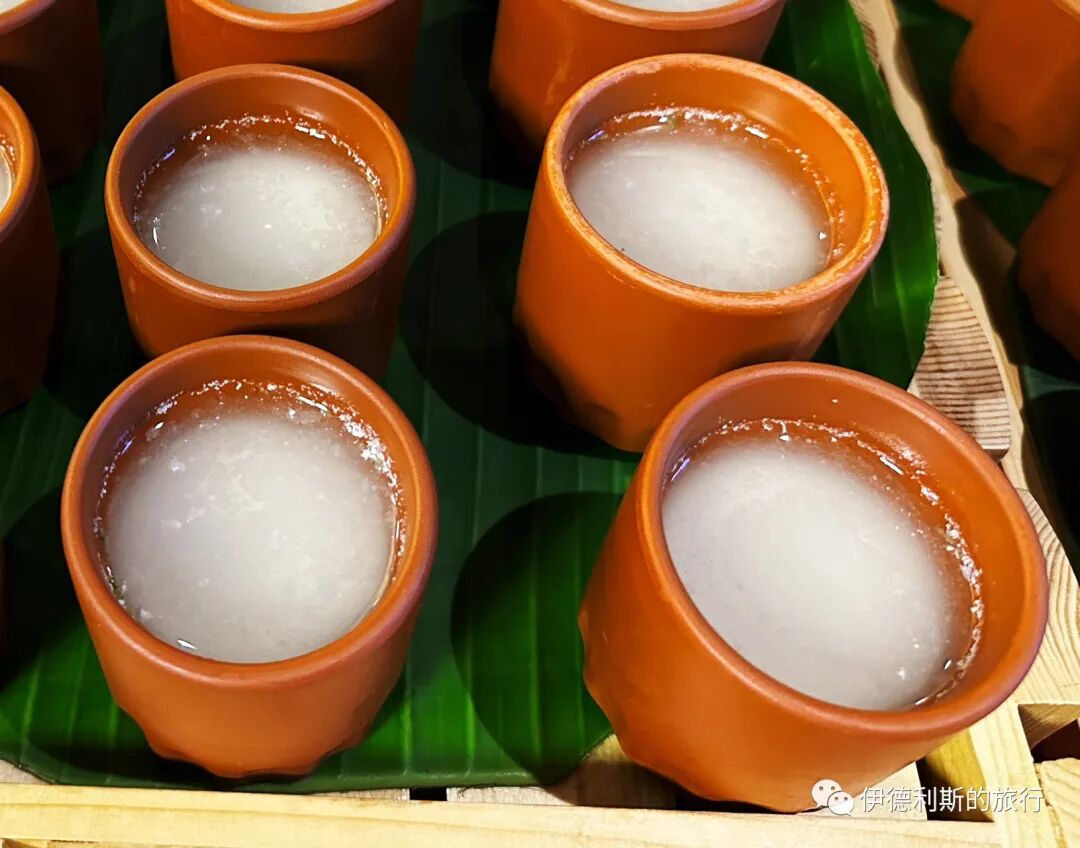
I went to Tehran during the 2019 Mid-Autumn Festival to eat and explore. I am sharing some of the things I ate here.
1. Persian tomato and egg stir-fry with Barbari flatbread (Barbari nan).
For breakfast on my first day in Tehran, I had Persian tomato and egg stir-fry (Persian Omelette), which is a signature Iranian breakfast. The cooking order for Persian tomato and egg stir-fry is the opposite of the Chinese version; you cook the tomatoes first, then add the eggs. Unlike our rice dishes, this Persian tomato and egg stir-fry must be eaten with flatbread. The shop I visited served it with Barbari flatbread.
Barbari literally translates to barbarian. It was originally what Persians called the Hazara people living in the Khorasan region. Hazara people from Khorasan first brought Barbari flatbread to Tehran, and it became popular during the Qajar dynasty (1796-1925). After that, the Hazara people were no longer called Barbari, but the name of the Barbari flatbread stayed.
The shop I went to is called Golha 2 Hookah Bar. You can find it on Google Maps by searching for سفره خانه گلها 2. Because they only sell this one combination, you do not need to speak the language to order.


2. Cinnamon-spiced sheep head and trotter soup (Khalle Pache) with Sangak flatbread (Sangak nan).
For breakfast on my second day in Tehran, I had cinnamon-spiced sheep head and trotter soup (Khalle Pache) served with Sangak flatbread. Sangak means small pebbles, and the earliest records of it come from the 11th-century Persian army. Persian soldiers back then supposedly carried pebbles with them. When they set up camp, they gathered the pebbles together to bake flatbread (naan), which is why Sangak flatbread has little pits all over it.
Sheep head soup is eaten more often in the autumn and winter. It usually comes with two pieces of flatbread; you soak the first one in the soup and eat the second one with the lamb. Besides sheep head and sheep trotters, the shop also sells sheep brain, but it is not part of the standard order, so you do not have to order it if you do not like it.
The shop I visited is called Lux Talaee Tabakhi, and it is a well-known spot in the old city of Tehran that specializes in sheep head and sheep trotter soup.


3. Falafel sandwich
My accommodation in the old city of Tehran was south of Imam Khomeini Square, where there is a food street. I ate many snacks there. On the morning of my third day in Tehran, I ate a Falafel sandwich on the food street. It ranks alongside Iranian pizza as one of the two major street foods in Tehran.
Falafel is a common Middle Eastern fried chickpea ball, served inside a baguette with vegetable salad and Persian pickles (torshi). Torshi means sour in the Persian language. The most popular Falafel sandwich shops let you add your own salad and pickles, and they often have long lines. The one I ate had a simpler setup.


4. Samosa
Snacks called samosa are found from Northeast Africa to Western China, and they are made differently everywhere. Common versions include Indian curry puffs and baked buns (kaobaos) from Xinjiang, Central Asia. The word samosa actually comes from the Persian word sanbosag. As early as the 9th century, the Persian poet Ishaq al-Mawsili wrote poems praising the samosa. After the 10th century, the samosa began appearing in Arabic cookbooks and spread across Africa and Asia along with Muslims. The samosa remained popular in Iran until the 16th century, but later it was only kept in certain regions.
Samosas on the streets of Tehran are mostly fried triangles with potato filling, similar to the Indian version. I bought this kind at a small shop across from the Friday prayer (Jumu'ah) bazaar, and I also bought some delicious bread there.


I also ate another type of baked samosa on the food street south of Imam Khomeini Square, which also had a potato filling. The name of this restaurant is Sandwich Khorasan, so I guess this style might come from the Khorasan region in northeastern Iran.


5. Tripe soup (sirabi)
I had tripe soup (sirabi) with flatbread (sangak) at a small street shop next to the carpet bazaar in Tehran. The soup was very fresh and tasty, and the tripe was very chewy.


6. Caspian white fish of the Gilaki people
I ate at Khoshbin, a fried fish restaurant run by Gilaki people from northern Iran, while in Tehran. The Gilaki people mainly live in Gilan Province on the southern coast of the Caspian Sea, and the Gilaki language they use belongs to the Western Iranian branch. Molecular anthropology shows that the Y-chromosome of the Gilaki people is very close to that of South Caucasian people, but their mtDNA (mitochondrial DNA) is very close to that of Iranians. We can guess that the ancestors of the Gilaki people likely came from the South Caucasus region, then migrated to the southern shore of the Caspian Sea and mixed with the Iranians.
The business hours for Khoshbin on Google Maps are wrong. They are actually only open for lunch between 12:00 PM and 4:00 PM, and it is very popular, so you have to wait in line. Luckily, they have an English menu, so I was able to order my food without any trouble.
Fried fish is an important part of Gilaki cuisine. I tried the Caspian white fish (Caspian kutum), which is a type of carp. For side dishes, I ordered white fish roe (Kuli), fava beans, and walnuts, and I also had cucumber yogurt (Maast-o Khiar). They also have some special Gilaki side dishes I want to try next time, like a mashed dip made of eggplant, pumpkin, garlic, tomatoes, and eggs called Mirza Ghasemi, and green olives marinated in pomegranate molasses, walnuts, and herbs called Zeytoun Parvardeh.


7. Street drinks
There are many drink shops on the streets of Tehran. First, there are all kinds of fresh juices; I drank pomegranate juice, honeydew melon juice, and carrot juice. The honeydew melon and carrot juices were super delicious, but the pomegranate juice was so sour it made me question everything. I still like the pomegranate juice from Xinjiang the best.


Another drink you don't see often in other countries is called Khakshir, which is very common in Iran during the summer to beat the heat and quench your thirst. Khakshir is the seed of a plant called flixweed (bonianghao) in Chinese. Flixweed is also known as garlic mustard, mimihao, or maihao. It grows all over China except in the south. It can be used to make oil or as medicine. Both traditional Iranian medicine and traditional Chinese medicine use it to help with urination and reduce swelling.


8. Shemroon Kabab restaurant
I ate at a kebab shop called Shemroon Kabab in Tajrish Square in northern Tehran. I ordered lamb chops with flatbread (nan) and spinach yogurt (Spinach Burani) as an appetizer. Their portions are huge and satisfying, and the meat is very tender and delicious.


9. Chicken kebab
I had chicken kebab at the Tajrish Bazaar in northern Tehran. Here, they simmer the kebabs in a thick tomato sauce after grilling them, which makes them very fragrant.


10. Flatbread (nan)
In the early morning in Tehran, any freshly baked flatbread is incredibly delicious. Also, as a word origin, nan (نان) in Persian can refer to any kind of flatbread, not just those baked in a traditional clay oven.


11. Cornelian cherry (zhuyu) and mulberry
I ate cornelian cherry and mulberry at the Tajrish Bazaar in northern Tehran. The classic way to eat them is to sprinkle them with salt. If you squeeze a mulberry with your hand, the juice comes right out. It is as juicy as pomegranate juice from Xinjiang, but it is still too sour.


12. Faloodeh
I ate Faloodeh on the food street south of Imam Khomeini Square in Tehran. It is a cold rice noodle dessert with sugar syrup, rose water, and lemon juice.


13. Cucumber yogurt (Maast-o Khiar)
I bought cucumber yogurt (Maast-o Khiar) at the Friday Bazaar in Tehran, and it came with raisins and walnuts.


14. Saffron ice cream
I ate saffron ice cream near Tajrish Square in northern Tehran. It was topped with crushed pistachios and chunks of cream, which is very typical of Iran.


15. Baklava dessert with tea
I had tea and dessert at a shop called Takseen baghlava near the Mirdamad metro station in northern Tehran. Baklava originated in the Ottoman imperial court and later became popular across the Middle East and the Caucasus. The Persian version of baklava is special because it uses rose syrup and crushed pistachios. The dessert I ate was shaped like sugar threads.
The two-layer Iranian tea stove is called a samovar, which arrived from Russia in the 19th century. The small teapot on top is for brewing tea, the large pot in the middle is for boiling water, and the bottom is the heat source. Traditionally it used coal or charcoal, but now it uses electricity, gas, or natural gas.


16. Drinking tea
Haj Ali Darvish is a century-old, famous tea house in the Grand Bazaar of Tehran. The tea house opened in 1918 and was taken over by Haj Ali Mabhutyan in 1962. The current owner is his son, Haj Kazem Mabhutyan.
Mr. Kazem works hard to share his shop on Instagram, which has helped more foreign tourists find his small place. I am one of them, and the old gentleman even took my photo and posted it on Instagram. Friends who use Instagram might have a chance to see me there. The account is haj_ali_darvish_tea_house.


I also drank some street-side fig tea on the food street south of Imam Khomeini Square. Iranians mainly have two ways of adding sugar to their tea. One way is to hold a sugar cube in your mouth and lick it while you drink the tea. The other way is to use a lollipop-style sugar stick called nabat chubi to stir it. This rock candy originated in Isfahan over a thousand years ago. Later, people invented a way to grow crystals by dipping small twigs into a sugar solution, and this method spread across Eurasia.


17. Moslem Restaurant
Moslem Restaurant is a very famous spot in the Tehran Grand Bazaar. They specialize in Iranian rice cake (Tahchin) made with rice, yogurt, saffron, and eggs (shown in the top right of photo 4). I bought a bowl of sour cream and spinach meat stew porridge (Aush) at the takeout window on the first floor, and it tasted great.


Collapse Read »
Summary: Halal Food Guide: Tehran Street Food — Iranian Snacks, Markets and Everyday Eats is presented here as a firsthand travel account in clear English, beginning with this scene: I went to Tehran during the 2019 Mid-Autumn Festival to eat and explore. I am sharing some of the things I ate here. The account keeps its focus on Tehran Street Food, Iran Travel, Halal Food while preserving the names, places, food, and historical details from the Chinese source.
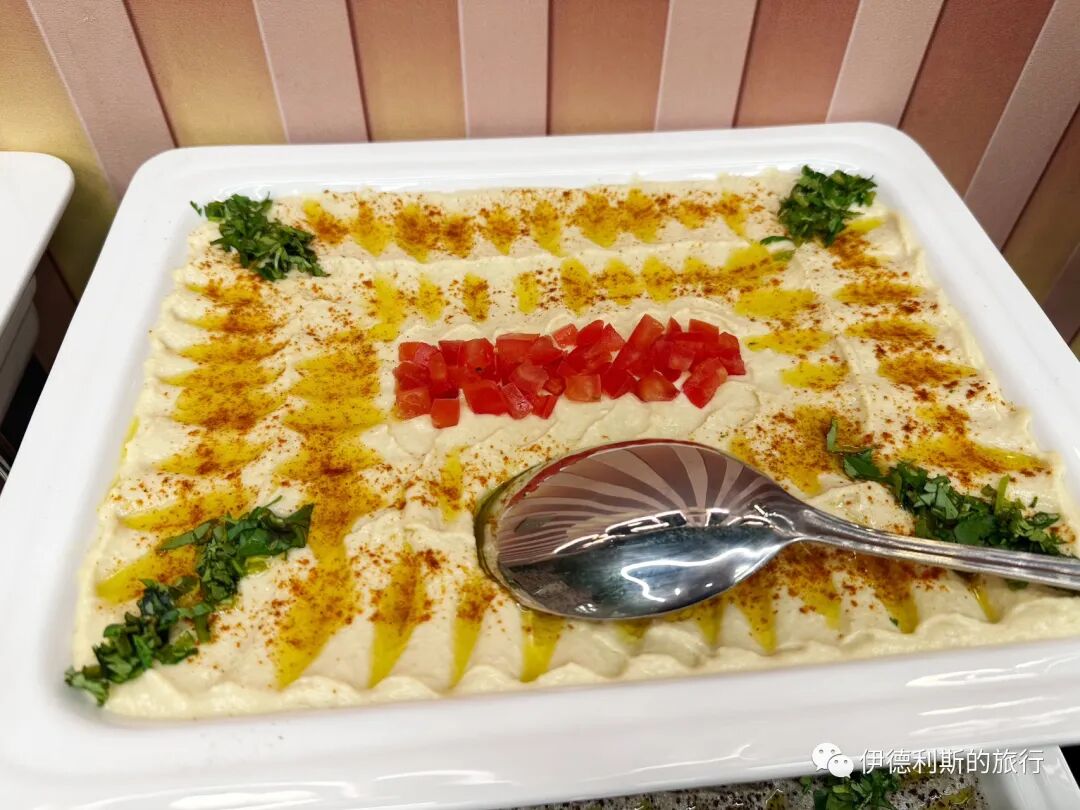
I went to Tehran during the 2019 Mid-Autumn Festival to eat and explore. I am sharing some of the things I ate here.
1. Persian tomato and egg stir-fry with Barbari flatbread (Barbari nan).
For breakfast on my first day in Tehran, I had Persian tomato and egg stir-fry (Persian Omelette), which is a signature Iranian breakfast. The cooking order for Persian tomato and egg stir-fry is the opposite of the Chinese version; you cook the tomatoes first, then add the eggs. Unlike our rice dishes, this Persian tomato and egg stir-fry must be eaten with flatbread. The shop I visited served it with Barbari flatbread.
Barbari literally translates to barbarian. It was originally what Persians called the Hazara people living in the Khorasan region. Hazara people from Khorasan first brought Barbari flatbread to Tehran, and it became popular during the Qajar dynasty (1796-1925). After that, the Hazara people were no longer called Barbari, but the name of the Barbari flatbread stayed.
The shop I went to is called Golha 2 Hookah Bar. You can find it on Google Maps by searching for سفره خانه گلها 2. Because they only sell this one combination, you do not need to speak the language to order.


2. Cinnamon-spiced sheep head and trotter soup (Khalle Pache) with Sangak flatbread (Sangak nan).
For breakfast on my second day in Tehran, I had cinnamon-spiced sheep head and trotter soup (Khalle Pache) served with Sangak flatbread. Sangak means small pebbles, and the earliest records of it come from the 11th-century Persian army. Persian soldiers back then supposedly carried pebbles with them. When they set up camp, they gathered the pebbles together to bake flatbread (naan), which is why Sangak flatbread has little pits all over it.
Sheep head soup is eaten more often in the autumn and winter. It usually comes with two pieces of flatbread; you soak the first one in the soup and eat the second one with the lamb. Besides sheep head and sheep trotters, the shop also sells sheep brain, but it is not part of the standard order, so you do not have to order it if you do not like it.
The shop I visited is called Lux Talaee Tabakhi, and it is a well-known spot in the old city of Tehran that specializes in sheep head and sheep trotter soup.


3. Falafel sandwich
My accommodation in the old city of Tehran was south of Imam Khomeini Square, where there is a food street. I ate many snacks there. On the morning of my third day in Tehran, I ate a Falafel sandwich on the food street. It ranks alongside Iranian pizza as one of the two major street foods in Tehran.
Falafel is a common Middle Eastern fried chickpea ball, served inside a baguette with vegetable salad and Persian pickles (torshi). Torshi means sour in the Persian language. The most popular Falafel sandwich shops let you add your own salad and pickles, and they often have long lines. The one I ate had a simpler setup.


4. Samosa
Snacks called samosa are found from Northeast Africa to Western China, and they are made differently everywhere. Common versions include Indian curry puffs and baked buns (kaobaos) from Xinjiang, Central Asia. The word samosa actually comes from the Persian word sanbosag. As early as the 9th century, the Persian poet Ishaq al-Mawsili wrote poems praising the samosa. After the 10th century, the samosa began appearing in Arabic cookbooks and spread across Africa and Asia along with Muslims. The samosa remained popular in Iran until the 16th century, but later it was only kept in certain regions.
Samosas on the streets of Tehran are mostly fried triangles with potato filling, similar to the Indian version. I bought this kind at a small shop across from the Friday prayer (Jumu'ah) bazaar, and I also bought some delicious bread there.


I also ate another type of baked samosa on the food street south of Imam Khomeini Square, which also had a potato filling. The name of this restaurant is Sandwich Khorasan, so I guess this style might come from the Khorasan region in northeastern Iran.


5. Tripe soup (sirabi)
I had tripe soup (sirabi) with flatbread (sangak) at a small street shop next to the carpet bazaar in Tehran. The soup was very fresh and tasty, and the tripe was very chewy.


6. Caspian white fish of the Gilaki people
I ate at Khoshbin, a fried fish restaurant run by Gilaki people from northern Iran, while in Tehran. The Gilaki people mainly live in Gilan Province on the southern coast of the Caspian Sea, and the Gilaki language they use belongs to the Western Iranian branch. Molecular anthropology shows that the Y-chromosome of the Gilaki people is very close to that of South Caucasian people, but their mtDNA (mitochondrial DNA) is very close to that of Iranians. We can guess that the ancestors of the Gilaki people likely came from the South Caucasus region, then migrated to the southern shore of the Caspian Sea and mixed with the Iranians.
The business hours for Khoshbin on Google Maps are wrong. They are actually only open for lunch between 12:00 PM and 4:00 PM, and it is very popular, so you have to wait in line. Luckily, they have an English menu, so I was able to order my food without any trouble.
Fried fish is an important part of Gilaki cuisine. I tried the Caspian white fish (Caspian kutum), which is a type of carp. For side dishes, I ordered white fish roe (Kuli), fava beans, and walnuts, and I also had cucumber yogurt (Maast-o Khiar). They also have some special Gilaki side dishes I want to try next time, like a mashed dip made of eggplant, pumpkin, garlic, tomatoes, and eggs called Mirza Ghasemi, and green olives marinated in pomegranate molasses, walnuts, and herbs called Zeytoun Parvardeh.


7. Street drinks
There are many drink shops on the streets of Tehran. First, there are all kinds of fresh juices; I drank pomegranate juice, honeydew melon juice, and carrot juice. The honeydew melon and carrot juices were super delicious, but the pomegranate juice was so sour it made me question everything. I still like the pomegranate juice from Xinjiang the best.


Another drink you don't see often in other countries is called Khakshir, which is very common in Iran during the summer to beat the heat and quench your thirst. Khakshir is the seed of a plant called flixweed (bonianghao) in Chinese. Flixweed is also known as garlic mustard, mimihao, or maihao. It grows all over China except in the south. It can be used to make oil or as medicine. Both traditional Iranian medicine and traditional Chinese medicine use it to help with urination and reduce swelling.


8. Shemroon Kabab restaurant
I ate at a kebab shop called Shemroon Kabab in Tajrish Square in northern Tehran. I ordered lamb chops with flatbread (nan) and spinach yogurt (Spinach Burani) as an appetizer. Their portions are huge and satisfying, and the meat is very tender and delicious.


9. Chicken kebab
I had chicken kebab at the Tajrish Bazaar in northern Tehran. Here, they simmer the kebabs in a thick tomato sauce after grilling them, which makes them very fragrant.


10. Flatbread (nan)
In the early morning in Tehran, any freshly baked flatbread is incredibly delicious. Also, as a word origin, nan (نان) in Persian can refer to any kind of flatbread, not just those baked in a traditional clay oven.


11. Cornelian cherry (zhuyu) and mulberry
I ate cornelian cherry and mulberry at the Tajrish Bazaar in northern Tehran. The classic way to eat them is to sprinkle them with salt. If you squeeze a mulberry with your hand, the juice comes right out. It is as juicy as pomegranate juice from Xinjiang, but it is still too sour.


12. Faloodeh
I ate Faloodeh on the food street south of Imam Khomeini Square in Tehran. It is a cold rice noodle dessert with sugar syrup, rose water, and lemon juice.


13. Cucumber yogurt (Maast-o Khiar)
I bought cucumber yogurt (Maast-o Khiar) at the Friday Bazaar in Tehran, and it came with raisins and walnuts.


14. Saffron ice cream
I ate saffron ice cream near Tajrish Square in northern Tehran. It was topped with crushed pistachios and chunks of cream, which is very typical of Iran.


15. Baklava dessert with tea
I had tea and dessert at a shop called Takseen baghlava near the Mirdamad metro station in northern Tehran. Baklava originated in the Ottoman imperial court and later became popular across the Middle East and the Caucasus. The Persian version of baklava is special because it uses rose syrup and crushed pistachios. The dessert I ate was shaped like sugar threads.
The two-layer Iranian tea stove is called a samovar, which arrived from Russia in the 19th century. The small teapot on top is for brewing tea, the large pot in the middle is for boiling water, and the bottom is the heat source. Traditionally it used coal or charcoal, but now it uses electricity, gas, or natural gas.


16. Drinking tea
Haj Ali Darvish is a century-old, famous tea house in the Grand Bazaar of Tehran. The tea house opened in 1918 and was taken over by Haj Ali Mabhutyan in 1962. The current owner is his son, Haj Kazem Mabhutyan.
Mr. Kazem works hard to share his shop on Instagram, which has helped more foreign tourists find his small place. I am one of them, and the old gentleman even took my photo and posted it on Instagram. Friends who use Instagram might have a chance to see me there. The account is haj_ali_darvish_tea_house.


I also drank some street-side fig tea on the food street south of Imam Khomeini Square. Iranians mainly have two ways of adding sugar to their tea. One way is to hold a sugar cube in your mouth and lick it while you drink the tea. The other way is to use a lollipop-style sugar stick called nabat chubi to stir it. This rock candy originated in Isfahan over a thousand years ago. Later, people invented a way to grow crystals by dipping small twigs into a sugar solution, and this method spread across Eurasia.


17. Moslem Restaurant
Moslem Restaurant is a very famous spot in the Tehran Grand Bazaar. They specialize in Iranian rice cake (Tahchin) made with rice, yogurt, saffron, and eggs (shown in the top right of photo 4). I bought a bowl of sour cream and spinach meat stew porridge (Aush) at the takeout window on the first floor, and it tasted great.


Collapse Read »
Halal Travel Guide: Tianjin Northwest Corner — Muslim Food and Street Changes (Part 1)
Reposted from the web
Summary: Tianjin Northwest Corner — Muslim Food and Street Changes is presented here as a firsthand travel account in clear English, beginning with this scene: In January and February 2016, Xiao Lin took me to explore the food in the Northwest Corner of Tianjin twice. The account keeps its focus on Tianjin Halal Food, Northwest Corner, Muslim Streets while preserving the names, places, food, and historical details from the Chinese source.
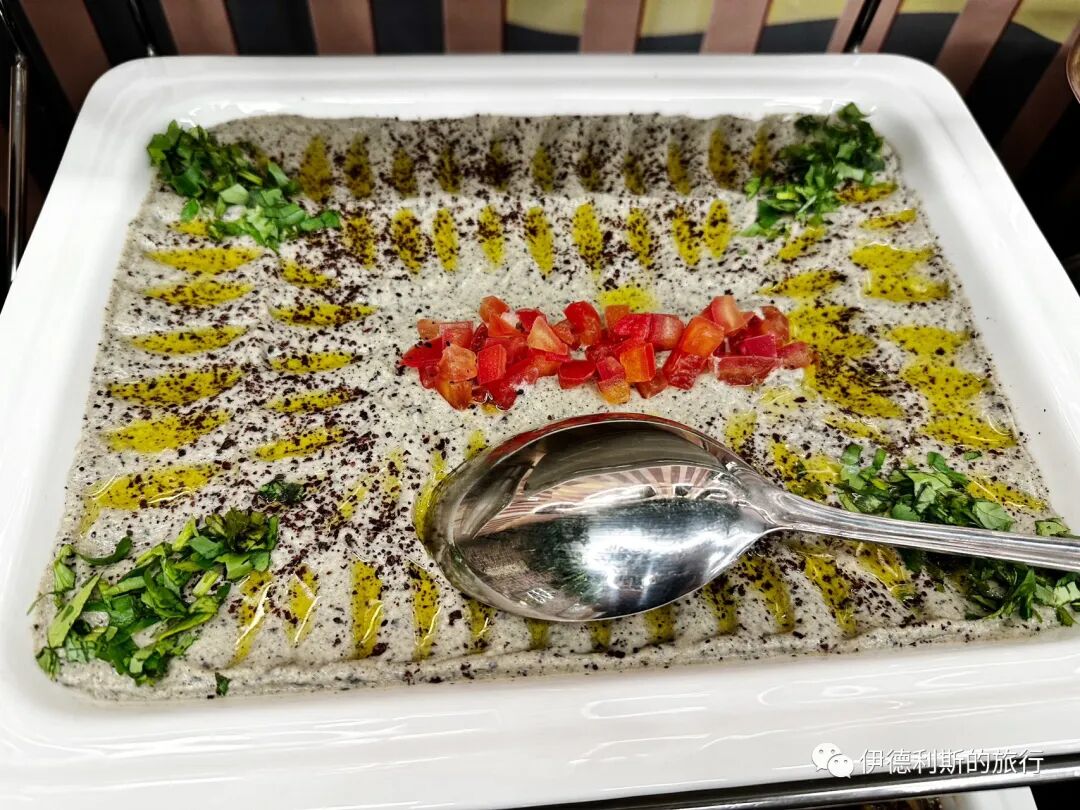
In January and February 2016, Xiao Lin took me to explore the food in the Northwest Corner of Tianjin twice. Those two trips to the Northwest Corner made me fall in love with the place. Over the next five years, from 2016 to 2021, I visited the Northwest Corner 11 more times to eat and explore. These 13 trips allowed me to document some of the changes in the area, including the now-vanished Northwest Corner night market, the meat porridge (rouzhou) and fried cakes (zhagao) at the entrance of the South Mosque, and various shops that disappeared due to urban renewal. I will now share my 13 trips to the Northwest Corner with you.
The History of the Northwest Corner
First, let me briefly introduce the history of the Northwest Corner in Tianjin. The Northwest Corner was once the largest Hui Muslim community in Tianjin. Before the demolition, it was home to 26,000 Hui Muslims, accounting for one-fifth of the Hui population in Tianjin at that time.
After Tianjin Wei was fortified in 1404, Hui Muslims continuously moved to the area via the Grand Canal from places like Anhui, Jiangsu, and Hebei. Some chose to settle in the Northwest Corner of the old city near the bustling Beidaguan canal transport hub, and they built the Northwest Corner Great Mosque (Qingzhen Dasi) around 1644.
With the Great Mosque at its center, the Northwest Corner was filled with halal shops before 1995. It also had 20 ethnic kindergartens, 7 ethnic primary schools, 2 ethnic middle schools, and 2 ethnic hospitals. In 1985, the Wenchang Palace Ethnic Food Street was built, and in 1988, it was renovated into the Dahuoxiang Ethnic Farmers' Market.
Demolition began in the mid-1990s, and the Hui Muslims of the Northwest Corner gradually scattered. Some people opened shops elsewhere and used the "Northwest Corner" name to show their roots.
Between 2004 and 2007, demolition began east of Dafeng Road, clearing away all buildings outside the Great Mosque (Qingzhen Dasi), the Ethnic Culture Palace, and the Islamic Association. The Northwest Corner remains an important community for Hui Muslims in Tianjin today, centered around the South Mosque (Qingzhen Nansi), which is home to many delicious Hui Muslim snacks.
In 1900, three French expeditionary captains named Present, Carmel, and Discher used a reconnaissance hot air balloon to photograph the area inside and outside the West Gate of Tianjin, with the Northwest Corner visible in the top right.

The Northwest Corner in 1983.

Mosque.
The Great Mosque of Tianjin in the Northwest Corner was reportedly built in 1644 (the first year of the Shunzhi reign of the Qing Dynasty) and was not very large at first. It was expanded twice, in 1679 (the eighteenth year of the Kangxi reign) and 1801 (the sixth year of the Jiaqing reign), to reach its current size. A major structural renovation was carried out between 2009 and 2011. I will post a separate article later featuring photos of Tianjin mosques.


The South Mosque in the Northwest Corner was first built in 1819 (the twenty-fourth year of the Jiaqing reign) and was completed in 1845 (the twenty-fifth year of the Daoguang reign). It was closed after 1958 and turned into a school and a cardboard box factory after 1961. In 1976, the main prayer hall was turned into a factory workshop and was destroyed by a fire caused by heating equipment; it was rebuilt over 12 years starting in 1982. In 2001, the main hall roof was renovated, replacing the gray tube tiles with green glazed tiles.


The Northwest Corner West Mosque.


Next to it is the Women's Mosque.


January 2016.
In the Northwest Corner in January 2016, you could see Xiao Li Roasted Chicken (Xiao Li Shaoji) right outside the subway station, where there was always a long line.

Walking south along West Horse Road (Xi Ma Lu), this area used to be the west city wall of Tianjin.

Homemade candies and preserved fruits from Hui Muslim locals.


Turn into the Hui Muslim residential area on Huanqing West Alley.


Sticky bean buns (niandoubao) from Xiao Dong Sticky Foods.


The Ethnic Building (Minzu Lou) in the Northwest Corner Hui Muslim residential area.

Wen's Rice Cake (Wenji Gaogan) at the entrance of the South Mosque, though the area is now cleared out.


Li's Sizzling Rice Dish (Li Ji Guobacai) on the other side of the South Mosque is very popular now, but the stall shed is gone.

Keep heading south, and you will find more and more halal snacks.


The row of shops on the right has been cleared out and turned into a parking lot.

Walk west from Xiguan Beili, and you will reach the halal supermarket.


I bought a yellow cap made in Tianmu Village at the halal supermarket; yellow is the main color for Hui Muslims in Tianjin.


Head back to Xima Road.


For dinner, I ate at Qingfade Restaurant on Xima Road, which is a classic stir-fry spot that represents the Northwest Corner area.


Night view of Xiguan Main Street.


The famous Hailan black beans (hailan wudou) on Xiguan Main Street are still here.


Back at the Northwest Corner subway station, the night market here is gone now.


July 2016.
On a hot summer afternoon on July 9, 2016, my childhood friend and I came to the Northwest Corner again to see how it differs from winter.
To get to the Northwest Corner from Beijing, it is best to take the train to Tianjin West Station, then take the subway one stop south to Northwest Corner Station. Right outside the southwest exit of the subway station is a halal cold drink stand. They have house-made sour plum drink (suanmeitang), homemade lemonade, and shaved ice (xuehualao). My childhood friend and I bought the sour plum drink and lemonade. They were delicious.


We kept walking south along West Horse Road (Xima Lu). The afternoon temperature was high, and there were very few people on the street.

At Ring City Noodle Shop (Huancheng Mianguan), my friend and I each had a bowl of cold noodles with shredded chicken and a plate of tofu with century egg. It was very refreshing. Almost no other halal restaurant in Beijing makes cold noodles better than this one.


We continued walking south. I guess everyone was at home staying out of the heat. Not far ahead was the alley entrance facing the South Mosque (Qingzhen Nansi), where we turned into Huanqing West Alley.


The intersection of Huanqing West Alley and Xiguan North Street is the heart of the Northwest Corner, and it is full of shops. I bought two coarse-grain vegetable dumplings (caimian tuanzi).


We went into Mumin Supermarket and bought a jar of stir-fried shrimp paste. My friend and I first came to Tianjin together ten years ago and specifically came here to buy this paste to eat with steamed buns (mantou). Haha!


Mumin Supermarket has now changed its name to Mumin Supermarket (Mumin Chaoshi, using different characters).


Coming out of Mumin Supermarket, we entered the north-south market on the east side of Xiguan Beili that leads to Xiguan Street. There were very fragrant fried eggplant boxes and lotus root boxes.


We turned onto Xiguan Street. When I came here in winter, the thing that left the deepest impression was the hot black beans (wudou) at the east entrance. So, we went to buy 3 yuan worth of black beans. My friend highly praised them, saying they were truly delicious.


Further east from the black beans is the intersection of Xiguan Street and West Horse Road. On the northwest side of the road, they sell seaweed rice rolls, shaved ice, and milkshakes. I bought a cup of red bean condensed milk shaved ice, which was super refreshing.


August 2016
On August 20, 2016, over a month later, my childhood friend and I returned to Tianjin on a not-so-hot afternoon. We got off the train and took the subway straight to the Northwest Corner (Xibeijiao). We exited the southwest subway entrance and headed right to the cold drink shop we had been looking forward to. We had delicious sour plum drink (suanmeitang) there last time, so this time we tried the snowflake shaved ice (xuehualao).


The snowflake shaved ice felt like red hawthorn shaved ice. Imagine it as snow made of stir-fried red hawthorn (chaohongguo). It was not as sweet as the stir-fried red hawthorn in Beijing, and I really liked it.

We kept walking south along West Horse Road (Ximalu), then turned west at the intersection of the South Mosque (Qingzhen Nansi). Many shops were closed due to the extreme heat when we visited last month, but it was much livelier this time.


We walked south along Huanqing West Alley, turned west at the Muslim supermarket (Mumin Chaoshi), and walked to the end to find Wang Sangu Beef Pie. We could smell the aroma from far away. The kitchen was outdoors. We lined up from south to north. We paid and got a ticket from the man at the south end. Moving north, two women wrapped the pies, one woman handed them out, and two men cooked them. On the west side, others handled the cold dishes and stewed beef brisket. Everything was organized and lively.


My friend and I bought a 17-yuan beef pie and took it inside to eat. The best part was the crust, which was crispy and had a great texture.

We walked around outside and returned to the Northwest Corner in the evening.

The next morning, we went to the Northwest Corner for breakfast. Outside the South Mosque, we ate savory crepe strips (guobacai) and fried dough rolls (juanquan) at Chai's Breakfast. My childhood friend loves the fried dough rolls so much that he bought another one from the owner after finishing the first. The portion of savory crepe strips I had was huge, so I couldn't finish it all.


Sunday was much hotter than Saturday. My friend and I wandered around the Northwest Corner for a while, but the heat became too much, so we took the subway to the train station.


On Sunday, August 27, 2016, at 11:00 a.m., I took the intercity train to Tianjin. After exiting the Northwest Corner subway station, I first went to eat Wang Sangu meat pie (roubing), then bought two yuan worth of black beans (wudou) to snack on while walking. We walked from the Ancient Culture Street back to the Northwest Corner and had a snow-flake ice dessert (xuehualao) at the Guishunzhai shop at the intersection. It had frozen hawthorn and frozen raisins in it, which was very refreshing.


We strolled from Guishunzhai to Uncle Er's Specialty Clay Pot (erdaye tese shaguo) on Jieyuan Road, but it only opens in the evening. Following Xiaolin's suggestion, we ordered lamb knee bone (yanghaba) and vinegar pepper tofu. The lamb knee bone was stewed until very tender and full of flavor. The vinegar pepper tofu tasted like a mix of hot and sour soup and soft tofu, which I really liked.


After finishing the clay pot, a cart selling tea soup (chatang) happened to pull up. I had heard that Tianjin's tea soup is a local specialty, so I bought a bowl of almond tea soup. They were very generous with the toppings, and it reminded me of the tea soup I drank as a child.


January 2017
Whenever anyone mentions the Northwest Corner in Tianjin, my mouth starts watering. On Friday, January 13, 2017, right after work, I set off on another trip to the Northwest Corner of Tianjin.
I took the intercity train from Beijing South Station to Tianjin West Station, then transferred to Line 1 of the subway for one stop to reach the Northwest Corner. The halal night market is right across from the southwest exit of the Northwest Corner subway station. It has all kinds of snacks like fried skewers (zhachuan), braised rice (bafan), and steamed pear cakes (shuligao). My goal this time was the long-awaited Ye's Rice Noodle Rolls (Yeji changfen).
Ye's Rice Noodle Rolls hasn't been in the Northwest Corner for long, but it is the most popular spot at the night market. When I arrived, they had the longest line. I ordered the seafood combo rice noodle rolls with an egg, and the taste was very authentic! It was cold in the winter, so most people got their food to go. Since I came specifically to eat it, I sat in a small pavilion across the street.


Besides rice noodle rolls, they also sell radish beef offal (luobo niuza). The sign says the recipe comes from old Hui Muslims on Guangta Road in Guangzhou. More people buy the rice noodle rolls than the beef offal, but honestly, the beef offal was so, so good. It had that slightly sweet Cantonese flavor that instantly took me back to the Hui Muslim restaurant in Guangzhou. Their sweet and spicy chopped chili sauce is amazing and adds so much flavor. Even someone like me who doesn't usually eat much chili couldn't stop wanting more when I saw their sauce.


The next morning, I continued exploring and eating in the Northwest Corner. A great day starts with a set of savory crepe with fried dough sticks (jianbing guozi)! A unique feature of Tianjin jianbing guozi is that many locals bring their own two eggs for the cook to use. As tourists, we just stick to the cook's eggs.


Next to Lingdangge Middle School is the Mu Family spring roll (juanquan) shop, where people line up all year round. I waited in line to try one, but it felt a bit oily.


Collapse Read »
Summary: Tianjin Northwest Corner — Muslim Food and Street Changes is presented here as a firsthand travel account in clear English, beginning with this scene: In January and February 2016, Xiao Lin took me to explore the food in the Northwest Corner of Tianjin twice. The account keeps its focus on Tianjin Halal Food, Northwest Corner, Muslim Streets while preserving the names, places, food, and historical details from the Chinese source.
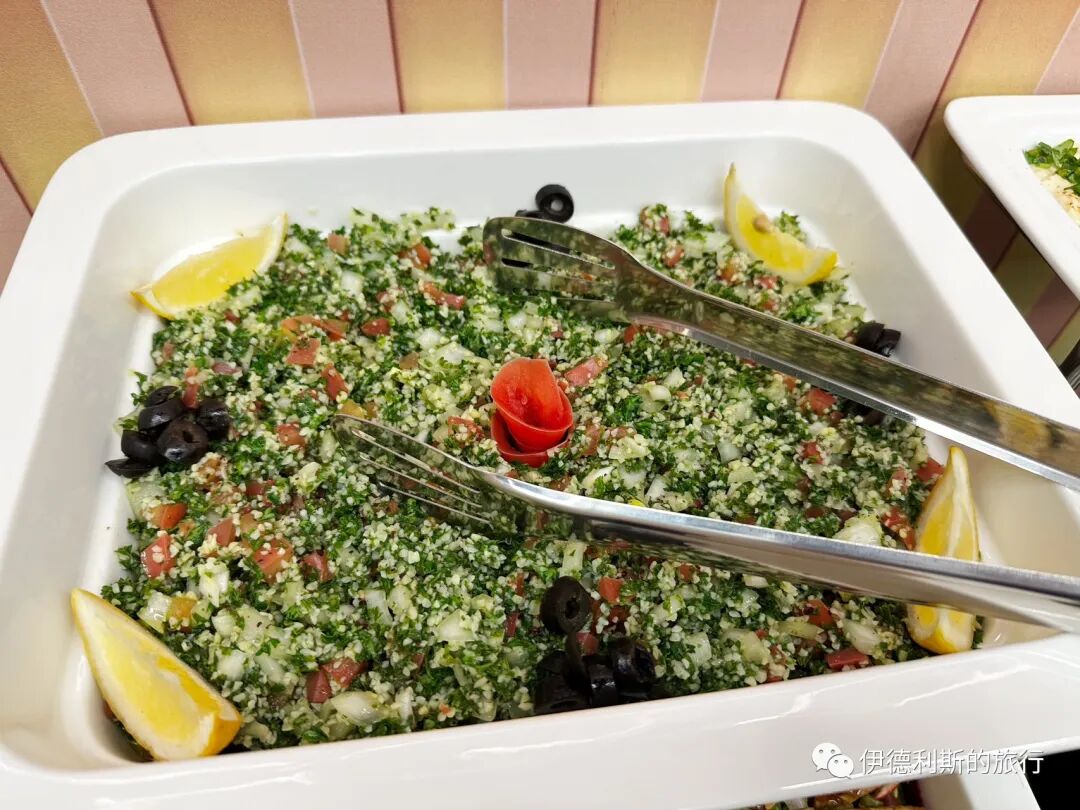
In January and February 2016, Xiao Lin took me to explore the food in the Northwest Corner of Tianjin twice. Those two trips to the Northwest Corner made me fall in love with the place. Over the next five years, from 2016 to 2021, I visited the Northwest Corner 11 more times to eat and explore. These 13 trips allowed me to document some of the changes in the area, including the now-vanished Northwest Corner night market, the meat porridge (rouzhou) and fried cakes (zhagao) at the entrance of the South Mosque, and various shops that disappeared due to urban renewal. I will now share my 13 trips to the Northwest Corner with you.
The History of the Northwest Corner
First, let me briefly introduce the history of the Northwest Corner in Tianjin. The Northwest Corner was once the largest Hui Muslim community in Tianjin. Before the demolition, it was home to 26,000 Hui Muslims, accounting for one-fifth of the Hui population in Tianjin at that time.
After Tianjin Wei was fortified in 1404, Hui Muslims continuously moved to the area via the Grand Canal from places like Anhui, Jiangsu, and Hebei. Some chose to settle in the Northwest Corner of the old city near the bustling Beidaguan canal transport hub, and they built the Northwest Corner Great Mosque (Qingzhen Dasi) around 1644.
With the Great Mosque at its center, the Northwest Corner was filled with halal shops before 1995. It also had 20 ethnic kindergartens, 7 ethnic primary schools, 2 ethnic middle schools, and 2 ethnic hospitals. In 1985, the Wenchang Palace Ethnic Food Street was built, and in 1988, it was renovated into the Dahuoxiang Ethnic Farmers' Market.
Demolition began in the mid-1990s, and the Hui Muslims of the Northwest Corner gradually scattered. Some people opened shops elsewhere and used the "Northwest Corner" name to show their roots.
Between 2004 and 2007, demolition began east of Dafeng Road, clearing away all buildings outside the Great Mosque (Qingzhen Dasi), the Ethnic Culture Palace, and the Islamic Association. The Northwest Corner remains an important community for Hui Muslims in Tianjin today, centered around the South Mosque (Qingzhen Nansi), which is home to many delicious Hui Muslim snacks.
In 1900, three French expeditionary captains named Present, Carmel, and Discher used a reconnaissance hot air balloon to photograph the area inside and outside the West Gate of Tianjin, with the Northwest Corner visible in the top right.

The Northwest Corner in 1983.

Mosque.
The Great Mosque of Tianjin in the Northwest Corner was reportedly built in 1644 (the first year of the Shunzhi reign of the Qing Dynasty) and was not very large at first. It was expanded twice, in 1679 (the eighteenth year of the Kangxi reign) and 1801 (the sixth year of the Jiaqing reign), to reach its current size. A major structural renovation was carried out between 2009 and 2011. I will post a separate article later featuring photos of Tianjin mosques.


The South Mosque in the Northwest Corner was first built in 1819 (the twenty-fourth year of the Jiaqing reign) and was completed in 1845 (the twenty-fifth year of the Daoguang reign). It was closed after 1958 and turned into a school and a cardboard box factory after 1961. In 1976, the main prayer hall was turned into a factory workshop and was destroyed by a fire caused by heating equipment; it was rebuilt over 12 years starting in 1982. In 2001, the main hall roof was renovated, replacing the gray tube tiles with green glazed tiles.


The Northwest Corner West Mosque.


Next to it is the Women's Mosque.


January 2016.
In the Northwest Corner in January 2016, you could see Xiao Li Roasted Chicken (Xiao Li Shaoji) right outside the subway station, where there was always a long line.

Walking south along West Horse Road (Xi Ma Lu), this area used to be the west city wall of Tianjin.

Homemade candies and preserved fruits from Hui Muslim locals.


Turn into the Hui Muslim residential area on Huanqing West Alley.


Sticky bean buns (niandoubao) from Xiao Dong Sticky Foods.


The Ethnic Building (Minzu Lou) in the Northwest Corner Hui Muslim residential area.

Wen's Rice Cake (Wenji Gaogan) at the entrance of the South Mosque, though the area is now cleared out.


Li's Sizzling Rice Dish (Li Ji Guobacai) on the other side of the South Mosque is very popular now, but the stall shed is gone.

Keep heading south, and you will find more and more halal snacks.


The row of shops on the right has been cleared out and turned into a parking lot.

Walk west from Xiguan Beili, and you will reach the halal supermarket.


I bought a yellow cap made in Tianmu Village at the halal supermarket; yellow is the main color for Hui Muslims in Tianjin.


Head back to Xima Road.


For dinner, I ate at Qingfade Restaurant on Xima Road, which is a classic stir-fry spot that represents the Northwest Corner area.


Night view of Xiguan Main Street.


The famous Hailan black beans (hailan wudou) on Xiguan Main Street are still here.


Back at the Northwest Corner subway station, the night market here is gone now.


July 2016.
On a hot summer afternoon on July 9, 2016, my childhood friend and I came to the Northwest Corner again to see how it differs from winter.
To get to the Northwest Corner from Beijing, it is best to take the train to Tianjin West Station, then take the subway one stop south to Northwest Corner Station. Right outside the southwest exit of the subway station is a halal cold drink stand. They have house-made sour plum drink (suanmeitang), homemade lemonade, and shaved ice (xuehualao). My childhood friend and I bought the sour plum drink and lemonade. They were delicious.


We kept walking south along West Horse Road (Xima Lu). The afternoon temperature was high, and there were very few people on the street.

At Ring City Noodle Shop (Huancheng Mianguan), my friend and I each had a bowl of cold noodles with shredded chicken and a plate of tofu with century egg. It was very refreshing. Almost no other halal restaurant in Beijing makes cold noodles better than this one.


We continued walking south. I guess everyone was at home staying out of the heat. Not far ahead was the alley entrance facing the South Mosque (Qingzhen Nansi), where we turned into Huanqing West Alley.


The intersection of Huanqing West Alley and Xiguan North Street is the heart of the Northwest Corner, and it is full of shops. I bought two coarse-grain vegetable dumplings (caimian tuanzi).


We went into Mumin Supermarket and bought a jar of stir-fried shrimp paste. My friend and I first came to Tianjin together ten years ago and specifically came here to buy this paste to eat with steamed buns (mantou). Haha!


Mumin Supermarket has now changed its name to Mumin Supermarket (Mumin Chaoshi, using different characters).


Coming out of Mumin Supermarket, we entered the north-south market on the east side of Xiguan Beili that leads to Xiguan Street. There were very fragrant fried eggplant boxes and lotus root boxes.


We turned onto Xiguan Street. When I came here in winter, the thing that left the deepest impression was the hot black beans (wudou) at the east entrance. So, we went to buy 3 yuan worth of black beans. My friend highly praised them, saying they were truly delicious.


Further east from the black beans is the intersection of Xiguan Street and West Horse Road. On the northwest side of the road, they sell seaweed rice rolls, shaved ice, and milkshakes. I bought a cup of red bean condensed milk shaved ice, which was super refreshing.


August 2016
On August 20, 2016, over a month later, my childhood friend and I returned to Tianjin on a not-so-hot afternoon. We got off the train and took the subway straight to the Northwest Corner (Xibeijiao). We exited the southwest subway entrance and headed right to the cold drink shop we had been looking forward to. We had delicious sour plum drink (suanmeitang) there last time, so this time we tried the snowflake shaved ice (xuehualao).


The snowflake shaved ice felt like red hawthorn shaved ice. Imagine it as snow made of stir-fried red hawthorn (chaohongguo). It was not as sweet as the stir-fried red hawthorn in Beijing, and I really liked it.

We kept walking south along West Horse Road (Ximalu), then turned west at the intersection of the South Mosque (Qingzhen Nansi). Many shops were closed due to the extreme heat when we visited last month, but it was much livelier this time.


We walked south along Huanqing West Alley, turned west at the Muslim supermarket (Mumin Chaoshi), and walked to the end to find Wang Sangu Beef Pie. We could smell the aroma from far away. The kitchen was outdoors. We lined up from south to north. We paid and got a ticket from the man at the south end. Moving north, two women wrapped the pies, one woman handed them out, and two men cooked them. On the west side, others handled the cold dishes and stewed beef brisket. Everything was organized and lively.


My friend and I bought a 17-yuan beef pie and took it inside to eat. The best part was the crust, which was crispy and had a great texture.

We walked around outside and returned to the Northwest Corner in the evening.

The next morning, we went to the Northwest Corner for breakfast. Outside the South Mosque, we ate savory crepe strips (guobacai) and fried dough rolls (juanquan) at Chai's Breakfast. My childhood friend loves the fried dough rolls so much that he bought another one from the owner after finishing the first. The portion of savory crepe strips I had was huge, so I couldn't finish it all.


Sunday was much hotter than Saturday. My friend and I wandered around the Northwest Corner for a while, but the heat became too much, so we took the subway to the train station.


On Sunday, August 27, 2016, at 11:00 a.m., I took the intercity train to Tianjin. After exiting the Northwest Corner subway station, I first went to eat Wang Sangu meat pie (roubing), then bought two yuan worth of black beans (wudou) to snack on while walking. We walked from the Ancient Culture Street back to the Northwest Corner and had a snow-flake ice dessert (xuehualao) at the Guishunzhai shop at the intersection. It had frozen hawthorn and frozen raisins in it, which was very refreshing.


We strolled from Guishunzhai to Uncle Er's Specialty Clay Pot (erdaye tese shaguo) on Jieyuan Road, but it only opens in the evening. Following Xiaolin's suggestion, we ordered lamb knee bone (yanghaba) and vinegar pepper tofu. The lamb knee bone was stewed until very tender and full of flavor. The vinegar pepper tofu tasted like a mix of hot and sour soup and soft tofu, which I really liked.


After finishing the clay pot, a cart selling tea soup (chatang) happened to pull up. I had heard that Tianjin's tea soup is a local specialty, so I bought a bowl of almond tea soup. They were very generous with the toppings, and it reminded me of the tea soup I drank as a child.


January 2017
Whenever anyone mentions the Northwest Corner in Tianjin, my mouth starts watering. On Friday, January 13, 2017, right after work, I set off on another trip to the Northwest Corner of Tianjin.
I took the intercity train from Beijing South Station to Tianjin West Station, then transferred to Line 1 of the subway for one stop to reach the Northwest Corner. The halal night market is right across from the southwest exit of the Northwest Corner subway station. It has all kinds of snacks like fried skewers (zhachuan), braised rice (bafan), and steamed pear cakes (shuligao). My goal this time was the long-awaited Ye's Rice Noodle Rolls (Yeji changfen).
Ye's Rice Noodle Rolls hasn't been in the Northwest Corner for long, but it is the most popular spot at the night market. When I arrived, they had the longest line. I ordered the seafood combo rice noodle rolls with an egg, and the taste was very authentic! It was cold in the winter, so most people got their food to go. Since I came specifically to eat it, I sat in a small pavilion across the street.


Besides rice noodle rolls, they also sell radish beef offal (luobo niuza). The sign says the recipe comes from old Hui Muslims on Guangta Road in Guangzhou. More people buy the rice noodle rolls than the beef offal, but honestly, the beef offal was so, so good. It had that slightly sweet Cantonese flavor that instantly took me back to the Hui Muslim restaurant in Guangzhou. Their sweet and spicy chopped chili sauce is amazing and adds so much flavor. Even someone like me who doesn't usually eat much chili couldn't stop wanting more when I saw their sauce.


The next morning, I continued exploring and eating in the Northwest Corner. A great day starts with a set of savory crepe with fried dough sticks (jianbing guozi)! A unique feature of Tianjin jianbing guozi is that many locals bring their own two eggs for the cook to use. As tourists, we just stick to the cook's eggs.


Next to Lingdangge Middle School is the Mu Family spring roll (juanquan) shop, where people line up all year round. I waited in line to try one, but it felt a bit oily.


Collapse Read »